Finally, the nasty weather had given way to a brisk and sunny Black Friday, and Bonnie was eager to shed her restlessness. Three weeks had passed since our last outing, and I could tell she needed a proper walk. Her telltale kitchen dance with paws clattering across the hardwood floor made it obvious to Leah and me.
Merely grabbing her leash had Bonnie running in tight circles after her stubby tail, making her difficult to collar. She strained against her leash, pulling me past the front door. She leapt into the cargo space of my SUV, and curled into a ball, completely satisfied with her preparation.
One of Bonnie’s favorite walks takes us through the fancy neighborhood of Mountain Lakes, NJ for a closer look at how all the Blue Buffalo stew-eaters live, so off we went to walk among the Mountain Lake estates.
Fortunately, the local shopping malls had swallowed most of the area’s cars, so the four- mile drive to Boulevard took little time, and parking was a breeze.
The moment Bonnie’s legs hit the pavement, she eagerly sniffed for a place to do her business. Naturally, Leah and I were prepared for this moment, so out came a baggie that’s perfect for scooping.
But carrying a used baggie so early in the walk can be a bit annoying; it spoils my walking rhythm, and besides, it smells!
I believed the durable construction of the Rubbermaid barrel by the side door of the yellow house on our right would provide an ideal resting place for Bonnie’s poop, so off I went to make a deposit. I crossed through a hole between two hedges, and dropped Bonnie’s dirty deed atop a pizza delivery box with a cartoon chef declaring, “We Are Pleased to Serve You.” It seemed so apropos.
I secured the lid and rejoined my girls just as the homeowner cracked the side door, craned his neck and asked, “Can I help you?”
“No thanks,” I answered, “I’m just doing an inspection of garbage cans in the neighborhood, and I’m happy to say that you’ve passed!” I waved good-bye as Leah shot me a look, and we continued our walk.
We turned onto a new block and climbed a steep hill. Just as we were enjoying the fresh air and the scenery, a cream-colored Lexus sedan sped by, and cut us off. The driver’s side door opened, and the burly-looking homeowner emerged holding Bonnie’s holdings, but now sealed within a heavy-duty double-lined zip-locked baggie.
“I think this belongs to you,” he said, extending his arm with a dour look on his face.
And then came his rant. “My wife is seriously allergic to this! Do you realize you could have killed my wife and the baby she’s carrying if she was exposed to this? After eight goddamn years of trying, and spending tens of thousands of dollars on IVF drugs and testing, she finally gets pregnant. So now she’s on bed rest with two months to go, and here you come with your dog shit, and you’re gonna fuck it up for all of us.”
The veins of his forehead were bulging under his DeMarco Sanitation cap. I wondered if he would hit me, so I instinctively felt for the keys in my pocket and gripped them between my fingers as a defensive measure.
“I’m sorry,” I stated in my most solemn voice. “I had no idea that Bonnie’s poop was so treacherous. She’s only a cockapoo, and she really doesn’t mean any harm. I hope you can find it in your heart to forgive us.” I graciously took the bag of shit with my left hand, withdrew my right hand from my pocket and reached to shake his hand. “No harm, no foul,” I offered.
What else could I do?
As if by magic, he immediately relaxed and we chatted for a few minutes, trading personal histories. He introduced himself as Jason, and pointing to his cap, informed me that he owned a local waste management and carting company. I took a half-step back from him, my mind brimming with comparisons of Tony Soprano.
Jason revealed that he recently moved to Mountain Lakes, and hoped to raise a family in a clean and peaceful neighborhood. I wished his family peace and cleanliness, and I reiterated my apology for my fauxpaws.
With Jason assuaged and his forgiveness assured, Leah, Bonnie and I continued our walk, but now with a bigger baggie and a familiar problem.
After reaching the top of the hill, we discovered a new mansion under construction. A large dumpster stood guard in the front yard. I checked around in all directions to make sure we were hidden from view.
“Don’t you dare!” Leah threatened.
But I was already committed. I tossed the baggie into the heart of the steel container, and quick-stepped away from the property. Glancing back, I casually surveyed the new architecture with the over-sized receptacle in the foreground–emblazoned with D-E-M-A-R-C-O in large, white, stenciled letters–and reflected on my full-circle achievement.
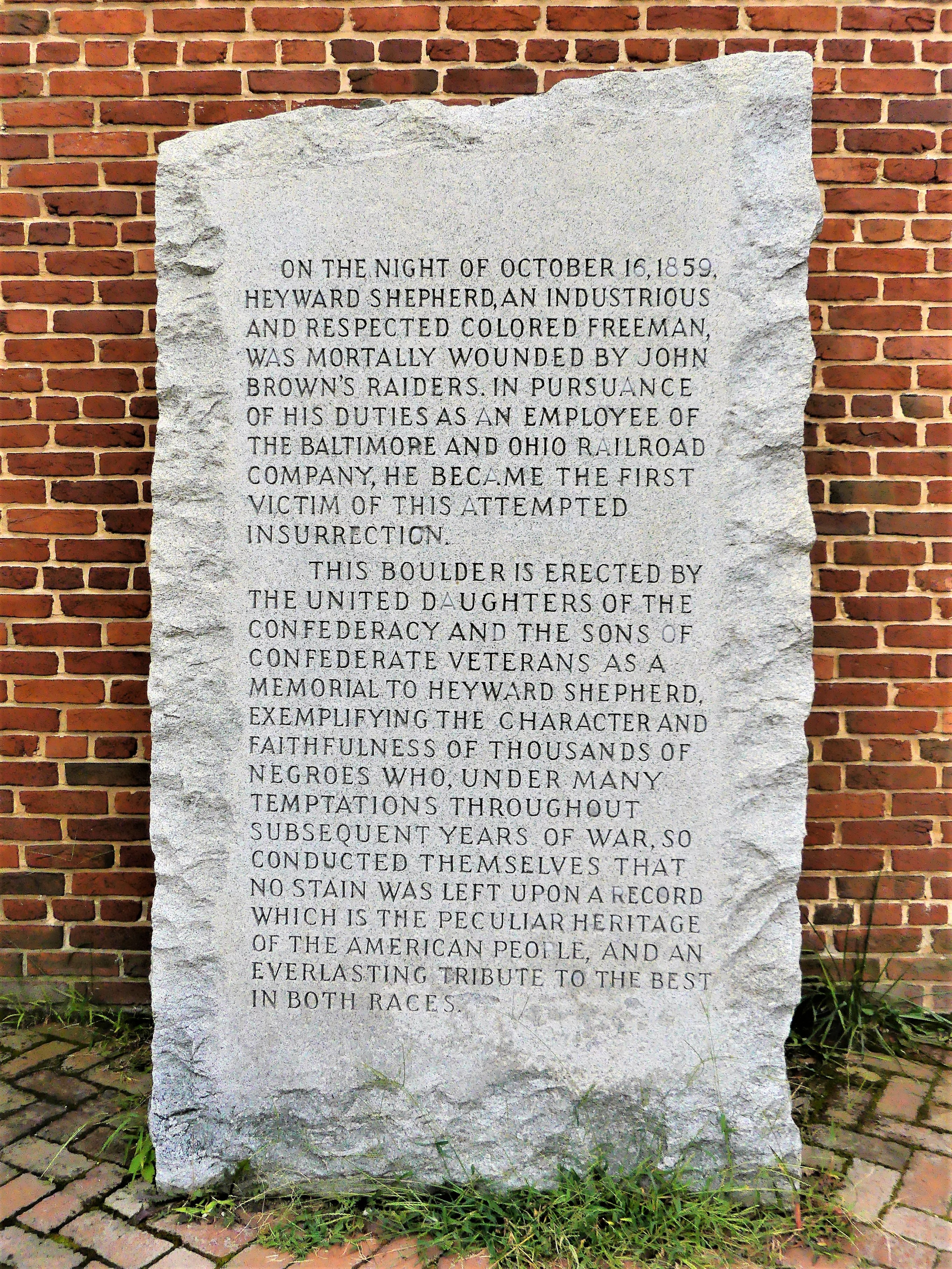
One hundred and sixty years ago, John Brown and his abolitionist brigade played a pivotal role in American history by raiding the South’s largest federal armory in Harpers Ferry with the intention of fueling a rebellion of slaves from Virginia and North Carolina, and envisioning a subsequent society where all people–regardless of color–would be free and equal.
The initial siege caught U.S. soldiers off guard and the armory and munitions plant were captured with little resistance. Brown’s marauders took sixty townsfolk hostage (including the great grandnephew of George Washington), and slashed the telegraph wires in an attempt to isolate the town from outside communication.
However, a B&O passenger train, originally detained at the bridge, was allowed to continue its journey to Baltimore, where employees sounded the alarm and troops were immediately dispatched to quell the insurrection.
In another of Brown’s miscalculations, the local militia pinned down Brown’s insurgents inside the engine house while awaiting reinforcements,
yet newly freed slaves never came to his rescue.
Ninety U.S. Marines under Colonel Robert E. Lee’s command arrived by train the next evening and successfully stormed the stronghold the following day. When the dust had settled, ten of Brown’s raiders were killed (including two of his sons),
five had escaped, and seven were captured, including John Brown.
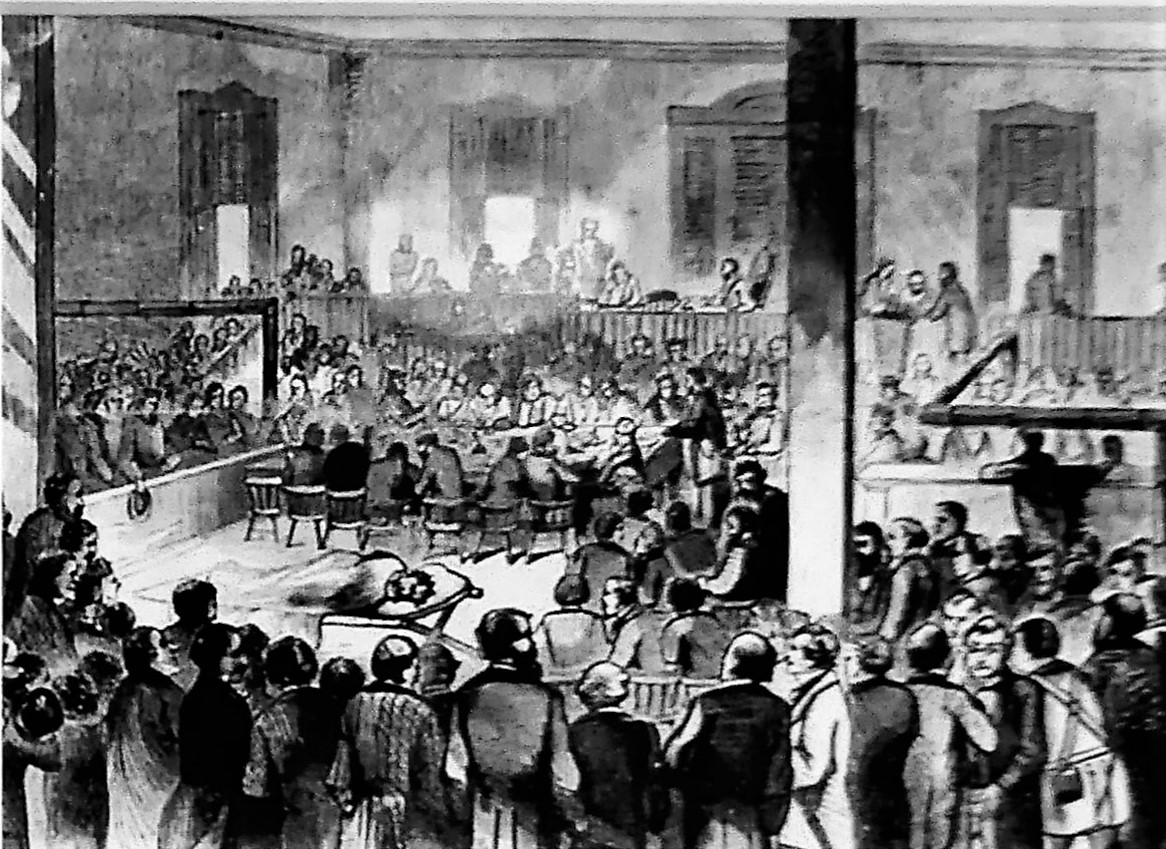
John Brown was quickly tried and convicted of treason against the Commonwealth of Virginia.
Just before his hanging on December 2, 1859, Brown prophesied the coming of civil war: “I, John Brown, am now quite certain that the crimes of this guilty land will never be purged away but with blood.”
How right he was! To the North, Brown was a martyr; to the South, he was a traitor. To a fractured and fragile country, he was the first American to be sentenced and executed for treason.
John Brown’s raid and subsequent trial hardenened the separatism between the country’s abolitionist and pro-slavery factions,
…and advanced the disparate and insurmountable ideologies of the North and the South, until only the Civil War could satisfy the issue and begin healing the nation.
The term treason has been loosely bandied about of late and with tremendous fanfare, albeit little distinction. It’s become a familiar talking point for Donald Trump, whose insulting language and hyperbolic demagoguery continue to rouse his supporters as it diminishes the civility of our national conversation.
Bold and courageous public servants and patriots who are honor bound to defend democracy have been branded as traitors and accused of treasonous behavior because they dare to speak out against corruption and wrongdoing inside the White House.
And the implications are worrisome, for the stakes are high. In a country that values free speech, treason is not about displaced loyalties; it has nothing to do with political dissent; and it has no standing in speaking truth to power. Treason is about pledging allegiance to power and greed instead of American values, like diversity and unity.
As before, politics continues to polarize the nation,
while our Legislative Branch of government seeks a constitutional remedy against the Executive Branch through an impeachment process. And once again, ideological differences have fostered veiled threats of civil war.
If history is to be our guide, then John Brown must be our beacon. During his sentencing he lamented, “…had I so interfered in behalf of the rich, the powerful, the intelligent, the so-called great, or in behalf of any of their friends…and suffered and sacrificed what I have in this interference, it would have been all right; and every man in this court would have deemed it an act worthy of reward rather than punishment.”
Sounds remarkably familiar.
More than ever, we must steer through political currents, and find our way around deception, obfuscation and misdirection if our democracy is to stay afloat.
It happened early yesterday morning, although I was unaware until I awoke. I’d kept tabs from time to time, and I knew I was inching closer. And while I anticipated the result sooner than later, there was no predicting when.
It first crossed my mind earlier this summer when I began recording my travels through Southern Africa and the Great Lakes. Little by little, the notion that new posts were finding a newer audience, and past posts were being mined from archives was reassuring. But it wasn’t until I returned home, and caught up on summer highlights from my travels that I began realizing the possibility.
And it remained elusive until an alert on my phone notified me of the news earlier in the day.
After 2 years and 7 months, after 320 posts, after more than 187,000 written words, after over 5,600 uploaded photographs, after 23,000-plus visits and nearly 45,000 views, I had finally amassed my 2,000th WordPress follower.
However, to pass this milestone, it also felt at times like I was carrying this millstone.
What was once a convenient means to share the view from my Airstream with family and friends, had blossomed into a creative umbrella for me after the Discover editors saw fit to feature my blog. The initial response was seismic…yet emphemeral. While I initially gained new readers from the exposure, their enthusiasm seemed to fade over time. My followers were moving on. Alas, fewer views and fewer likes.
My confidence was soon replaced by self-doubt. Had I failed to keep things fresh? Had I run out of fascinating places to visit and report? Were my destinations and musings no longer blog-worthy? I also began questioning my purpose as a blogger. Was I a photographer who writes, or a writer who photographs?
My immediate, albeit measured response was to shape my waning success by constructing posts with wider appeal, and sharing them with the 145 countries that once signaled interest in my blog.
I must confess to moments of obsessing over numbers–thinking about ways to boost my online productivity, with guarantees for:
First page ranking on Google, Yahoo, and Bing
Improving organic traffic
Securing my website from Google Penguin updates 4.0
Increasing my conversion rate
Targeting future local markets
…but then I rejected the notion outright! Why would I pay to acquire an audience? After all, this isn’t a business where I have to drive masses of asses to my site.
Bottom line–I no longer believe I have an obligation to entertain/inform my followers. Indeed, I only have a desire to continue expressing myself, and I’m hopeful my followers will allow me–however and whenever–and still support me.
In the meantime, I’ll quietly celebrate my small victory in fulfilling an unexpected goal before moving on to the next challenge.
Leah and I were yearning for a satisfying hike through the mountains of New Mexico that we’d yet to explore. While we were happy hiking the Tecolote Trail in the Sandia Mountains–which offered pleasant panoramas of the desert floor stretching nine miles to South Mountain, and views of Sandia Crest that had us wishing we could stay longer–
…the whipping wind that swept across the overlook killed any notion of lingering along the mesa top to enjoy the spots of fall color that recently dotted the evergreen terrain.
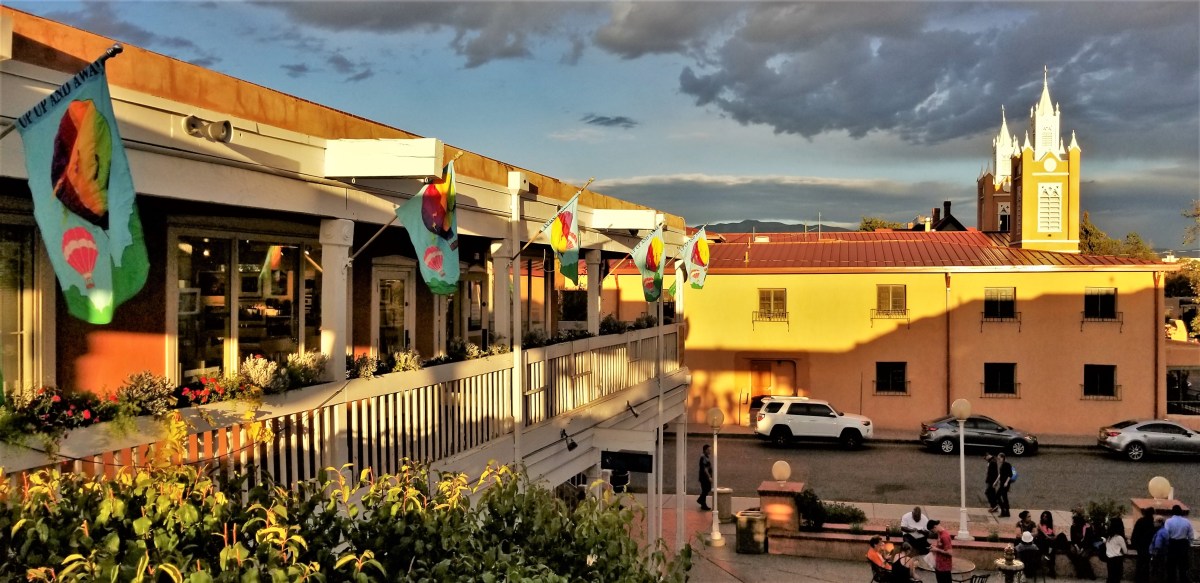
However, the following day, a stroll through Albuquerque’s Old Town…
brought us to a photography gallery that showcased Southwestern landscapes and introduced us to Tent Rocks.
“That place looks cool. We should go there,” I asserted.
“I agree, but how do you know if we can even get there from here?” Leah questioned.
After consulting Google, I learned that Tent Rocks was a National Monument located within the Pueblo of Cochiti, only an hour north of Albuquerque.
The following day, riding north on NM-14 (part of the scenic and historic Turquise Trail National Scenic Byway), we took a left turn onto NM-301, a rutted, dusty road connecting to NM-22.
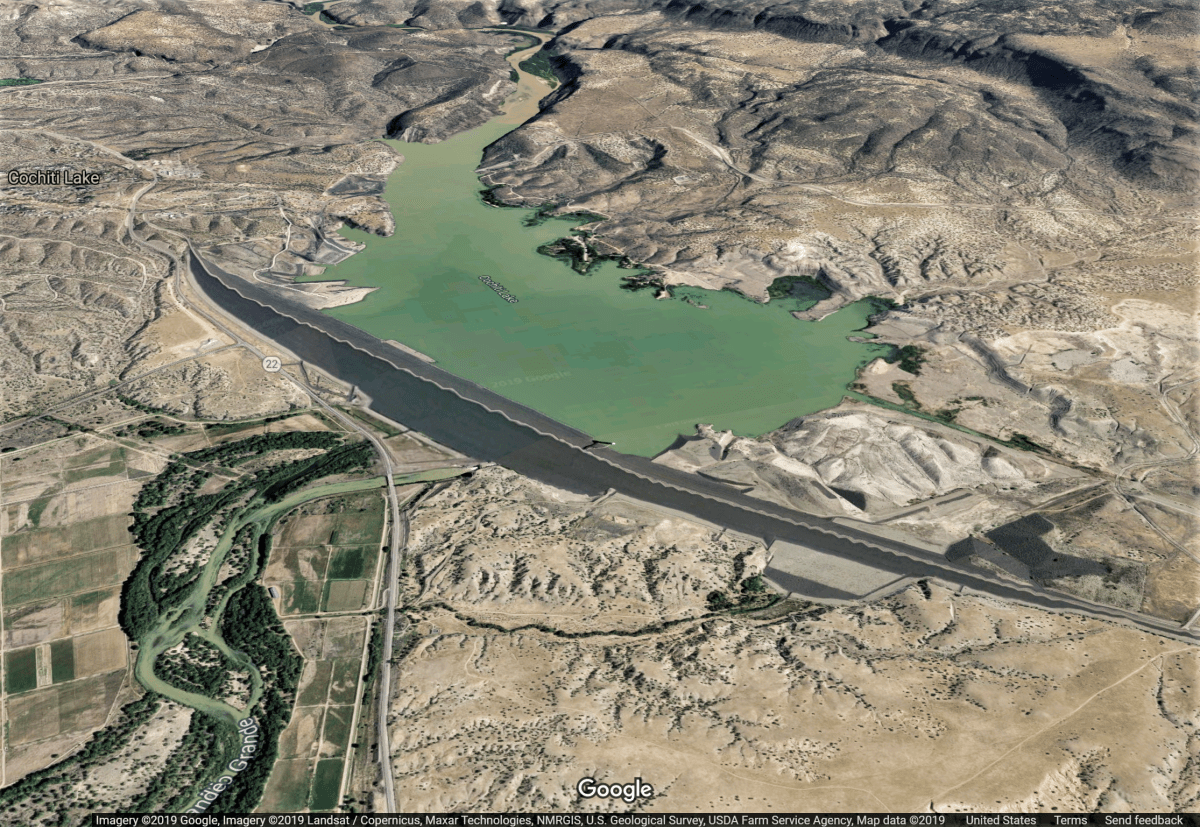
We approached the earthen wall of the Cochiti Dam, a controversial water management project approved by Congress in 1960, and finished in 1975 by the U.S. Army Corps of Engineers.
Stretching 5 miles across the desert, and rising 250 feet above the Rio Grande, the resultant lake flooded sacred lands and fields belonging to local tribes for centuries.
We continued west on NM-22 for two miles before arriving at Kasha-Katuwe Tent Rocks National Monument. We pulled up behind seven parked cars–each one waiting to pay five bucks to the BLM park ranger stretching his legs beside the fee station. Our SUV idled a minute or two, but the line was at a standstill.
The sign post beside us forecasted a 30-minute wait-time from our current position.
“I’m gonna take a walk,” and Leah was out of the car, working her way to the front of the line.
The news arrived in under a minute…offering a Trail Guide.
“All 94 parking spaces are taken,” Leah explains with a hint of exasperation. “They probably arrived when the gates opened at 8am.”
“Okay. So that was two hours ago,” I respond, admitting the obvious. “It says here on the map that the trail is 1.5 miles in and out, so hopefully, a lot of people should be on their way out by now.”
“How long do you think we’ll have to wait here?” asks Leah.
“According to the sign, it’s a 30-minute wait,” I assert.
“Smartass!” she hurls.
After 20 minutes of anticipation, I noticed movement in the ranks! Two cars in front gave up the wait and U-turned, leaving us in sixth place.
Silly people. If only they had waited a few minutes longer. Soon after, a rash of cars passed us on the way out, and we were on our way, cruising through four miles of dip-after-dip, tribal land road, before reaching the parking zone.
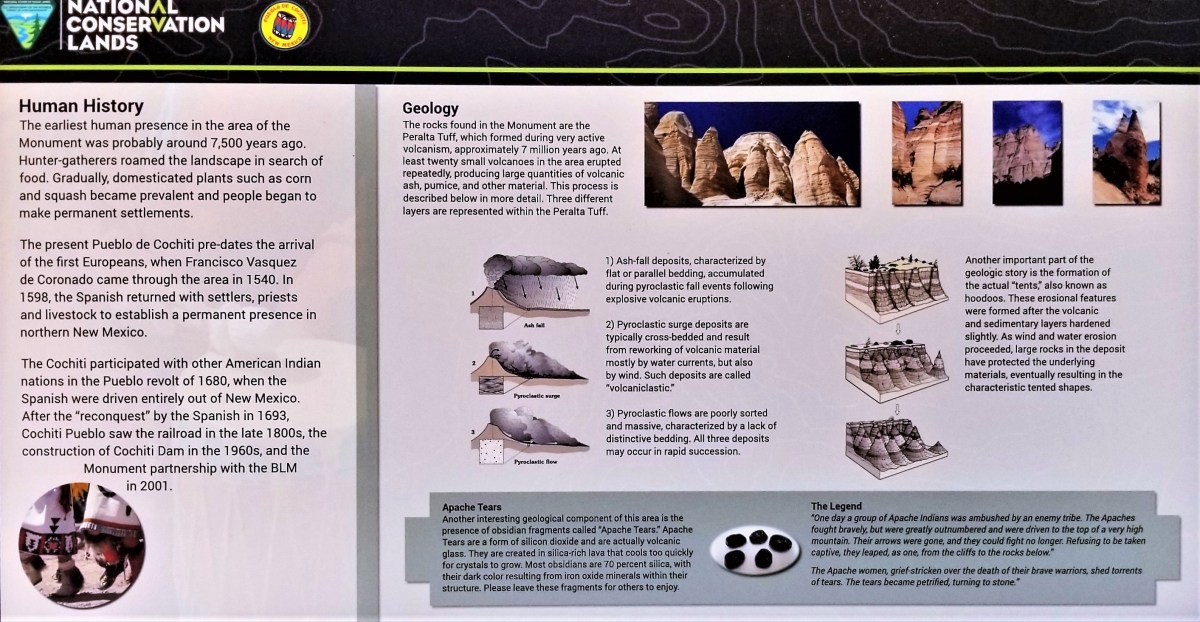
While Leah and Carrie (Leah’s daughter) waited in line for the only outhouse in the vicinity, I caught up on my reading at the trailhead.
As interested as I was to learn about New Mexico’s volcanic eruptions and its pyroclastic flows, I was itching to get on the trail and weave through the slot canyon.
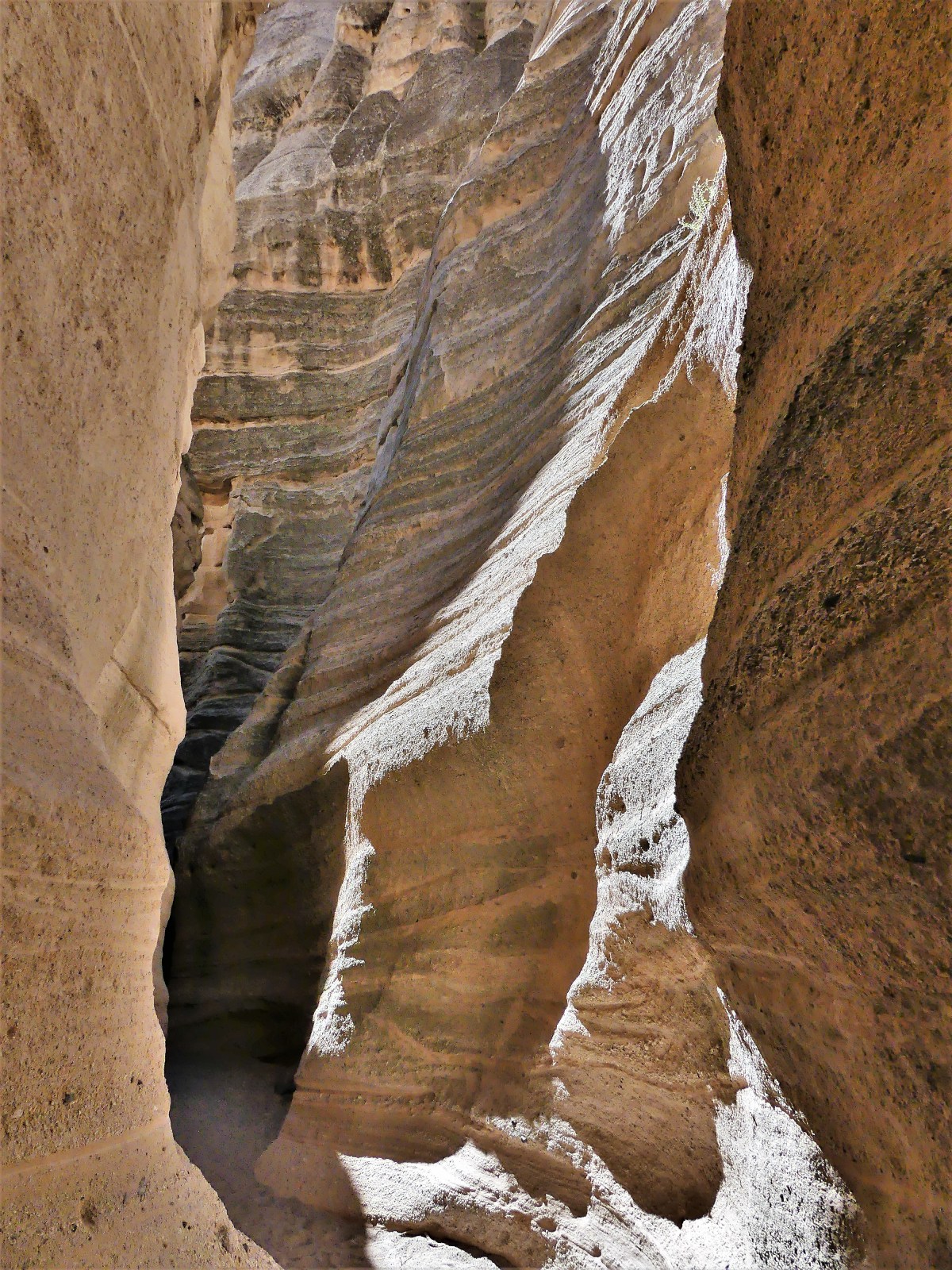
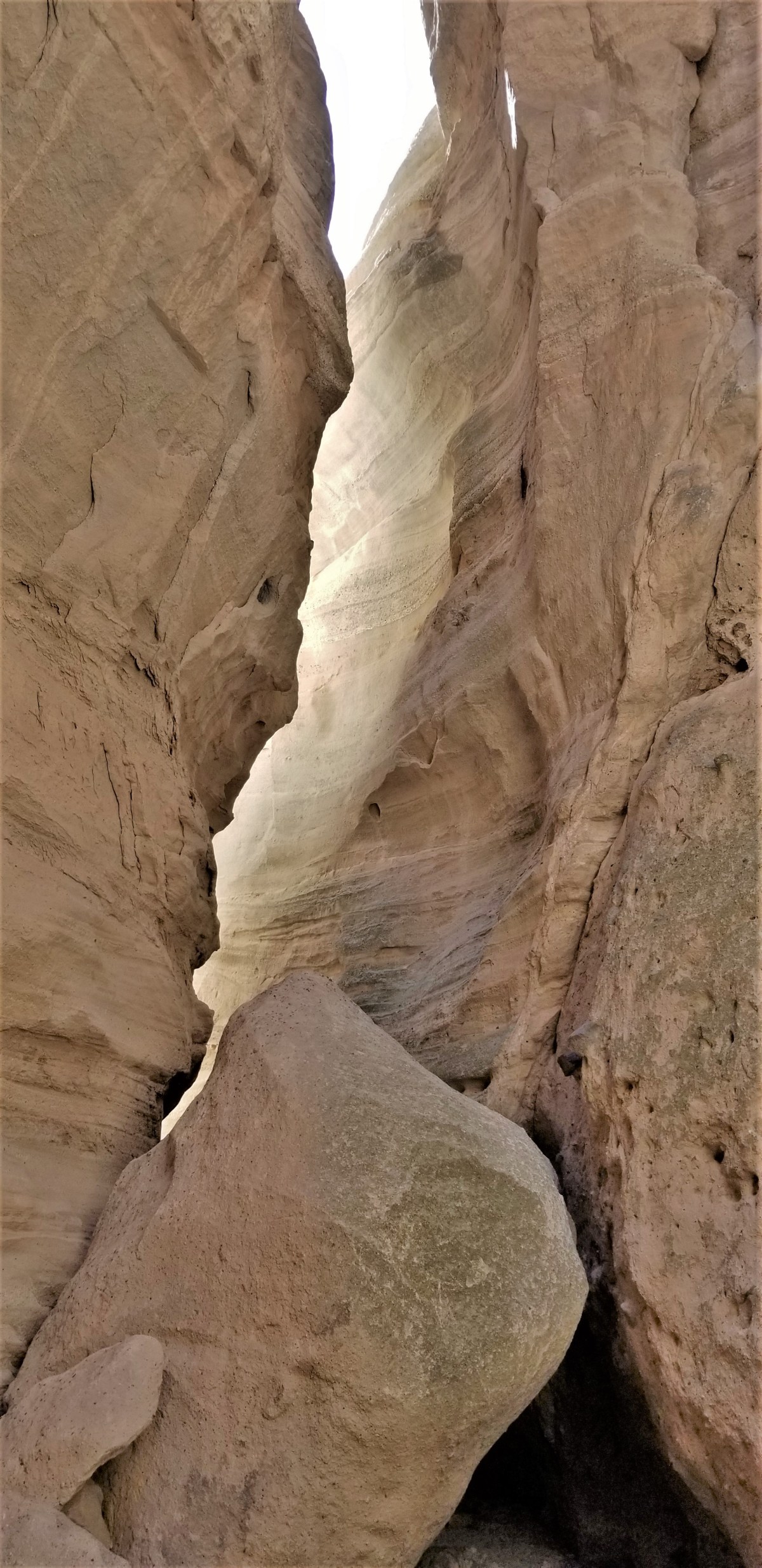
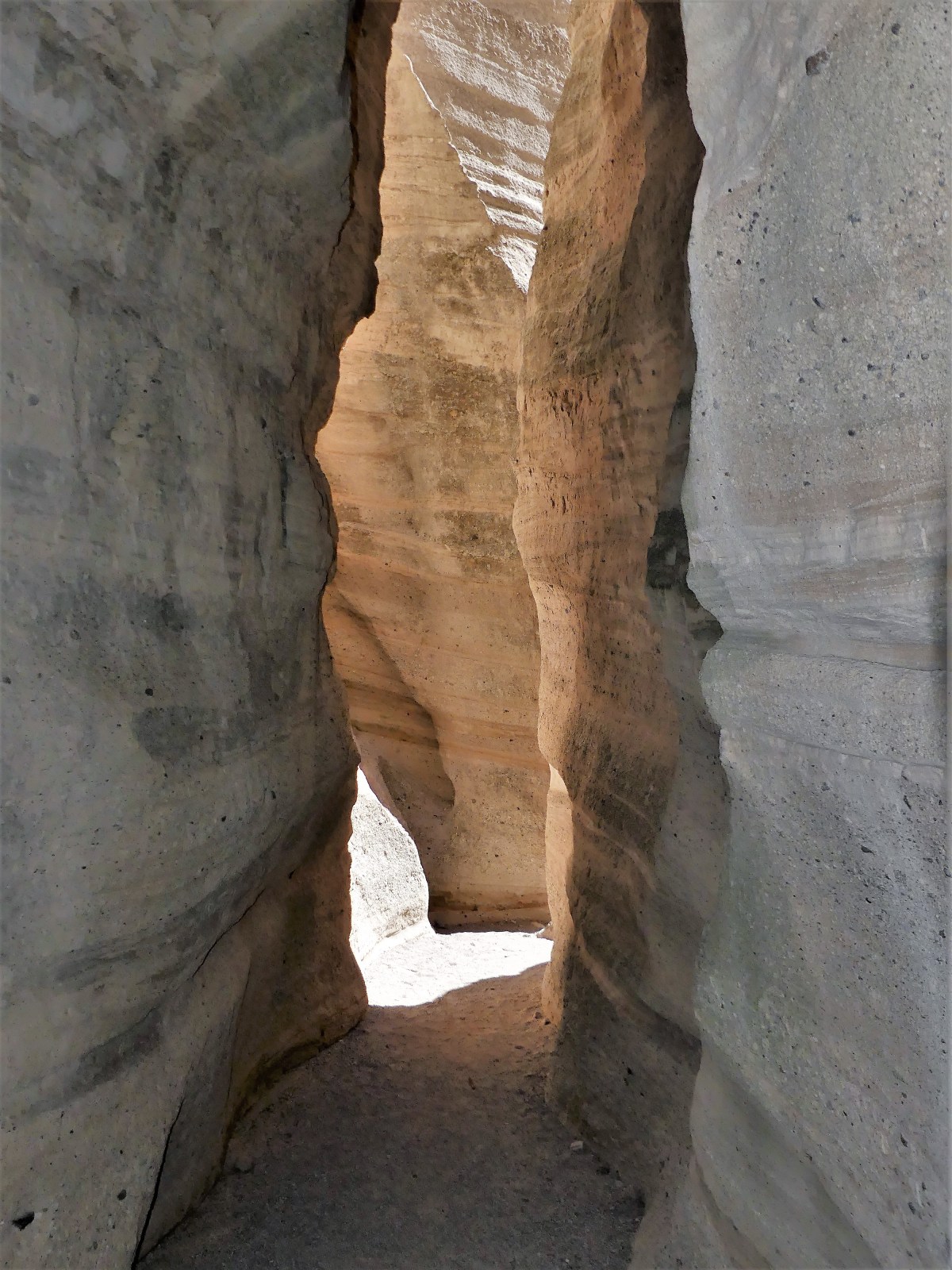
The canyon walls were so narrow in places, that only one person could navigate the labyrinth at a time.
It reminded me of the way that road crews monitor traffic on a one way road…
…and it was vaguely reminiscent of a similar protocol at the fee station and toilet.
Of course, with so many early hikers already on the trail and now turning back, it made for several occasional stops, and many pleasant exchanges along the way.
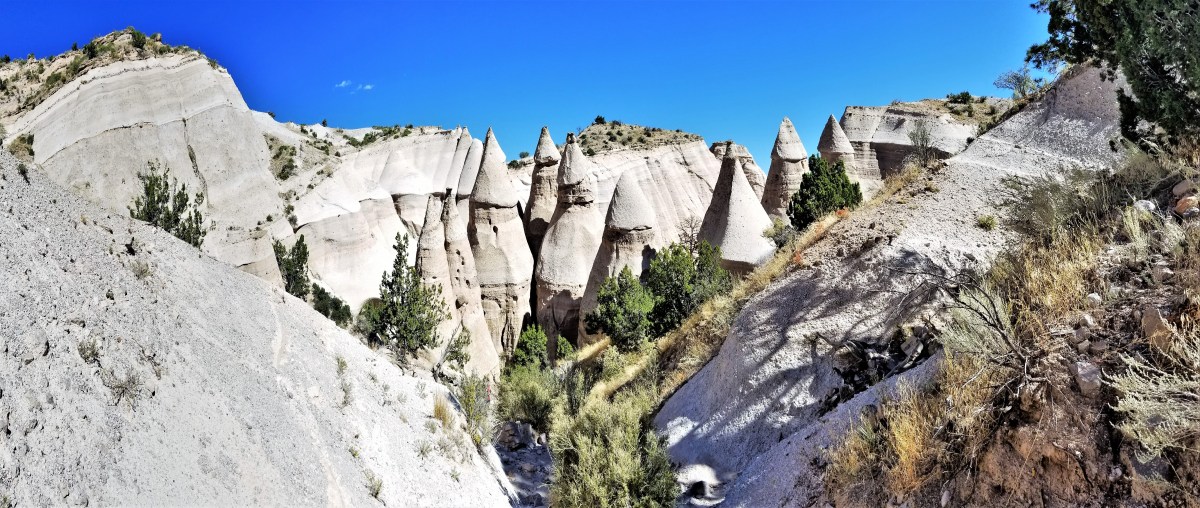
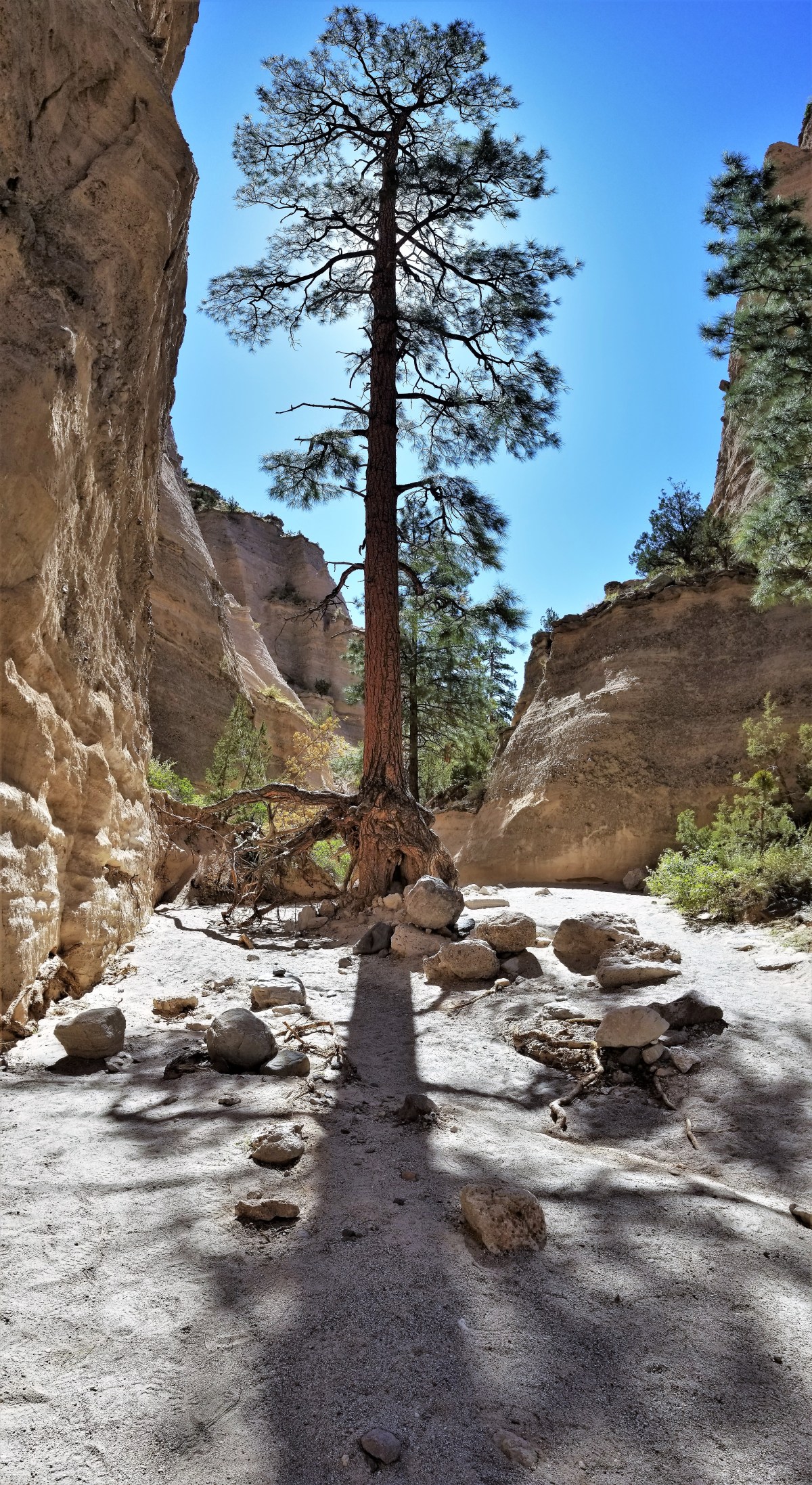
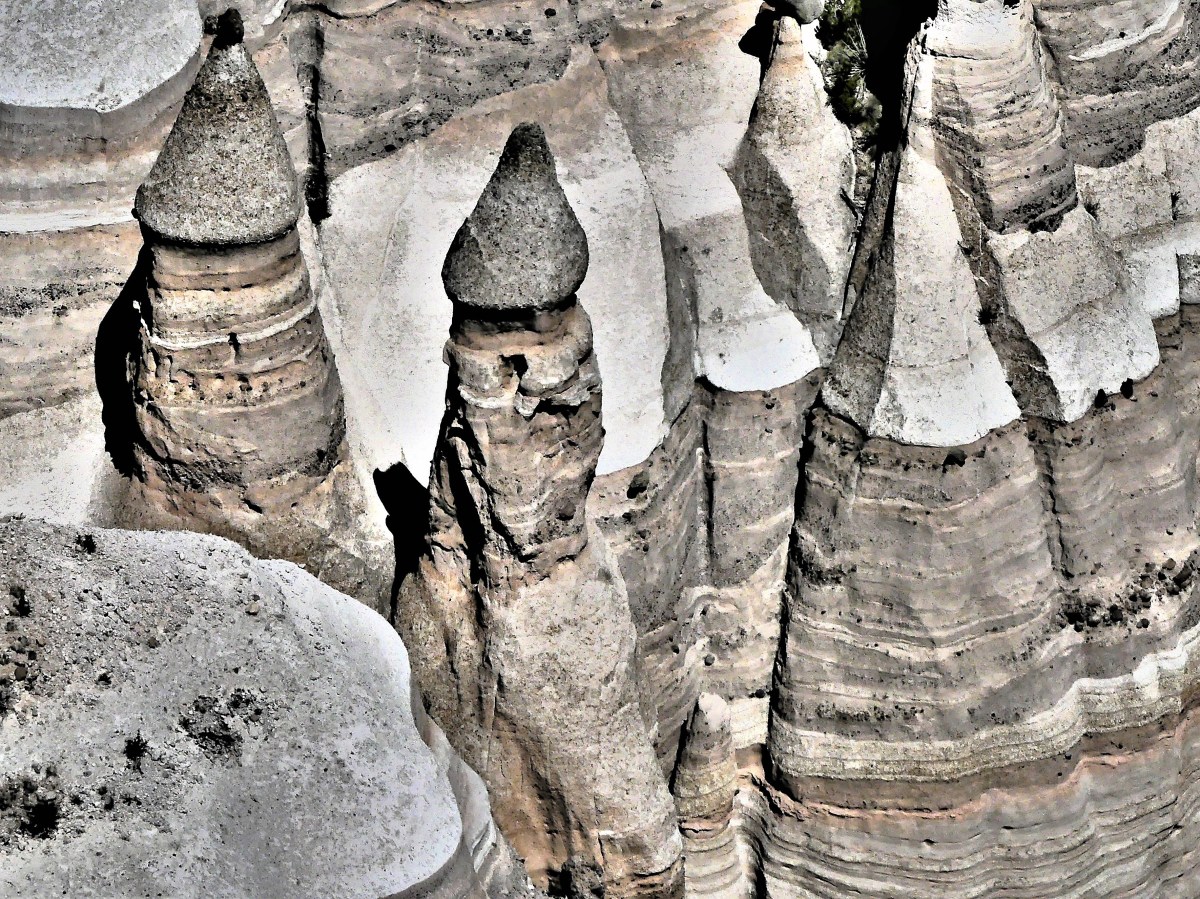
However, when the canyon finally opened up, we were greeted with a greater appreciation of what seven million years had done to the place.
Even the trees seemed magical, managing to stand in the shadow of such uncertain footing.
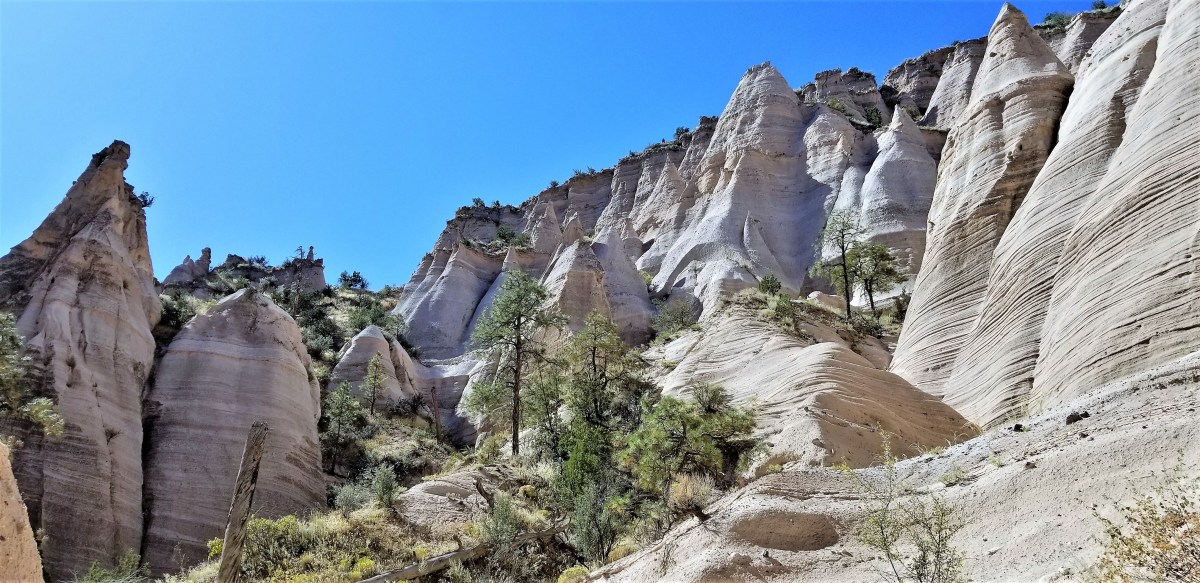
Once we reached a clearing in the trail, we began our 630-foot ascent to the mesa top, giving us a better perspective of our lair,
and freeing us from all obstructions,
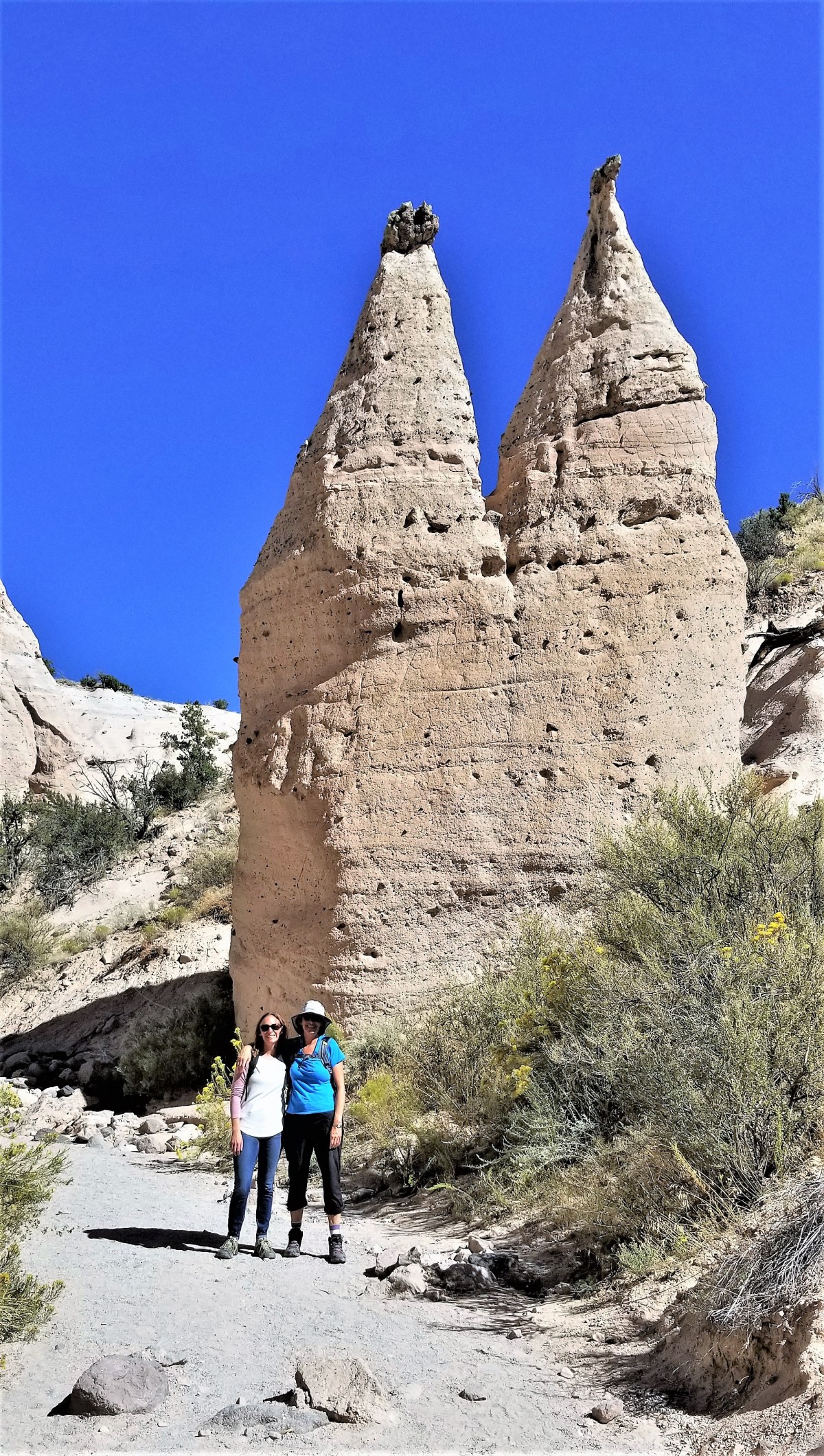
until we could gaze across the Jemez Mountains,
and remind ourselves, once again, why it’s always a good idea to wait one’s turn in line.
“$450 for a balloon ride?! You’ve got to be kidding” I exclaim to the Rainbow Ryder rep on the phone.
“That’s the price, sir. We are the exclusive balloon ride provider for Balloon Fiesta, unless you’re willing to fly outside the ‘Albuquerque Box’,”she managed.
“What’s the ‘Albuquerque Box’?“I ask.
“It’s a weather phenomenon peculiar to Albuquerque,” she points out, “where the lowest winds move in one direction, while the higher winds are moving in the opposite direction. That way, our pilots can take advantage of the different air currents–by floating higher or lower, and returning you close to your original launch point.
*courtesy of Drumlineramos
“Uh, Ohh-kay,” I shrug, “and that’s worth $450?”
“That’s the rate for a balloon ride during Balloon Fiesta, sir. And I only have a few openings left for Saturday and Sunday,” she warns.
“Your price is sky high,” I offer, “so I’m gonna have to think about it.”
And the call is over.
I turned to Leah. “Looks like my balloon ride went from bucket list to “fuck-it” list.”
And that was a drag, since Balloon Fiesta is the largest gathering of hot-air balloons in the world, with more balloons lifting off together (mass ascension) than anywhere.
Leah sensed my disappointment. “Maybe it’s cheaper if you found an outfitter outside the box. Would you still be interested?
“I think I could manage to get excited,” I lamented.
After a flurry of phoning and pricing, I secured a dawn launch on Saturday for $250 with World Balloon, albeit on the northwest side of town, miles away from the Fiesta.
Launch day bears all the markings for a picture-perfect take-off: early air temperature hovers in the mid-40’s; the wind is streaming from the north at 8 mph; and the sky is clear as shimmering water.
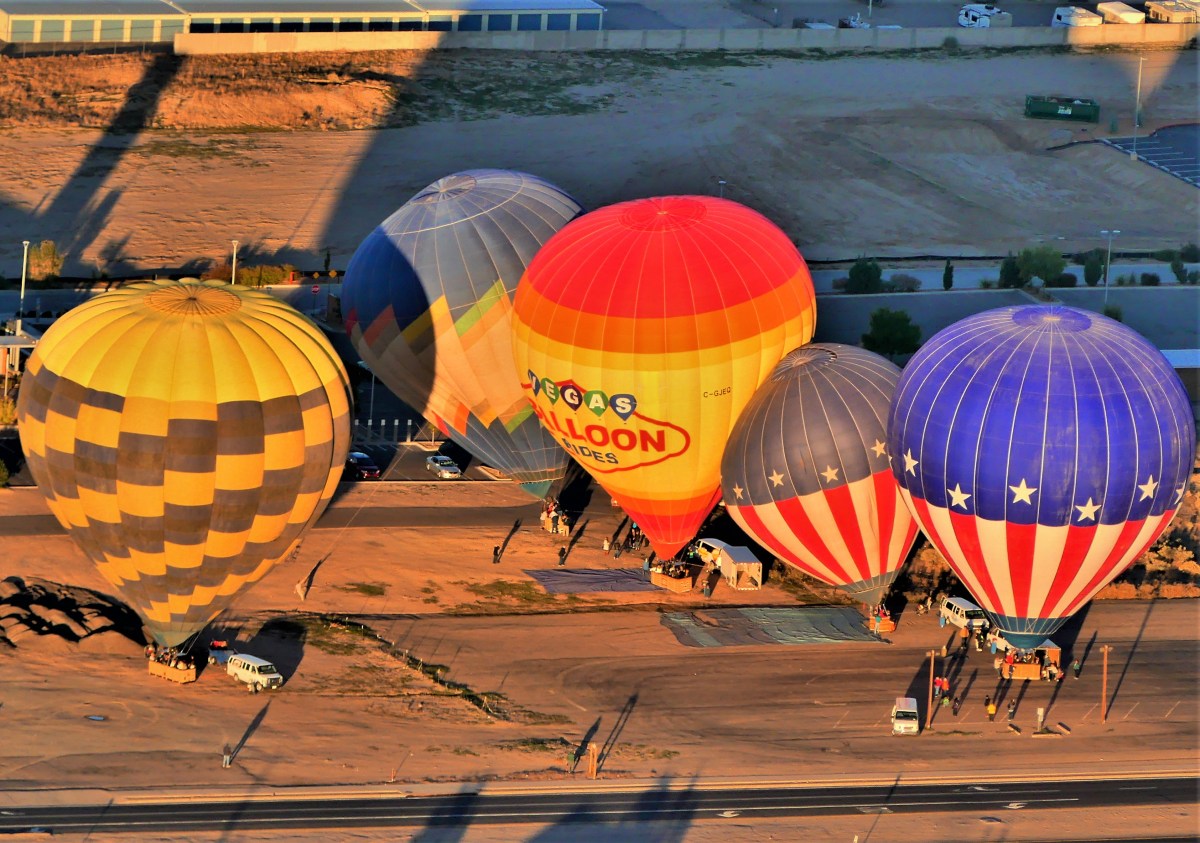
A group of fifty men, women, and children are sub-divided into five, and assigned to a pilot and his balloon crew. Each chase van carries two wranglers, ten passengers, and a trailer packed with gear. We congregate at a barren football-sized lot, and watch as five balloons are prepared for flight.
Baskets are unloaded,
and assembled.
The burners are tested.
With dawn breaking over the horizon, the balloon is unfurled, and rigged to the basket.
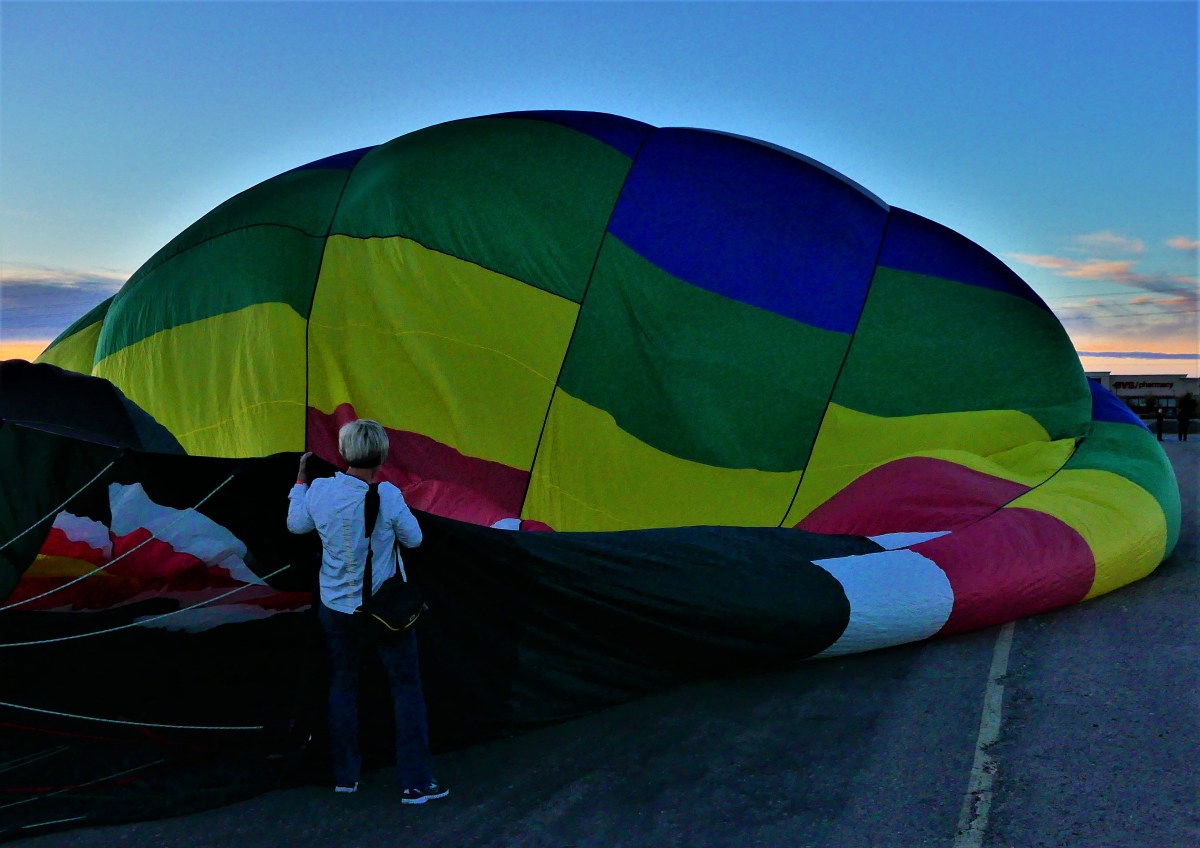
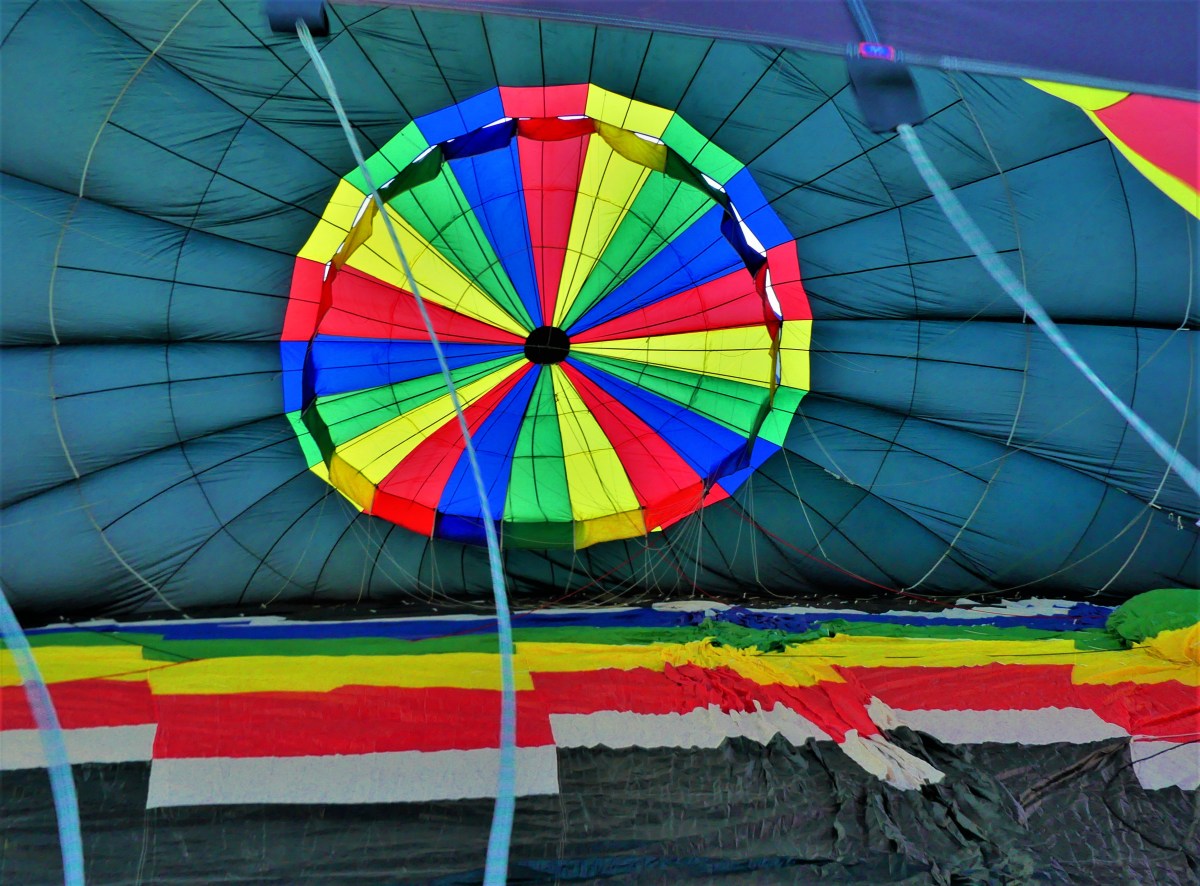
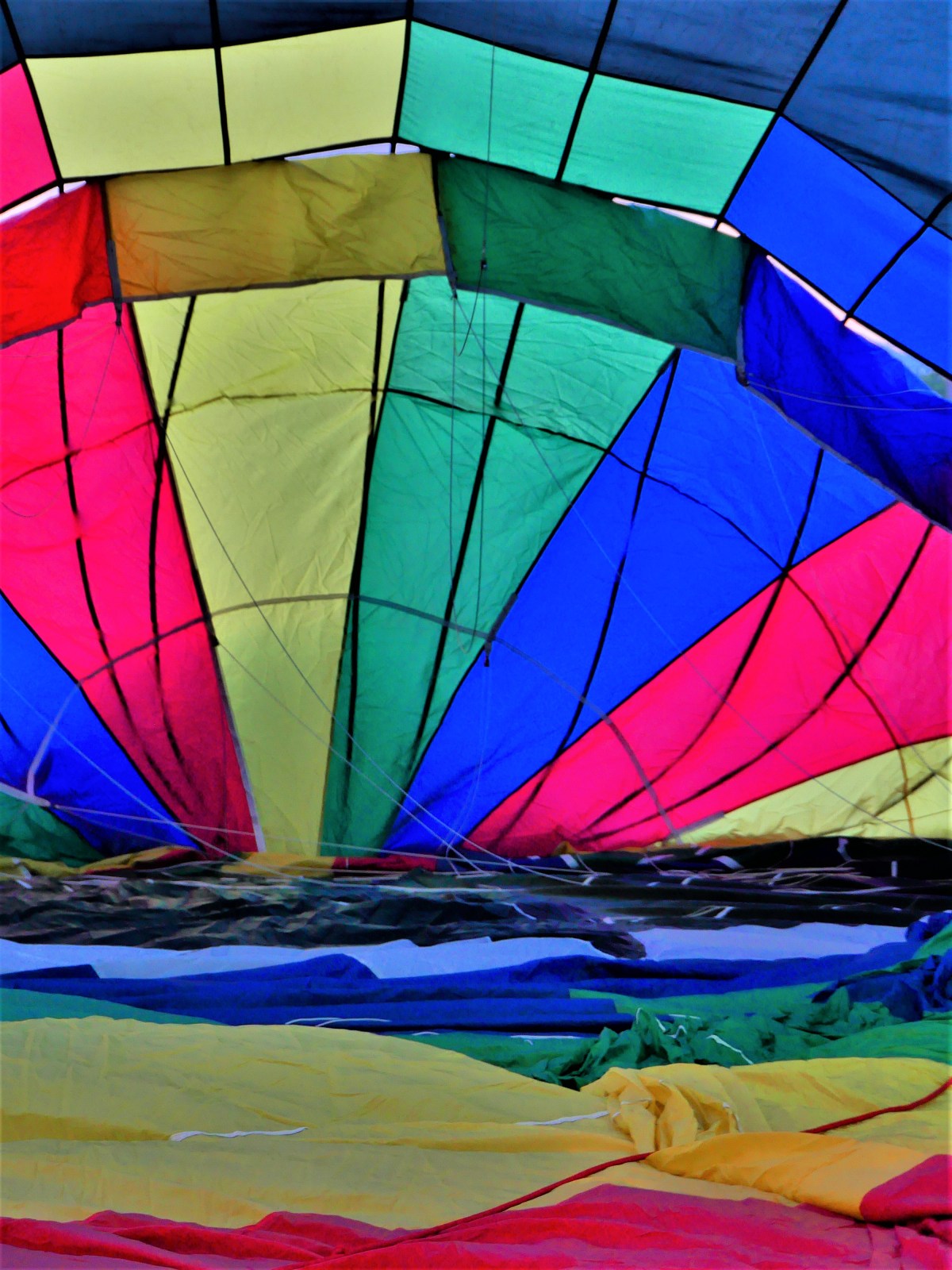
An industrial fan blows cold air into the mouth of limp polyester, and behold, the balloon takes shape.
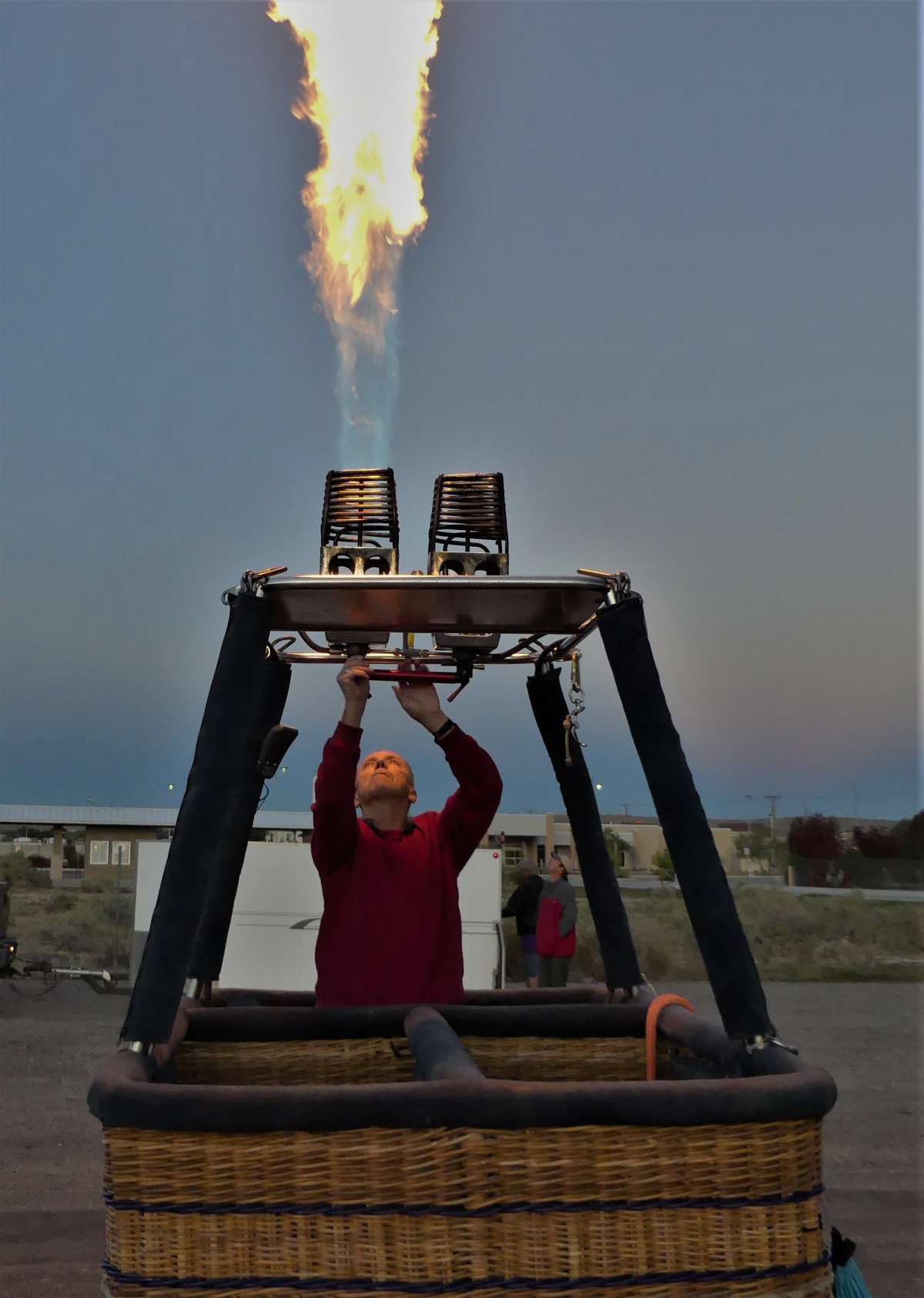
Roy aims the burner flame into the mouth to heat the air,
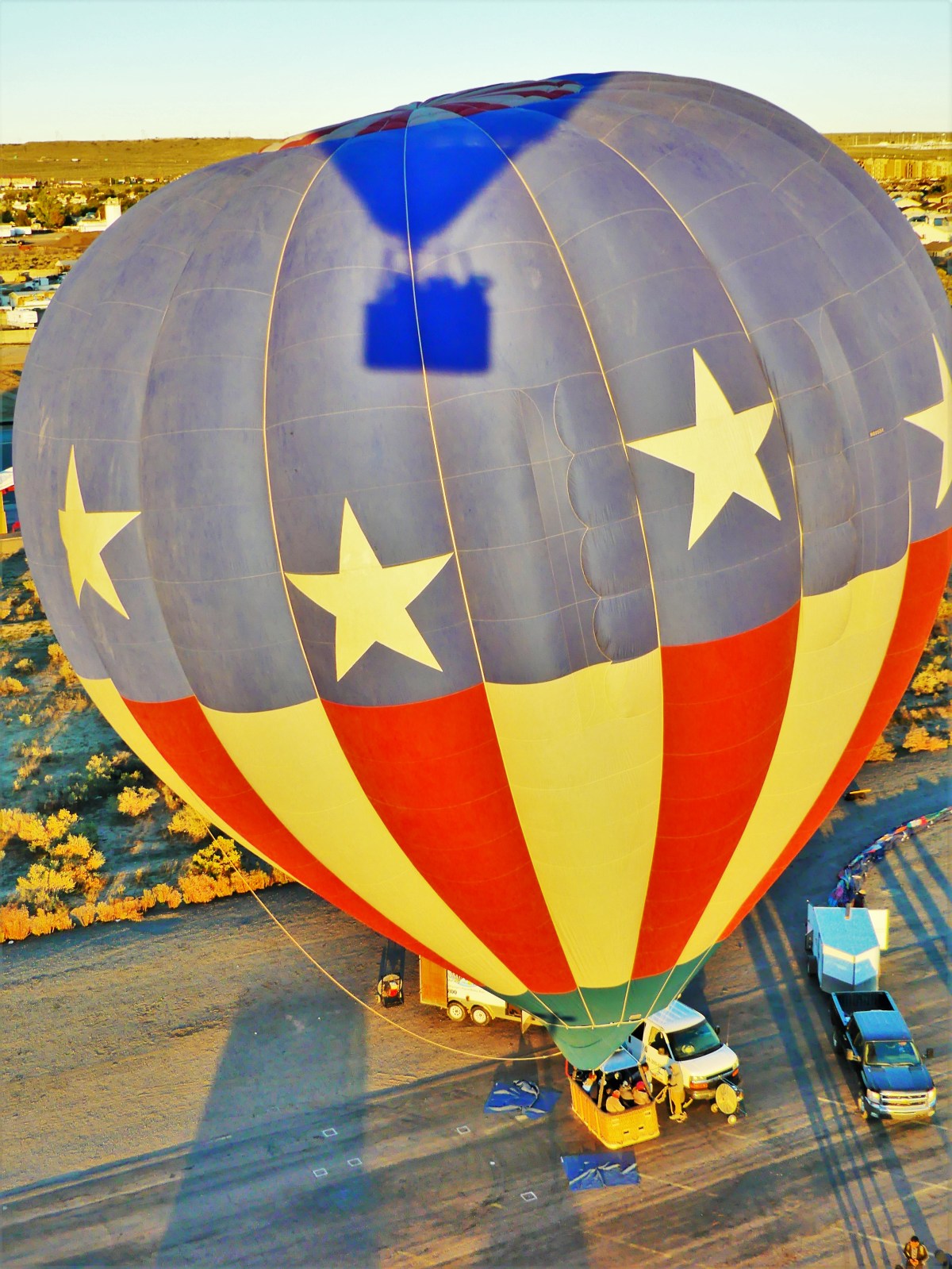
and eventually expands the envelope to fullness.
The buoyant balloon rights itself,
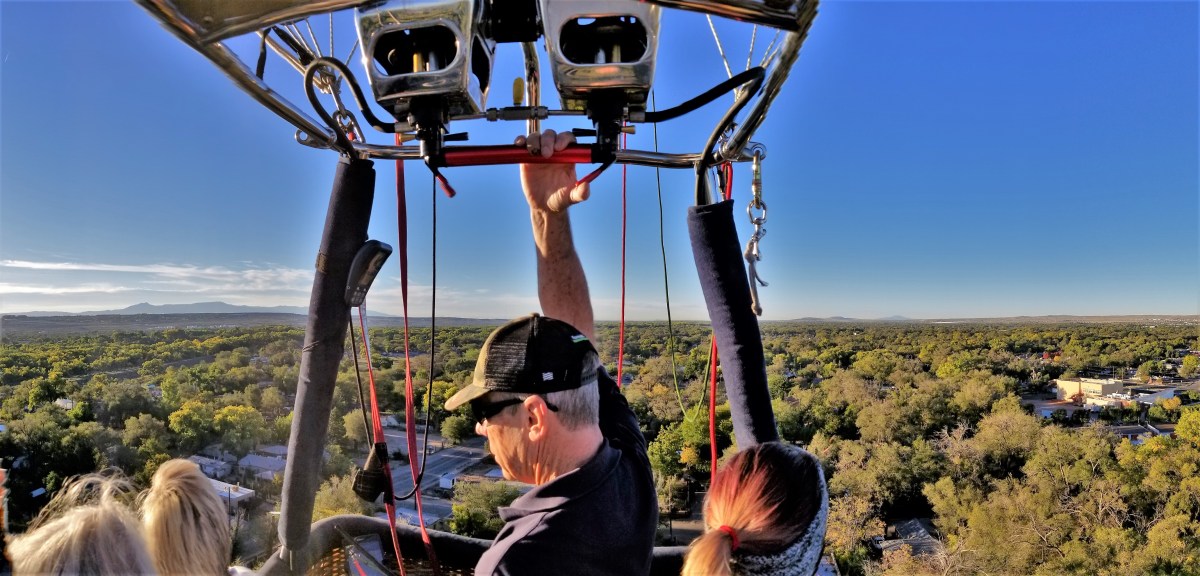
and the six of us scramble inside to bid adieu to terra firma, and gently float away…
…one step ahead of a second balloon.
All the while, balloons below…
…are preparing to follow our Airstream (wink wink, nod nod).
Our pilot, Roy pulls on the burners,
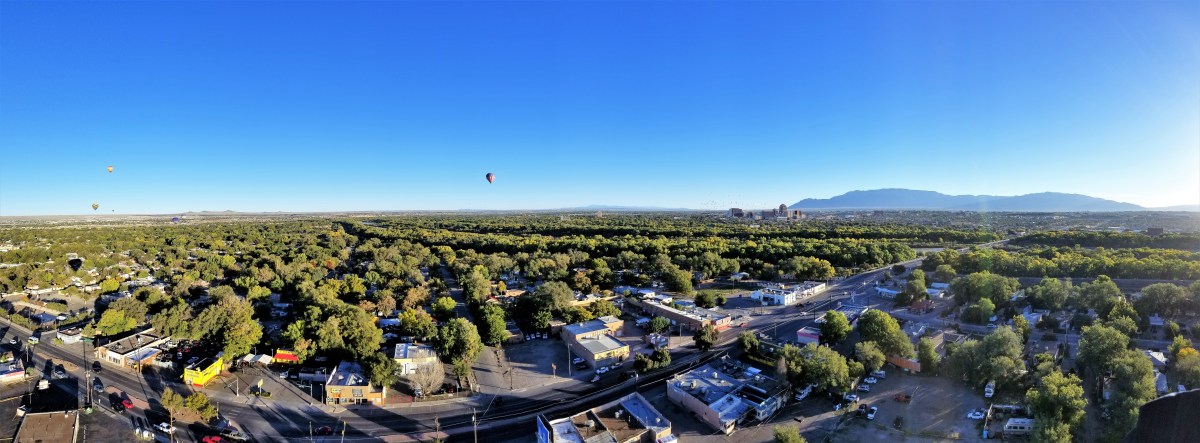
carrying us to 5000 ft. above the treetops,
where a birds-eye view of the valley below,
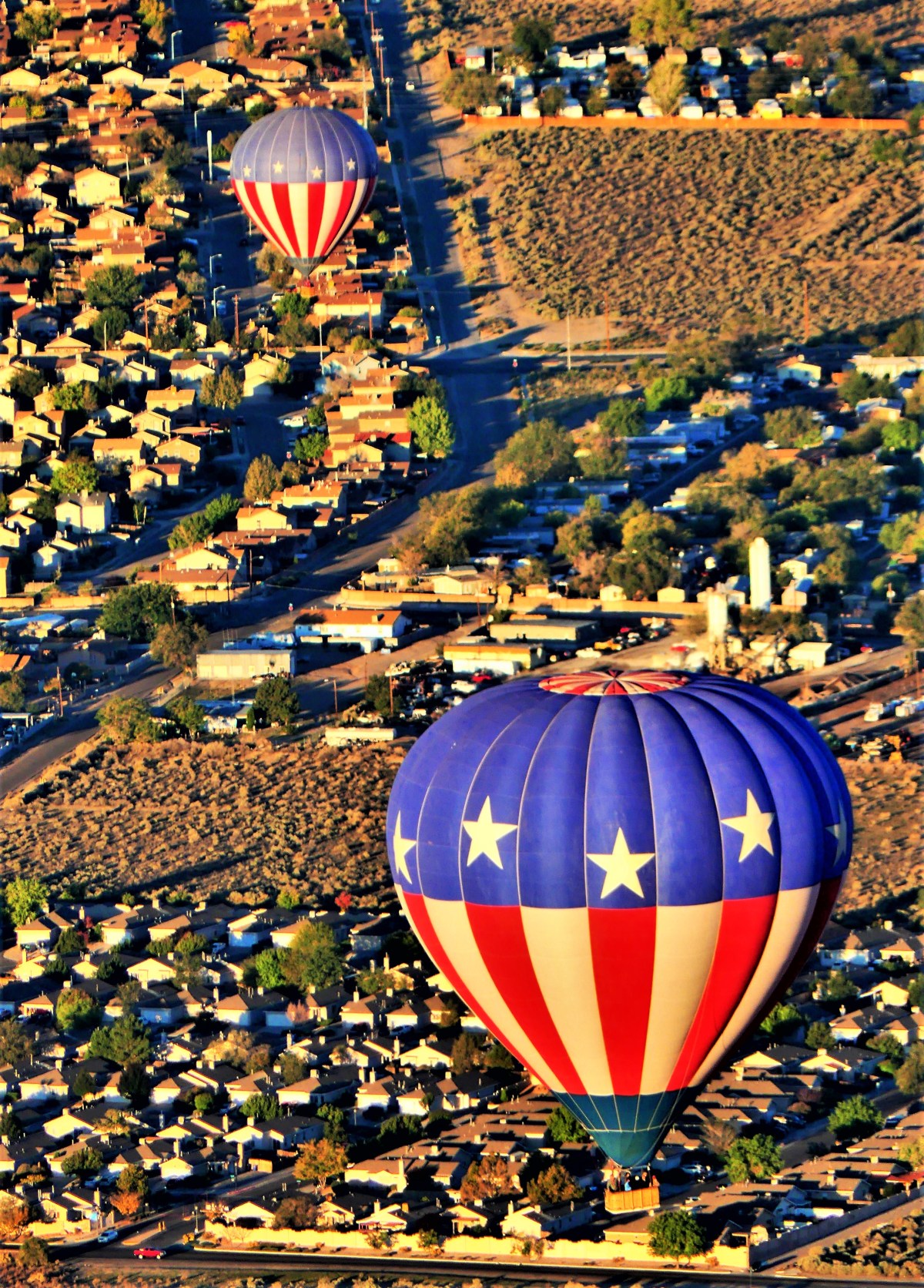
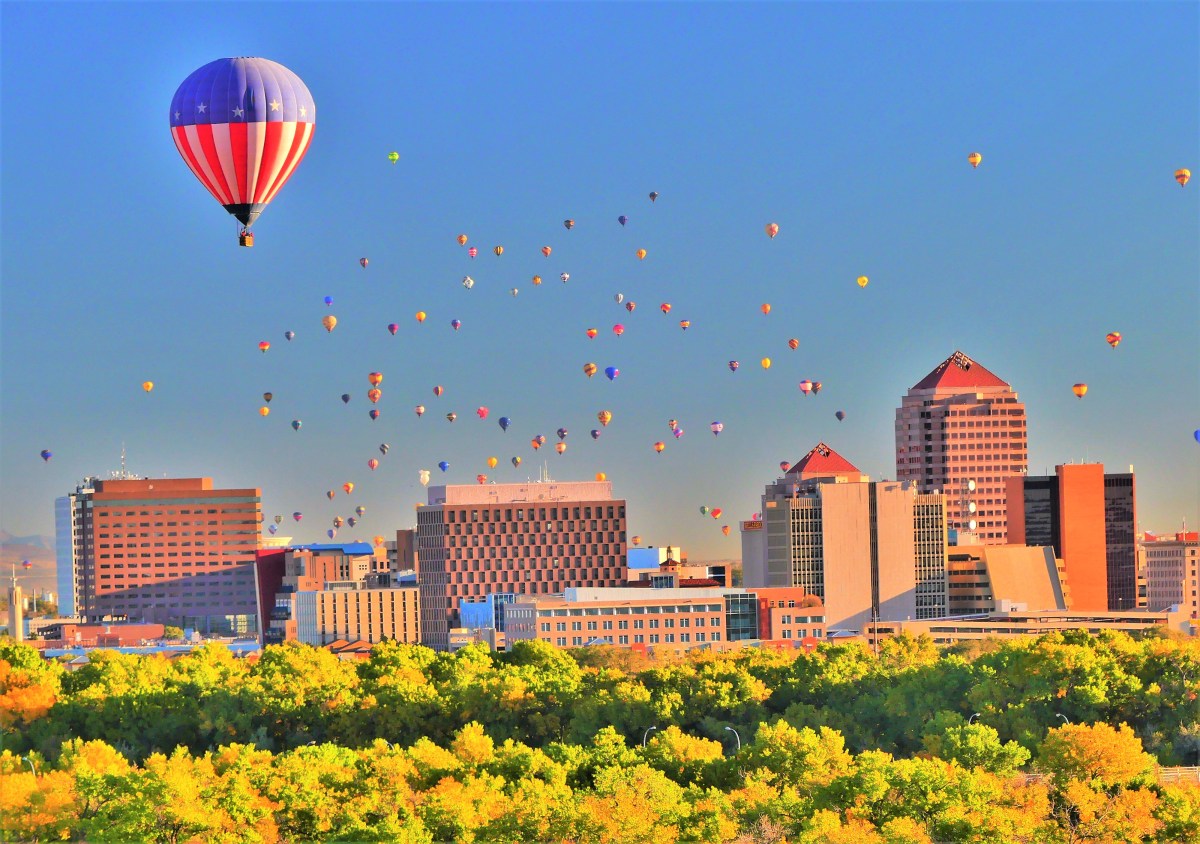
reveals a cityscape punctuated by fantastic dots of floating colors.
Yet closer inspection reveals the full dimension of a multi-colored mushroom gliding through an azure sky.
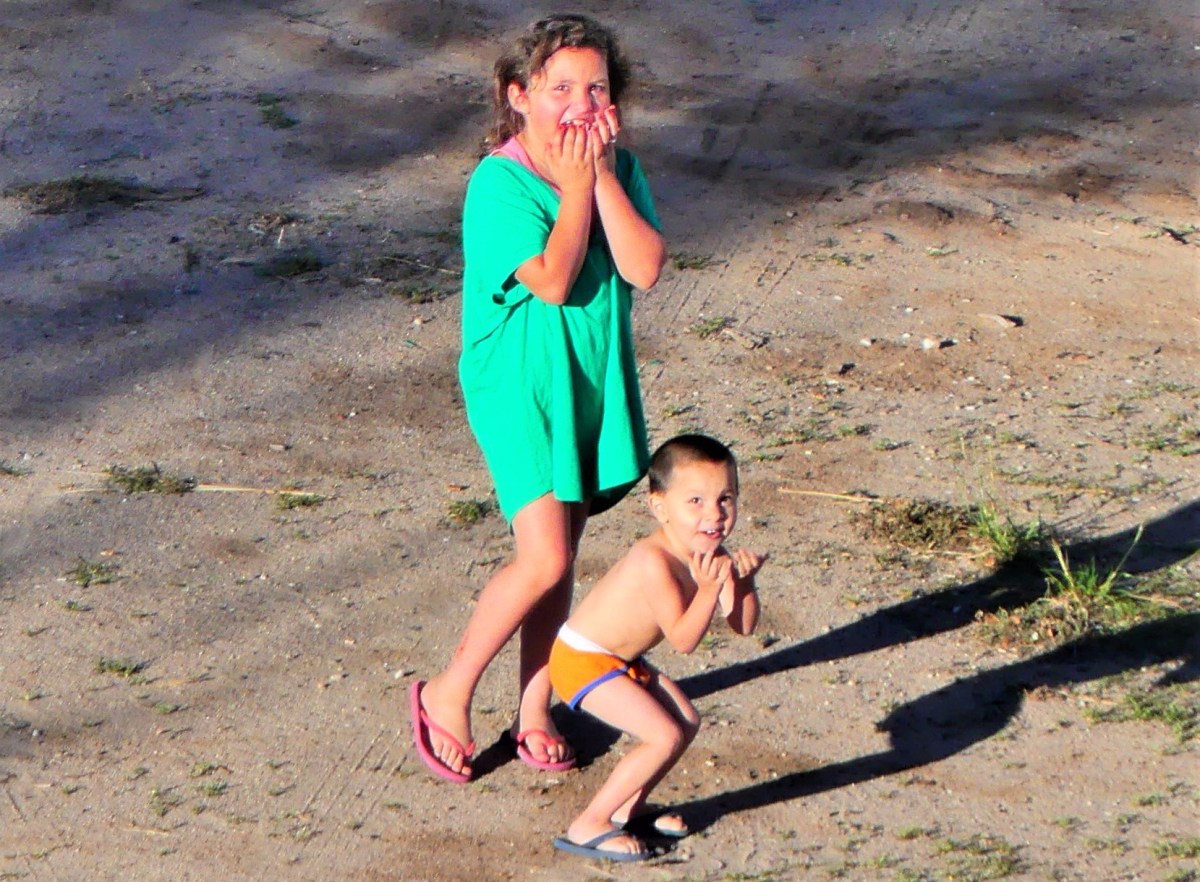
After forty-five minutes of soaring and dipping through neighborhoods–arousing excitable dogs,
and adoring children–
Roy is tasked with finding a landing site along our flight path–wide open and away from wires–and accessible to the chase team who’s been following us since our launch. After a few false starts, we locate a large house devoid of landscaping, and gently settle back to earth.
However, a chain-link fence lines the perimeter, and a locked gate gives us no way out. A woman from Birmingham, AL vaults over the side of the basket and runs to the front door to alert the owners to unlock the gate, but nobody’s home.
So it’s back in the air, with the van in pursuit, until we mobilize at a strip mall.
After a quick exchange of passengers (six out and four in), our balloon is re-released with its second set of aeronauts,
drifting higher into the blue yonder.
Fifty minutes later, the vacant parking lot beside the church provides the perfect setting for a second re-entry.
Whereupon, the balloon is quickly collapsed,
and folded,
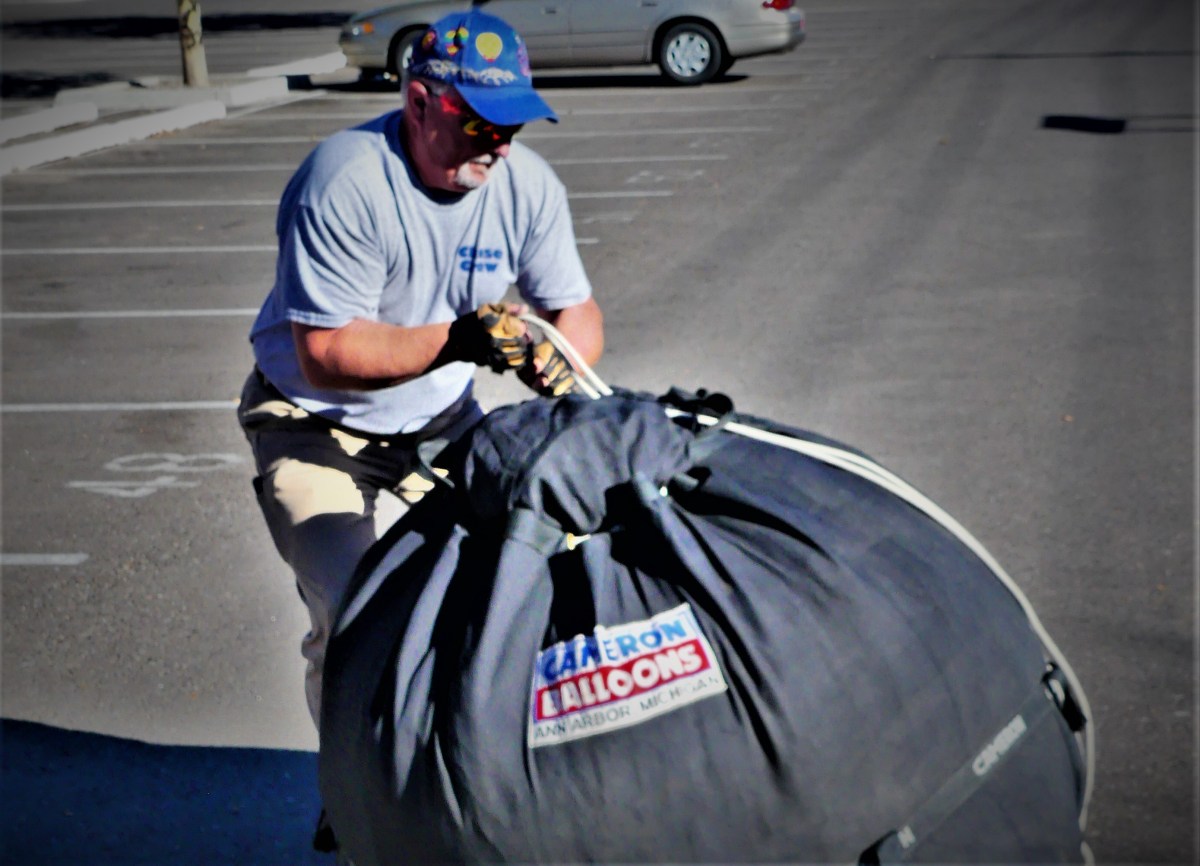
and packed away, until next time.
Back at base camp, it was time for a champagne toast, and a recitation of the balloonist’s prayer:
The winds…
I loved it, and I’d do it again. I guess that makes me a balloonatic.
Albuquerque’s International Balloon Fiesta celebrates ballooning for nine days in October, continually drawing record crowds and attracting new entries every year.
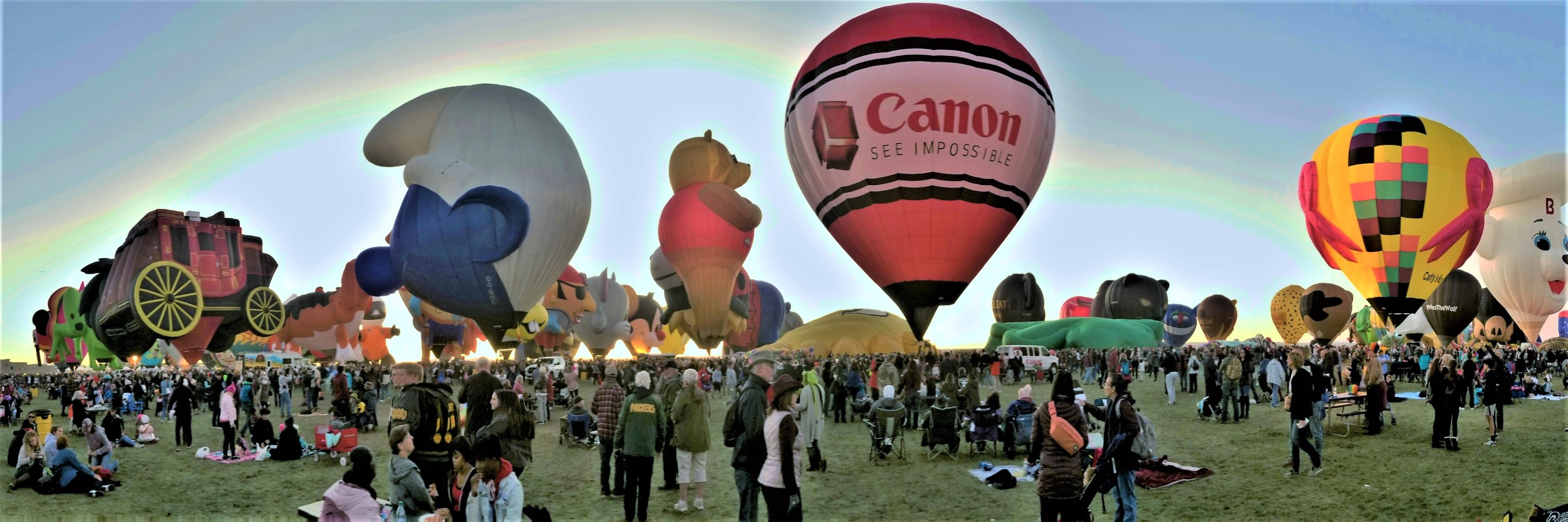
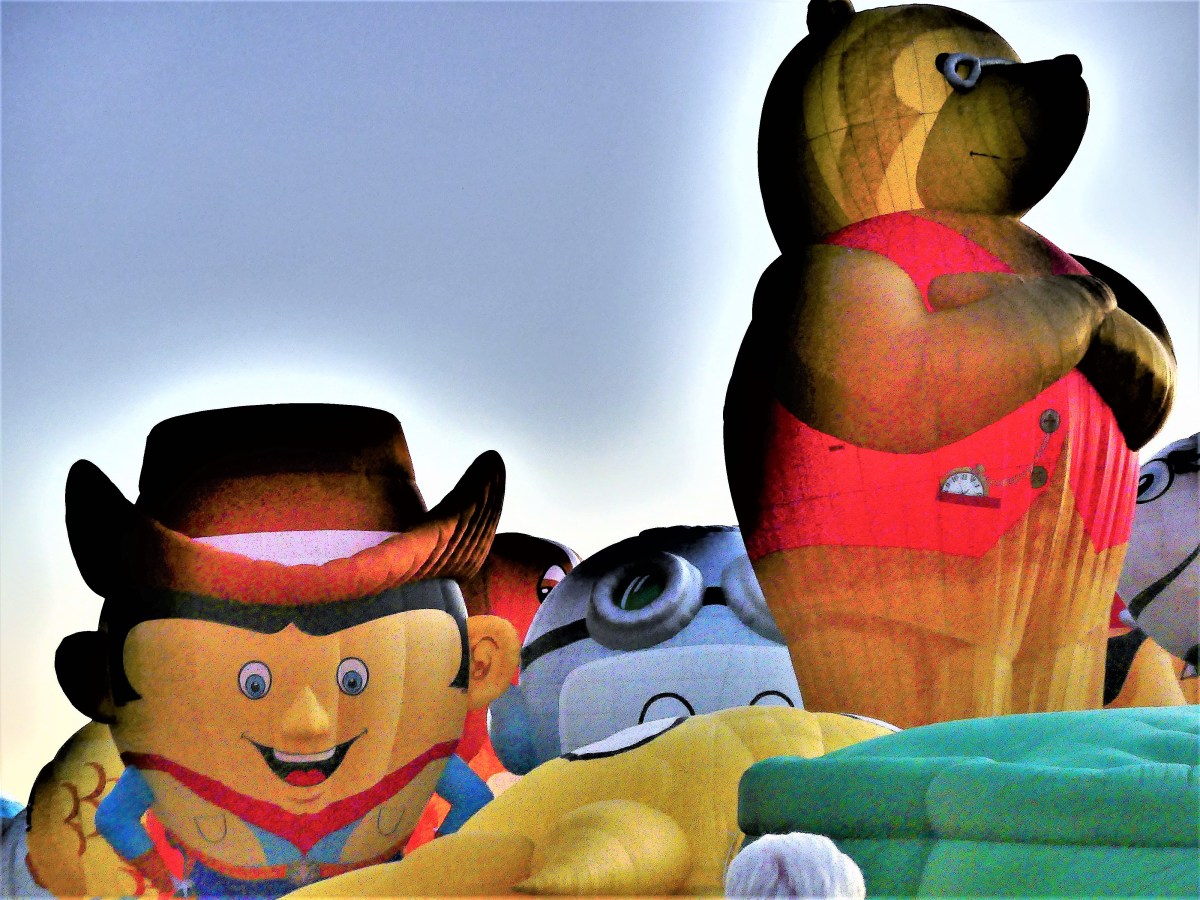
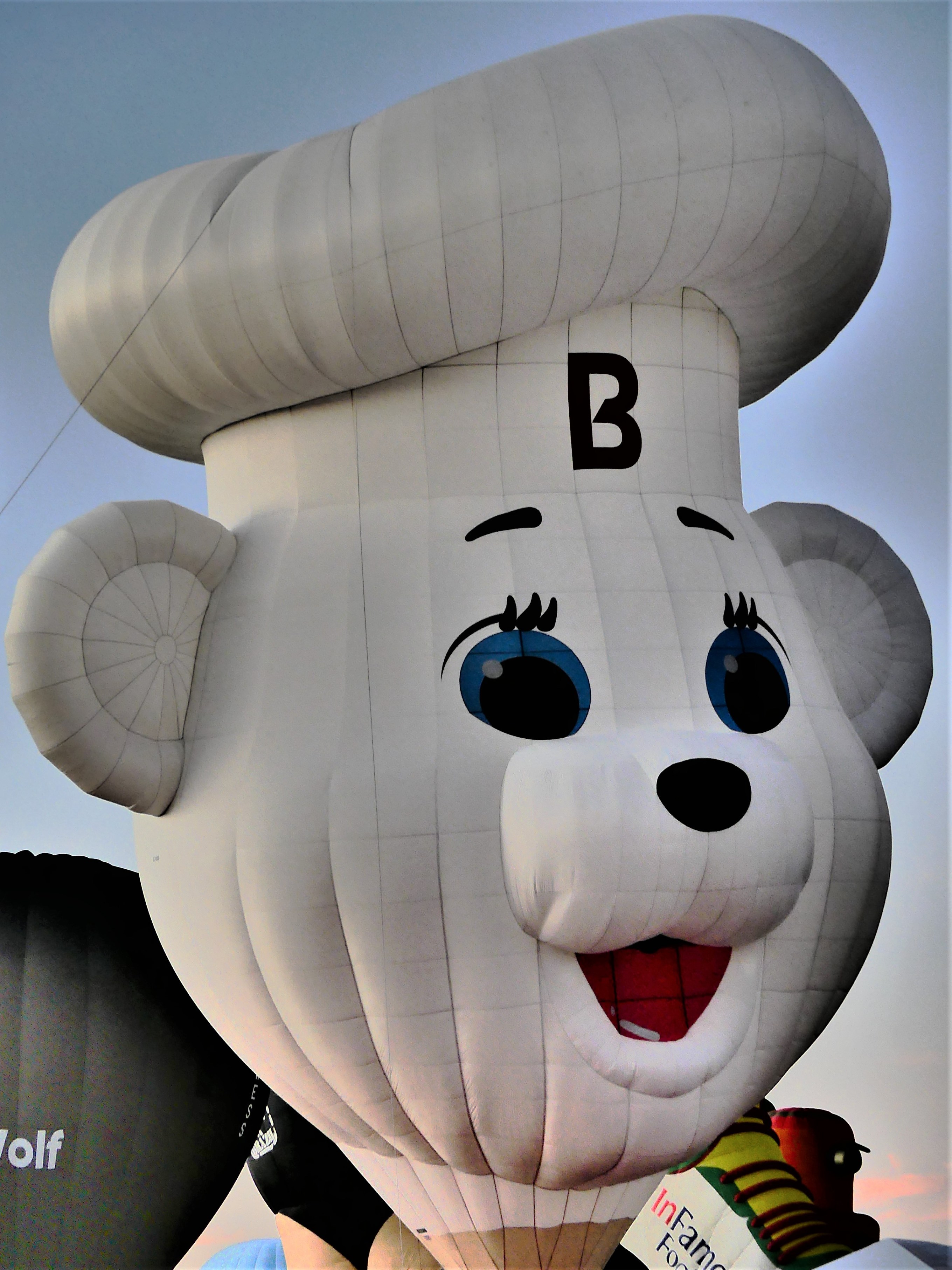
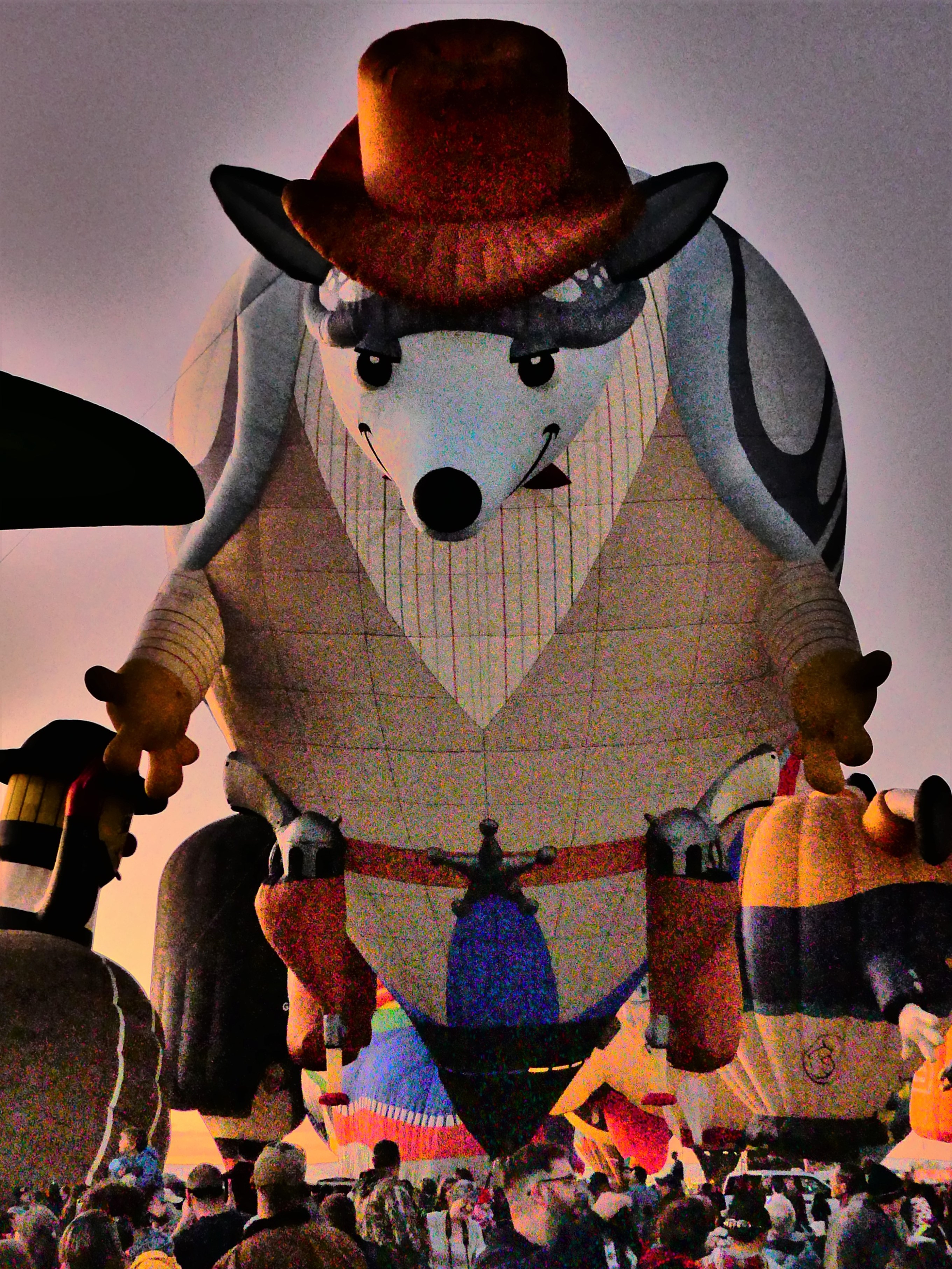
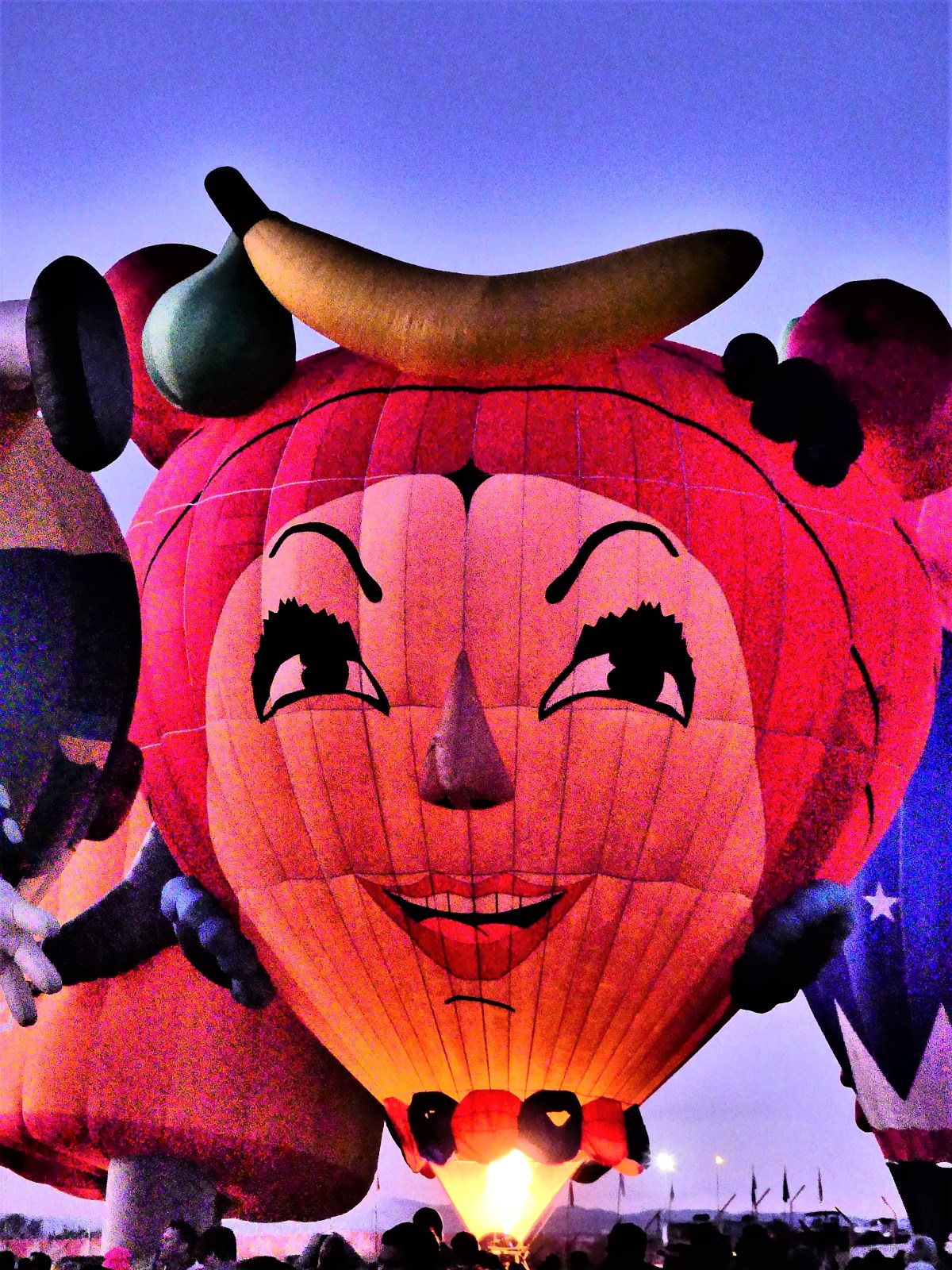
But for two days–Thursday and Friday– the special shapes take over, and Balloon Fiesta takes flight without ever leaving the ground. Since 1989, the Special Shape Rodeo has grown into Balloon Fiesta’s most popular attraction.
The first-of-its-kind rodeo originally attracted 28 shapes and huge crowds, but today, parking has reached near-capacity, delivering crushing crowds and shrinking field capacity for one-hundred balloons that currently participate during dusk.
Known as the Special Shape Glowdeo™, the special shapes inflate and glow for 2 hours after sunset, followed by a fireworks display sponsored by Canon.
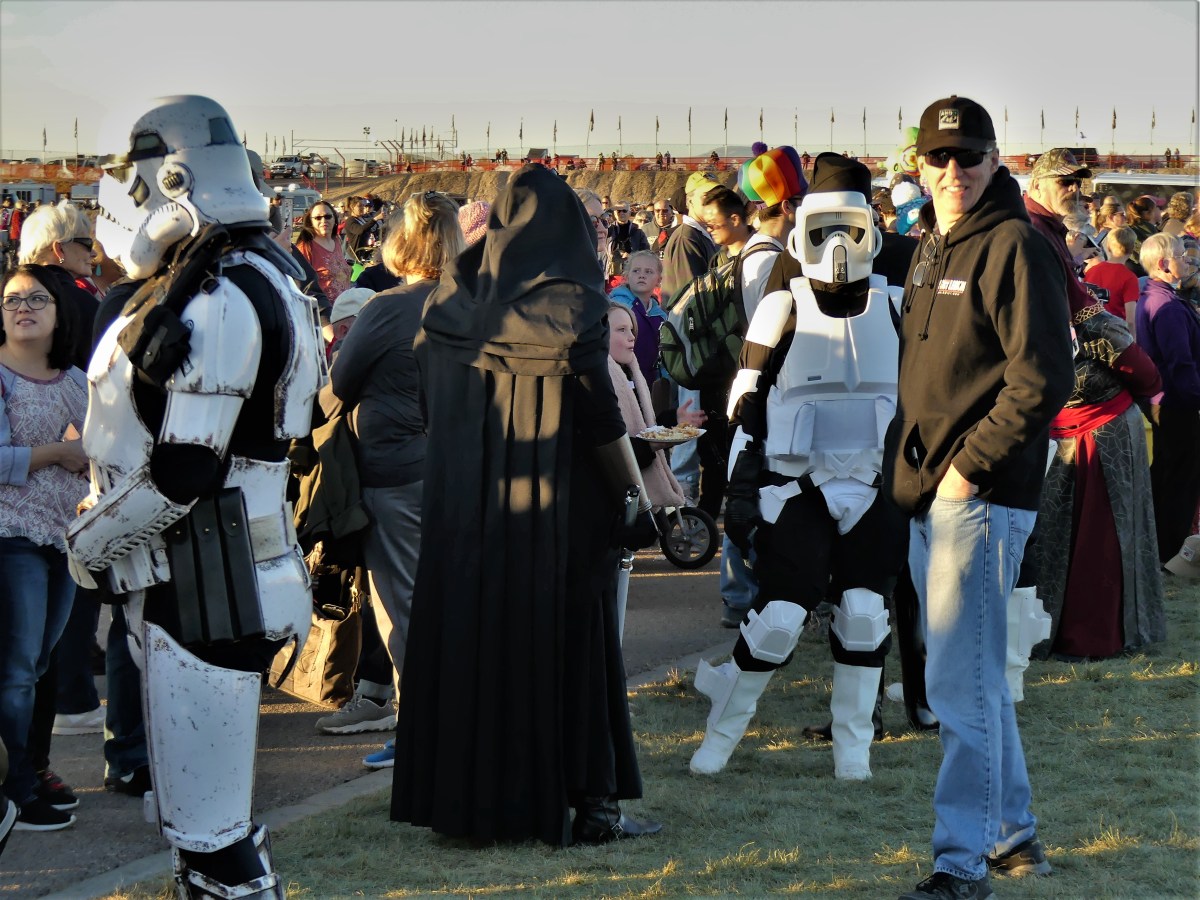
On its surface, this is exactly the kind of event I look forward to: colorful crowds and colorful balloons just waiting to be photographed. But I am not alone. Special Shape Glowdeo™ has become a photography touchstone, and claims to be one of the most photogenic events in the world.
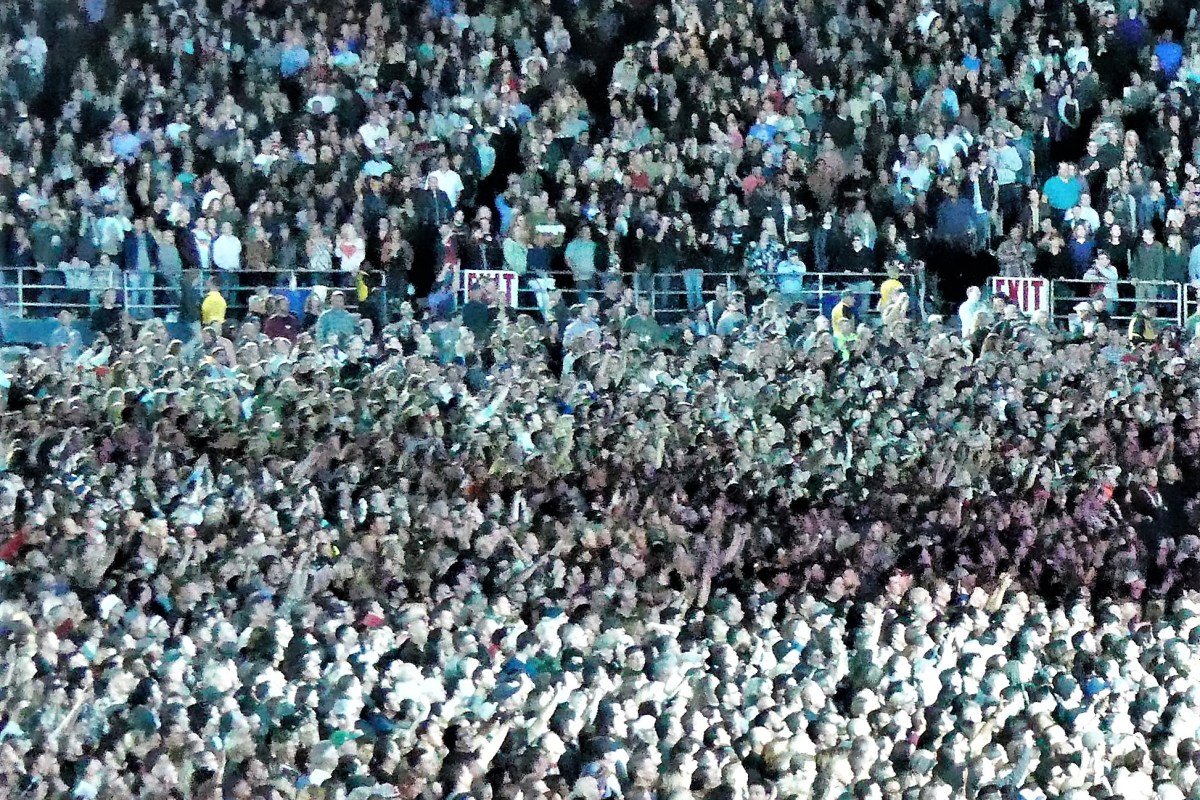
Nearly everyone in the crowd is carrying a camera, or becomes a de facto photographer by virtue of their cell phones and selfie sticks.
And those without cameras are usually pushing strollers, or busy juggling food and babies.
Somehow, all of this works during daylight hours. As more balloons populate the horizon, most people are walking in trances as they look to the heavens, all the while focusing on a particular shape nearby.
It’s hard to calculate all the near-misses, with so many people competing to capture the same image simultaneously, but as long as there is light, accidental collisions are easily forgiven.
But all of that changes when darkness takes over and the only available light eminates from the ephemeral flicker of the balloons across the landscape.
It’s as if the winds have shifted, and all who are present have either been transported to the dark side,
or they now move through space and time as if they are moving through space.
Instantly, carriages and strollers become ankle missiles, and avoiding children on wheels while weaving through the crowd becomes an impossible challenge.
Then there are the Bimbos…
who seeingly run out of gas,
and stop in their tracks without warning,
or those who would sooner walk over me as if I wasn’t there.
It’s enough to make a person scream…
or turn to a higher power for strength–
praying for order to return to the universe.
If only there was another way to get around.
Nevertheless, against all odds, I rally against the lawlessness,
and persevere with a determination worthy of Uncle Sam’s attention.
My mission is to get as close as I can to as many of these nylon giants without getting trampled…
And when my camera battery begins to fade,
I know that it’s time to pack it in,
and reconnect with Leah, who’s been wandering the grounds with family.
“Where are you,” I ask into my cell phone.
“I’m under the elephant,” she answers.
We play Marco Polo by phone for the next 15 minutes.
Waves of pedestrian traffic push against me as I attempt to swim upstream.
It’s not an easy reunion, but it’s as welcoming as the sun on a cool desert evening.
After a time, all the balloons have deflated, except for the sponsor, and our family has settled down on blankets, bracing against the north winds as we dine on pizza ($7 per slice) while enjoying the culminating fireworks display.
“It’s a fine line between nutty and eccentric,” explained docent Jim Masseau of the Bayernhof Museum, “and the difference between the two is money.” Over the next two-plus hours, as Leah and I toured this residential mansion in suburban Pittsburgh, Jim’s definition proved to be an understatement, as we learned more about the behavior of Charles Boyd Brown III, the master of Bayernhof.
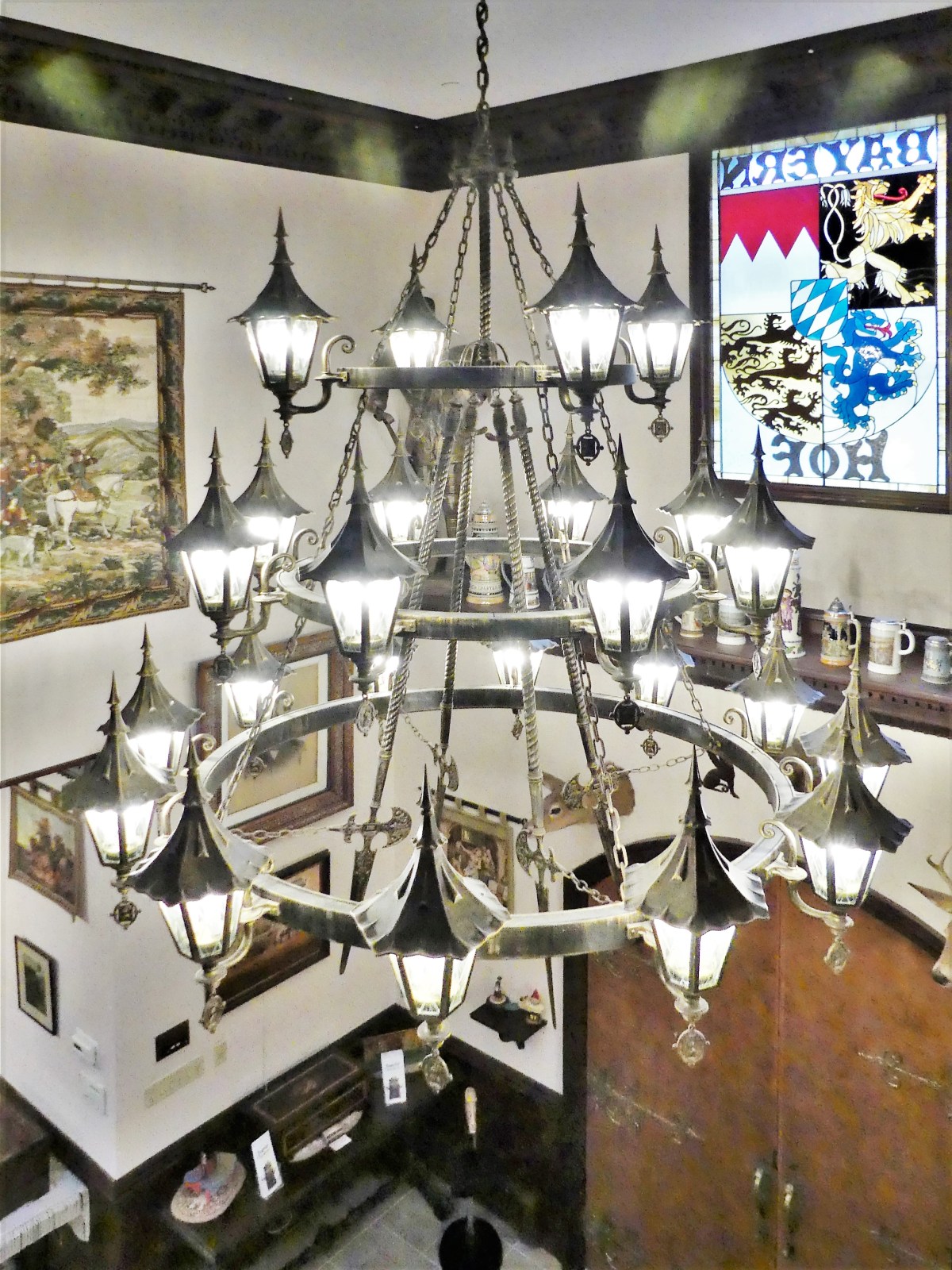
We entered the house through heavy double-doors, which opened into an airy vestibule sporting a heavy chandelier–
befitting a man who made his fortune fabricating sand-casted aluminum lanterns.
Along the way, we passed what appeared to be a life-sized Hummel figurine (later identified as bearing a likeness to his great-grandfather),
and gathered in the family room with the other guests, only to stare at Charlie’s portrait while we waited for Jim to begin the tour.
After informal introductions, Jim fed us details about Charlie’s bachelor life (born in 1937) and the house he left behind.
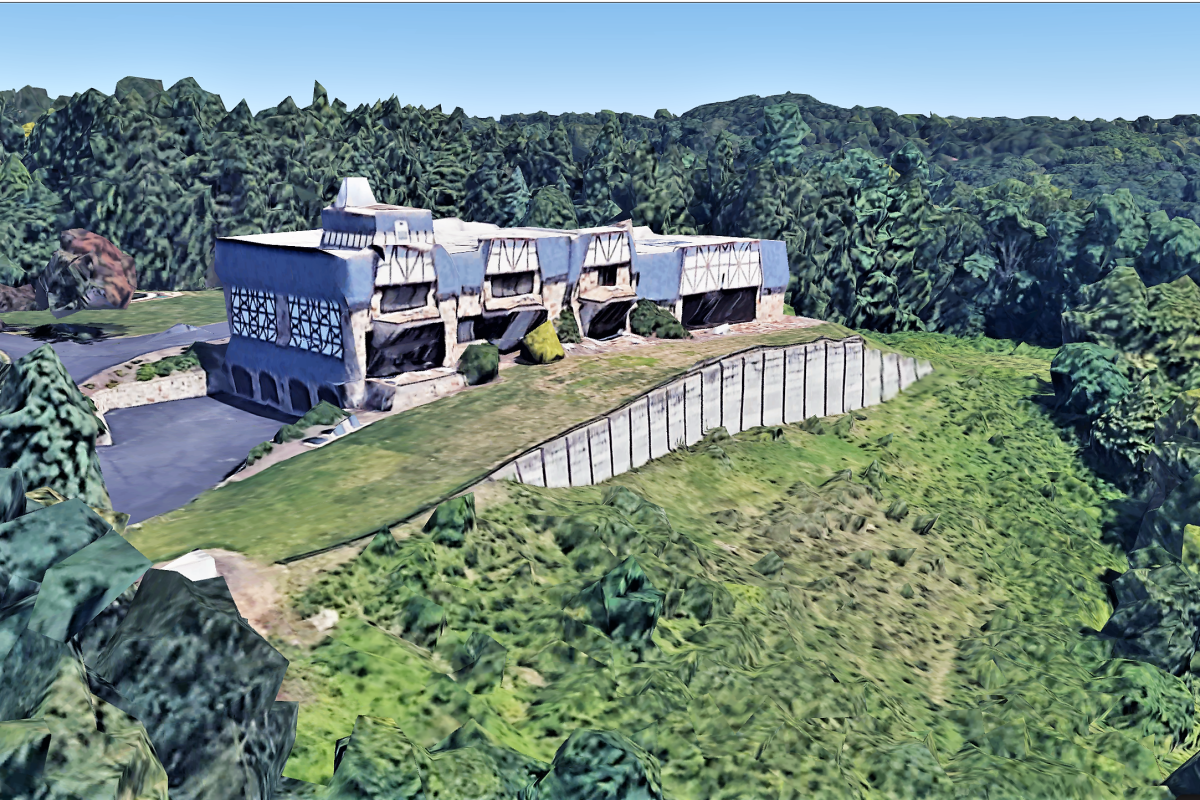
Built high on a hill covering 18 acres, and completed in 1982–after 6 years of construction without blueprints–Charlie’s 19,000 square-foot, Bavarian-styled “castle” overlooks the Alleghany Valley, with views reaching one-hundred miles beyond city limits on a clear day.
However, despite Charlie’s dream of constructing a $4.2 miilion estate with German folk-flourishes–
a rooftop observatory with a 16 inch reflecting telescope…
a basement batcave made of concrete and fiberglass,
a swimming pool with a 10-foot waterfall…
a wine celler with a working copper still…
a billiard room (starring a pool table thought to belong to Jackie Gleason)…
a home office…
and a boardroom (only used twice)–
his house, unfortunately, would never be considered museum-worthy on its own. Charlie would need a gimmick to attract greater attention. And that’s when he started collecting automated music machines from the 19th and 20th century.
Charlie couldn’t carry a tune, and had as much musicality as a bag of bagel holes. But his appreciation for century-old music machines instructed his passion for collecting them, until he acquired nearly 150 working devices (many rare and unusual), now scattered throughout the premises.
A sample of instruments can be viewed in the video below:
As Charlie grew his collection, he loved showing them off, and held lavish parties for 5 to 500 guests at a time–always in charge of the cooking, and always dressed in one of his signature blue Oxford shirts. He owned 283 of them. Whenever he tired of his company, he would magically slip away through one of many secret passages, leaving his guests to fend for themselves.
Before Charlie passed away in 1999, he endowed a foundation valued at $10 million to convert his home into a museum. In 2004, the O’Hara Township zoning board granted his wish, and the Bayernhof Museum was born, with the stipulation that pre-arranged guided tours be limited to 12 people at a time.
Charlie’s Bayernhof got its big break when CBS News did a feature for its Sunday Morning broadcast earlier this year…
I met Andy Warhol once, although it was nothing glamorous. I can’t brag about meeting him on the set of one of his Factory films or dancing together at Studio 54 or sharing lines of coke in the ladies room of Max’s Kansas City. Nevertheless, I’ll settle for our chance encounter in the back seat of my taxi.
It was July 25, 1985 and I was waiting at the light on W. 65th St. and Amsterdam Avenue when I recognized Warhol exiting Lincoln Center. He stepped off the curb to hail a cab, and I held my breath that the light would change before another driver could snatch him from me.
When the light turned green, I gunned the feeble engine, and the taxi lurched across the intersection. I pulled up alongside of Warhol, and he scrambled into the back seat of my cab carrying a Commodore tote bag. He requested I drive him to his Upper Eastside townhouse after attending a Lincoln Center event with Debbie Harry to launch Commodore’s Amiga 1000, and promote its color graphic capabilities.
He wasn’t much of a conversationalist, and the trip–all of 15 minutes–was covered in relative silence, although he asked me turn up the volume when “Brown Sugar” played over the radio.
“I designed that album cover for the Stones, y’know,” he said softly.
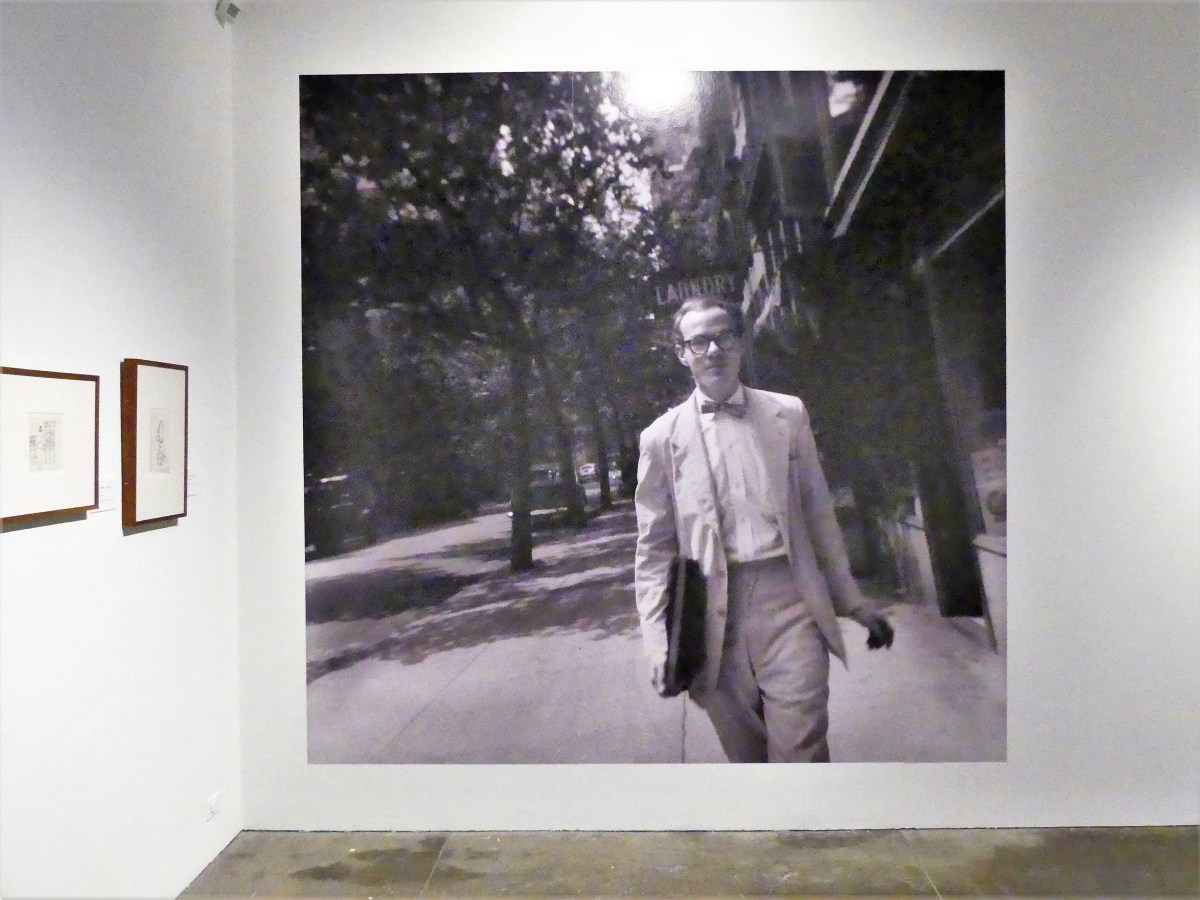
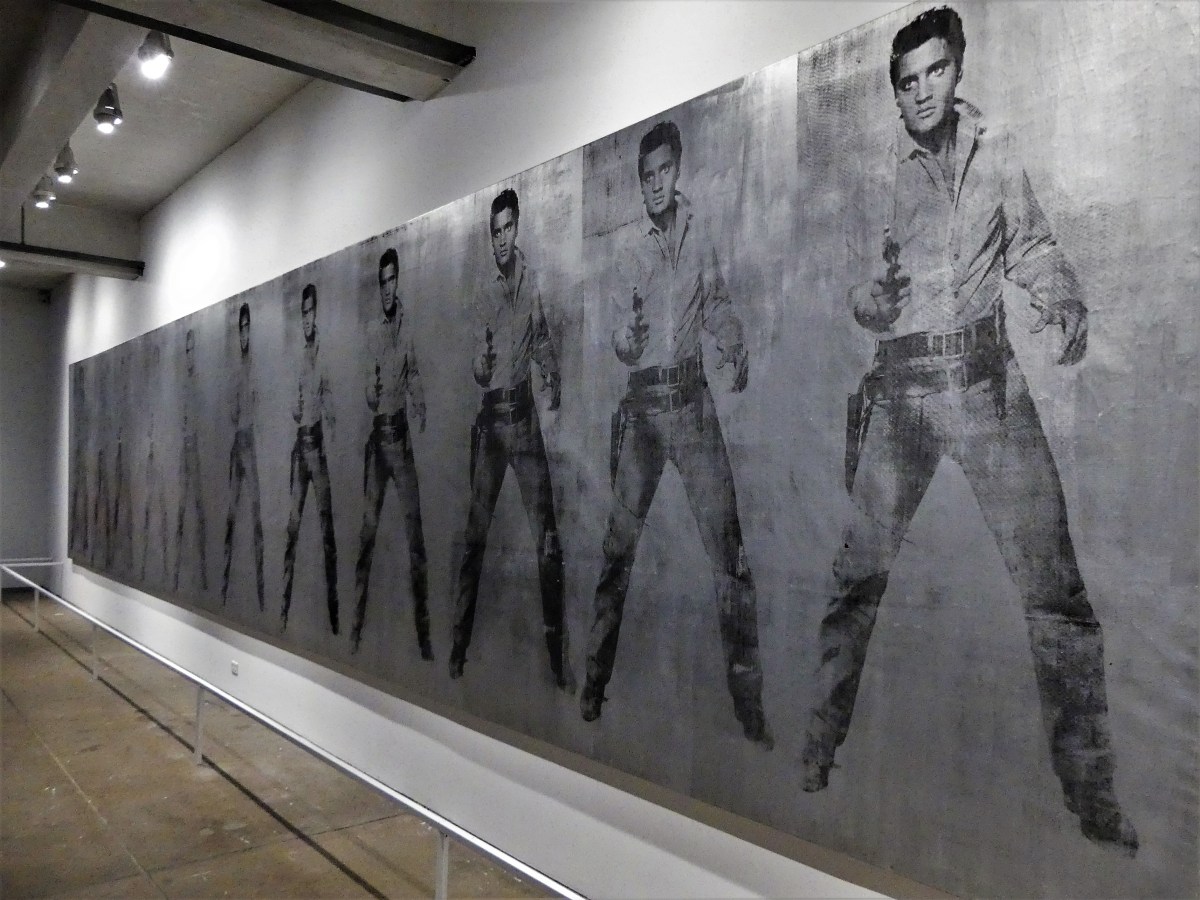
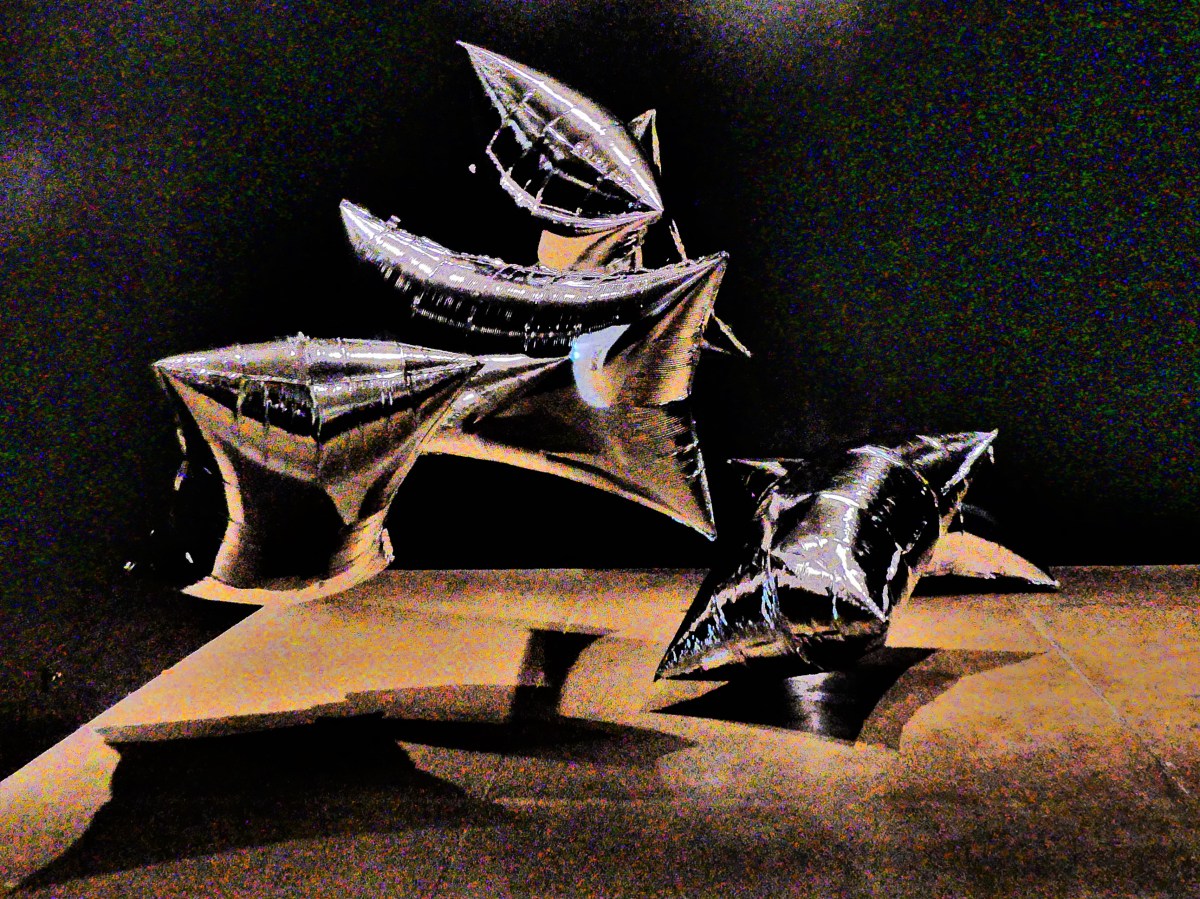
These memories came flooding back to me as I explored the Andy Warhol Museum in Pittsburgh, walking through seven floors of collections from the early years,
through his productive New York days,
until his demise in 1987.
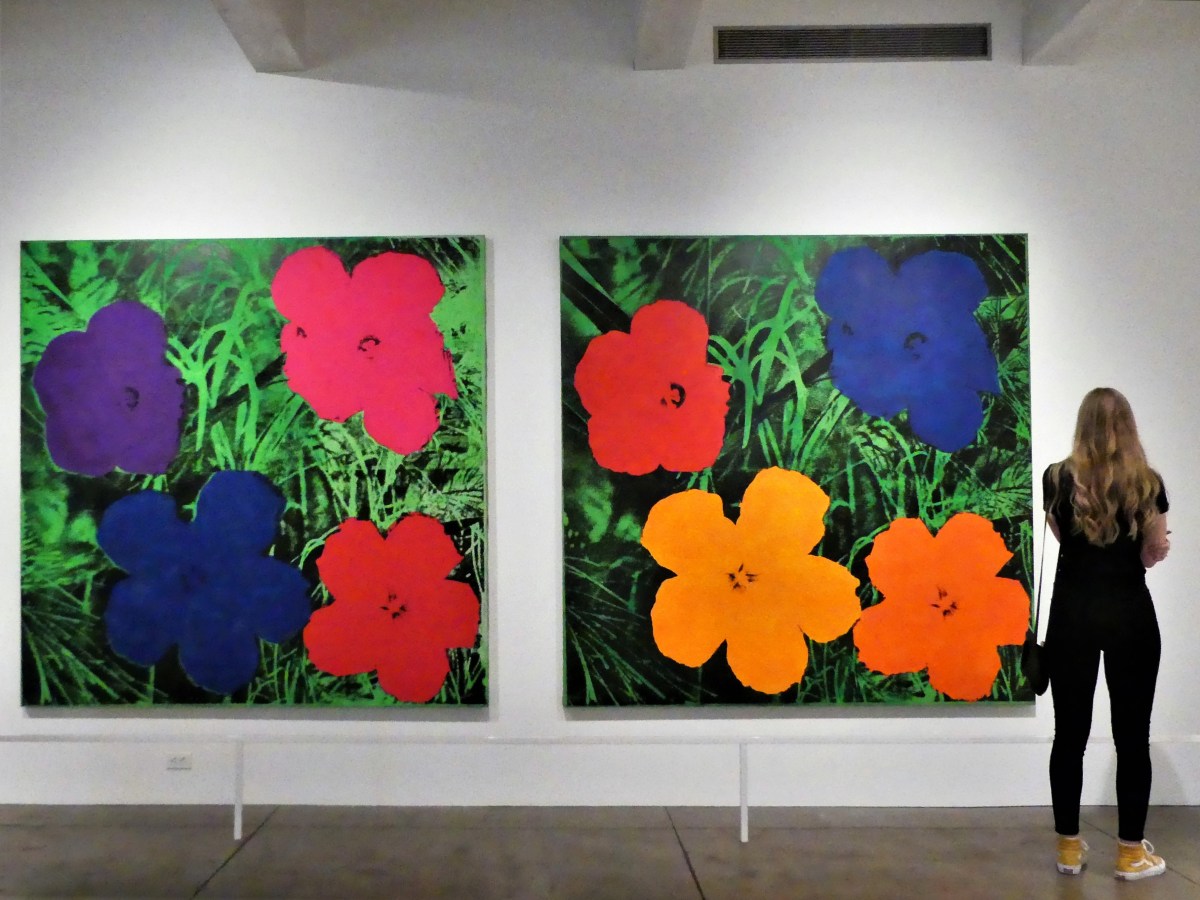
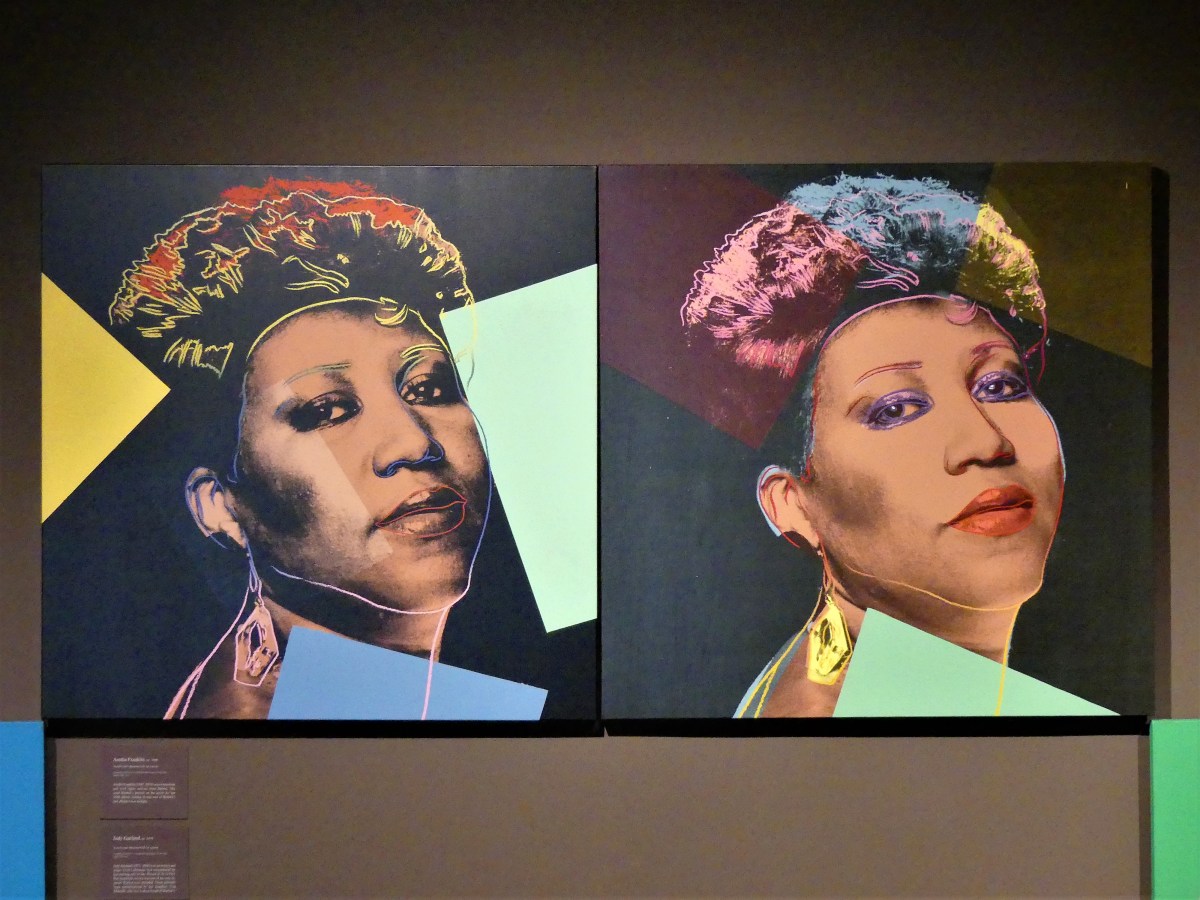
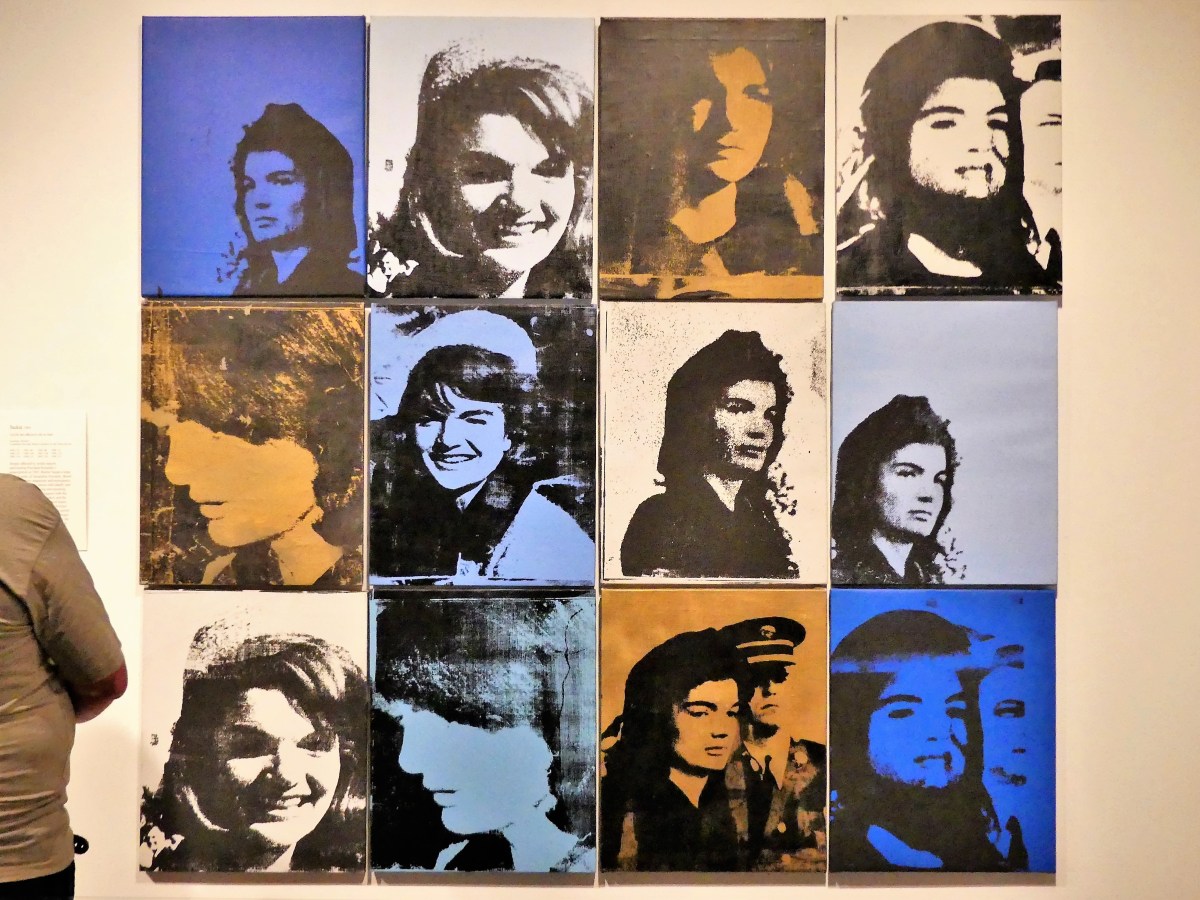
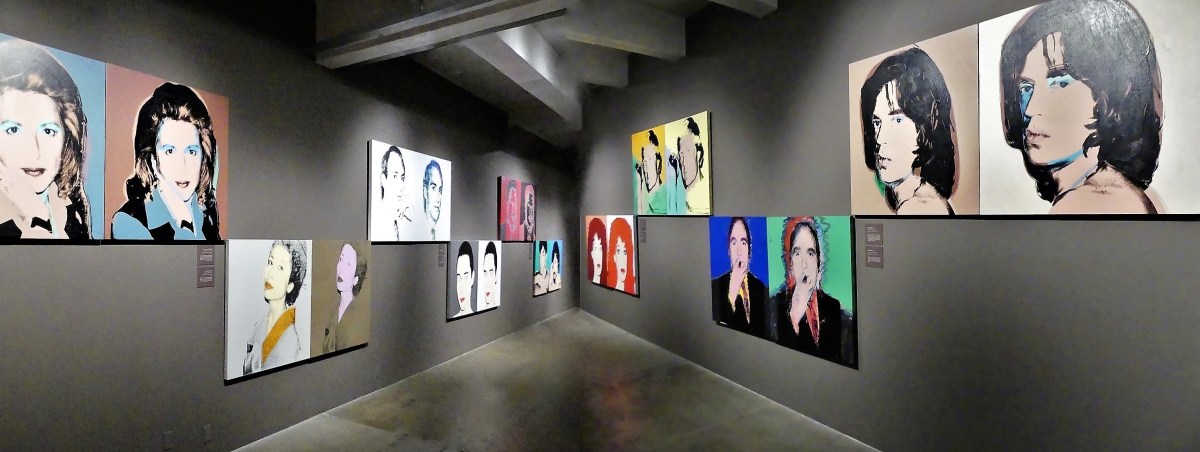
The Andy Warhol Museum–managed by the Carnegie Museum of Art–holds the world’s most extensive collection of Warhol’s art, including:
“…900 paintings;
…approximately 100 sculptures;
…nearly 2,000 works on paper;
…more than 1,000 published and unique prints;
…4,000 photographs; 60 feature films; 200 Screen Tests; and more than 4,000 videos.”
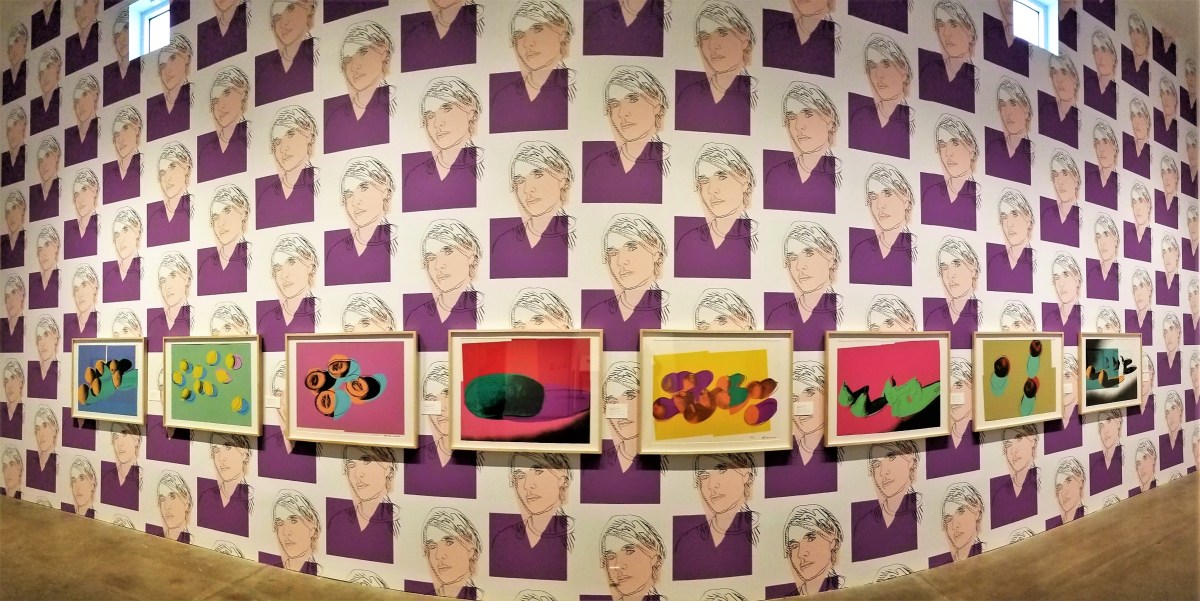
The collection also features Warhol wallpaper and books;
…and an archive of perhaps half a million objects collected by Warhol spanning a 40-year career, including his original Amiga 1000 computer and assorted discs filled with unseen digital art…until recently.
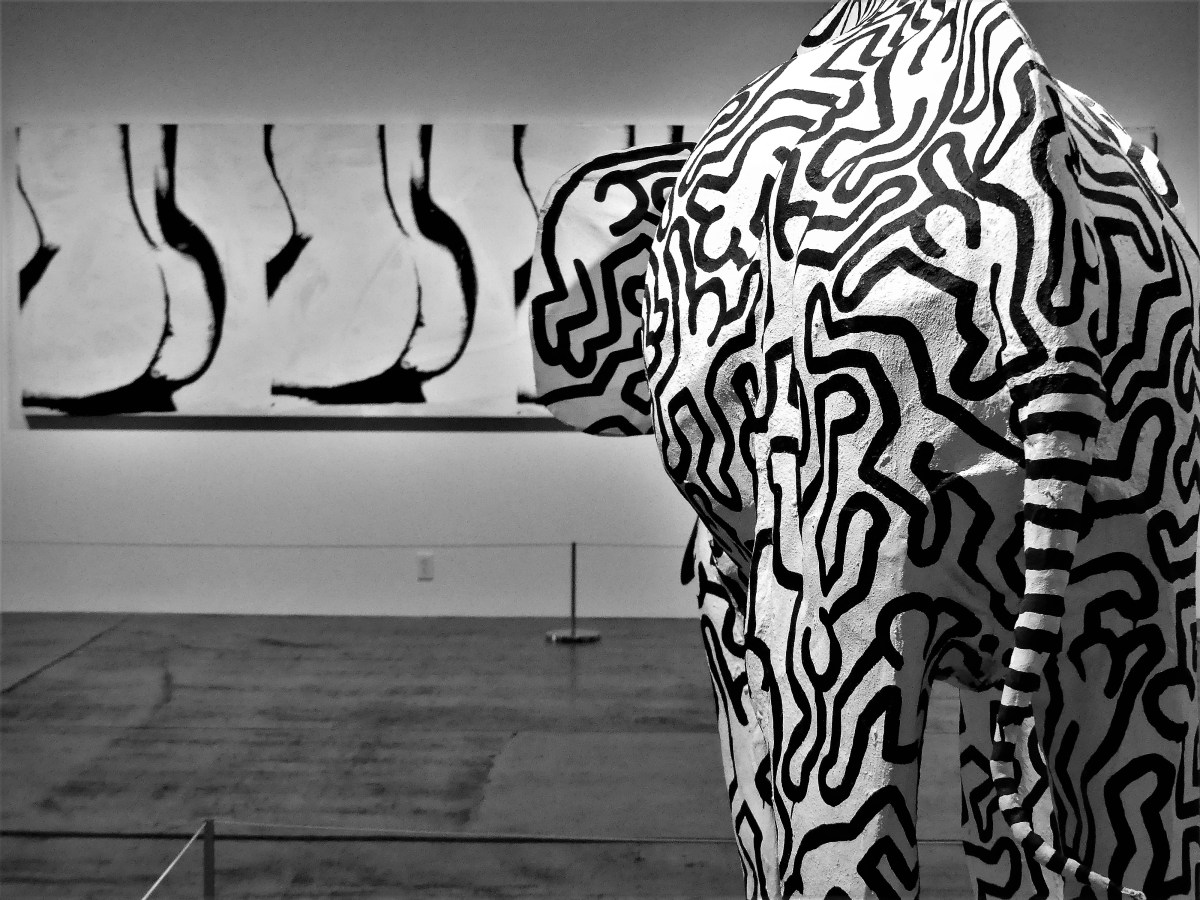
Nearing the end of the exhibition, I approached a Warhol painting detailing a series of female torsos, but found the photograph lackluster and flat. And I wondered, “What would Andy do in this situation to add contrast and depth?”
That’s when I framed a posthumous collaboration of Keith Haring’s painted elephant with Andy’s torsos.
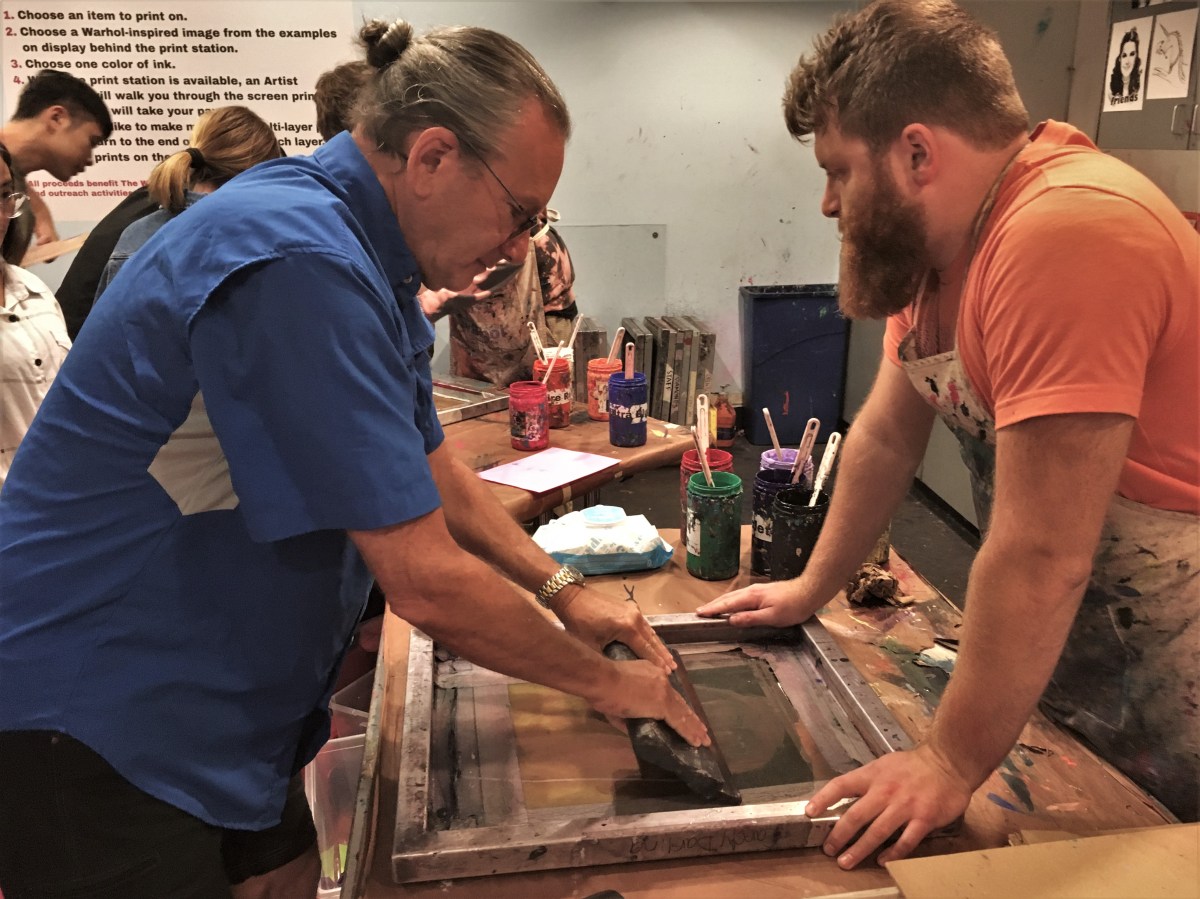
Feeling inspired and somewhat creative, I decided to try my hand at screening a kerchief in the Underground Lab for $2.00.
While it’s not perfect, it’s nothing to sneeze at, so I’ll be using tissues instead, whenever necessary.
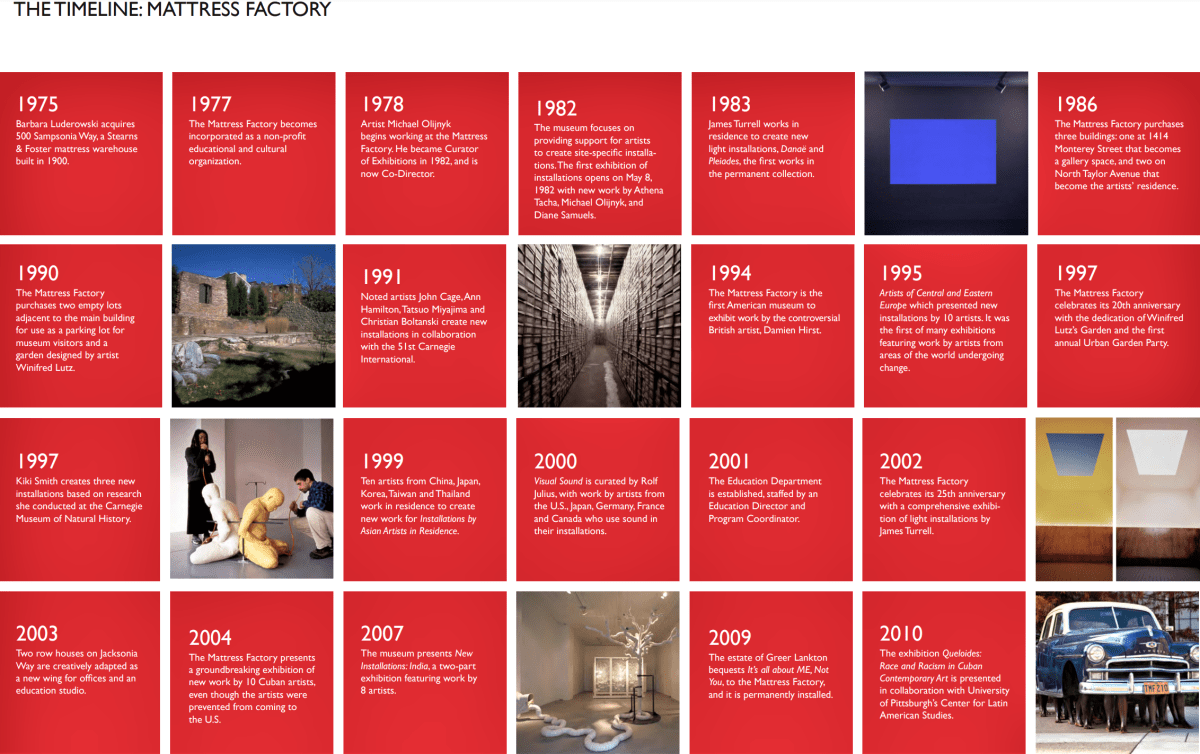
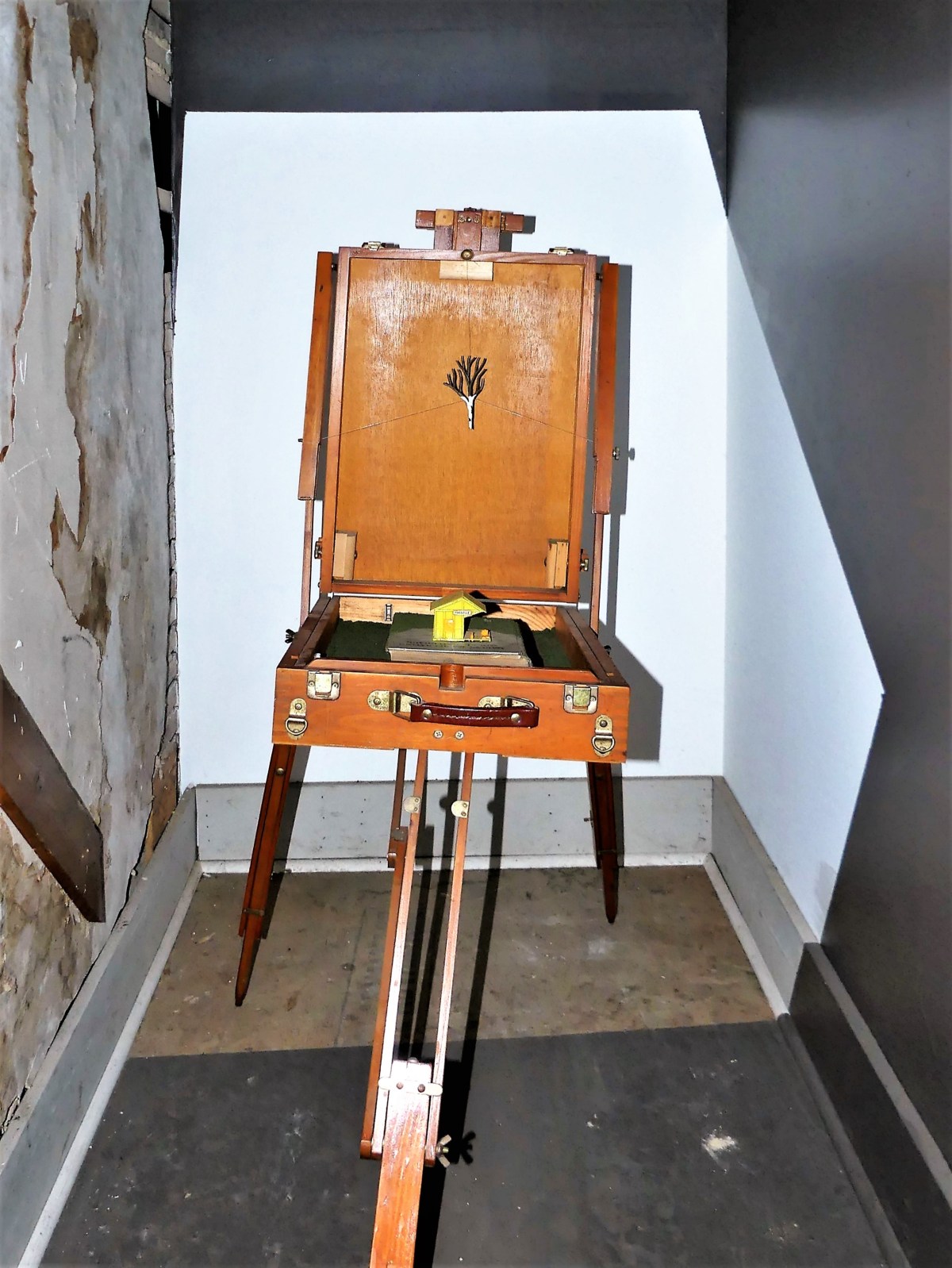
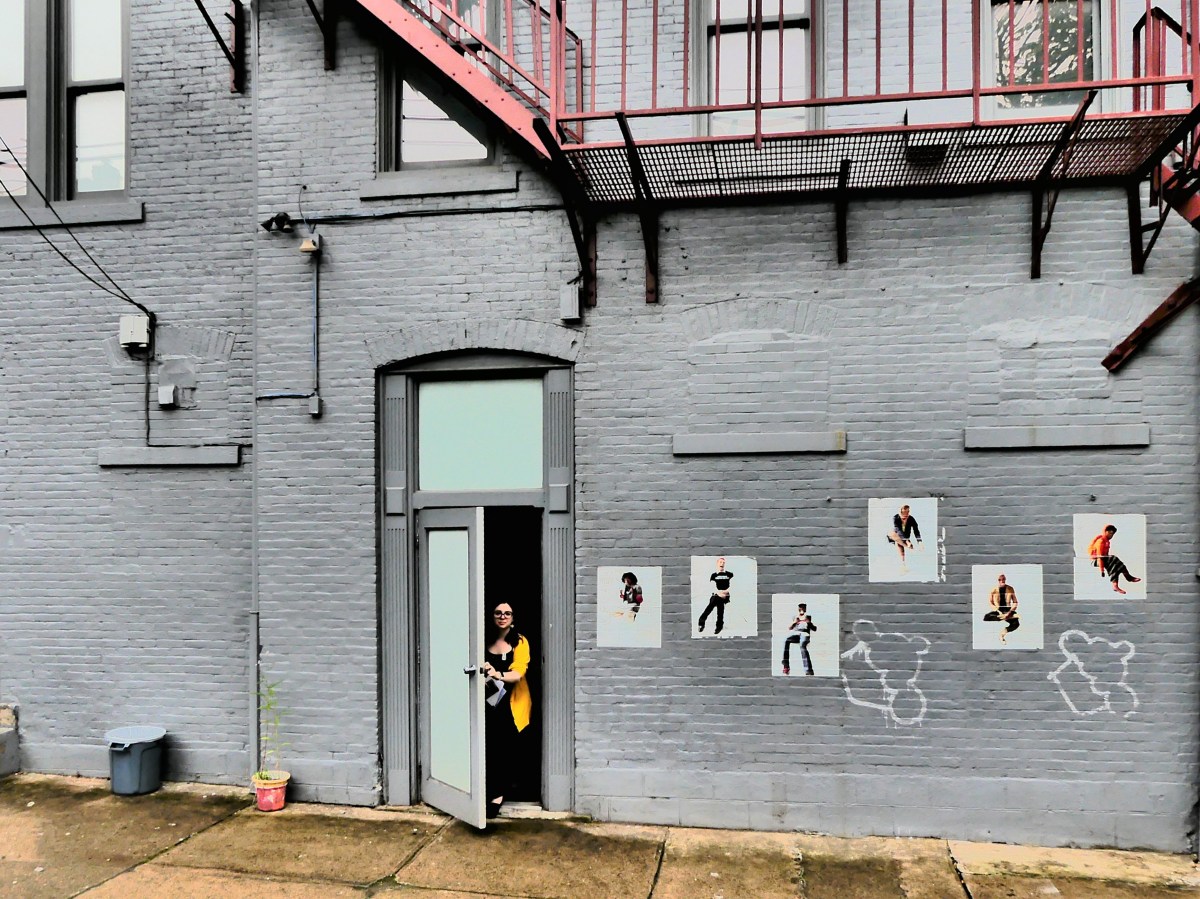
The cultural evolution of Pittsburgh’s North Side began with the Mattress Factory–an anchor and incubator for contemporary art that’s been cutting the experimental edge of international expression by artists for artists since 1977.
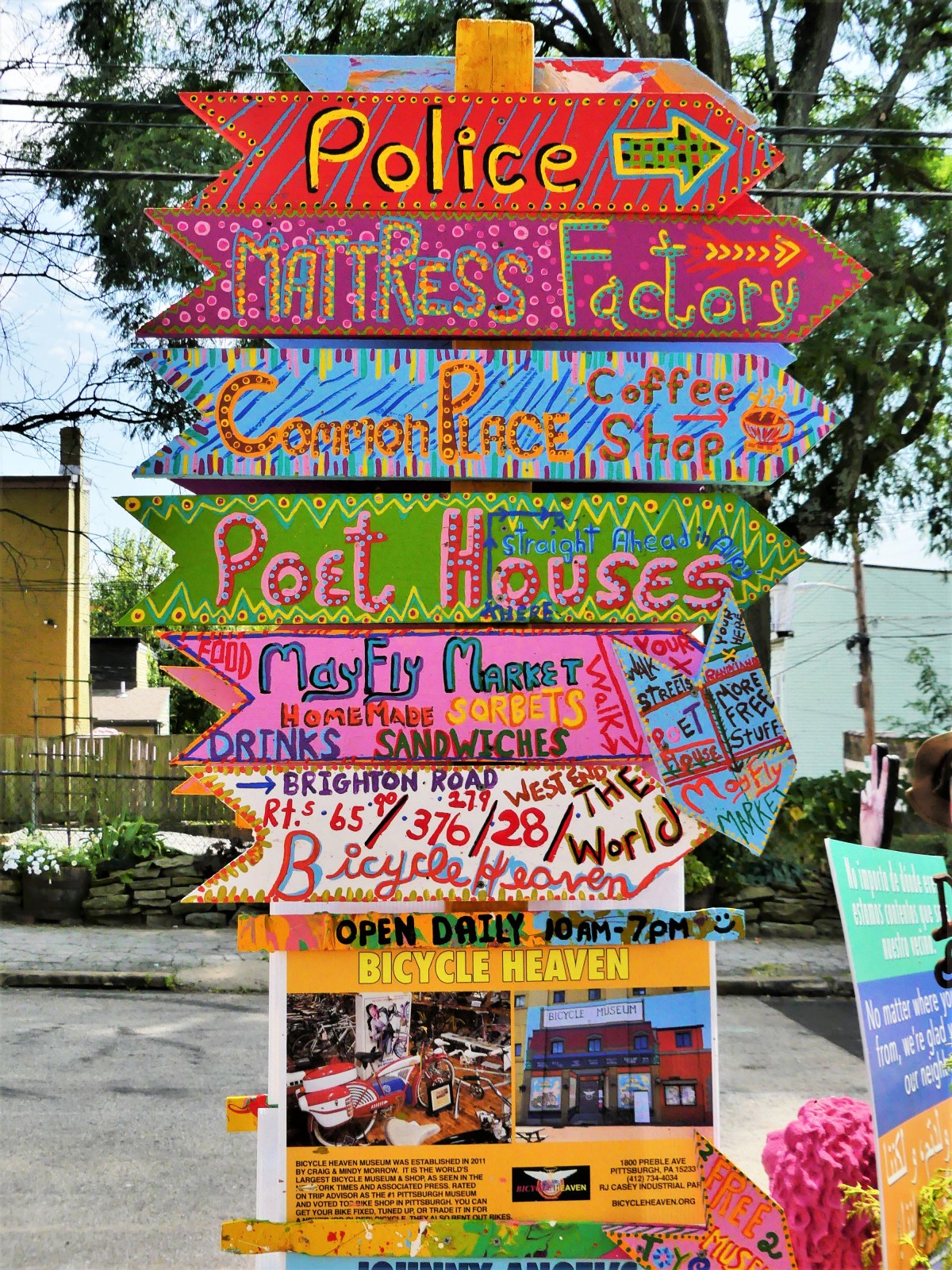
Just a short walk fromRandyland, the Mattress Factory factors heavily in site-specific installations occupying a collection of once-abandoned, but rehabilitated properties that have contributed greatly to the economic development and revitalization of a once-depressed community.
Not knowing what to expect, Leah and I dropped in during a transitional time for the museum, when much of the Main Building was undergoing preparation in anticipation of a late September opening.
But what we saw pushes the boundaries of form and information, while pushing the buttons of eccentric taste and interpretation.
Two outlying row houses housed separate exhibits. Our exploration began at the Monteray Annex…
…and continued at the Sampsonia Annex…
…before returning to the Main Building, where we followed the advice of an admissions clerk, and started on Floor 3 for a look at Yayoi Kusama’s two rooms…
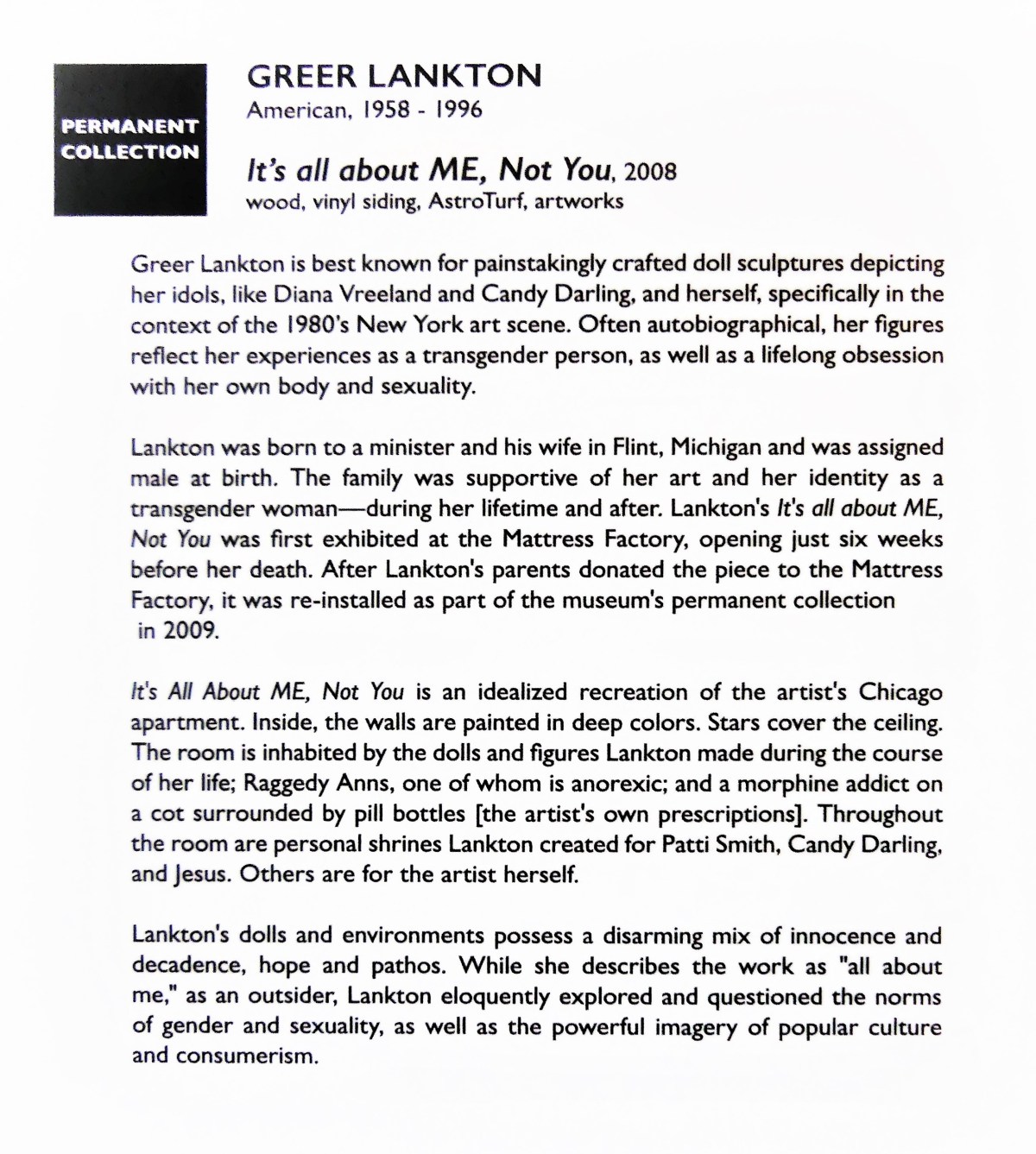
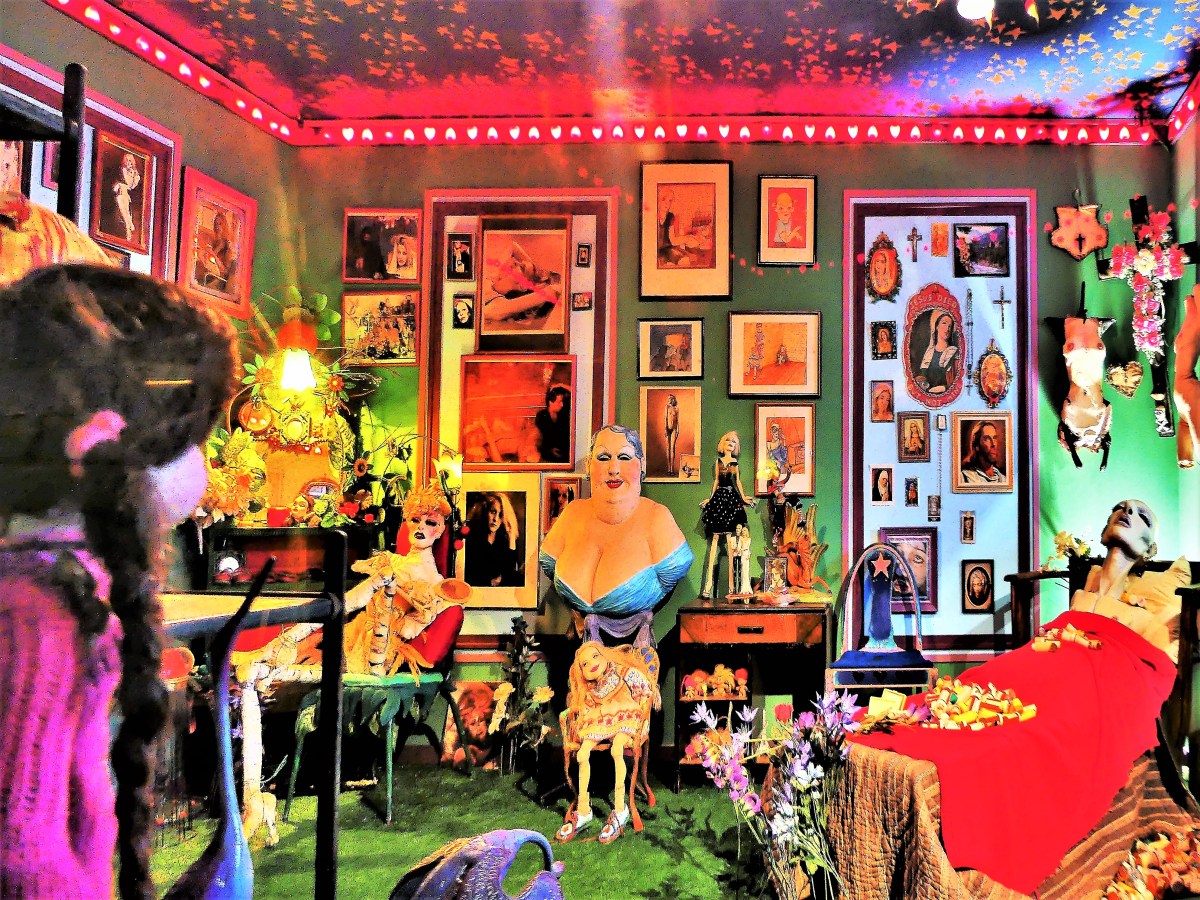
…followed by a voyeuristic installation by Greer Lankton.
When the elevator dropped us at Floor 2, we paused long enough in the darkened foyer for our eyes to adjust, before feeling our way through a serpentine corridor that guided us to James Turrell’s light projections.
We finished our tour with a stroll around a compact courtyard garden designed by Winifred Lutz.
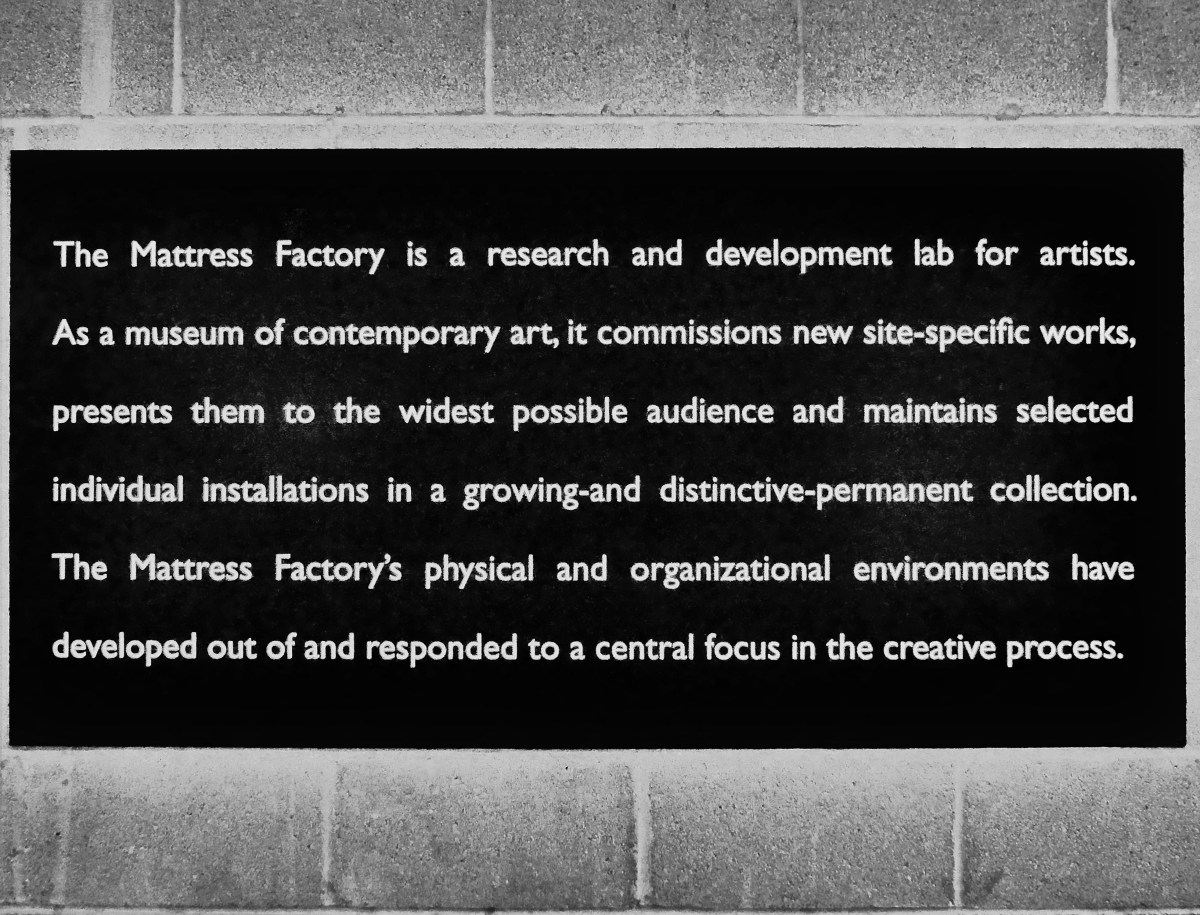
While not as exhaustive as a Whitney Museum Biennial, the Mattress Factory holds a firm place in the art world, where artists can dream and “create remarkable works of art that help us see the world in a fresh and different way.”
Pittsburgh is best known as the “City of Bridges,” boasting a world’s-highest 446 spans.
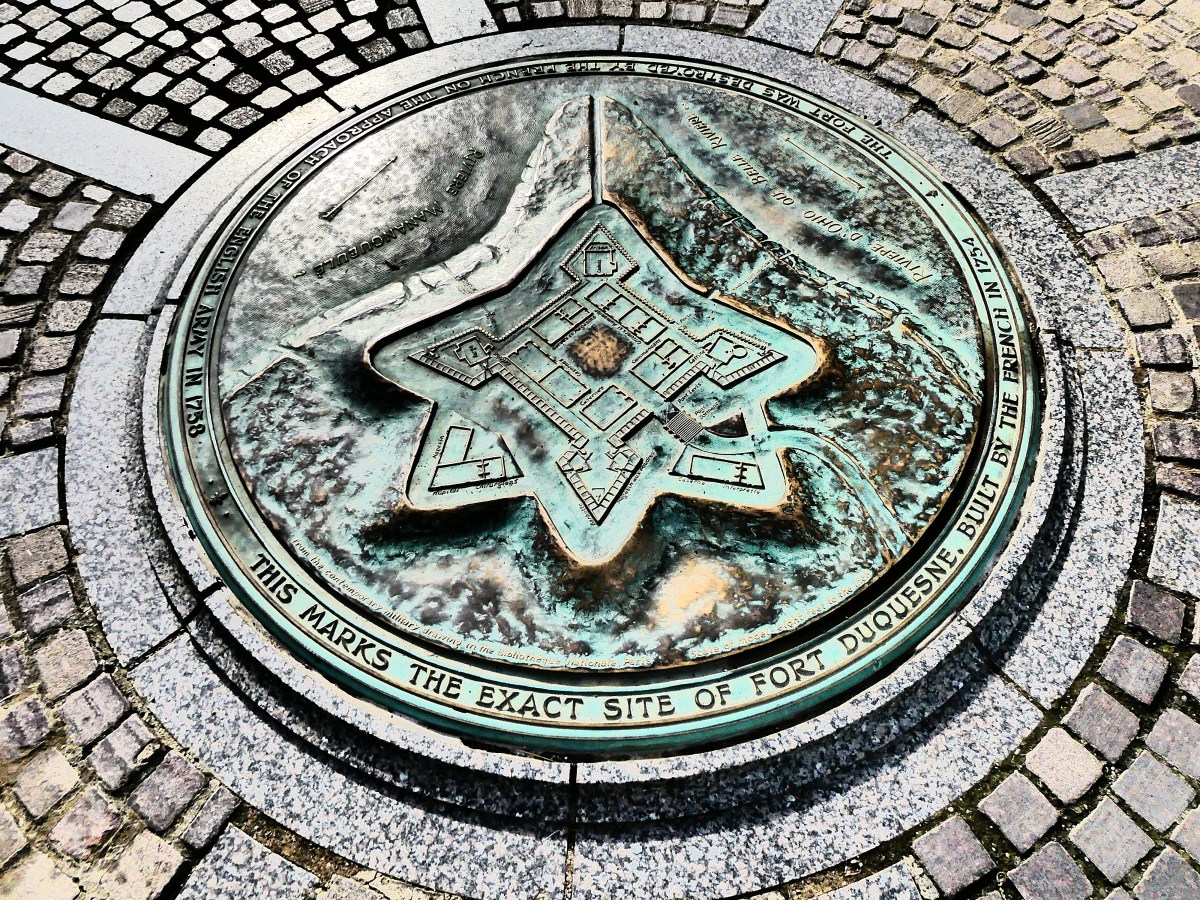
Its residents have been crossing its rivers and hills before the French built Fort Duquesne at the confluence of the Monongahela and Allegheny Rivers in 1754 to protect their access to the Ohio Valley.
After the British advanced, defeating the French and Native Americans, they established Fort Pitt in 1761.
As Pittsburgh industrialized during the 19th century, so did its transportation network, and the bridges soon followed, connecting many of the elevated neighborhoods scattered throughout the vicinity.
Pittsburgh’s “Three Sister” Bridges: the Sixth, Seventh, and Ninth Street Bridges. The “Three Sister” bridges were part of a massive series of bridge-building campaigns begun in 1924 by the Allegheny County Department of Public Works, and finished in the late 1930s by the Depression-period Allegheny County Authority. Credit: Allegheny Conference on Community Development Photographs, Detre Library & Archives at the History Center
In fact, the “City of Bridges” moniker could easily be replaced with the “City of Hills,” given Pittsburgh’s challenging geography, for there are hills galore (North Hills, East Hills, South Hills, West Hills, Middle Hill, Upper Hill, Spring Hill, Summer Hill, Troy Hill, Polish Hill, Squirrel Hill, and the Hill District); and there are heights aplenty (Northview Heights, Brighton Heights, Crafton Heights, Duquesne Heights, and Stanton Heights); as well as a variety of lofty-sounding communities (Highland Park, Mt. Washington, Southside Slopes, Beechview and Fineview).
For me, growning up in Stanton Heights was a constant cardio workout of hiking and biking in my neighborhood. I still recall schlepping up Greenwood Street’s countless steps on my way home from junior high at Morningside Elementary School. And climbing those hills in an unforgiving winter frequently required fortitude and a layer of thermal underwear, which was sure-fire bait for bullies.
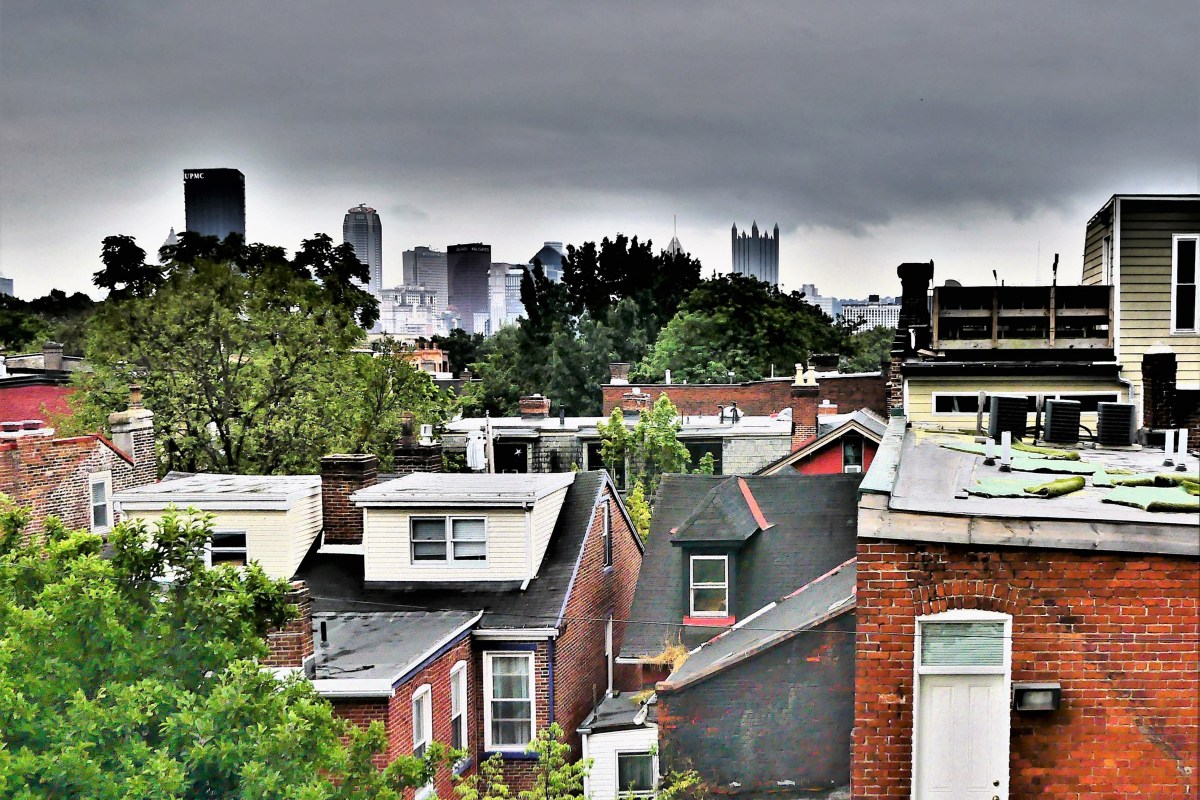
Characteristically, Pittsburgh’s reputation for having the largest collection of steepest streets in the world underscores the importance of living close to a world-class medical center (UPMC)…
whose headquarters, coincidently, occupy the US Steel Building–the tallest tower of Pittsburgh’s skyline.
It had been a long time between visits to Pittsburgh, so Leah and I relocated the Airstream to an RV park north of Pittsburgh for a few days, appropriately named Mountain Top Campground…
and determined that a trip to Mt. Washington was a natural first stop for a lasting look at my hometown from the best possible vantage point.
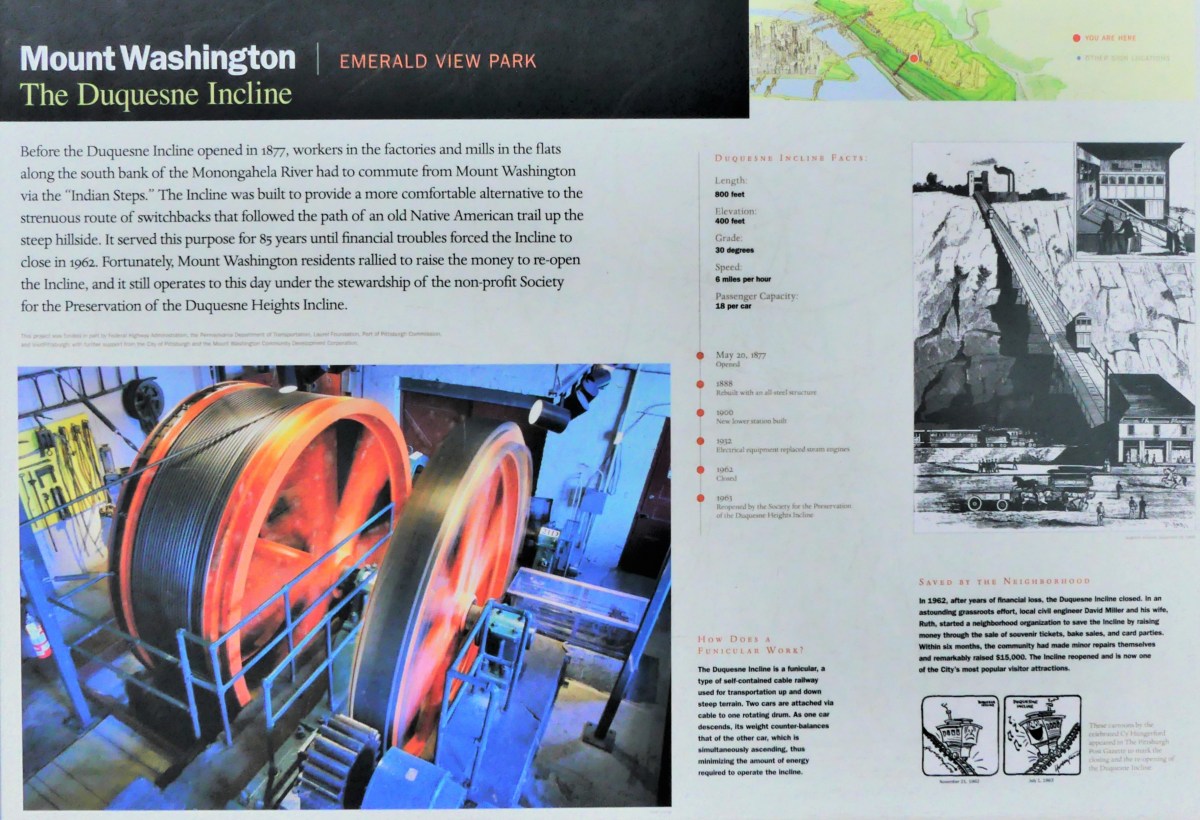
But rather than drive to the top, we parked in a lot and rode the Duquesne Incline as tourists–
one of two remaining from the original 17 funiculars that Pittsburgers once relied upon to ease their commute to the heights throughout town–
for an unparalleled lookout of the Point.
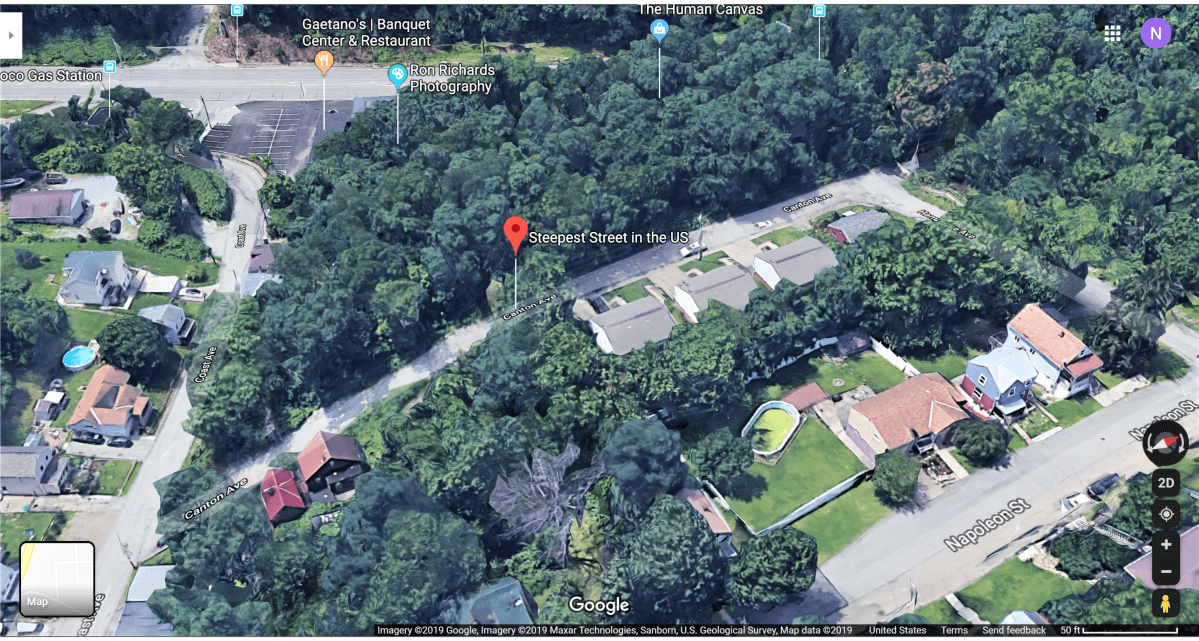
After an overpriced lunch at The Grandview Saloon (poached pear salad for $14), we followed Jennifer (our GPS) to Canton Street,
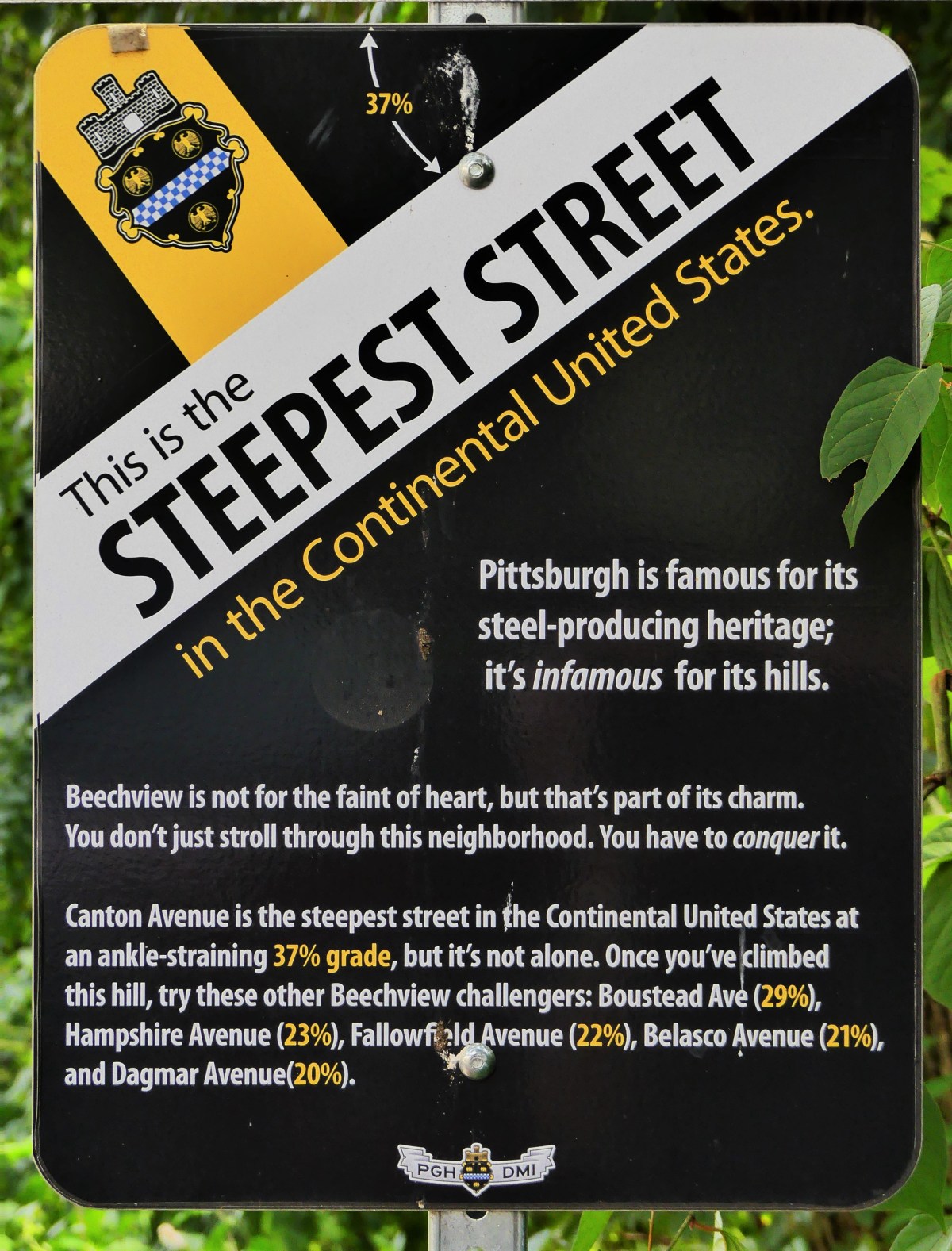
in search of America’s steepest street in Beechview.
Although it’s only one block long, climbing the 37% grade behind the wheel of my F-150 was somewhat disconcerting. Aside from the bumpy ride over cobblestones, the angle was so severe, I could barely see the road beyond the windshield.
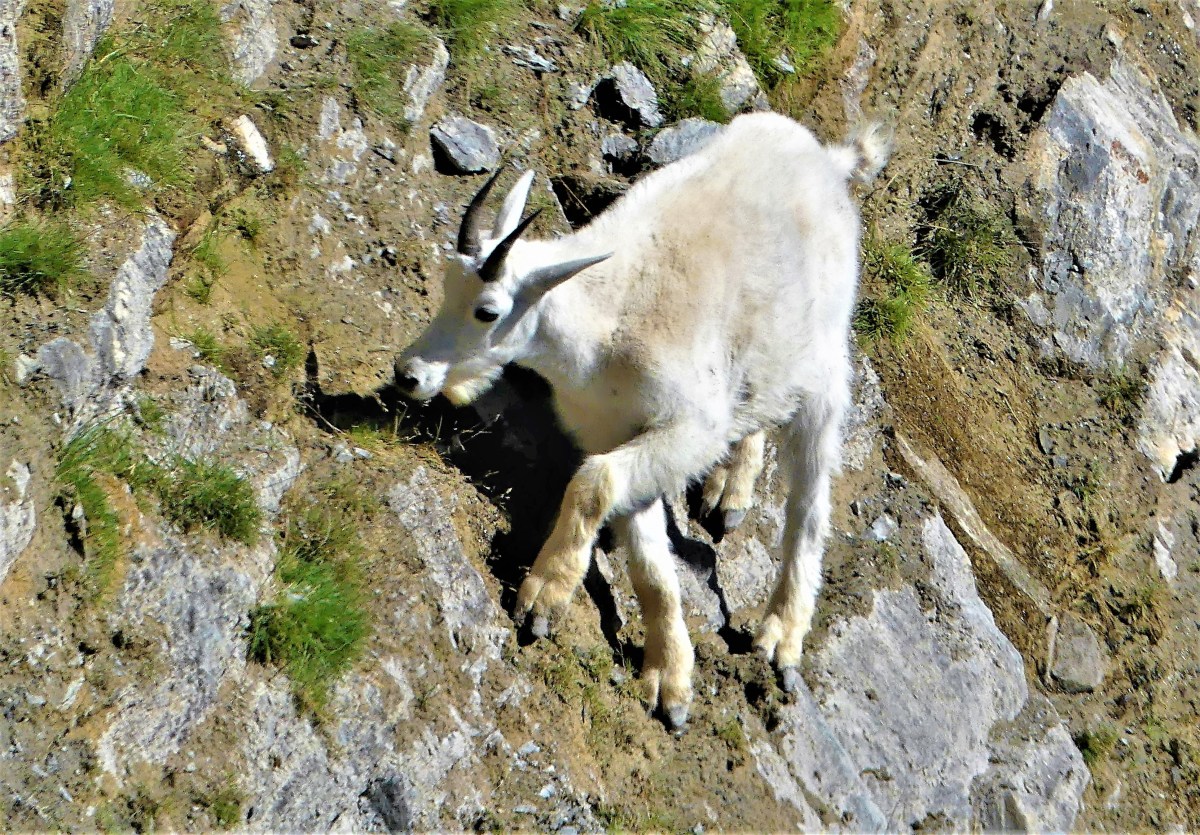
A 37% grade! I can’t even imagine what it would take to climb Canton Street during a winter storm…unless you’re a mountain goat.
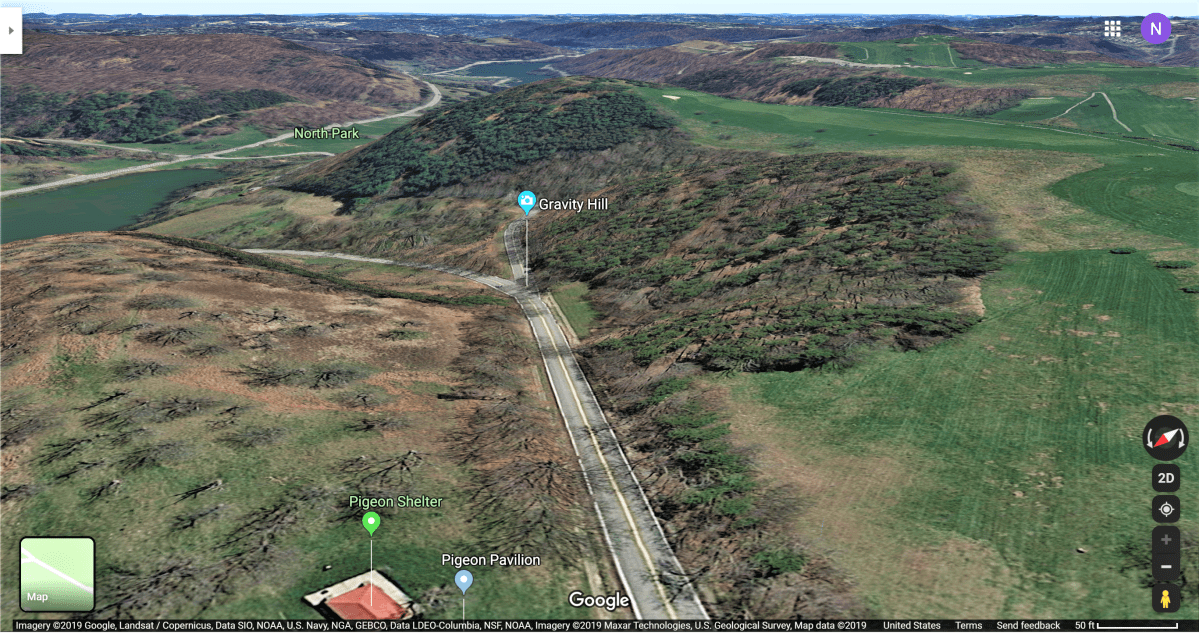
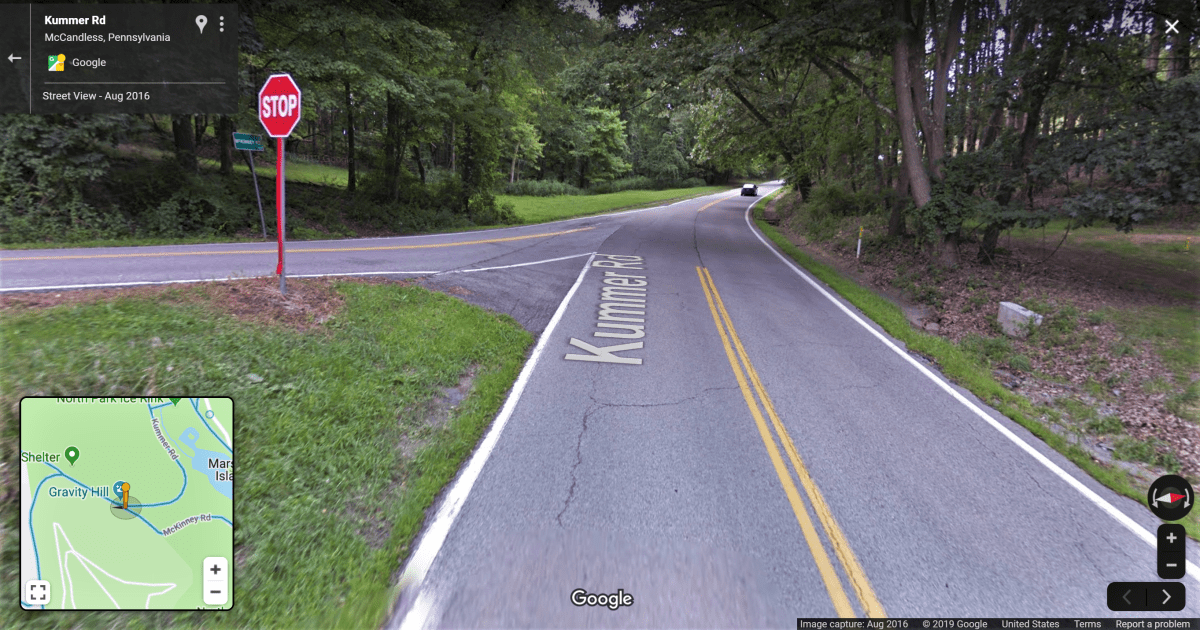
But there was one last road phenomenon I needed to check out before we explored the cultural side of Pittsburgh. I had heard about a gravity hill near North Park that sounded like a too-good-to-be-true myth that needed busting.
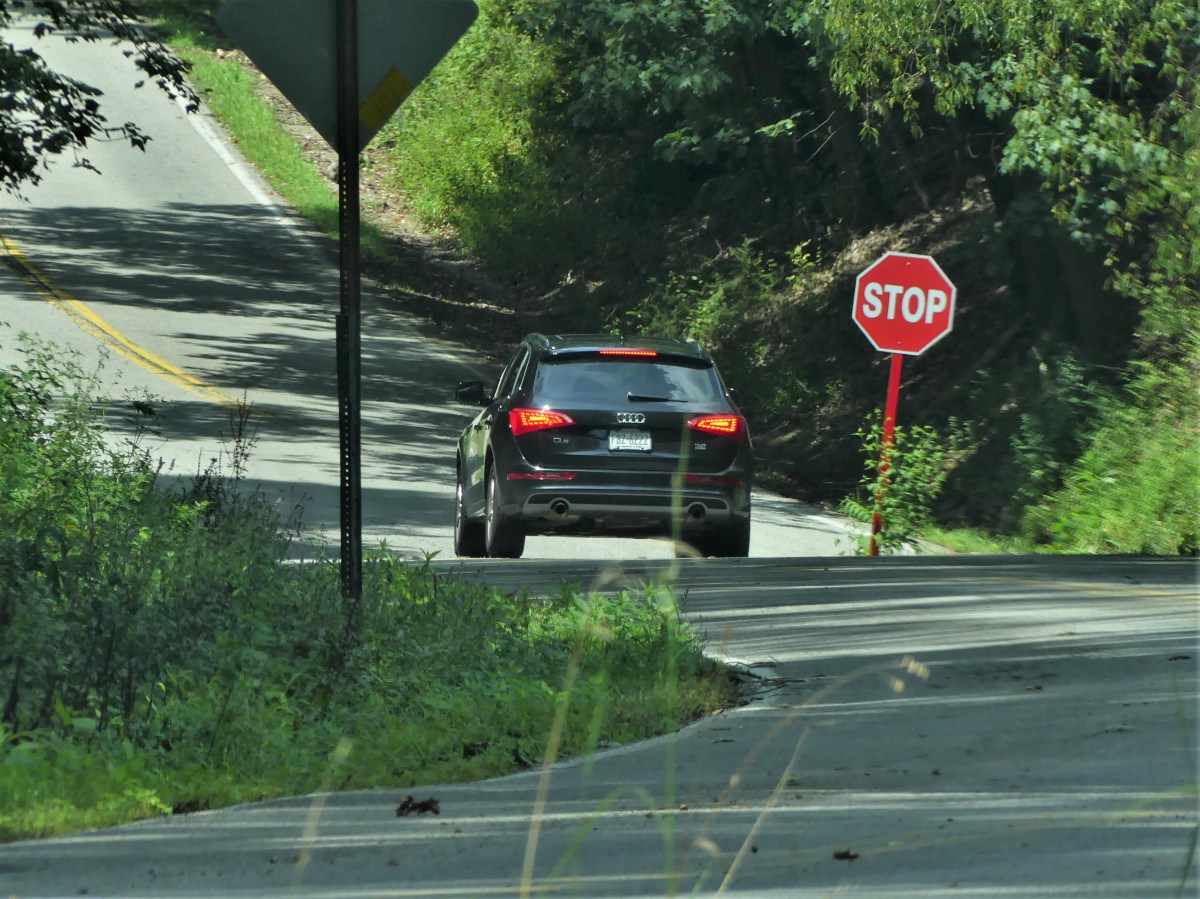
When I reached the intersection of Kummer and McKinney, I made a hard left around the STOP sign onto McKinney Road, and passed an Audi that was there to perform the same miracle-manuever.
Leah and I patiently waited off-road, watching the Audi repeat the same experiment… over and over again…until satisfied.
And then it was my turn.
I inched toward the STOP sign, and held the brake till I shifted to neutral. Leah stepped out of the truck to record the event on her iPhone. I hesitated for a moment thinking how crazy this seemed. Of course, the truck can’t possibly roll unhill. It goes against the fundamentals of science!
When I came to my senses, I released the brake, and the truck began rolling backwards. It was not what I expected!
I’m not a civil engineer, and I’m not a geologist, so I don’t have a reasonable explanation why the truck drifted backwards, so I consulted the experts:
According to Wikipedia, “a gravity hill is a place where a slight downhill slope appears to be an uphill slope due to the layout of the surrounding land, creating the optical illusion that water flows uphill or that a car left out of gear will roll uphill.”
So I was on a hill that made down look like up?
How weird…but then it occurred to me that Donald Trump runs the country the very same way, and “the 37%” who follow him, must be living on their own personal “Canton Street,” unable to see the road ahead.
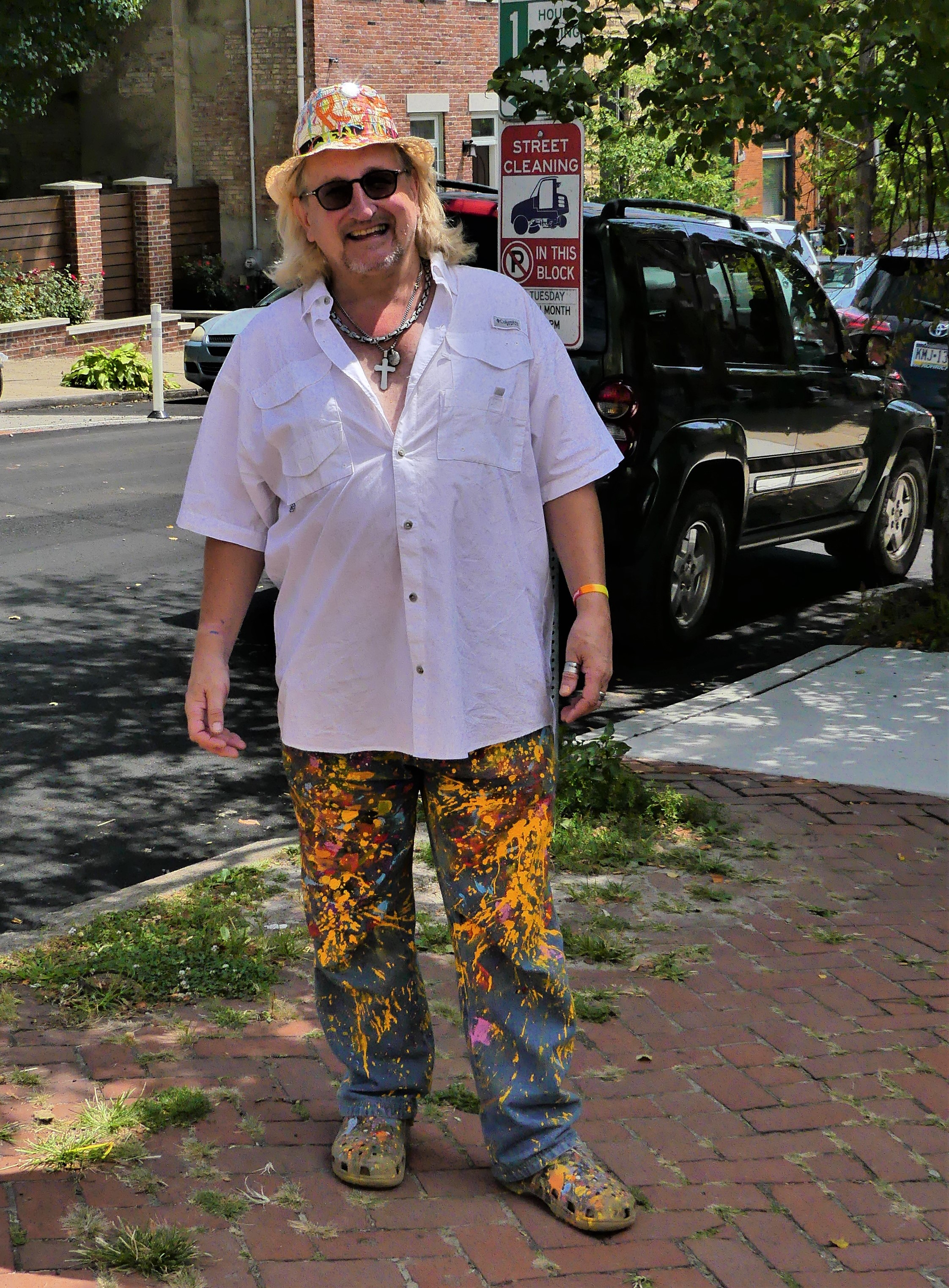
Randy Gilson grew up dirt poor in a small mill town just outside Pittsburgh’s city limits. As one of six children from a “broken” family, he remembers being teased by schoolmates, who called him “dumb, stupid, dadless, welfare boy, and white trash.” But his mother, a minister, advised him to ignore the noise, and instilled in him a commitment to do good for others. Her voice became Randy’s moral compass, and he’s walked the high road ever since.
He recalls a childhood Christmas when there was no money for presents, so he scavanged the neighborhood trashcans in search of discarded toys, and placed a wrapped gift for each of his siblings under the tree. It was a powerful lesson.
He learned that “making others happy made me happy.”
He also discovered that traditional learning was a waste of his time. He was wired differently from others, and blamed his failing school grades on an unofficial diagnosis of “ADHD and OCD, mixed with a little bit of autism,” because he was never formally tested. Rather than depend on his brain, he reminded himself that “my eyes are a tool to see, my ears are a tool to hear, my hands are a tool to work, and my heart is a tool to help.”
Randy’s first money came from mowing neighbors’ lawns, but in a roundabout way. At first, he furtively cut their overgrown grass as a goodwill gesture. The neighbors called Randy out for tresspassing, but eased their anger once they realized the benefit to their properties. Eventually, they hired Randy to tend their yards–where he honed his topiary skills on their hedges and trees.
Additionally, working on family farms over the summers taught him the value of nurturing seeds and the resultant harvest. In later years, Randy’s interest in horticulture blossomed into the Old Allegheny Garden Society, which resulted in planting hundreds of whiskey barrel gardens along the Mexican War Streets of Pittsburgh’s North Side during a risky time of transition and uncertainty.
“Living his life” gave Randy the confidence to gamble on his future. In 1978, he moved to Pittsburgh’s North Side, because it was the best he could do at the time. When long-time residents fled to the suburbs, the gangs moved into the area, and a drug culture took root and held the community hostage. “The neighbors used to shoot off guns in the middle of the night. For them, it was particularly useful in keeping the rents low,” claimed Randy.
But Randy stood his ground. Although planting gardens and painting murals raised eyebrows of derision and suspicion among grown-ups, the children of the streets gave Randy the benefit of the doubt. At first they were confused.
“Why would a stranger be doing all sorts of nice things on their streets?” Randy mused. “When I told them that I was doing it for them, then they wanted to help, too.”
The street became Randy’s parish, and he preached a gospel of stewardship and goodness. Soon after, his Pied Piper nature won over the rest of the community, and he was accepted as their resident eccentric (or eccentric resident).
An opportunity presented itself in 1995. An abandoned building on Arch Street, earmarked for the wrecking ball, was saved from demolition when Randy bought the property from the bank with a $10,000 credit card loan covered by the bank.
Immediately, he began collecting litter, planting gardens and painting wall murals.
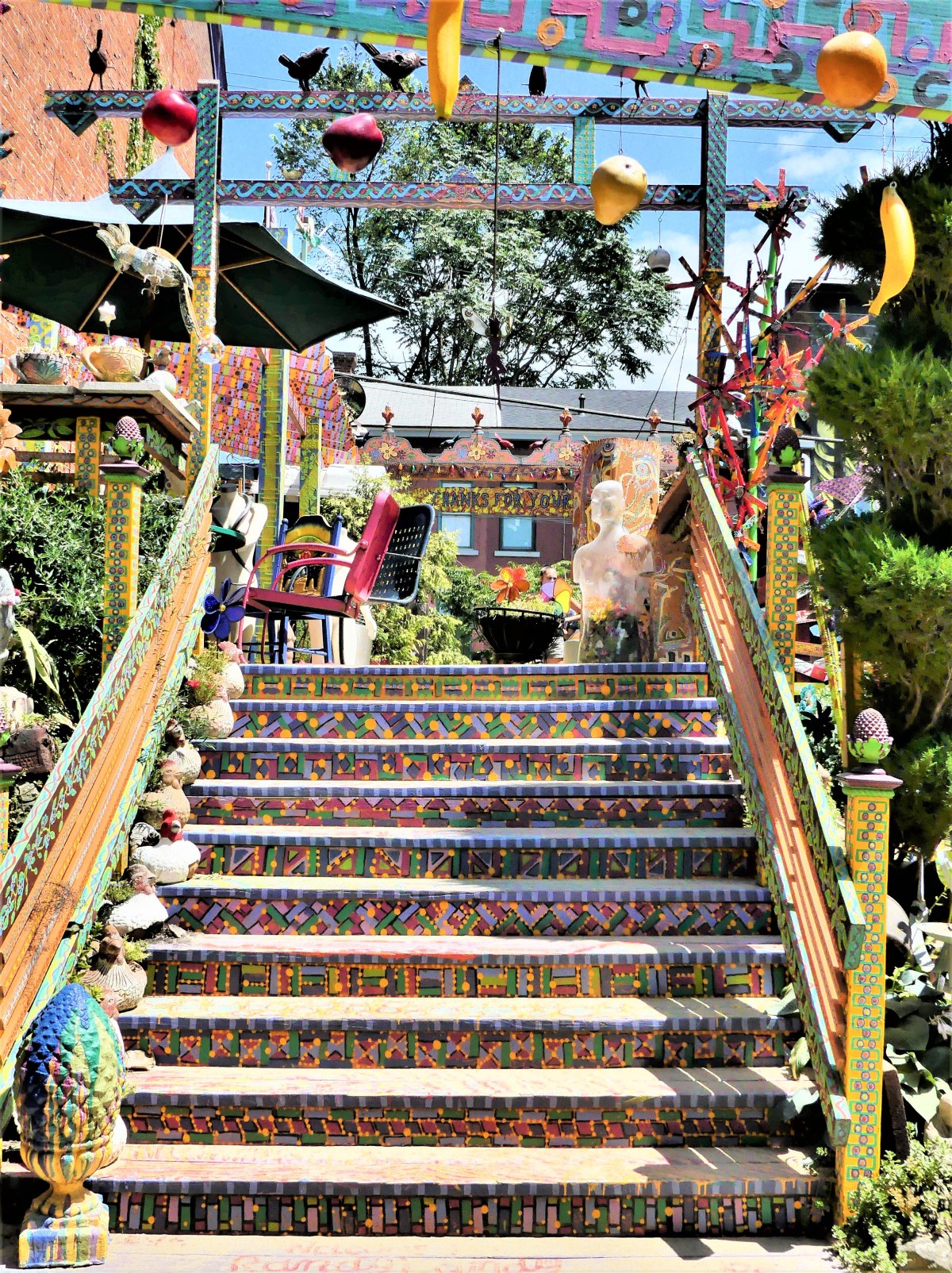
That was the genesis of Randyland…
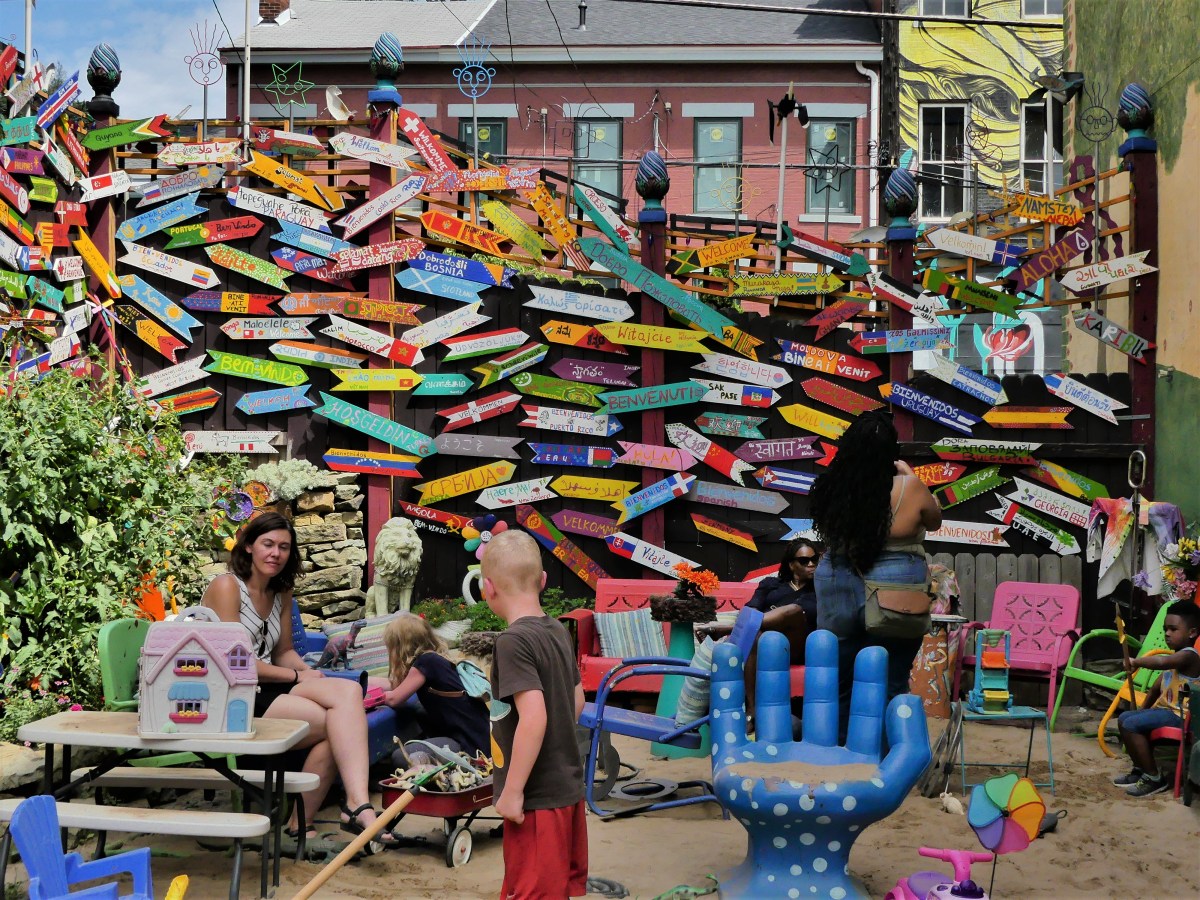
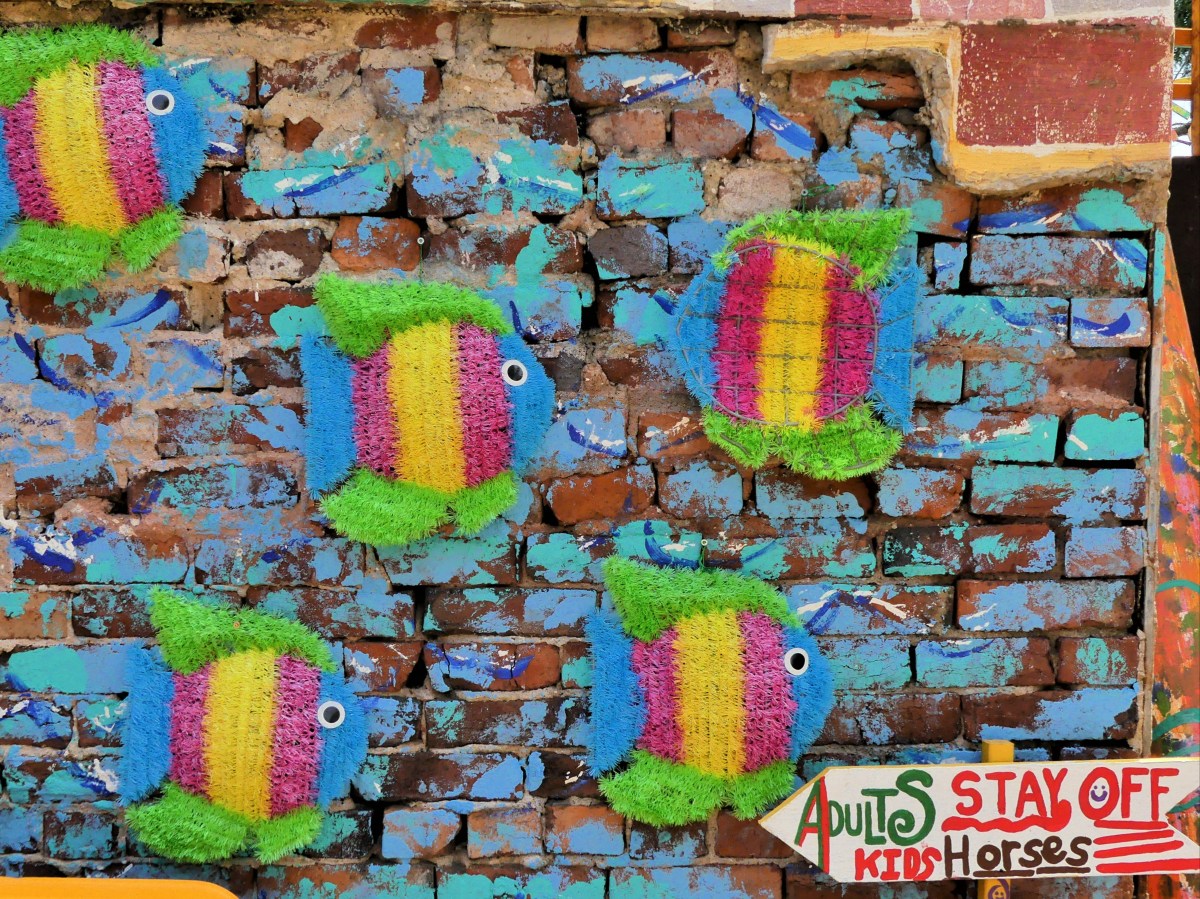
a candy-coated, pie-in-the-sky habitat of repurposed whimsy and soul,
People travel to Randyland from around the world, and prepare destination arrows to indicate their country of origin.
They stop by for the novelty…
for the vibe and the energy…
and to remember the child still trapped inside us all.
Randy doesn’t pretend to be an artist. In fact, he disagrees with the characterization. “I’m not an artist. I’m a gay hippie that smokes pot, and believes in sharing my vision.”
Randy’s charm is infectious; his energy is contagious;
and his message is inspirational. His mother would be proud of him.
What started out as a typical tour of a colorful outdoor habitat, turned into a surprisingly deep and endearing conversation with Randy, once Leah and I introduced ourselves.
Passerby cars with follow-up horn toots were a constant interruption, but Randy always had a quick response for them:
“Hey, pretty mama…”
“I love your weave…”
“Lookin’ good in the neighborhood.”
Randy is eager to tell his story and have his story told. He is also unabashed about his upbringing and background. Few people I know are so accepting of themselves. He easily shares the details of his life normally reserved for confidants or therapists. But then I realize that Randy’s candor is probably an ongoing part of his therapy…where he plays the therapist.
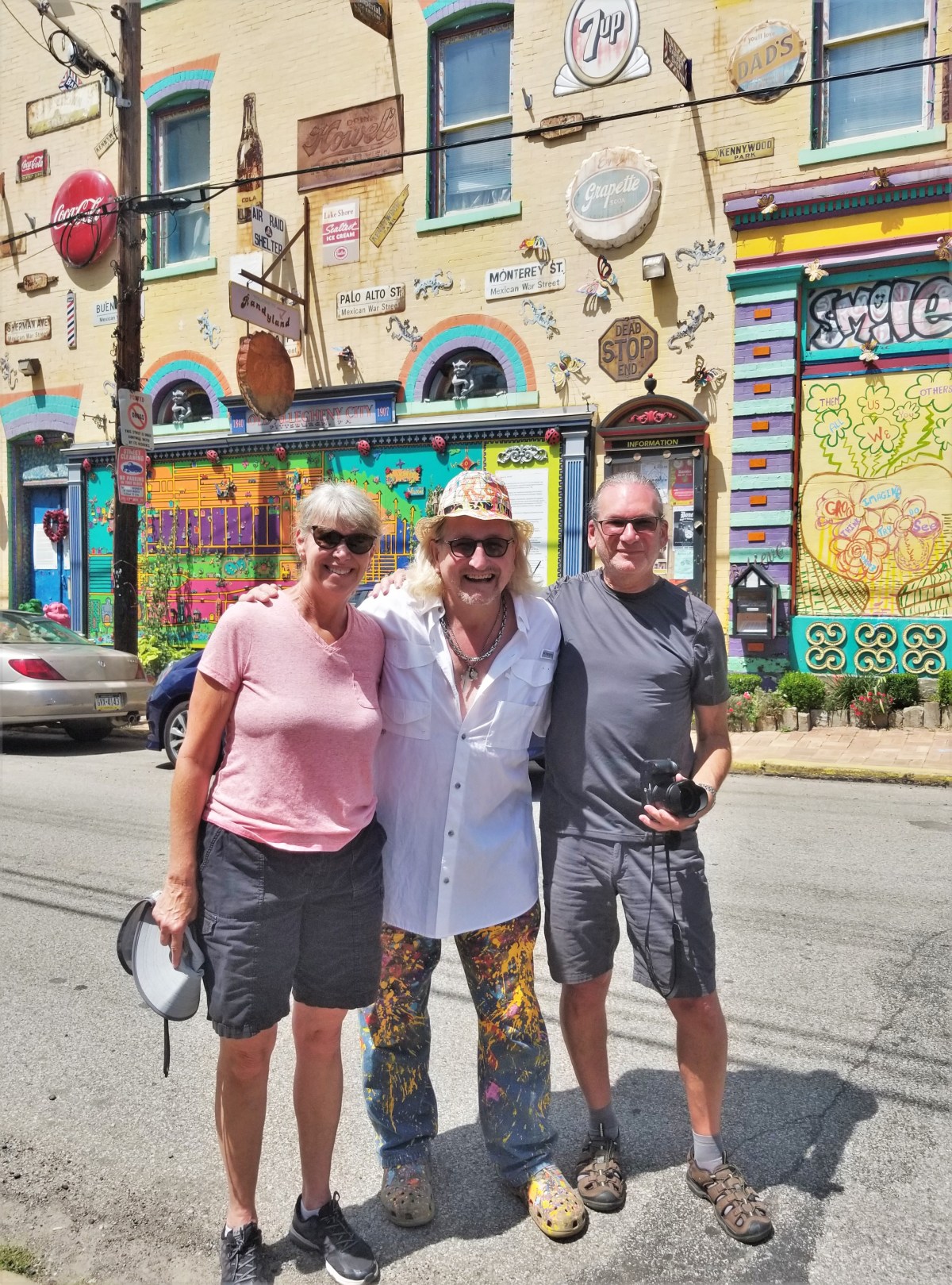
Randy placed a wad of business cards in my hand, and like a butterfly in search of its next flower nectar, he flew off to be photographed with his next best friends.
It’s easy spotting a rainbow, but following him to his pot of gold is a greater reward.
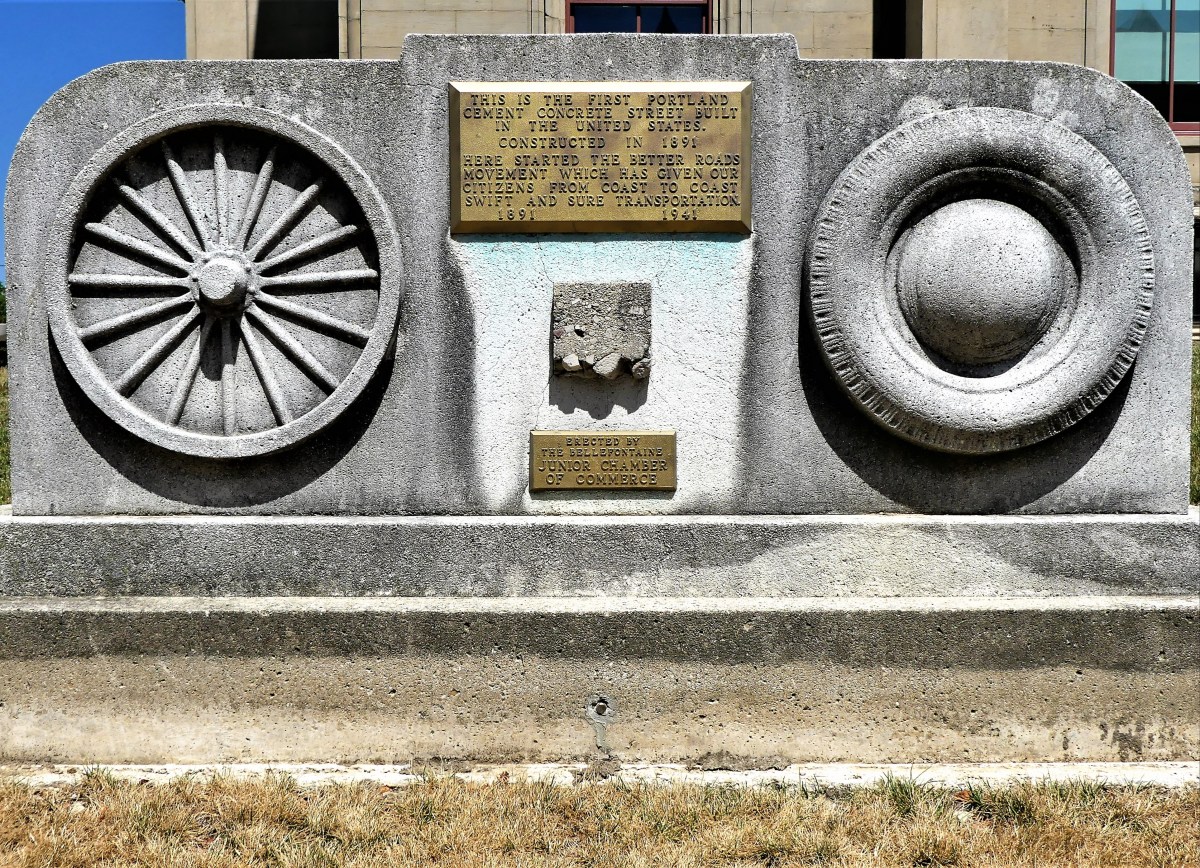
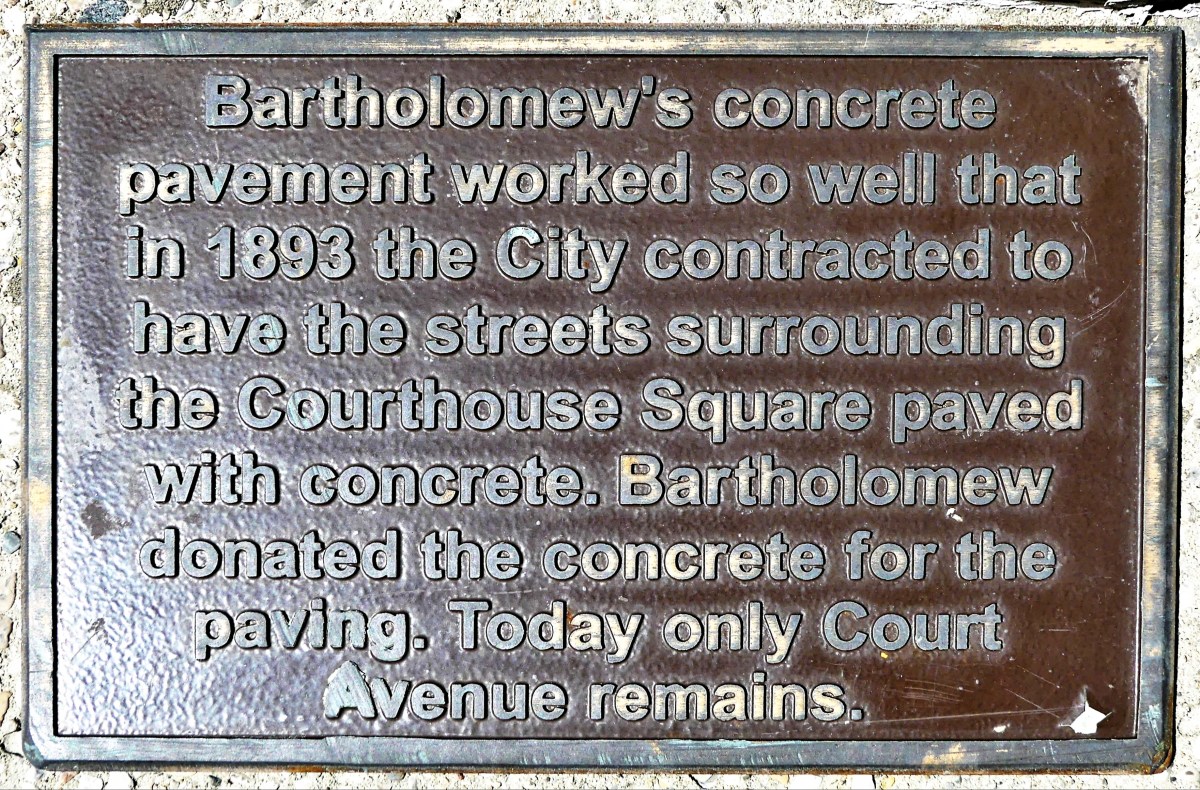
Chiseled from concrete, George Bartholomew stands aside Logan County Courthouse in Bellefontaine, OH with a pick ax and a plan. He is widely regarded as the American father of concrete pavement,
but it took ingenuity and loads of confidence before city leaders agreed to allow him to continue his experiment.
Little did he or the citizens of Bellefontaine realize what the profound effect his efforts would yield, and its resultant impact on the future of transportation across the country.
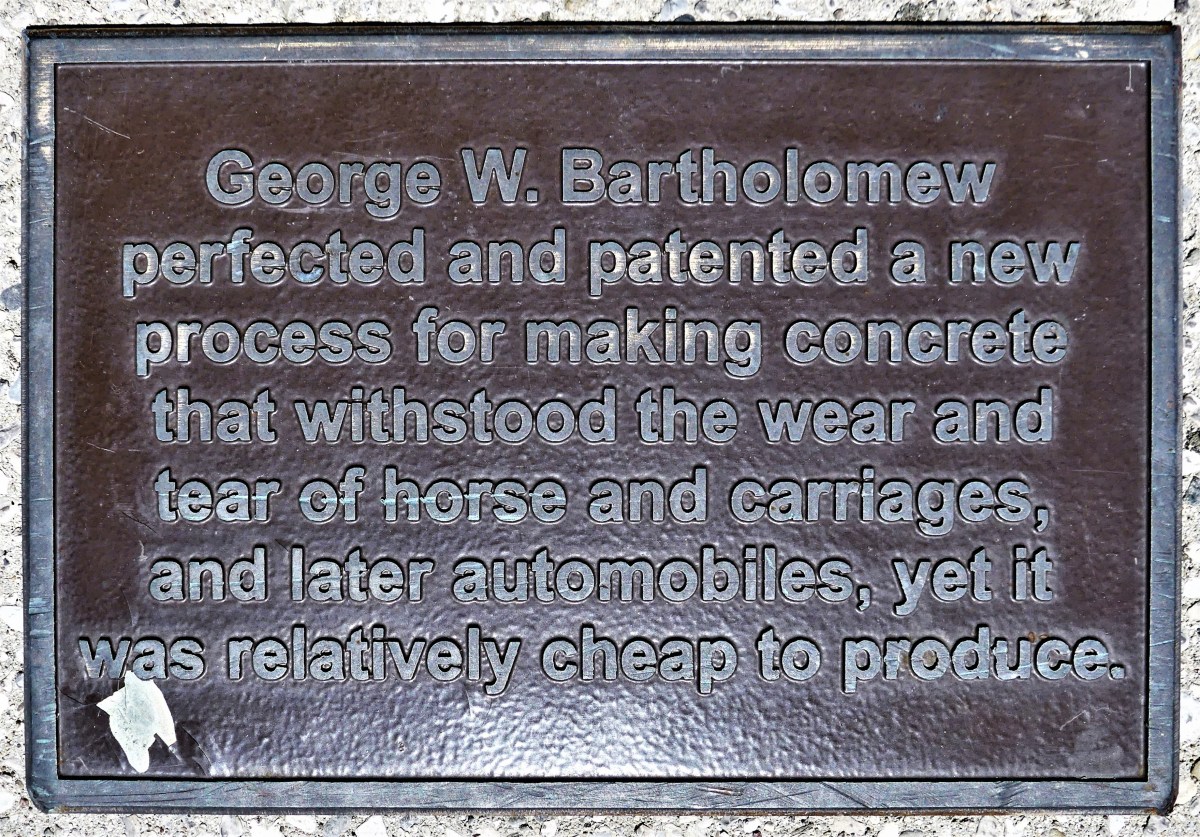
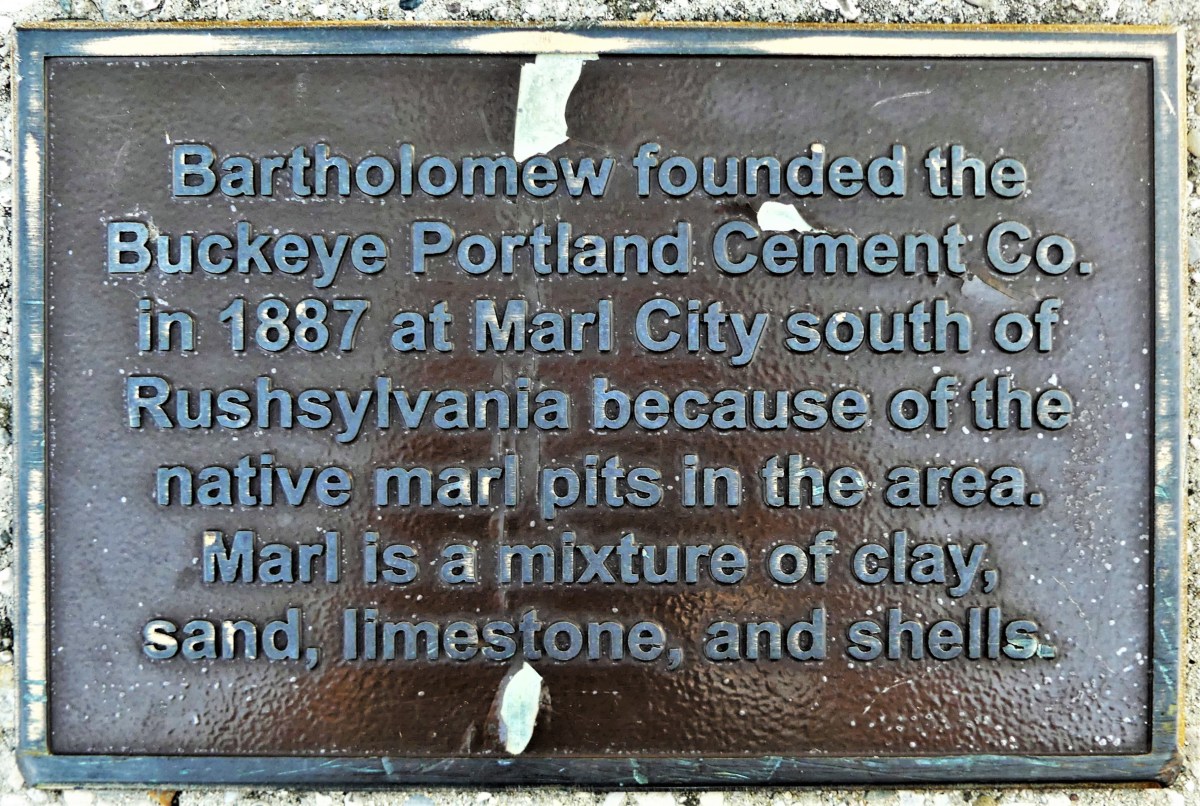
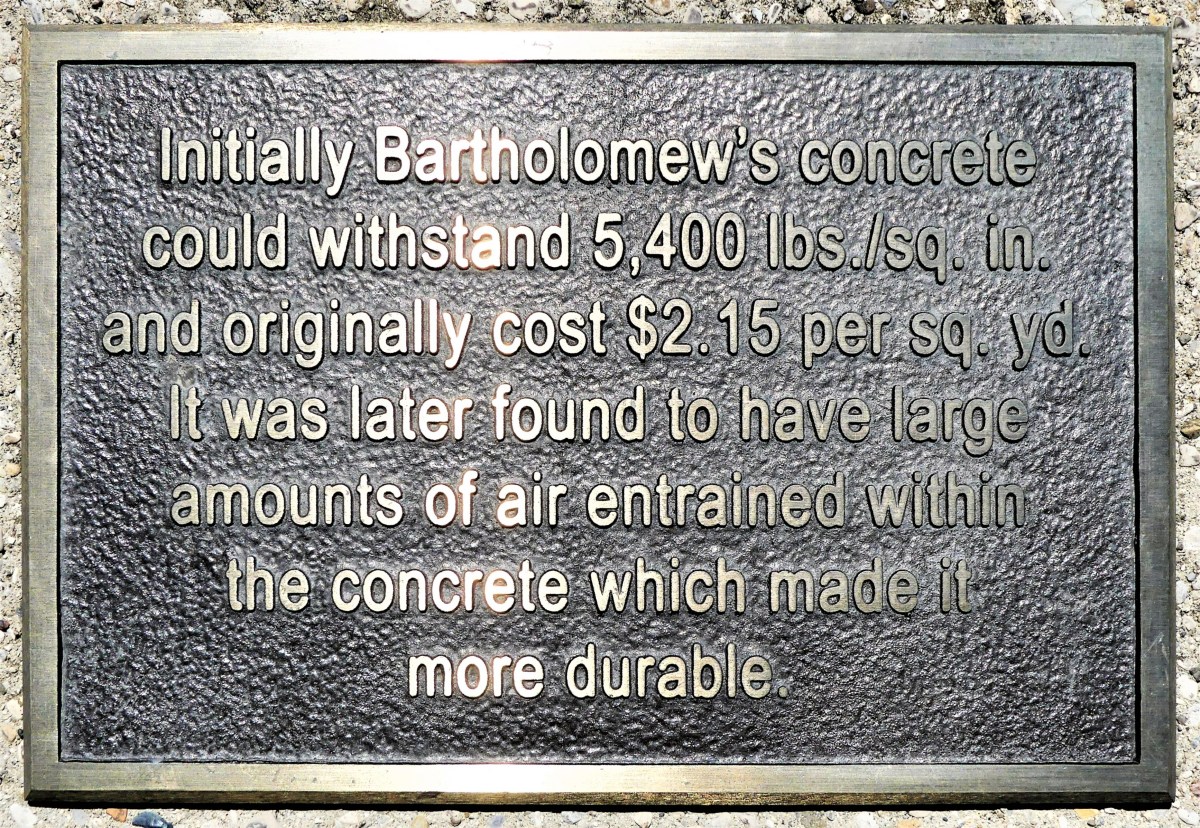
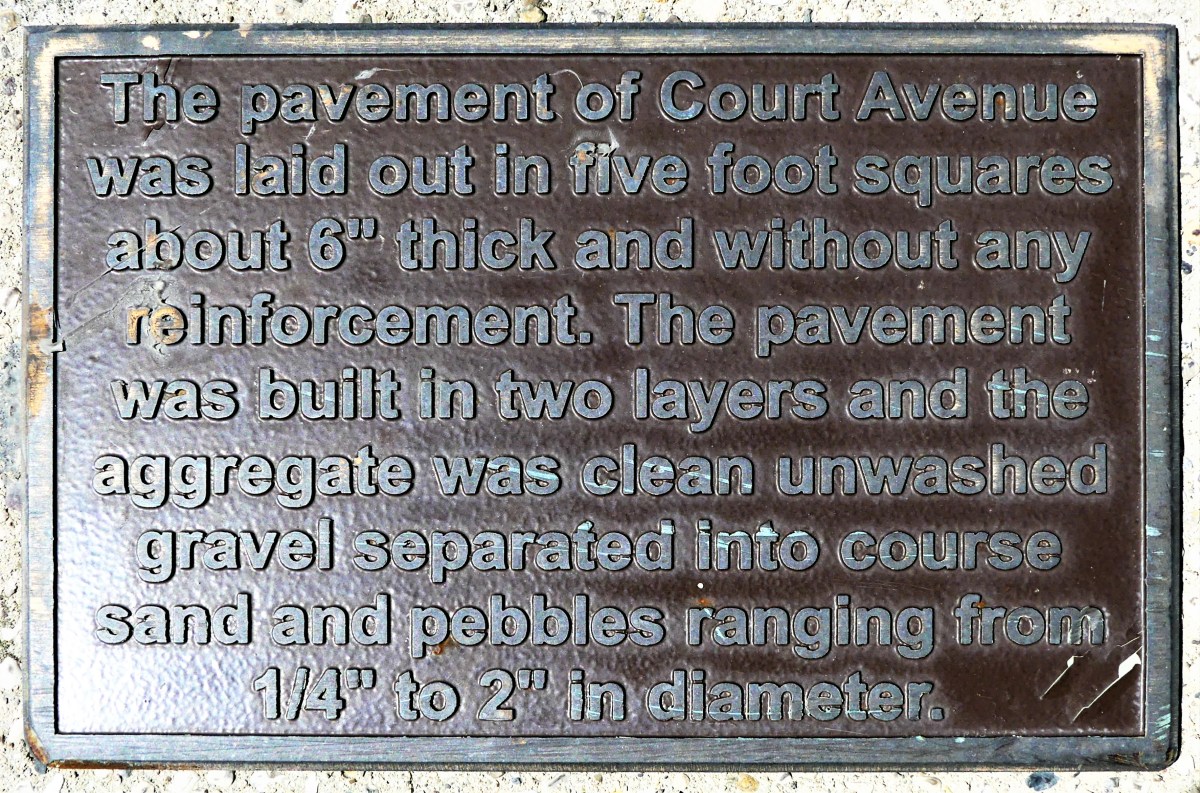
Imbedded plaques surrounding his likeness detail Bartholomew’s discovery and his process, and memorialize his achievement.
But that’s not all there is to Bellefontaine!
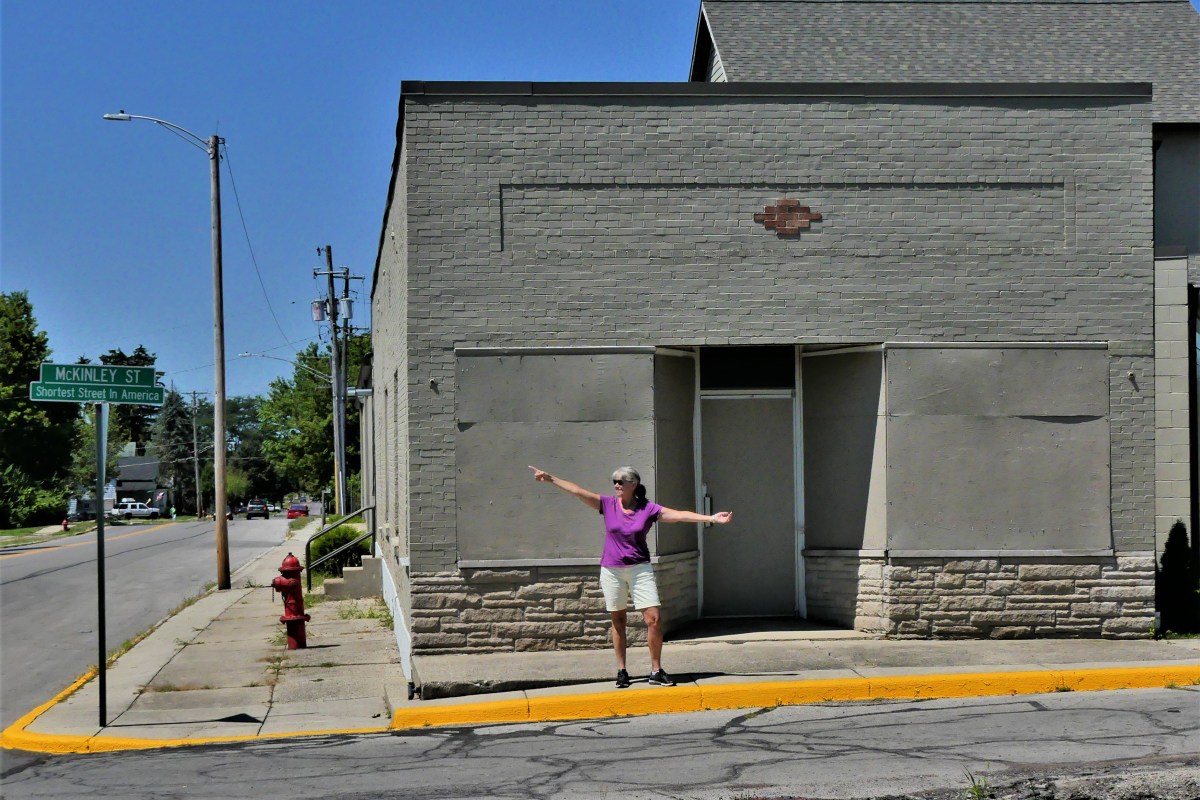
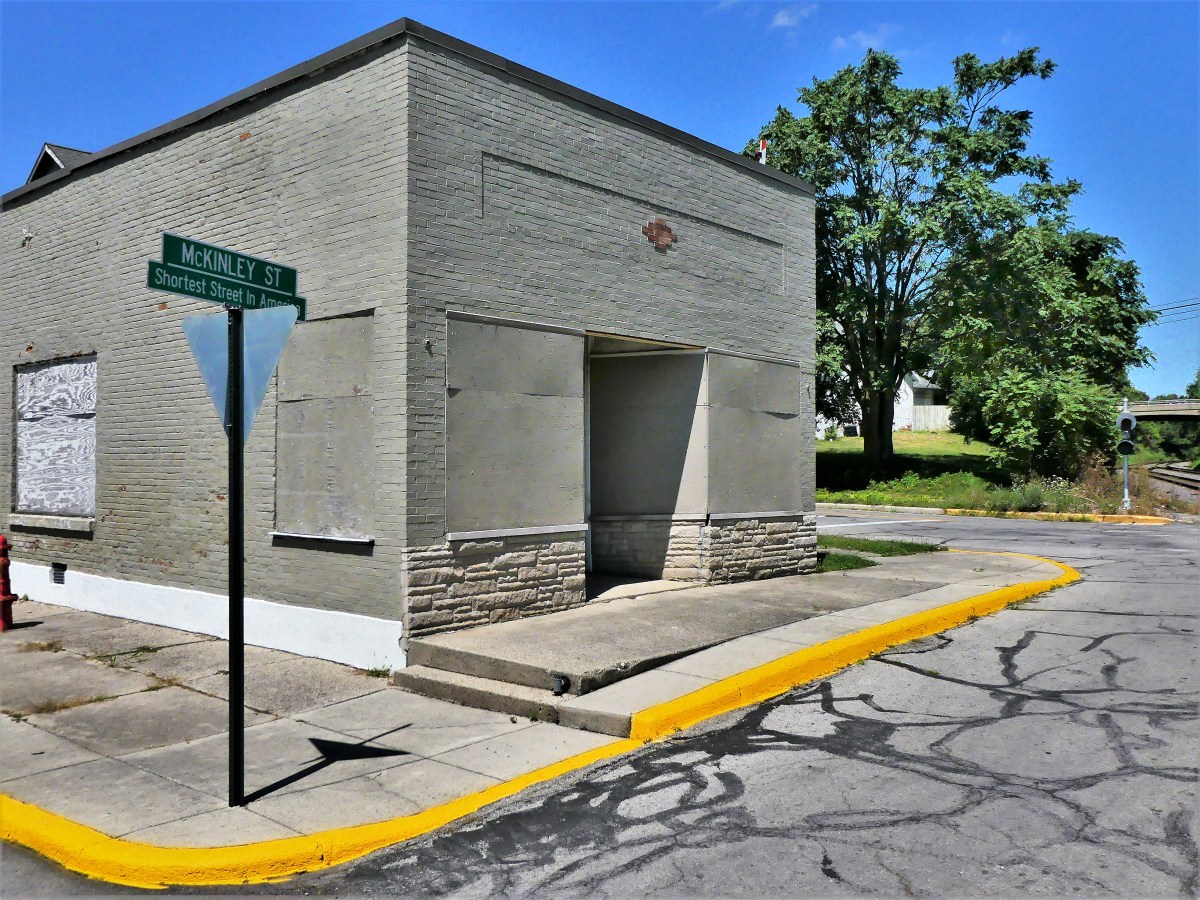
Sandwiched between Garfield Avenue and W. Columbus Avenue lies 30 feet of patched concrete known locally as McKinley Street (named after President William McKinley),
and recognized nationally as the shortest street in America, or the corners of No Parking and No Parking.
While camping alongside the Airstream factory in Jackson Center (seeBuilding Airstreams), Leah and I wondered how we would kill time during our weekend stopover. There wasn’t much to do in town, although we were within walking distance of the Elder Theatre, a one-screen cinema showcasing Dora and the Lost City of Gold and the Heidout Restaurant, serving bar food backed by a roadhouse jukebox.
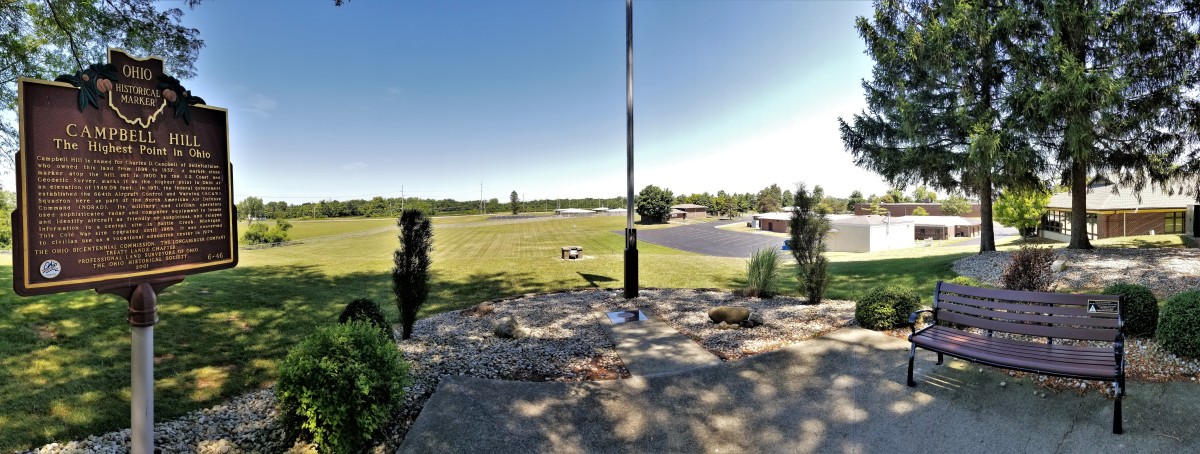
We took a pass on both, and drove to Bellefontaine, 20 miles east of our location. How fortuitous, because high atop Campbell Hill–overlooking a scenic parking lot, and peaks of grasslands beyond, as far as the eye can see–
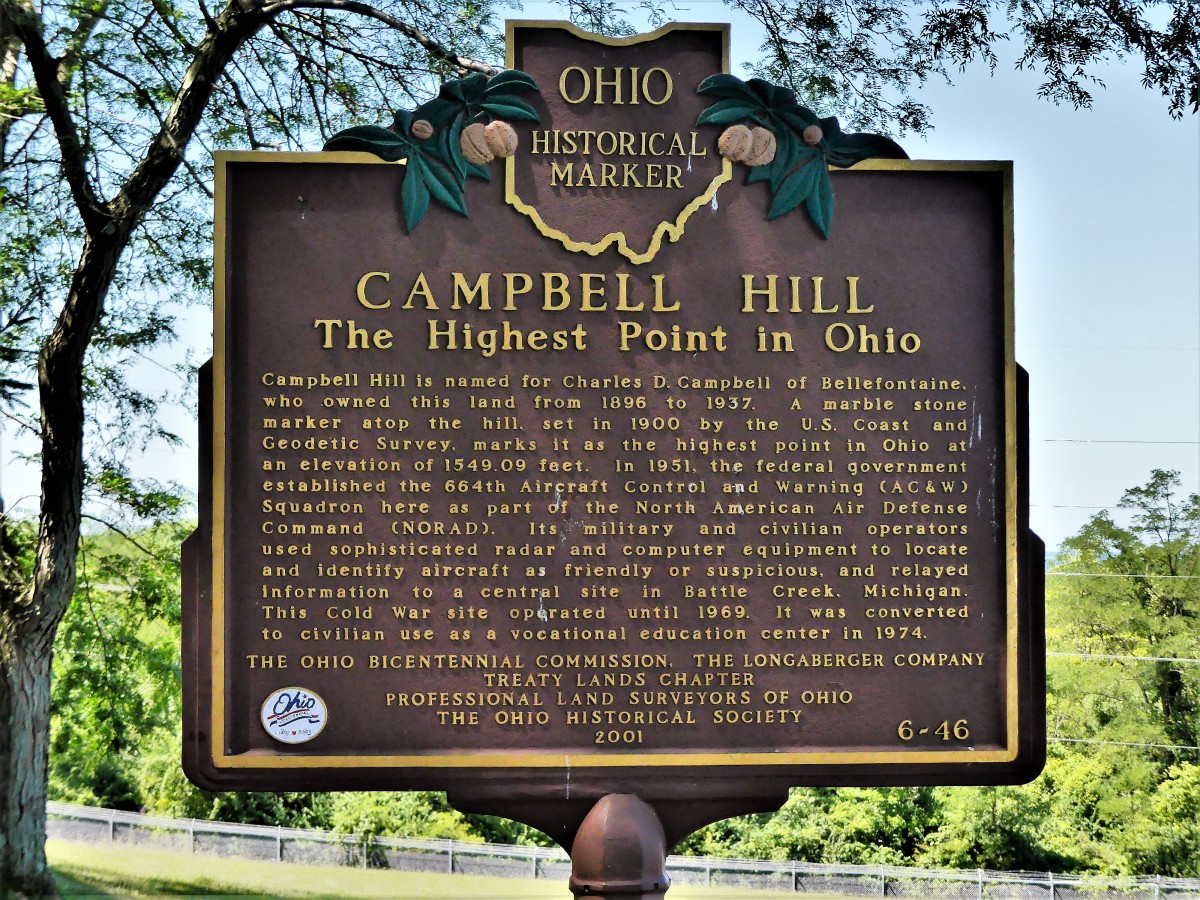
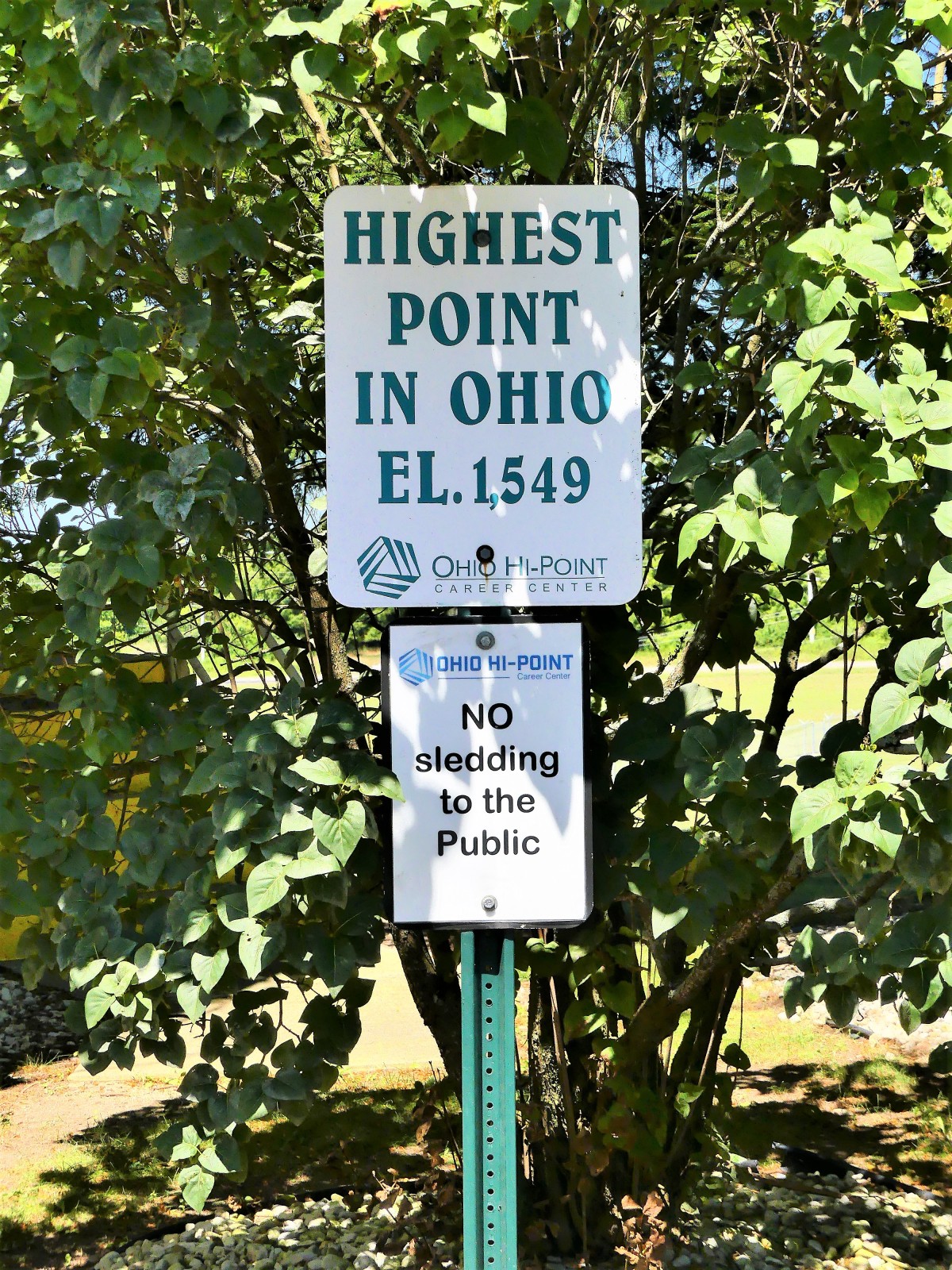
sits the Ohio Hi-Point Career Center, a two-year career-technical high school campus that also doubles as the highest point in Ohio, at 1549 feet elevation.
Once upon a Cold War time, this site was home to Bellefontaine Air Force Station, providing radar surveillance to NORAD in the event of a Soviet invasion from the North Pole.
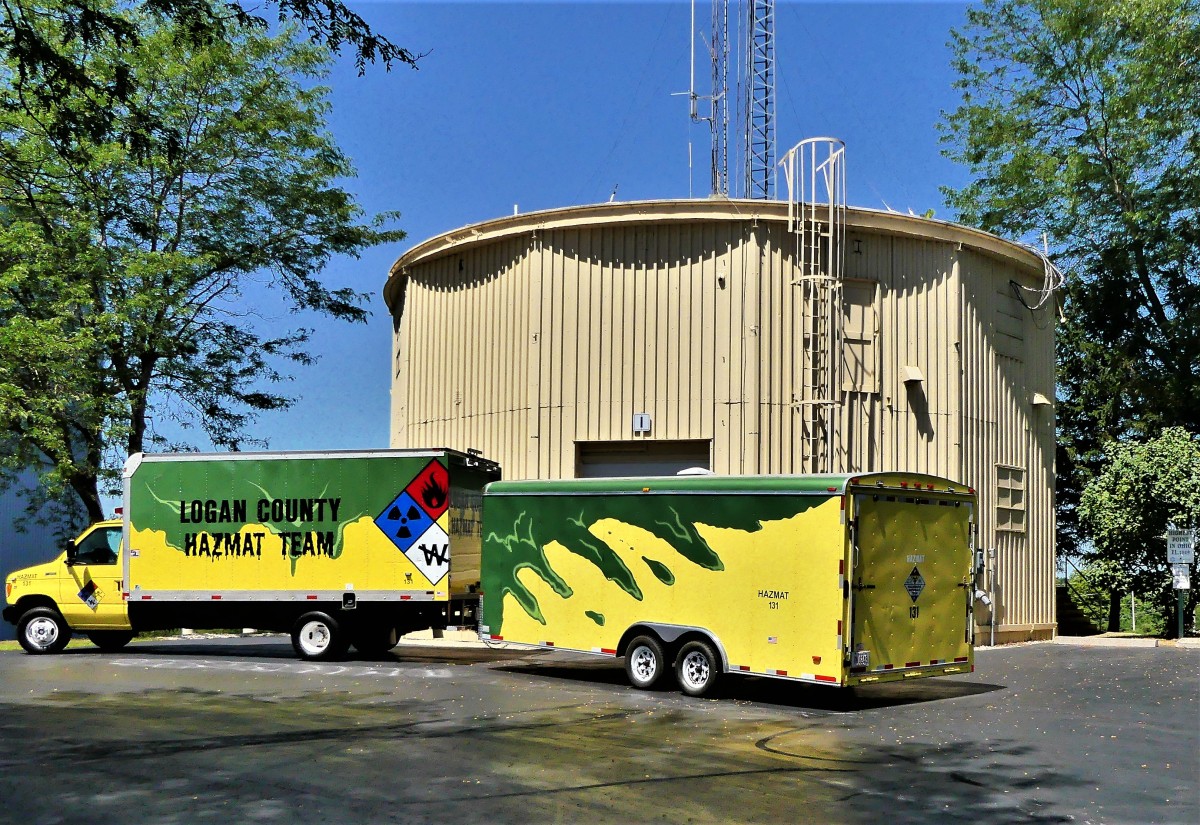
Remnants remain.
Leah and I were giddy with excitement. It could have been the altitude, but the notion that we were standing at the highest point in Ohio nearly took our breath away.
However, we are seasoned travelers who have Airstreamed through most of America (seeTop of the World), and we refused to be intimidated by the height of Campbell Hill.
Admittedly, we were weak-kneed.
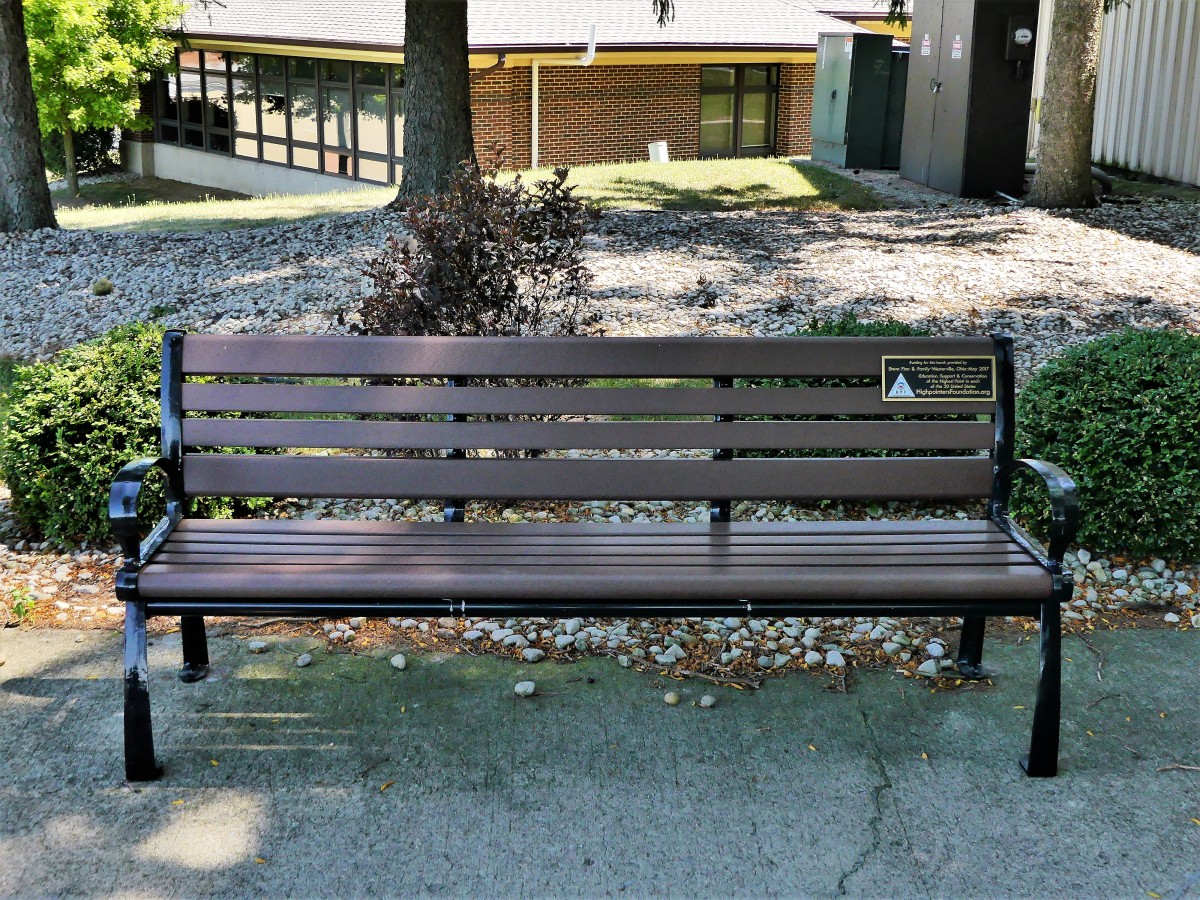
We took a deep breath to clear our heads, and took a seat on a strategically placed bench by the geodetic survey marker.
After a snack to raise our blood sugar, we managed to trek to the parking lot a short distance away. As I regained my composure inside the F-150, I realized that we were brought here for a reason. I figured that given our vantage point and strategic positioning, the military may be interested in recommissioning this location as a secure listening post as we approach the 2020 presidential elections.
Originally, our itinerary would have taken us directly from Cleveland to Pittsburgh, but after phoning Airstream’s Factory Service Center, and learning of an available repair appointment, we redirected Jennifer (our GPS avatar) to plot a course for the western border of Ohio.
Although we were headed in the opposite direction, it was a small price to pay to fix the damage sutained to the right-side wheel well from a blown Goodyear Marathon tire in Sault Ste Marie, Ontario (see Blowout!).
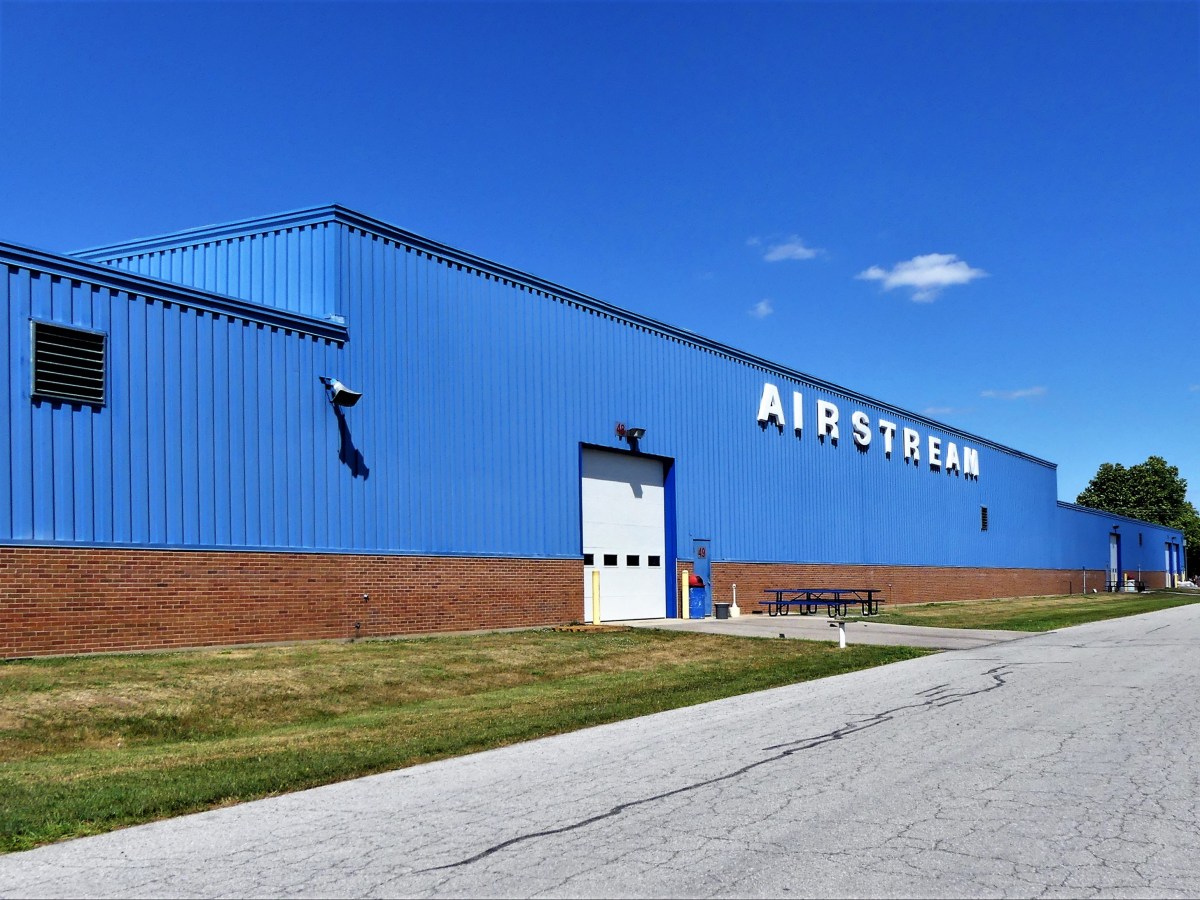
Located between Ft. Wayne, IN and Columbus, OH at the intersection of State Routes 274 and 65 sits the village of Jackson Center with a population of nearly 1,500 people, whose largest employer is Airstream with 730 workers.
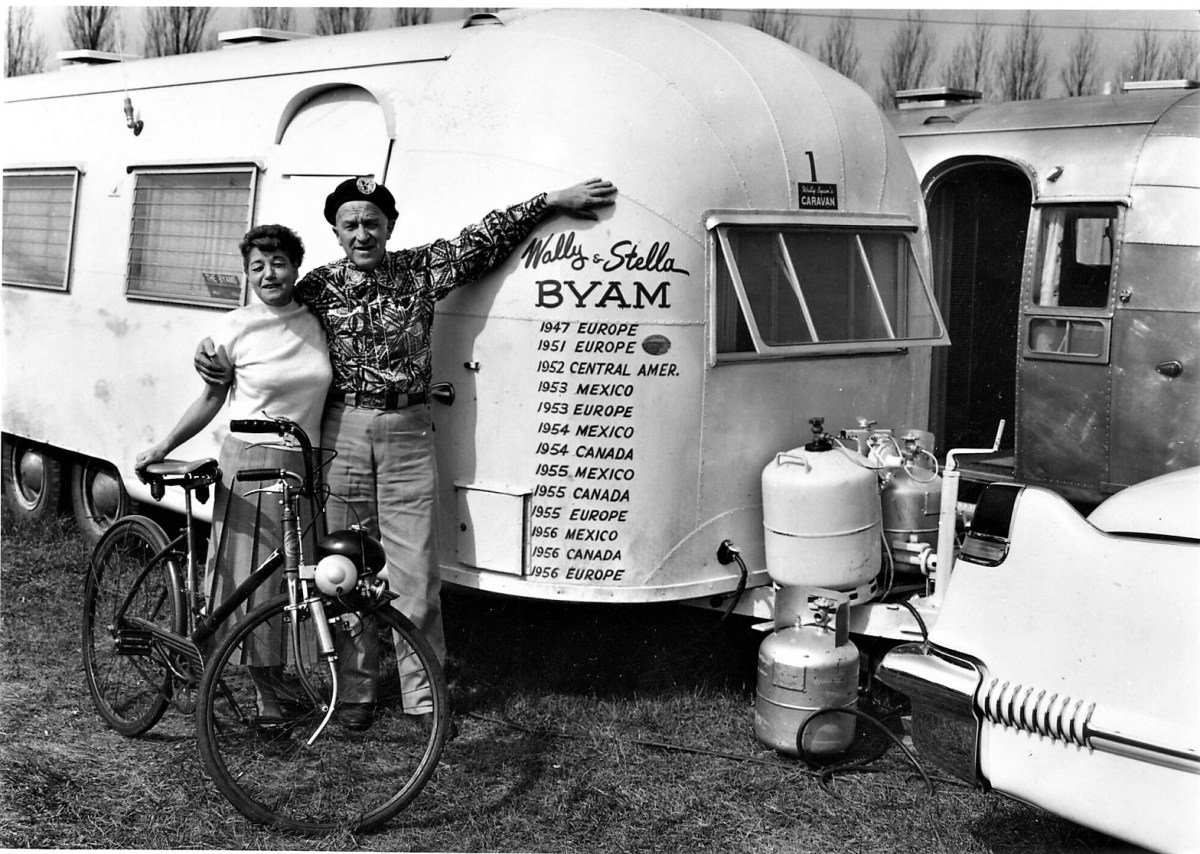
In 1952, founder Wally Byam, migrated to Jackson Center from Los Angeles with visions of expanding the output of his iconic brand.
Sixty-seven years later, Airstream continues its hand-built tradition of America’s longest tenured travel trailer, and now awaits completion of its state-of-the-art 750,000 sq-ft eco-friendly facility by year’s end, which should help correct the current 2,400 trailer shortfall.
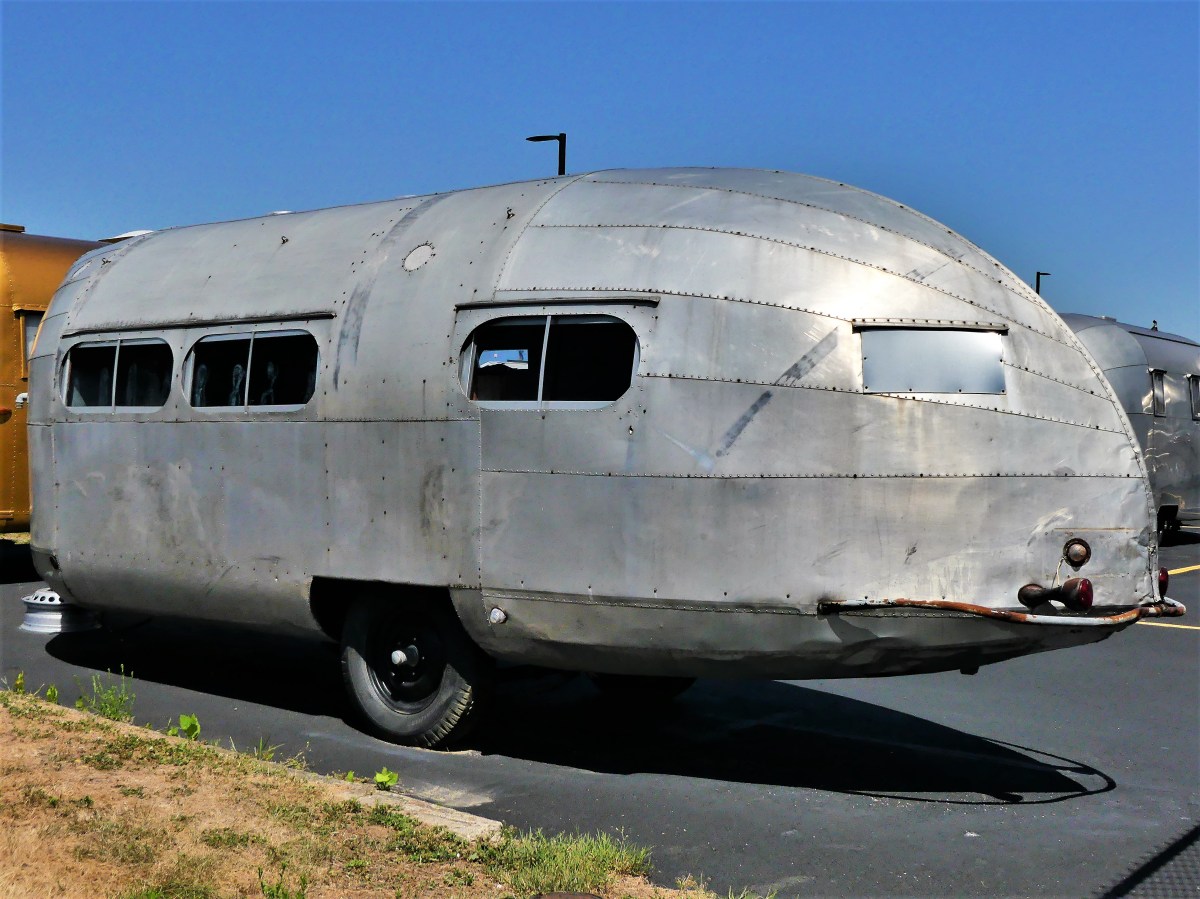
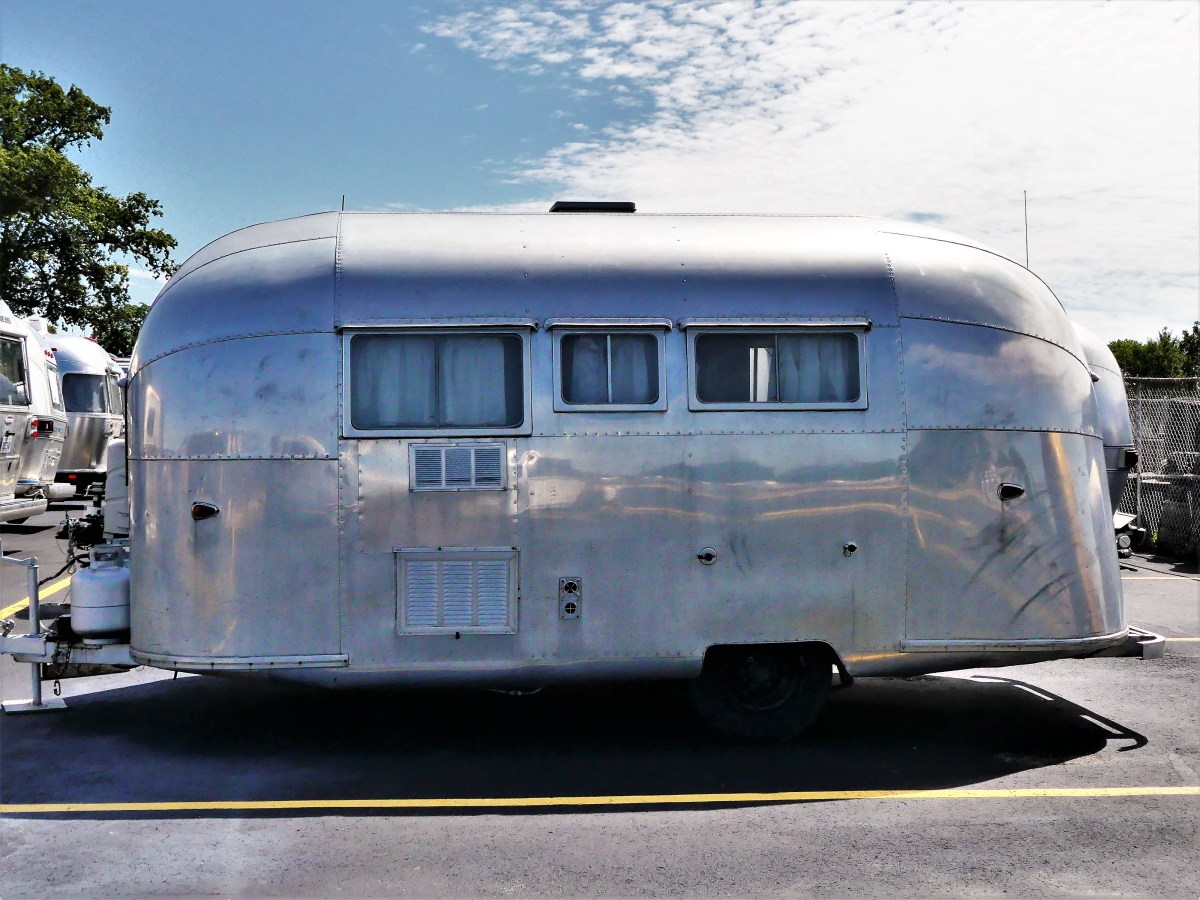
When Leah and I arrived, we were overwhelmed by dozens of Airstreams–from its earliest incarnation,
to several vintage varities,
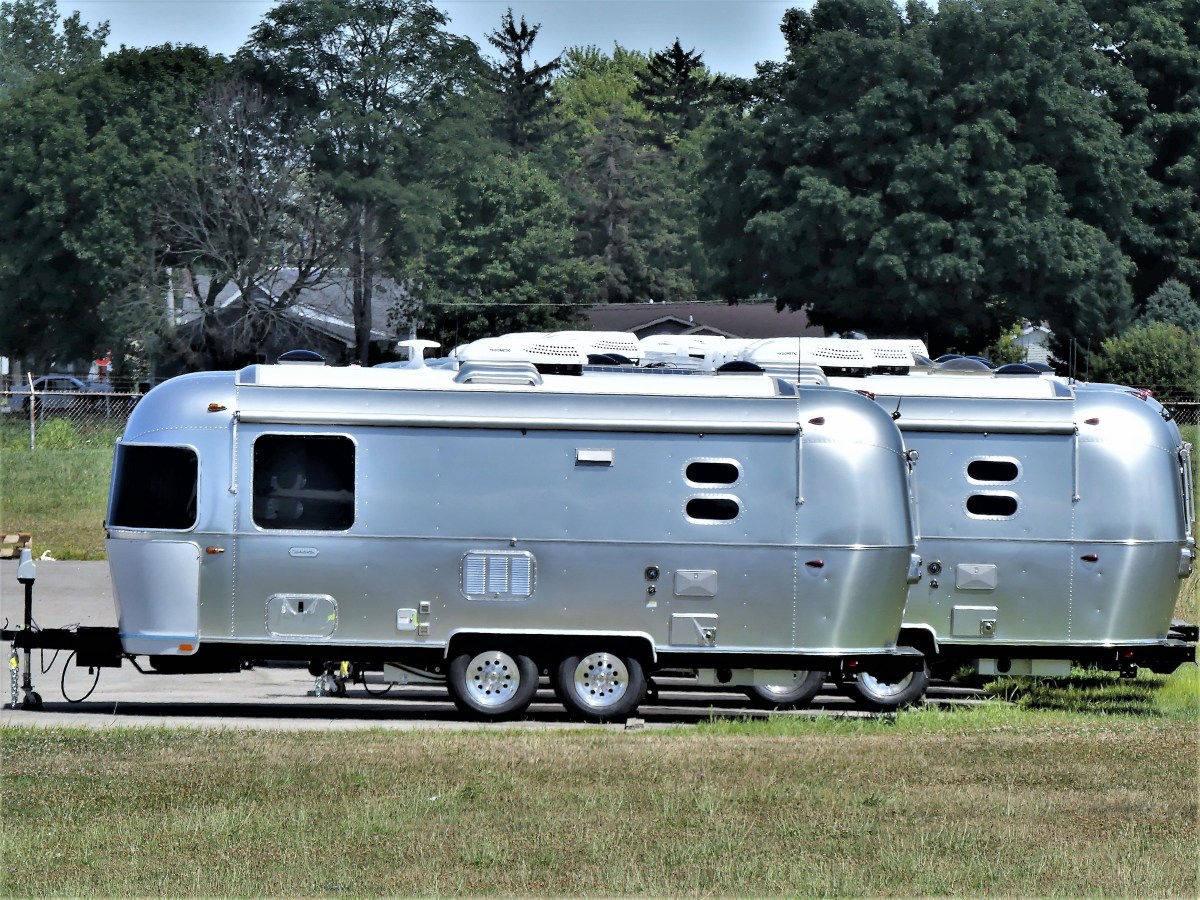
to newest production models–
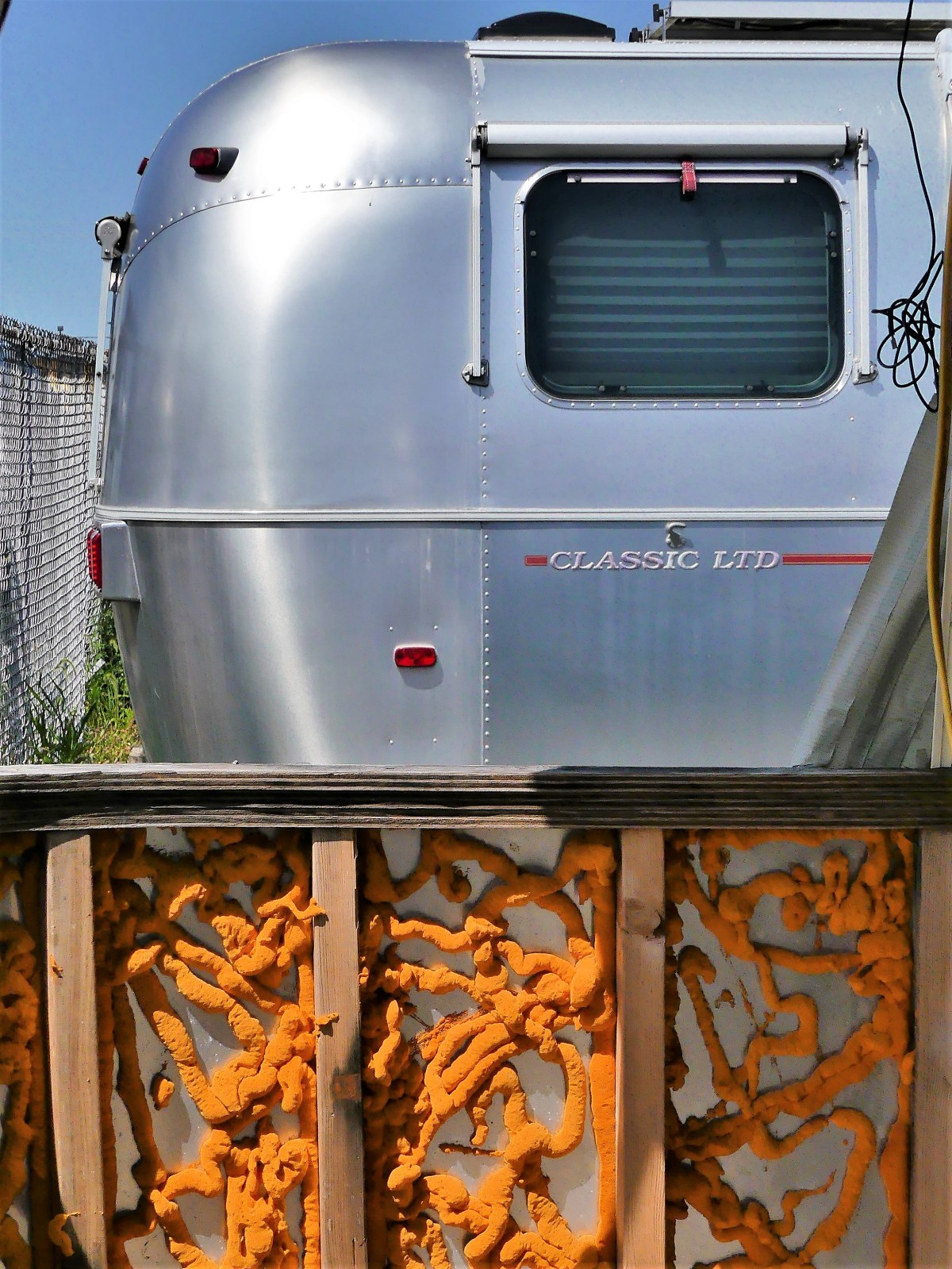
all towed across America with a wide array of boo boos,
and lining the parking lot in need of attention and TLC.
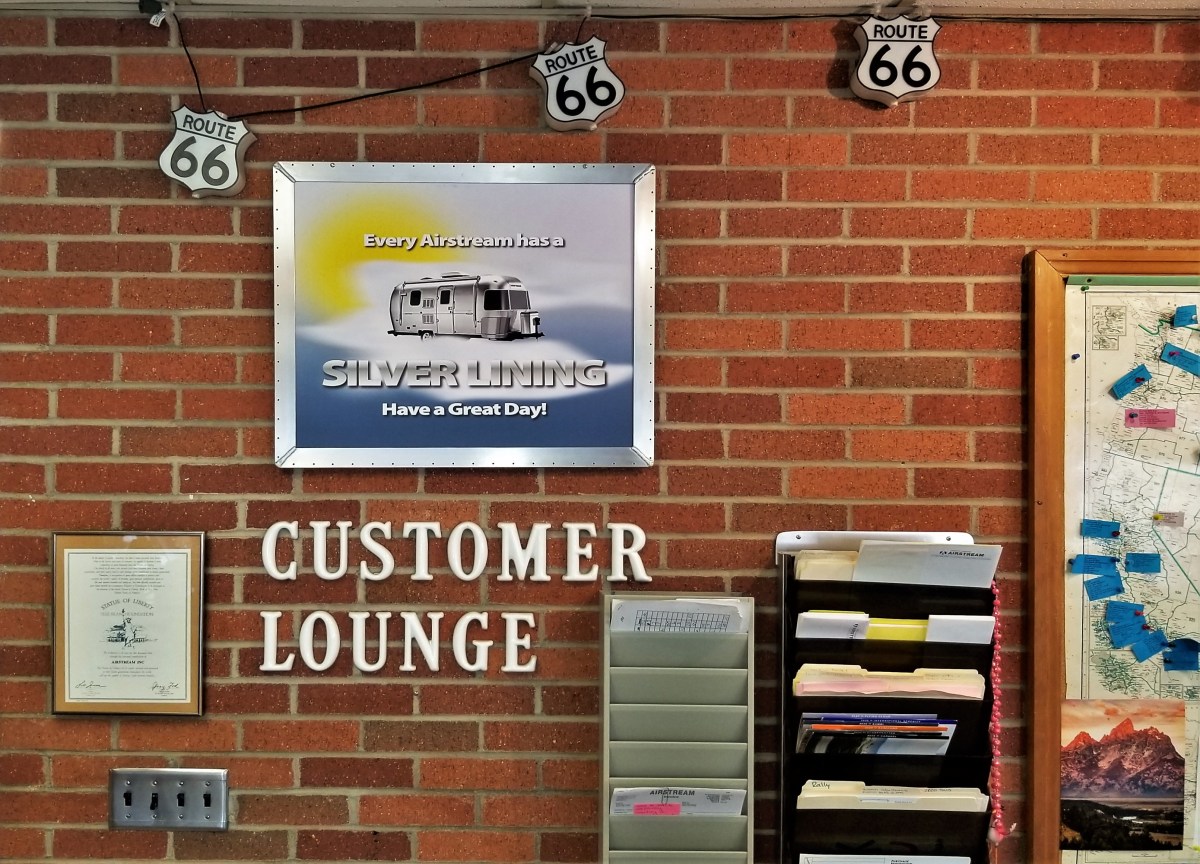
After confirming my appointment with Amica Insurance Company–who contracted for an adjuster to appraise the damage upon our arrival on Friday morning–I checked in with Customer Service, and registered for the afternoon tour of Airstream’s currrent manufacturing facility.
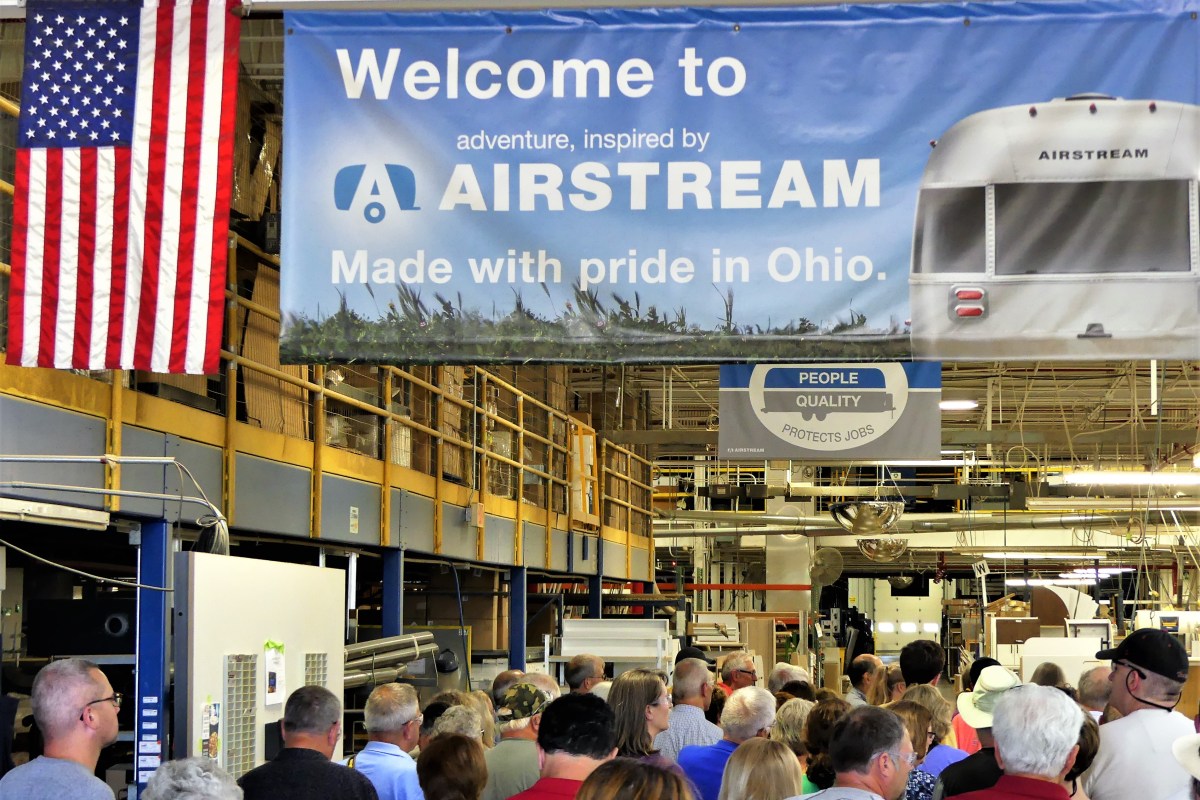
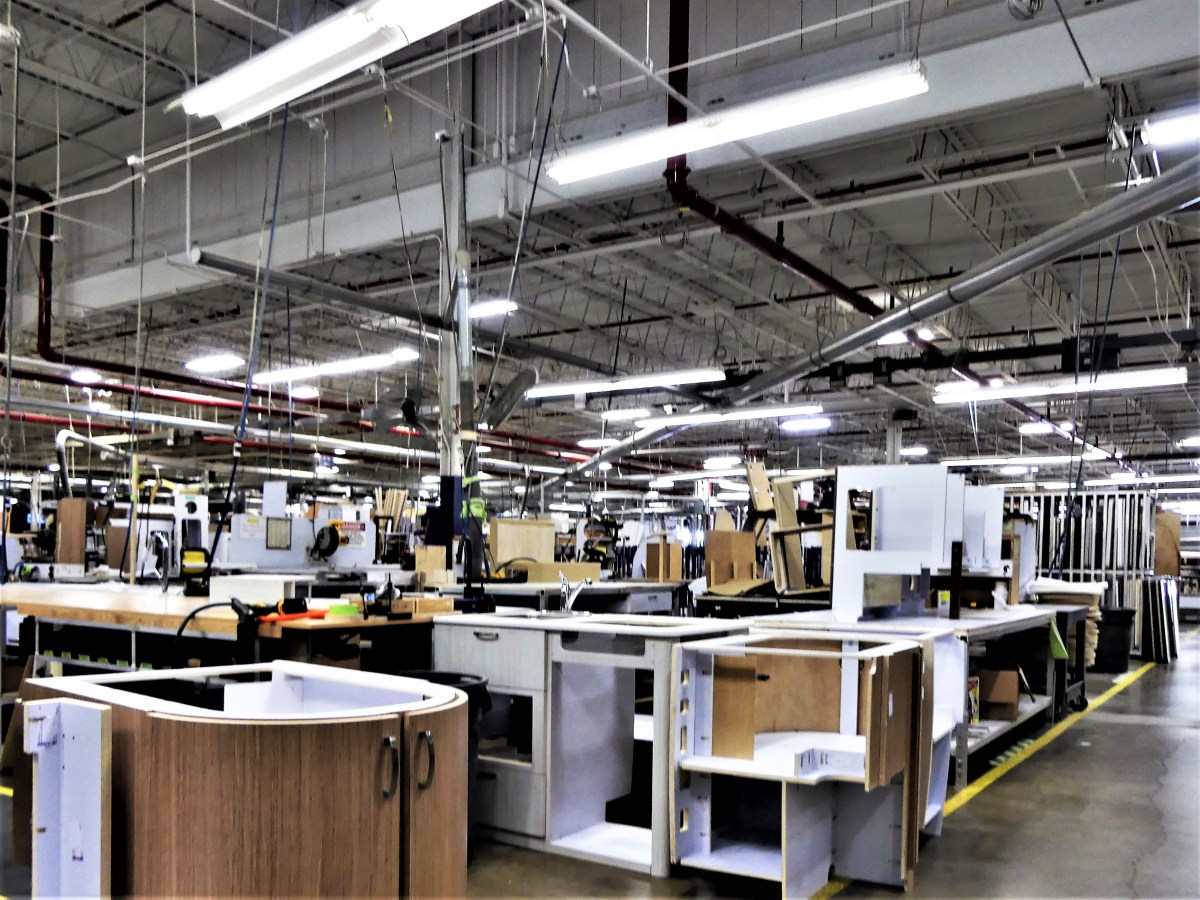
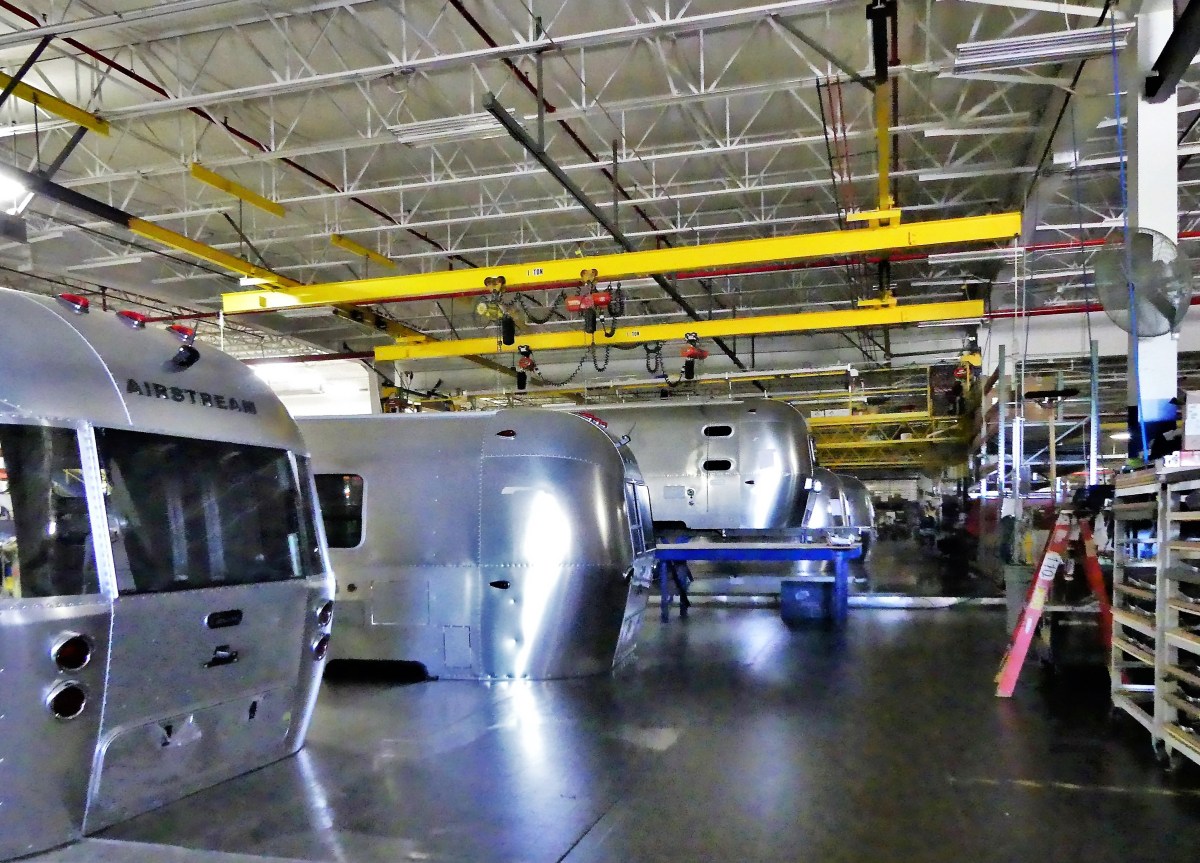
We were joined by 50 additional visitors and Don Ambos, a 60-year veteran of Airstream who retired as a line worker, but currently curates the 2-hour tour–from components to assembly.
Currently, Airstream builds 72 travel trailers every week…
…and 13 Class B Motorhomes every week.
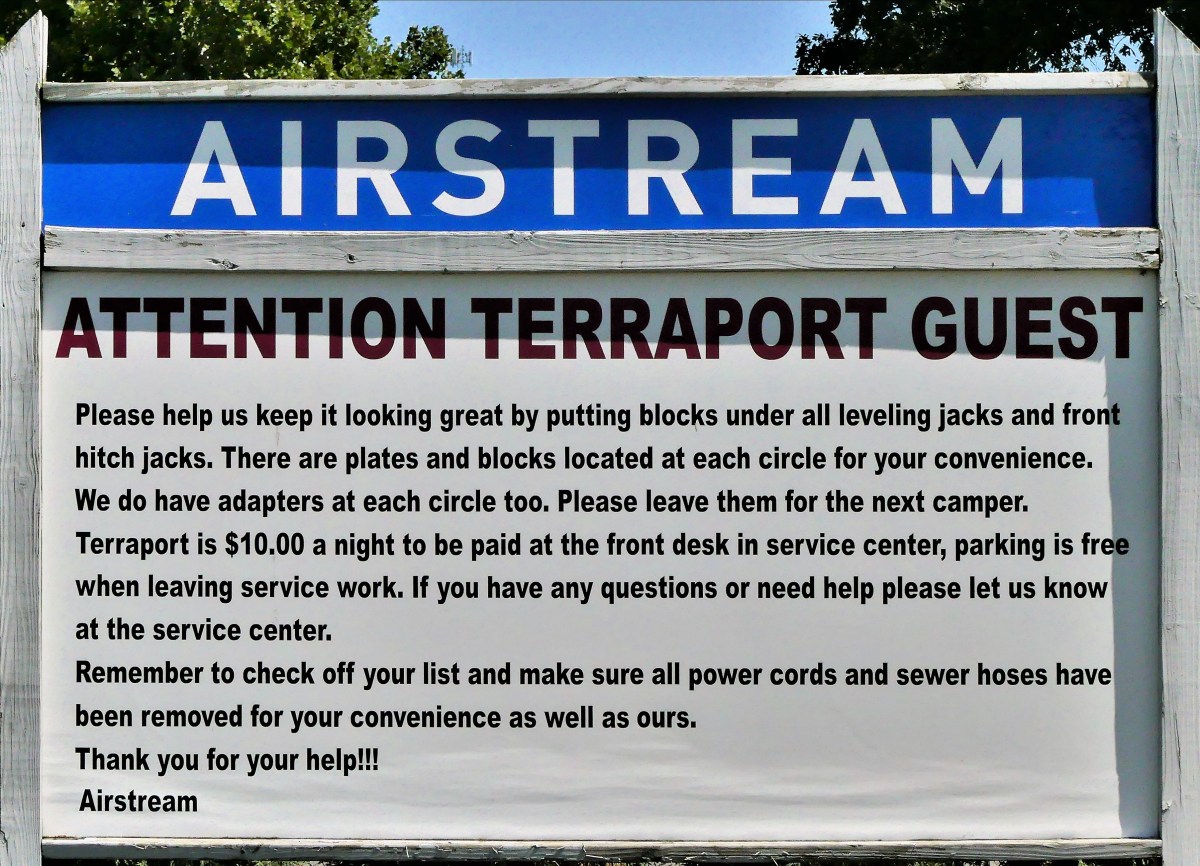
By the time the tour had ended, our trailer had already been towed to the on-site Terraport, where we stayed the next two nights with full hook-up at no extra charge ($10/day for visitors)!
The Airstream factory tour runs every day at 2pm from Monday through Friday, although on Friday, the production cycle only runs half a day, so goggles and eye protection are not required.
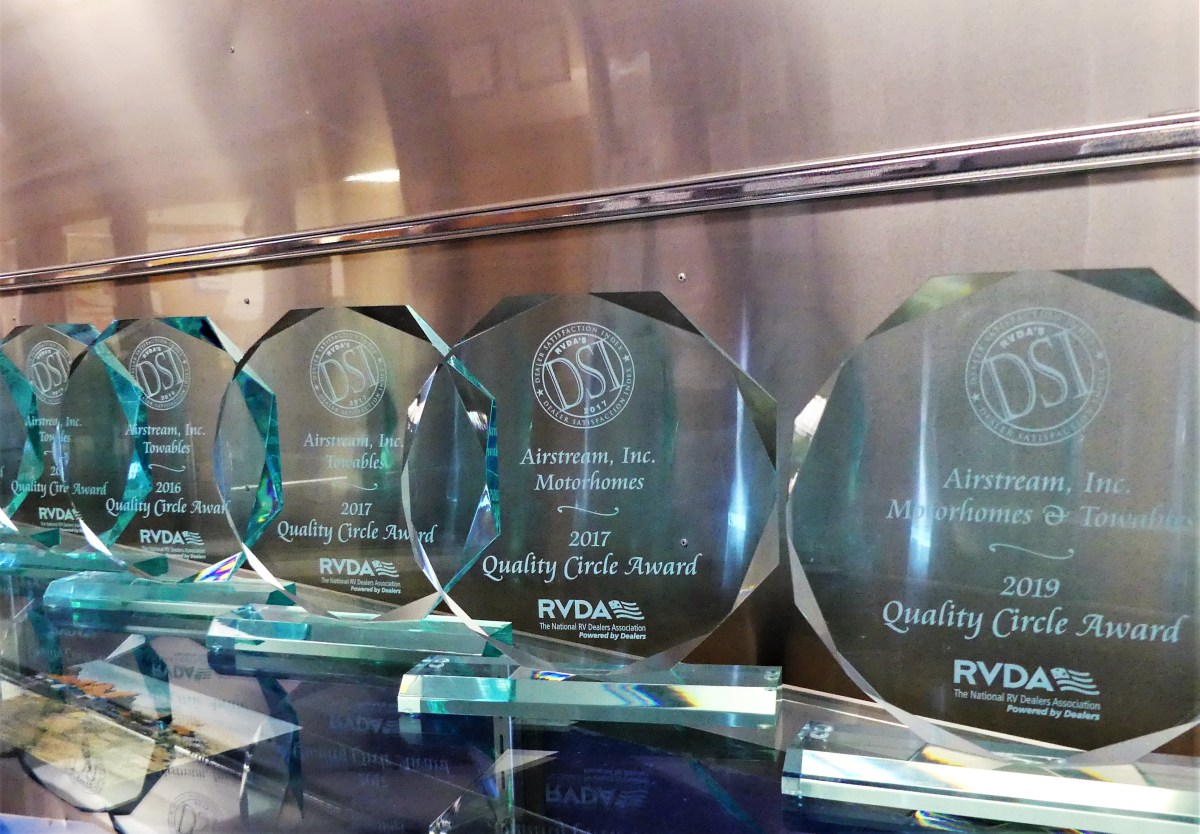
After traveling over 50,000 miles behind the wheel of my F-150, with my Flying Cloud 27-FB hitched behind me, I can’t image a better tandem for comfort, performance, and durability.
And having witnessed the assembly of both truck and trailer (in Dearborn, MI and Jackson Center, OH, respectively) I am reassured that Made in America matters.
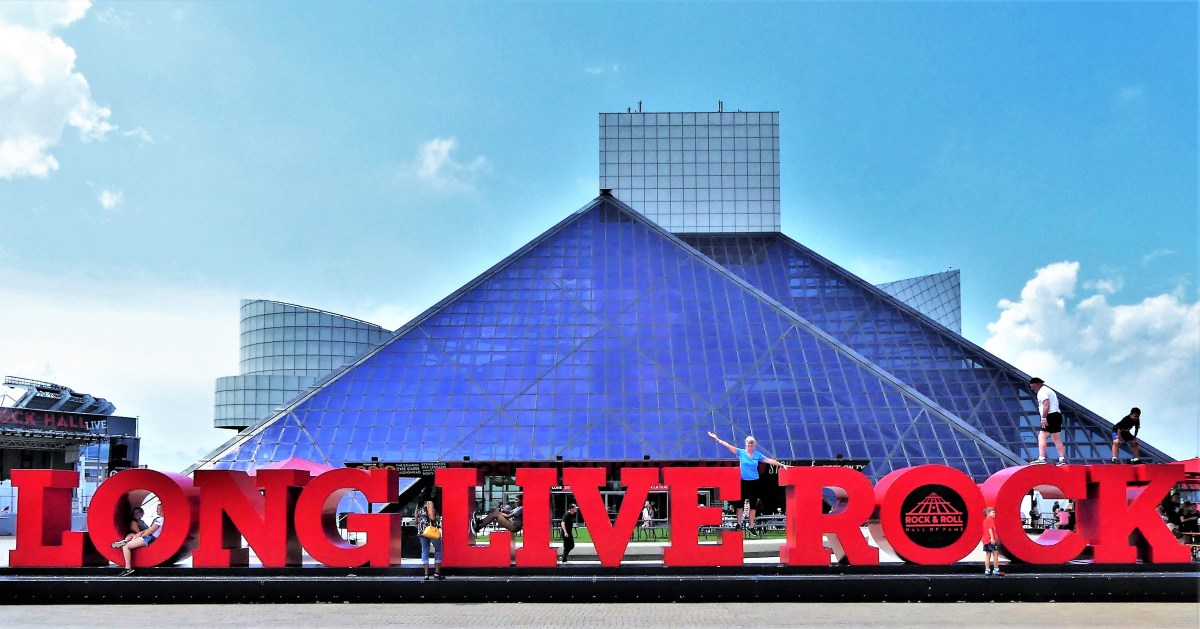
The sole reason Leah and I traveled to Cleveland was to visit the Rock and Roll Hall of Fame, period…
and it didn’t disappoint.
Classic rock music filled the cavernous lobby…
and lighter-than-air concert props hung from cables…
Pink Floyd’s planePhish’s weinerU2’s cars
It was a crusty carnival atmosphere on the outside, but we were there for the gooey goodness of the center.
Inside was like a multi-media circus. There was so much information and memorabilia organized on the walls, on the ceilings, and inside floating kiosks that whiplash seemed inevitable. And the Hall was buzzing: with so many tourists, campers, musicians, and music enthusiasts, that at times it felt like a mosh pit, as I moved from one area to another.
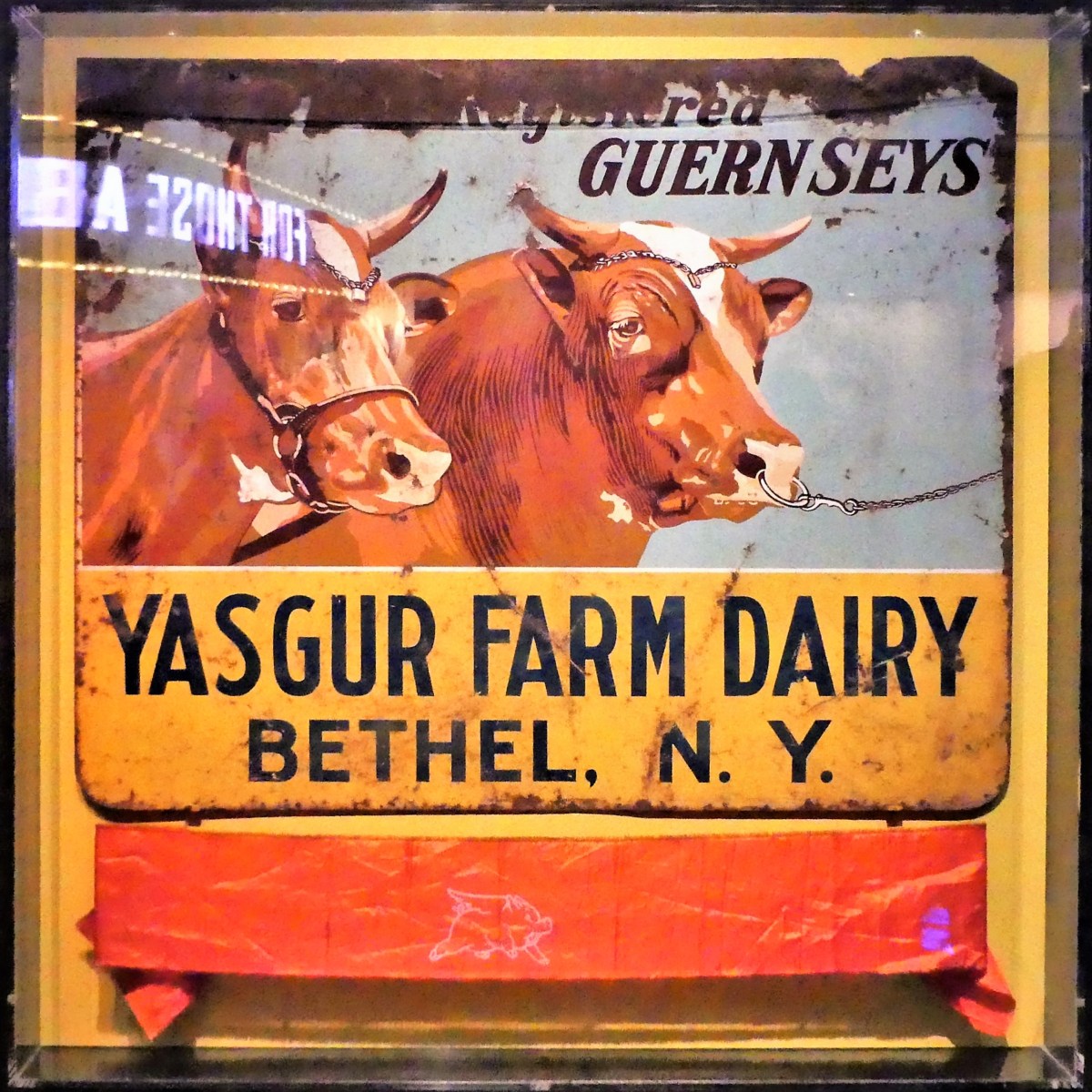
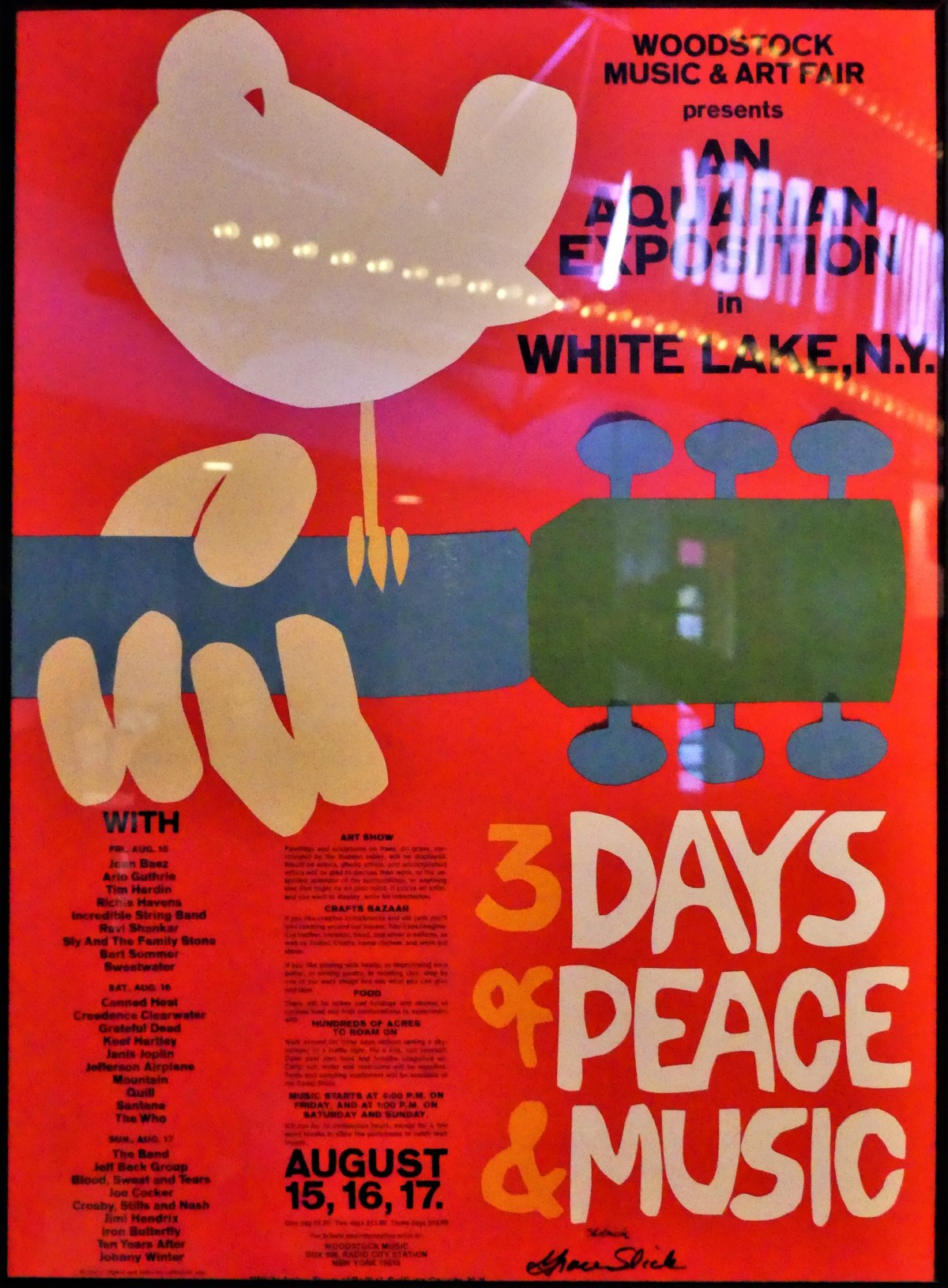
To be expected, there was a tribute to Woodstock…
and Dick Clark…
a salute to the 2019 inductees…
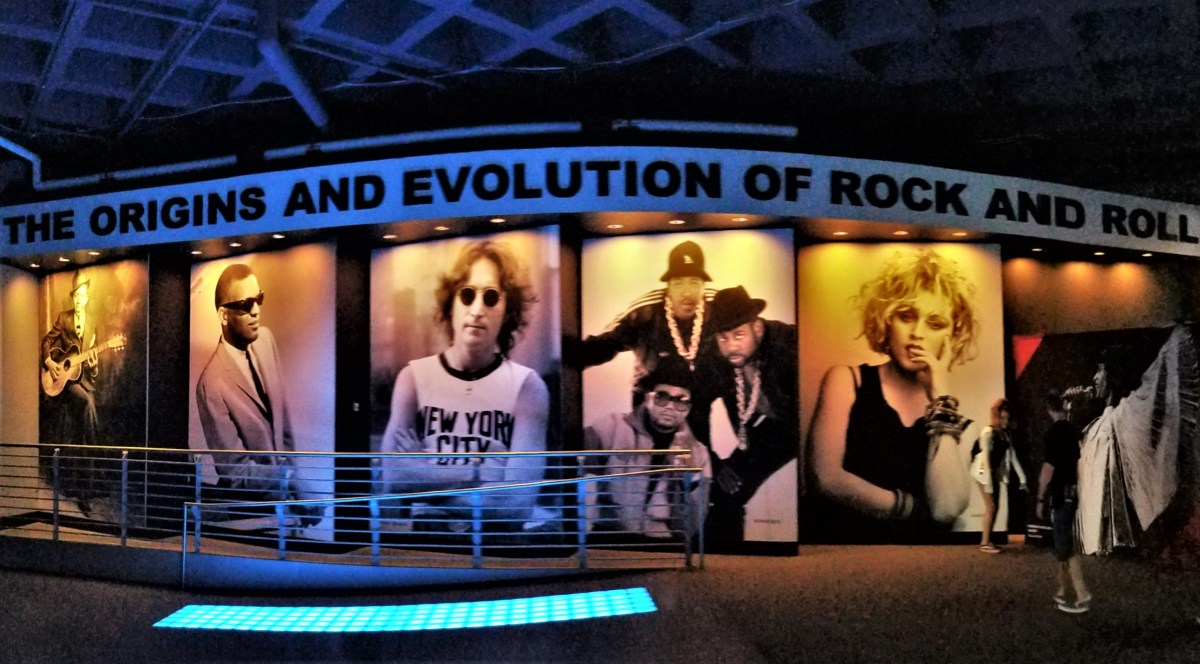
and the icons of rock: Elvis,
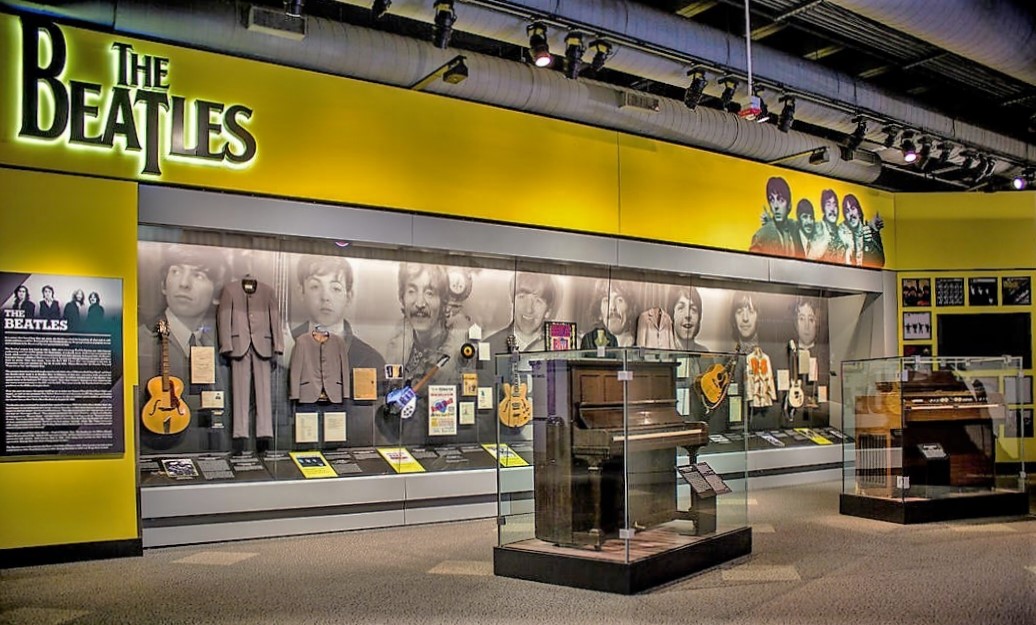
The Beatles,
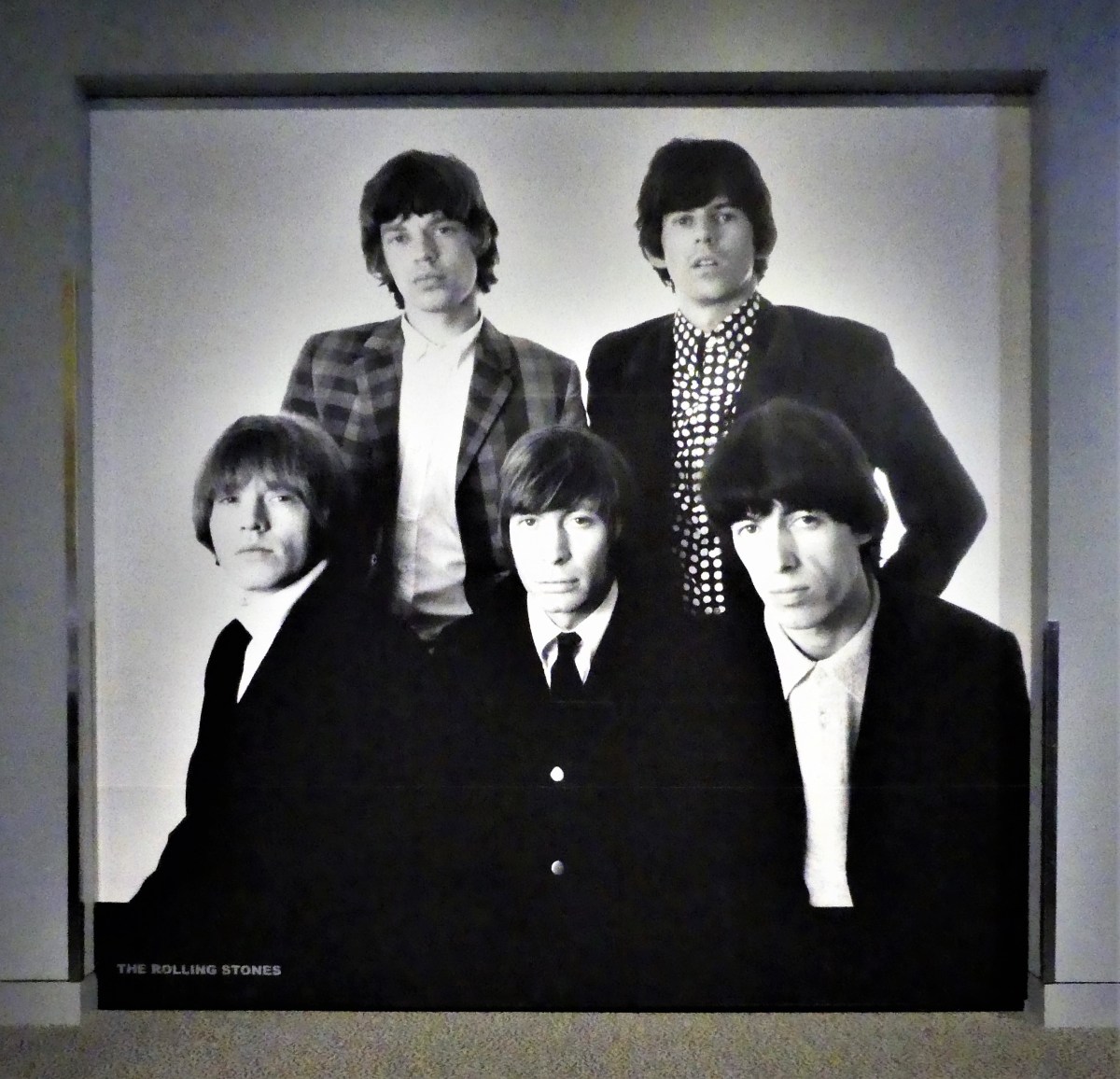
The Rolling Stones,
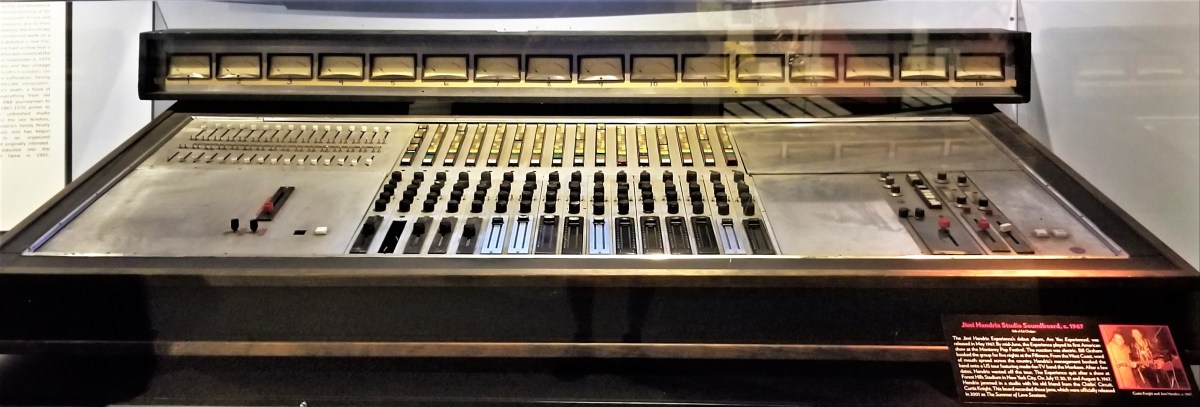
and Jimi Hendrix, to name a few.
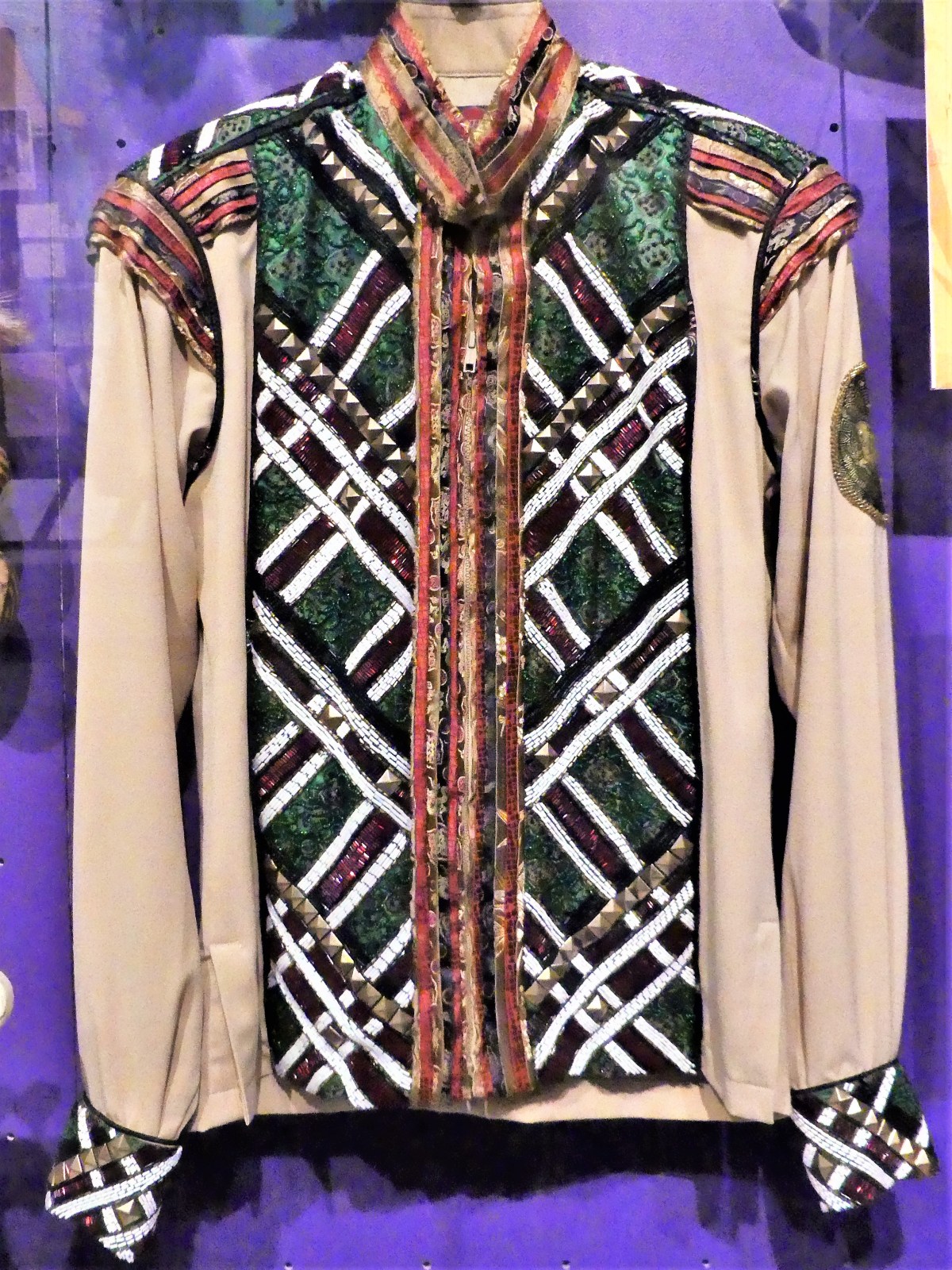
There was plenty of concert apparel to gush about…
Tom PettyMichael JacksonStevie Wonderand Elton John
And there were interactivities to capture one’s creativity, like Garage Band.
Most importantly, when the last lyric was sung and the last chord was strummed, it was time to shop!
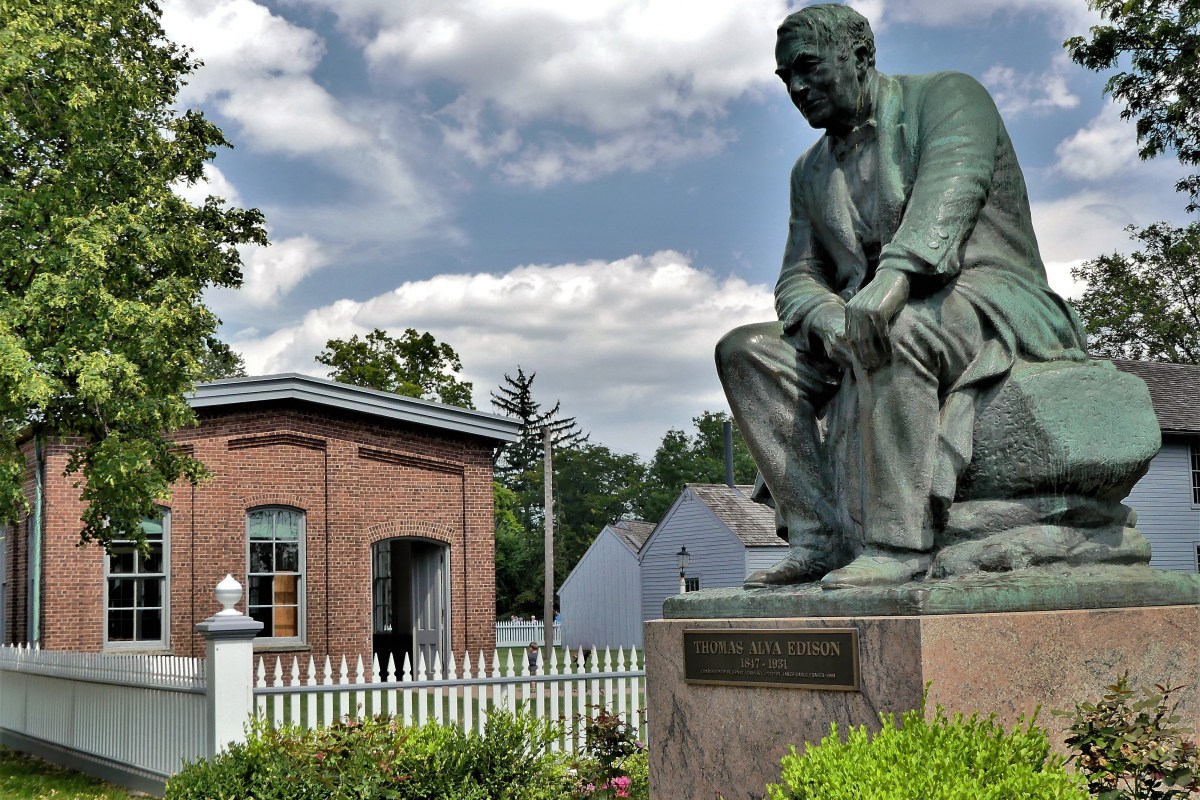
Henry Ford and Thomas Edison–the two men are inextricably linked in so many ways that it defies kismet. Both were iconic inventors and visionaries with a twist of genius; both were titans of industry; they were best friends; they were neighbors; they were presidents of each other’s mutual admiration society; and they were both anti-Semitic.
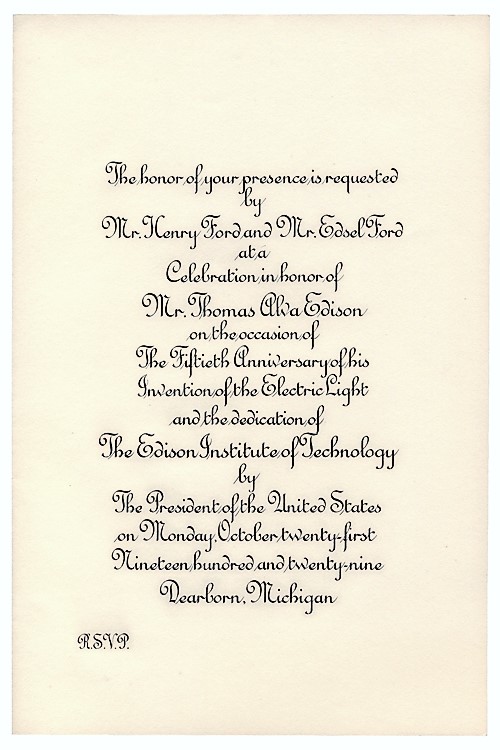
On October 21, 1929–two days before the stock market crash–invitees arrived at Greenfield Village to celebrate the 50th anniversary of the electric light, and Ford’s dedication of Greenfield Village to Edison.
The Henry Ford
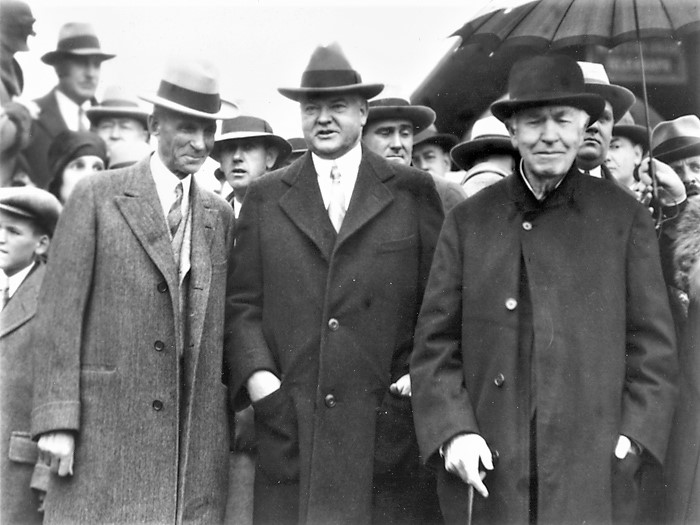
The event was a who’s who of dignitaries and celebrities, with the likes of Will Rogers, Marie Curie, Charles Schwab, Adolph Ochs, Walter Chrysler, John D. Rockefeller, Jr., J.P. Morgan, George Eastman and Orville Wright, etc.
Henry Ford, President Herbert Hoover, Thomas Edison–The Henry Ford
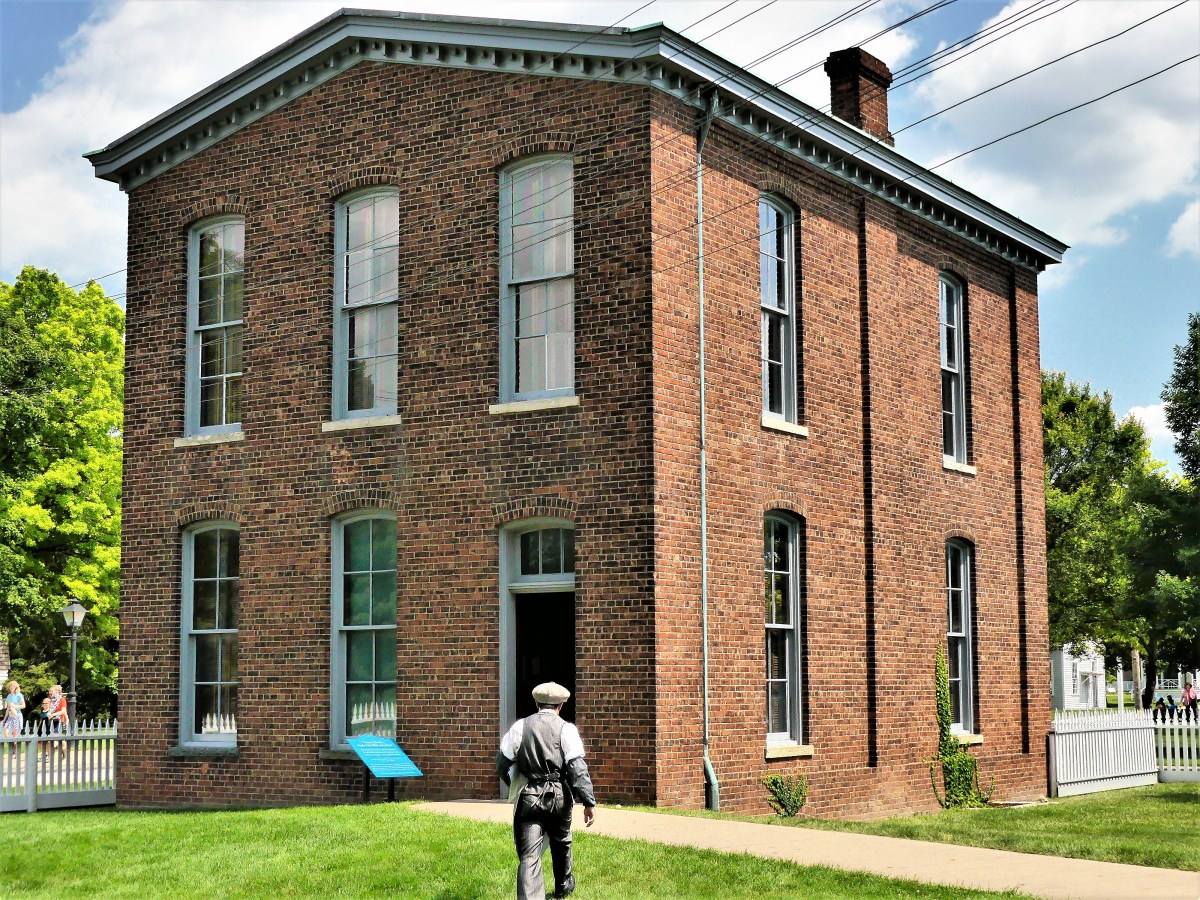
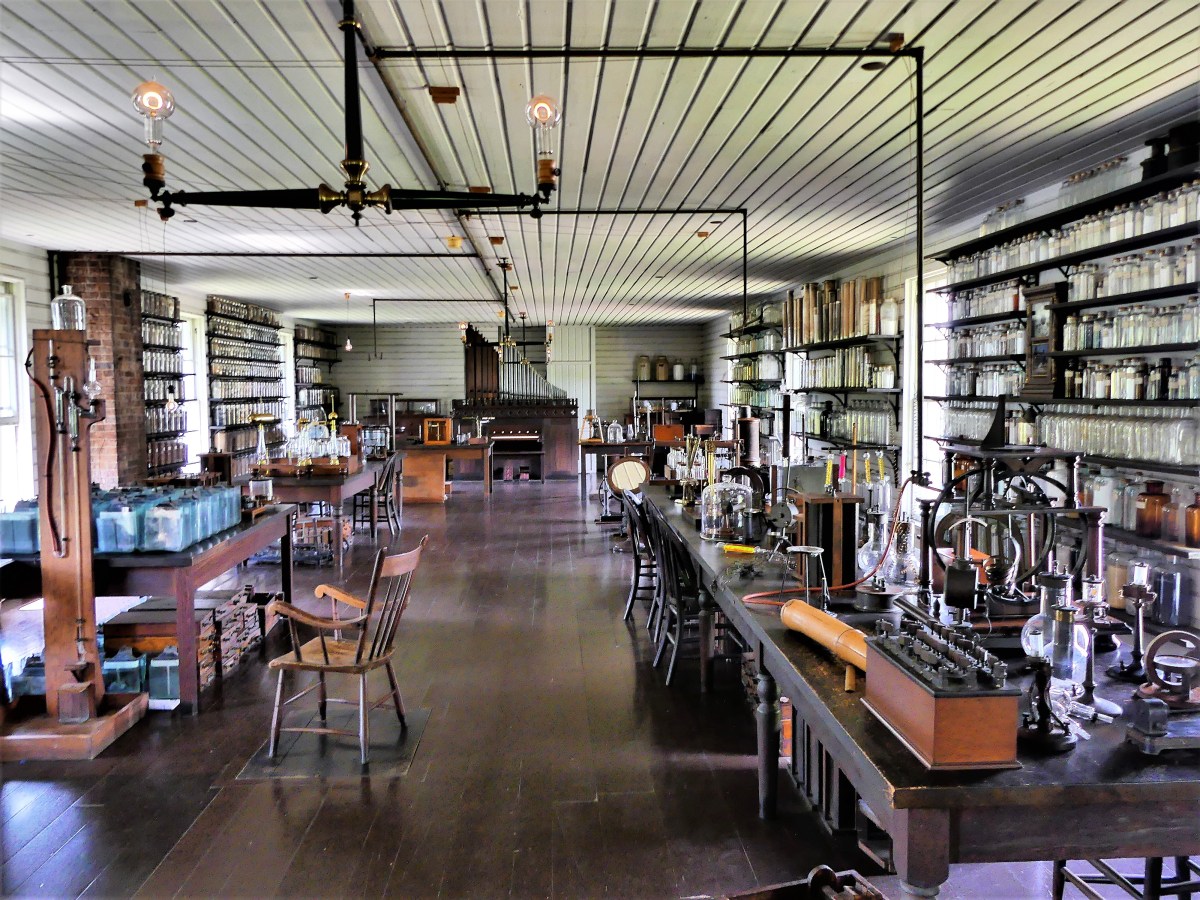
All gathered inside Edison’s reconstructed Menlo Park laboratory…
to witness the symbolic relighting of an incandescent lamp made famous a half century earlier, and credited with changing the world.
Later, Ford ordered the armchair where Edison sat during the ceremony to be nailed in place for all time, and never to be sat in again.
It remains in the exact same place, today.
Greenfield Village was dedicated to Edison that evening as the Edison Institute of Technology. Henry Ford had prepared all year for this public relations bonanza by bringing Menlo Park, NJ to Dearborn, MI.
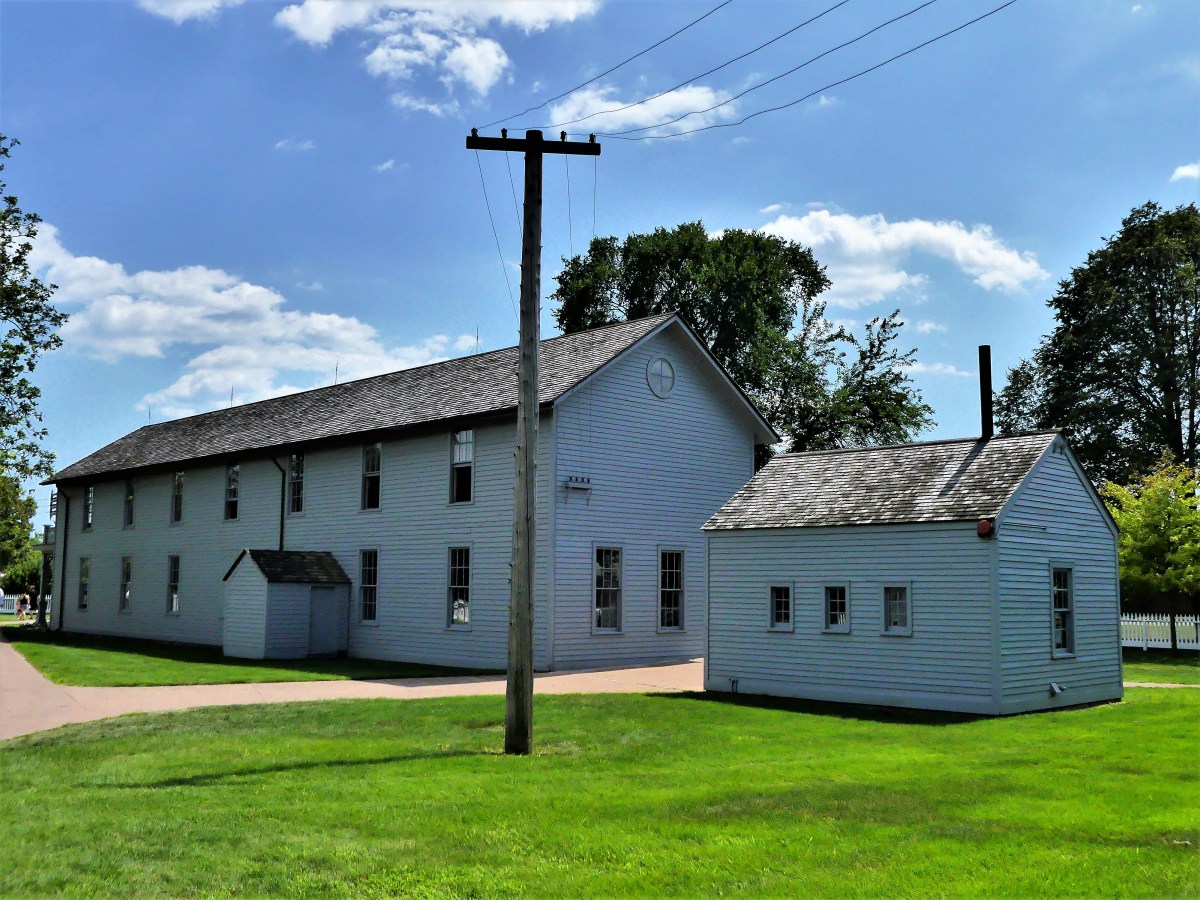
Ford incorporated Edison’s machine shop…
and years later, he built a facsimile of Edison’s first power plant.
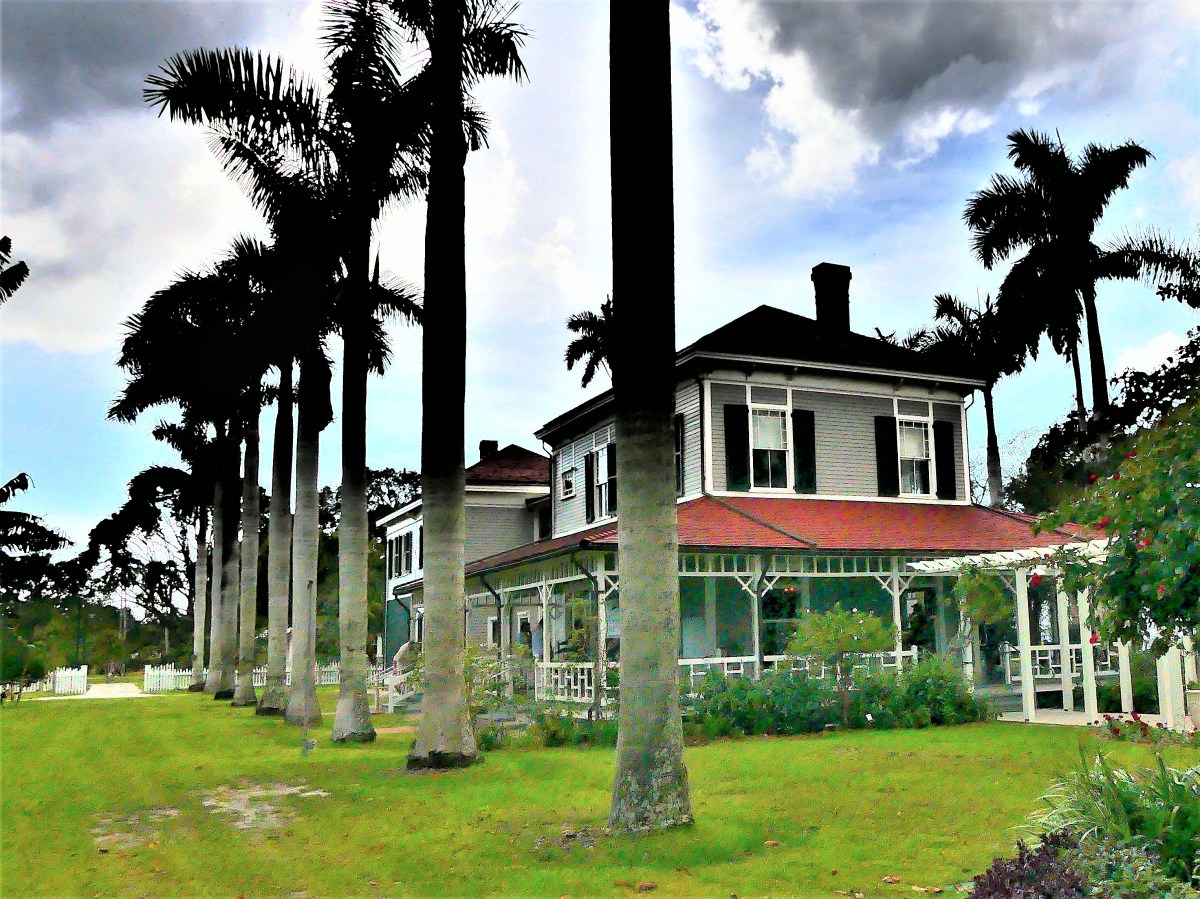
Although Ford was 16 years Edison’s junior, and Edison had been Ford’s employer for a time, they became bossom buddies by the time World War I erupted. Ford’s acceptance of a 1914 invitation to Edison’s winter retreat in Ft. Myers sealed the deal.
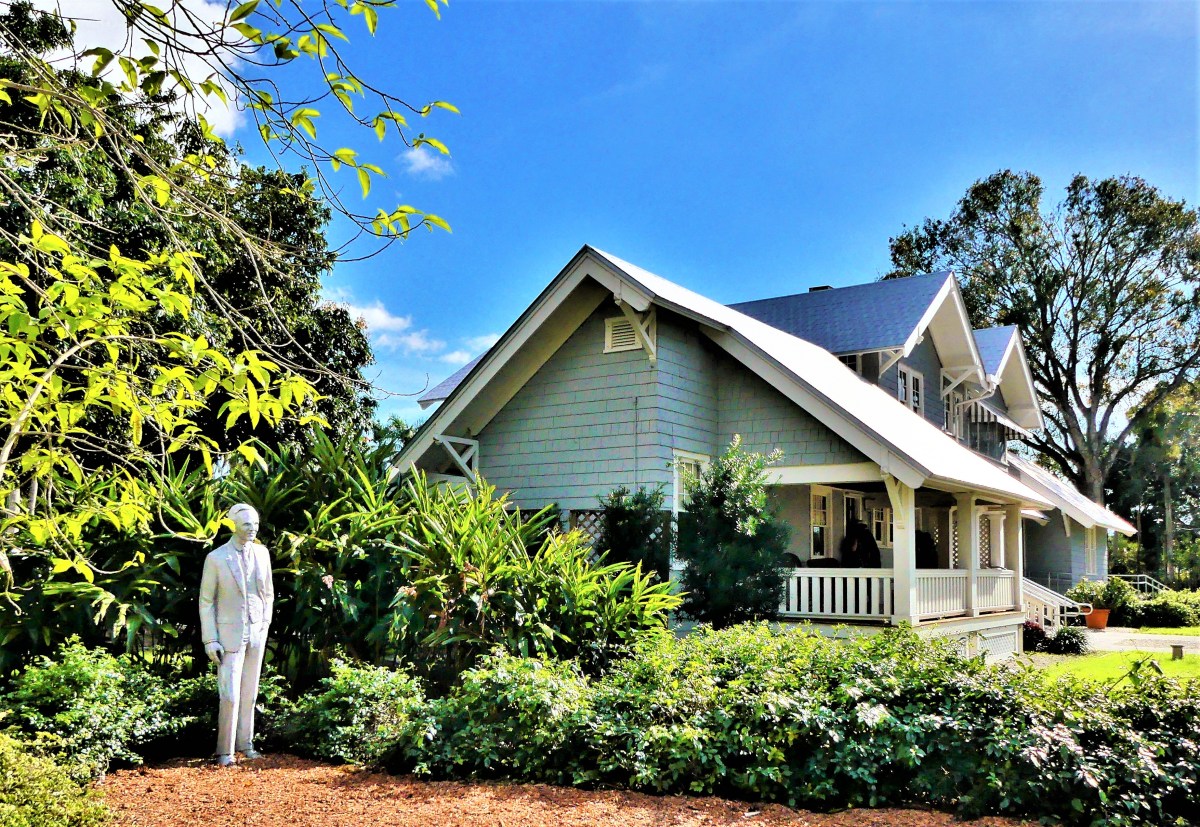
Two years later, Ford purchased The Mangoes beside Edison’s SeminoleLodge, and they became Floridian neighbors.
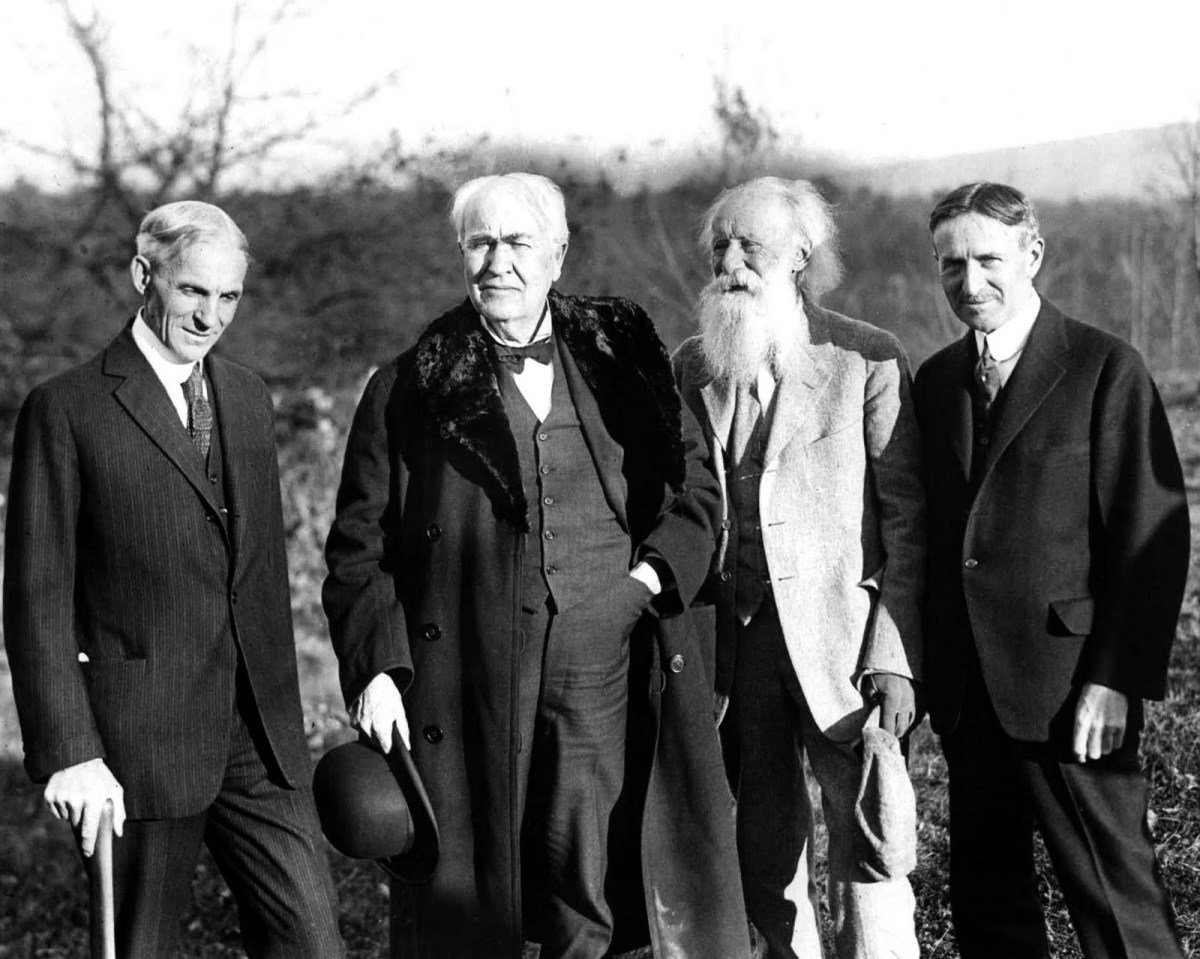
They took public vacations together, inviting John Burroughs and Harvey Firestone along for the ride–usually to the mountains or parts of rural America. The press corps were encouraged to follow their every move, dubbing them “The Vagabonds.”
While roaming the country, Ford was always eager to share his anti-Semitic views around the campfire, blaming the Shylock bankers in Germany as the root cause of the war, and Jews in America as the source of economic anxiety–all of which was propagandized in the Dearborn Independent, a newspaper published by Ford and used to expose his “truths” about the Jewish threat.
While Edison’s anti-Semitism was never as overt as Ford, it became clear that he harbored similar sentiments, and used his motion picture company to propagate Jewish myths and stereotypes. Cohen was a recurring dislikeable character in his early short films…
While Jean Farrell Edison, the granddaughter and heiress of Thomas Edison’s fortune was funding the Institute for Historical Review (an organization that promotes Holocaust denial), Henry Ford II had distanced himself from his grandfather’s vitriol by offering philanthropic support for Detroit’s Jewish community, as well as renouncing the Arab League’s boycott of Israel after Israel achieved statehood in 1948.
And how would Henry Ford react to Mark Fields’ appointment as Ford Motor Company’s CEO in 2014, or Bill Ford’s dedication of Ford’s first technology research center opening in Tel Aviv this year?
Likewise, Edison might pale upon discovering that the motion picture industry exploded in Hollywood with studios founded by: Carl Laemmle, Sam and Jack Warner, Sam Goldwyn and Louis B. Mayer, William Fox, and Adolf Zukor.
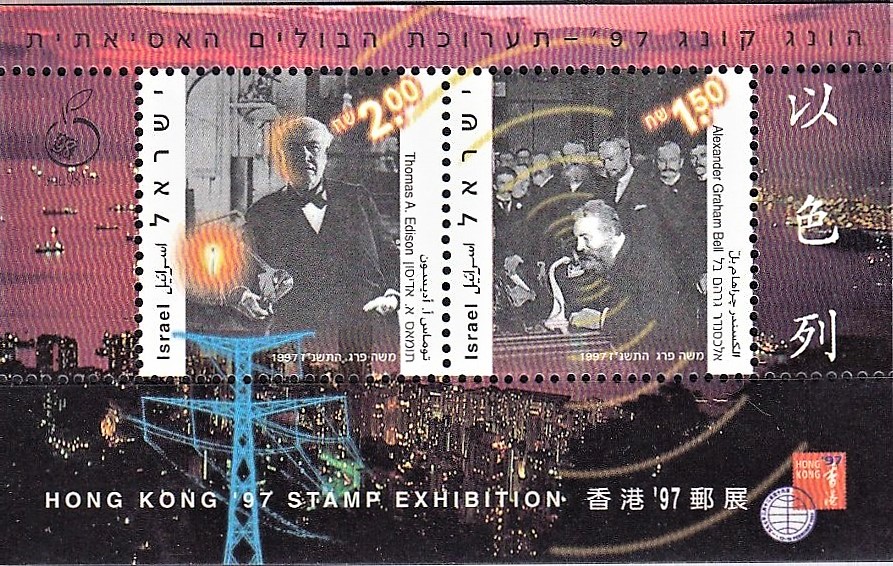
Paradoxically, in 1997, the Israeli Postal Authority memorialized Edison with a stamp.
Yet, a bigger question remains… How is it that we live in a world that continues to embrace an ancient hatred that modern-day leaders are unwilling to disavow?
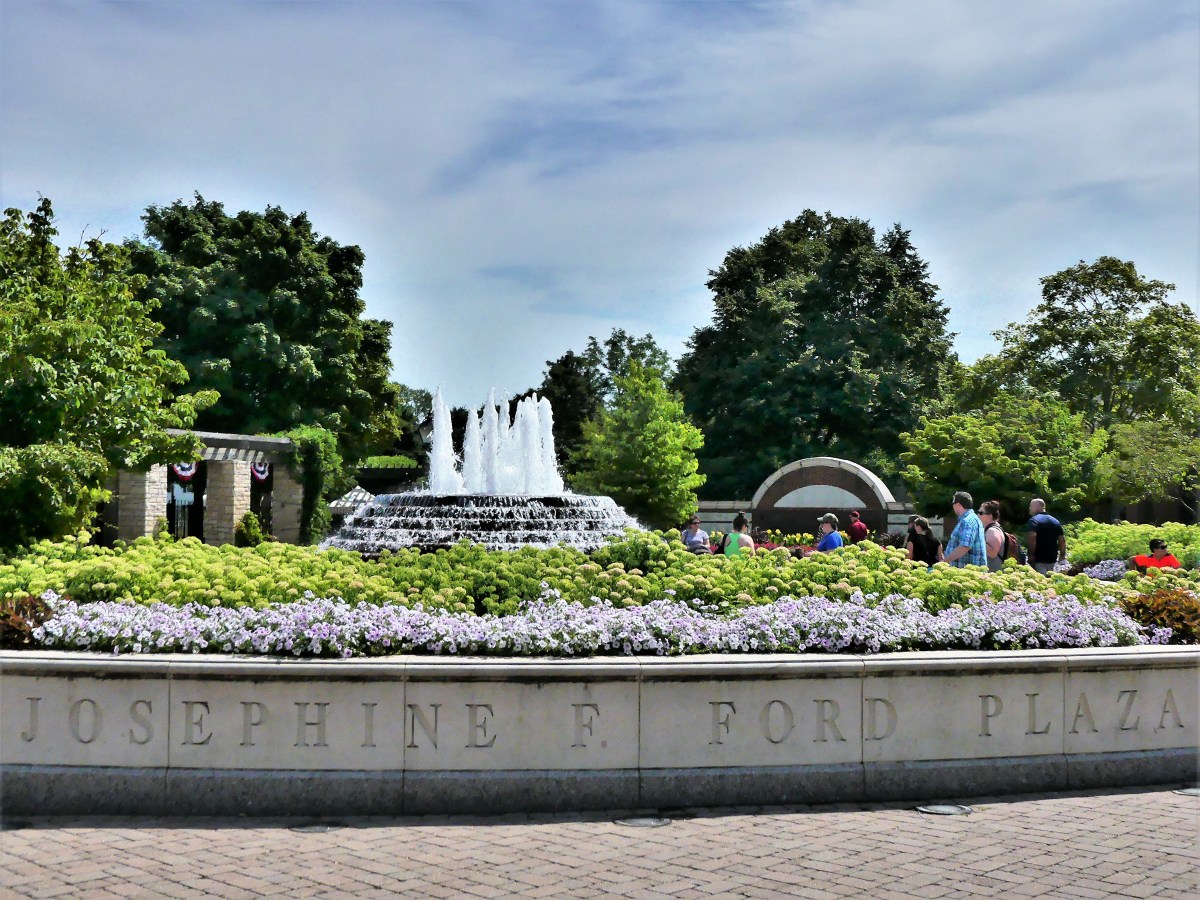
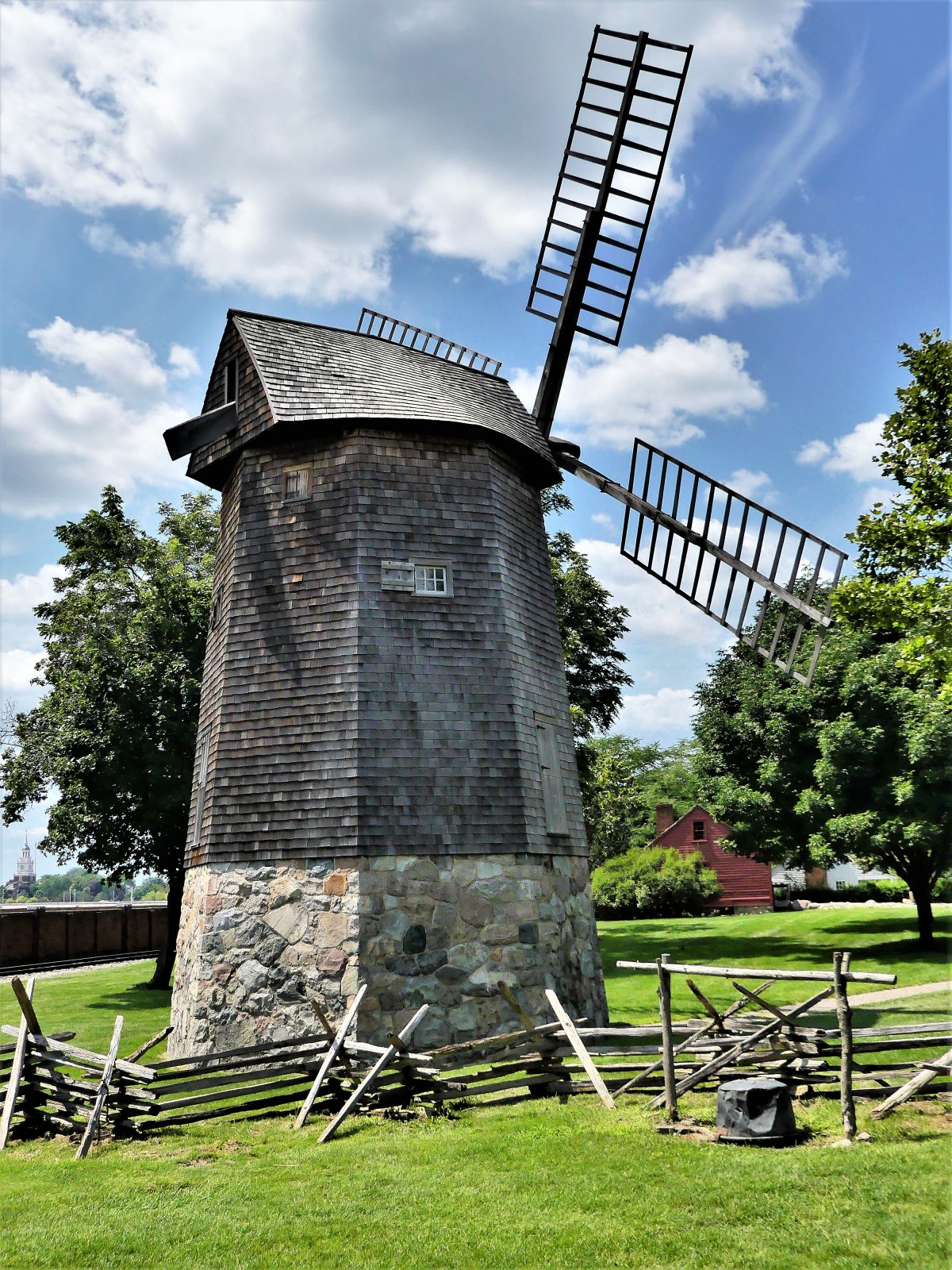
Typically, most people with a predilection for collecting turn to everyday items, such as stamps, figurines, sports memorabilia, books, shoes, or records to name just a few obsessions. But not Henry Ford. By virtue of Ford’s bottomless budget, and his insatiable curiosity, his path to collecting took him through time itself, because Henry Ford collected significant relics of history and personal sentiment, and planted them across 80 acres in Dearborn, Michigan.
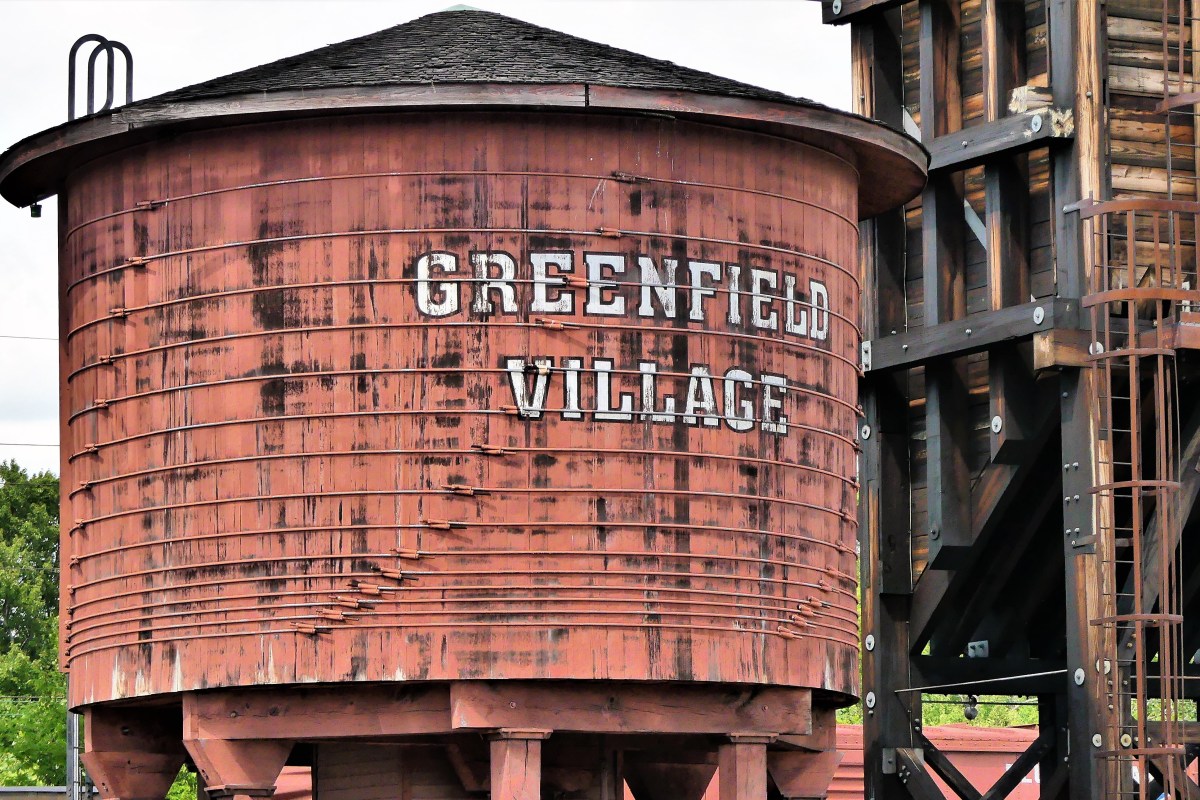
He called it Greenfield Village, making it the largest museum of its kind in the world.
Greenfield Village originally operated as an experimental school known as Edison Institute in 1929 (as a nod to his dearest friend) before opening to the public as an outdoor museum in 1933.
Ford, mused, “I am collecting the history of our people as written into things their hands made and used…. When we are through, we shall have reproduced American life as lived, and that, I think, is the best way of preserving at least a part of our history and tradition…”
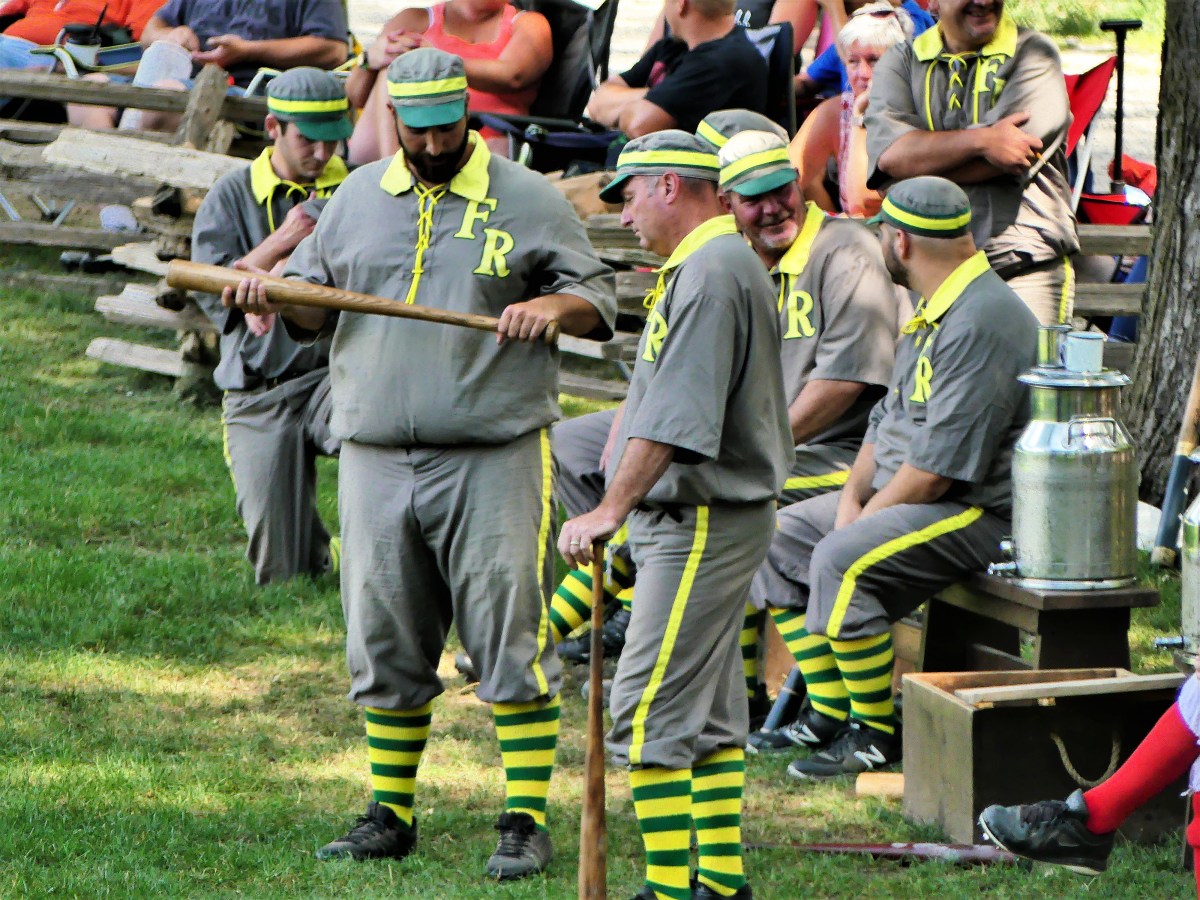
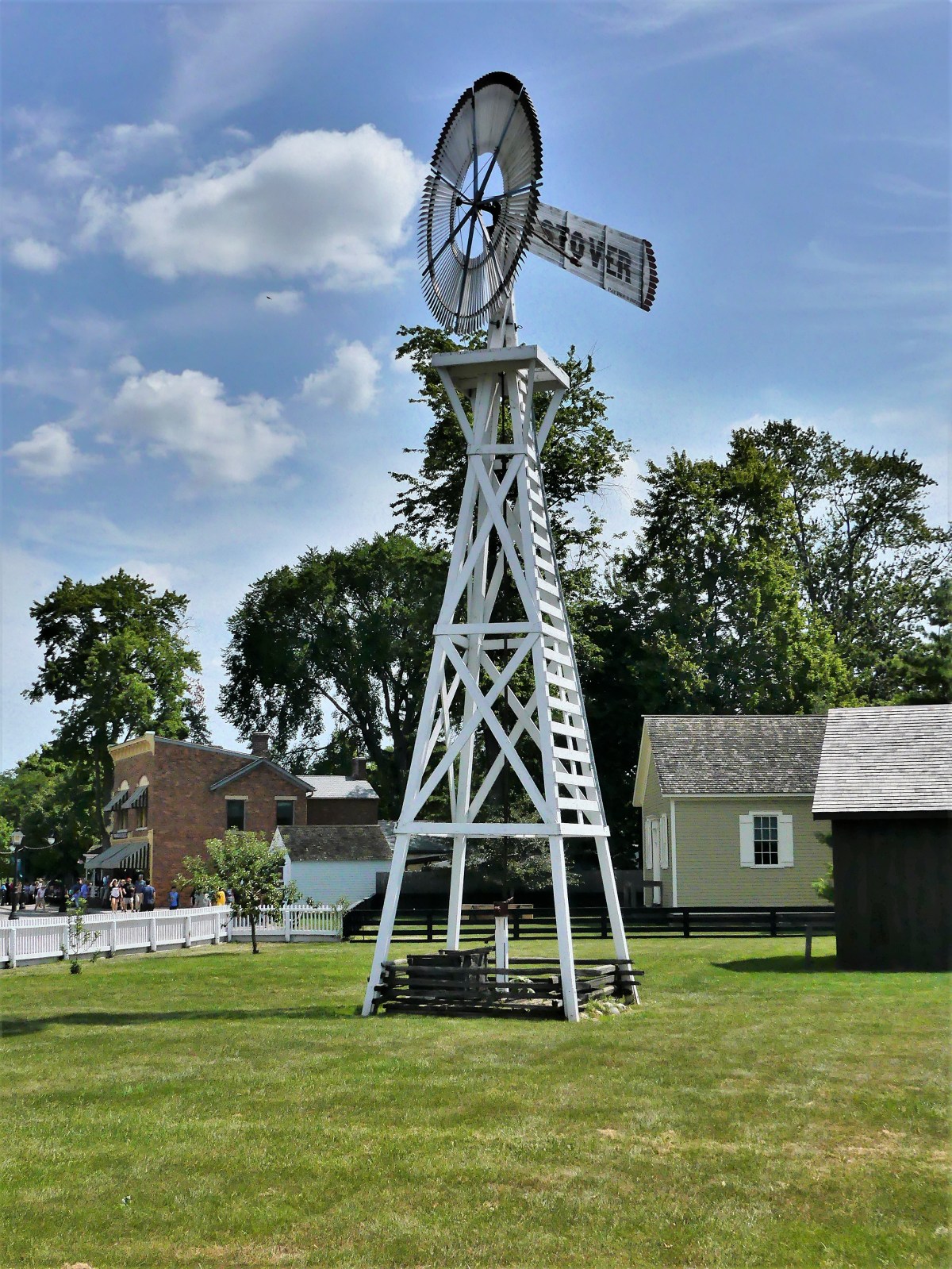
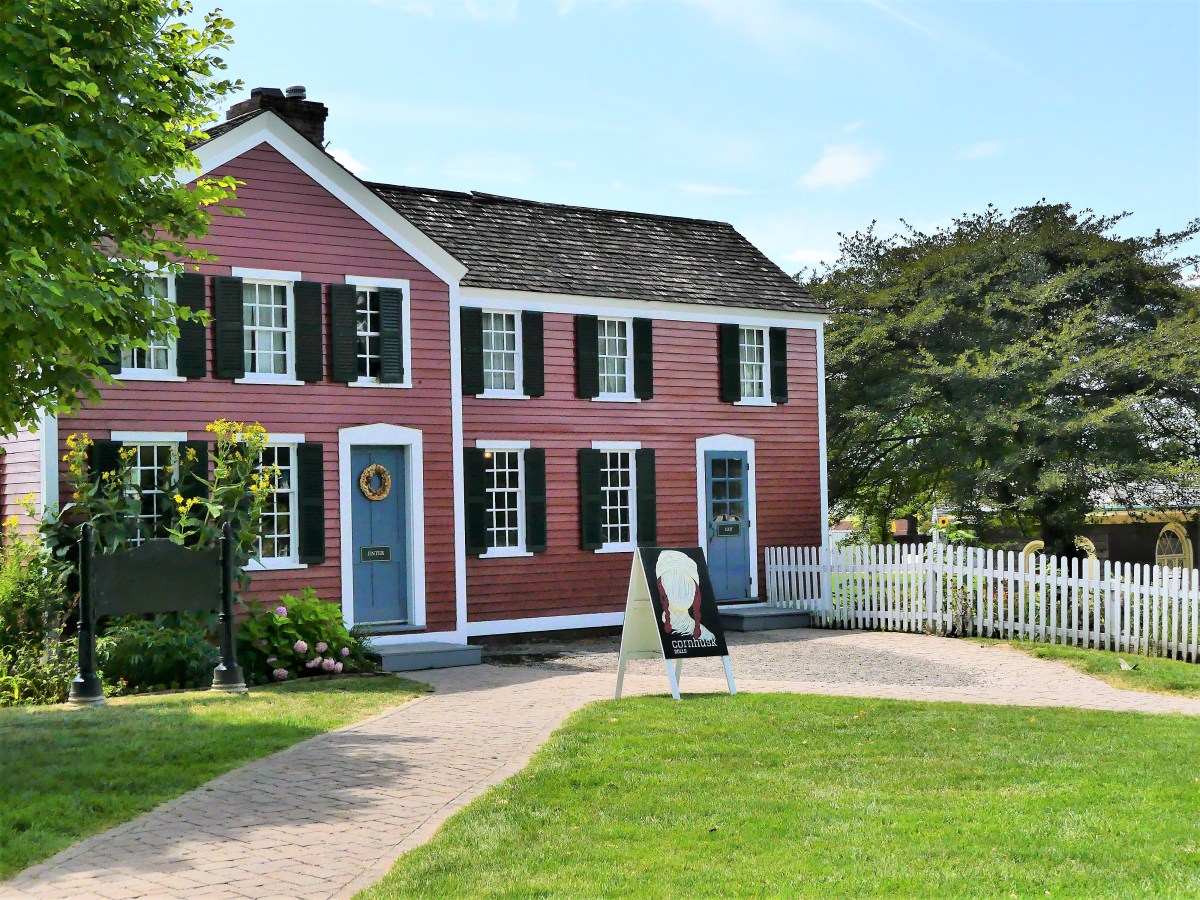
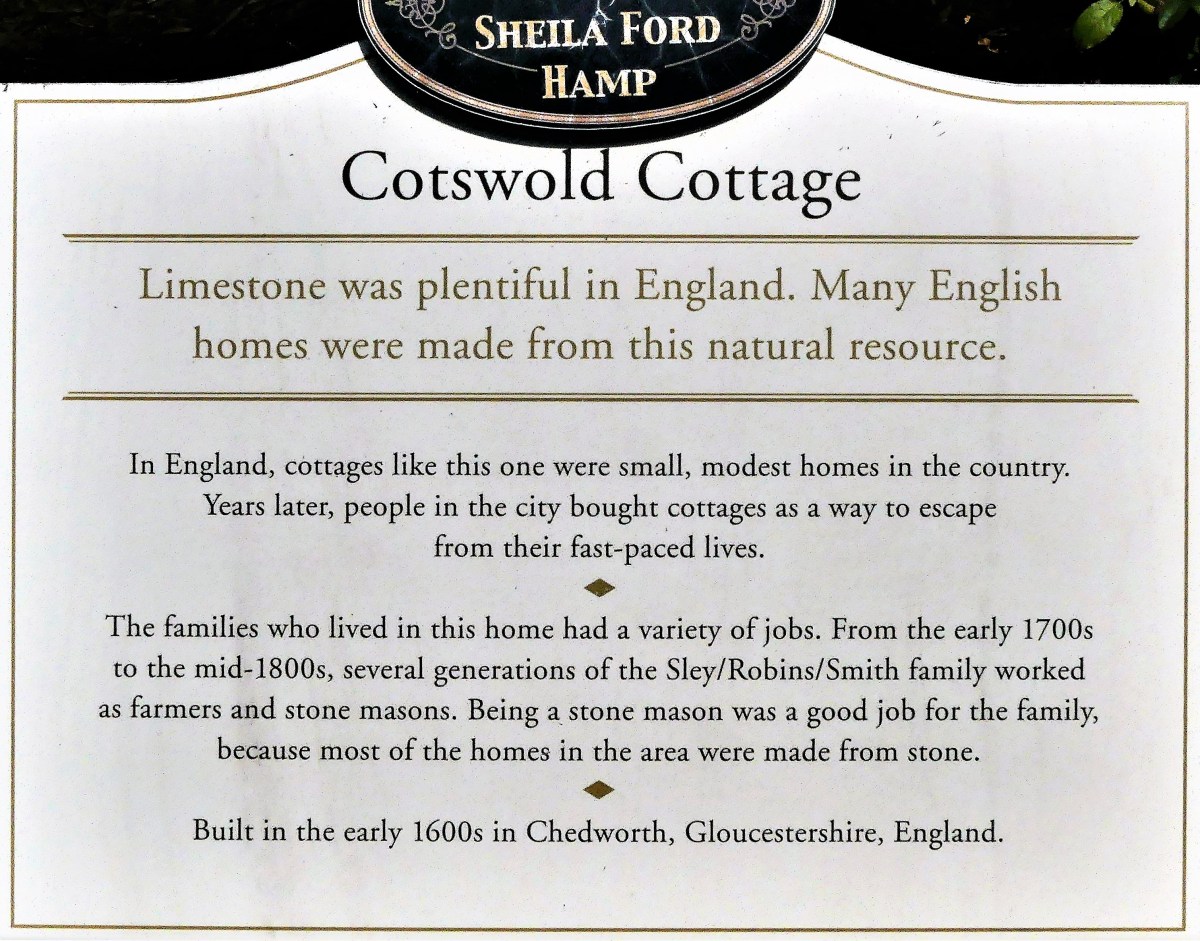
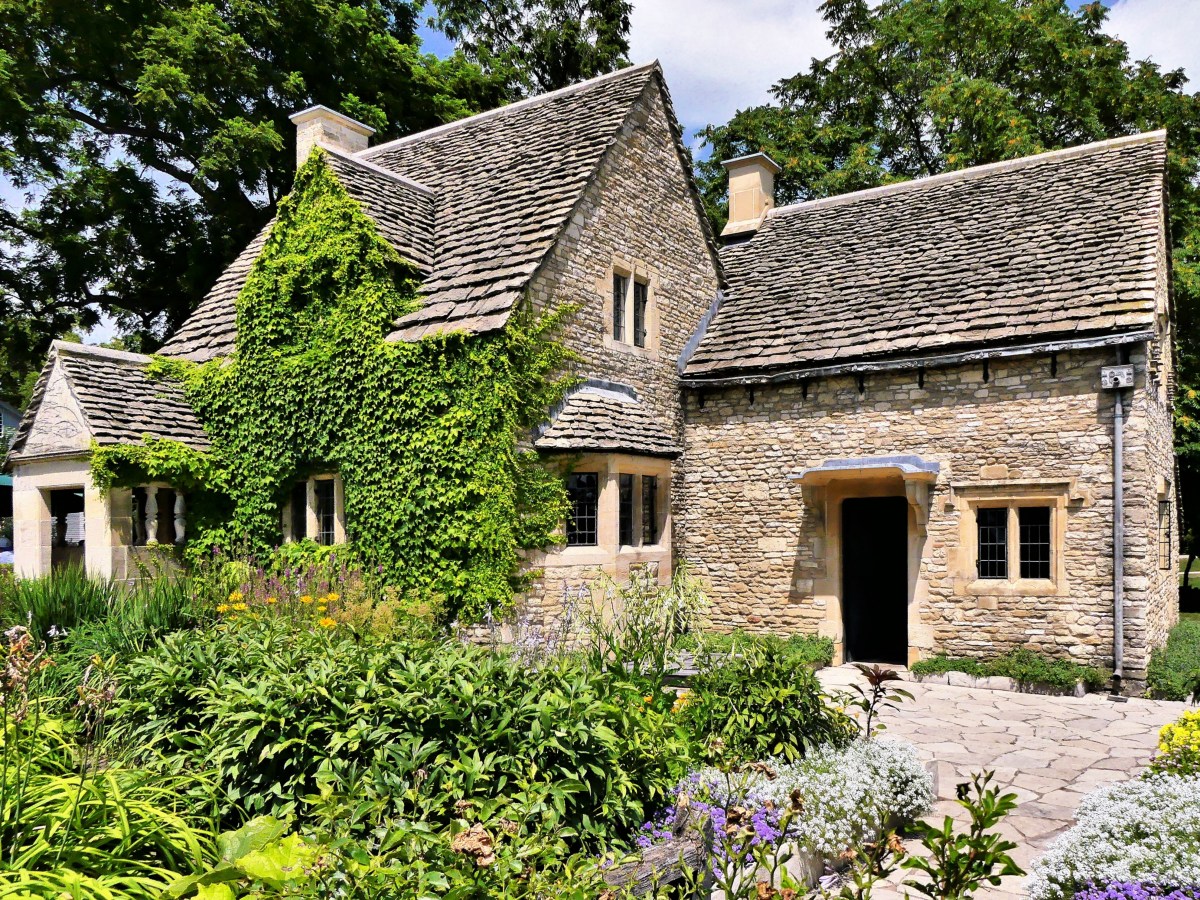
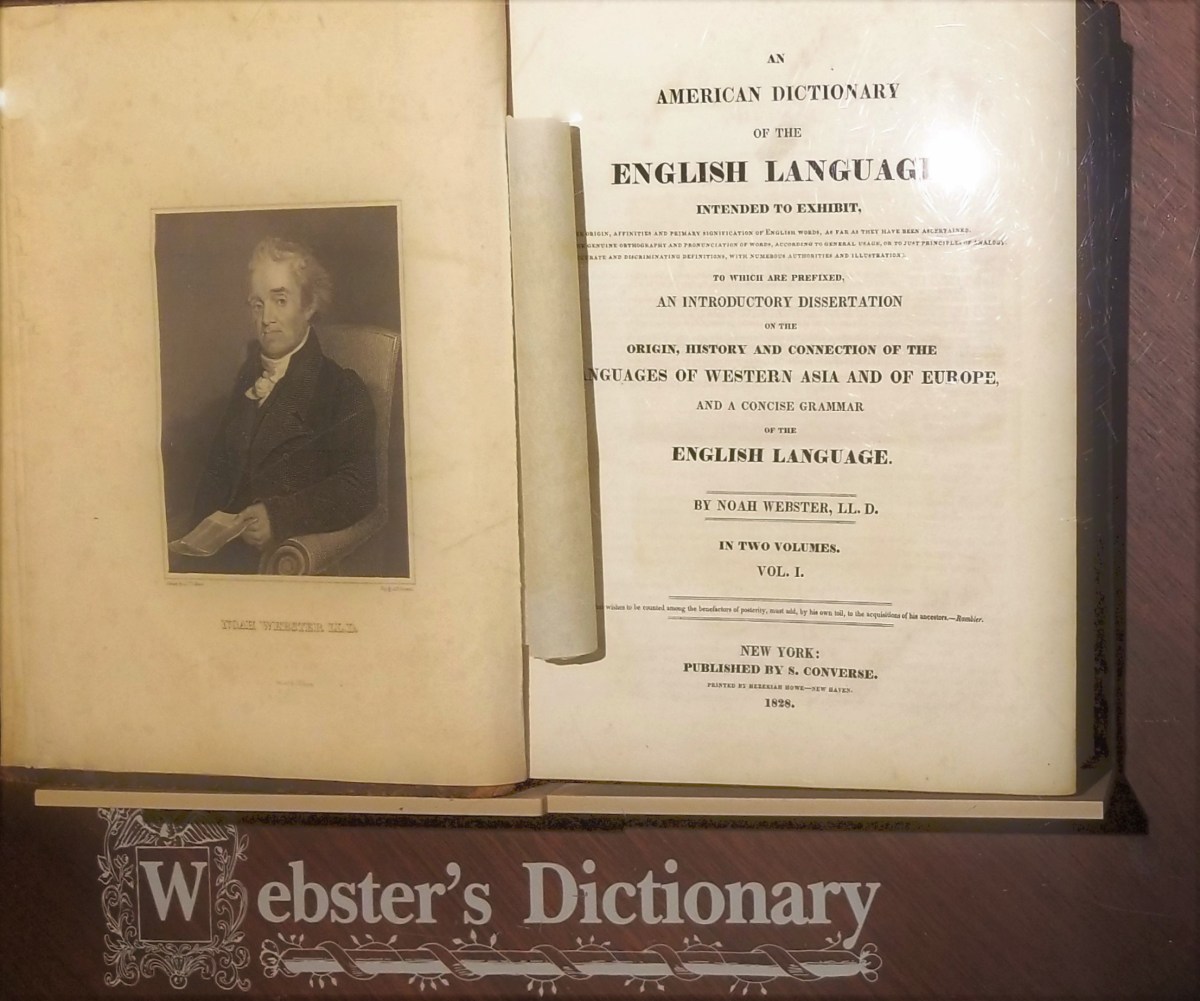
There are over 100 original or replicated buildings filled with hundreds of thousands of artifacts and Americana intended to preserve authenticity. Additionally, costumed spokespeople throughout the complex tell antecdotes of historical nature, fully re-enacting an experience that captures an earlier time in America.
If there was a homestead that had historical value or childhood sentiment to Henry Ford, and it stood in the way of progress, then Henry seized the moment and had the house razed and moved to Michigan for restoration.
As excerpted from Telling America’s Story–A History of the Henry Ford:
In 1919, a road improvement project in Ford’s hometown of Springwells Township, Michigan (now the city of Dearborn), meant his birthplace would need to be either moved 200 yards from its original location – or destroyed.
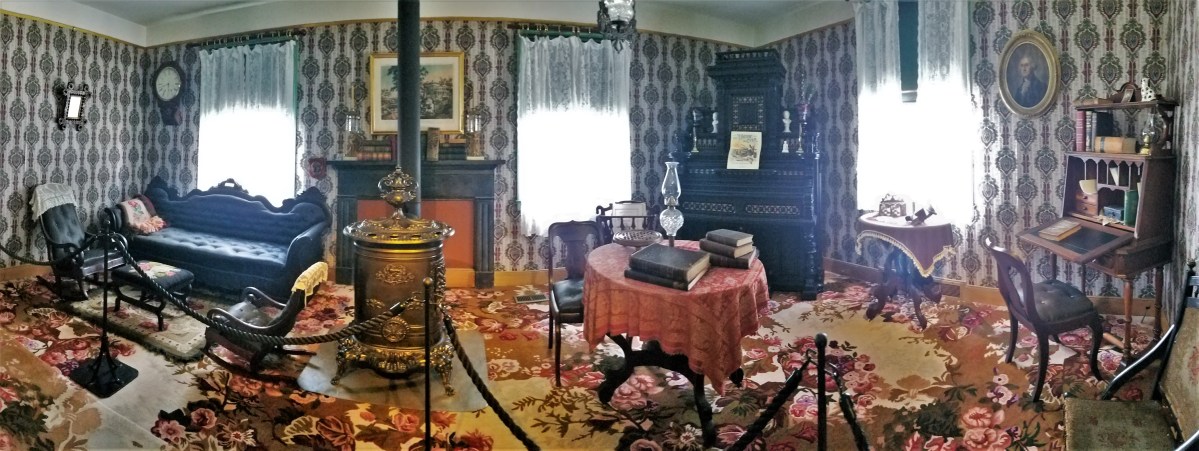
Ford decided to move the house and restore it to the way it looked at the time of his mother’s death in 1876, when he was 13 years old. Ford personally took charge of the birthplace restoration, meticulously recreating the details of the house down to the original or similar furnishings.
For example, Ford remembered sitting by a Starlight stove in the dining room as a child. After 18 months of searching, he discovered the exact make and model on a porch in Stockbridge, Michigan, which he purchased for $25 and loaded into his car for the journey back to Dearborn. And when he couldn’t find the precise pattern of dishes his mother had used, he had the original site of his birthplace excavated and had replicas made from the pottery shards found.
Ford dedicated the restoration of his childhood home to his mother’s memory and her teachings, particularly noting her love of family, her belief in the value of hard work, in learning “not from the school books but from life,” and her belief in trusting one’s intuition. His mother had encouraged his early tinkering and youthful inventions, and he felt sure she had set him on his unique path in life.
The rest is history…
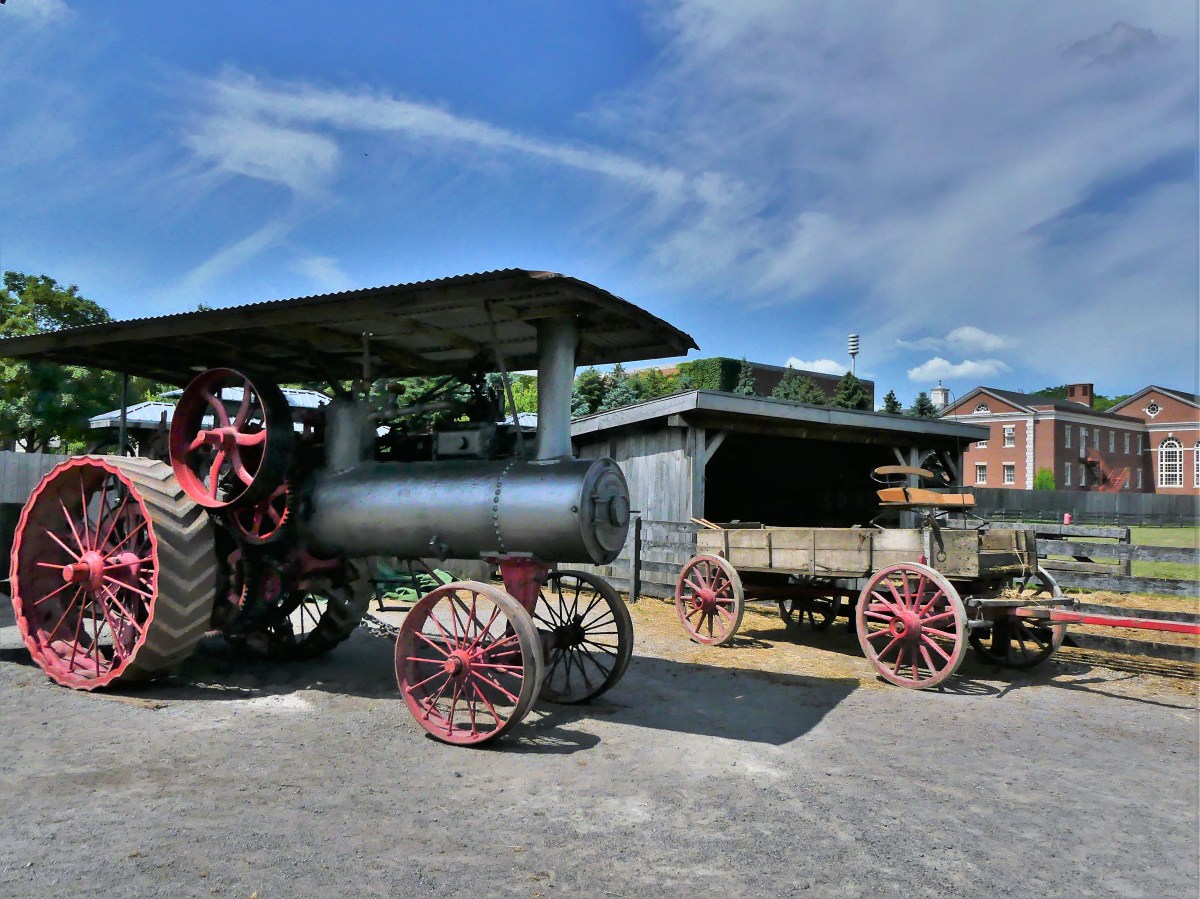
And it’s all organized into seven historic districts: Working Farms;
Liberty Craftworks;
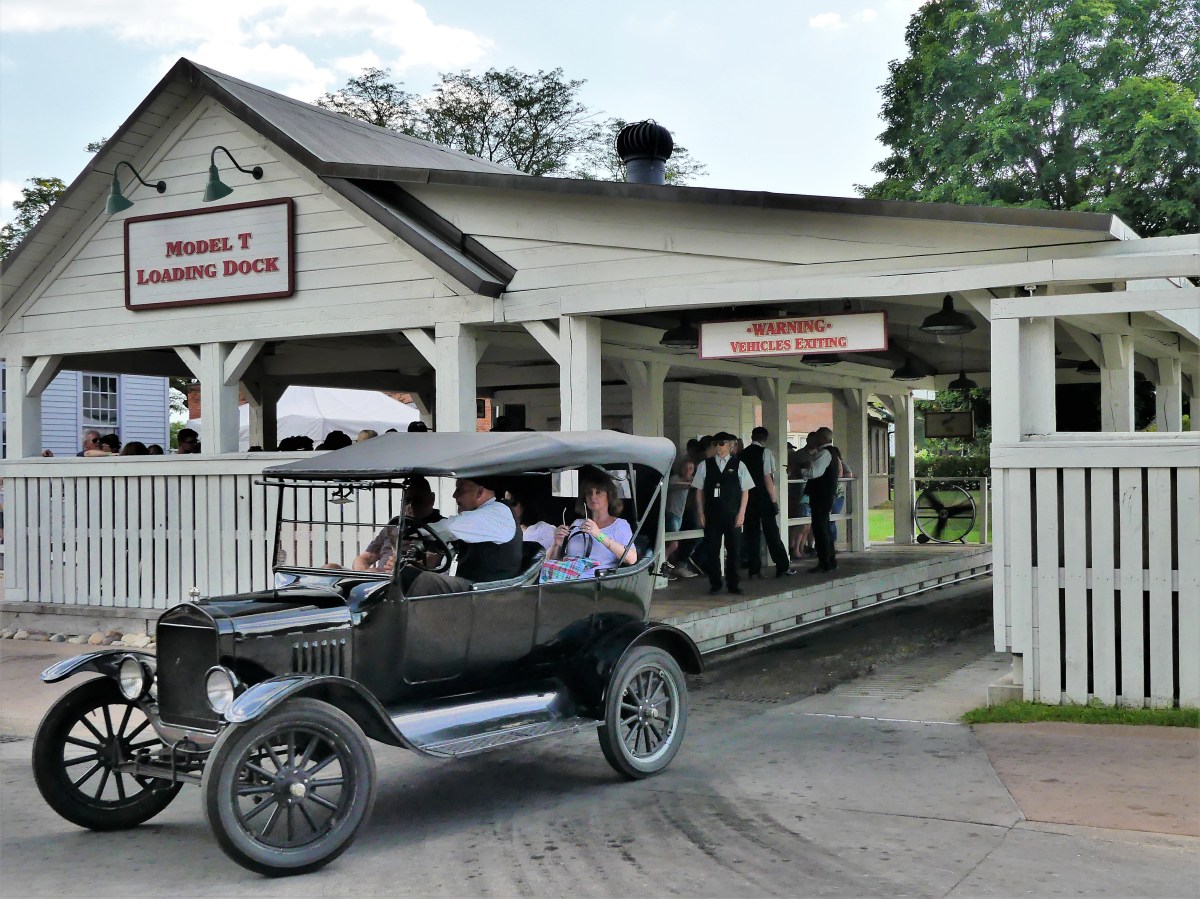
Henry Ford’s Model T;
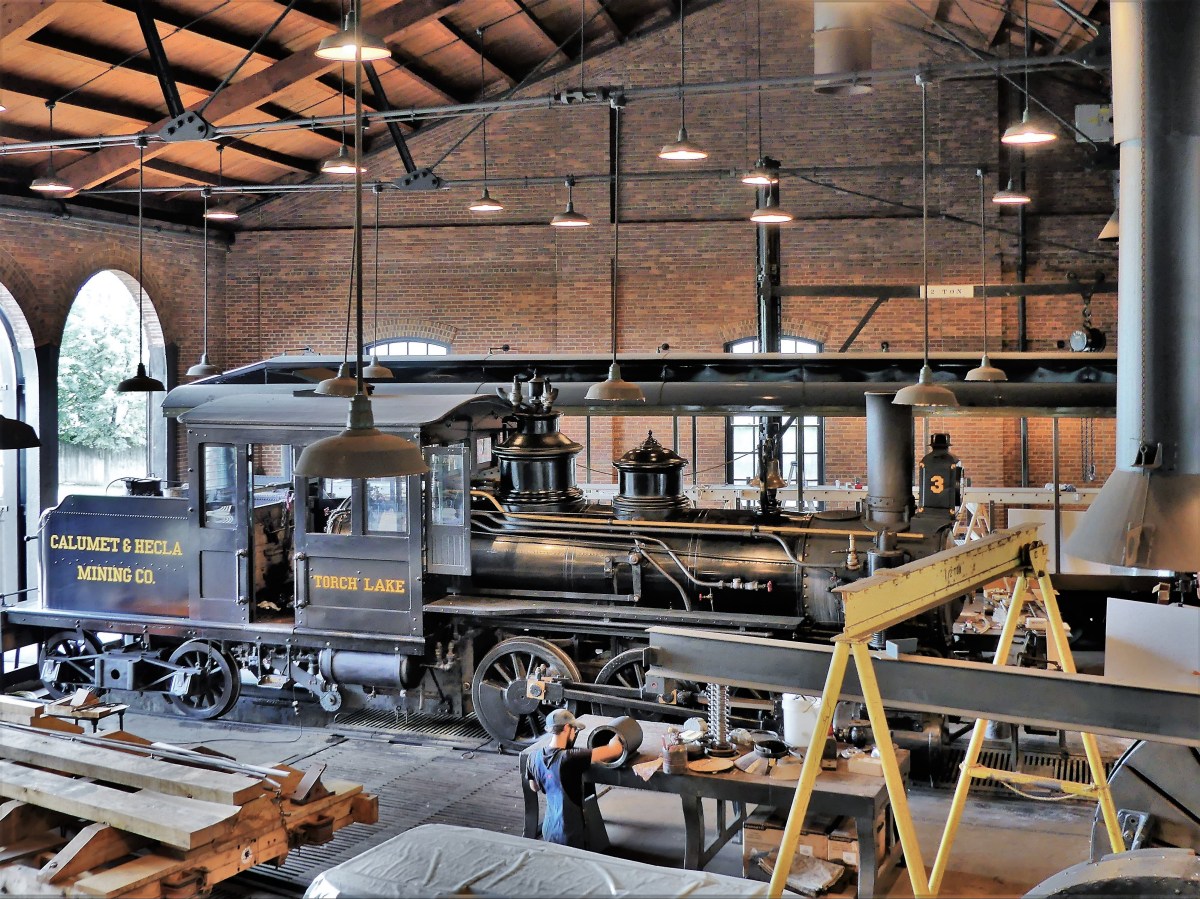
Railroad Junction;
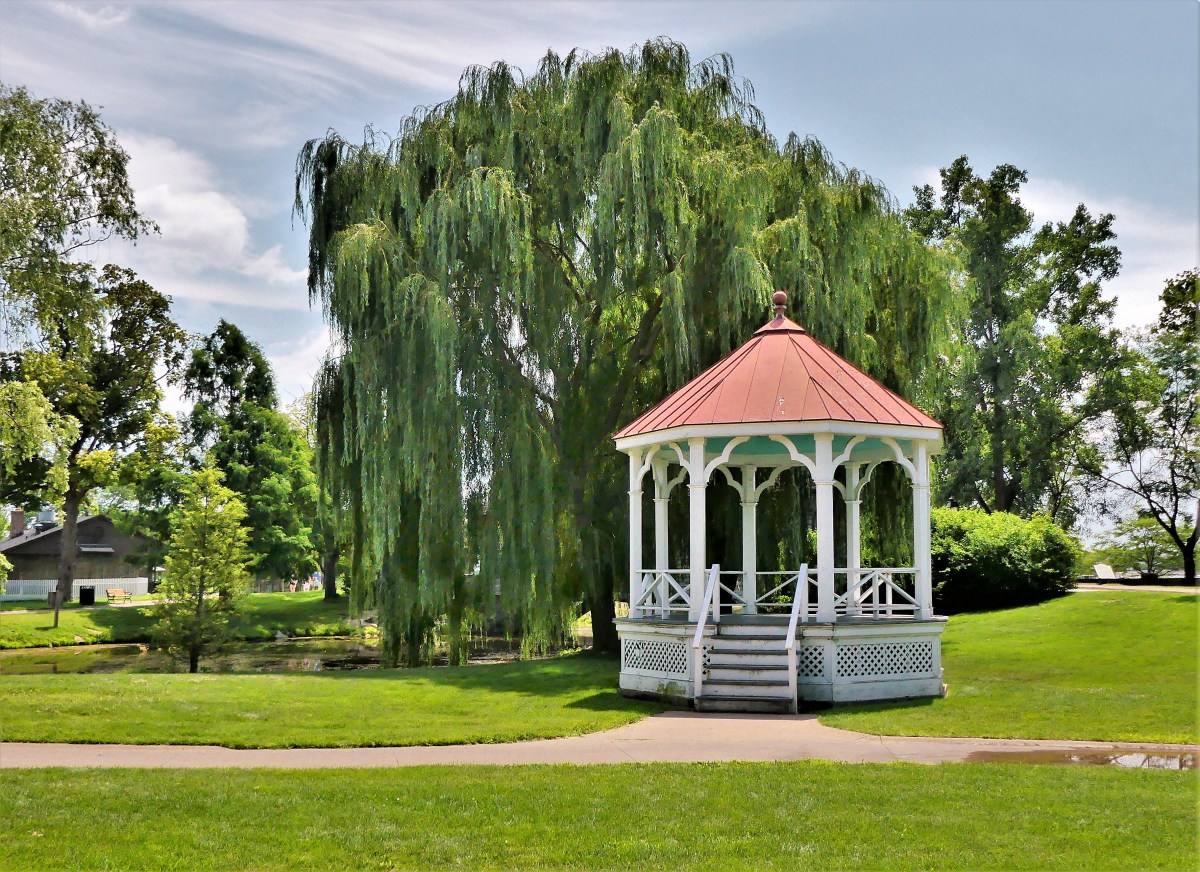
Main Street;
Porches & Parlors;
and Edison at Work, which is a future subject unto itself.
As one might expect, walking through history can be exhausting. Leah’s iPhone calculated that we hiked nearly 5 miles around the village in 3 hours, although there was still so much more to see and do. However, it was a hot and humid day, and apropos to Henry Ford, we simply ran out of gas and steam.
Or, to bastardize a famous Edison quote, we were inspired while we perspired!



































































































![torsos and painted rocks].jpg](https://streamingthruamerica.com/wp-content/uploads/2019/09/torsos-and-painted-rocks.jpg?w=1200)










































































 Streaming thru America