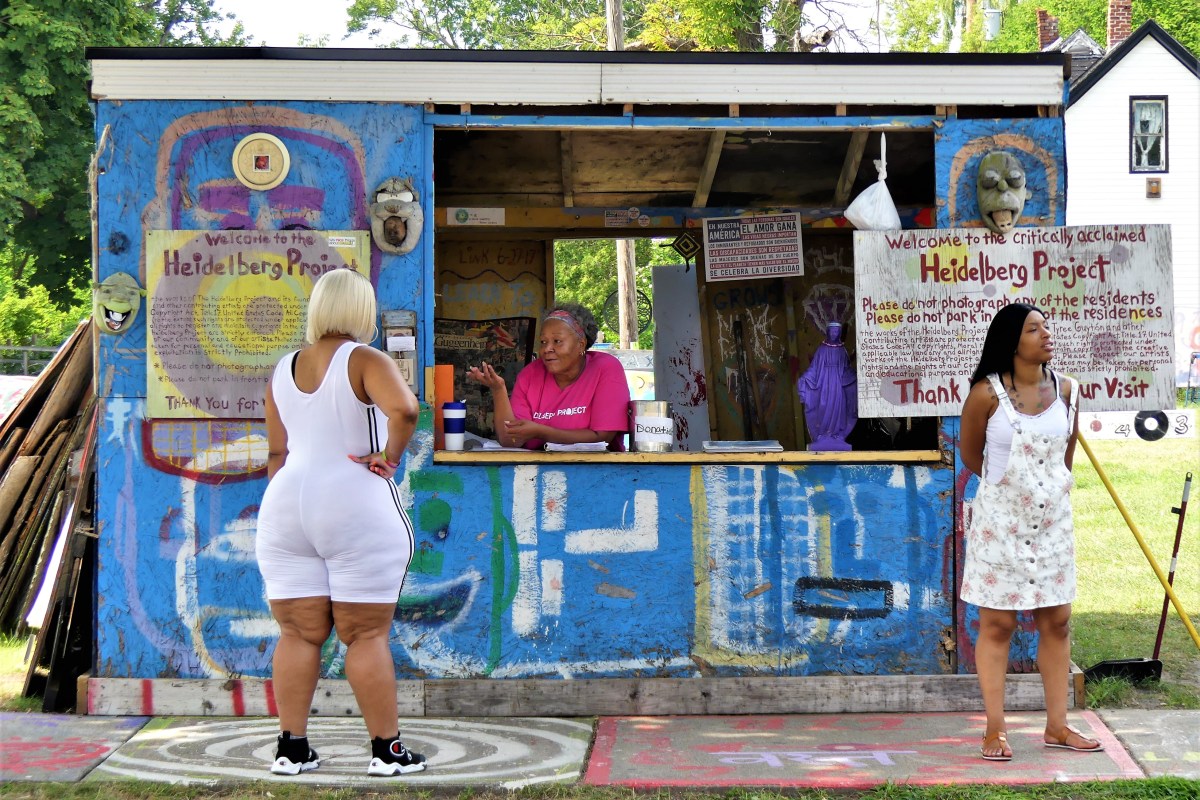
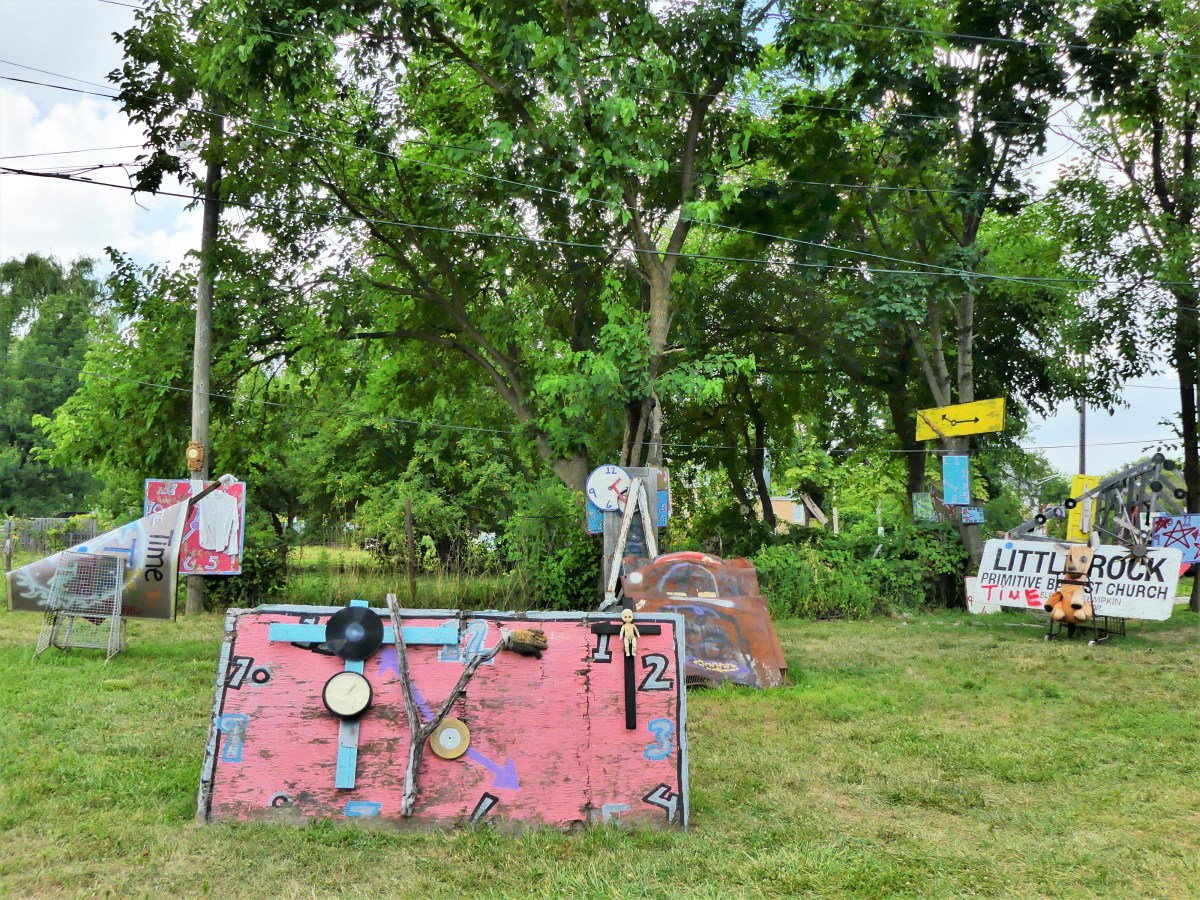
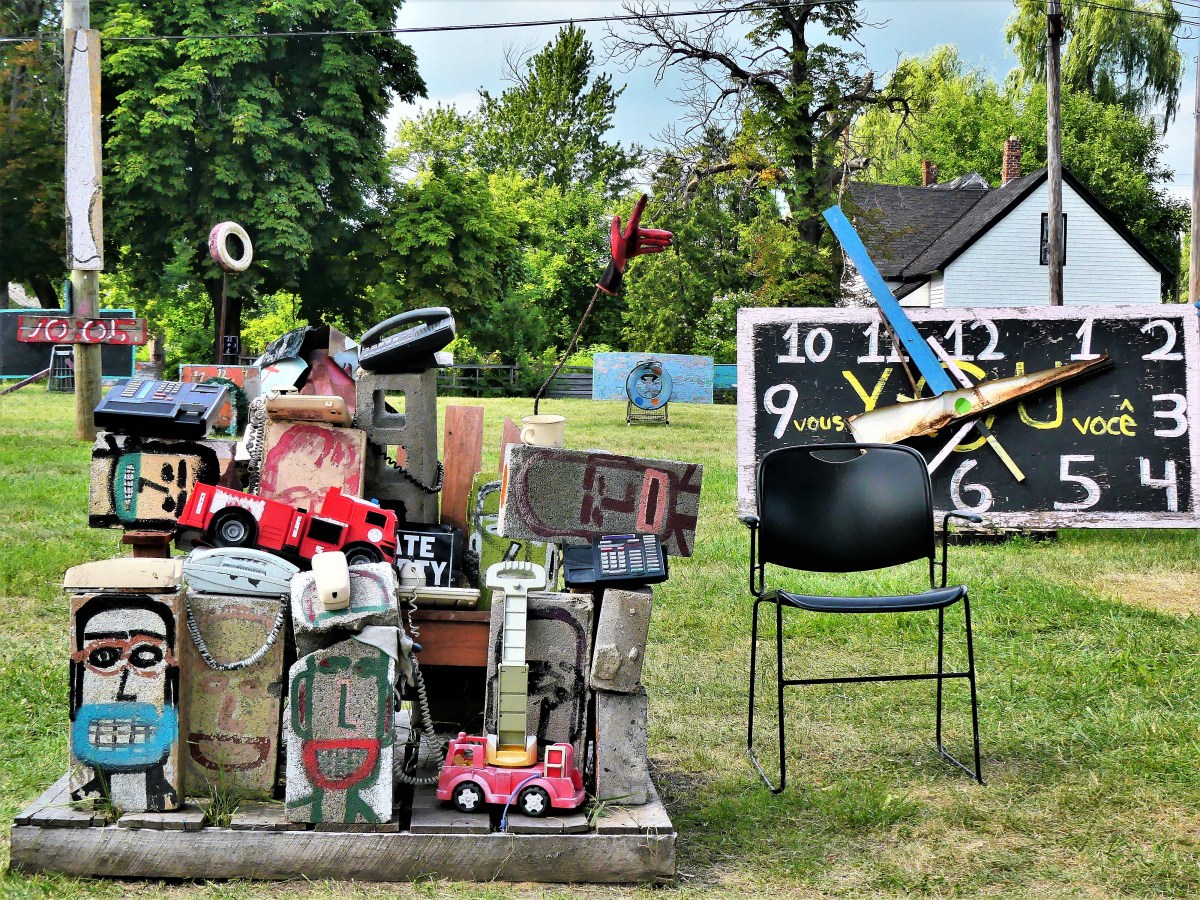
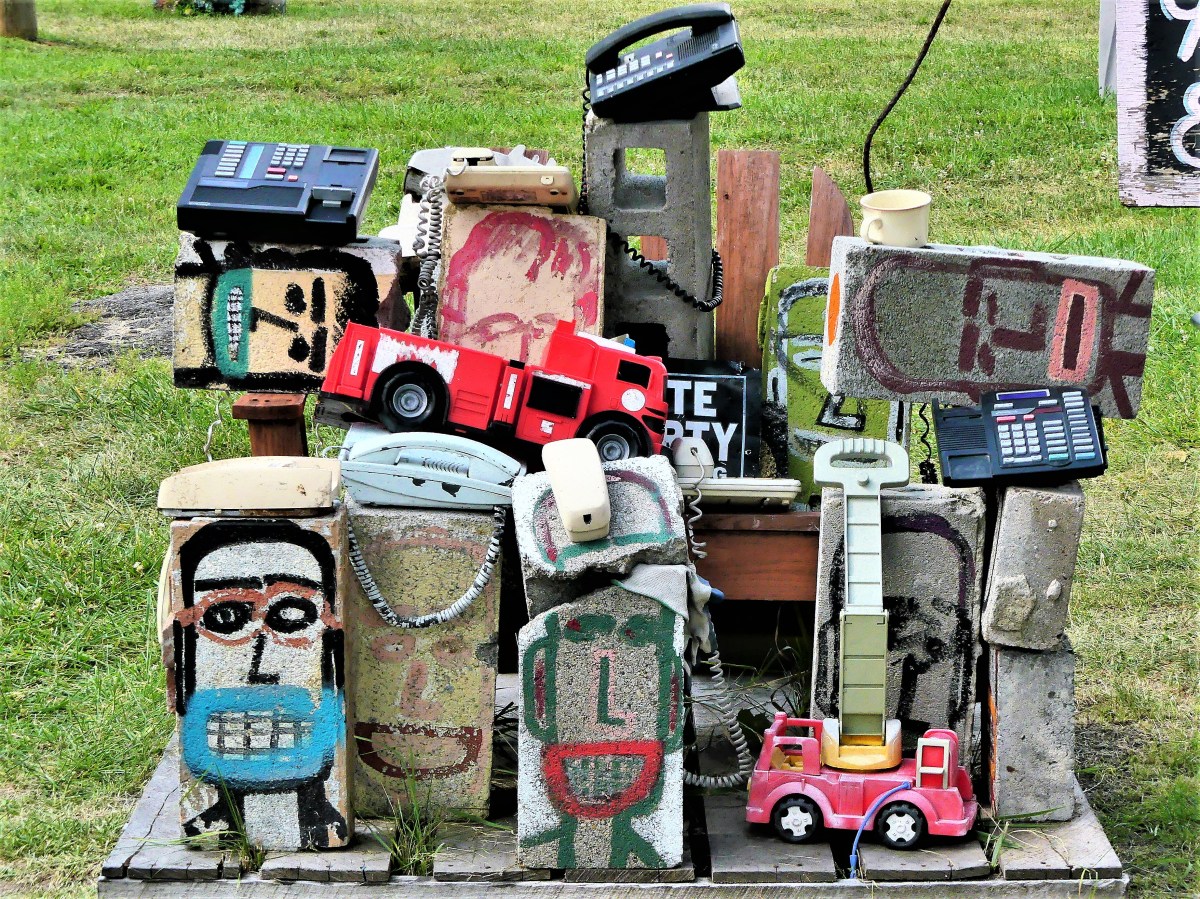
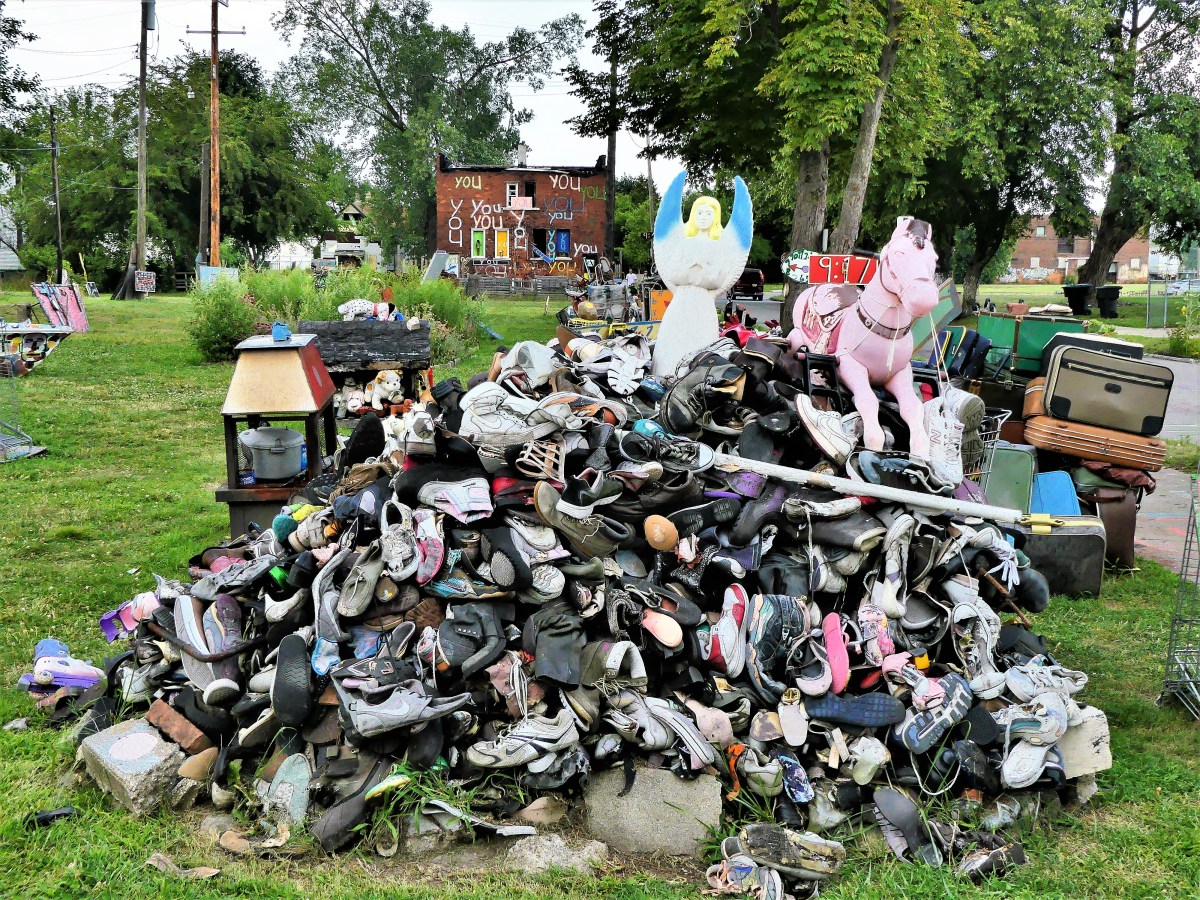
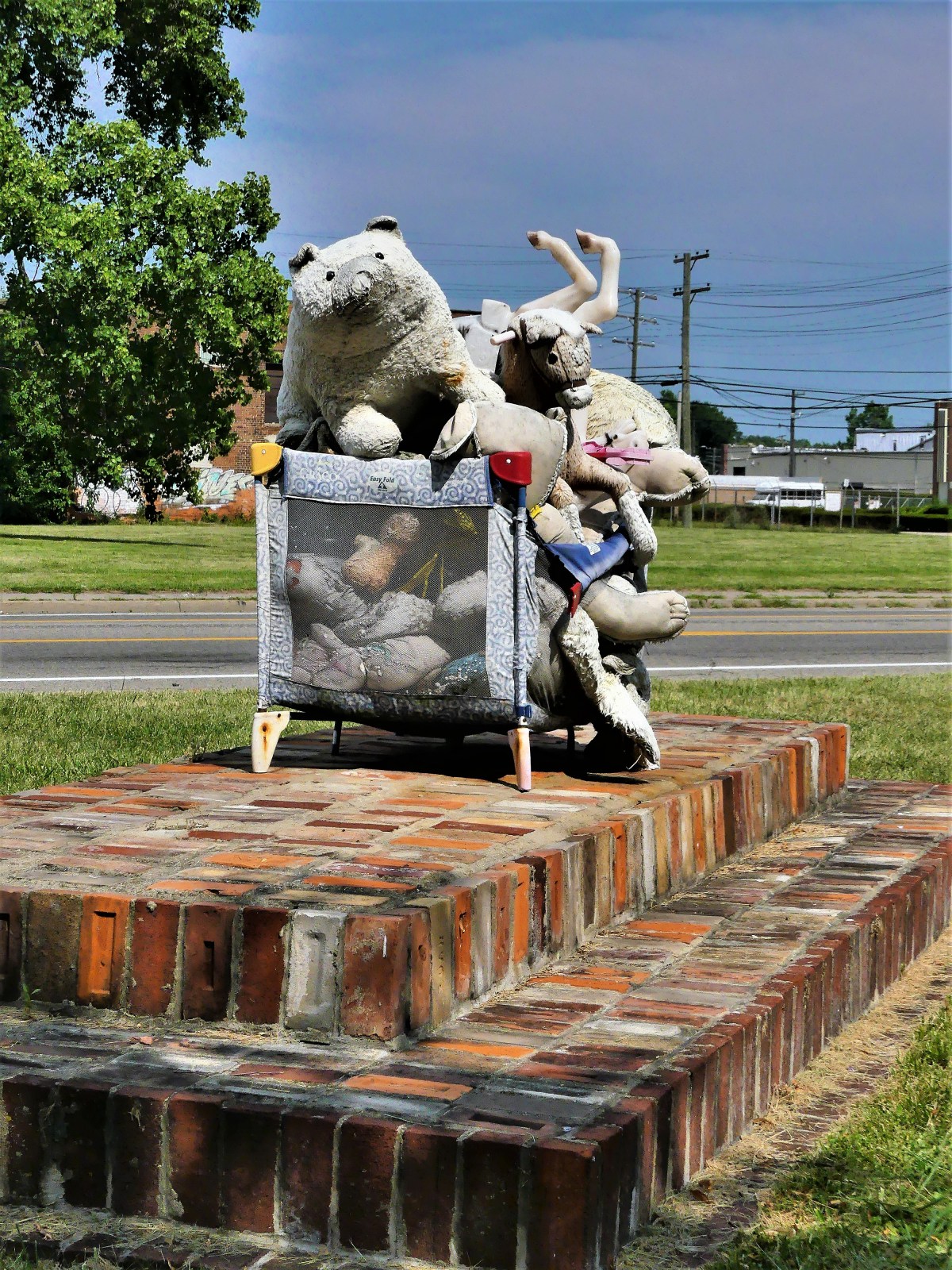
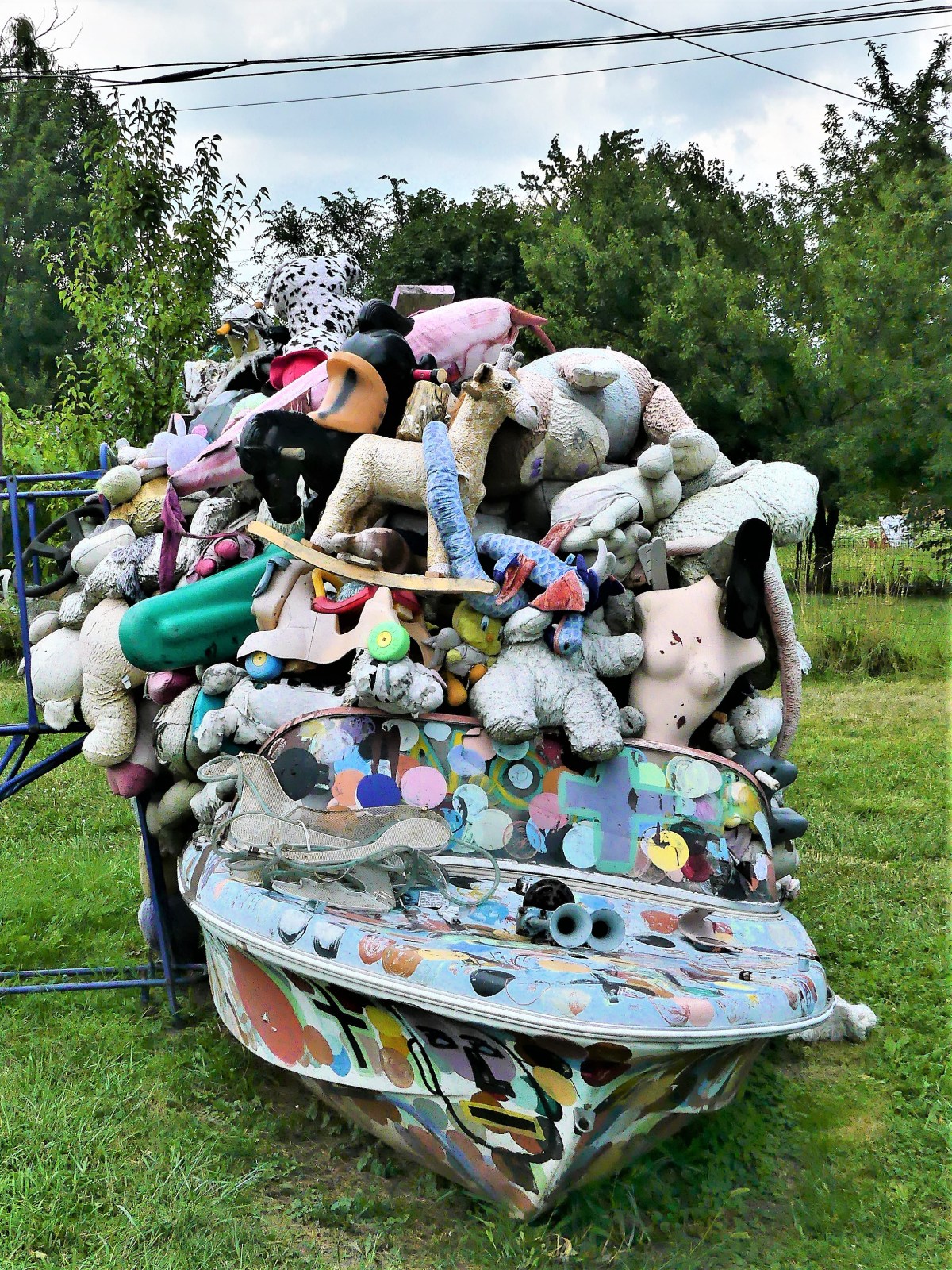
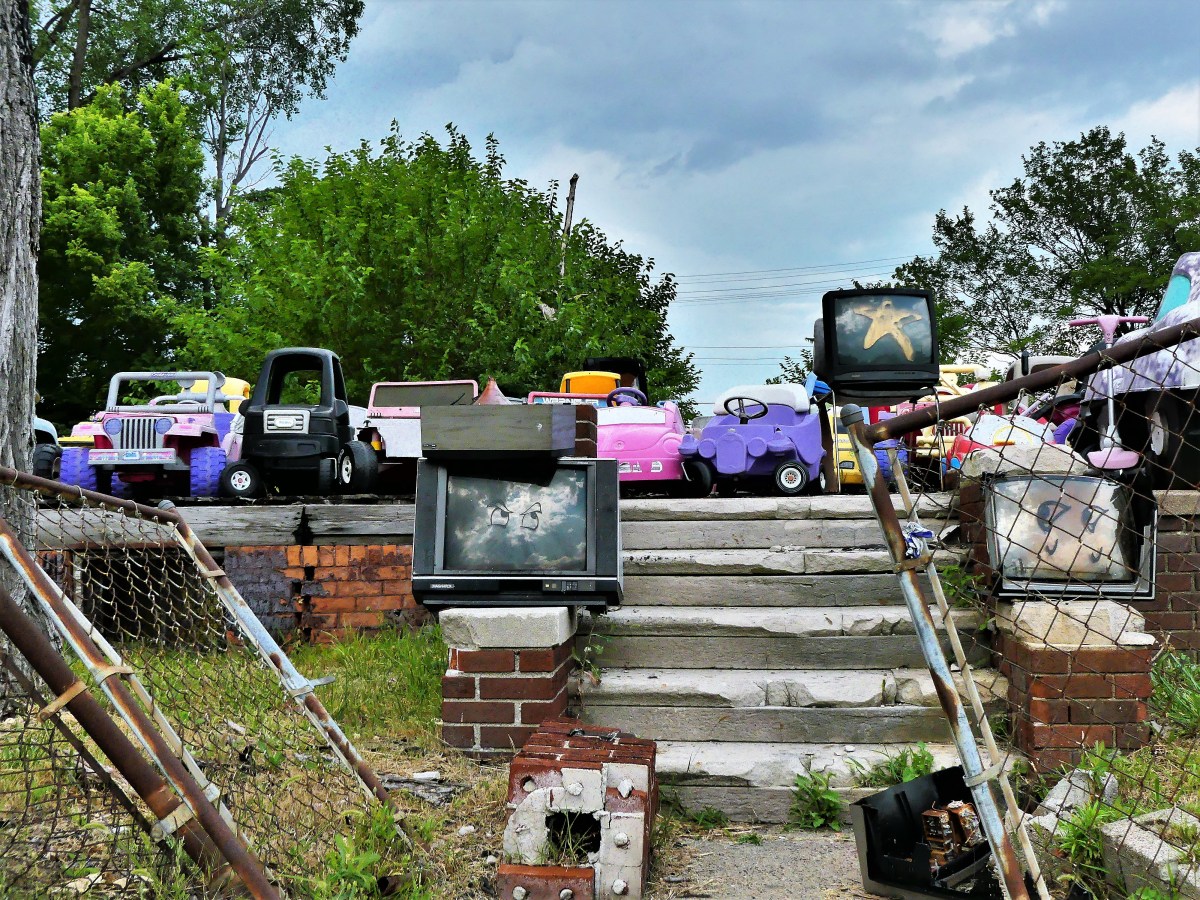
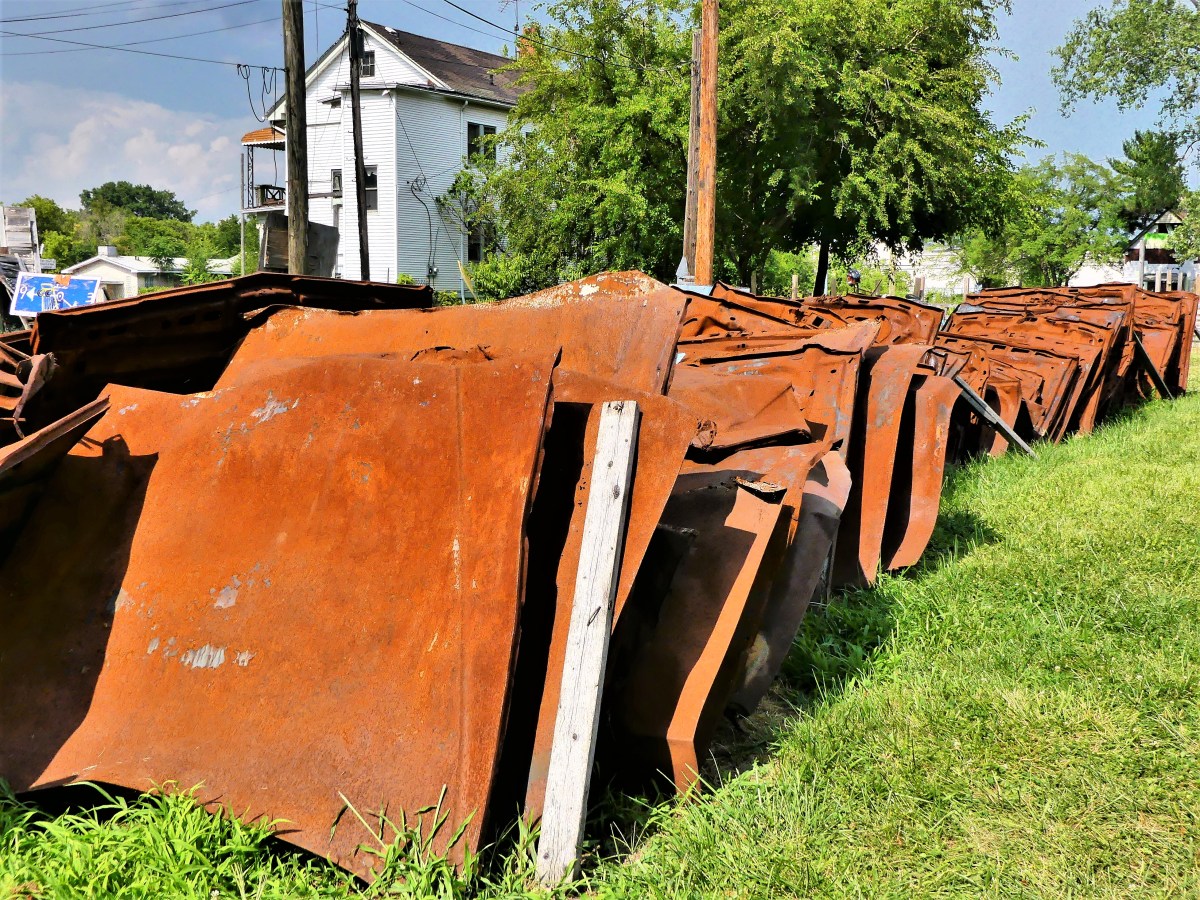
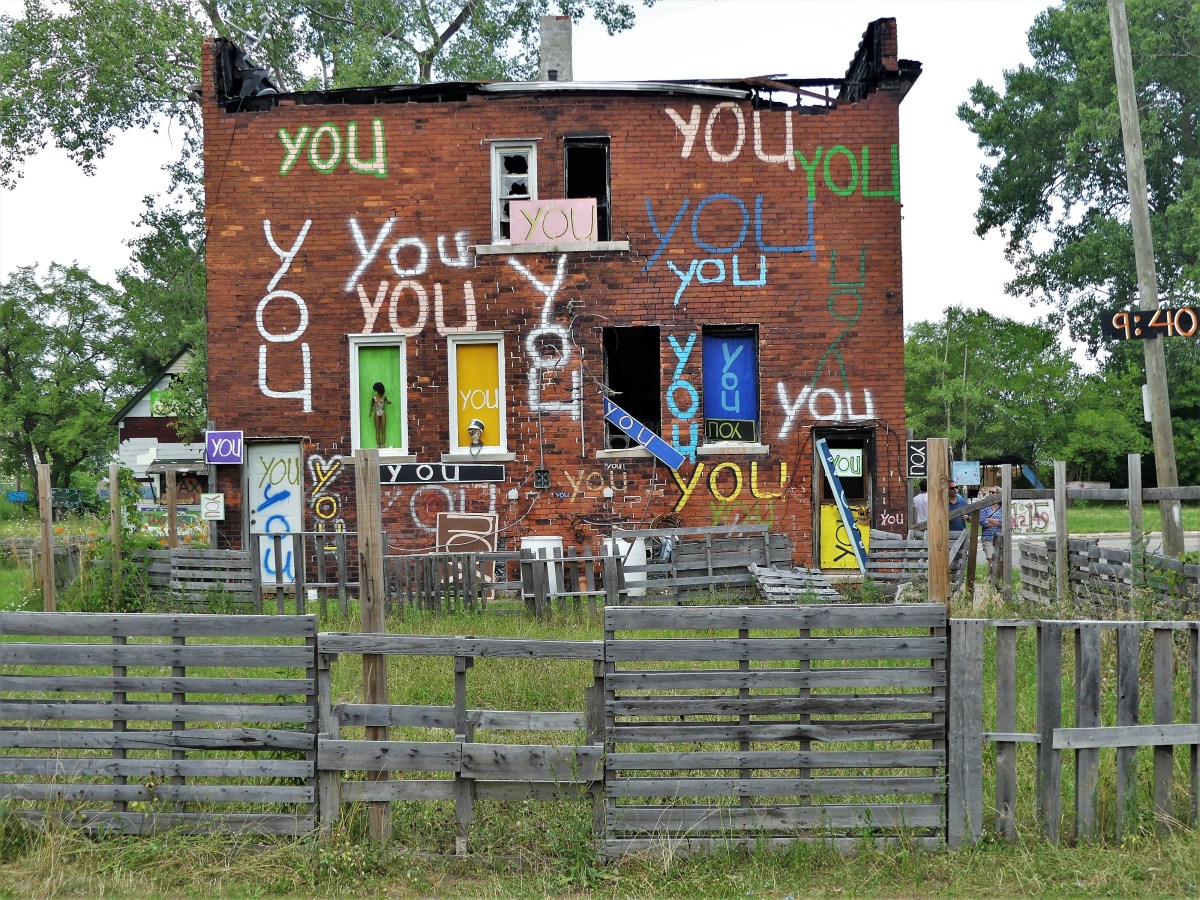
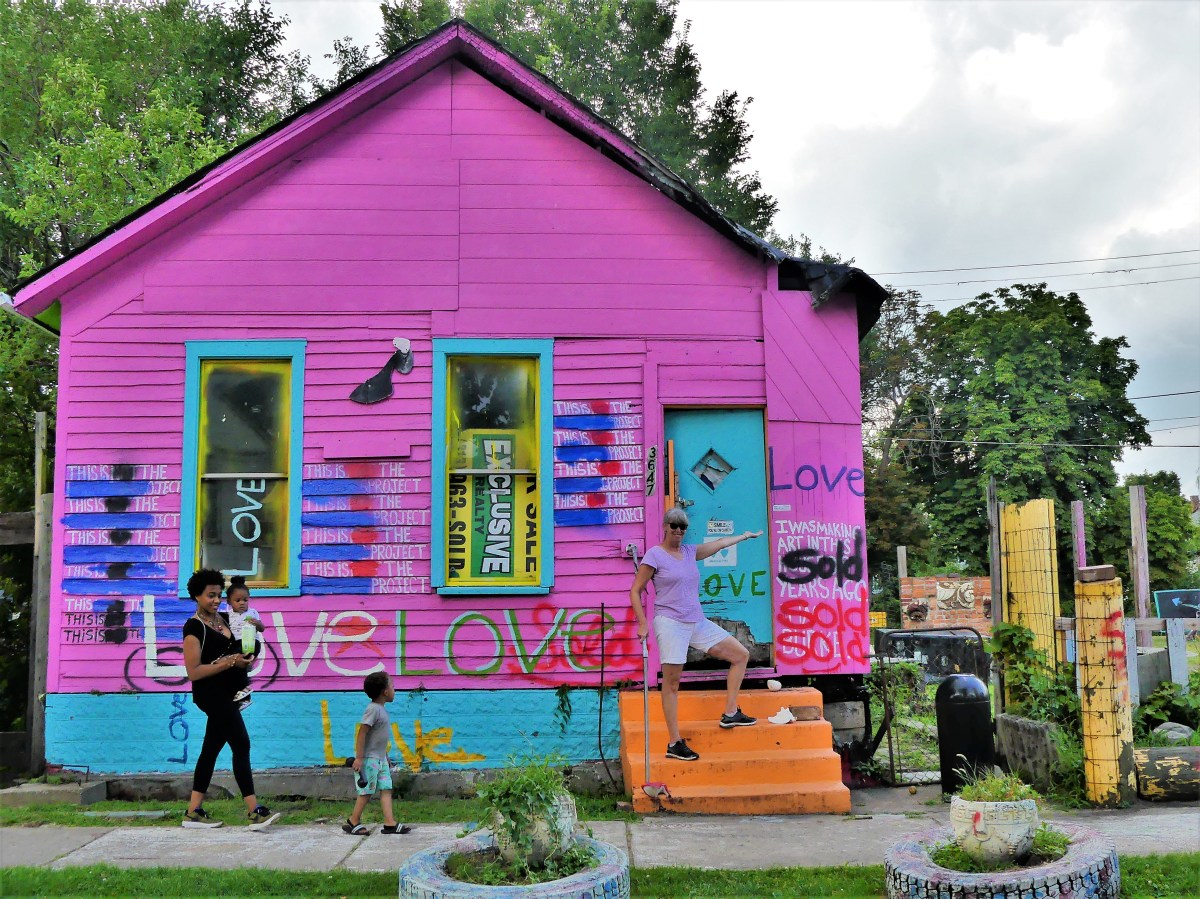
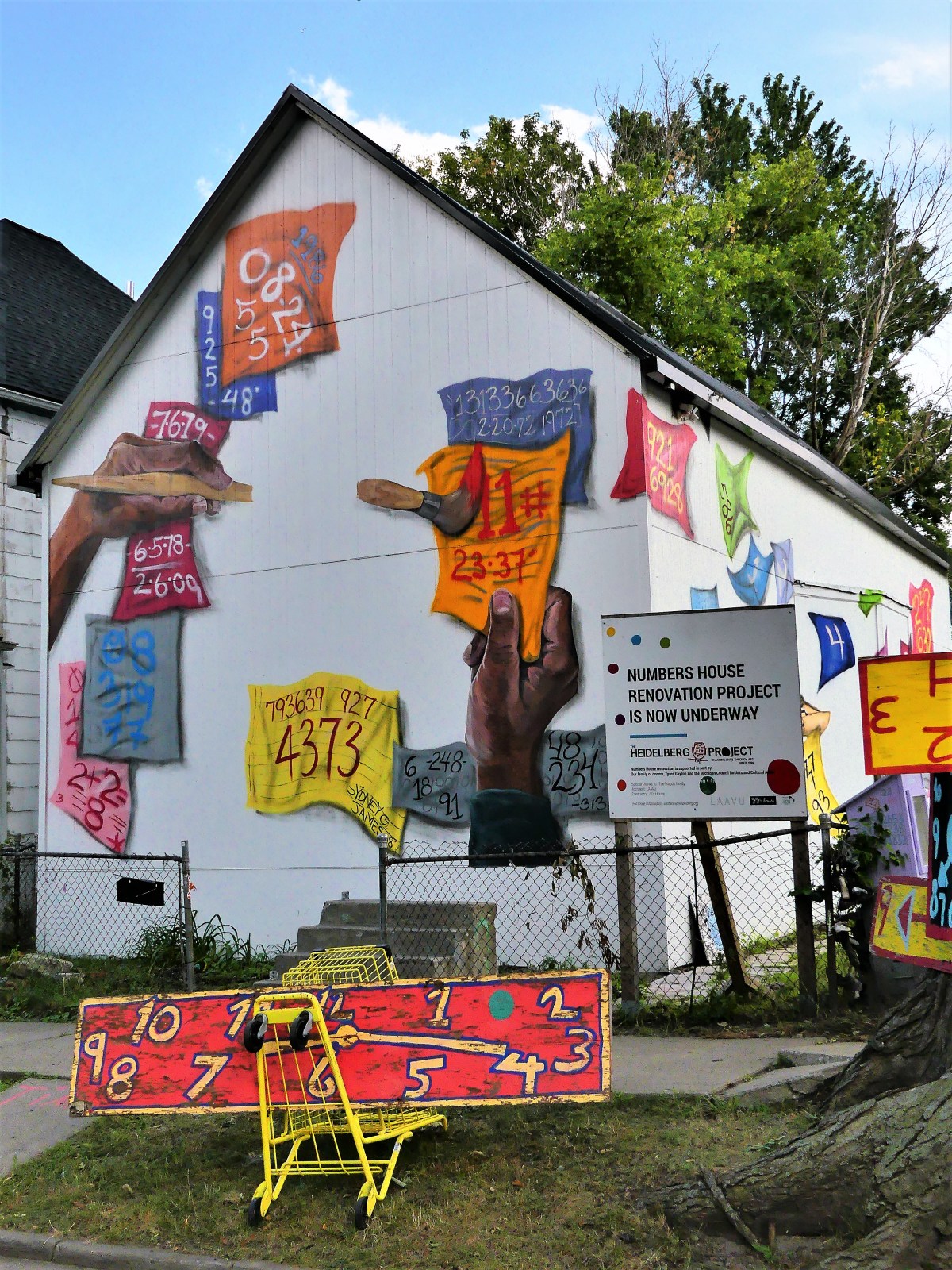
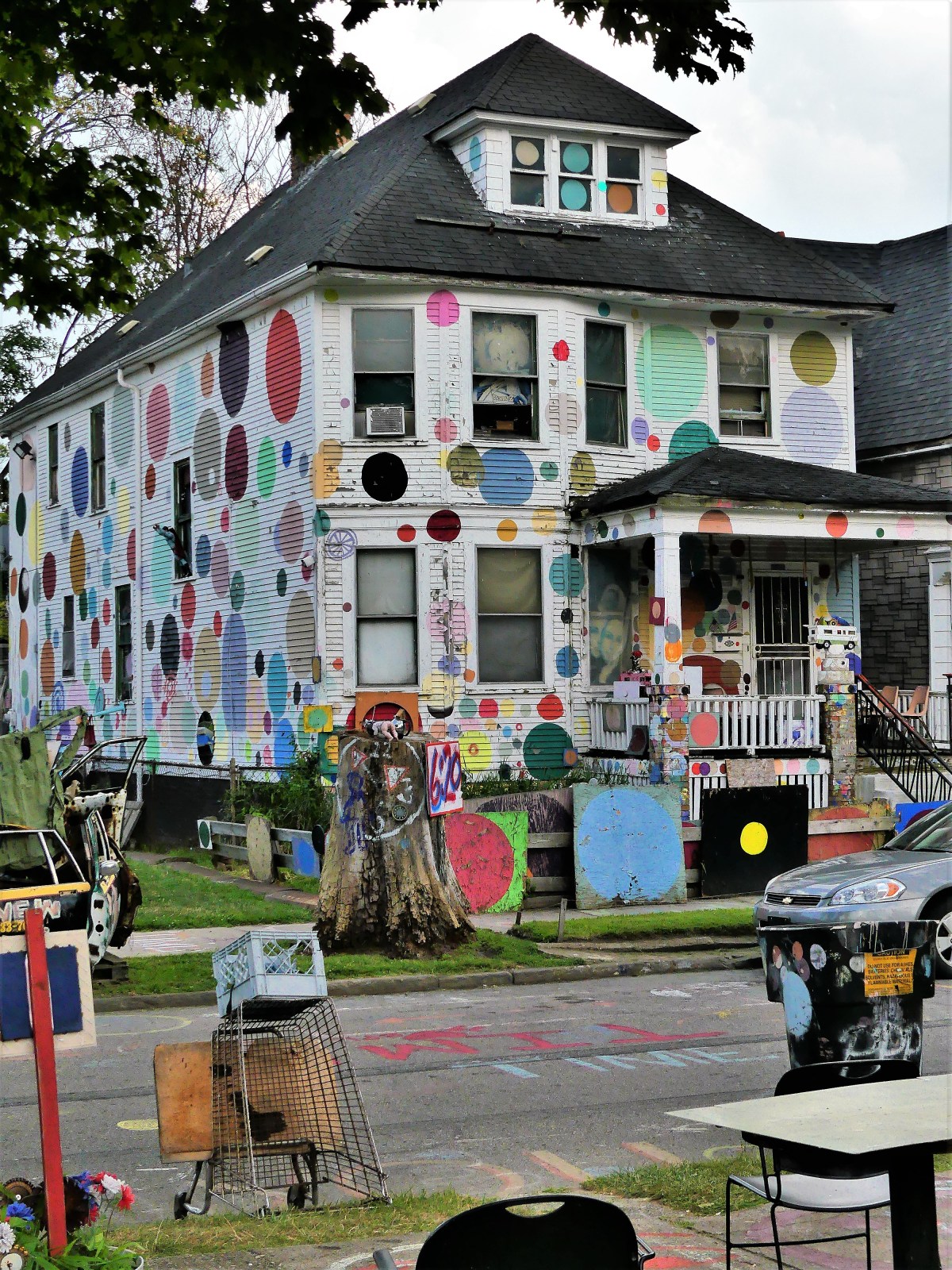
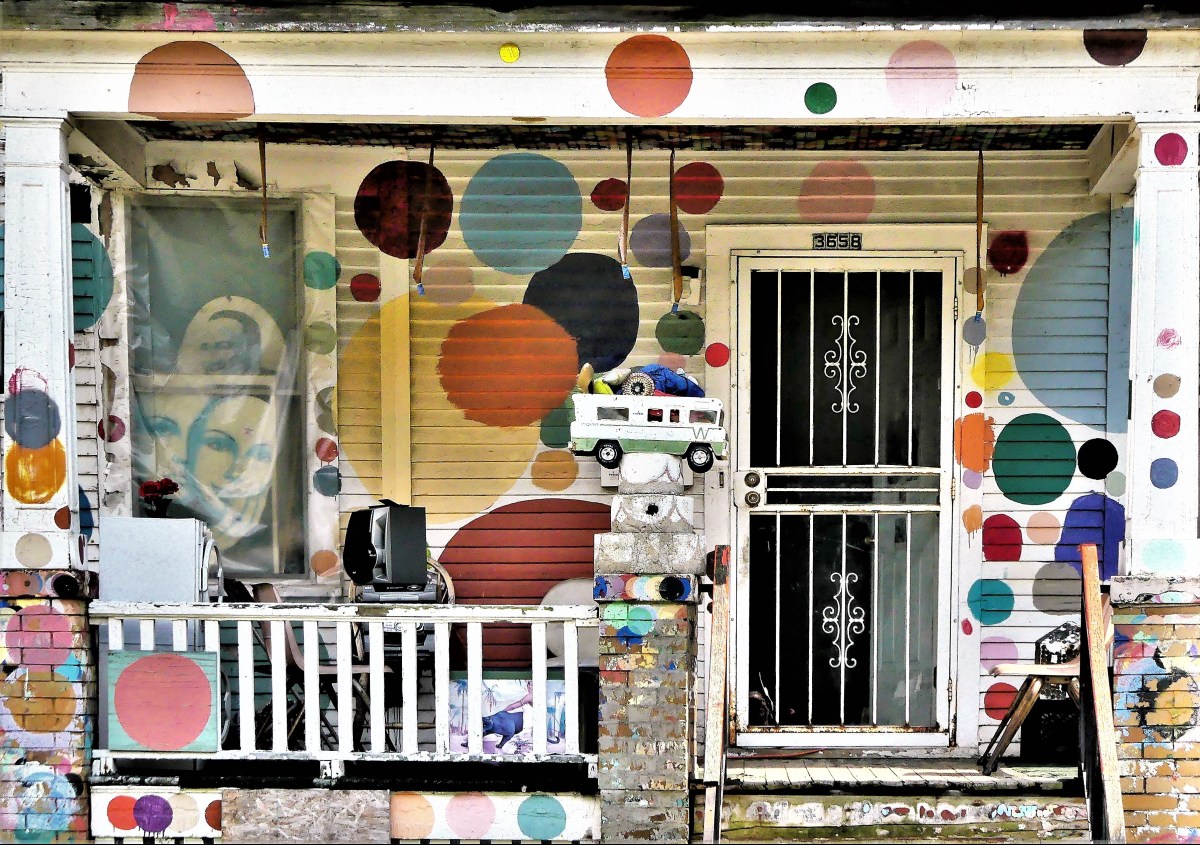
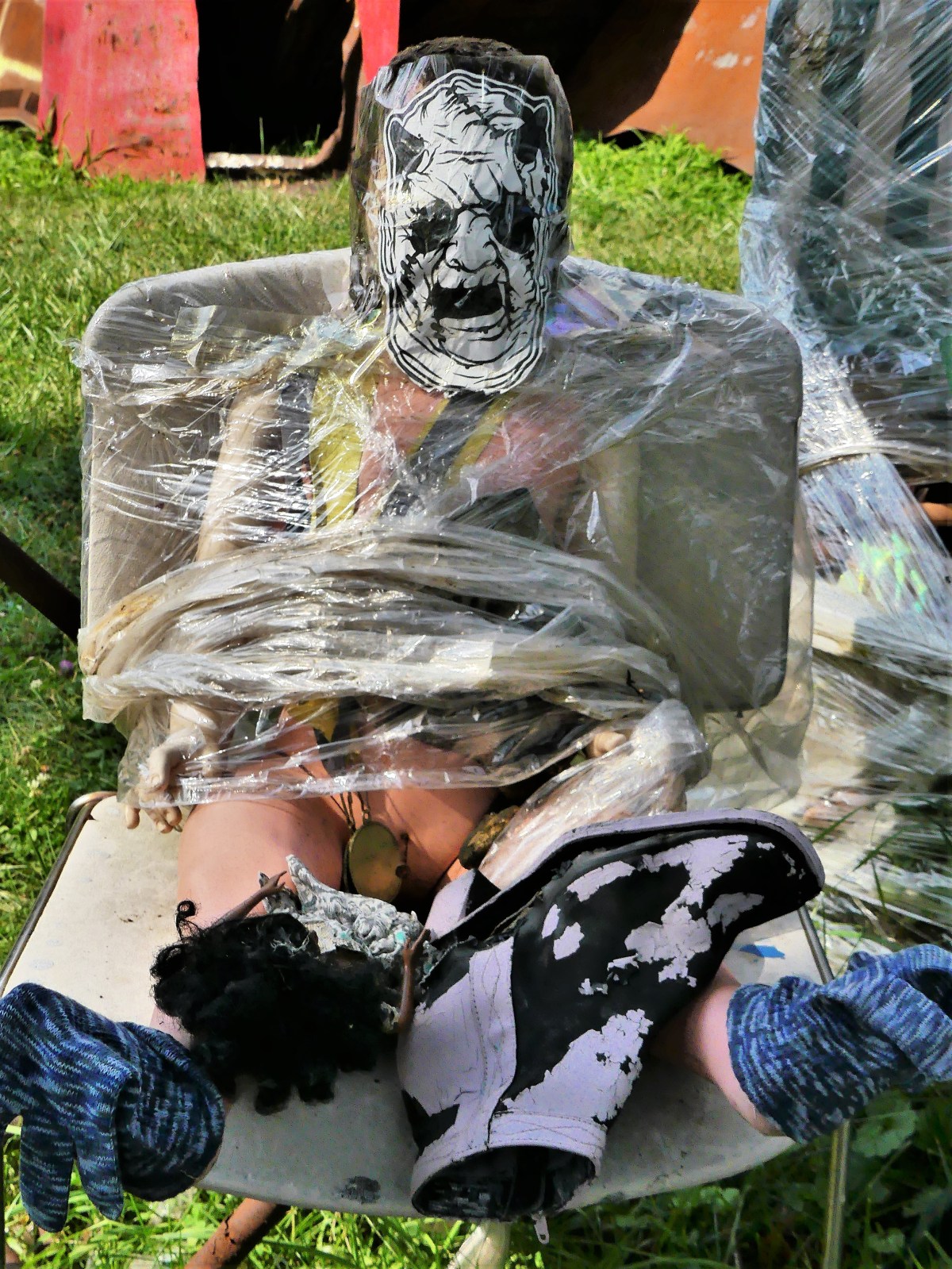
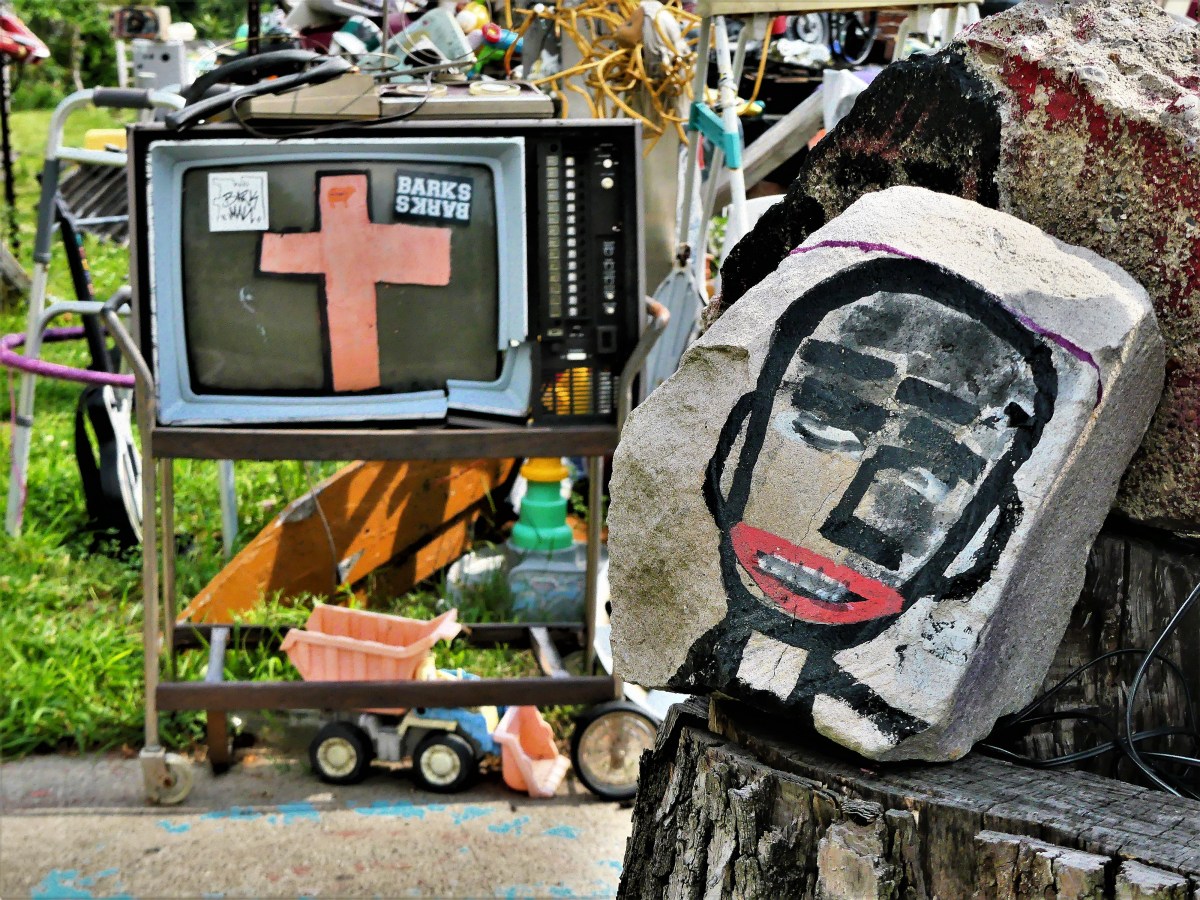
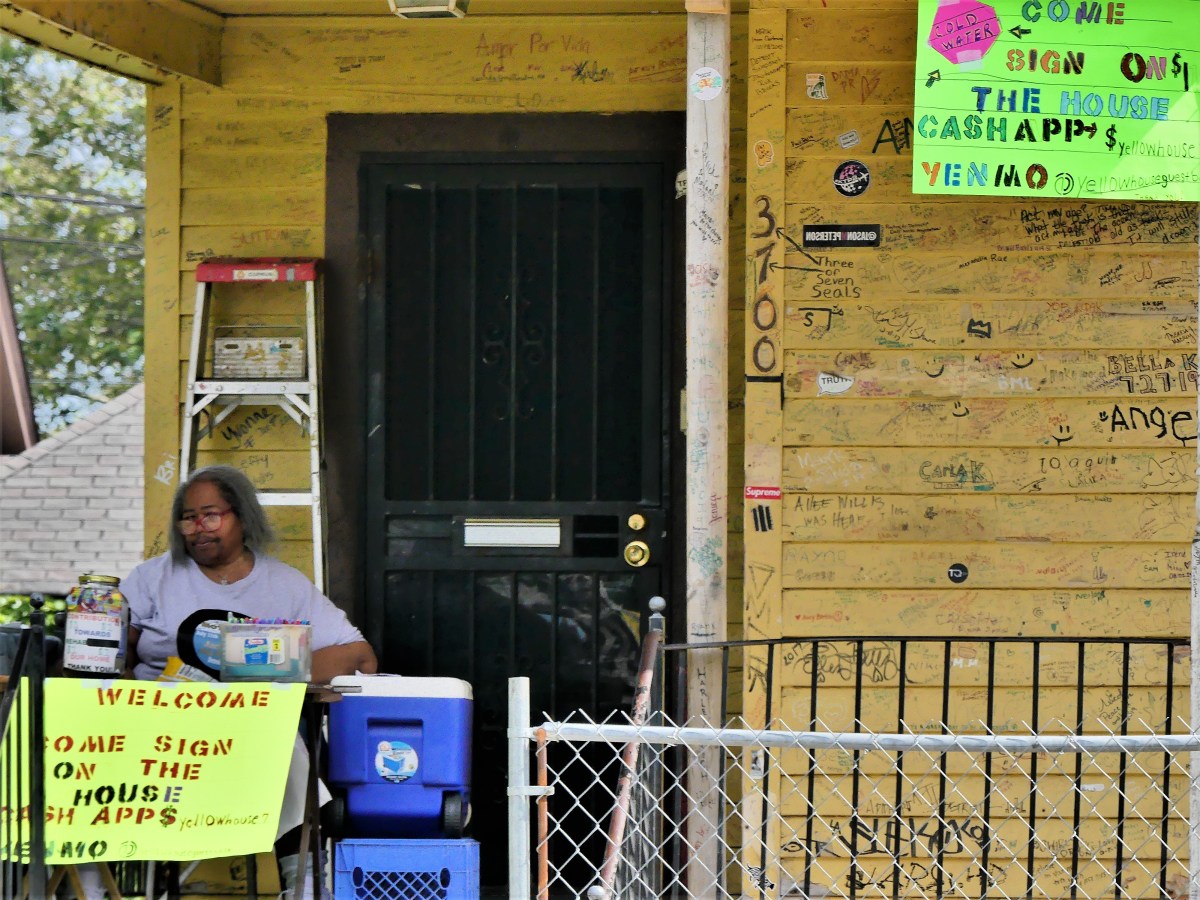
At first glance, the large number of vacant lots between derelict buildings on Heidelberg Street in Detroit, MI resembles a crooked smile through a handful of broken teeth. The gaps are filled with collections of discarded remnants from everyday life that could easily be mistaken for a flea market on crack. But first impressions are completely unjustified, and there is a purpose to the madness…to be discovered over time.
In 1986, Tyree Guyton returned to his childhood neighborhood in Detroit’s East Side, only to find a ghetto ravaged by drugs and poverty so severe that it touched his soul and roused his spirit. With encouragement from Grandpa Sam Mackey, he vowed to fight back with a paintbrush and a broom, which would eventually carry him on a celebrated journey–fighting his way through local partisan politics to national prominence.
To his credit, Guyton recruited sympathetic volunteers to change the face of their community, and after a massive clean-up, he incorporated the wreckage gathered from vacant lots, converting his neighborhood into an urban sculpture installation that has garnered world-wide attention.
For 30 years, Heidelberg Street has been a grass roots, work-in-progress. The HP (r)evolution continues today through personal donations and strong foundation support–providing funding for transformative paint-overs, and the acquisition of border properties to replace the homes lost to arson.
During my visit, I crossed paths with several photographers who felt as I did–that we had walked into someone’s wild dream, and we were there to interpret his dream through our cameras.
However, should the art critics and cognescenti remain unmoved, or the public dismisses Guyten’s art as junk, there is more to the story at the end of the day. When all the visitors return to their homes, the residents of Heidelberg Street stay behind knowing that their plight has been replaced by pride and opportunity.
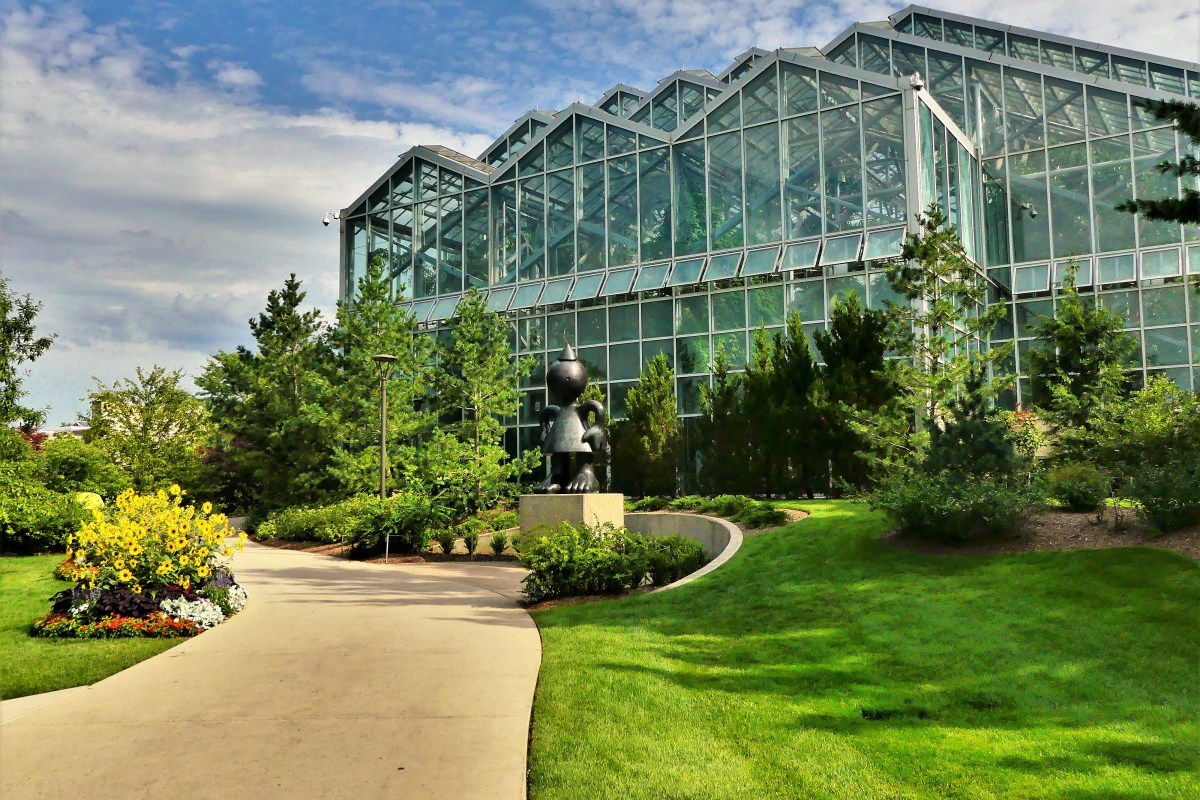
Leah and I had set up camp near Muskegon, MI with plans to visit Grand Rapids for an evening concert with “Weird Al” Yankovic. Being one hour away, we decided to make a day of it and explore the Grand Rapids area, but we needed an activity to keep us occupied until late afternoon, and it had to be captivating. After an internet search, all roads led to Frederik Meijer Gardens and Sculpture Park.
Not knowing what to expect, we packed a lunch and set a course for what Trip Adviser informed us was the #1 attraction in Grand Rapids. With over 2800 reviews, who were we to argue with such a consensus. Upon arrival, our first impression was the immensity of the property (158 acres), And the bigness was becoming bigger with new construction all around us.
Apparently, Frederik Meijer was a big success. Who knew? Turns out, Fred was a supermarket magnate worth billions, and this park was to be his legacy–with an endowment fit for a world-class museum, and subsequent listing by 1,000 Places to See before You Die as one of the “30 Must-See Museums” in the world.
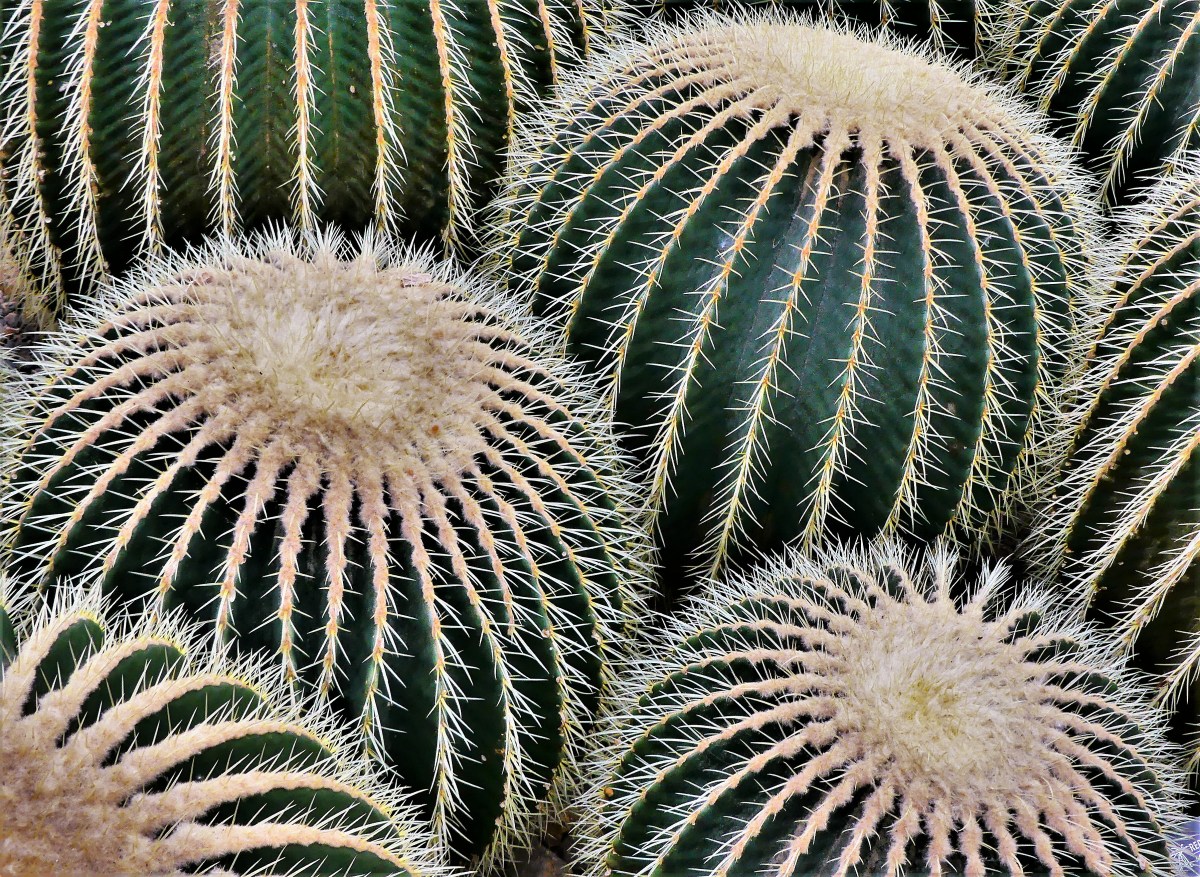
There is an impressive conservatory on the grounds with flora from every climate and environment, including a trove of carniverous plants,
and cacti…
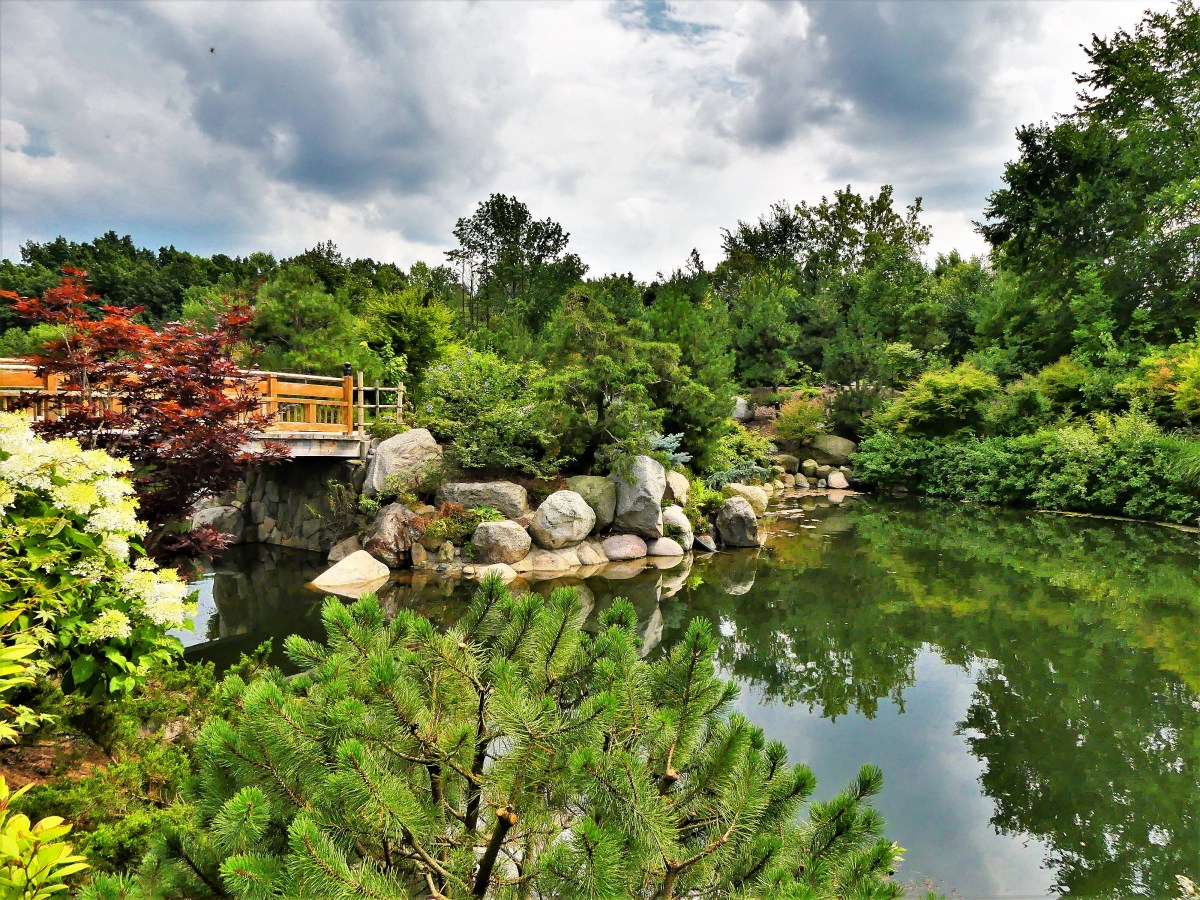
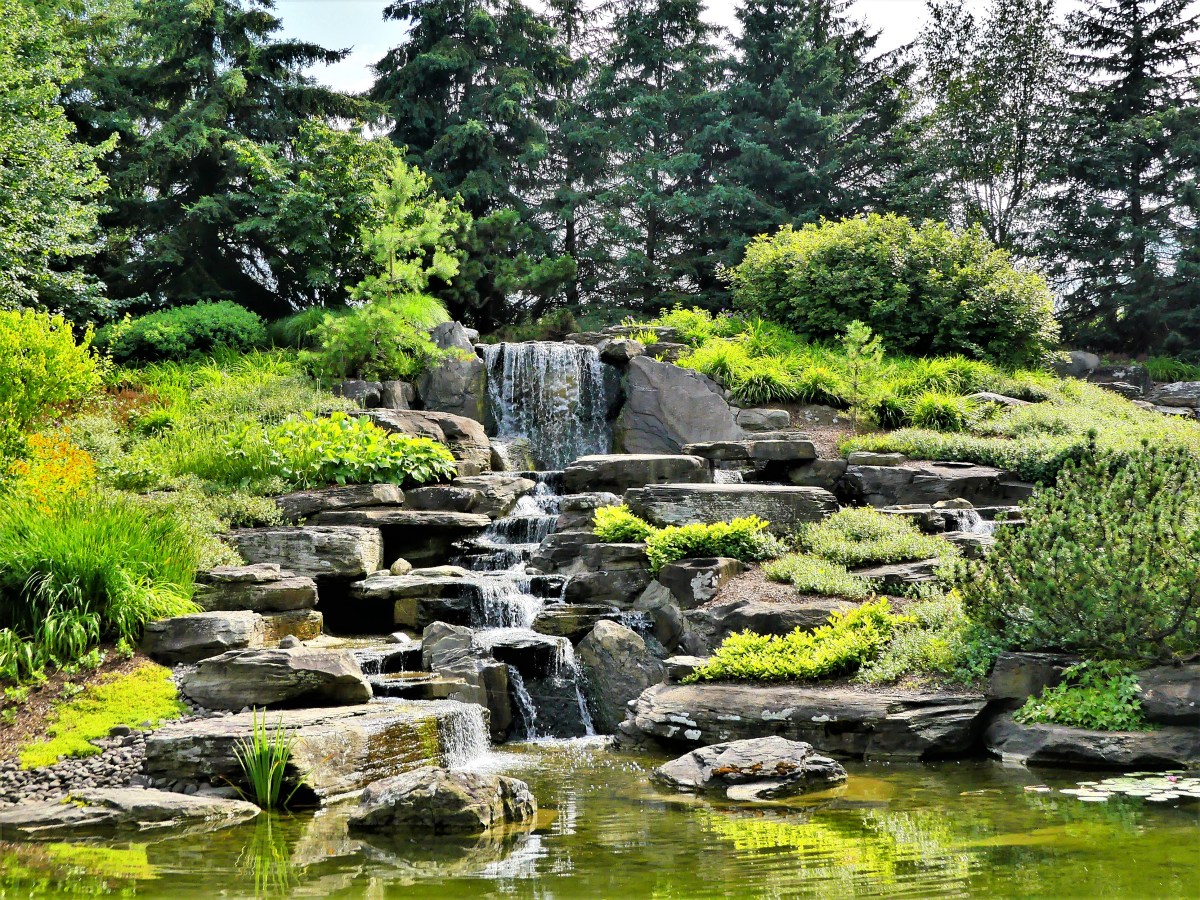
but it was a beautiful day and we were there to walk the Japanese gardens…
and celebrate Meijer’s devotion to outdoor sculpture.
These are a few of my favorite things…listed alphabetically by artist:
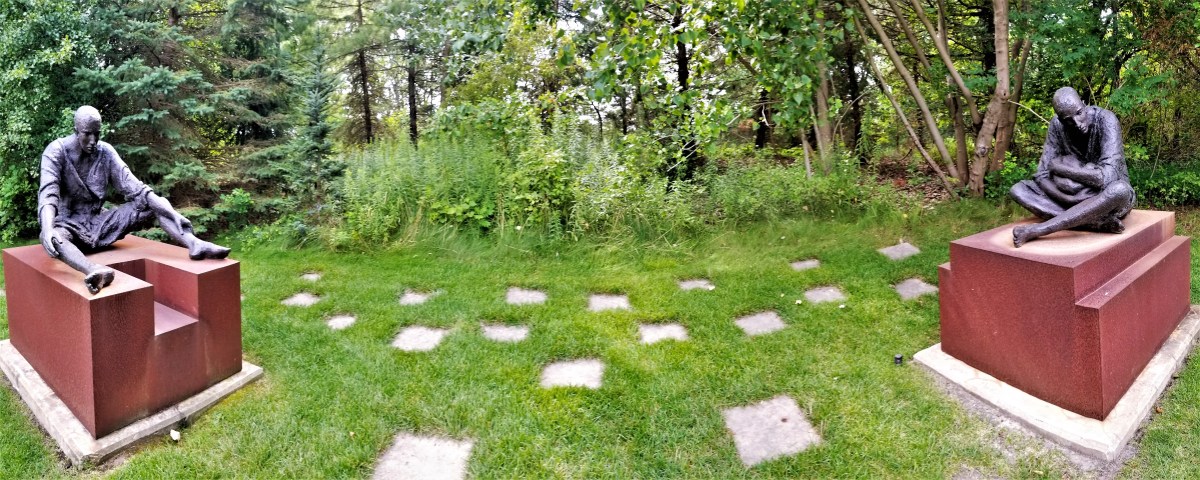
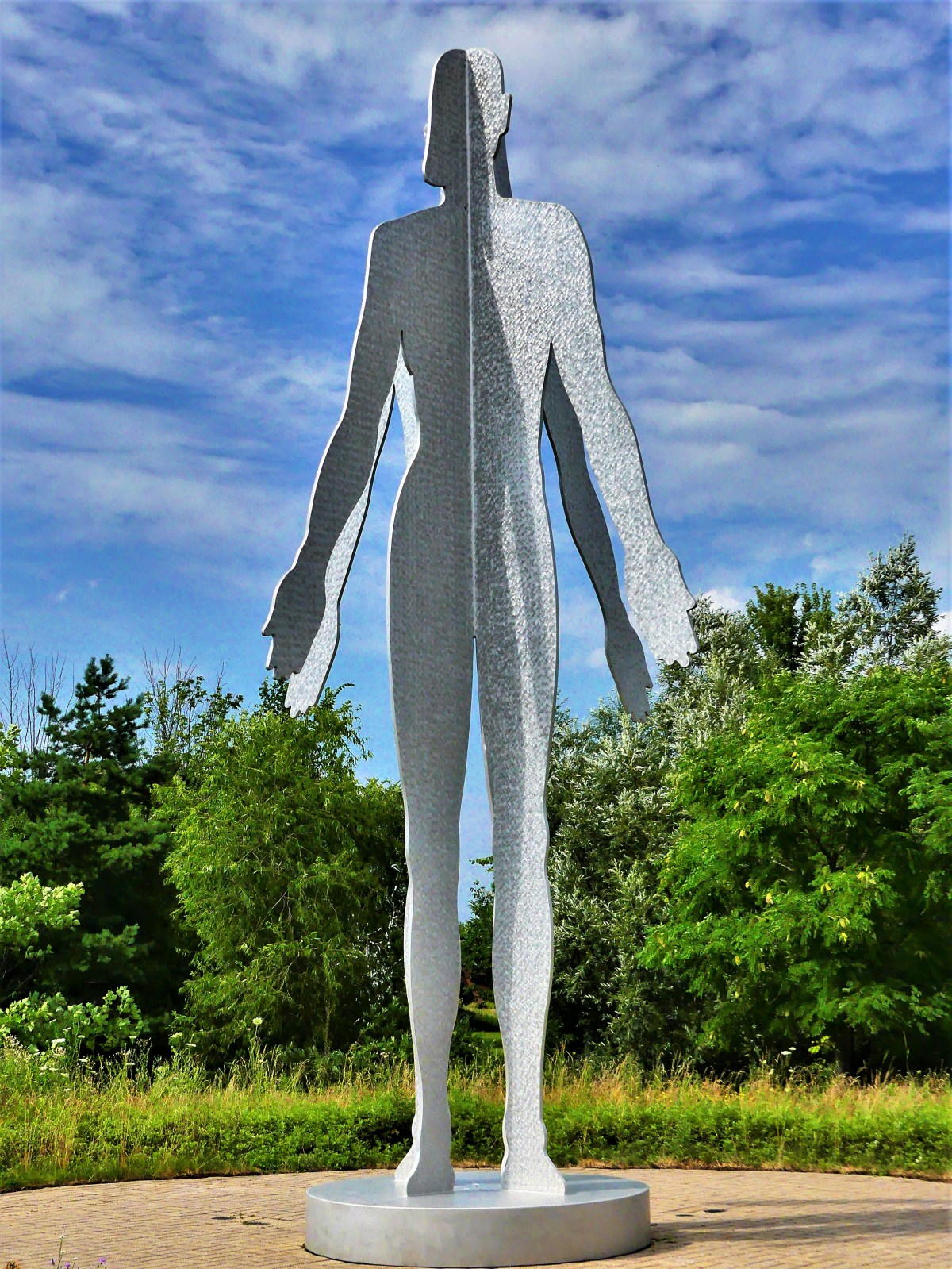
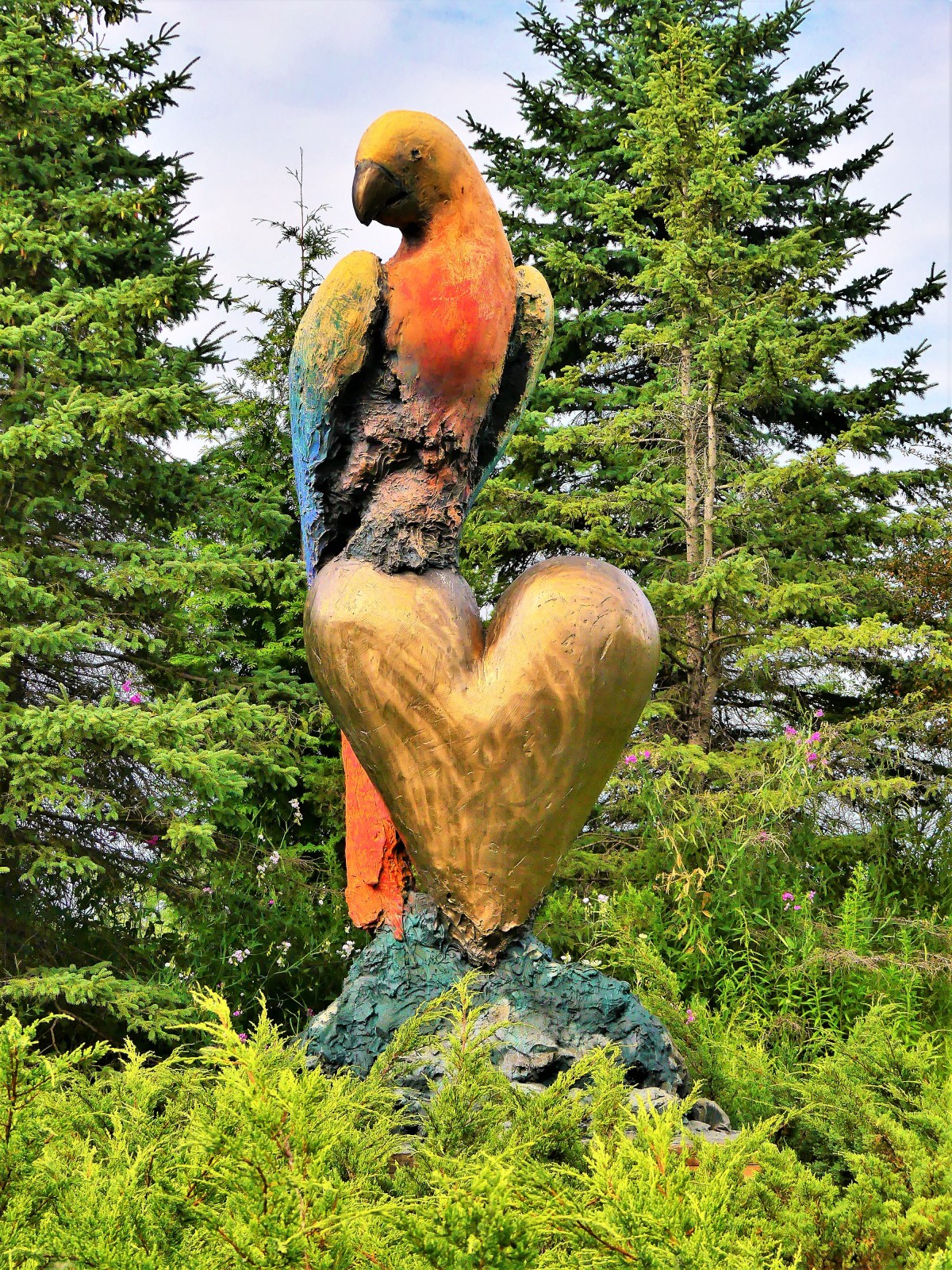
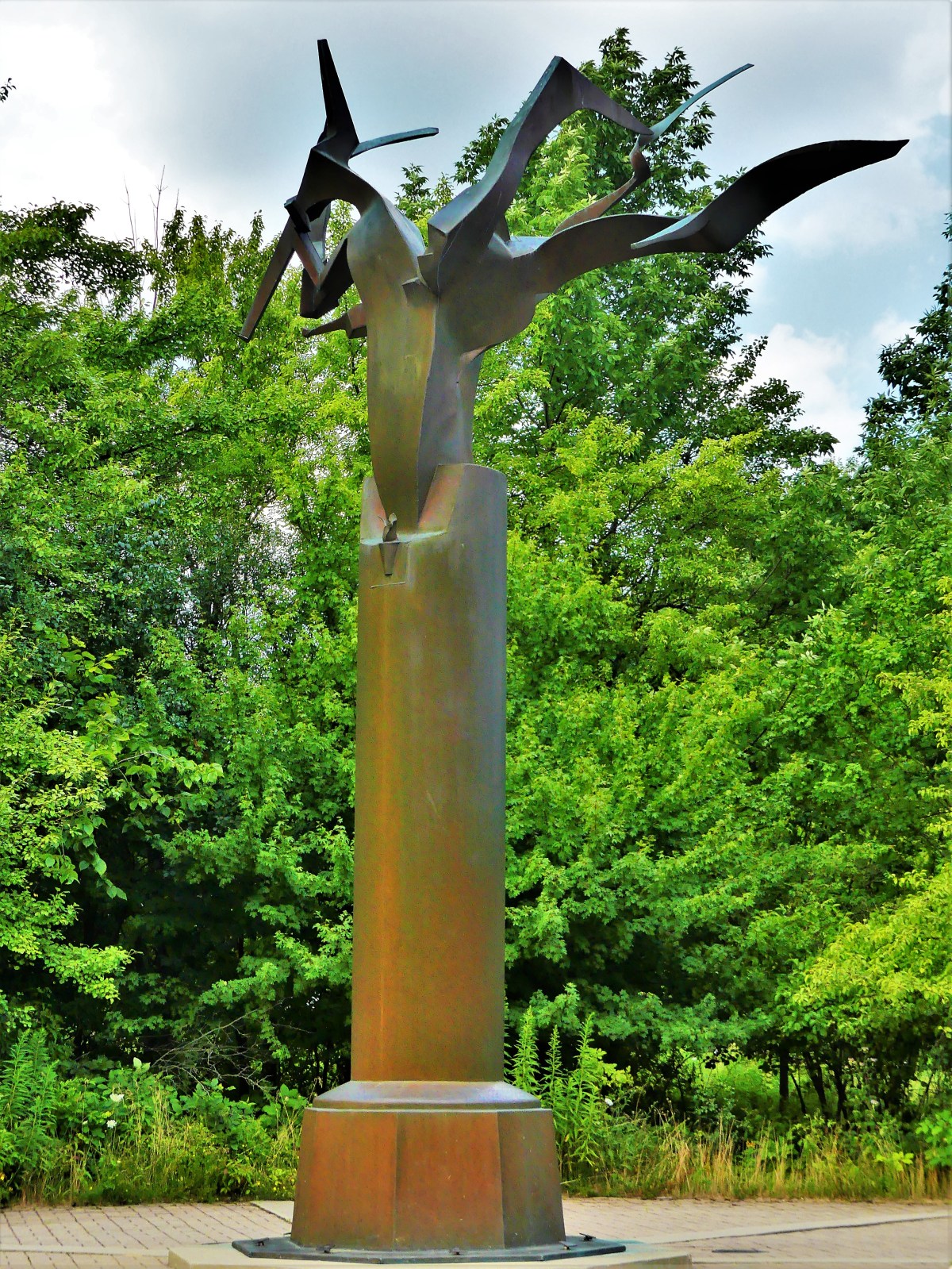
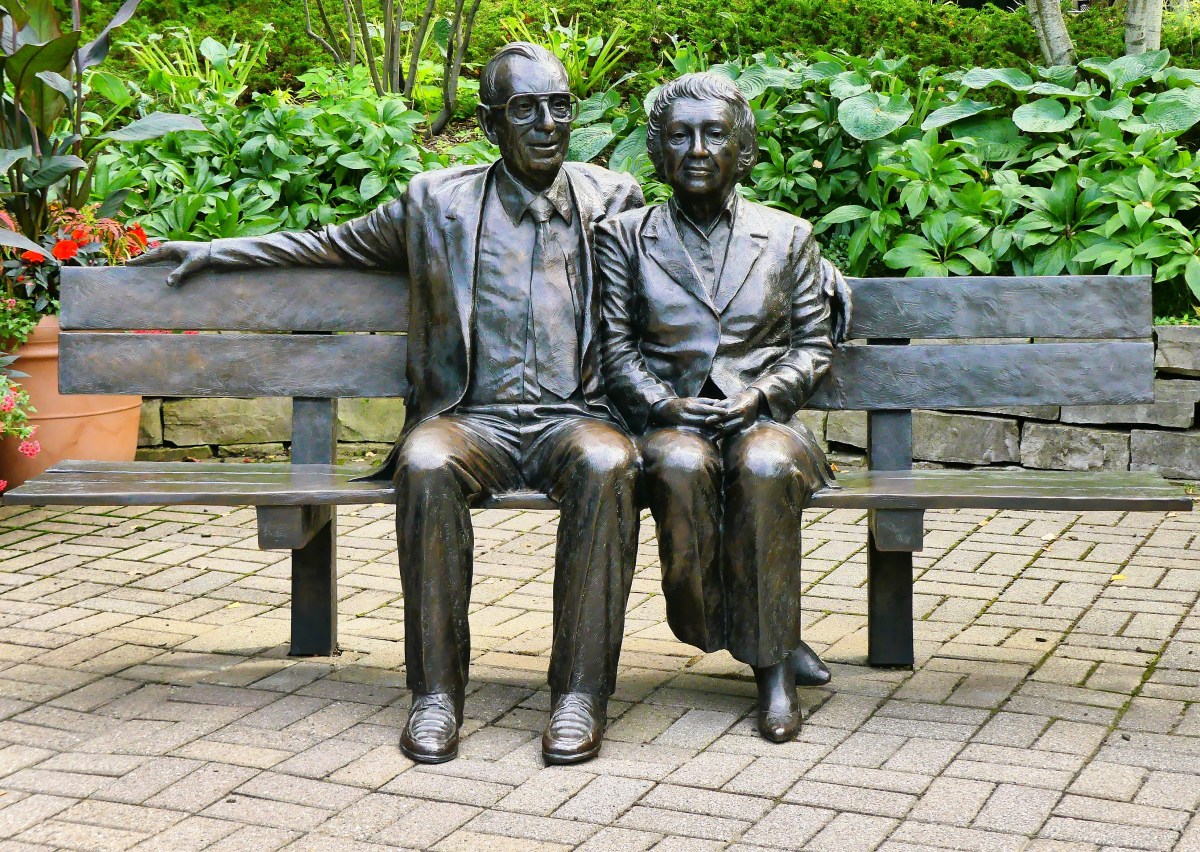
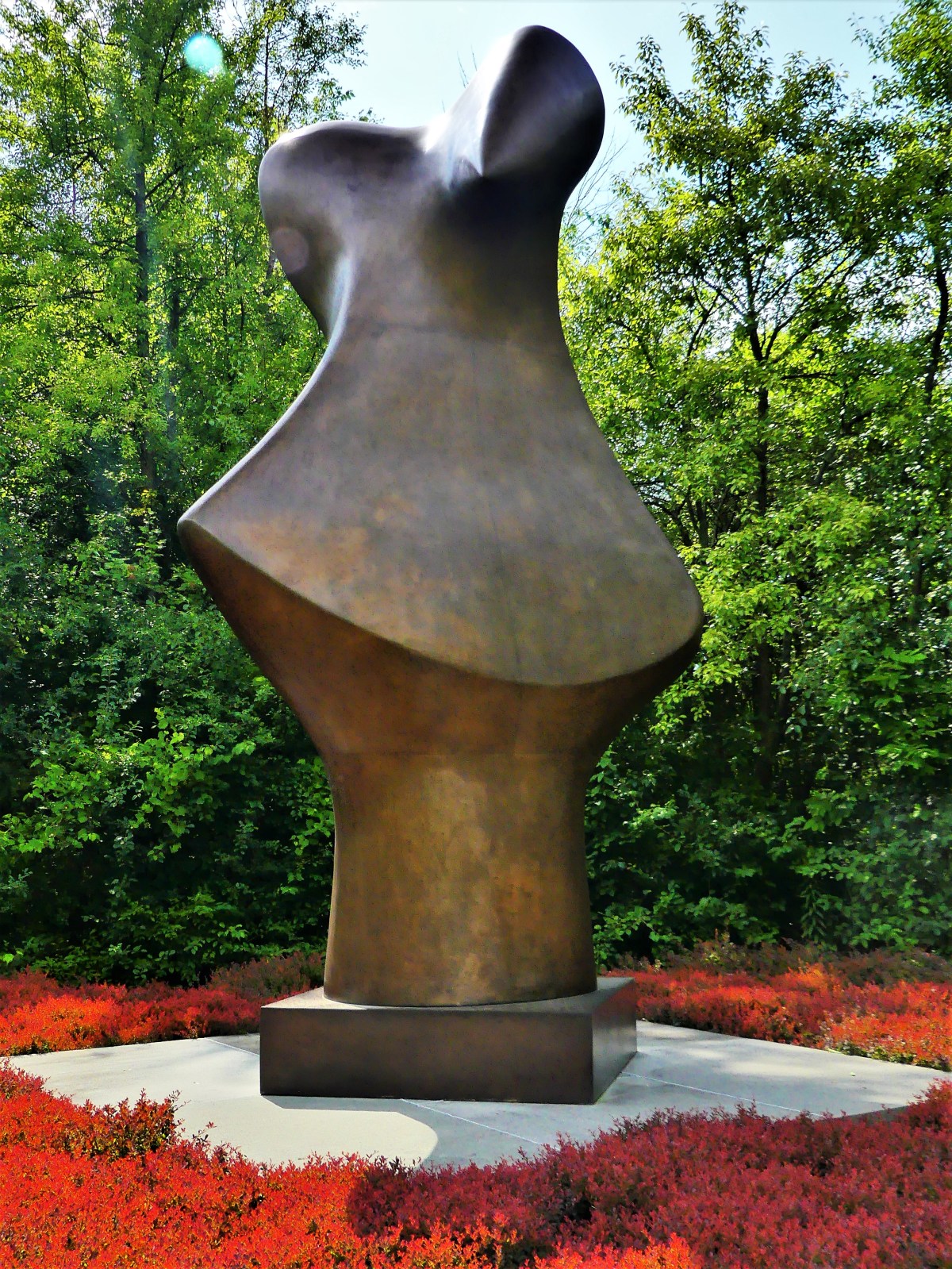
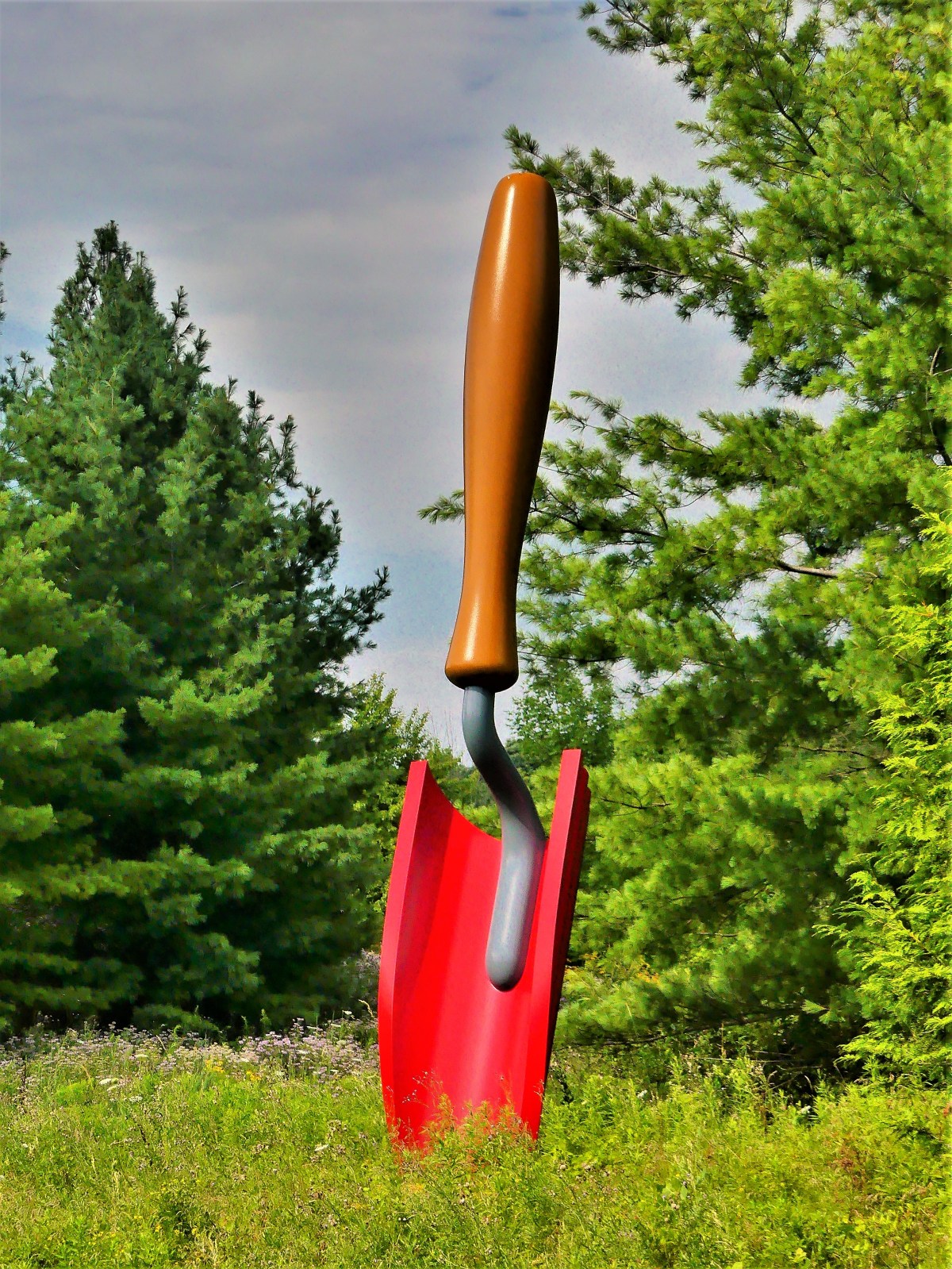
The American Horse A monument to creativity, The American Horse was created by famed animaliere, or animal sculptor, Nina Akamu. The work was inspired, in part, by a work created by Renaissance master Leonardo da Vinci for the Duke of Milan in the late 15th century. The project was championed by Fred Meijer in the late 1990’s, resulting in two casts of the 24-foot monument—one for Meijer Gardens and one for the city of Milan, Italy. In addition to inspiration from Leonardo, Akamu was also inspired by the history of equine imagery and the study of horses.Number 26 and Number 25 While these life-size sculptures are made from bronze, they are finished to appear more like terra cotta, which Beaumont often prefers. She is also known for her work in clay and iron. Their rough surfaces convey a strong sense of age, deterioration and simplicity, while the silence and stillness of the figures helps to create intimacy between the sculptures and the viewers. Male/Female One of the most recognizable and celebrated works in the Sculpture Park, Male/Female depicts the precise 180 degree intersection of a male and female silhouette. To fully understand the meaning and form of this colossal sculpture, the work is best viewed from a variety of vantage points. For Jonathan Borofsky, this sculpture represents two energies, the male and the female, coming together to create a stronger whole. In this way, his figures are not portraits, but symbolic images presenting the common human condition.Spider Louise Bourgeois was one of the most intriguing and influential artists in Contemporary art. Beginning her career as a painter, sculpture and installation work became her focus and strongest legacy. Biography and the relationships among family are frequently addressed in her work and Spider, one of her most iconic themes, is no exception. In tribute to her mother who made a living repairing ancient tapestries, Bourgeois portrays spiders as clever, dainty and protective. The eggs described in the lower portion of the body emphasize the maternal symbolism of the sculpture.Cabin Creek Deborah Butterfield’s work focuses on the spirit and form of the horse as an intelligent mare rather than the war horse which is usually illustrated in art. Cabin Creek is the name of the location where Butterfield found a variety of materials for this sculpture. First, she assembled the found materials to form an image of a horse. Then each piece of wood was meticulously translated into bronze, then reassembled and patinated. Such a process allows Butterfield to create works appropriate for outdoor placement.Scarlatti Since the 1960’s, Mark di Suvero has been at the forefront of Contemporary American sculpture. Working on a monumental scale and focusing on composition and space, he uses industrial building materials such as I-beams, scrap metal, and steel cables. Movement, whether actual or implied, is another key element in his sculpture. di Suvero frequently uses references to music and literature in his titles. Scarlatti is named for Domenico Scarlatti, the eighteenth-century Italian composer whose music di Suvero greatly admires. In this piece, the suspended “V” beneath the tip of the central beam is intended to move with the wind.Large Parrot Screams Color Together with Claes Oldenburg, Andy Warhol and Roy Lichtenstein, Dine helped define the Pop Art movement, which transformed the art world with the use of imagery from popular culture. The form of the heart has been a part of Dine’s artistic vocabulary since the mid 1960s and it has appeared prominently in his paintings, drawings and prints as well as in his sculpture. Grand Rapids Arch Andy Goldsworthy works with natural materials such as leaves, sand, ice, and stone to create and often photograph highly ephemeral works of art. Permanent works, such as the Grand Rapids Arch, are more rare. Made with stone from the artist’s native Scotland, this piece is intended to be viewed as a work of sculpture rather than an architectural element. Goldsworthy sited the work during his visits to Meijer Gardens. For Goldsworthy, the arch is a way to talk about movement, commenting, “The arch seemed an appropriate form to talk about ideas of travel because the stone, out of the context of an archway or a building, a free-standing arch, has a sense of a stone taking a walk; a stride; a movement. So that became the really important motivating idea behind the arches,” he shares.Julia The simple, graphic style Keith Haring used in his two-dimensional pieces often translated into his sculpture throughout his career. His three-dimensional forms primarily focus on balance and the energetic movement of shapes. As the only portrait sculpture Haring ever created, this piece was named after Julia Gruen, a friend of the artist. A dancer, Julia seems to capture the energy and excitement of 1980s New York.Column of the Free Spirit Richard Hunt lives and works in Chicago. Hunt is inspired by science, history, literature, music, and African art. Column of the Free Spirit was commissioned for Frederik Meijer Gardens & Sculpture Park in 1999 and installed in 2000. The columnar form references architectural monuments in Western art. The flame-like finial alludes to notions of freedom, inspiration and unlimited boundaries. Fred and Lena Meijer Fred Meijer discovered the work of Joseph Kinkel in his travels and commissioned this portrait sculpture and several variations. The earliest version featured only Fred, but Lena Meijer was added by the artist. This charming duo is a favorite at Meijer Gardens and has been recorded countless times in photographs. Kinkel designed the sculpture so visitors could join the Meijer seated on the bench while the site was developed to allow groups to gather around.Grosser Trefree Dietrich Klinge is a highly respected German artist who received training in drawing, printmaking, and sculpture. Much of Klinge’s early imagery references woodland spirits from tales of German folklore and legends. This sculpture was originally carved in wood and then cast in bronze to preserve the characteristics of the wood. The bold form and textured surface reflect early 20th century expressionism and non-western traditions.Aria Concurrent with a distinguished career in publishing, Alexander Liberman was actively engaged as an artist, finding critical and popular acclaim for his paintings, photographs and sculpture. Standing more than 42 feet, enabling viewers to walk around and through the work, Aria clearly references the artist’s admiration for architecture. An “aria” is an elaborate melody sung by one voice. The organic shaped elements of Aria seem to suggest music notes, while linear elements seem to reference a music staff or interlocking sounds, with red color unifying the composition. Torso of Summer The early 20th century French master Aristide Maillol is viewed as the most influential sculptor in the generation following Auguste Rodin. However, unlike the expressive forms of the latter, Maillol achieved a new classicism inspired by the pose and attitude of Greco-Roman sculpture and, innovatively, the sensuality of Indian sculpture. Many of his works utilize the female nude in symbolic or allegorical ways. Torso of Summer is part of a series which celebrates the four seasons. Specifically, the rounded forms of the figure reference the fullness of summer.Woman and Bird The imaginative nature of Joan Miro’s repertoire is widely admired. Although associated with 20th century Surrealism, his long career was highly individualized. Unlike his paintings and prints, most of Miro’s sculptures began with simple found objects transformed nearly beyond recognition to create another form or figure. In Woman and Bird for example, the body of the figure derives from an old milk stool and the head from the lid of a can. Shared with his two-dimensional works, his sculptures are frequently brightly painted vibrant colors contributing to the visual energy, even playfulness, of the work.Bronze Form Henry Moore is recognized as the single most important figure in the history of British art during the last century and his work has been of critical importance internationally for more than sixty years. Moore’s sculpture was initially highly representational, but he gradually moved toward a vocabulary of organic, simplified forms, frequently drawn from nature — including rocks and bones. In this piece, Moore has abstracted the human form and the shape of the sculpture changes greatly as the viewer moves around it.Broken Nose Carrying Bottle Number One Juan Muñoz was born and raised in Madrid, Spain but went on to study art in London and New York. Before his untimely death, he was an important figure in contemporary sculpture and held exhibitions internationally and was collected worldwide. He is known for his unexpected placement of figures which create tension between works and viewer. Muñoz was also a writer and was interested in other creative fields such as music, literature, history, and architecture.Plantoir Claes Oldenburg gained initial acclaim as one of the leaders of Pop Art movement recreating ordinary objects from consumer or popular culture. Beginning in the late 1970’s, he began to work with Coosje van Bruggen as a husband and wife team on a series of large-scale public projects. The couple is celebrated internationally for the transformation of objects from everyday life into colossal projects. Plantoir is the first monumental sculpture created specifically for a garden context. It was sited specifically by the artists.Neuron Roxy Paine is one of the most highly regarded Contemporary sculptors. Neuron reflects ideas about nature, industry and artistic processes. It is one of Paine’s most inventive forms, extending out from a central mass. It derives from his critically acclaimed Dendroid series which closely follow the shape and form of trees. Neuron goes beyond this tradition and simultaneously calls to mind a neuron and elevated root ball.I, you, she or he… Jaume Plensa is primarily a figurative artist, often using ideas about language and communication in his sculptures and installations. This commission for Meijer Gardens includes a composition of three figures seated on boulders, whose shells are made of stainless steel letters. Faces are left unfinished to encourage the universality of the forms and visitors are encouraged to walk among the sculptures. The composition and setting were selected by the artist and he intendeds it to represent a kind of ongoing, silent conversation. Although most well-known In the United States for his Crown Fountain in Chicago’s Millennium Park, Plensa’s is one of the leading international sculptors working today.
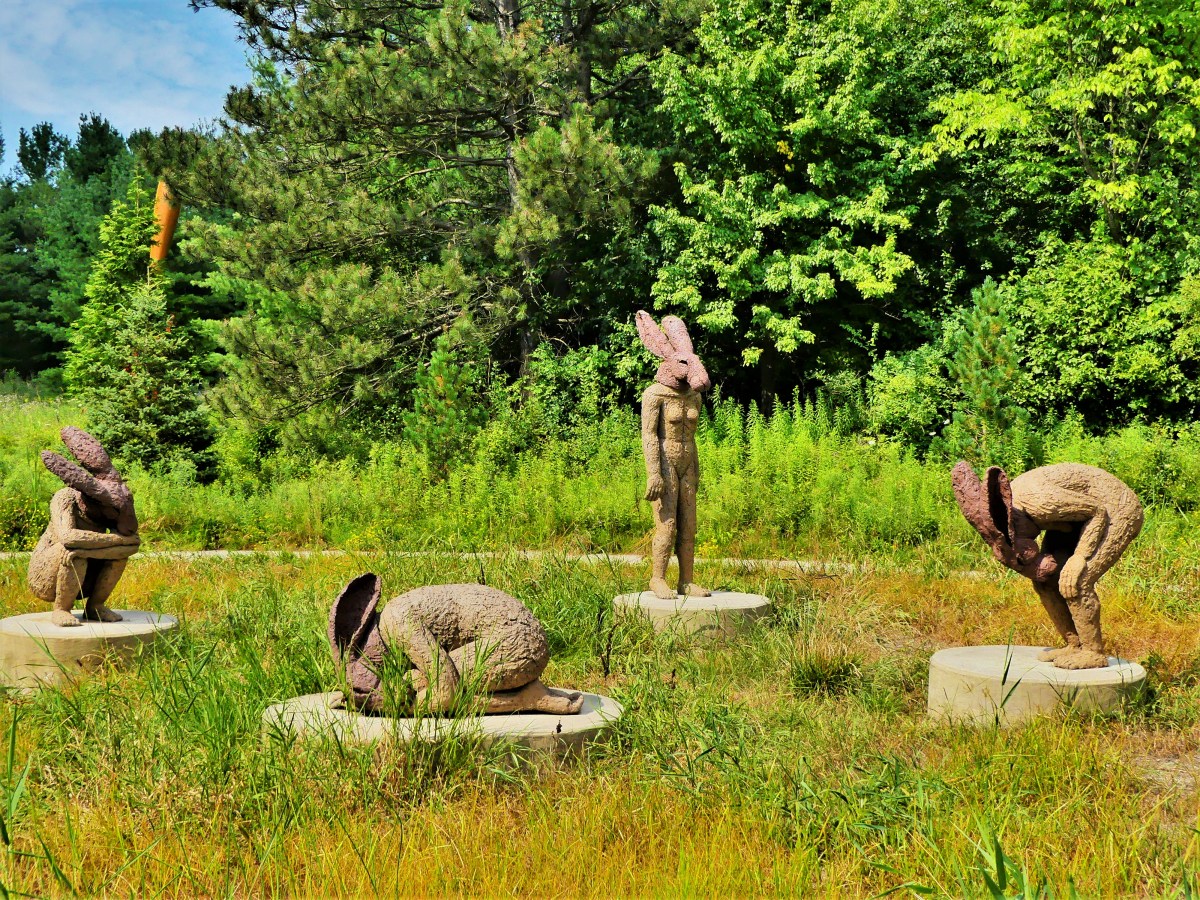
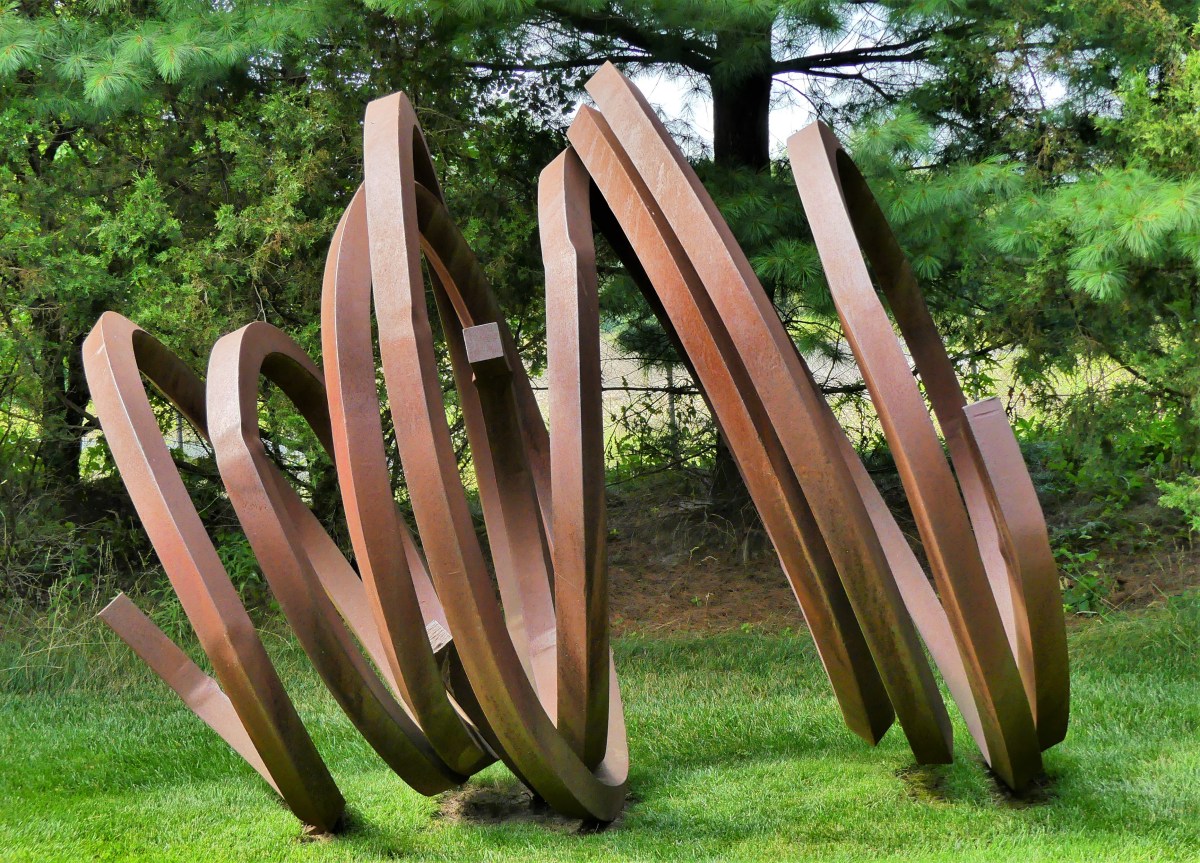
Eve Originally created in association with his famed Gates of Hell for the never completed museum of decorative arts in Paris, Eve became one of the artist’s most celebrated descriptions of the female figure. Standing awkwardly in an attempt to cover her body, the figure distorts the classical “controposto” or “weight-shift” position. Additionally, Rodin has forsaken the traditional smooth surfaces and rounded contours apparent in figurative sculpture since the Renaissance in favor of something highly textured and emotive. This is one of twelve known full-scales casts of Eve.Introspective Sophie Ryder is a figurative artist who focuses on animal imagery, in particular hares, dogs, and minotaurs, to comment on universal human emotions and relationships. She creates drawings, bronze sculptures, collages and prints, but is best known for her wire drawings and sculptures. Wire, which adds a heavy textured surface to the sculptures, is not suitable for outdoors, so some of the pieces are cast in bronze. This piece was created in response to the tragedy of 9/11 and the way in which many mourn.B-Tree II Sculptor, photographer, and mathematician Kenneth Snelson has commented, “My art is concerned with nature in its most fundamental aspect, the patterns of physical forces in three dimensional space.” B-Tree II is a site-specific commission that while concerned with nature, firmly utilizes geometry, mathematics and engineering in referencing the natural world. Based on patterning systems using the number three and triangles, the colossal structure utilizes the artist’s patented “tensegrity,” wherein the carefully calculated tension of the stainless steel cords locks the tubular elements up and into space. B-Tree II is the largest structure Snelson created.Two Indeterminate Lines Bernar Venet never made preparatory drawings for this work and described each sculpture in his Indeterminate Lines series as “the result of improvised, intuitive, empirical work.” This sculpture highlights the use of industrial material, bent and twisted, to imitate a drawn line. His presence in public and private collections around the world is well known.Listening to History Bill Woodrow is one of the leading contemporary British sculptors. He often addresses issues of humor and irony with his work. In his early pieces, he combined found objects to create new meaning. In Listening to History, the placement of the head on the ground with the book tied against it and blinding the eyes suggests many possible narrative meanings: learning from history, being blind to history, open/closed mindedness, and so on. Note the meticulous concern for detail in this work.
Our time through the park went quickly. We walked over 2 miles, and returned to the parking lot to find hundreds of people tailgating behind the amphitheater, awaiting Lyle Lovett’s evening performance. Had we not made previous plans to see “Weird Al,” it would have been the perfect venue for another songfest from Lyle (seeMusic City, USA).
We must return some other day…after checking the concert calendar first.
Within a span of five days, Leah and I had occasion to enjoy the Chicago Symphony Orchestra (CSO) and the Grand Rapids Symphony (GRS), but in a nontraditional manner with uncommon overtones.
Dan Akroyd set the scene for our future expectations at the Ravinia Festival in Highland Park IL, the CSO summer residency.
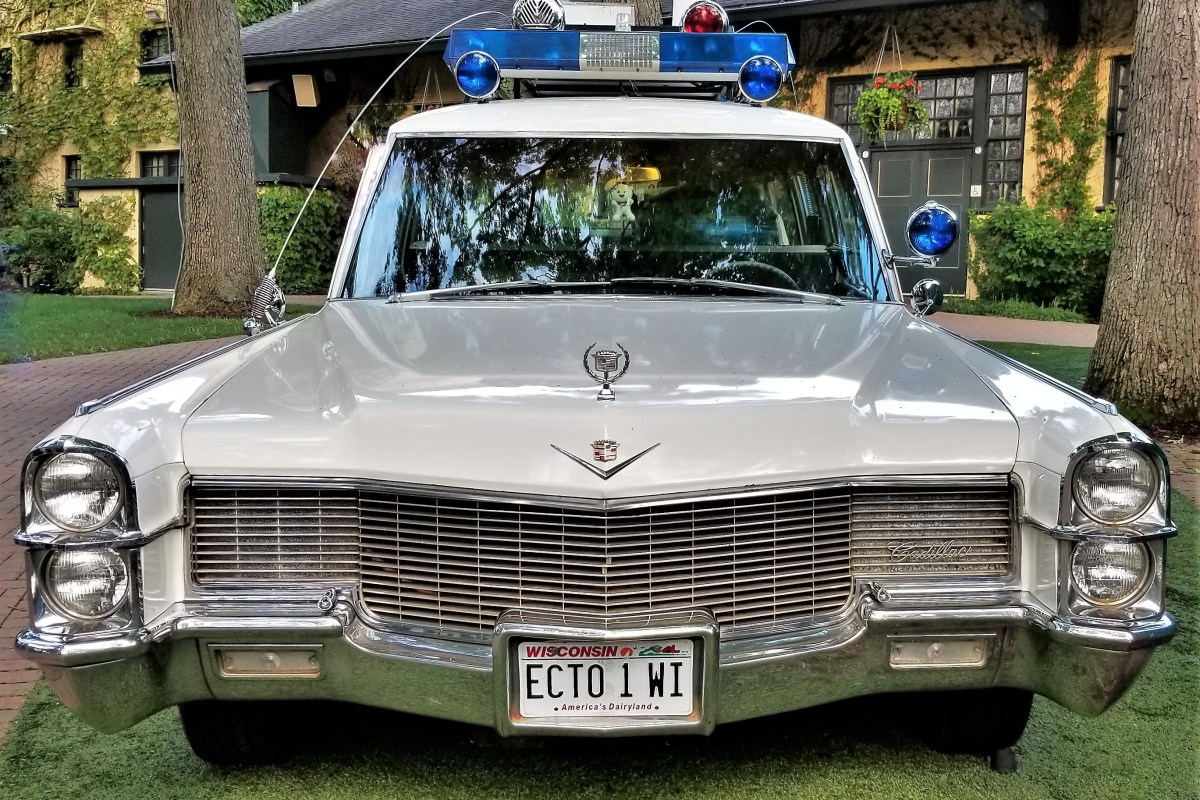
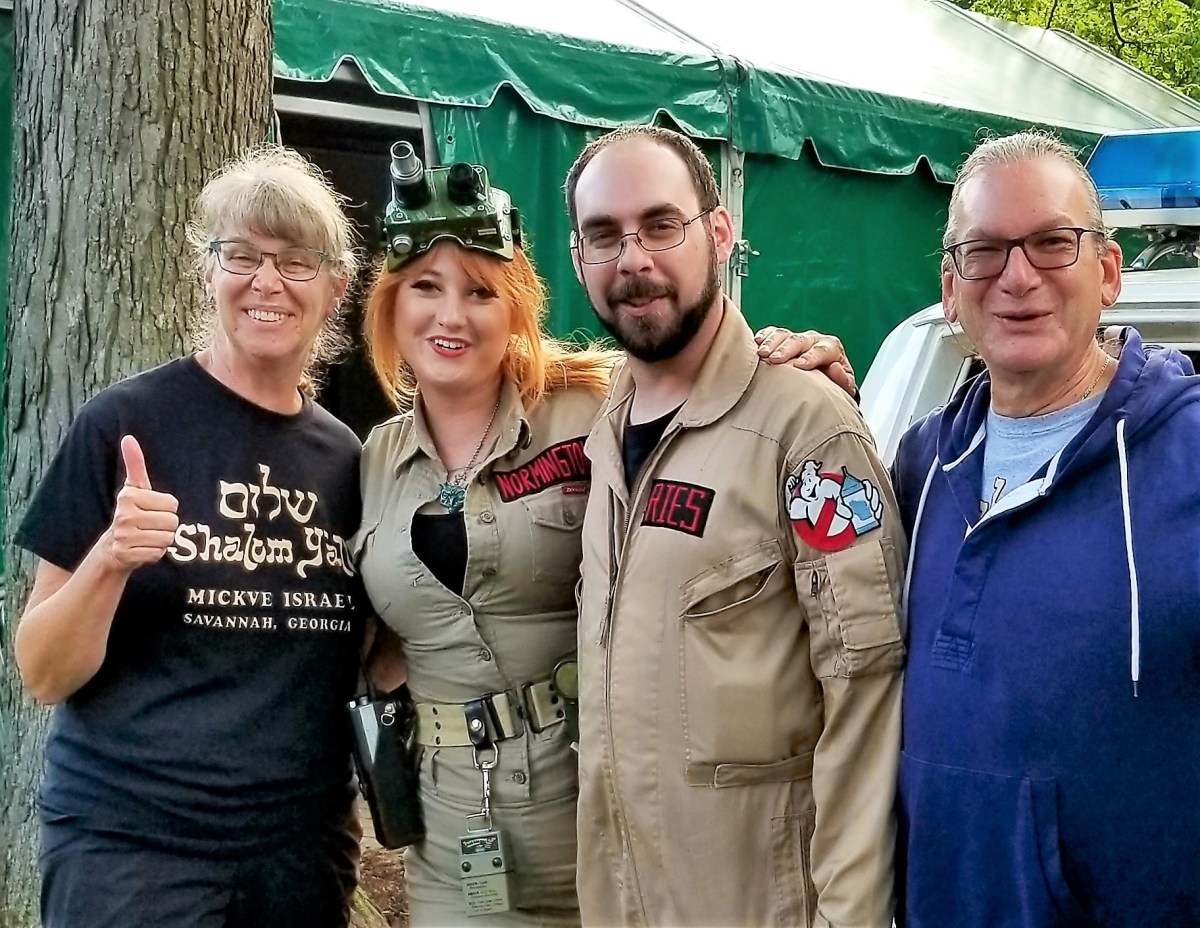
To be sure, it was a carnival atmosphere, with popcorn and green slime for sale. The Windy City Ghostbusters were on board, protecting their ride
and providing plenty of photo ops…
with props.
Meanwhile, the CSO was warming up on stage…
waiting for dusk and the arrival of their guest conductor, Peter Bernstein, son of legendary composer and Oscar-winner, Elmer Bernstein, who wrote the original score to Ghostbusters.
Happily, the orchestra never missed a beat, synchronizing perfectly with the film. While the band played on and the Ghostbusters faced their ectoplasmic foes, we enjoyed a picnic on the lawn with my niece Rachel and her partner, Kevin. Thanks, guys.
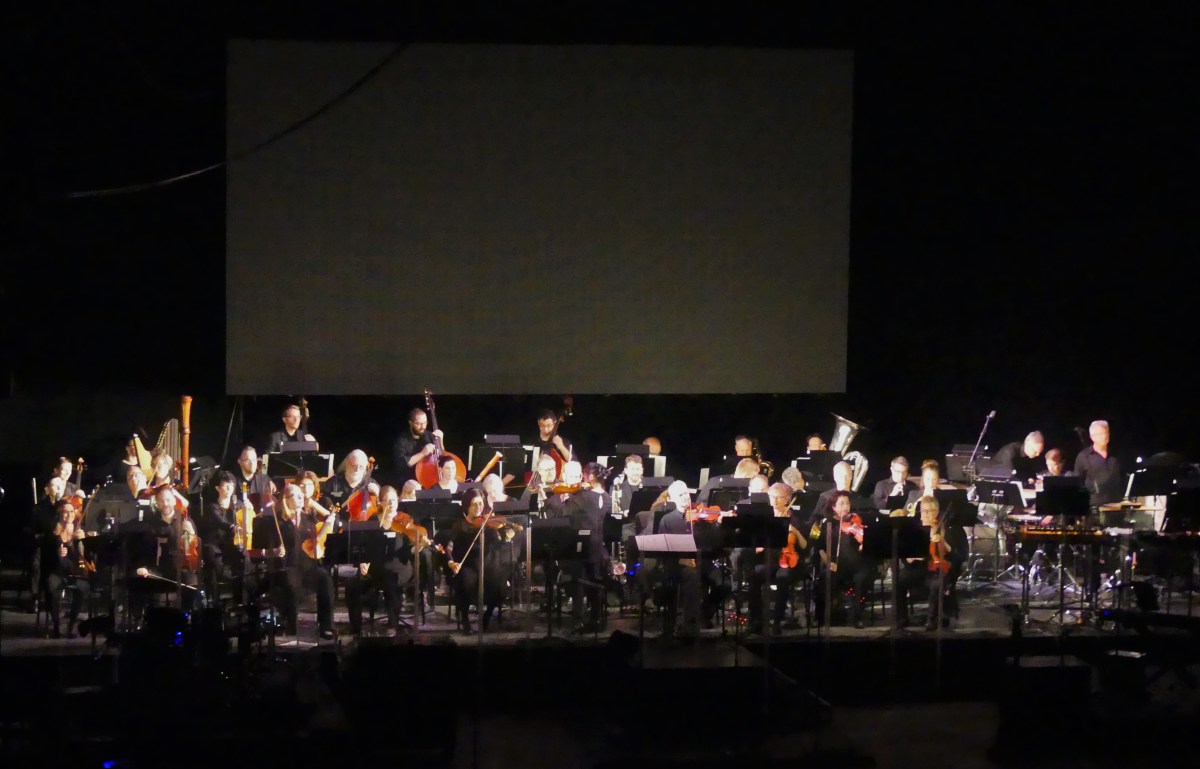
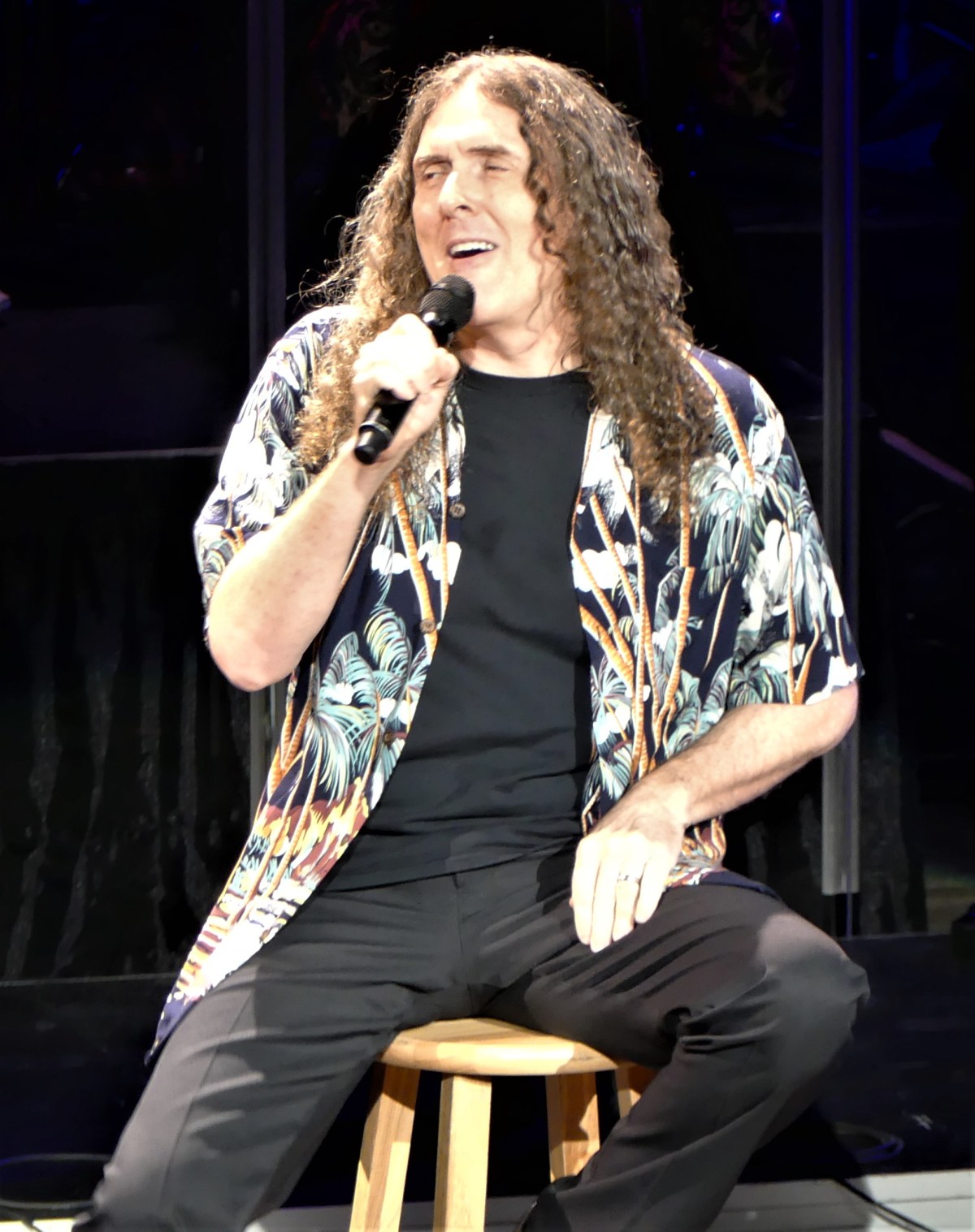
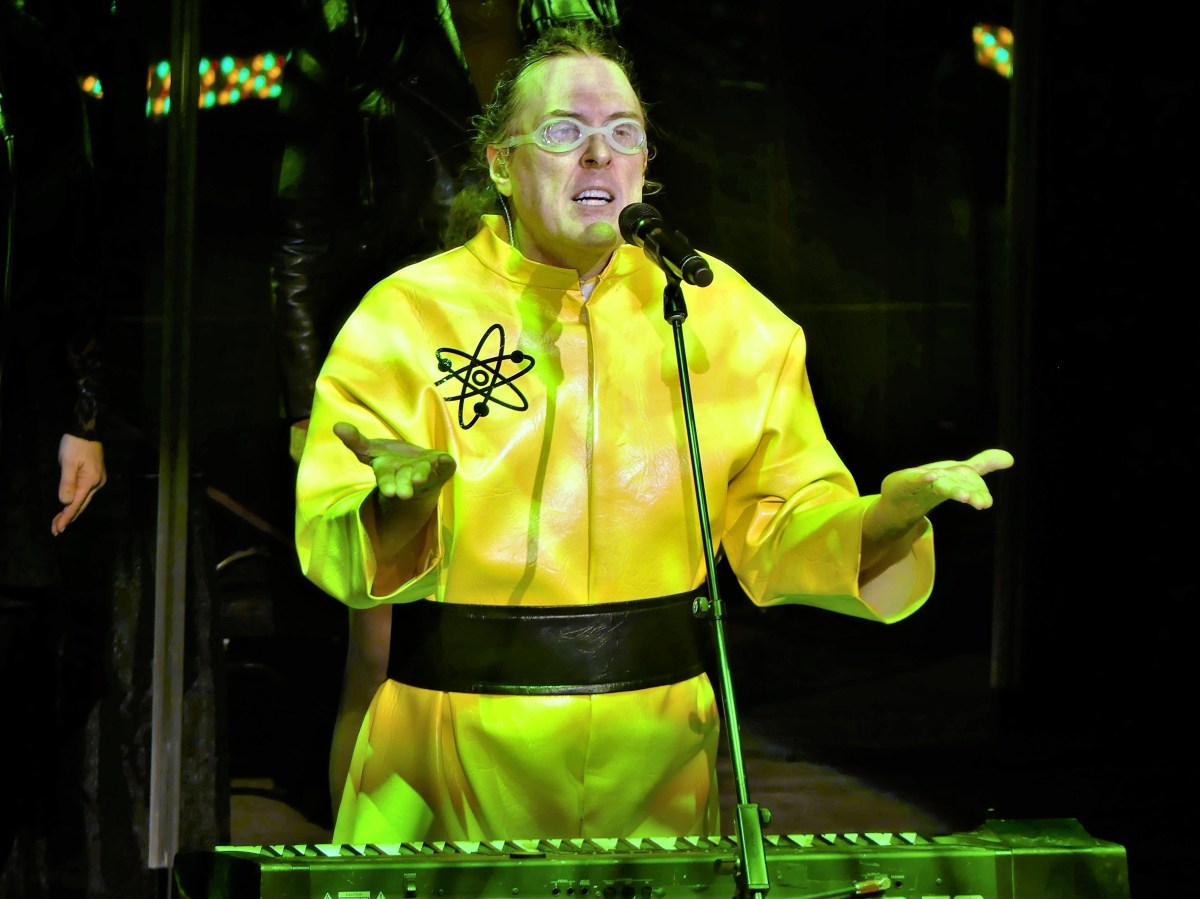
Days later, we traveled to Grand Rapids, MI for “Weird Al” Yankovic’s Strings Attached tour. Unlike last year’s stripped-down tour (seeParody Paradigm), and stripped of shtick, this concert promised to be vintage “Weird Al”–the parodies, the costumes, the MTV videos, and 41 pieces of symphonic punctuation.
The GRS opened the show with 20 minutes of John Williams’ cinema overtures from Raiders of the Lost Ark, Superman, and Star Wars…
to set the mood for a sell-out crowd that was every bit as white and nerdy as “Weird Al.”
It was the largest collection of ugly Hawaiian shirts I’d ever seen.
And some fans decided to elevate their look with shiny accessories.
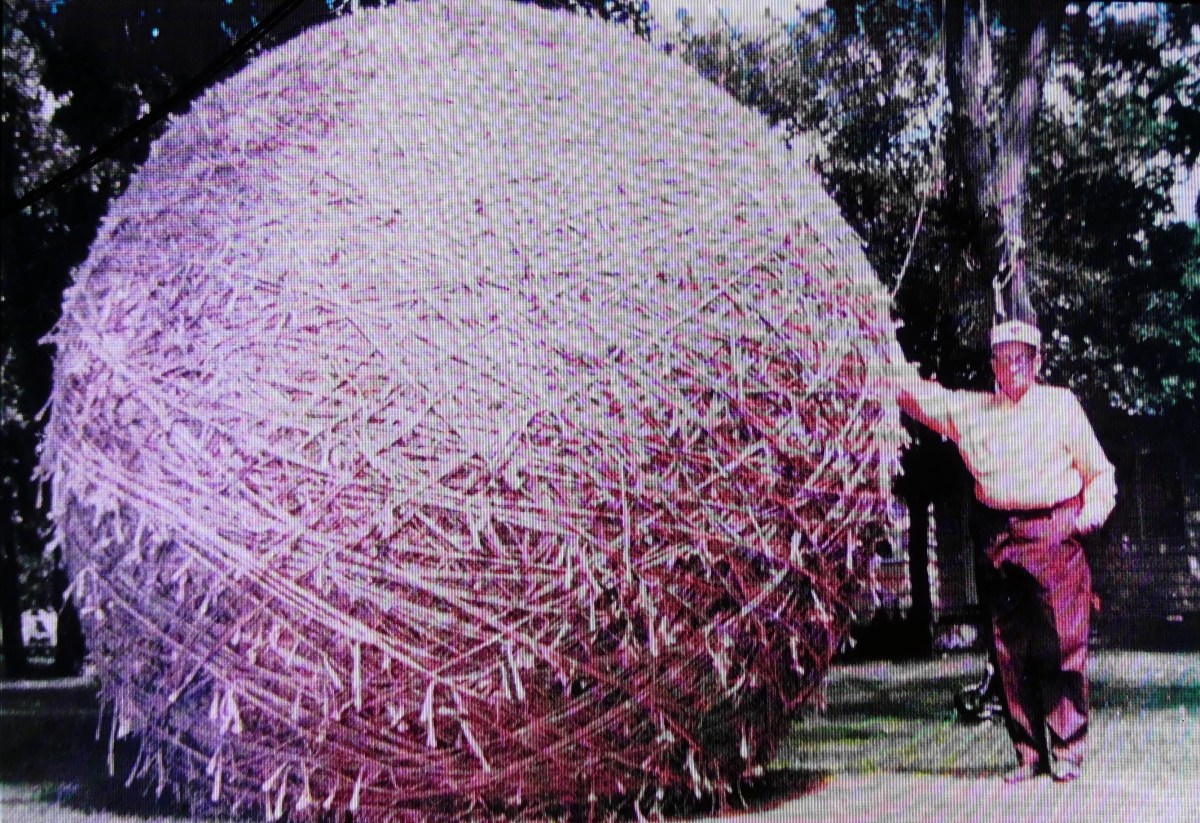
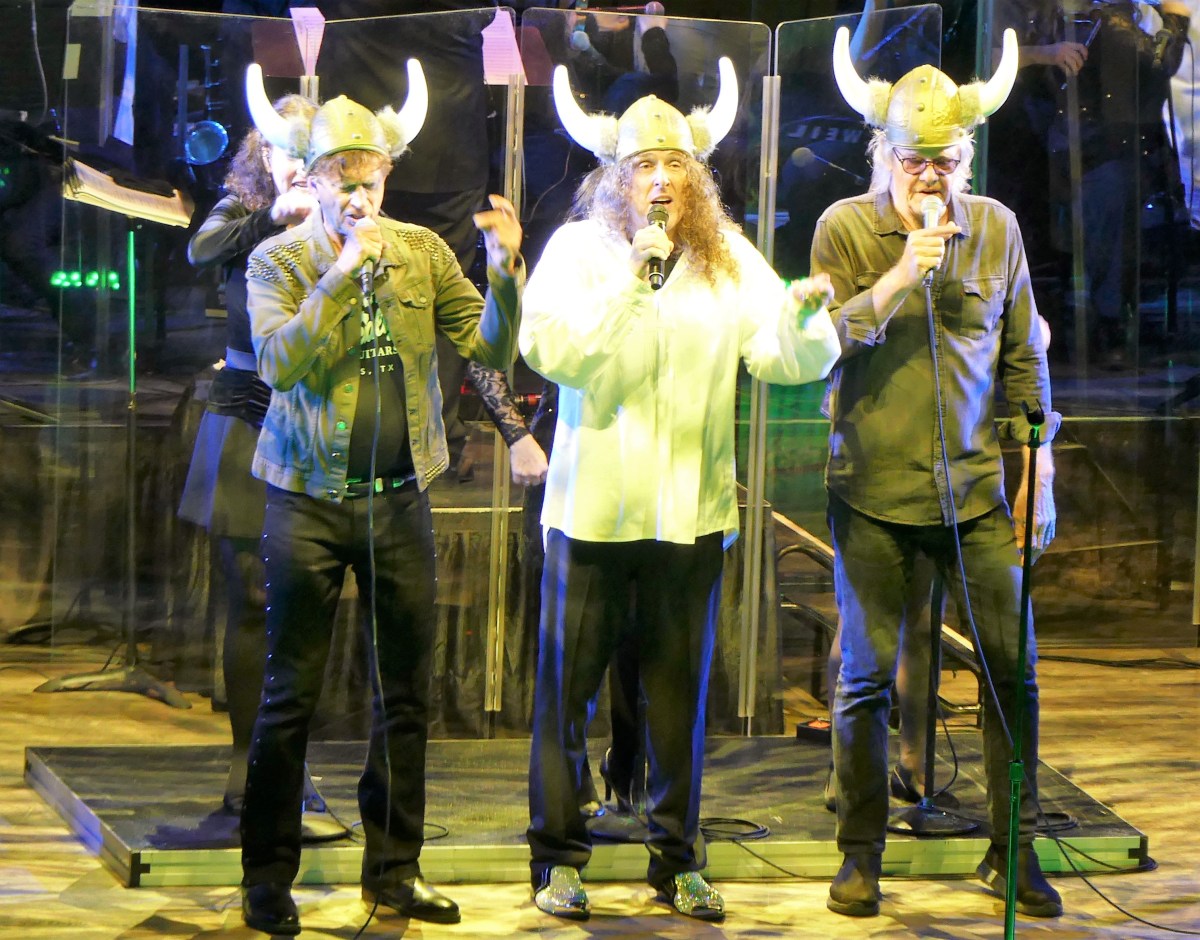
The band was tight; the parodies are clever; the singing was splendid; and the GRS added an extra richness to the event. “Weird Al” showcased a deep catalogue of “funny,” paying homage to Don Pardo,
a twine ball from Minnesota,
weasel stomping,
Devo,
Nirvana,
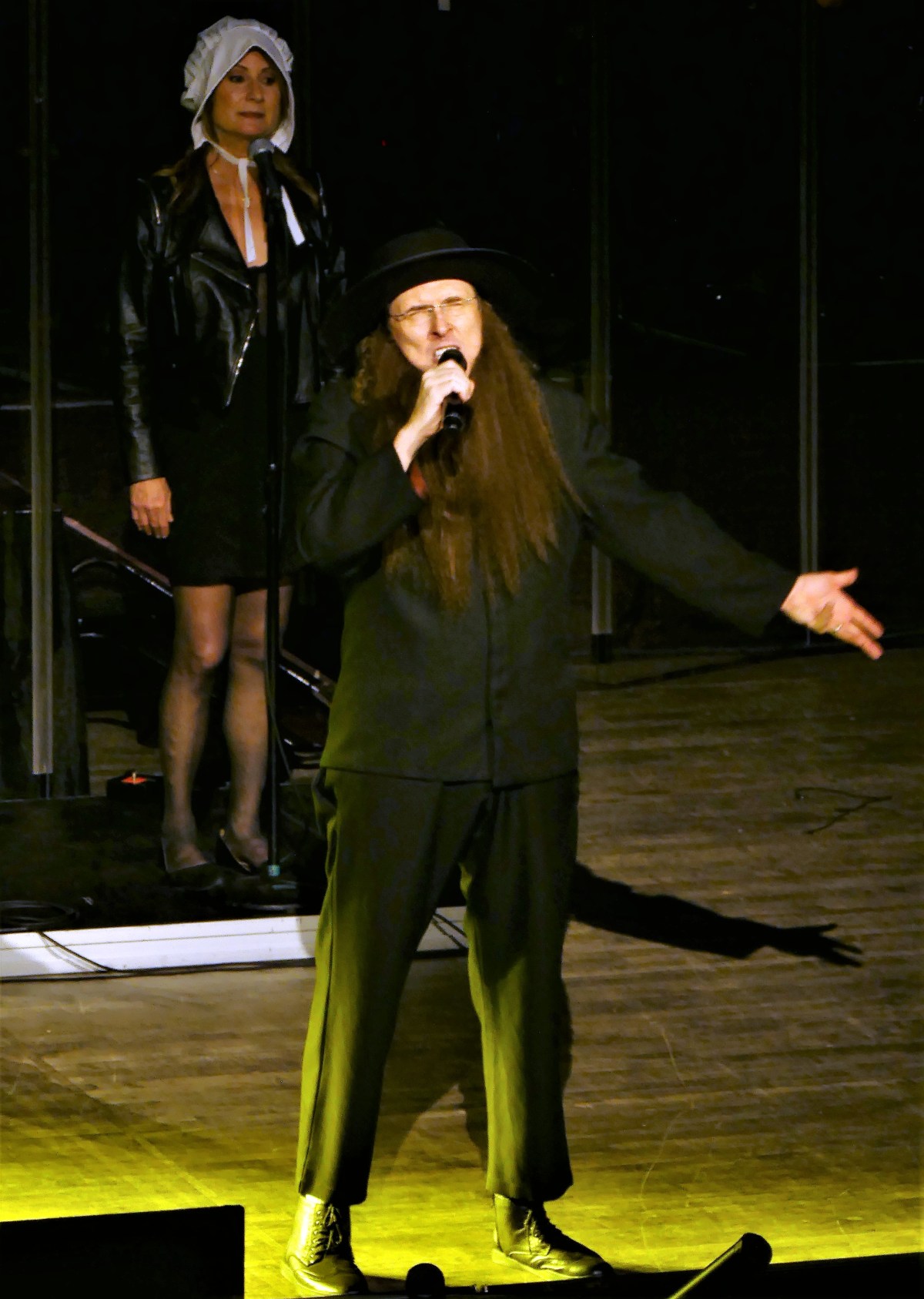
and sending up Coolio with an irreverent Amish rap.
The crowd was treated to a crowd-favorite Star Wars encore, á la Don McClean’s American Pie (The Saga Begins),
and the Kink’s Lola (Yoda).
The audience was on its feet by the end of the show, and so was the orchestra,
because their job was done and it was time to leave.
Leah and I caught up with the Associate Concertmaster as she exited the DeVos Performance Hall stage door.
“Great show, tonight,” I offered.
“Thank you. It was lots of fun,” she said.
“Did you have much practice time with the band?” I asked.
“Not really,” she admitted. “Just a couple of sessions.”
“That’s all!? You guys nailed it,” I gushed. “Any after-party plans?”
Crossing the street–“A glass of milk, and bed,” she sighed. “I’m glad you enjoyed it”–and she was gone.
The Chicago Art Institute is considered one of the highly regarded art museums in the world. Its collection is deep; it is wide; and it’s displayed in 200+ galleries over three floors.
However, with only two days scheduled in Chicago and so much to do, Leah and I had less time to roam the museum than I would have preferred. What to do?
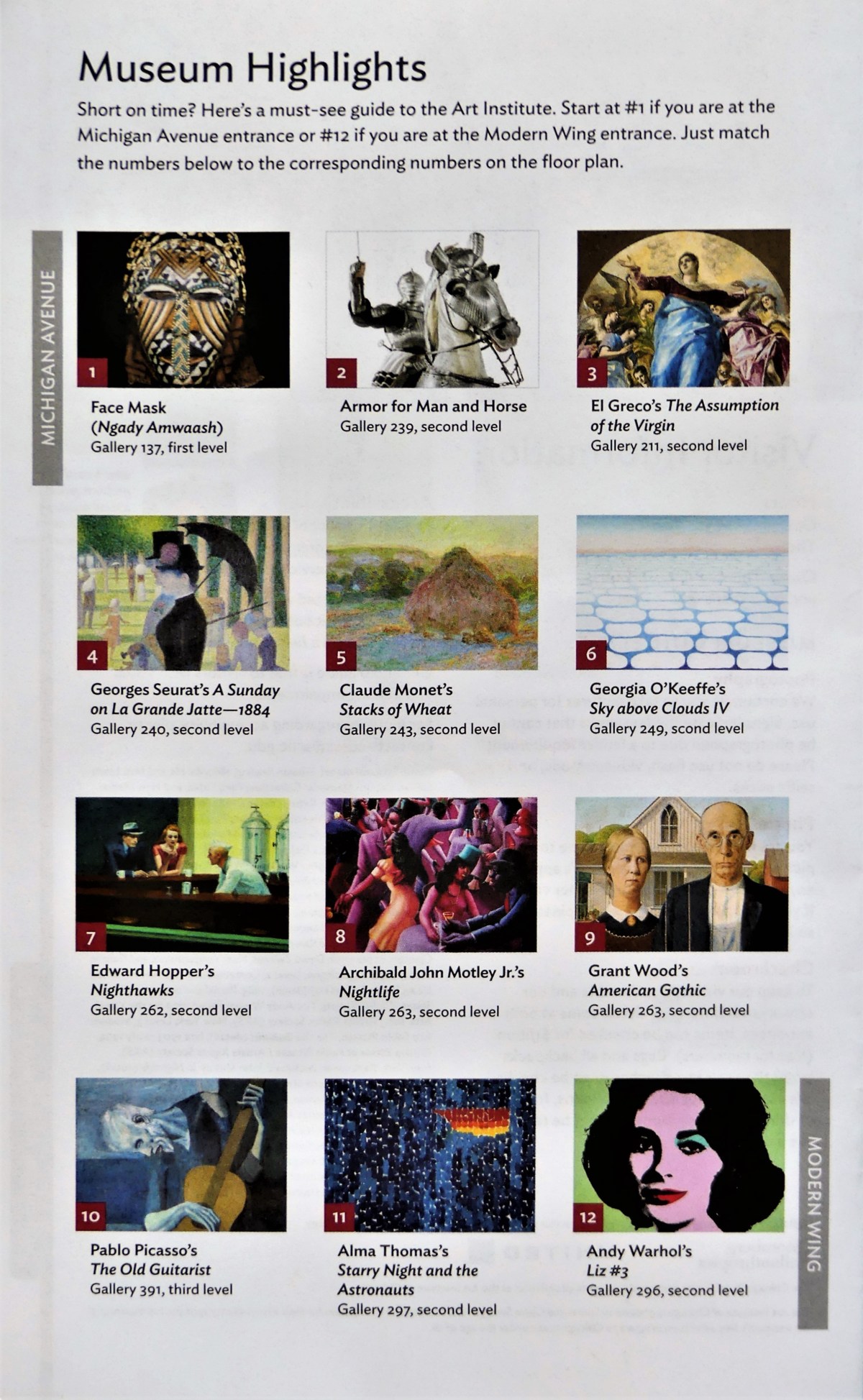
Fortunately, the Art Institute has a solution! The museum provides a guide for locating twelve essential must-sees, and comprehensive floor plans to help find them. It’s their version of a cultural scavenger hunt through time and space.
Leah and I accepted the challenge, walking 3 miles in 2 hours (which also included a visit to the Member’s Lounge to sip some coffee) until we saw all twelve works of art.
Realizing that time is precious, and many people may not have the capacity to travel, I’ve taken the liberty of recording the museum’s highlights and displaying them for all to see without spending the time or walking the distance–although it’s impossible to replace the sensation of seeing these masterpieces up close and personal.
Nevertheless, consider it a public service and a crash course in art appreciation…
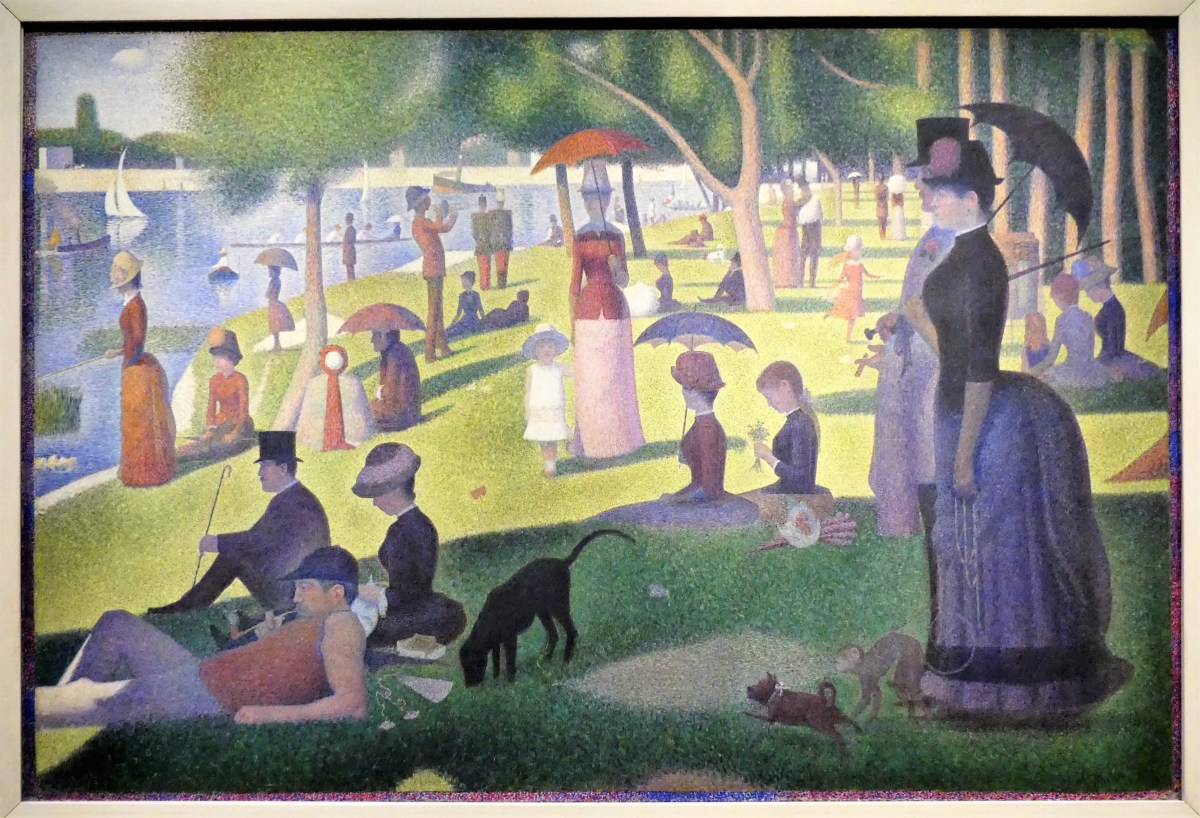
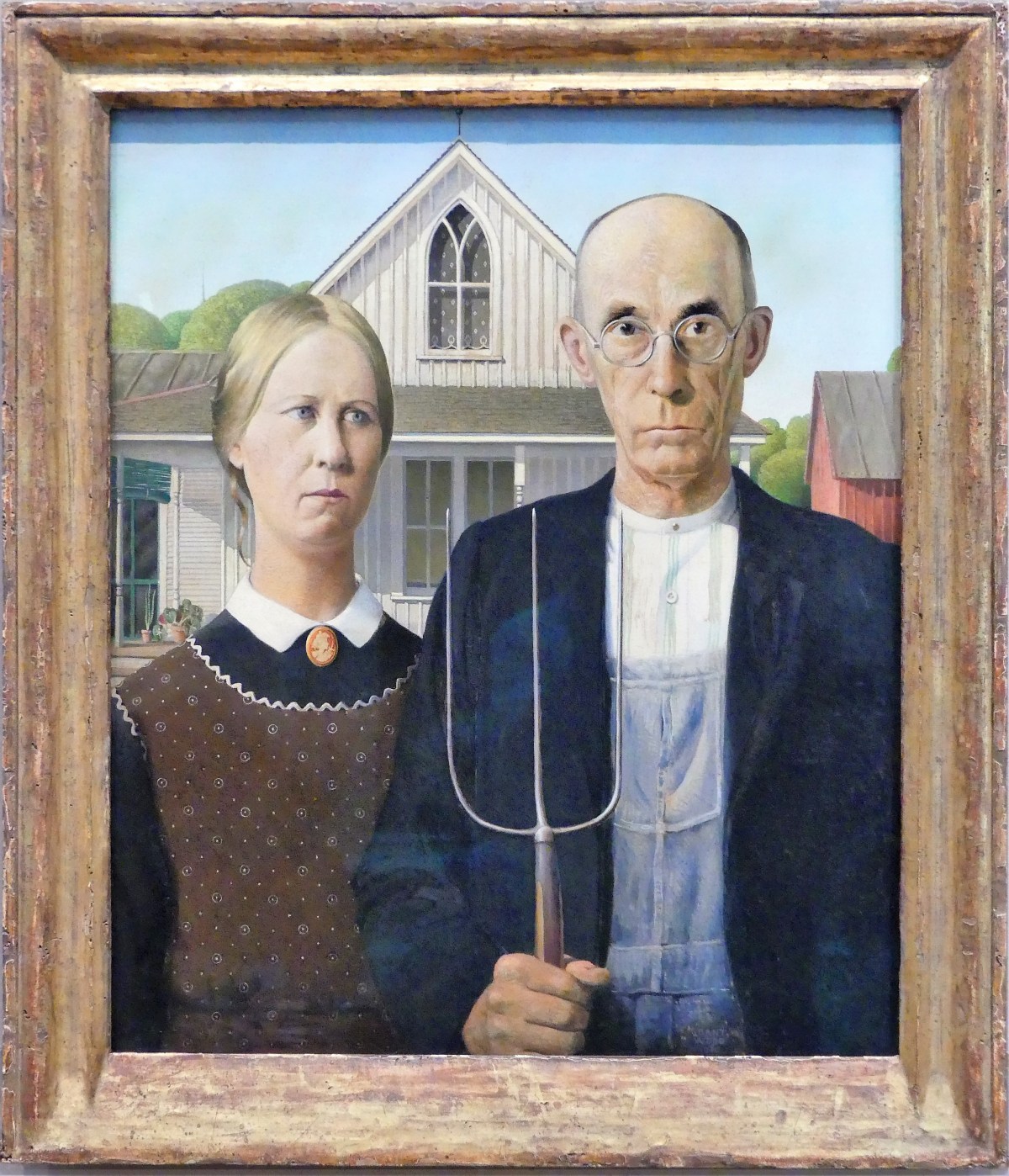
Face Mask (Ngady Amwaash)Armor for Man and HorseEl Greco’s The Assumption of the VirginGeorges Serat’s A Sunday on La Grande Jette–1884Claude Monet’s Stacks of WheatGeorgia O’Keefe’s Sky above Clouds IVEdward Hopper’s NighthawksArchibald John Motley Jr.’s NightlifeGrant Wood’s American GothicPablo Picassa’s The Old GuitaristAlma Thomas’s Starry Night and the AstronautsAndy Warhol’s Liz #3
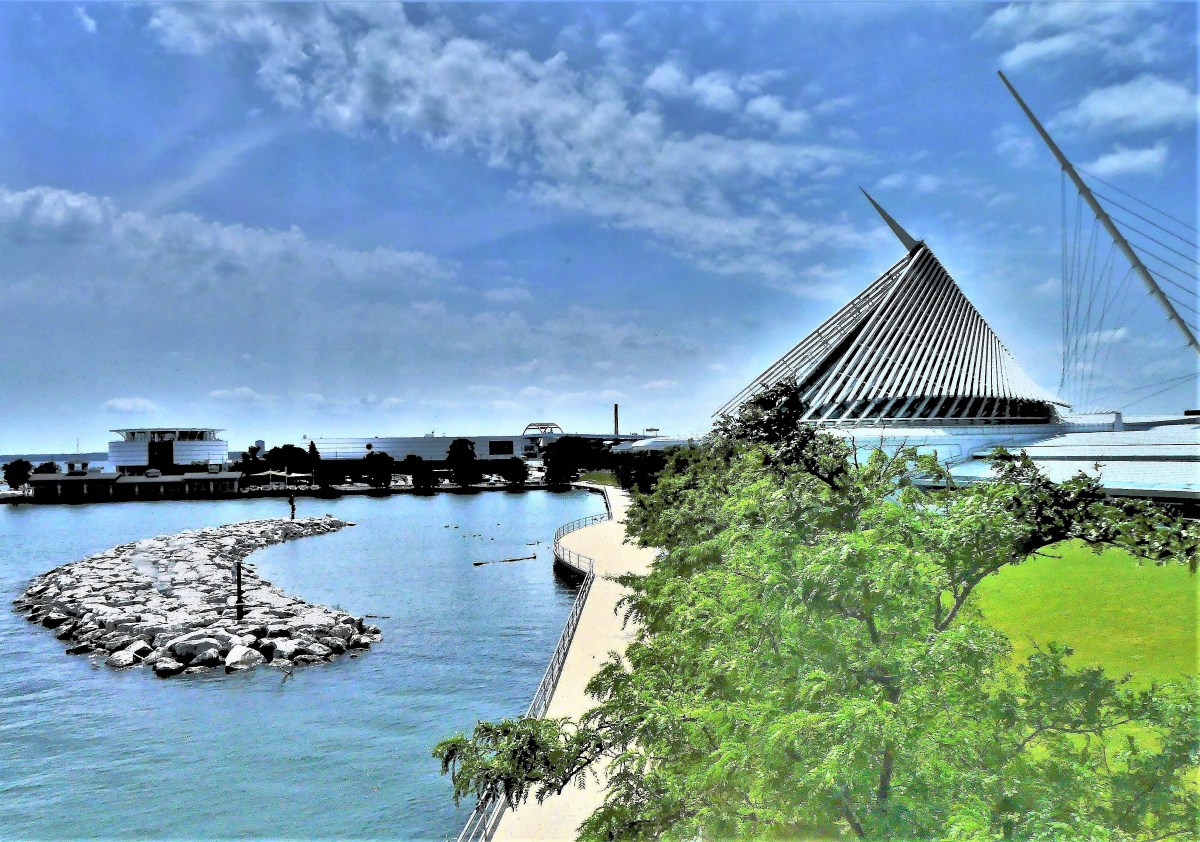
Our appetite for fine art took us to Milwaukee Art Museum with its collection of 25,000 works on display–making it one of the nation’s largest galleries. While I was curious about the collection, I was most interested in the Quadracci Pavilion, built by Spanish architect Santiago Calatrava in 2001.
The iconic winged structure has demonstrably changed the city skyline by Lake Michigan’s waterfront…
to the point that Milkwaukee now incorporates Calatrava’s brise soleil in it logo.
Parallels to Calatrava’s Oculus at NYC–Gound Zero are unmistakable;
comparisons are inevitable.
The wings are extended most days until sunset, but stay retracted during nasty weather or high winds.
Sadly, Leah and I were greeted with high winds, but we were fortunate to tour the museum with so few visitors.
With the exception of a group of mini-pals,
and isolated cases…
here and there…
we felt like we had the space to ourselves–
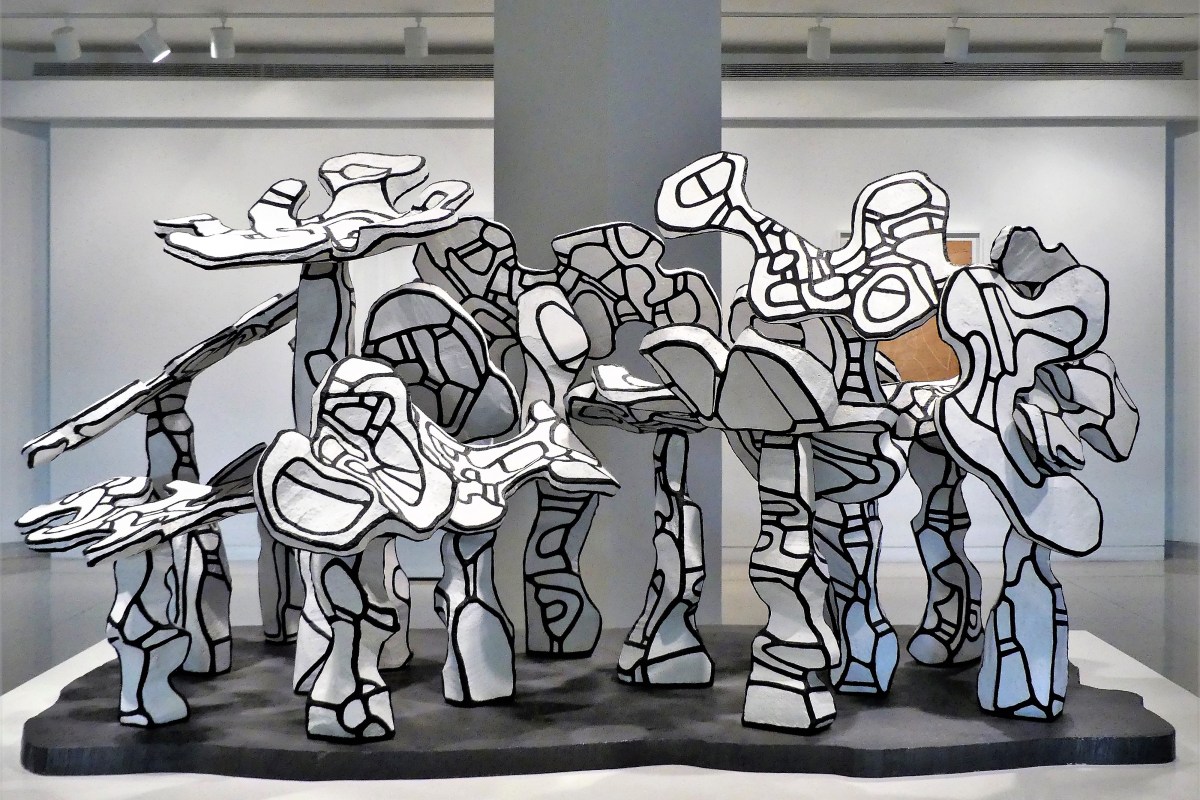
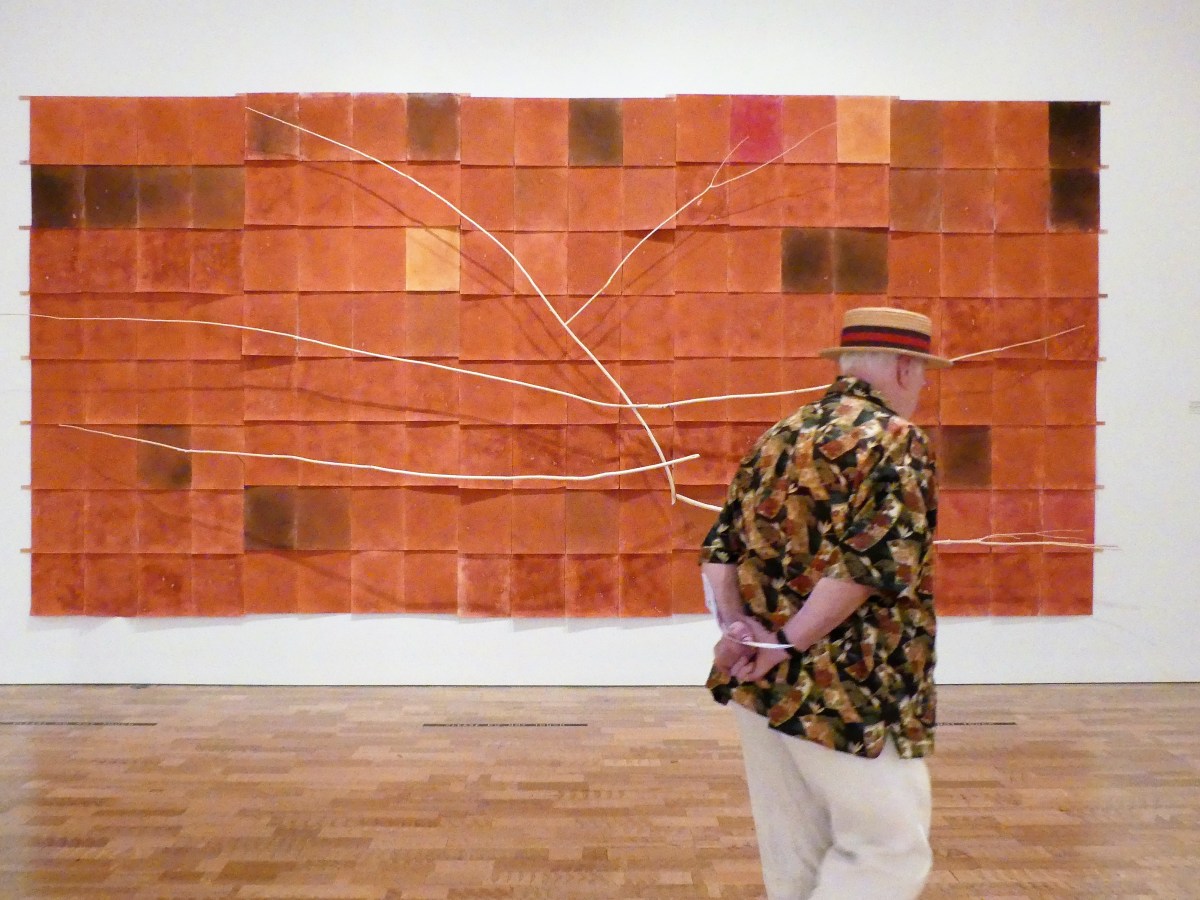
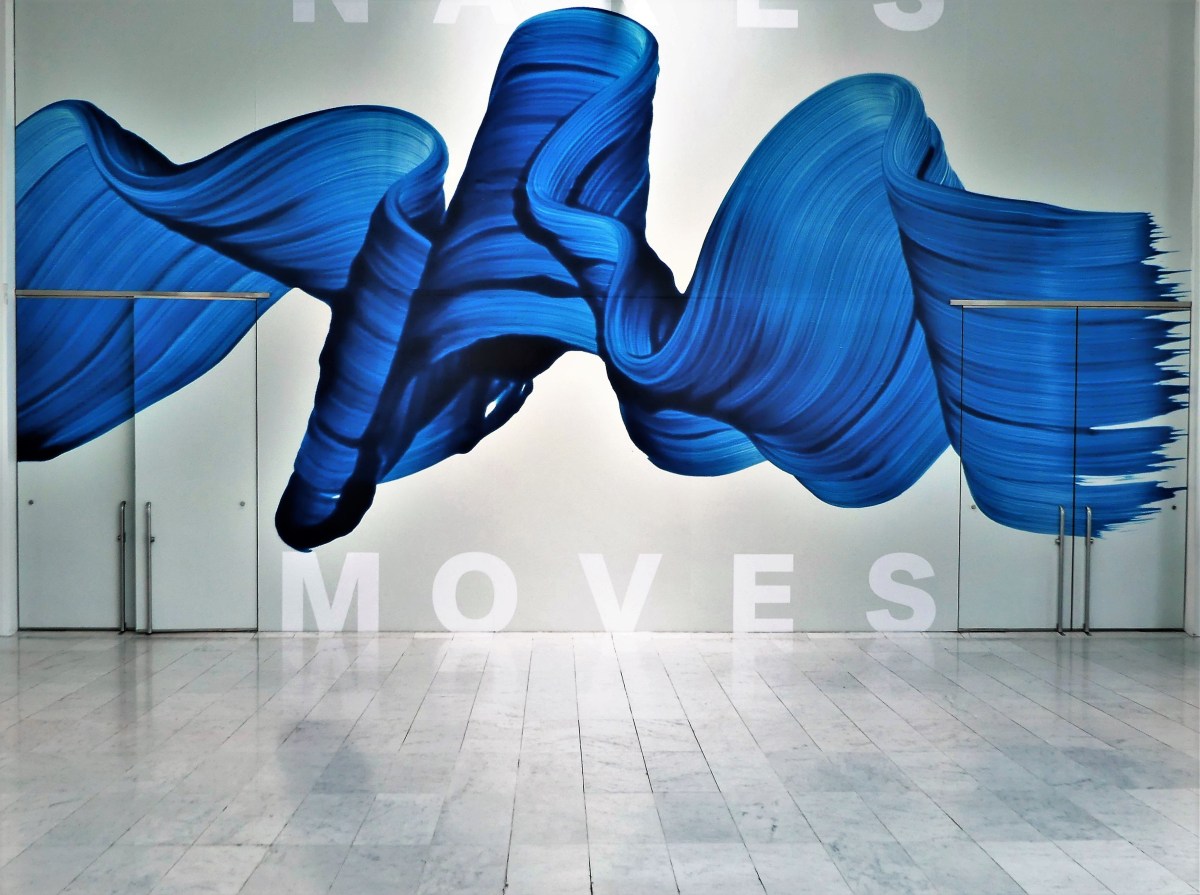
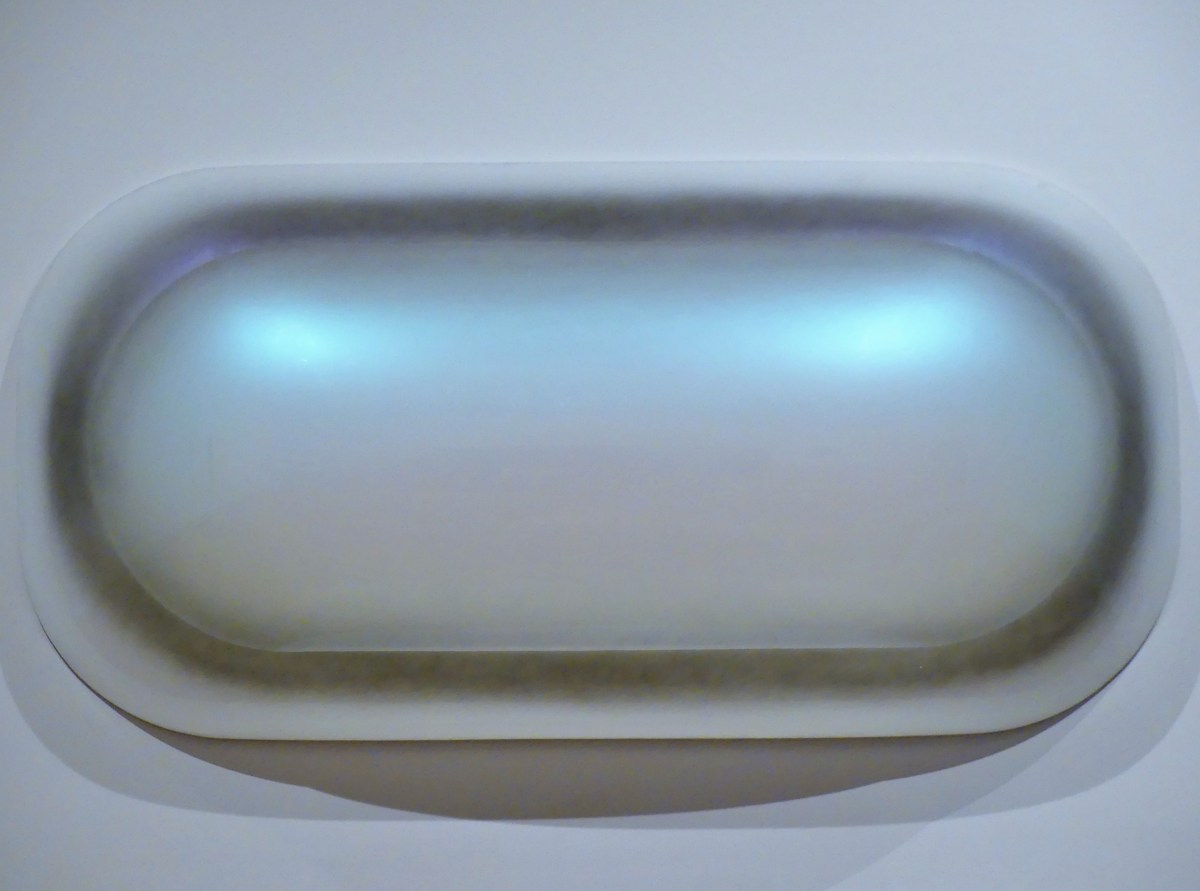
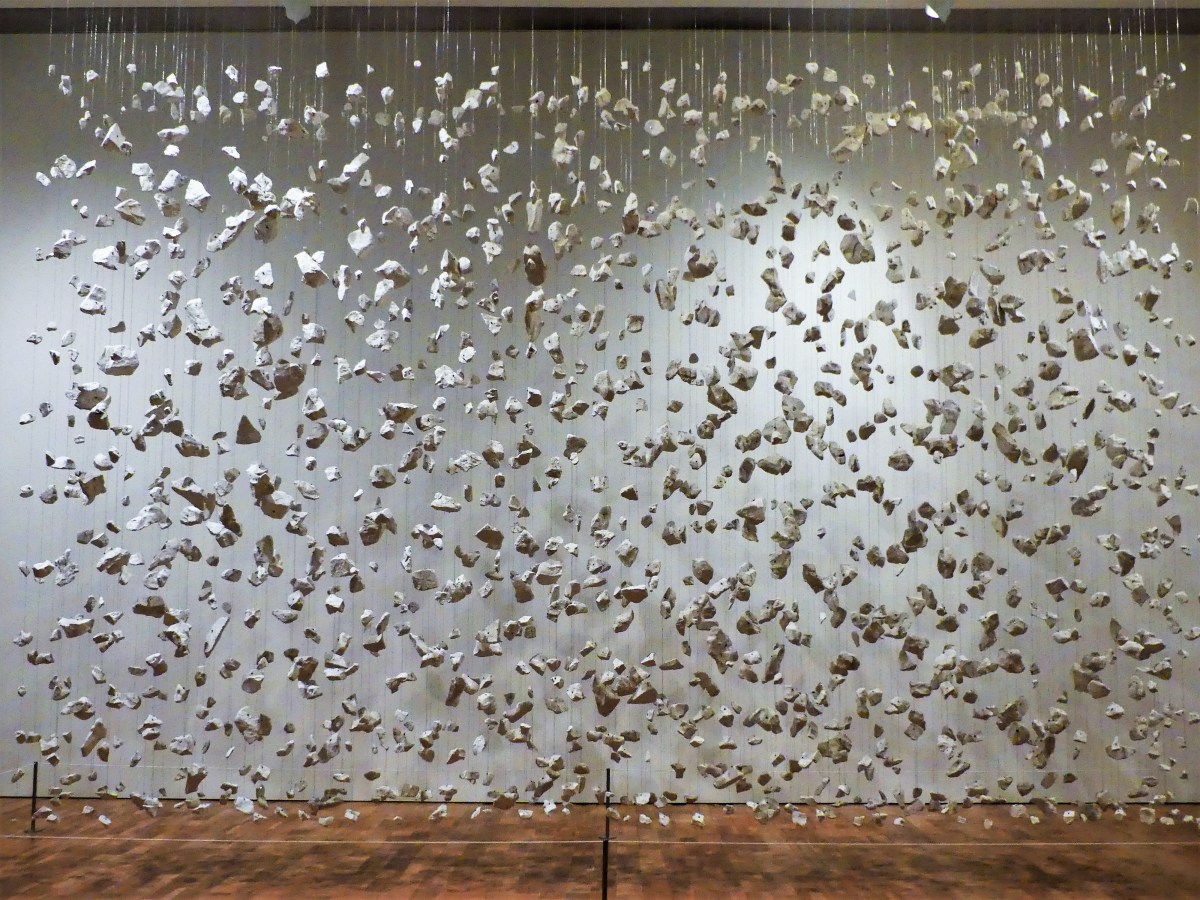
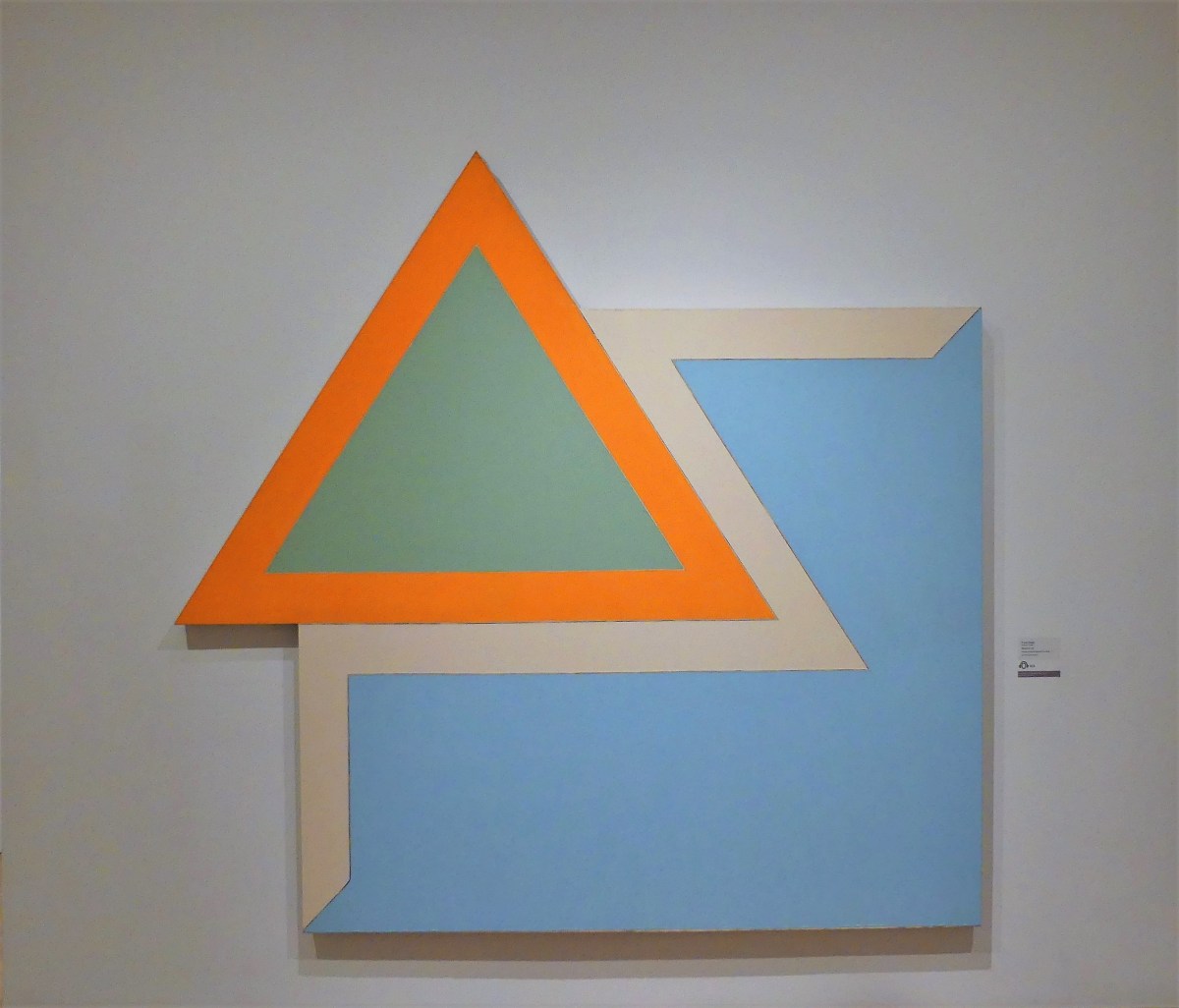
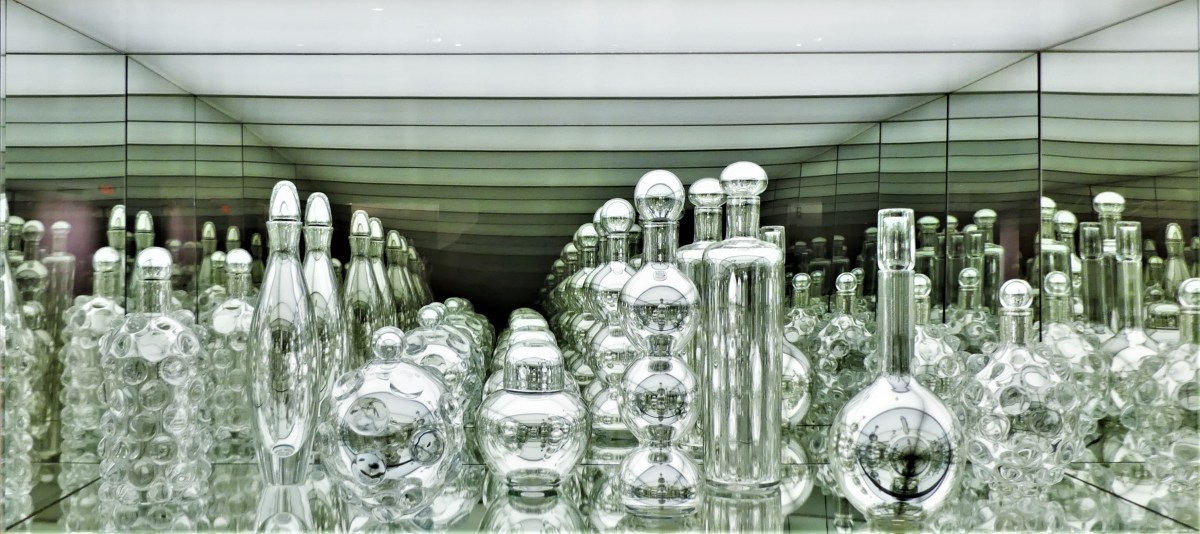
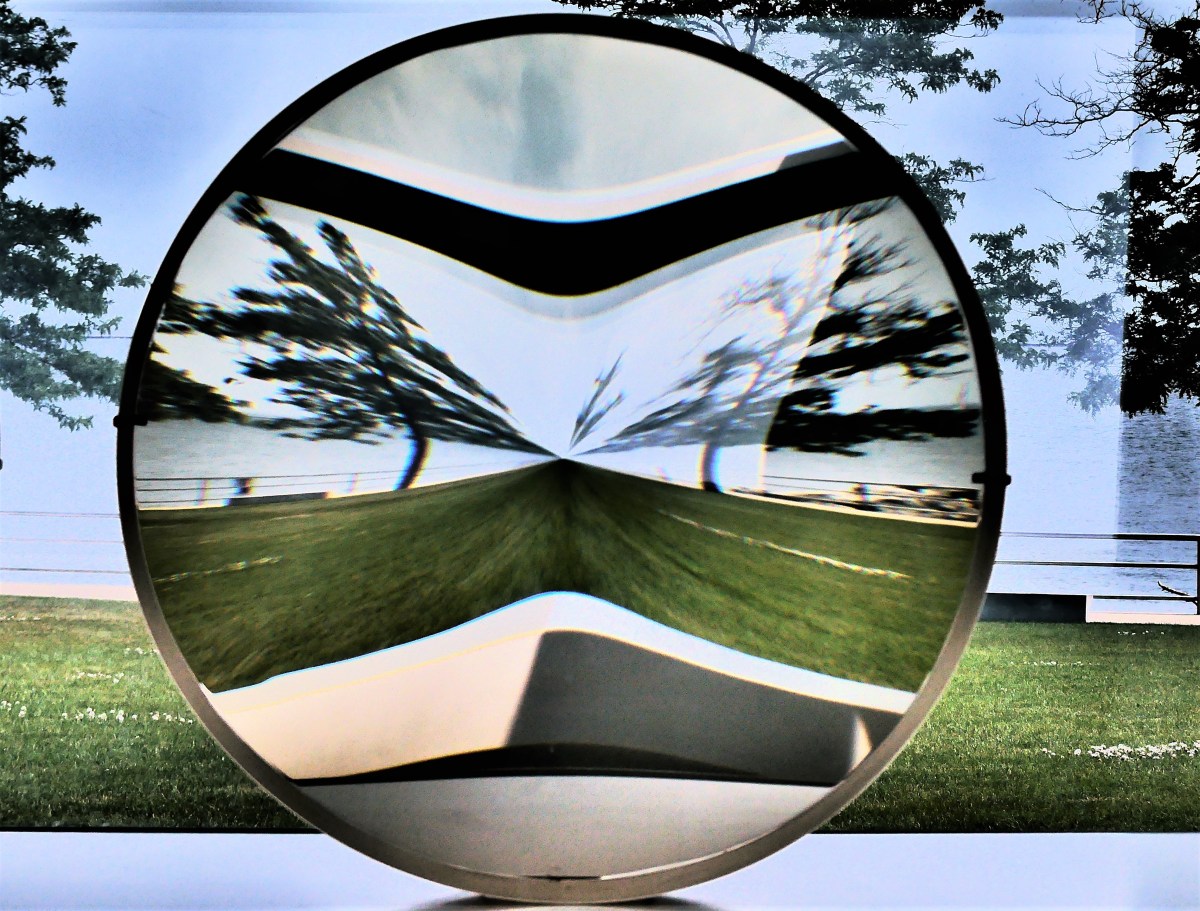
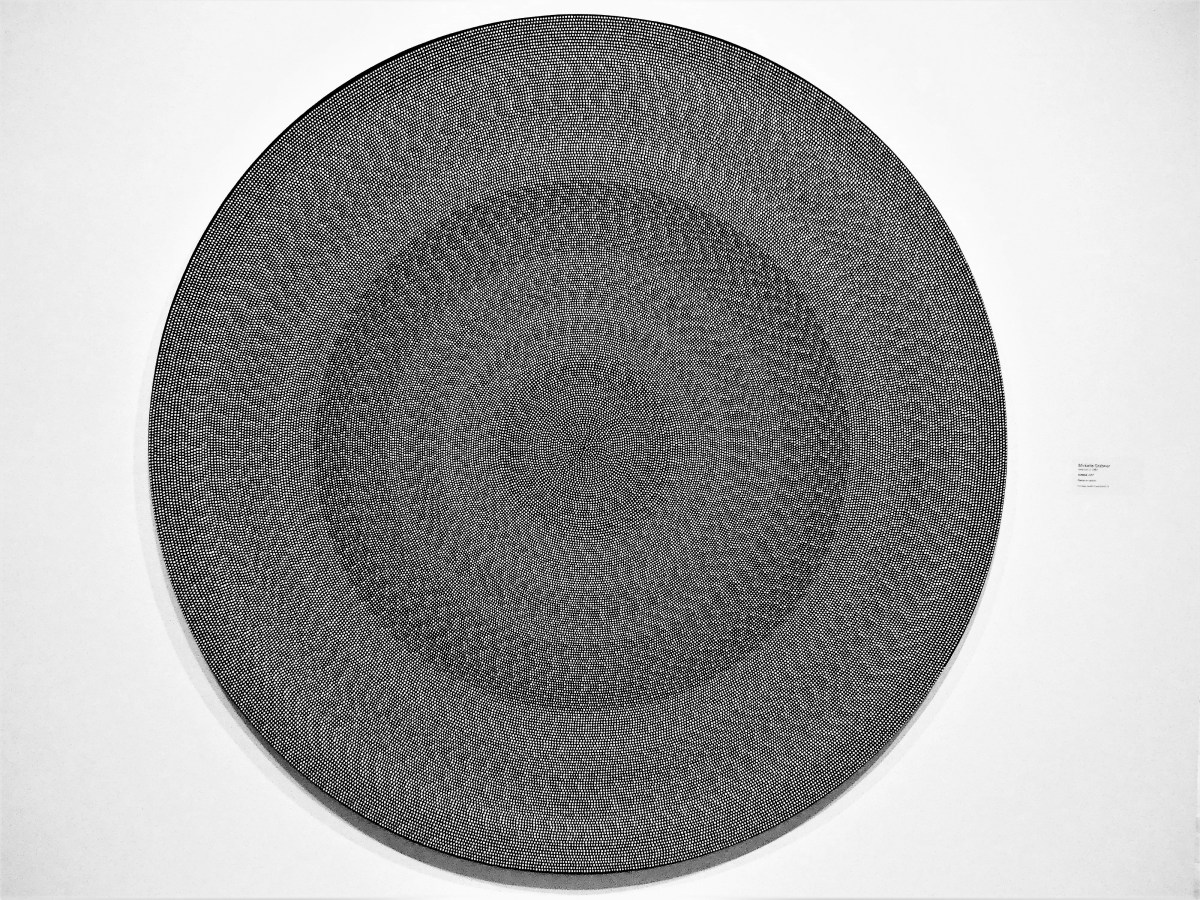
which gave us more time to study some of the special artwork in greater detail without distraction or interruption:
(quickly scroll up and down for cool moiré effect)
While I never considered that the building was competing with the exhibitions, I was always eager to return to Calatrava’s public spaces…
to cleanse my palette before indulging in another bite of brain food!
We had come to Milwaukee to drink some beer, eat some cheese curds and absorb some culture, and Milwaukee didn’t disappoint us.
Once home to the Big Four: Miller; Pabst; Shlitz and Blatz–Milwaukee was considered the brewing capital of the nation during much of the 20th century. However, after sell-off and consolidation, only MillerCoors remains as Milwaukee’s master brewer.
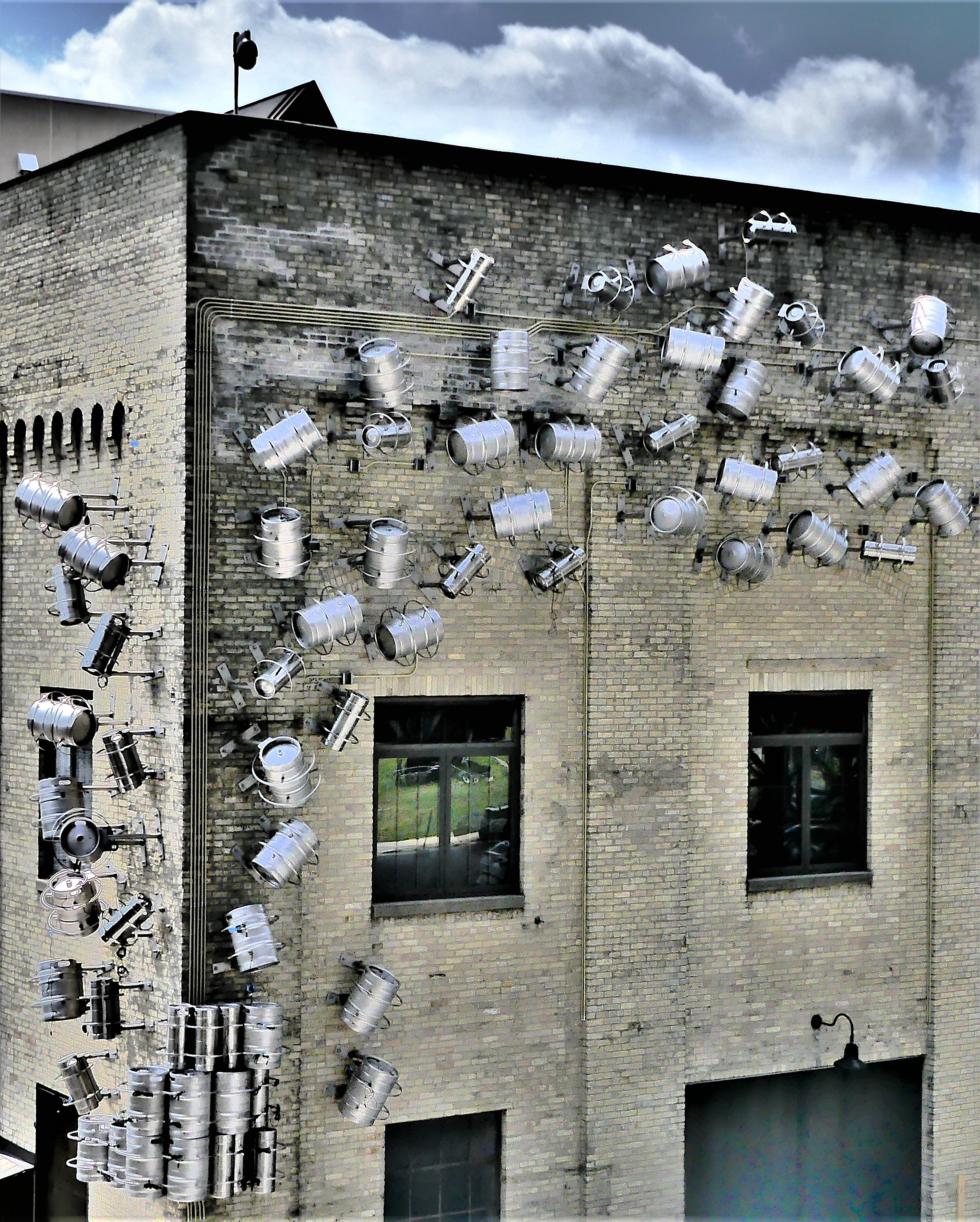
Nevertheless, there are plenty of reminders of the good ol’ days scattered around town…
For instance, on W. Wisconsin Avenue sits the Pabst Mansion.
In 2015, Pabst returned to the city with a scaled-down version of itself, manufacturing only craft beers, like many of its competitors in the region.
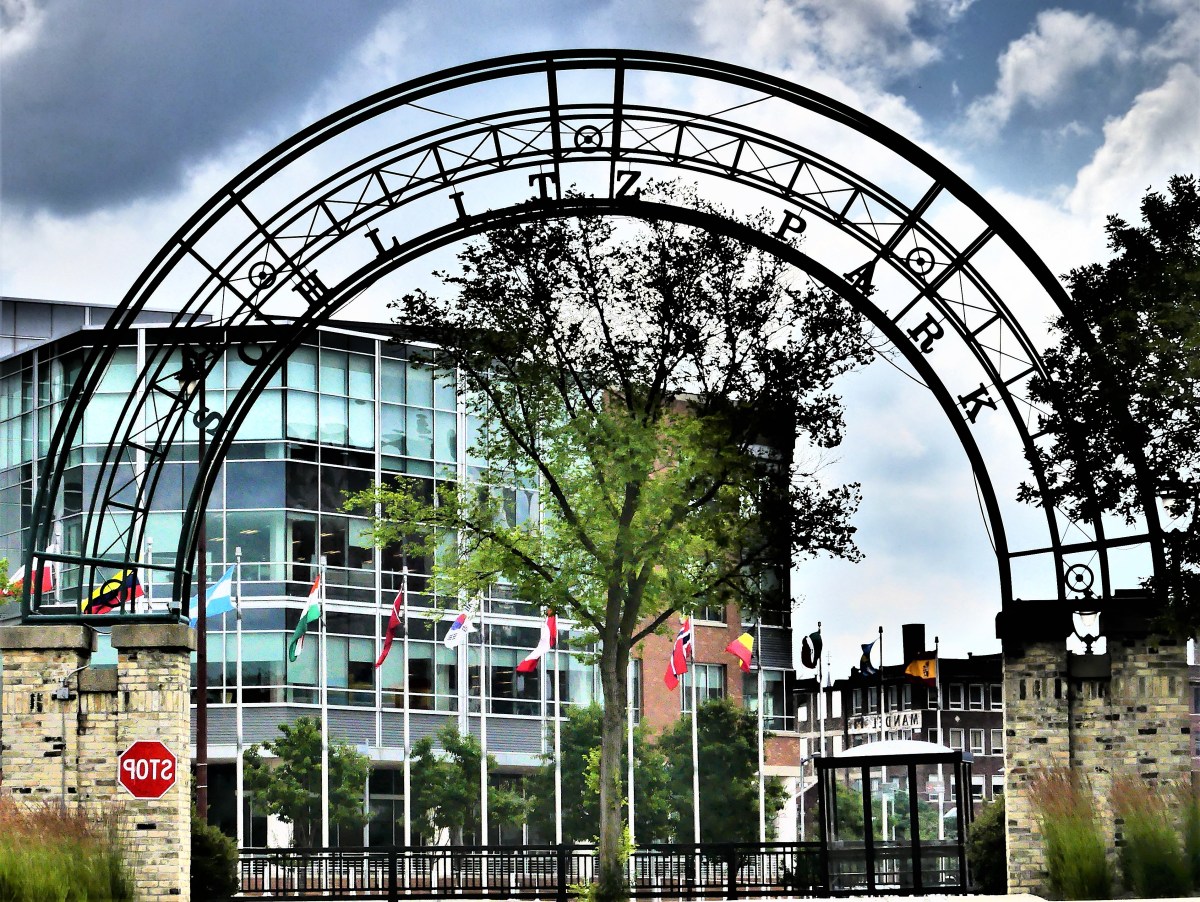
Likewise, the Schlitz Brewery has been converted into an office park.
But a new generation of brewers is doubling down on craft beers, with special attention going to Lakefront Brewery for its laid-back vibe and its innovative spirit, which instilled brothers Russ and Jim Klisch to brew Doors County cherry beer and the nation’s first gluten-free beer.
Leah and I sat in the Beer Hall noshing on fish tacos and award-winning cheese curds while waiting for the brewery’s 4 pm tour.
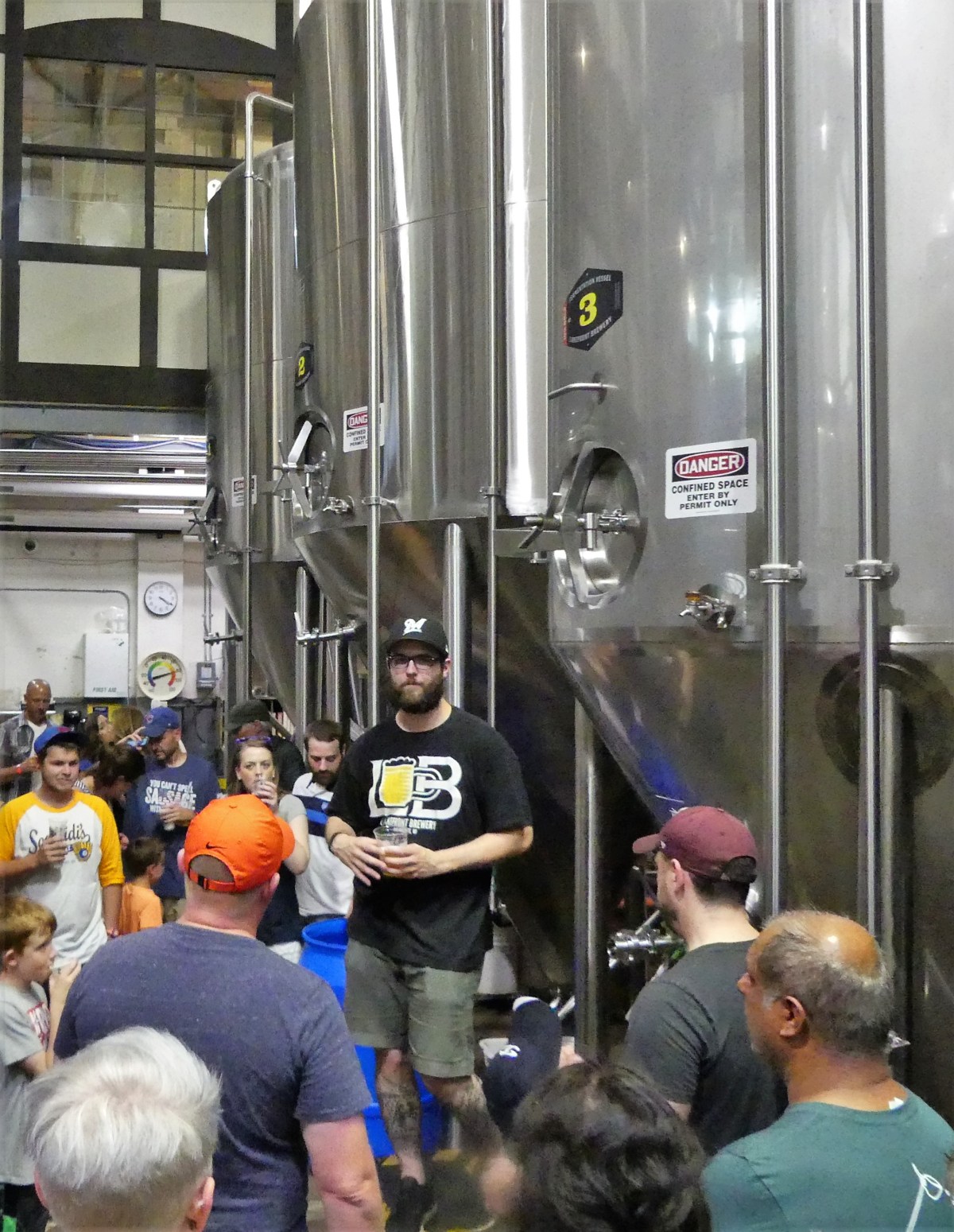
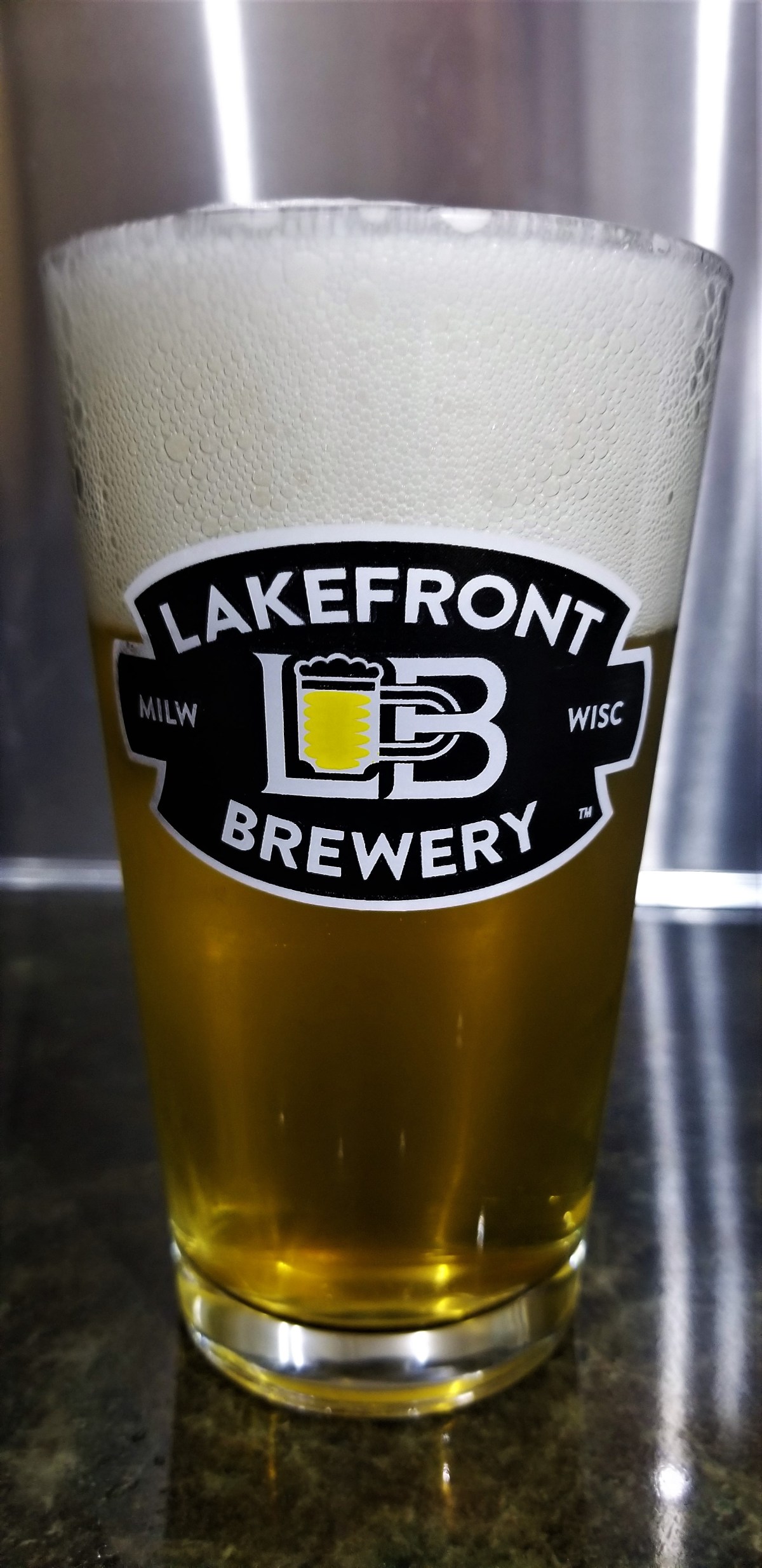
Eleven bucks buys an 8 oz. plastic cup and four wooden tokens good for four pours from start to finish of the humorous, 45-minute tour–very different from other tours I’ve taken (see Supreme Ruler of Beers and Eco-Beer), where beer sampling follows the tour as a time reward.
At the conclusion of the tour, we gathered around the bottle conveyor,
and we sang…
Additionally, the plastic cup can be exchanged for a free beer glass at the gift shop.
It was our good intention to attend Gallery Night directly after the beer tour…
but drinking beer interfered with our plan, so it would have to wait until Gallery Day.
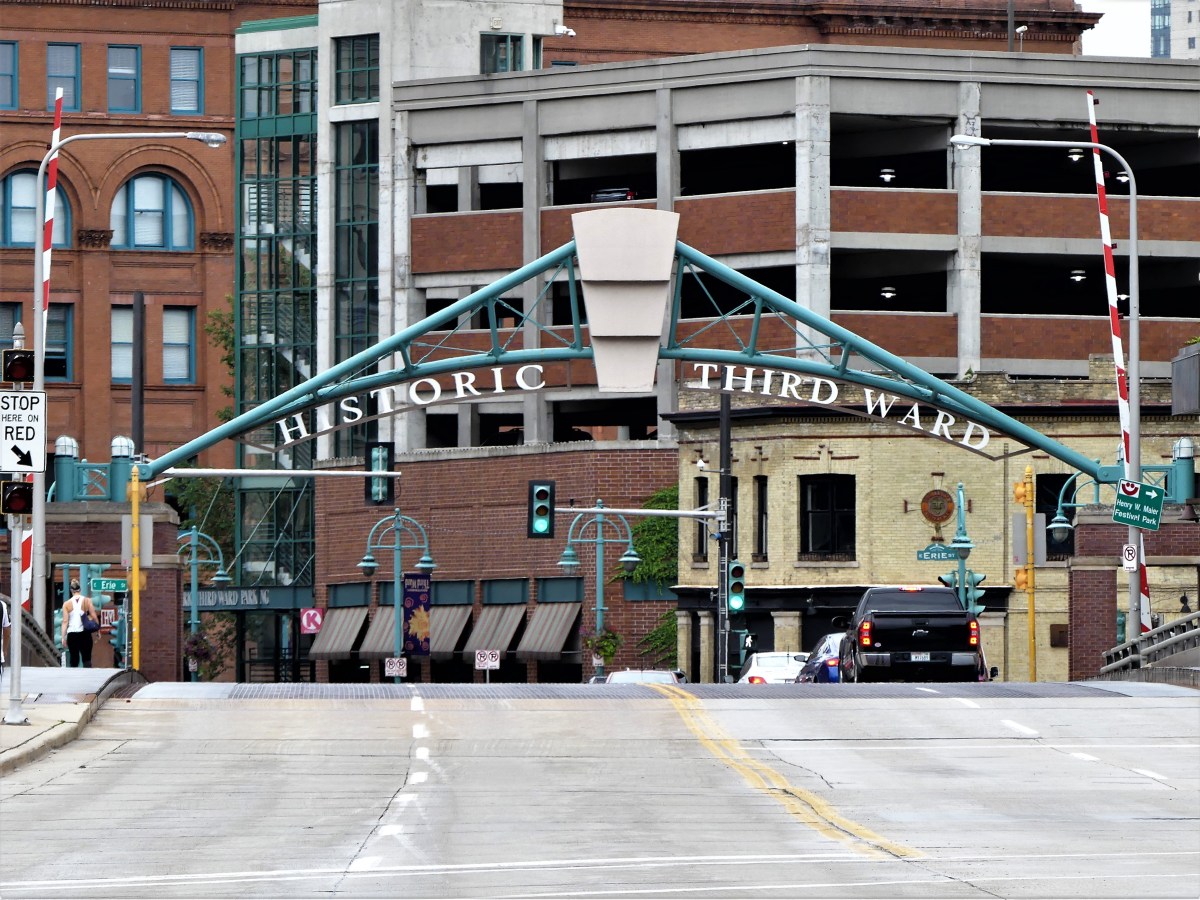
The following day we drove to the Historic Third Ward, and roamed through six floors of the Marshall Building inspecting a variety of syles and mediums of different artists.
Unfortunately, the clouds rolled in and it rained like there was no tomorrow. We waited out the deluge at a nearby Shake Shack until a break in the weather, and crossed over to Walker’s Point to satisfy our random craving for novelty, humor, and are you kidding me?
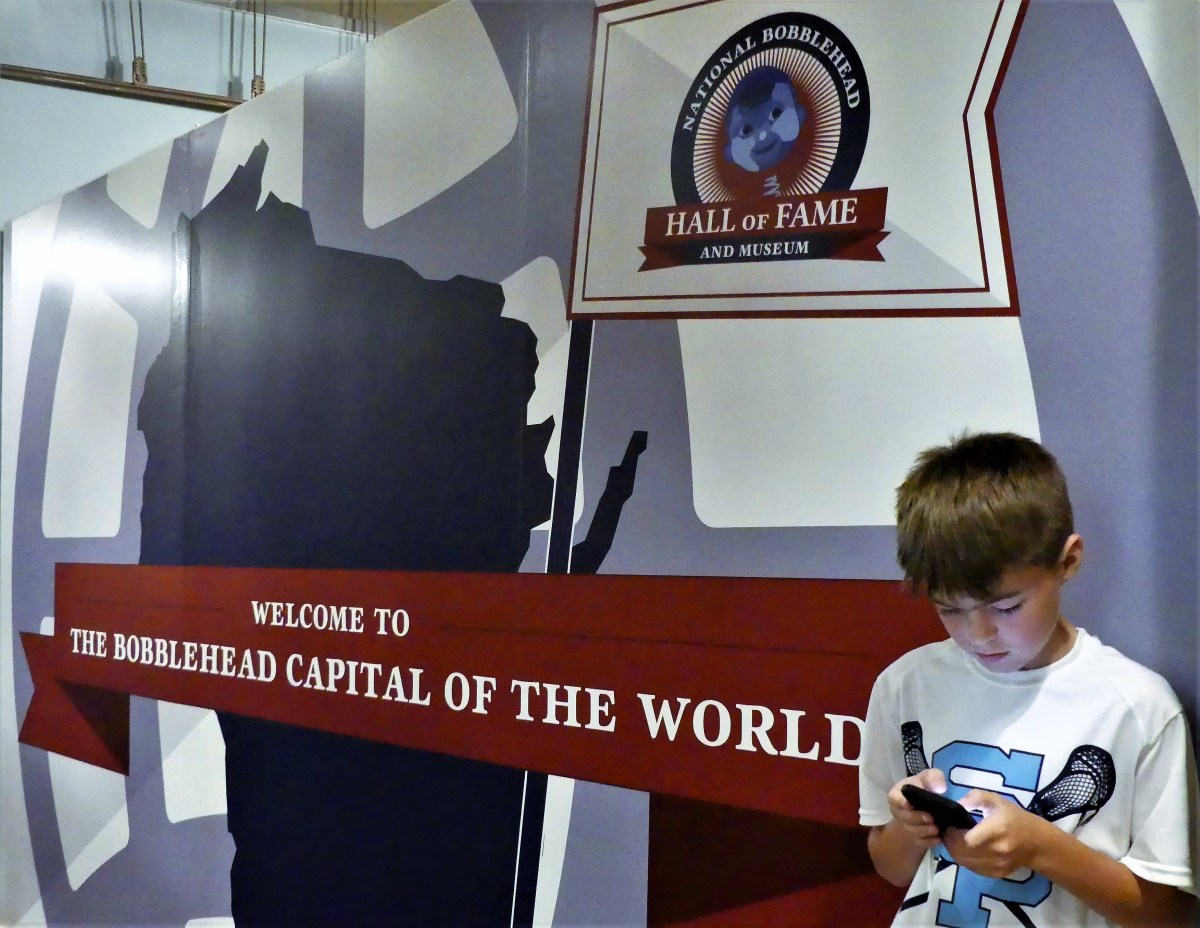
As of February 2019, there’s a new museum in town, and it’s head and shoulders above the rest. It’s also a nerdatorium for dads…
and their kids.
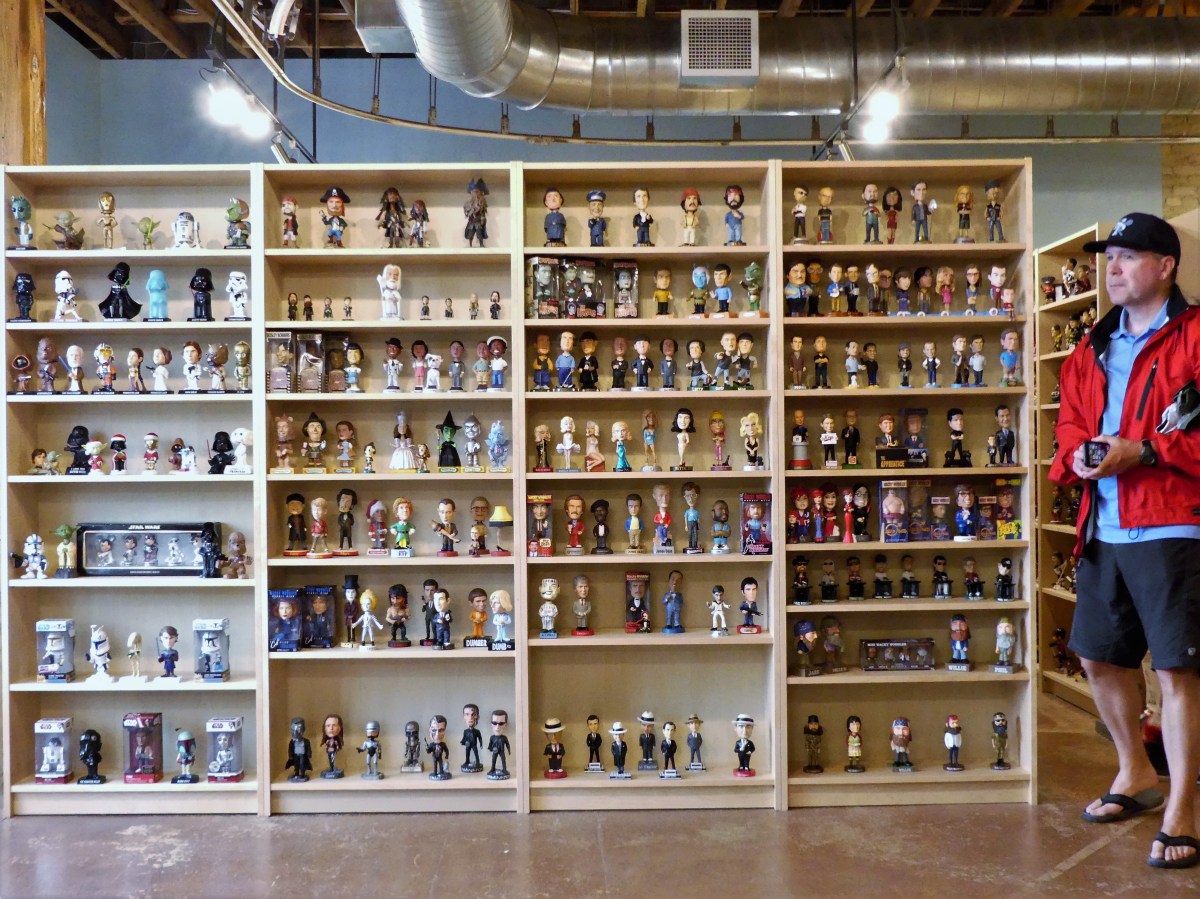
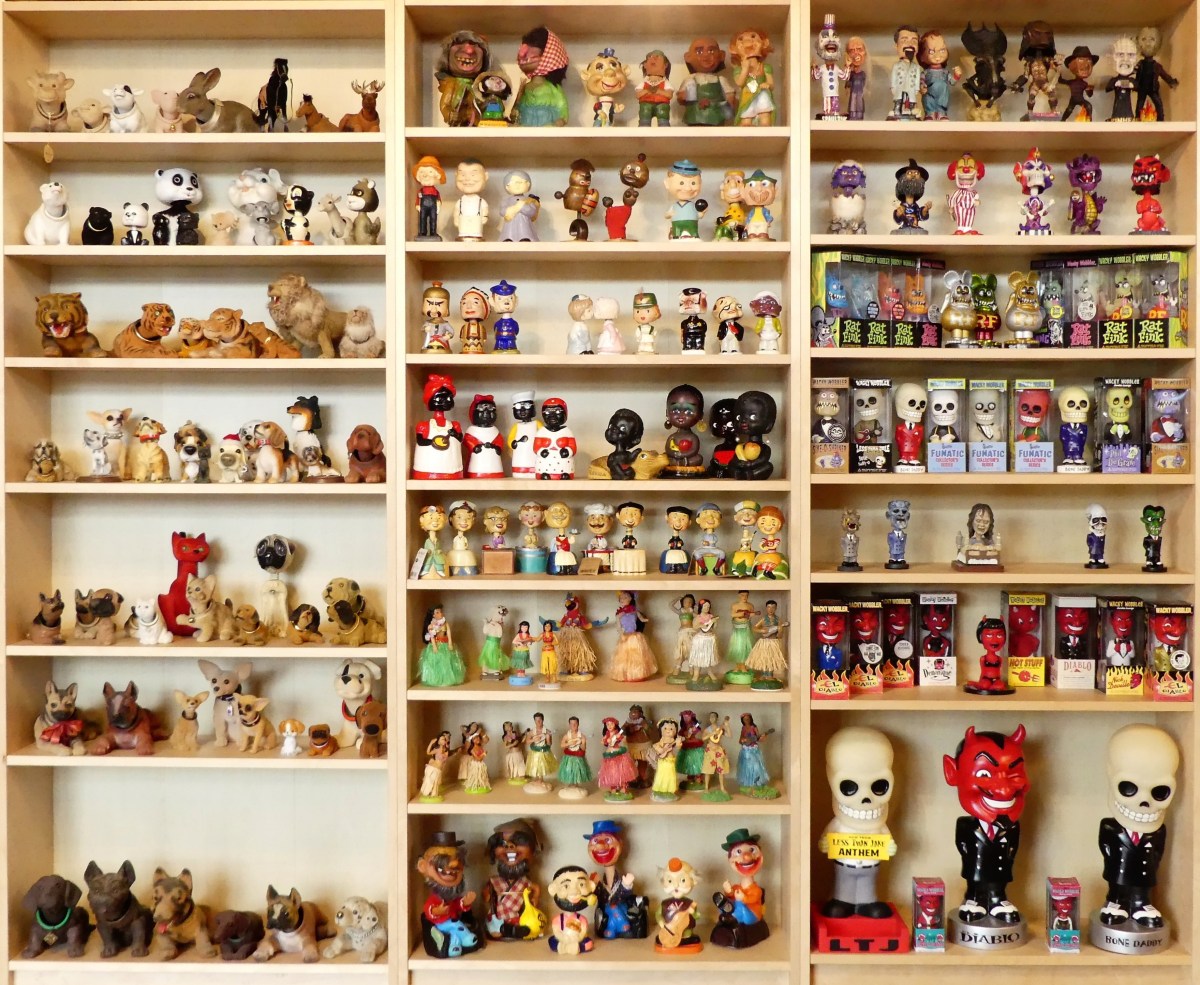
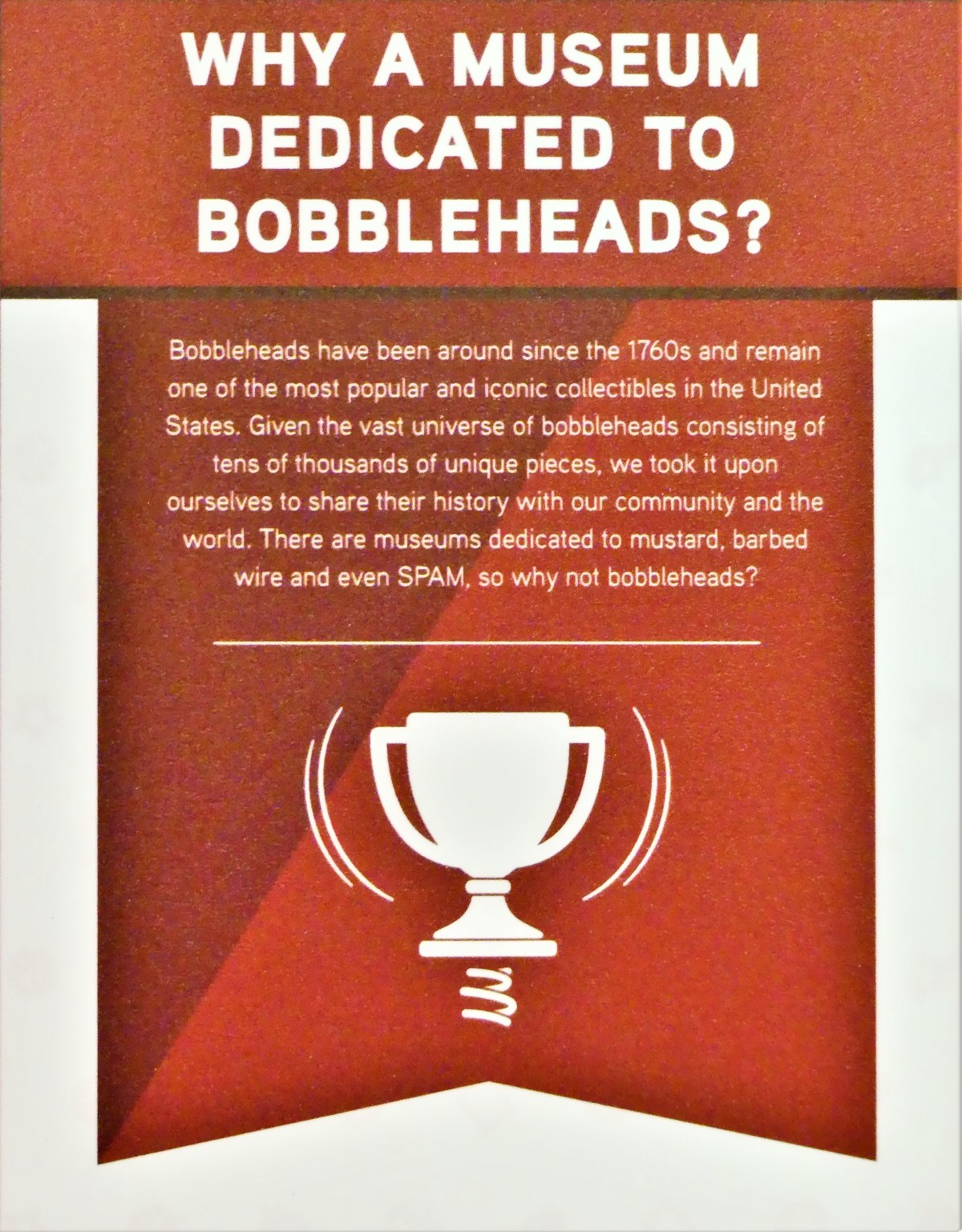
The National Bobblehead Hall of Fame and Museum definitely checks the excess box with a collection of 6,500 figurines on display, covering a wide swath of popular culture,
featuring sports and mascots,
fantasy,
and politics.
The Hall of Fame Bobbleheads line the windowsills.
Shaking my head in disbelief, I asked myself, “Why?”…and patiently waited for a sign to give me guidance!
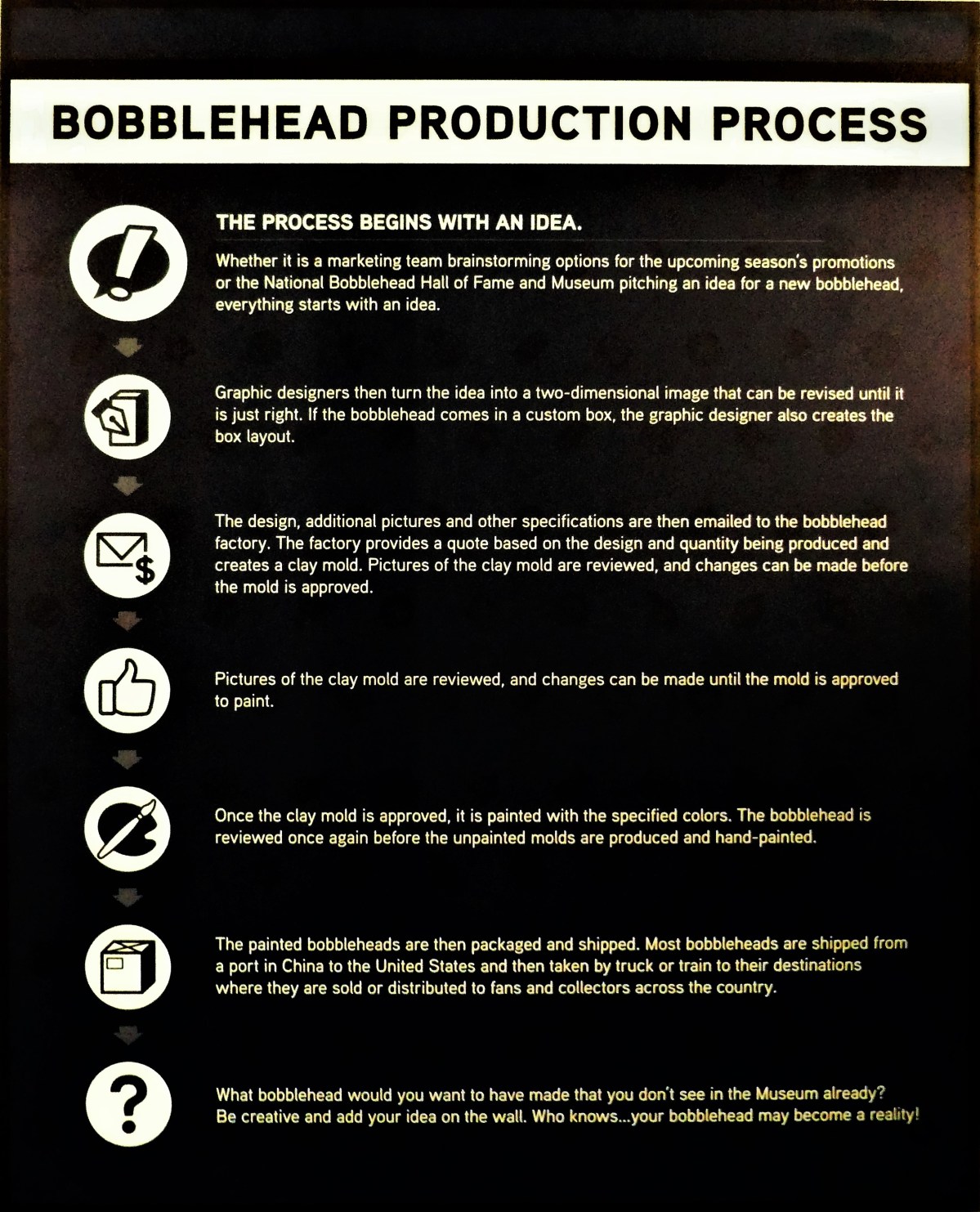
For the overly curious, the bobblehead production process is explained step by step…
However, the bobblehead timeline gave insightful commentary and instant credibility to museum founders Brad Novak and Phil Sklar.
This slideshow requires JavaScript.
There’s little doubt that I’ll be raising a glass or two of Lakefront’s Riverwest Stein Amber Lager every January 7 to celebrate.
There’s very little to write about Frank Lloyd Wright that scholars haven’t already written.
His affinty for nature, his indefatigable energy, his genius for design, his eagerness to experiment, his immense ego, his appetite for women, his dedication to family–it’s all been revealed and discussed in numerous books and lectures. But it’s also apparent from walking through his Taliesin estate in Spring Green, Wisconsin.
Leah and I would have preferred the immersive, 4-hr Estate Tour, but when I checked on-line for tickets, only one ticket was available when I needed two. It seems that no tour exceeds 21 people, matching the number of seats on the shuttle. Instead, we opted for the 2-hr Highlights Tour.
We boarded the bus at the Visitor Center–
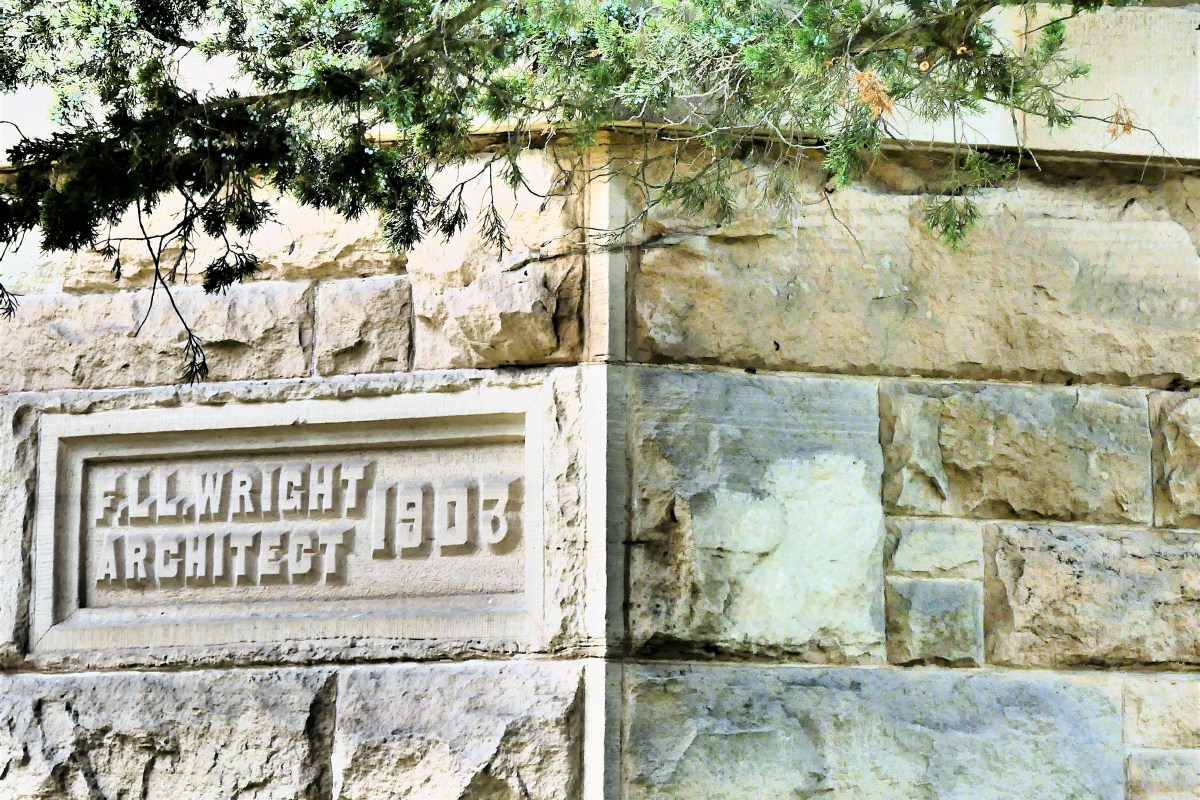
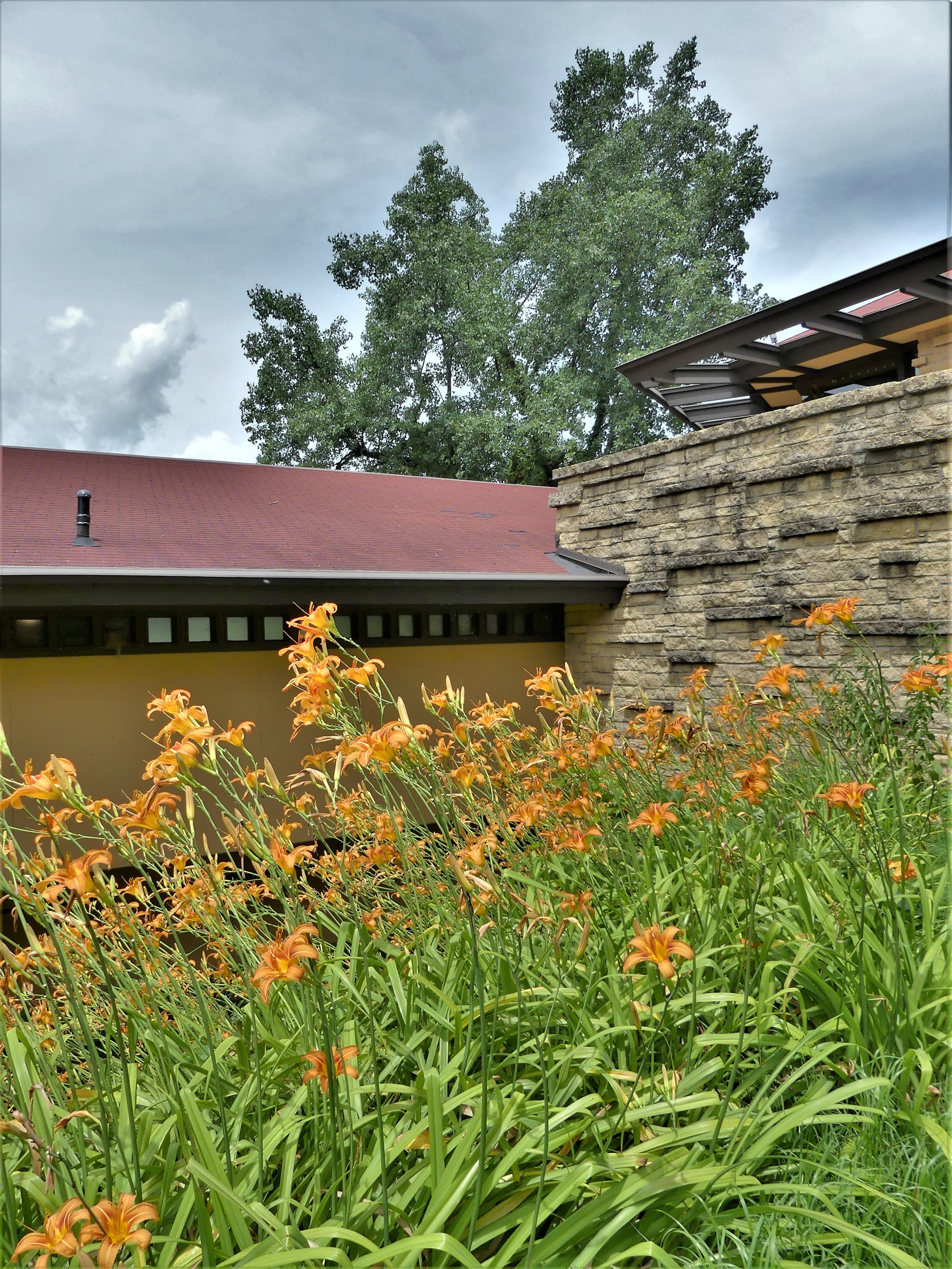
orginally designed by Wright in 1953 as a restaurant and “gateway” to Taliesin, but Wright’s death in 1959 stalled any further construction until his former apprentices completed the building in 1967.
The ride took us past Midway Barn, Uncle John’s farming complex,
on the way to Hillside, the site of the home school he built for his Aunts Jane and Ellen Lloyd Jones.
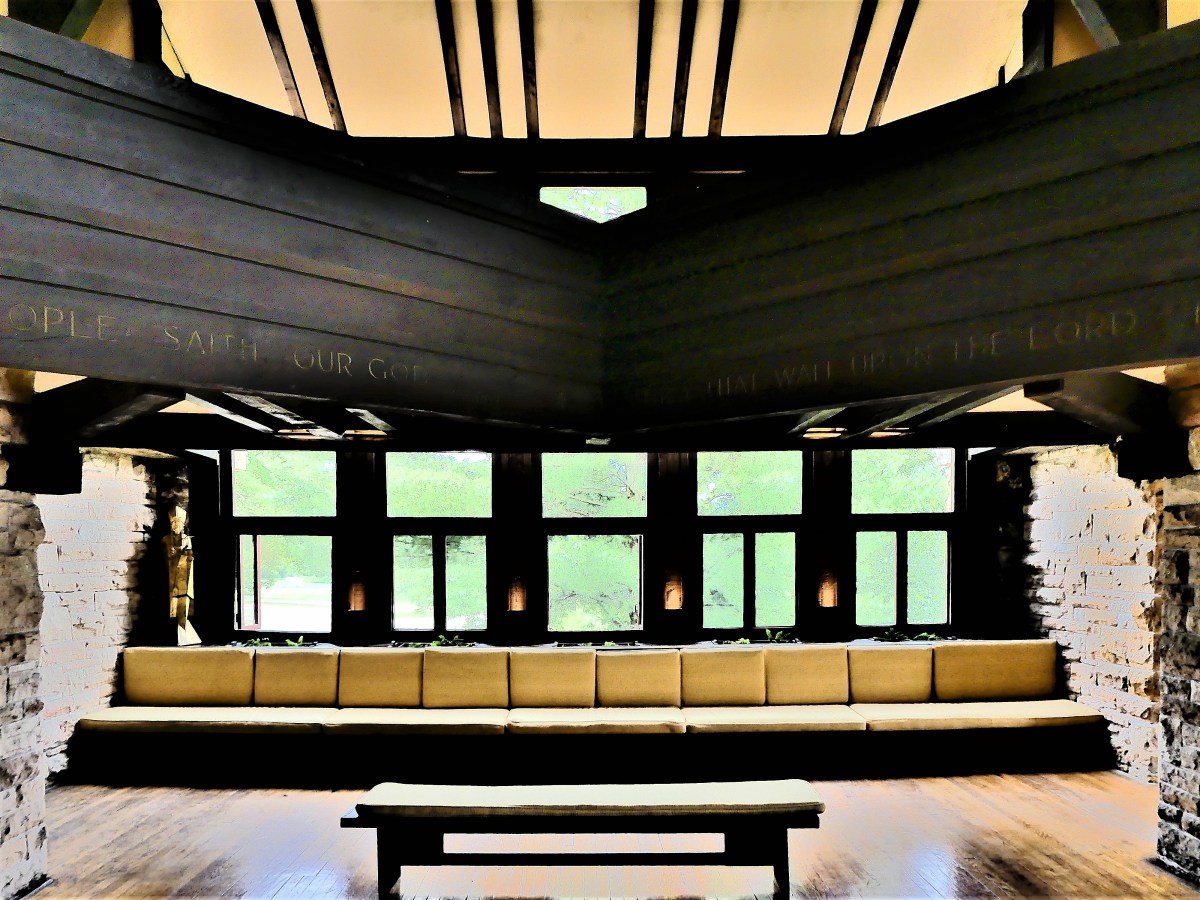
Currently, the building is occupied by a time-shared architecture “Fellowship”–funded by the Taliesin Foundation–that occaisionally gathers in the Assembly Hall,
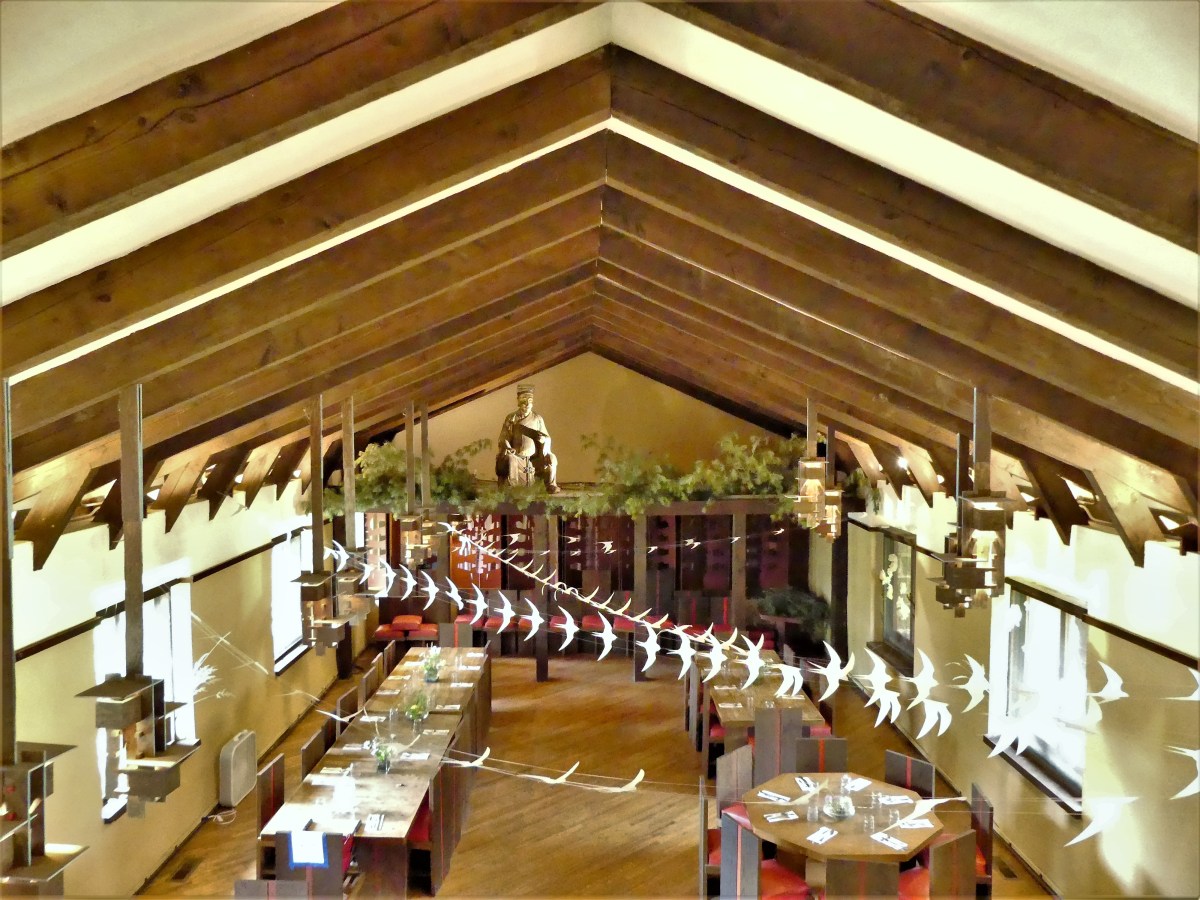
and takes meals in the Fellowship Dining Room,
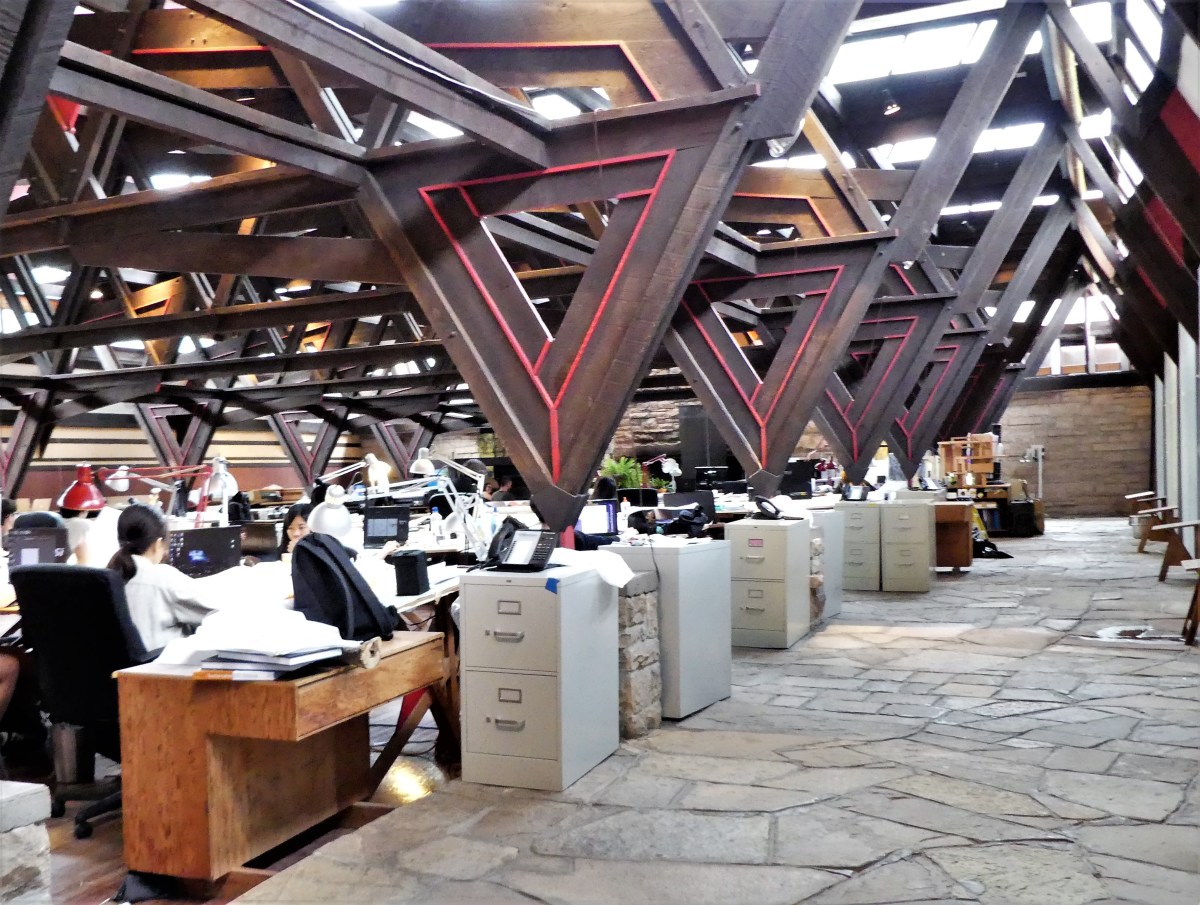
before returning to the 5,000 sq. ft. “abstract forest” Drafting Studio.
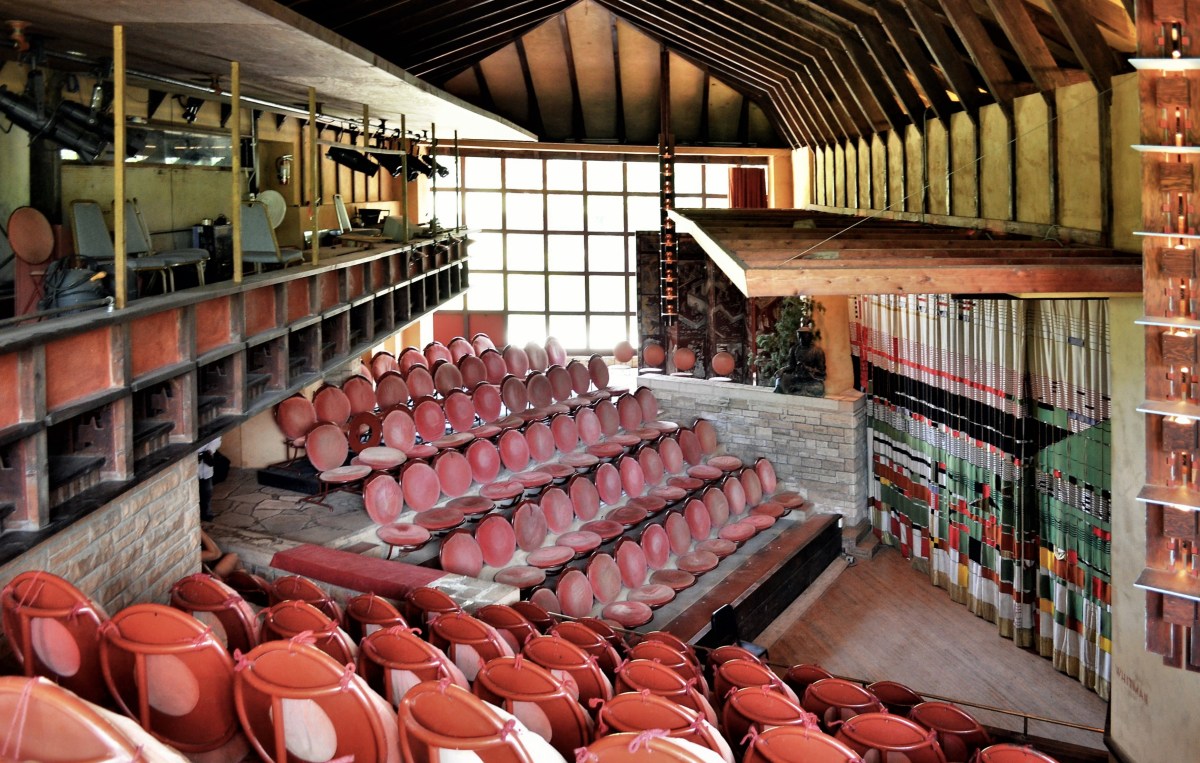
We finished up at Wright’s intimate, 120-seat Hillside Theater–originally intended as a gymnasium, but converted by Wright to a cultural space after determining that the arts were more important than sports–
and reboarded the bus for a brief blast of air conditioning and quick trip to Wright’s home studio,
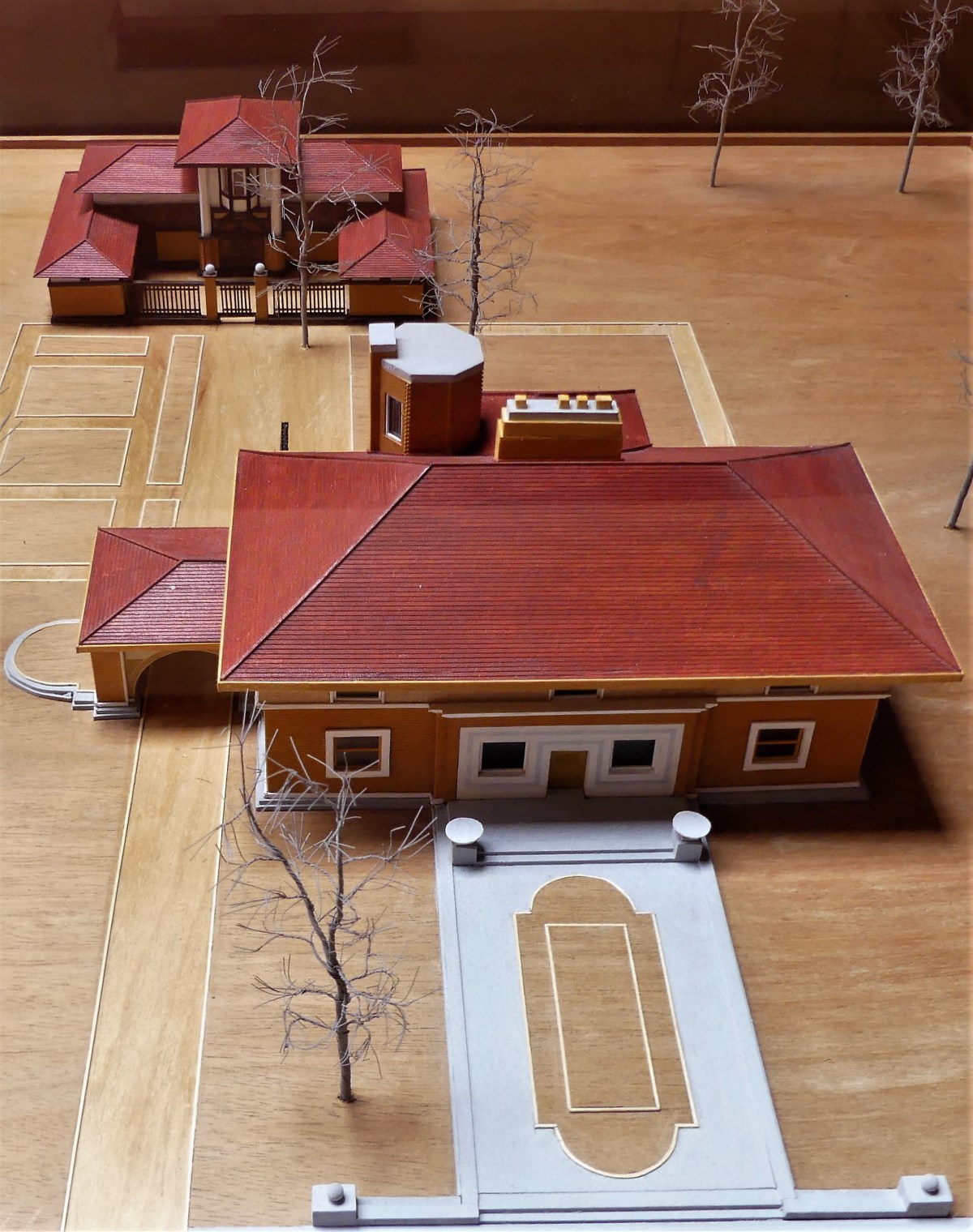
where we browsed through a drafting room filled with “Usonian” models, like the Willey House from 1934,
and assorted personal artifacts.
The house was noticably cooler, thanks to geothermal plumbing installed during the third re-build. We rounded the studio from the outside,
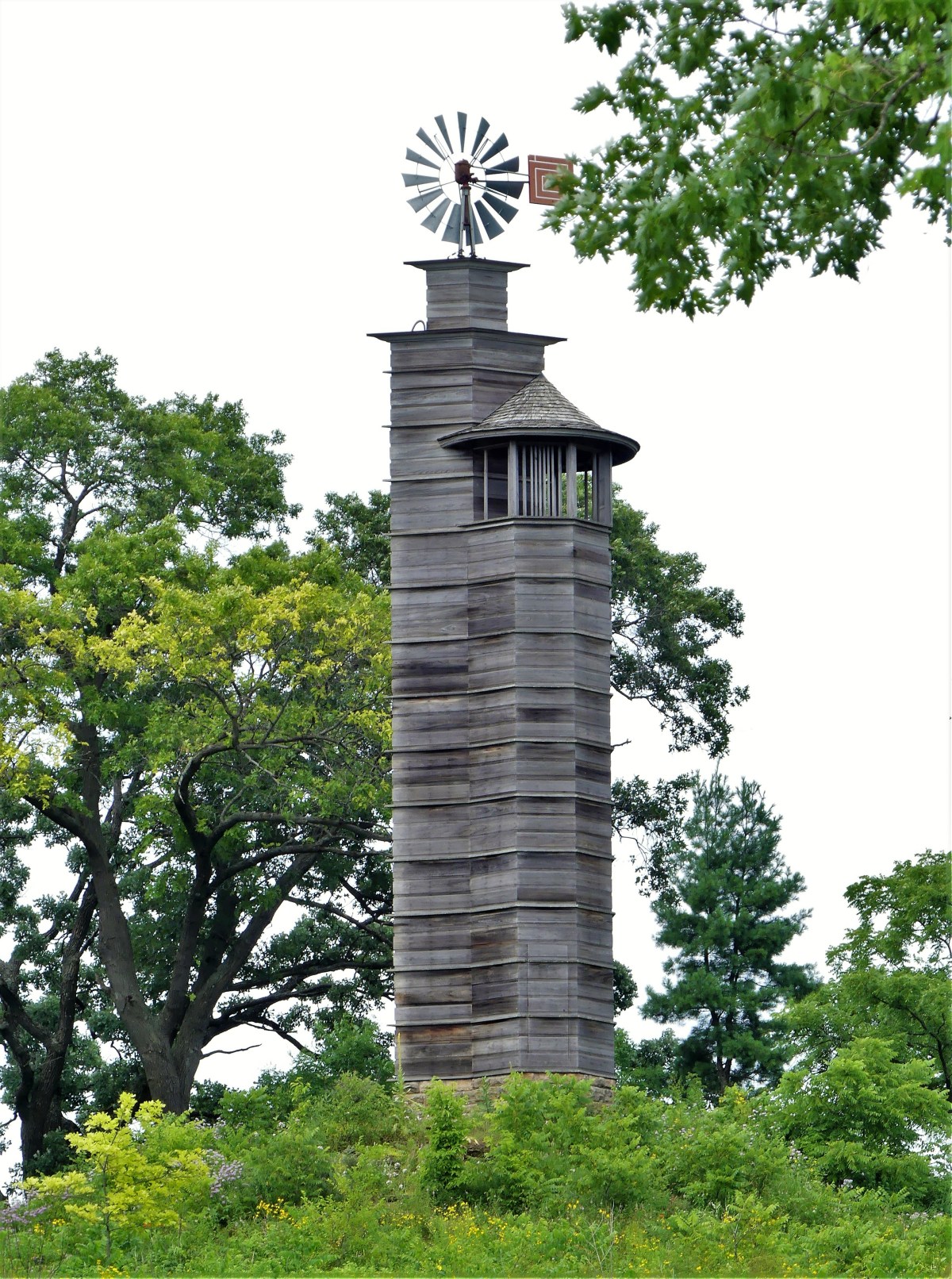
walked across a mound with views of the restored Romeo and Juliet windmill,
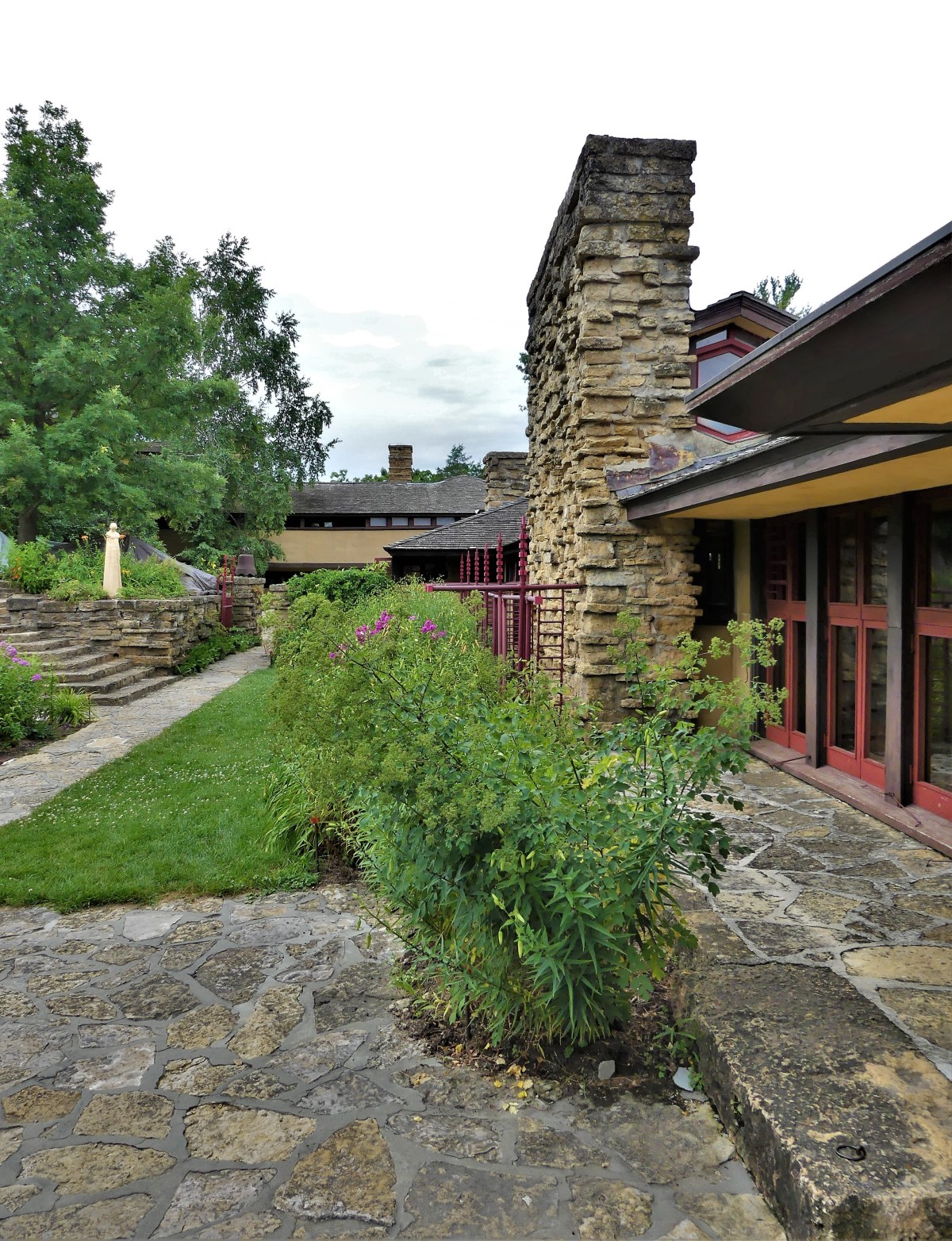
and traversed the gardens,
before re-entering the house through the expansive living room,
filled with wonderful flourishes, like glass-cornered windows (which Wright would ultimately perfect at Fallingwater)…
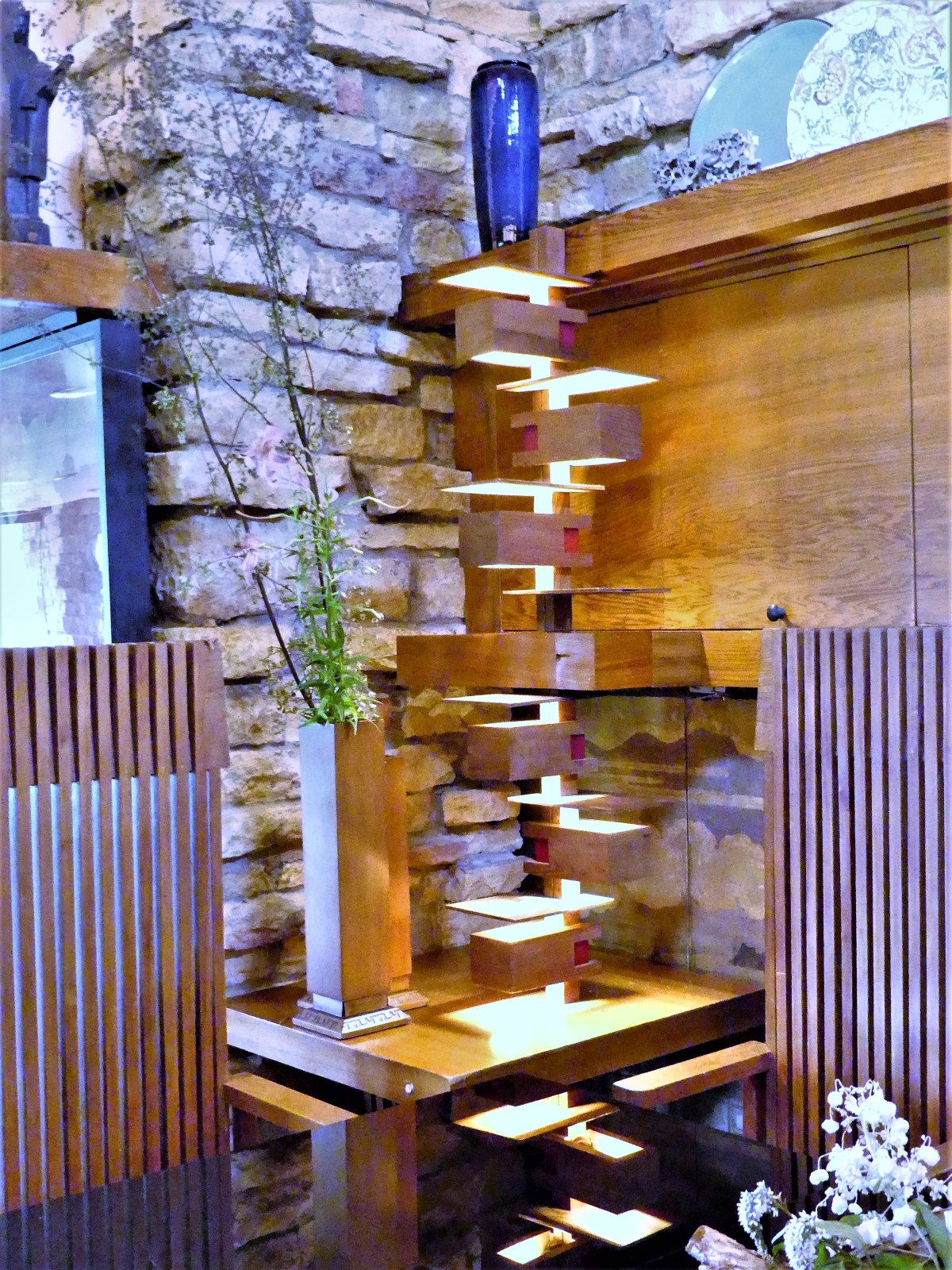
built-in table lamps,
and integration of sculptures that survived the previous two house fires.
Roaming through Wright’s personal bedroom (because he was an insomniac), we discovered no door, a wall of windows without window treatments, and original electric- blue shag carpeting.
The terrace offered glorious views of the Wisconsin River and Tower Hill State Park,
and Unity Chapel in the distance–
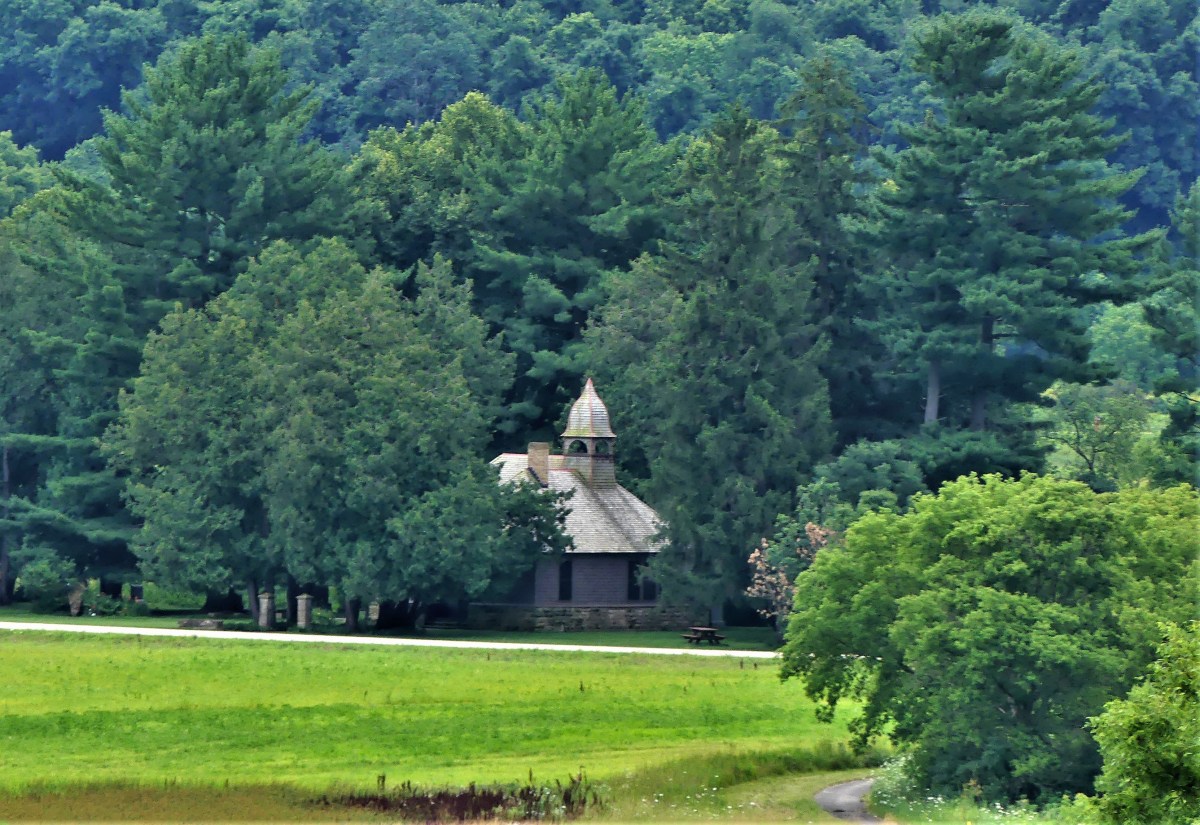
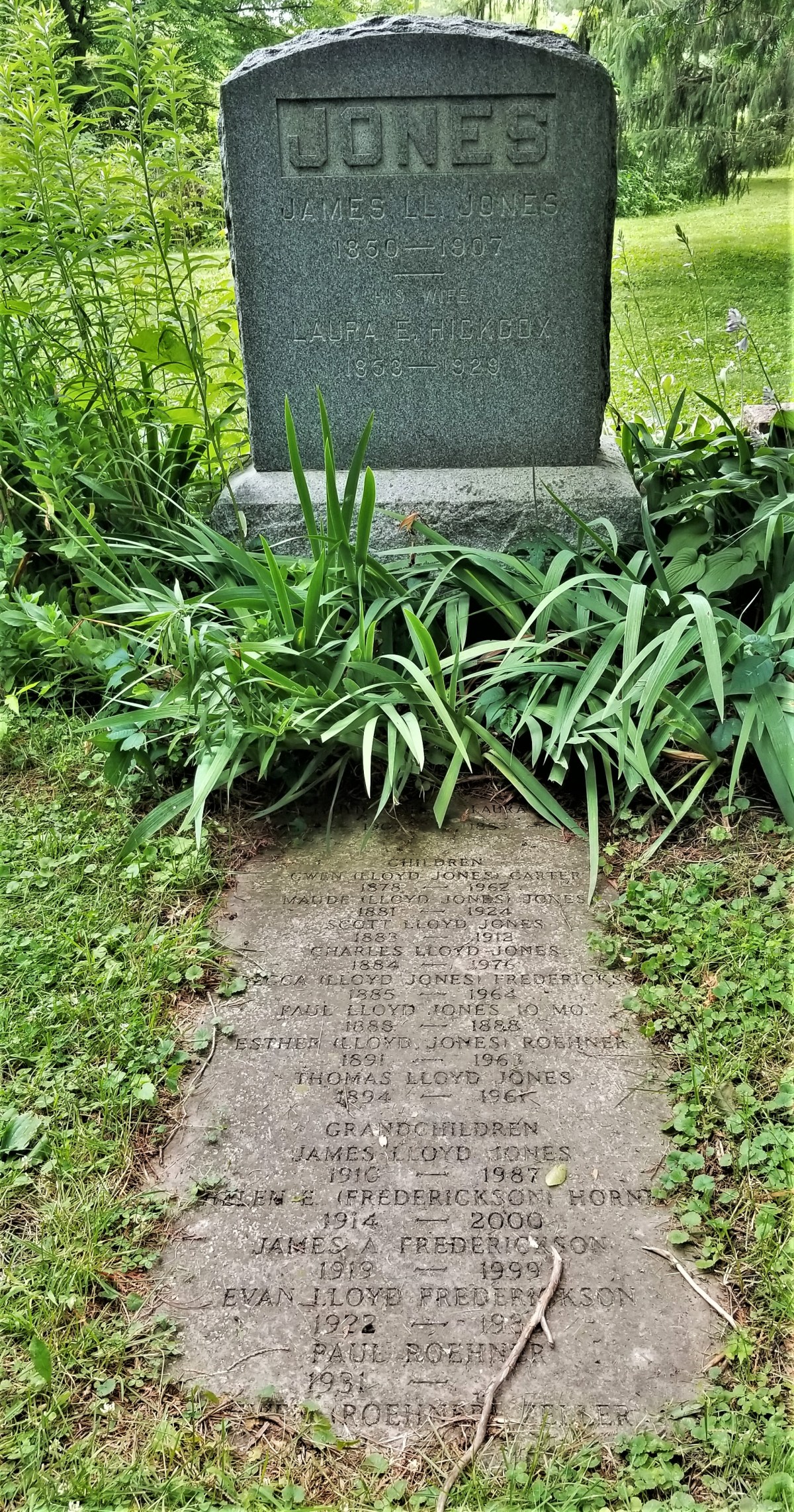
the site of Wright’s maternal family’s burial plots, his stone marker, and his empty grave.
As our driver passed Wright’s man-made falls,
our docent passed along a local story of intrigue and scandal:
During March 25, 1985, under cover of darkness, Frank Lloyd Wright’s body was exhumed from his Unity Chapel resting place by his oldest granddaughter, Elizabeth Wright Ingraham, and moved to a burial site at Taliesin West, in Scottsdale, Arizona.
She claimed to be fulfilling the dying wishes of her grandmother and Wright’s widow, Olgivanna Lloyd Wright, whose ashes were united with her husband’s within a memorial wall overlooking Paradise Valley. The event sparked outrage around the globe from associates and friends who argued that the architect would have desired to spend eternity at Unity Church with his family.
Even now, Spring Green residents hope that one day their favorite son will get his ash back to Wisconsin.
One of Door County’s time-honored traditions is the fish boil, originally brought to Wisconsin by Scandinavian settlers over 100 years ago. It was a simple method for feeding scores of hungry fishermen and lumberjacks after a long day on the water. And today, it’s a timeless recipe for rustic fare that’s still practiced by a handful of restaurants around the peninsula. Part history lesson, and part pyrotechnics, the fish boil is a theatrical dining experience that doesn’t disappoint.
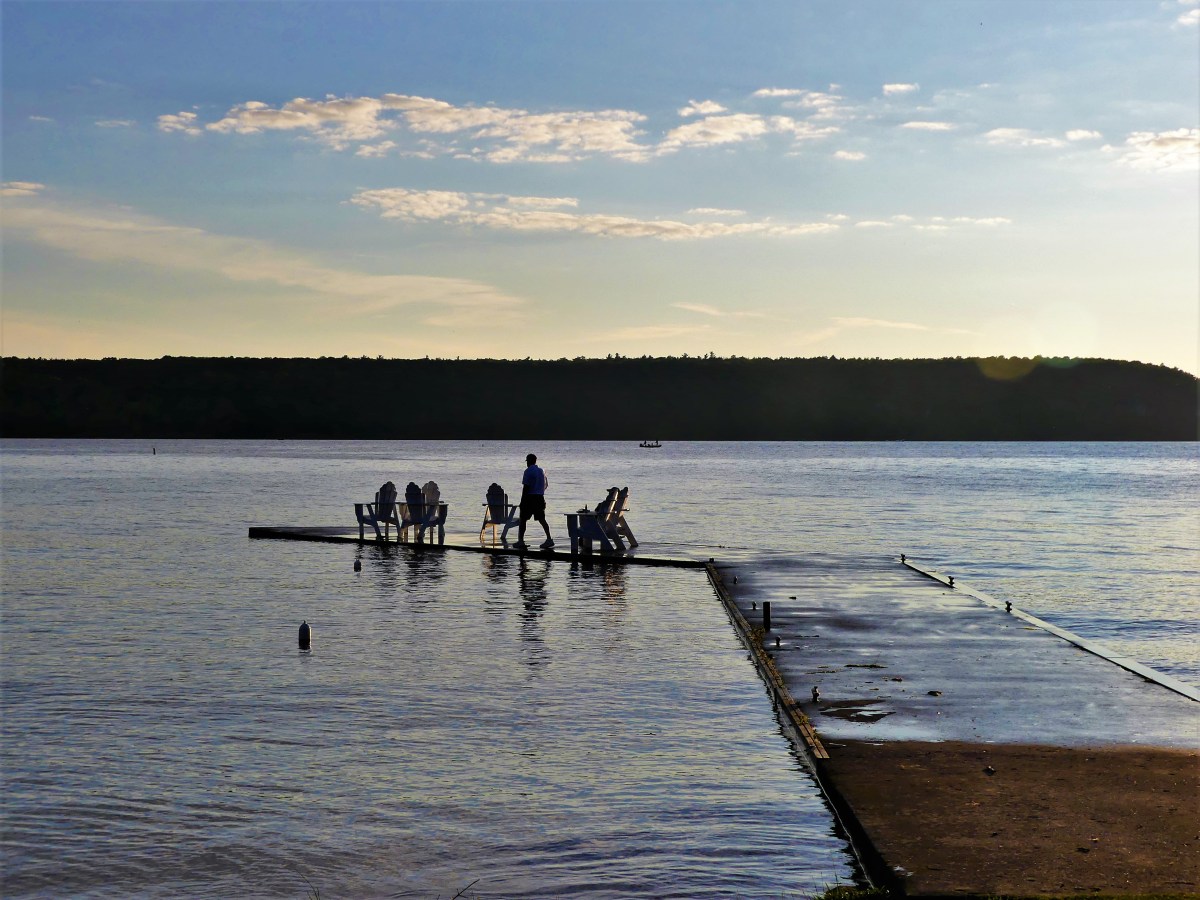
We chose the Old Post Office Restaurant in the village of Ephraim as our dinner destination, because of its home-style, country flavors,
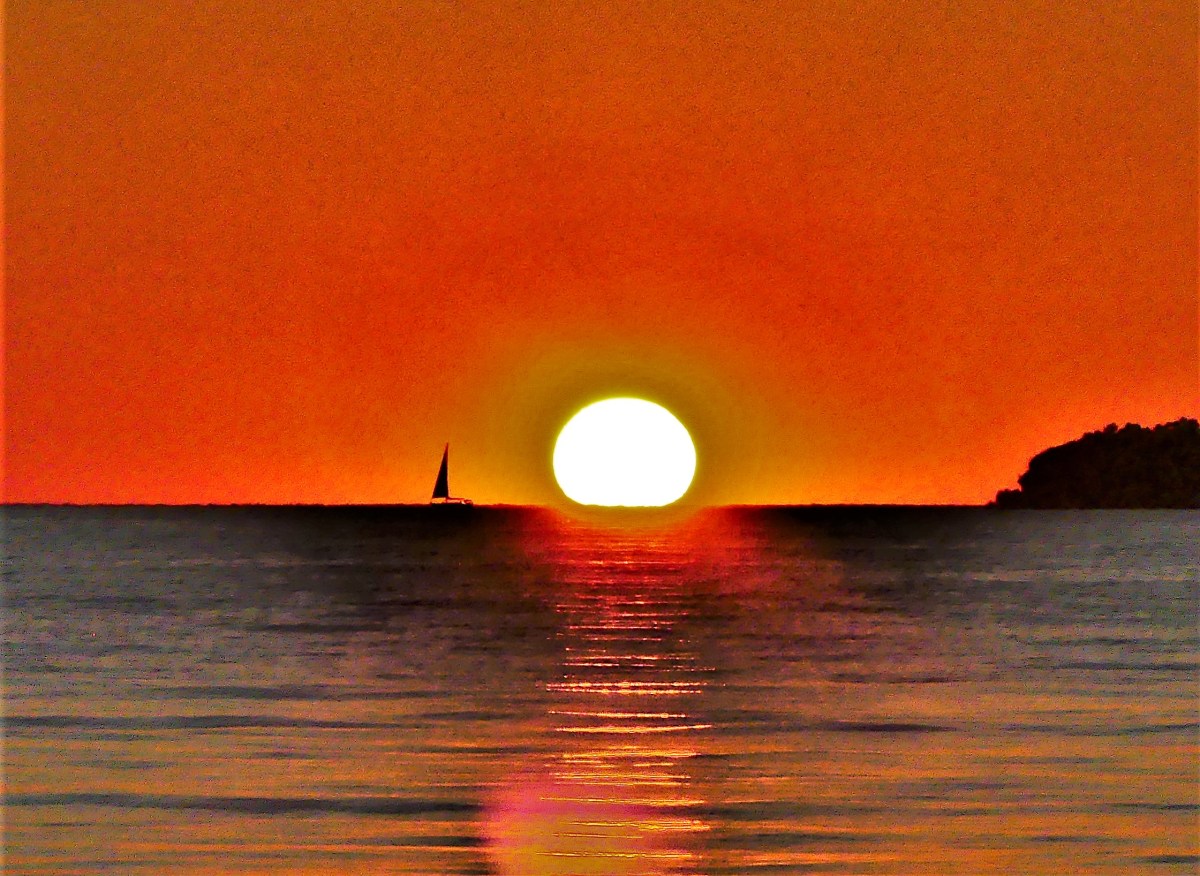
and its front row proximity to an anticipated Lake Michigan sunset overlooking Eagle Harbor.
We made 7:45 pm reservations for the last fish boil of the evening, but the hostess urged us to show up a half-hour before service to experience the magic of the cook.
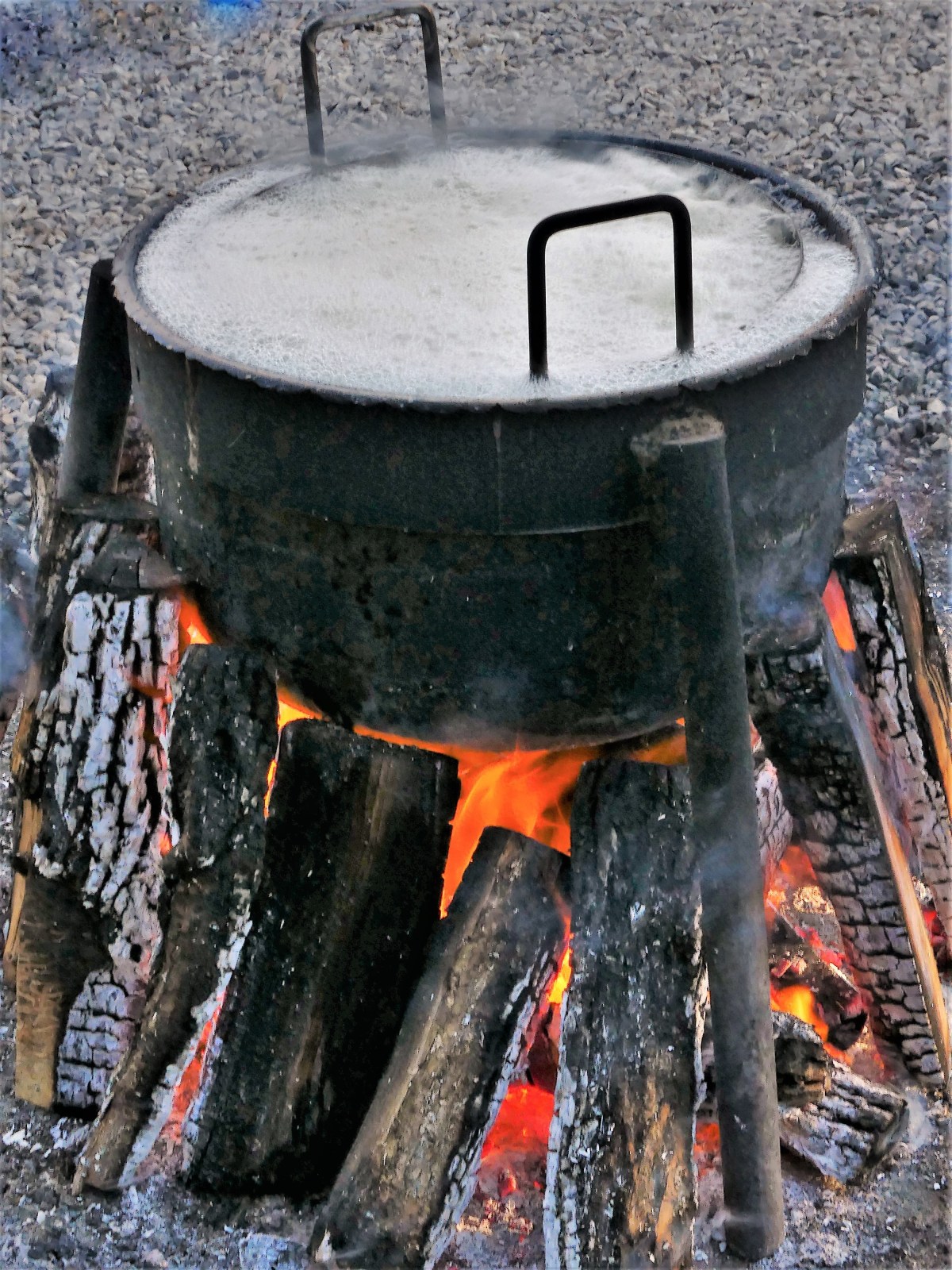
When we arrived at the Old Post Office, we were directed to a ring of benches behind the restaurant, with a bubbling cauldren in the center. Grown-ups were drinking adult beverages (now possible after Ephaim became a wet town in 2016), and children were staring intently into a roaring fire, dispelling the literal intepretation of a watched pot that never boils.
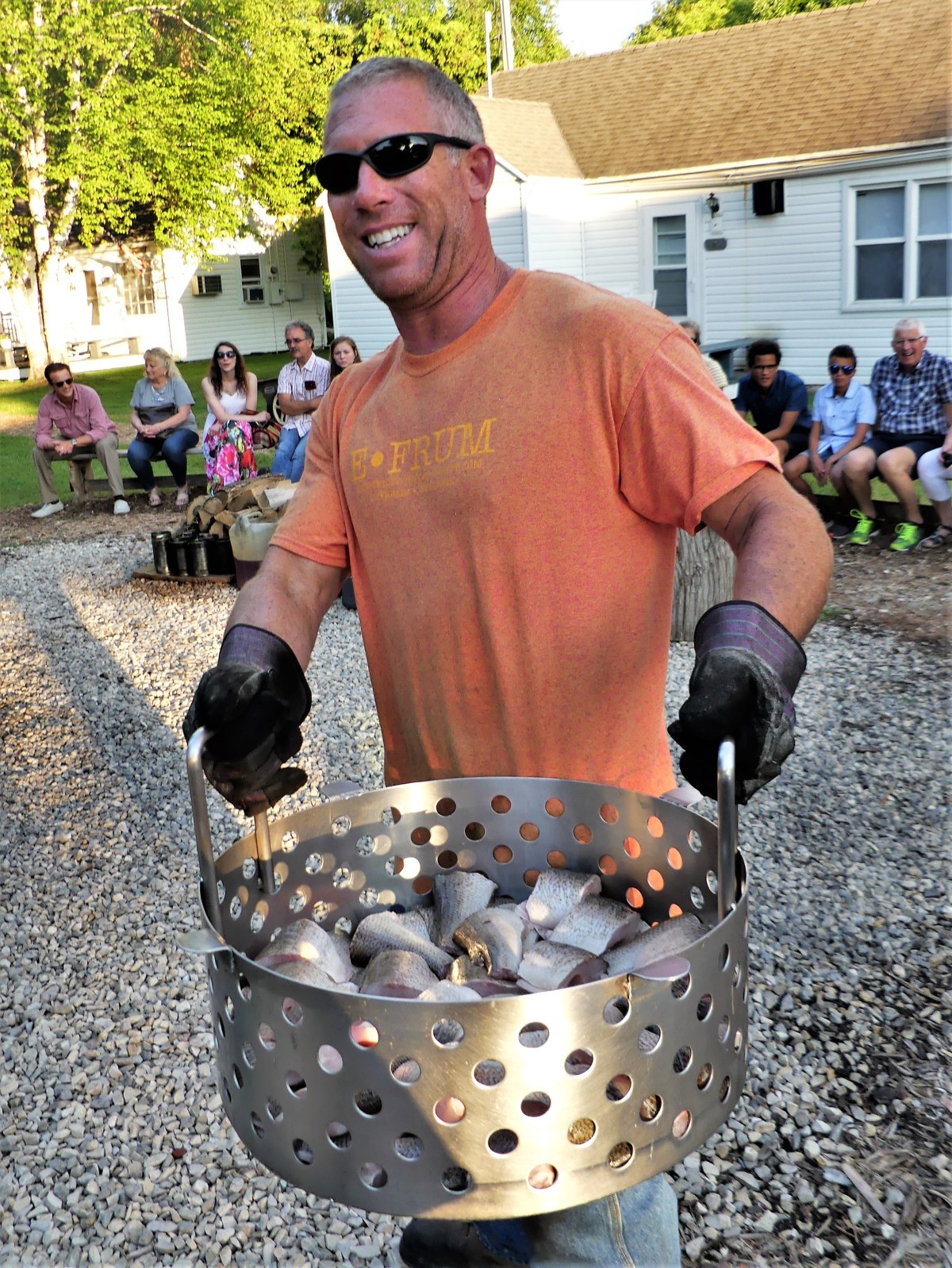
With side dishes of red potatoes and golf ball-sized onions nearly ready, Jeremy, master boiler from Door County appeared with a basket of whitefish steaks that he claimed to have personally prepped from this morning’s local catch. Having prepared thousands of fish boils over the years, he figures that he has gutted and scaled over 20 tons of Lake Michigan whitefish to date.
After adding more water,
and stoking the fire to achieve a high boil, Jeremy waited for fish oils to rise to the top (assisted by the one-pound of salt for every two gallons of water ratio),
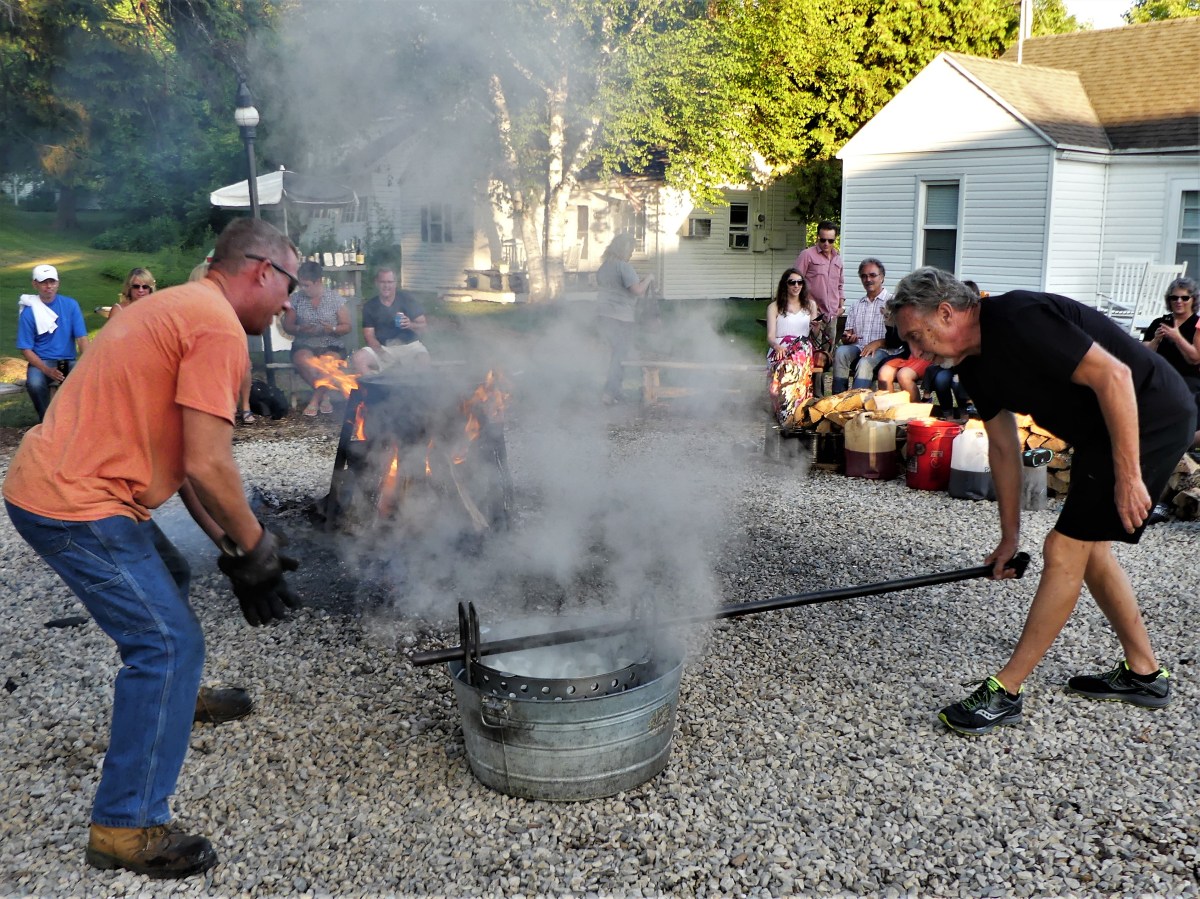
finally signaling the moment we’d been waiting for–dousing the fire with a can of kerosene.
The fire ball brought the heat to all of us in the circle. It was enough to cause the resultant boil over–clearing the broth of ash, foam and fish oil.
When the flames subsided,
the fish was cooked perfectly…
and it was time to eat.
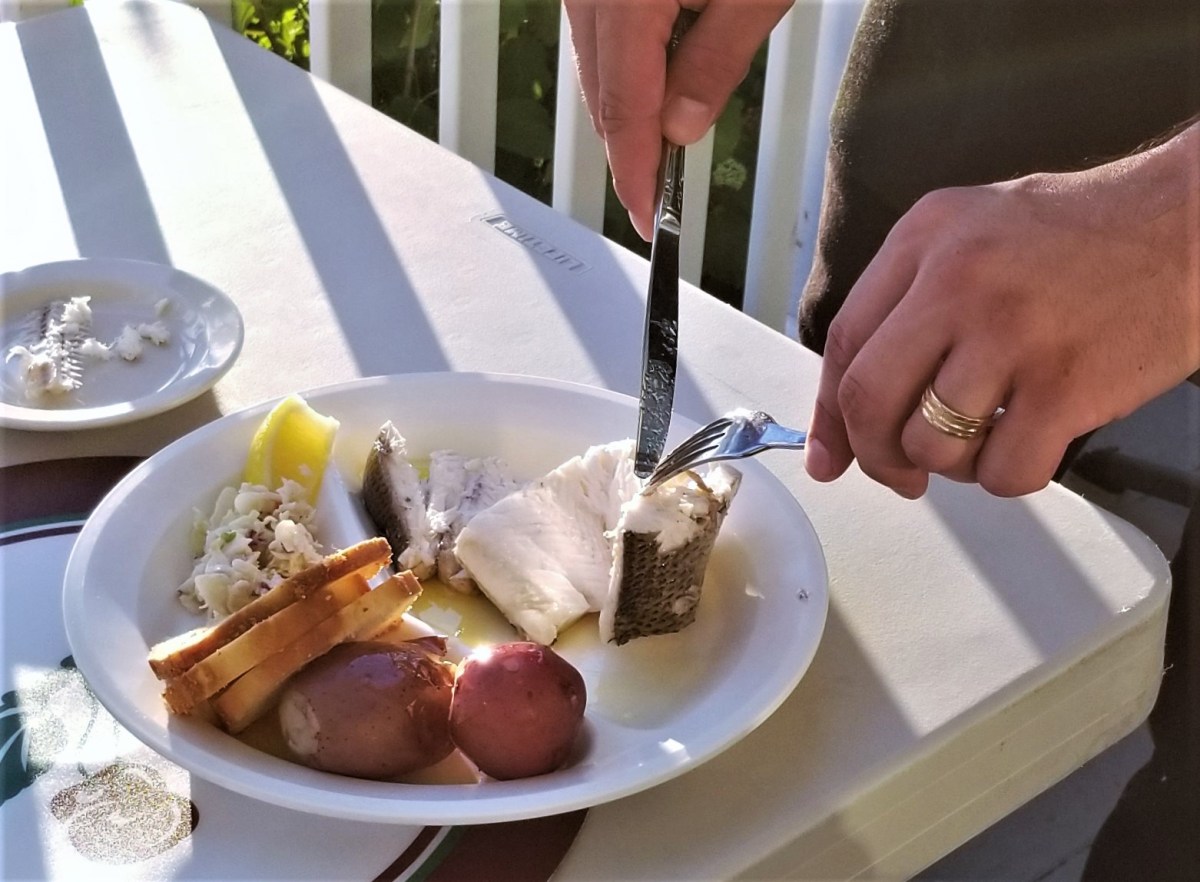
We gathered at the restaurant entrance and lined up–buffet style–to receive our dinner, topped by a ladle of melted butter and a wedge of lemon.
Servers came around to offer drinks and expertly debone our fish…
giving us a plate of food that tasted as good as it looked…
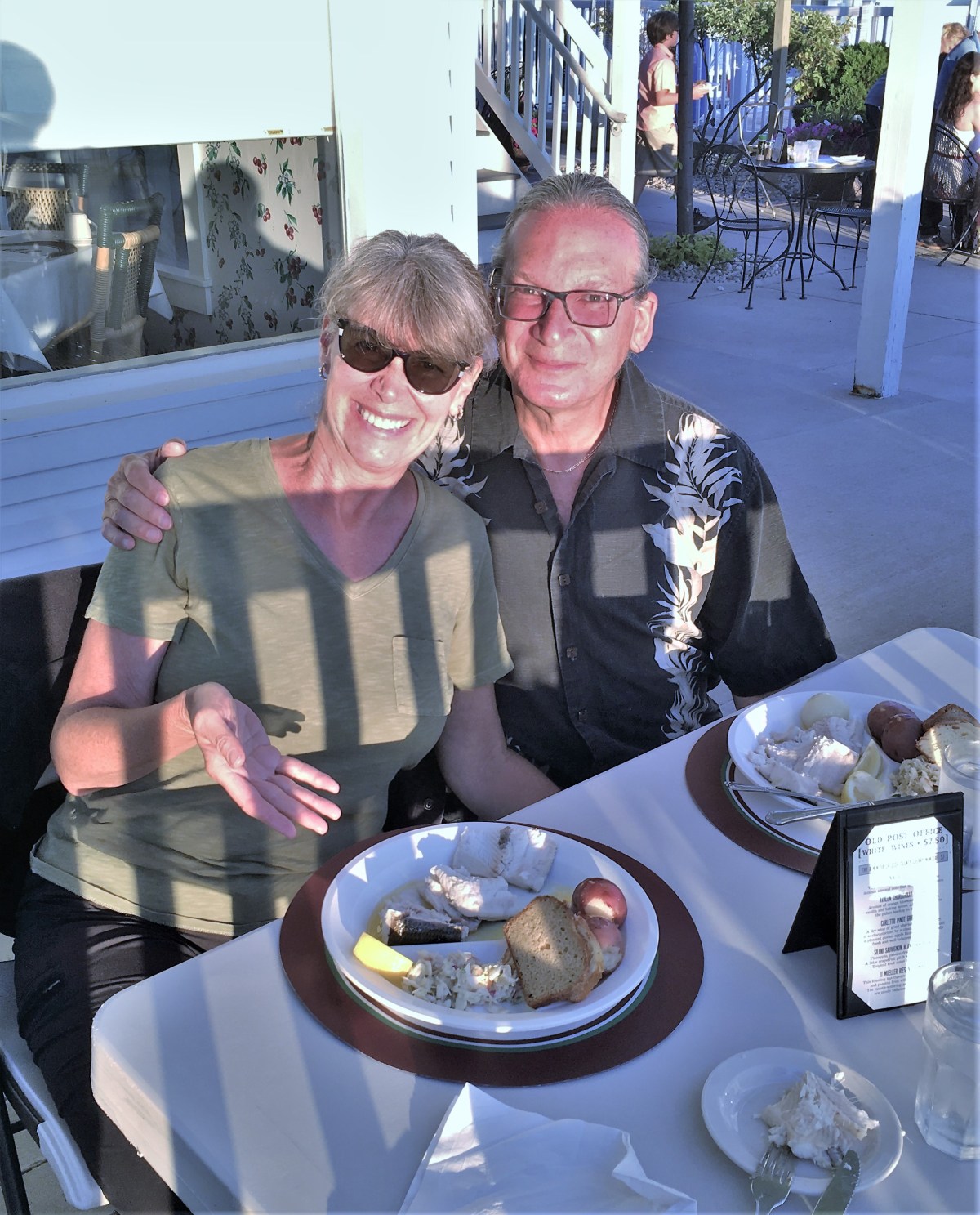
and we ate until the sun went down before us.
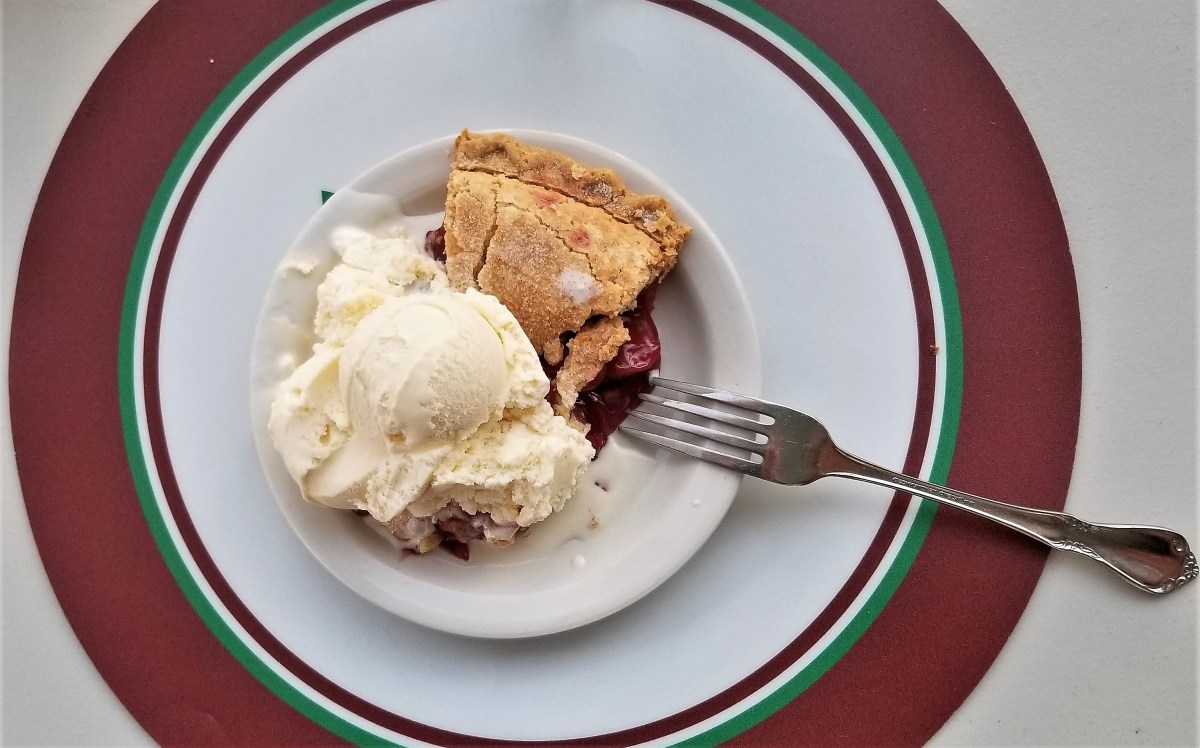
Homemade dessert followed–a tart cherry pie from local orchards.
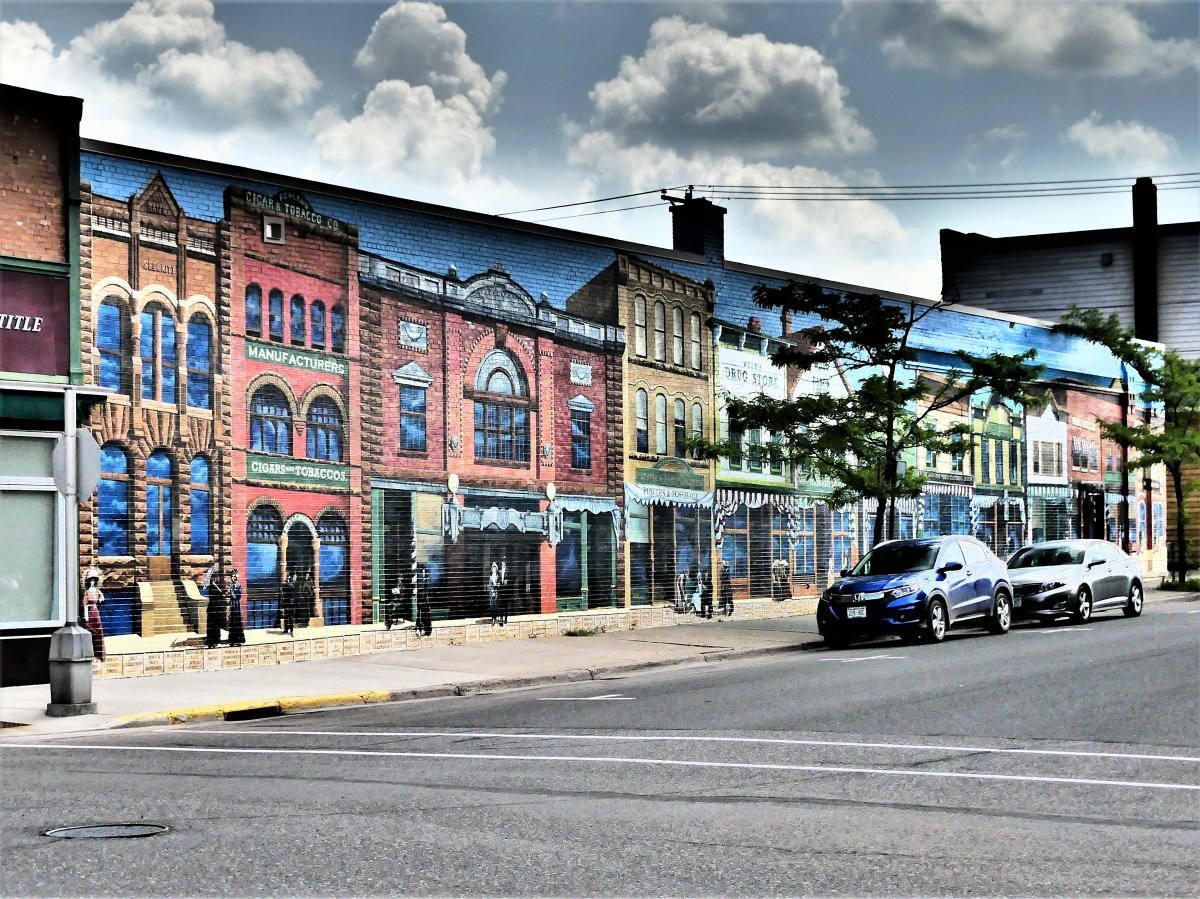
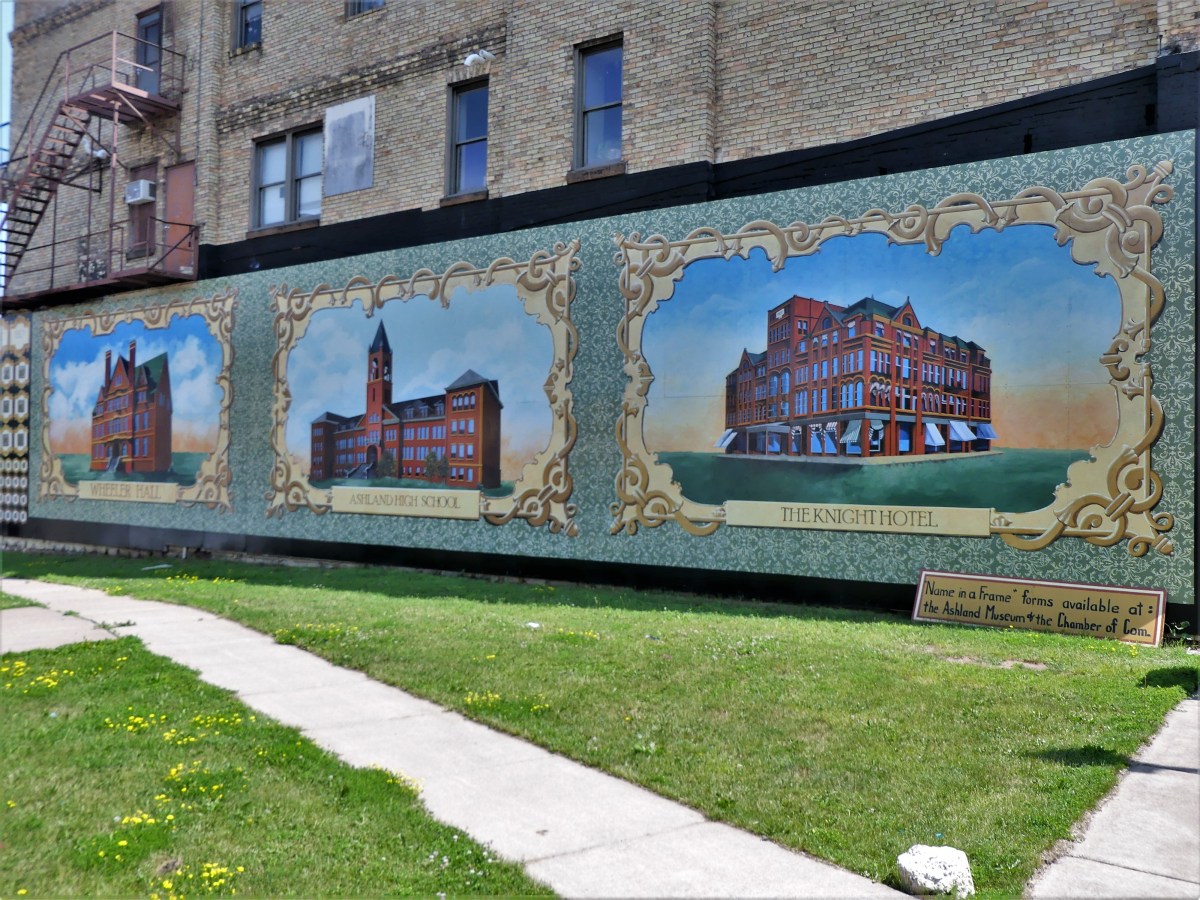
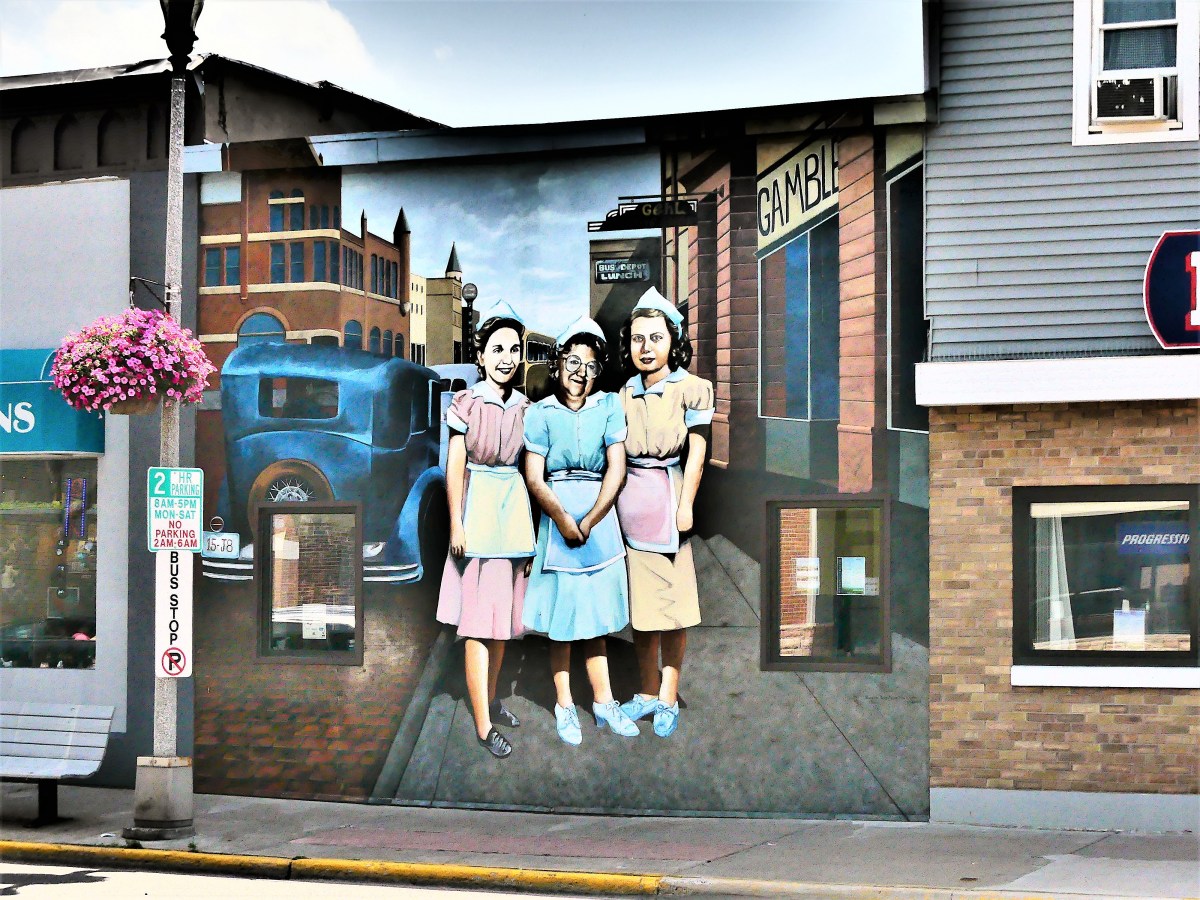
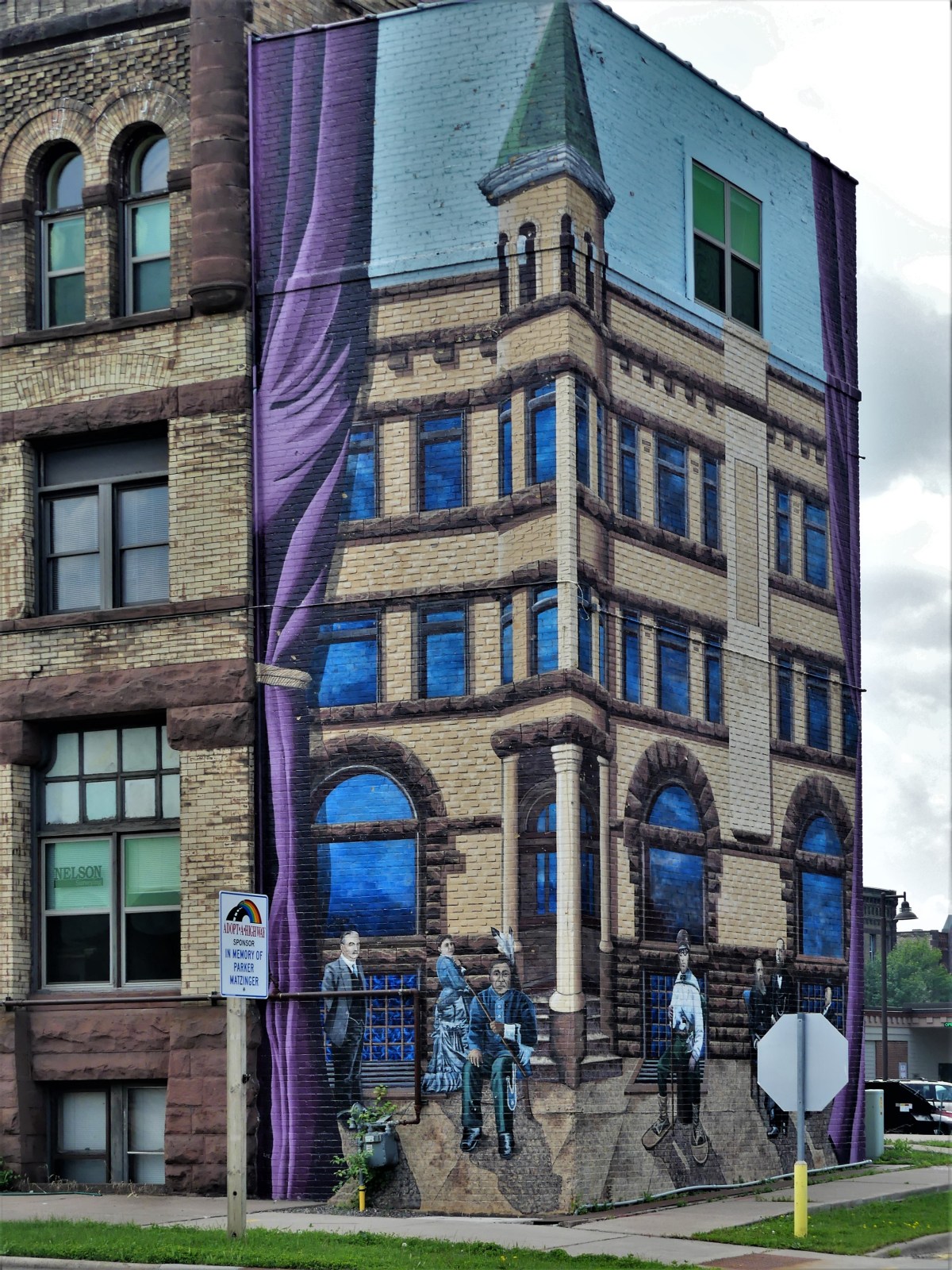
While staying in Bayfield, Leah and I learned of Ashland’s Mural Walk. While only a half-hour from our camp site, we were so preoccupied with three full days of hiking, biking, and kayaking around the Apostle Islands, that time became a factor.
When asking around about the murals’ merits, someone local described the trip as “interesting”, so we decided to make an informed opinion for ourselves. Since Ashland was on our way from Bayfield to Munising, we boarded the Airstream, checked out of Apostle Island Area Campground, and followed GPS to Ashland Mural Walk. An actual POI pinged when I asked Jennifer (our GPS coach) for the route.
We had completed a previous mural walk inPalatka, Florida, also a county seat, and found it odd that their murals were in better shape than the town. We wondered if this was also the case in Ashland.
Ashland’s history dates to 1500, when the Ojibwe stayed on Chequamegon Point. A century later, they were followed by French fur trappers, European traders, and Jesuit missionaries. By mid-1800’s, Ashland’s first settlement was established, and the town prospered as a major quarry and port with rail service to Chicago.
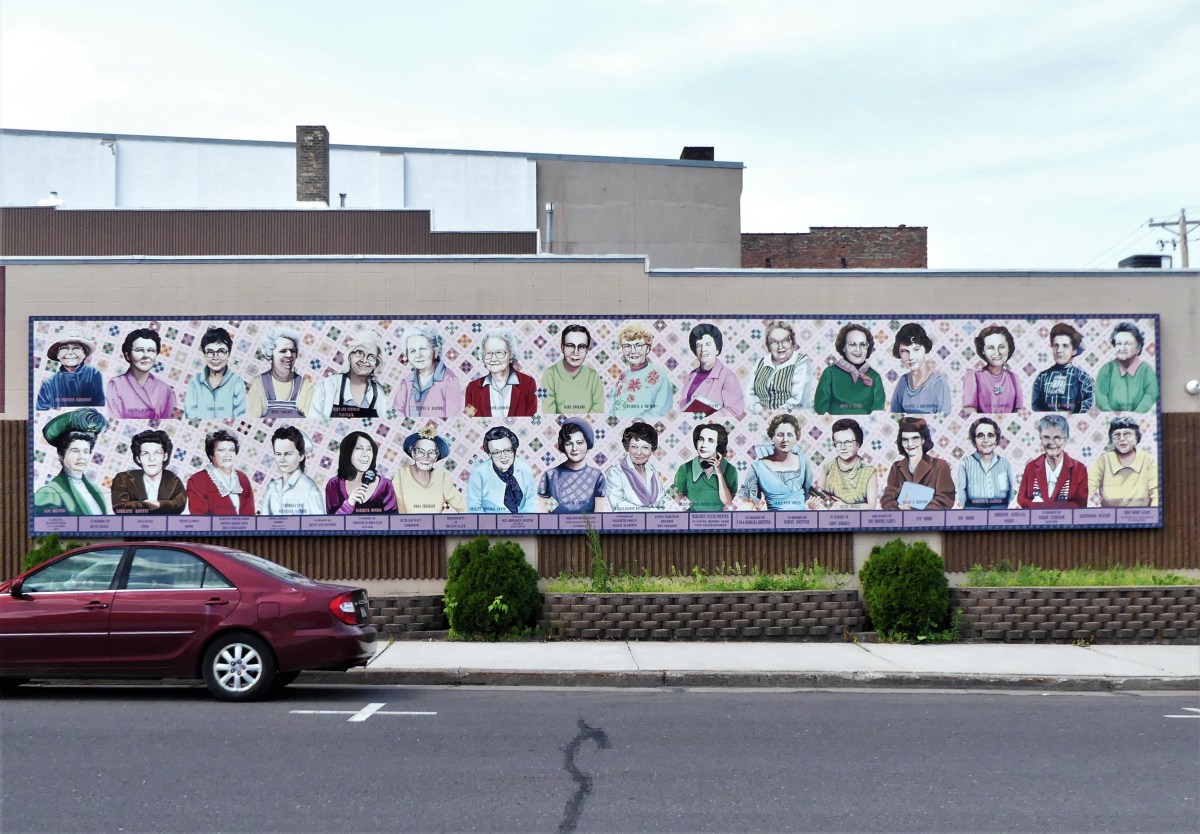
Thanks to mural artists Kelly Meredith and Susan Prentice Martinsen, Ashland’s murals are a pleasant recapitulation of their proud history and their community spirit.
The murals have been beautifying downtown for twenty years. But Ashland wasn’t content to rest on its murals. Since 2017, decorative mosaic containers have been popping up on Main Street, turning trash to treasure.
There are 18 murals located around an 8-block radius of Main Street’s business district.
Leah and I gave ourselves an hour to see as many as we could (we found 12), but a 4-hour drive to Musining still loomed large, so six were left undiscovered.
For additional information on mural titles, descriptions, and locations, or to see what we missed, aMural Walklink is provided.
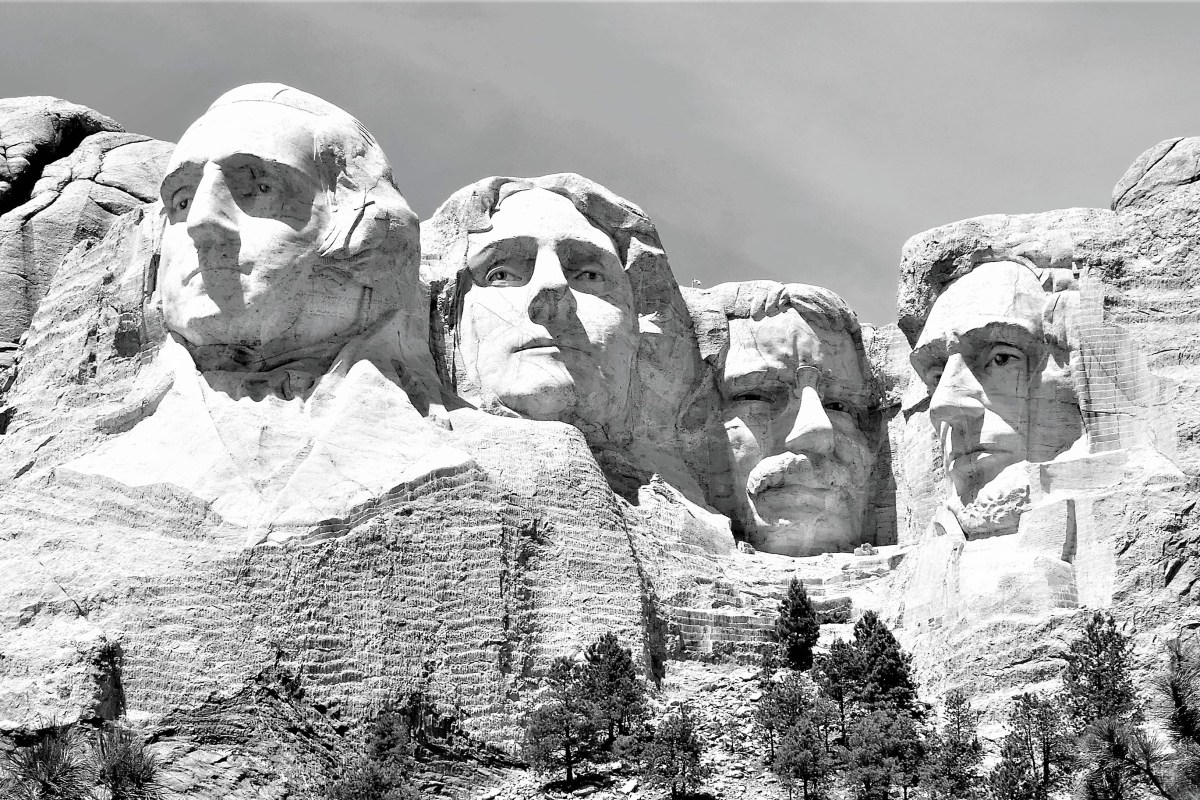
Although it’s been two years since Leah and I visited Mt. Rushmore, what could be more American than re-posting this visit on Independence Day?
There’s no better way to celebrate the 4th of July, than a trip to Mount Rushmore and the Crazy Horse Memorial. Sure, the crowds were large; that was to be expected. But once the cars were garaged, the pedestrian traffic was easy to negotiate. And with everyone looking up at the mountain, the Presidents’ faces and intentions were never obstructed.
It was also a time to celebrate family. There were plenty of kids riding in strollers, hanging from moms in carriers, or balancing on dads’ shoulders. Generations of families–many of them immigrants–had gathered to pay homage to the principles of freedom that make our country a beacon for the oppressed and downtrodden.
Seniors were being escorted through the Avenue of Flags by their grandchildren. Extended families organized group pictures at the Grand View Terrace, unified by their love of democracy and their reunion T-shirts.
All expressed awe at Gutzon Borglum’s grand vision and remarkable achievement–the transformation of a mountain into a national symbol visited by approximately 3 million people every year.
The 14-year process of carving the rock began with dimensionalizing the Presidents’ portraits through Plaster of Paris masks, on view at the sculptor’s studio-turned-museum.
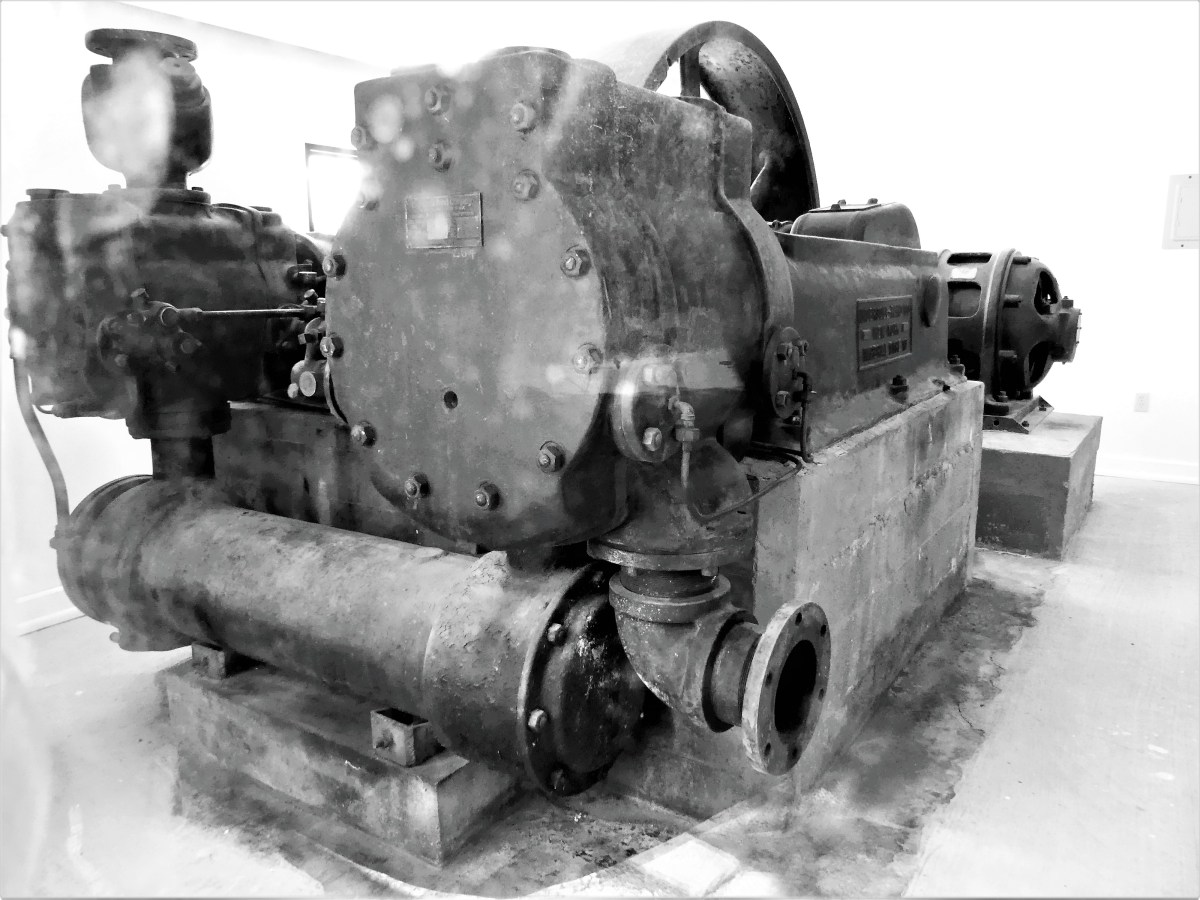
Additional exhibits detail the construction of the memorial, and the tools used by workers, like the original Rand & Waring compressor, which powered the jackhammers for all the finishing work.
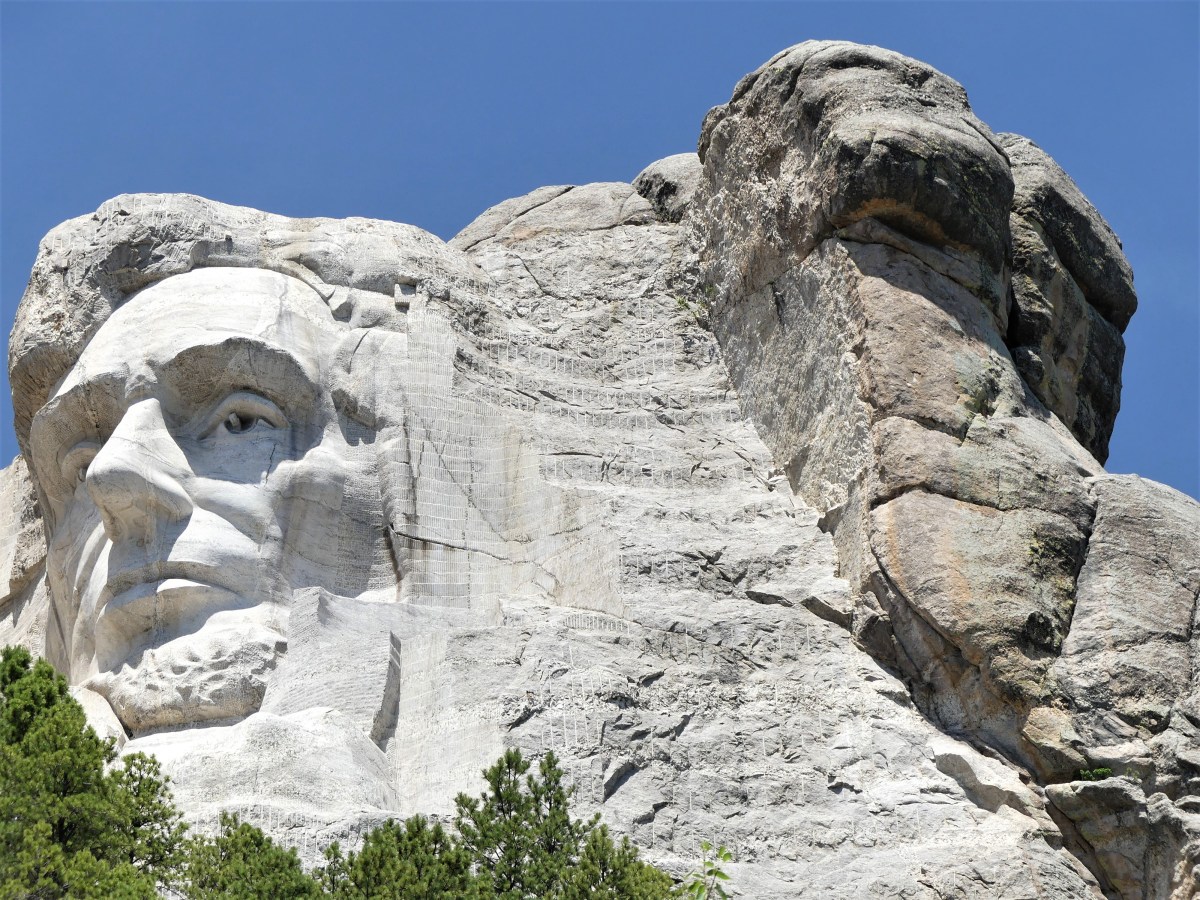
A little known fact is that Mt. Rushmore was once intended to be a tribute to the “Five Faces of Freedom,” but funding ran short when the Congressional appropriation approached $1 million during the Great Depression. Hence, the unfinished carving of the Great Ape to the right of Lincoln serves as a reminder that we are never far from our true ancestors.¹
No less ambitious, and equally as impressive, the Crazy Horse Memorial is a work-in-progress located 16 miles away in the heart of the Black Hills–considered sacred land by the Lakota people.
Conceived by Korczak Ziolkowski in early 1940s,
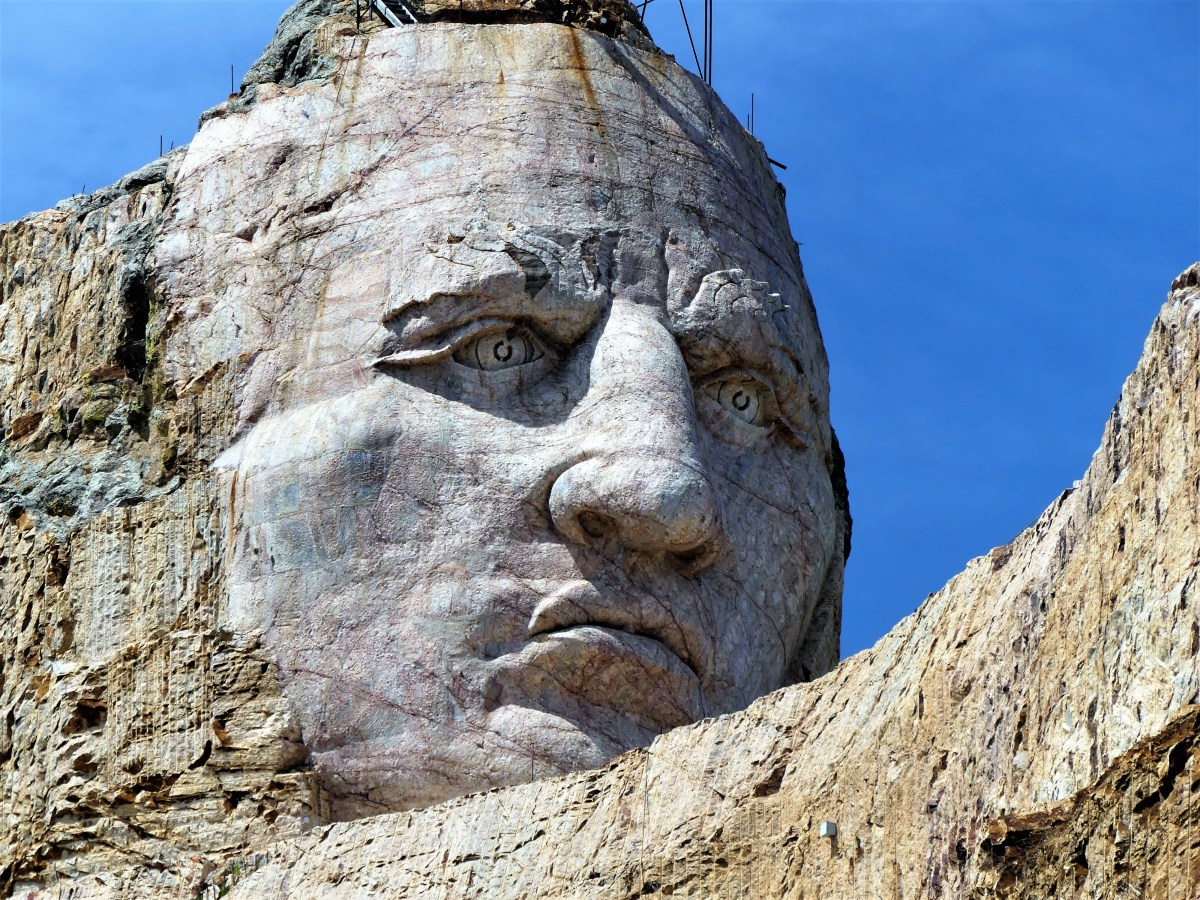
the memorial, when completed will stand 563 ft. by 641 ft. across, and is expected to be the largest sculpture in the world. Already, the completed head of Crazy Horse measures 60 feet tall…
…twice the size of any of the presidents at Mt. Rushmore. While the first blast was conducted on the mountain in 1947, the current prospects for the memorial are to complete the outstretched arm during the next twelve years. There is no completion date available for the finished carving, which has been financed entirely by private funding since its inception.
Mt. Rushmore was created by a Danish American. Crazy Horse was created by a Polish American. And visitors to both destinations manifest the melting pot that has brought us all together as Americans. It’s our diversity that makes us strong, our ambition and determination that makes us great, and our compassion and sacrifice that make us whole.
These are the values reflected from the faces we’ve immortalized in stone. Yet, we would honor them more by living according to these principles.
Happy Birthday, America!
¹ Just kidding, but the photograph is real and has not been retouched.
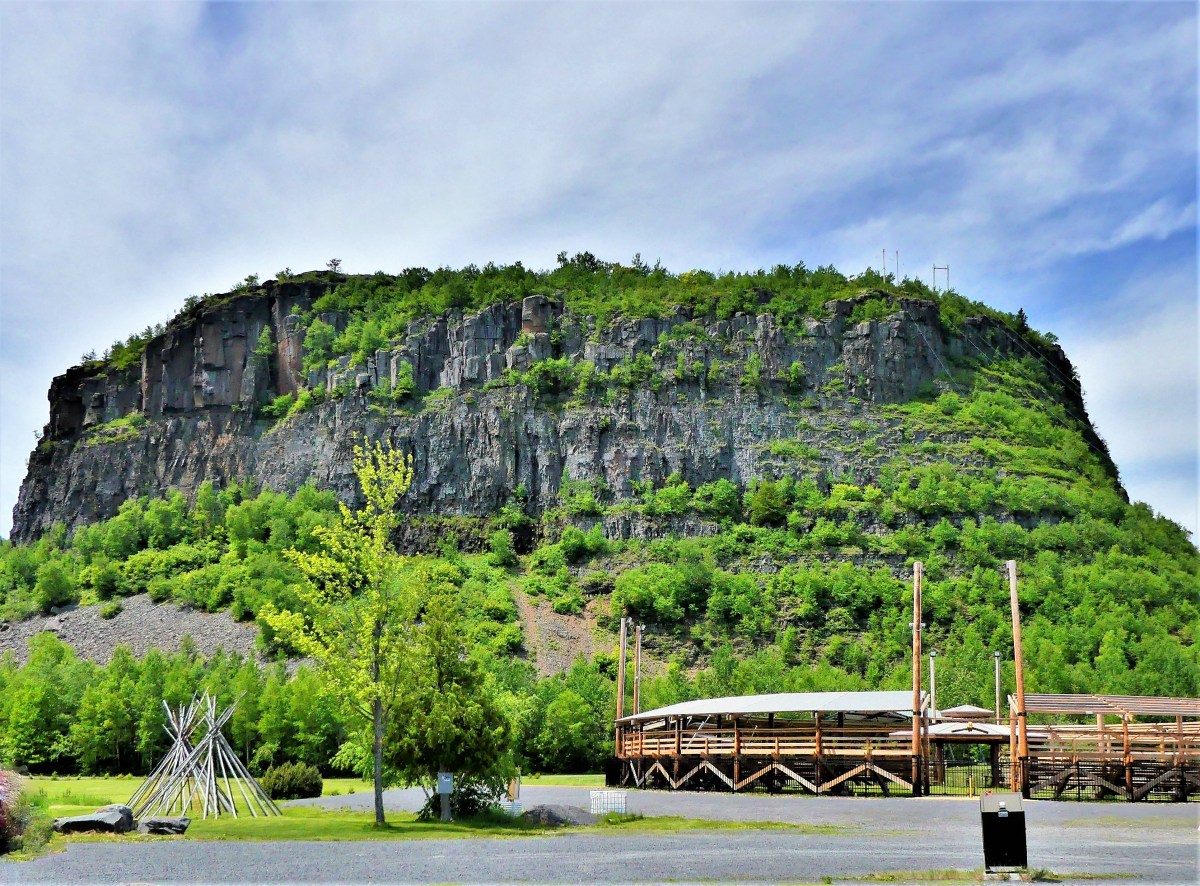
From a distance, Mt McKay is imposing, rising 1200 ft over Lake Superior and making it the largest of the Nor’Wester mountains. It gets its name from William Mackay, a Scottish fur trader from the mid-1800s, who lived for a time in the Fort William vicinity.
However, the Fort William First Nation, descendents of the Chippewa tribe, call the mountain Anemki Wajiw (ah-NIM-ih-key waw-JOO), meaning Thunder Mountain,
and consider it sacred land.
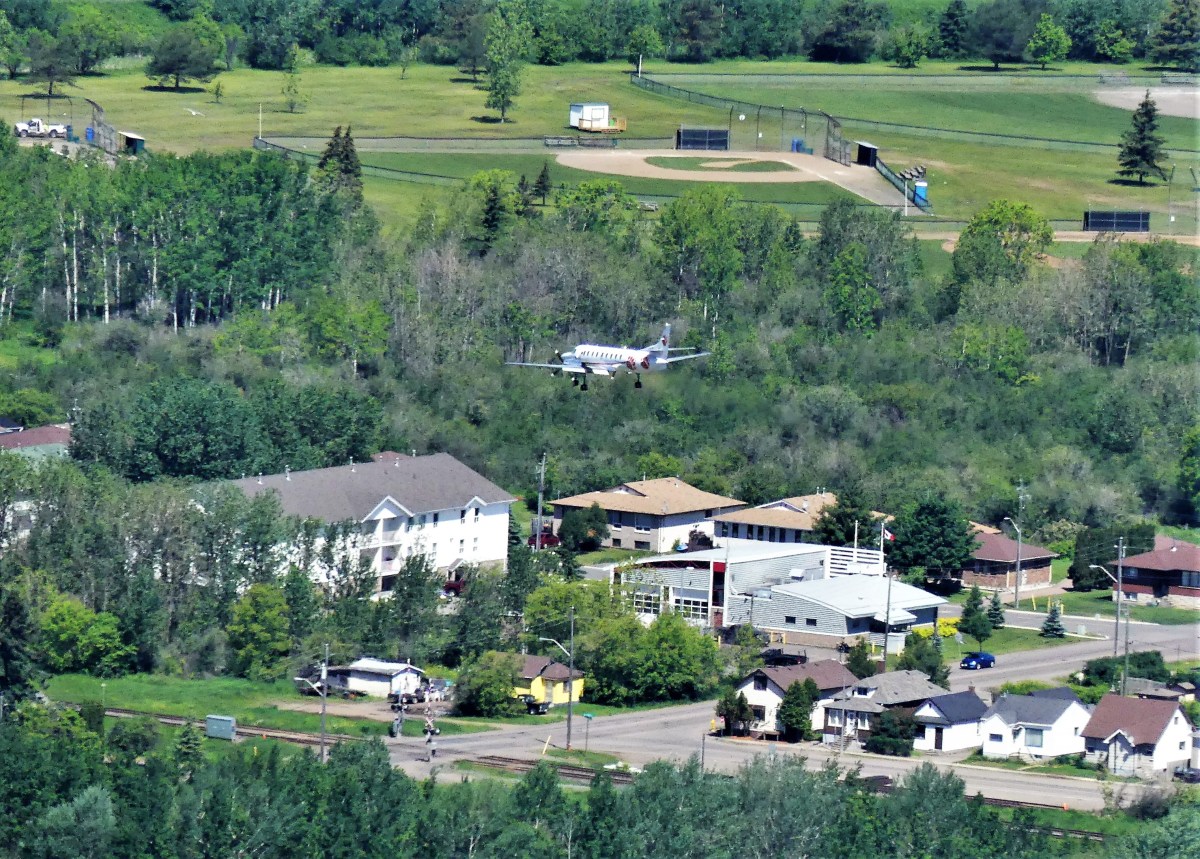
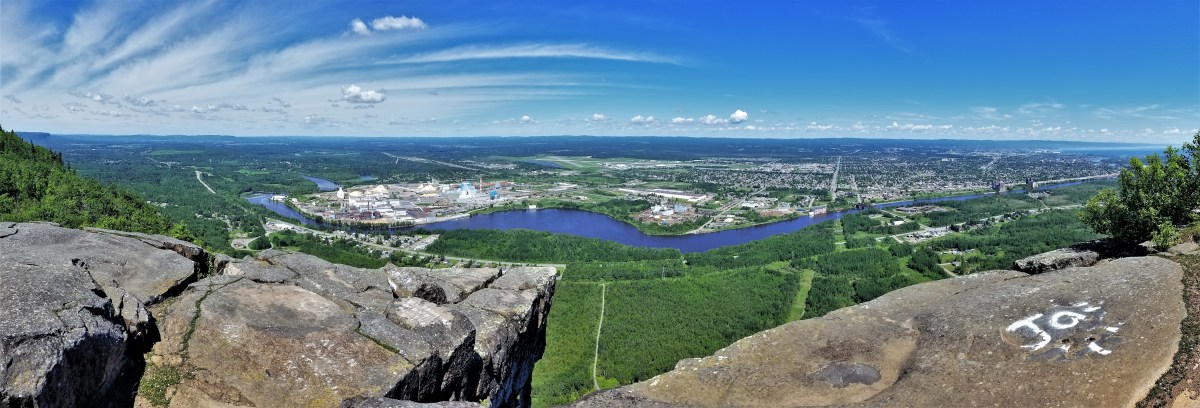
Mt McKay is a prominent landmark of the Fort Williams First Nation reserve, and offers sweeping views of Thunder Bay…
from its boardwalk overlook on the eastern plateau…
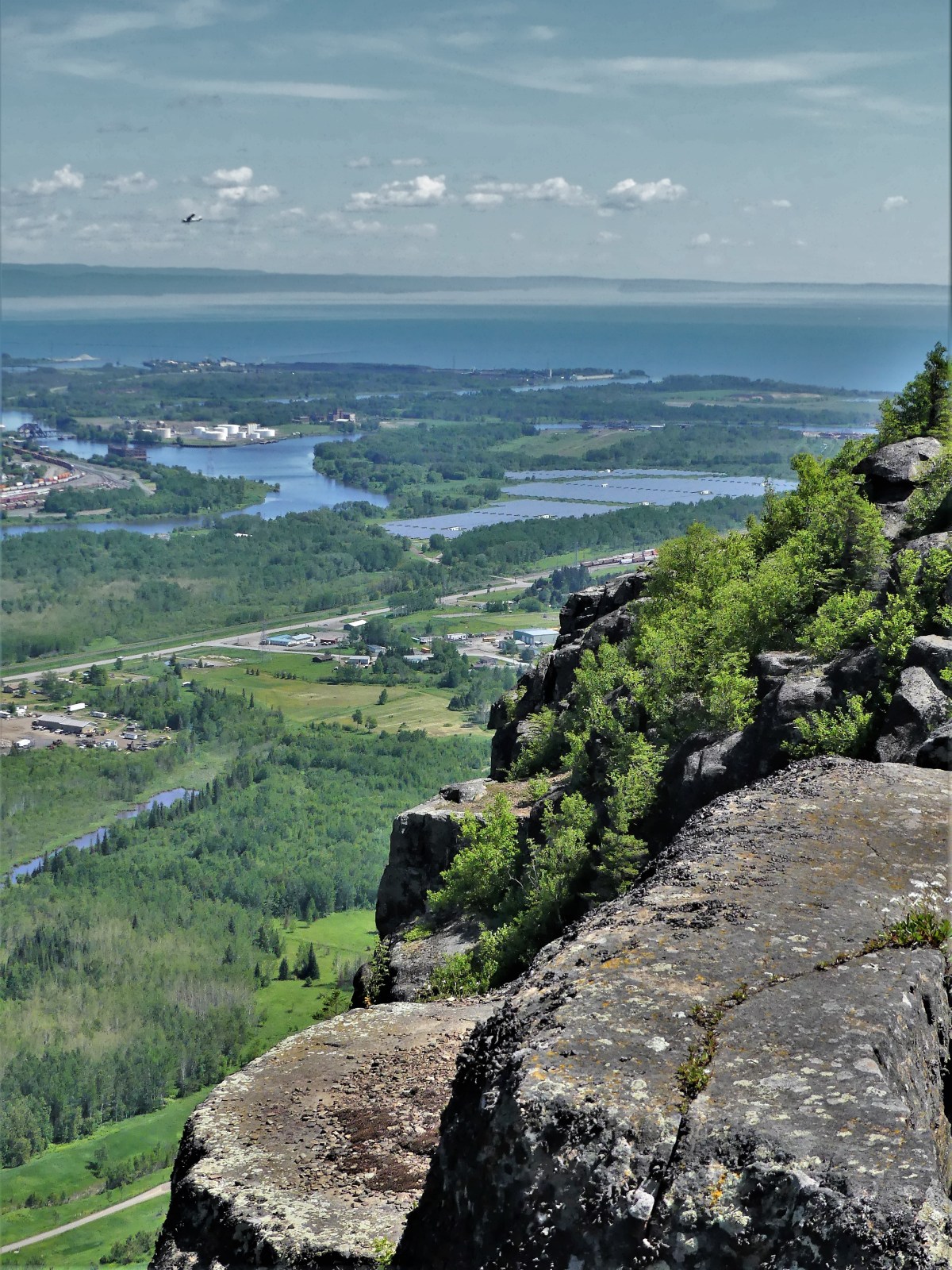
and beyond…
Leah and I drove up Mission Road to a toll house, where a First Nation member collected $5.00. She advised us to hike the western trail to the flat cap for more commanding views, and encouraged us to return in 3 days to witness a powwow of the Lake Superior chapters. She also offered a menu and invited us to visit her lunch counter in town.
The trail was narrow, steep and challenging with shards of shale scattered over rocky formations. We took our time.
After a weary climb of 40 minutes, we welcomed the cooler air around us as we crossed onto a plate of volcanic rock formed over 1,100 million years ago.
The bright sun promised a crisp and dazzling vista,
but it also seemed to energize the horse flies that soon regarded me as bait.
That’s when I knew it was time to retreat to the bottom of the hill, oh-so-gingerly over long drops onto loose shale.
Once we landed at the trail head, I had decided (after checking with Leah) that we should attend the powwow on Satuday.
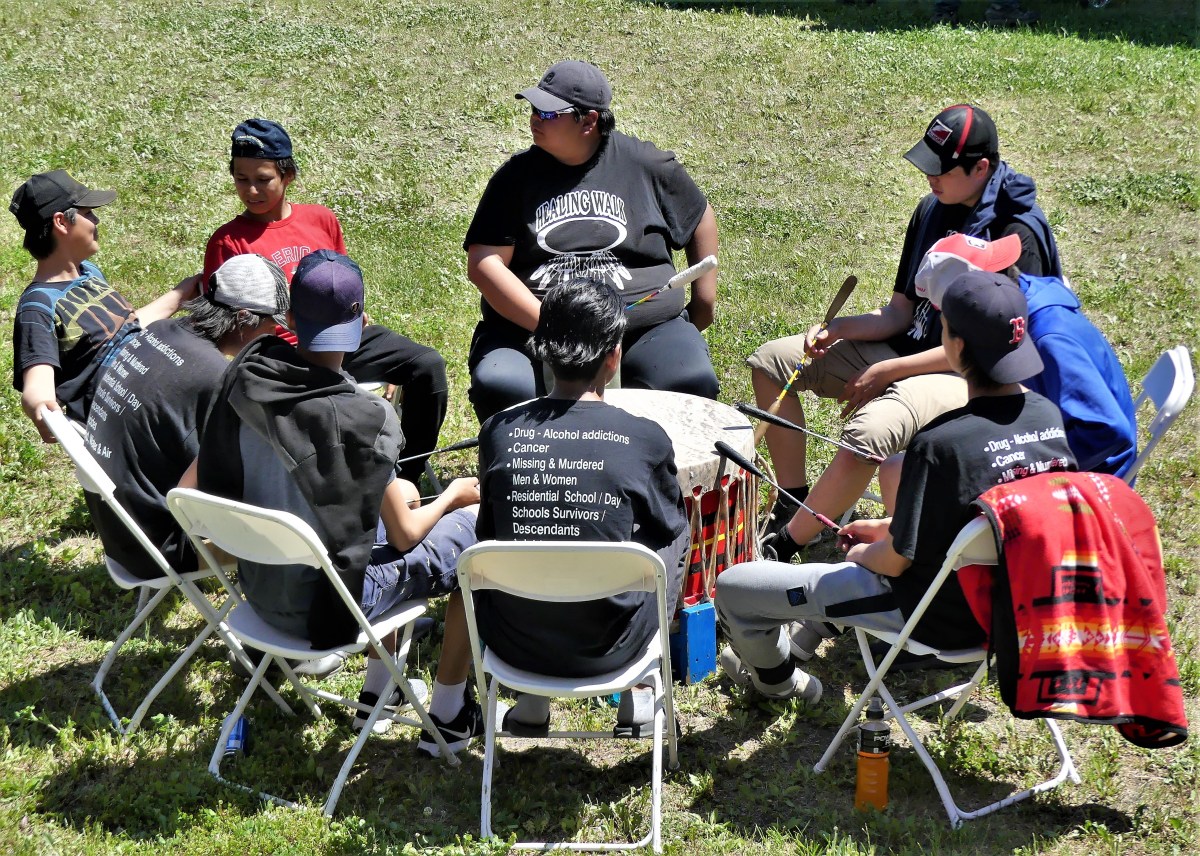
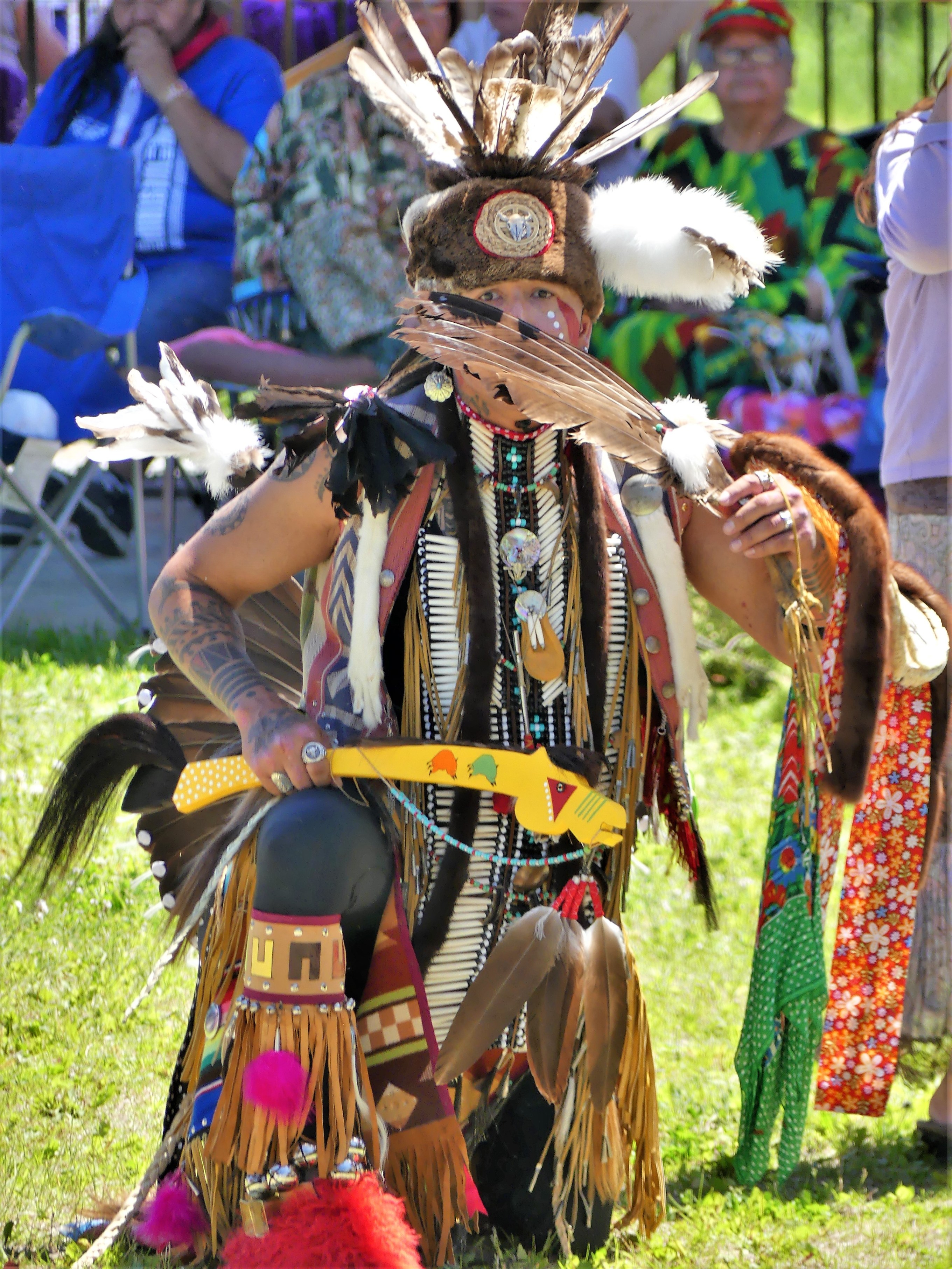
On the day of the powwow, we looked for news on the internet. and it was everywhere. The council was expecting over 5,000 attendees over two days with plenty of drumming and dancing. Food tents and crafts stalls would round out the affair. The rules were simple: No Alcohol. No Drugs. No hiking. Have a Safe Time.
We drove to Fort Williams First Nation ice arena, where we met a yellow school bus that shuttled us the rest of the way. Only three days ago, the area was empty and quiet, but today, it looked like a parking lot next to a fairground with fringe tents and trailer camping.
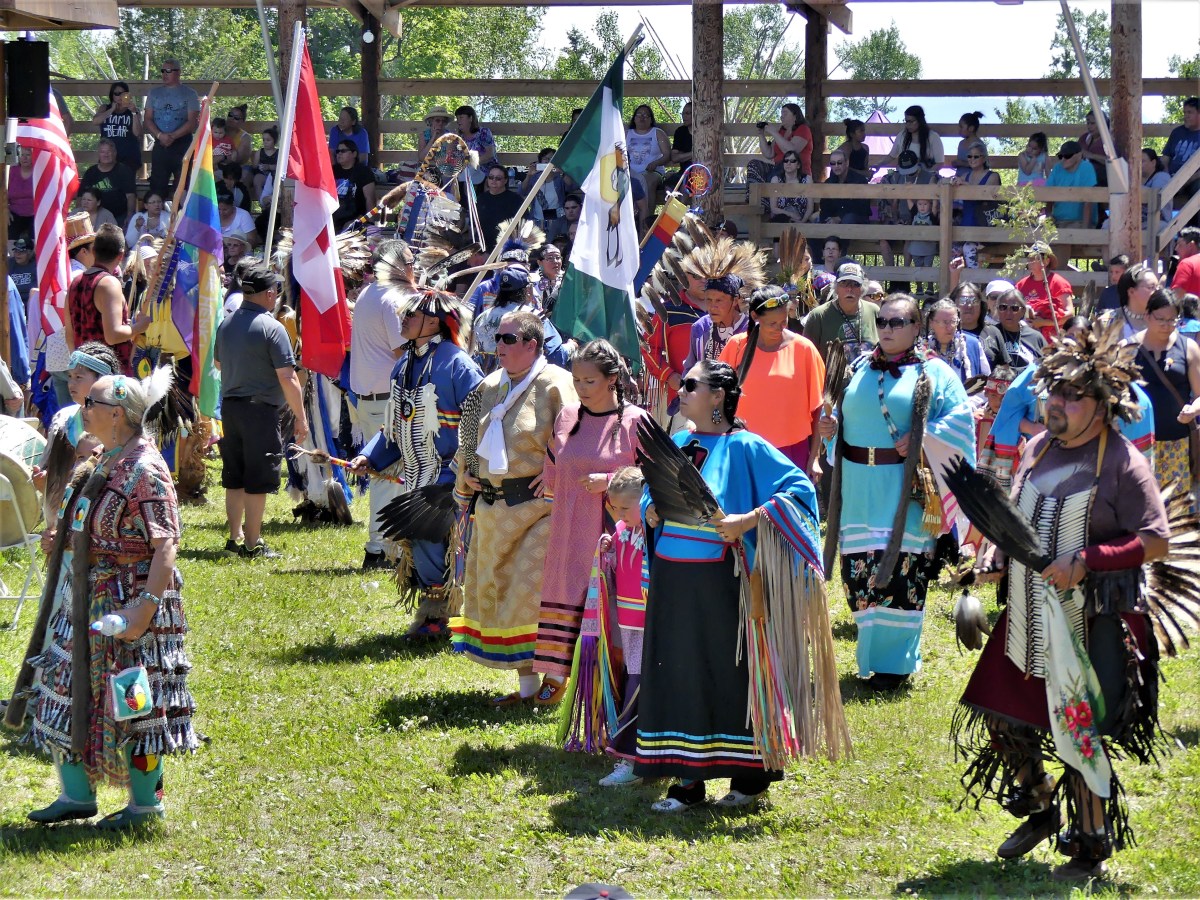
Participants were gathering inside the spirit circle and adjusting their costumes, while spectators were filling the grandstands, and the royalty was assembling in anticipation of the welcoming ceremony.
It was a colorful and festive affair. A steady drum beat managed by eight drummers, accompanied a caterwauling chant of guttural highs and lows and occasional shrieks.
After a prolonged opening procession and invocation, Chiefs and Elders presented flags,
and then it was time to drum and sing and dance again. Grass dancers followed Elders…
who were followed by family members…
who also danced several times around the pavillion with their children…
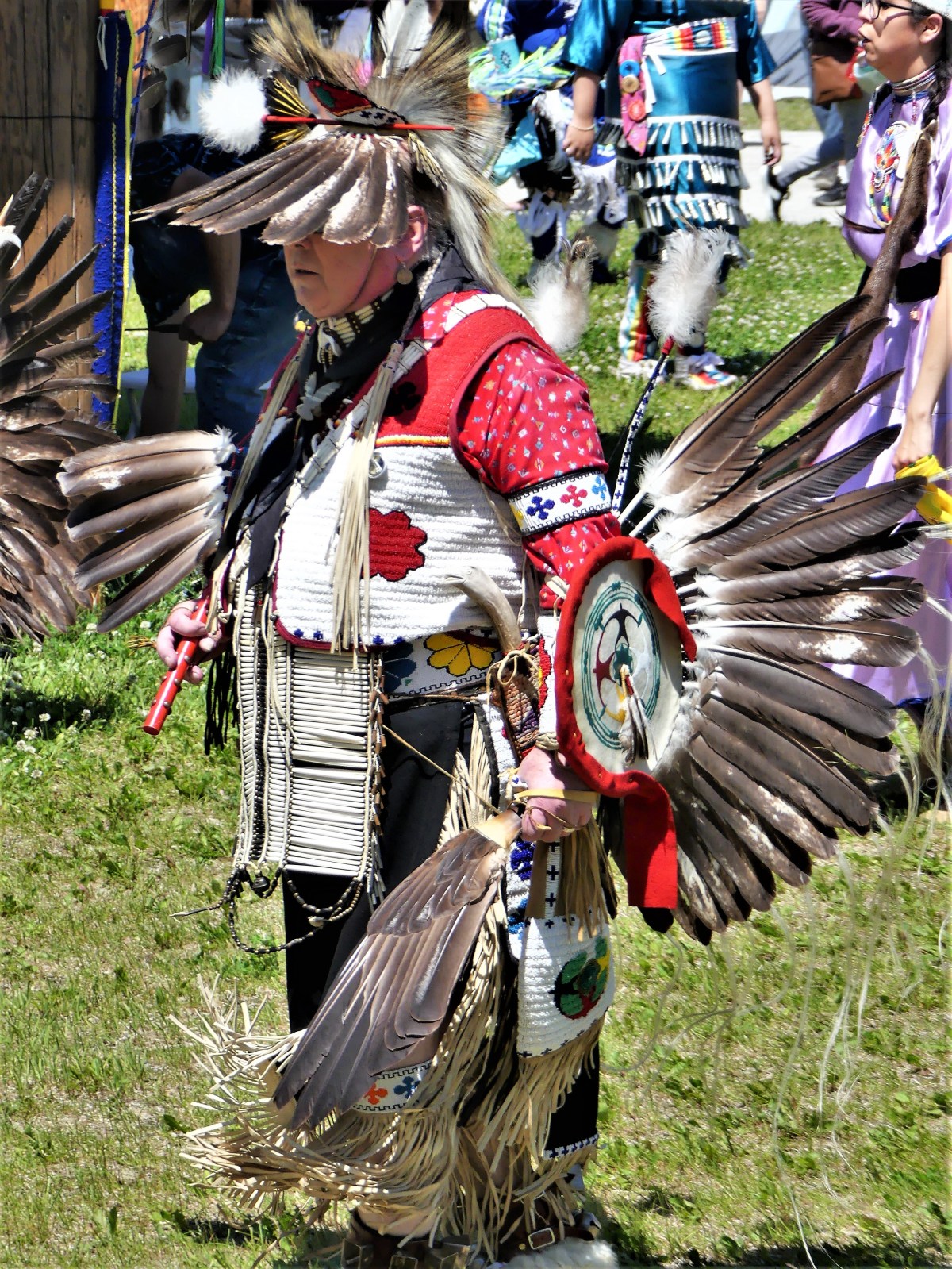
showing off their feathers,
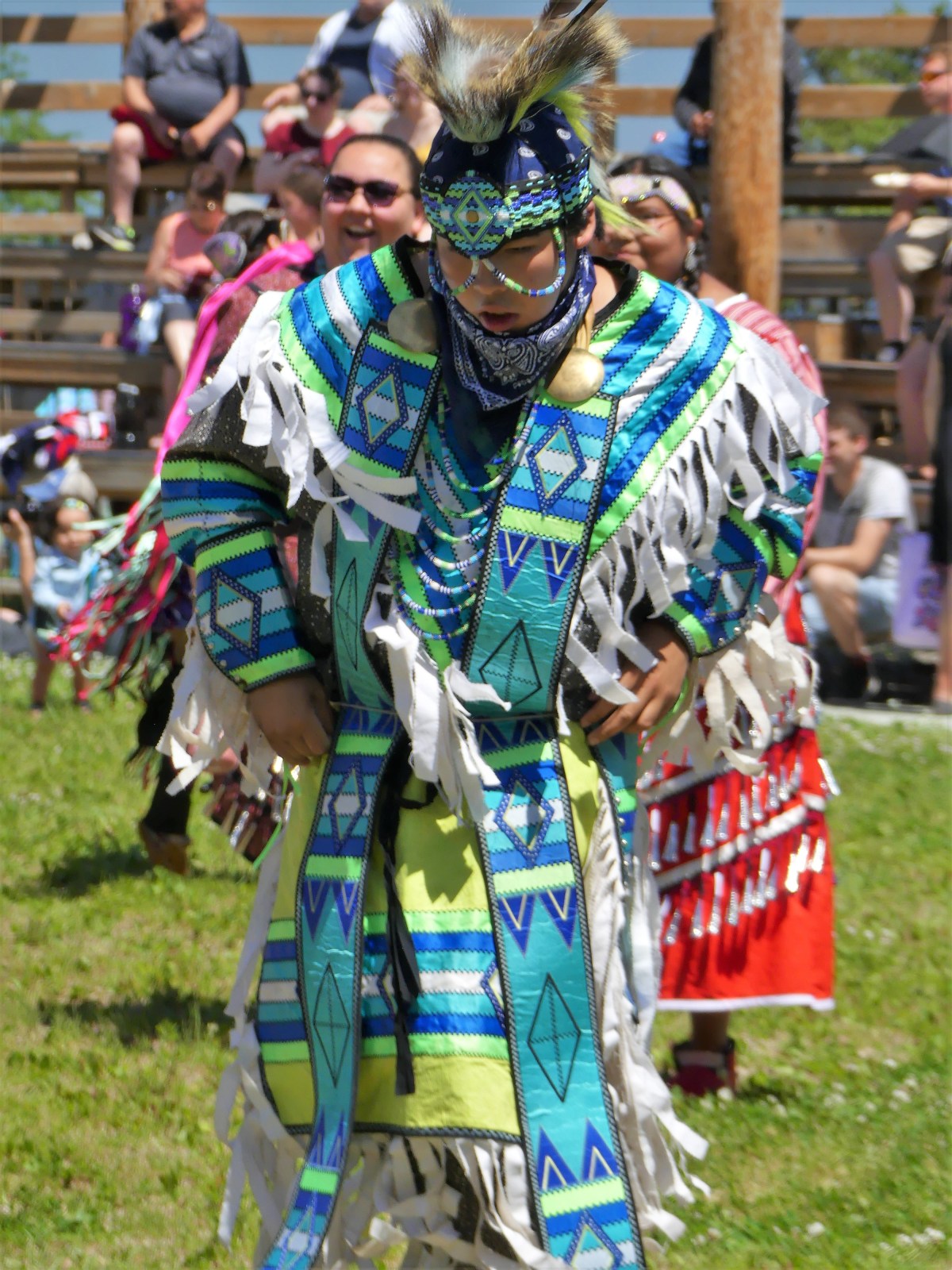
their elaborate ceremonial costumes…
and their elaborate moves…
After a couple of hours, Leah and I returned to the boardwalk for a stroll to the memorial,
where we discovered a trail to the right that hugged the cliff around the plateau. We hiked further along, scouting for poison ivy as we walked, and came to a clearing where three girls in training bras were sneaking cigarettes around a slab of concrete.
It was an amusing irony and signaled our time to return to the ice arena. The school bus that brought us circled the field–collecting passengers–and momentarily paused at a graphic display of Ojibwe insight and life lessons:
“It says so in the brochure,” she states. “I quote, ‘Caution is advised when venturing onto this rock ledge due to its slope and the unpredictable nature of Lake Superior and its wave action.'”
“Sounds like fun. We should see it,” I suggest. “This is ancient historical shit!”
“It sounds a lot like the petroglyphs that we saw in Nevada,” she offers.
“But this one’s on the water, and not the desert,” I tease.
“I know that, smart ass, and it’s also harder to get to, so you need to be careful!” Leah lectures.
“Like I said, how hard can it be?” I reiterate.
We park the truck only minutes from our campsite at Agawa Bay, and enter the trailhead where we are met with a screaming red sign:
“Like I said…” drops Leah.
I deflect the dig. “Check it out.” I direct Leah’s attention to a different sign to our right–a red diamond hammered to a tree with a white arrow and 400 km on it.
“That’s where the trail begins. And according to that sign, we’ve already walked 20% of the trail!”
It’s true the trail is rugged and a scramble. The descent runs through a narrow chasm, over sharp boulders and bulging roots. But it’s only treacherous if wearing flip flops, which a student rangerette at the visitor’s center admits can be a problem with some hikers.
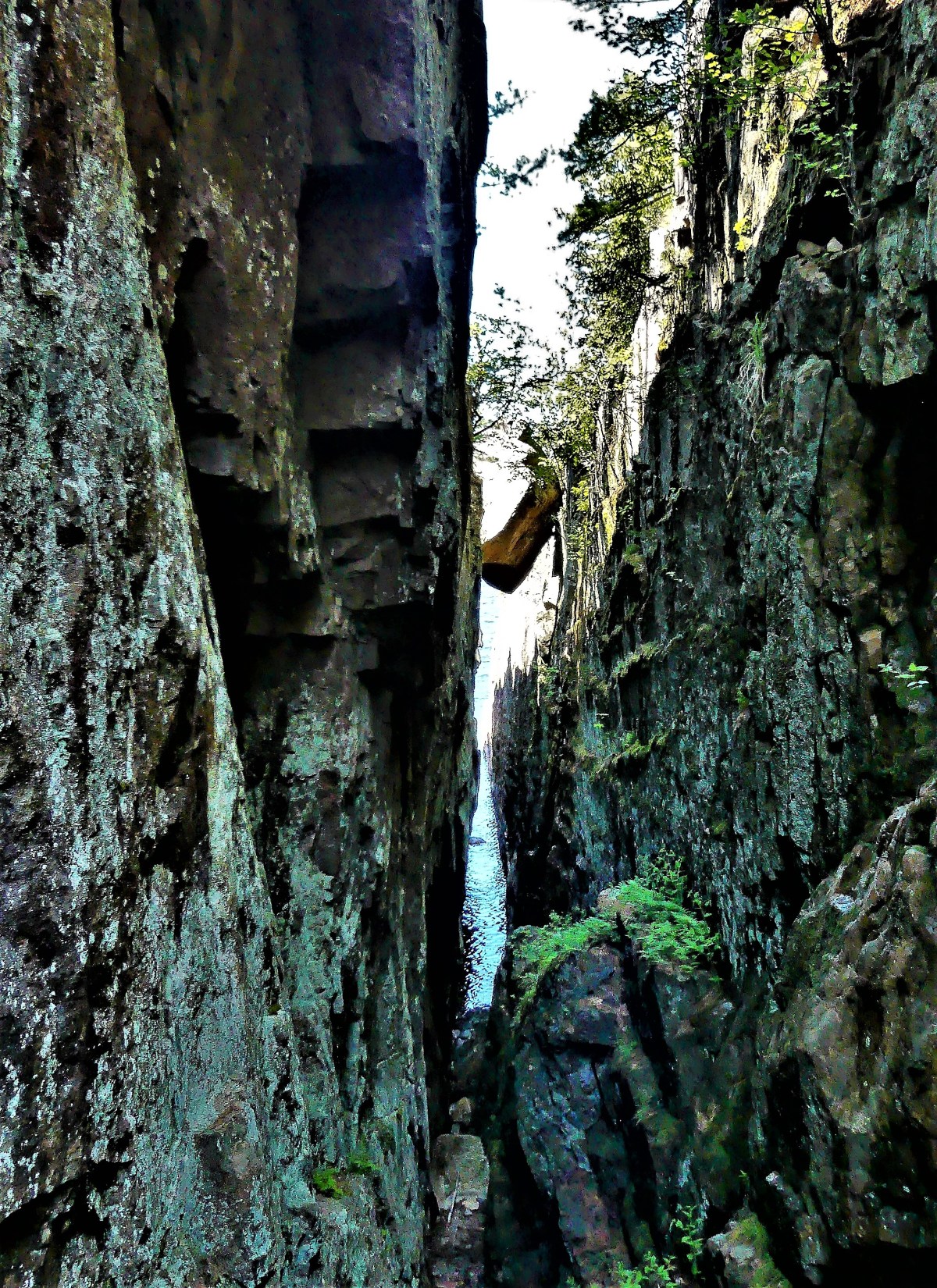
Halfway to our destination, a gash in the cliff exposes a 10 ft granite chunk mysteriously wedged between darkness and daylight.
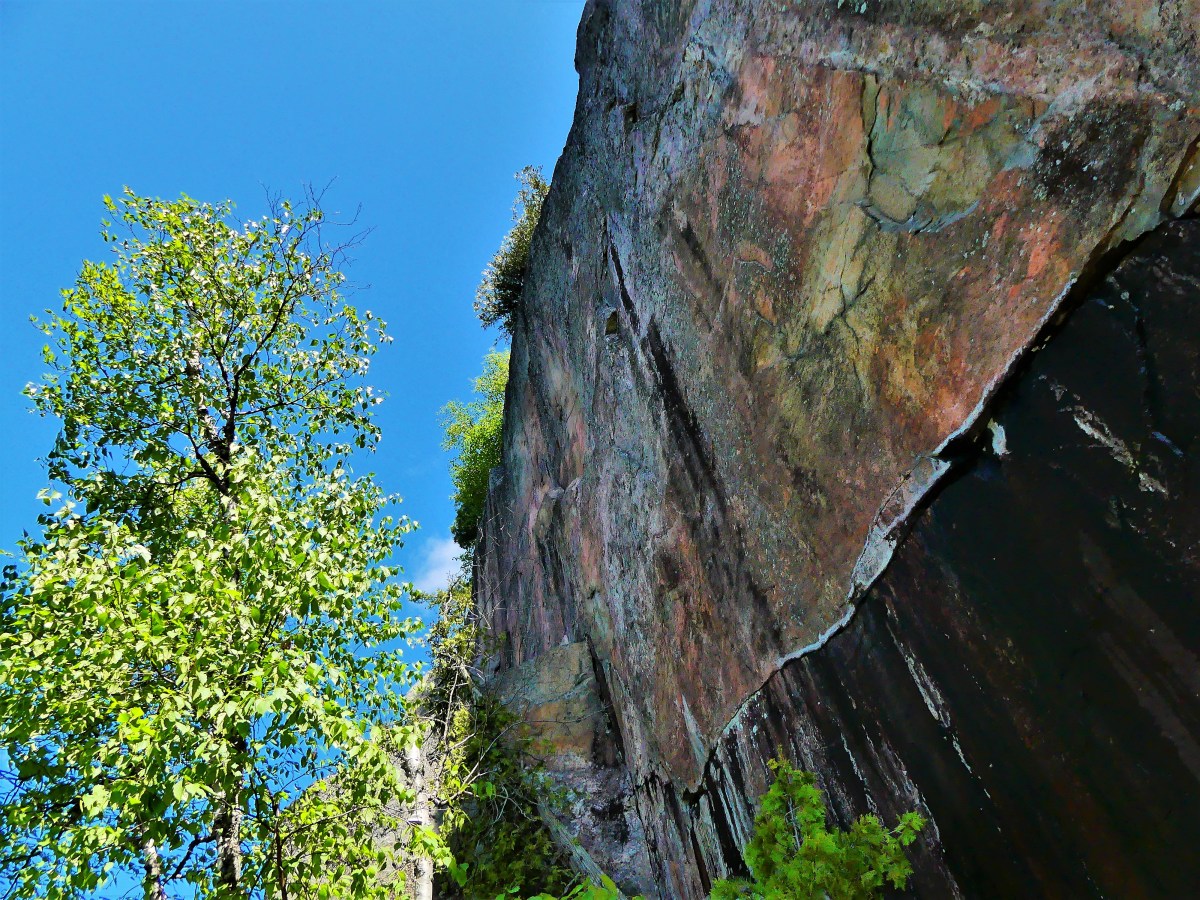
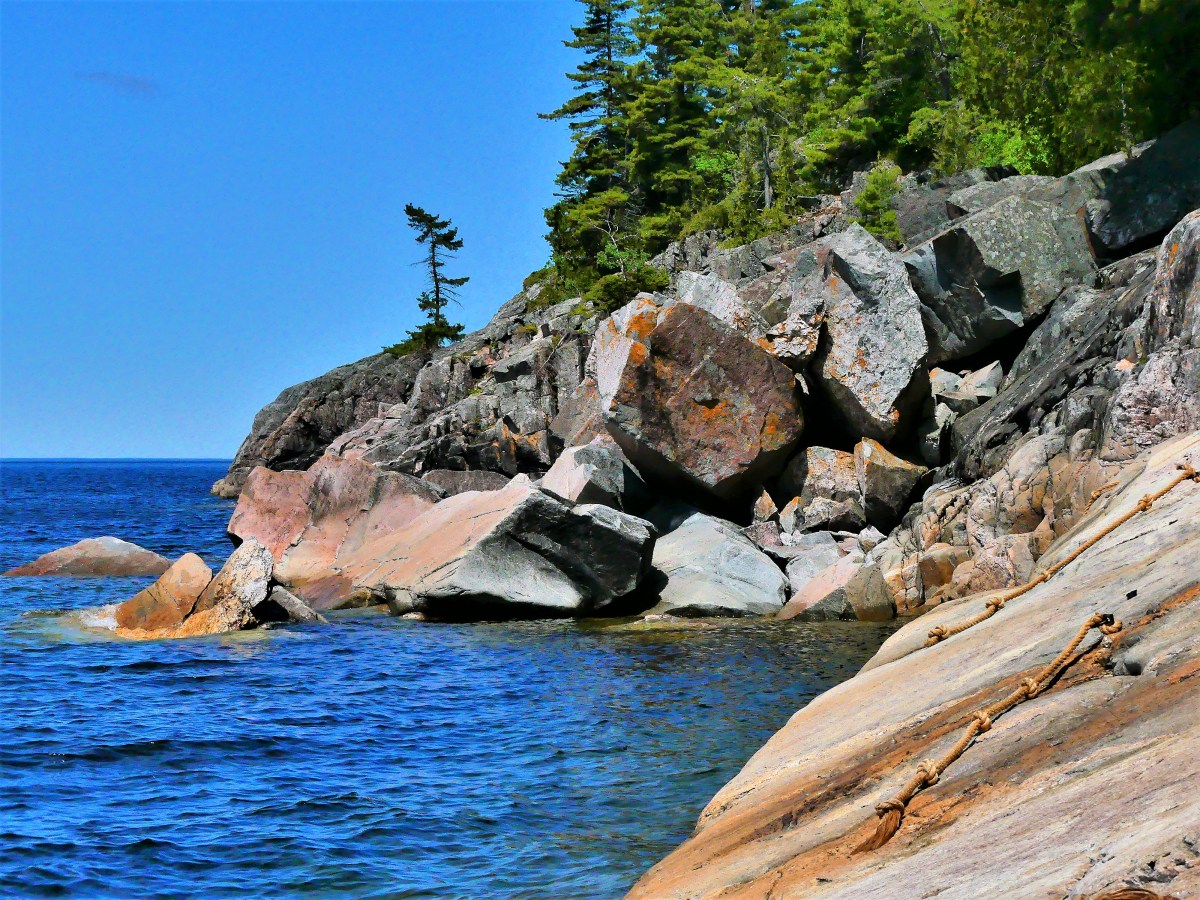
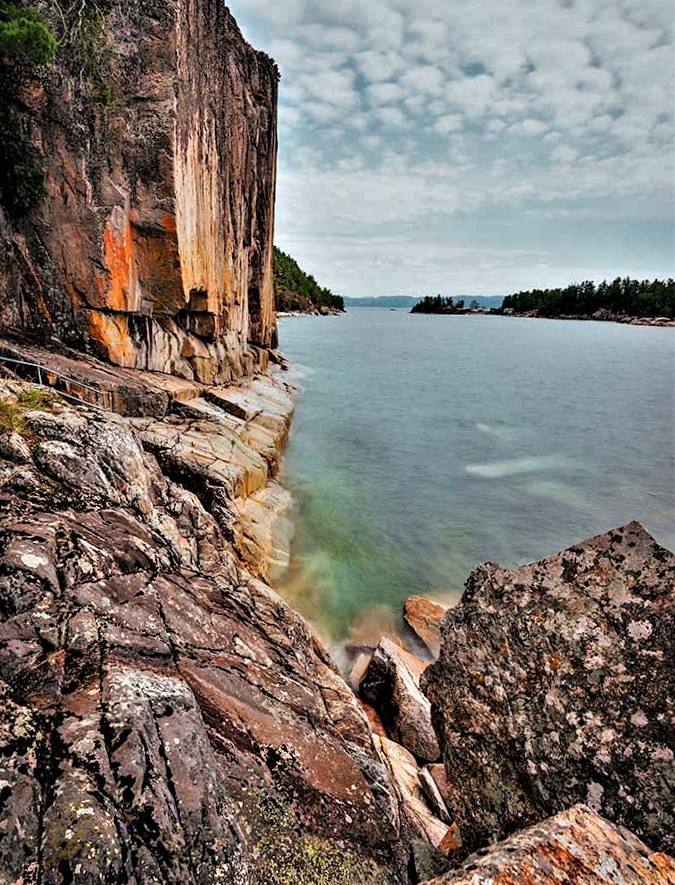
In 15 minutes we arrive at a clearing of flat rock where the sky opens up to the water. A colorful cliff 15 stories high looms above us, grabbing my attention.
Leah is content holding onto a pipe rail that separates the adventurous from the cautious.
“Are you coming?” I ask.
“Down there? Not a chance!” Leah answers instinctively.
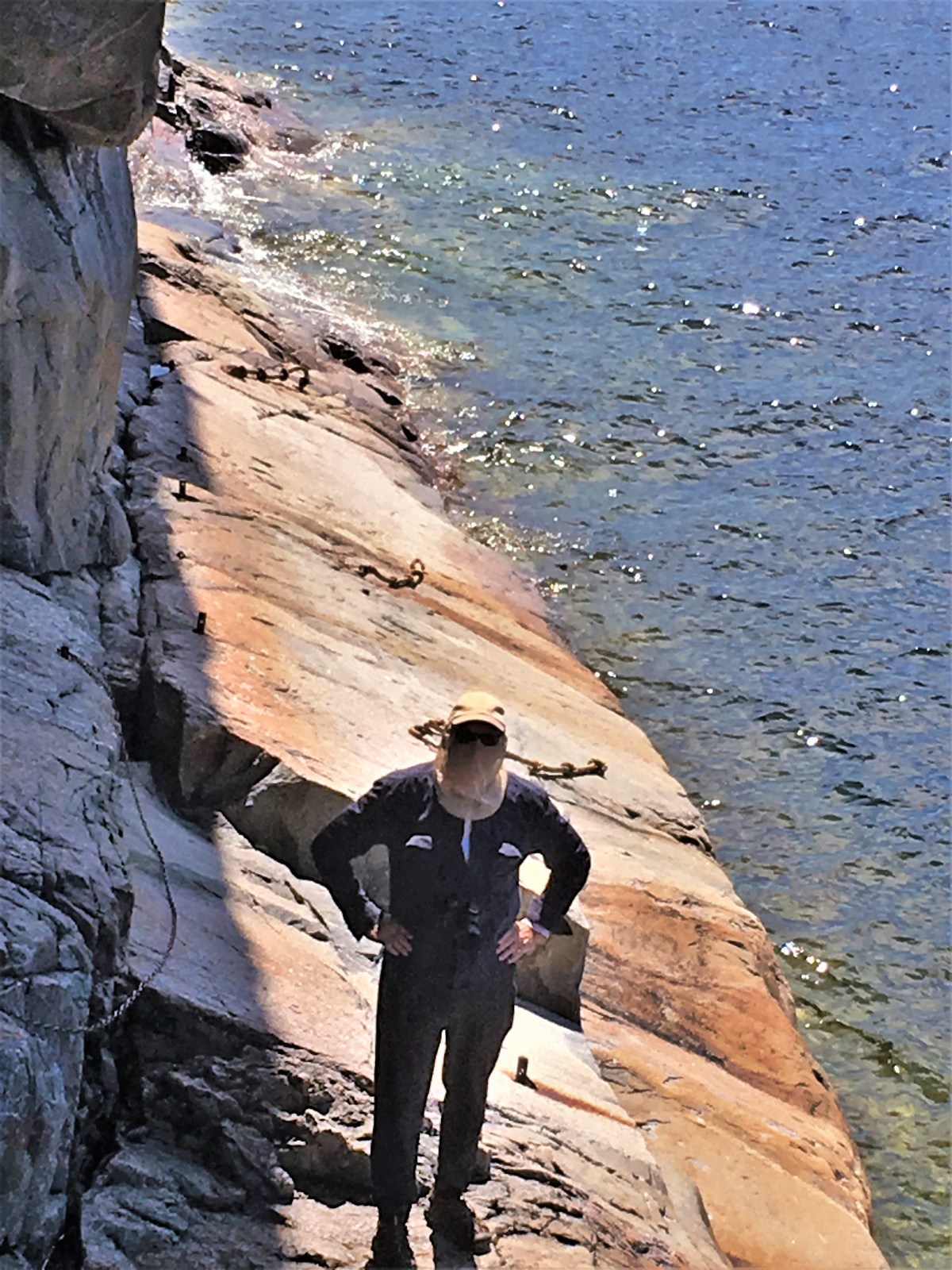
A short drop onto a wet ledge of granite sloping into Lake Superior takes added time, but planting my feet with measured steps is the best method for staying safe.
courtesy of Leah
Knotted ropes threaded through embedded pipes are there to assist the daredevils who spill into 50° F water.
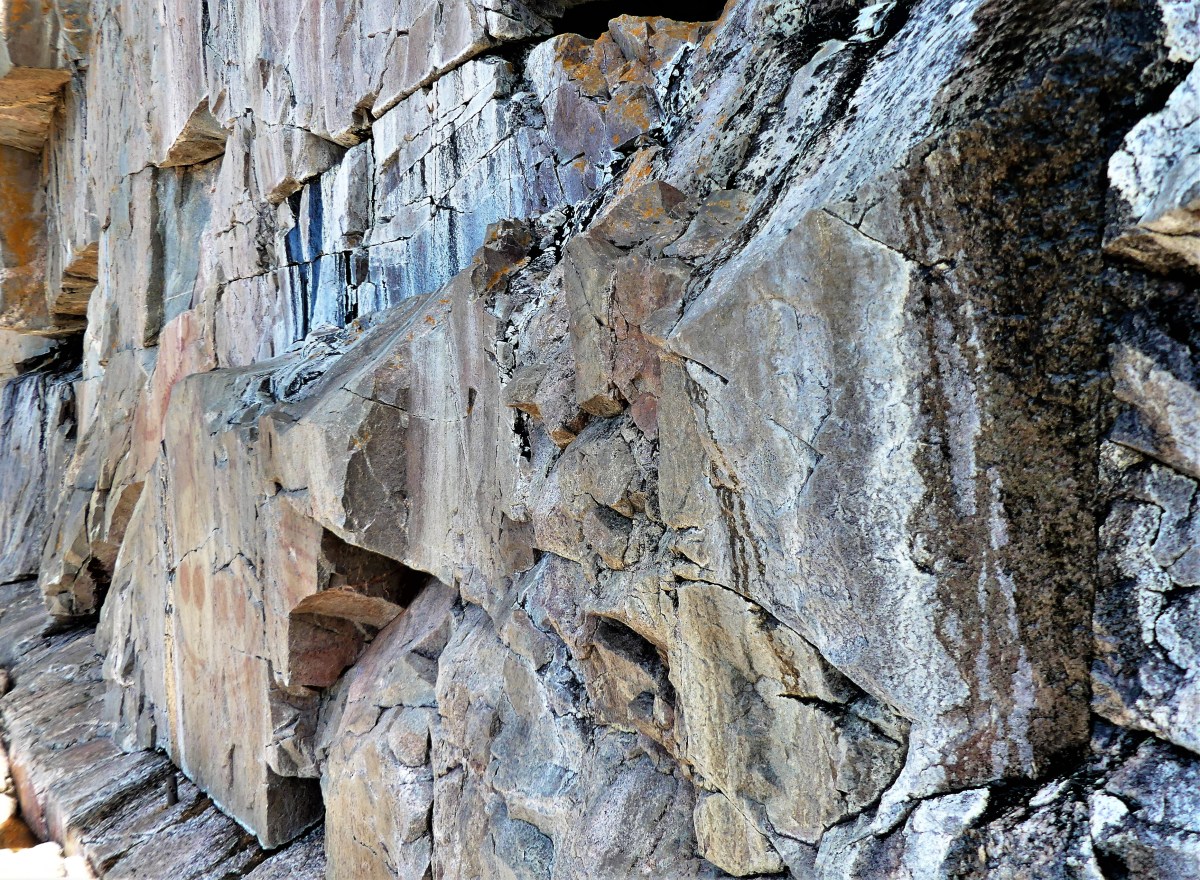
Once I get my footing, I can sidle across the ledge for a better look at the cliff face.
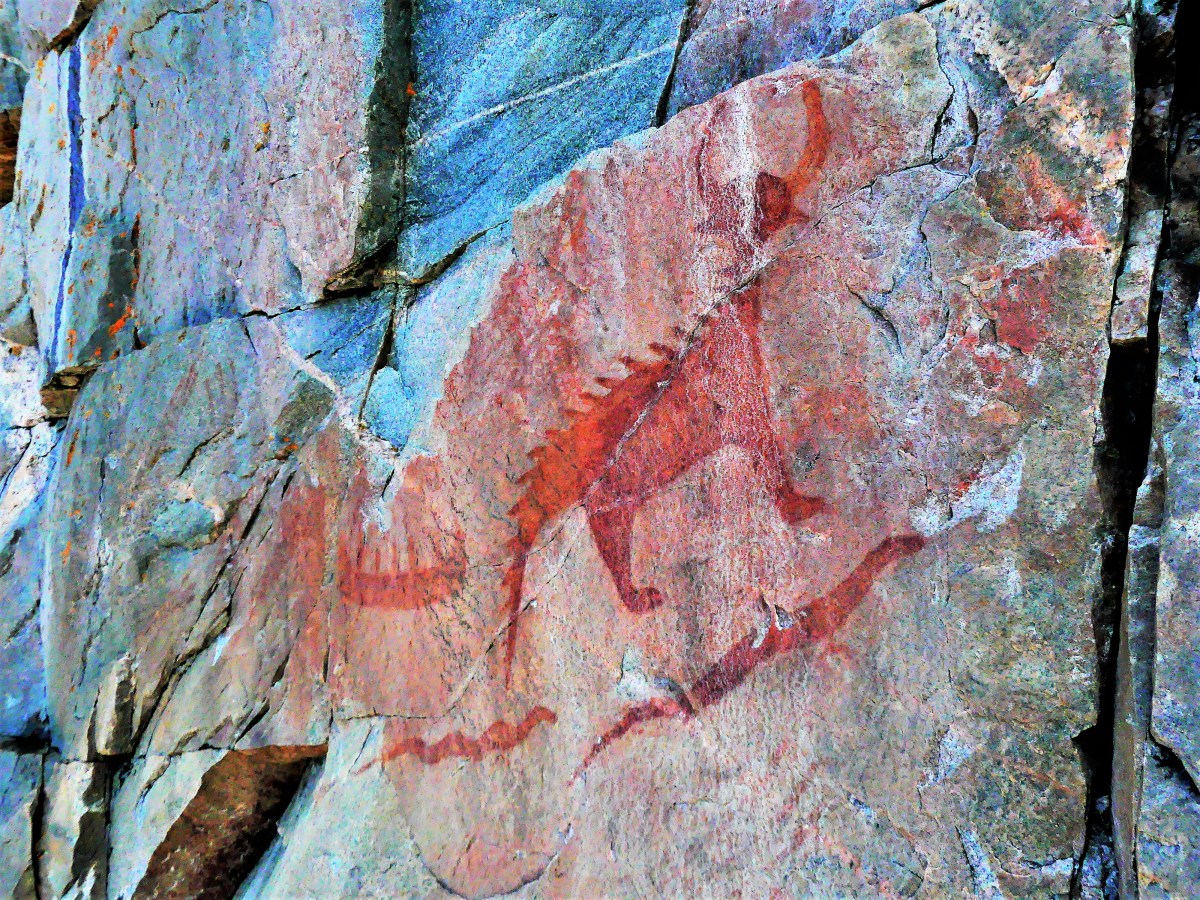
Venturing further out on the ledge, I meet Mishipeshu, the Great Lynx, who was empowered by the ancient Ojibways to control Lake Superior.
There are dozens of sacred drawings set in stone, dating back to the 17th century, but most are faded and nearly unrecognizable from eons of sun, water, ice and wind. Their message remains unknown, but experts reason that the pictographs depict historical events, and could signify manitous from shamanistic ceremonies.
I carefully manuever onto terra firma,
and we hike back to the parking lot.
“That was amazing, down there,” I exclaim.
“It was alright,” notes Leah.
“But you never got to see the pictographs,” I mention.
“That’s OK. You did all the hard work for me. I’ll just have a look at your photographs,” she laughs.
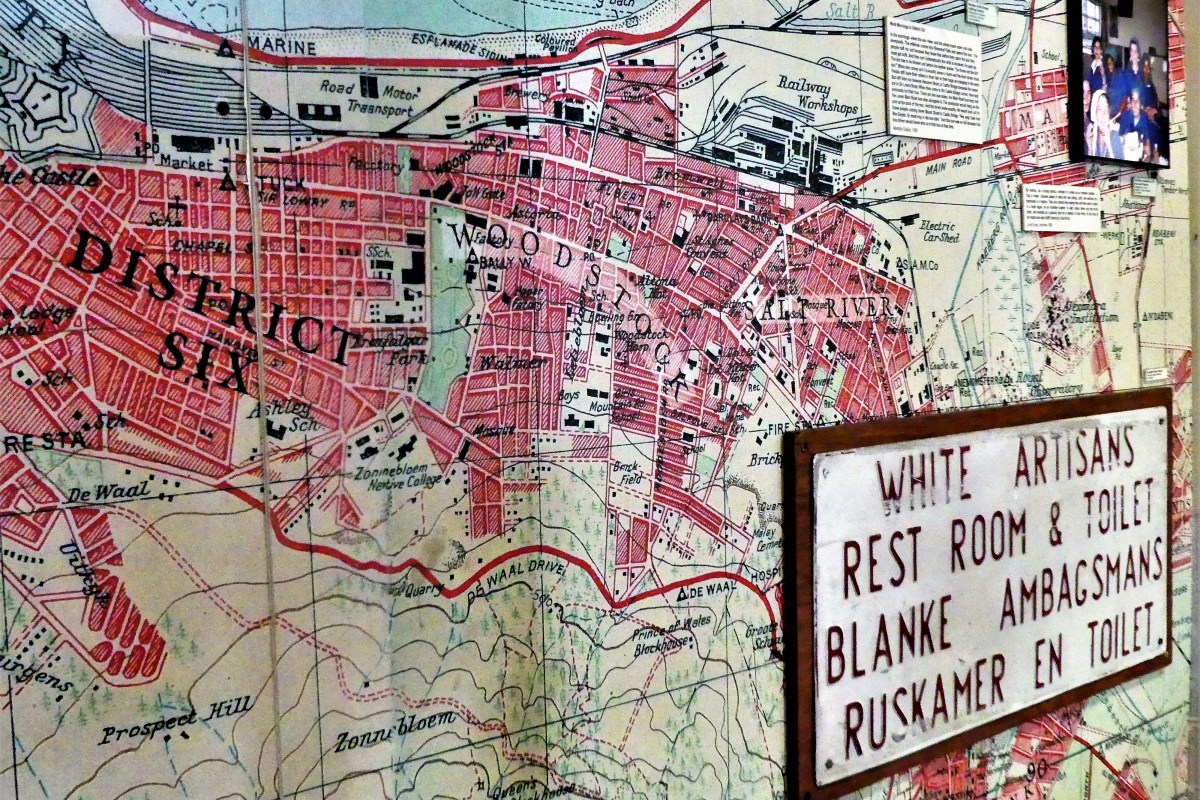
District Six was known as the soul of Cape Town, and home to nearly 10% of Cape Town’s population. It was a restless melting pot of freed slaves, persecuted Malays, and opportunistic Asians stewing as community artisans, musicians, merchants, immigrants, and laborers in a broth of grit, sweat, determination and talent. The vitality of the district inspired a body of poetry, prose, music and theater infused with swagger.
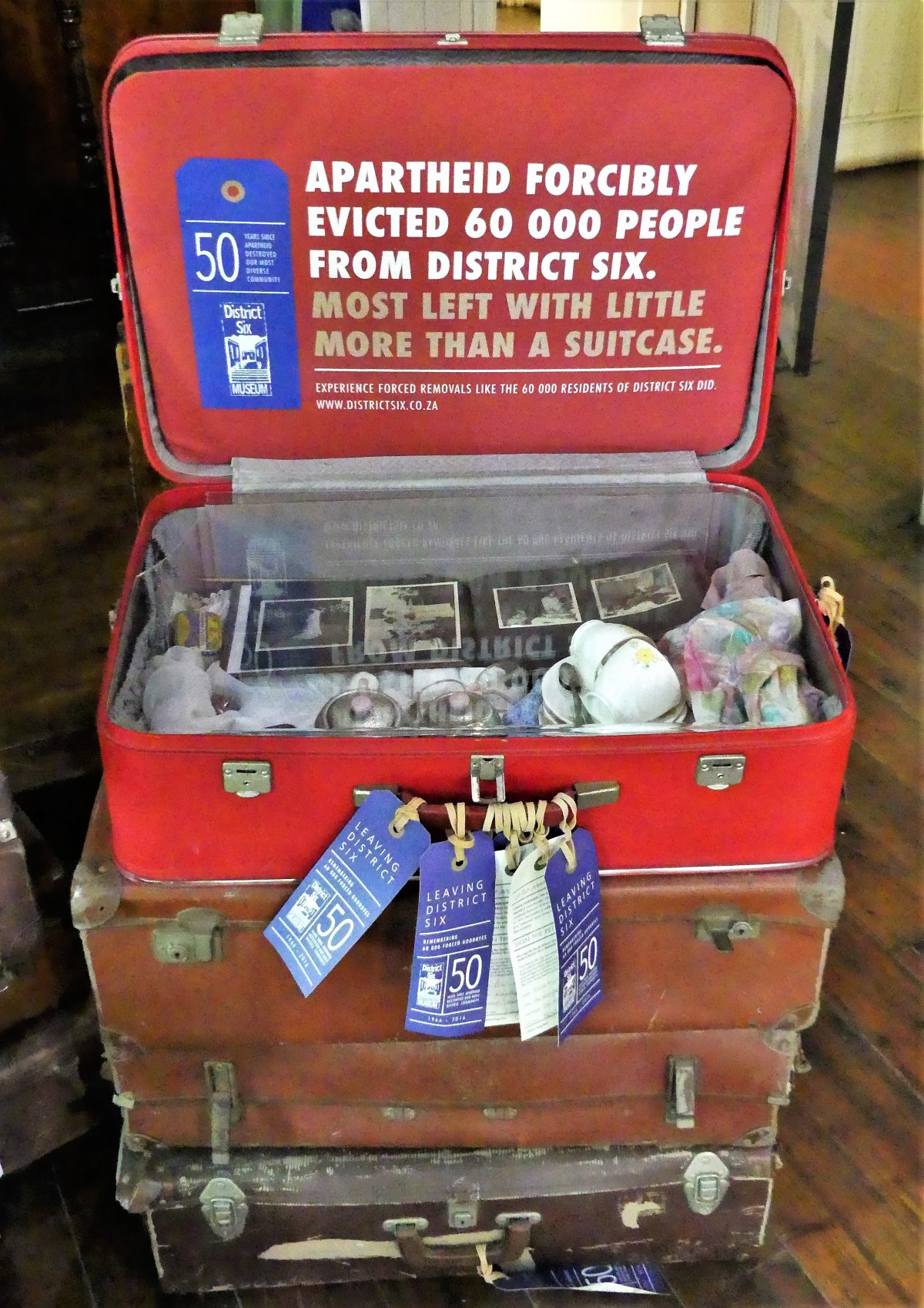
However, during the 1960’s, a generation of District Six residents lived in fear because of the color of their skin. The Afrikaner-centric government looked to apartheid as a means to squash opposition among the rank and file majority, prompting an official decree to rezone the district as a “whites-only” area, displacing more than 93% of the 60,000 residents.
Government officials offered several reasons in defense of their policy. They regarded the district as a slum; it was crime-ridden and dangerous–overwhelmed by immoral activities like gambling, drinking, and prostitution. They claimed interracial interaction inside District 6 bred conflict, necessitating the separation of the races.
By 1982, the government was relocating the “colored.” They were sent to dusty Cape Flat townships with insufficient infrastructure, while 25 km away, their old homes and businesses were bulldozed, leaving only the houses of worship behind.
Despite government claims, most residents believed that the government sought the land because of its proximity to the city center, Table Mountain, and the harbor.
By 1991, apartheid was repealed, and on December 10, 1994 the District Six Museum was launched in a historic Methodist Church building at 25A Buitenkant Street.
The museum serves as a remembrance to the events of the apartheid era as well as the culture and history of the area before the removals.
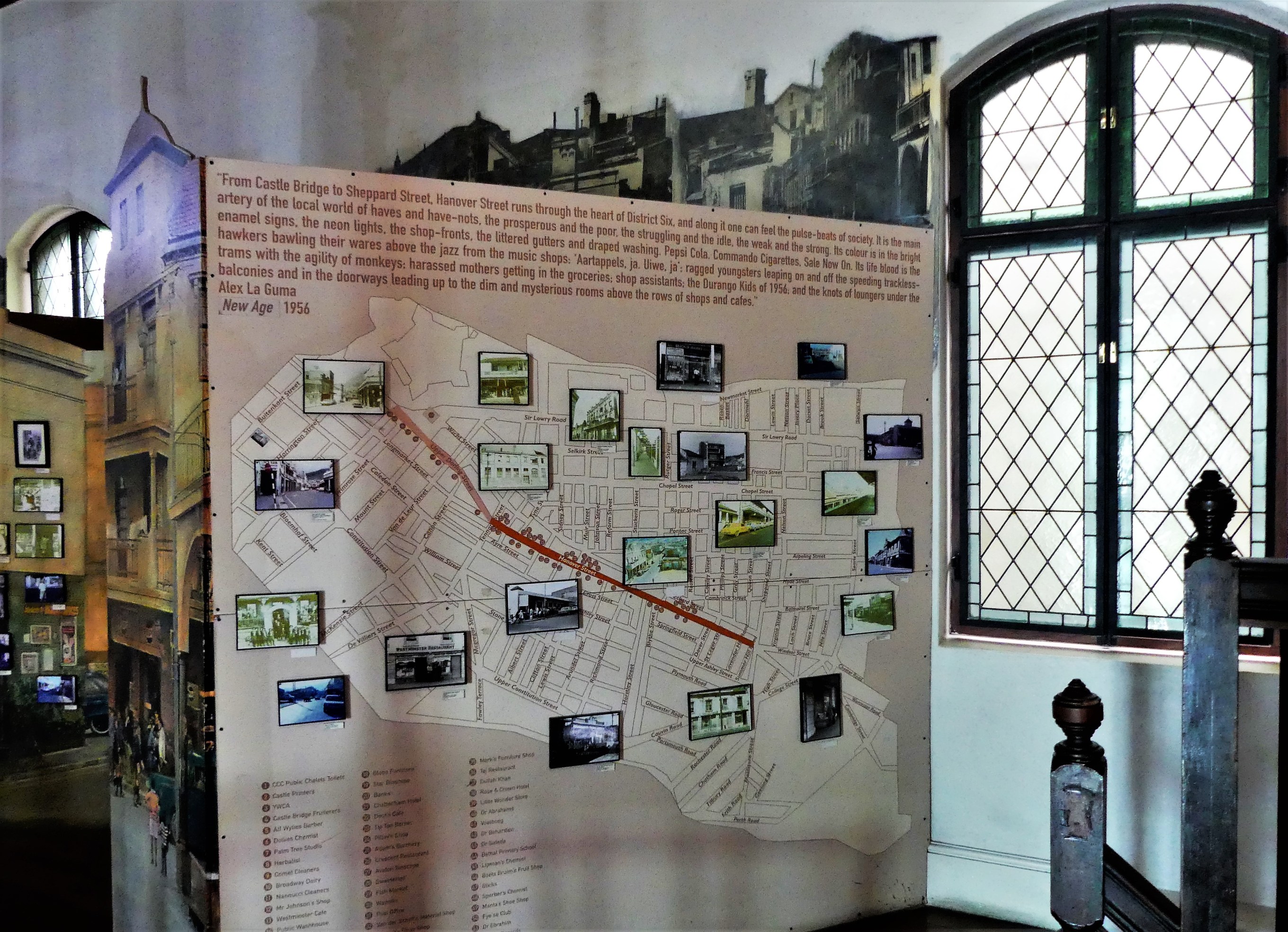
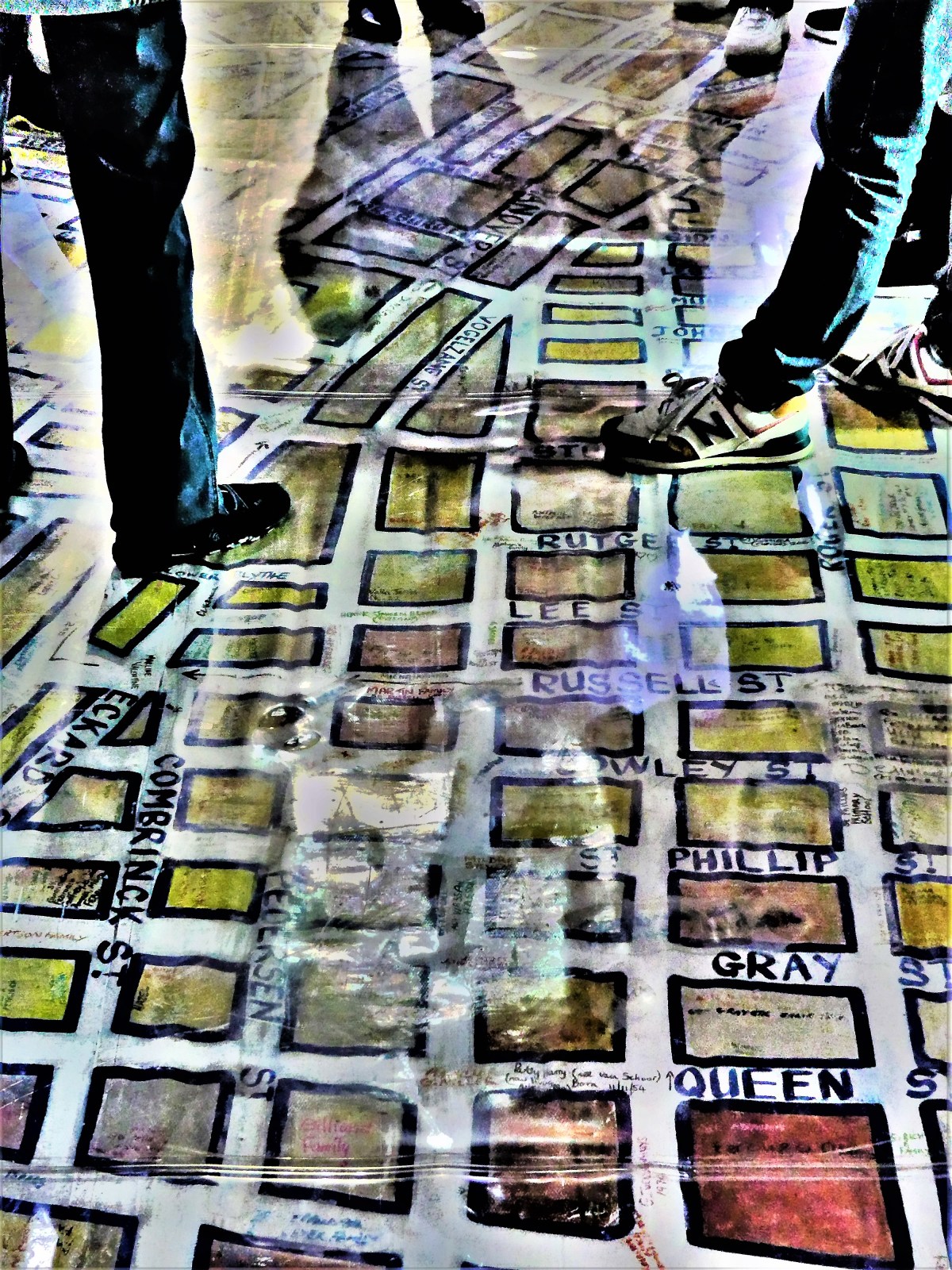
The ground floor is covered by a large street map of District Six, with handwritten notes from former residents indicating where their homes once stood.
Other features of the museum include street signs from the old district,
displays of the histories and lives of District Six families,
and historical explanations of the life of the District and its destruction.
In addition to its function as a museum, it also serves as a memorial to a decimated community, and a meeting place and community center for the residents of Cape Town who identify with its history.
Our tour of Cape Town’s darker side continued with a trip to Langa, Cape Town’s oldest township in Western Cape with a population of over 50,000.
Originally conceived in the 1920’s as a company residence for shipyard workers from surrounding villages, the existing barracks are home to multiple families occupying a two-room unit.
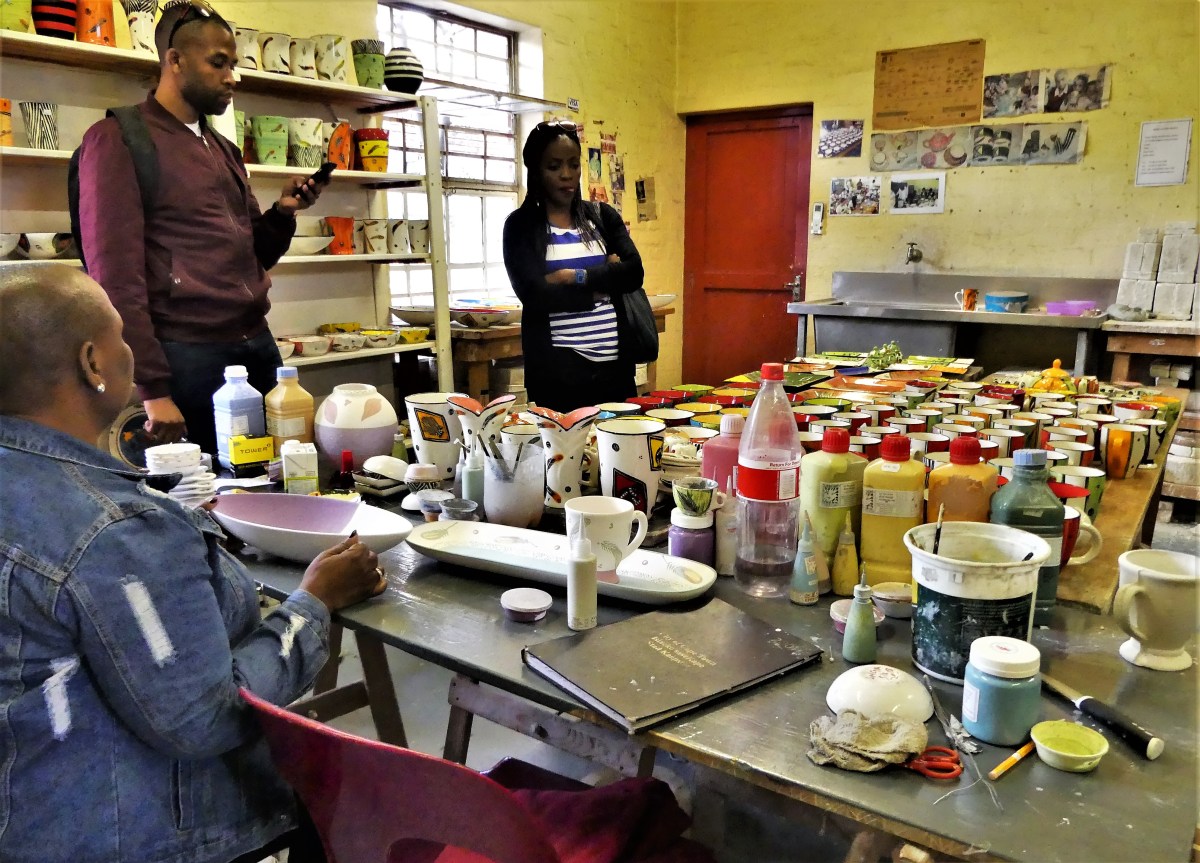
Our tour began optimistically with a walk through the Cultural Centre on the edge of the township that has partnered with local artists to rehabilitate the neighborhood…
and reinforce arts education as a means of promoting self-esteem and securing a successful career path for talented residents through ceramics,
paper maché,
mosaics,
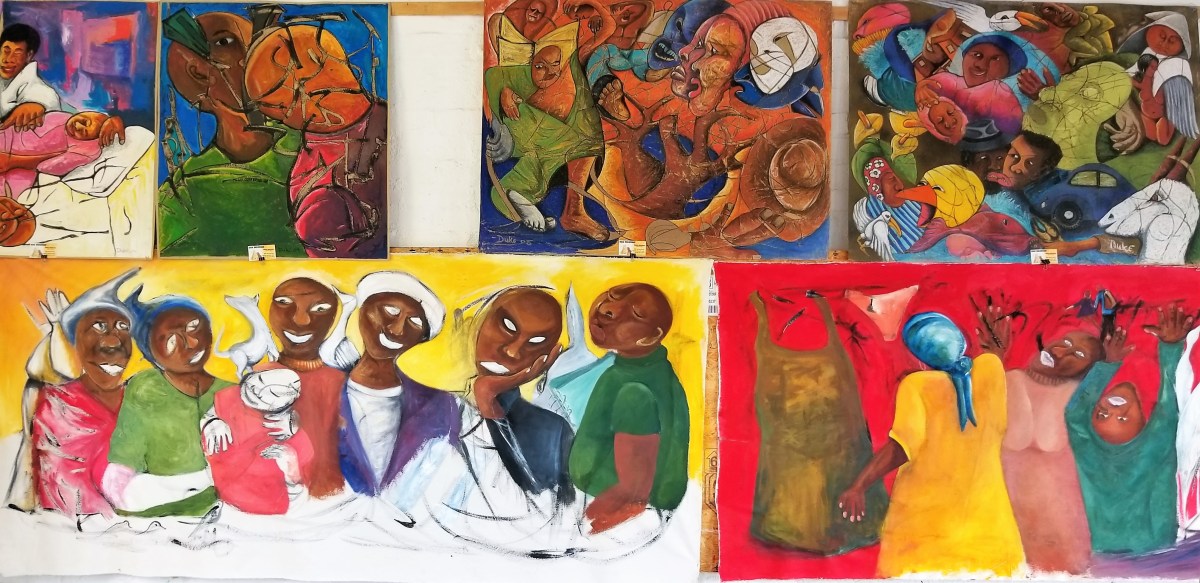
and painting.
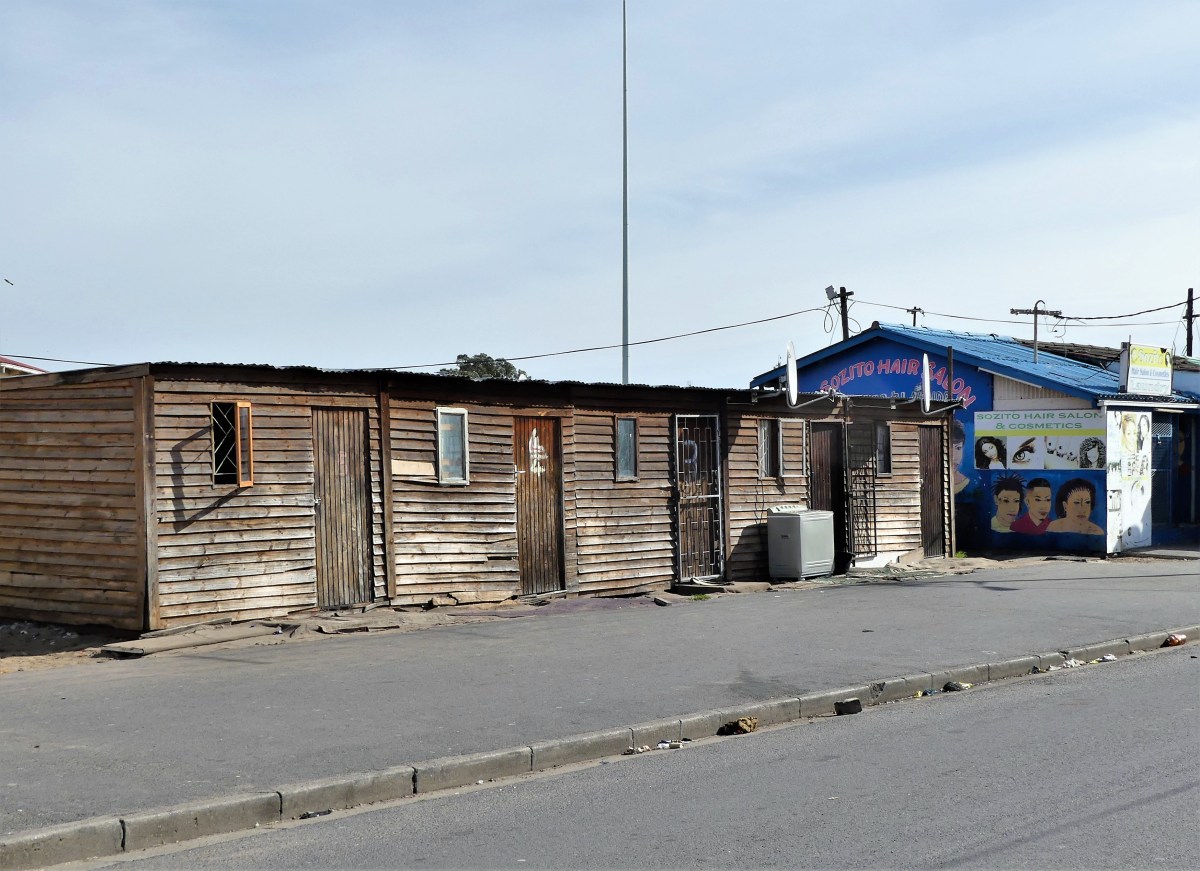
We continued our visit with a guided street walk through the neighborhoods…
Over and over, we asked ourselves, “How can people live this way?”
Realizing that we were a half-hour away from our luxury hotel made us uncomfortable and acutely aware of the abject poverty and abysmal living conditions surrounding us.
Unemployment stands at 40%,
and sanitation is an afterthought.
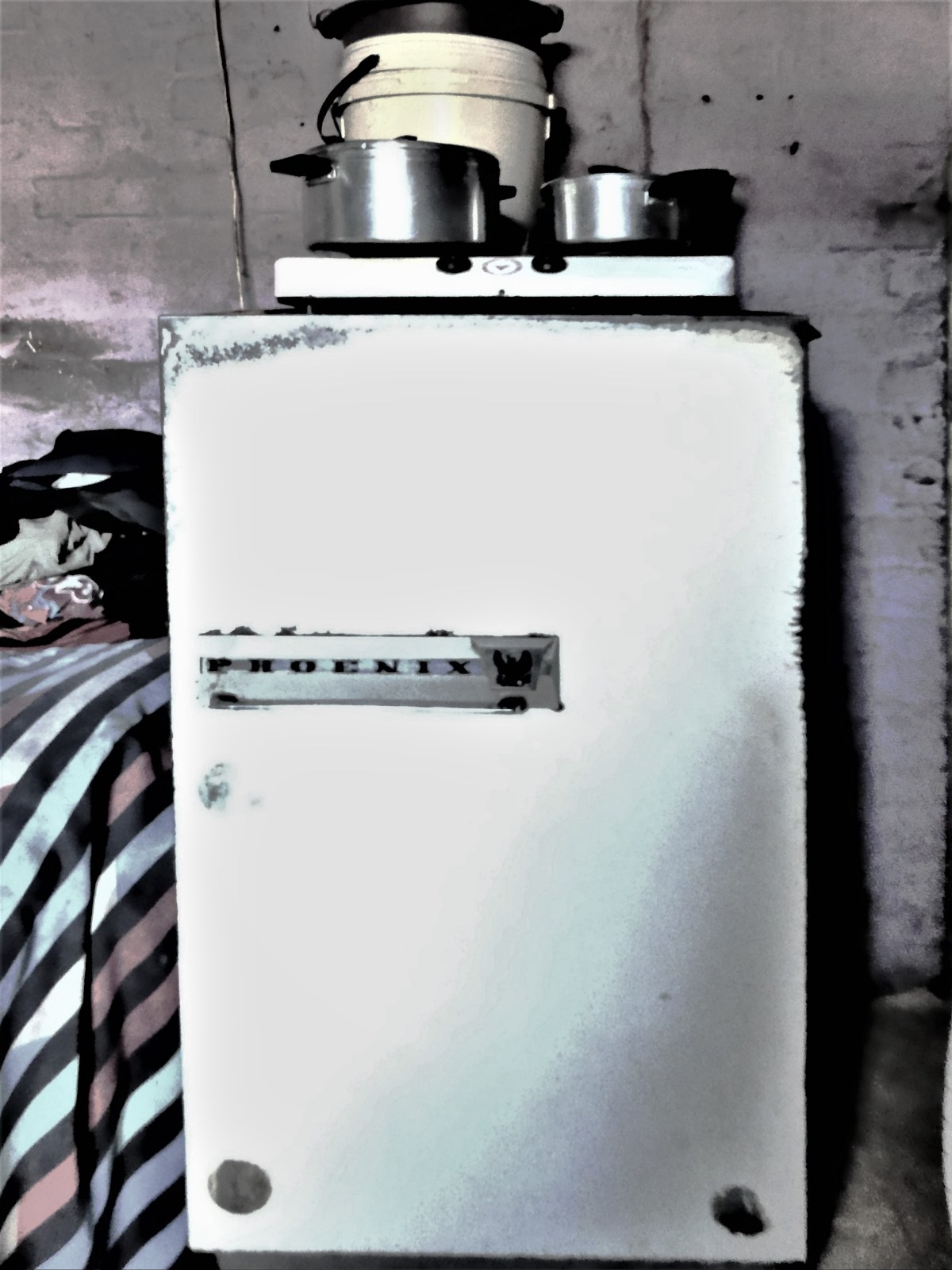
After negotiating with the house matriarch, our guide ushered us into a dank hovel fit for a family of four families. Several small children were playing on the floor, while adults went about their business of doing laundry,
preparing dinner,
or relaxing in front of a pirated broadcast on a vintage TV.
It was an awkward moment that may have been intended to shock us or educate us; I’m not sure which. But the people inside were nonplussed by our appearance, as if our intrusion was a routine occurrence.
If only we had been forewarned of this encounter, it would have given us an opportunity to gift them some wholesome food and clean water.
The citizens of Langa and the 2.5 million living in other townships on the edge of Cape Town struggle daily. Even now, as before, they rely on each other to survive, while the government offers little more than lip service in exchange for votes.
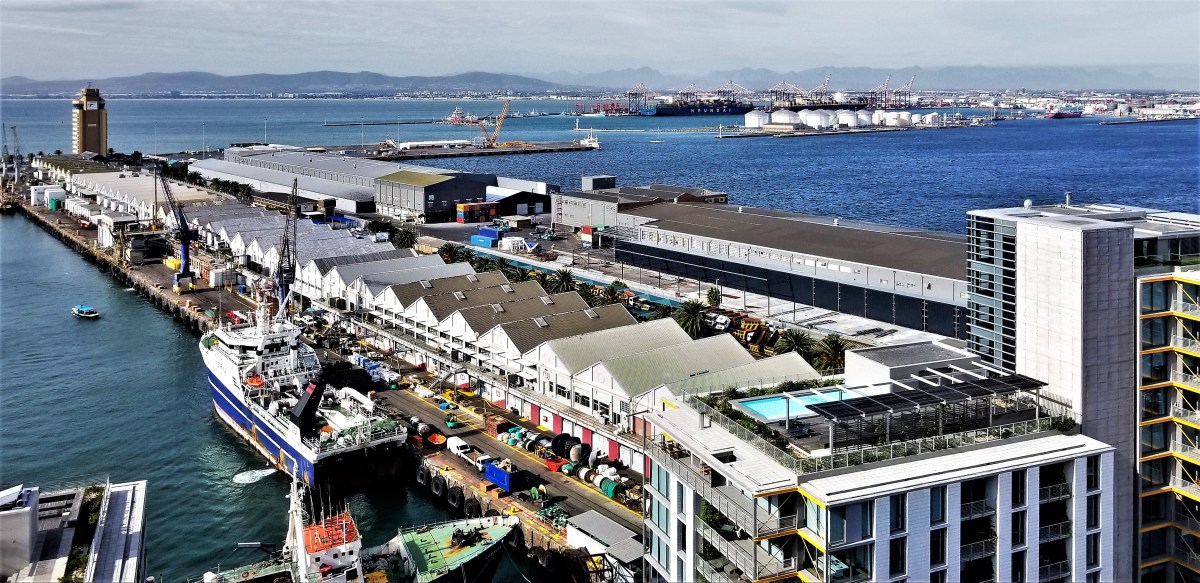
Much of Cape Town radiates with modern appeal, brandishing its abundance of fashionable and trendy shops, galleries, cafes, restaurants, and hotels throughout the city. However, the crossroads where residents and tourists travel to find it all is Cape Town’s waterfront.
Leah and I took a walk through the waterfront district to see for ourselves, and found that one day was not enough to cover it all.
The heartbeat of the waterfront is the Victoria and Albert Wharf, where the city meets the sea.
Grounded by a two-story mall, the Victoria Wharf Shopping Centre bustles with 450 retail stores, and over 80 restaurants and eateries.
Beyond a swinging bridge and a capsule of specialty malls stands the Clock Tower, where a ferry (calm seas and weather permittting) awaits to shuttle intrepid visitors to Robben Island…
the one-time prison of Nelson Mandela from 1964 to 1982, but now a museum and World Heritage site. Unfortunately, high swells prevented us from visiting.
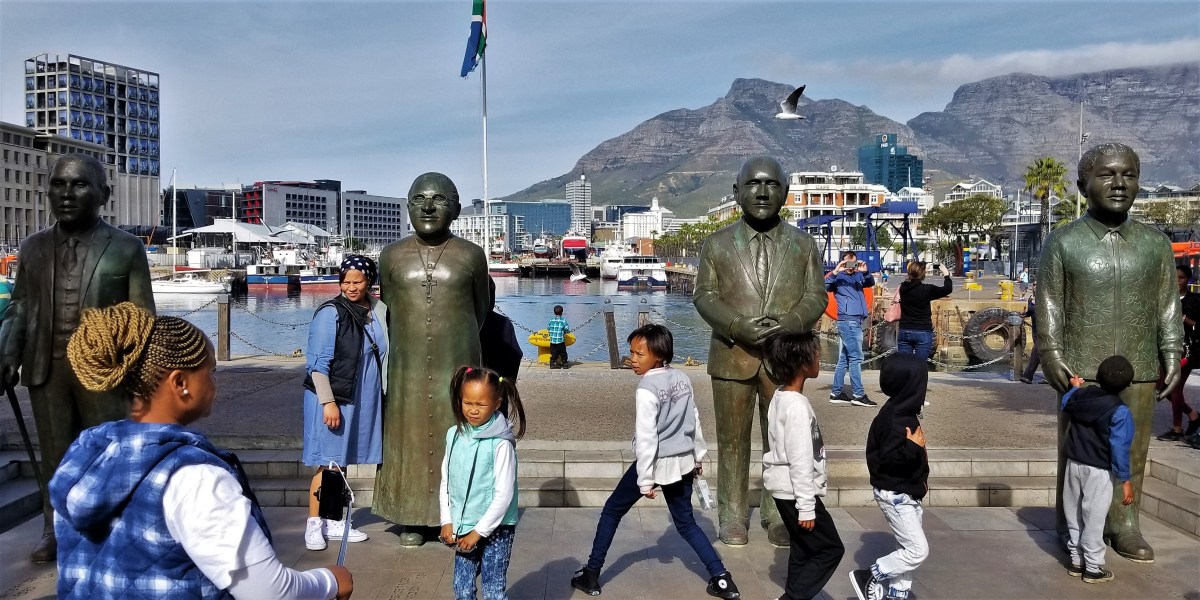
His importance to the city and country cannot be underestimated, as his name and face is omnipresent throughout the region.
Visible from all points of the city, and looming over the wharf is Table Mountain,
accessible by cable car, with commanding views of the city below. Unfortunately, Leah and I never made it to the top because of gusting winds at the time.
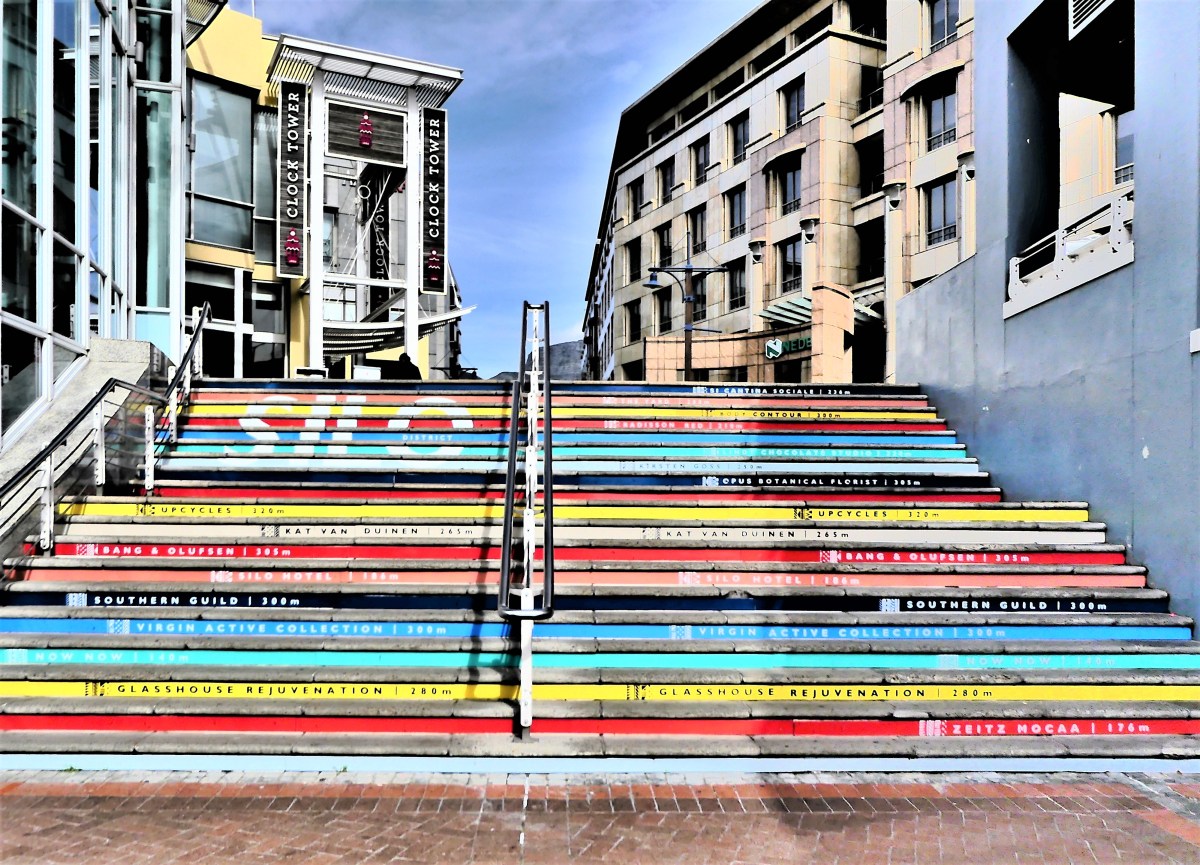
Continuing south, we mounted a set of stairs…
directing us to the Silo District, where a 1920s grain silo…
has been repurposed into the Zeitz Museum of Contemporary African Art,
having opened on September 2017, and boasting the world’s largest collection of African art.
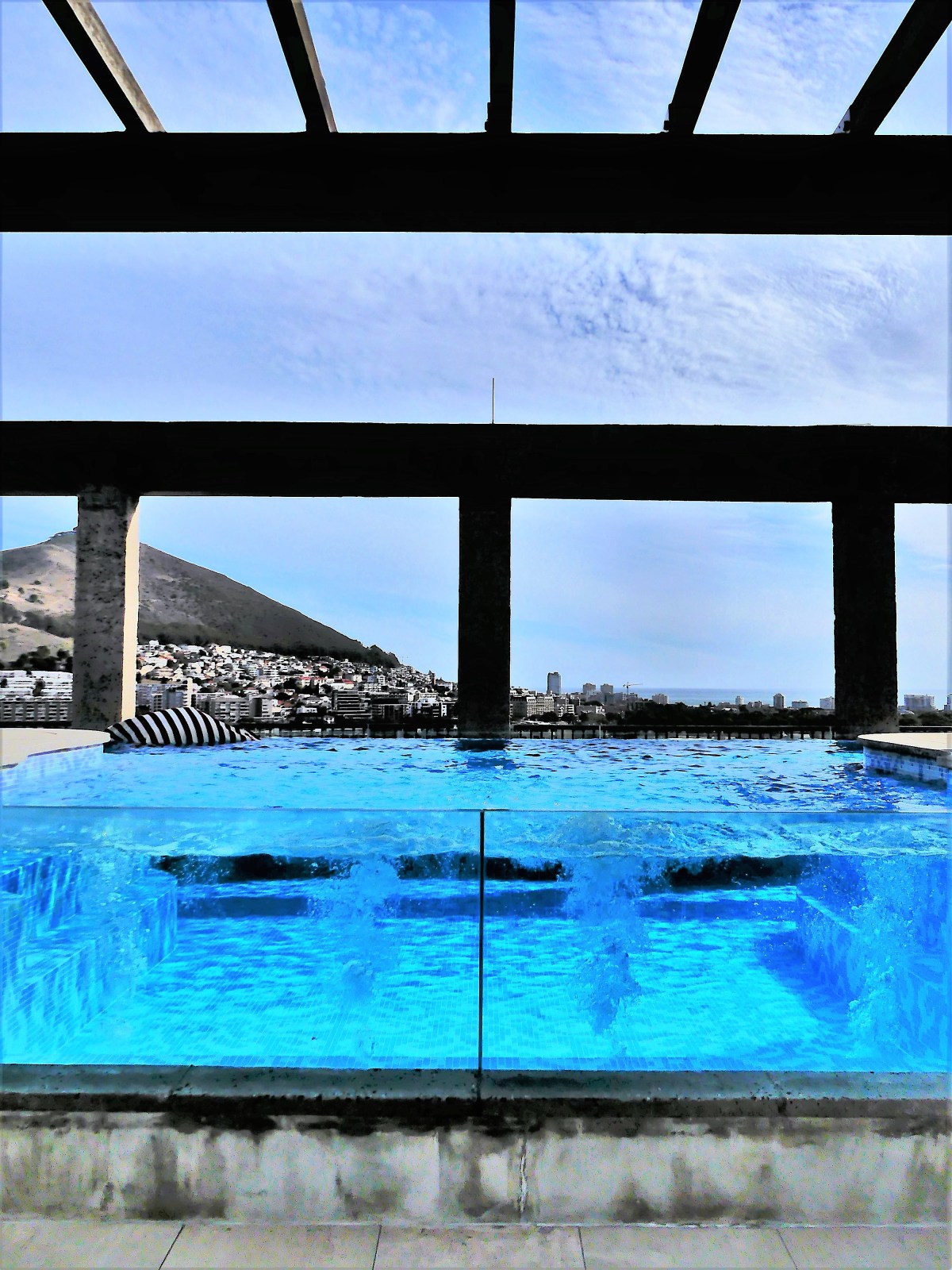
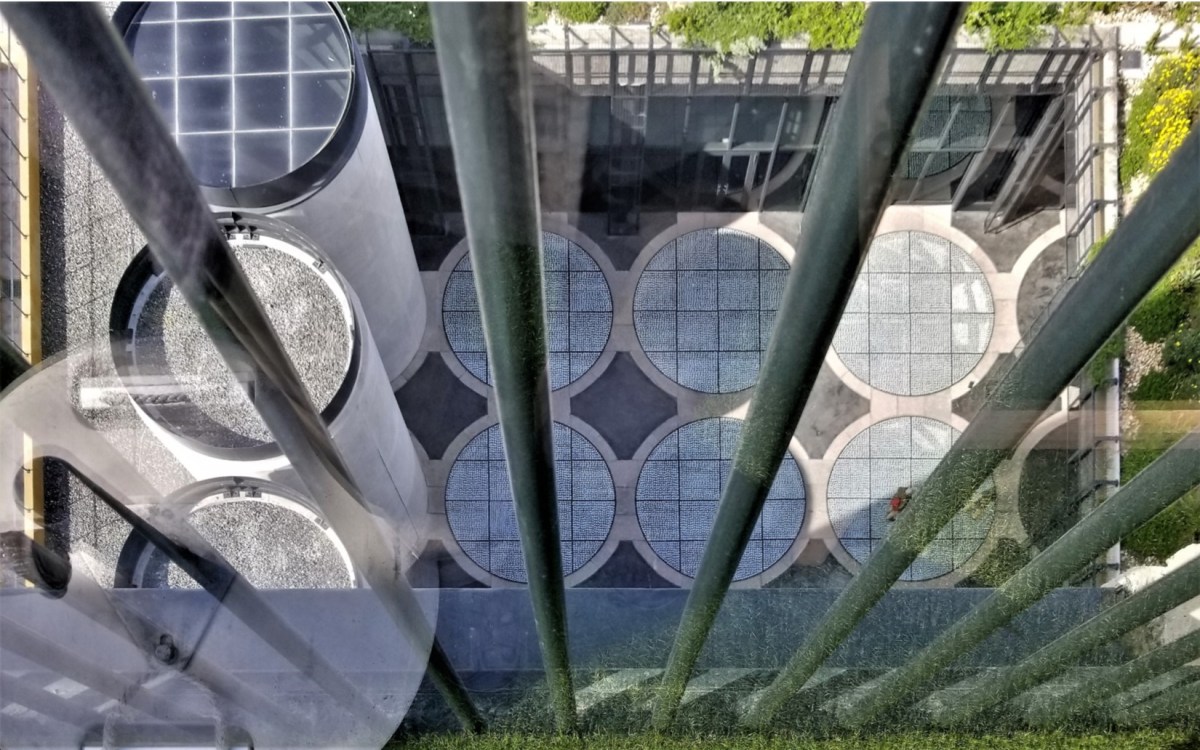
The building also houses the Silo Hotel, occupying the top six floors within the one-time grain elevator. Daily rates during low season range from $900 for a luxury room to $5000 for a 1-Bedroom Penthouse. Leah and I thought we’d have a look around.
The elevator carried us to reception on the sixth floor, where we spoke to an attendant who eagerly escorted us to the eleventh floor open-air restaurant, lounge and pool.
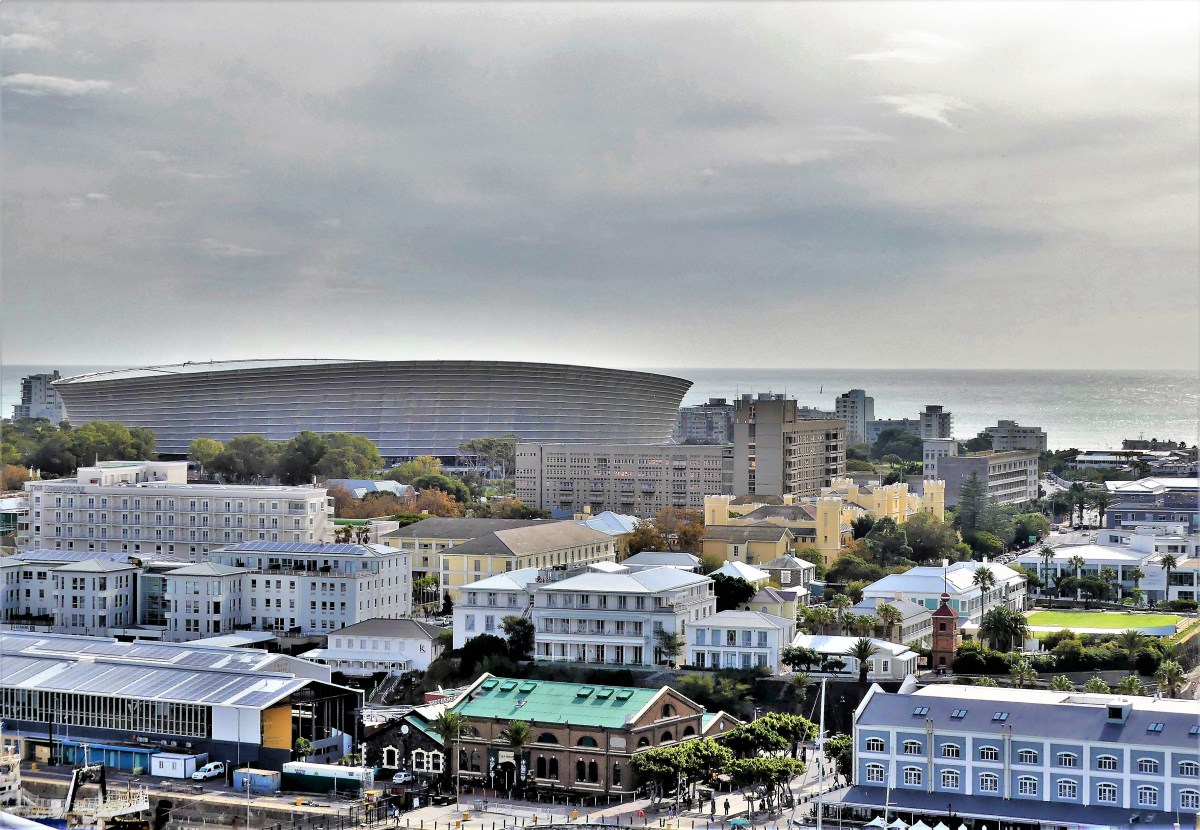
Having missed out on a Table Mountain overlook because of weather, our surrounding views of the stadium,
the wharf,
the ship terminal,
and the courtyard below were spectacular, and made up for our disappointment.
Once back on earth, we headed past the shipyards…
and along the canal…
to Battery Park, a greenspace where families gather to skate and picnic.
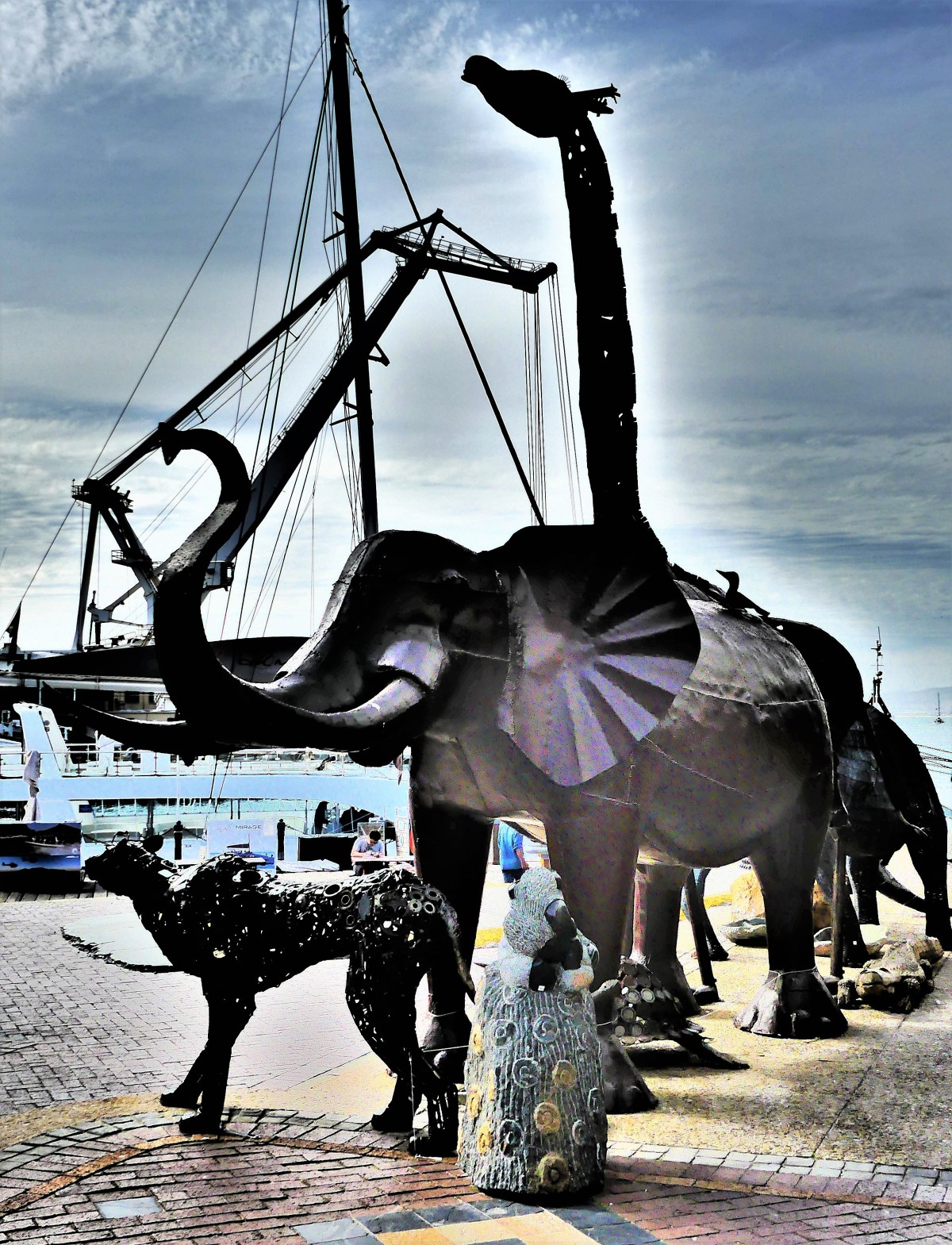
After reaching City Hall in the distance, we doubled back to the waterfront, eager to continue the next part of our journey in search of wild animals.
A recent two-week trip abroad was much more than a European romp through a handful of city centers. My mission was ambitious: to gather relevant data on my mother’s ancestry that has thus far proved elusive, and reconnect with family across the Atlantic whom I haven’t seen in nearly 48 years.
My itinerary took me through the highlands of Scotland, to the canals of Holland, to the Rhineland of Germany,
with travel hubs in Edinburgh,
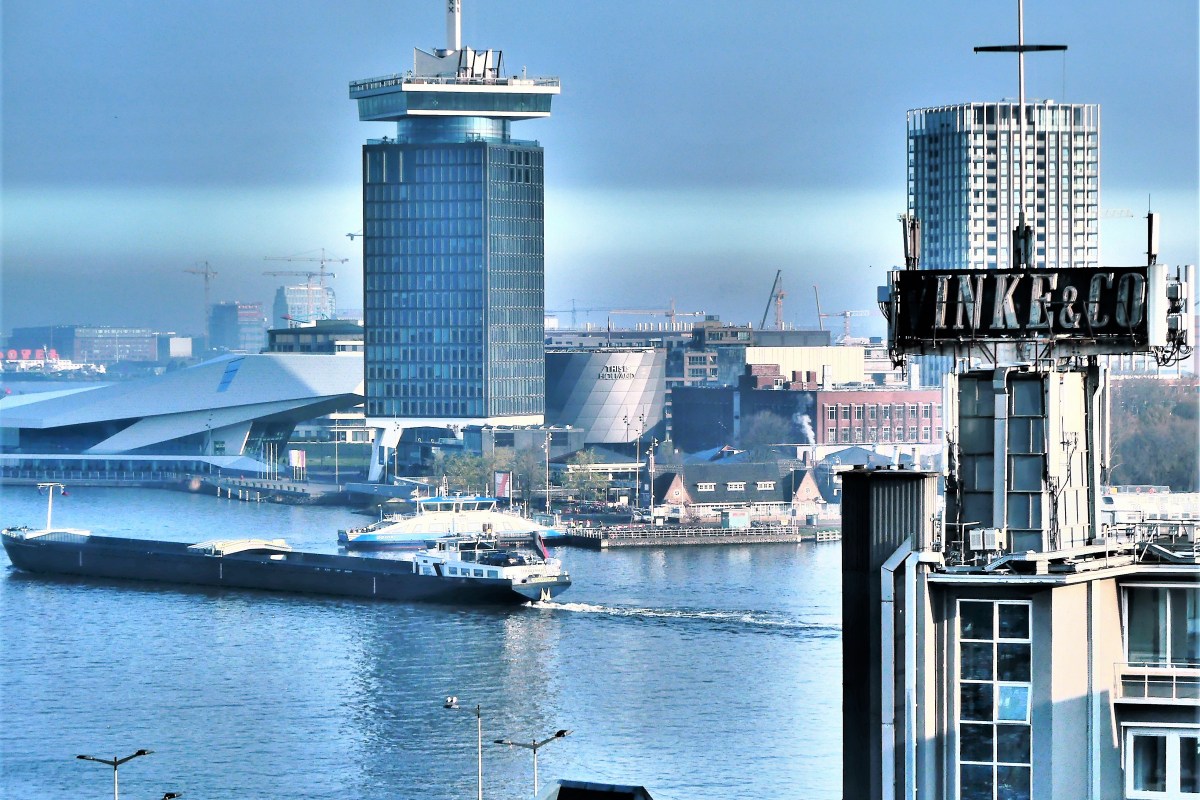
Amsterdam,
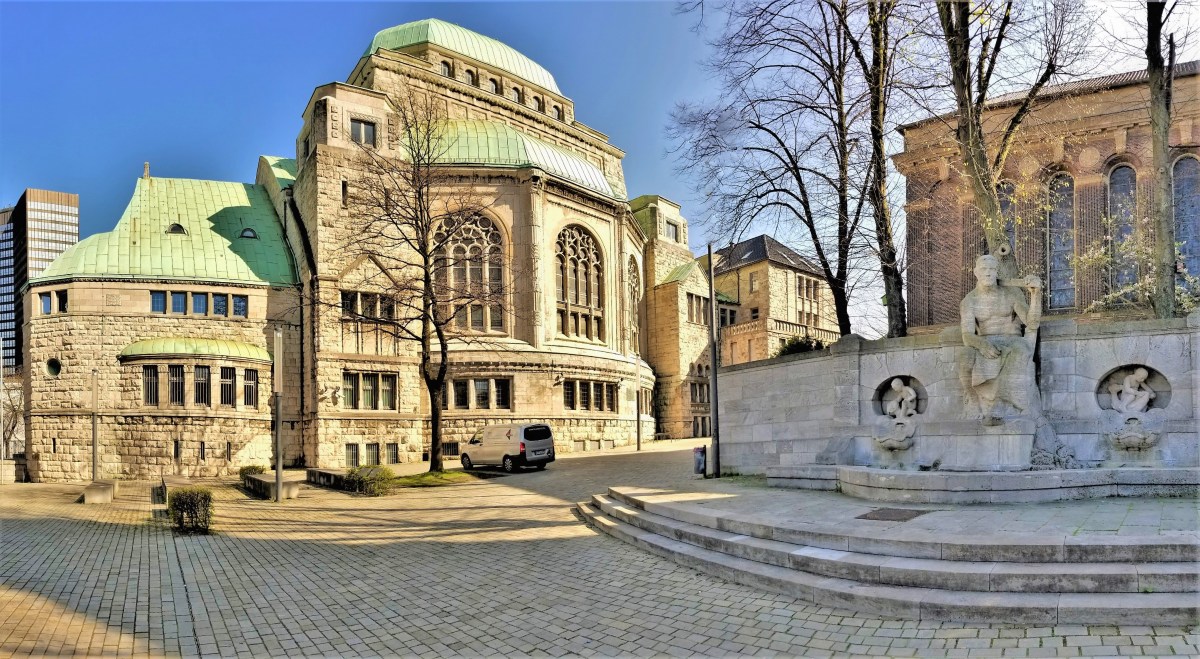
and Essen,
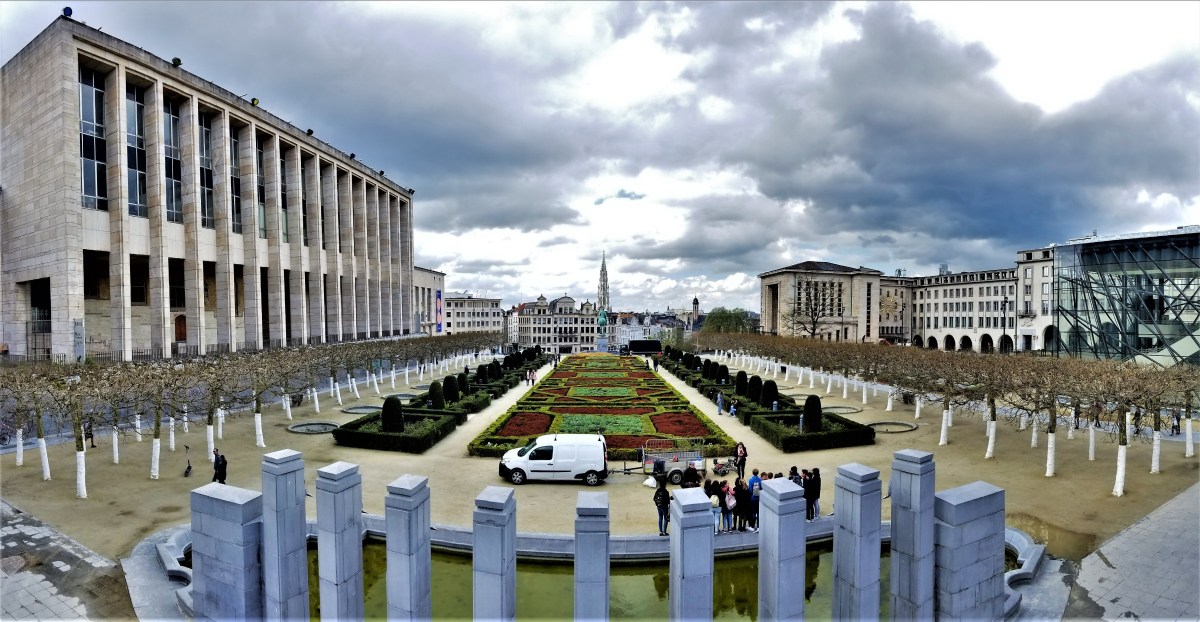
before taking a breath, and finishing strong as a tourist in Brussels,
and Paris.
Each stop was consequential in my quest to uncover vital research of my mother’s epic escape from Nazi Germany, and the endless road taken to reunite her broken family.
This was not an easy trip, but I could sense that during the planning stage. Yet, preparing myself for the inevitable and predictable emotional turmoil was balanced by the prospect of discovery–knowing that every step was taking me closer to connecting the dots.
Starting in the UK, I then worked my way back in time to The Netherlands, and eventually Germany–where it all began–but it was Amsterdam that proved most pivotal in my discovery and the epicenter of my travels, because it was Amsterdam that first offered safe harbor and hope for two young sisters, who until then, only had each other.
It was in Amsterdam that my long-distance cousin Jude and I began to fill in the missing pieces.
It so happened that a landmark exhibit of rare photographs at Amsterdam’s National Holocaust Museum coincided with our visit, and immediately became a must-see.
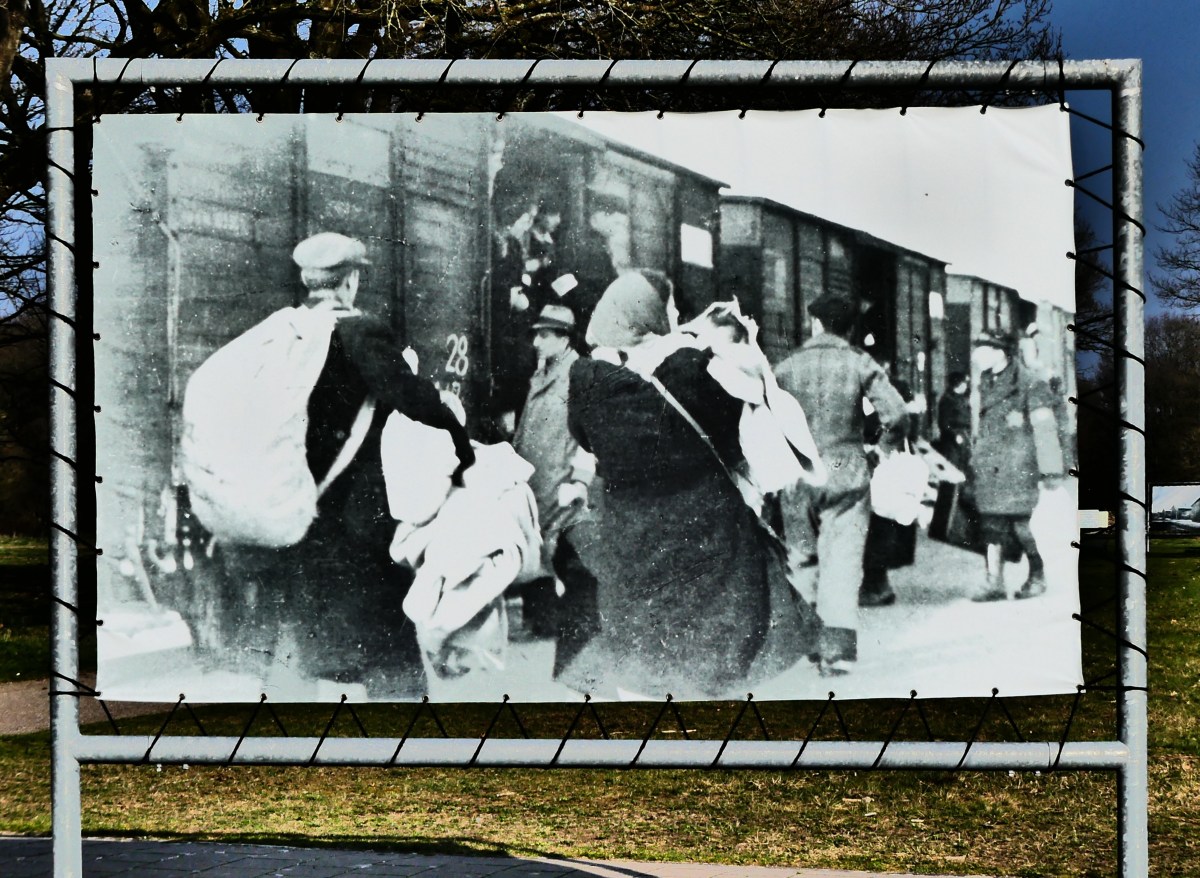
A large number of photos were taken by professional photographers, mostly commissioned by German authorities for use as propaganda.In addition, there were also countless amateurs who photographed the persecution and deportation of the Jews.The NIOD (Institute for War, Holocaust and Genocide Studies) manages by far the largest photo collection on this theme and conducted extensive research into the visual history of the persecution of the Jews in the Netherlands.Countless archives at home and abroad were consulted;this has led to the discovery of many still unknown photos. The exhibition shows a large and representative overview of the photographic recording of the persecution of the Jews.The images show in a penetrating and confronting way, the consequences of the anti-Jewish measures in the occupied Netherlands.They bear witness to the merciless behavior of the German occupiers, the cooperation of the Dutch in the deportations, but also the help to people in hiding and to the daily Jewish life during the occupation.In addition, attention is paid to the post-war reception of the few survivors from the camps and those who returned from hiding.
First greeted with a timeline of events,
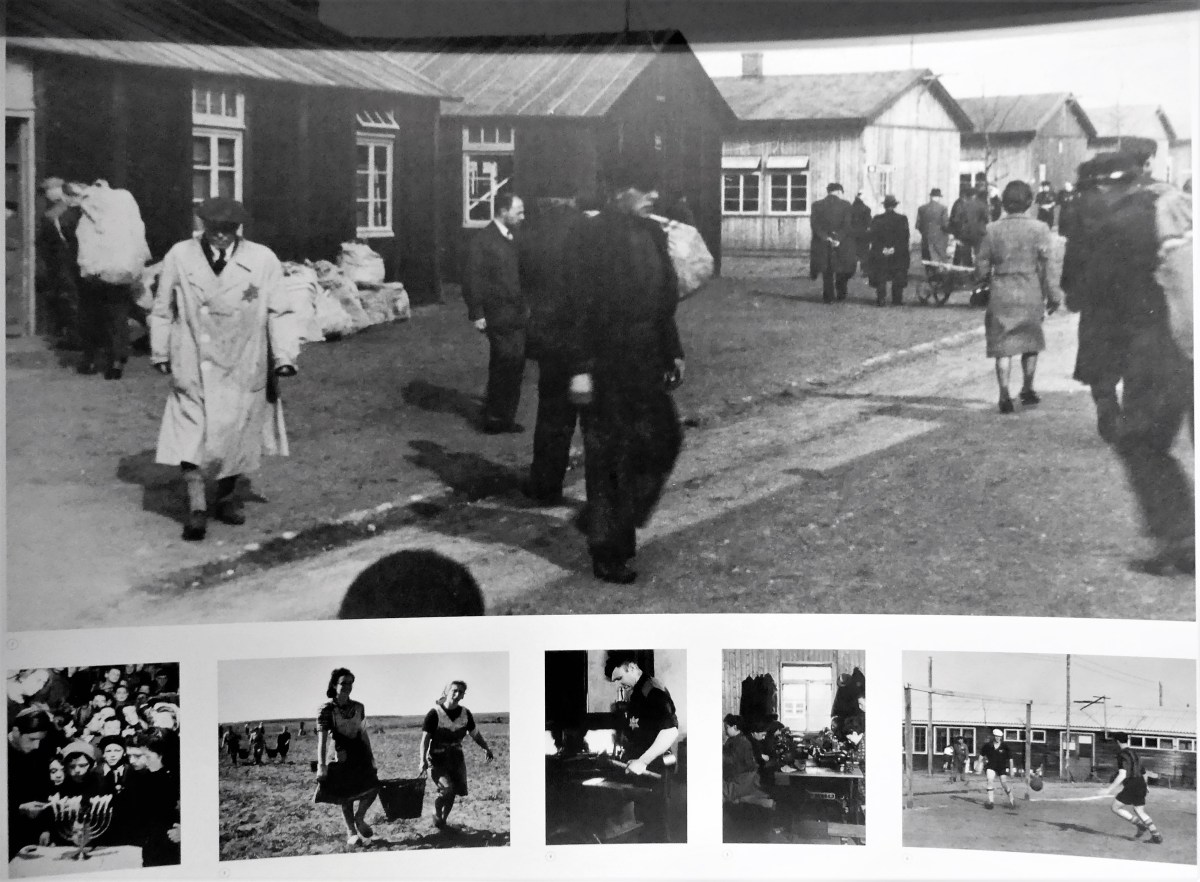
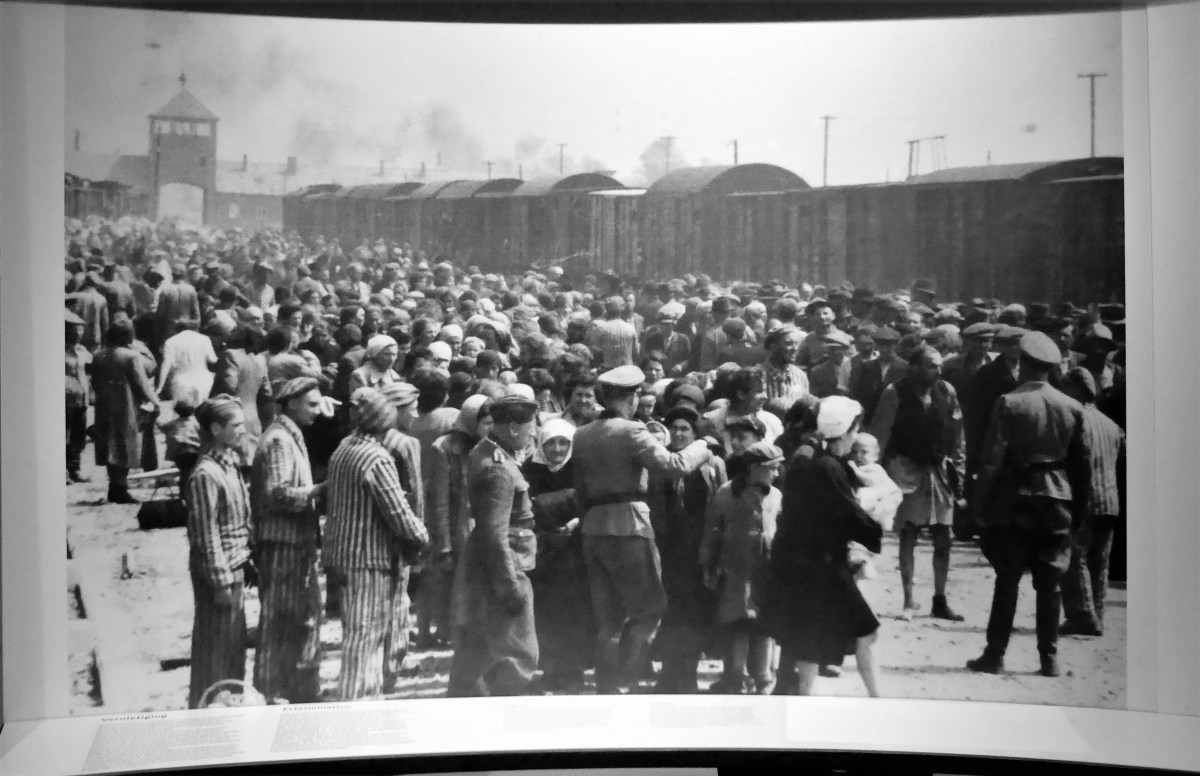
we proceeded through an open-air corridor and into a subdued chamber, where mostly elderly patrons followed a photographic progression of Holland’s involvement in the war, and its impact on the Jewish population:
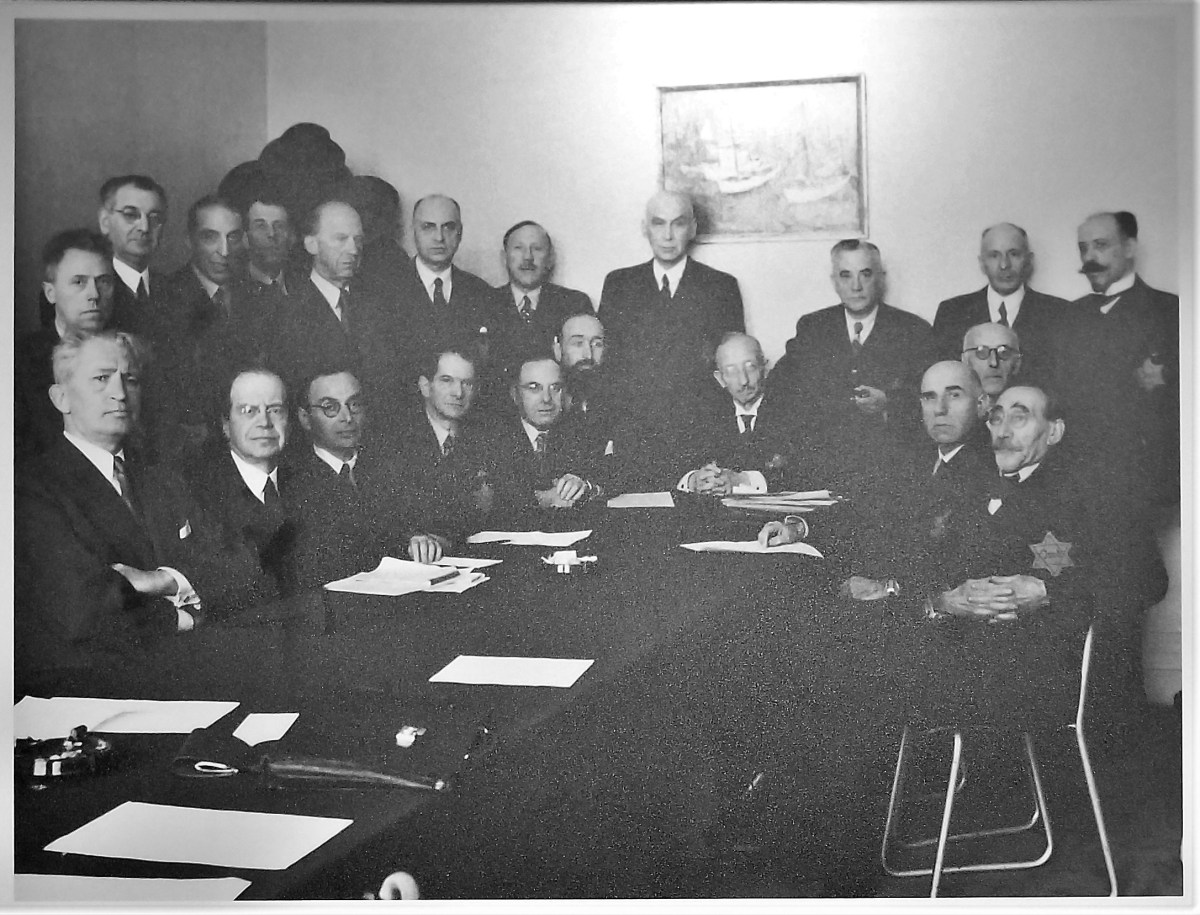
Experiencing the exhibit was numbing to my core, but still my senses were on high alert. What were my chances, I wondered, that of the 140,000 remaining Jews in Holland from 1940-1945, I might find a photograph of my grandmother stitching an article of clothing…
for the Jewish Council,
to match up with one of the few yarns she used to tell me when I was so much younger and unappreciative of her travails?
Perhaps, she could be the proper woman in the gray coat with the straight back walking the lane between barracks in Westerbork.
Or might I recognize her in a crowd of 2,500 faces that was awaiting one of three “death trains” to Theresienstadt after the Nazi command realized that the Allies were only days away from liberating Bergen-Belson on April 15, 1945.
At times, I used my camera as a shield to protect me from the full impact of the horror behind the photographs, thinking that if I could position myself as someone who is solely documenting the documents, than I could better insulate myself from the madness that she and so many others must have experienced.
An interactive Remembrance Wall occupied a room by the Museum foyer, encouraging patrons to search its ever-evolving database for the names and dates of Jewish victims who perished in Holland.
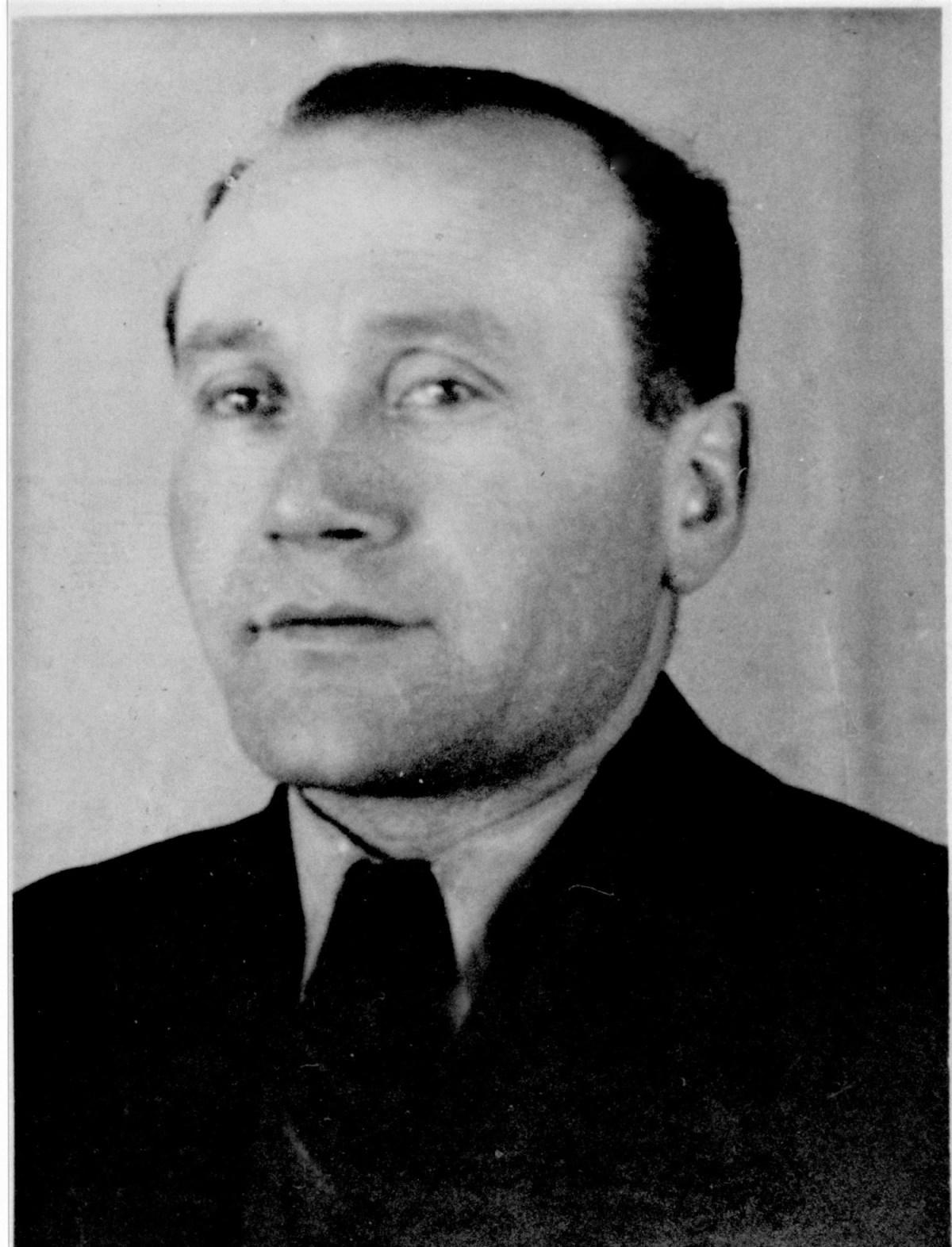
As a tribute to my unknown maternal grandfather Mnil…
I entered his name into the query window. He never survived Westerbork, and I had a quiet moment of reflection and gratitude for his courage to save his family before himself.
A two-hour drive to Kamp Westerbork with Jude did nothing to assuage my feelings of emptiness and sadness, but the site was ironically enlightening and beautifully serene.
Once at the memorial museum, we were greeted by a train of suitcases, representing the cycle of detainees that the Dutch pushed through Westerbork over the years,
with an emphasis on the plight of 102,000 Jews who sacrified their lives, all for the sake of a twisted manifesto of hatred.
Jude and I met Guido, the senior conservator of the museum at the museum cafe,
where he eagerly shared news and theories of our grandfather’s demise and our grandmother’s salvation through a collection of registration documents.
Two miles away, the hallowed grounds of the memorial can be reached on foot or by bus. Mostly empty space and green fields for an array of radio telescopes,
it nevertheless showcases a collection of iconic relics from the war that survived the Dutch government’s demolition of the camp in the 1960s.
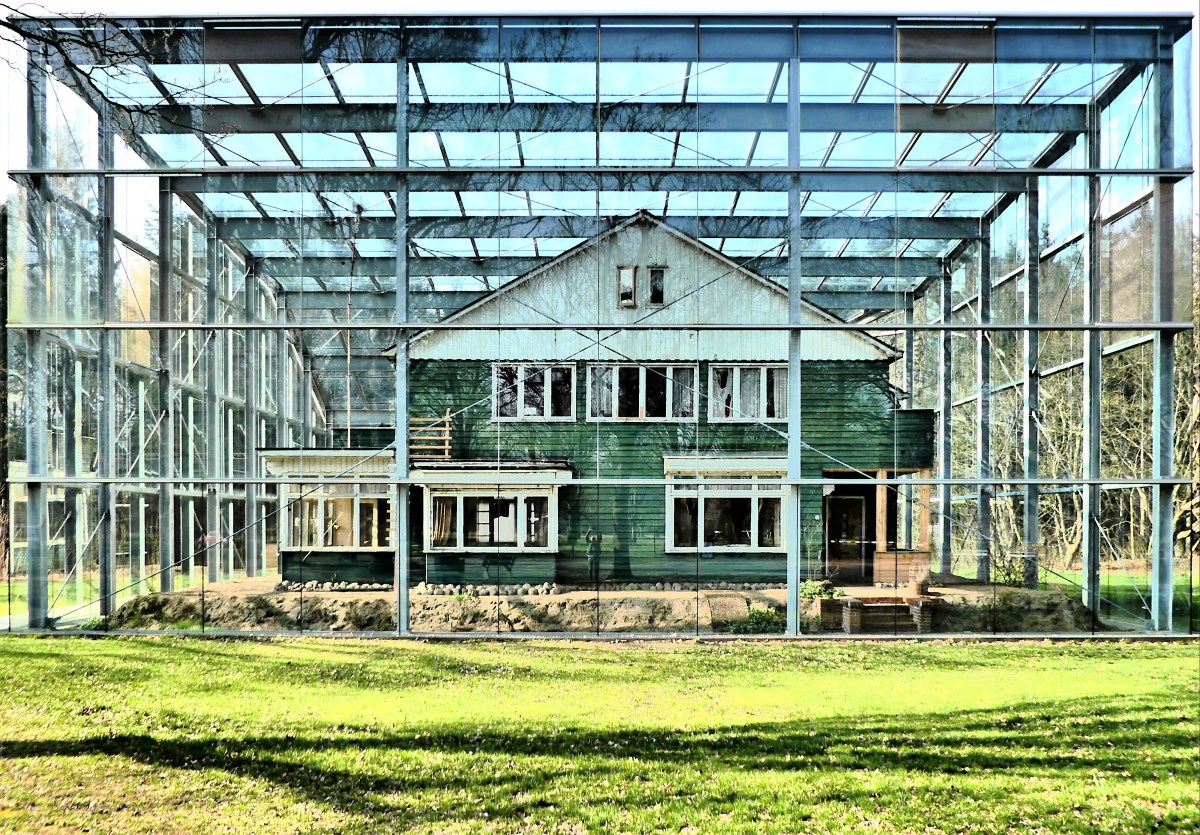
There is a glass enclosure protecting the Commandant’s quarters;
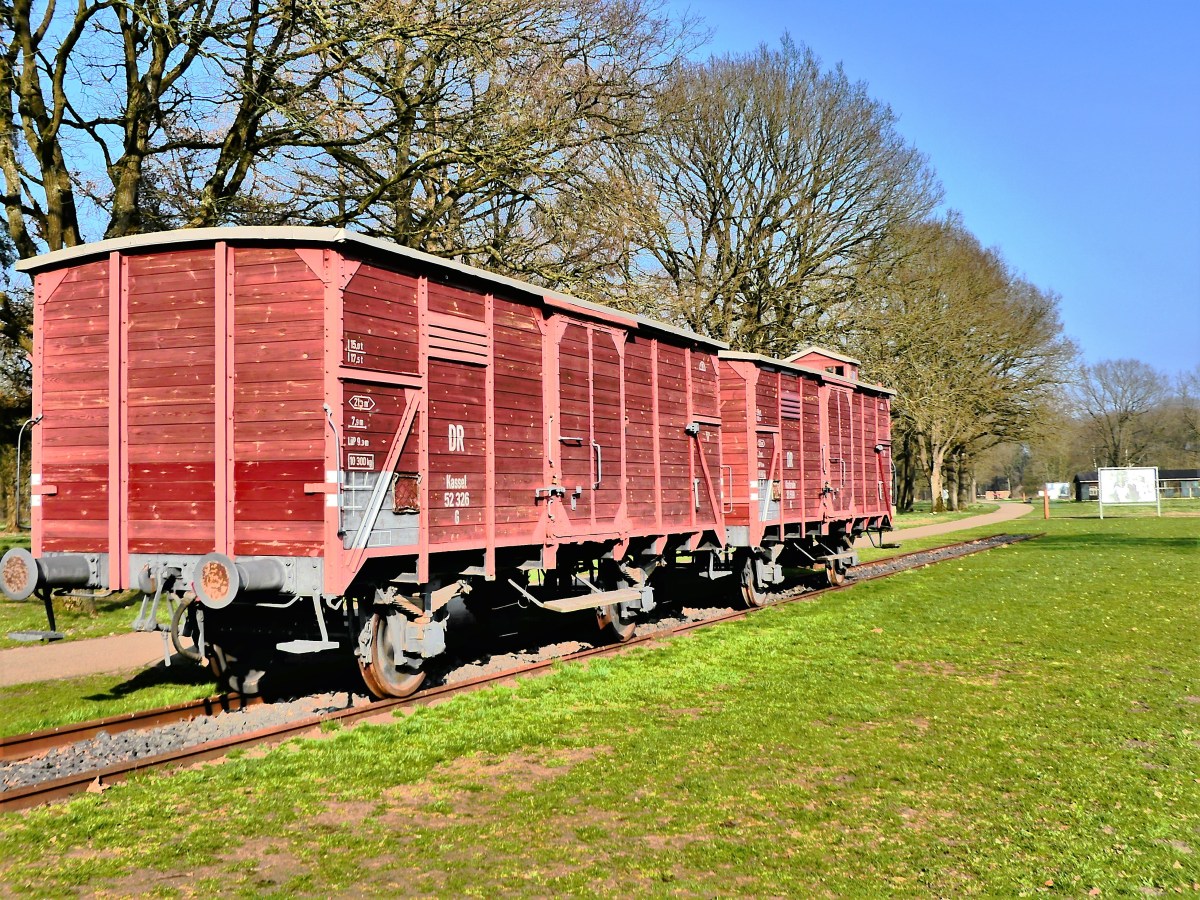
an original boxcar that stands as a testament to the 84 trains that transported Jews to Auschwitz and Sobibor,
where nearly all of the 94,643 persons deported were killed on arrival;
a monument to the 102,000 Jews of The Netherlands who passed through Westerbork…
and lost their lives;
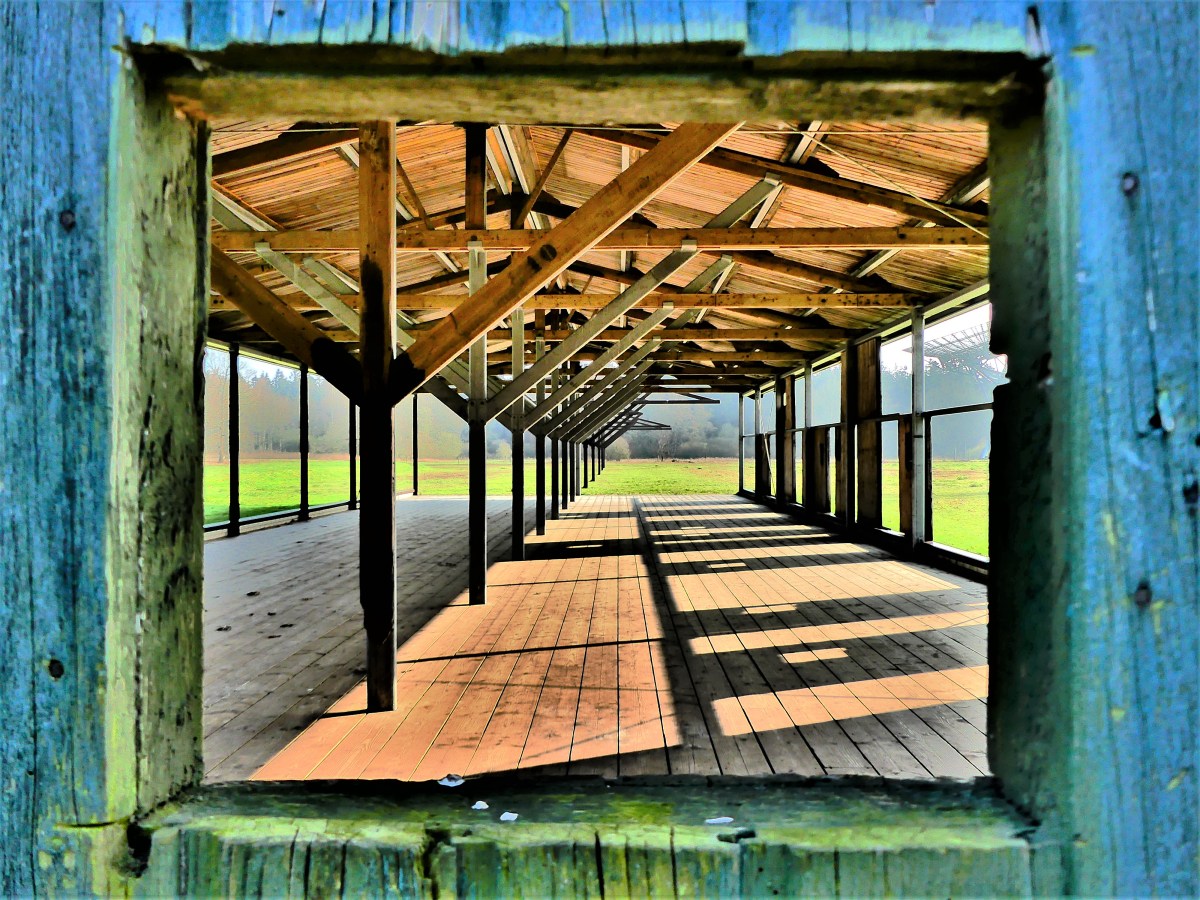
the remnants of a barrack;
and a guard tower standing beside a metaphoric railbed.
I drifted from display to display, as if being involuntarily directed like a Ouija board peg–believing that I was somehow being programmed to walk in the footsteps of my grandparents.
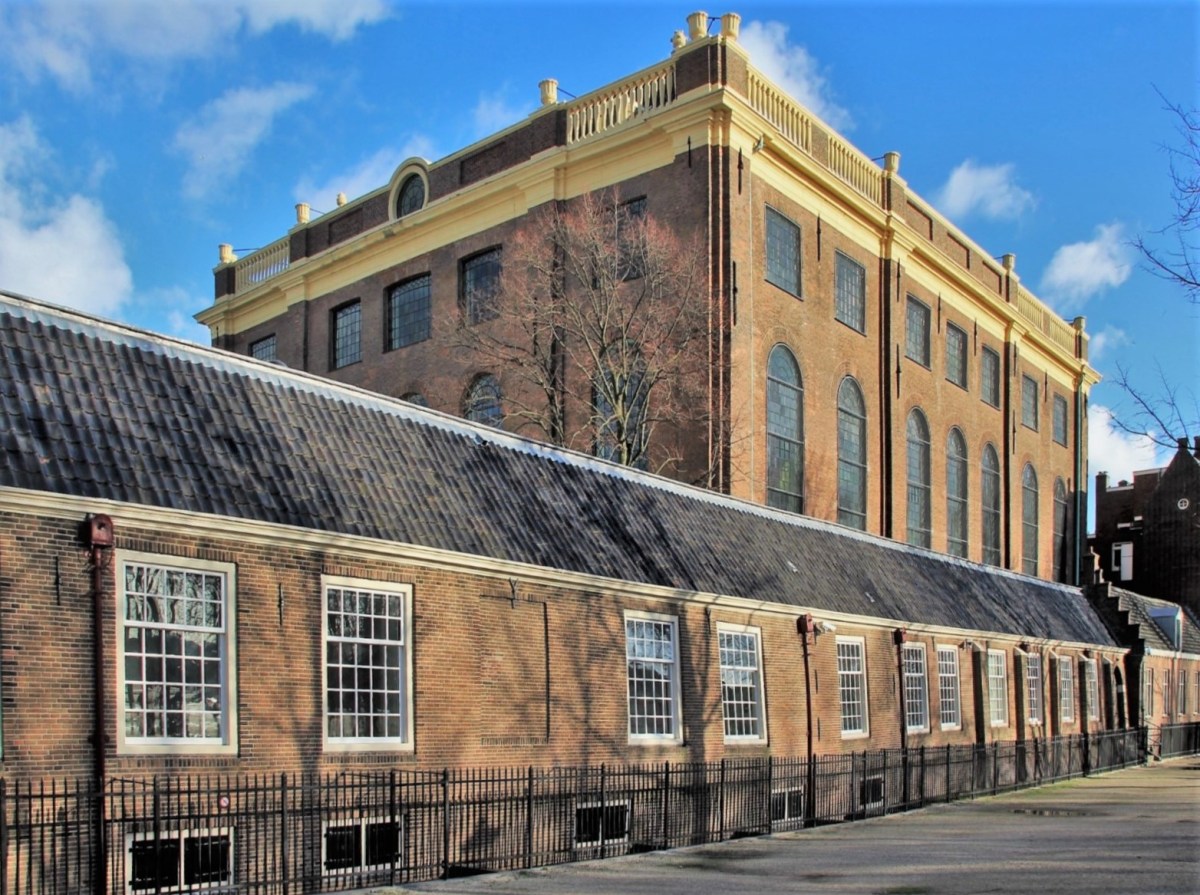
Upon return to Amsterdam, Jude and I strolled through the Jewish District, walking past the Portuguese Synagogue, an imposing Baroque structure completed in 1675, where most certainly, our family would have prayed, but sadly, never as a family;
and along Weesperstraat, past the Monument of Jewish Gratitude,
where a controversial limestone edifice will soon be replaced by Daniel Libeskind’s Shoah Memorial.
From there, we strolled in search of the Burgerweeshius,
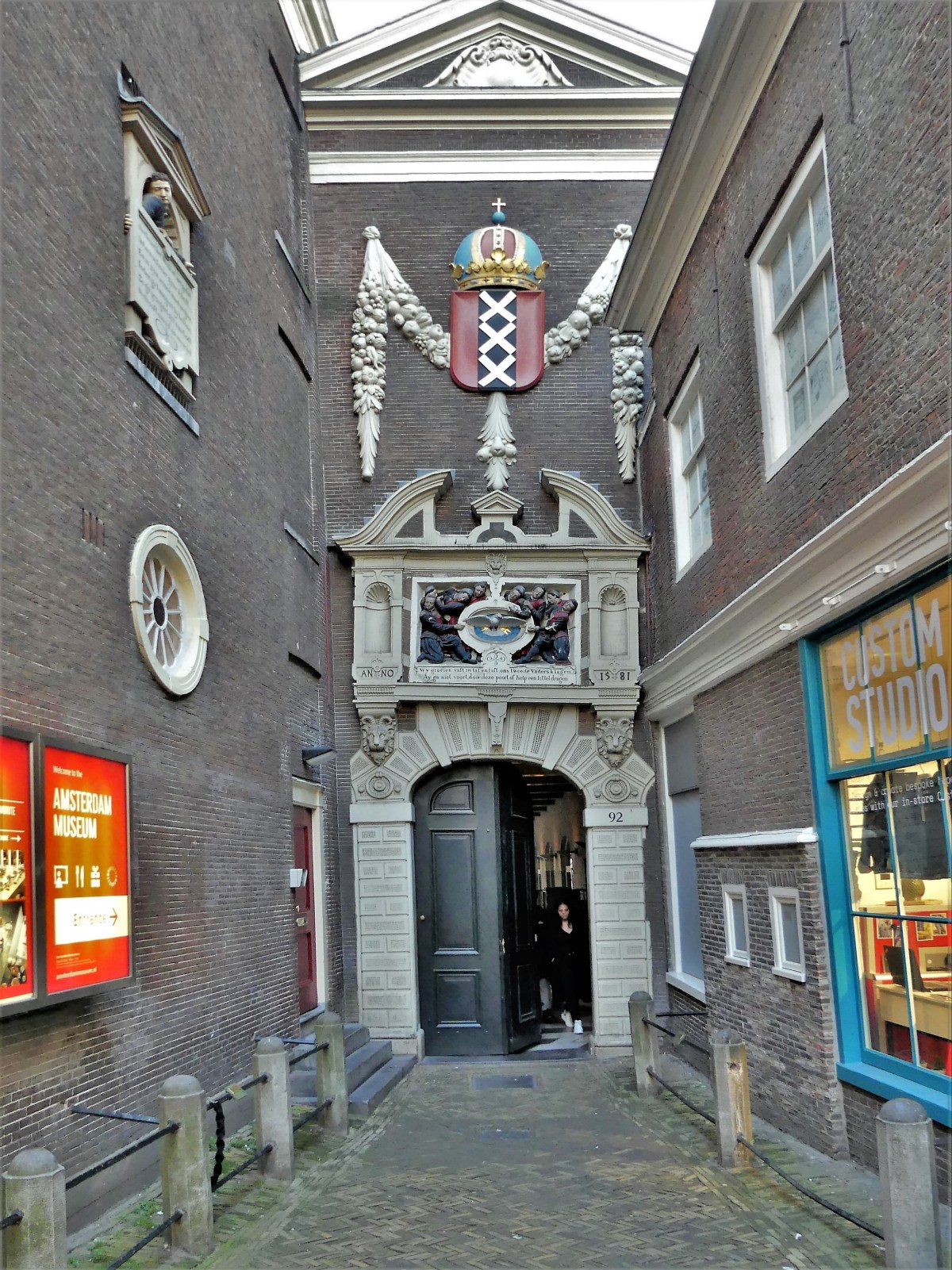
once the landmark orphanage that sheltered our moms after they were transported from Soesterberg…
Bertie stands in the back row in front of the tree; Eva sits in the second row, third from the right
and now home to the Amsterdam Museum.
For one moment, I thought I could hear the faint and familiar sound of children playing in the courtyard–playing tag around the tree, and playing soccer across the herringbone pavers.
Amsterdam had much to offer. Walking through the city, I felt an eerie sense of belonging–not because of the dissonance of grief–past or present–but the resonance of a shared understanding brought about by reconnecting with my cousin, Jude and the revelation that Amsterdam’s secrets have become an open book of acknowledgement and remembrance.
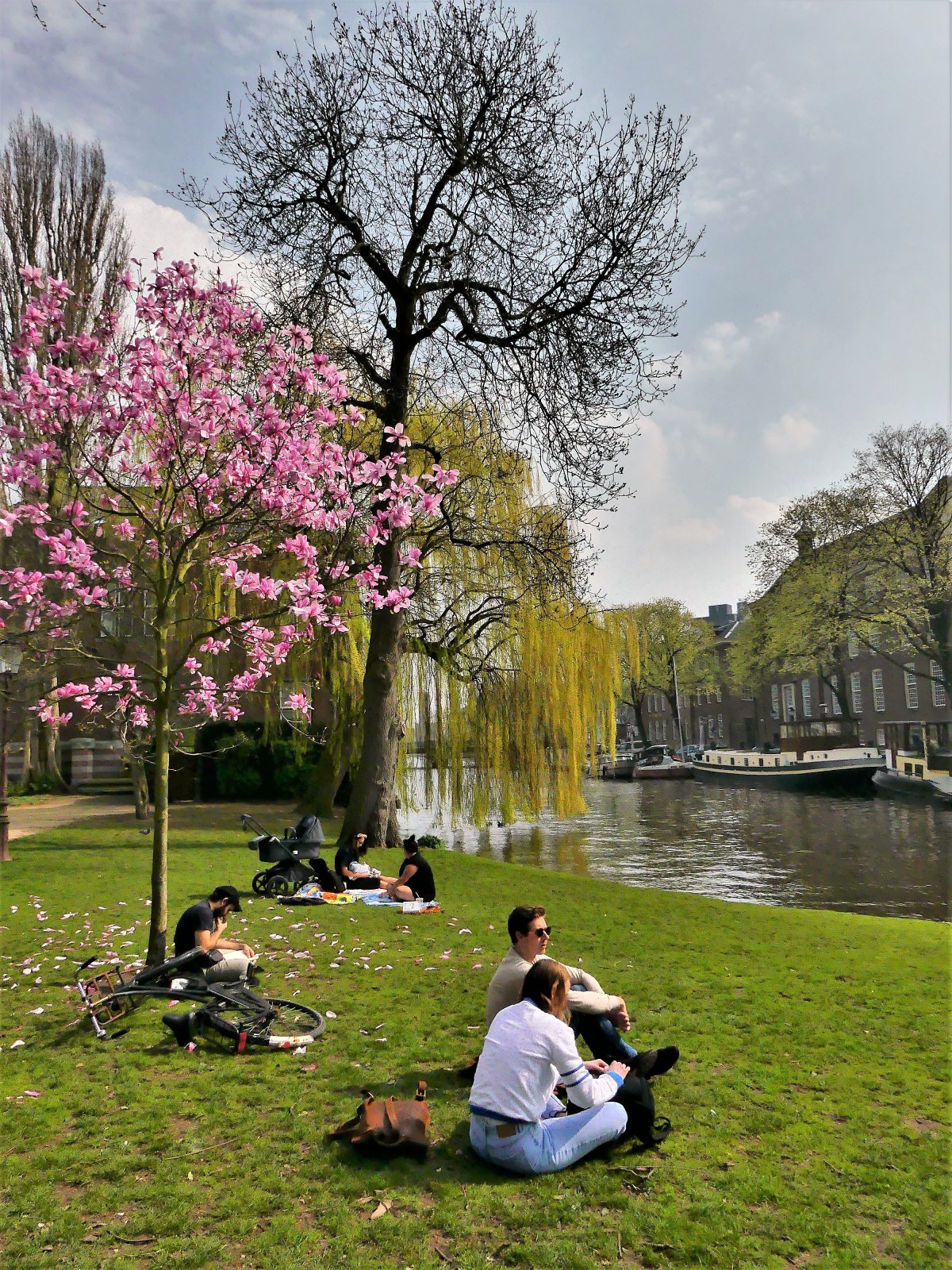
Peering into shop windows along the streets and canals of Amsterdam…
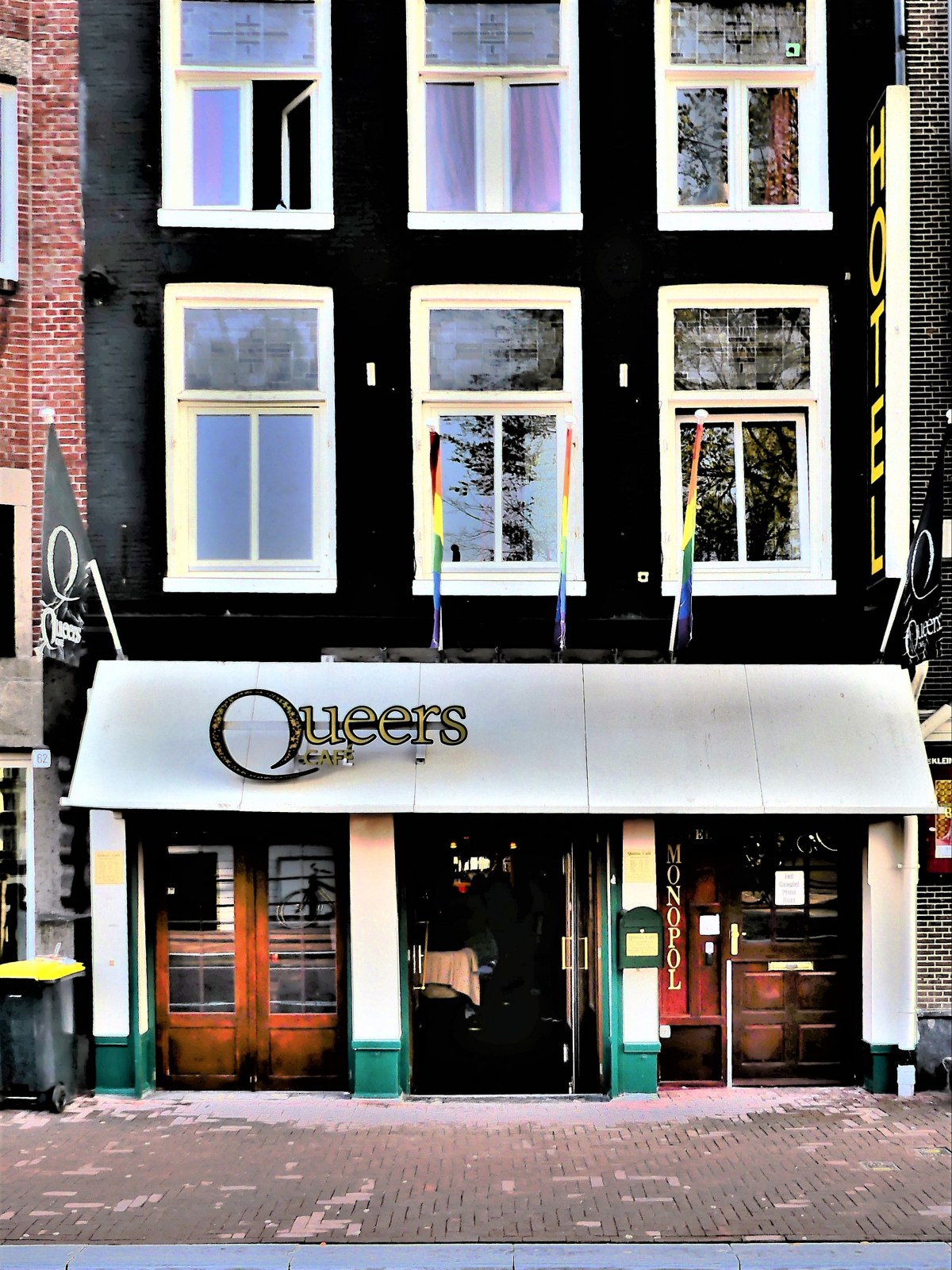
…presents many an oddity that will surely arouse the senses. Although, considering Amsterdam’s predilection and distinction for legal marijuana and prostitution, it would seem unlikely that there could be any room for other surprises.
Yet oddly enough, despite the merchandising overload of everything cannabis,
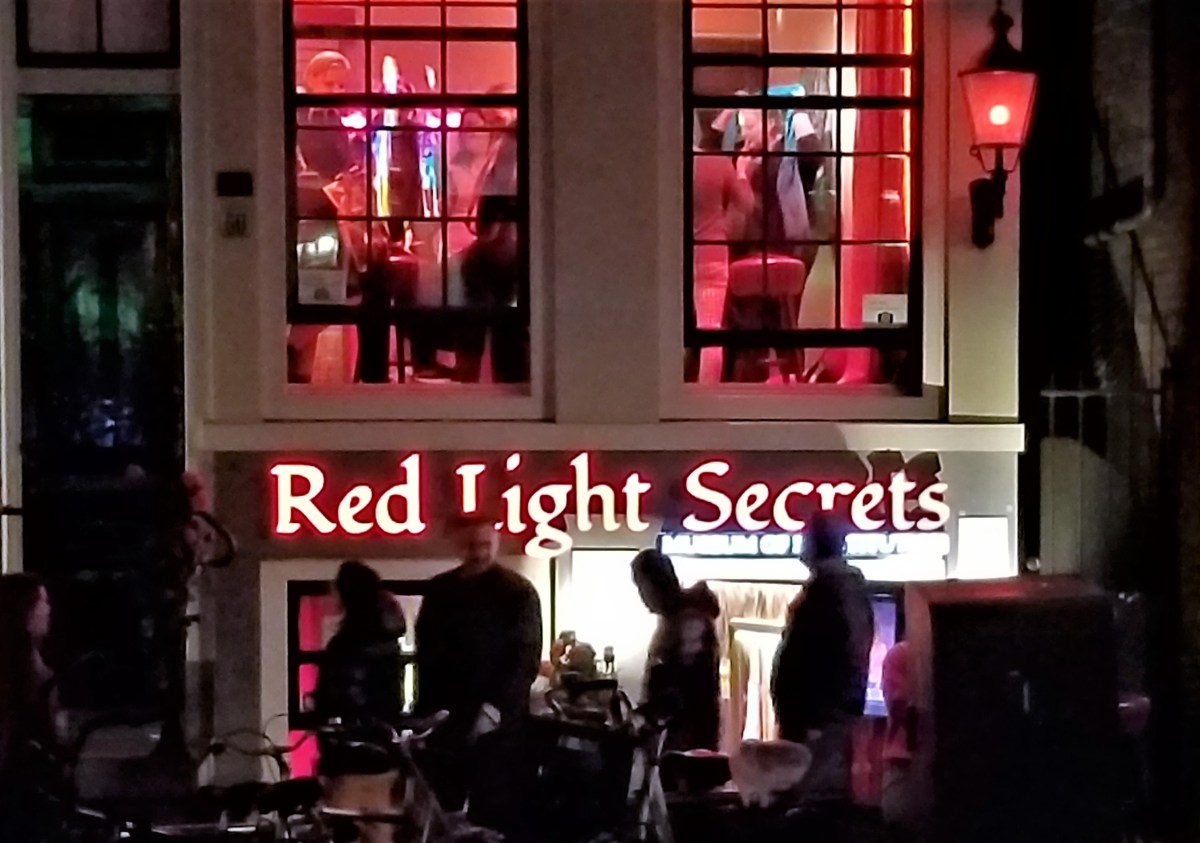
and the city’s penchant for 24-hr flesh peddling,
there is more to Amsterdam than just kink and circumstance.
There are also plenty of museums,
and enough al fresco cafés and frites stores to support a cultural and gastronomical battalion.
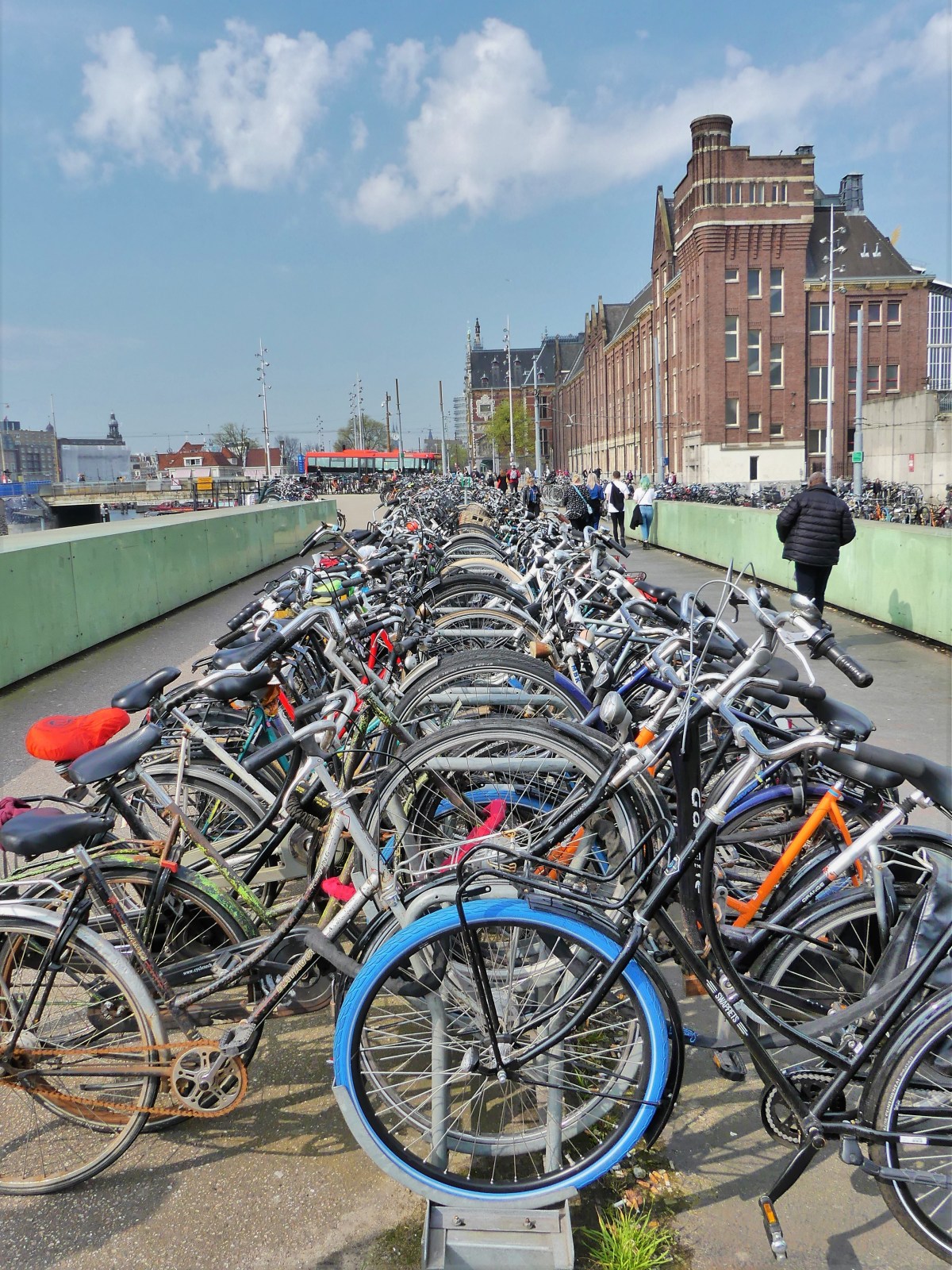
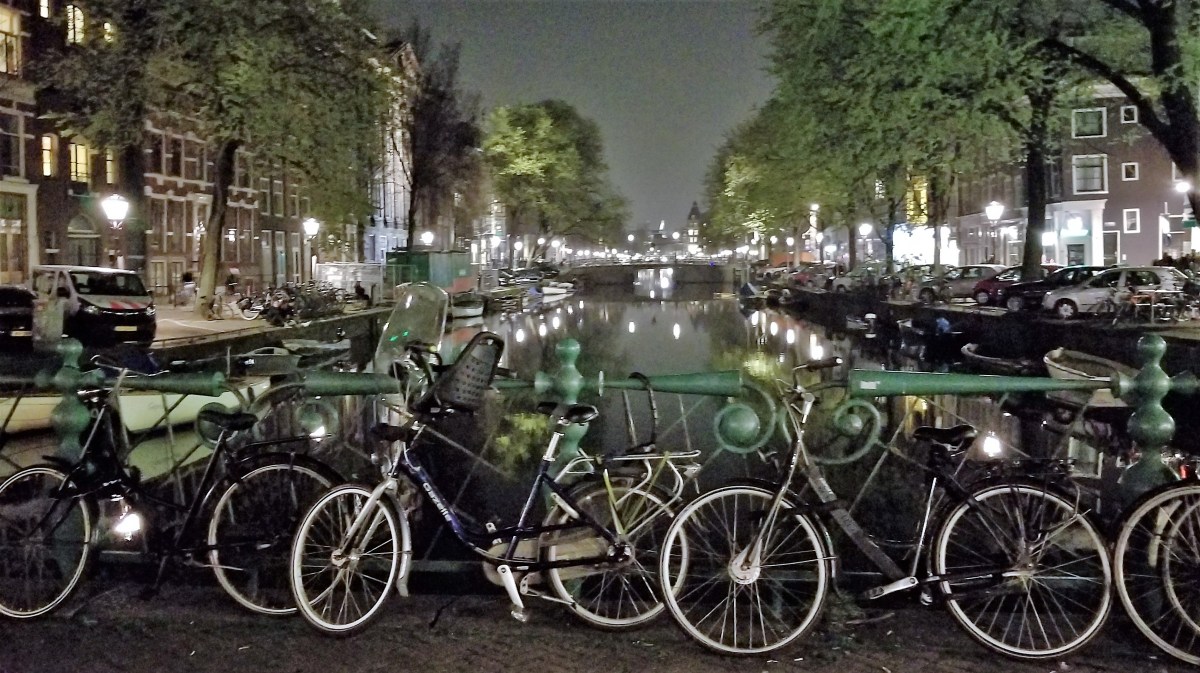
Amsterdam is a place for eyes behind your head, because two eyes in front is not enough to sidestep all the oncoming cyclists coming from every direction,
but also to catch all the head-turning outrageousness of an unrepentant town that still embraces Easter.
Amsterdam is a place to relax. Heck, half the population is already stoned, and the pungent waft of weed is a strong reminder to kick back and enjoy the scenery.
Amsterdam is a tolerant town, where all kinds of people gather and co-exist without judgement or little reservation. Citizens are proud and expressive, at times aggressive, but mostly helpful–although they smoke entirely too much, and regard the street as their personal ashtray.
As a laissez-faire society by practice and design, it appears to work. Quite simply, Amsterdam is a libertarian’s delight!
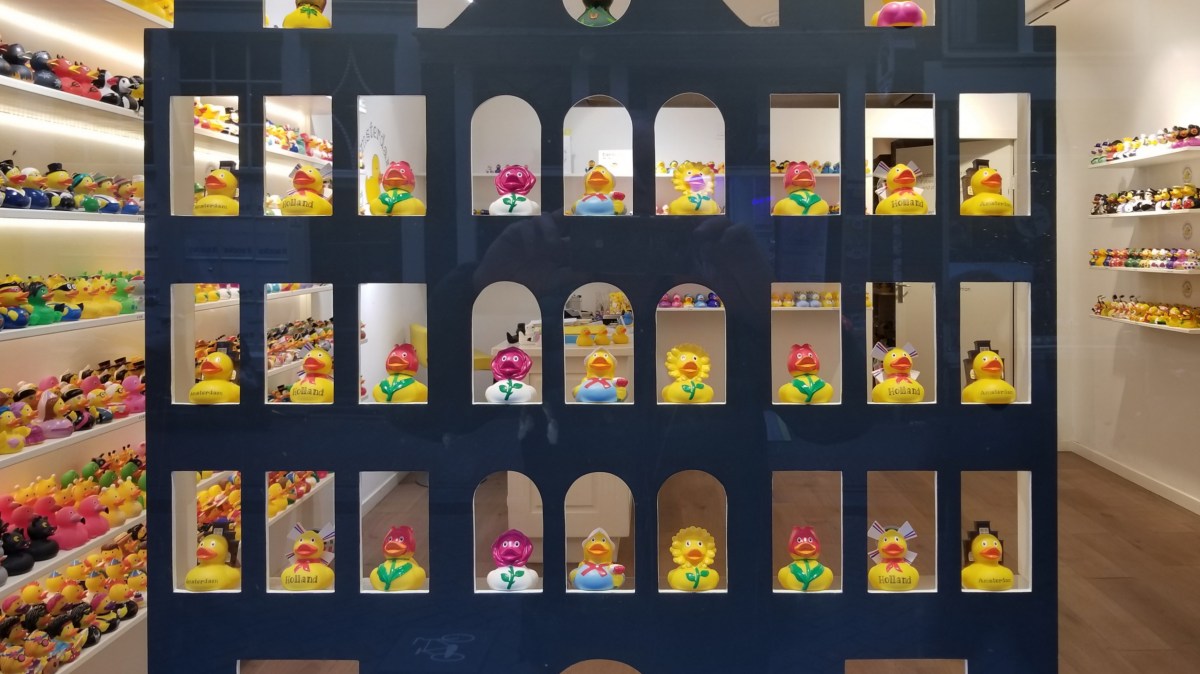
And that leaves plenty of room for rubber duckies and vaginas, and everything between.
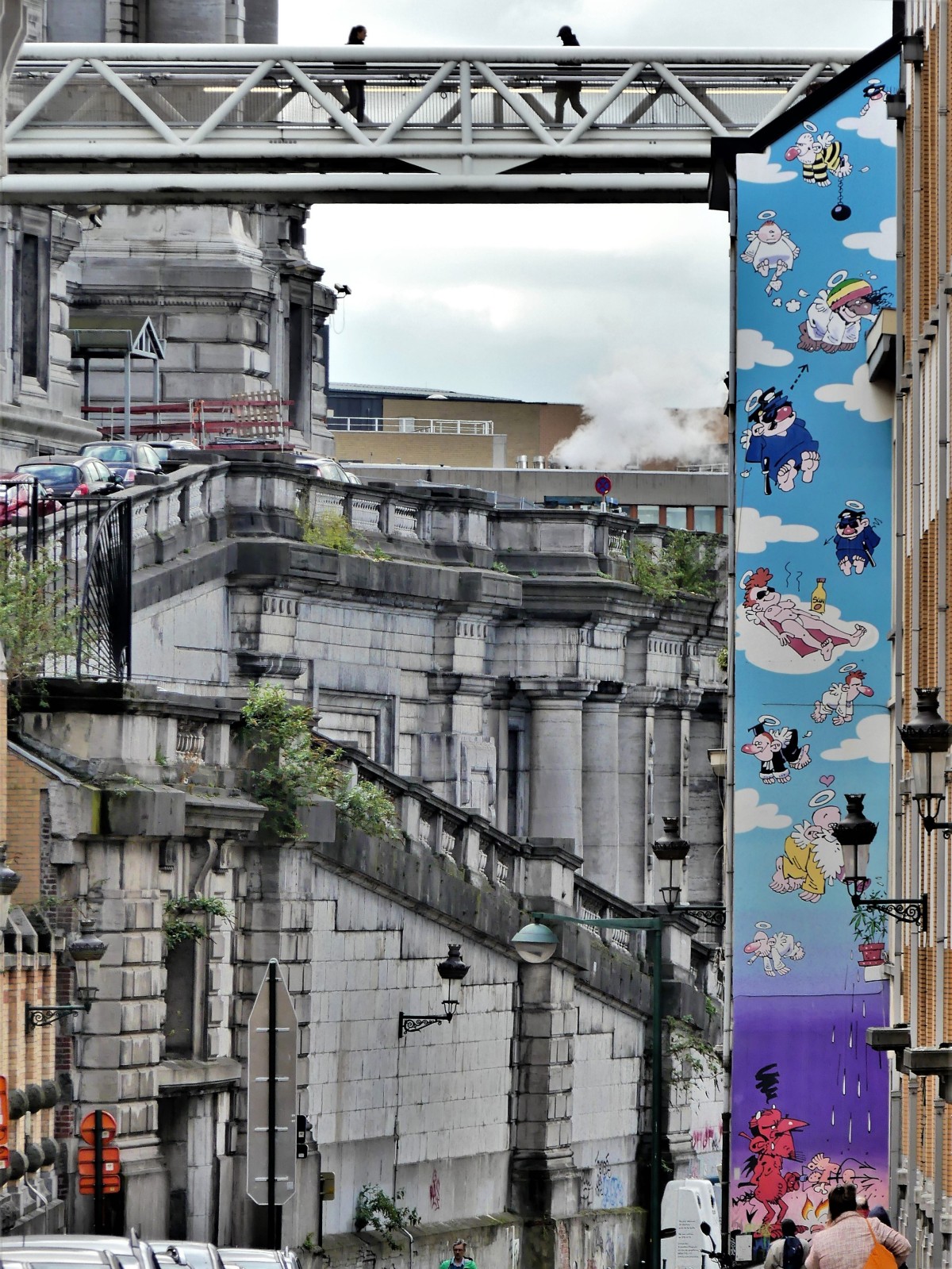
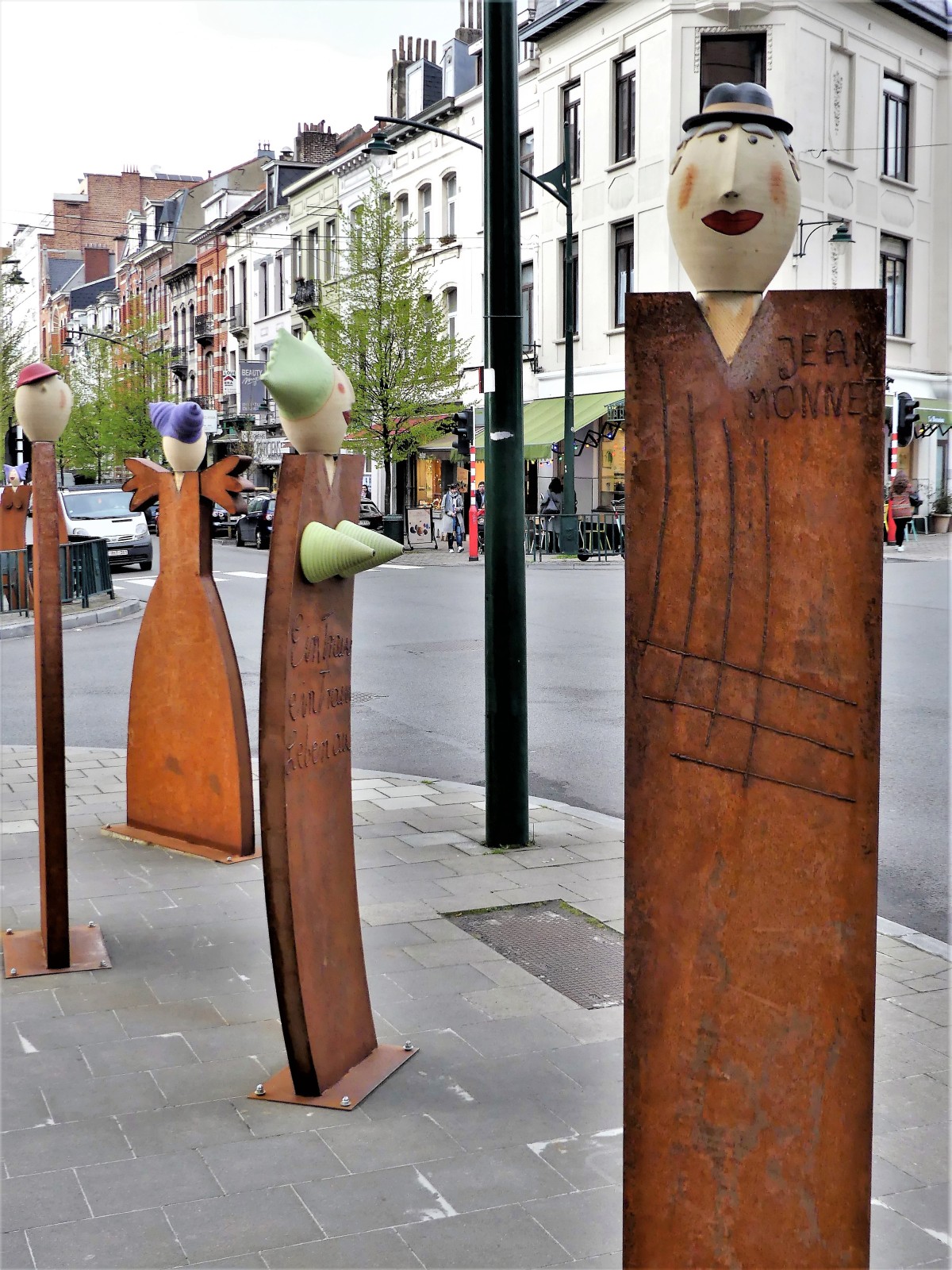
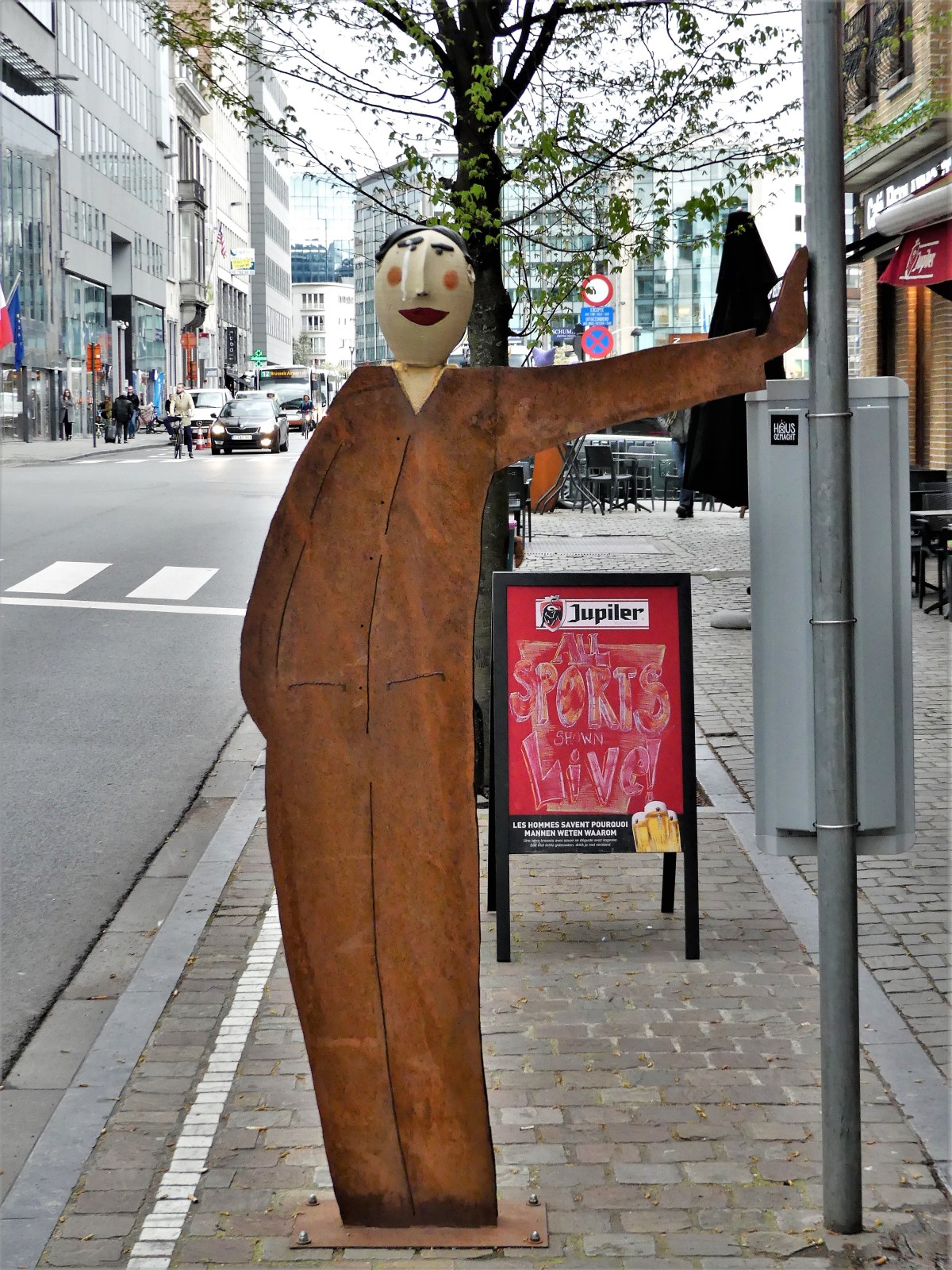
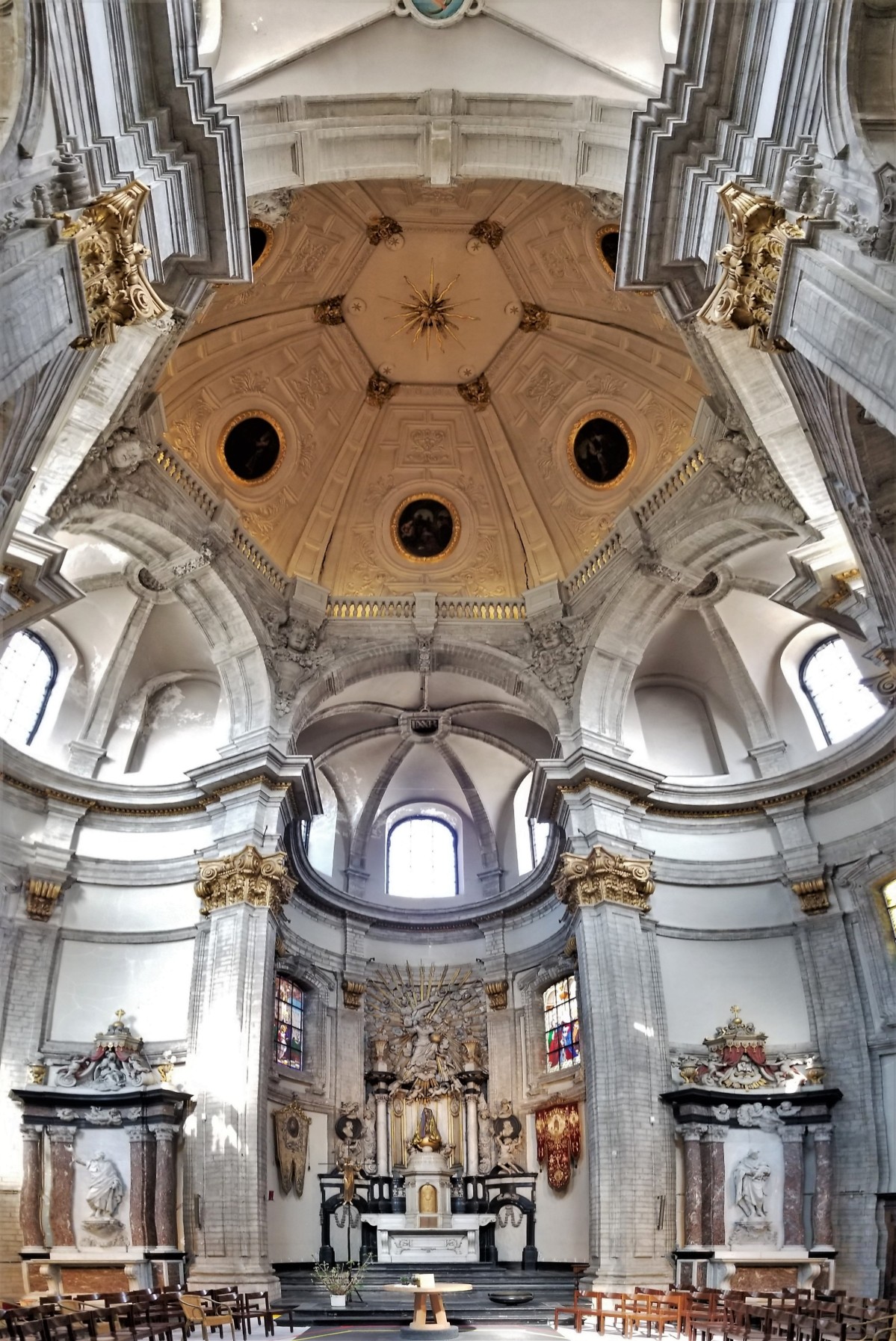
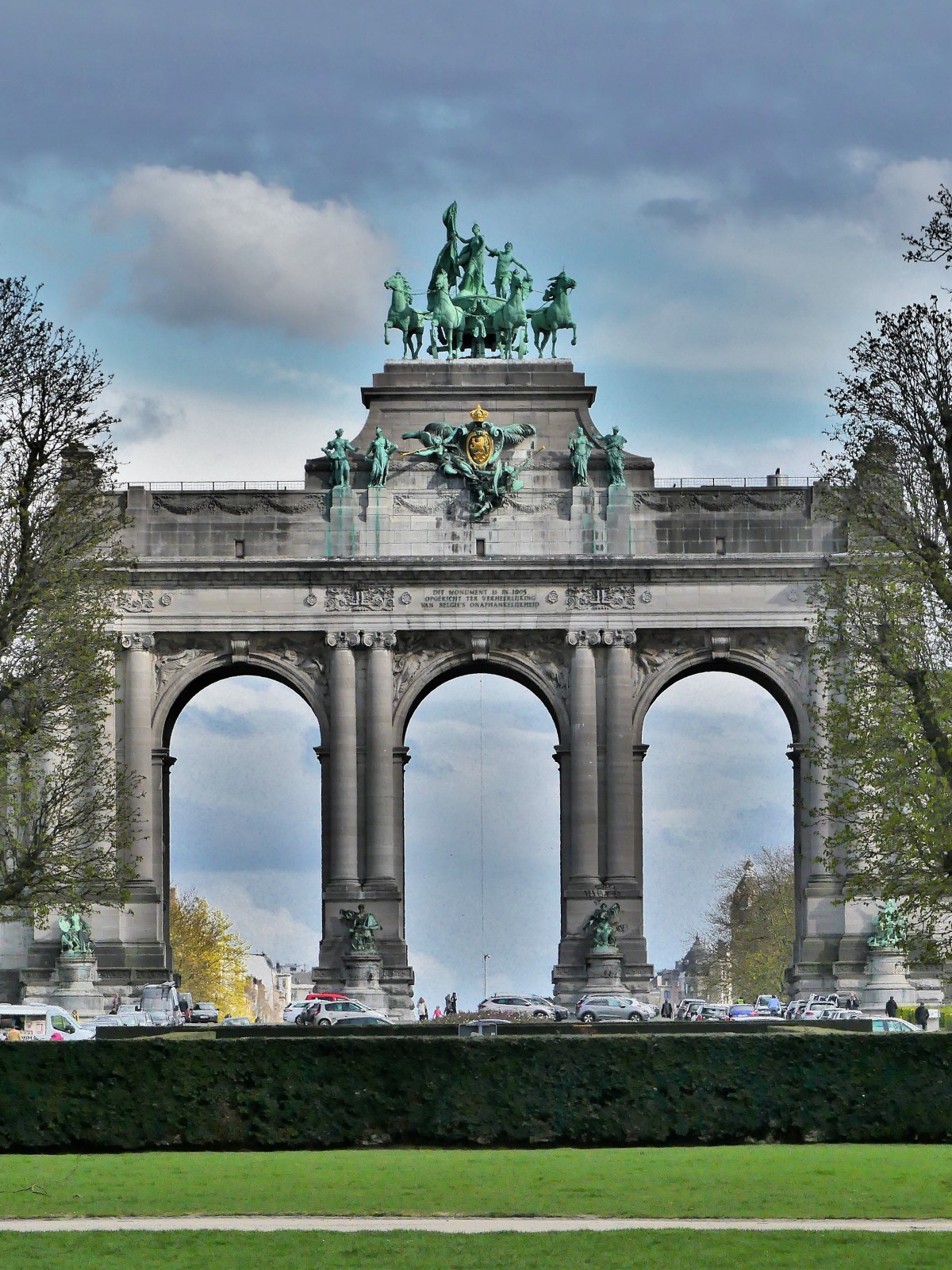
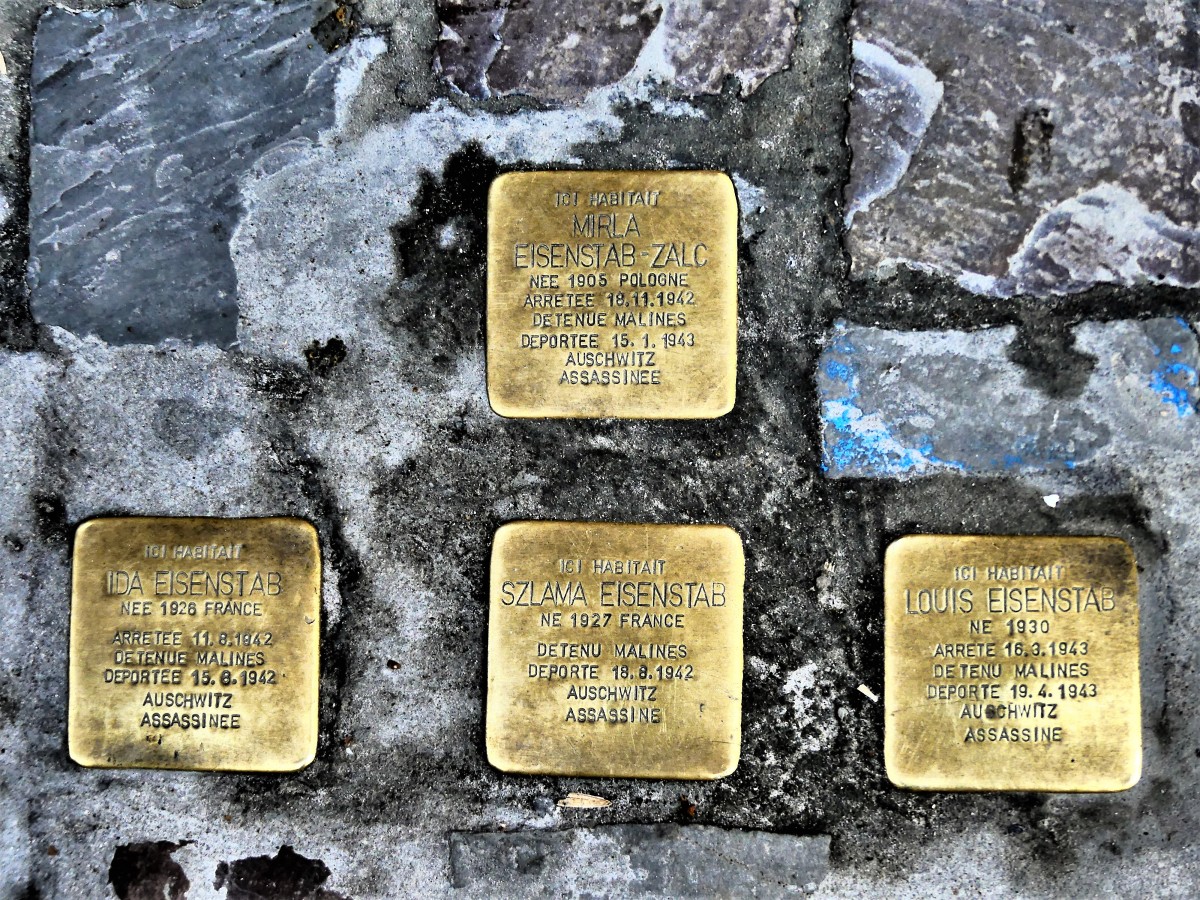
Brussels loves its folklore. And its citizens are unabashed about it. They show it off around town, and celebrate it with a flourish.
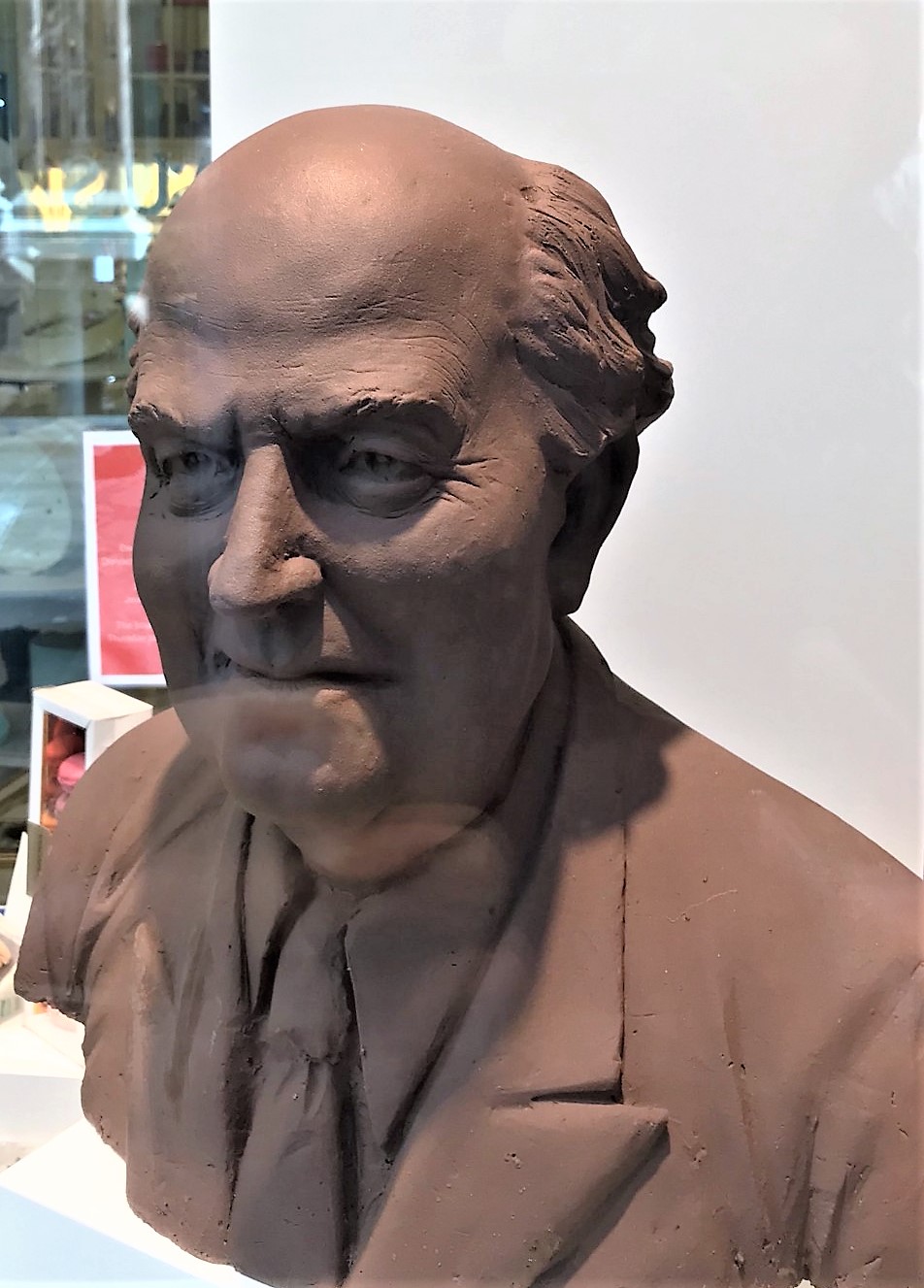
Belgians are world renown chocolatiers, and proud of their invention. Case in point–Jean Neuhaus…
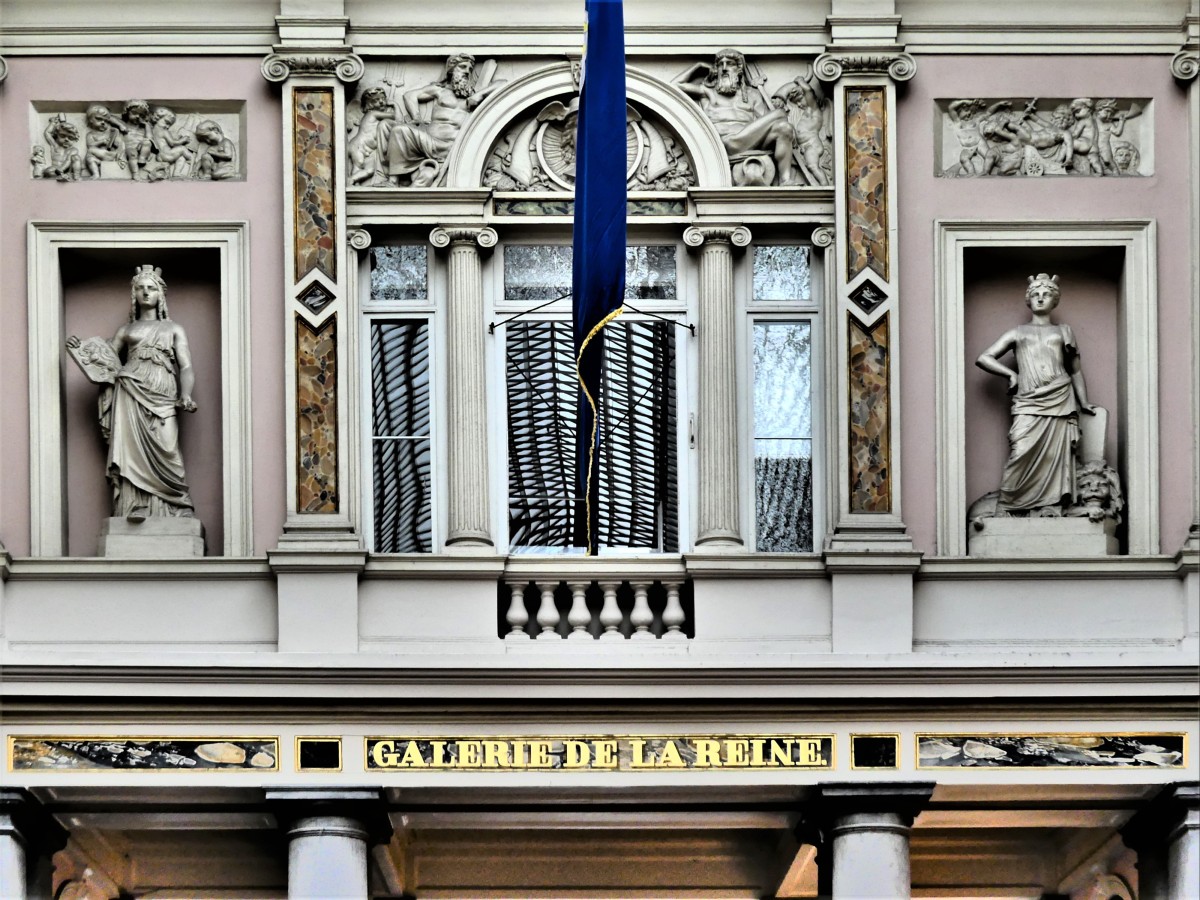
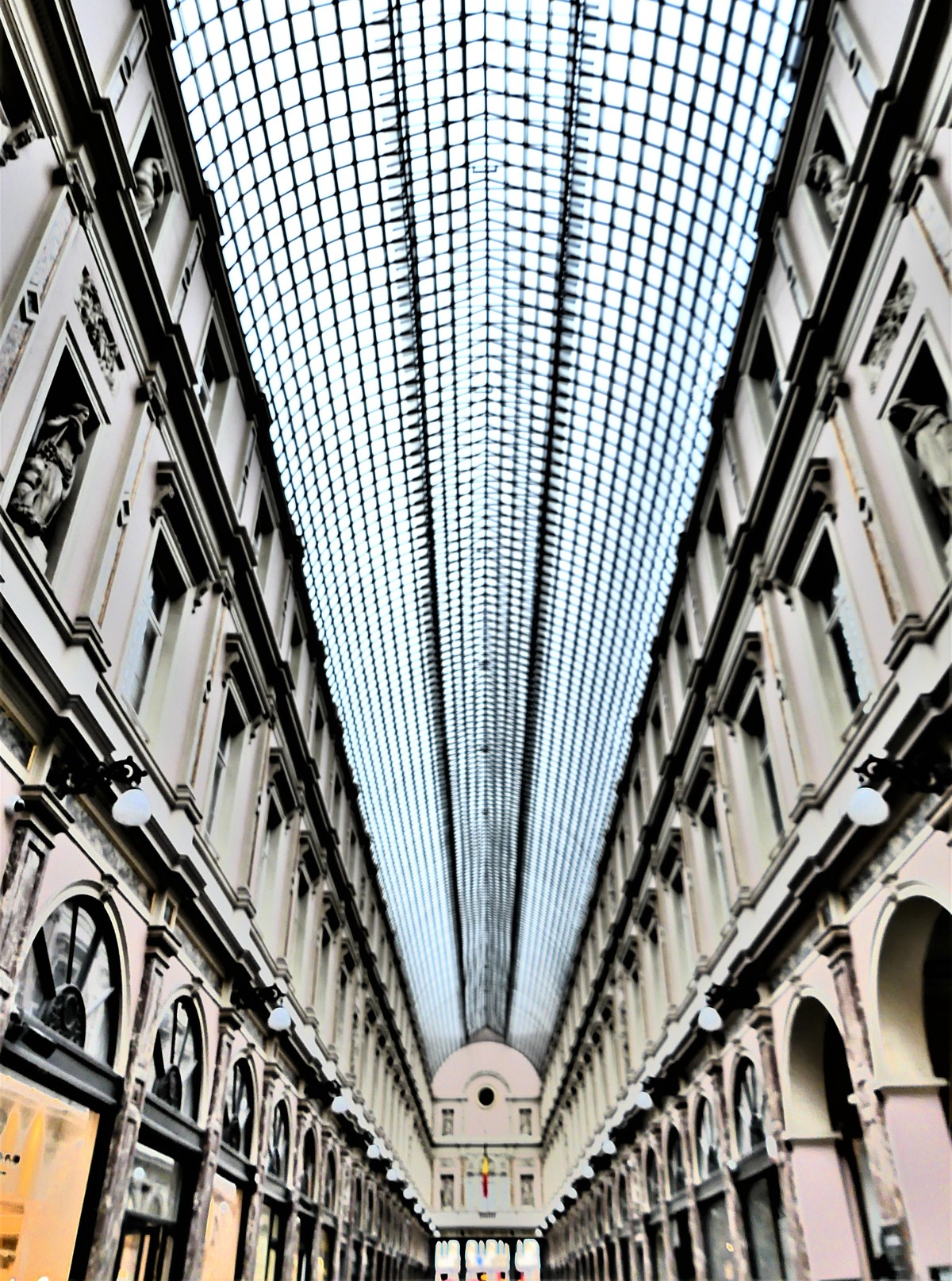
…a one-time chemist who realized that a chocolate coating around a pill helps the medicine go down. His pharmacy in Galerie de la Reine…
located in a glass-covered mall of pilasters, arches, and windows…
was converted into a chocolate shop in 1912, when he replaced his pills with praline, giving rise to an international addiction, and no doubt, a tooth decay epidemic.
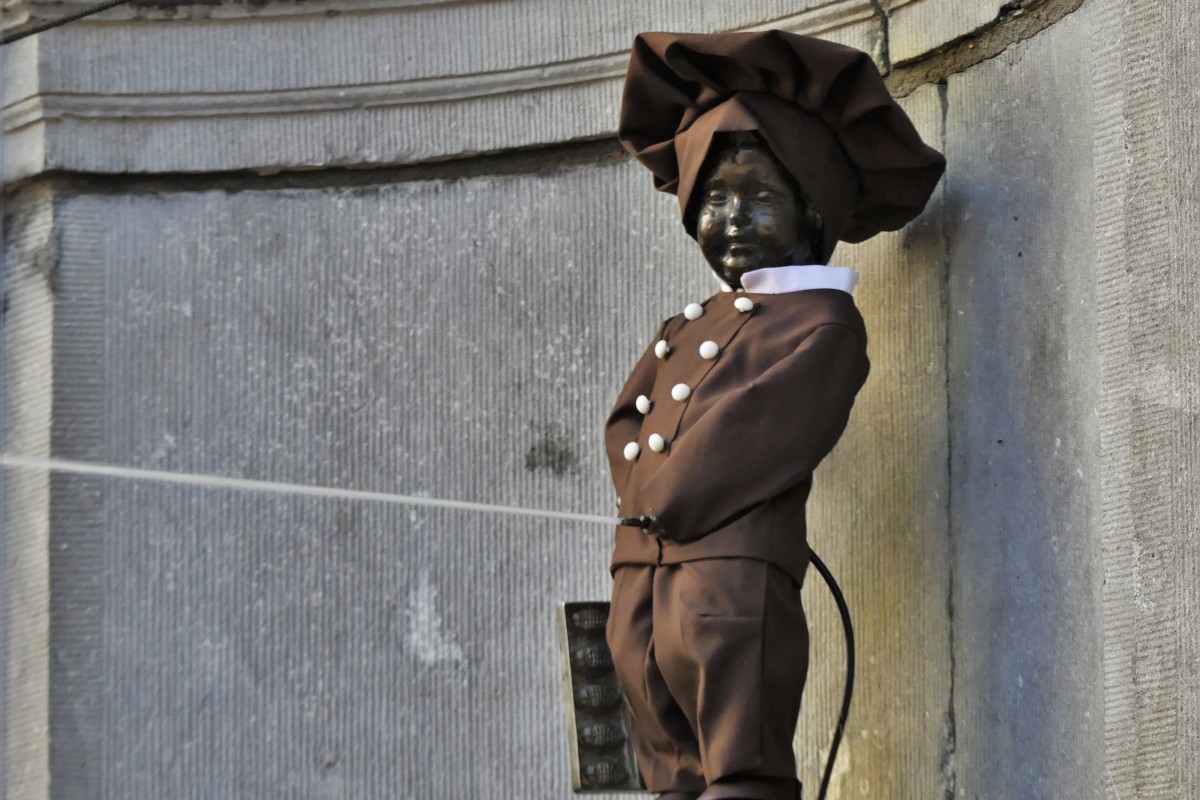
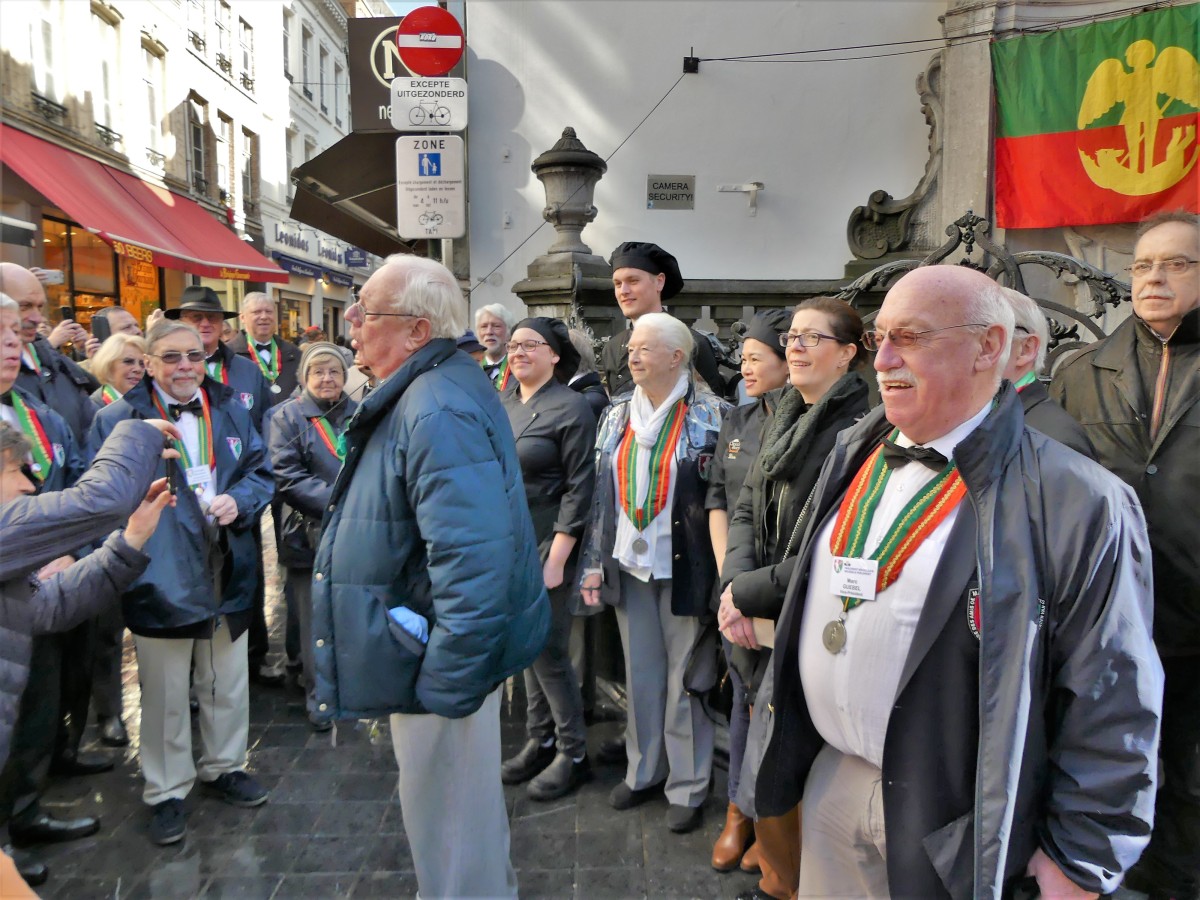
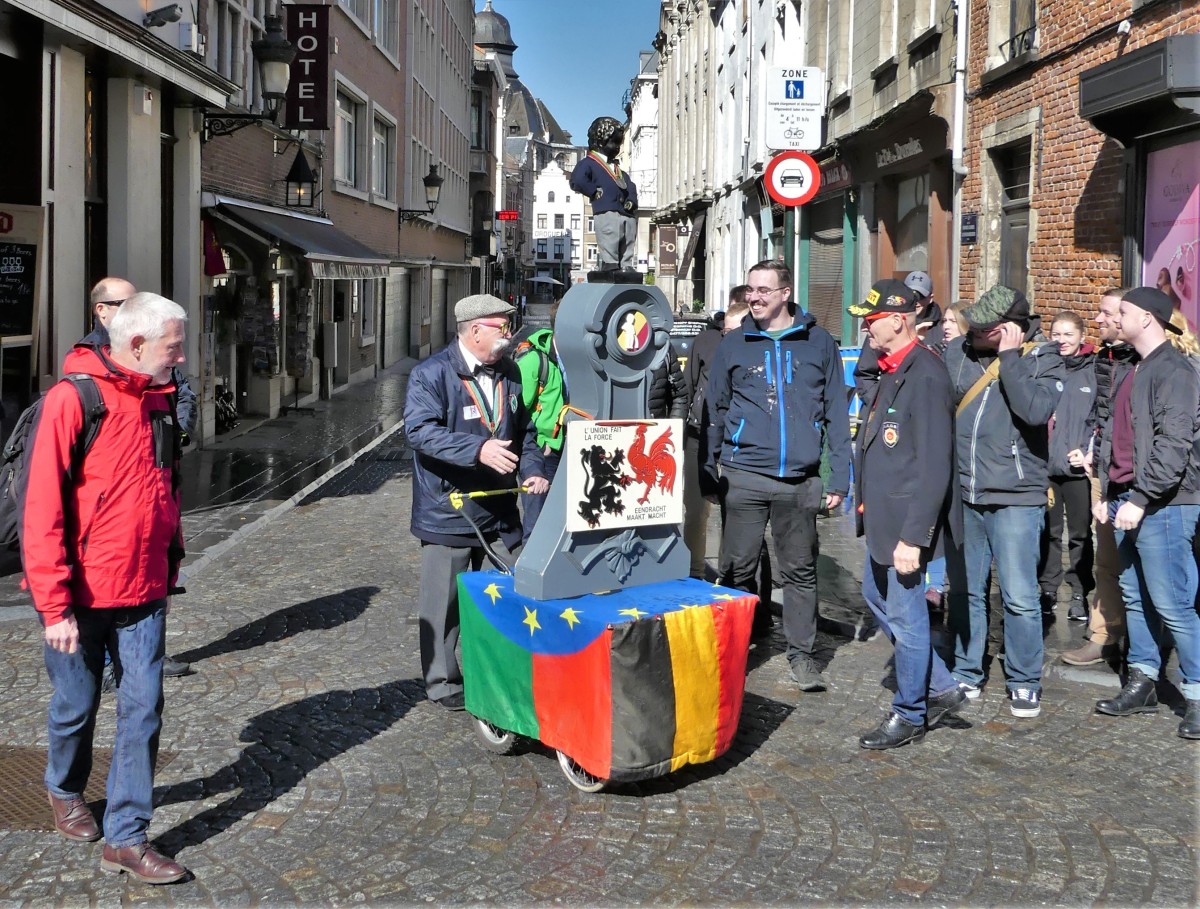
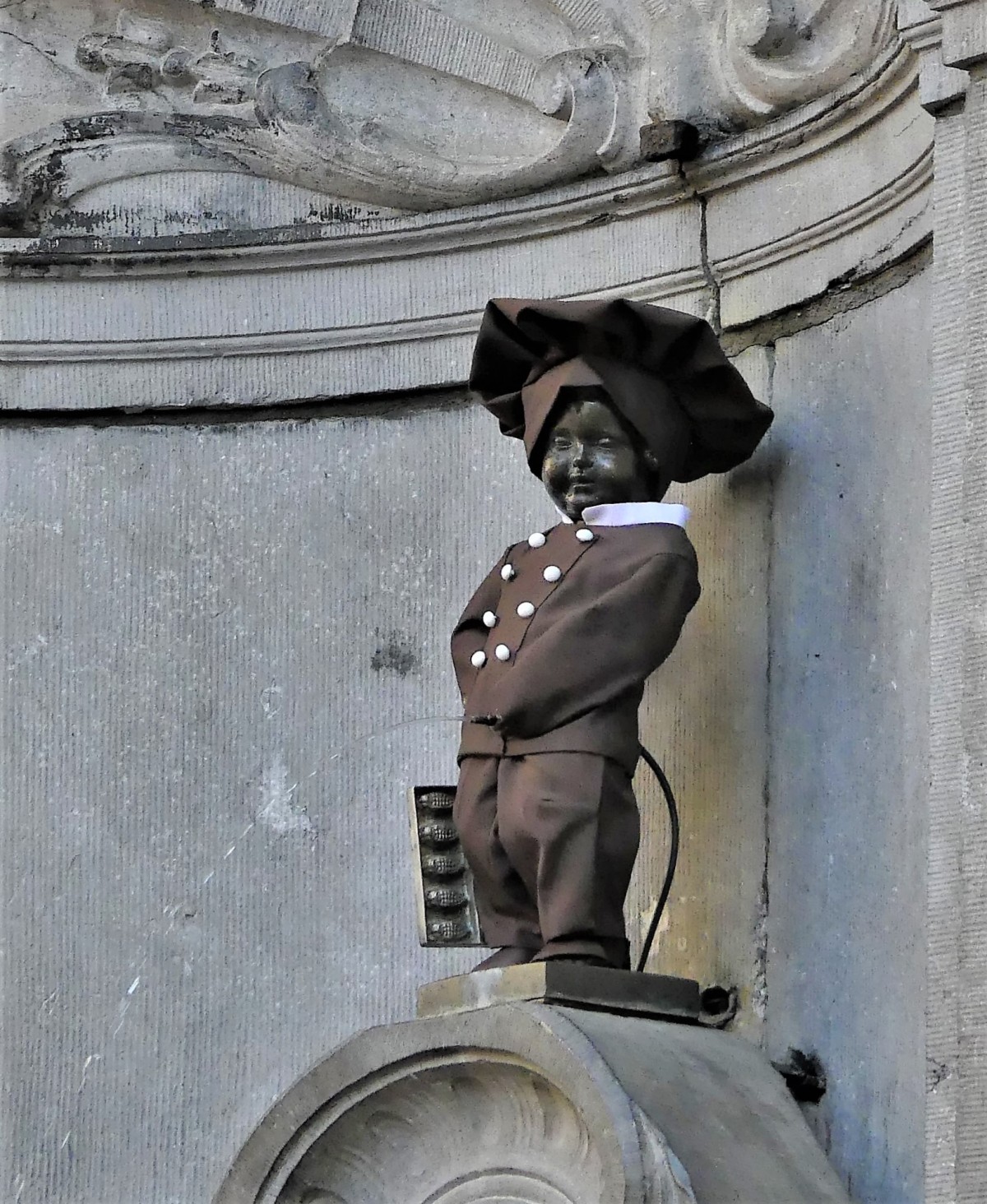
On this particular day, the theme of chocolate carried over to Brussel’s most famous fountain–a 17th century pisser known as Manneken Pis–who was undergoing a celebrated makeover with yet another costume.
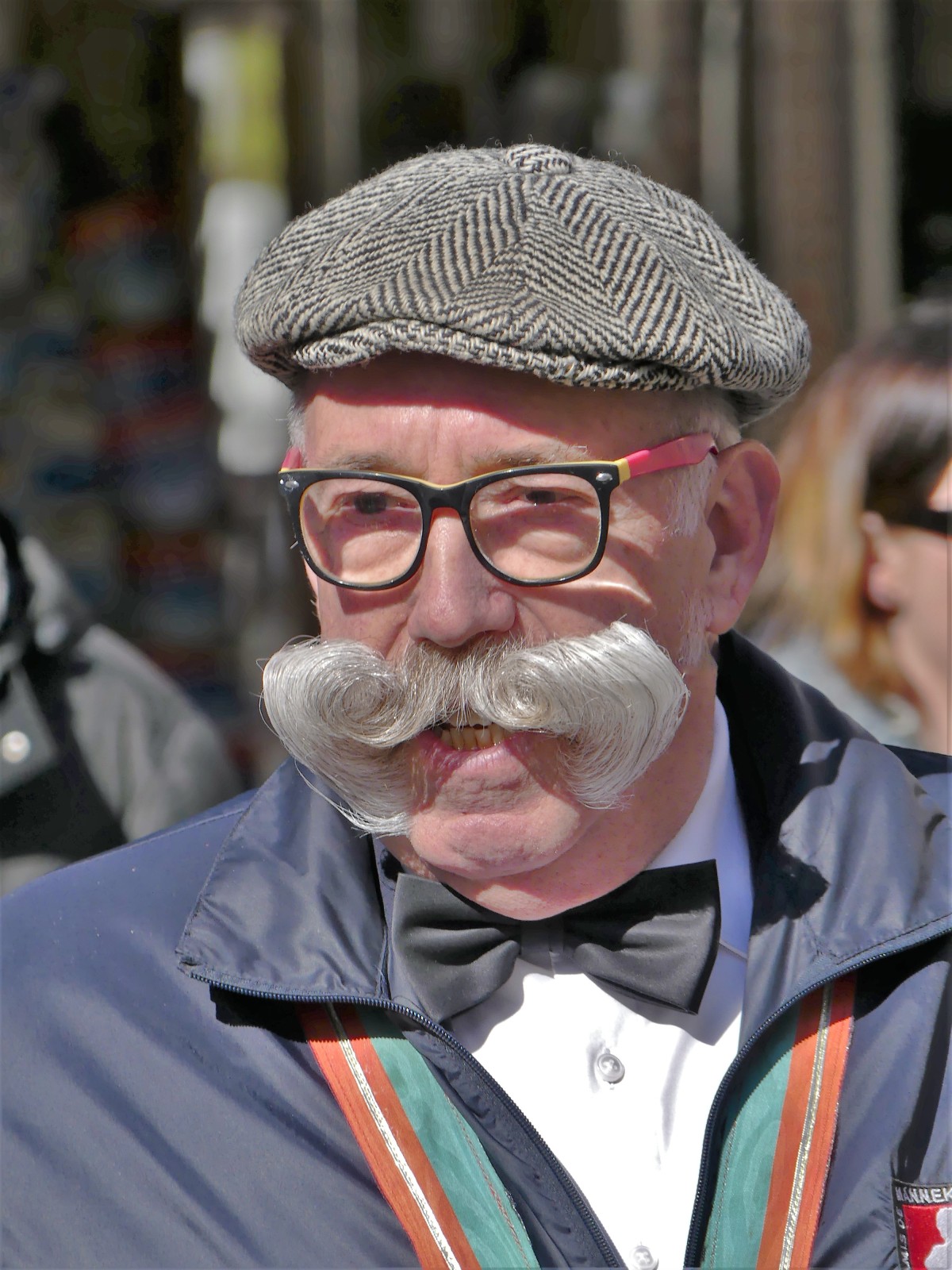
The pomp and circumstance surrounding the event was palpable. A singing society of Manneken Pis enthusiasts had crowded the corner of the Incubator and Oak Street,
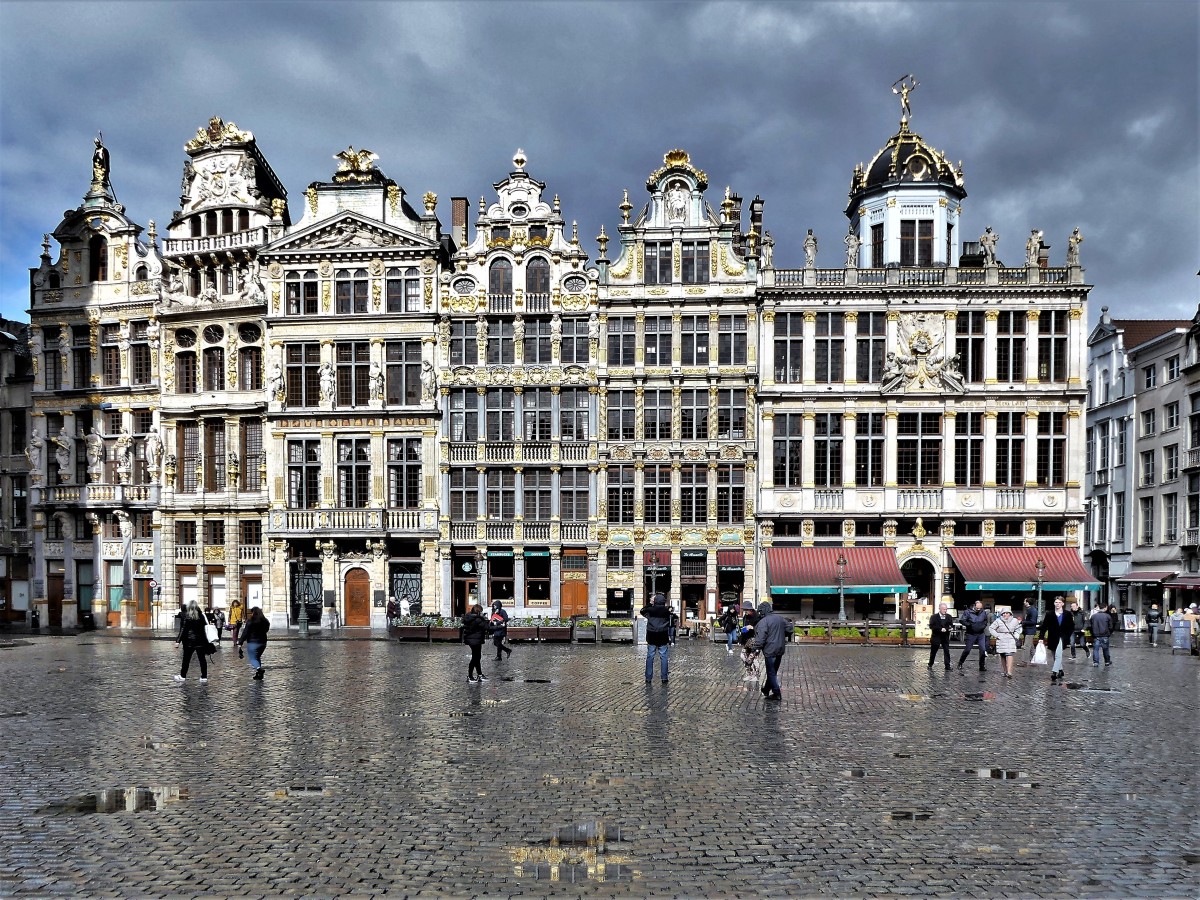
just south of Grand Place…
in anticipation of the grand reveal.
Outside the circle of importance, a fringe show delighted the onlookers.
Eventually, the Nation’s colors were pulled away to expose the little exhibitionist dressed as a chocolatier–one of 1000 different costumes he has worn throughout the ages.
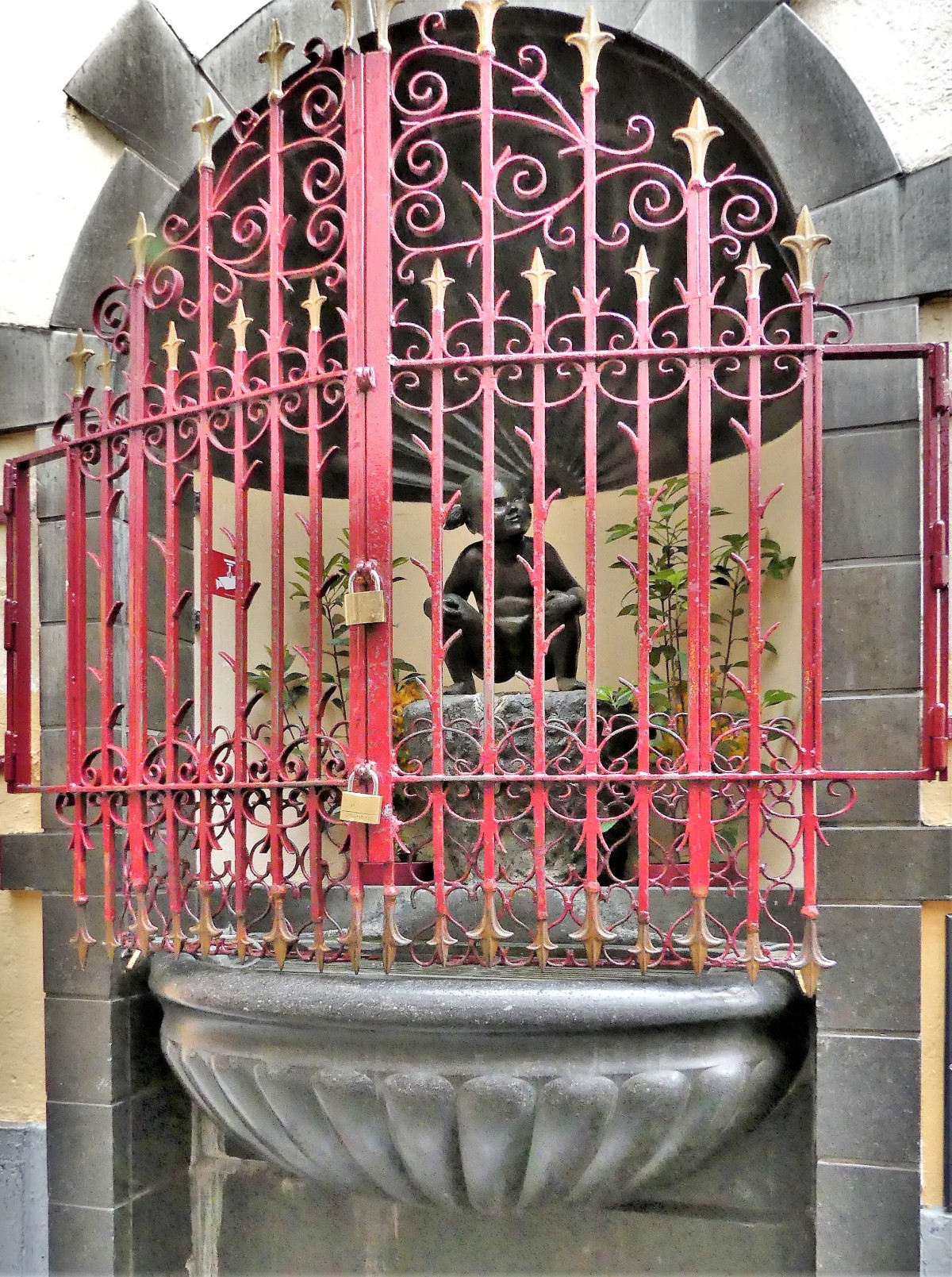
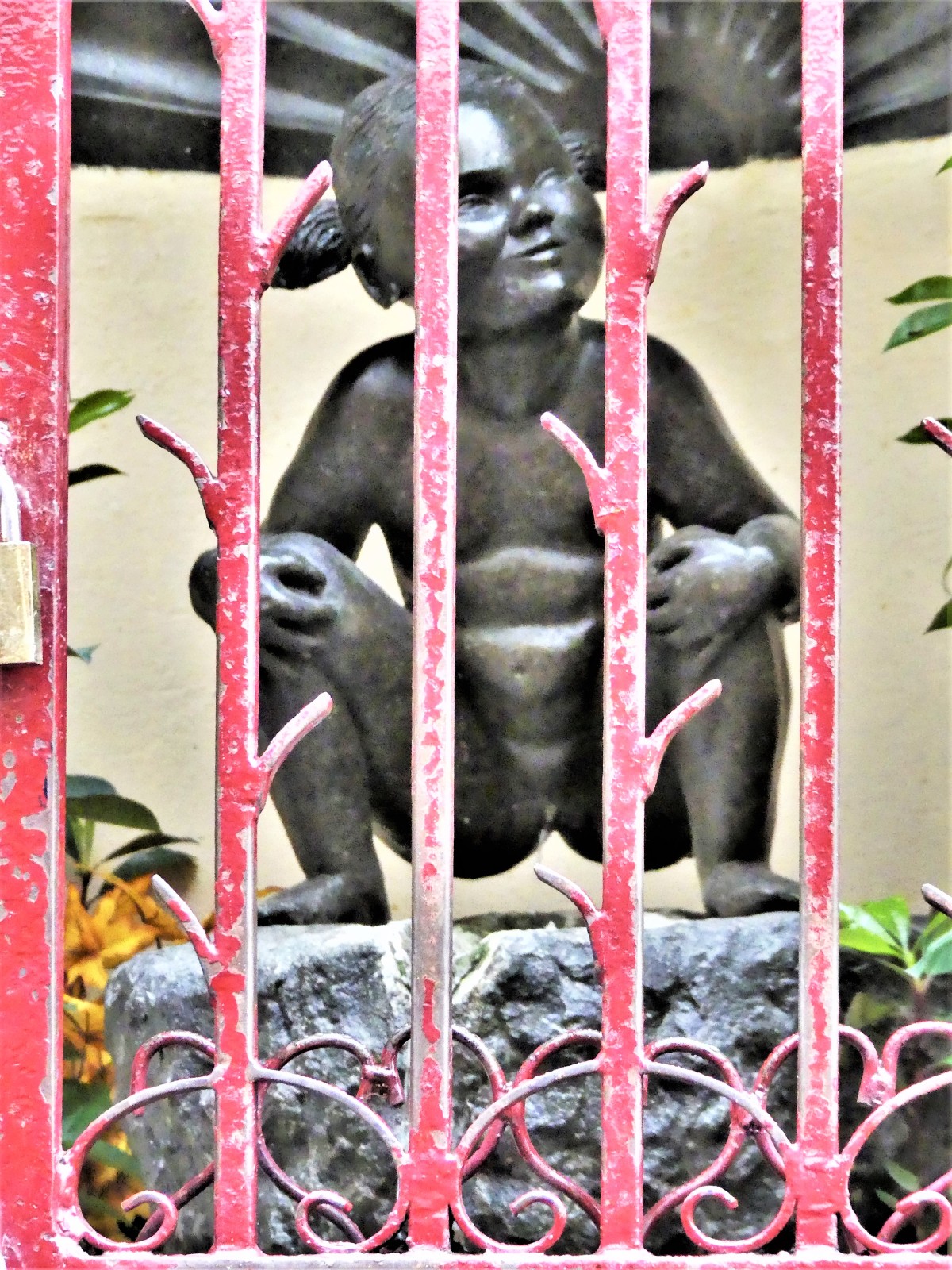
But Manneken Pis has some able-bodied company. Located a short distance away, his counterpart, Jeanneke Pis is a fine squating specimen.
It is believed by Belgians that the fountain was built in honor of loyalty. An old custom states that a coin tossed into the basin will bring good luck and is an expression of fidelity.
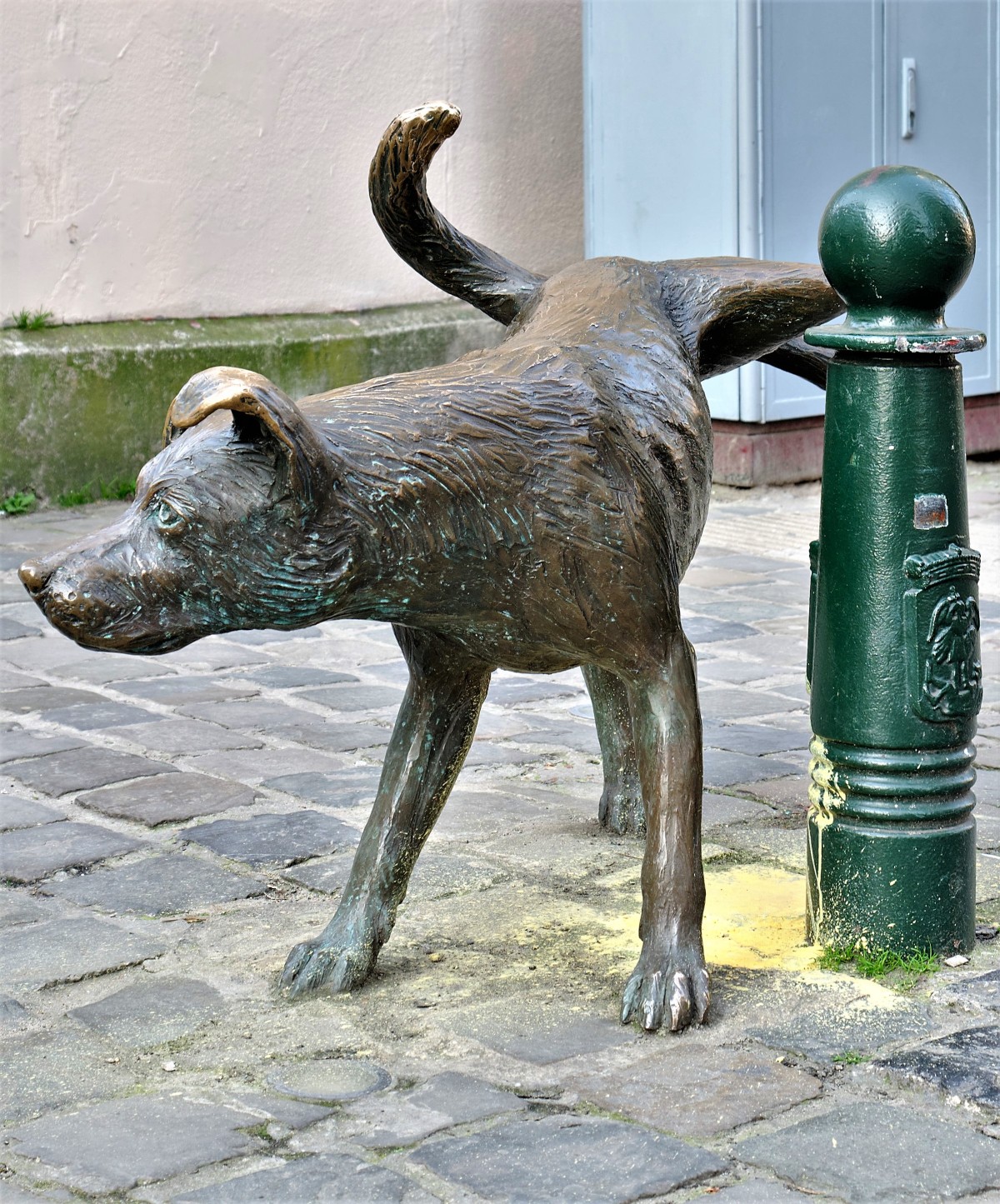
Of course, what could be more loyal than man’s best friend, symbolized by Zinneke Pis…
…thus completing the pee pee trilogy.
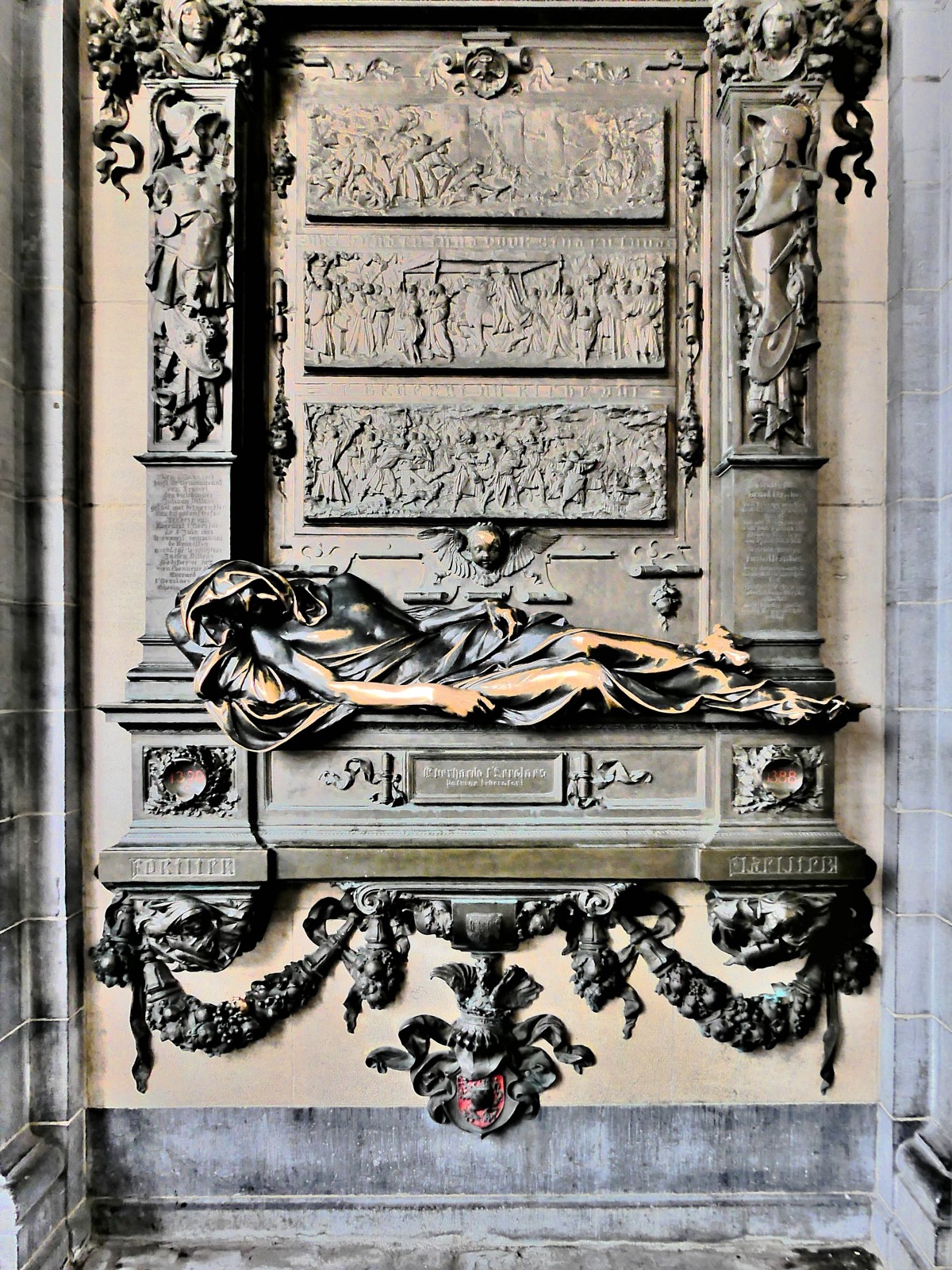
Dogs are a common site and symbol around Brussels, and represented throughout history, whether at the foot of Everard t’Serclaes, a 14th century legend, embodied in thestatue of his reclining corpse–
which is believed by locals to bring luck to all passers-by who rub it.
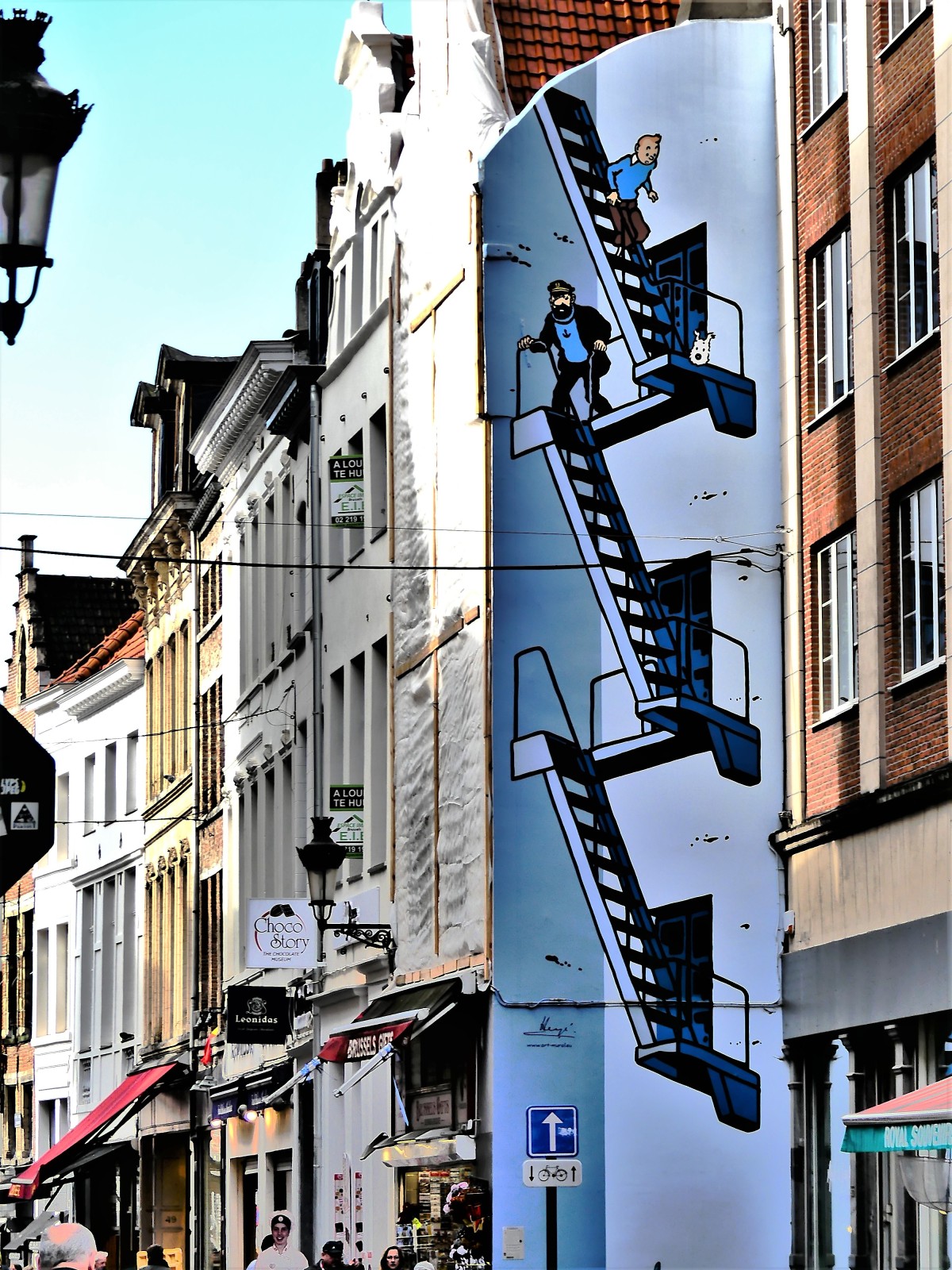
And then there’s Tintin’s dog, Snowy,
a comic sensation created by Belgian cartoonist Hergé (aka George Remi).
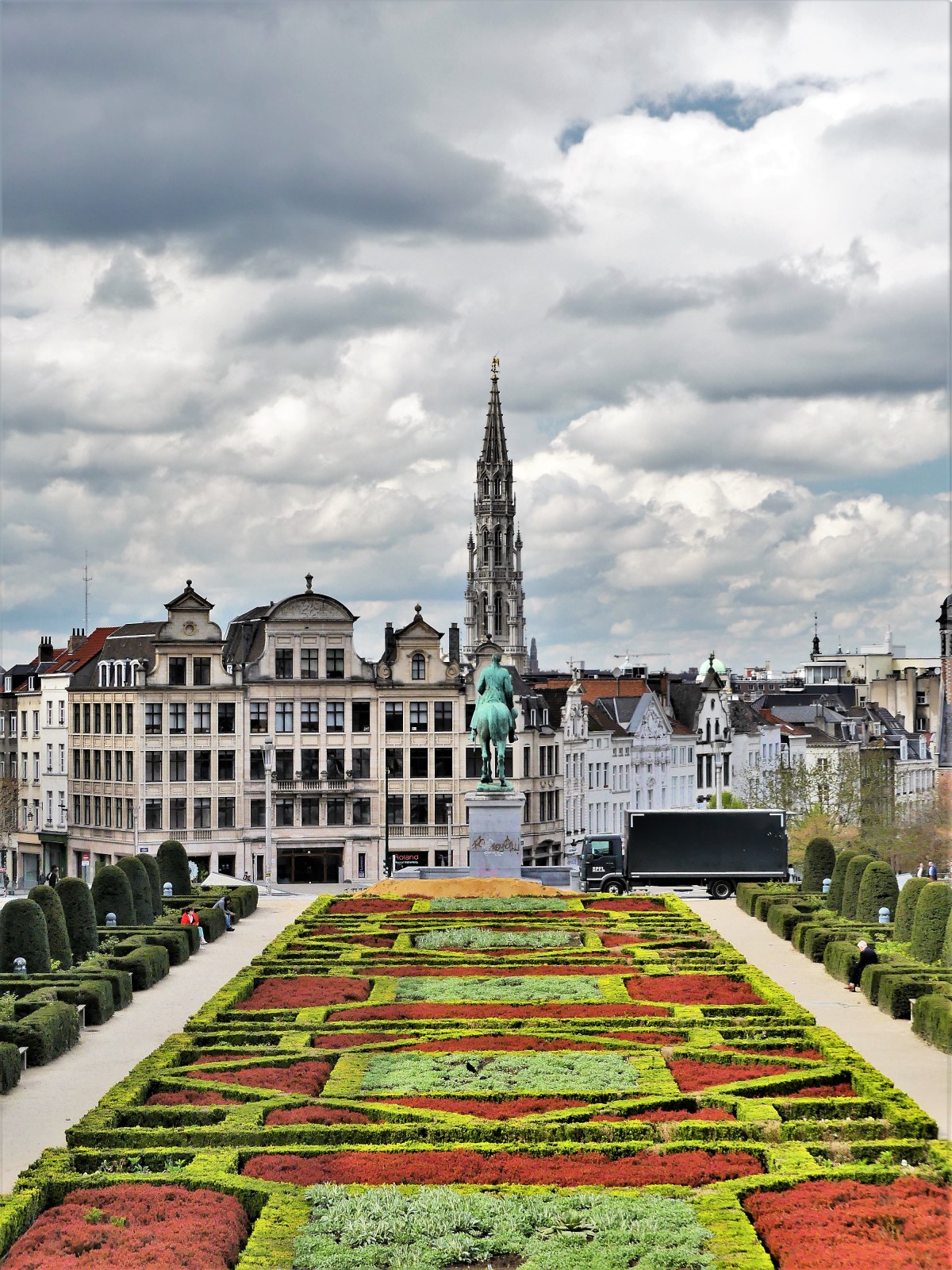
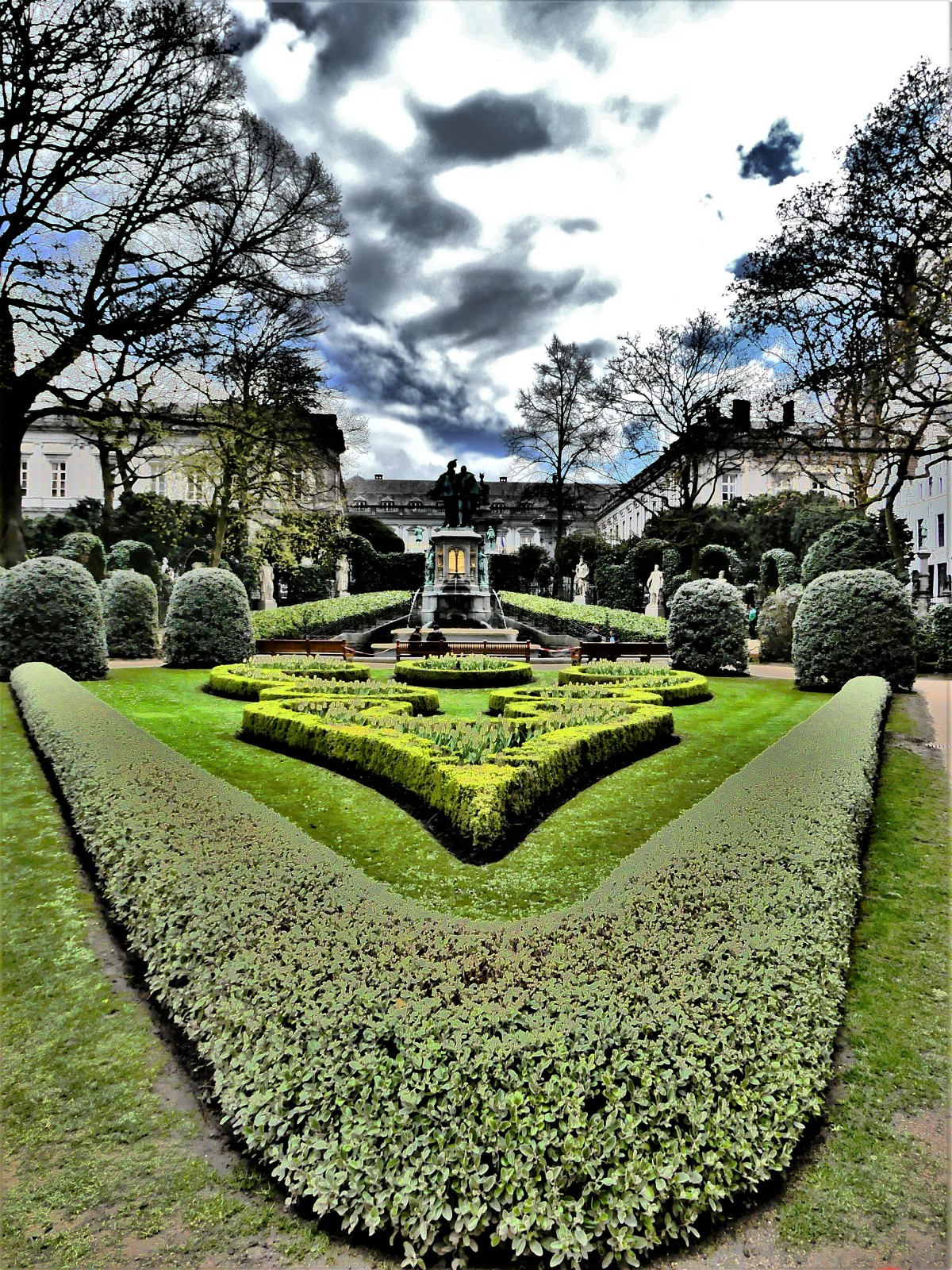
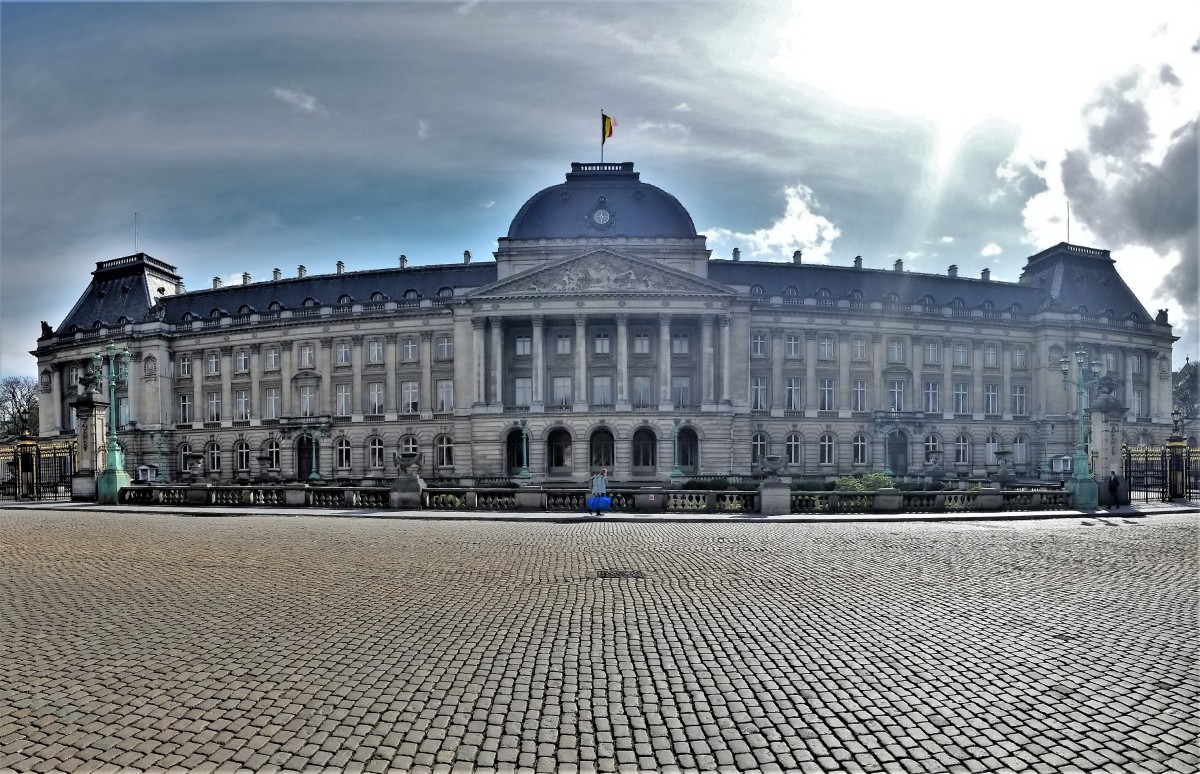
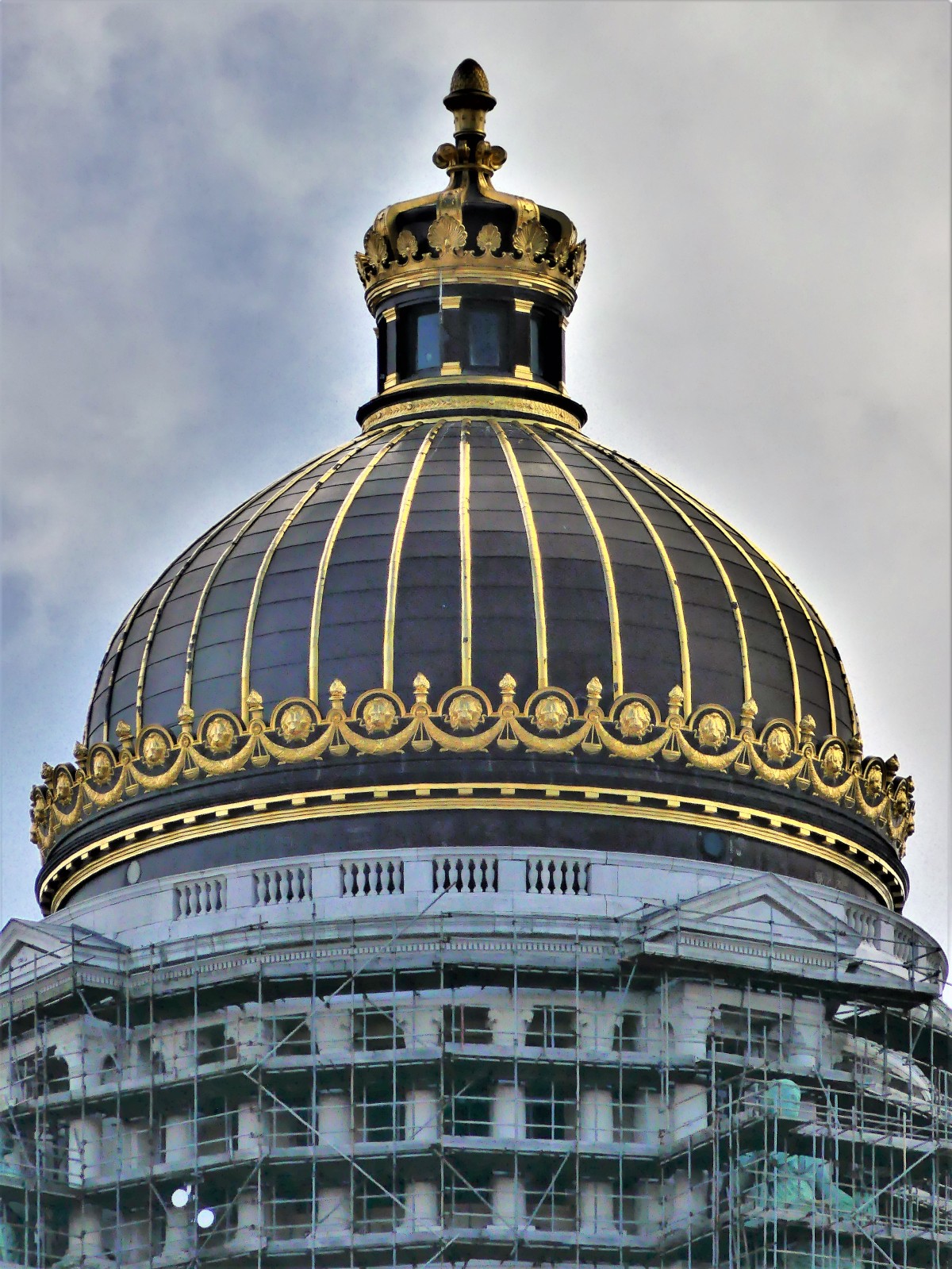
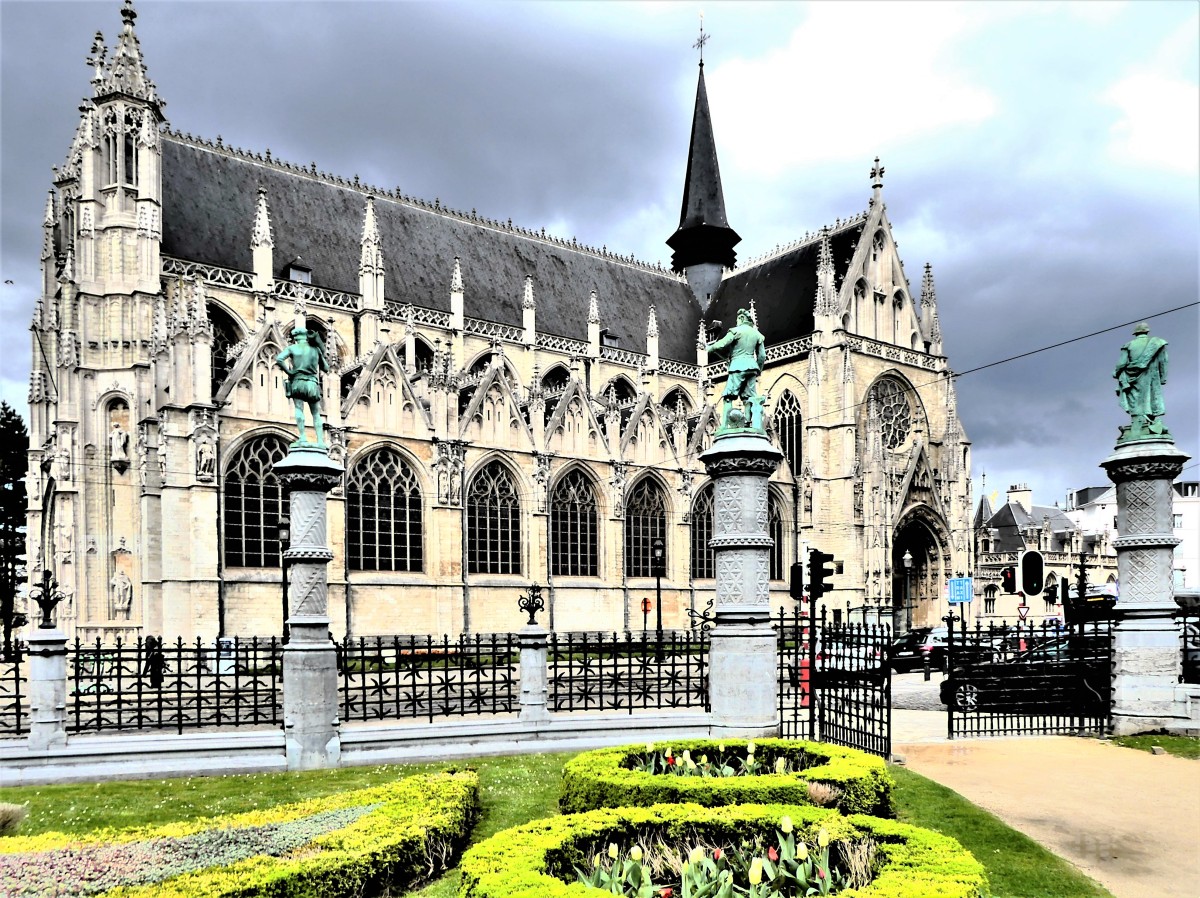
There is a framed beauty and whimsy about the city of Brussels.
While it never takes itself too seriously,
there is just enough richness…
regalness,
righteousness,
and Old World charm…
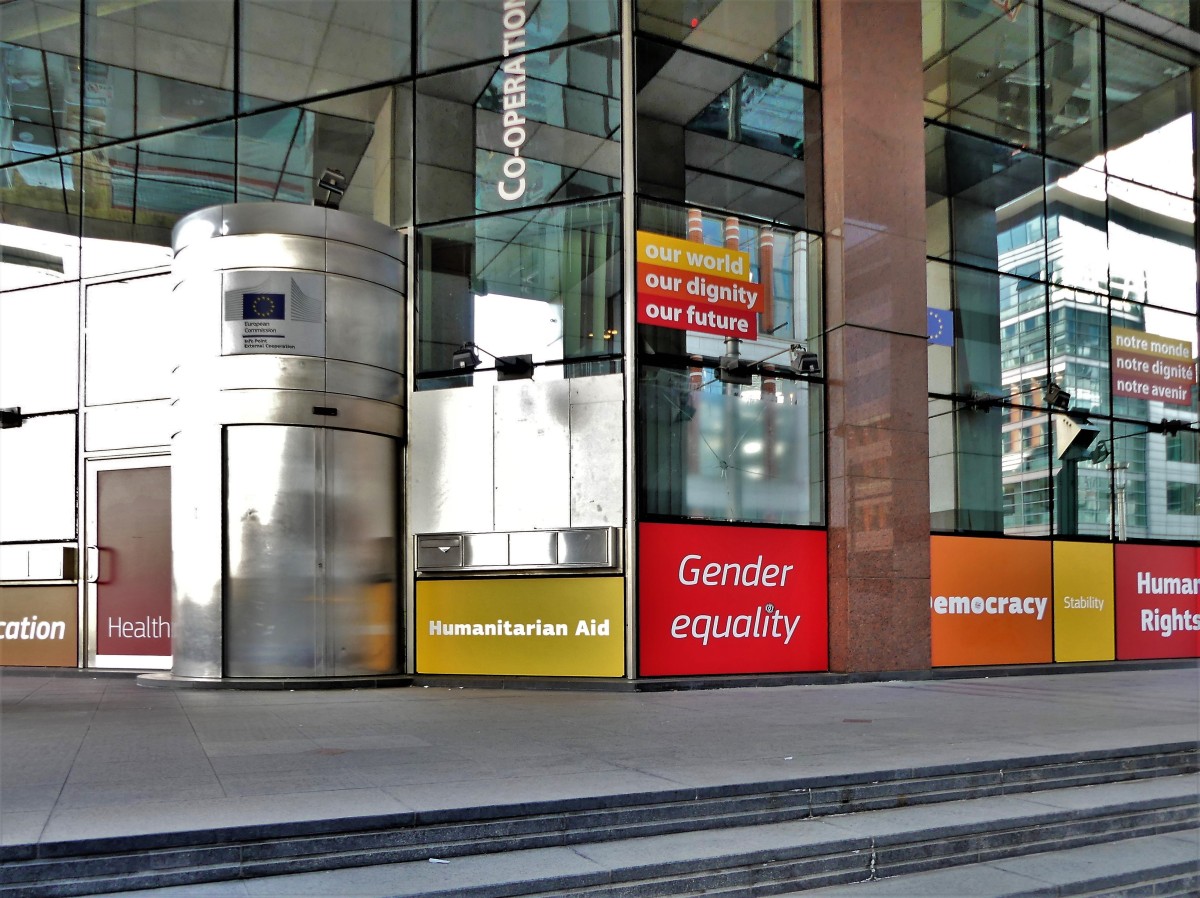
…to compete with any of the other great European capitals, while never forgetting its role as de facto capital of the European Union,
Everyday is Halloween at Les Catacombes de Paris. But, it’s not about dressing up in outrageous costumes, or wearing outlandish make-up. It’s about visiting a subterranean ossuary that radiates miles in all directions beyond the 14th Arrondissement of Paris.
Taking 130 steps into the bowels of time…
…and following a long and winding stoney path…
…through weeping ceilings heavy with humidity,
and sobering humility,
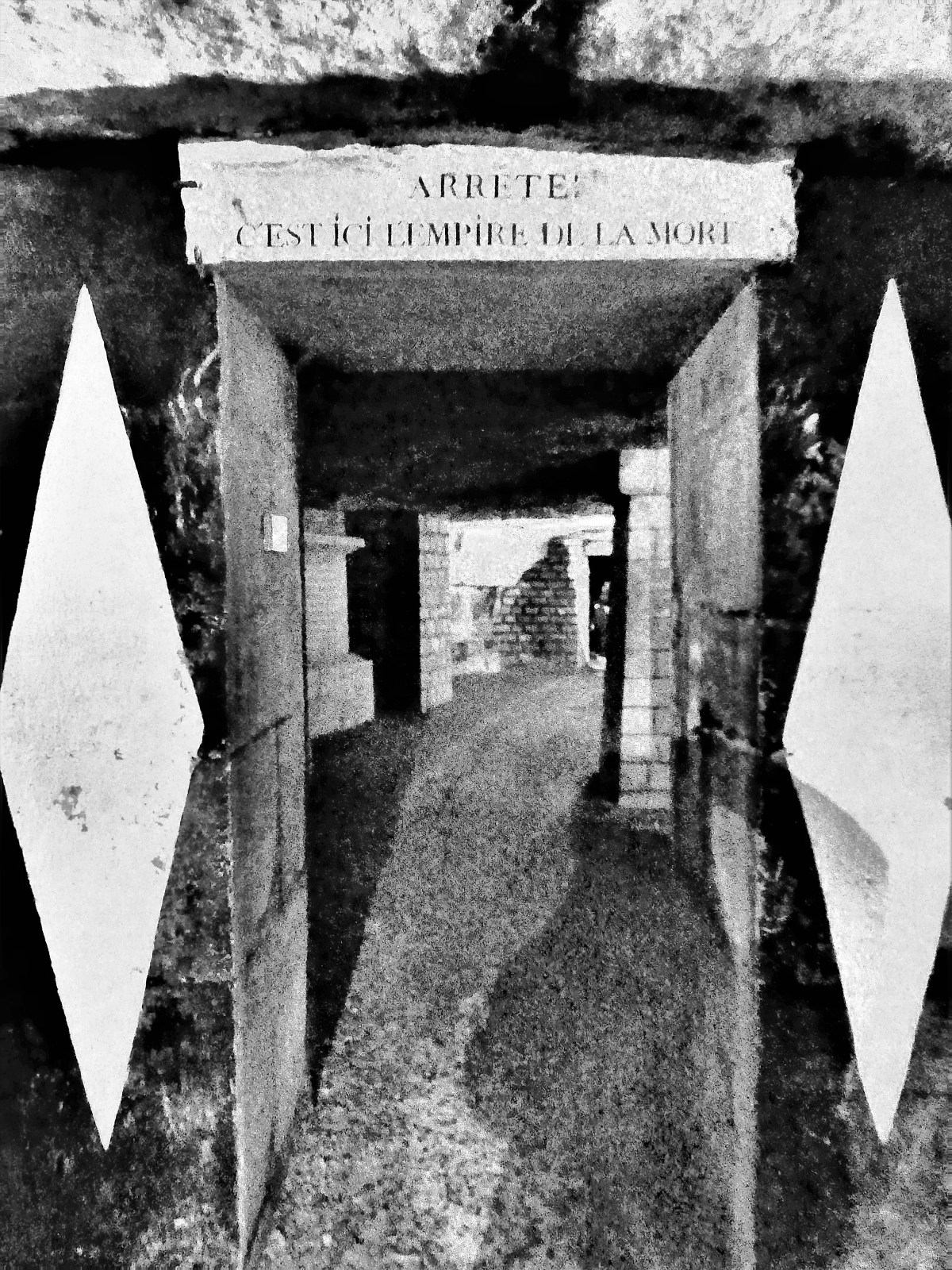
one reaches an imposing gateway, warning: STOP! THIS IS THE EMPIRE OF DEATH!
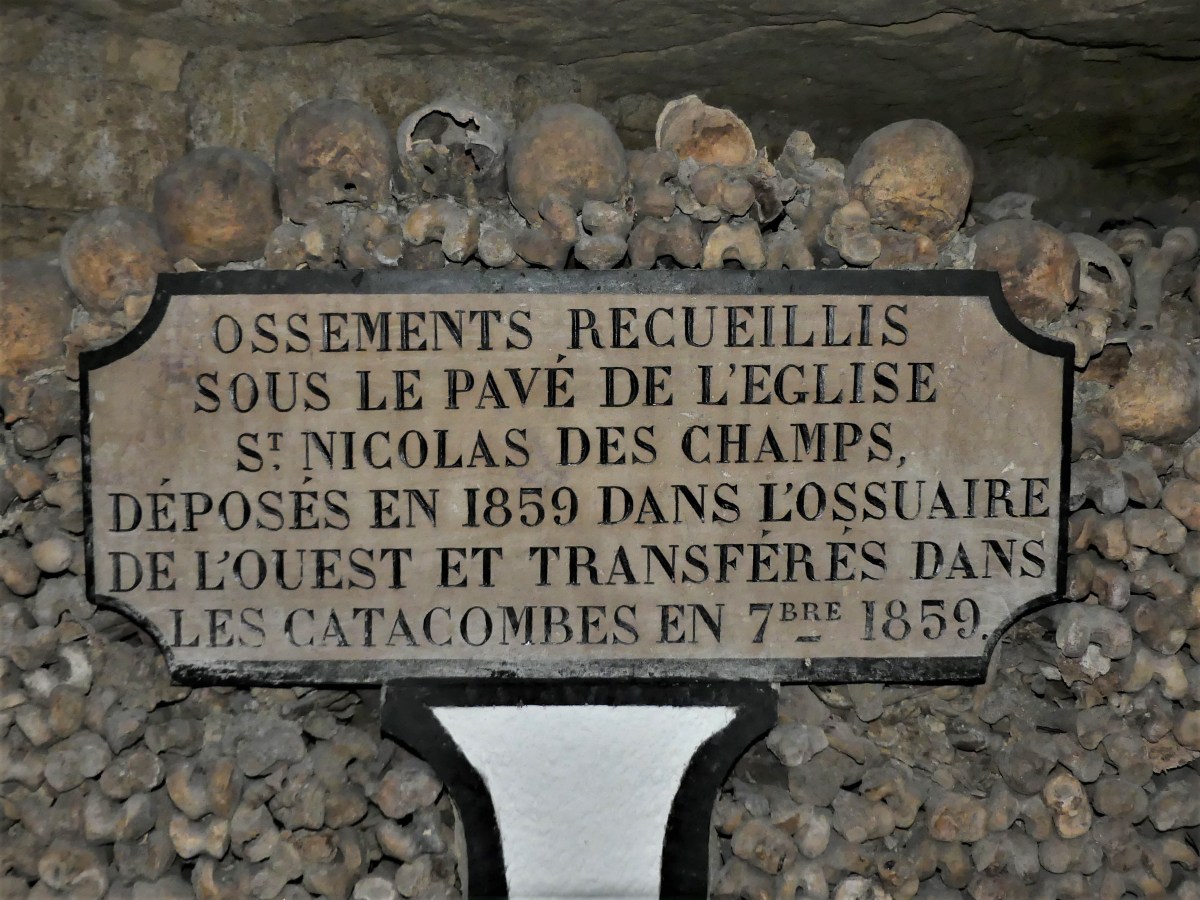
Beyond the entrance exists a daunting surreality that 6 million human remains reside here, integrated into the walls of 8000 year-old limestone tunnels once quarried to build Paris into one of Europe’s brightest beacons–bringing an eerie normalization to the horror and beauty of this place, for the skulls and bones are often arranged in an unnatural state of decoration.
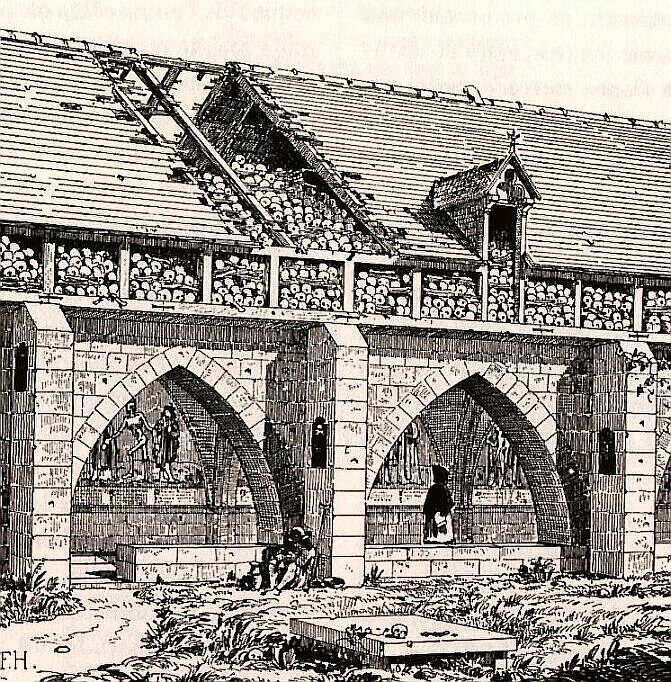
With Parisian cemeteries overflowing their boundaries, Louis XV and Louis XVI crusaded for a ban on future burials within city limits when the insufferable stench of rotting corpses began overwhelming the community. But the Church pushed back, citing that the dominion of God’s holy spirits should never be disturbed.
However, in 1780, a rush of Spring rain caused a wall to collapse between a house cellar and the Holy Innocents Cemetery, causing the unsanitary contents of its burial pit to flood the house.
Thereafter, all Parisian cemeteries were exhumed,
and the bones were transferred into the catacombs–
a practice that continued until 1859.
Yet, it’s the skullpture, first imagined by Hericart de Thury, the inspector of the quarries during 1810 that resonates most among the catacomb’s 300,000 visitors each year.
Although there is a bone to pick: roving security discourages tourists from touching sacred ruins or leaving graffiti behind,
while a final bag check at the conclusion of the one-hour tour prevents tourists from poaching remnants.
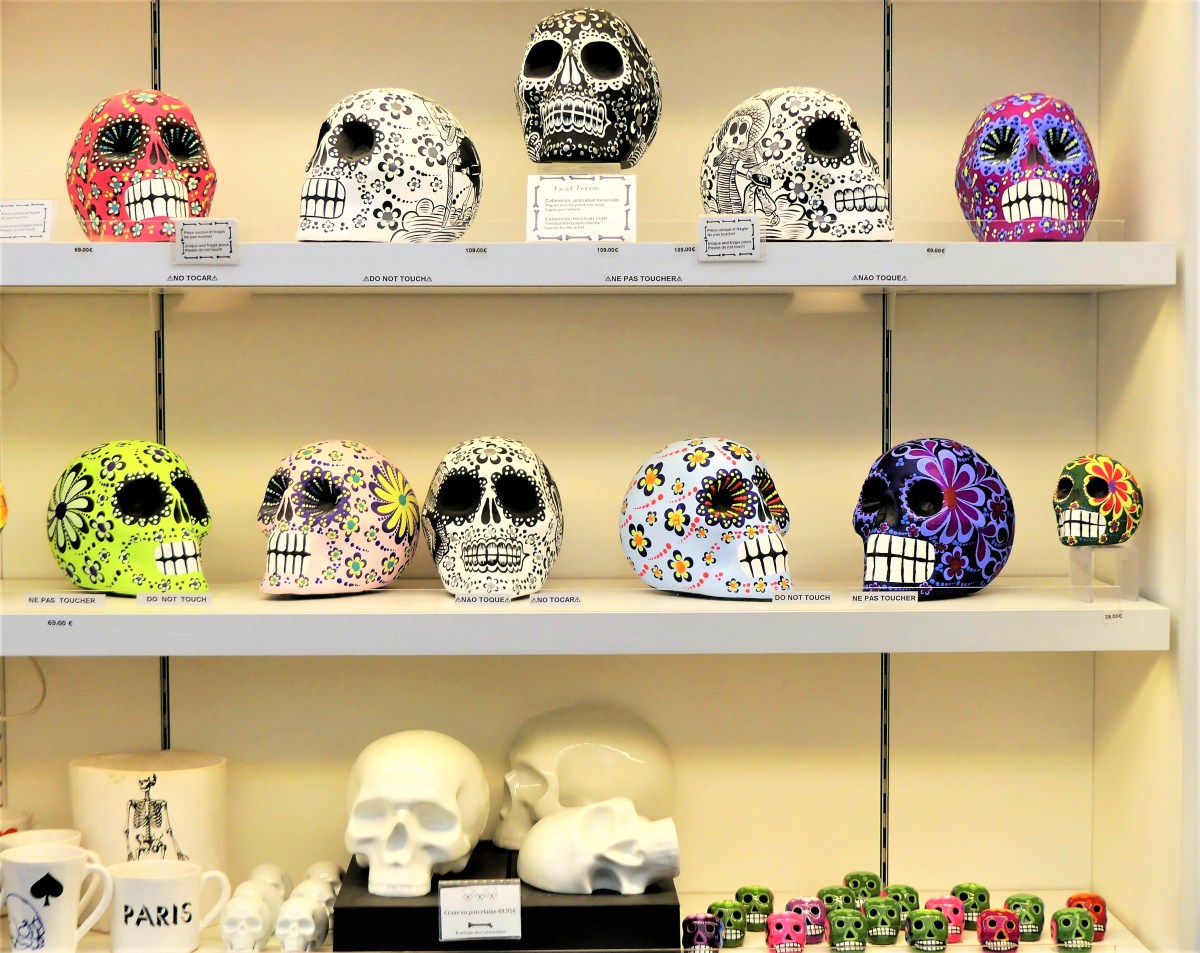
But if souvenirs are a must (and who doesn’t enjoy a small memento of their visit), the gift shop at the museum exit does a brisk business–
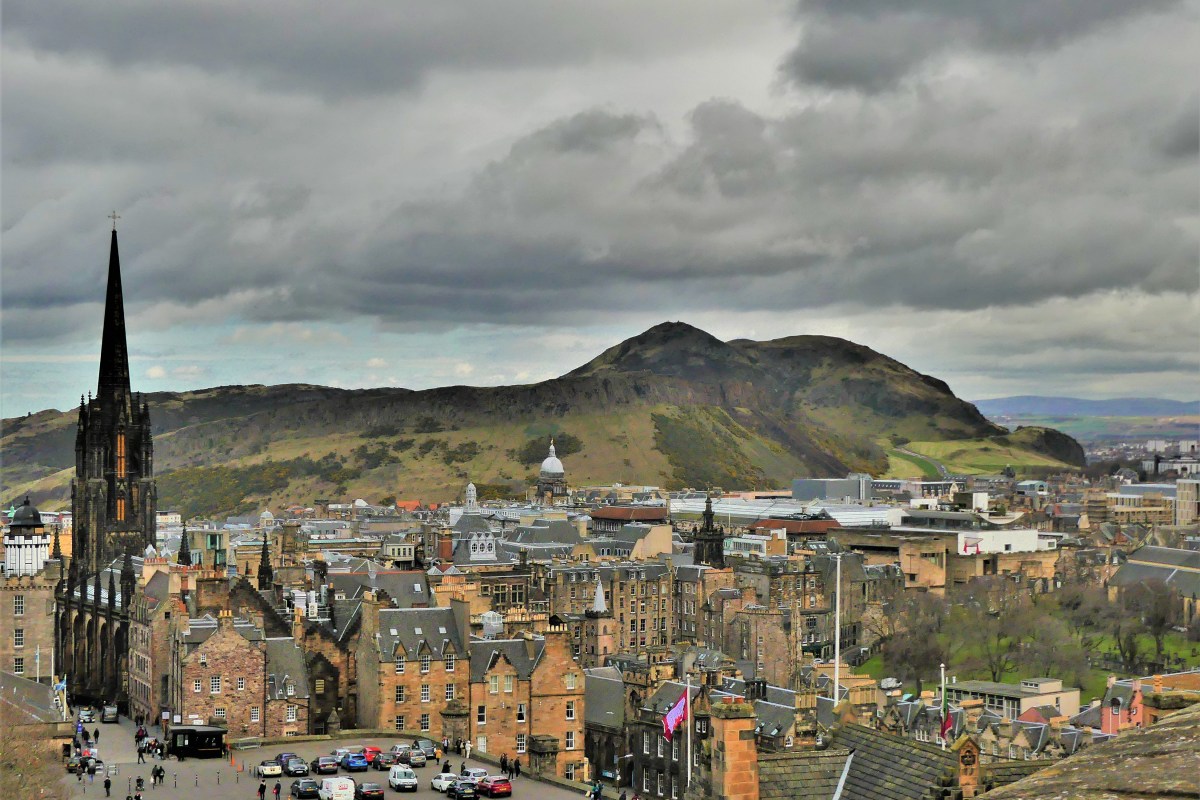
There’s no need searching for fabulous viewpoints in Edinburgh, because the city is chock full of them. And each one delivers the most splendid views of a town steeped in Scottish lore and history. All that’s required is an ability to scale any of the neighboring hills, and the payoff is heavenly.
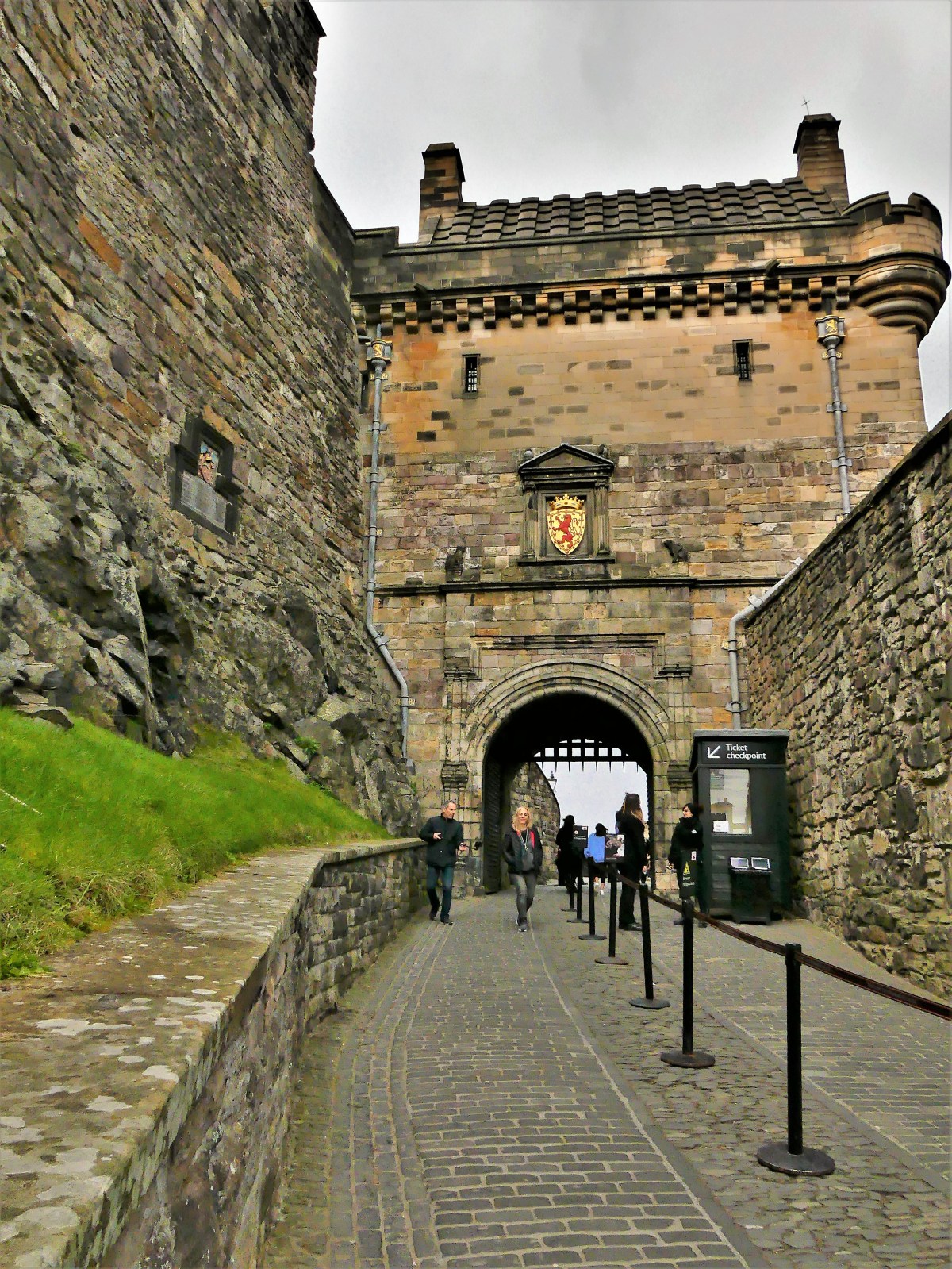
For instance, a hike up to Castle Rock…
to access the gate to Edinburgh Castle…
provides a fantastic overlook to the south end.
But the bigger reward becomes more apparent after buying an access ticket to the castle for £18,
and stepping back through time to follow in the footsteps of Scottish royals who traversed the cobblestone roads since the 12th century.
Once inside Foog’s Gate, one discovers St Margaret’s Chapel–the oldest surviving building in Edinburgh–built around 1130 by David I, and dedicated to his mother Queen Margaret, who was later canonized in 1250 by Pope Innocent IV.
The chapel was designed in a Romanesque style with small, irregular stones fashioned in a simple rectangle, and underwent major reconstruction in 1851 by Queen Victoria,
and was updated with Douglas Strachan’s stained glass windows in 1922.
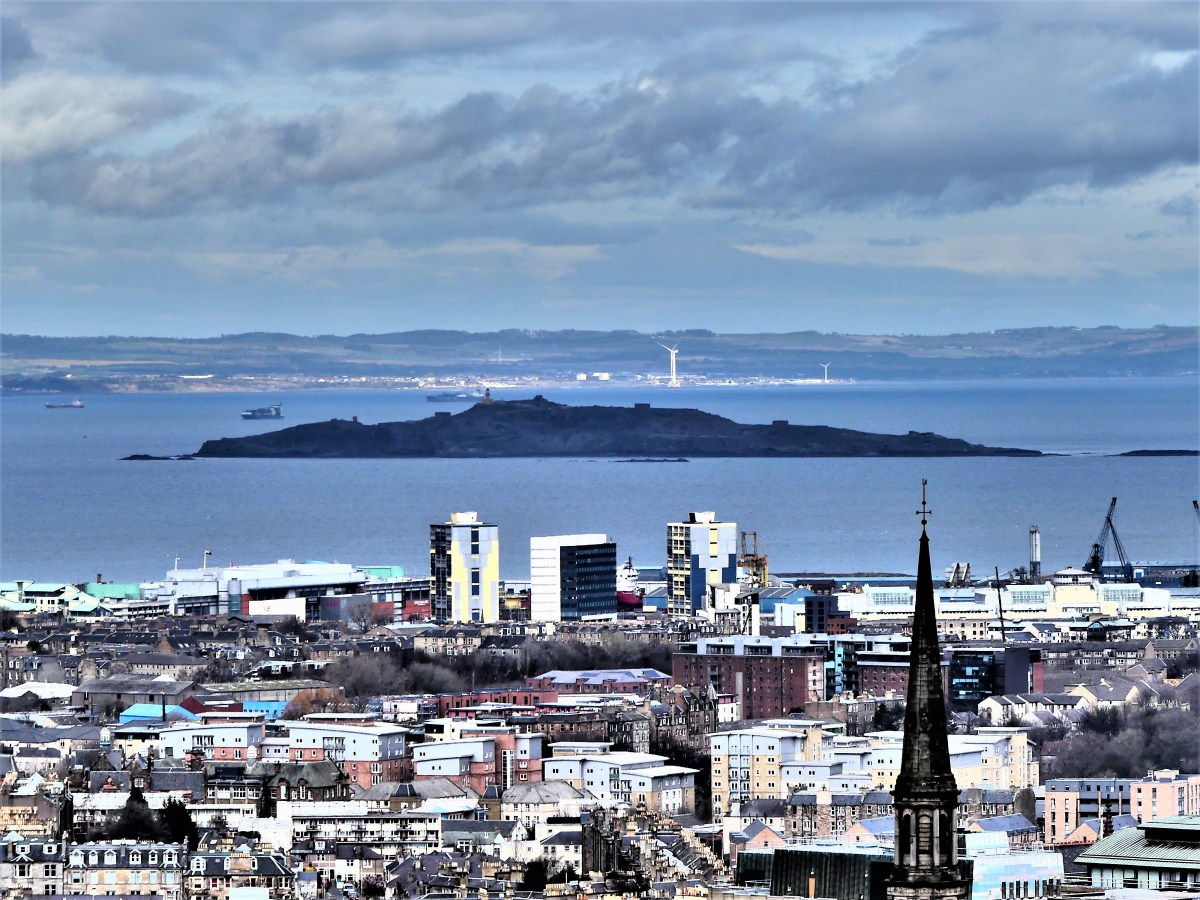
St Margaret’s Chapel commands a view of north Edinburgh,
looking to Leith.
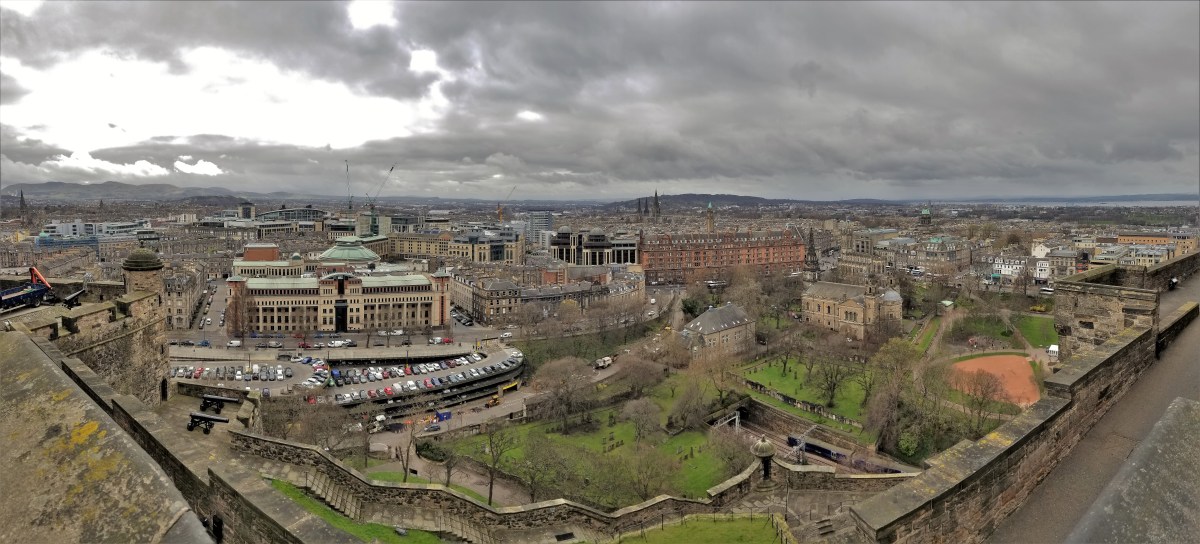
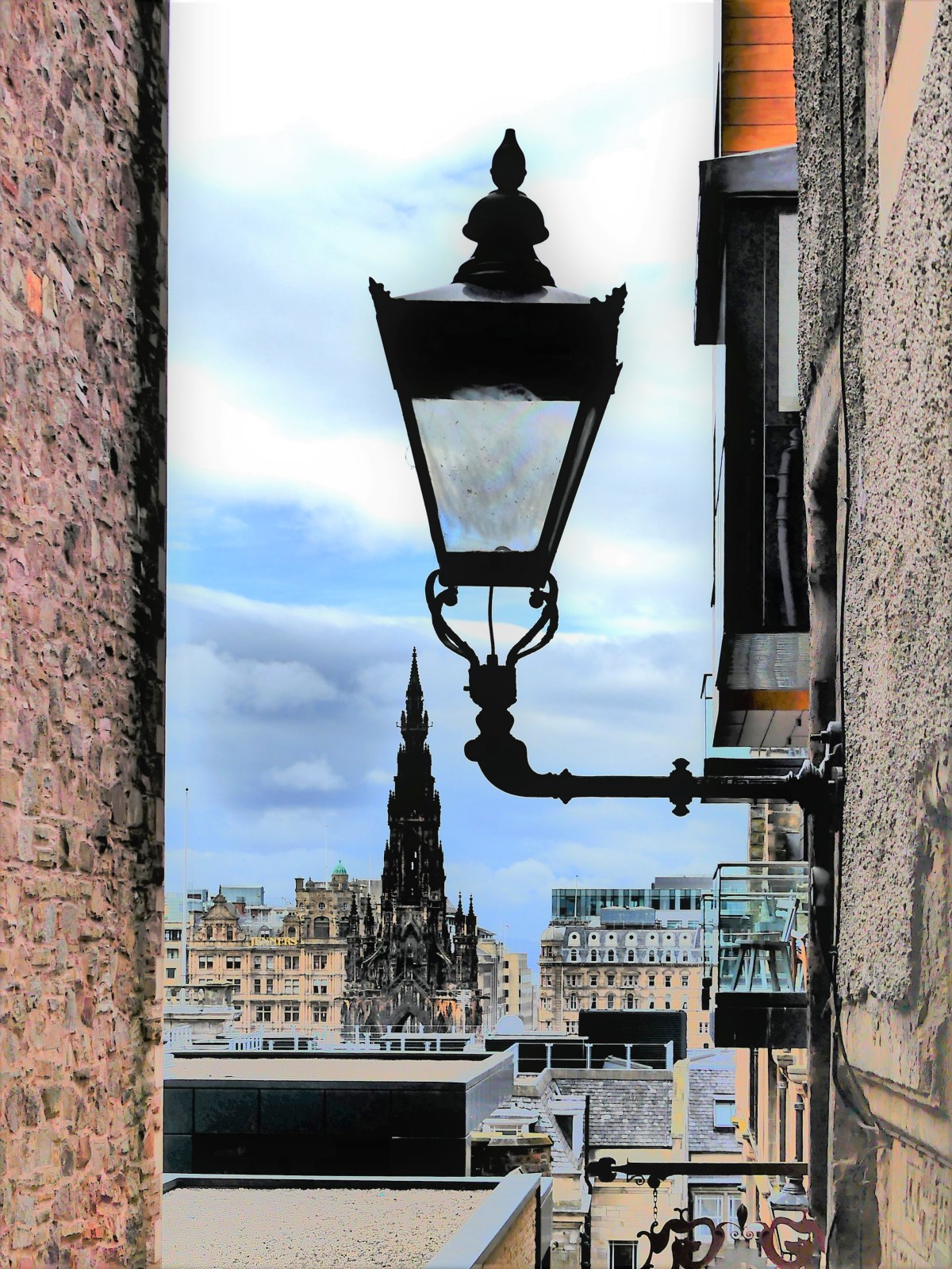
In addition to the best westerly views in the city…
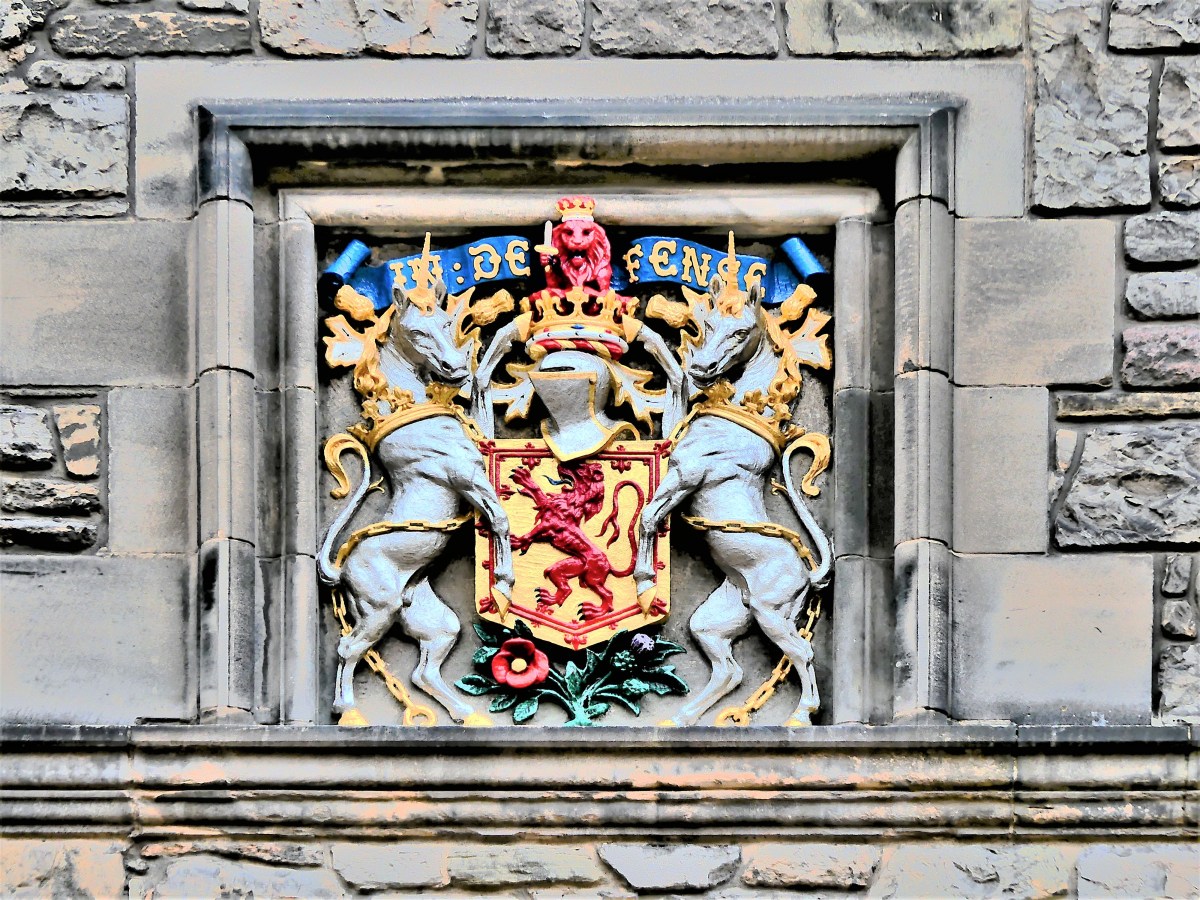
the Castle’s royal palace…
offers a glimpse of the elaborate decoration of the birth chamber of James VI, son of Mary Queen of Scots.
A visit to the Great Hall is also in order…
boasting an interior ceiling constructed without nails–looking much like an upside down hull of a boat–
and housing a variety of vintage weapons displays.
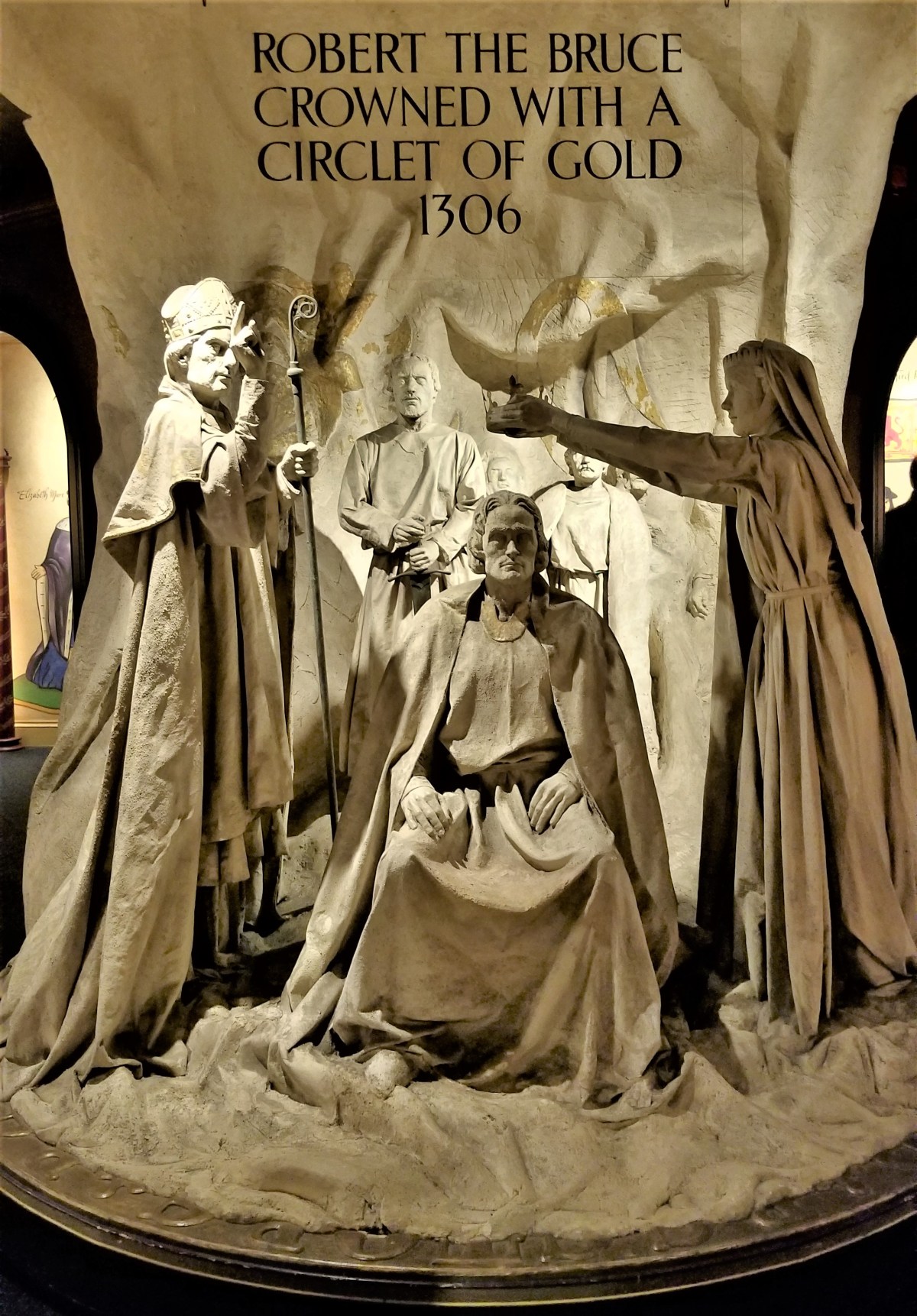
Several exhibits on the mount recount the many coronations of its kings and queens,
the fighting character of the Scots…
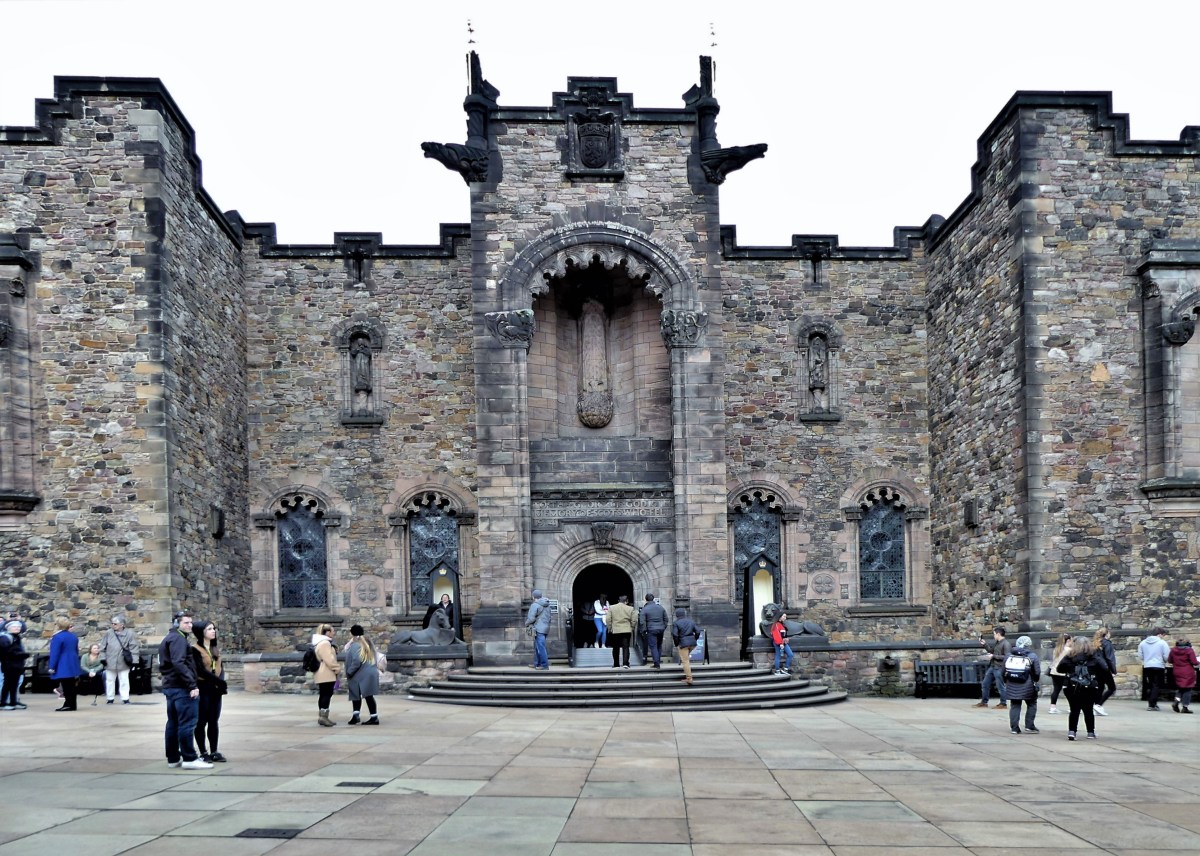
and an active tribute memorial to all of those who have fallen in battle throughout the ages.
Once outside the castle entrance, a walk down the Royal Mile…
past The Hub (where the famed Fringe Festival headquarters resides)…
will likely lead to an encounter with a bagpipe player…
standing by one of the many Closes of Edinburgh which look out to the north and south.
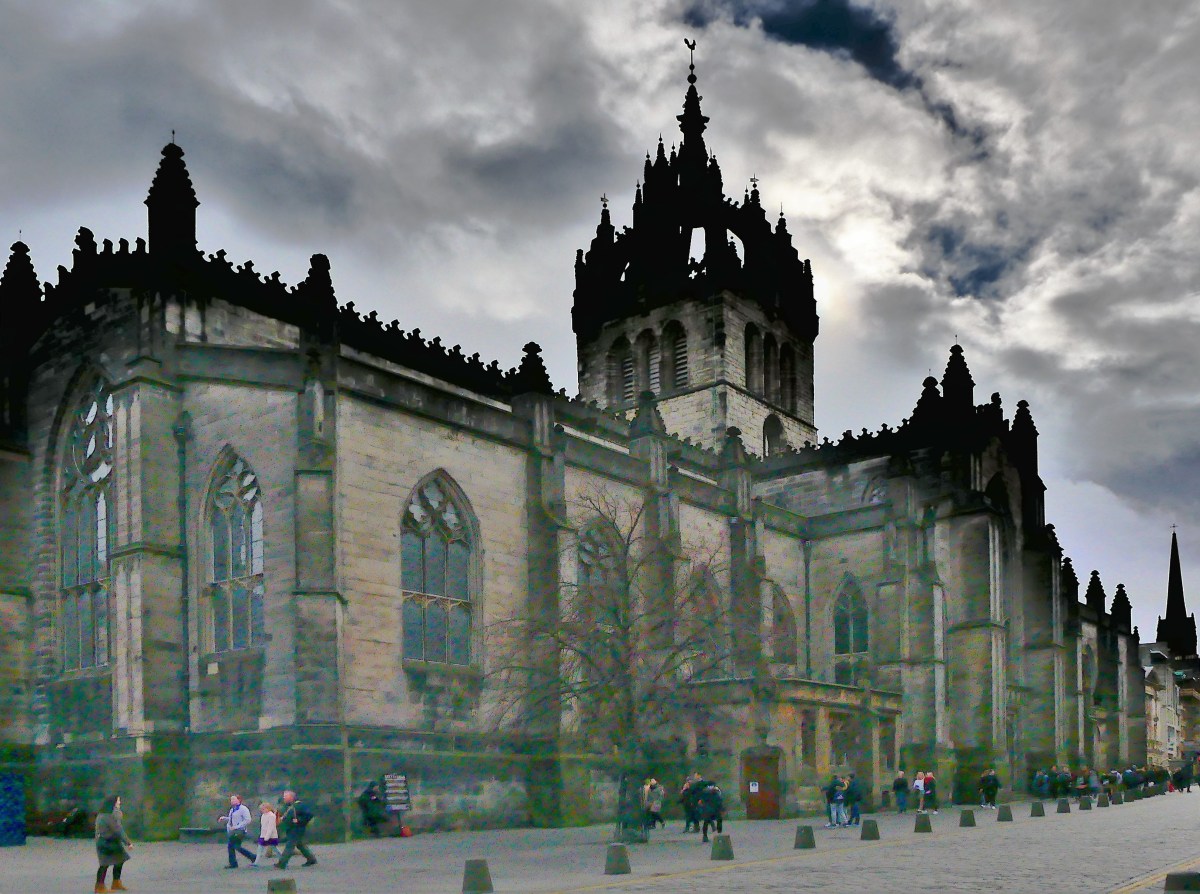
Continuing further east is St. Giles Cathedral, founded in 1124, and the focal point of the Scottish Reformation in the 16th century.
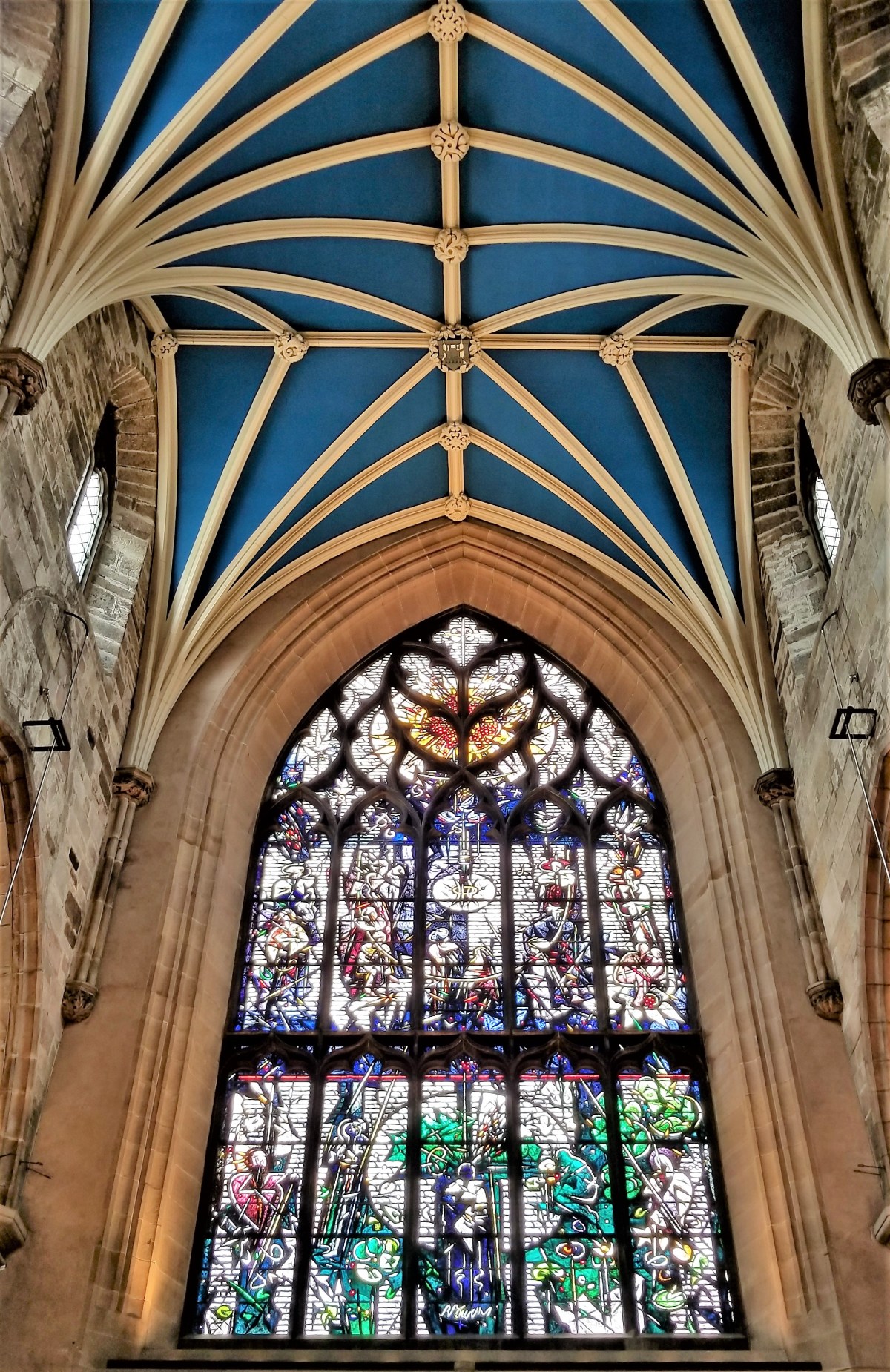
Inside the church are an array of small knaves and chapels enhanced by extraordinary examples of intricately detailed stained glass.
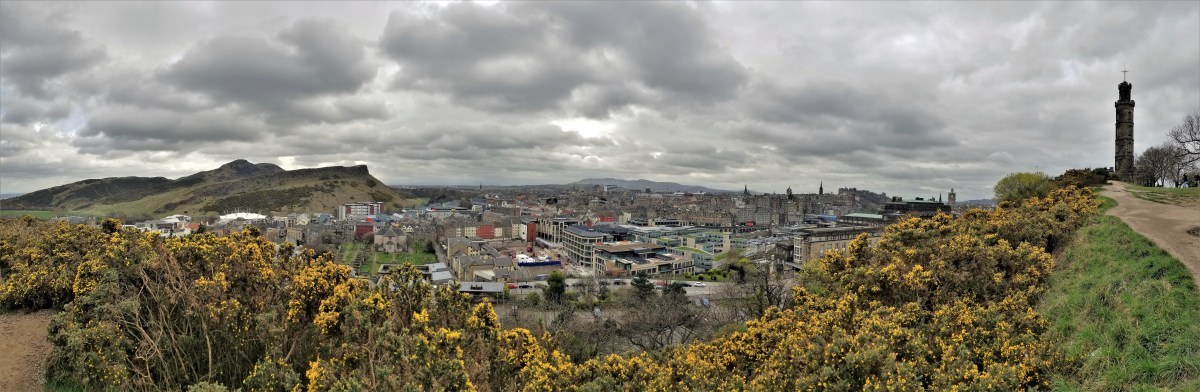
Views of Edinburgh also abound from Calton Hill,
where several monuments dot the landscape, whether it’s to honor Horatio Nelson,
Dugard Stewart,
or the war veterans who lost their lives in the Napoleonic Wars.
Once the site of medieval tournaments and festivities during the 1400s, Calton Hill was also the best place to catch public executions in the 1600s.
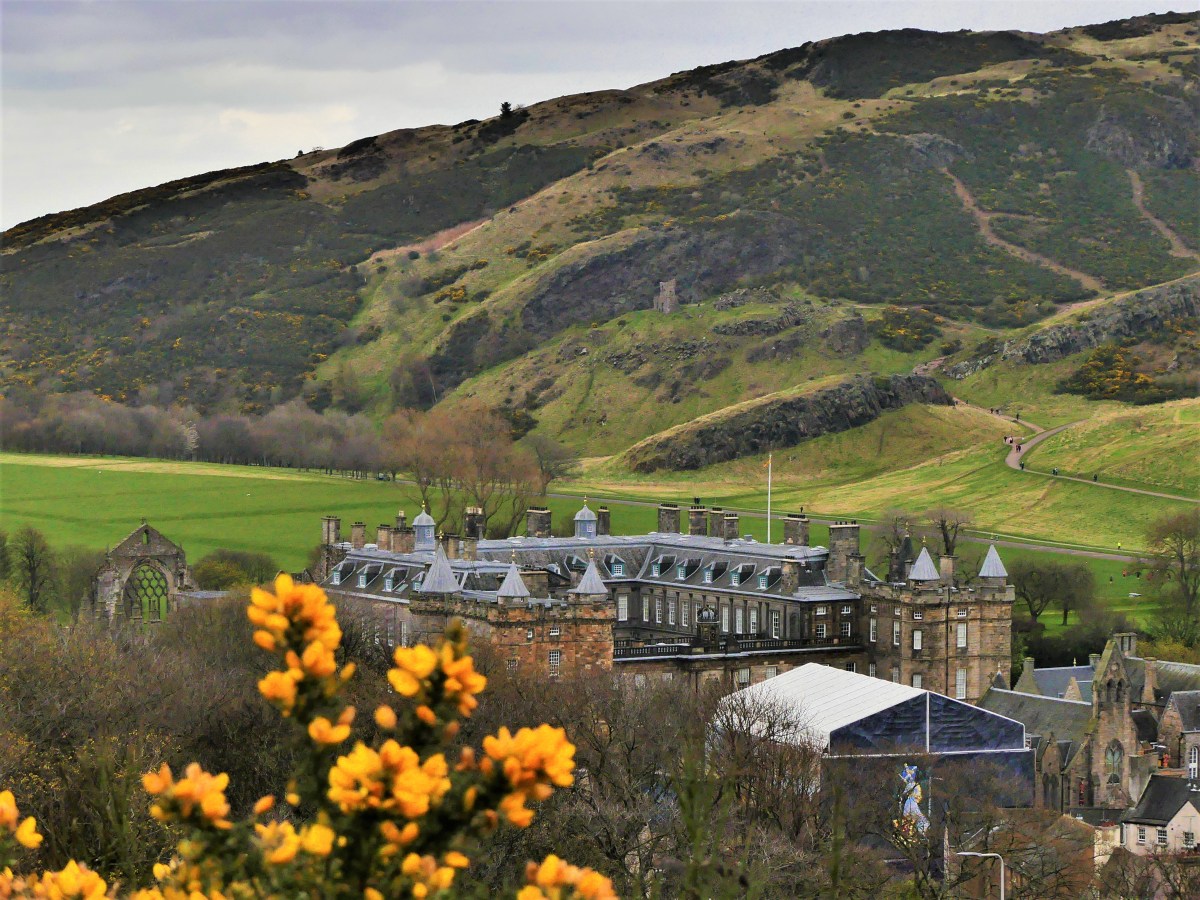
But today, it’s best known for it’s iconic views of the royal residence, Hollyrood Palace positioned beneath Arthur’s Seat,
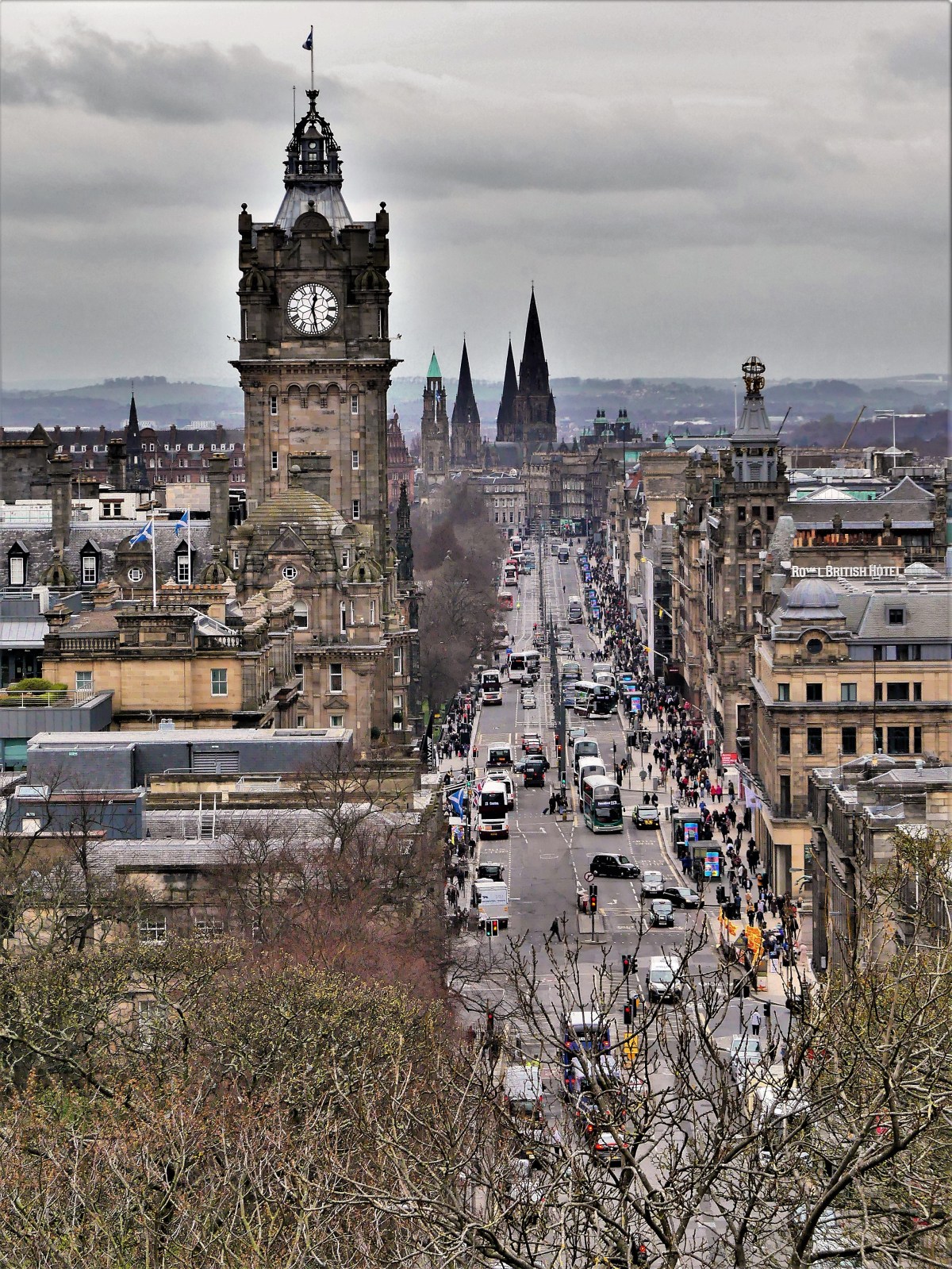
and a look down Princes Street.
Views notwithstanding,
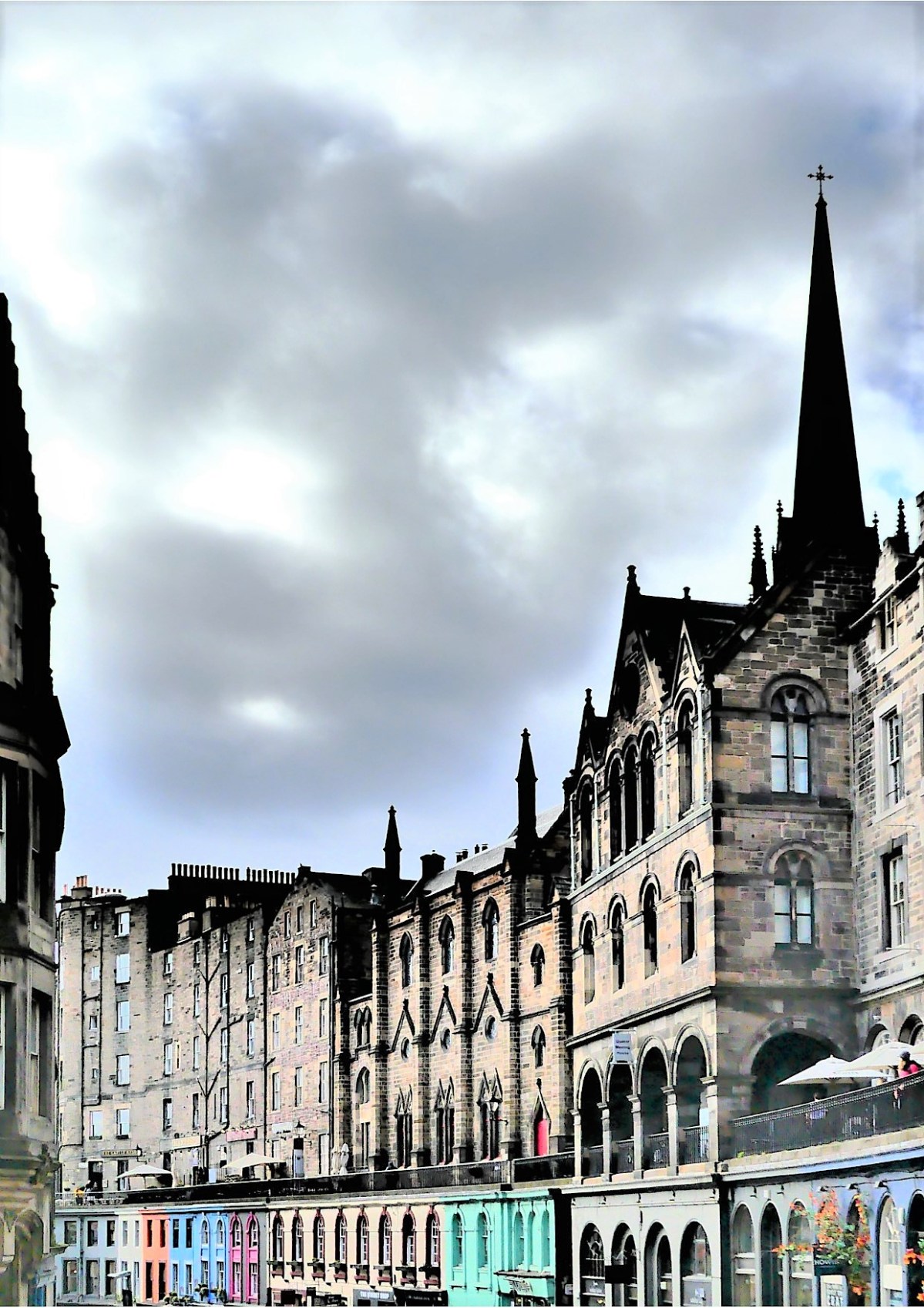
the real appeal of Edinburgh lies in its streetside presence, where it’s never too early (or late) to duck inside a pub or a whiskey bar on Grassmarket…
for a pint or a single malt to really put a different spin on the city views.













































 (quickly scroll up and down for cool moiré effect)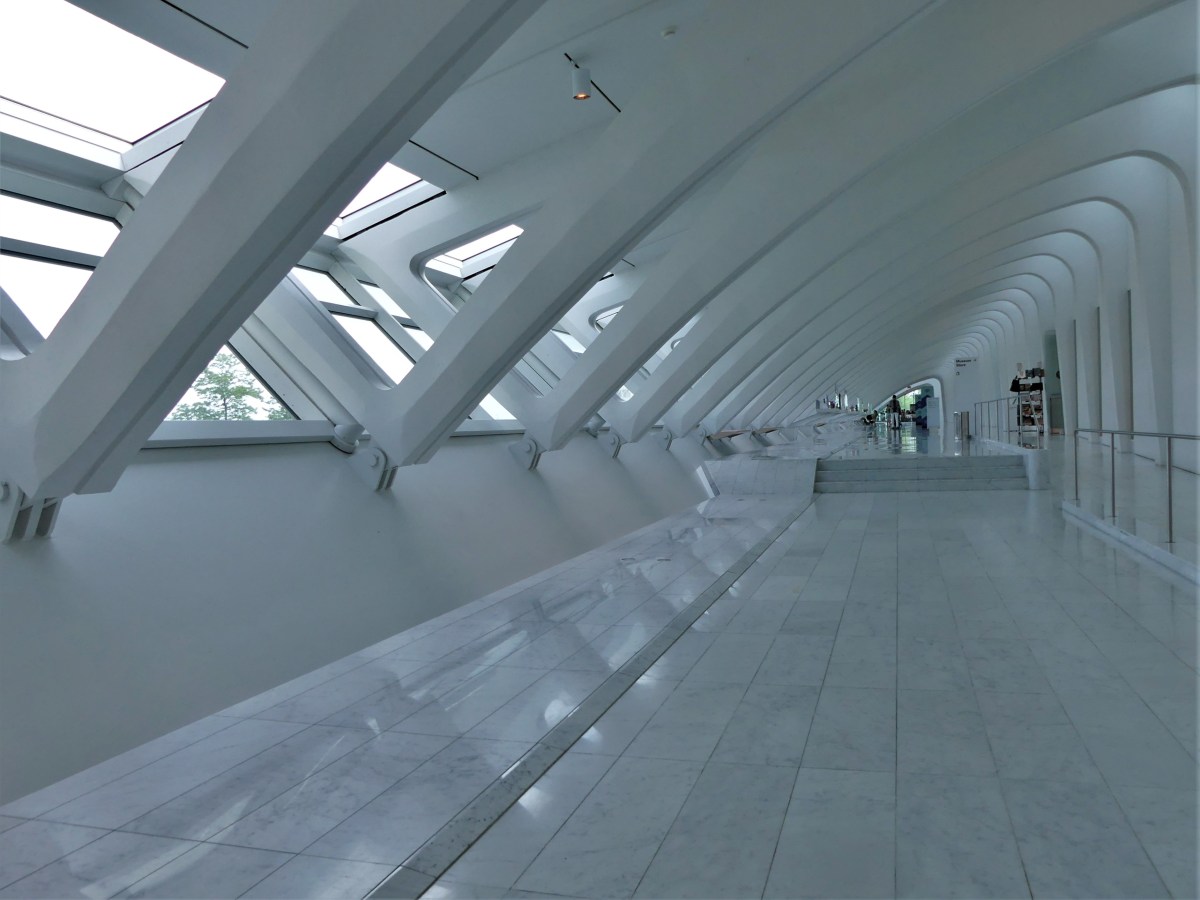















































































































/https://public-media.si-cdn.com/filer/6a/45/6a45ef20-4391-4525-9093-76dc205f0ad7/plan_cata_paris_1857_jms.jpg)
















![weapons display[2151].jpg](https://streamingthruamerica.com/wp-content/uploads/2019/04/weapons-display2151.jpg?w=1200)







 Streaming thru America