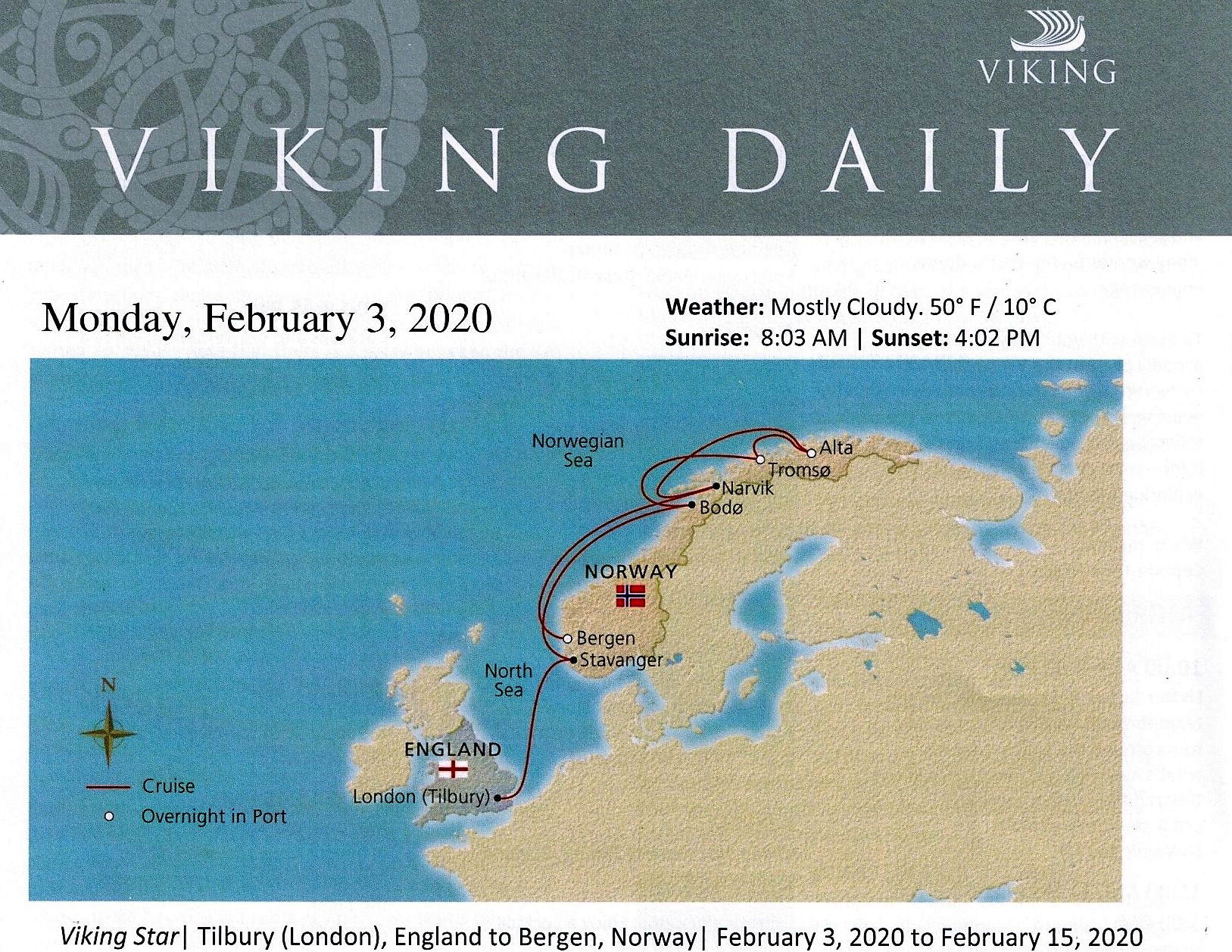
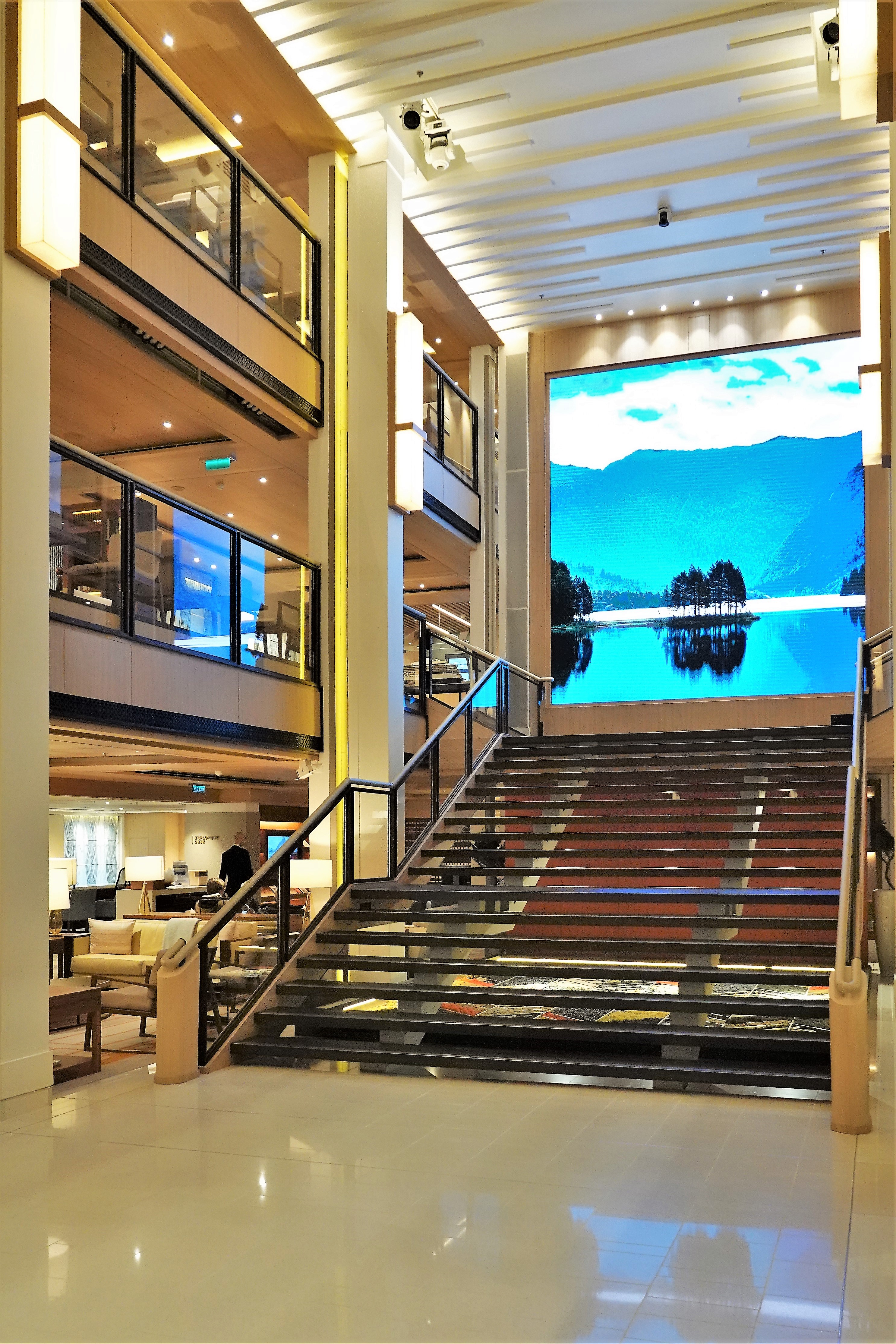
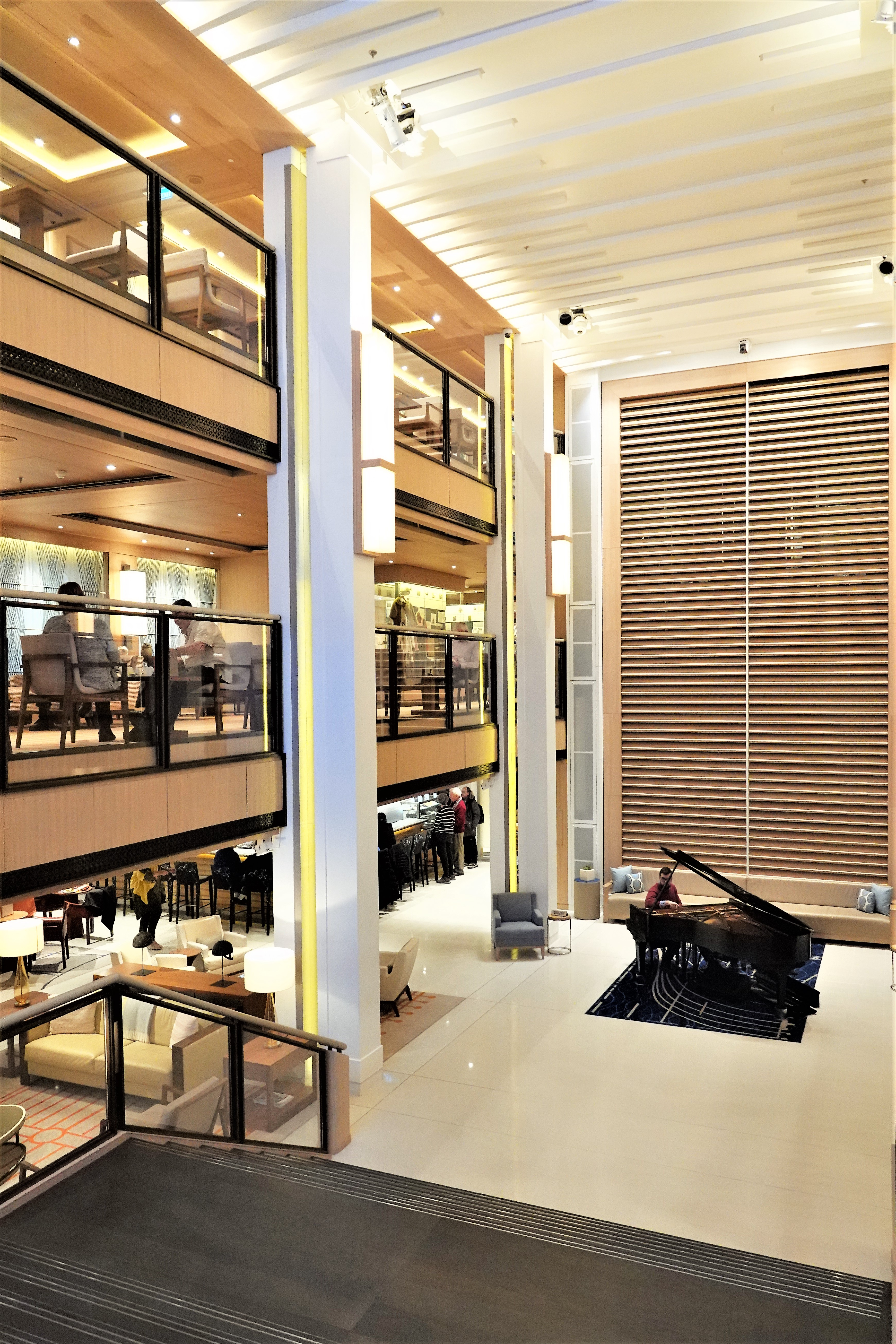
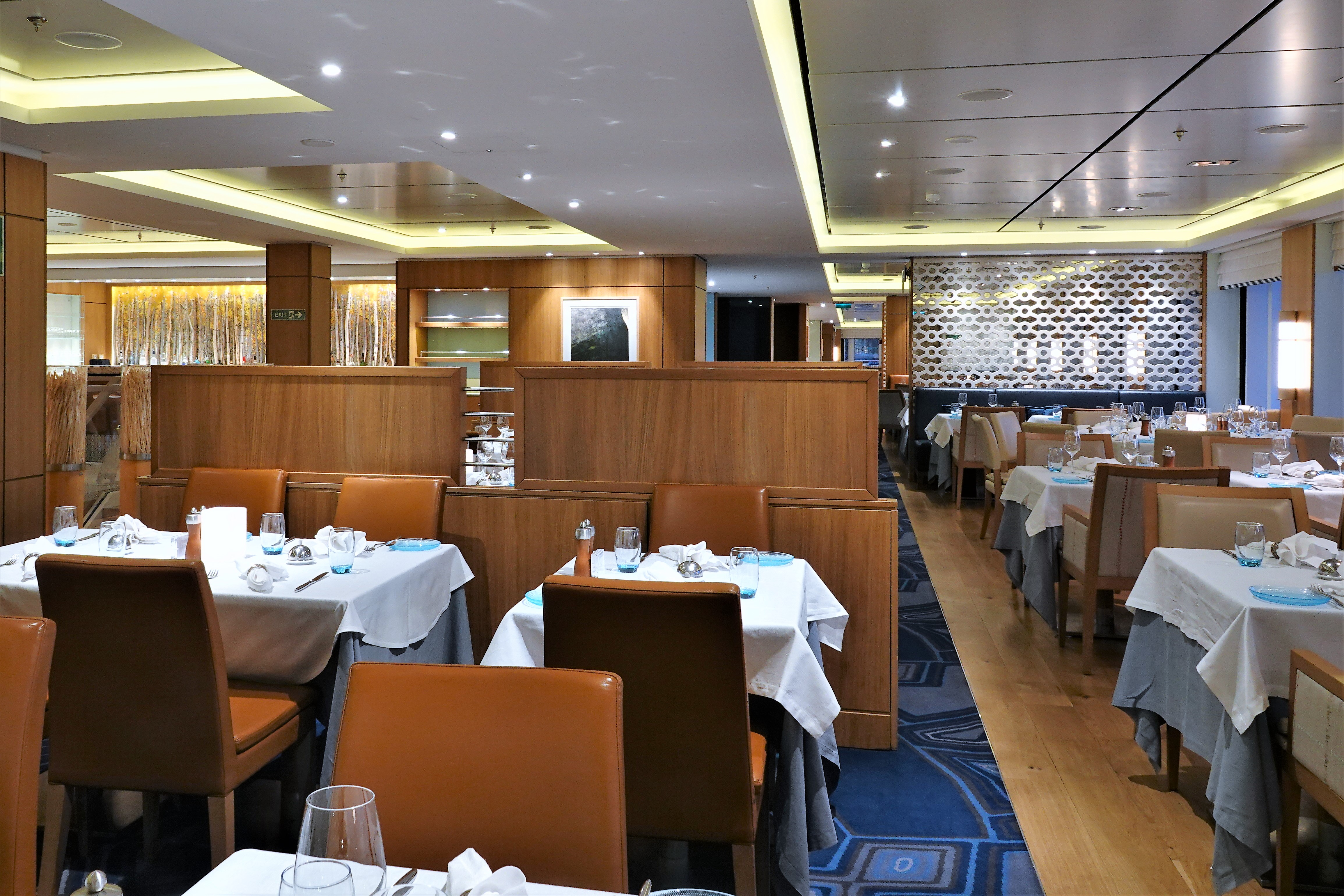
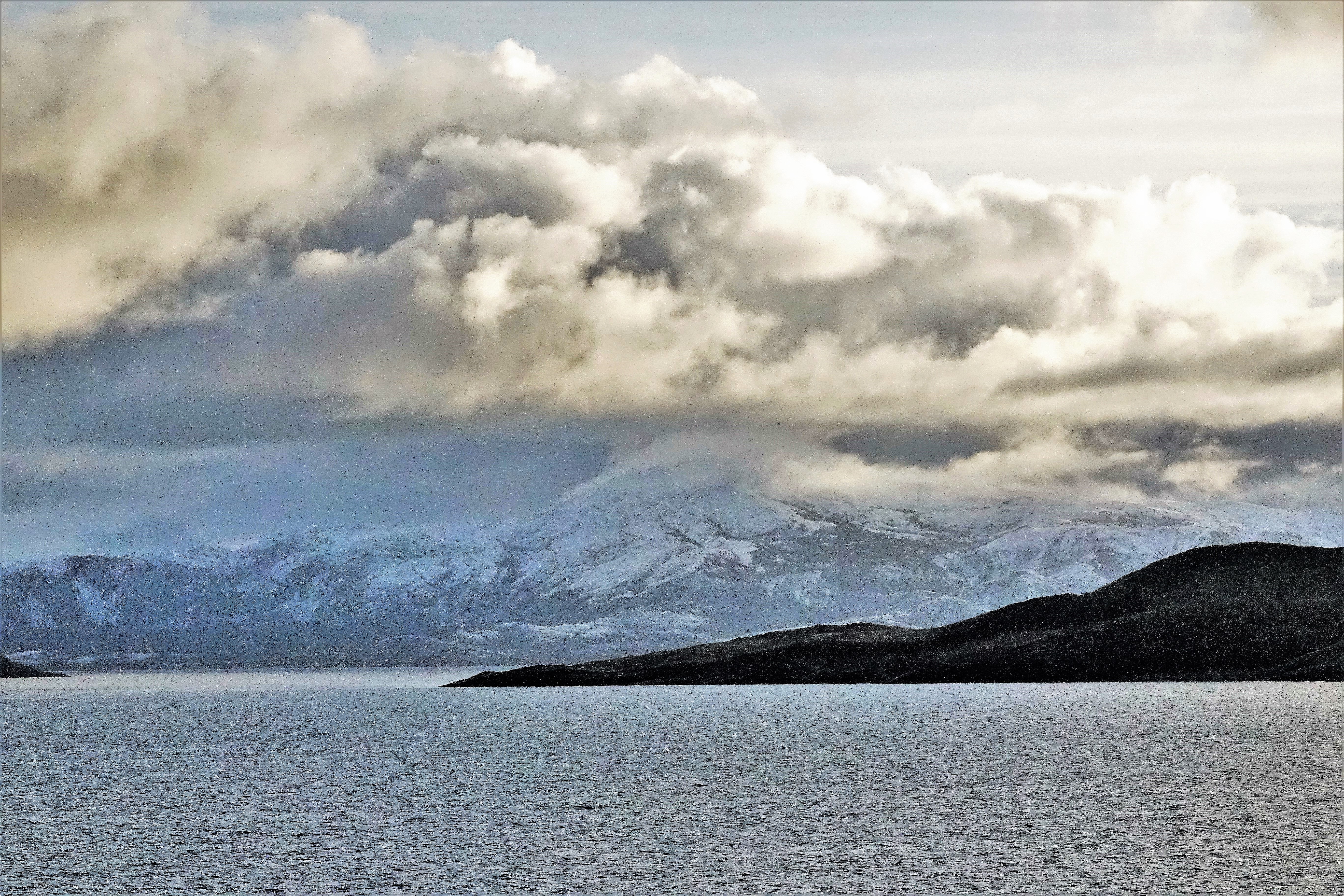
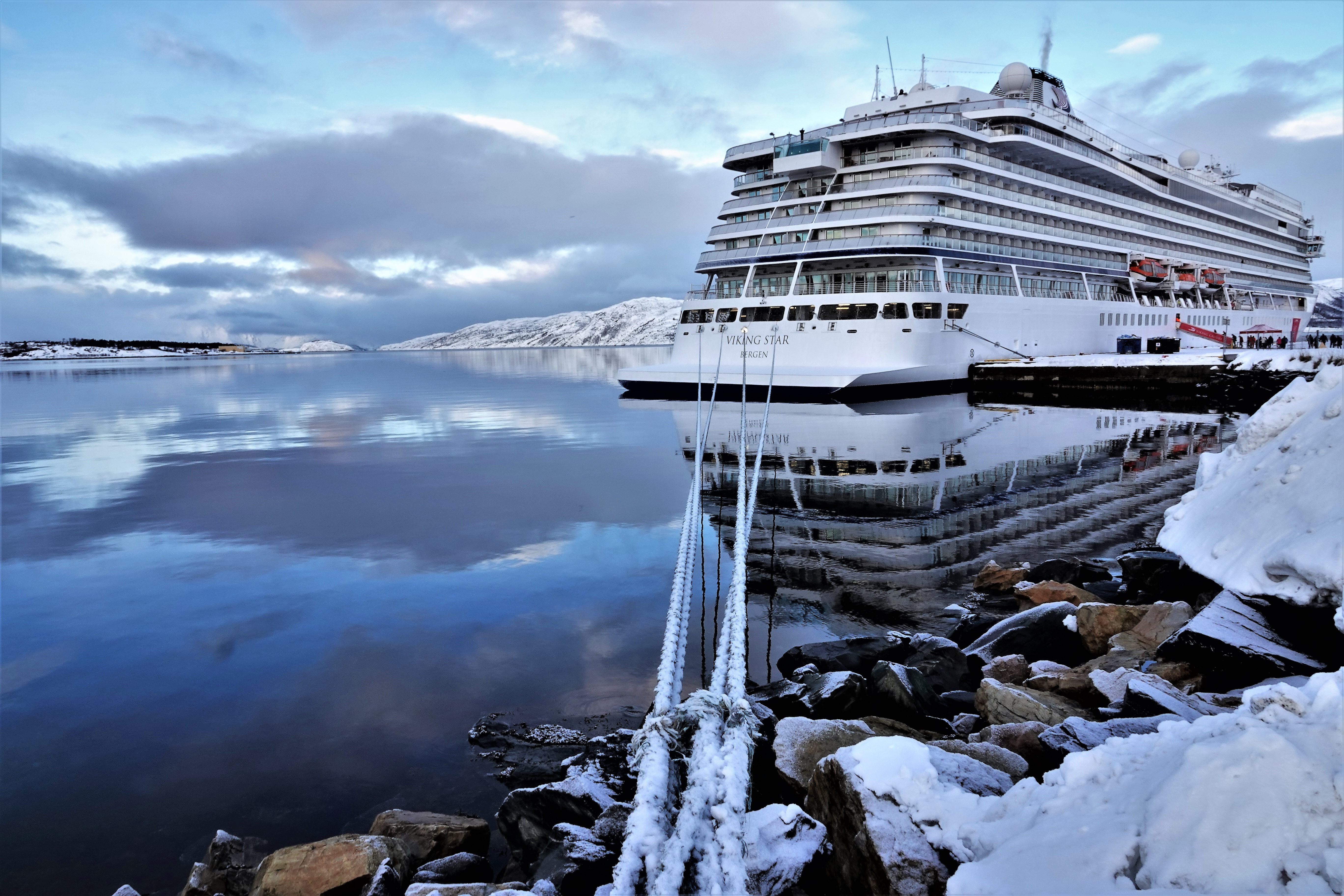
Our quest to chase Aurora Borealis continued aboard the Viking Star, cruising northbound through Finnmark, the heart of Norwegian Lapland,
and on to Alta, our northern-most destination inside the Arctic Circle.
Leah and I were praying for clear skies plus a surge in solar activity–given Alta’s reputation as the Town of the Northern Lights and home to the world’s first Northern Lights Observatory (1899) for conducting scientific research.
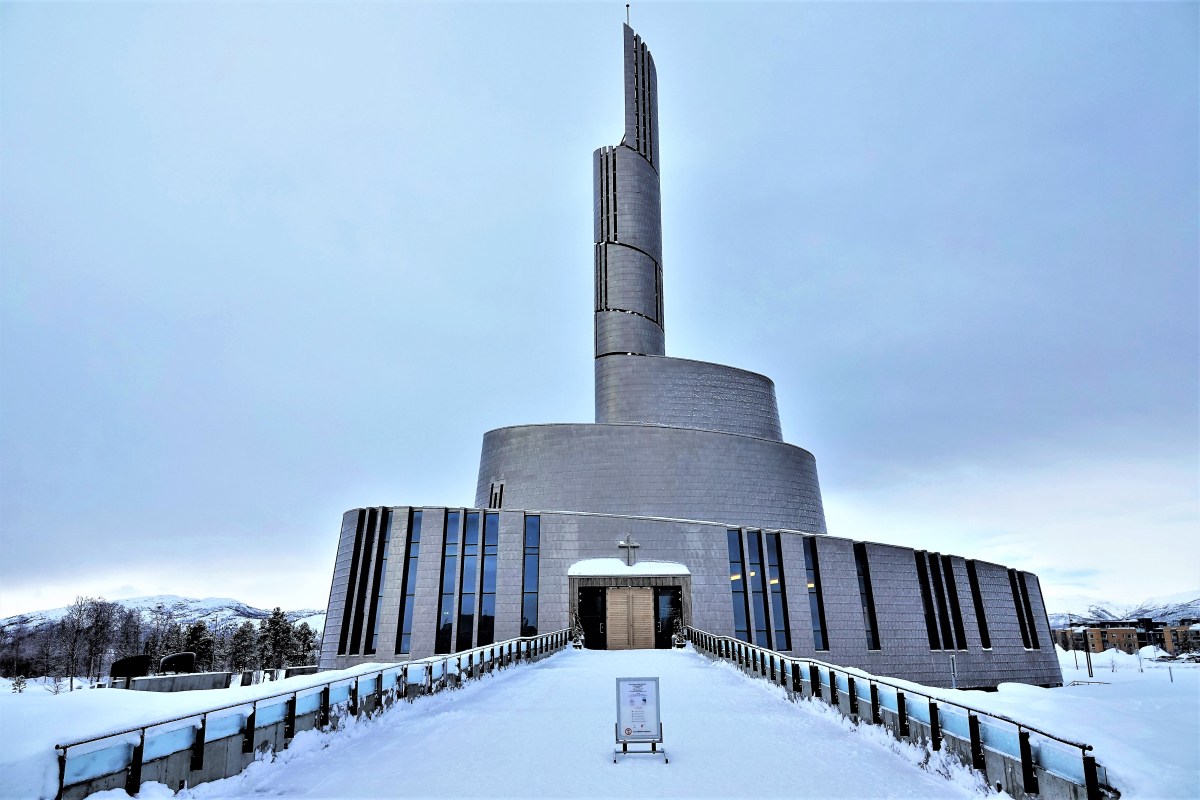
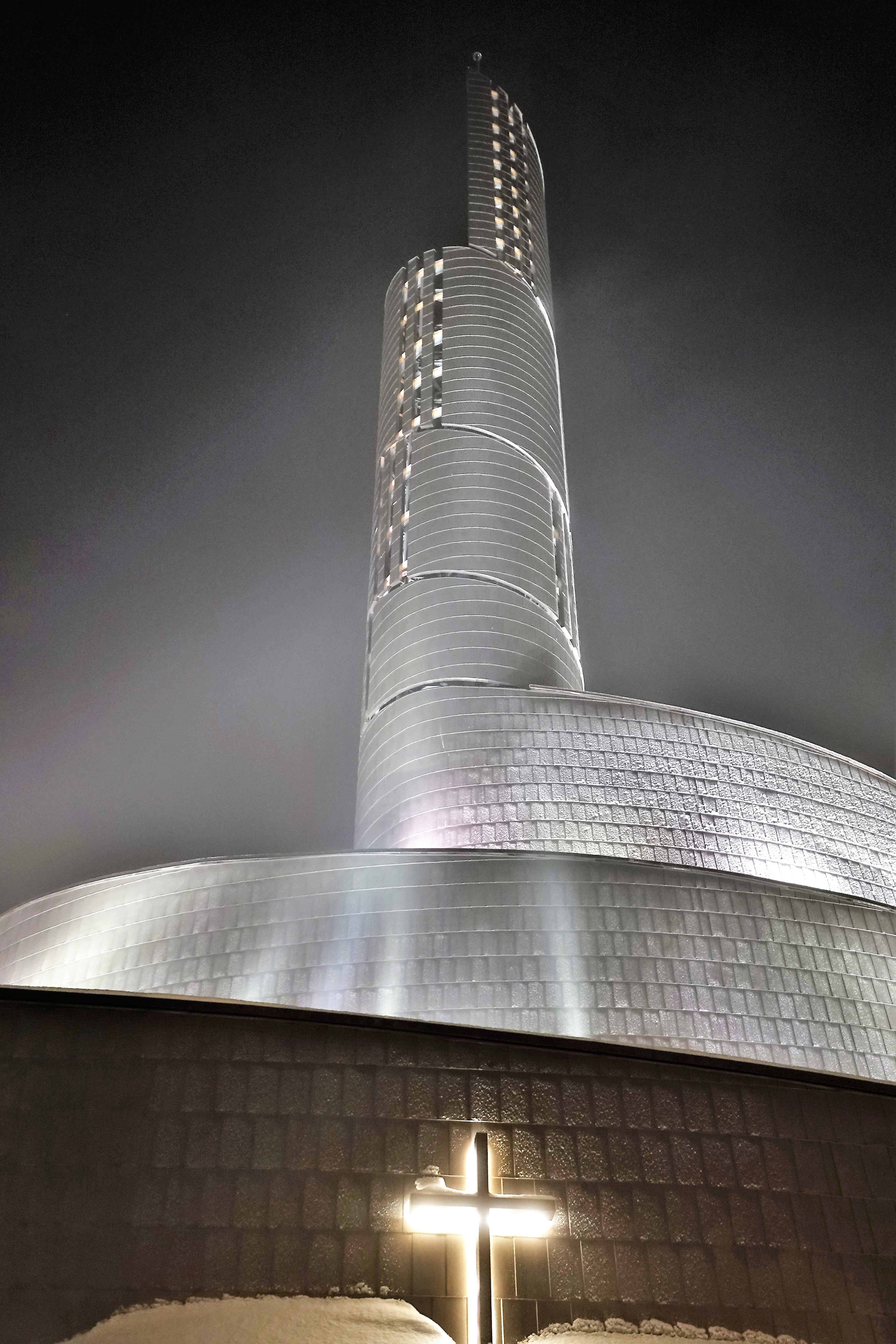
To that end, we mounted a pilgrimage to the Cathedral of the Northern Lights to increase our chances of an anticipated sighting. However, on this temperate night, an unexpected veil of dew painted the town, offering up a cathedral bathed in shimmery titanium,
lunging 47 meters (154 ft) toward an elusive phenomenon.
To the townsfolk, this sanctuary is as much a tourist attraction as it is a church.
It represents “a landmark, which through its architecture symbolizes the extraordinary natural phenomenon of the Arctic northern lights,” according to John F. Lassen, partner of Schmidt Hammer Lassen–a Danish design firm that collaborated with Scandinavian firm Link Arkitektur to win the city council’s design competition in 2001.
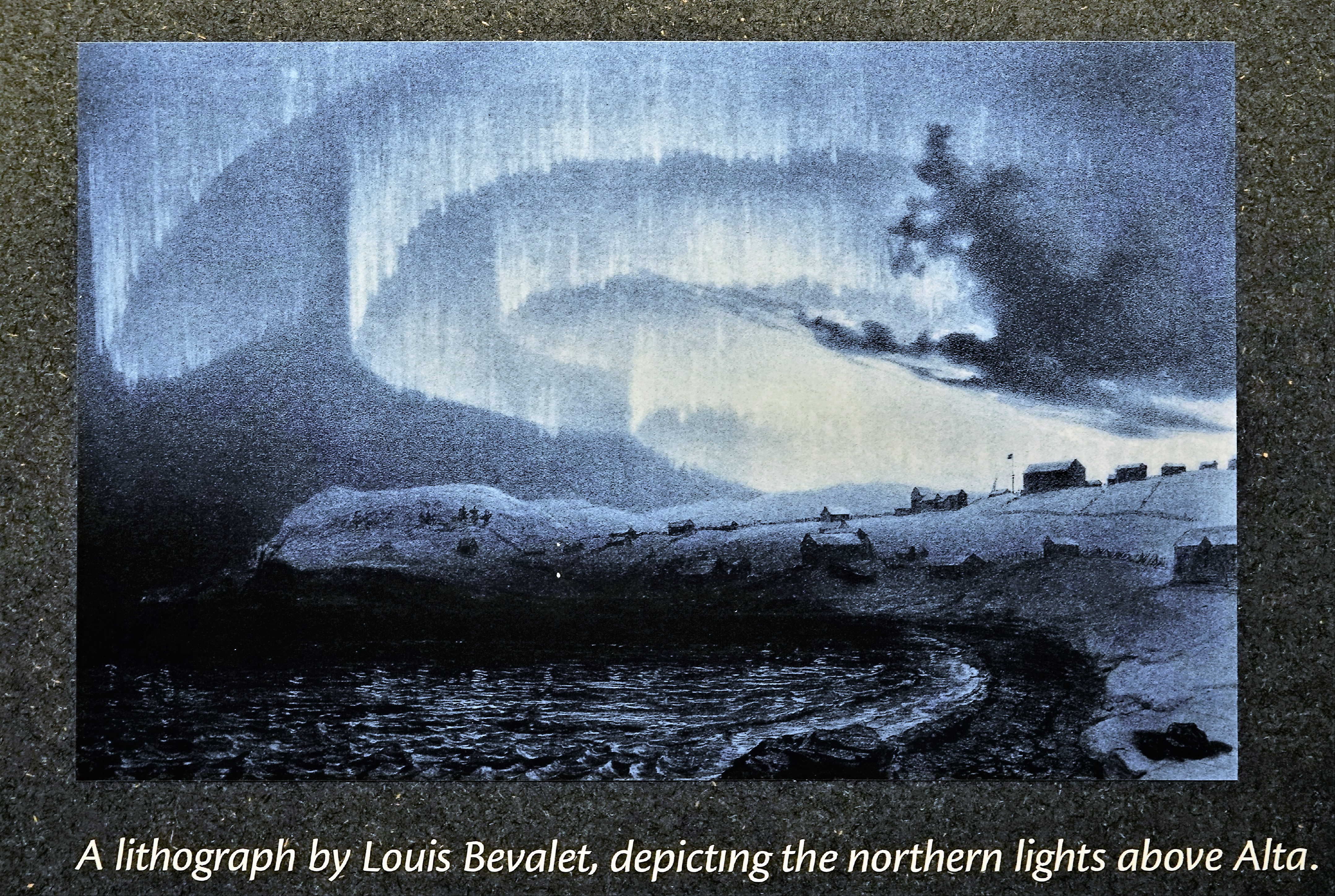
And there is much to appreciate about the design–outside and in. The exterior’s circular body mimics a magic curtain of light once illustrated by Louis Bevalet in 1838.
And the interior lighting resembles the long shafts of light associated with the Aurora.
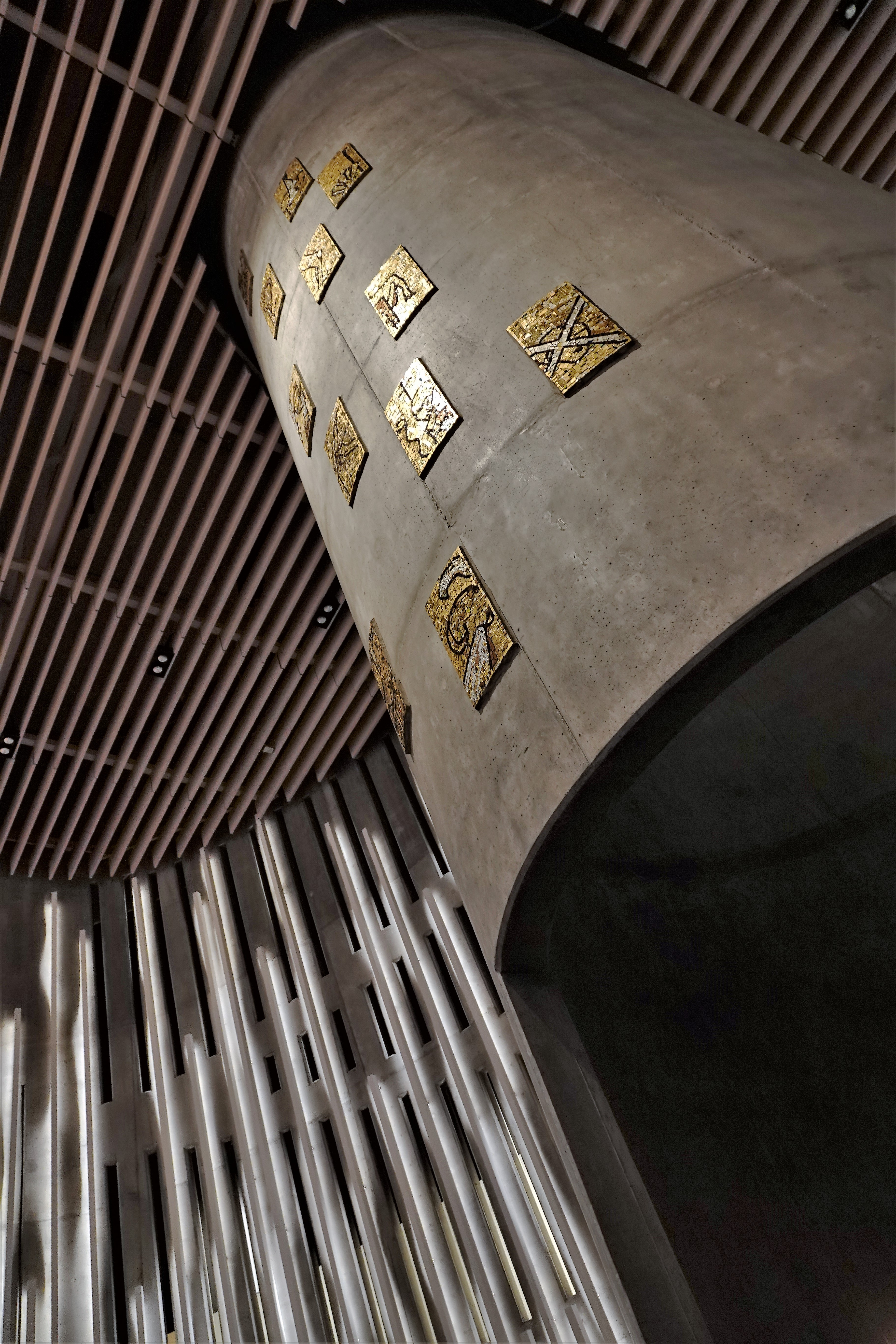
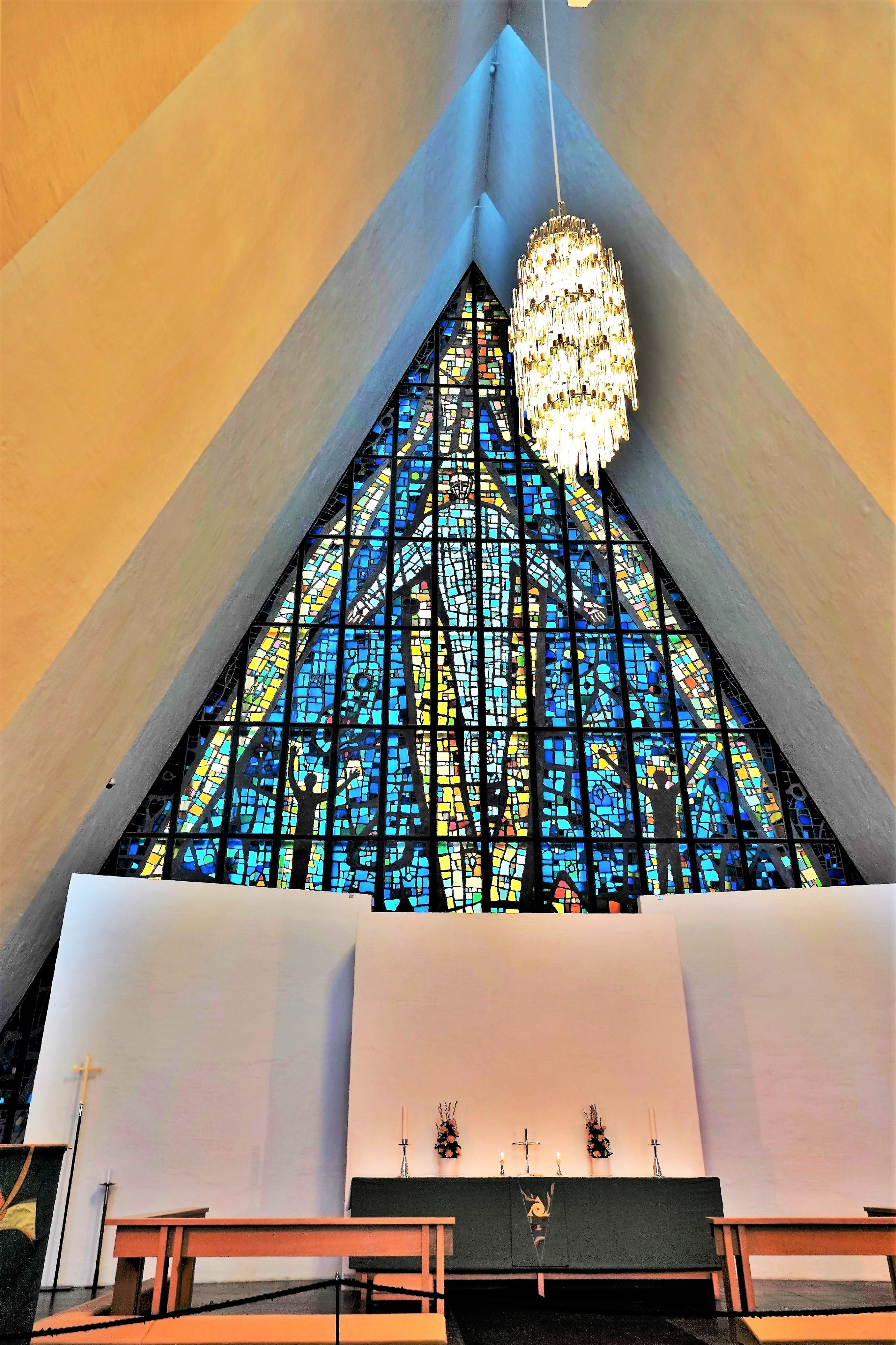
Religious overtones are emphasized through the metal mosaics representing Twelve Disciples…
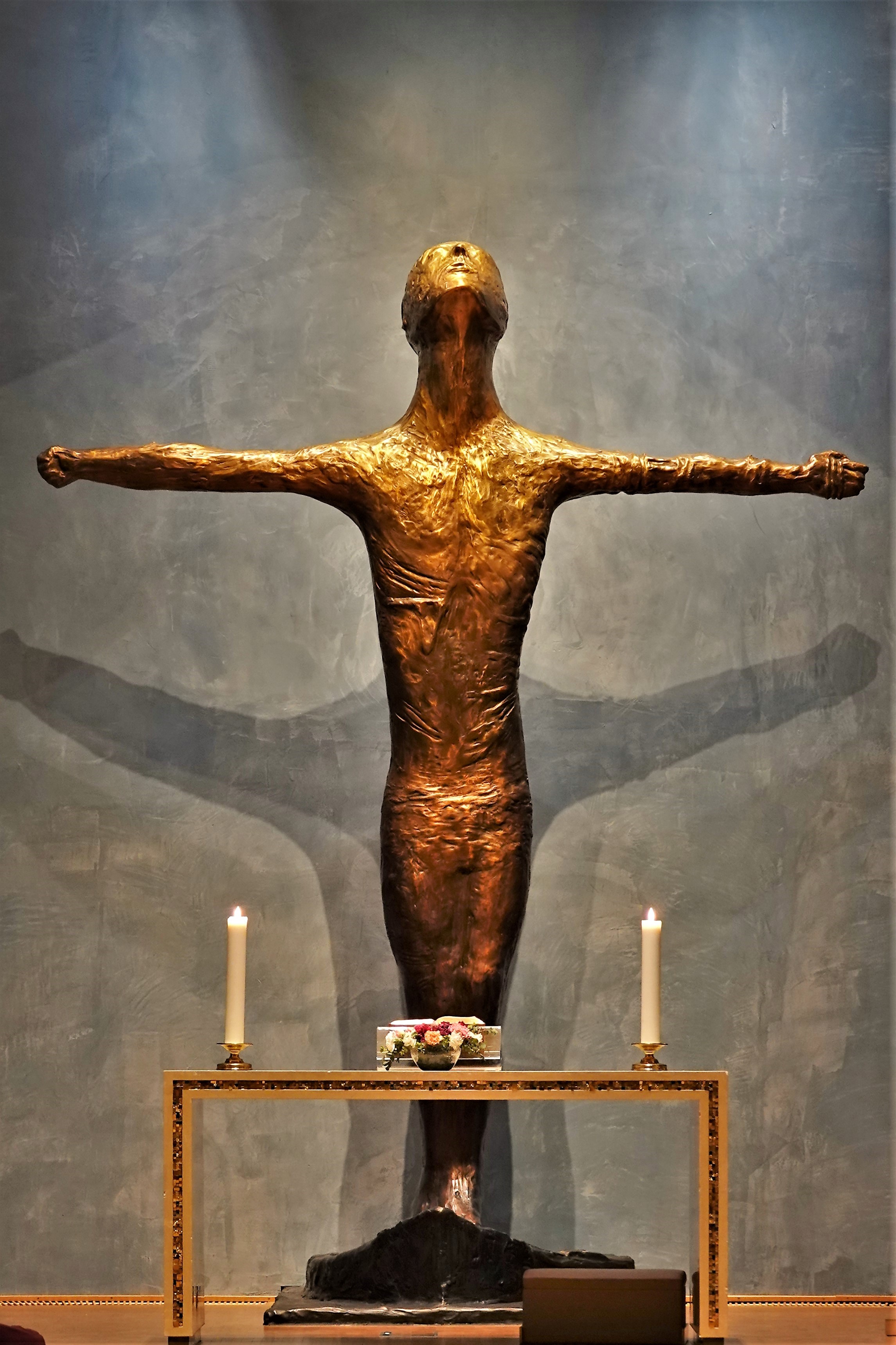
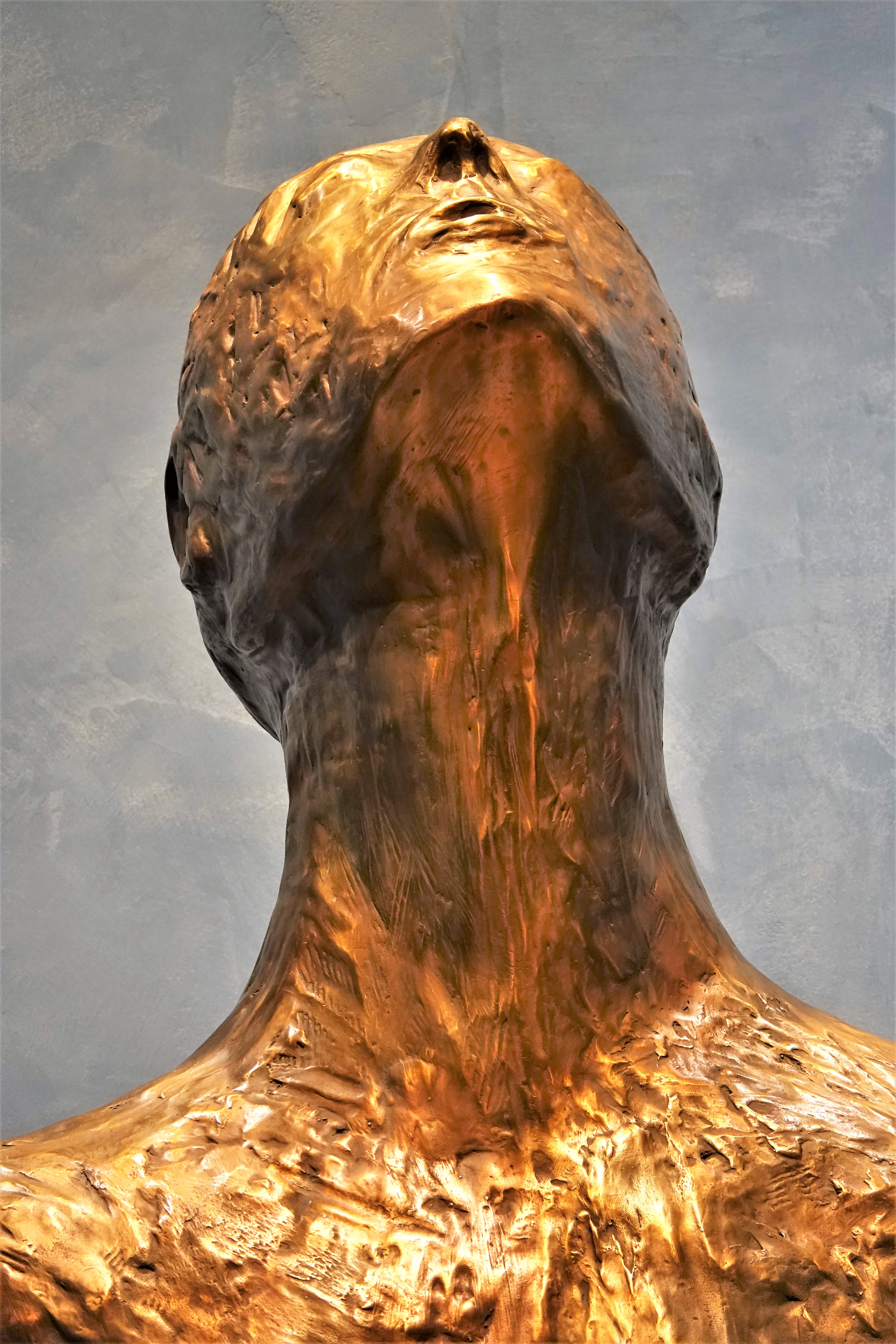
and the 4.3 meter (14 ft) modernist bronze of Christ searching the blue-glazed heavens, imagined by Danish artist Peter Brandes. While some worshippers may claim that a hidden face lives in the outstretched neck of the subject,
the illusion is subject to personal interpretation.
Consecrated in 2013, the Cathedral of Northern Lights functions as Alta’s parish church of the Church of Norway, yet remains an open forum for assembly and performance.
One-year after the first benediction, the concrete walls had settled and the pipe organ was installed. The dynamic acoustics attracted notable talent and filled all 350 seats.
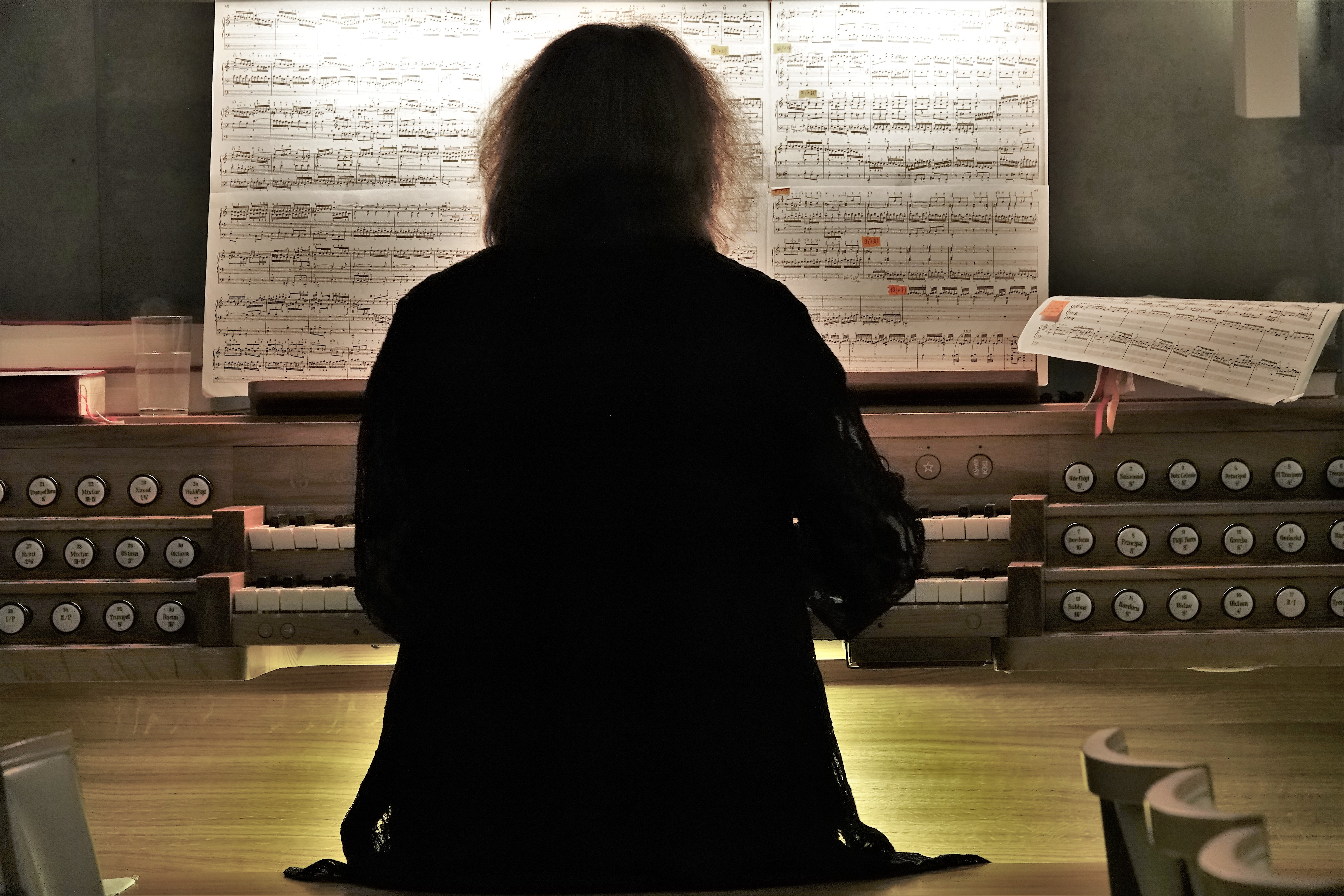
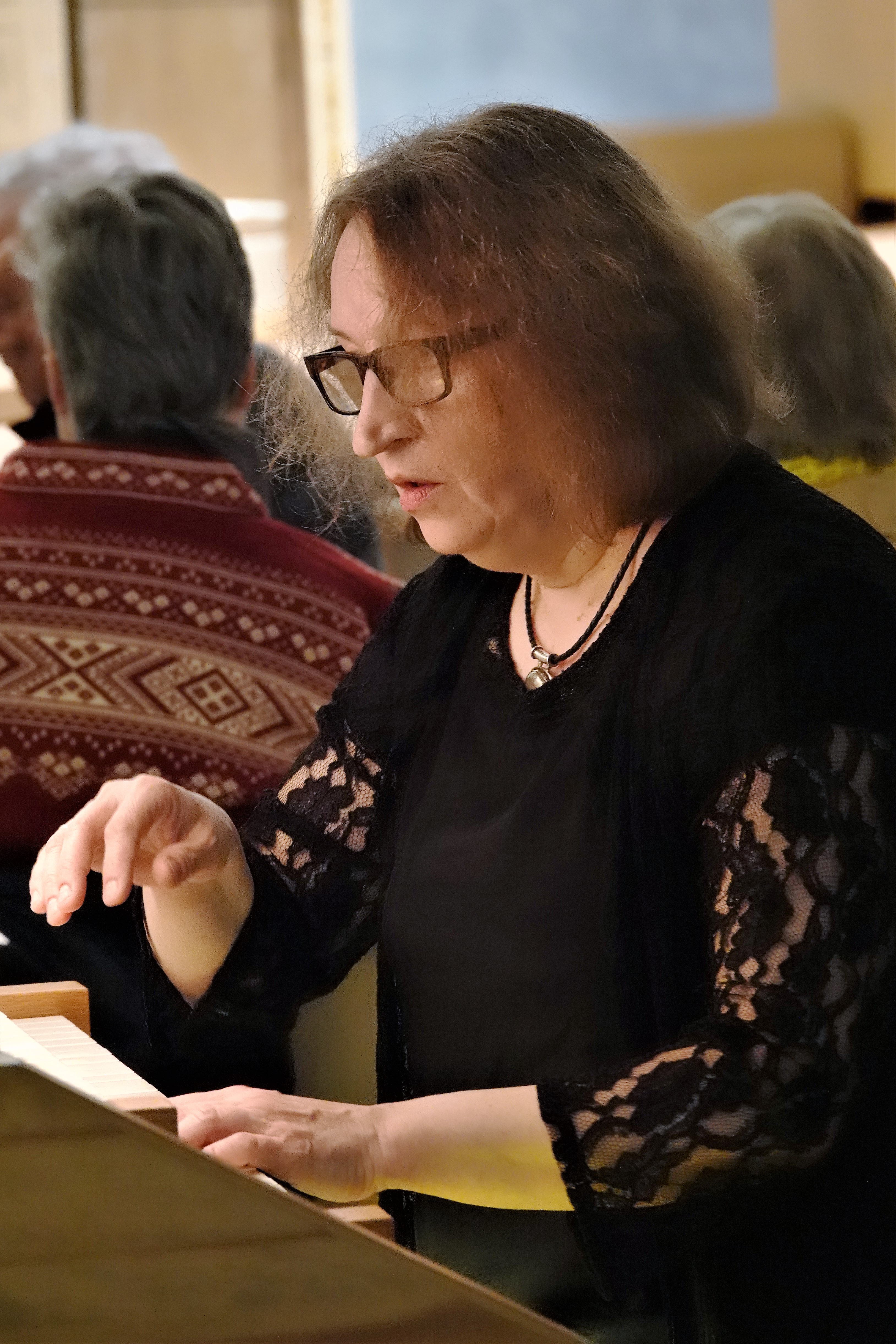
Leah and I attended an organ recital by Irina Girunyan,
master organist.
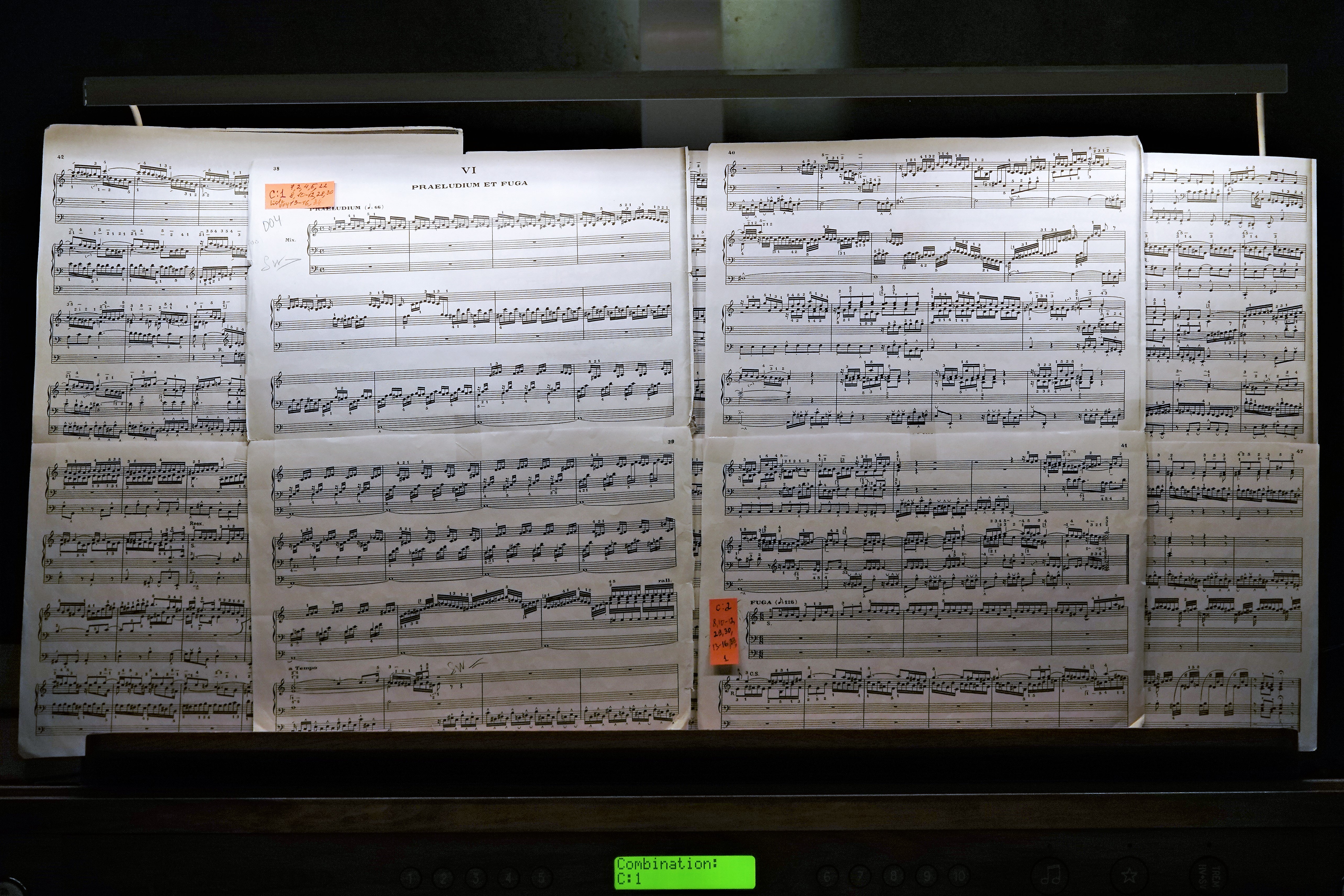
While following a complex score for hands and feet,
Irina skipped and fluttered her way through an evocative program of classical and contemporary music.
The ethereal sound from 1800 pipes and 26 stops was heavenly,
and left me yearning for another reminder.
The titanium-clad Cathedral of the Northern Lights (Photo: Adam Mørk/schmidt hammer lassen)
Leah and I eagerly anticipated our arrival to Tromsø. For one, we were bored of cruising, having spent two consecutive days at sea after missing the port of Bodø because of high winds and rough seas (seeOrder of the Blue Nose).
But Tromsø, for us, provided the needed adrenelin rush to jumpstart our Norway adventure. Now that we finally arrived at the Gateway to the Arctic, we could participate in many of the off-the-ship excursions within our reach, like snowmobiling through white-carpeted mountain passes, and searching for the Northern Lights.
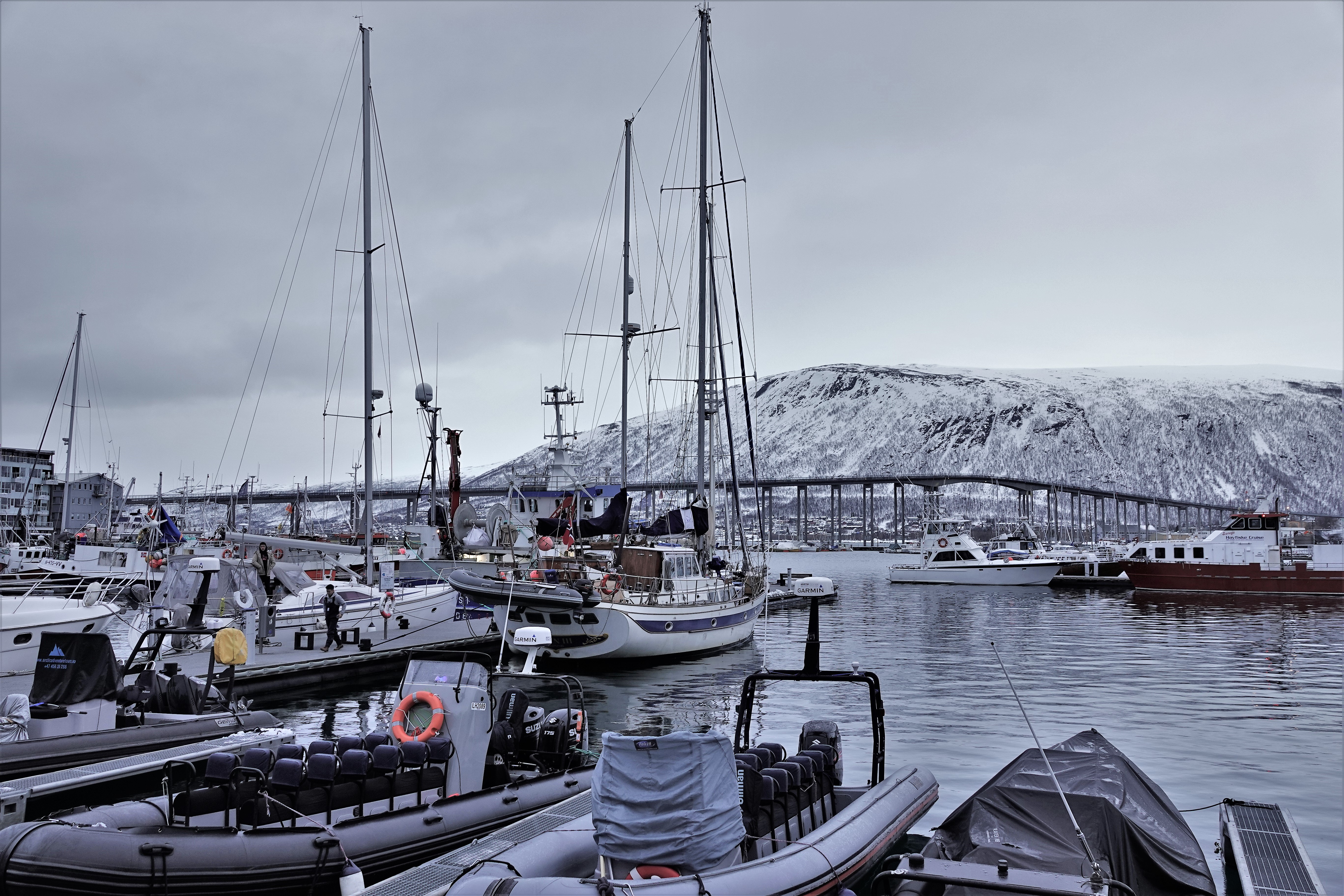
The Viking Star gently glided past Polaria’s domino-stacked building as Captain Nilsen steered us through the harbor on our way to docking.
While waiting for the local authorities to clear our vessel, I had an opportunity to photograph our new surroundings from our stateroom veranda, looking from stem…
to stern.
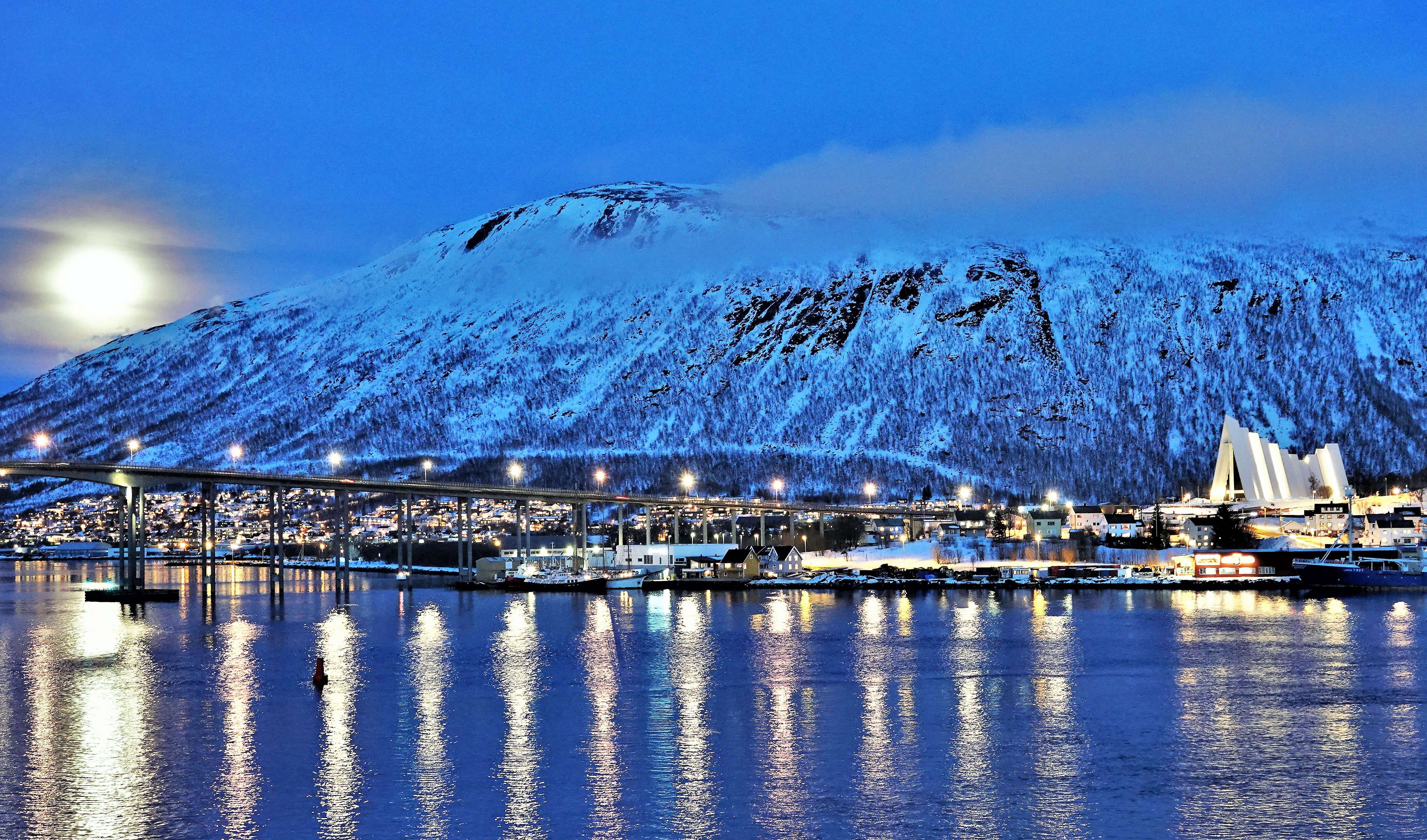
But one building that piqued my interest sat off the port side of the ship, nestled in the snowy foothills of Tromsø Sound–the Arctic Cathedral. Absolutely stunning!
Strikingly modern, the church was designed by architect Jan Inge Hovig and built in 1965. It’s roof structure was formed by concrete sheathed in aluminum panels,
as opposed to Tromsø’s other landmark church, the Tromsø Cathedral. Located in the center of town on the spot of Tromsø’s first church built in 1252, this cathedral was finished in 1861, and remains Norway’s only cathedral made of wood.
Leah and I crossed the Tromsø Bridge by bus for a closer look.
Likened to the Sydney Opera House, the exterior of the Arctic Cathedral is simple in shape and style,
while the interior design is modestly appointed to accentuate: the large prism chandeliers;
the sparse altar rail and pulpit; and the grand glass mosaic commissioned by artist Victor Sparre–depicting three rays of light emanating from God’s hand: one through the form of Jesus, one through woman and one through man.
The western wall of the sanctuary is complemented by Grönlunds Orgelbyggeri’s organ, built in 2005.
The Star of David radiating through the eastern wimdow symbolizes a spirit of inclusiveness and community acceptance. (Just kidding)
The organ was built in the French Romantic tradition, and was adapted to the cathedral’s architecture, providing illusions of sails and ice floes. The organ comprises 2940 pipes, measuring from 32 feet (9.6 m) to just 5 mm. Much of the woodwork is solid pine with bellows made of reindeer hide.
It’s a pity I never heard it played, as I’m certain the cathedral’s vaulted vortex provides impressive acoustics.
Back at the Viking Star, after a brief bout of daylight (6hrs, 15min.)…
I returned to my veranda to record the Arctic Cathedral bathed in moonlight…
and I imagined I heard Grieg’s Song of Norway playing from its soaring arches.
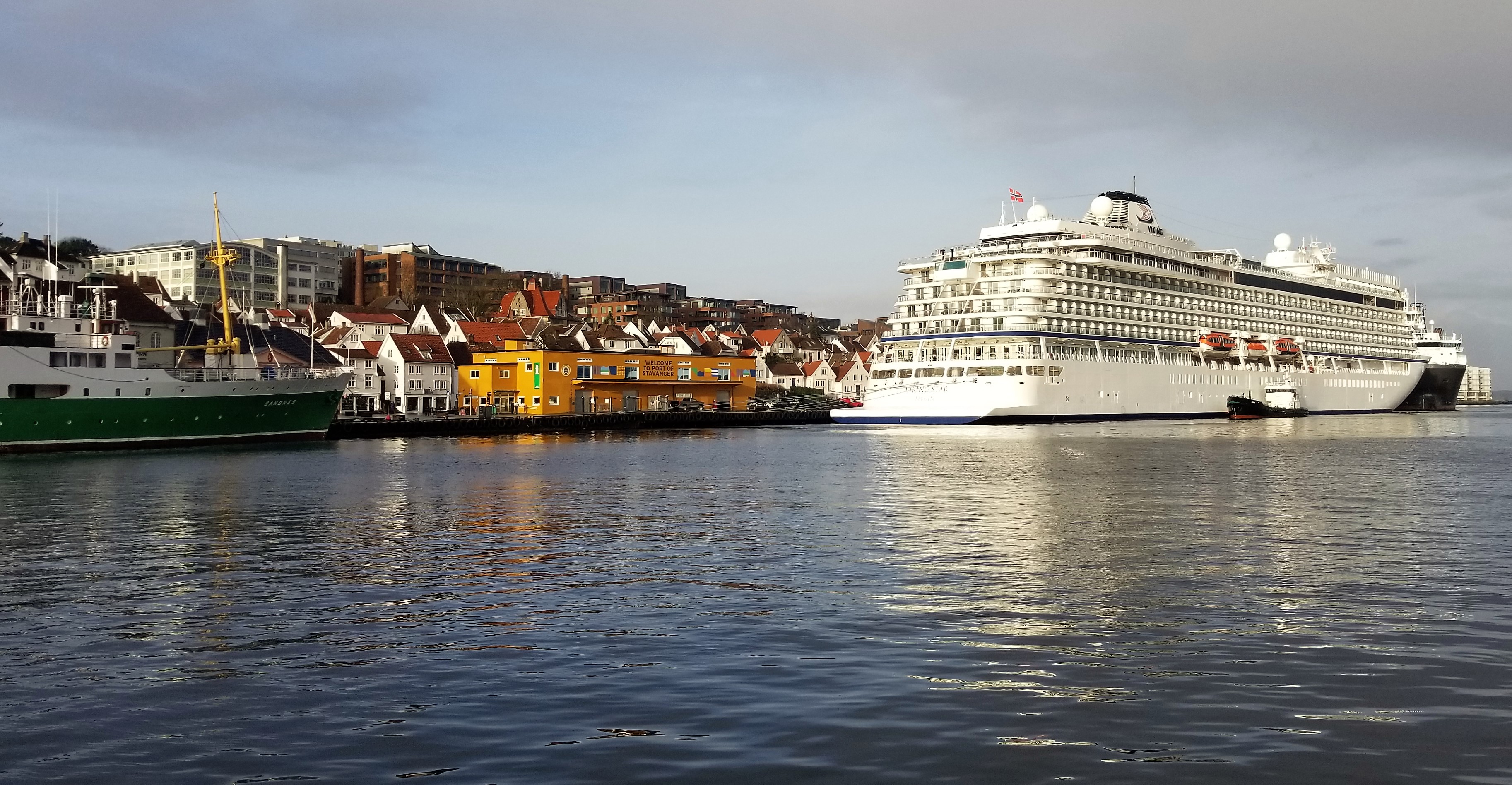
Leah and I crossed a rocky North Sea from Tilbury, England aboard Viking Star (more on this Viking ocean liner later),
and docked at Stavanger Port on an overcast morning.
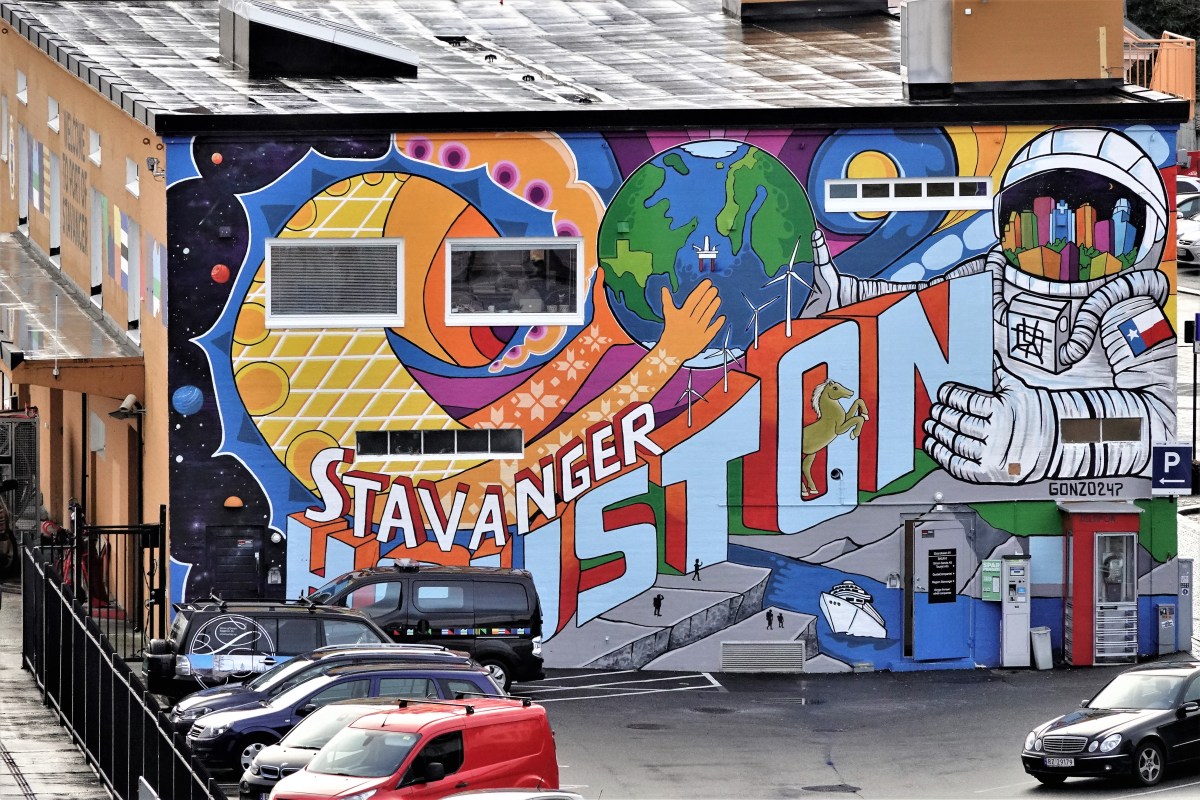
Stavanger is Norway’s third largest region, and best known as the European capital for the oil and gas industry–which explains the town’s Norwegian Petroleum Museum, and its unusual derrick-like design on the city’s waterfront.
Stavanger is also a popular tourist hub, as it’s the gateway to the fjords. To that end, Leah and I had booked an off-ship excursion to Rogaland to cruise through Lysefjord in search of Preikestolen, better known as Pulpit Rock.
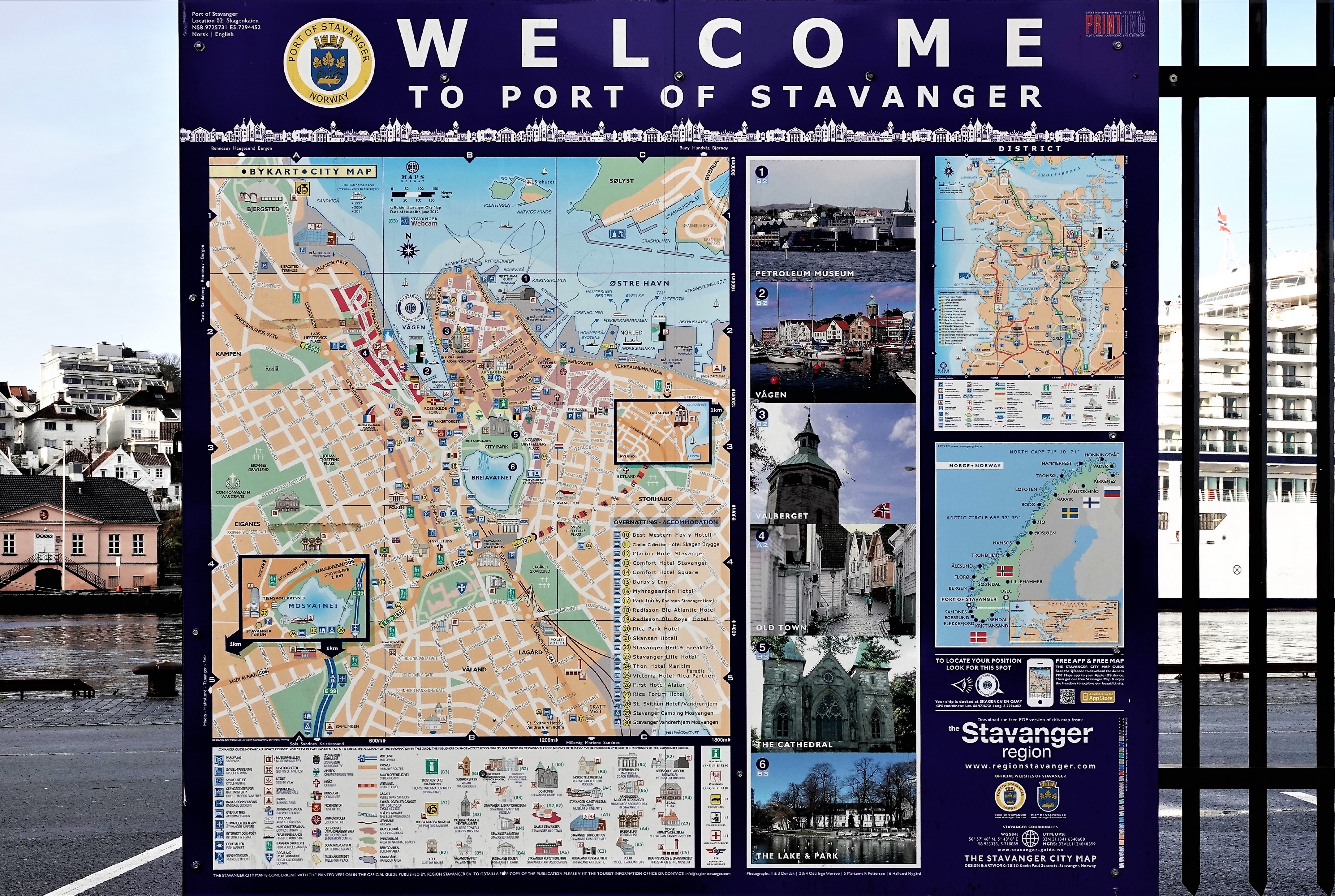
But with some time to kill before our departure, we disembarked early to stroll along the harbor plaza to find our bearings, and regain our sea legs after a day and a half of cruising.
The plaza was sleepy for an early Wednesday morning, but it was refreshing to have the place to ourselves.
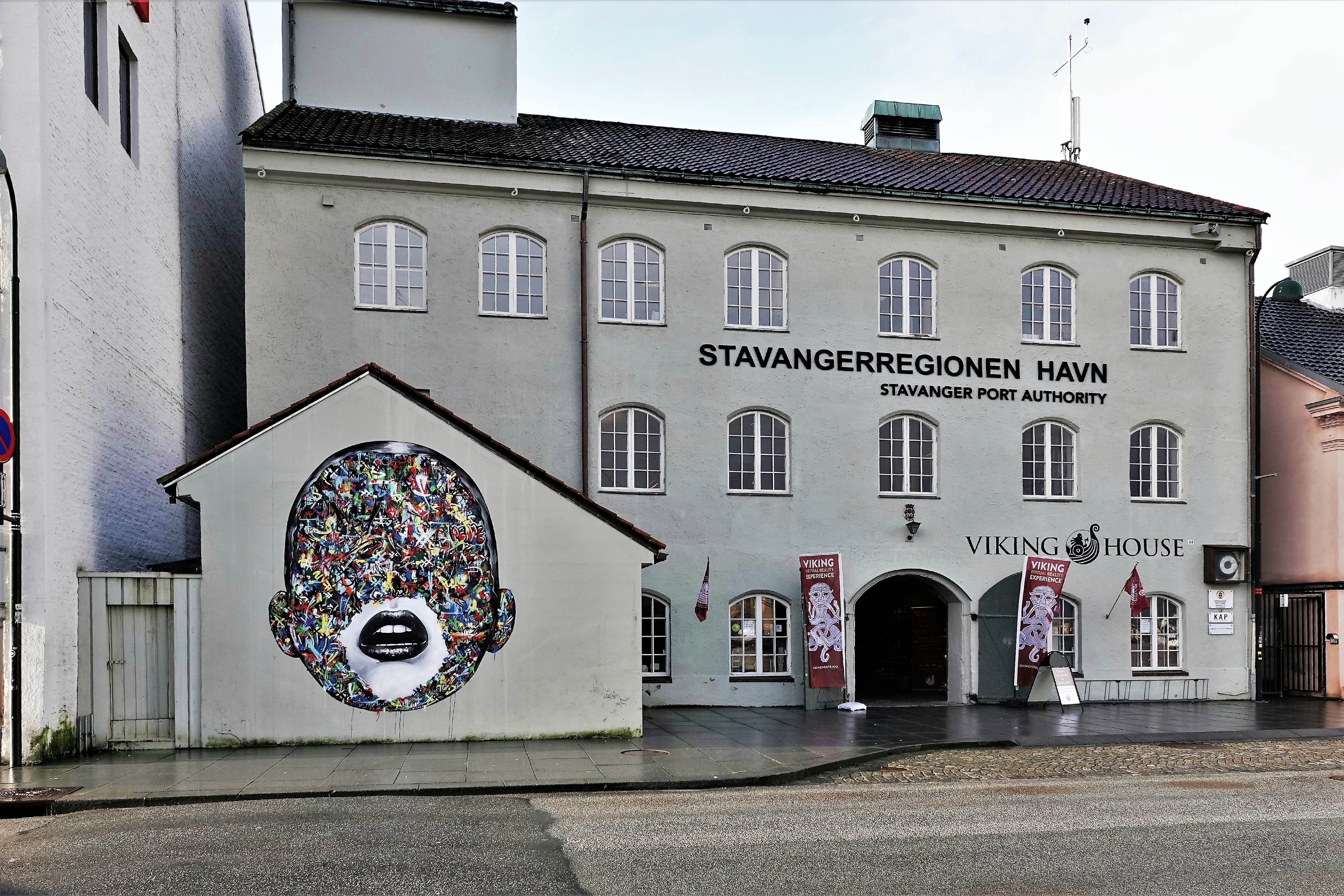
We could enjoy the local art (that celebrates the shrimping industry)…
without concern for another’s footsteps.
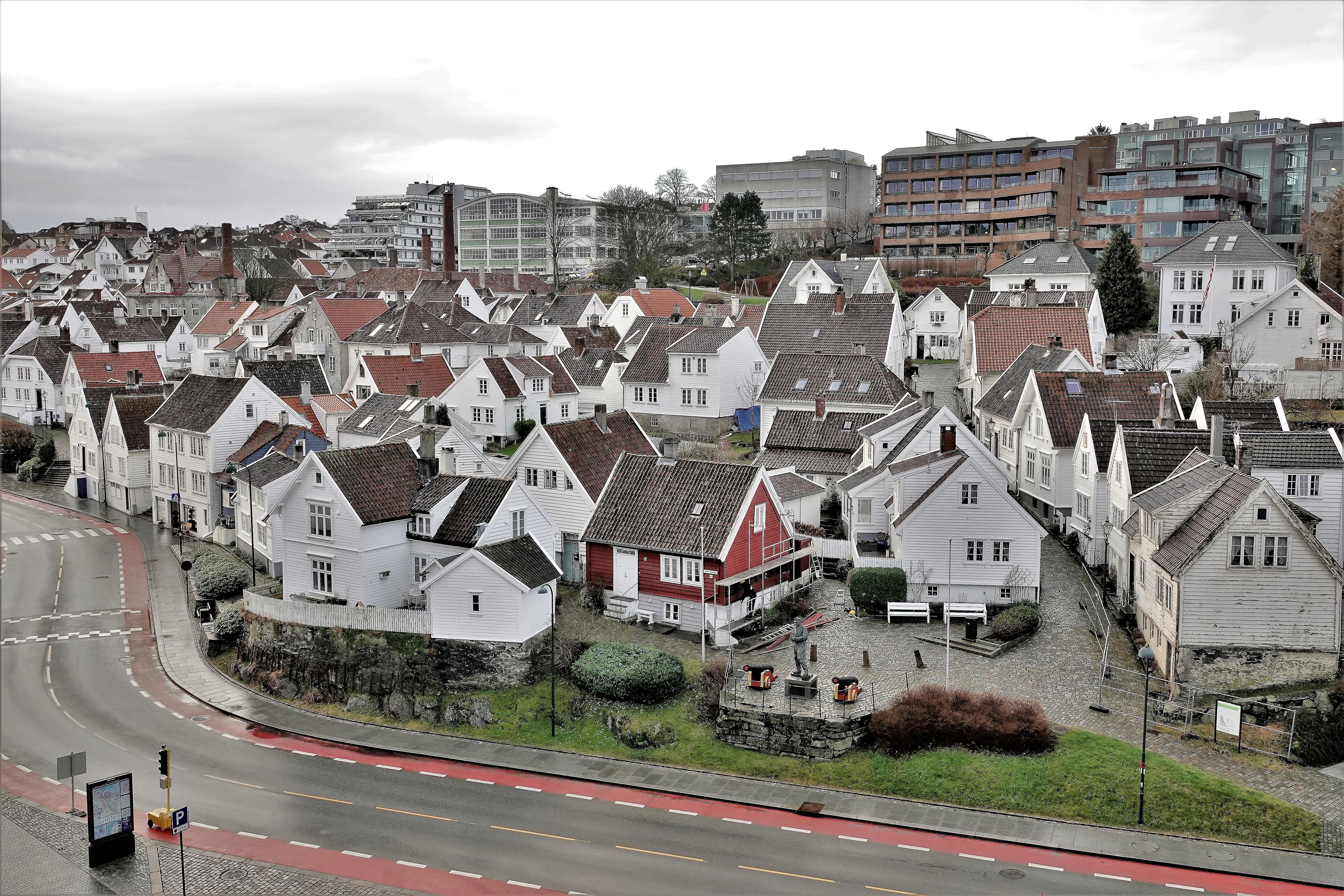
We opted to tour the Gamle Stravanger (Old Town), where 173 wooden buildings from the turn of the 18th century have been preserved…
down to the cast bronze utility plate covers.
A casual walk along Old Town’s winding roads of white cottages…
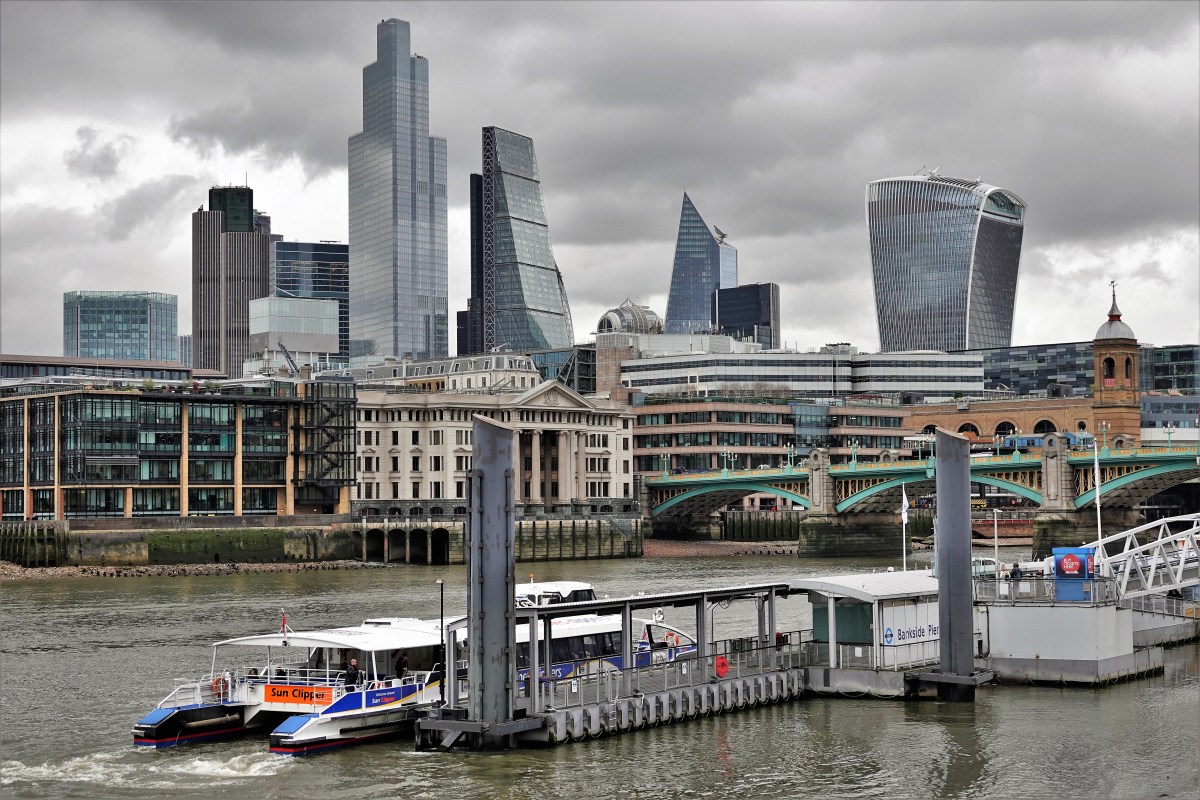
Leah and I were in search of a London eyrie for dramatic views, but refused to pay £27 to see the skyline from top of the Eye at 135 meters.
While I’m sure that the views are impressive from the top-most bubble, we were less than interested in a vew from a carnival ride.
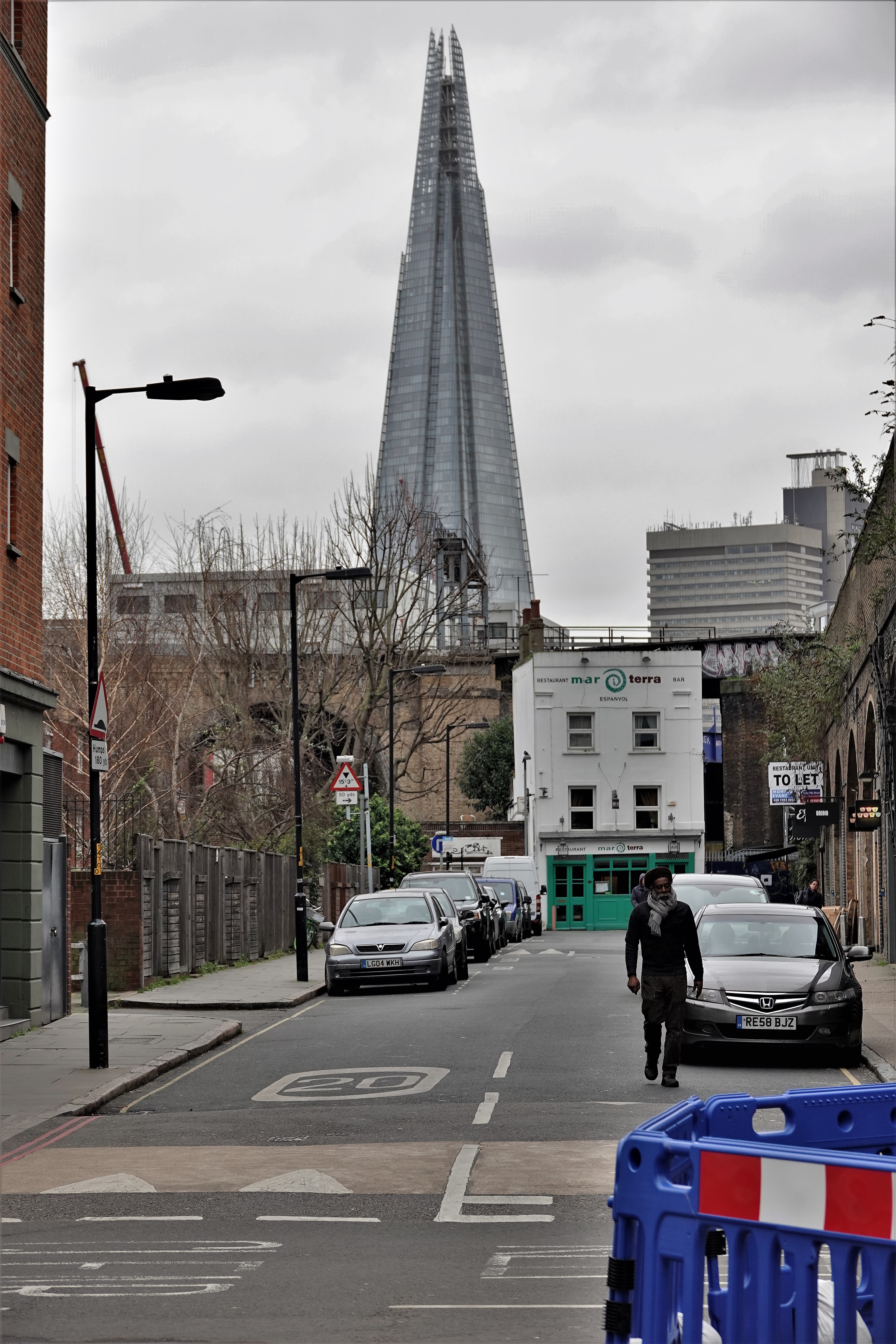
Then we considered The Shard–London’s tallest building, rising 310 meters,
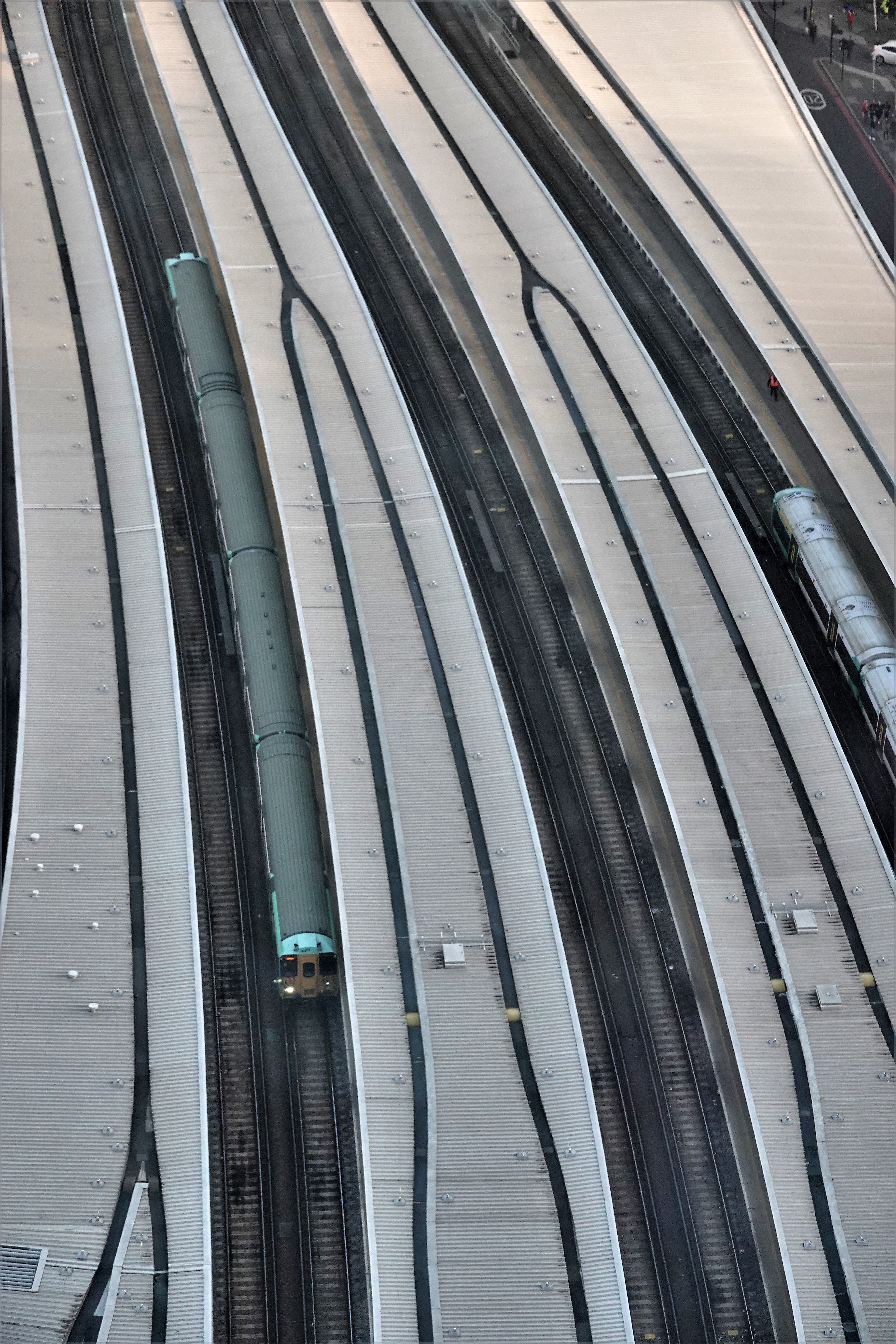
Inagurated on July 5, 2012, it’s observation deck on the 72nd floor commands 360° views of the city, and dominates the horizon from all parts.
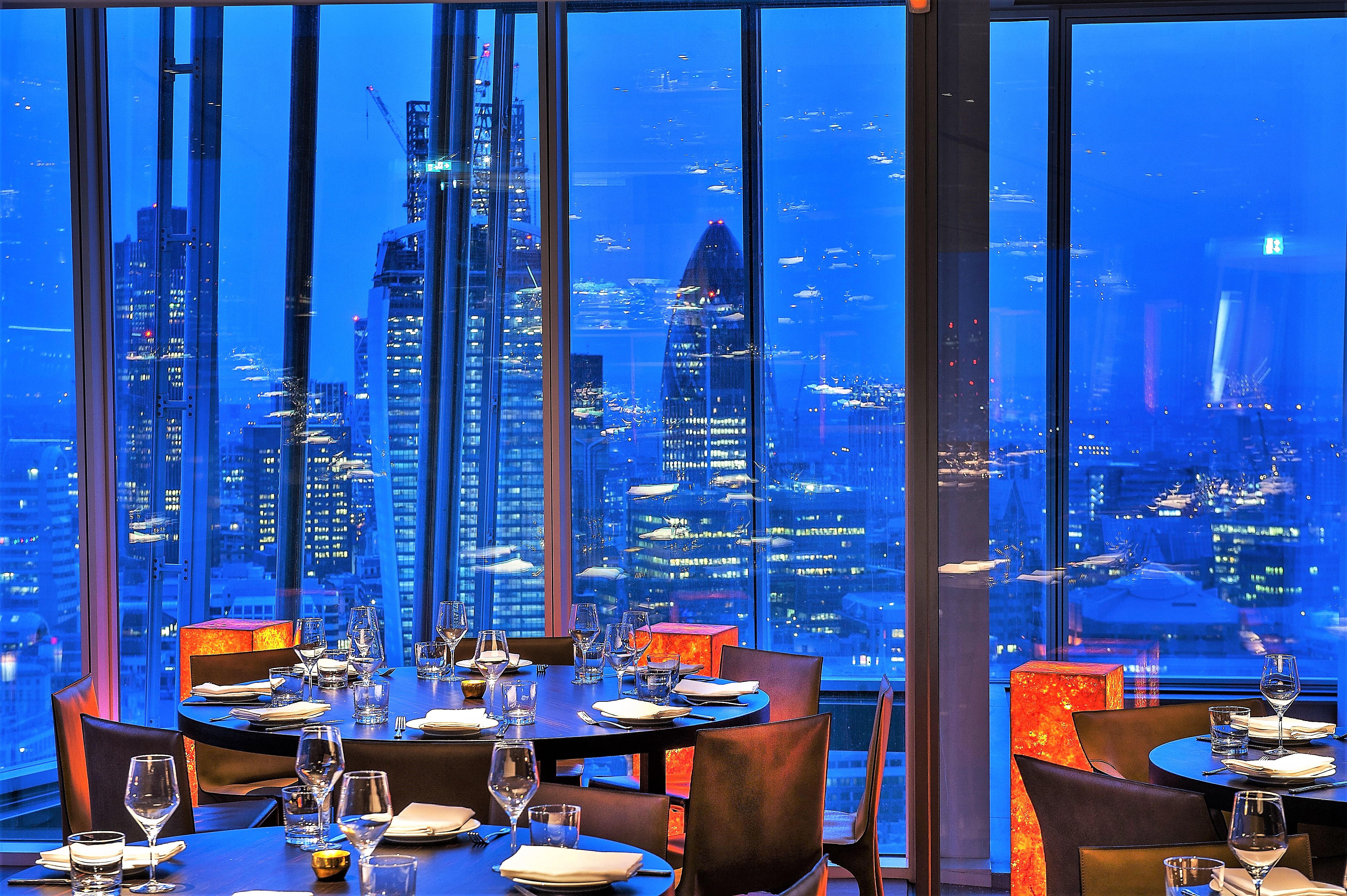
But again, £25 for a timed ticket? I don’t think so! But there is a cheaper way…by having a drink at Rainer Becker’s Oblix on the 32nd floor.
Just walk around the corner, enter through the attended doors, endure the TSA-type security, and wiz up the elevator, where an icon-rich, interpretive map of London confuses and delights simultaneously.
We arrived late afternoon on a clear Saturday, and the bar was packed with fashionistas and millenial posers.
We parked ourselves at a long table that we promised to surrender at 4:30 pm, if only to secure a seat and a stylish waitress dressed in black.
I nursed a valencia orange Ketel One vodka with blood orange, peach & hibiscus at £14.50, but it was a bargain,
if for no other reason than to capture unparalleled views,
people watch,
and enjoy a great cocktail at half the price of The Shard’s regular admission.
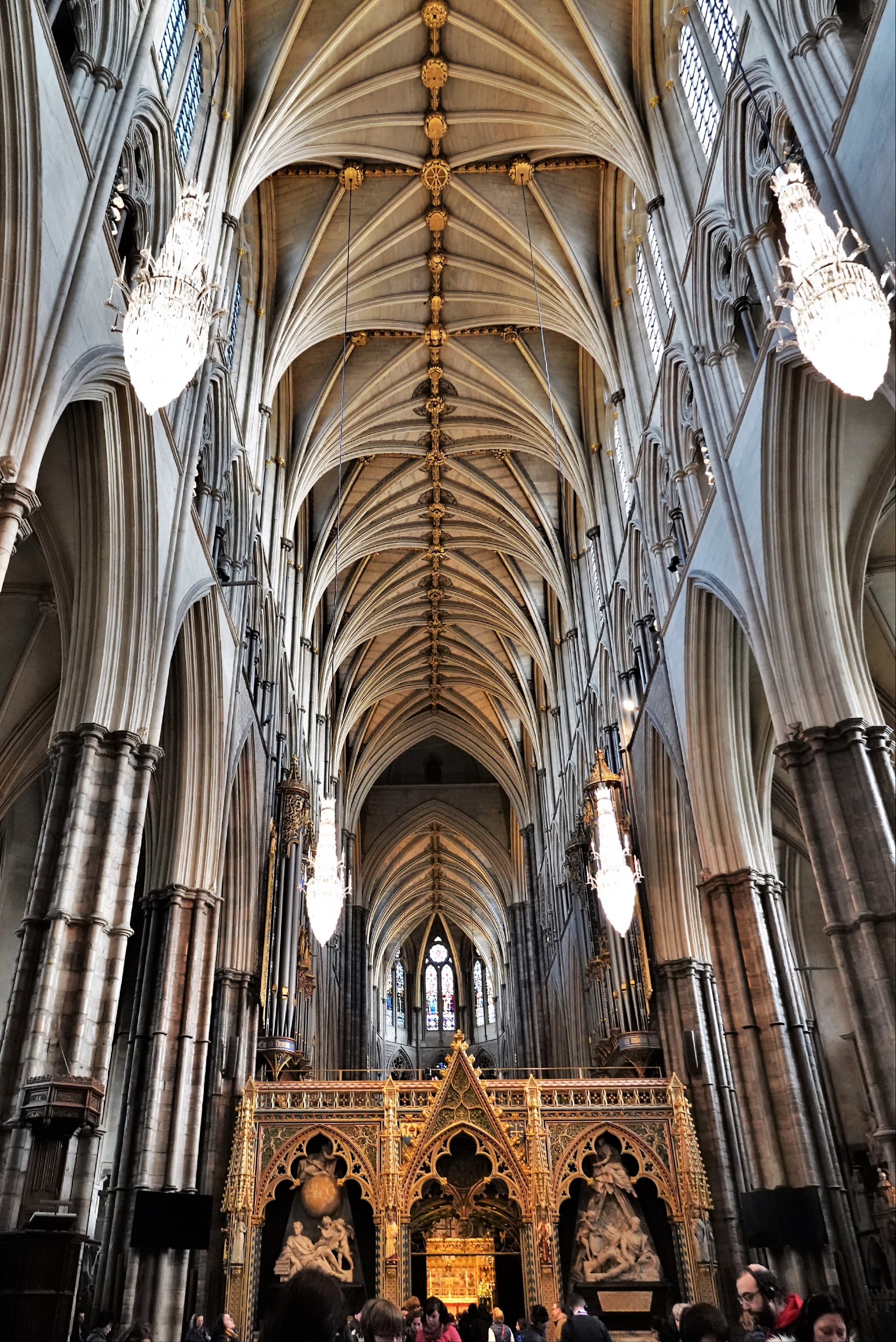
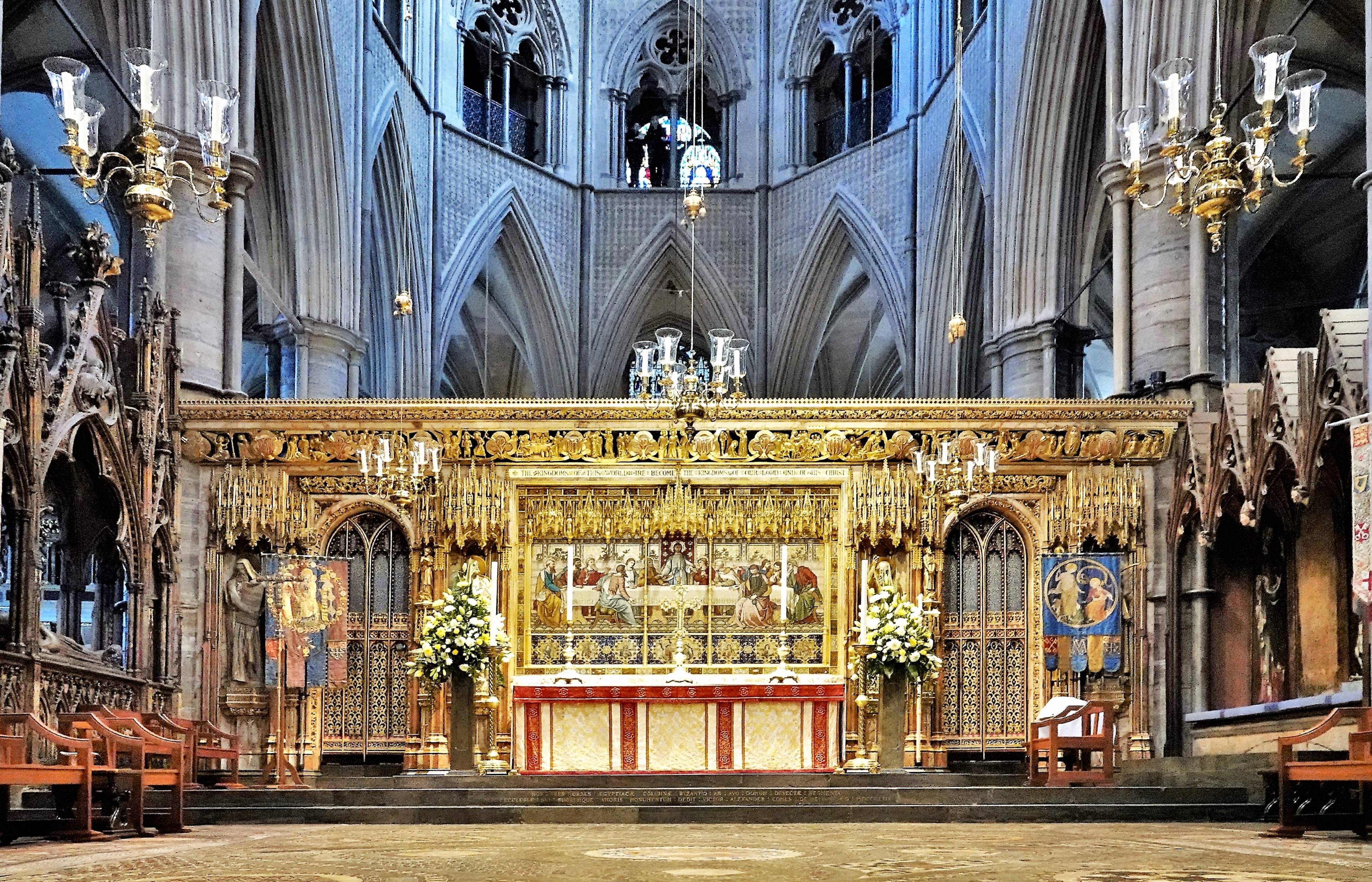
Our time in London was limited–only two days to explore the sights. With so much to see and so little time, Leah and I buckled down for a tour of London’s greatest hits, which easily includes a visit to Westminster Abbey, England’s Gothic royal church, and familiar site for British coronations and weddings, and national celebrations dating back to the 11th century.
We walked around the massive structure until we found the gate entry. Signage informed us that access to this London landmark would set us back 23£ ($30 with current exchange rates), but seniors were entitled to a 3£ discount.
The price seemed steep, but the opportunity to walk through history doesn’t come along every day.
There is a strict NO PHOTOGRAPHY policy inside, which the church keepers will tell you is for the benefit of giving their guests an experience without distraction, and to perserve the solemnity of a working house of worship.
Nevertheless, we walked through the transepts and chapels listening to interactive video recordings while admiring the captivating architecture and memorials, and reflecting on the notion that Charles Darwin and Isaac Newton lie beneath our feet.
But with a newly purchased camera dangling around my neck (Sony RX10 IV), I couldn’t resist the urge.
I had to see what this camera could reproduce in low light…
using advanced stabilization software for hand-held shots…
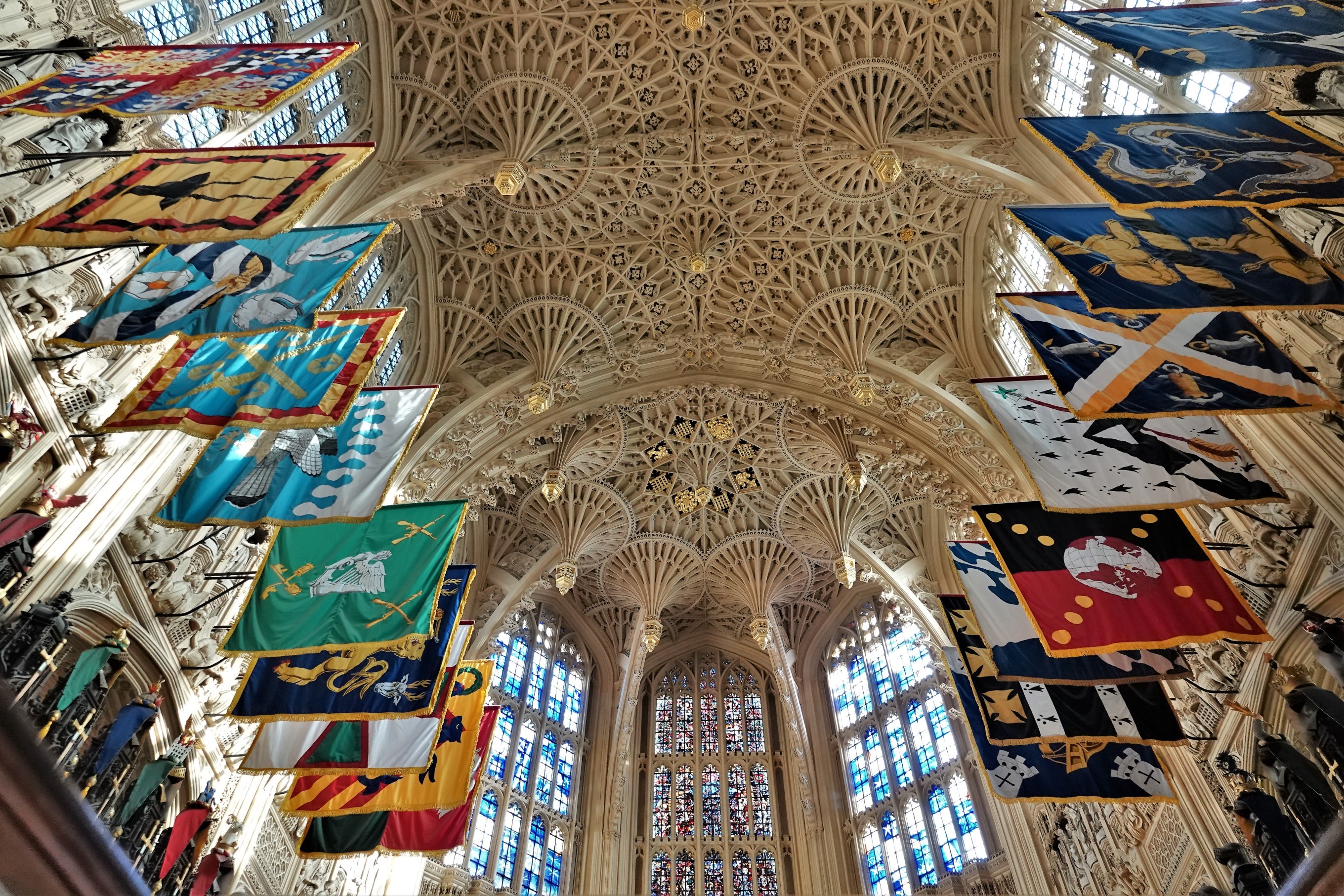
until I was admonished by an Abbey marshal in Henry VII’s Lady Chapel while capturing an overhead view from a polished mirror.
My bad! He wouldn’t leave my side until I reversed the shade and capped my lens. Even then, I could feel his eyes trained on me as I walked around the royal tombs acting as contrite as I could possibly be.
Fortunately, photography IS allowed in the College Garden,
the Cloisters,
and the Chapter House.
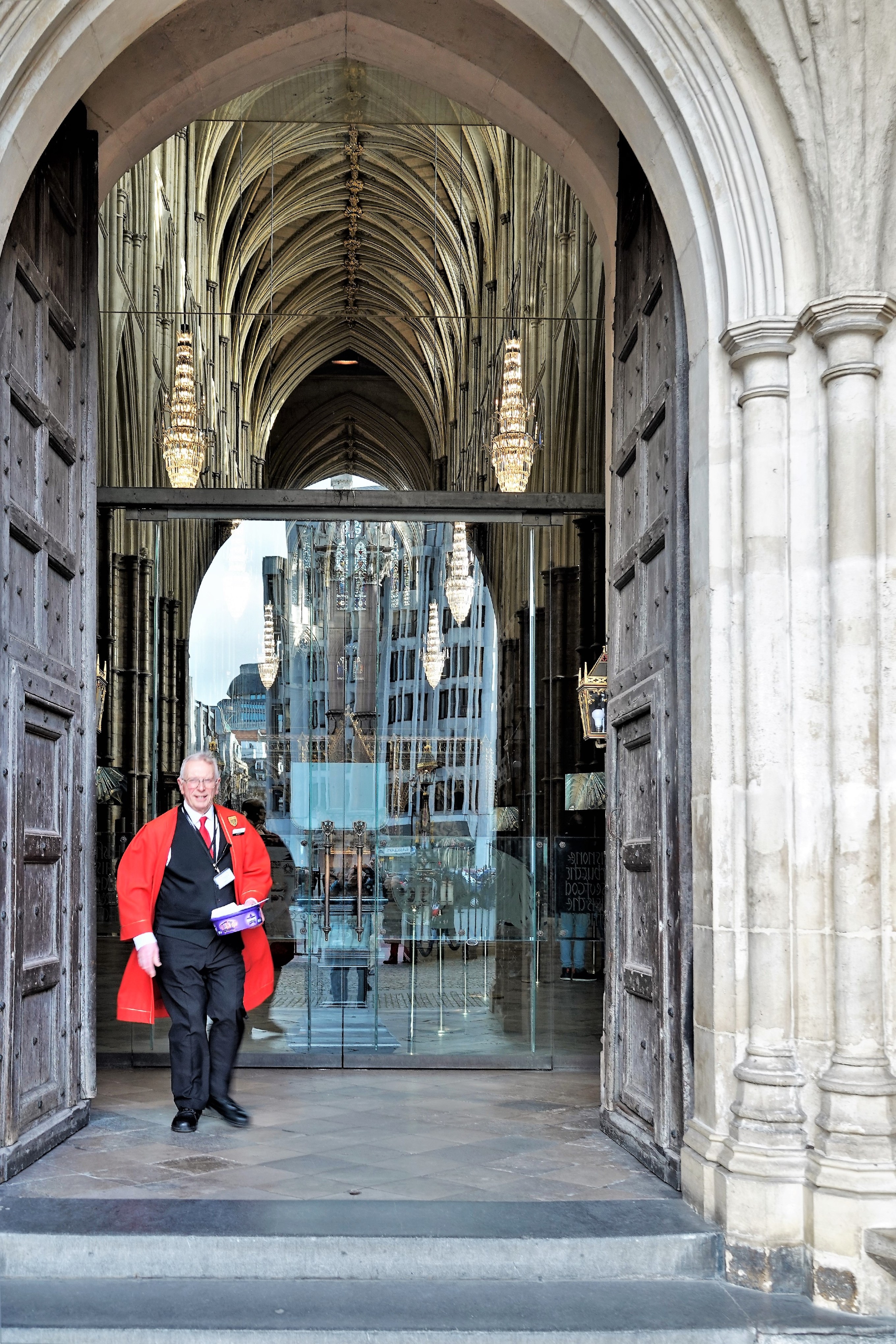
As we prepared to leave through the Great West Door, Leah and I walked past the Grave of the Unknown Warrior toward the Coronation Chair behind glass, I was so tempted to surreptitiously point and shoot…but thought better of it. Lesson learned.
As serendipity would have it, the Marshal and I reunited outside, and all was forgiven.
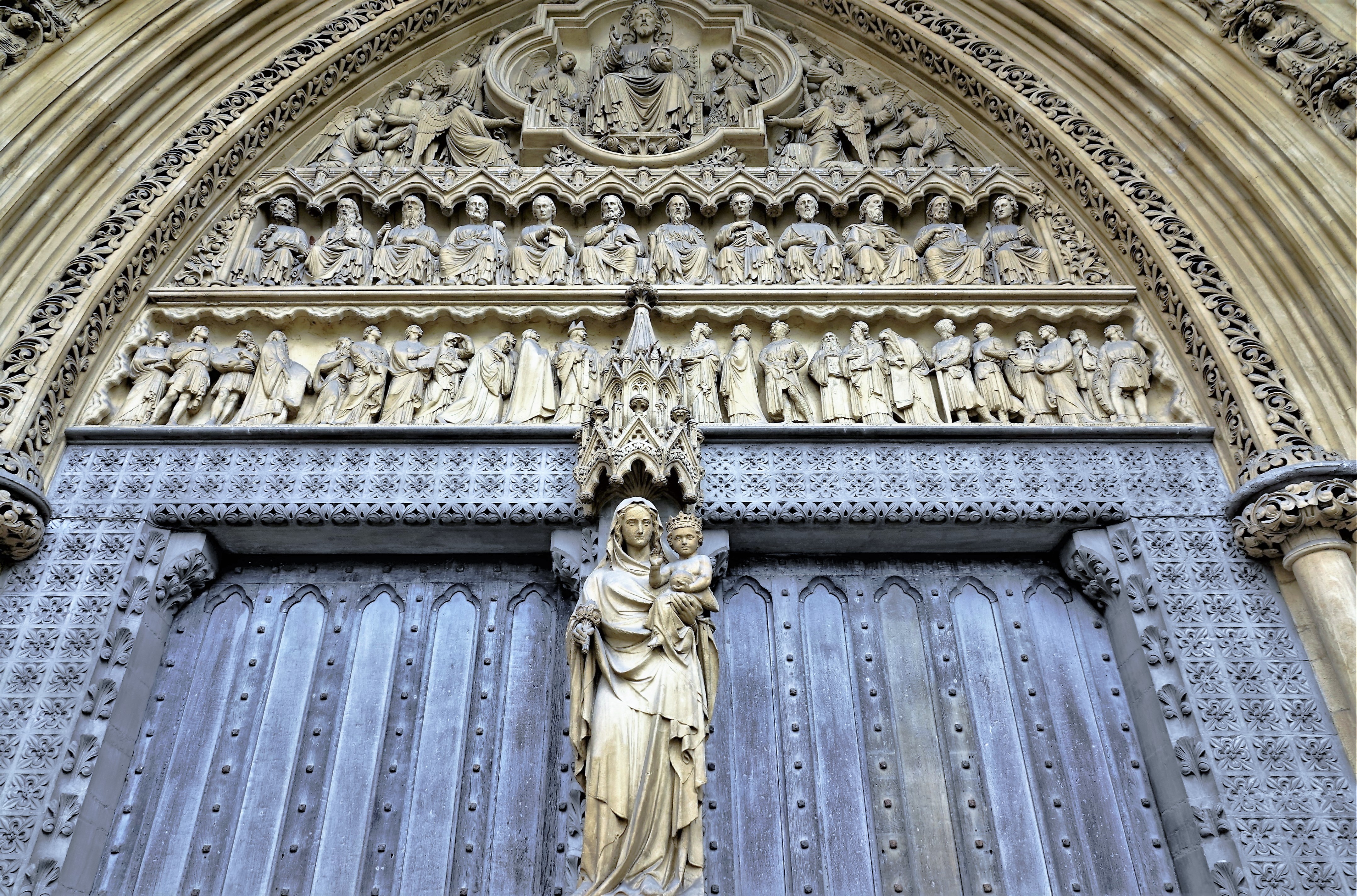
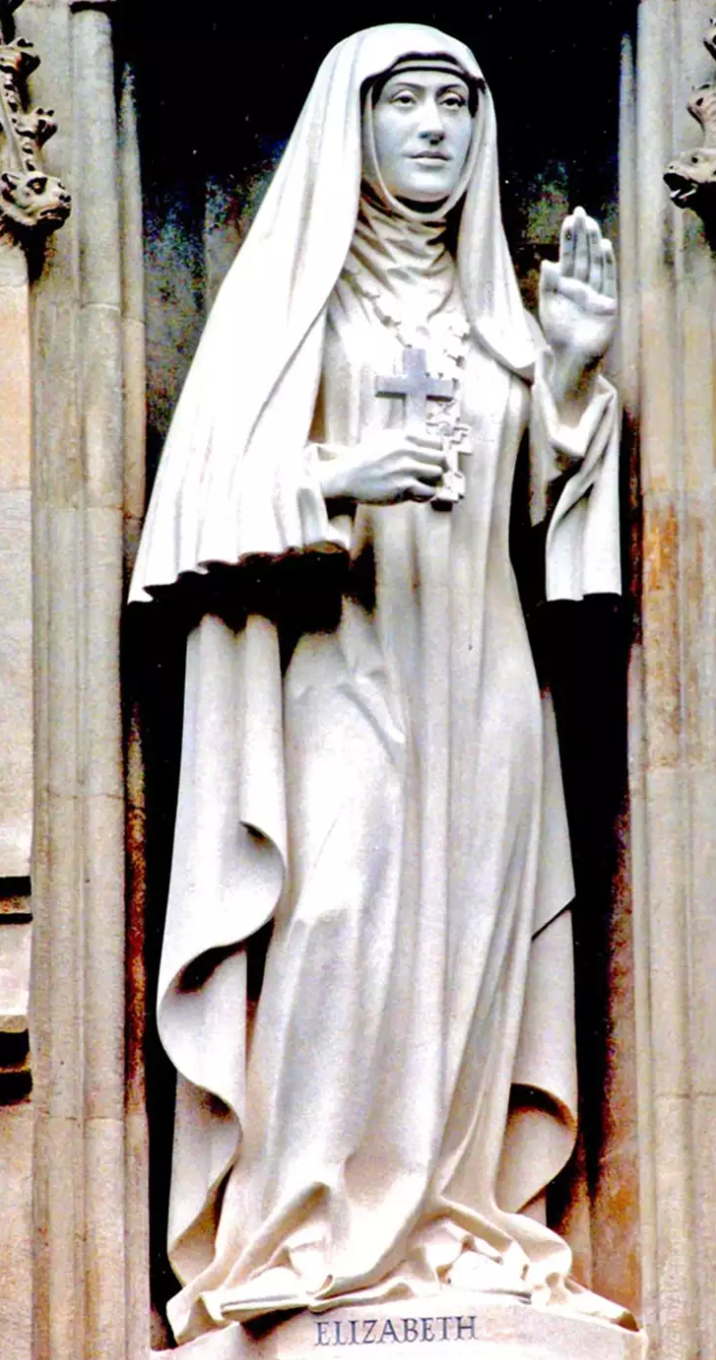
We parted as friends, and I believe I was absolved for my vainglory sin. He used our final moments together to tell us the tale of Grand Duchess Elizabeth Feodorovna, his favorite modern martyr, whose ediface adorns the Abbey’s Great West Door.
According to Marshal John…
Elizabeth of Hesse-Darmstadt was born on 1st November 1864. She was named after Elizabeth of Hungary (1207-1231), a Catholic saint of her own family. Her mother died when she was a child, and she came to England to live under the protection of her grandmother, Queen Victoria. If her childhood was Lutheran, the religious culture of her adolescence was distinctively Anglican. In 1884 Elizabeth married Grand Duke Sergei Alexandrovich, the fifth son of Tsar Alexander II of Russia. Elizabeth found Orthodoxy increasingly absorbing, and in 1891 she adopted the faith.
Although her life had assurance and all the comforts of eminence, it rested on fragile foundations. The Tsarist state maintained its grip over a changing society by repression. Talk of revolution persisted, and grew louder. Acts of terrorism mounted. On 18th February 1905, the Grand Duke Sergei was assassinated.
This marked a turning point in Elizabeth’s life. Now she gave away her jewellery and sold her most luxurious possessions, and with the proceeds she opened the Martha and Mary home in Moscow, to foster the prayer and charity of devout women. Here there arose a new vision of a diaconate for women, one that combined intercession and action in the heart of a disordered world. In April 1909 Elizabeth and seventeen women were dedicated as Sisters of Love and Mercy. Their work flourished: soon they opened a hospital and a variety of other philanthropic ventures arose.
In March 1917 the Tsarist state, fatally damaged by the war with Germany, collapsed. In October, a revolutionary party, the Bolsheviks, seized power. Civil war followed. The Bolshevik party was avowedly atheistic, and it saw in the Orthodox Church a pillar of the old regime. In power, it persecuted the Church with terrible force. In time, hundreds of priests and nuns were imprisoned, taken away to distant labour camps, and killed. Churches were closed or destroyed. On 7th May 1918 Elizabeth was arrested with two sisters from her convent, and transported across country to Perm, then to Ekatarinburg, and finally to Alapaevsk. On 17th July the Tsar and his family were shot dead. During the following night Elizabeth, a sister from SS Mary and Martha named Varvara, and members of the royal family were murdered in a mineshaft.
In the Soviet Union Christianity survived in the face of periodic persecution and sustained oppression. But Elizabeth was remembered. In 1984 she was recognized as a saint by the Russian Orthodox Church Abroad, and then by the Moscow Patriarchate in 1992.
I’m certain that Saint Elizabeth, in her charity, would have pardoned me too.
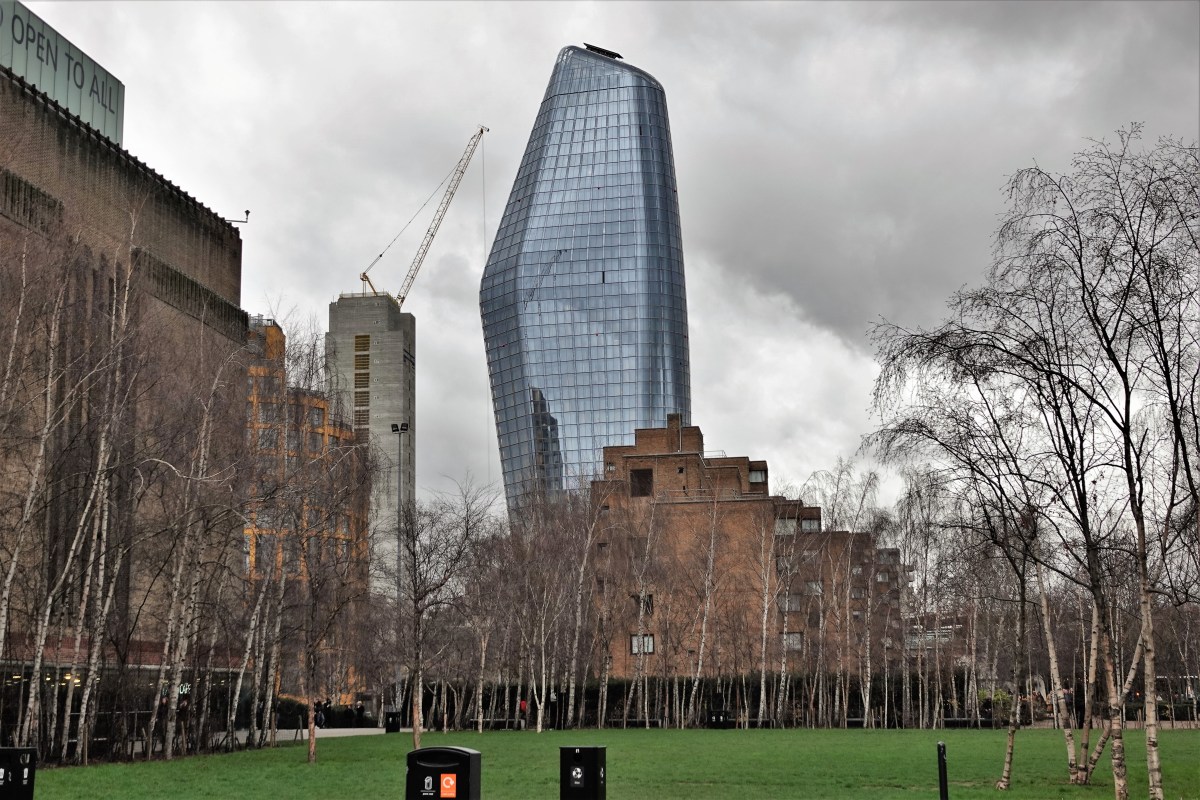
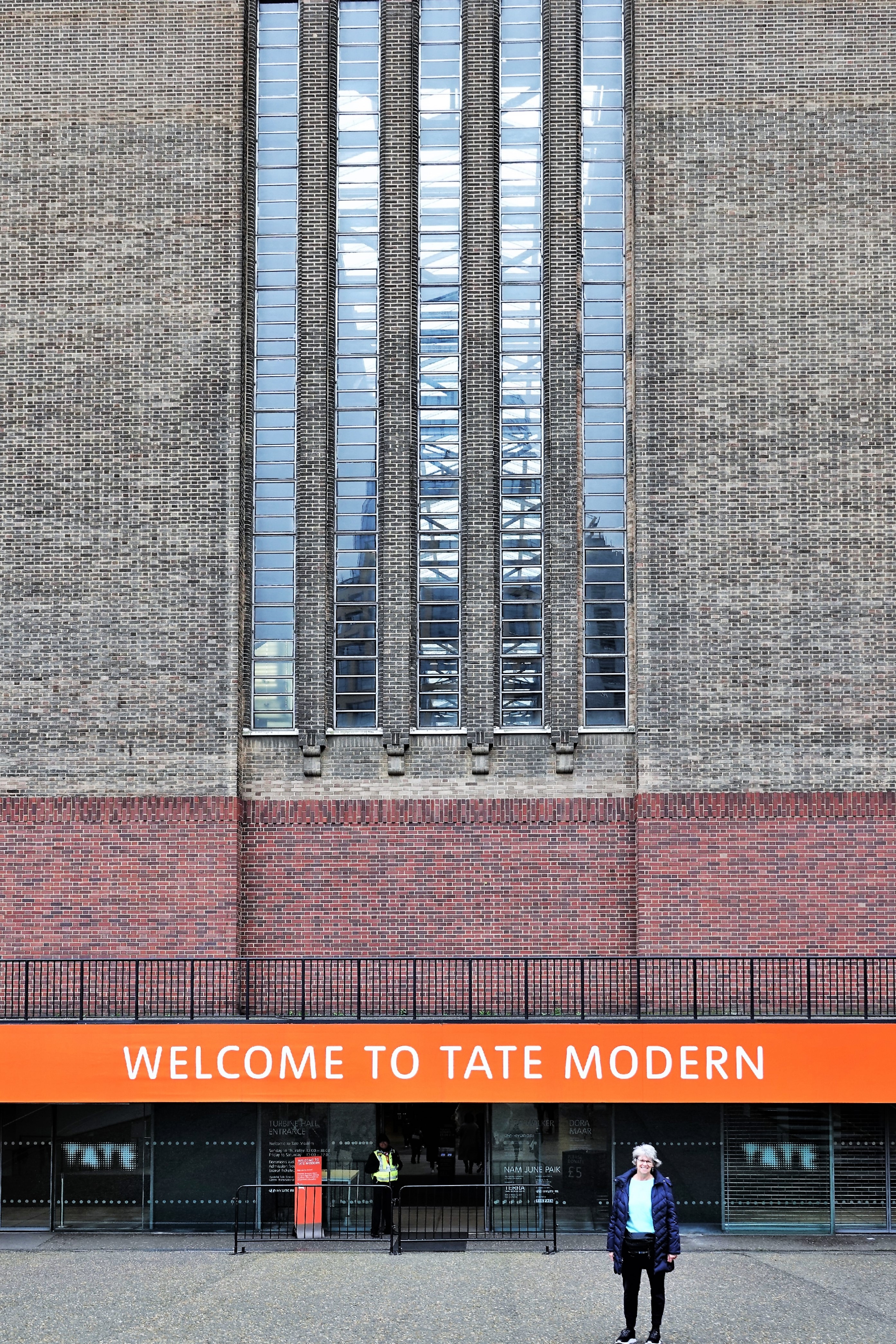
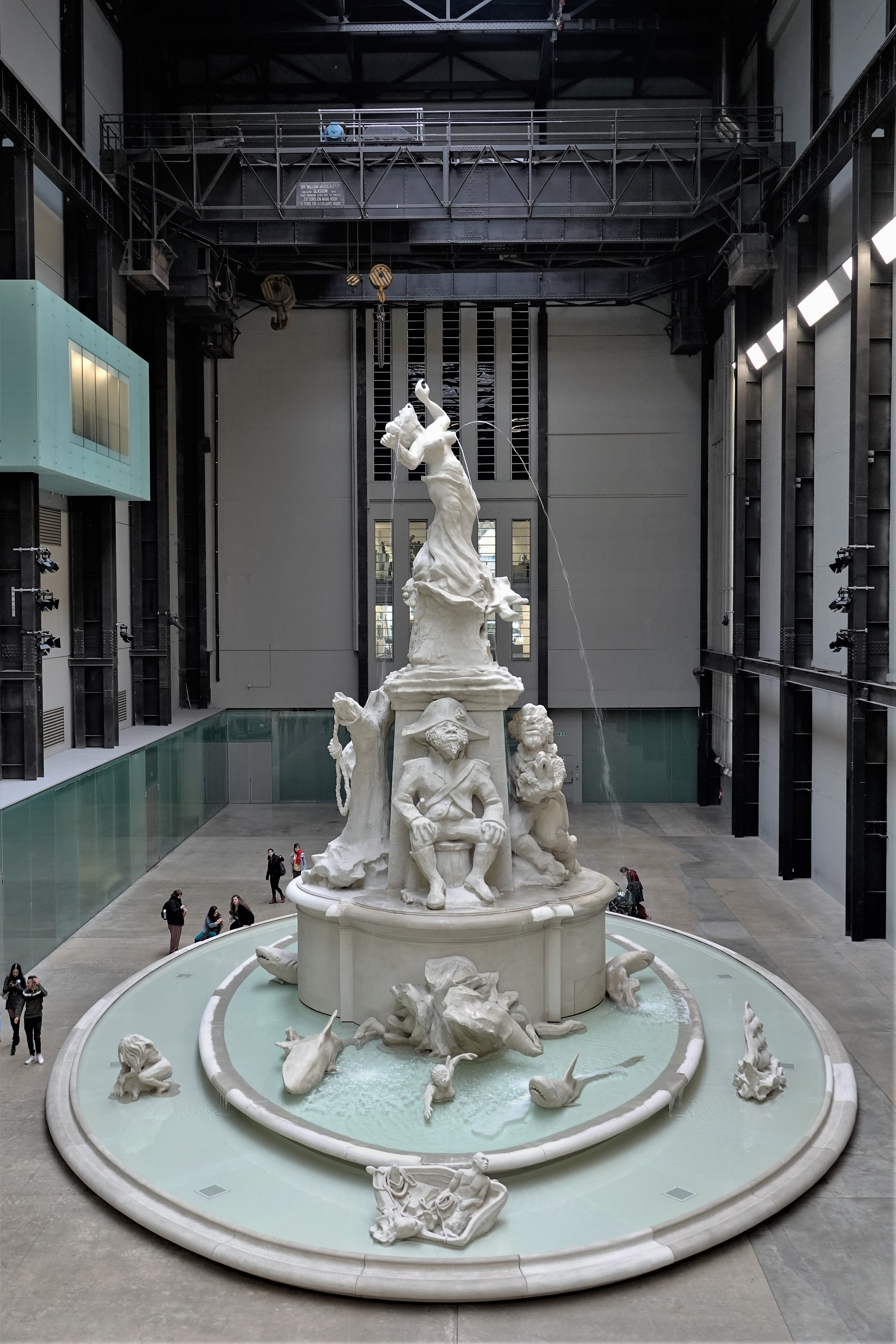
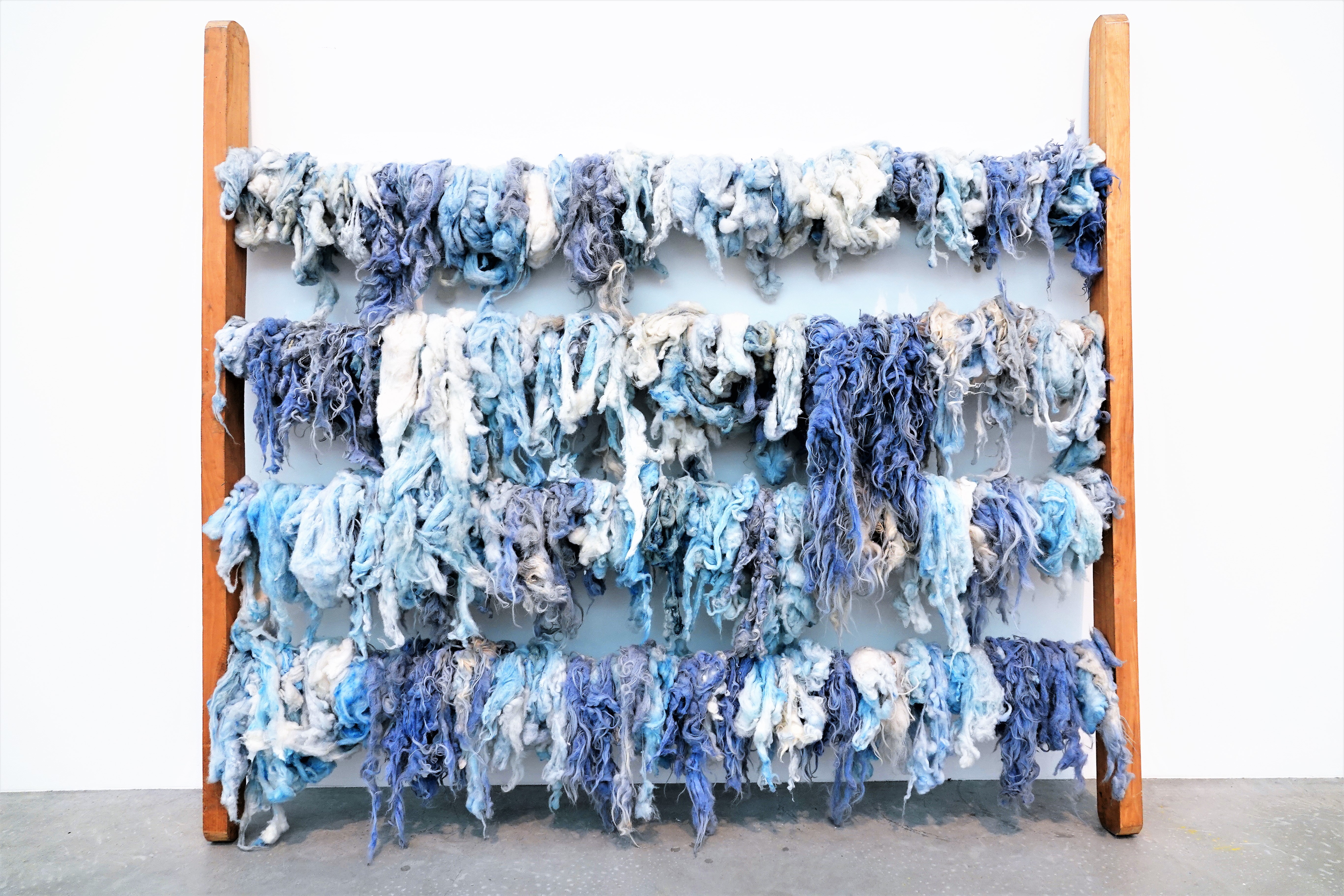
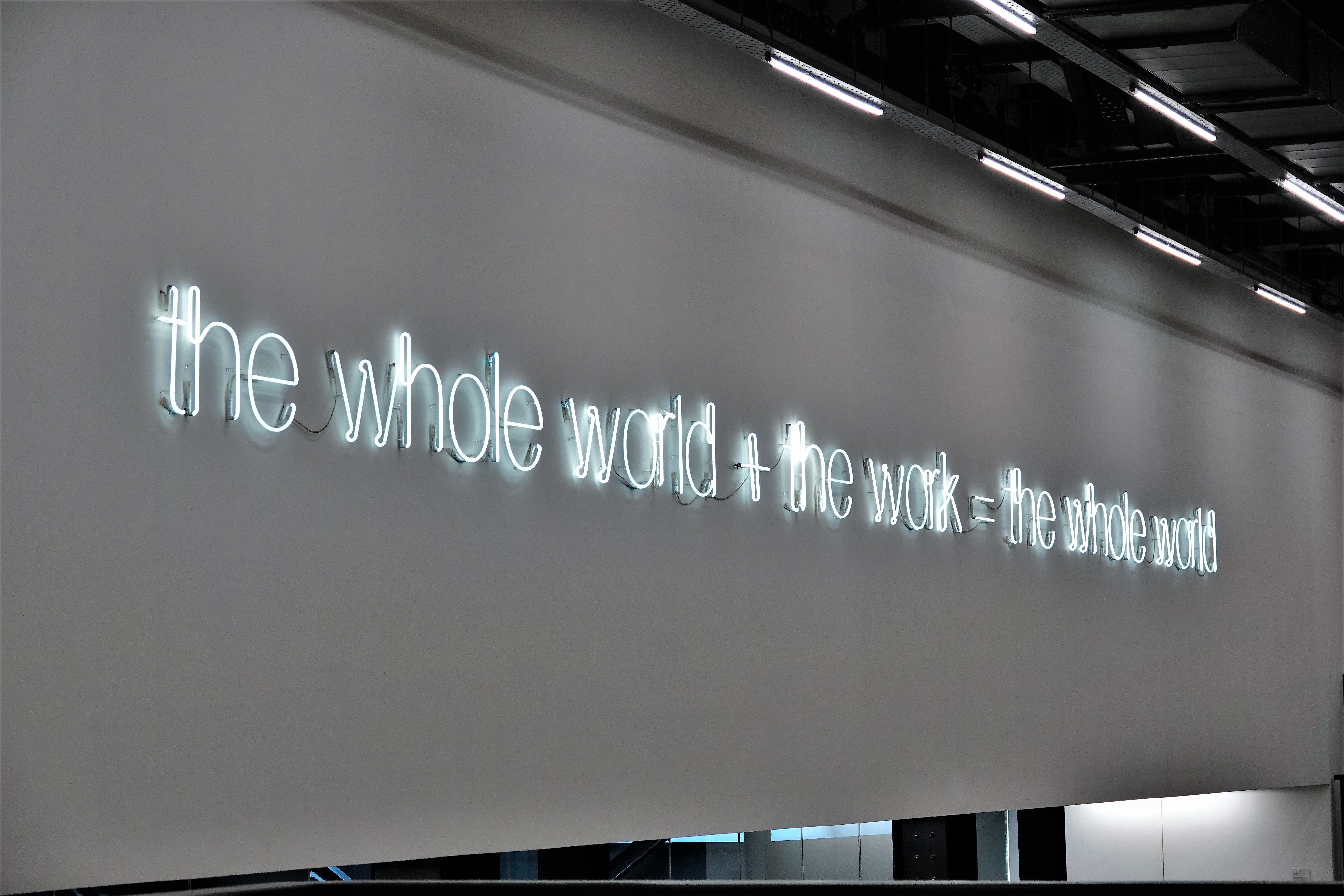
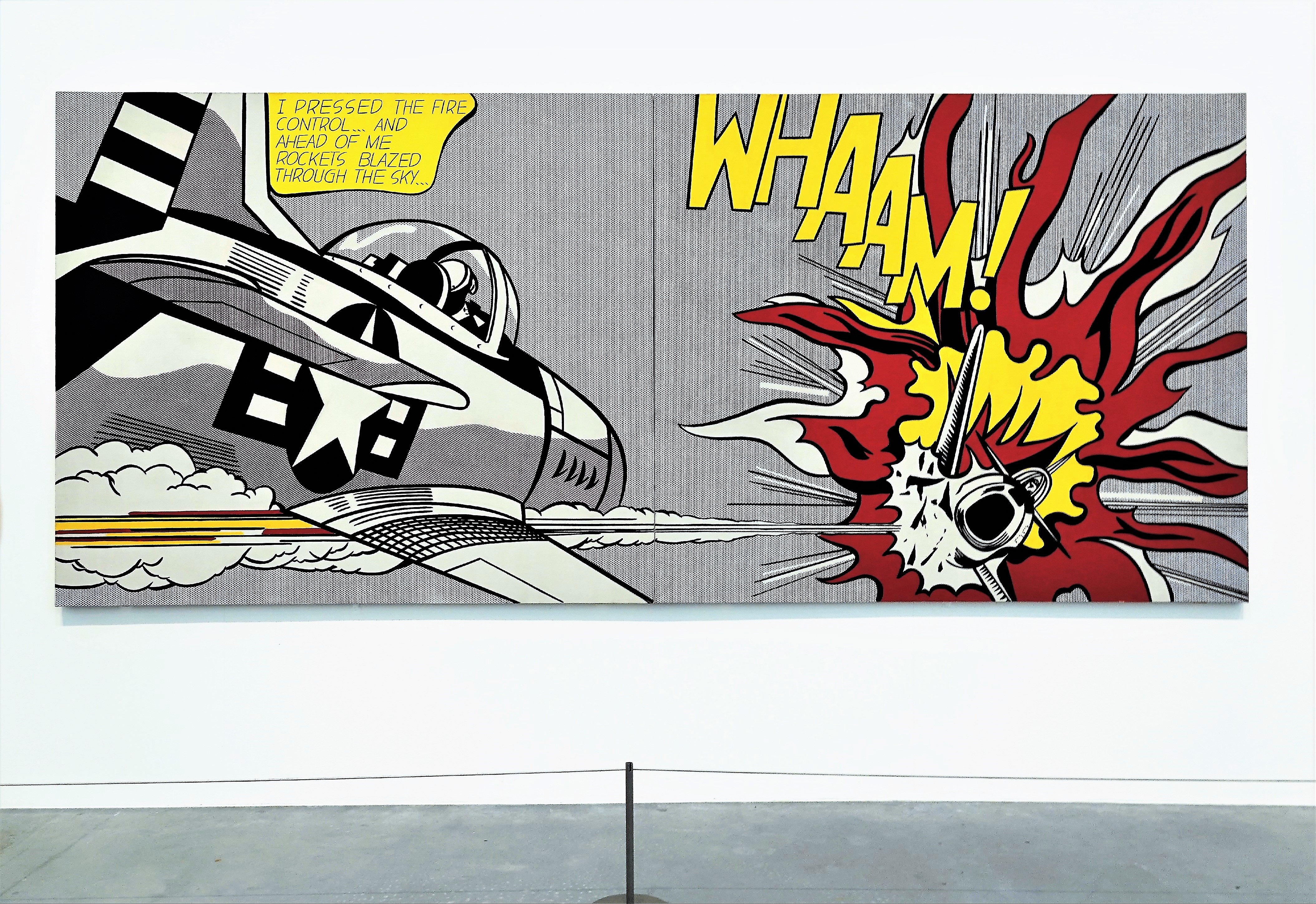
Leah and I could not leave London without visiting Tate Modern, a post-industrial power plant repurposed to house a wide collection of global artists, past and present, who conceptualize their vision through a variety of mediums.
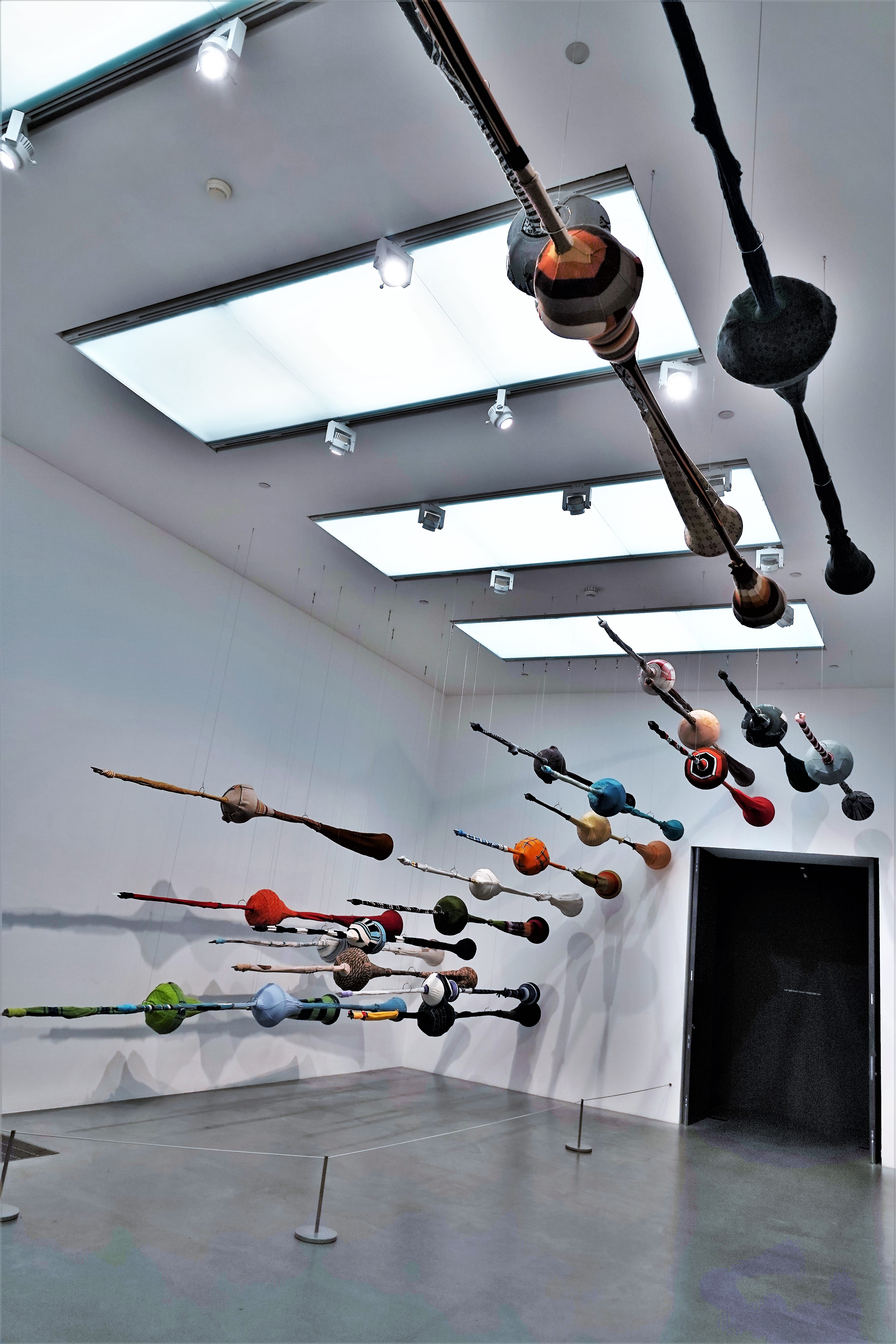
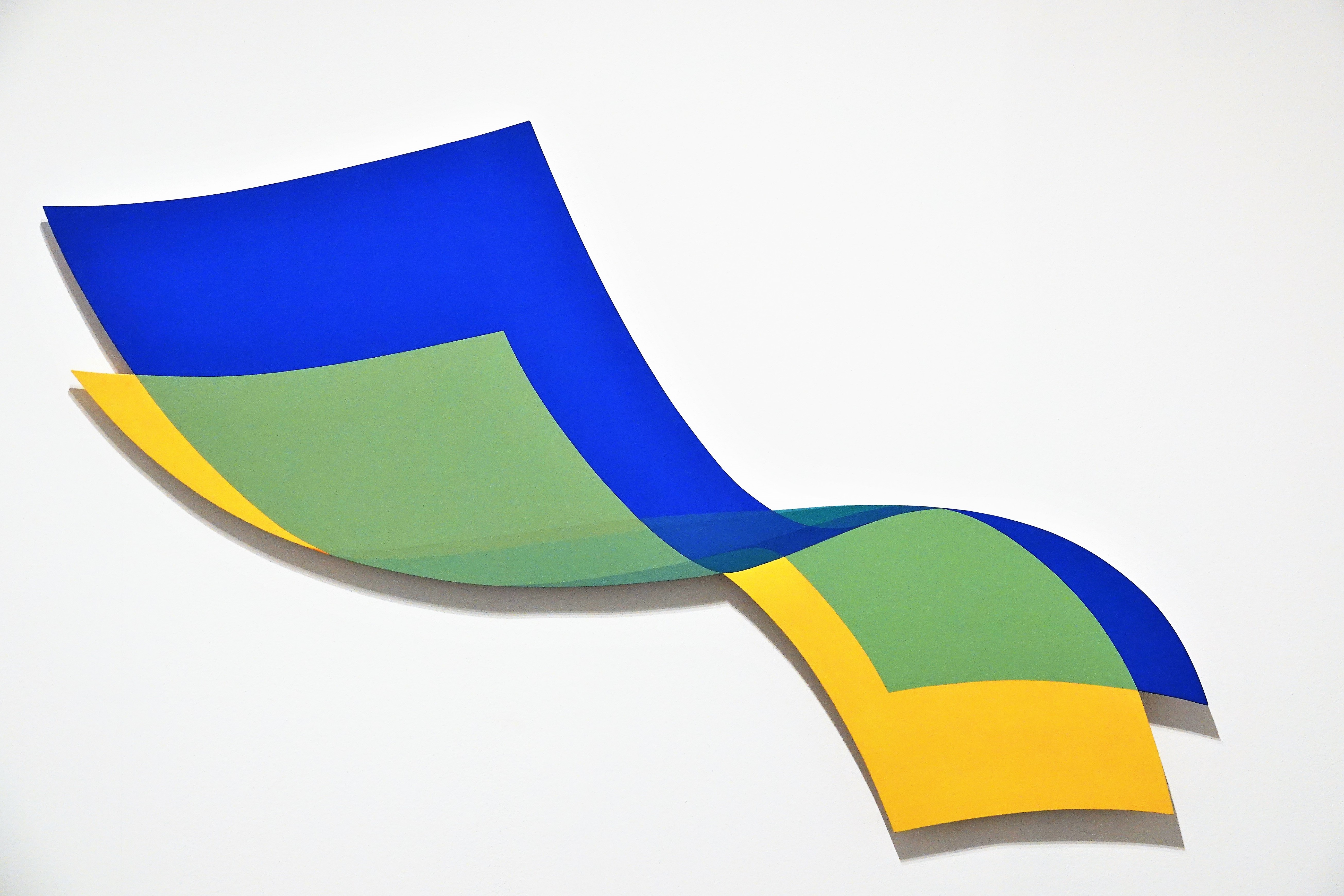
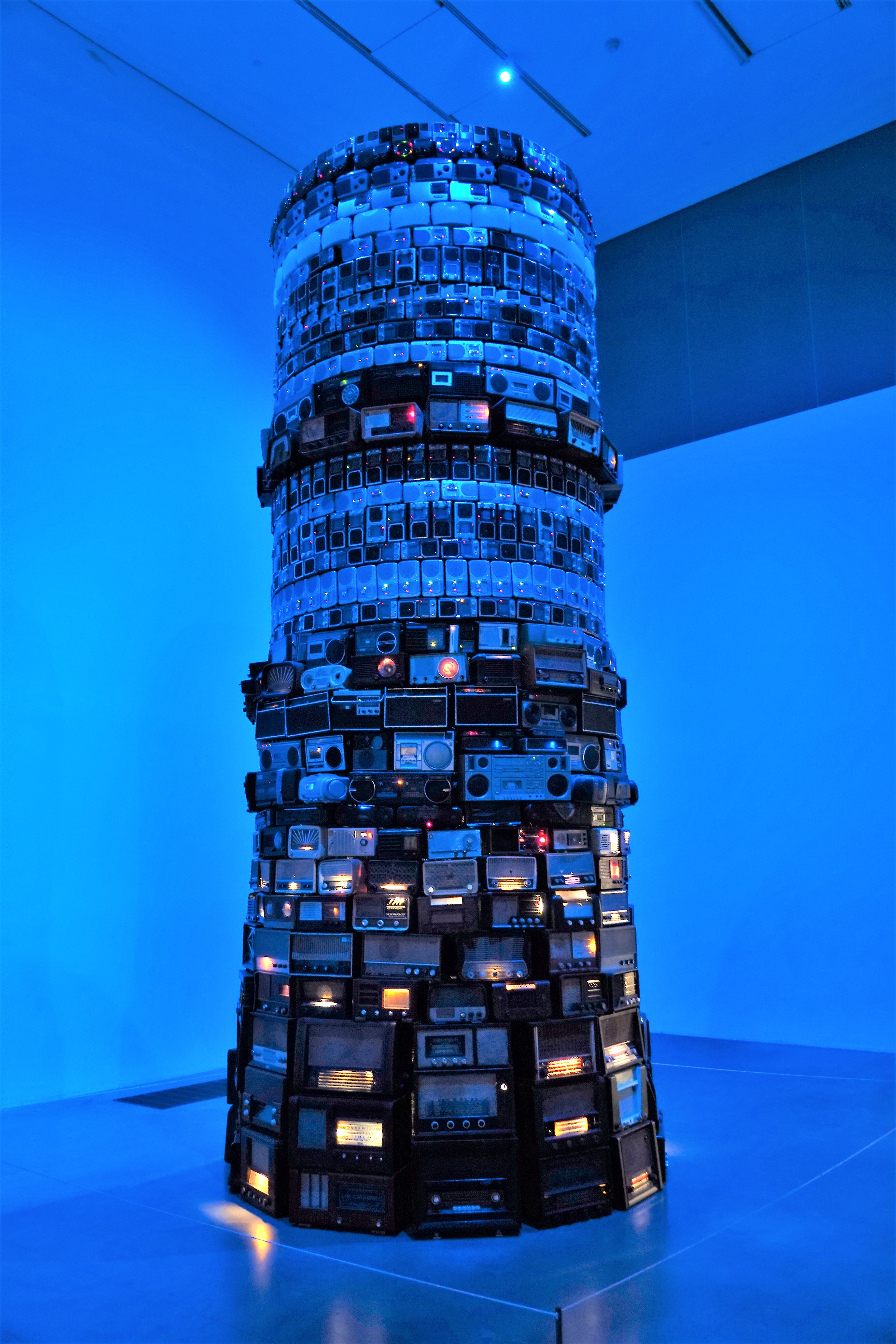
These are only a sampling of my impressions of their work and installations…
Cirque du Soleil is seemingly ubiquitous–with a dozen touring companies scouring the continents, and 7 different resident shows selling out across the Las Vegas strip, making this entertainment company the most prolific circus producer on the planet.
But JOYÀ is different, and I couldn’t wait to share the experience with my family.
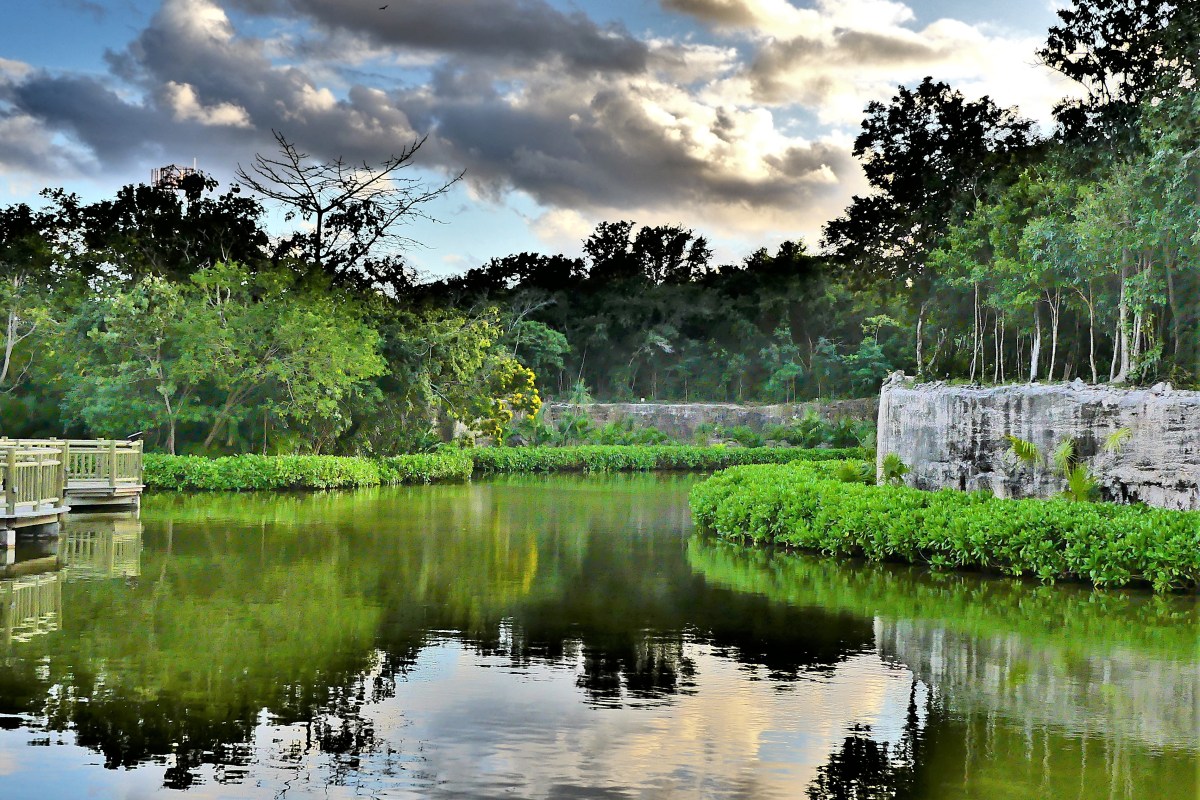
Staged in a custom-built, butterfly-inspired structure surrounded by a cenote within the Riviera Maya jungle,
the 600-seat theater features a thrust stage anchored by perimeter table service, and tiered seating beyond the waiters’ service stations.
For the epicure, this production offers a dinner component one-hour before showtime that relies on gastronomic smoke and mirrors to draw the guest deeper into the Mexican experience.
According to Mexican Top Chef Alexis Bostelmann, “Each element of this magnificent show served as my inspiration, where imaginative curiosity is met with unexpected discovery,” said Bostelmann.
The adventure began with an edible menu,
followed by a polished slab of wood featuring a salad of edible flowers and Iberian ham, served with a lobster taco, a sweet potato, and fresh ceviche seasoned with coconut, mint and passion fruit.
I said “yes” to the protein option to garnish my salad: locally-sourced chinicuiles–a salty worm that feeds off maguey roots, and is often found swimming at the bottom of a mezcal bottle. A true Mexican delicacy!
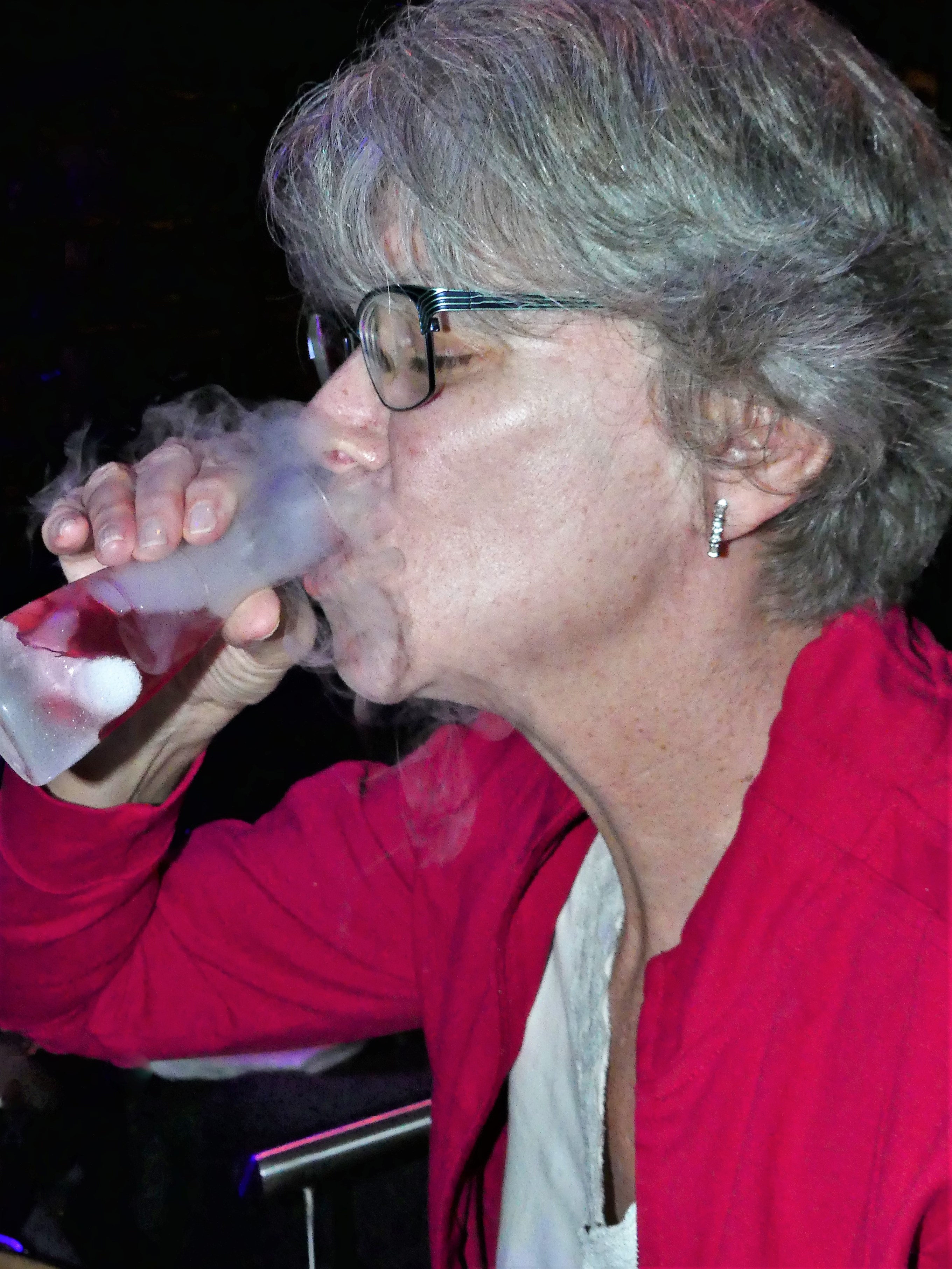
Our featured beverage, in addition to a chilled bottle of Mecier Brut Champagne was Dragon Breath–a signature tequila concoction that was smokin’ and refreshing!
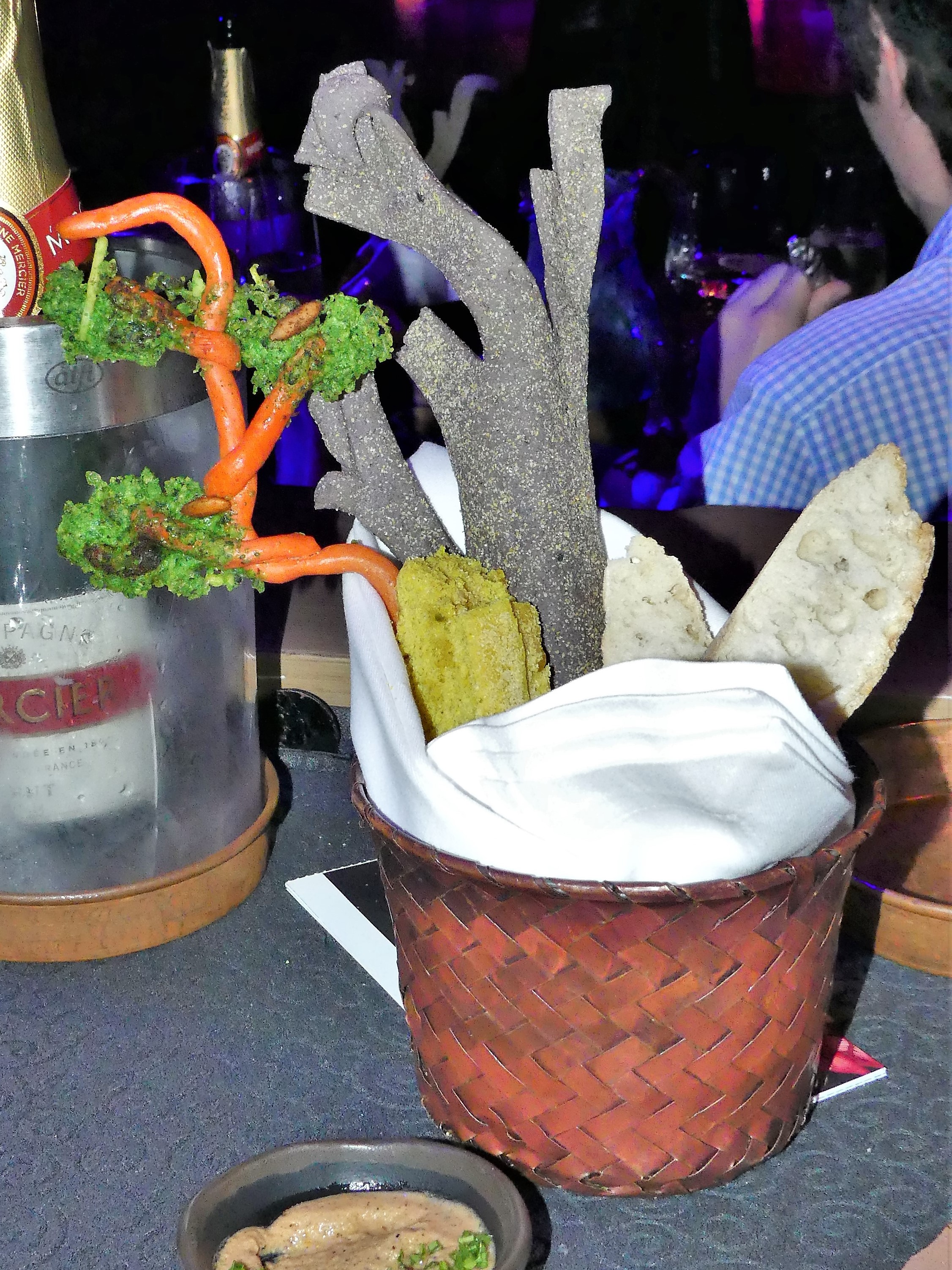
We noshed on a basket of bread bark,
and broccoli boughs while we waited for the second course.
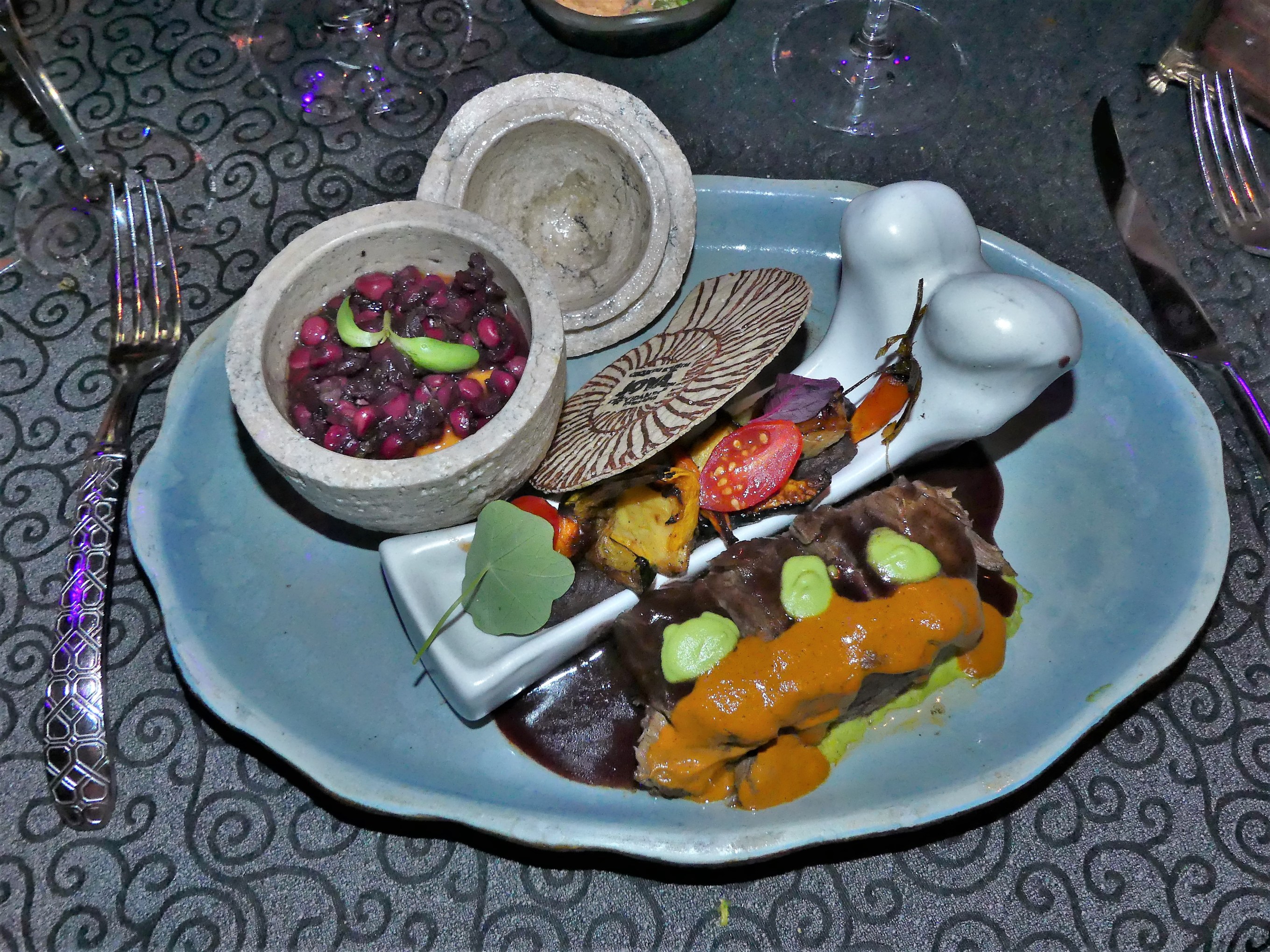
My entree arrived under a meteor shell. I opted for braised short ribs nestled beside a dugout dinosaur bone of grilled veggies, and accompanied by a geode-styled crock filled with ginger, coconut and sweet potato mash.
Leah received a treasure chest of jewels…
accented by a fillet of salmon resting on a poblano-mint puree, elevated by a tower of grilled vegetables, and an oyster-sized seaweed salad topped with a coconut milk pearl.
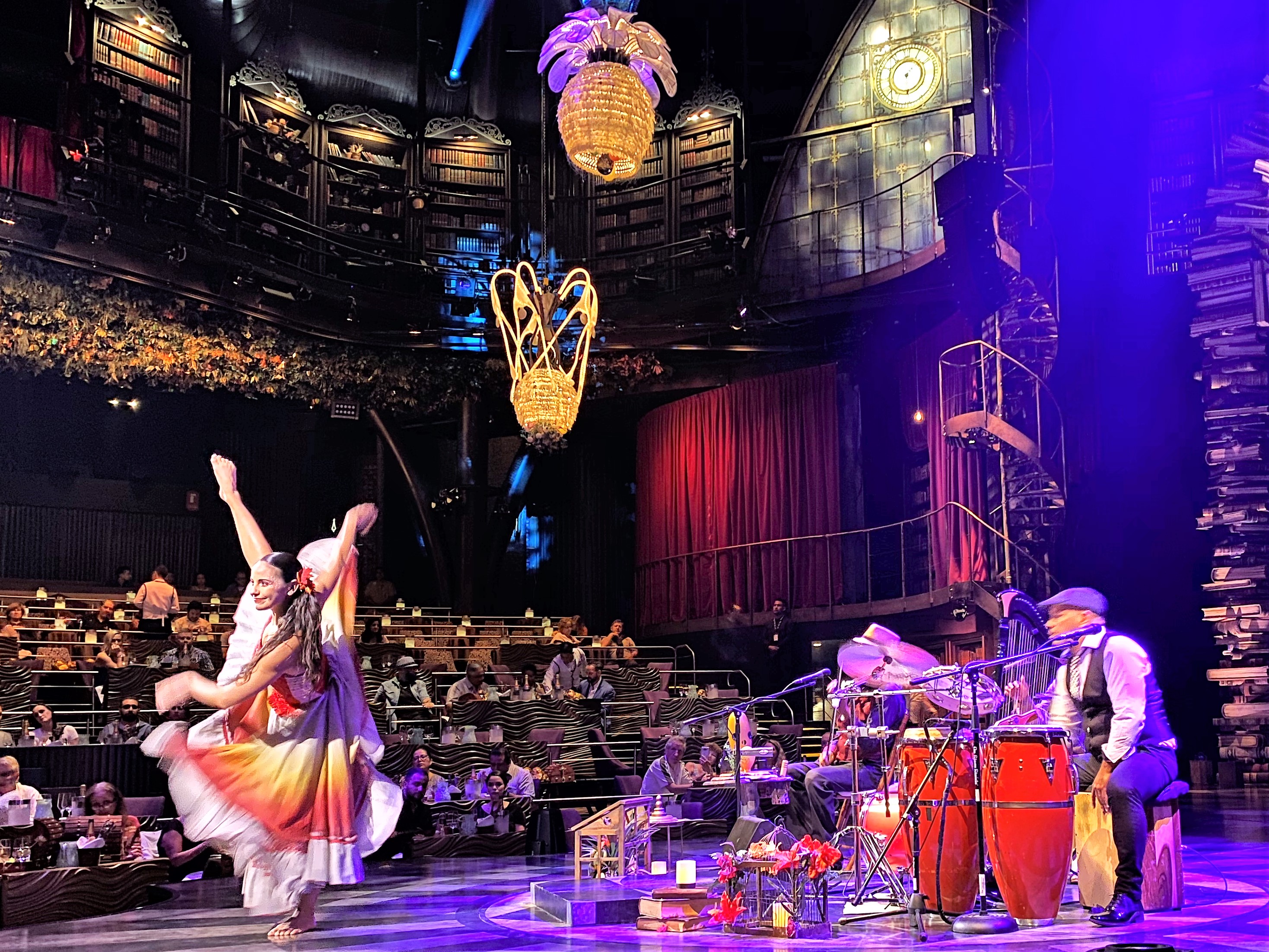
All the while, our remaining senses were treated to traditional Latin music performed with a jazzy twist.
After the second course was cleared, we were presented with a novel idea–
–a quartet of desserts plated within the pages of the Periodic Table of Pastries.
Yum!
“My goal was to present a menu rooted in historical meaning that parallels the show’s beloved storyline so that once the performance begins, guests will connect all the details for a completely immersive theatrical experience,” Bostelmann added.
If dinner set the scene, then the show would bear more earthly delights. Noah, Nathan, Leah and I waited for the lights to dim…
and let Cirque du Soleil transport us to a magical place, where gravity is optional.
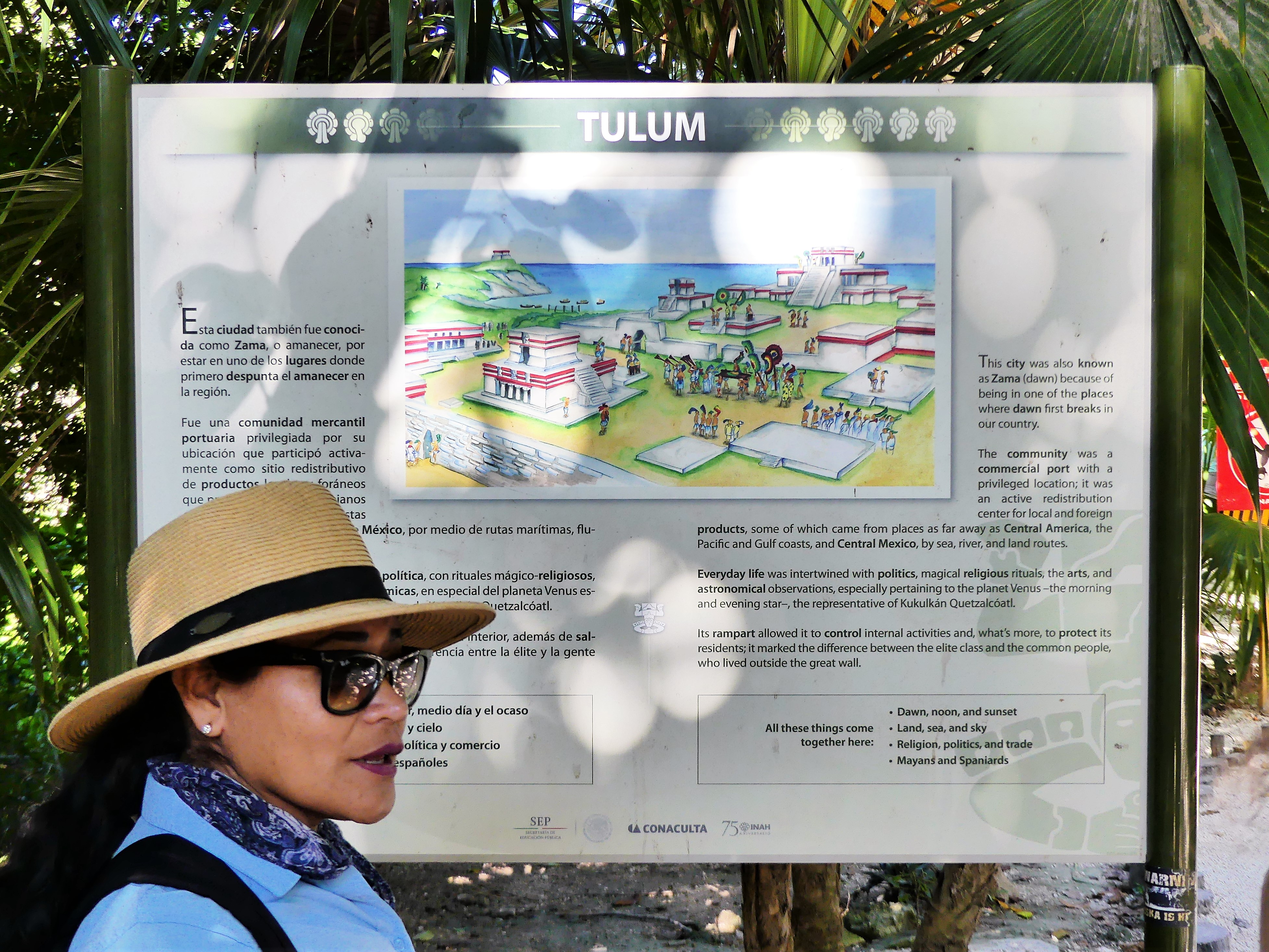
GPS was set to Zona Arqueológica de Tulum, but upon arrival, the crossover was still under construction. Following signs to the next Retorno, I backtracked to a bustling turnoff. This looked nothing like the Tulum I remembered from 5 years back. Heck, Tulum used to be all jungle 20 years ago!
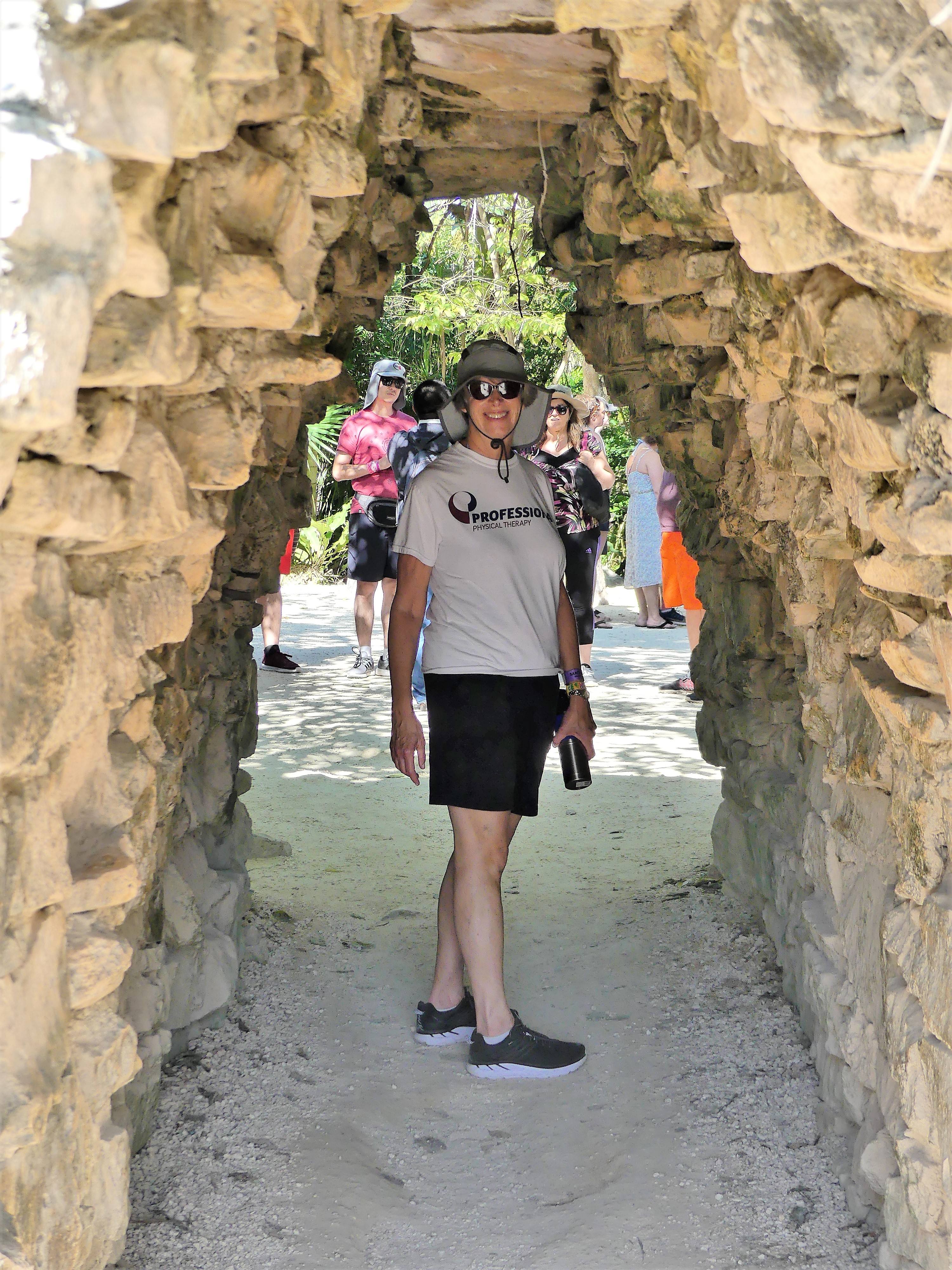
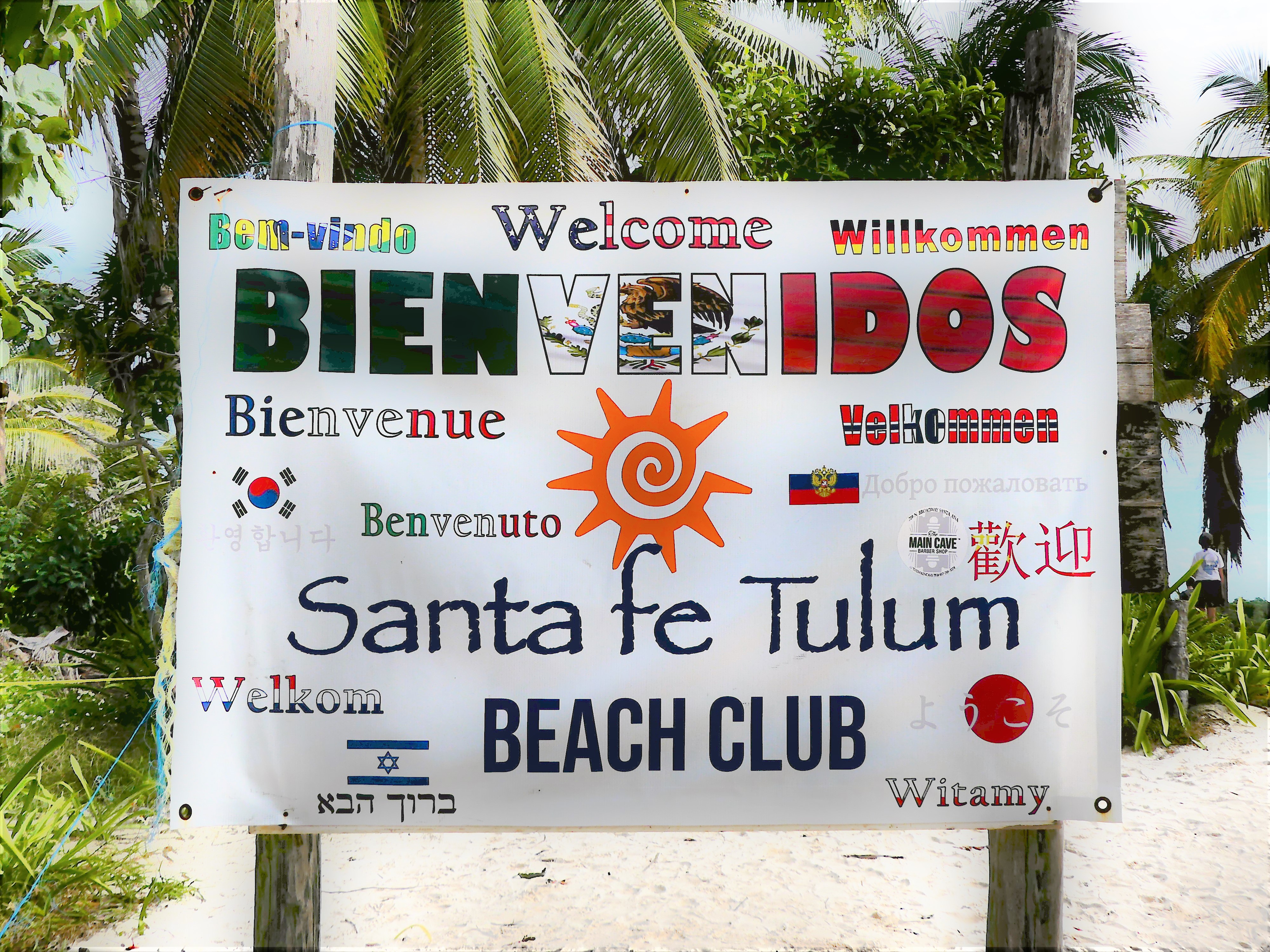
But now, it resembled a spider web of agents in uniformed shirts carrying clipboards and shouting directions in Spanglish. Our rental car was stopped short of the road to the ruins, where we were met by Freddy, a representative for Santa Fe Beach Club, whose job it was to redirect us to his business.
According to Freddy, my choices were limited since cars could no longer advance. Either I could park nearby for $20 and walk 1 km to the ruins, or pay $40 a head, granting us: closer parking; National Park entrance passes; access to the Beach Club–including toilet and shower provisions, one drink (choice of water, soda, or cerveza), and a half-hour water tour, followed by reef snorkeling (all gear provided).
“No way!” everyone voiced emphatically.
All of us were content to walk to the ruins for a fraction of the cost. As I prepared to park in an already overcrowded lot, Freddy offered us a winning alternative: the same all-inclusive package reduced to $27 per person–a 33% discount–traditionally offered to Mexican residents. Score! and lesson learned. Always negogiate the price!
While the ruins piqued their interest, the prospect of snorkeling atop the Mesoamerican Barrier Reef (largest reef system in the Western Hemisphere) sounded especially promising to Noah and Nate. After I revised our initial itinerary–which would have included a stop at Yal-ku in Akumal, with snorkeling in a brackish lagoon surrounded by sculptures–I sensed their enthusiasm to swim in the Caribbean.
I followed Freddy’s directions to Tulum’s Hotel Zone, and turned into a narrow seaside road, offering access to scores of Tulum’s boutique hotels and yoga retreats. Unfortunately, Tulum’s current popularity may prove unsustainable, as it’s recent explosion of tourism and new resort construction have overtaken the town’s current infrastructure capacity, turning it into a eco-nightmare.
Nevertheless, developers continue to exploit the bohemian chic of Tulum. Despite government crackdowns (knowingly rife with corrupt officials), illegal projects continue, laying waste to precious jungle habitats that were once home to endangered jaguars and sea turtles.
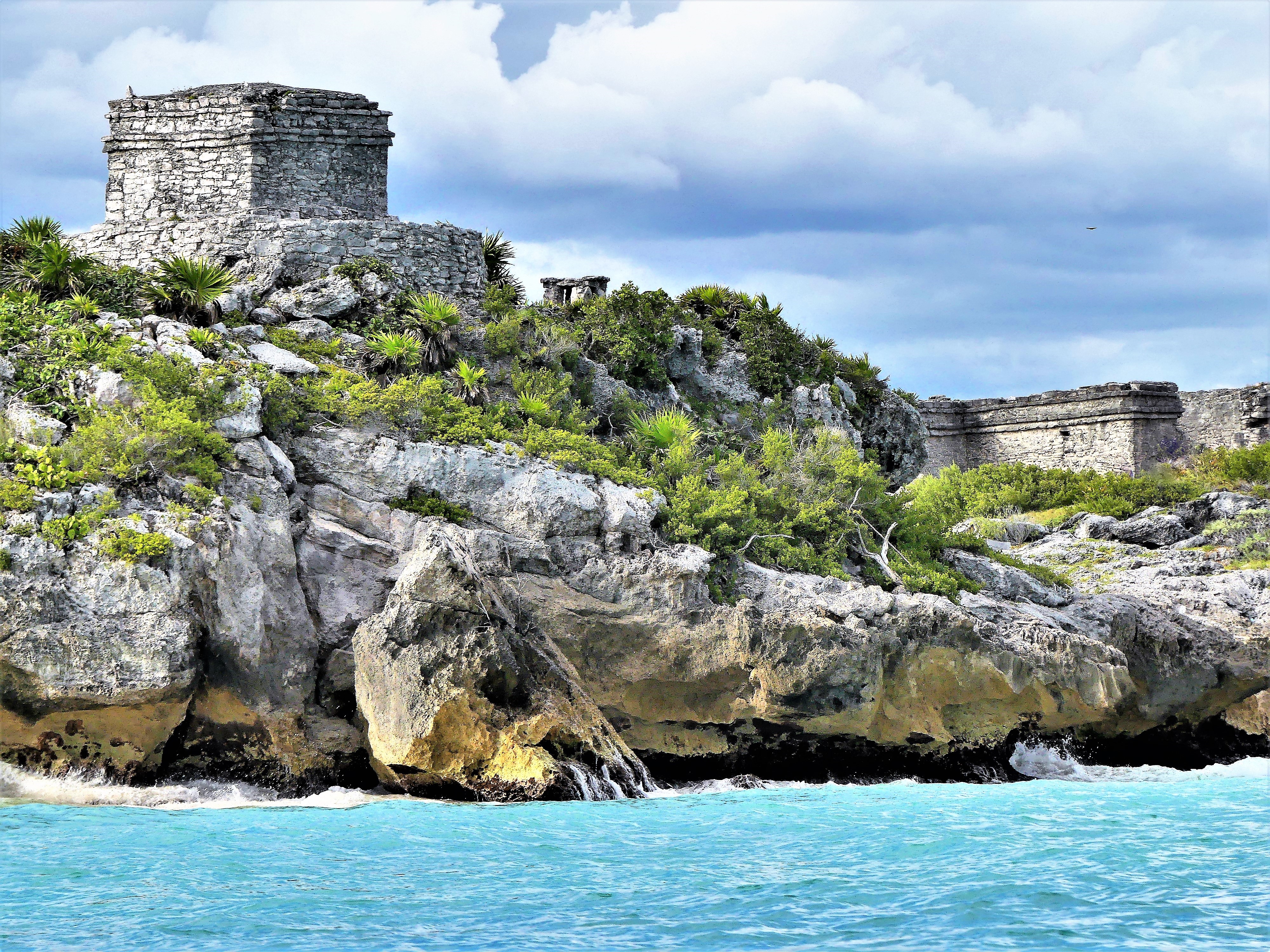
We drove to the término, reaching our destination…
and luckily found a coveted parking spot along the mangroves by the beach entrance.
We walked the remaining half mile to the National Park on a rutted lane shared by cyclists, and local vendors selling water and trinkets.
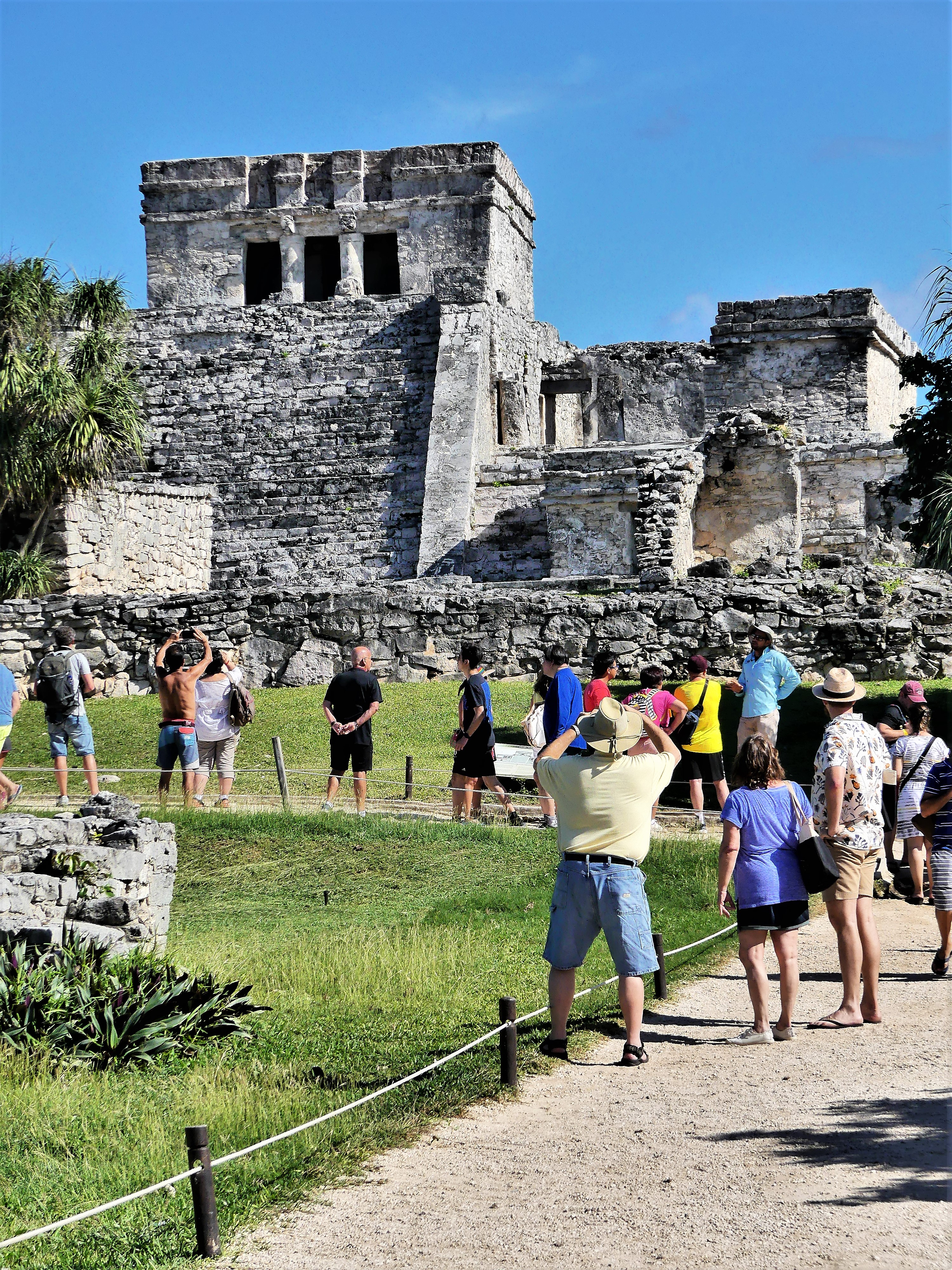
Ordinarily, the surroundings are packed with tour groups and spectators, but we arrived on a calm day, without the usual hubbub.
In fact, the landscape was relatively quiet, and devoid of humanity…
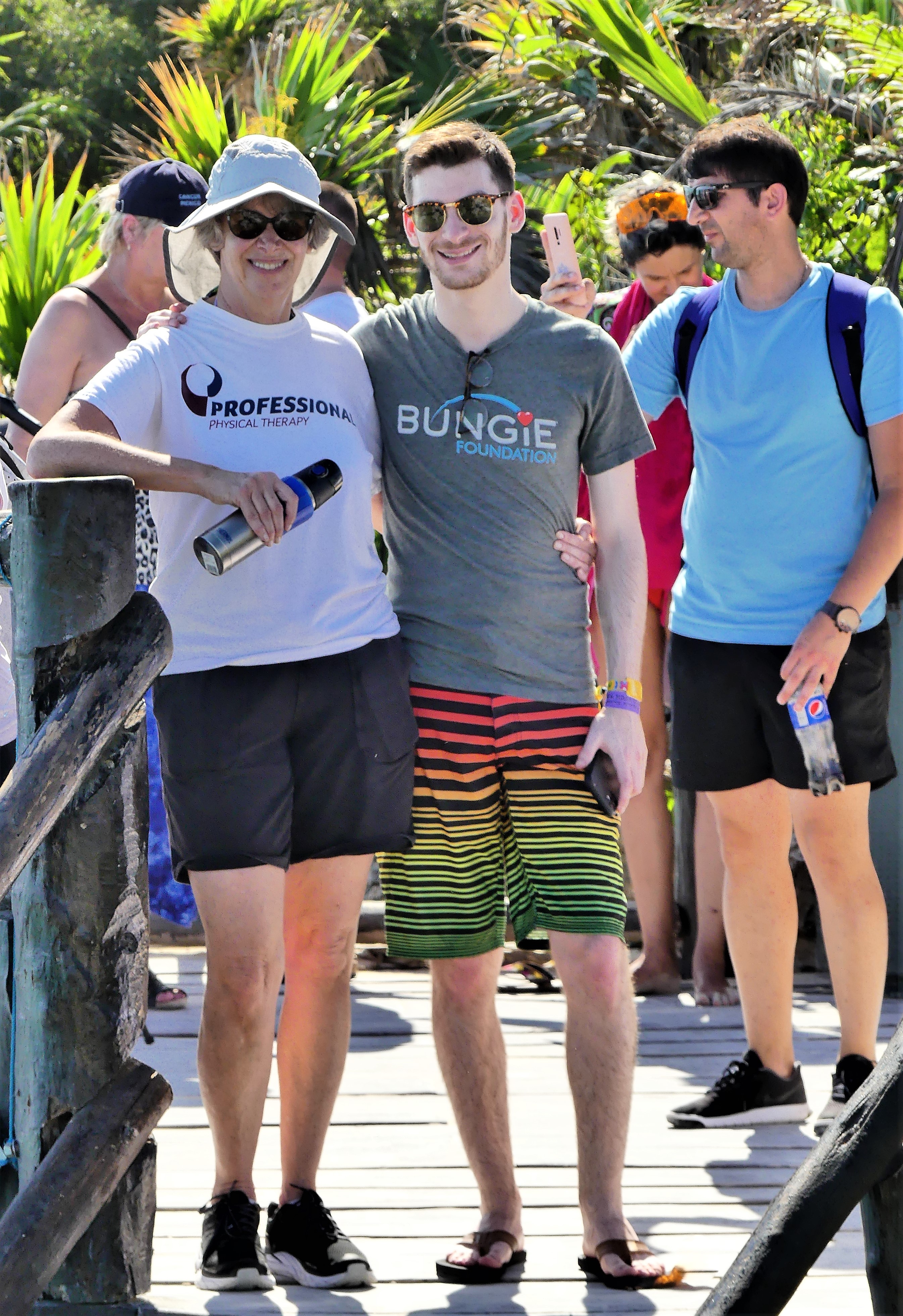
except when I wanted an isolated picture of family.
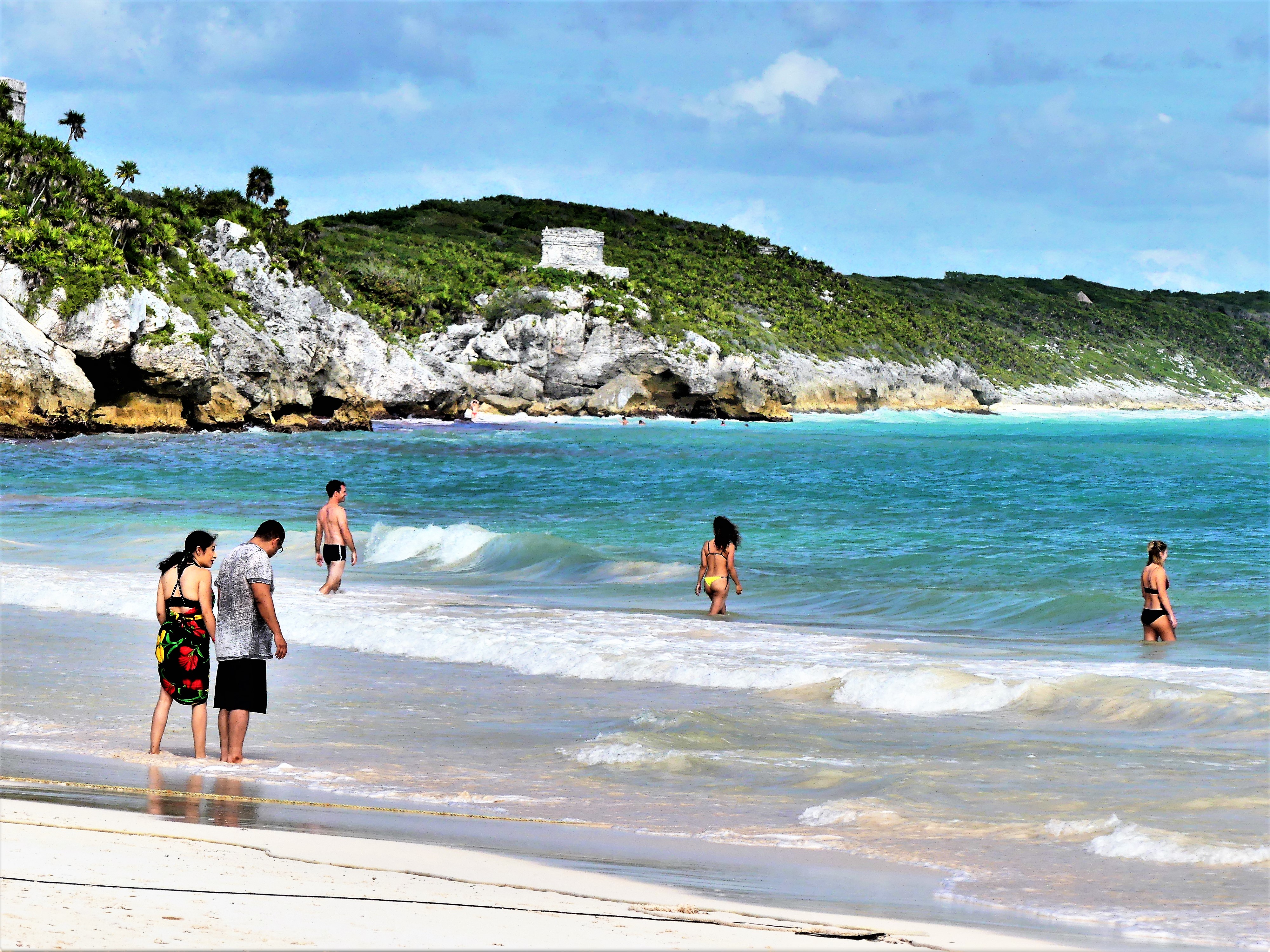
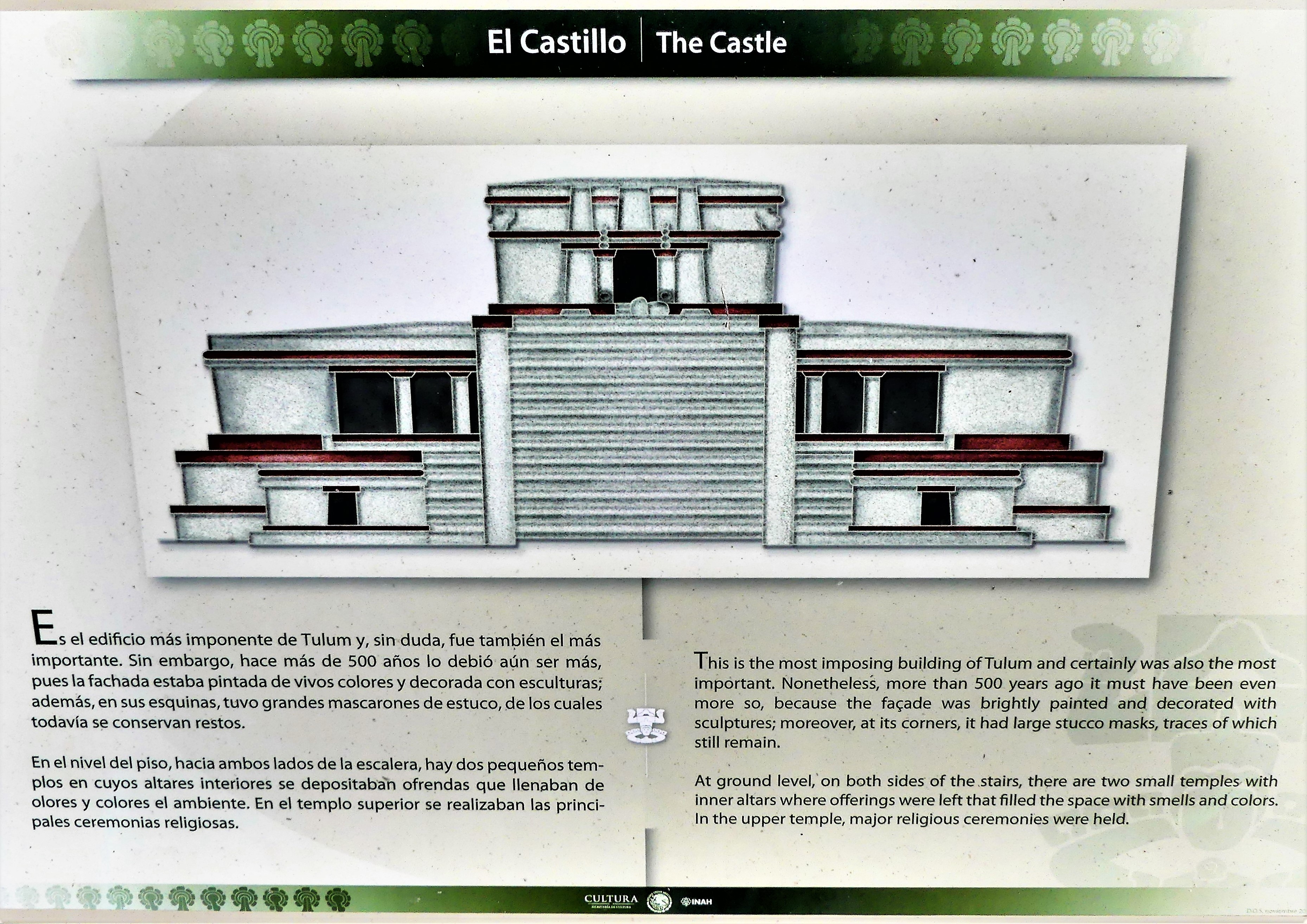
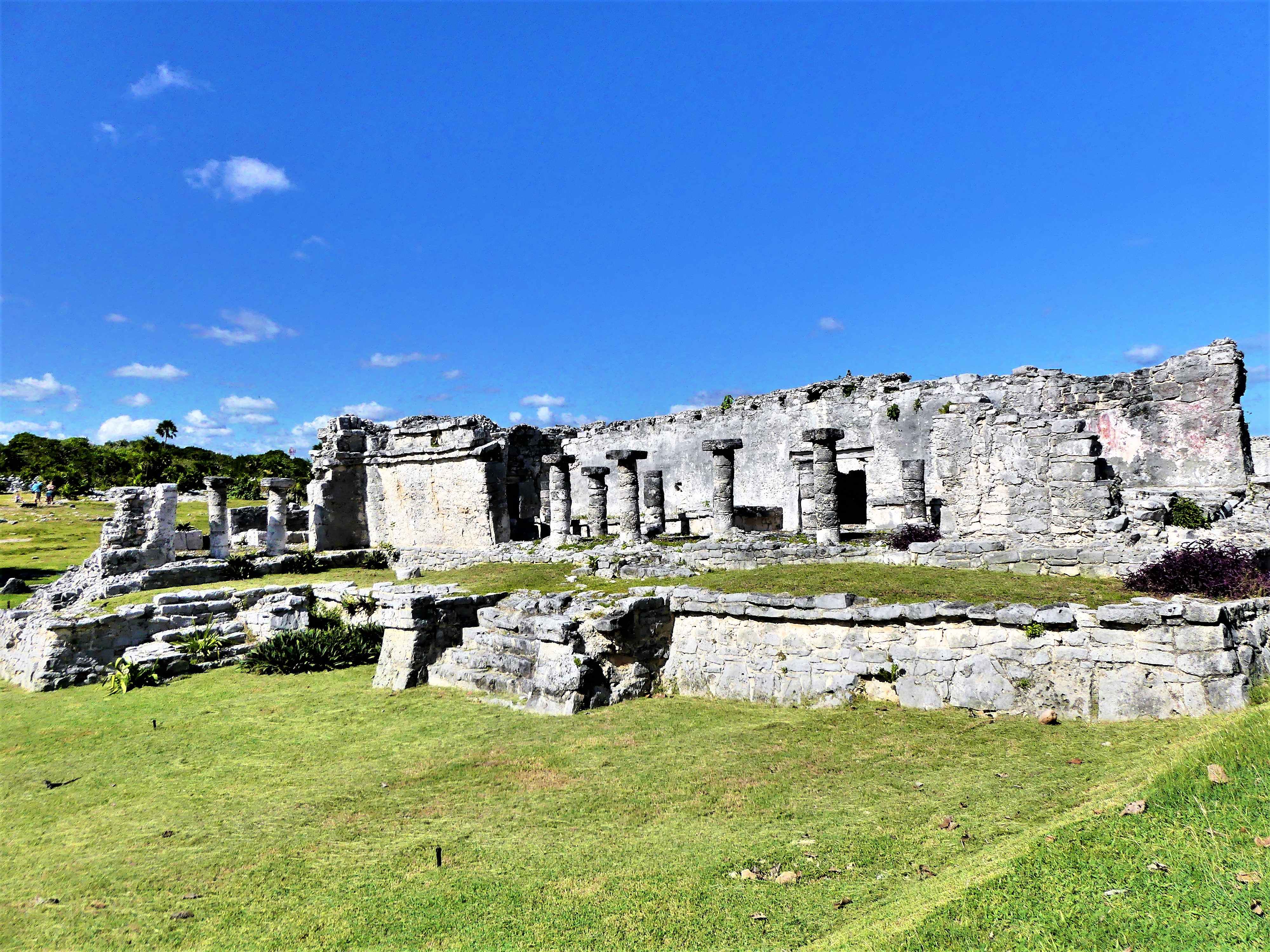
After meandering through 13th century wreckage for more than an hour, we turned our attention to the beach, where the turquoise water looked so inviting.
Ruins Beach is accessible from the cliffs above, but 500 meters south, lies Sante Fe Beach, one of Tulum’s original hangout spots before the tourism boom…
and that was our next destination.
Per Freddy’s instructions, we sought out Captain Harrison, and lounged on PVC beach chairs under a delapidated canopy, waiting for our excursion on Brenda or half a dozen skiffs just like her.
Leah stayed on land after realizing her bonine fix had worn off, but Noah, Nate and I eagerly climbed aboard.
Our captain motored out to open water,
and offered a summarized history of the Mayans, and importance of Tulum…in Spanish.
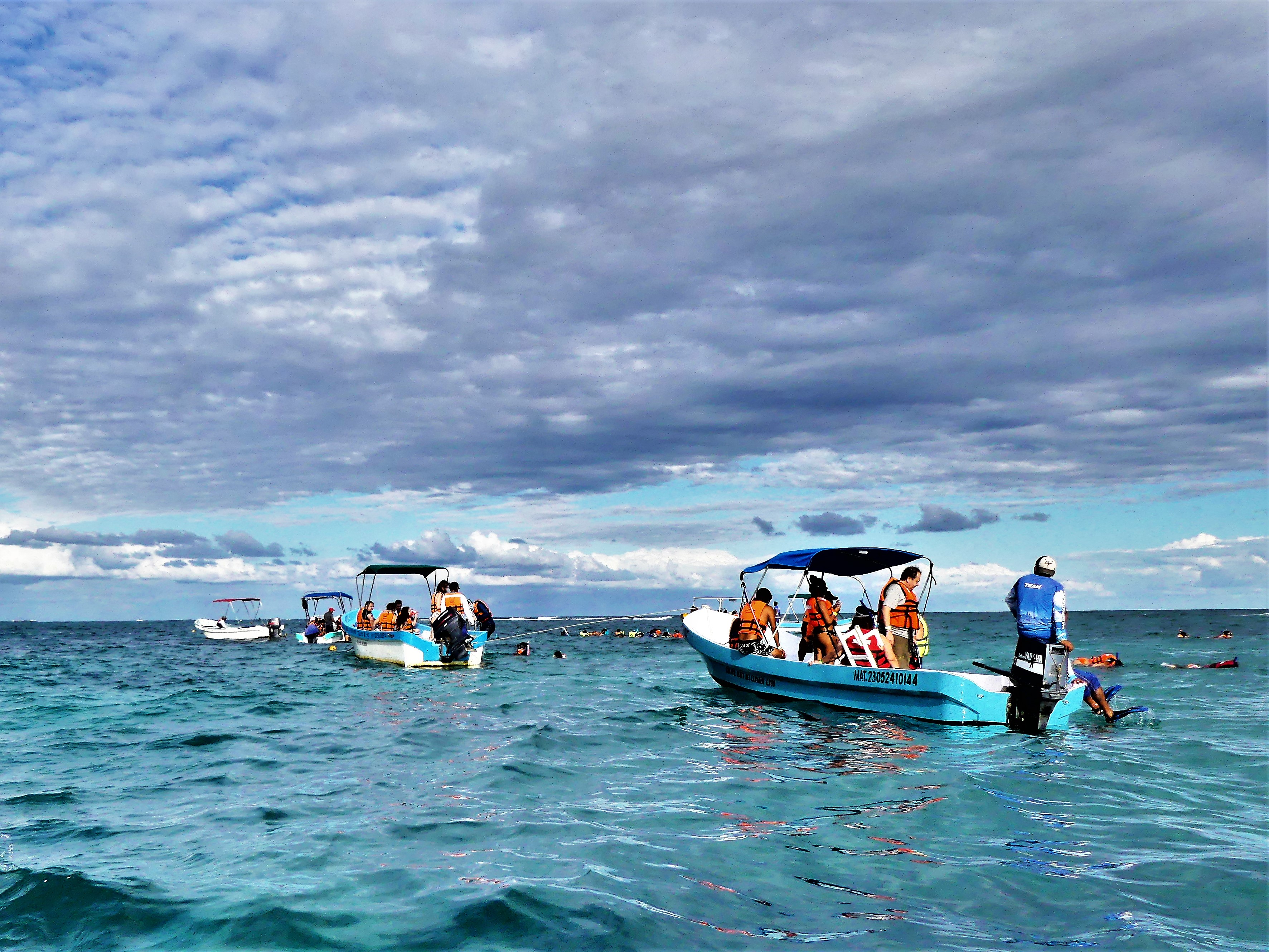
Soon, we headed for the reef, where others had formed a floatilla of snorkelers.
Noah and Nathan eagerly jumped overboard for an under-the-sea swim…
while I remained on the surface, shooting pelicans…
and keeping track of my sons.
Once ashore, it was time for a beer and a shower. Despite the primitive outdoor plumbing on the beach, we concluded that $27 a head was a better bargain than any of us could have ever imagined for a family vacation adventure.
“It’s a fine line between nutty and eccentric,” explained docent Jim Masseau of the Bayernhof Museum, “and the difference between the two is money.” Over the next two-plus hours, as Leah and I toured this residential mansion in suburban Pittsburgh, Jim’s definition proved to be an understatement, as we learned more about the behavior of Charles Boyd Brown III, the master of Bayernhof.
We entered the house through heavy double-doors, which opened into an airy vestibule sporting a heavy chandelier–
befitting a man who made his fortune fabricating sand-casted aluminum lanterns.
Along the way, we passed what appeared to be a life-sized Hummel figurine (later identified as bearing a likeness to his great-grandfather),
and gathered in the family room with the other guests, only to stare at Charlie’s portrait while we waited for Jim to begin the tour.
After informal introductions, Jim fed us details about Charlie’s bachelor life (born in 1937) and the house he left behind.
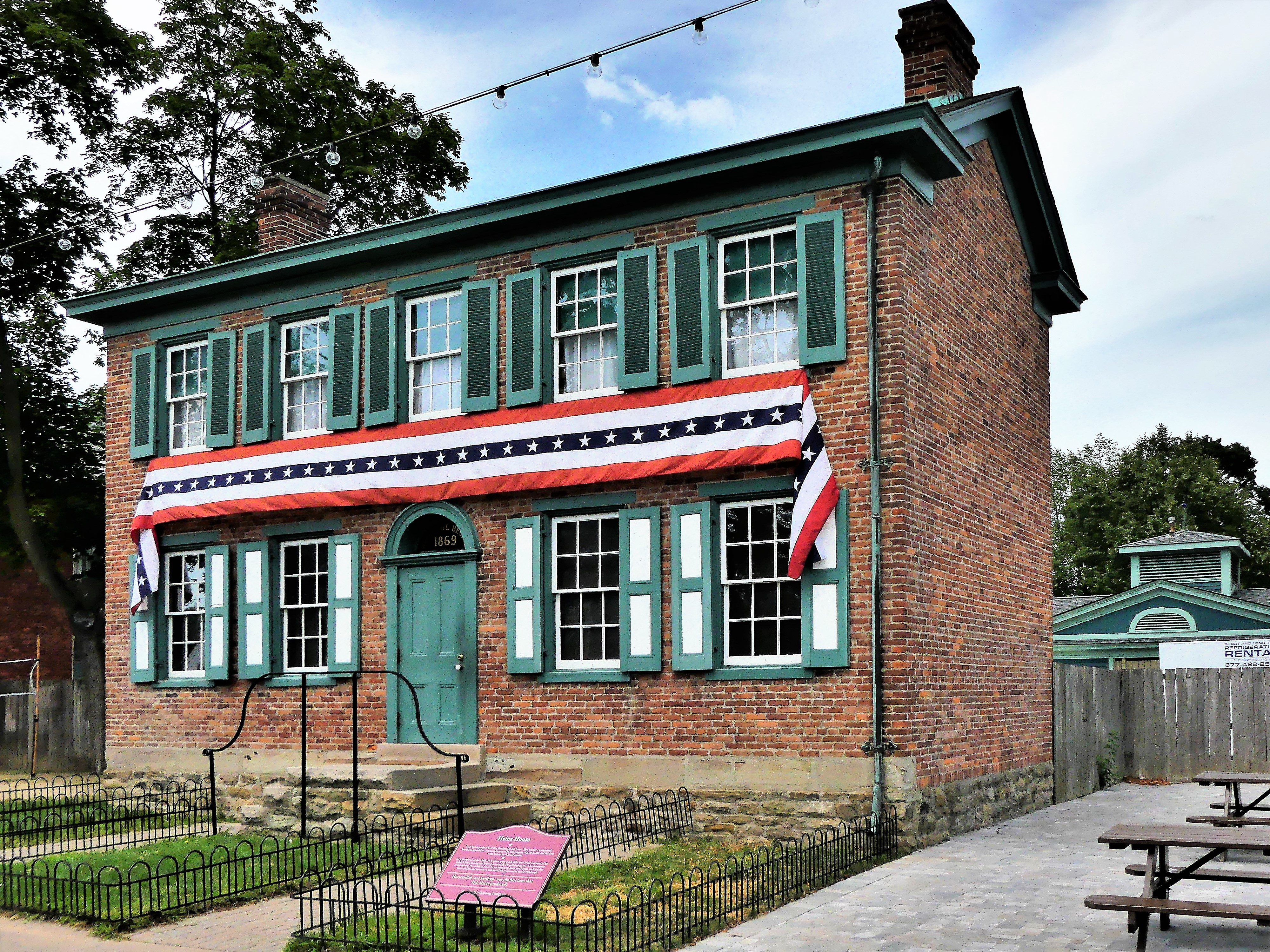
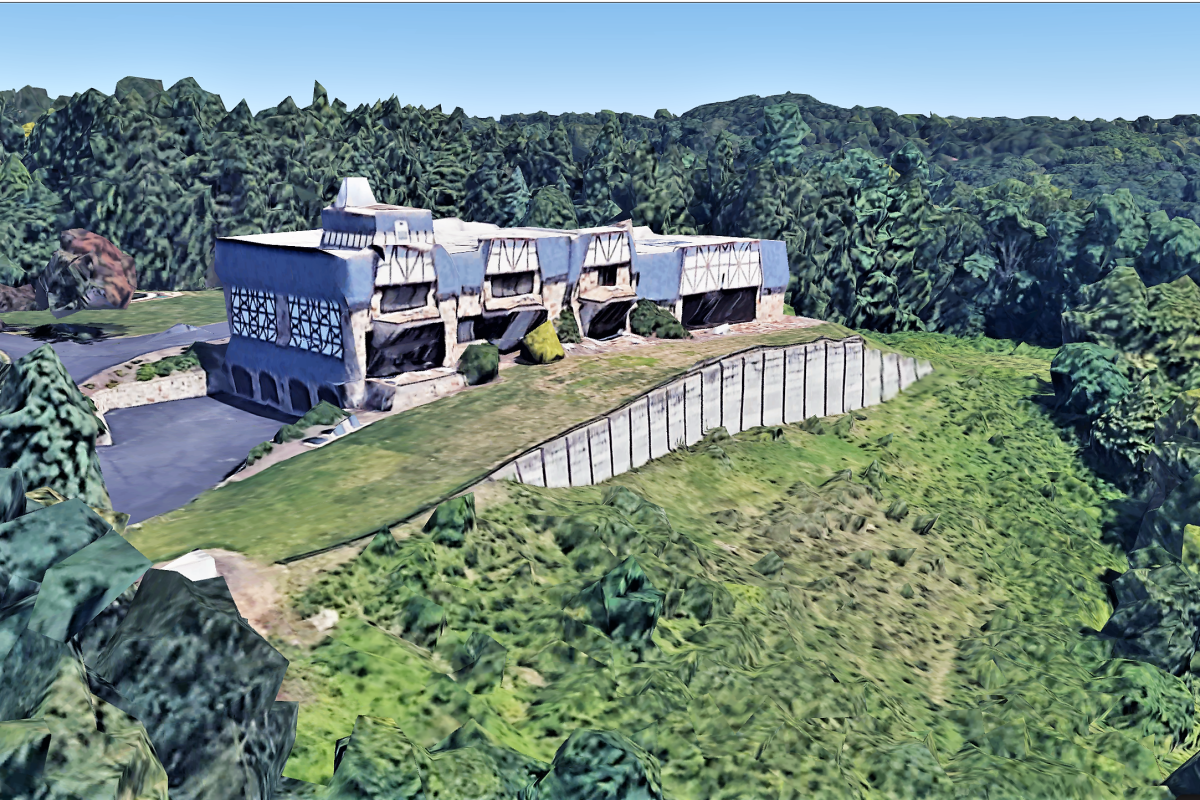
Built high on a hill covering 18 acres, and completed in 1982–after 6 years of construction without blueprints–Charlie’s 19,000 square-foot, Bavarian-styled “castle” overlooks the Alleghany Valley, with views reaching one-hundred miles beyond city limits on a clear day.
However, despite Charlie’s dream of constructing a $4.2 miilion estate with German folk-flourishes–
a rooftop observatory with a 16 inch reflecting telescope…
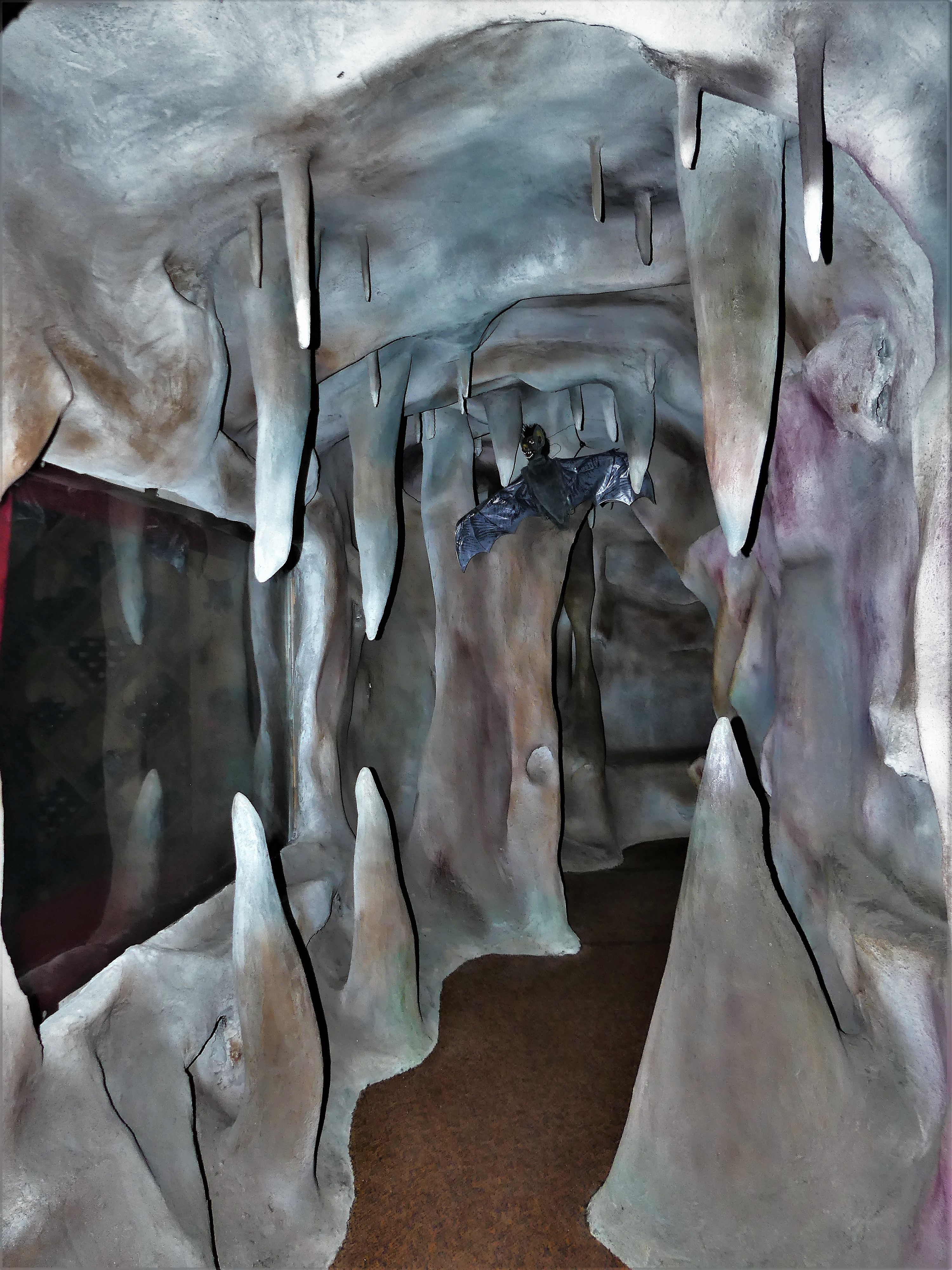
a basement batcave made of concrete and fiberglass,
a swimming pool with a 10-foot waterfall…
a wine celler with a working copper still…
a billiard room (starring a pool table thought to belong to Jackie Gleason)…
a home office…
and a boardroom (only used twice)–
his house, unfortunately, would never be considered museum-worthy on its own. Charlie would need a gimmick to attract greater attention. And that’s when he started collecting automated music machines from the 19th and 20th century.
Charlie couldn’t carry a tune, and had as much musicality as a bag of bagel holes. But his appreciation for century-old music machines instructed his passion for collecting them, until he acquired nearly 150 working devices (many rare and unusual), now scattered throughout the premises.
A sample of instruments can be viewed in the video below:
As Charlie grew his collection, he loved showing them off, and held lavish parties for 5 to 500 guests at a time–always in charge of the cooking, and always dressed in one of his signature blue Oxford shirts. He owned 283 of them. Whenever he tired of his company, he would magically slip away through one of many secret passages, leaving his guests to fend for themselves.
Before Charlie passed away in 1999, he endowed a foundation valued at $10 million to convert his home into a museum. In 2004, the O’Hara Township zoning board granted his wish, and the Bayernhof Museum was born, with the stipulation that pre-arranged guided tours be limited to 12 people at a time.
Charlie’s Bayernhof got its big break when CBS News did a feature for its Sunday Morning broadcast earlier this year…
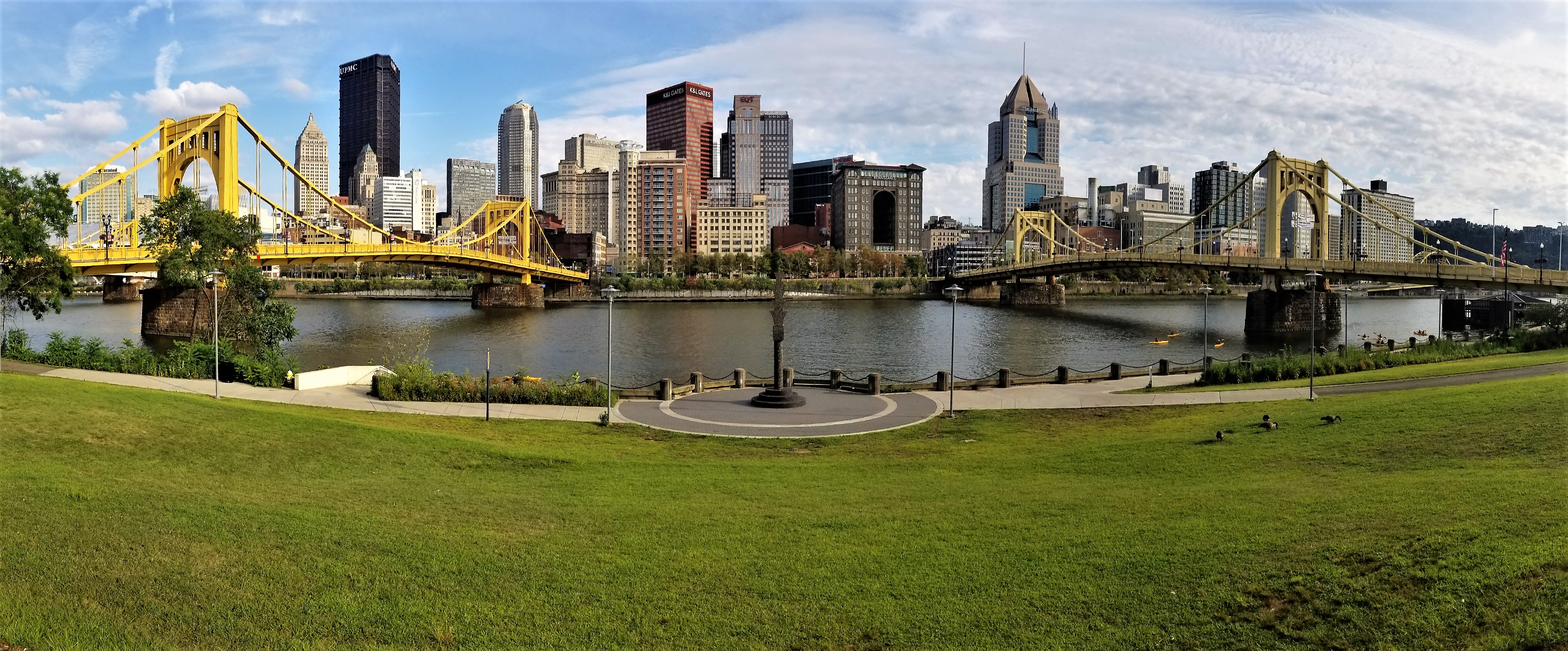
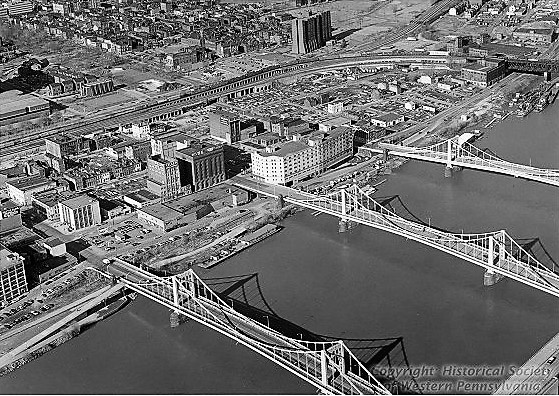
Pittsburgh is best known as the “City of Bridges,” boasting a world’s-highest 446 spans.
Its residents have been crossing its rivers and hills before the French built Fort Duquesne at the confluence of the Monongahela and Allegheny Rivers in 1754 to protect their access to the Ohio Valley.
After the British advanced, defeating the French and Native Americans, they established Fort Pitt in 1761.
As Pittsburgh industrialized during the 19th century, so did its transportation network, and the bridges soon followed, connecting many of the elevated neighborhoods scattered throughout the vicinity.
Pittsburgh’s “Three Sister” Bridges: the Sixth, Seventh, and Ninth Street Bridges. The “Three Sister” bridges were part of a massive series of bridge-building campaigns begun in 1924 by the Allegheny County Department of Public Works, and finished in the late 1930s by the Depression-period Allegheny County Authority. Credit: Allegheny Conference on Community Development Photographs, Detre Library & Archives at the History Center
In fact, the “City of Bridges” moniker could easily be replaced with the “City of Hills,” given Pittsburgh’s challenging geography, for there are hills galore (North Hills, East Hills, South Hills, West Hills, Middle Hill, Upper Hill, Spring Hill, Summer Hill, Troy Hill, Polish Hill, Squirrel Hill, and the Hill District); and there are heights aplenty (Northview Heights, Brighton Heights, Crafton Heights, Duquesne Heights, and Stanton Heights); as well as a variety of lofty-sounding communities (Highland Park, Mt. Washington, Southside Slopes, Beechview and Fineview).
For me, growning up in Stanton Heights was a constant cardio workout of hiking and biking in my neighborhood. I still recall schlepping up Greenwood Street’s countless steps on my way home from junior high at Morningside Elementary School. And climbing those hills in an unforgiving winter frequently required fortitude and a layer of thermal underwear, which was sure-fire bait for bullies.
Characteristically, Pittsburgh’s reputation for having the largest collection of steepest streets in the world underscores the importance of living close to a world-class medical center (UPMC)…
whose headquarters, coincidently, occupy the US Steel Building–the tallest tower of Pittsburgh’s skyline.
It had been a long time between visits to Pittsburgh, so Leah and I relocated the Airstream to an RV park north of Pittsburgh for a few days, appropriately named Mountain Top Campground…
and determined that a trip to Mt. Washington was a natural first stop for a lasting look at my hometown from the best possible vantage point.
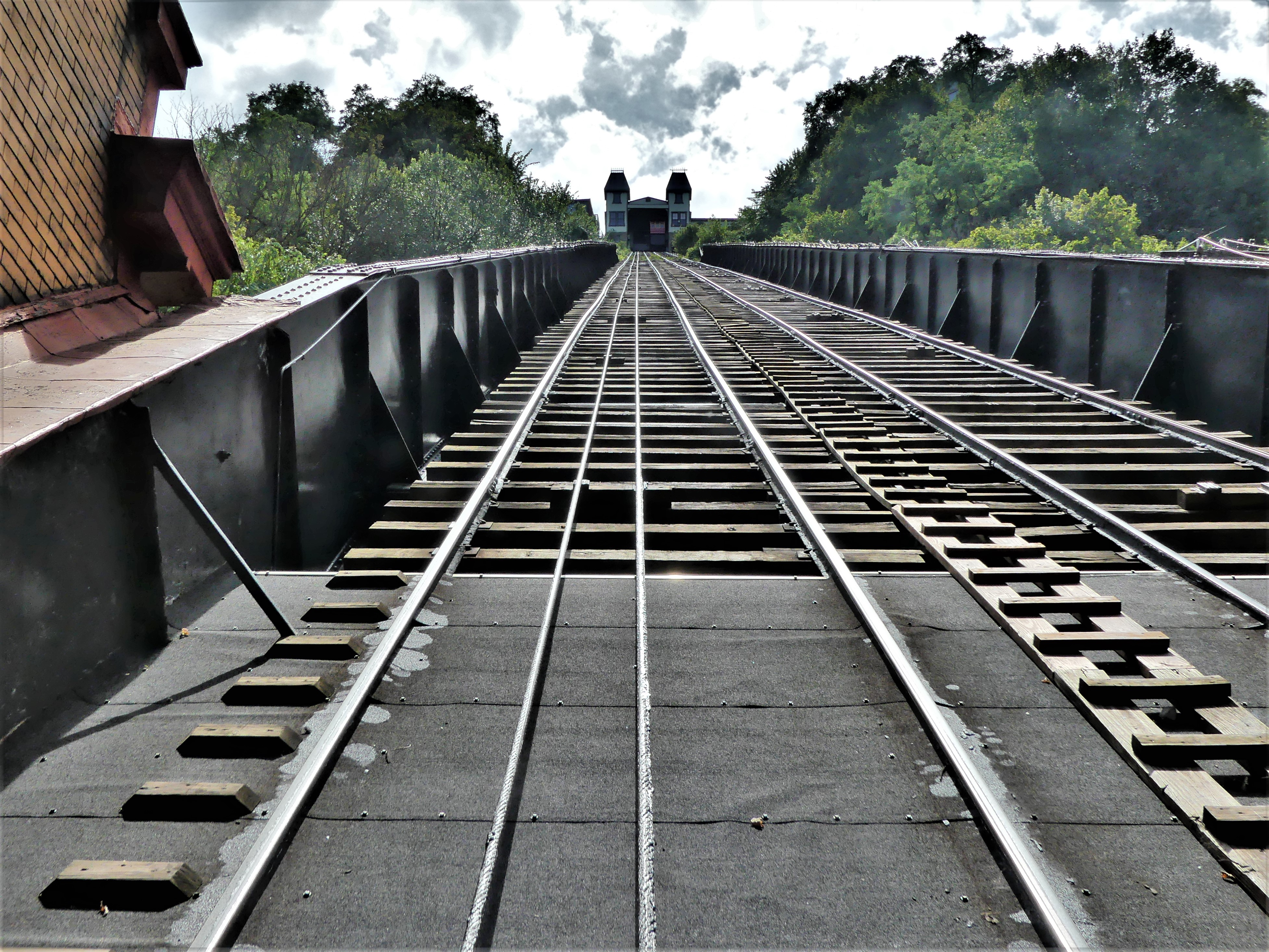
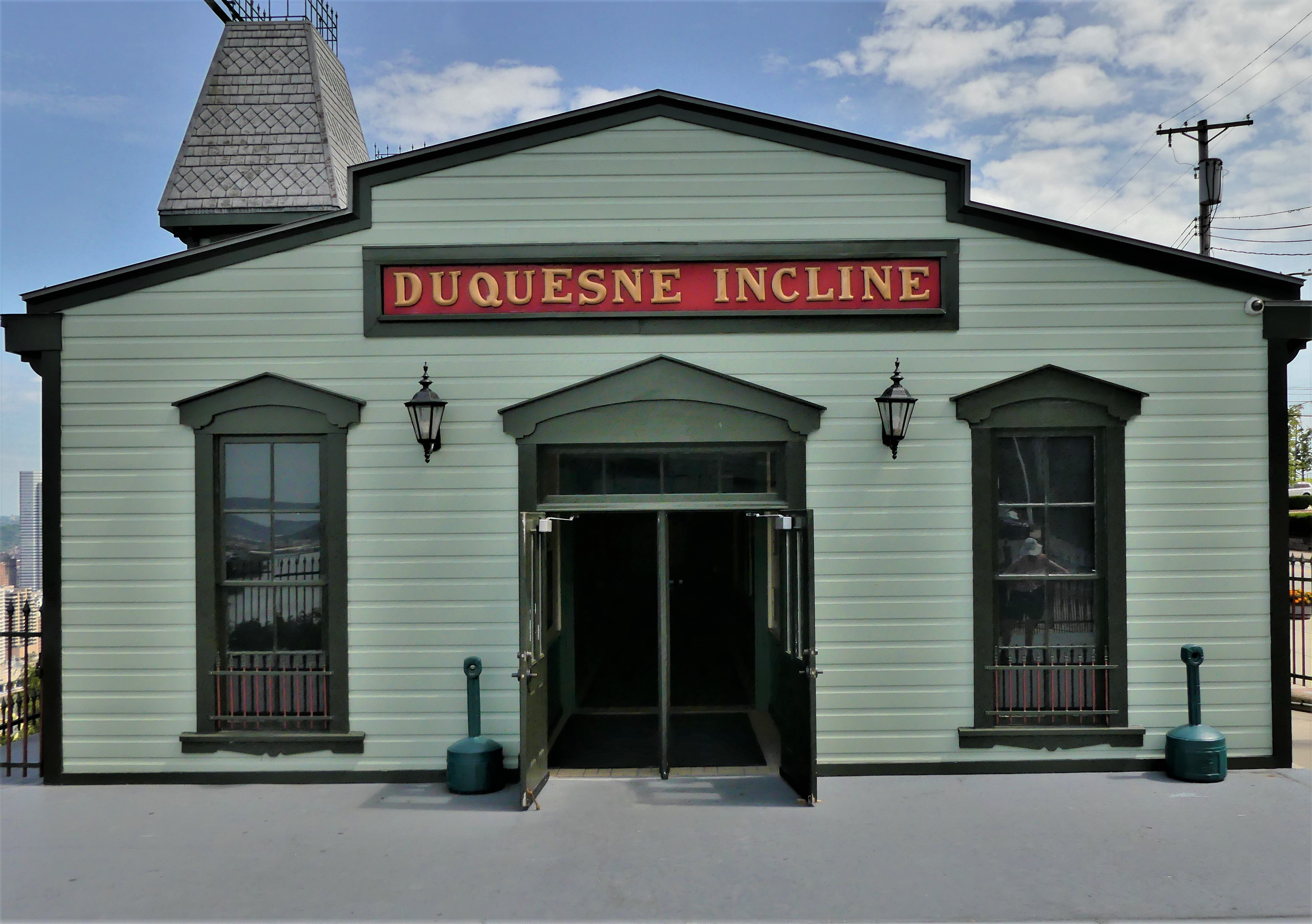
But rather than drive to the top, we parked in a lot and rode the Duquesne Incline as tourists–
one of two remaining from the original 17 funiculars that Pittsburgers once relied upon to ease their commute to the heights throughout town–
for an unparalleled lookout of the Point.
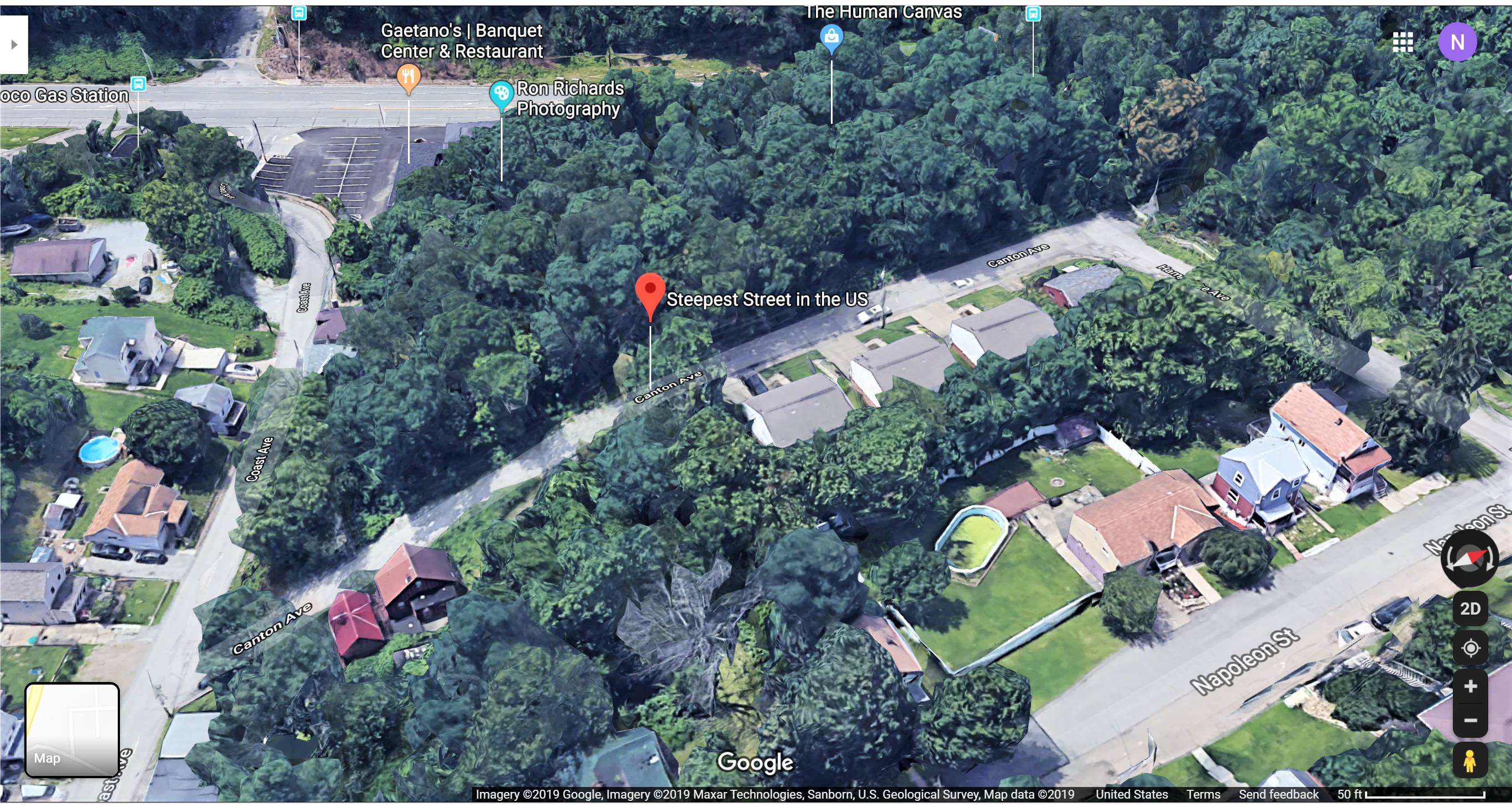
After an overpriced lunch at The Grandview Saloon (poached pear salad for $14), we followed Jennifer (our GPS) to Canton Street,
in search of America’s steepest street in Beechview.
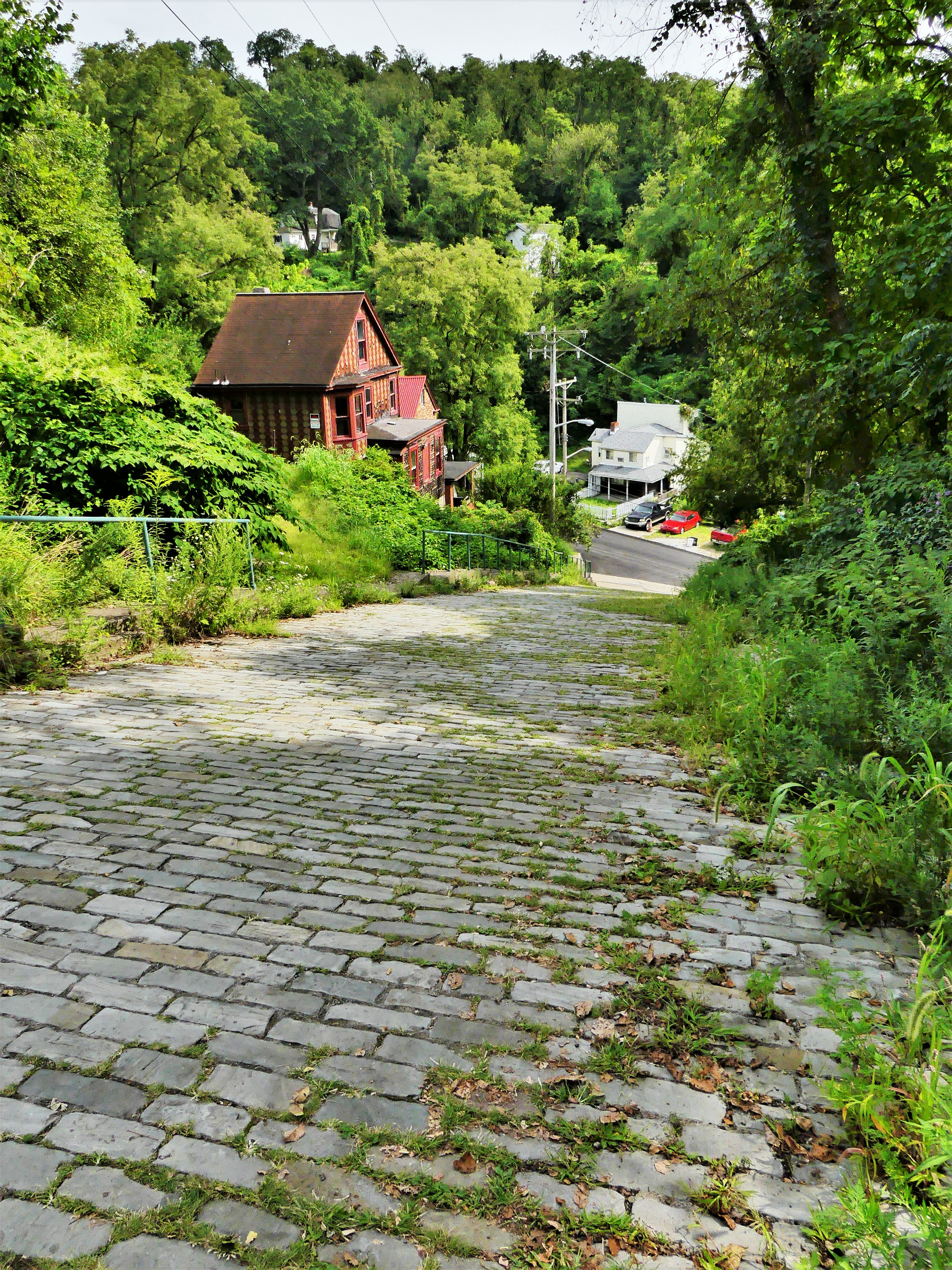
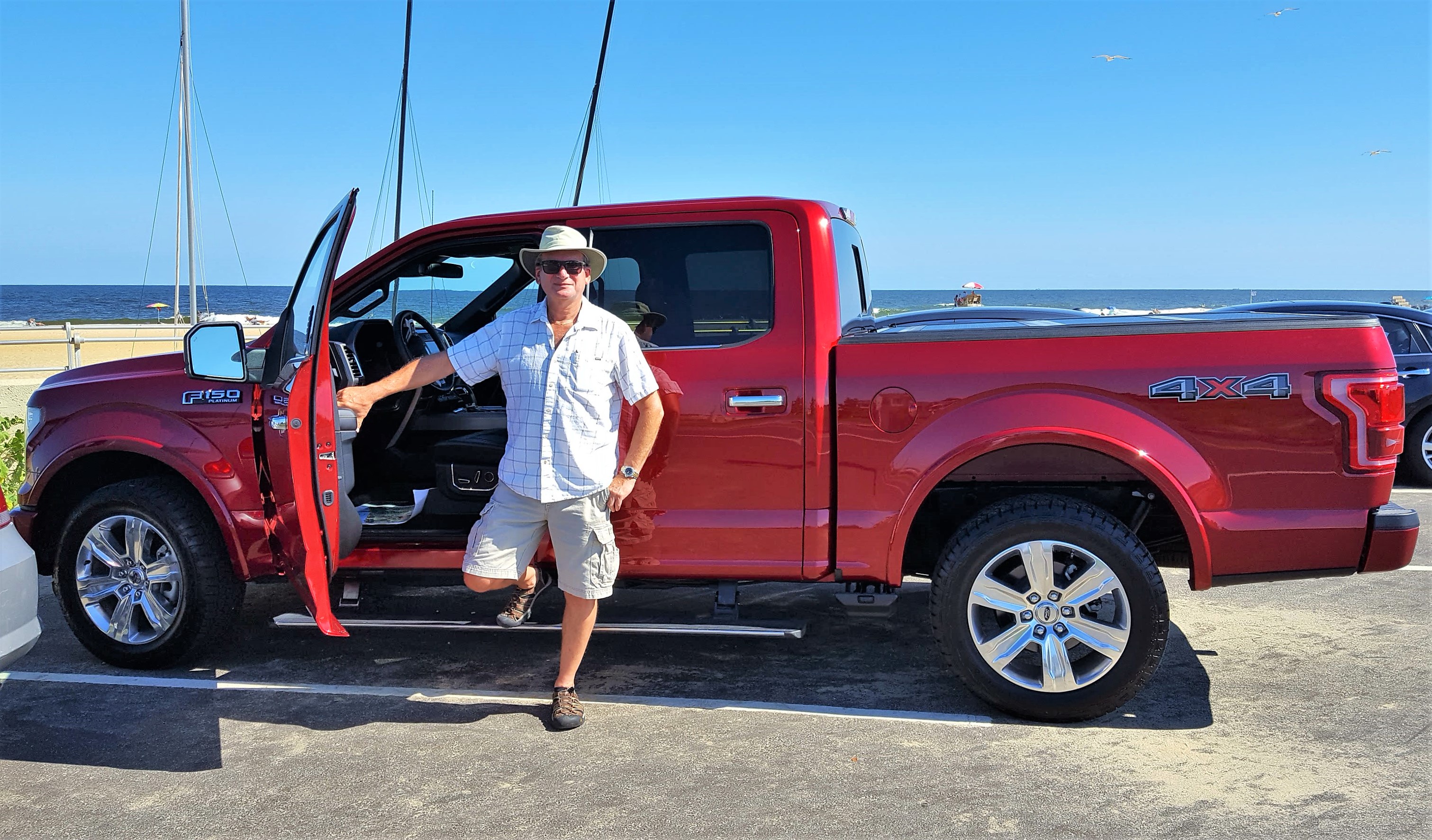
Although it’s only one block long, climbing the 37% grade behind the wheel of my F-150 was somewhat disconcerting. Aside from the bumpy ride over cobblestones, the angle was so severe, I could barely see the road beyond the windshield.
A 37% grade! I can’t even imagine what it would take to climb Canton Street during a winter storm…unless you’re a mountain goat.
But there was one last road phenomenon I needed to check out before we explored the cultural side of Pittsburgh. I had heard about a gravity hill near North Park that sounded like a too-good-to-be-true myth that needed busting.
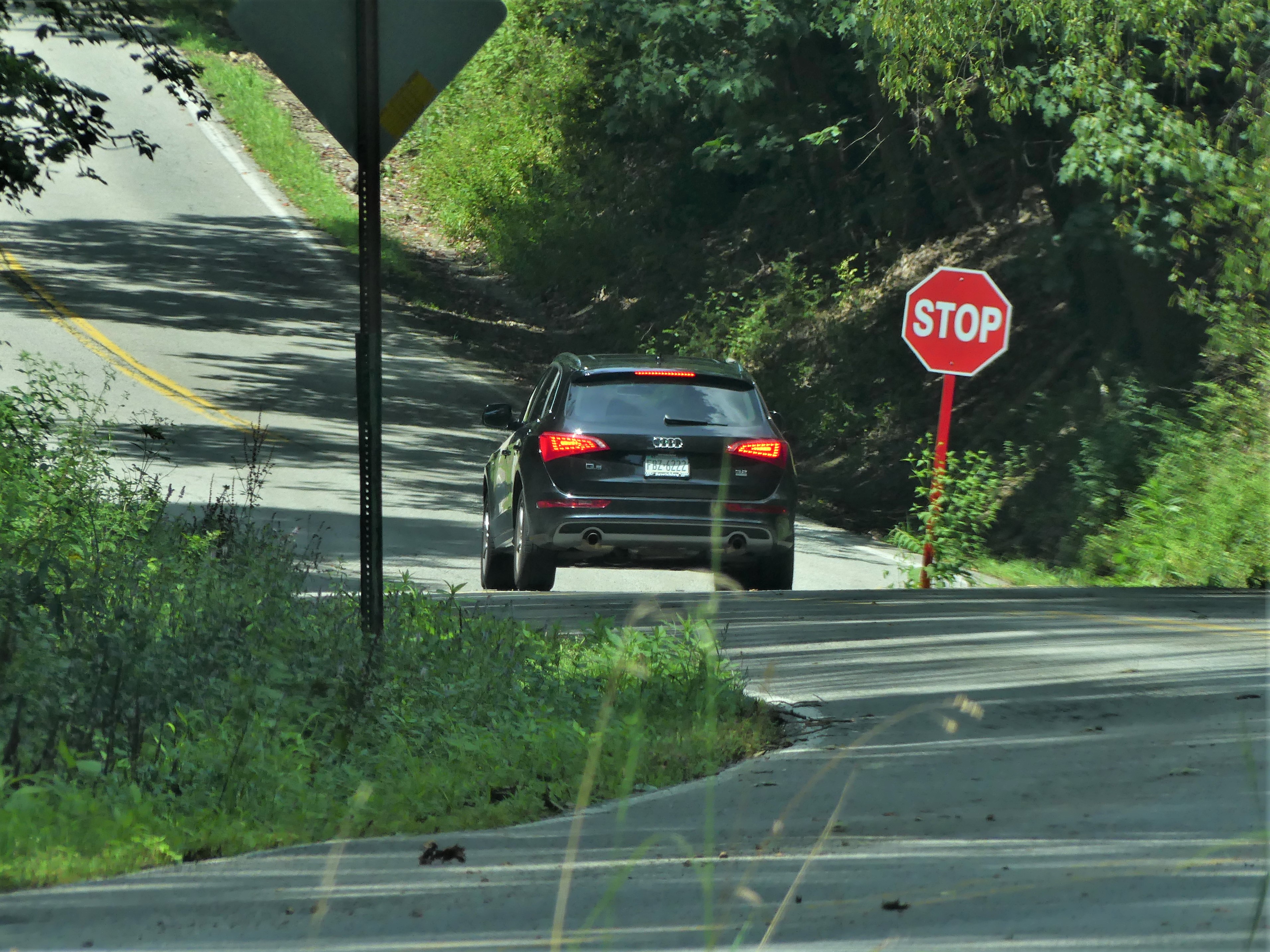
When I reached the intersection of Kummer and McKinney, I made a hard left around the STOP sign onto McKinney Road, and passed an Audi that was there to perform the same miracle-manuever.
Leah and I patiently waited off-road, watching the Audi repeat the same experiment… over and over again…until satisfied.
And then it was my turn.
I inched toward the STOP sign, and held the brake till I shifted to neutral. Leah stepped out of the truck to record the event on her iPhone. I hesitated for a moment thinking how crazy this seemed. Of course, the truck can’t possibly roll unhill. It goes against the fundamentals of science!
When I came to my senses, I released the brake, and the truck began rolling backwards. It was not what I expected!
I’m not a civil engineer, and I’m not a geologist, so I don’t have a reasonable explanation why the truck drifted backwards, so I consulted the experts:
According to Wikipedia, “a gravity hill is a place where a slight downhill slope appears to be an uphill slope due to the layout of the surrounding land, creating the optical illusion that water flows uphill or that a car left out of gear will roll uphill.”
So I was on a hill that made down look like up?
How weird…but then it occurred to me that Donald Trump runs the country the very same way, and “the 37%” who follow him, must be living on their own personal “Canton Street,” unable to see the road ahead.
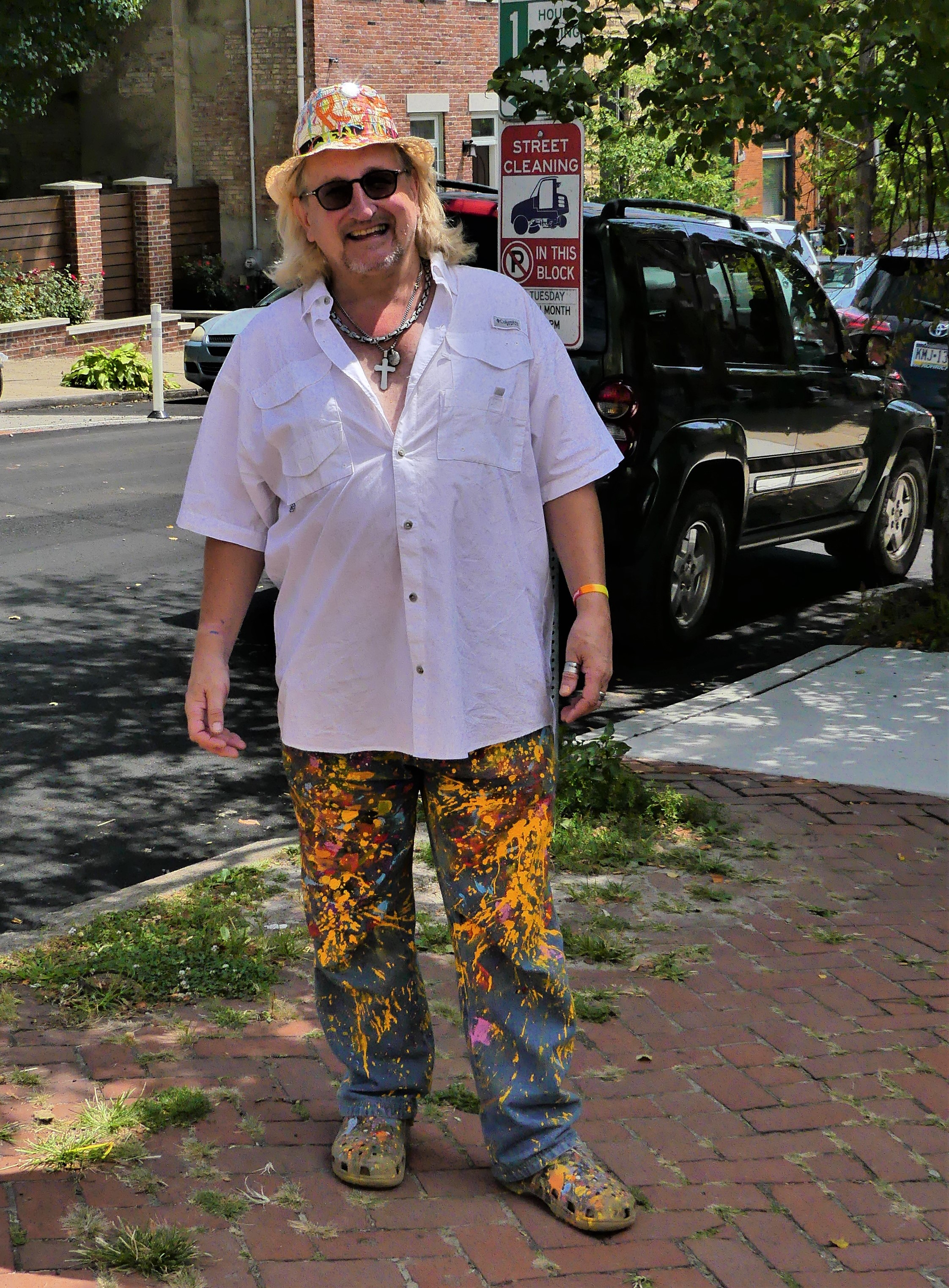
Randy Gilson grew up dirt poor in a small mill town just outside Pittsburgh’s city limits. As one of six children from a “broken” family, he remembers being teased by schoolmates, who called him “dumb, stupid, dadless, welfare boy, and white trash.” But his mother, a minister, advised him to ignore the noise, and instilled in him a commitment to do good for others. Her voice became Randy’s moral compass, and he’s walked the high road ever since.
He recalls a childhood Christmas when there was no money for presents, so he scavanged the neighborhood trashcans in search of discarded toys, and placed a wrapped gift for each of his siblings under the tree. It was a powerful lesson.
He learned that “making others happy made me happy.”
He also discovered that traditional learning was a waste of his time. He was wired differently from others, and blamed his failing school grades on an unofficial diagnosis of “ADHD and OCD, mixed with a little bit of autism,” because he was never formally tested. Rather than depend on his brain, he reminded himself that “my eyes are a tool to see, my ears are a tool to hear, my hands are a tool to work, and my heart is a tool to help.”
Randy’s first money came from mowing neighbors’ lawns, but in a roundabout way. At first, he furtively cut their overgrown grass as a goodwill gesture. The neighbors called Randy out for tresspassing, but eased their anger once they realized the benefit to their properties. Eventually, they hired Randy to tend their yards–where he honed his topiary skills on their hedges and trees.
Additionally, working on family farms over the summers taught him the value of nurturing seeds and the resultant harvest. In later years, Randy’s interest in horticulture blossomed into the Old Allegheny Garden Society, which resulted in planting hundreds of whiskey barrel gardens along the Mexican War Streets of Pittsburgh’s North Side during a risky time of transition and uncertainty.
“Living his life” gave Randy the confidence to gamble on his future. In 1978, he moved to Pittsburgh’s North Side, because it was the best he could do at the time. When long-time residents fled to the suburbs, the gangs moved into the area, and a drug culture took root and held the community hostage. “The neighbors used to shoot off guns in the middle of the night. For them, it was particularly useful in keeping the rents low,” claimed Randy.
But Randy stood his ground. Although planting gardens and painting murals raised eyebrows of derision and suspicion among grown-ups, the children of the streets gave Randy the benefit of the doubt. At first they were confused.
“Why would a stranger be doing all sorts of nice things on their streets?” Randy mused. “When I told them that I was doing it for them, then they wanted to help, too.”
The street became Randy’s parish, and he preached a gospel of stewardship and goodness. Soon after, his Pied Piper nature won over the rest of the community, and he was accepted as their resident eccentric (or eccentric resident).
An opportunity presented itself in 1995. An abandoned building on Arch Street, earmarked for the wrecking ball, was saved from demolition when Randy bought the property from the bank with a $10,000 credit card loan covered by the bank.
Immediately, he began collecting litter, planting gardens and painting wall murals.
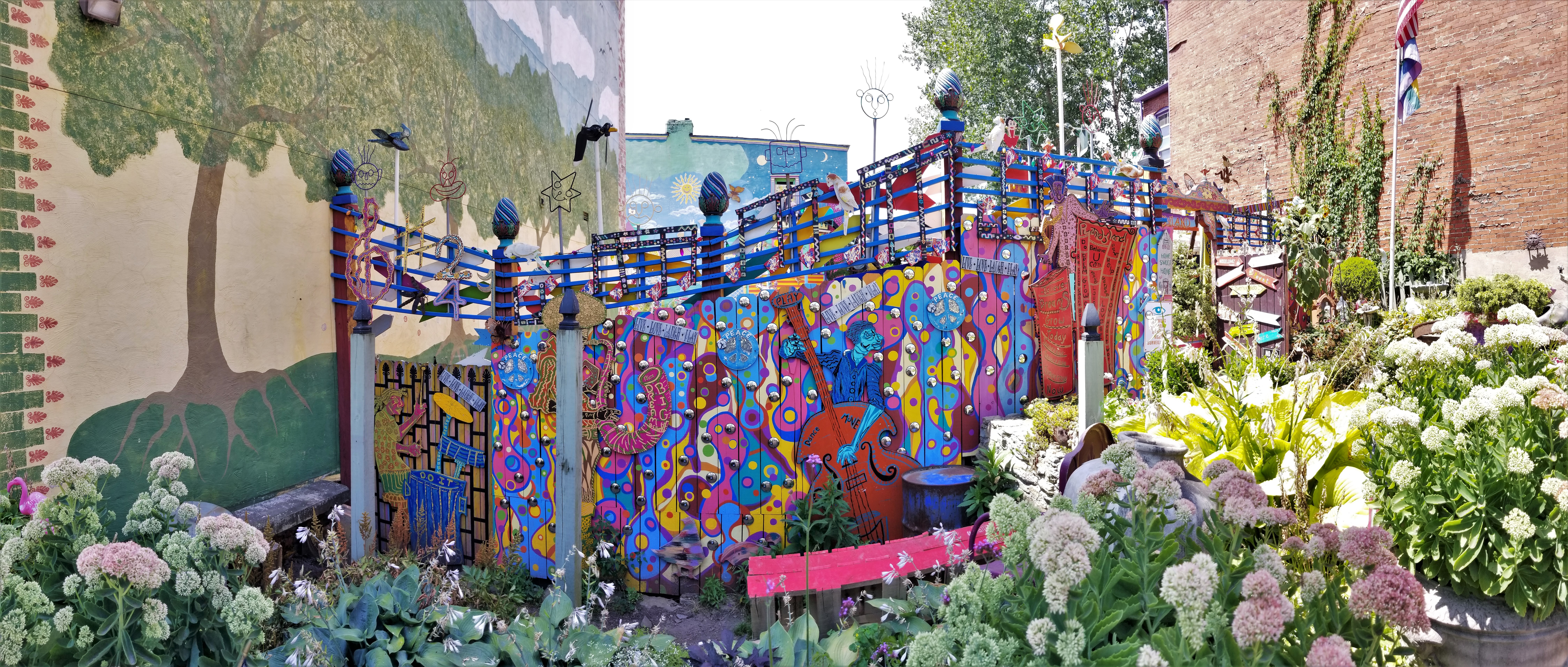
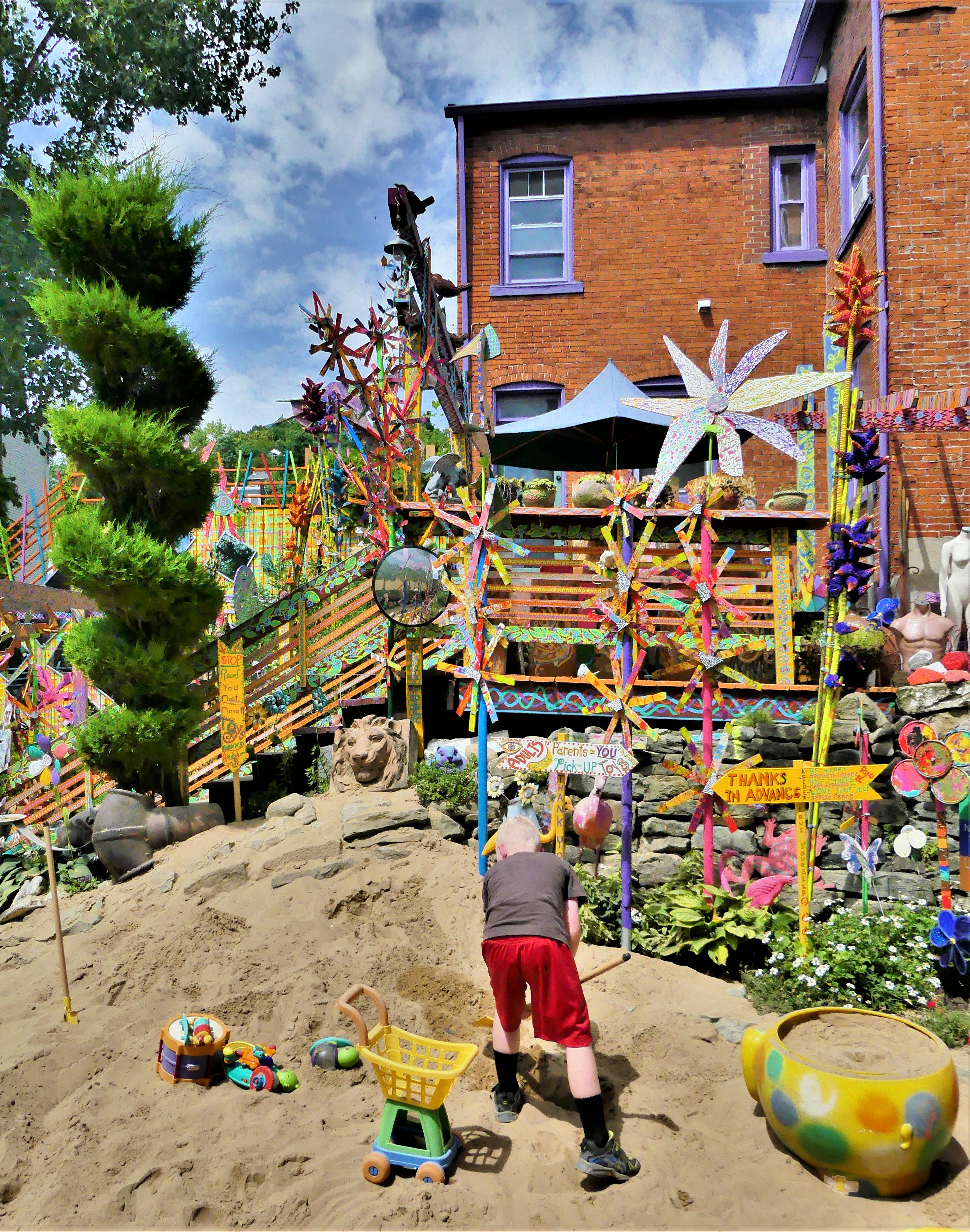
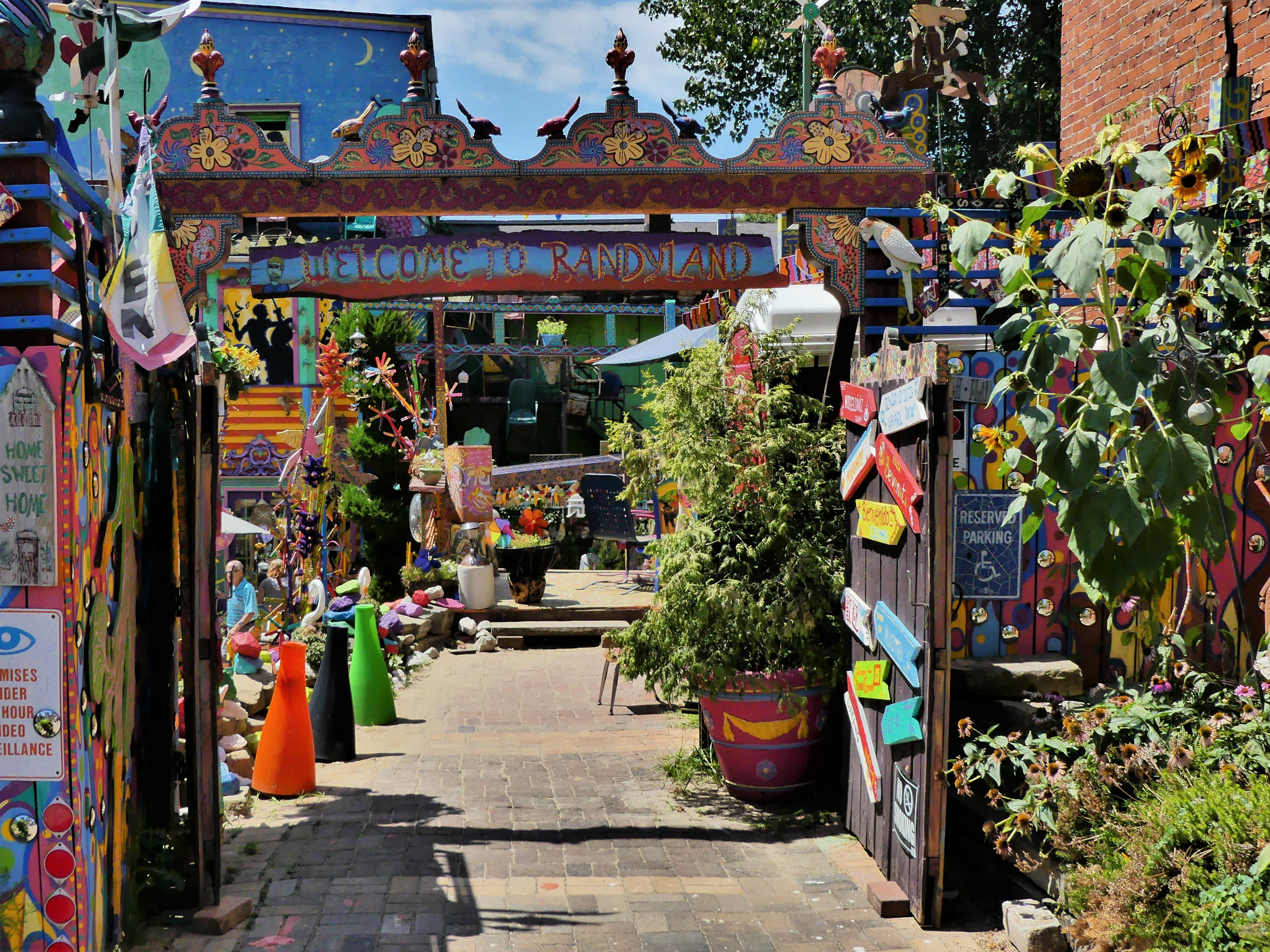
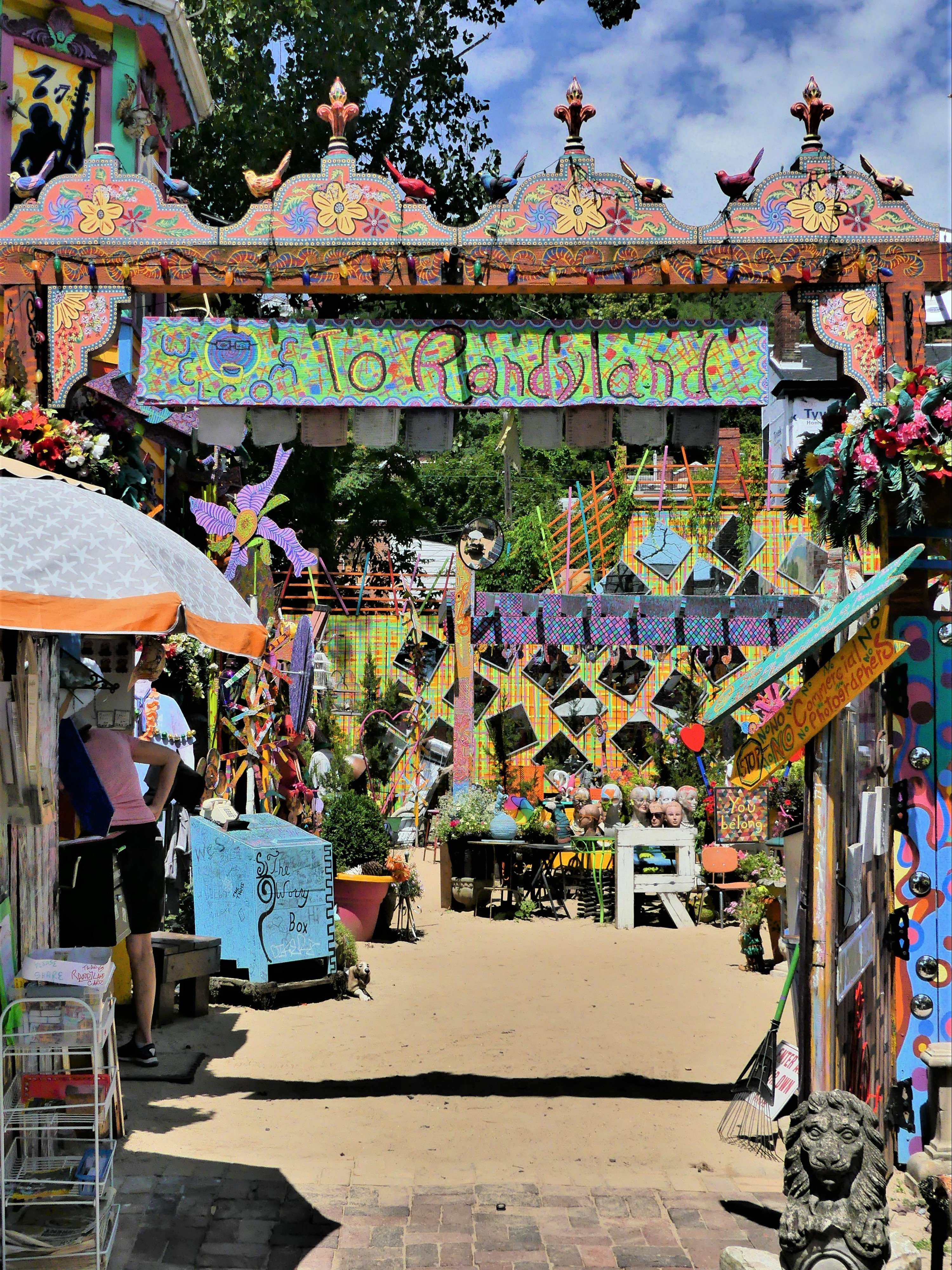
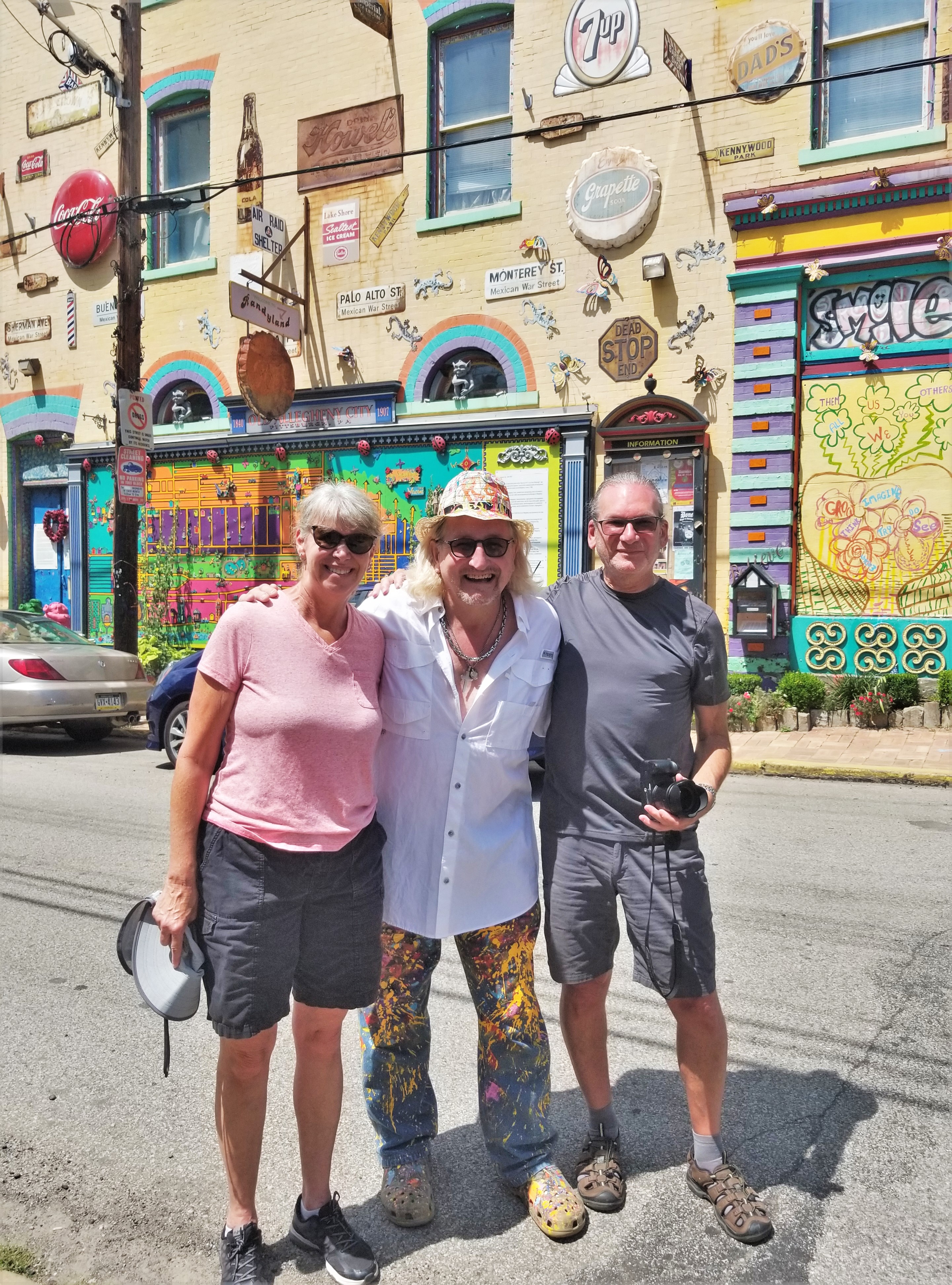
That was the genesis of Randyland…
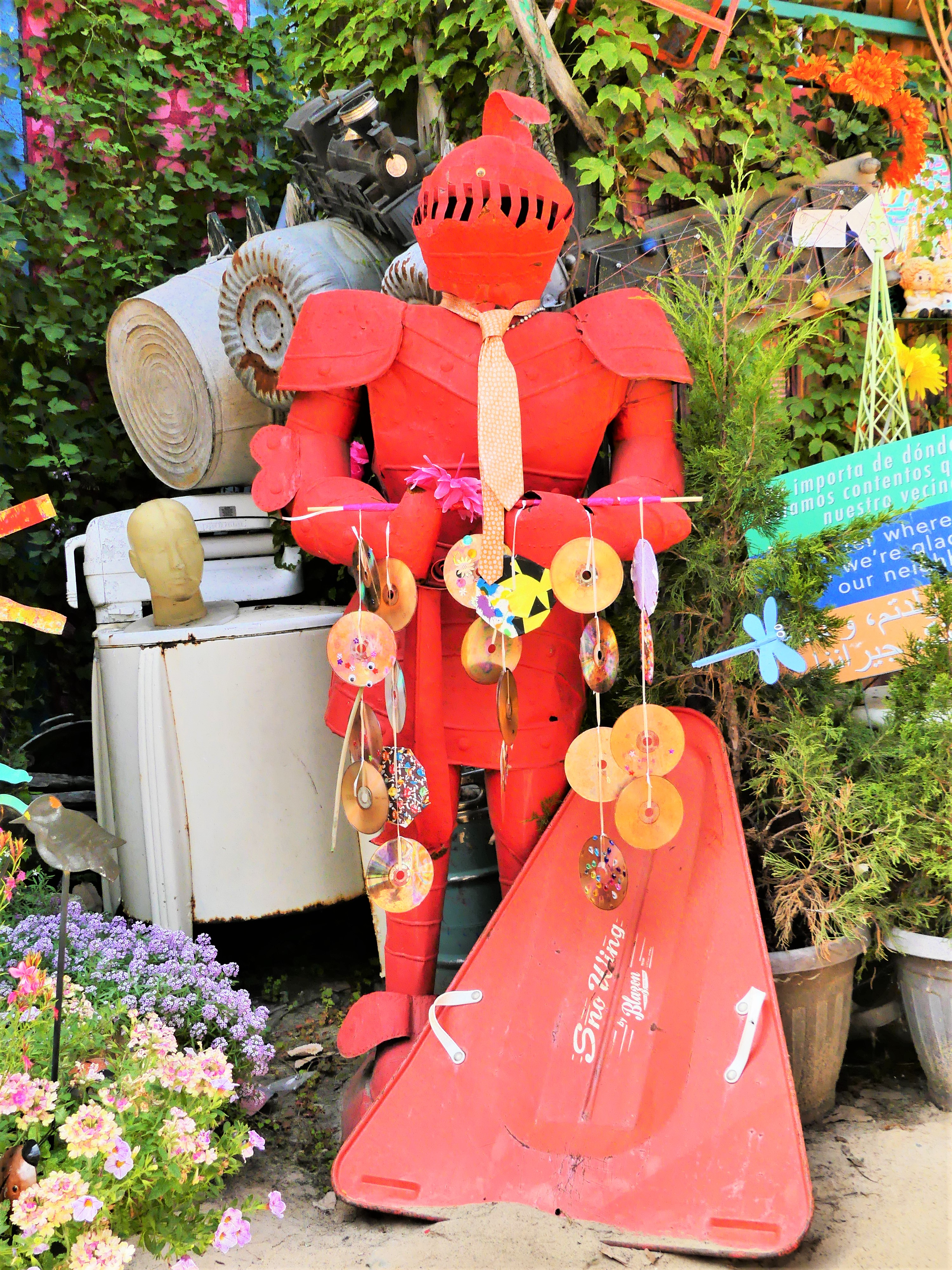
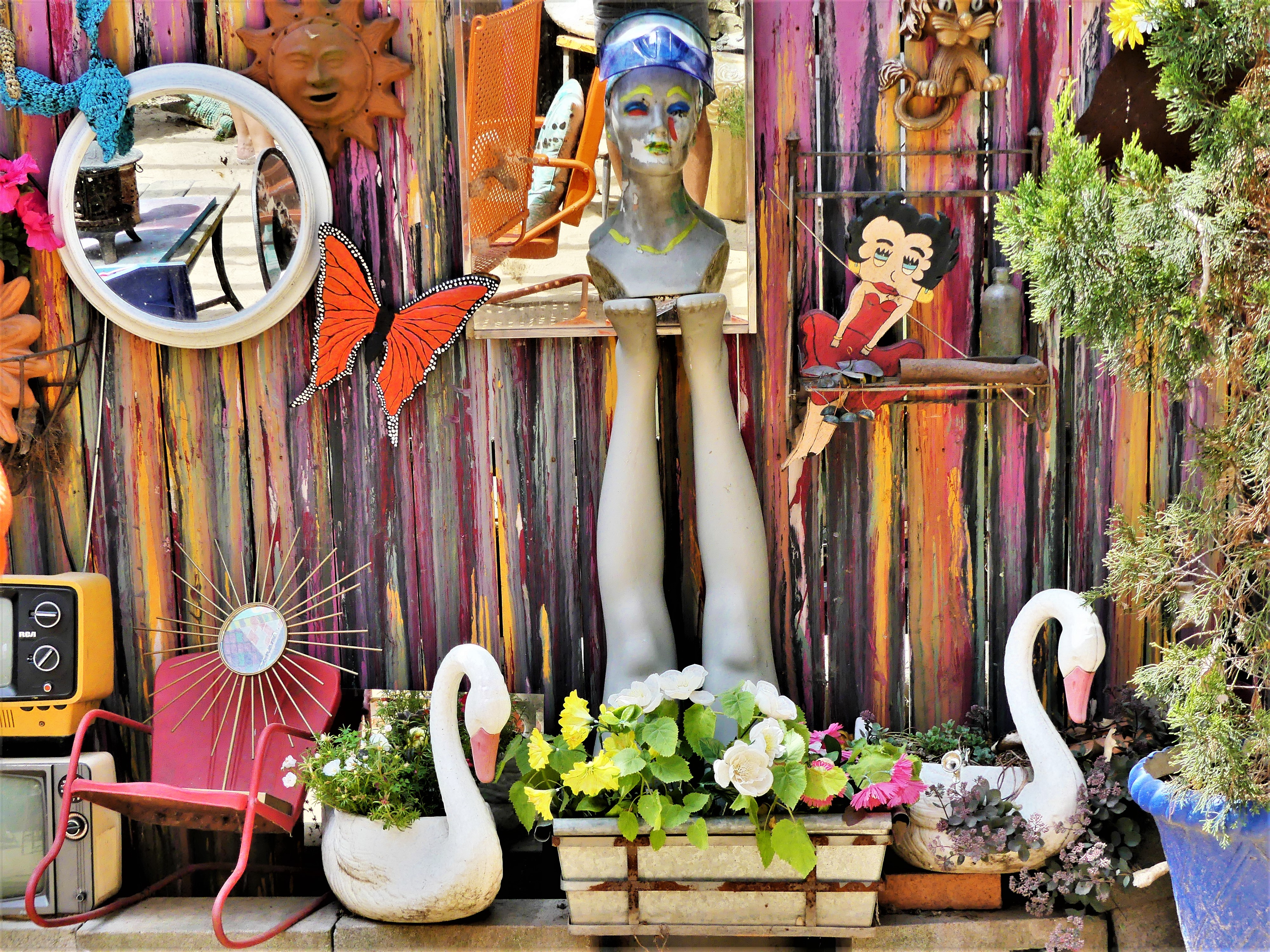
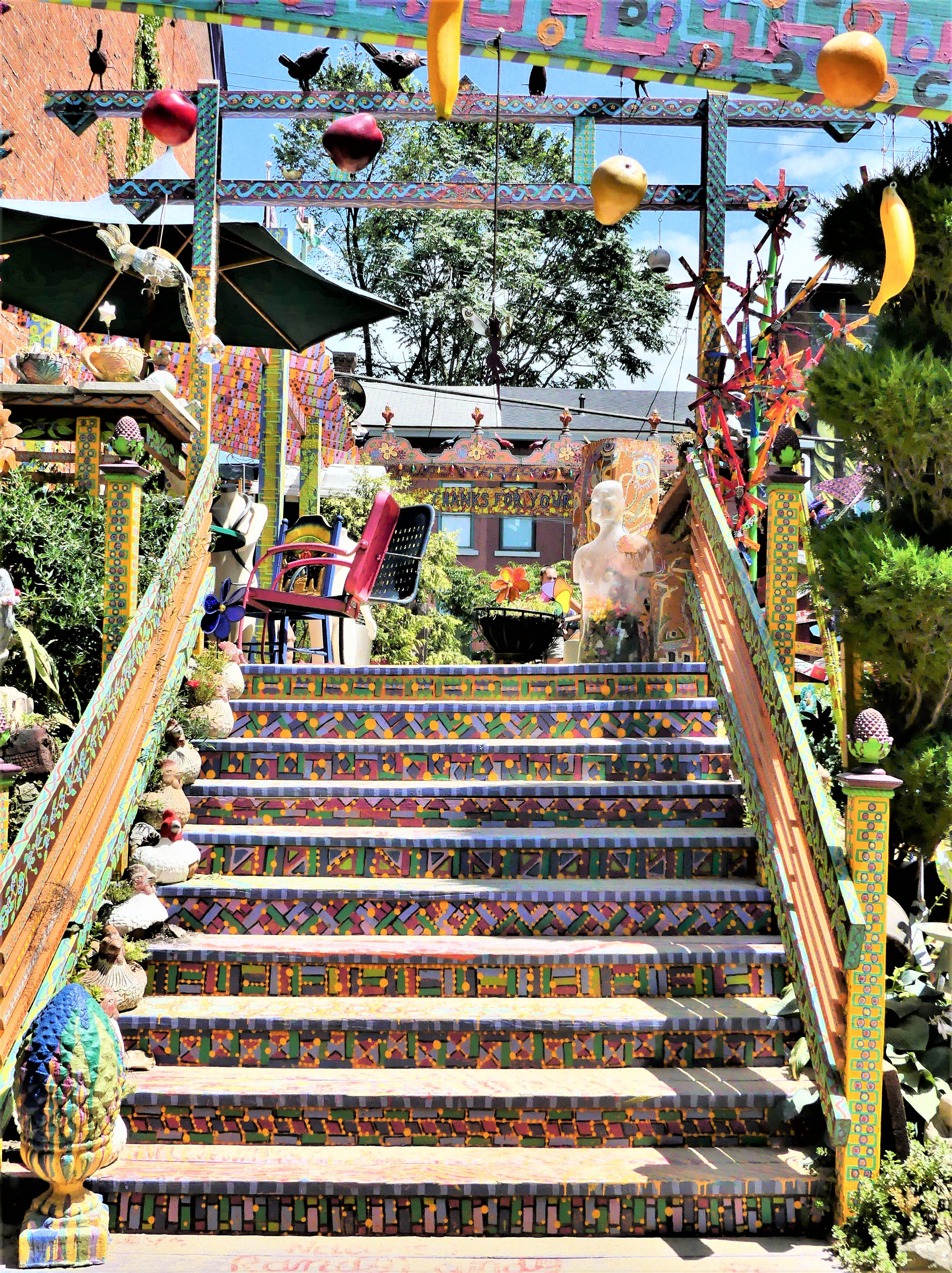
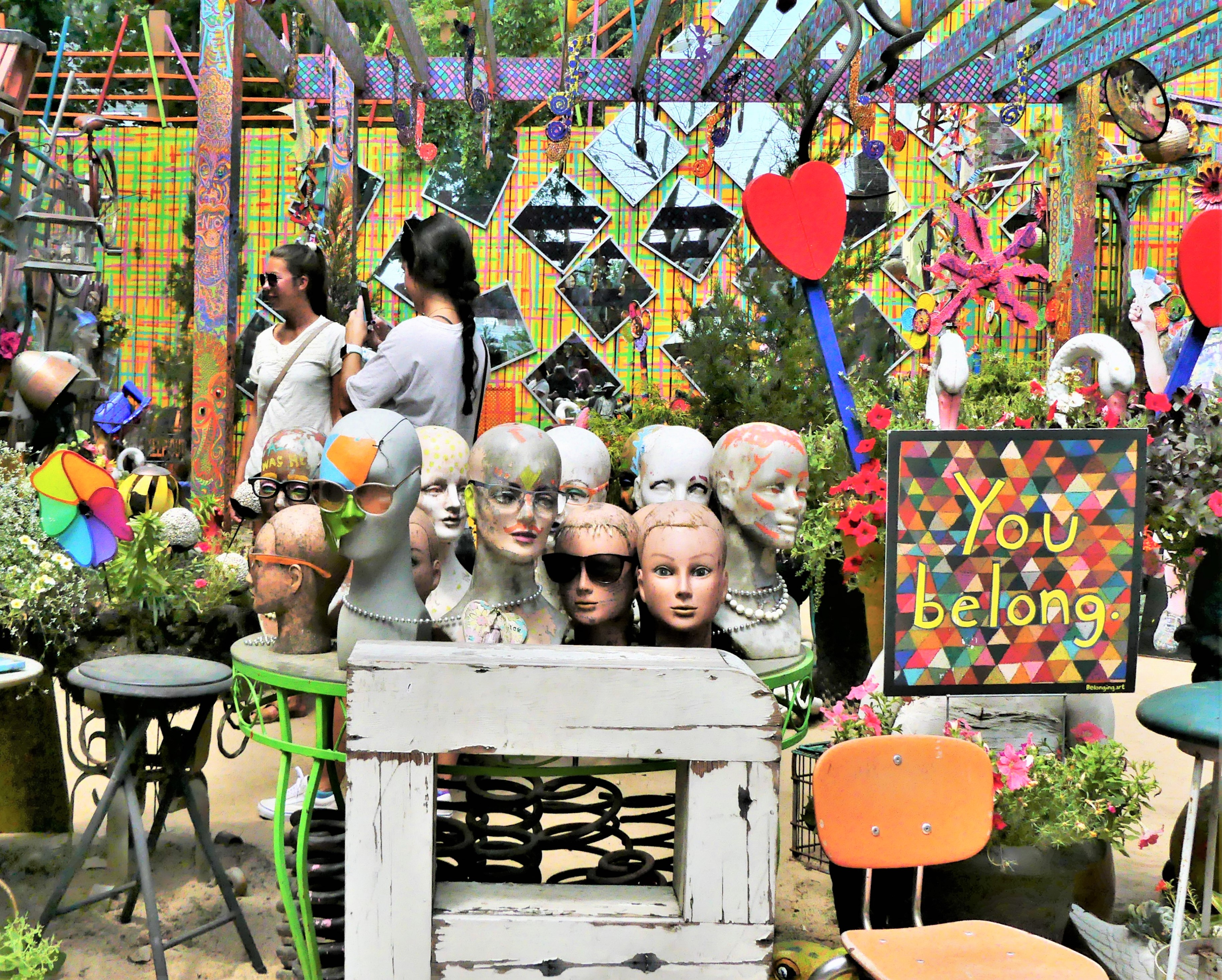
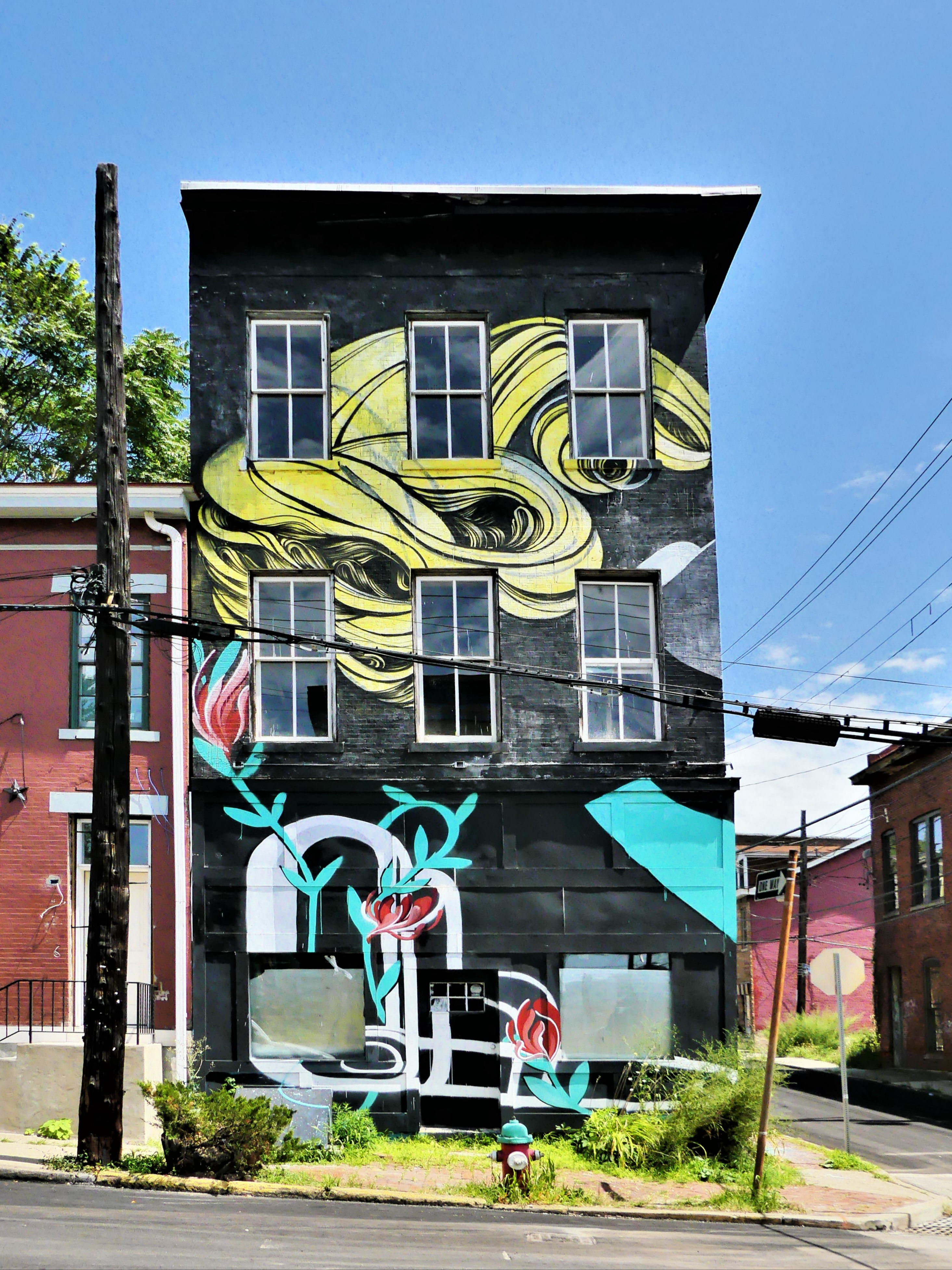
a candy-coated, pie-in-the-sky habitat of repurposed whimsy and soul,
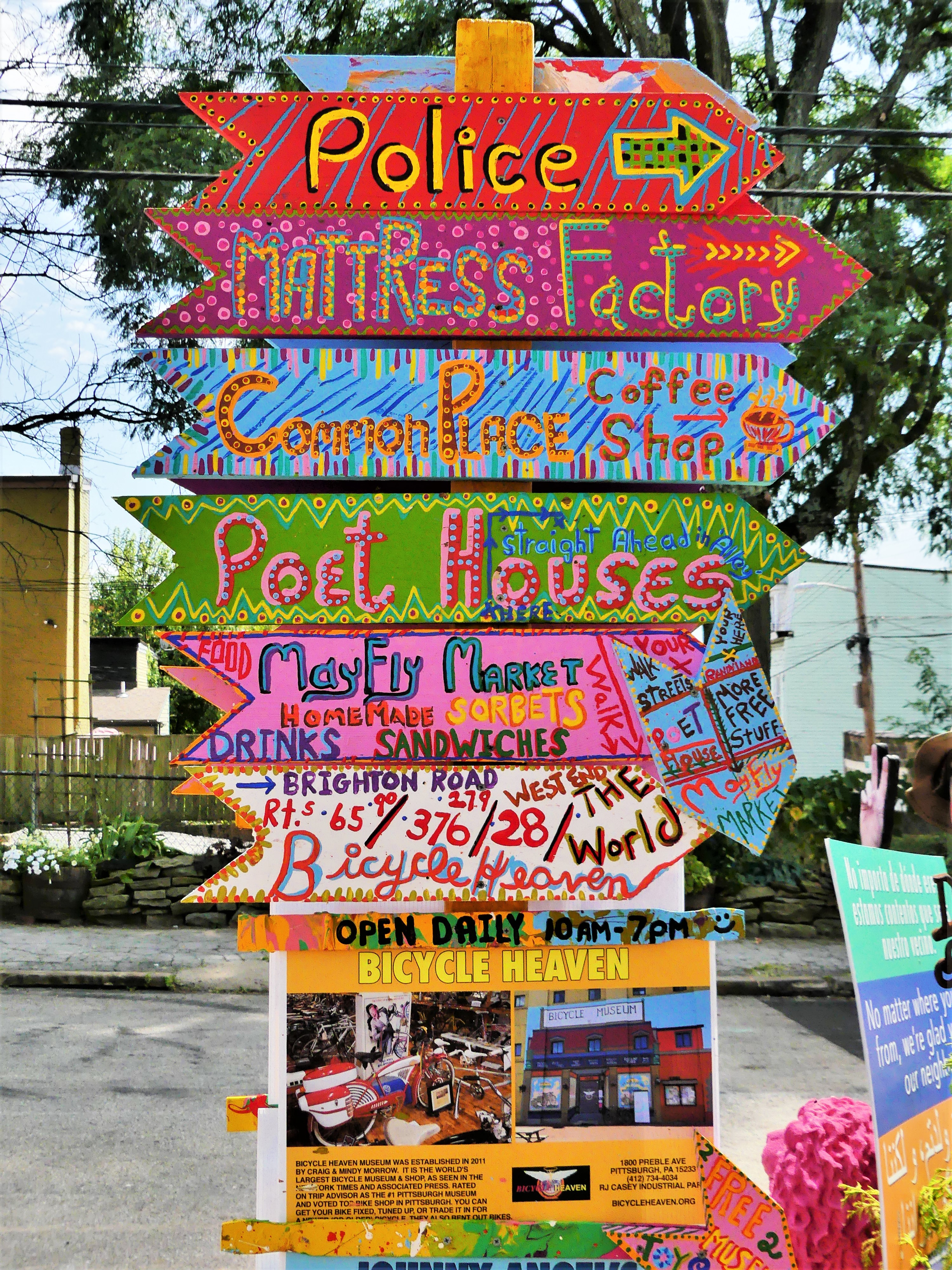
People travel to Randyland from around the world, and prepare destination arrows to indicate their country of origin.
They stop by for the novelty…
for the vibe and the energy…
and to remember the child still trapped inside us all.
Randy doesn’t pretend to be an artist. In fact, he disagrees with the characterization. “I’m not an artist. I’m a gay hippie that smokes pot, and believes in sharing my vision.”
Randy’s charm is infectious; his energy is contagious;
and his message is inspirational. His mother would be proud of him.
What started out as a typical tour of a colorful outdoor habitat, turned into a surprisingly deep and endearing conversation with Randy, once Leah and I introduced ourselves.
Passerby cars with follow-up horn toots were a constant interruption, but Randy always had a quick response for them:
“Hey, pretty mama…”
“I love your weave…”
“Lookin’ good in the neighborhood.”
Randy is eager to tell his story and have his story told. He is also unabashed about his upbringing and background. Few people I know are so accepting of themselves. He easily shares the details of his life normally reserved for confidants or therapists. But then I realize that Randy’s candor is probably an ongoing part of his therapy…where he plays the therapist.
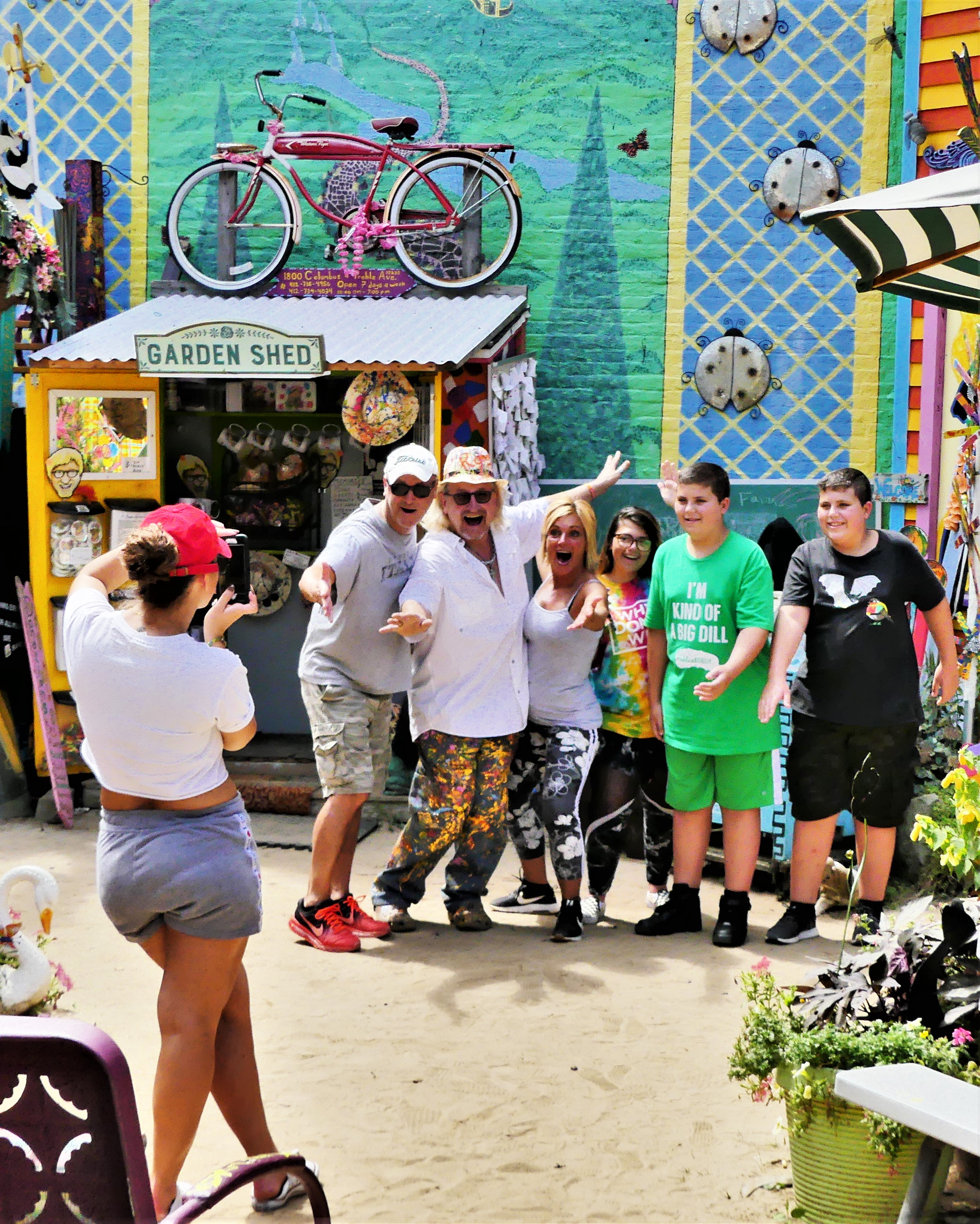
Randy placed a wad of business cards in my hand, and like a butterfly in search of its next flower nectar, he flew off to be photographed with his next best friends.
It’s easy spotting a rainbow, but following him to his pot of gold is a greater reward.
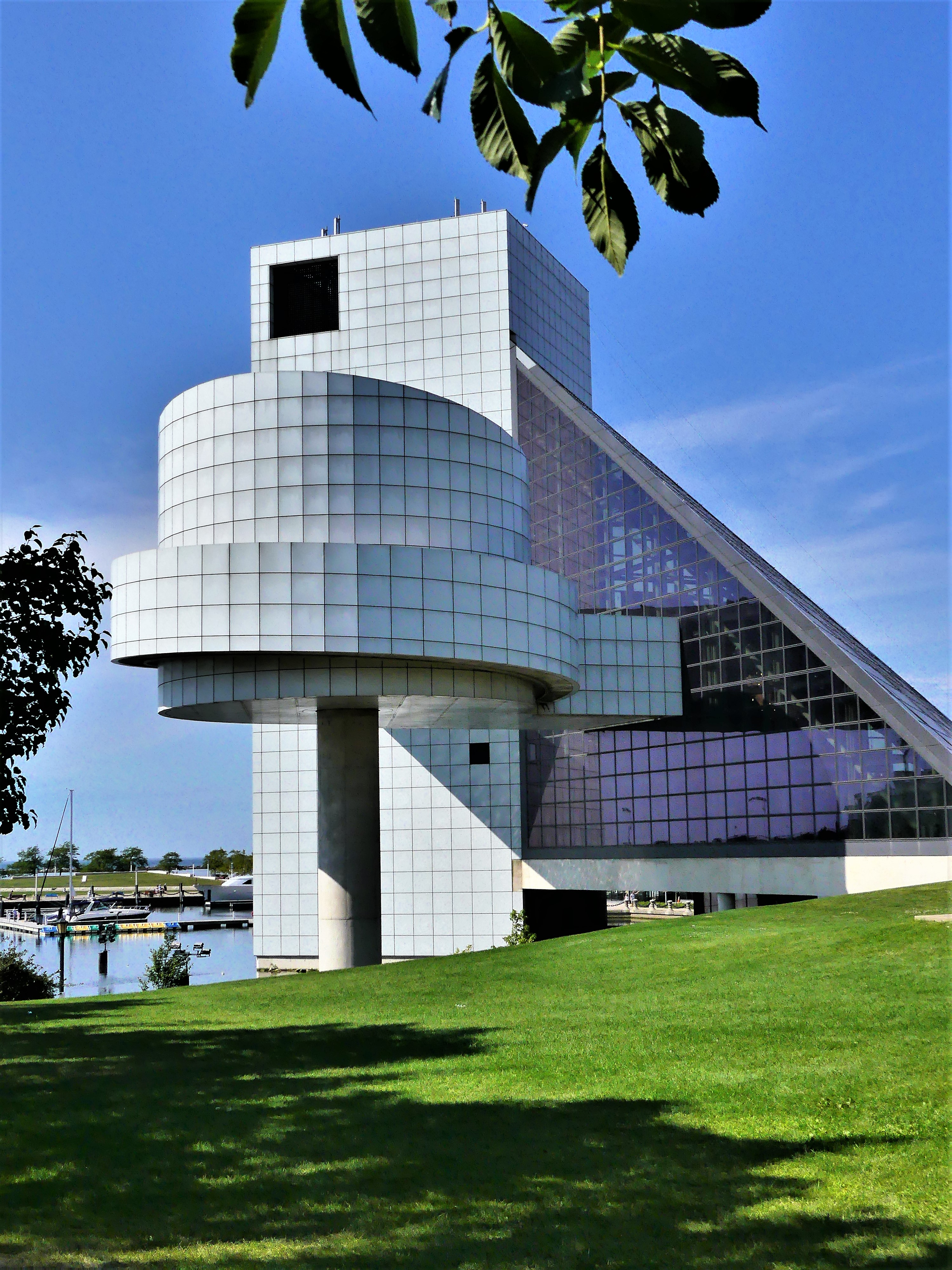
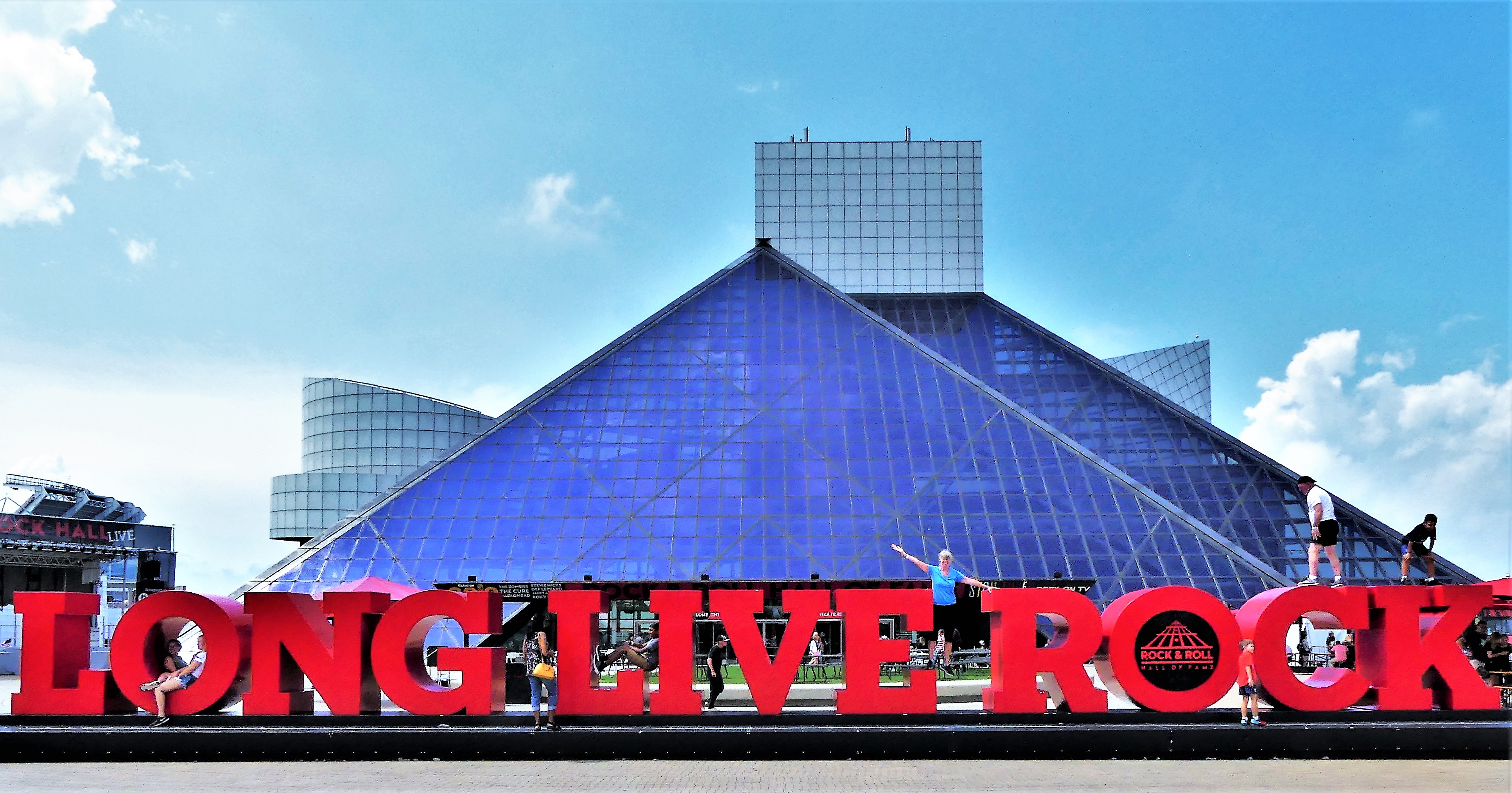
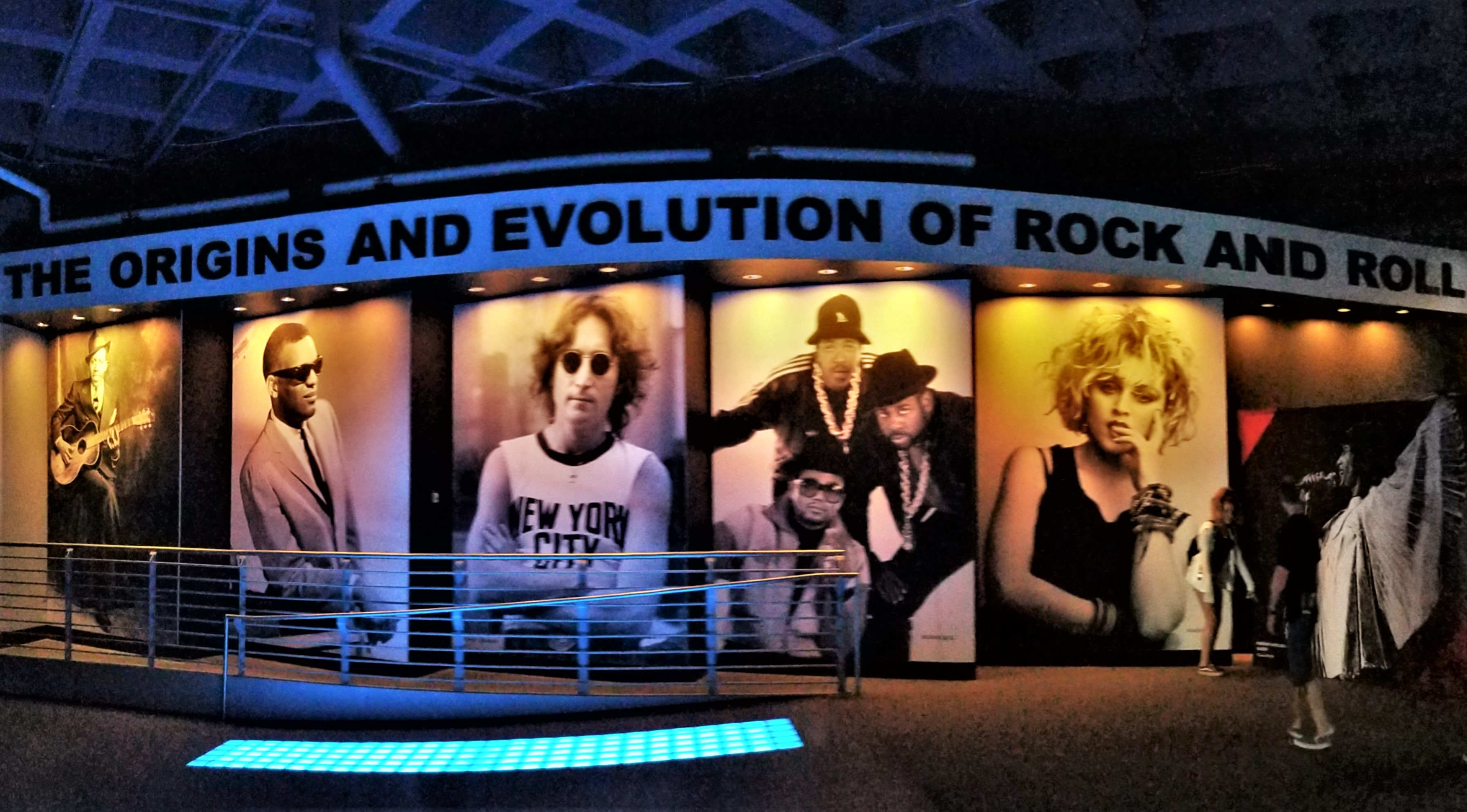
The sole reason Leah and I traveled to Cleveland was to visit the Rock and Roll Hall of Fame, period…
and it didn’t disappoint.
Classic rock music filled the cavernous lobby…
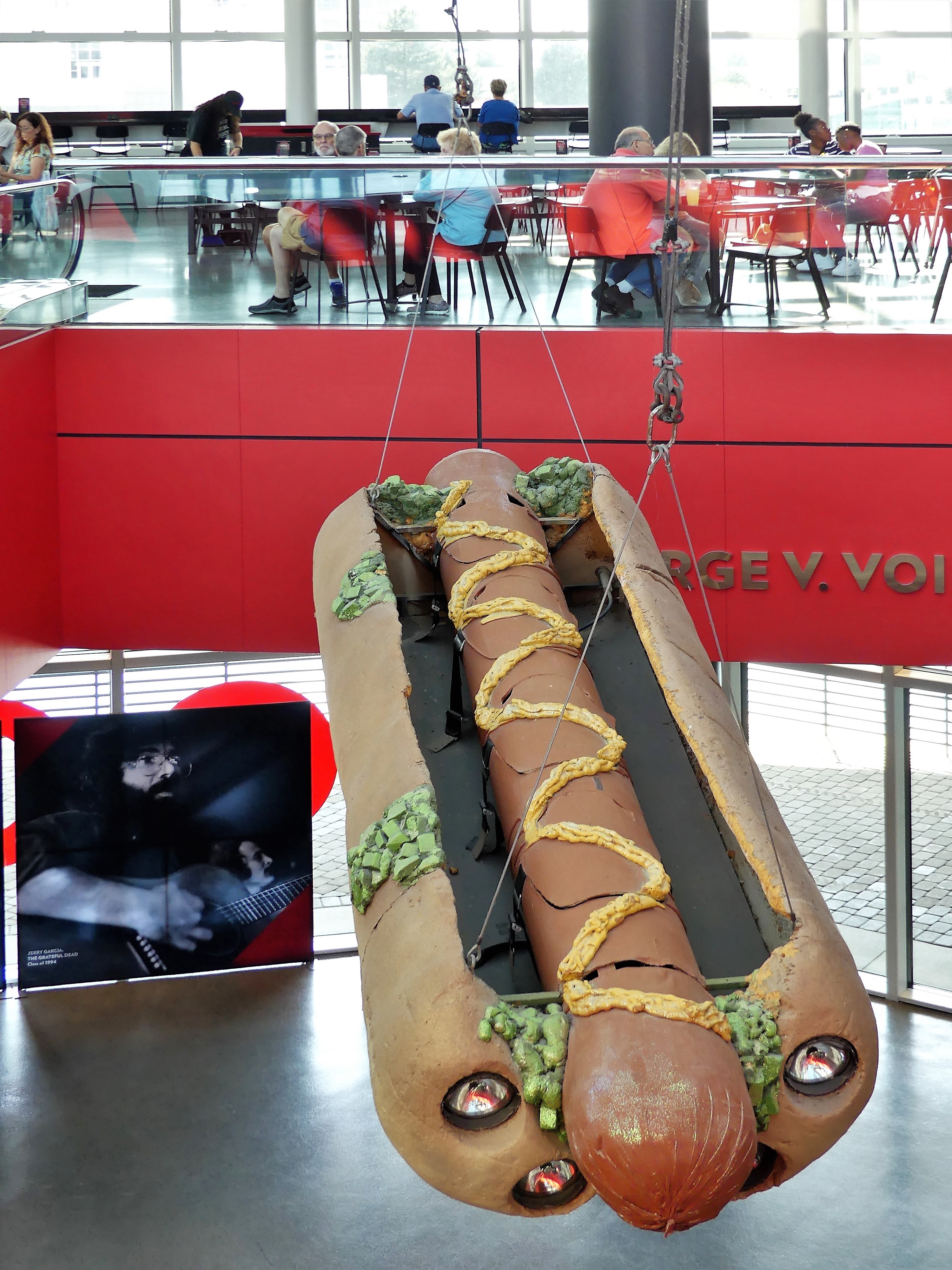
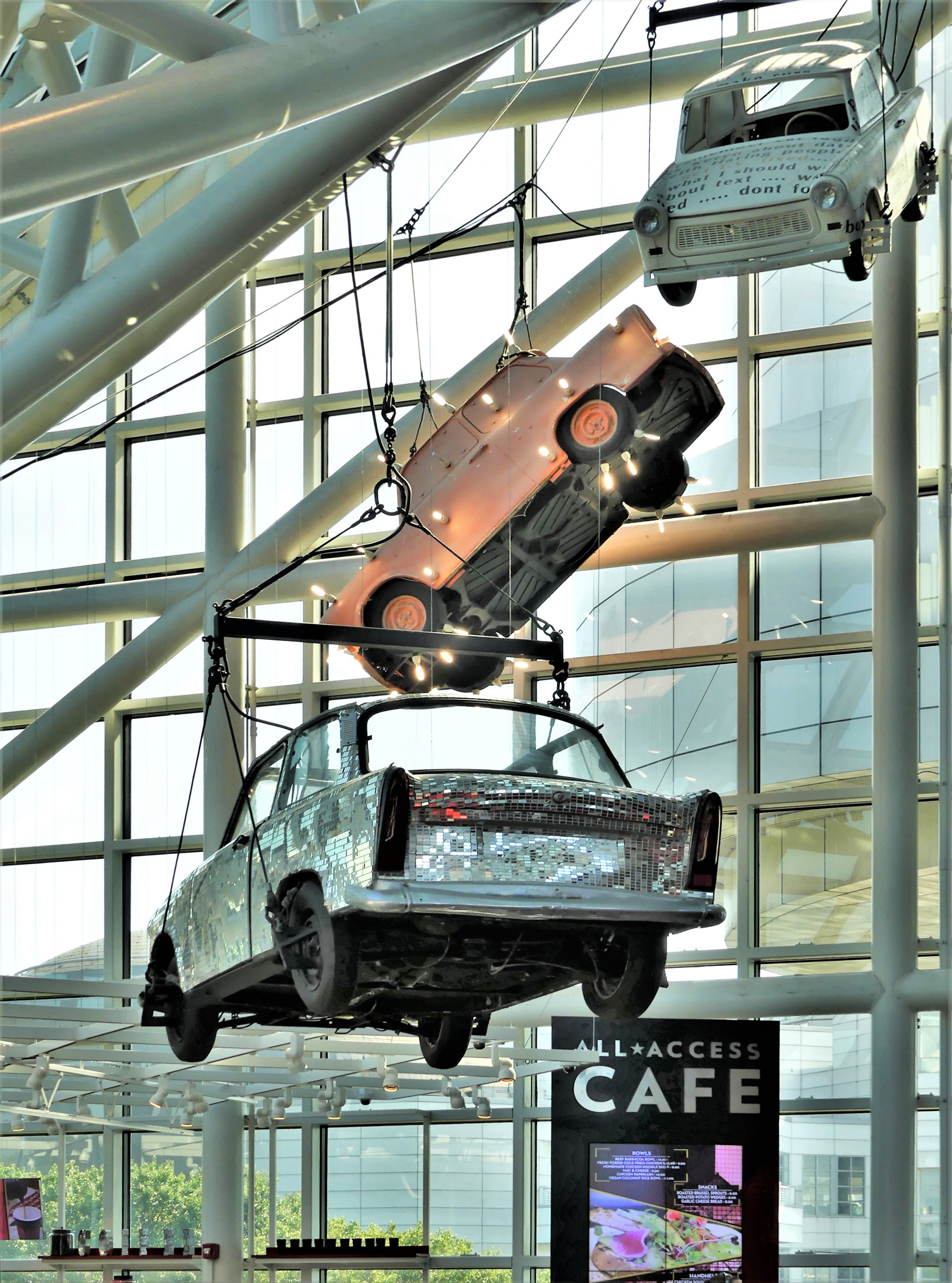
and lighter-than-air concert props hung from cables…
Pink Floyd’s planePhish’s weinerU2’s cars
It was a crusty carnival atmosphere on the outside, but we were there for the gooey goodness of the center.
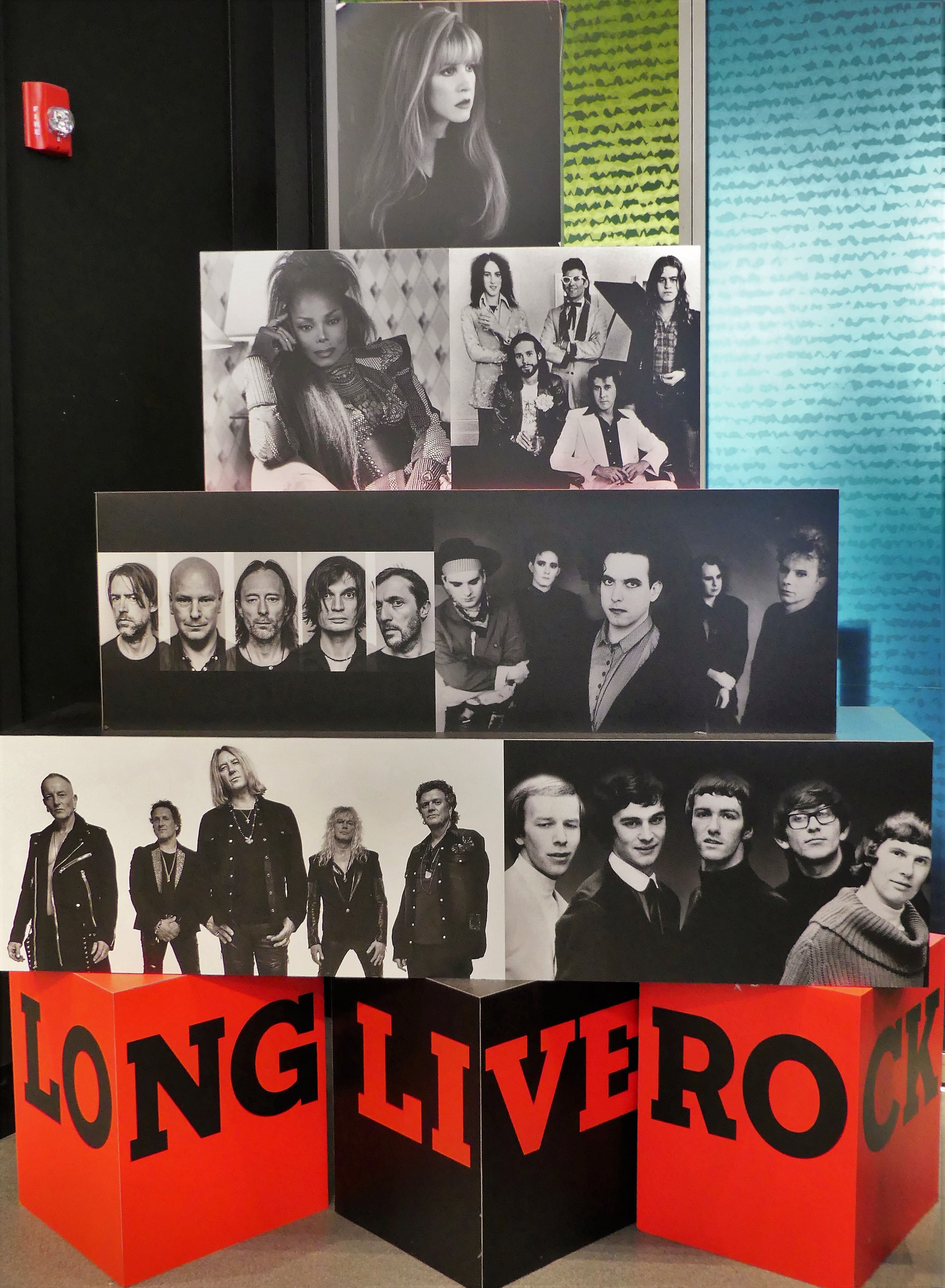
Inside was like a multi-media circus. There was so much information and memorabilia organized on the walls, on the ceilings, and inside floating kiosks that whiplash seemed inevitable. And the Hall was buzzing: with so many tourists, campers, musicians, and music enthusiasts, that at times it felt like a mosh pit, as I moved from one area to another.
To be expected, there was a tribute to Woodstock…
and Dick Clark…
a salute to the 2019 inductees…
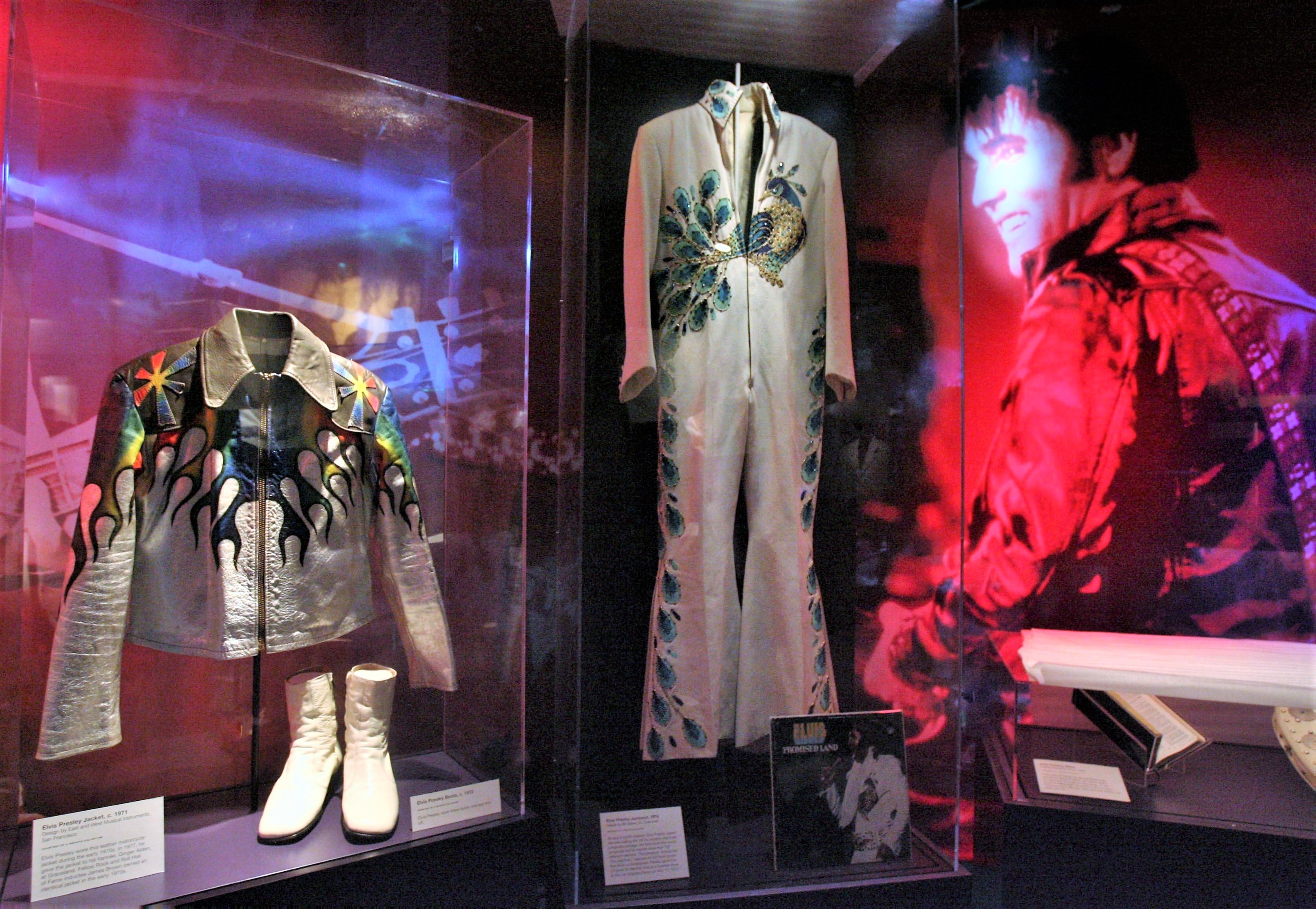
and the icons of rock: Elvis,
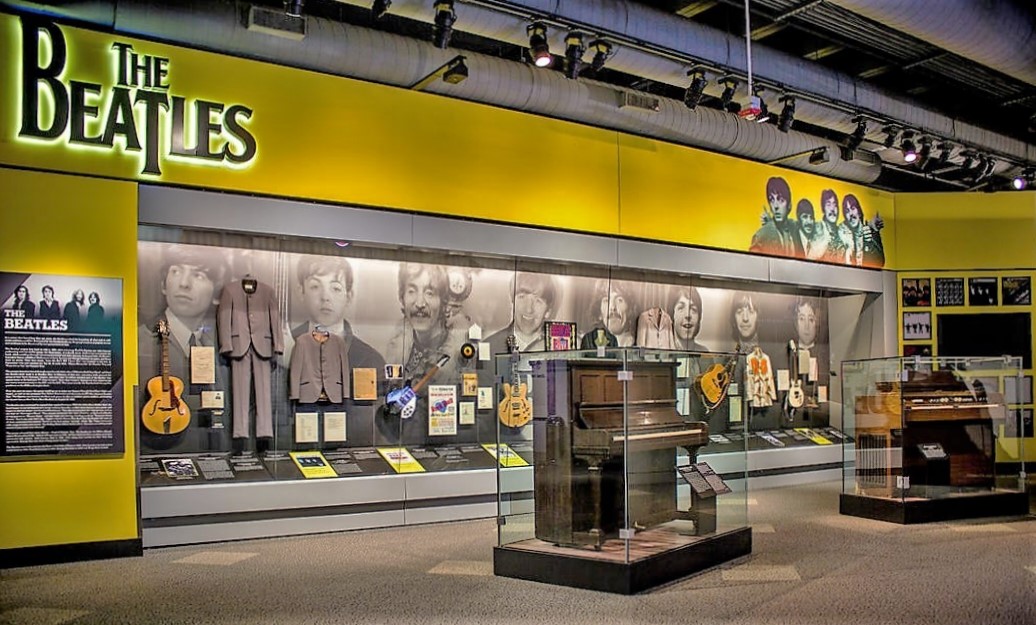
The Beatles,
The Rolling Stones,
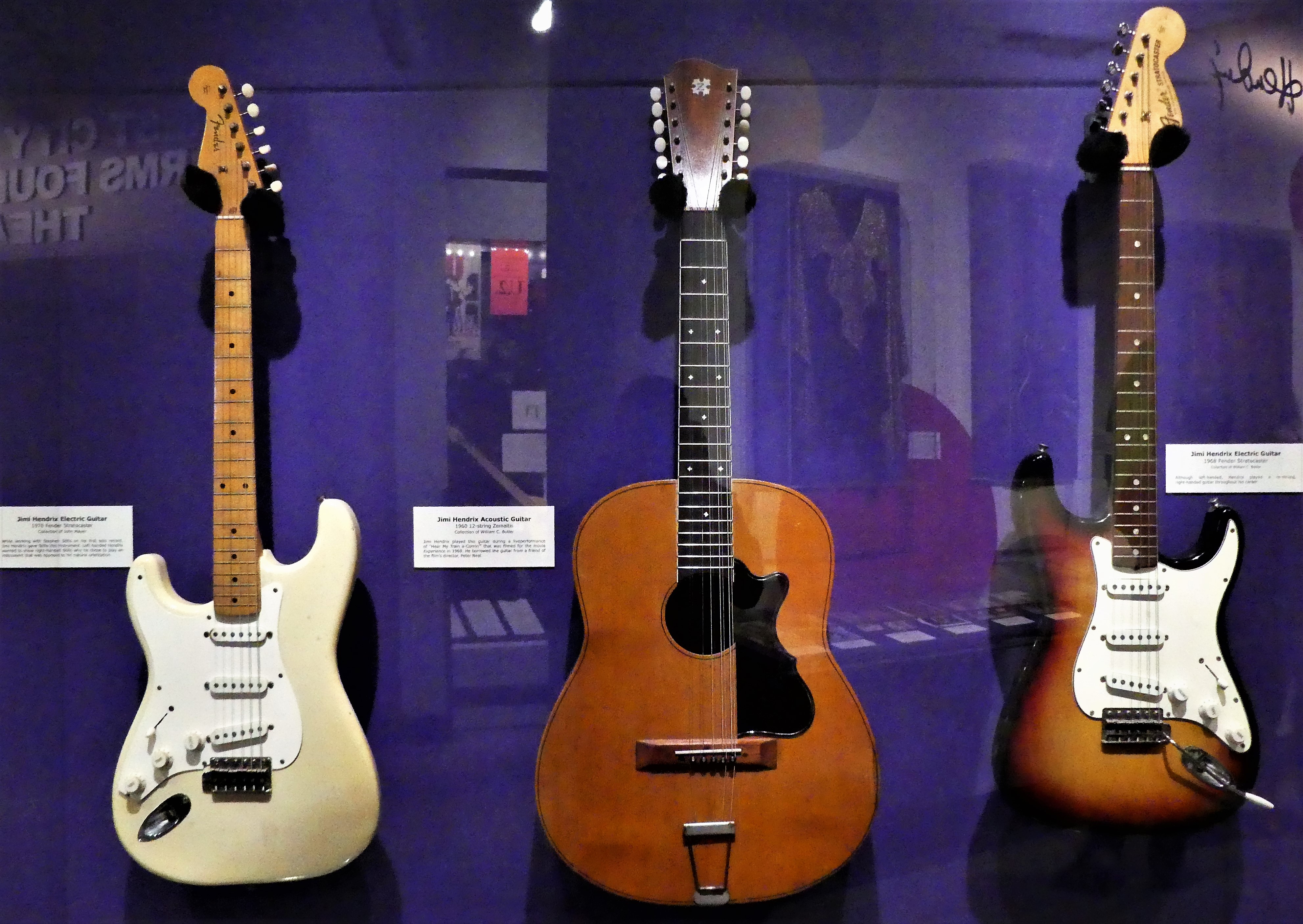
and Jimi Hendrix, to name a few.
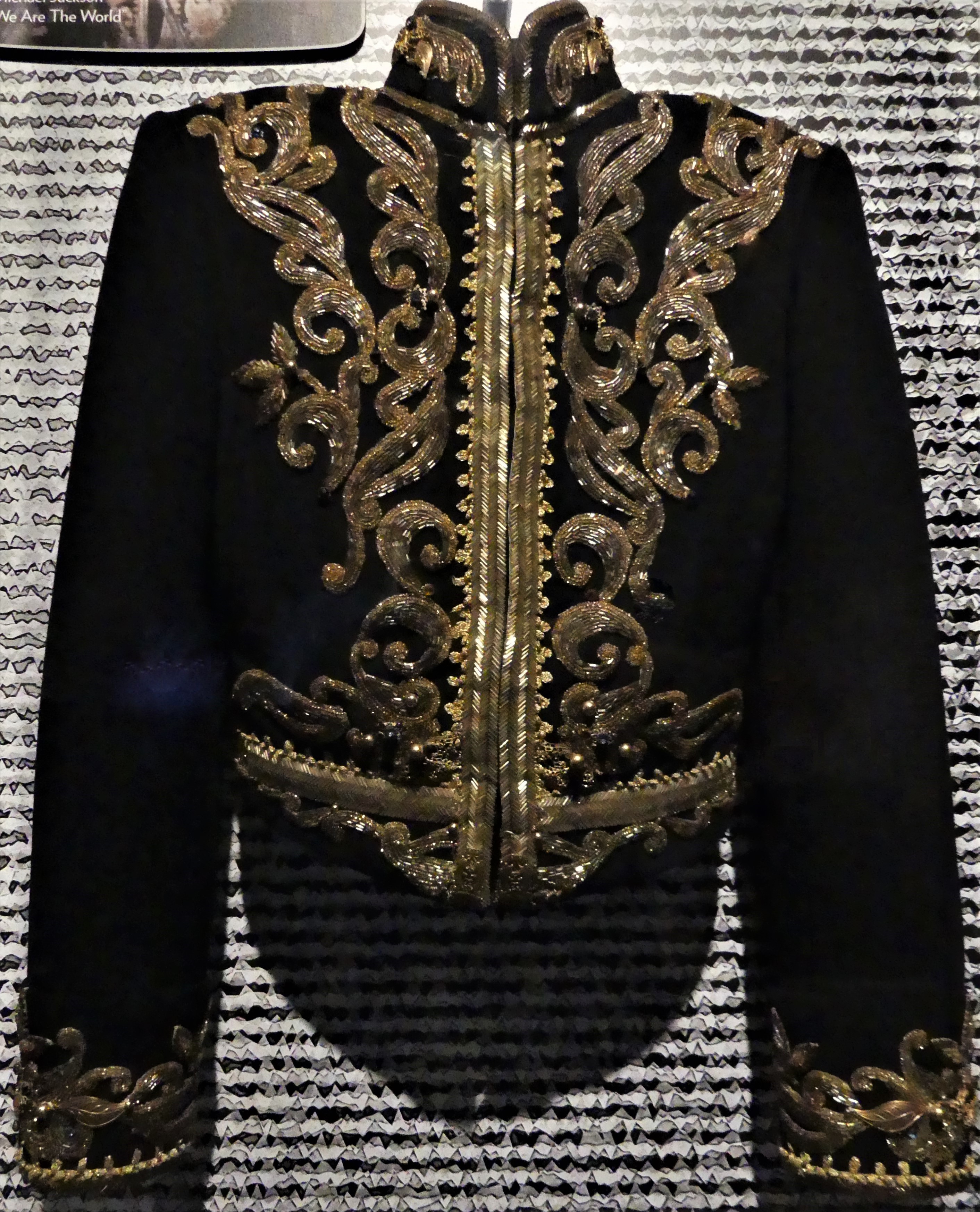
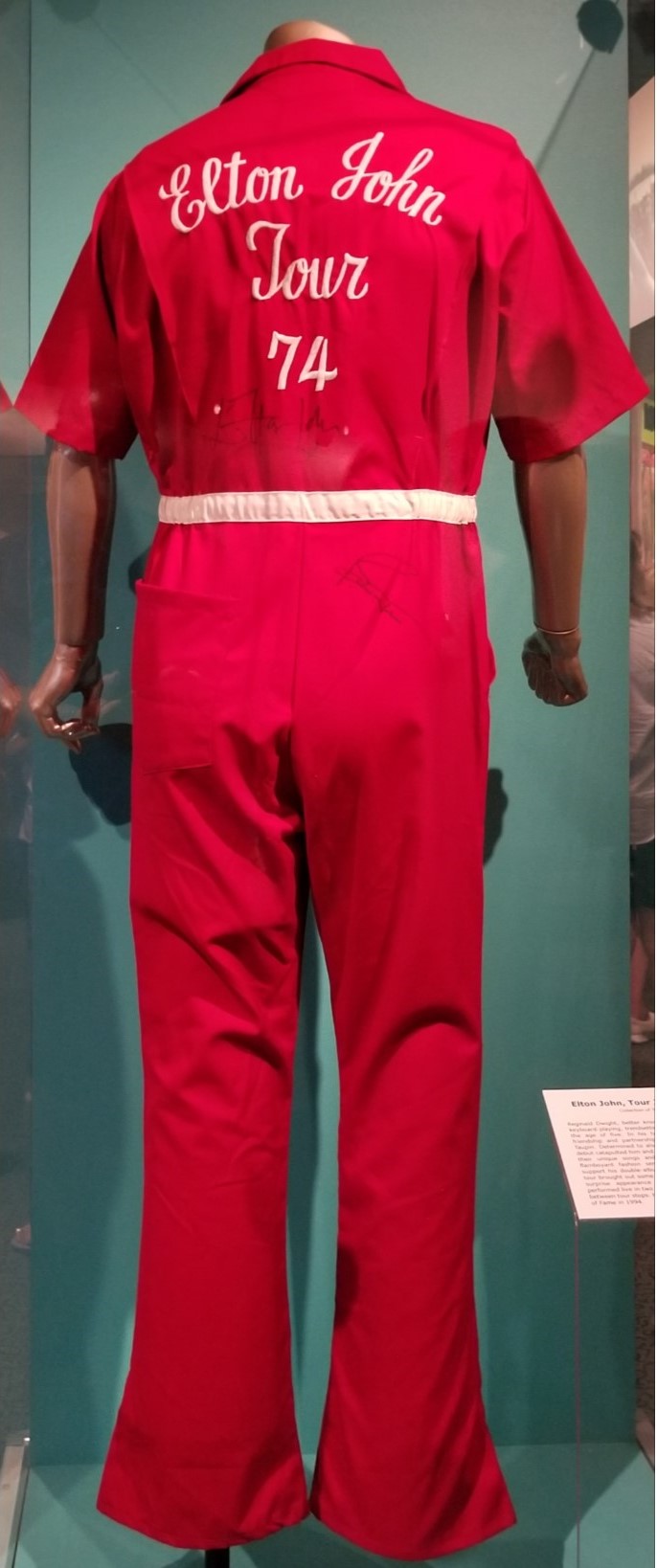
There was plenty of concert apparel to gush about…
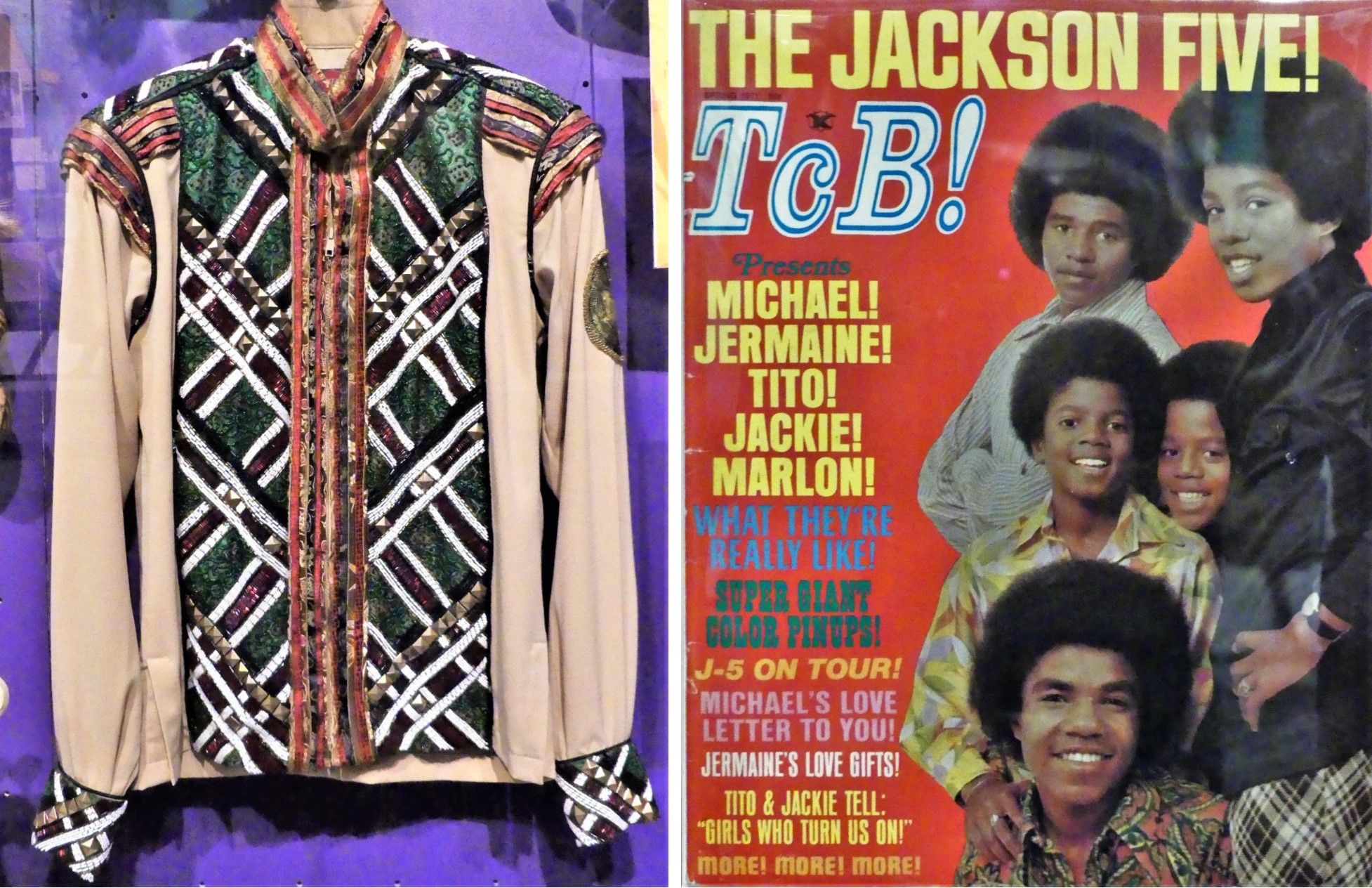
Tom PettyMichael JacksonStevie Wonderand Elton John
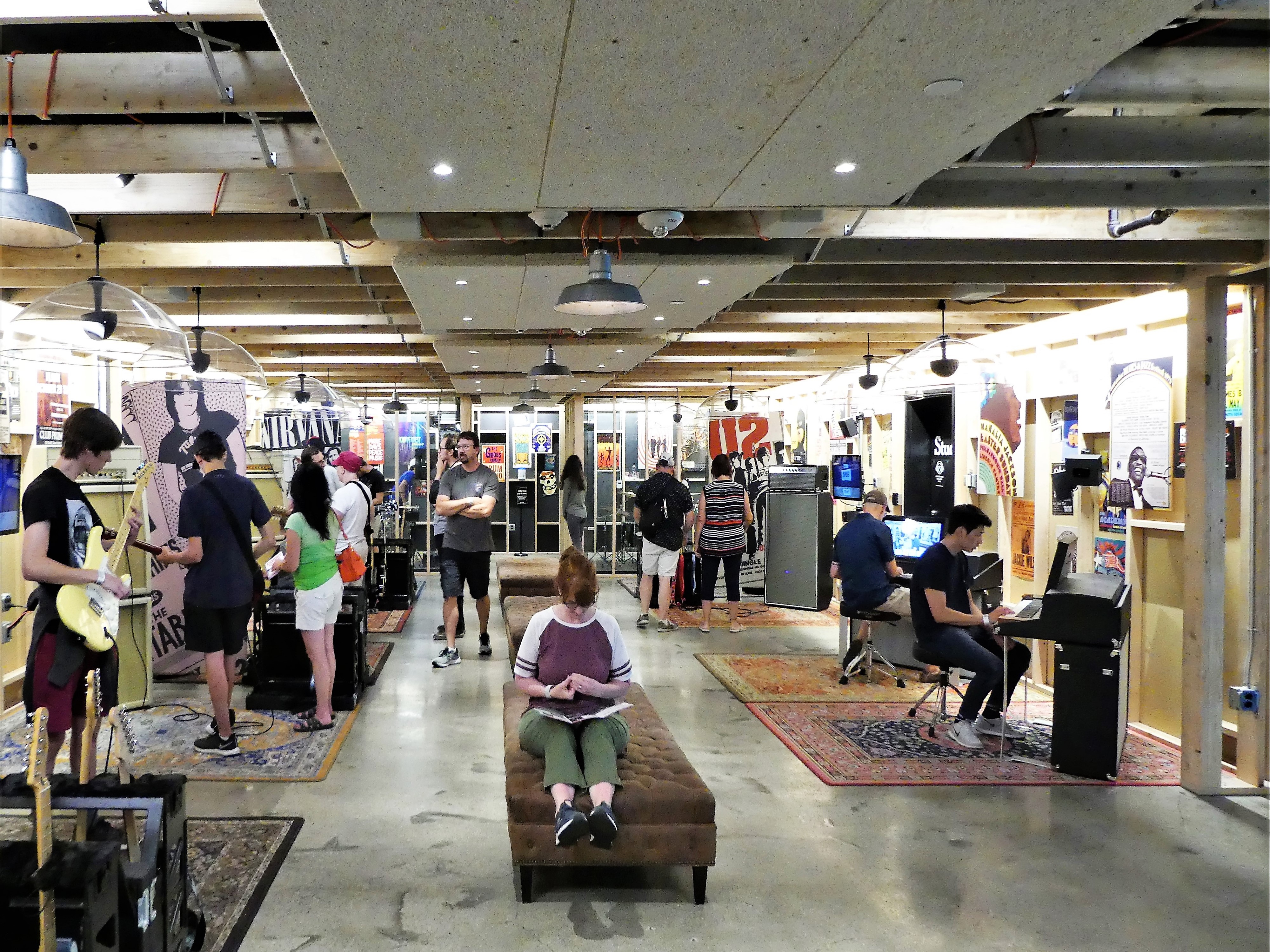
And there were interactivities to capture one’s creativity, like Garage Band.
Most importantly, when the last lyric was sung and the last chord was strummed, it was time to shop!
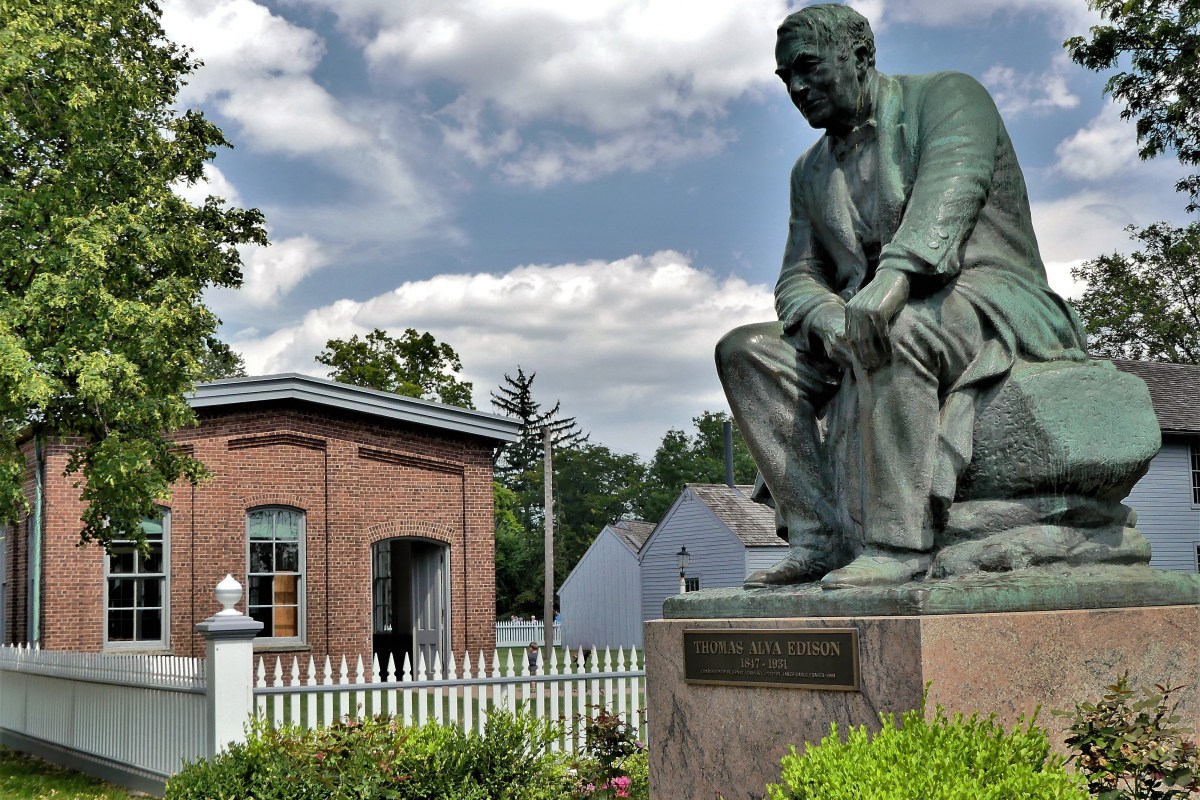
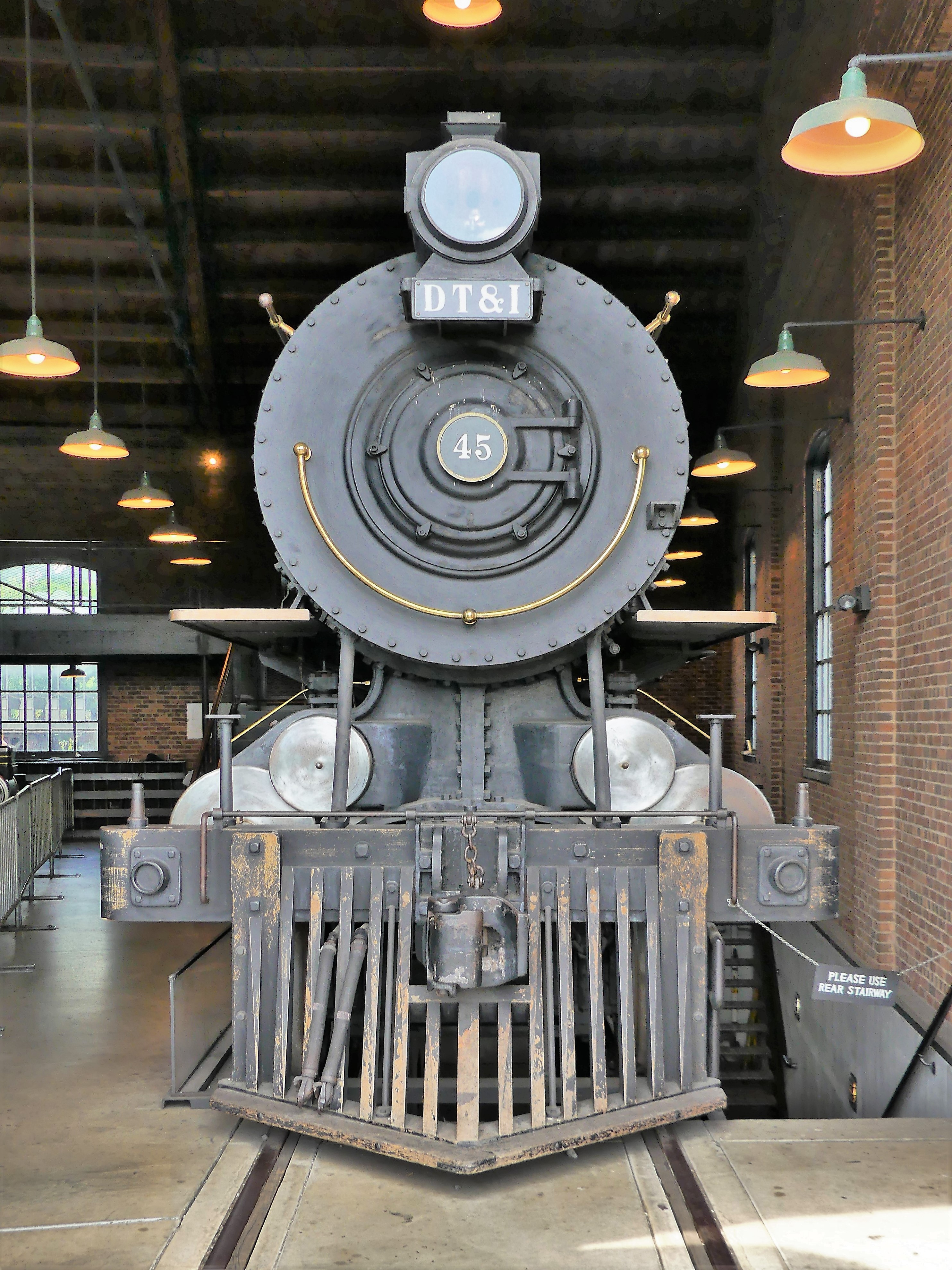
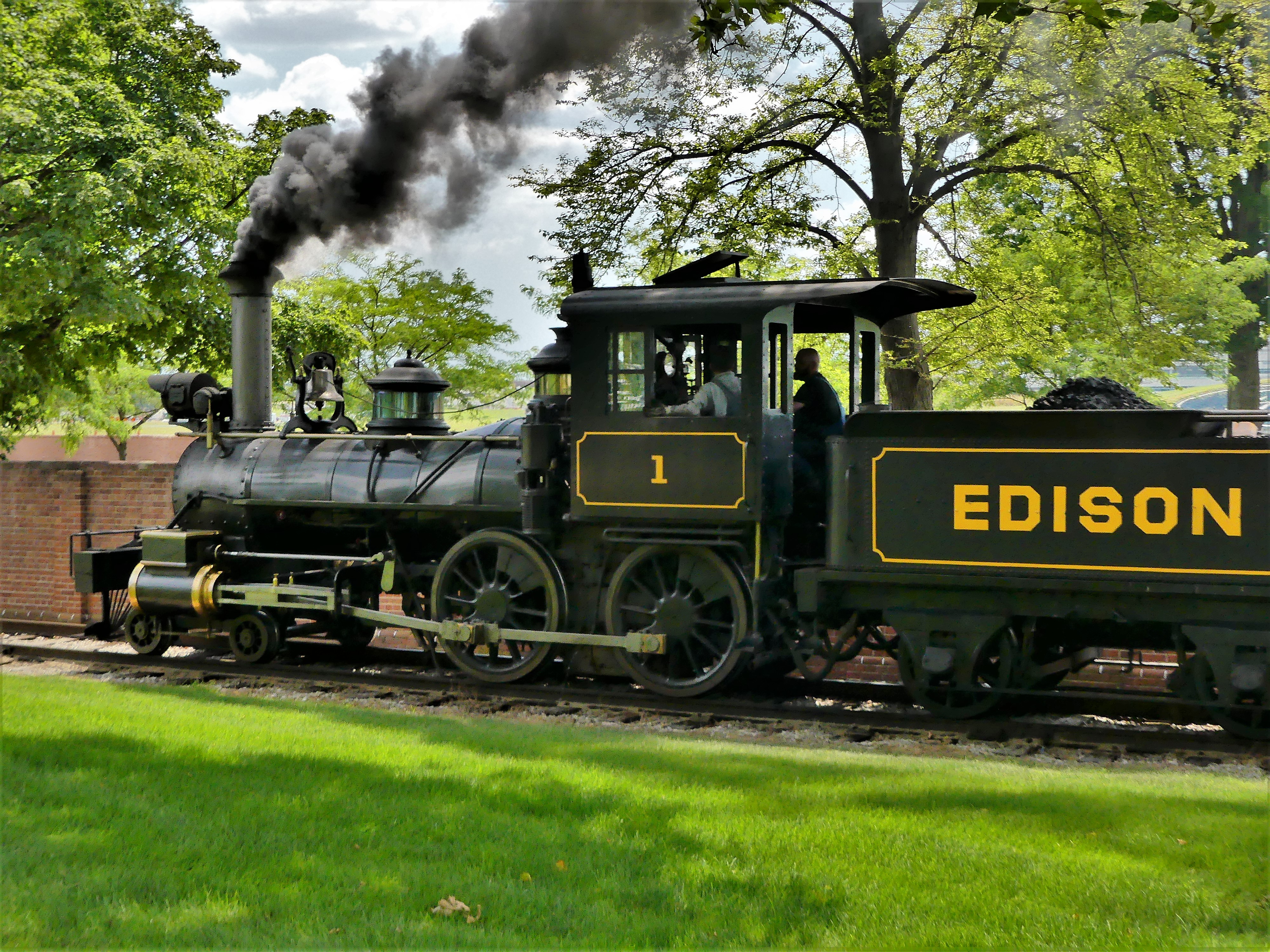
Henry Ford and Thomas Edison–the two men are inextricably linked in so many ways that it defies kismet. Both were iconic inventors and visionaries with a twist of genius; both were titans of industry; they were best friends; they were neighbors; they were presidents of each other’s mutual admiration society; and they were both anti-Semitic.
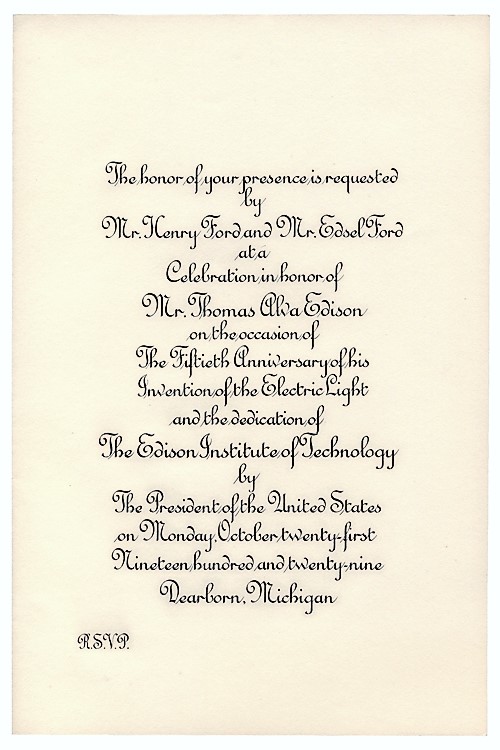
On October 21, 1929–two days before the stock market crash–invitees arrived at Greenfield Village to celebrate the 50th anniversary of the electric light, and Ford’s dedication of Greenfield Village to Edison.
The Henry Ford
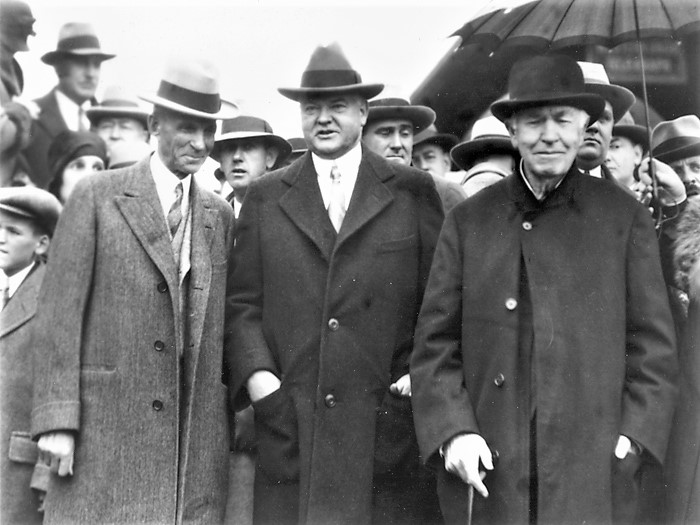
The event was a who’s who of dignitaries and celebrities, with the likes of Will Rogers, Marie Curie, Charles Schwab, Adolph Ochs, Walter Chrysler, John D. Rockefeller, Jr., J.P. Morgan, George Eastman and Orville Wright, etc.
Henry Ford, President Herbert Hoover, Thomas Edison–The Henry Ford
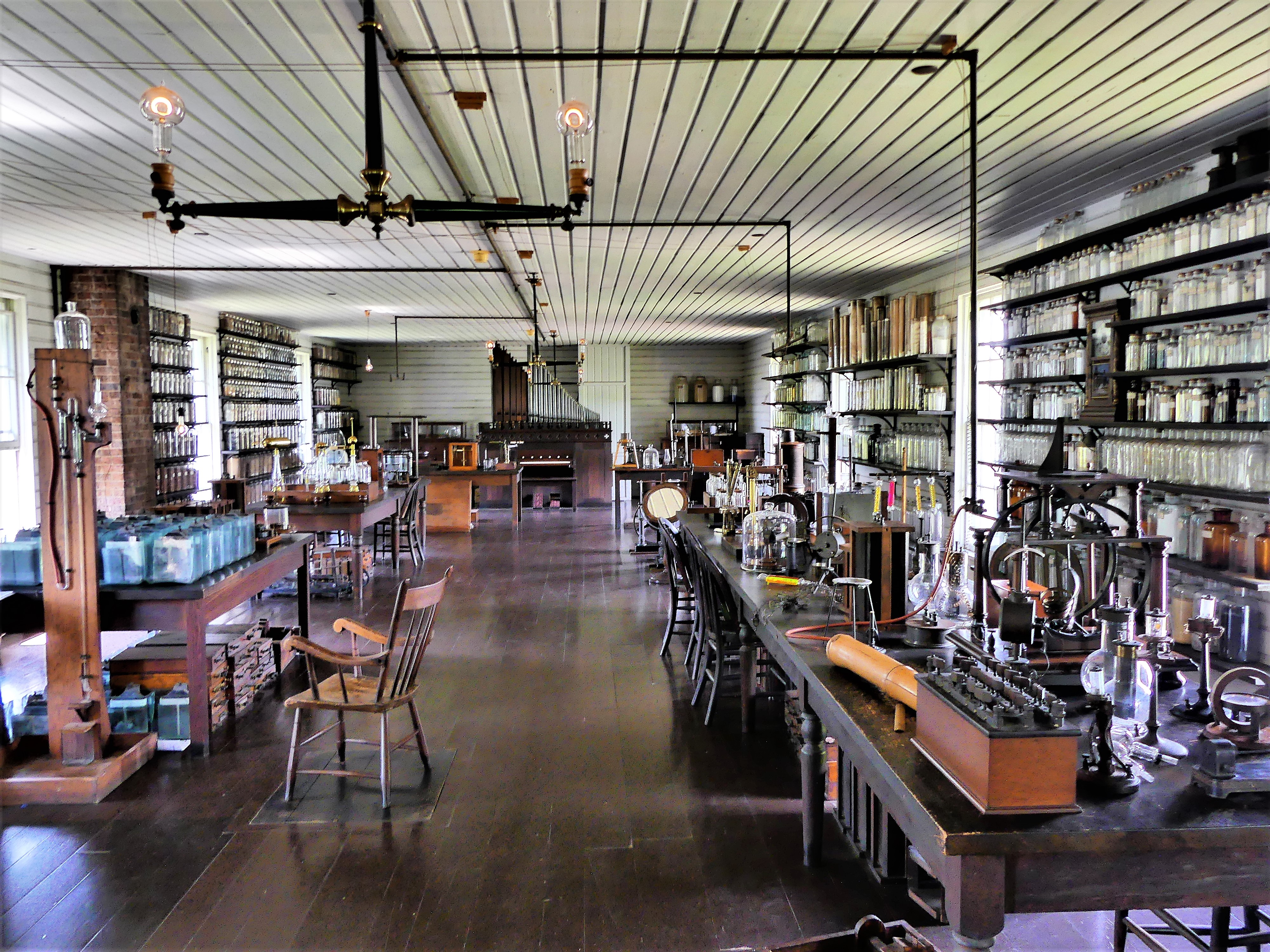
All gathered inside Edison’s reconstructed Menlo Park laboratory…
to witness the symbolic relighting of an incandescent lamp made famous a half century earlier, and credited with changing the world.
Later, Ford ordered the armchair where Edison sat during the ceremony to be nailed in place for all time, and never to be sat in again.
It remains in the exact same place, today.
Greenfield Village was dedicated to Edison that evening as the Edison Institute of Technology. Henry Ford had prepared all year for this public relations bonanza by bringing Menlo Park, NJ to Dearborn, MI.
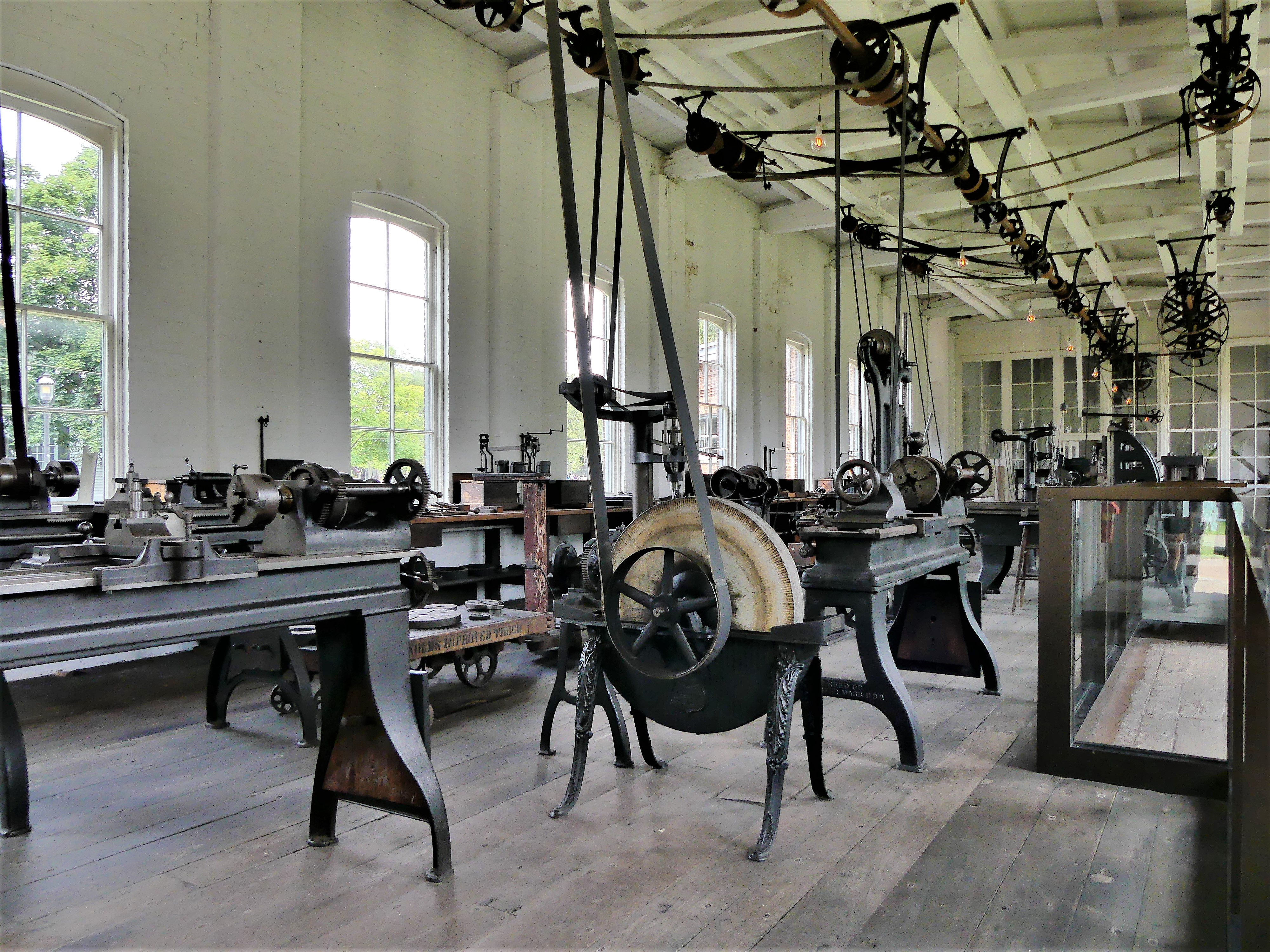
Ford incorporated Edison’s machine shop…
and years later, he built a facsimile of Edison’s first power plant.
Although Ford was 16 years Edison’s junior, and Edison had been Ford’s employer for a time, they became bossom buddies by the time World War I erupted. Ford’s acceptance of a 1914 invitation to Edison’s winter retreat in Ft. Myers sealed the deal.
Two years later, Ford purchased The Mangoes beside Edison’s SeminoleLodge, and they became Floridian neighbors.
They took public vacations together, inviting John Burroughs and Harvey Firestone along for the ride–usually to the mountains or parts of rural America. The press corps were encouraged to follow their every move, dubbing them “The Vagabonds.”
While roaming the country, Ford was always eager to share his anti-Semitic views around the campfire, blaming the Shylock bankers in Germany as the root cause of the war, and Jews in America as the source of economic anxiety–all of which was propagandized in the Dearborn Independent, a newspaper published by Ford and used to expose his “truths” about the Jewish threat.
While Edison’s anti-Semitism was never as overt as Ford, it became clear that he harbored similar sentiments, and used his motion picture company to propagate Jewish myths and stereotypes. Cohen was a recurring dislikeable character in his early short films…
While Jean Farrell Edison, the granddaughter and heiress of Thomas Edison’s fortune was funding the Institute for Historical Review (an organization that promotes Holocaust denial), Henry Ford II had distanced himself from his grandfather’s vitriol by offering philanthropic support for Detroit’s Jewish community, as well as renouncing the Arab League’s boycott of Israel after Israel achieved statehood in 1948.
And how would Henry Ford react to Mark Fields’ appointment as Ford Motor Company’s CEO in 2014, or Bill Ford’s dedication of Ford’s first technology research center opening in Tel Aviv this year?
Likewise, Edison might pale upon discovering that the motion picture industry exploded in Hollywood with studios founded by: Carl Laemmle, Sam and Jack Warner, Sam Goldwyn and Louis B. Mayer, William Fox, and Adolf Zukor.
Paradoxically, in 1997, the Israeli Postal Authority memorialized Edison with a stamp.
Yet, a bigger question remains… How is it that we live in a world that continues to embrace an ancient hatred that modern-day leaders are unwilling to disavow?
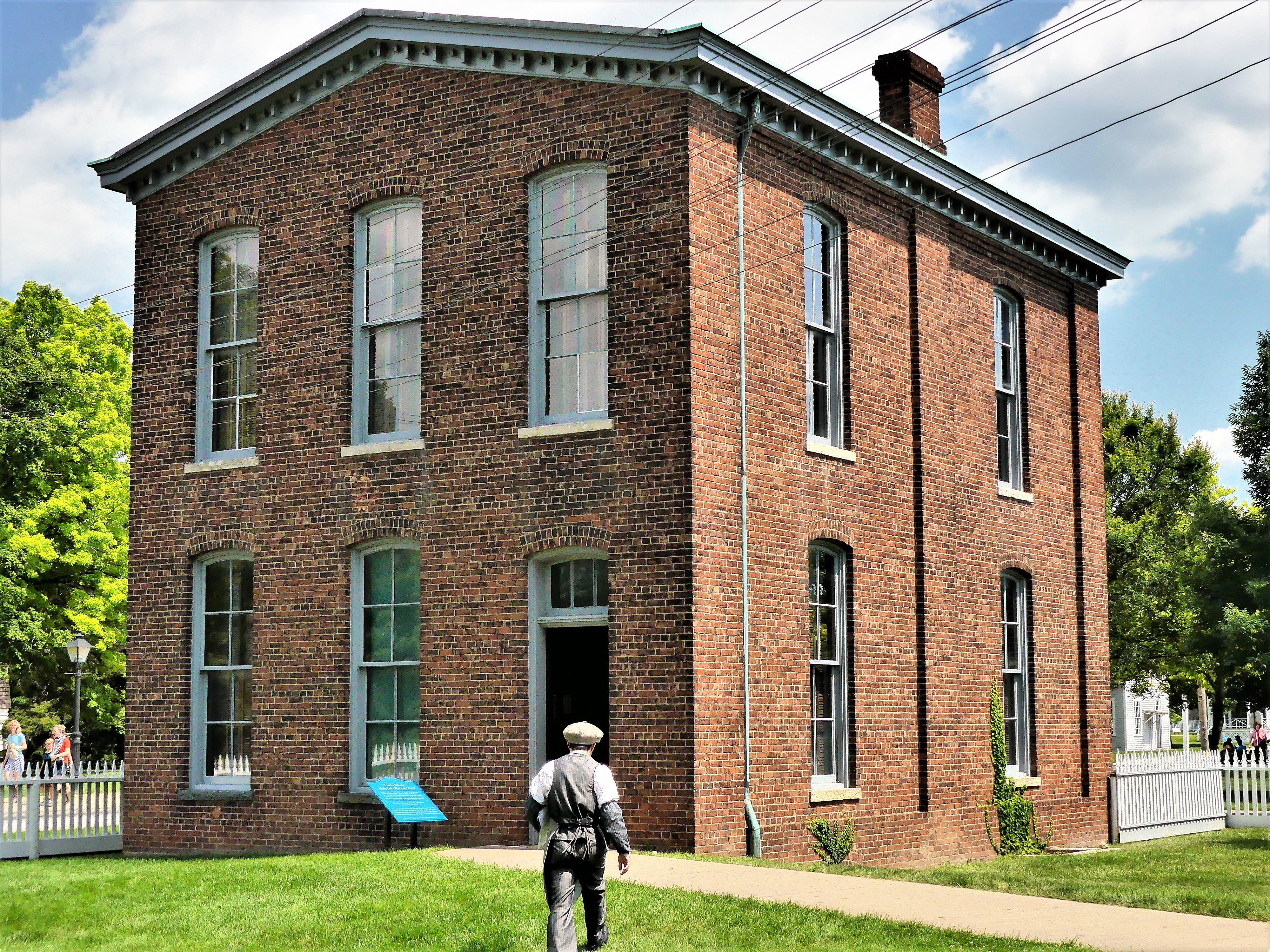
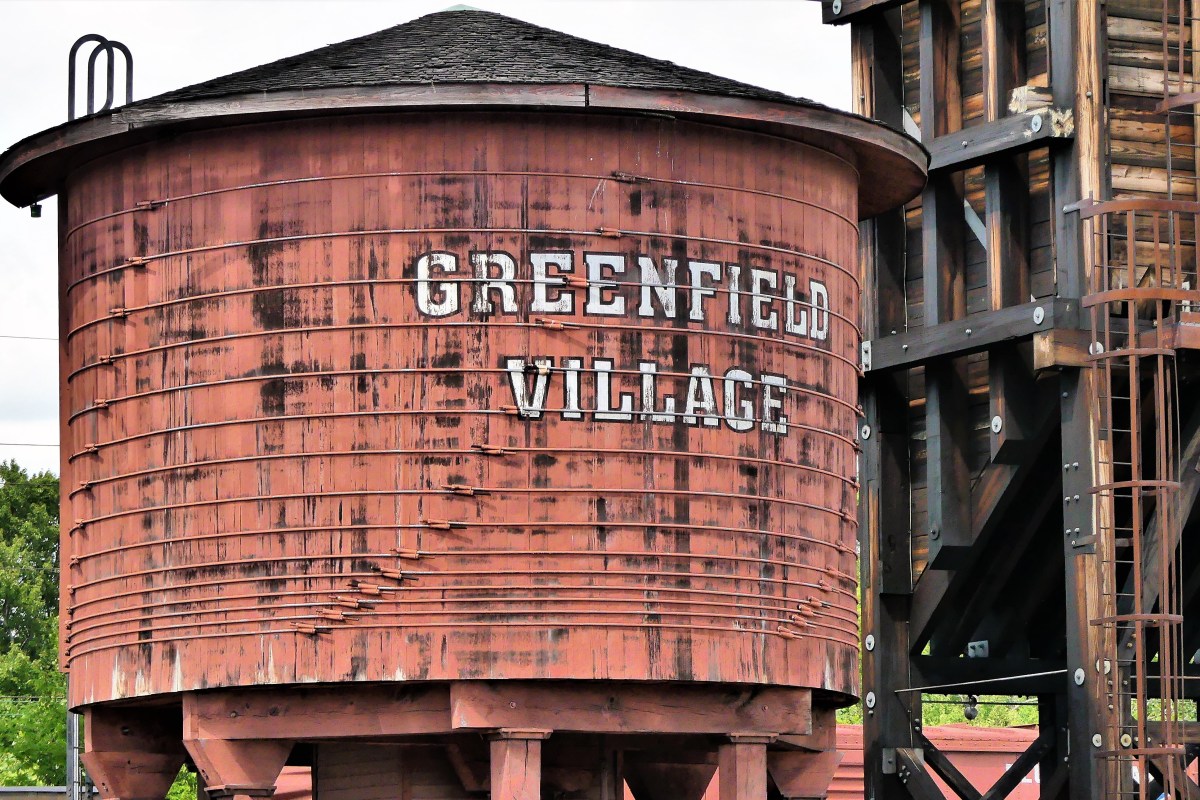
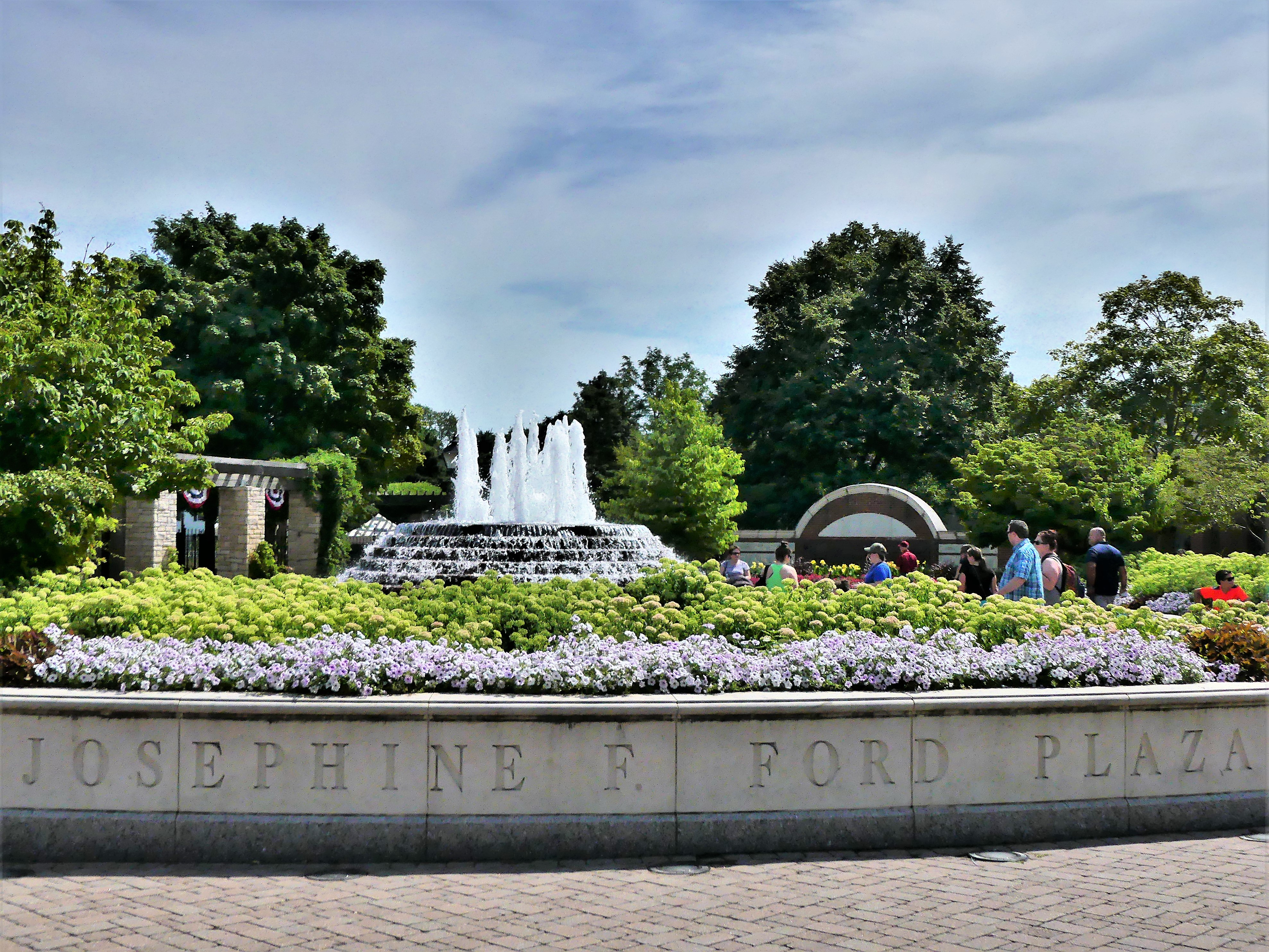
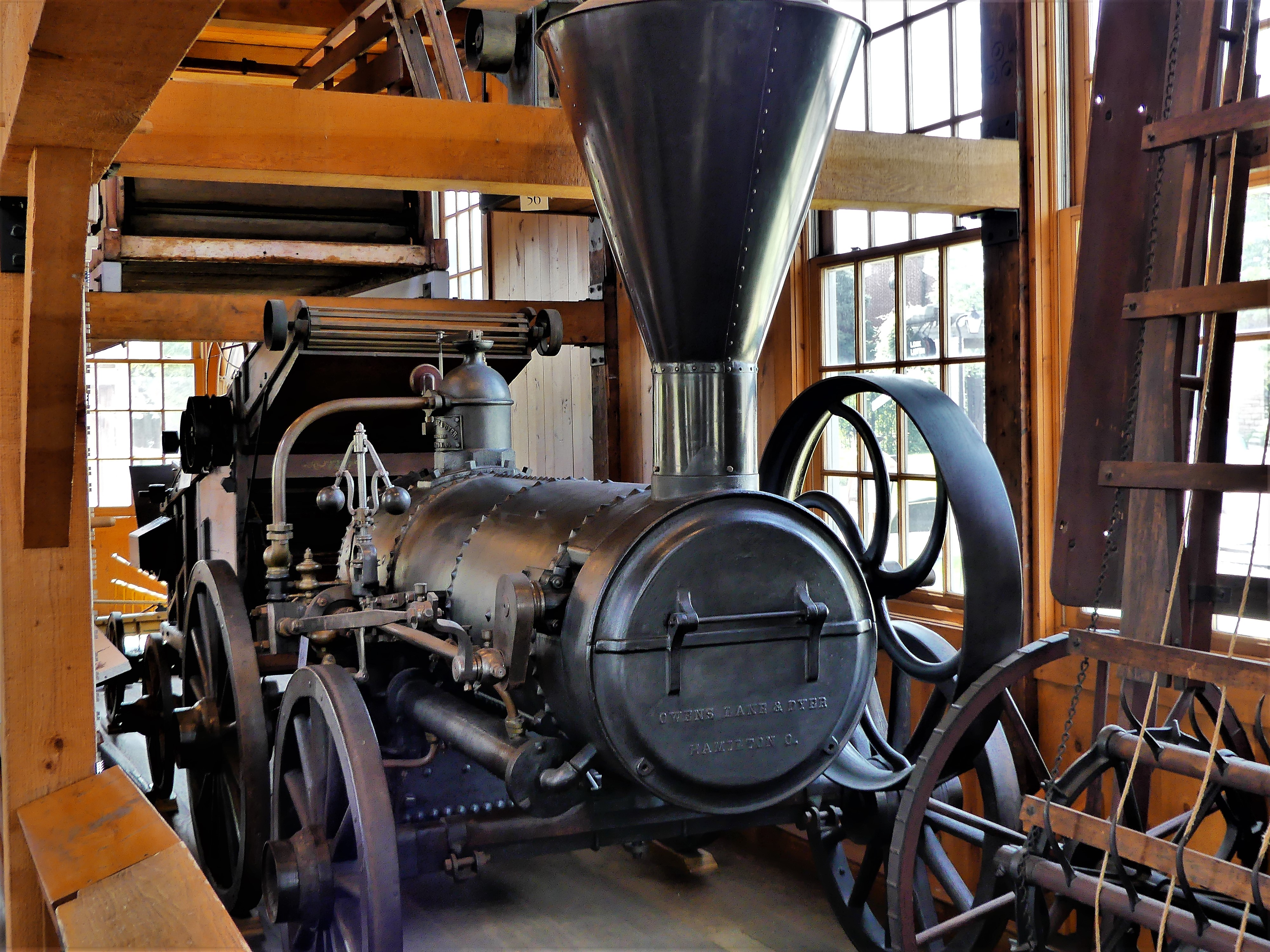
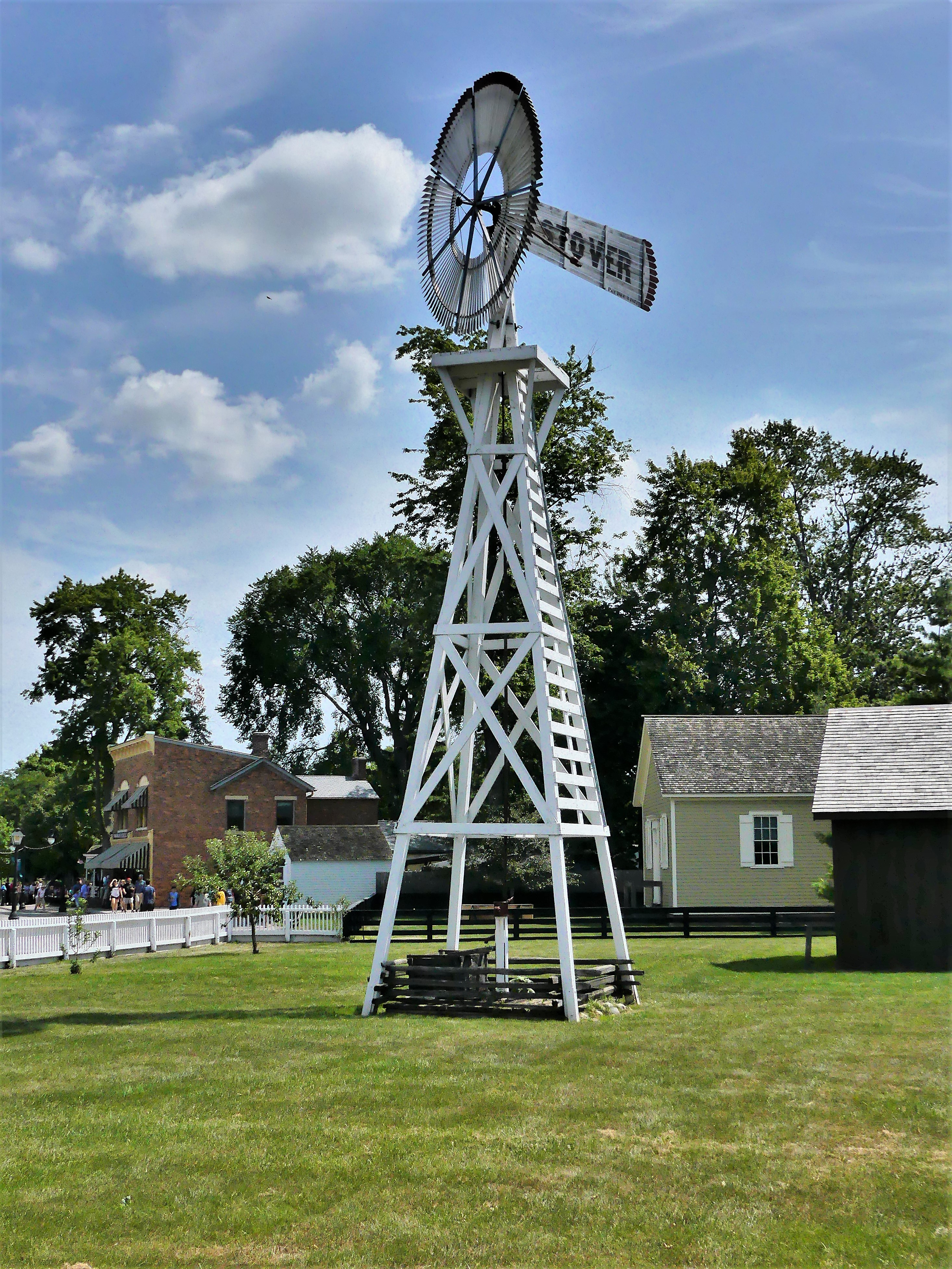
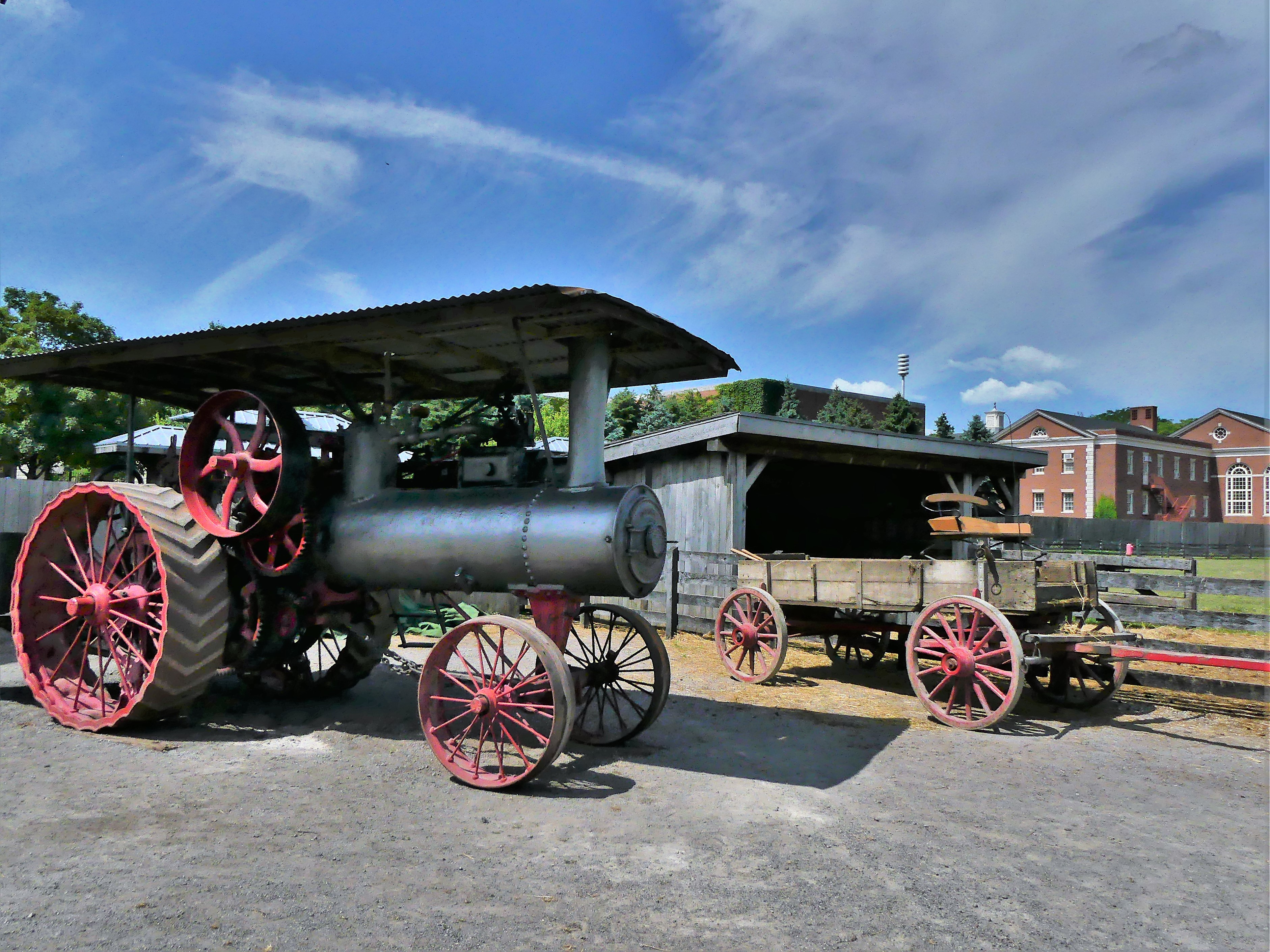
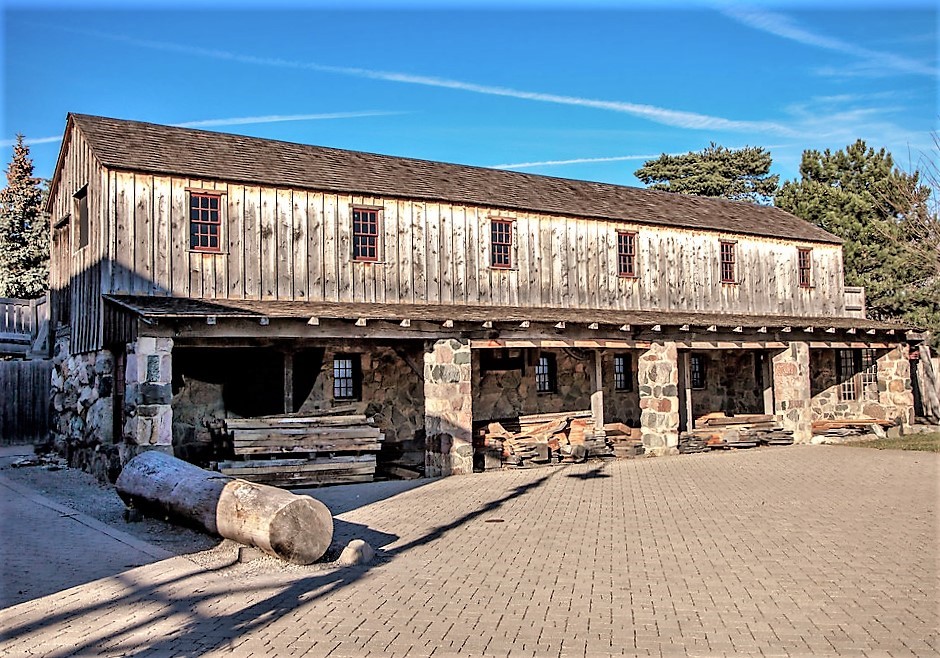
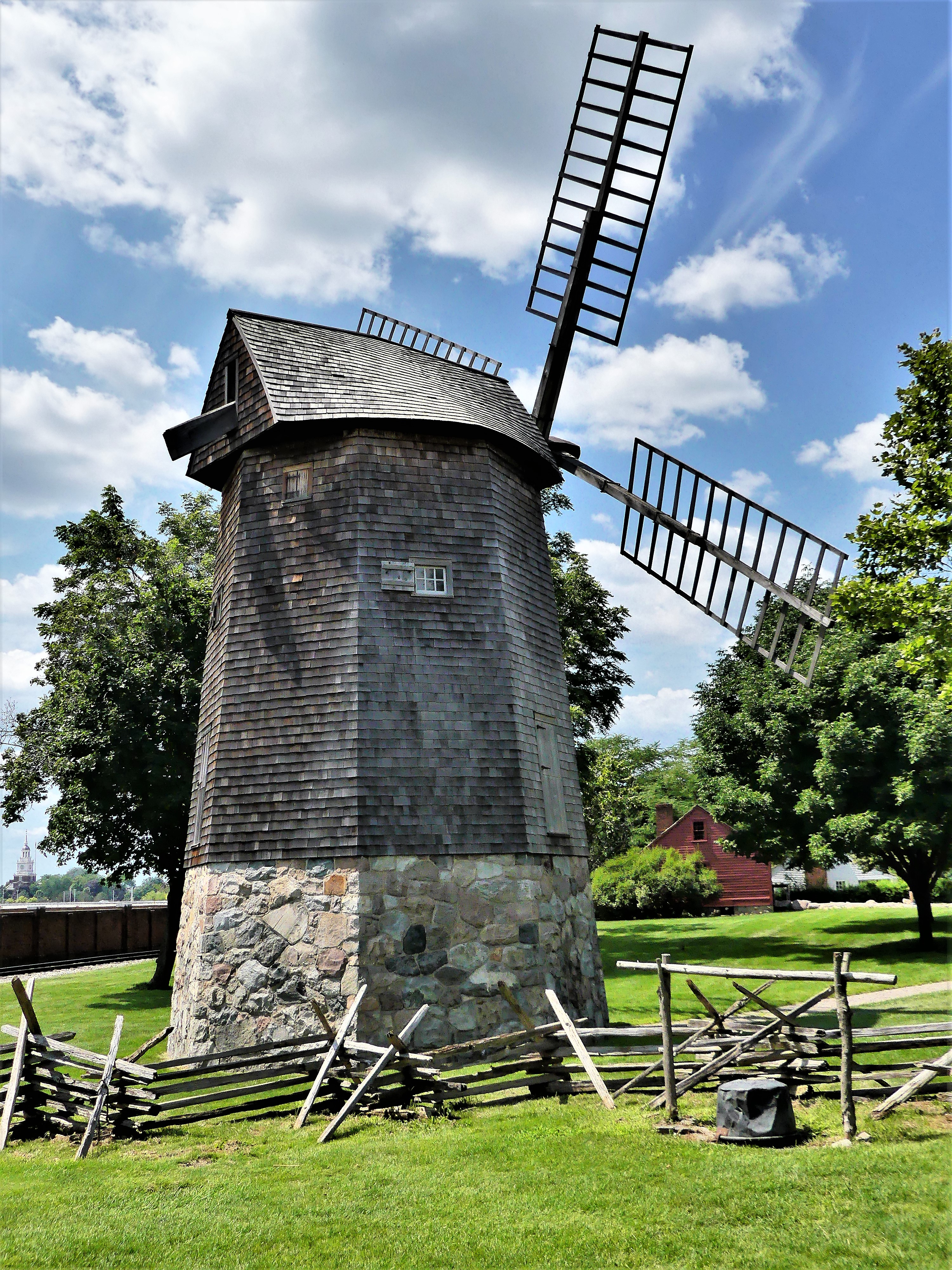
Typically, most people with a predilection for collecting turn to everyday items, such as stamps, figurines, sports memorabilia, books, shoes, or records to name just a few obsessions. But not Henry Ford. By virtue of Ford’s bottomless budget, and his insatiable curiosity, his path to collecting took him through time itself, because Henry Ford collected significant relics of history and personal sentiment, and planted them across 80 acres in Dearborn, Michigan.
He called it Greenfield Village, making it the largest museum of its kind in the world.
Greenfield Village originally operated as an experimental school known as Edison Institute in 1929 (as a nod to his dearest friend) before opening to the public as an outdoor museum in 1933.
Ford, mused, “I am collecting the history of our people as written into things their hands made and used…. When we are through, we shall have reproduced American life as lived, and that, I think, is the best way of preserving at least a part of our history and tradition…”
There are over 100 original or replicated buildings filled with hundreds of thousands of artifacts and Americana intended to preserve authenticity. Additionally, costumed spokespeople throughout the complex tell antecdotes of historical nature, fully re-enacting an experience that captures an earlier time in America.
If there was a homestead that had historical value or childhood sentiment to Henry Ford, and it stood in the way of progress, then Henry seized the moment and had the house razed and moved to Michigan for restoration.
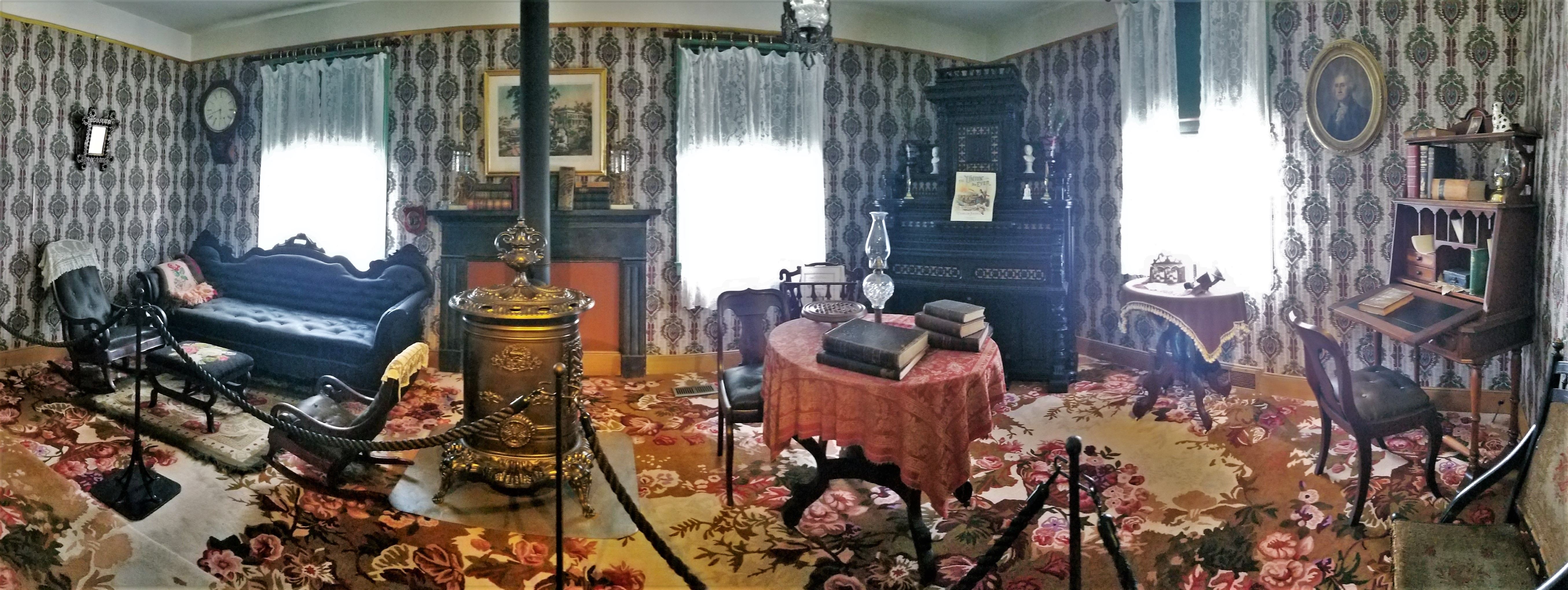
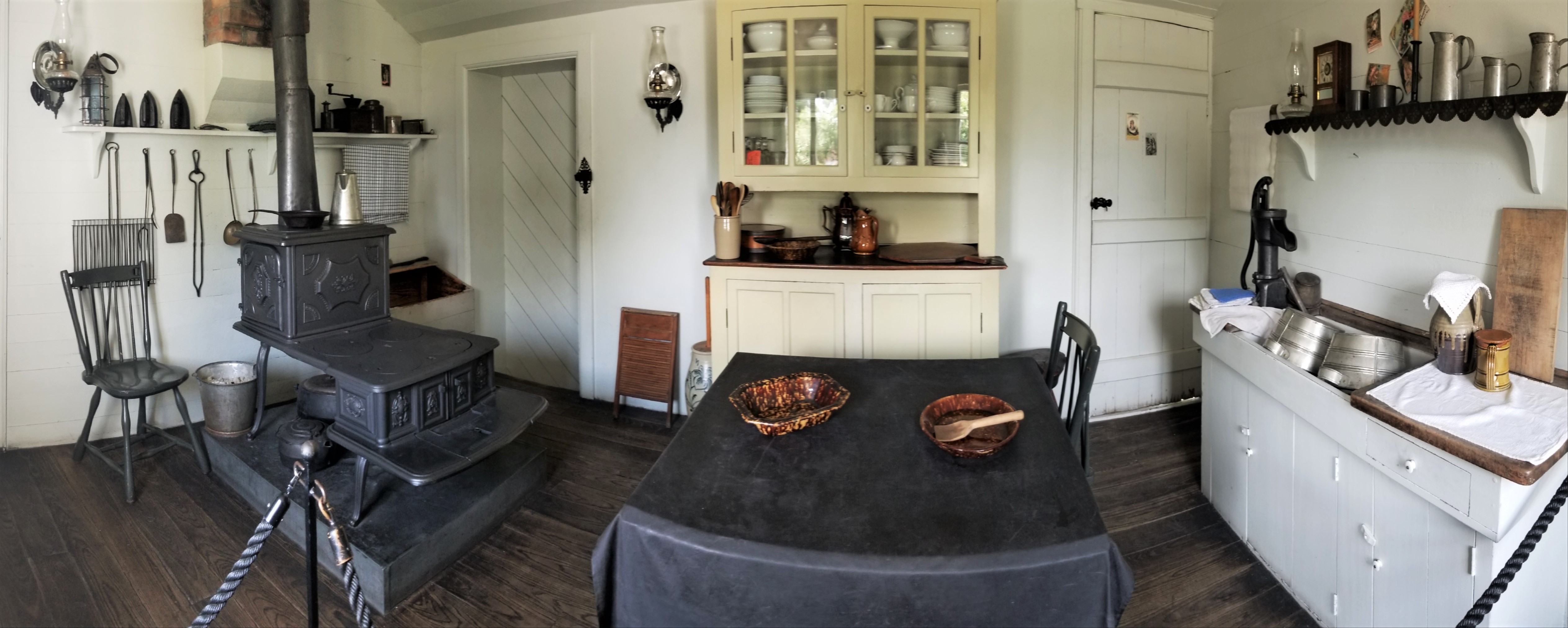
As excerpted from Telling America’s Story–A History of the Henry Ford:
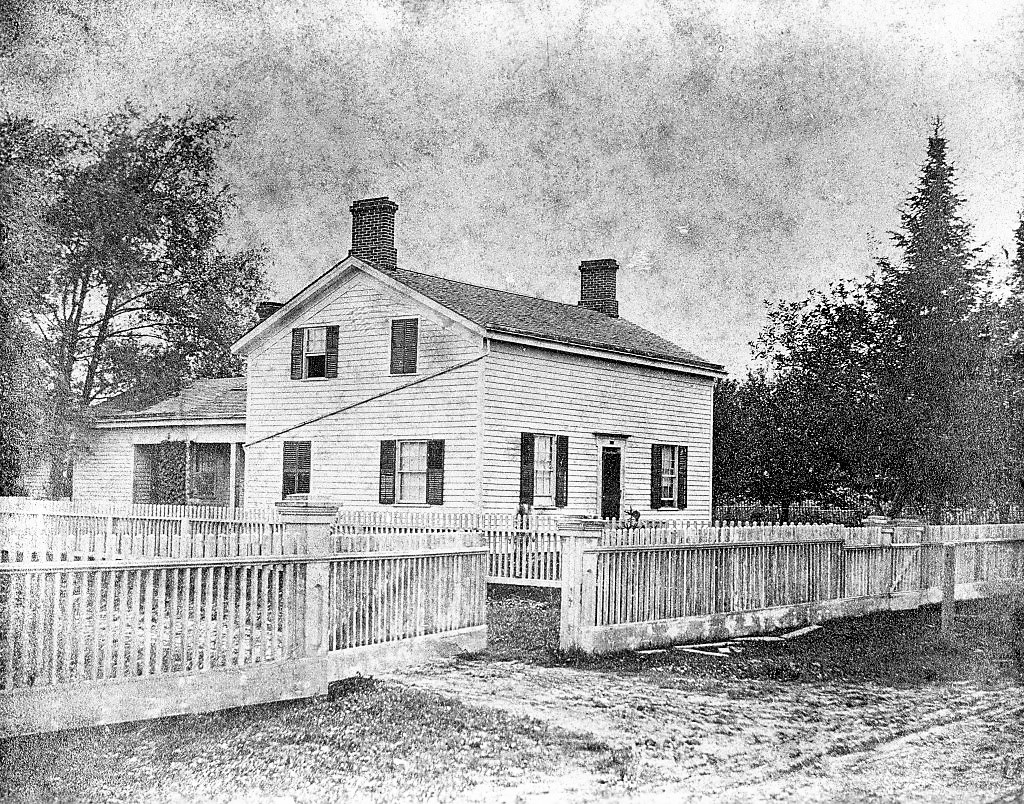
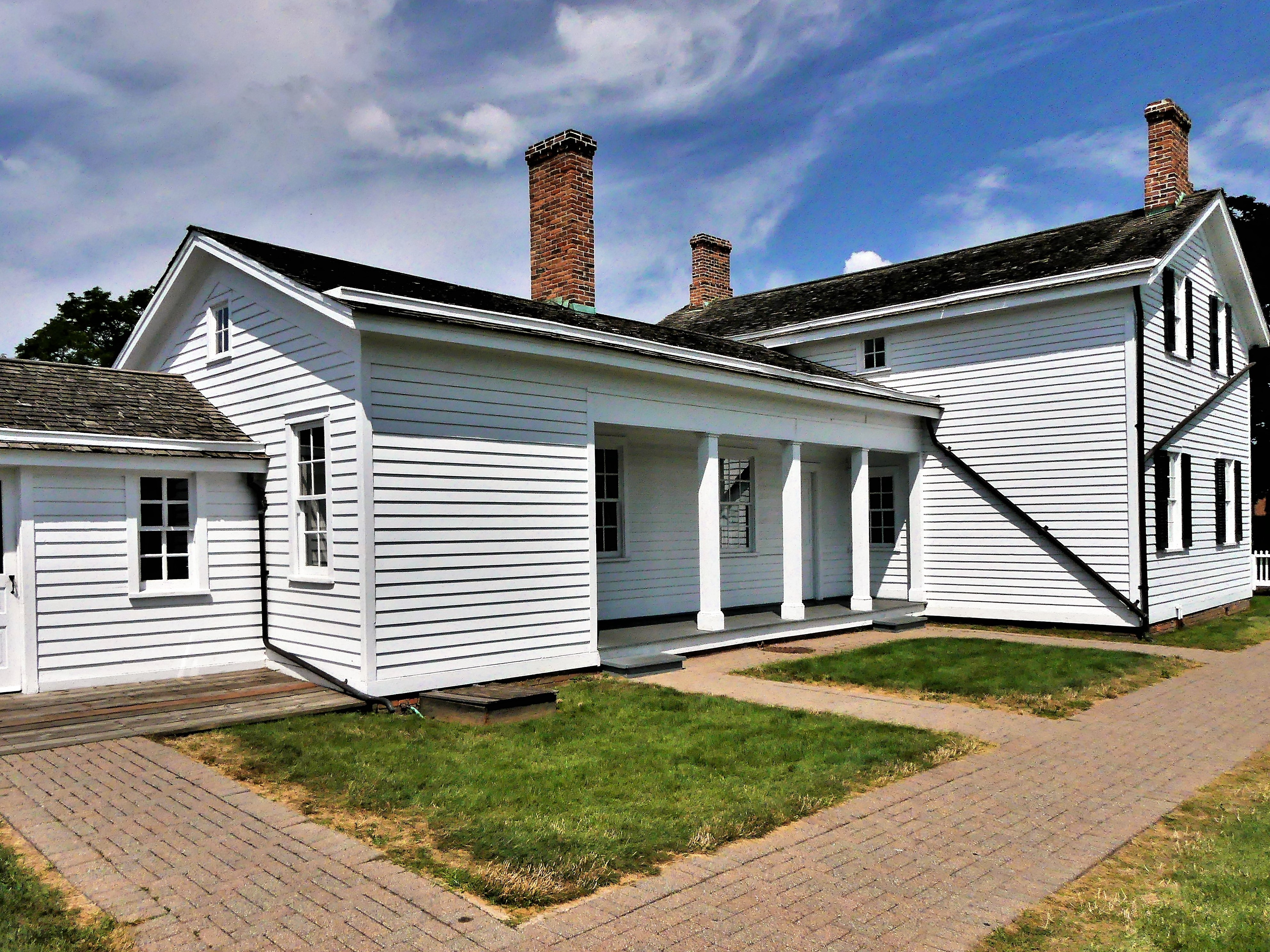
In 1919, a road improvement project in Ford’s hometown of Springwells Township, Michigan (now the city of Dearborn), meant his birthplace would need to be either moved 200 yards from its original location – or destroyed.
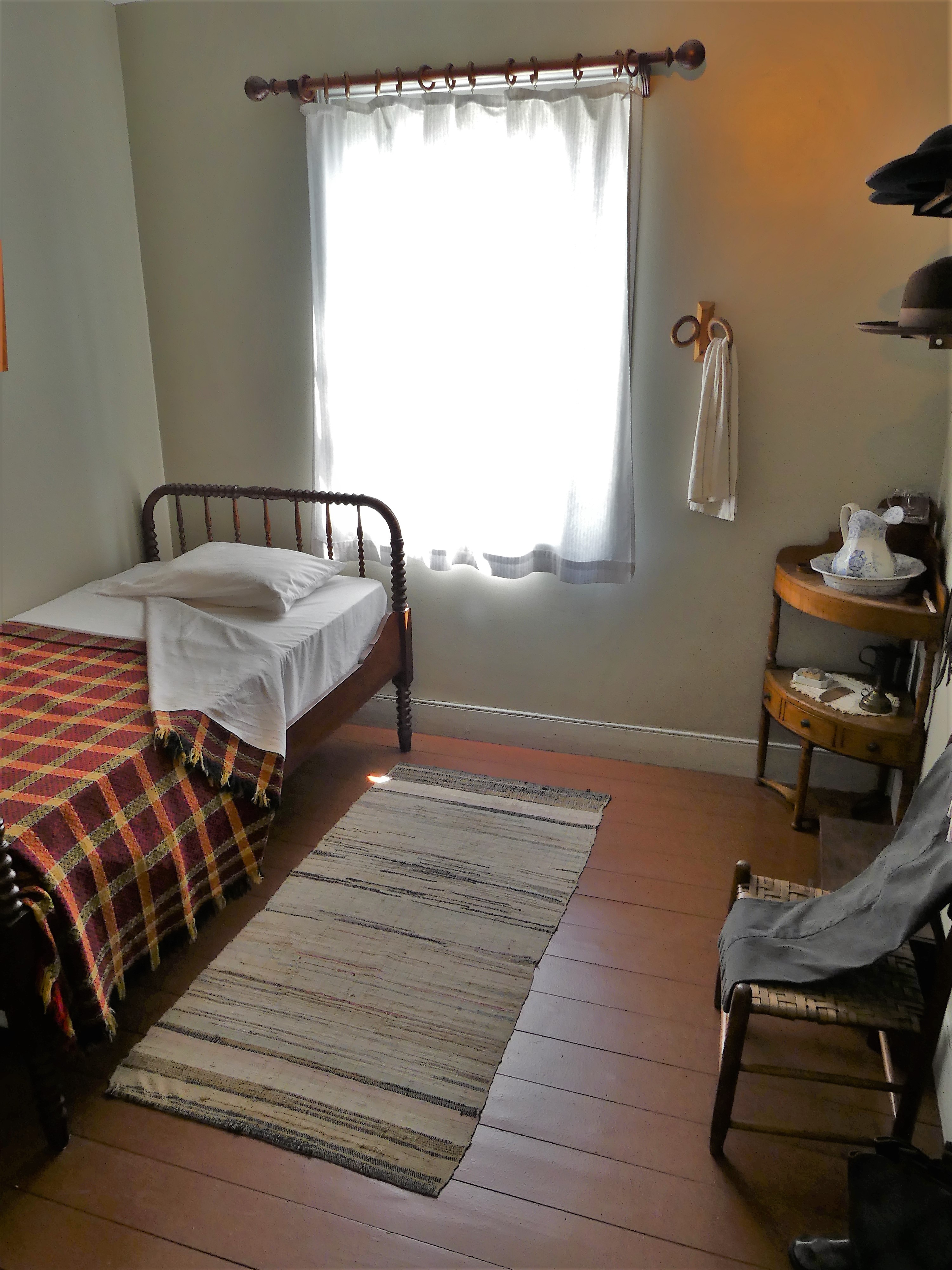
Ford decided to move the house and restore it to the way it looked at the time of his mother’s death in 1876, when he was 13 years old. Ford personally took charge of the birthplace restoration, meticulously recreating the details of the house down to the original or similar furnishings.
For example, Ford remembered sitting by a Starlight stove in the dining room as a child. After 18 months of searching, he discovered the exact make and model on a porch in Stockbridge, Michigan, which he purchased for $25 and loaded into his car for the journey back to Dearborn. And when he couldn’t find the precise pattern of dishes his mother had used, he had the original site of his birthplace excavated and had replicas made from the pottery shards found.
Ford dedicated the restoration of his childhood home to his mother’s memory and her teachings, particularly noting her love of family, her belief in the value of hard work, in learning “not from the school books but from life,” and her belief in trusting one’s intuition. His mother had encouraged his early tinkering and youthful inventions, and he felt sure she had set him on his unique path in life.
The rest is history…
And it’s all organized into seven historic districts: Working Farms;
Liberty Craftworks;
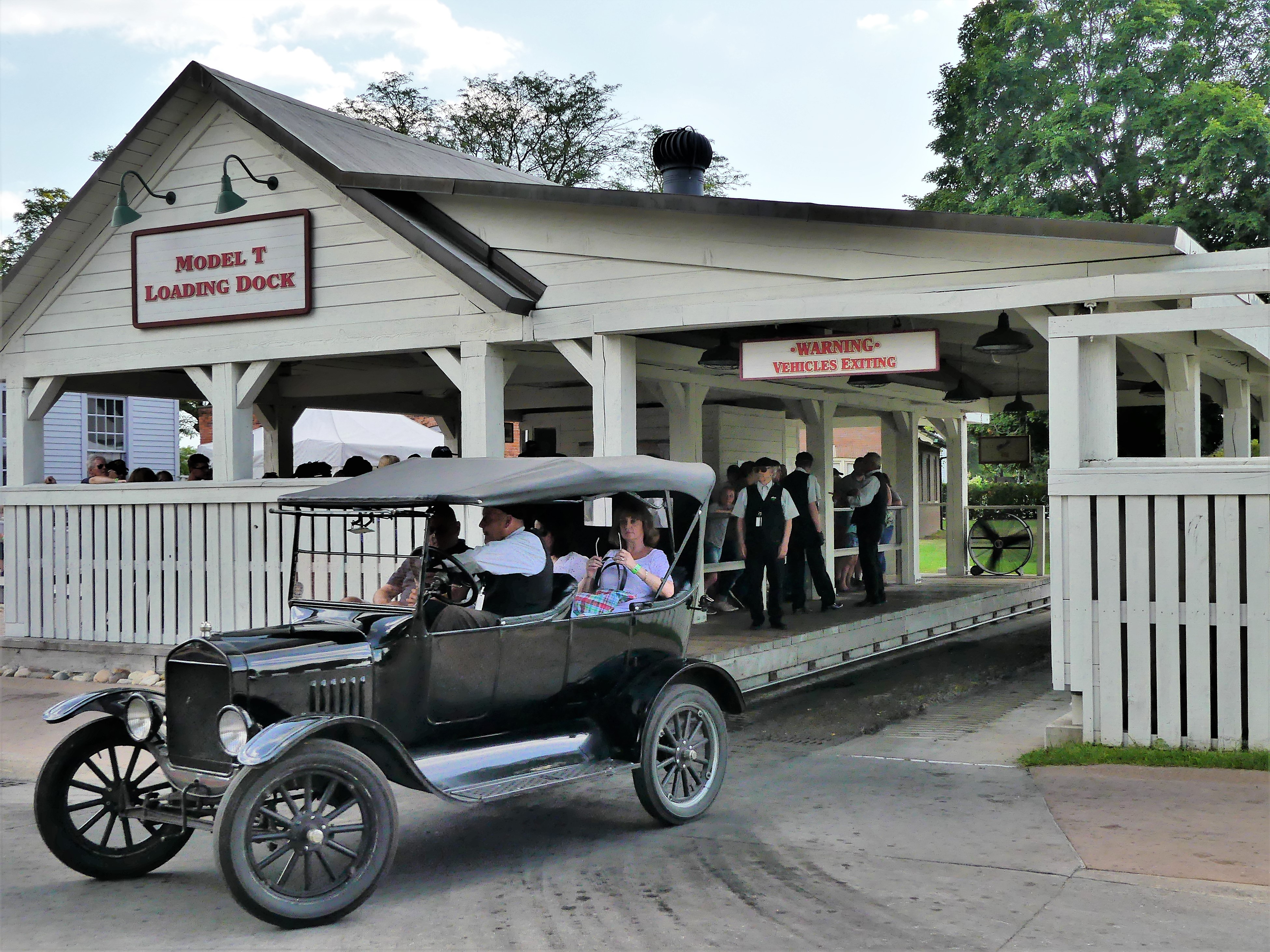
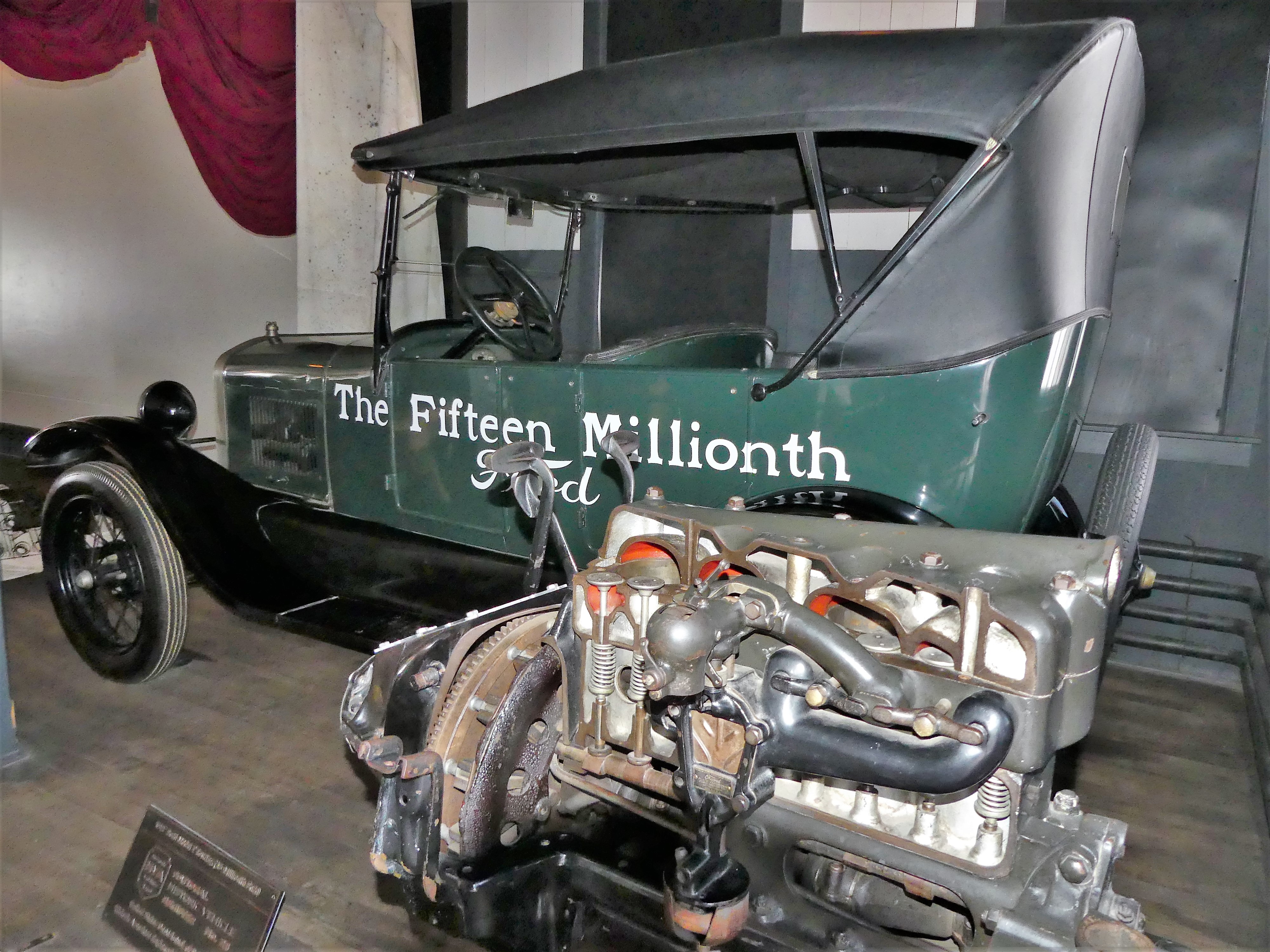
Henry Ford’s Model T;
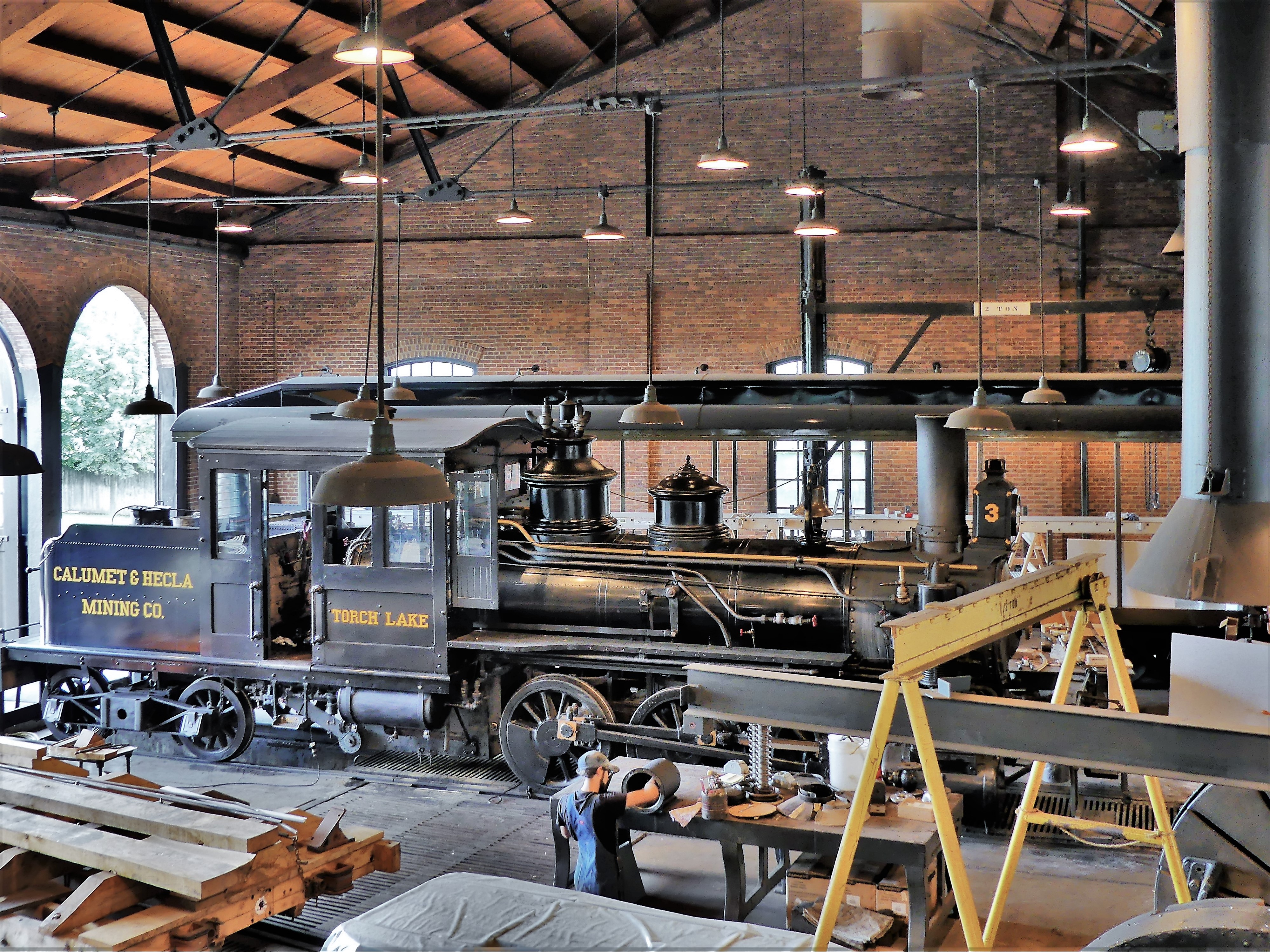
Railroad Junction;
Main Street;
Porches & Parlors;
and Edison at Work, which is a future subject unto itself.
As one might expect, walking through history can be exhausting. Leah’s iPhone calculated that we hiked nearly 5 miles around the village in 3 hours, although there was still so much more to see and do. However, it was a hot and humid day, and apropos to Henry Ford, we simply ran out of gas and steam.
Or, to bastardize a famous Edison quote, we were inspired while we perspired!
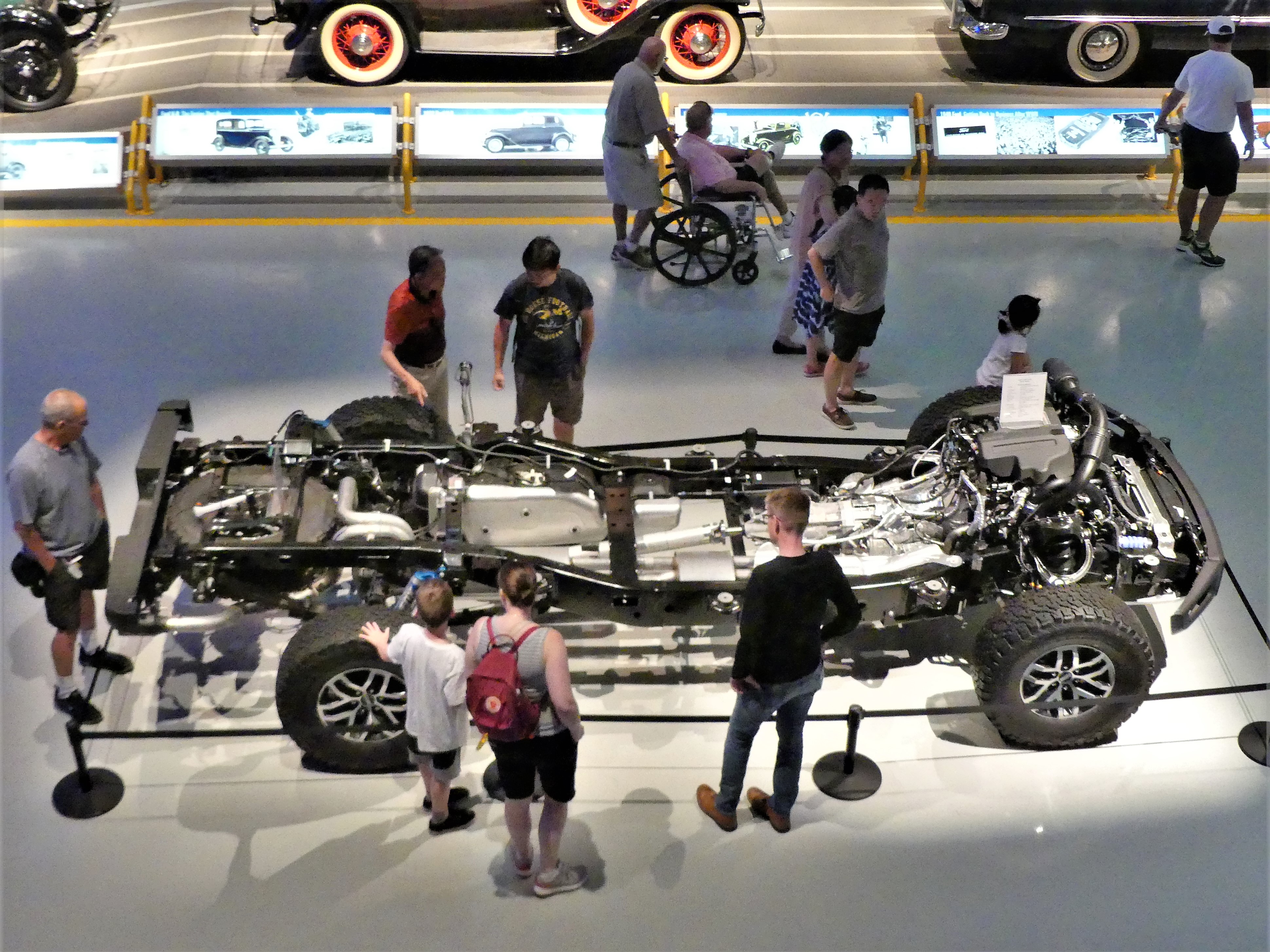
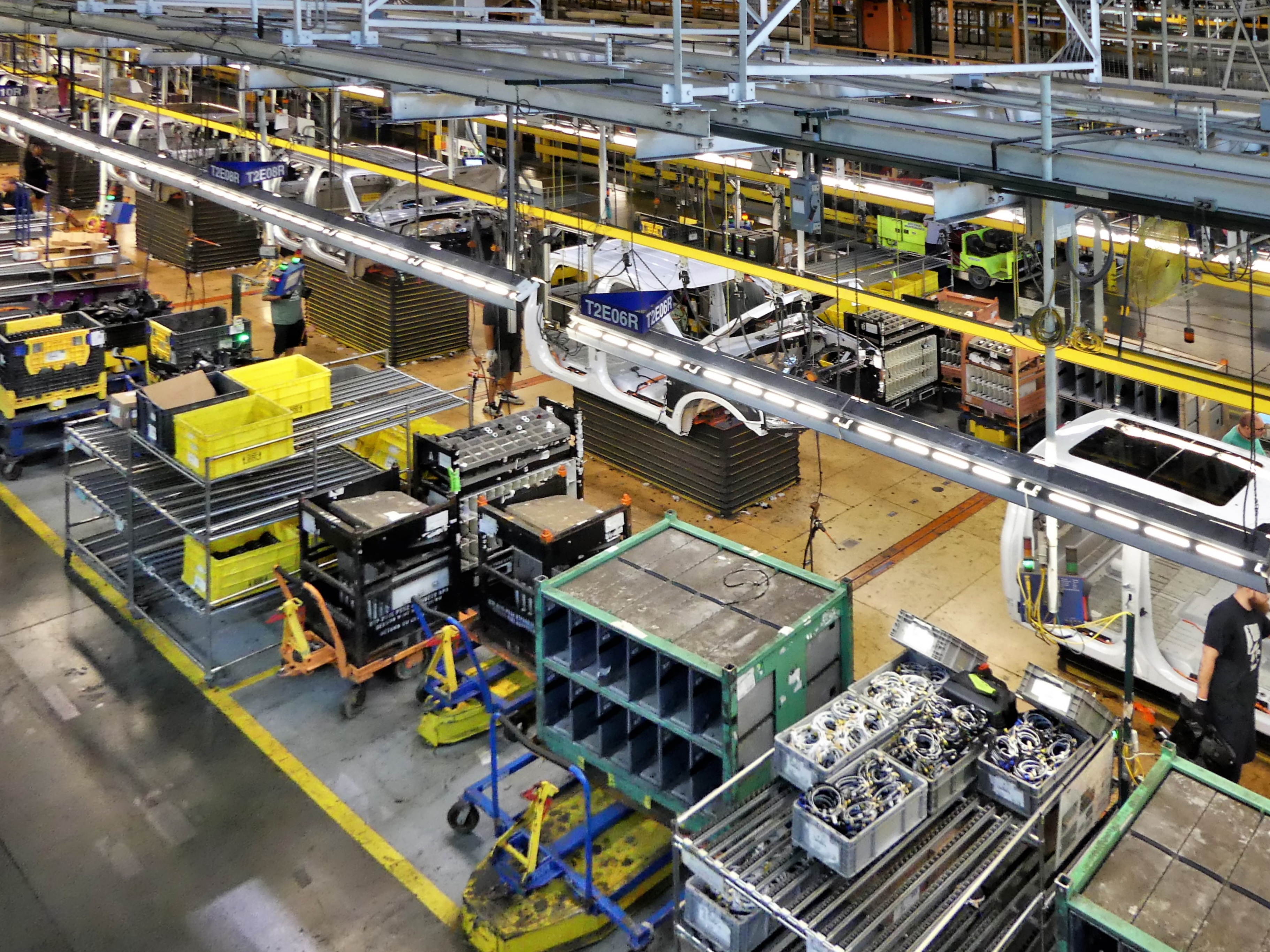
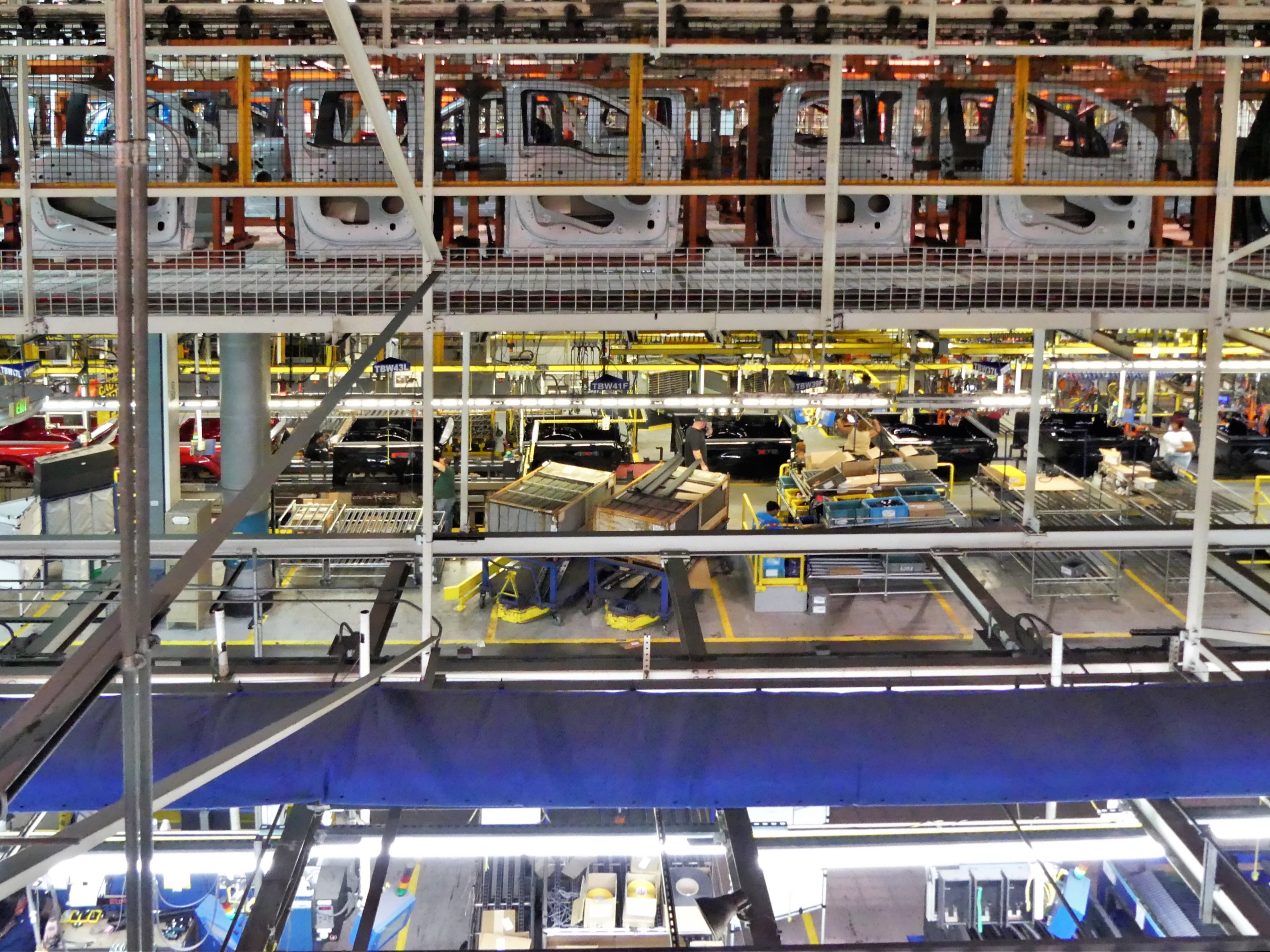
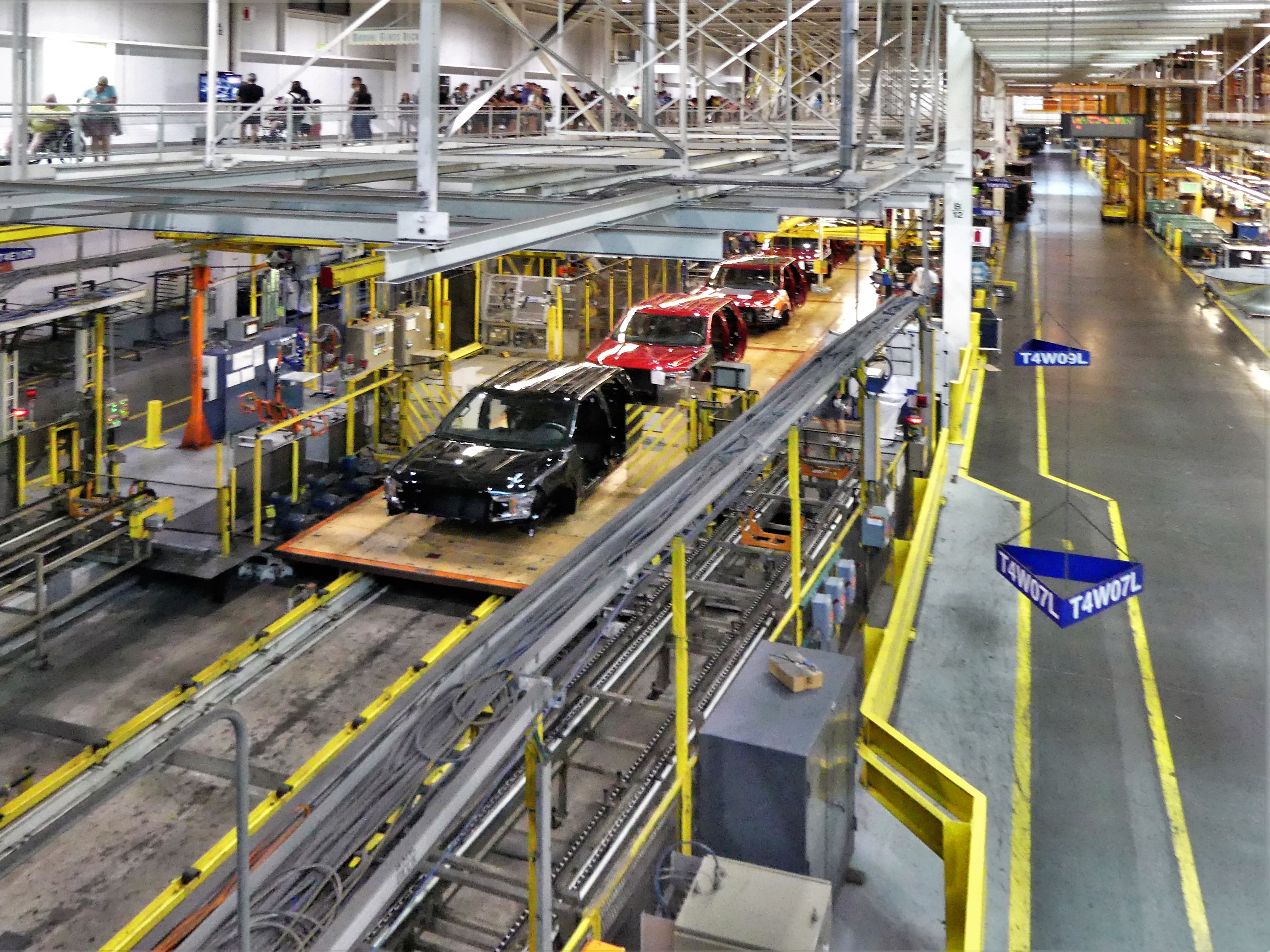
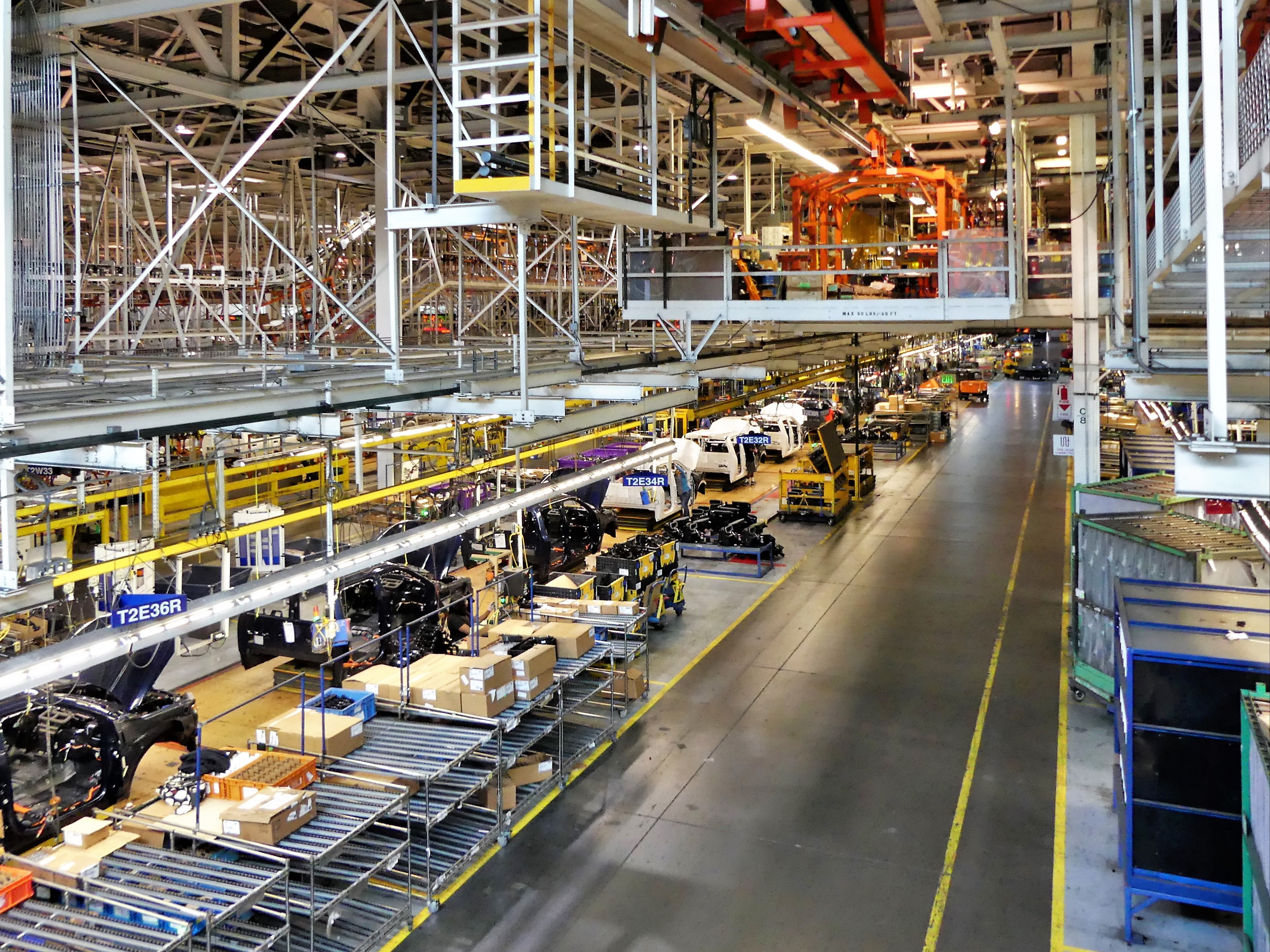
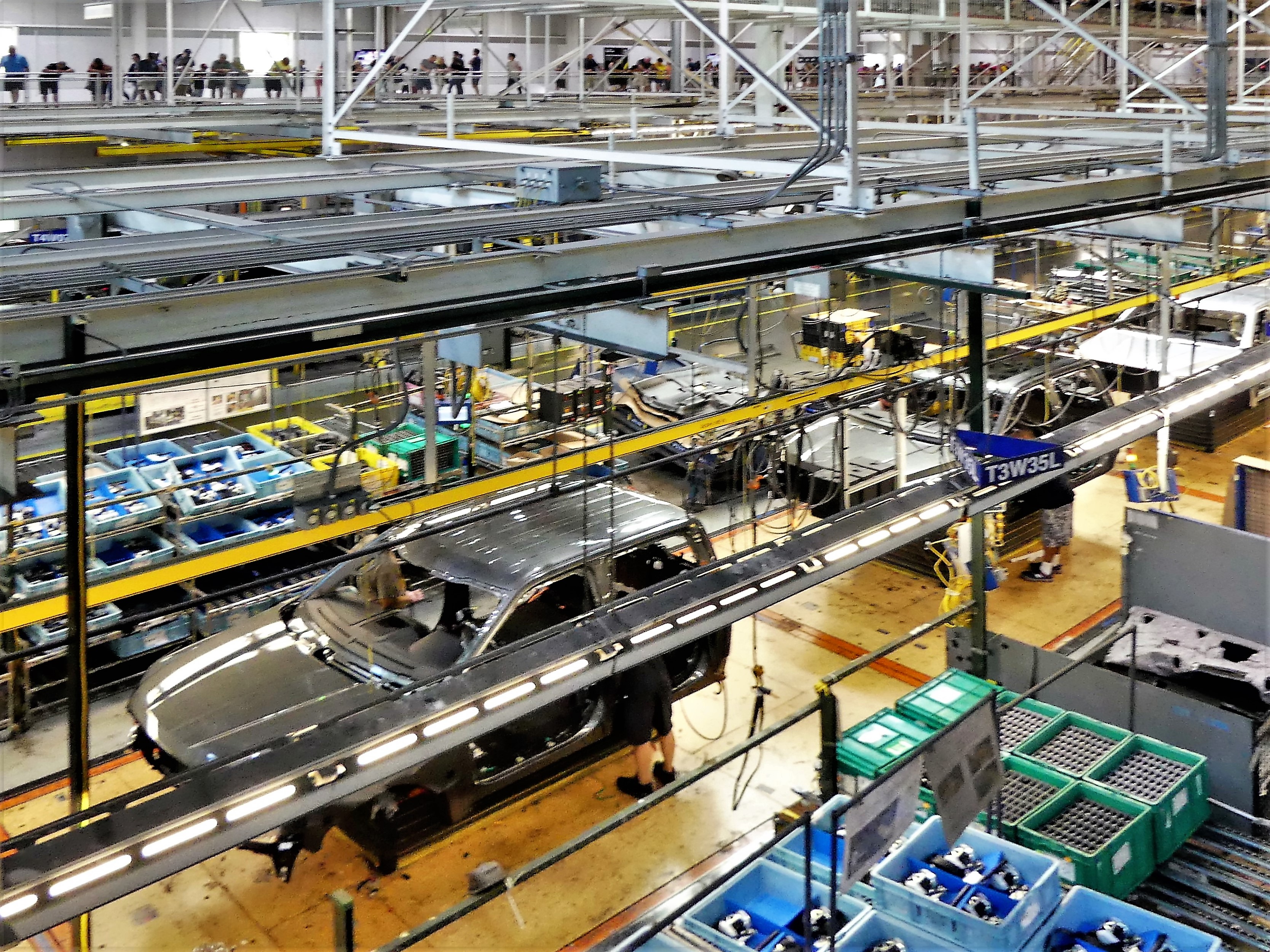
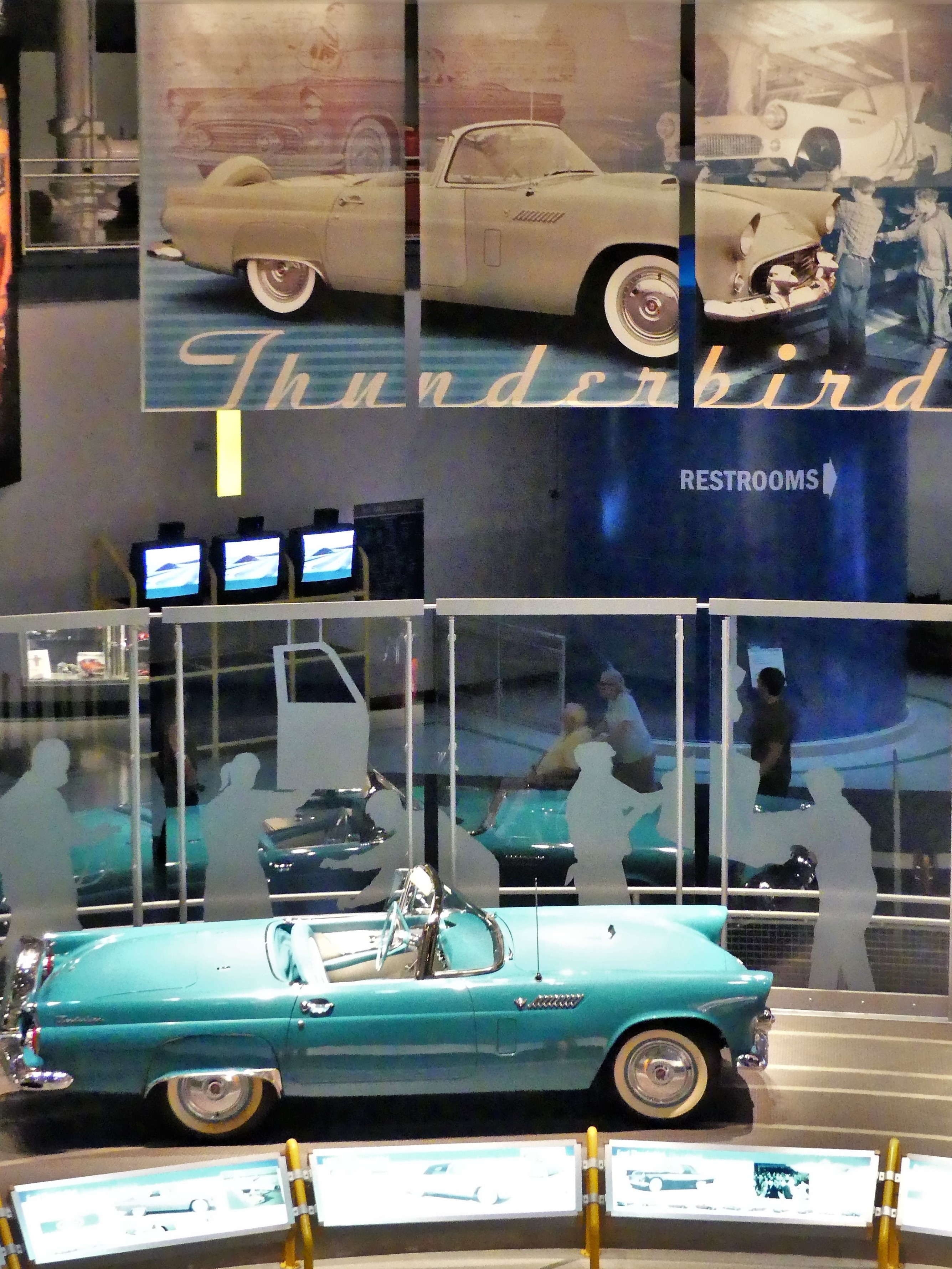
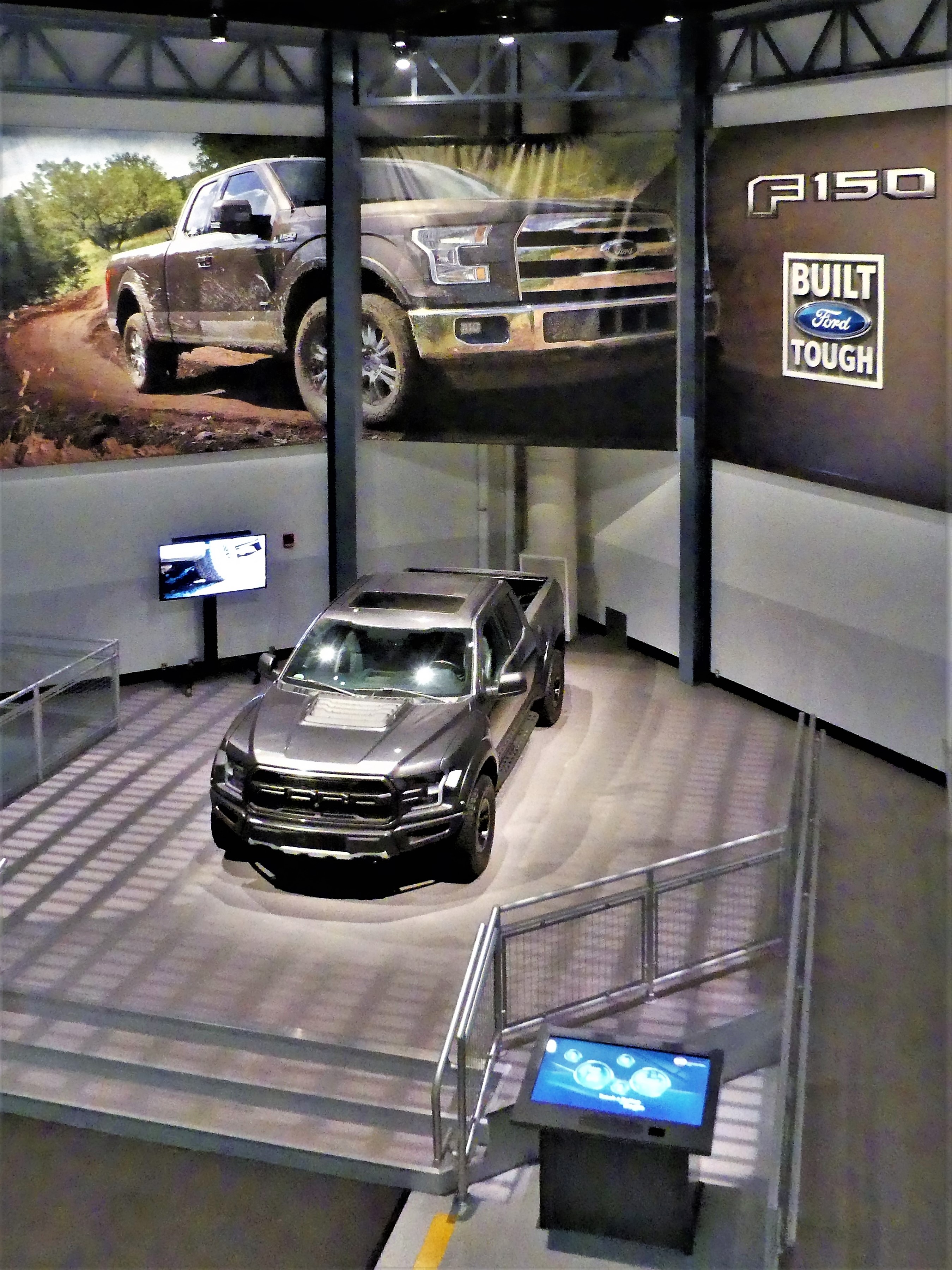
Every 52 seconds, another Ford F-150 rolls off the line at The Rouge Complex in Dearborn, Michigan, making it the world’s best selling truck, and generating over $28 million in daily revenue. The Henry Ford Museum offers an elective tour of the Rouge as part of its a la carte admission package.
For Leah and me, it was never a consideration. We elected to take the tour to see how our beloved truck was assembled.
The self-guided tour consists of five parts:
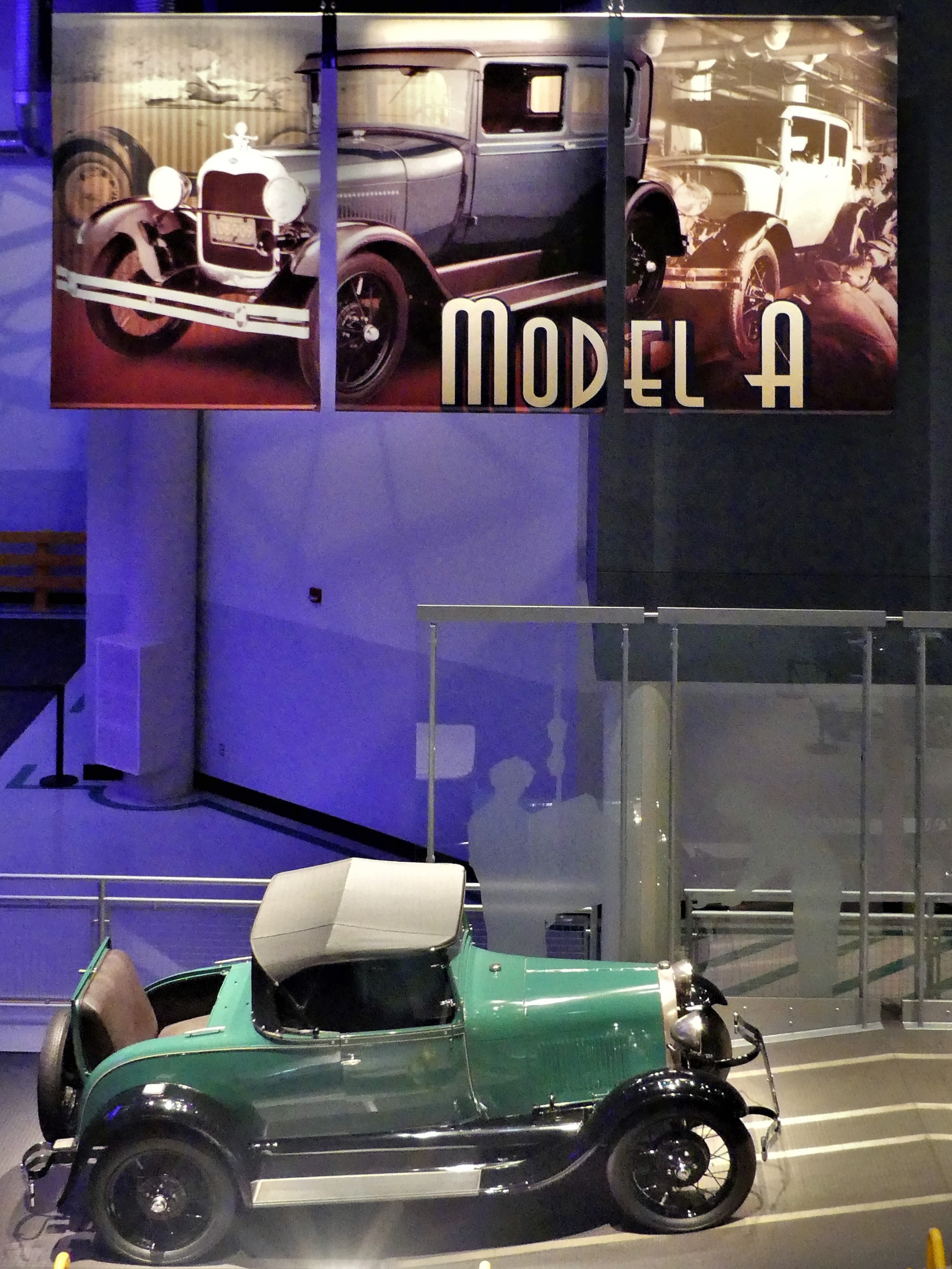
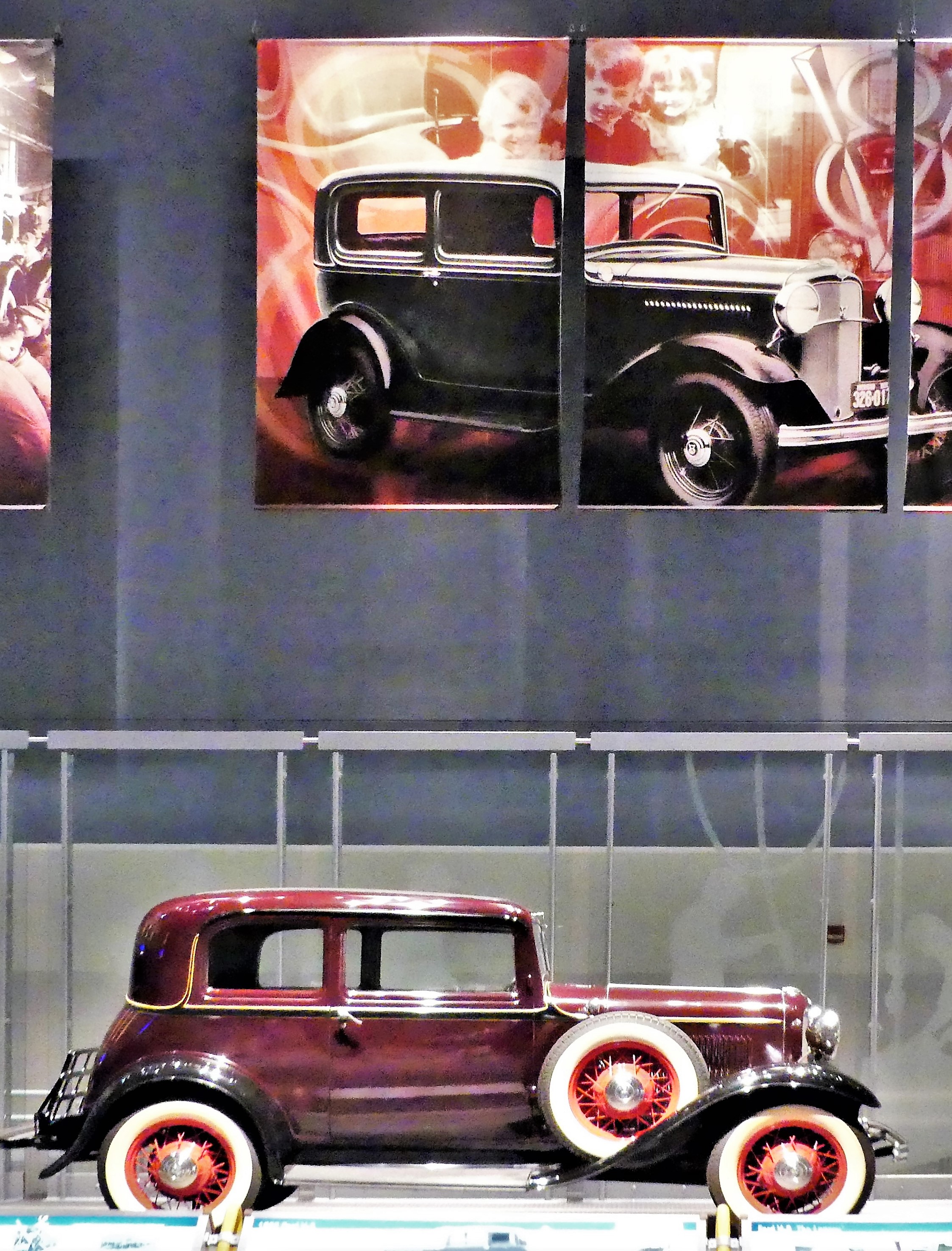
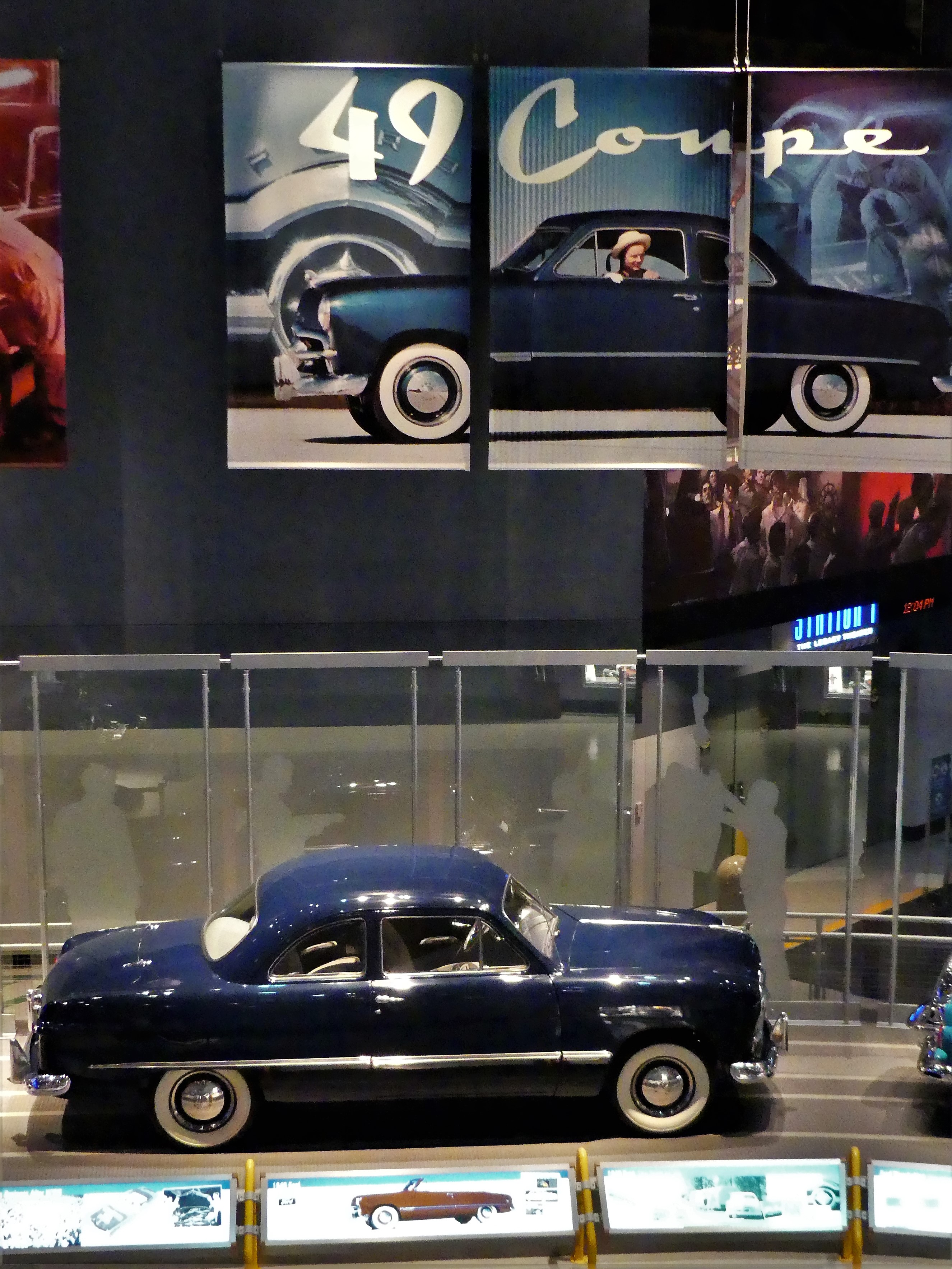
The Legacy Theater, offering a short film charting the Rouge’s 100-year history–from Model A to present.
The Manufacturing Innovation Theater, a special effects homage to Ford’s F-150 truck, from vision to conception;
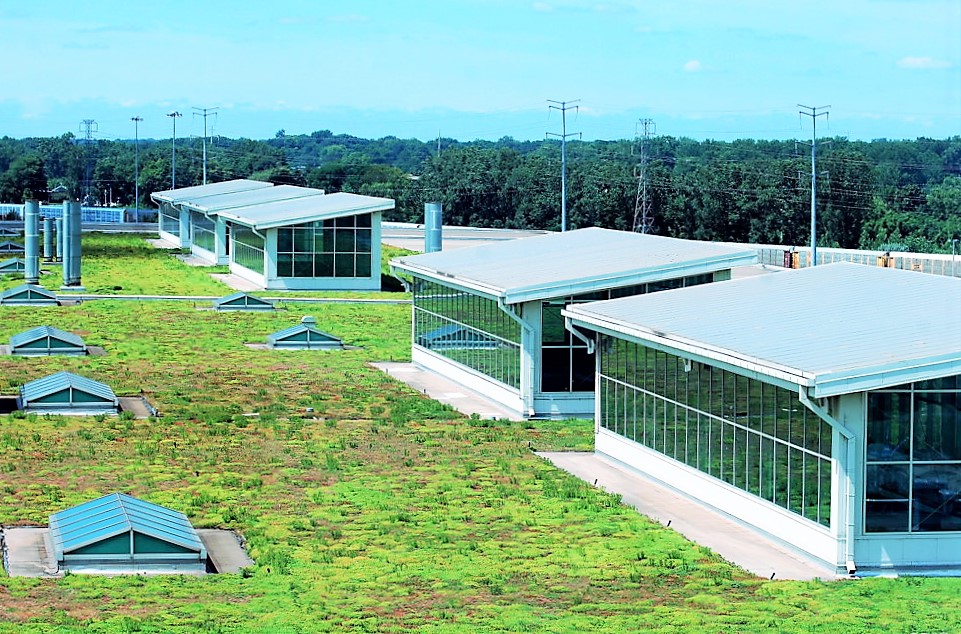
The Observation Deck Tour, with views of Ford’s 10-acre living roof of sedum and associated rainwater reclamation system, which provides a cost-savings of $50 million in annual maintenance.
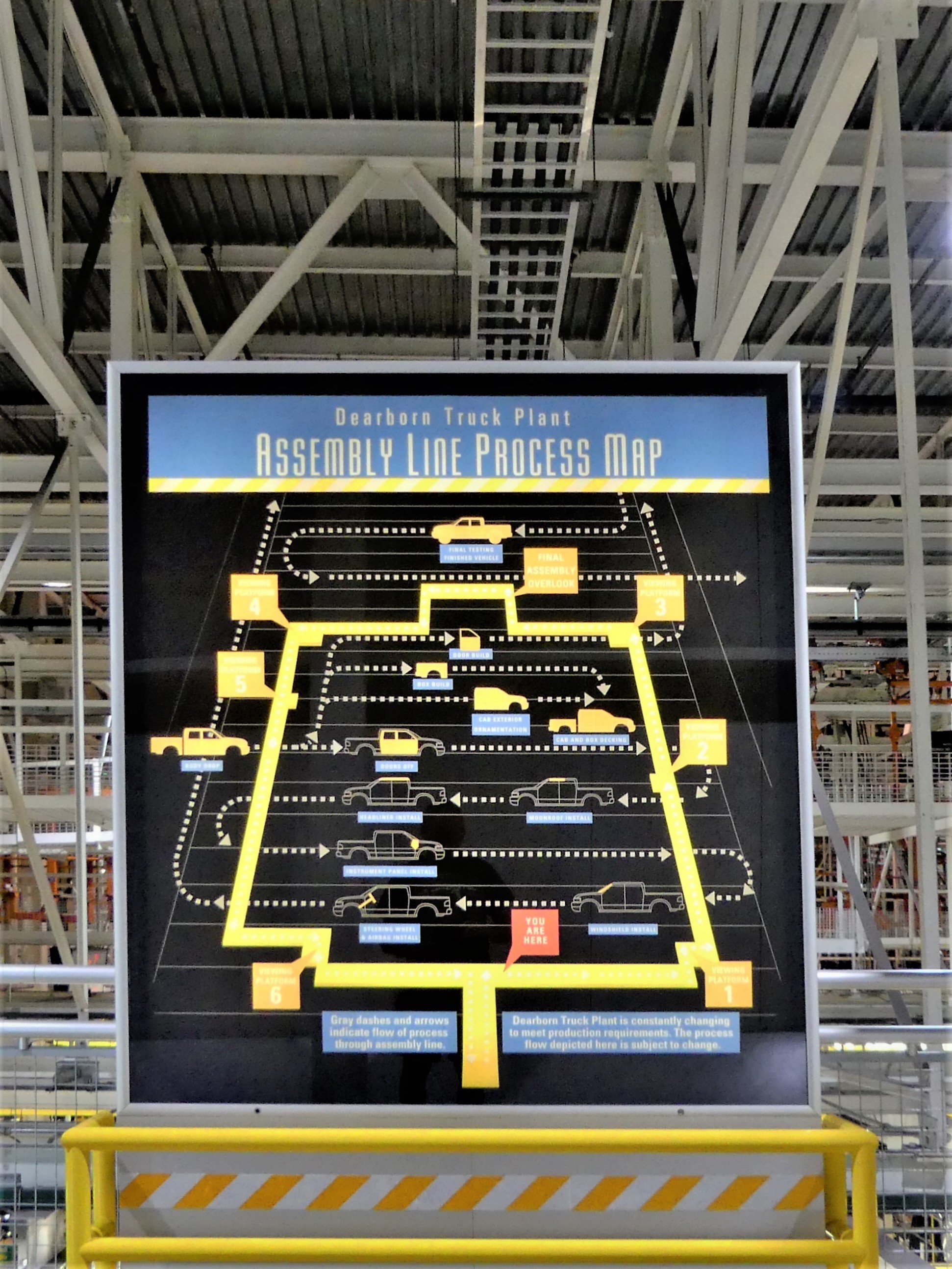
The Assembly Walking Plant Tour, which carries observers along a catwalk above the production floor for a birds-eye view of the final assembly of an F-150;
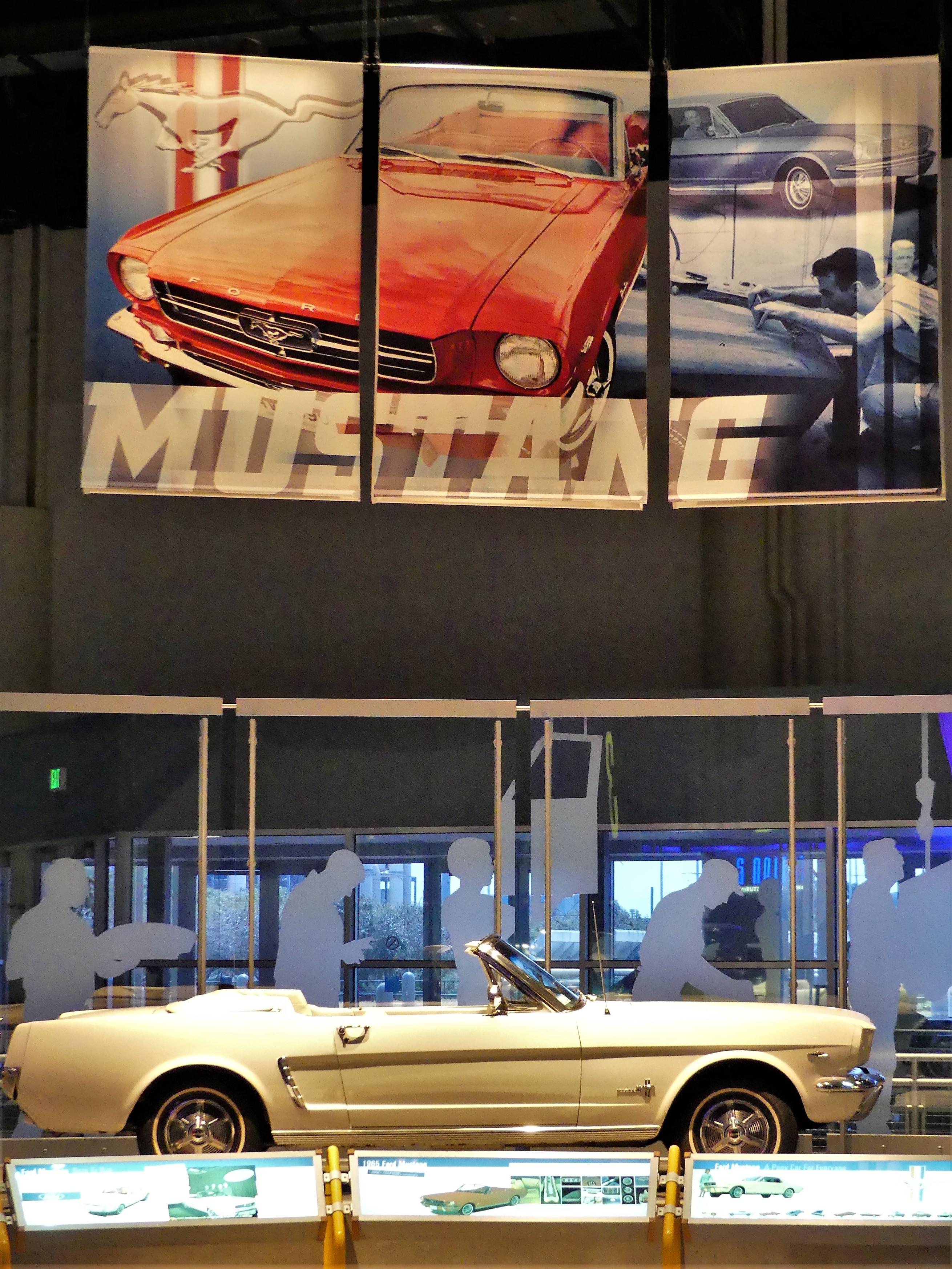
and, The Legacy Gallery, which showcases some of the legendary cars manufactured at the Rouge.
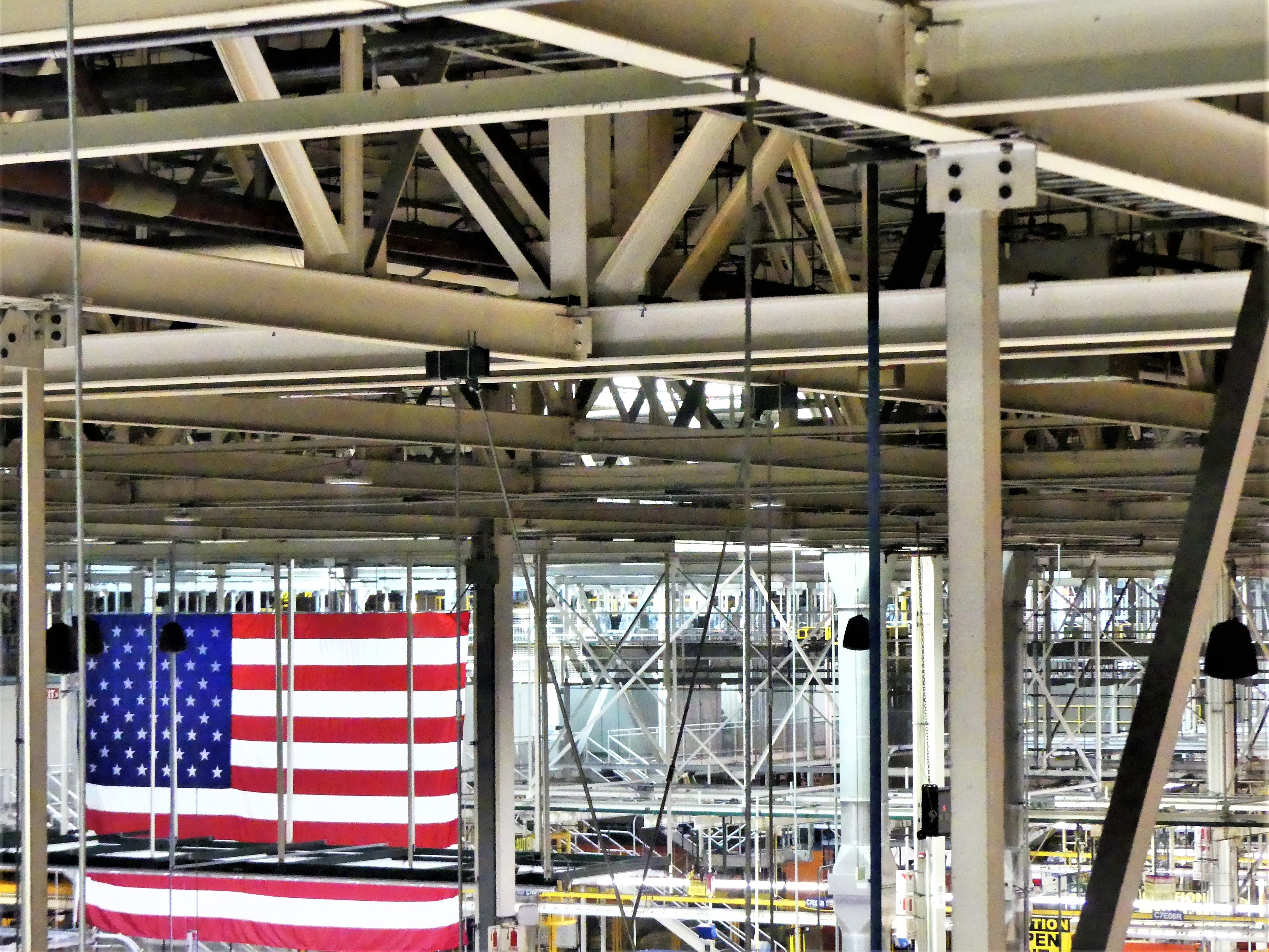
To be clear, there is a strict no photography policy during the film presentations and assembly plant portion of the tour. However, being the renegade that I am, I was determined to capture a few frames as I walked the perimeter of the production walkway…but in a covert fashion.
The line never stopped moving with the exception of lunch at noon. It was an industrial pas de deux of human labor and robotic engineering, with components arriving from overhead conveyors and snatched for assembly.
My camera hung casually around my neck as I moved from station to station, where I’d stealthly point my lens in a general direction, always avoiding factory workers, yet hoping to record this dynamic performance. Along the way, I was mindful of patrolling docents, who were fountains of statistical information, but also doubled as picture police.
While I admit to taking a foolish risk, I also confess to the challenge of shooting blindly with the notion that something sublime might materialize.
Somehow, I can’t imagine I’m the only one who sneaks a shot or two! You out there, you know who you are, and you know what I’m talking about.
Nevertheless, I’ll surrender my digital files if I have to, but I will not surrender my ride.
Detroit has been working overtime on a public relations campaign to scrub the grime off its tarnished reputation and buff the rentability of its landmark towers. A downtown resurgence is helping to restore the luster of a once-burgeoning city that grew into an industrial and economic juggernaut during the first half of the 20th century, but became a municipal pariah after accruing $20 billion of debt since the 1950s.
In its heyday, Detroit was a magnet of opportunity, attracting new residents from all American sectors with the promise of manufacturing jobs. Consequently, its population swelled to 2 million.
The collapse of the city’s automobile industry was the catalyst for Detroit’s demise. Racial tensions culminated in riots in 1967 that led to a mass exodus, and Detroit shrank to a third of its size. Vacant lots and abandoned buildings became the norm. Ultimately, the city went bankrupt in 2013–the largest debt of its kind for an American city.
Today, Detroit is rebounding, but not without new growing pains. City leaders hope to strike a balance between renewed economic confidence and building a future that is more inclusive of long-term residents who have suffered the most.
As it’s explained by Pete Saunders for Forbes Magazine:
…A partnership between city and state government, business leaders and the city’s philanthropic community led an innovative effort to restructure the city’s debt, estimated at $19 billion.
Private investment in downtown Detroit, already on the upswing prior to the bankruptcy filing, continued to trend upward. Last fall’s opening of Little Caesar’s Arena, part of the larger District Detroit business and entertainment area, the construction of a landmark mixed use development on a former iconic department store site, and the recent acquisition by Ford Motor Company of Michigan Central Station all demonstrate the accelerated pace of development in the city.
Detroit’s Midtown area, also just north of downtown and home to many of the city’s arts and cultural institutions and Wayne State University, has been the site of dozens of new mixed use developments with hundreds of new units designed to attract Millennial urban dwellers.
The city’s former warehouse district on the east riverfront is attracting development attention for high-end condos and apartments with downtown and waterfront views.
Detroit’s Corktown neighborhood, the city’s oldest neighborhood and one that’s grown in trendiness over the last half-decade, is set to receive more investment in commercial and residential development, pushing its recent successes to the next level.
Detroit’s development resurgence is being tied together by a brand-new streetcar line that opened last year, the QLine. The 3-mile streetcar connects downtown with the adjacent neighborhoods where activity is taking place, and there are hopes that the line could expand further outward and gain additional branches.
Leah and I took a walk around downtown to see for ourselves. First, we stopped at an Art Deco-styled landmark building celebrating its 90th anniversary.
A short walk to the Detroit River brought us face to fist with an homage to Joe Louis.
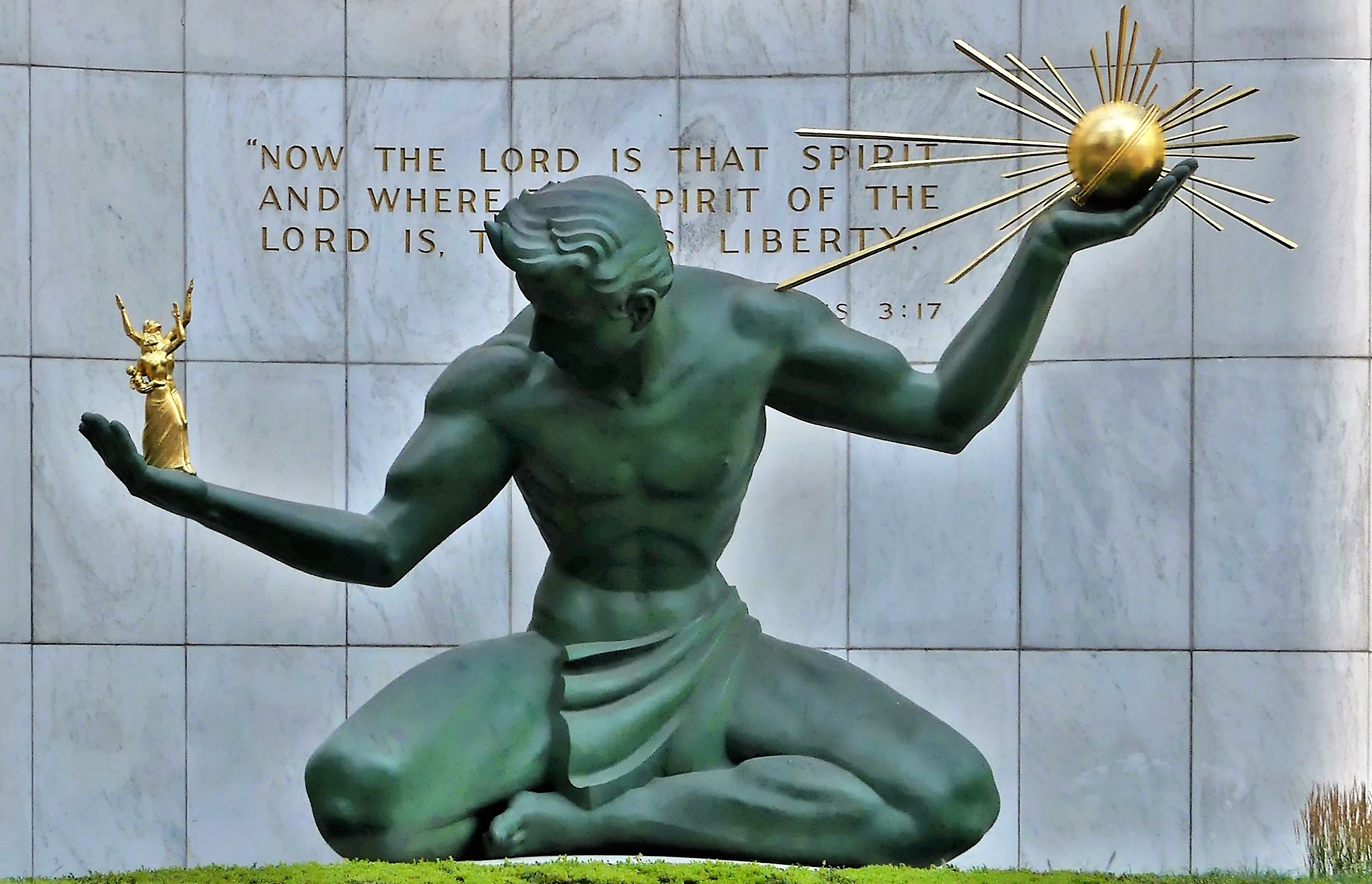
Nearby, the Spirit of Detroit was undergoing a makeover.
We crossed E. Jefferson to arrive at Hart Plaza to gaze at Michigan’s Labor Legacy.
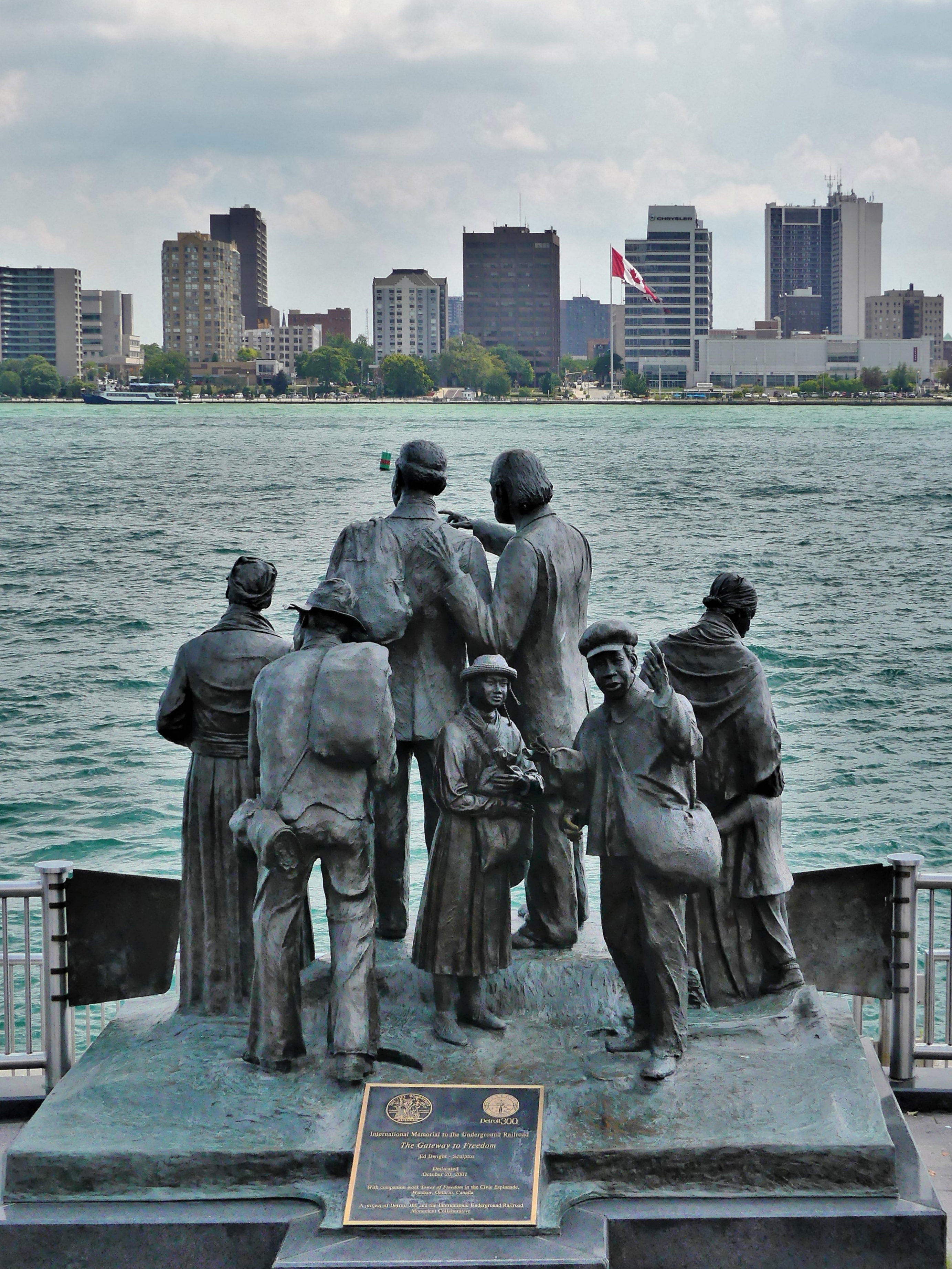
Walking a short distance to the Detroit River brought us views of Windsor, Canada as once imagined by slaves making their escape through the Underground Railroad.
In the distance, stands the Ambassador Bridge–the busiest crossing between U.S. and Canada–with 10,000 commercial vehicles making the trip daily.
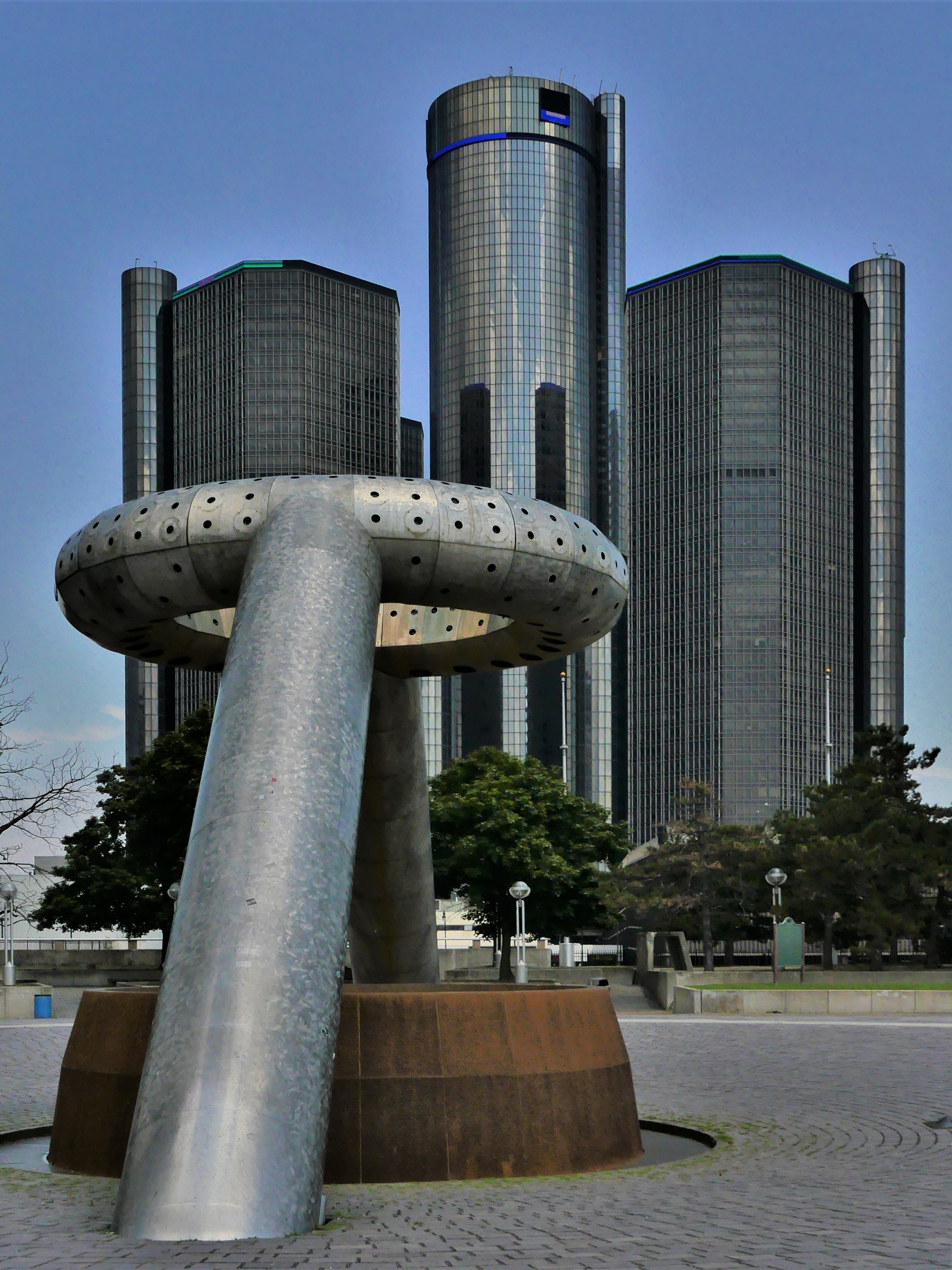
Beyond Dodge Fountain, the GM Renaissance Tower rises from the International Riverfront.
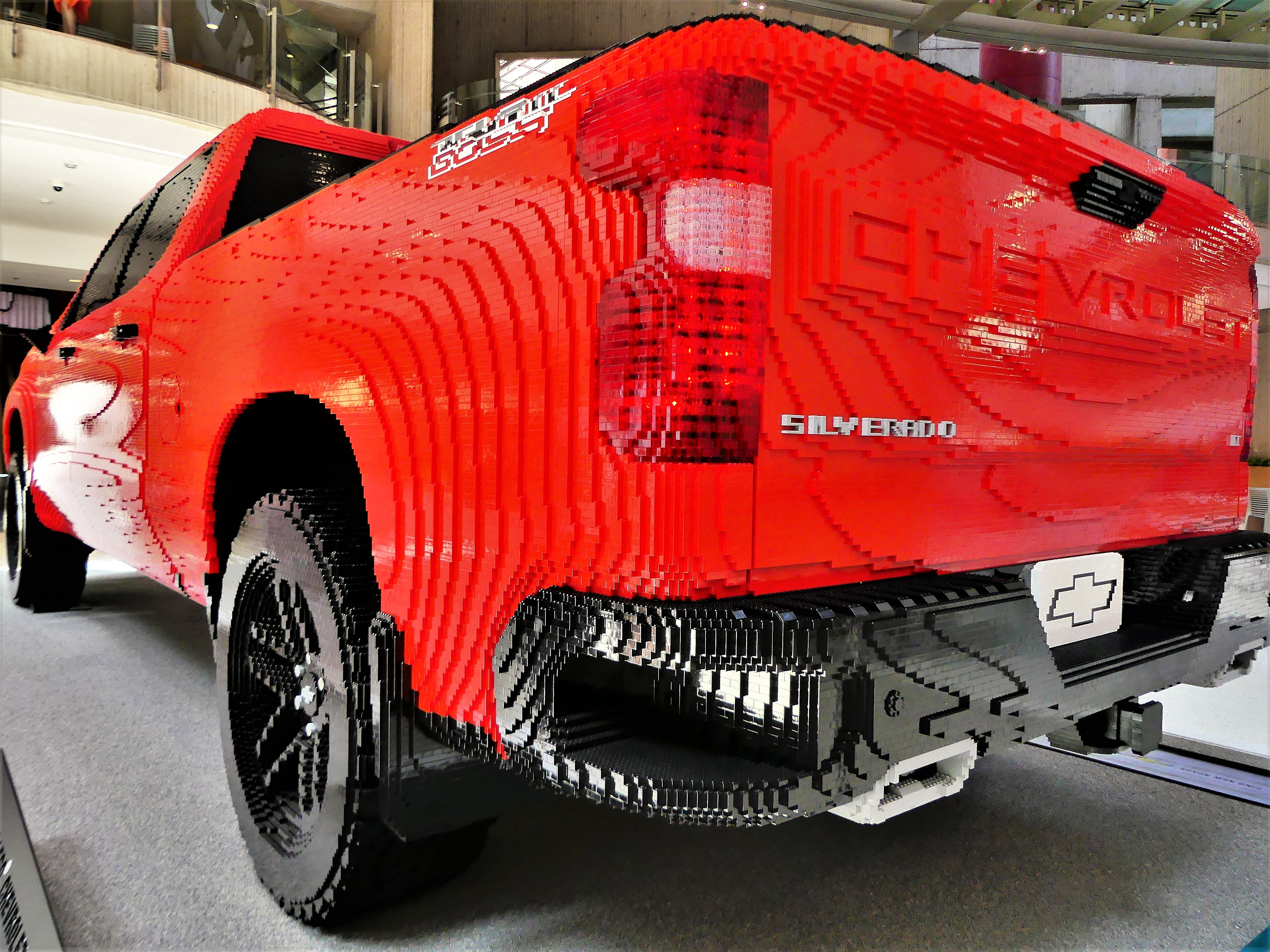
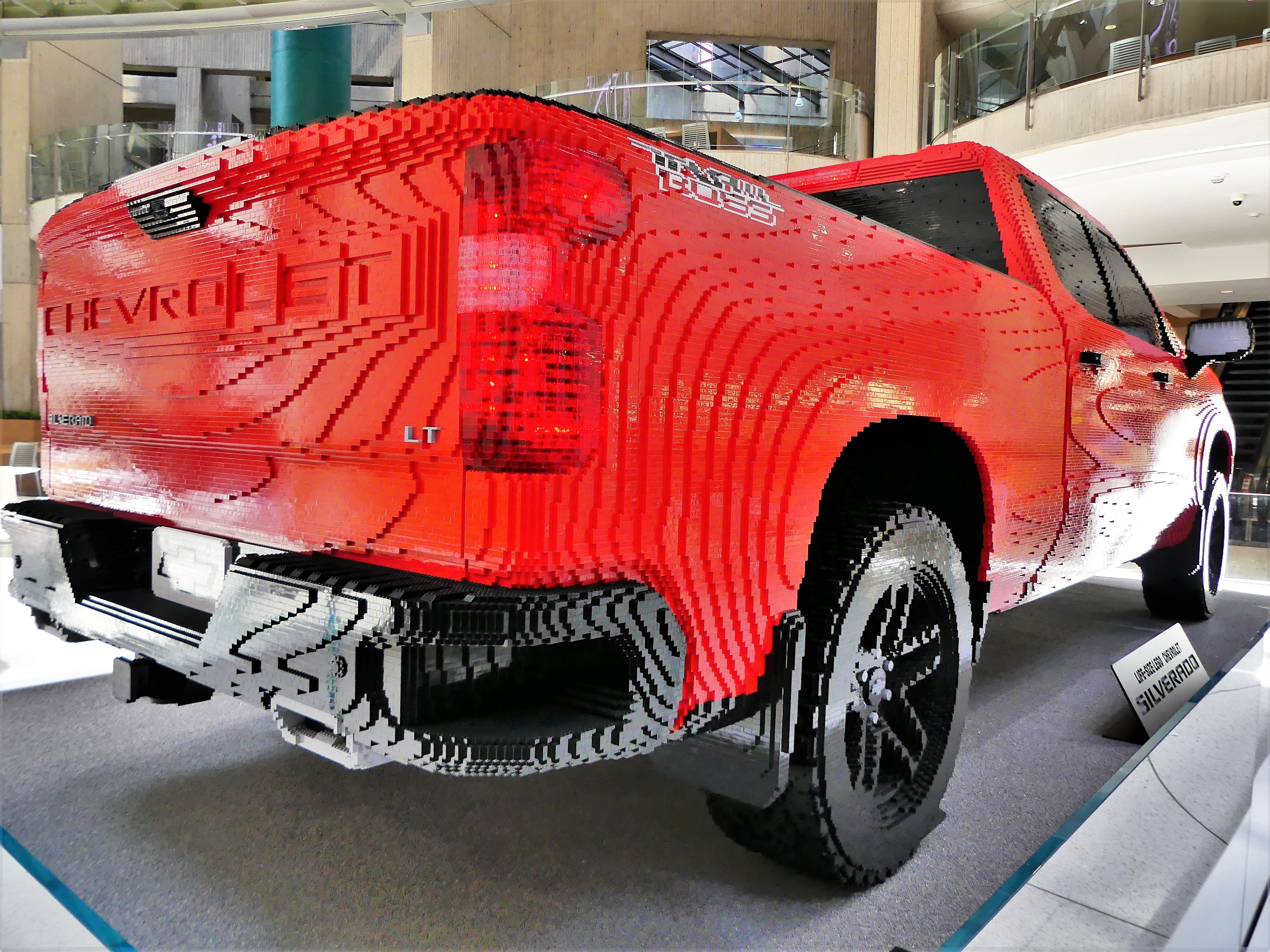
A walk along the riverwalk delivered us to the GM Wintergarden, where a life-sized model of a Chevy Silverado was made entirely of Legos.
It took 18 master builders over 2,000 hours and 334,544 “bricks” to complete. At 3,307 lbs., the sculpture stands at half the curb weight of its legitimate counterpart.
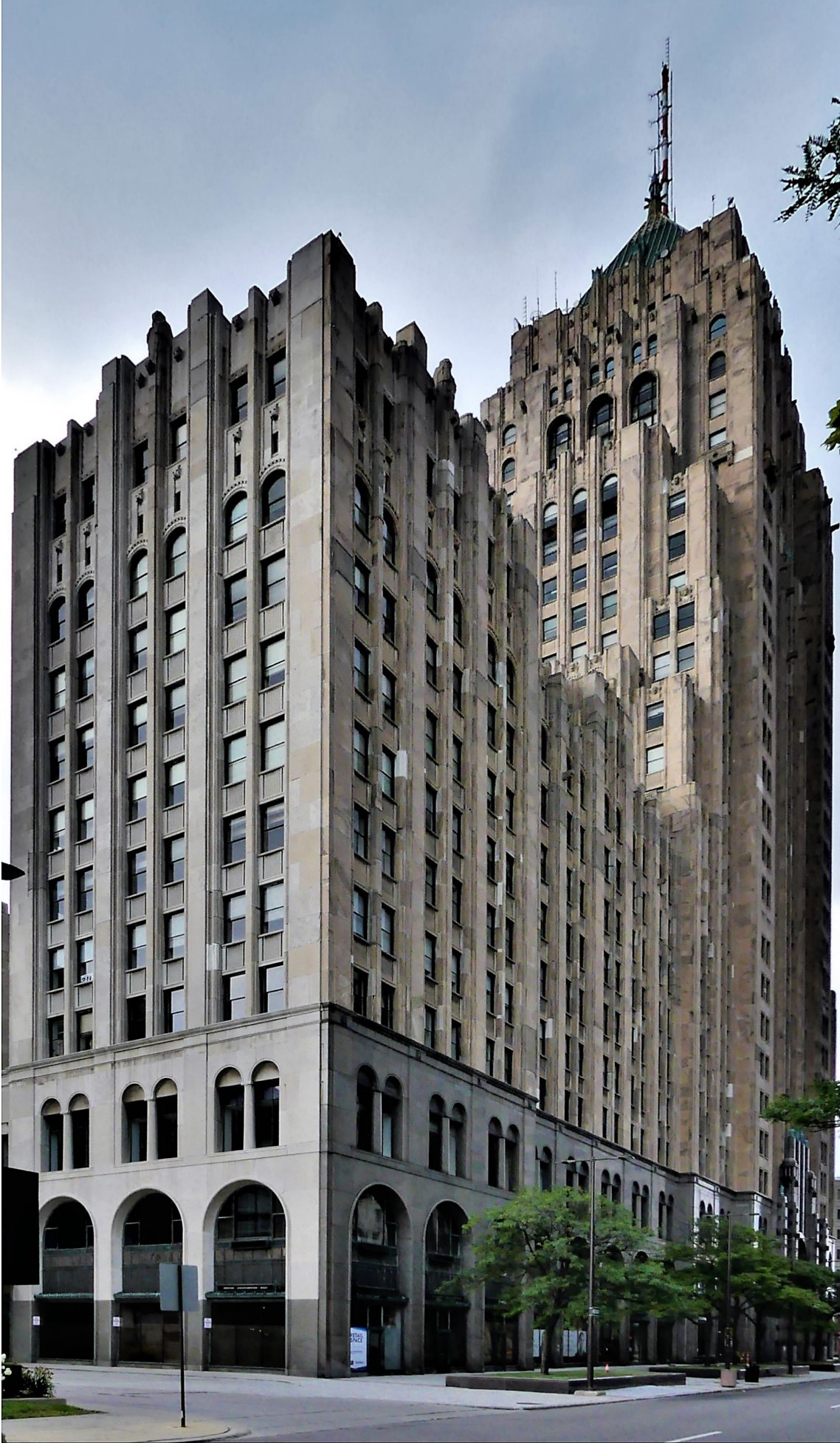
Equally as impressive, and no less the engineering feat, the Fisher Building has been referred to as “Detroit’s largest art object.”
Finished in 1928, the 30-story building was financed by the Fisher family from the sale of Fisher Body Company to General Motors.
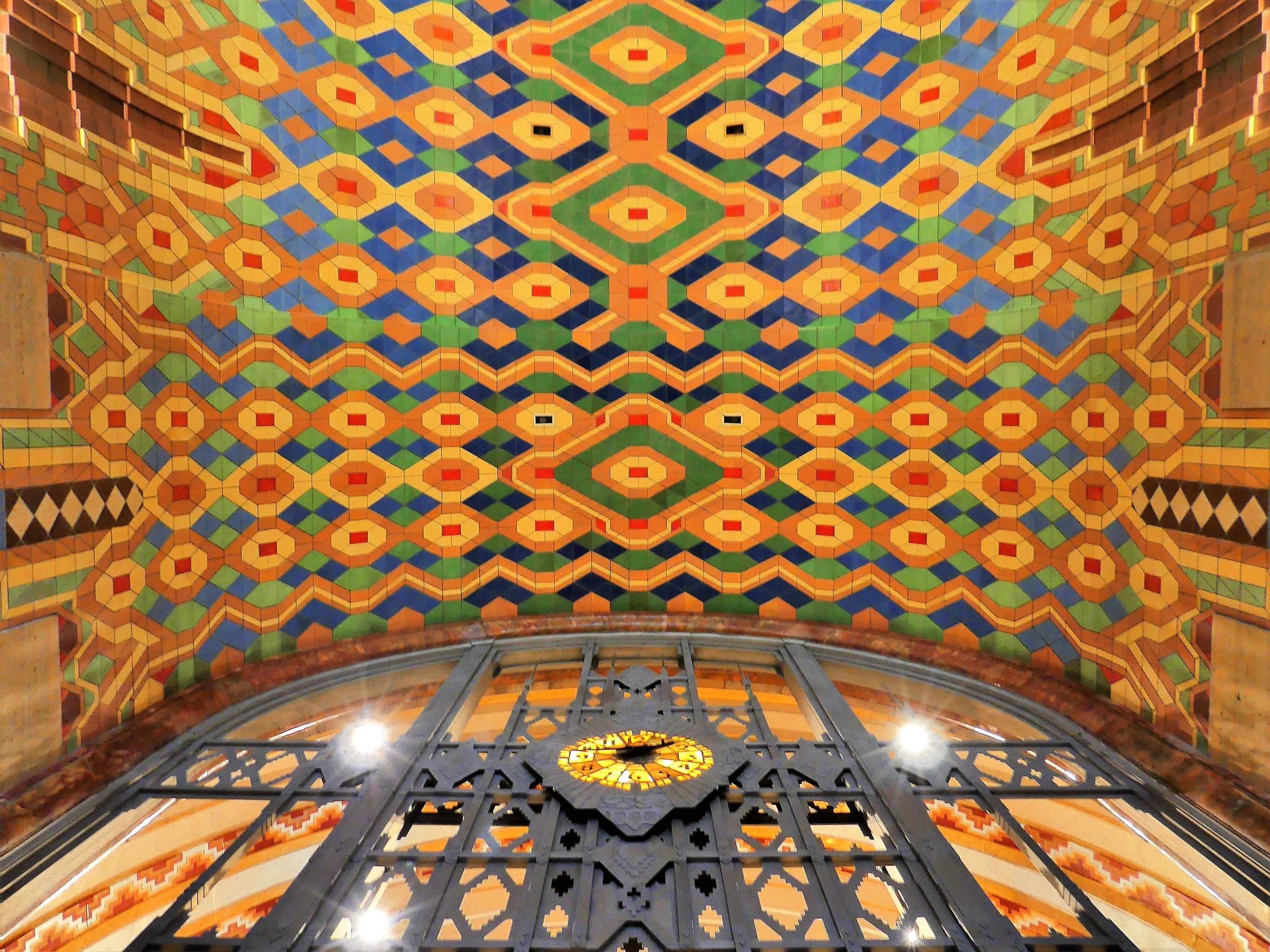
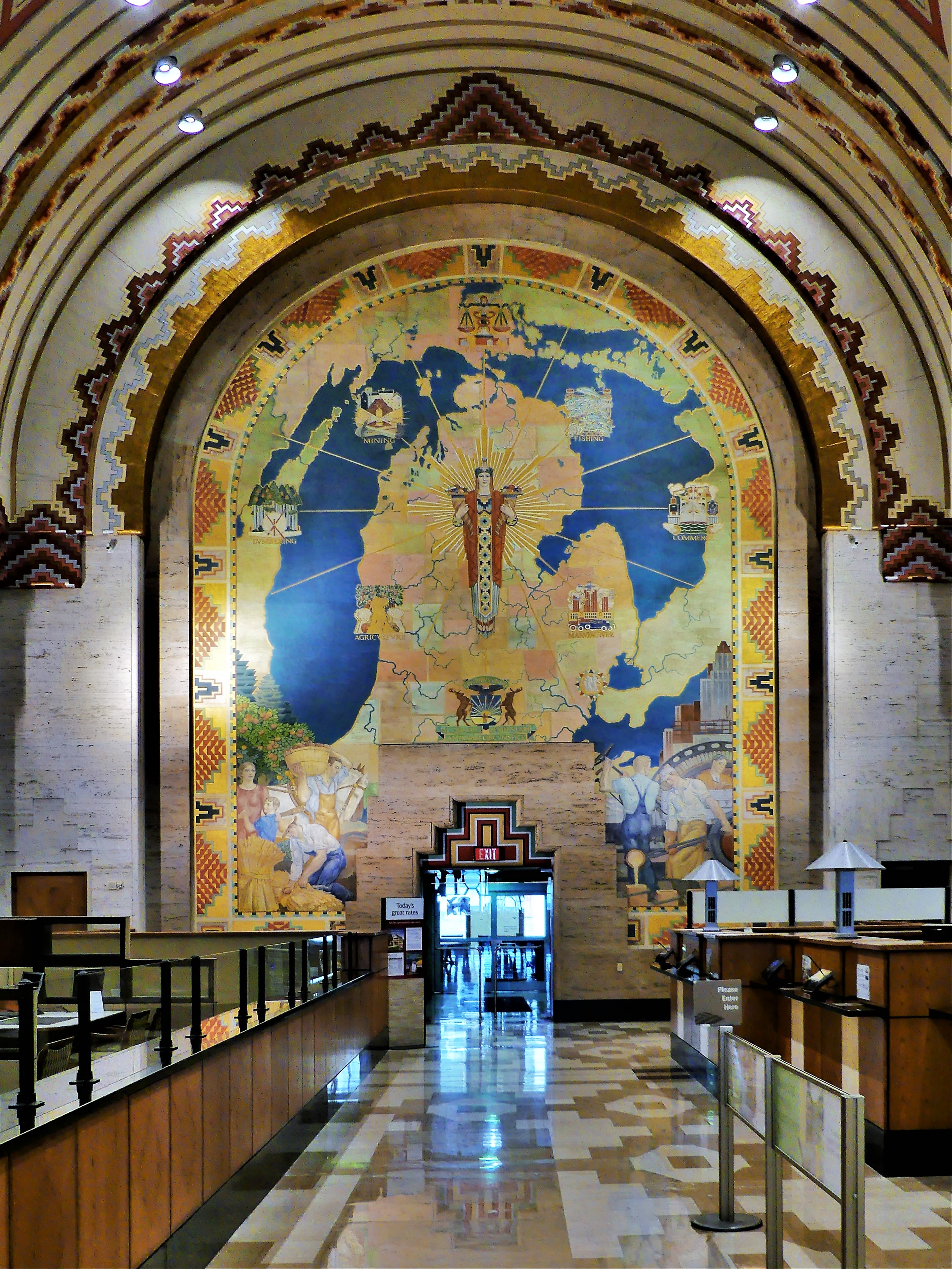
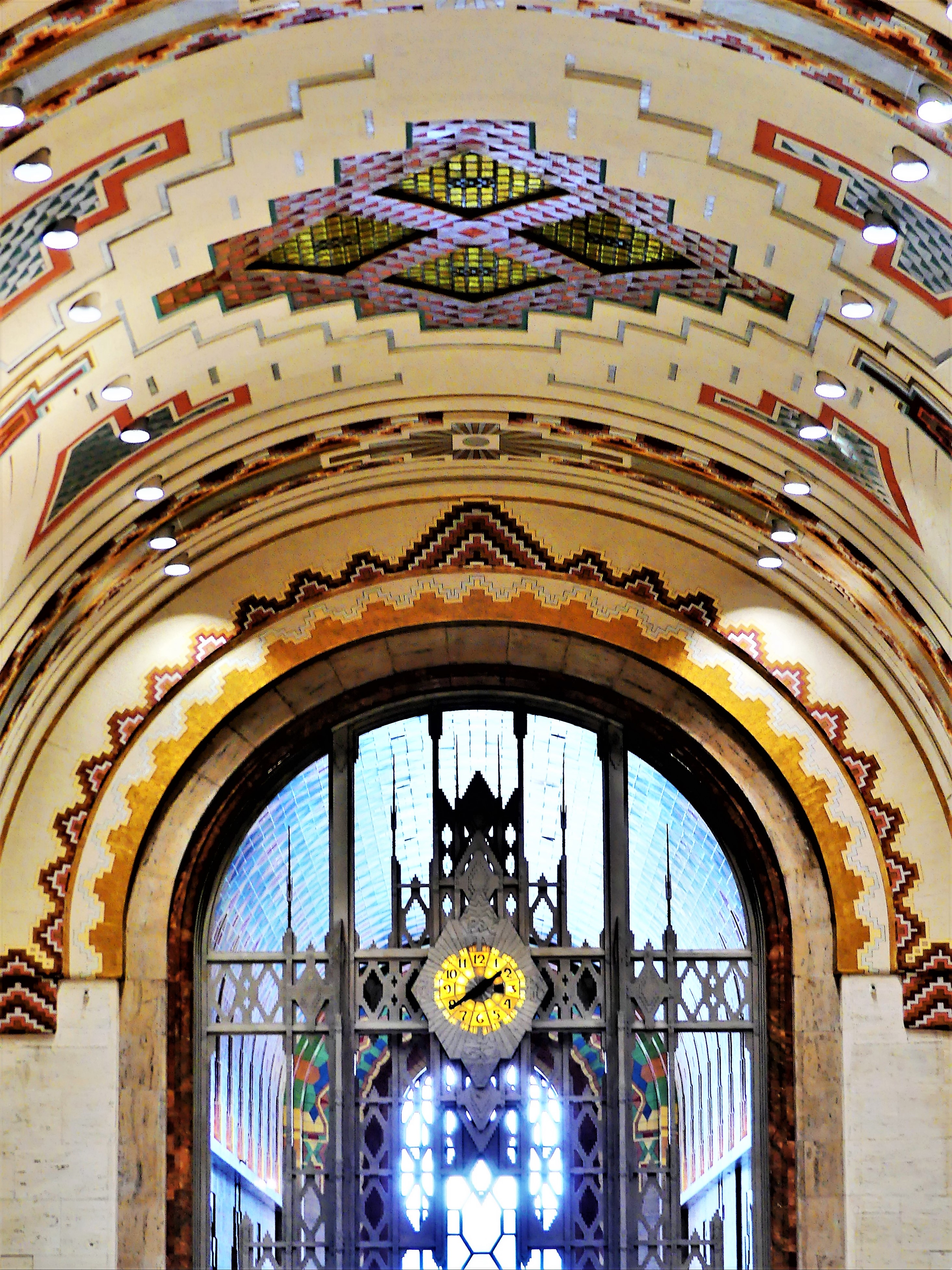
Albert Kahn’s opulent 3-story barrel vaulted lobby…
decorated in paint…
and marble by Géza Maróti is considered a masterpiece.
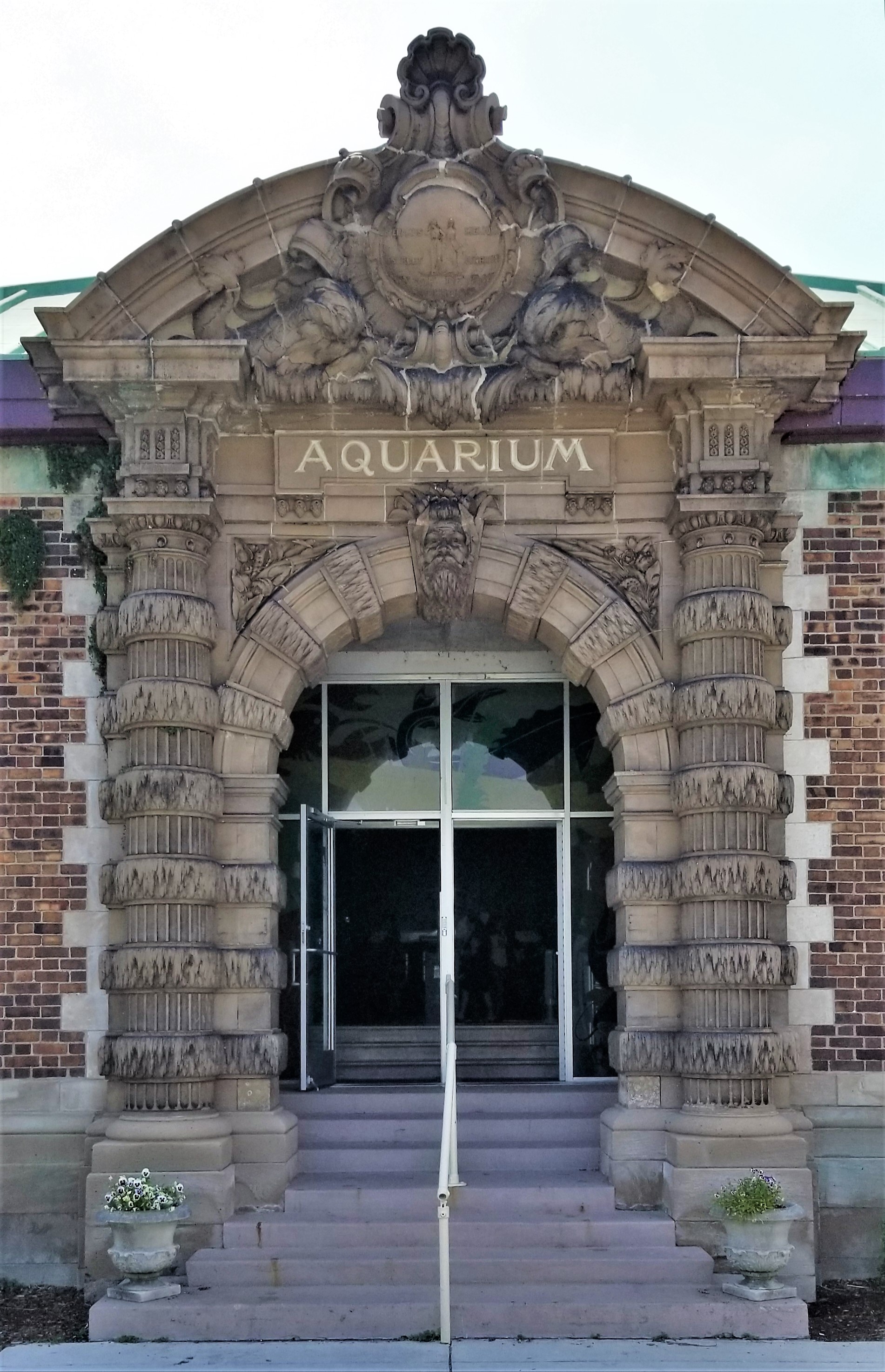
Alfred Kahn also spent time up river on Belle Isle (an island park originally designed by Frederick Law Olmstead in the 1880s), where he designed America’s first Aquarium and Conservatory in 1904.
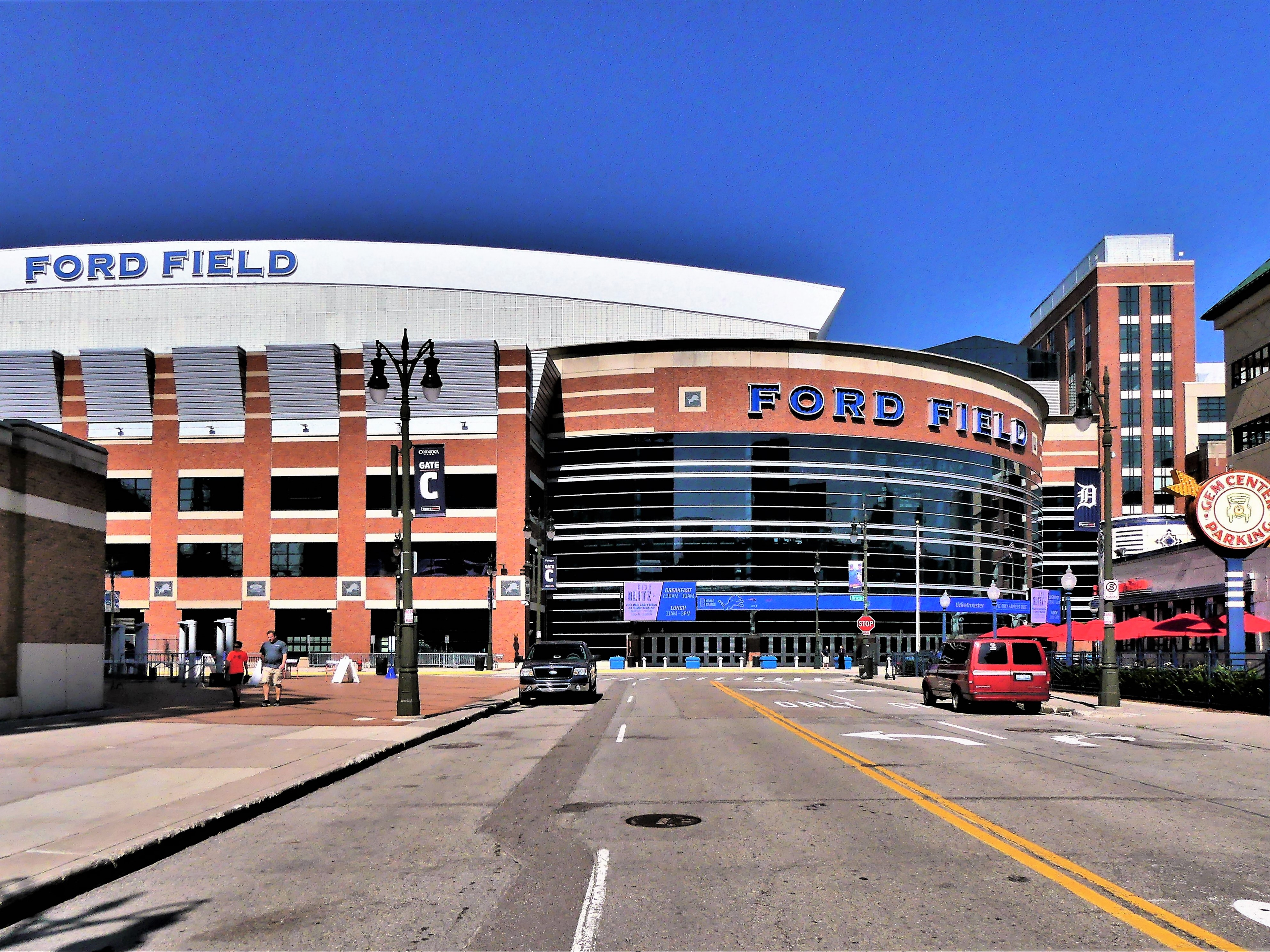
Another part of Detroit’s revitalization effort included the construction of Ford Field, the domed home of NFL’s Detroit Lions,
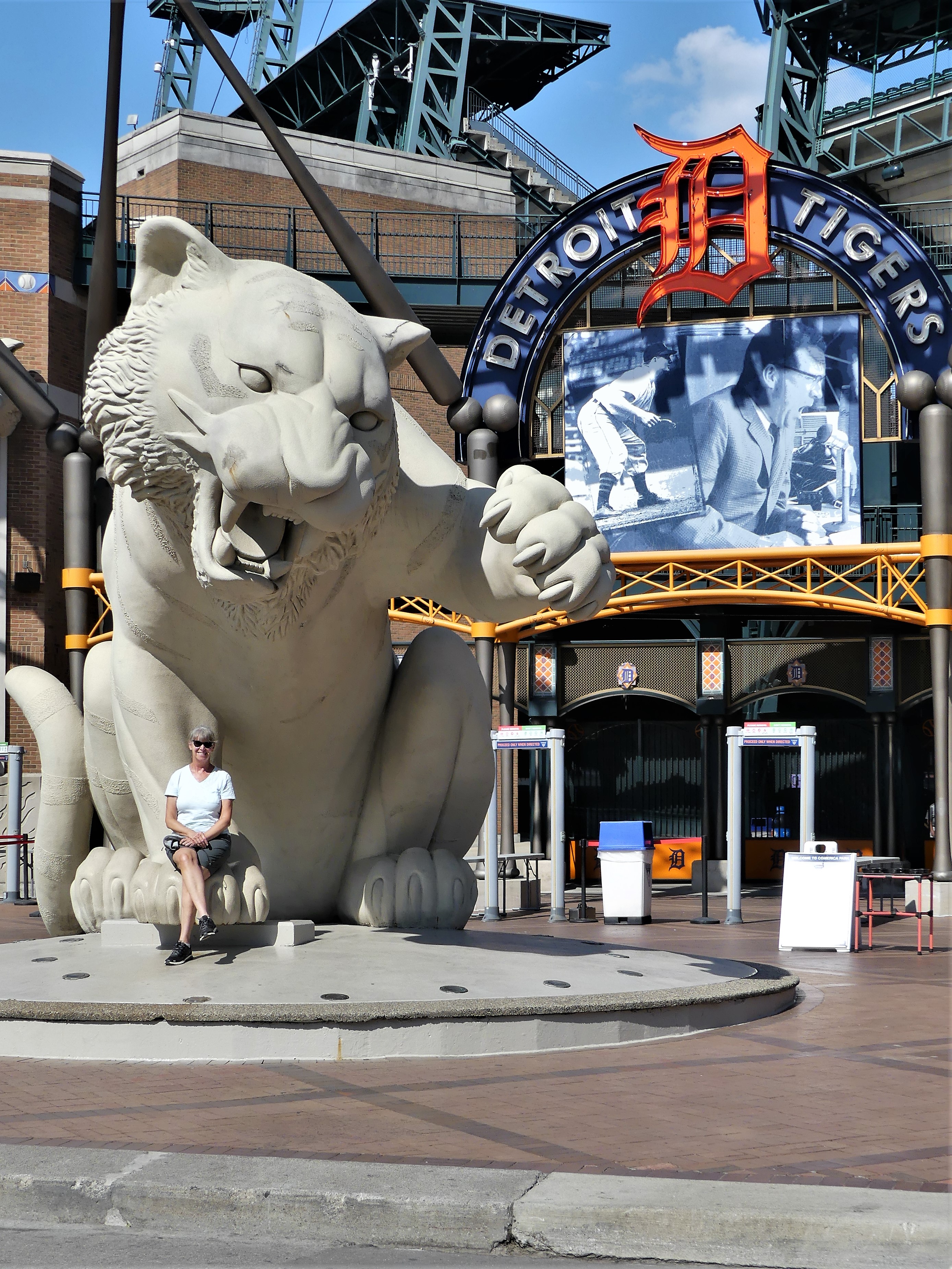
conjoined with Comerica Park, home to baseball’s Detroit Tigers.
Detroit has been hailed as The Comeback City, emerging from Chapter 9 with a new vibe that seems to be drawing people back to a city that was broke and broken, and considered unliveable only six years ago. With continuing investment and broad community suport, the prospects for Detroit are bright,
Leah and I were looking forward to touring Hitsville, USA after determining that a visit to Detroit was an essential part of our Great Lakes adventure.
Once we arrived at Motown Studios, I sensed a different kind of energy around me. Almost immediately, I found parking for the F-150 just beyond the funeral parlor’s yellow lines, and saw it as an omen of sorts for something good.
The scene around the house pulsed with enthusiasm and excitement. The crowd was as mixed as a casting call for Felinni’s Amarcord, yet everyone shared a common connection to the music, which made for instant bonding.
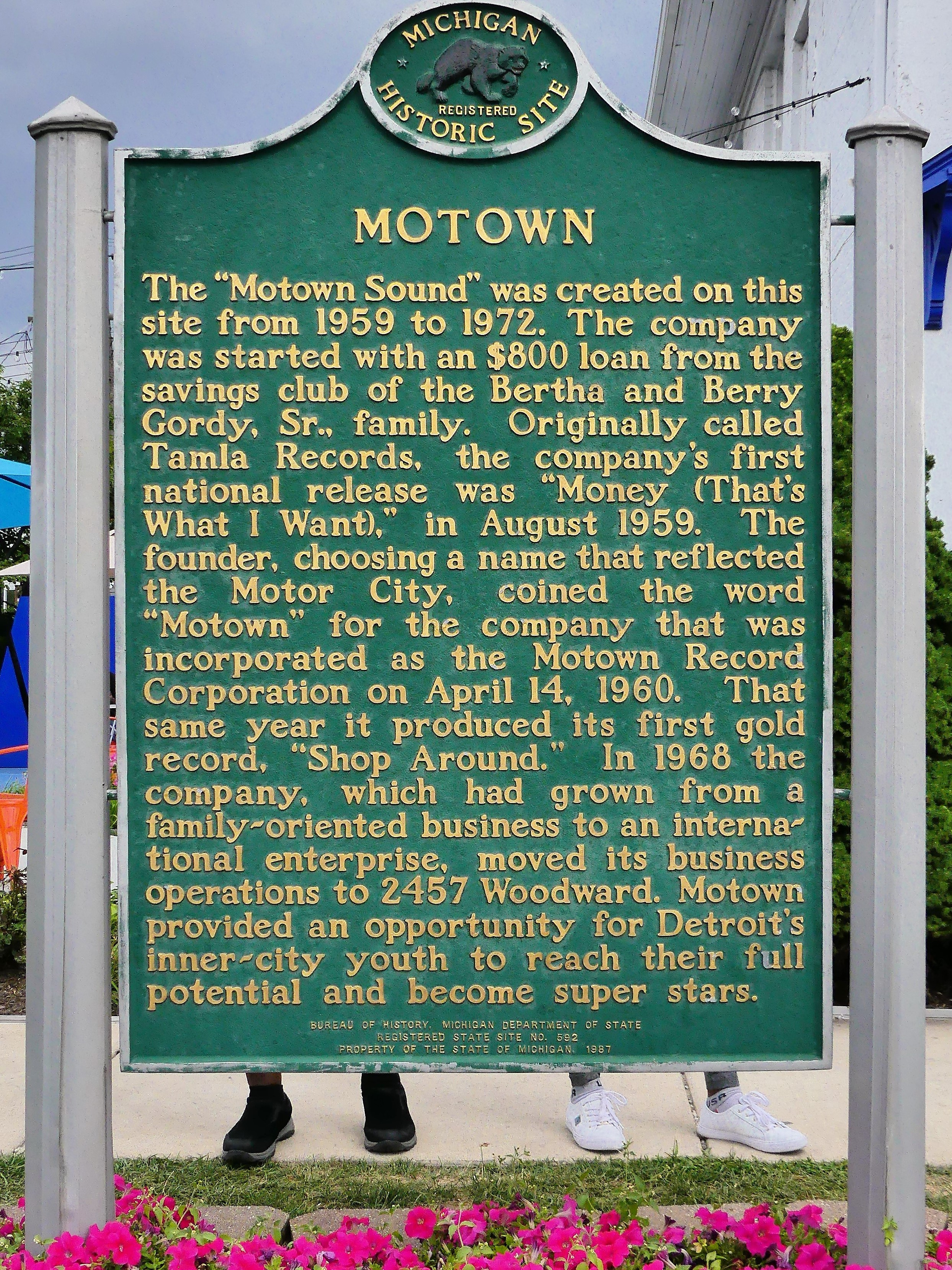
A like-minded gentleman of similar age joined me as I read the commemorative plaque, and I turned to him.
“Do you realize that we are the generation of those spider things?” I joked.
“Tell me about it!” he shrugged. “I got memories fitting that thingagmajig into the record hole just so I could stack my 45’s on the record player.”
“Amen!” I replied.
We shook hand and moved on.
Fans from across the country and around the world made the pilgrimage to celebrate the soundtrack to America’s social, political, and cultural consciousness.
Leah took a trip to the box office, while I attempted a portrait of Hitsville Chapel, all the while dodging families posing for selfies on the steps.
Leah returned without tickets. To our disappointment, the 5pm tour was sold out…weeks ago. It never occurred to us to secure tickets beforehand.
“Let’s go inside,” I suggested. “We’ve come this far. Maybe there’s something to see, or something we can do to fix this fiasco.”
The front door opened to an overflowing gift shop doing brisk business, but we weren’t there to buy souvenirs (at least not right away). We were there to relive our childhoods.
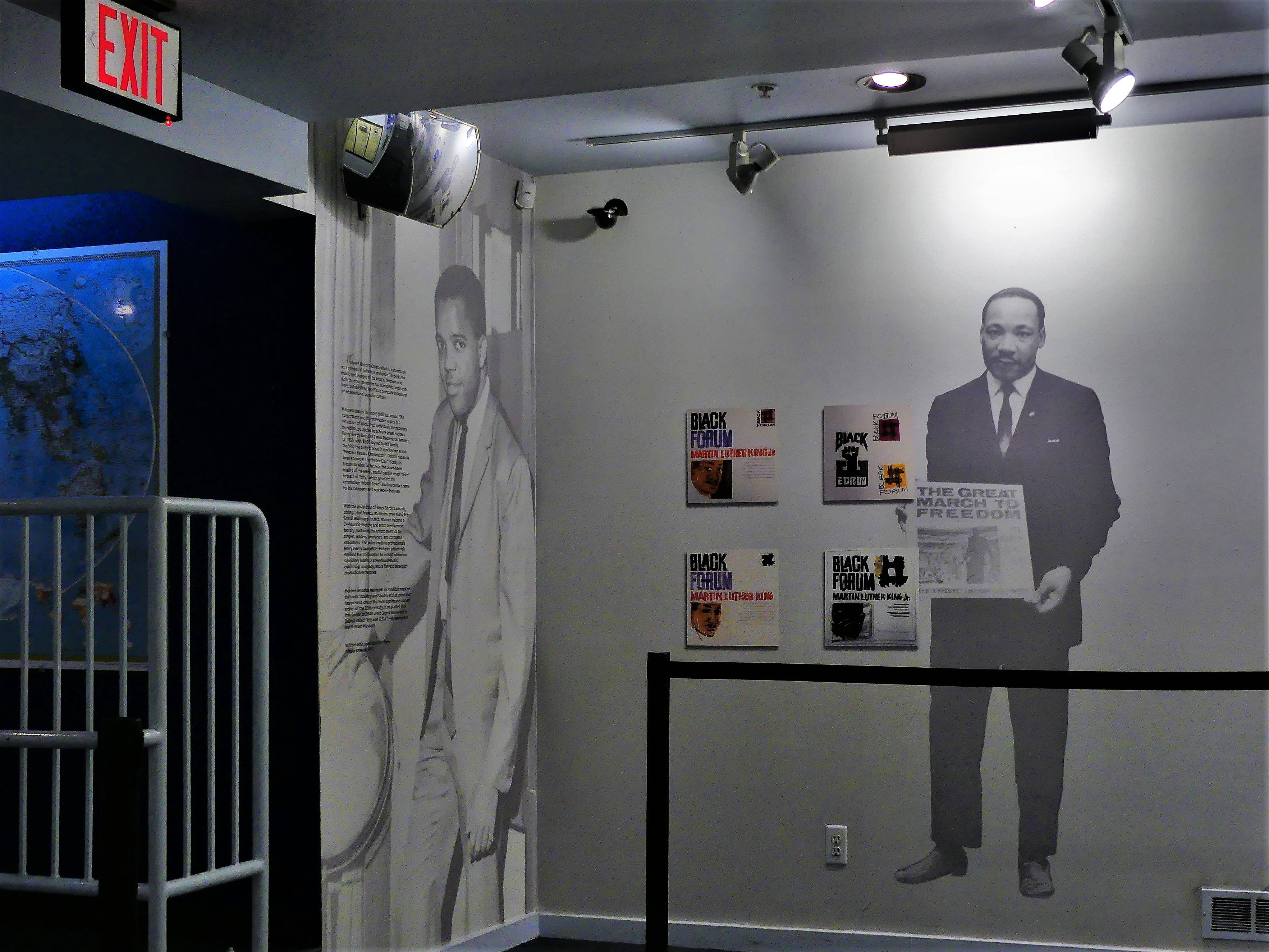
I walked around the backside of the shop, where I found the exit to the exhibition.
So close, yet so far…to the Rock and Roll Hall of Fame, 173 miles east of us…
Rock and Roll Hall of Fame display
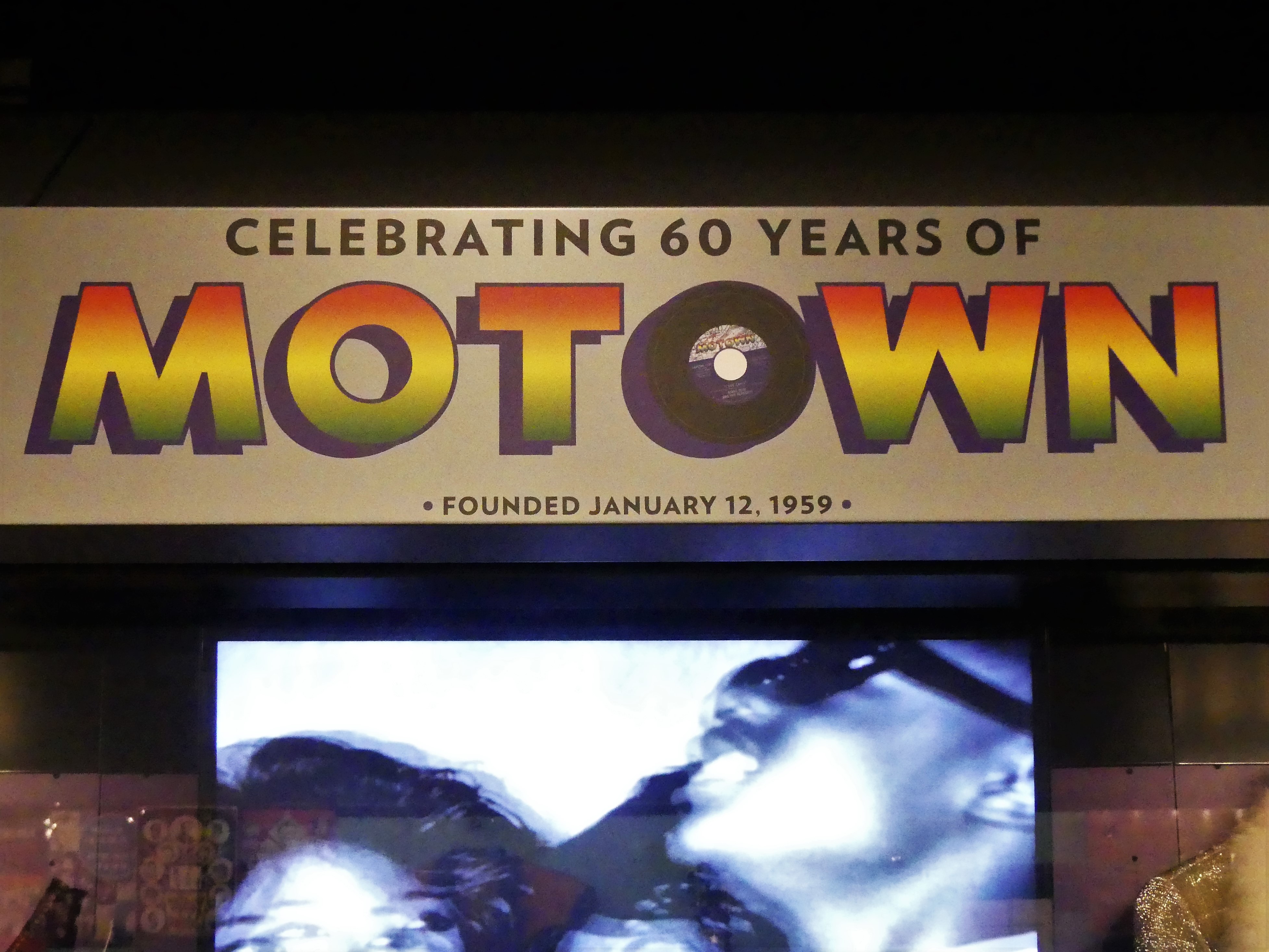
to catch up on nifty artifacts.
Stevie Wonder costume/Fan magazine (from Rock and Roll Hall of Fame collection)
“I think I can get us in,” Leah announced.
“Really!?” I mused. “And how are you gonnna manage that?”
“I think I can convince the guard to feel sorry for us, and he’ll let us in,” she boasted.
“Just like that!?” I laughed.
“You’ll see,” she insisted.
I think the security guard of 25 years has probably heard every sob story imaginable, except for Leah’s. To be expected, Leah’s story had little impact on his decision, but he must have been moved somewhat.
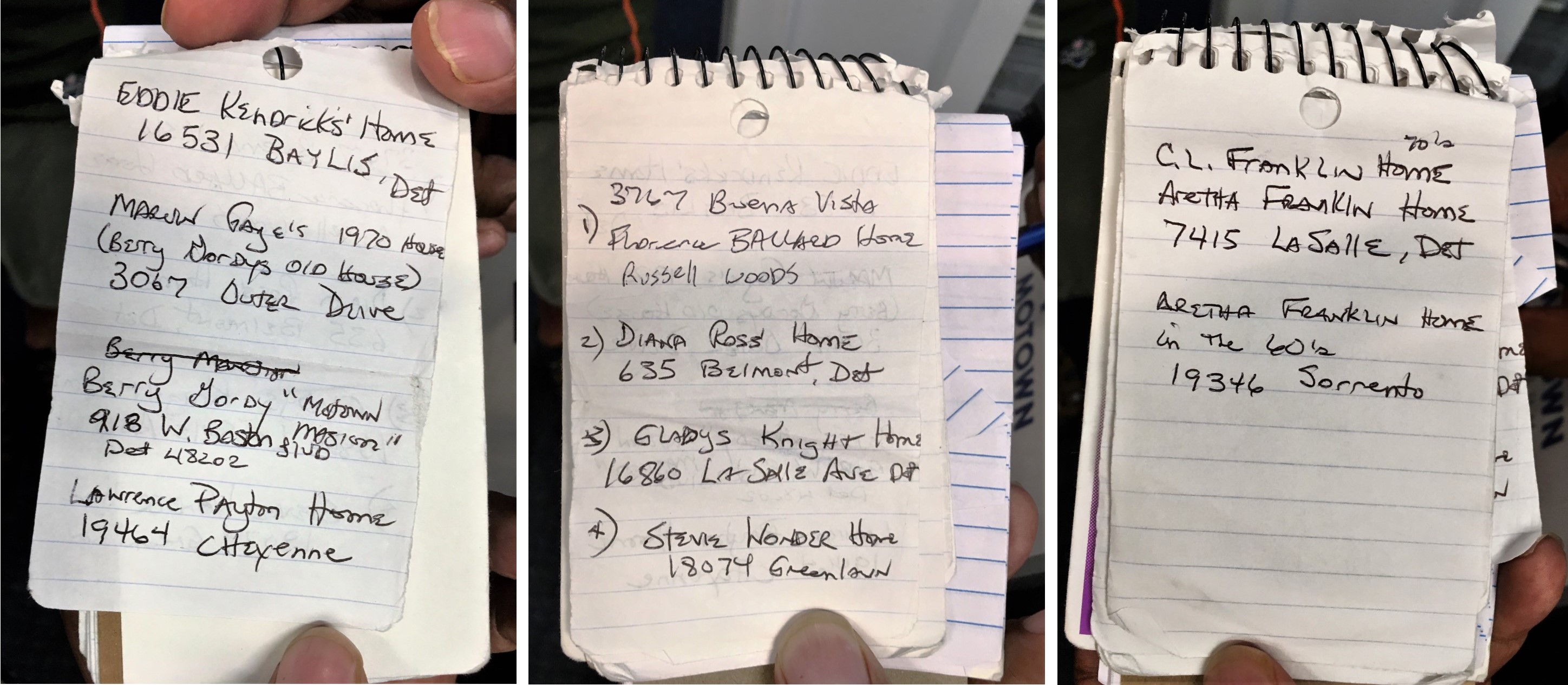
He withdrew a tattered writing pad from his shirt pocket. “Y’know, over the years, I collected the addresses of some Motown legends, and I don’t really show it aroun’, but I’m gonna make an exception in your case, ’cause you came all this way for nothin’.”
“And all these addresses are in Detroit?” I asked.
“Yup!” declared security.
Wanting clarification, “and they’re real?”
“Yup, but do me a favor and keep it on the QT, OK? I don’t want the neighbors hassled and all,” he advised.
Cool! While we had lost the grand prize, it seemed, at the very least, that we were leaving with parting gifts. With addresses in hand, Leah and I decided to regroup and return the following day to play “private investigator.”
When plotting addresses on GPS, it became clear to us that many of the homes were within a ten-mile range of each other, so off we went on our real estate scavanger hunt of once-lived-in homes of America’s greatest rhythm and blues, and soul singers.
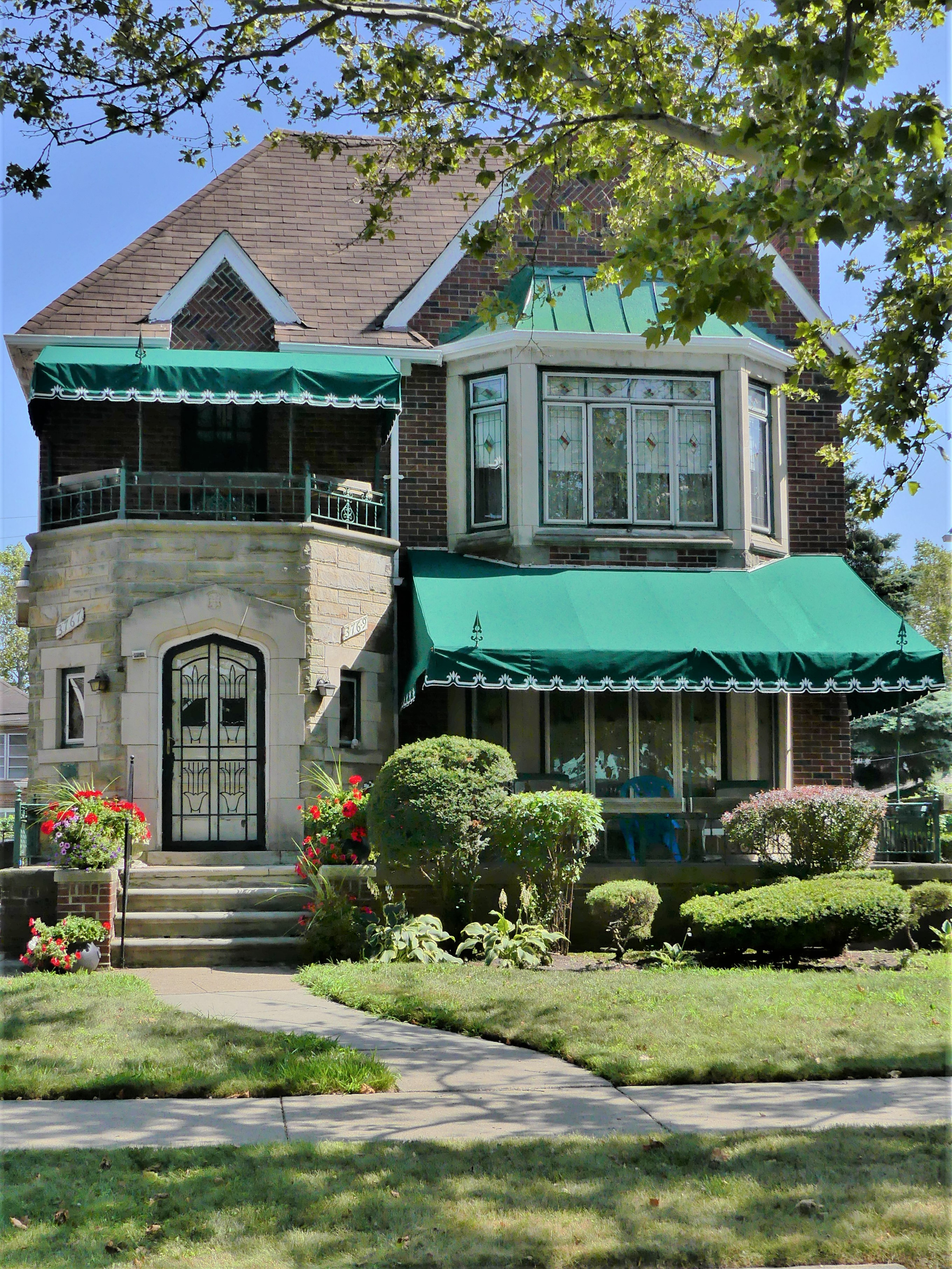
We started our tour at Florence Ballard’s home in Detroit’s largest historic district, Russell Woods. Florence was a founding member of the Supremes, who passed in 1976.
In her early years, Diana Ross lived with her family on the top floor of this duplex, just north of Arden Park.
It turns out, it was only five miles away from Berry Gordy, Jr.’s home, until he sold it to Mavin Gaye in the ’70’s…
and moved to a 10,500 sq ft Italianate mansion in Detroit’s Boston-Edison historic district with 10 bedrooms, 7 baths, a 4,000 sq ft pool house, and a 5-car carriage house.
Nearby, Gladys Knight lived in a 4 bedroom, 3.5 bath Tudor in Detroit’s Martin Park neighborhood.
Around the corner, lived Temptation’s co-founder and lead singer, Eddie Kendricks in a 4 bedroom, 2 bath 2,300 sq ft house.
And only a couple of miles away in the Bagley neighborhood lived Stevie Wonder in a 3 bedroom, 2.5 bath gabled house.
By now, I was fading from driving through Detroit traffic; and I was losing interest in photographing the rest of the listings. Additionally, I considered that crawling to a stop in front of someone’s house, double-parking, and positioning a camera through the window probably looked suspicious and creepy to any onlookers.
The following afternoon, the day of our departure, a home in Detroit’s Chandler Park section exploded–14 miles east of our recent real estate sweep.
One firefighter was injured in the blast. The Fire Marshall determined that a gas leak was to blame, but arson investigators are on the scene.
“Y’think this was an omen, too?” Leah mused.
“Nah! Just a coincidence!” I answered.
(Or maybe the beginning of another impossibly flaky, half-baked conspiracy theory!)
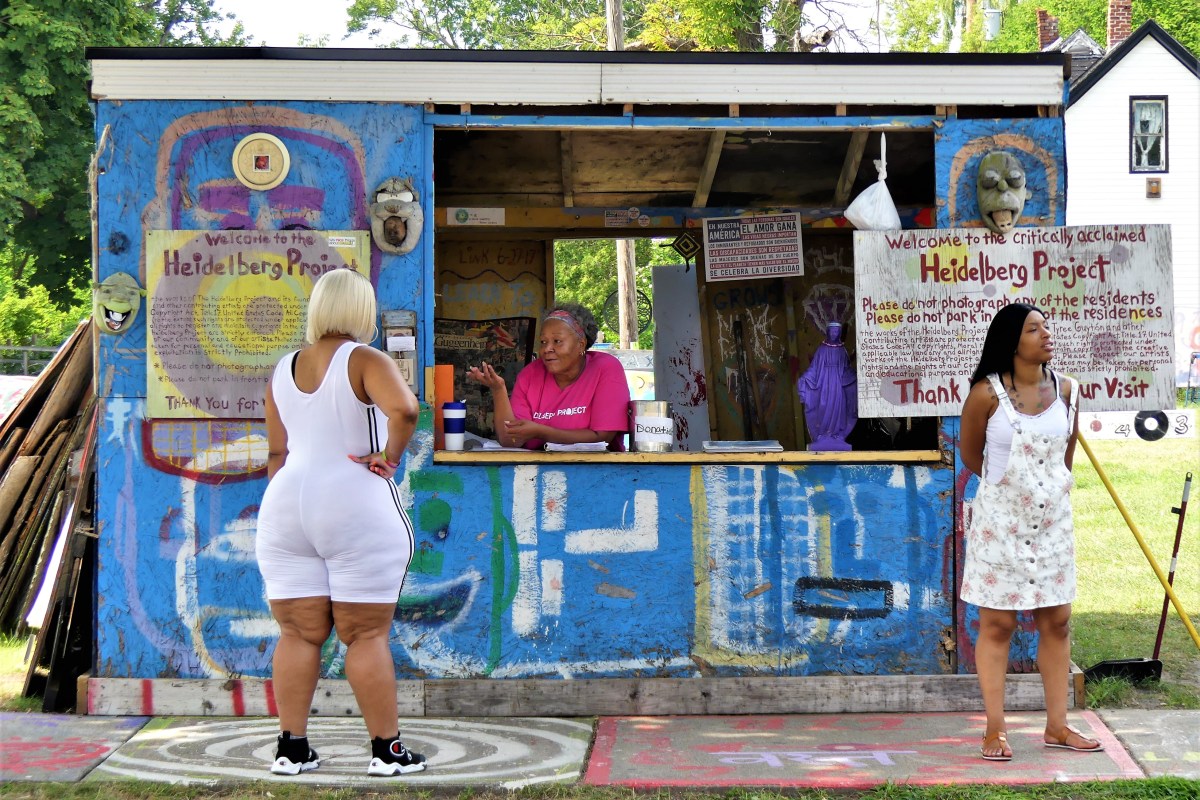
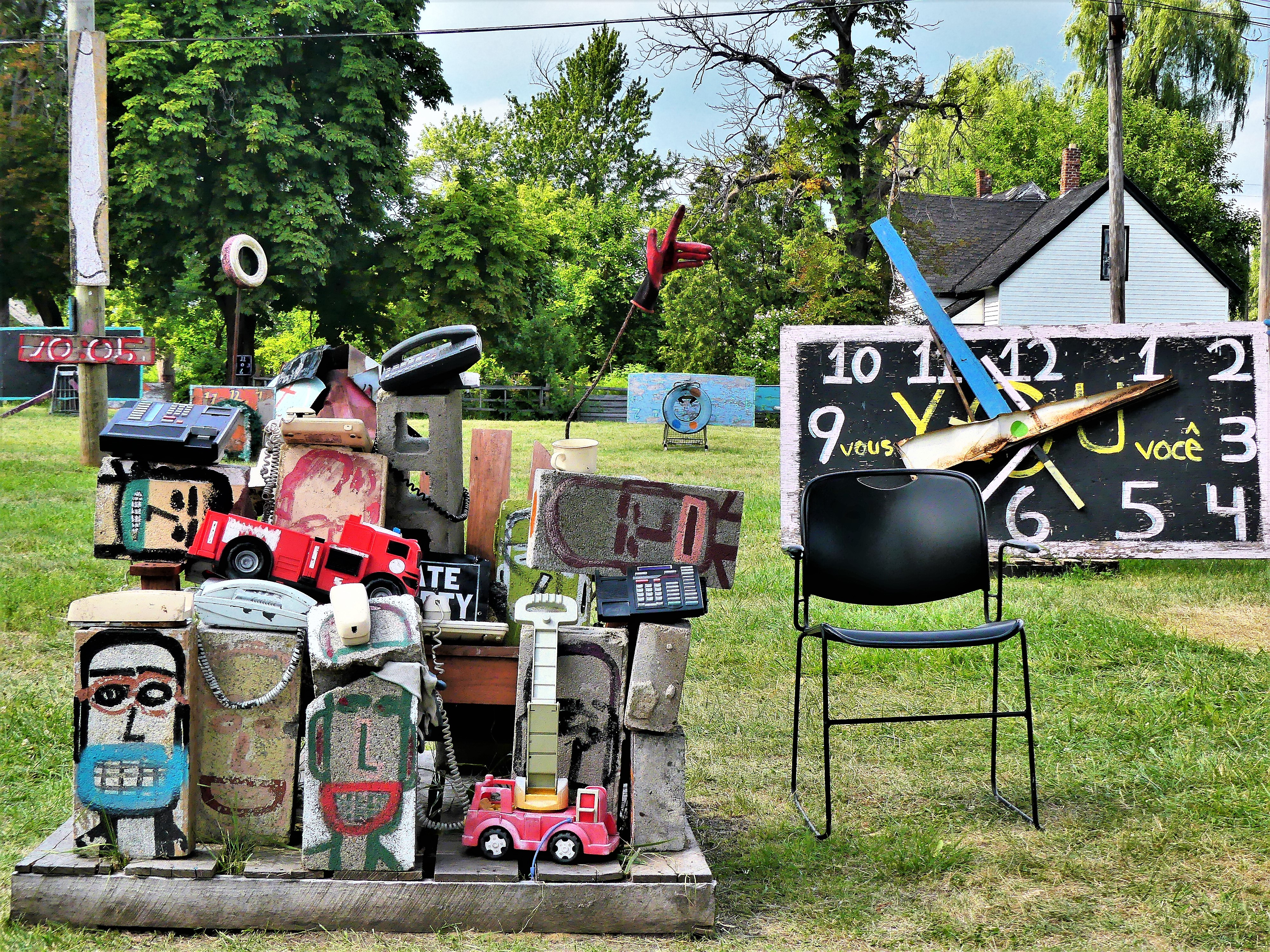
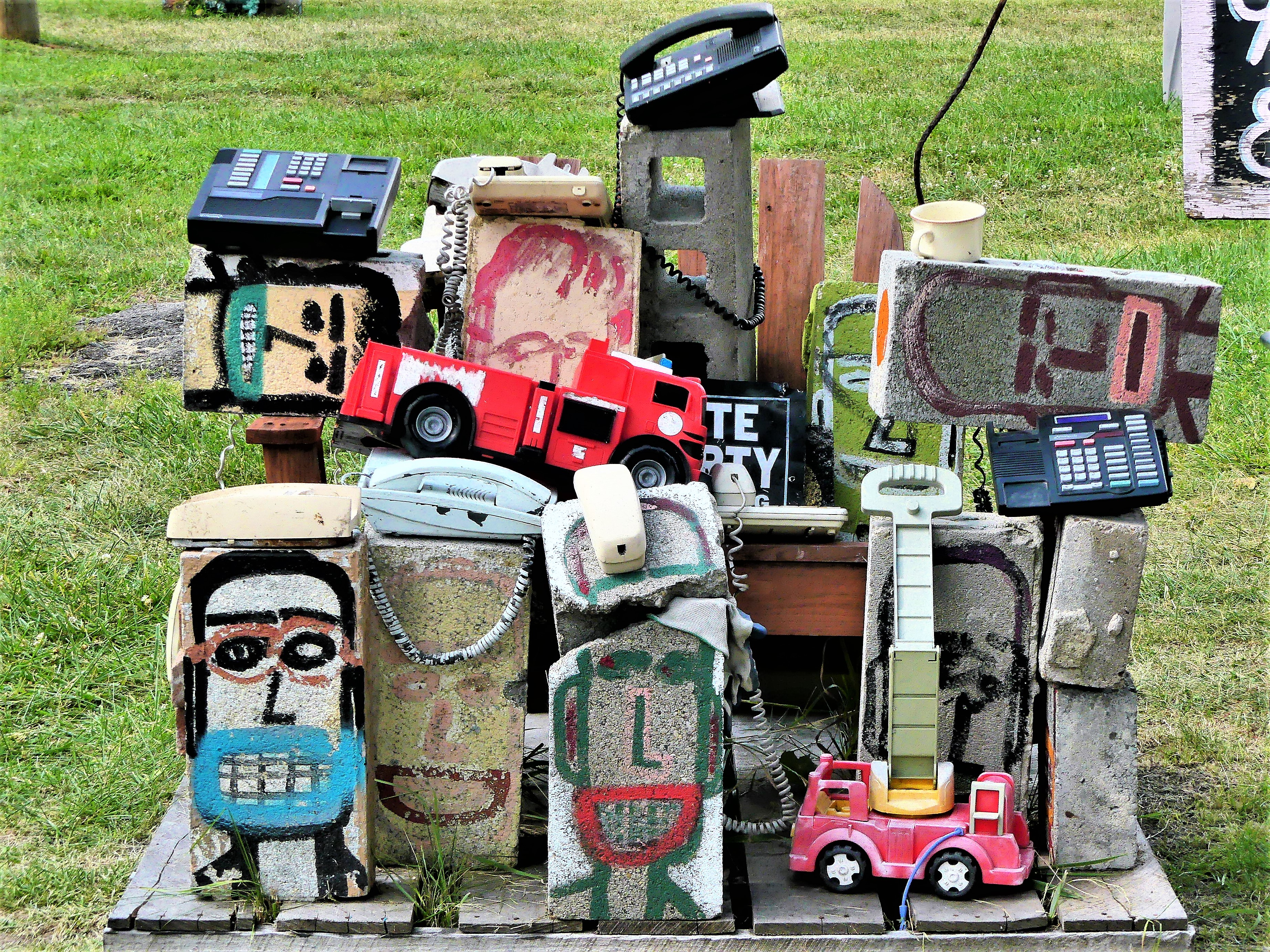
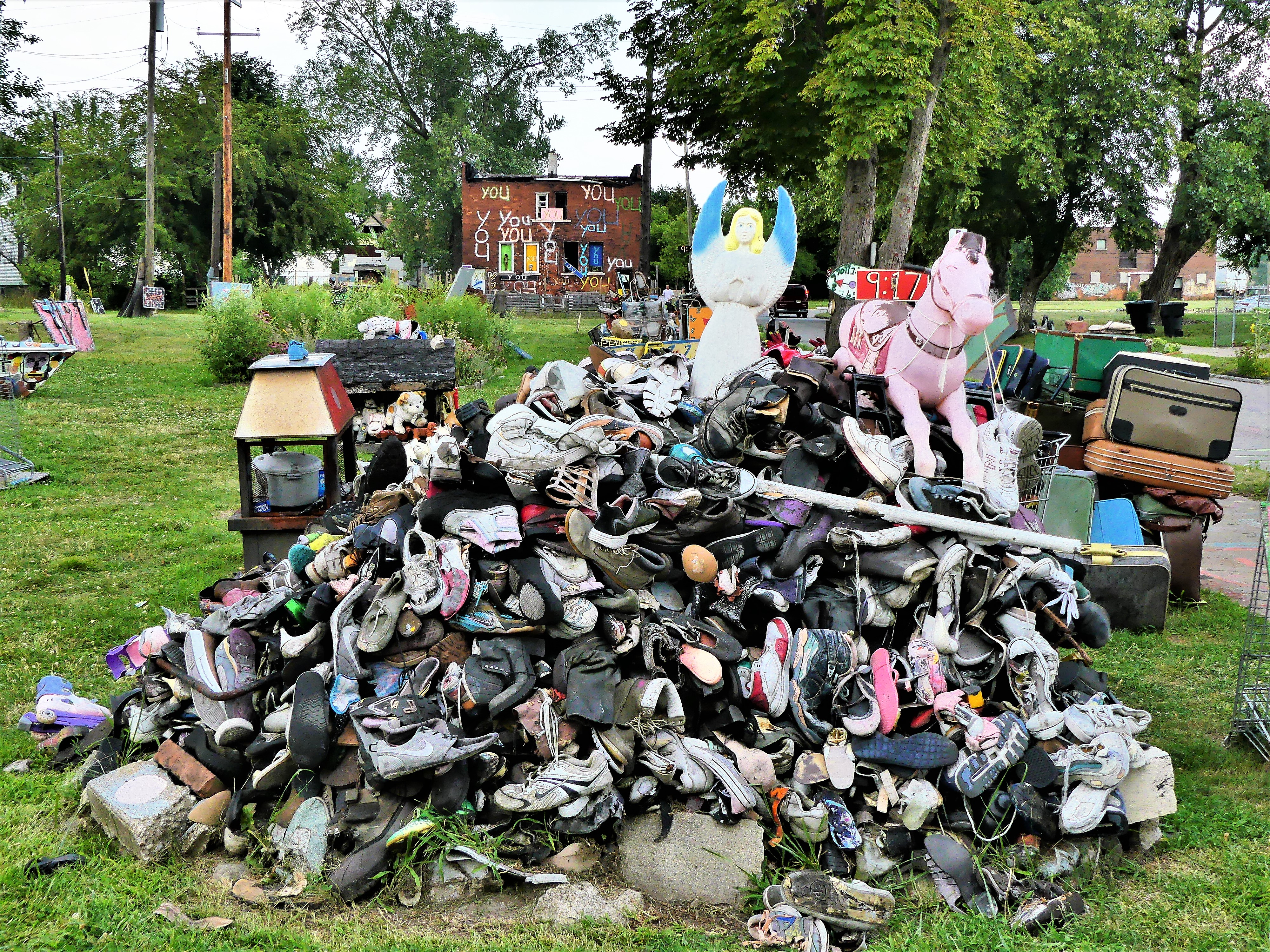
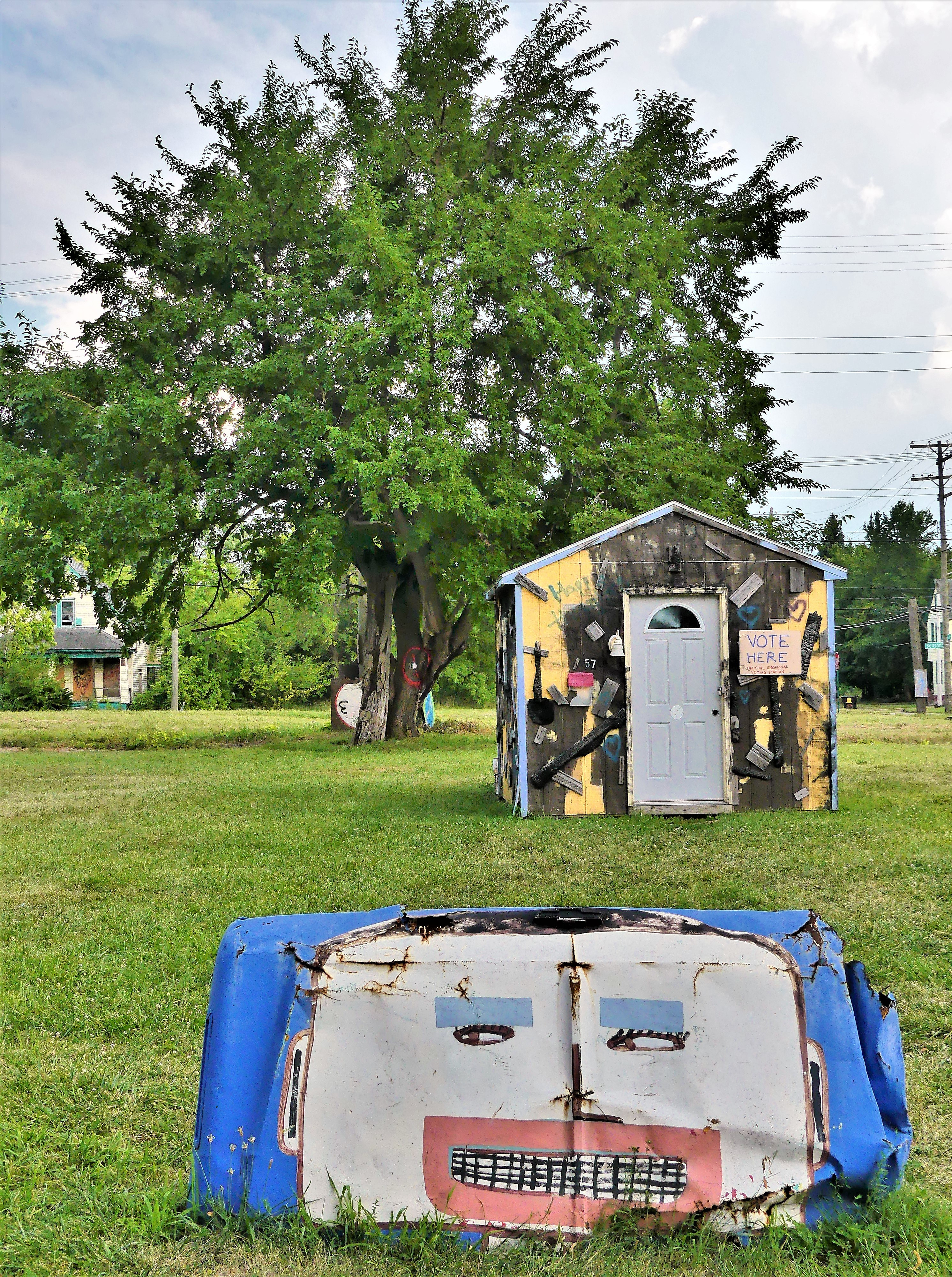
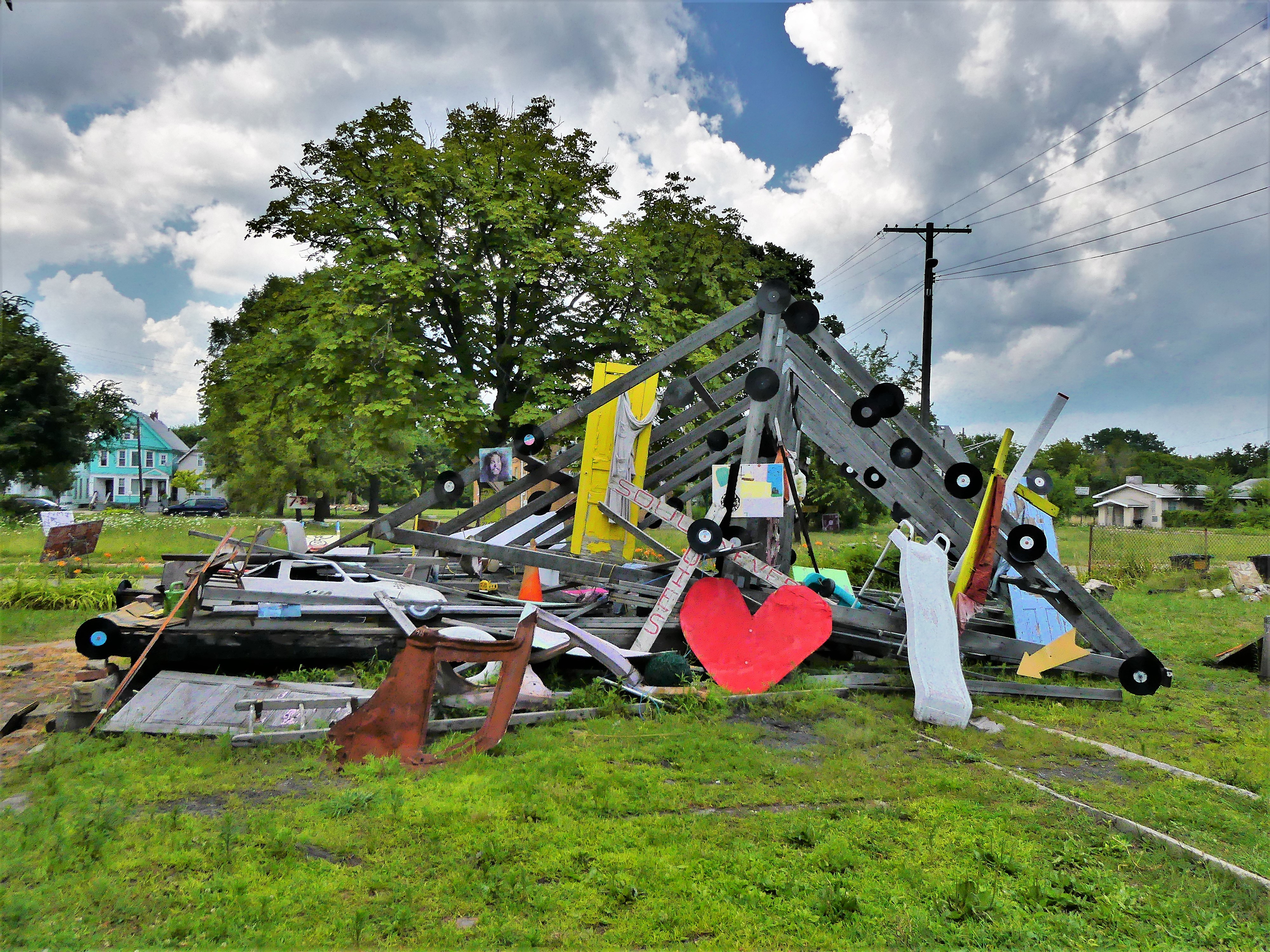
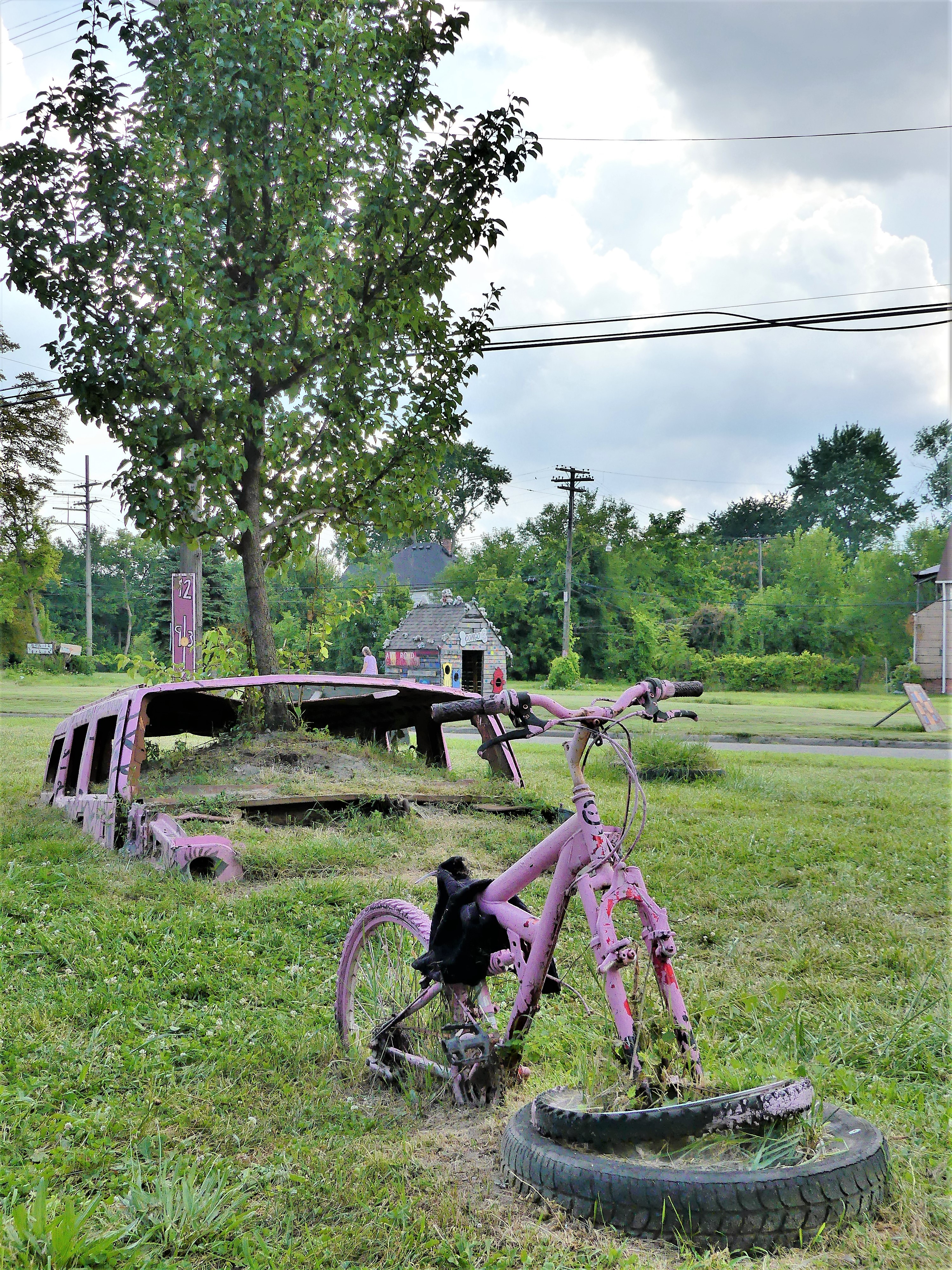
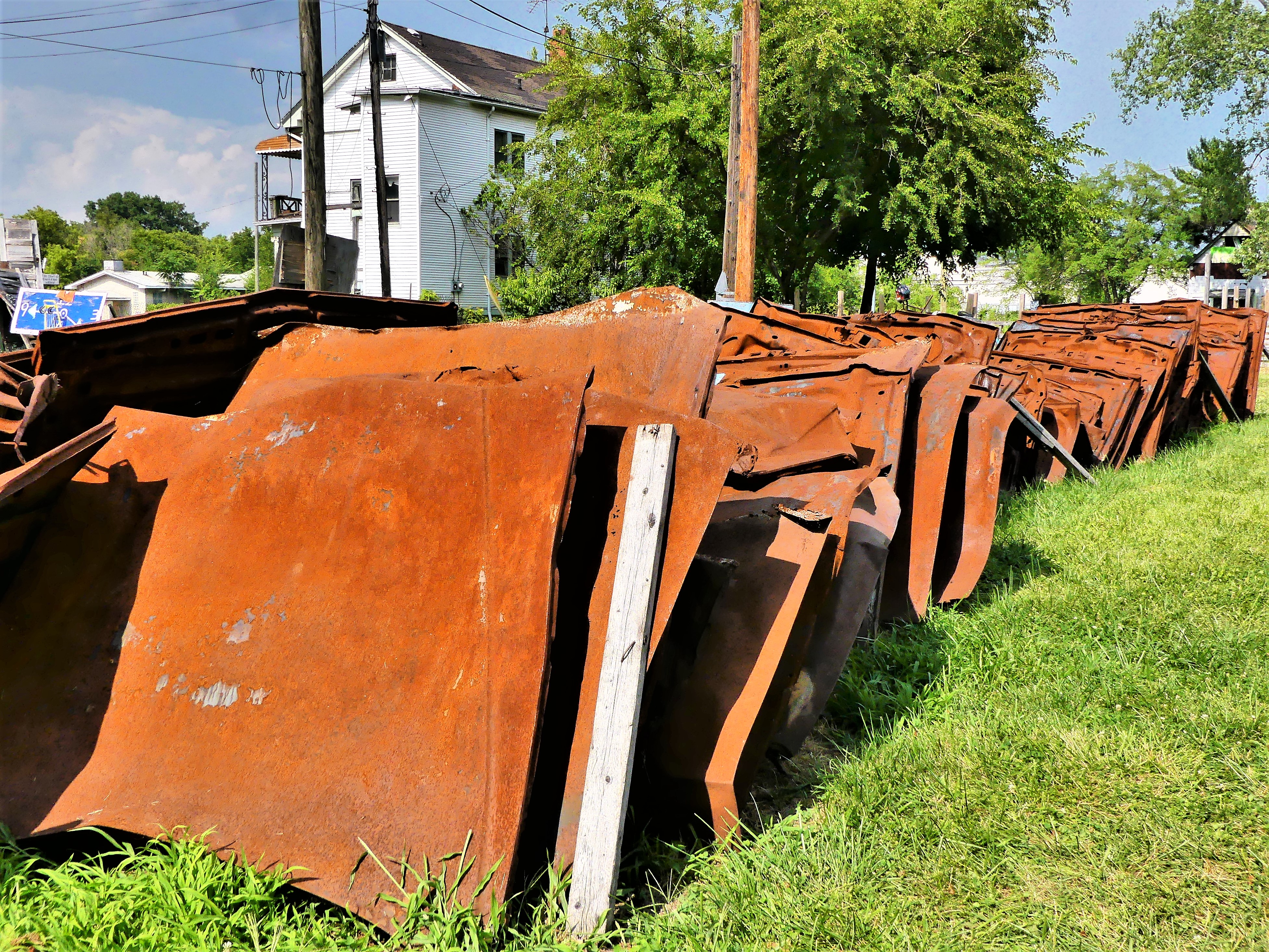
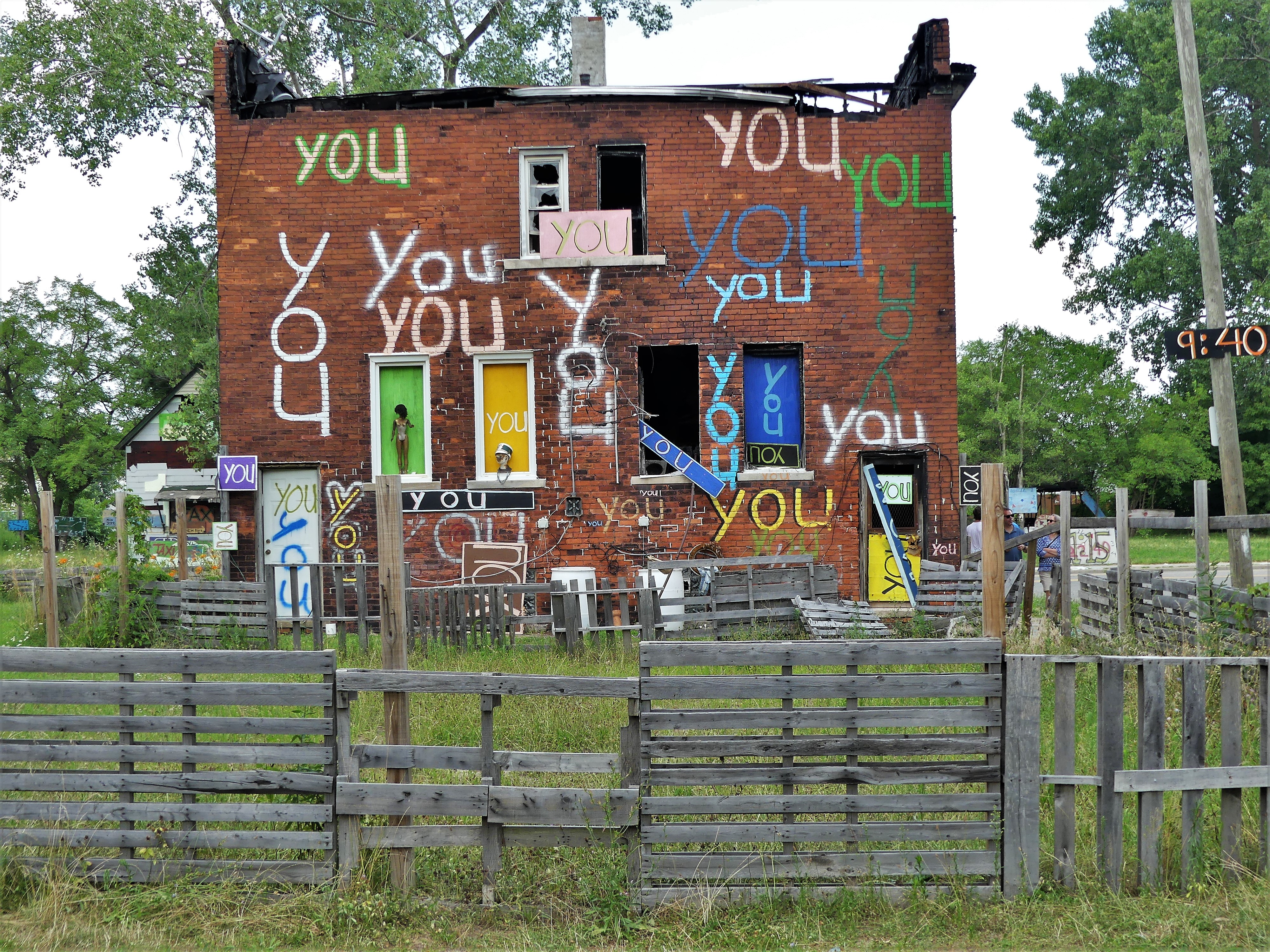
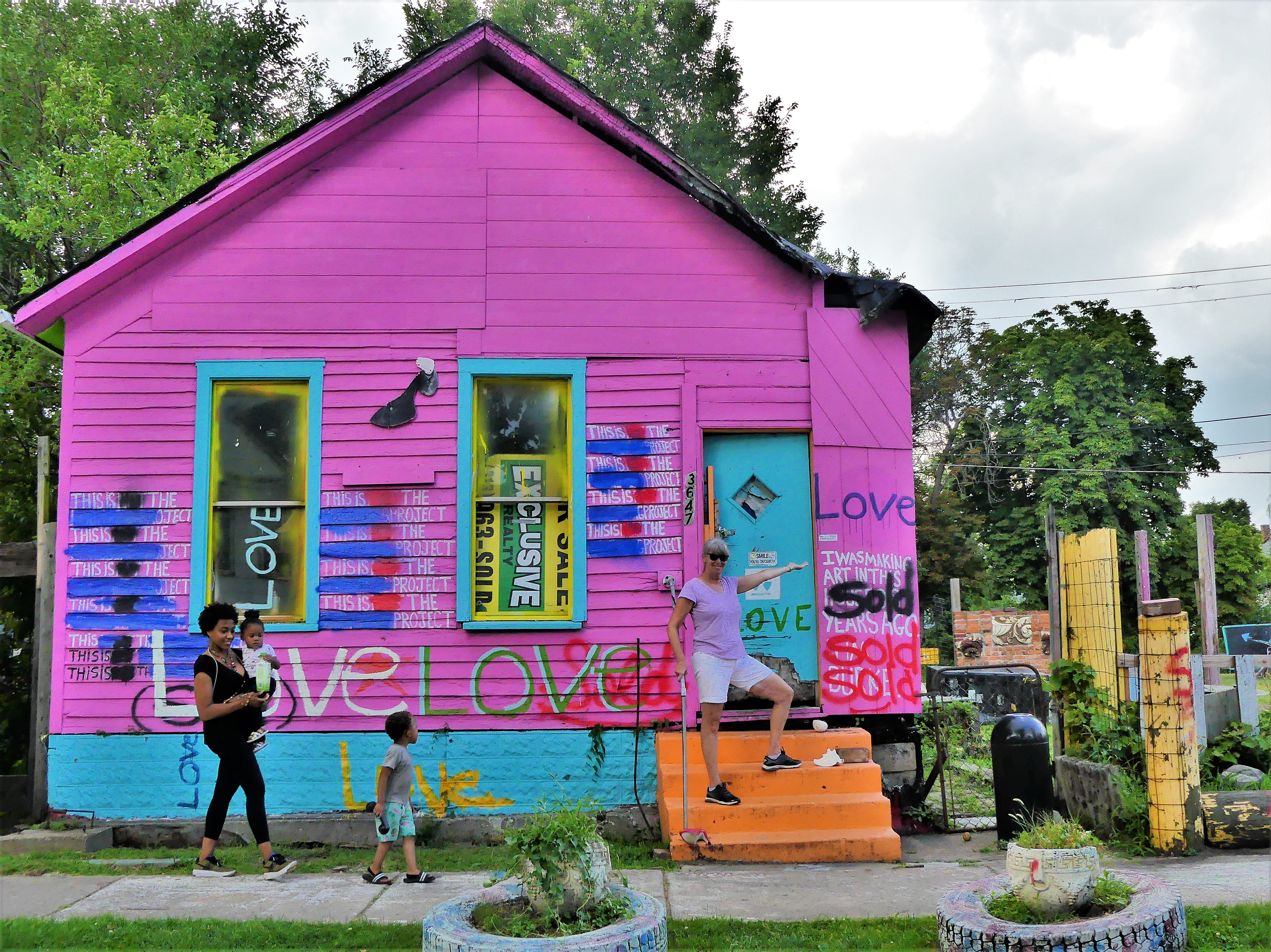
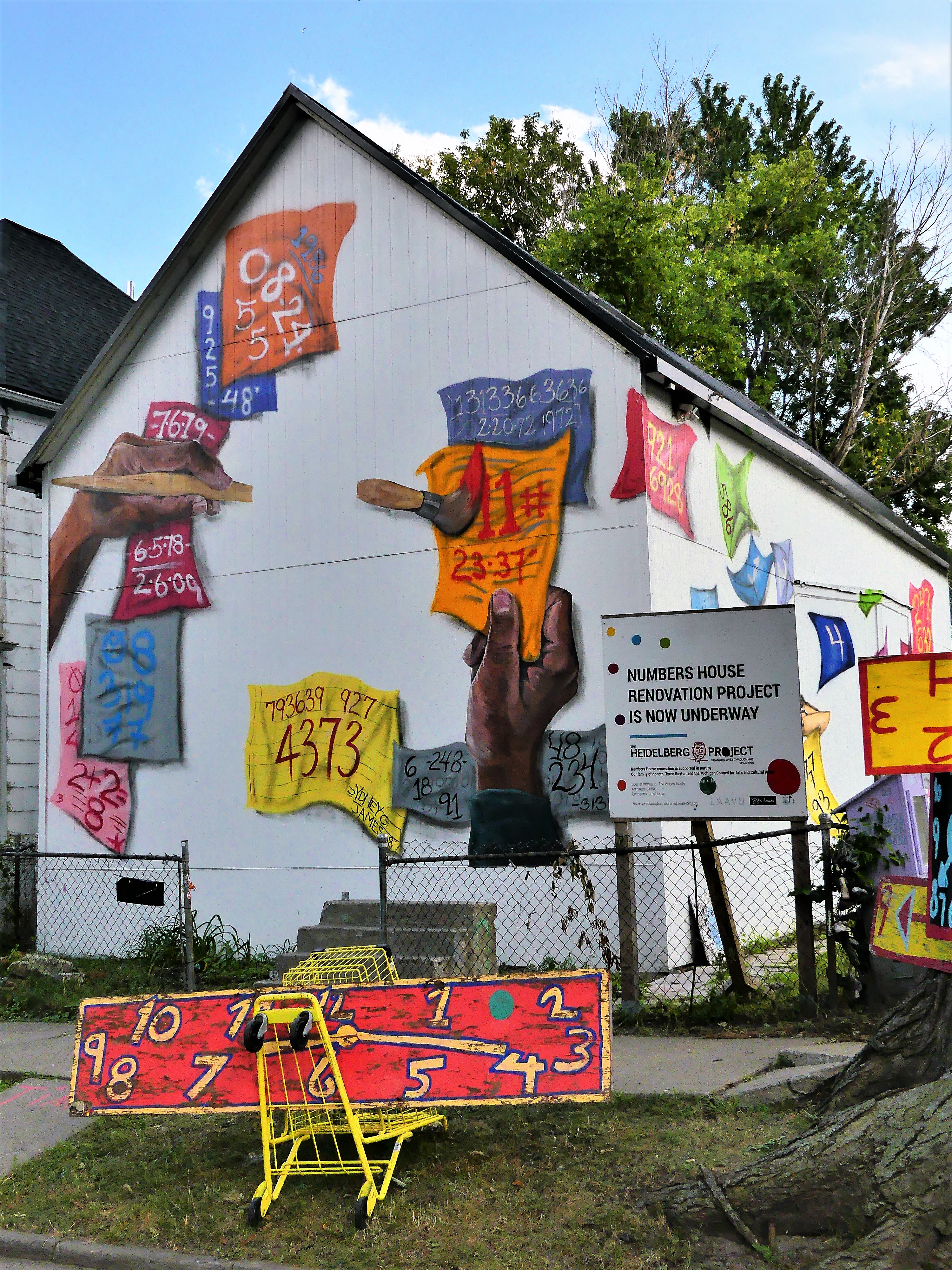
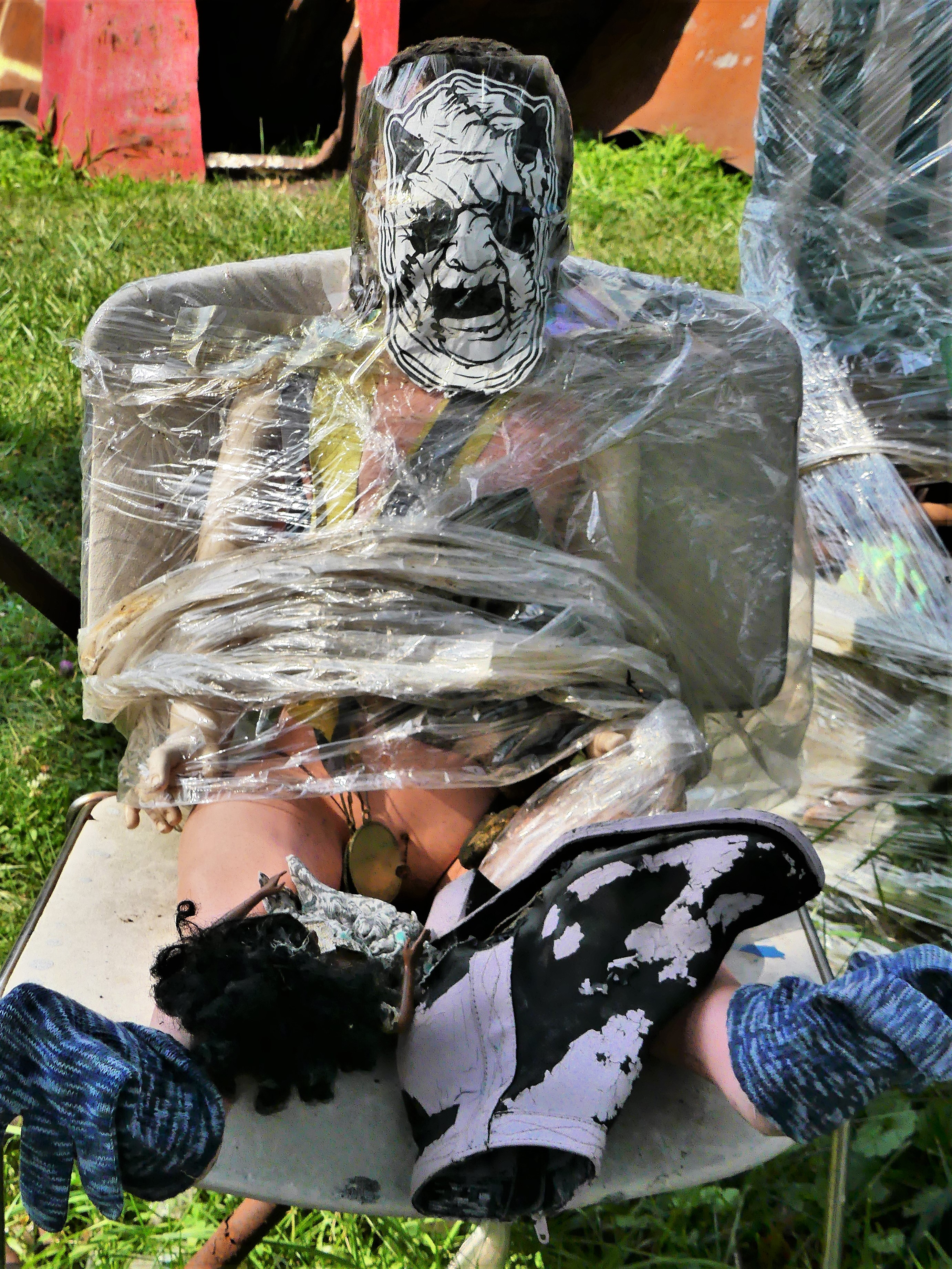
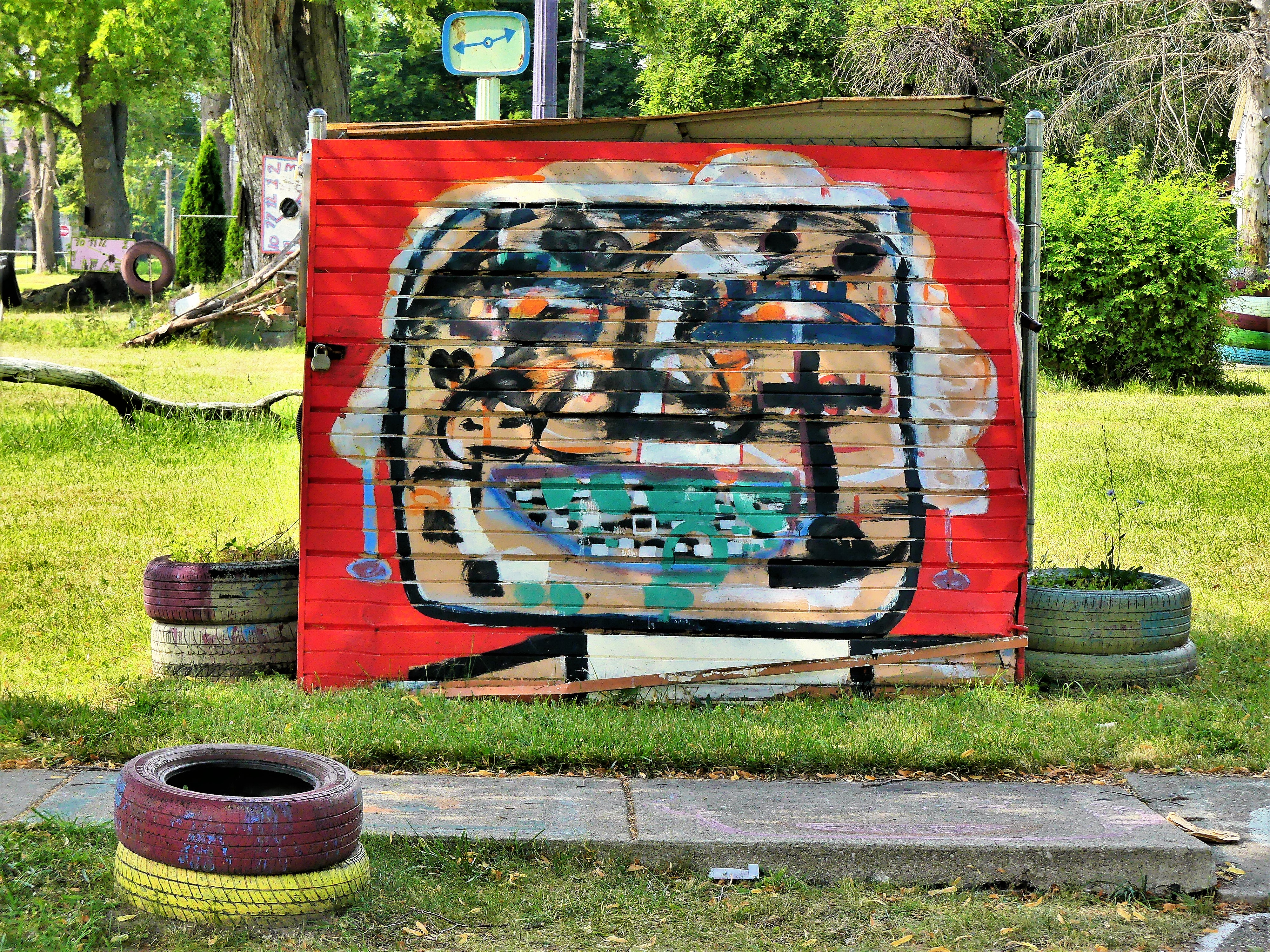
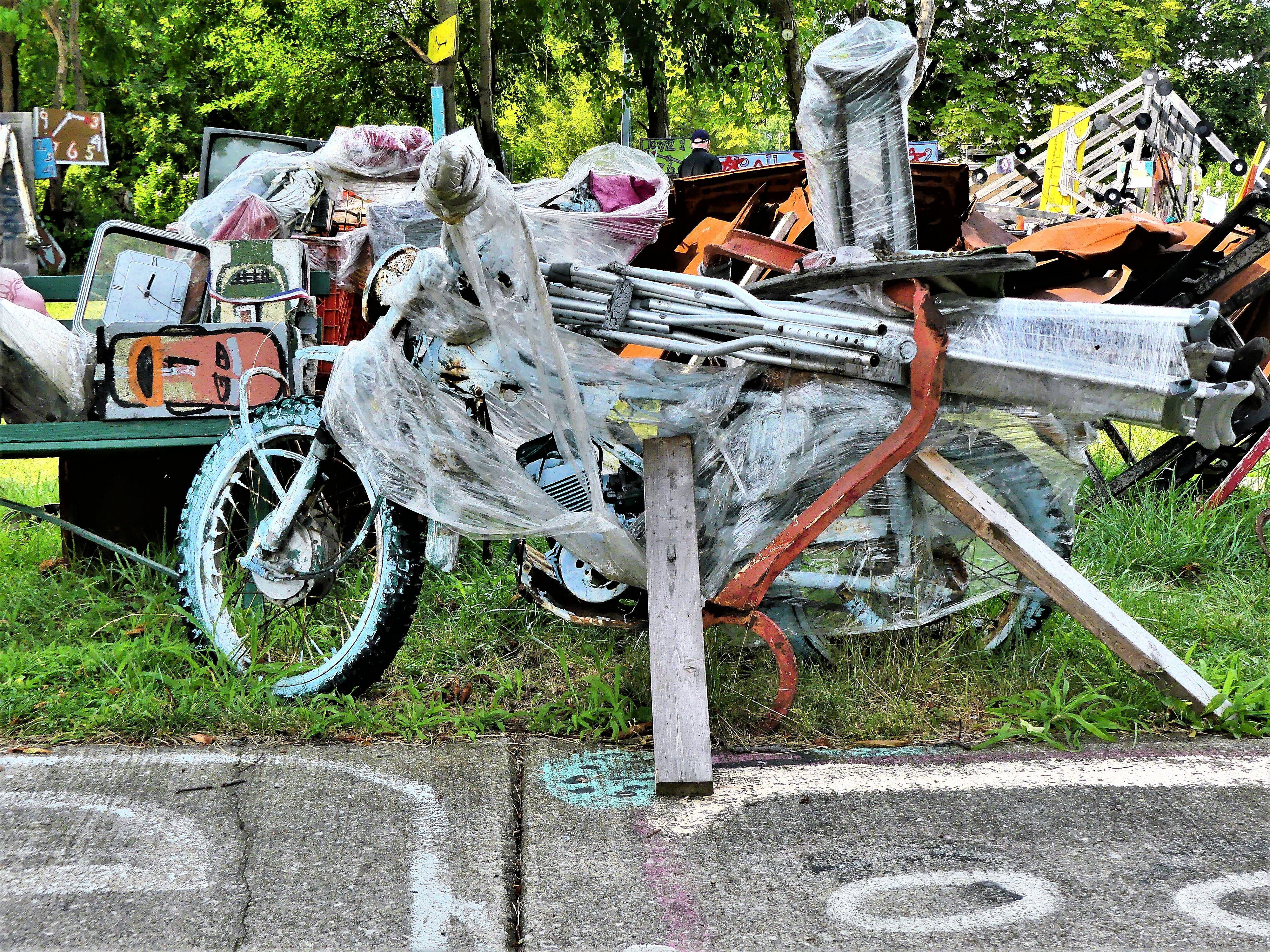
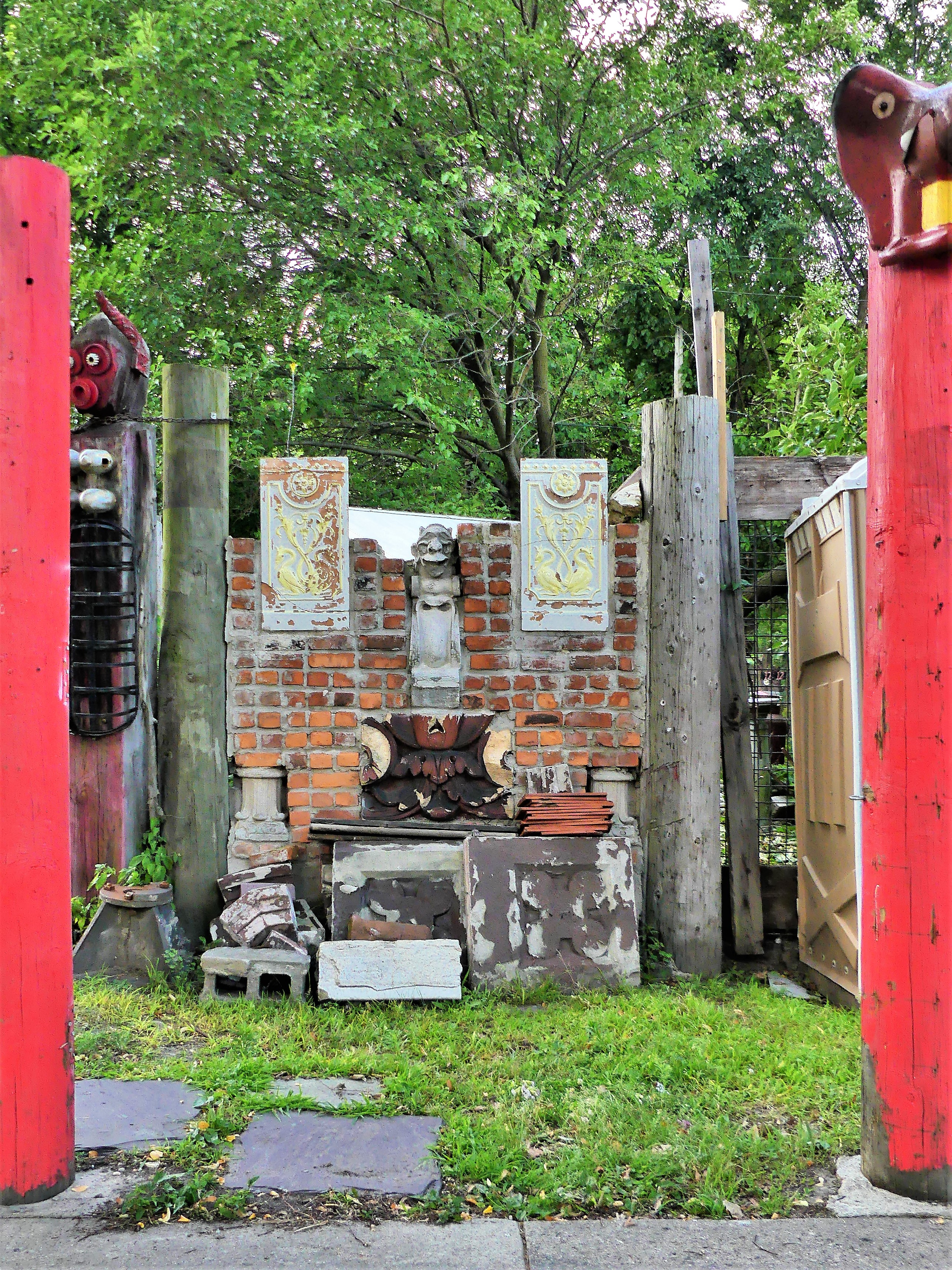
At first glance, the large number of vacant lots between derelict buildings on Heidelberg Street in Detroit, MI resembles a crooked smile through a handful of broken teeth. The gaps are filled with collections of discarded remnants from everyday life that could easily be mistaken for a flea market on crack. But first impressions are completely unjustified, and there is a purpose to the madness…to be discovered over time.
In 1986, Tyree Guyton returned to his childhood neighborhood in Detroit’s East Side, only to find a ghetto ravaged by drugs and poverty so severe that it touched his soul and roused his spirit. With encouragement from Grandpa Sam Mackey, he vowed to fight back with a paintbrush and a broom, which would eventually carry him on a celebrated journey–fighting his way through local partisan politics to national prominence.
To his credit, Guyton recruited sympathetic volunteers to change the face of their community, and after a massive clean-up, he incorporated the wreckage gathered from vacant lots, converting his neighborhood into an urban sculpture installation that has garnered world-wide attention.
For 30 years, Heidelberg Street has been a grass roots, work-in-progress. The HP (r)evolution continues today through personal donations and strong foundation support–providing funding for transformative paint-overs, and the acquisition of border properties to replace the homes lost to arson.
During my visit, I crossed paths with several photographers who felt as I did–that we had walked into someone’s wild dream, and we were there to interpret his dream through our cameras.
However, should the art critics and cognescenti remain unmoved, or the public dismisses Guyten’s art as junk, there is more to the story at the end of the day. When all the visitors return to their homes, the residents of Heidelberg Street stay behind knowing that their plight has been replaced by pride and opportunity.
While historians continue to debate the impact of the Great Chicago Fire of 1871 on the city’s future development, architects continue to reach for the sky along Chicago’s iconic shoreline. Out of the ashes rose a shimmering town of glass and steel and stone whose identity is forever associated with its reputation as a innovation laboratory for American design and engineering.
As home to the Home Insurance Building–the world’s first steel-framed skyscraper, completed in 1885–Chicago is generally regarded as the birthplace of the skyscaper. And while the city’s status has been diminshed since the Petronas Towers overtook the Sears Tower in 1998 as the world’s tallest building, Chicago still retains its title as one of the great architectural cities of the world.
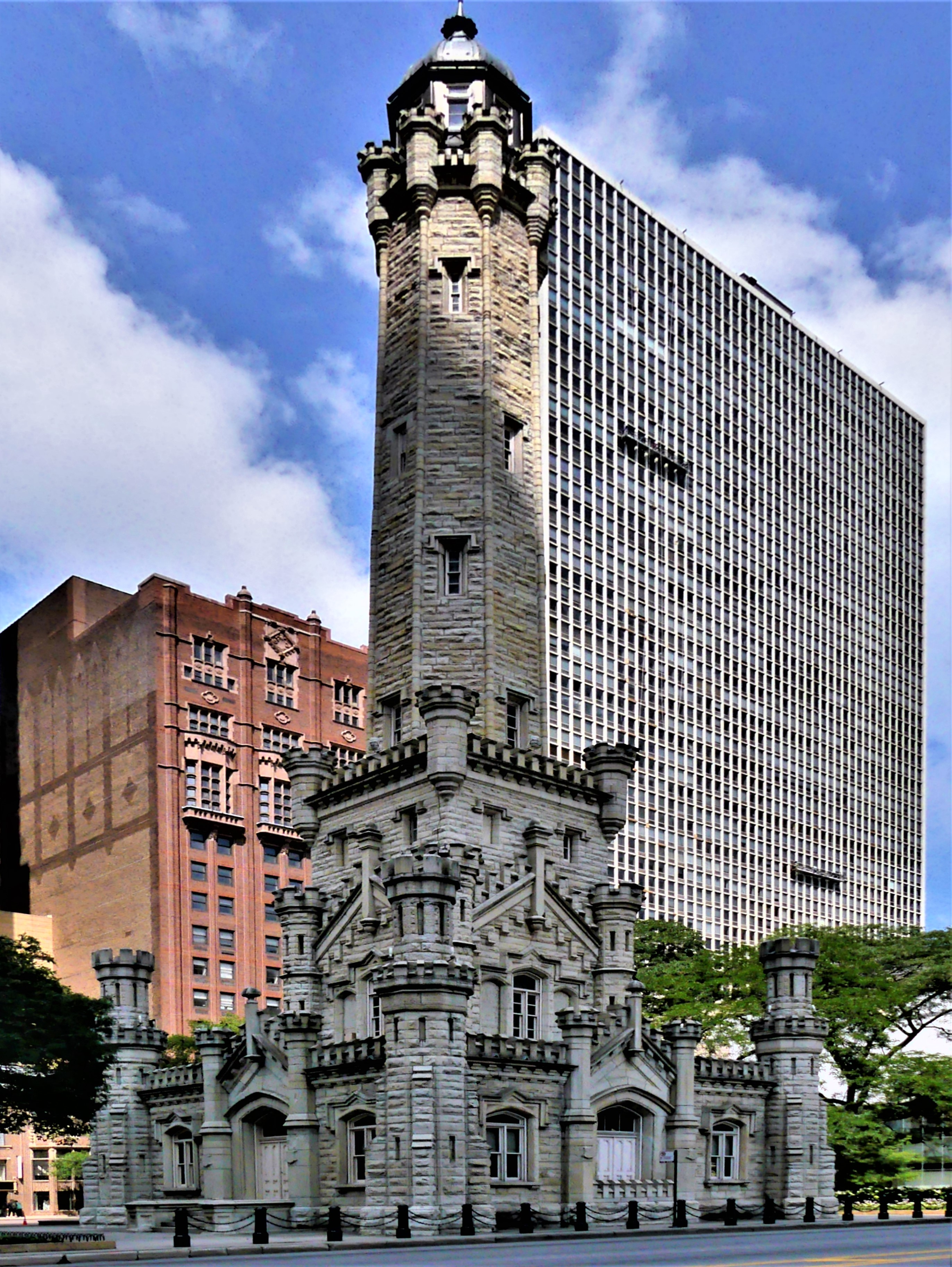
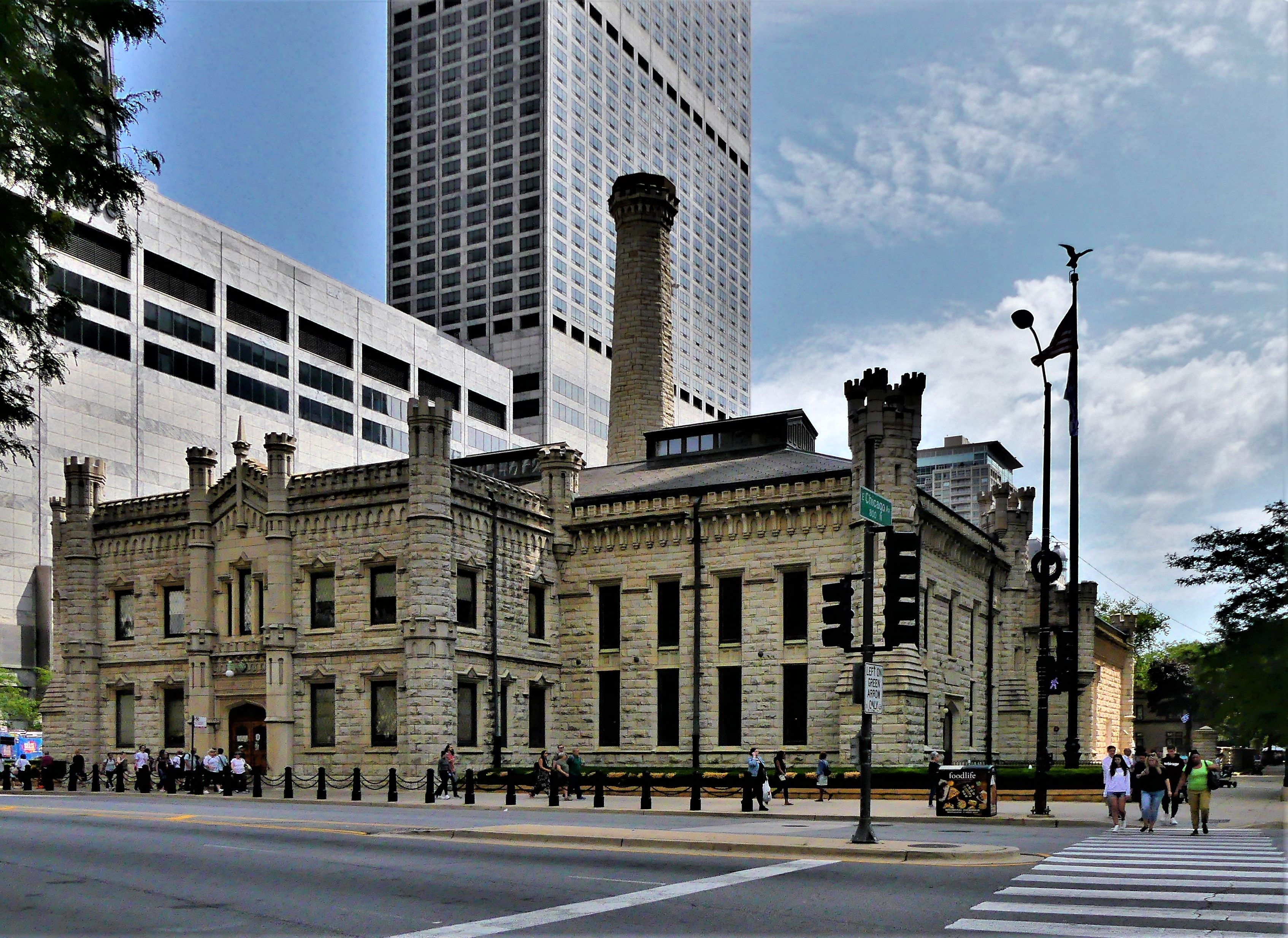
Leah and I started our journey by foot to gaze at the Water Tower landmark,
and its companion Pumping Station–two castellated structures of ornate limestone that miraculously survived the deadly fire, and presently anchor Chicago’s Magnificent Mile.
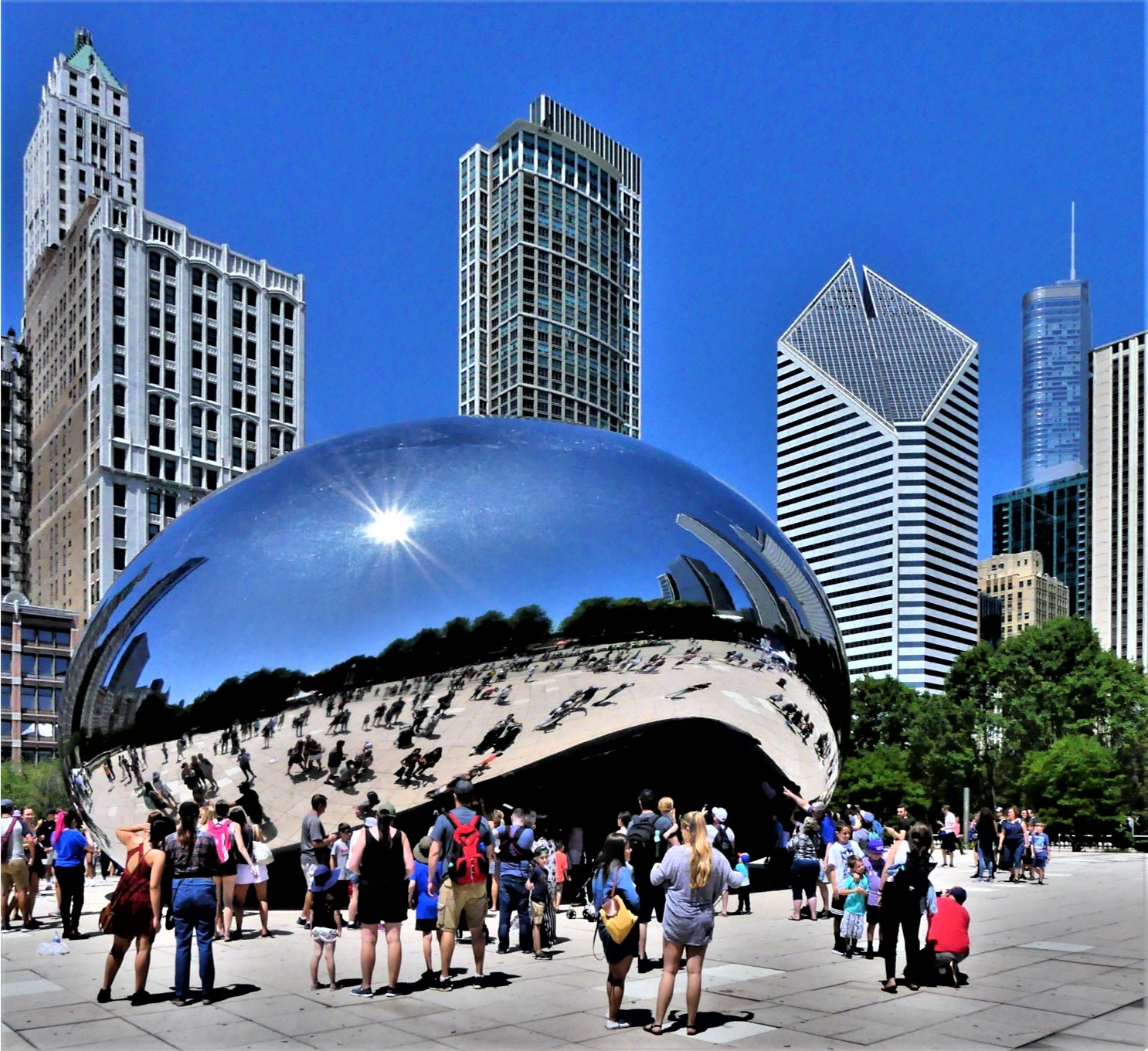
We continued to Millennium Park to reflect on Sir Anish Kapoor’s Cloud Gate (or The Bean as its known to locals),
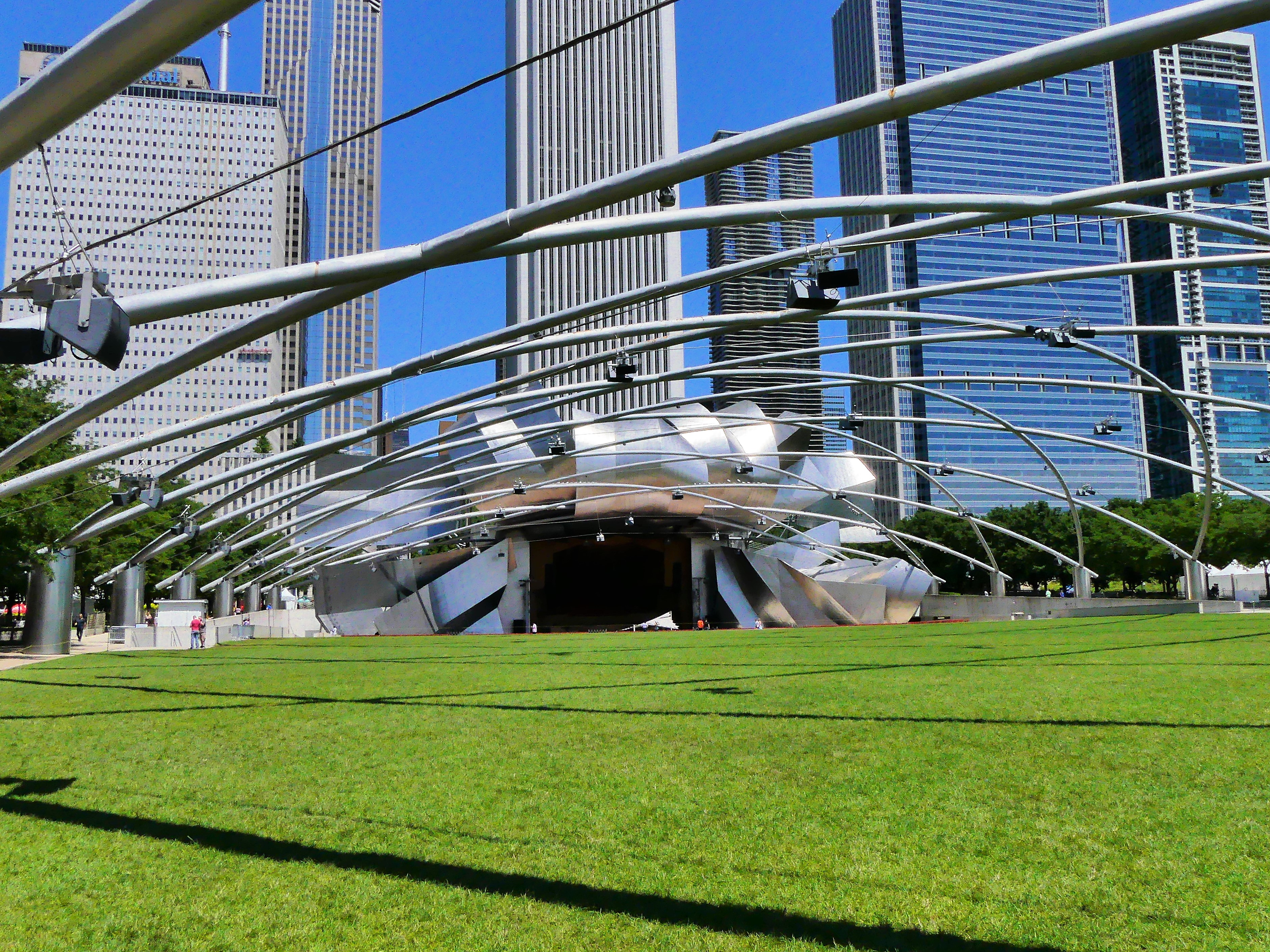
and admire Frank Gehry’s twisted bandshell at Pritzker’s Pavilion.
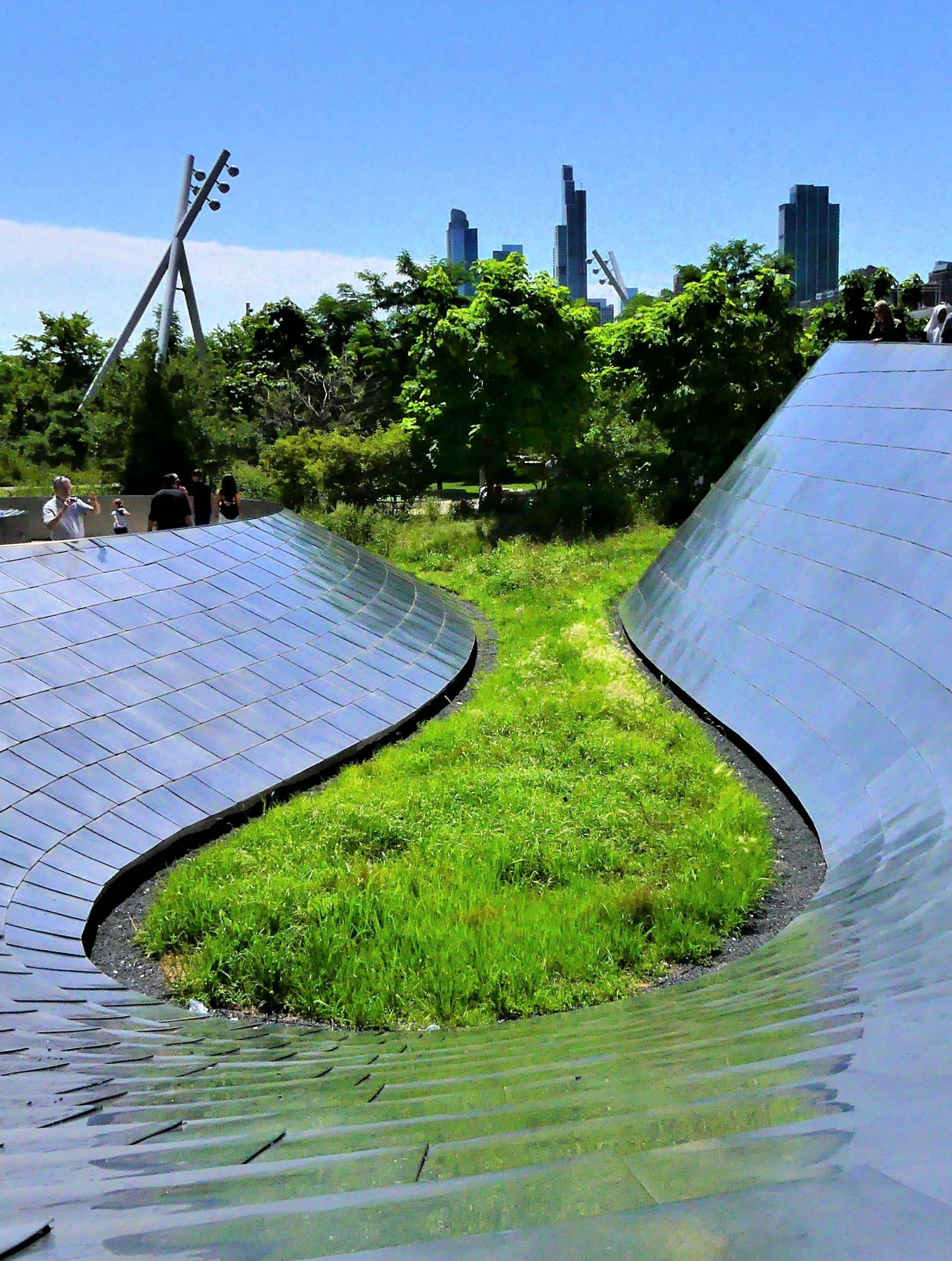
From there we spiraled down Gehry’s aluminum-clad BP Bridge…
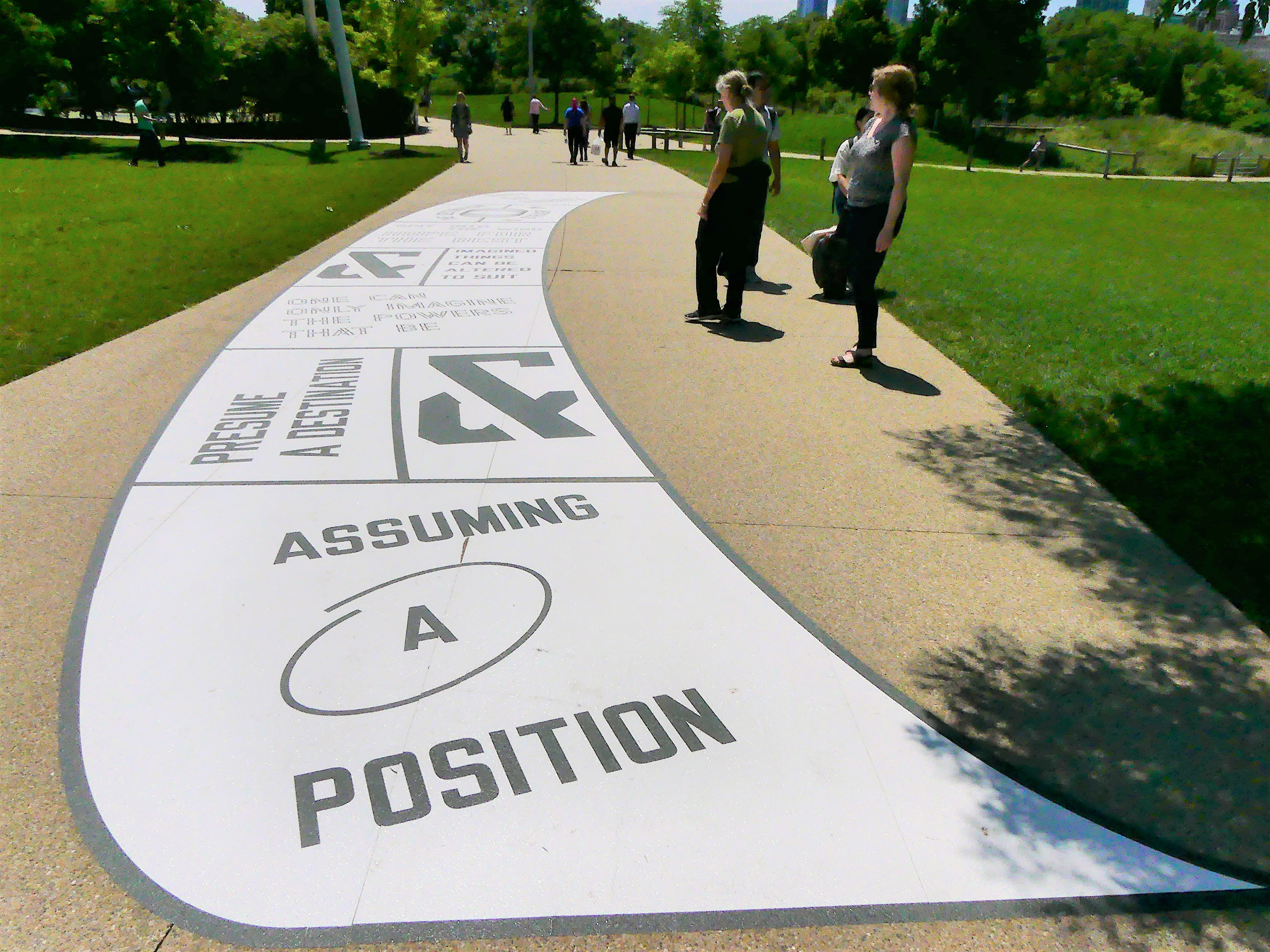
to reach Lake Michigan, where we traipsed over Lawrence Weiner’s Out of Sight installation…
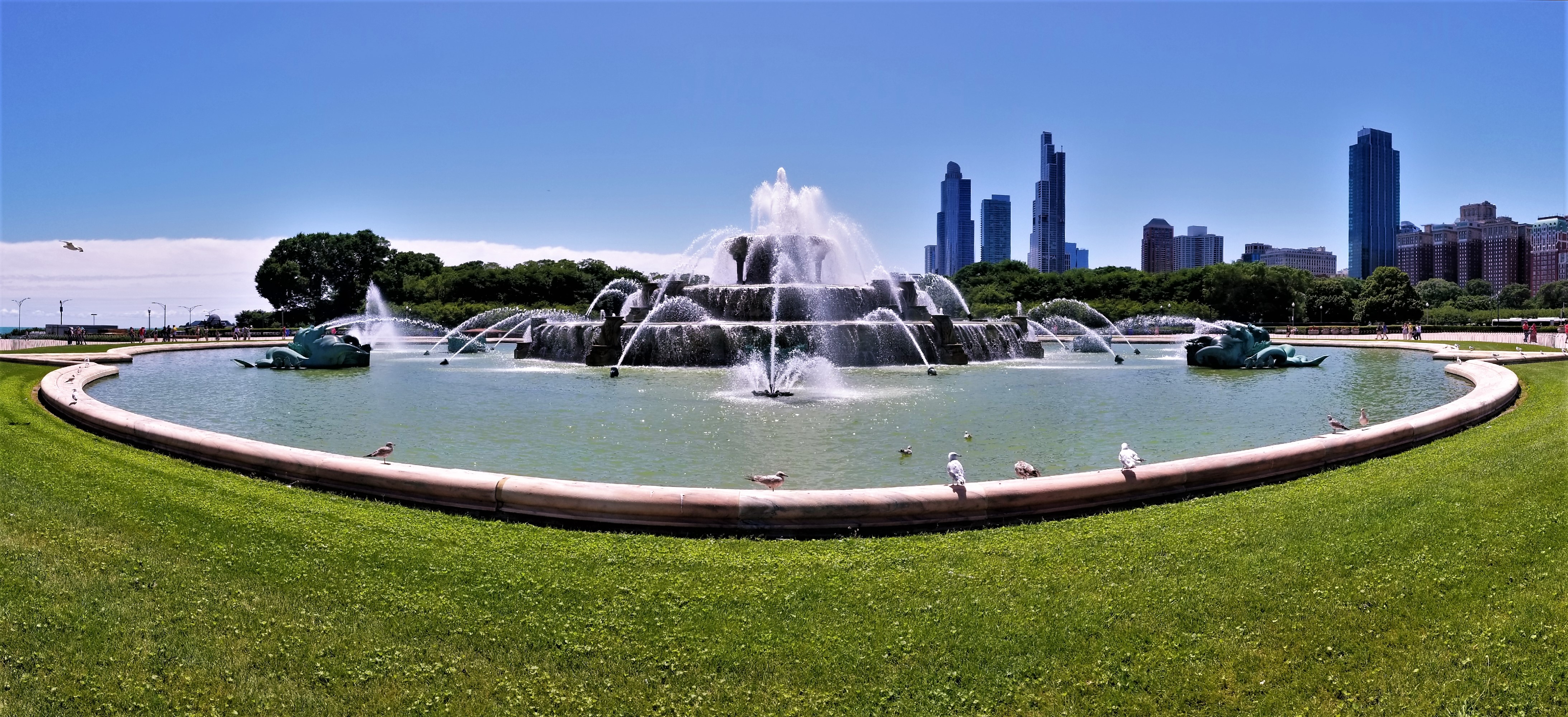
on our way to the spray of Grant Park’s Buckingham Fountain.
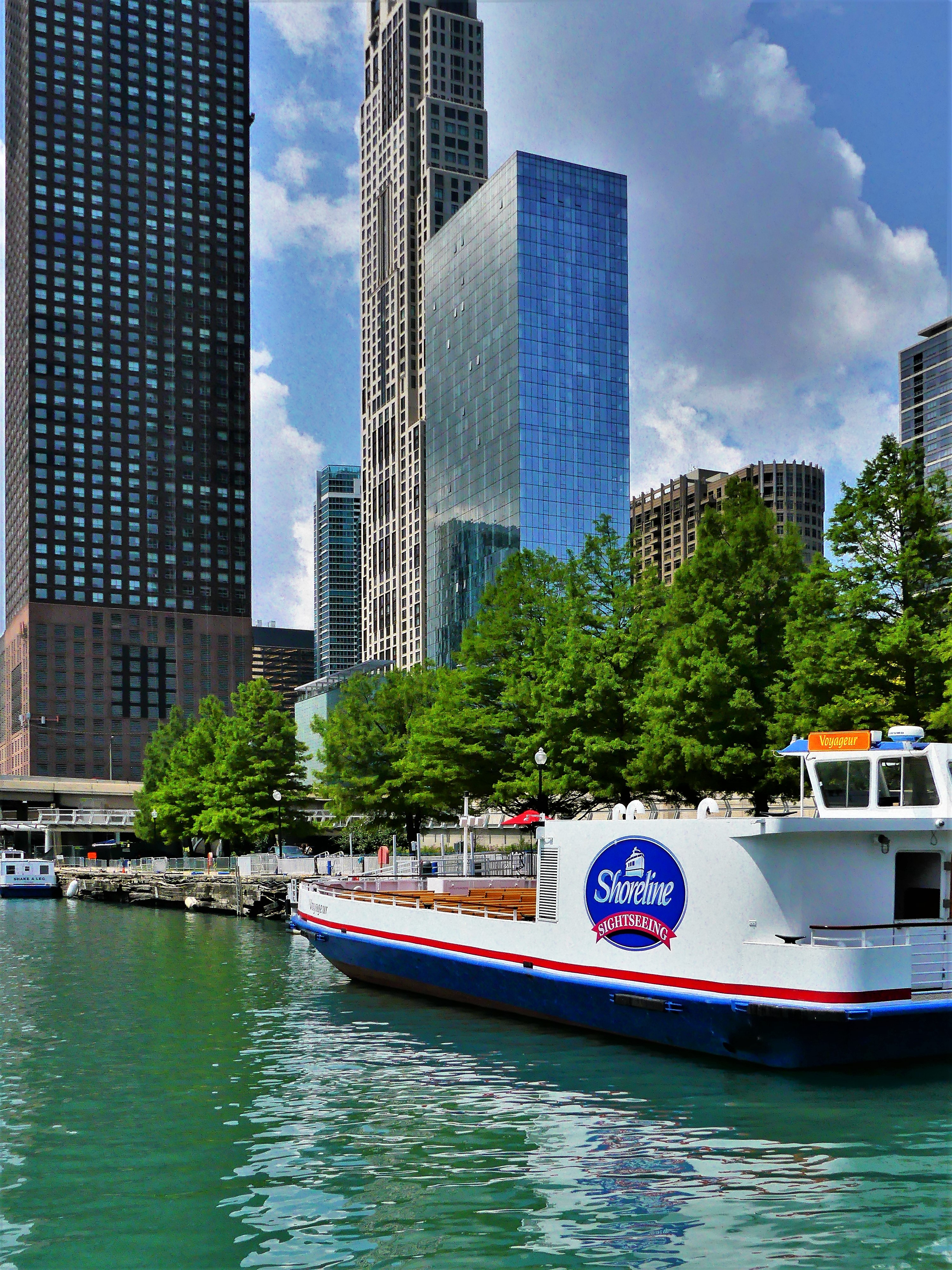
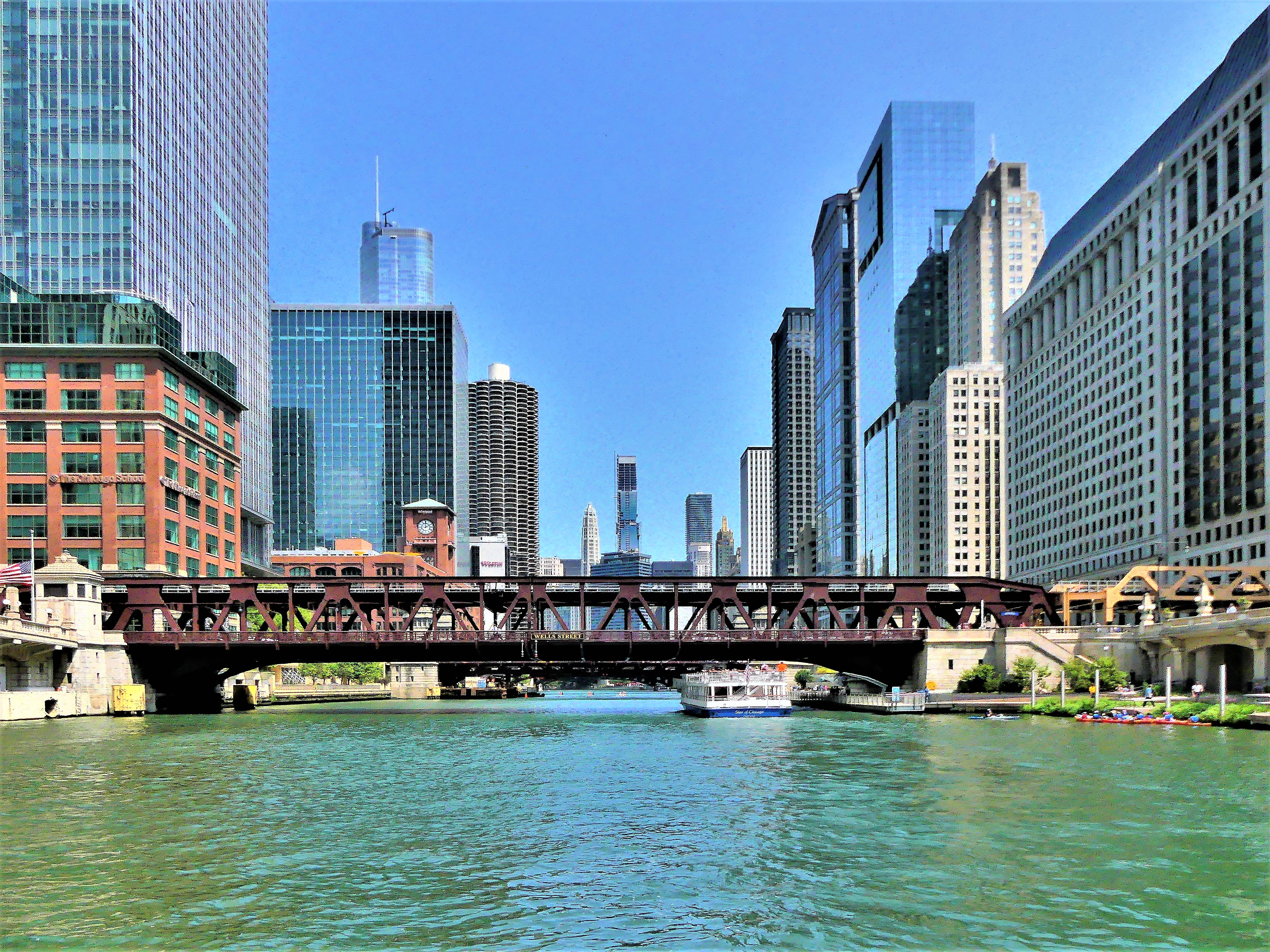
Yet, with so much to see along the Chicago Riverwalk, we opted for a guided boat tour through the Chicago River…
to gain a better understanding of Chicago’s architectural history and diversity–
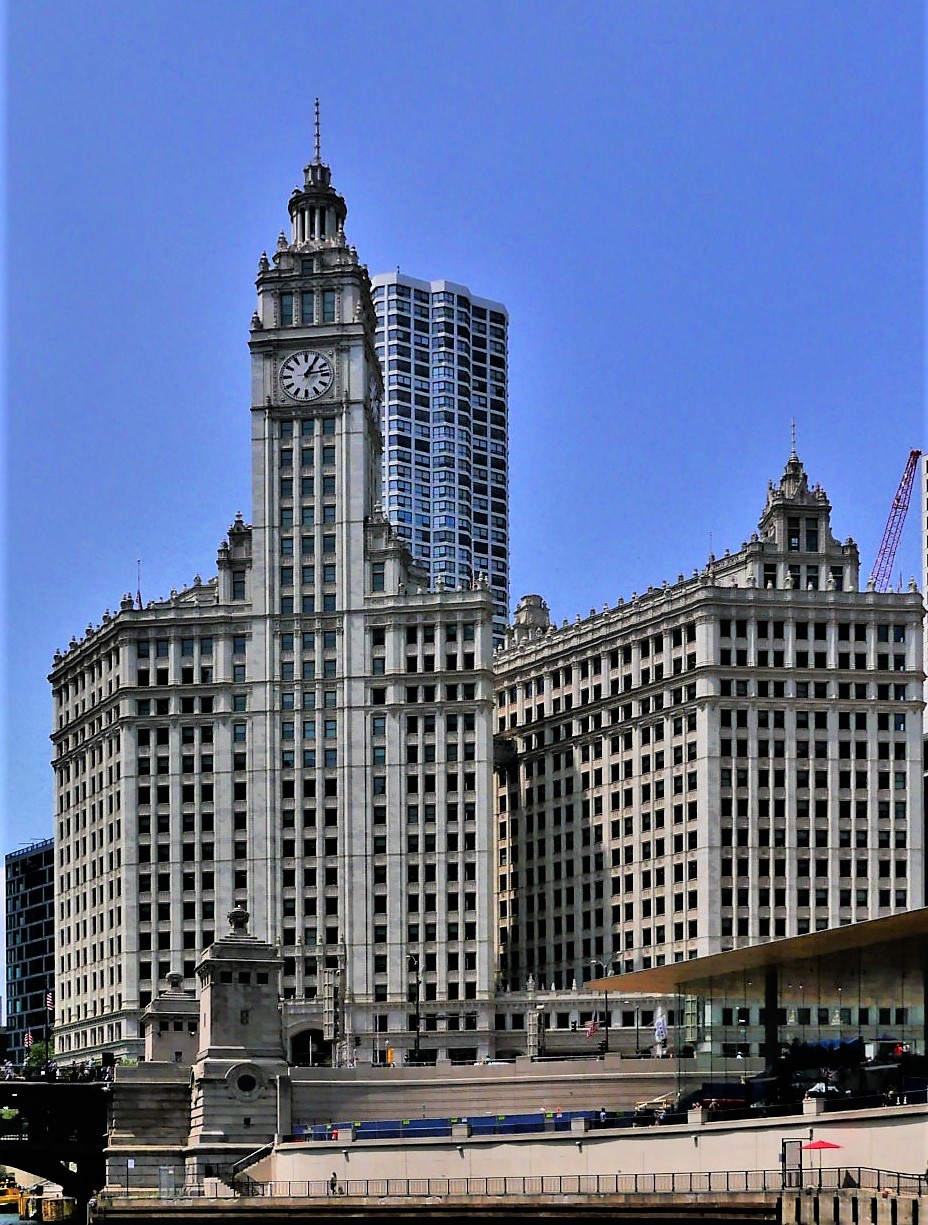
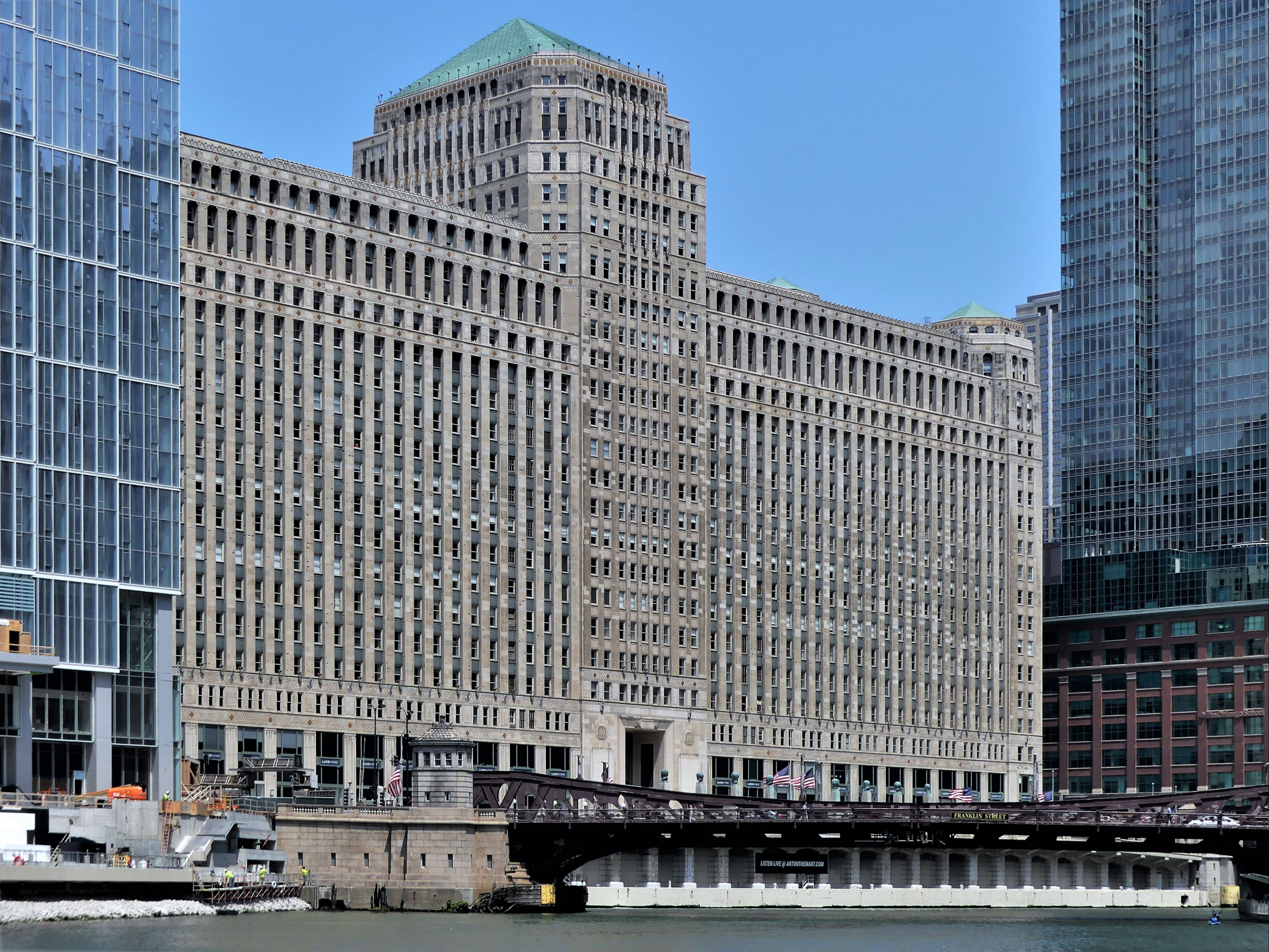
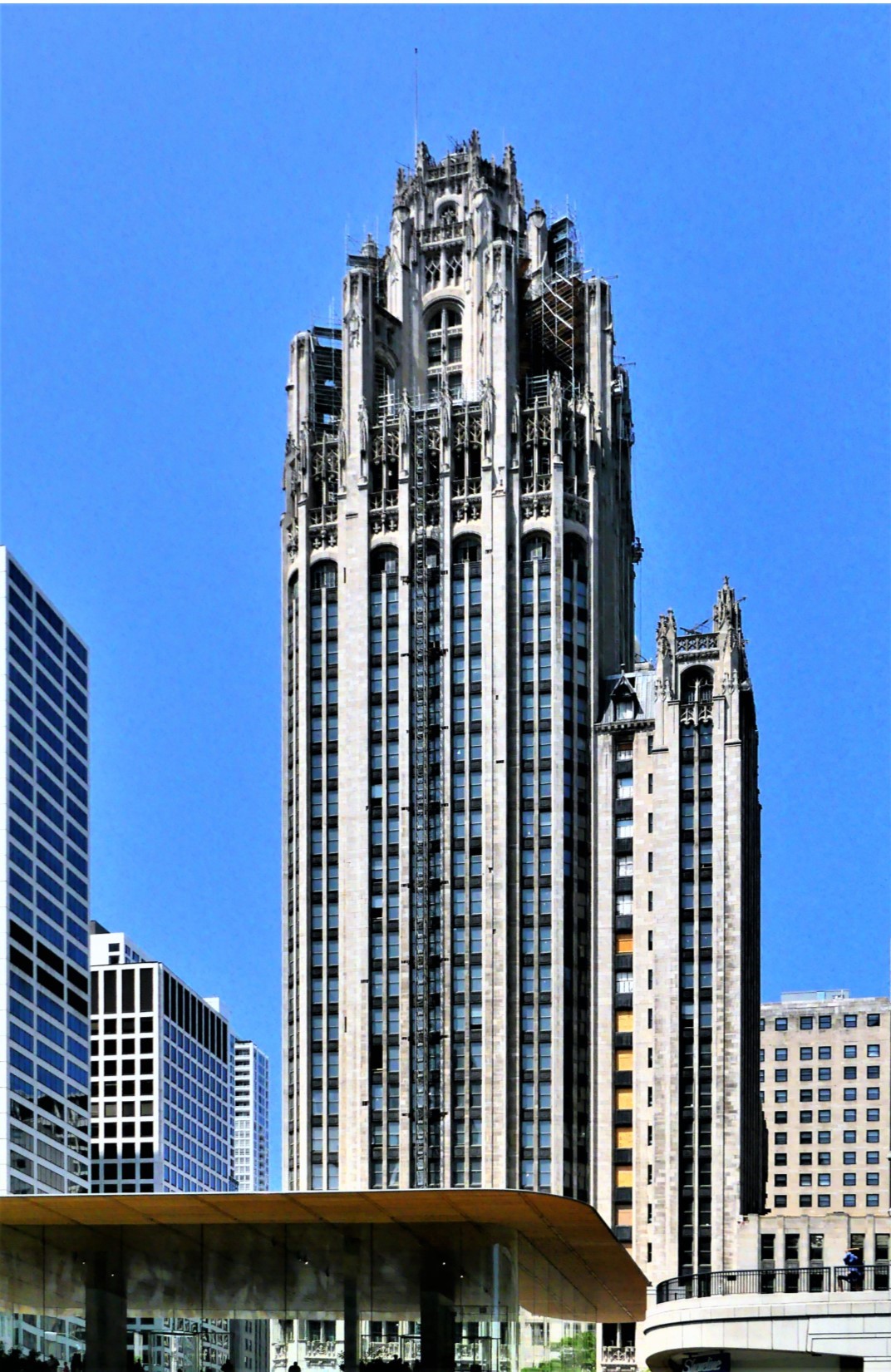
where art deco…
Wrigley BuildingMerchandise MartTribune Tower
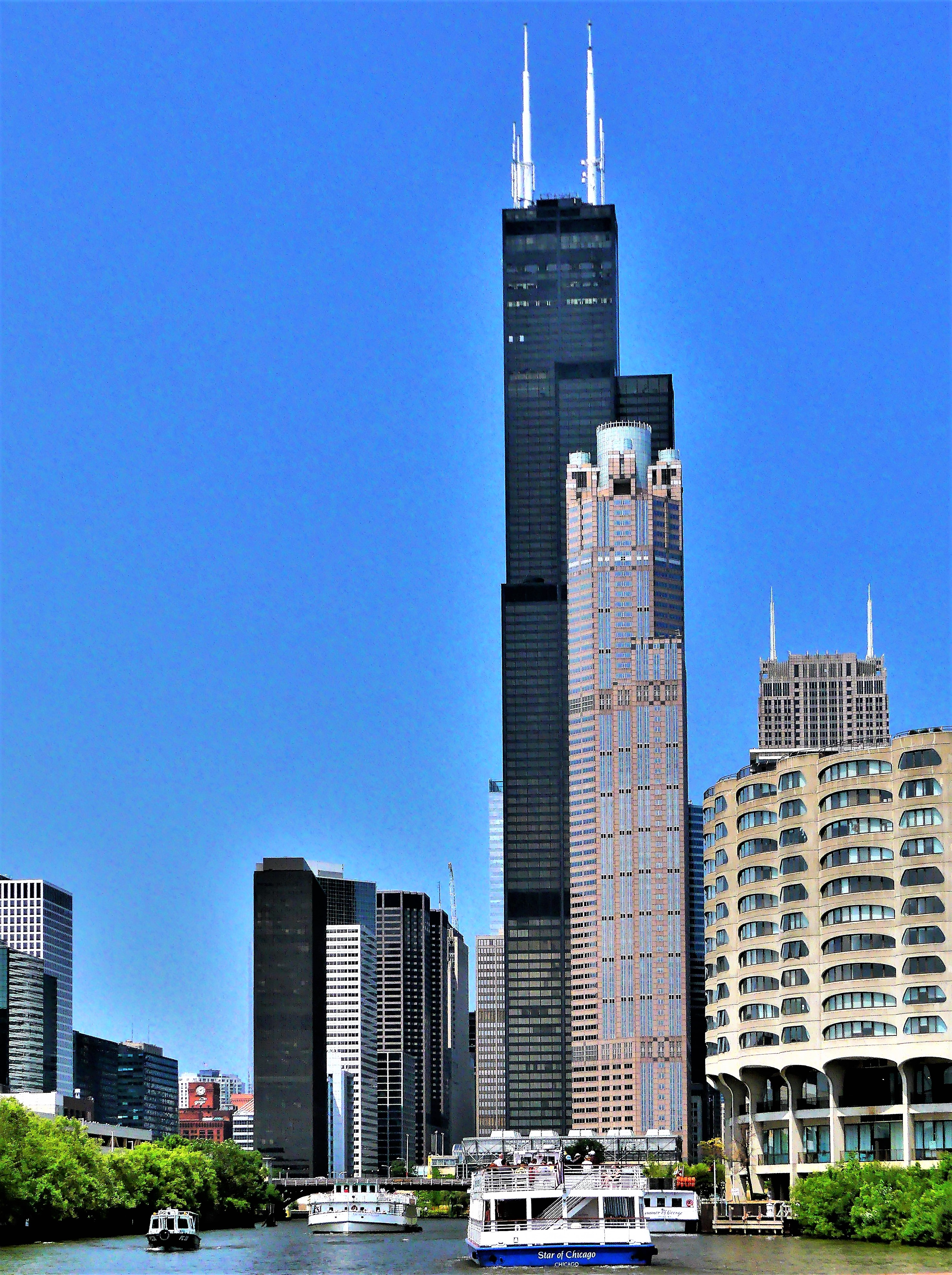
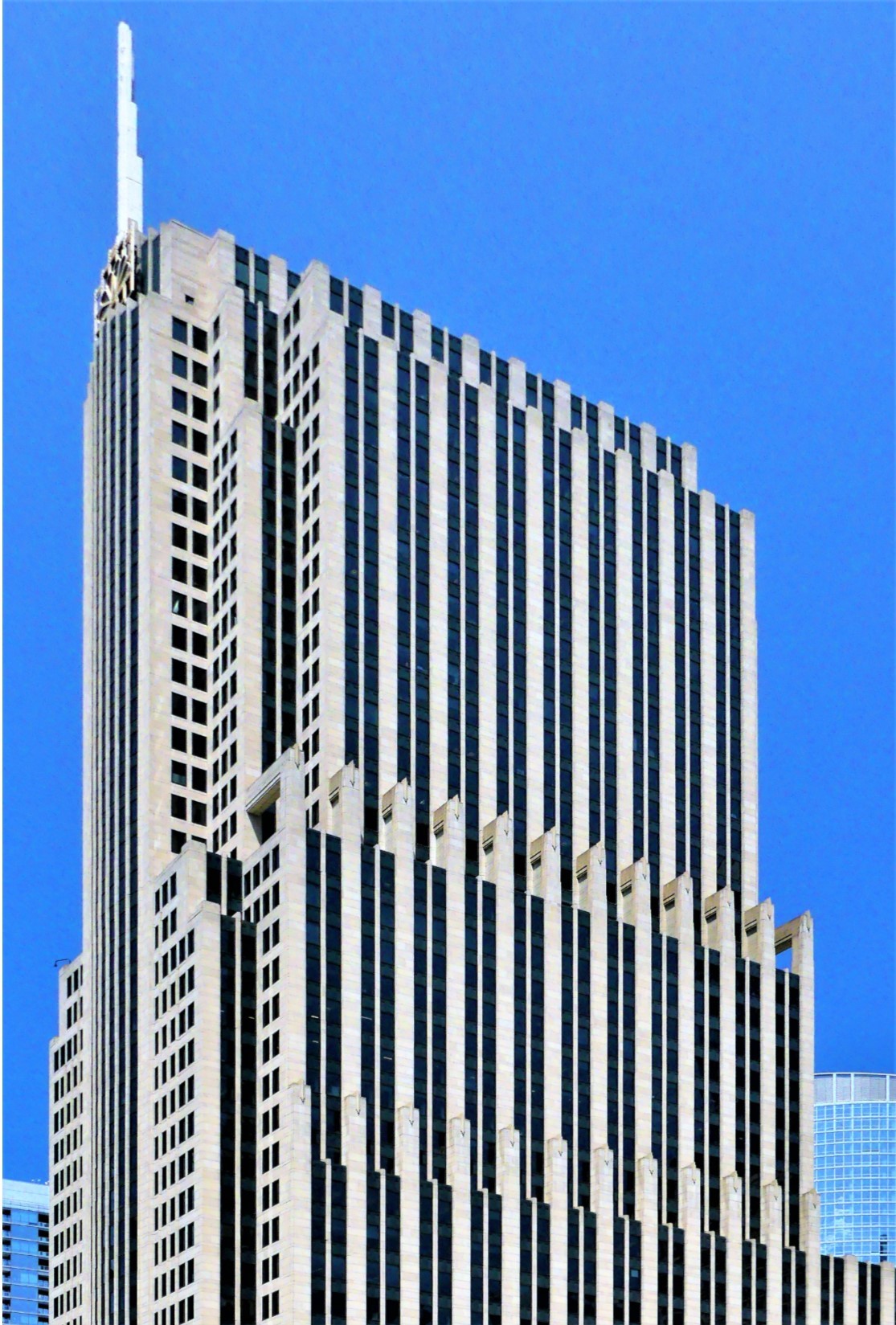
intersects with post-modernism…
Sears Tower flanked by 311 South Wacker DriveNBC Tower
to deliver modernism…
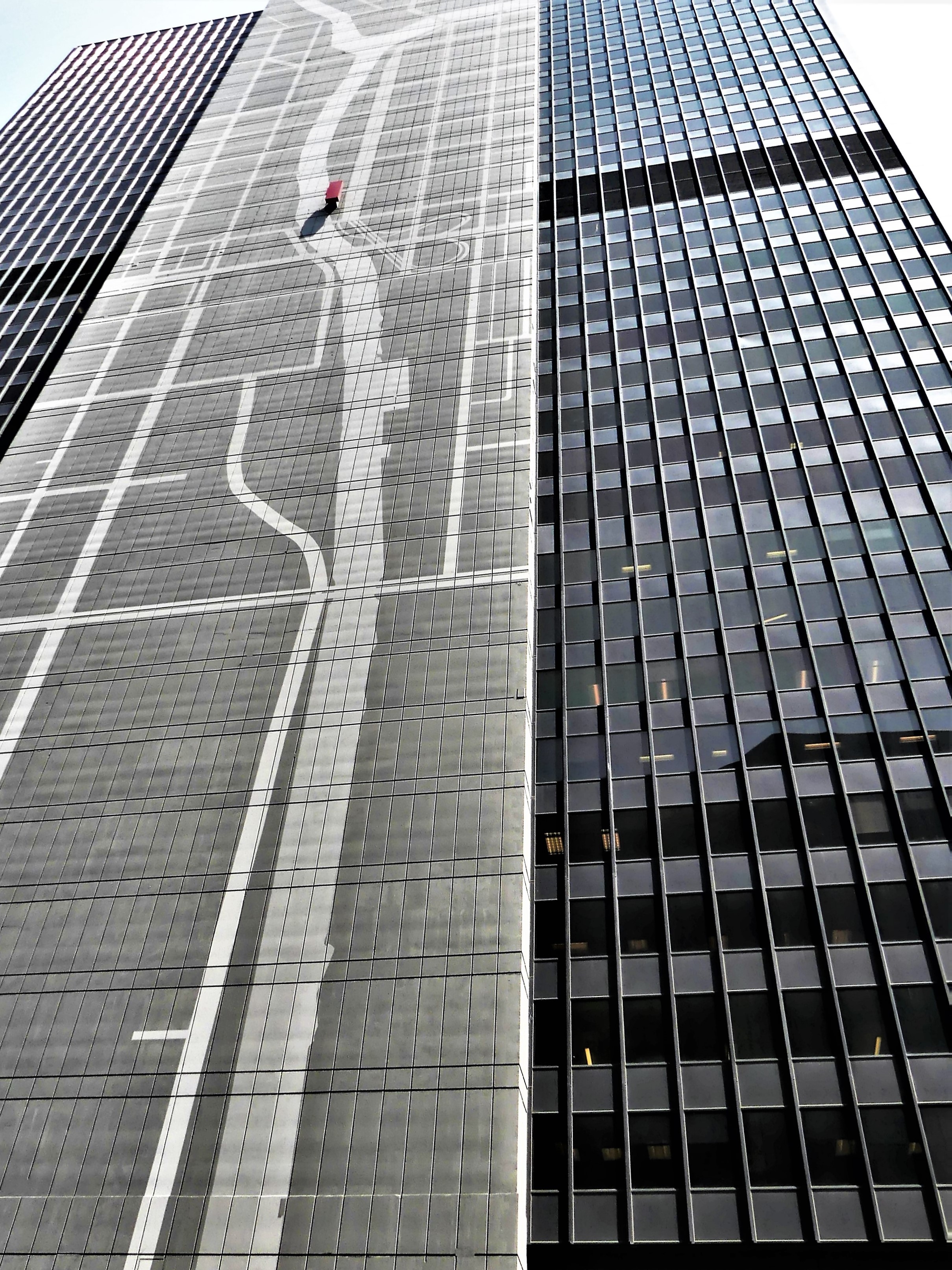
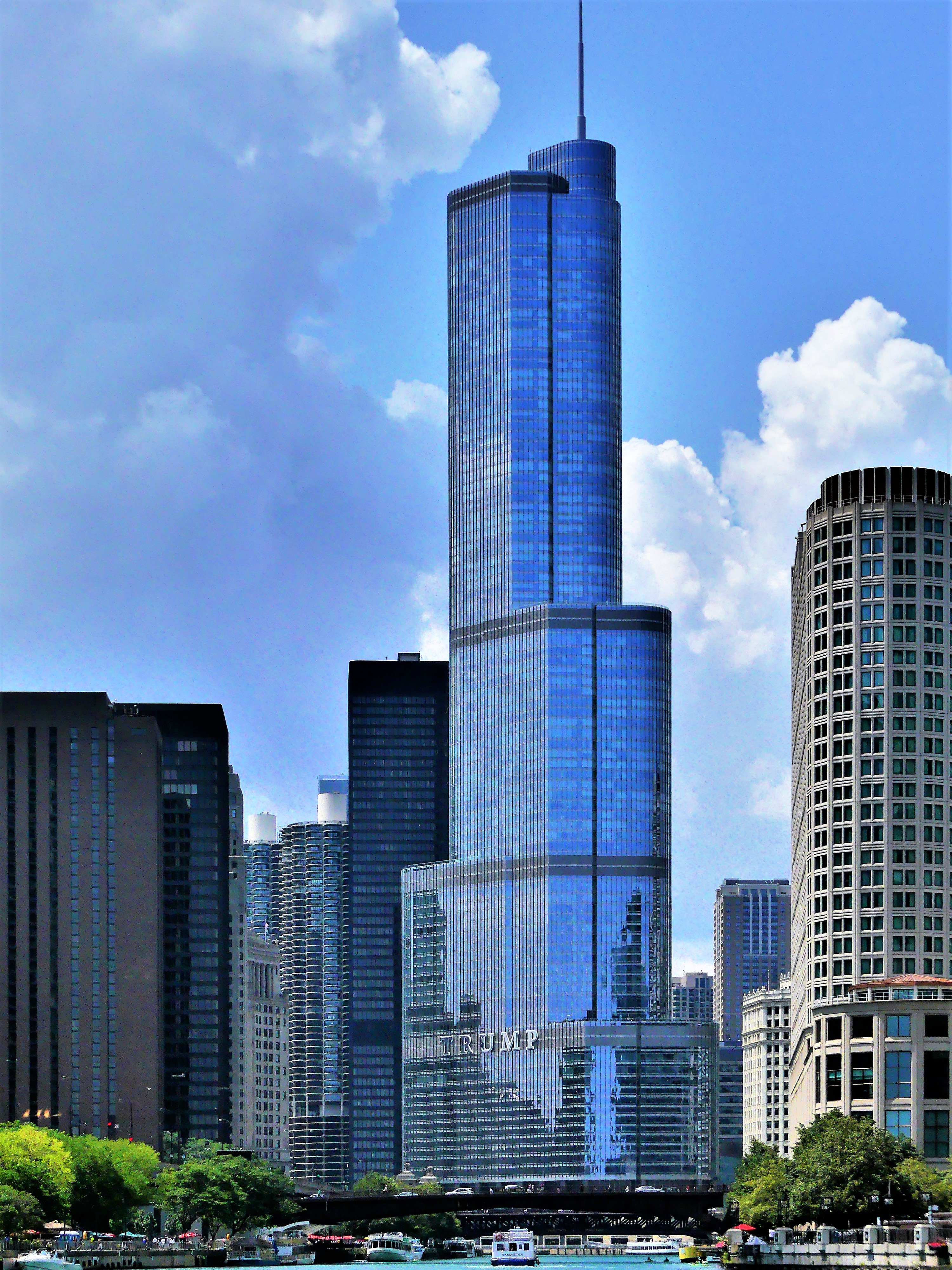
300 South Wacker with a map of Chicago RiverTrump Tower
with a flourish.
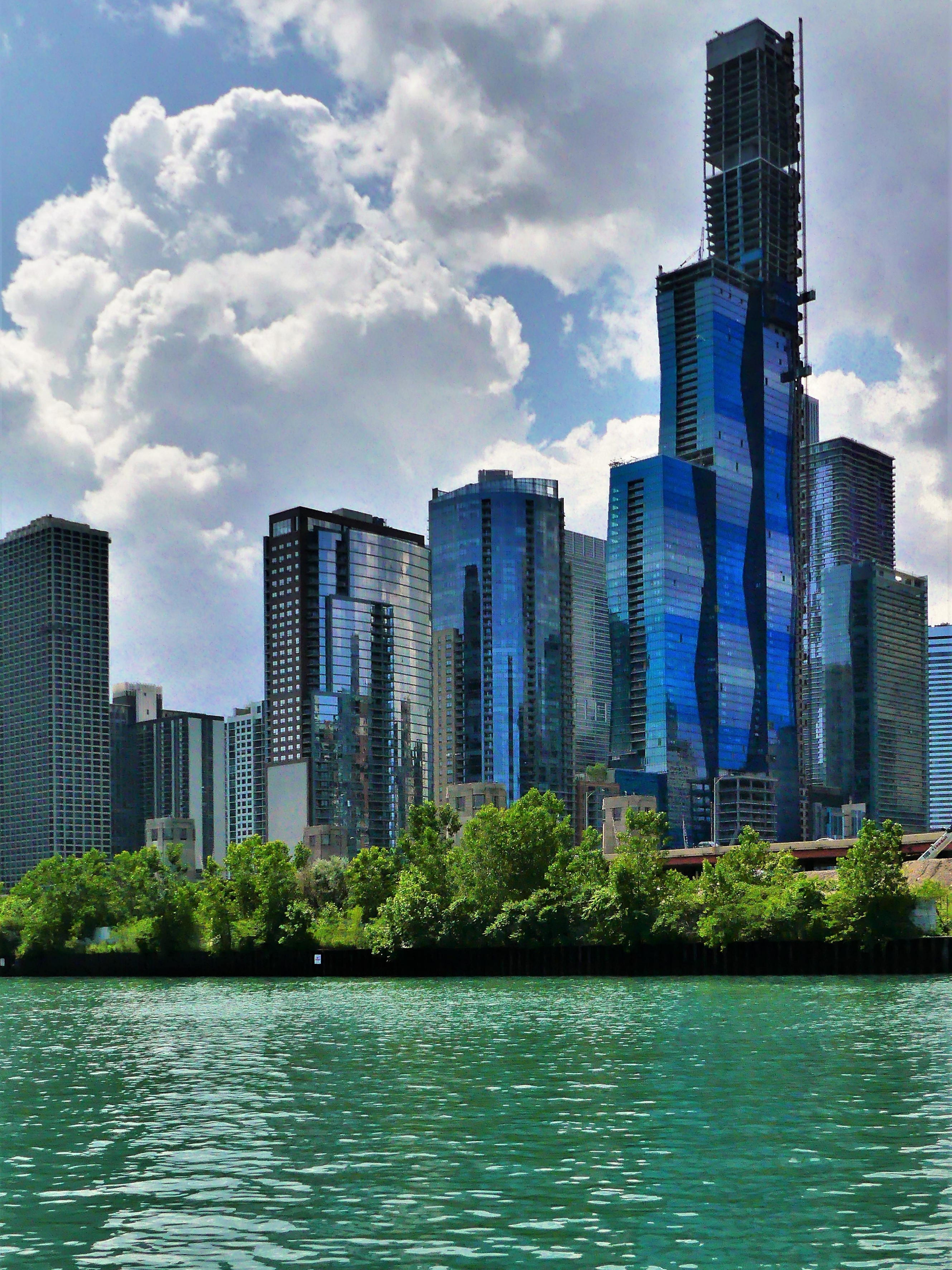
Vista Tower, Chicago’s newest tower
And while each of the buildings in Chicago’s loop is worthy of a traditional photographic portrait,
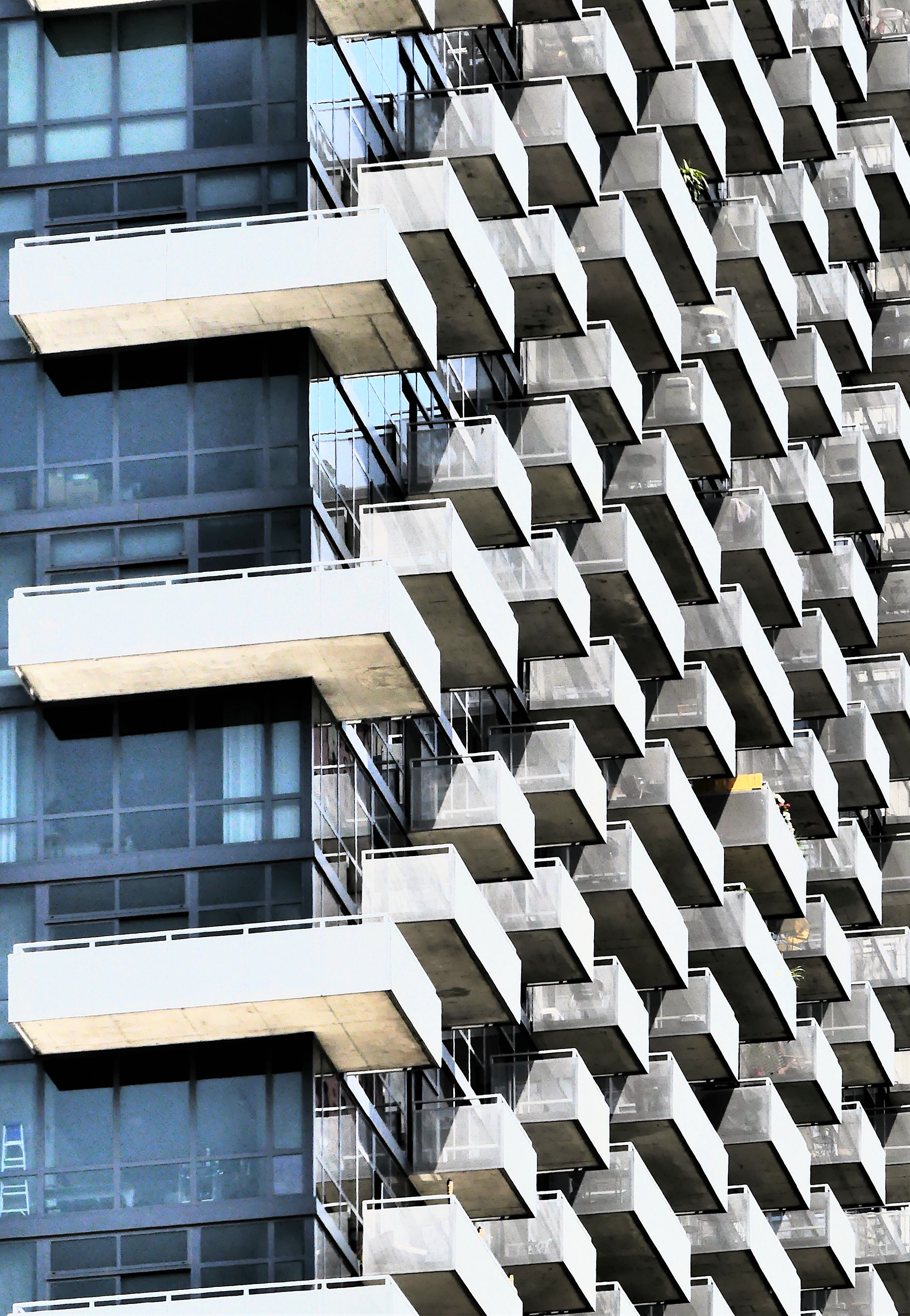
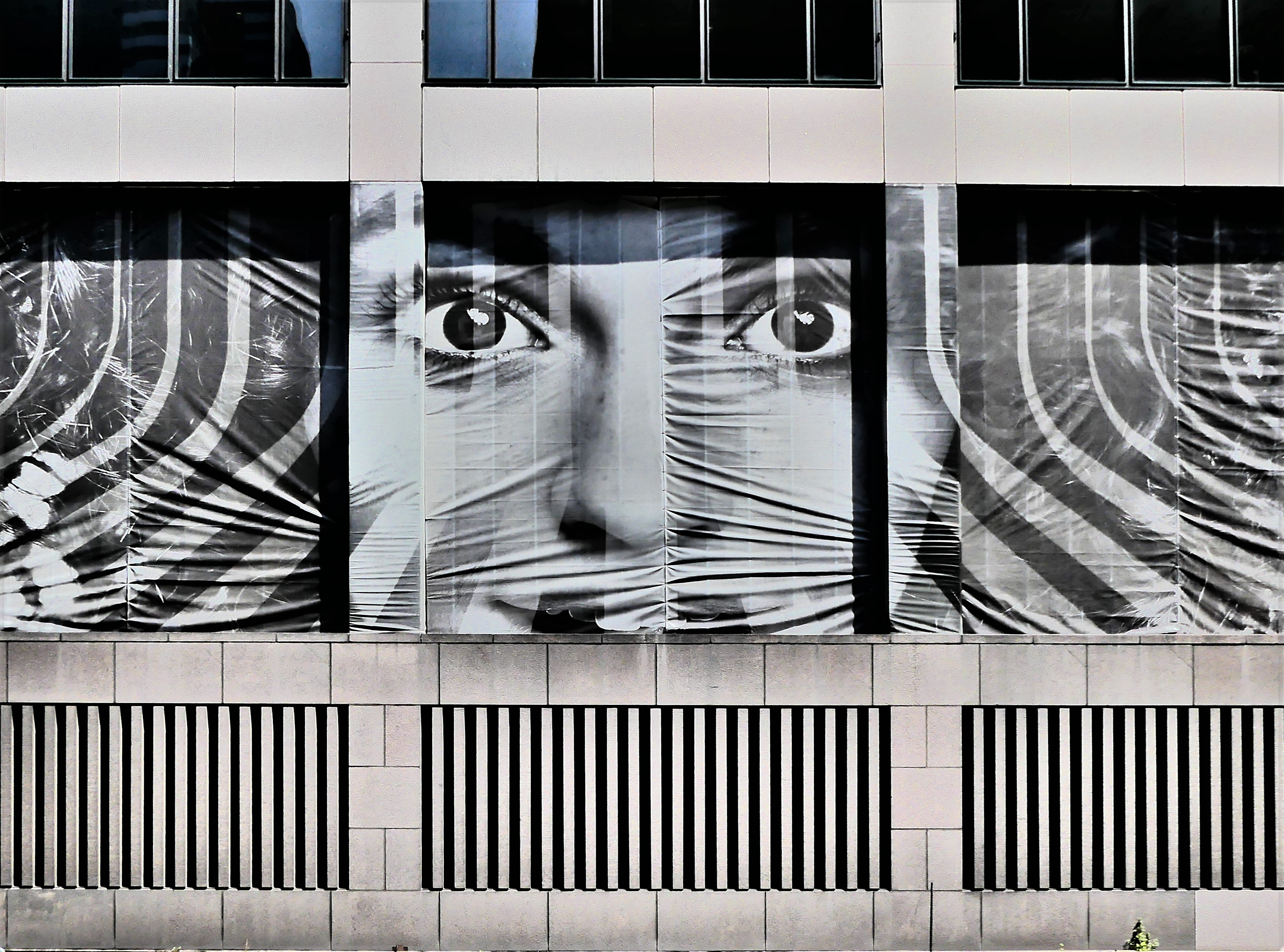
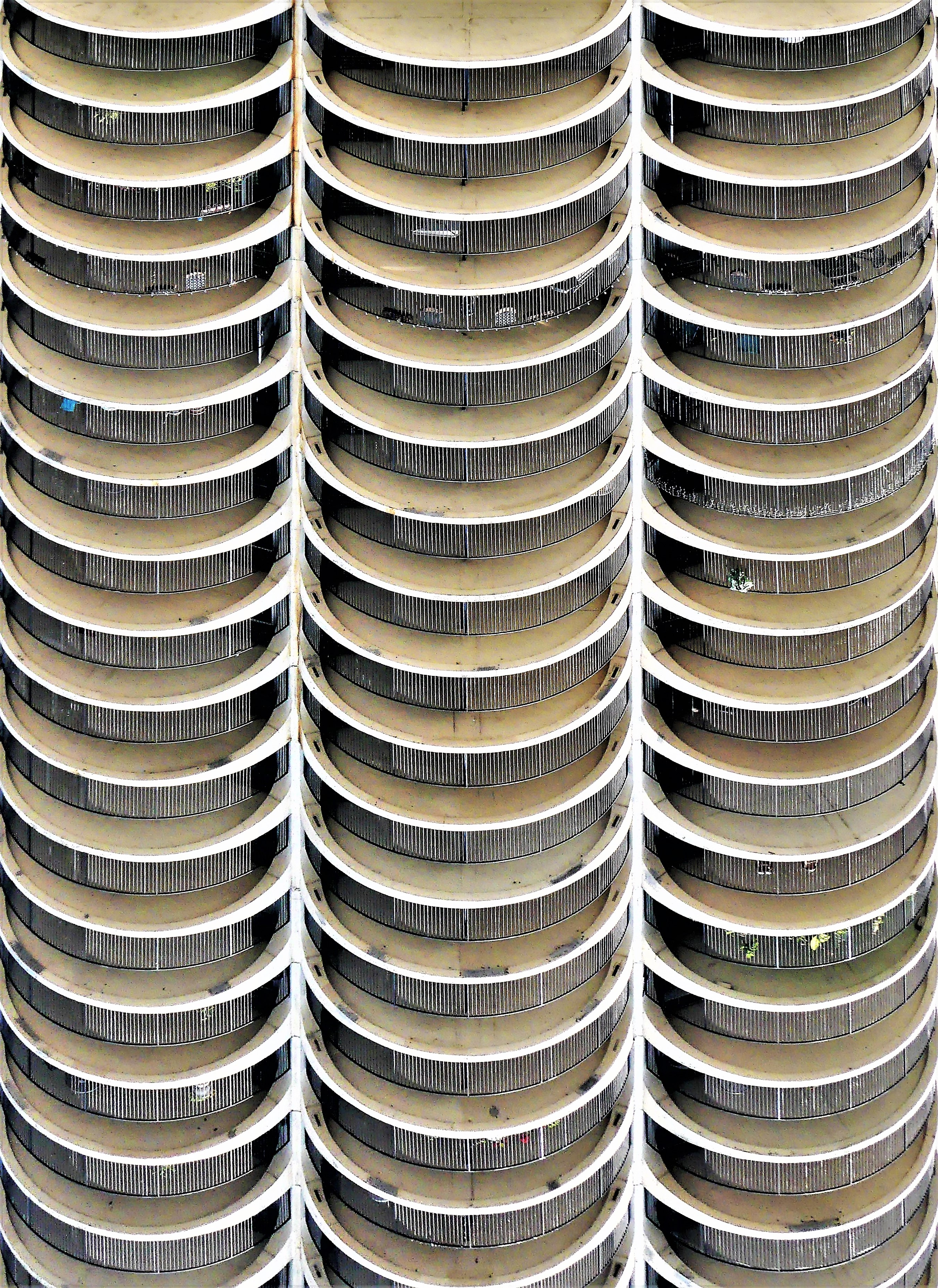
sometimes it’s necessary to examine the details more closely…
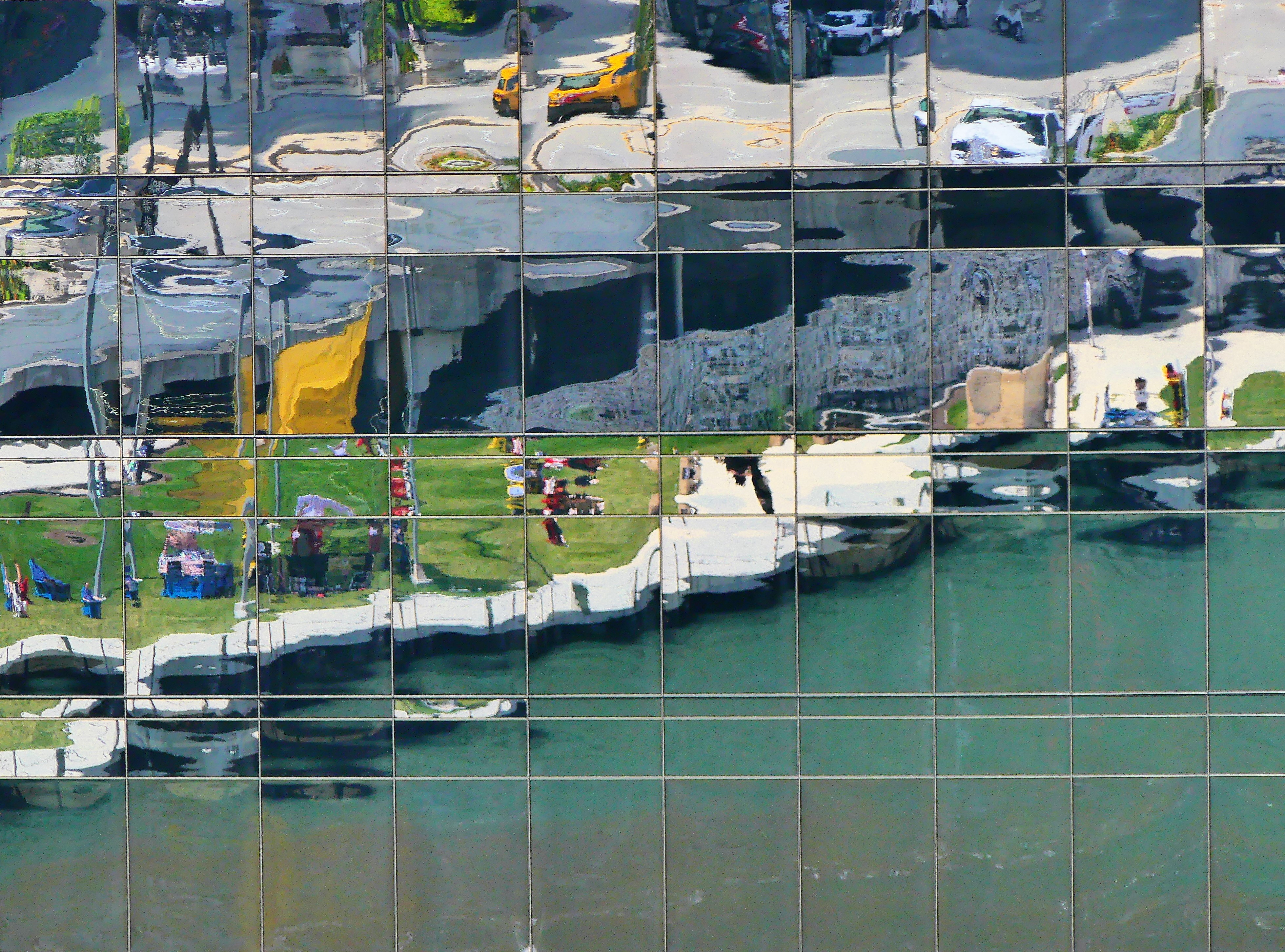
to see things from a different perspective…
as it may reflect a new reality.
Or sometimes, just looking at things upside-down…
or sideways…
forces us to appreciate the beauty of an architect’s play of form and function.
Our appetite for fine art took us to Milwaukee Art Museum with its collection of 25,000 works on display–making it one of the nation’s largest galleries. While I was curious about the collection, I was most interested in the Quadracci Pavilion, built by Spanish architect Santiago Calatrava in 2001.
The iconic winged structure has demonstrably changed the city skyline by Lake Michigan’s waterfront…
to the point that Milkwaukee now incorporates Calatrava’s brise soleil in it logo.
Parallels to Calatrava’s Oculus at NYC–Gound Zero are unmistakable;
comparisons are inevitable.
The wings are extended most days until sunset, but stay retracted during nasty weather or high winds.
Sadly, Leah and I were greeted with high winds, but we were fortunate to tour the museum with so few visitors.
With the exception of a group of mini-pals,
and isolated cases…
here and there…
we felt like we had the space to ourselves–
which gave us more time to study some of the special artwork in greater detail without distraction or interruption:
(quickly scroll up and down for cool moiré effect)
While I never considered that the building was competing with the exhibitions, I was always eager to return to Calatrava’s public spaces…
to cleanse my palette before indulging in another bite of brain food!