April Fools PSA

While culling through the many comments attributed to my Epilogue post–recently featured on the WordPress Discover site–I came across one comment in particular that so startled me, I had to read it twice:

Screenshot (9)

I couldn’t believe my good fortune! Somebody felt so strongly about my post that they were willing to make me rich!

Yet on the surface, it all sounded too good to be true. I had to find out more information about this amazing opportunity before it slipped away. But how?

I thought about calling him, but not wanting to embarrass myself by appearing too anxious and maybe saying the wrong thing, I decided it was safer to dash off the following email to Harrison Wells instead:

Hi,

I got a communication from Harold Wood, who told me a story about a blank ATM card that could withdraw huge sums of money. Is this for real? Cause if so, it certainly sounds interesting.
What more can you tell me about it?
I have a bunch of questions, so the sooner you can get me answers, the sooner I can get my hands on this card!
1) First of all, it sounds a bit fishy, so is it legal?
2) Do I have to worry about where I use the card?
3) Do I have to worry about how often I use the card?
4) How much money can this card generate?
5) How long is this card good for?
6} How much is this card gonna cost me?
7) I got bills to pay, so how long will it take to get me a card?
8} What do you need from me to get started?
Thanks for all your help!
Regards,
Neal D
While, I waited patiently for a response from Harrison, I thought aloud, “How cool is it that he should have the same name as the founder of S.T.A.R. Labs from The Flash TV series.” I hoped he was as fast as The Flash when it came to writing me back.

Fortunately, Harrison didn’t leave me waiting very long, but his response was disappointing:

Date: 3/30/18 5:29 AM (GMT-05:00)
To: Neal <Neal_D@msn.com>
Subject: RE: ATM Card
Just got your mail I have answers to all your questions lets get started
Name
Location
Date of birth
Cell phone numberSent from my Windows Phone

It seemed Harrison was intentionally ignoring the answers to all my questions. He had eliminated the foreplay (the best part), and was going straight for my wallet. I felt let down–even betrayed. What kind of con was this anyway?

It was time to take greater control of the narrative…
Hi Harrison,
What’s up?
Before we get too personal, I think you forgot about that part in your previous email where you answer my questions first.
I am looking forward to your responses so we can get this party started.
Thanks for writing back.
Neal
Immediately after I dispatched the email, I began having second thoughts about my tactics:
Was I coming on too strong? Would Harrison continue to see me as an April Fool and valued patsy, or would he simply ignore me and concentrate on another dance partner who was less difficult and more willing to be be led?
Thankfully, he ramped up his customer service skills, and gave me short-hand answers to all my questions…
From: Harrison Williams <harrisonwells989@outlook.com>
Date: 3/31/18 3:17 AM (GMT-05:00)
To: Neal <ndl7@msn.com>
Subject: RE: ATM Card
Ok first thing its illegal
You don’t need to worry about where to use it
Yes you can only withdraw twice a week
It depends on the card you want
The card is durable for some months
$400usd
It depends on the encrypting of the card
Your information
Does are the answers to your question
Sent from my Windows Phone
Wow! Going down the list, I matched up the answers to my questions, and had a much better picture of the cost of committing a crime. For $400, I could risk it all and finance my next trip to Sing Sing, Leavenworth or San Quentin.
I immediately sent a public service announcement to my future self to serve as a reminder to ignore all blank ATM card invitations in the near future:
Dear Neal,
Let this email serve as fair warning… Any urge to get rich quick should be quickly dismissed and filed under scam spam.
Thanks for the heads-up, Harrison!

Sunrise, Sunset

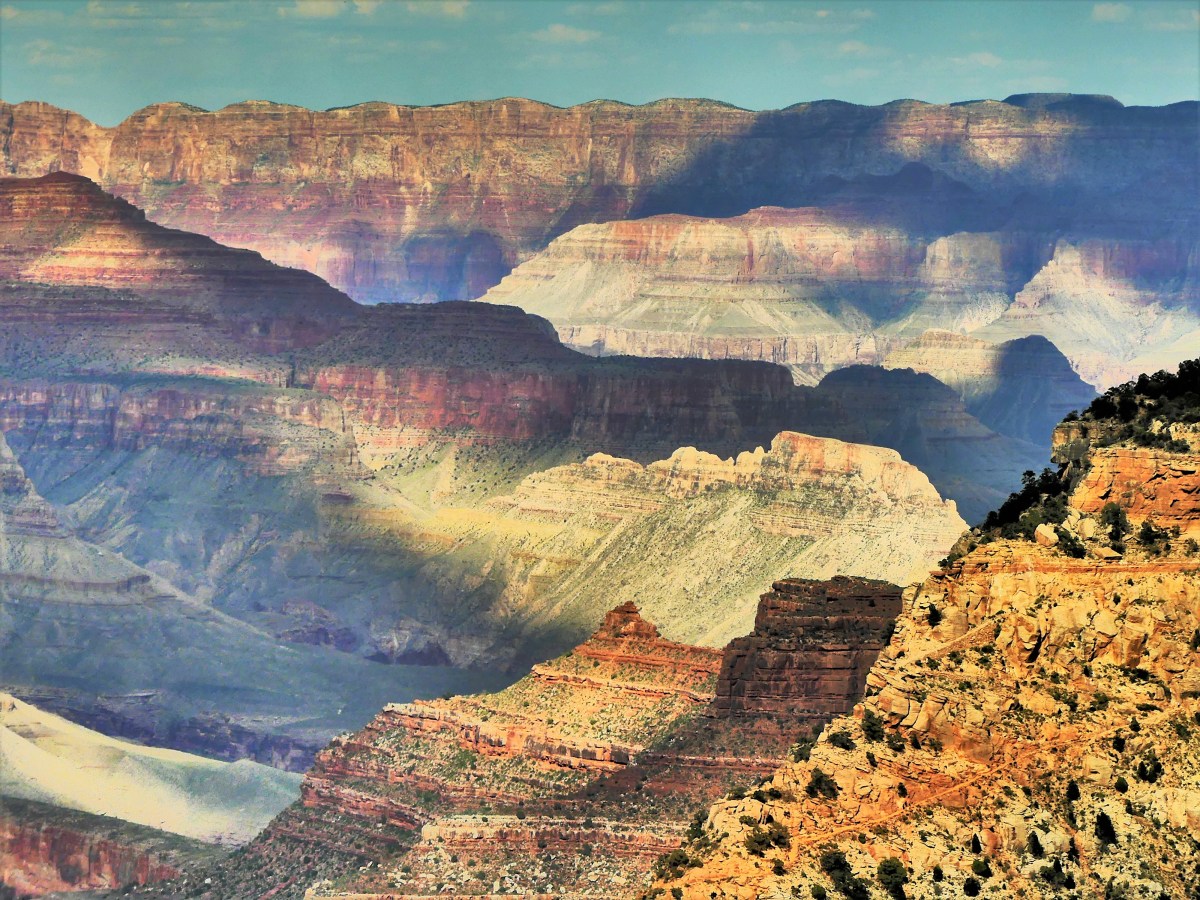
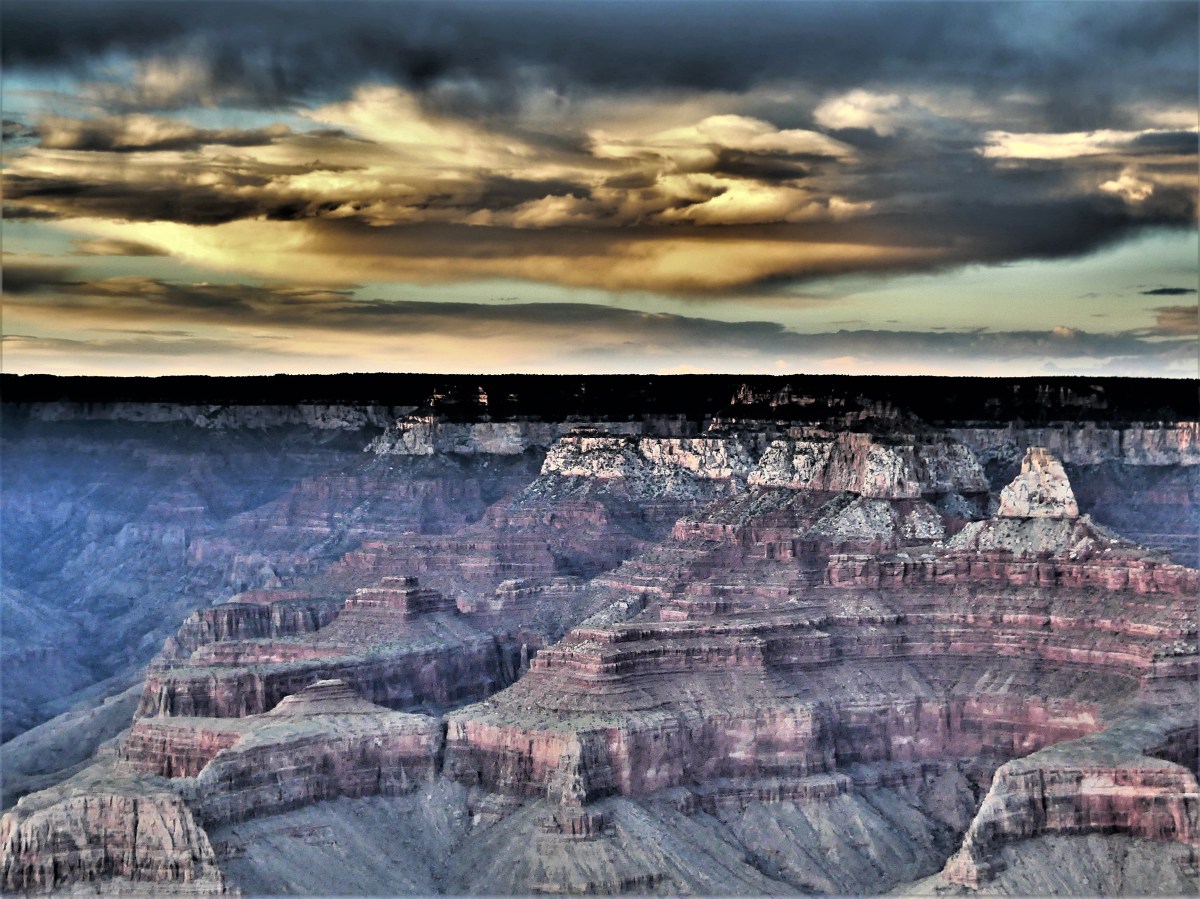
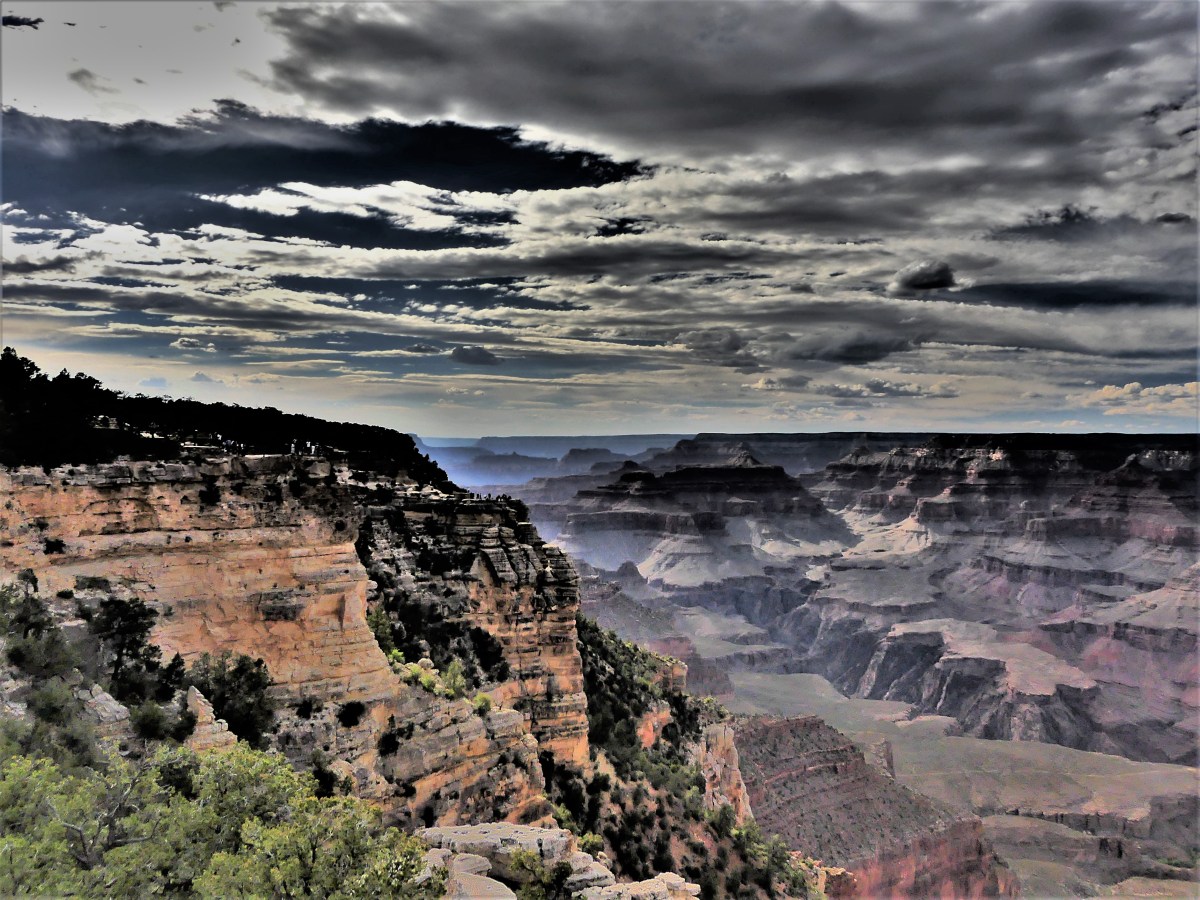
Six million visitors a year gravitate to Grand Canyon National Park, hoping for a visceral connection with one of the Seven Natural Wonders of the World. They come to contemplate the Canyon’s enormity and marvel at nature’s possibilities. They come to walk the rim; hike the trails; or ride a mule/bike/train. Others may be inclined to climb the observation tower; watch a tribal ceremony; or dine at El Tovar. But no matter what the activity, It seems that EVERYBODY has arrived with a camera to document every moment of their Canyon experience as if it was a sacred rite.

Long lens, zoom lens, tripod, mono-pod, selfie-stick, large format, DSLR, compact, bridge, Polaroid, point-and-shoot, GoPro, iPads and iPhones–irrespective of the expense or complexity of the equipment–somebody is taking a picture of something or someone, almost always.

While not the world’s grandest canyon by size (Kali Gandaki Gorge in Nepal is nearly four times deeper, and Capertee Valley in Australia is longer and wider), The Grand Canyon more than makes up the difference in its spectacular and overwhelming beauty–so much so, that on average, 12 people will lose their life every year while posing or composing a photograph.

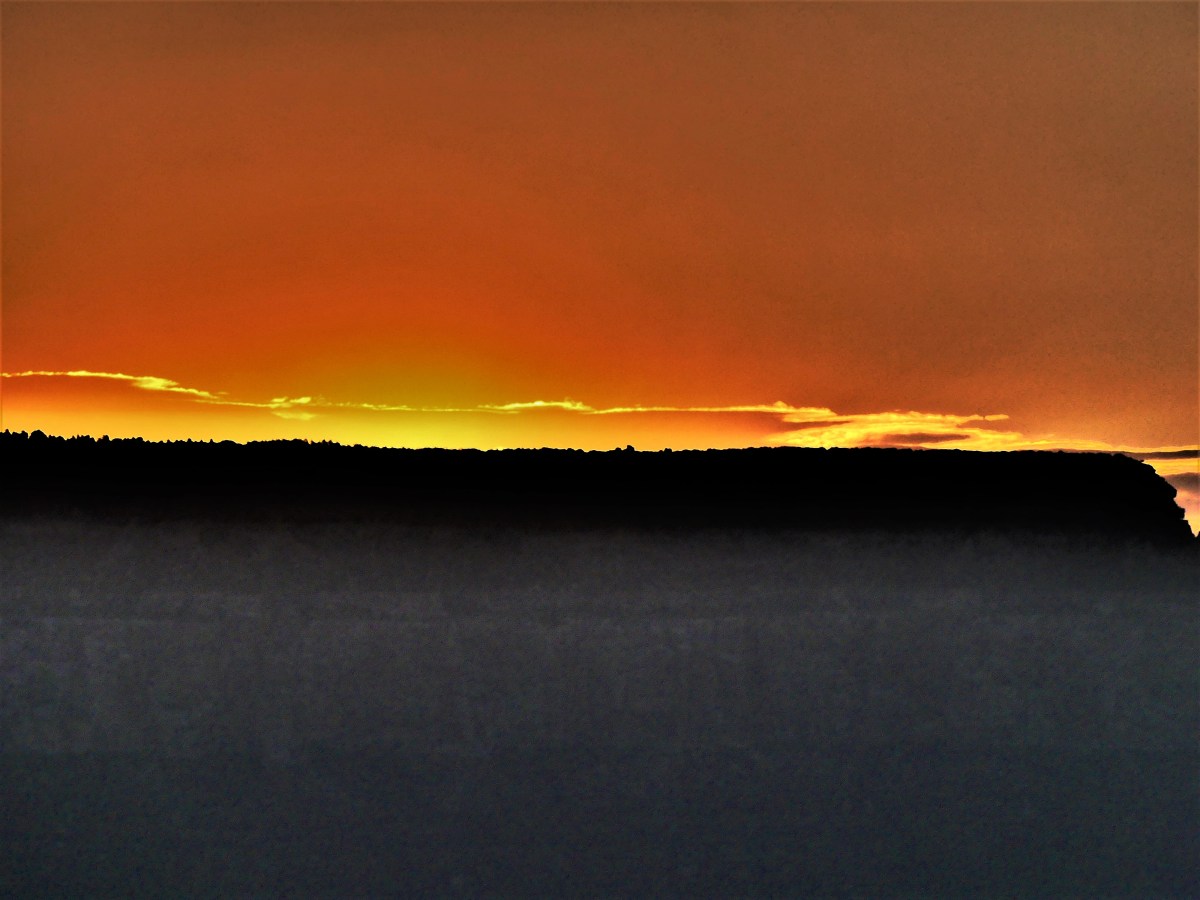
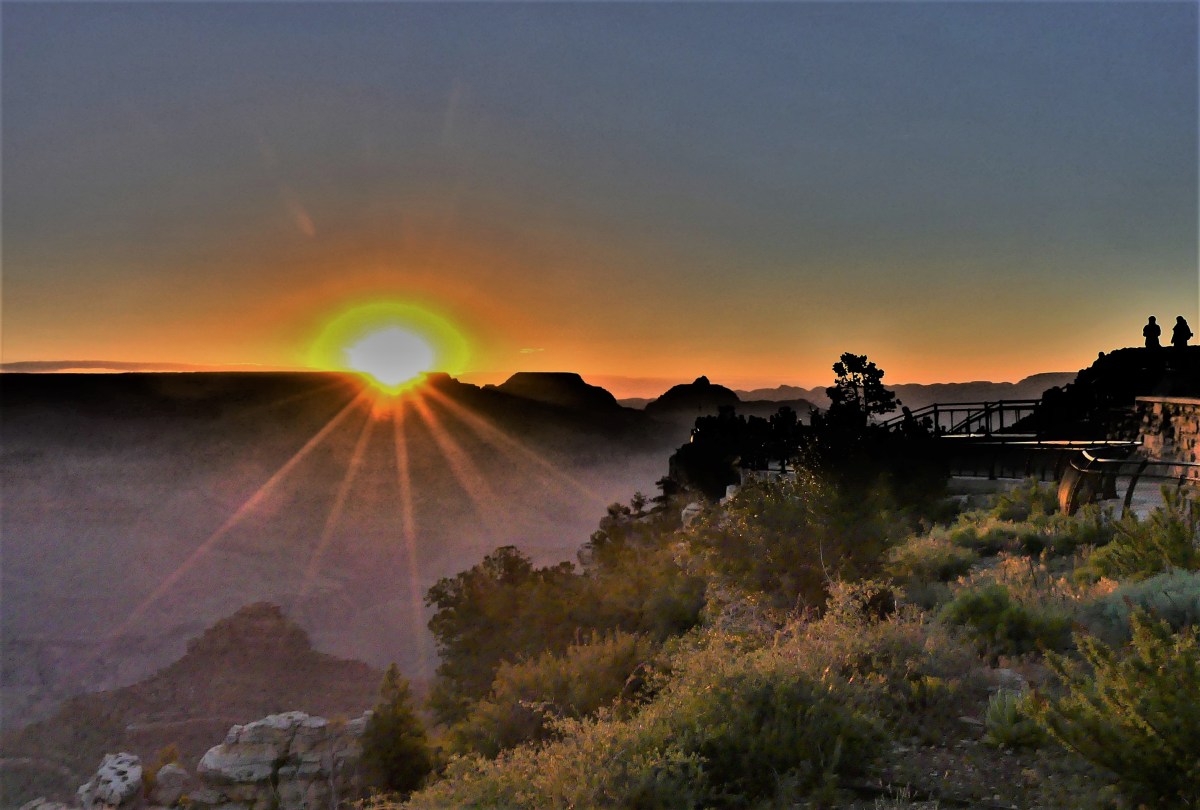
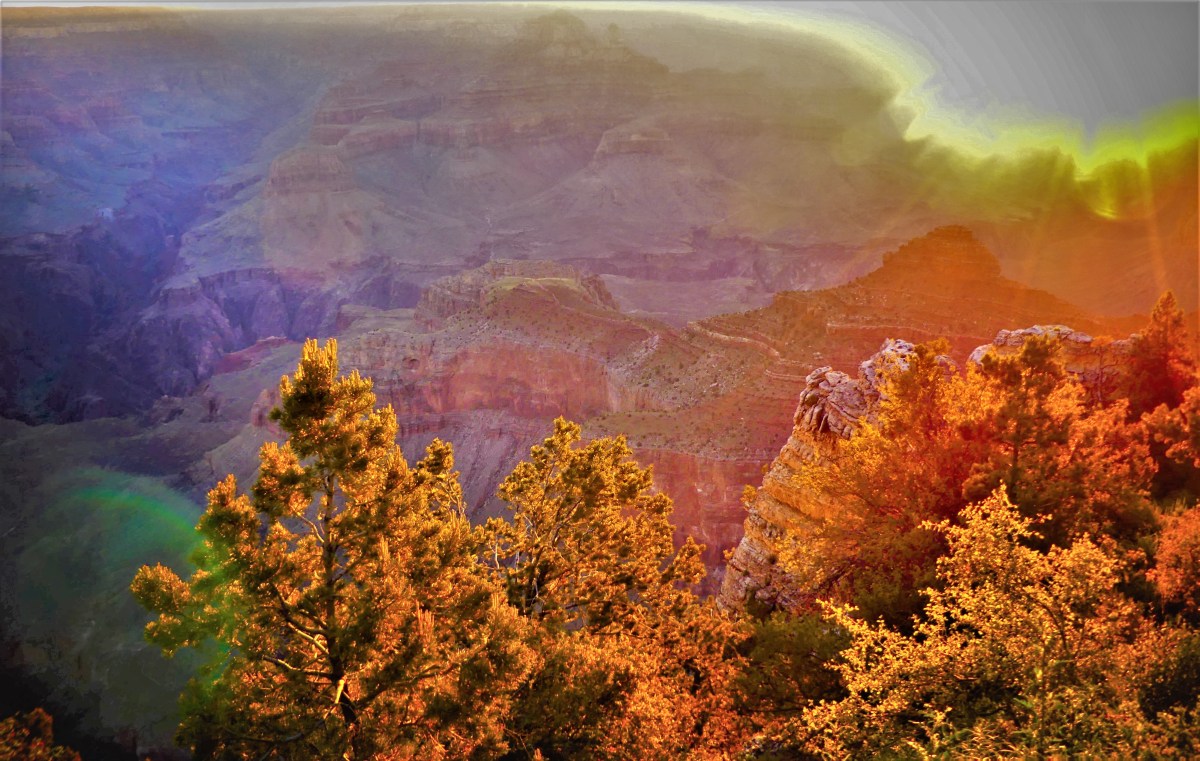
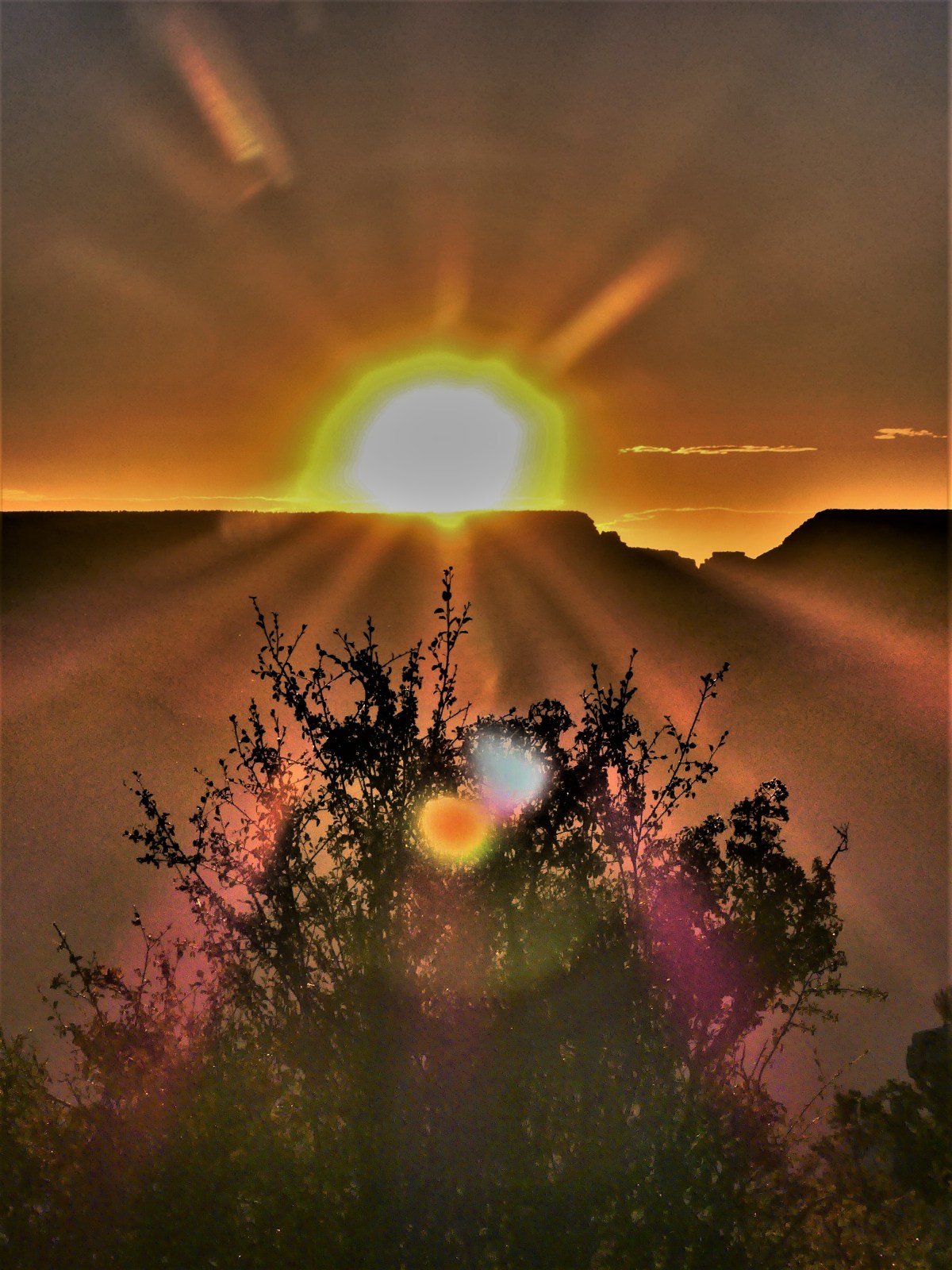
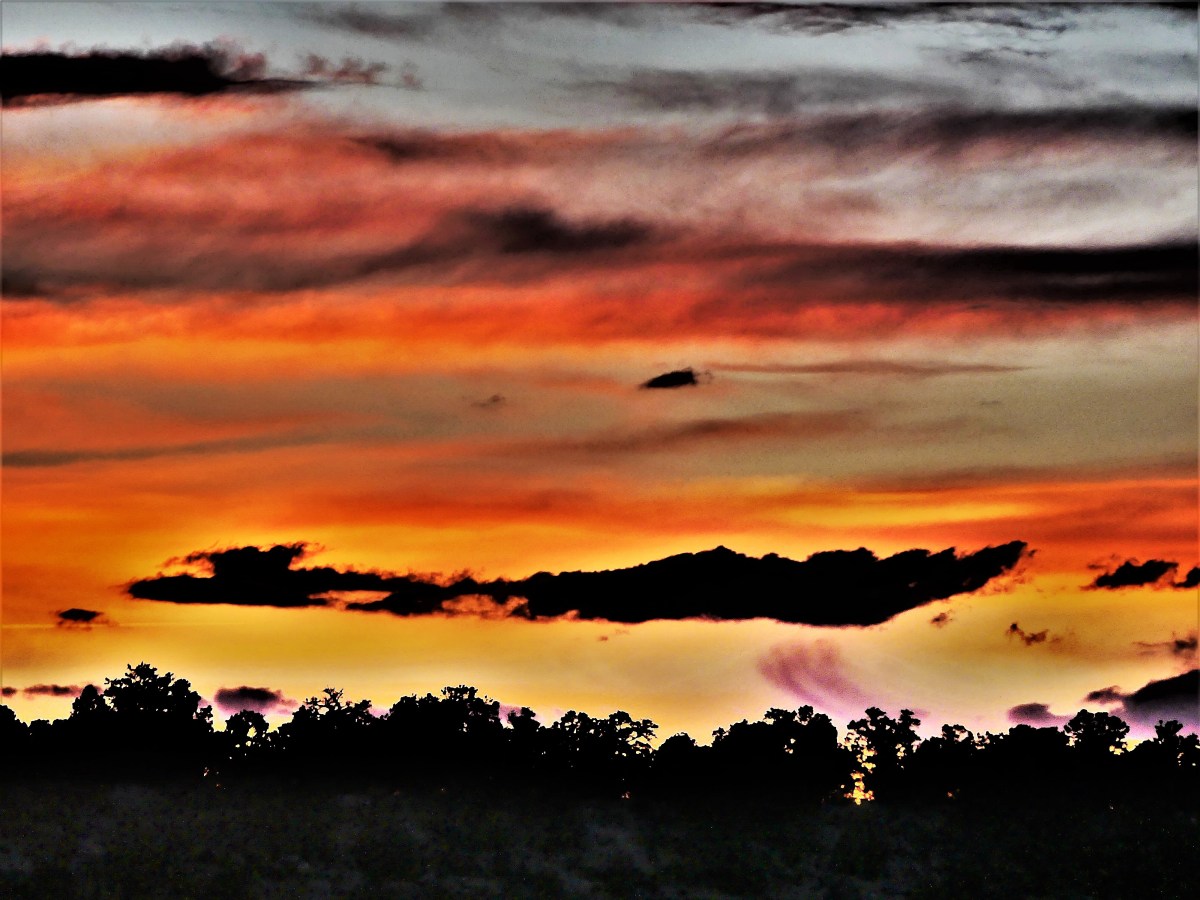
While the scenery is certainly breathtaking, I am more than satisfied to experience the canyon from a less risky perch, and push the photographic envelope in ways that are more within my control–like, capturing a sunrise/sunset sandwich–where different day-parts are recorded–from dawn (at approximately 5:15 am) to dusk (at approximately 7:45 pm).

almost sunup (3)
5:15 am
half sun up (2)
5:20 am
sunrise (2)
5:22 am
Grand Canyon sunrise (2)
5:23 am
sunrise1 (3)
5:24 am
sunglow (3)
5:25 am
sun over tree (2)
5:27 am
8am
8:00 am Colorado River
9am (2)
9:00 am
cliff shoes (2)
10:00 am
CU Colorado River (2)
11:00 am
rope clouds
Noon
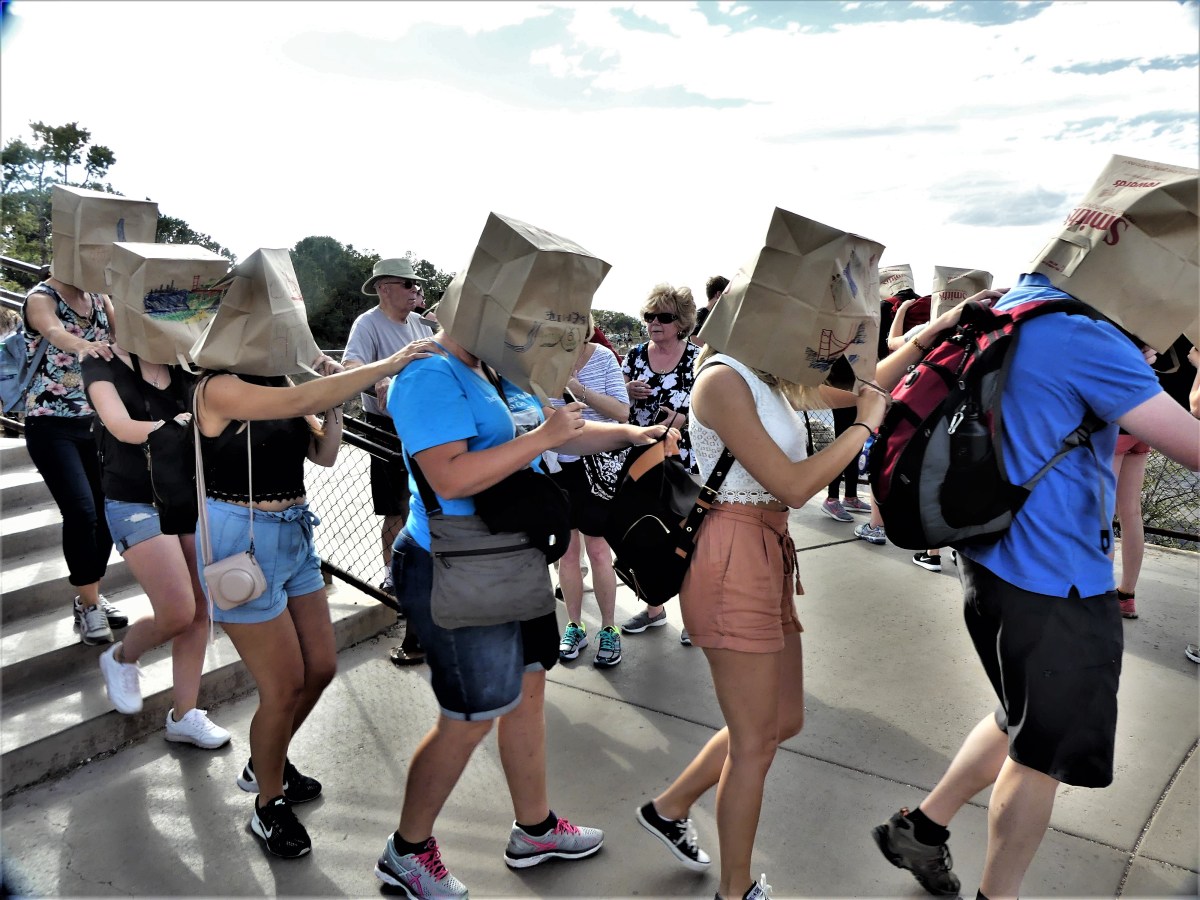
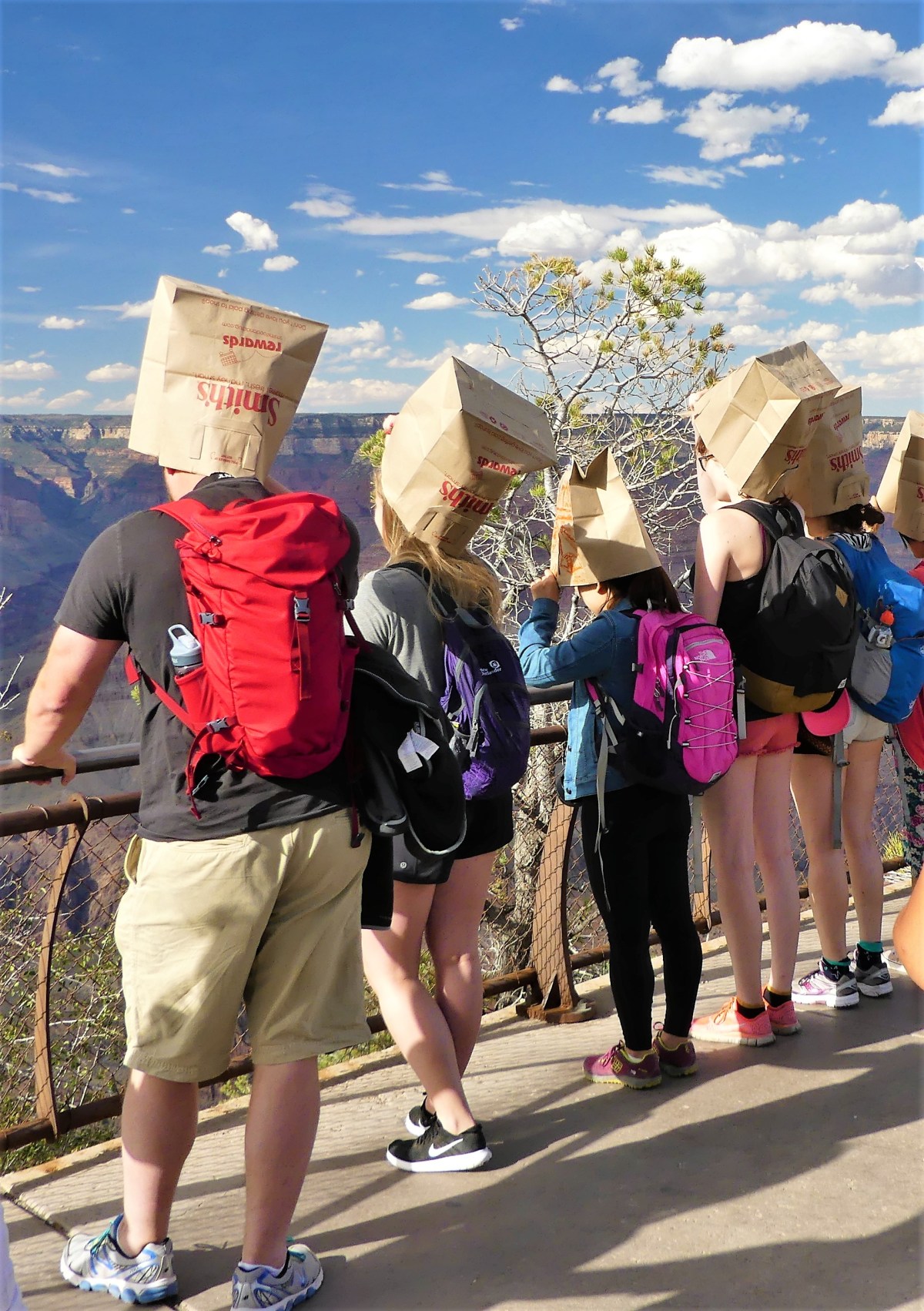
bag people (2)
1st time seeing the Grand Canyon
bag ready
Waiting for the countdown
bag revealed
The big reveal at 2:00 pm
5pm (2)
5:00 pm
CU Mathers Point (2)
7:00 pm
stormy sunset (2)
7:10 pm
sunset (2)
7:20 pm
Mather Westbound (2)
7:25 pm
rainbow cloud (2)
7:30 pm
fire clouds (2)
7:35 pm
aurora cloud (2)
7:40 pm (fire-haired face mid-frame)
sunset cloud (2)
7:45 pm

and day is done…

The Aftermath, or If I Could Be Anywhere Else Right Now

It’s been 48 hours since arriving home after one year of steadily moving about the country. However, now that I’m physically situated in one place, it seems my mind continues to wander, yearning for places I’ve been or yet to experience. I fear I’m going through wanderlust withdrawal.

The feeling is eerily reminiscent of adjusting to the constant sway aboard a boat–to where I’ve finally gotten my sea legs–yet after docking, the motion of the ocean has robbed me of my equilibrium. Nothing seems normal to me. I still feel adrift, like a bobbing buoy.

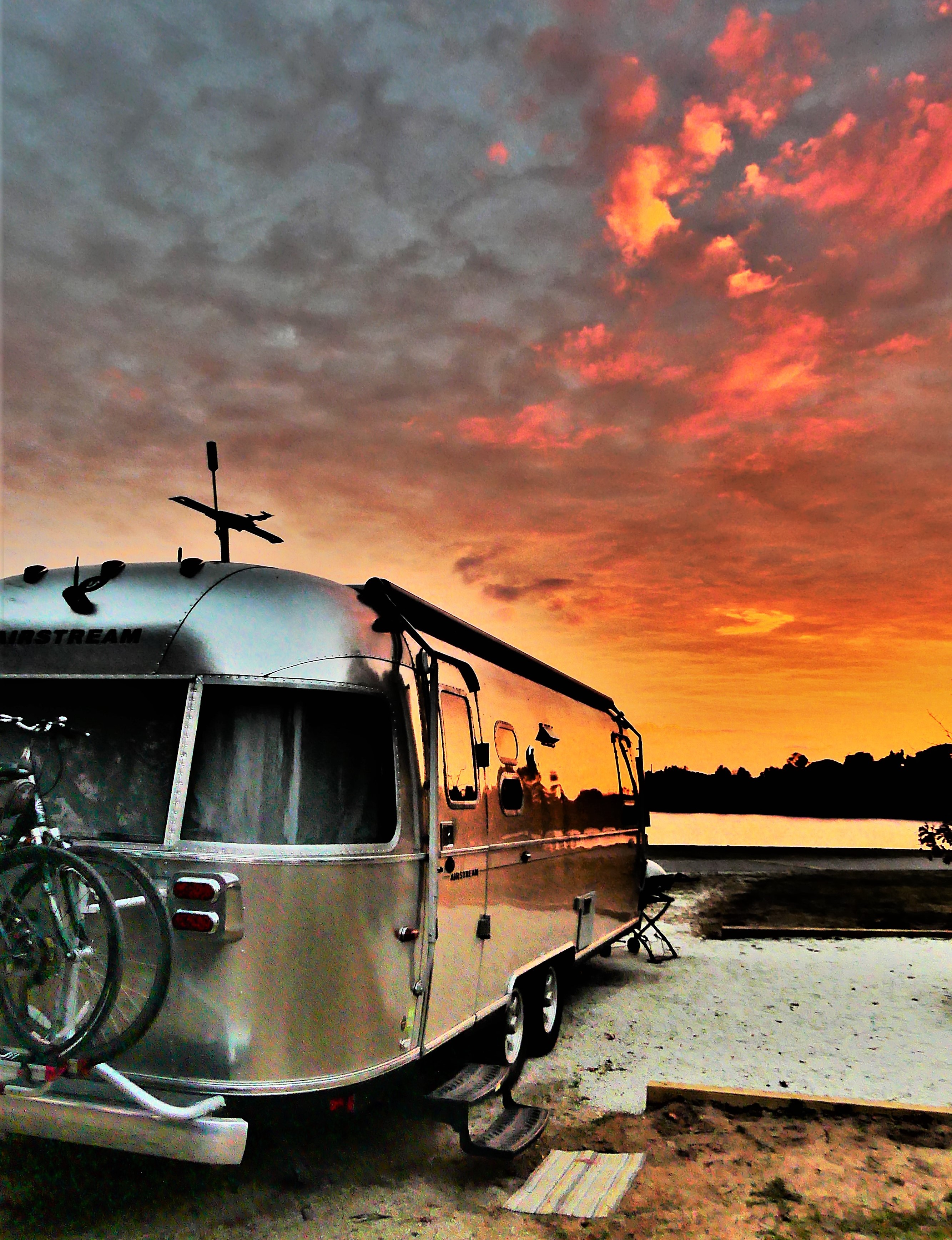
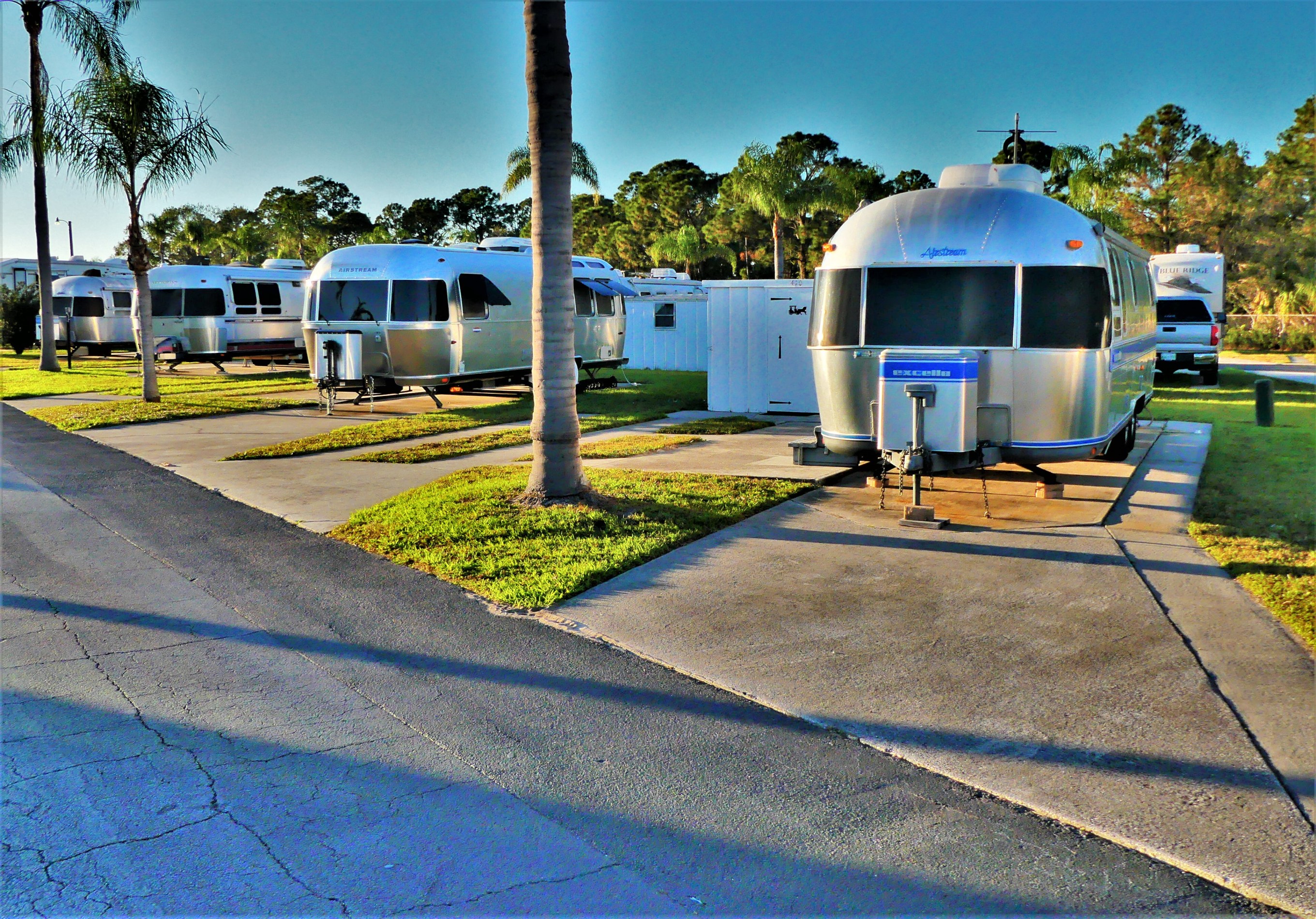
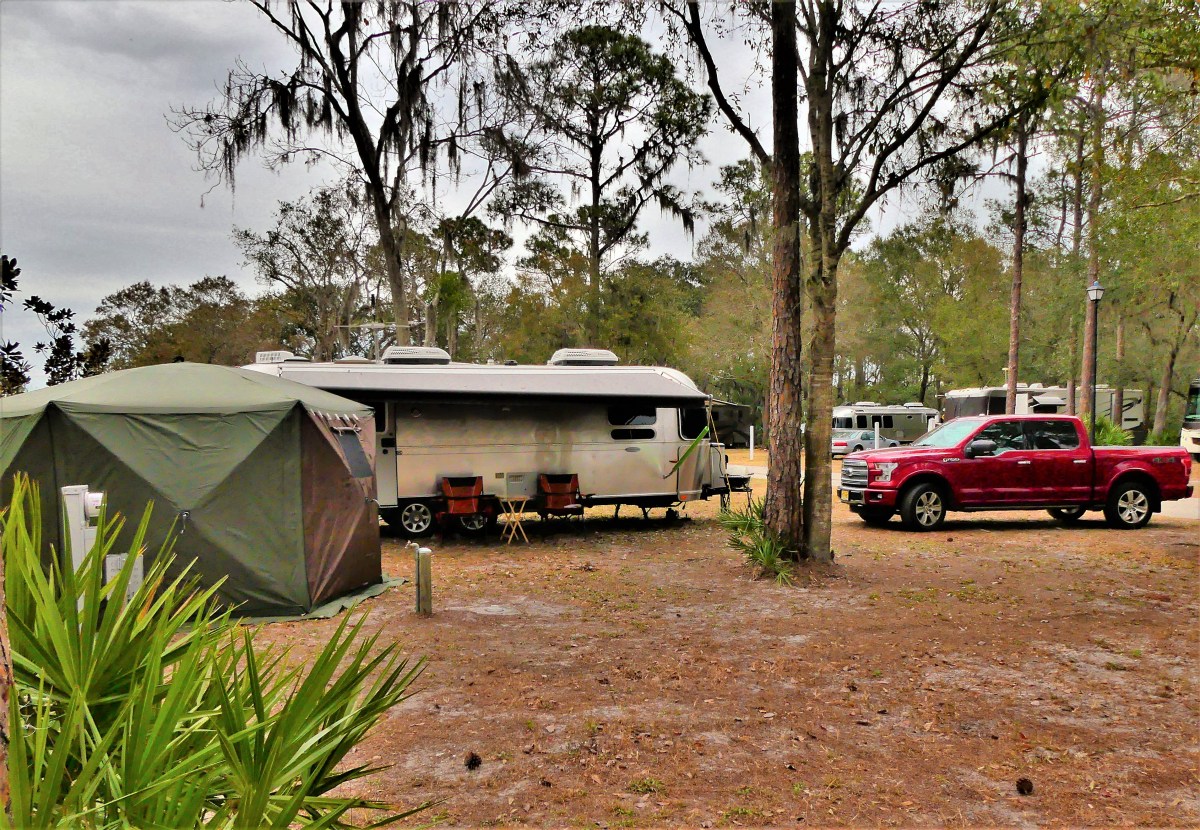
Perhaps it’s some sort of jet lag (without the jet), or some kind of Post-Travel Stress Disorder, where my internal GPS continues to send rerouting instructions with every step taken, redirecting my brain and body back to the Airstream presently parked in Lakewood.

Acclimating to everyday life has been challenging, as I’ve yet to re-establish my new old routine, or shake off unsettling circadian rhythms of disorientation. Already, I’ve forgotten which cabinet holds the coffee mugs, or where to find the bottle opener, or what it was like to sleep on a king-sized mattress. Even after unpacking, I’m likely to open the wrong dresser drawer to find my socks.

Of course, it’s only been two days since landing, so I’m certain the confusion will abate and I will eventually adjust to a different way to fill my day without hesitation. But in the meantime, I will travel to my favorite places through my photographs, and dream about the possibilities.

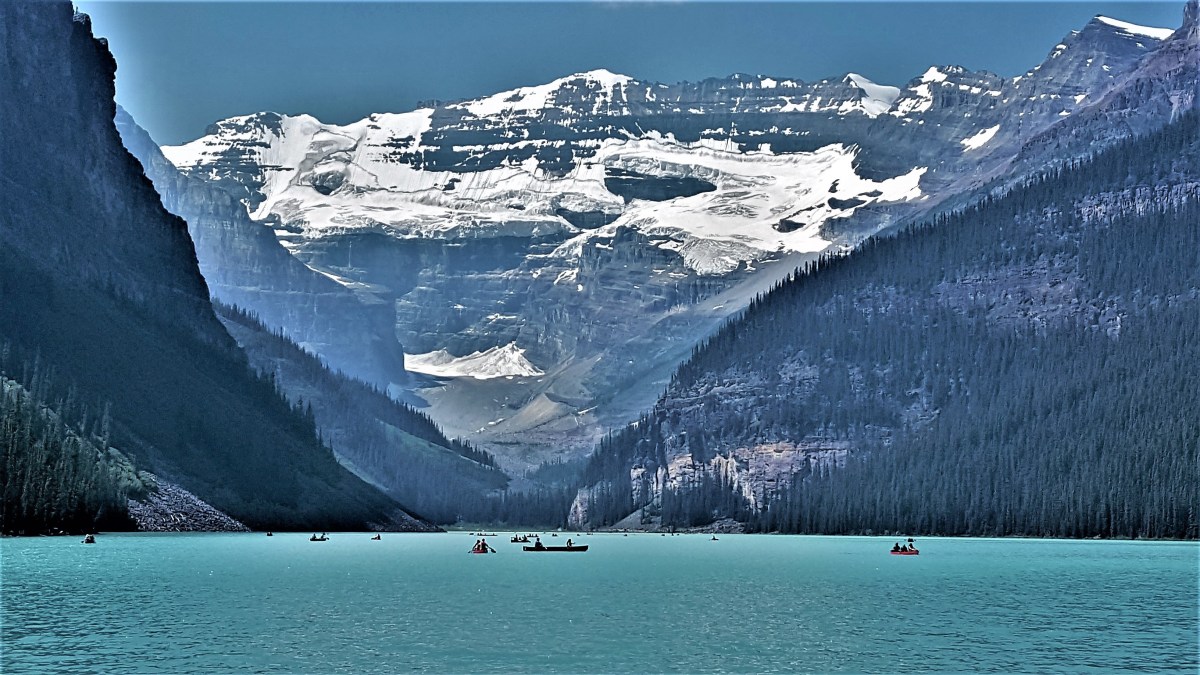
One special destination–among more than a hundred visited in the past year–that still resonates to my core is reliving the beauty of Banff.

Mount Victoria (2)
Mt. Victoria watching over Lake Louise

Epilogue

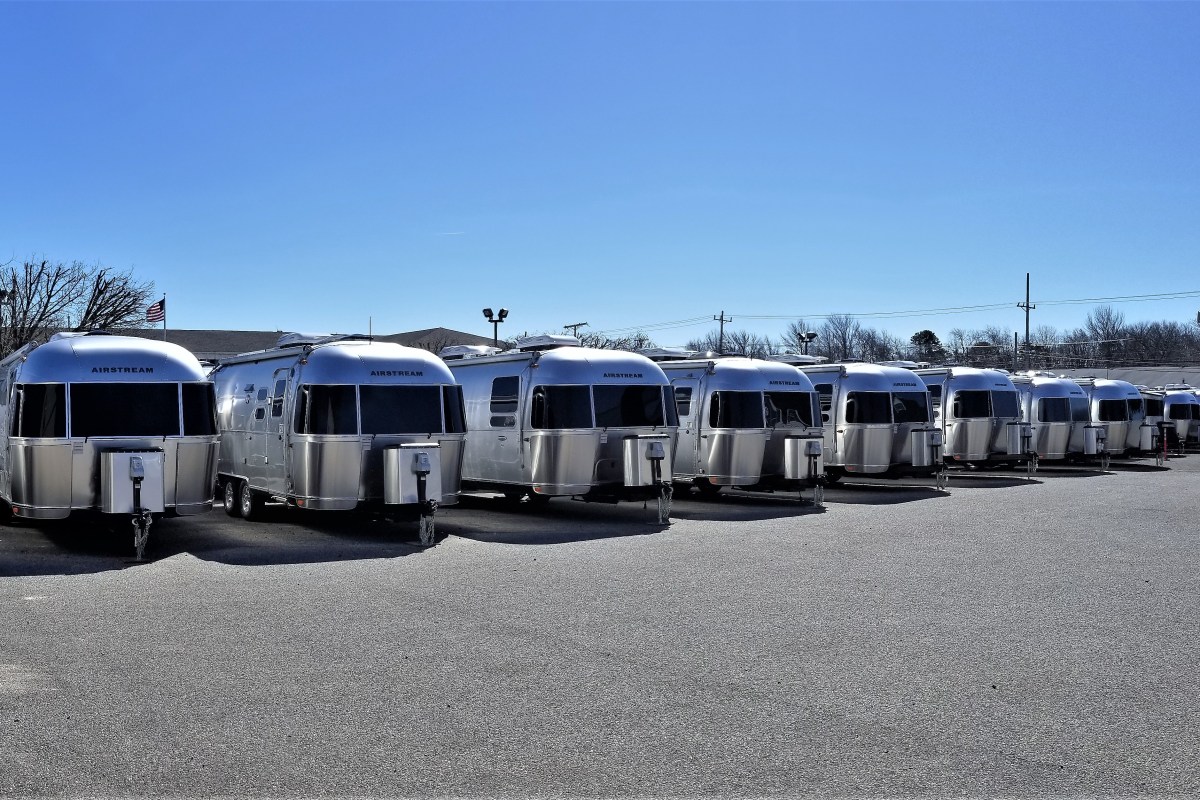
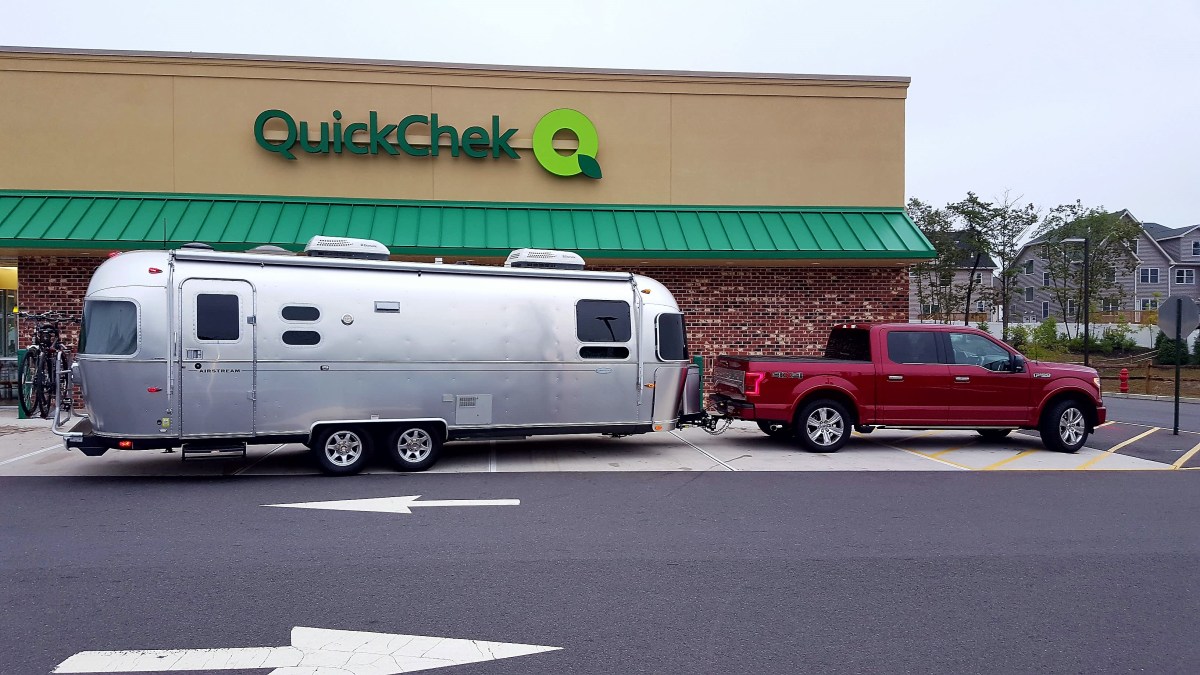
We pulled the Airstream onto Colonial Airstream’s parking lot in Lakewood NJ, on St. Patrick’s Day, ostensibly marking our one-year anniversary Streaming thru America, and my one-year anniversary of blogging with WordPress under the same moniker.

Colonial Airstream

This has been a journey of a lifetime after a lifetime of journeys. It seems that everything I’ve done up until last year’s departure has prepared me for this adventure: as a NYC taxi driver, I honed my driving skills; as a restaurateur, I learned to cook using simple ingredients to create meals with complex flavors; as a camper, I grew up with an appreciation of nature and an affinity for adventure; as a producer, I perfected a perspective for planning and budgeting; as a carpenter, I mastered my mechanical skills; and as a special educator, I learned how to gain acceptance with the many special people we’ve met along the way.

This has also been a trip of numbers. As road warriors, Leah and I have traveled to 127 destinations: covering a total of 44,600 miles (5,500 flying miles) to thirty-six U.S. States; one Mexican State (Quintana Roo); and four Canadian Provinces (Manitoba, Saskatchewan, Alberta, and British Columbia).

Cost-wise, Leah acted as bursar for the trip, and took responsibility for all data entry into a categorized spreadsheet. Using round numbers, our largest expense was campground fees at nearly $13,000. We stayed at a smattering of National Parks (only because gaining online reservations are fiercely contested up to a year in advance), a few State Parks, a handful of Provincial Parks, some County and City Parks, predominantly private RV parks (many Good Sam and KOA affiliates), and an occasional Walmart parking lot when we were transitioning between longer distances. As a rule, we rarely travelled further than a tankful of gas, or the rough equivalent of 400 miles.

Entertainment was our second leading expense at approximately $10,000, which covered films, concerts, shows, tours, park fees, and ample opportunities for sampling the best food of the area, from fine dining to dive bars.

Next, we spent nearly $8,000 purchasing food and groceries–including paper products, personal hygiene, and liquor–with the lion’s share spent at Walmart and Costco.

And our last largest expense was for gasoline and liquid propane, which ran us close to $8000. We made 115 trips to the pump for 3300 gallons of gas, yielding an average of 11.8 miles per gallon from coast to coast to coast, while towing mileage topped out at 10.1 MPG.

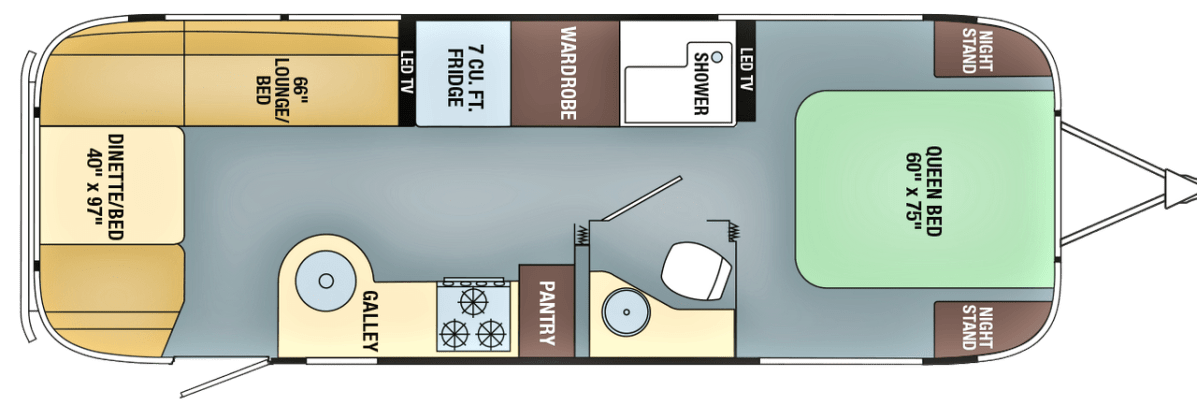
Living aboard the Airstream for a year was also an exercise in living with less. At 240 square feet from stem to stern…

2017-airstream-flying-cloud-27fb-2-e1521351550640.png

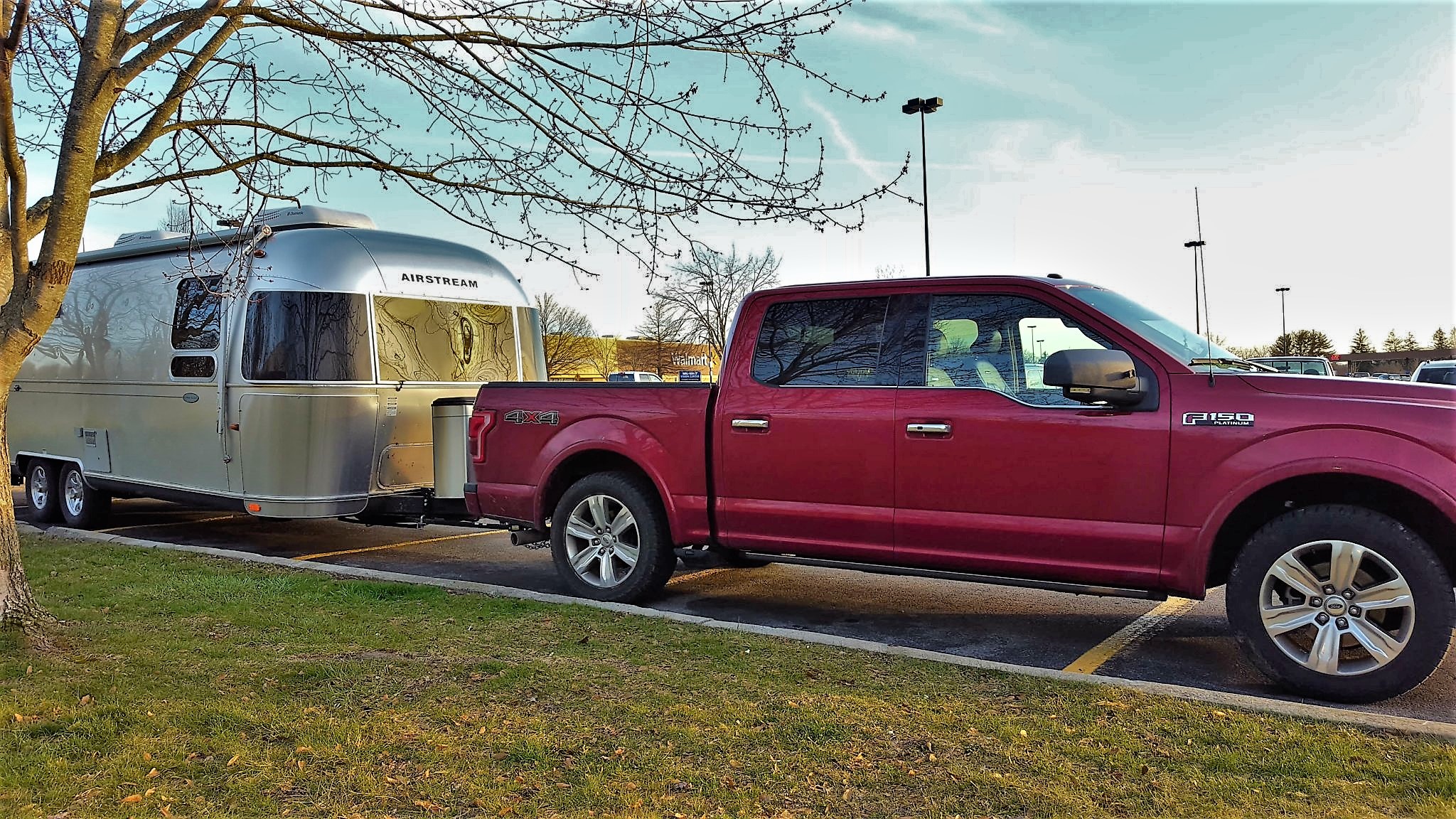
and cargo limited to a folded rear seat and 52.8 cu. ft. of storage behind the cab of our Ford F-150 pickup…

2017-ford-f-150-carry-on-seats-folded (4)

we learned to live efficiently, but never uncomfortably.

Leah and I scaled down to a small wardrobe of layering, using a combination of casual sportswear, appropriate outerwear and a wide variety of outdoor footwear to address most weather conditions.

The galley held two pots, two pans, two mix bowls, and Corel for four; a drawer of utensils and a drawer full of cooking and kitchen gadgets; a traditional assortment of spices and herbs; one presspot (mine), one two-cup percolator (Leah’s) and two coffee mugs; a tiny toaster, a hand mixer, a built-in microwave, a compact vacuum, and a VitaMix–my biggest indulgence for emergency frozen margaritas.

Electronics included: two mounted LED TVs, two tablets, one laptop, a color compact HP printer, a Kindle, a pair of UE Booms, Jaybird wireless earbuds, a Lumix DMZ-FZ300 for photography, and a tangle of cables and charging accessories.

The truck bed was home to a couple of stadium chairs, a CLAM screen enclosure, a 2000-Watt Honda generator, a hefty tool chest, and a portable Weber grill.

Our bicycles clung to the backside of the Airstream, tied to a Fiamma rack.

bikes.jpg

Getting along for 365 days was our biggest experiment, and a wild card for this trip’s success. While there was no denying our compatibility, we would often joke if we would still be smiling and talking to each other by day 365.

Our roles were defined early on, seemingly divided along gender lines: I did the routing, navigation and driving, the setups and breakdowns at RV sites, and all the general maintenance; while Leah acted as cleaning commando (inside and out) and laundry lieutenant. Invariably, Leah prepared a simple breakfast and packed a light lunch, while I played chef de cuisine for dinner.

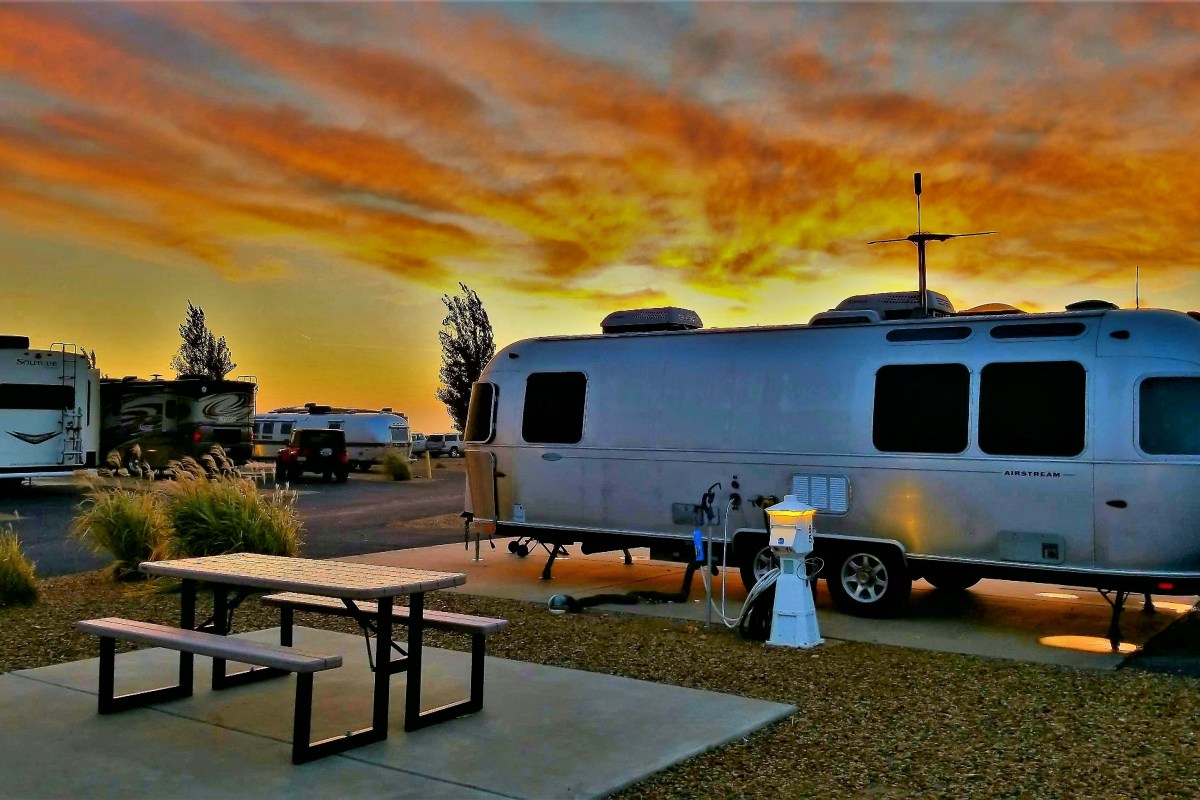
Although our living quarters were tight, our door usually opened onto something spectacular, from sunrises…

sunrise (2)

Grand Canyon sunrise (2)

to sunsets…

Mt. Pleasant, SC

sunset

sundown panorama (2)

so most of days were spent exploring the extraordinary.

We brought along a cribbage board and backgammon set, thinking that when our conversation ran dry, we could always resort to games, but when it was the two of us together lounging in our lair, we either stretched out along the dinette streaming Netflix when internet allowed, or sought alone time at opposite ends of the trailer, separated by a sliding screen or a swinging lavatory door.

Our queenish-sized platform bed was roomy and comfy. And the only times we slept apart was for five days when I was fighting the flu. Otherwise, our sleeping cycles alternated between retiring together, or more often than not, Leah retiring early while I night-owled to edit photography du jour, or posted to my blog.

Although this blog is by no means the end, it has been a means to an end. Streaming thru America has given me a springboard to dive into my desire to write consistently for a audience bigger than one, and a jump-start to reinvigorating my passion for photography. Combining my writing and photography in a travel blog has been reaffirming and therapeutic, and the motivation I needed to pump out 160 posts of 100,000 words and 2800 photos along the way.

What started as a forum for family and friends has grown organically to a following of 1900 plus fans through WordPress and social media, with viewers from 140 countries along for the ride. I am awed and humbled every day that people from all over world find value in my words and pictures. And I am determined to keep going.

Long before we started out, Leah had already decided on our exit strategy–that once we’d completed our trip, and our Airstream had served its purpose, we’d put it on the selling block. But I had a different vision–that this trip would lay the foundation for future trips around the continent. While it would never be as epic as this particular journey, I could nonetheless foresee regional trips to faraway fields and streams for a month or two or three.

However, after shoving off and putting hundreds of miles behind us, the new and scary gave way to familiar and fearless, and Leah was hooked.

As it happens, there were so many destinations that we short-changed in favor of keeping the whirlwind spinning (see An Olympian Apology), not to mention sections of the country that we bypassed all together, that today we feel compelled to prepare preliminary plans to patch the holes in our past itinerary.

For now, the Airstream sits in the dealer’s lot awaiting its spring maintenance, although the fourth nor’easter forecasted to hit this area in as many weeks makes us yearn for the Texas heat spell we endured last April (see “We’re on the Road to Nowhere”).

When we return to Towaco, we’ll have a house to sell and a household to pack away for our anticipated move to St. Augustine (see Finally!). Then, in a few months, we’ll recapture the glory of living as seasoned road warriors, as we savor the feeling of hauling our reconditioned Airstream through the Shenandoah Valley and over the Blue Ridge Mountains to a long-term storage solution in Charlotte NC.

And before too long, it will be time to hitch up the Airstream like old times, and follow the road on a new course and a new adventure.

Until next time,

streaming thru america

Happy Trails!

Duty, Honor, Country

It’s a solemn ceremony choreographed with the precision of an atomic clock, executed by a regiment of warm-blooded machines, and directed with the authority of a no-nonsense commander who only knows perfection. It’s a six-minute pas de trois that happens every hour on the hour during fall, winter, and night, and every half-hour during spring and summer–regardless of the weather or challenging conditions. And it’s a sacrament that’s never stopped since 1937.

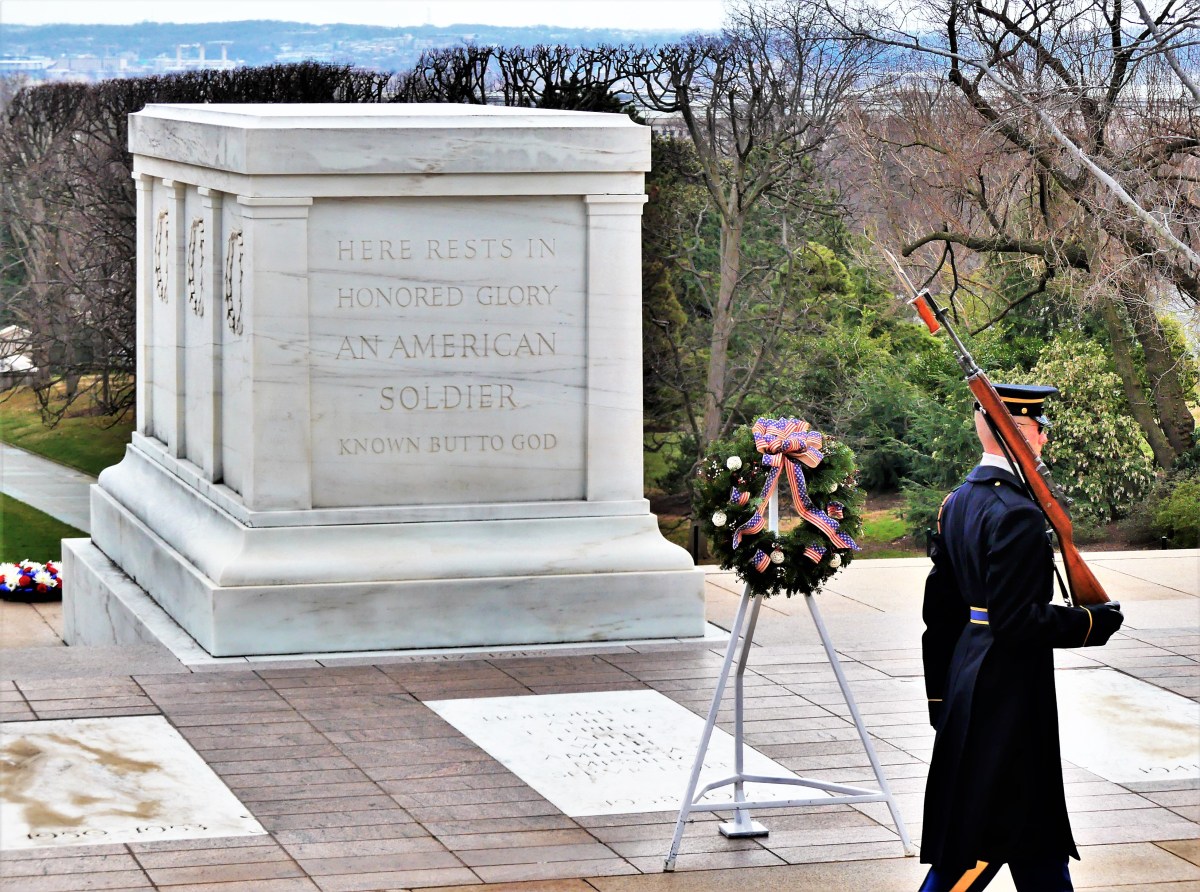
The changing of the guard in front of the Tomb of the Unknown Soldier at Arlington National Cemetery is carried out with the pomp and circumstance of a Shakespearean ceremony, yet with the reverence of a canonization.

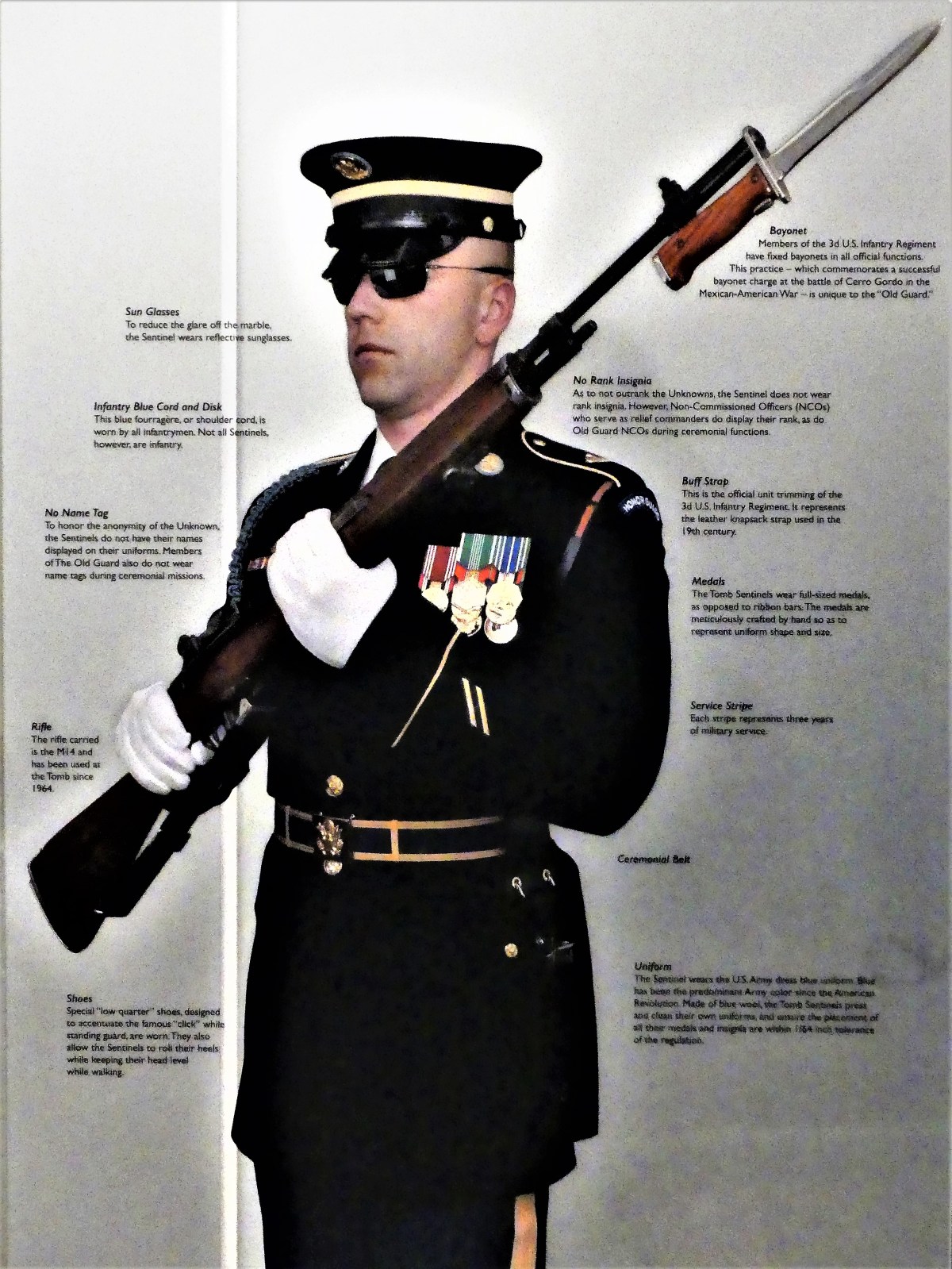
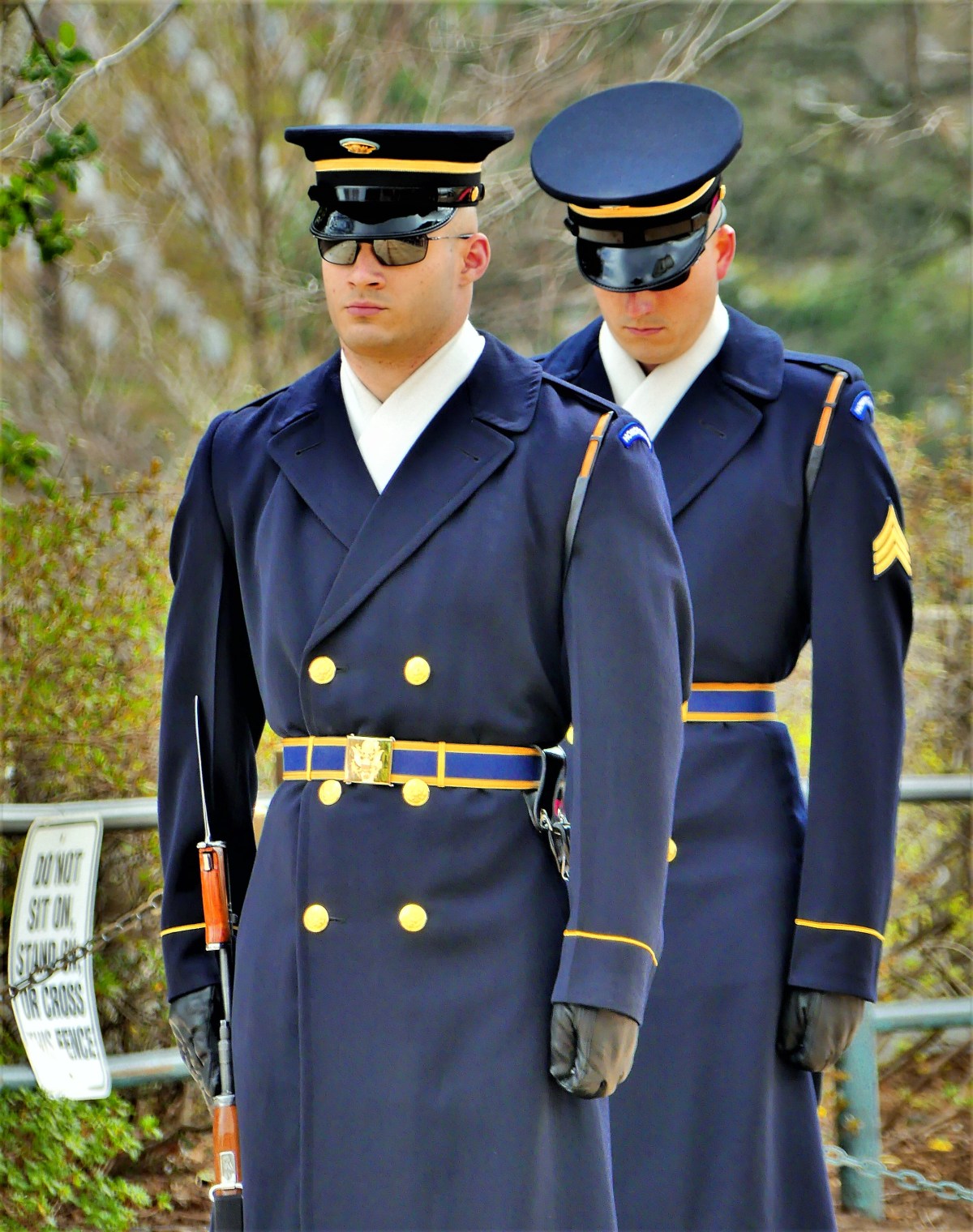
The rigorous training and commitment of the corps serving the monument is legendary. They are the best of an elite color guard from the 3rd Infantry Regiment, also known as The Old Guard, the nation’s oldest fighting force, serving since 1764.

The highly-selective unit is composed of impeccably dressed volunteers of similar stature, in peak physical condition, and with unblemished military records.

Sentinel (2)

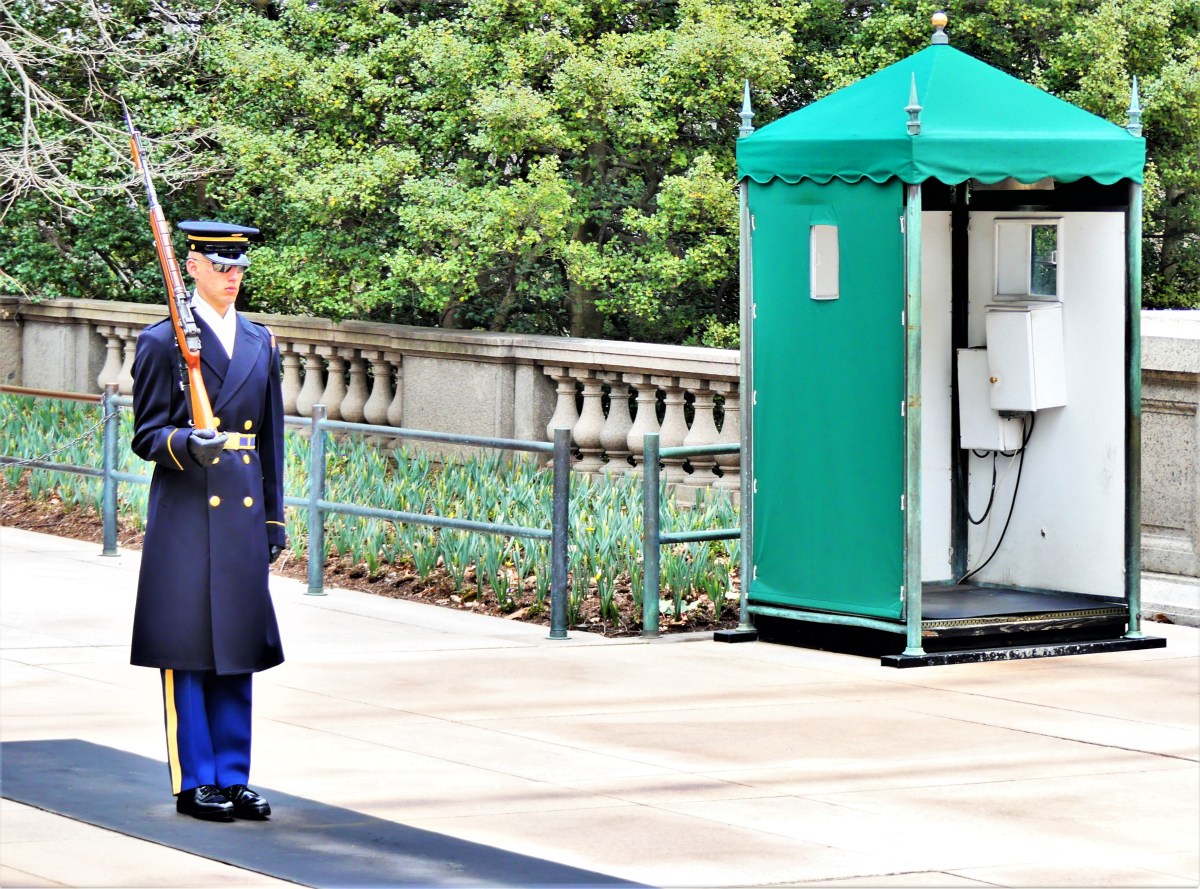
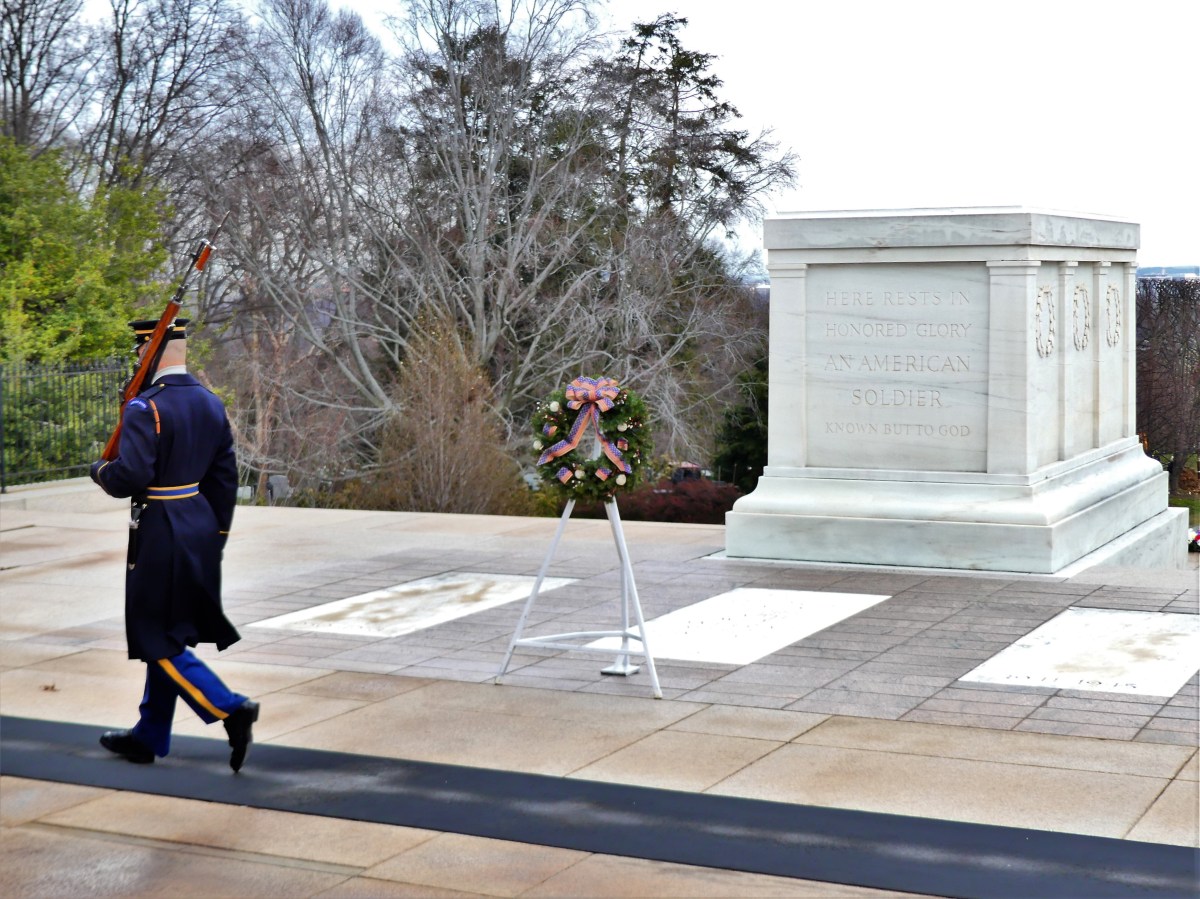
As if marching to a metronome that only he can hear, the sentinel paces to the south, rolling his feet effortlessly along a catwalk of worn rubber,

guarding the tomb

His gait and silent cadence is measured and precise…19…20…and 21 steps, a broad leg sweep, and CLACK, his heels lock with the force of two magnets attracted to each other. He quarter-turns sharply to the east, and whip-snap, CLACK, his heels lock again.

facing east

One Mississippi, two Mississippi…until he reaches 21, and his feet quarter-turn north, and CLACK, his shoes revealing the effort from hours of spit-polishing only achieved through tubs of Kiwi and micro-sanding.

Spit and Polish

He executes a sharp shoulder-arms, repositioning his sparkling M-14 from his right shoulder to his left, as if popping with his prop–his weapon always closest to the visitors to signify that the sentinel always stands between the Tomb and any possible threat.

After another 21 seconds of silence, the sentinel returns 21 steps north…

marching north (3)

and CLACK, quarter-turn, CLACK, quarter-turn, CLACK. Shoulder-arms, one Mississippi, two Mississippi…always counting, always focused, no matter the distraction.

The significance of number 21 corresponds to a 21-gun salute, the highest military honor posthumously bestowed upon any service personnel.

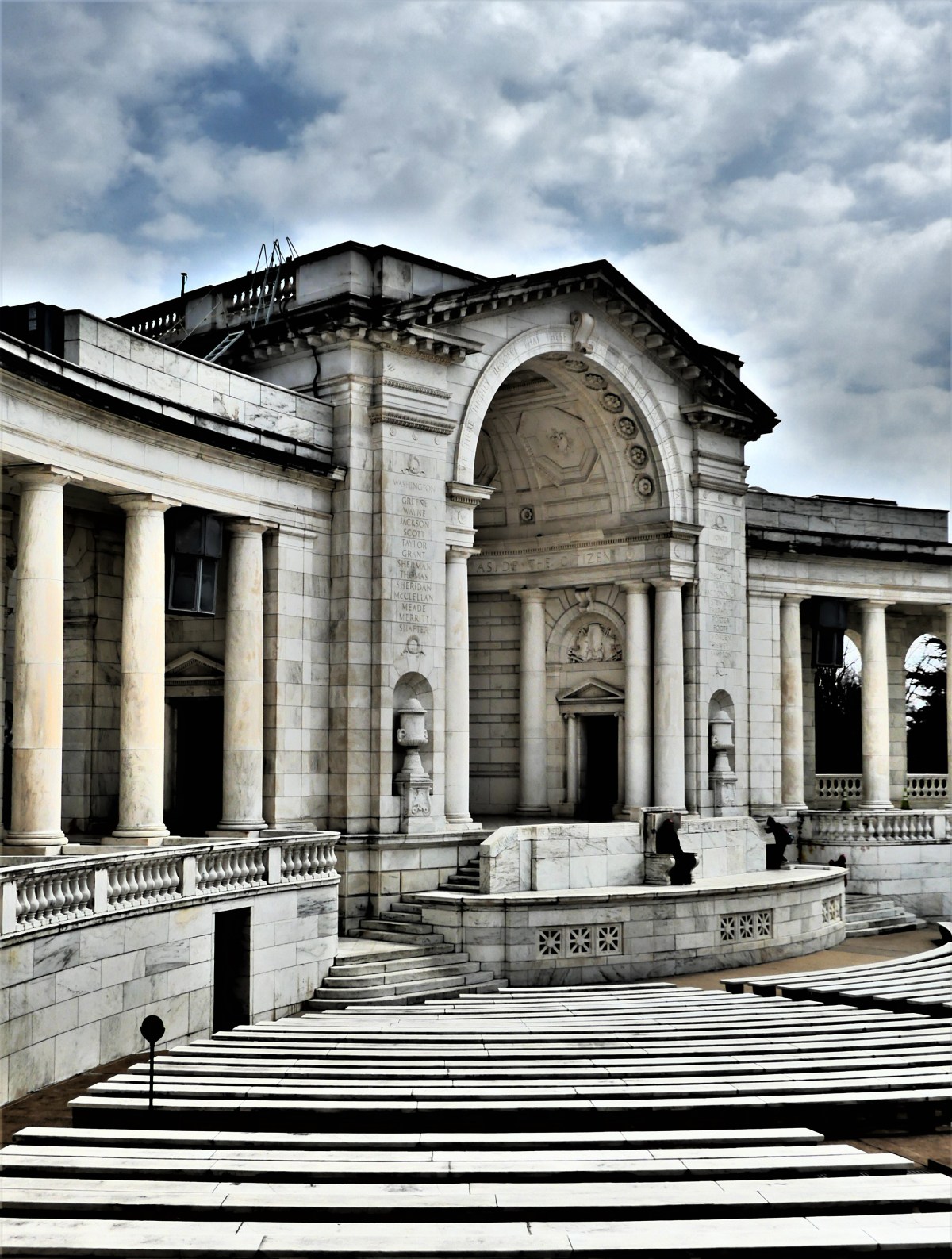
A crowd of spectators has lined the marble steps outside the Memorial Amphitheater in eager anticipation of the one-o’clock ritual.

Memorial Amphiteater

The hour tolls, and the sentinel on duty stands motionless, but at the ready.

sentinel awaiting replacement

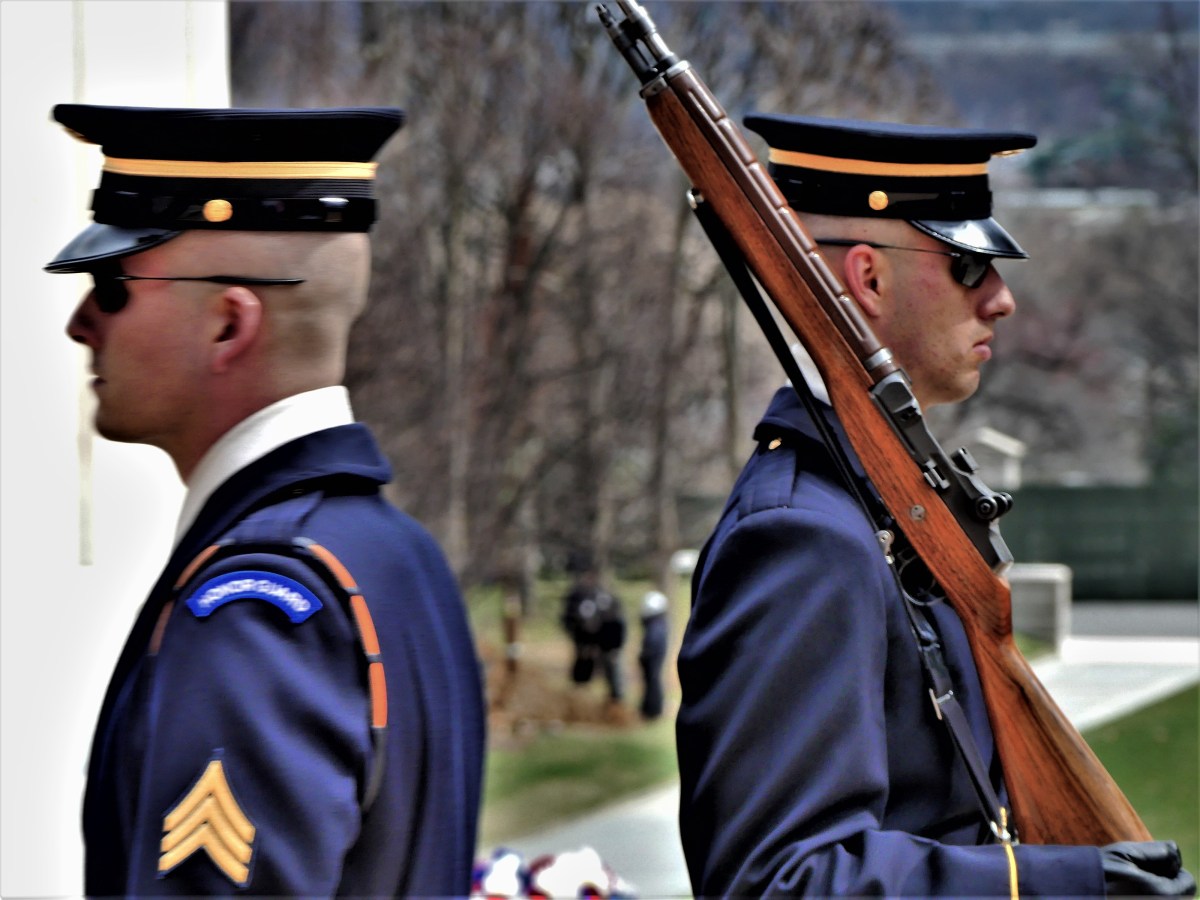
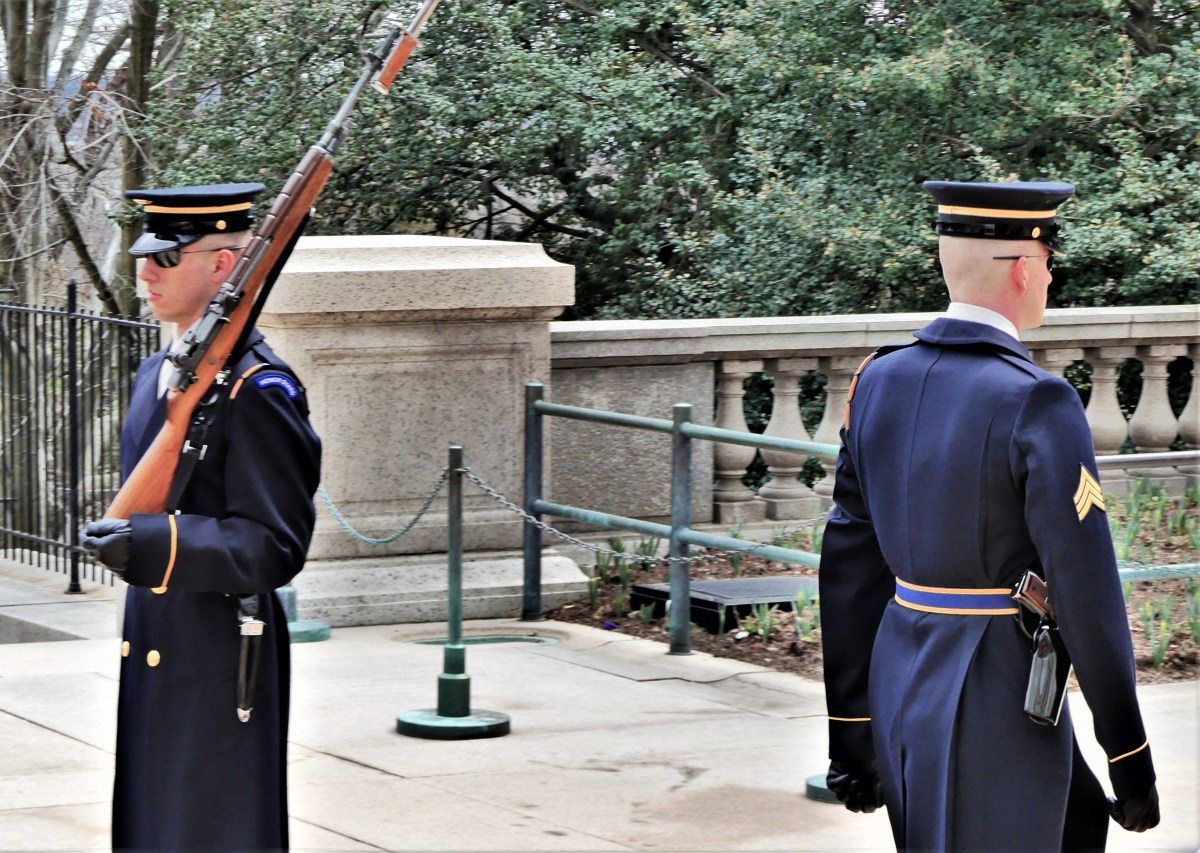
From the opposite end of the plaza, the regiment commander appears beside the runway, and CLACK. In this ritual variation, the count-up to 21 continues, and marching resumes until the two honor guards pass.

passing (2)

Upon the commander’s return, he pivots to face the crowd of visitors:

Commander announcement

Ladies and Gentlemen, may I have your attention, please. I am Sgt. Davenport of the 3rd Infantry Regiment, United States Army, Guard of Honor, Tomb of the Unknown Soldier. This ceremony which you are about to witness is The Changing of the Guard. In keeping with the dignity of this ceremony, it is requested of everyone to remain silent and standing. Thank you.

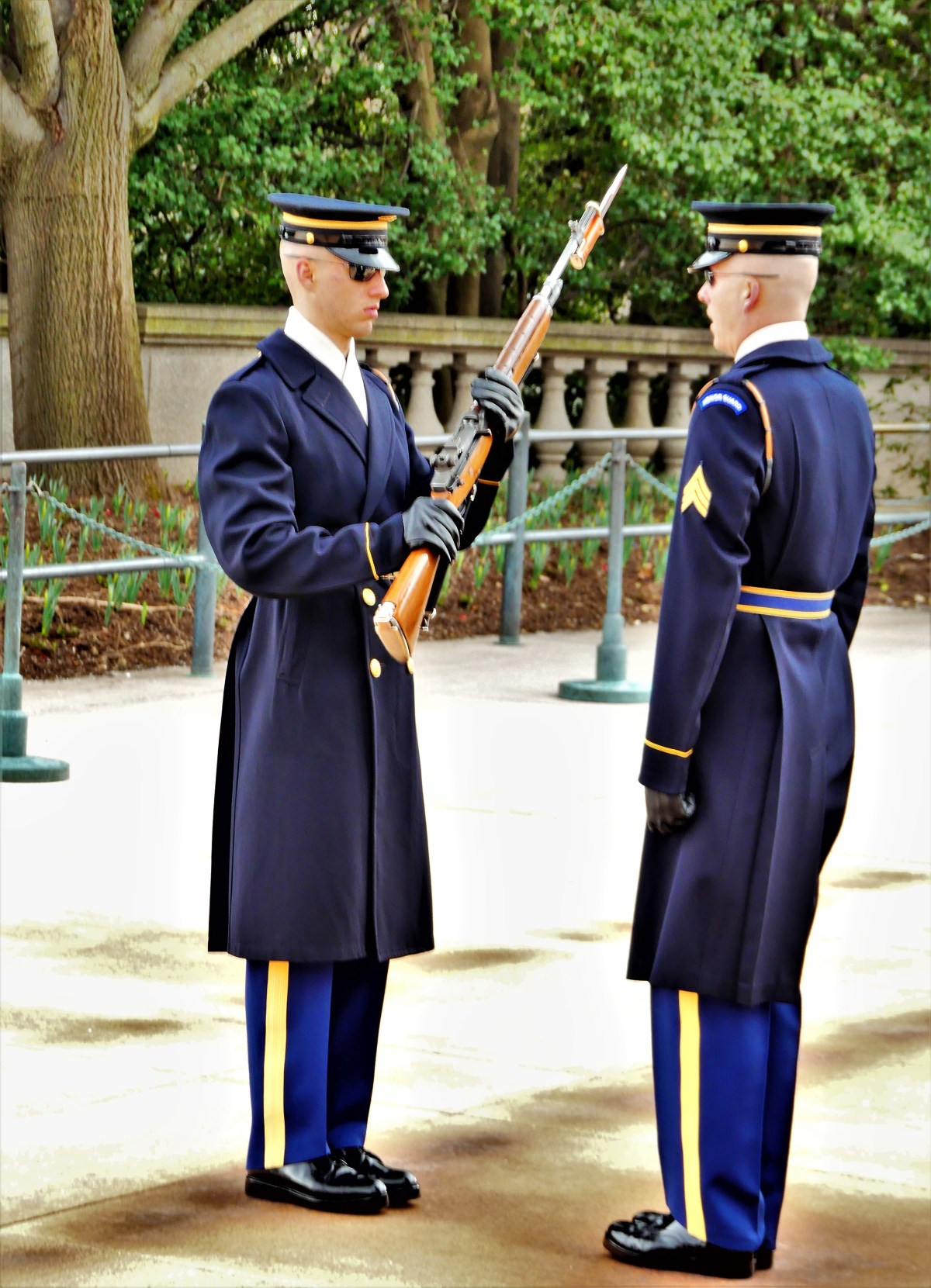
Meanwhile, on the south side of the plaza, the relief-sentinel stands at attention and awaits formal inspection from the commander–now marching past the on-duty sentinel.

2nd pass

After a graceful, yet deliberate weapons and uniform check from head to toe…

head down inspection

undertaken with the scrutiny of a dermatologist examining for basal cells…the relief-sentinel is deemed mission-ready.

They parade across the plaza in lock-step…

parading

where they take up new positions in front of the shrine…

the ordered exchange

commander salutes

When the on-duty sentinel is officially relieved…

dismissing

the new sentinel’s patrol resumes for the remaining hour.

new patrol

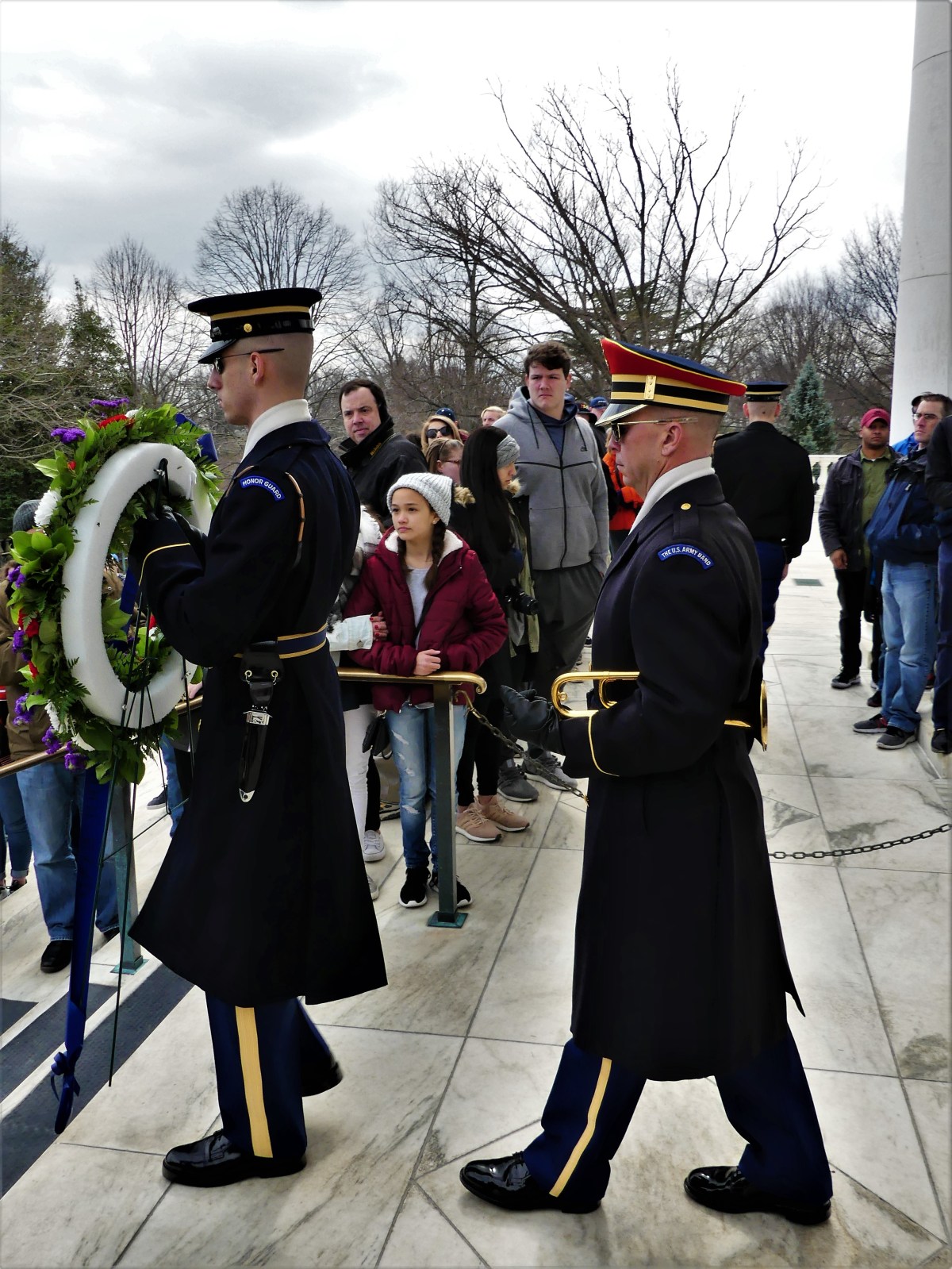
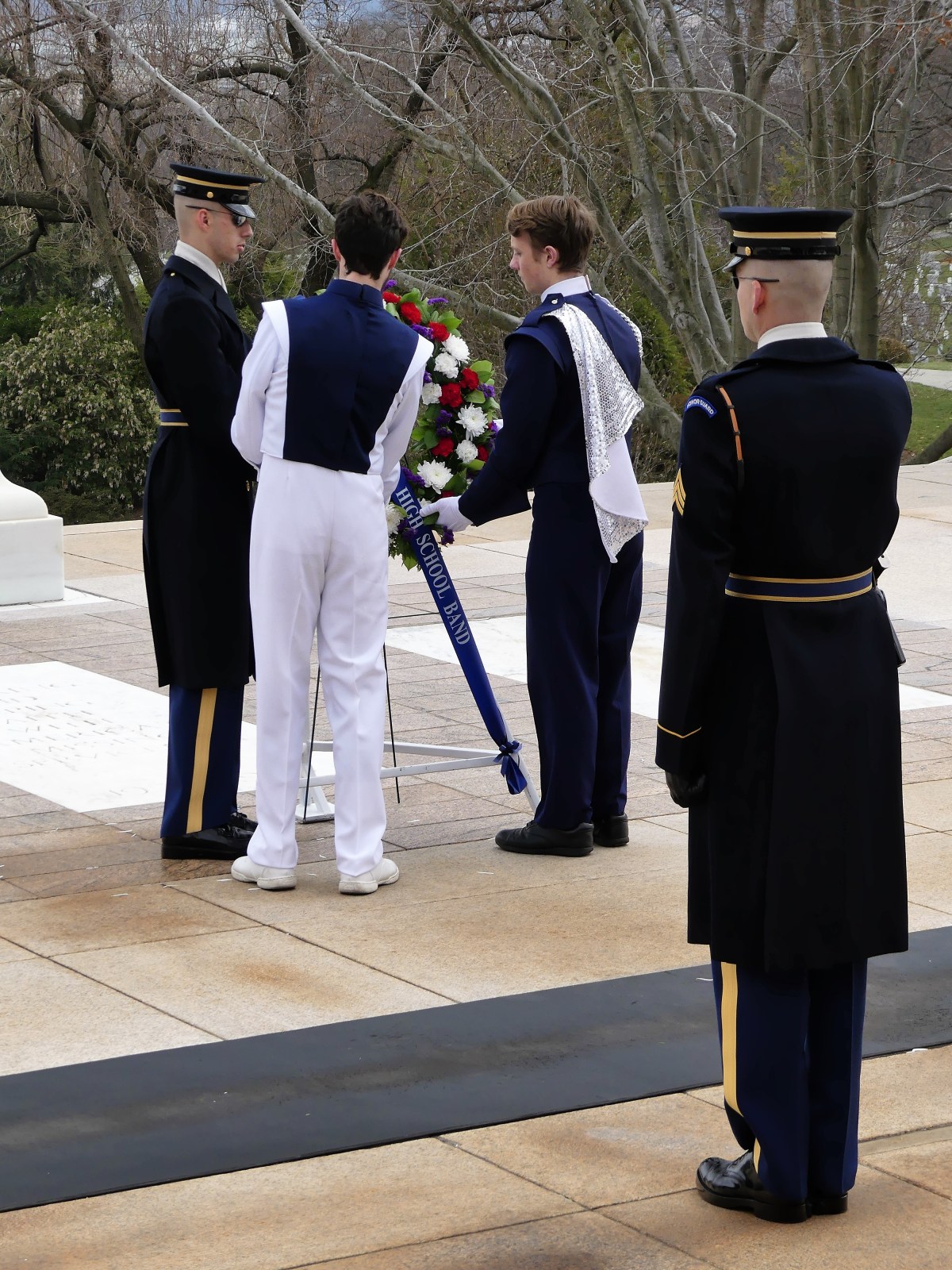
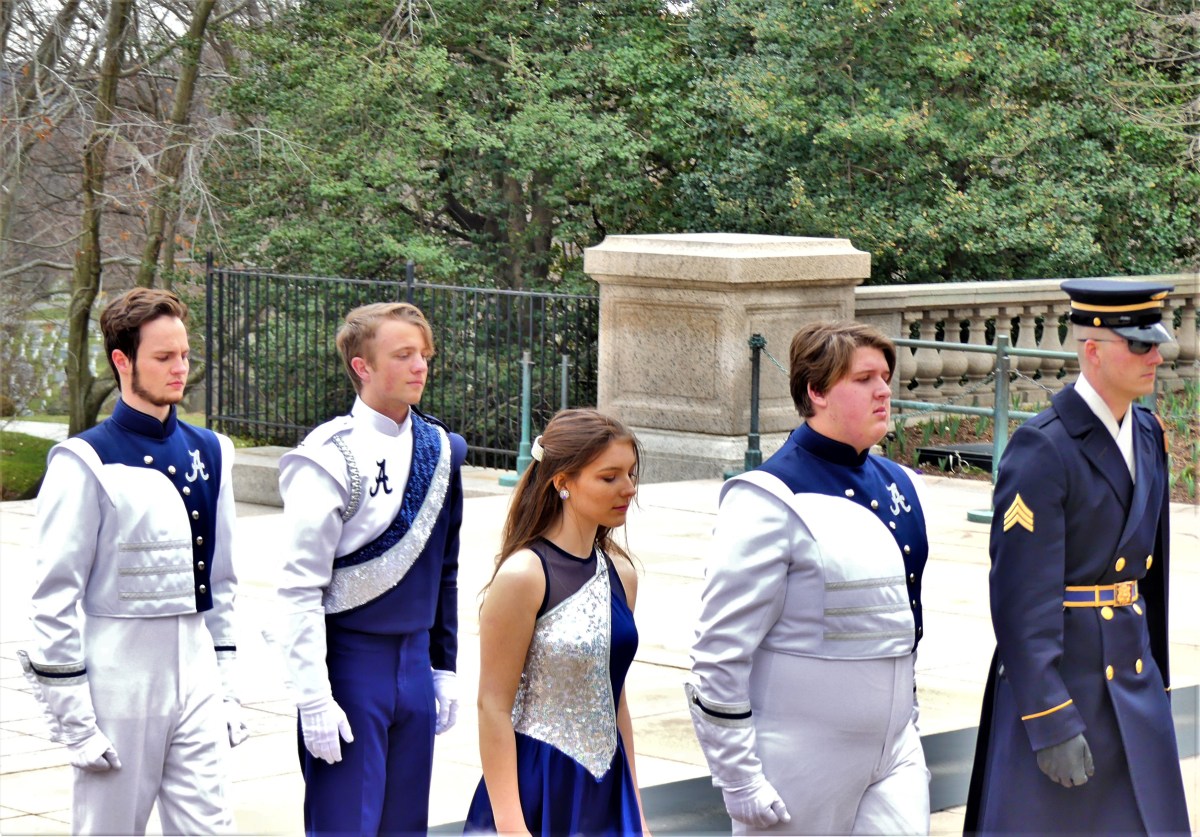
However, on this particular day, at this particular hour, we were also witness to a wreath dedication ceremony from a local high school marching band…

carrying the wreath

placing the wreath

bugle

playing Taps

marching band honor

which only added to an already moving tribute and ceremony.

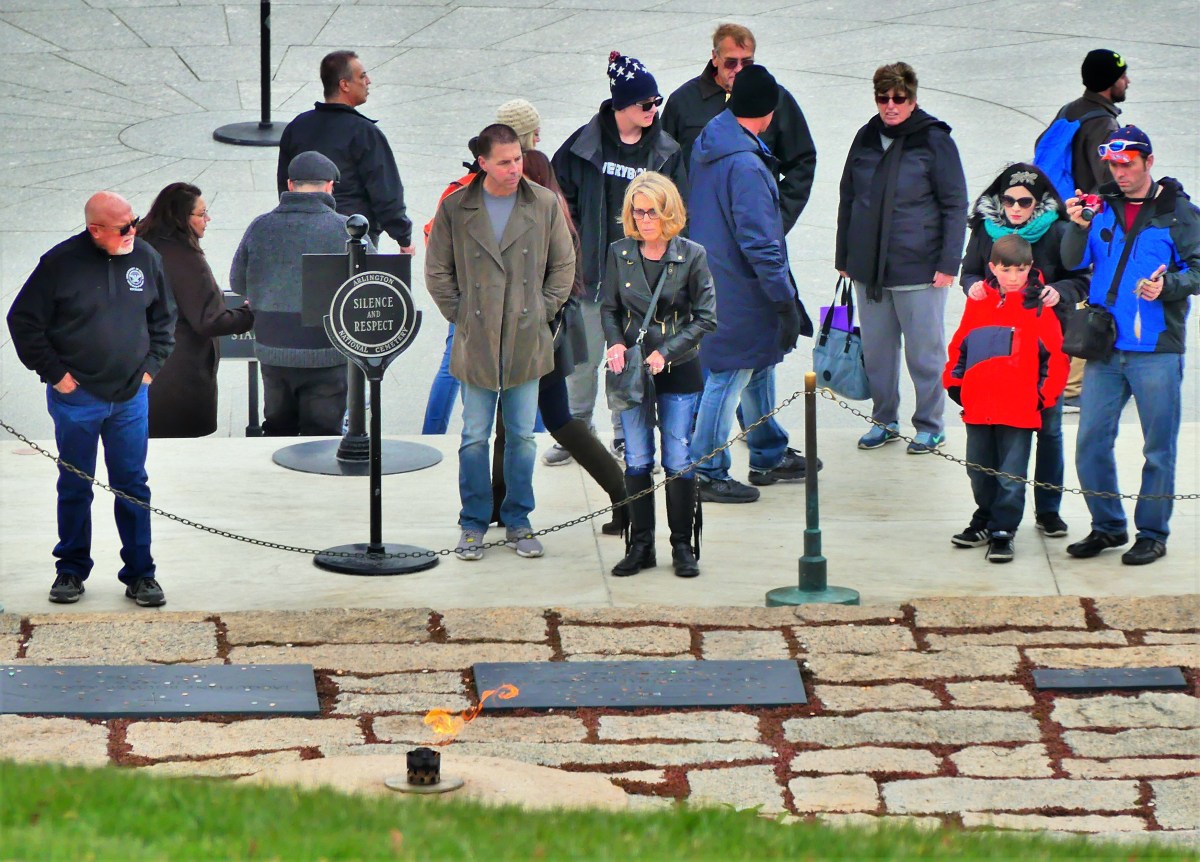
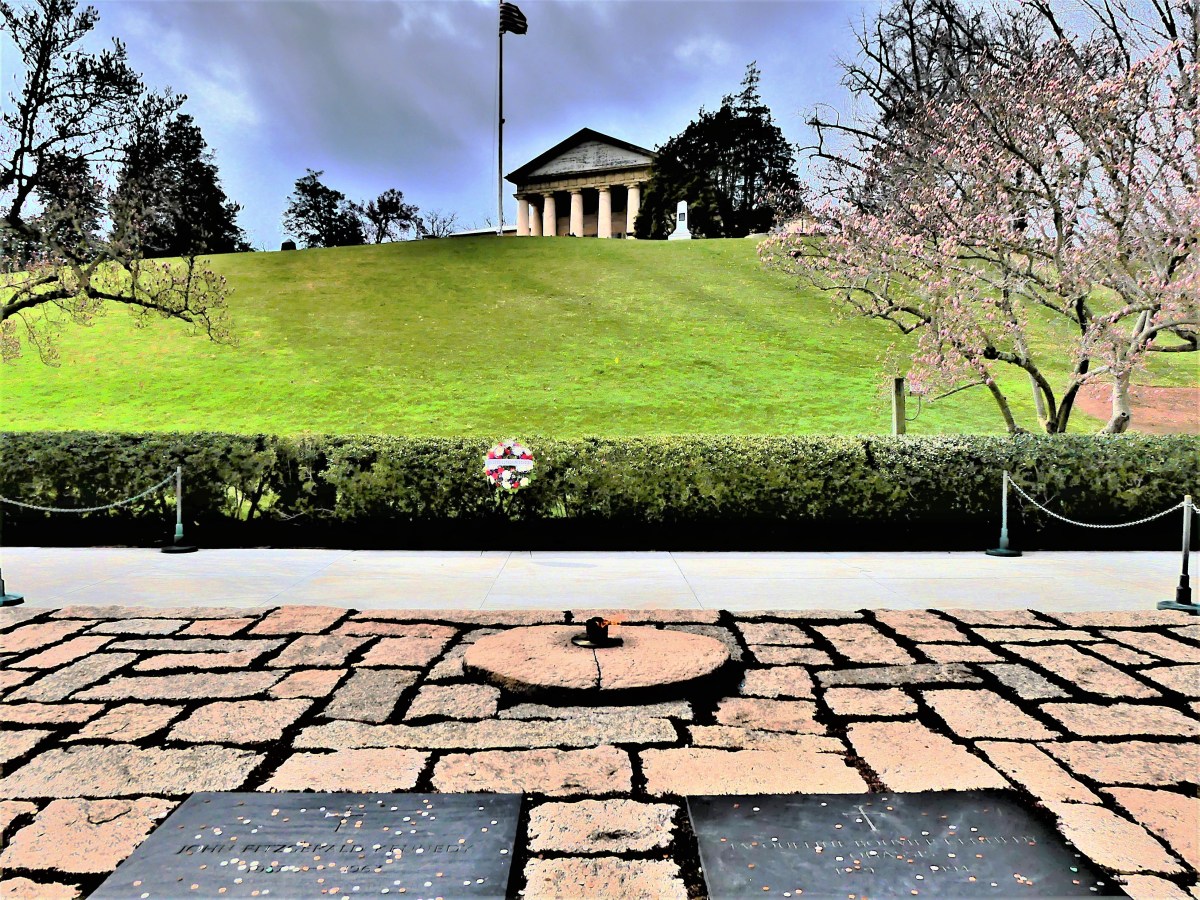
But there was one last vital piece of business remaining before our day was done: an obligatory visit to the gravesite of JFK to pay my respects.

JFK viewers

When John F. Kennedy was assassinated on Friday, November 22, 1963–the day before my 11th birthday–the announcement by Principal Simon came over the PA system, interrupting my Happy Birthday-song tribute. Immediately, the class went from cheers to tears in an instant, like a bipolar meltdown.

The pervasive sadness swept my home that evening, and I can’t remember when the sadness lifted. There was nothing any of us could do to keep from crying.

JFK quote
In the long history of the world, only a few generations have been granted the role of defending freedom in its hour of maximum danger. I do not shrink from this responsibility. I welcome it.

My 11th birthday was a turning point in my life–one of those moments where it’s impossible to forget where you were or what you were doing when you learned of something so profound, or horrific, or cataclysmic that you knew right then and there that your life had changed forever.

JFK grave

And while there’s no going back to a wrinkle in time, processing the tragedy is always hard to reconcile, even after all these years, as is wondering about the wonder that might have been.

The Sentinel’s Creed

My dedication to this sacred duty is total and wholehearted.
In the responsibility bestowed on me, never will I falter.
And with dignity and perseverance.
My standard will remain
Through the years of diligence
And the discomfort of the elements,
I will walk my tour in humble reverence to the best of my ability.
It is he who commands the respect I protect,
his bravery that made us so proud.
Surrounded by well-meaning crowds by day,
alone in the thoughtful peace of night,
this Soldier in honored glory rest under my eternal vigilance.

PBS has produced the following video which masterfully demonstrates the precision of the pageantry, and reflects the awe of the ceremony.

My Word!

It’s always a pleasure returning to DC’s National Mall…

mall (5)

where I like to keep an eye on my tax dollars by walking through the Smithsonian museums…

Smithson remains

to inspect the work being done by museum curators on my behalf.

nave (2)
Smithsonian Castle Commons

Aside from being a great depository of great aeronautical history at the National Air and Space Museum…

Spirit of St. Louis
donated by Charles Lindbergh

or interpretive history at National Museum of American History…

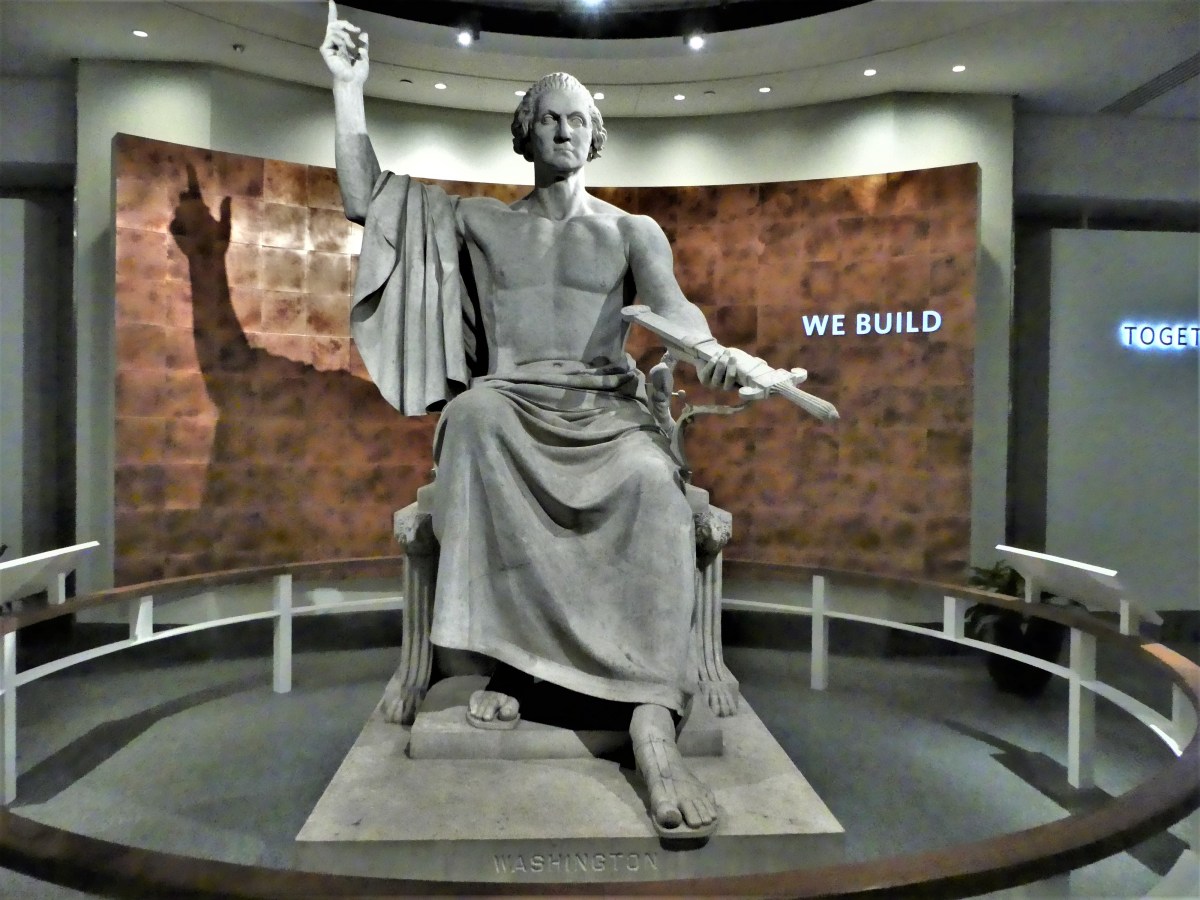
WE BUILD
Horatio Greenough

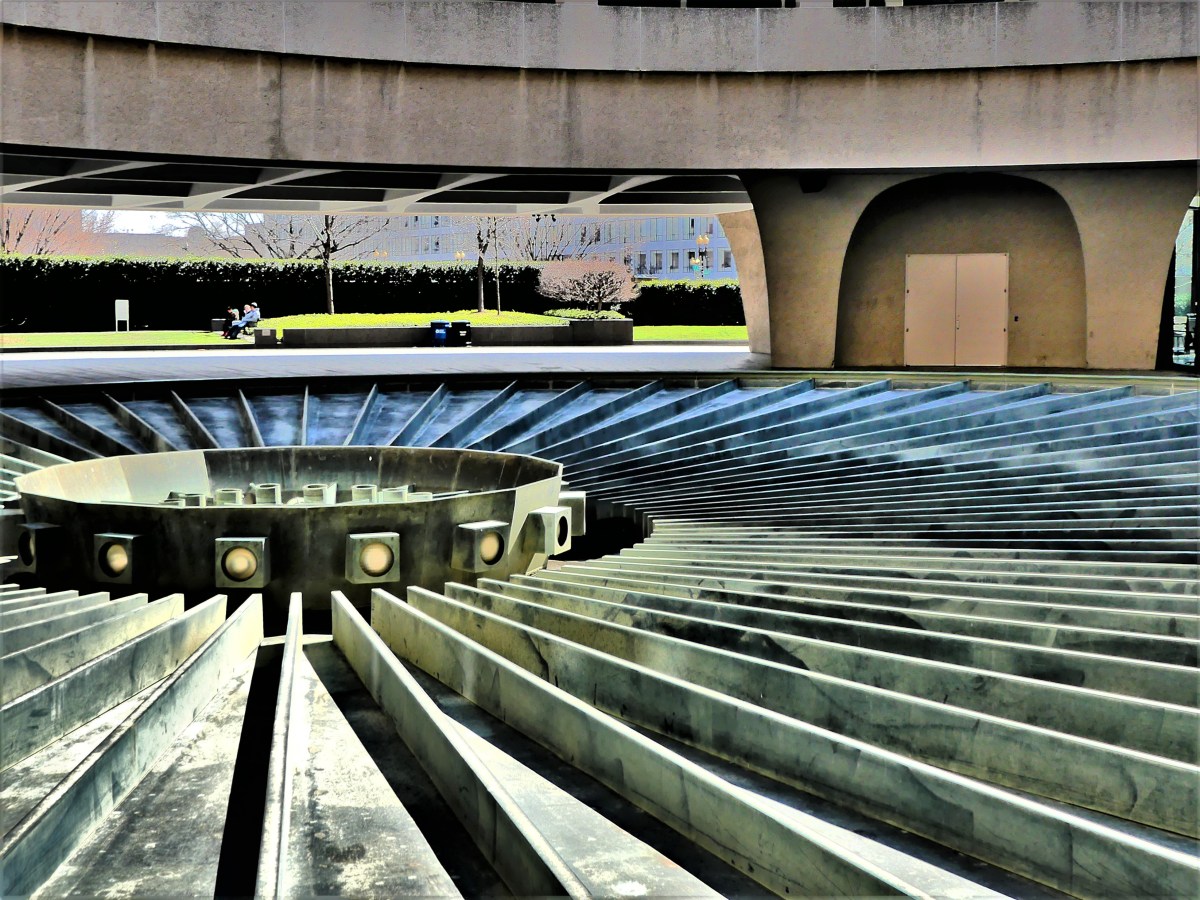
I’m always inspired when browsing through the Hirshhorn.

dry fountain
Gordon Bunshaft–Hirshhorn Fountain
rockface and car
Jimmie Durham–Still Life With Spirit and Xitle

where I get a chance to meander beside the curvy gallery walls, as I contemplate Mark Bradford’s updated Civil War cyclorama detailing Pickett’s Charge

Pickett's Charge panels (2)

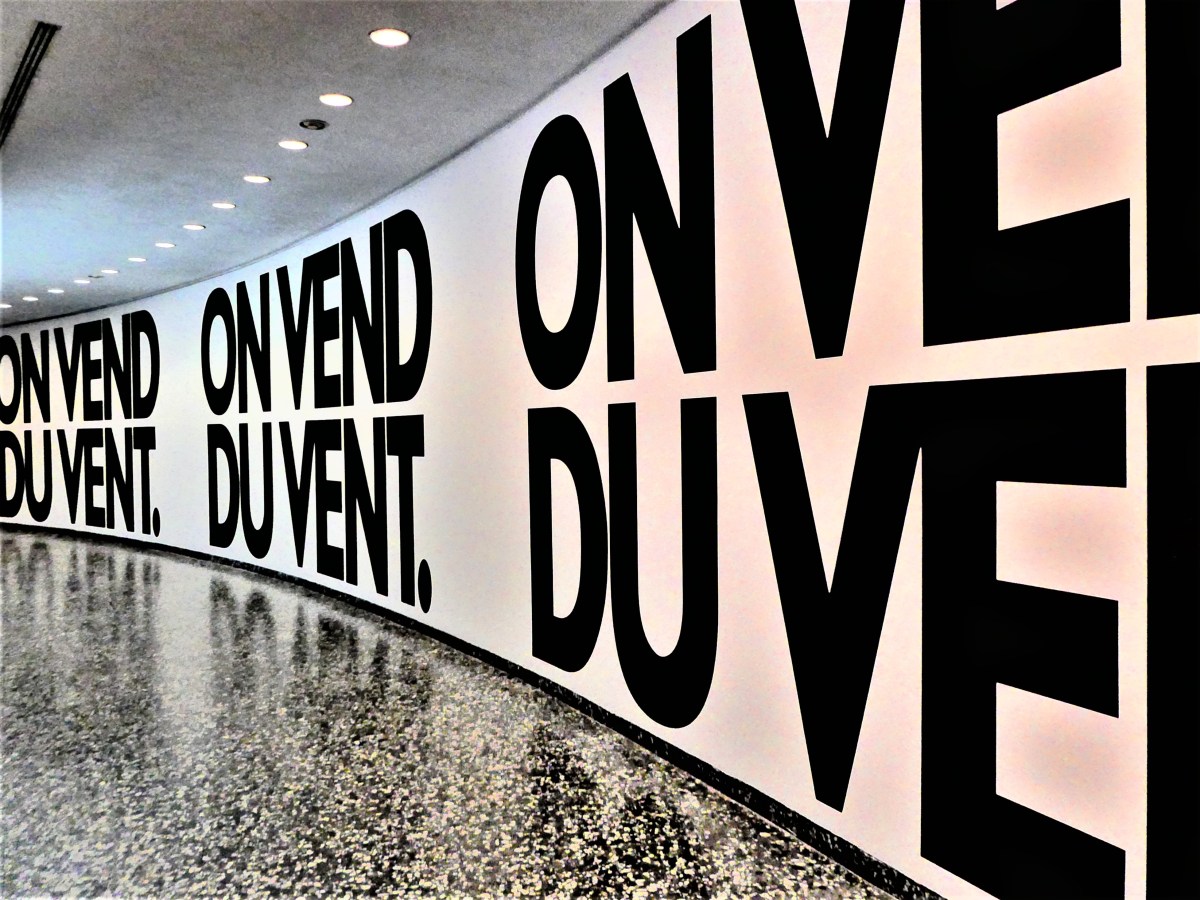
or introspect on a retrospective of the 80’s, where everything is rele-vent again…

ON VEND DU VENT
Haim Steinbach–ON VEND DU VENT
SILENCE=DEATH (2).jpg
Gran Fury–SILENCE=DEATH
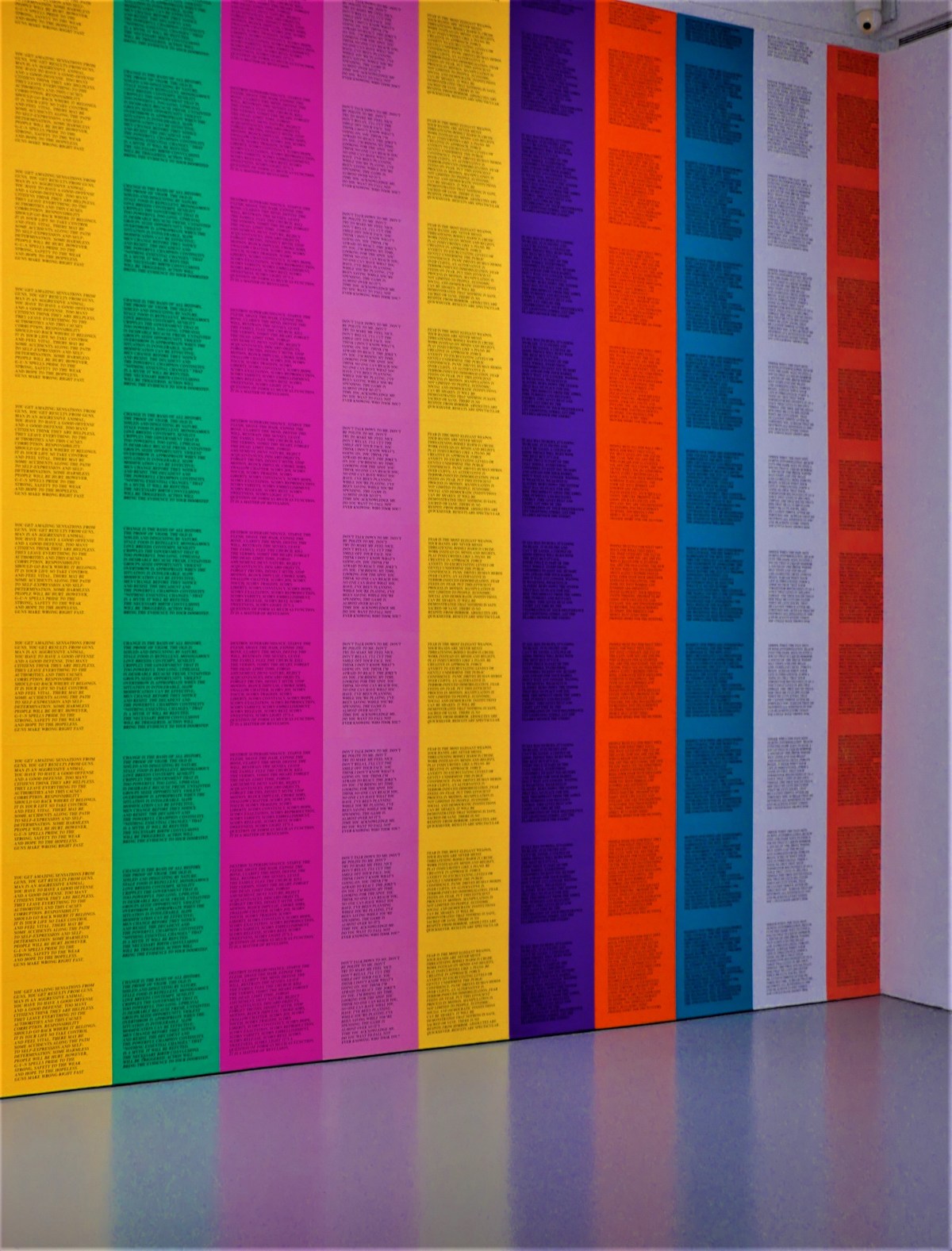
stripes
Jenny Holzer–Inflammatory Essays

or think deeply in the basement, where I’m reminded by Barbara Kruger’s BELIEF+DOUBT installation that words matter…

Belief

Bad Day

FORGET

Men's Room1

Women's Room

…and can make a difference…something I’d rather be doing.

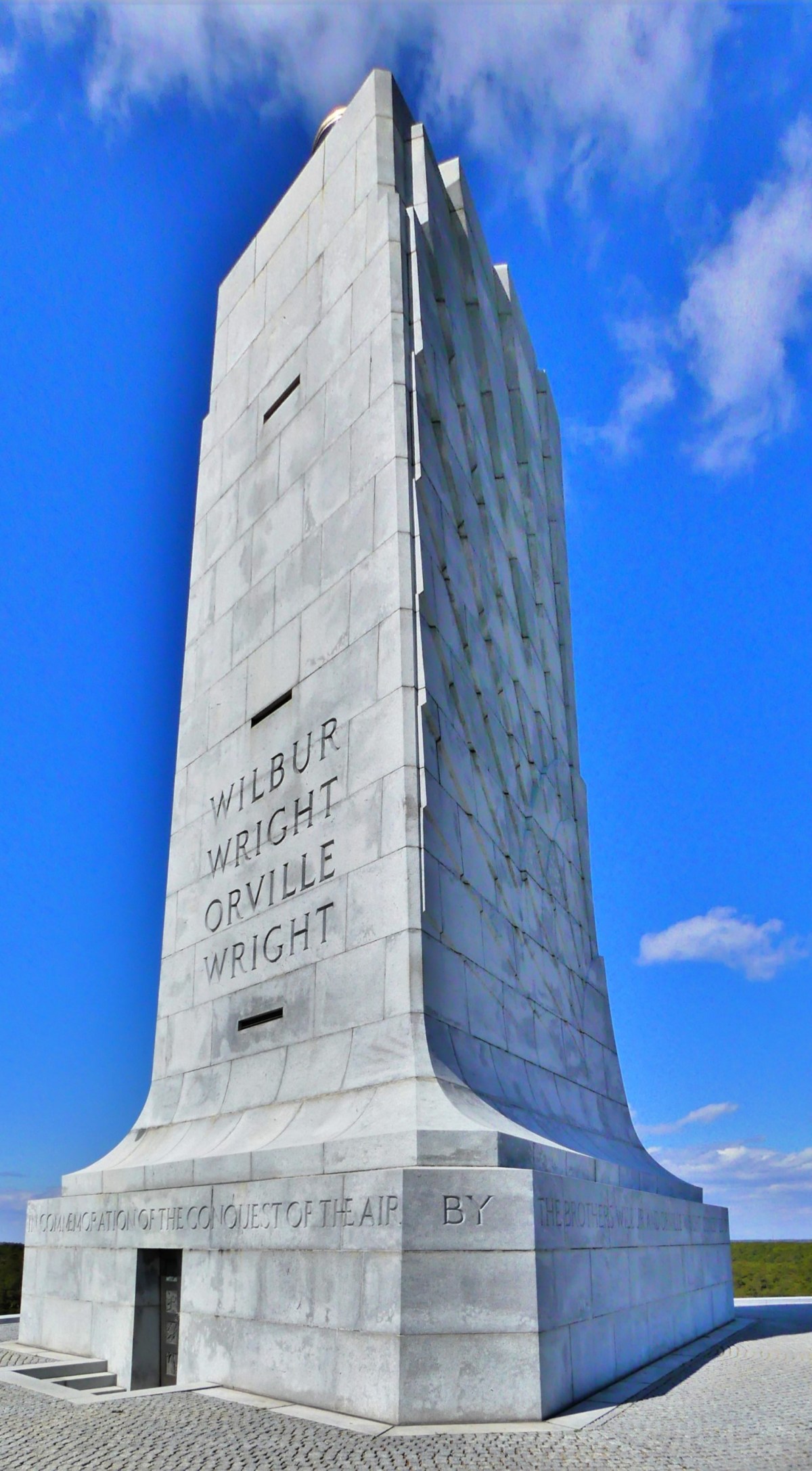
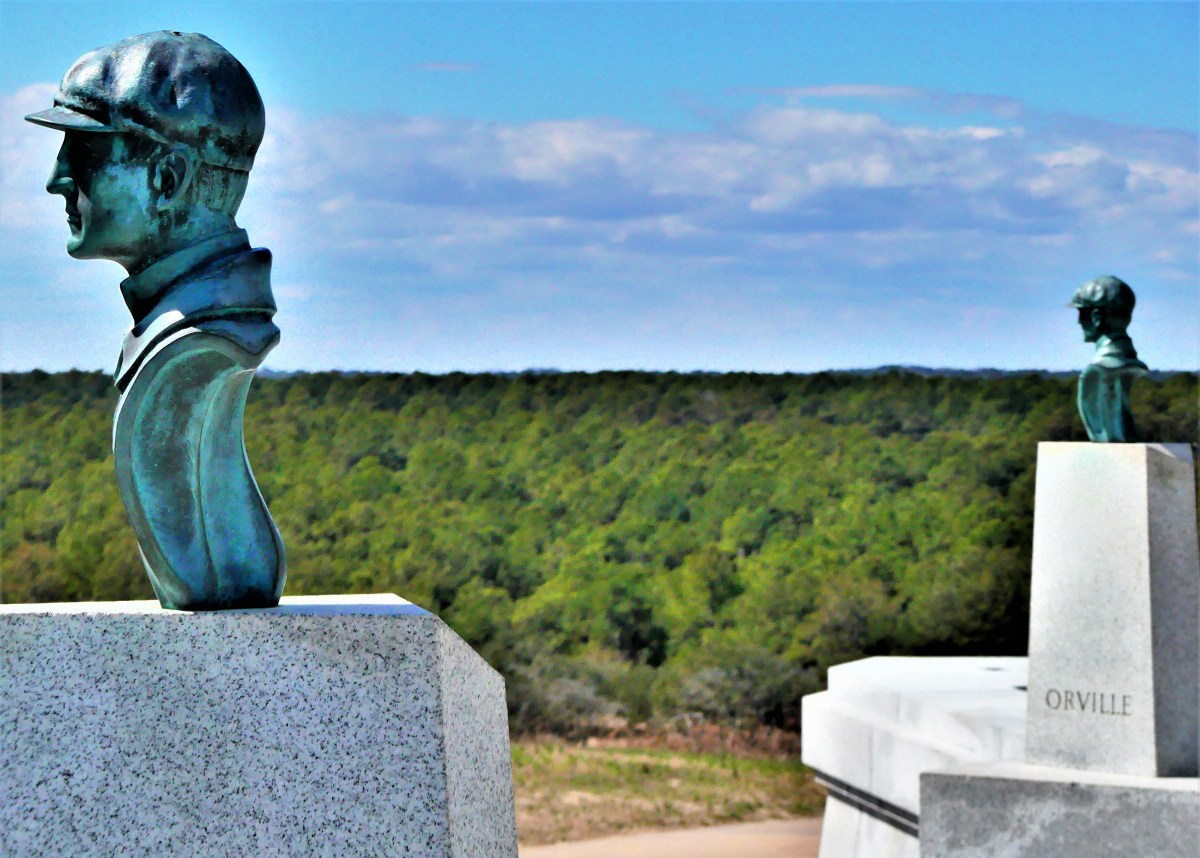
First Flight

In the distance,

Kill Devil Hill

on a grassy sloped hill,

Looking down Kill Devil Hill

there stands a monument,

Wrights Monument

built of grit,

Brothers (3)

and will.

Brothers1 (2)

On a wing…

wing assembly

and a prayer…

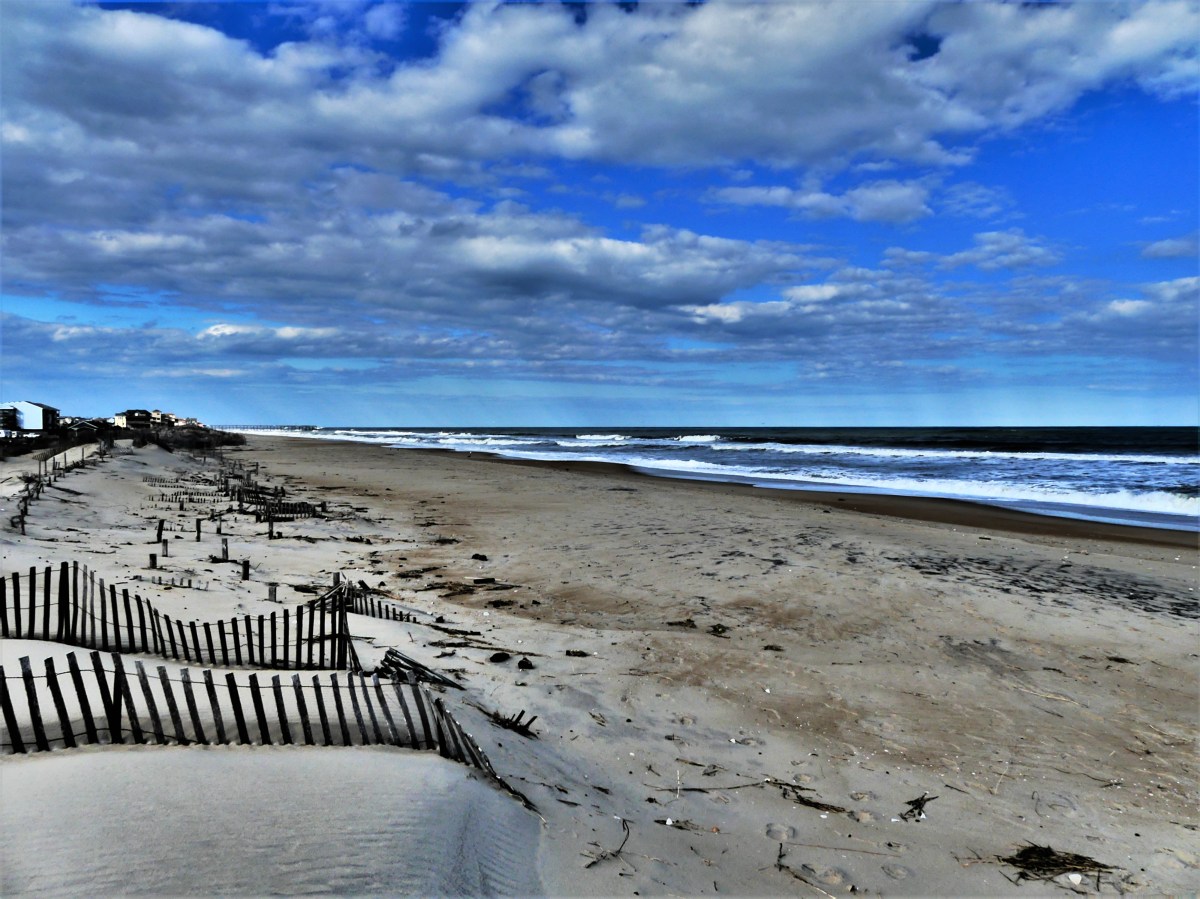
Pea Island

The brothers moved

to Outer Banks

to dance

on open air.

Cape Hattaras

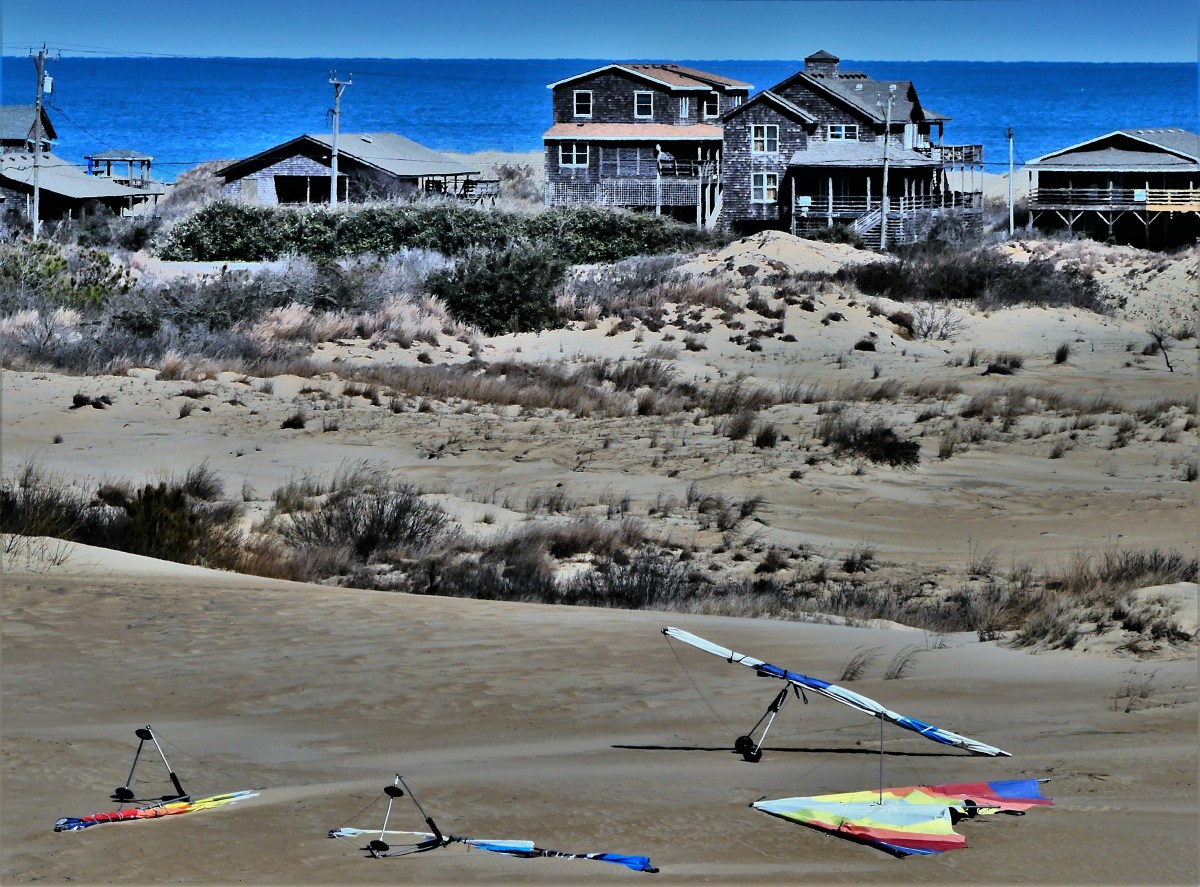
With gusting winds

kites on dunes

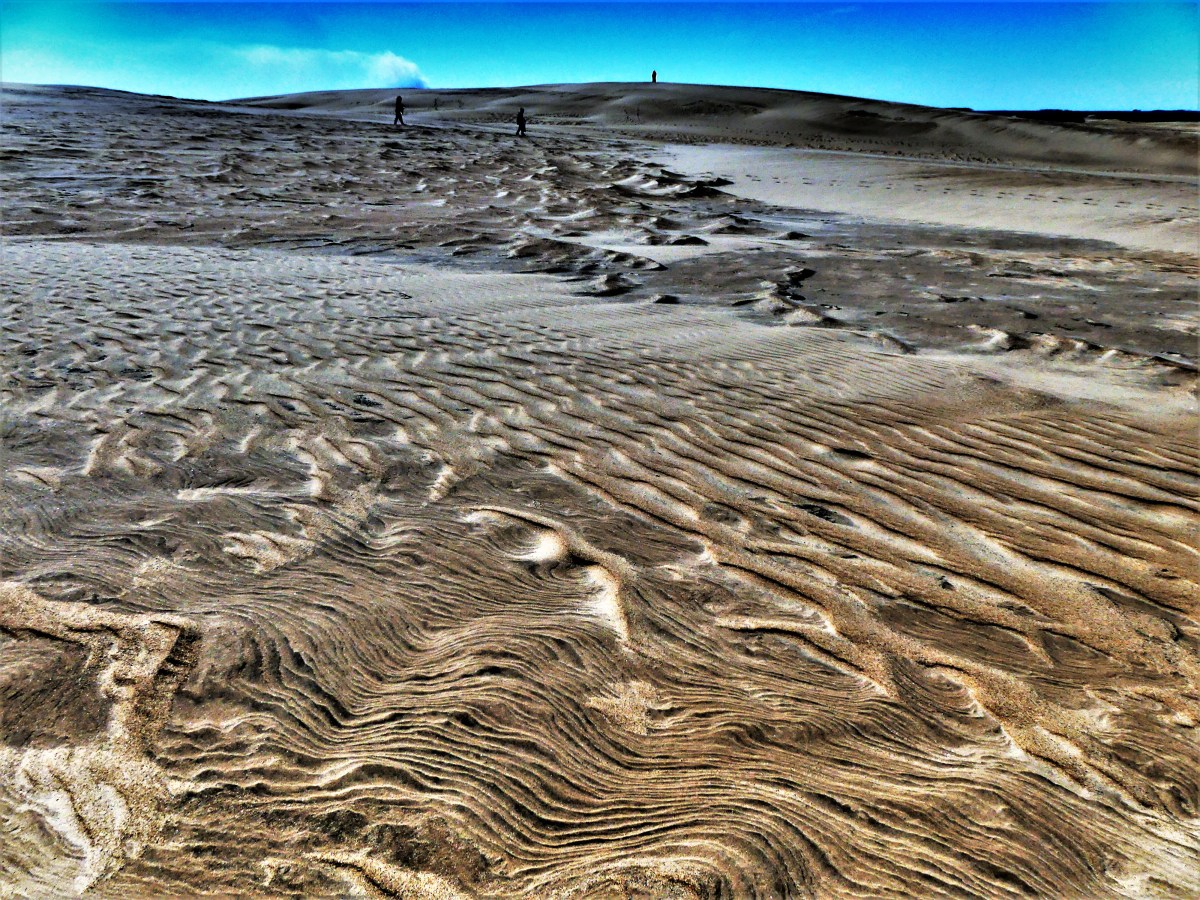
and dunes so tall,

dune patterns

the rail in place

to guide her,

following the rail

Orville readied

at the stick,

Orville at the stick

while Wilbur ran

beside her.

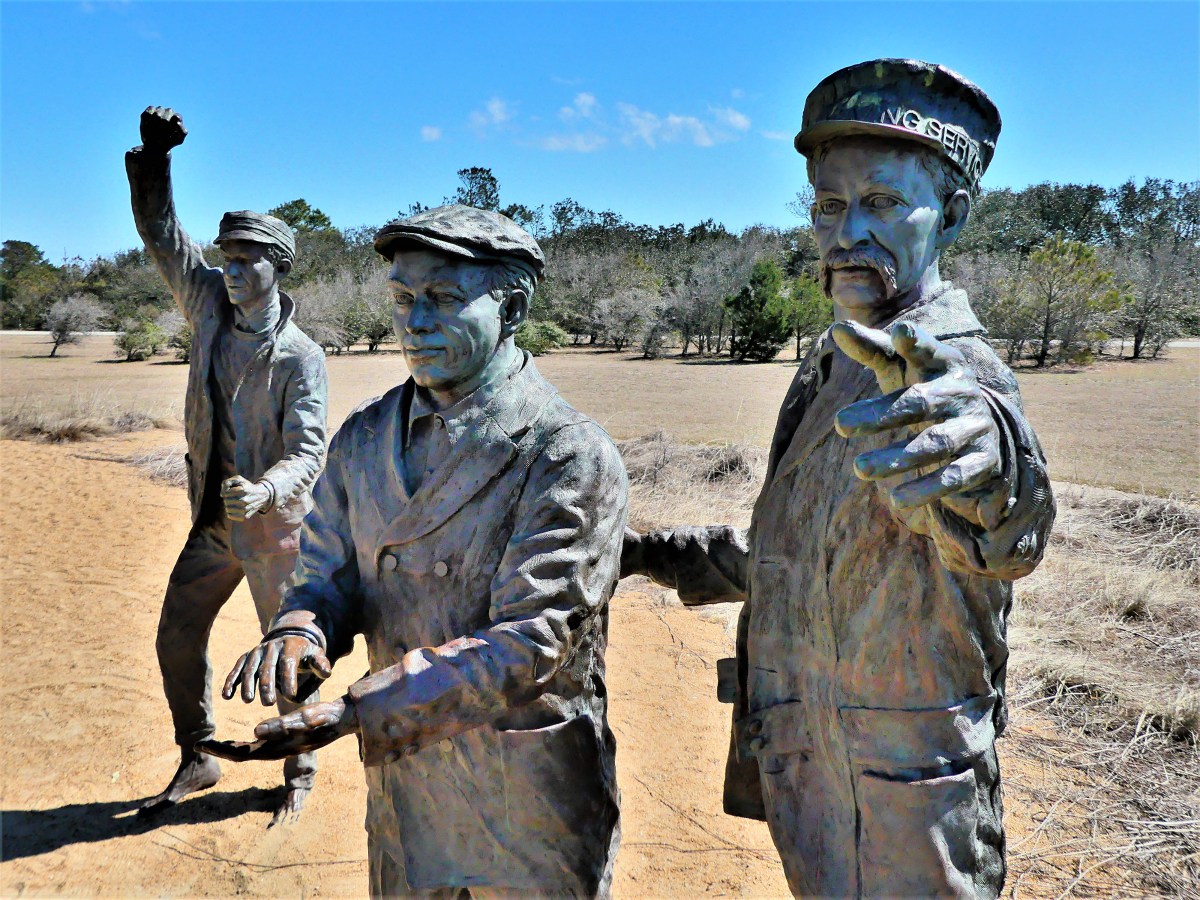
Sculpture1

Propellers spun,

the engine roared–

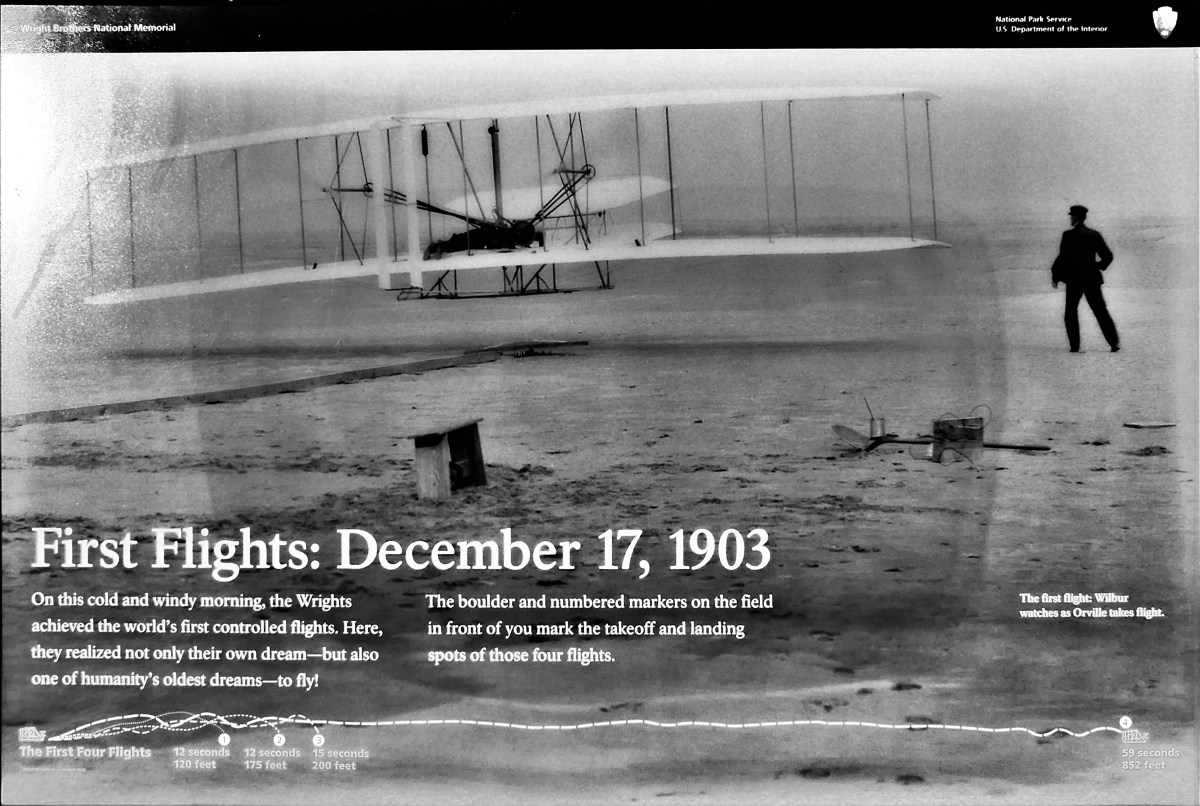
Original photo

the plane was

swept aloft.

The rescue crew

would cheer them on…

Rescuing Service

no matter

what the cost.

The Brothers Wright

achieved success–

Commemoration

a boulder

marks the sight.

granite and plaque

They passed the test,

and lit the way,

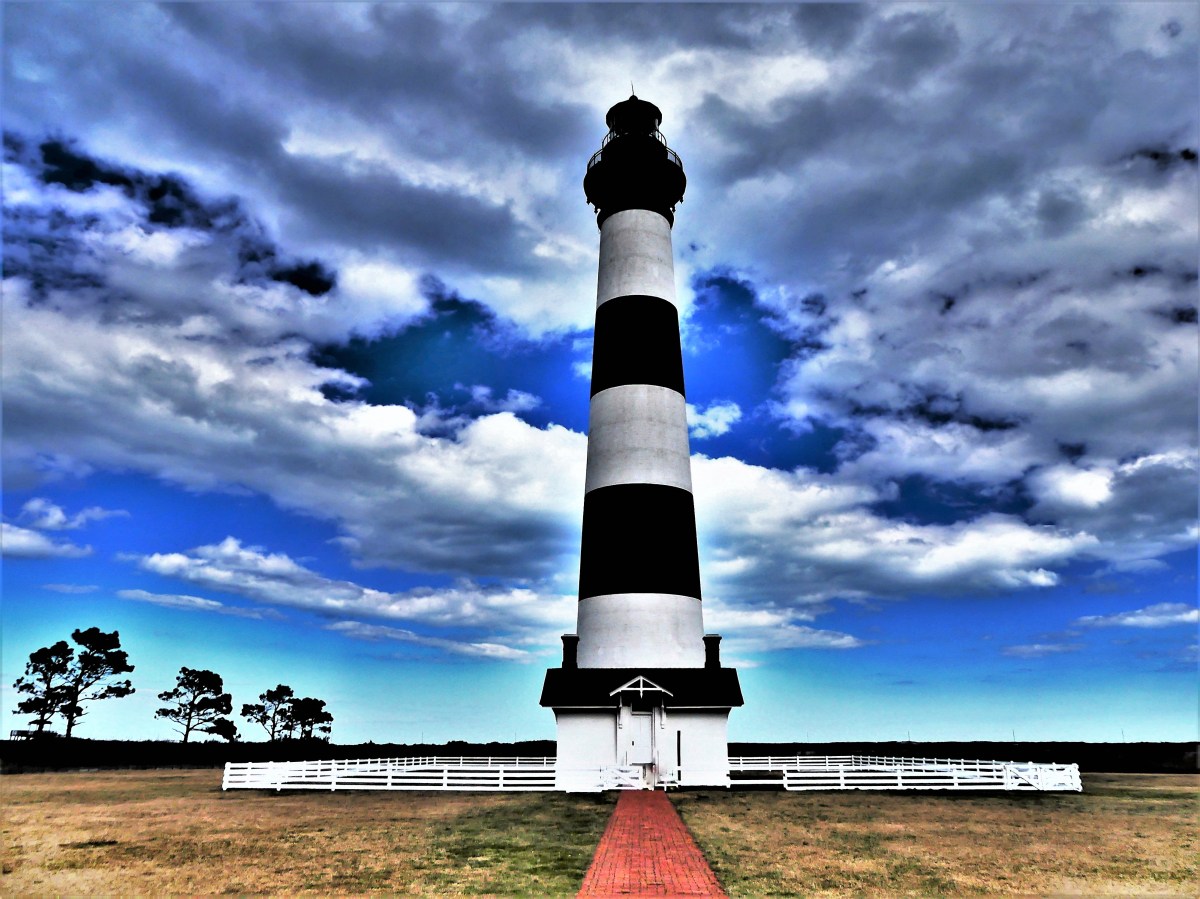
Bodie Island Light House

for they were

first in flight.

Monument and Family

*filed under picture story

Chapel Hill

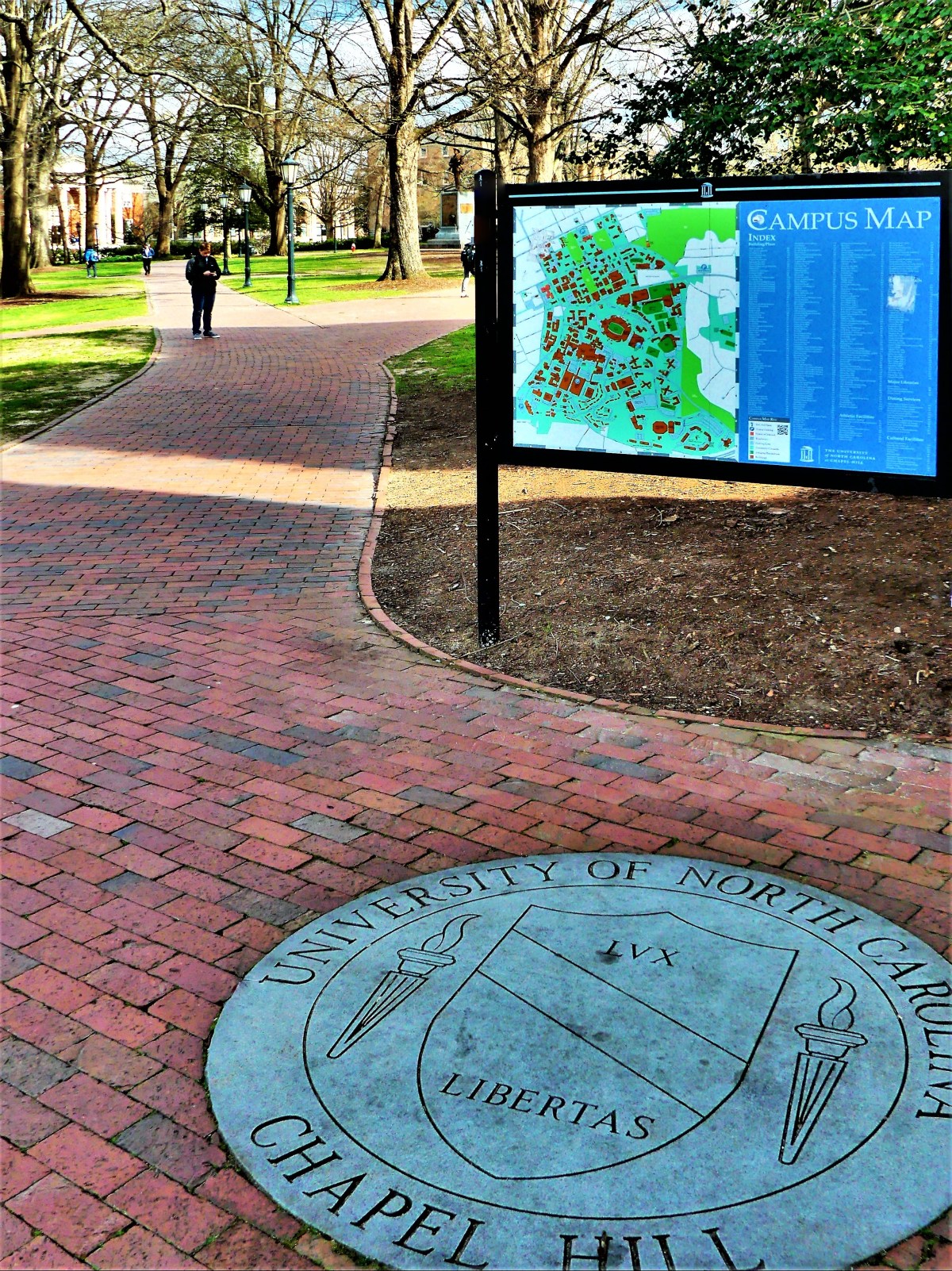
There’s a triumvirate of college basketball competing in the middle of North Carolina, with rival sectors drawn by Duke’s Blue Devils at Durham, and North Carolina State’s Wolfpack at Raleigh, but completed by the Tar Heels of Carolina in the bucolic setting of Chapel Hill.

Campus map

In fact, consolidated ACC (Atlantic Coast Conference) championships by the three powerhouses represent 48 titles out of 64 seasons, for a 75% margin of victory. Even now, as I write this, Carolina has defeated Duke 74-69 to compete against Virginia for its 19th ACC Championship and a place at the NCAA Championship table.

With a long legacy of league leadership, Leah and I concluded that a look around Chapel Hill might offer some insight into Carolina’s dominance.

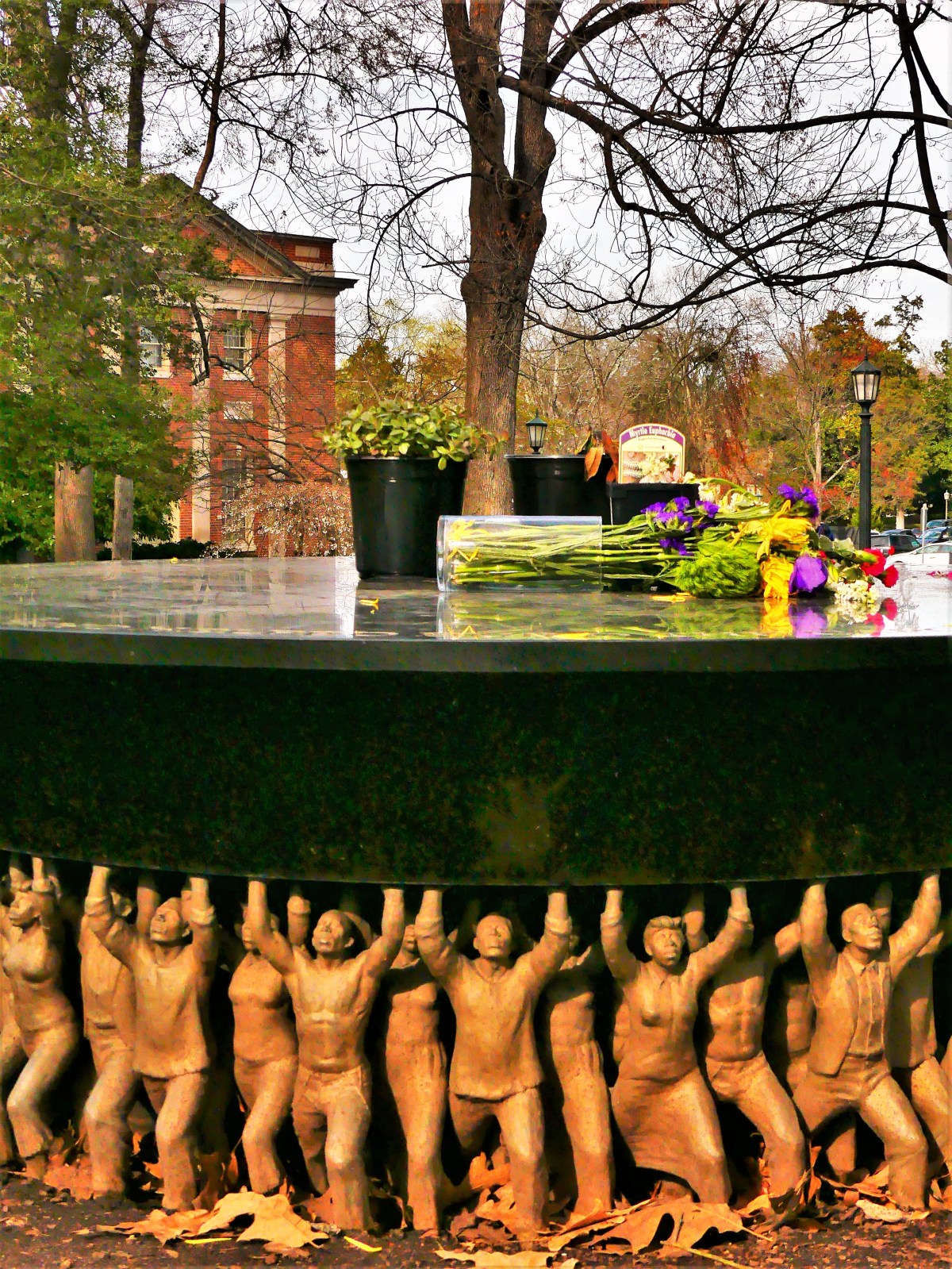
Holding up the world

The campus was abustle, as classes were winding down in anticipation of Spring Break, and time was running out for research papers due by March 9th.

Clock Tower

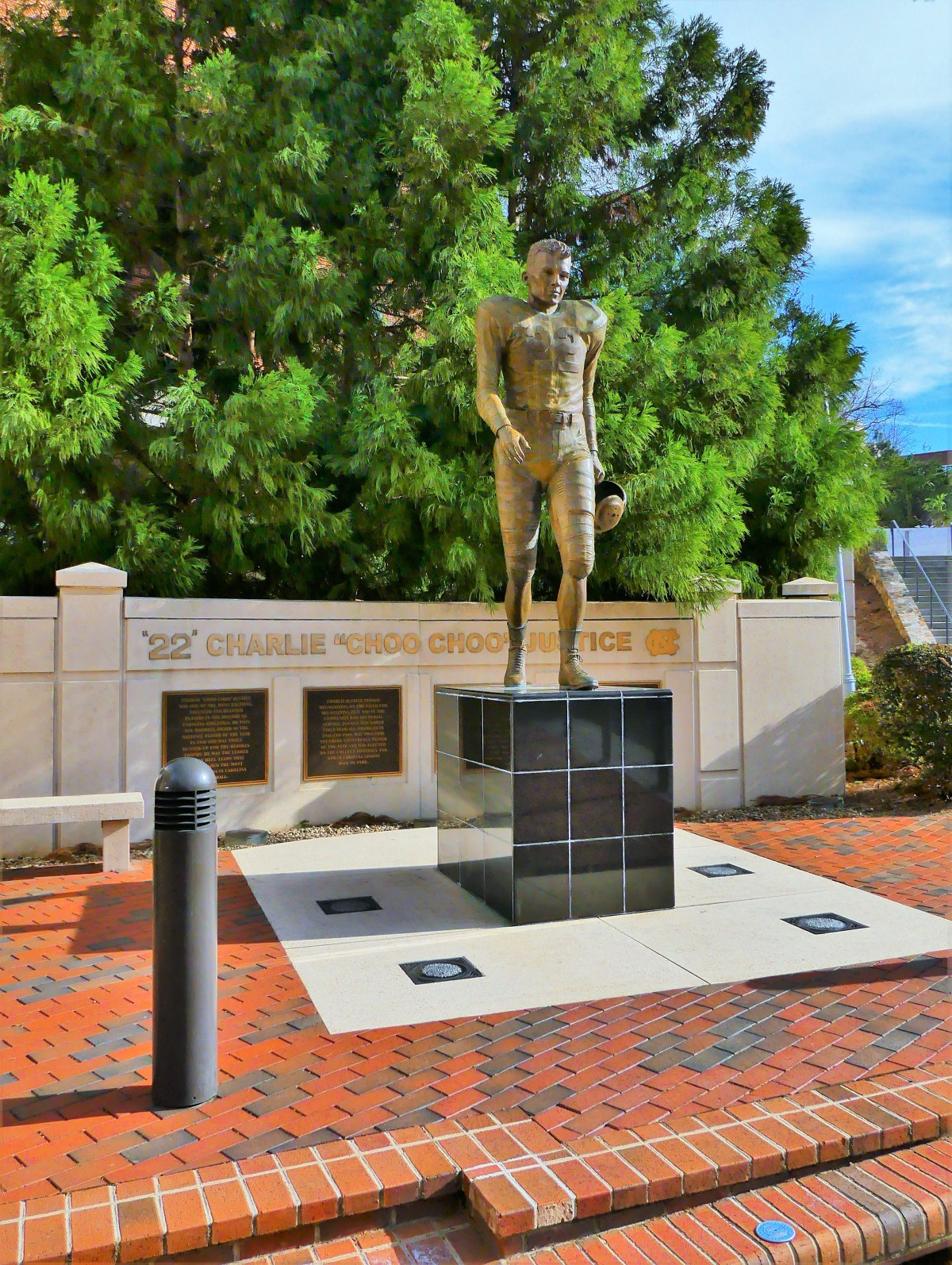
We wound our way around to the sports complex where the public address system at Kenan Memorial Stadium blared a recitation of upcoming Tar Heel dates for Spring sports, which piqued our interest. Perhaps we could find the answers to some of our questions here, so we entered the Charlie Justice Hall of Honor.

Choo Choo

We were overwhelmed by the floor to ceiling showcases of memorabilia, photographs, trophies and historical artifacts detailing the history of Carolina football. As I positioned my camera to my eye to capture the glory days of Lawrence Taylor, I was suddenly greeted by the authoritative voice of an attendant behind a long arc of a desk who demanded to know our business.

“Uh, we were looking for access to the stadium, and though it might be through here,” I suggested.

“There is absolutely no photography allowed in the building,” she insisted. “Especially when the athletes are in the weight room.”

At the end of a corridor lined with decorated Tar Heel helmets on one side, and an assortment of NFL helmets on the other, was a glass wall offering a view of several oversized students pressing, curling, squatting and deadlifting 250 pounds or more.

I put my camera by my side. “If you could just tell us how to get to the stadium, we’ll be on our way,” I back-pedaled, not wanting her to think I was spying for a competing organization.

Pointing, she offered matter-of-factly,” Through those doors, and takes the stairs to the left of Choo Choo.”

We mounted the stairs, filed past security’s bag search, and entered a cavernous oval overlooking the first level.

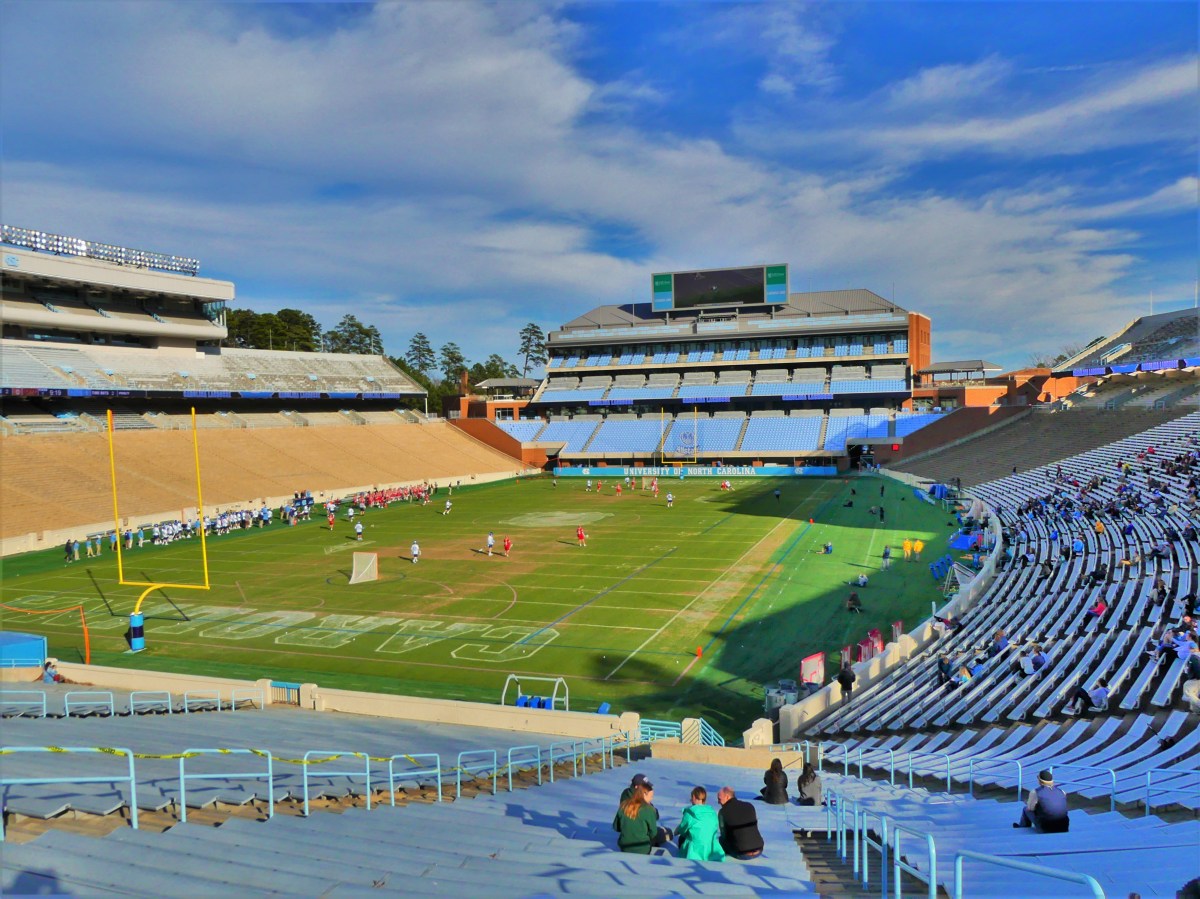
Kenan Memorial Stadium

On the field, the Denver lacrosse squad was completing drills before their opening scrum with the Tar Heels.

lacrosse

When the match began, the 63,000 missing fans could not drown out the rap and disco music excerpts that echoed throughout the stands. Leah and I left with the score tied at 1 after 17 minutes of playing time, and with no greater appreciation for rap and disco music.

Denver v NCU

However, we did fall in love with Patrick Dougherty’s installation of weaving whimsy…

signage.jpg

as we passed the front lawn of UNC’s Ackland Art Museum…

Step Right Up installation

on our way to the truck before the meter timed-out,

Step Right Up installation1

which served as a visual metaphor for the intricacies of basket(ball) art of a different sort.

With rain forecasted for most of the following day,

Letterman's Lane

we decided to take our investigation indoors where it mattered most.

Museum entrance

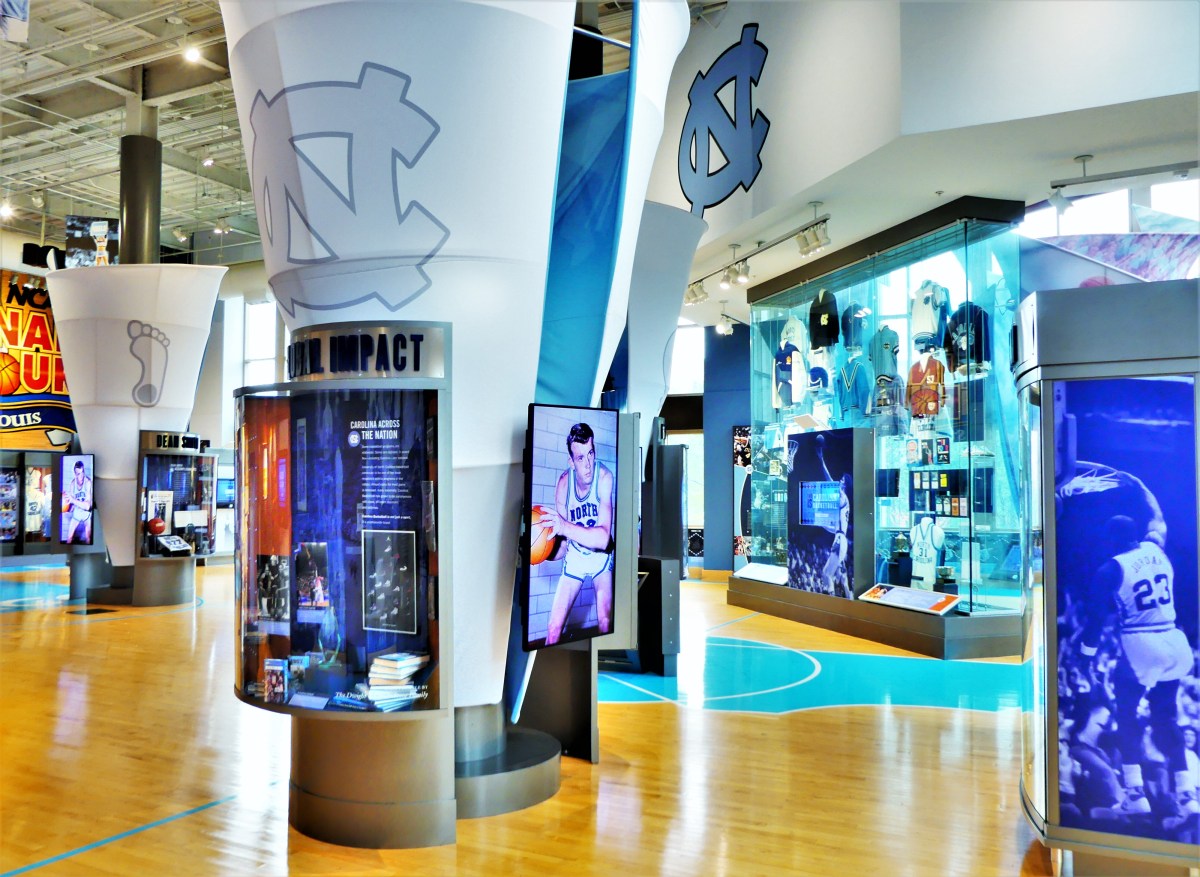
Inside the museum, we had the run of the court,

exhibits1

dodging and weaving around interactive exhibits detailing every aspect of the game…

exhibits

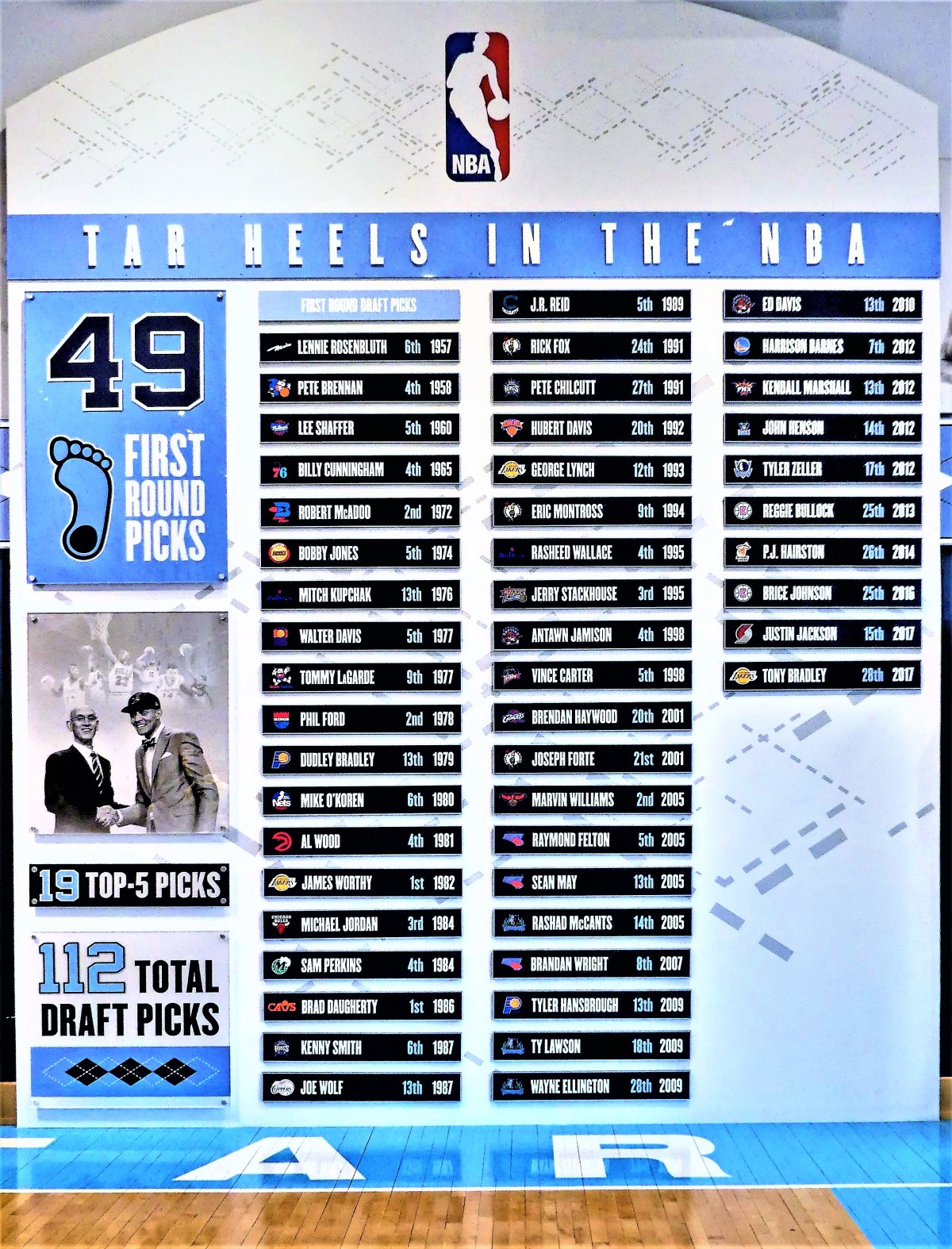
that contributed to the success of a program that became a pipeline to the NBA!

Tar Heels in the NBA

When gauging the quantitative results of the team, one need not look any further than the volume of awards.

trophies

And if all-time National Championships were a deciding factor, Carolina has seven.

National Championships

Only Kentucky with 8, and UCLA with 11 have more.

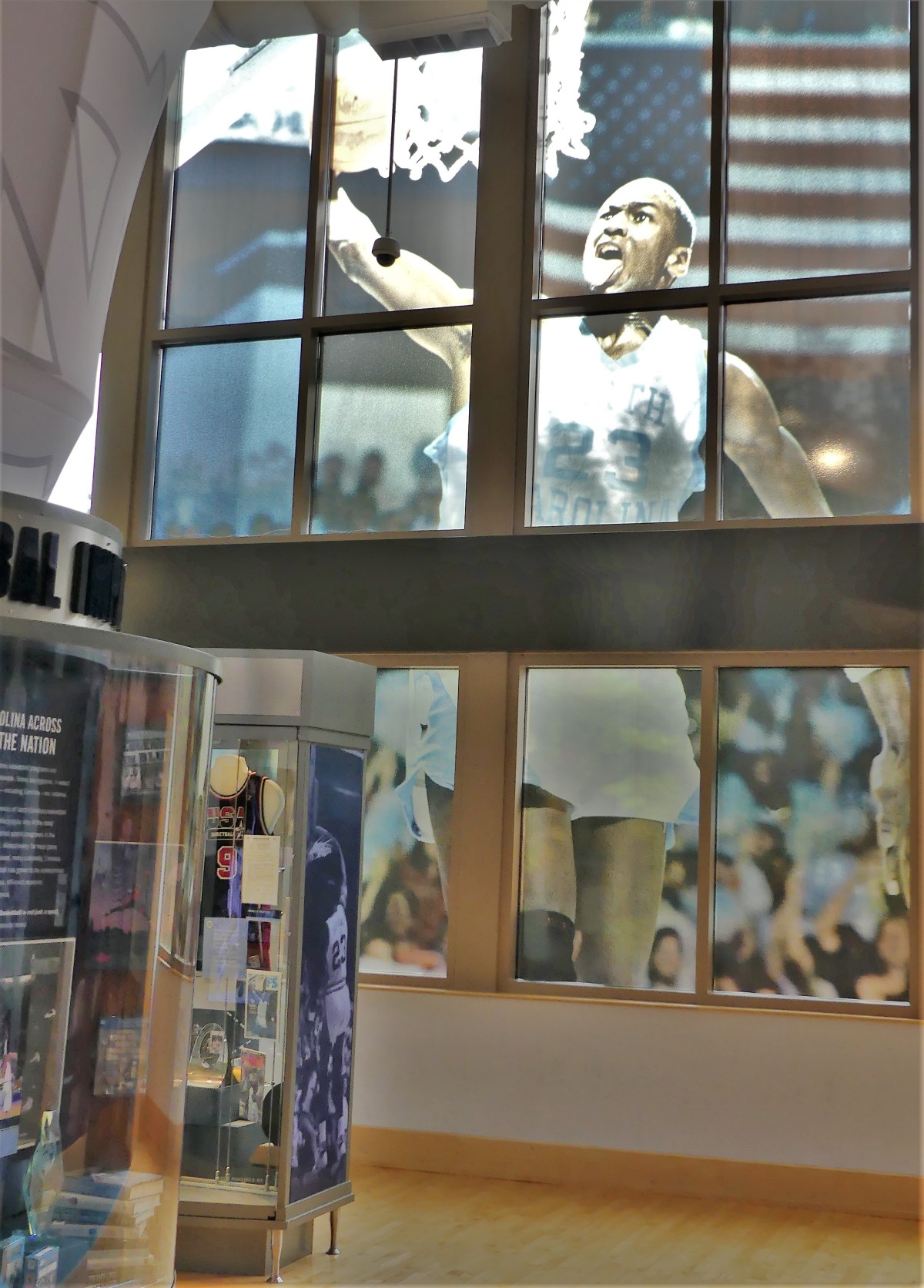
Yet aside from great coaching (Dean Smith and Roy Williams have contributed to the second highest all-time winning percentage at .739) and recruiting amazing talent, Carolina also has the X Factor–

Jordan.jpg

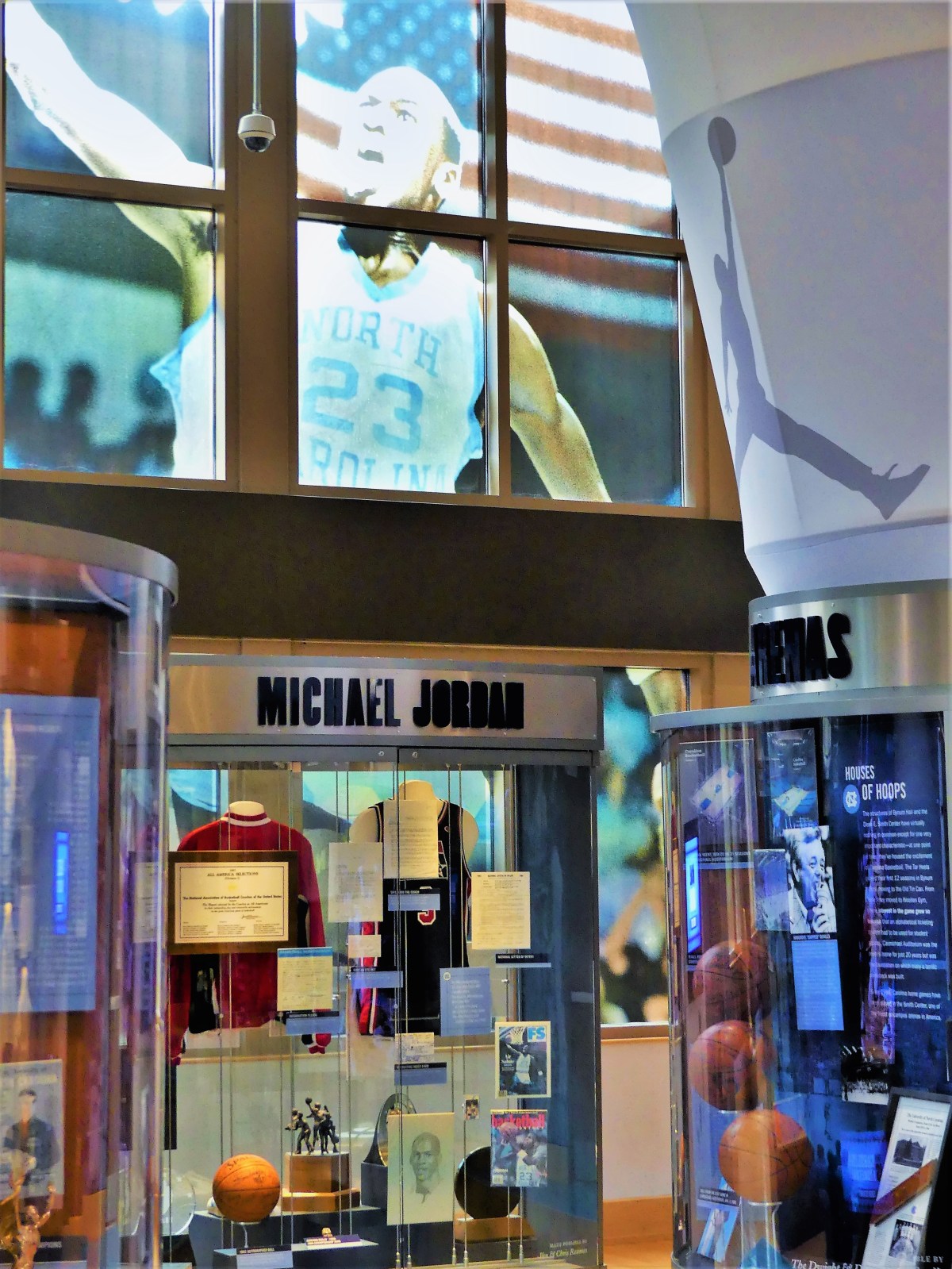
–arguably the greatest player to ever play the game–and the museum has devoted a shrine of artifacts in his name.

Michael Jordan

Most illuminating are correspondence letters from Coach K…

Duke letter

and Dean Smith…

letter

that directed Michael Jordan’s path and launched him on a career that would shatter records and inspire a new age of athletes…

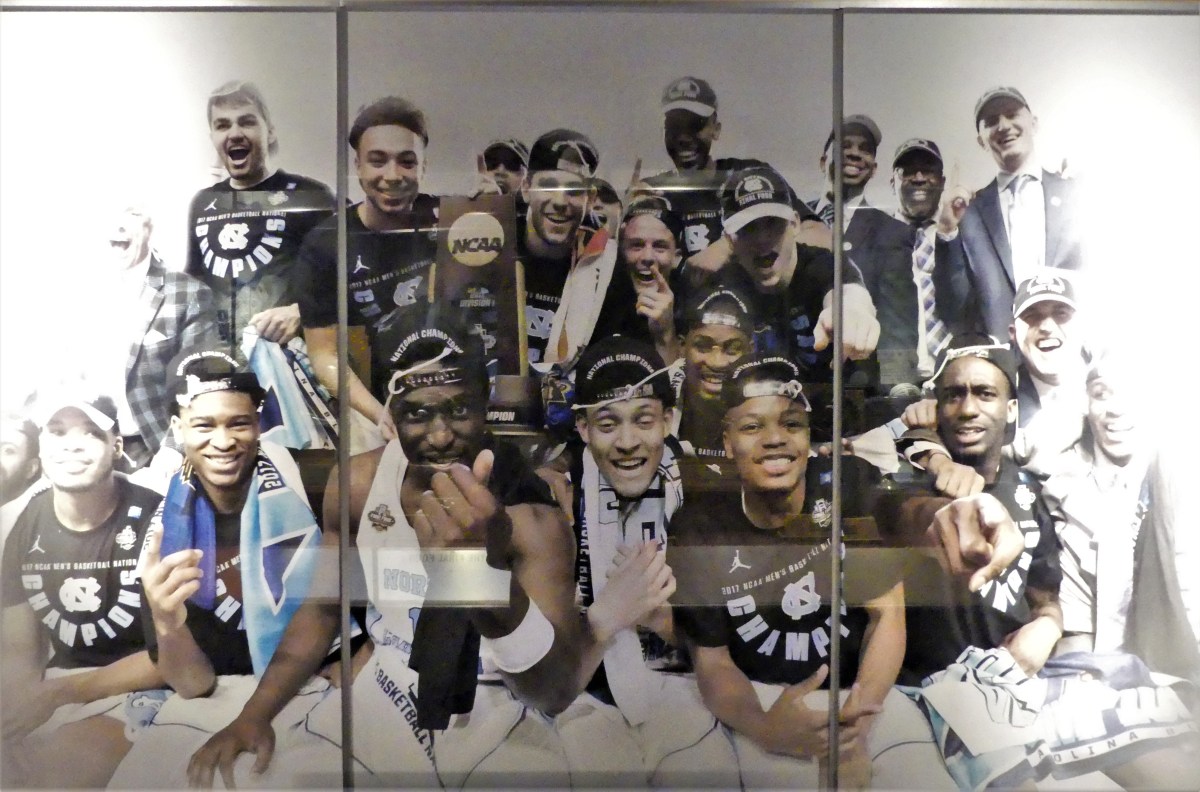
2017 Champs

to become future role models in their own right and not much of a secret after all.

Every Picture Tells a Story

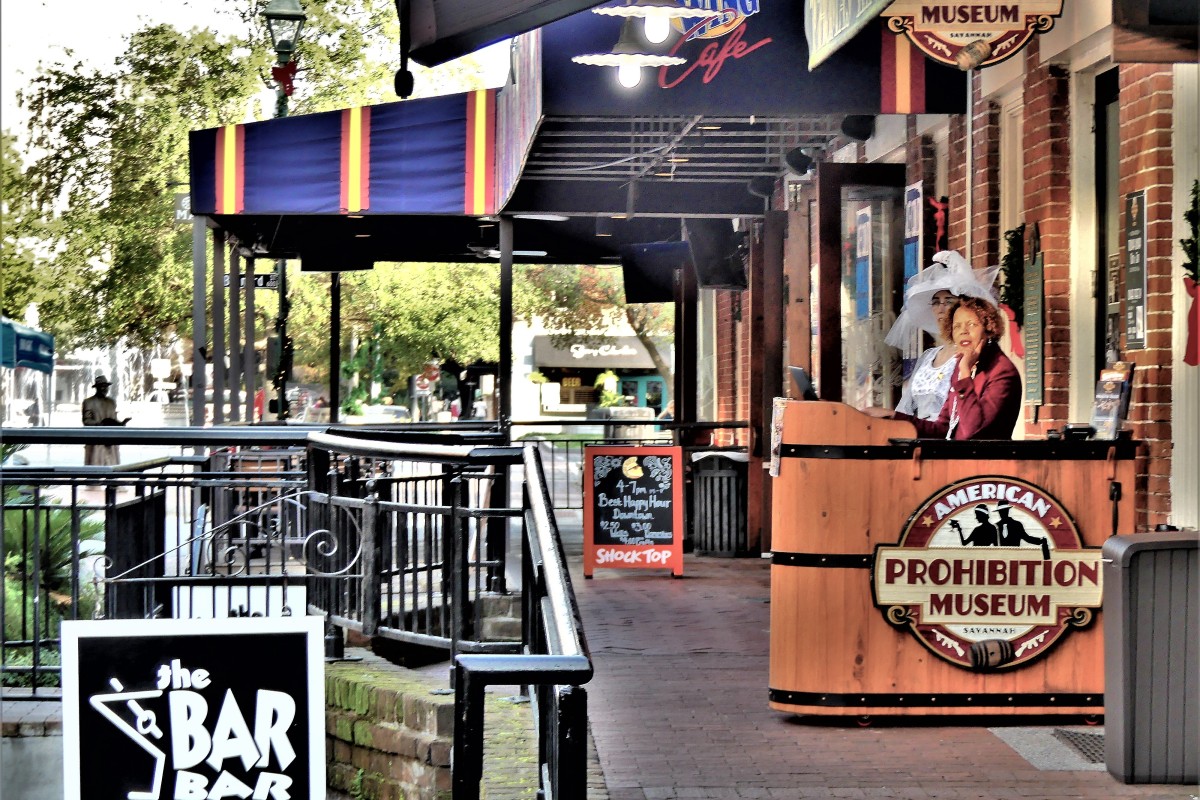
It’s happy hour in the heart of Savannah’s historic City Market, where the American Prohibition Museum is surrounded by bars, cafes and restaurants…serving alcohol–a decided irony for the two museum attendants who may be wondering whether they will ever attract any patrons, sober or otherwise.

unintended consequences (2)


*This photograph is a small part of a much bigger story about Savannah, Georgia…with pictures and words entitled L’Chaim–yet another irony, given the universality of the word when toasting with an alcoholic beverage!


L’Chaim

A second pass through historic Savannah on our way north left us with a day to cover a small part of the city left unseen from our last visit. Previously, Leah and I had budgeted two days in Savannah–between Thanksgiving and Christmas–as we ever-so-slowly slipped into our winter’s hibernation in Florida. Additionally, our obligation to celebrate Dad’s 93rd birthday in West Palm Beach (Happy Birthday, Dad!) on December 11th didn’t leave us much wriggle room for extra time.

Nevertheless, our first visit was rewarding, with memorable stops to: Bonaventure Cemetery, a fabled 18-century burial ground;

Bacon (2)

the revival of River Street, along the Savannah River;

Georgia Queen (3)

neighboring City Market, an 18th-century open-air marketplace;

unintended consequences (2)

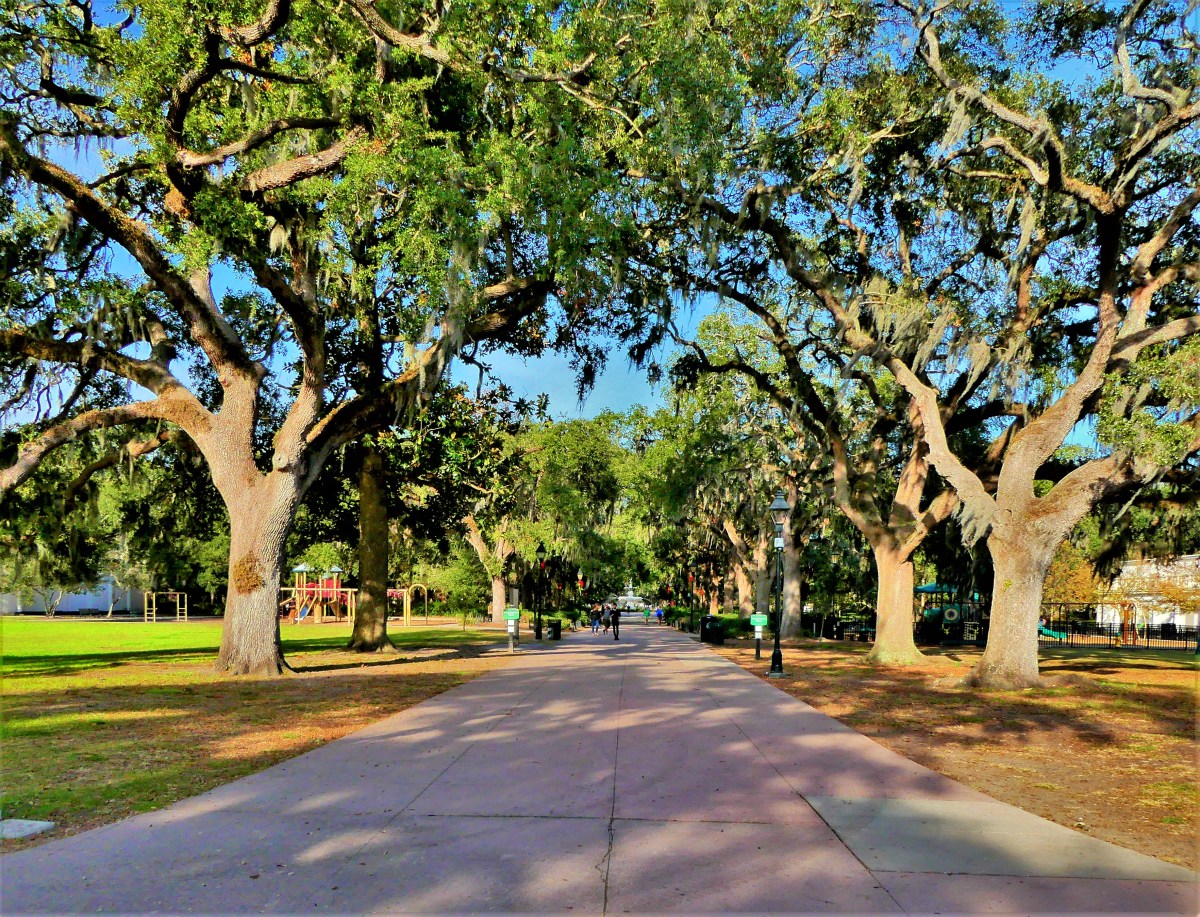
Forsyth Park, with its famous oak-lined pathway…

Forsyth Park

leading to legendary Forsyth Park Fountain;

Forsyth Park Fountain

and finishing at the landmark Gothic-Revival Cathedral of Saint John the Baptist, the centerpiece of the historic district.

St. John exterior

But Savannah’s geo-positioning (part of the I-95 corridor) made it an easy transition point for routing our return home, and a welcoming destination for a second helping of Southern hospitality…and of course, we were not disappointed.

“So, we have another day here,” announced Leah. “How would you like to spend it?”

“You’re probably gonna laugh,” I stated seriously, “but just like Charlotte, there’s lots of Jewish heritage in Savannah, and there’s a historic congregation in the historic district we could check out.”

“But it’s Saturday, so there’s no way we’re getting in during the Sabbath,” she forewarned, so the best you could expect is an outside picture of the building.”

“Unless we attend services.” I added. “C’mon, it’ll be spiritually enlightening, and you can pray we made the right choice by relocating to St. Augustine.”

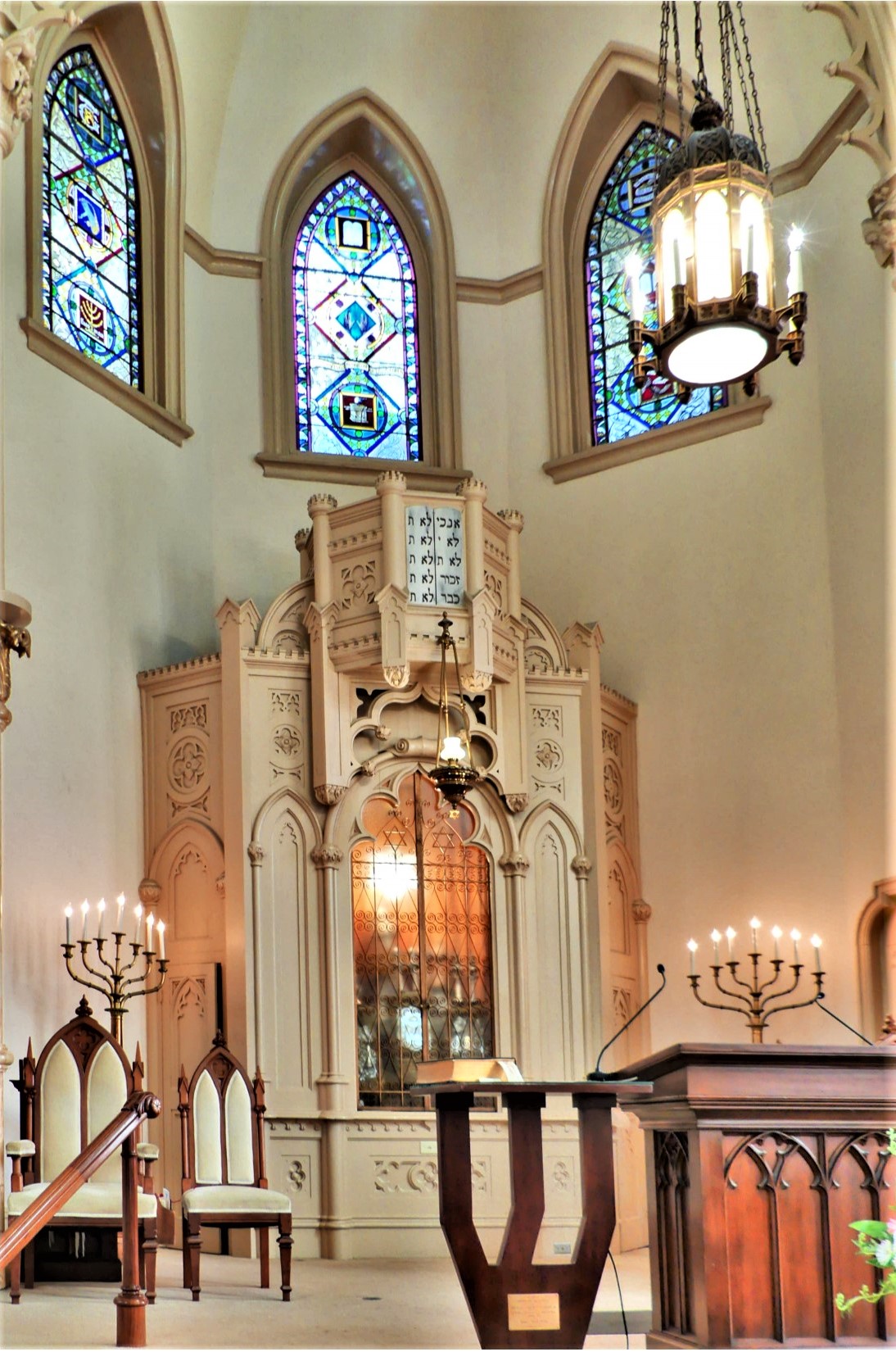
We arrived at Congregation Mikve Israel, walked past a uniformed police officer, and through the anointed doors…

doors

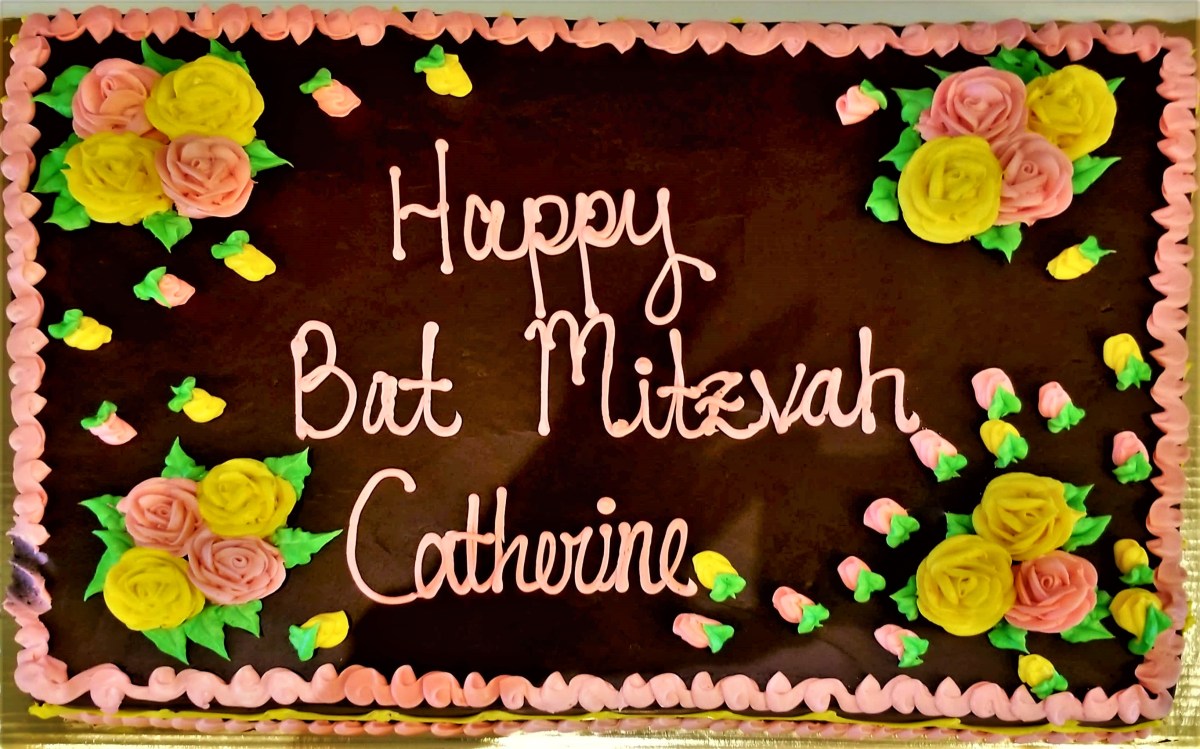
where we were met by welcoming ushers who immediately apologized for the temple’s appearance, and offered us a program outlining Catherine’s Bat Mitzvah. We were twice surprised.

Ordinarily, we would have taken a seat at the back of the temple making it easy to leave at our earliest convenience, but it seems that God had other plans for us.

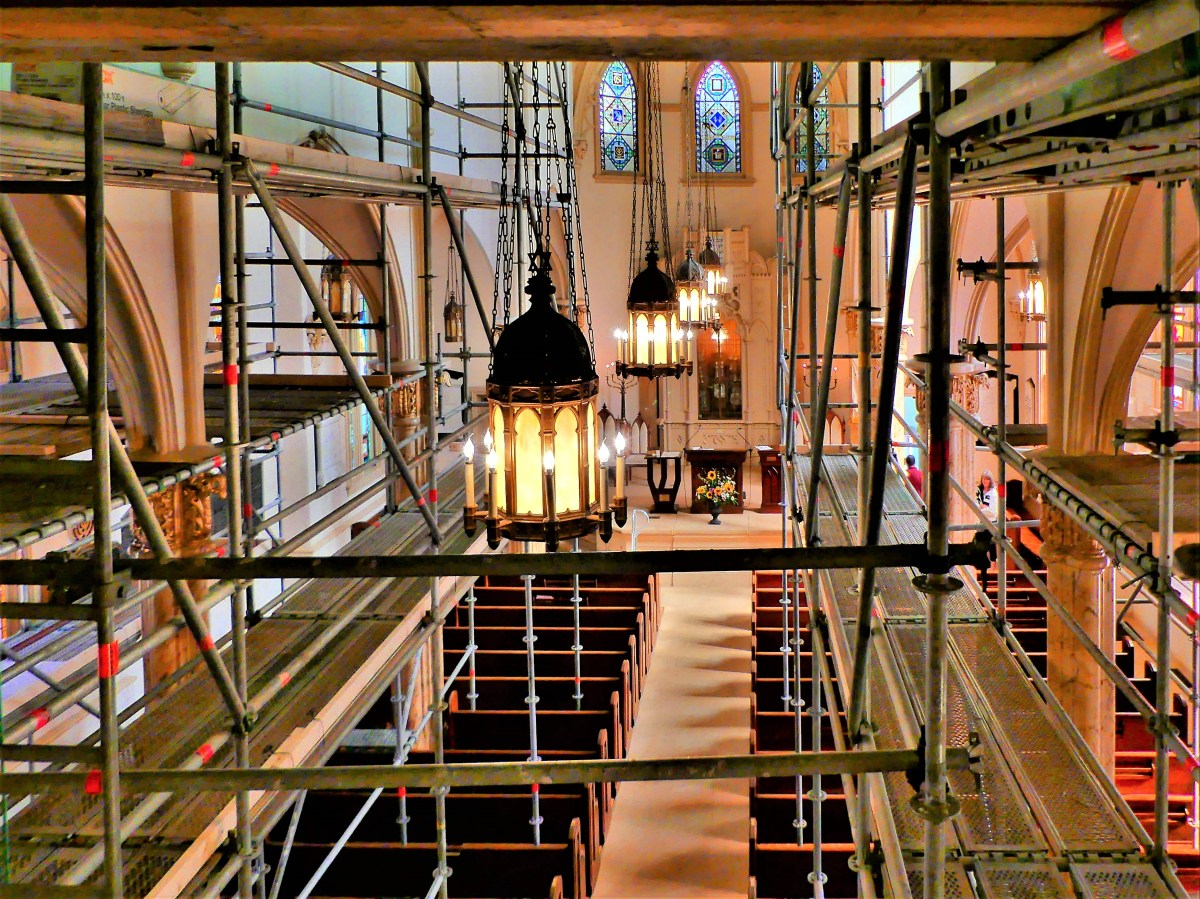
We crossed a chuppah of scaffolding shrouding one-half of the sanctuary’s neo-Gothic architecture, and placing the back rows of the pews off-limits.

scaffolding

Instead, we took a seat closer to the altar among other congregants, while feeling somewhat out of place.

Bimah and Ark

We opened our siddurim to the selected text announced by Rabbi Haas, and subsequently followed the service to its conclusion, as it was meticulously led from the bimah by Catherine.

Catherine at the ark

While chanting familiar prayers with familiar melodies, I reflected on the original forty-two Sephardim and Ashkenazim who disembarked from the William and Sarah in 1733–having sailed aboard a London vessel bound for Oglethorpe’s fledgling colony in Georgia with their precious Sefer Torah in tow–

1733 Torah (3)
1733 Torah

in search of religious freedom and a fresh start.

1737 Torah
1737 Torah

As we prepared to exit after the last refrain of Adon Olam had echoed through the hall, we were approached by an elder of the congregation who encouraged us to stay behind and enjoy lunch with the other members in celebration of Catherine’s mitzvah.

There was no way of turning down Jack’s invitation. He wasn’t taking “no” for an answer. We feasted on lemon chicken, orzo with roasted vegetables, artisan lettuce with dressing, mixed fruit salad, and challah. The company at our table was as delightful and fulfilling as the meal.

During dessert…

cake

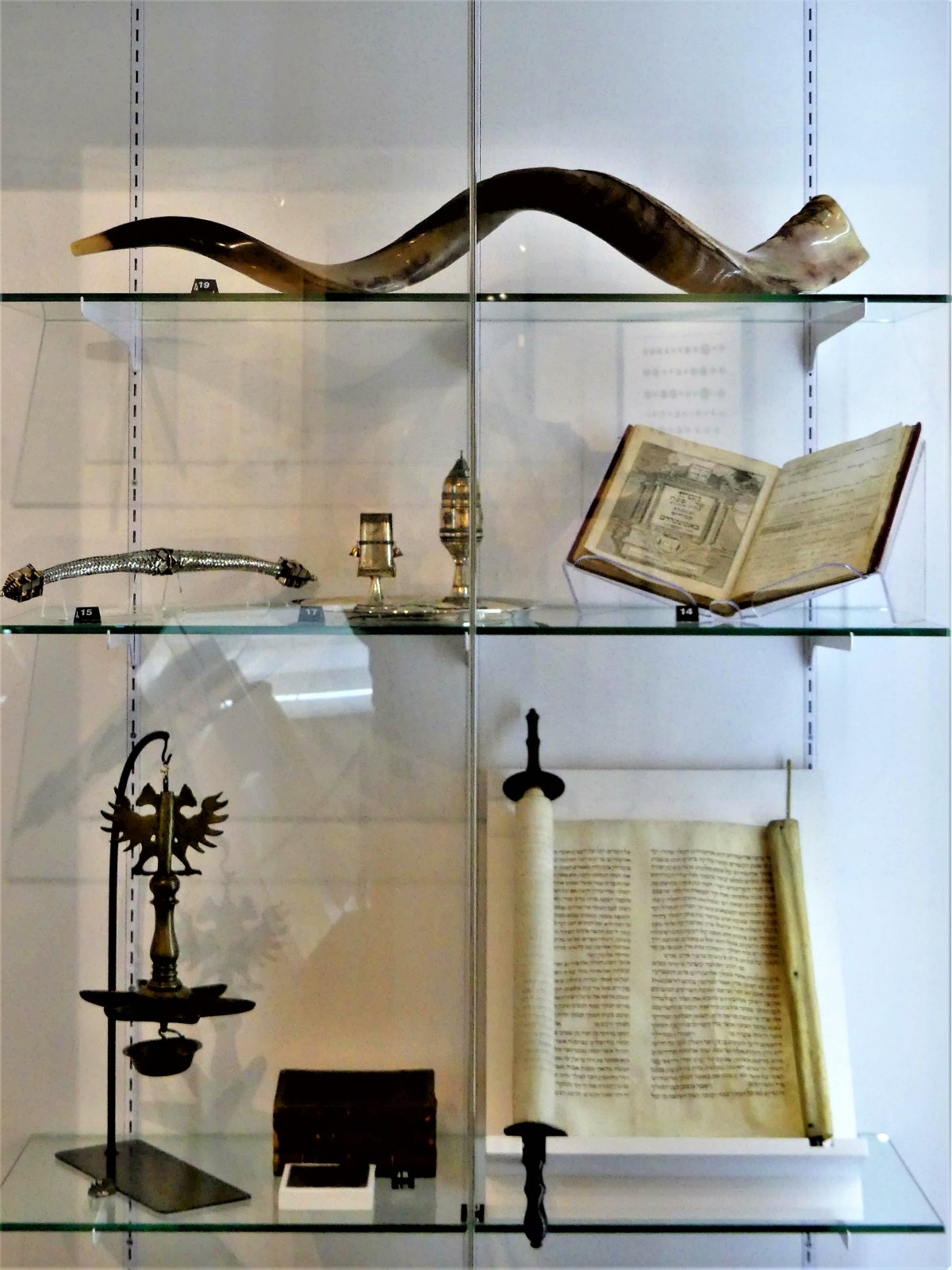
we lamented over a missed opportunity to learn more about Mikve Israel’s storied history, given that tours only occur on weekdays. However, a temple docent–conveniently seated at our table–volunteered to escort us to the second floor for a personal inspection of museum exhibits…


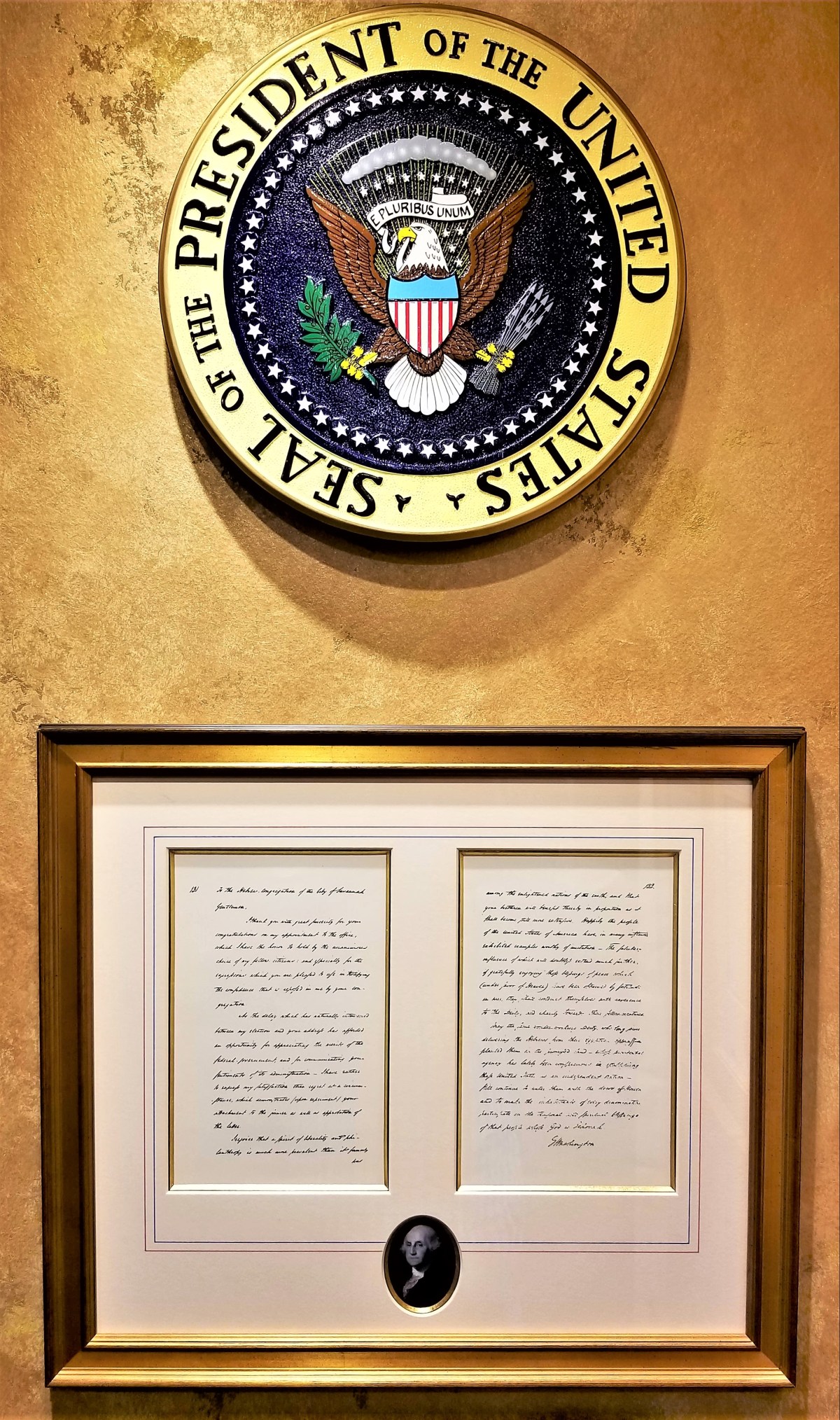
Wall of Presidents

GW decree
“… May the same wonder-working Deity, who long since delivering the Hebrews from their Egyptian Oppressors planted them in the promised land – whose providential agency has lately been conspicuous in establishing these United States as an independent nation – still continue to water them with the dews of heaven and to make the inhabitants of every denomination participate in the temporal and spiritual blessings of that people whose God is Jehovah.”

Ford's visit

A Colonial Congregation (2)

Historic Preservation (2)

Building for a Congregation (2)

and museum artifacts…

artifacts1

artifacts2

artifacts3

As serendipitous as this adventure was, I knew as I descended the stairs…

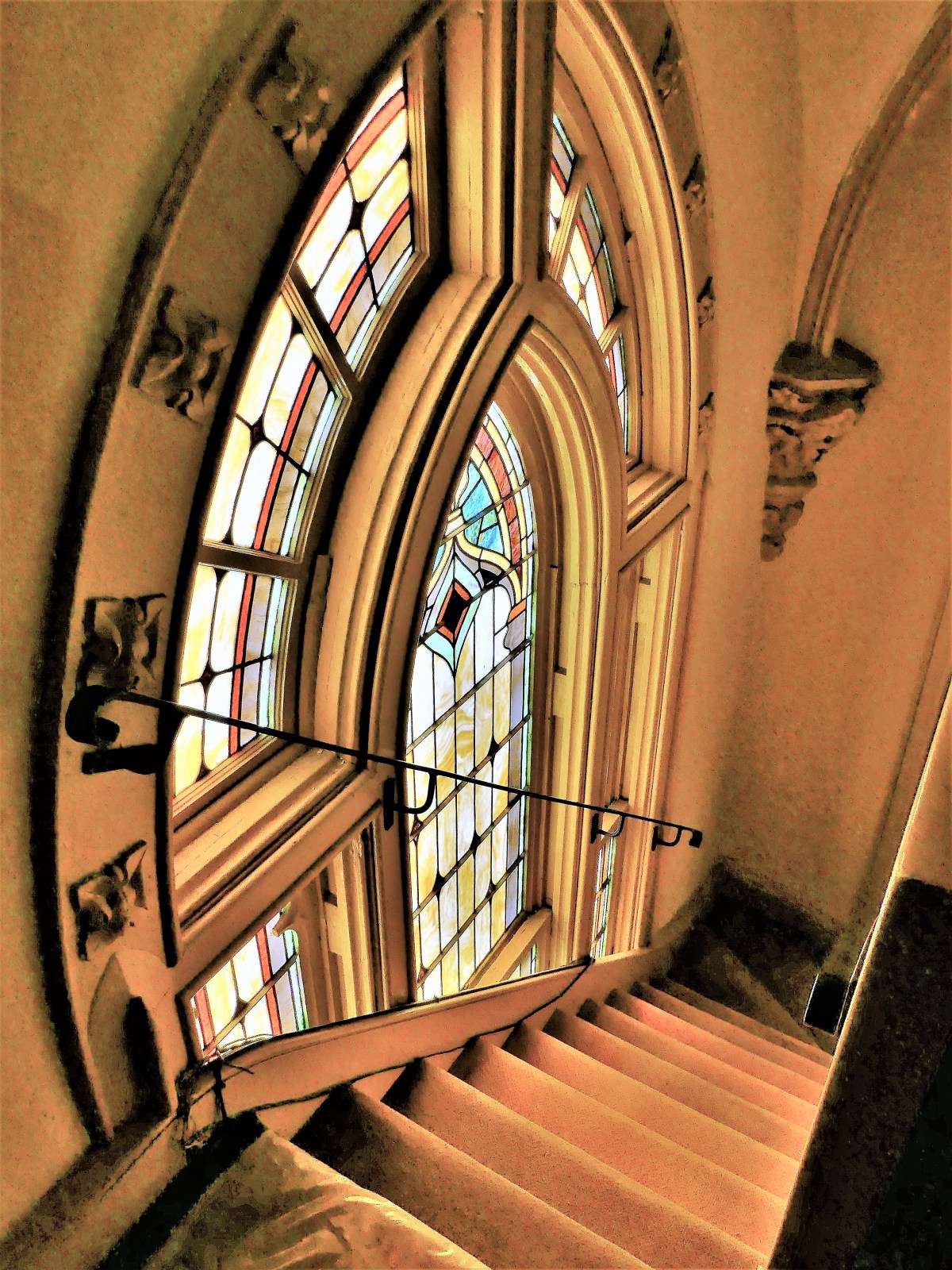
window and stairs

that I was meant to tell the story of Mikve Israel’s descendants: about their unwavering regard for their American Revolutionary roots, their continuing crusade for community; and their unconditional code of acceptance and inclusion.

Leah and I were invited to return and sample real Southern Jewish hospitality the next time we pass through Savannah, and I think that’s an invitation that I can easily accept, regardless of the obstacles.

scaffolding1 (2)

Fortuitous

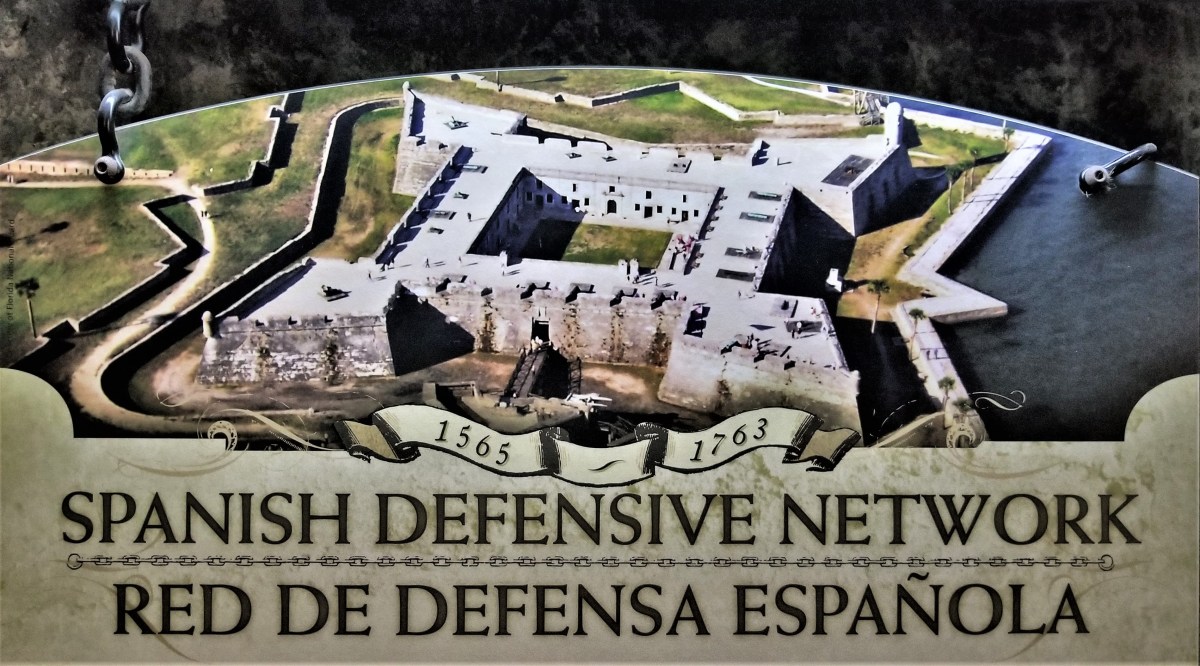
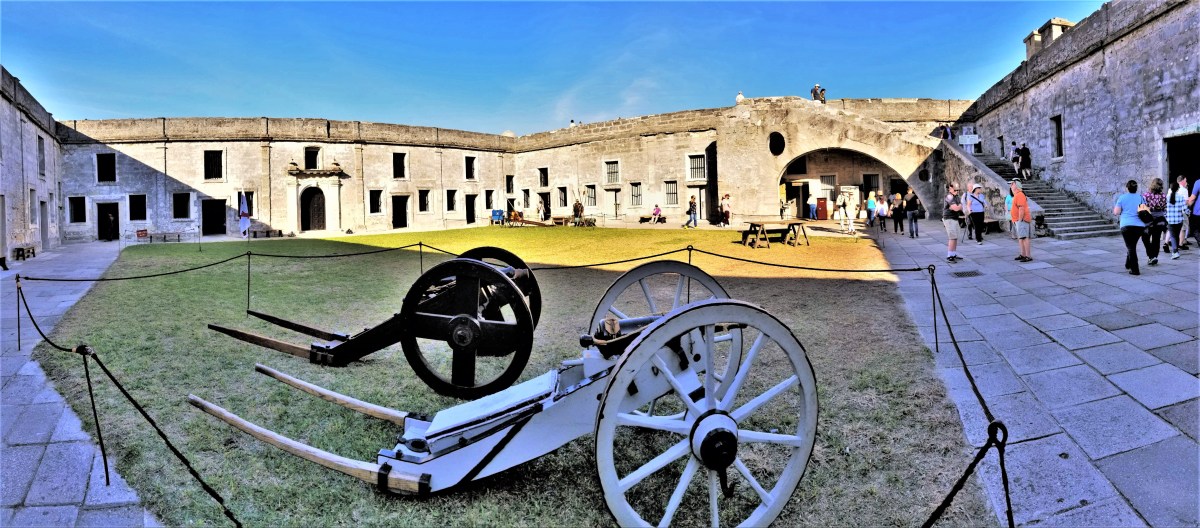
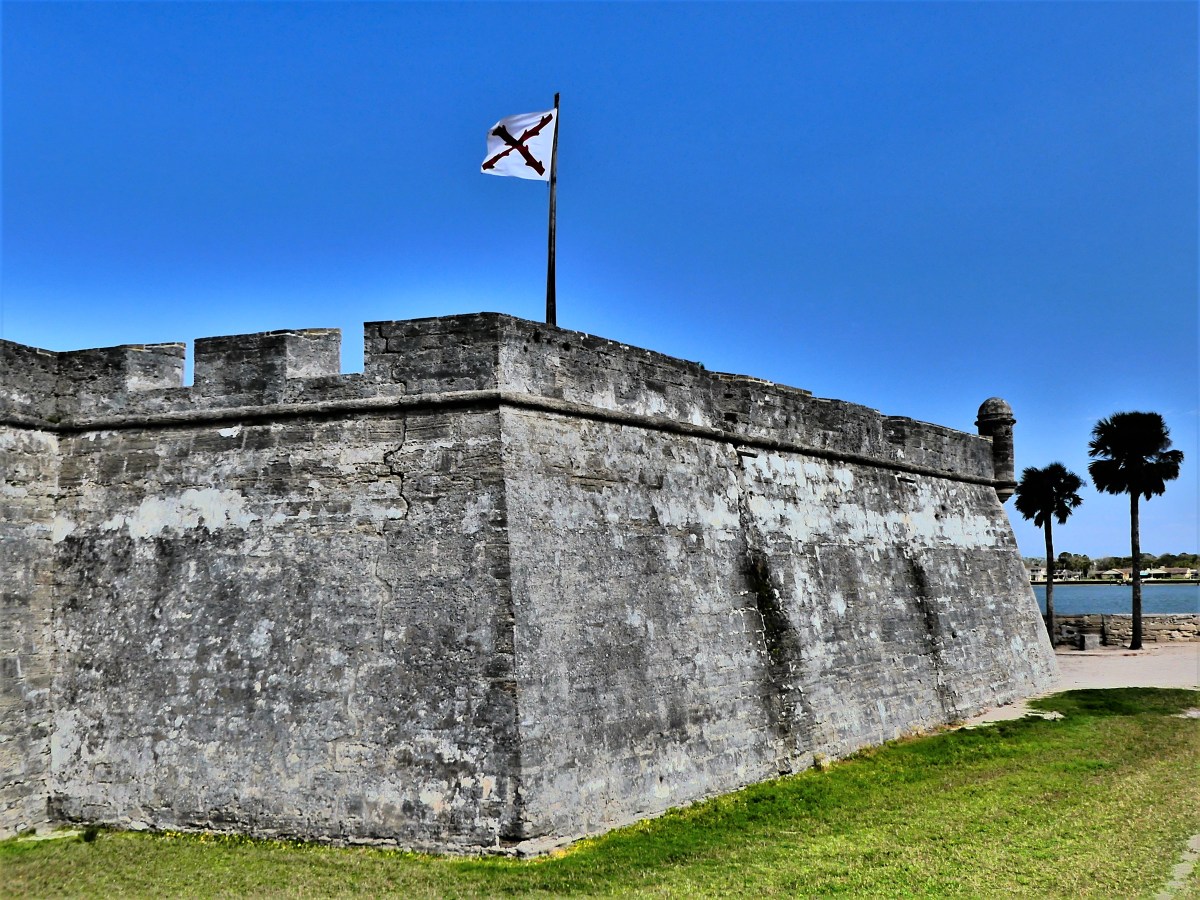
The Spanish crown was ambitious in its exploration of the New World, establishing the first permanent European settlement at St. Augustine in 1565, and equally as keen on protecting its investment from marauding pirates, subversive Native American neighbors, and the French and British Empires by establishing a trio of forts along New Florida’s northern Atlantic coastline.

Spanish Defensive Network

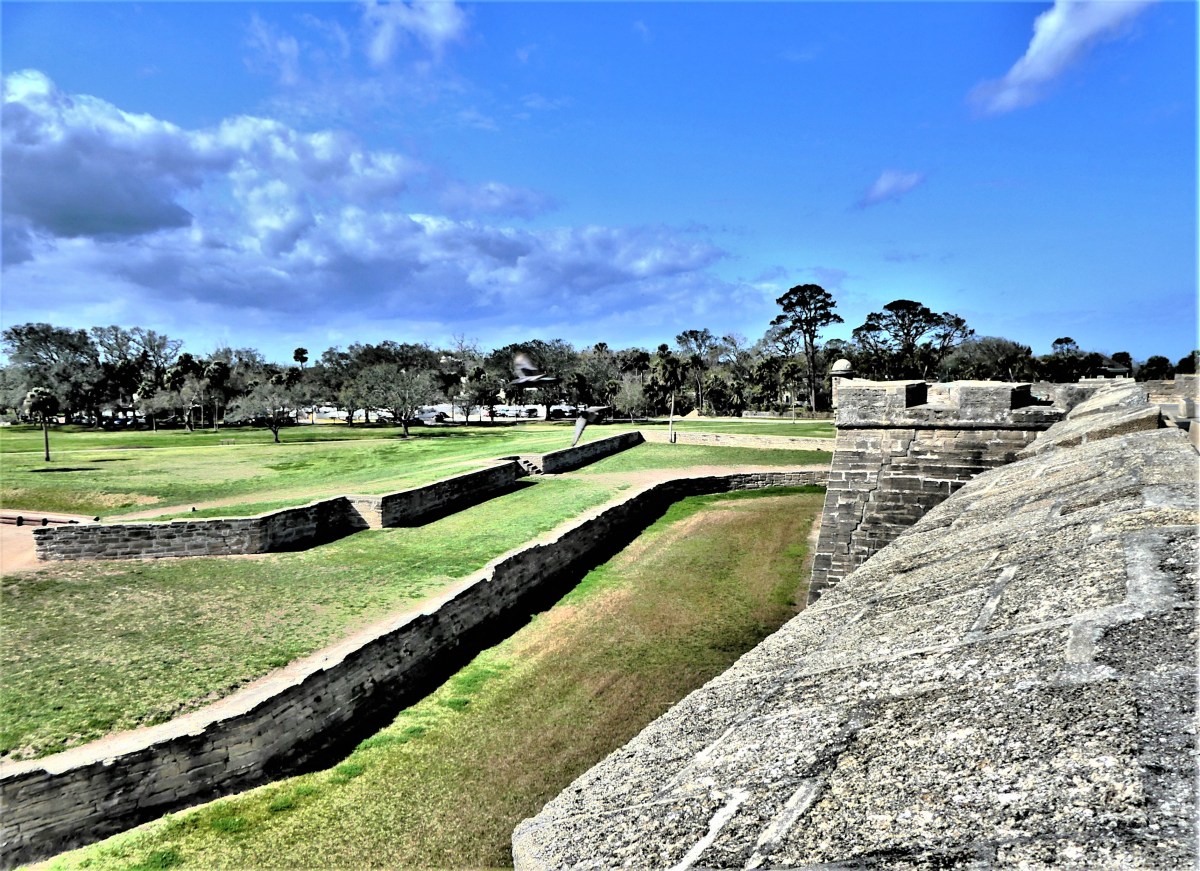
Aside Fort Mose to the north and Fort Matanzas to the south, Castillo de San Marcos was the first and largest of the three, standing 33 feet high, with 14 feet thick walls of coquina blocks–

outside the walls (3)

–a bonded composite of crushed seashells quarried from nearby Anastasia Island–and able to withstand a cannon shot from an enemy vessel.

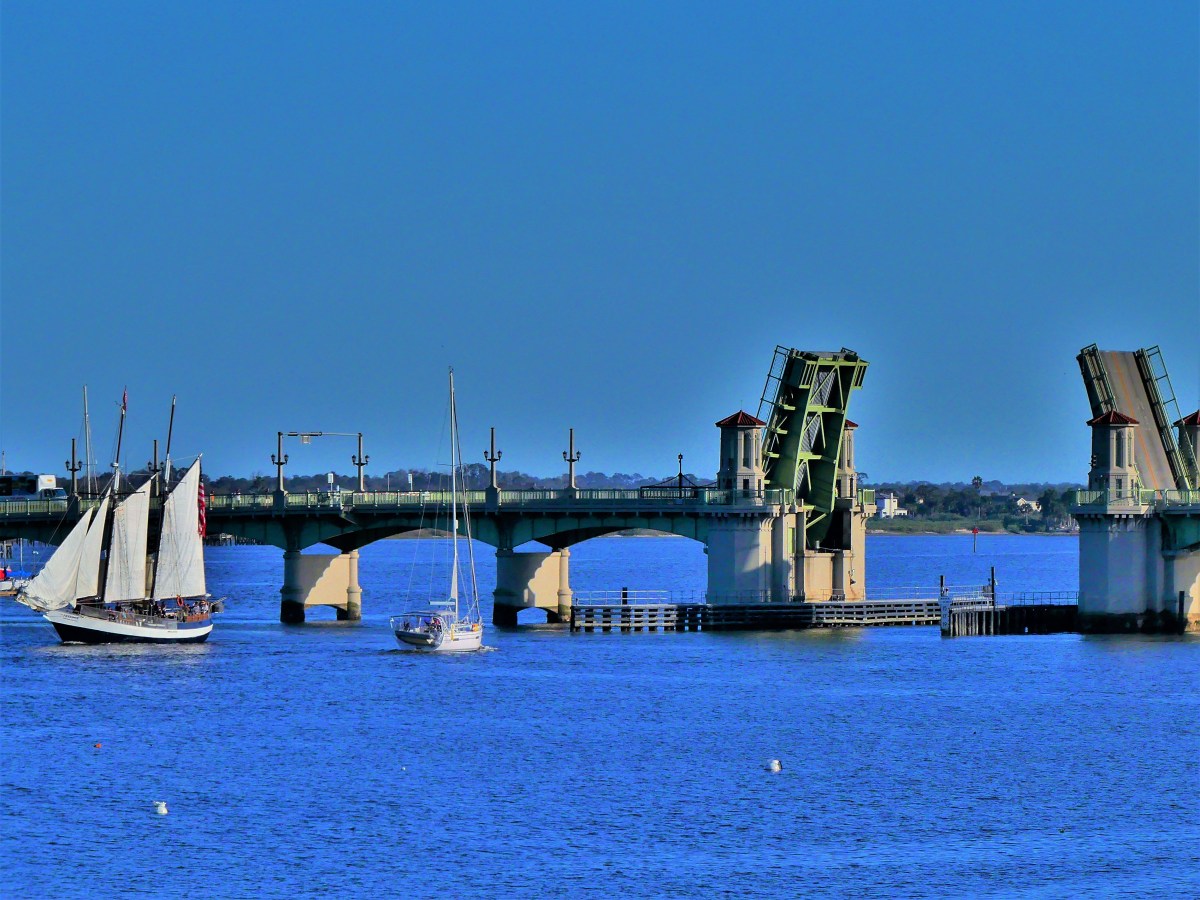
Lions Bridge passage

Completed 323 years ago, Castillo de San Marcos still stands as the oldest masonry and best preserved fortress in the continental United States, and a symbol of the colonial struggles that shaped the history of a nation.

cannon casting (3)

Protecting St. Augustine was an interwoven fabric of fort design,

moat

view from above

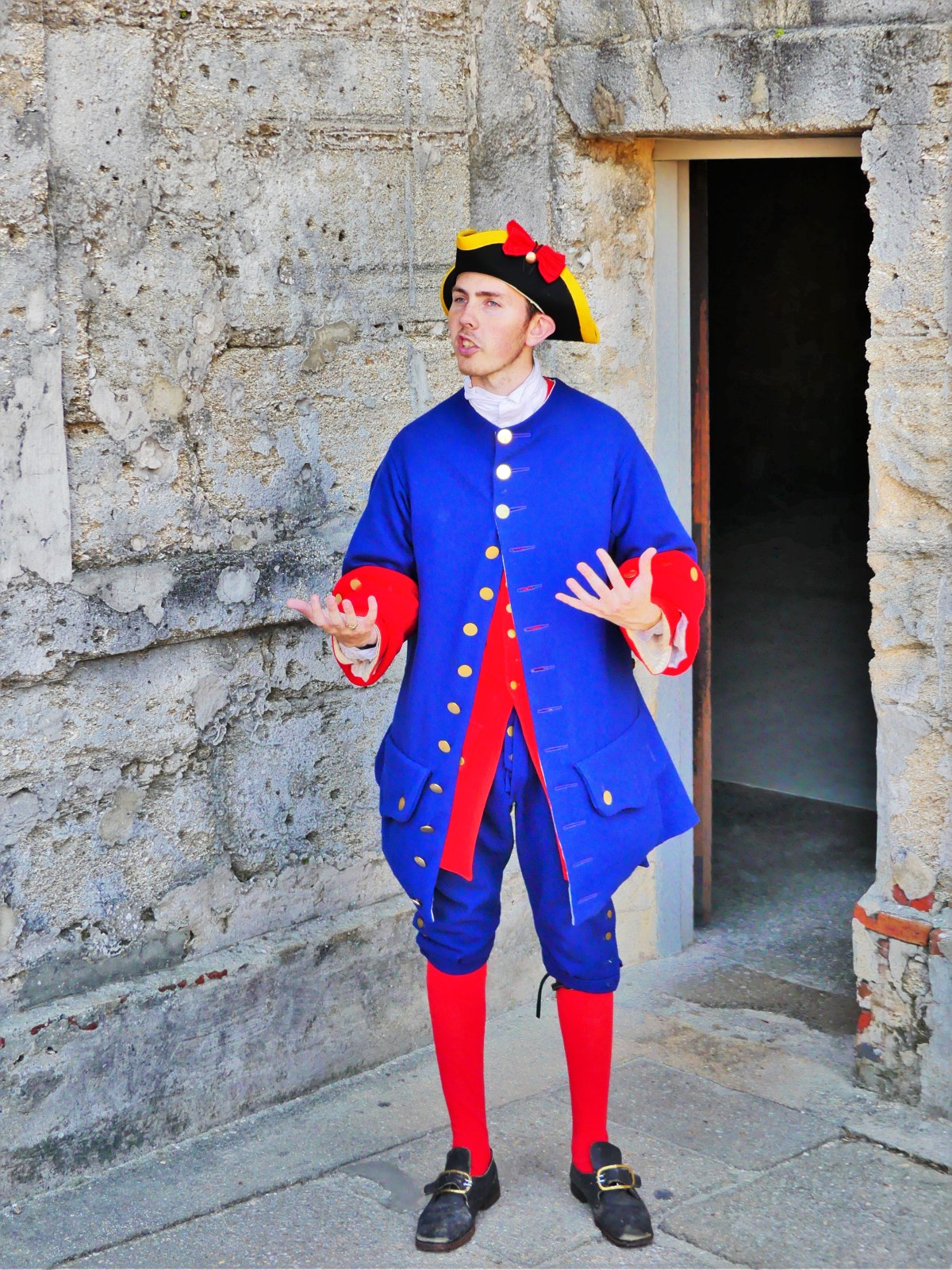
soldier readiness,

reenactor

and black powder weaponry.

interior (2)

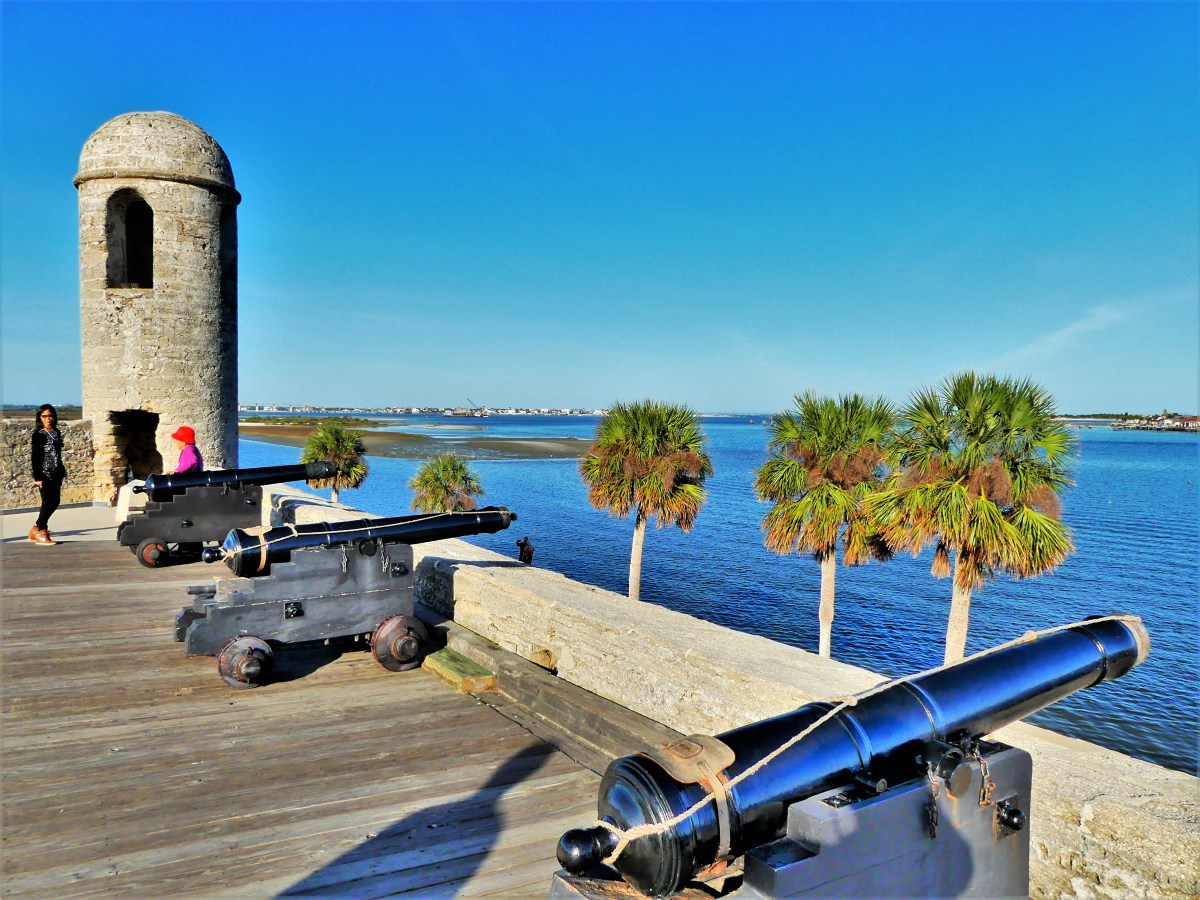
The Castillo’s advanced architecture showcases the bastion system, named for the diamond-shaped spears jutting from the four corners of the fort walls–

fort exterior

each point armed with an array of cross-firing guns intended to sweep across a wide swath of defensible coverage.

guns and turret

Additionally, the coquina stone offered fortunate benefits to fortress defenses if fired upon, as soldiers quickly realized that the porous properties of its shell walls could absorb the impact of cannon balls, rather than the walls shattering into shards if built with brick or granite.

A soldier’s life of active duty at the fortress usually consisted of drills, repair, and sentry watch,

sentry turret

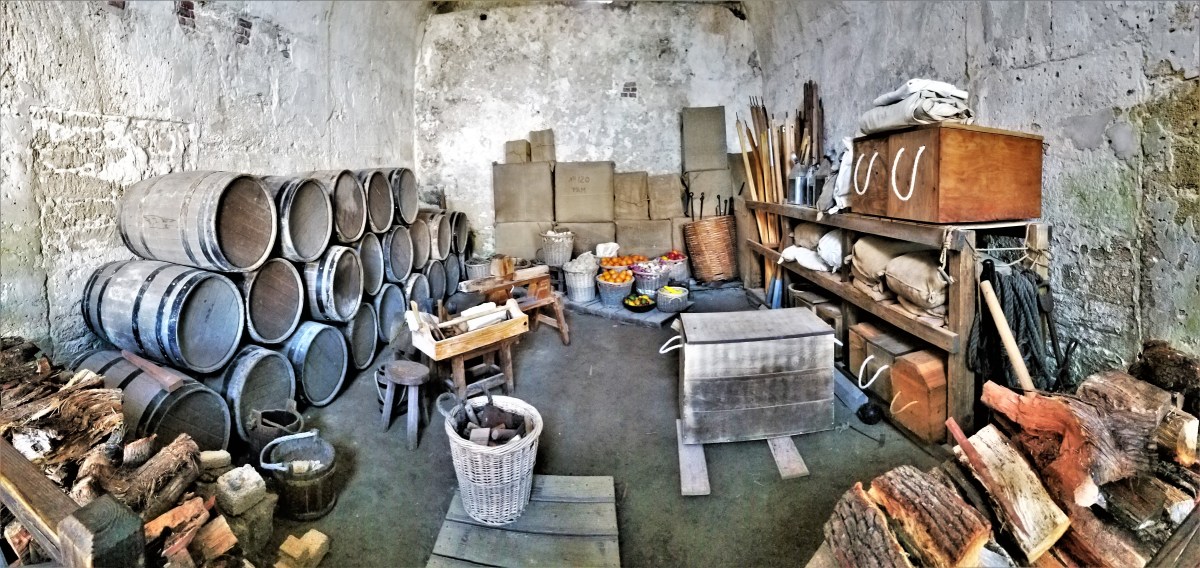
with little time ever devoted to battles. Otherwise, their time was spent protecting the larder…

provisions locker

practicing their faith, which guided all aspects of colonial life…

First mass

and working second jobs as carpenters, cobblers, and coopers to support their families when away from the barracks.

soldier bunk

Officer barricks

But when confronted by the enemy, cannon crews were so effective at discharging projectiles from a variety of guns when repelling an attack or seige,

Artillery and Amusettes

cannon defenses

cannon crest

Shot Locker loaded

that Castillo de San Marcos was never breached in its history.

ramparts (3)

The fort has been the centerpiece of a historic city that has changed flags six times, but always by treaty–never surrender or defeat.

Spanish flag.jpg

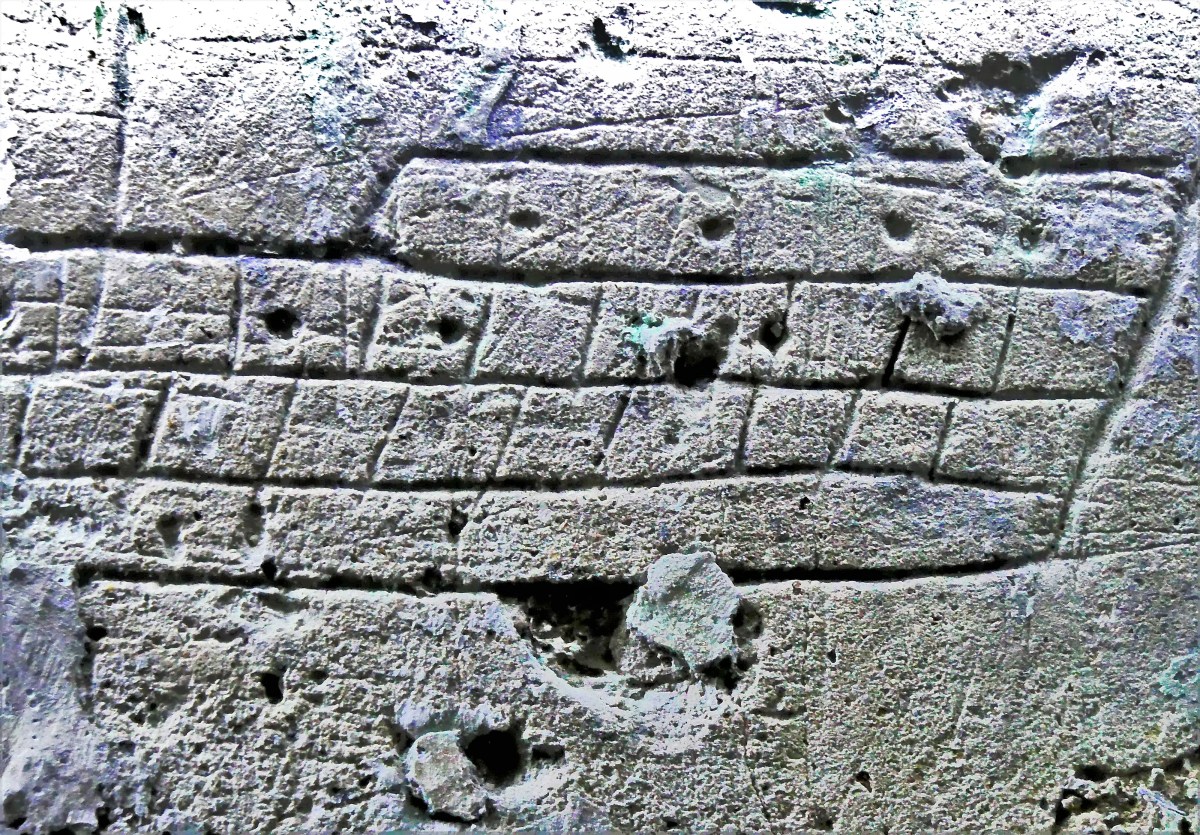
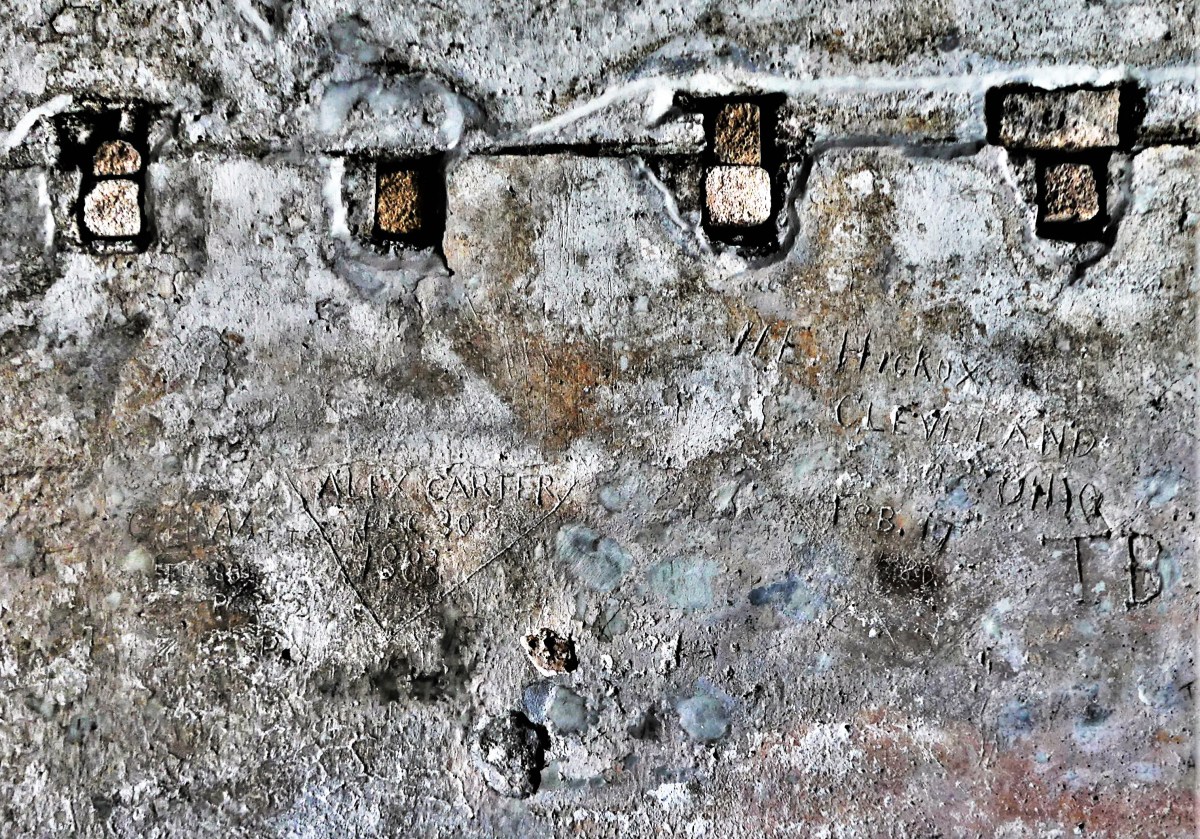
Legions of soldiers through the ages have passed through its chambers leaving behind their marks…

ship grafitti (2)

grafitti1

graffiti (2)

But the treachery of Renaissance politics that sparked an amazing race of New World discovery, launched a new nation forged in conflict, and a new world order that defies all labels.


It Takes a Village of the Arts

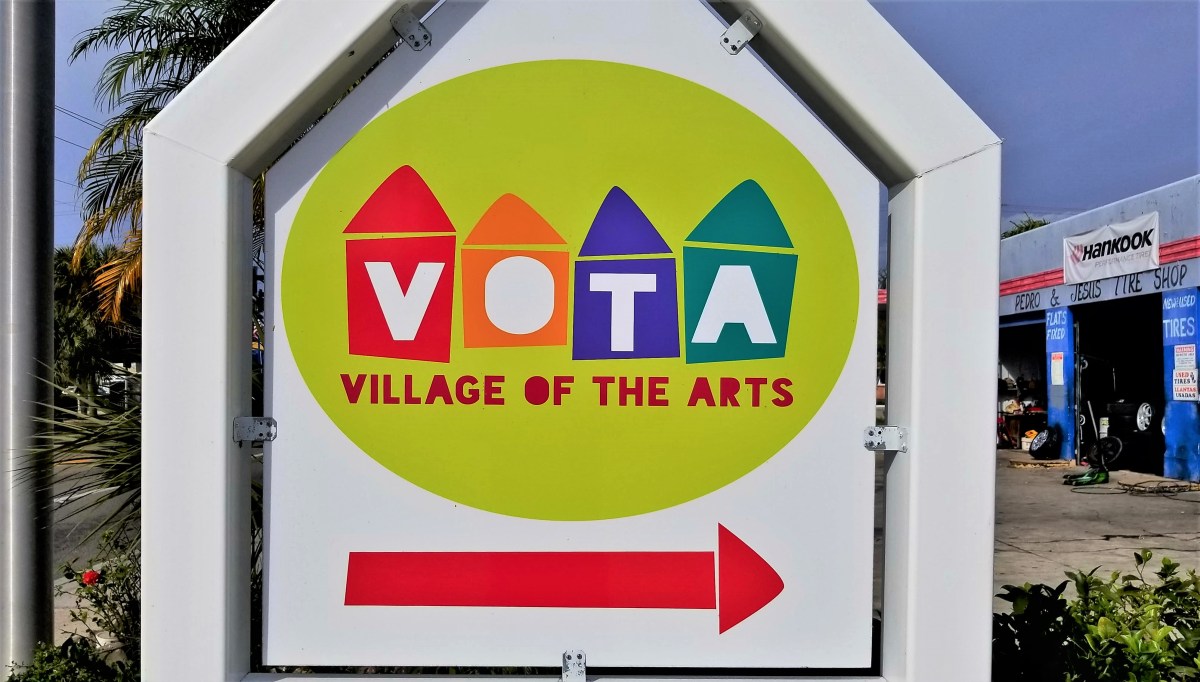
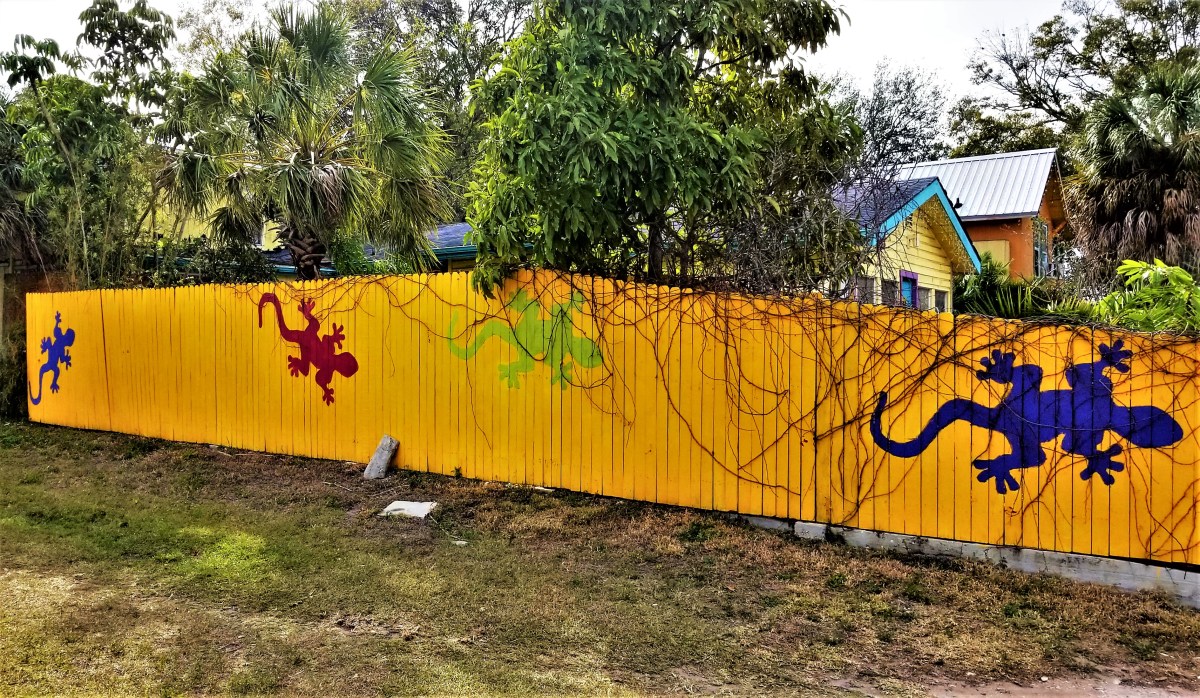
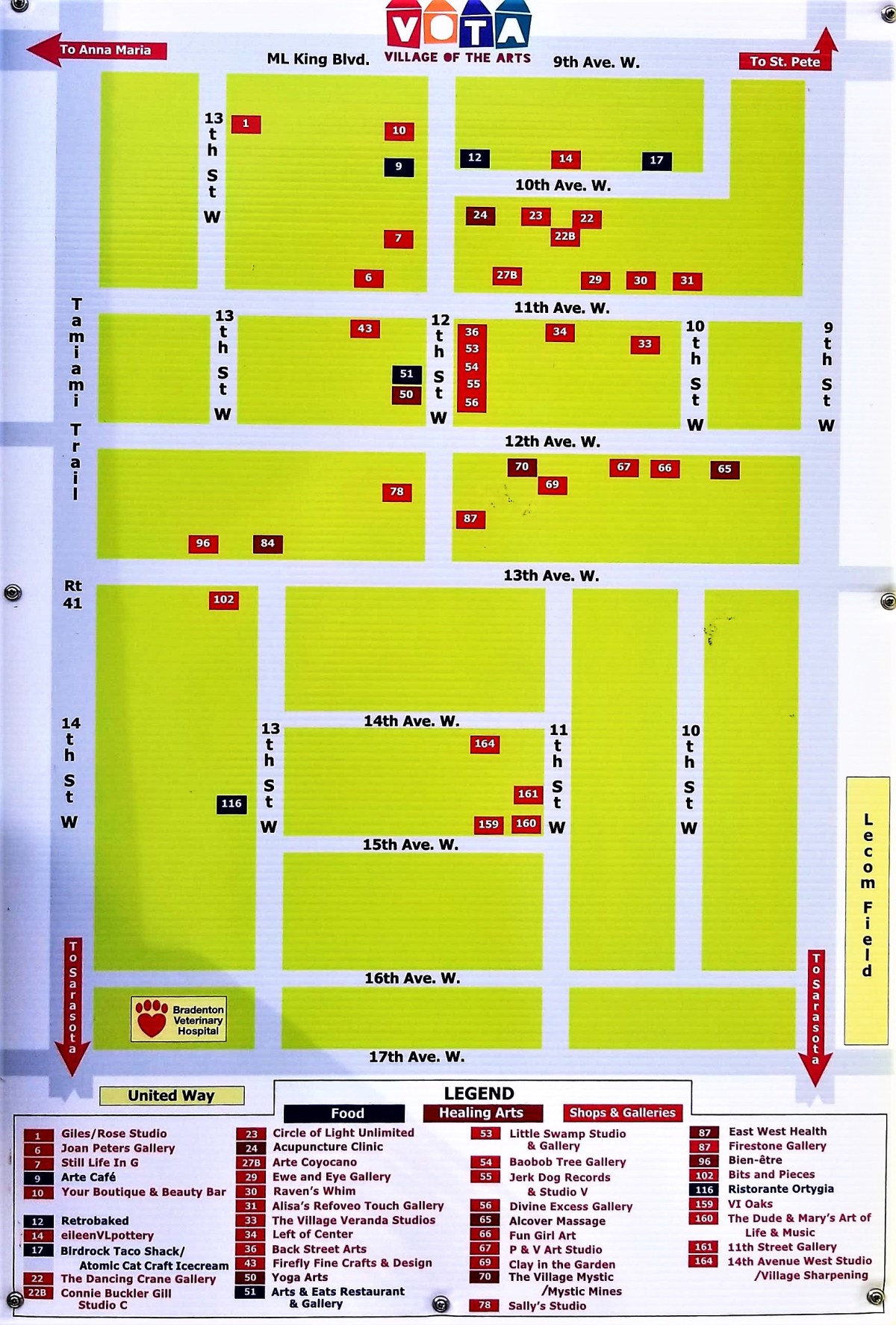
A neighborhood of kaleidoscopic colors awaits the visitor who ventures from Sarasota to back-yard Bradenton for some down-home art…

Vota sign

on the other side of the fence.

Gecko fence

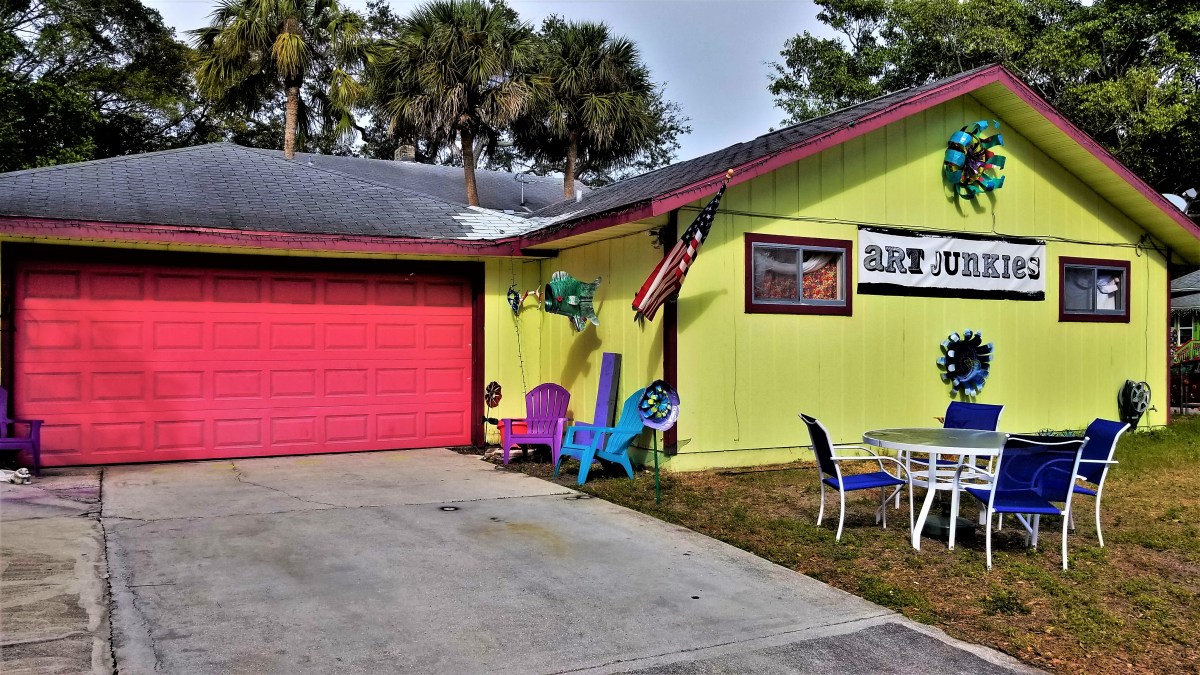
A cluster of artists-in-residence studios and workshops…

Art Junkies

SLOW

closed Gallery

located within early 20th century cottages and bungalows…

painted house

share the narrow city streets…

street art

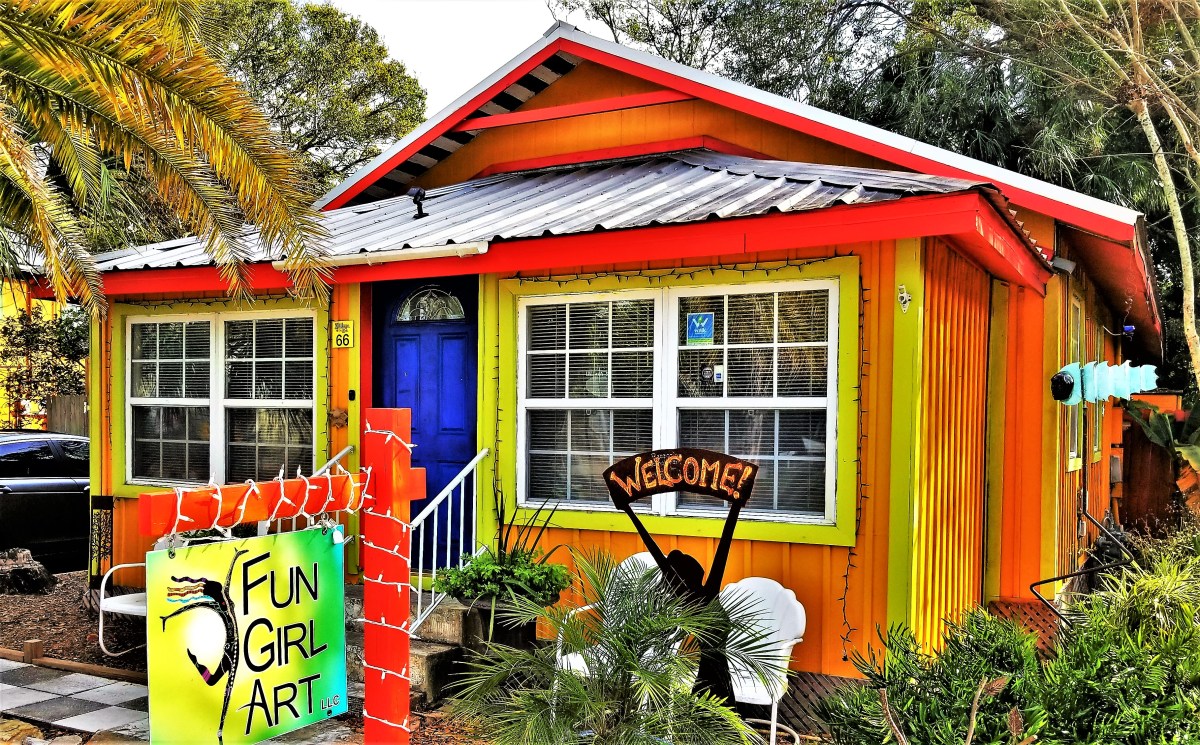
with colorful galleries…

Fun Girl Art

Village mystic

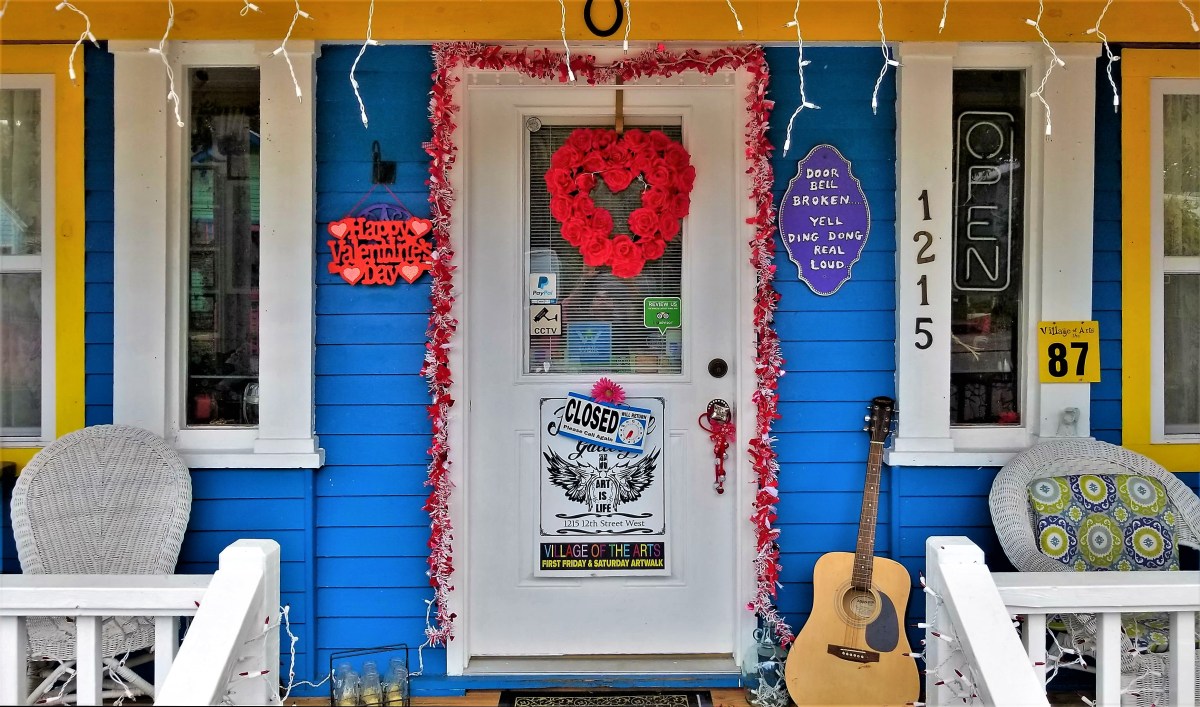
Happy Valentines Day

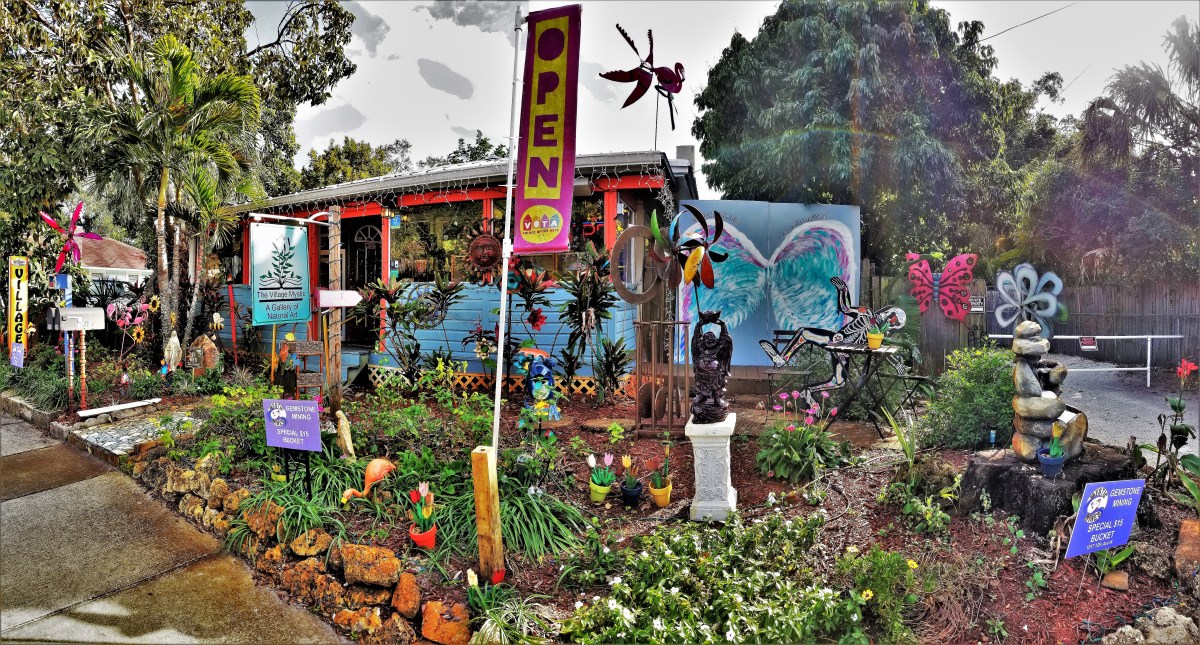
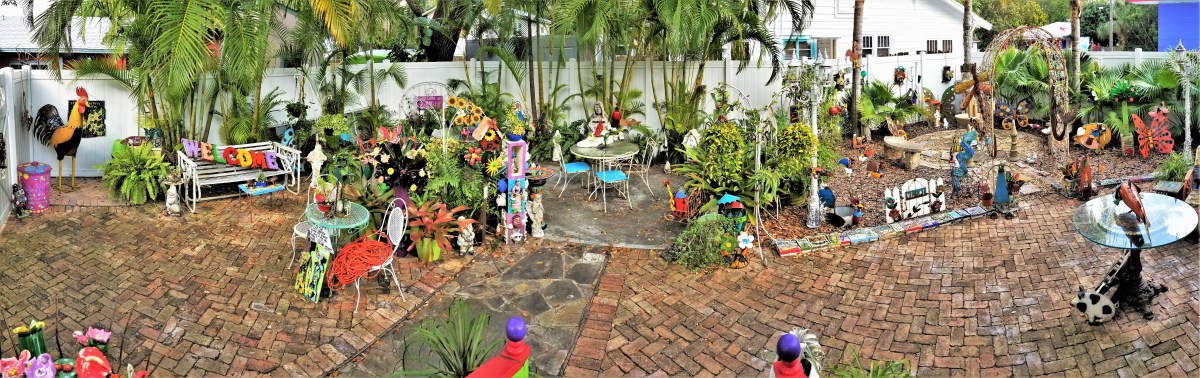
amusing gardens…

garden panorama

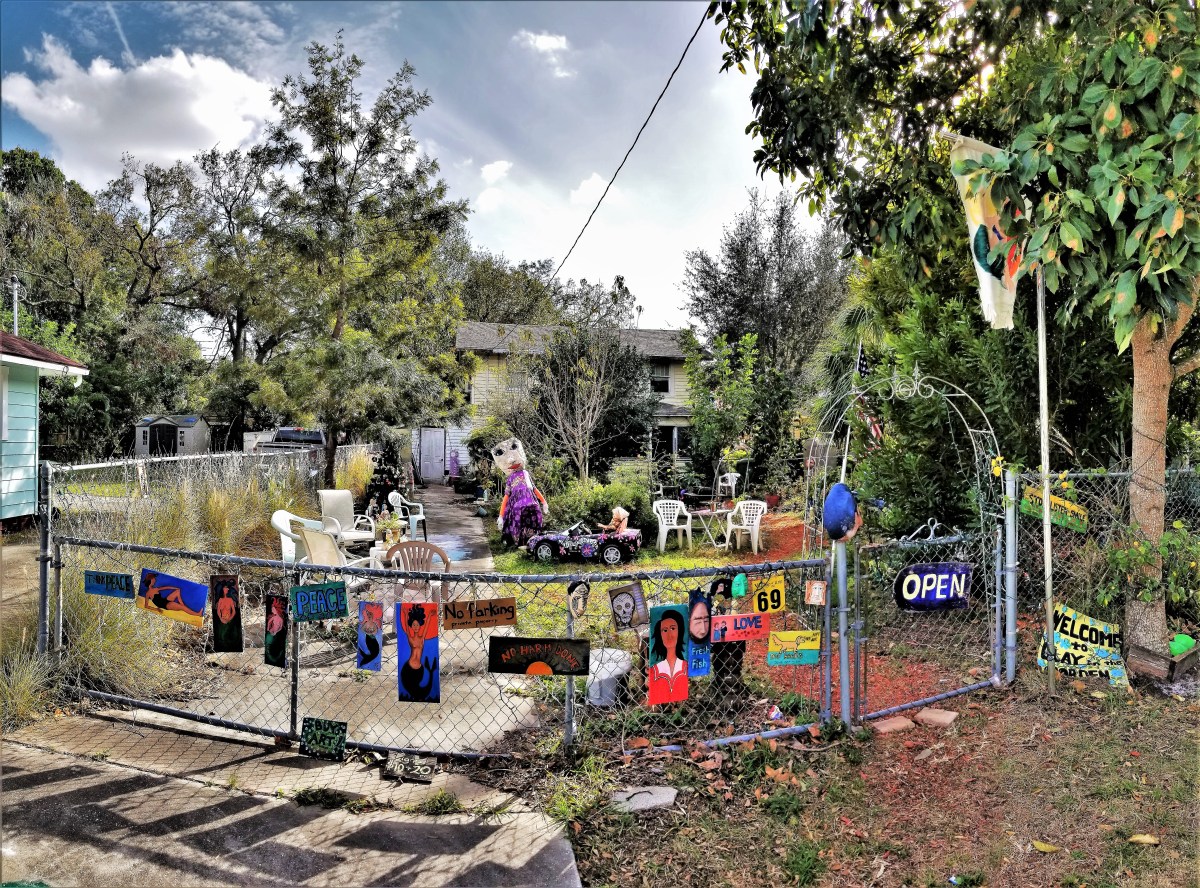
odd garden

imaginative beasties…

Alien seat

Bits and Pieces

Stego beads

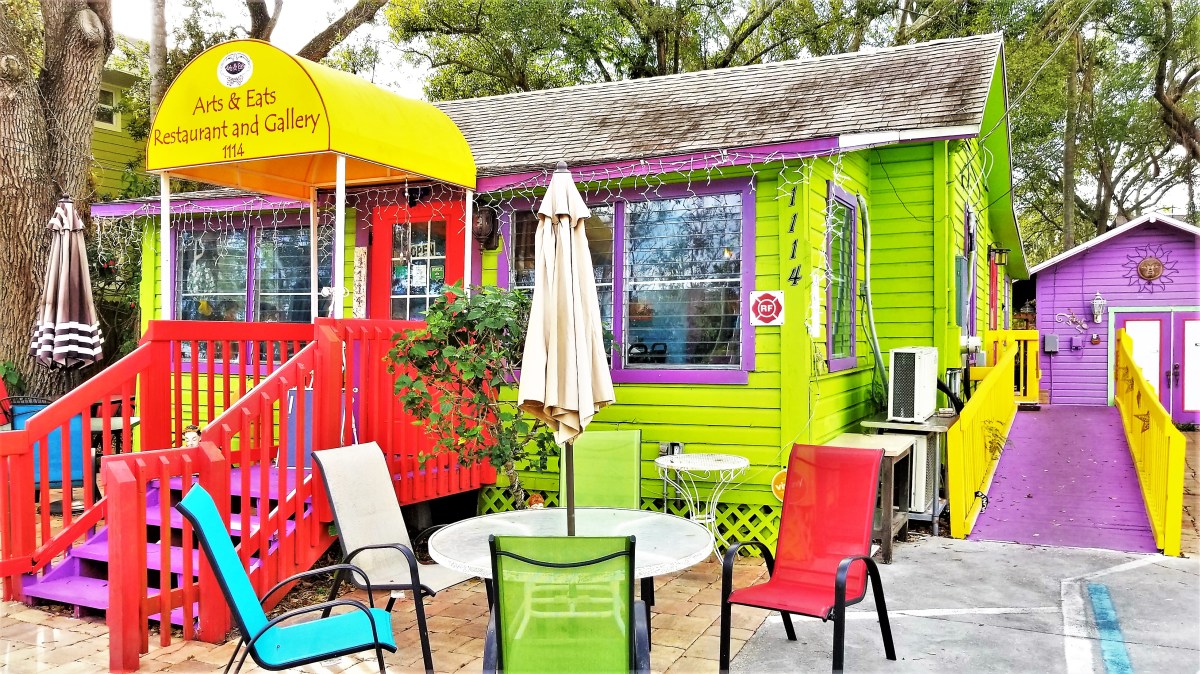
and popular eateries…

Arts and Eats

covering thirty-six acres of mixed-use development,

map

and creating the largest artists’ haven amidst the palms of sunny Florida.

metal palm (2)

Originating in 1999 as a non-profit guild representing local Manatee County artists, theirs is a mission to build a community where artists live and work while enhancing quality of life and creating a harmonious environment.

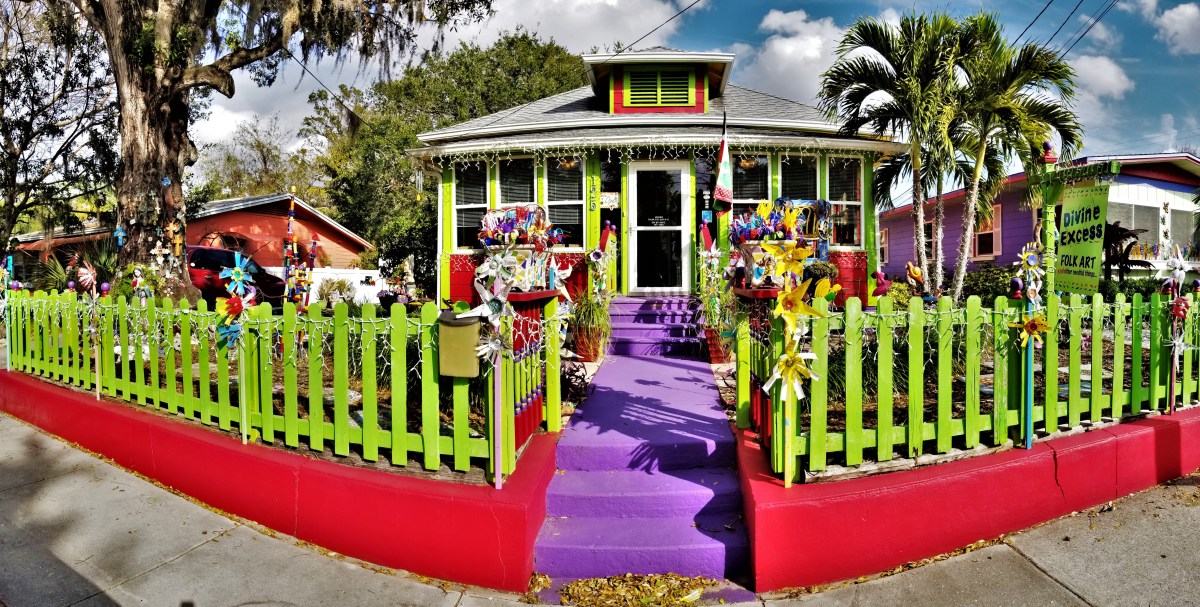
Notably refreshing, Divine Access Gallery specializes in contemporary folk art,

Divine Excess1

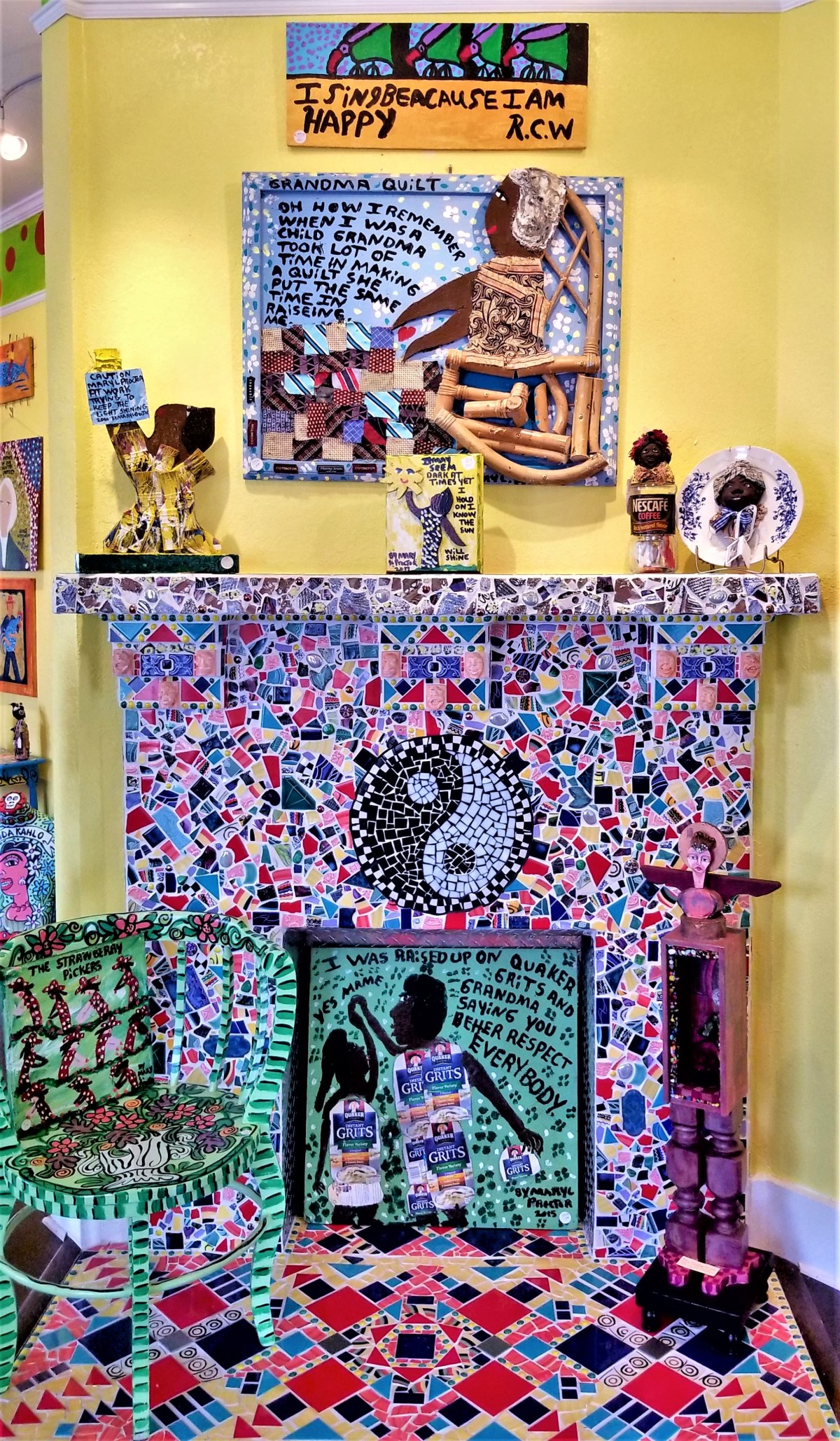
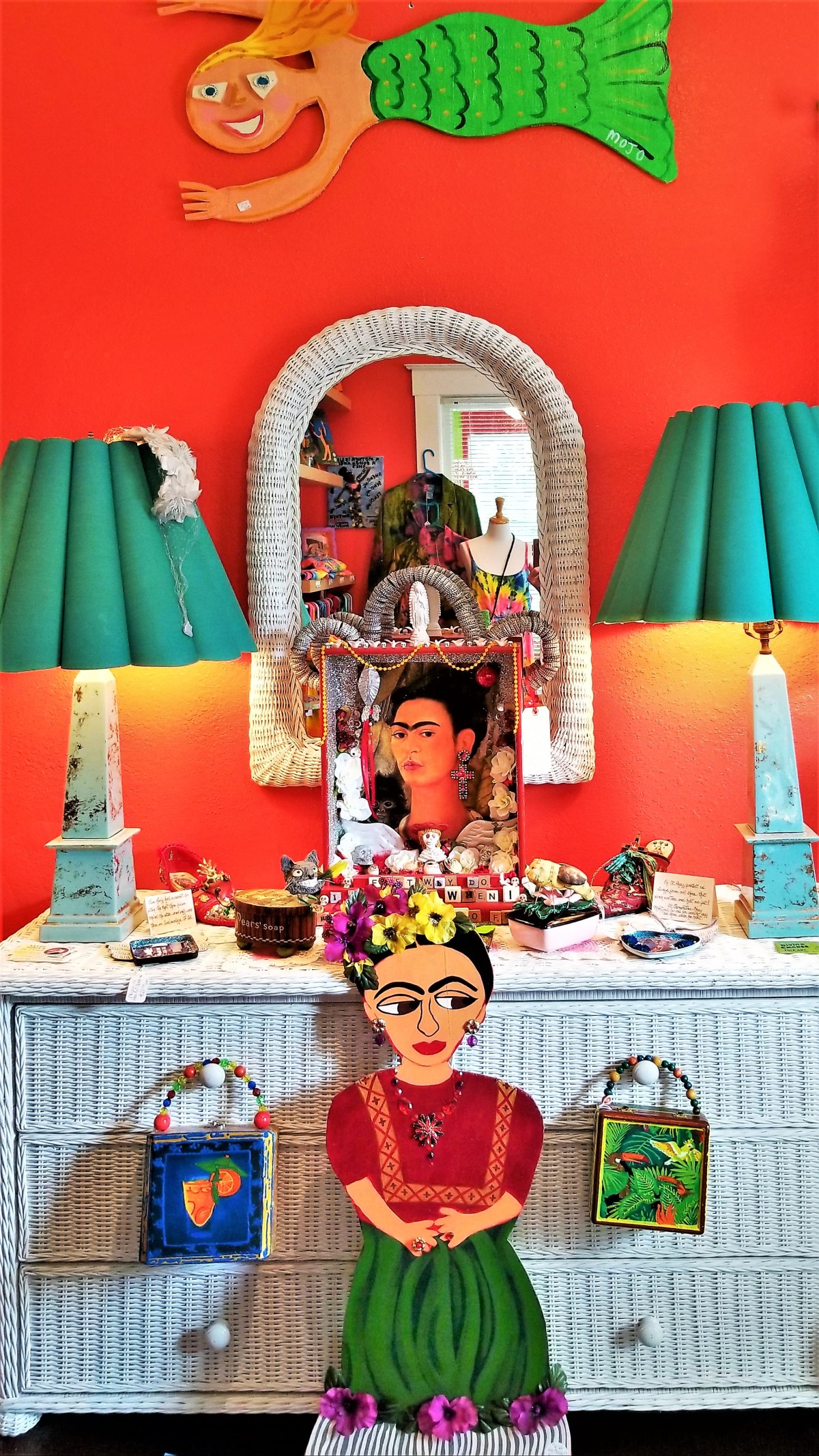
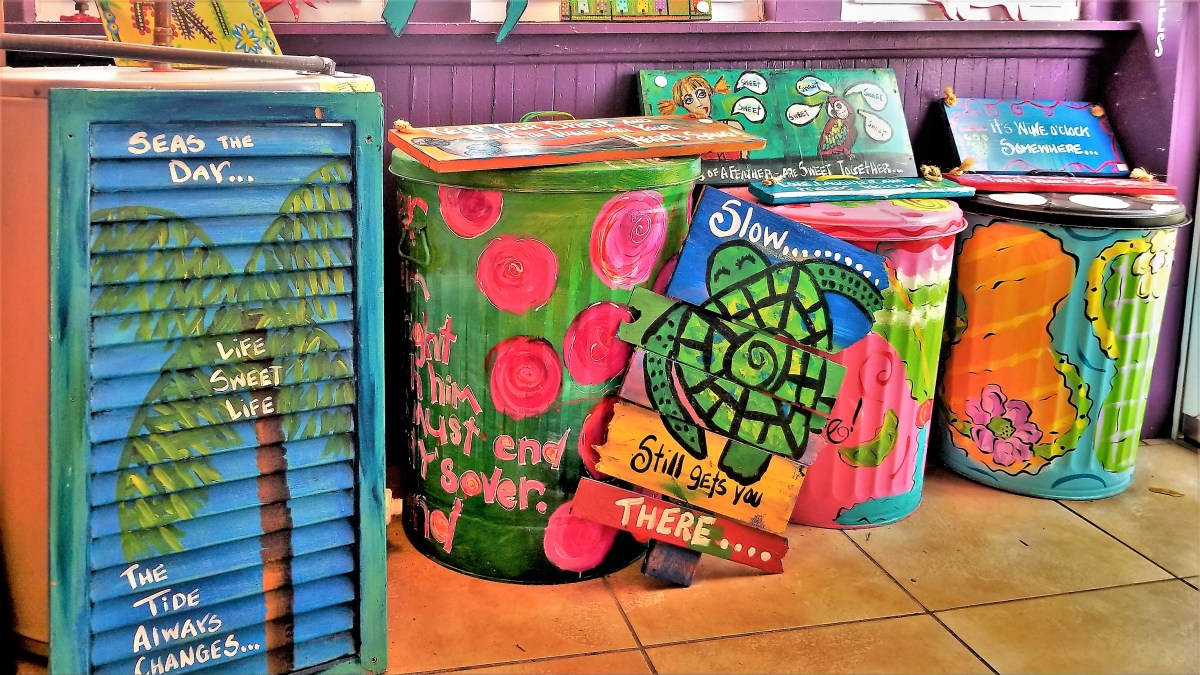
filling each room of the house with whimsy, kitsch, and funky artwork…

Ying Yang mantle

Freida shrine

voodoo kitchen

wall art

Bathroom

that captures an aesthetic worthy of eclectic and uncustomary collections.

trash cans

Centrally located, it’s a short stroll from the Riverwalk, the ballpark, and downtown Bradenton.

VOTA map

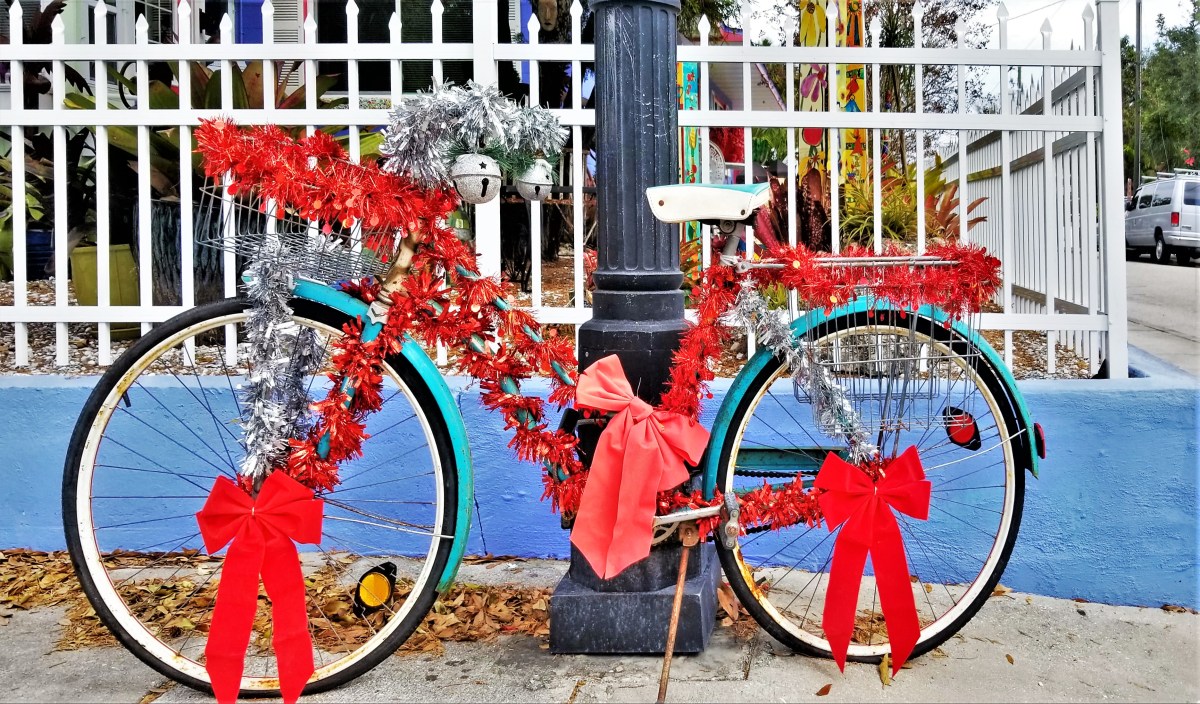
Get there by bike…

adorned bicycle

or by car.

Art car

But by all means, just get there.

A Face in the Crowd

(Play the audio track and relax, while imagining yourself hovering high above the surf.)


With the sun breaking out over Singer Island…

sunrise (2)

another day dawns on the Florida coastline,

and the beach quickly comes alive.

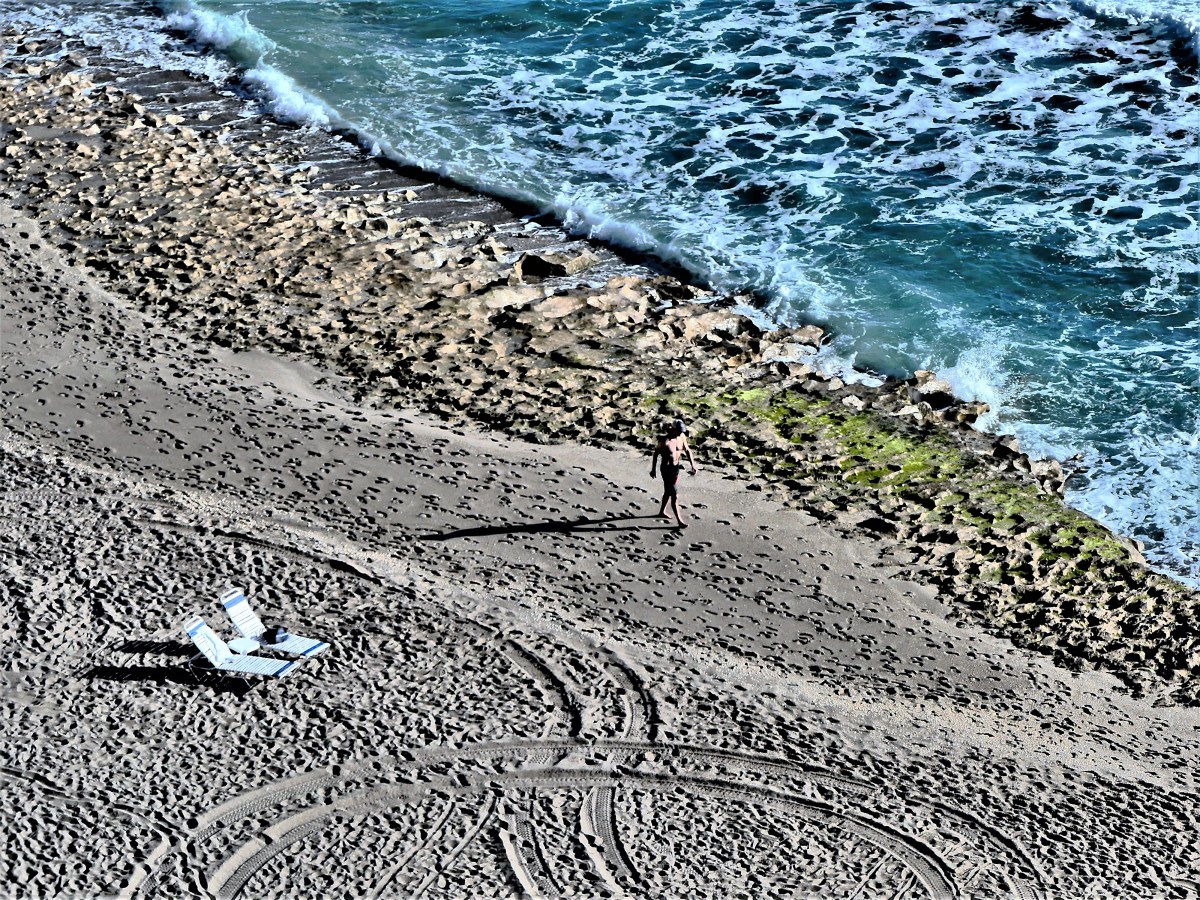
Walkers dodge the ebb and flow of lapping water

perpetually pushing against the shoreline.

And the miniature movements of anonymity

are measured against a seascape

captured twenty-one floors above sea level,

where a face in the crowd seamlessly blurs into obscurity.

Singer Island

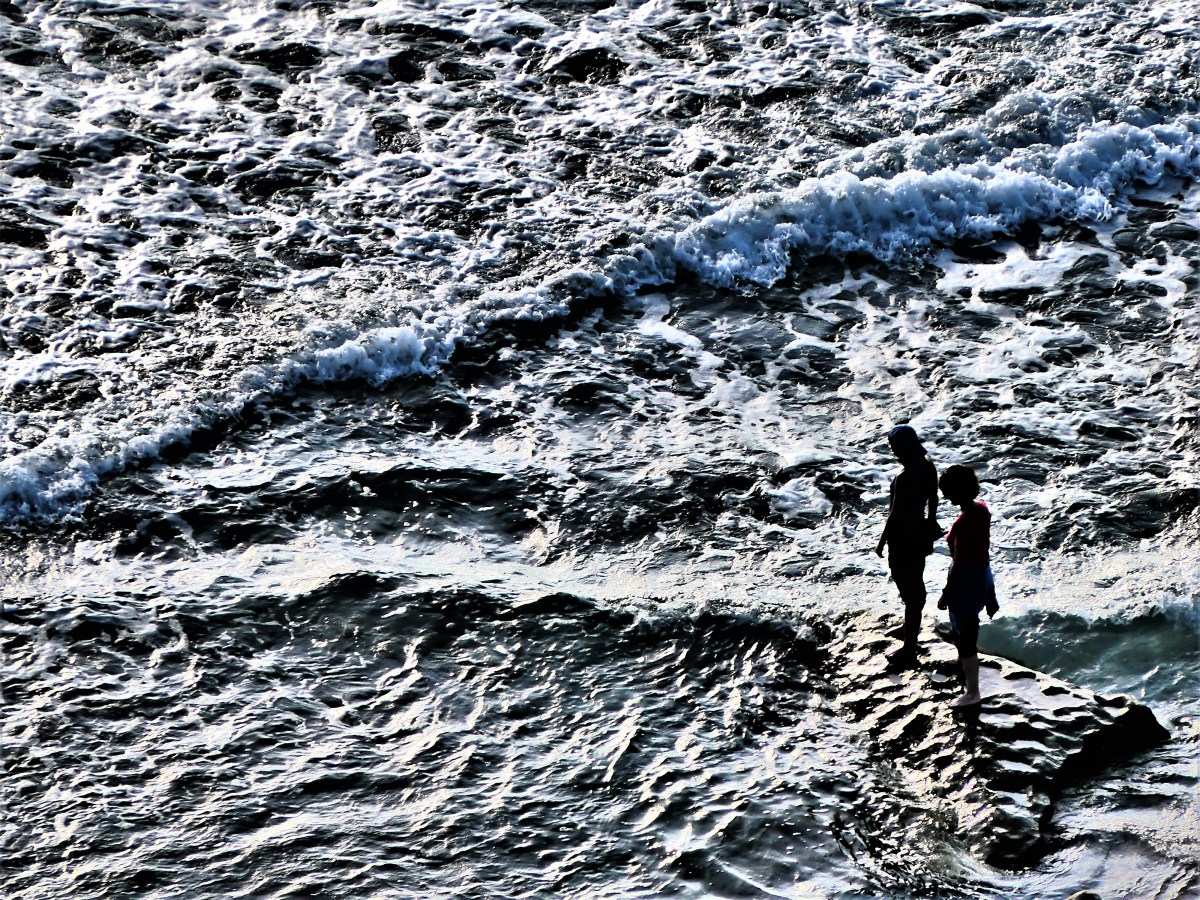
Hypnotic waves enchant two silhouettes of solitude beside a roiling sea,

surf and turf

while the lure of a lounge chair beckons to a lonesome beachcomber.

2 lounge chairs and a walker

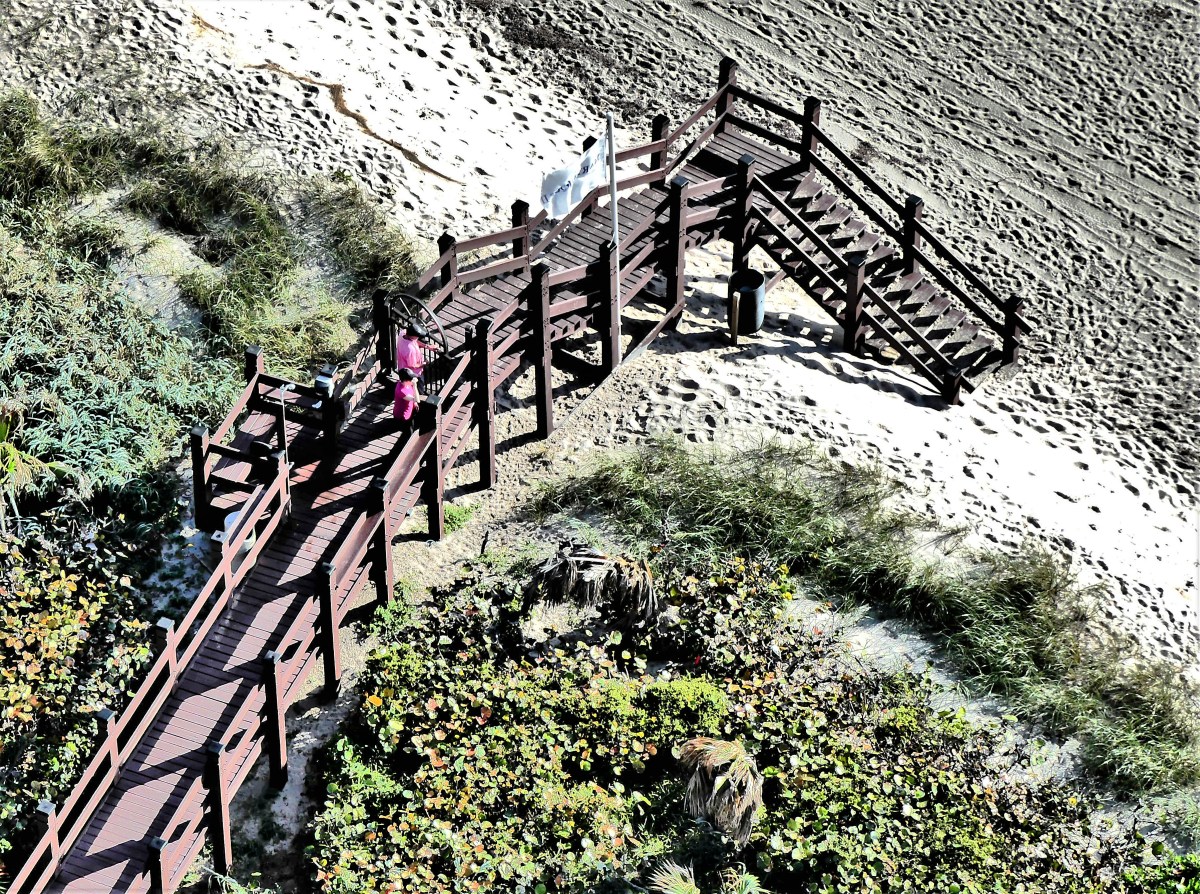
In time, a passage over and beyond the dunes…

bridge over the dune

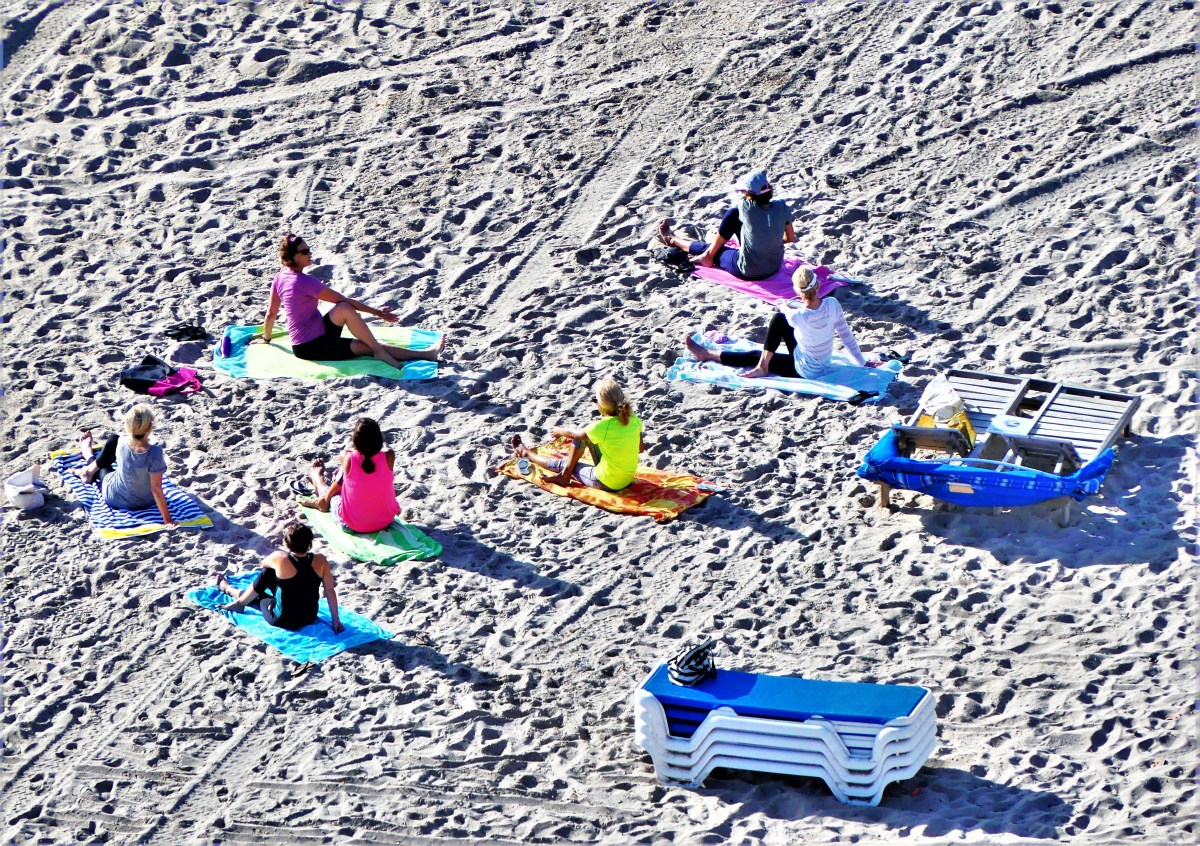
extends to a passage of twisted tranquility.

yoga on the beach

Basket Case

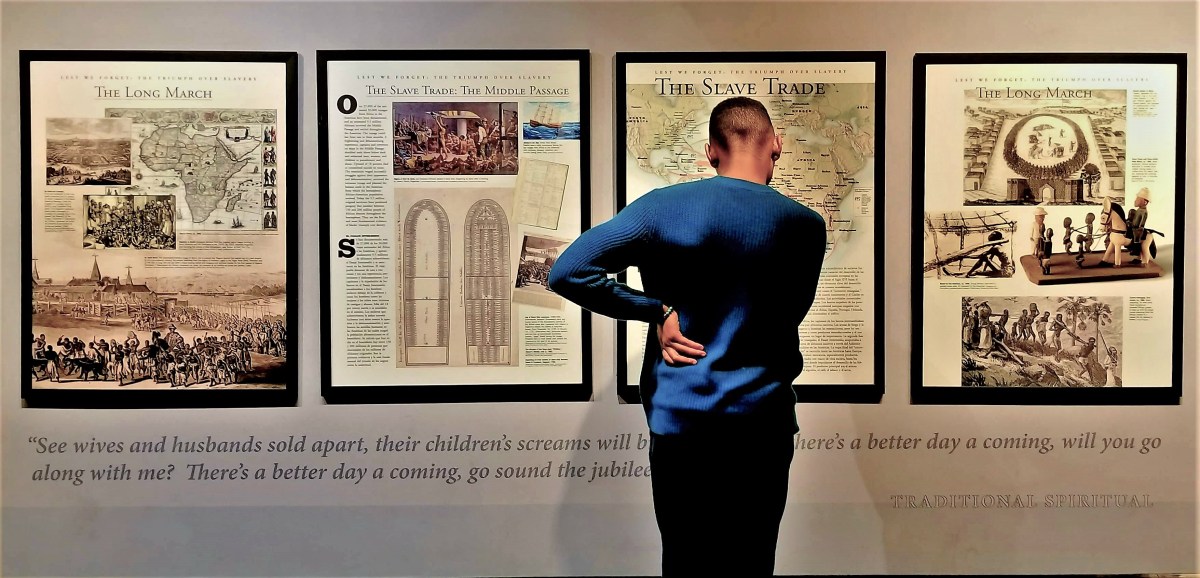
They came off slave ships in Charleston,

Slave Ships to Charleston, SC1

clad in chains,

The buyer.jpg

and stripped naked of everything except the courage they needed to accept their new fate.

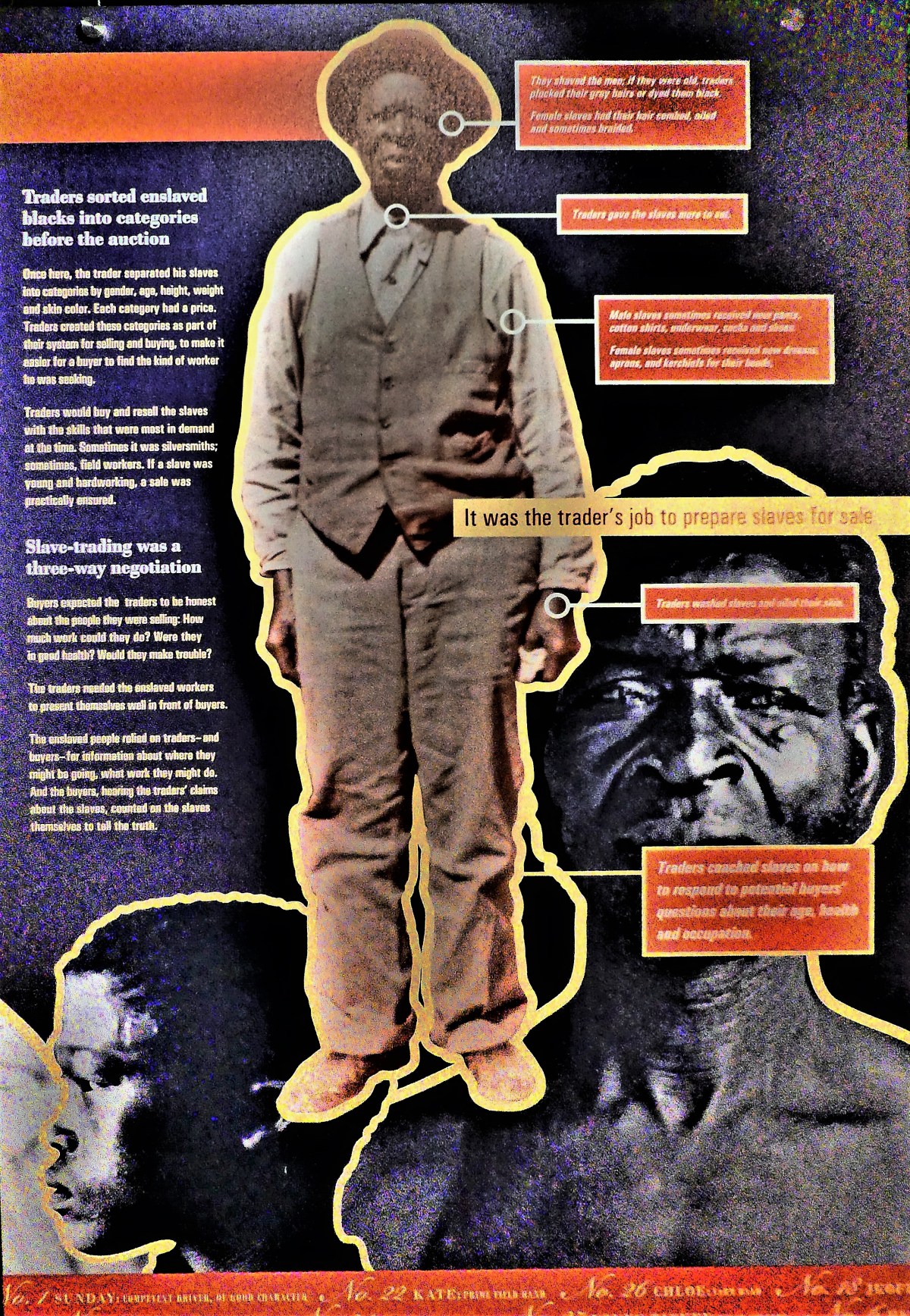
As families in West Africa, they relied on each other, but far from home on distant shores those bonds were broken. Husbands and wives, sons and daughters, brothers and sisters were separated and independently prepped for sale, bringing new meaning to groomed for success.

preparing slaves for sale1

The slave mart in Charleston, was the go-to destination…

Old Slave Mart Museum entrance

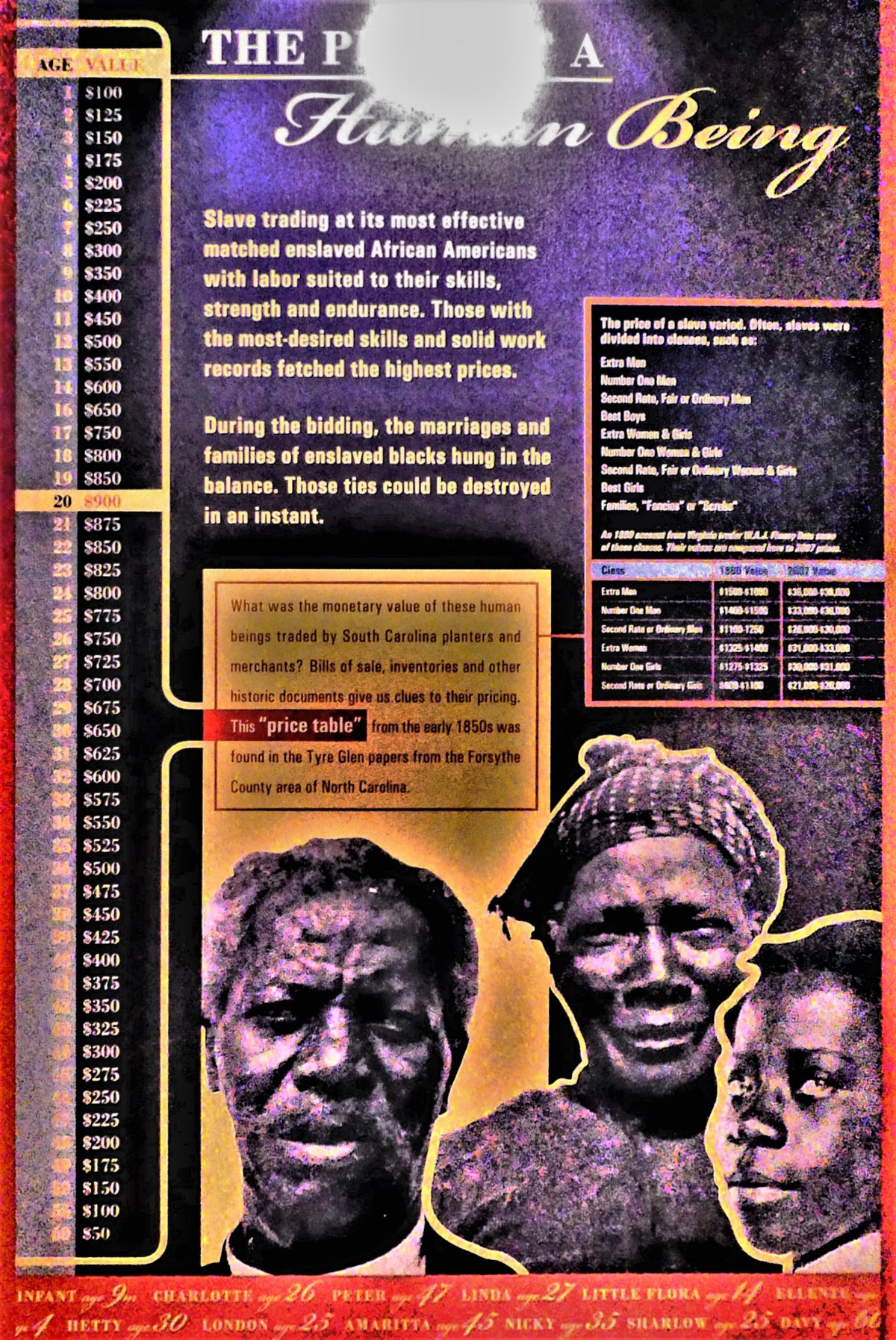
for traders to wrangle the best price,

The Price of a Human Being1

as human beings resigned themselves to their new owners and an unfathomable situation.

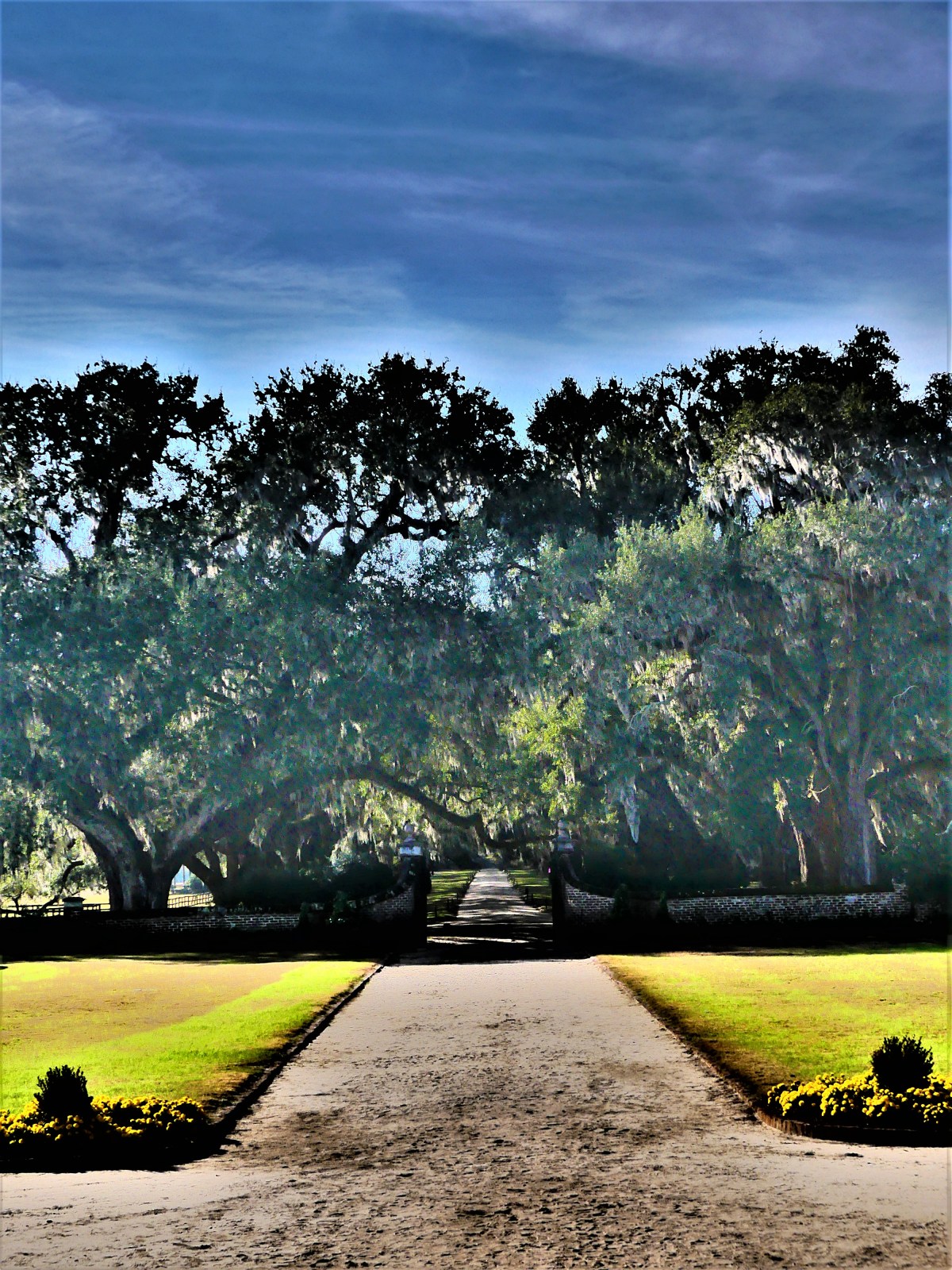
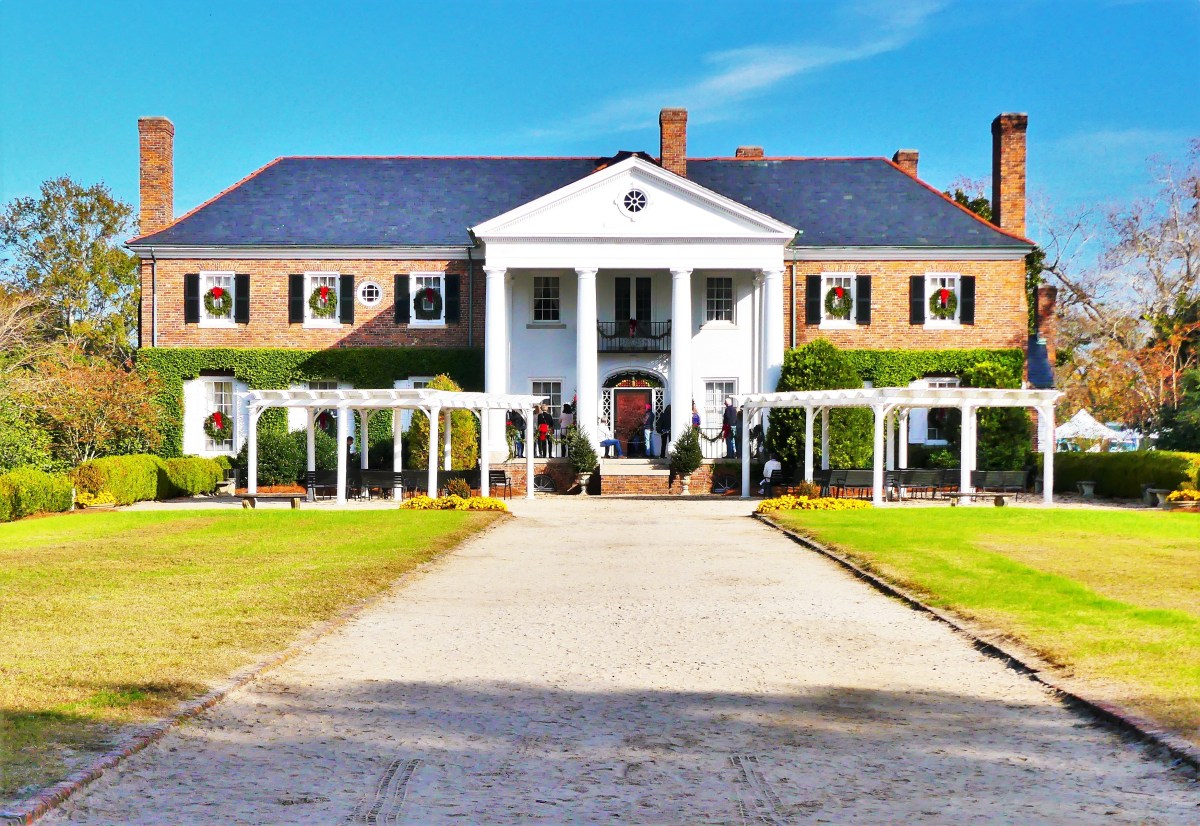
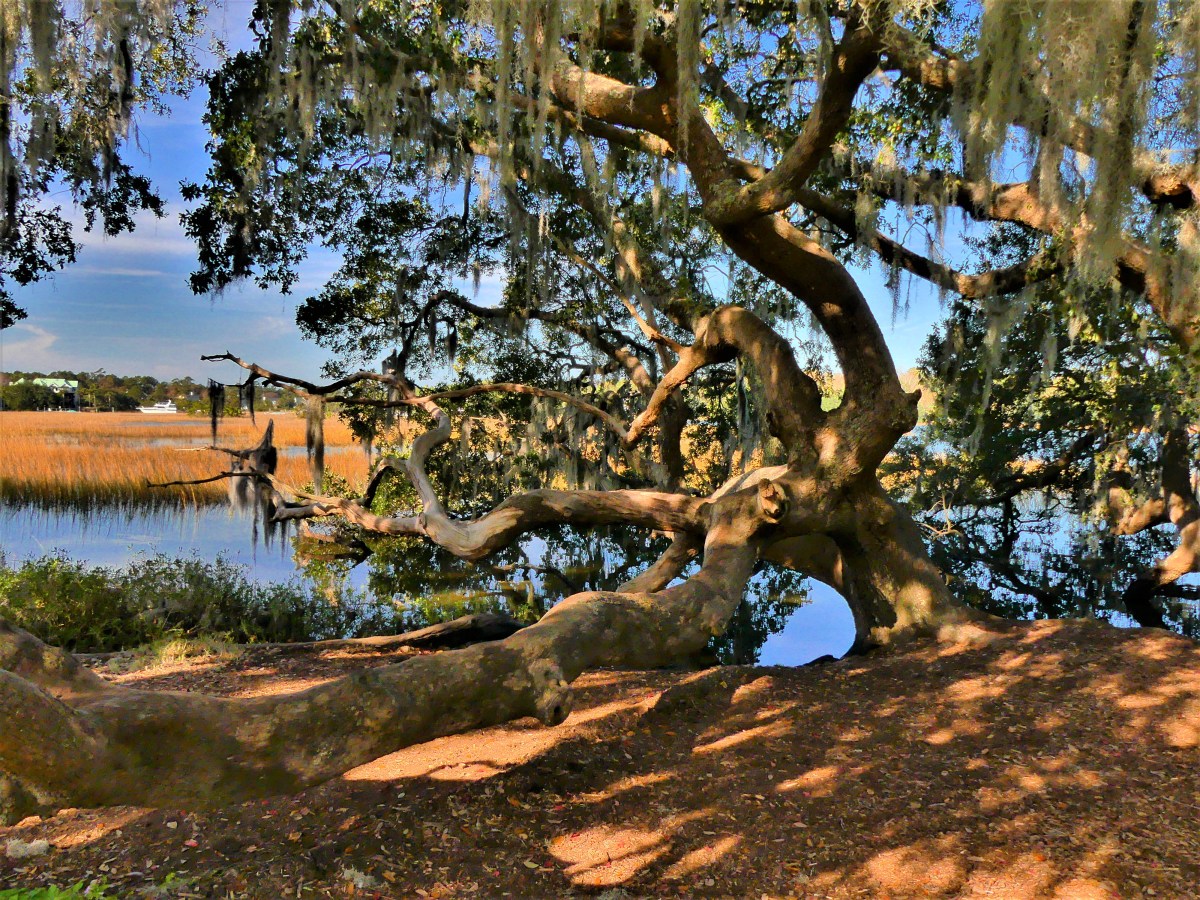
Imagine the shock and despair they must have felt, rolling down the Avenue of Oaks at Boone Hall Plantation for the first time in slave carts,

Oak Avenue

wondering about the cluster of buildings by the side of the road…

Slave quarters

Slave quarters1

that would become their future shelter…

quarters

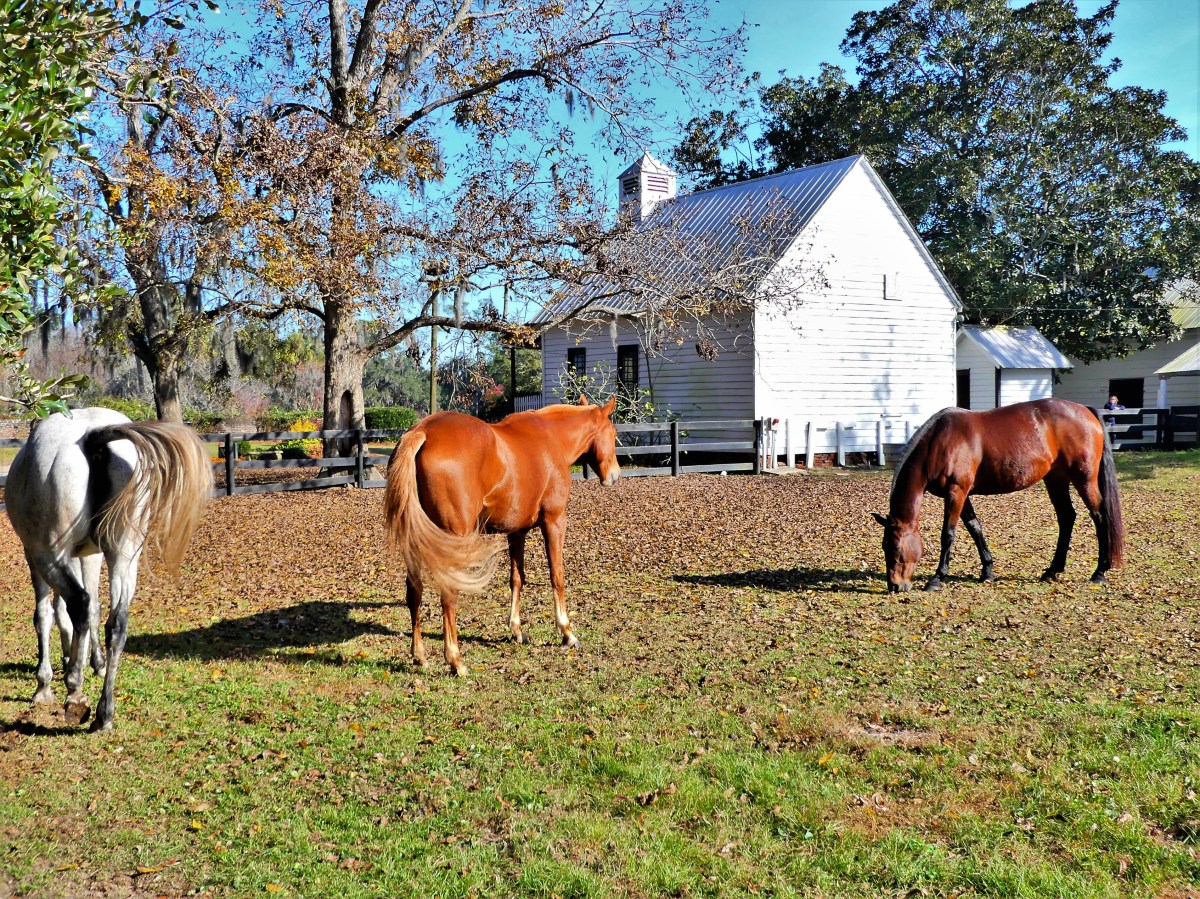
as they approached the paddock…

paddock

and the manor house.

manor (2)

Boone Hall Plantation of Mount Pleasant, SC continues today as one of America’s oldest working farms, still producing crops after nearly 340 years of activity.

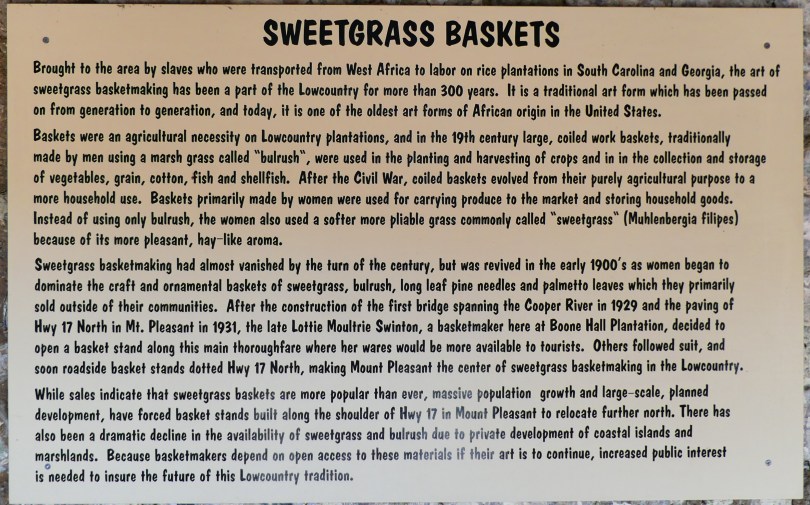
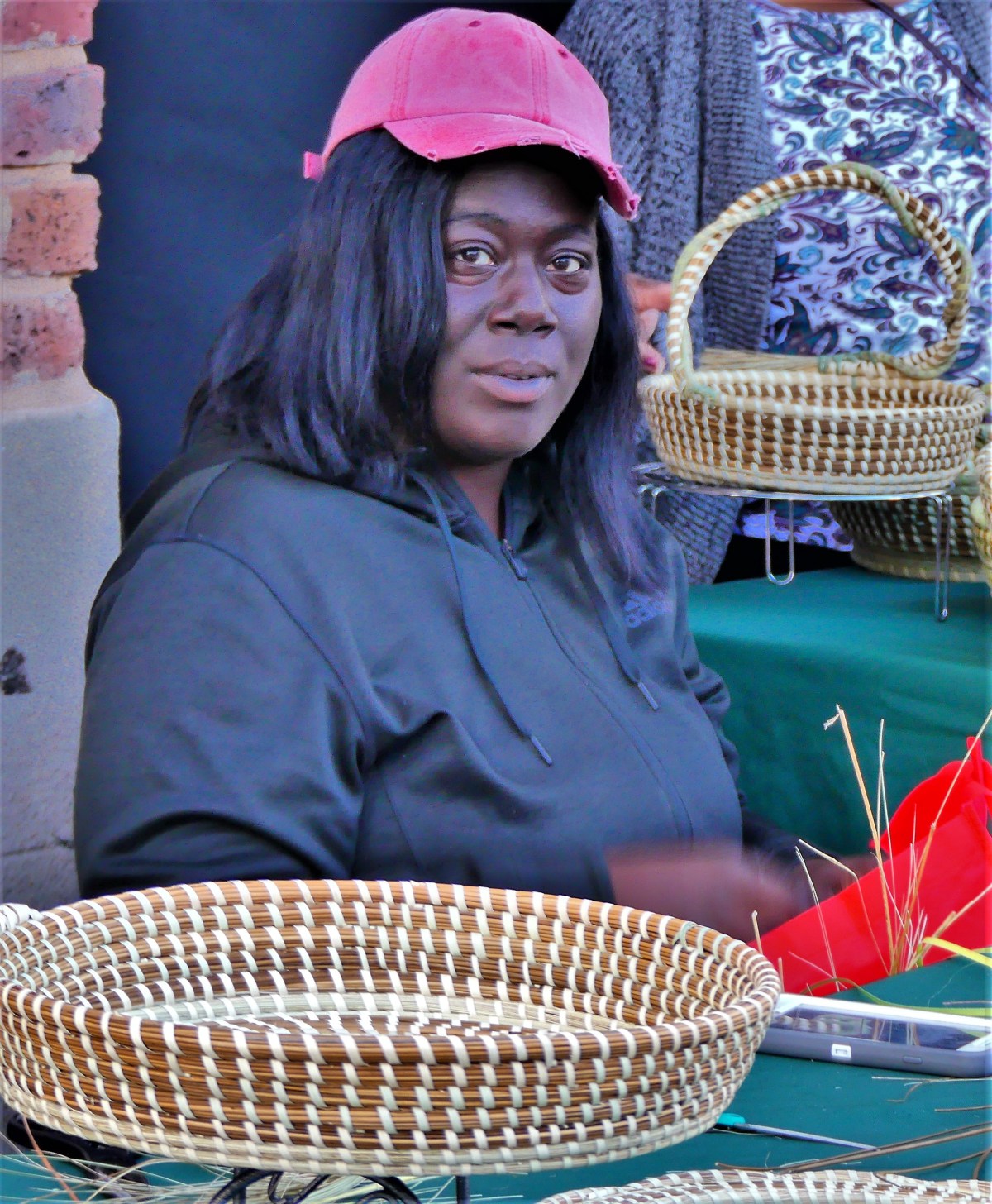
Also noteworthy, Gullah-Geechee heritage continues with sweetgrass basket-coiling skills that have sustained through five generations of descendants of slaves.

sweetgrass baskets

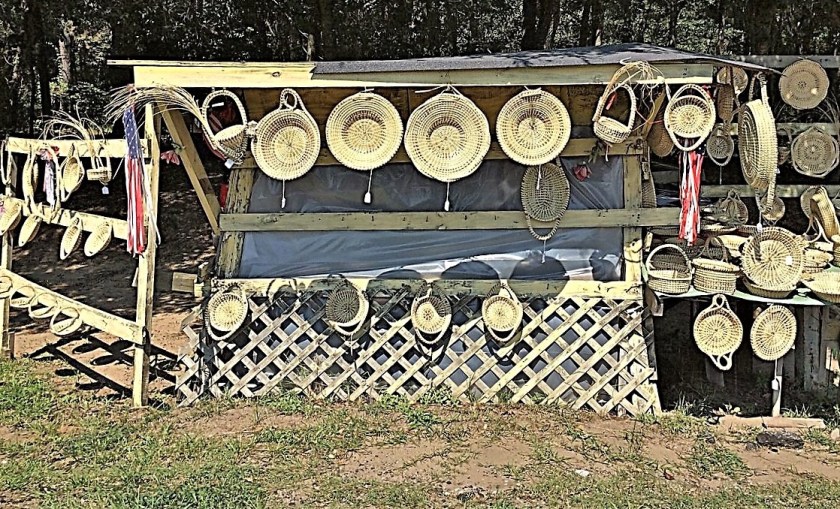
Original roadside stands from the “hayday” of basket production still dot the Route 17 landscape, luring everyday customers and tourists to inspect the wares.

roadside stand (3)

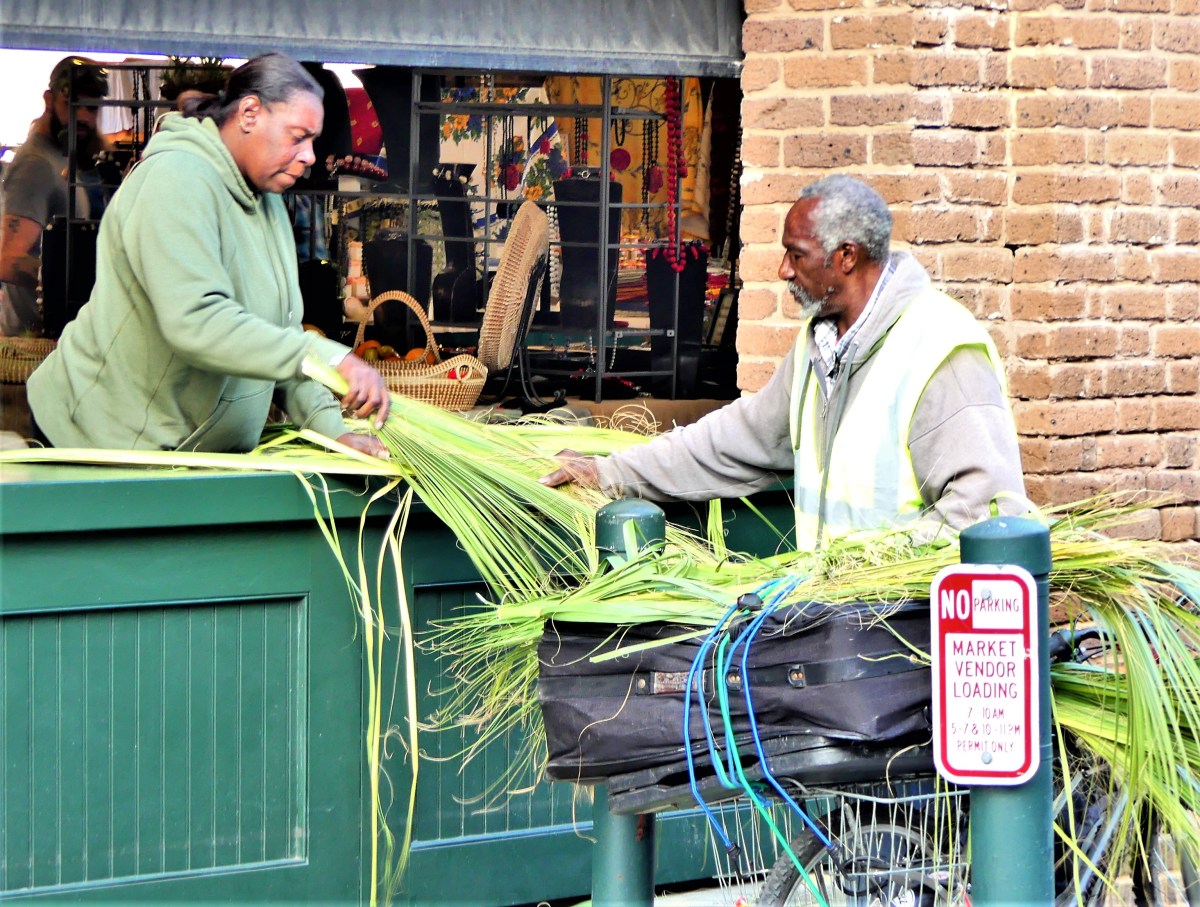
However, the trend has traveled to the Charleston City Market,

Charleston market

where the demonstration of sweetwater basket-making is routine…

sorting sweetgrass

selecting sweetgrass

and sales are brisk,

weaving

with up to 300 weavers who remain dedicated to the craft.

basket maker

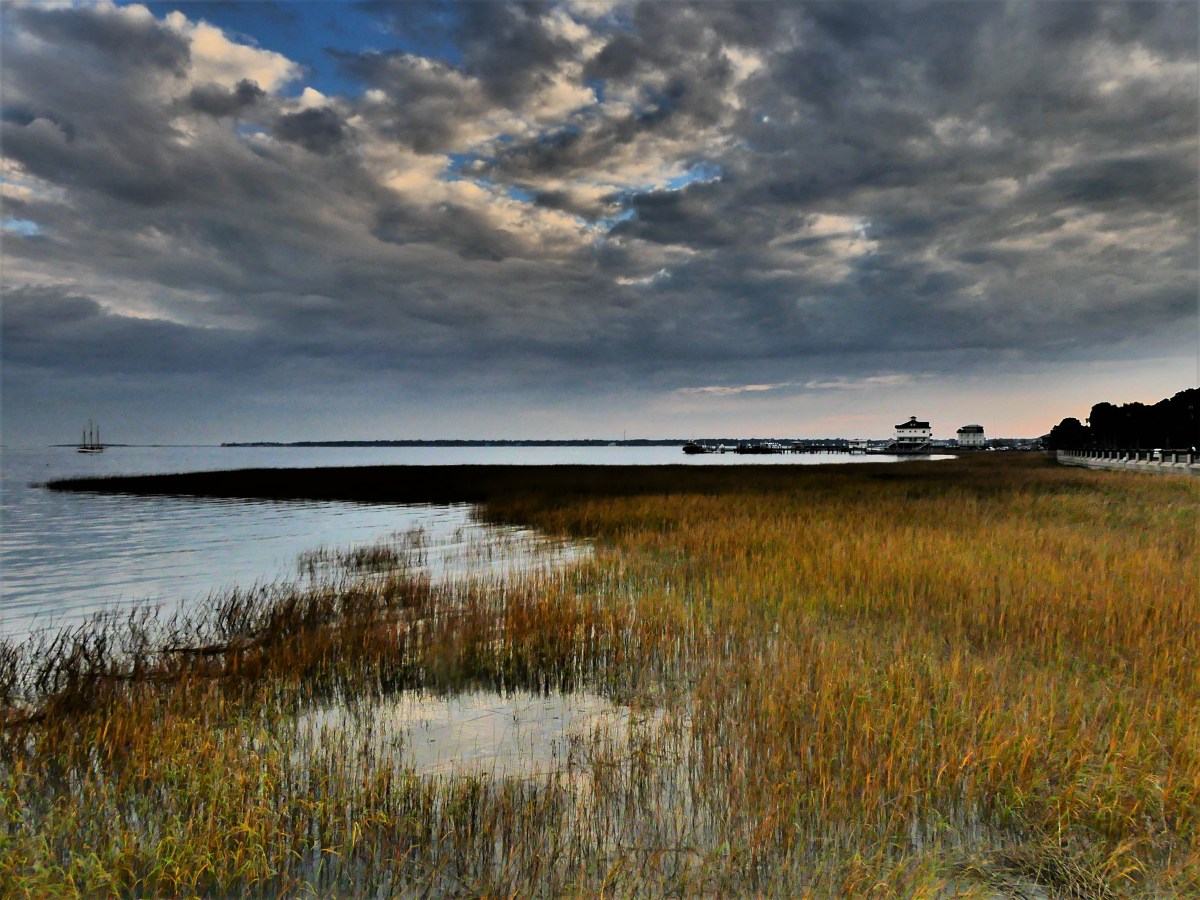
At this time, dwindling supplies of lowcountry sweetgrass are protected, and can only be harvested by bonafide ancestors…

Charleston coastline

guaranteeing a steady stream of basketry to remind us how sweet the courage of a people can be, and how crooked their path to freedom.

marsh grasses

museum attendee

Titans of Industry

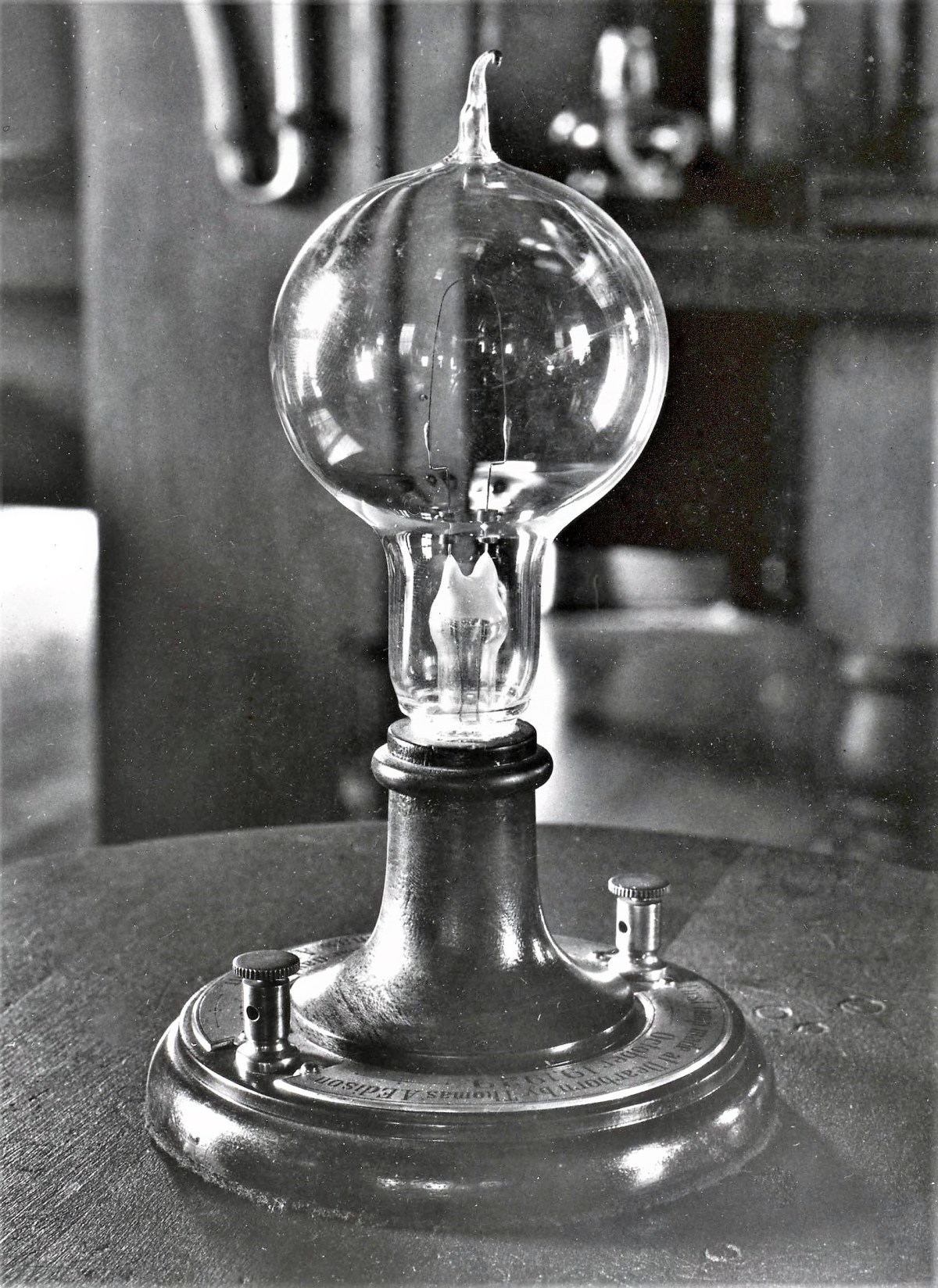
Every student of science, history and commerce knows the importance of Thomas Edison’s contributions (2332 worldwide patents),

Early-Light-Bulb (3)

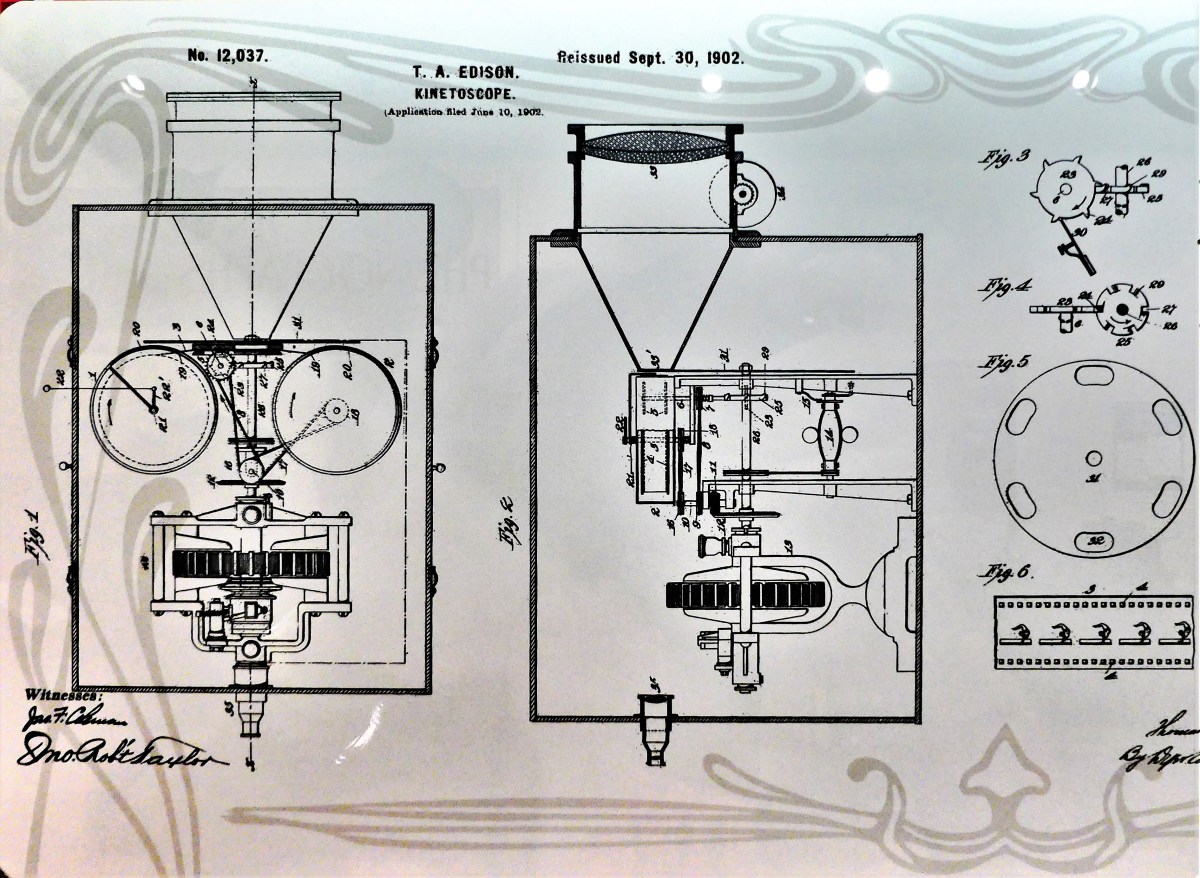
and how through his imagination and industry…

patent schematic for kinetescope

kinetescope projector
Kinetoscope Projector

inside the phonograph

he single-handedly reshaped the 20th century.

No less famous and equally as successful, Henry Ford’s lifetime commitment to automotive innovation was without peer.

Edison's Ford

V-8 engine (2)

Now put the two titans together…

Historic Friendship

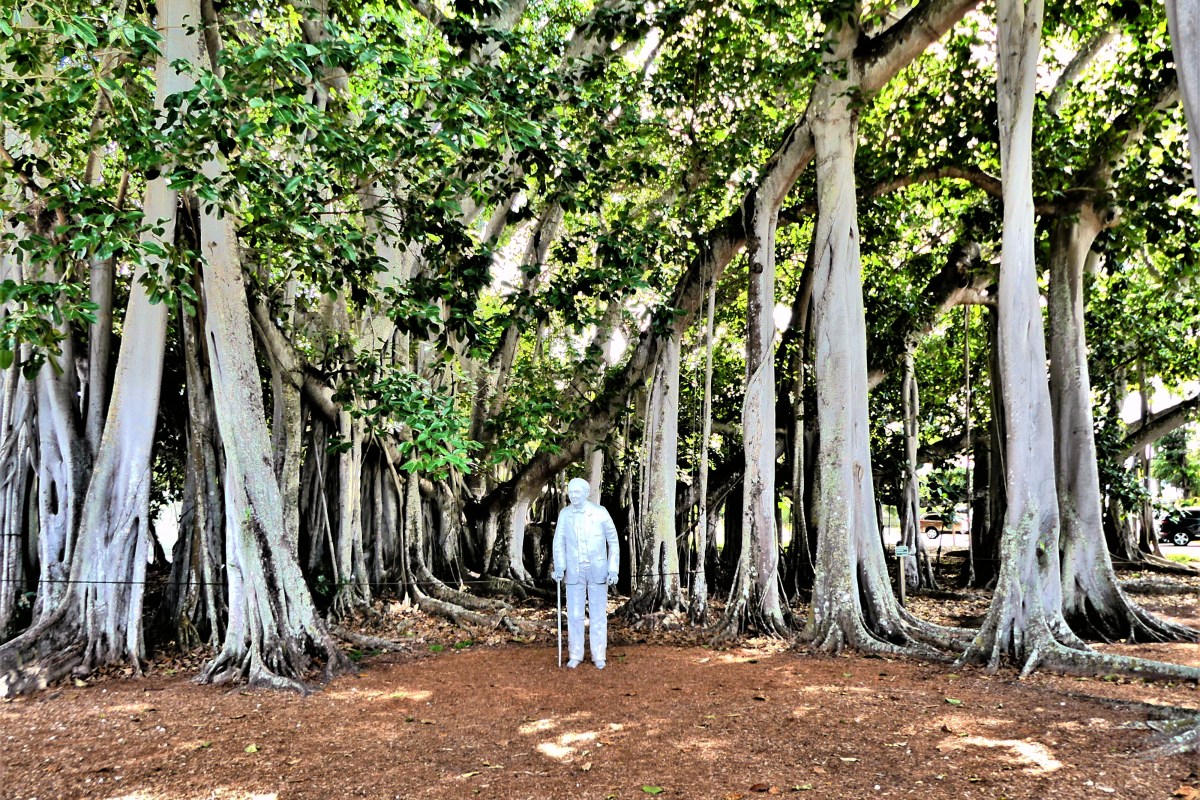
as next-door neighbors within their Ft. Myers, FL winter compound…

Eden

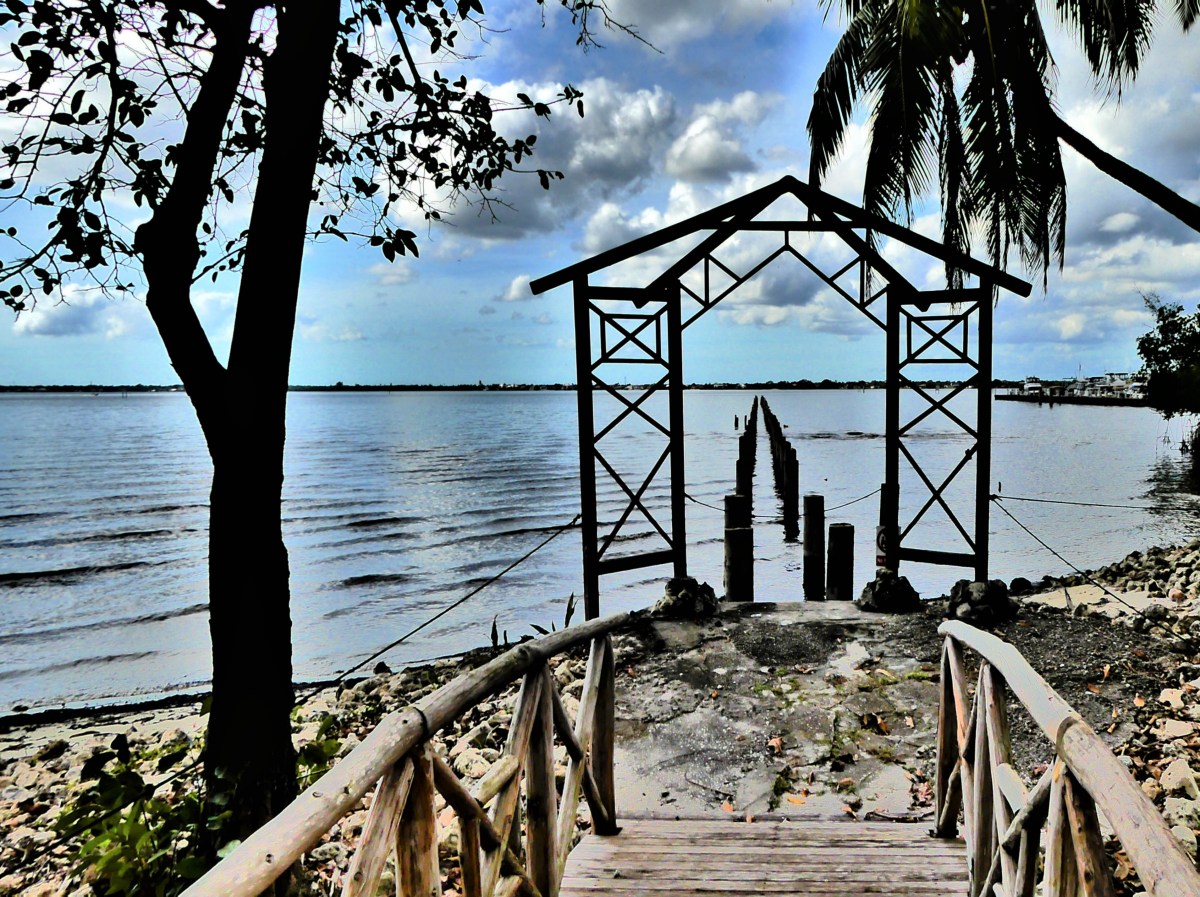
beside the Caloosahatchee River…

dock1

and the sum exceeds the parts. Adding John Burroughs, the nation’s leading naturalist and conservationist of his time to the party,

Edison_Burroughs_Ford (2)
Edison, Burroughs, Ford

resulted in the birth of the car-camping movement in America as we know it today: motoring across the country in search of fulfilling outdoor recreation and adventure.

camping caravan

Better known as The Vagabonds, the caravan later included tire magnate, Harvey Firestone, who would travel with the pack across America for the next ten years, taking vacations in an elaborate Packer and Ford motorcade that always included Edison’s battery of batteries to light the campsite,

batteries

a Ford chuckwagon attended by Firestone’s personal chef,

chuckwagon (2).jpg

and a pack of newspapermen and paparazzi who would record The Vagabond’s every step and conversation.

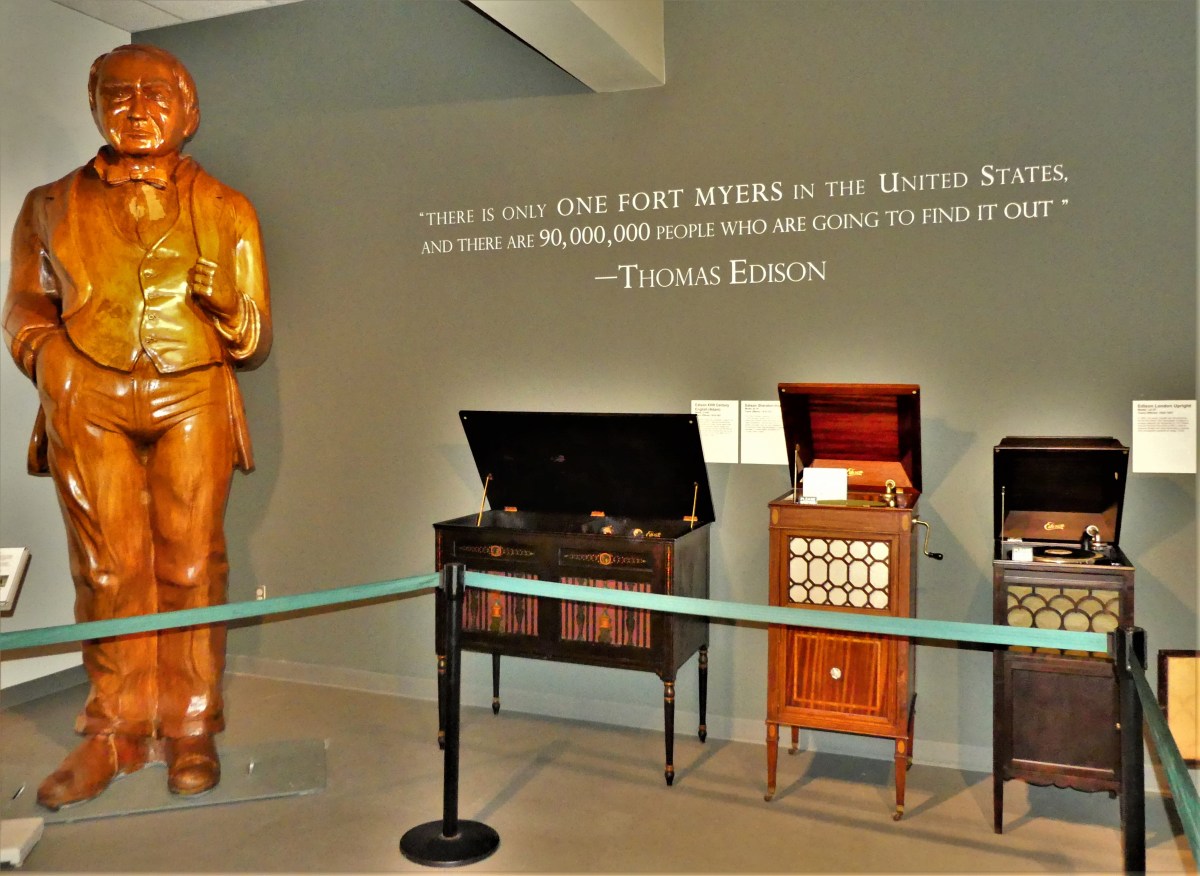
Edison’s inventions are presented in historical perspective in a comprehensive on-site museum space that credits Ft. Myers as an inspirational Eden for Edison’s genius.

There Is Only One Ft Myers

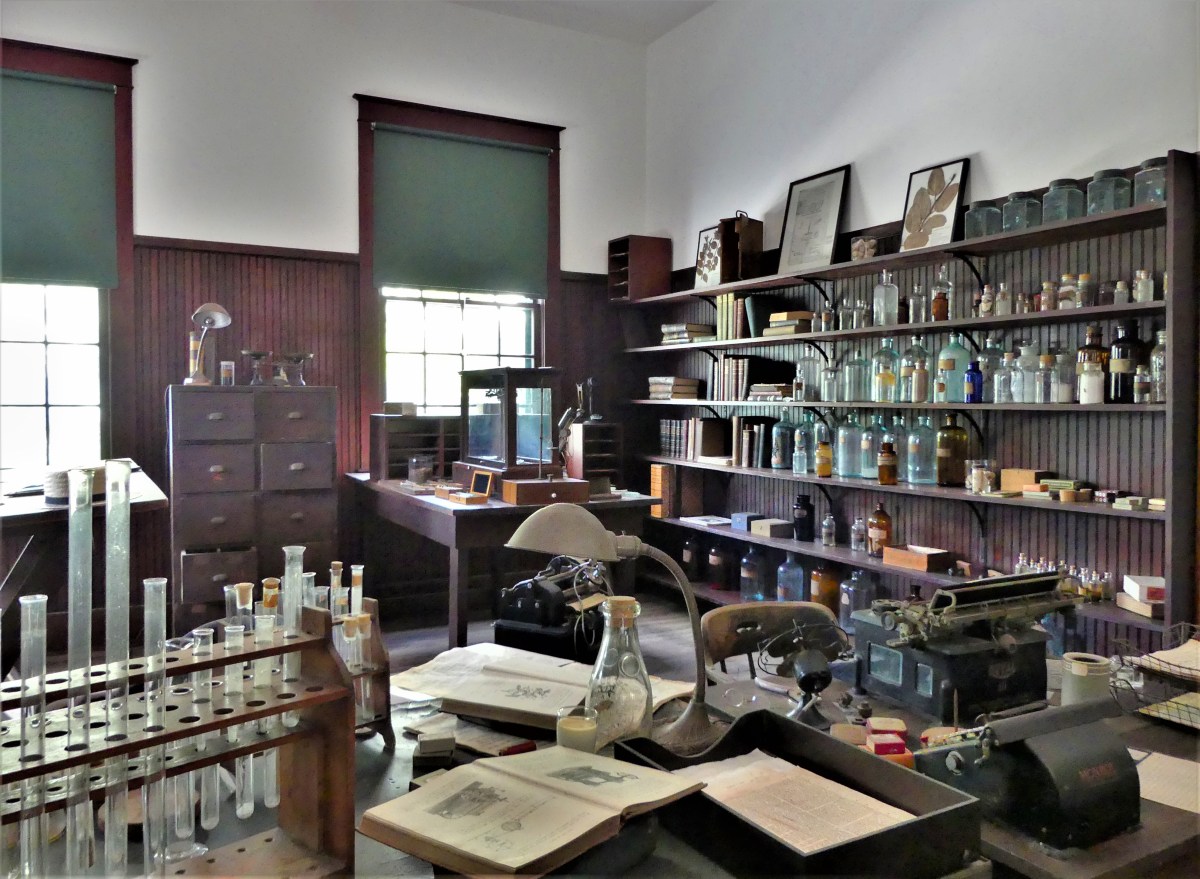
Additionally, by recreating his West Orange, NJ laboratory in Ft. Myers,

In the Lab

Edison's Lab

Lab2

office

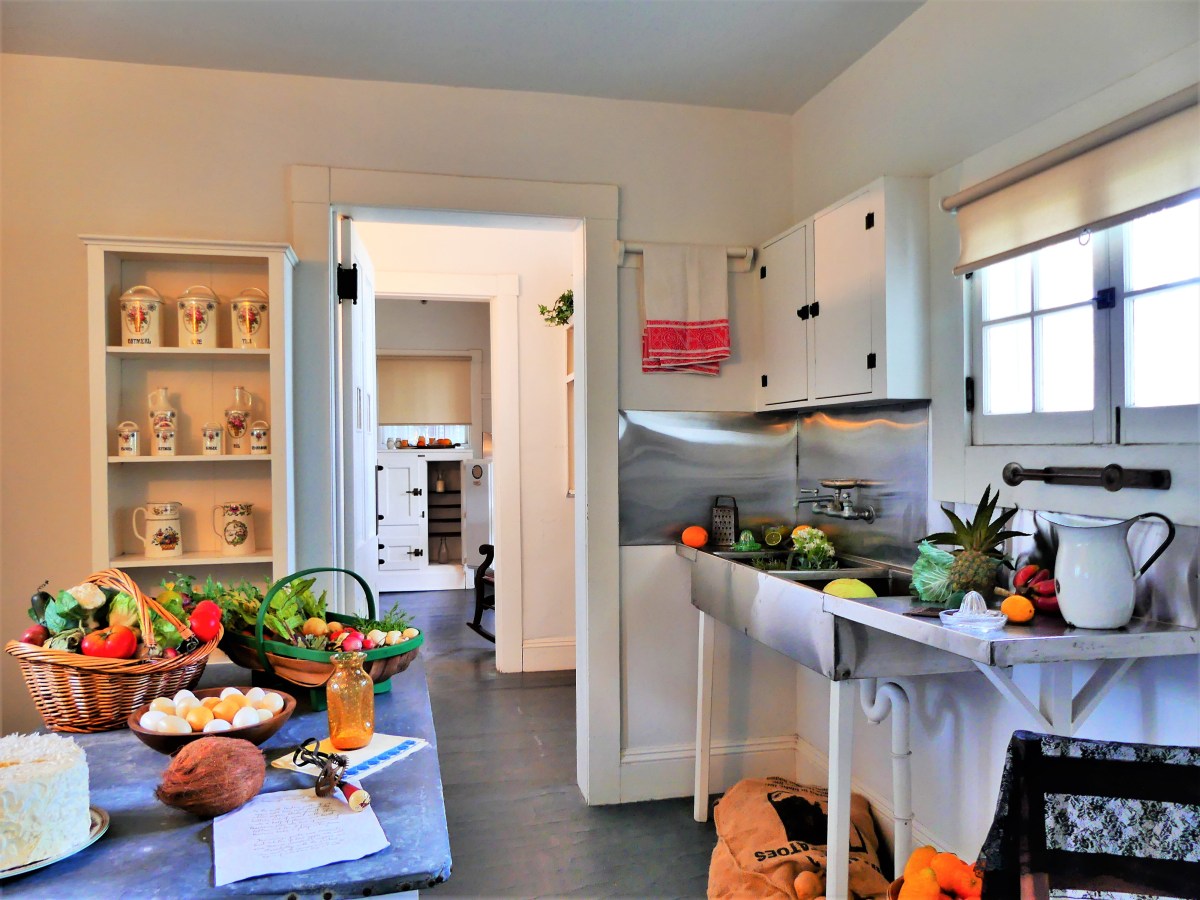
Edison could work uninterrupted throughout the year, never missing an opportunity to tinker or embellish on an idea, while enjoying the comforts of a home…

Living Room

dining room.jpg

Pantry

bedroom

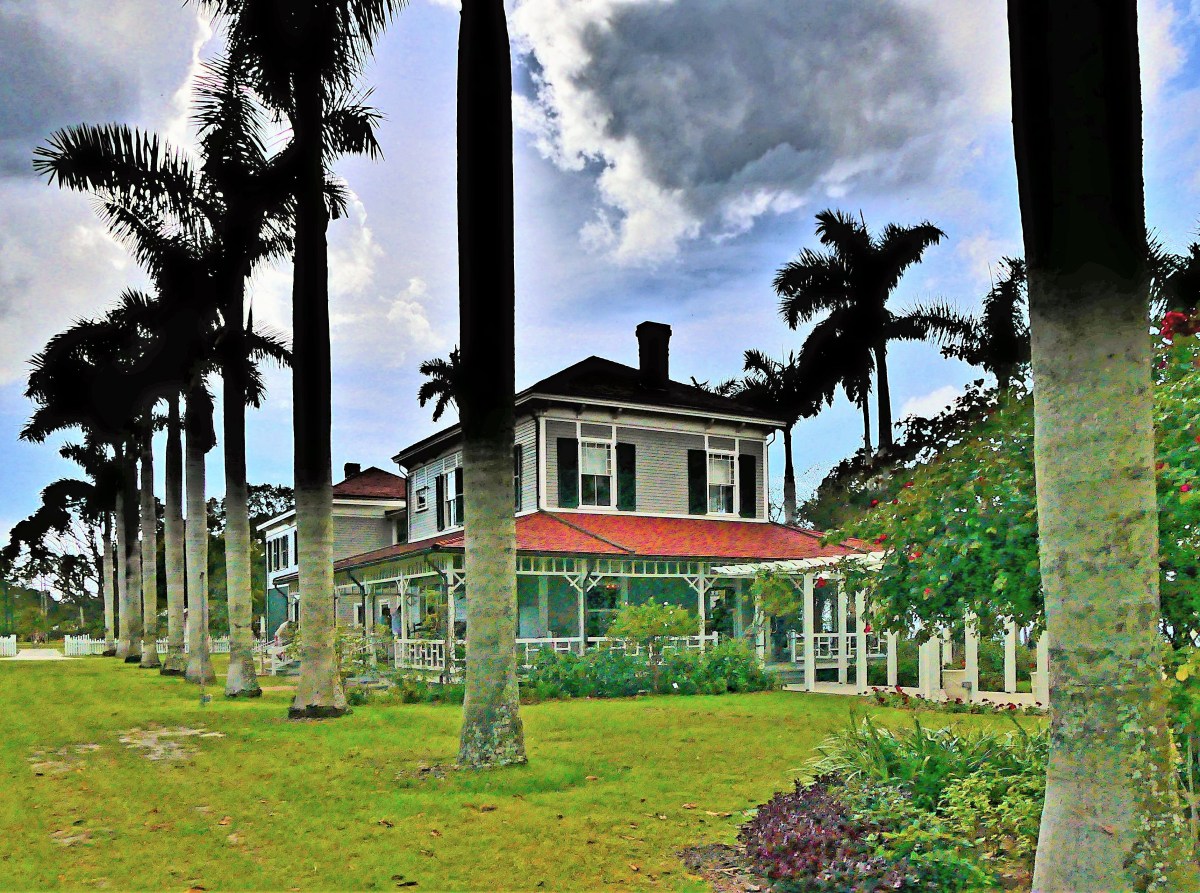
and grounds…

Edison home

Caretaker cottage

pool

the tree

that he designed in 1886,

Designing a Retreat

and Mina attended until his death in 1931.

Mina and Leah

Henry Ford acquired the neighboring bungalow known as The Mangoes in 1916,

Henry Ford and cottage

and the two titans drove each other to continuing heights of excellence in achievement.

But of all their noticeable accomplishments, their mutual love of country living coupled with the enormous publicity generated by their expeditions most certainly inspired an army of auto owners and outdoor enthusiasts to follow their example.

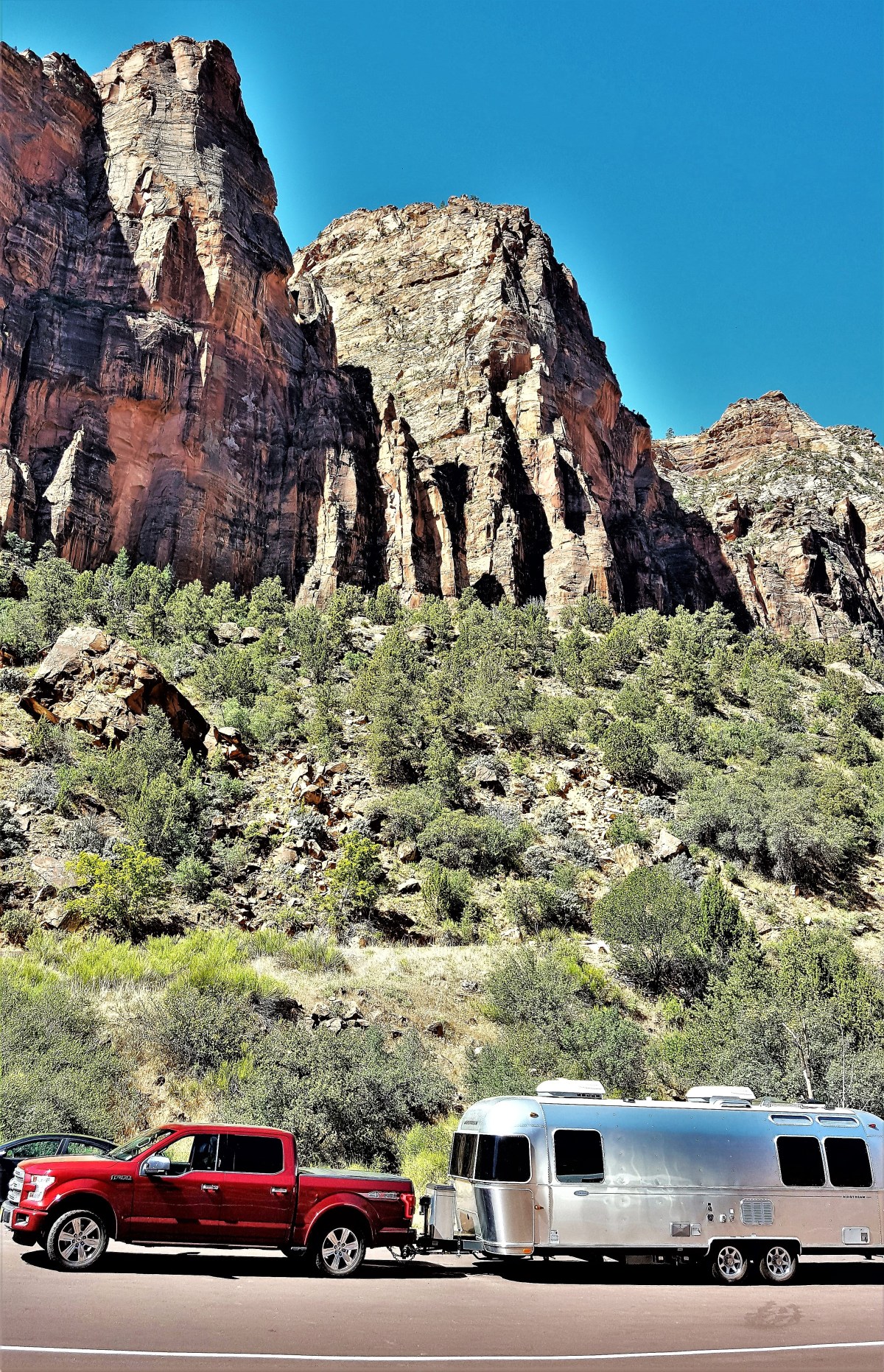
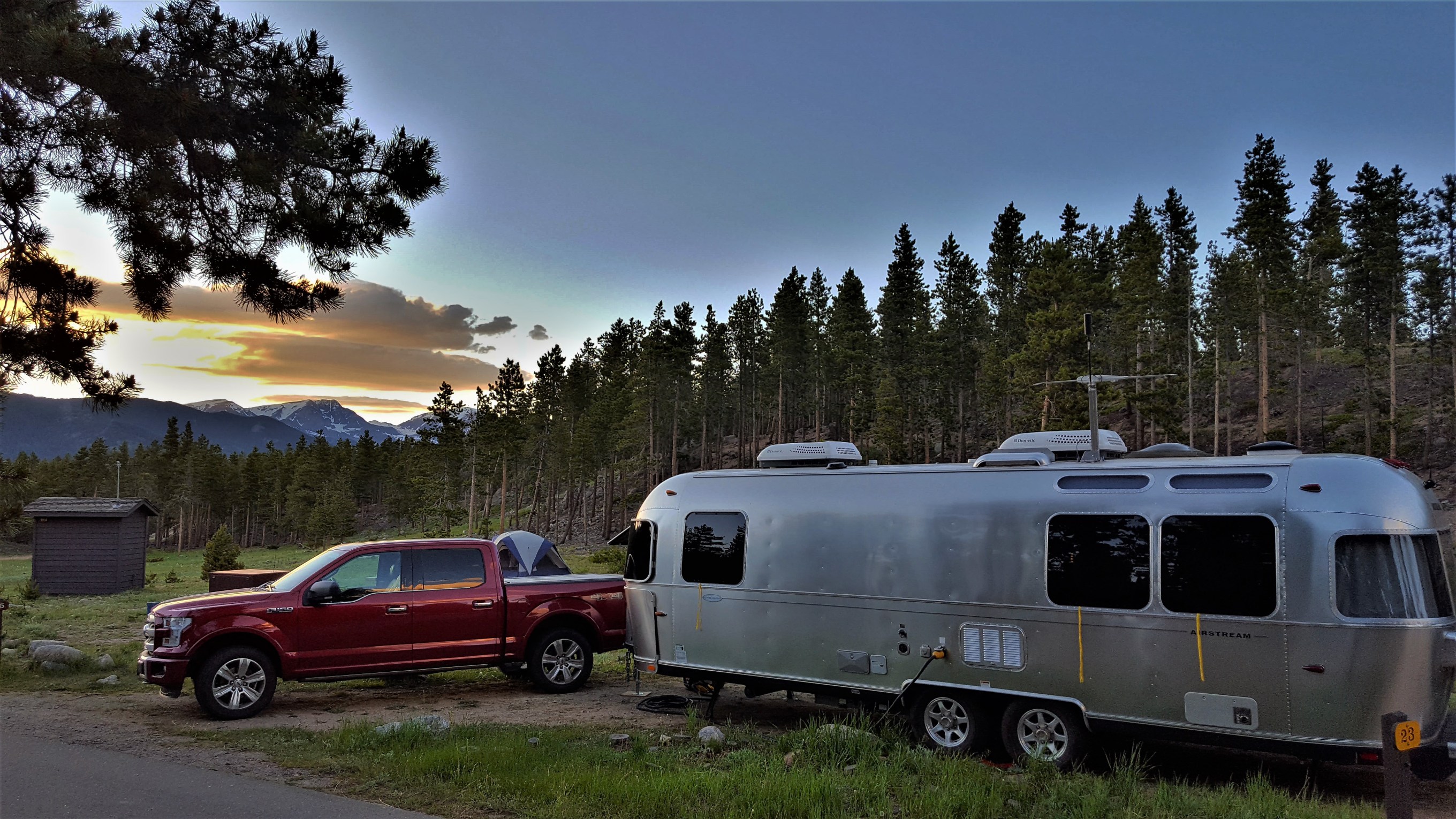
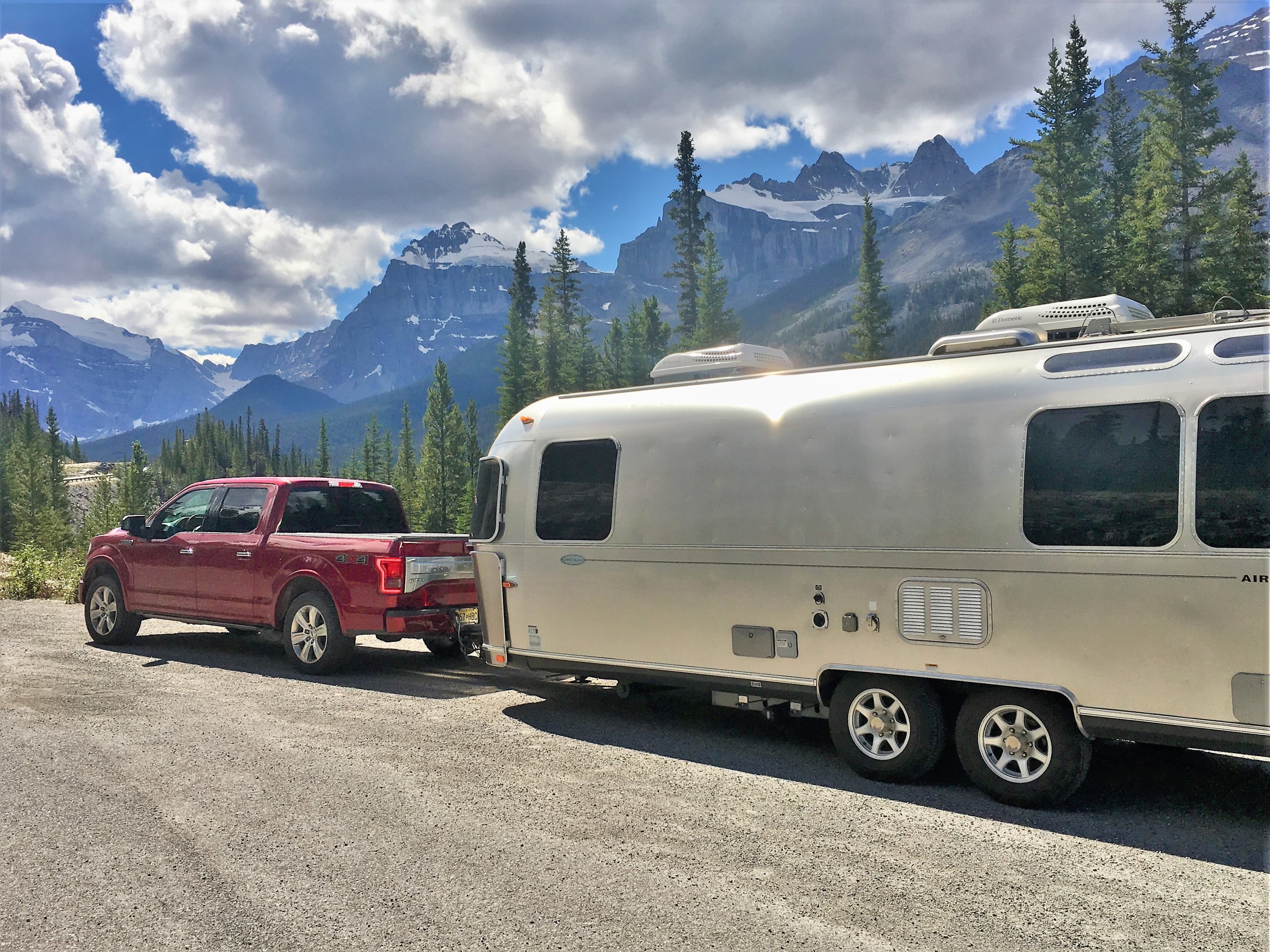
Thus, The Vagabonds paved the way for the popularity of motor camping, and gave rise to a recreational industry that advances the dream of this sojourner’s lifestyle: where the highway is my lifeline and my Airstream is my cradle.

Note: Historic photos courtesy of Edison and Ford Winter Estates collection.


For the Love of Money

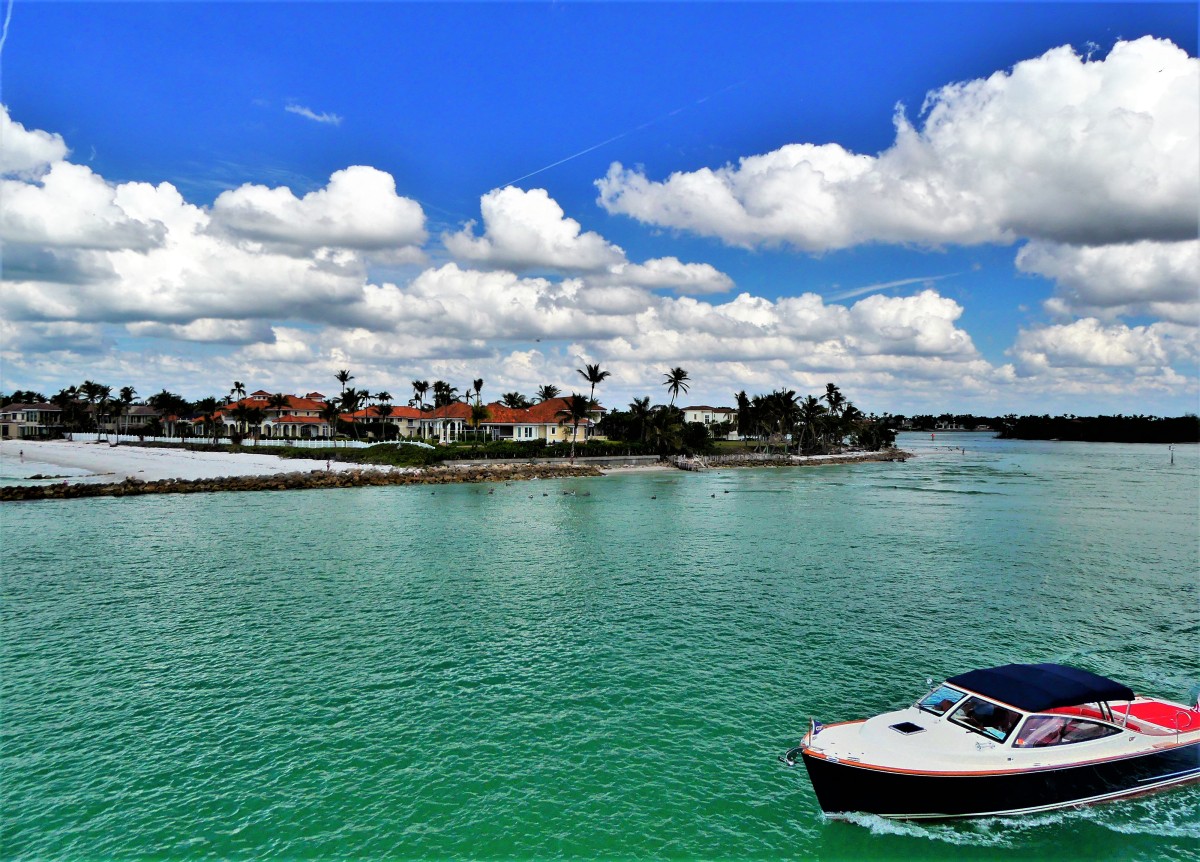
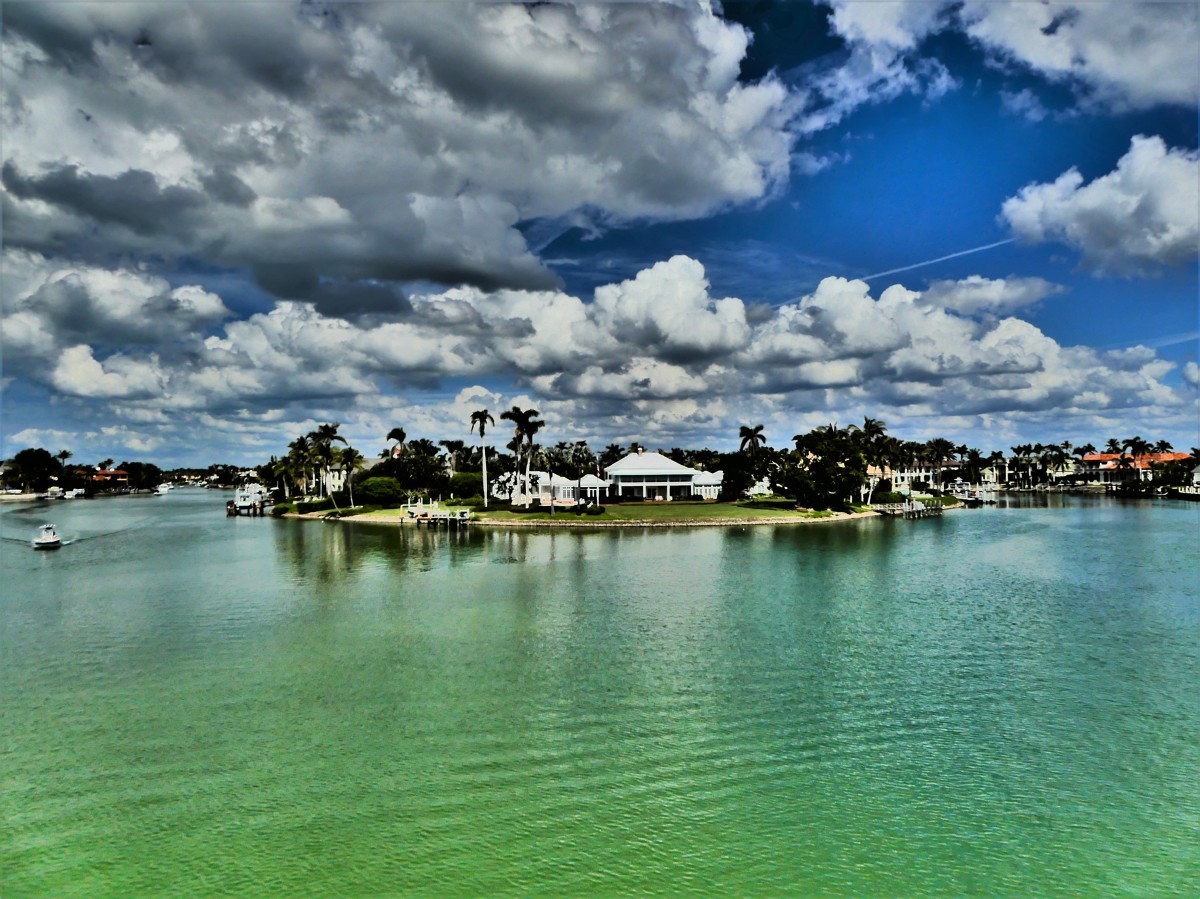
Apparently, the citizens of Naples, FL have the deepest pockets of any town in America thanks to the highest concentration of billionaires who own part-time residences along the deep water coastline of Port Royal.

floatilla

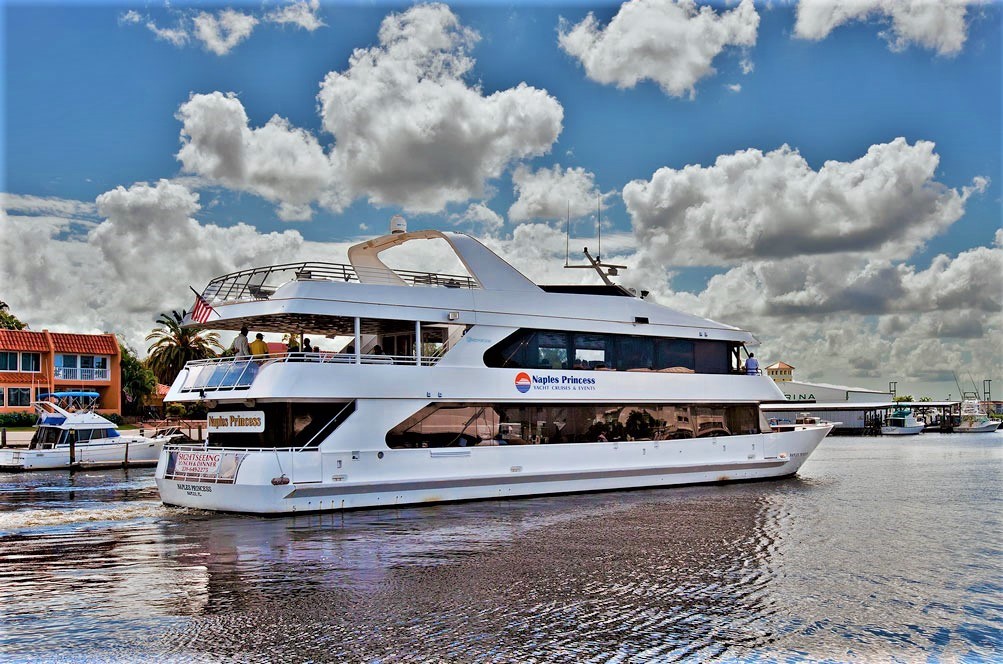
Such was the claim of First Officer Owen, who was overheard aboard the top deck of the Naples Princess…

Naples Princess (2)

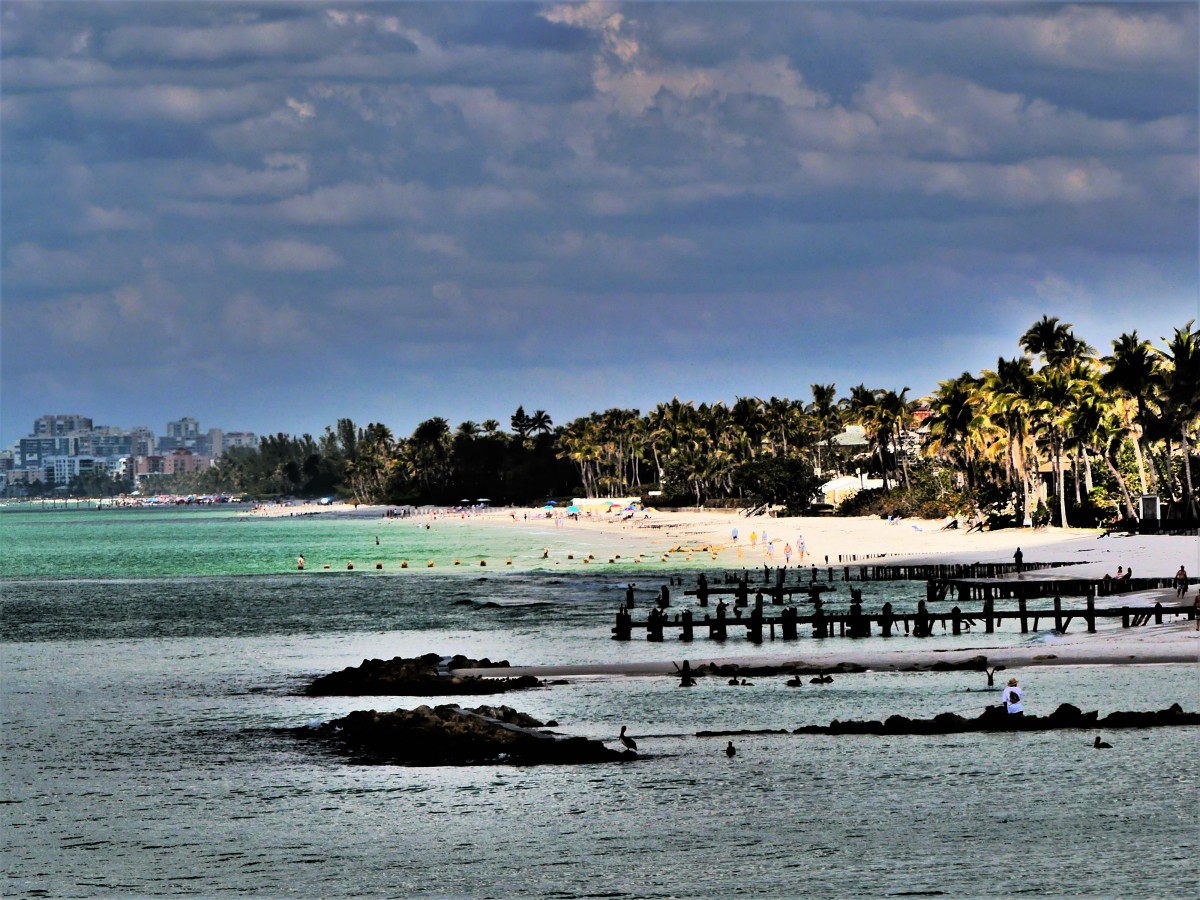
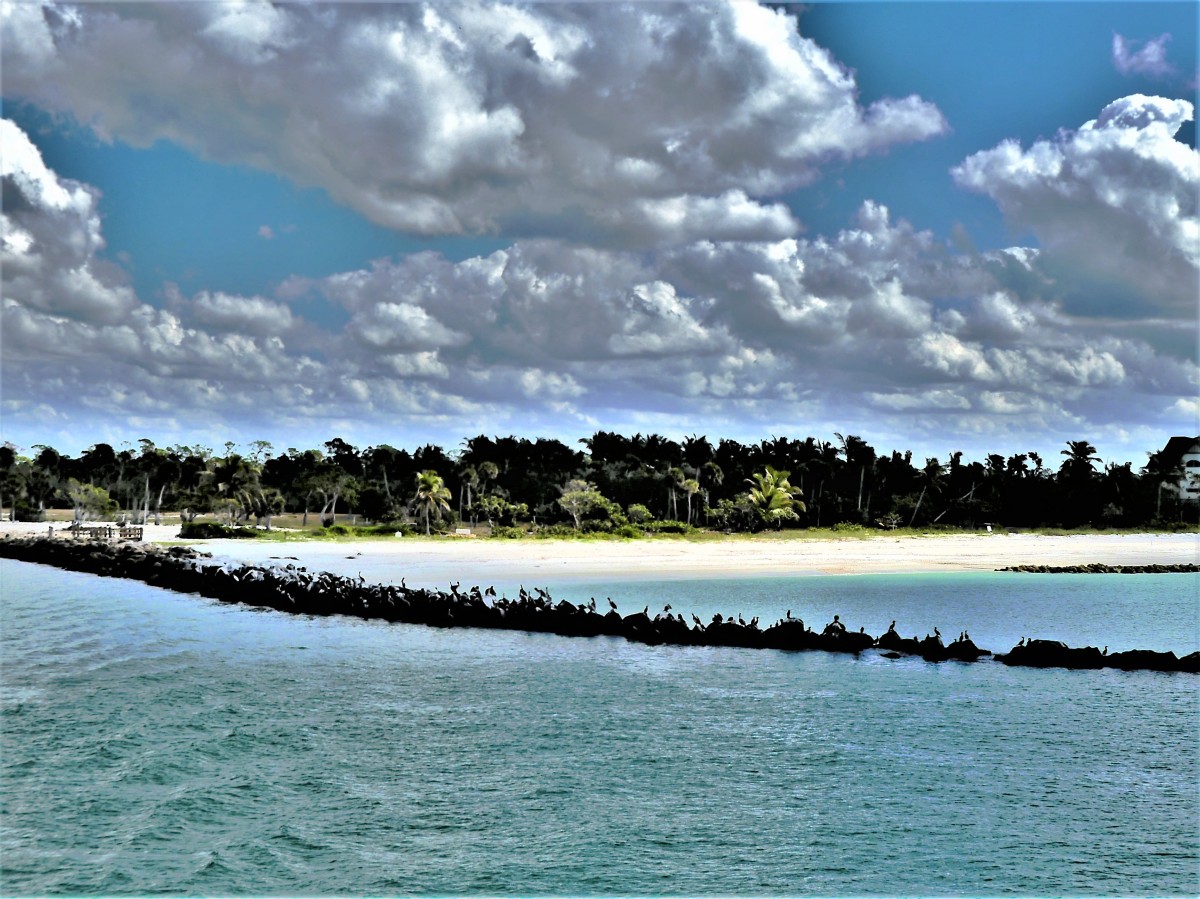
during a two-hour pleasure cruise from the top of Naples Bay, past Bayview Park,

Naples Beach1

and through the channels of decadence bound by the beach on the Gulf of Mexico…

beach.jpg

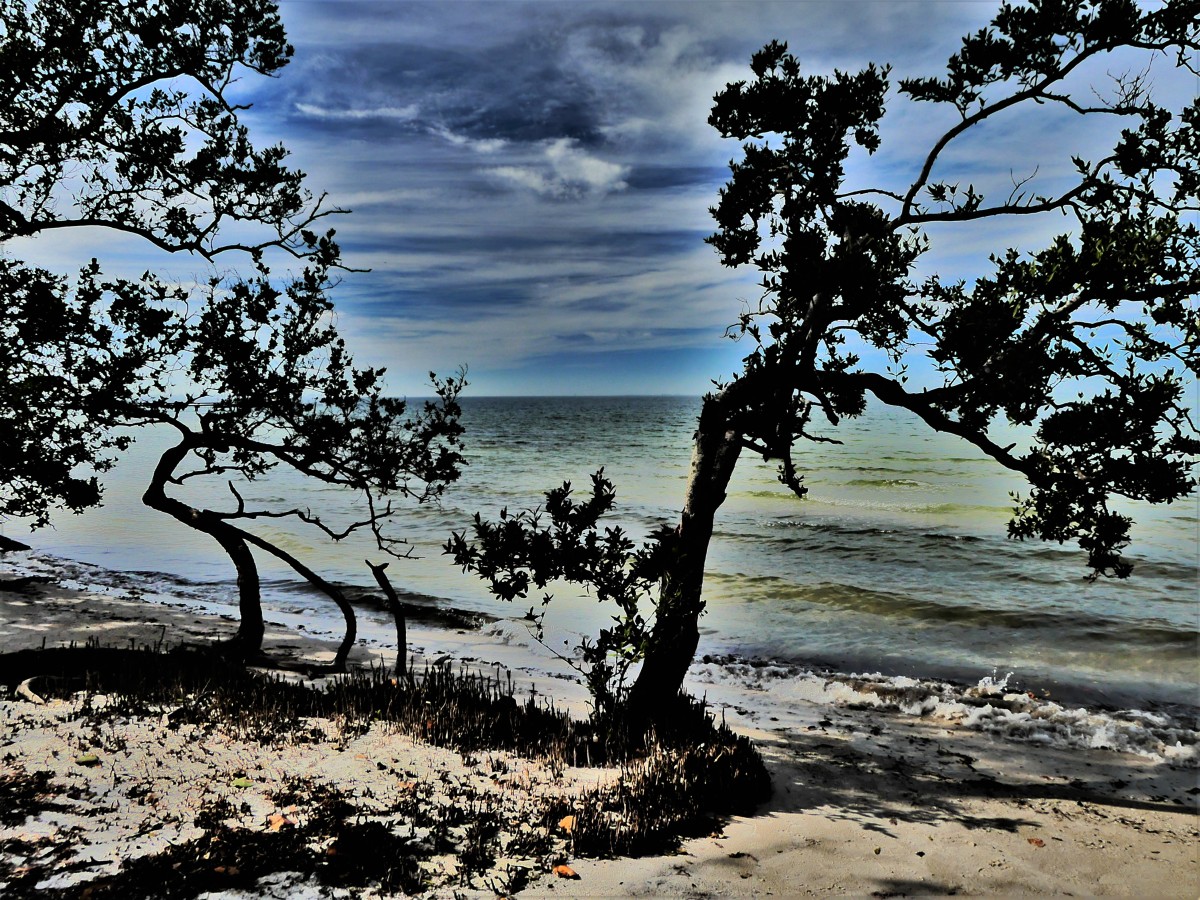
Keewaydon

and Keewaydin Island.

Keewaydon1 (2)

John Glenn Sample came to Naples in 1938 with a vision that would compete with Henry Flagler’s development of Palm Beach during the early 1900’s. Unimpressed by the titans of industry who would flock to the East Coast of Florida to sip fine whiskey and smoke Cuban cigars against a backdrop of crashing waves, Sample determined that the tranquil surf and serene surroundings of the Gulf Coast was better suited for peace and relaxation.

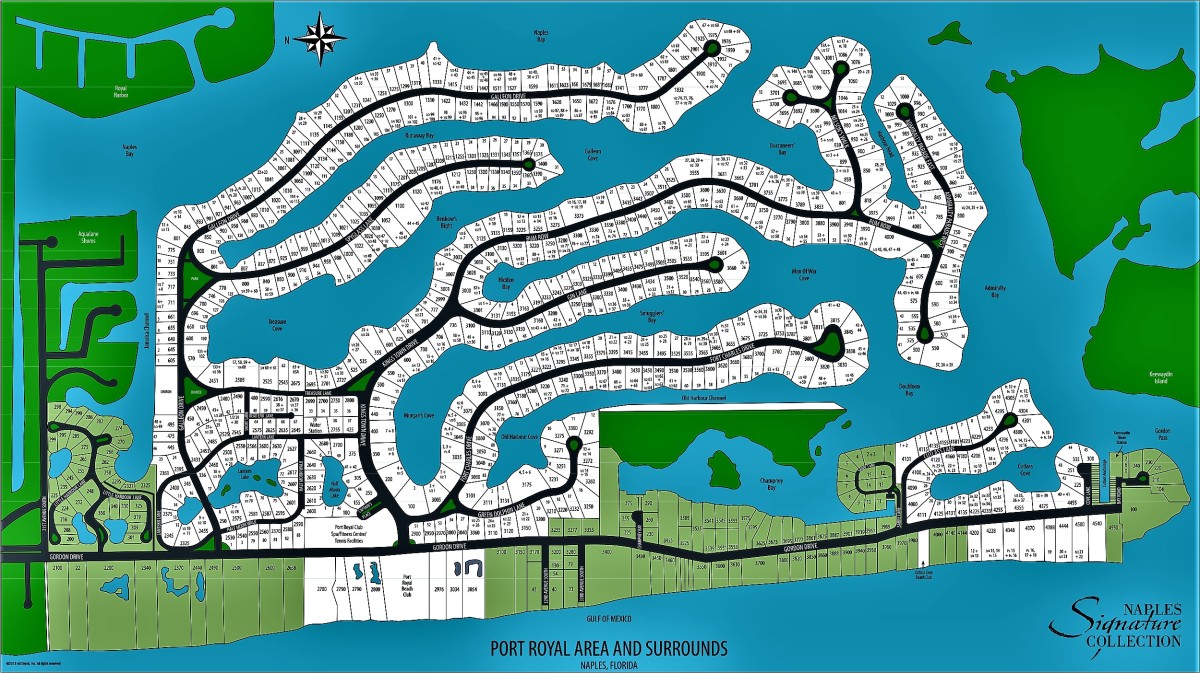
Not to be outdone by the co-founder of Standard Oil, Sample gobbled and cobbled two square miles of mangroves and marsh along Naples Bay for $13,700. During the 1950’s, Sample exhausted the $3.5 million he earned from the sale of his Chicago advertising agency by bringing heavy earth-moving equipment and dredging machinery to town, and subsequently rearranged his property into fingers reaching out to deep water access amid the warm currents of the Gulf of Mexico.

PORT-ROYAL map (2)

Early on, Sample priced his Port Royal lots between $7,500 and $12,000, and spec homes were priced between $22,000 and $25,000. By the 1960’s, Port Royal lot prices had ballooned to $30,000 and Port Royal homes were selling for $60,000.

Yet despite premium prices, Sample was holding out on hawking his holdings; the litmus test to buy property from Glenn Sample was that he must like you, because selling to a buyer was much more than “show me the money!” A prospective homeowner/neighbor had to supply letters of recommendation, and pass the like-mindedness quotient.

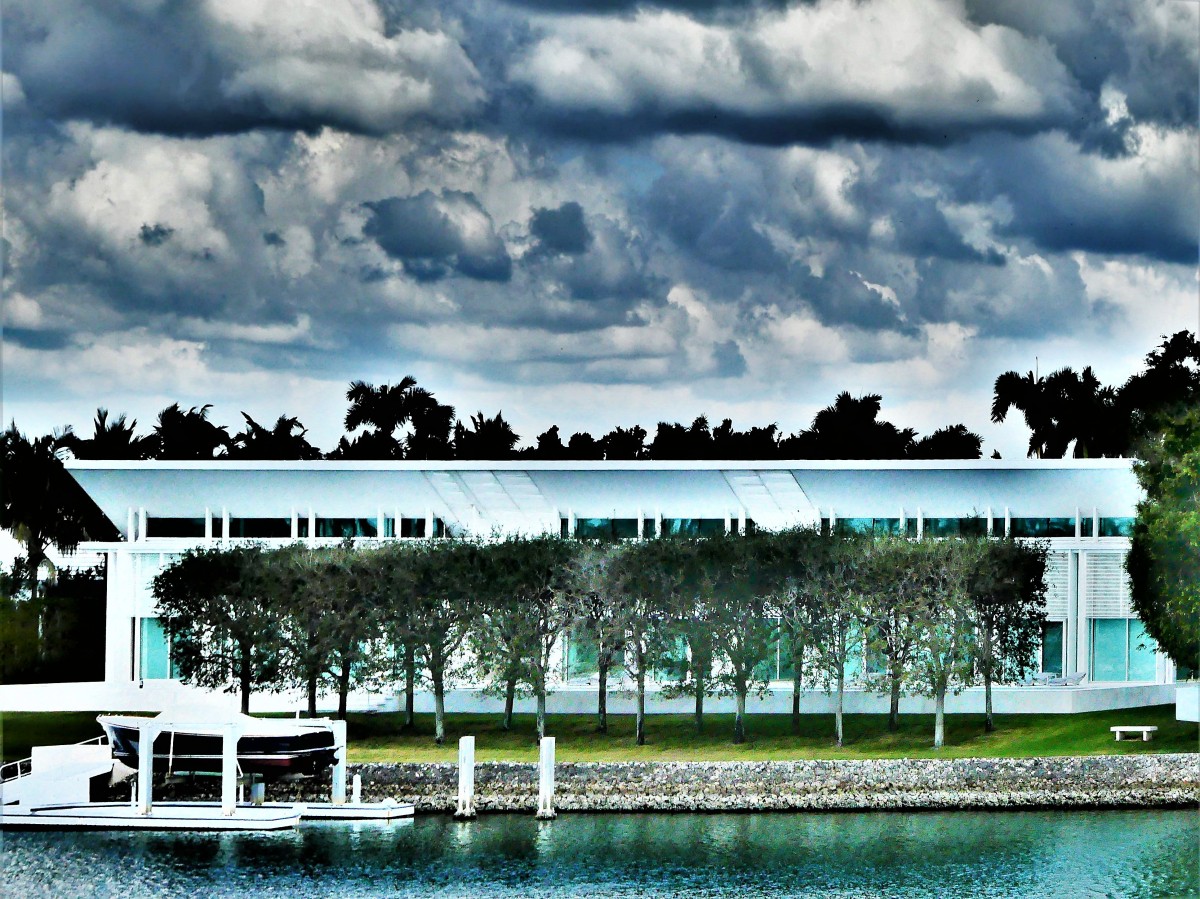
Today, only a few of the original 3,000 square foot homes remain, having been replaced by maximum-sized mansions of shimmering glass and steel.

Hugo Boss

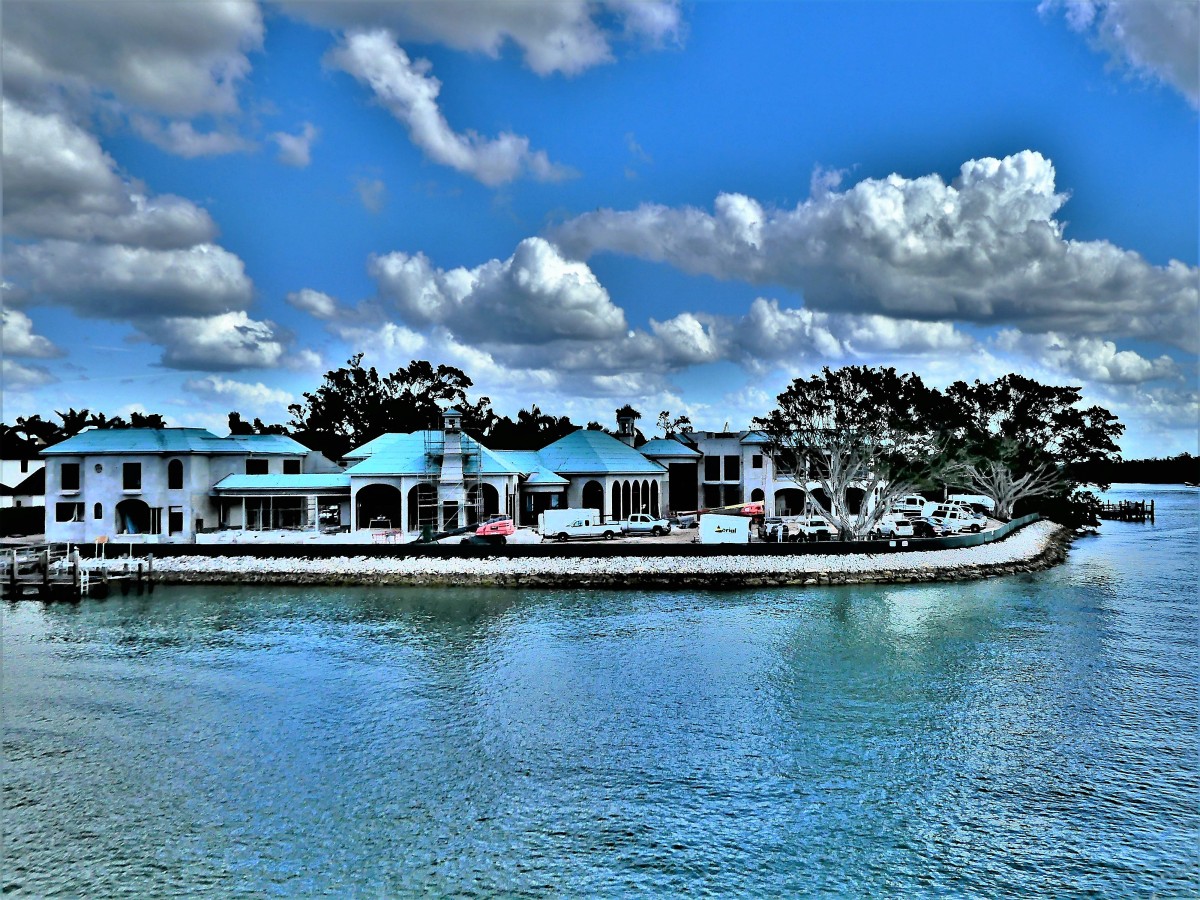
And of those still standing and available as teardowns for $4M, they are being replaced by new construction that defies understanding–exceeding unimaginable dimensions, and approaching $100M to complete.

new construction1

Port Royal royalty includes celebrities from sports fame, media, and entertainment. Generational offspring of corporate giants who colonized the enclave (Briggs-Stratton, Kodak, Collier Publishing, etc.) continue to live a life of quiet luxury, as does the former treasurer of Estonia who proudly flies his country’s flag.

Estonia's treasurer

But of all known Port Royal billionaires (there are many property owners who cloak their identities behind holding companies), none is more deserving than Dick Portillo, better known as Chicago’s King of Hot Dogs.

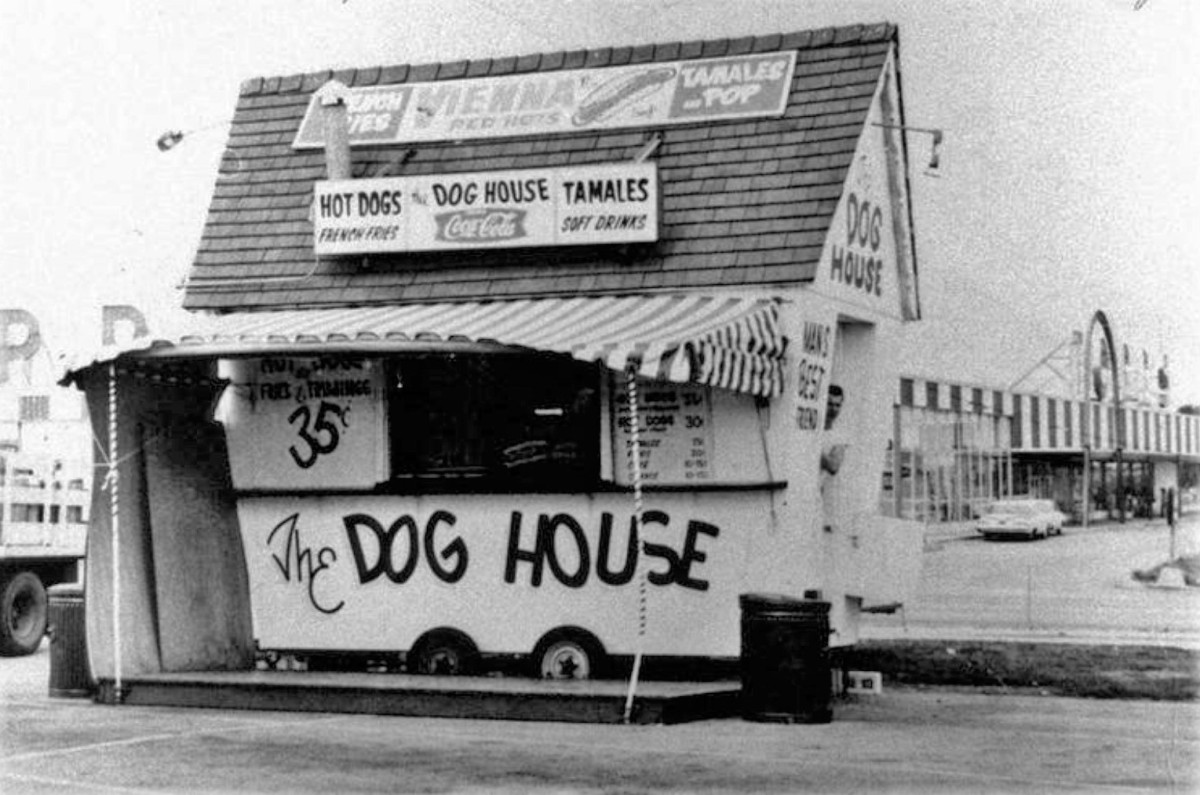
Starting out in 1963 with $1100 in savings intended as a down payment for a house, Portillo convinced his wife to invest in a small trailer called The Dog House on North Avenue in Villa Park. Running water came from a garden hose attached to another building.

Hot dog hut (2)

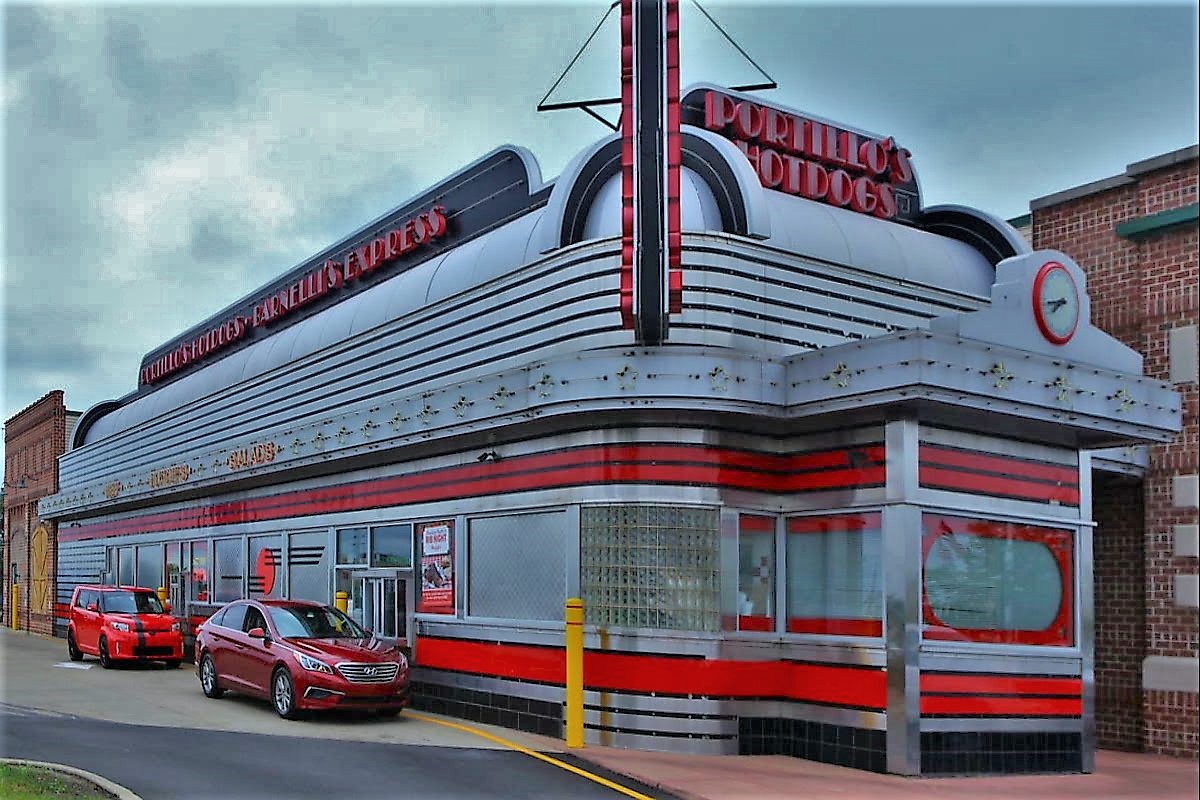
Not knowing how to cook, Portillo learned the business by visiting competing restaurants with his two young children in tow and asking questions until he perfected his technique and grew the business: to his first drive-thru in 1983; to offering nationwide shipping to all 50 states; to 38 locations in Illinois, Indiana, Arizona and California;

Portillo's1

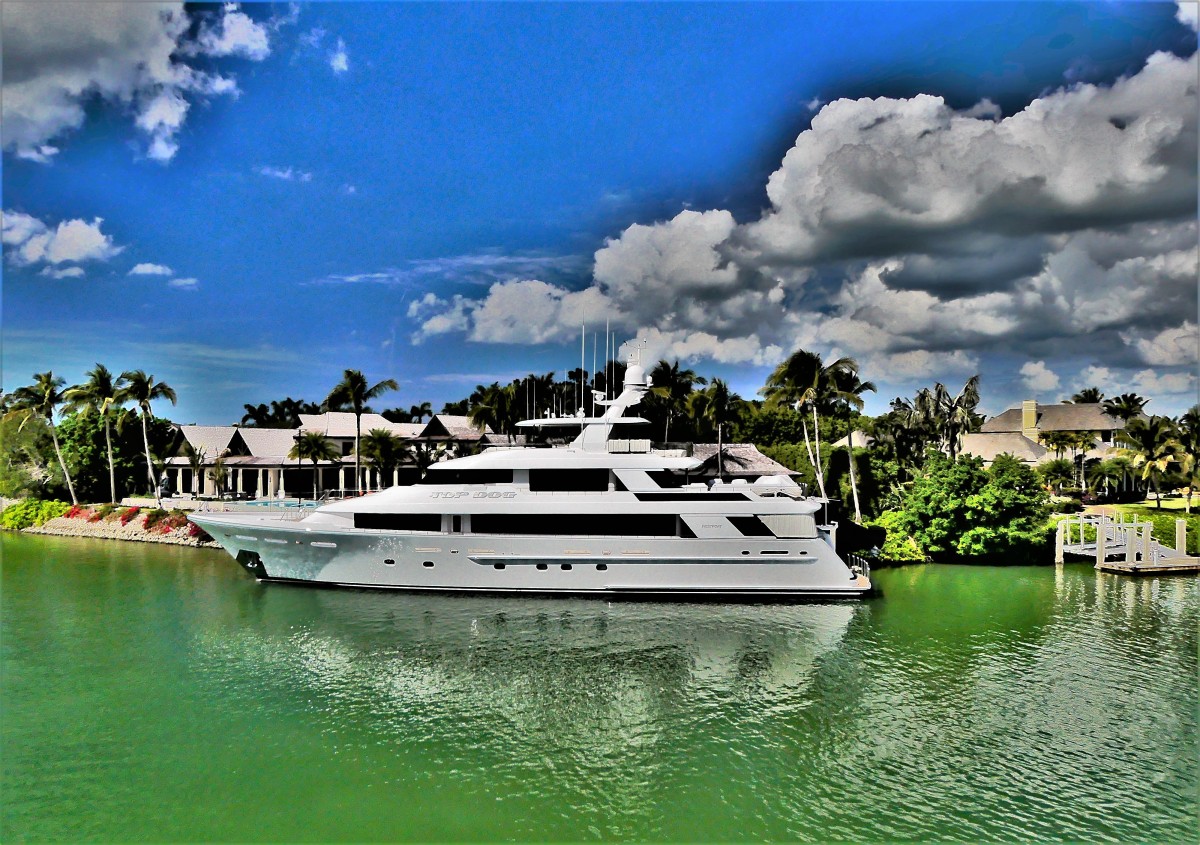
to eventually selling to Boston-based Berkshire Partners in 2014 for $1B, and acquiring an anchor for his $10,500,000 Westport yacht.

Top Dog (2)

Only in America!

no wake


Pictures of Home

For the past eleven months, I have suffered from an acute case of Restless Body Syndrome (RBS)–unable to stay in one place for more than an average of three to four days. And to my knowledge, there is no known antidote for this kind of wanderlust.

While there is much to be said for having a home with all the trappings of comfort and familiarity (for which I am grateful), I nevertheless feel a natural compulsion to feed my travel addiction–at times surrendering to the physical and psychological cravings of visiting someplace new on a regular basis.

Fortunately, there are hundreds of support groups around the country–known as RV parks and resorts–that are very accepting of those among us who are afflicted with RBS, and assuage us with electric, water and sewer, and occasionally, high-speed internet.

A ten-step program has been developed by self-help travel gurus to combat the irritation associated with RBS:

  1. Subscribe to Travel and Leisure, and National Geographic.
  2. Watch Amazing Race on CBS.
  3. Log on to Kayak, Trivago, or Travelocity.
  4. Smell a pine tree.
  5. Build a fire…outdoors.
  6. Eat a s’more.
  7. Lay in a hammock.
  8. Open and close a stadium chair.
  9. Take a brief cold-water shower.
  10. Follow Streaming thru America

Leading pharmaceutical firms have been quietly conducting cutting-edge research to advance a cure for RBS. And there is widespread speculation that a vaccine is being developed for the travel bug.

Additionally, Congress is contemplating passage of the Rio Grande Act, whereby an extremely narrow Wal-Mart will be built along the entire Texas-Mexico border for RBS out-patients to shop, duty-free.

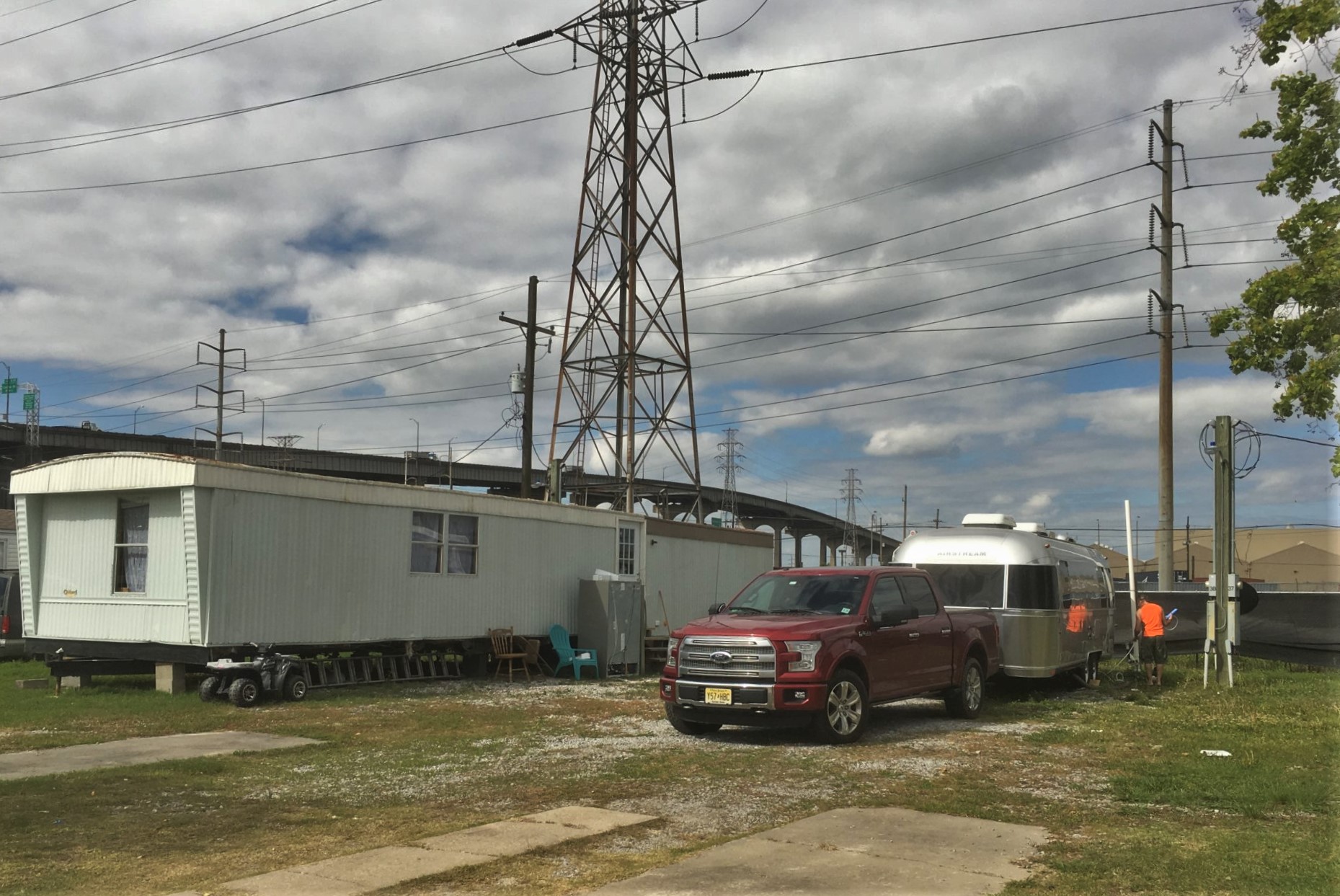
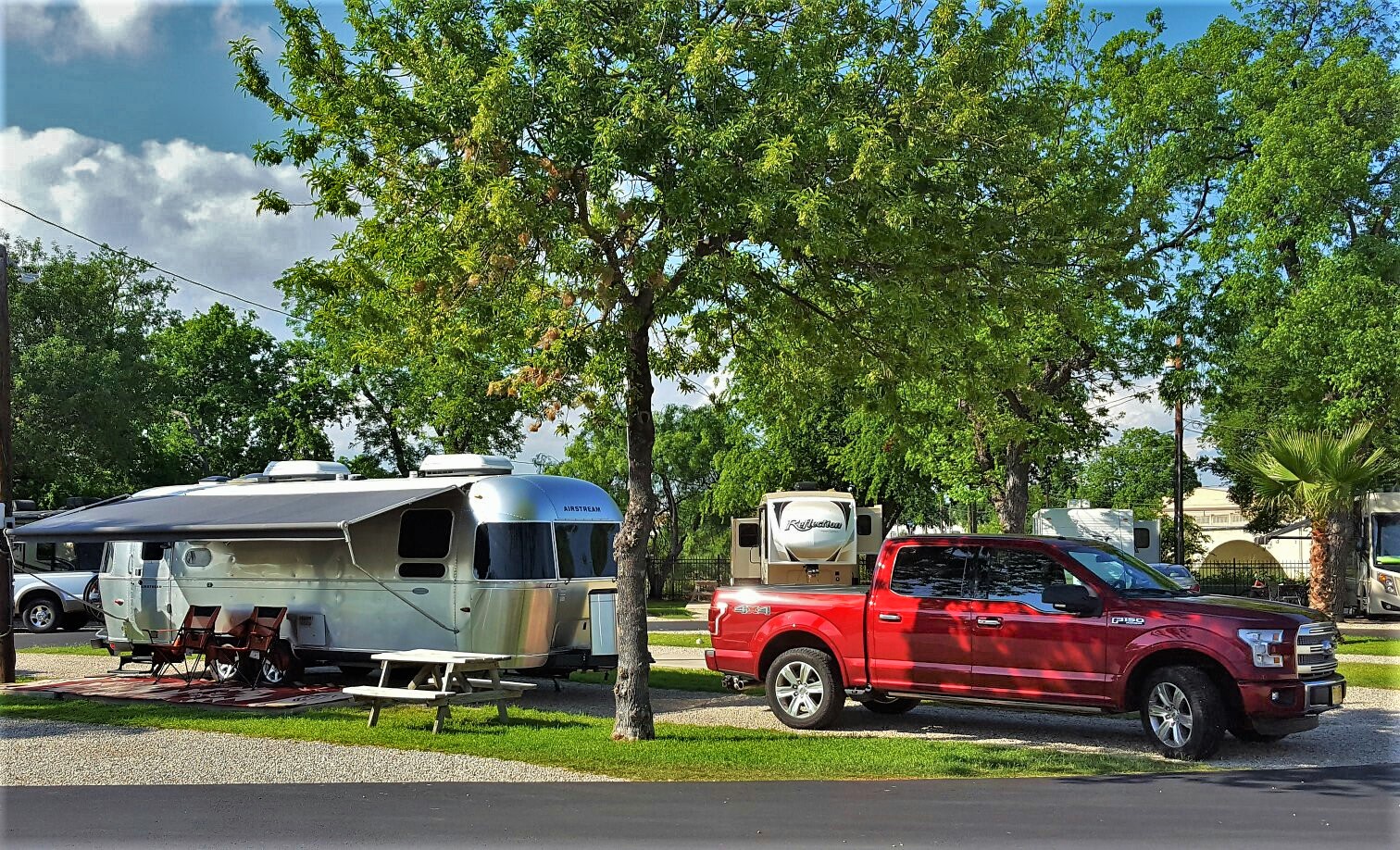
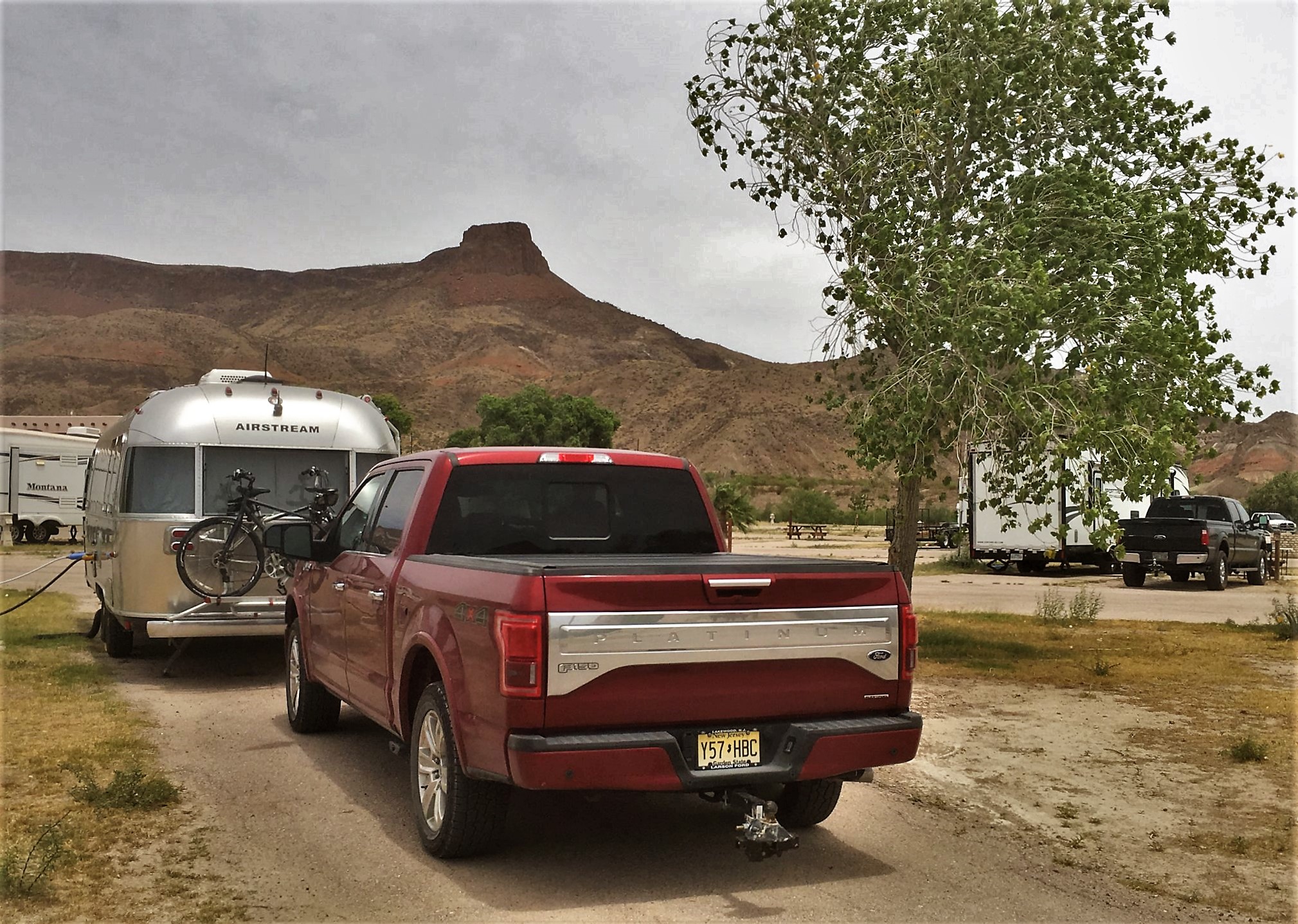
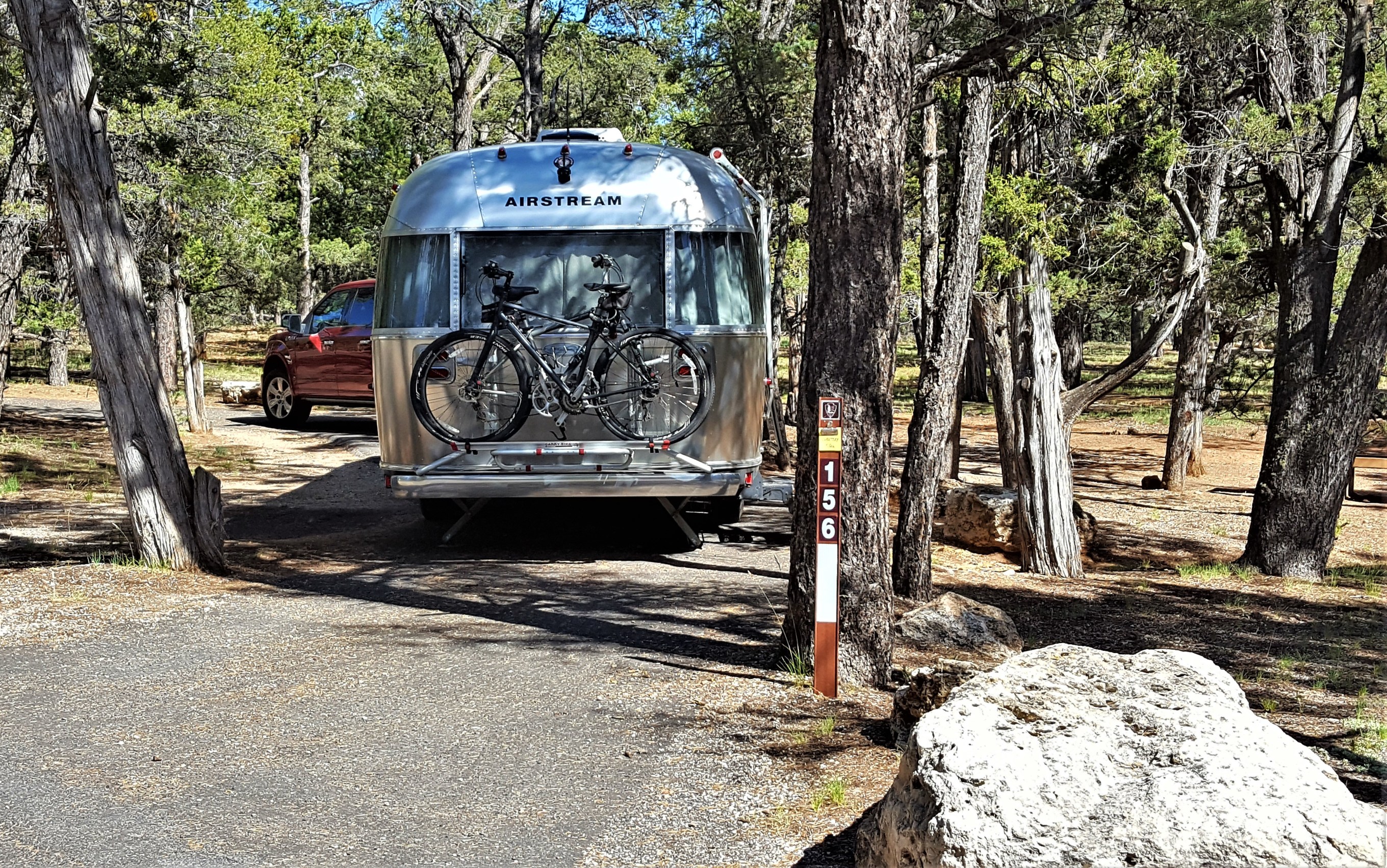
Until then, I offer my services as your tour guide for a random retrospective of my many homes from March 2017 to present.

Towaco, NJ
Towaco, NJ
Ligoneer, PA
Ligonier, PA
Walmart, WV
Lewisburg, WV
New Orleans, LA
New Orleans, LA
San Antonio, TX
San Antonio, TX
Big Bend State Park, TX
Big Bend NP, TX
Grand Canyon, NP
Grand Canyon NP, AZ
Zion NP, UT
Zion NP, UT
Estes Park, CO
Estes Park, CO
West Yellowstone, MT
Banff, Ca
Banff NP, Alberta, CAN
Corvallis, OR
Corvallis, OR
Klamath, CA
Klamath, CA
Hat Creek, CA
Hat Creek, CA
Quincy, CA
Quincy, CA
Las Vegas, NV massacre
Las Vegas Massacre, NV
Valley of Fire, NV
Valley of Fire, NV
Joshua Tree NP, CA
Joshua Tree, CA
Mt. Pleasant, SC
Mt. Pleasant, SC
Delray Beach, FL
Delray Beach, FL
Melborne, FL
Melbourne, FL
Bradenton, FL
Bradenton, FL

To be continued…

The Ringling Museum of Art

John Ringling was one of the early 20th century’s most prolific collectors of art, and his Museum of Art, opened in 1931 has become his true legacy. Soon after marrying Mable in 1905, the Ringlings became avid collectors, acquiring paintings, furniture and tapestries from the estates of other established patrons of art. In 1924, the Ringlings met Julius Böhler, a prominent Munich art dealer, and developed a long-standing relationship that would ignite the Ringlings’ growing interest in collecting art.

The Ringlings had been traveling through Europe for years and had fallen in love with Baroque art. In 1925 John hired architect John H. Phillips to design and build a museum on his Sarasota property to house his ever-growing collection.

What Phillips designed was a U-shaped pink palace with 21 galleries to house Ringling’s treasure trove of paintings and art objects, highlighted by a collection of masters that would eventually include Velazquez, El Greco, Van Dyke, Veronese, Tiepolo, Gainsborough and Rubens.

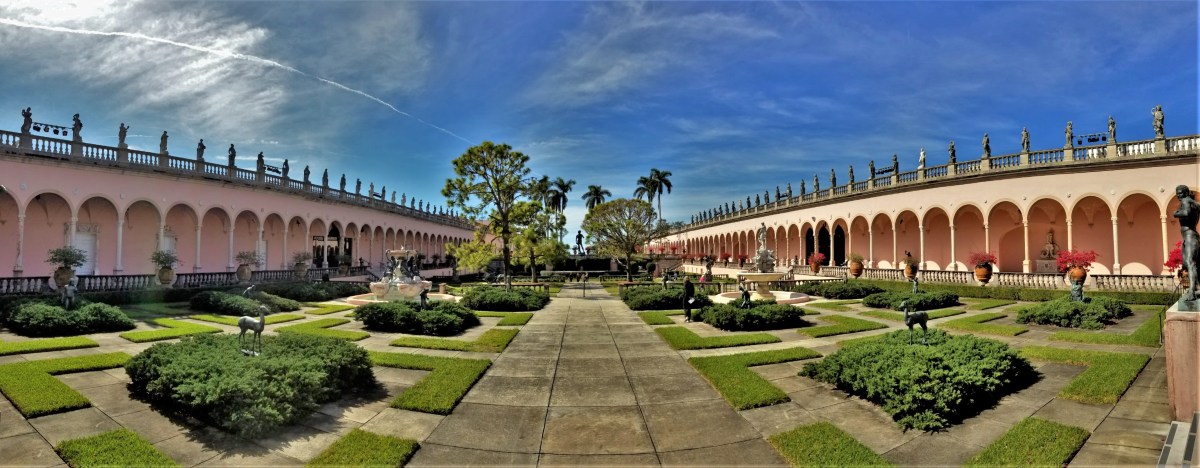
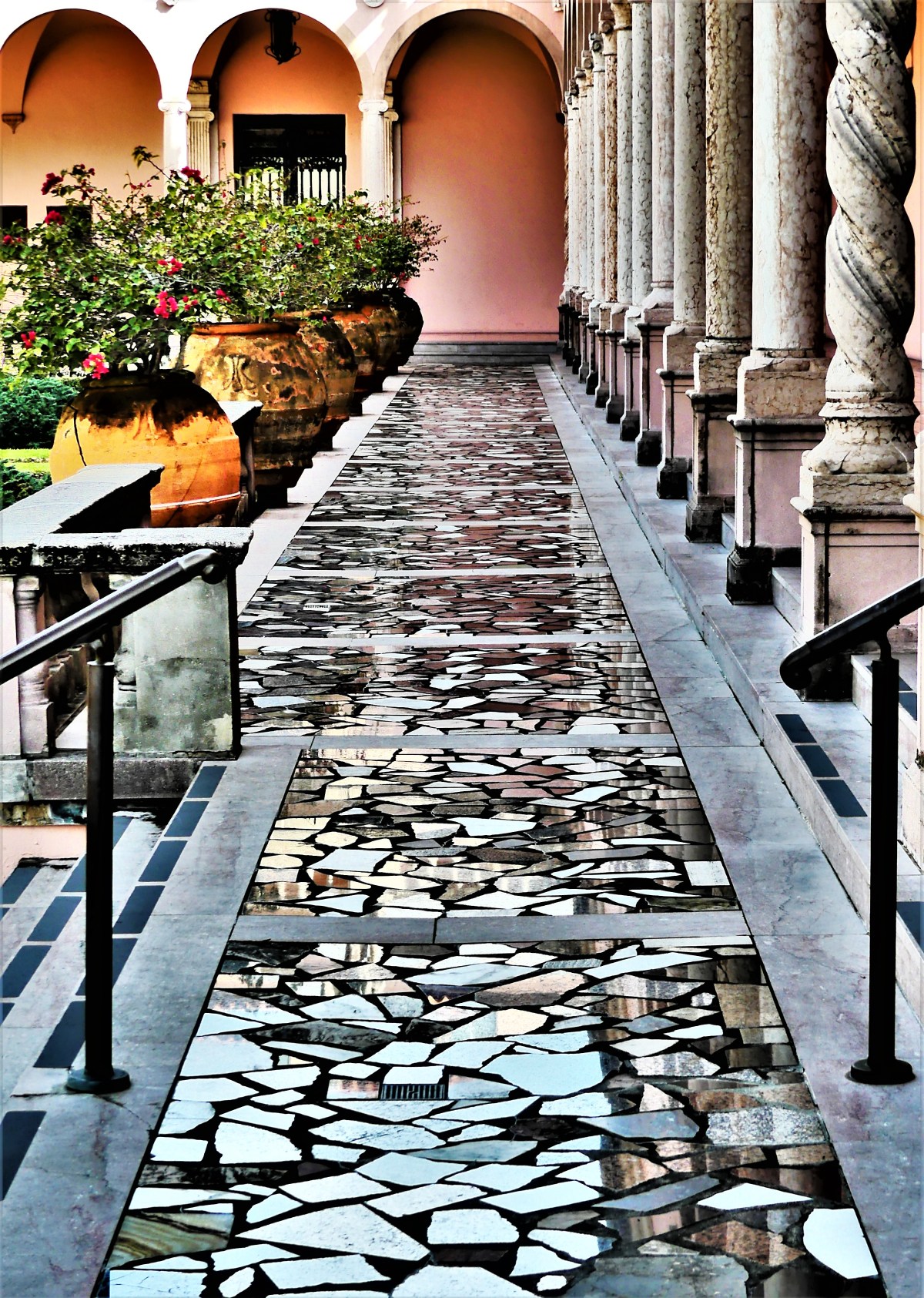
Paired perfectly with the Renaissance-style of the Museum, the Museum of Art’s Courtyard embodied the ideals of the Renaissance garden.

museum gardens

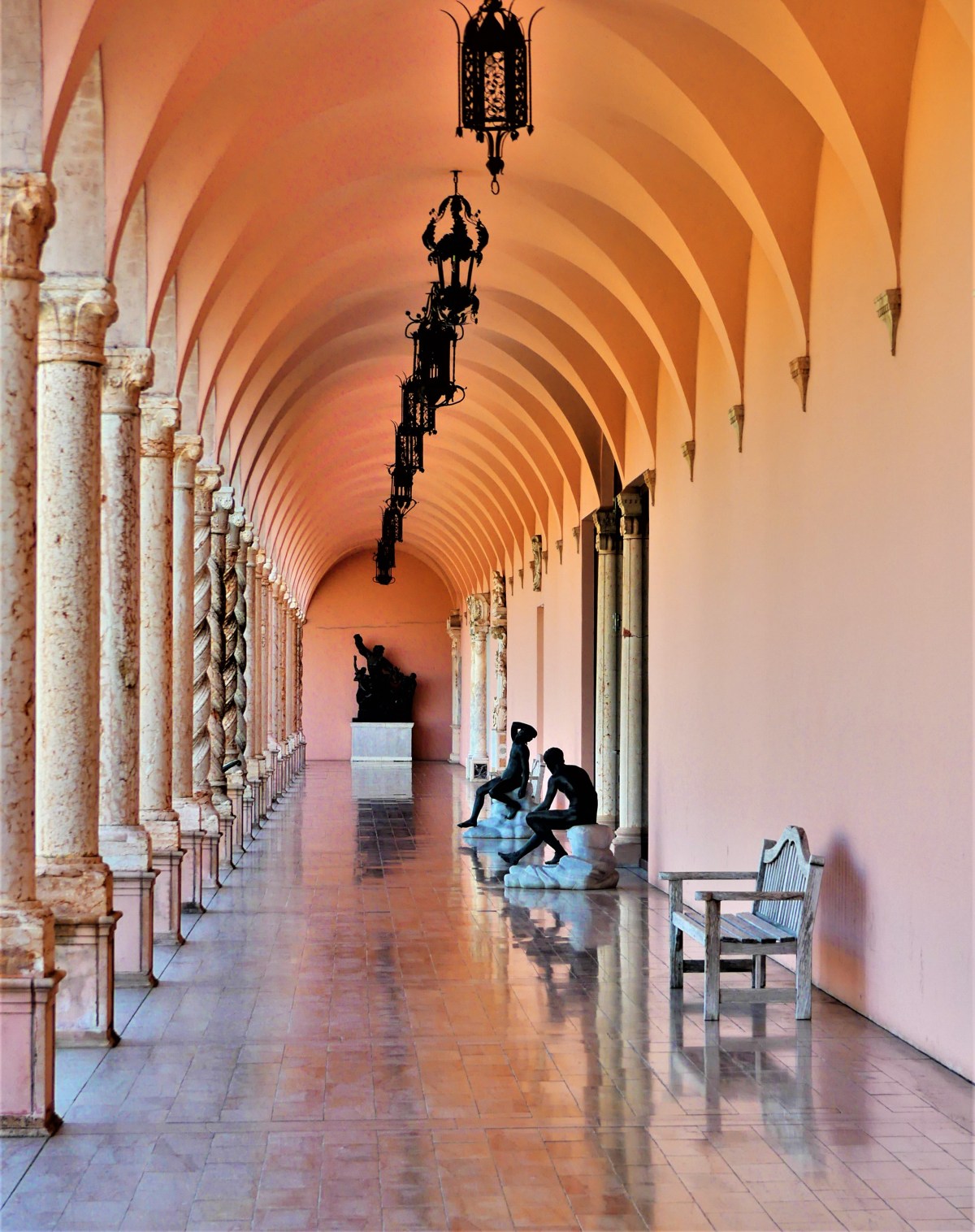
Its long loggias…

garden arches

shimmering walkway

marble reflections

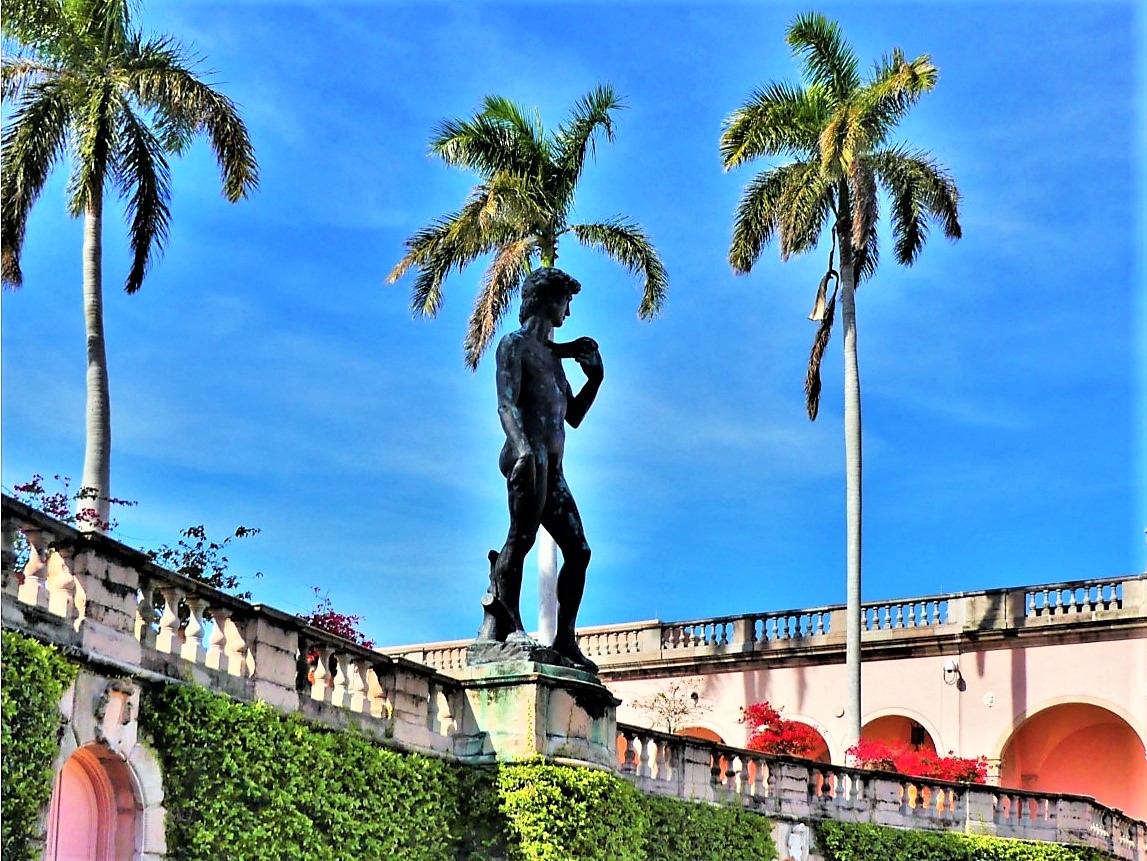
…flank a central courtyard that features an impressive group of early twentieth-century bronze and stone casts of famous Classical, Renaissance, and Baroque sculptures, among them, at its heart, Michelangelo’s David from Palazzo Vecchio in Florence.

David

Ringling hoped that by building the Museum he would make Sarasota a cultural and educational center. To achieve his vision he began buying comprehensive collections with prestigious provenances, beginning with the purchase of three rooms complete with furnishing, paintings and architectural finishes from the Astor Mansion and a villa in the Tuscan countryside.

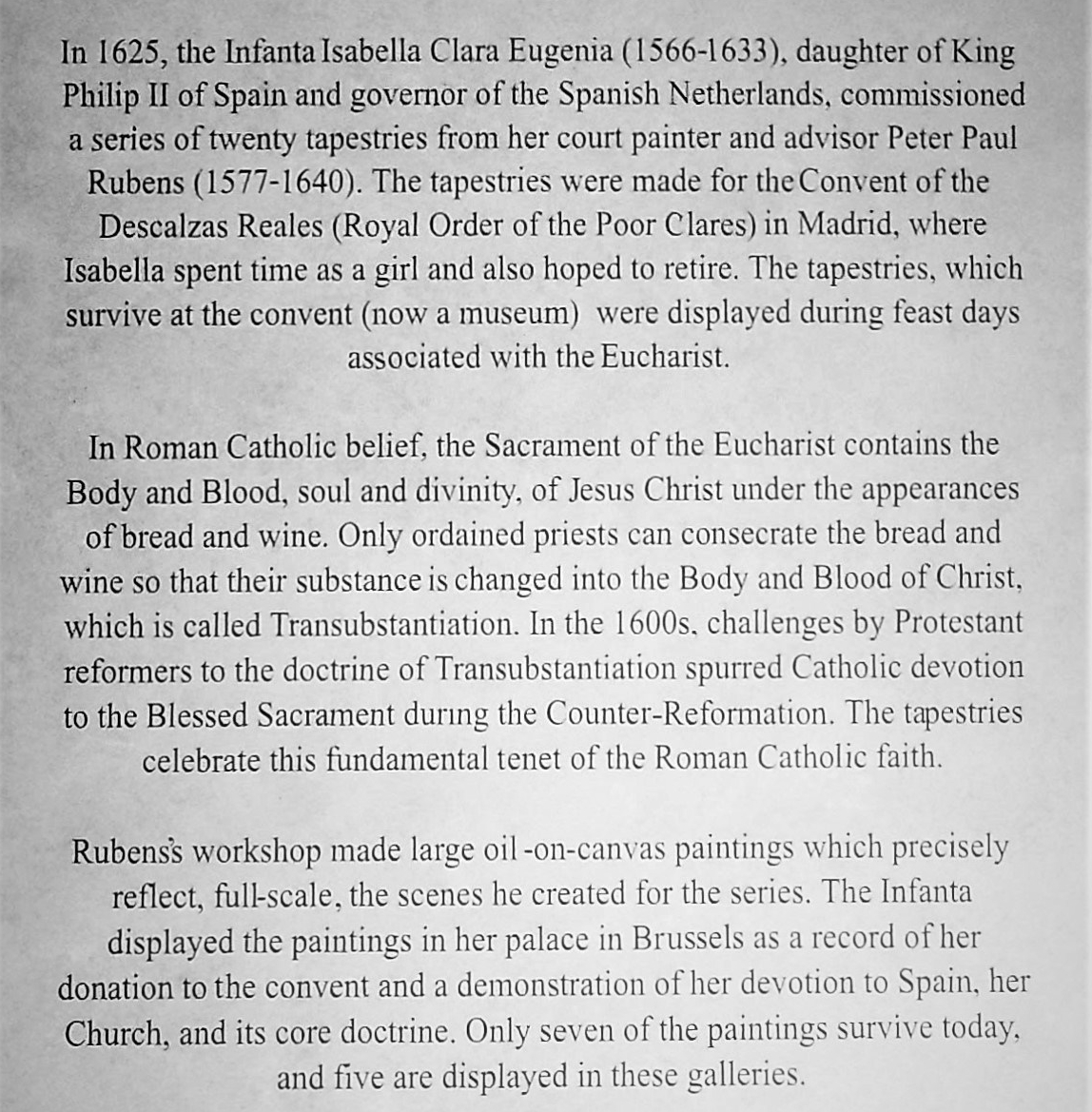
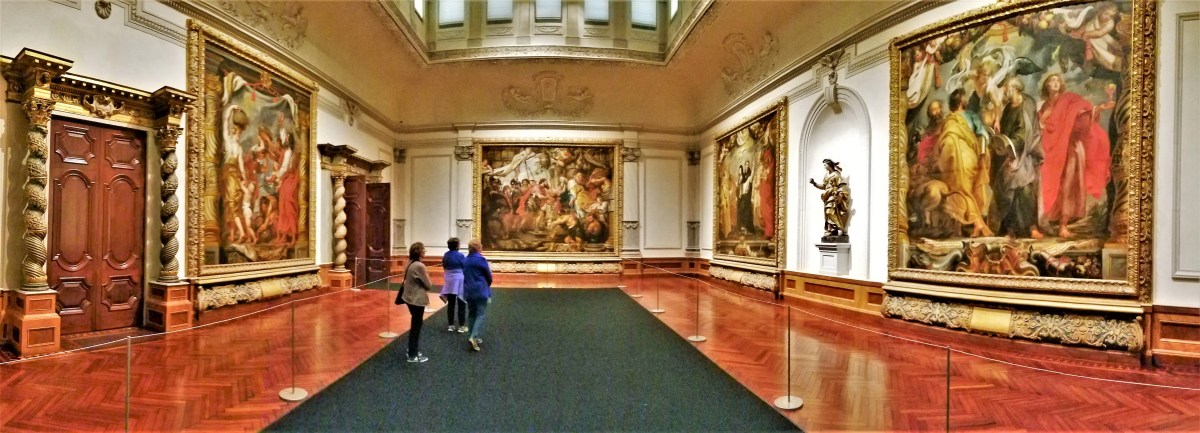
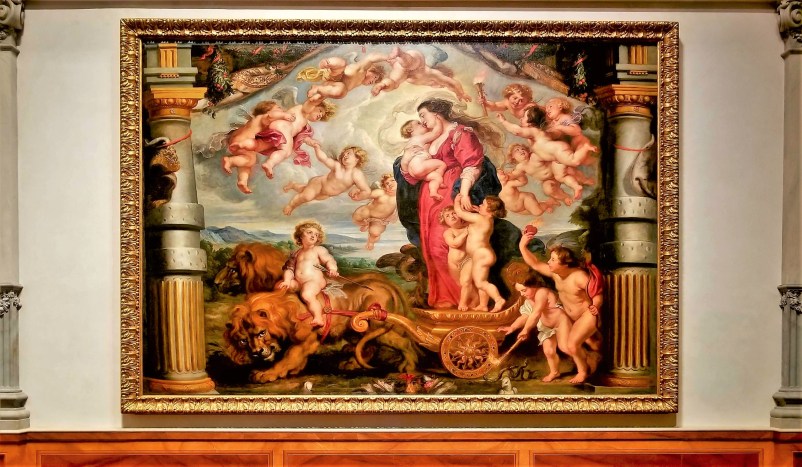
He also purchased four tapestry paintings, oil on canvas, by the Flemish master Peter Paul Rubens from the Duke of Westminster. Today these magnificent paintings welcome you as you enter the Museum’s gallery, and are the foundation of the Museum’s extraordinary Baroque collection.

Rubens info

Paul Rubens Hall

Rubens paintaing

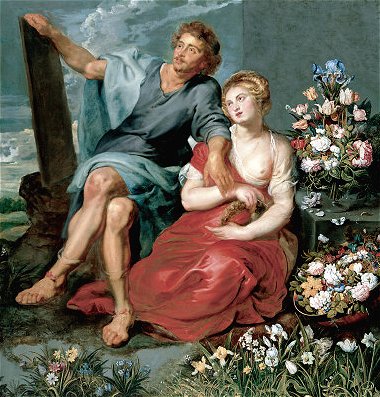
Between 1925 and 1931, Ringling acquired more than 600 Old Master paintings from the Late Medieval thorough the 19th century. His purchase of Rubens’ Pausias and Glycera was considered so significant that Art Digest reported on it.

Pausias and Glycera

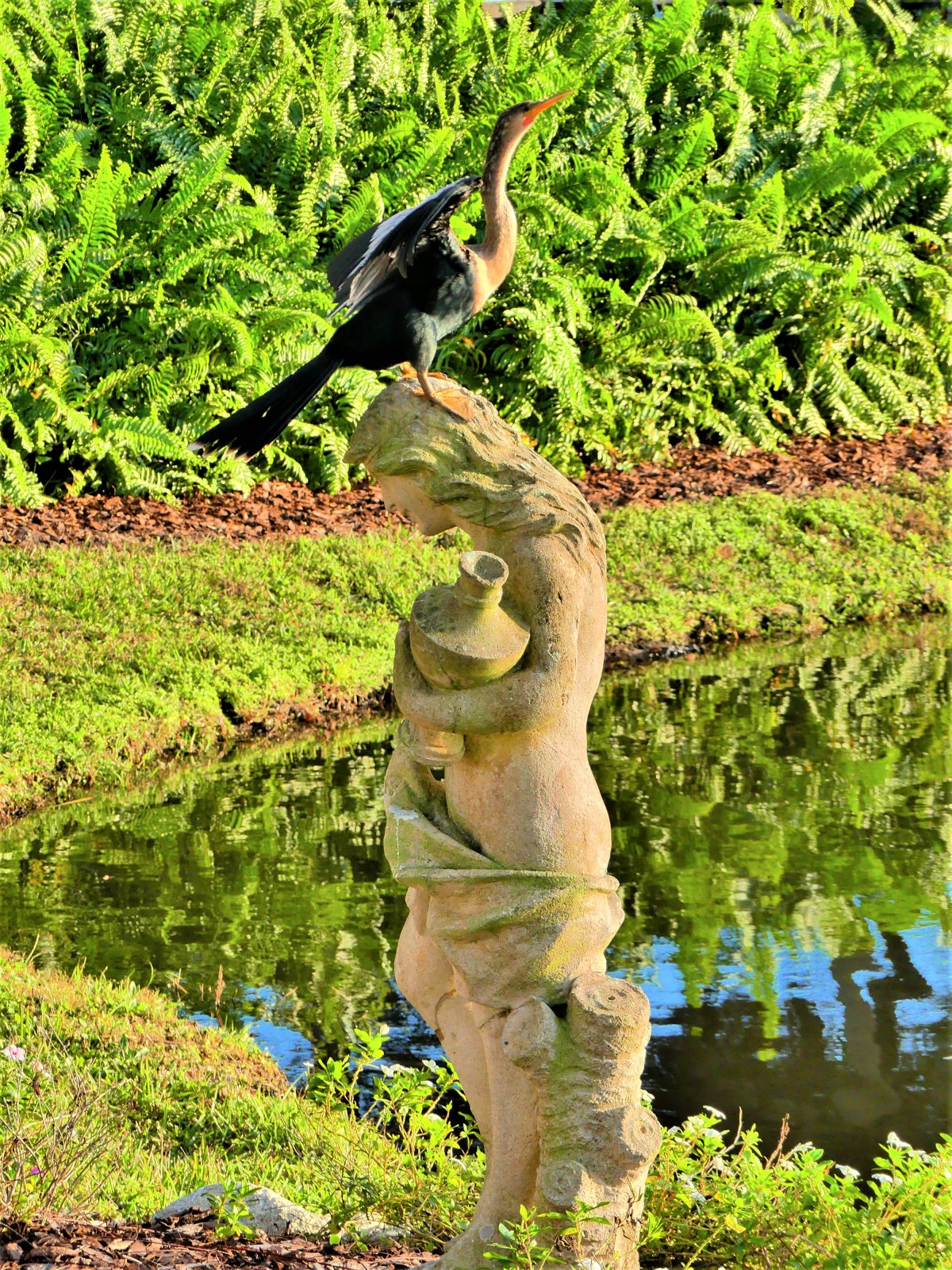
In 1928, Ringling made another significant acquisition that was to form the core of his classical antiquities collection: 2800 objects of Greek, Roman, and Cypriot antiquities from the Metropolitan Museum of Art in New York. Excitement about his collection was growing in art circles; the New York Times did a full-page article about the purchase, praising not only the collection, but the Museum and its surroundings as well.

heron pedastol1.jpg

cypress and moss

The Depression and local real estate market collapse contributed greatly toward Ringling’s financial demise. It’s been reported that Ringling died in 1936 with only $311 in the bank. Although Ringling bequeathed his museum to the people of Florida–hoping to establish Sarasota as a cultural beacon–his creditors and legal wrangling would delay the settling of his estate for a decade.

Funds were poorly managed and the endowment Ringling left languished and barely grew. The Museum was only occasionally opened between 1936 and 1946 and not properly maintained. Gradually, the care that the buildings required were either put off or handled piecemeal.

But while the Museum struggled with a lack of finances, a series of Directors continued to foster its artistic growth, most notably A. Everett (Chick) Austin, Jr. the charismatic former Director of The Wadsworth Atheneum in Hartford, Connecticut who became the Museum’s first Director and Curator in 1946 and served until his death in 1957.

Today, thanks to continuing community support, the Museum has increased its gallery exhibition space. And under visionary leadership, the Museum has increased its artistic relevance, and national prominence by showcasing emerging talents in the international arts community.

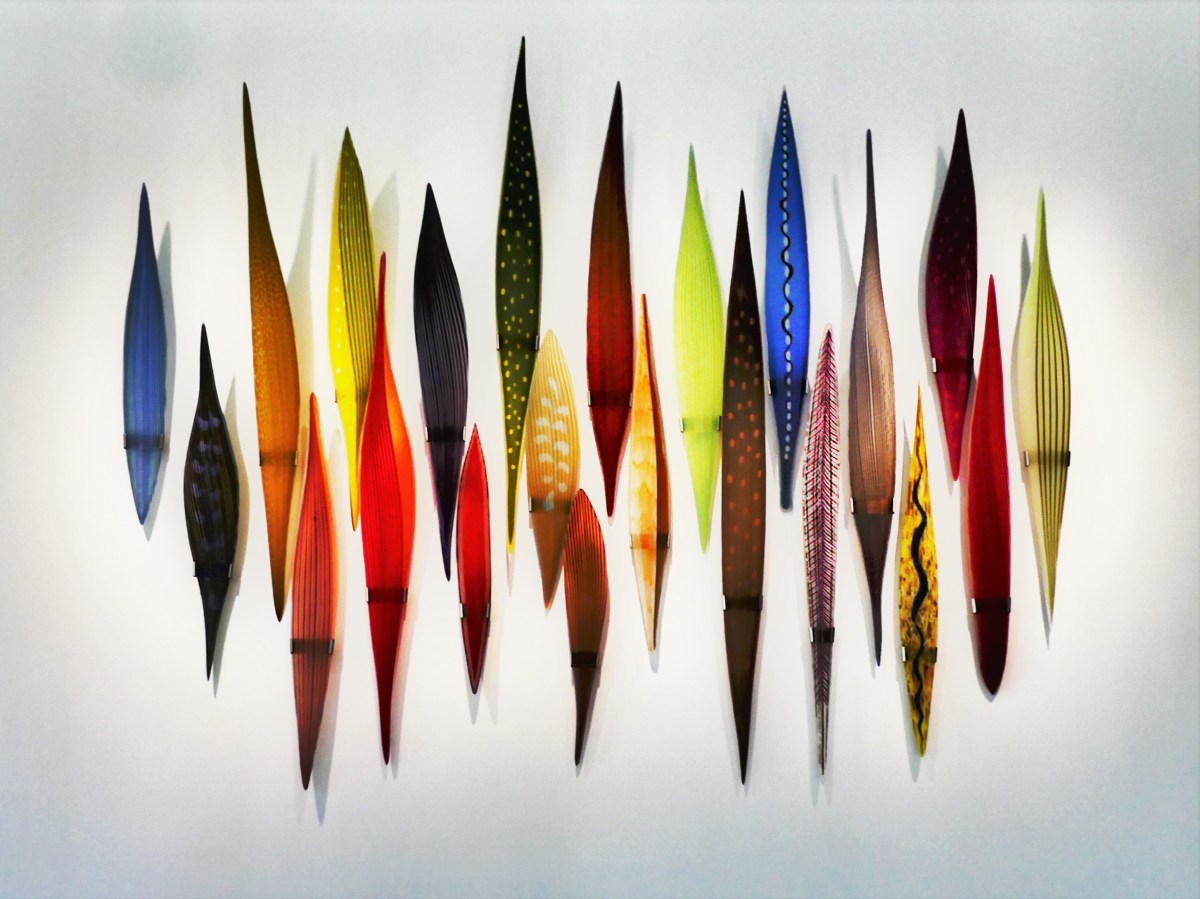
glass form

credenza

sculpture (3)

Under Florida State University’s stewardship, the Museum of Art has exciting plans for new acquisitions and exciting exhibitions and programs, finally fulfilling John Ringling’s dream of delivering a great cultural center to Sarasota citizens.

Note:

Quotes are courtesy of Ringling Museum of Art

The House of John by Mable

Charles Thompson, manager of Buffalo Bill’s Wild West Show (later acquired by the Ringlings) had built Palms Elysian along Sarasota Bay by 1893…Palms Elysian (2)
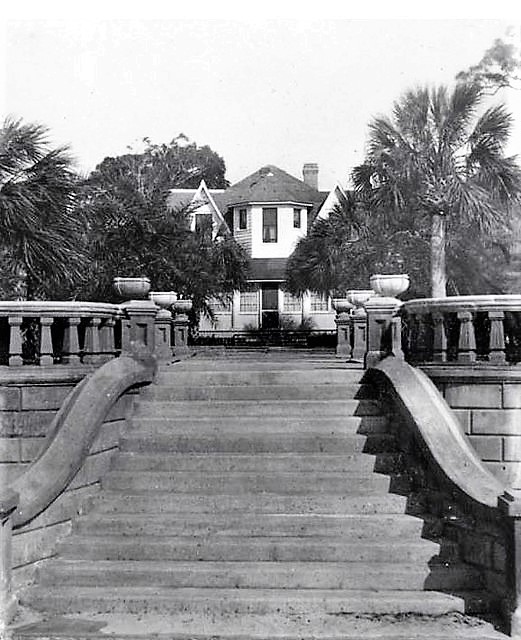
to bolster his initial purchase of 154 acres for $1650. Thinking that Sarasota could be a great destination for the winter circus season, and a worthy land development opportunity, Thompson persuaded John and Charles Ringling to explore the area in 1911, and convinced John to purchase the home and 20 acres of waterfront property from mutual friend and General Agent of New York Railroad, Ralph Caples, who only three months earlier had acquired the estate from Thompson. By then, Palms Elysian had become a showplace of a home in an area surrounded by log cabins and fishing huts.

John and Mable continued to winter at Palms Elysian through the 1920s, with John and Charles becoming more involved in Sarasota real estate speculation and development, scooping up Bird Key, St. Armands Key and Longboat Key, and owning as much as 25% of the entire Sarasota area.

It was time to replace Palms Elysian with a home befitting the thirteenth wealthiest man in America.

John and Mable’s extensive travels throughout Italy provided her with plenty of inspiration for their proposed palazzo on the bay. Gleaning architectural details from Doge’s Palace and the Bauer-Grünwald Hotel in Venice, Mable turned her drawings and notes over to leading New York architect Dwight James Baum for a cohesive design, and commissioned Owen Burns to build Cà d’Zan (House of John, in Venizzi dialect), a 36,000 square foot Venetian Gothic-styled residence where Palms Elysian once stood.

Construction began in 1924. Every aspect of the building, inside and out, was painstakingly overseen by Mable–from the terra cotta mix and the tile glaze, to the decorative furnishings and flourishes of modern living during the Roaring Twenties.

All the while, John Ringling’s investments (entertainment, real estate, railroads, oil, and cattle) had amassed a fortune of $200 million, and landed him on the cover of Time Magazine.

Time Magazine cover (2)

Cà d’Zan was completed and fully furnished before Christmas 1926 at an astonishing cost of $1.5 million ($21 million today). With 41 rooms and 15 bathrooms, the Ringling’s new home featured a crystal chandelier from the original Waldorf-Astoria Hotel, Florida’s first residential elevator by Otis, an Aeolian organ with 2,289 pipes built into a wall rising two stories,
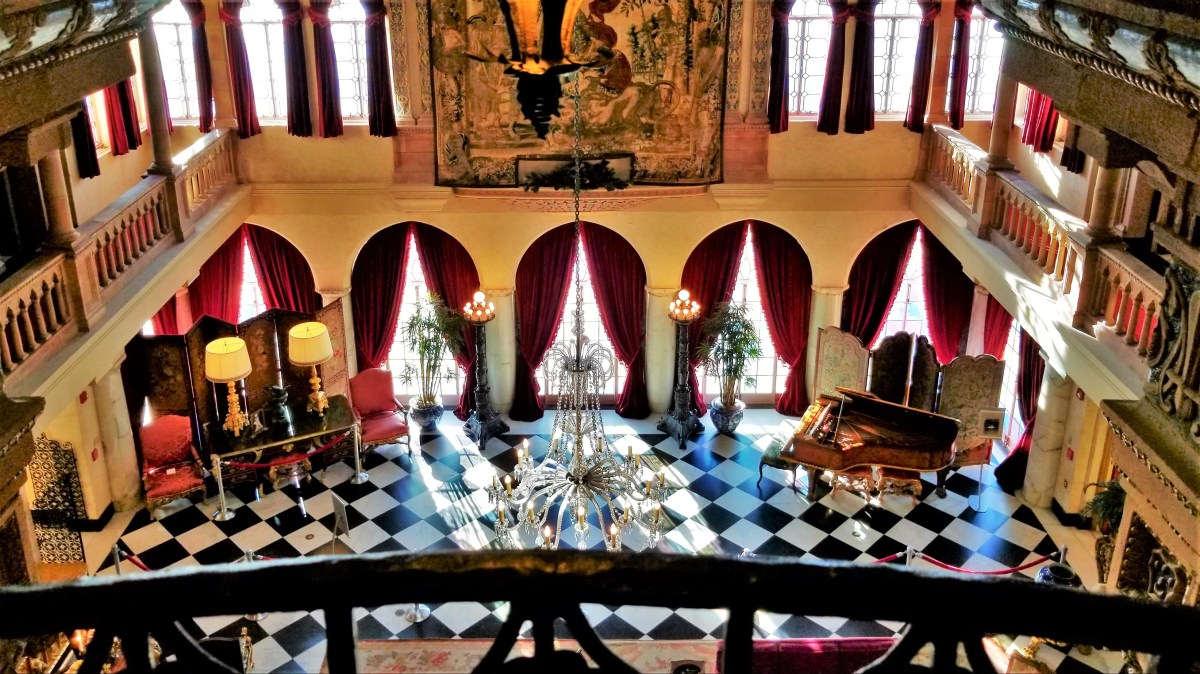
covered courtyard

and an 82-foot-high tower with an open-air landing and a high-domed ceiling.

terra cotta frieze

A similarly-styled gate marked the official entrance to the opulence of Cà d’Zan and The Ringling estate,
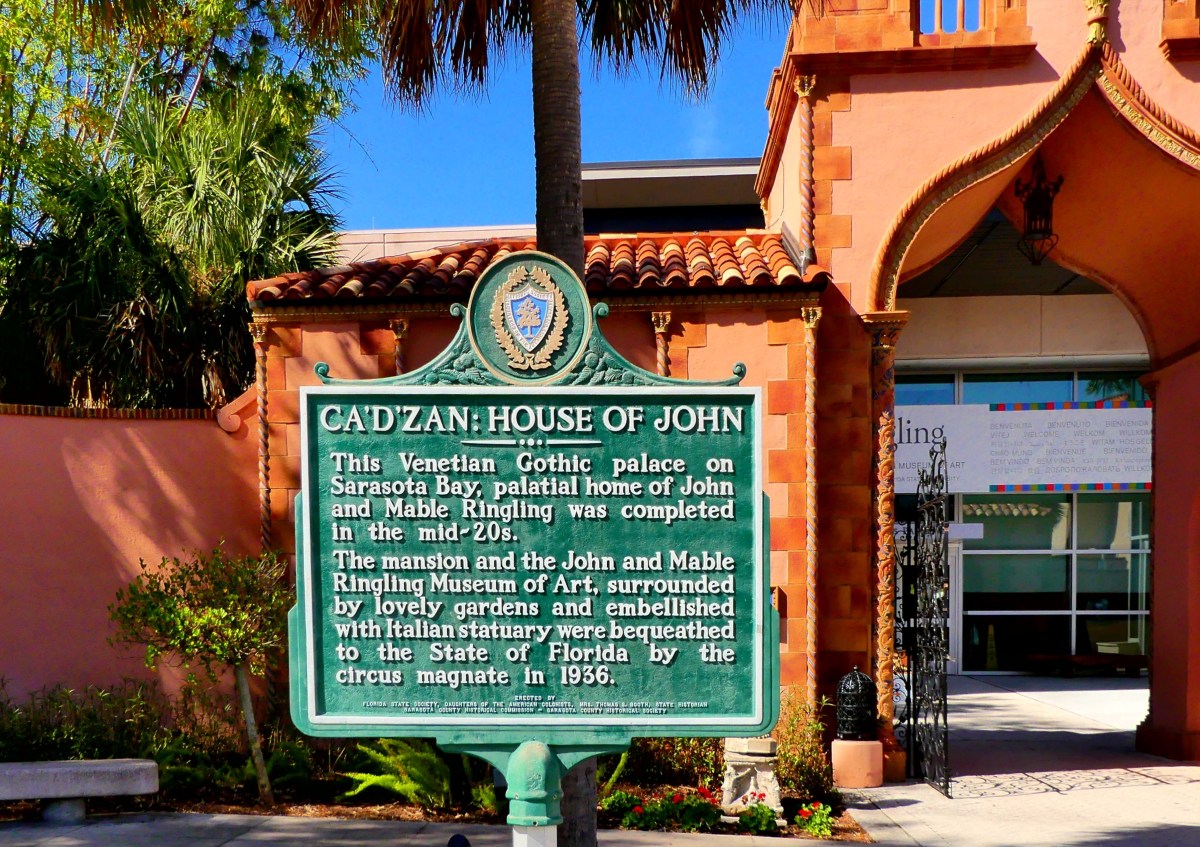
Ca'D'Zan signpost

where Mable would greet her celebrity guests–the likes of Will Rogers, Jimmy Walker, Flo Ziegfeld, and Billie Burke.
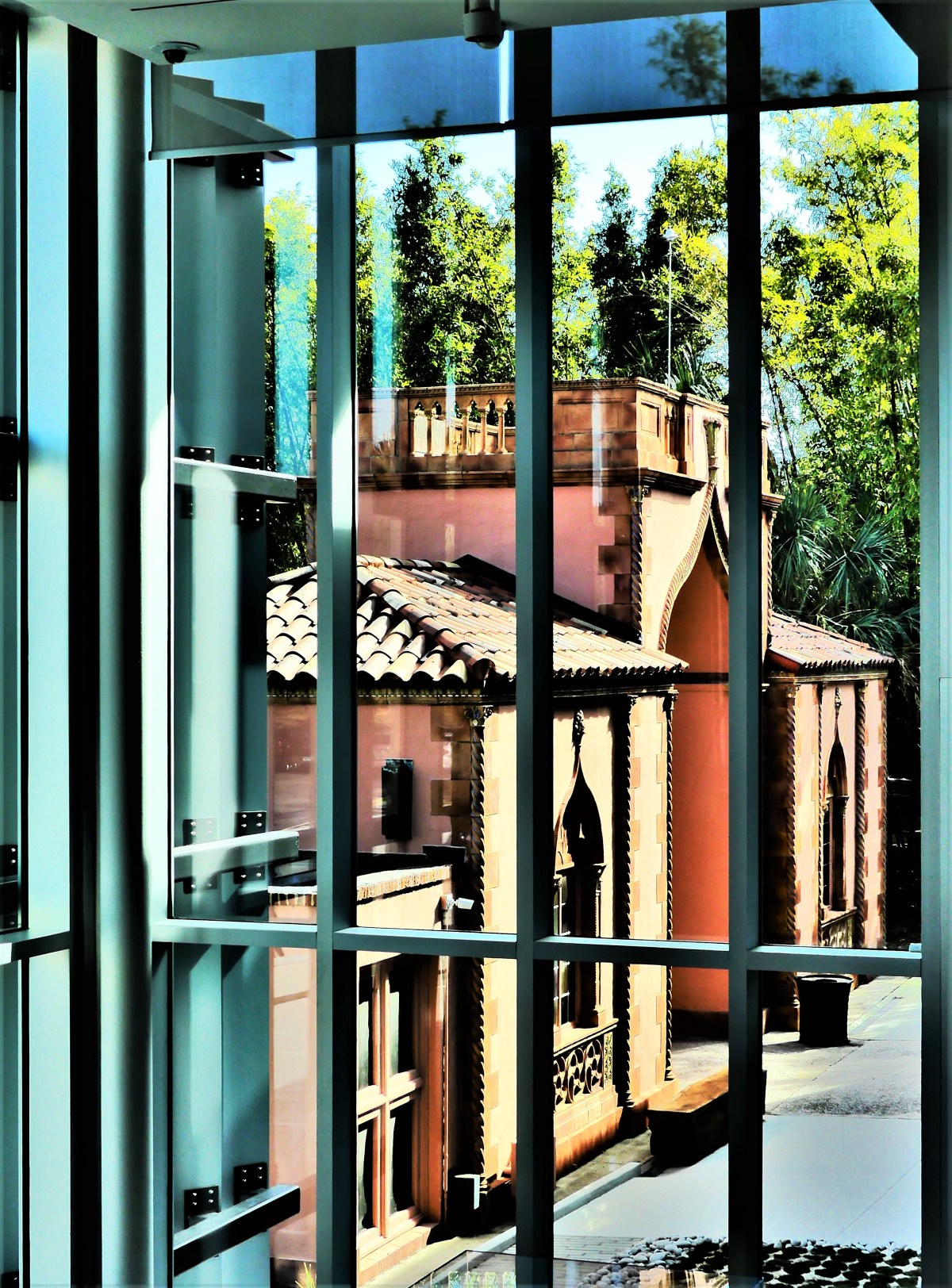
gate thru glass pavilion

Their stroll continued through lush gardens punctuated by Italian statuary,
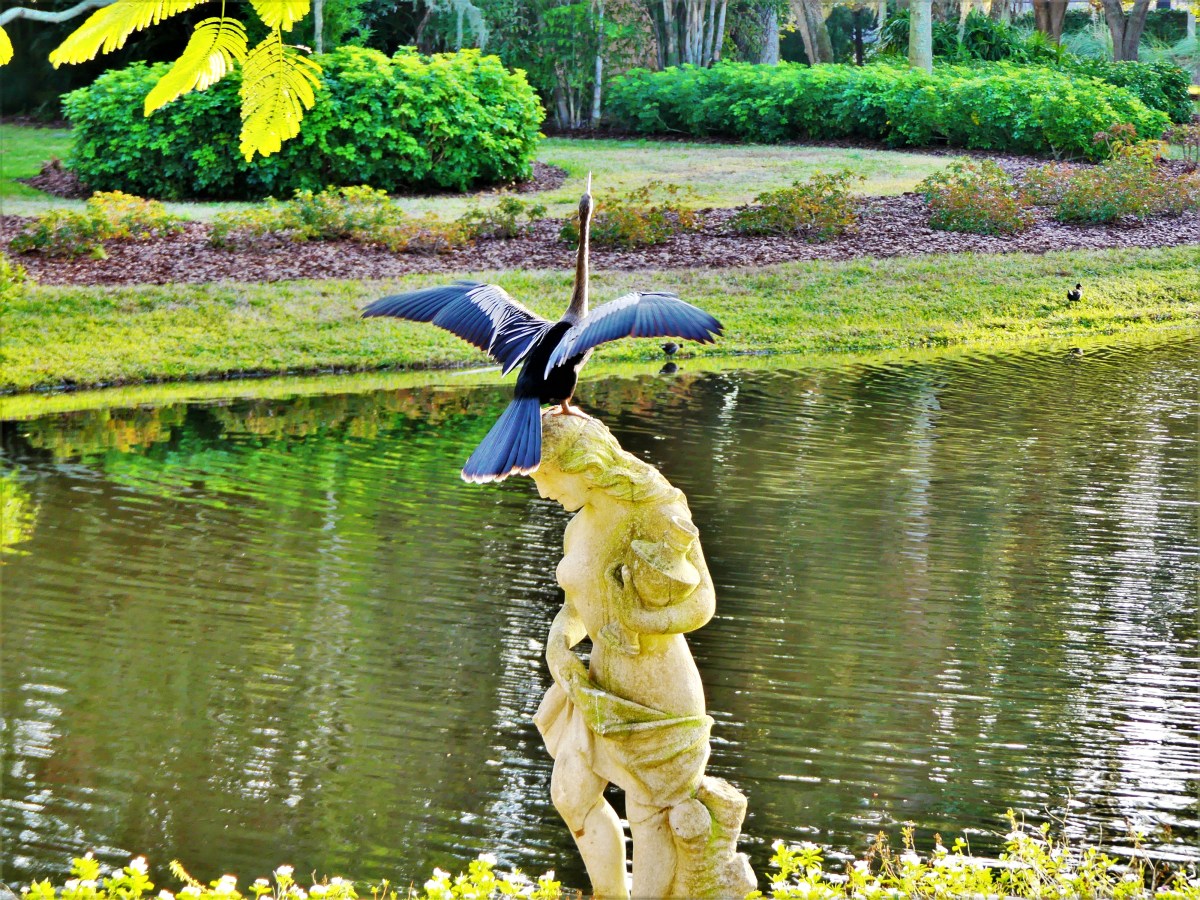
heron pedastal

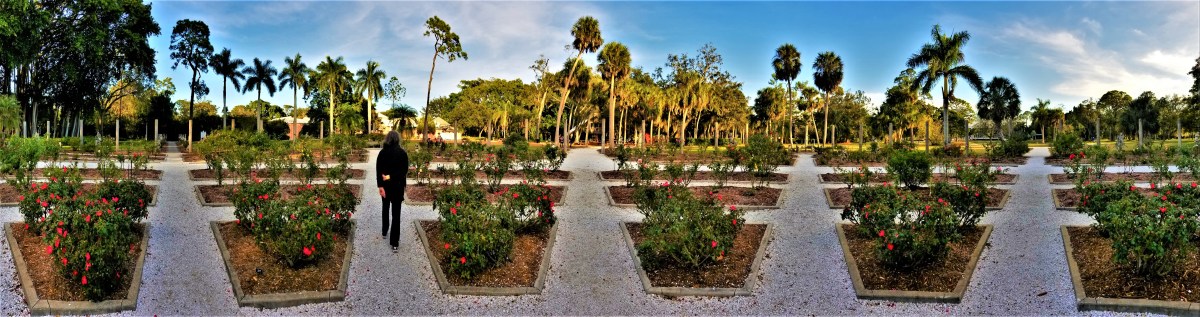
past Mable’s rose garden,

rose garden and banyans.jpg

Mable's Rose Garden

and down the pathway marked by a zodiac compass mosaic,

compass mosaic

until they reached the jewel on the bay.
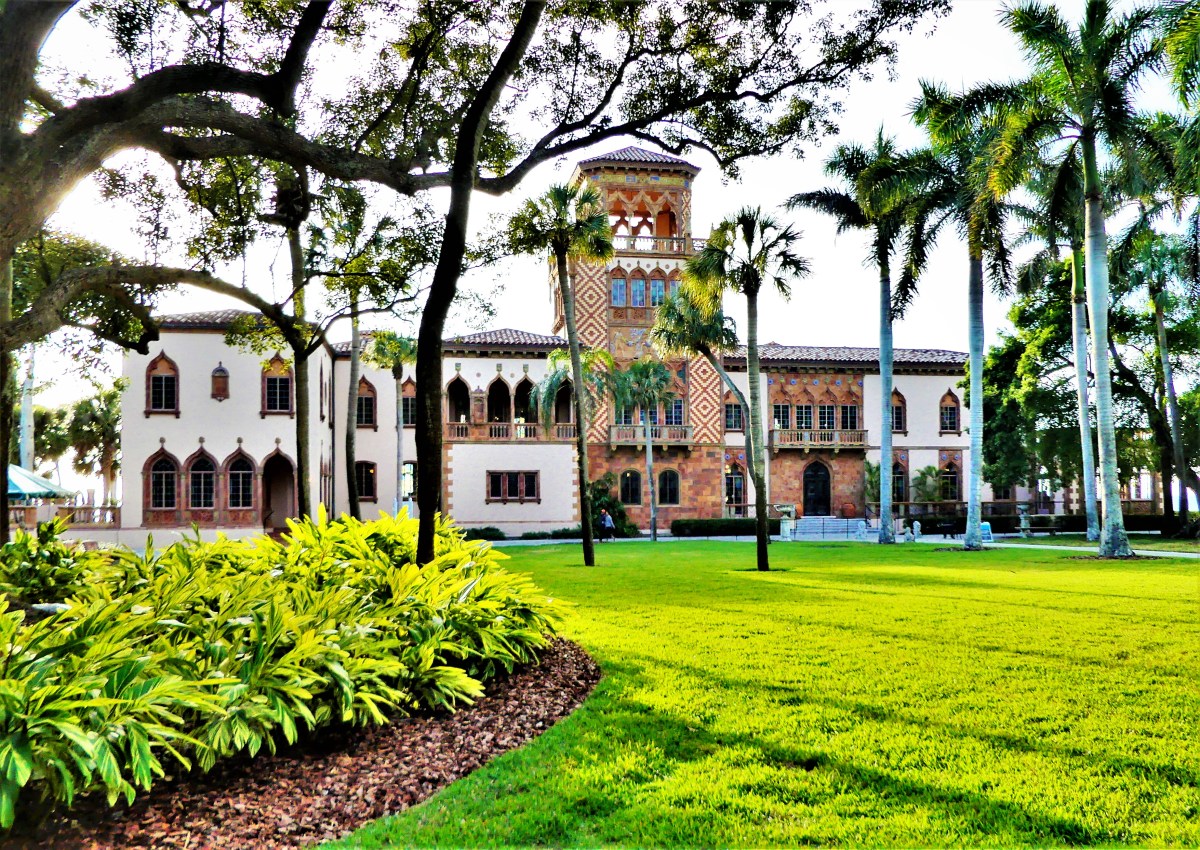
estate view

Leah and I elected to tour the mansion in two parts, with a small group guided by docents who led us through four floors of fresco art, enormous Italian Renaissance paintings and tapestries, French Baroque furniture, and the Belvedere tower.

However, interior photography was not allowed. I felt like my hands had been tied.

I would have liked to photograph the deep tub in Mr. Ringling’s bathroom–with both freshwater and saltwater taps–carved out a single slab of Sienna marble to accommodate his 6′ 2″ frame.

Consequently, I have no image of the equally impressive 16-foot long German Silver sink installed in the kitchen pantry as a measure of protection for Mable’s oversized collection of Lenox bone china and hand-painted pottery displayed in the many pantry cabinets.

I was also miffed that I couldn’t capture the coffered ceiling of smartly painted Florida pecky cypress in the solarium amid the jeweled tones of the Venetian black glass skylights.

And it was disappointing being unable to record the light flooding through the windows that wrap around the 4th-floor guest bedroom once preferred by Will Rogers, which set the paneled walnut ceiling aglow.

However, with a climb to Belvedere Tower and the photo ban lifted, the lens cap came off, and I was free to enjoy the expansive 360° views…

Belvedere Tower

across Mable’s lush gardens,

gardens with pool (2).jpg

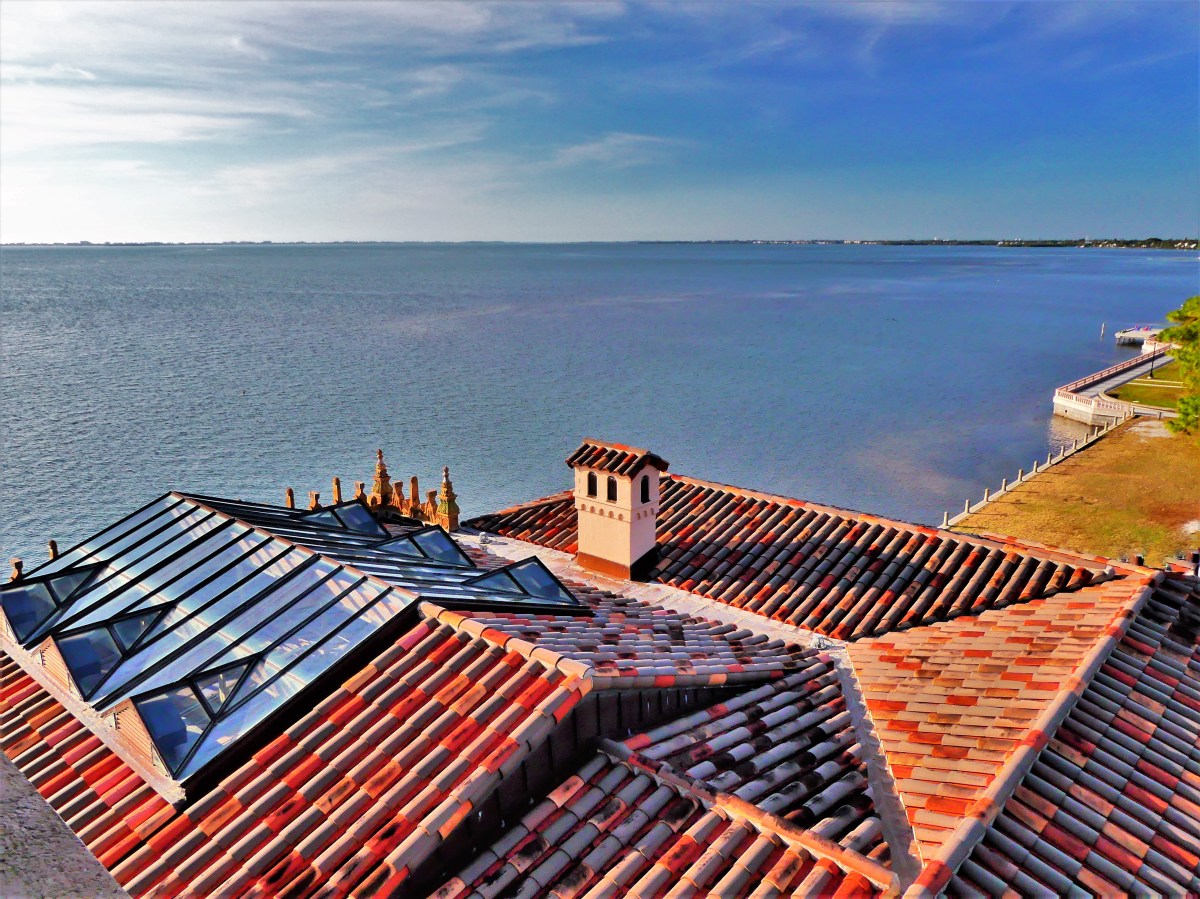
and over a rooftop clad in antique Spanish barrel tile from Barcelona buildings personally salvaged by John Ringling and cargo-shipped to Miami.

rooftop (2).jpg

Legend has it that John Ringling would walk his guests to the top of the tower to show off his Longboat Key land holdings as far as the eye could see.
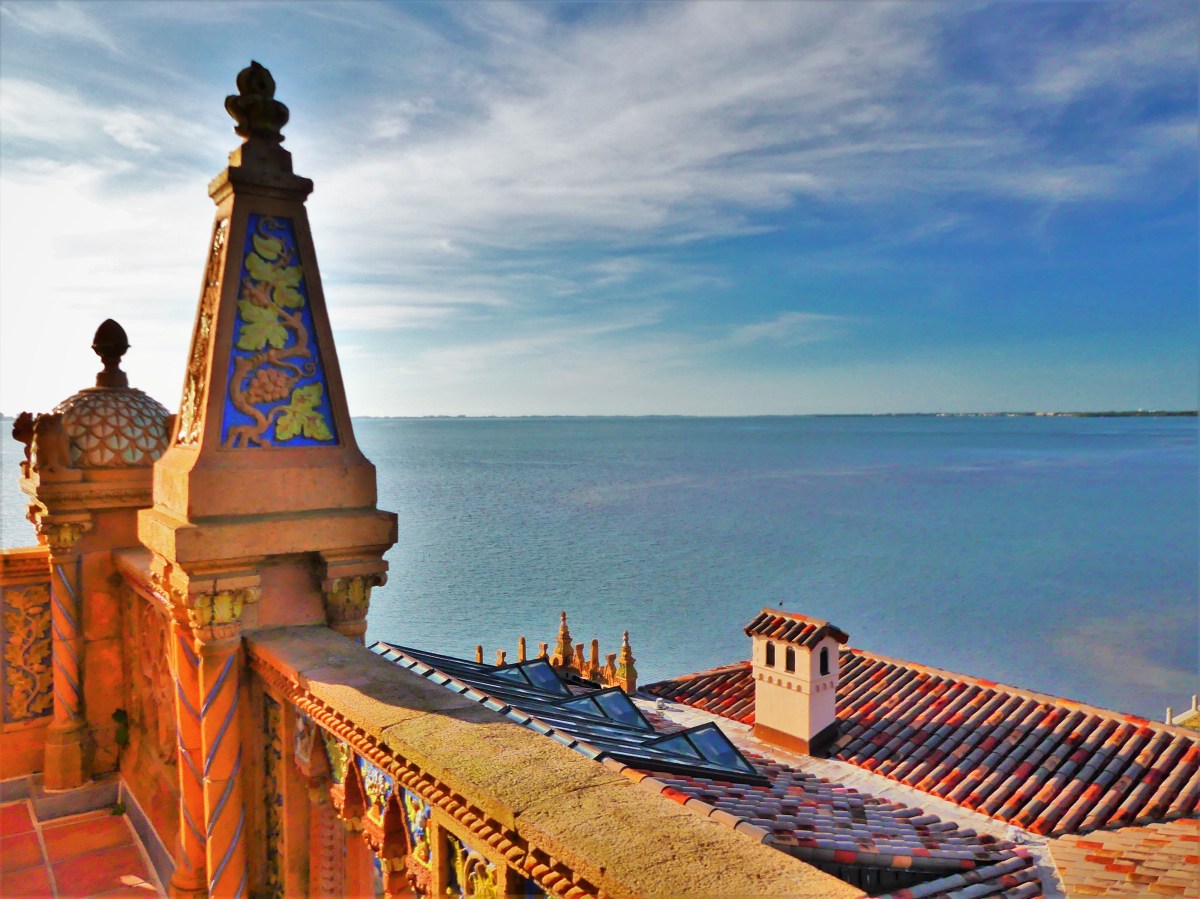
bay view from Belvedere Tower

I must have lost all track of time while shooting to my heart’s content, because when I finally put my camera down, I noticed that I was standing alone, and the tour had moved on without me.

Down the spiral stairs I ambled,

Spiral stairs and water.jpg

only to discover the tower door locked from the inside. I pounded on the iron-clad door in vain, eventually realizing that nobody could hear me. I considered my limited options: I could look out over east side of the tower, hoping that I could be discovered from below…
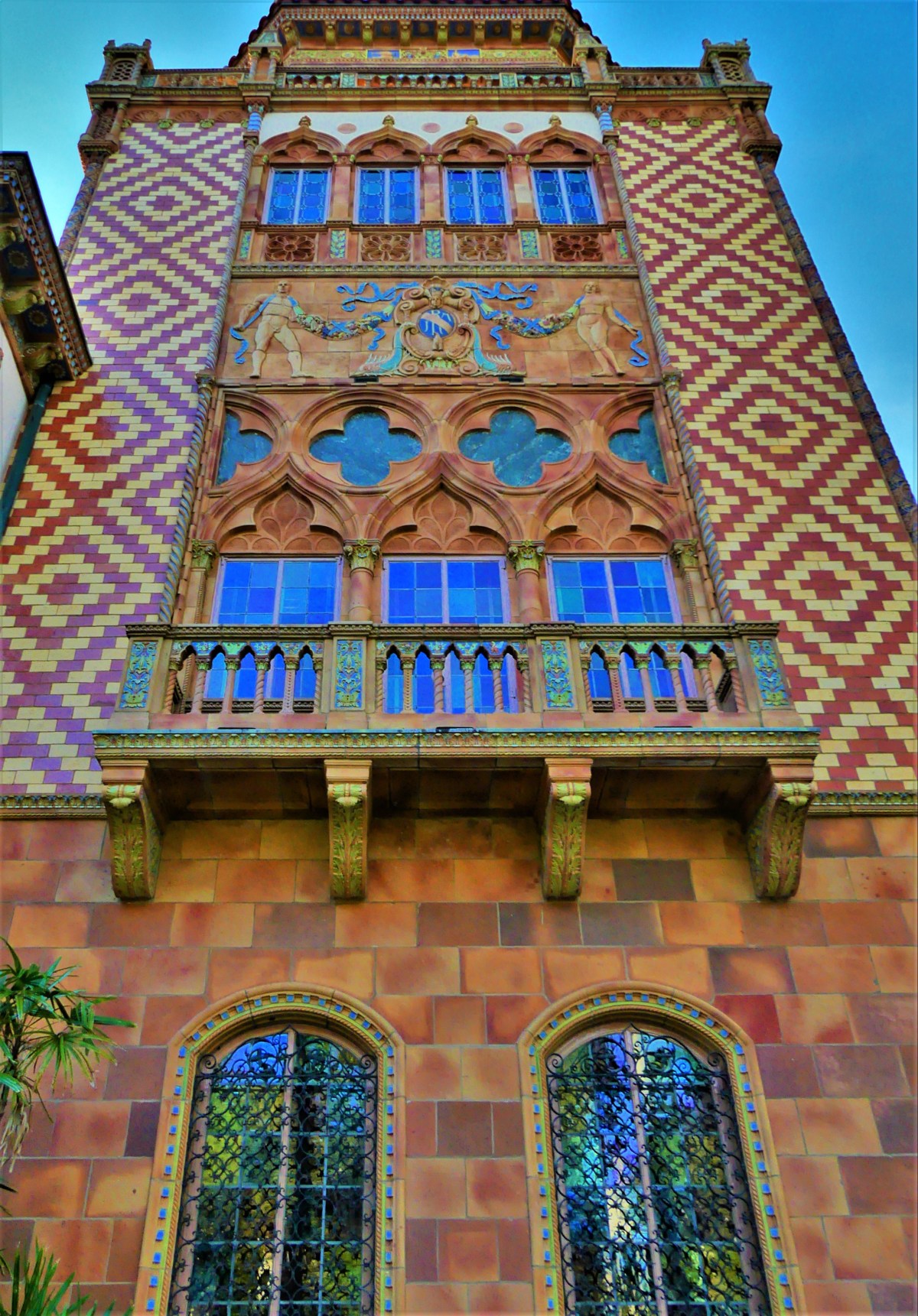
front with tower.jpg

…nah…or I could try Leah’s cell phone, and hope that she’d taken it off vibrate. It rang and rang and rang…

9-1-1 was another consideration, but quickly discounted when Leah finally answered on the fifth ring.

“Hello? Why are you calling me?” was all she wanted to know.

“Take a look around you. Do you see me anywhere?” I started.

“No, but I figured you’re off taking pictures somewhere ’cause that’s what you do,” she intoned.

“Well not this time,” I revealed. “This time I’m stuck at the top of the tower with the door locked, and no way of getting down. So do you think you could manage to alert the docent or security, and maybe they could find their way up here to rescue me,” I mentioned calmly.

“I’ll see what I can do. Bye.” and she was gone.

An extra five minutes on the tower landing, and I was still enjoying the view. But when five minutes turned to ten, I called Leah again to make sure I wasn’t being punished or forgotten. This time she answered right away.

“Hi. Remember me?” I was 100% sarcastic.

“I don’t know what to tell you. They said they were on their way,” she quasi-sympathized.

Moments later, I heard the door unlatch. The door swung open, and there was our security escort together with the guide–both looking relieved and embarrassed.

“I’m so sorry,” stated the docent. “I don’t know how something like this could have happened. In all my years of running tours through this house, this has never happened before. Thank goodness, you’re alright,” she gushed.

I followed her down four flights of stairs, with security only steps behind me, probably watching closely to guarantee I didn’t get lost. The tour was officially over.

I rejoined Leah at the back of the palazzo, where we sat for a few minutes on the inlaid marble terrace looking out across the water,

marble terrace

and imagined Mable being rowed around the bay in her authentic Venetian gondola, while contemplating her next trip to Italy.

But her time at Cà d’Zan was brief and bittersweet. She would only have three years at her beloved retreat before succumbing to Addison’s disease with complications from diabetes in 1929.

Although she lived to be 54, for Mable it was la dolce vita.

 

The Greatest Show on Earth

For anyone who ever wanted to run away and join the circus, ground zero is located in Sarasota, FL, where a legacy built by John and Mable Ringling continues to simmer in a culturally rich pot that still stirs the imagination.

It’s hard to believe that Sarasota, once a sleepy fishing village on the Gulf Coast of Florida at the turn of the 20th century, has become a shining example of shimmering glass towers and manicured mansions on the bay,

bay view.jpg

and a cultural capital of fine and performing arts in America–

Van Wezel

born from a prophecy envisioned by circus impresario John Ringling, and fueled by The Greatest Show on Earth.
train poster

However, after 146 years of touring across America, the curtain has come down on the entertainment extravaganza, and the big top has folded forever after its last show on May 21, 2017.

According to Kenneth Feld, chairman and CEO of Feld Entertainment, the circus could no longer compete as the spectacle that had endured for so many generations. Plagued by prolonged battles with animal rights activists, rising operating costs, and children more enamored by super heroes, the circus had lost its lustre and cultural relevance.

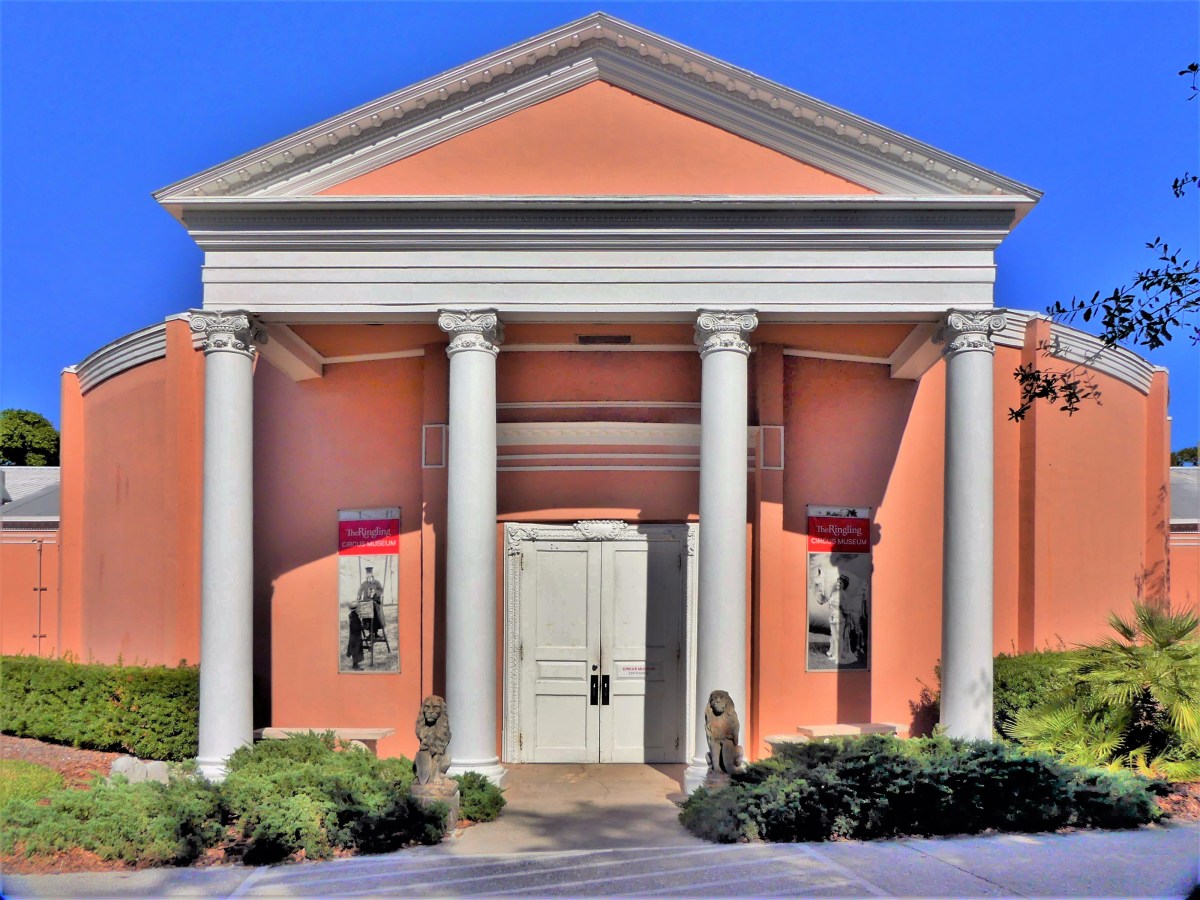
Fortunately, for those of us who still remember the taste of roasted peanuts, and the sweet smell of cotton candy wafting in the air, a visit to Ringling Museum of the American Circus…

building entrance (3)

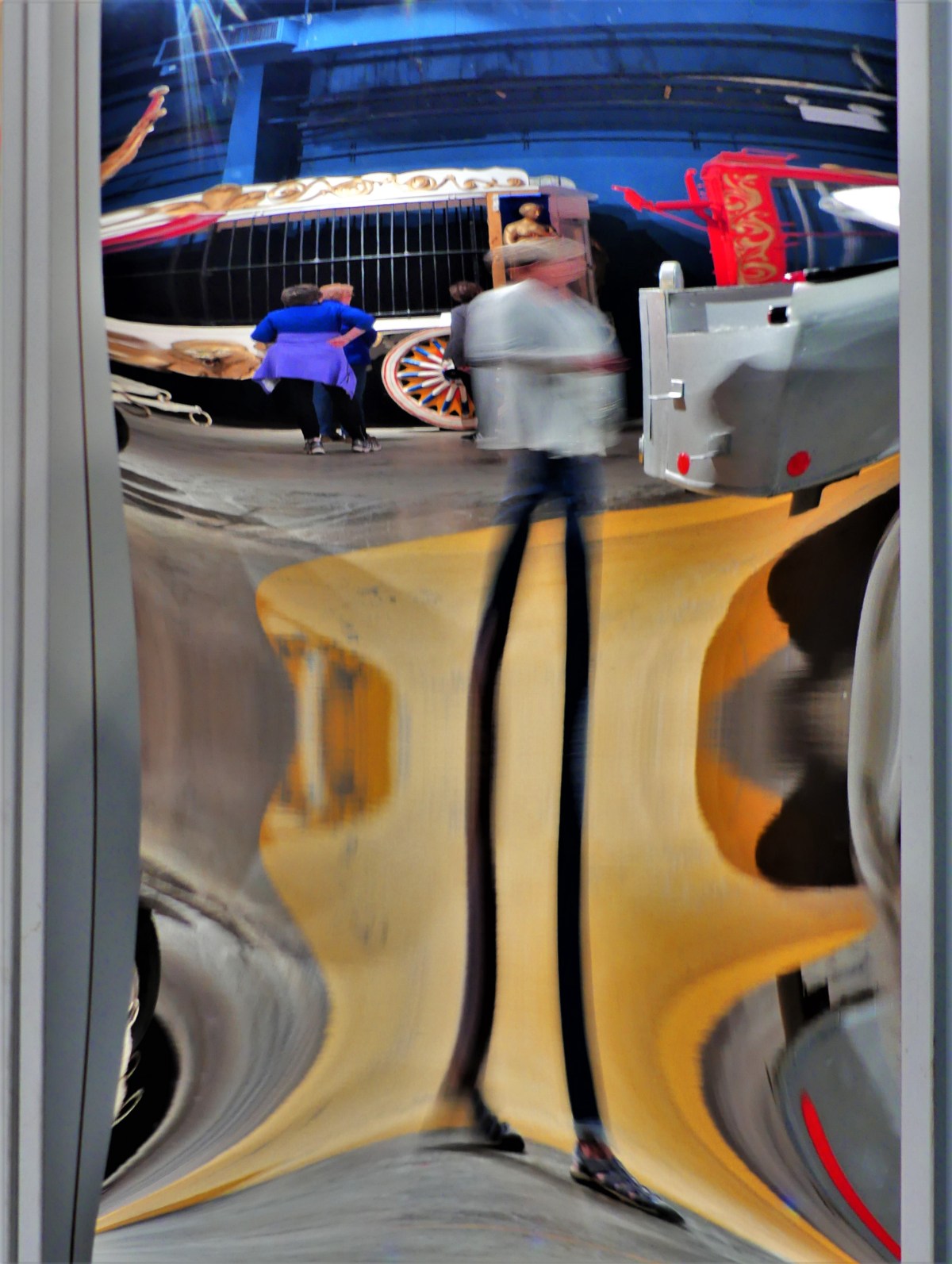
provides a venue to a bygone era, when the thrill of the circus parade would send spirits soaring, and unrelenting children reigning havoc on parents, until they were promised tickets to the latest and greatest show.

fun mirror

Established in 1948 by Chick Austin, Jr., Ringling’s first museum director, the circus museum displays Ringling memorabilia from the time the Ringling brothers purchased the Barnum and Bailey act in 1907.

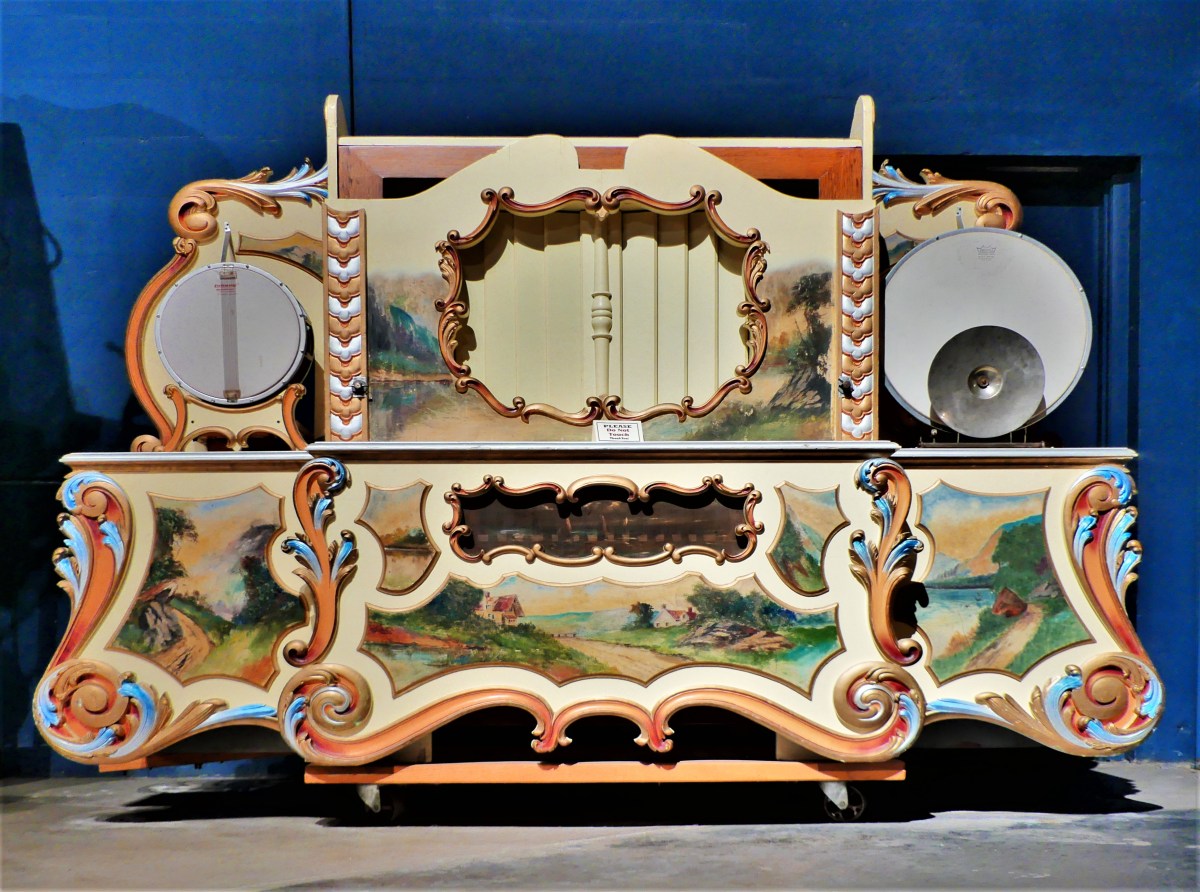
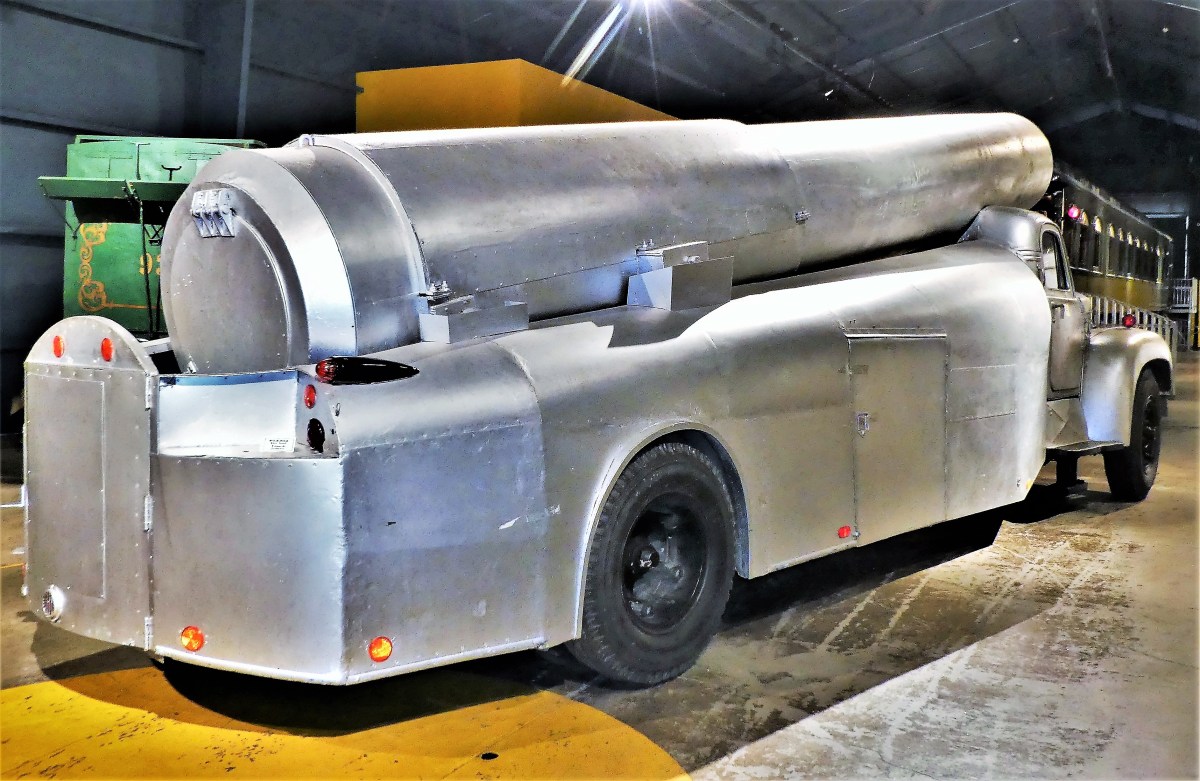
The collection features beautifully carved circus wagons,

music wagon1
Harp and Jesters Calliope Wagon, circa 1915
music wagon
Griffin and Venetian Bandwagon, circa 1907
lion wagon
Hagenbeck and Wallace Lion Tableau Bandwagon, circa 1904-1905
elephant wagon
Elephant Bandwagon, circa 1906
music wagon2
Italian Percussion Bandwagon, circa 1915

props…

cannon truck1a
Zacchini Repeating Firing Cannon, circa 1960s

posters…

sideshow stage

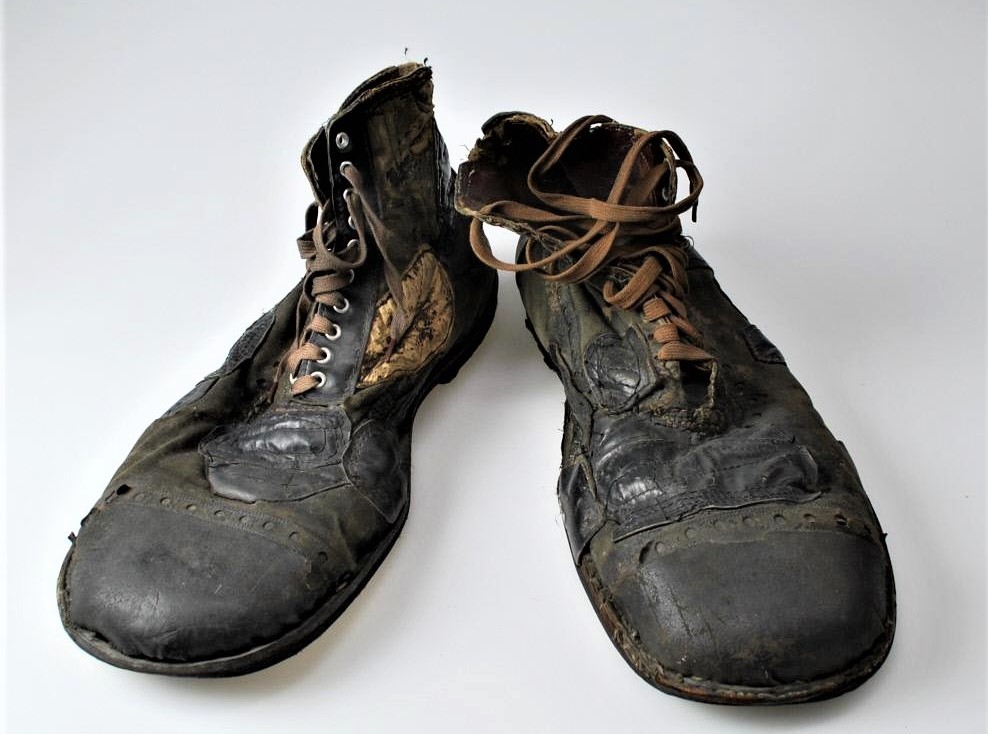
and costumes…

Emmett Kelly's Weary Willie clown shoes (3)
Emmett Kelley’s Weary Willie clown shoes, circa 1942

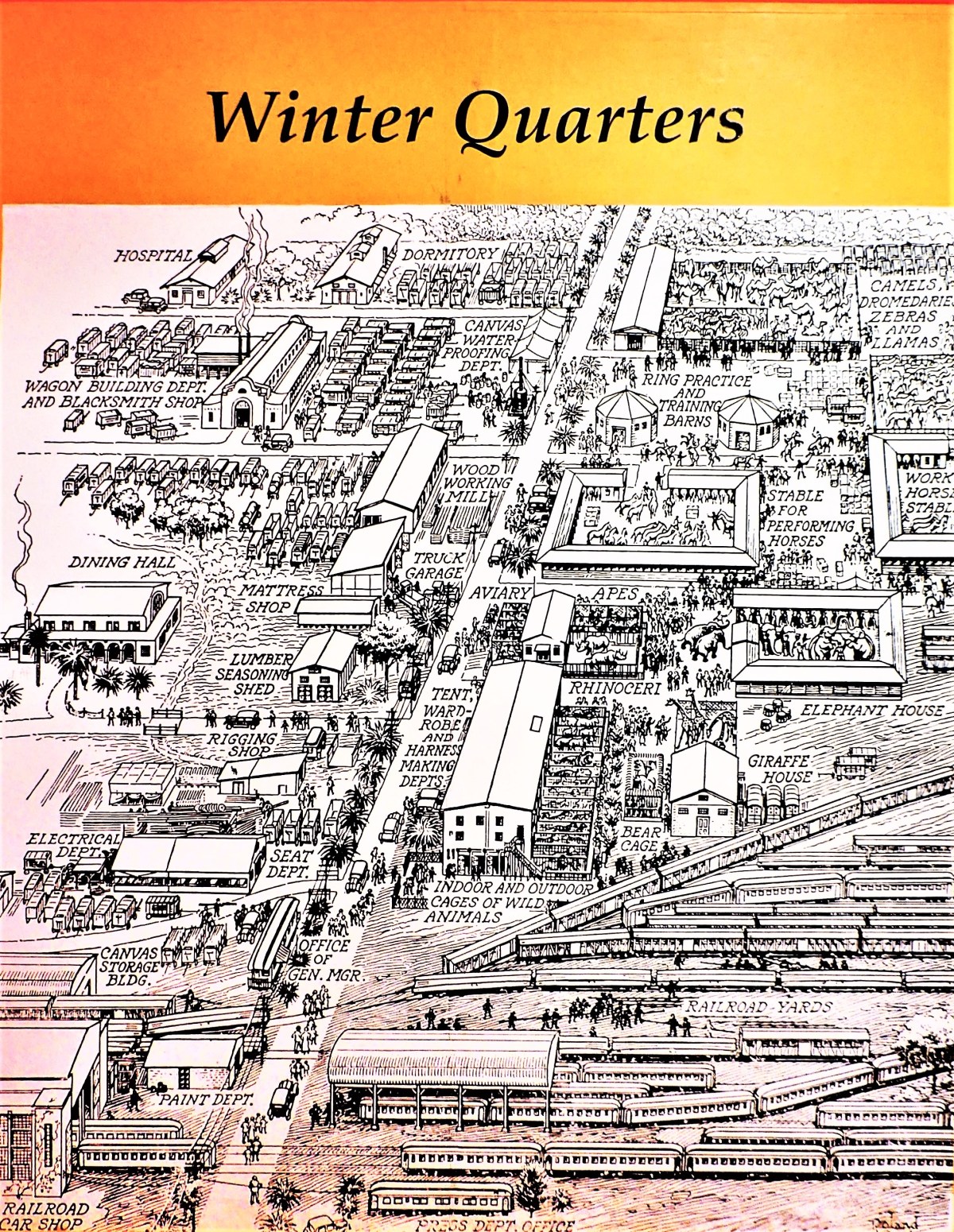
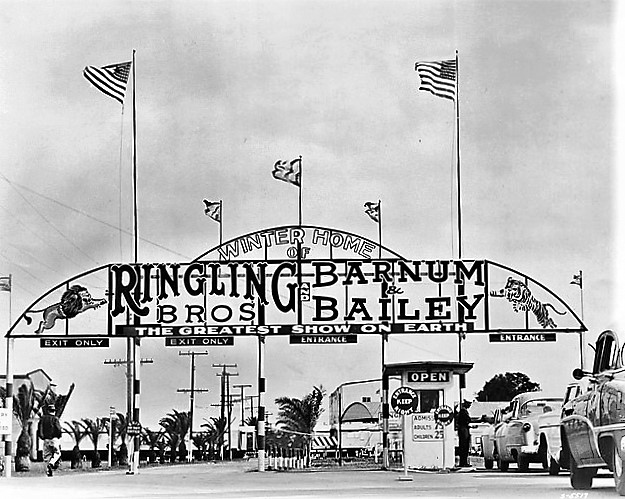
donated from local circus families, who eventually resettled in Sarasota after John Ringling moved the Circus Winter Quarters to town in 1927.

Winter Quarters (3)

Winter Quarters1 (2)

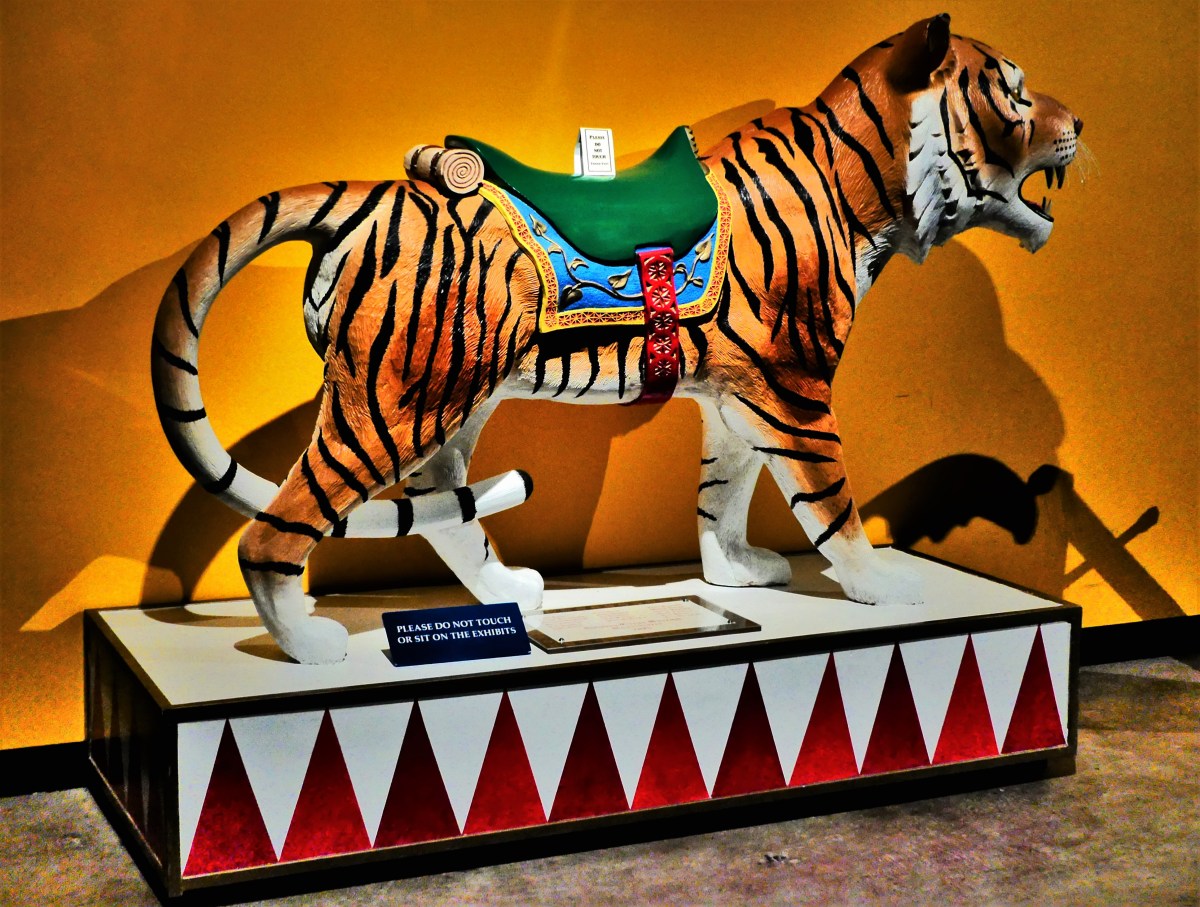
The museum features elaborate animal carvings, past…

tiger sculpture

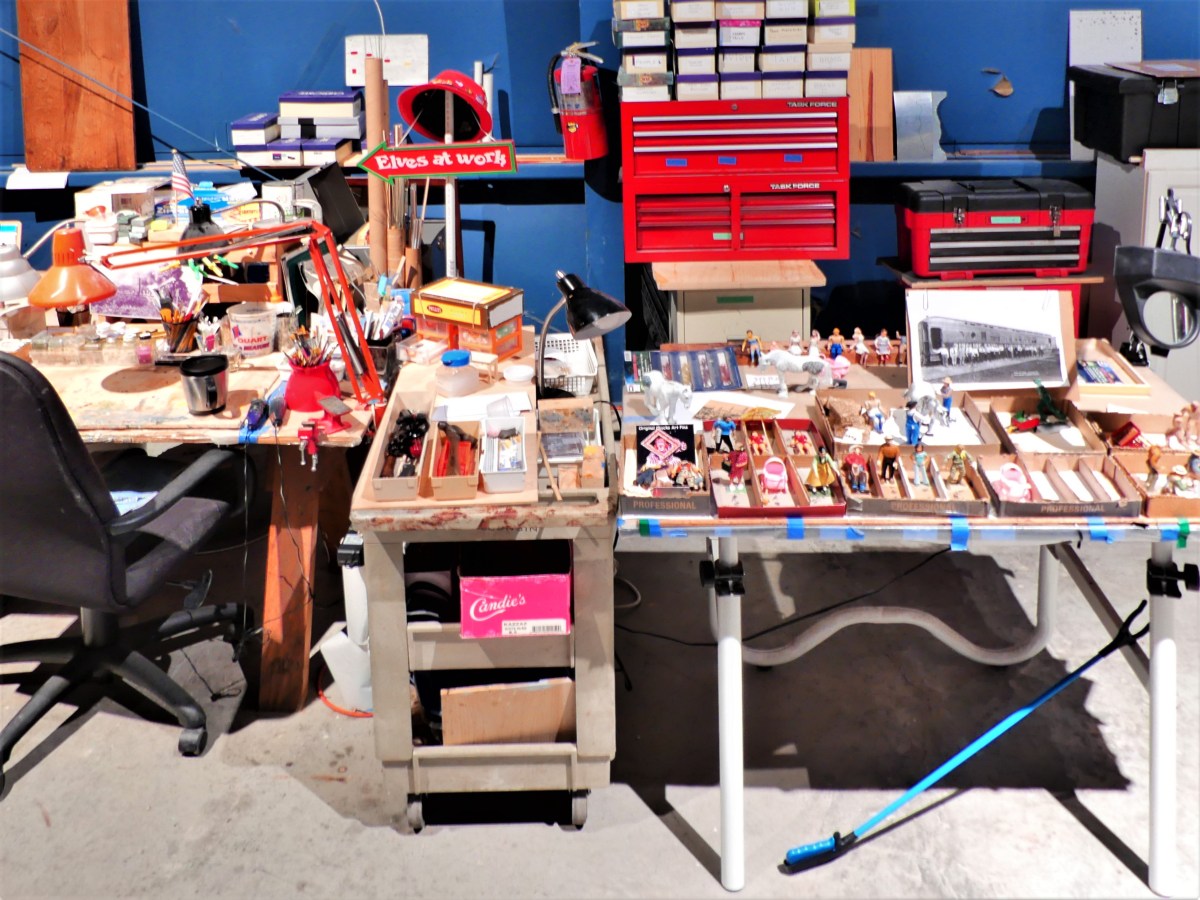
and present, with active carving studios onsite for miniatures…

workbench

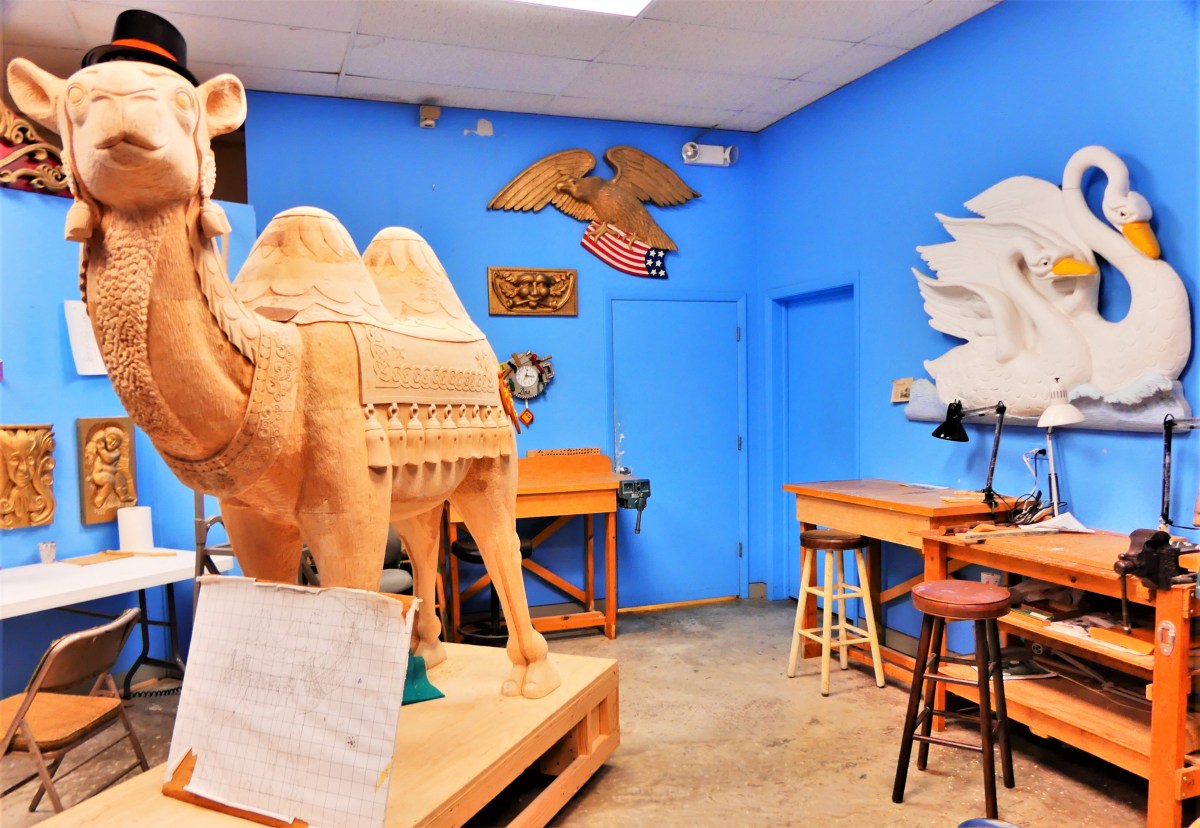
and life-size creations.

carving studio

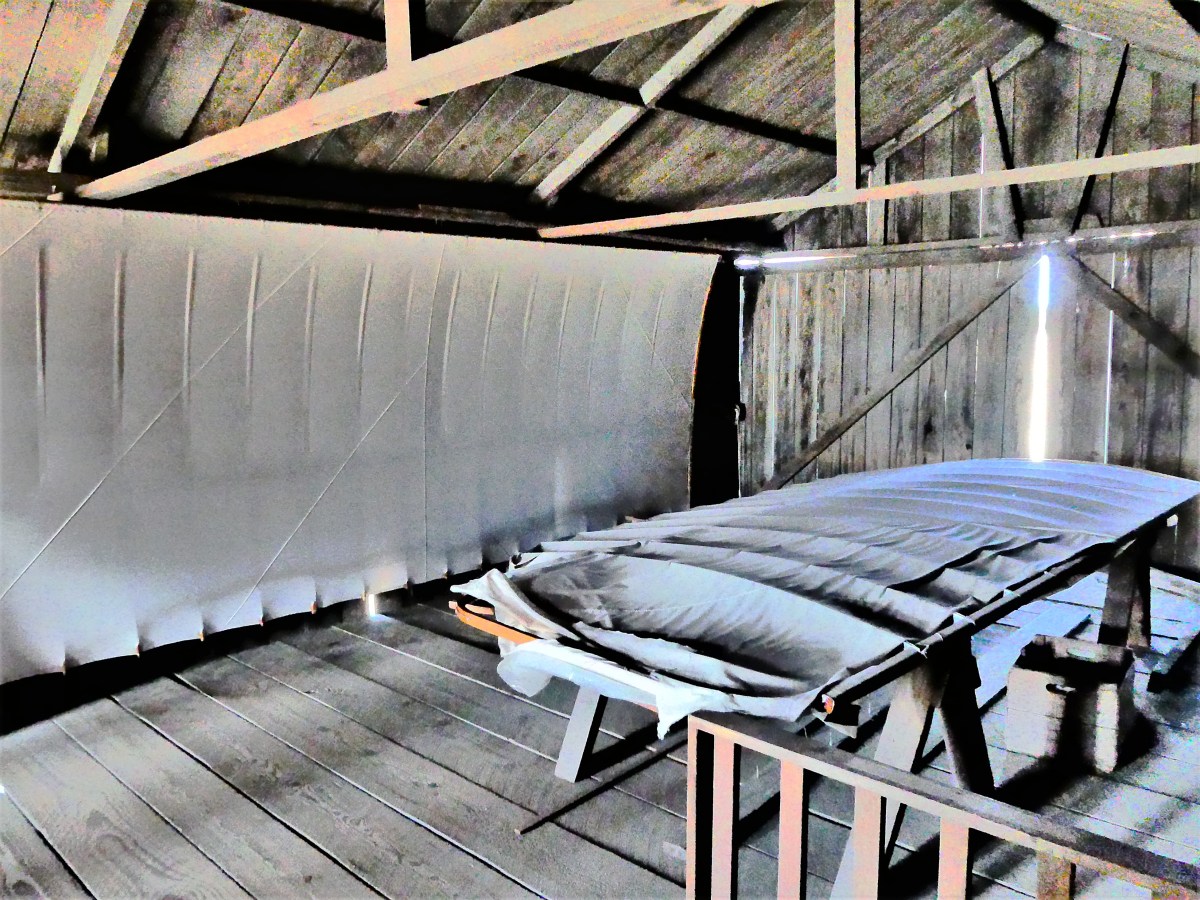
But the shining star of the show has to be the newly refurbished train carriage, named Wisconsin

John Ringling's Pullman business office

a customized rolling office and home of grand design and furnishings built by Pullman,

Pullman banner

which allowed John and Mable Ringling to criss-cross the nation, always in search of fresh talent and new acts for the big top.

The Ringling Museum of the American Circus features a rich folklore that honors the performers of a Golden Age, and celebrates an iconic American institution once hailed as the Mecca of family entertainment.


The museum is also a testament to five hard-working brothers born in Iowa to German immigrants, who rose from the ranks of penny actors to build a circus empire that lasted long after John Ringling’s death in 1936 until its recent demise…

and sadly, has become just another blip in the timeline of American amusement.