A Face in the Crowd

(Play the audio track and relax, while imagining yourself hovering high above the surf.)


With the sun breaking out over Singer Island…

sunrise (2)

another day dawns on the Florida coastline,

and the beach quickly comes alive.

Walkers dodge the ebb and flow of lapping water

perpetually pushing against the shoreline.

And the miniature movements of anonymity

are measured against a seascape

captured twenty-one floors above sea level,

where a face in the crowd seamlessly blurs into obscurity.

Singer Island

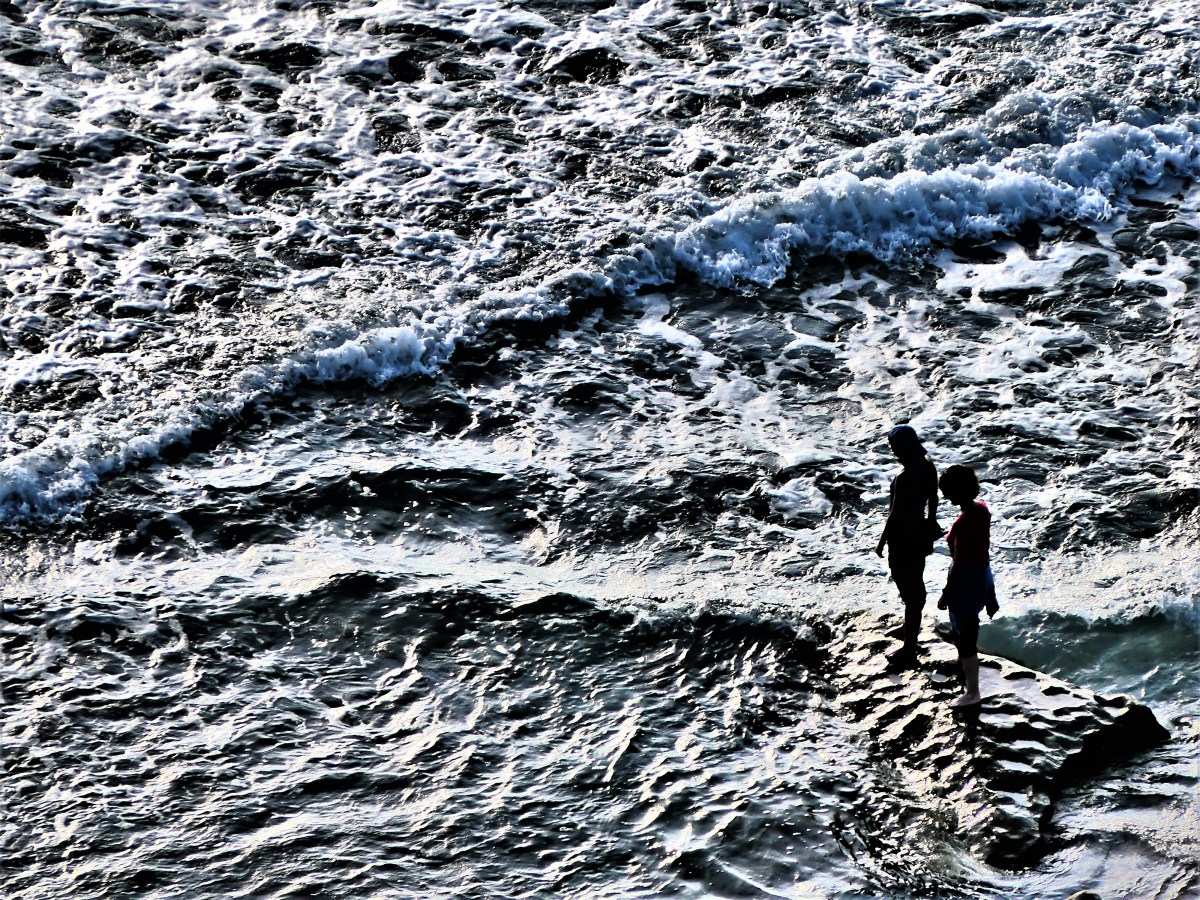
Hypnotic waves enchant two silhouettes of solitude beside a roiling sea,

surf and turf

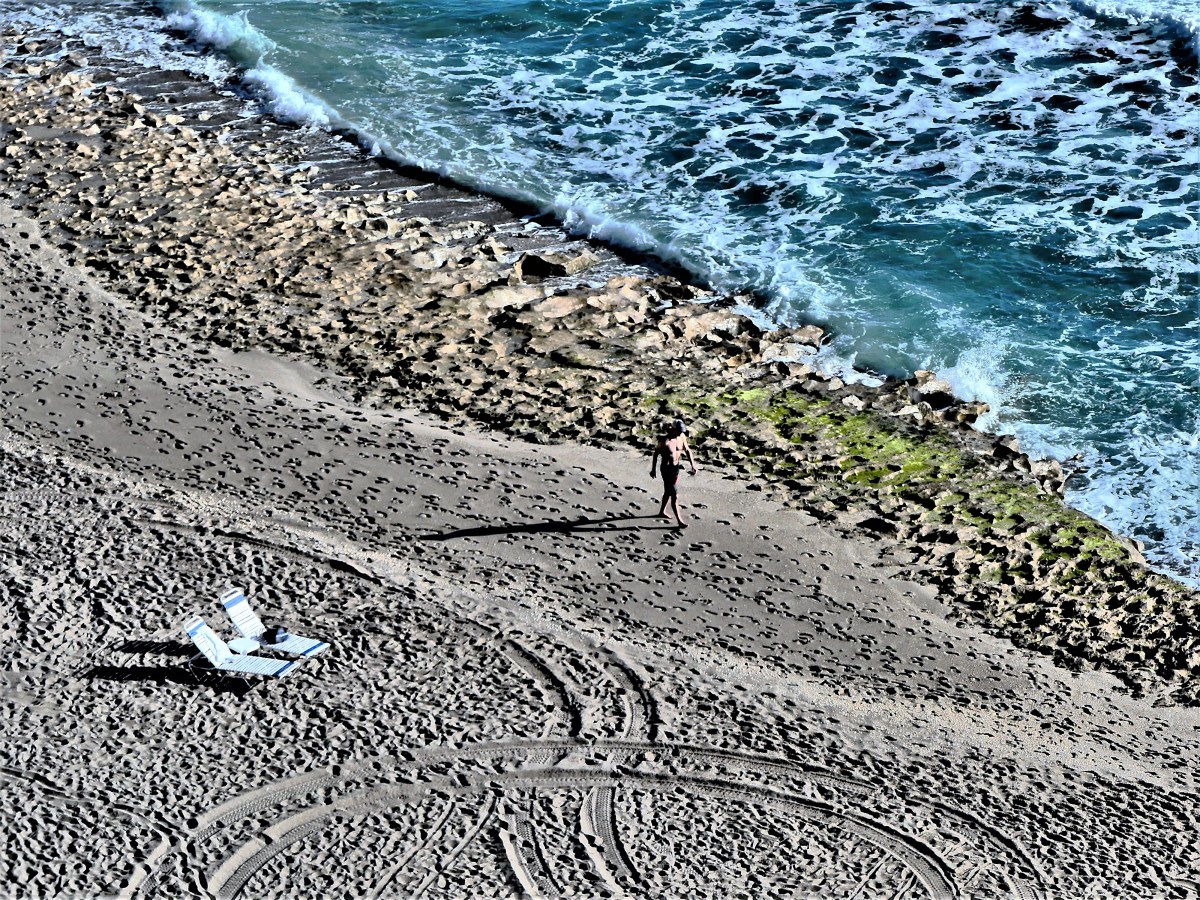
while the lure of a lounge chair beckons to a lonesome beachcomber.

2 lounge chairs and a walker

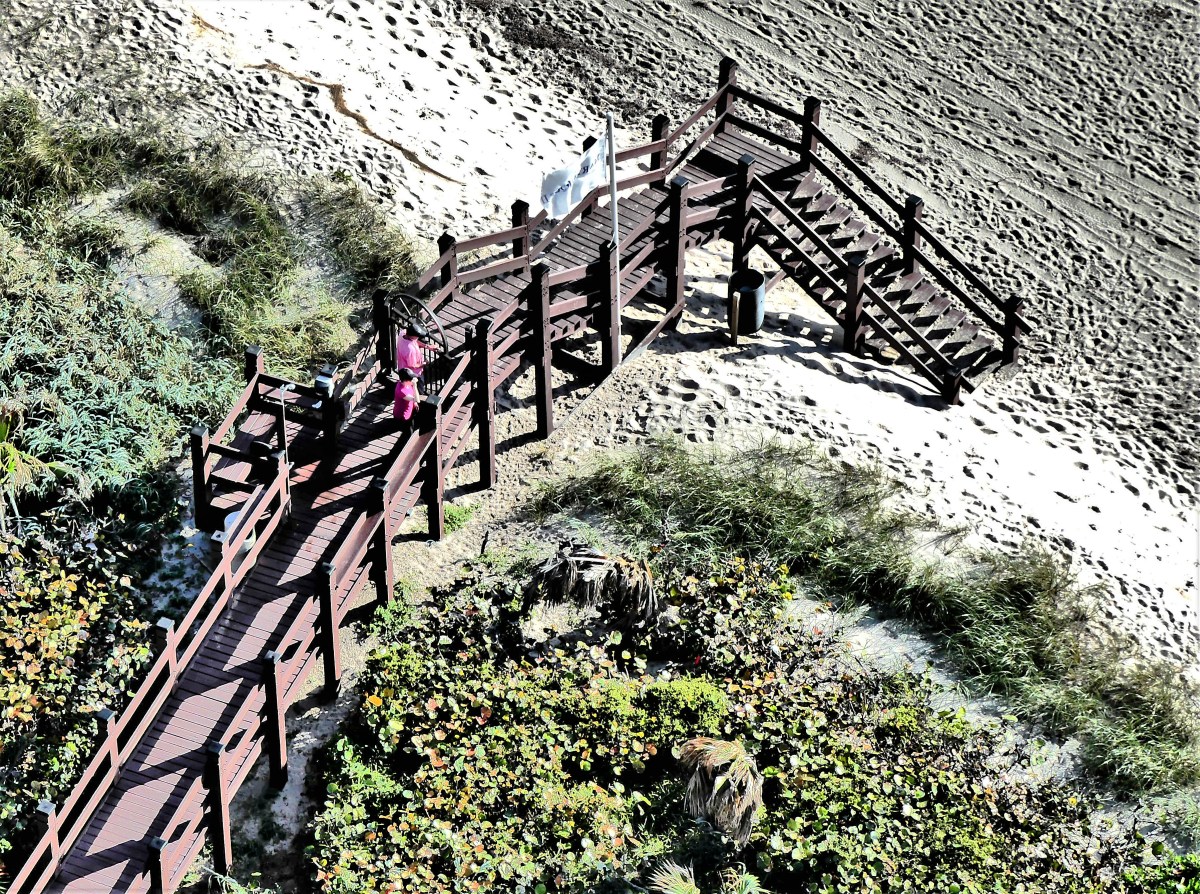
In time, a passage over and beyond the dunes…

bridge over the dune

extends to a passage of twisted tranquility.

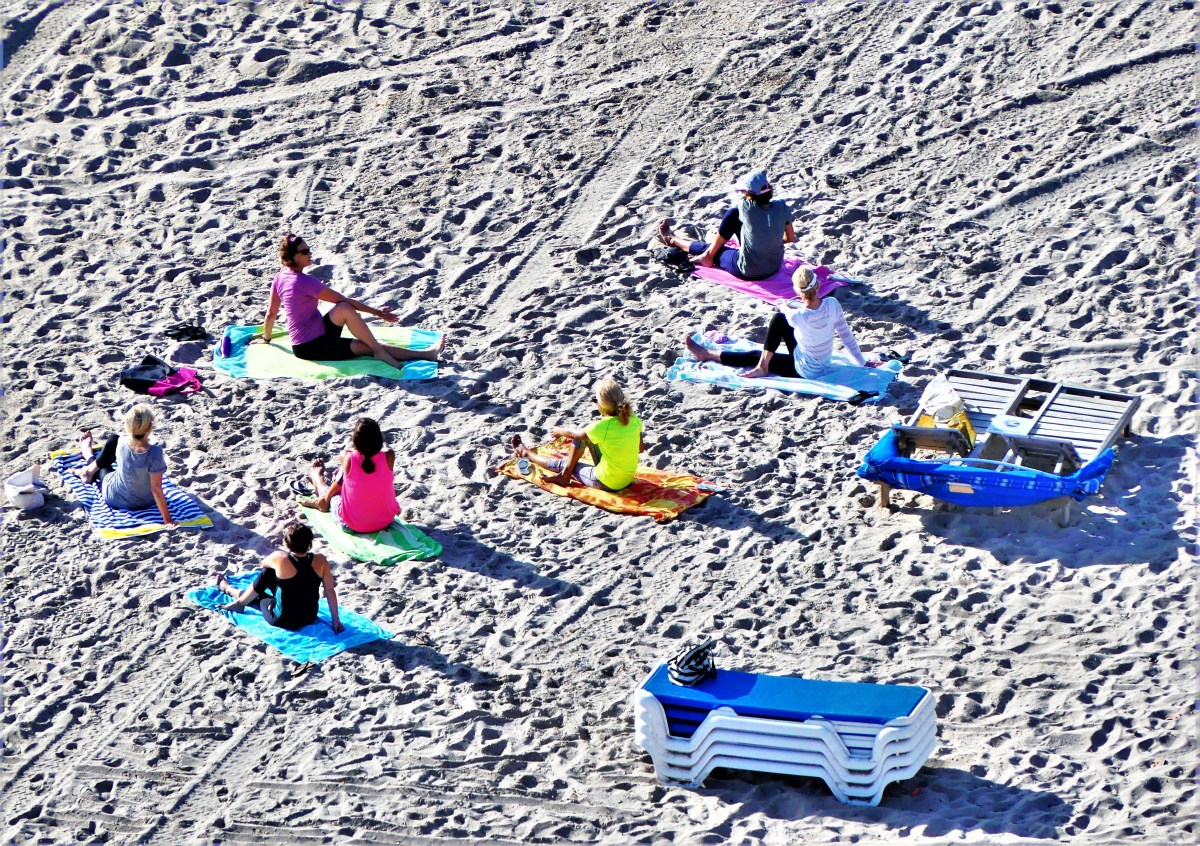
yoga on the beach

Basket Case

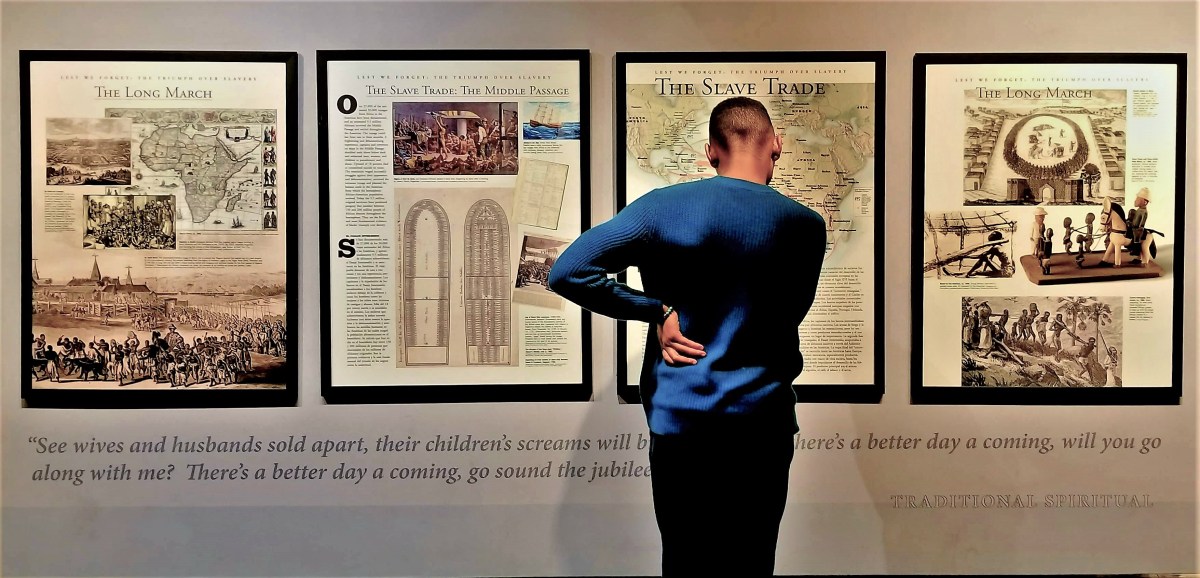
They came off slave ships in Charleston,

Slave Ships to Charleston, SC1

clad in chains,

The buyer.jpg

and stripped naked of everything except the courage they needed to accept their new fate.

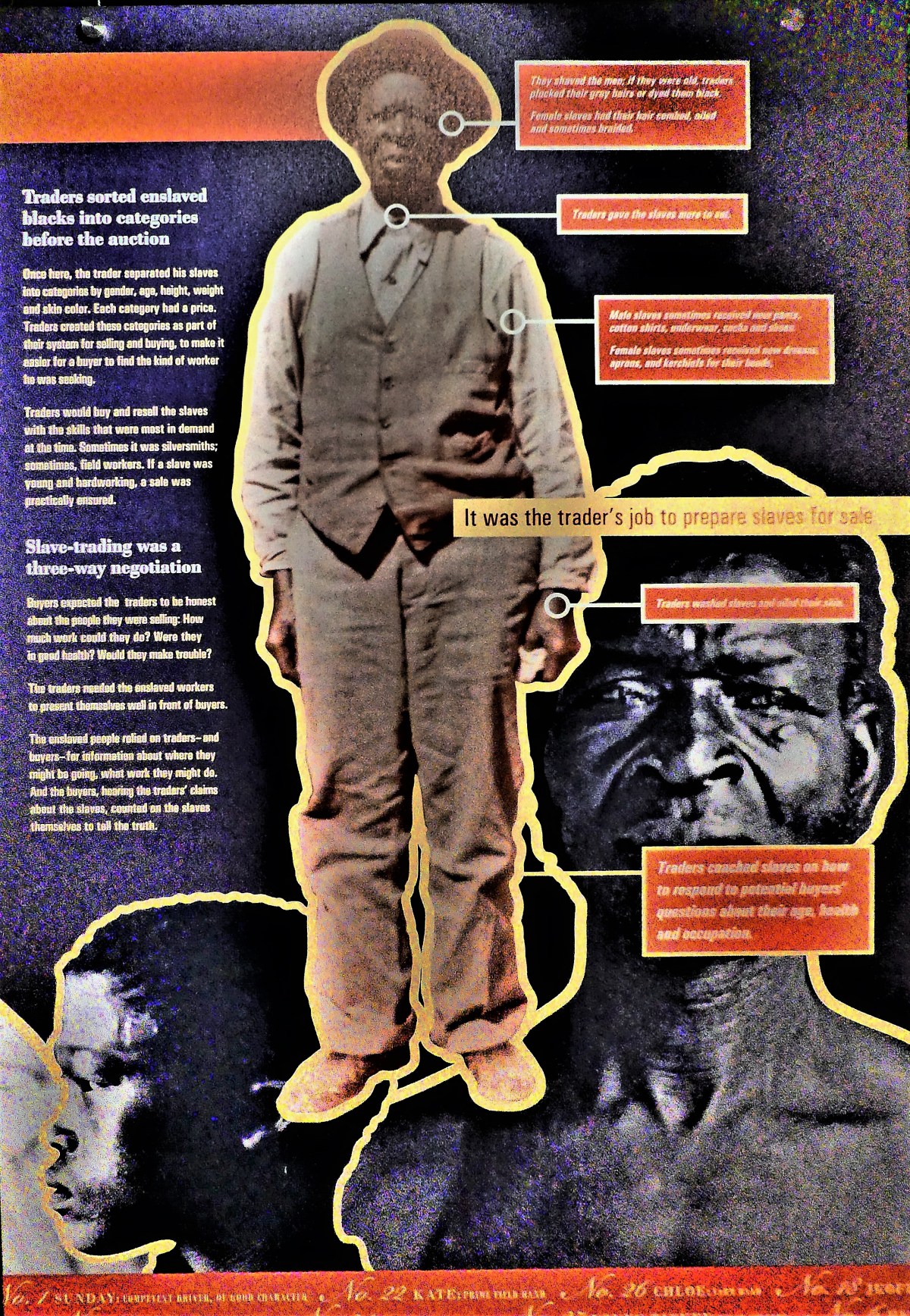
As families in West Africa, they relied on each other, but far from home on distant shores those bonds were broken. Husbands and wives, sons and daughters, brothers and sisters were separated and independently prepped for sale, bringing new meaning to groomed for success.

preparing slaves for sale1

The slave mart in Charleston, was the go-to destination…

Old Slave Mart Museum entrance

for traders to wrangle the best price,

The Price of a Human Being1

as human beings resigned themselves to their new owners and an unfathomable situation.

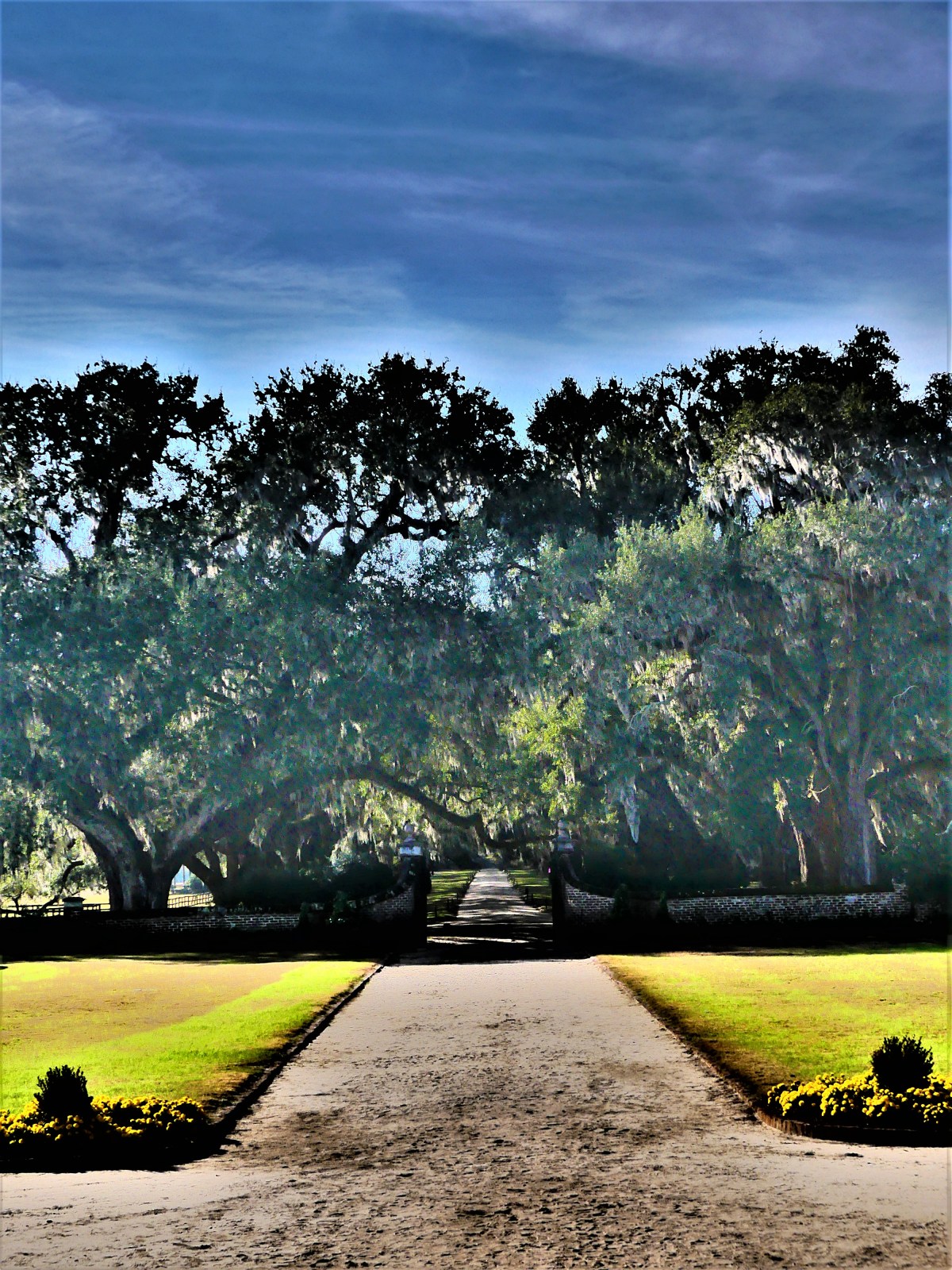
Imagine the shock and despair they must have felt, rolling down the Avenue of Oaks at Boone Hall Plantation for the first time in slave carts,

Oak Avenue

wondering about the cluster of buildings by the side of the road…

Slave quarters

Slave quarters1

that would become their future shelter…

quarters

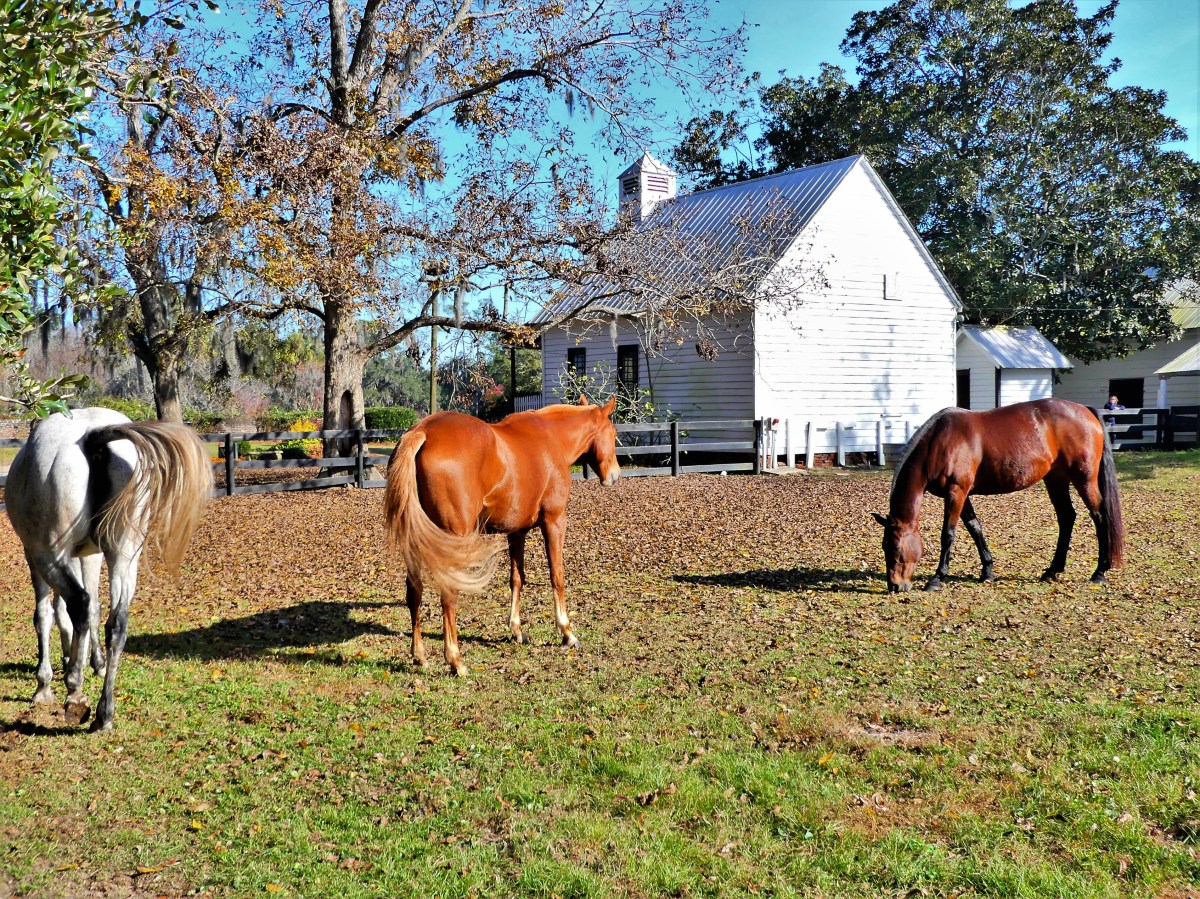
as they approached the paddock…

paddock

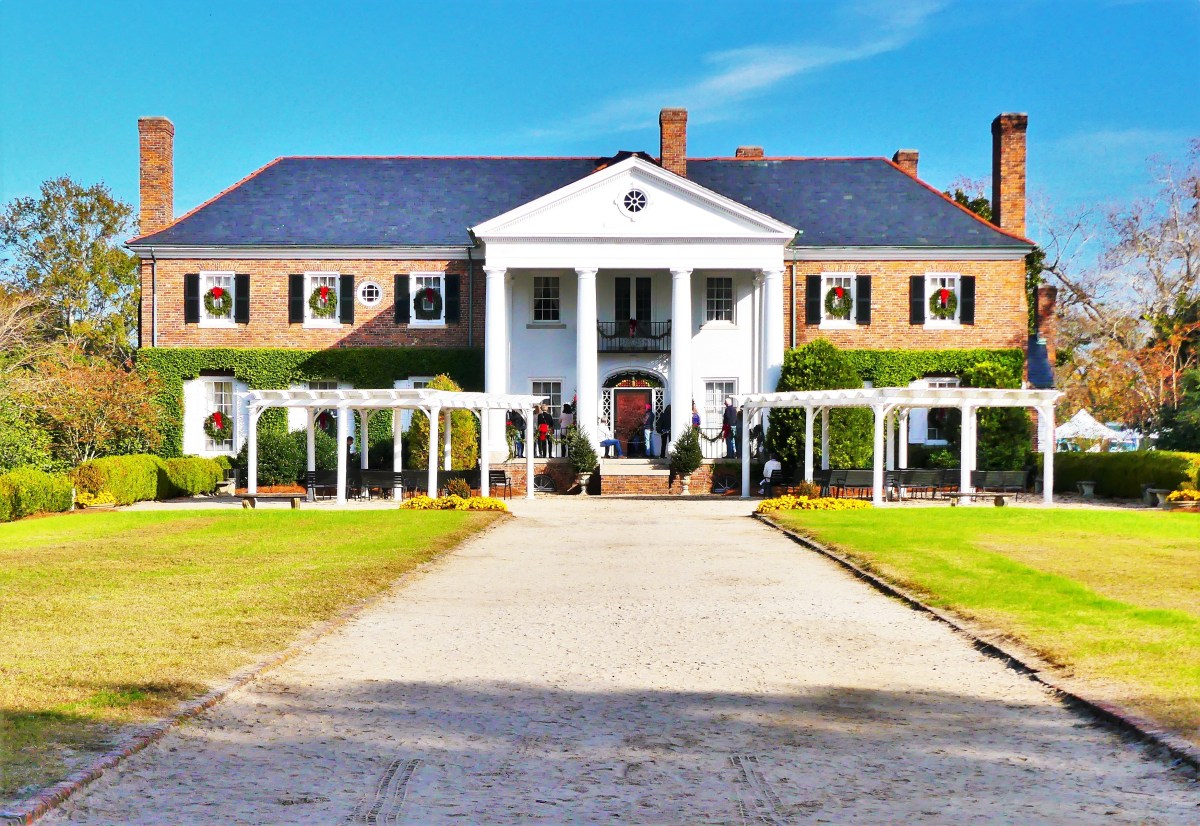
and the manor house.

manor (2)

Boone Hall Plantation of Mount Pleasant, SC continues today as one of America’s oldest working farms, still producing crops after nearly 340 years of activity.

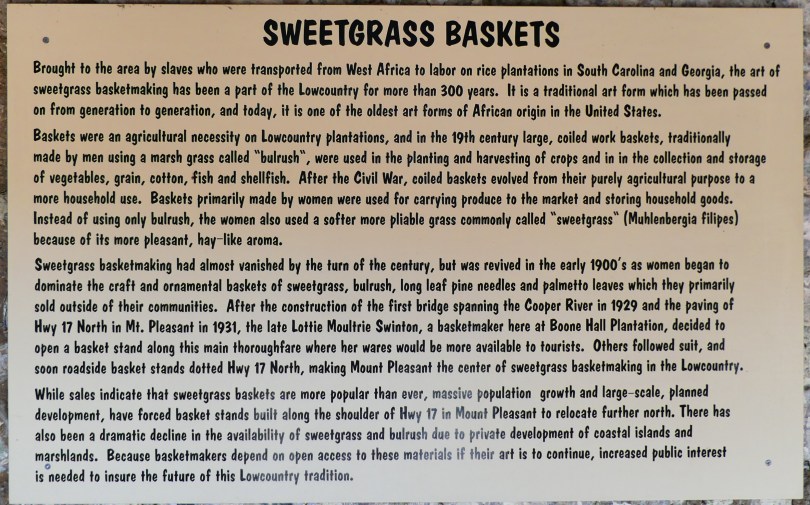
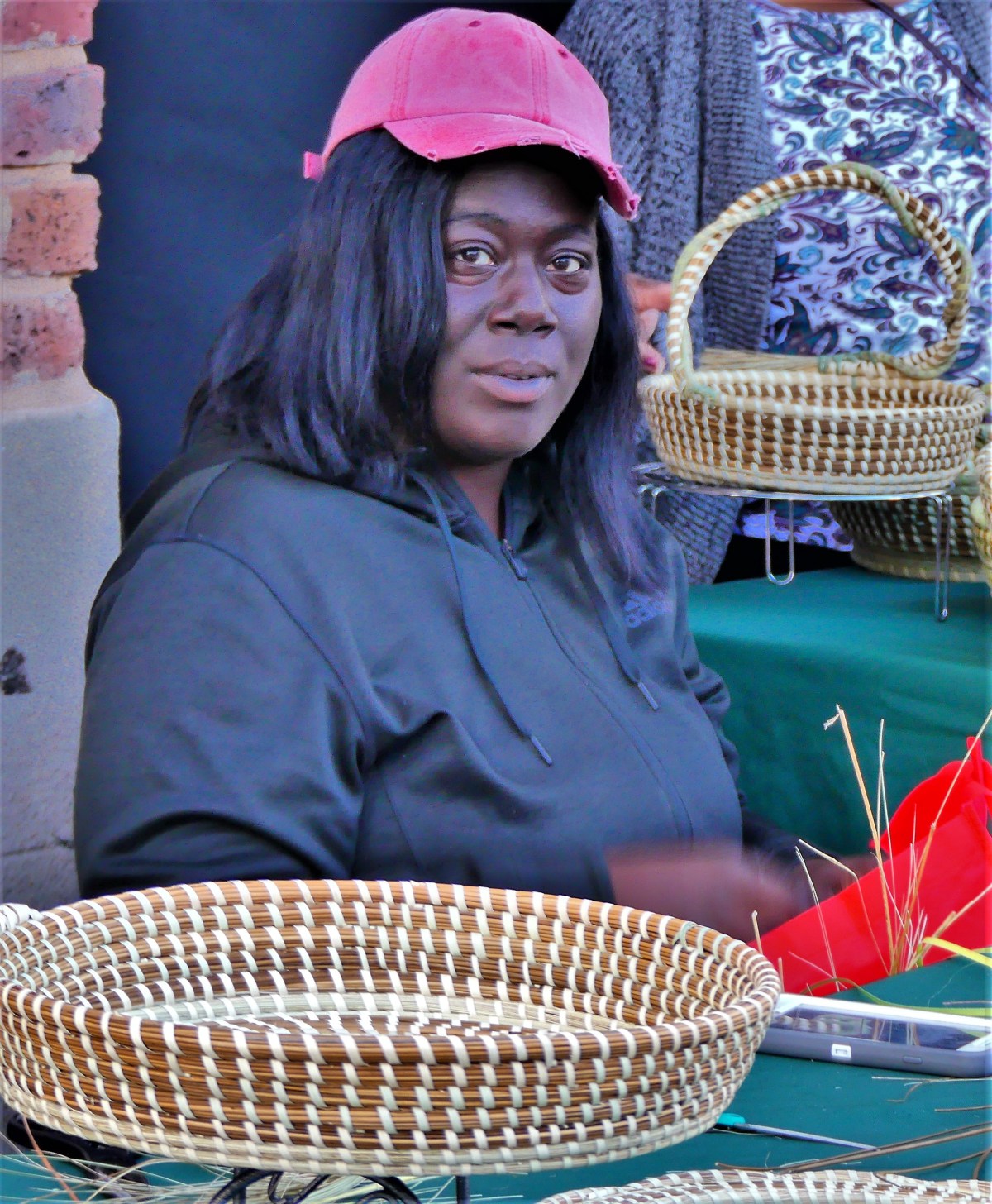
Also noteworthy, Gullah-Geechee heritage continues with sweetgrass basket-coiling skills that have sustained through five generations of descendants of slaves.

sweetgrass baskets

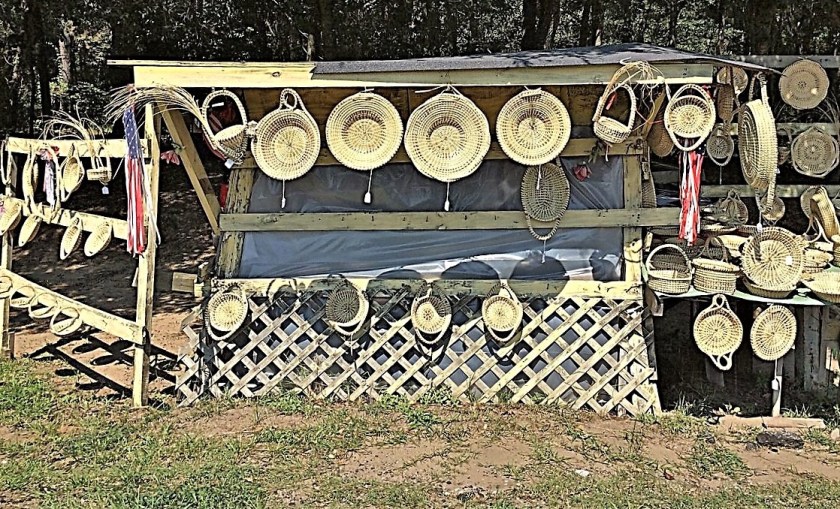
Original roadside stands from the “hayday” of basket production still dot the Route 17 landscape, luring everyday customers and tourists to inspect the wares.

roadside stand (3)

However, the trend has traveled to the Charleston City Market,

Charleston market

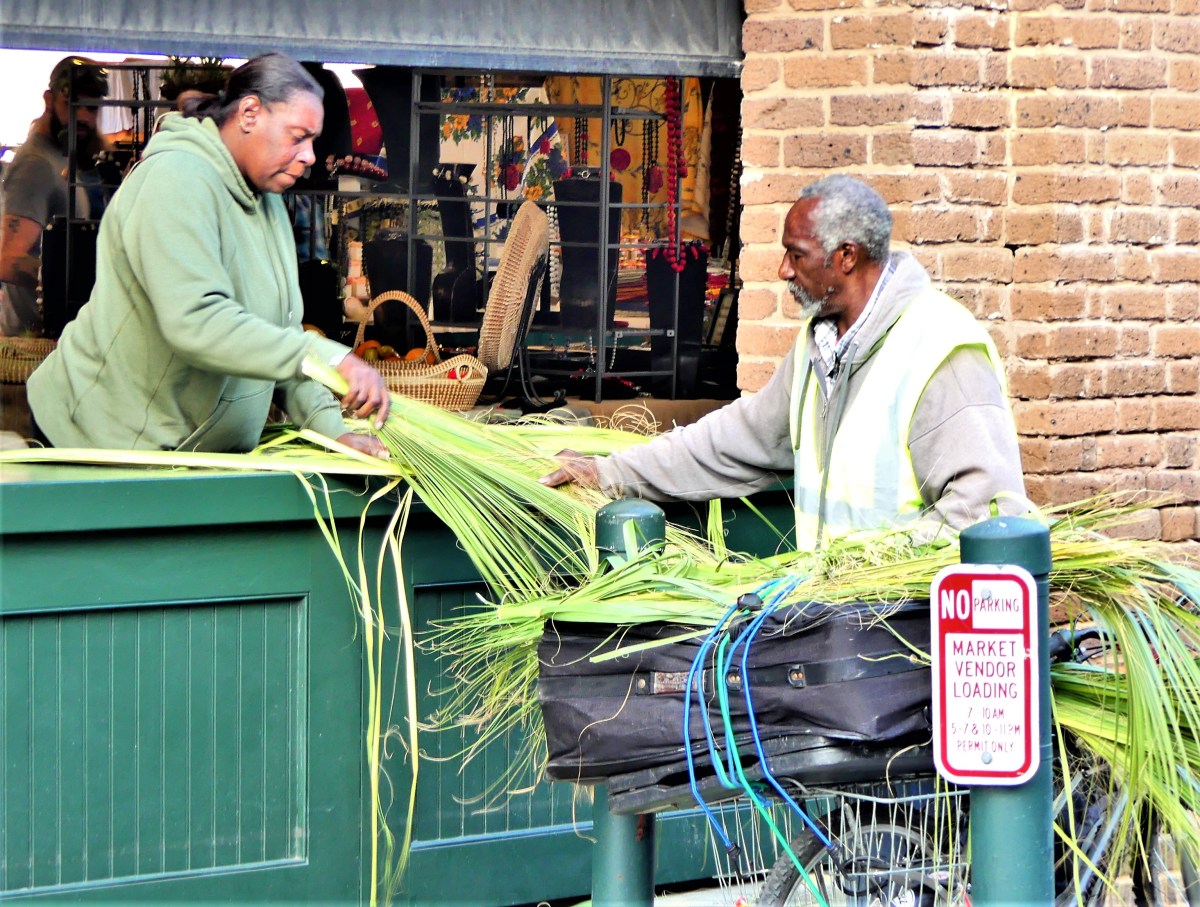
where the demonstration of sweetwater basket-making is routine…

sorting sweetgrass

selecting sweetgrass

and sales are brisk,

weaving

with up to 300 weavers who remain dedicated to the craft.

basket maker

At this time, dwindling supplies of lowcountry sweetgrass are protected, and can only be harvested by bonafide ancestors…

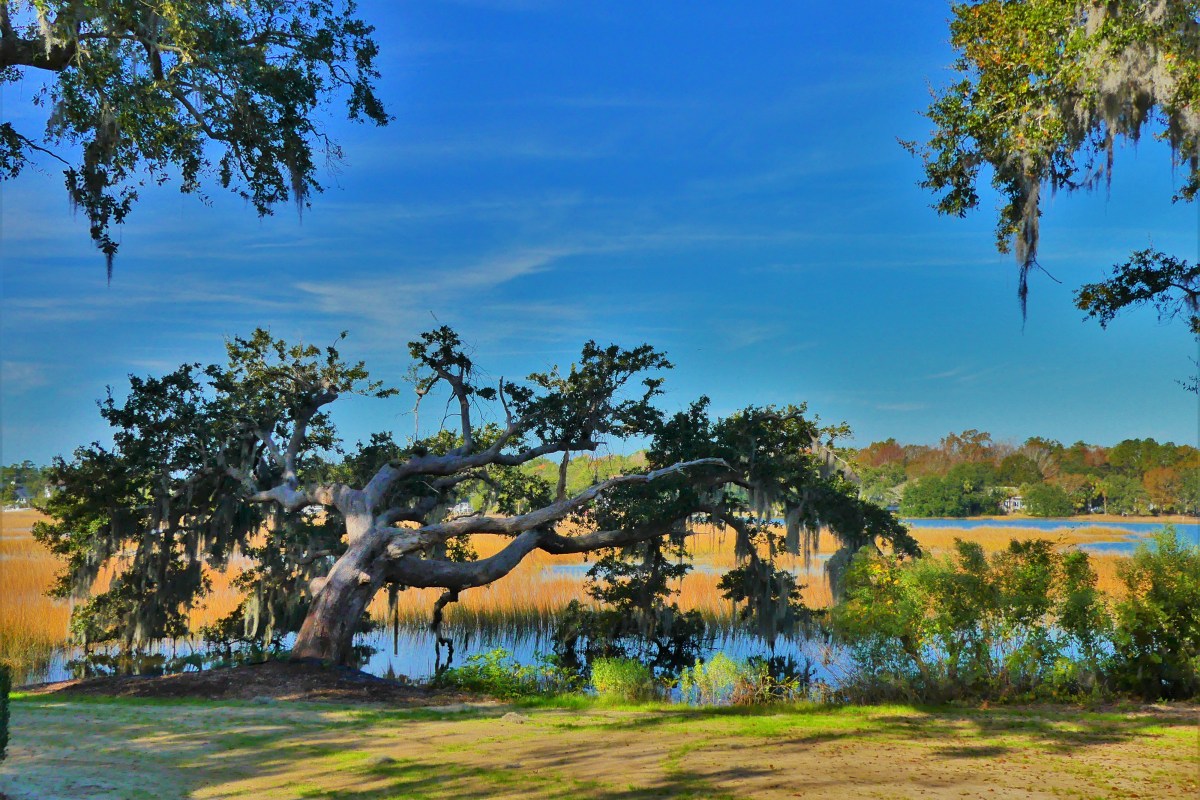
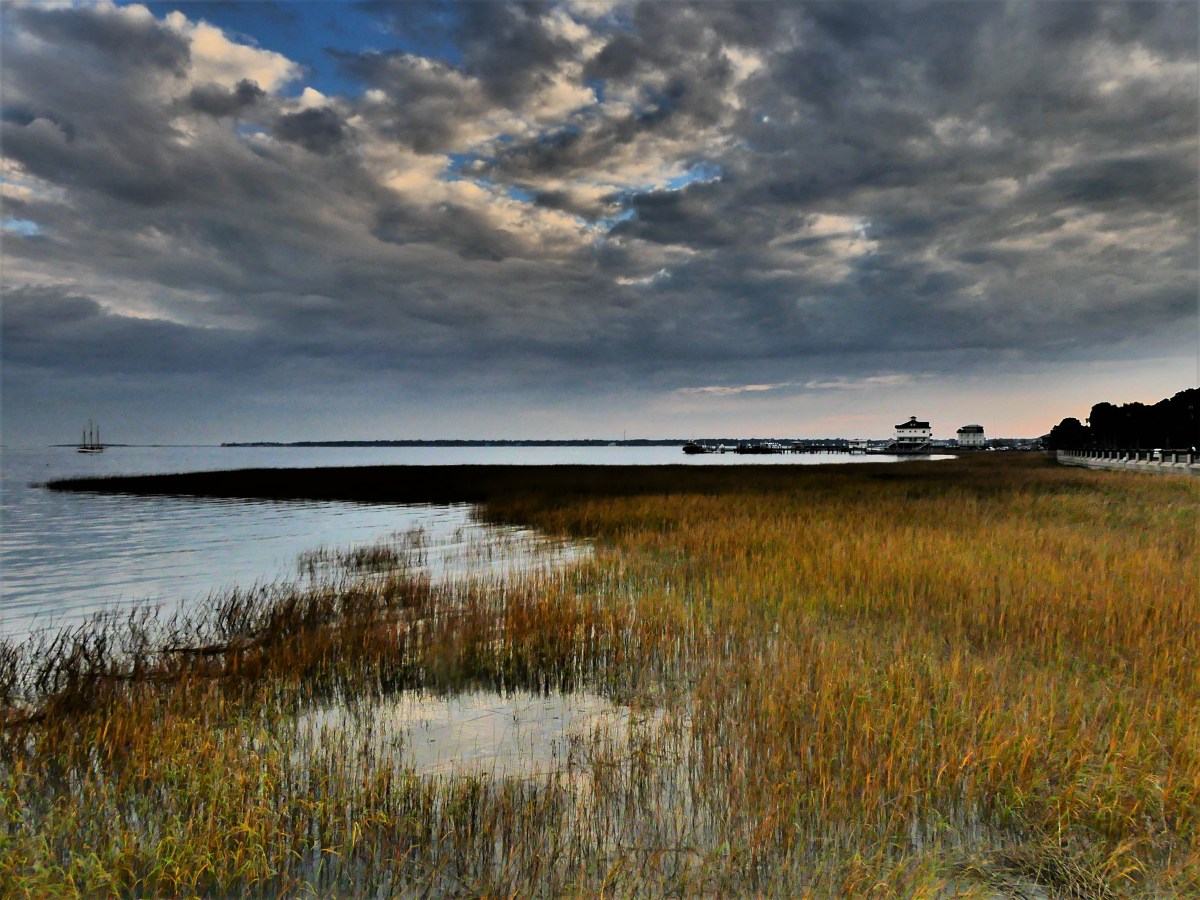
Charleston coastline

guaranteeing a steady stream of basketry to remind us how sweet the courage of a people can be, and how crooked their path to freedom.

marsh grasses

museum attendee

Pictures of Home

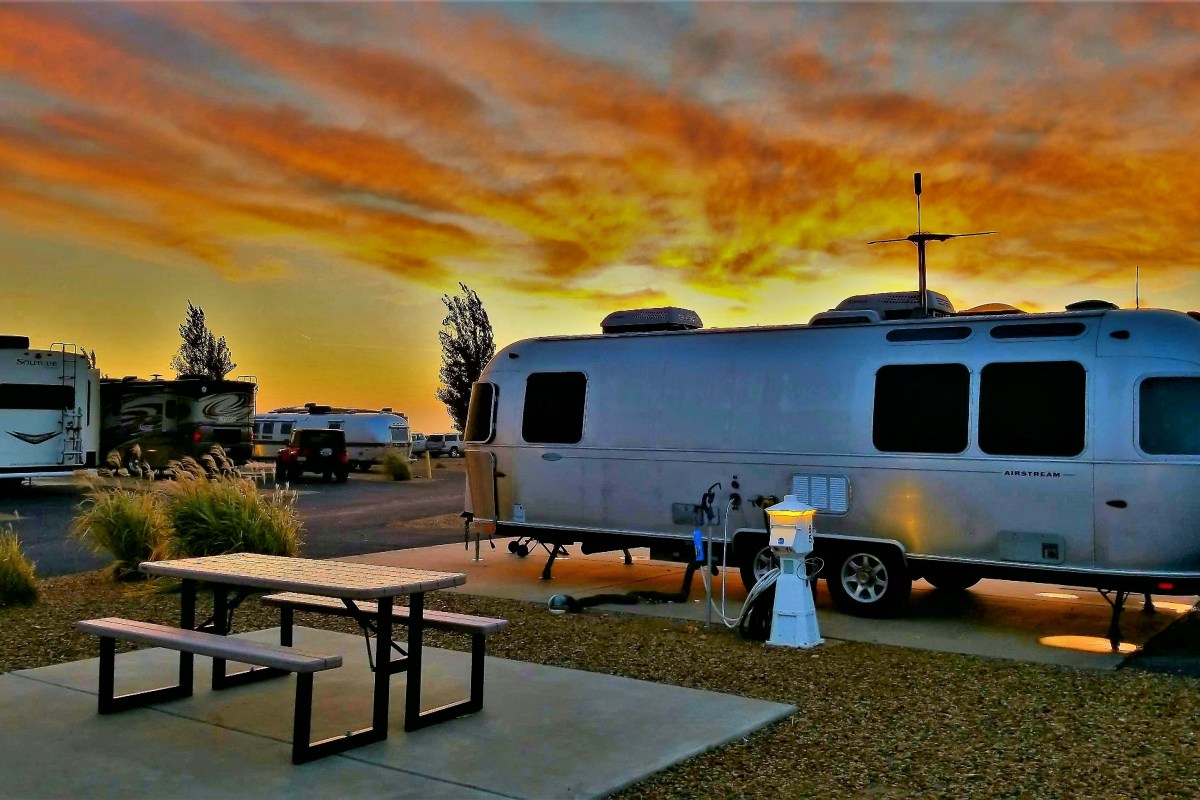
For the past eleven months, I have suffered from an acute case of Restless Body Syndrome (RBS)–unable to stay in one place for more than an average of three to four days. And to my knowledge, there is no known antidote for this kind of wanderlust.

While there is much to be said for having a home with all the trappings of comfort and familiarity (for which I am grateful), I nevertheless feel a natural compulsion to feed my travel addiction–at times surrendering to the physical and psychological cravings of visiting someplace new on a regular basis.

Fortunately, there are hundreds of support groups around the country–known as RV parks and resorts–that are very accepting of those among us who are afflicted with RBS, and assuage us with electric, water and sewer, and occasionally, high-speed internet.

A ten-step program has been developed by self-help travel gurus to combat the irritation associated with RBS:

  1. Subscribe to Travel and Leisure, and National Geographic.
  2. Watch Amazing Race on CBS.
  3. Log on to Kayak, Trivago, or Travelocity.
  4. Smell a pine tree.
  5. Build a fire…outdoors.
  6. Eat a s’more.
  7. Lay in a hammock.
  8. Open and close a stadium chair.
  9. Take a brief cold-water shower.
  10. Follow Streaming thru America

Leading pharmaceutical firms have been quietly conducting cutting-edge research to advance a cure for RBS. And there is widespread speculation that a vaccine is being developed for the travel bug.

Additionally, Congress is contemplating passage of the Rio Grande Act, whereby an extremely narrow Wal-Mart will be built along the entire Texas-Mexico border for RBS out-patients to shop, duty-free.

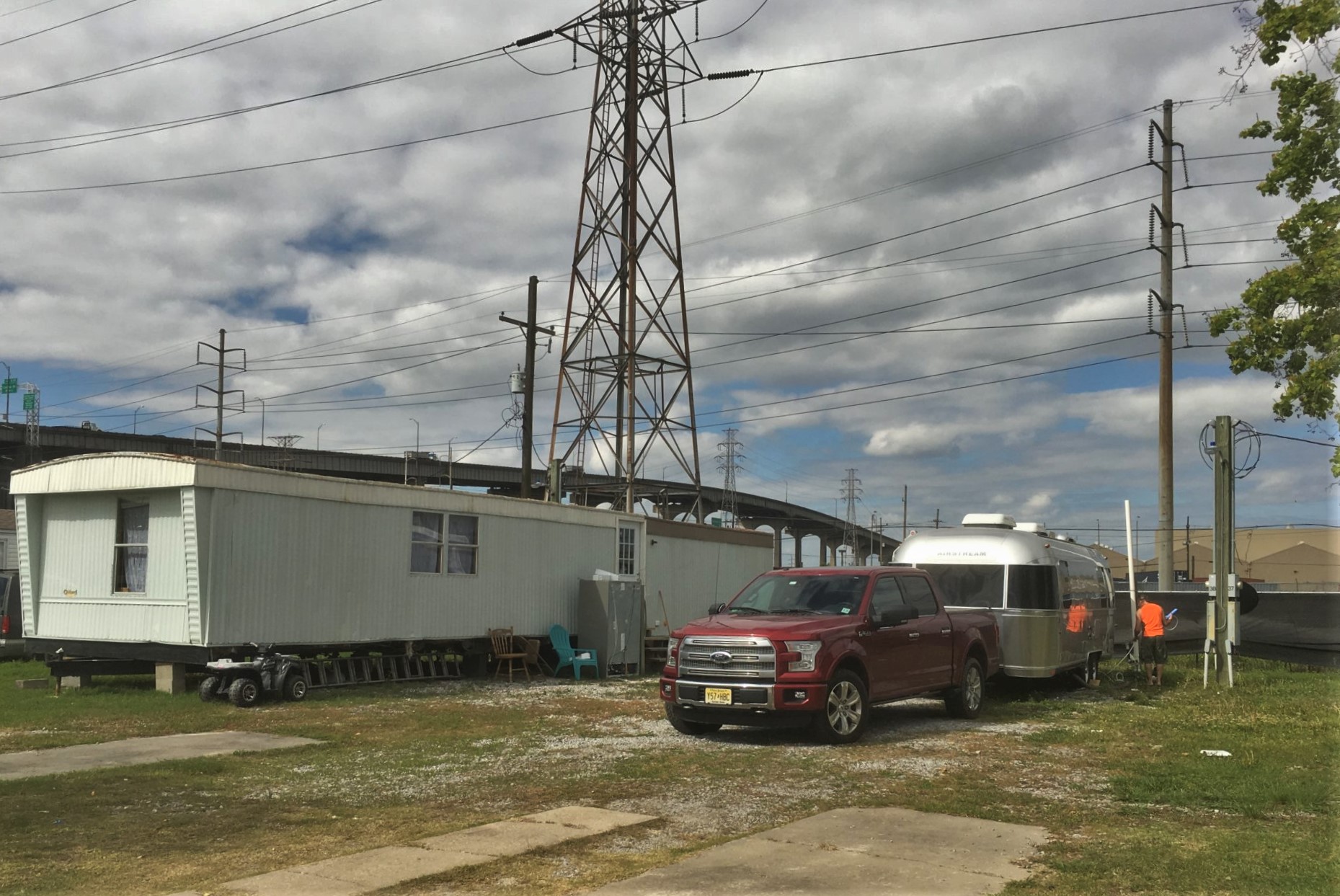
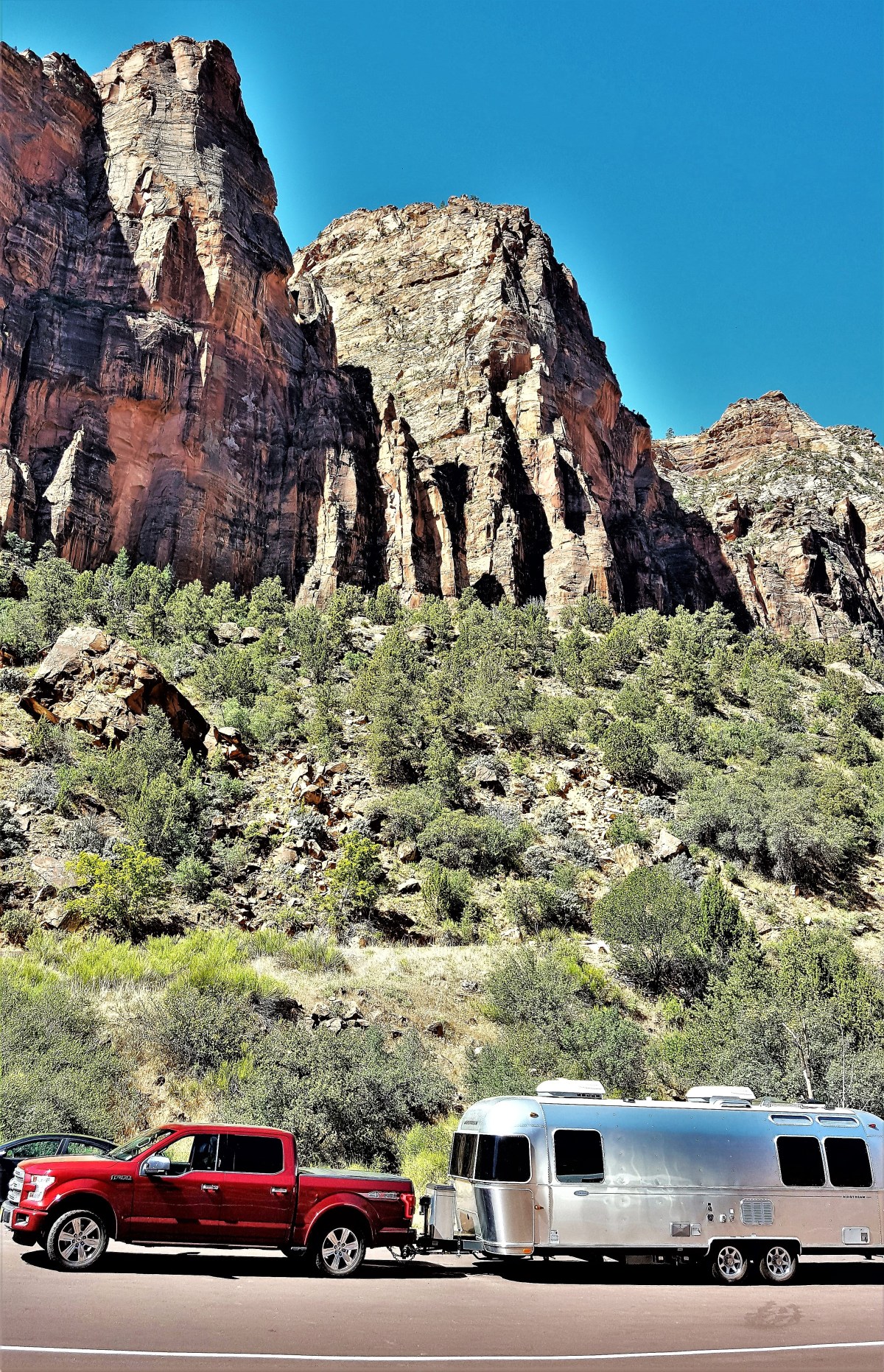
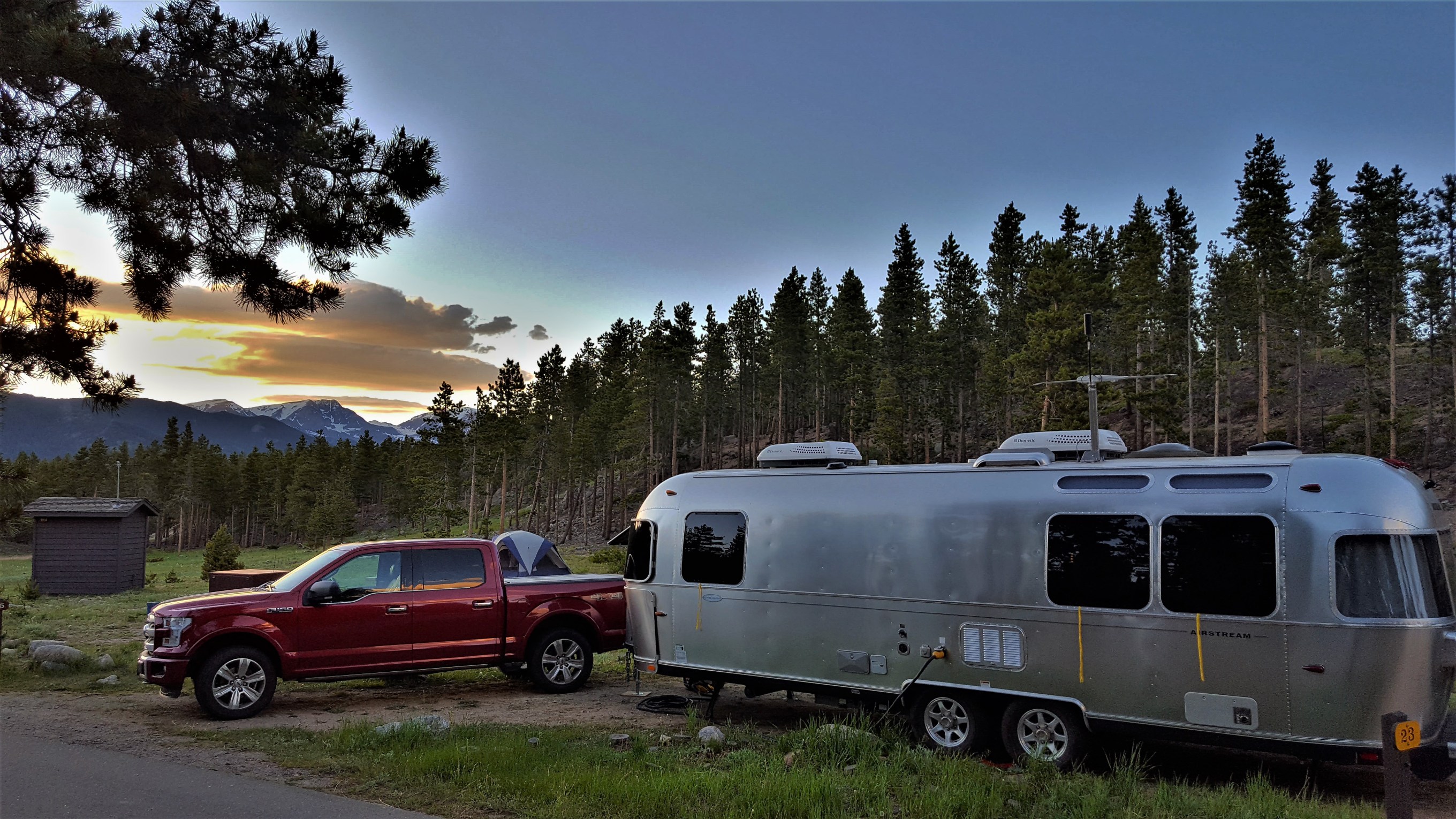
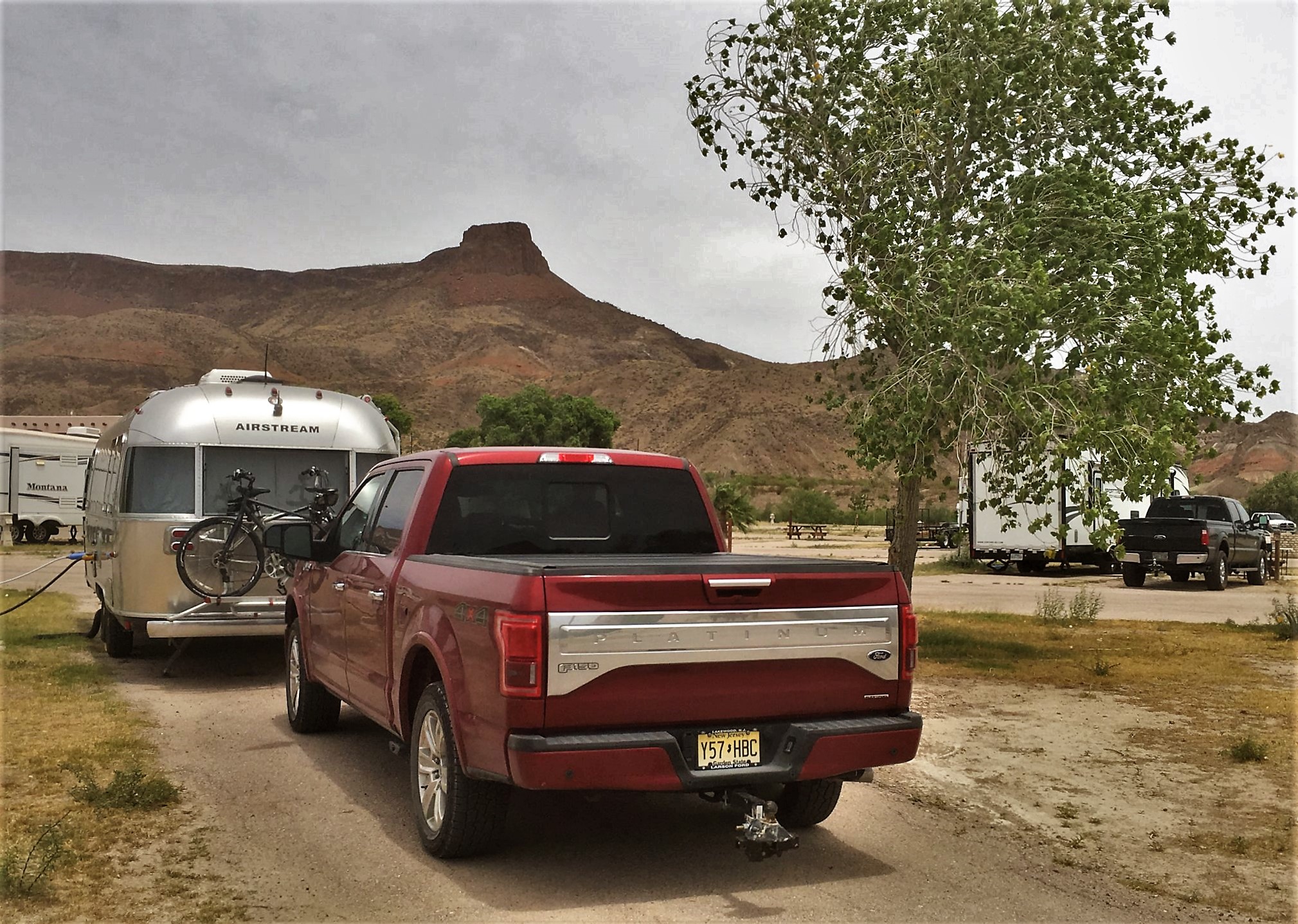
Until then, I offer my services as your tour guide for a random retrospective of my many homes from March 2017 to present.

Towaco, NJ
Towaco, NJ
Ligoneer, PA
Ligonier, PA
Walmart, WV
Lewisburg, WV
New Orleans, LA
New Orleans, LA
San Antonio, TX
San Antonio, TX
Big Bend State Park, TX
Big Bend NP, TX
Grand Canyon, NP
Grand Canyon NP, AZ
Zion NP, UT
Zion NP, UT
Estes Park, CO
Estes Park, CO
West Yellowstone, MT
Banff, Ca
Banff NP, Alberta, CAN
Corvallis, OR
Corvallis, OR
Klamath, CA
Klamath, CA
Hat Creek, CA
Hat Creek, CA
Quincy, CA
Quincy, CA
Las Vegas, NV massacre
Las Vegas Massacre, NV
Valley of Fire, NV
Valley of Fire, NV
Joshua Tree NP, CA
Joshua Tree, CA
Mt. Pleasant, SC
Mt. Pleasant, SC
Delray Beach, FL
Delray Beach, FL
Melborne, FL
Melbourne, FL
Bradenton, FL
Bradenton, FL

To be continued…

The House of John by Mable

Charles Thompson, manager of Buffalo Bill’s Wild West Show (later acquired by the Ringlings) had built Palms Elysian along Sarasota Bay by 1893…Palms Elysian (2)
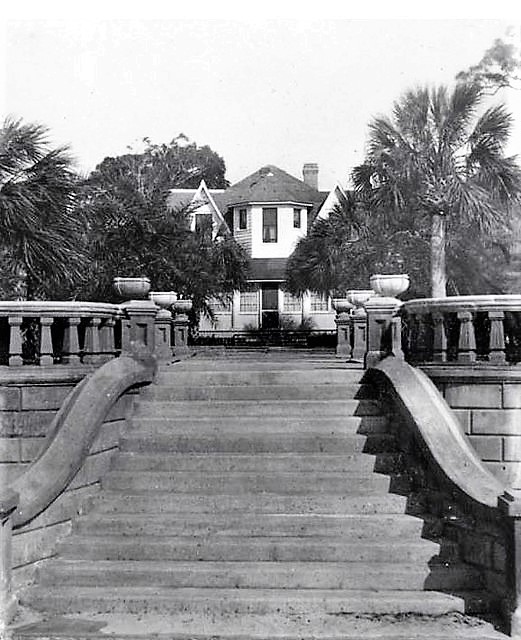
to bolster his initial purchase of 154 acres for $1650. Thinking that Sarasota could be a great destination for the winter circus season, and a worthy land development opportunity, Thompson persuaded John and Charles Ringling to explore the area in 1911, and convinced John to purchase the home and 20 acres of waterfront property from mutual friend and General Agent of New York Railroad, Ralph Caples, who only three months earlier had acquired the estate from Thompson. By then, Palms Elysian had become a showplace of a home in an area surrounded by log cabins and fishing huts.

John and Mable continued to winter at Palms Elysian through the 1920s, with John and Charles becoming more involved in Sarasota real estate speculation and development, scooping up Bird Key, St. Armands Key and Longboat Key, and owning as much as 25% of the entire Sarasota area.

It was time to replace Palms Elysian with a home befitting the thirteenth wealthiest man in America.

John and Mable’s extensive travels throughout Italy provided her with plenty of inspiration for their proposed palazzo on the bay. Gleaning architectural details from Doge’s Palace and the Bauer-Grünwald Hotel in Venice, Mable turned her drawings and notes over to leading New York architect Dwight James Baum for a cohesive design, and commissioned Owen Burns to build Cà d’Zan (House of John, in Venizzi dialect), a 36,000 square foot Venetian Gothic-styled residence where Palms Elysian once stood.

Construction began in 1924. Every aspect of the building, inside and out, was painstakingly overseen by Mable–from the terra cotta mix and the tile glaze, to the decorative furnishings and flourishes of modern living during the Roaring Twenties.

All the while, John Ringling’s investments (entertainment, real estate, railroads, oil, and cattle) had amassed a fortune of $200 million, and landed him on the cover of Time Magazine.

Time Magazine cover (2)

Cà d’Zan was completed and fully furnished before Christmas 1926 at an astonishing cost of $1.5 million ($21 million today). With 41 rooms and 15 bathrooms, the Ringling’s new home featured a crystal chandelier from the original Waldorf-Astoria Hotel, Florida’s first residential elevator by Otis, an Aeolian organ with 2,289 pipes built into a wall rising two stories,
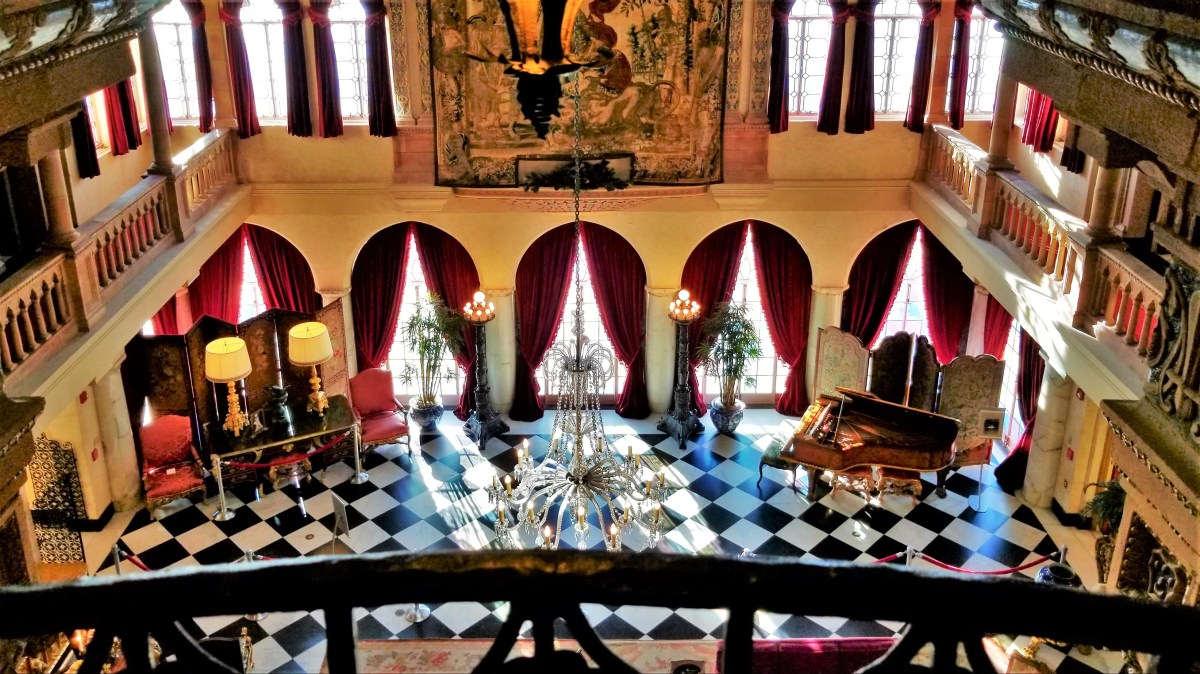
covered courtyard

and an 82-foot-high tower with an open-air landing and a high-domed ceiling.

terra cotta frieze

A similarly-styled gate marked the official entrance to the opulence of Cà d’Zan and The Ringling estate,
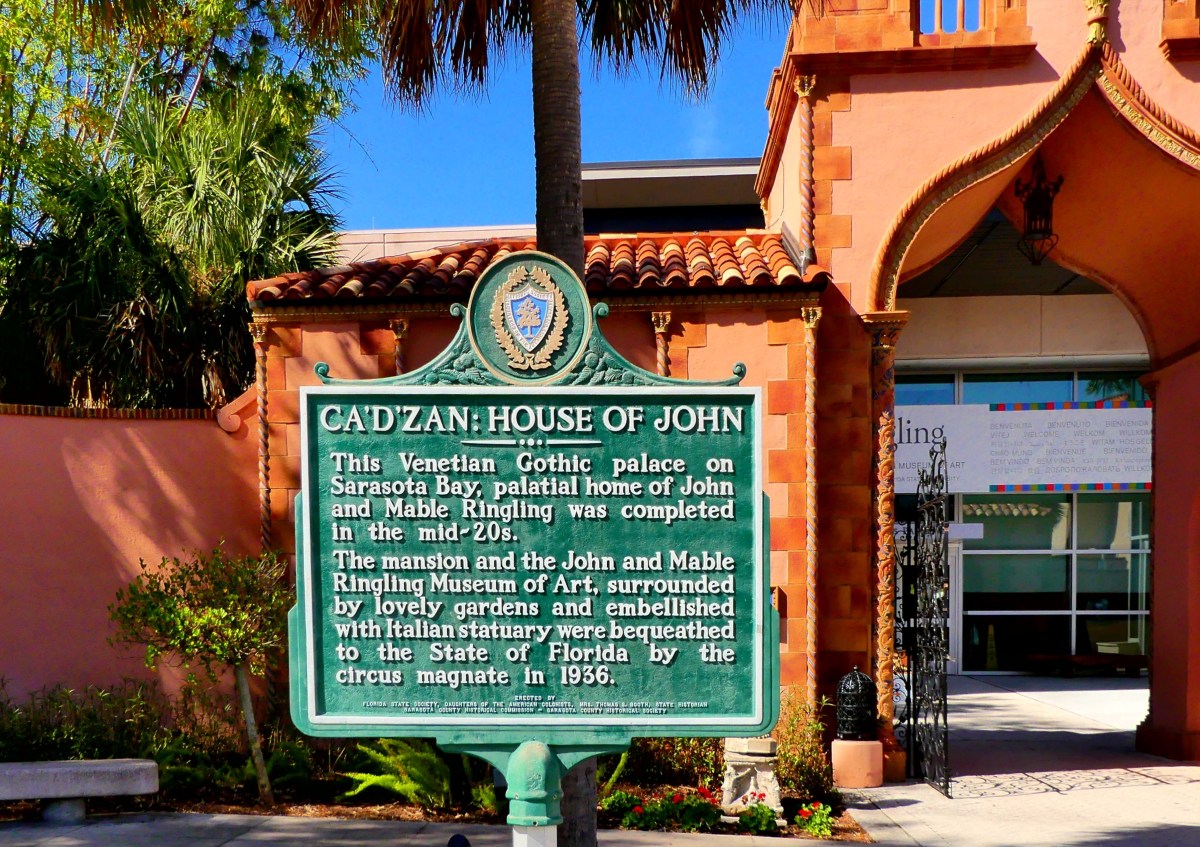
Ca'D'Zan signpost

where Mable would greet her celebrity guests–the likes of Will Rogers, Jimmy Walker, Flo Ziegfeld, and Billie Burke.
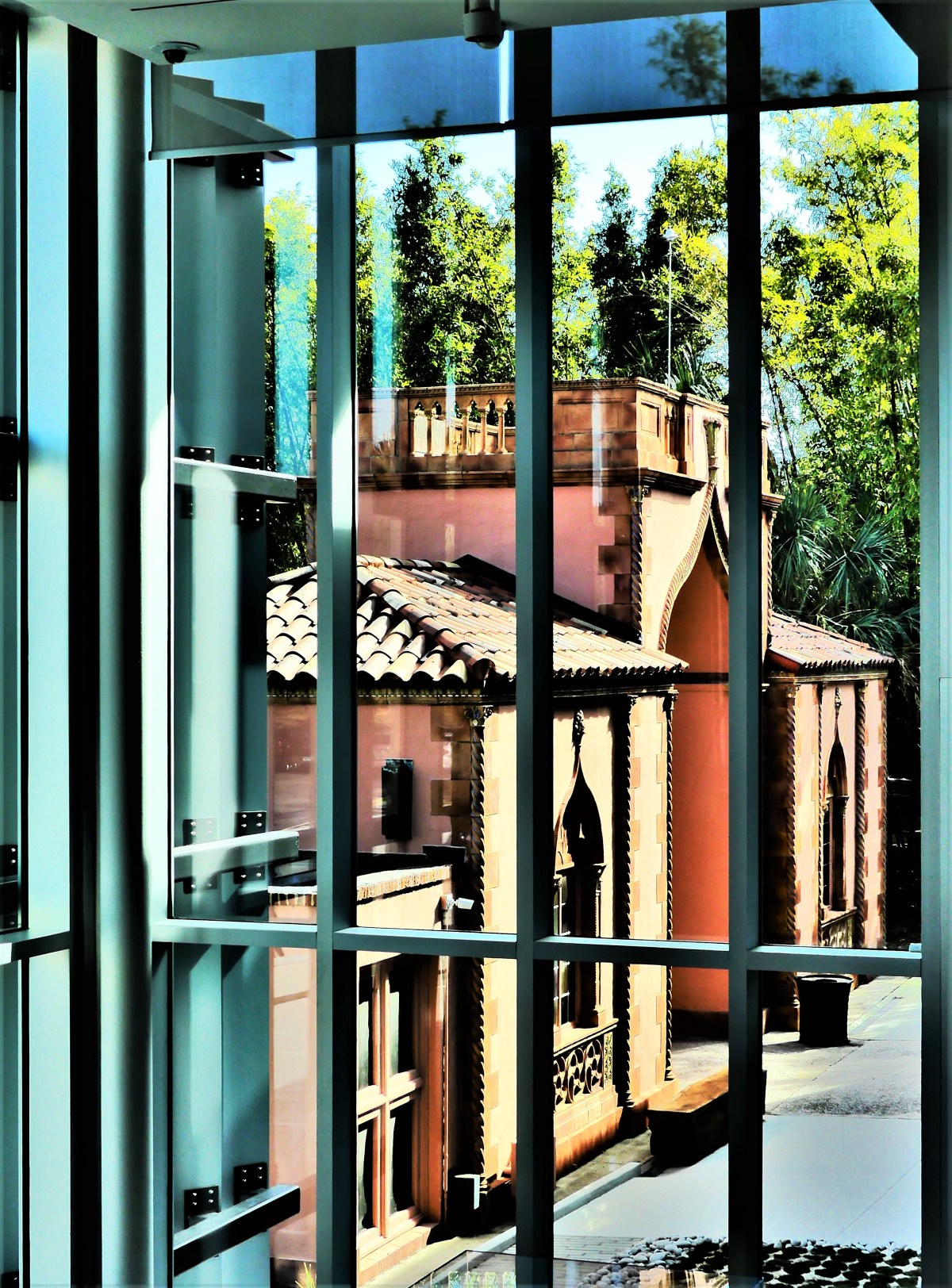
gate thru glass pavilion

Their stroll continued through lush gardens punctuated by Italian statuary,
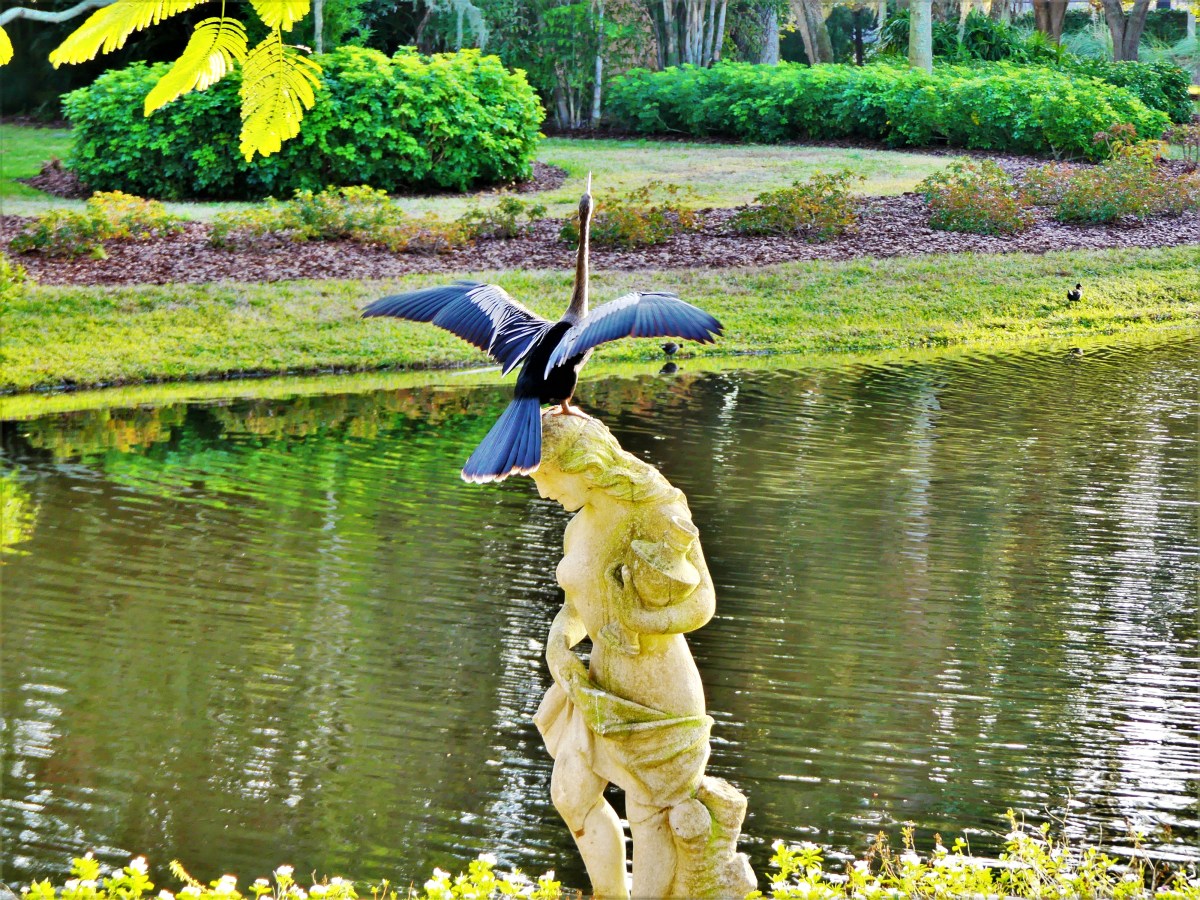
heron pedastal

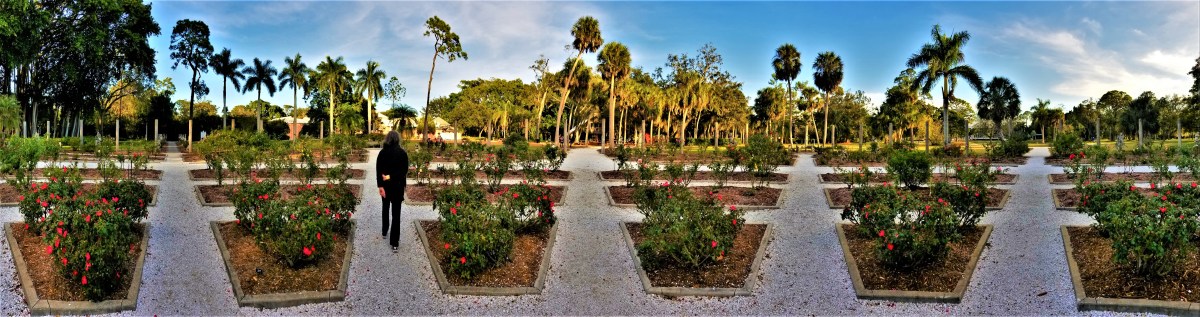
past Mable’s rose garden,

rose garden and banyans.jpg

Mable's Rose Garden

and down the pathway marked by a zodiac compass mosaic,

compass mosaic

until they reached the jewel on the bay.
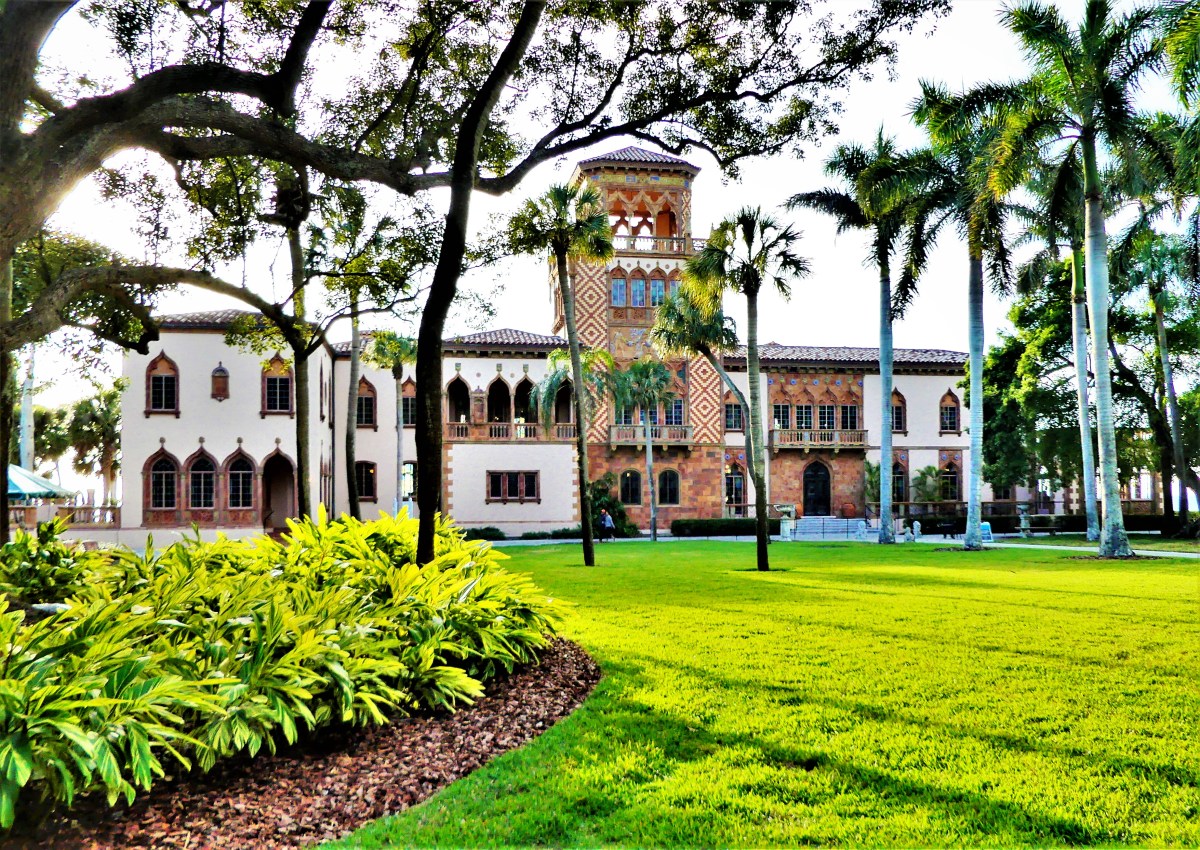
estate view

Leah and I elected to tour the mansion in two parts, with a small group guided by docents who led us through four floors of fresco art, enormous Italian Renaissance paintings and tapestries, French Baroque furniture, and the Belvedere tower.

However, interior photography was not allowed. I felt like my hands had been tied.

I would have liked to photograph the deep tub in Mr. Ringling’s bathroom–with both freshwater and saltwater taps–carved out a single slab of Sienna marble to accommodate his 6′ 2″ frame.

Consequently, I have no image of the equally impressive 16-foot long German Silver sink installed in the kitchen pantry as a measure of protection for Mable’s oversized collection of Lenox bone china and hand-painted pottery displayed in the many pantry cabinets.

I was also miffed that I couldn’t capture the coffered ceiling of smartly painted Florida pecky cypress in the solarium amid the jeweled tones of the Venetian black glass skylights.

And it was disappointing being unable to record the light flooding through the windows that wrap around the 4th-floor guest bedroom once preferred by Will Rogers, which set the paneled walnut ceiling aglow.

However, with a climb to Belvedere Tower and the photo ban lifted, the lens cap came off, and I was free to enjoy the expansive 360° views…

Belvedere Tower

across Mable’s lush gardens,

gardens with pool (2).jpg

and over a rooftop clad in antique Spanish barrel tile from Barcelona buildings personally salvaged by John Ringling and cargo-shipped to Miami.

rooftop (2).jpg

Legend has it that John Ringling would walk his guests to the top of the tower to show off his Longboat Key land holdings as far as the eye could see.
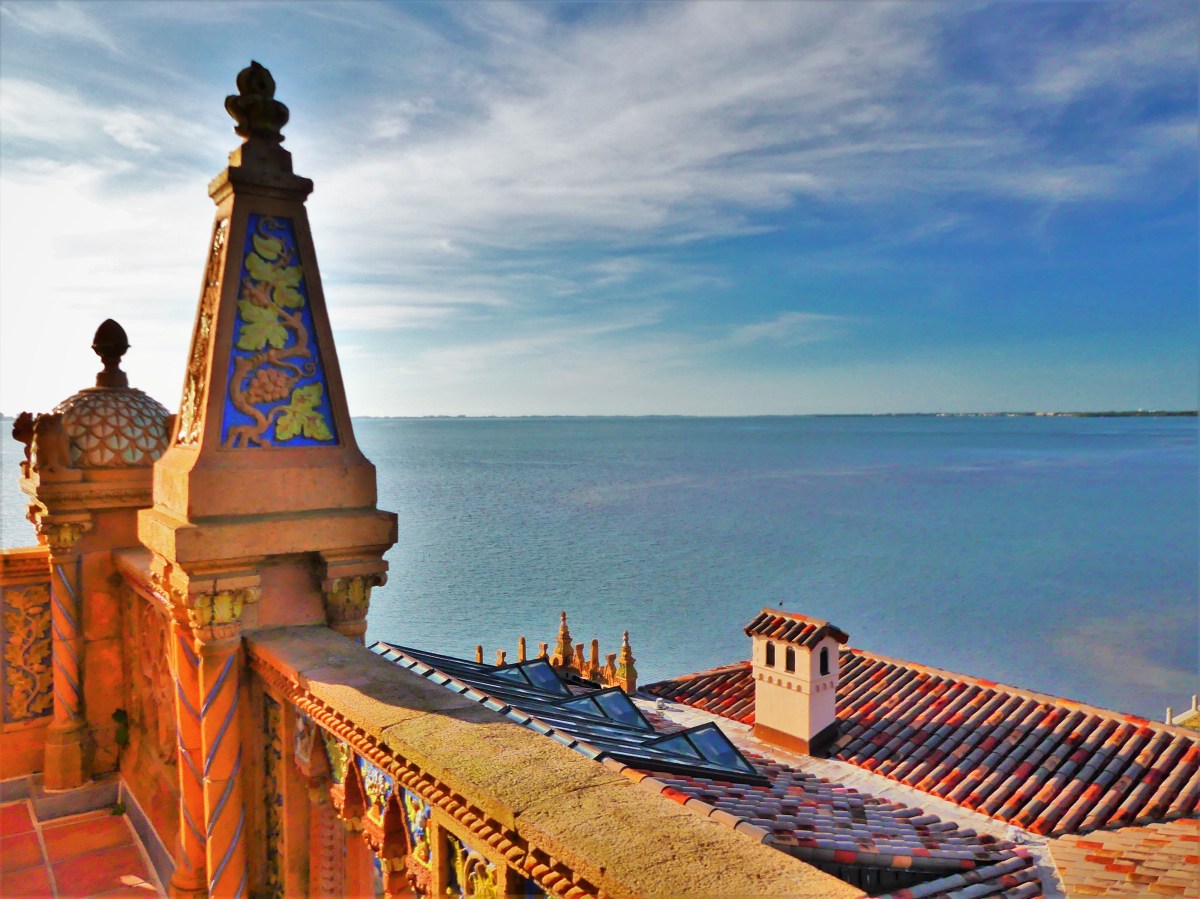
bay view from Belvedere Tower

I must have lost all track of time while shooting to my heart’s content, because when I finally put my camera down, I noticed that I was standing alone, and the tour had moved on without me.

Down the spiral stairs I ambled,

Spiral stairs and water.jpg

only to discover the tower door locked from the inside. I pounded on the iron-clad door in vain, eventually realizing that nobody could hear me. I considered my limited options: I could look out over east side of the tower, hoping that I could be discovered from below…
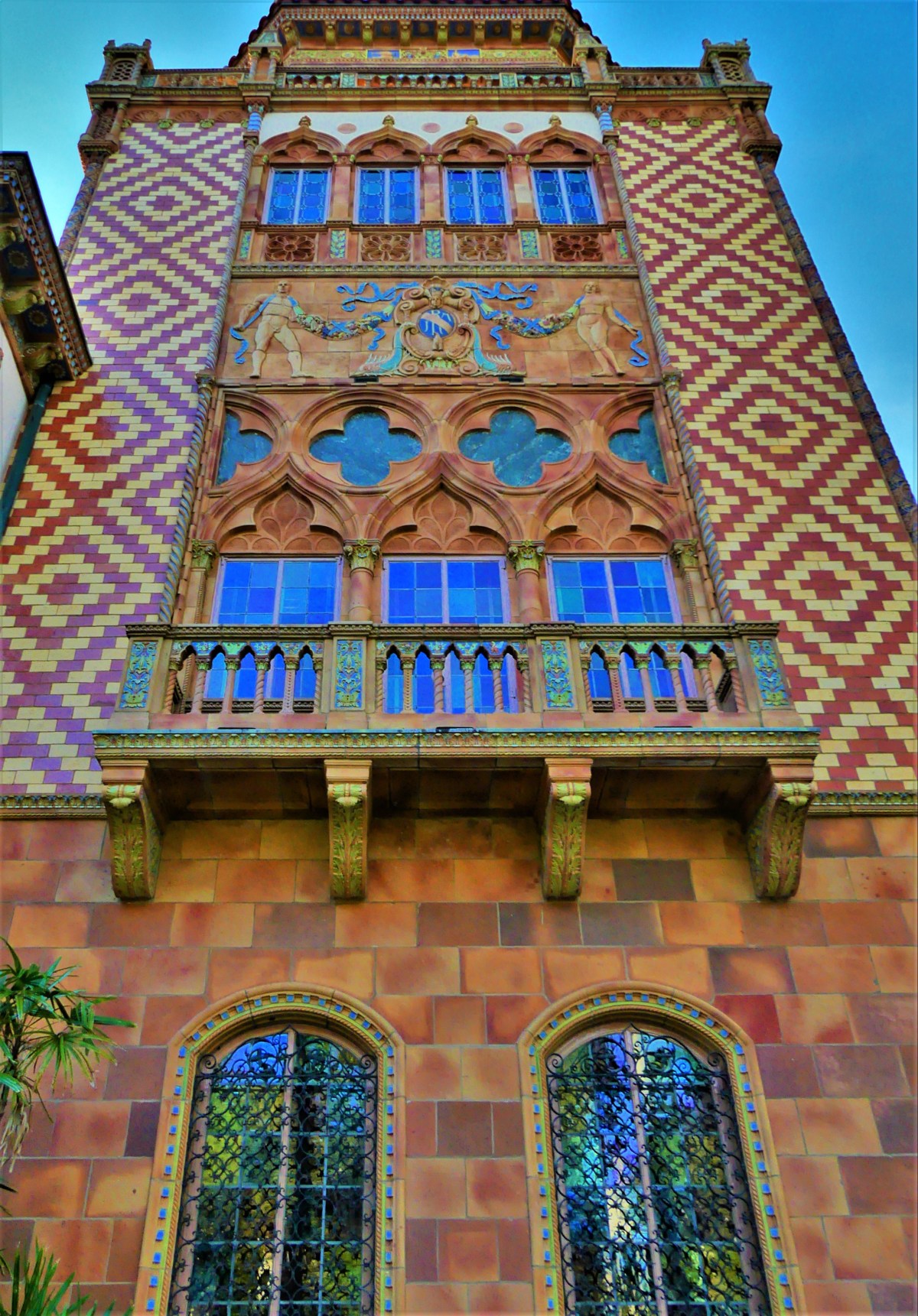
front with tower.jpg

…nah…or I could try Leah’s cell phone, and hope that she’d taken it off vibrate. It rang and rang and rang…

9-1-1 was another consideration, but quickly discounted when Leah finally answered on the fifth ring.

“Hello? Why are you calling me?” was all she wanted to know.

“Take a look around you. Do you see me anywhere?” I started.

“No, but I figured you’re off taking pictures somewhere ’cause that’s what you do,” she intoned.

“Well not this time,” I revealed. “This time I’m stuck at the top of the tower with the door locked, and no way of getting down. So do you think you could manage to alert the docent or security, and maybe they could find their way up here to rescue me,” I mentioned calmly.

“I’ll see what I can do. Bye.” and she was gone.

An extra five minutes on the tower landing, and I was still enjoying the view. But when five minutes turned to ten, I called Leah again to make sure I wasn’t being punished or forgotten. This time she answered right away.

“Hi. Remember me?” I was 100% sarcastic.

“I don’t know what to tell you. They said they were on their way,” she quasi-sympathized.

Moments later, I heard the door unlatch. The door swung open, and there was our security escort together with the guide–both looking relieved and embarrassed.

“I’m so sorry,” stated the docent. “I don’t know how something like this could have happened. In all my years of running tours through this house, this has never happened before. Thank goodness, you’re alright,” she gushed.

I followed her down four flights of stairs, with security only steps behind me, probably watching closely to guarantee I didn’t get lost. The tour was officially over.

I rejoined Leah at the back of the palazzo, where we sat for a few minutes on the inlaid marble terrace looking out across the water,

marble terrace

and imagined Mable being rowed around the bay in her authentic Venetian gondola, while contemplating her next trip to Italy.

But her time at Cà d’Zan was brief and bittersweet. She would only have three years at her beloved retreat before succumbing to Addison’s disease with complications from diabetes in 1929.

Although she lived to be 54, for Mable it was la dolce vita.


Variations on Junk

We were breezing through National Park Highway with the winds of Rainier at our backs,

Mt. Ranier

heading through Ashford, WA on the way to Mt. St. Helens (see: Beauty and the Beast),

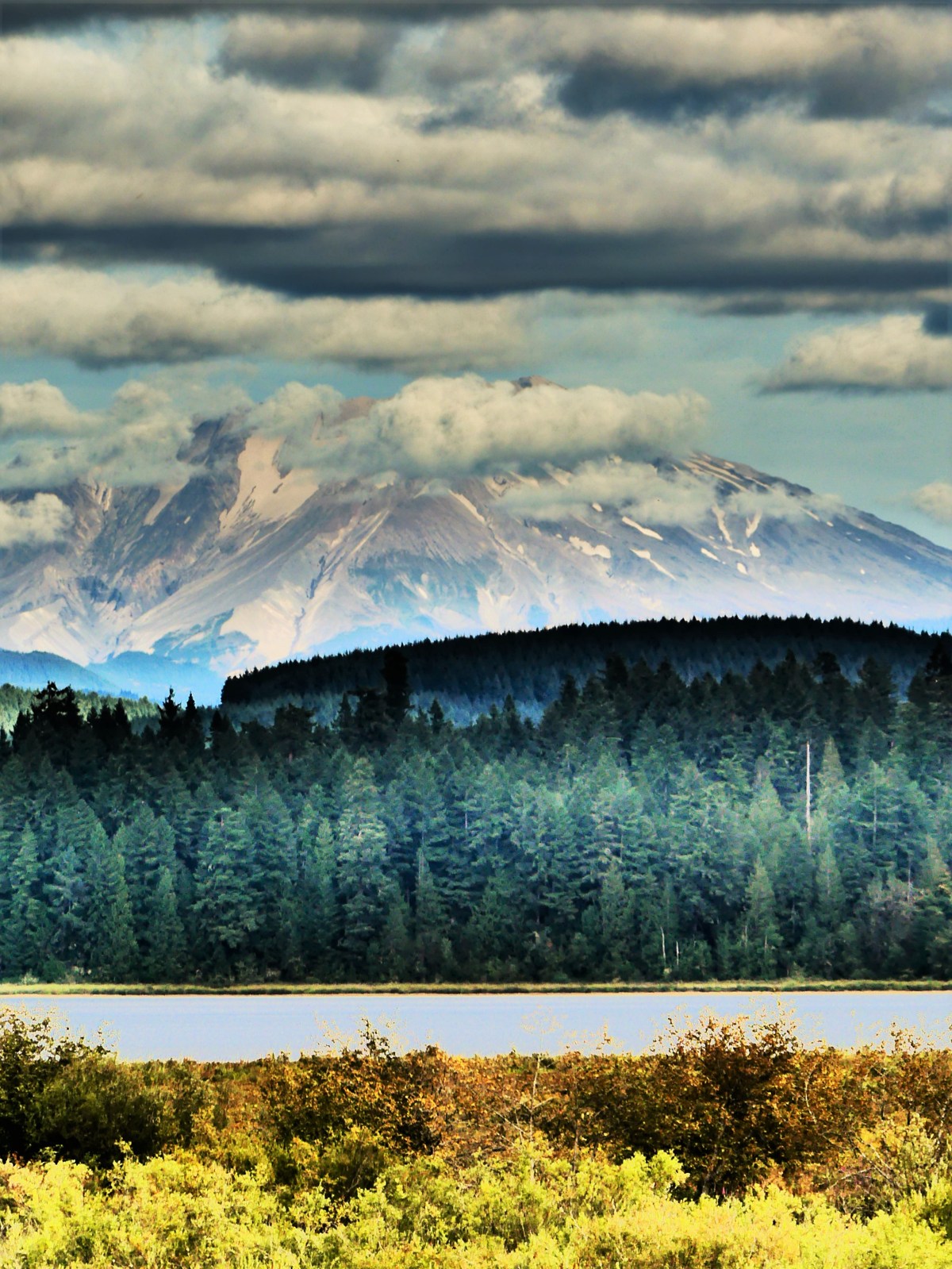
Mt. St. Helens1

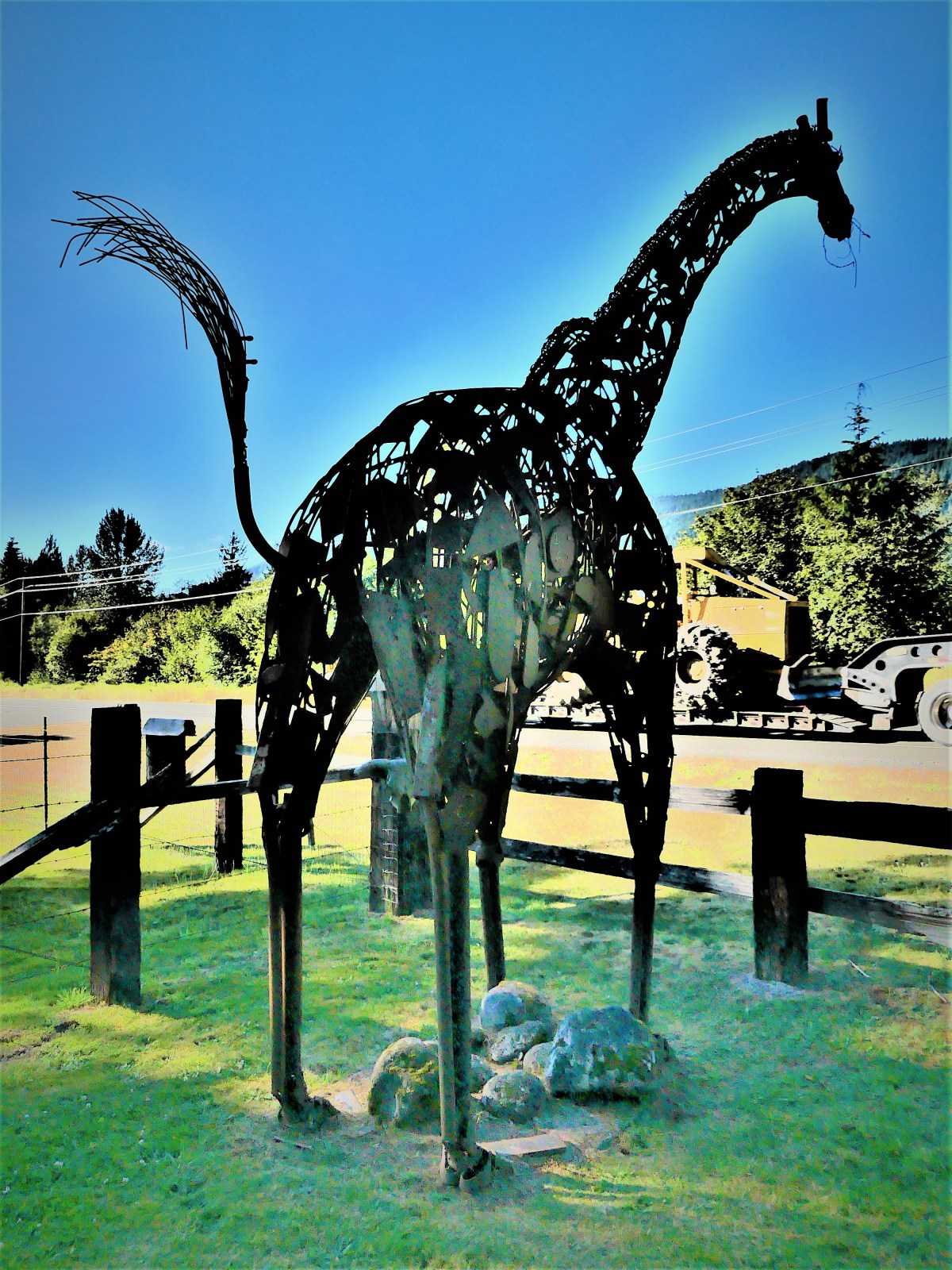
when the sight of a 17-foot grazing giraffe (Aspen Zoe) craning over a split-rail fence caught our attention,

giraffe (3).jpg

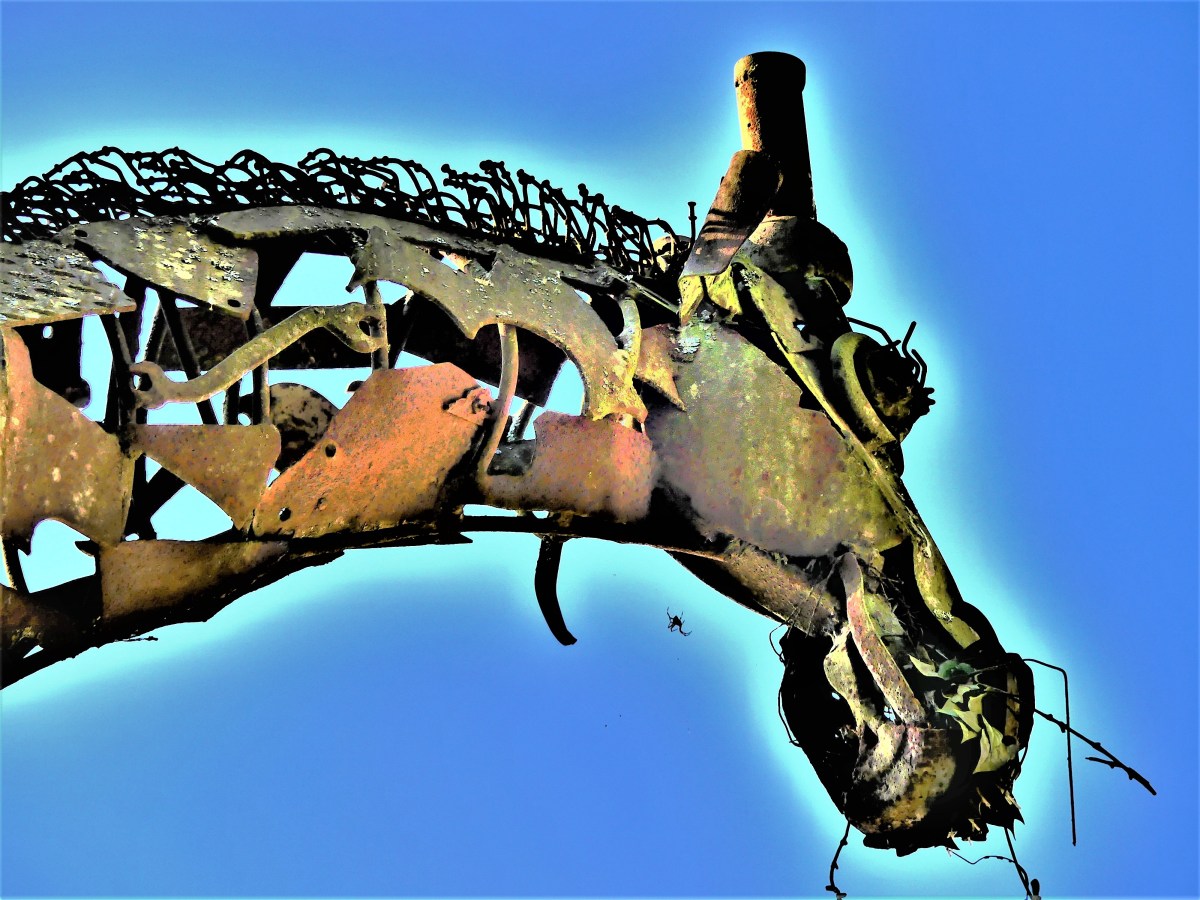
causing us to catch a second look.

giraffe head (2).jpg

The open field before us provided a perfect pedestal for oversized sculptures.

garden overview.jpg

The allure of a hidden sculpture garden amid the cedars and firs of the Cascades was galvanizing, and had us hooked.

Big Fish.jpg
Oscar–18-feet long by 12-feet high

We felt magnetically drawn to the magical monstrosities, and compelled to turn into the gravel driveway for a closer look, sharing the parking lot with The Angel from Hell.

motorcycle on a truck.jpg

The gatekeeper was generous, allowing us passage,

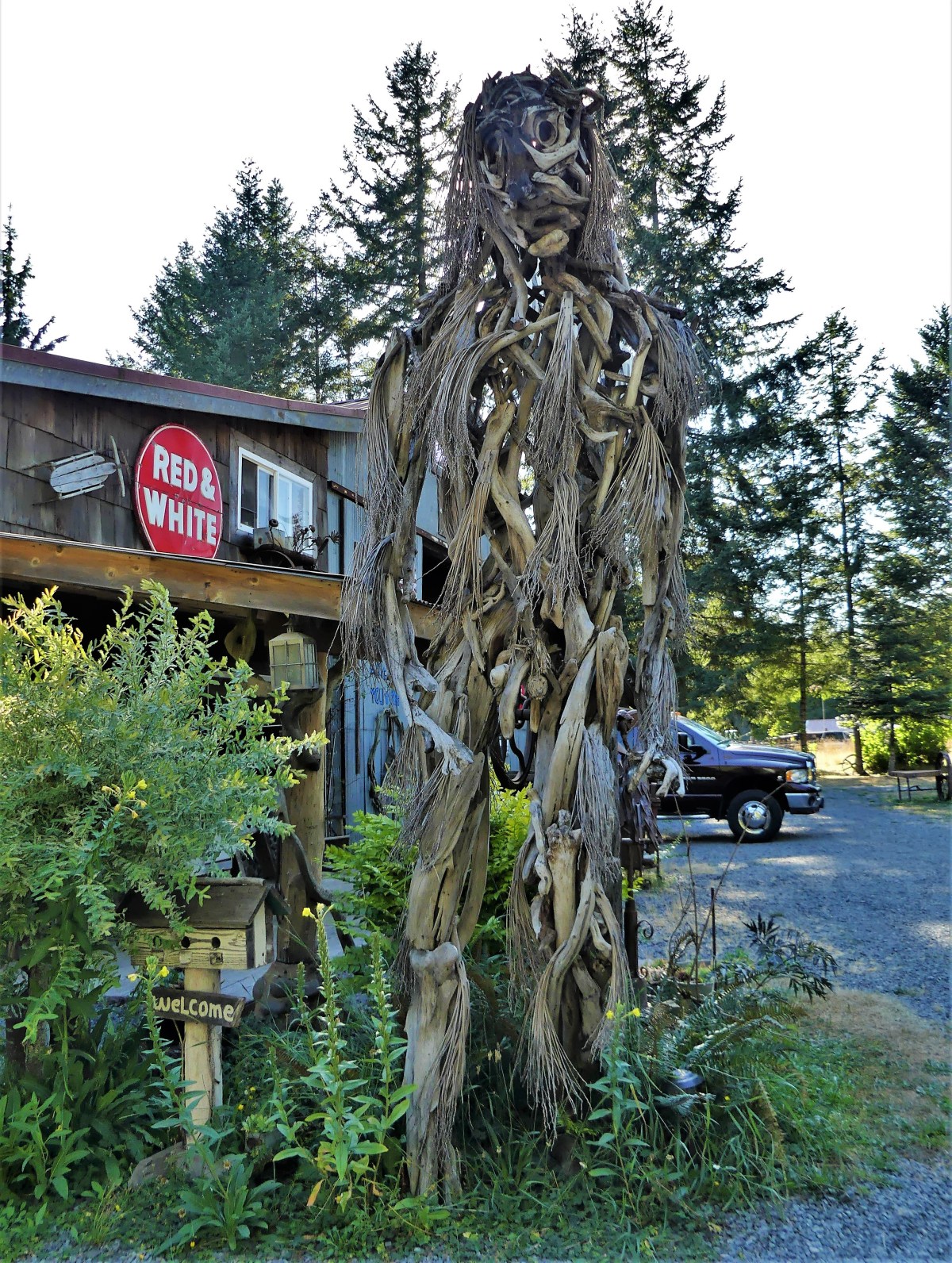
driftwoody (2).jpg

and we were free to roam through Recycled Spirits of Iron Sculpture Park for a small donation. 

I turned to Leah, pointing to the bird…

toucan

“Check it out. Toucan get in for the price of one!” I mused.

“Your jokes are a bit rusty,” she retorted.

“True,” I countered, “but at least I beaked your interest.

We paused at our first fish-out-of-water encounter to admire the mechanical calculus of mashing a gearhead, cogs and sprockets together with a wheel here, and a drain cover there, and accented with a fan blade for a fin, and a saw blade for a snout, wrapped around an exoskeleton of grating.

“How many horseshoes do you think it took to fabricate the skin?” Leah wondered aloud.

seahorse profile

We stepped around for a different perspective.

seahorse.jpg

“Why don’t you ask the artist,” volunteered a robust woman wearing a calico print apron and approaching us from the porch. Indicating afar with her pointer finger, “That’s my husband on the tractor out there, just about finishing up the front yard cut. He’d be happy to meet-cha by the garage, cuz he loves talking about his art.”

Dan Klennert was hungry for conversation, and passionate about his process of collecting junk.

Dan Klennert portrait

He walked us through the nerve center of his creative cocoon, where all things junk were separated according to subject and size, and stacked in stalls that reached to the rafters.

There are scores of “works in progress” scattered throughout the warehouse that originated on the whim and inspiration of a stray piece of driftwood, or the basin of a wheelbarrow, or the rotary cage of a lawnmower.

Dan is a junk whisperer of sorts. As he sifts through new collections of scrap that he regularly inherits from area farmers and ranchers, he gets a “tingle of inspiration” when he comes across something special.

“This here’s gonna be a whale,” Dan claims, showing us the sweep of the bough with the sweep of his hand. “And this eagle I got started on, I’m still waitin’ on the perfect piece that gonna be his wings.”

“I grew up in a small town called Crookston, MN,” he recalls, “and as a kid, I loved to draw. When I was seven, my family moved to Seattle. That’s when I started pulling my red wagon around the neighborhood, and collecting things from junk piles. I wasn’t much of a student then, but Friday was always my favorite day of the week, because Friday was art day at school.”

Dan became a mechanic by age 22 and learned from a foreman “how to glue two pieces of metal with a welder.”

“I found a way to put together the two things I loved most, scrounging and art,” confides Dan.

Leah and I continued our tour of the property, where the playful…

stallion (3).jpg

and the whimsical…

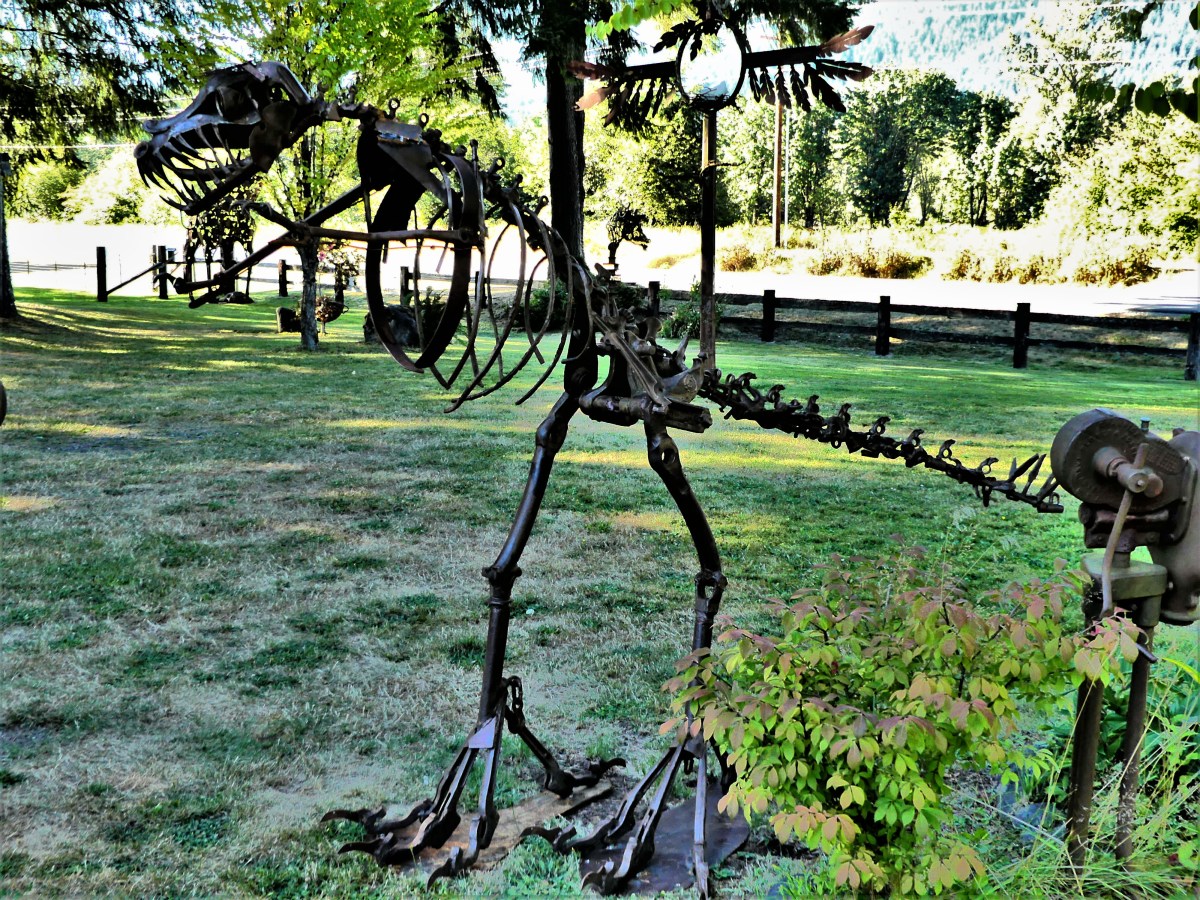
dinosaur

intercepted with the spiritual…

crucifixtion (3).jpg

the arcane…

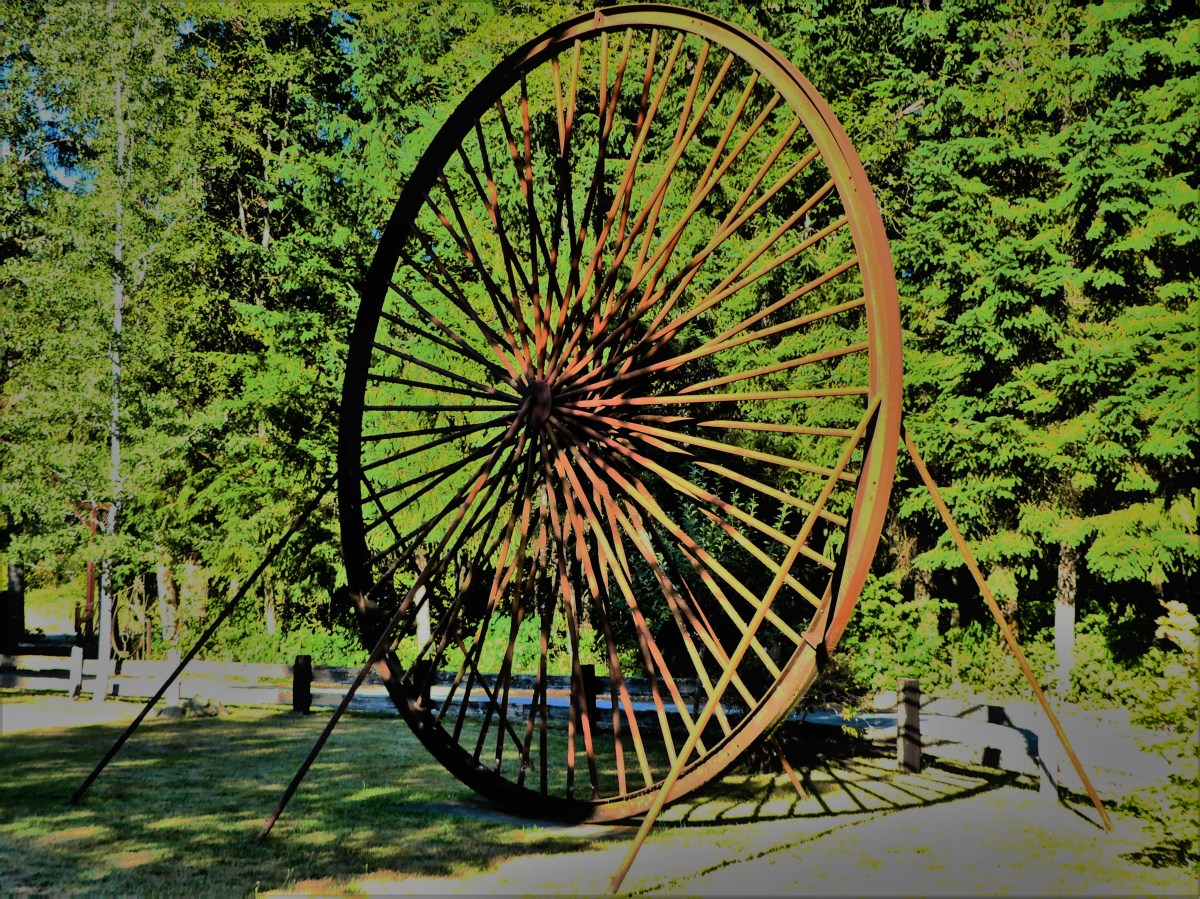
wheel

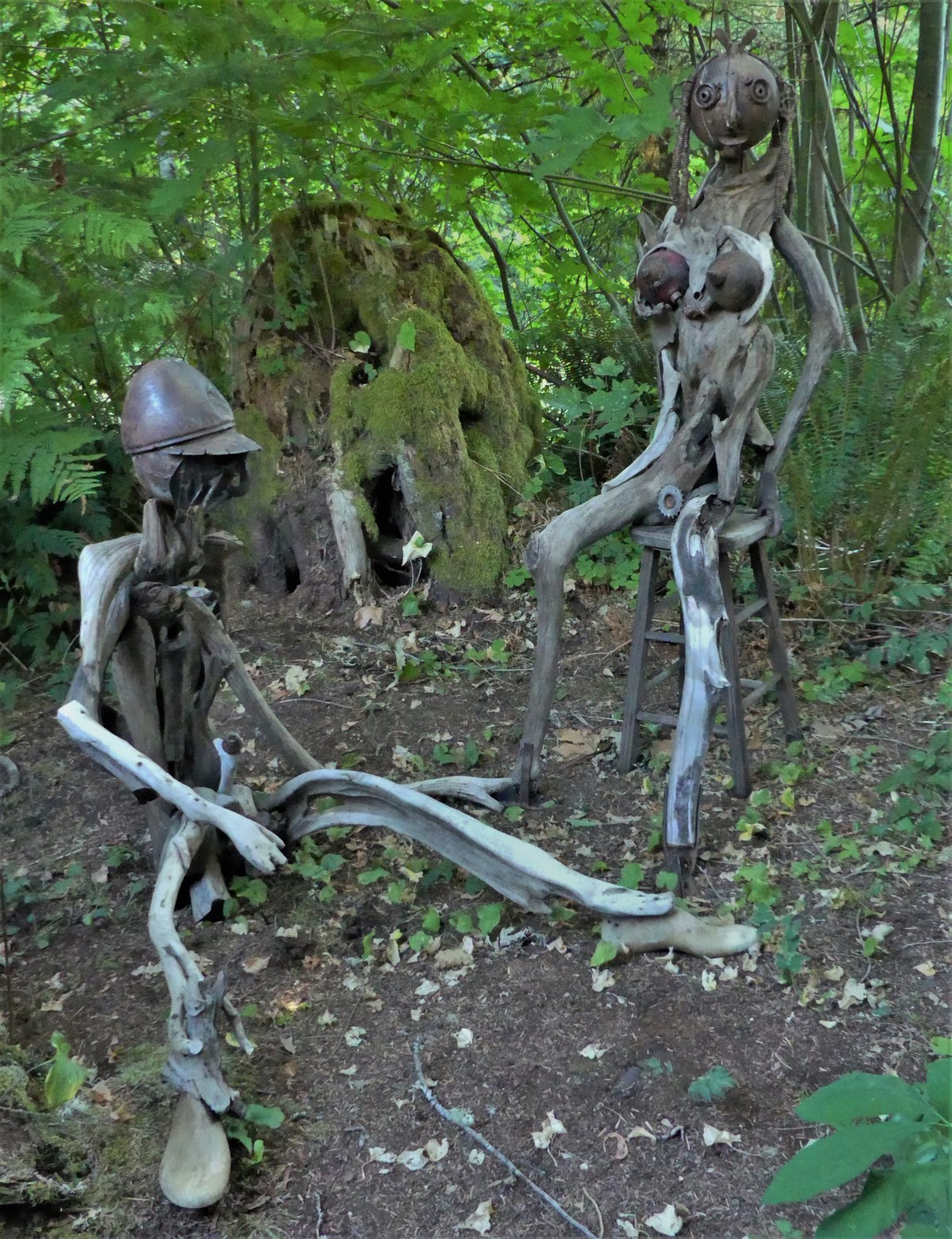
and the carnal…

Adam and Eve
Adam and Eve

But it’s safe to say that Dan Klennert has found his Eden on earth. His four-acre niche has given him a place to park the variations of a mechanical mind that melds an anchor to a sprinkler to imagine a snail, as he earnestly nudges the nuance of ex-nihilo–creation out of nothing.

Note:

WPC–Variations on a Theme

Designated Driver

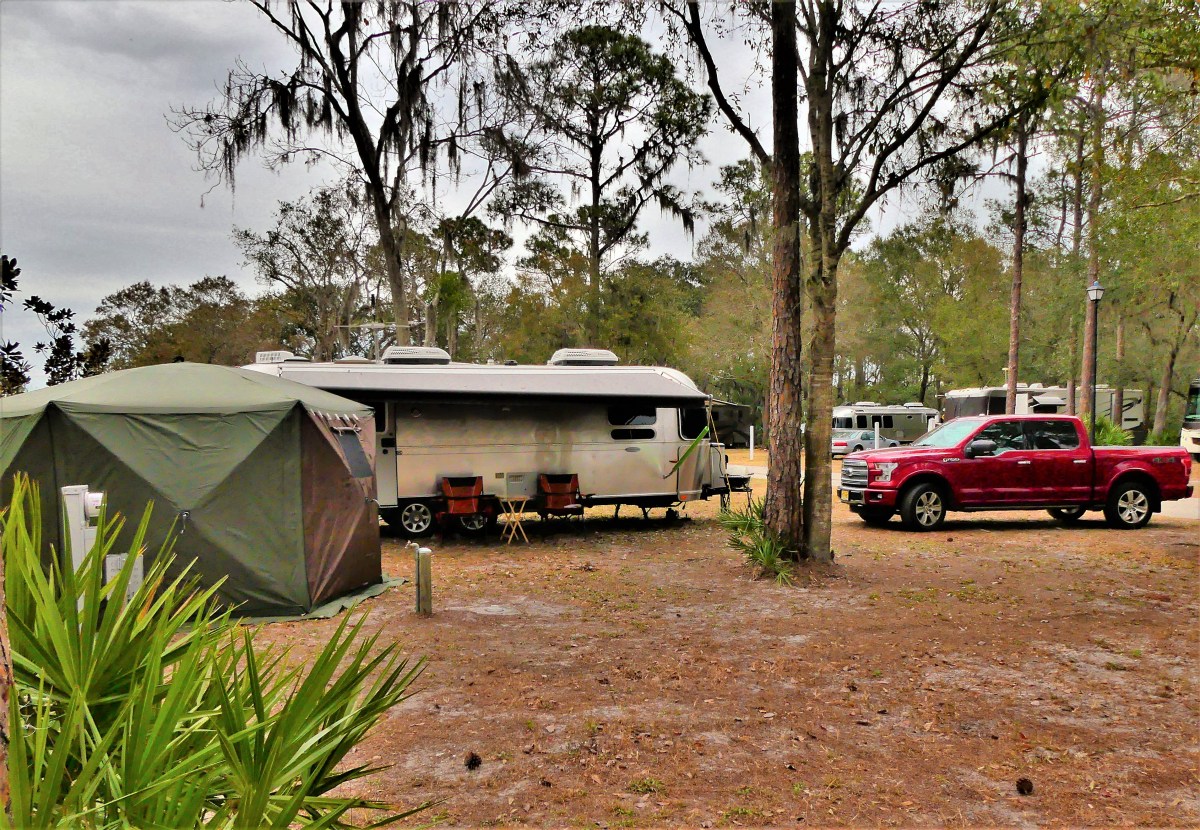
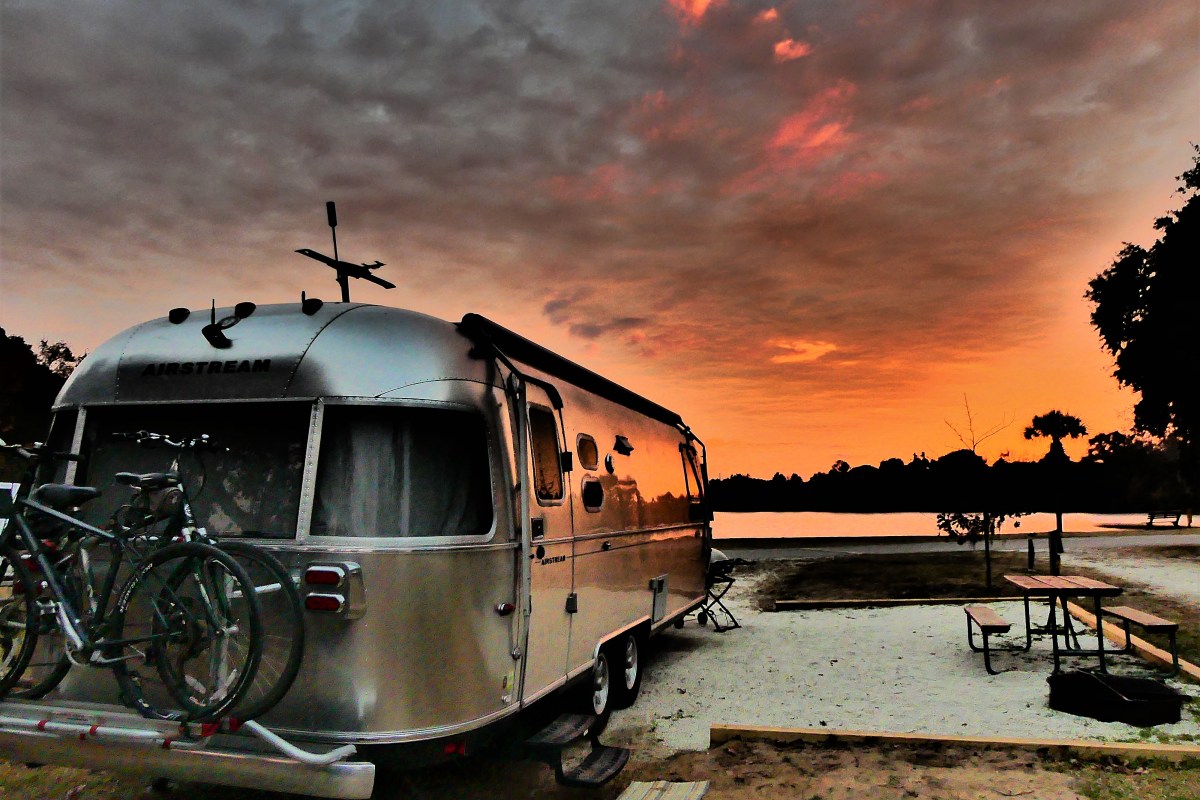
Yesterday marked a historic moment in our personal timeline, given the 10-plus months since Leah and I have actively roamed the continent in search of new adventures and discovery in our Airstream. And yesterday’s achievement–seemingly overshadowing all previous accomplishments to date–will most likely define all others to come for the duration of our travels. While this statement smacks of grandstanding and hyperbole, the relative importance of this achievement cannot be overstated.

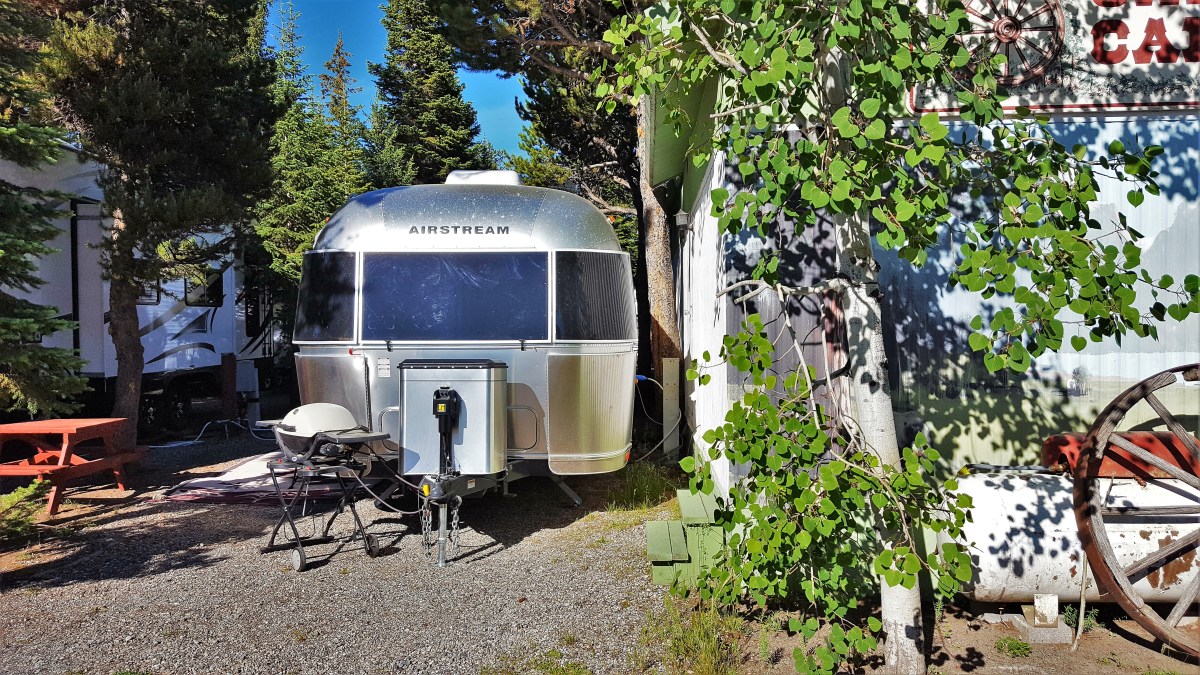
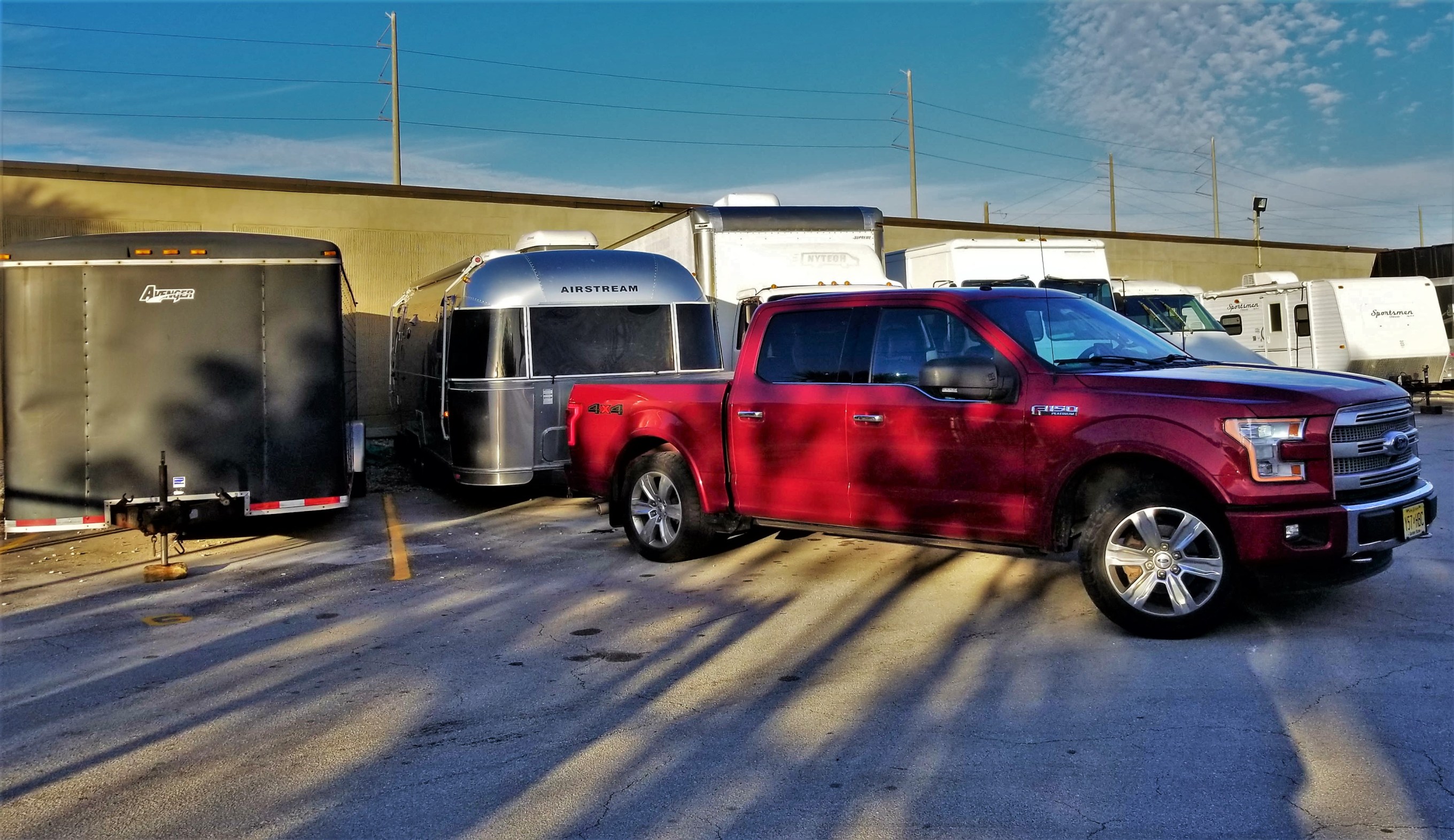
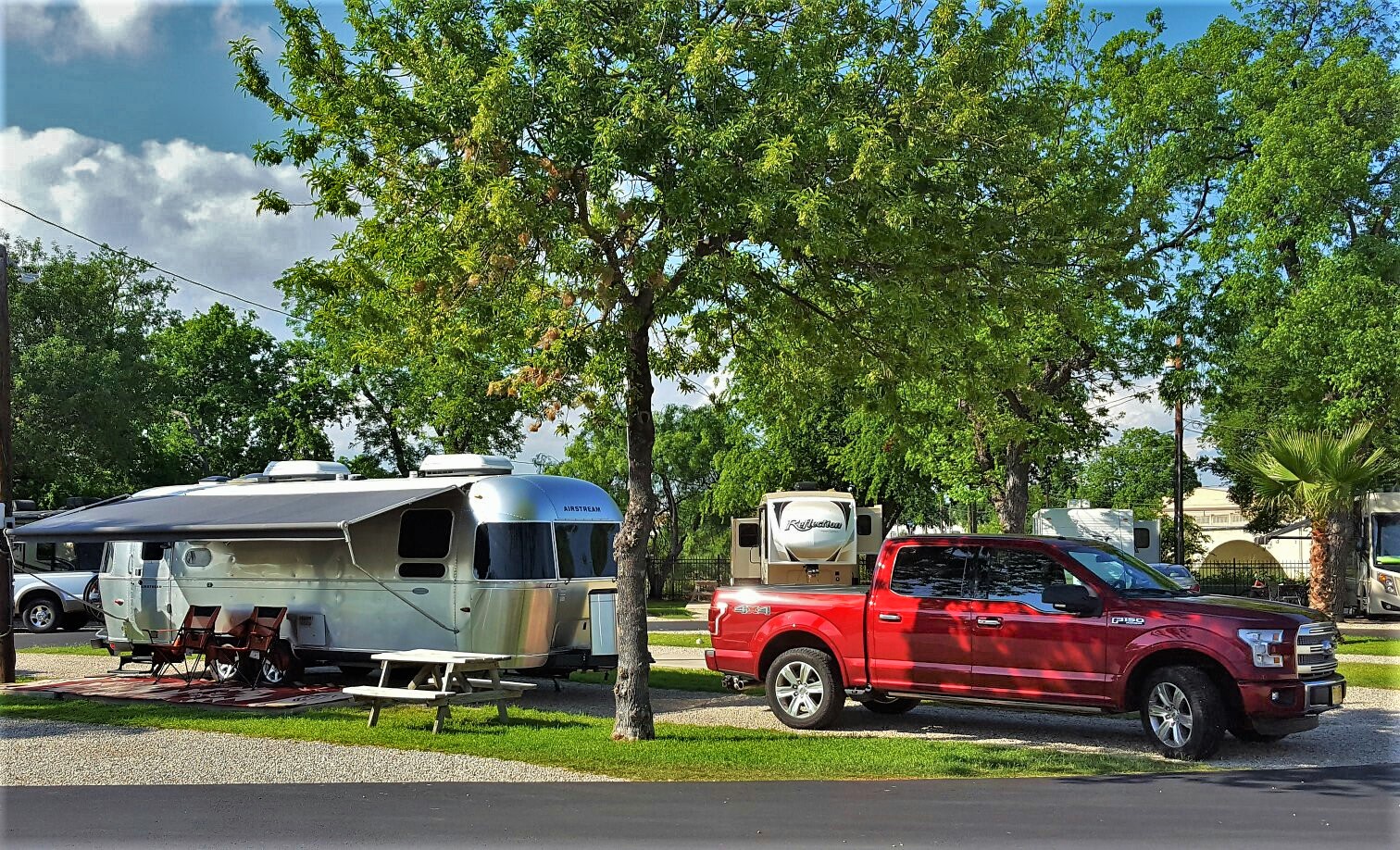
First some background and a confession. I never wanted a truck to pull our Airstream. Afterall, when the trailer is off-hitch, the truck would become our daily ride. And driving a truck around town wasn’t my style…er, I mean, I was somewhat intimidated by driving such a behemoth.

I fought the notion that only a truck could safely tow our 7200-pound capsule, and actively researched the specs of all late-model SUV’s that matched the appropriate torque and towing capacity for our trailer: I weighed in on internet forums to glean the best information relative to our Airstream size; I emailed with others who made similar trips, under similar conditions with equipment modifications; and we attended New York’s Auto Show in April 2016 with every intention of narrowing our options.

But browsing through so many choices in one place only muddied the motoring waters, and raised the level of my unawareness. There were so many considerations: fuel economy, gas vs. diesel, storage capacity, safety, reliability, comfort level, audio, GPS, and of course, price.

After test-driving a Grand Cherokee, Audi Q7, Infiniti QX-80, Nissan Armada, GMC Denali, VW Touareg, and Ford Expedition, I was beginning to have serious doubts about my original premise: SUV over truck.

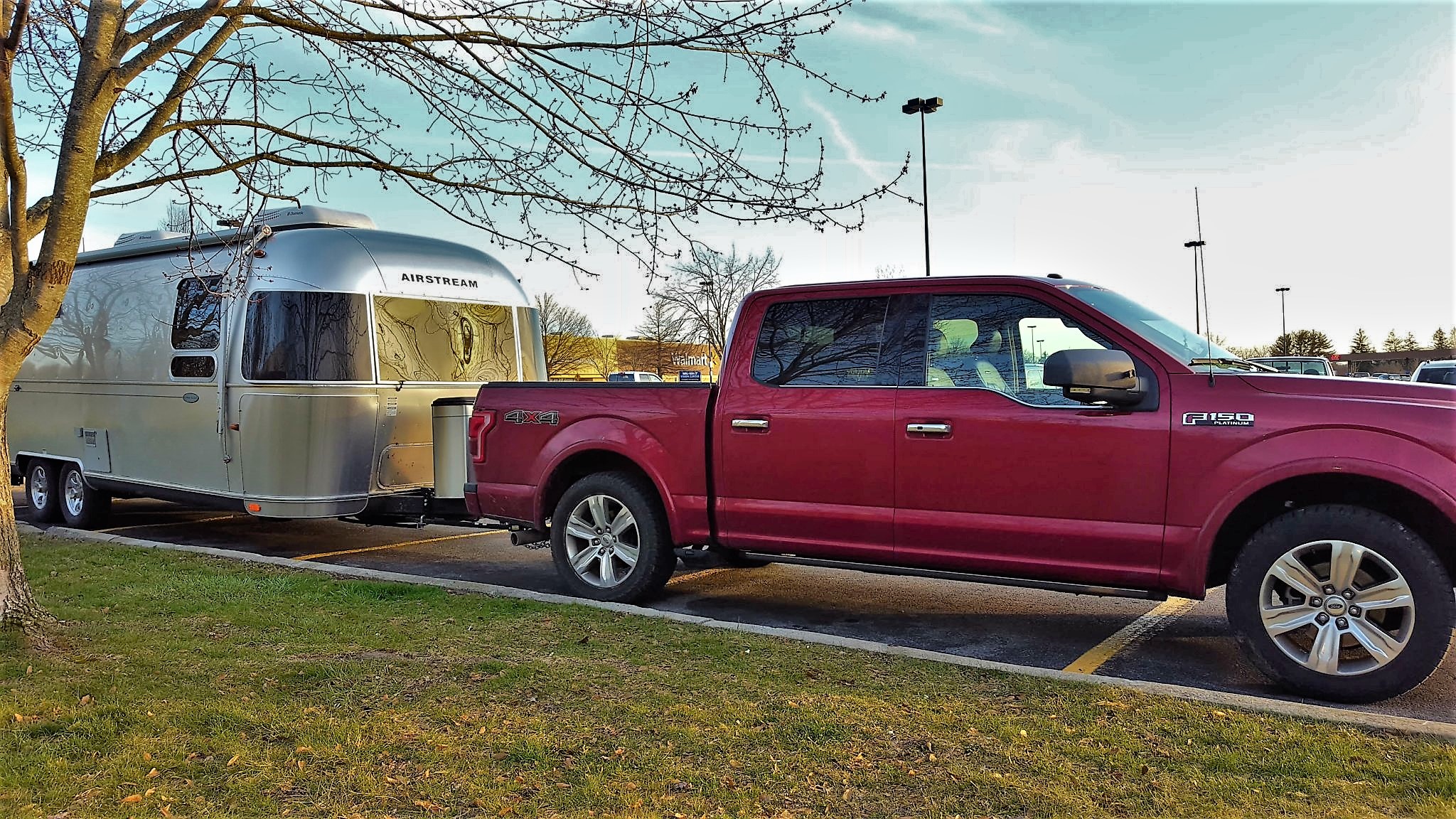
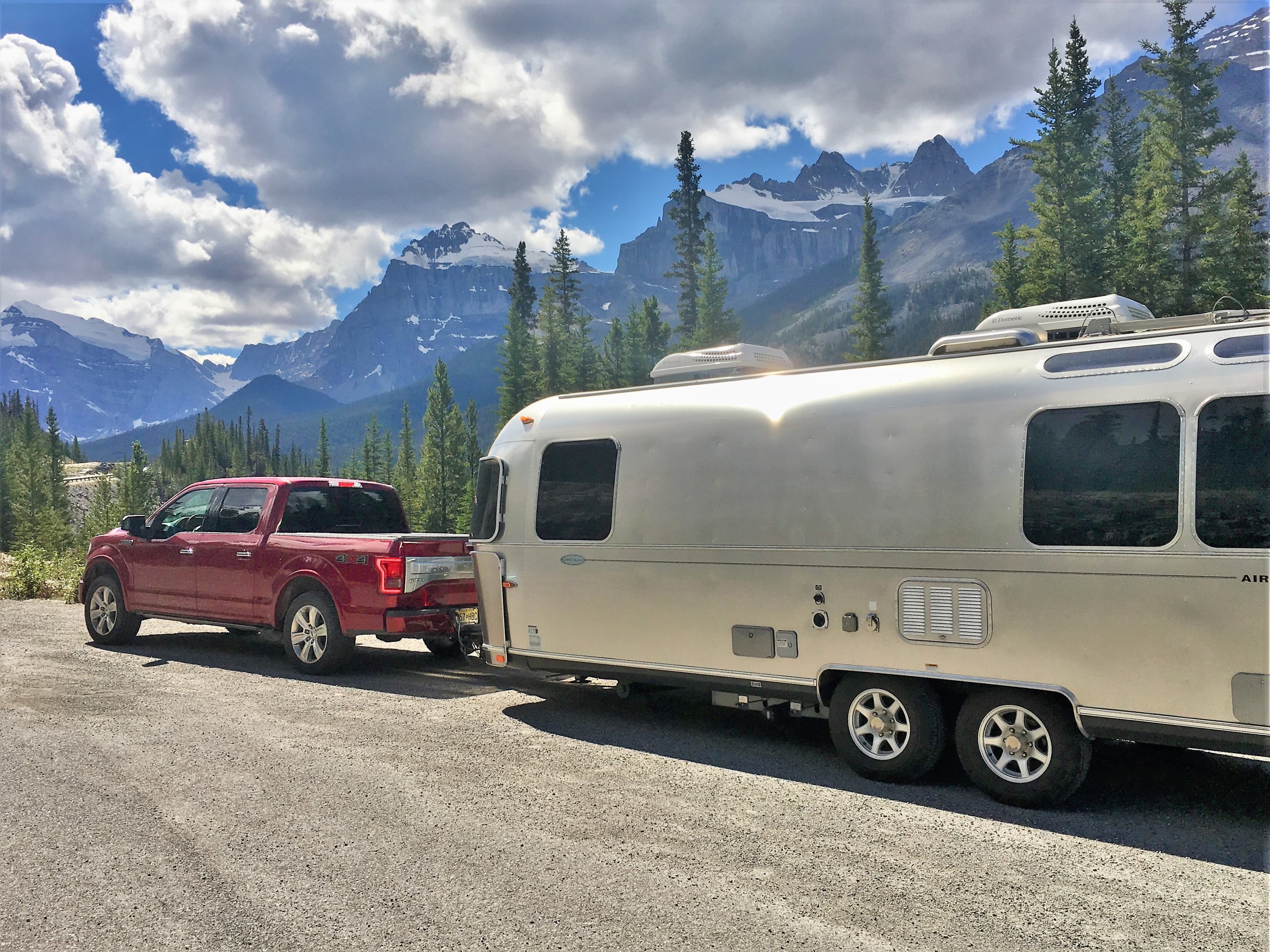
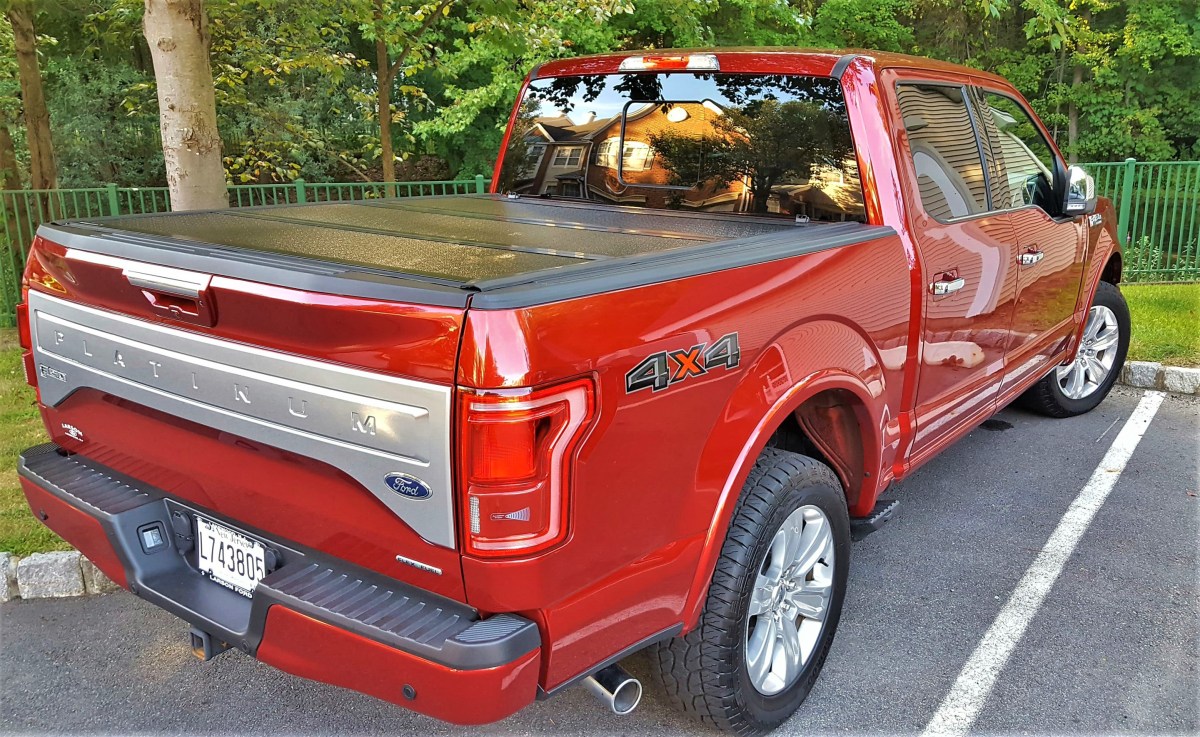
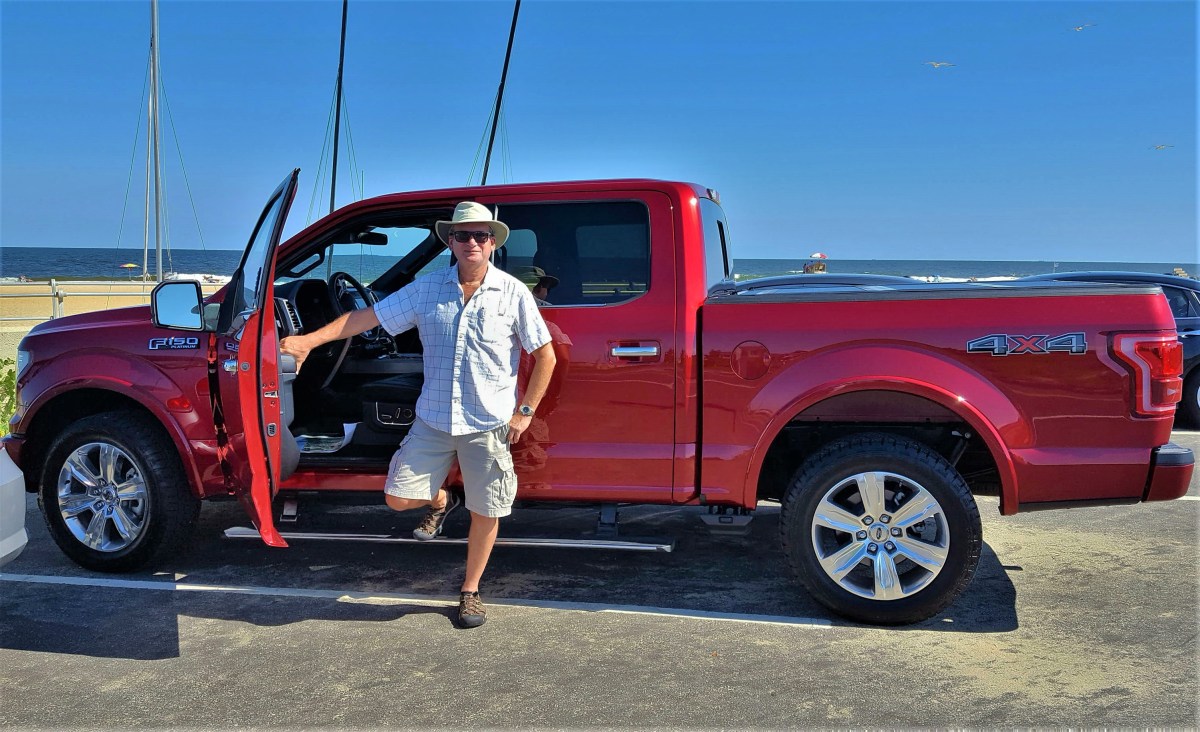
When all was taken into consideration, I manned up, and went with the Ford F-150.

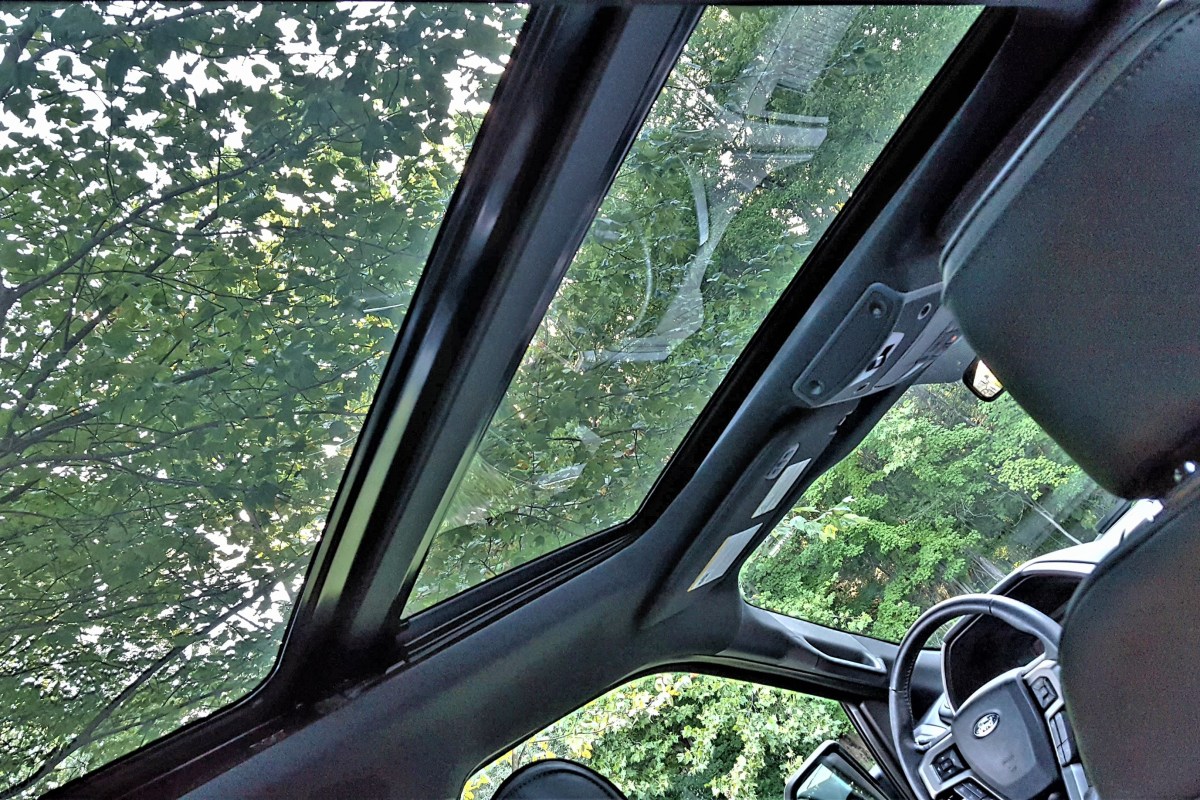
shiny and new

To me, it was the smartest choice of all available choices.

at the Jersey Shore

“I’m so excited for you, dear,” Leah pretended. “But you’ll never catch me behind the wheel of that thing. It’s huge. All I can say is, ‘You’re on your own.'”

If a man is measured by the size of his truck, then Leah unwittingly hit the jackpot. However, her driving abstinence left me blue.

Over time, the F-150 ride felt like any other ride. My reticence and apprehension soon melted away in favor of a solid understanding of the technology I relied on to negotiate the truck’s box-like bulkiness through traffic.

instrument panel

Or so I thought…

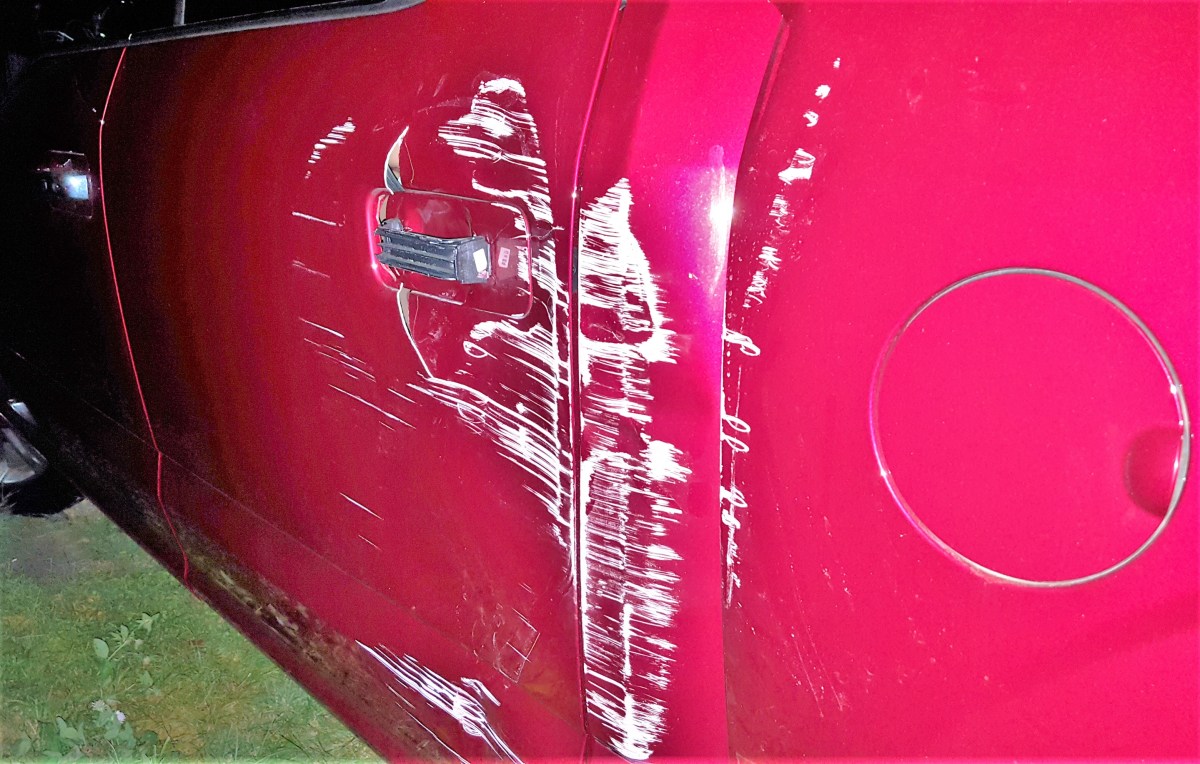
A close encounter with a concrete sidewall in a cramped Philadelphia parking lot while attempting to steer through a narrow exit ramp left me as crushed and broken as the aluminum door panel.

accident 1.jpg

While the front-end was willing, the back-end was not.

accident2

Fortunately, time, insurance, and $6,000 heals almost everything…except one’s memory and ego.

Even today, I believe that Leah delights in recounting my failure in Philly.

But that’s ancient history.

Time has lapsed, and 34,000 miles later–and true to Leah’s word–I can personally attest for every turn of the truck’s odometer. In the course of our travels, we have run into many couples who share the driving, and have discovered many women who drive exclusively for whatever reasons, but Leah seems to be the only one I know who tells me how to drive while never sitting behind the wheel, except to wipe the windshield…

…until now.

Having been incapacitated by a sinus infection and subsequent flu for the past two weeks, and with laundry by my bedside mounting to levels exceeding the ground elevation of the state of Florida, it was time to visit the washing machines. Normally, in all other instances, for convenience sake, I would schlep the top-heavy wire basket to the truck, and drive to the laundromat, whether down the road, or around the corner.

But yesterday, I was in no condition; I could barely move. While I was languishing in my delirium, I thought I’d heard the F-150 roaring awake. The 5-liter V-8 was growling through its idling phase, and maching on my migraine. I momentarily managed to pull myself from bed, and peered through the broken velcro bonds of the curtains just in time to see the F-150 cautiously backing out, and lunging forward into the lane.

truck thru window

In disbelief, I gathered my senses, and texted Leah, “I’m calling 9-1-1. The truck is gone.”

Twenty minutes later, I was stirred awake by the ping of my phone with Leah’s response, “Yup.”

“Thank goodness,” I noted to myself, before returning to my coma.

Hours later, Leah returned with a basket of folded laundry.

“You took the truck,” I asked/celebrated.

“I did,” she remarked. “No big deal.”

And that’s where I left things–not even a mention about the 300 feet distance from the Airstream to the facilities.

Today, when I awoke, there was little improvement in my health–all my original symptoms were still firing like a well-tuned sick machine (see: Quarantine Capsule). After more than two weeks of feeling lousy, I wondered if this was the new normal.

“We’re low on milk and you definitely need another box of tissues,” exclaimed Leah.

“Looks that way,” I managed.

Incredulous, “I can’t believe you went through a box of tissues in one day! Anyway, I guess I’m going to Publix on my own, since you sure don’t look like you’re up to driving me there,” Leah volunteered.

“So, are you thinking about taking the truck?” I posited.

“I don’t think I’m ready to take the truck out in traffic yet. So, maybe I’ll ride my bike to the store, or just walk,” she confessed.

And that’s what she did.

I suppose my role as the dominant driver is as secure as ever.

Notes:

WPC–Variations on a Theme

Manny

On our recent travels through Southeast Florida, I had occasion to visit with my brother Ron, whose wife, Natalie had given birth to their son, Benyamin Emmanuel Uriel nearly nine months earlier. Having been on the road for just as long, our paths had yet to cross, until now.

The name was a mouthful.

“The kid will definitely need to grow up being a speller,” I thought, although according to Ron, he’s already achieved Einstein status. Apparently, Emmanuel is meant to honor the memory of our mother’s father, while Uriel honors the memory of Natalie’s father.

“So what am I supposed to call him?” I needed to know.

Ron responded,” Natalie doesn’t like the nicknames: Ben, Benny, or Benjy. So I think we’re just going to have to call him Manny!”

Okay.

As a new uncle, I eagerly anticipated my meeting with Manny, wondering how he would acclimate to new faces. But first, I had to spoil him with a new toy to also celebrate the eighth night of Hanukkah.

A quick trip to Walmart proved worthy of the challenge. We discovered a learning toy with literally all the bells and whistles.

The playset mounted onto a rolling cart with a two-tiered volume control–loud and louder.

The moment I picked it up, the toy activated with a rendition of Old McDonald Had a Farm, causing me to sing along on the way to the cashier.

“Natalie’s gonna hate you for this,” announced Leah.

“She needn’t worry. This is a toy for toddlers,” I jested.

We arrived at Ron and Natalie’s house in Aventura, Florida just as Ron was arriving home from work. As I grabbed the toy from the back seat of the truck, I inadvertently initiated Mary Had a Little Lamb without any way of shutting it off. We walked through the garage to the house, arousing three barking dogs and a quiet bunny.

“I told you that toy was a bad idea,” scoffed Leah.

“Maybe you should leave the toy in the garage for now,” advised Ron, “because I think Manny might be sleeping upstairs, and Natalie wouldn’t approve if he woke up before his naptime was over.”

We waited downstairs in silence for nearly thirty minutes, while listening to muffled, upstairs conversation between Natalie and Svetlana, her sister visiting from Atlanta. Eventually, Ron emerged down the staircase with Manny clinging to his neck, followed by Natalie and her family.
“Can I hold him?” I asked with outstretched arms.

Instantly, Manny leaned towards me, accepting my cue, and I was hooked. I presented his present, now crooning about the Farmer in the Dell, and soon nothing else mattered to him. The phone receiver that hung from the playset became the perfect drum tool to bash the toy into oblivion, with banging so loud, we could no longer hear the singing.

The toy was a “hit”.

“Don’t worry. He’ll figure the rest of it out in no time,” I predicted, “and it’s supposed to stimulate his intellectual growth.”

“I think he likes noisy toys,” Ron interjected.

I looked at Leah and smiled. My official act as an uncle had been confirmed.

Here’s to you Manny…and many years of joy and songs to follow.

Manny


Moon Over Muddy Mountain

Now that Leah and I are nine months into Streaming thru America, a familiar question often arises from family, friends, and fellow bloggers: “What’s your favorite place, so far?” It still remains the most difficult question to answer. Here’s why:

We’ve covered over 32,000 miles to 104 distinct destinations–with amazing views of beaches, mountains, prairies, canyons, and deserts. We’ve toured cities and suburbs, villages and vicinities, parks and plantations, graveyards and ghost towns.

Thus far, we’ve crossed the country from the Atlantic to the Pacific and back; we’ve traveled as far north as Jasper National Park in Alberta, Canada to the southern edge of Florida within the Everglades; We’ve ascended Trail Ridge Road to the Rocky Mountain tundra at 12,183 feet to the salt flats of Death Valley’s Badwater Road at 282 feet below sea level.

Having slogged through Los Angeles and Miami traffic, we’ve also driven hours through remote regions without a soul in sight. We’ve cursed the crowds at Yellowstone and Zion, and celebrated the isolation of Black Canyon of the Gunnison and Theodore Roosevelt National Parks. We’ve witnessed numerous national monuments, and bore witness to monumental tragedy in Las Vegas.

While we’ve camped at some of the fanciest and most expensive RV parks in the country, we’ve also boondocked at Walmart parking lots, always meeting new people from around the world, yet reminiscing with old neighbors we discovered at a scenic overlook in North Dakota.
Despite having written over 80,000 words and shared over 2,500 photographs of our adventures this year, I feel compelled to answer that one nagging question, but forgive me if I pause for a moment longer to filter all the information collected to date…

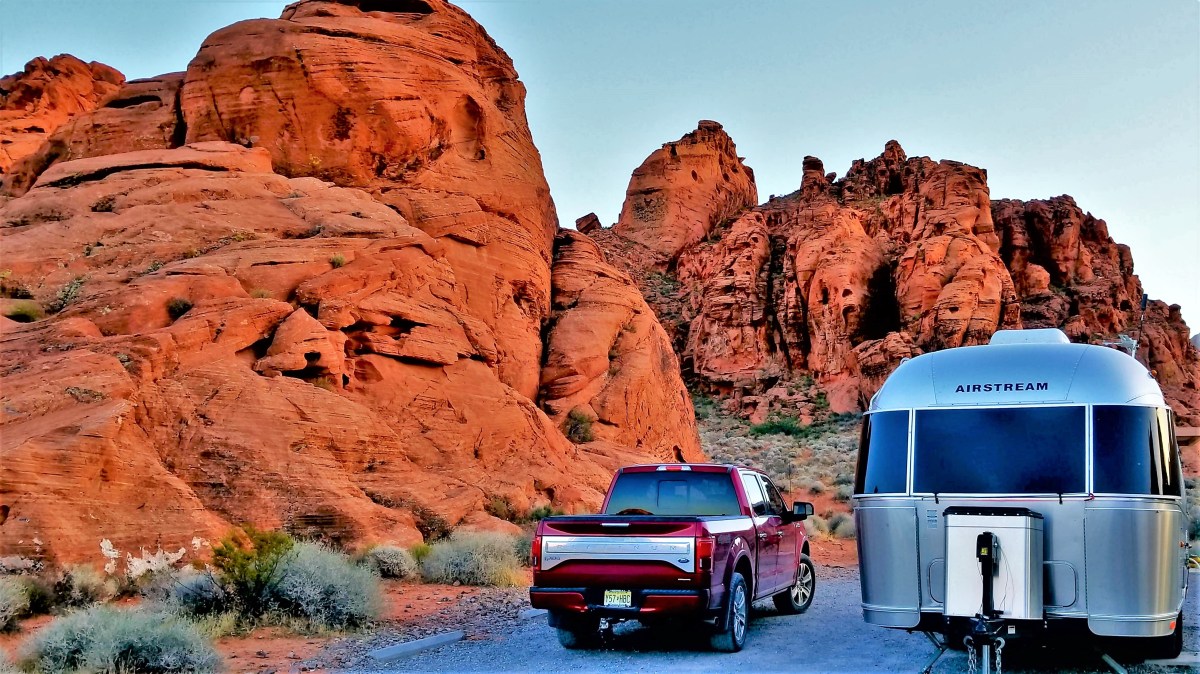
The one location that stands out over all the others is Valley of Fire State Park–16-miles outside of Overton, Nevada–as much for the solace and cleansing it brought us after the Las Vegas massacre, as for it’s raw and natural beauty.
And from this experience, I’ve reluctantly selected one photograph that captured my imagination and exemplified my feelings–two days after the world grappled with senseless inhumanity.

sheep and moon (4)

May 2018 bring us closer together as we work to build bridges between communities, and discover a path to peace and tolerance.


Top of the World

While much of the country is enjoying a refreshing blast of Arctic air to put them in the holiday mood, southeastern Floridians are currently languishing under fair winds and sunny skies, and wondering how they’ll ever manage with temperatures climbing to 80 degrees.

“Look, we’re gonna be in Florida for a few months. As tempting as it is to stay inside and hunker down for the winter, we can’t allow the weather to dictate our lives. We’ve got to get out and stay active. Maybe we should go for a hike,” stated Leah.

“Agreed! In nine months of traveling, we’ve never let the weather interfere with our outdoor plans. So if you’re up for it, we could hike to the observation tower atop Hobe Mountain in Jonathan Dickinson State Park,” I suggested.

“Are you sure?” Leah posited. “It’s been a while since we’ve done anything that strenuous. We could be setting ourselves up for a painful tomorrow.”

While it’s true that we’ve been sedentary lately, and maybe gained a pound or two from Thanksgiving overeating, I thought we could use a legitimate challenge to clear the cobwebs and get the blood pumping in ways when we were performing at our peak.

“C’mon! It’ll be fun. And if it’s too tough to the top, we’ll go as far as we can, and we’ll turn back,” I persuaded.

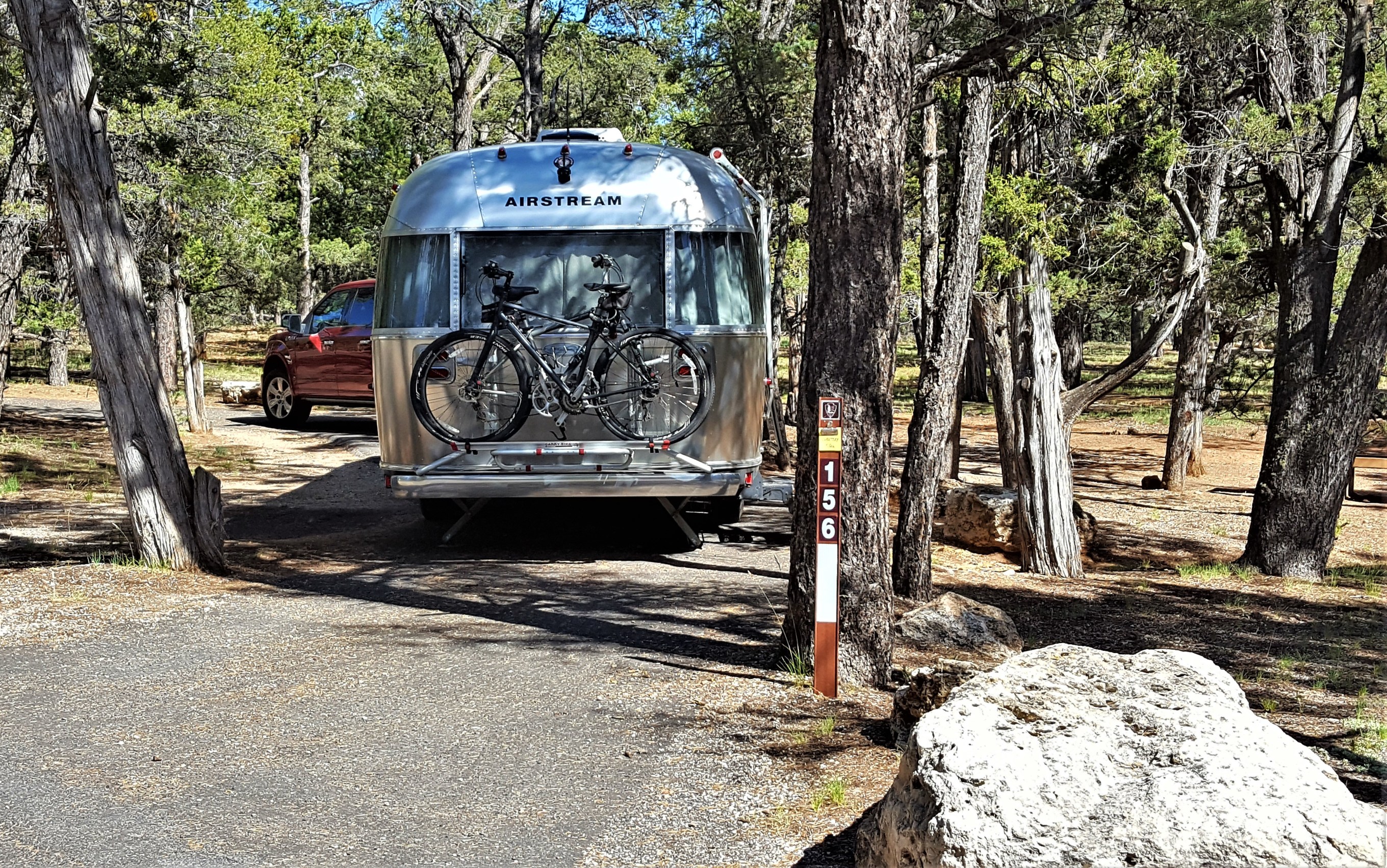
As a warm-up to our hike, we rode our bicycles to the trailhead parking lot, passing the Loxahatchee River,

Lexahachee River

and two camouflaged sandhill cranes along the way.

sandhill cranes

Apparently, resident Floridians were already deep into their hibernation cycle, as there wasn’t a single car in the lot, or maybe this was the hike that everyone avoids, for fear of over-exertion.

We spotted our destination from a distance,

palm and tower

and checked our water supply to ensure we were carrying enough to stay hydrated.

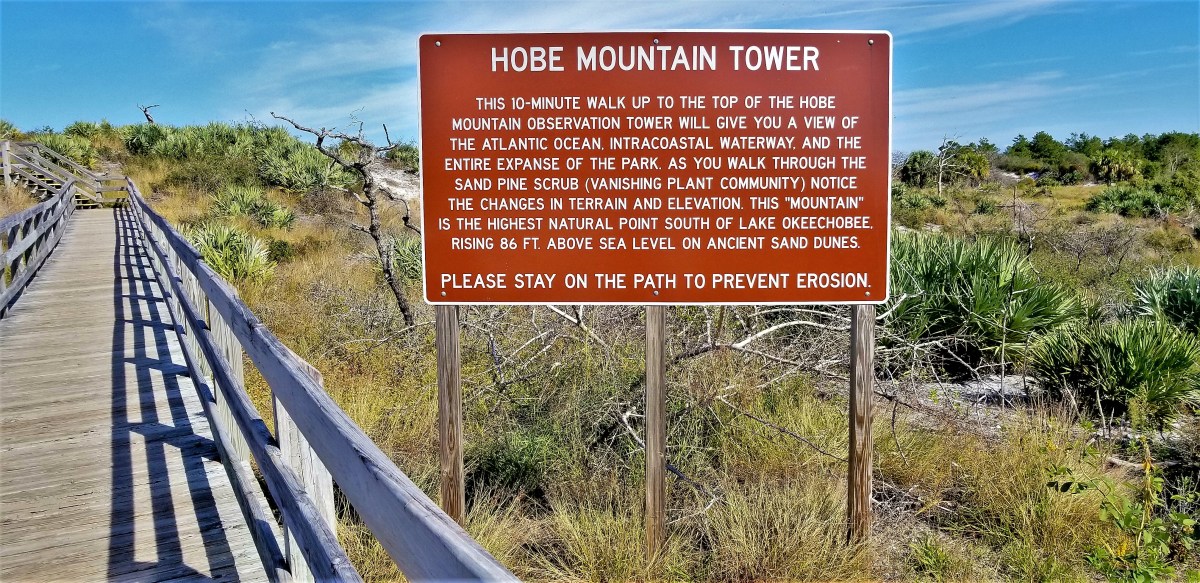
When we approached the trailhead, we stopped at the sign to get better acquainted with our surroundings.

Hobe Mountain Tower sign

“Are you sure you wanna go through with this?” I queried. “There’s no shame in pedaling away.”

“As long as we’ve made it this far, we should at least try,” Leah opined.

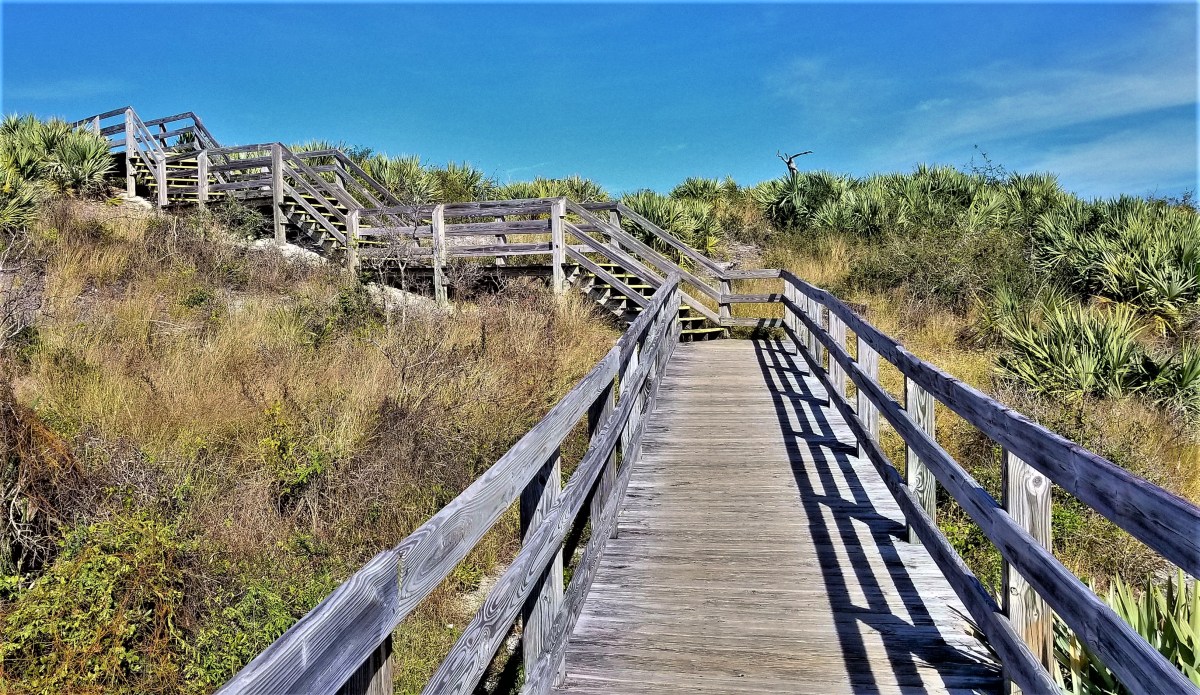
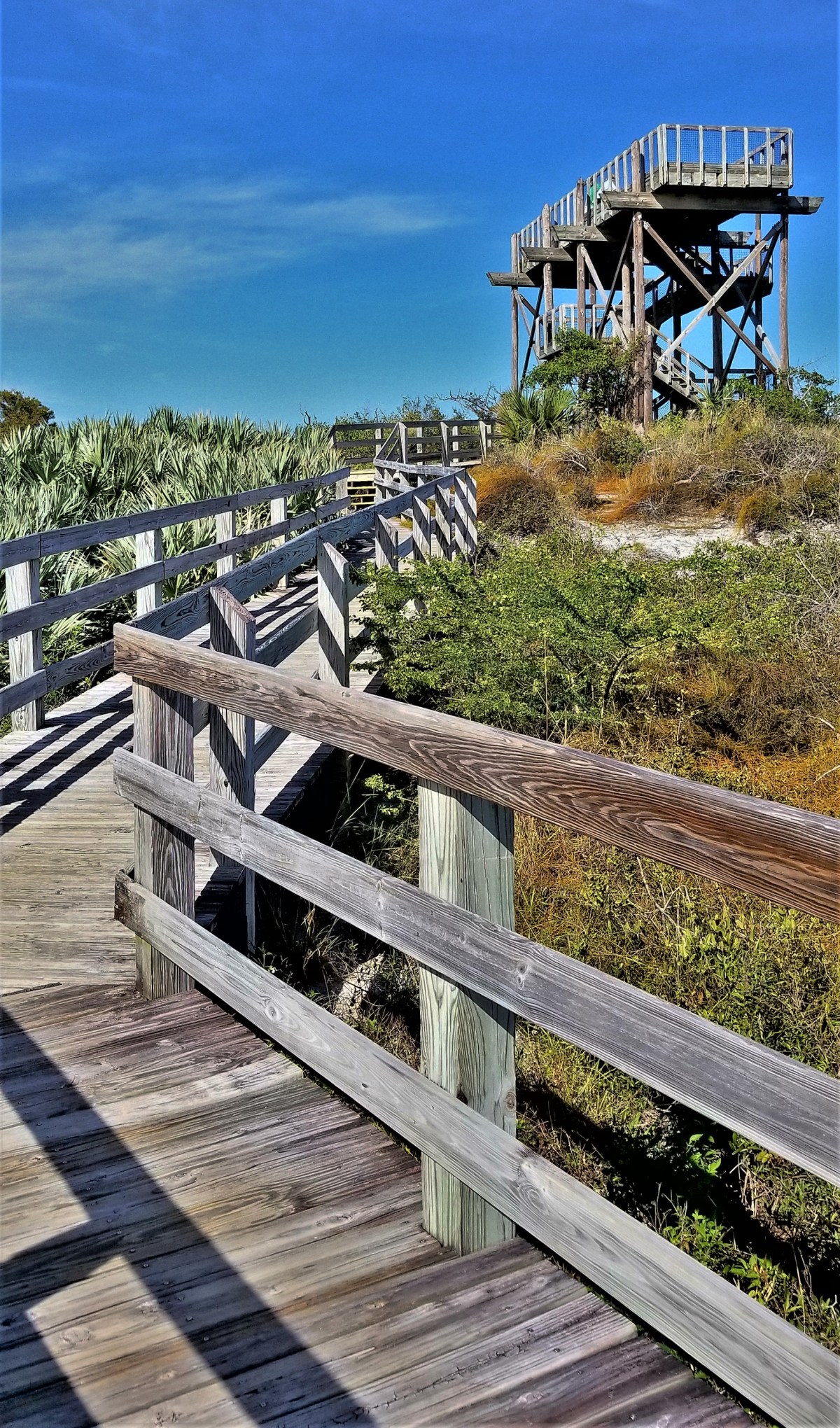
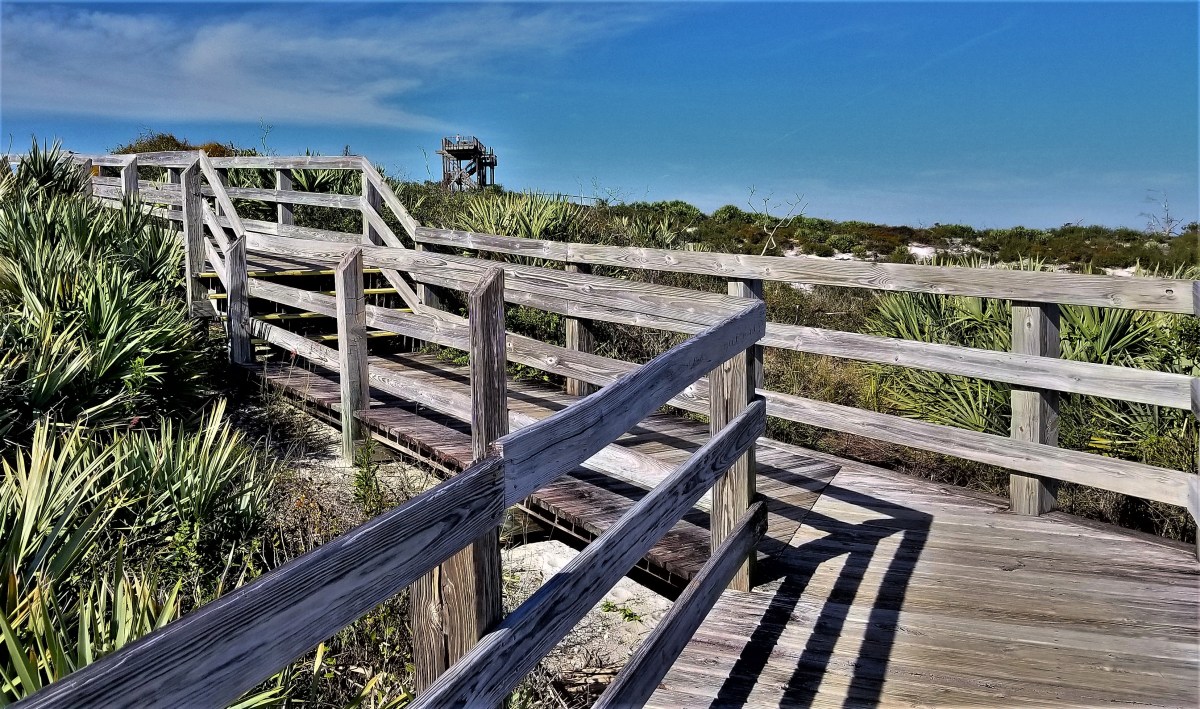
We set out along the boardwalk, traversing the planks, as we ascended the dune.

boardwalk1

We trudged up the risers,

risers2

and caught a glimpse of our target.

boardwalk3

We were nearing the halfway point of our trek, and I couldn’t help but notice Leah’s shallow breathing. Thus far, she had been a real trooper; five minutes had passed since we’d started out, and she hadn’t once complained about her neck and feet. Although, I had to admit, my back and knee were beginning to throb.

tower in the distance4

Fortunately, the park mavens had wisely provided a bench just when we needed it,

bench

giving us a chance to recover, and consider a different strategy for attacking the steeper second half of the hike.

getting closer5

We managed our steps more carefully,

closer still6

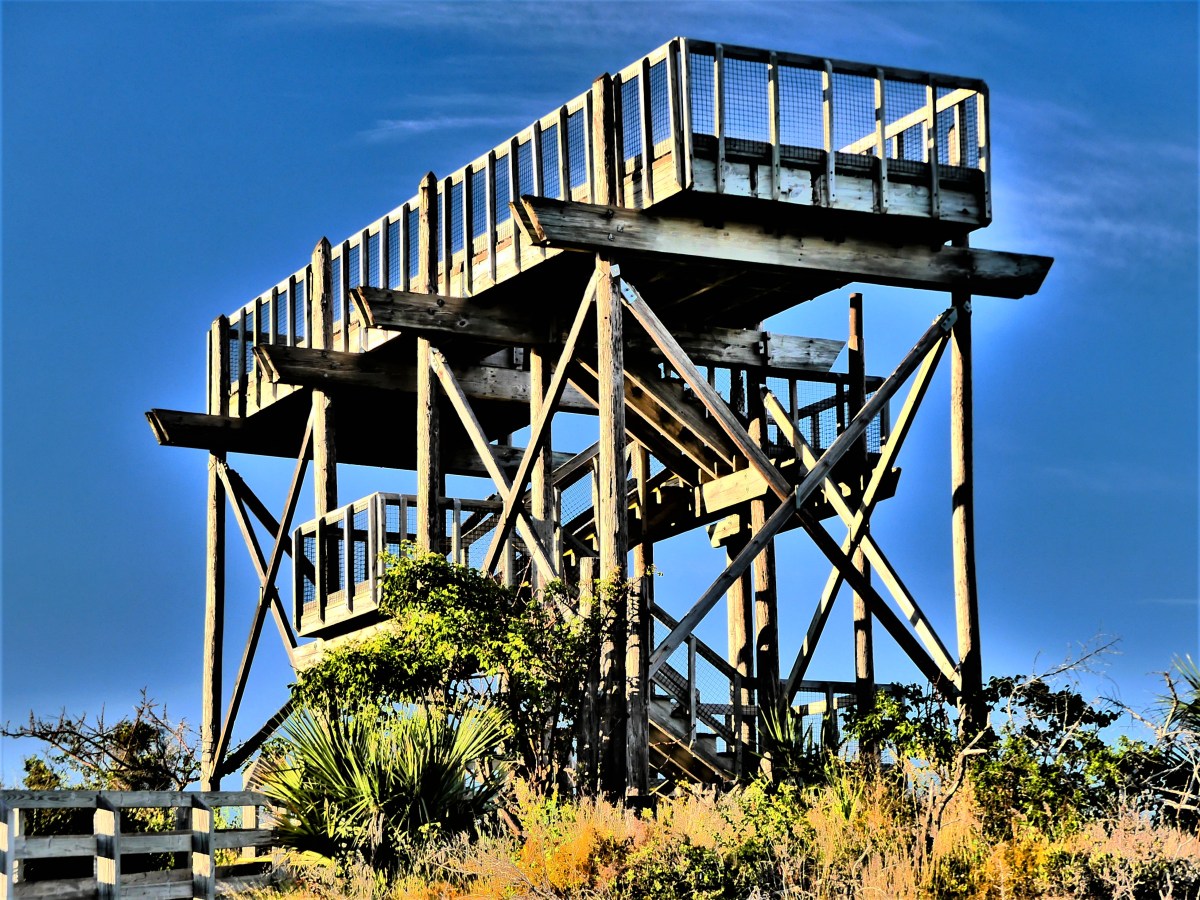
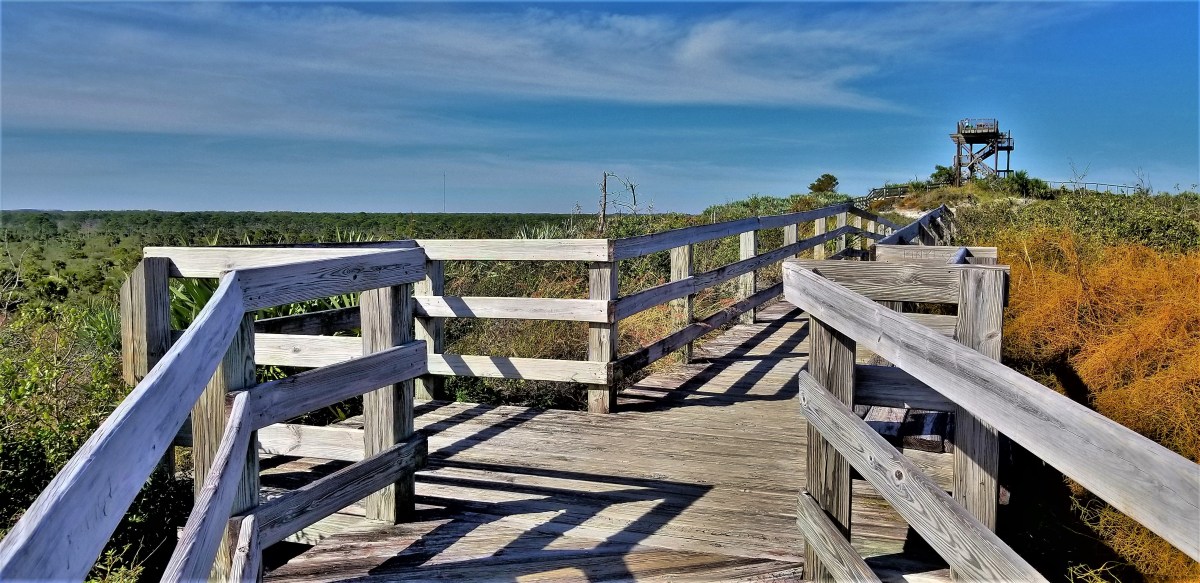
pacing ourselves as we approached the tower. From a distance, it seemed so small, but now that we were standing so close, it towered over us. We paused for a moment to appreciate its pine leg supports, the efficiency of its screened porch,

observation tower

and the sophisticated intricacy of its frame lumber construction.

landing

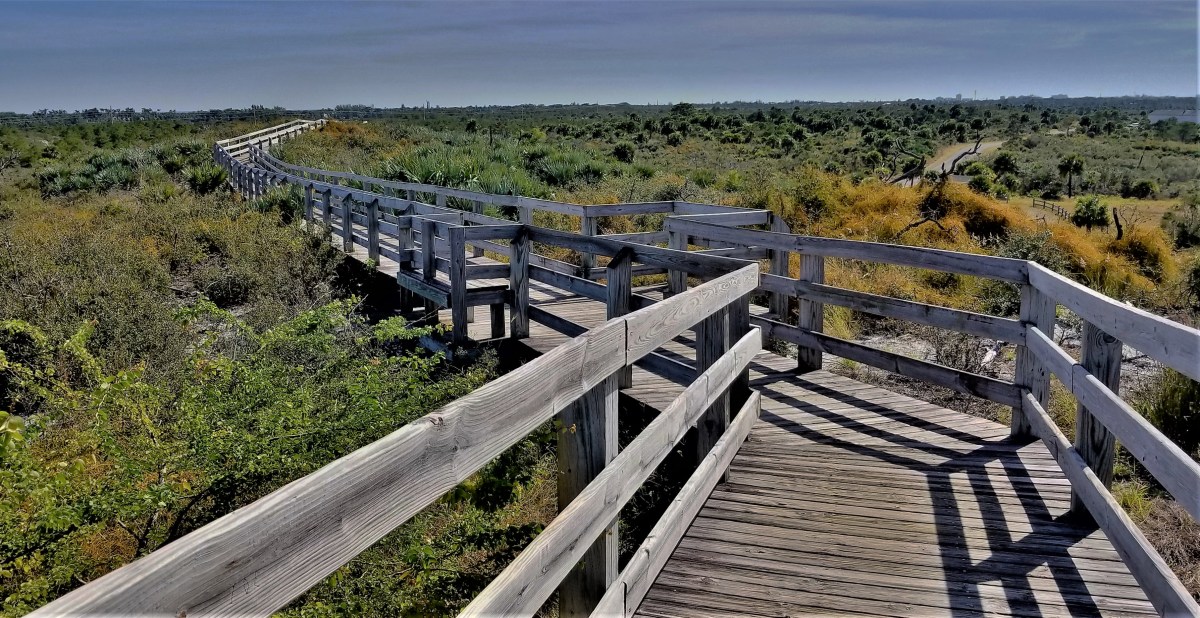
Leah and I took a long look back to see how far we’d come, and we couldn’t help but feel proud of our accomplishment. But it was too soon to gloat.

looking back7

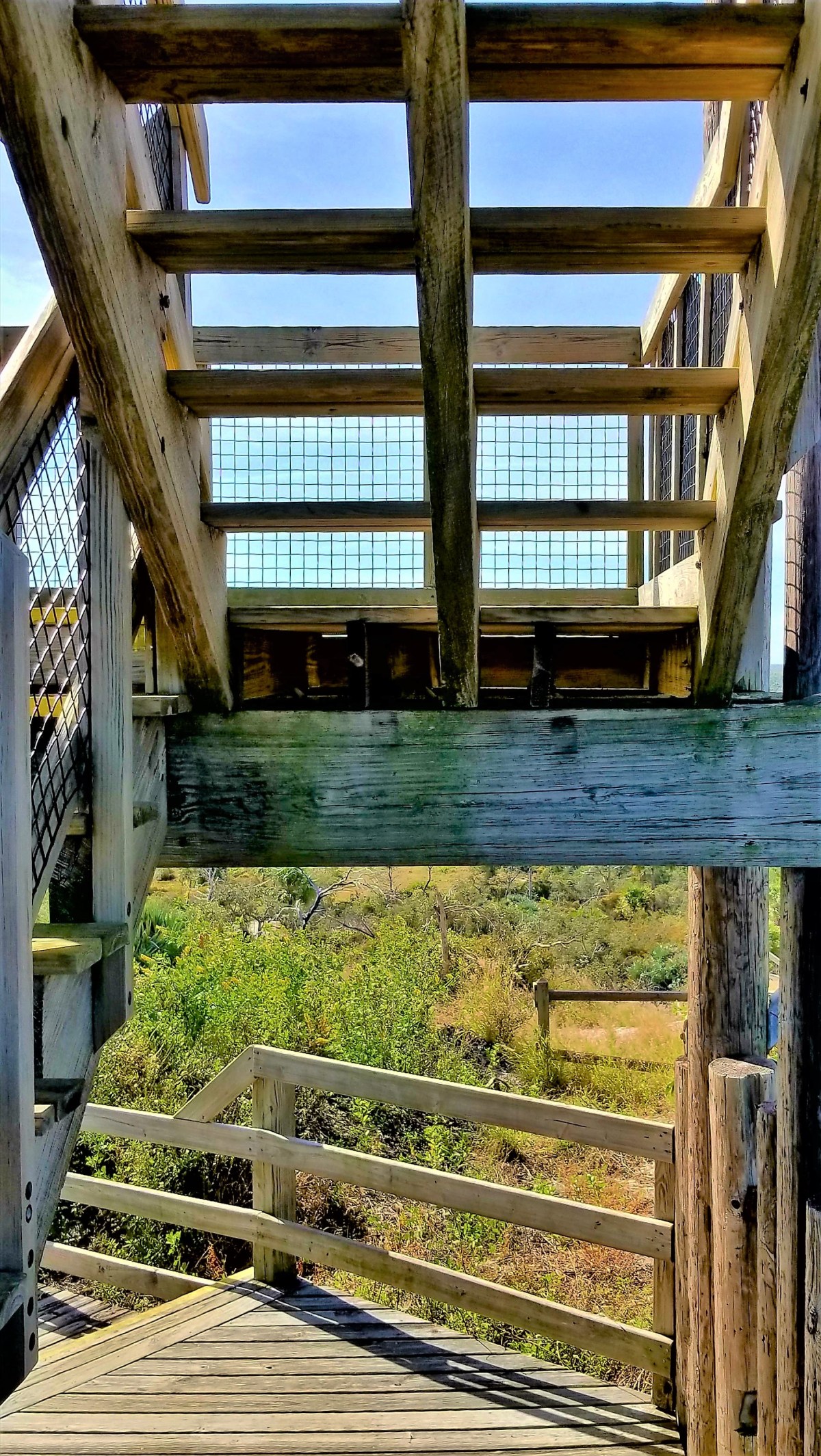
We still had to contend with the tower ascent.

“I’ll bet they have seats up there,” I predicted.

“That would be a good idea, because you never know when you might want to sit,” Leah exclaimed.

“Exactly!” I stated precisely.

tower (2)

Climbing the stairs was faster than I expected; the adrenalin was coursing through our veins in eager anticipation of the view. Once at the top of the tower, the thin air and the expansive vista made us giddy with excitement. At 86 feet above sea level, we were on top of the world.

panorana

All that remained was retracing our steps back to the parking lot. But that would be easy, now that we were riding a Florida high. Although the naysayers would argue that it’s downhill from here.

Cross Beams

Life on the road can be unsettling to the soul, so from time to time–when passing through towns and cities–we’ll randomly take our time to wander through a variety of houses of worship for a healthy dose of salvation and inner peace.

As we’ve wound our way across America, several sanctuaries have stood out for their historical significance, stunning architecture, and their integration into the communities they serve.

The chapel of the Mission San Antonio de Valero, better known as the Alamo, was founded in the early 18th century as a Roman Catholic mission along the San Antonio River,

exterior choir

and distinguished itself as the Shrine of Texas Liberty, commemorating the Battle of the Alamo on March 6, 1836, when a 13-day siege ended in the Mexican army’s victory over 189 Texian soldiers.

lone star flag

Originally, the compound was intended as an education center for America’s Indians who converted to Christianity,

compound.jpg

but, ultimately the Alamo became a fortress of New Spain militiamen after the Franciscan missionaries abandoned it in 1793.

interior1

In 2015, the Alamo was designated as a UNESCO World Heritage site.

profile


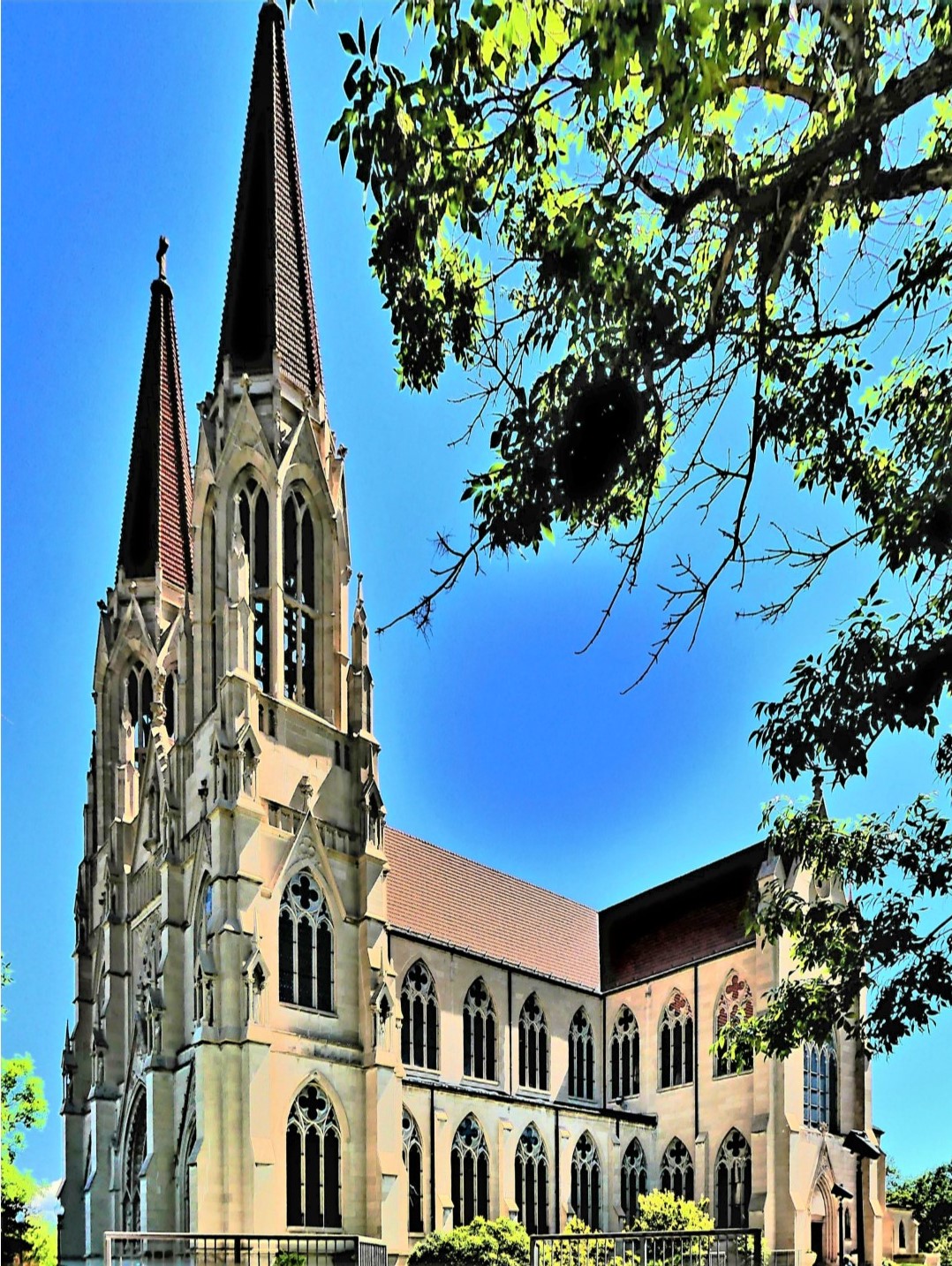
While exploring Big Sky country around Helena, Montana, Leah and I visited the Cathedral of St. Helena,

cathedral exterior

a Roman Catholic parish patterned after the Gothic form of Votive Church in Vienna, Austria,

buttress (2)

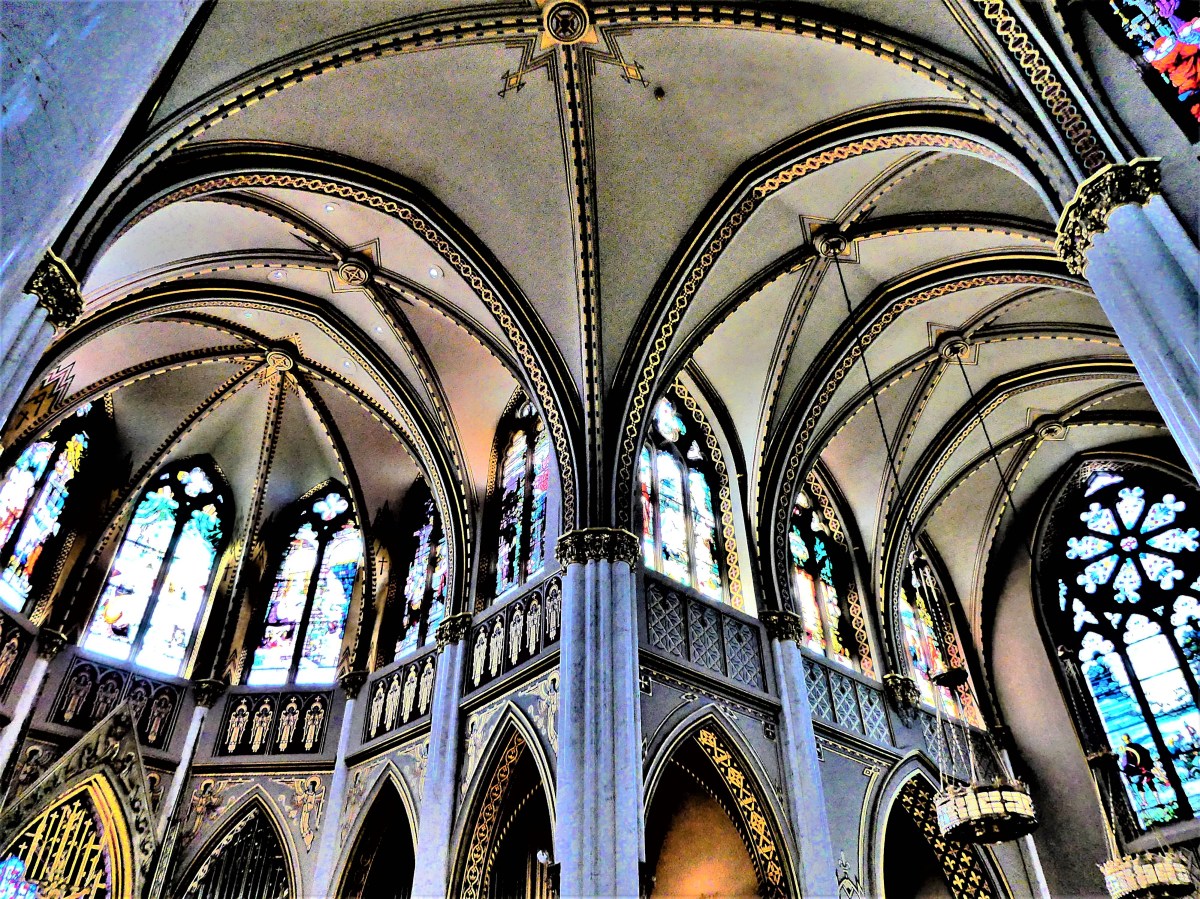
and distinctive for its 59 stained glass windows depicting scenes from the Old and New Testaments.

nave

Nearly destroyed by an earthquake in 1935, the cathedral was restored to its original design after three years of reconstruction.

rose window

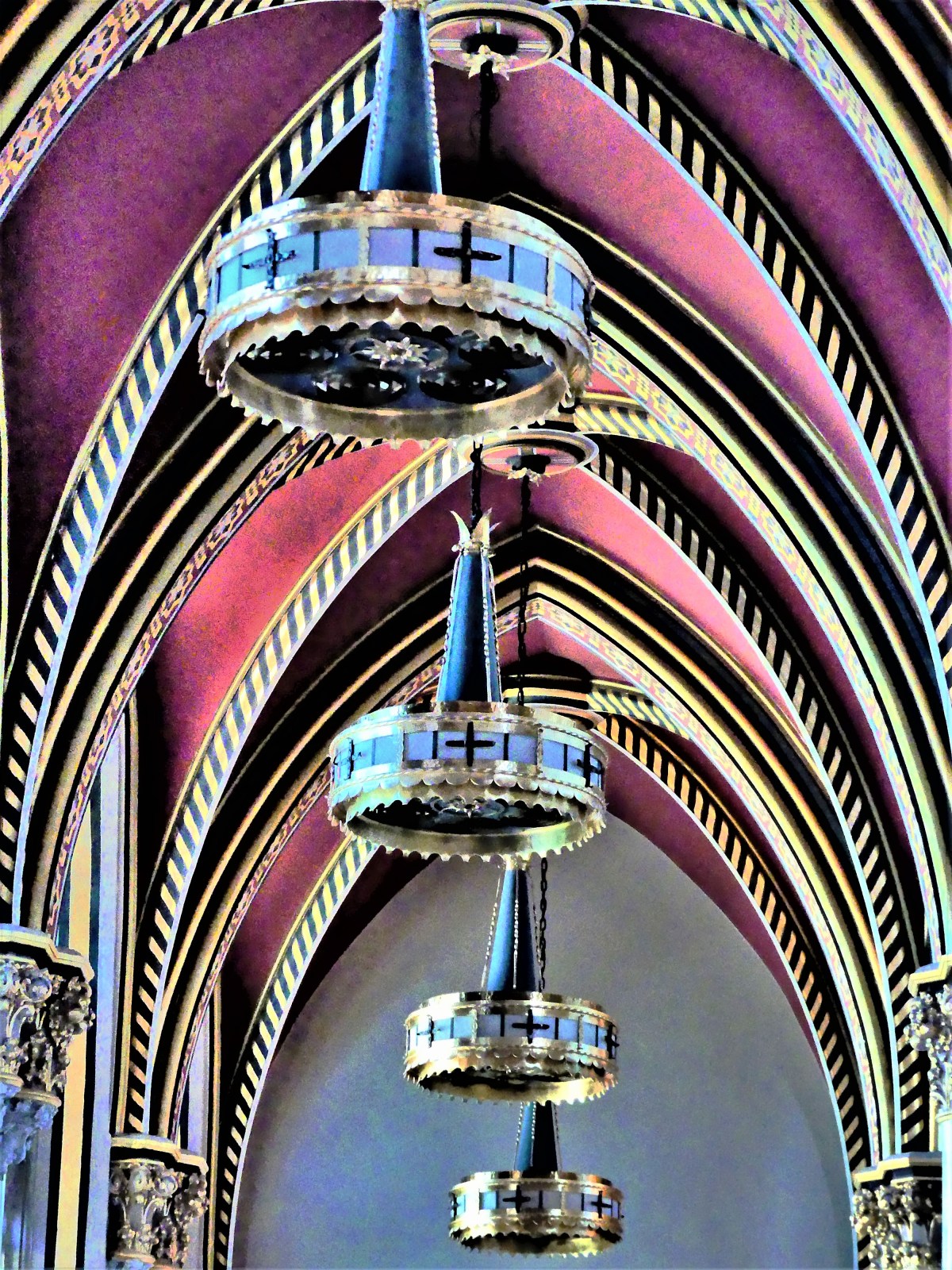
The interior was gilded in time for the Cathedral’s Golden Jubilee in 1959,

lights

and included in National Register of Historic Places in 1980–giving the residents of Helena something to crow about.

rose window perch


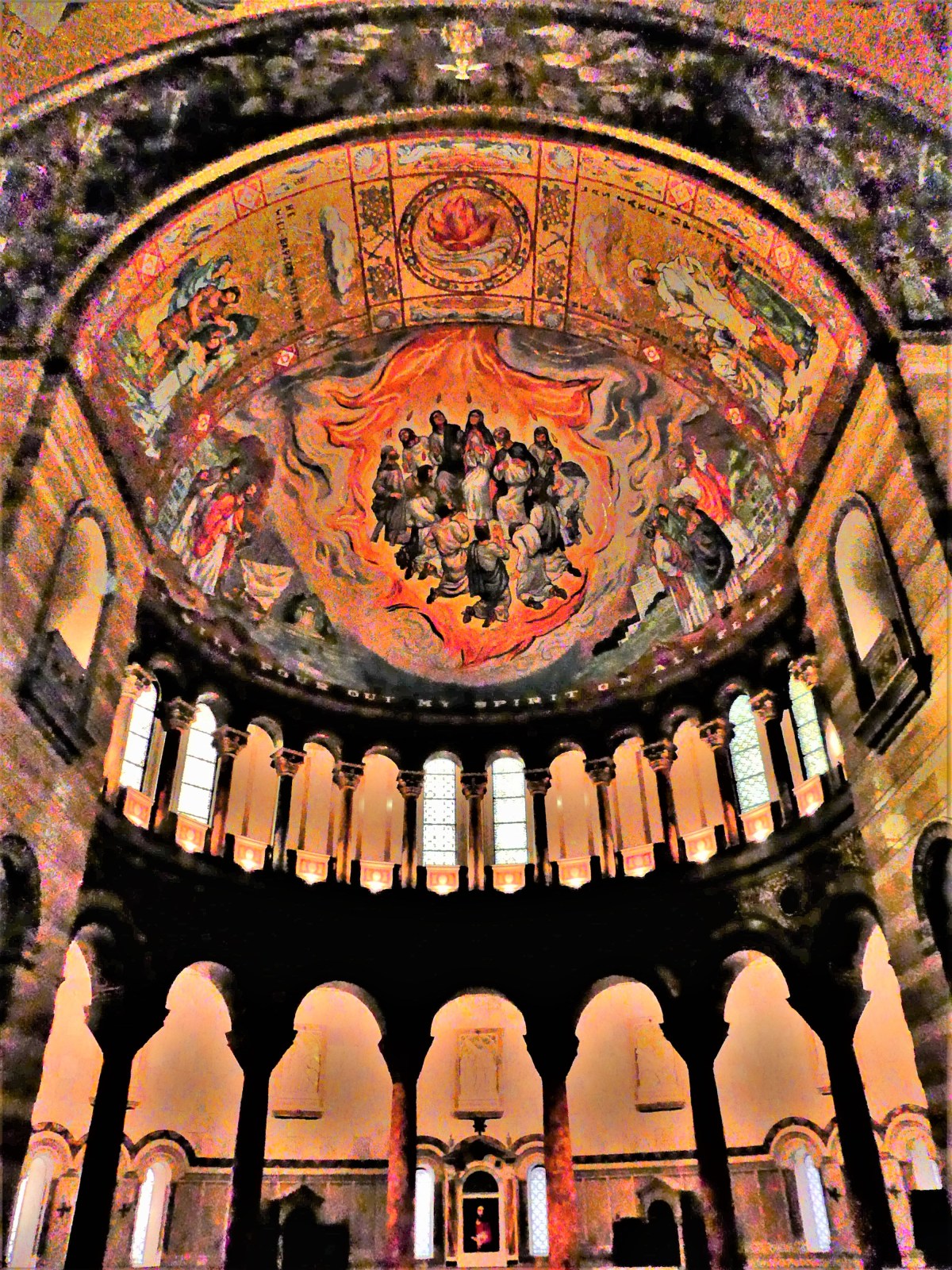
Romanesque architecture defines the exterior of the Cathedral Basilica of Saint Louis, completed in 1914,

cathedral ext

and attributed to patron Saint Louis IX, King of France.

ceiling of the Narthex (2)

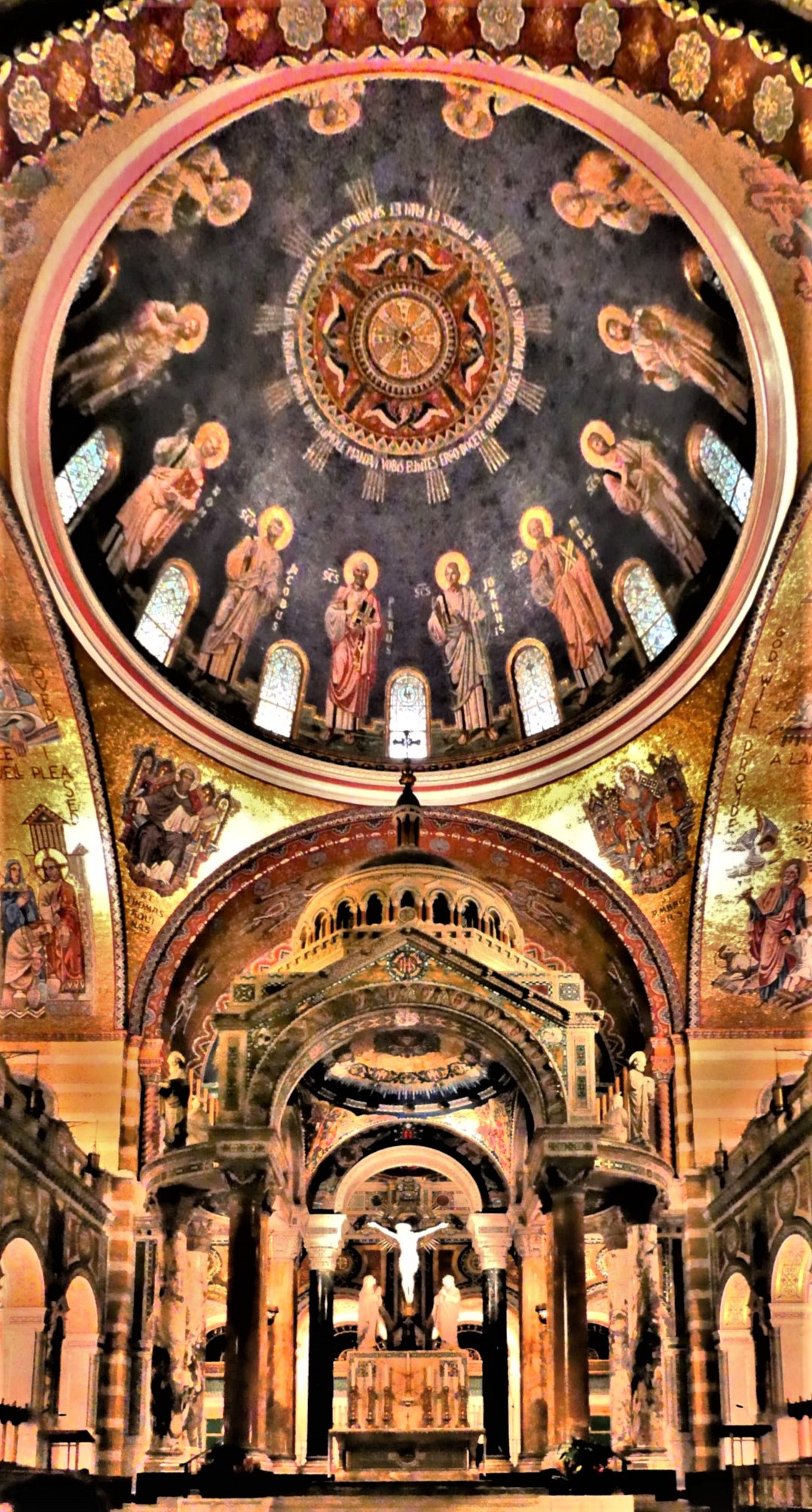
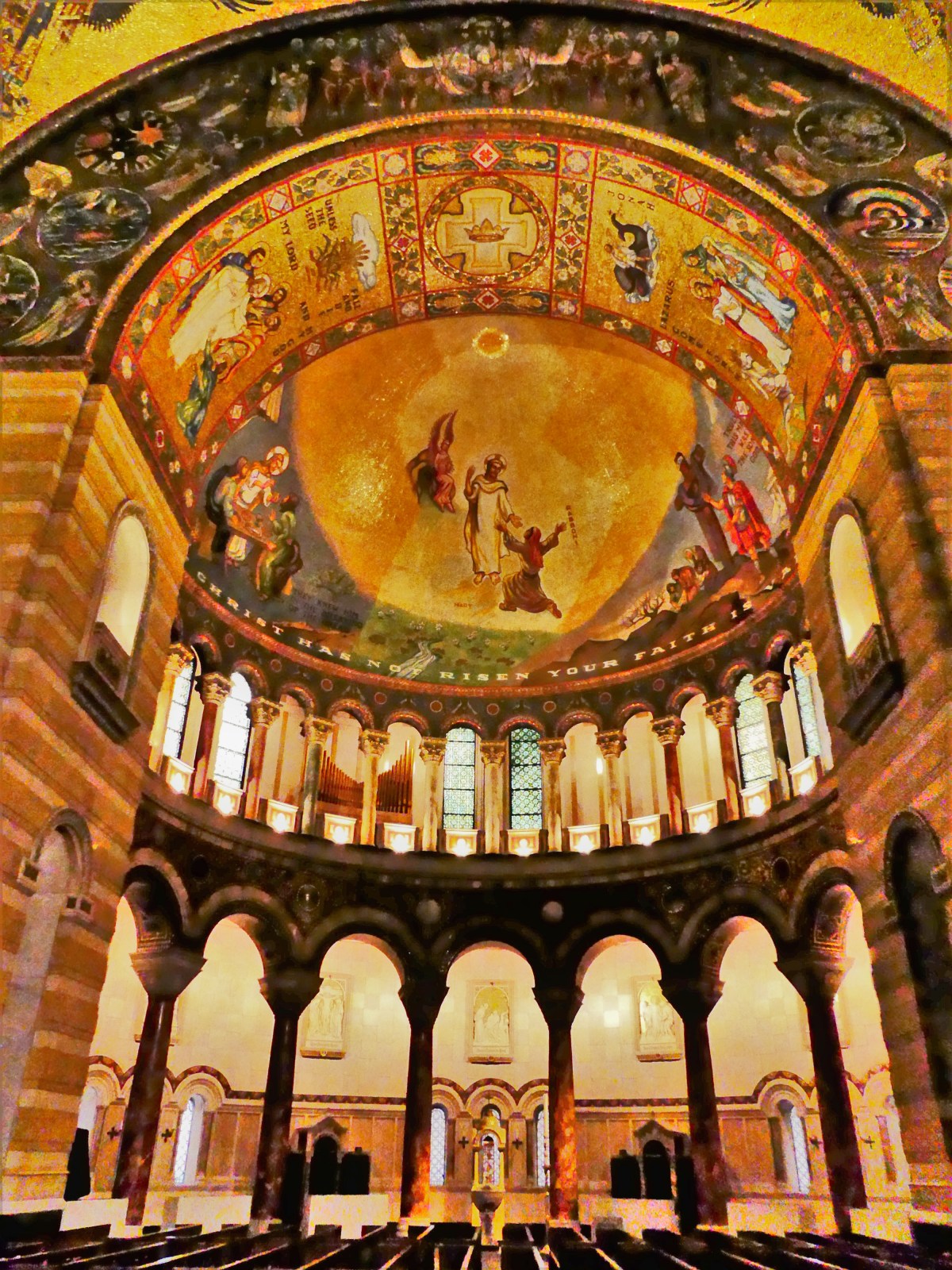
However, the interior reflects from a Byzantine style rooted in soaring domes and mosaic art.

apse

Installation of the Cathedral’s mosaics–which adorn almost every decorative surface of wall, ceiling and dome–began in 1912 and was completed in 1988.

depiction of Pentacost

Twenty different artists collectively inlaid 41.5 million tessarae tiles of 7,000 colors, covering 83,000 square feet, making it the largest mosaic collection in the world.

depiction of Easter

Pope John Paul II designated the Cathedral a basilica in 1997, where it acts as the mother church for the Archdiocese, and seat of its archbishop.

Historic Bay


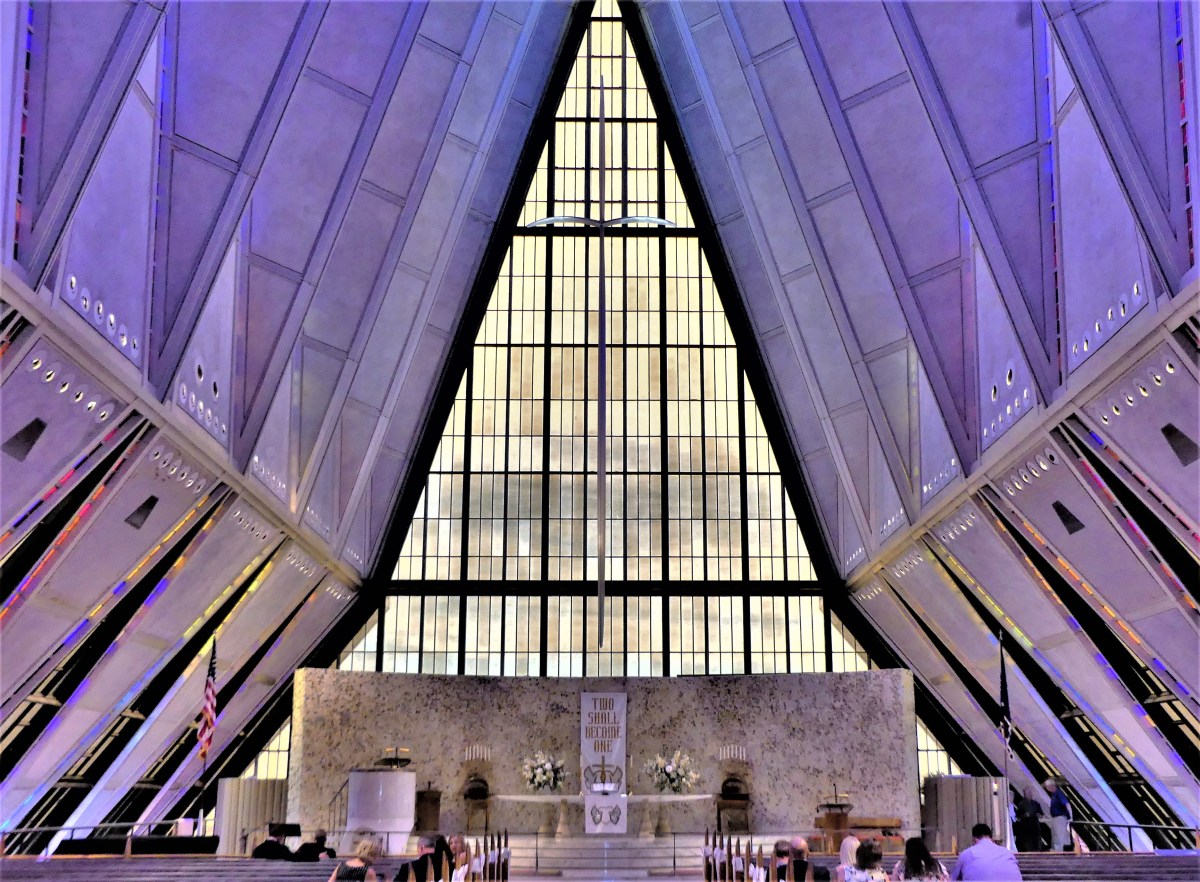
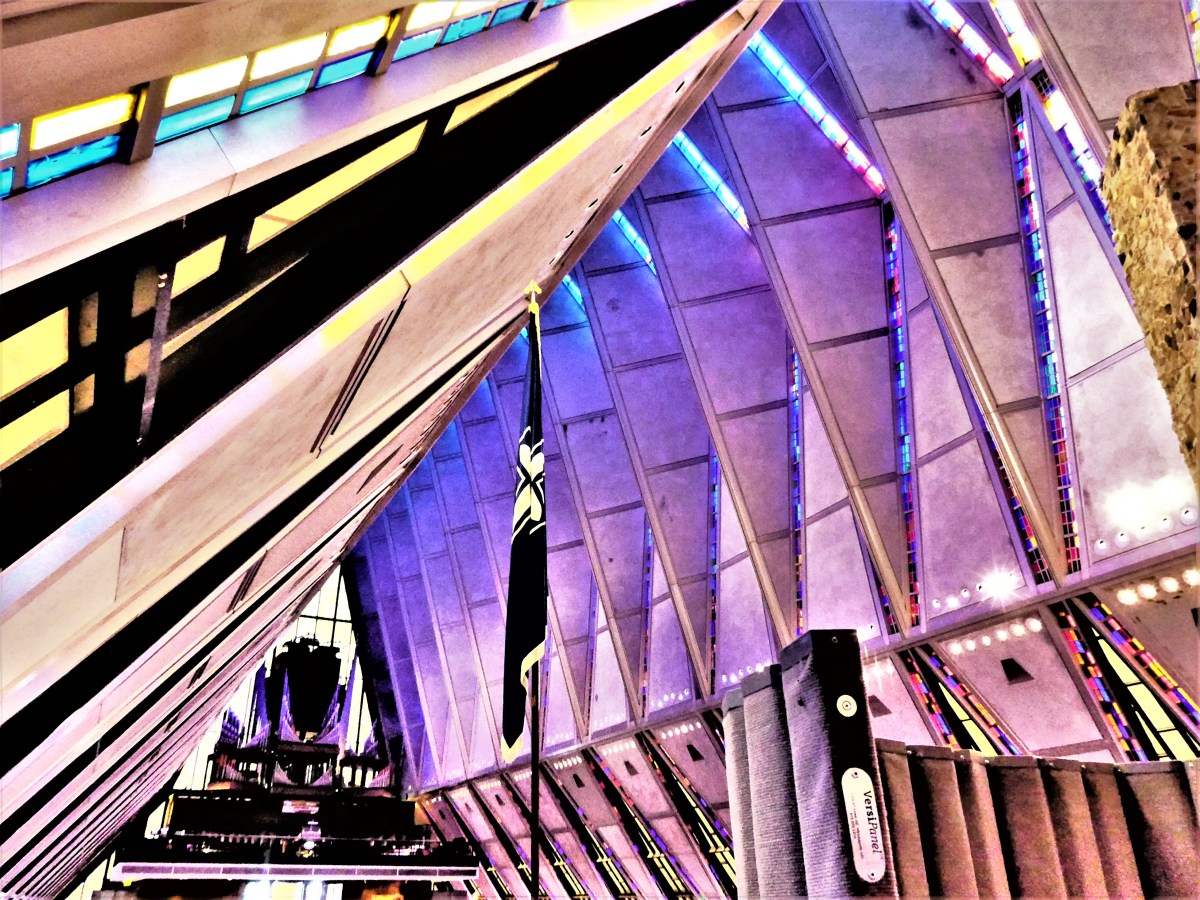
In stark contrast, the Cadet Chapel–a multi-faith house of worship–soars heaven-bound at the Air Force Academy campus located in Colorado Springs, Colorado.

chapel exterior

With 17 upright wings on edge, and piercing the sky at 150 feet, the Cadet Chapel is a stirring example of modern American Architecture.

chapel 2xt (2)

Constructed mostly of aluminum, glass, and steel,

chapel alter (2)

the main sanctuary is home to an Air Force Academy demographic that is primarily Protestant.

chapel int (2)

However, the lower level of the structure houses chapels and prayer rooms for Catholics, Jews, Muslims, Buddhists, and Orthodox Christians.

lower level chapels.jpg

The Cadet Chapel was awarded the American Institute of Architects’ Twenty-five Year Award in 1996, and was named a U.S. National Historic Landmark in 2004.

stained glass ceiling


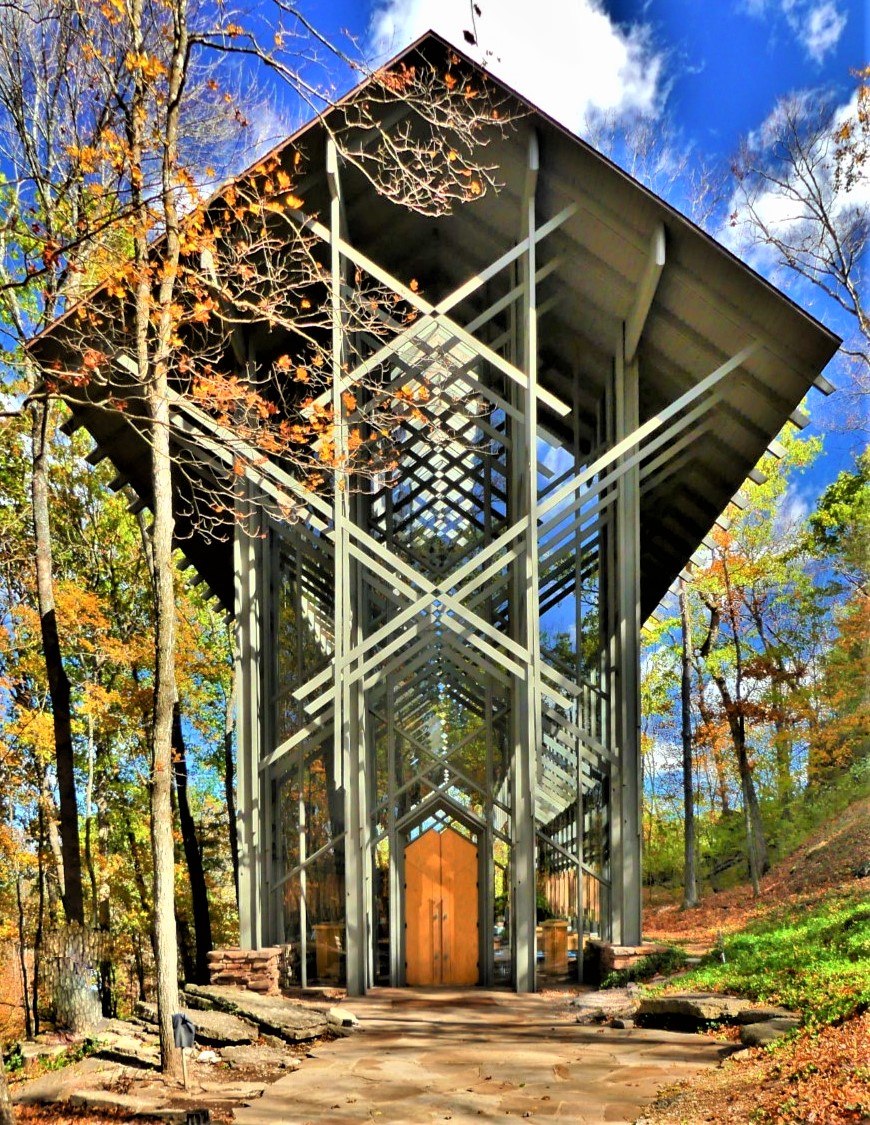
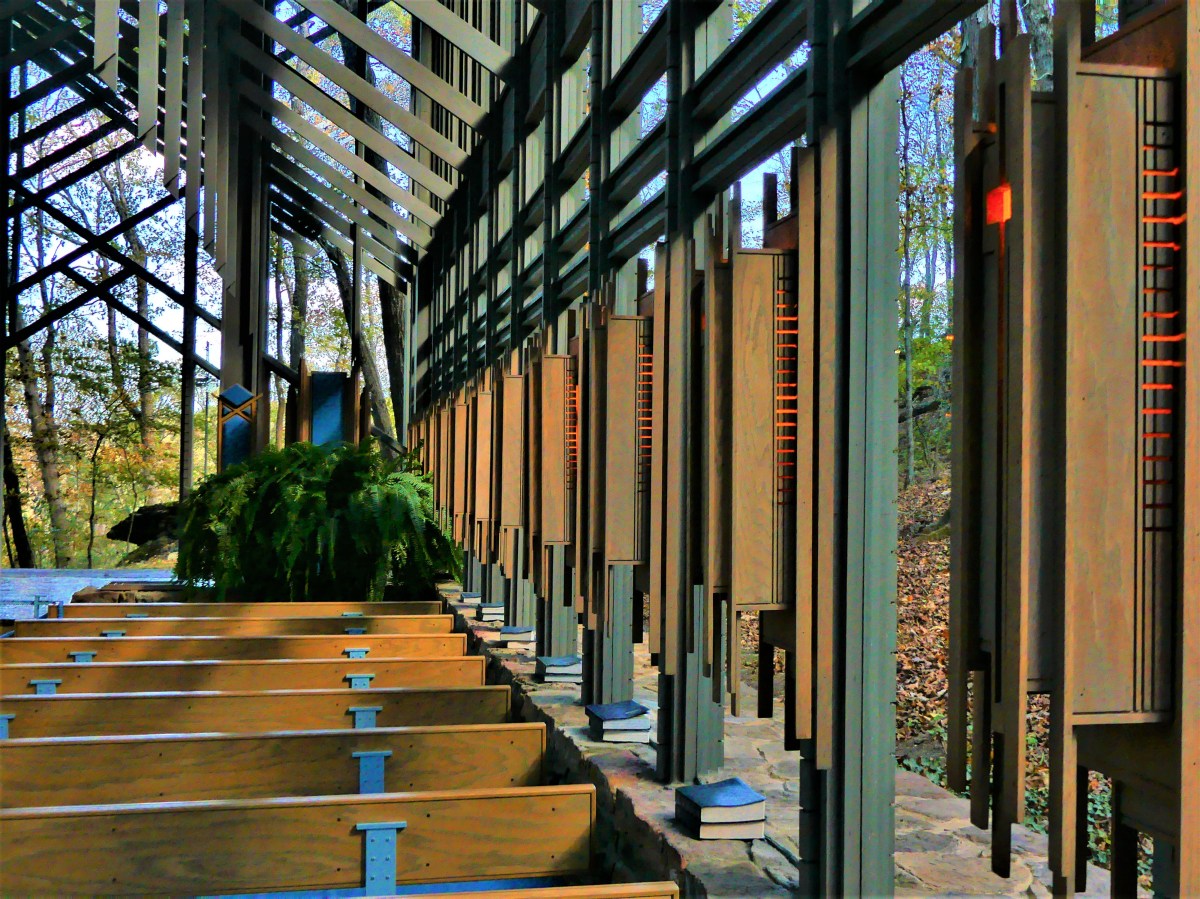
Also reflective of modern American architecture, and an homage to nature in its purest form is Thorncrown Chapel, nestled in the Ozarks of Arkansas, on the edge of Eureka Springs.

Exterior

Constructed from the same Southern pine indigenous to the site, the chapel is so integrated into the landscape that it stealthily stands camouflaged by its surroundings,

camouflage

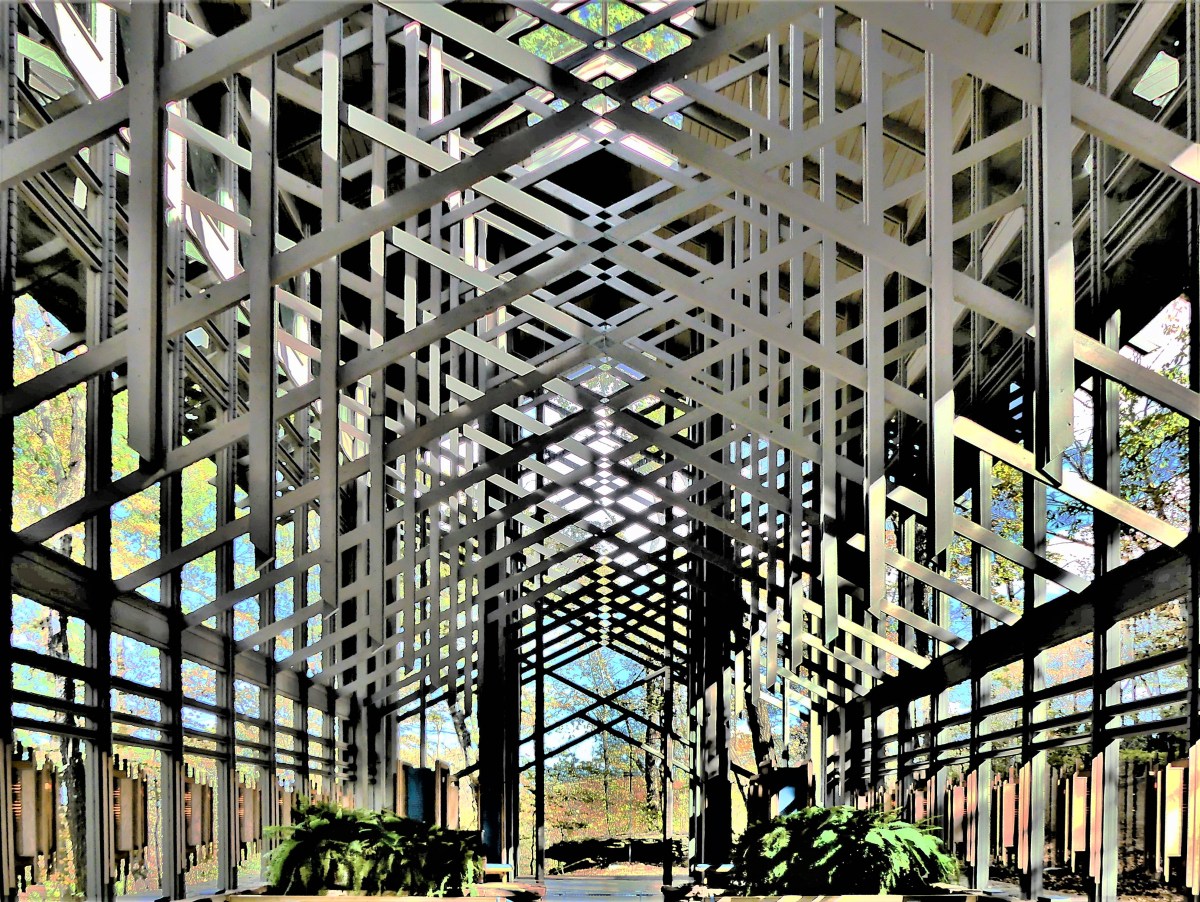
and represents an inside/outside sensibility, with Arts and Crafts flourishes.

pews and lights

Thorncrown Chapel was named a National Historic Place in 2000, and received the Twenty-five Year Award by the American Institute of Architects in 2006 for design of enduring significance.

crossbeams


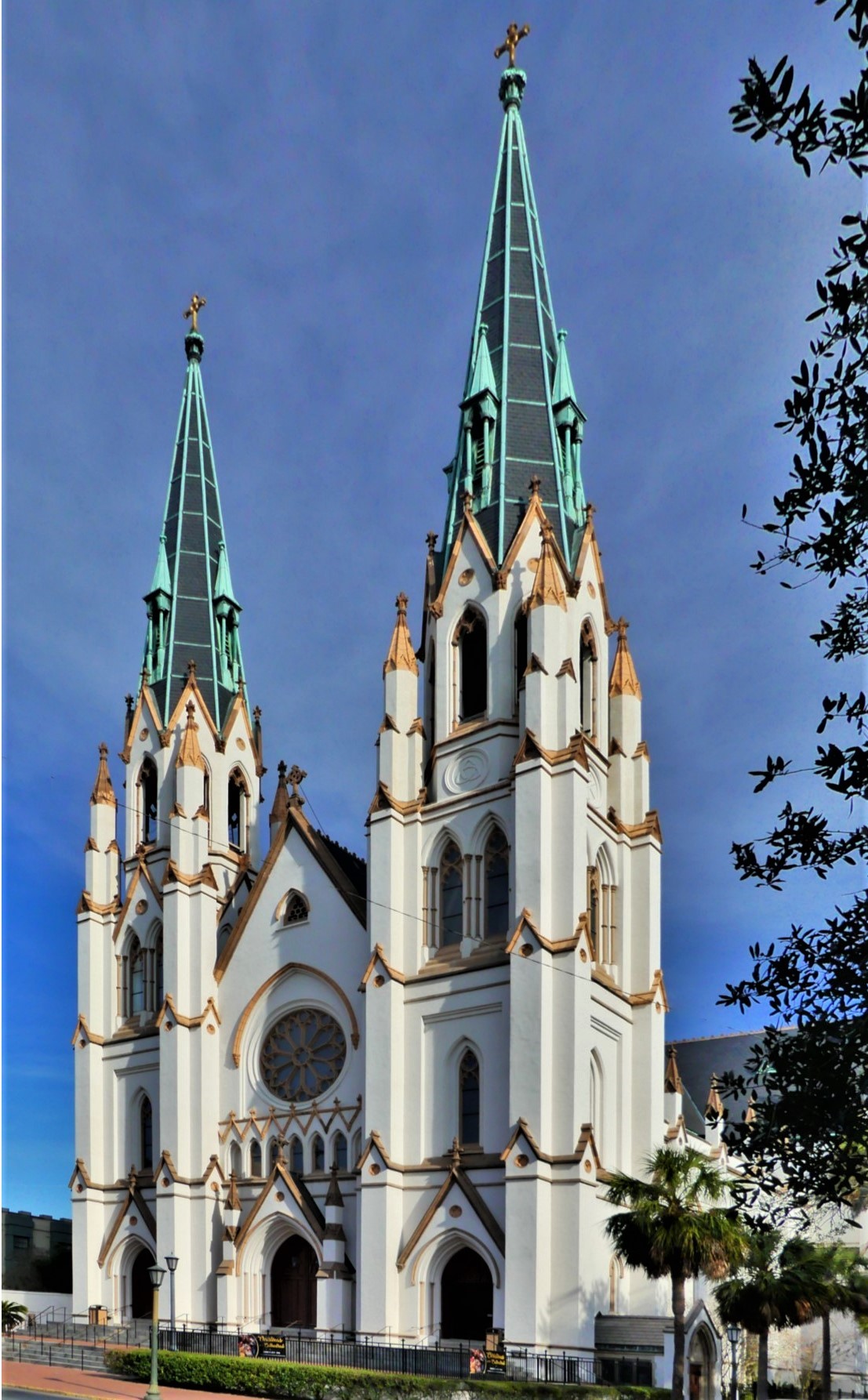
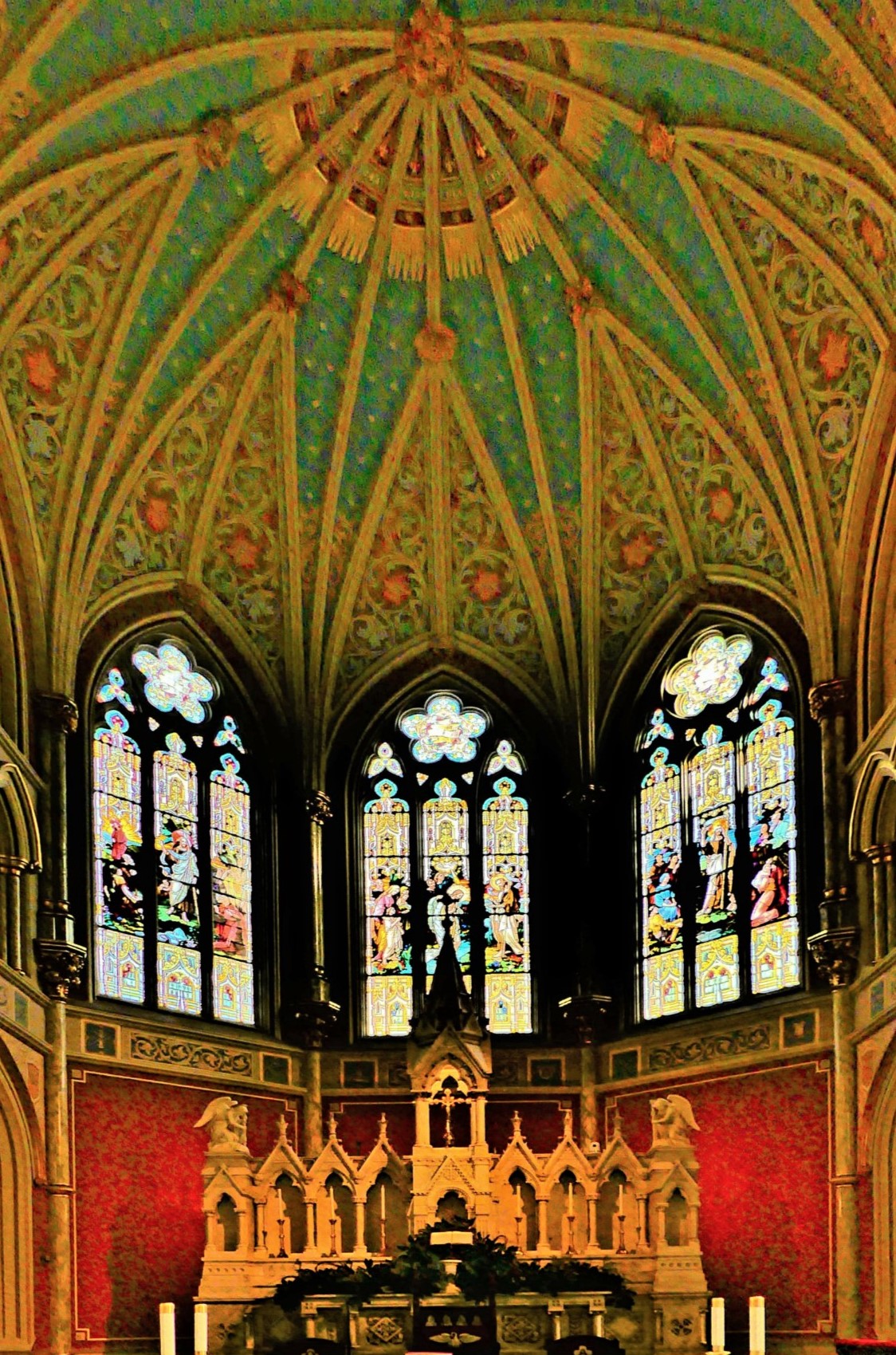
The Cathedral of St. John the Baptist in Savannah, Georgia is a Roman Catholic sanctuary built in the French Gothic style, and was dedicated in 1876.

St. John exterior

Twelve years later, fire gutted the interior, leaving behind only the walls and towers.

reference sign

Overcoming adversity, the church community quickly rebuilt much of what was destroyed, and resumed inside services in 1900,

alter

while interior decoration continued for an additional 13 years,

pews

to restore the stained glass and organ loft to its original splendor.

pipe organ

Embedded in Savannah’s Historic District, the Cathedral of St. John the Baptist was awarded landmark status by the National Park Service in 1966.

apse.jpg


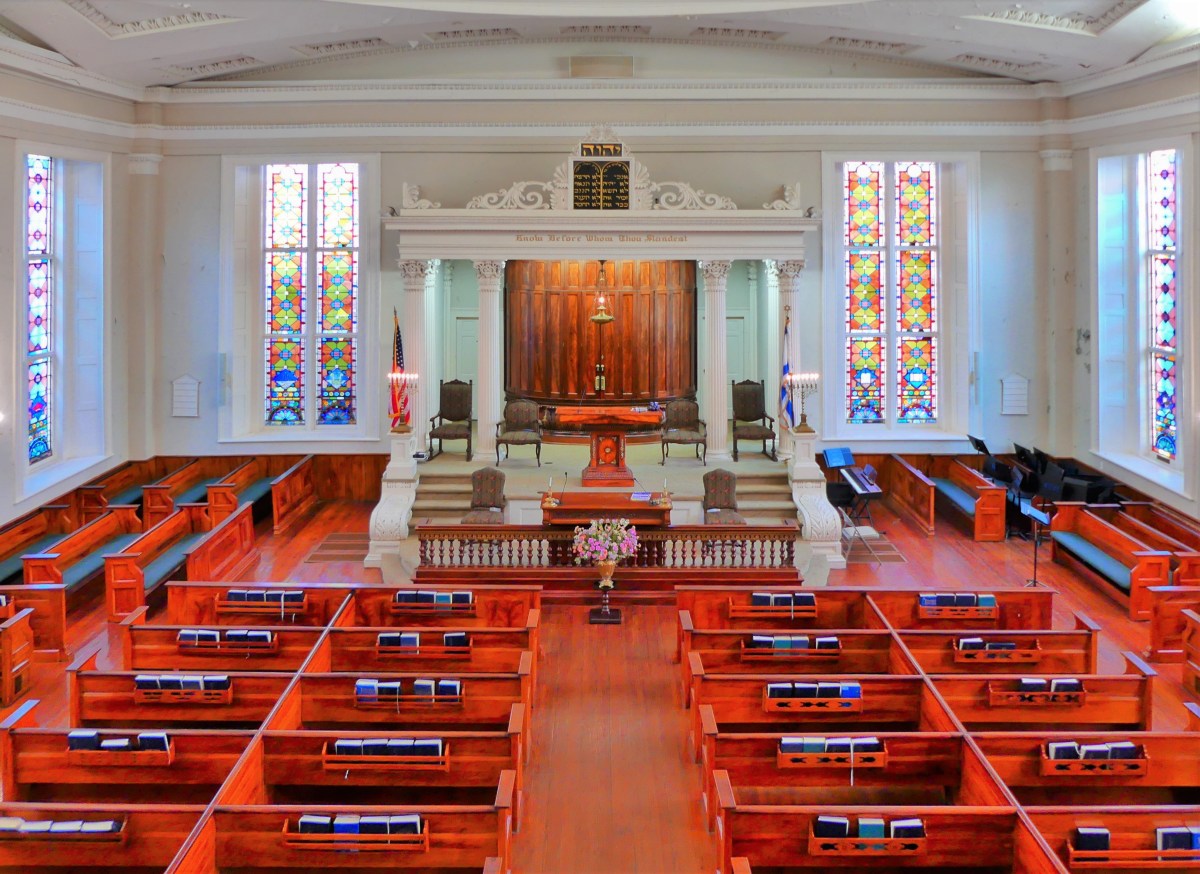
Lastly, in our effort to somehow balance the preponderance of churches and chapels we’ve toured, we visited Kahal Kadosh Beth Elohim Synagogue in the Historic District of Charleston, South Carolina.
exterior

Kahal Kadosh is notable as the country’s second oldest synagogue, and the oldest in continuous use. Established in 1749, Kahal Kadosh grew into America’s largest and wealthiest Jewish community by the end of the 18th century.
historic landmark

A new vision of American Reform Judaism originated at this site in 1824 after parting ways from its conservative Sephardic origins.

1st temple (3)

After Charleston’s fire of 1838 ravaged the city and destroyed the synagogue, a new Greek revival style was adopted for the new structure, with rich interior ornamentation,

Greek Revival

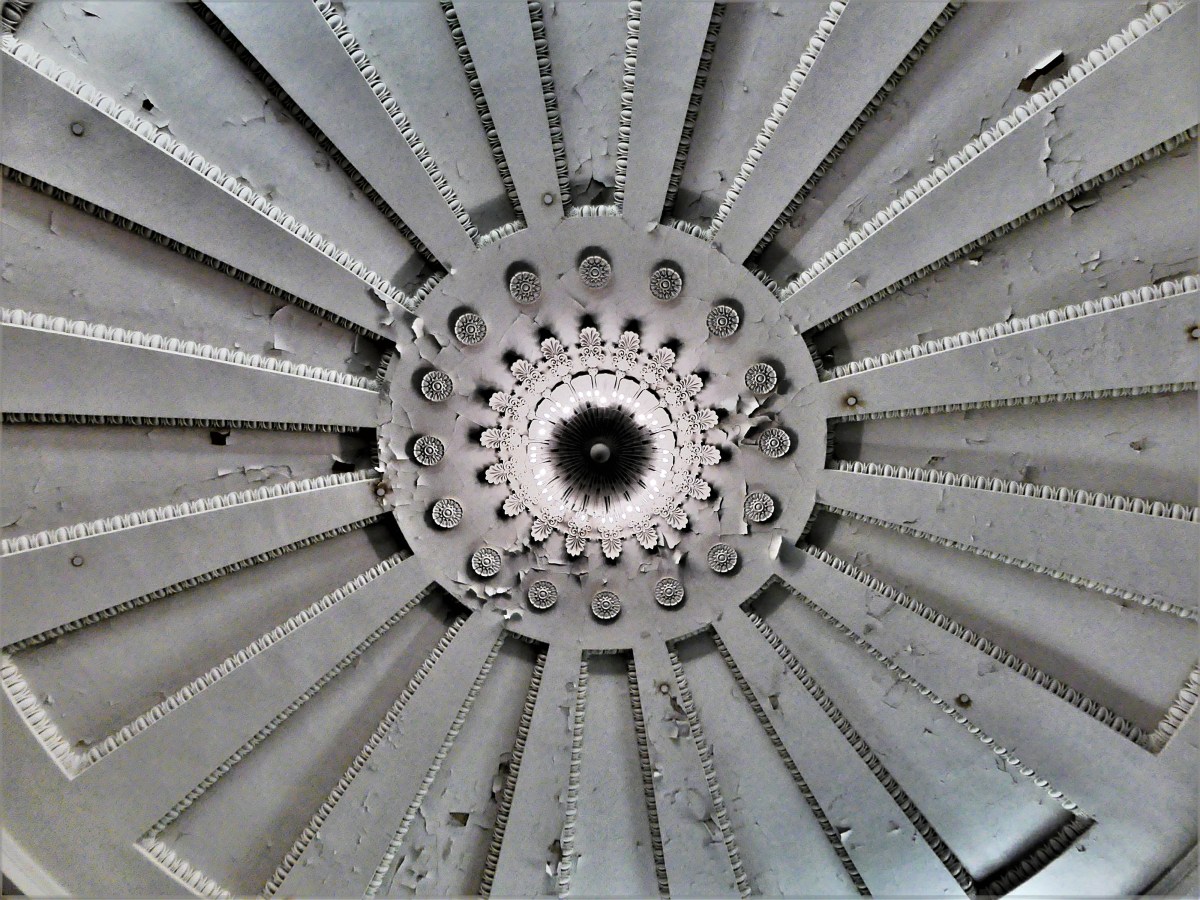
reminiscent of Greek temples.

peeling ceiling

Jewish services, according to reformist rituals and practices, were now conducted in English, with a new emphasis on organ music, and women were encouraged to participate with men on the main floor, breaking with a long-standing tradition of separation and isolation in the sanctuary balconies.

pipe organ (2)


The rich history and diversity of religion and protected religious freedoms in America cannot be overlooked as increased debate centers around self-centered interpretations of our Constitution’s First Amendment.

Moral outrage and hubris abound as politicians and public figures drape themselves in stars and stripes, while preaching to their flock from behind protective glass with handfuls of stones at the ready.

A reckoning of biblical proportion awaits us if we cannot ascend beyond our intolerance, and let each other live as we would have others let us live–in peace and without judgement.

Amen.

Mercer’s Swan Song

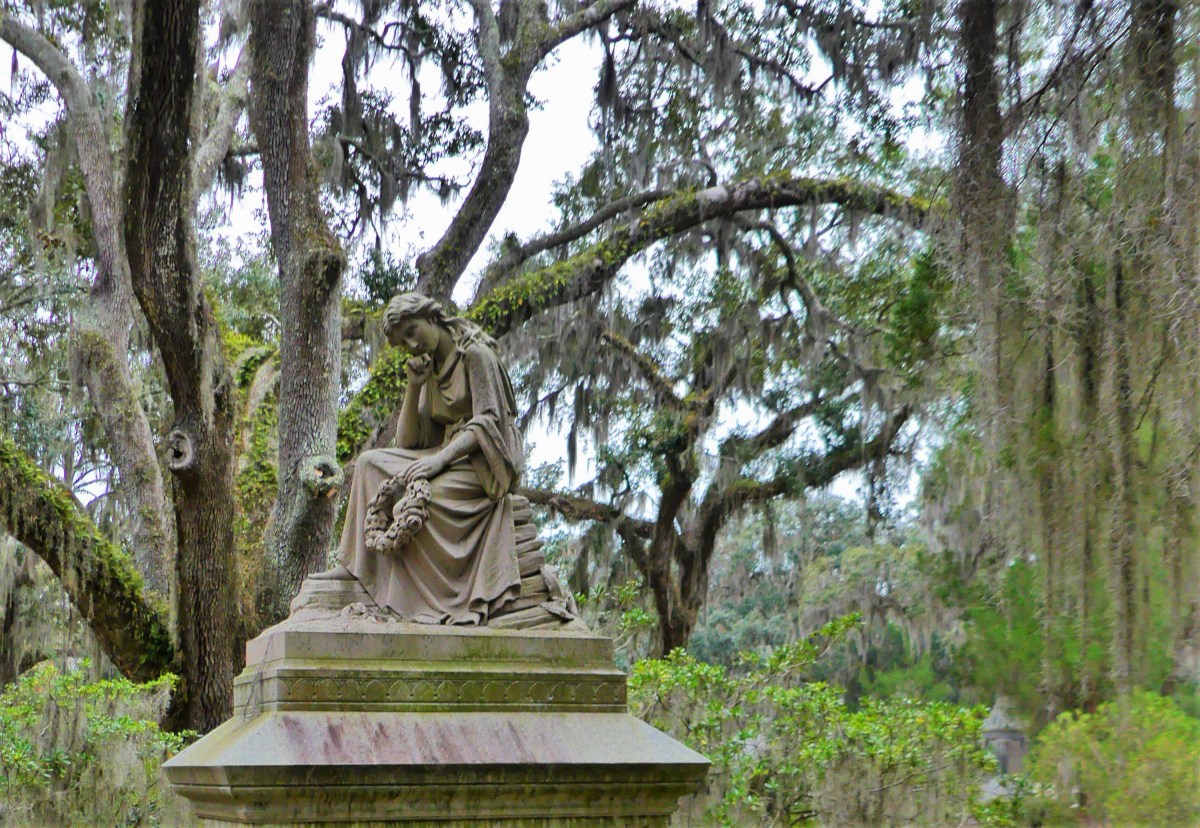
High on a bluff, overlooking the Wilmington River, sits Bonaventure Cemetery, 160 acres of inspired Southern Gothic funerary art and monuments worthy of any fabled ghost story setting, and one of the most hauntingly beautiful resting places found in America.

Named Bonadventure–good fortune in Italian–and conceived as a 9,920-acre plantation stretching from Ebenezer to Sunbury, Georgia, the land owners, Tattnall Sr. and Mullryne (son and father-in-law) mistakenly sided with King George III during the Revolutionary War, and were immediately denounced as traitors and stripped of their holdings by a Georgia council.

Tattnall Jr. returned from England soon after the war and reacquired a 750-acre tract of the property, where he settled with his Savannah-bred wife and family, before selling to Peter Wiltberger in 1846, who converted the land to a cemetery.

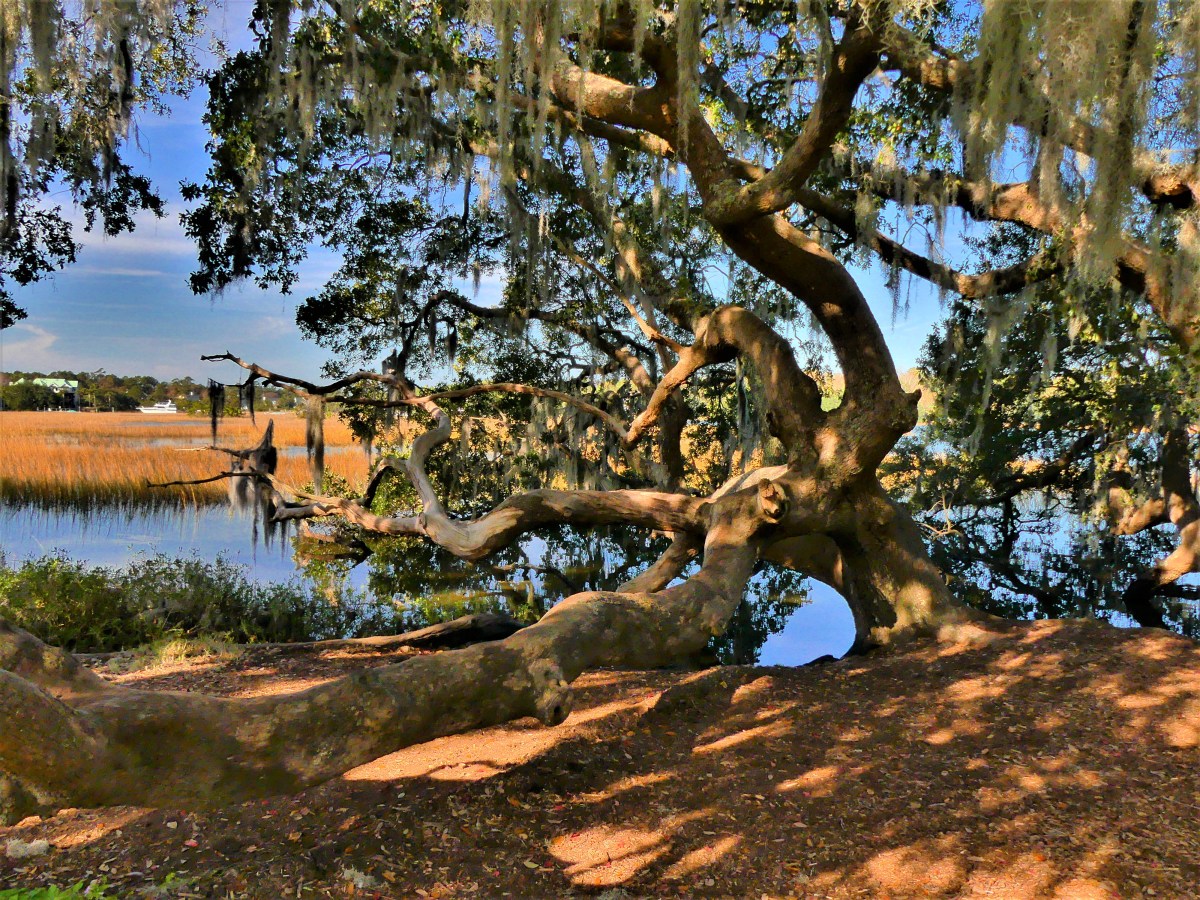
The day of our visit was dreary and wet, and it seemed fitting that the Spanish moss draped over 300 year-old oak trees would be weeping from the occasional drizzle.

Theuslandscape

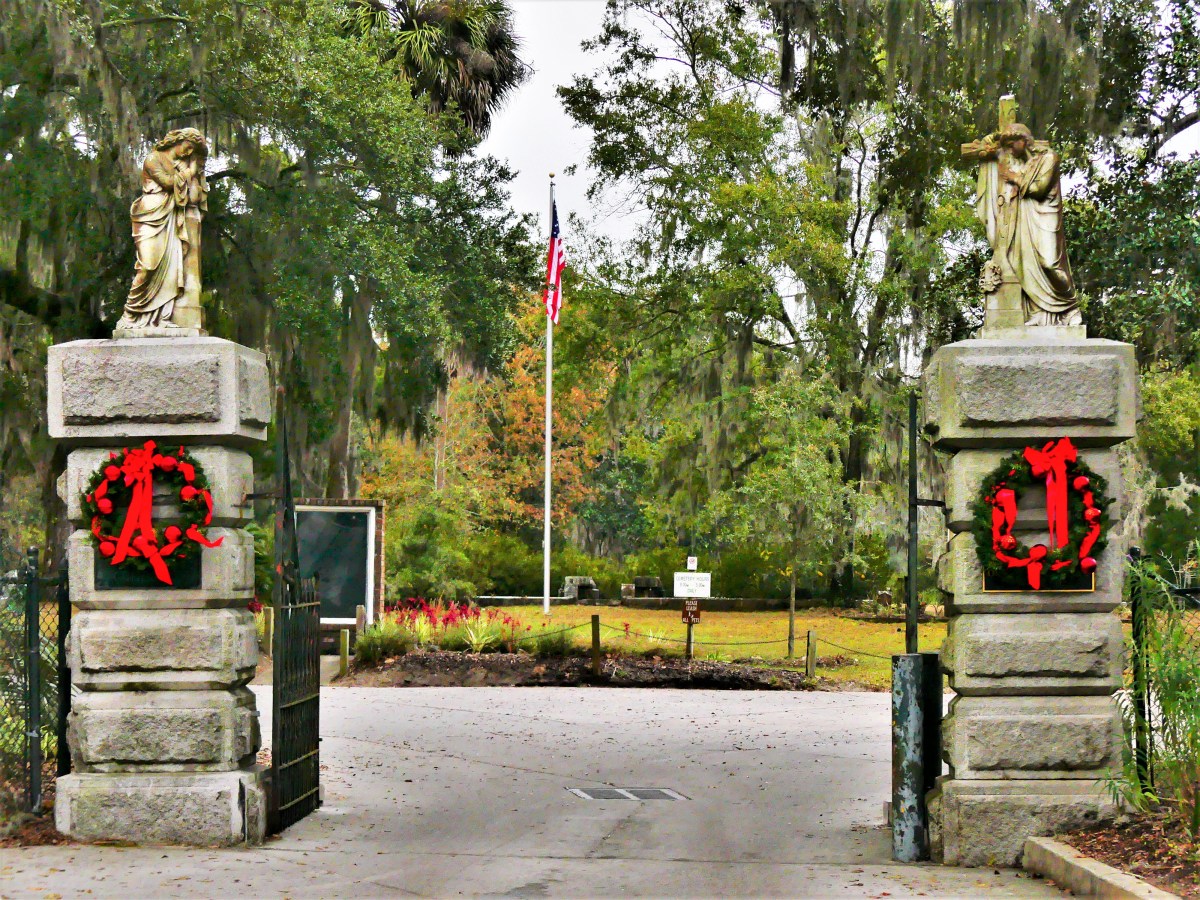
Oddly, two sets of gates provide access to the graveyard: a Christian wing to left…

Christian entrance

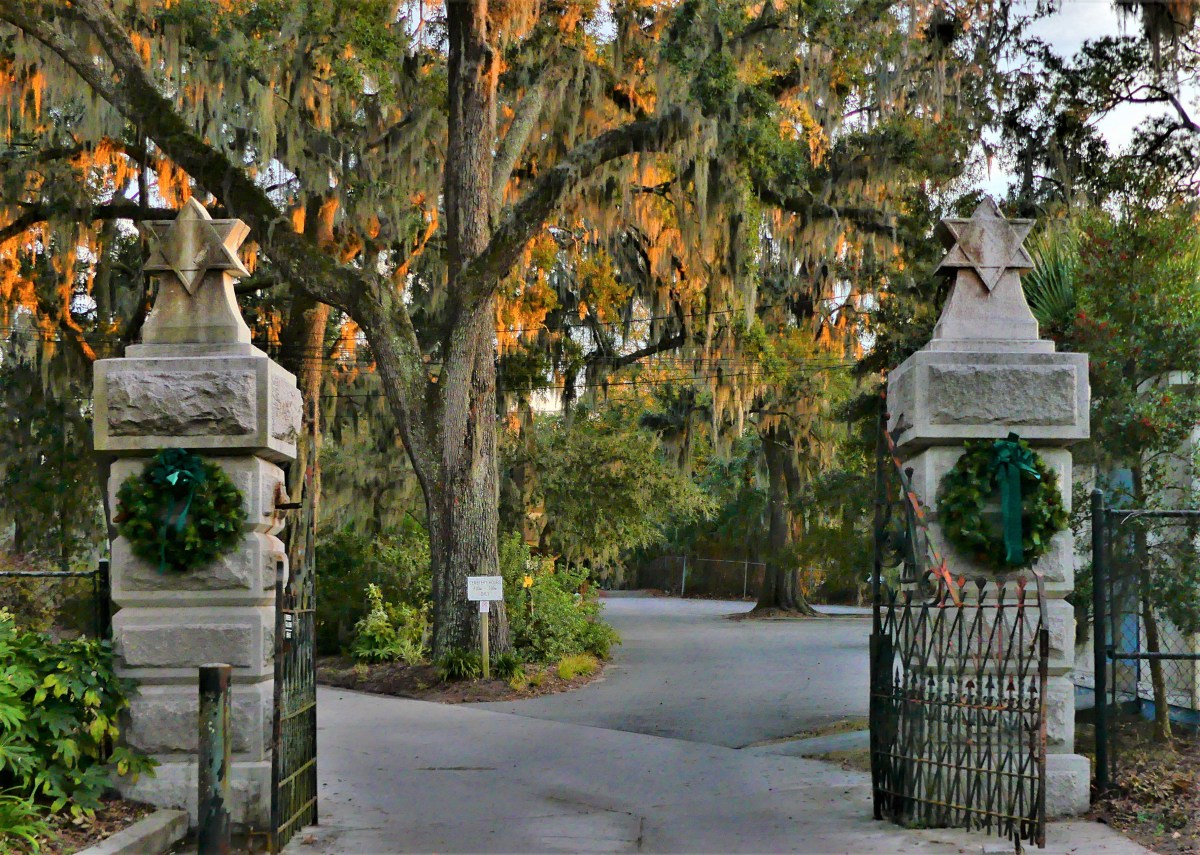
and a Jewish gate to the right.

Bonaventure gate for Jews

We approached a gravedigger who was stepping out of his pick-up.

“I couldn’t help but notice the Jewish stars on top of the gate posts,” observed Leah.

“Yes, ma’am,” responded Doug, “This here’s a public cemetery.”

So Christians and Jews are buried together?” I questioned.

“Yes, sir,” agreed Doug. “Each religion’s got their own separate sections, and…”

“And there’s still room inside?” Leah interrupted.

“Yes, ma’am. I dug two fresh graves today. But you can’t buy your way in anymore, cuz everything’s all sold out long ago. But people keep askin’. I guess they’s dyin’ to get in,” joked Doug.

Fascinating!

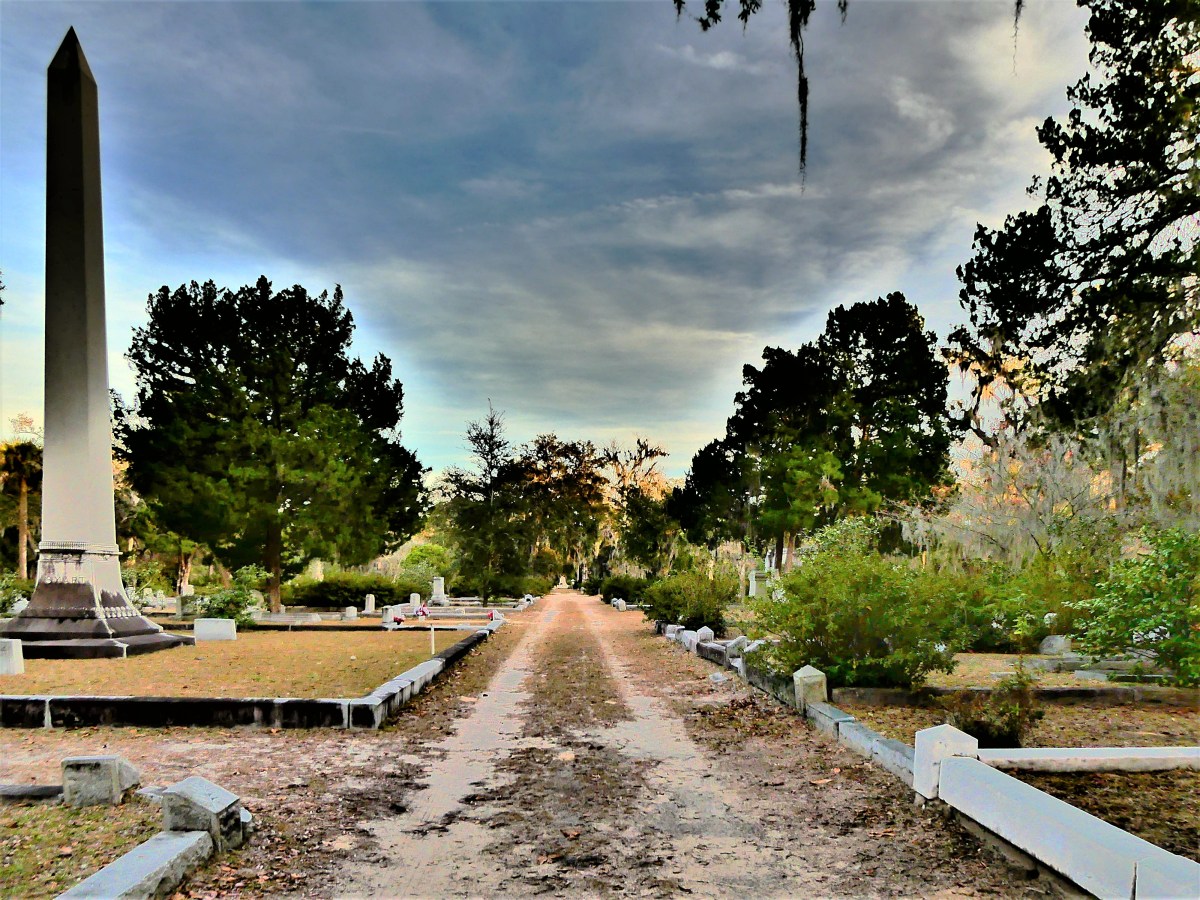
We set off to explore. The cemetery was unexpectedly quiet for being a top attraction for curiosity seekers, and the bereaved.

Bonaventure Lane

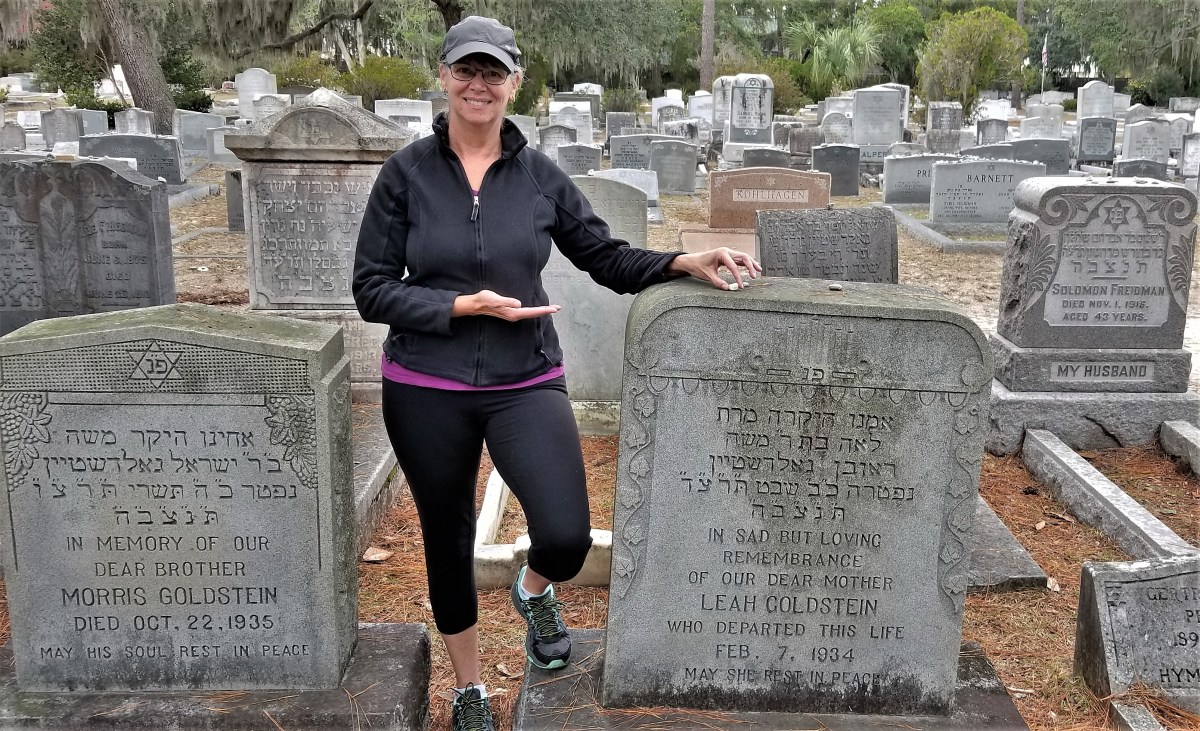
We were on separate missions. Leah went in search of her namesake, and found her in a short matter of time.

Leah Goldstein

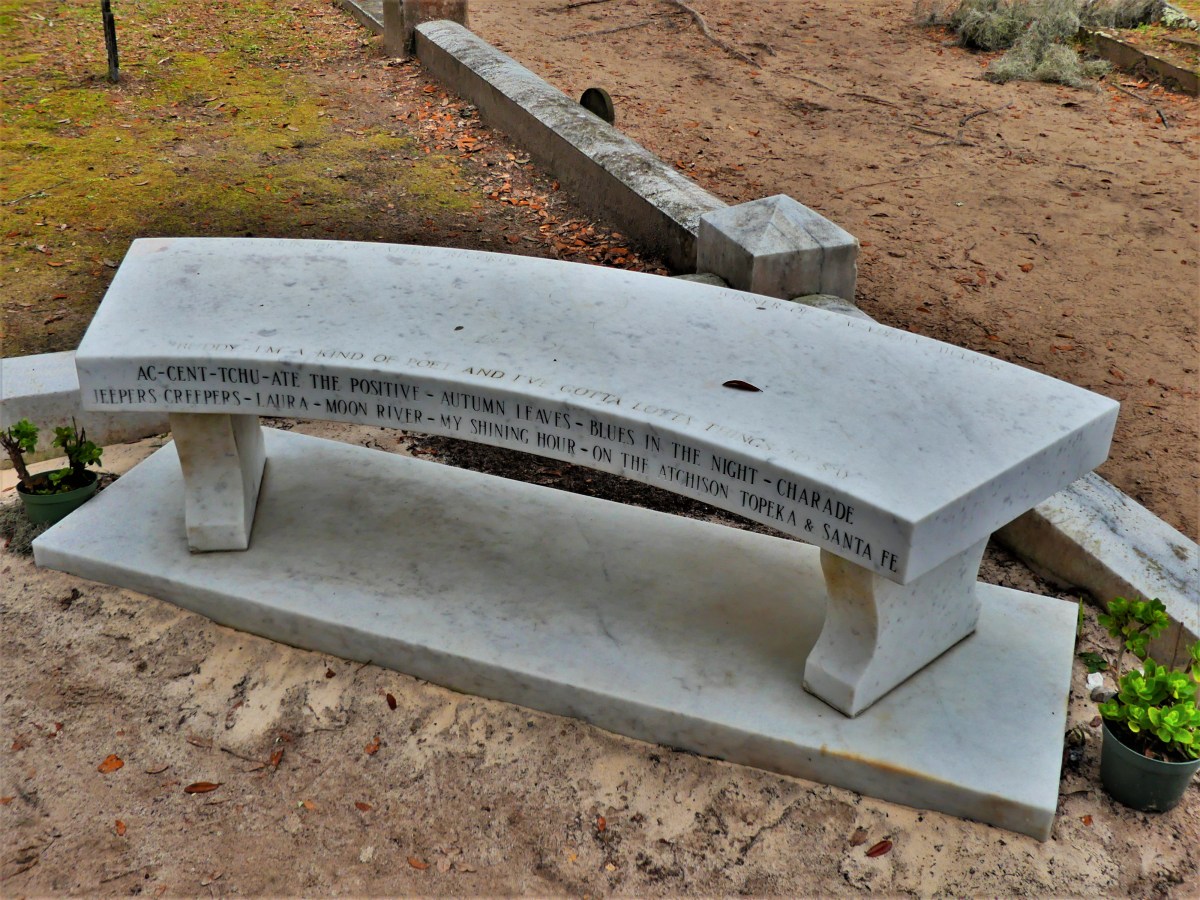
Whereas, I was in search of Johnny Mercer’s memorial–the legendary lyricist who penned over 1500 songs, was nominated for 14 Academy Award nominations, won Oscars for The Days of Wine and Roses, Moon River, In the Cool, Cool, Cool, of the Evening, and On the Atchison, Topeka and Santa Fe, and co-founded Capitol records–which turned into more of a scavenger hunt.

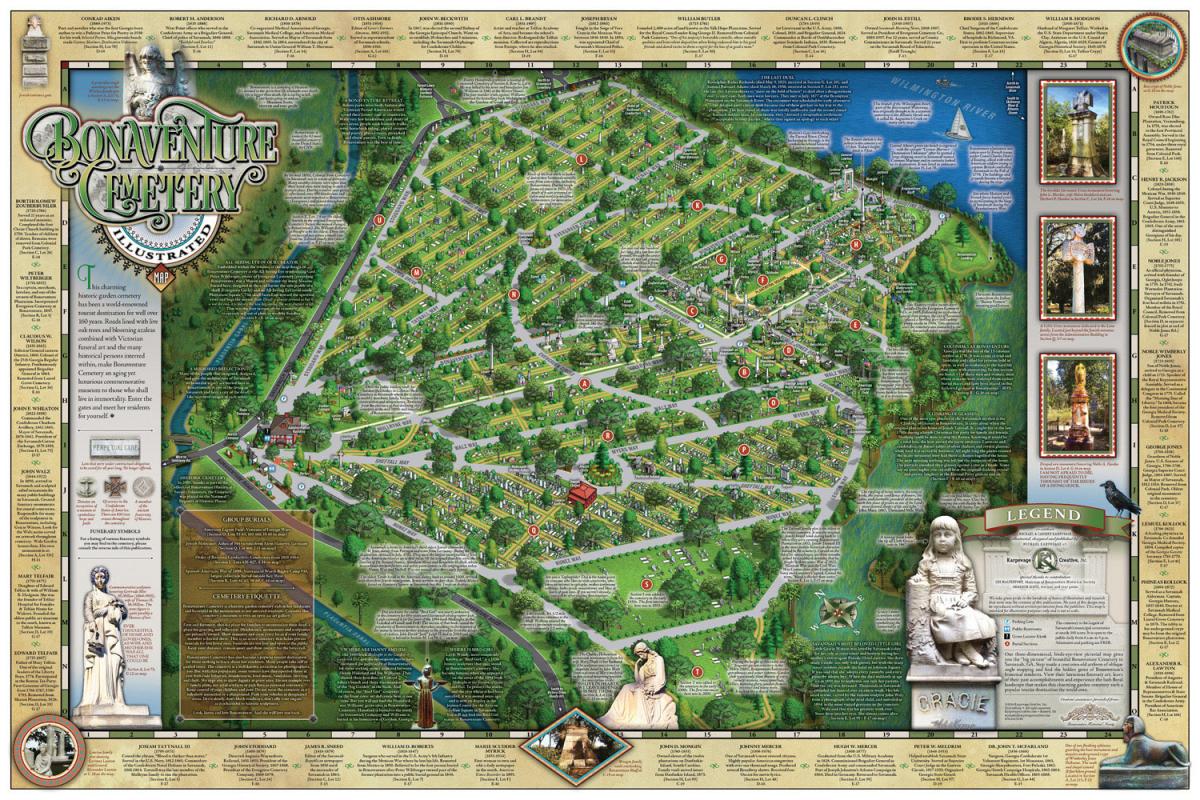
Resorting to the internet, I discovered the section and plot (H-48), but finding it was another matter, since the layout is unlike any grid, with over 31,000 burial records to date.

map.jpg

Leah went one way, and I went another. We wandered aimlessly through rows and rows of plots till we plotzed. I quickly understood why guided tours through Bonadventure Cemetery are so popular.

Eventually, I got some help from a pair of caretakers who were blowing damp leaves across the dirt and gravel roads. They were eager to help, but my inability to translate Malaysian, turned my request into a game of Charades.

Using broken English and hand gestures, they redirected us to the general vicinity, where we crossed paths…

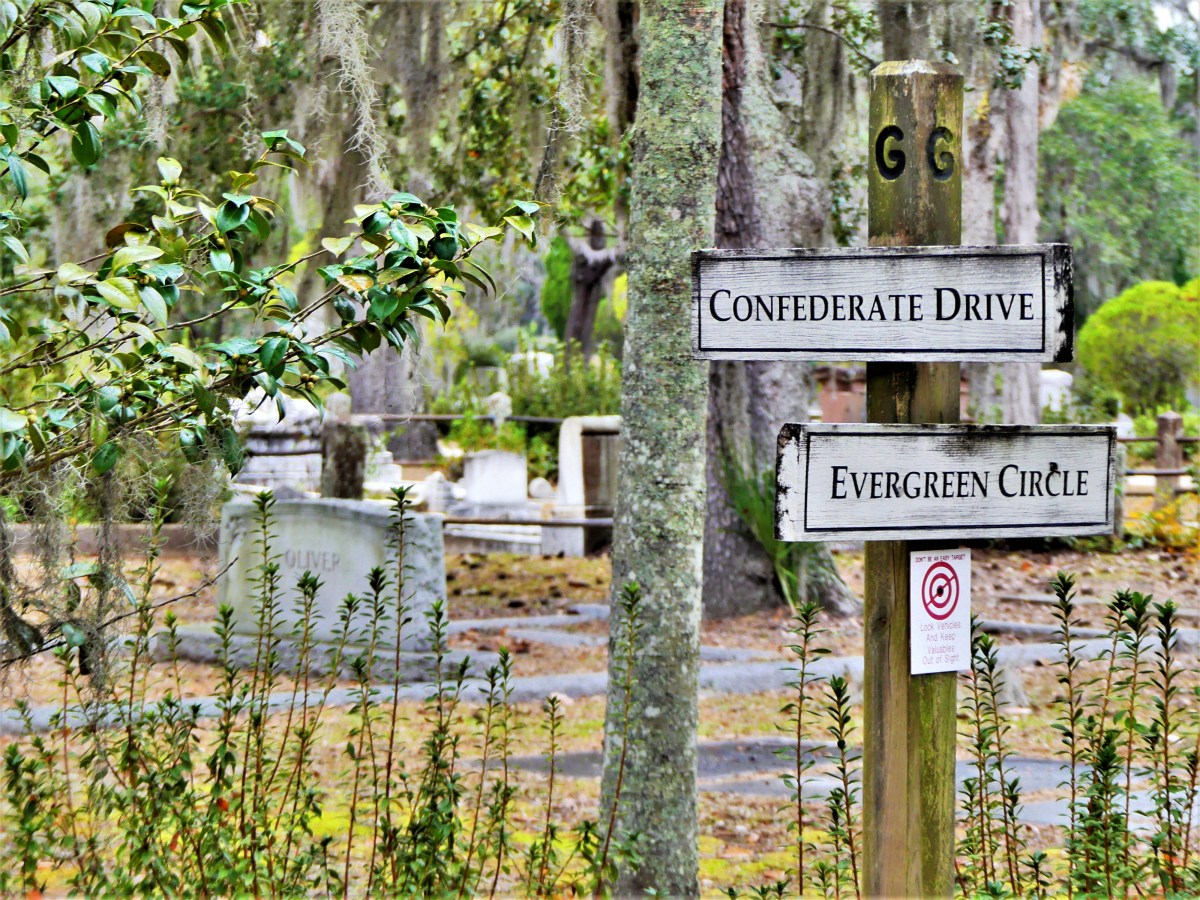
intersection

with officers…

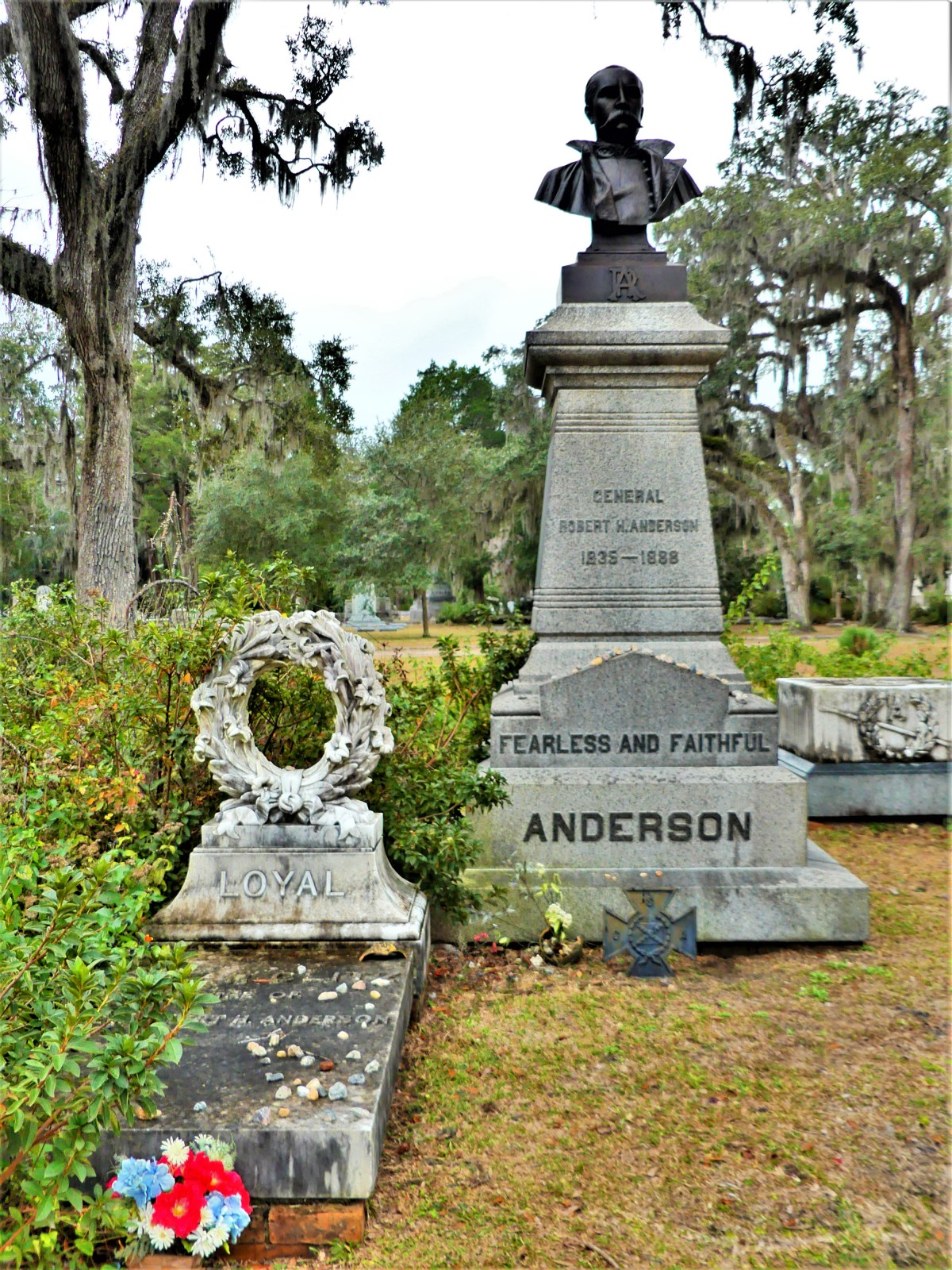
General Anderson

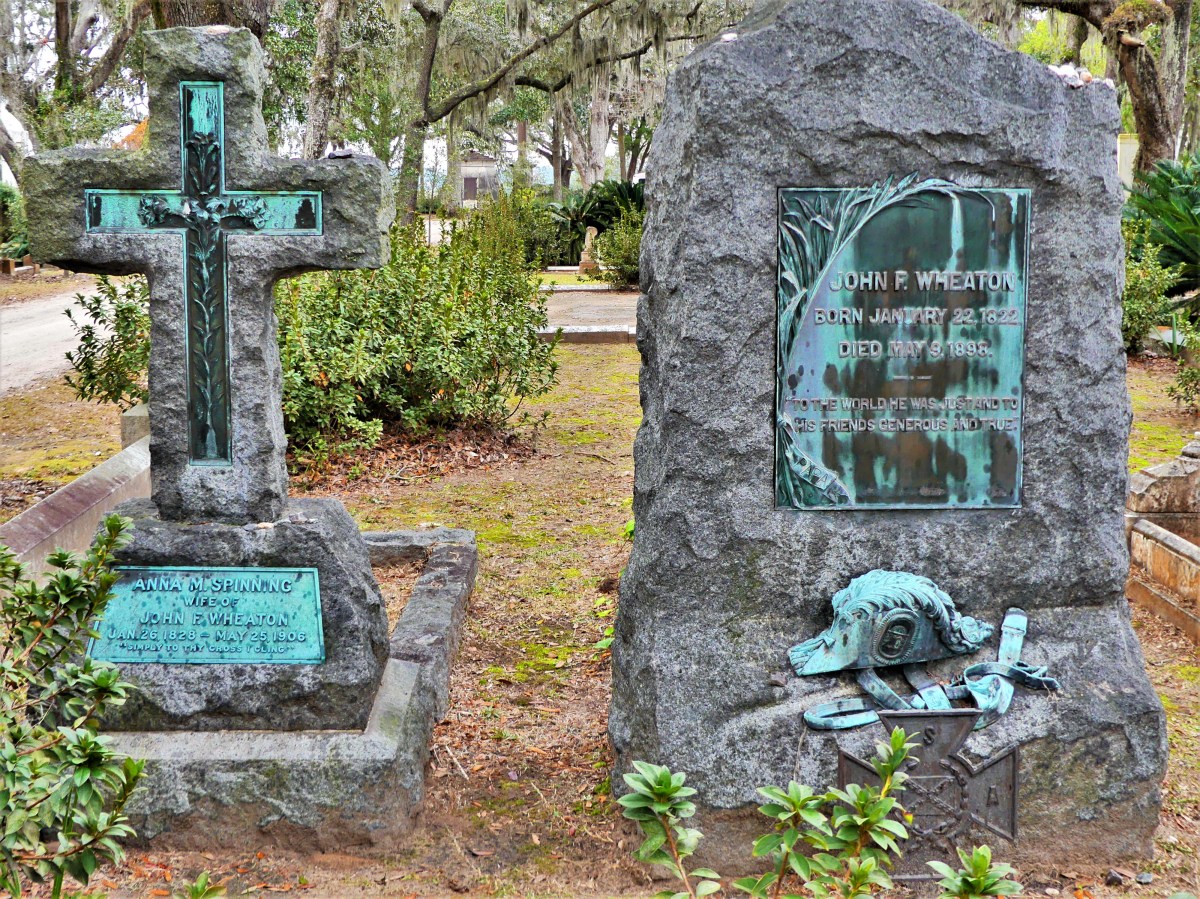
Wheaton and wife

and gentlemen…

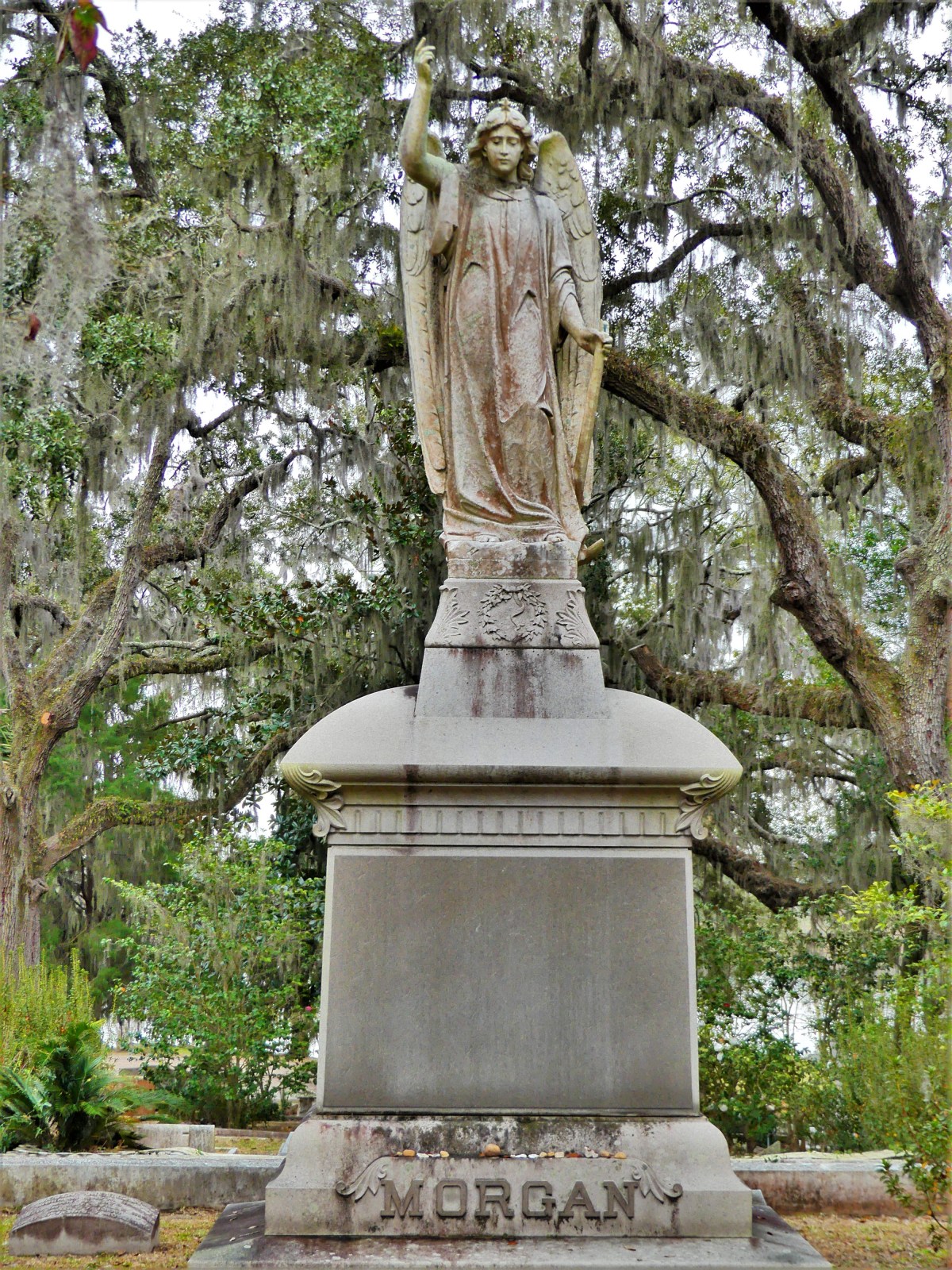
Morgan

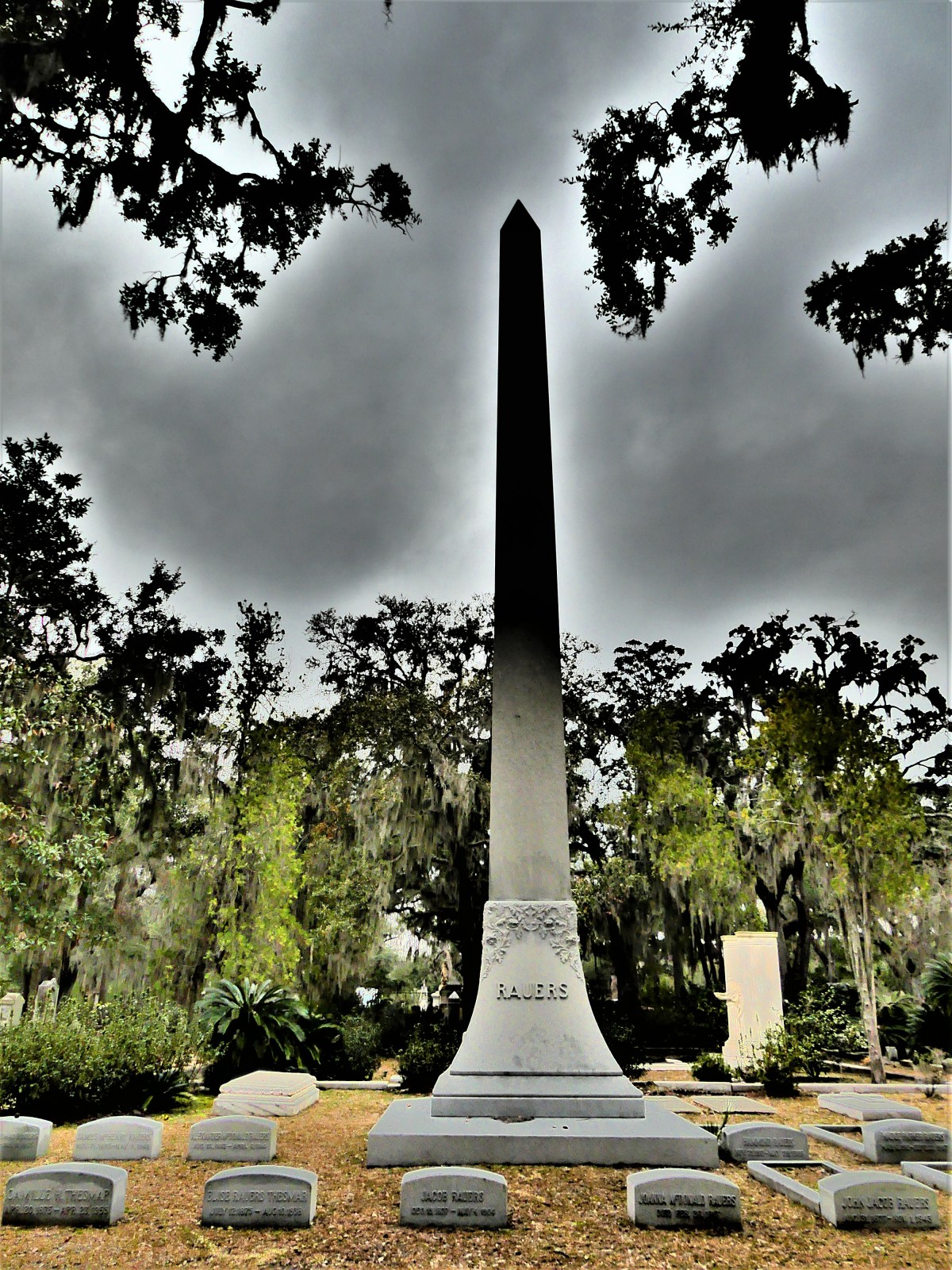
Rauers

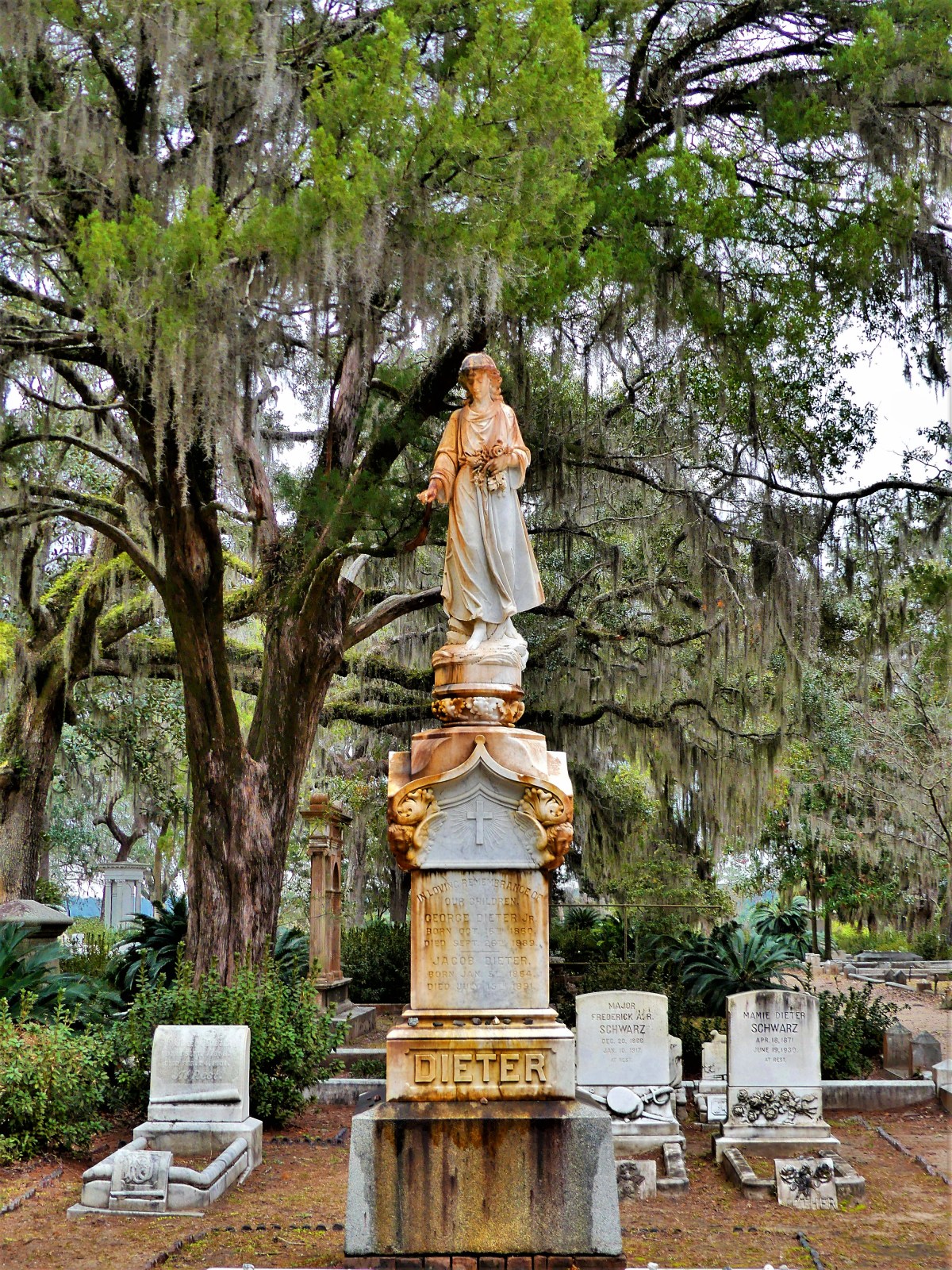
Dieter

ladies…

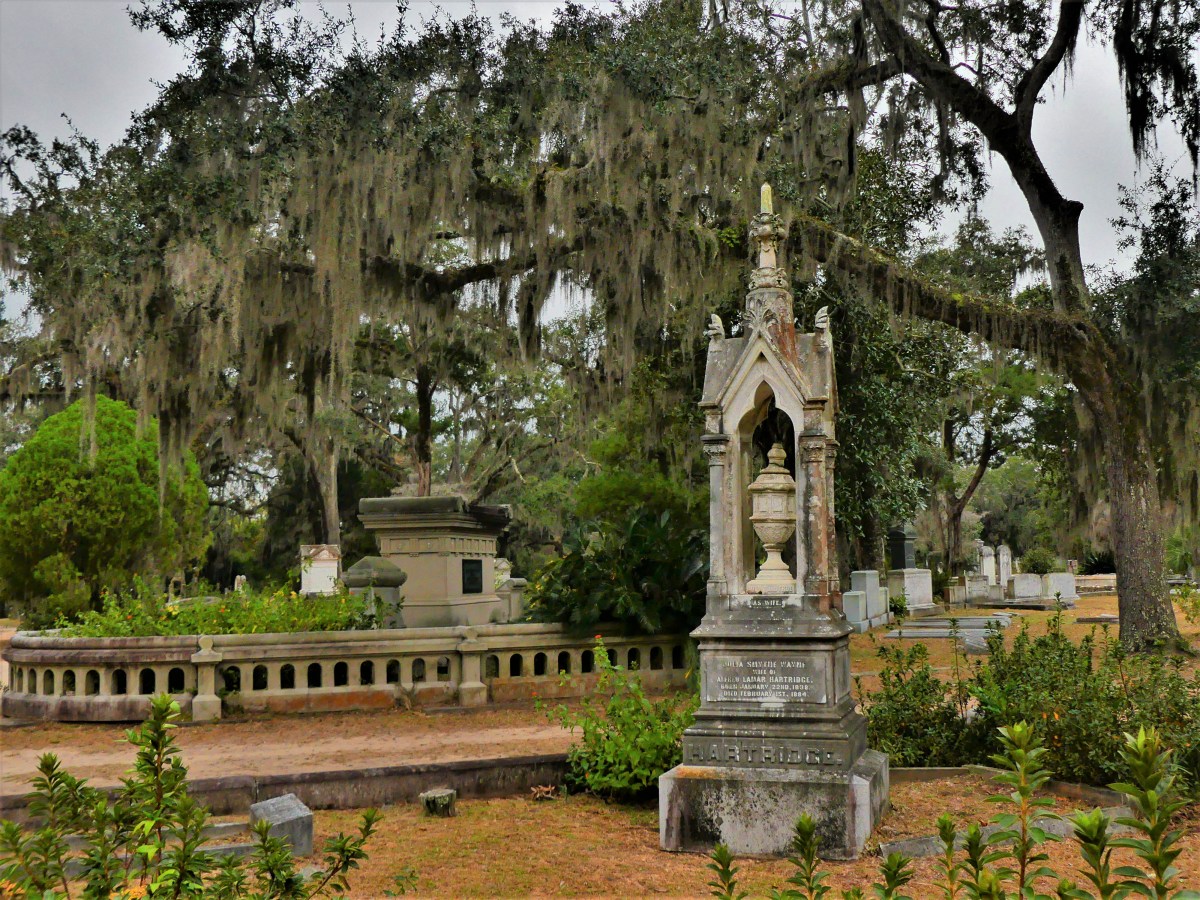
Hartridge

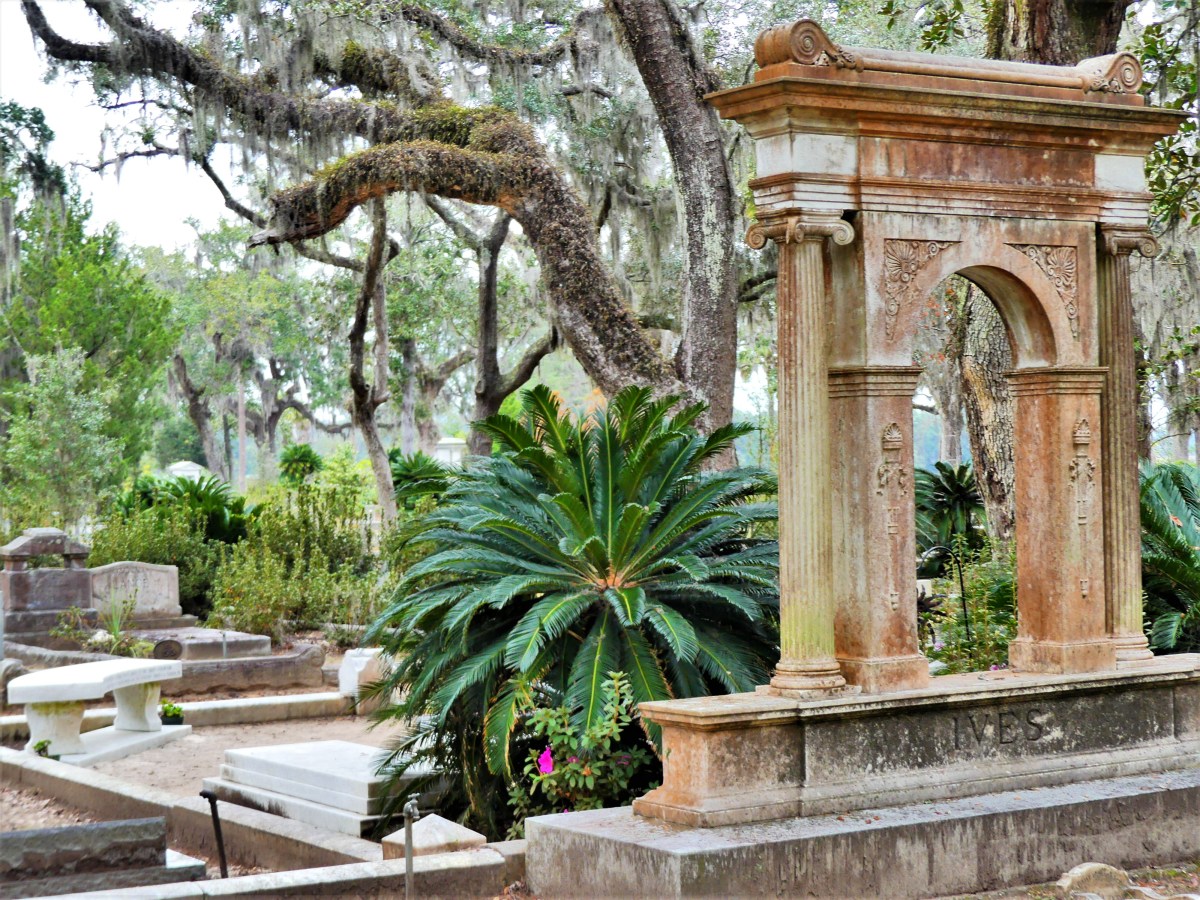
Ives

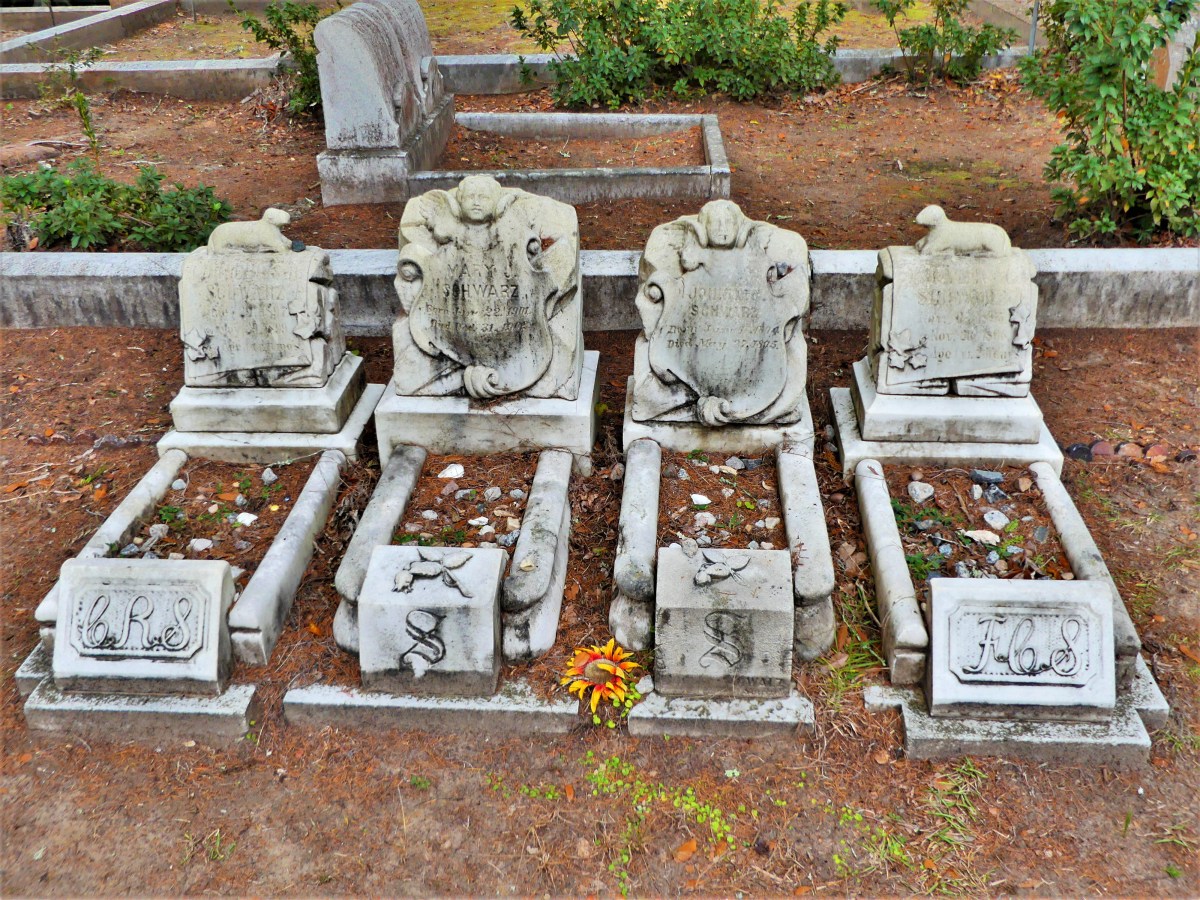
…and children.

4 babies

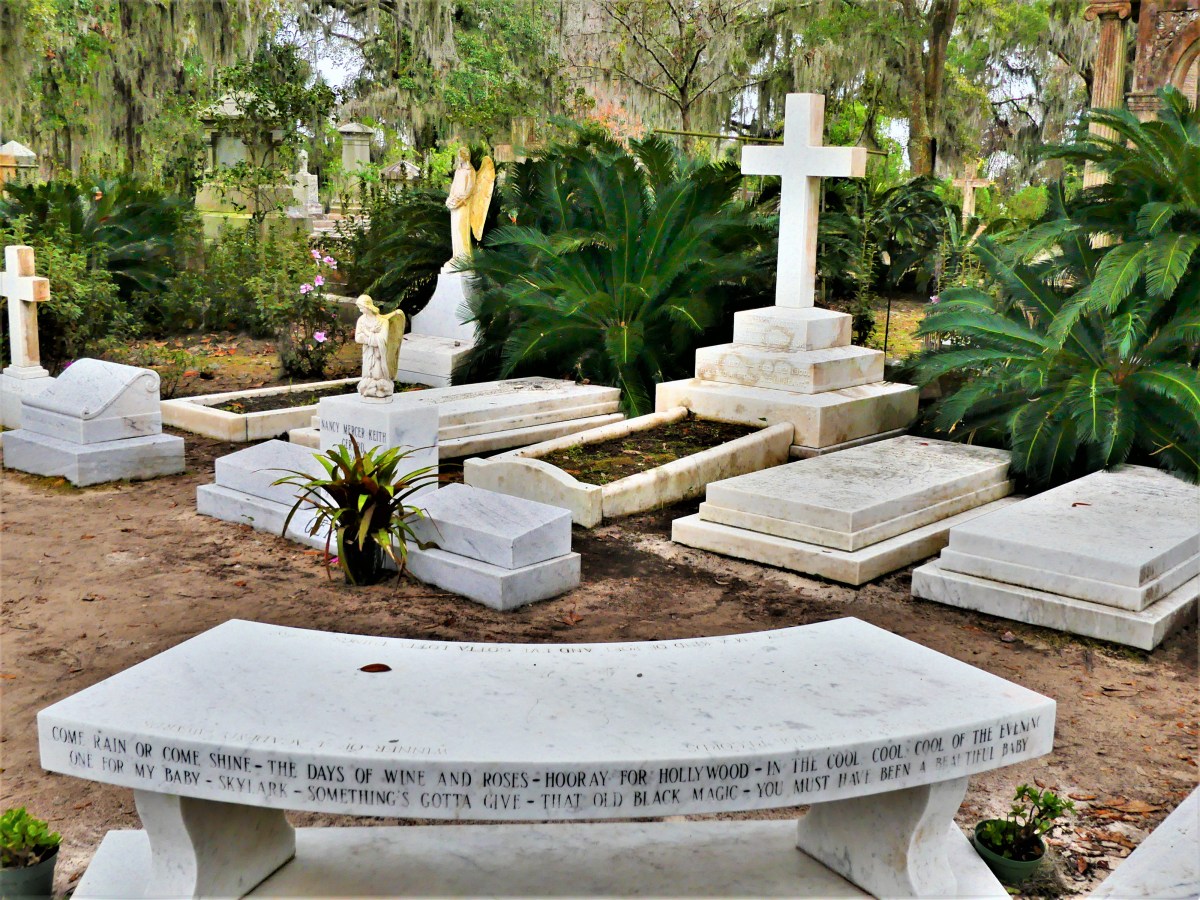
We wound our way through Section H until signs pointed to Johnny Mercer’s shrine of hits.

Johnny Mercer site

JM bench

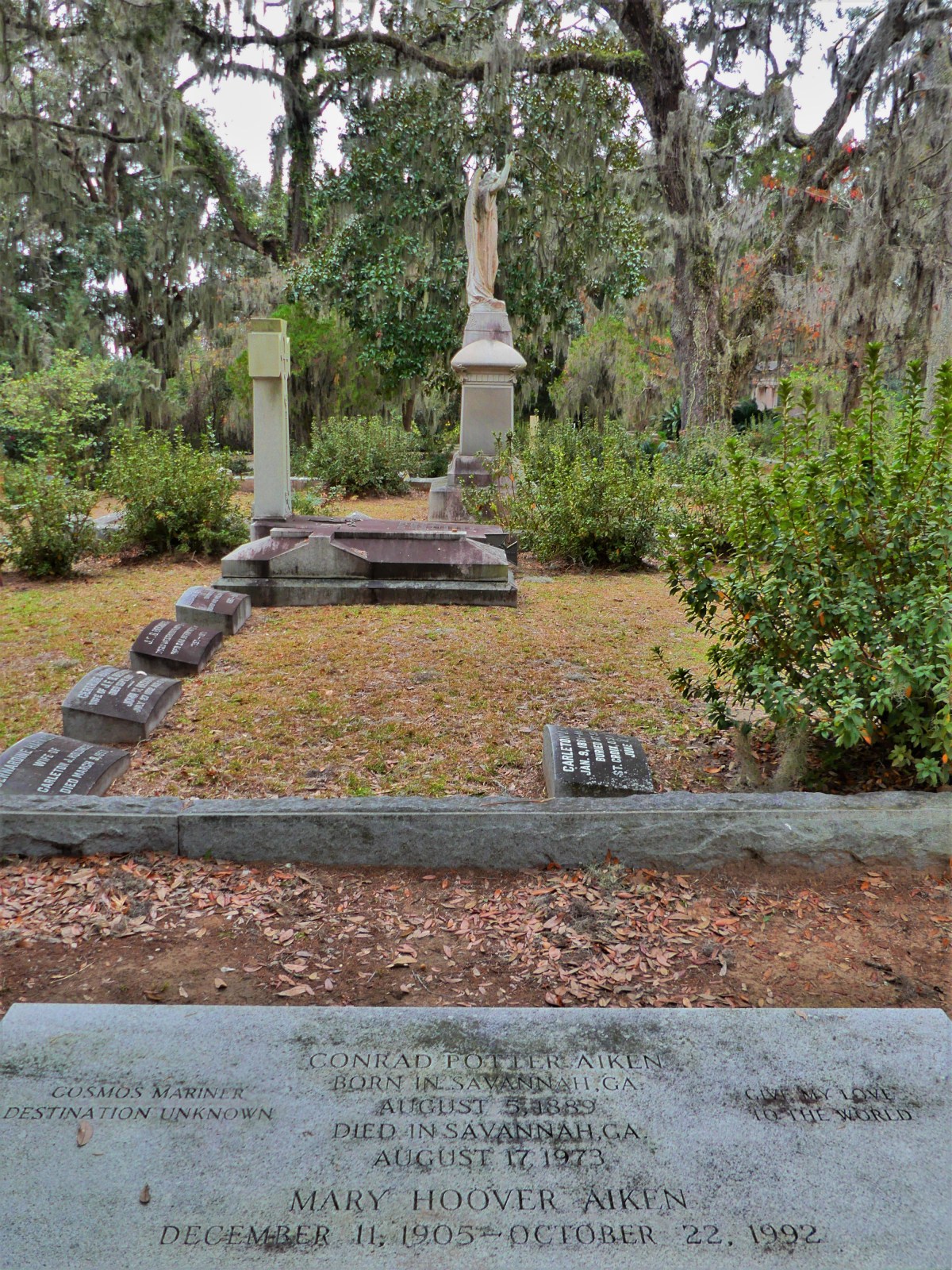
Also in the vicinity, lies Georgia’s poet laureate and tragic orphan, Conrad Aiken,

Conrad Aiken

who is buried beside his father who murdered his mother, before turning the gun on himself when Conrad was 11-years old. Conrad went on to study at Harvard, where he was mentored by T.S. Eliot, and won the Pulitzer Prize for Selected Poems in 1930.

Another literary thread woven through the Bonaventure fabric includes New York Time’s longest-standing (216 weeks) bestseller, Midnight in the Garden of Good and Evil, a true tale written by John Berendt.

midnight-in-the-garden-of-good-and-evil

The book cover featured Sylvia Shaw Judson’s Bird Girl, who graced the graveyard in relative obscurity for decades, until fans of the book sought out the statue’s location at Bonaventure, and began chipping away at its base for souvenirs. Eventually, Bird Girl was rescued and resettled in Savannah’s Telfair Museum of Art, where she can rest in one piece.

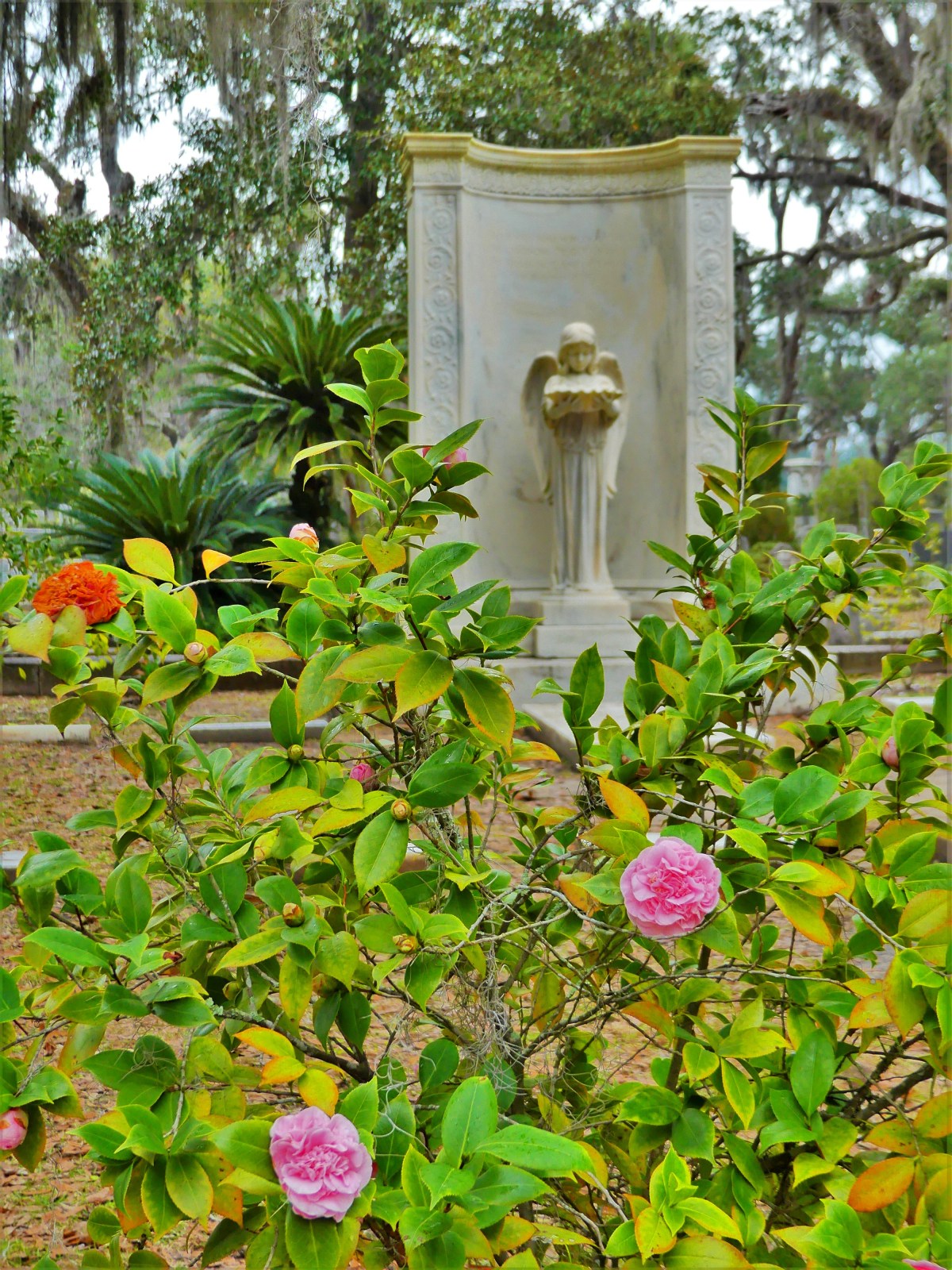
Bonaventure Cemetery under overcast skies during late autumn appears mostly monochromatic and presents a solemn and sombre mood. There are occasional pops of color from late blooms, to liven up a lifeless location,

angel and roses

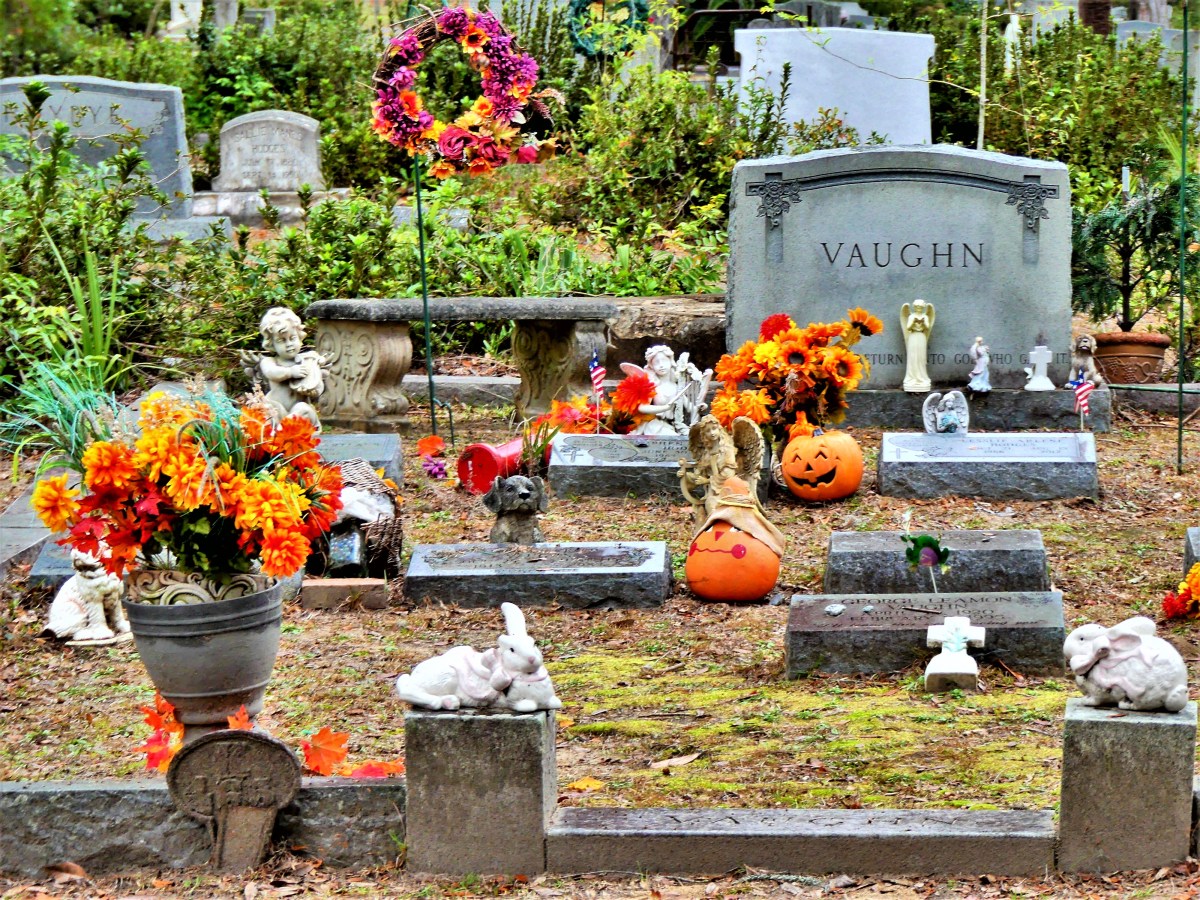
but I was unprepared for the cheeky display I discovered on my way out.

cheeky Vaughn

For me, this represents a bonafide celebration of a life once lived, versus a death soon forgotten.

Serenity Now

New York City is an acquired taste.

To many who live and work in haste,

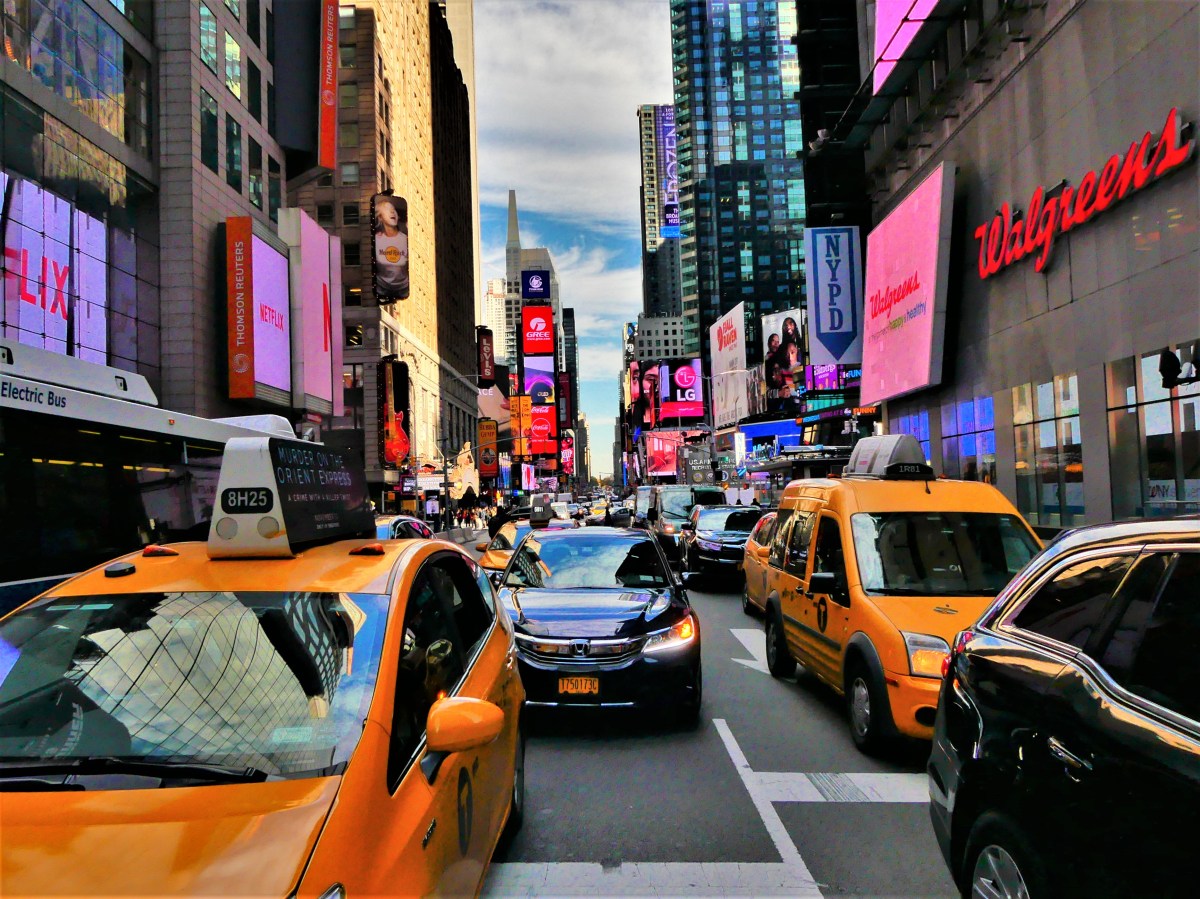
the din of Manhattan traffic is the soundtrack of modern mayhem.

TSQ traffic

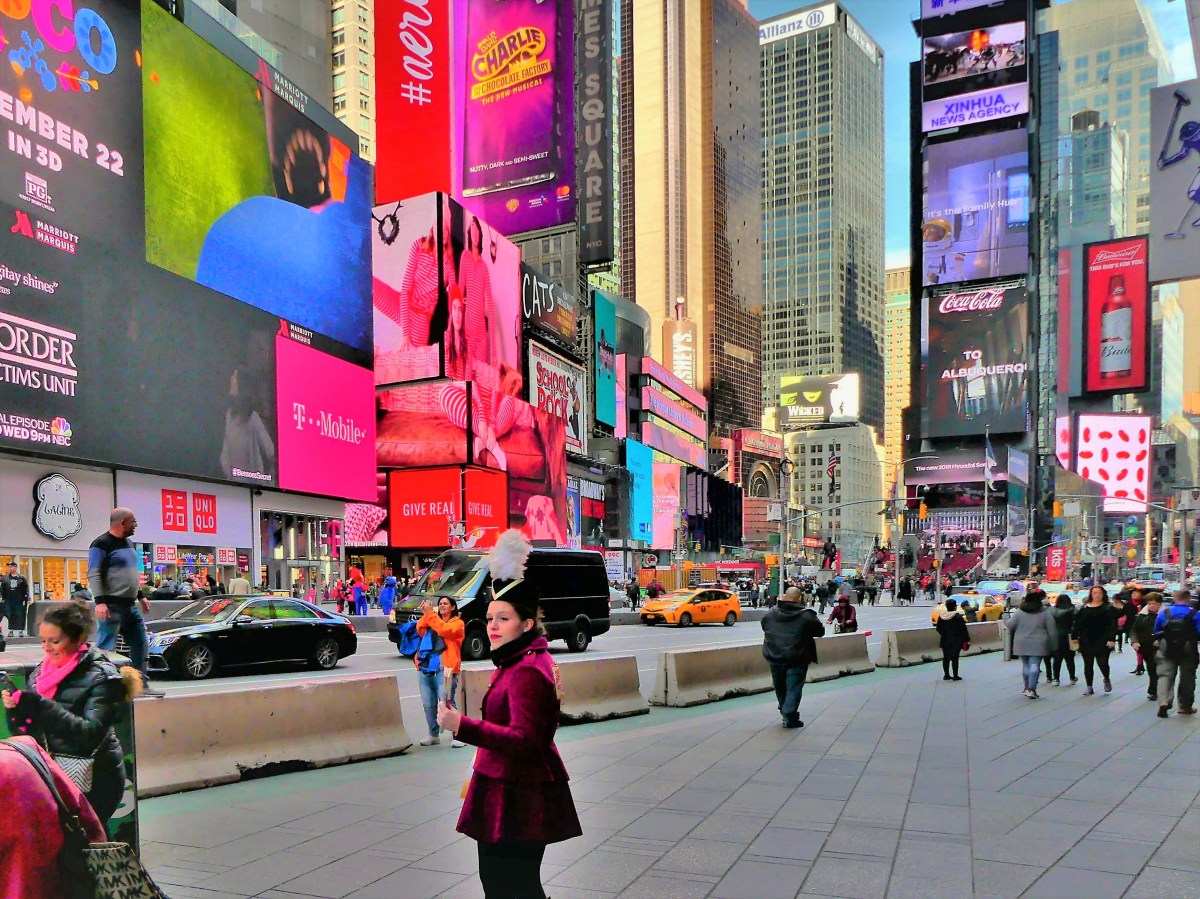
And the synthetic daylight of Times Square practically requires sunglasses,

regardless of the weather or time of day.

Times Square1

While many visitors may revel in the tumult,

equal numbers endure the assault,

induced by constant hustle and bustle.

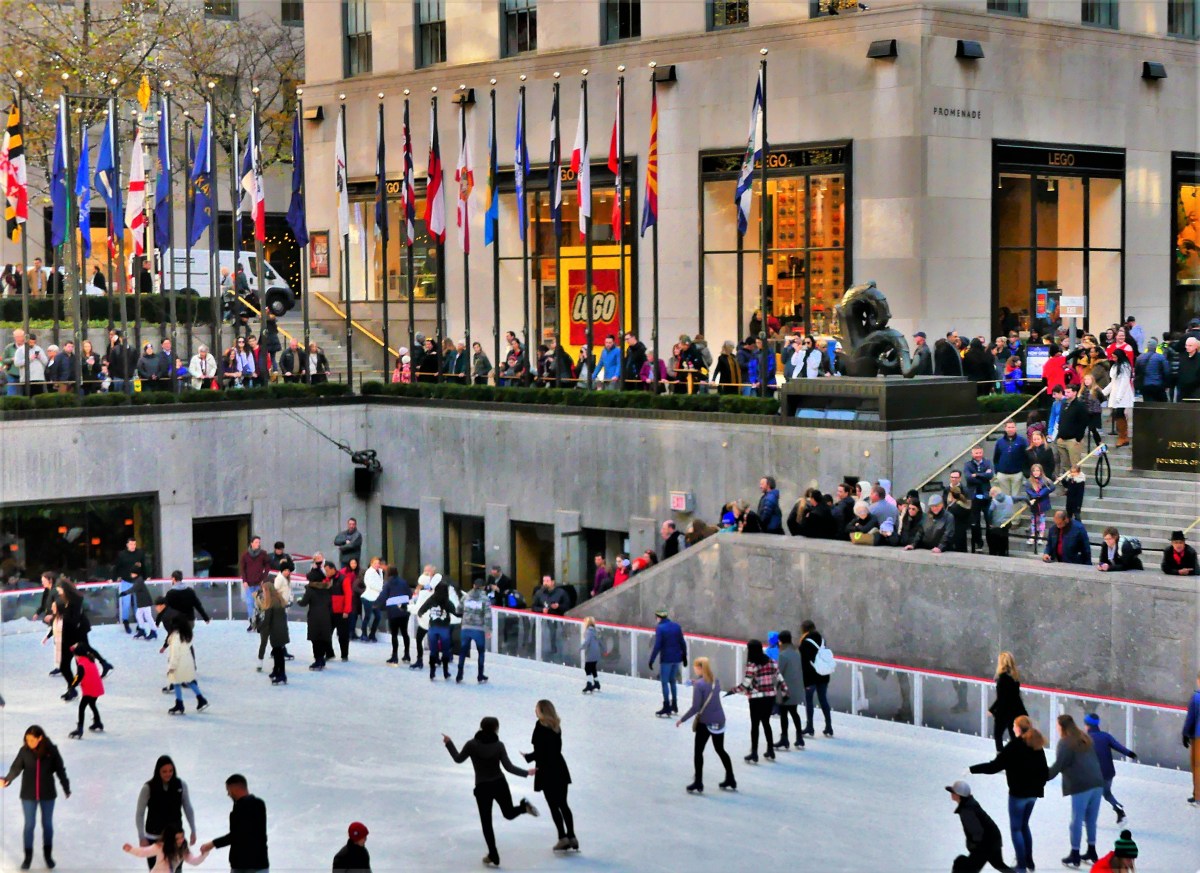
skating.jpg

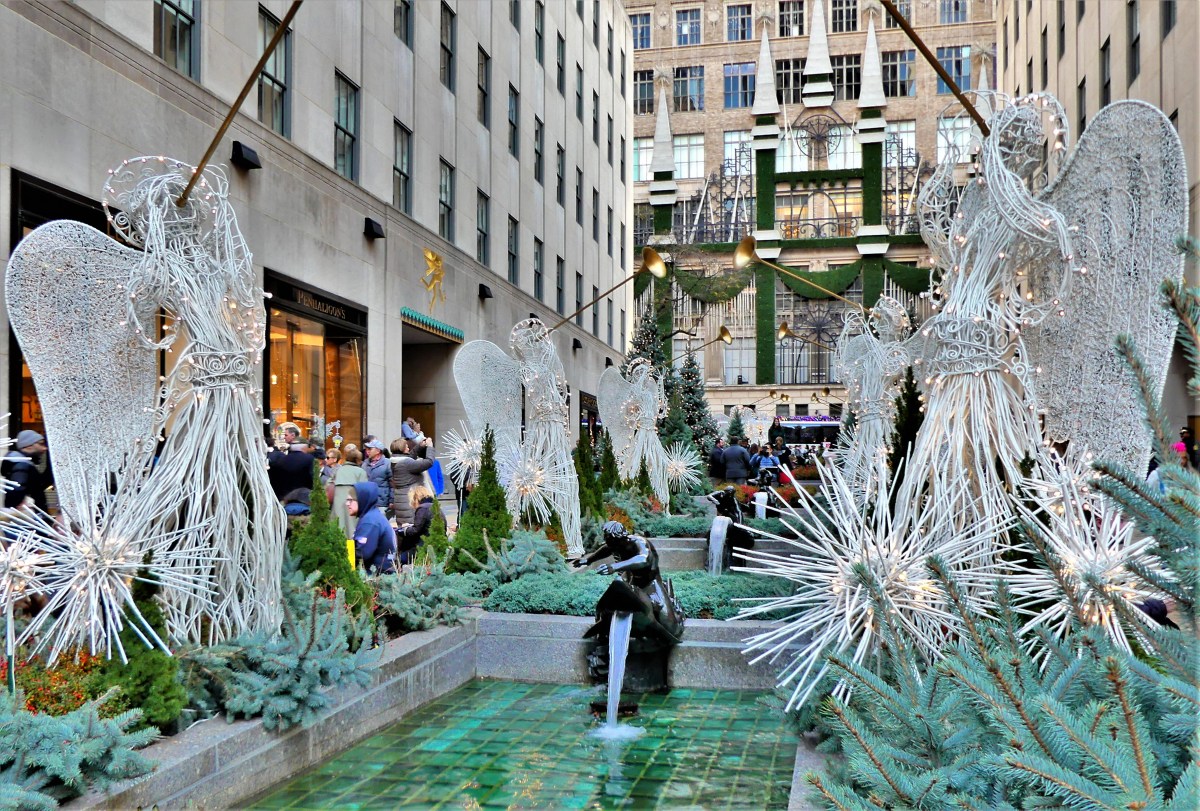
But the Herald Square Angels

have a secret to share:

promenade

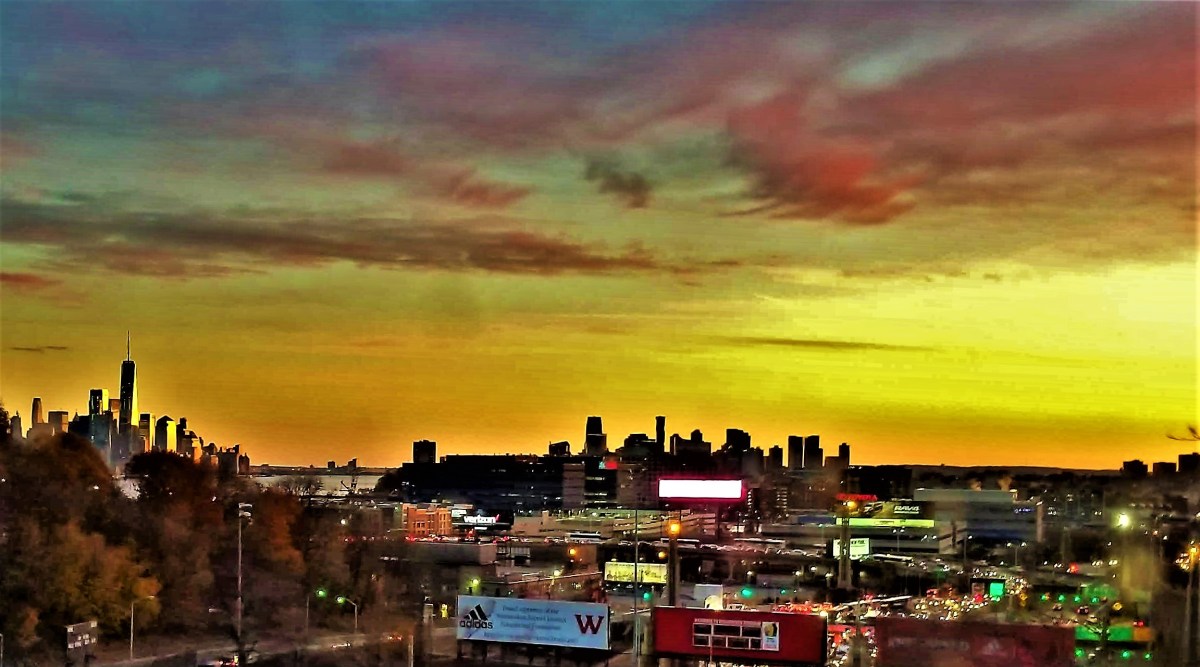
“Step back to infinity,

wait for twilight to set the city zest aglow,

and bask in the serenity.”

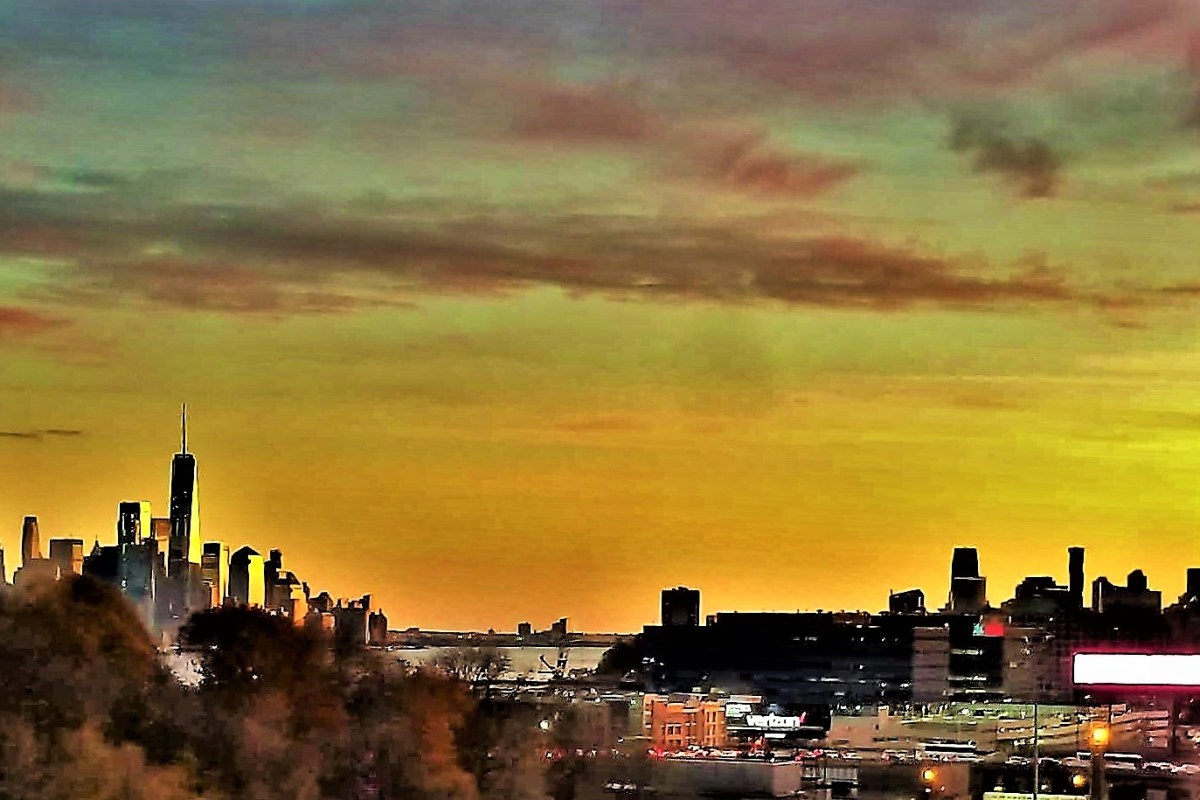
skyline (6)

Parhelic Circle with Sundogs

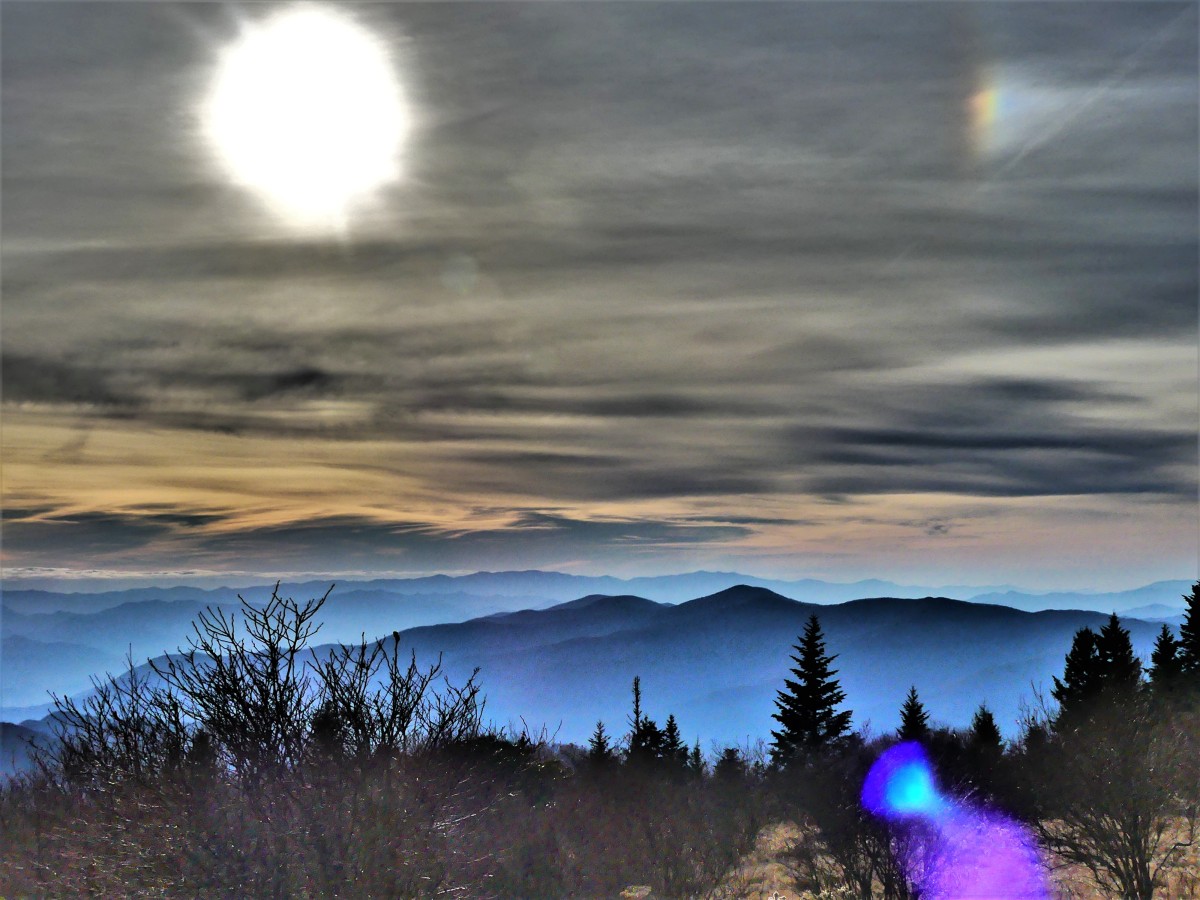
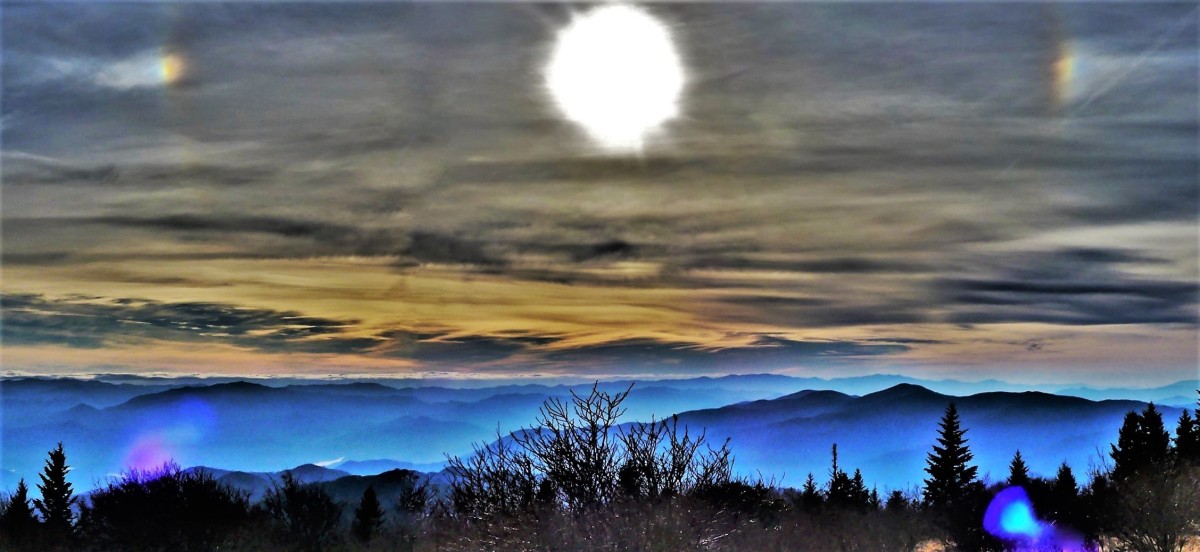
While enjoying the exhilarating views of the Great Smoky Mountains from the vantage of Andrew Bald’s grassy slopes, a narrow ribbon of color caught my eye just as the clouds were parting on the right side of the sun. I knew I didn’t have much time, so I refocused my attention on capturing my discovery through the lens of my camera, while trying not to blow-out the exposure by shooting into the sun.

right side

“Ooh, a rainbow,” I thought, “That’s cool.” I turned to the few hikers present, now relaxing after the trek down from Clingmans Dome.

“Did anyone else see the rainbow?” I asked around to no one in particular.

Their casual shrugs spoke volumes. Glancing back to the sky, I understood their ambivalence; the rainbow had already vanished.

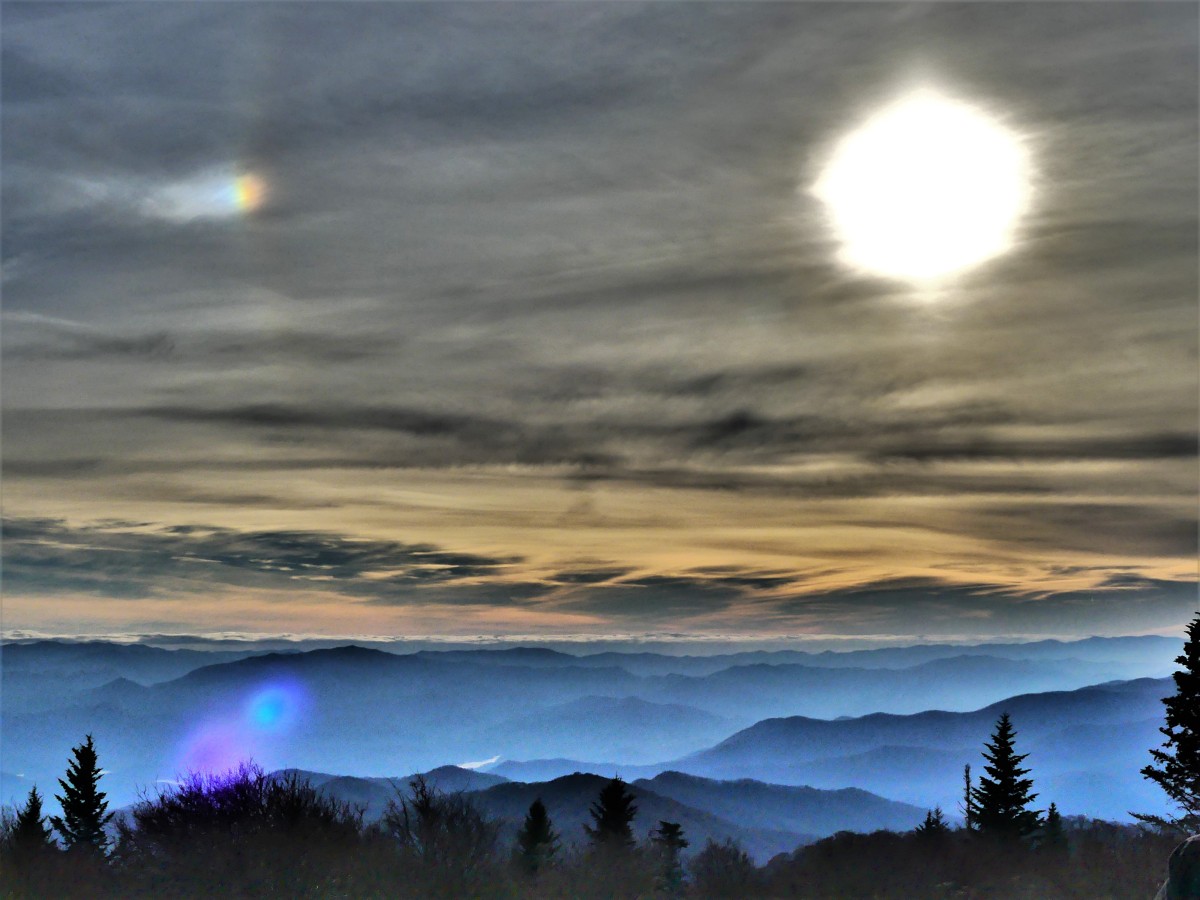
After a snack and a brief respite, it was time to start up the mountain before darkness descended, but not without one last look as I was leaving the clearing. That’s when I noticed–if only for an instant–a reciprocal slice of color on the left side of the sun…

left side

…and then it was gone. Leah and I ascended the trail in sufficient time for photographing a glorious sunset over Clingmans Dome, and nothing more was considered, until it was time to construct the post, On Top of Old Smokey.

While putting my thoughts together with the TV running in the background, I became distracted by a local meteorologist from Charlotte, who was standing in front of a projected image submitted by a viewer that looked very similar to photographs I had recorded on Andrew Bald.

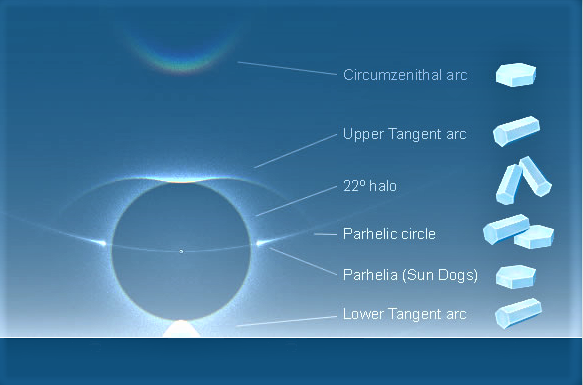
And then he replaced the image with this graphic:

parhelic graphic (2)

while giving a brief explanation of the earth science behind the phenomenon of a parhelic circle with flanking sundogs.

That’s when I realized I had captured something special…caused by sunlight refracting off tiny ice crystals in the atmosphere, and creating a larger halo around the sun.

I returned to the file to re-examine the photographs, and wondered–by chance, and given limited resources–if I could stitch the two views together using Windows Publisher to reproduce the full effect, even though the photographs of both sides of the sun were taken minutes apart from two different viewpoints and parallax.

While the technique is purely experimental, I believe the result comes very close to interpreting “what could have been” had the clouds not interfered with my “rainbows”…

parhelic circle with sundogs

…all of which makes for a more remarkable discovery, given the Great Smoky Mountain smoke.

Tempus Fugit

When I reflect over the past eight months on the road, it’s a focused blur. Like the miles that melt behind us as we’re cruising on the Interstates, our side-view mirrors only serve to remind us what we once observed before it’s gone in an instant.

“Did you see that?!” has been a common cue while driving, that could come at any time. It could be a natural phenomena like a double rainbow, or a dramatic change to an underwhelming landscape, or a man with no teeth whose nose touches his chin passing us in his hot-rod Mustang convertible.

Whatever the case may be, we usually have just a moment to react and make a meaningful connection before we’re on to the next moment in time. Our experience may be filed into memory, but memories can be sketchy, ambiguous and subjective.

“What’s your favorite place so far?” is a question that unquestionably comes up when meeting friends or strangers who hear about the progress we’ve made on our year-long odyssey. It’s also the hardest question to answer, considering the nearly 30,000 miles we’ve covered en route to 90 different destinations.

Leah and I often joke and reflect about our day at its conclusion, just to gauge if our recollections match.

“Was it a top 10 day for you today?” I’m likely to ask.

Certainly more than 30 times to date, she’ll respond with, “I don’t know if it was ‘top 10’, but definitely among the top 20.”

Looking back–with help from impressions of places from past posts–I’m now ready to answer the question, and reveal my top five favorites thus far, in chronological order.

1) August 2, 2017: Jasper National Park, Alberta Canada–Athabasca Glacier

Herbert detail (2)

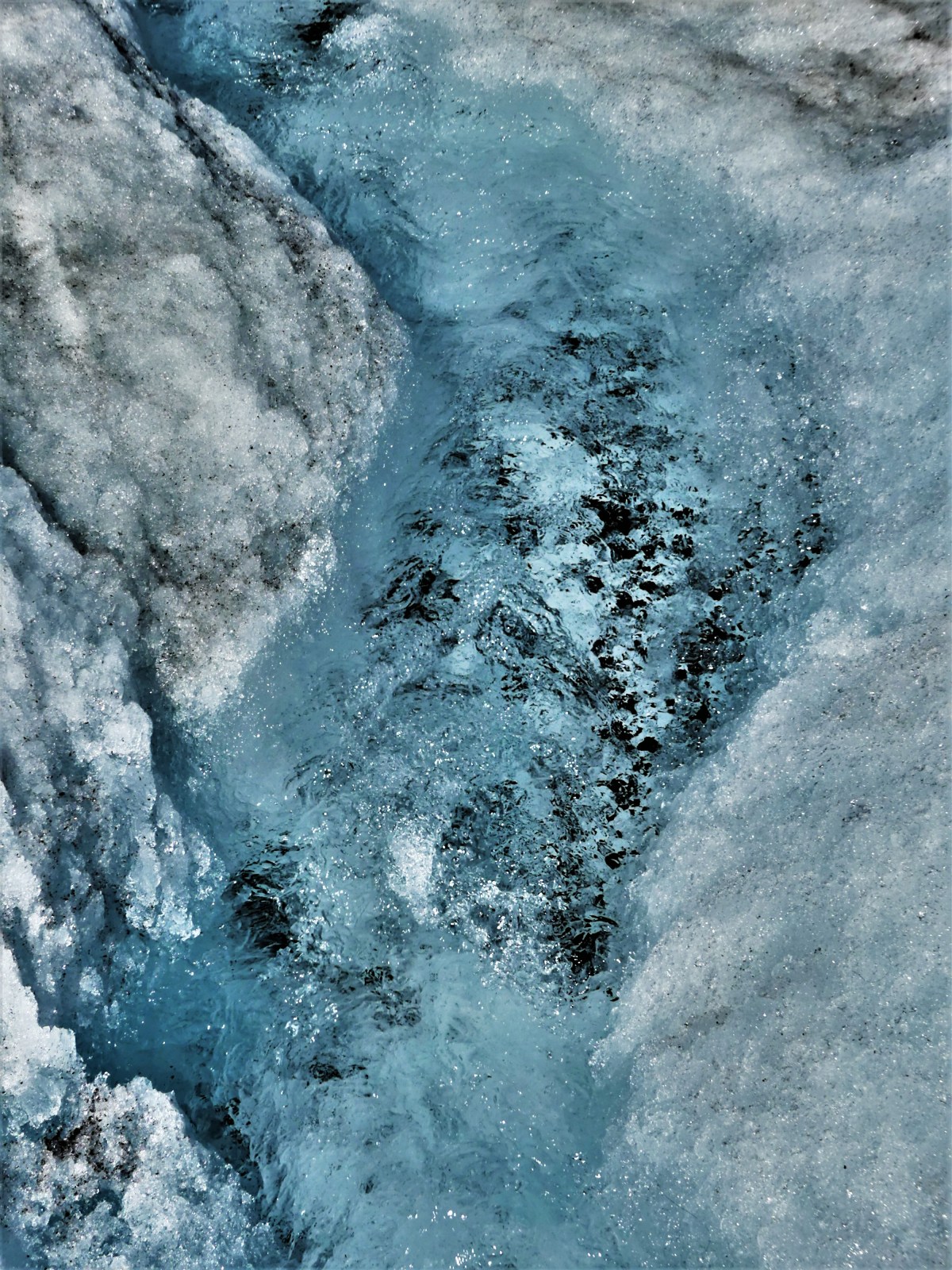
Athabasca Glacier currently recedes at 16 ft. per year, and has lost over half its volume over the past 125 years.

Glacier water

2) August 21, 2017: Corvallis, Oregon–Total Solar Eclipse

totality

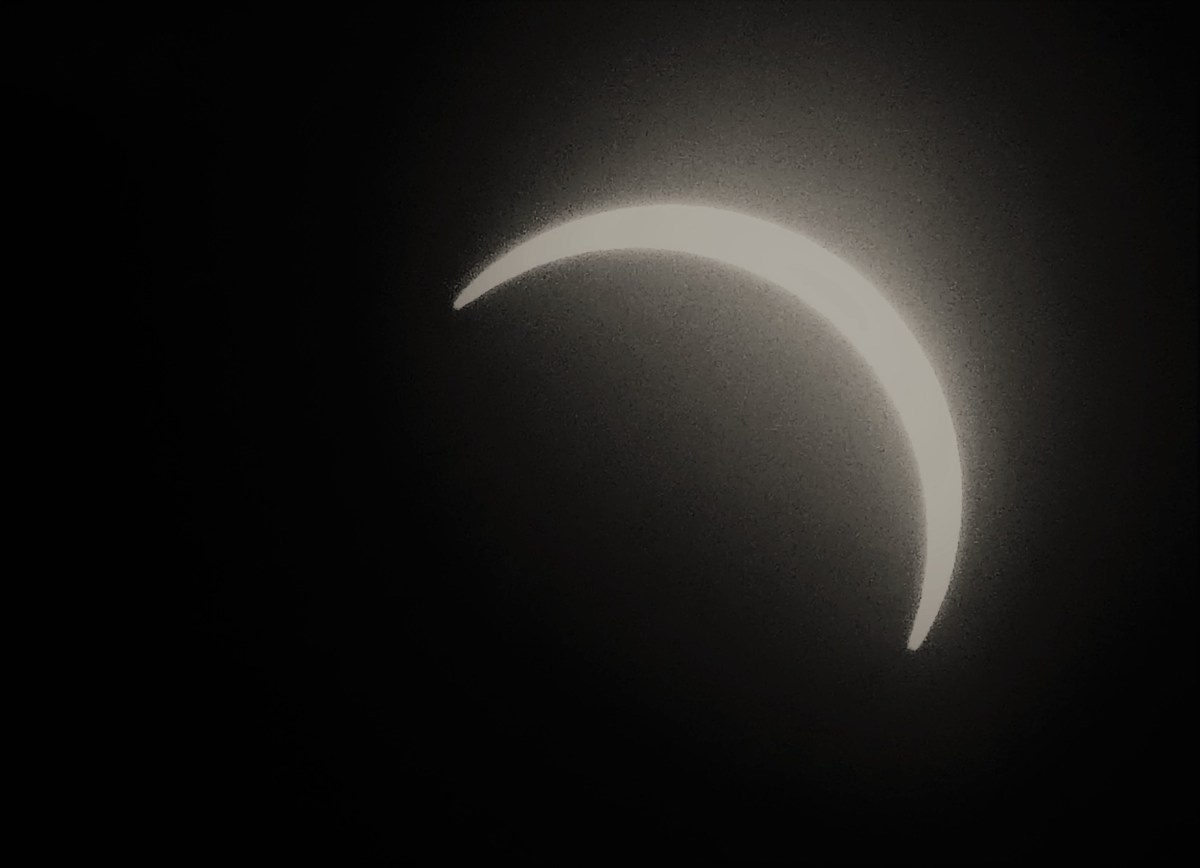
Totality of the eclipse lasted one minute, 40 seconds.

partial eclipse (3)

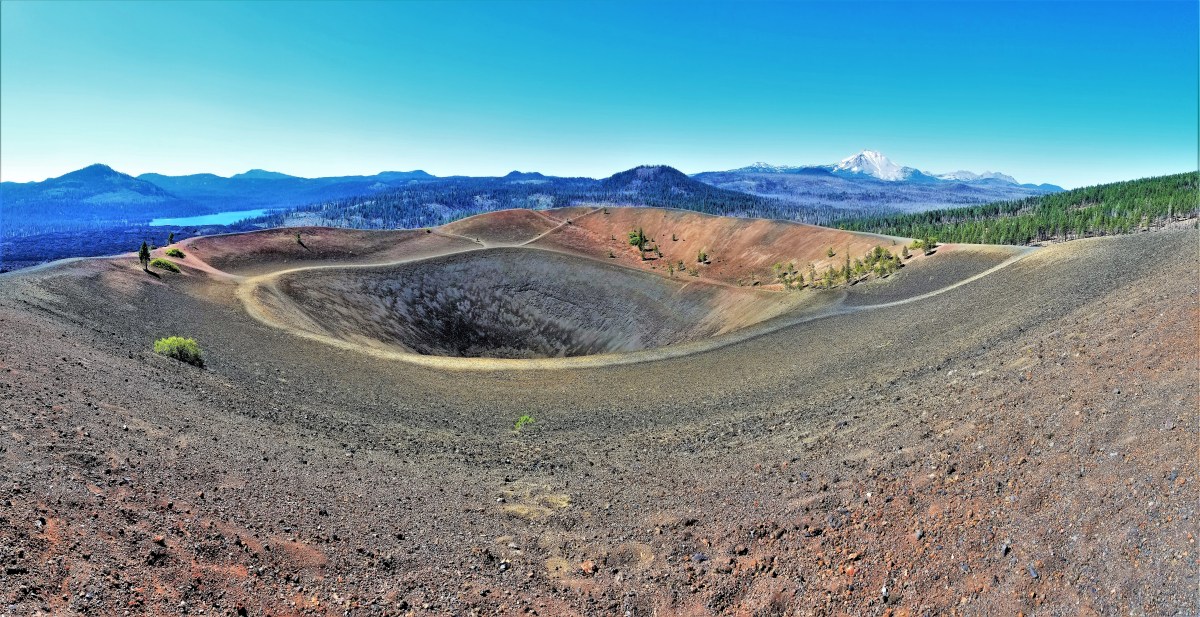
4) August 29, 2017: Lassen Volcanic National Park, California

cinder cone1

The 750 foot ascent up the 35% grade of loose gravel to the rim of the Cinder Cone took 35 minutes.

cone crater panorama (2)

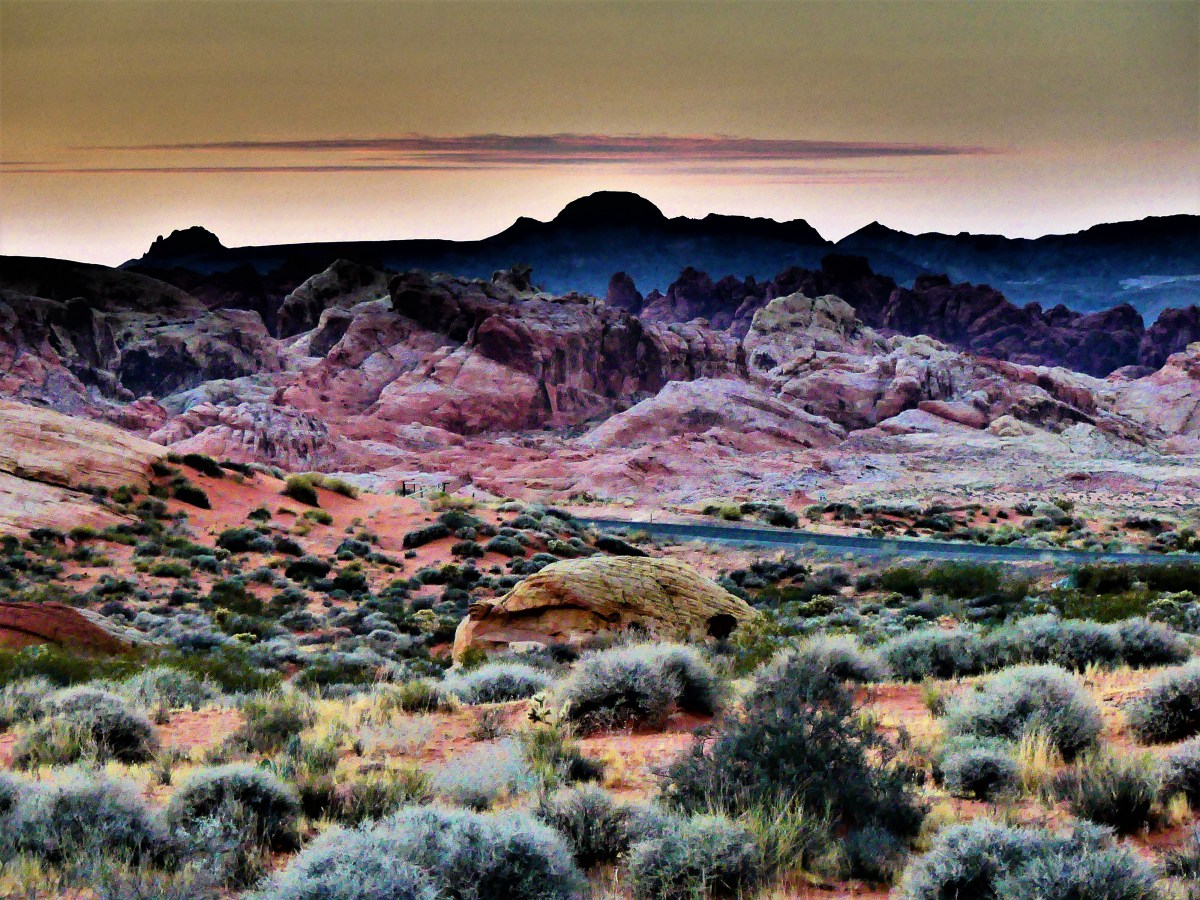
4) October 4, 2017: Valley of Fire State Park, Nevada

Sunset over Rainbow trail

7 minutes lapsed between the sun setting behind the Muddy Mountains to the moon rising over the Valley of Fire.

sheep and moon (4)

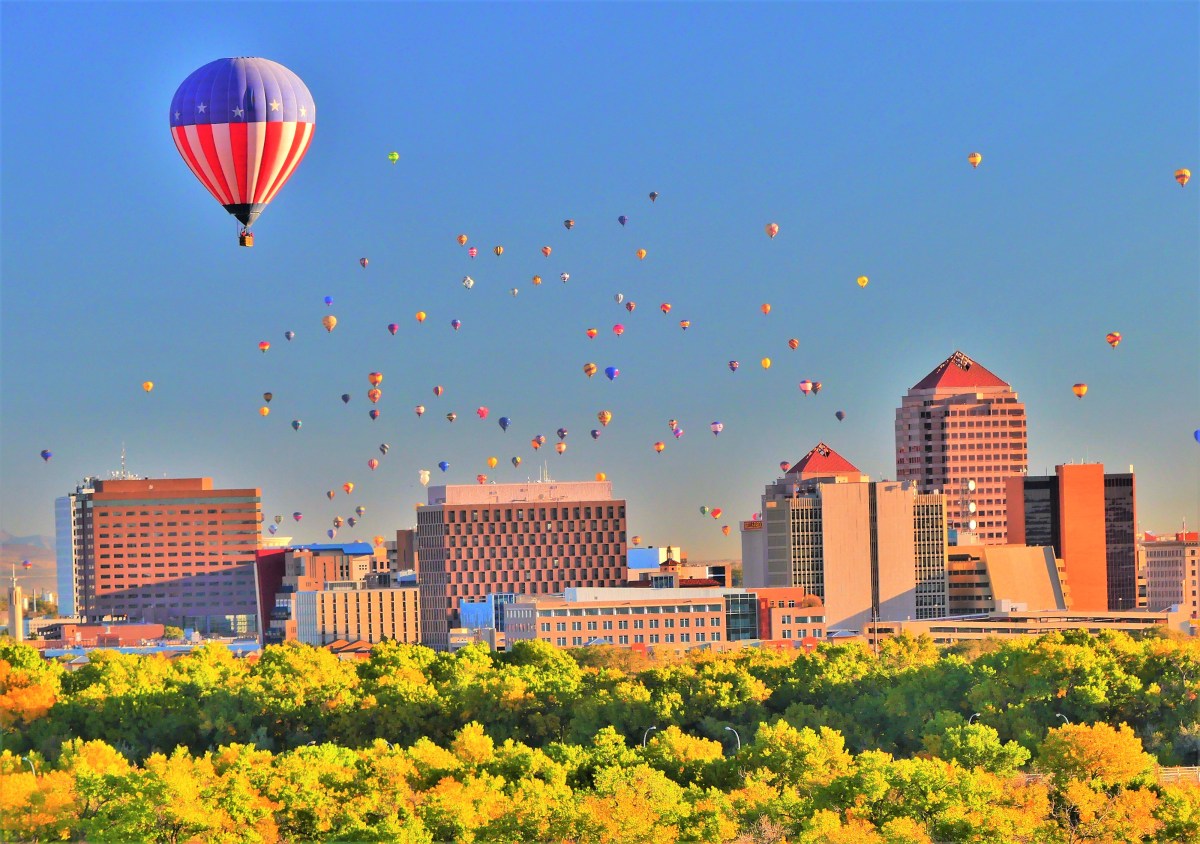
5) October 14, 2017: Albuquerque, New Mexico–Balloon Fiesta

lighting it up

The hot air balloon was aloft over Albuquerque after 13 minutes of inflation.

Balloons over Albuquerque (2)


Although each adventure is fundamentally different from the others, collectively, they represent before and after transitions.

The ephemeral existence of each event is temporary in its own special way, with its own time-stamp carved in soap. Fortunately, the moment can be captured and preserved in words and pictures, lest there be any doubt that something significant happened in our lifetime.


Arch ‘n Bunker

“Please don’t let it rain,” I beseeched the angry sky.

After savoring four months of dry weather from Oregon to Arkansas, we arrived in St. Louis at the same moment a cold gray funk had arrived for Halloween. Leah and I had put off our visit to the Gateway Arch in our hope that conditions would clear, but our window of opportunity had narrowed with a rainy forecast predicted for the following day. Running out of options, we bit the bullet and pulled the trigger.

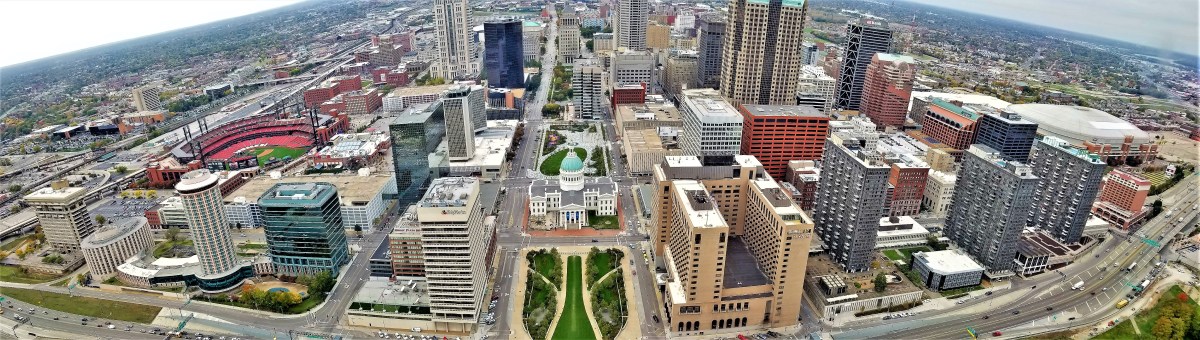
Tickets to the monument are available at the Old Courthouse–headquarters for the Jefferson National Expansion Memorial,

Old Courthouse

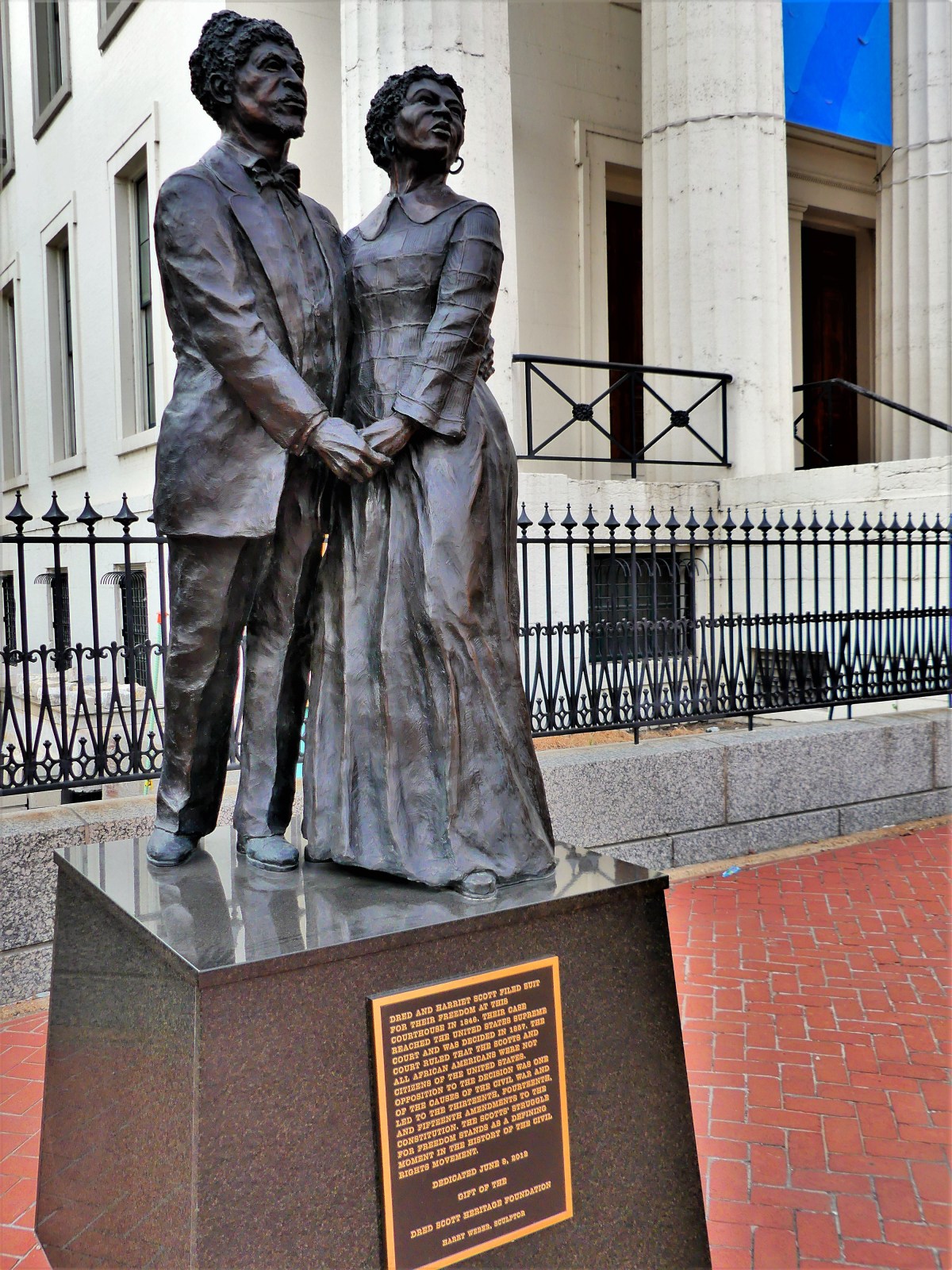
and historic location of the landmark Dred Scott trials–where an ordinary man took extraordinary measures to free his family from the indignities of slavery, by bringing suit against the United States of America.

Dred Scott

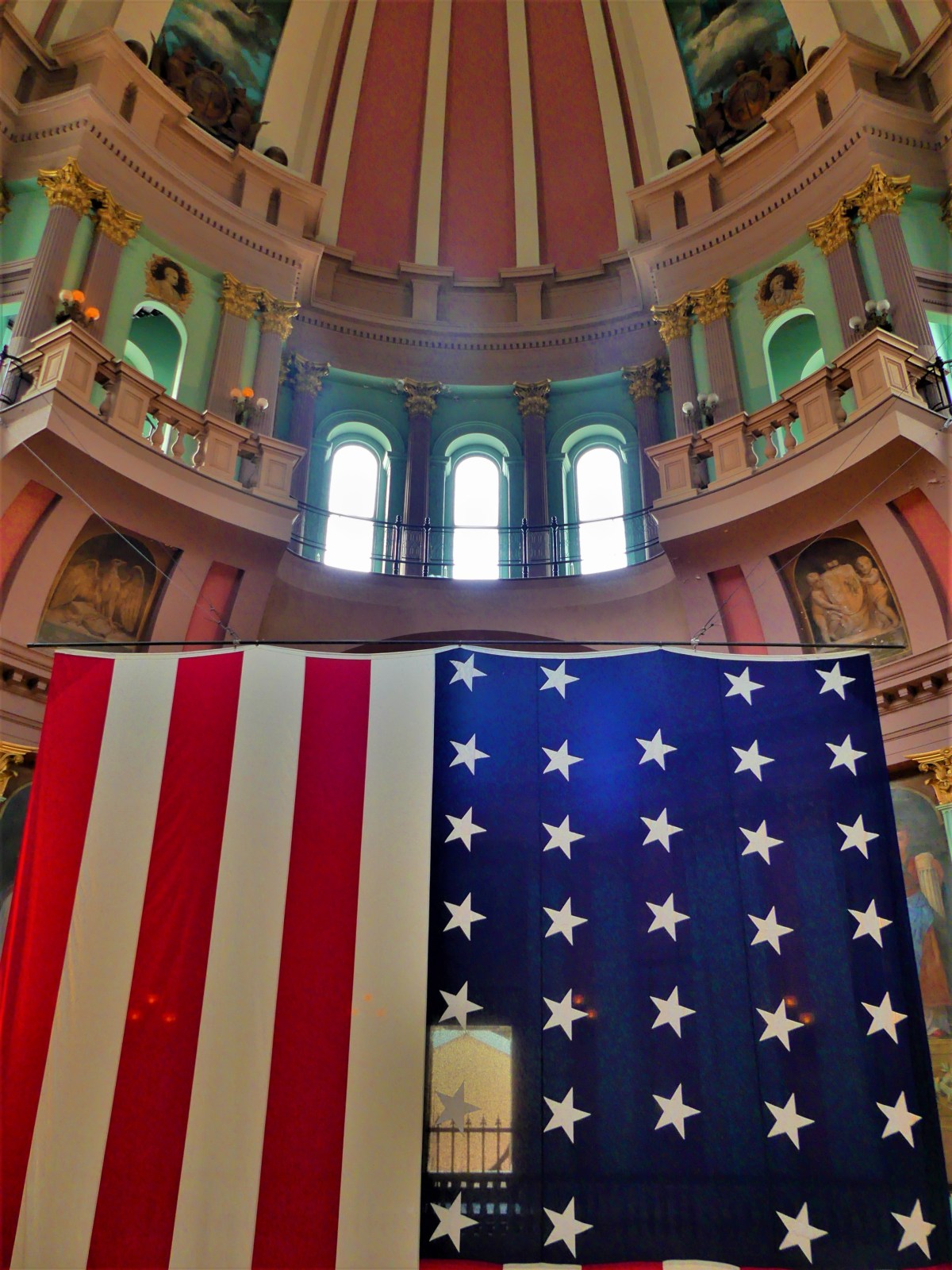
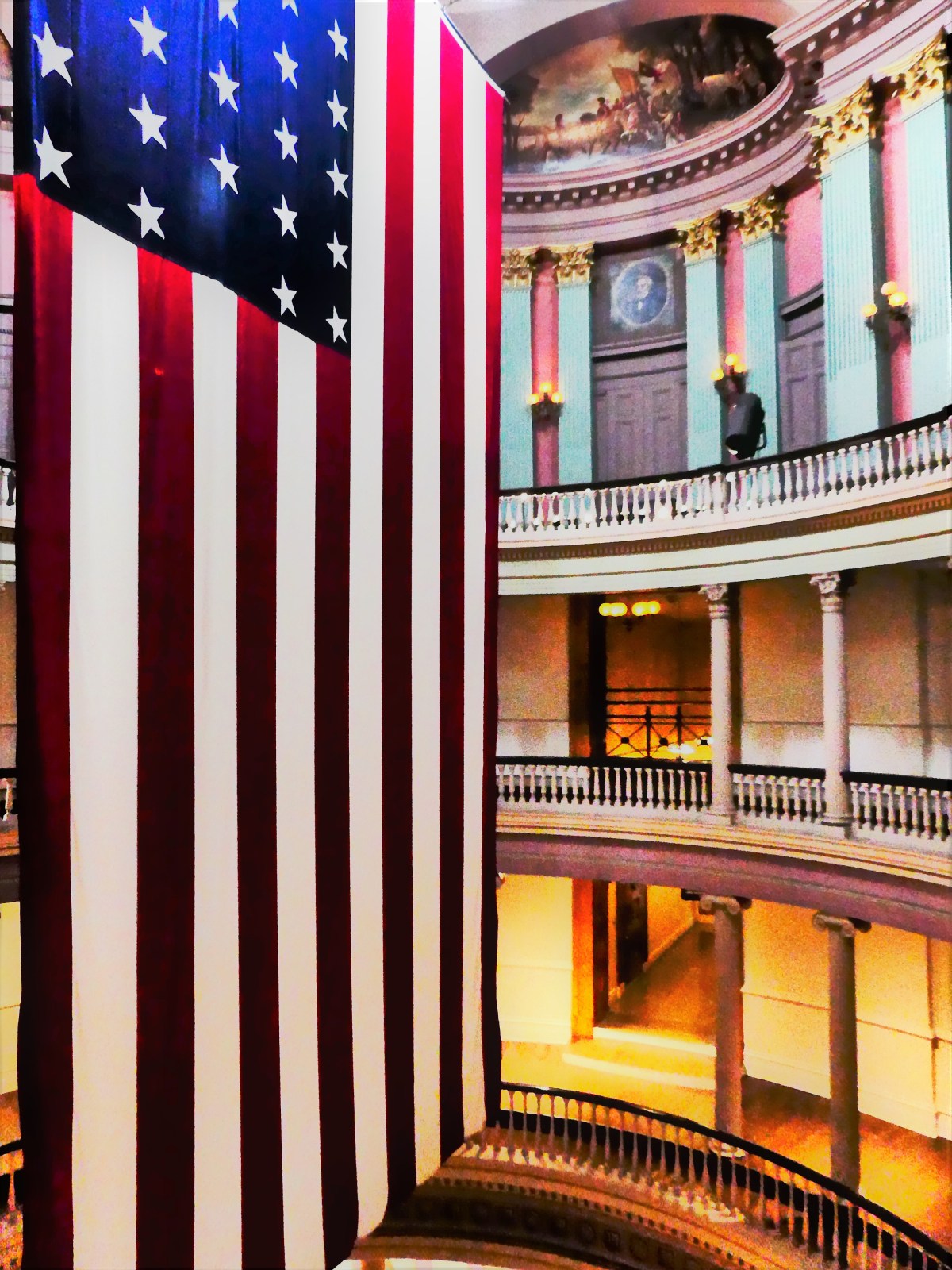
A walk inside reflects two hundred years of history. Directly beneath the dome and the 33-star flag (dating back to July 4, 1859)…

Old Courthouse rotunda

…rests a 3-foot diameter flagstone amid the pavers–the acoustic sweet spot of the courthouse–where orators would stand to speak and be heard from top to bottom,

2nd flr view

and throughout the wings.

flag and columns

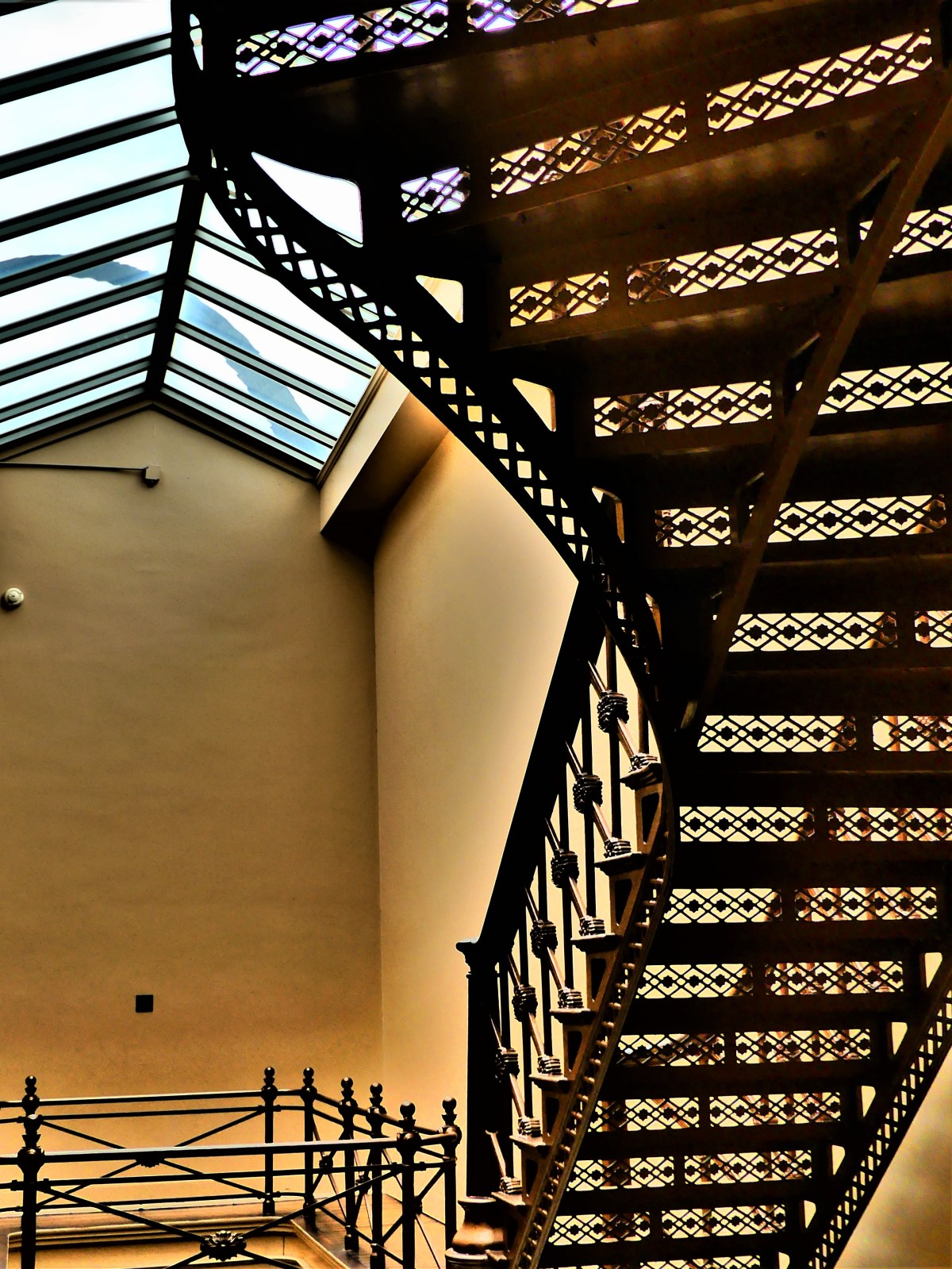
Stairwells lit by skylight…

stairs

stairs thru the door

carried us to higher floors, providing a peek of the nearby Arch,

stairs and arch

Arch thru courthouse skylight

and a recreation of the courtroom that memorializes where Louis D. Brandeis was admitted to the Missouri bar on November 21, 1878.

Brandeis courtroom

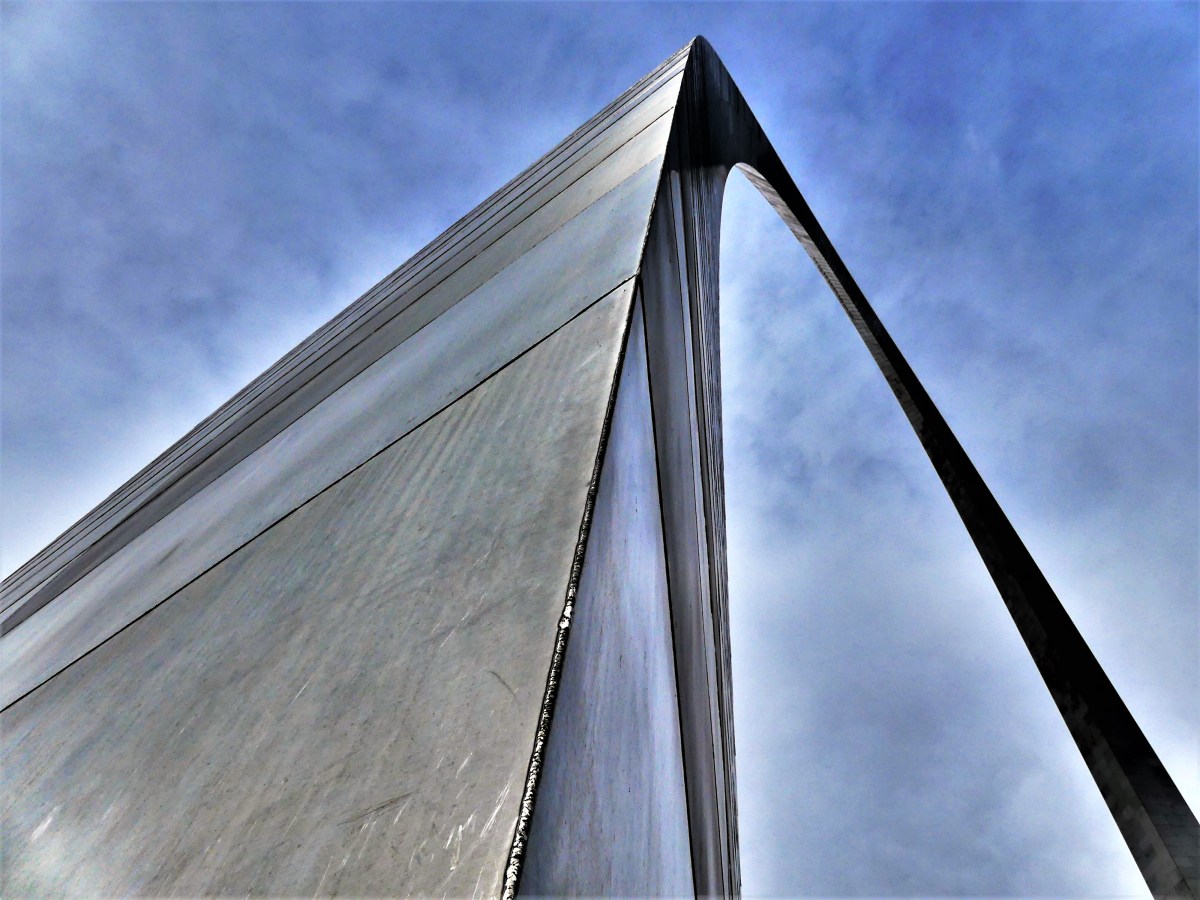
After a brief detour around a barricaded green space currently under construction, we arrived at the south bunker beneath the arch…

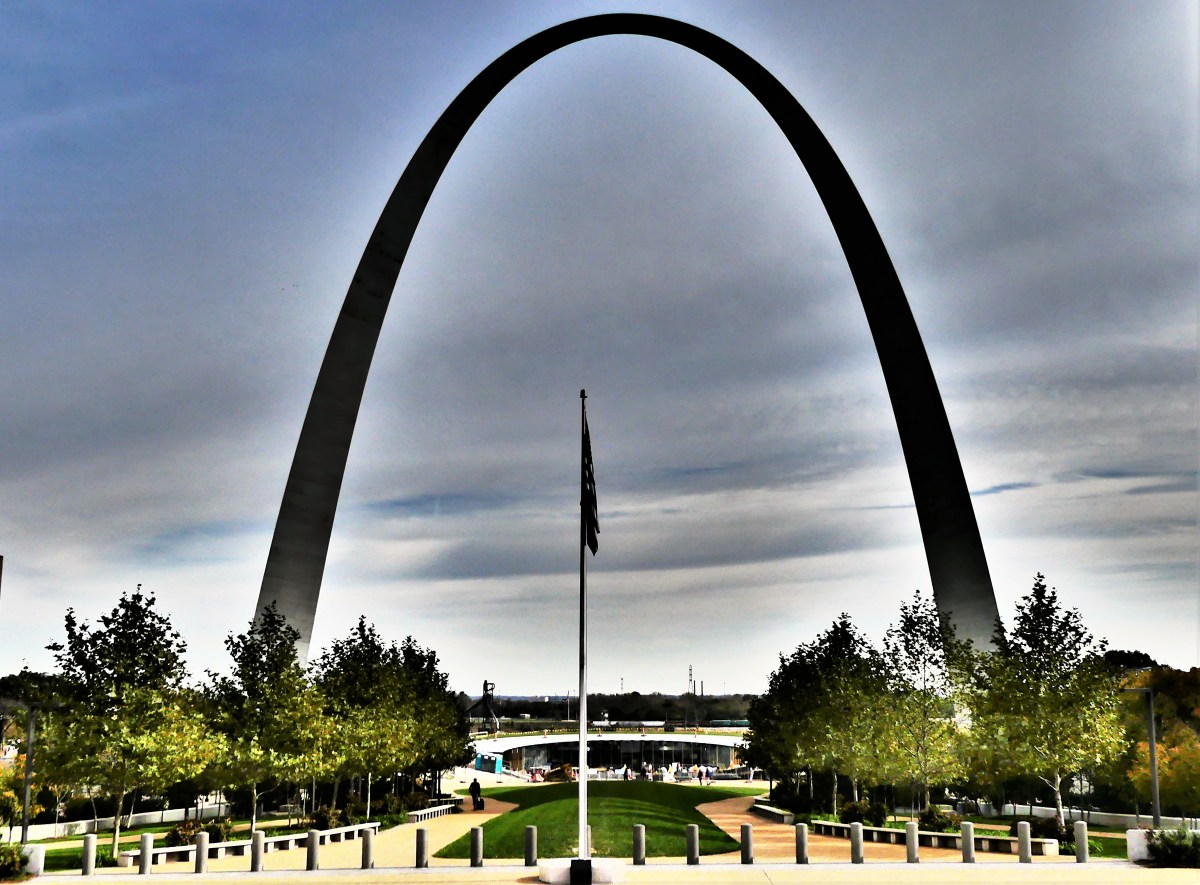
Arch against the sky

Arch curvature

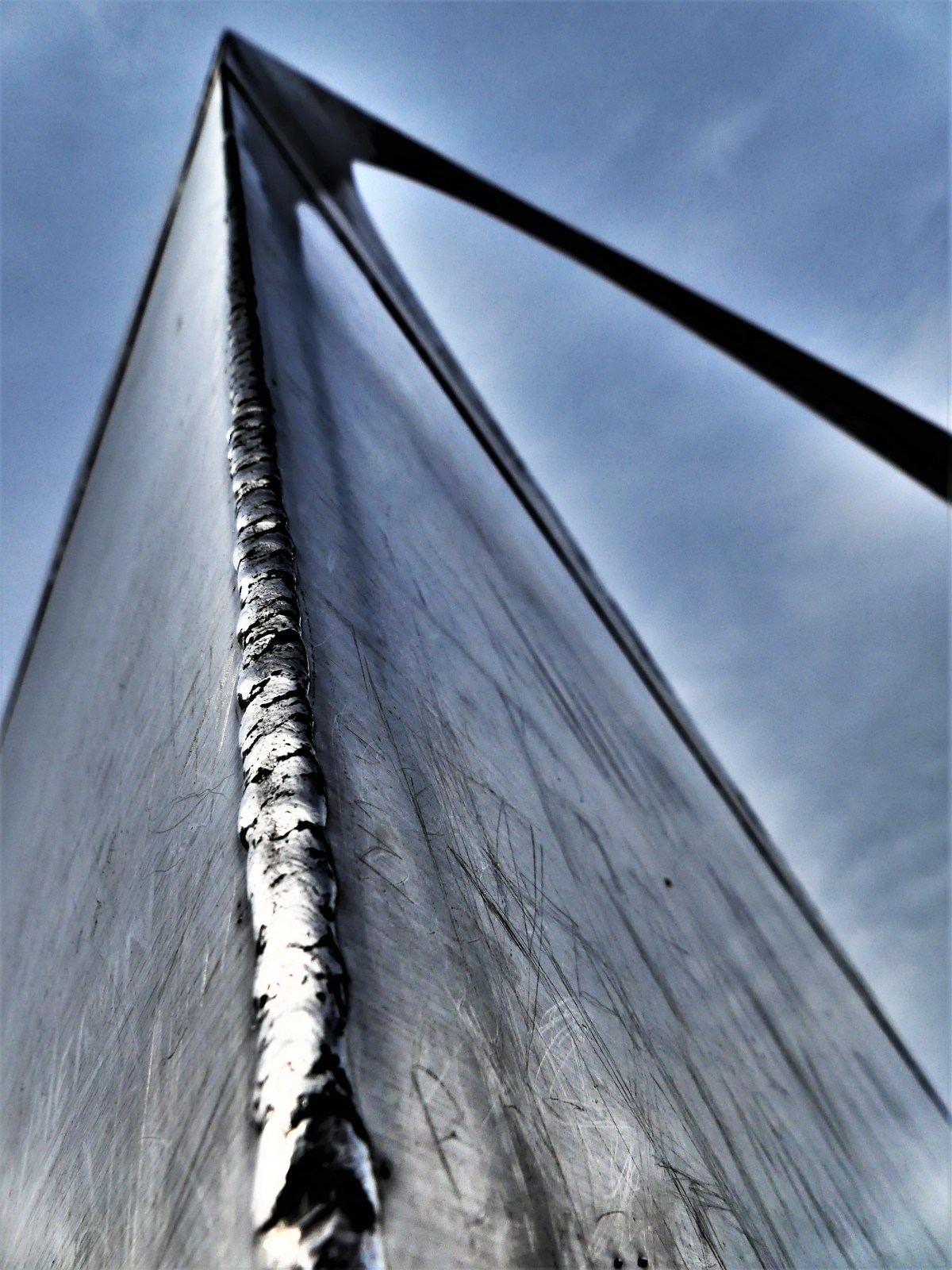
scratches and weld

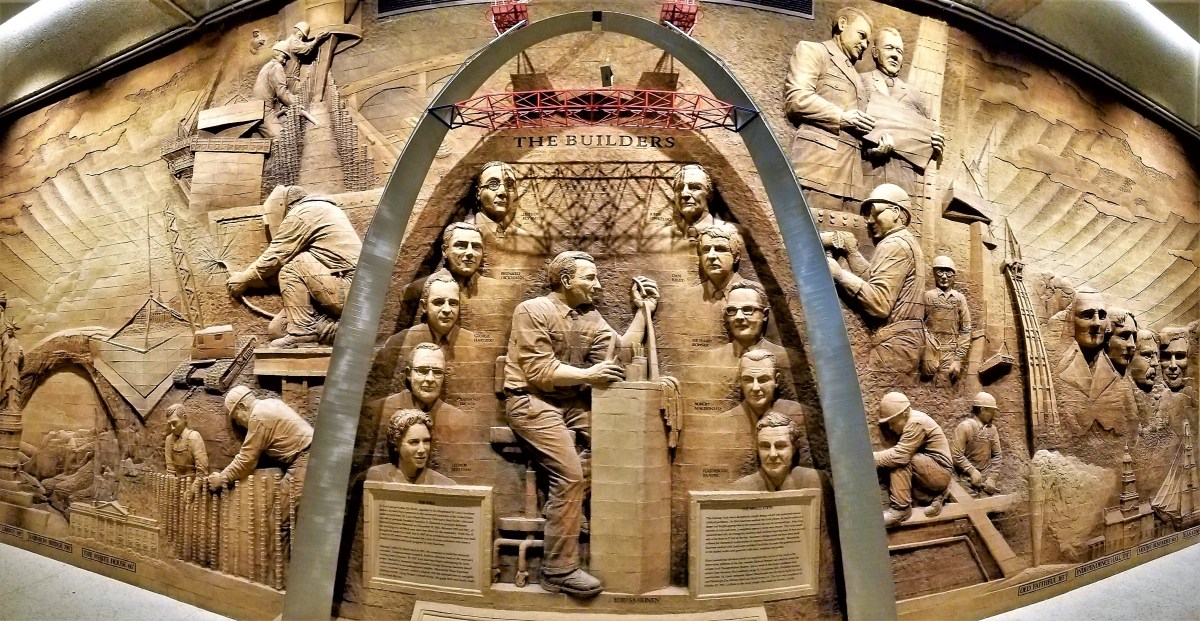
that houses walls of exhibits documenting construction from 1963 to 1965,

ediface sculpture

and more importantly, access to the carriage cars that carry visitors to a viewing gallery 630 feet above the city.

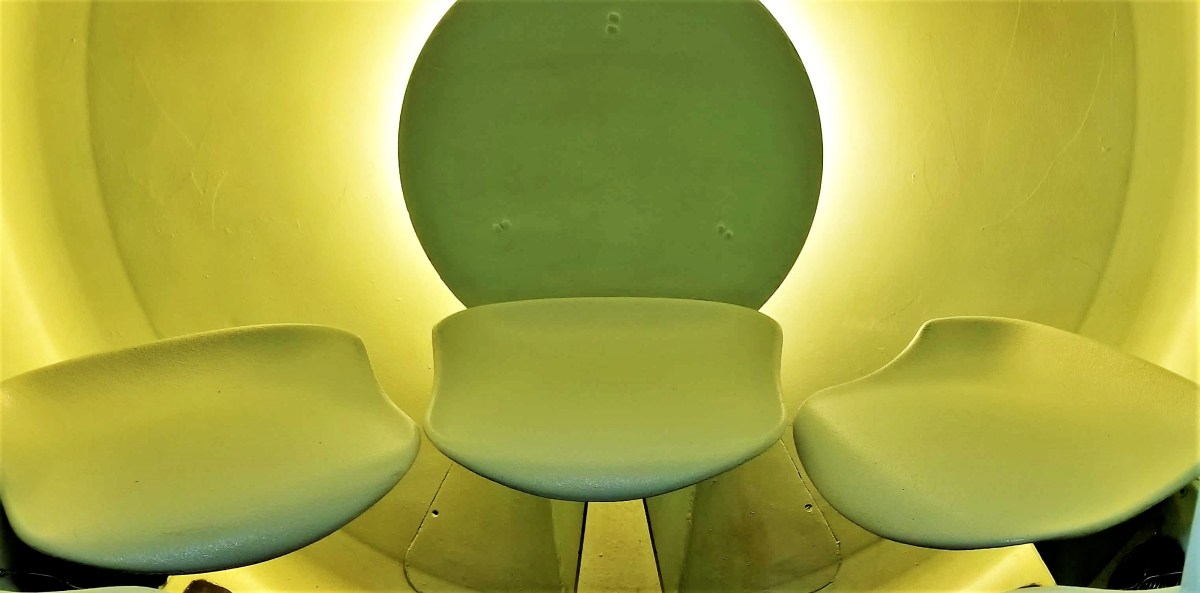
pod control

After a four minute ride, we emerged from our pod,

cable pod2

into an enclosed ramp with multiple portholes overlooking east of the Mississippi,

Mississippi Riverboats

and unobstructed views westward, beyond St. Louis.

St. Louis panorama

As we drove through St. Louis drizzle the following day, we were never far from occasional glimpses of the Arch shrouded in rain clouds.

While I never had a sunny day to capture the full beauty of the simple architecture created by Eero Saarinen, I could still bask in the warm glow of an iconic structure that celebrates the spirit of American exploration.

Gateway Arch


Supreme Ruler of Beers

Growing up, I was never much of a beer drinker. But on the odd occasion that my underaged friends and I would sneak a beer in the woods by our homes, it was always an Iron City beer, ’cause that’s what Pirate fans drank in Pittsburgh. Besides, it was high treason to drink anything other than Iron City, and still be part of the cool kids’ club.

Had I been born in St. Louis, I’m certain that things would have gone differently. I’d be a Cardinals fan, and my “go-to” beverage would be Budweiser from the beginning, because Budweiser beer, introduced in 1876 by Aldolphus Busch dominated the St. Louis market, on its way to becoming the first national brand in America, thanks to pasteurization and a fleet of refrigerated rail cars.

In 2008, Anheuser-Busch (A-B) succumbed to a $52 billion hostile takeover by Belgium-Brazillian company InBev to become the world’s largest brewer, and cemented its global stronghold by merging with its rival, London-based SABMiller one year ago for $100 billion.

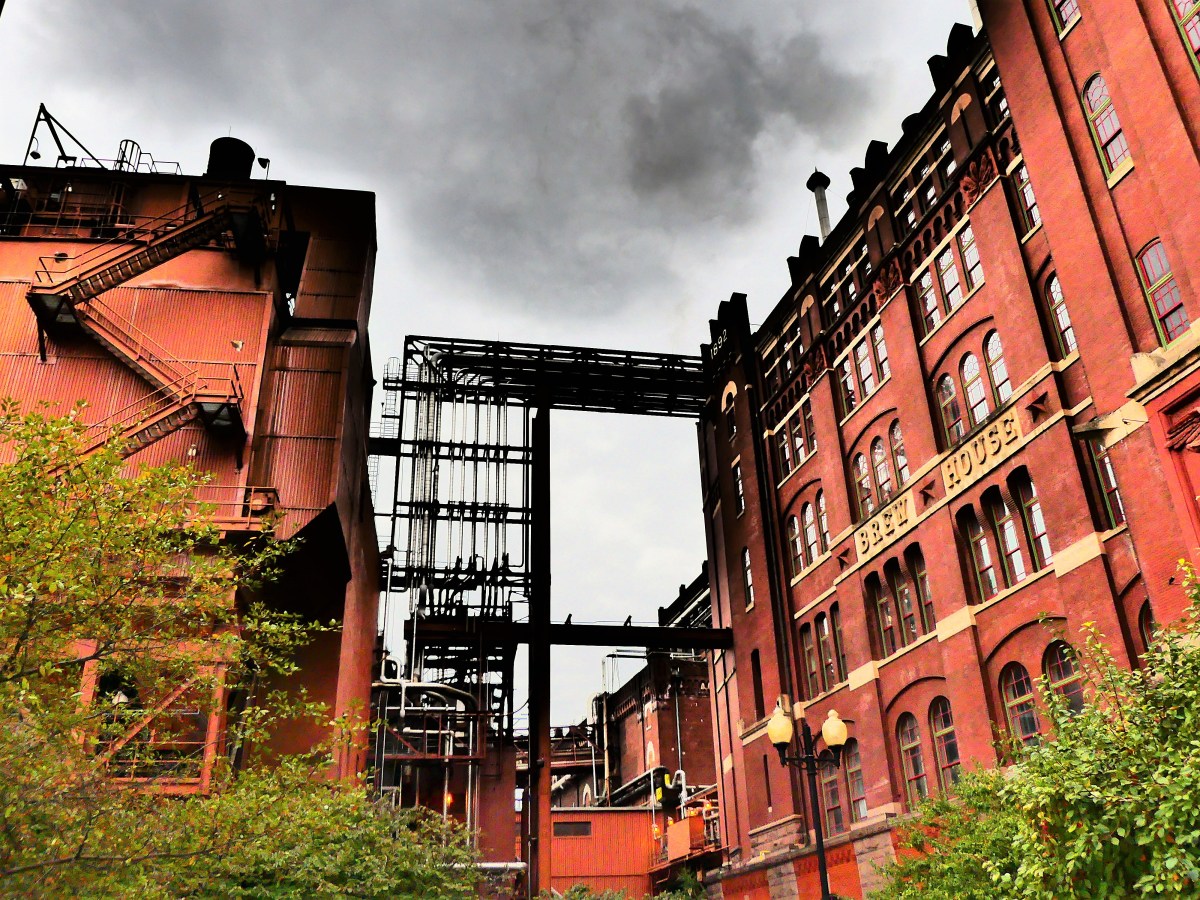
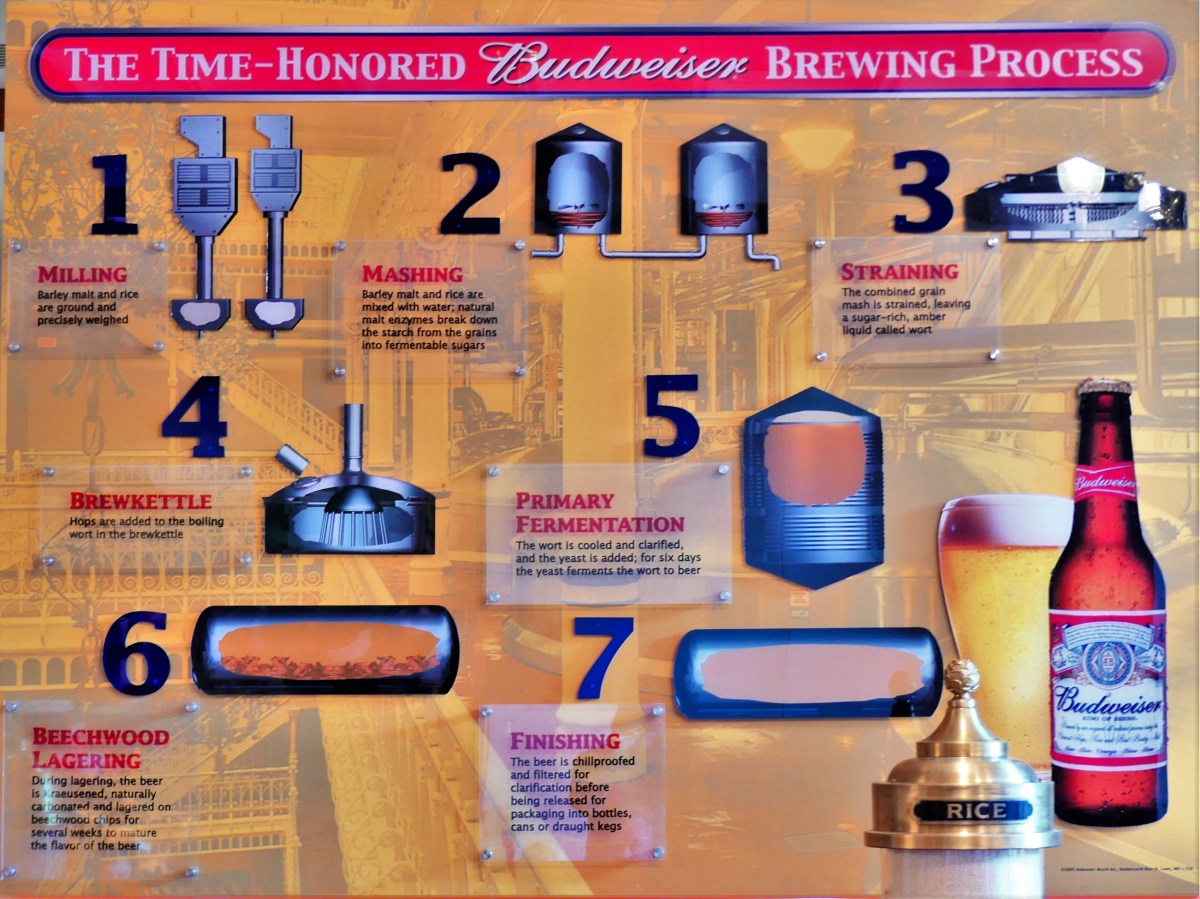
North American operations remain headquartered in St. Louis, where tours are  conducted regularly for beer aficionados interested in A-B’s time-honored brewing process, and for history buffs who appreciate the architecture and design that’s been selected by the National Register as Historic Landmarks.

stained glass

Leah and I arrived at Lynch St. for the 45-minute tour beginning at 3:10 pm. Upon entering the corporate complex, we were surrounded by tall Romanesque red brick buildings with elaborate flourishes and embellishments.

Beer House1

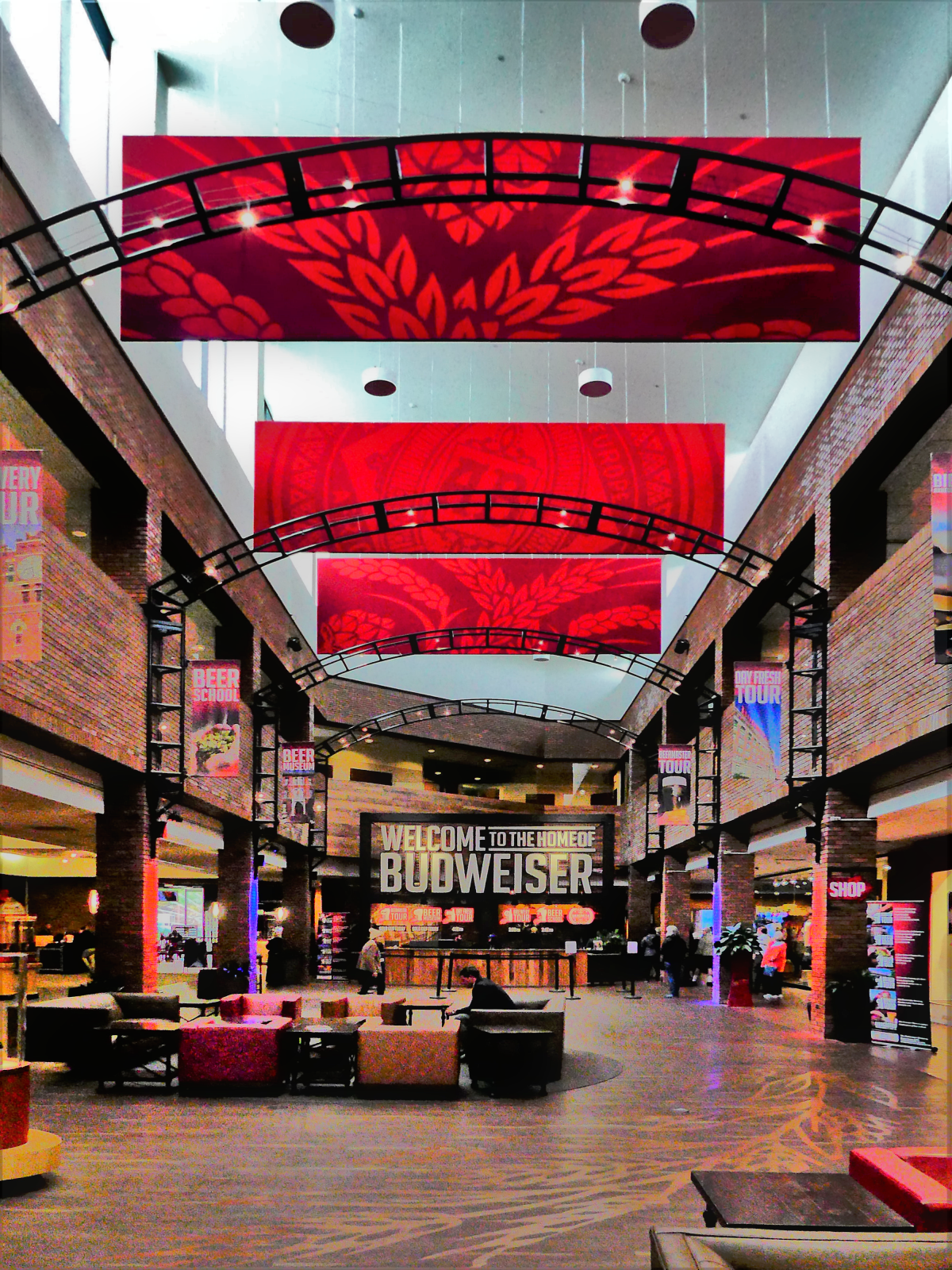
We entered the Welcome Center,

welcome center

designed to house its branded gift store, pub space, and exhibits.

A-B story

Soon after, we were introduced to our assigned tour guides, Tim and Andrew who spoke about sticking together amid the tight security surrounding the campus, before ushering our group of fifty outdoors to gawk at the Clydesdales in the exercise yard.

Clydesdale posing

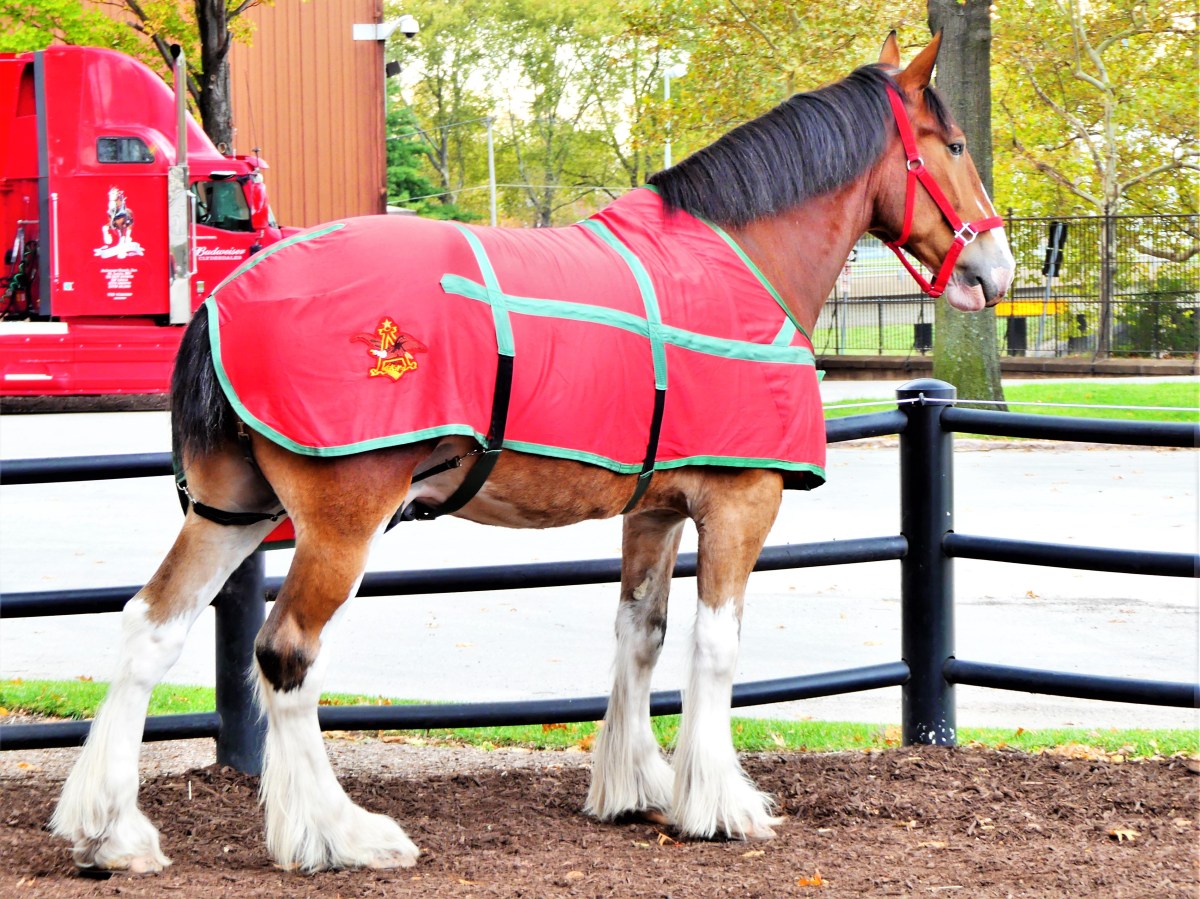
These massive draught horses stand at 18 hands, and have been carefully bred by the brewery to retain their chestnut coloring and markings, making them the most identifiable mascot in beer branding and advertising.

From there, it was a short stroll to the Carriage House where we were split into two groups: those on a steamboat cruise stuck with Andrew, while the rest of us walk-ins aligned with Tim, a self-professed expert on all things beer, who dared to be challenged with any questions on Anheuser Busch.

After moving to Washington, DC to attend college, my beer drinking habits matured. Staying true to my roots, Iron City was quickly replaced by Rolling Rock, a more “premium” beer with a smoother taste in a green bottle imported from Latrobe, PA.

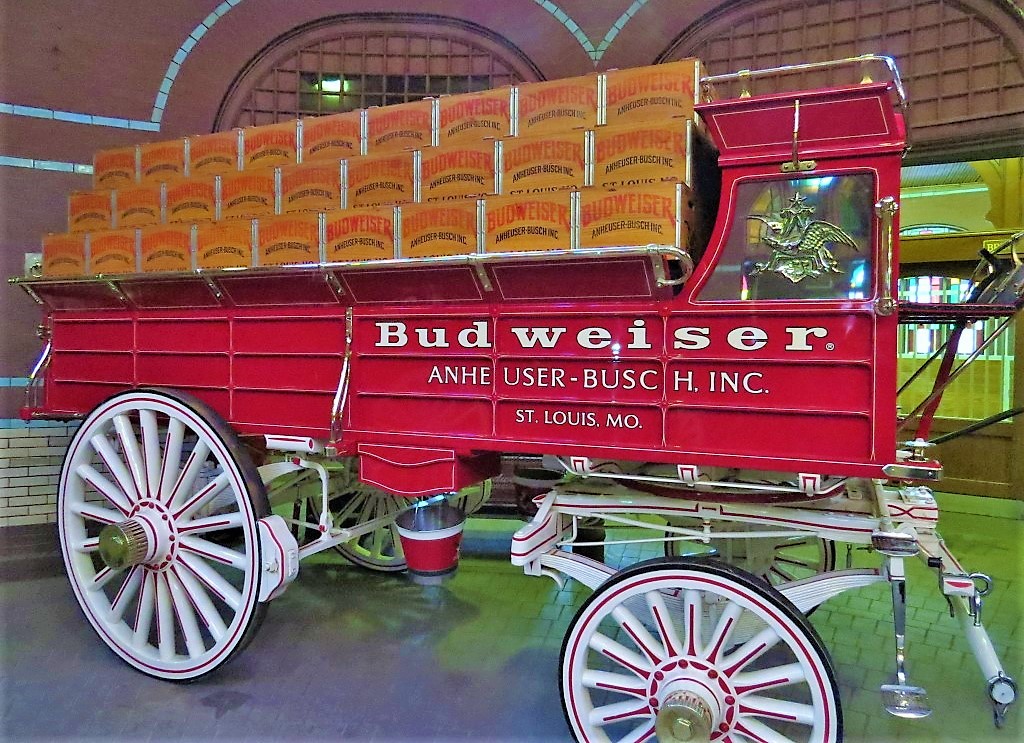
Once inside the Carriage House, we were introduced to Murry, who was being braided for the 3:30 pm parade.

grooming (2)

ready for parade

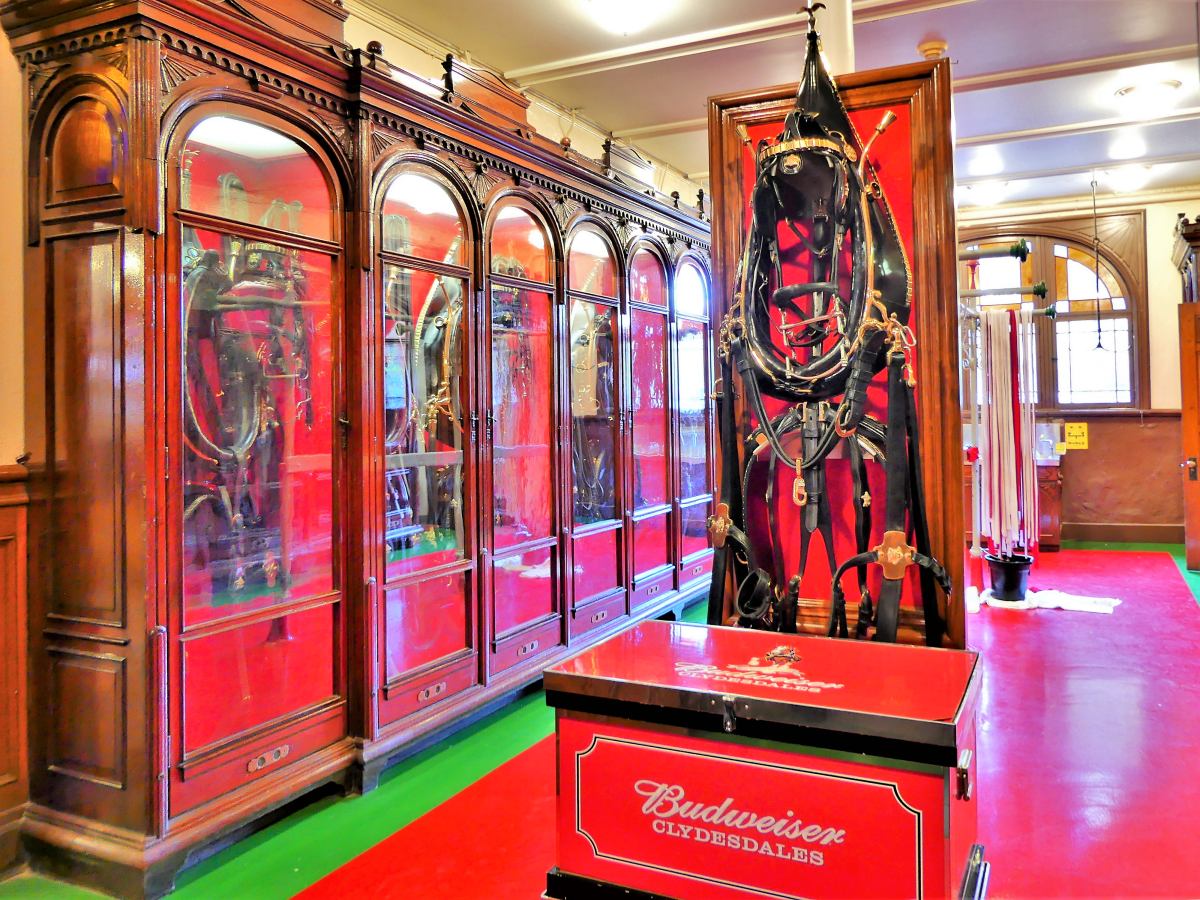
A peek inside the paddock, showed it to be far cleaner and neater than many major hotel chains across the country.

Harness room

In fact, the art-deco structure gleamed from ceiling…

carriage house ceiling

…to floor with nary a strand of straw out of place.

paddock

And that’s when things went awry. Returning to the carriage room, I noticed that everyone had left the building.

carriage room (3)

Running through the exit doors, I caught a glimpse of Leah up ahead and hurried to her side, only to realize once we returned to the Welcome Center, that she had followed the wrong group. We scrambled around outside to find Tim’s tour, but after pulling on a few secured doors, and with no one in sight, we were hopelessly lost.

Back at the Welcome Center, we approached a tour concierge to confess our situation.

“Not a problem!” she addressed. “Follow me!”

We backtracked to our last stop, before she led us into a building showcasing immense tankards–each one capable of Beechwood aging 3600 barrels of beer at a time.

Beechwood aging tanks

We continued our personal tour until we eventually rejoined Tim in an elaborate Tasting Room…

Tasting Room art

…during his lecture on the ingredients and the brewing process,

brewing process

while everyone sipped on a 6 oz. portion of chilled Budweiser.

A wacky summer abroad between my sophomore and junior year enlightened and refined my taste in beer, having sampled Grolsch in Enschede, Kronenbourg in Strasbourg, Carlsbad in Copenhagen, and Hafbrau in Bavaria. I loved them all.

But I must admit, that after finding our way back to the tour, my little cup of Bud tasted mighty refreshing.

The twenty-five of us rode the elevator up to the Mash House. The moment the doors closed the Bud jingle sounded.

“Do you know the composer’s name,” I inquired.

Without even thinking, Tim responded as the elevator doors reopened, “Steve Karmen, who also wrote the ‘I Love New York’ jingle.”

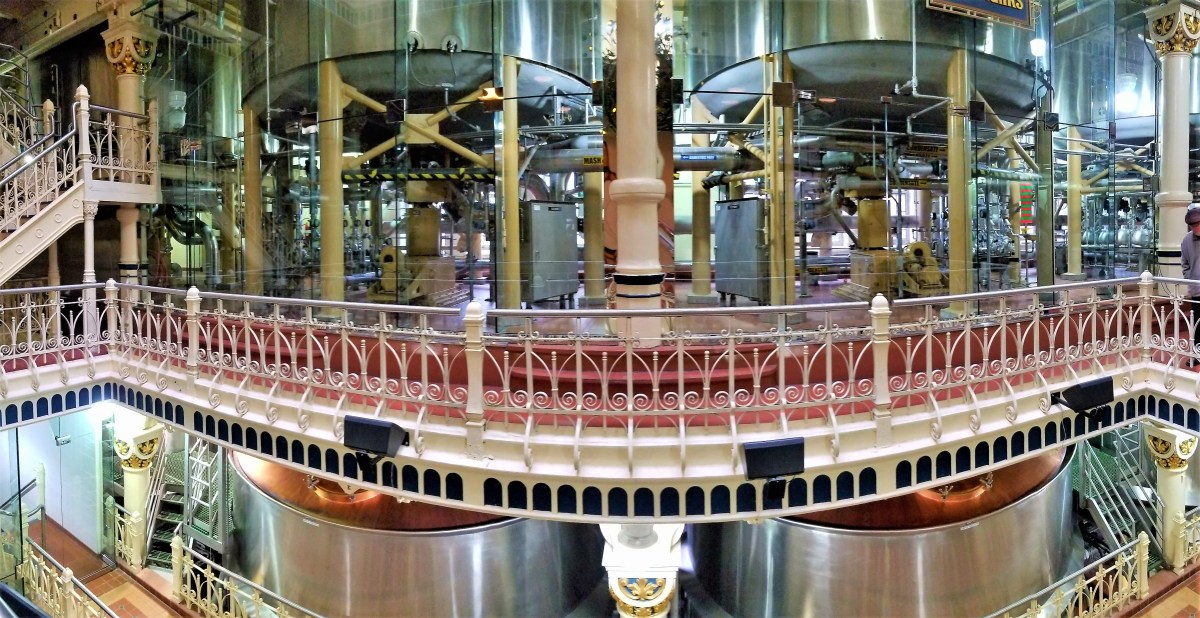
We spread out across the ornate wrought iron railing to take in the scene. No doubt, the Mash Tanks were impressive.

Mash House

And three hop vine chandeliers from the 1904 Worlds Fair were dangling from the five-story ceiling.

hops lite

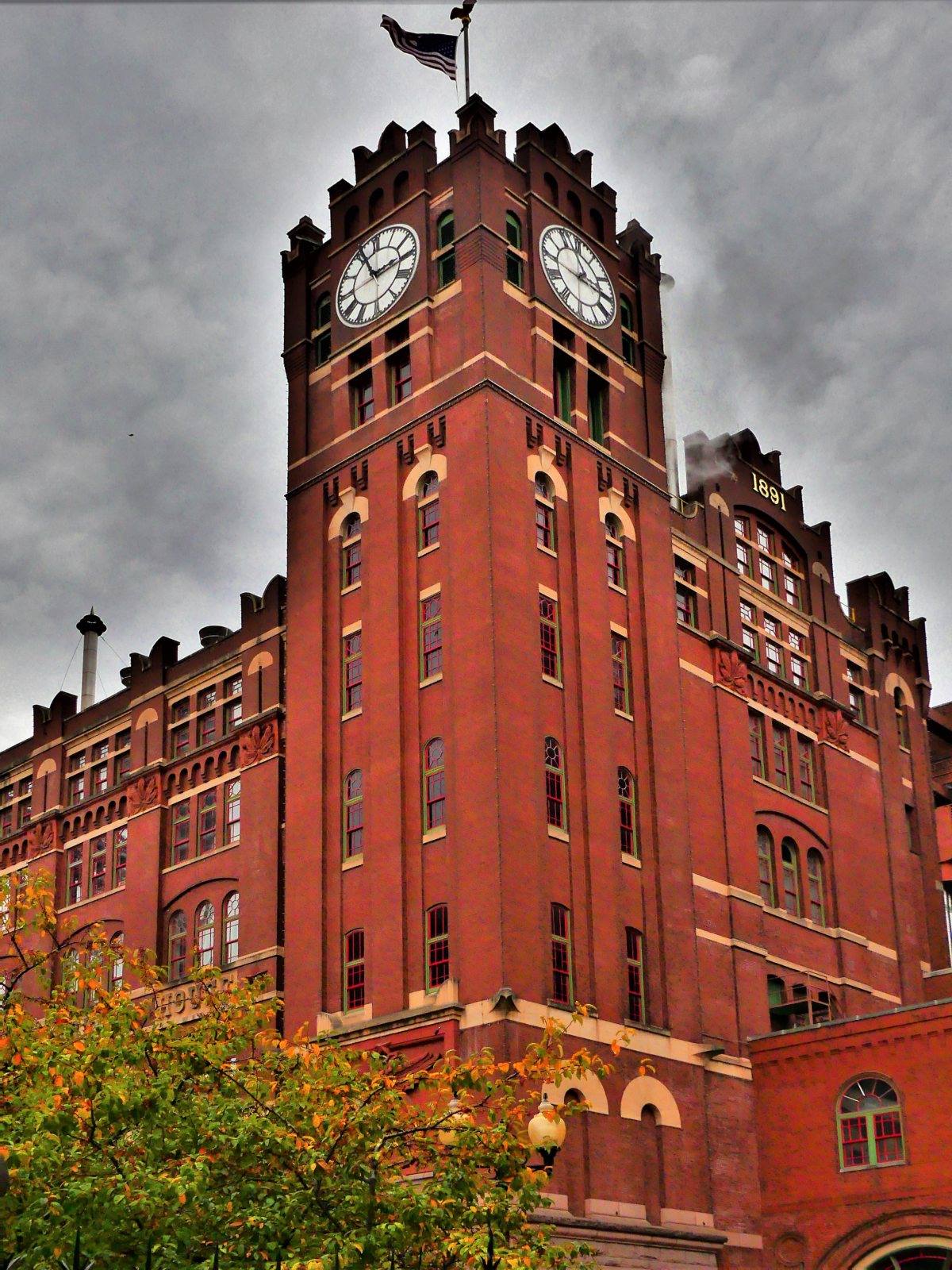
Then it was outdoors again, this time near the clock tower–the second most photographed structure in St. Louis–

clock tower

where Tim revealed that business as usual during Prohibition years depended on the sale of Brewers yeast and a non-alcoholic malt beverage concoction.

“Any last questions?” intoned Tim.

I glanced at my watch, and true to form, it was 3:55 pm. We were precisely at the 45-minute mark, but something wasn’t right. I pointed to the tower, and got Tim’s attention. Here was my last chance to stump Tim.

“Hey Tim, did I miss daylight savings time, or did the clock master just get ahead of himself?” I surmised.

Tim looked at the tower clock and hesitated. “Well let’s see a minute. The clocks get turned back this weekend, so I’m pretty sure it’s been set in anticipation of the event… Well, that concludes our tour today. However, the best is yet to come, since we’ll now return to the Biergarten where you can redeem your wood token for a ‘cold one’.”

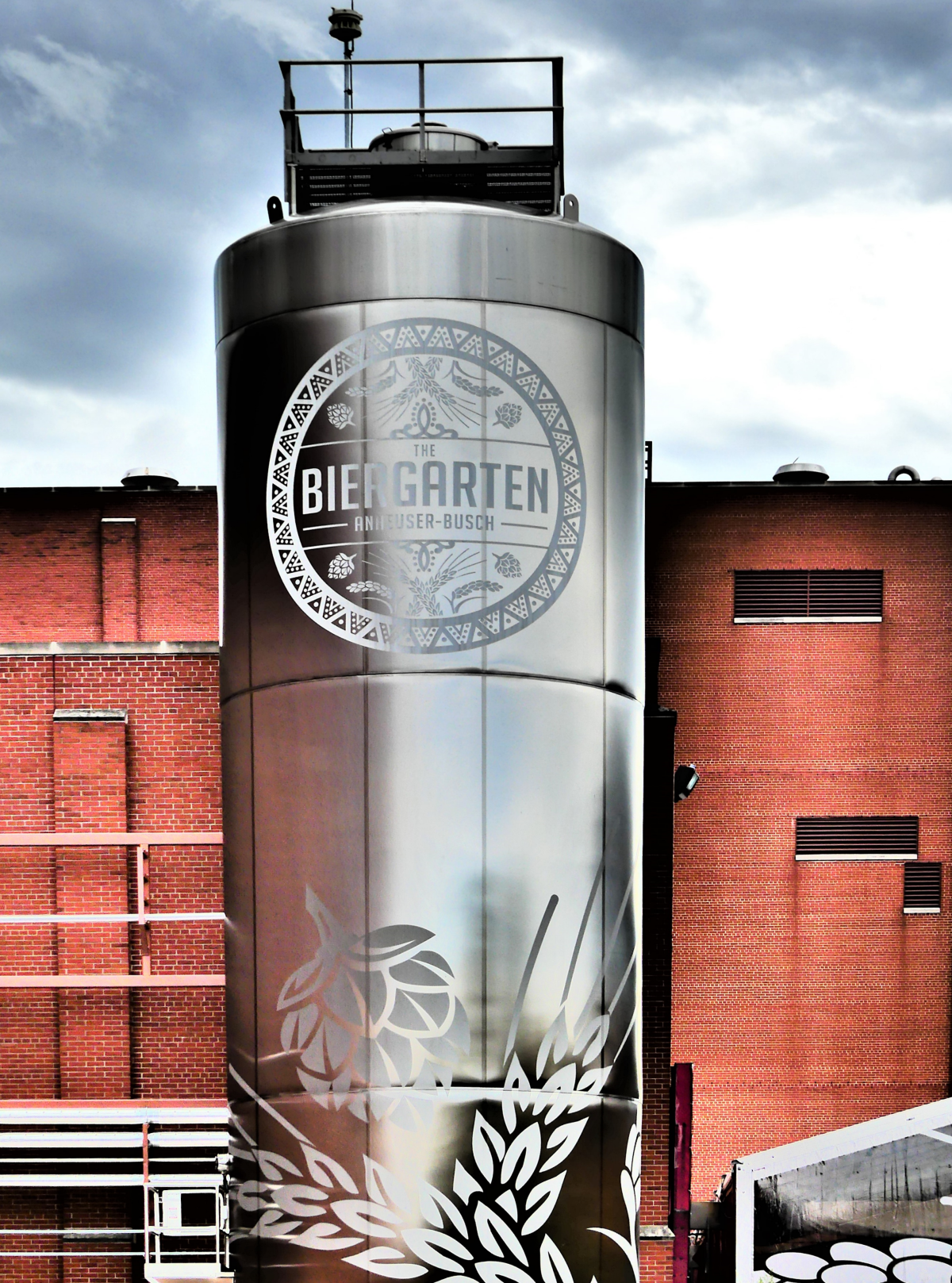
Biergarten

I lingered behind. I wanted another shot of the clock tower.

tower and eagle1 (2)

I finally caught up to Leah inside the Welcome Center, where deep lines had already formed in front of the bar. But another station beyond the crowd had fewer people standing, so that’s where we went. To my surprise, the bartender was drawing Stella into familiar chalices from the tap–my newest favorite, and one of A-B’s newest brands since last year’s merger.

I ran into Tim on my way to an available high-top.

“Quick question, Tim! What’s the significance of the ’33’ on the Rolling Rock bottle?”

“I get that question a lot,” he began, and rattled off, “Rolling Rock – from the glass lined tanks of Old Latrobe, we tender this premium beer for your enjoyment as a tribute to your good taste. It comes from the mountain springs to you.”

Tim was the real deal, and so was my Stella.

P.S. When editing photographs for this post, I compared the meta-data between the clock tower shots. Even though the two were taken 5 minutes apart, the times on the clock were exactly the same. Final analysis: THE CLOCK IS BROKEN!


Poetry in Motion

Amazing Acrobats of Shanghai and their rival, Acrobats of China compete daily for the attention of visitors in an already crowded field of Branson venues showcasing music and variety entertainment. The two maintain similar visions–featuring acts displaying power, balance and artistry. But because one theater was closer to the Airstream than the other, and with available seats closer to the stage, and for a few dollars less, Leah and I chose the Shanghai troupe for our evening out on the town.

We arrived during a warm-up act with two costumed chickens made of paper, and a clown blowing a whistle. The sparse crowd was disinterested, generating a smattering of applause.

The theater was dingy and the seat cushions had lost their springs many summers ago. It was the first freeze of the season, and the concrete floor was sending chills through the soles of my shoes. It made me check my watch, and wonder how much longer we would be here.

By the time the lights had dimmed and the curtain pulled, the audience and I were hoping to be amazed.

This was NOT Cirque du Soliel: the set design featured a lit cyclorama and necessary props on a short and shallow stage; the costumes were functional and simple (with the exception of traditional animal puppets); and the music track was borrowed from a Chinese elevator.

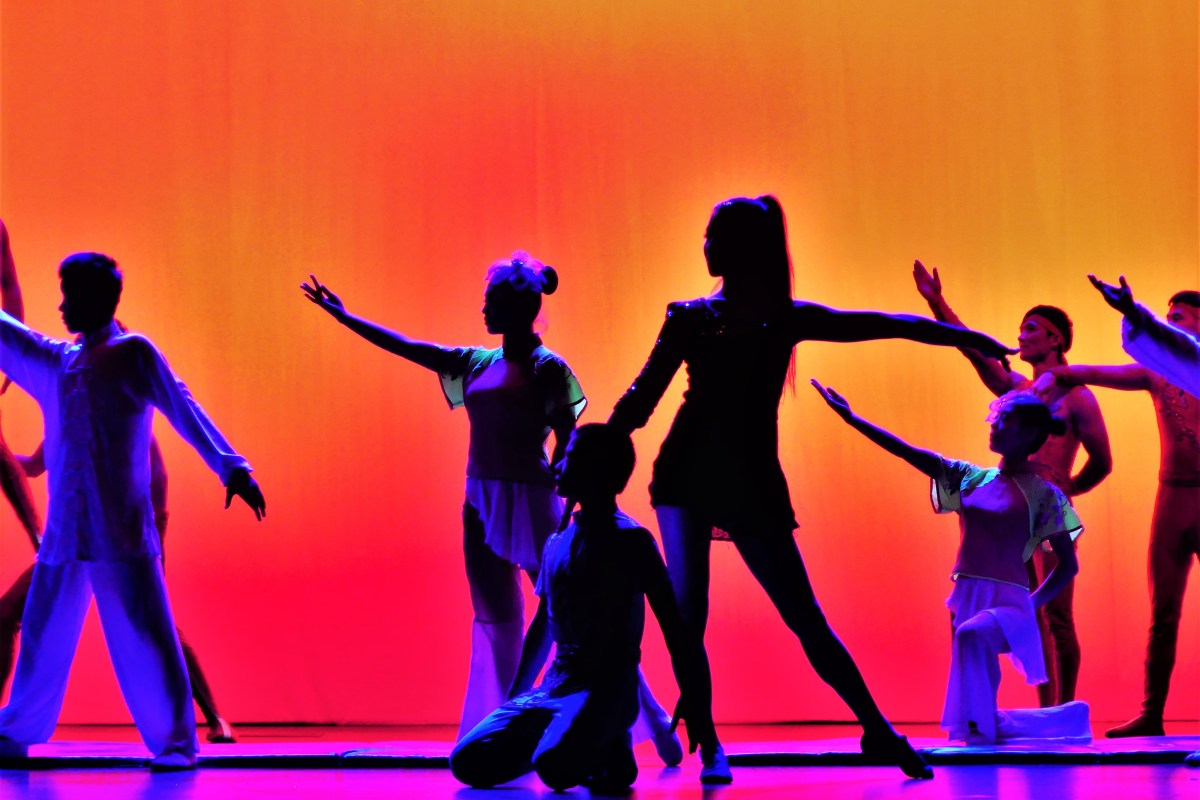
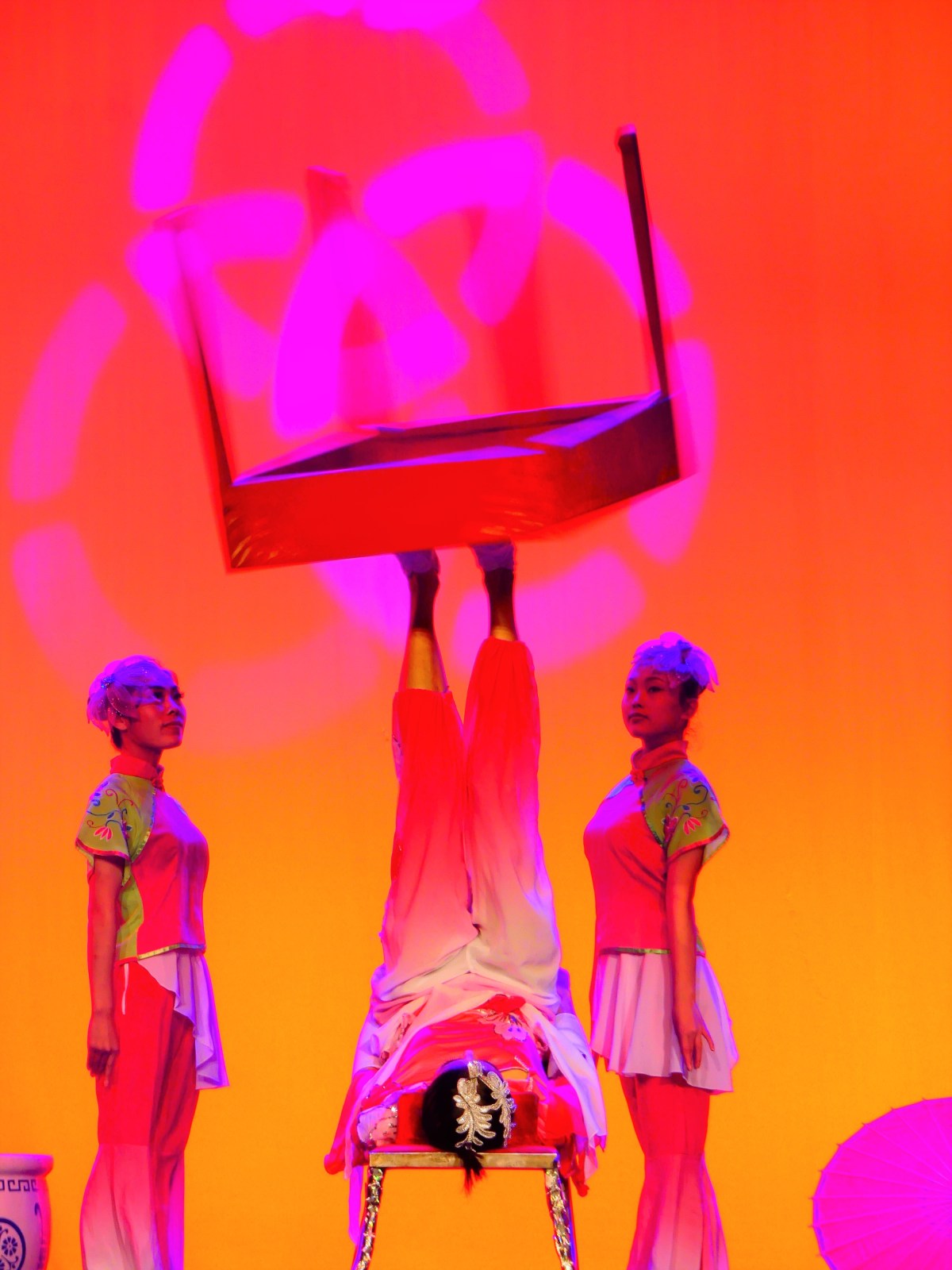
But the young acrobats, mostly in their mid-twenties, were enthusiastic performers with towering talents,

chair tower

and well-rounded abilities–demonstrating precision and grace throughout their respective routines.

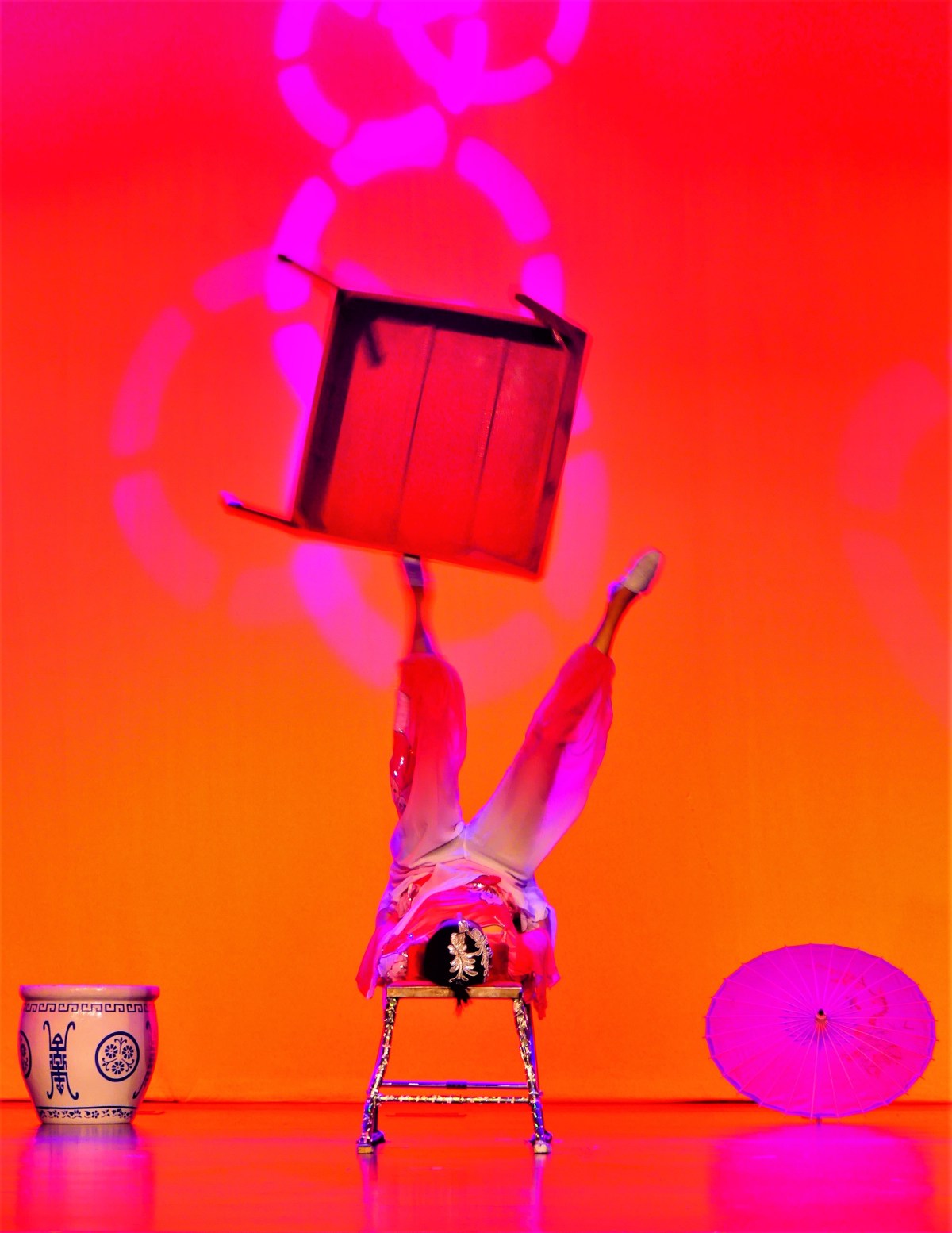
Thematically, the acts seemed to showcase a variety of spinning stunts. Around and around went the table, hoops, and vases.

circle and square before

circle and square

hoops before

Hoops after

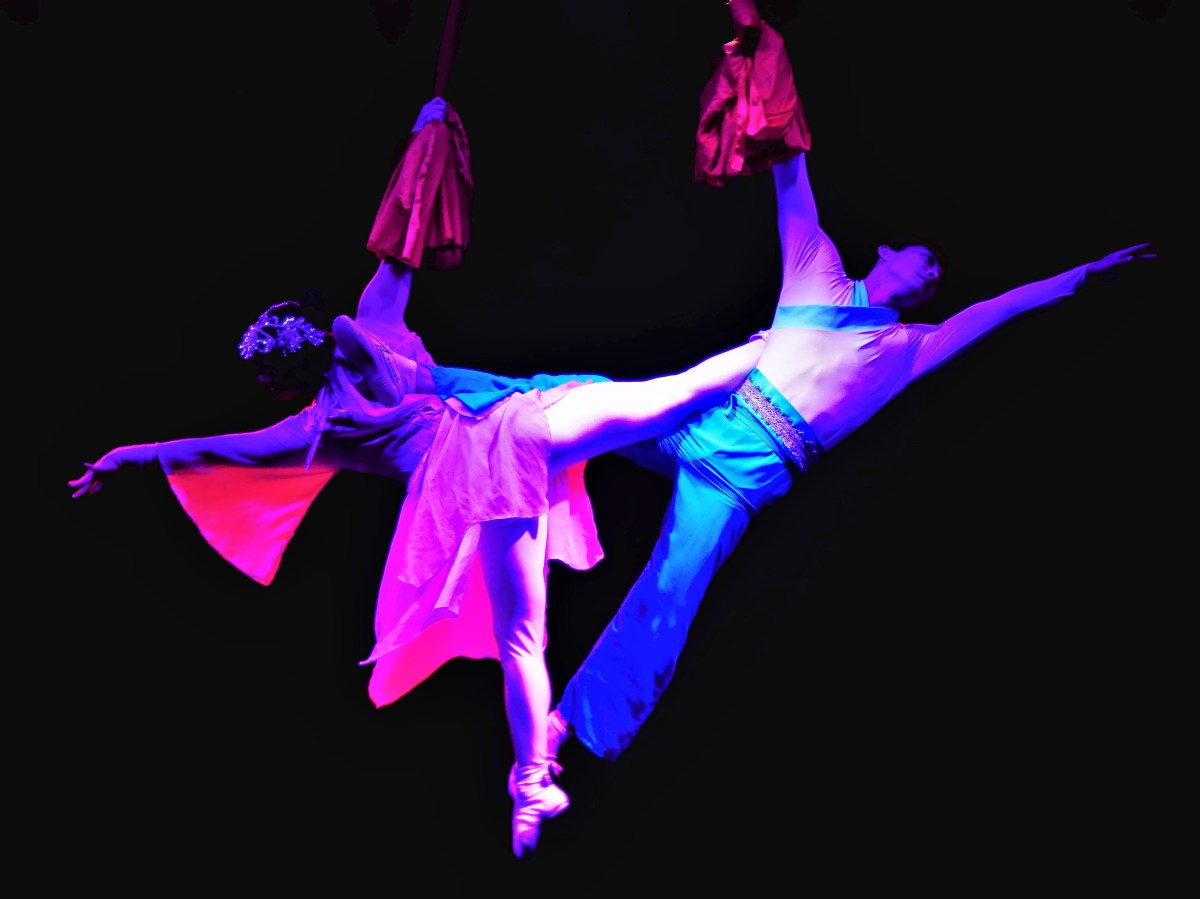
Around and around whirled the ninjas in their karate sequences, and the aerialists in their pas de deux.

butterfly

spinning

Around and around, the contortionist twisted her body into wincing pretzel postures.

contorting

contorted

When the show ended to rousing applause, Leah and I crossed the lobby to inspect an easel of audience portraits stuffed inside commemorative frames with plenty of room for acrobat autographs…and available for purchase at only $20 a piece.

While we enjoyed the show, we quickly decided against sticking around for the  meet and greet, as the acrobats lined up to express their gratitude, but seemed more uncomfortable with both feet firmly planted on the ground.

Cadillac Ranch

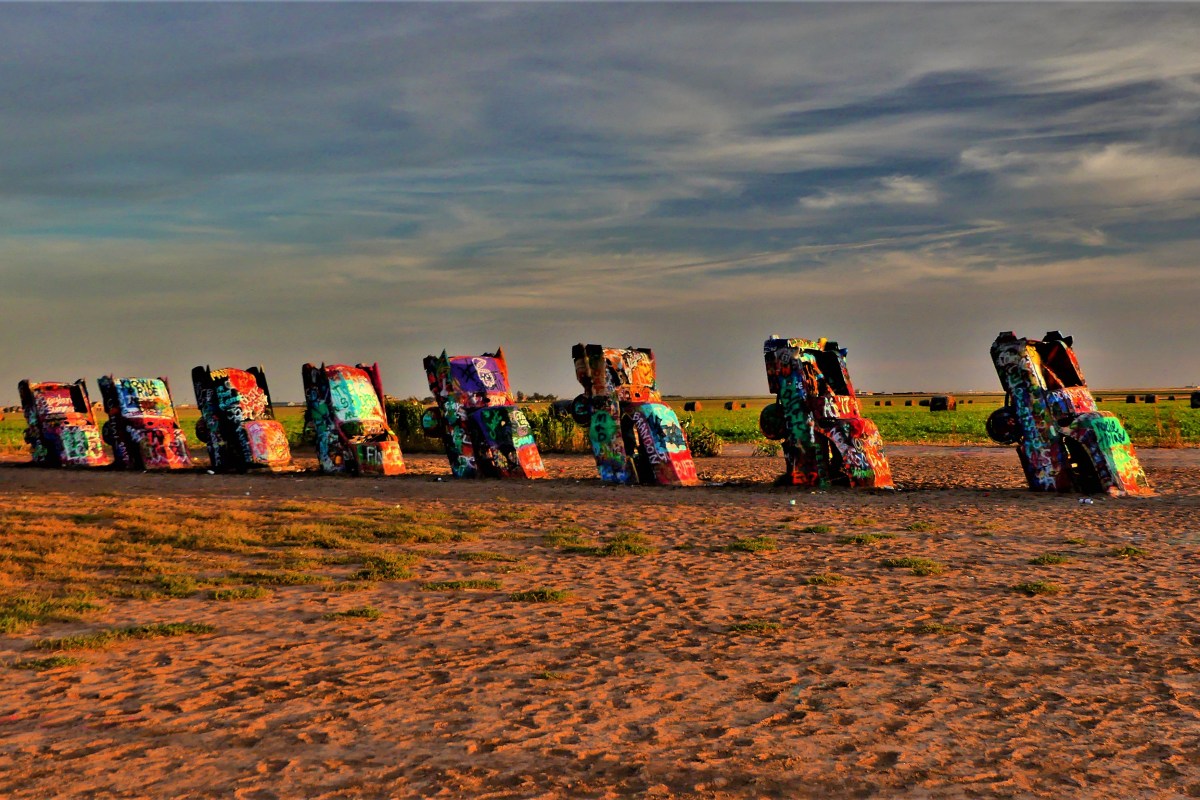
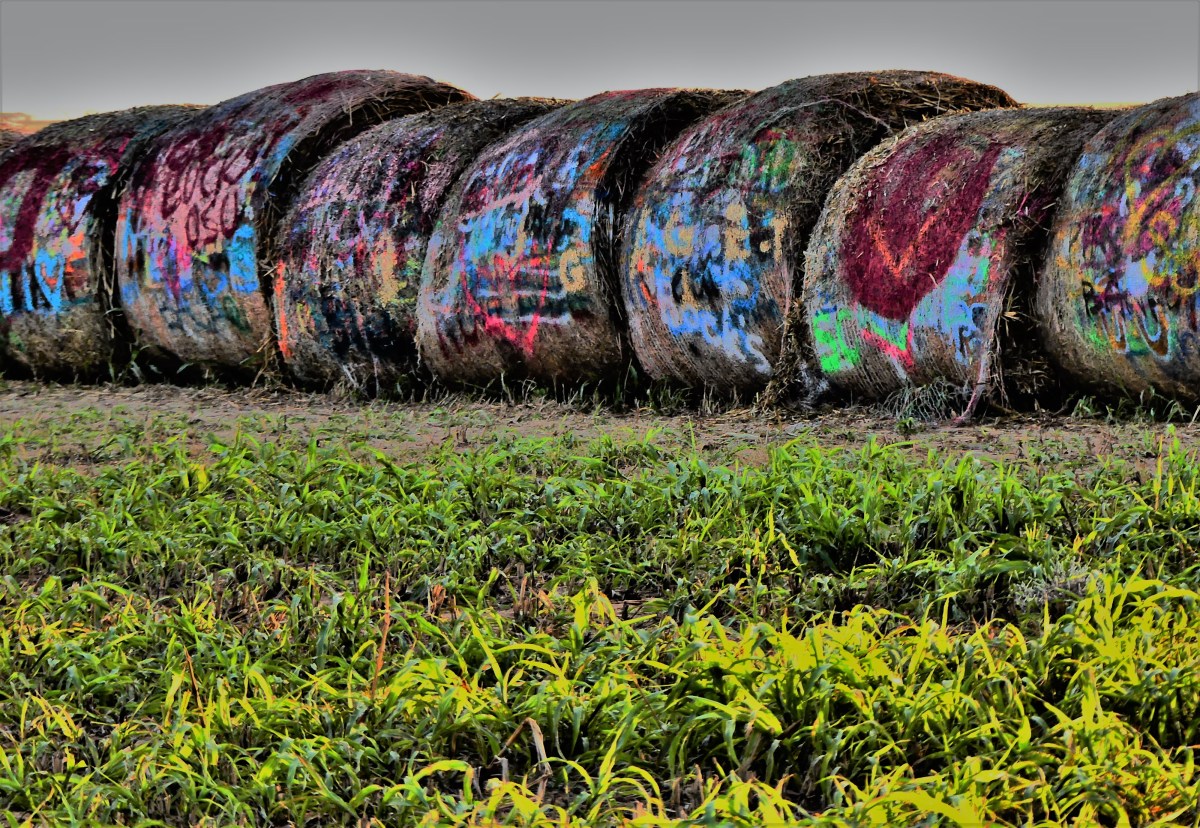
A handful of cars and trucks were pulled onto the shoulder of a road beside a cow pasture along Interstate 40 in Amarillo, TX. A barbed wire perimeter protected entry to the field, but a rainbow-colored cattle gate provided access to an infinite vista of grassland and graffitied hay rolls.

hayrolls.jpg

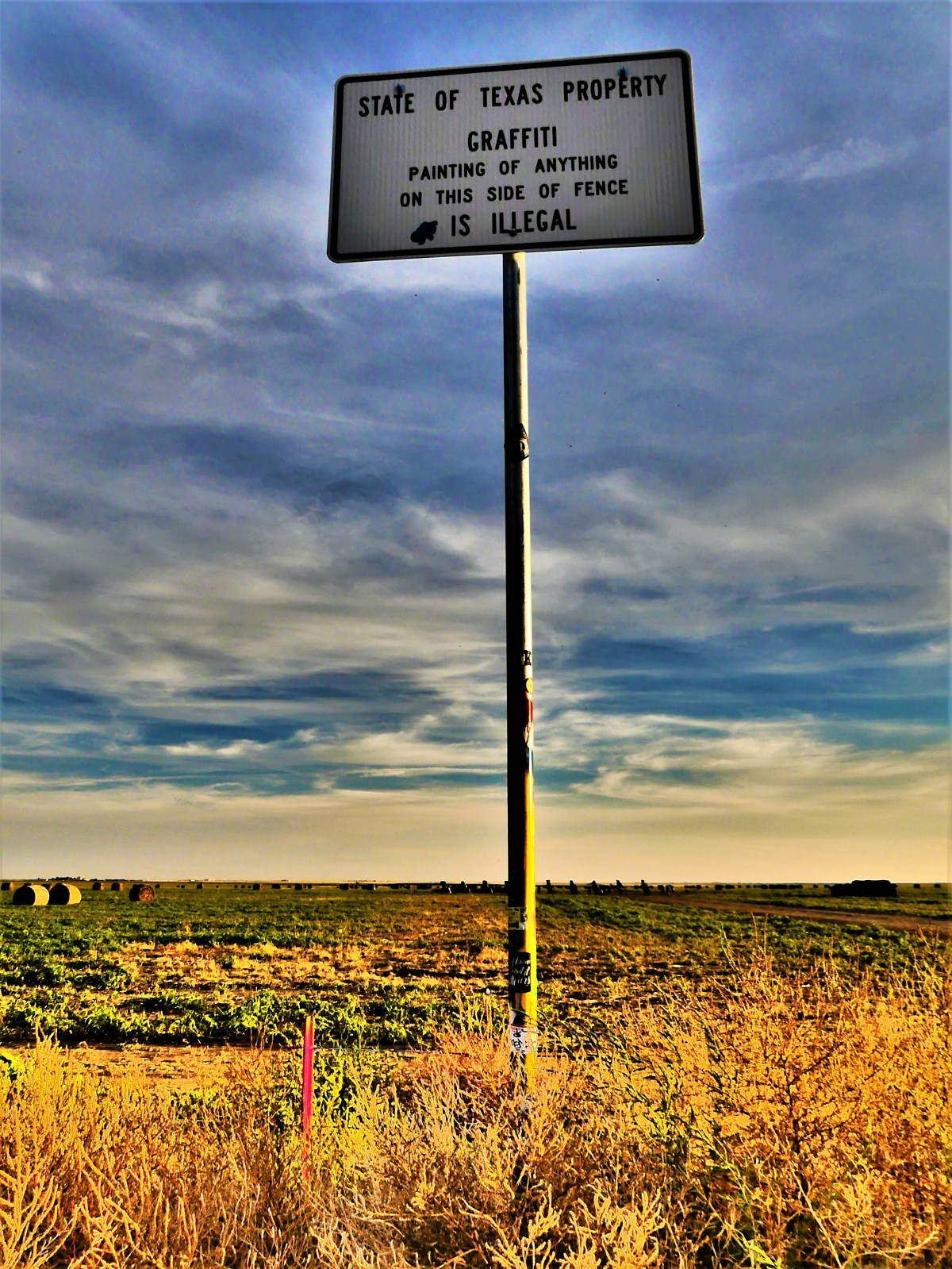
Although road signage made it very clear that all graffiti stay on the other side of the road,

Graffiti.jpg

anything on Stanley Marsh’s property was fair game for tagging and tacitly encouraged.

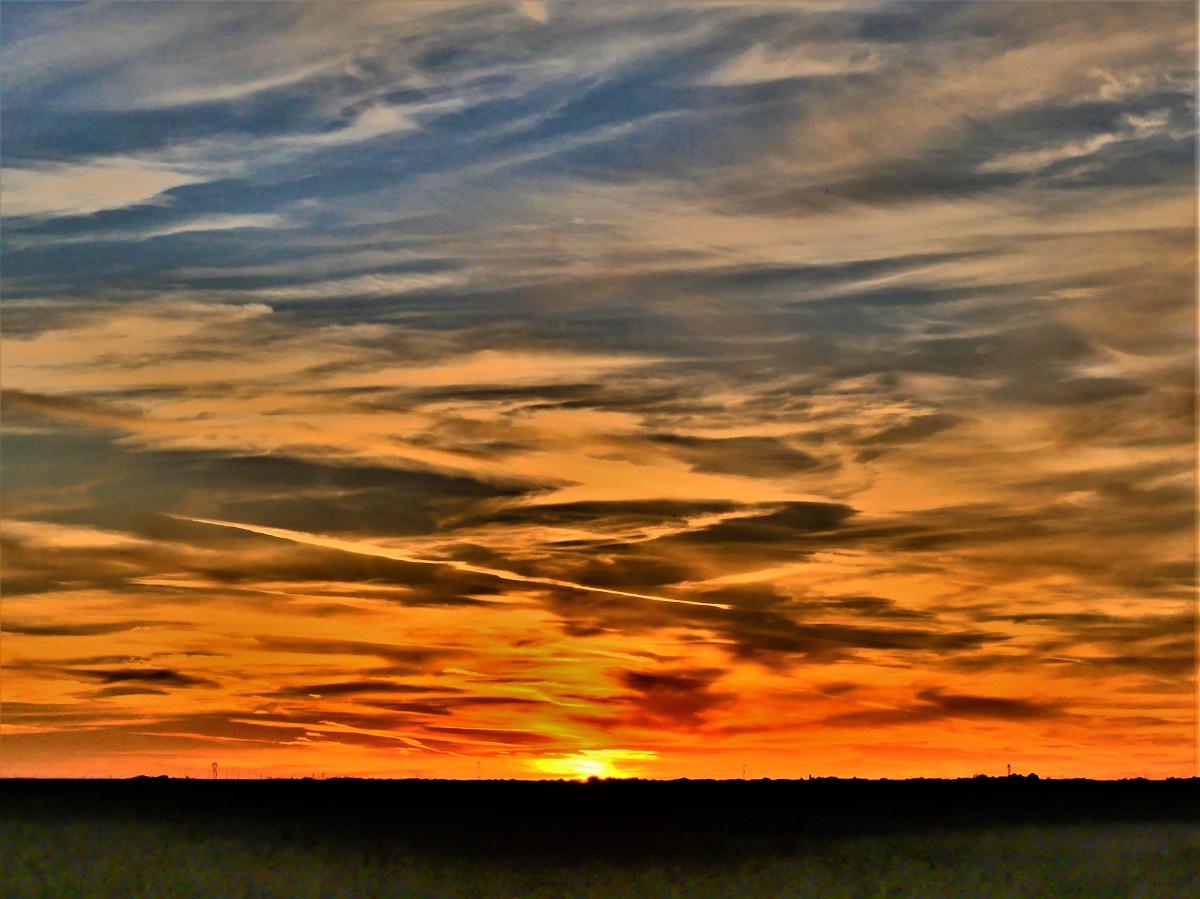
The sun was setting,

sunset

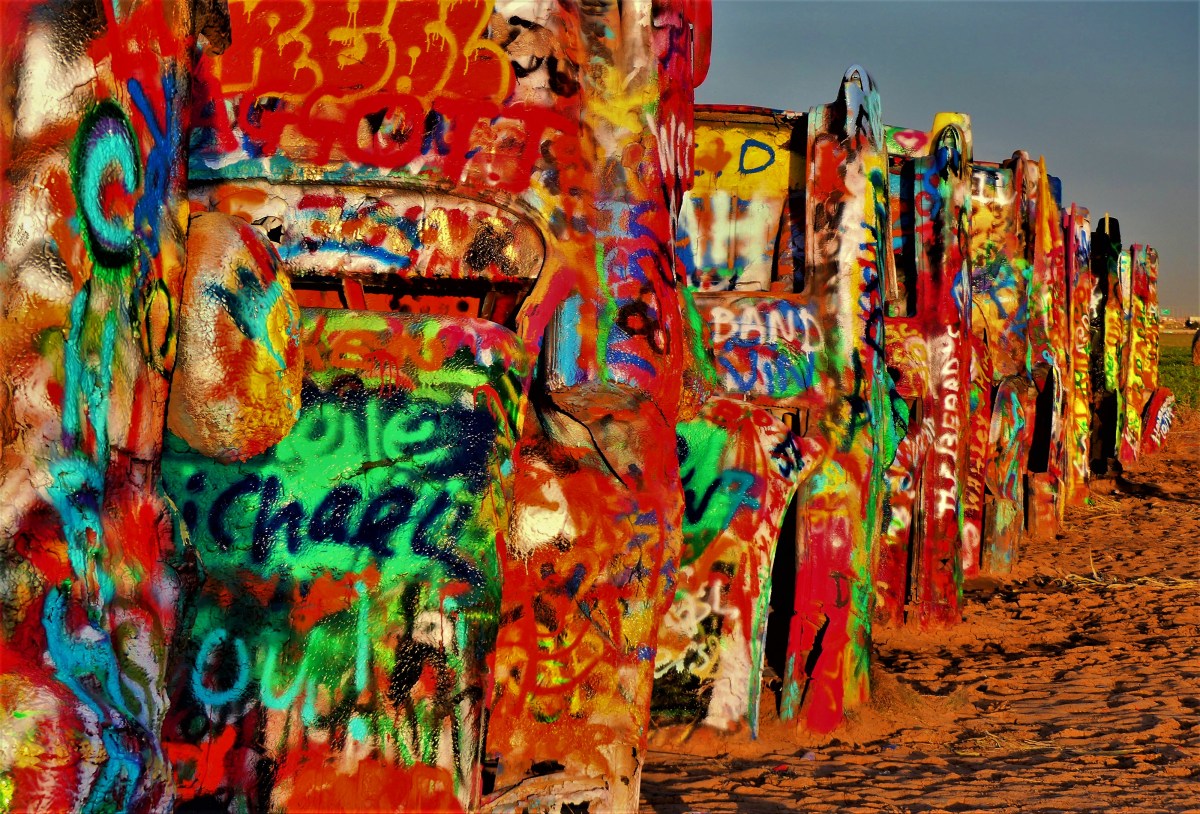
and the mosquito swarm was brutal, as if they saw it as their obligation to annoy anyone curious to walk through a field where ten Cadillacs were partly buried in the ground.

Additionally, with golden hour light fading quickly, I felt my glow time was severely limited.

Nevertheless, working around the tall shadows cast by a low-hanging sun, I managed to capture a spectrum of random and radiant colors that seemingly changes by the hour, courtesy of spray-painters who choose to be anything but anonymous.

CR1a


Western Decivilization

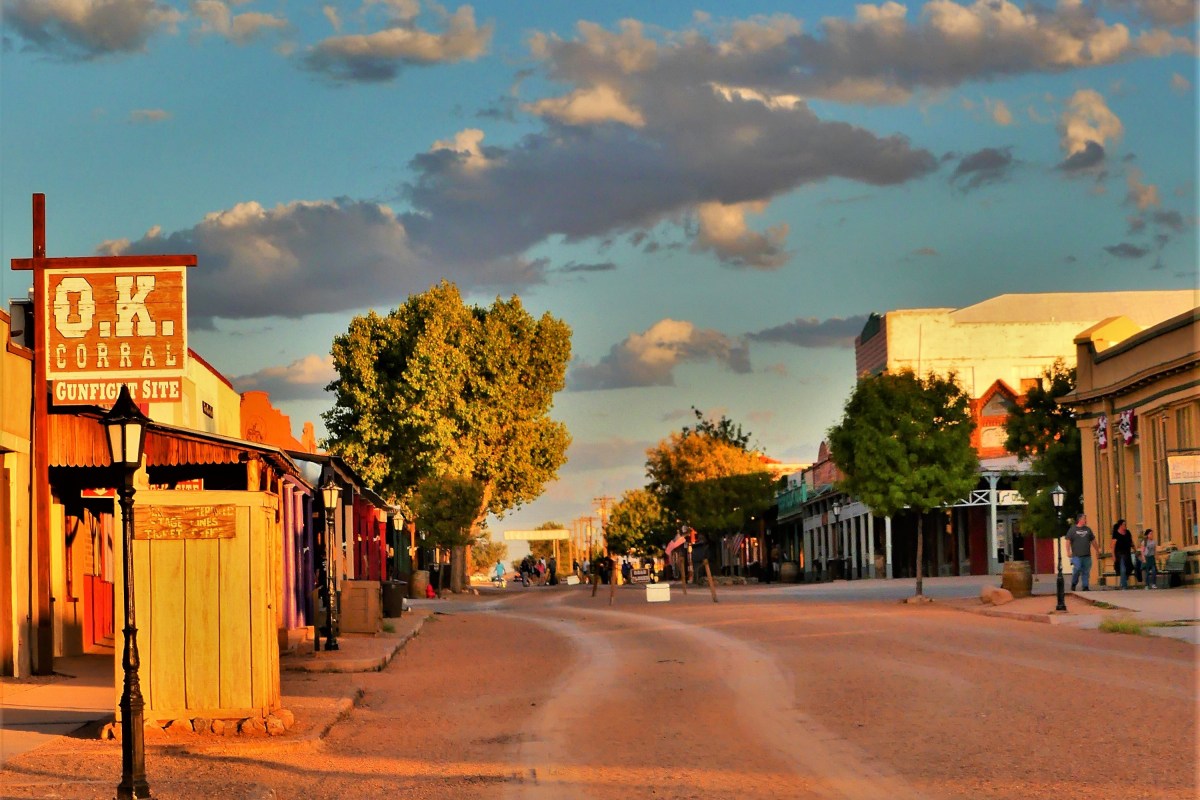
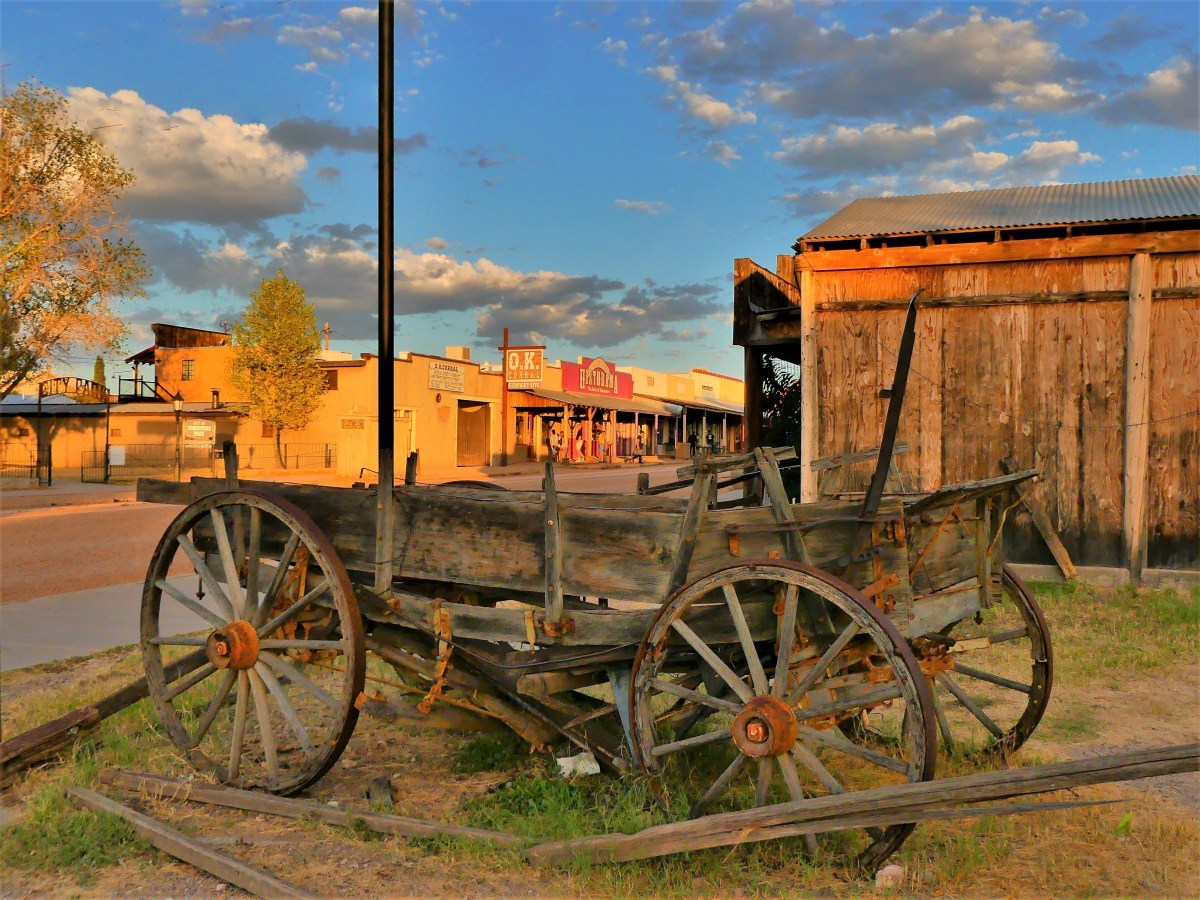
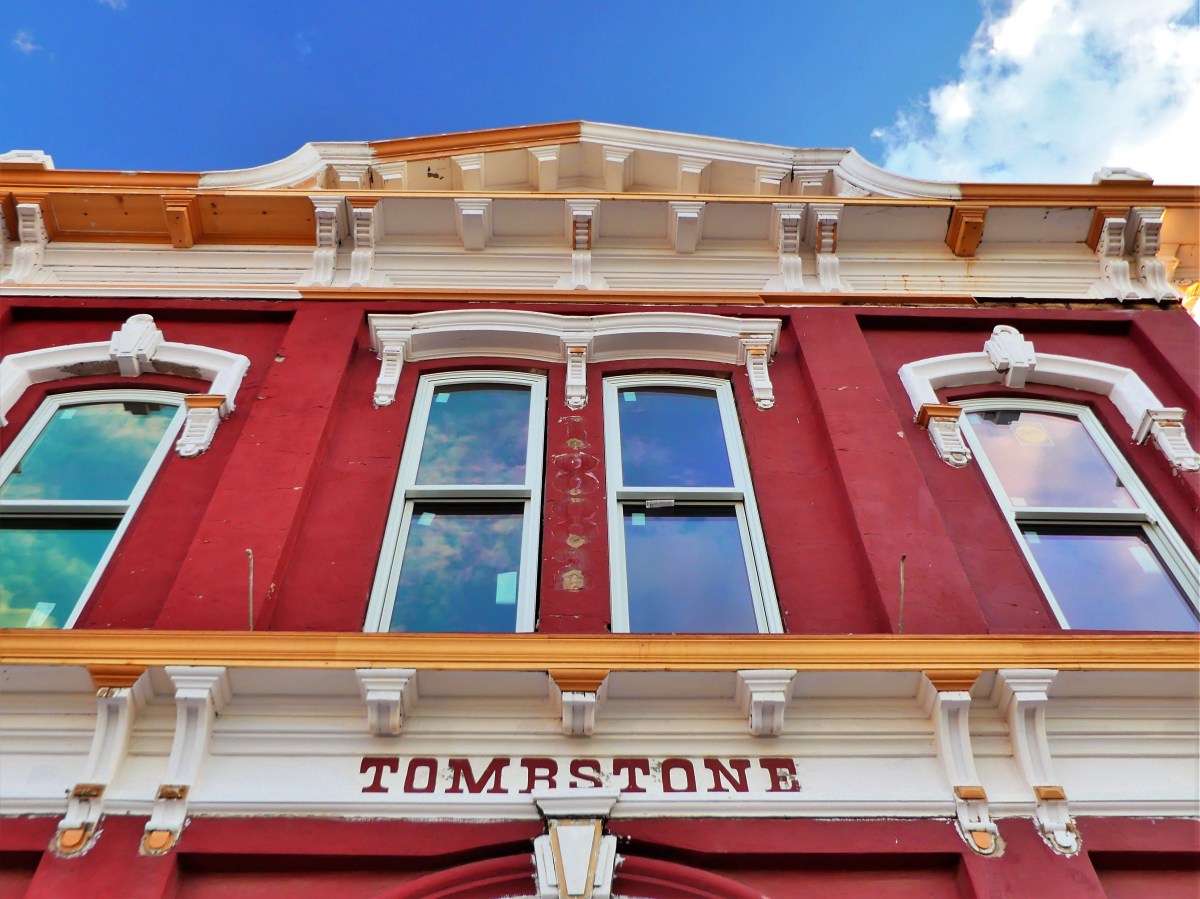
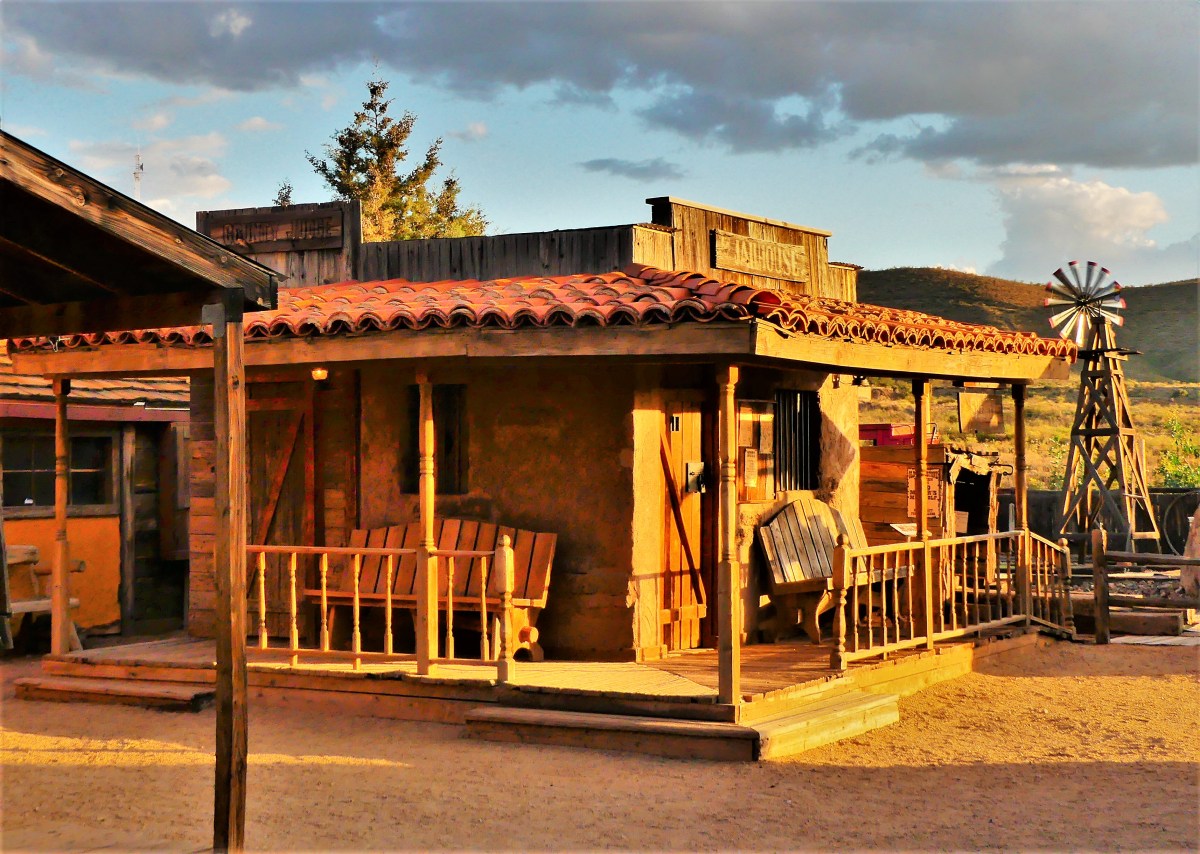
It was late afternoon, golden hour, and the town was aglow. We rolled into Tombstone, AZ with the tumbleweeds, and got out of town by morning, but not before taking a sun-soaked stroll down Allen Street past the O.K. Corral, tracing the footsteps of a by-gone time.

wagon (3).jpg

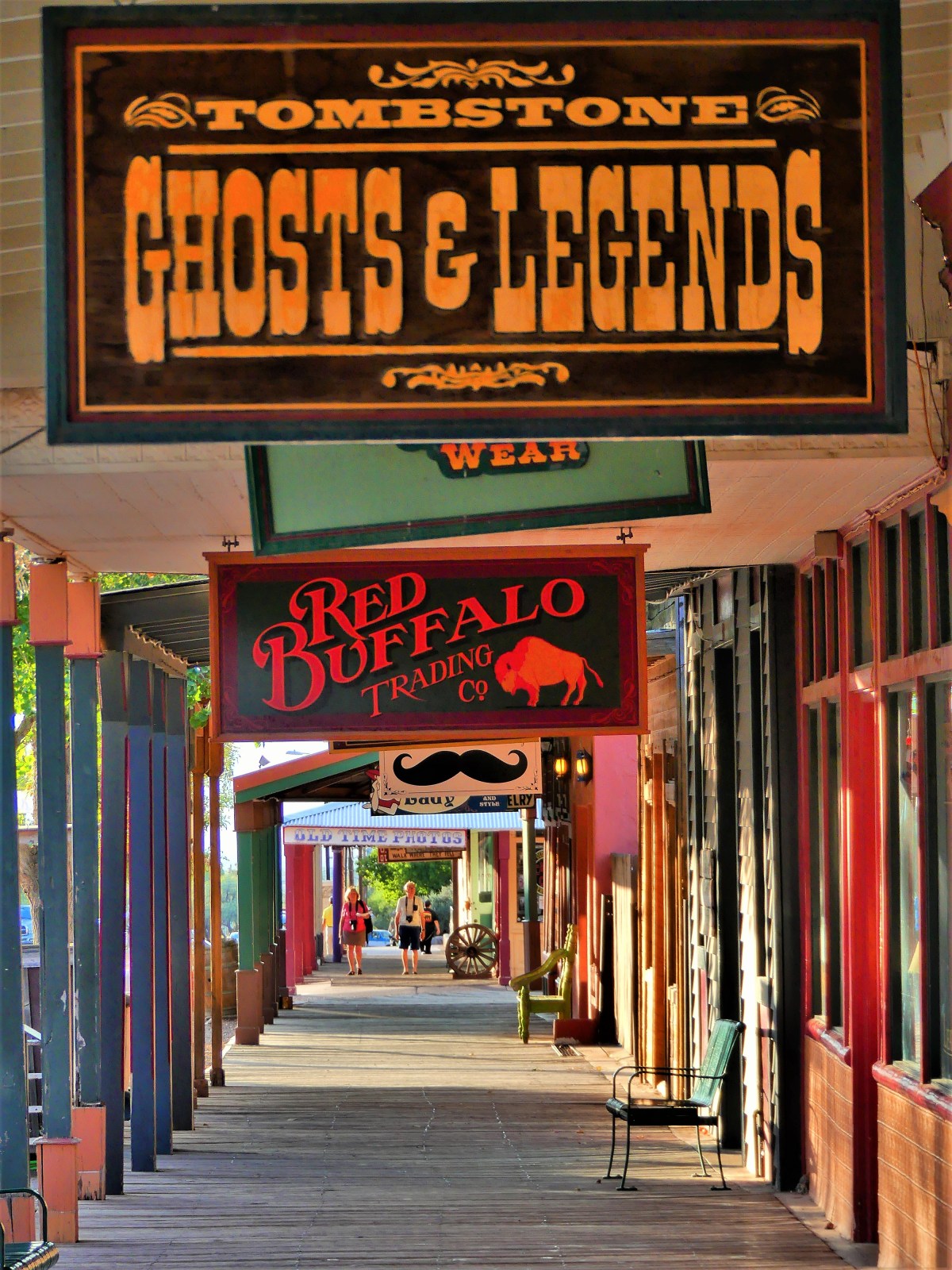
The Old West town was unusually quiet this day,

boardwalk

as if its residents were hiding out, bracing for yet another round of random violence, when claim jumpers, cattle rustlers, horse thieves, prostitutes, and gamblers challenged the moral fiber of a nascent society teetering between greatness and greed.

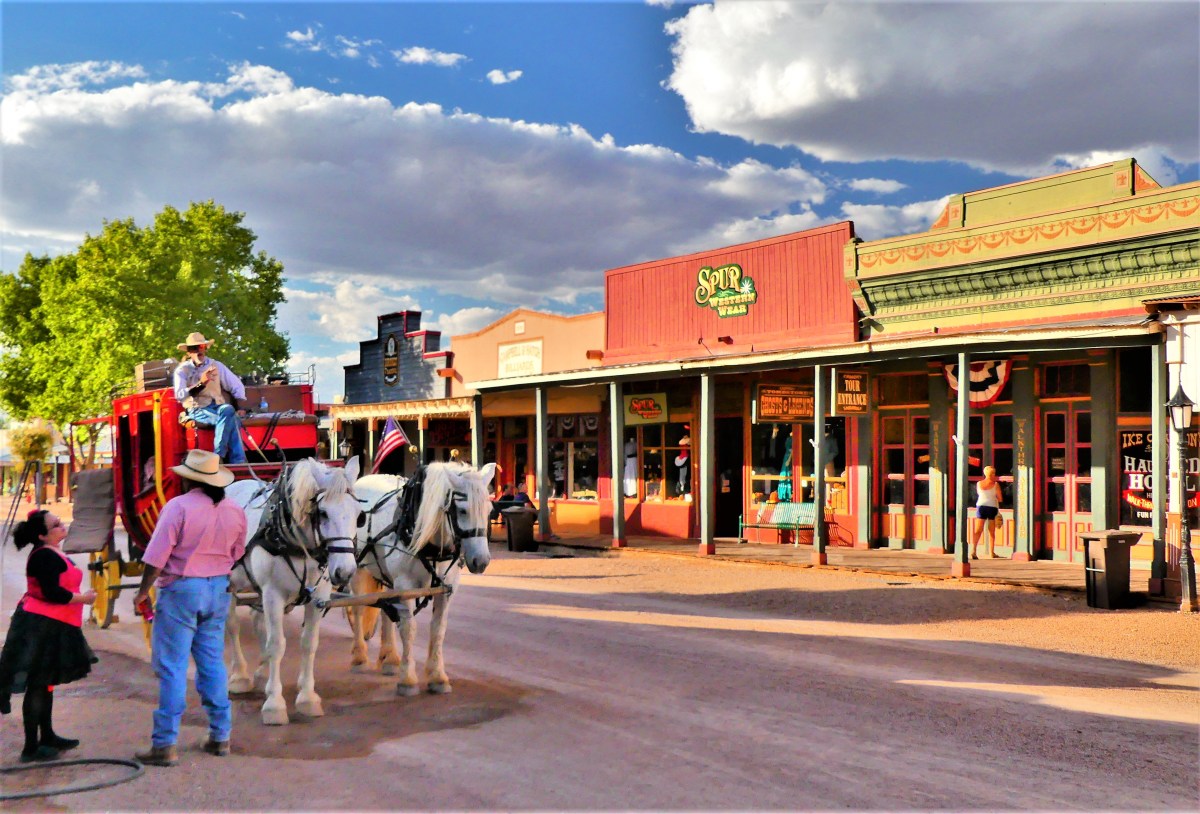
Despite the fear, there were some who dared to venture out…

Allen Street

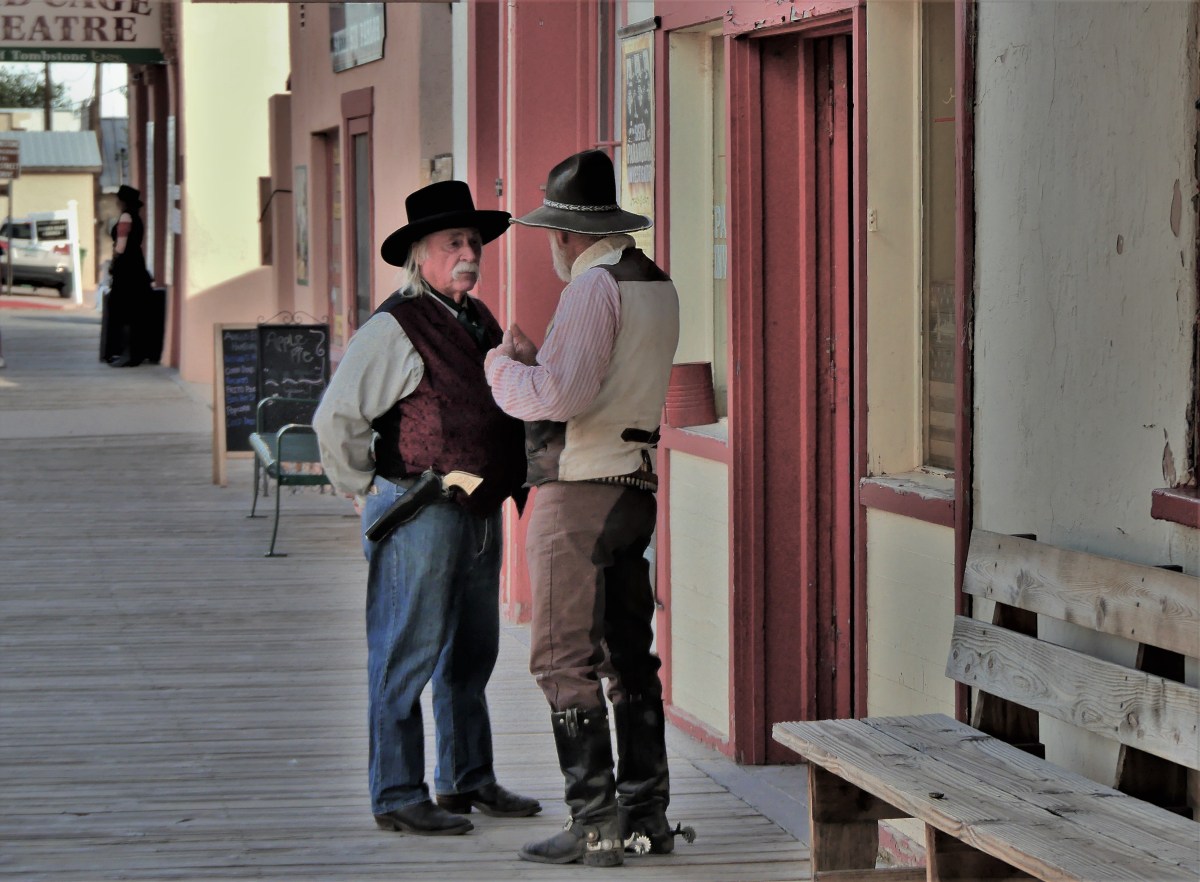
and walk the dusty planks of a fragile peace, with their trusty sidearms at the ready.

local color (2).jpg

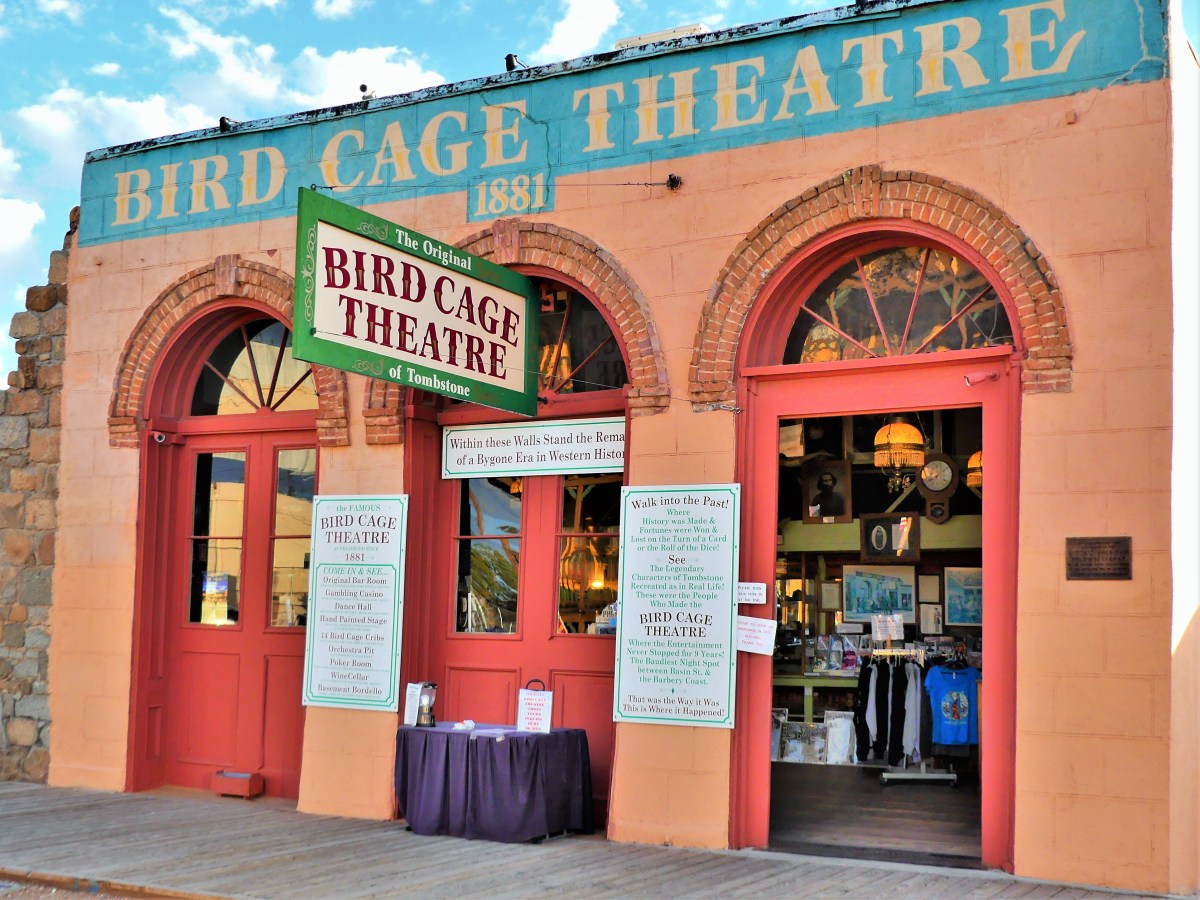
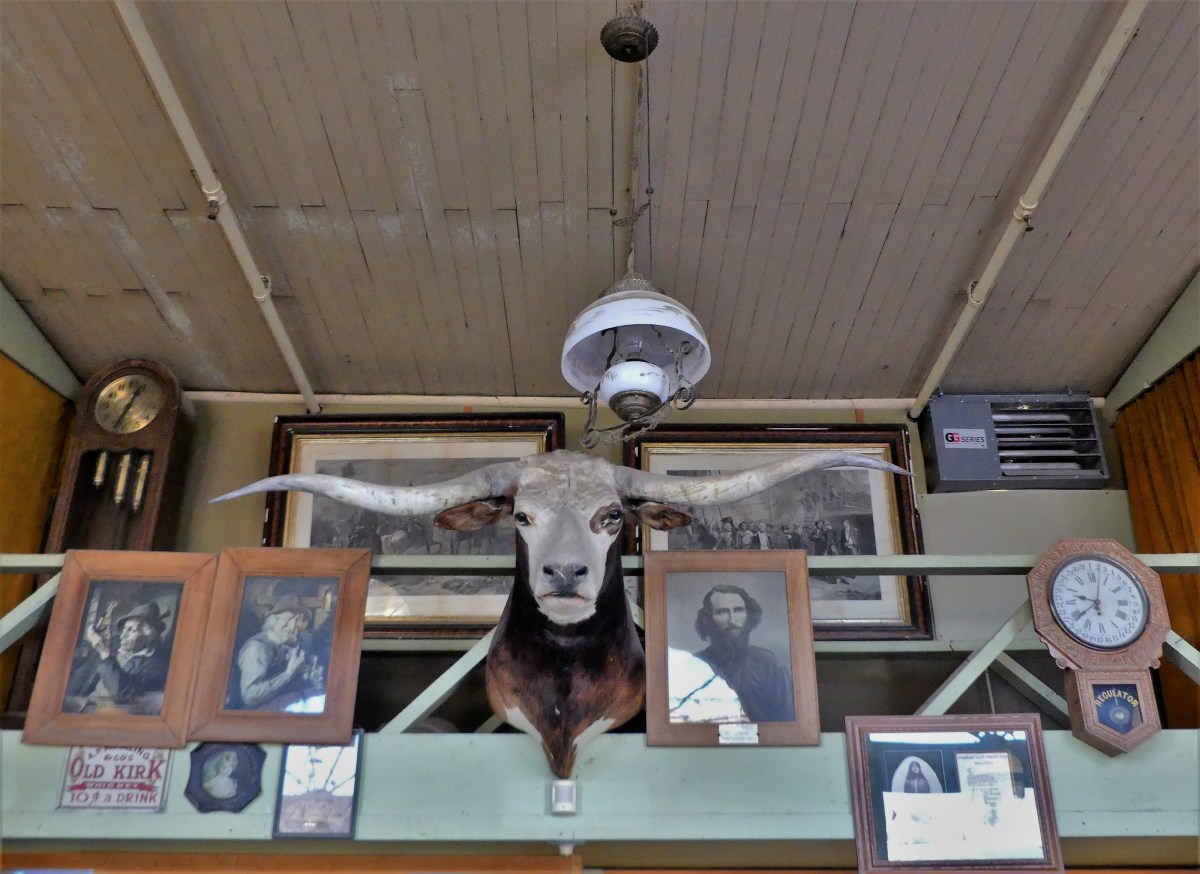
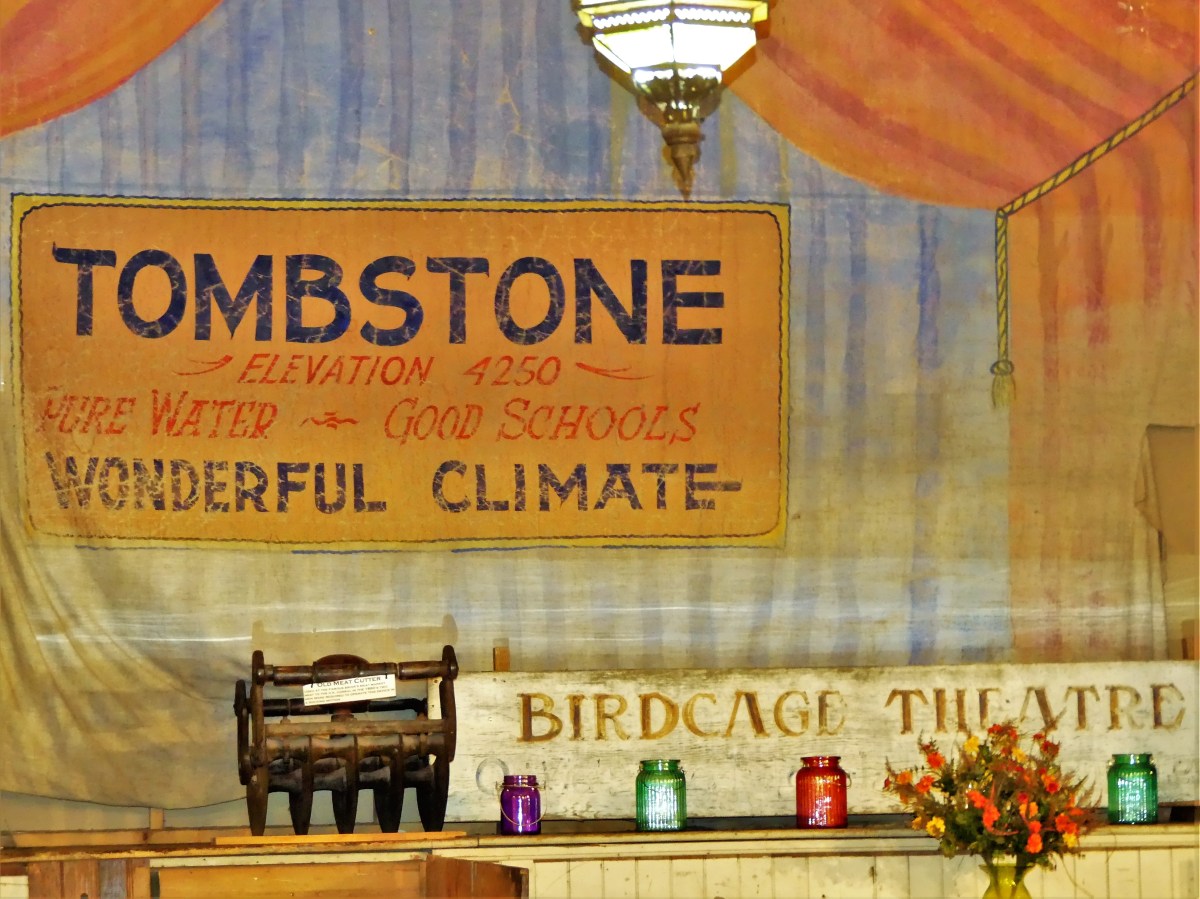
Yet it was business as usual at the Bird Cage Theatre,

birdcage theatre

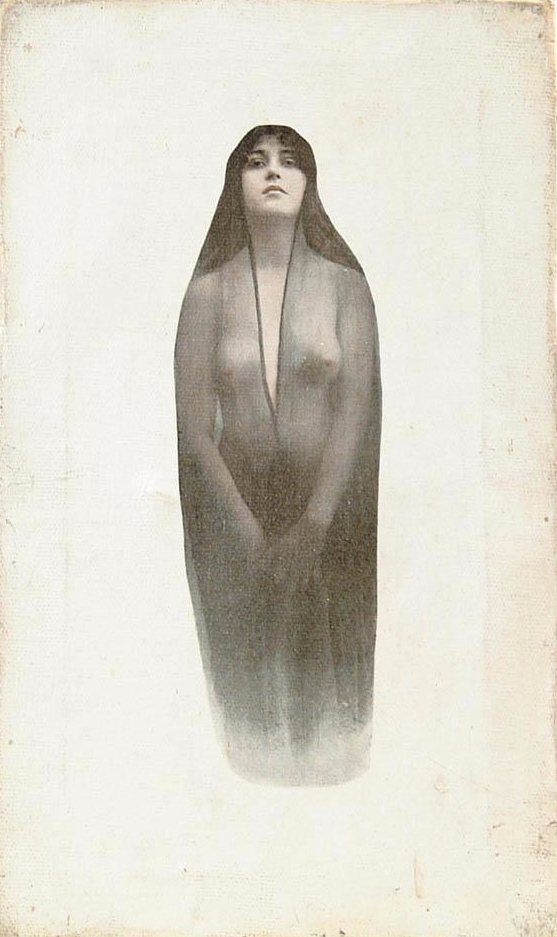
where wanton women plied their trade at twenty-three bucks a pop,

27-01.jpg

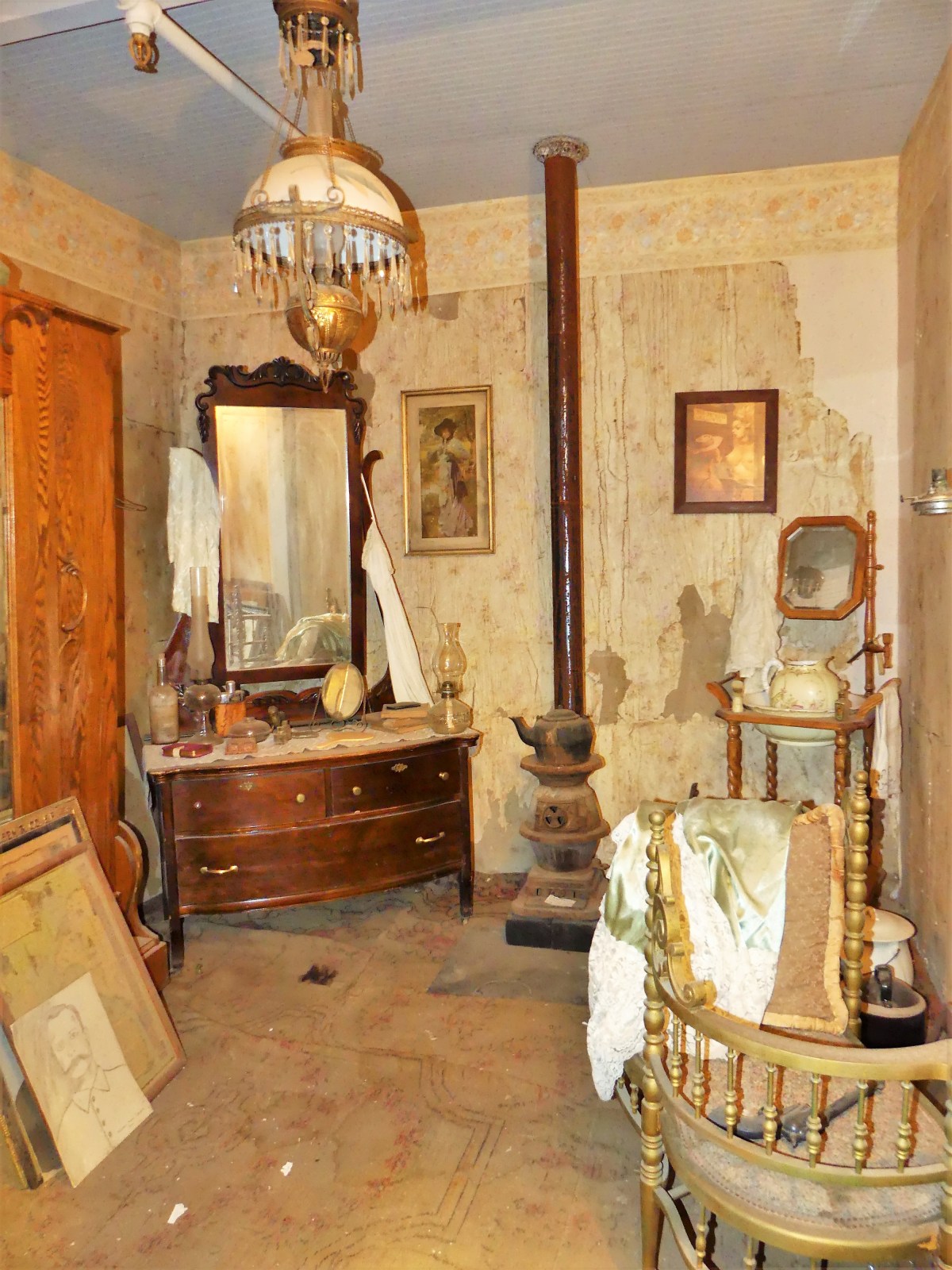
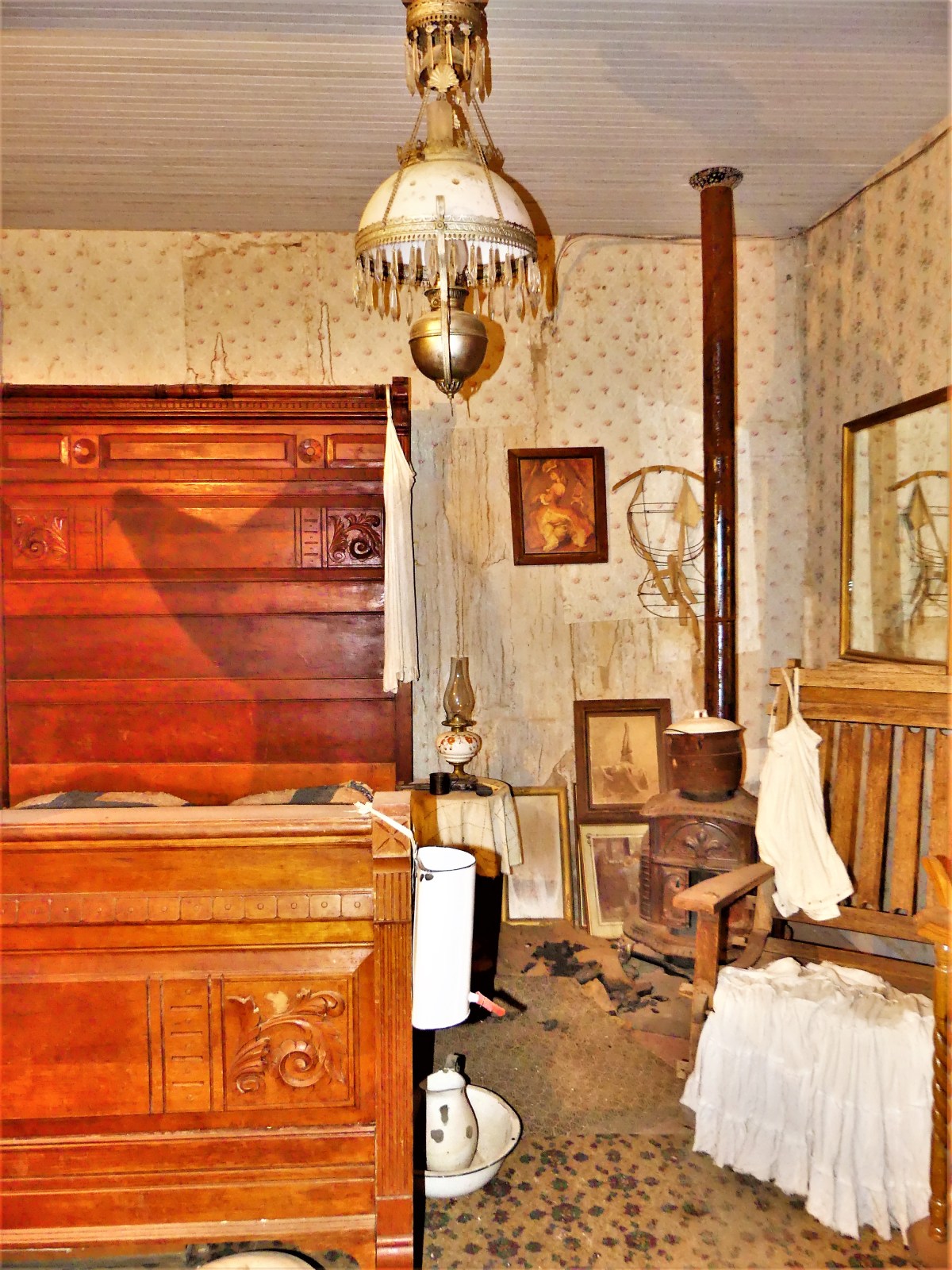
in their boudoir quarters…

dressing room

boudoir

…beyond the catwalk over the saloon,

catwalk

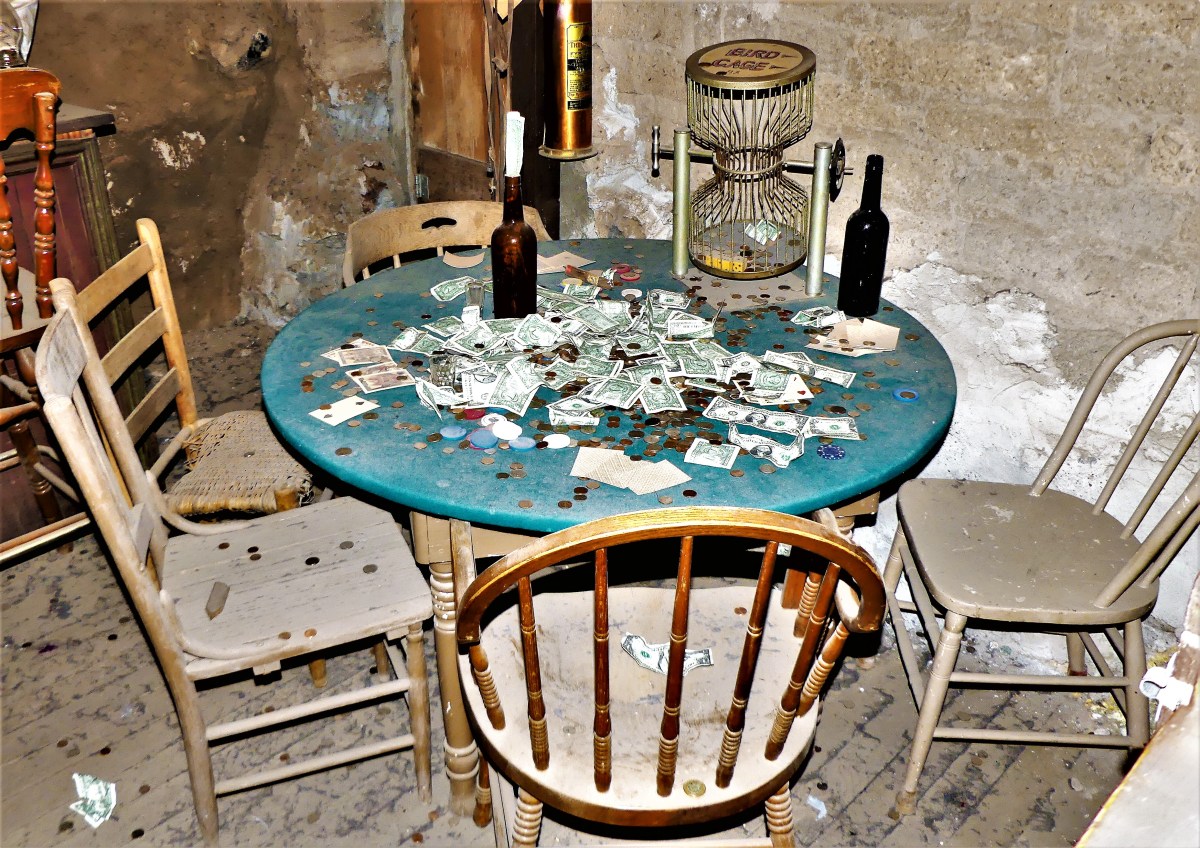
while high-stakes poker flourished under the stage,

stage curtain

with a $1000 minimum buy-in.

poker table.jpg

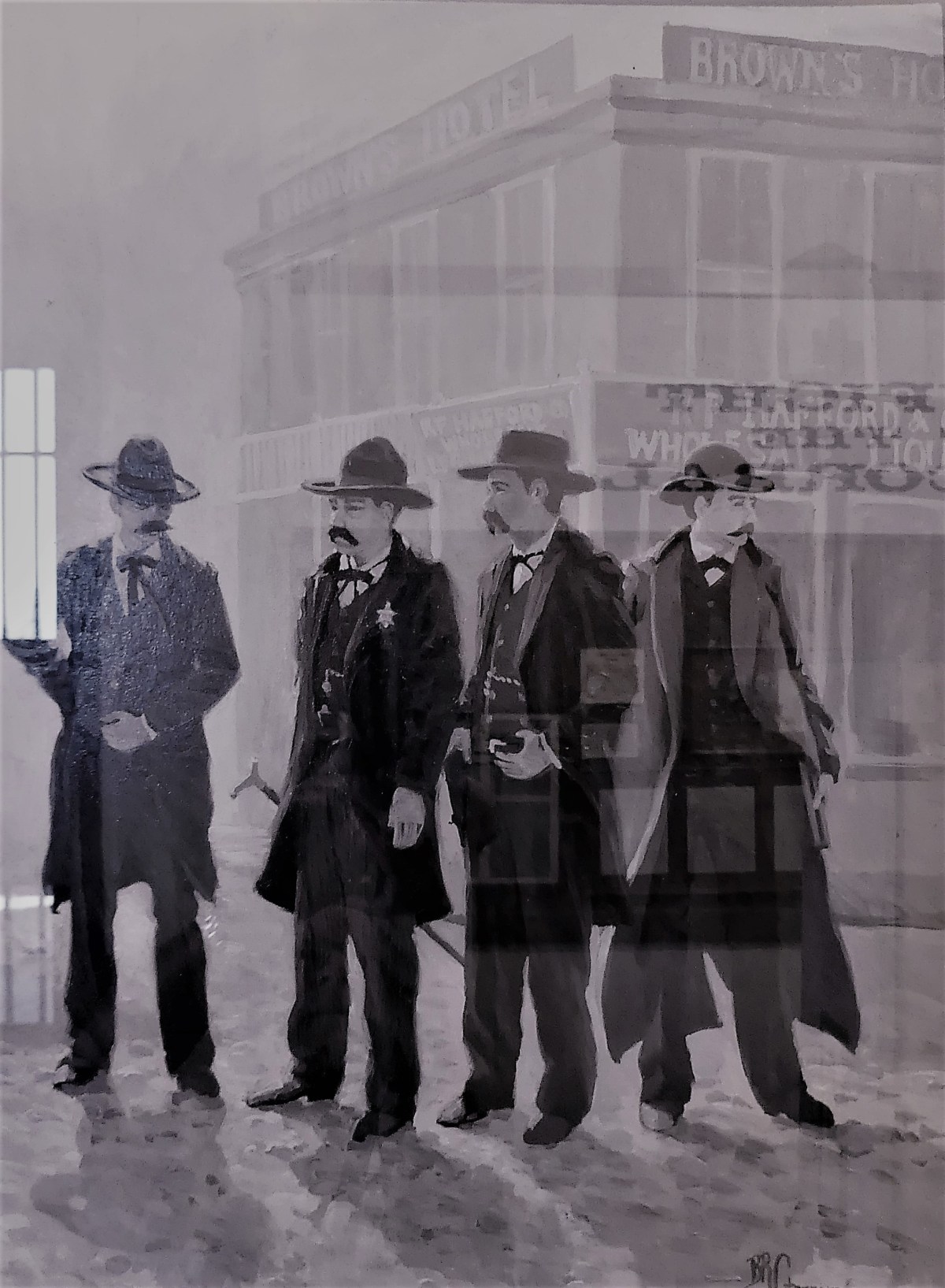
But outside on the street, trouble was brewing.

Slide 1.jpg
The Earps had heard that “The Cowboys” were gathering at the O.K. Corral making threats and spoiling for a fight.
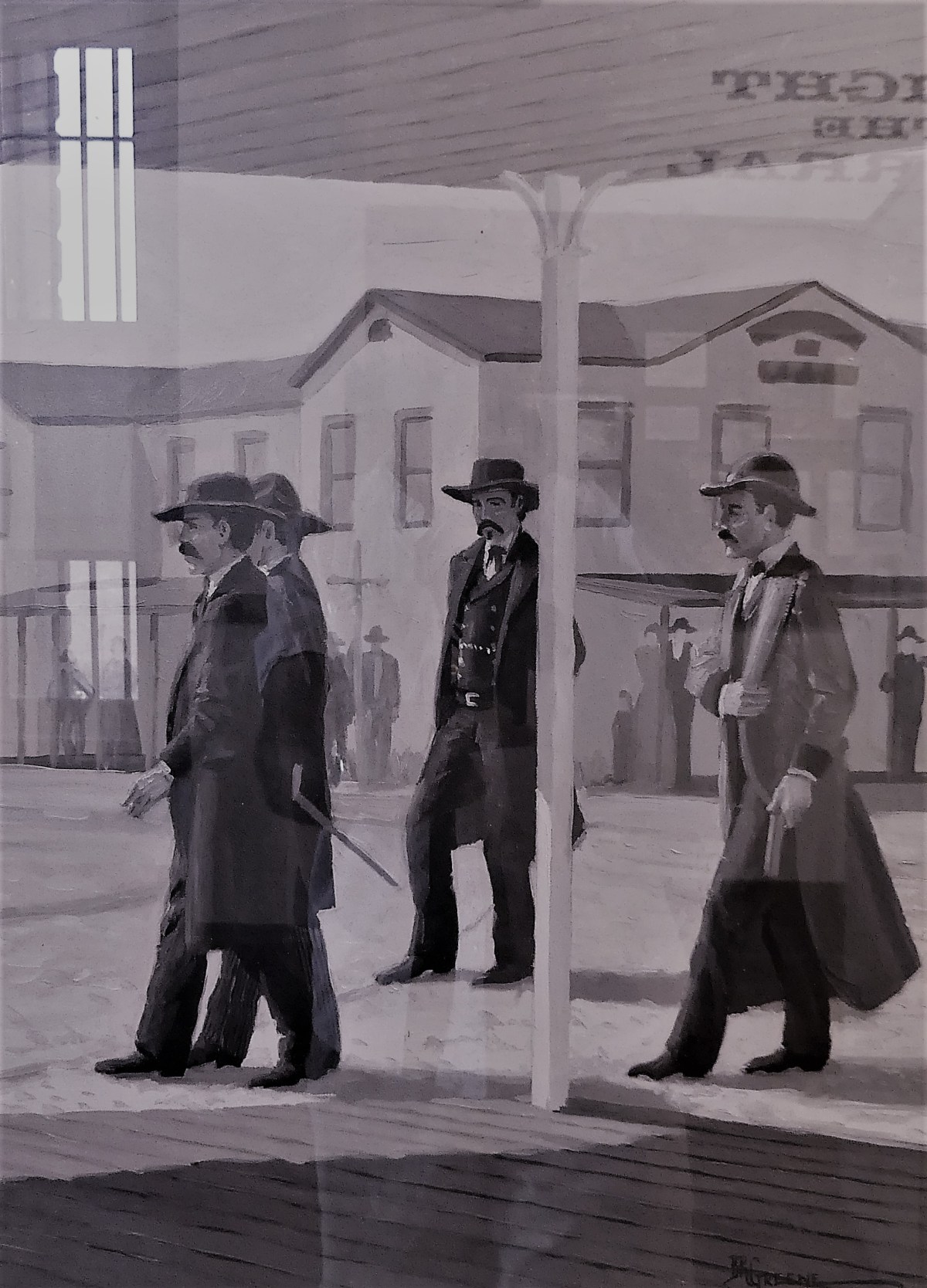
Slide 2.jpg
Rounding the corner of 4th and Freemont, the Earps headed west to the rear entrance of the O.K. Corral for a date with destiny.
Slide 3.jpg
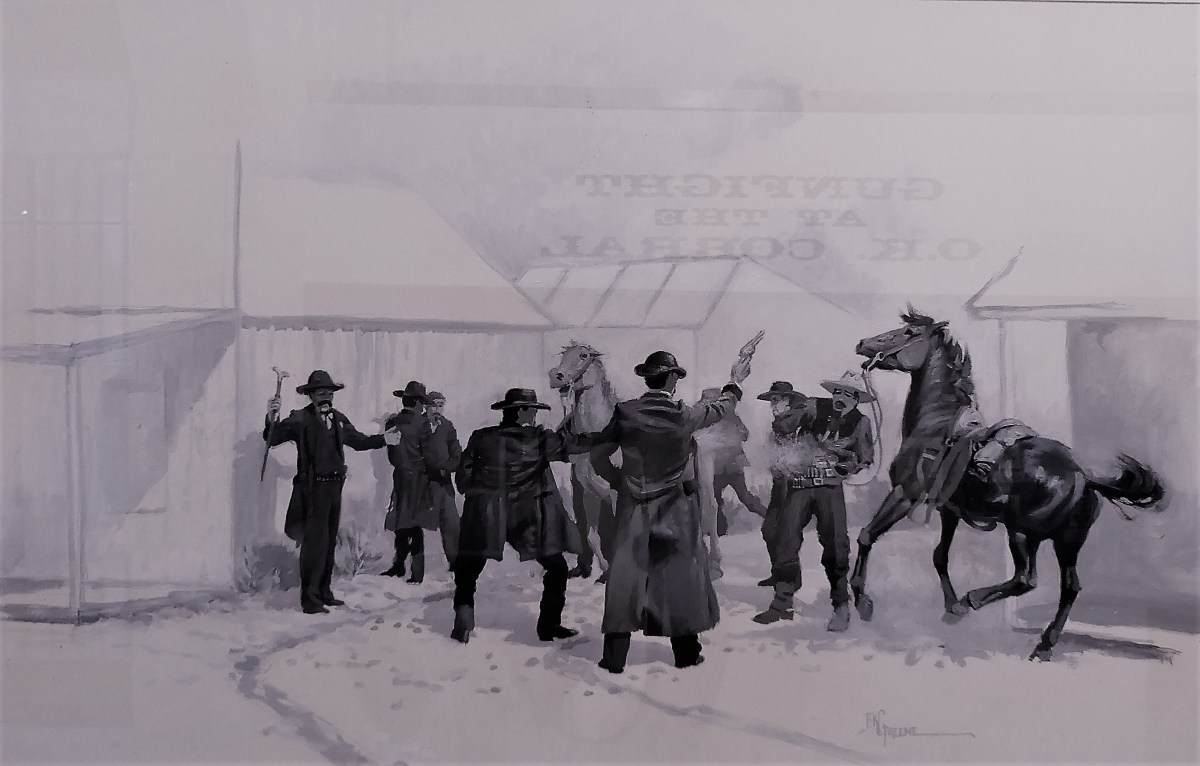
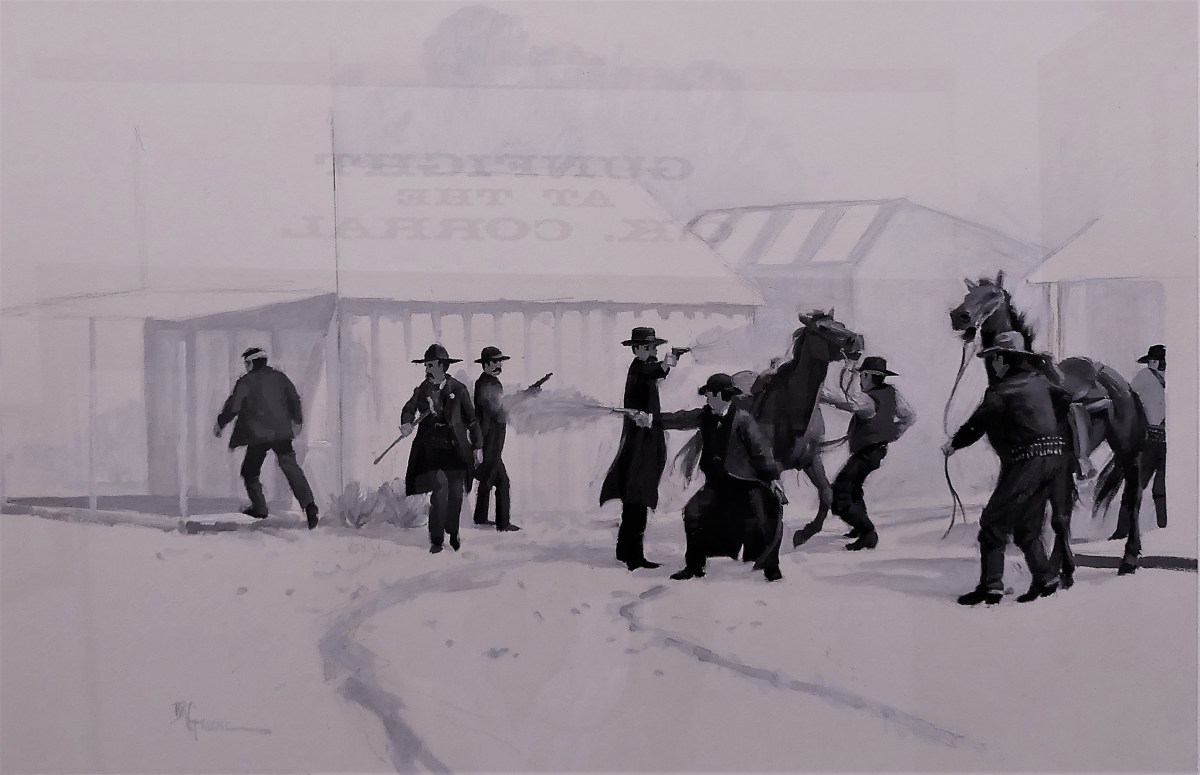
When the fight begins, Town Marshal Virgil Earp (with cane) says “Hold on, we don’t want that,” as Frank McLowery and Billy Clanton take the first bullets from Doc and Morgan.
Slide 4.jpg
Billy Clanton (2nd from right) draws his gun and begins to fire back as his brother Ike begs Wyatt Earp not to shoot him. Morgan and Doc are concentrating on Frank McLowery and the game Billy Clanton who, though mortally wounded, continues to shoot. Frank and Tom maneuver their horses as shields.
Slide 5.jpg
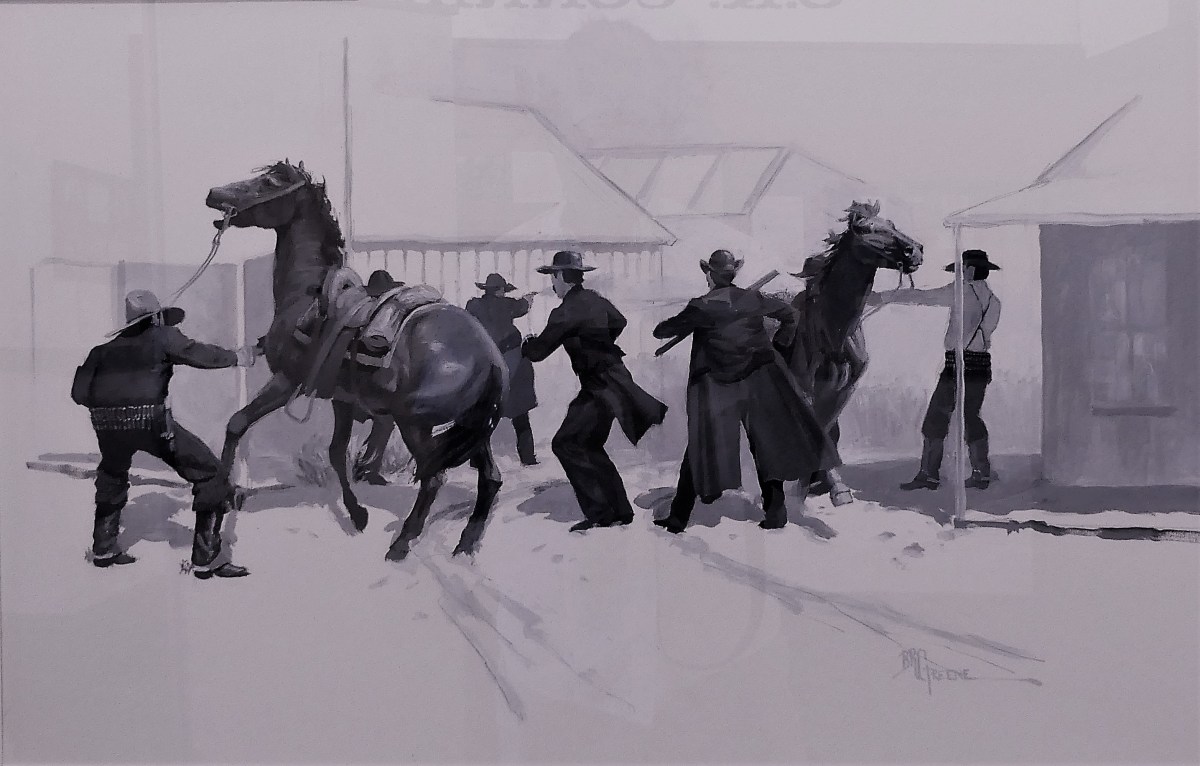
As Ike Clanton flees, Virgil Earp and Tom McLowery bring their guns into action. Doc Holiday turns to fire at the fleeing Ike, while Morgan continues to fire at the wounded Frank McLowery.
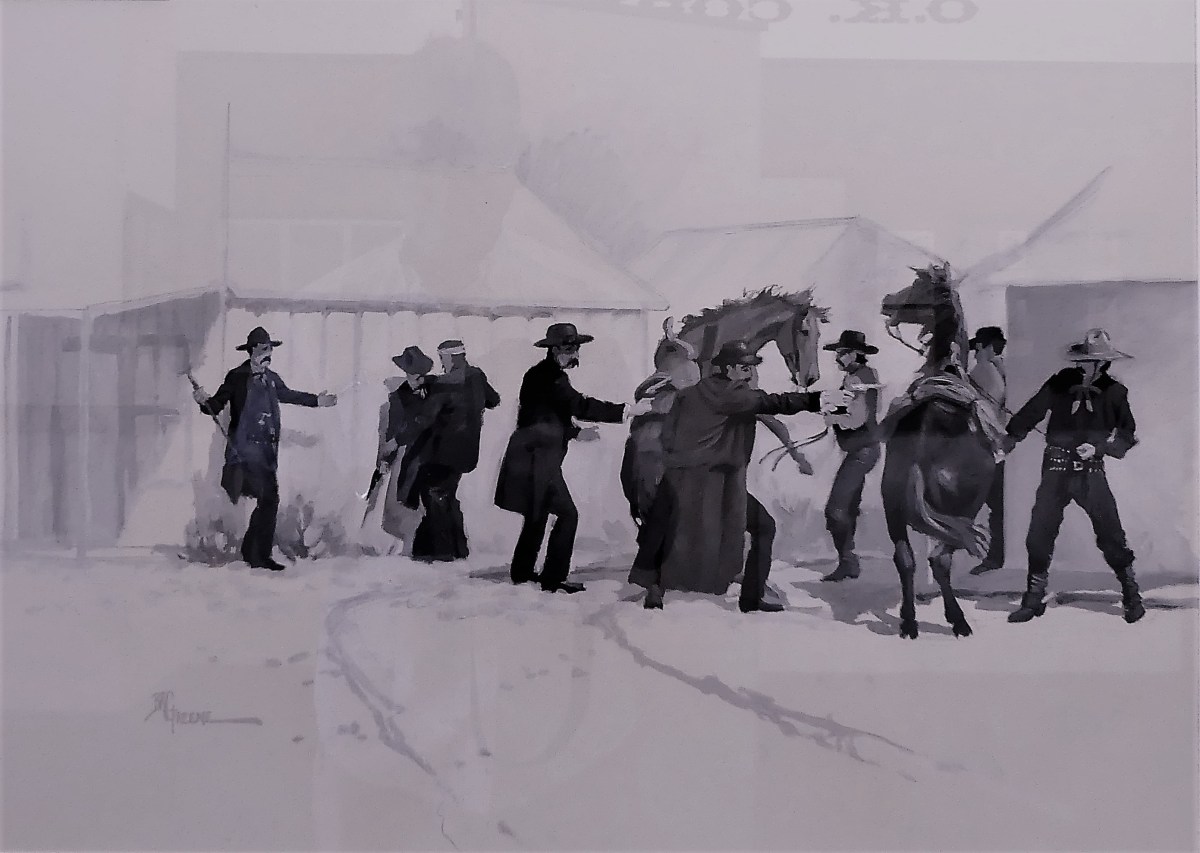
Slide 6.jpg
Frank McLowery maneuvers his horse into the street and fires back under the horse’s neck as Holliday pulls a sawed-off shotgun from under his coat. An anonymous shot, possibly from Billy Claiborne is fired from within the O.K. Corral, diverting the Earps’ attention.
Slide 7.jpg
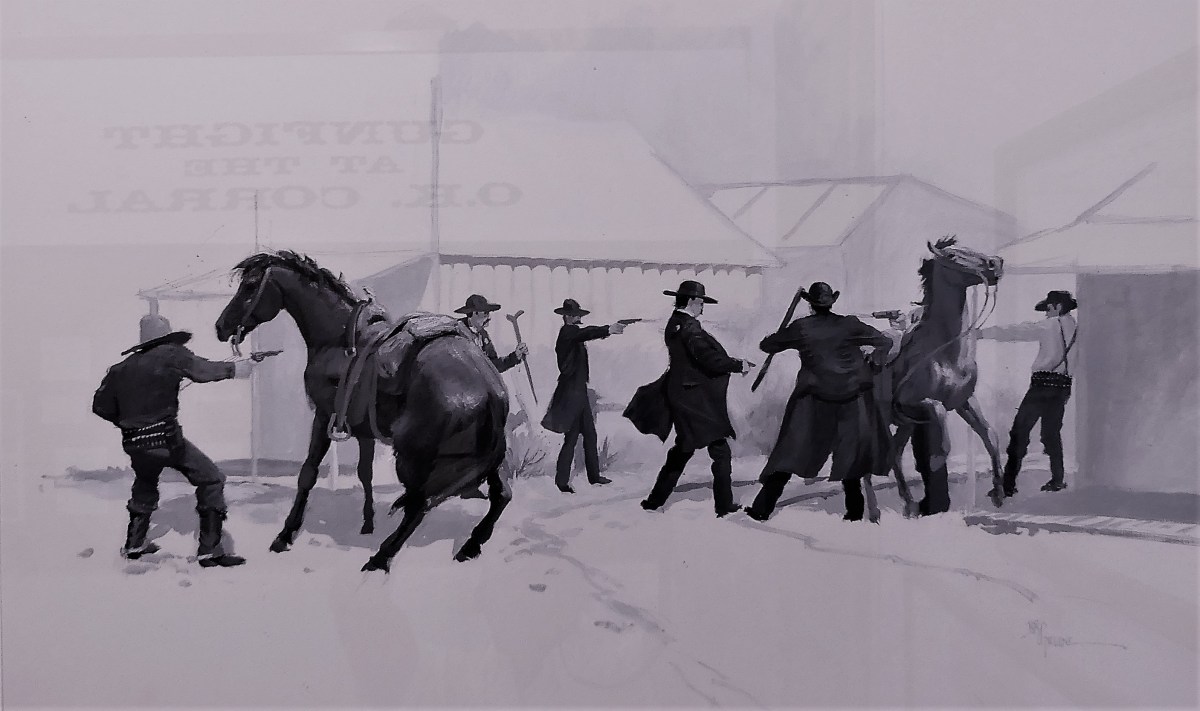
Frank McLowery still manages to hang onto his horse for cover as his brother Tom, shooting over his saddle, hits Morgan Earp. Billy Clayton (nearing death) returns fire at Virgil and Wyatt. A shot from Frank hits Marshal Virgil Earp in the right leg.
103742_0.jpg
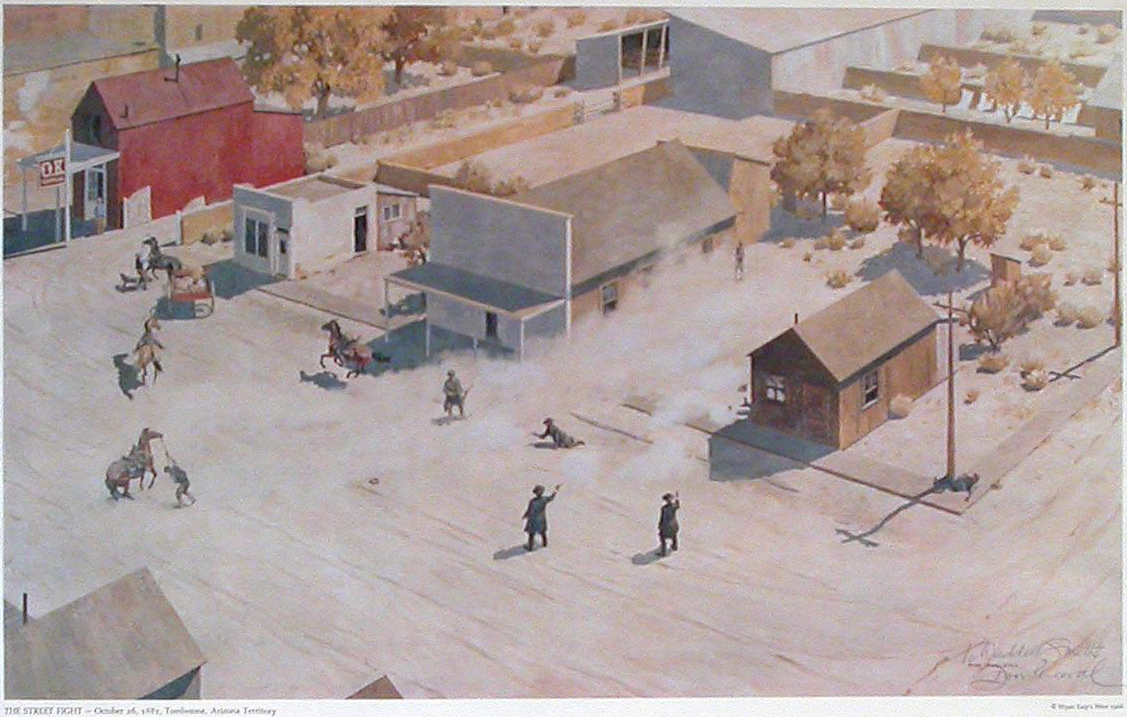
Thirty bullets are fired in a thirty second outburst. When the smoke clears, Billy Clanton and both McLaury brothers lay dead in the street. Ike Clanton, claiming that he was unarmed has run from the fight, along with Billy Claiborne. Virgil, Morgan, and Doc Holliday are wounded, but Wyatt Earp is unharmed.

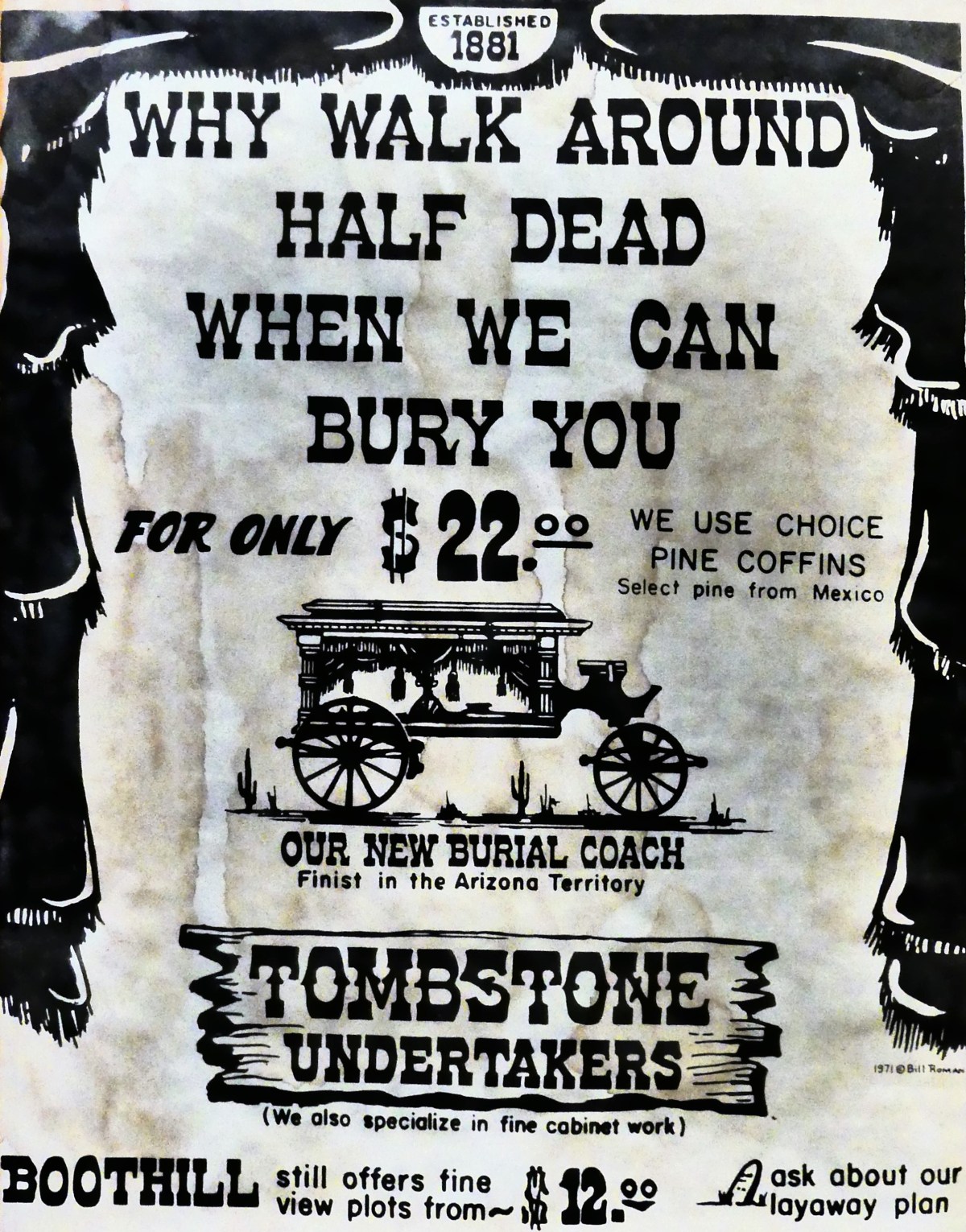
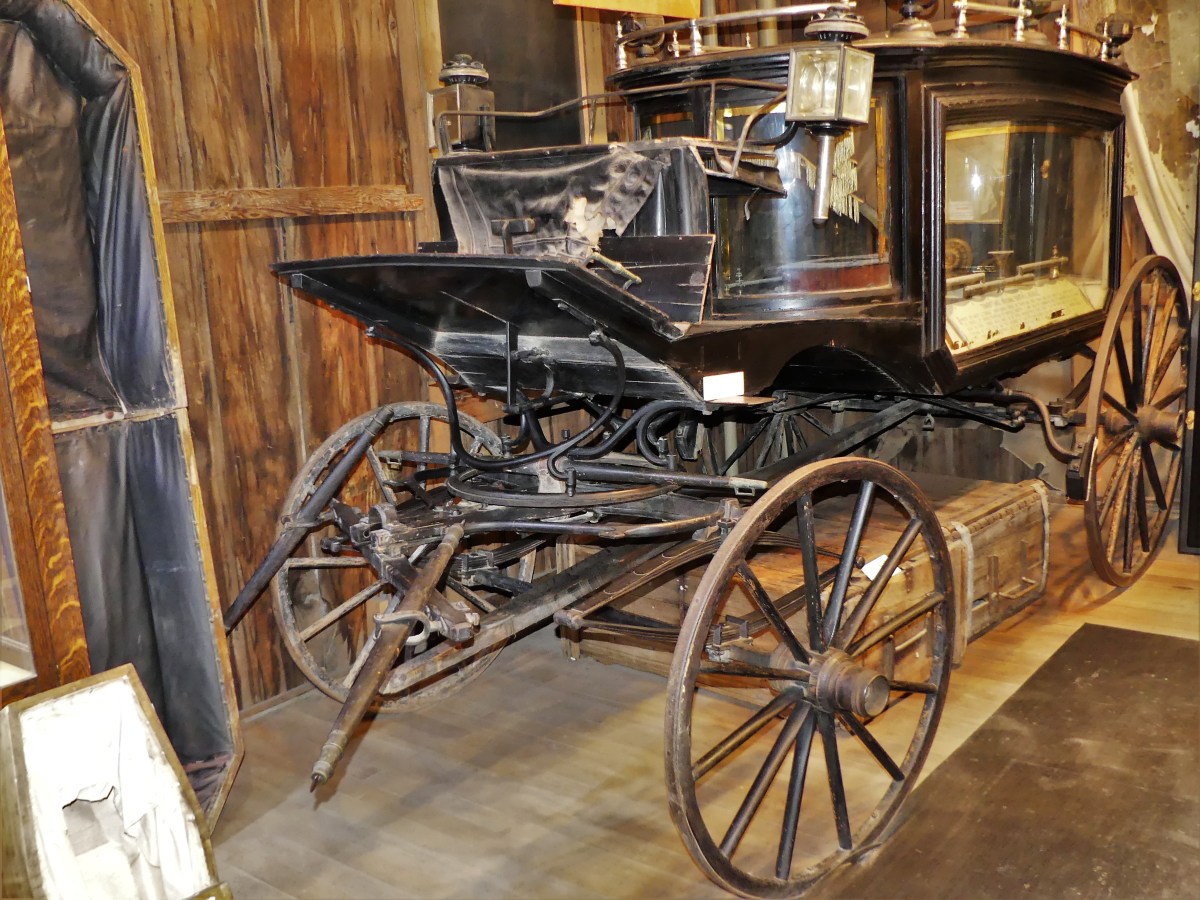
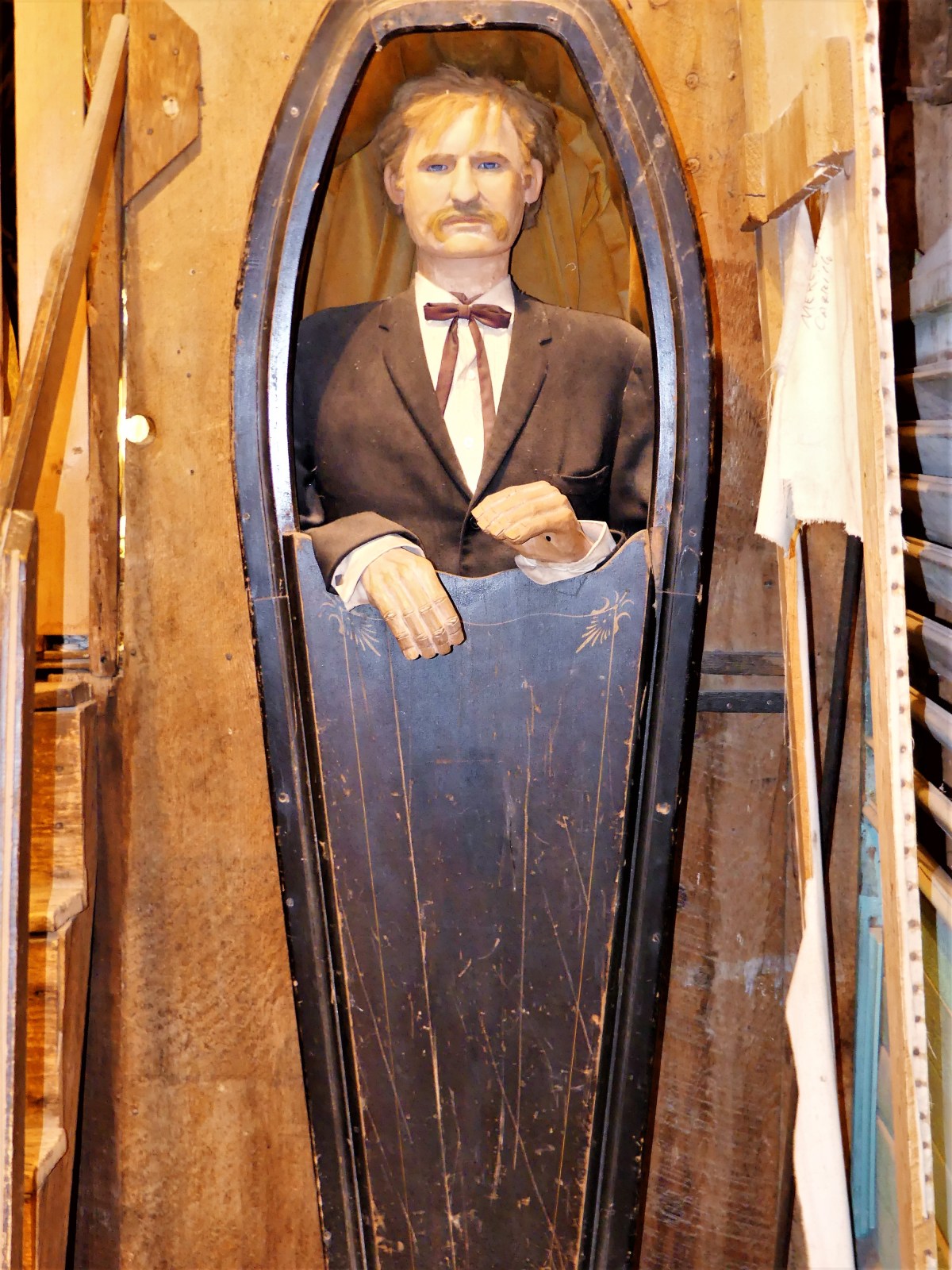
Certainly, death was big business for the Tombstone Undertakers.

coffin ad (2).jpg

funeral carriage

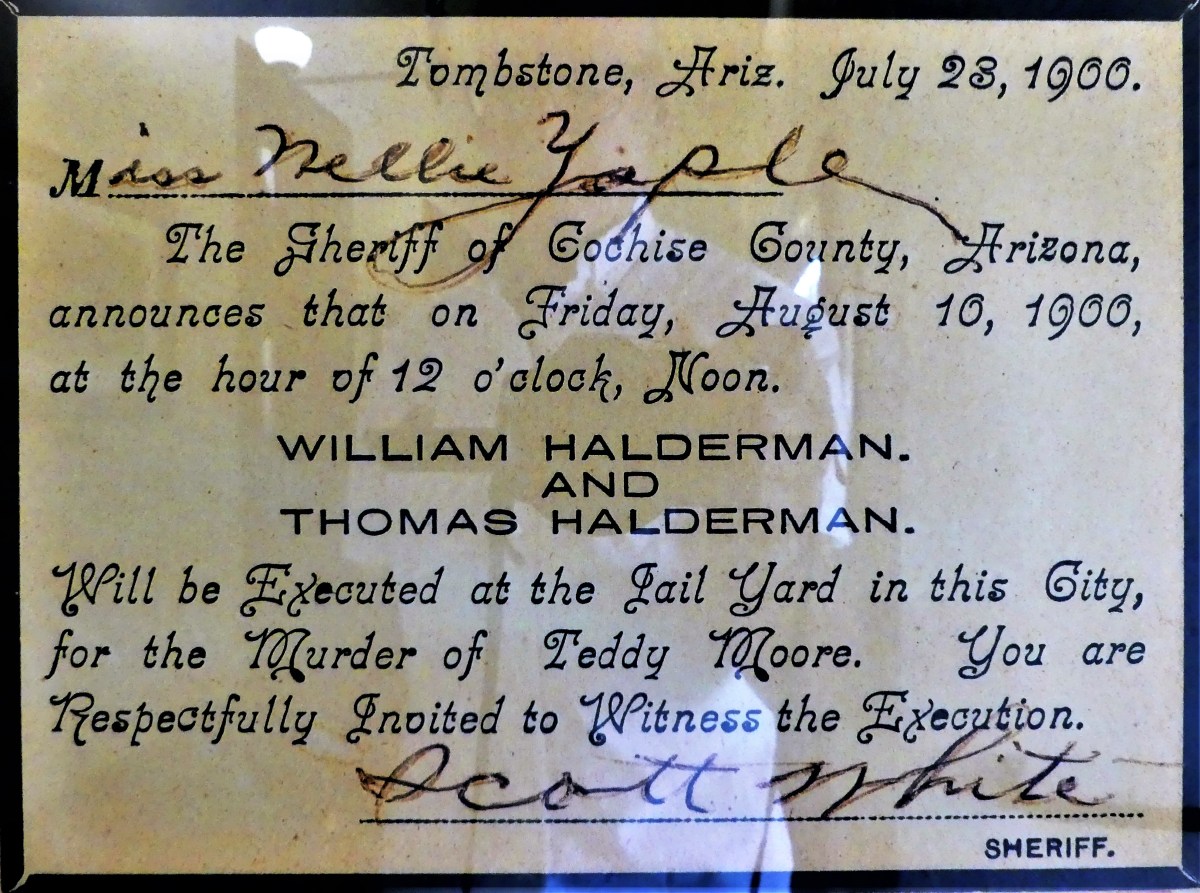
And on occasion, death was high entertainment for the townsfolk.

invitation to a hanging

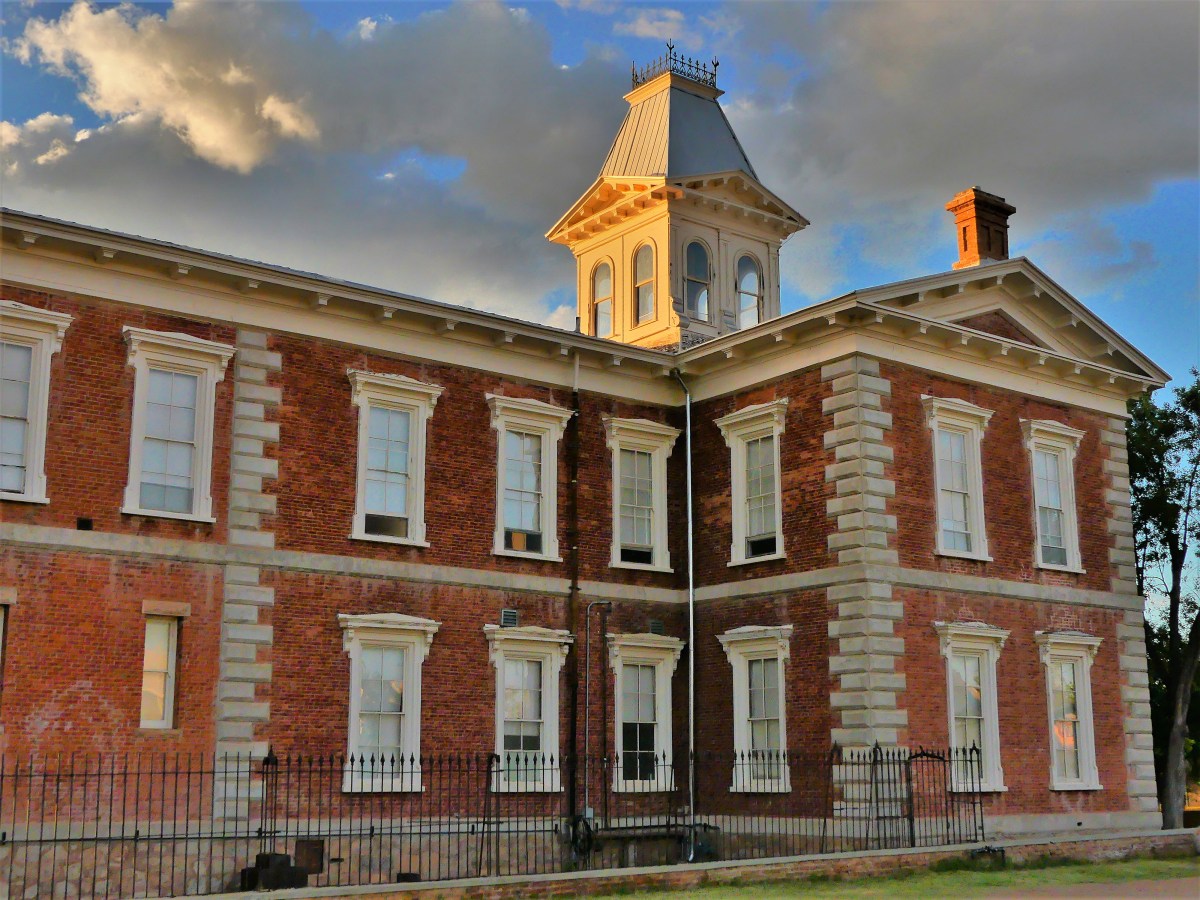
Cochise County Court House

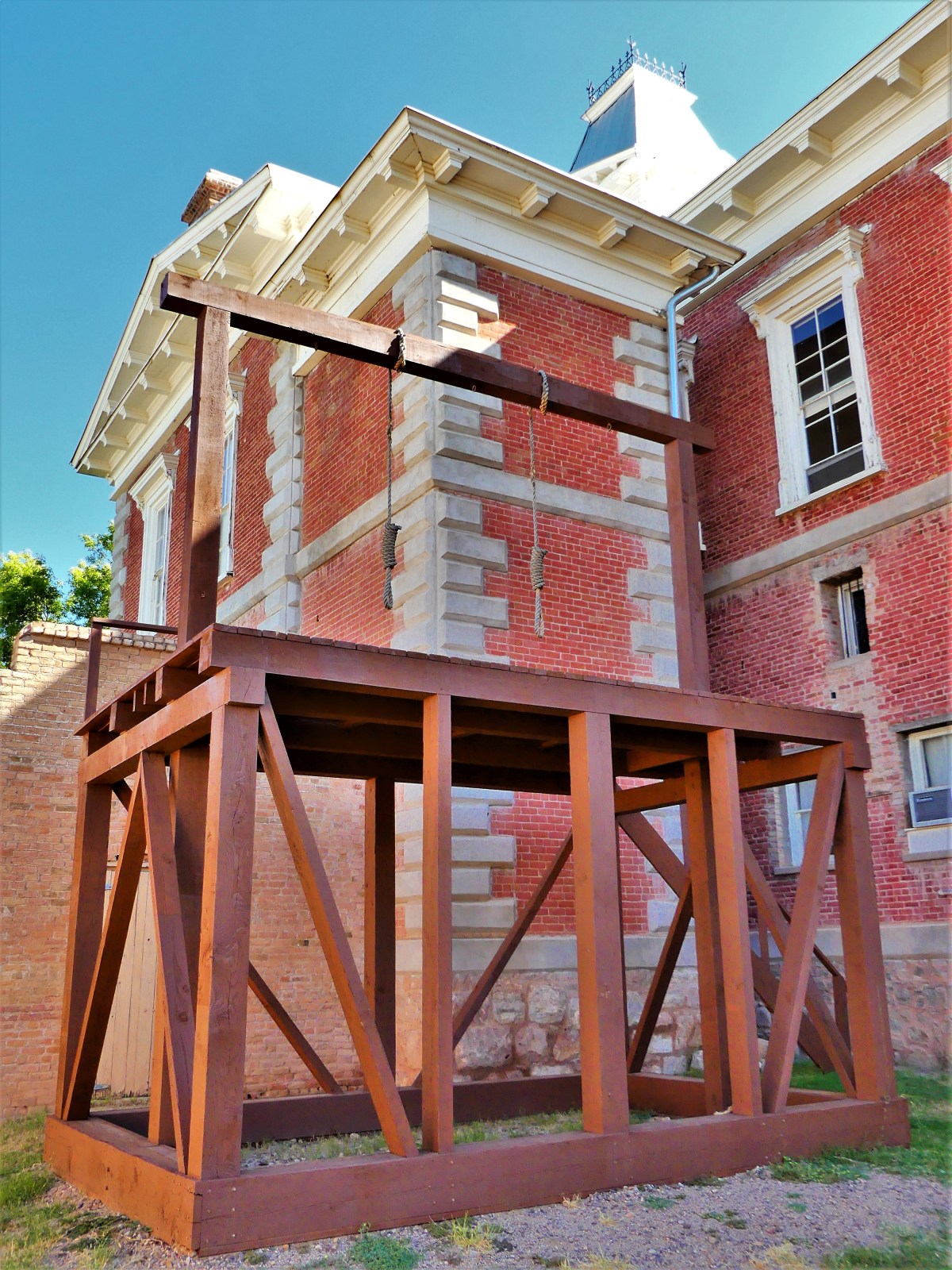
courthouse gallows

hanging noose

standing coffin

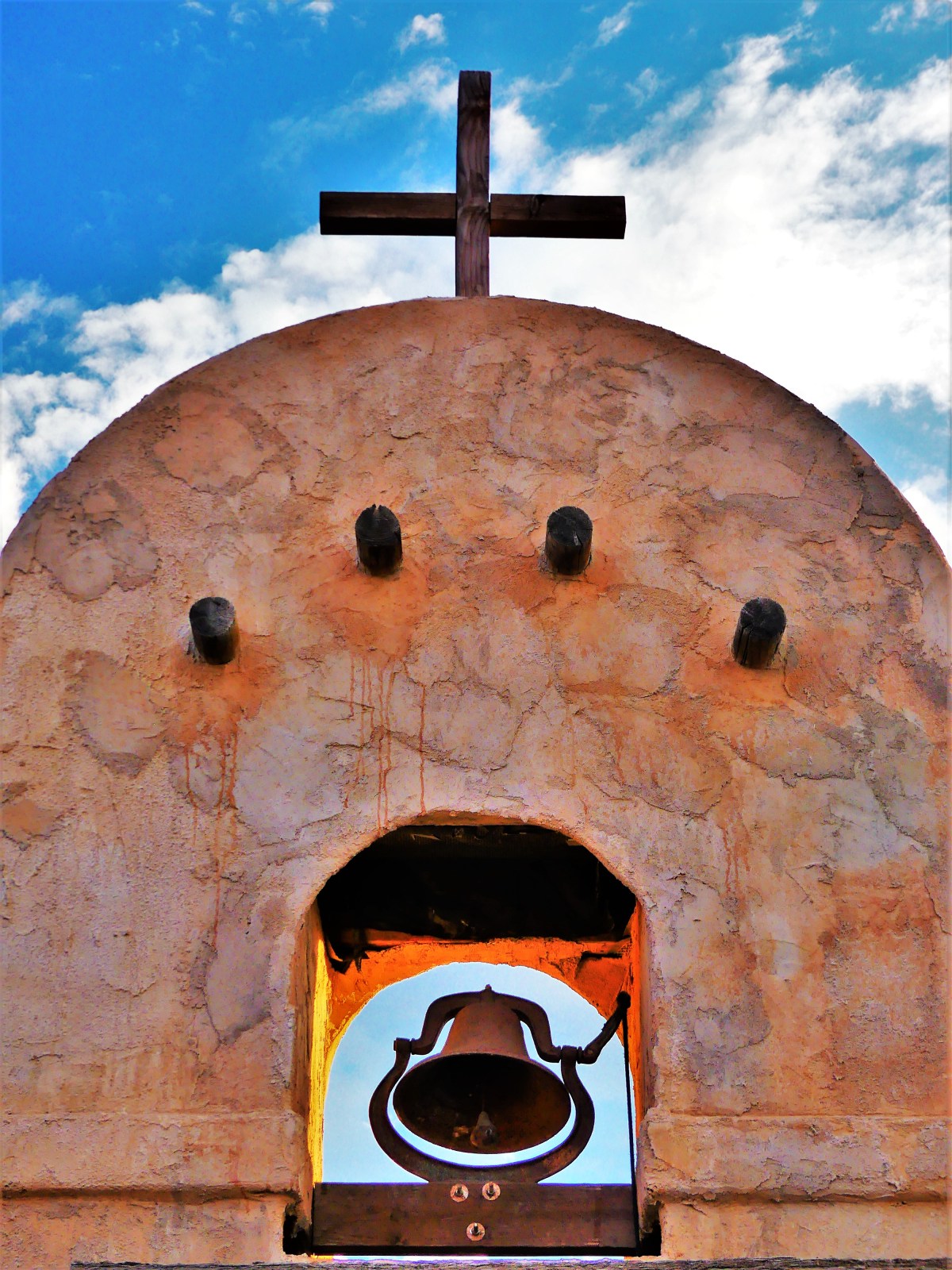
mission bell

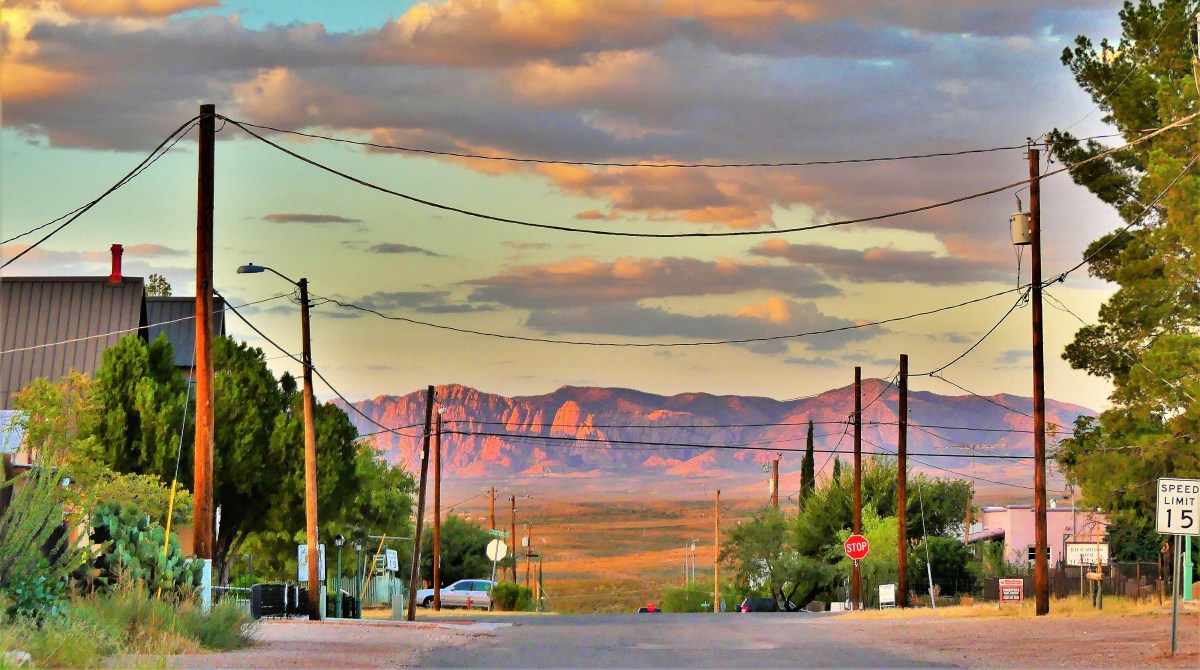
And as the sun sets on Tombstone…

sunset over tombstone (2)

we remember the lawlessness of the Wild, Wild West,

City Hall

but we celebrate the triumph of a Town Too Tough to Die…

old town set

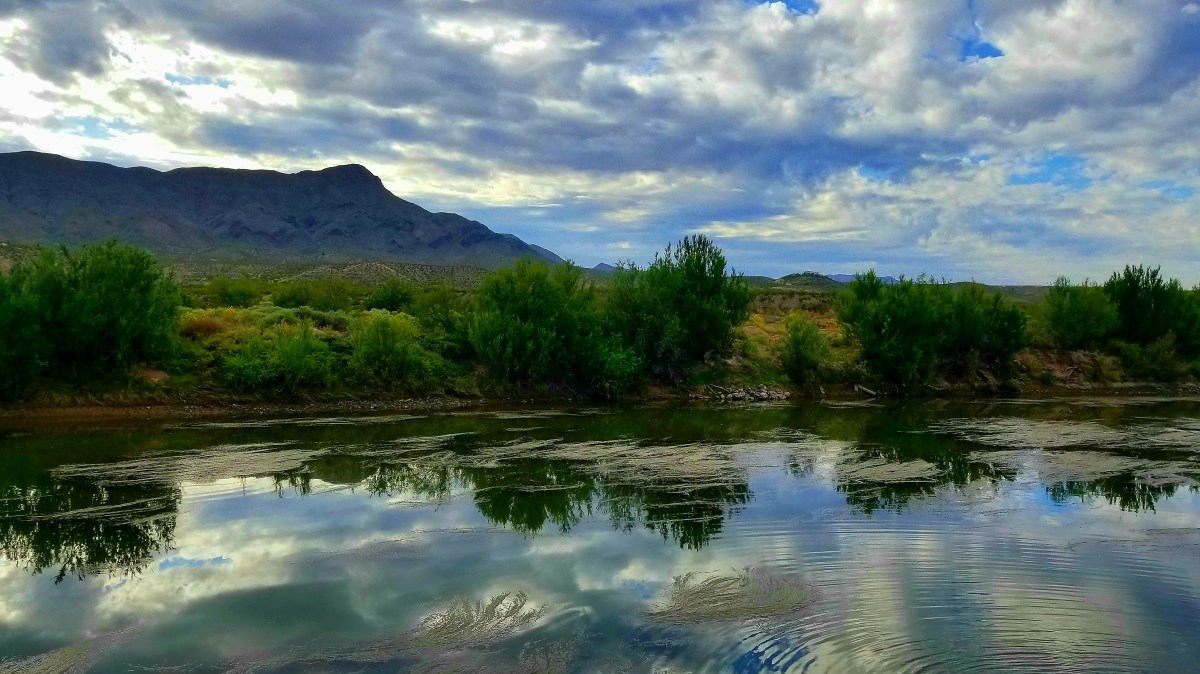
…a worthy consideration while we soaked away the stress in a hot spring along the Rio Grande the following day in Truth or Consequences, NM.

morning soak by the rio grande .jpg


Putting Leah in Perspective

Picasso painted Marie-Thérèse Walter and Dora Maar among others; Dali’s choice was Gala; and Stieglitz extensively photographed Georgia O’Keeffe. The results of these collaborations are legendary. Artists have always depended on models…for inspiration, as subjects, as lovers.

fallen tree (2)

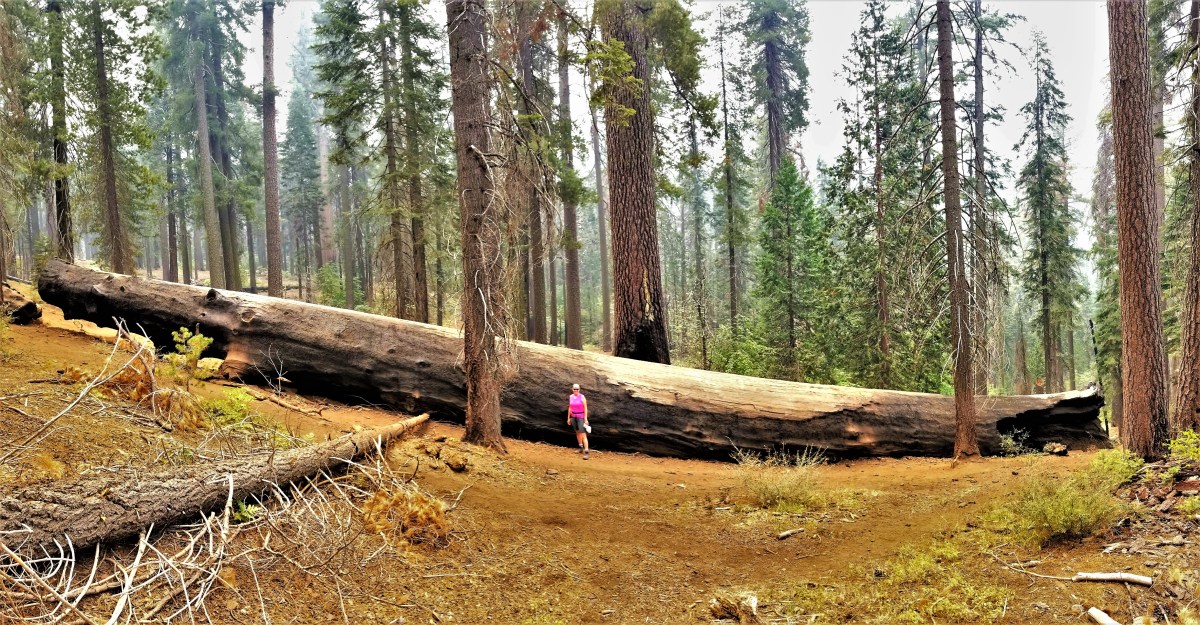
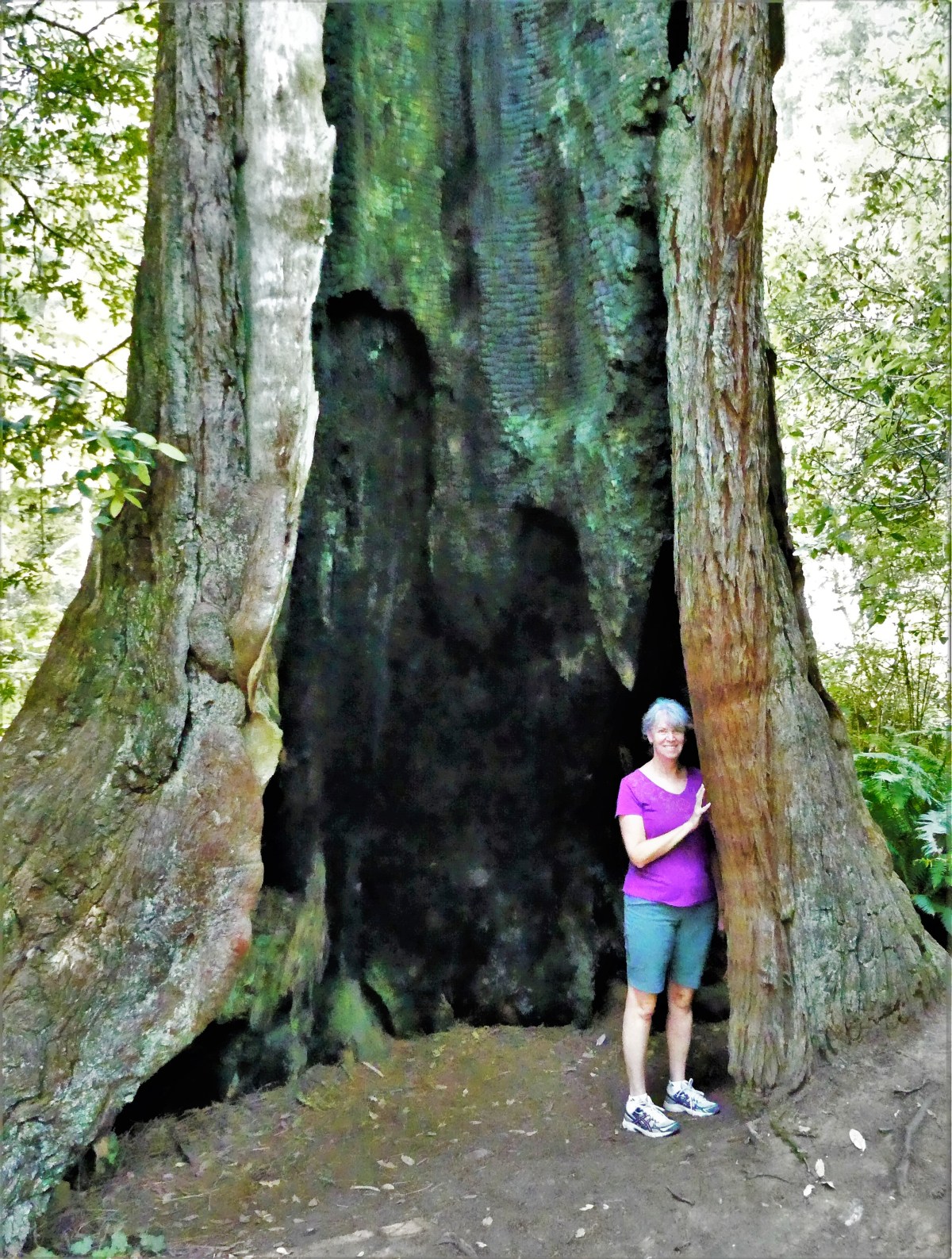
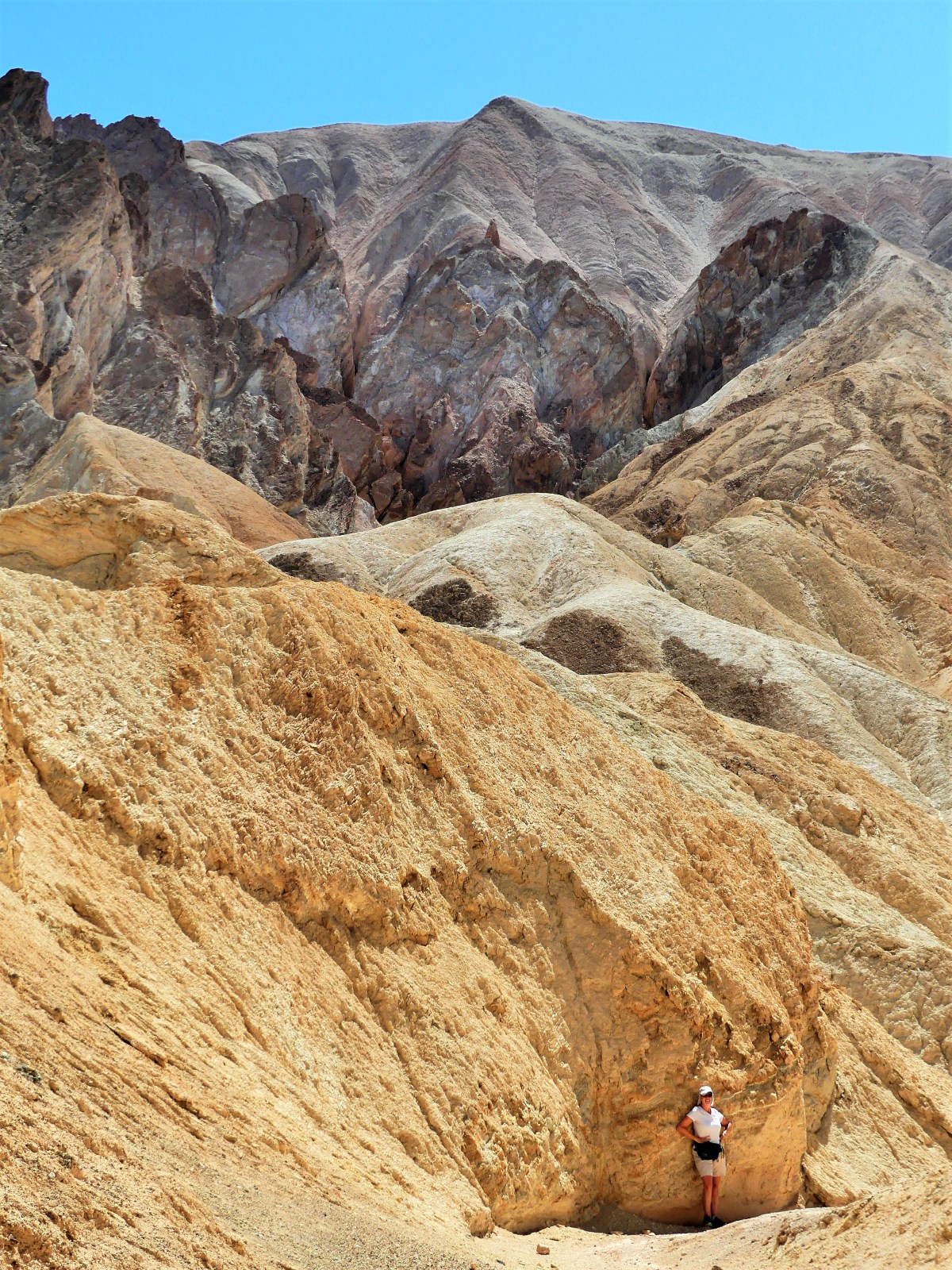
And while I eschew classifying myself as an artist, my reliance on Leah in my landscape photographs is no different than the aforementioned masters…with one exception: scale!

burned out but alive (2)

Often times during picture editing, she will lament, “Why am I so small? You can hardly see me!”

Rainbow Trail panorama (2)

But being able to insert Leah into a panoramic scene or long shot helps me establish dimension and grandiosity.

Leah F150 formation (2)

And while there are times when I seemingly wait forever for someone to step outside the frame of my shot before pressing the shutter, there are also times when it becomes vital to locate Leah in my scene to anchor its meaningfulness, and increase its effectiveness.

Prairie grass and Leah (2)

Sometimes Leah can be an unwilling participant. She may object if she feels she’s not looking her best, or perhaps she becomes annoyed if she’s not the central focus of my photograph when she feels like posing.

Leah (2)

But either way, she has always been a good sport, and is usually compliant when taking my directions.

waders vertical (2)

But regardless of how many rocks she leans against per my request, it’s evident to me, photography aside, how much I lean on her.

canyon shade

She is my personal rock, who helps me put things in perspective.

balance rock and leah (2)

via Photo Challenge: Scale