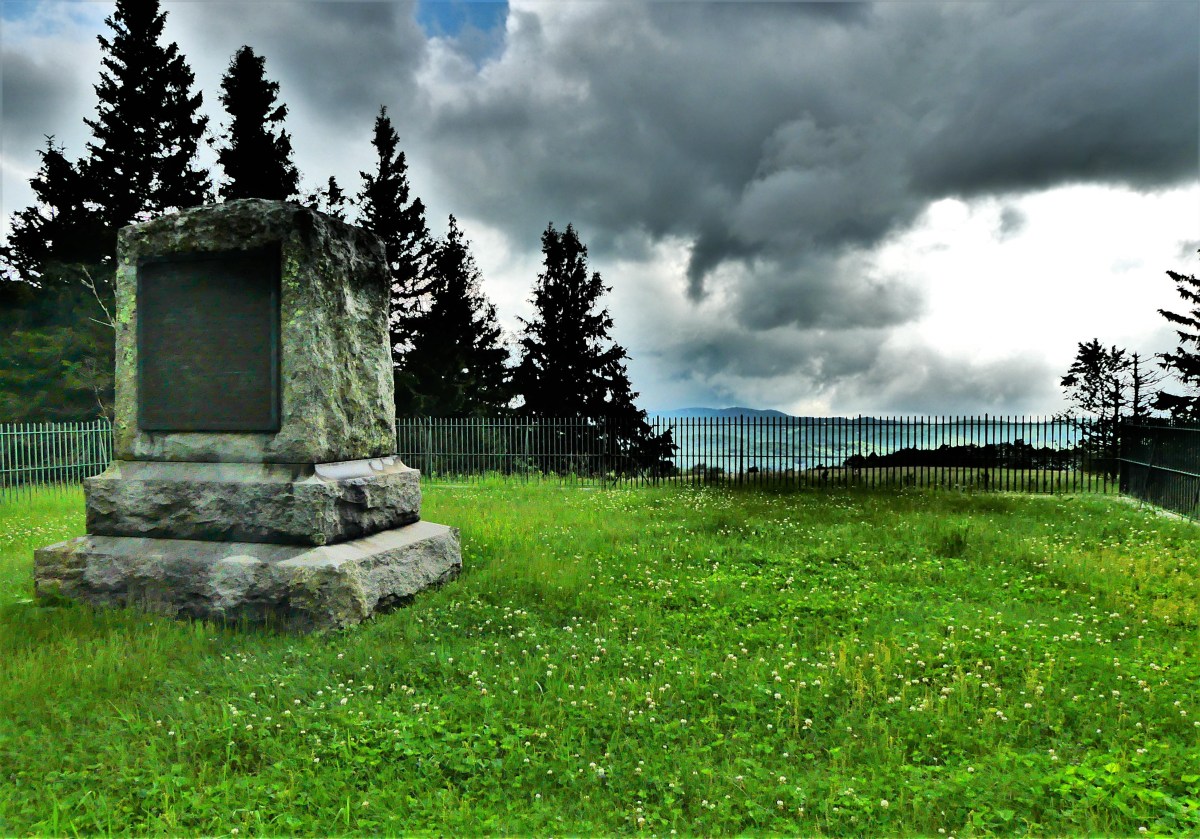
Thunder Mountain

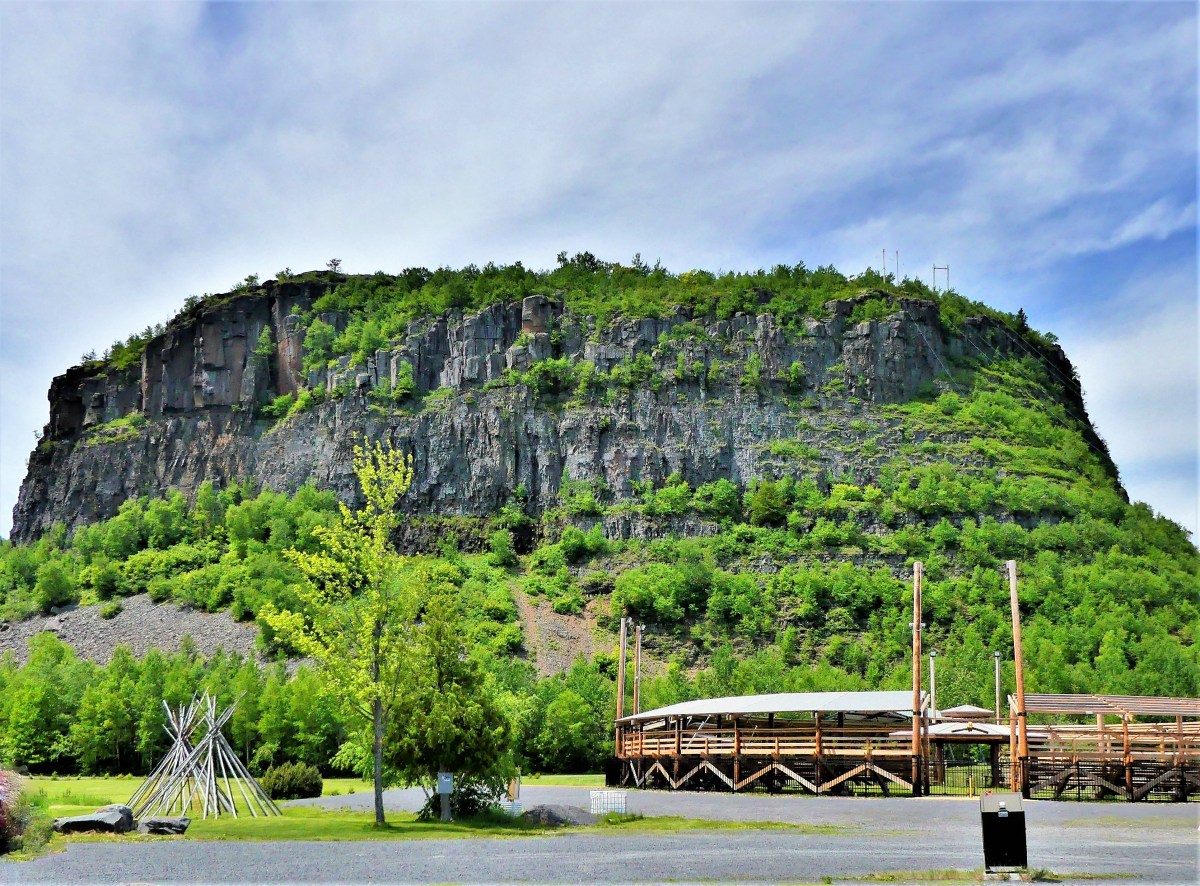
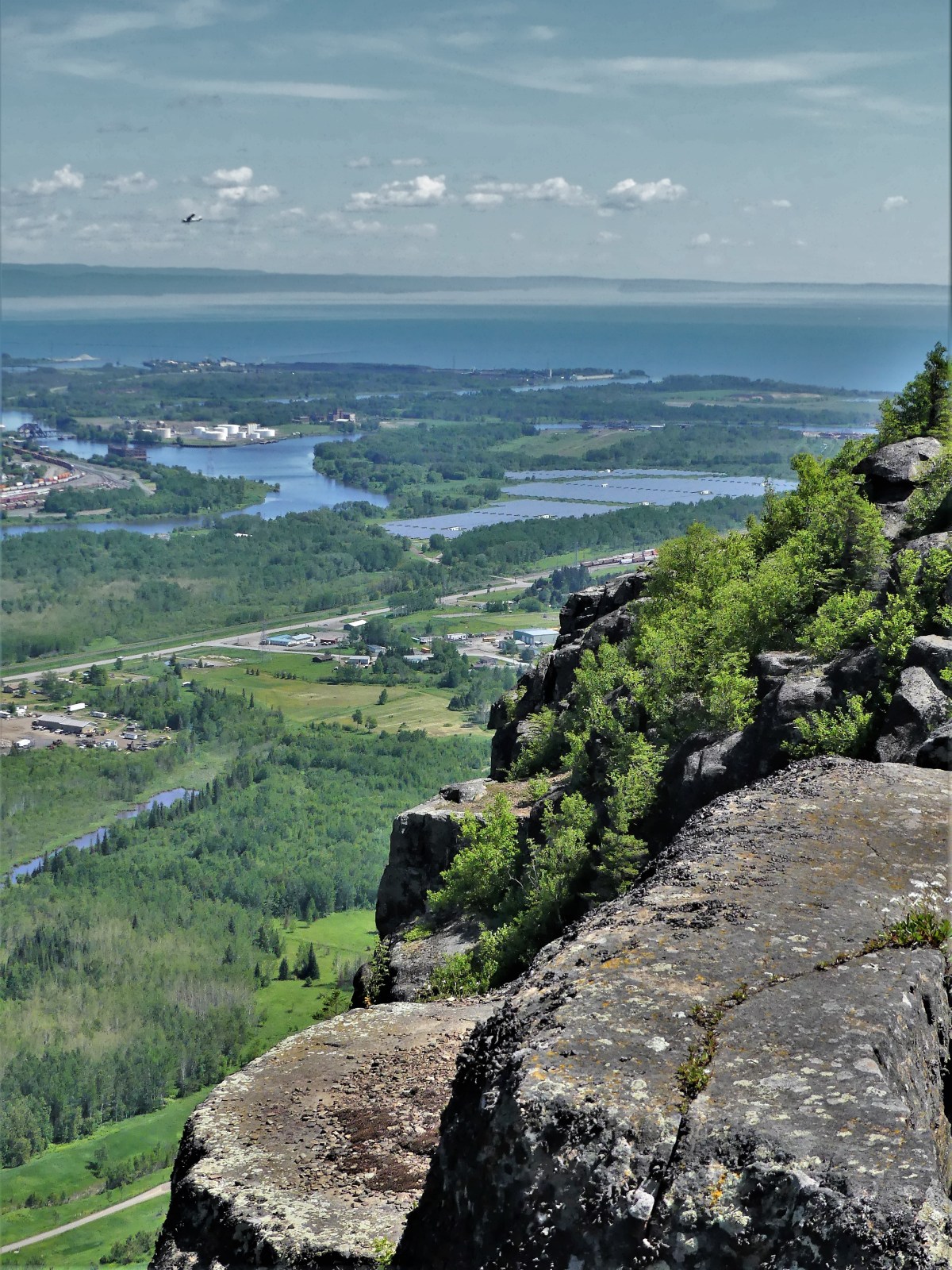
From a distance, Mt McKay is imposing, rising 1200 ft over Lake Superior and making it the largest of the Nor’Wester mountains. It gets its name from William Mackay, a Scottish fur trader from the mid-1800s, who lived for a time in the Fort William vicinity.

However, the Fort William First Nation, descendents of the Chippewa tribe, call the mountain Anemki Wajiw (ah-NIM-ih-key waw-JOO), meaning Thunder Mountain,

Thunder Mountain

and consider it sacred land.

In Honor of Our Ojibwa Elders

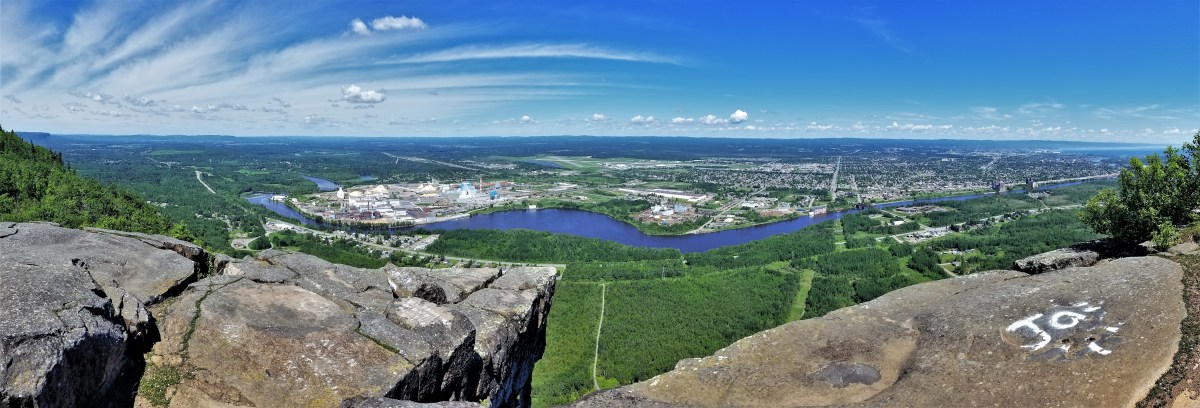
Mt McKay is a prominent landmark of the Fort Williams First Nation reserve, and offers sweeping views of Thunder Bay…

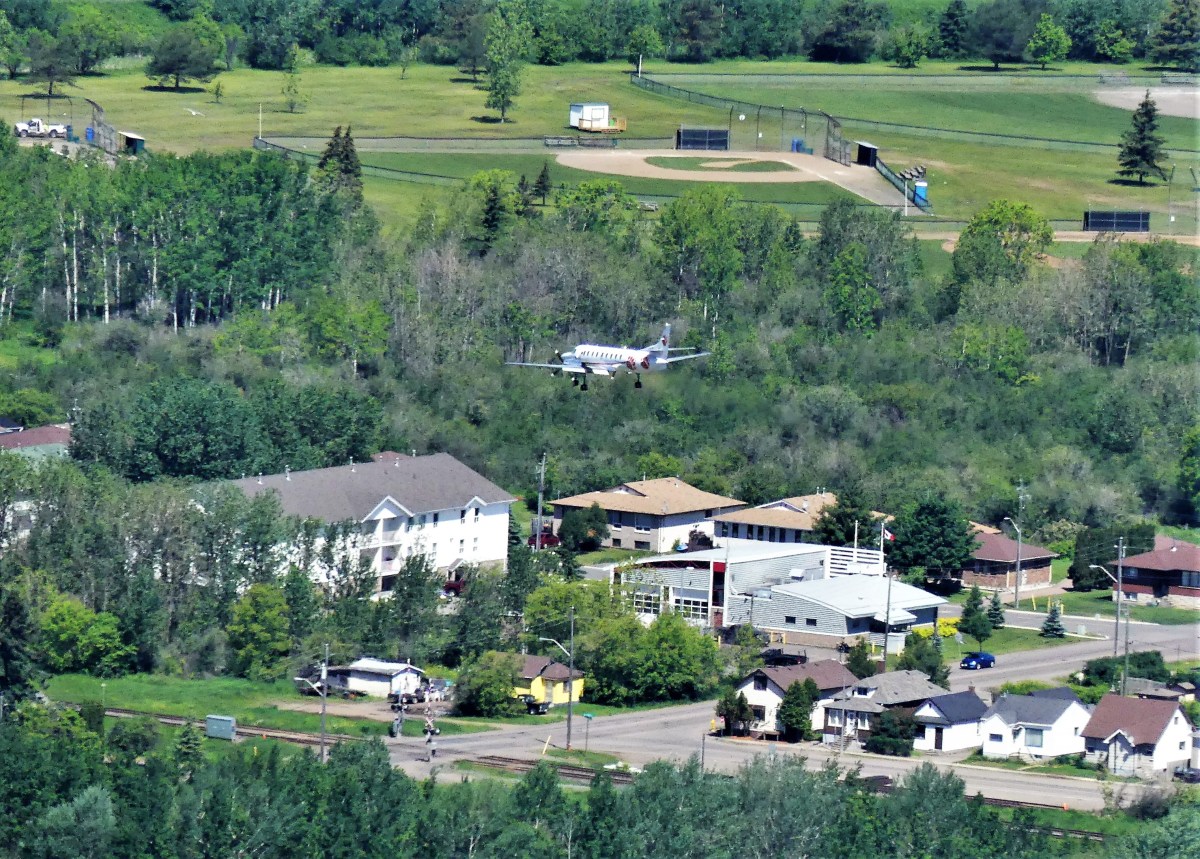
plane landing

from its boardwalk overlook on the eastern plateau…

boardwalk to overlook (2)

and beyond…

Fort William First Nation

Leah and I drove up Mission Road to a toll house, where a First Nation member collected $5.00. She advised us to hike the western trail to the flat cap for more commanding views, and encouraged us to return in 3 days to witness a powwow of the Lake Superior chapters. She also offered a menu and invited us to visit her lunch counter in town.

The trail was narrow, steep and challenging with shards of shale scattered over rocky formations. We took our time.

After a weary climb of 40 minutes, we welcomed the cooler air around us as we crossed onto a plate of volcanic rock formed over 1,100 million years ago.

Leah and me

The bright sun promised a crisp and dazzling vista,

Thunder Bay overlook

but it also seemed to energize the horse flies that soon regarded me as bait.

harbor view

That’s when I knew it was time to retreat to the bottom of the hill, oh-so-gingerly over long drops onto loose shale.

Once we landed at the trail head, I had decided (after checking with Leah) that we should attend the powwow on Satuday.


On the day of the powwow, we looked for news on the internet. and it was everywhere. The council was expecting over 5,000 attendees over two days with plenty of drumming and dancing. Food tents and crafts stalls would round out the affair. The rules were simple: No Alcohol. No Drugs. No hiking. Have a Safe Time.

We drove to Fort Williams First Nation ice arena, where we met a yellow school bus that shuttled us the rest of the way. Only three days ago, the area was empty and quiet, but today, it looked like a parking lot next to a fairground with fringe tents and trailer camping.

Participants were gathering inside the spirit circle and adjusting their costumes, while spectators were filling the grandstands, and the royalty was assembling in anticipation of the welcoming ceremony.

Welcome ceremony

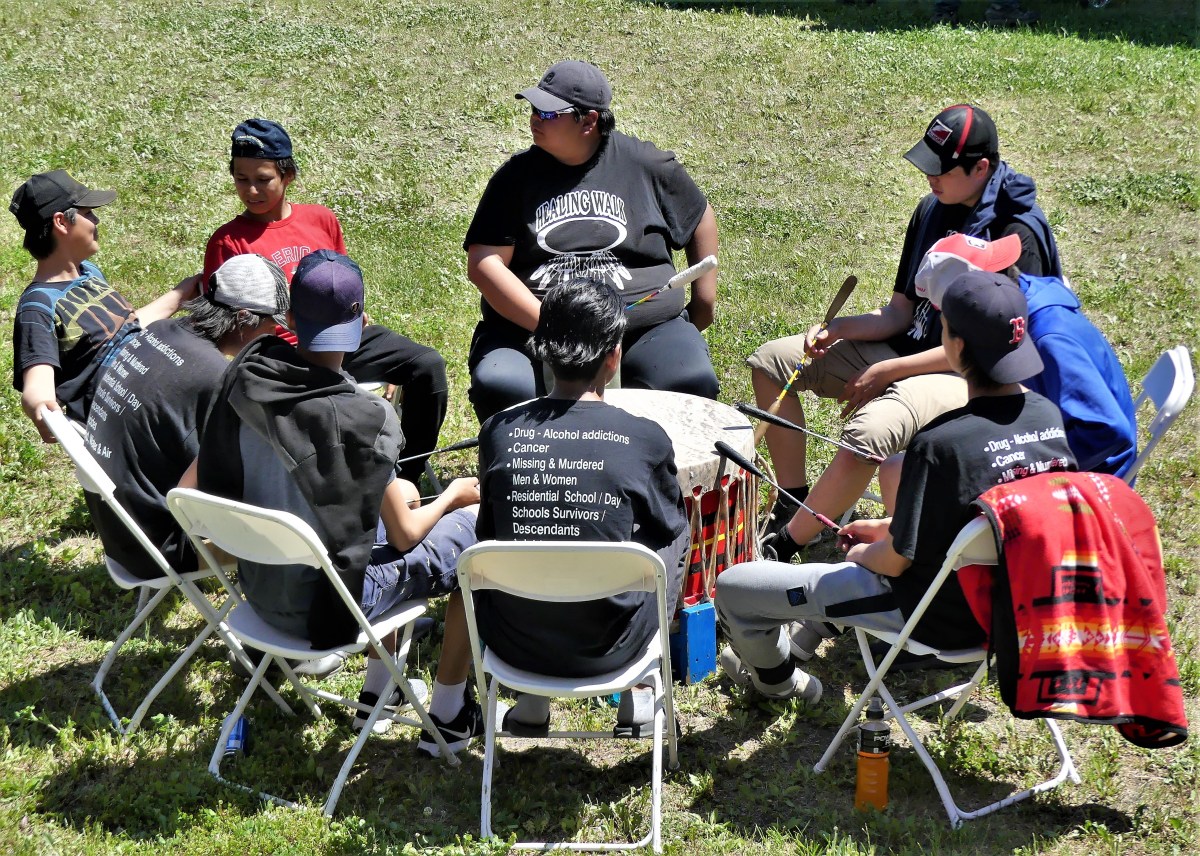
It was a colorful and festive affair. A steady drum beat managed by eight drummers, accompanied a caterwauling chant of guttural highs and lows and occasional shrieks.

drum circle

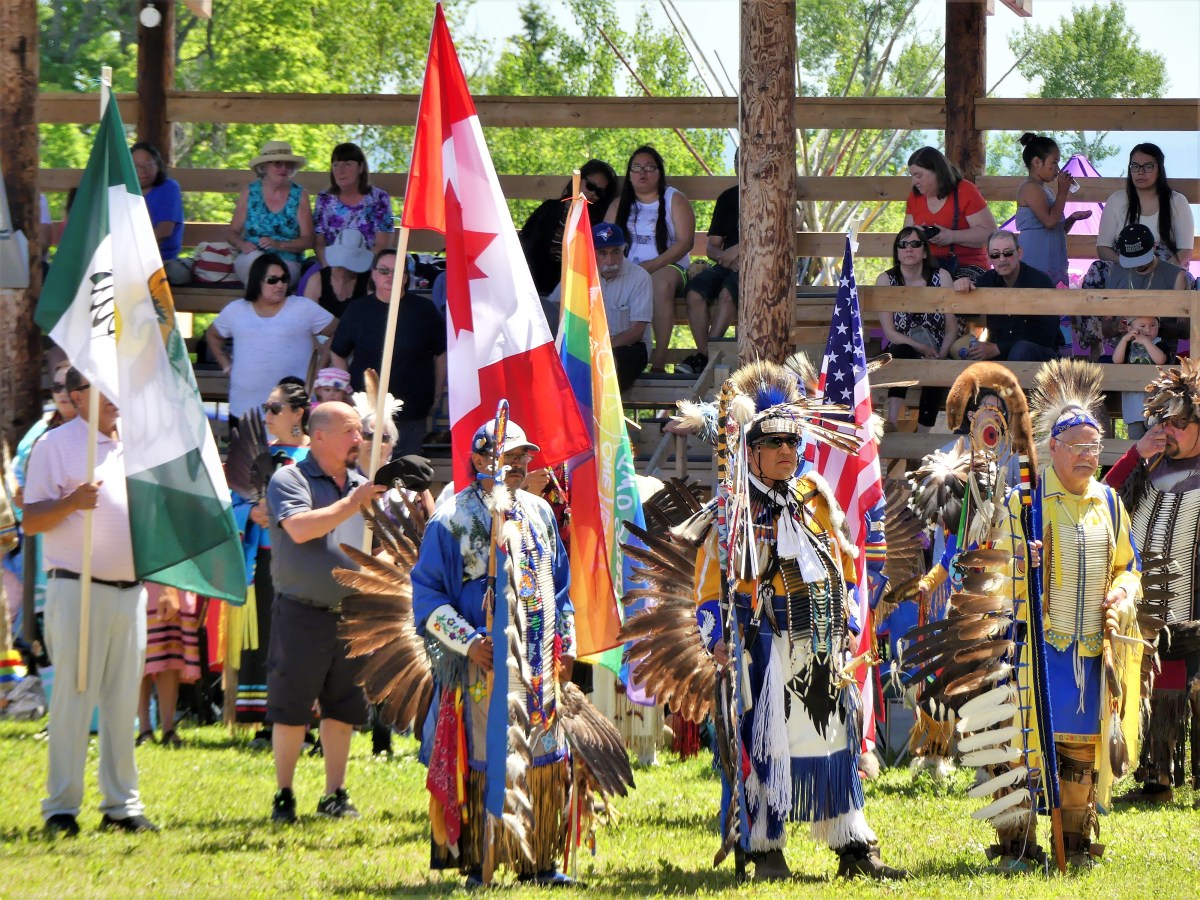
After a prolonged opening procession and invocation, Chiefs and Elders presented flags,

Chiefs

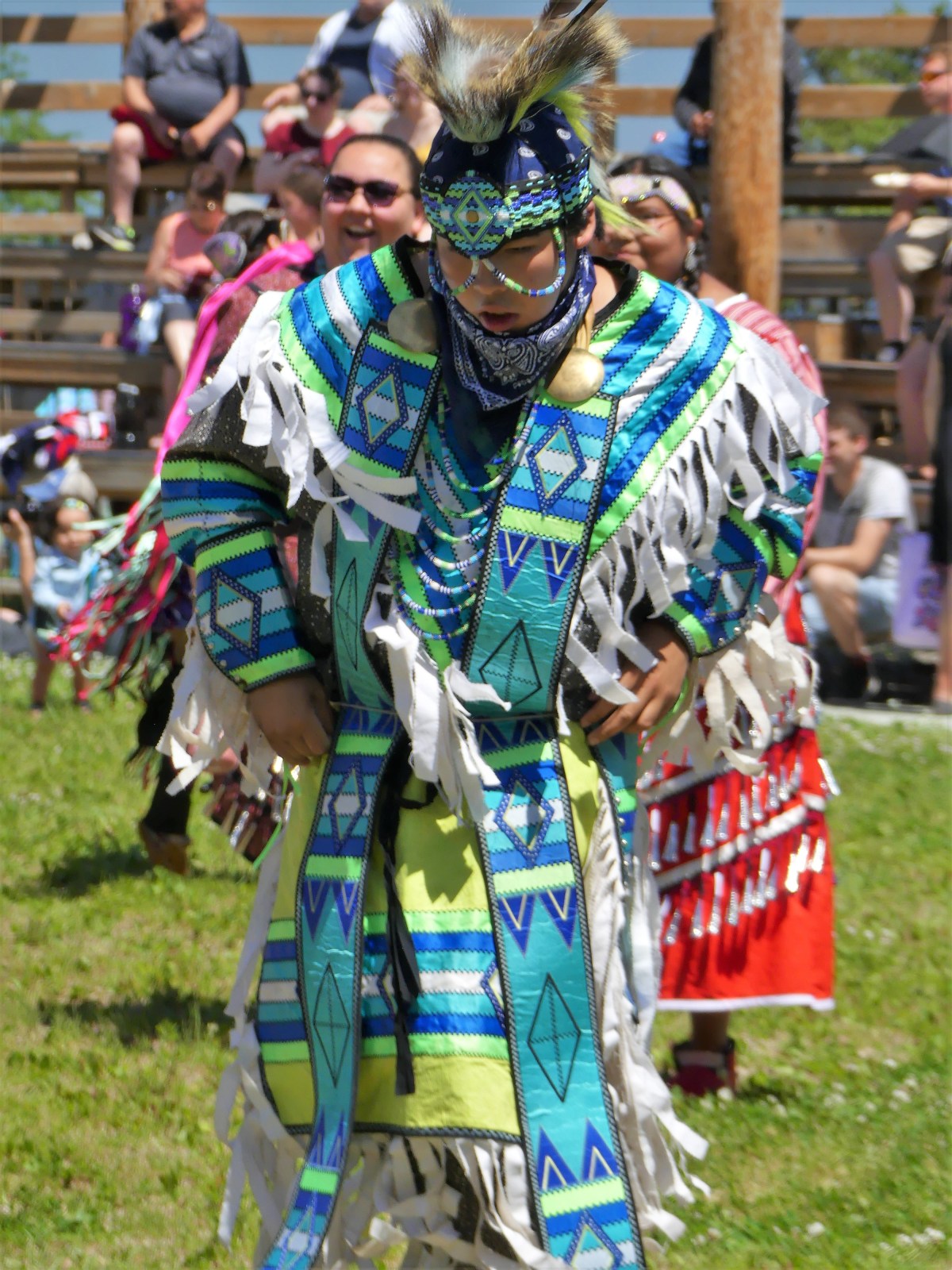
and then it was time to drum and sing and dance again. Grass dancers followed Elders…

grass dancers

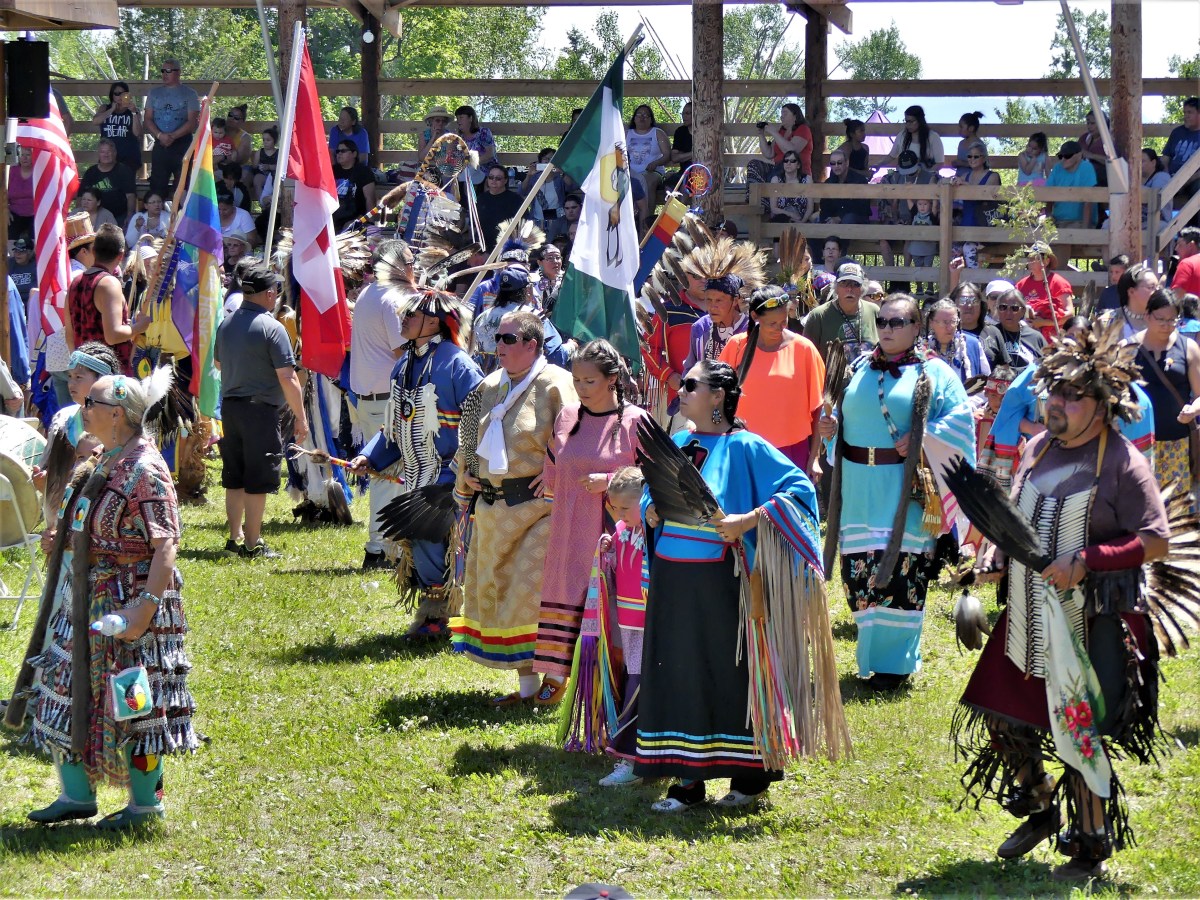
who were followed by family members…

procession

who also danced several times around the pavillion with their children…

father and son

tiny dancer

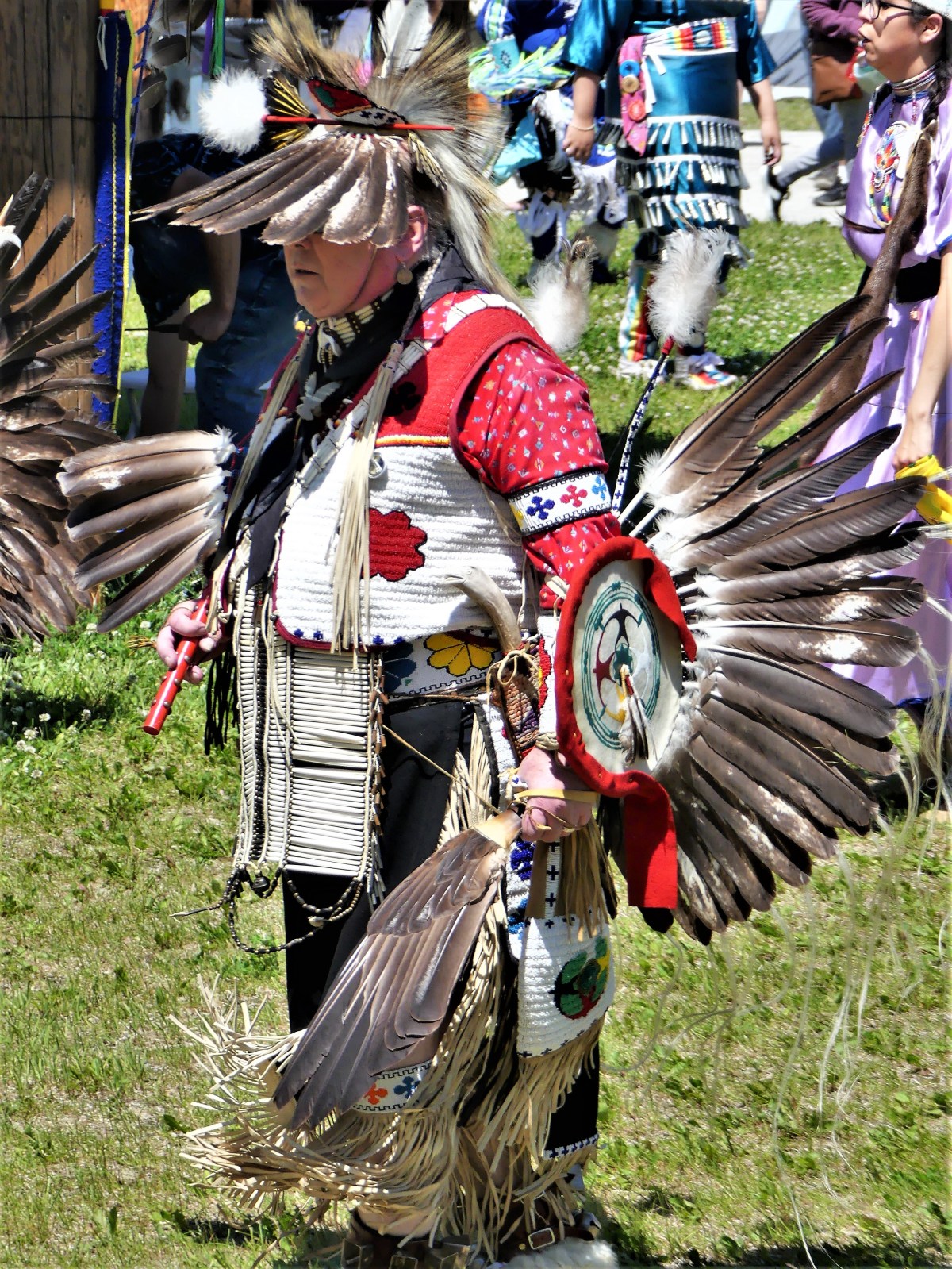
showing off their feathers,

eagle feathers

their elaborate ceremonial costumes…

teal man

red costume

blue costume

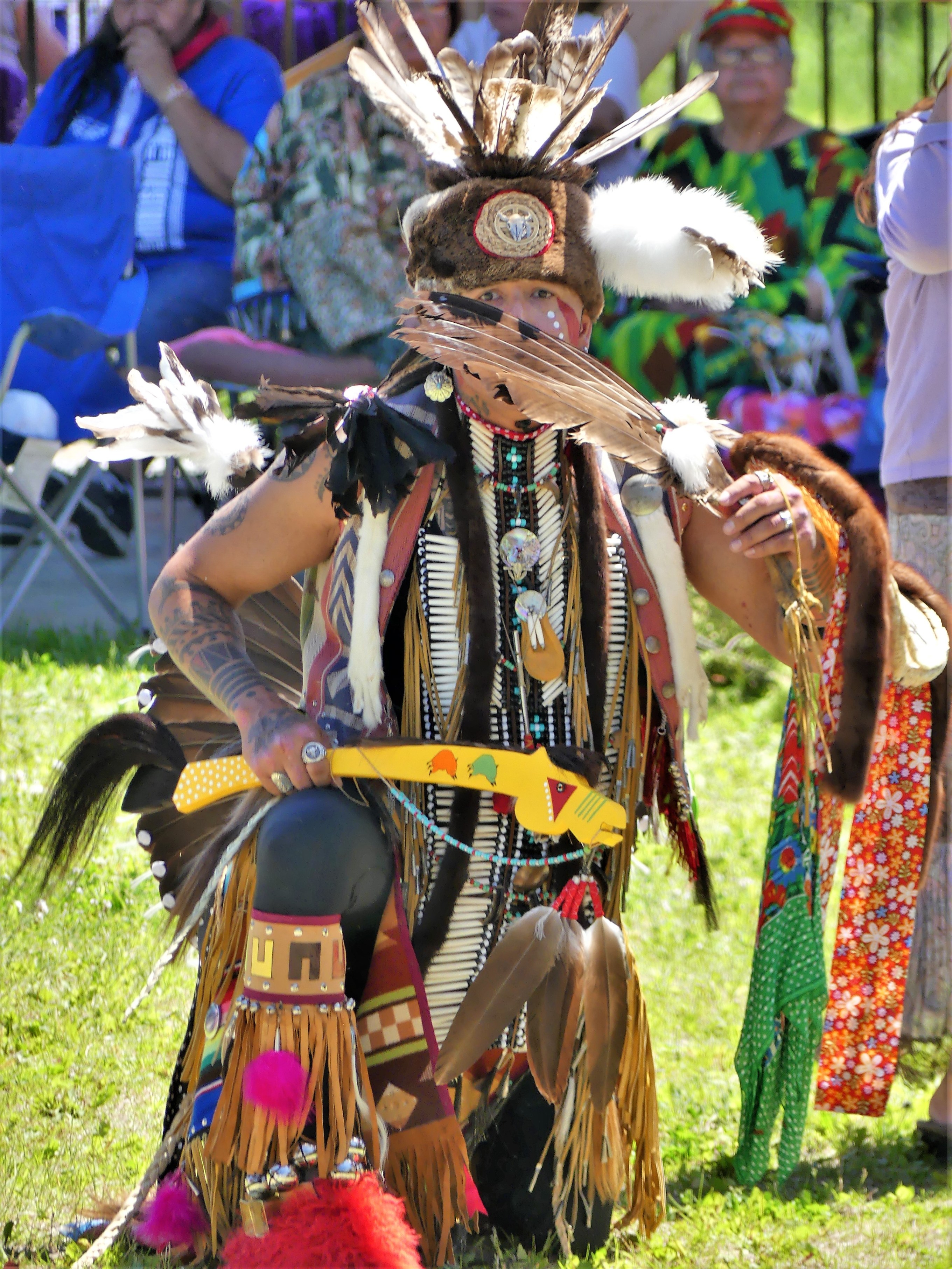
and their elaborate moves…

Little Bear 2

Little Bear

Little Bear 1

After a couple of hours, Leah and I returned to the boardwalk for a stroll to the memorial,

WW1 Indian memorial

where we discovered a trail to the right that hugged the cliff around the plateau. We hiked further along, scouting for poison ivy as we walked, and came to a clearing where three girls in training bras were sneaking cigarettes around a slab of concrete.

It was an amusing irony and signaled our time to return to the ice arena. The school bus that brought us circled the field–collecting passengers–and momentarily paused at a graphic display of Ojibwe insight and life lessons:

Ojibwe Code

They are good words to live by!

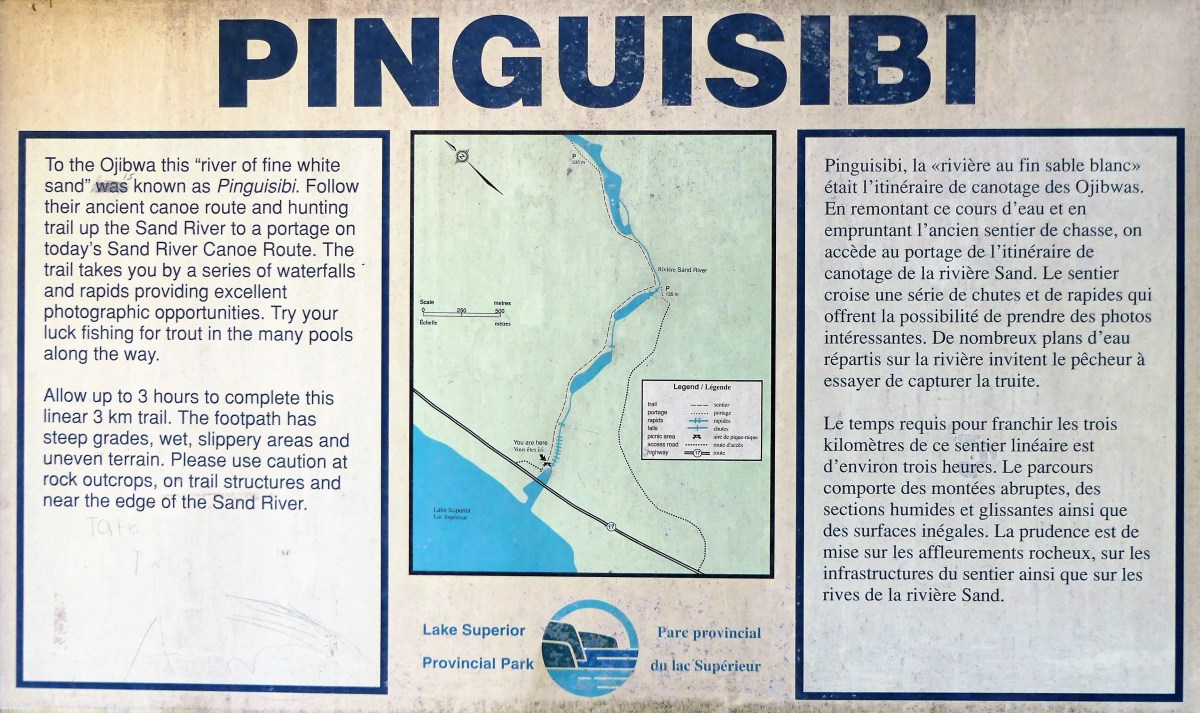
Pinguisibi and Kakabeka Falls

Cascading water
makes no home where turbulence
is second nature.

Pinguisibi Trail sign (2)

Lady Evelyn Falls

rapids chute

Falls 2 pan1

top of falls

Lady Elvelyn Falls 1

fishing from the falls.1jpg


20190628_114929 (2)

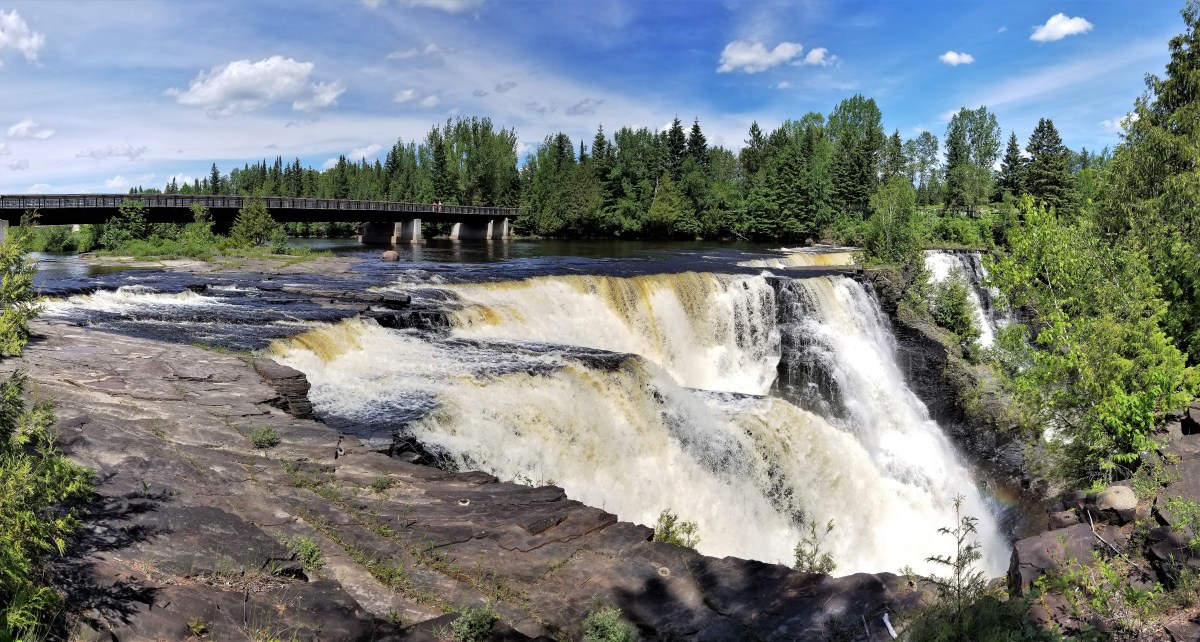
Kakabeka Falls

Falls panorama

Kakabeka Falls with rainbow

down Kaministiquia River

downriver

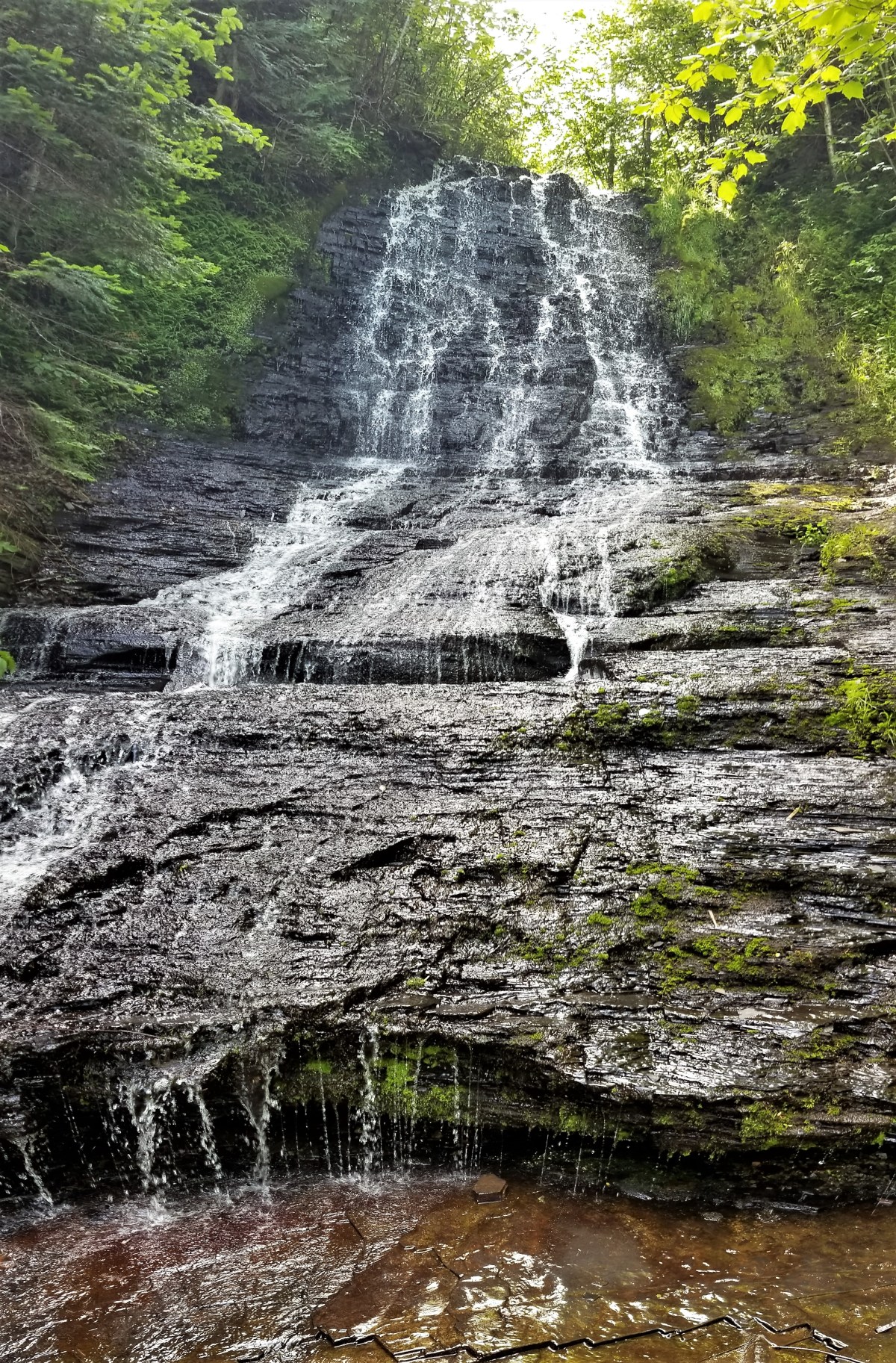
Little Falls 1

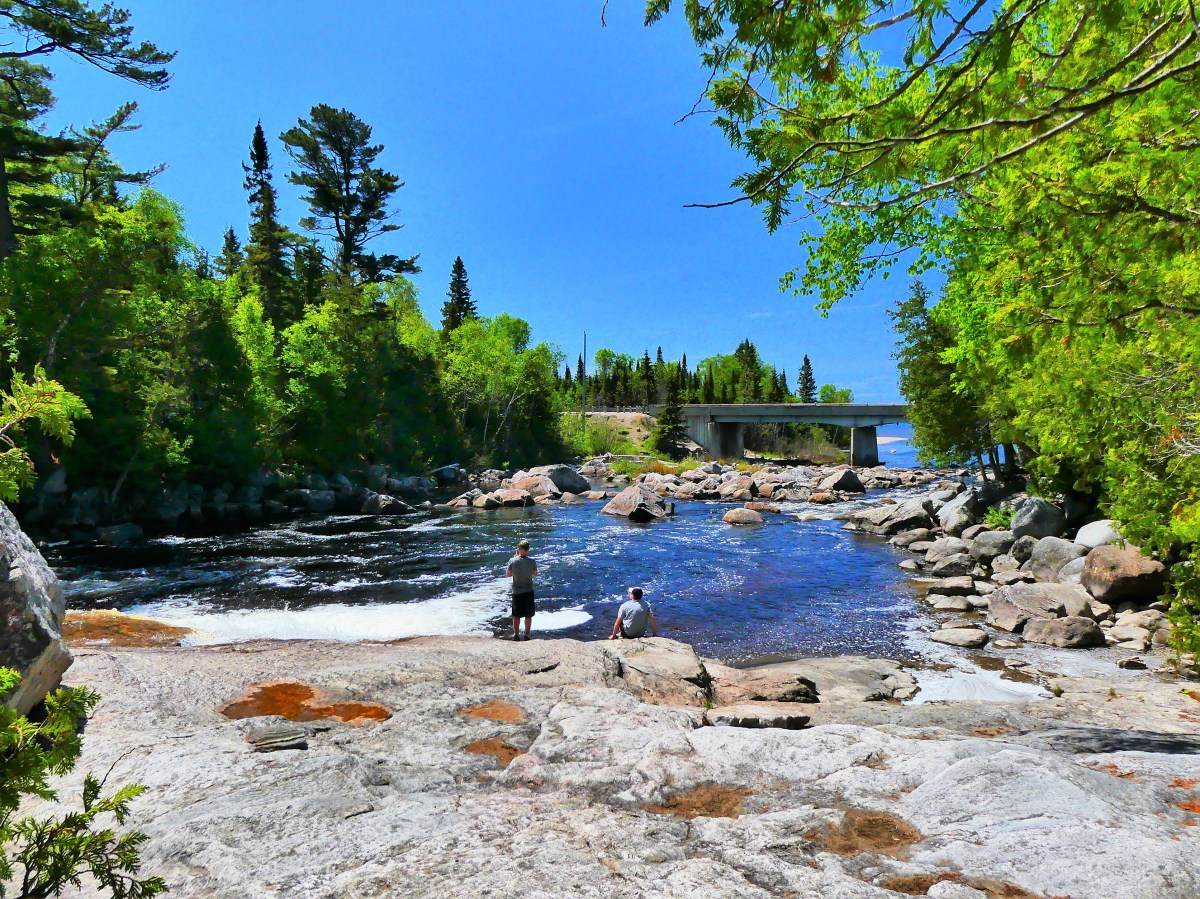
Neys Provincial Park

Dear Diary,

Today was unsettling, as nothing went as planned.

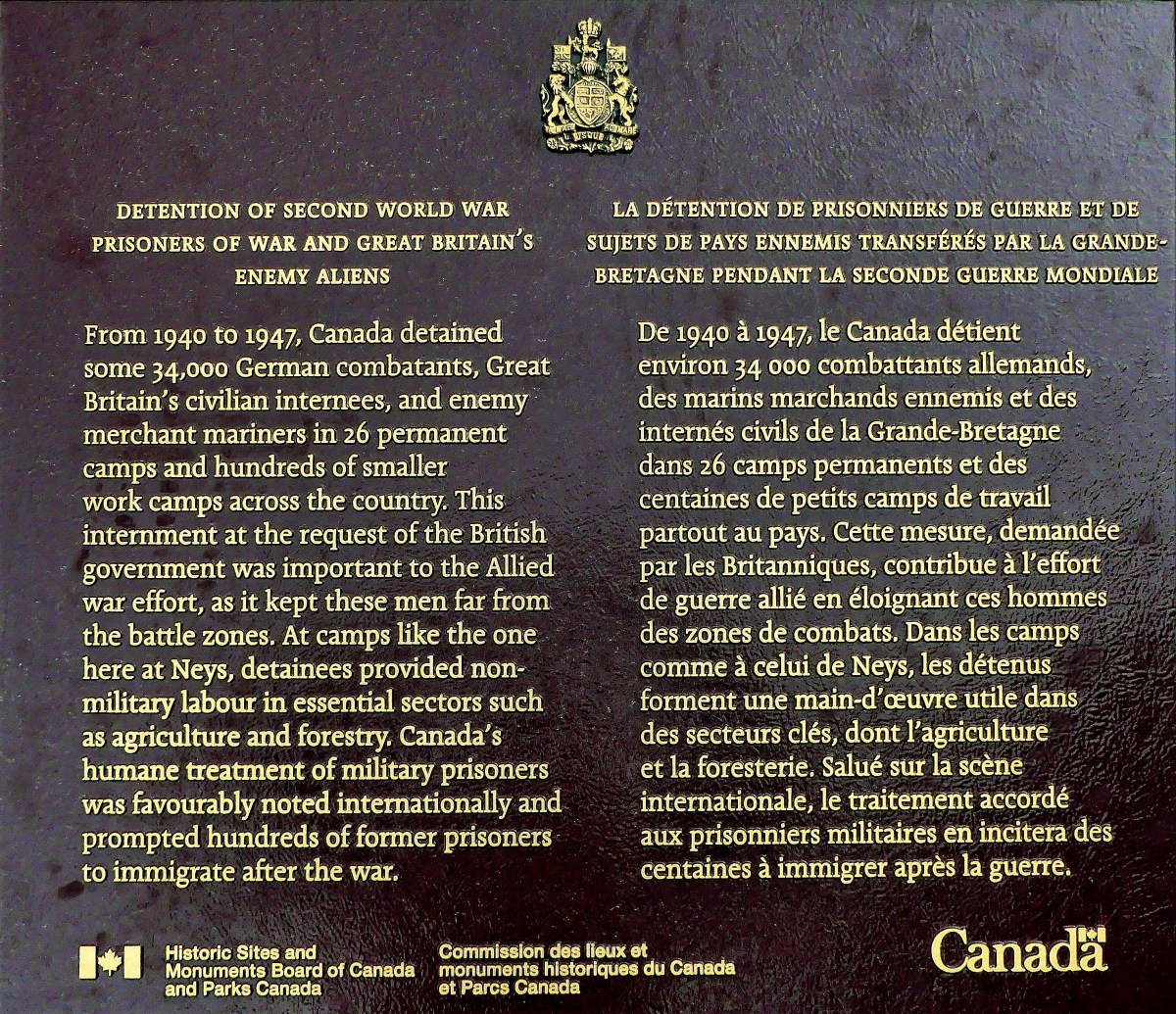
A high probability of intermittent rain had been forecasted throughout the day, which gave us very few options. Although we were snug in our pull-through campsite overlooking the northern boundary of Lake Superior from Neys Provincial Park in Ontario, Canada, we were looking forward to exploring the stark coastal beauty of an area once known from 1941 to 1946 as Neys Camp 100–an internment facility for German POWs and Japanese Canadians.

detention sign

Prisoners arriving (2)
Kreigsmarine and Luftwaffe prisoners of war arriving at Neys, ca. 1941

Prevailing wind from the west had whipped up whitecaps across the water, and threatening skies promised to restrict our outdoor time, but we were determined to make the most of current conditions: buggy, chilly, yet dry.

Terrace Bay

A short walk to the Visitor’s Centre for sight-seeing suggestions proved useless since the door was locked–maybe from campground inactivity, I surmised. There was, however, an interesting park bench design overlooking the lake by Sean Randell. 

Trout bench Neys PP

With 144 sites covering 4 areas, Leah and I spotted less than a dozen occupied sites. Many of the seasonal campers left their trailer set-ups behind for greater comforts nearby. With electricity only provided at less than half the sites, we had the showers practically to ourselves.

We were determined to get a hike in, so we selected the 1 km Dune Trail loop for its brevity (in case of sudden rain), and our fascination with sand dunes by the lake. We followed each other single file through a skinny path snaking through a plantation of red pines and a forest floor of lichens, mosses, and herbs. But we never found the dunes–only rolling mounds of sand over soil. We began the hike with an interpretive trail guide corresponding to 7 markers, but mosquitoes quickly put an end to that. We found ourselves marching through the forest just to complete the loop. The roundtrip walk to the trailhead proved to be longer than the entire trail.

With a faint drizzle falling, we planned a 35-mile drive to Terrace Bay, following TransCanada Highway 17 west around the top of Lake Superior, but the truck refused to start. Earlier in the week, I was stuck in a parking lot under similar circumstances, but Leah located a Samaritan willing to give me a battery boost. Today, however, was a different mater. After shlepping a spare battery around America for tens of thousands of miles, I finally got a chance to use it.

The battery installation set us back half an hour. And then the sky opened up the moment I dropped the hood and climbed inside the cab. It was an auspicious moment in my life!

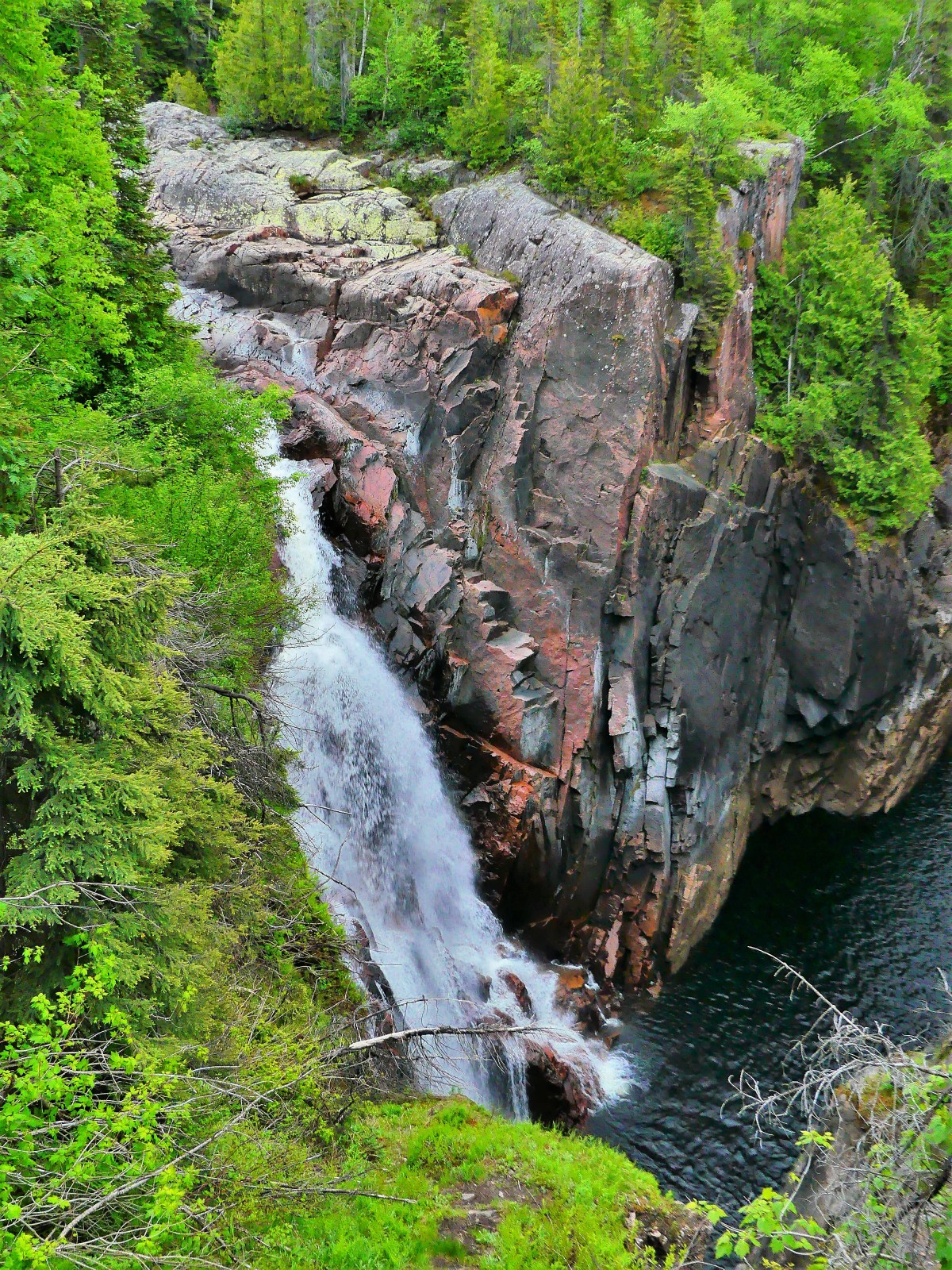
We finally arrived at Terrace Bay (pop. 1100) and descended an elaborate boardwalk to a high viewing platform that distanced us from Aquasabon Fall’s 100-ft. drop,

Aquasabon Falls

and the granite gorge that carries the spill water to Lake Superior.

Aquasabon Falls and Gorge

Back at the boardwalk entrance, I stood alongside a millennial male. We were studying an oversized graphic together about the geological properties and commercial significance of the Falls.

Falls and Gorge graphic

My neighbor had a cat perched on his shoulder wearing a harness with a leash. Suddenly, a light rain began to fall, spooking the cat. It leapt to the ground, surprising the host. He had control for a moment, but it squirmed out of his arms, and wriggled free of its harness. He dove for the hind legs, but the cat was too fast. It bolted 50 yards to the trees, and disappeared in the brush with his girlfriend chasing after it and screaming its name. We briefly watched in amusement, wondering if the cat would reconnect with its owners, but we had our doubts.

While in town, we filled the truck with $130 Canadian of gas, and searched for a lunch spot, but ended up at a Chinese Canadian restaurant in a strip mall just to use the internet. I had fried chicken balls (no joke), and Leah ordered dry-rubbed spare ribs. The food was as disappointing as a dead car battery and tasteless as a lost cat in the woods.

spare ribs

A stubby white lighthouse planted in front of the strip mall parking lot offered a view of Lake Superior. To Leah’s amazement, I passed on a picture of the tower and a view from the bridge. 

The ride back to Neys was rainswept and uninteresting except for a cow moose that galloped across TransCanada Highway 17, followed closely by two calves. They hurdled the guard rail and instantly disappeared into the forest. Maybe they’ll discover the cat.


Agawa Rock Pictographs

The trail was advertised as 0.5 km.

“It’s probably very steep,” Leah figures.

“How hard can it be?” I wonder, still a skeptic.

“It says so in the brochure,” she states. “I quote, ‘Caution is advised when venturing onto this rock ledge due to its slope and the unpredictable nature of Lake Superior and its wave action.'”

“Sounds like fun. We should see it,” I suggest. “This is ancient historical shit!”

“It sounds a lot like the petroglyphs that we saw in Nevada,” she offers.

“You mean the Atlatl Rock in Valley of Fire State Park,” I acknowledge.

“Exactly!” she states.

“But this one’s on the water, and not the desert,” I tease.

“I know that, smart ass, and it’s also harder to get to, so you need to be careful!” Leah lectures.

“Like I said, how hard can it be?” I reiterate.

We park the truck only minutes from our campsite at Agawa Bay, and enter the trailhead where we are met with a screaming red sign:

warning (2)

“Like I said…” drops Leah.

I deflect the dig. “Check it out.” I direct Leah’s attention to a different sign to our right–a red diamond hammered to a tree with a white arrow and 400 km on it.

“That’s where the trail begins. And according to that sign, we’ve already walked 20% of the trail!”

It’s true the trail is rugged and a scramble. The descent runs through a narrow chasm, over sharp boulders and bulging roots. But it’s only treacherous if wearing flip flops, which a student rangerette at the visitor’s center admits can be a problem with some hikers.

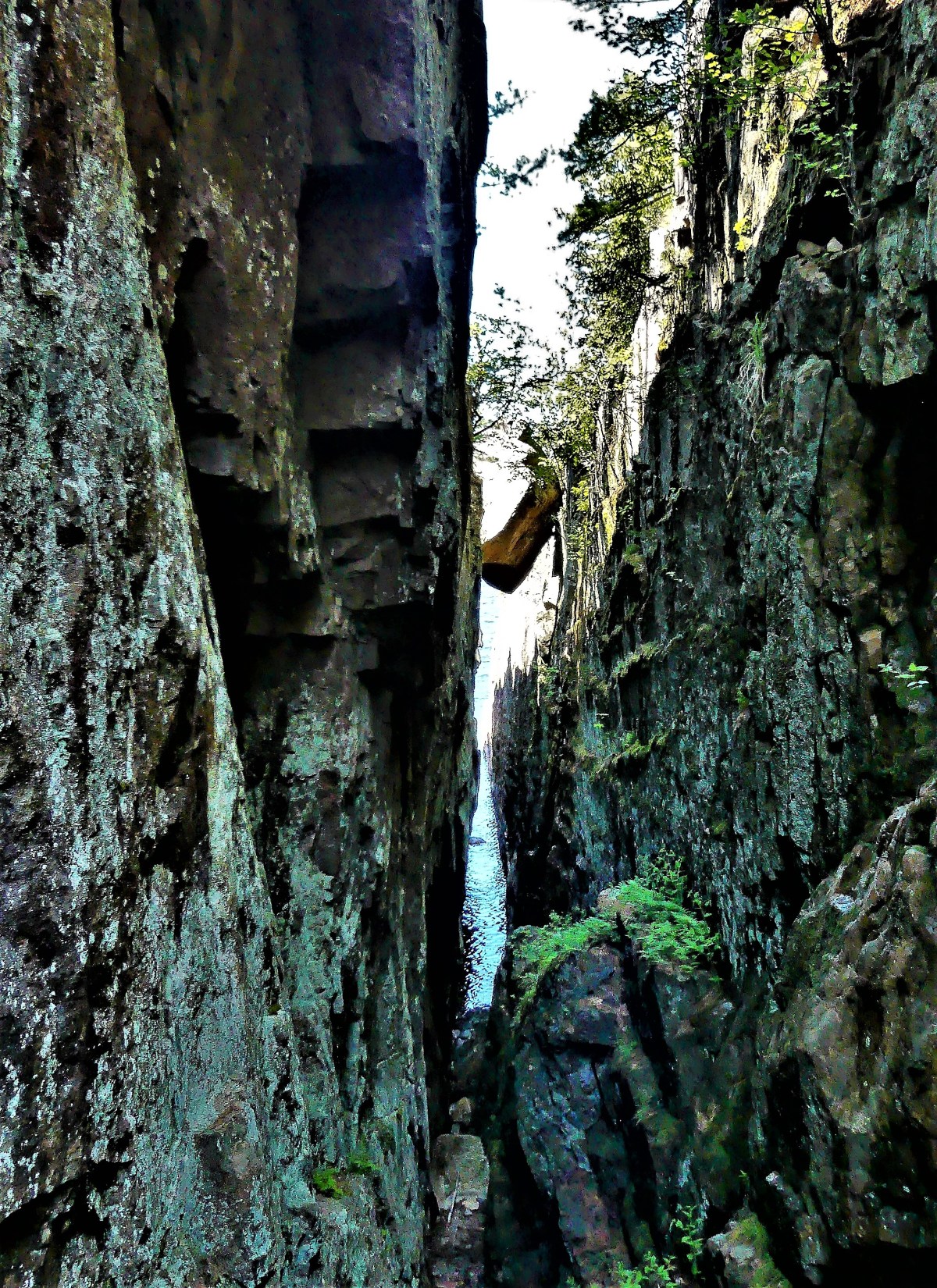
Halfway to our destination, a gash in the cliff exposes a 10 ft granite chunk mysteriously wedged between darkness and daylight.

split rock (2)

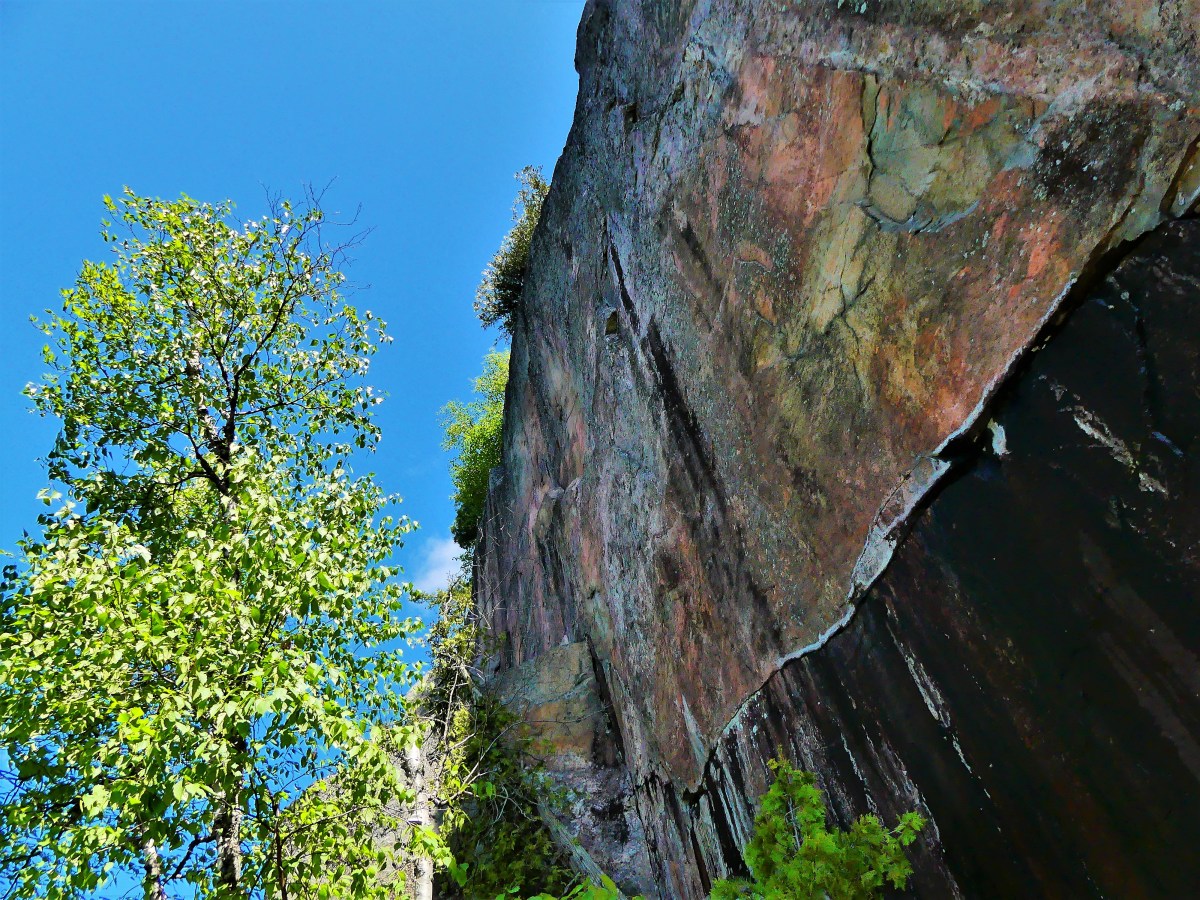
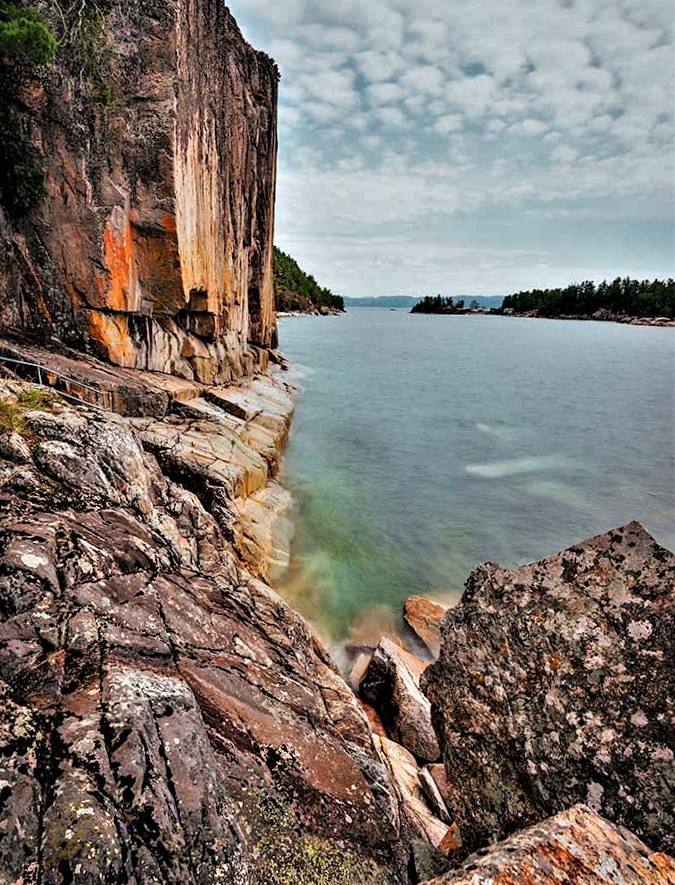
In 15 minutes we arrive at a clearing of flat rock where the sky opens up to the water. A colorful cliff 15 stories high looms above us, grabbing my attention.

Painted Rock

Leah is content holding onto a pipe rail that separates the adventurous from the cautious.

“Are you coming?” I ask.

“Down there? Not a chance!” Leah answers instinctively.

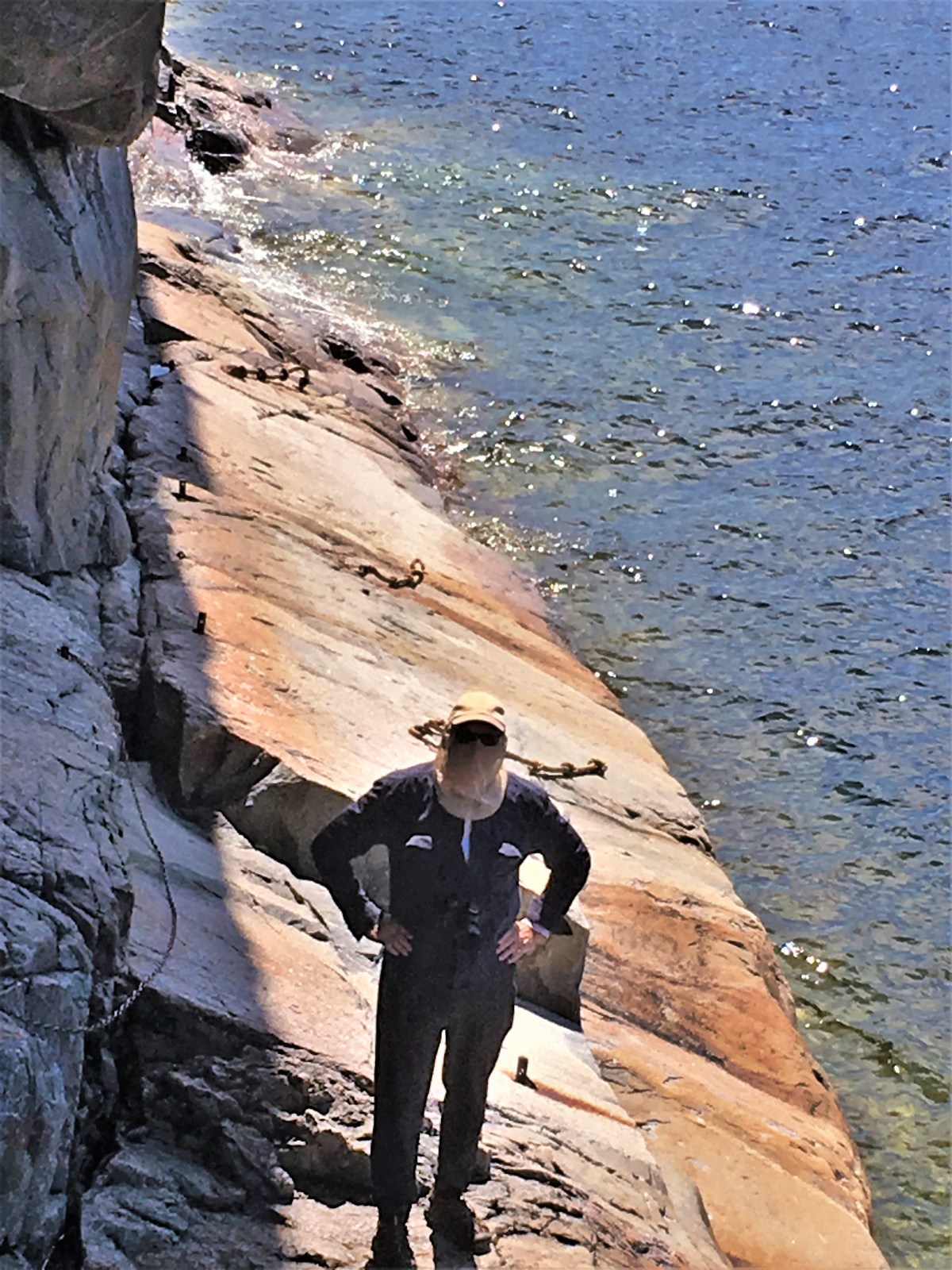
A short drop onto a wet ledge of granite sloping into Lake Superior takes added time, but planting my feet with measured steps is the best method for staying safe.

on a ledge
courtesy of Leah

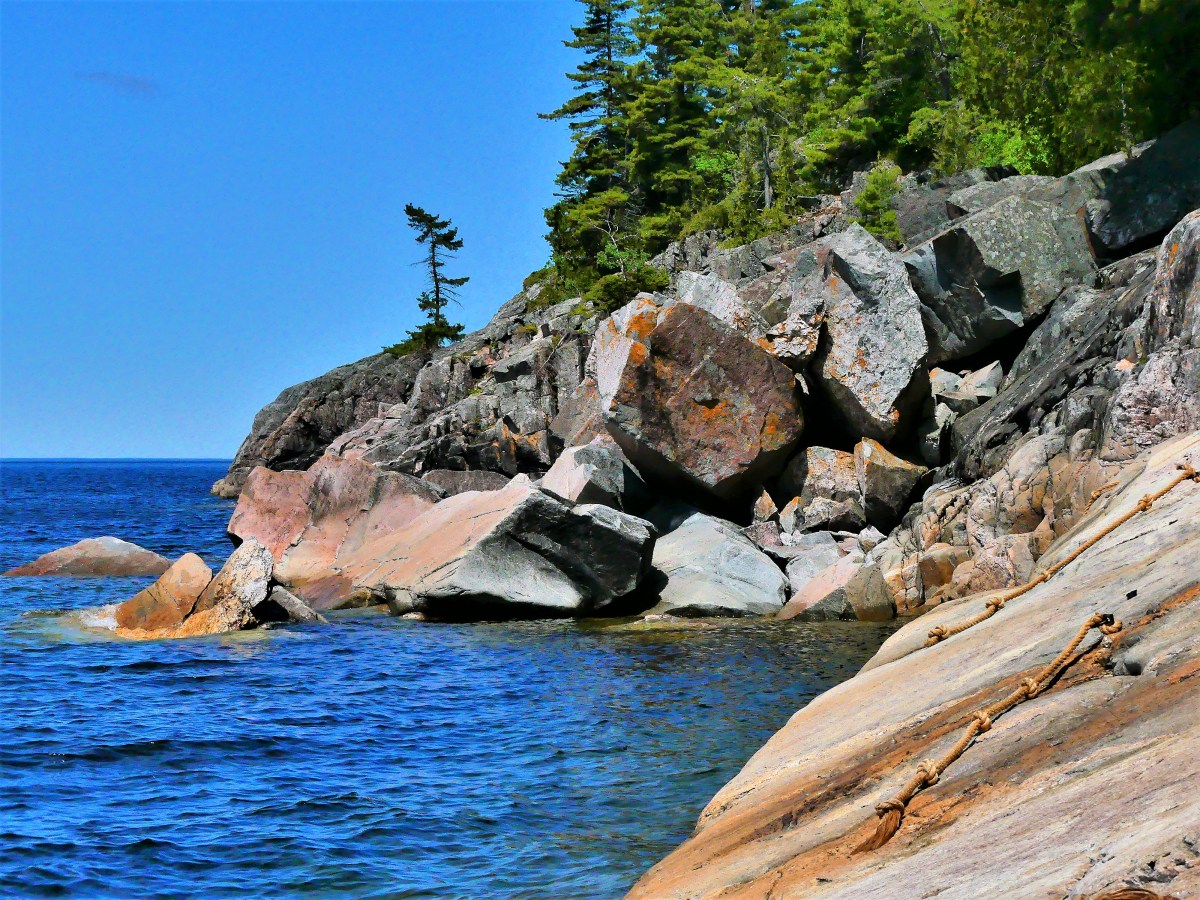
Knotted ropes threaded through embedded pipes are there to assist the daredevils who spill into 50° F water.

from Picturegraph ledge

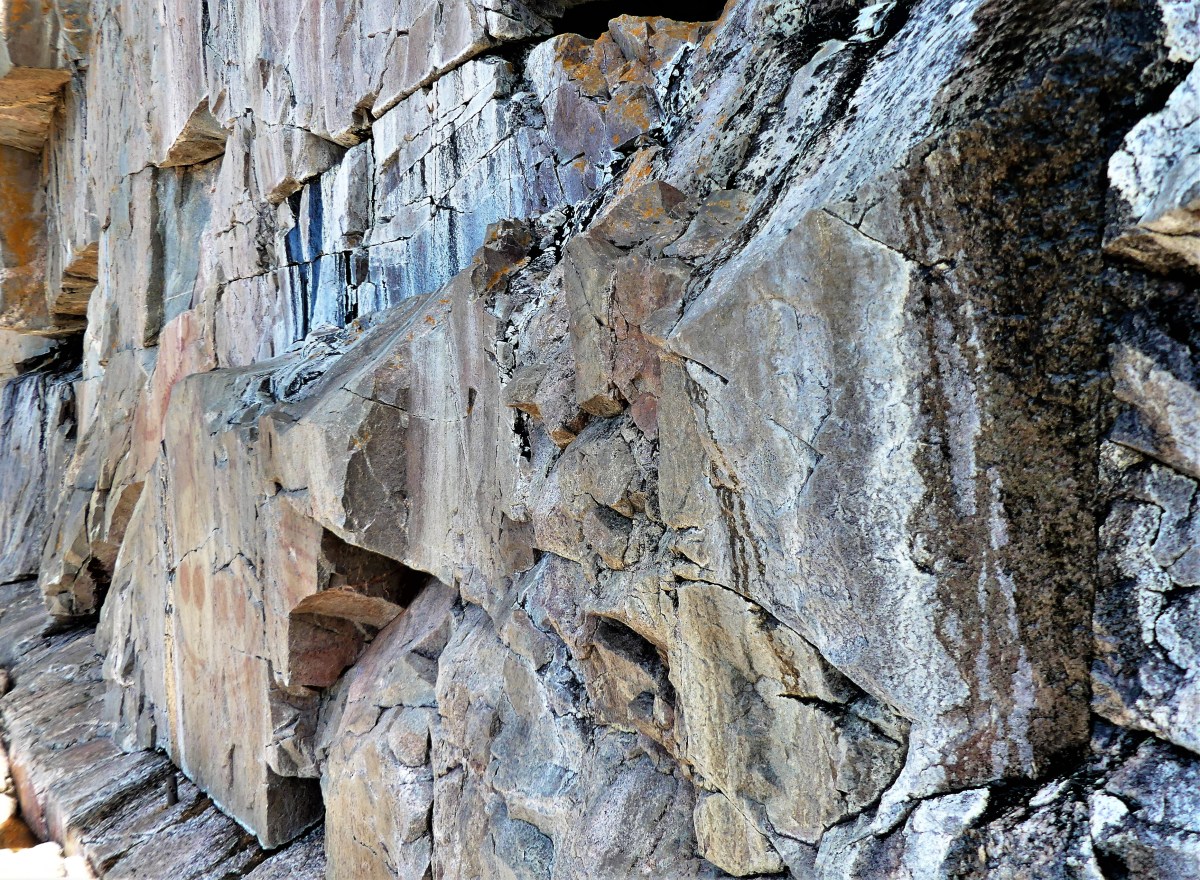
Once I get my footing, I can sidle across the ledge for a better look at the cliff face.

painted rockface

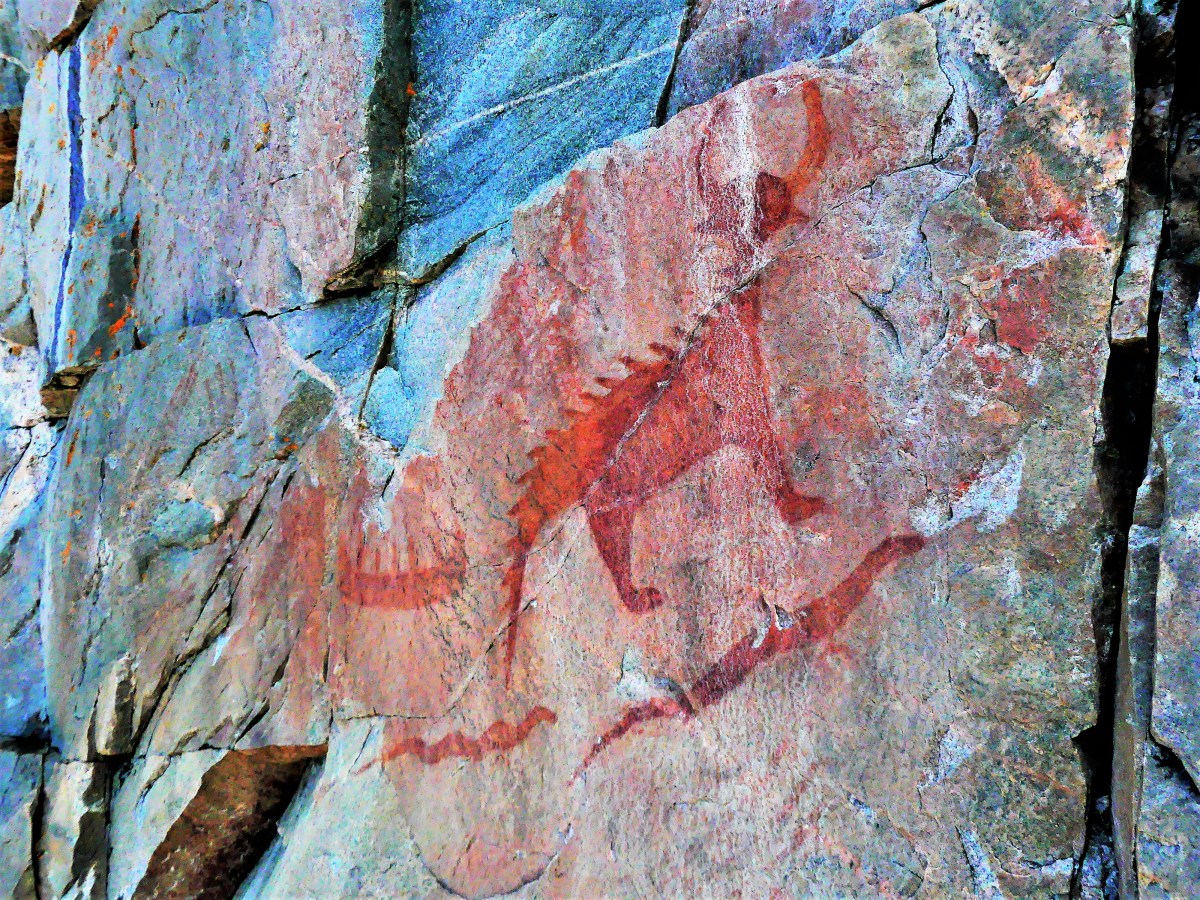
Venturing further out on the ledge, I meet Mishipeshu, the Great Lynx, who was empowered by the ancient Ojibways to control Lake Superior.

Mishibizhiw Great Lynx, who controlled Lake Superior

There are dozens of sacred drawings set in stone, dating back to the 17th century, but most are faded and nearly unrecognizable from eons of sun, water, ice and wind. Their message remains unknown, but experts reason that the pictographs depict historical events, and could signify manitous from shamanistic ceremonies.

I carefully manuever onto terra firma,

Agawa Rock Lake Superior (3)

and we hike back to the parking lot.

“That was amazing, down there,” I exclaim.

“It was alright,” notes Leah.

“But you never got to see the pictographs,” I mention.

“That’s OK. You did all the hard work for me. I’ll just have a look at your photographs,” she laughs.


Great Lakes Hyperbole

Of course, the Great Lakes are great; they constitute the world’s largest above-ground freshwater system in the world, containing about 18 percent of the world’s supply.

However, beyond its scale (larger than all the Eastern seaboard states combined), what about all the other awesome attractions that border its shorelines? Are they equally as great, or big, or best, or exclusive?

Let’s take a look:

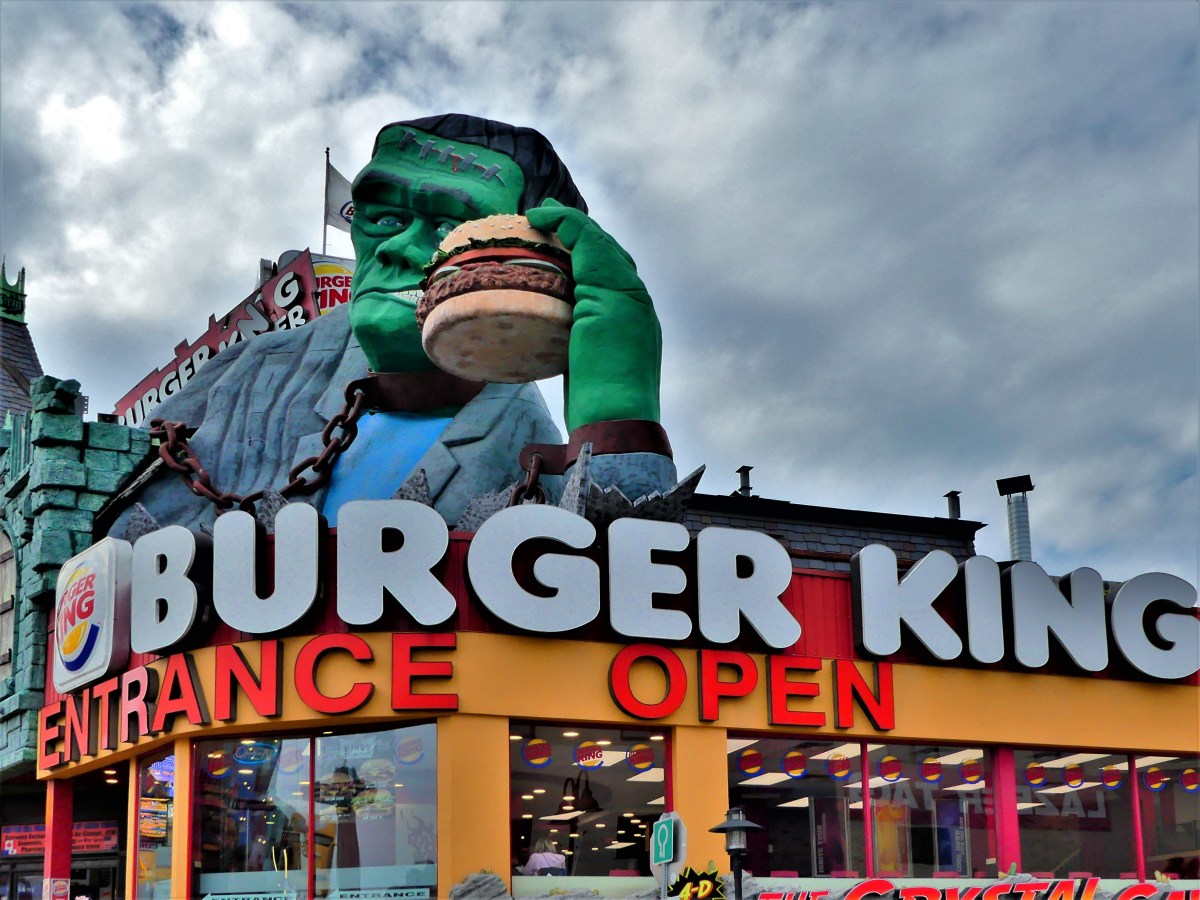
Given the many possibilities for food around the Great Lakes, the area’s largest hamburger rests atop Burger King in Niagara Falls, ON.

Burger King

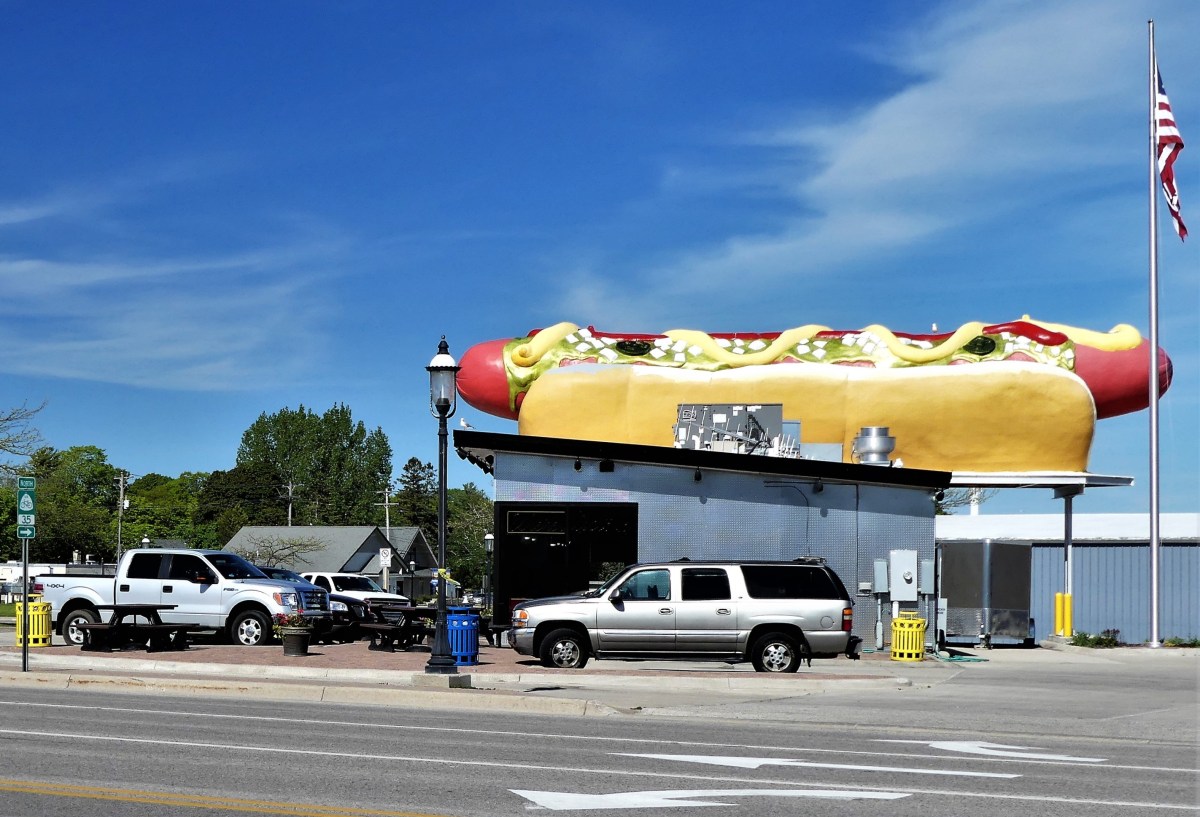
And the largest hotdog can be found in Mackinaw City at Wienerlicious.

Wienerlicious (2)

Both can be purchased with the world’s largest nickel…

biggest nickel

the brainchild of Dr. Ted Szilva,

Dr. Rred Szilva (2)

and on display at Sudbury’s Dynamic Earth.

Dynamic Earth

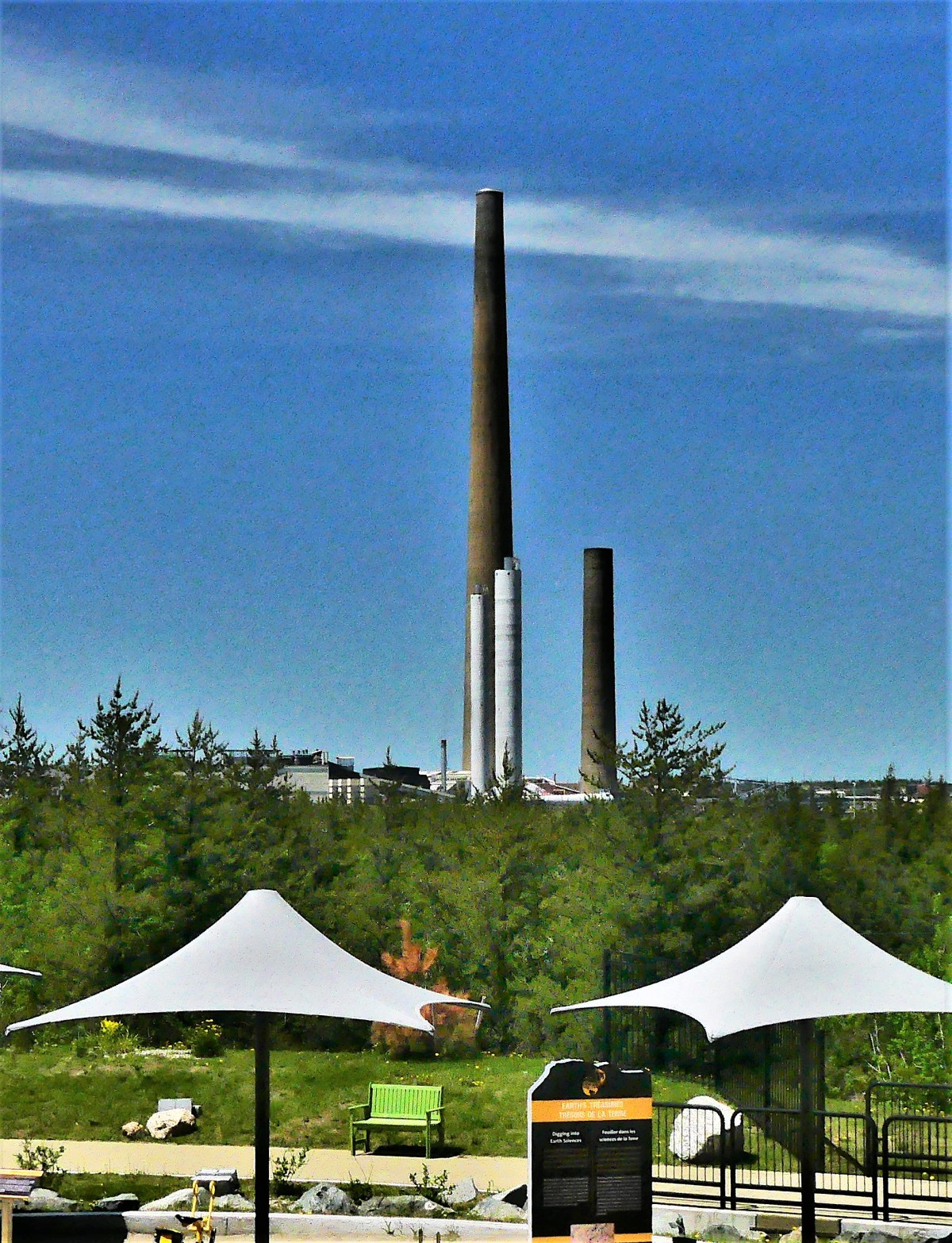
Only one mile away, Inco’s superstack–the tallest chimney in the western hemisphere–rises 1250 feet atop Vale Inco’s Copper Cliff processing facility–the largest nickel smelting operation in the world.

INCO Superstack

Nowhere as tall, Castle Rock (commonly referred to as Pontiac’s Lookout) is a natural 200-foot limestone sea chimney…

Castle Rock

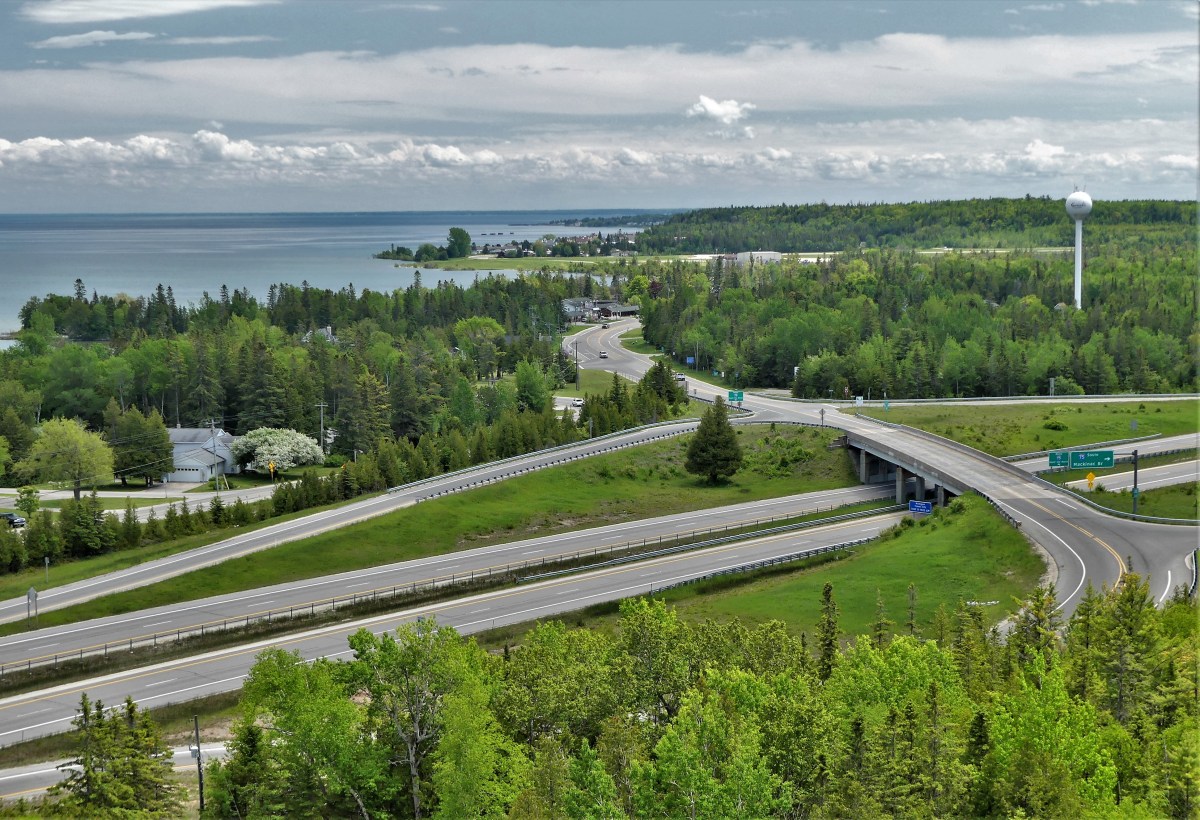
overlooking Lake Huron and Interstate 75,

I-75

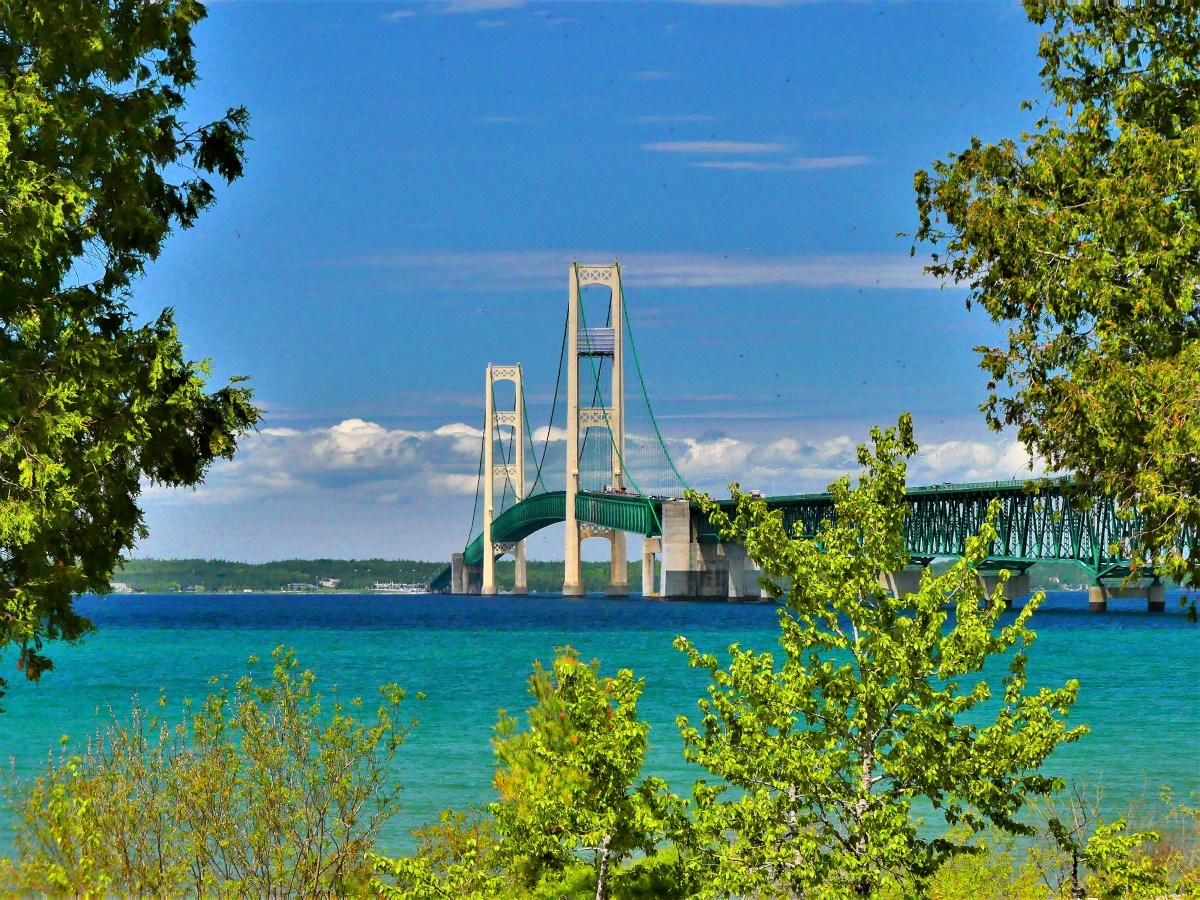
and considered the oldest lookout in St. Ignace, Michigan…until the Mackinac Bridge was built in 1957.

Mackinaw Suspension Bridge

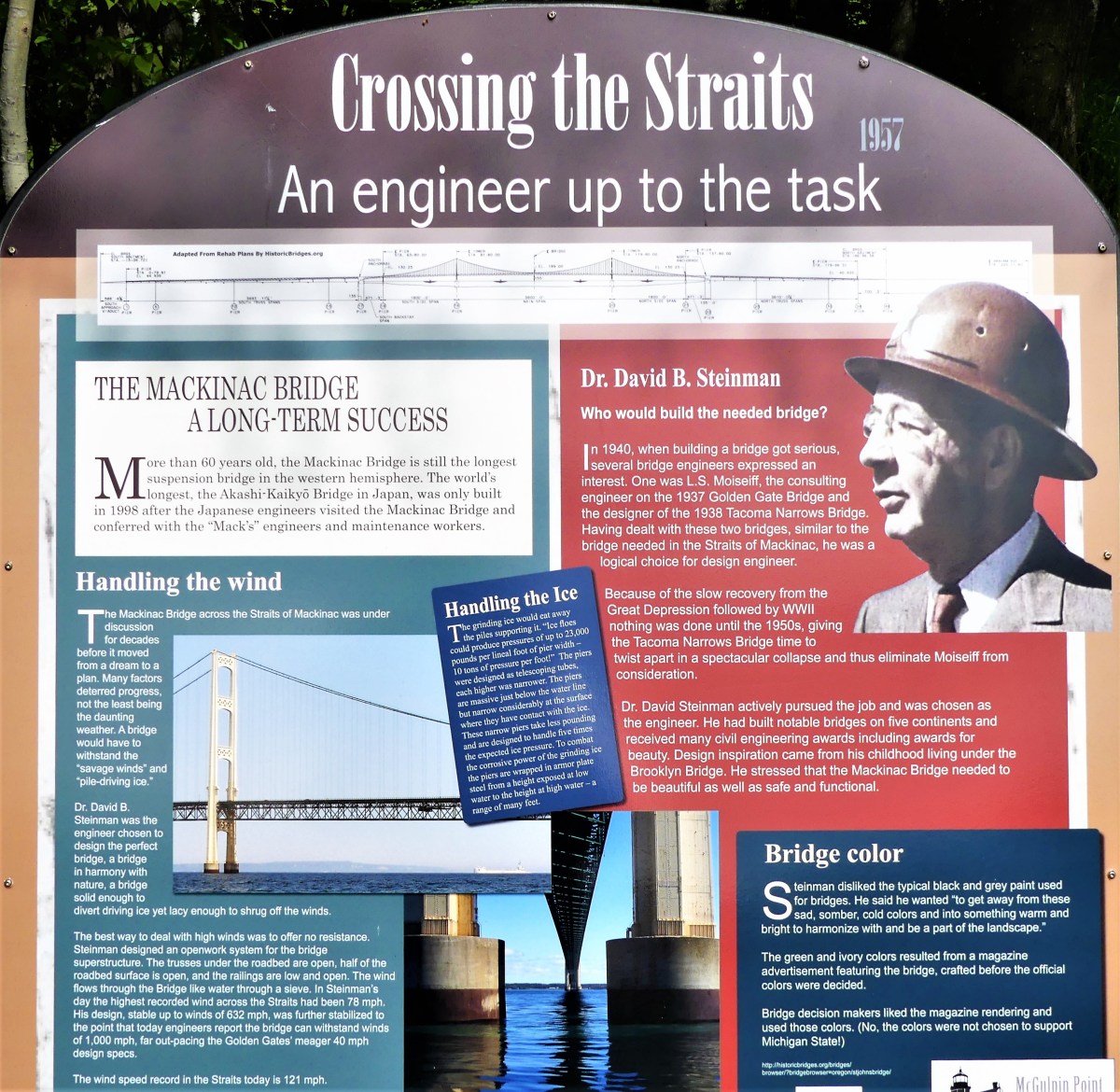
Spanning the Straits of Mackinac, and connecting the Upper and Lower Peninsulas of Michigan, the Mackinac Bridge is hailed as the longest suspension bridge in the western hemisphere.

Building the bridge

Although less of an engineering feat, the upside-down house, built in Niagara Falls, measures up to 1200 square feet of topsy-turvy, making it Canada’s most unusual landmark.

upside down house

Nearby, at Niagara on the Lake, locals can tee up at Niagara Golf Club, the oldest existing golf course (albeit, nine holes) in North America.

Niagara Golf

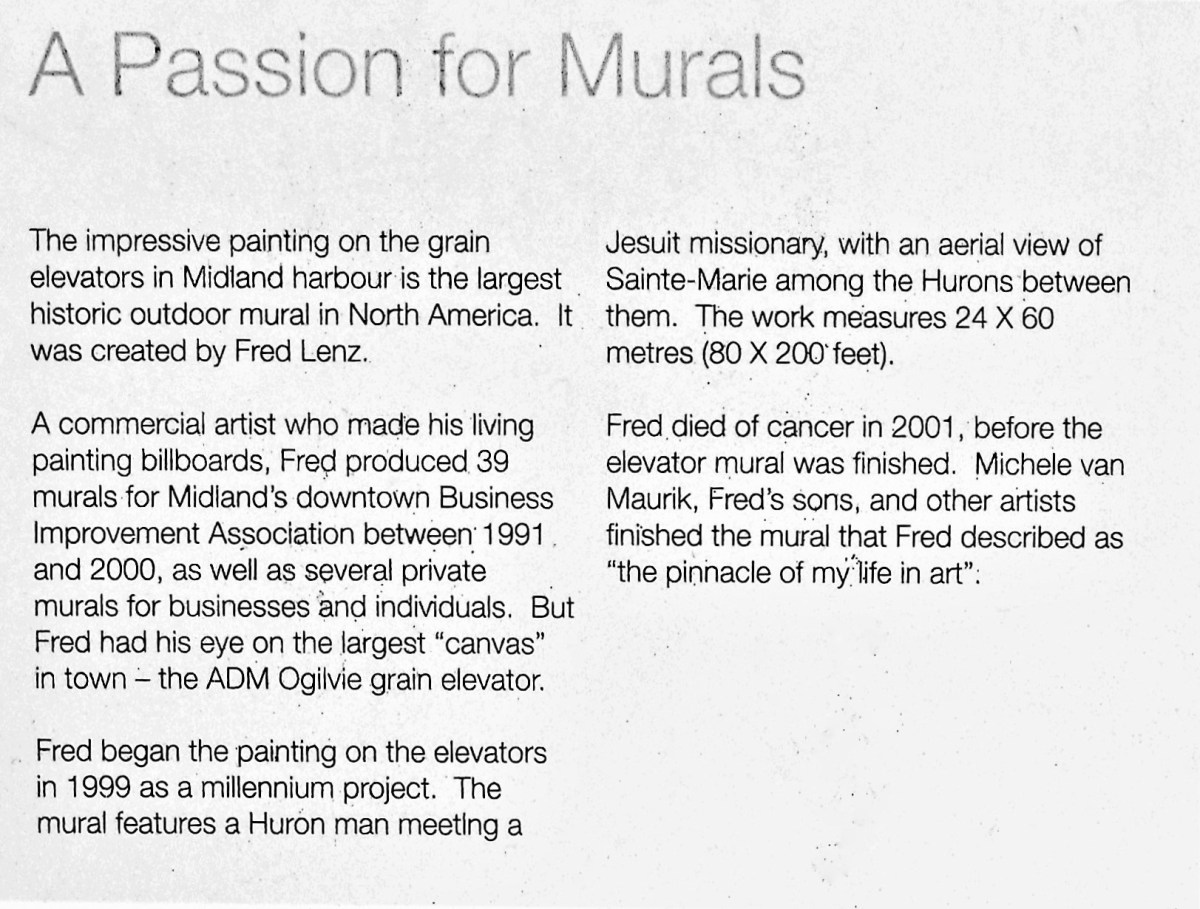
In Midland, Ontario, a grain elevator looms over a Georgian Bay harbor, featuring North America’s largest historic outdoor mural created by Fred Lenz.

Midland mural

mural history

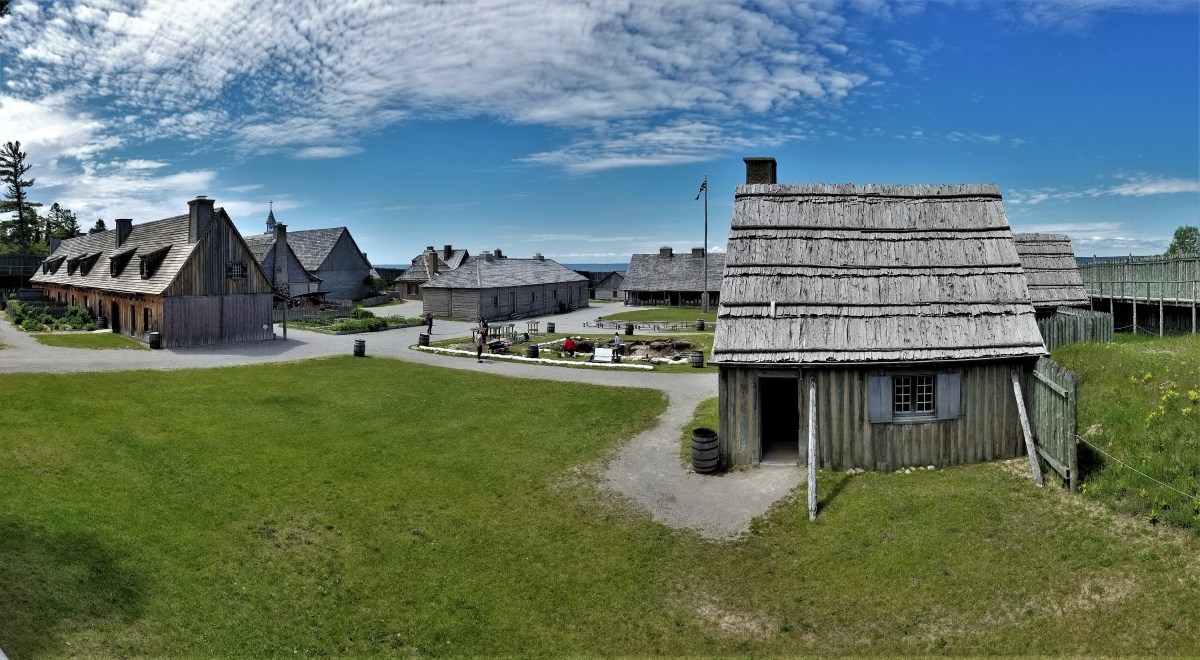
History also abounds at Colonial Michilimackinac–

Fort Michilimackinac

a reconstructed 18th century frontier fortress originally garrisoned by the French during 1715, and later controlled by the British.

3 British Stooges

After 60 years of excavation, valuable relics from fort living continue to be unearthed, making it the longest ongoing archeological dig in North America.

digger

One of the many buildings discovered and recreated inside the fort belonged to Ezekiel Solomon, a fur trader who has been celebrated as Michigan’s first Jewish settler.

Solomon House

Solomon plaque (2)

And then there’s Niagara Falls, a natural wonder that needs little hyperbole.

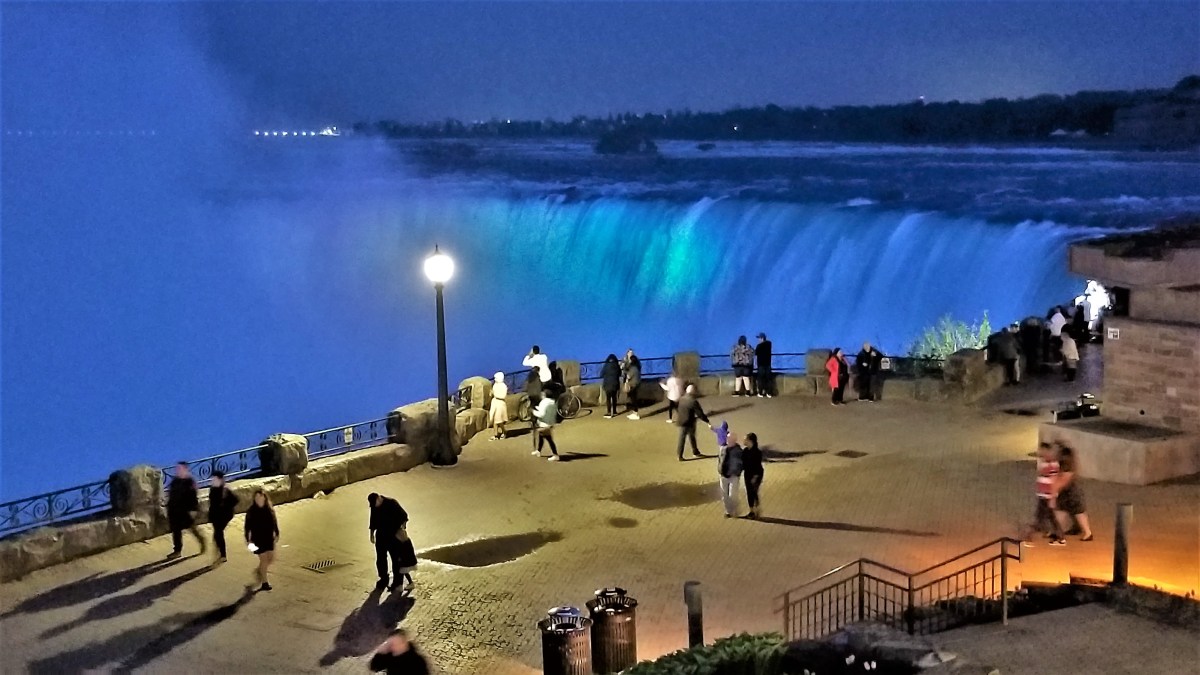
While not the highest, or the widest falls, its combined falls (Horseshoe Falls, American Falls, and Bridal Veil Falls) qualify Niagara Falls as the most powerful, forming the highest flow rate of any waterfall in North America.

Niagara Falls horseshoe

While this “Great” list may not represent the best of all gilded attractions in the Great Lakes area to date, it’s the only list I’m likely to compile

…until the next one.

Rain or Shine…or Snow

It’s been two weeks since crossing over into Canada, and it’s been mostly cloudy and wet so far. I don’t know if this is a cause and effect circumstance, but locals are approaching me with snorkels and flippers.

The weather has put a damper on our outdoor time while extending our Airstream time. The mosquitoes have been hungry and swarming around the clock, turning mosquito swatting into a cabin past-time.

Nevertheless, it hasn’t been completely bleak and dismal. We had agreeable weather during a brief stay at Six Mile Lake Provincial Park, where we visited Georgian Bay National Park on an unusually clear day, and took a 15-minute ride on a Daytripper ferry…

daytripper.jpg

to explore the network of trails on Beausoleil Island, guiding us to Honeymoon Bay,

30,000 islands

Fairy Lake,

Fairy Lake

and a keyhole to the many island cottages that dot Chimney Bay.

island cottage

The weather also cooperated during a recent visit to Discovery Harbour, once a British naval and military base in Penetanguishene commissioned to secure back door access to Upper Canada after the War of 1812.

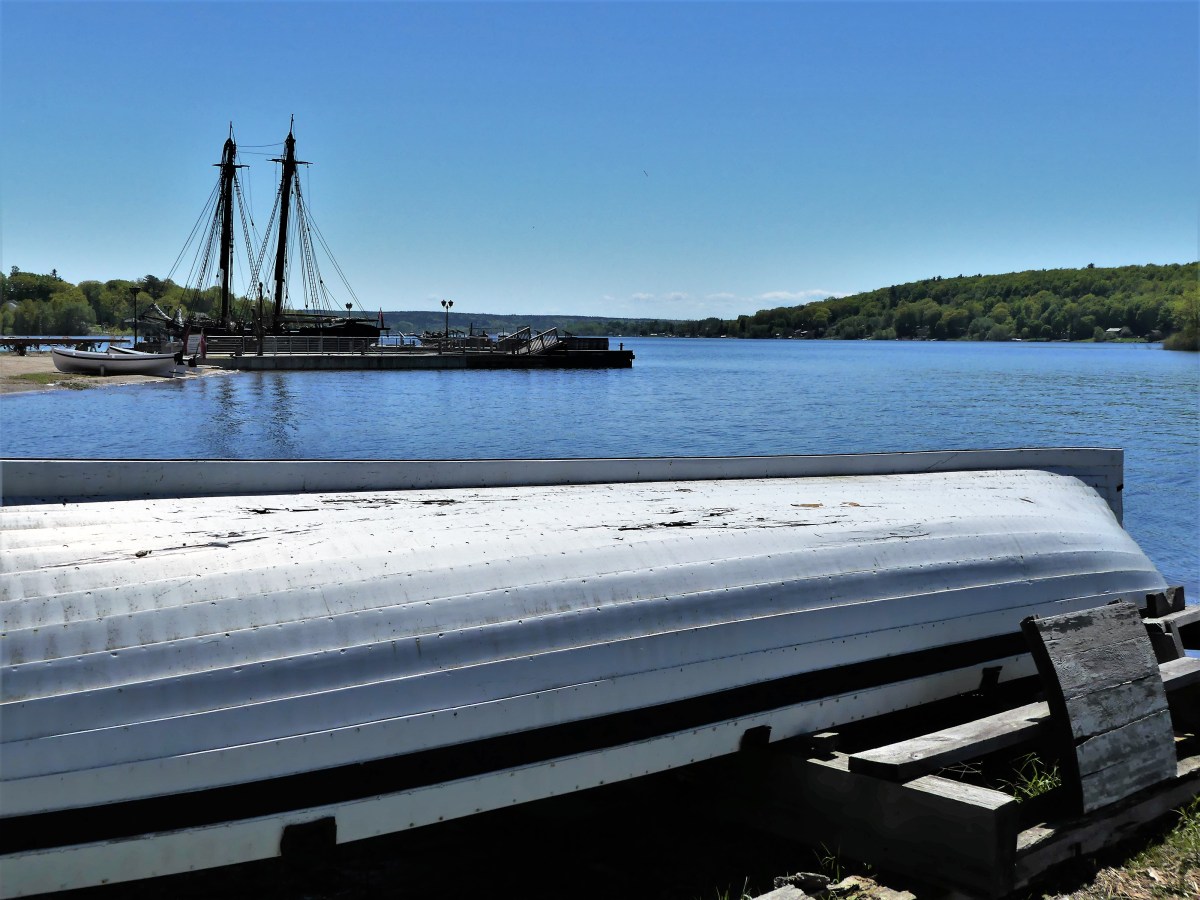
nautical history.jpg

Of the two warships safeguarding the King’s Wharf at the time,

skiff and Tecumeth

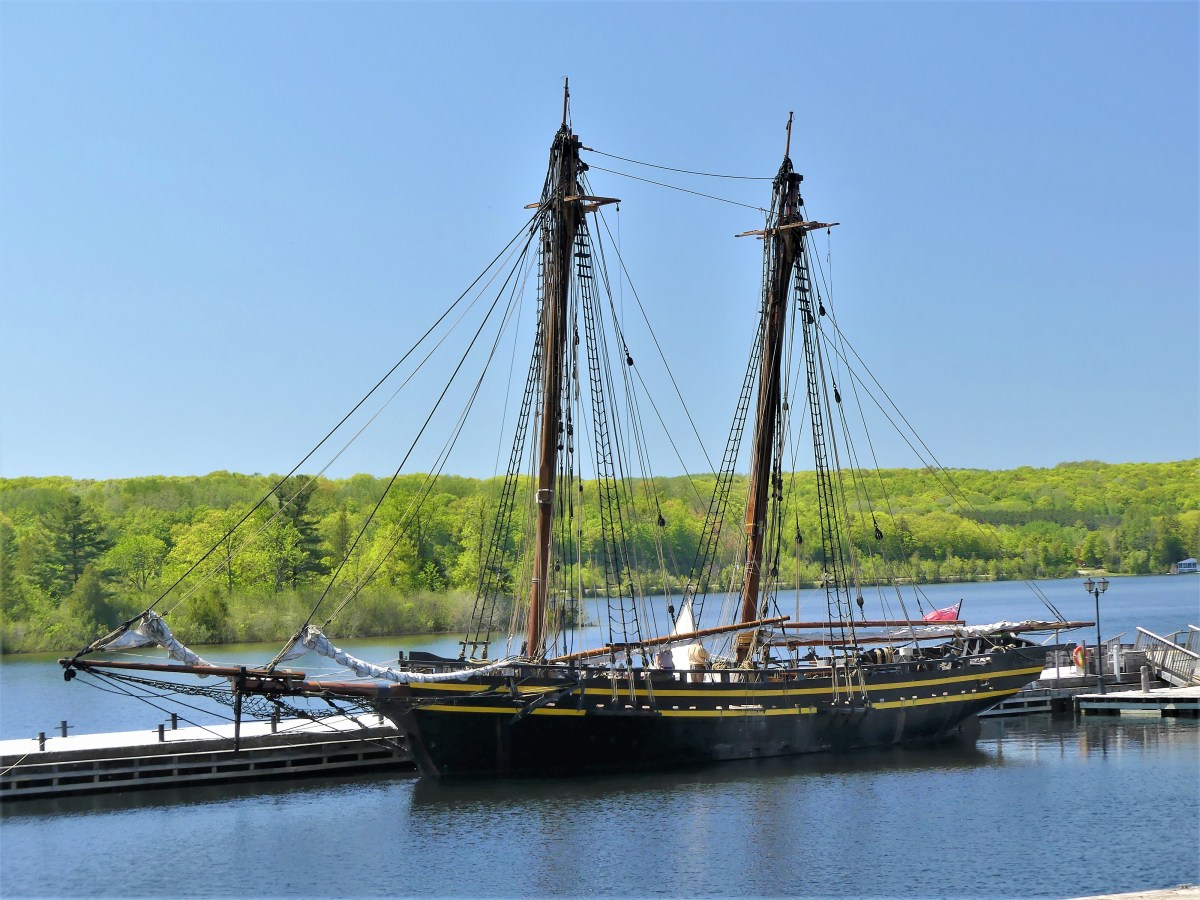
the H.M.S Tecumseth has been replicated to stand guard once again,

skiff hull.jpg

Yet the schooner has been deemed unseaworthy by authorities, and is destined to be a floating exhibit, much like the original.

Tecumseth replica

Because the Rush-Bagot agreement between Britain and the United States restricted the number of active warships on the Great Lakes, the H.M.S. Tecomseth was decommissioned in 1817, and kept in a state of readiness until it eventually rotted and was reportedly scuttled in 1828.

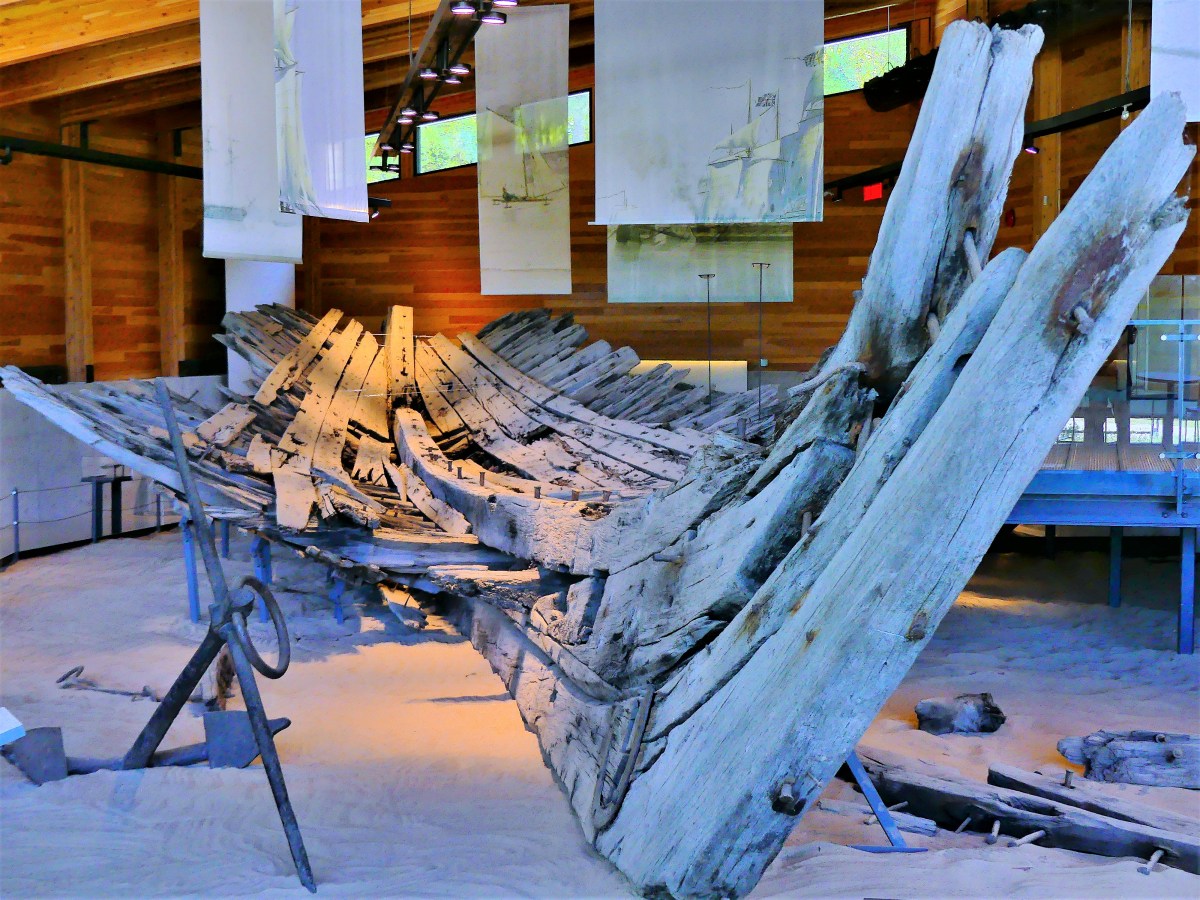
However, its 1815 hull was raised from Penetanguishene Bay in 1953, and placed in a climate-controlled museum inaugurated in 2014.

1815 hull.jpg

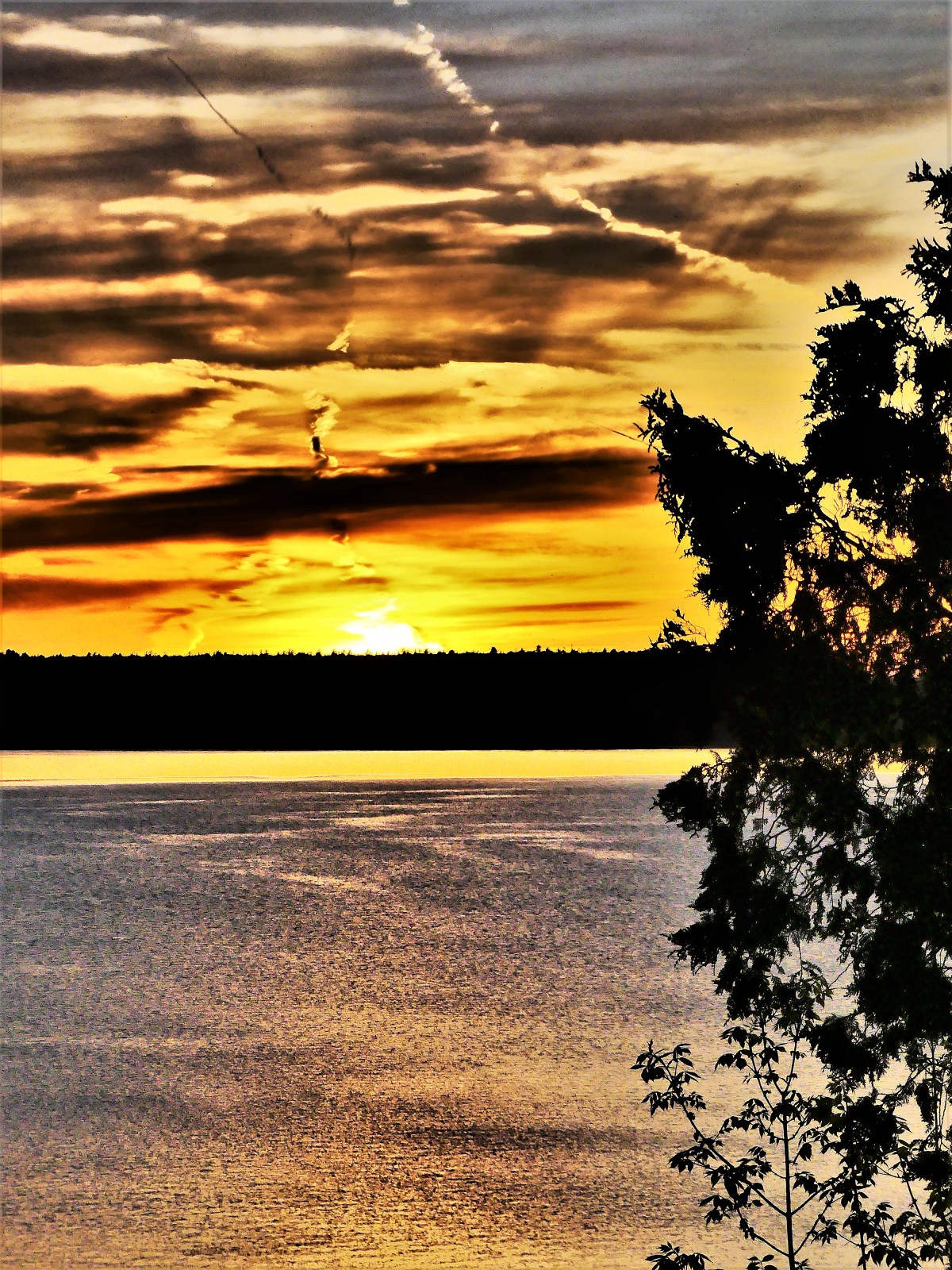
As day turned to twilight, the clouds began to thicken,

tree silhouette.jpg

providing a curtain call that few campers had seen in weeks.

Sunset over Lake Mindemoya

Moving our location to Manitoulin Island did little to change a now-familiar weather pattern. We pondered whether sandbagging the Airstream might become necessary, but that thought slipped our minds soon after being preoccupied with scratching our mosquito bites.

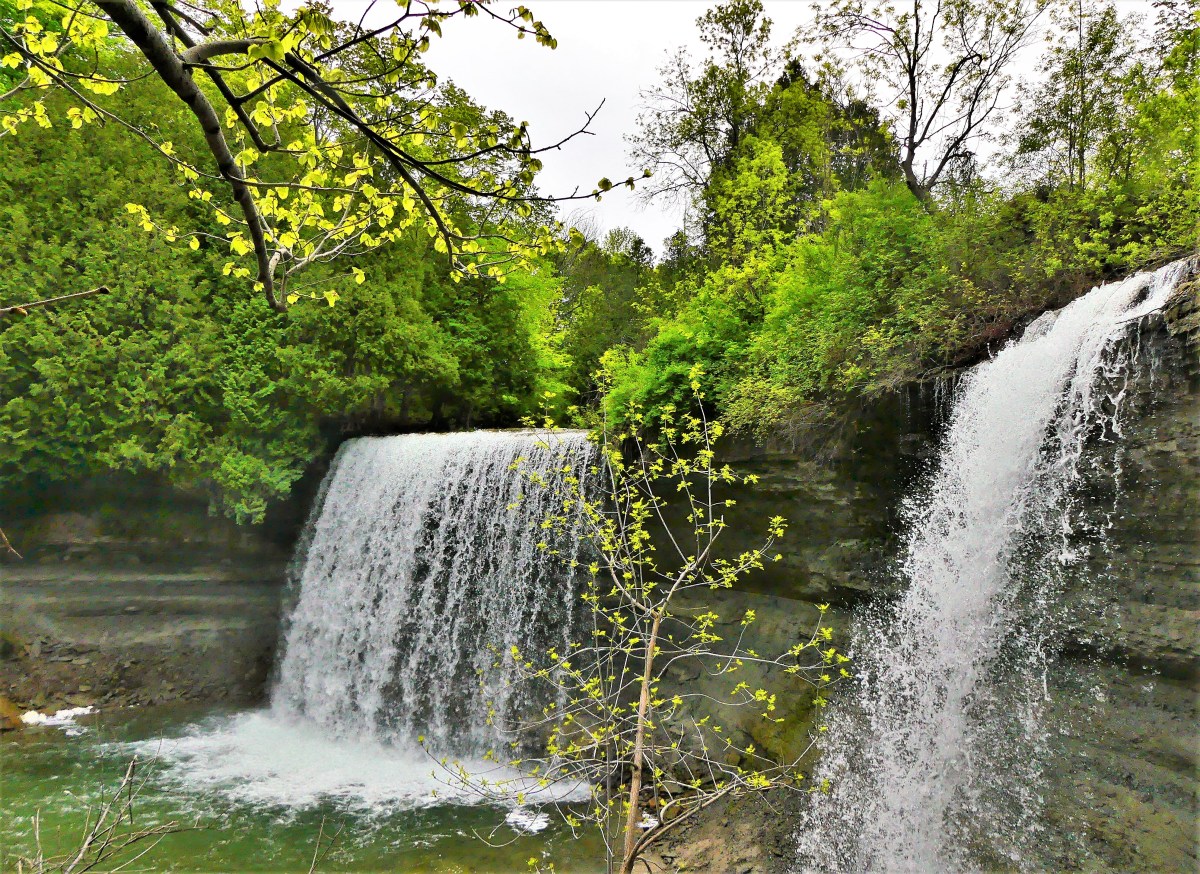
Working around the rain was challenging. Under cloudy skies, we hiked the trail leading to Bridal Veil Falls’ 35-foot drop near the town of Kagawong.

Bridal Veil Falls.jpg

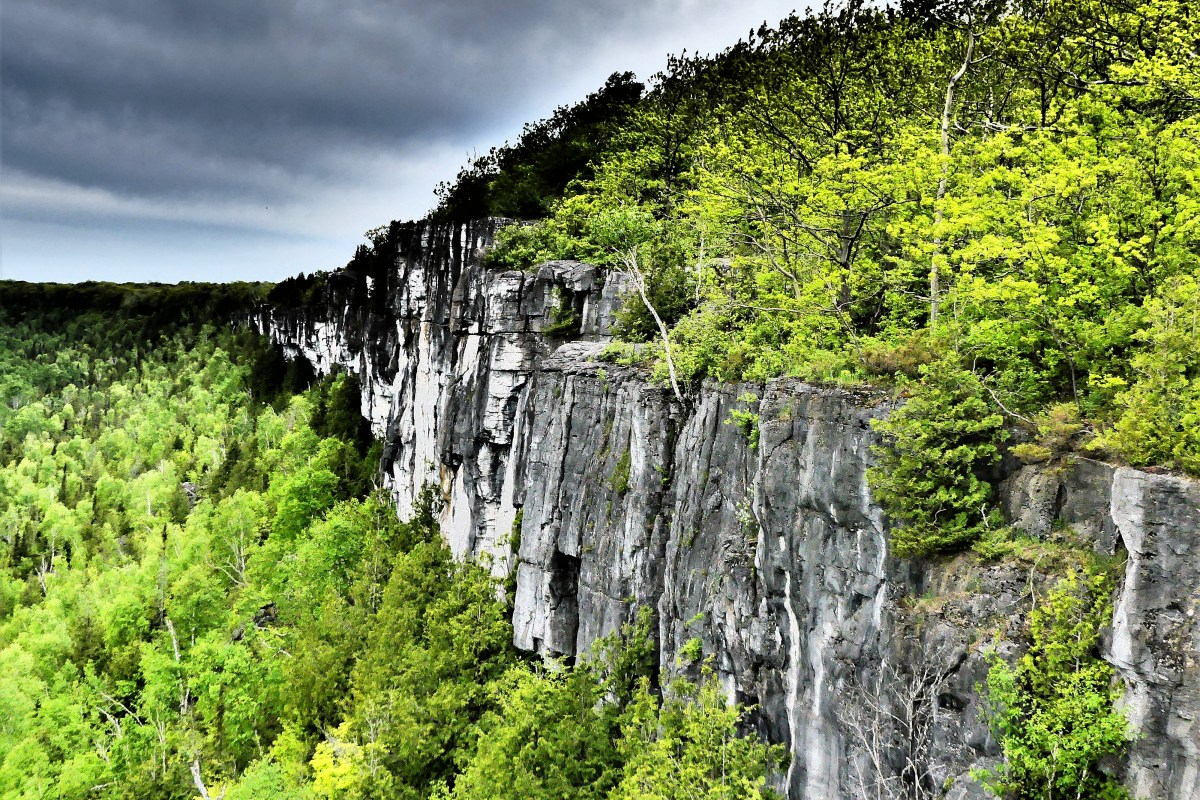
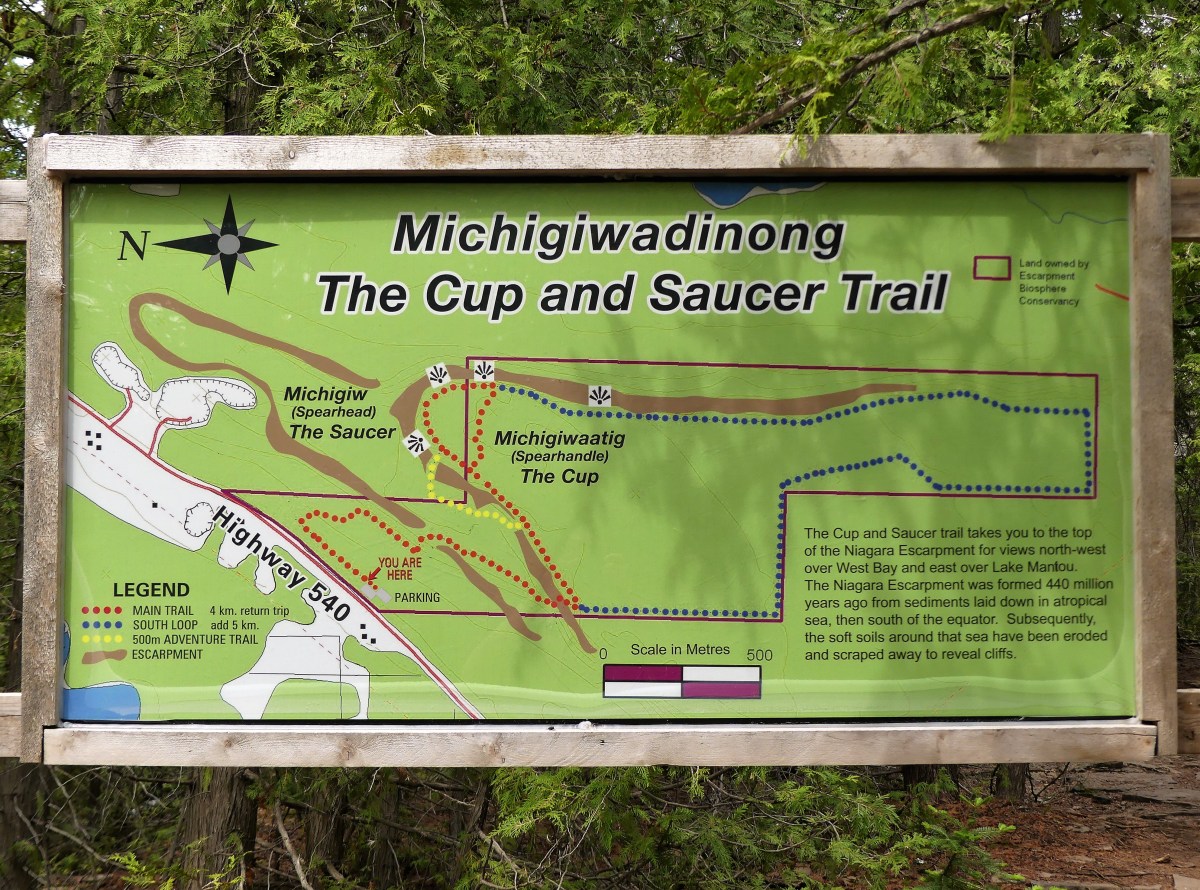
And despite the threat of rain, we continued on, climbing the cliffs of M’Chigeeng on the Cup and Saucer Trail,

The Cup and Saucer Trail.jpg

for splendid views of the North Channel.

Cliffside overlook.jpg

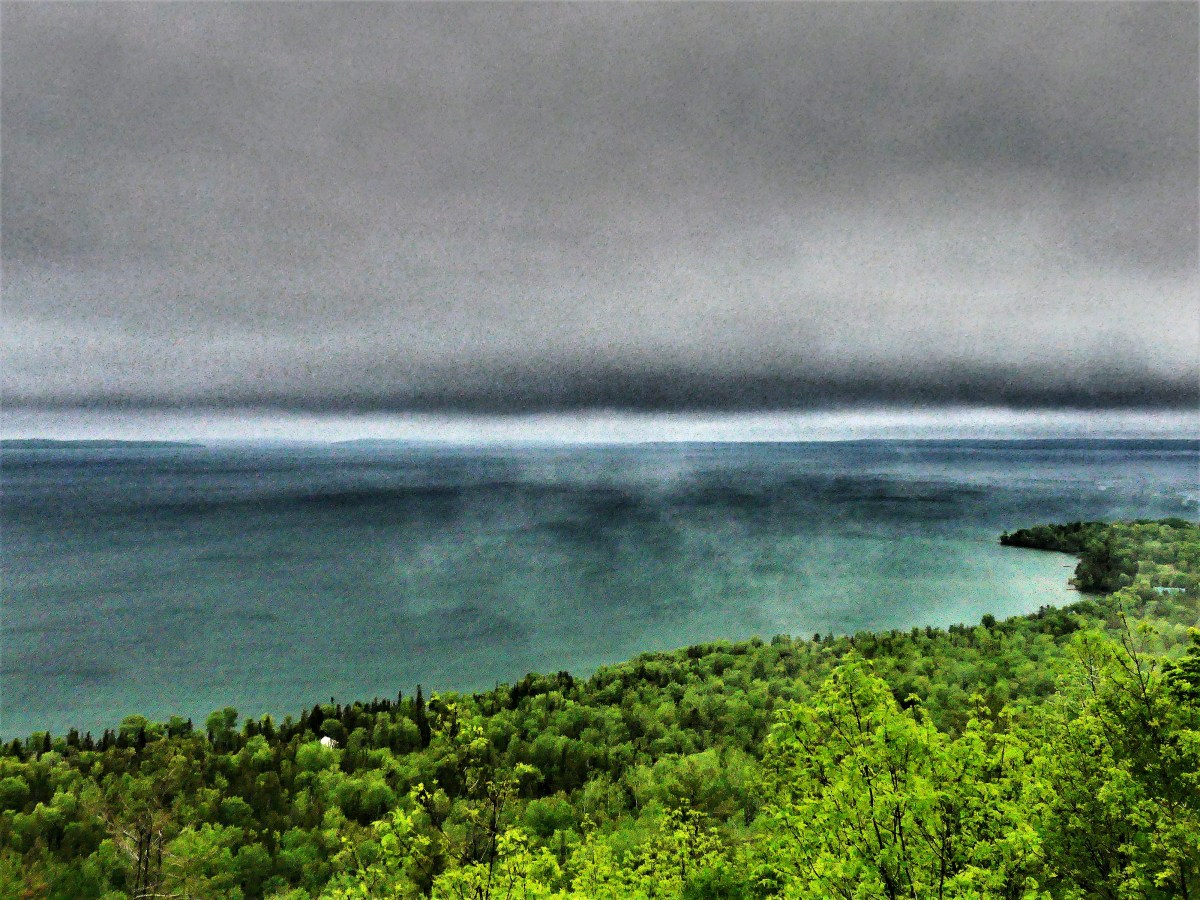
But our luck ran out as we drove to Ten Mile Point for a stormy lookout of Georgian Bay…

10 Mile Point

and found similar blustery conditions at Providence Bay, on the edge of Lake Huron,

Lake Huron surf

before returning to the sanctuary of our Airstream.

The following day, our four-hour travel time to Sault Ste. Marie was compromised by a tire mishap (see Blowout!). And then it rained…a lot!

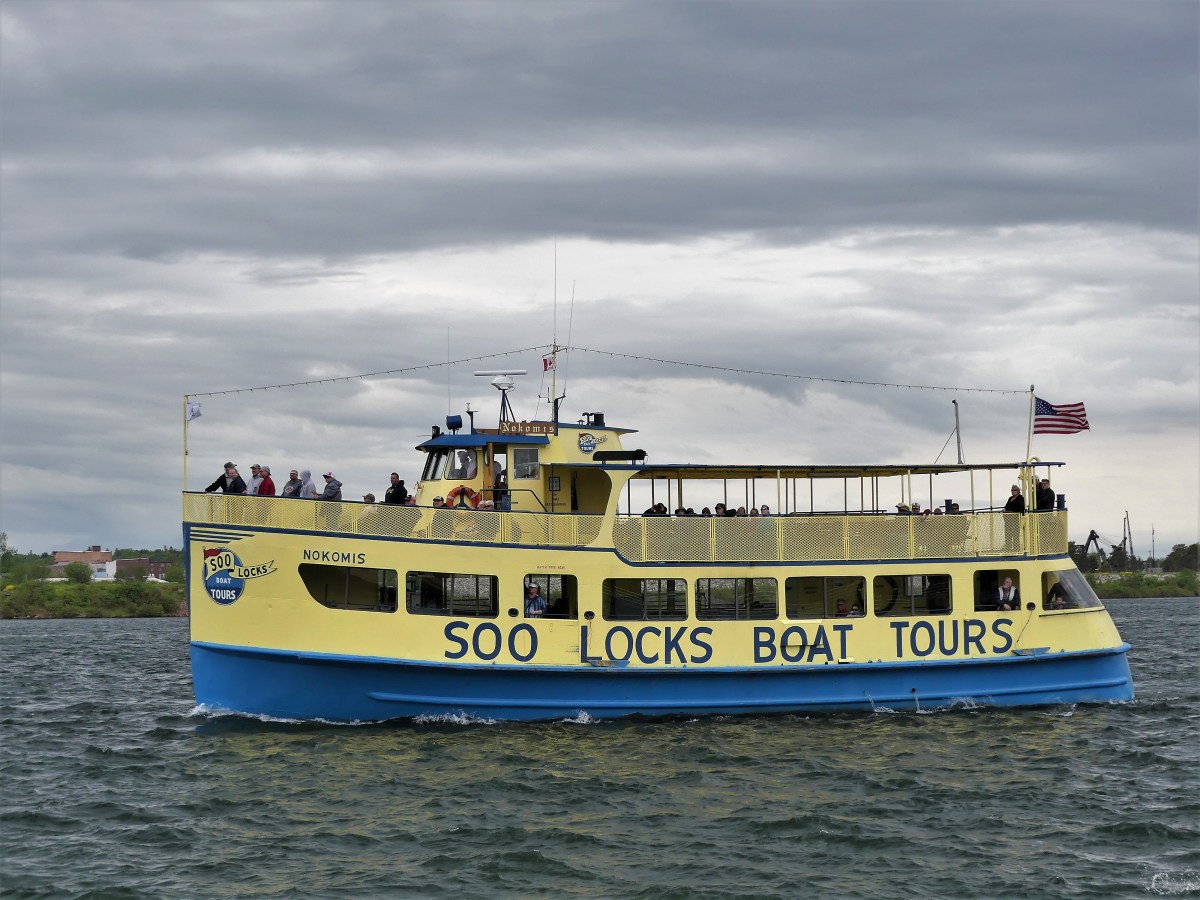
By now, mosquito bashing had turned into a bloodsport. There were a few brief intermissions that allowed us to explore Sault Ste Marie’s famed boardwalk, which carried us past a whimsical sculpture in Roberta Bondar Park,

Three Bears

on our way along St. Mary’s River…

Soo Locks Boat Tours

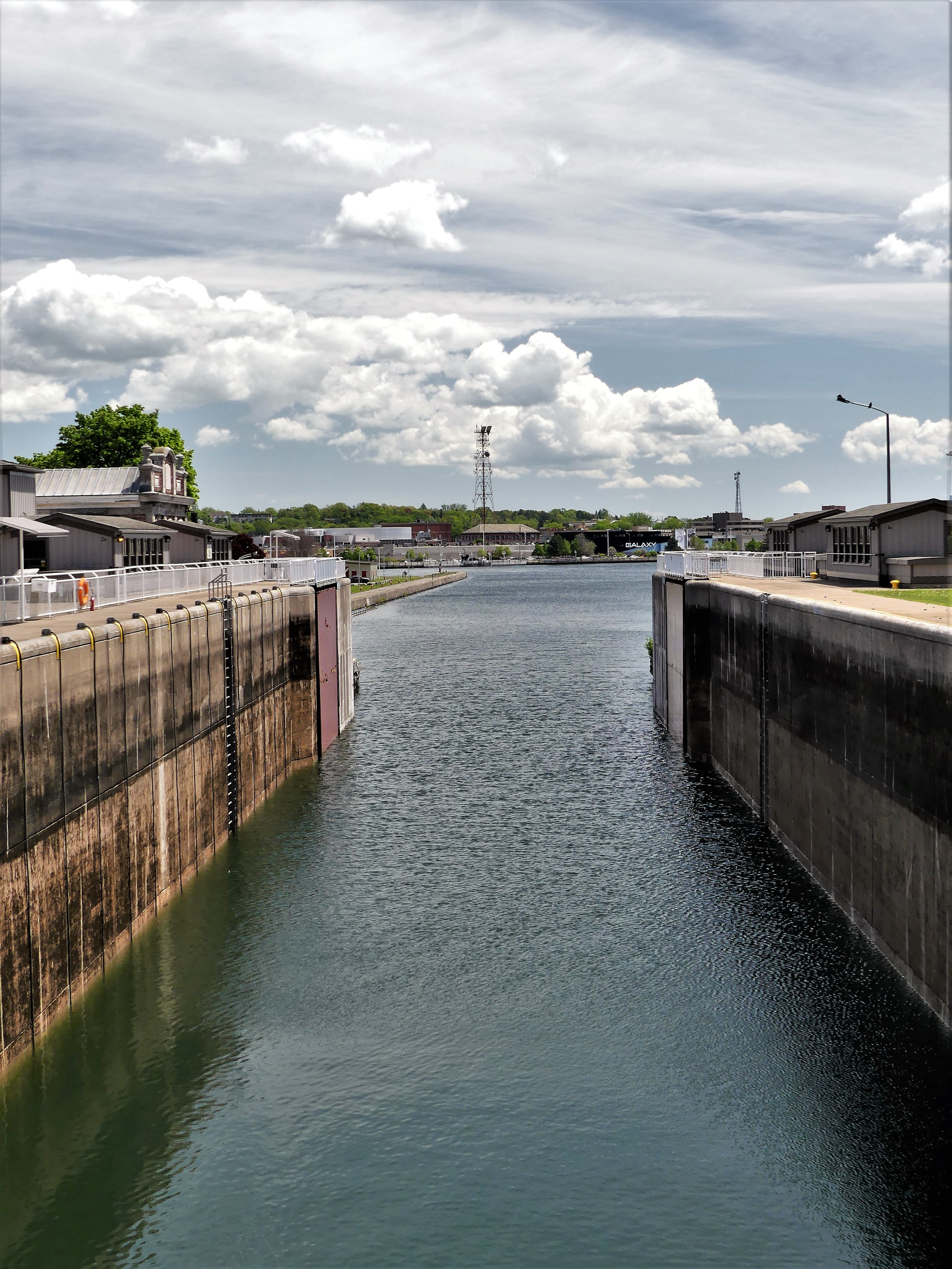
to Sault Ste. Marie Canal–transitioning between Lake Huron…

Sault Ste. Marie Canal (2)

and Lake Superior…

Lake locks

before continuing across to Whitefish Island, where the convergence of Lake Huron and Lake Superior forms St. Mary’s rapids.

St. Mary's Rapids

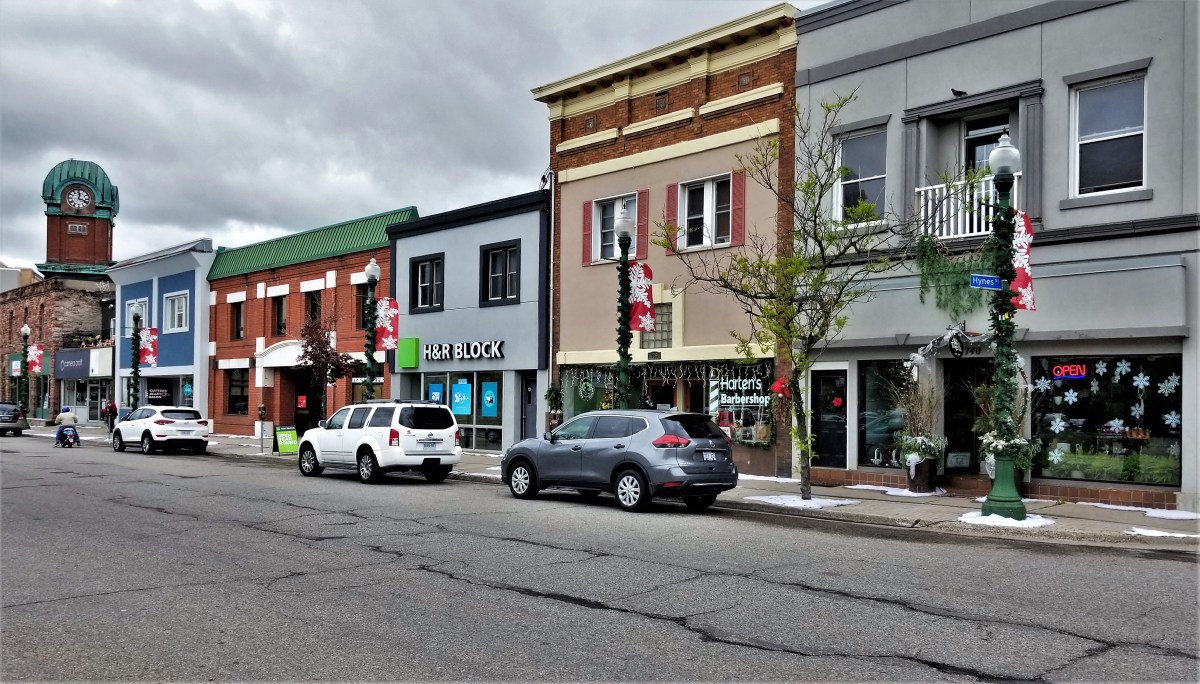
And then a ride through downtown Queen St. produced a completely different climate,

Queen St.

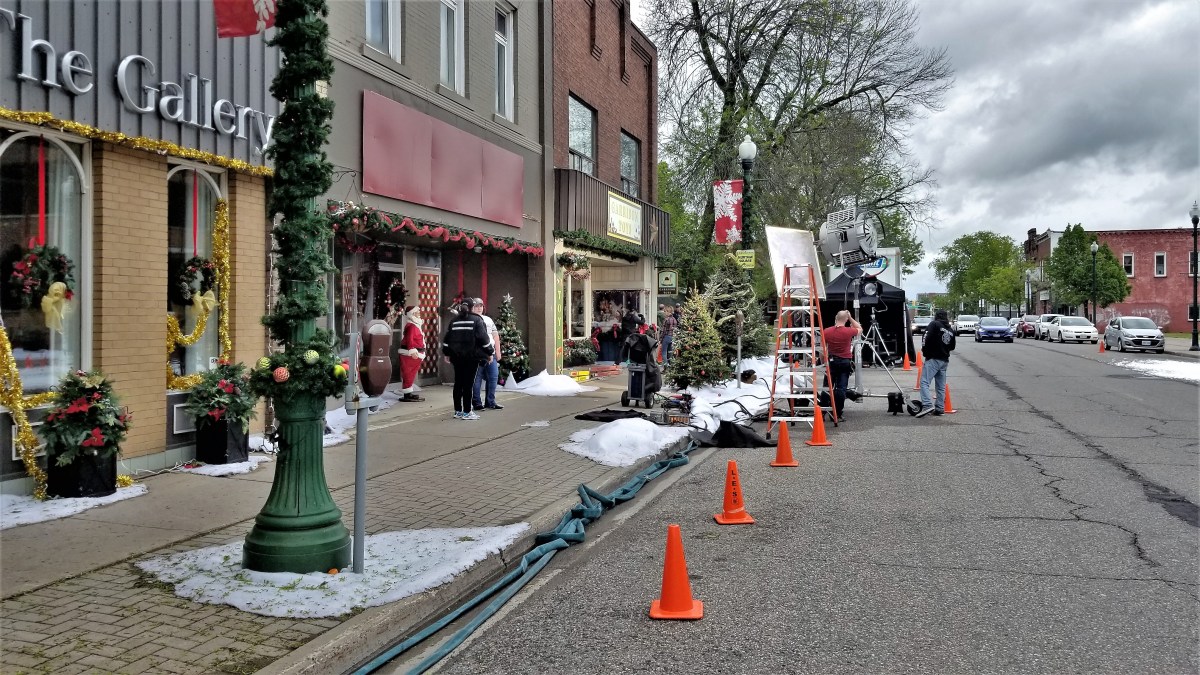
where traces of snow formed around a movie set,

Christman in June

looking much like fire foam…

Fire foam (2)

to create a wintery look…

Fire Foam

for a Hallmark Christmas production adapted from Kevin Major’s The House of Wooden Santas.

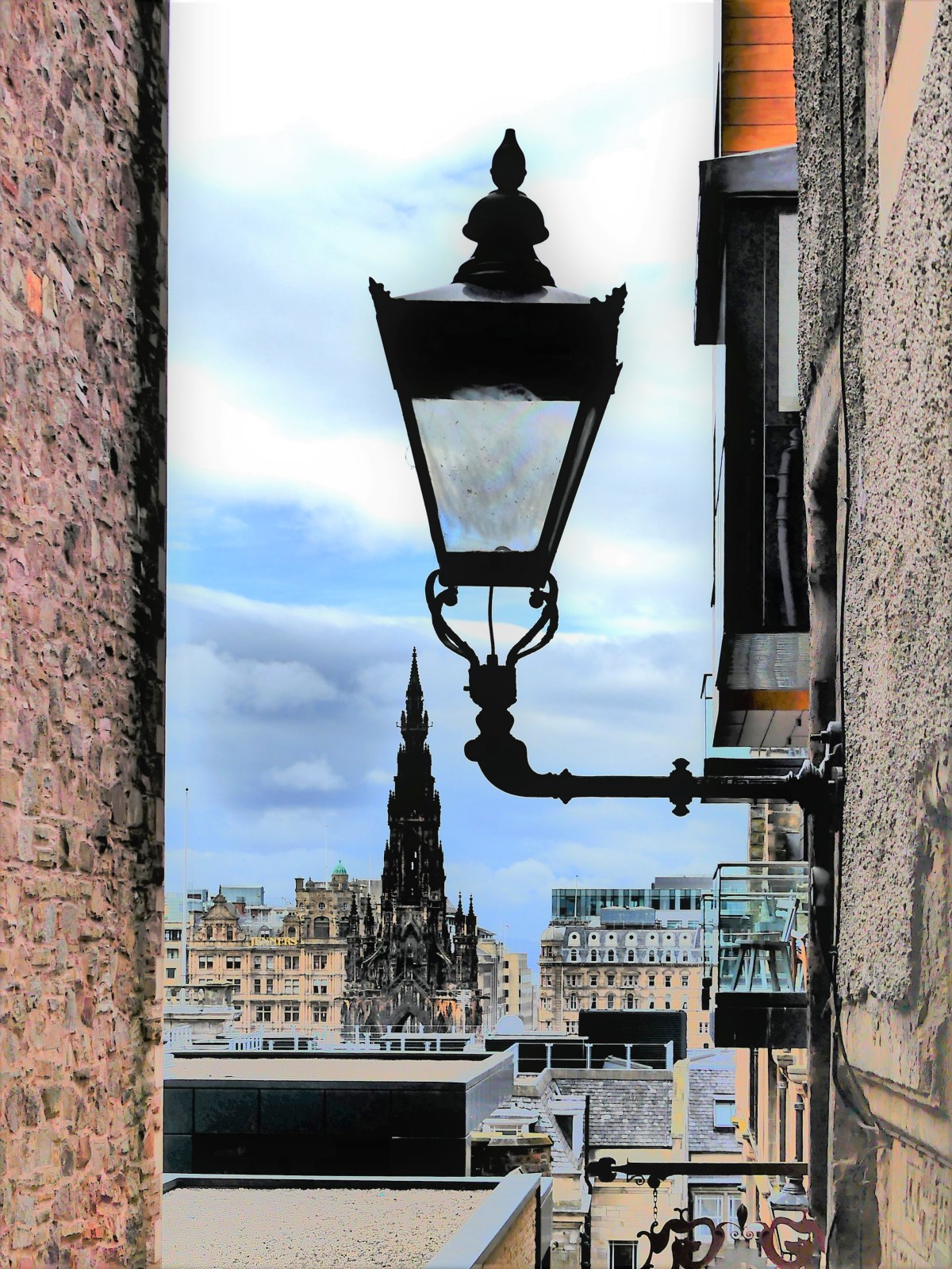
Lamp pole and steeple

The weather always sets the tone for the trip. At the moment, rain amounts are up 30% over past years, and lake levels continue to rise above one meter.

This is a time for the birds…

bird on bird

the mosquitoes, and black flies.

And while there’s little we can do to control or avoid the weather, at least we are now prepared.

netting

Falling for Waterfalls

Leah and I are back on the road again, touring in our Airstream and excited to explore and record our impressions.

Before mothballing the trailer in North Carolina for the past 11 months, we had traveled 44,000 miles, crossing 33 states, 4 Canadian Provinces, and 2 Mexican States in one-year’s time (see Epilogue).

Unfortunately, there were glaring omissions in our route that never took us through the Rust-Belt, so for our second act, we are circumnavigating the Great Lakes–visiting 8 States and 1 Province.

Our summer journey begins with a visit to historic Jim Thorpe, PA in the Pocono Mountains–
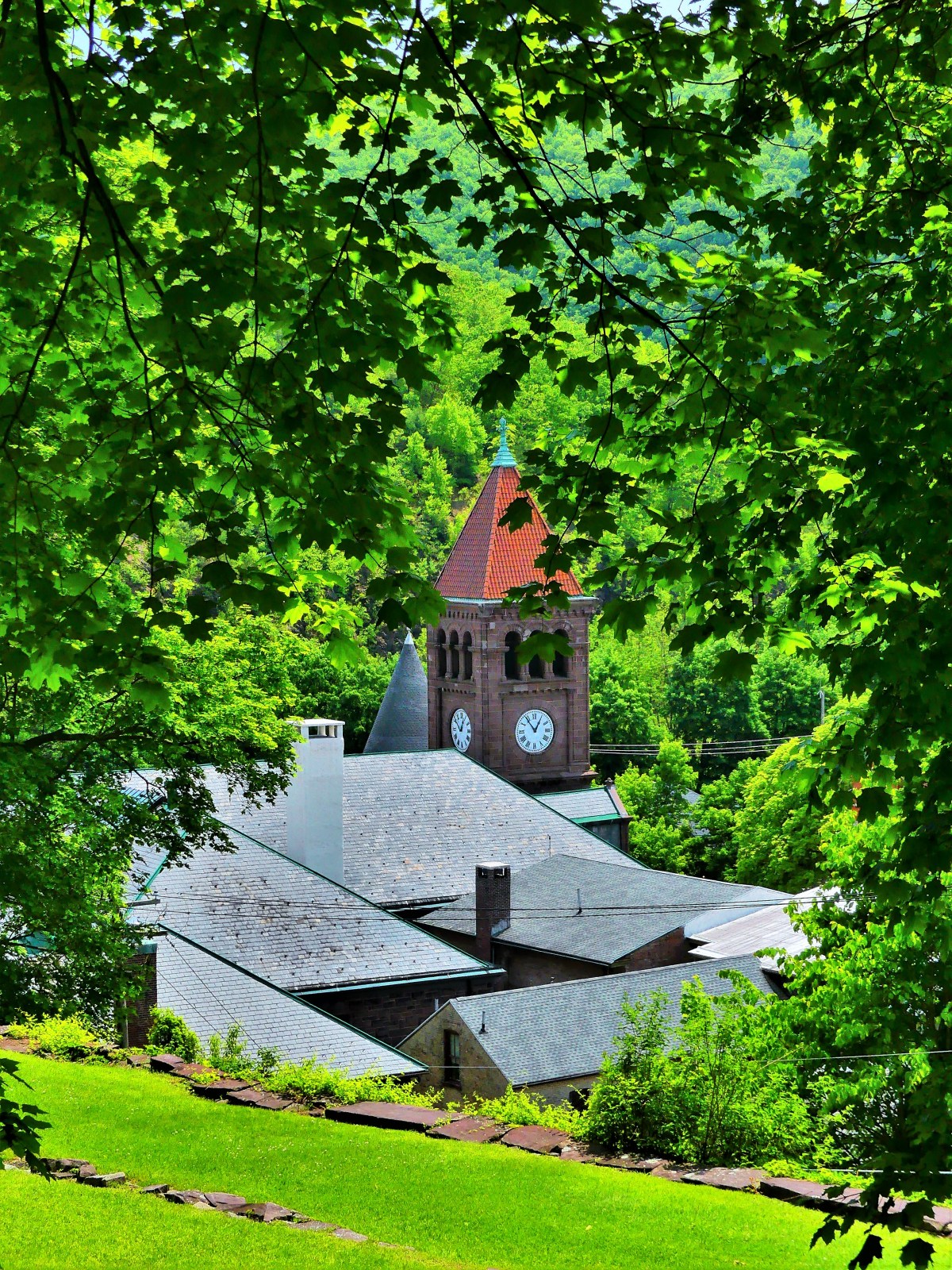
St. Mark's Episcapol Church
a famed destination for winter sports and whitewater rafting.

steeple

With water levels high, and water running fast, it was shoring up to be a high-water adventure.

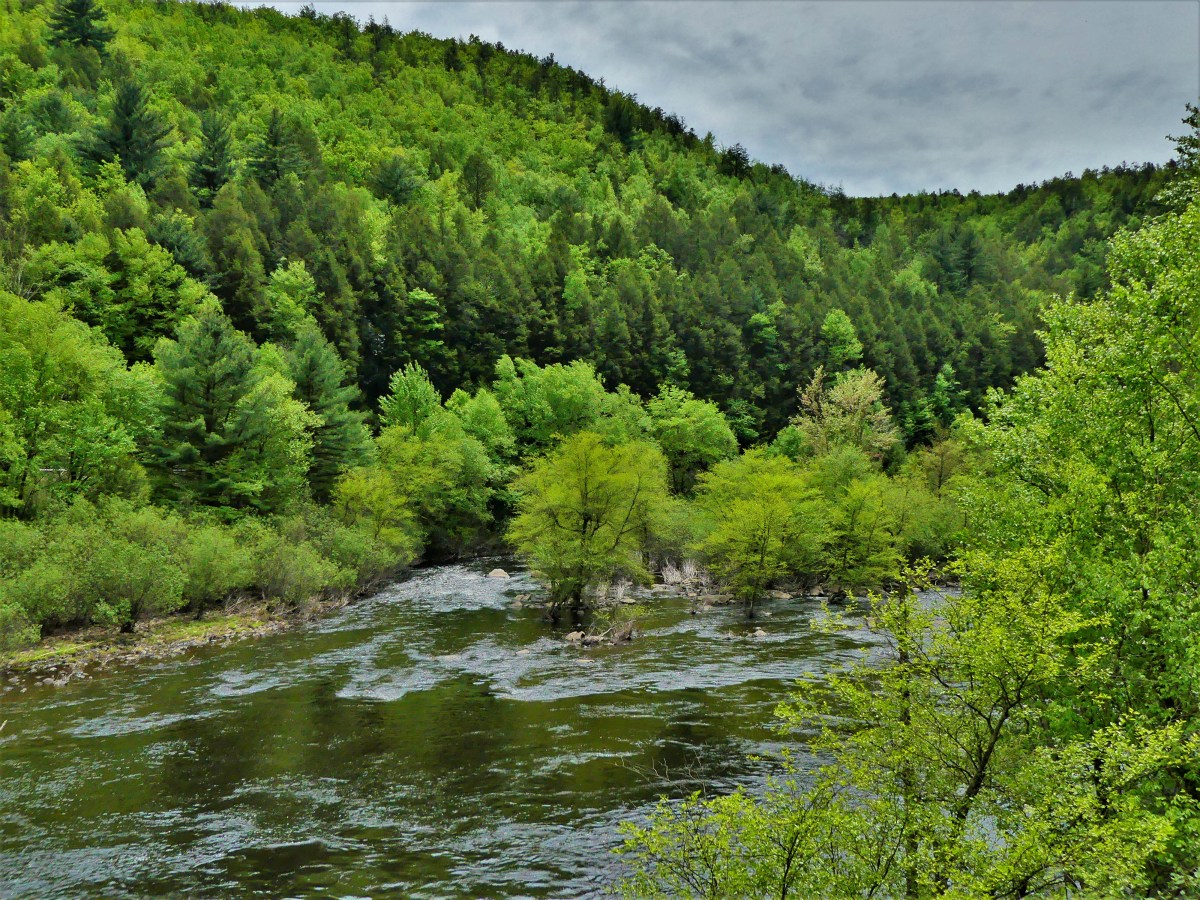
Lehigh River1

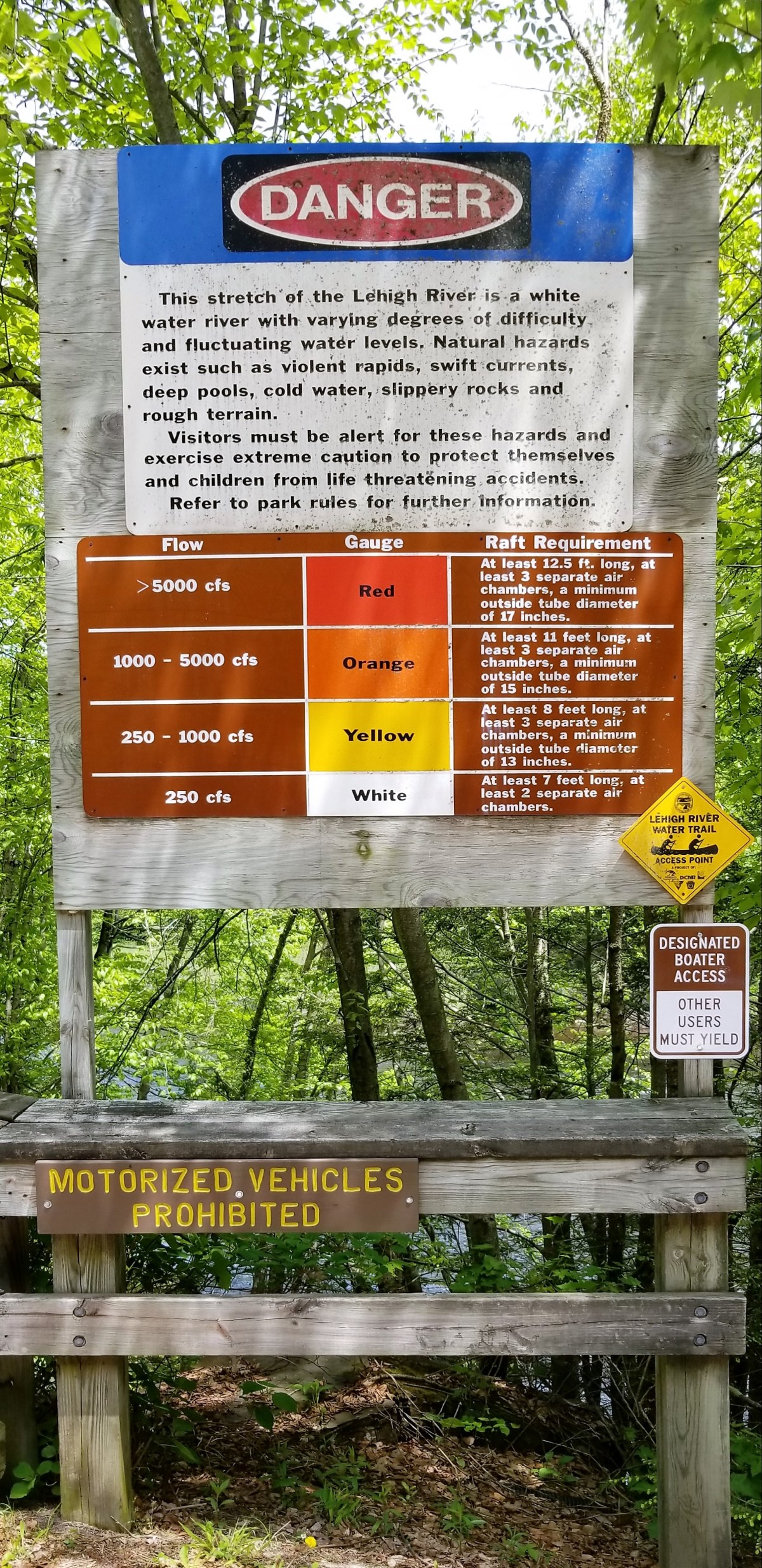
Class II and III rapids would be the perfect way to jump-start this trip.
Danger sign
However, I scratched the raft ride after learning that only family floats were running the Lehigh River,
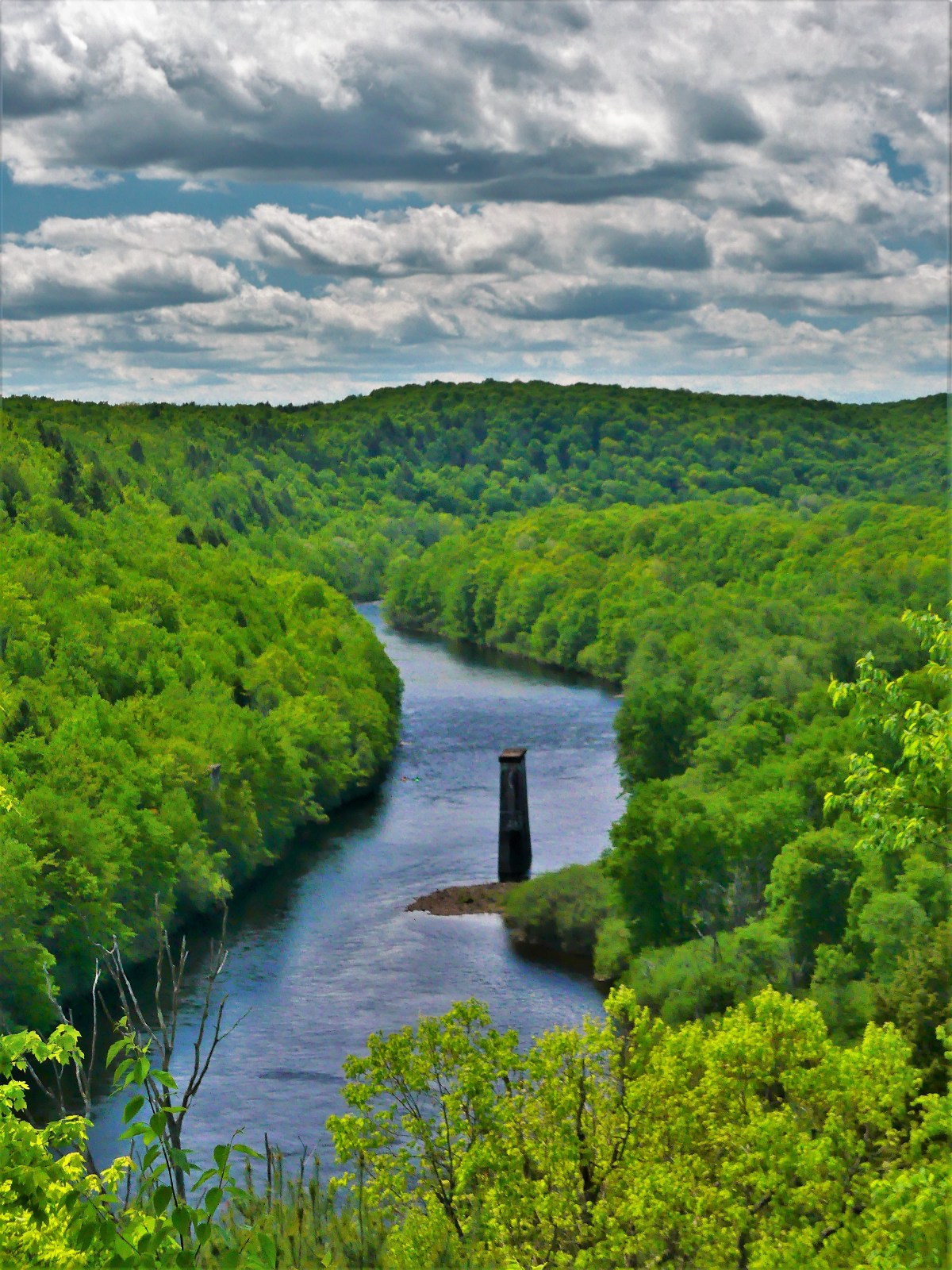
Lehigh River.jpg
with the earliest dam release scheduled for the following weekend.

Lehigh River whitewater.jpg

Nevertheless, Leah and I were content to take a leisurely, 26-mile cycling tour down the Lehigh Gorge Trail, where we followed an abandoned railroad grade-turned-trail, offering river view…

river view

copulating snakes…

copulating snakes

canal lock relics…

Lock wall

and several hillside trickles…

rushing water

culminating in captivating waterfalls by the Rockport Access, with fast water cascading 50 feet over flat rock and flora at Buttermilk Falls;

Buttermilk Falls

and Luke’s Falls, featuring 50-foot water flowing over mossy ledges;

Lehigh Gorge falls

and occasional Lehigh spillovers on the side of the trail.

Lehigh Falls

While in the White Haven neighborhood, we ventured to the Park Office at Lehigh Gorge State Park for information on hiking the fabled Glen Onoko Falls Trail, but were informed that effective May 1, the Game Commission had closed the trail indefinitely until all safety issues have been addressed.

Glen Onoko Falls warning

Apparently, the risky behavior of many irresponsible and inexperienced hikers ended with far too many serious consequences, necessitating aggressive action. It was disappointing being unable to experience the Niagara of Pennsylvania, on a hike dubbed by Outdoor Magazine as “one of the 10 best waterfall hikes in the Northeast.”

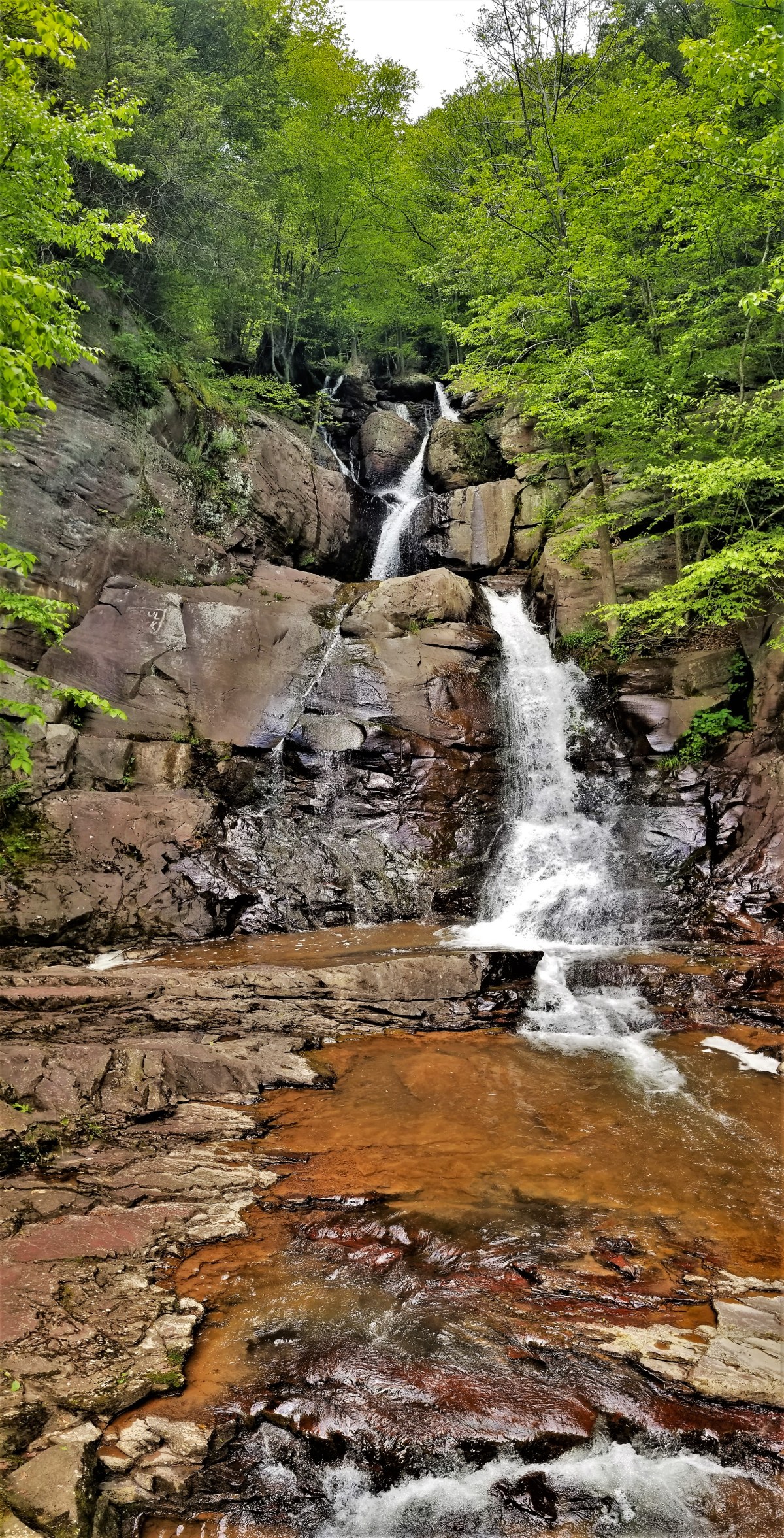
Instead, the rangers diverted us to Hickory Run State Park, where we walked upstream along the Shades of Death Trail…

above Stametz Dam

to Stametz Dam, culminating in a 25-foot splash.

Stametz Dam Falls

While not a disappointing hike, it was anti-climatic and not what we came for, requiring some forward thinking.

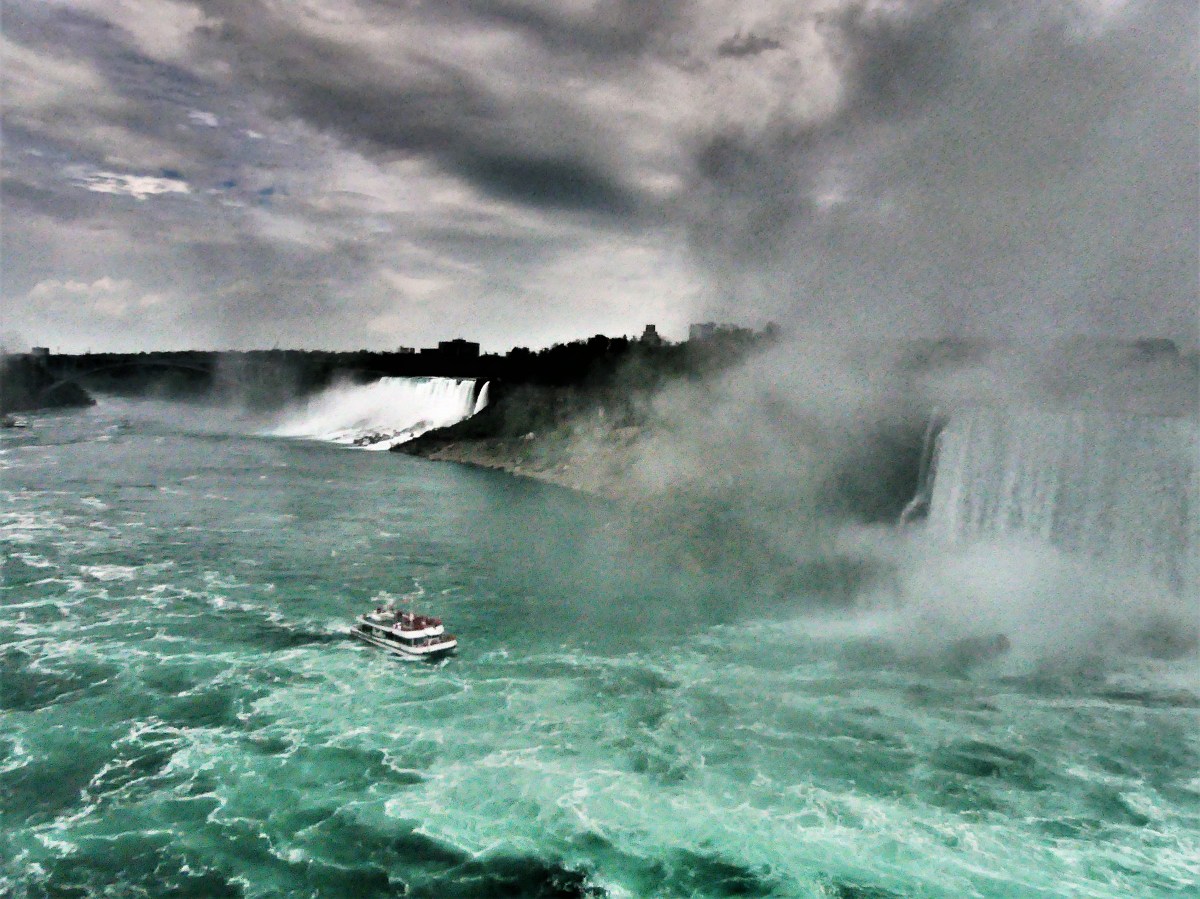
When we eventually crossed into Canada at Niagara Falls, we were ready for sweeping views of gushing water…and we were not disappointed!

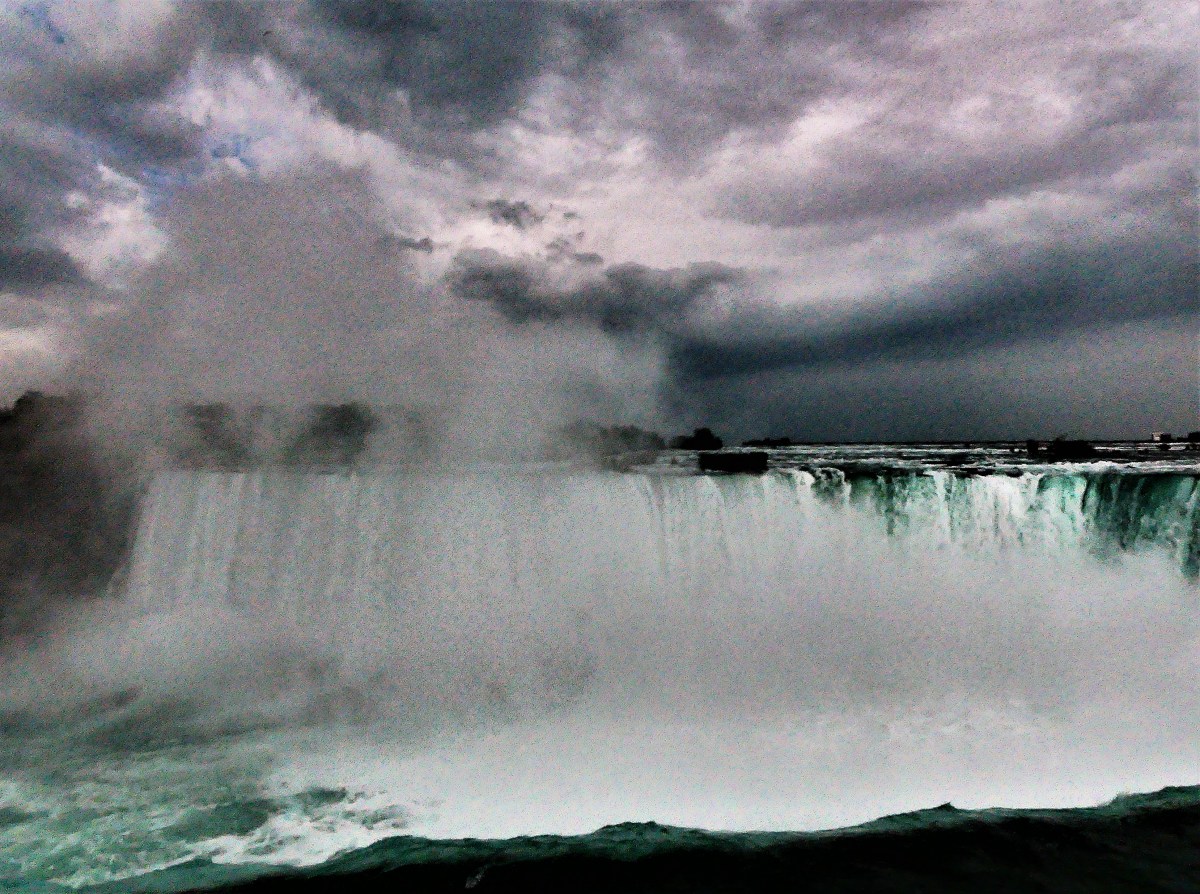
Top of the Falls

As a basis of comparison, we observed the falls from multiple vantage points…

Hornblower to the Horseshoe

multiple perspectives…

into the falls

changing light…

Niagara Falls

varying focal lengths…

Niagara Falls--US & CA

and different dayparts.

Niagara Falls pm

And we both came to the same conclusion: that Victoria Falls was more spectacular than all other waterfalls combined.

horseshoe (4)

Now I fear that seeing the Holy Grail of waterfalls has tainted my impression of all other falls to come, and that’s okay for now.

Main Falls

Eventually, I will come around, and perhaps by that time the Glen Onoko Falls Trail will welcome us back in earnest.

The Cape Peninsula Tour

It was a beautiful day for a drive. We boarded a van for a tour around the Cape Peninsula of South Africa, and Michael, our driver was eager to show us the sights.

Thompsons van

Our first stop was Maiden’s Cove. The sun had just broken through a veil of ground fog and scattered clouds looming over the 12 Apostles…

12 Apostles

causing the breakers to sparkle from a beam of direct light.

Camps Bay Beach

Idle tide pools glimmered against a foaming sea in the company of sleeping rocks.

Maiden's Cove tide pool

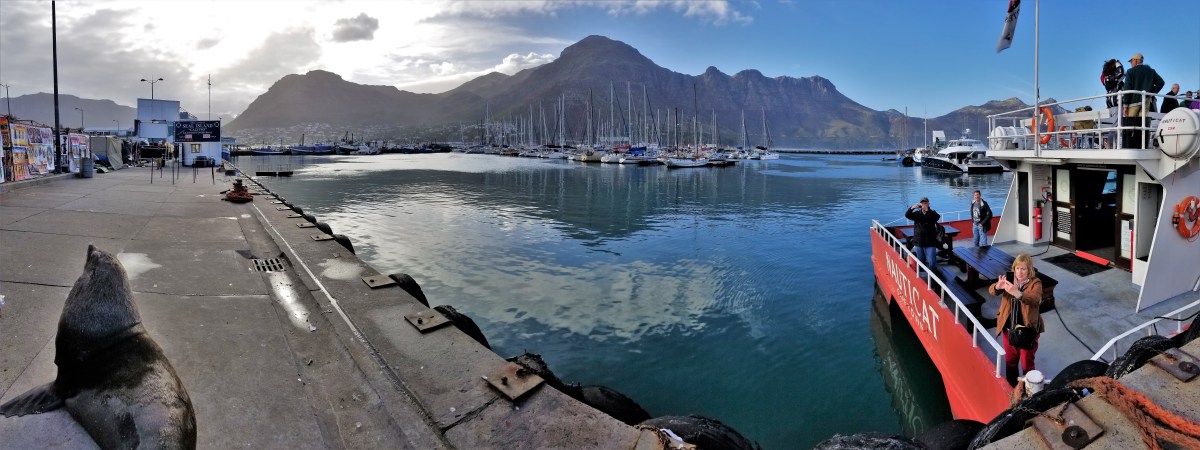
Later, at Hout Bay, a seal was starved for attention…

Hout Bay Harbor

but easily satisfied by tuna bites…

Leah feeding Tiny

and a few strokes from Leah.

twins

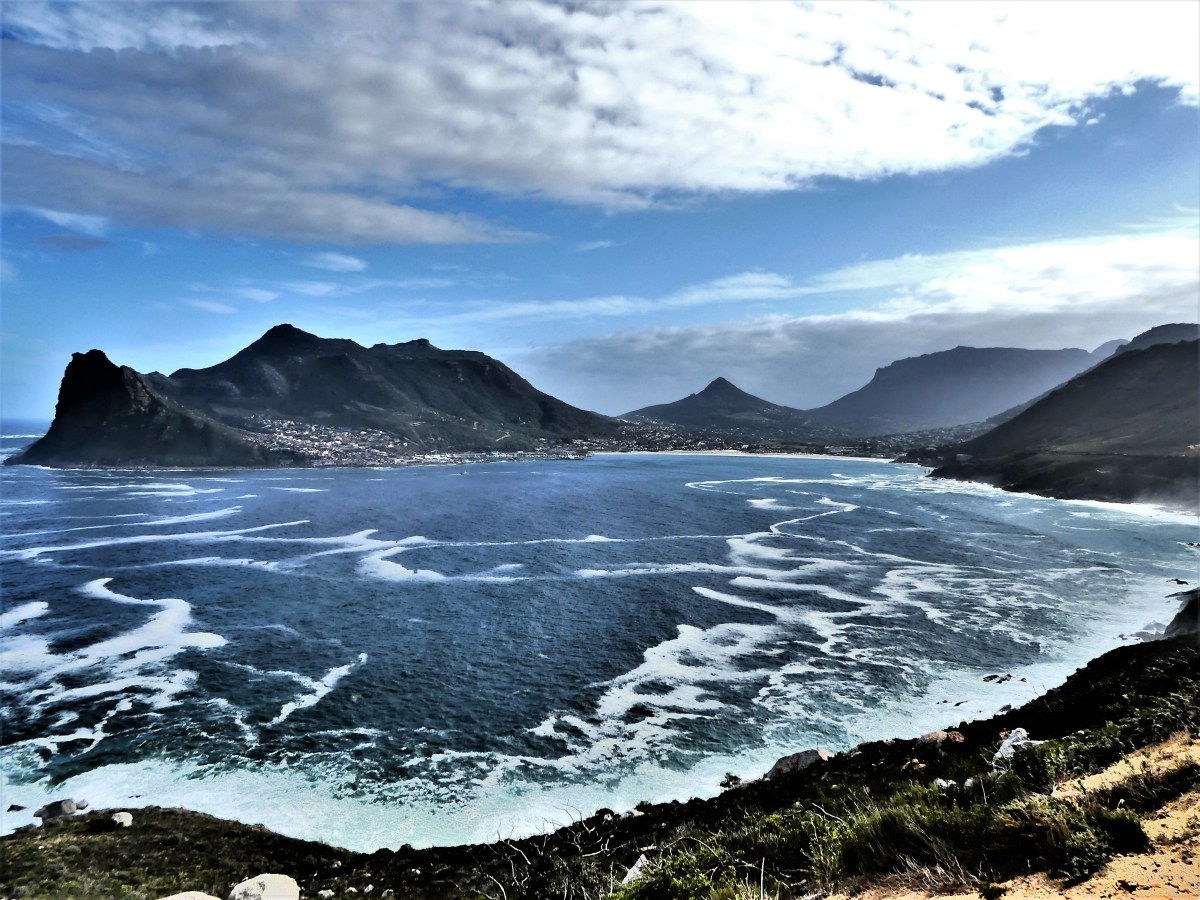
We continued along Chapman’s Peak Drive, following the contour of Noordhoek Beach,

Noordhoek Beach

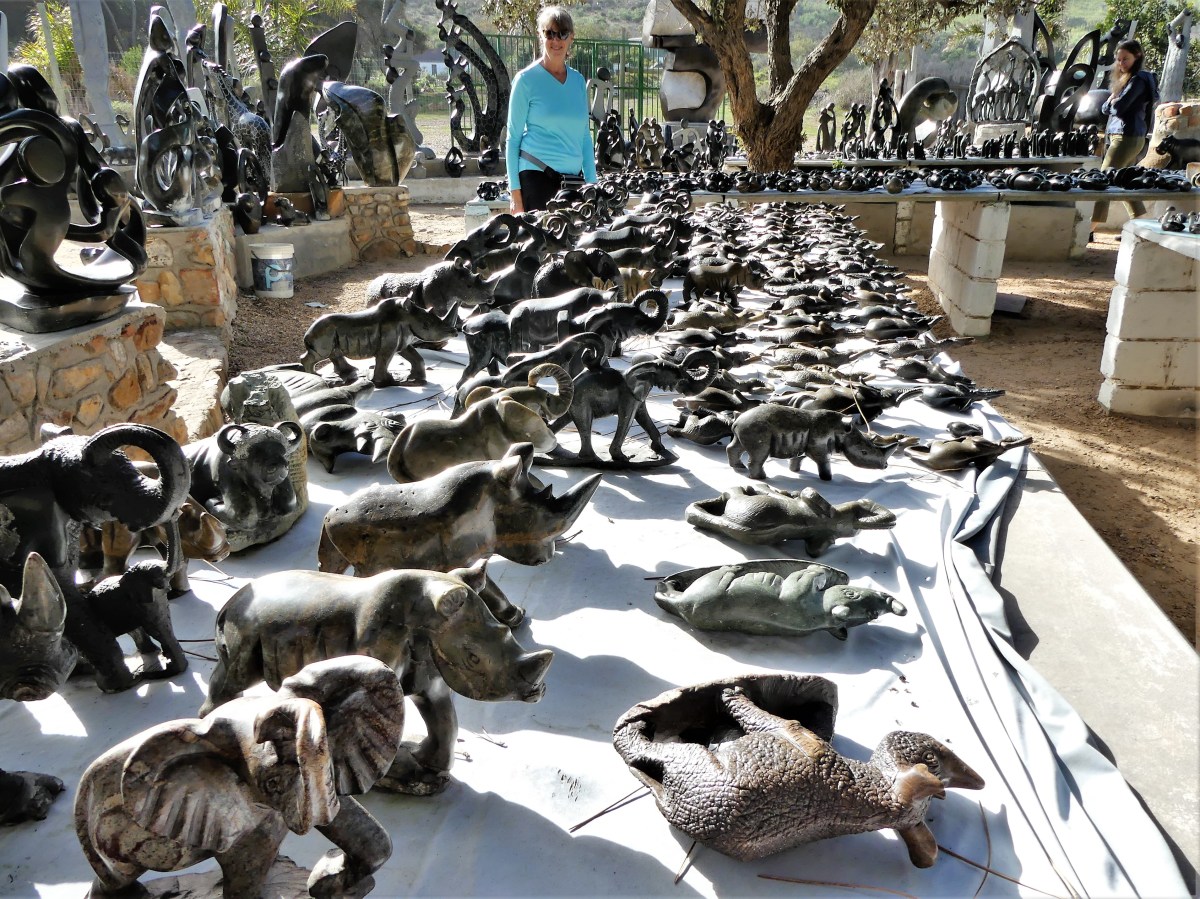
until we reached a pee-pee stop that also doubled as a sculpture park filled with wild animals…

sculptures for sale

and African villagers expertly carved from stone, and available for shipping anywhere in the world.

sculpture for sale

We resumed our tour at the gates of Table Mountain National Park in search of special geography.

Entrance

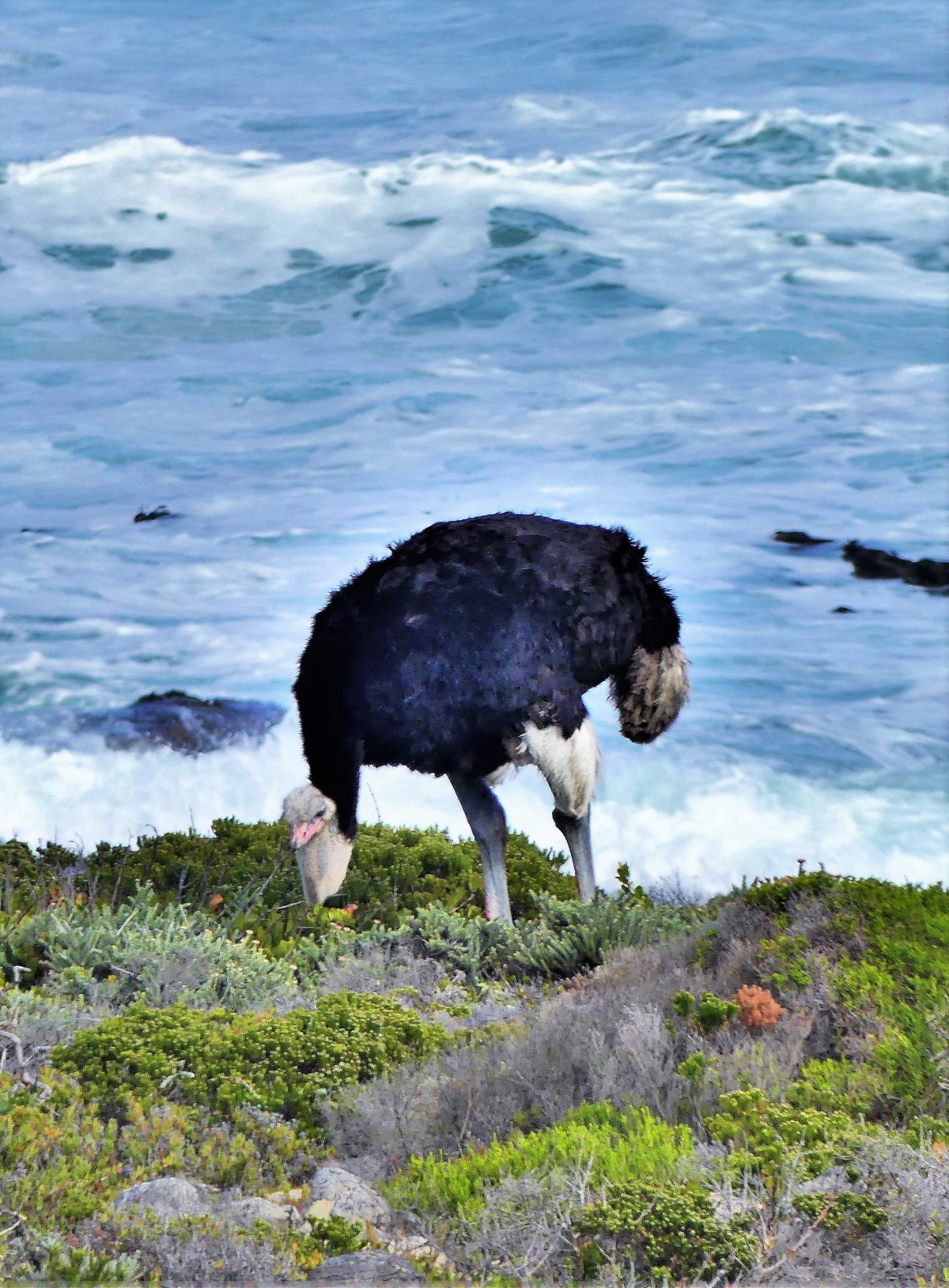
But not before stopping to study an ostrich by the sea, because an animal sighting always takes precedence over a landmark.

Ostrich (1)

Once we arrived, we patiently waited our turn in the drizzle so Michael could record our proud penultimate achievement.

Cape of Good Hope

Because 200 km across False Bay…

False Bay

lies L’Agulhas, the most southern point of Africa, where the Atlantic Ocean meets the Indian Ocean… 

But we settled on Cape Point because we were already there…

Cape Point and Leah

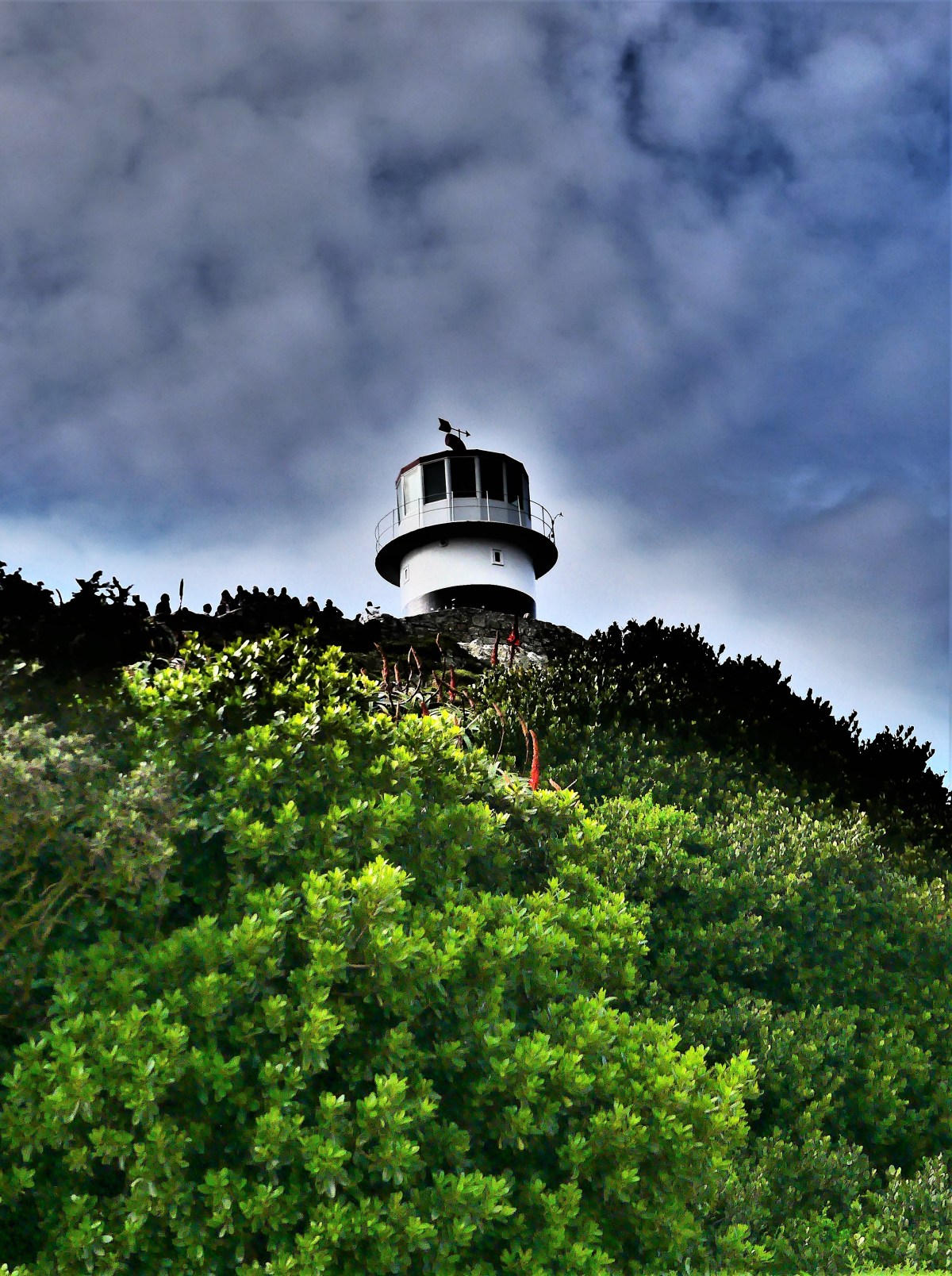
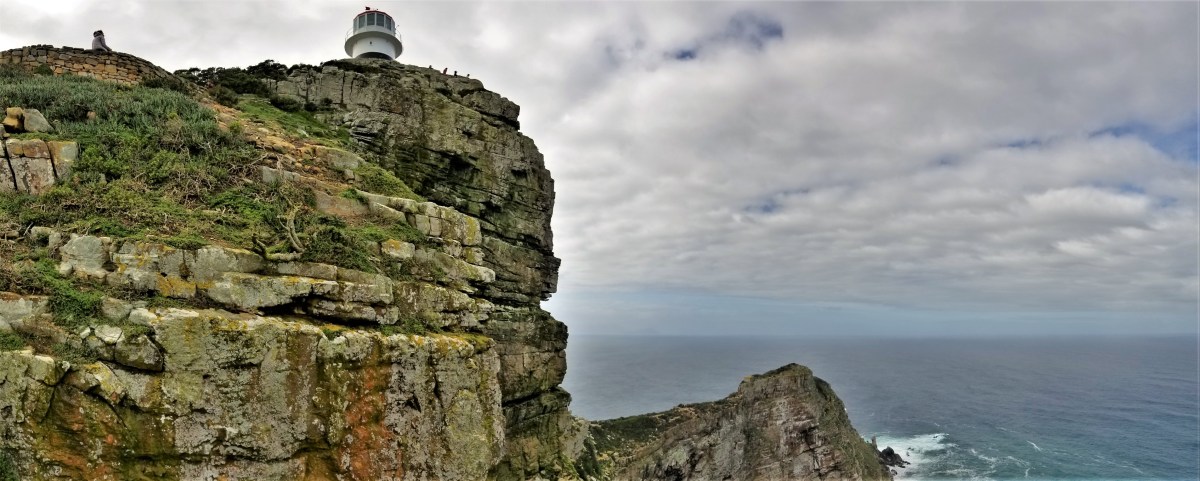
and hiked to a decommissioned lighthouse…

Old lighthouse

and remote guesthouse that offers views…

Hut on the Point

Lighthouse

…in all directions,

signpost

and a special place where heaven touches earth.

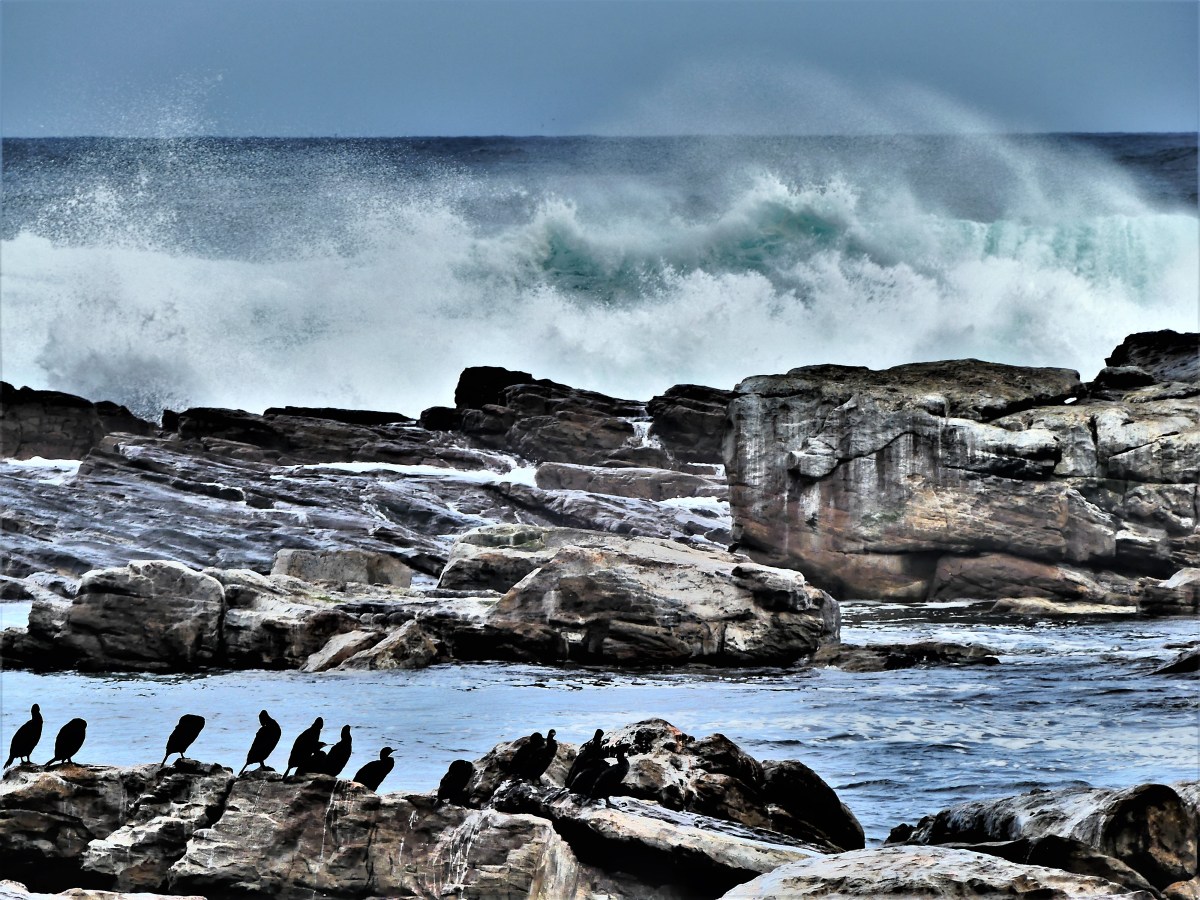
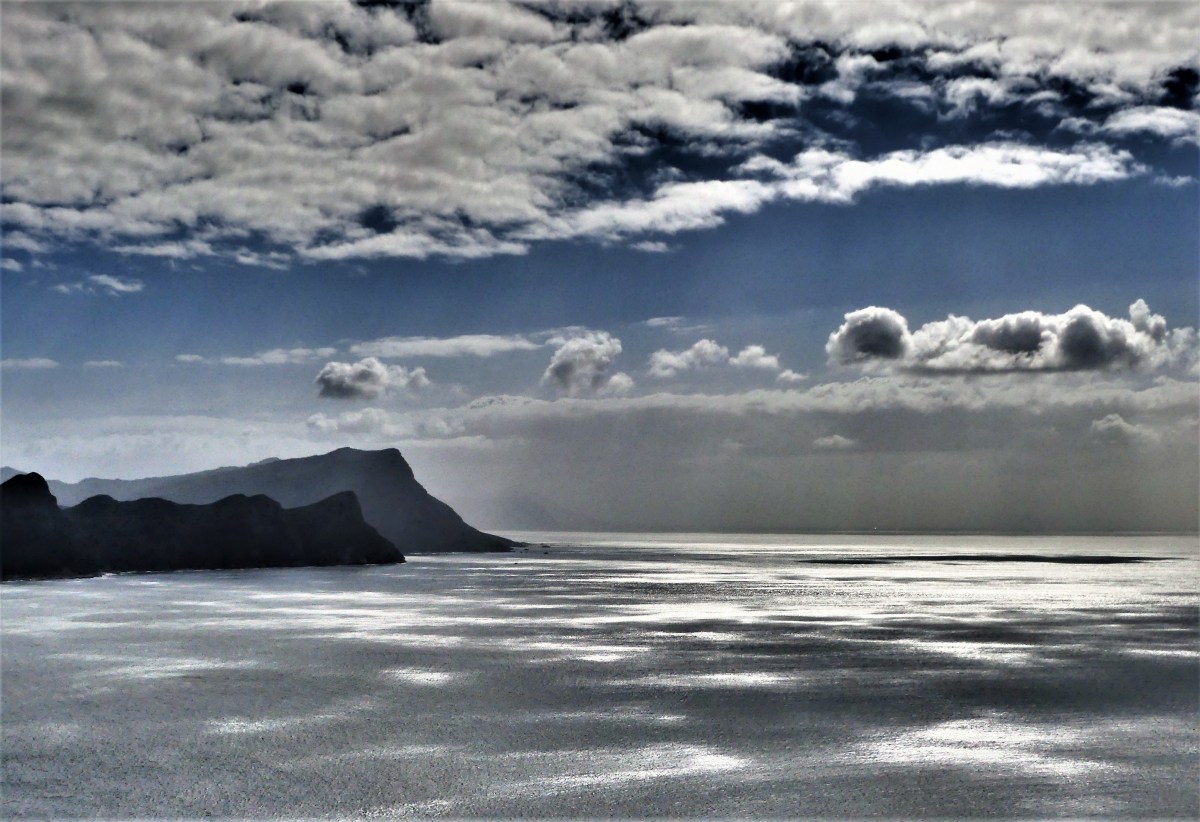
Cape Point shoreline

The tour concluded at Boulders Beach in Simon’s Town,

watching the penguins

where we enjoyed a late lunch of seafood, before returning to follow the antics of eager African penguins preparing for an afternoon swim.

Pengions of Simon's Town


Victoria Falls by Land and Water

“Prepare to get soaked,” warned Reason, our guide and driver for the day. In anticipation of the “rain”, Reason handed out rain parkas to each of us.

Leah rocked hers!

raincoat model

“These will come in handy. You’ll see. The rain will come from all directions,” he said.

We were in for a soaker. According to a park poster, May is considered one of the heaviest high water months.

seasons of flow

All the rushing water will be amazing to see, if we can actually see it at all through the spray and mist, which can rise over 400 meters…

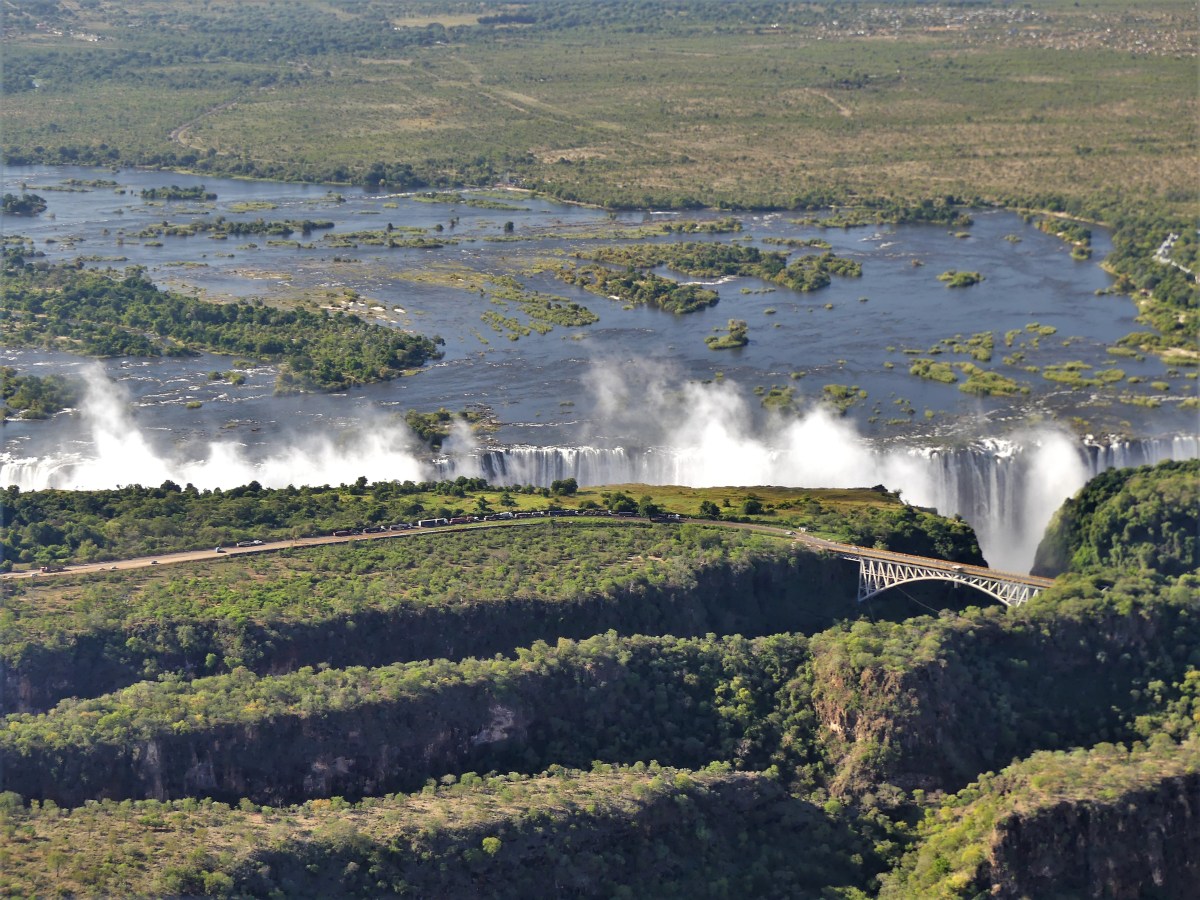
Bridge and spray.jpg

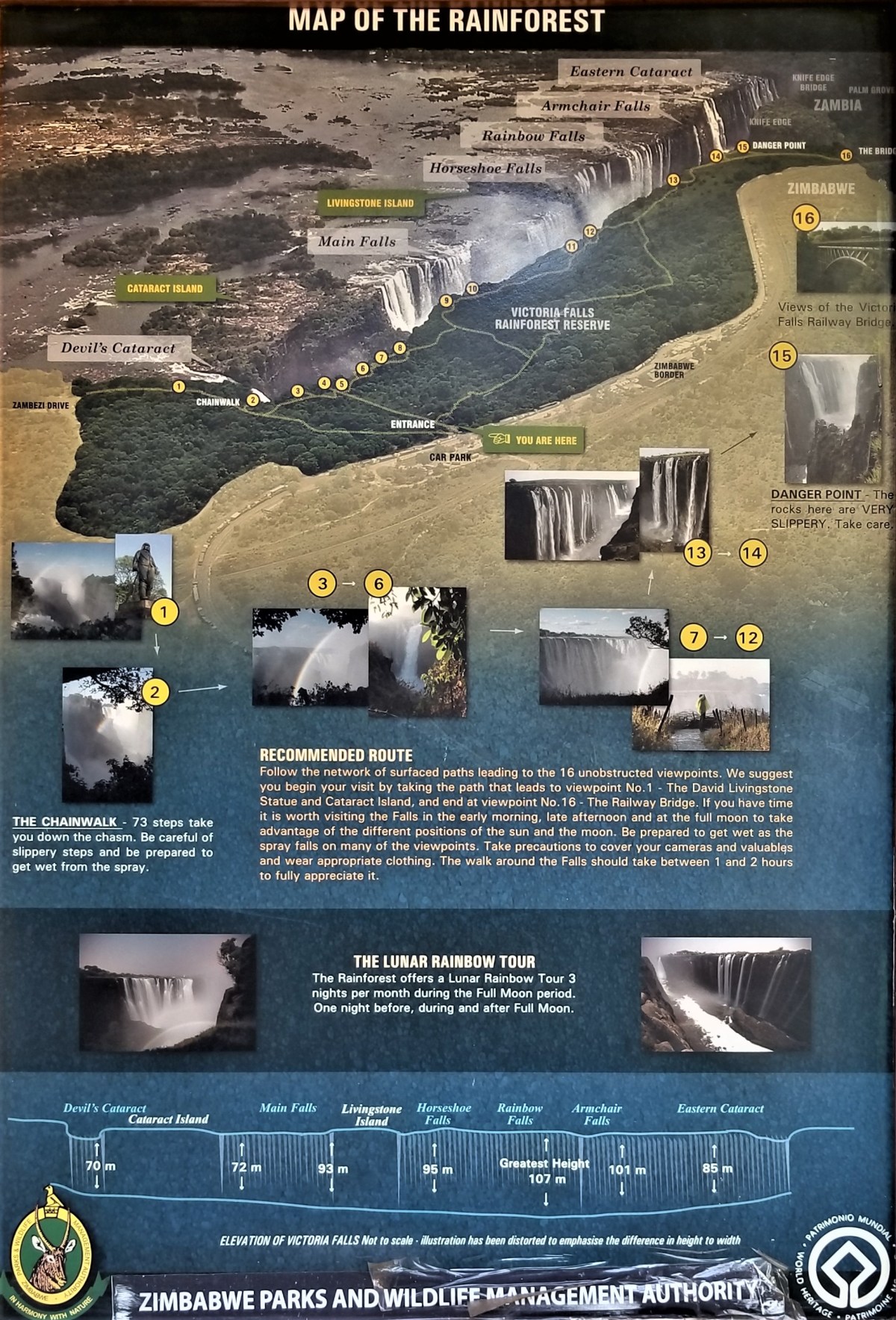
and be seen from a distance of 50 kilometers. Reason explained that the best viewing along the eastern rim was from numbers 1 through 8 on the path.

Reason (1)

“From 8 to 15, you will get drenched. But if the water gets too much for you, there is a detour between 8 and 9, where you can walk inland and dry off.

“What about Niagra Falls? Isn’t that the largest?” asked one of the Canadians traveling with us.

“Sorry. Not even close. Victoria Falls is double the size of Niagra Falls. While it’s not the highest falls–that stat belongs to Angel Falls in Venezuela, dropping 985 meters; and it’s not the widest falls–that record belongs to Iguazu Falls, measuring 2700 meters across, and defining the borders of Brazil, Argentina and Parguay,” Reason clarified, “it’s the volume of falling water, and a combination of everything else that makes it number one…but you will see for yourself. The path is one mile from end to end, and you guys have two hours to experience it, so let’s get wet!”

Map of the Rainforest

Those panchos looked fine for keeping clothes dry, but my biggest concern was keeping my photo gear dry, so I opted out, and wore my own rain jacket, which was roomy enough to protect my camera from moisture…or so I thought.

From Points 1 through 5 on the walk, the wetness factor–on a scale from 1 to 10–was manageable at 3 for damp. Having a chamois helped to eliminate the mist from the lens hood and camera body between shots, so my shots were still sharp.

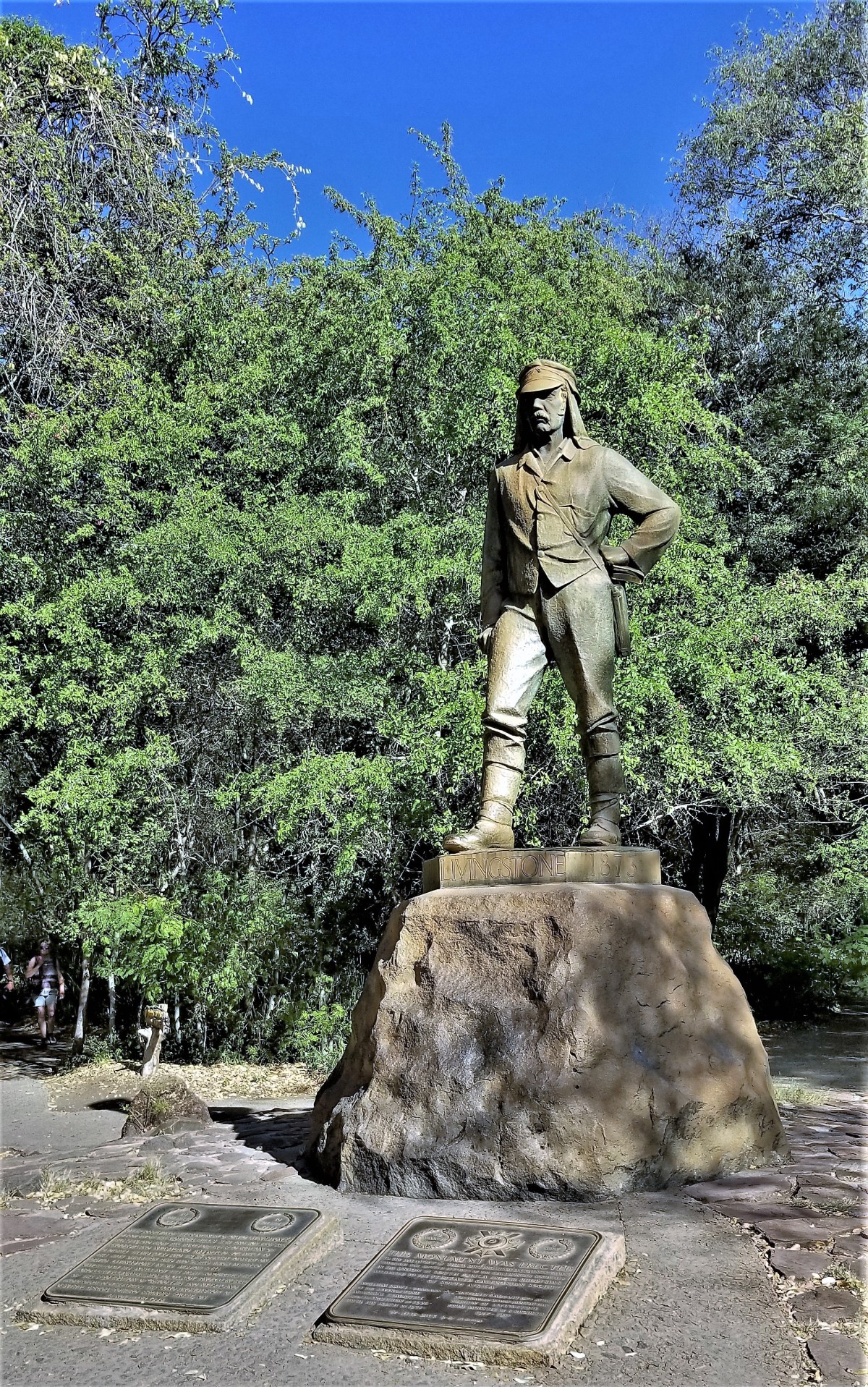
Livingston

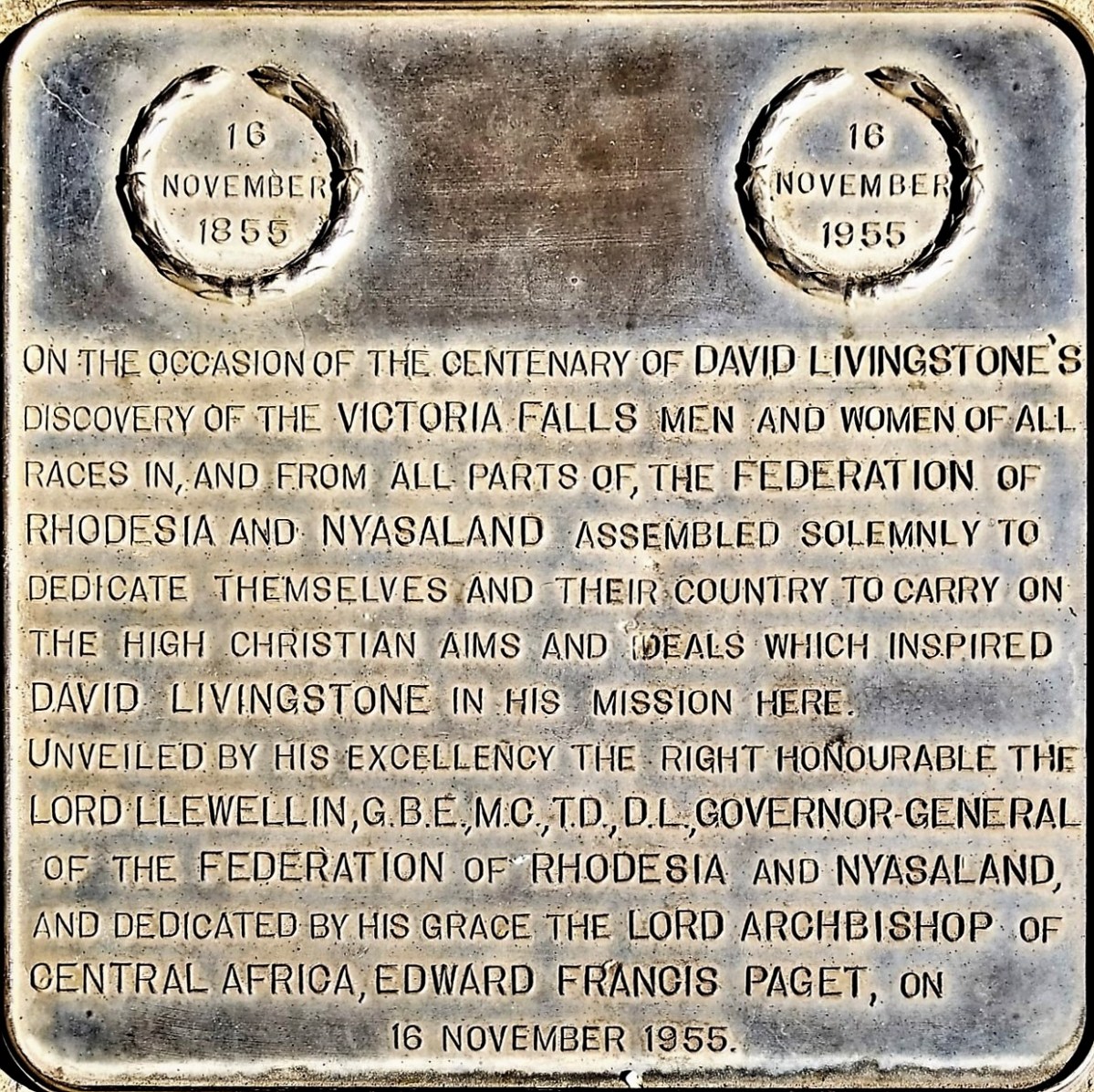
plaque (2)

Zambezi River

misting rainbows

But things got dicey after Point 5. By now, water was dripping from the lens filter, and focusing became nearly impossible with water constantly blowing across my frame. That’s when I switched gears and opted for a more visceral interpretation of the falls, leaning towards a painterly impression.

Chainwalk

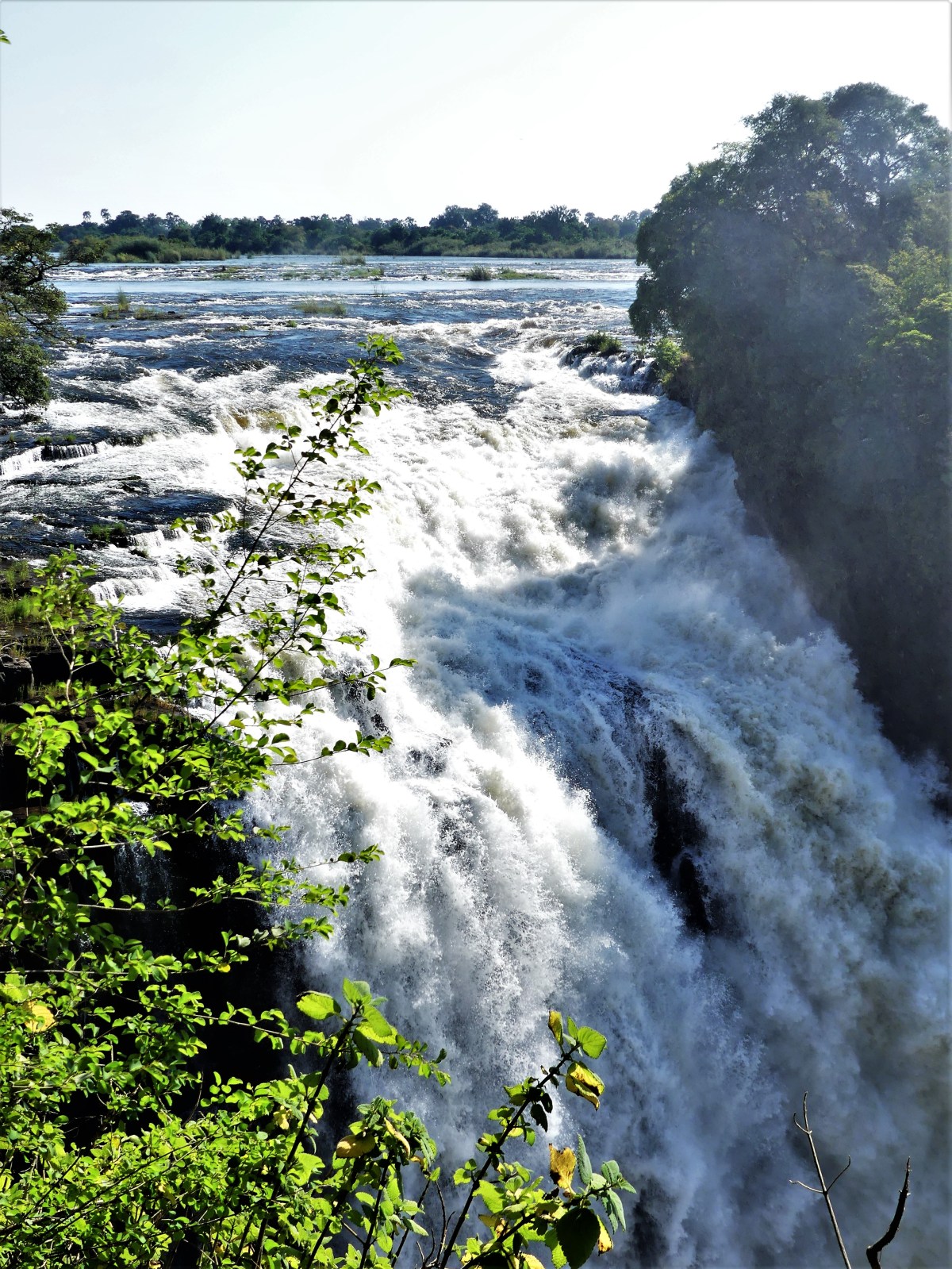
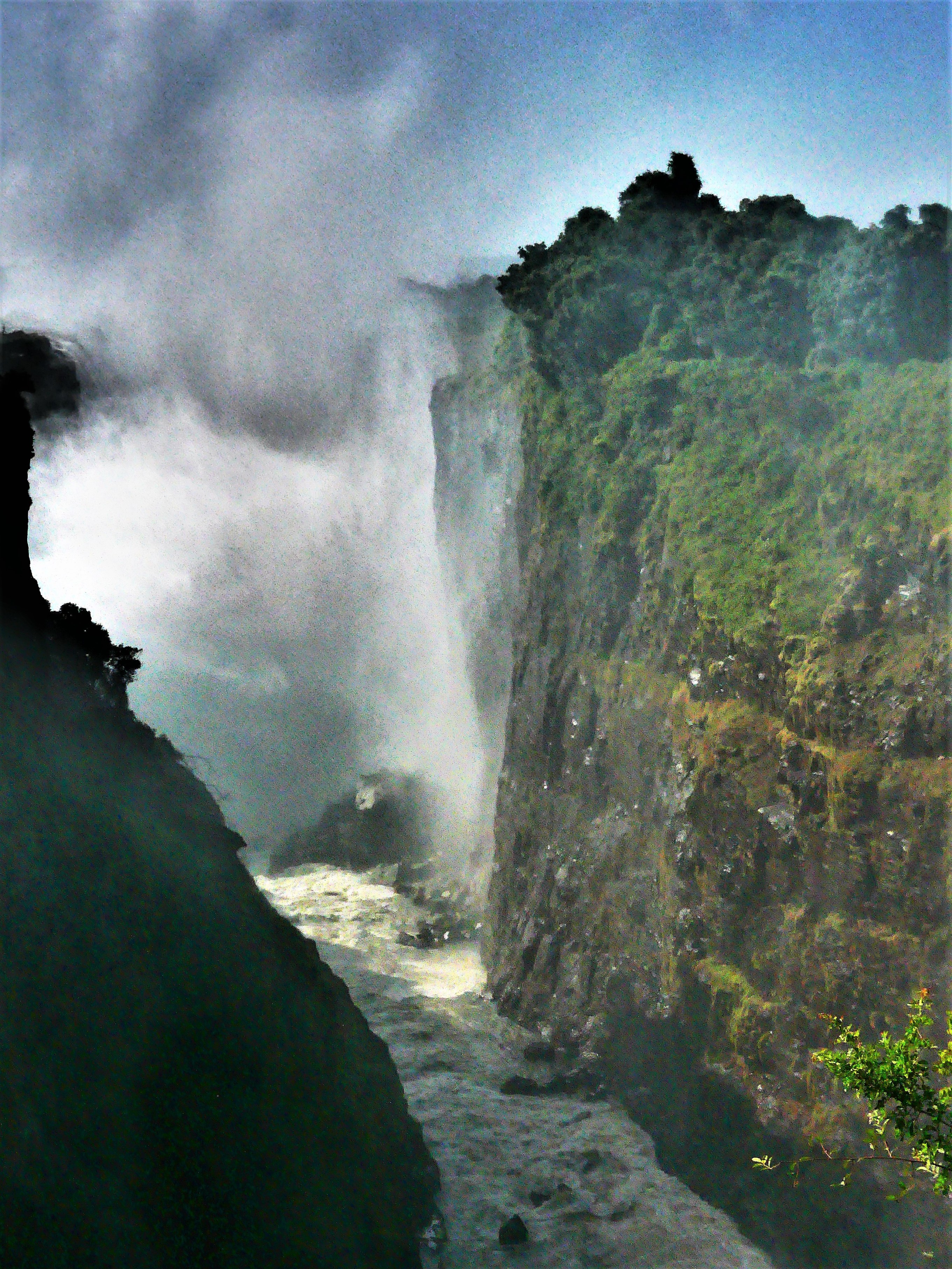
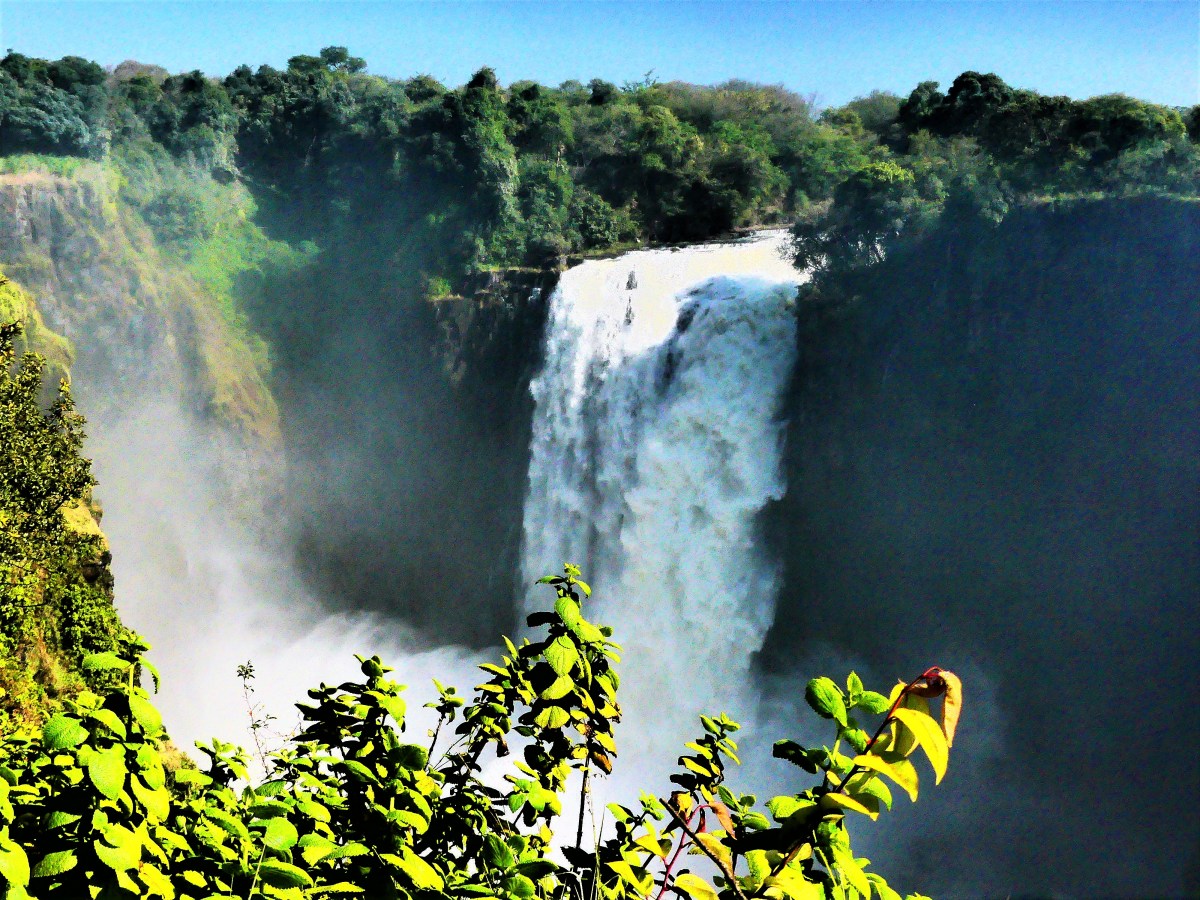
Devil's Cataract

Rainbow Falls

Devil's Cataract drop

The falls was a dynamic spectacle, that soon became a photographic nightmare. Weather conditions had pinned the needle on the wetness scale, guaranteeing that nothing about me was dry any longer: the plastic shopping bag protecting my camera had filled with water; the monsoon had penetrated my waterproof rain jacket, soaking my clothes from within; and my chamois was useless.

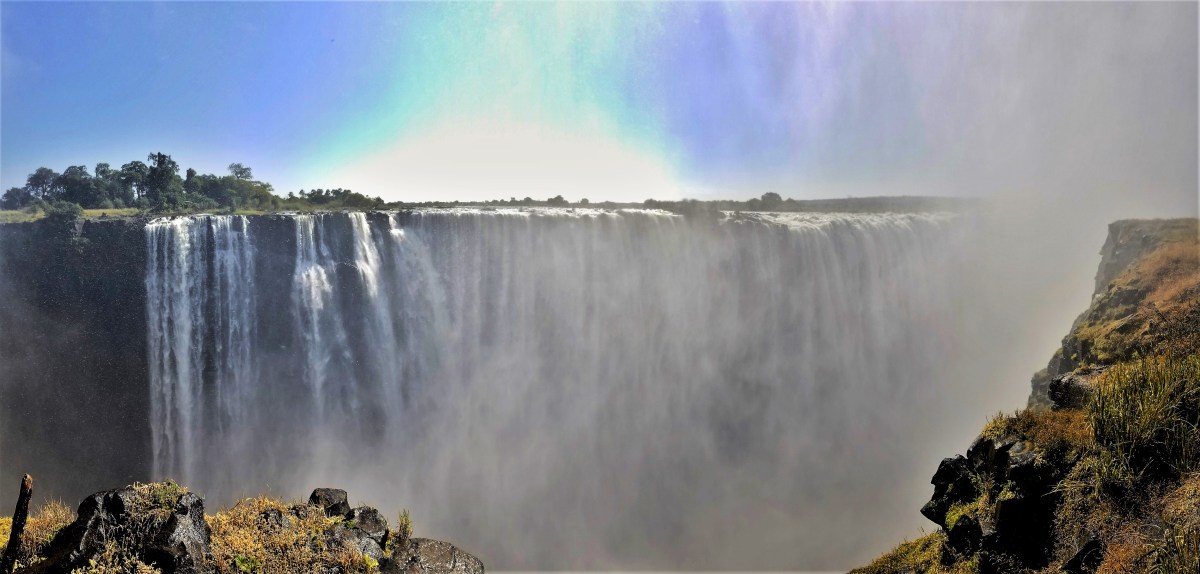
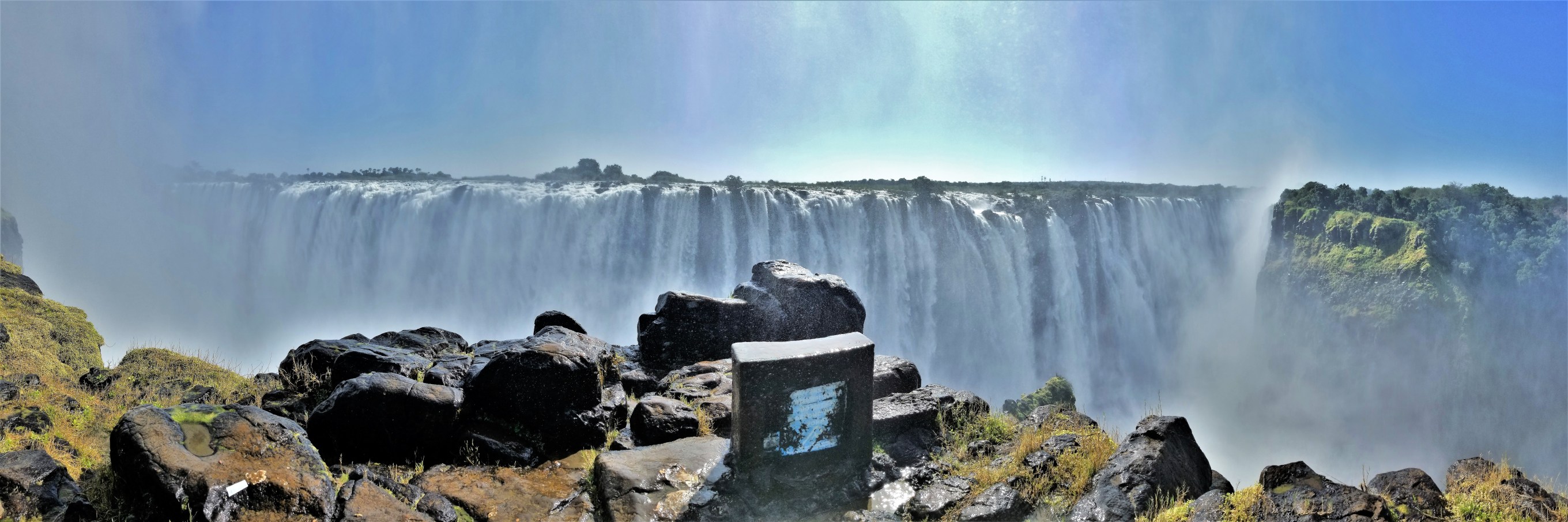
That’s when I turned to my Samsung Galaxy S8, almost too slippery to hold, and captured a few panoramas…

Devil's Cataract and Cataract Island

Sun over Main Falls

Dangerpoint

The rain had abated by the time I reached the Victoria Falls Bridge at the end of the trail.

Rhodes 1903 bridge

The bridge spans the Second Gorge and connects Zimbabwe to Zambia.

Built in 1903, it was originally conceived as a railway bridge by Cecil Rhodes, an English industrialist, who left his name and colonized imprint on a country (Rhodesia, until 1979) rich in natural resources, and easily exploited for the benefit of the British Commonwealth.

The afternoon was reserved for a sunset river cruise on the Zambezi.

Sunset cruise boat

Cruising gently down the river, we drank, we ate, we partied. The captain rounded a bend in the river…

Zambezi River

and behold, the omnipresent falls spray was there to greet us.

Falls mist

Mist over Zambezi

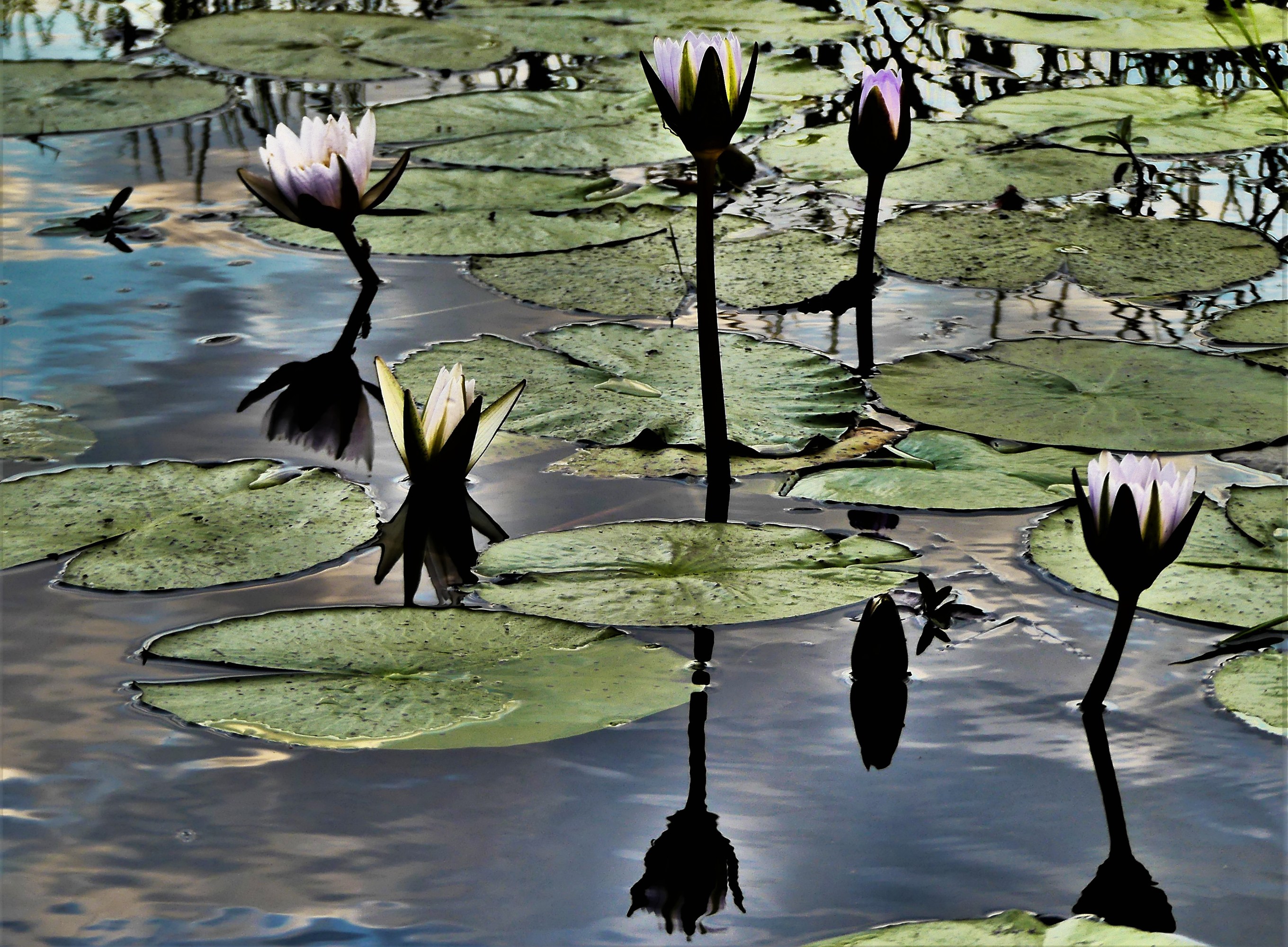
With the day losing light, the night lillies have unfolded…

night lillies

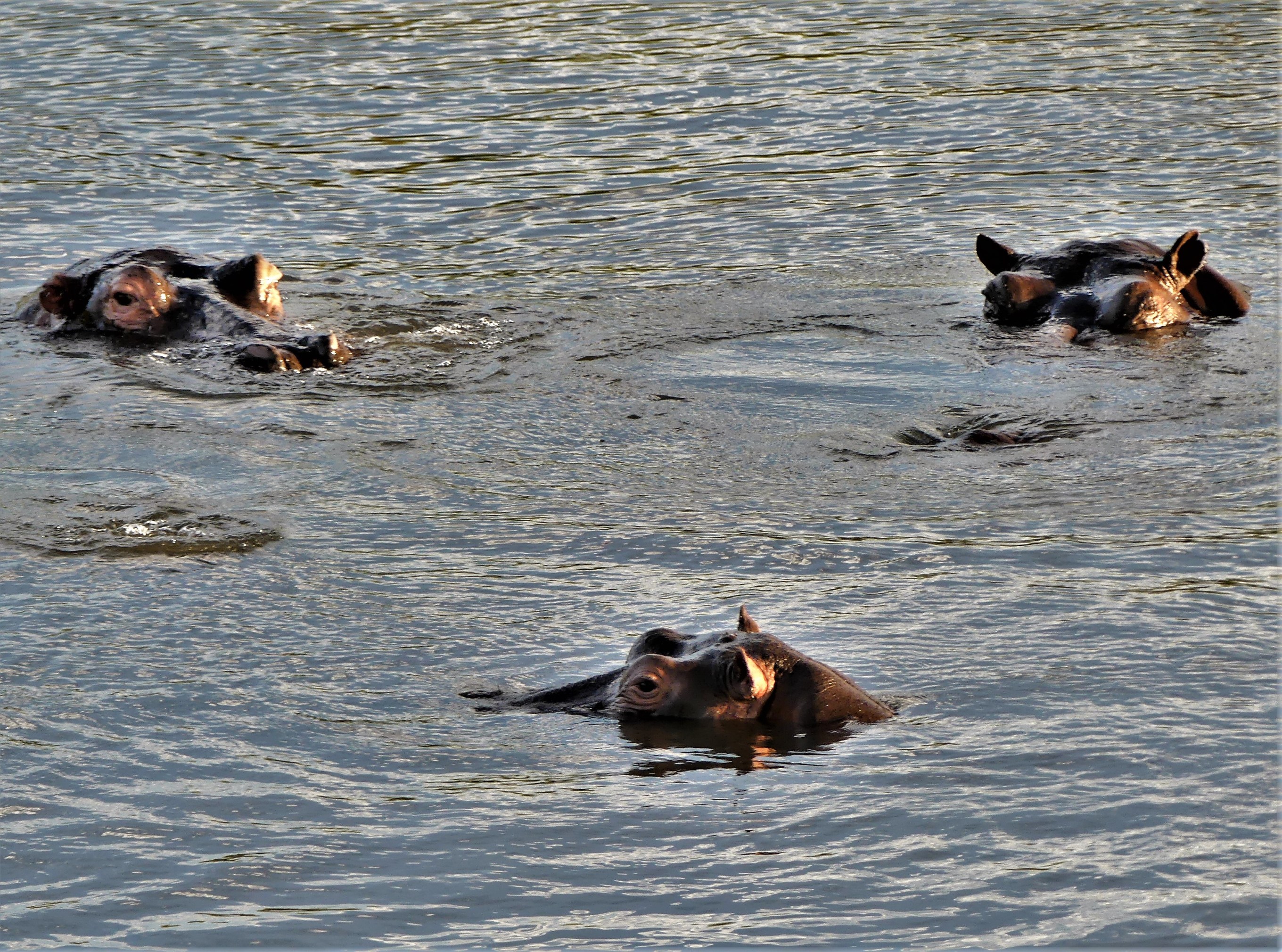
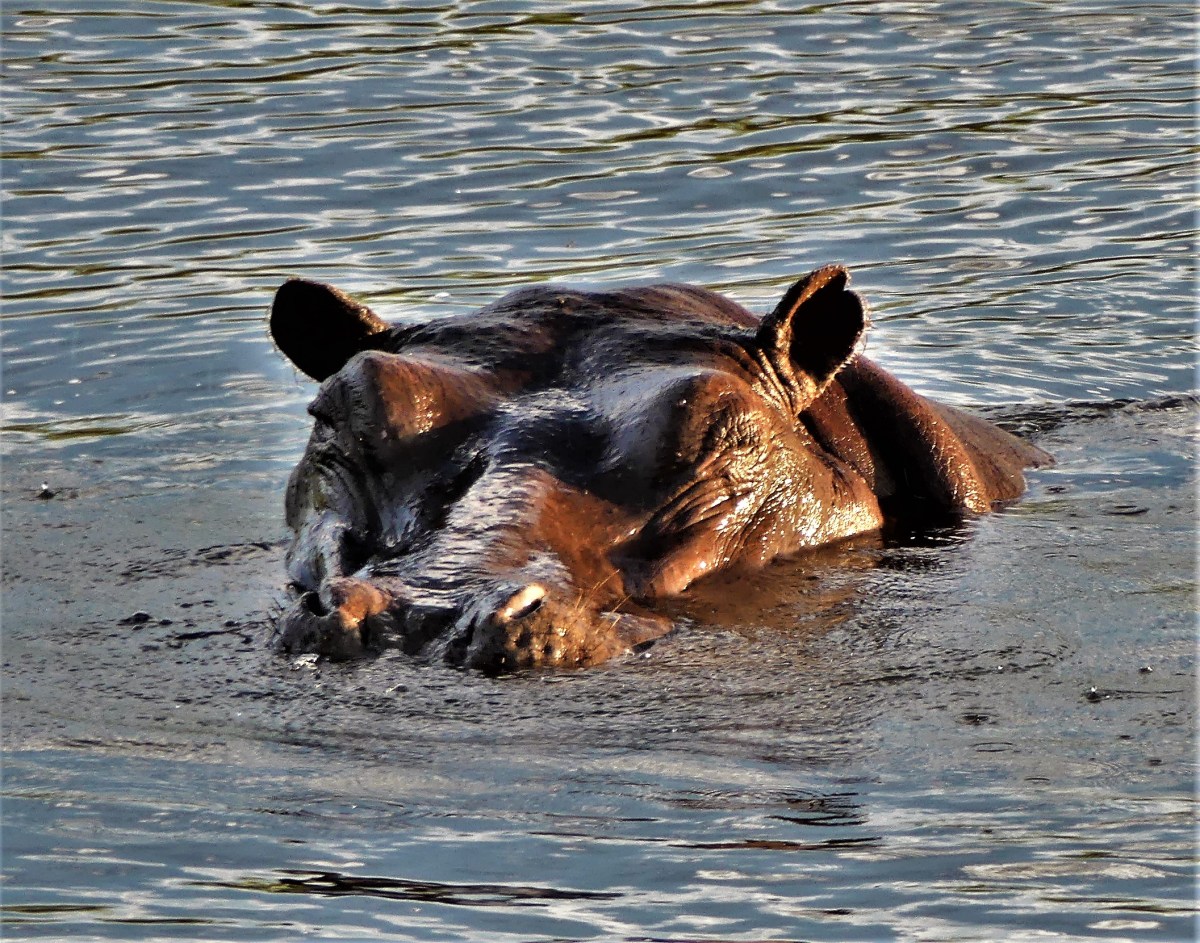
and the hippos have gathered…

3 hippos skimming the surface

napping in the water

with all the celebrants aboard our neighboring vessels…

African Queen positioning for sunset

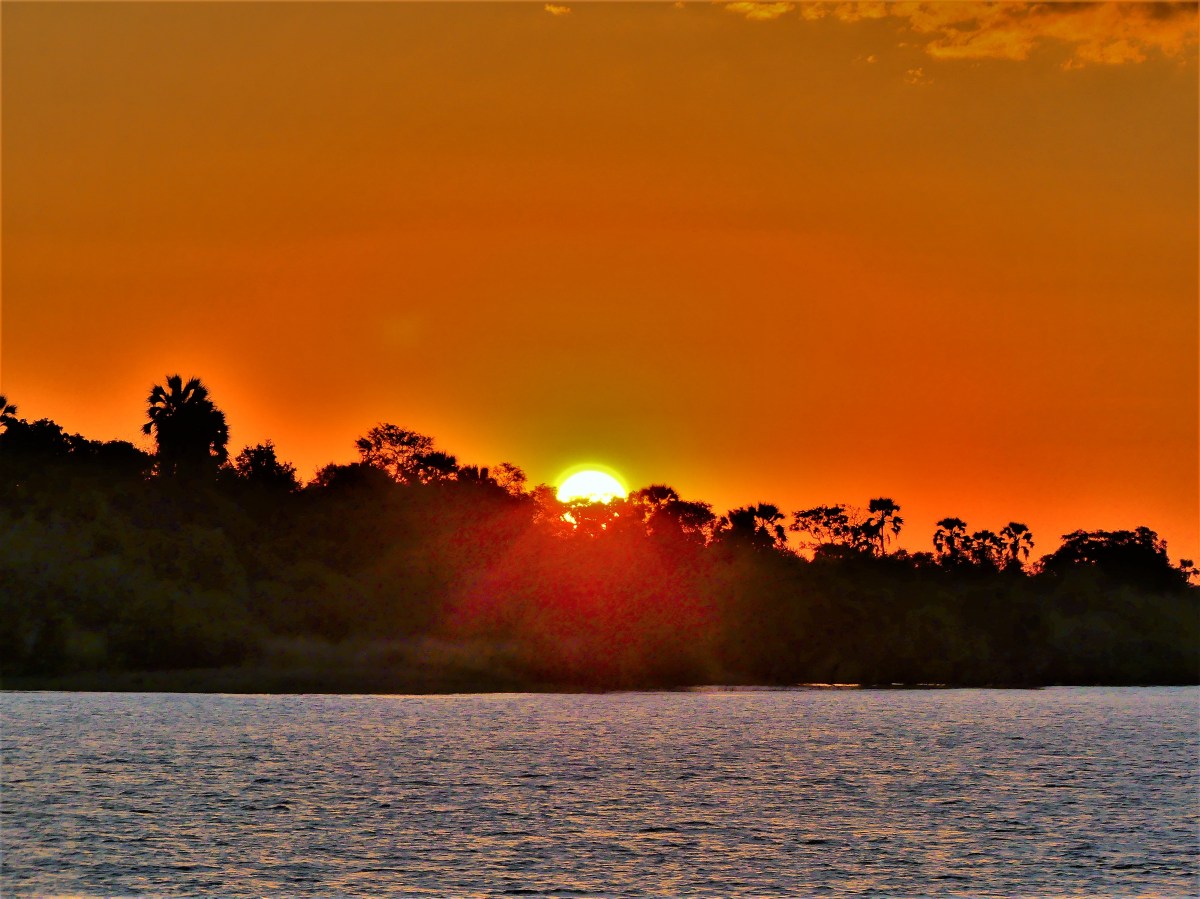
to toast the sunset one last time.

sunset over Zambezi River

Victoria Falls by Air

Our African safari vacation to South Africa and Botswana came with an elective, 2-day excursion to Victoria Falls. Traveling half-way around the planet and being this close to one of the seven natural wonders of the world, it seemed foolish to pass on the offer–the same thinking held by the other 10 in our party.

After a brief bus ride from Kasane (our last stop in Botswana)…

Botswana Customs House.jpg

to the border of Zimbabwe (where we acquired our $50 visa stamp),

entering Zimbabwe

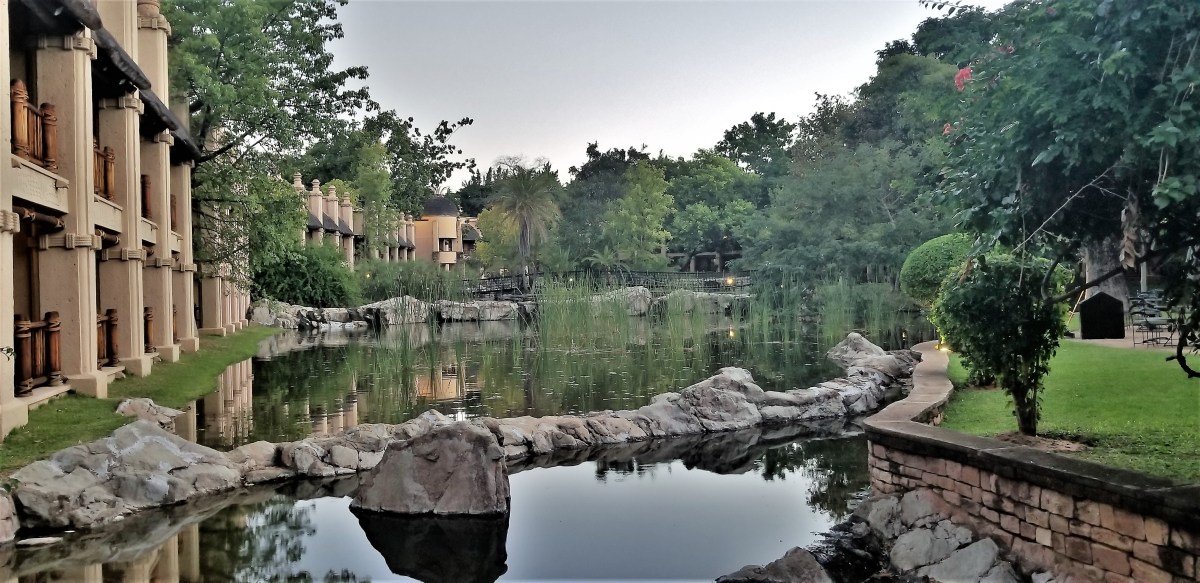
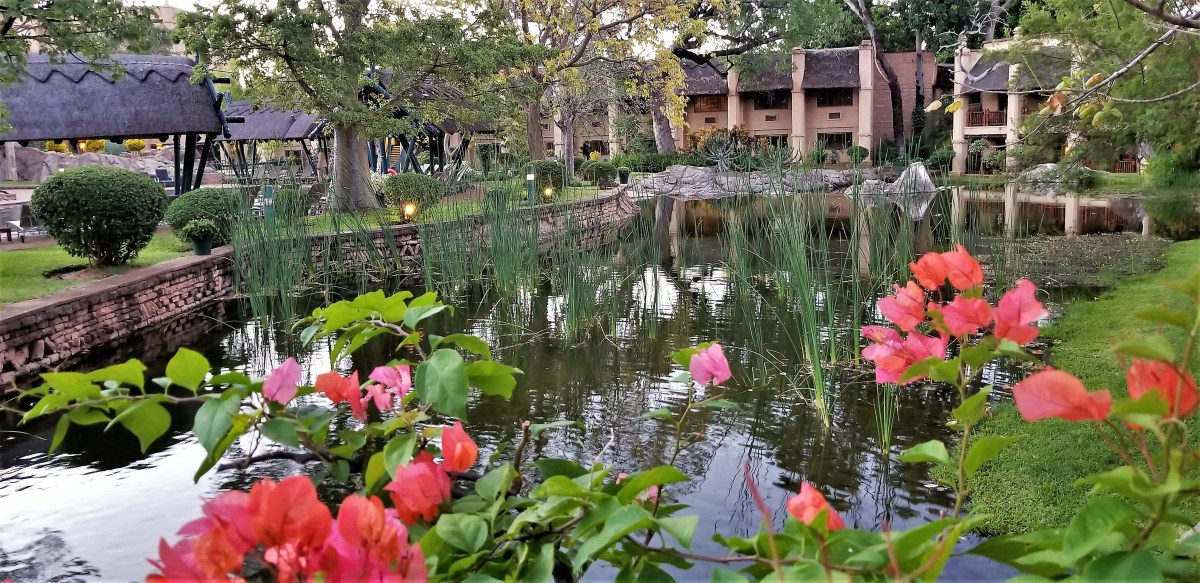
we continued the 1-hr drive to Victoria Falls, where we checked into The Kingdom Hotel.

Kingdom pond

Kingdom pond 2

The rest of the day belonged to us–to shop, to rest, to sightsee.

Some of us considered a helicoptor ride over Victoria Falls, but also had to reconcile whether a 22-minute flyover was worth the $250 expense.

Victoria Falls Flights.jpg

“It’s a lot of money,” Leah addressed.

“It is, but I’m all for it. When else will we ever get the chance to do this in our lifetime…unless we’re coming back here, because I would come back here in a heartbeat,” I asserted.

“We’re in,” stated Linda and Heather from Colorado.

“I guess I’ll do it too,” commited Nathan.

Five of us took the heli-tour, while others walked to Zambia to view the falls from the other side. Although $250 for the loop seemed overpriced, I was eager to see the falls by air, regardless of the price. Afterall, when would I ever see it again?

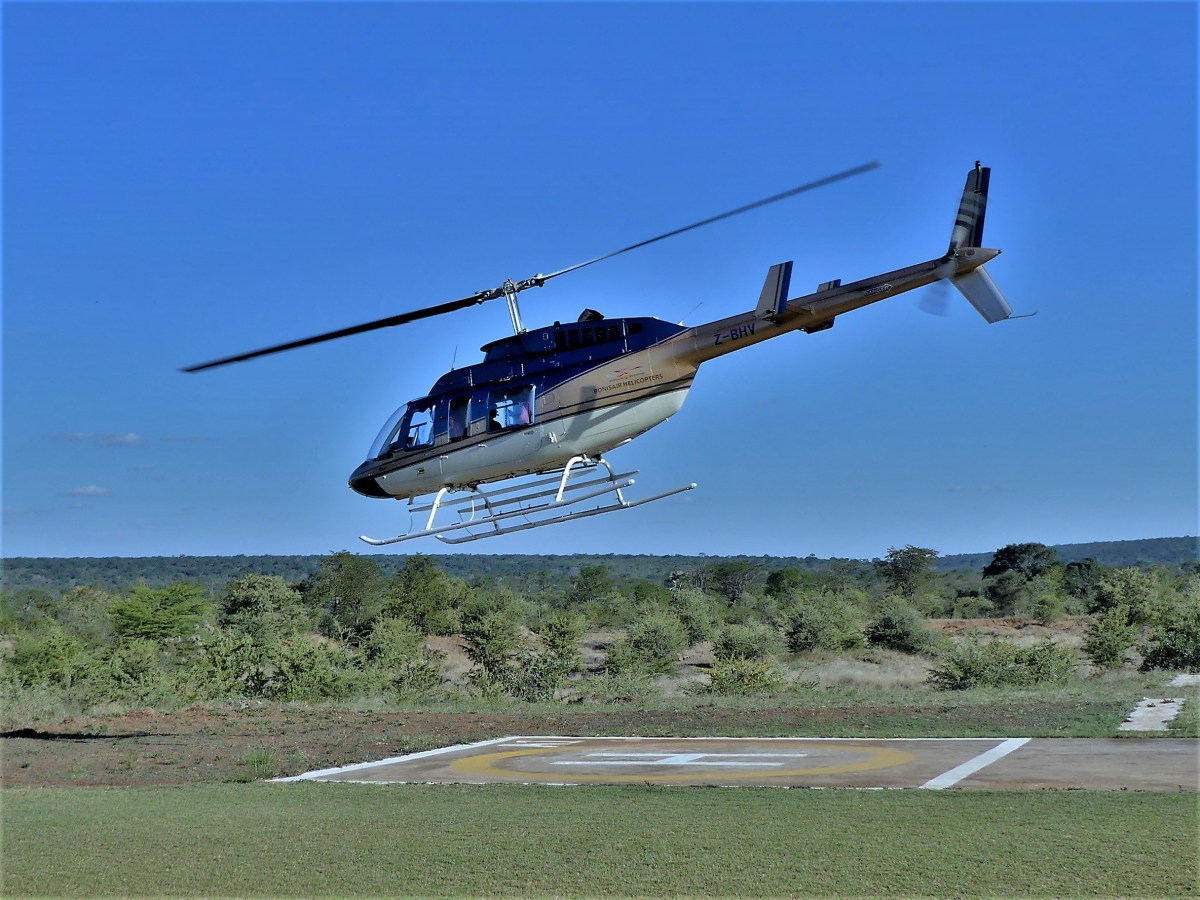
After our briefing at the Boisair Heliport, we boarded our helicopter, and we were aloft,

Bonisair Helicoptor.jpg

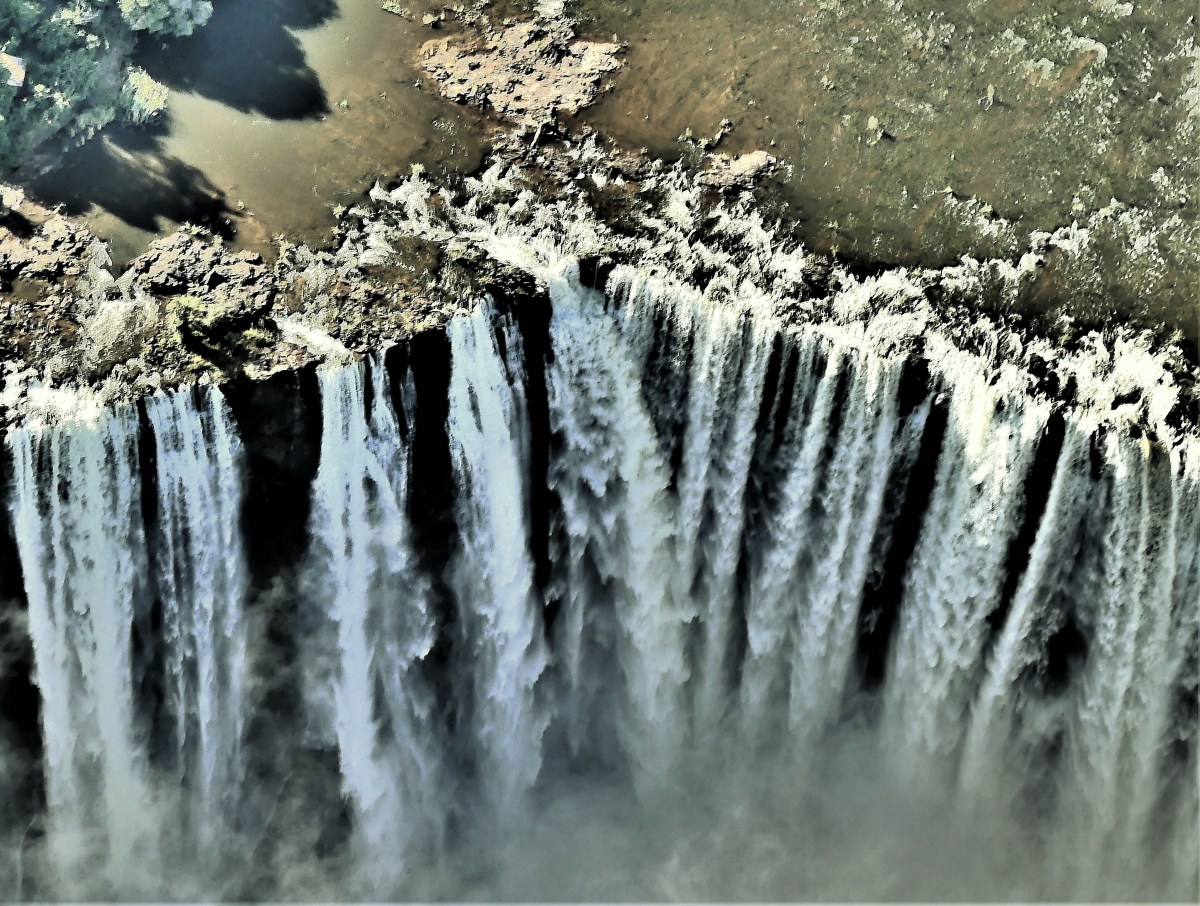
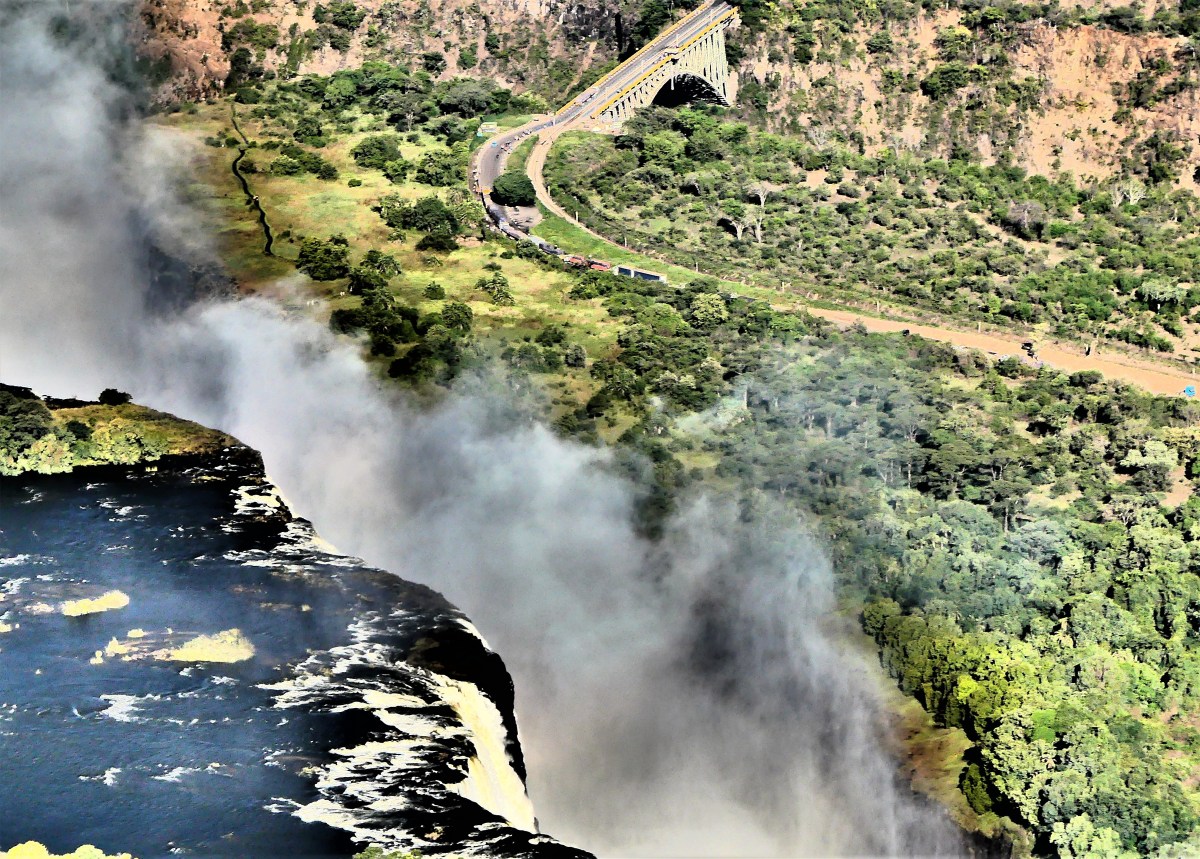
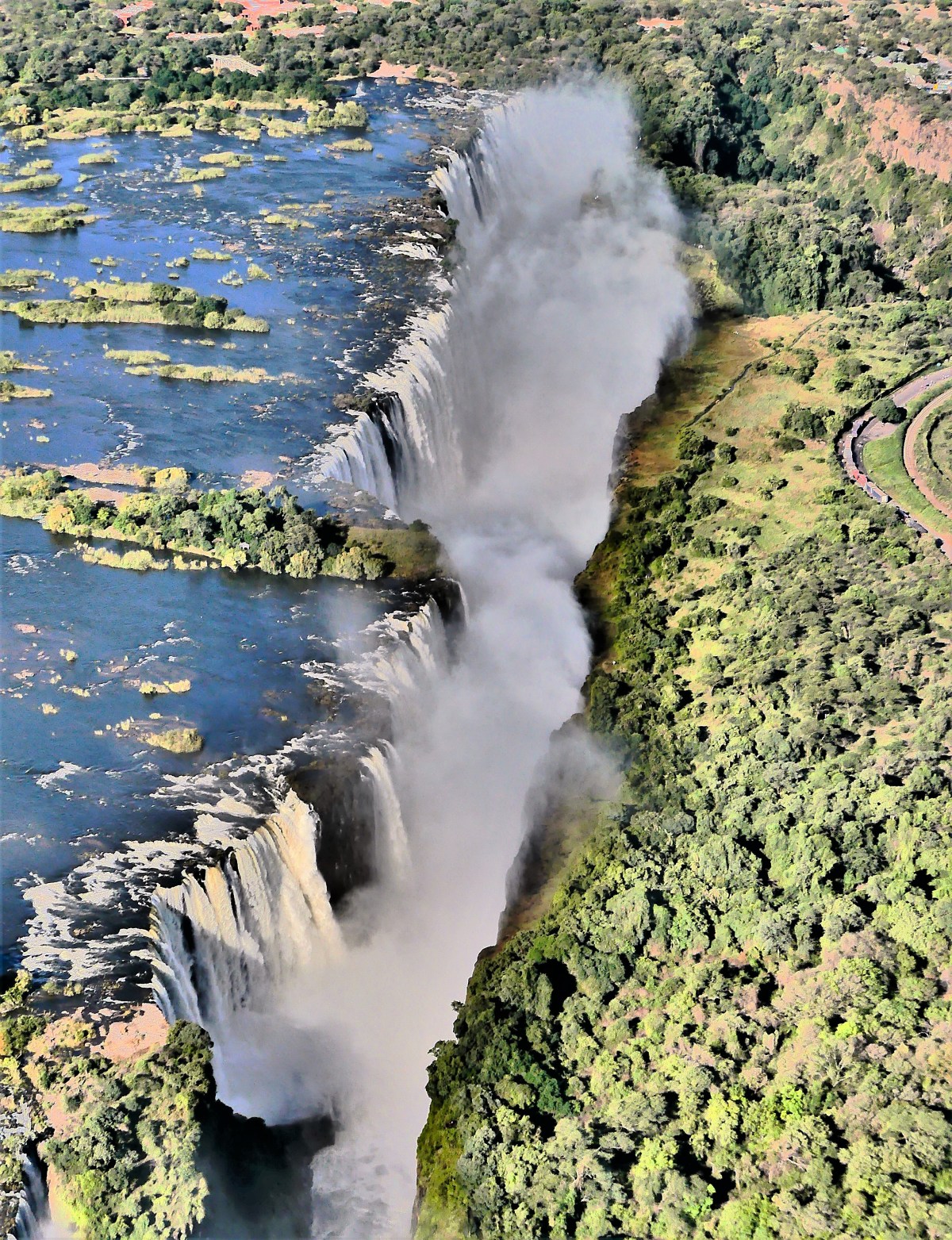
doing a couple of figure eights over the falls,

mist and gorge

chasm of mist

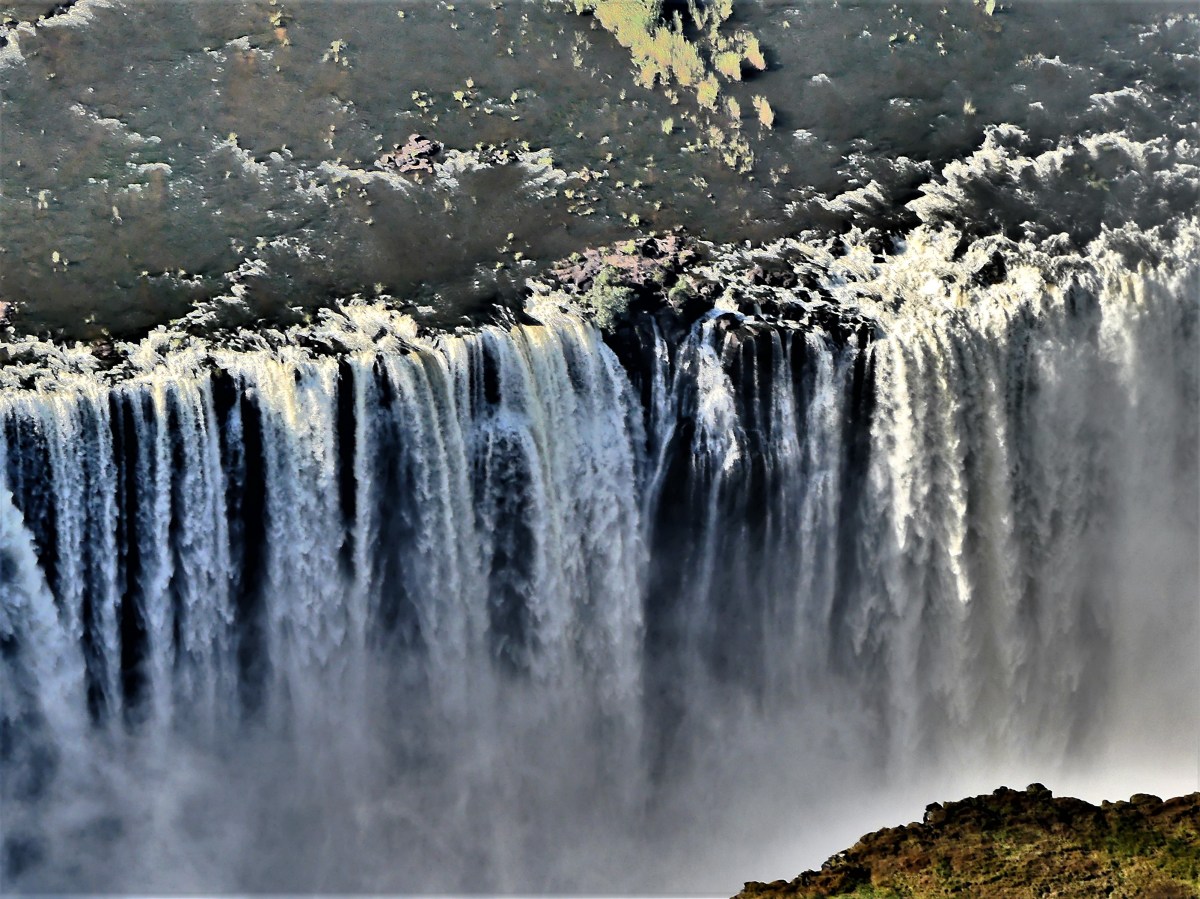
falls drop

mist and rainbow

raging falls

Zambezi River to falls with bridge.jpg

a circle around the Bakota Gorge,

Bakoda Gorge

Zambezi River to falls with bridge

and a turn up the Zambezi River…

Zambezi River.jpg

Zambezi Islands

before returning to the helipad.

“How was it, Leah? Do you regret spending the money now?” I asked.

Leah (2).jpg

“Worth every penny!” she exclaimed.

The vastness and grandeur of the falls is best appreciated by clicking on the video!

To be continued with “Victoria Falls by Land and Water

Beasts of Botswana–Family Style

In the Animal Kingdom, animal magnetism has evolved over time–shifting between monogamy and polygamy, to cheating and outright promiscuity–something humans have been wrestling with since walking erect.

Every animal species is wired to adapt, survive, and pass along the blood line, no matter what, and the behavior dynamics are fascinating to observe.

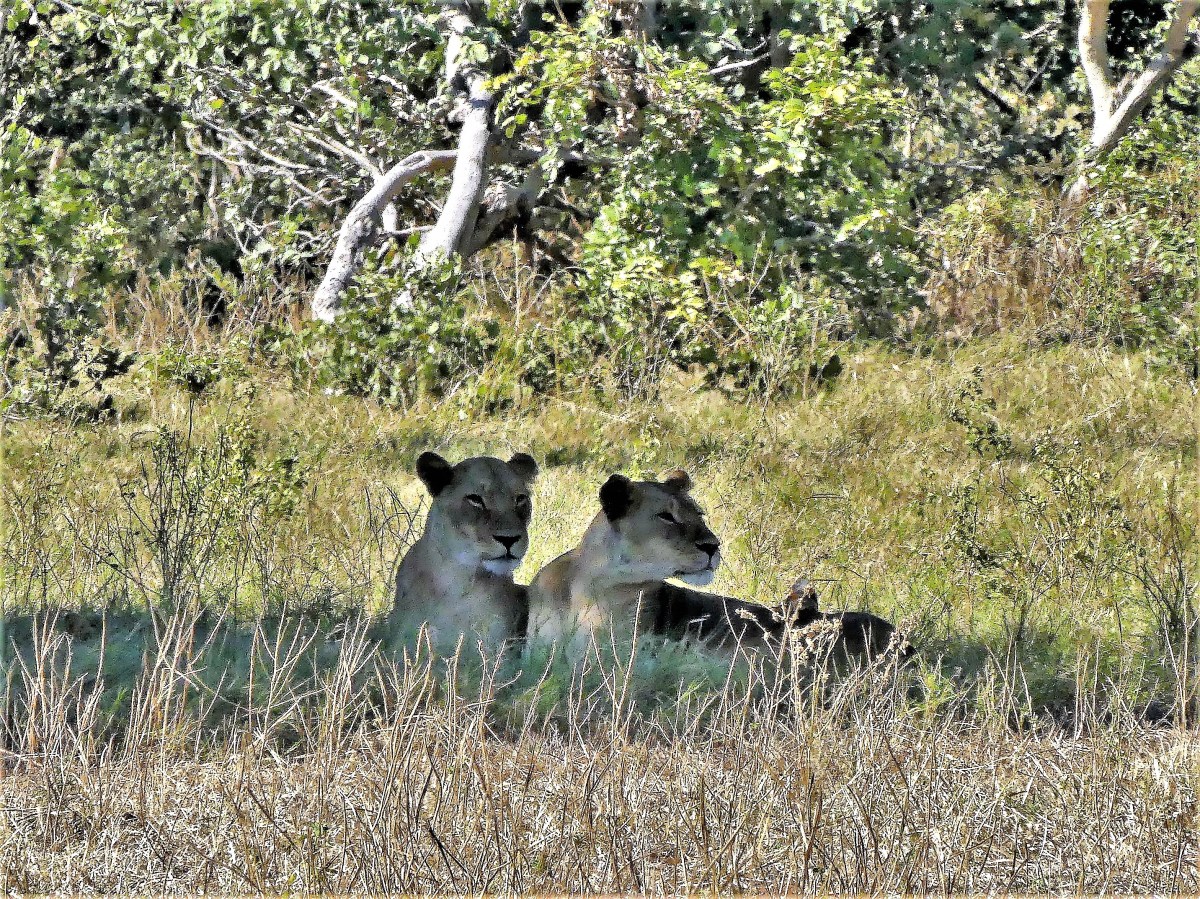
For instance, the primary male lion roams with a harem of ladies in his pride, but will momentarily pledge himself to the lioness who bears his cubs.

nuzzling lions

However, a rival male to the pride will kill his predecessor’s offspring to force the pride’s females into ovulation.

2 female lions

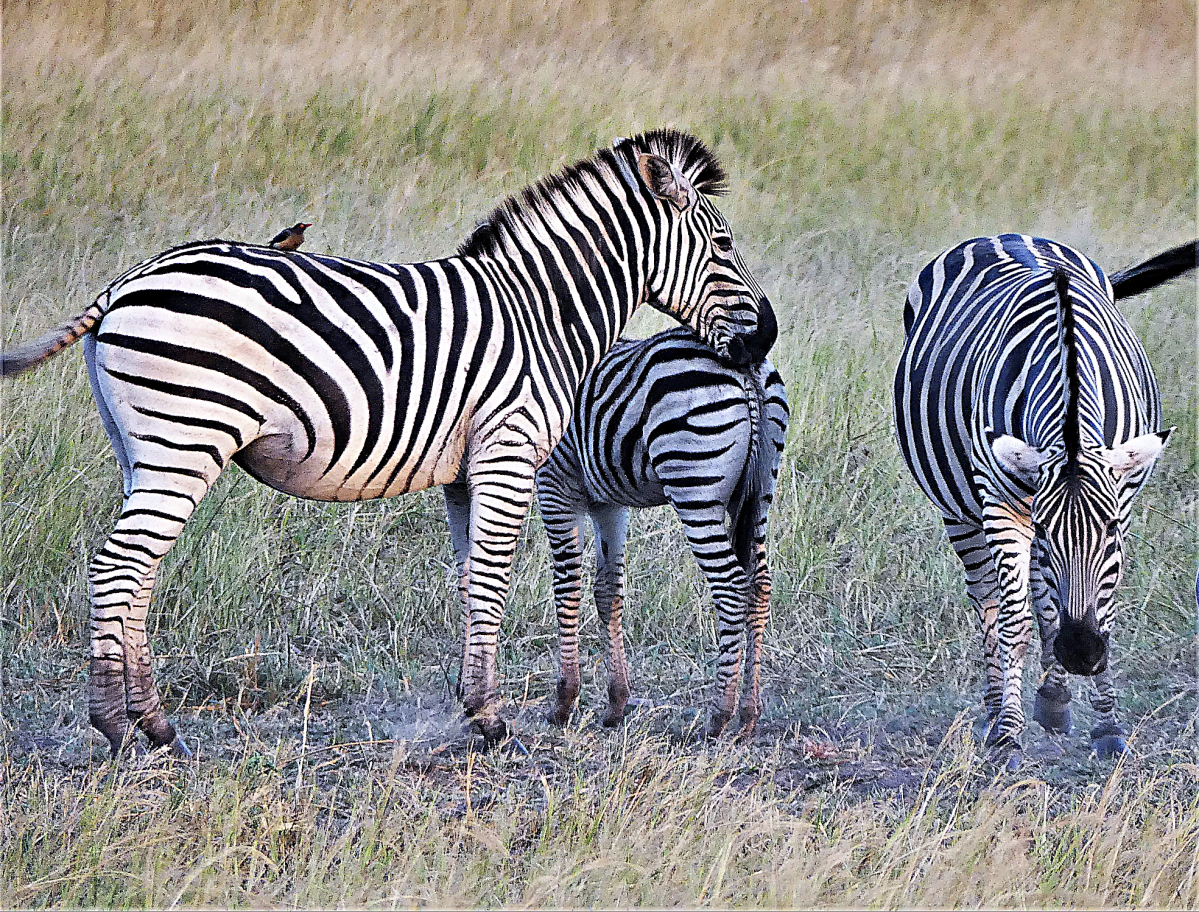
Male and female Grevy’s zebras live apart until food and water are plentiful. Female Grevy’s zebras are polyandrous and will breed with many different males in succession.

Zebra family

Male Grevy’s zebras establish territories that lie along paths to water, often intercepting an ovulating female while passing through. And then it’s on to the next.

Zebras B&W

African wild dogs live as a monogamous breeding pair supported by a small pack.

2 dogs prowling (3)

The litter of pups is first cared for by the alpha female and guarded by the alpha male…

Nursing 3

who doles out hunting and caretaking responsibilities to subserviant wild dogs within the pack.

wild dog pups

A dominant impala ram will manage a harem of 10 ewes and their lambs, keeping them in line with his constant braying, biting and boasting. Young bucks continually challenge the ram in charge, insuring ewes will always deliver the strongest gene pool…

alpha male impala

thus providing a defense perimeter of plebes to discover danger from every direction.

herd of impalas

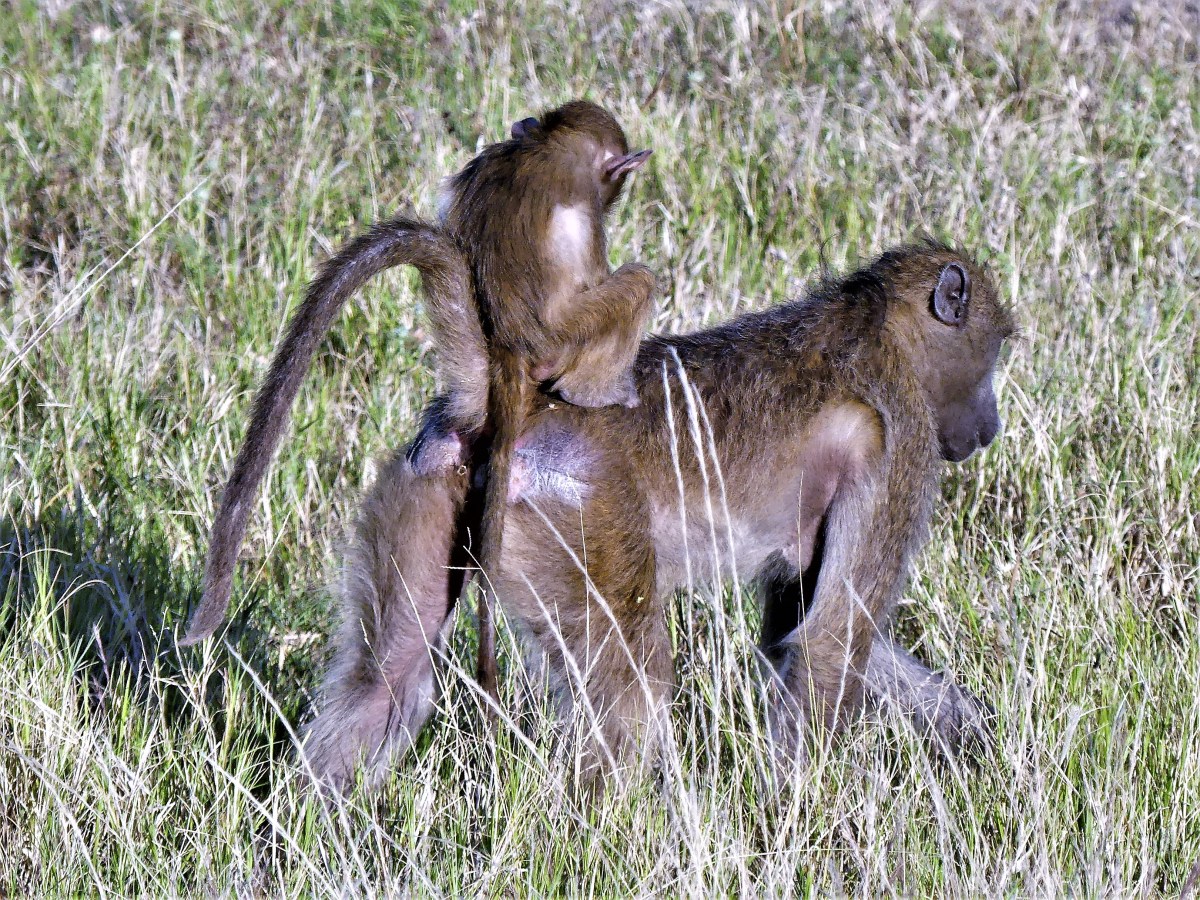
Baboons run in troops ruled by social dominance. When it comes to mating, any male of the troop will accept any female’s offer should she present her swollen rump to his face; however, the social rankings between males will often lead to aggressive fighting.

mother and child baboons

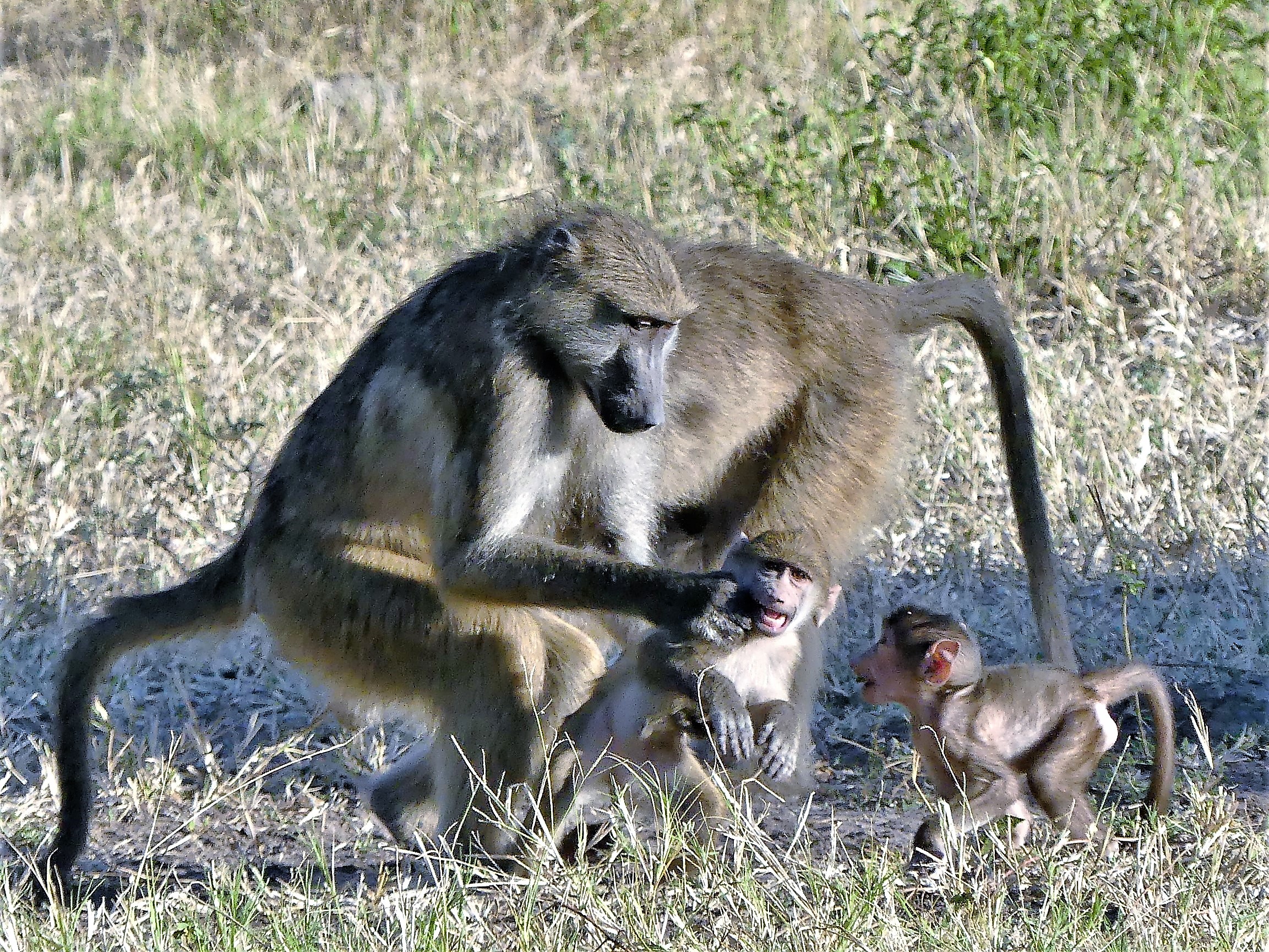
Females are the primary caretakers of the young, although males on occasion will babysit to win a female’s affection. 

baboon discipline (2)

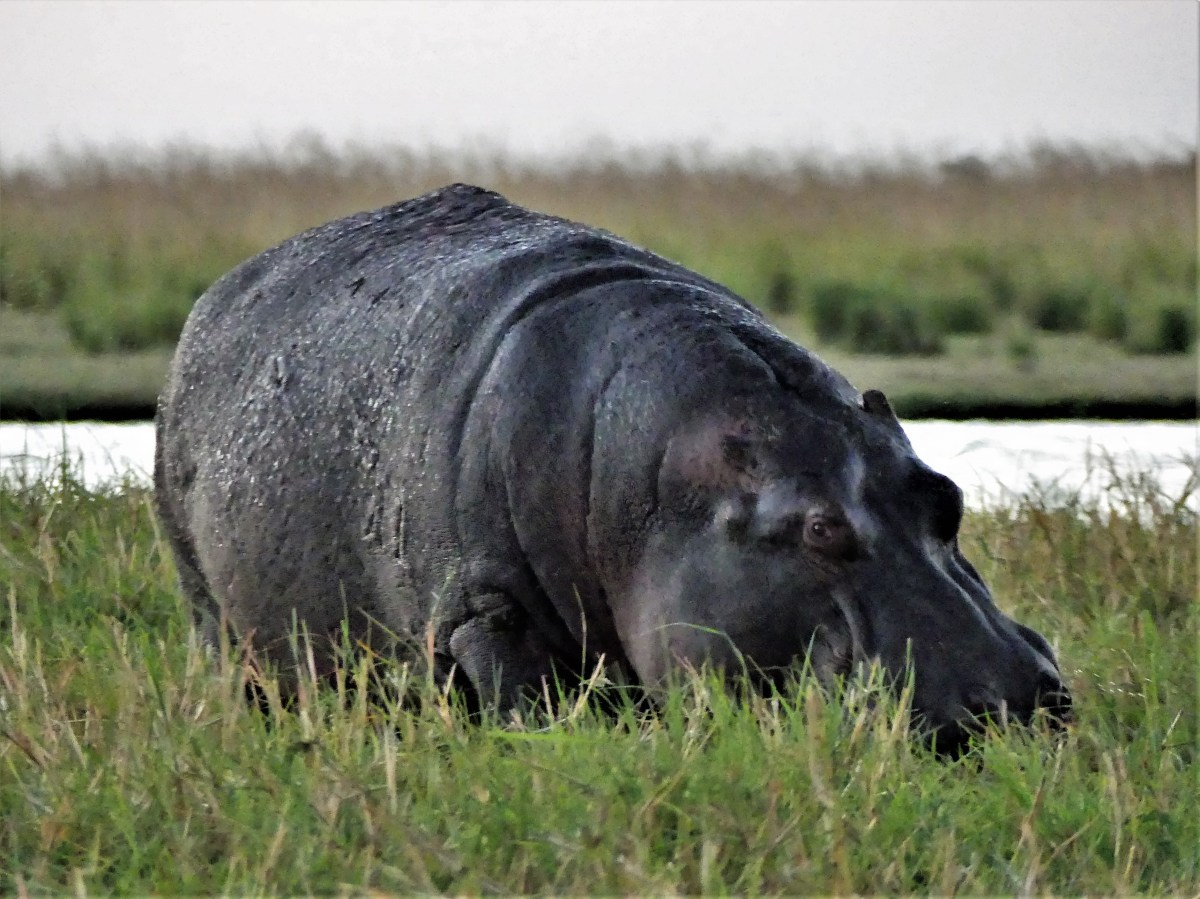
Hippo bulls are polygamous by nature and insecure creatures by design. When the cows of the pod are fertile, the bull whips up a piss and dung cocktail that he atomizes with his propeller-like tail to capture their attention.

Great heron with catch and hippos

He will repeat this process until all the cows have been serviced. Should any of the offspring be male, the cow will protect it by hiding it near the fringe of the herd, lest it be killed by the bull.

hippo clash

Consequently, the bull fears his mature son will someday challenge him for control of the pod, and mate with his mother, creating a Freudian nightmare of hippo proportions.

grazing hippo

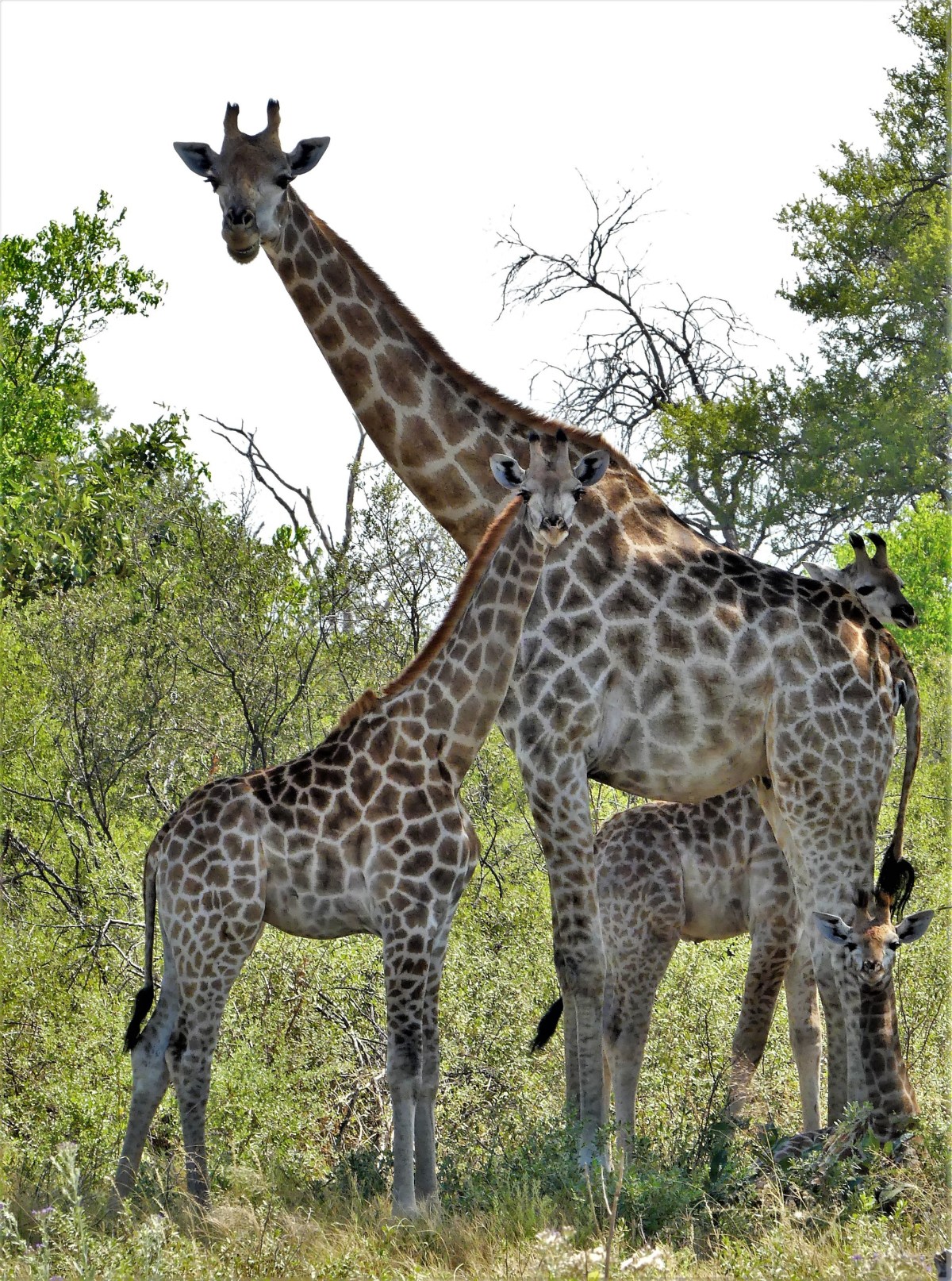
Rival bulls that follow a female tower of giraffes will often “neck” together (spar with their necks) for the attention of a fertile cow.

tall family

The victor will smell her urine to determine her readiness, and court her by resting his chin on her back.

sniffing urine

The females and their calves remain loyal to the tower, while the males move on, in search of long legs and firm hind quarters.

tower of giraffes1519442324641718967..jpg

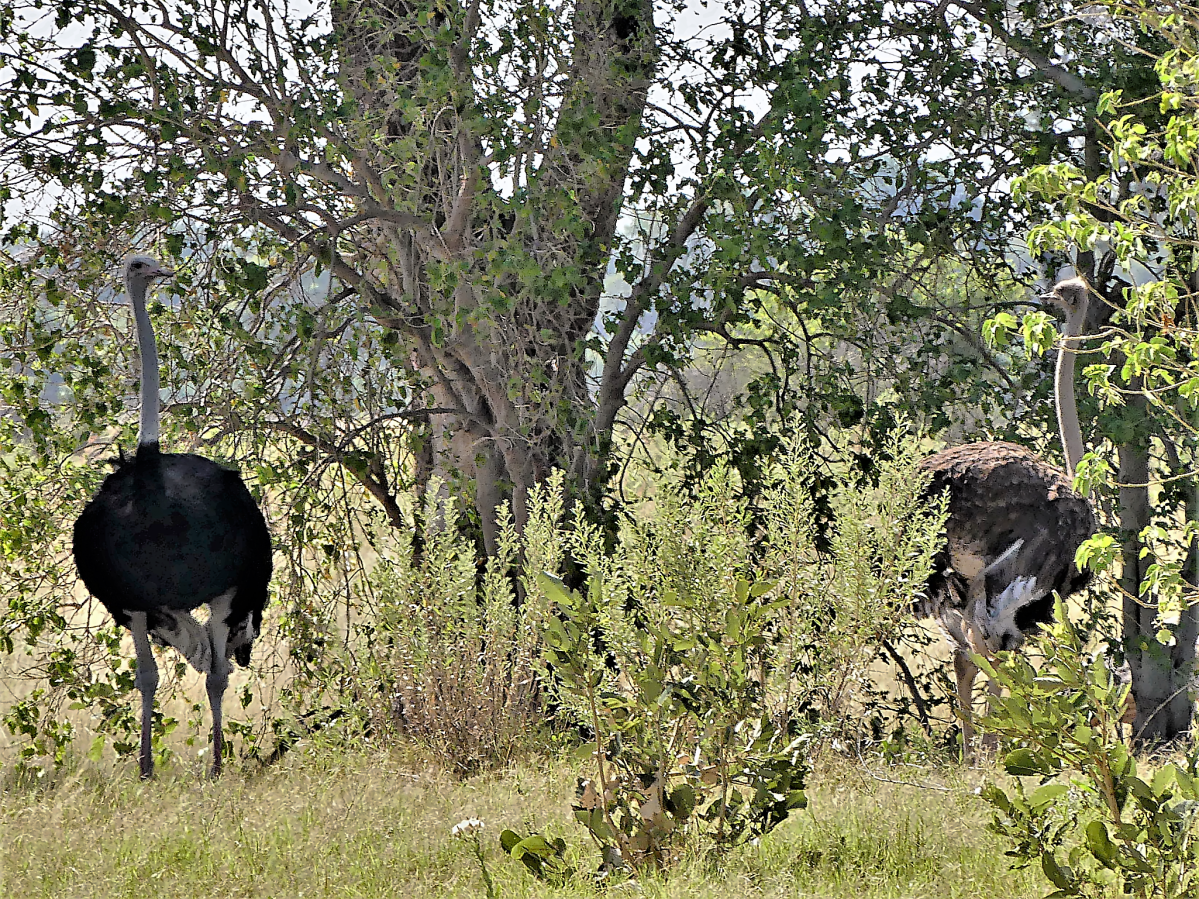
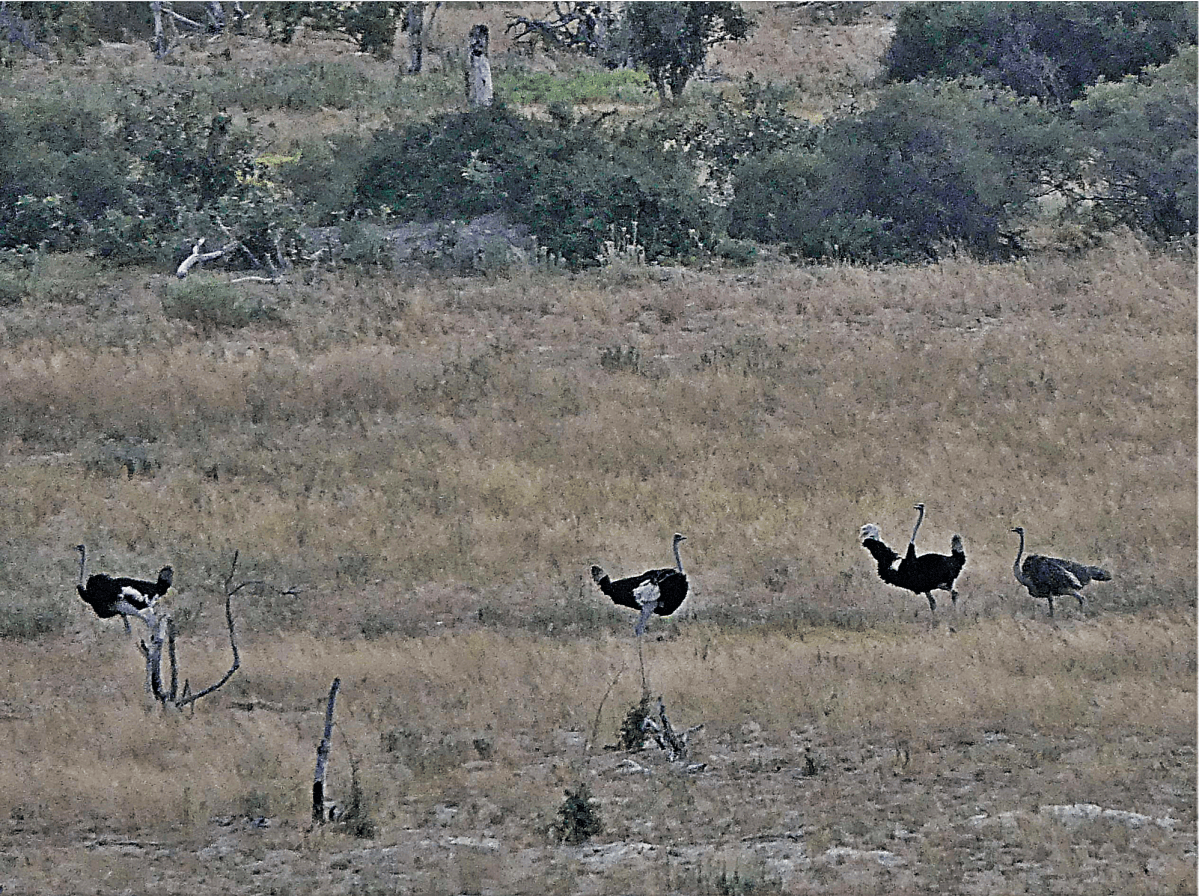
Ostriches have seemingly taken their cue from the Mormons, where the dominant and polygamous cock will mate with many hens, while the hens remain monogamous.

Ostrich pair

The flock of hens have their own pecking order. As one female emerges as the dominant majority hen, she uses the minority females’ eggs to ring around her eggs as an extra layer of protection.

3 males_1 female

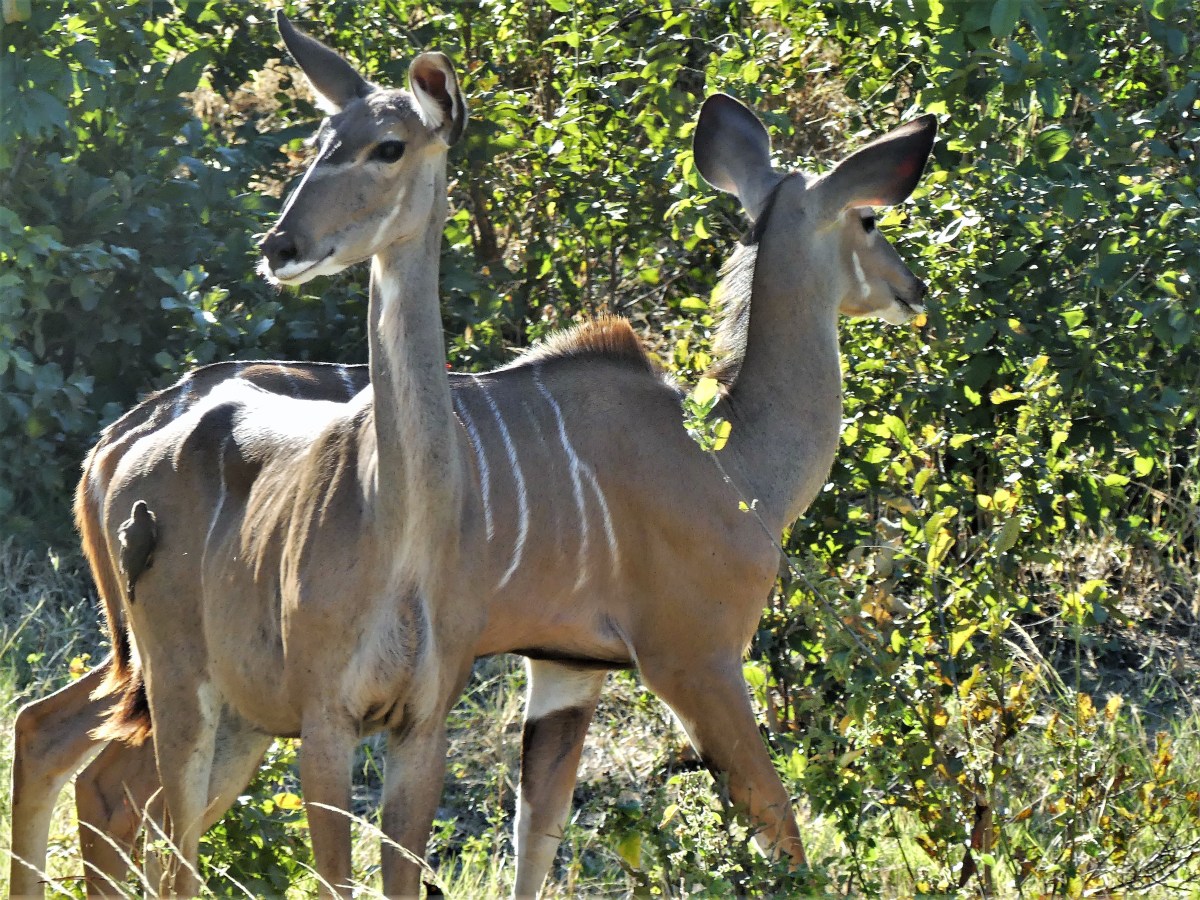
Dominant kudu rams will keep company with three to five kudu ewes within a herd of females and their calves.

2 kudus

Usually the ram comes a-knocking when it’s time to mate. Otherwise, the ram is a solitary creature that enjoys alone time.

kudu (2)

Male warthogs are not very selective. They will mate with any of their female counterparts wherever and whenever they may be found.

warthog in the grass

Maybe that’s why they are considered pigs.

Pumba

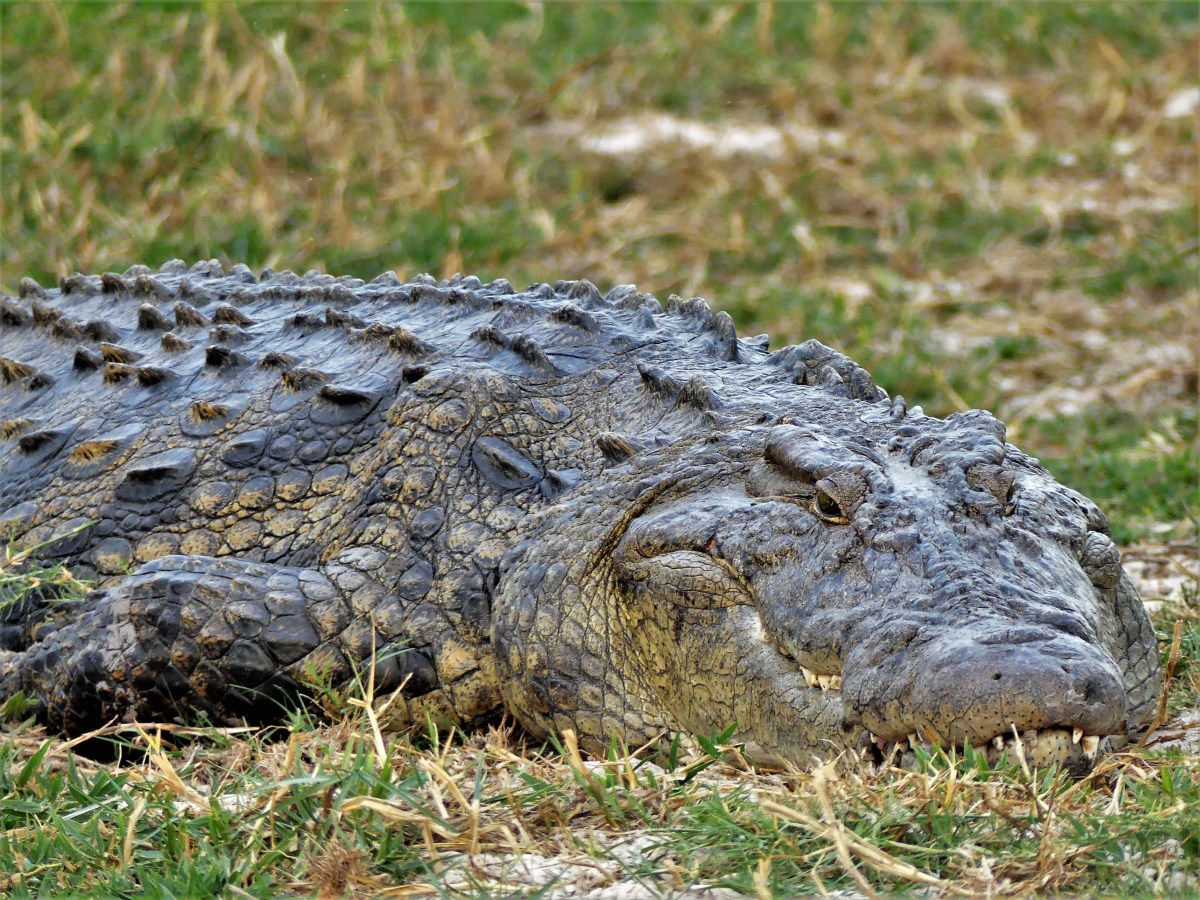
Several cow crocs may reside within the dominant bull croc’s territory, and each one is fair game for mating. The bull courts his cow in an elaborate and sensual dance that is certain to win her scales and tail.

big daddy croc_cu

It so happens that bull crocodiles are always ready! They keep their ever-erect penis tucked inside their body waiting for the right moment when both bodies are properly aligned under water.

croc at sundown

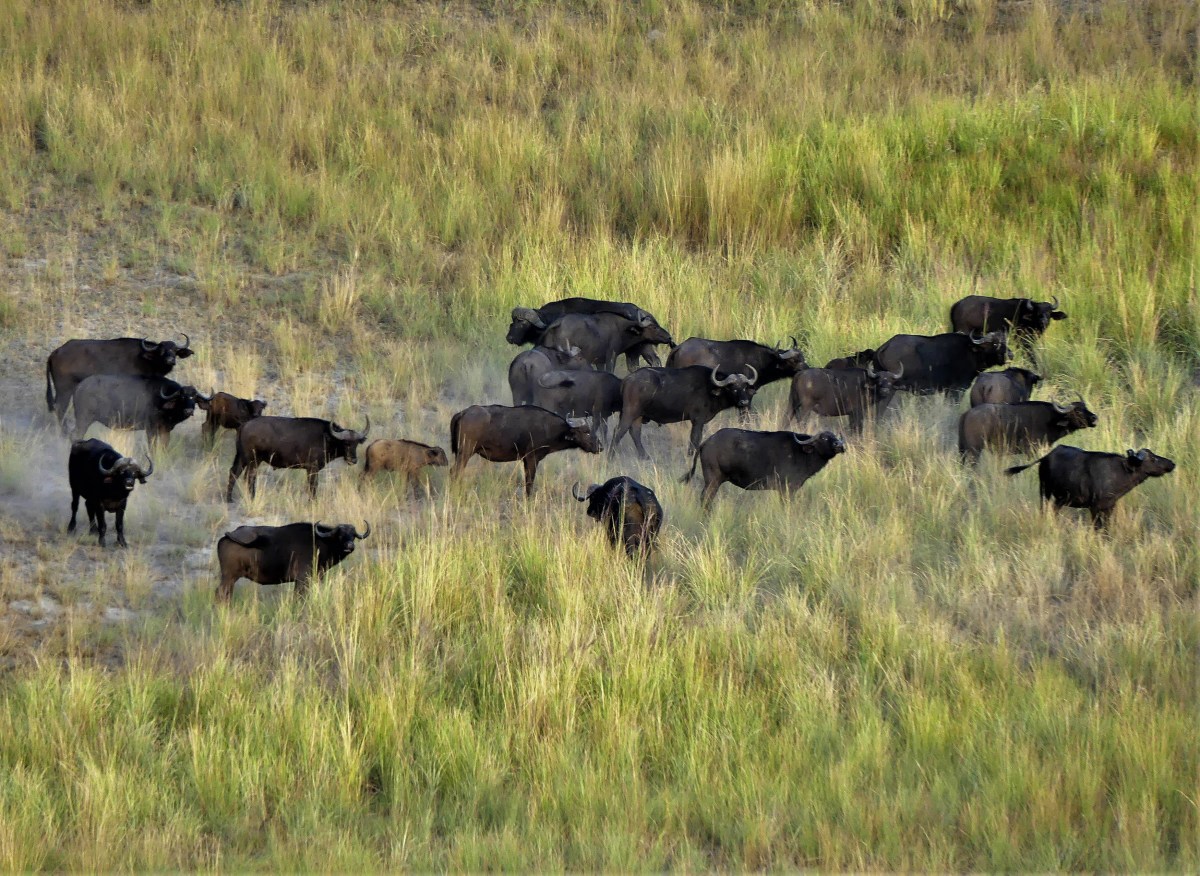
Dominant cape buffalo are distinguished by the thickness of their horns. They set the rules of their herd–

buffalo_cu

deciding whether to tolerate an overt act of copulation by a defiant subordinate bull, or keeping the cows in heat to himself by staving off all rival advances.

Cape buffalo herd

According to Kimberly Yavorski in “How do Elephants Mate?”:

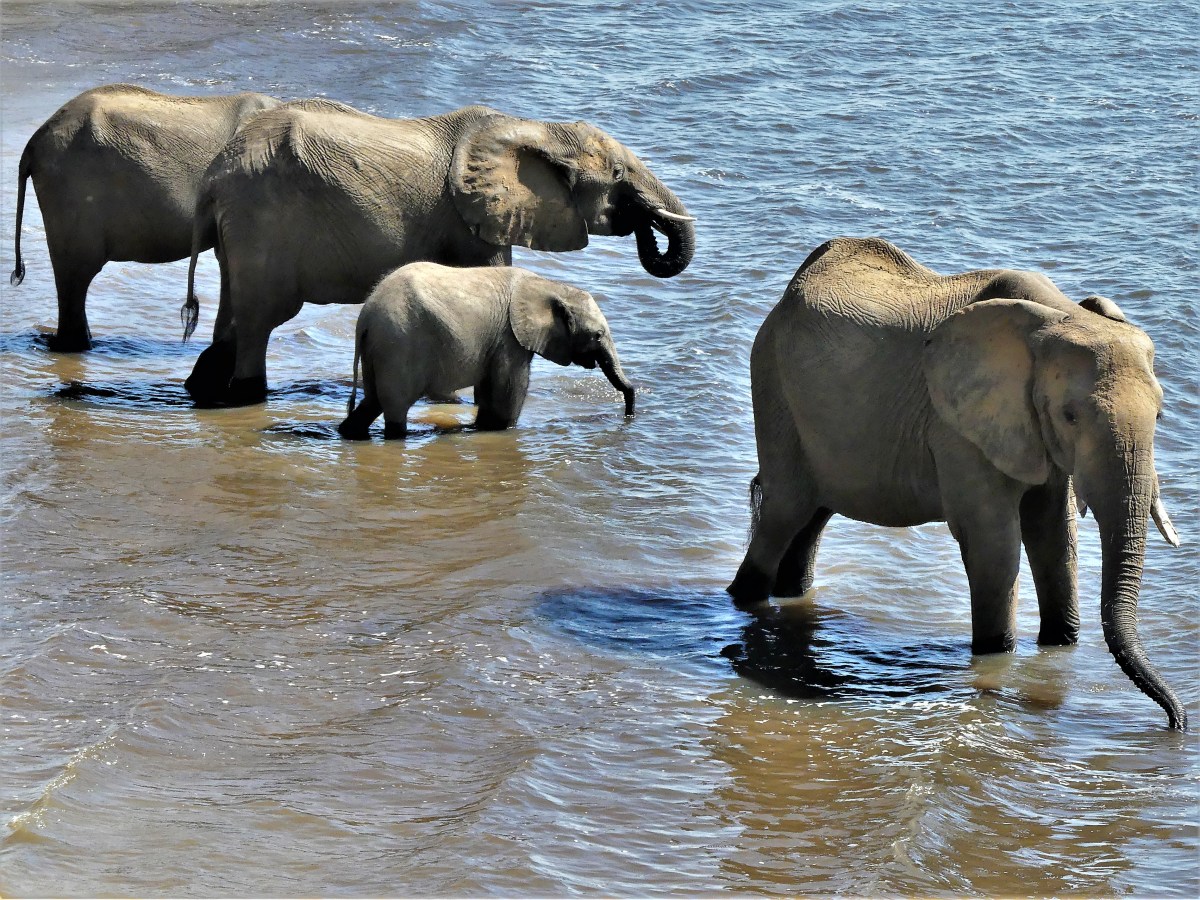
“Elephants are social creatures and live in complex hierarchical communities. Each herd has one female that is the matriarch. She dictates where the herd goes and helps to teach the younger elephants proper behavior. Female elephants, or cows, live in multigenerational family groups with other females. Males stay with the family until they reach 12 to 15 years of age, when they leave the herd and live alone or join up with other bulls. Male and female elephants live separately with bulls only visiting when some of the females are in their mating season, known as estrus.”

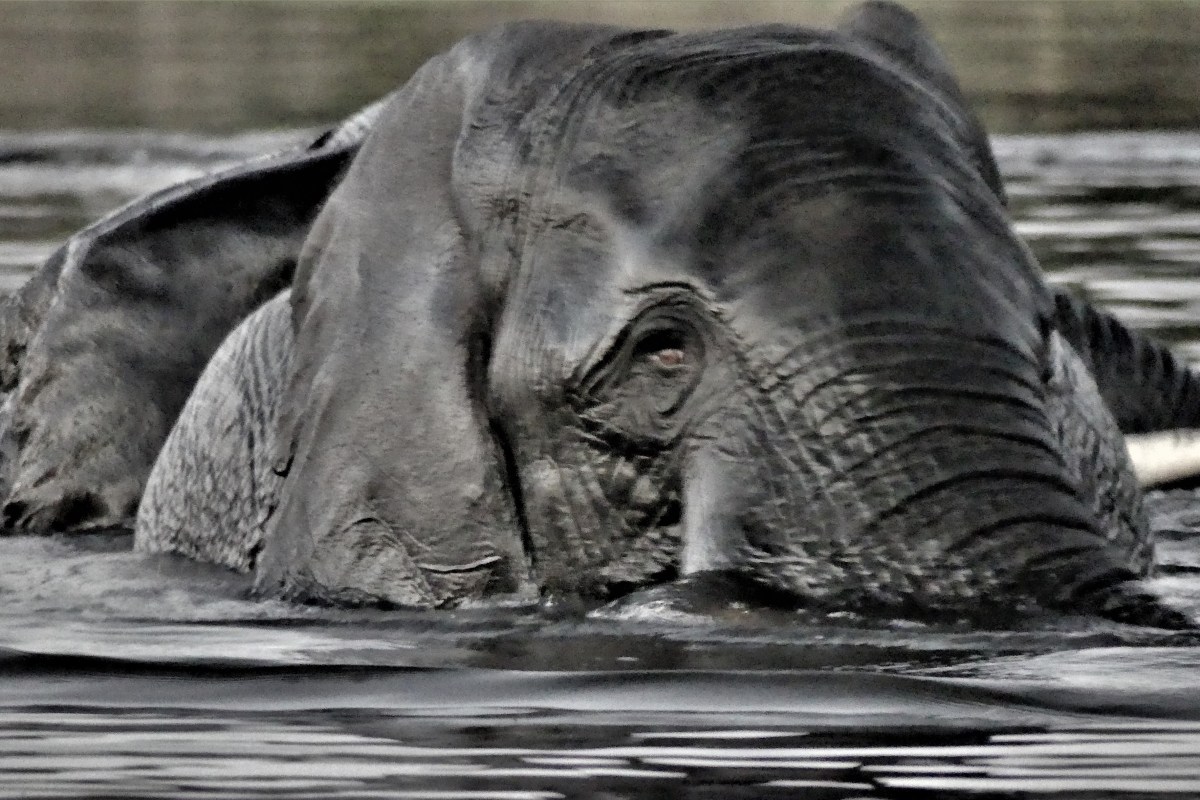
elephant family walking by the river

“Elephants mature later than many other animals. Females reach sexual maturity at 10 to 12 years of age, males at around 25. A male doesn’t generally start breeding until age 30, when it has reached a sufficient weight and size to compete with other breeding males. At that point, it will start to seek out females in estrus.”

elephants' mudbath

“Bulls enter a state called musth once a year, and older bulls tend to stay in musth longer than younger bulls, up to six months. During this period, they have increased levels of testosterone. They secrete a fluid from their temporal gland between the eye and ear and will actively seek a mate. Dominant males, which are older, tend to come into musth when a large number of females are in estrus, and the males exhibit physical behaviors, such as flapping their ears and rubbing their head on trees and bushes to disperse the musth scent. They also have a particular rumble, a low frequency vocal call, used to attract females who are also ready to mate. Females sometimes respond with their own call, indicating interest. While a cow can mate with any male, those in musth may be more attractive to females in estrus.”

family of elephants drinking

“When a male approaches, a female in estrus may at first show wariness, but if she is interested, she will then leave the family group, walking with her head up and turned sideways to watch the male as he follows behind. The male may chase the female if she retreats and will chase off any other males. Elephants may stroke each other with their trunks before the male mounts the female from behind, standing almost vertically as they mate. Elephant sex lasts for up to two minutes and afterward, he will stay near the female and guard her from other males. Females may mate with more than one bull in each estrus cycle, which lasts up to 18 weeks. While elephants do not mate for life, a female may repeatedly choose to mate with the same bull, and bulls are sometimes seen being protective of females.”

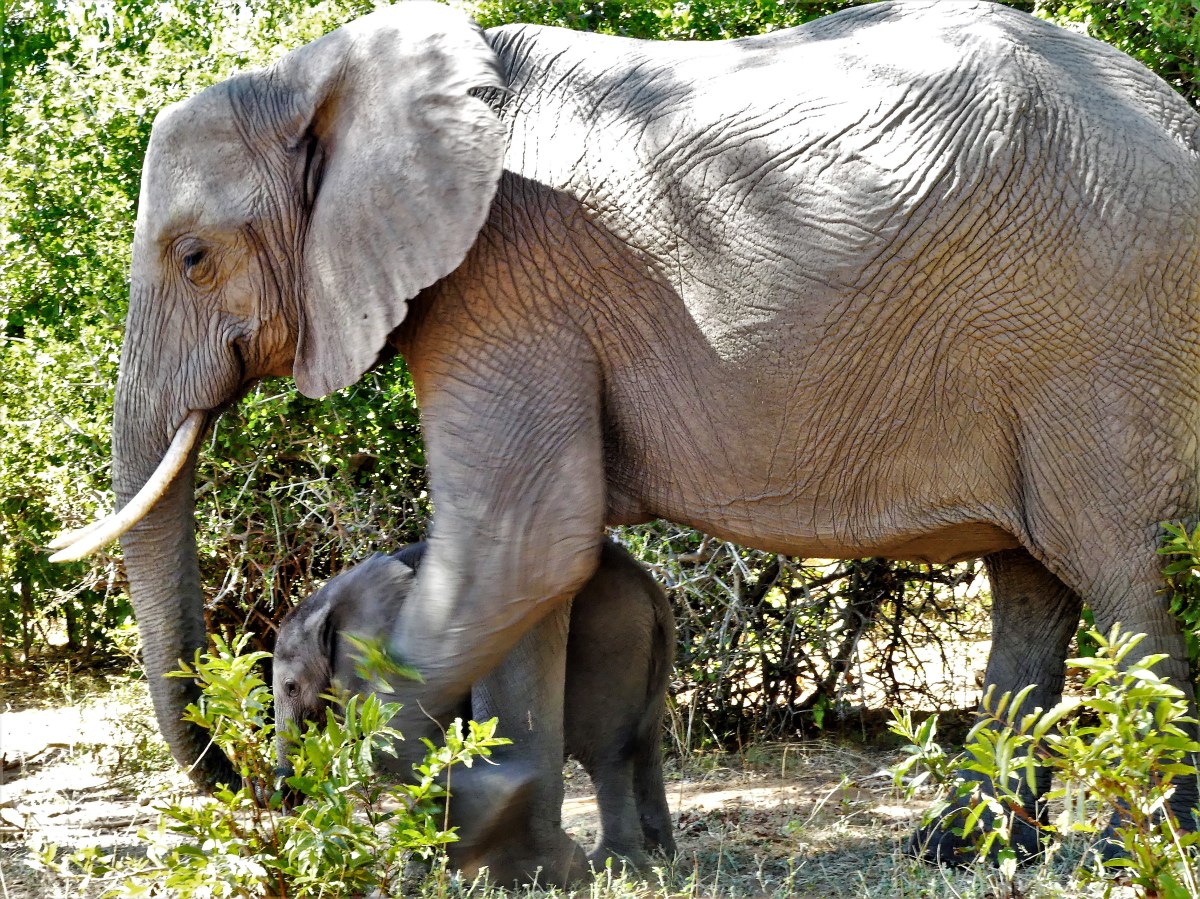
mom and baby elephant

“At 22 months, elephants have the distinction of having the longest gestation period of all animals and give birth to live young. Pregnancy almost always results in a single birth; twins are rare. When it is time to give birth, female elephants move away from the herd and then return to introduce the new member, who is inspected by each other member of the family. At birth, babies weigh 90 to 120 kg (198 to 265 pounds) and are typically around 3 feet tall. Baby elephants tend to be hairy, with a long tail and a short trunk that grows as its diet changes. Offspring are weaned at two years, though some may continue to nurse up to age six and a half. Because of this long gestation and nursing period, estrus cycles are between four and six years apart. On average, a female elephant will give birth to seven offspring in her lifetime.”

2 month old elephant


Views of Edinburgh

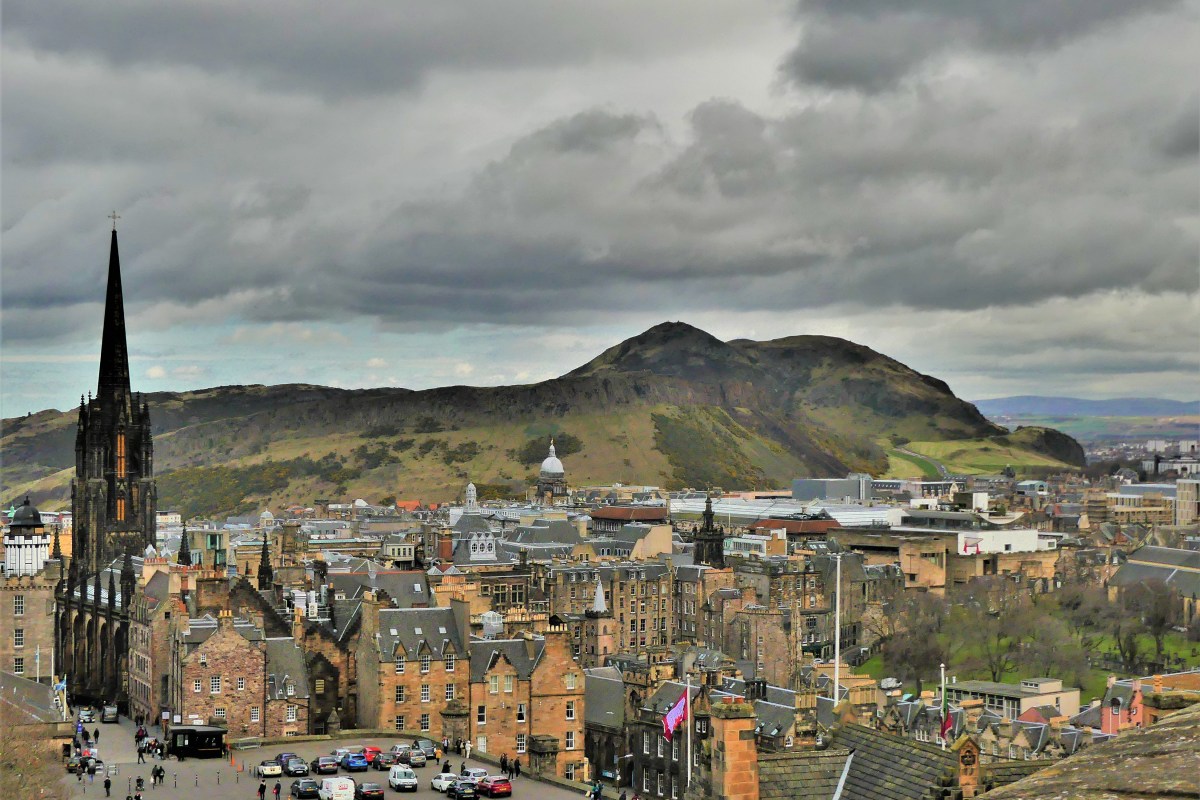
There’s no need searching for fabulous viewpoints in Edinburgh, because the city is chock full of them. And each one delivers the most splendid views of a town steeped in Scottish lore and history. All that’s required is an ability to scale any of the neighboring hills, and the payoff is heavenly.

For instance, a hike up to Castle Rock…

Castle Rock

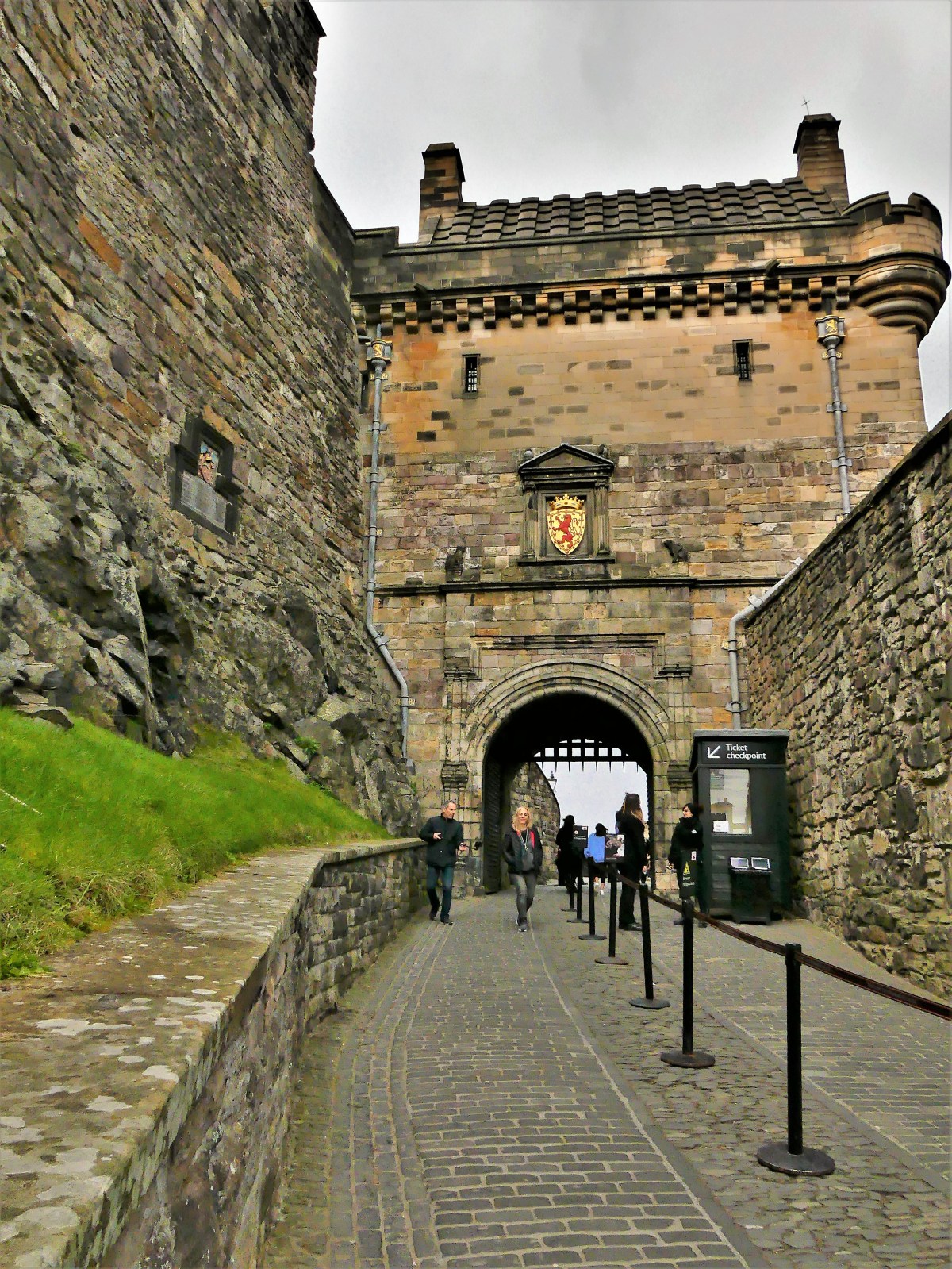
to access the gate to Edinburgh Castle…

castle entry

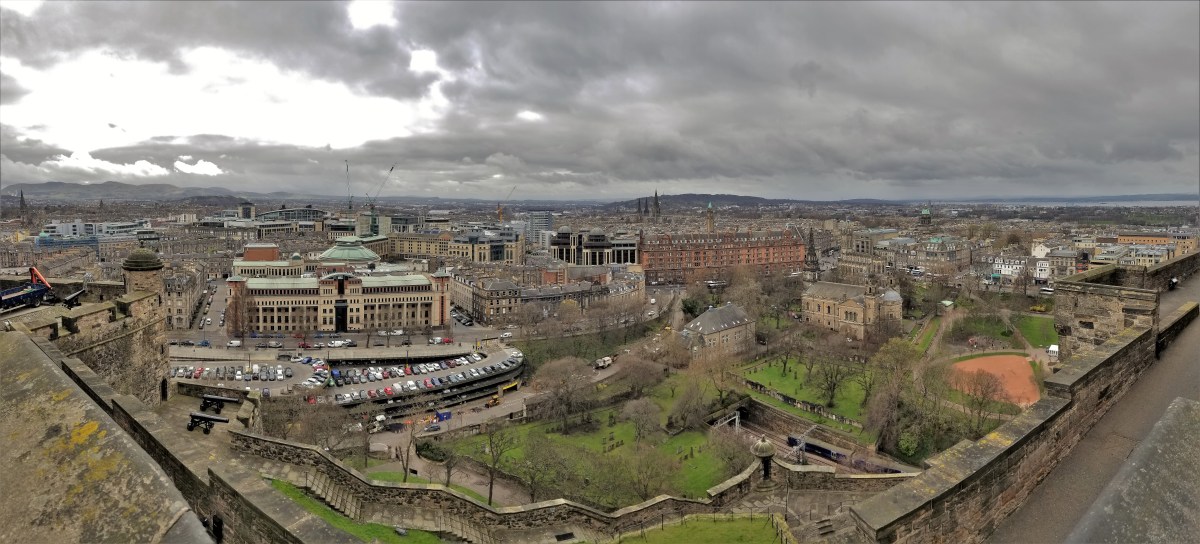
provides a fantastic overlook to the south end.

South view

But the bigger reward becomes more apparent after buying an access ticket to the castle for £18,

approach

and stepping back through time to follow in the footsteps of Scottish royals who traversed the cobblestone roads since the 12th century.

Castle ramparts

Once inside Foog’s Gate, one discovers St Margaret’s Chapel–the oldest surviving building in Edinburgh–built around 1130 by David I, and dedicated to his mother Queen Margaret, who was later canonized in 1250 by Pope Innocent IV.

The chapel was designed in a Romanesque style with small, irregular stones fashioned in a simple rectangle, and underwent major reconstruction in 1851 by Queen Victoria,

chapel knave.jpg

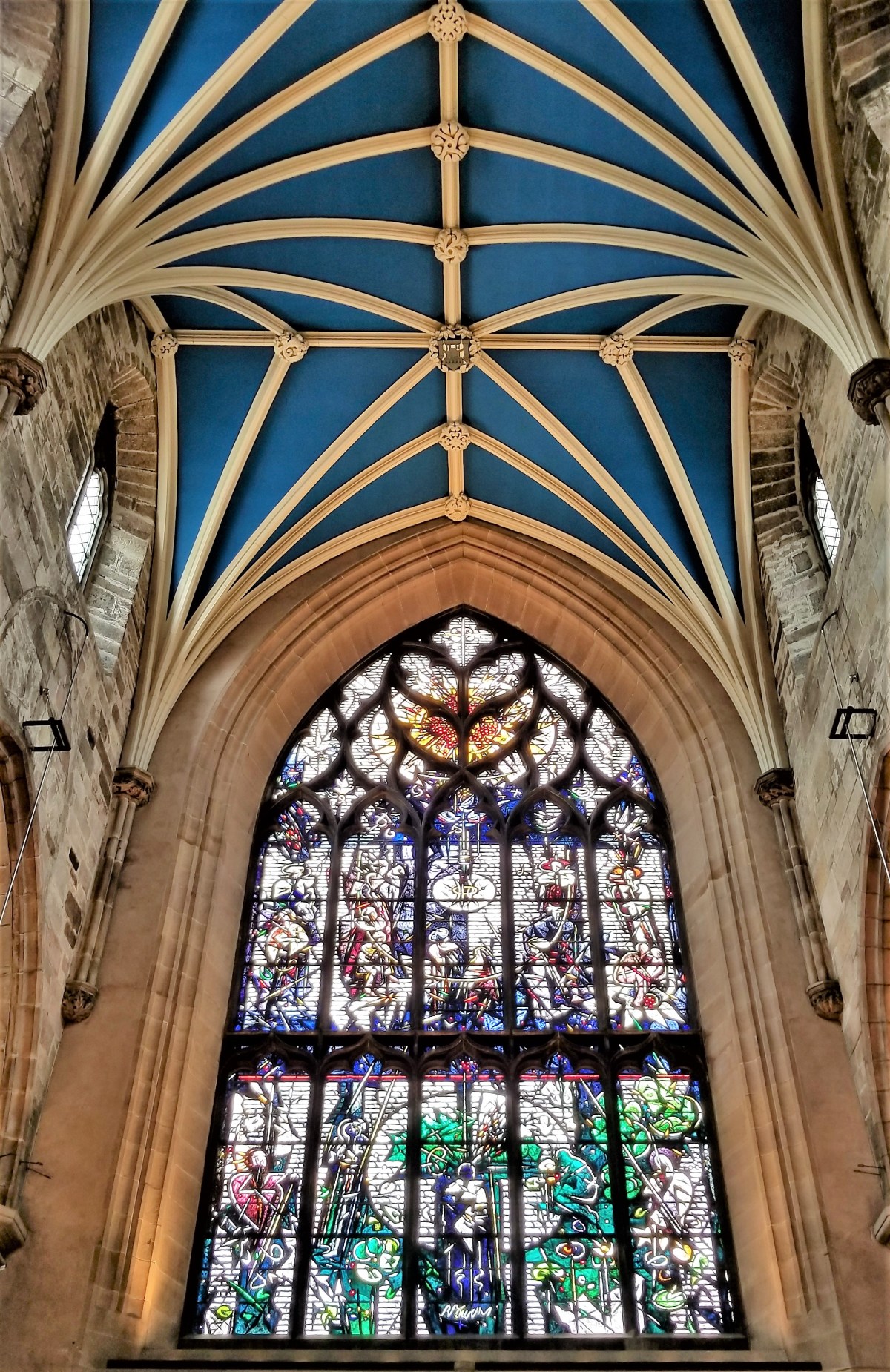
and was updated with Douglas Strachan’s stained glass windows in 1922.

Stained Glass St Margaret's Chapel (2)

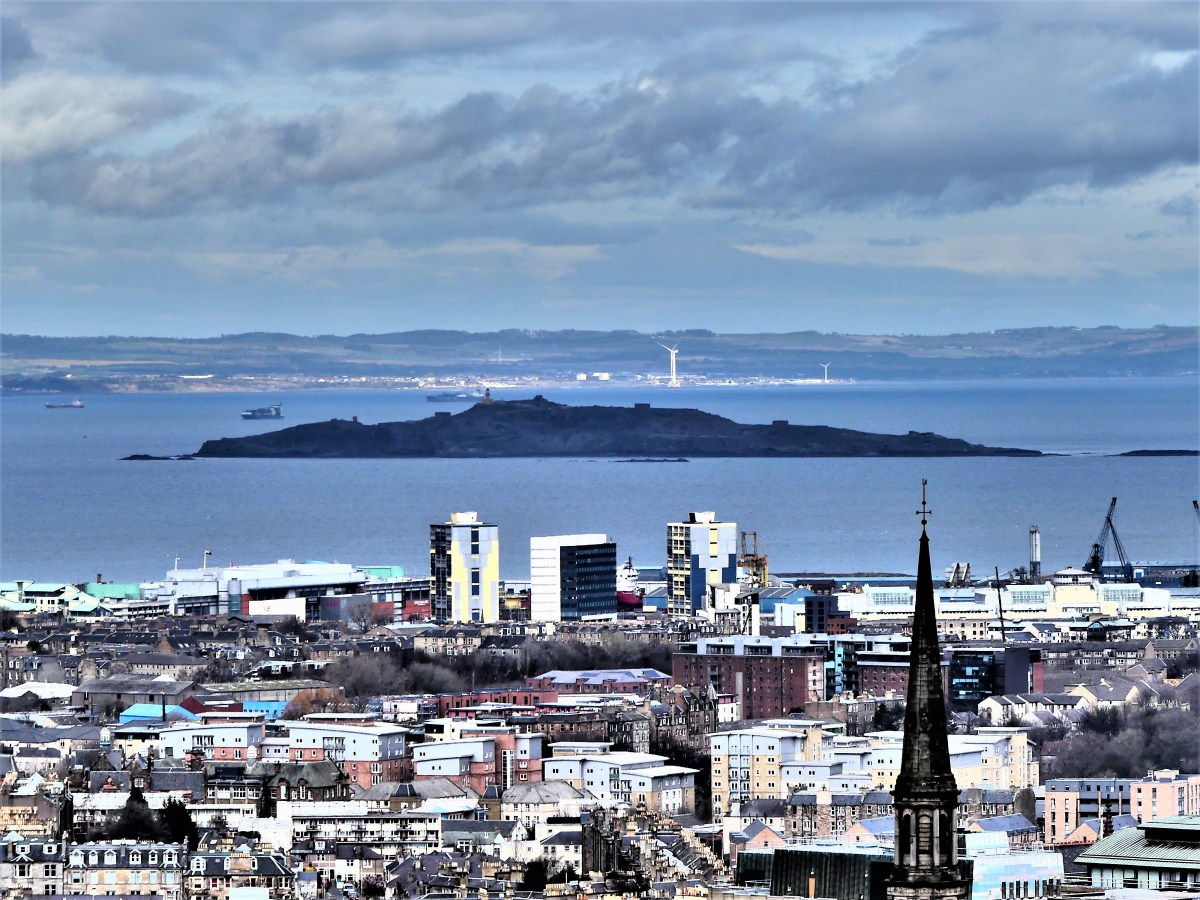
St Margaret’s Chapel commands a view of north Edinburgh,

looking north

looking to Leith.

new city

In addition to the best westerly views in the city…

looking west

the Castle’s royal palace…

Royal quarters mantle and plaster ceiling

offers a glimpse of the elaborate decoration of the birth chamber of James VI, son of Mary Queen of Scots.

Royal Quarters birth room

A visit to the Great Hall is also in order…

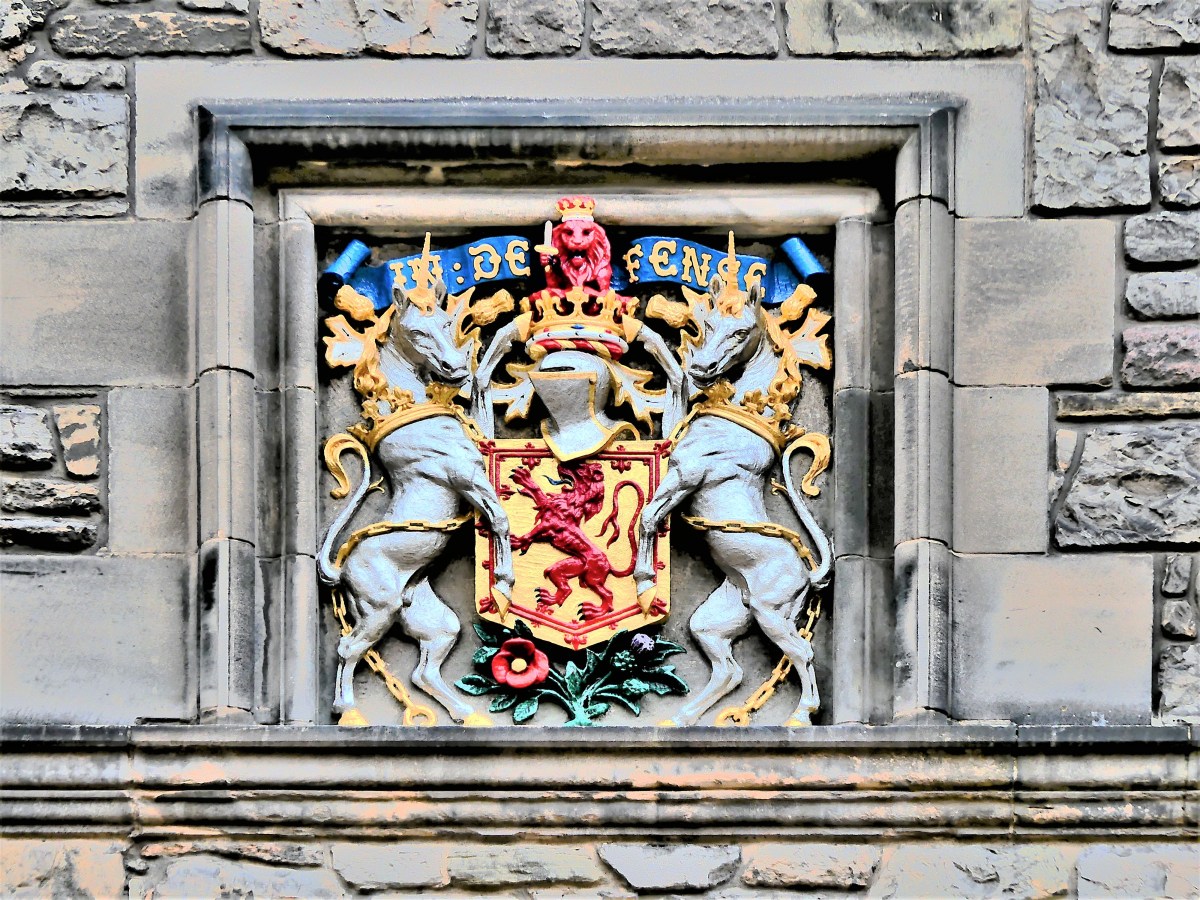
Great Hall crest

boasting an interior ceiling constructed without nails–looking much like an upside down hull of a boat–

Great Hall timber ceiling

and housing a variety of vintage weapons displays.

weapons display[2151].jpg

armored soldiers

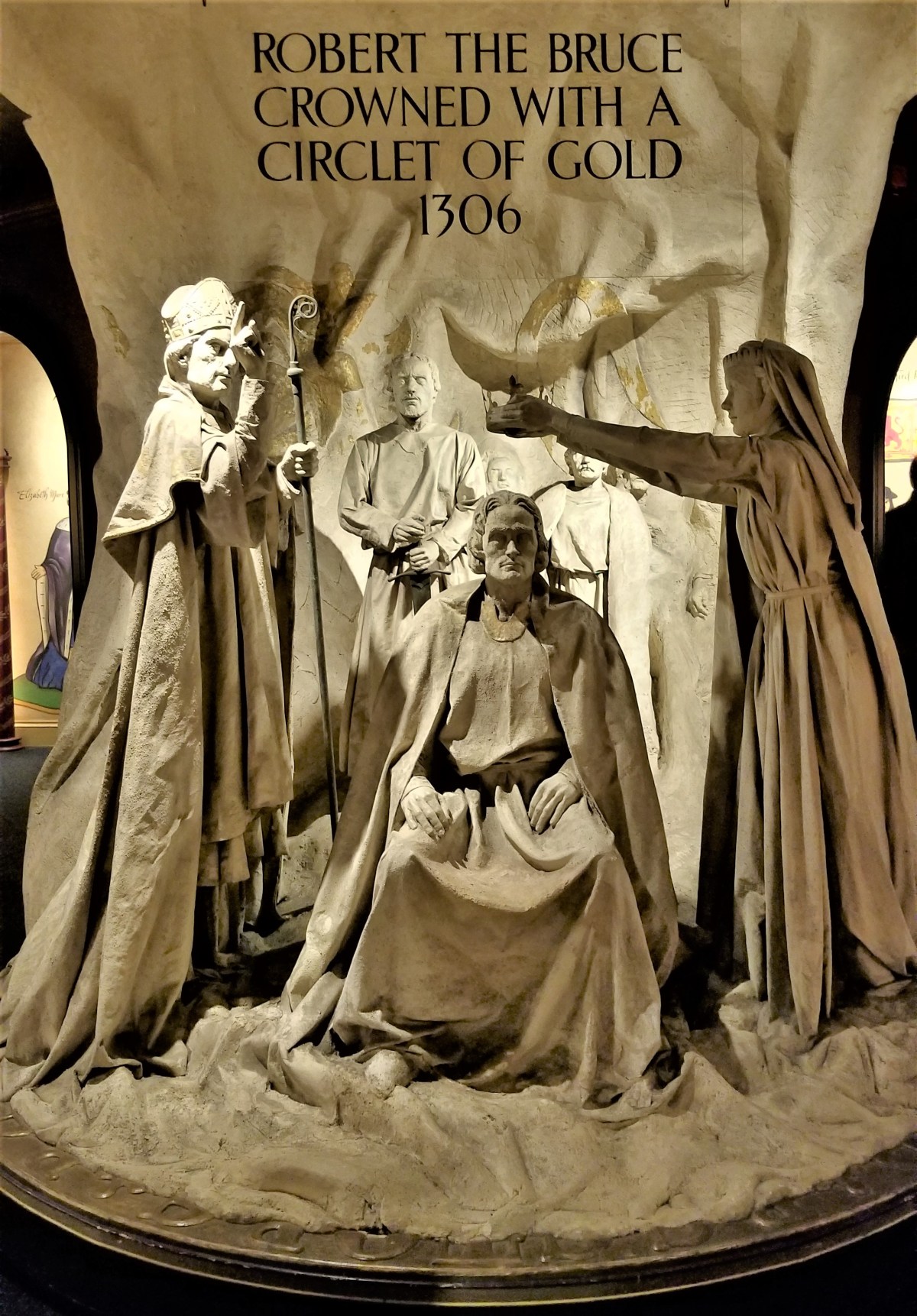
Several exhibits on the mount recount the many coronations of its kings and queens,

coronation.jpg

the fighting character of the Scots…

war museum

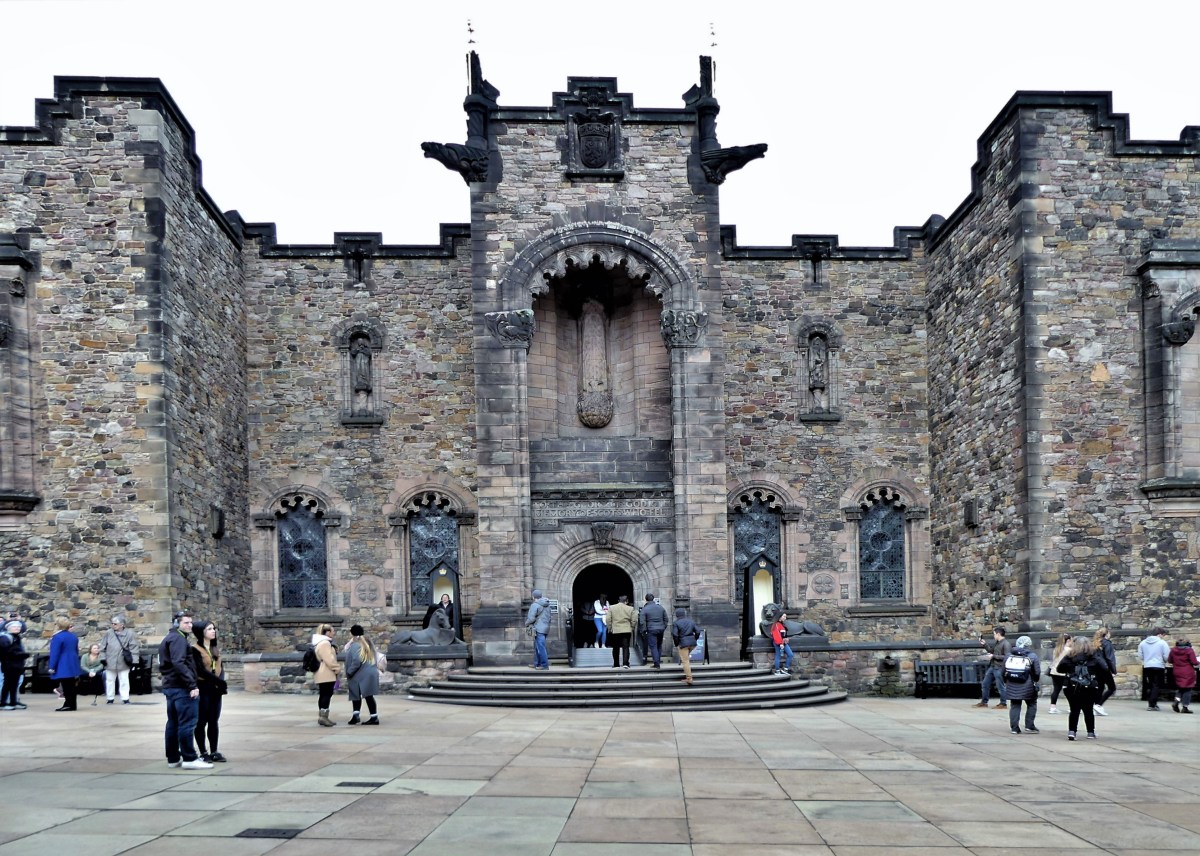
and an active tribute memorial to all of those who have fallen in battle throughout the ages.

War memorial plaza.jpg

Lion guard

Scottish National War Memorial (2).jpg

Once outside the castle entrance, a walk down the Royal Mile…

Royal Mile marker.jpg

past The Hub (where the famed Fringe Festival headquarters resides)…

The Hub.jpg

will likely lead to an encounter with a bagpipe player…

bagpipes.jpg

standing by one of the many Closes of Edinburgh which look out to the north and south.

Devil's Advocate Close

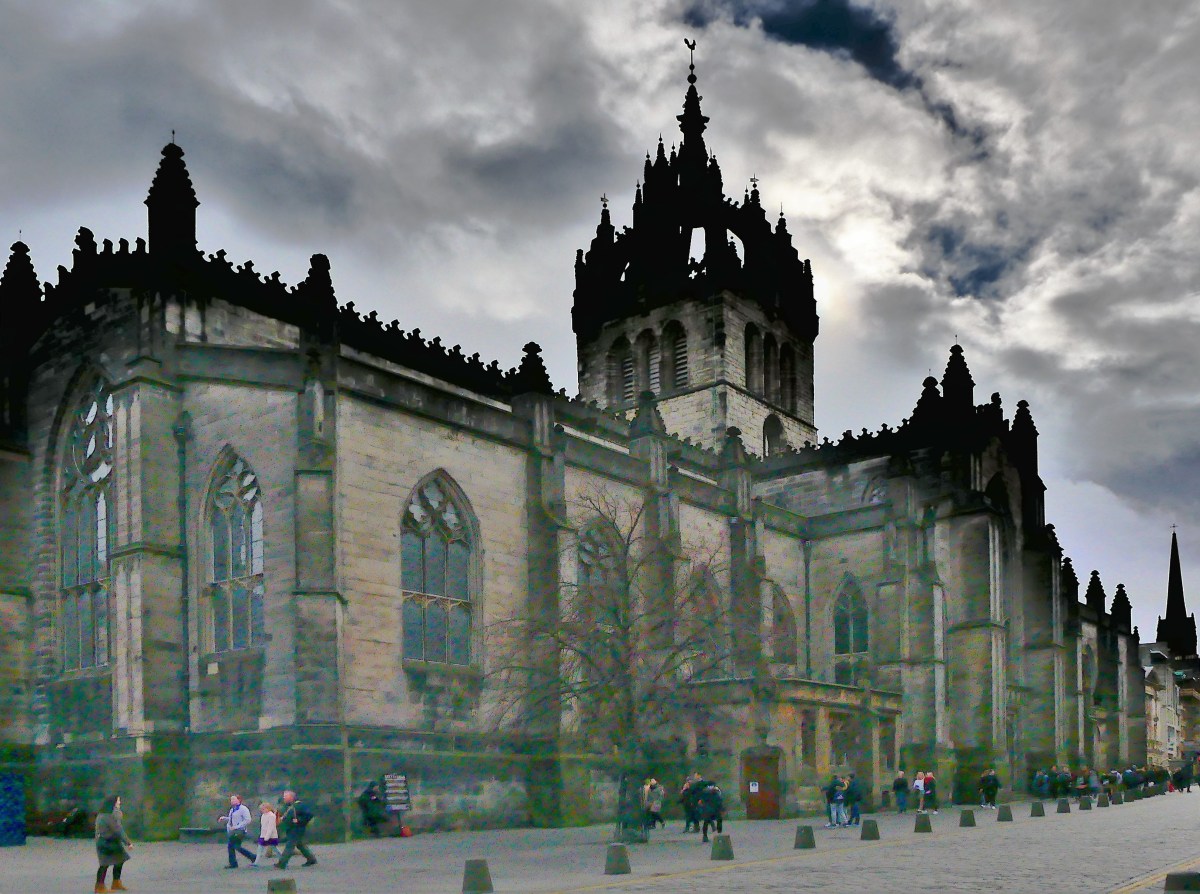
Continuing further east is St. Giles Cathedral, founded in 1124, and the focal point of the Scottish Reformation in the 16th century.

St Giles.jpg

Inside the church are an array of small knaves and chapels enhanced by extraordinary examples of intricately detailed stained glass.

St Giles' Robert Burns window

Views of Edinburgh also abound from Calton Hill,

Calton Hill map.jpg

where several monuments dot the landscape, whether it’s to honor Horatio Nelson,

Nelson Monument

Dugard Stewart,

Dugald Stewart Monument

or the war veterans who lost their lives in the Napoleonic Wars.

National Monument

Once the site of medieval tournaments and festivities during the 1400s, Calton Hill was also the best place to catch public executions in the 1600s.

Observatory House

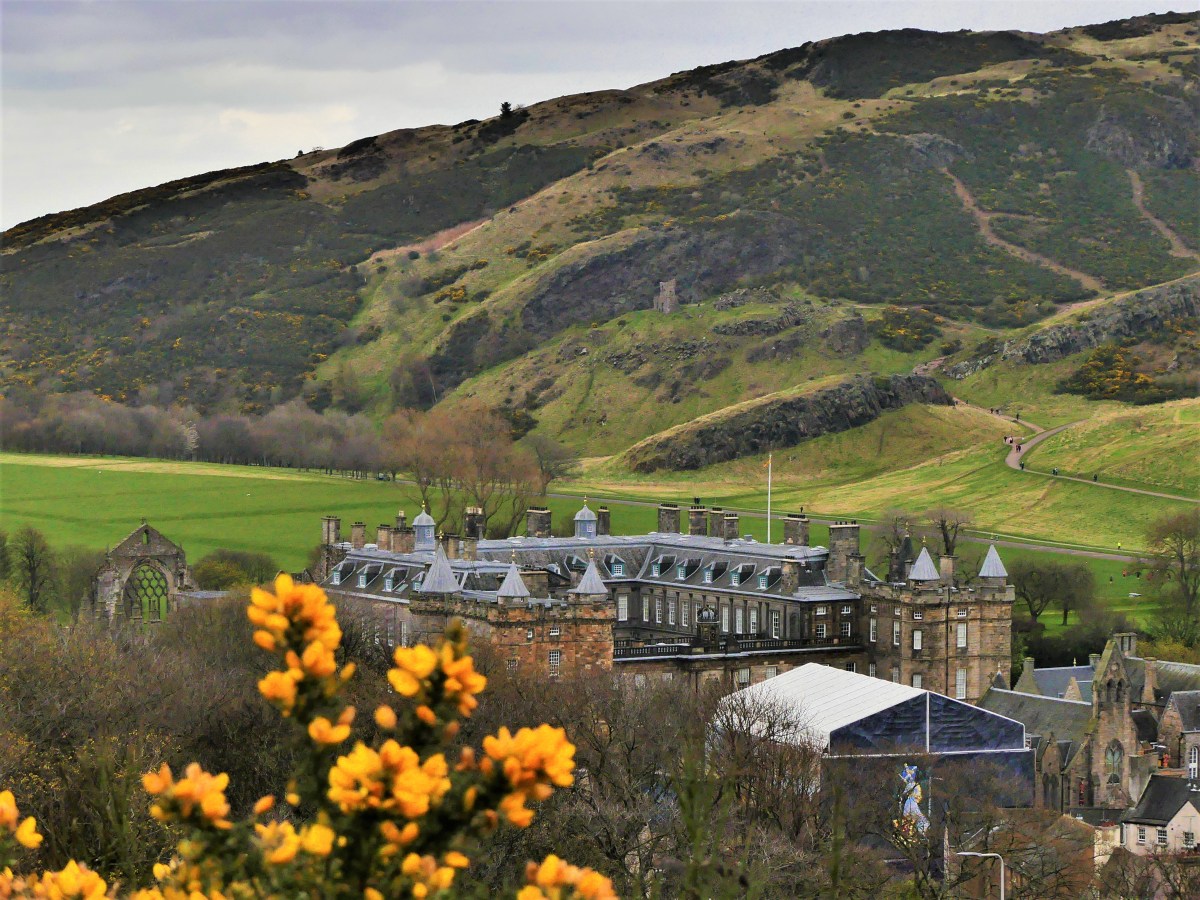
But today, it’s best known for it’s iconic views of the royal residence, Hollyrood Palace positioned beneath Arthur’s Seat,

Hollyrood Palace

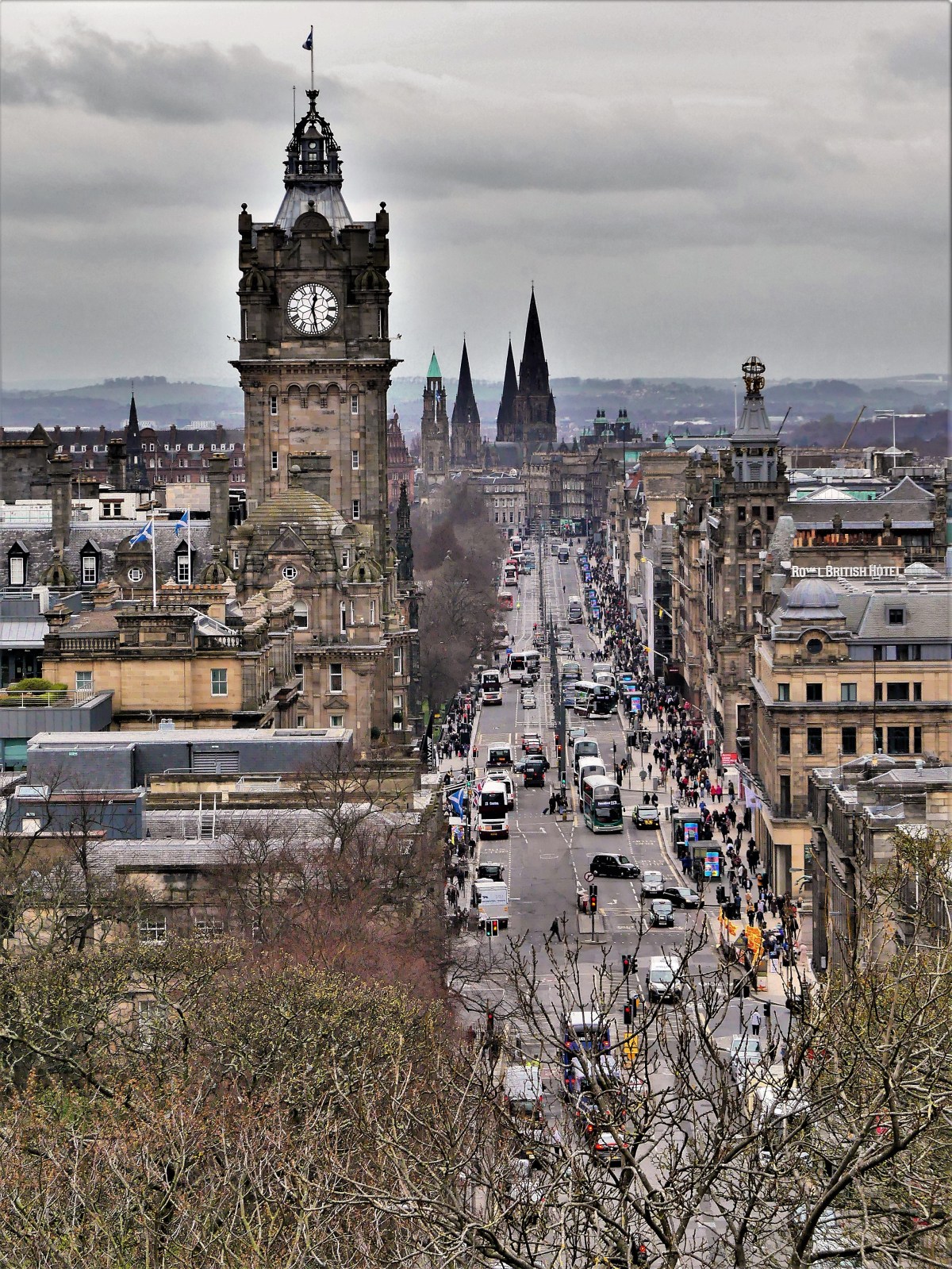
and a look down Princes Street.

Waterloo

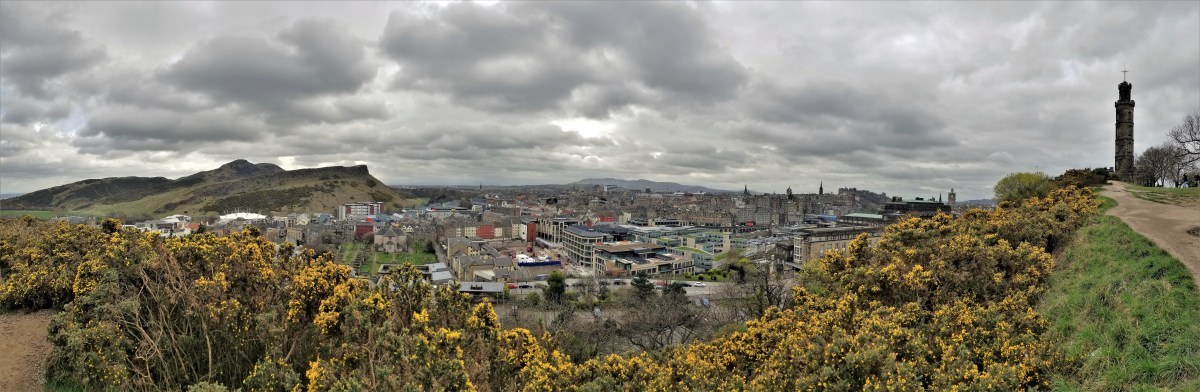
Views notwithstanding,

view from Calton Hill.jpg

the real appeal of Edinburgh lies in its streetside presence, where it’s never too early (or late) to duck inside a pub or a whiskey bar on Grassmarket…

Grassmarket shops

for a pint or a single malt to really put a different spin on the city views.


A Walk in the Garden

Leah and I awoke to an overcast day. The forecast promised more of the same, which was fine with me as long as it didn’t rain. We spent the morning searching for a new destination to stretch our legs–maybe find a bike trail, or at the very least, a walking trail not too far from home.

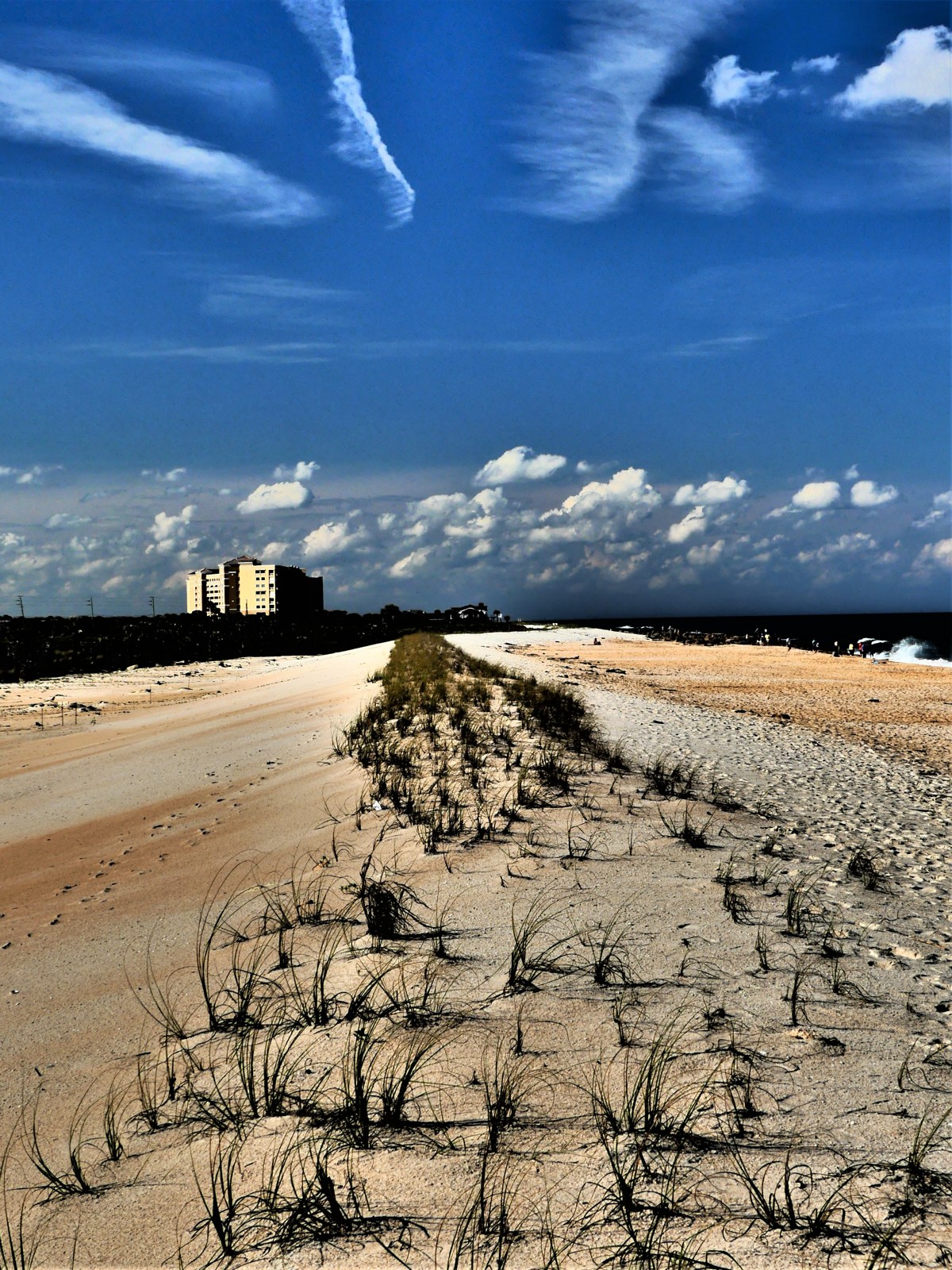
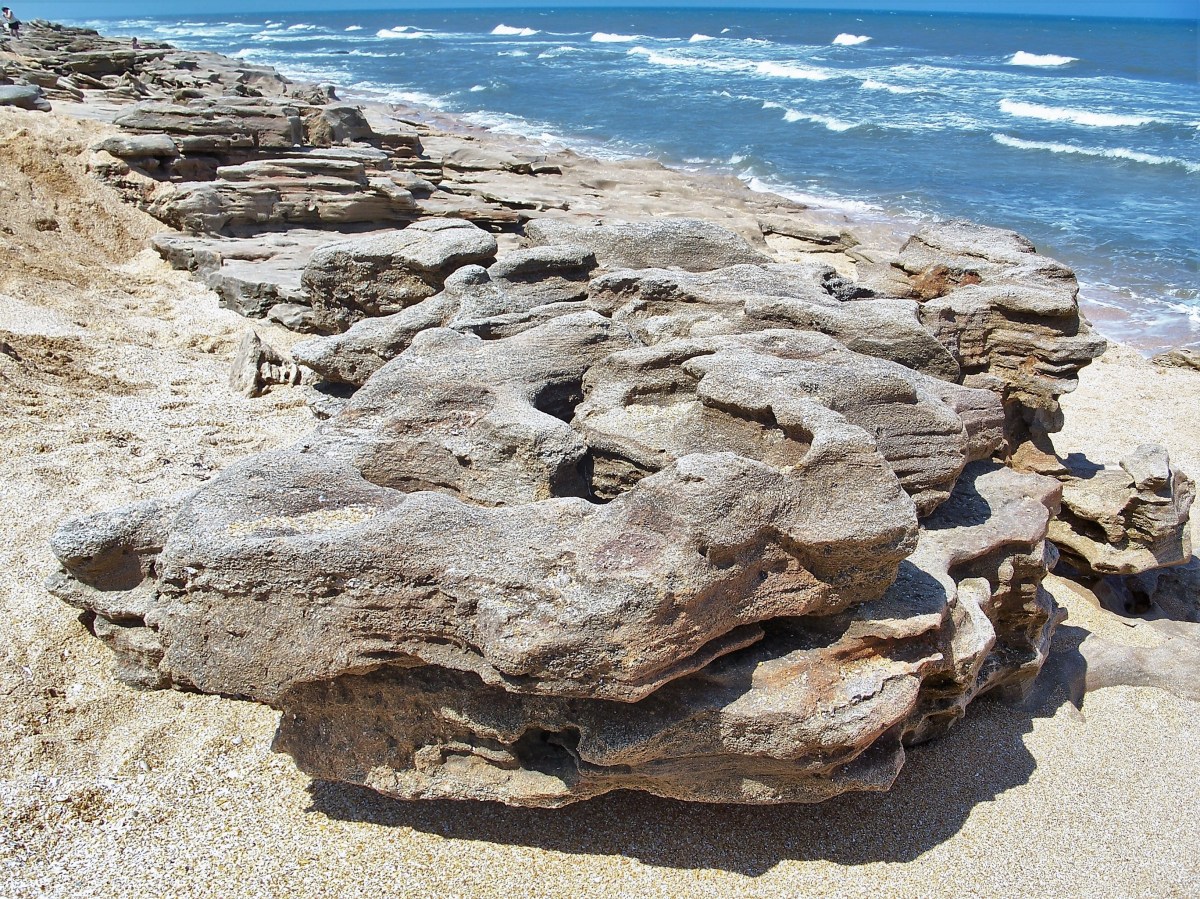
After a late breakfast, we headed south toward Flagler Beach, a salty seaside community with orange sand from crushed coquina…

dunes and beach

midway between St. Augustine and Daytona. We were in search of Betty Steflik Memorial Preserve, a cache of 217 acres of marsh and mangroves tucked beneath the Highway 100 causeway,

causeway

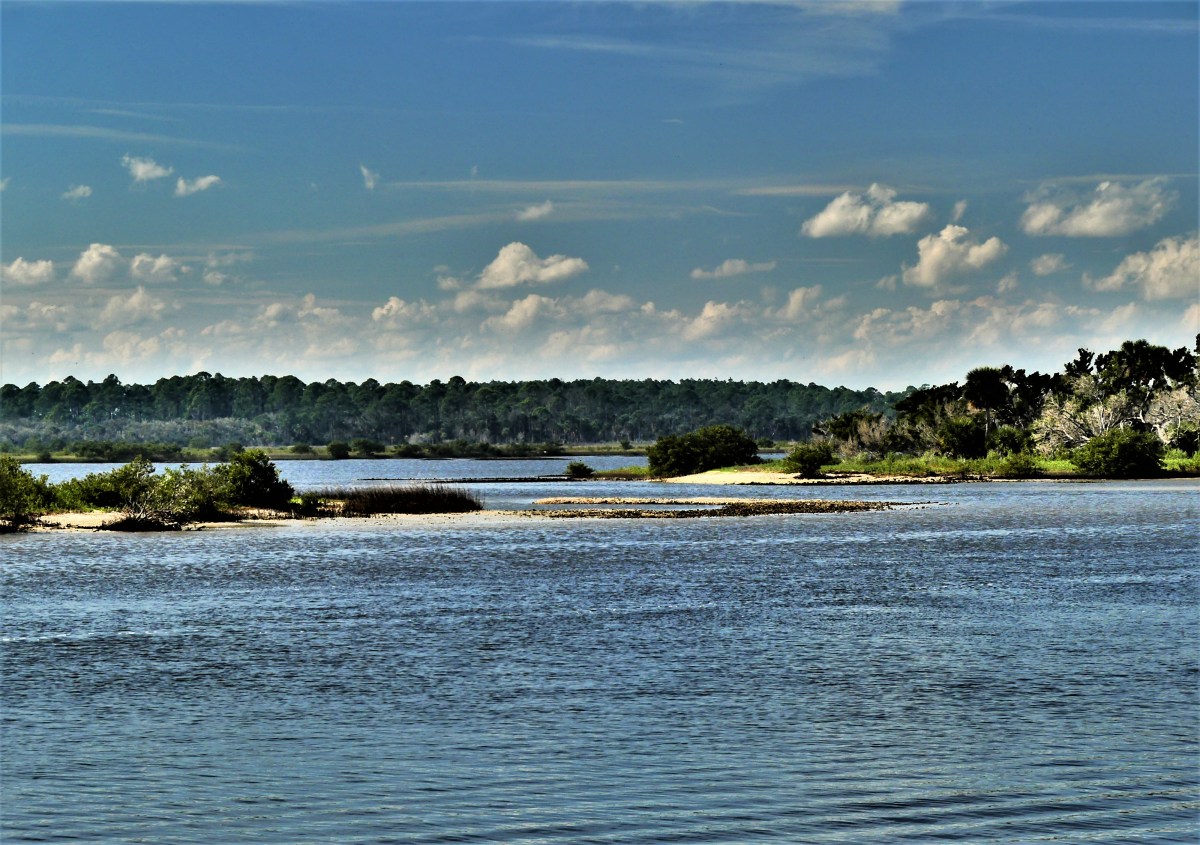
and bordering the Matanzas River.

Matanzas River

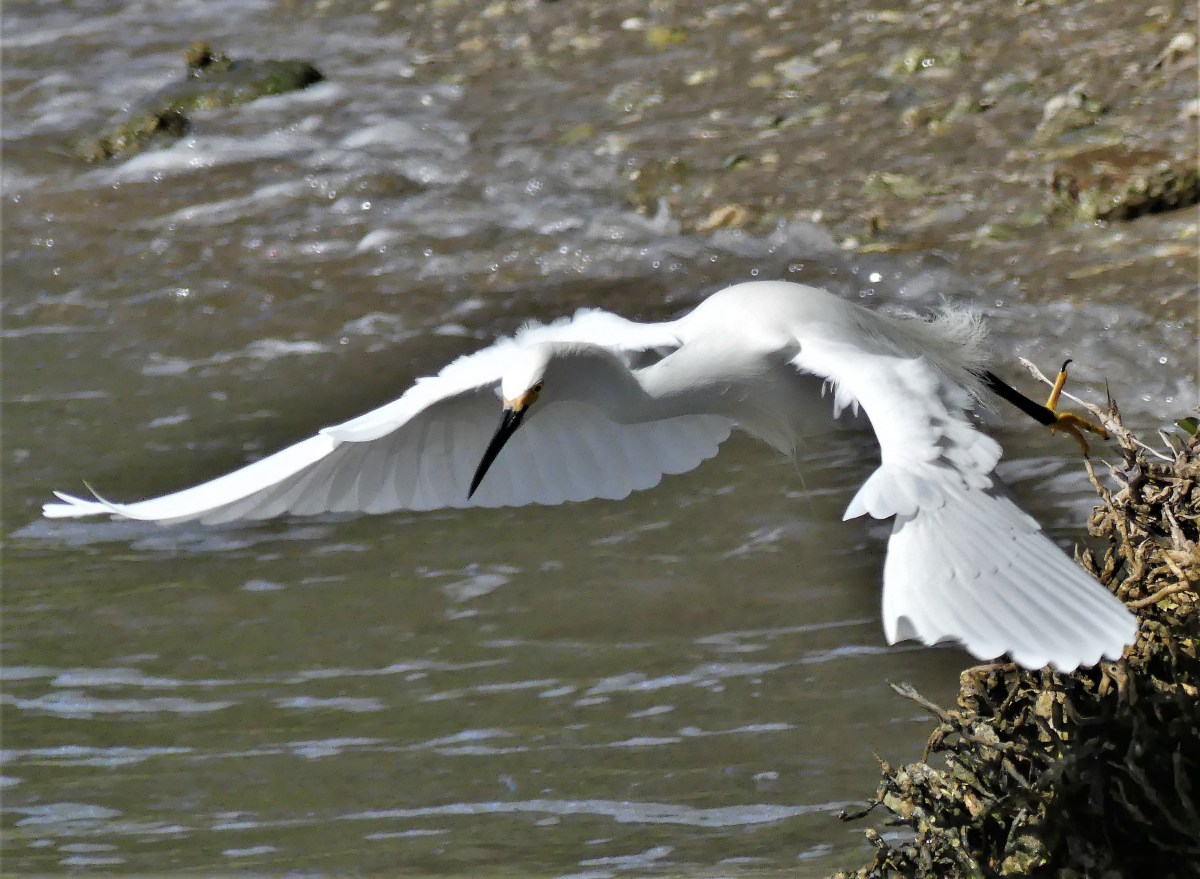
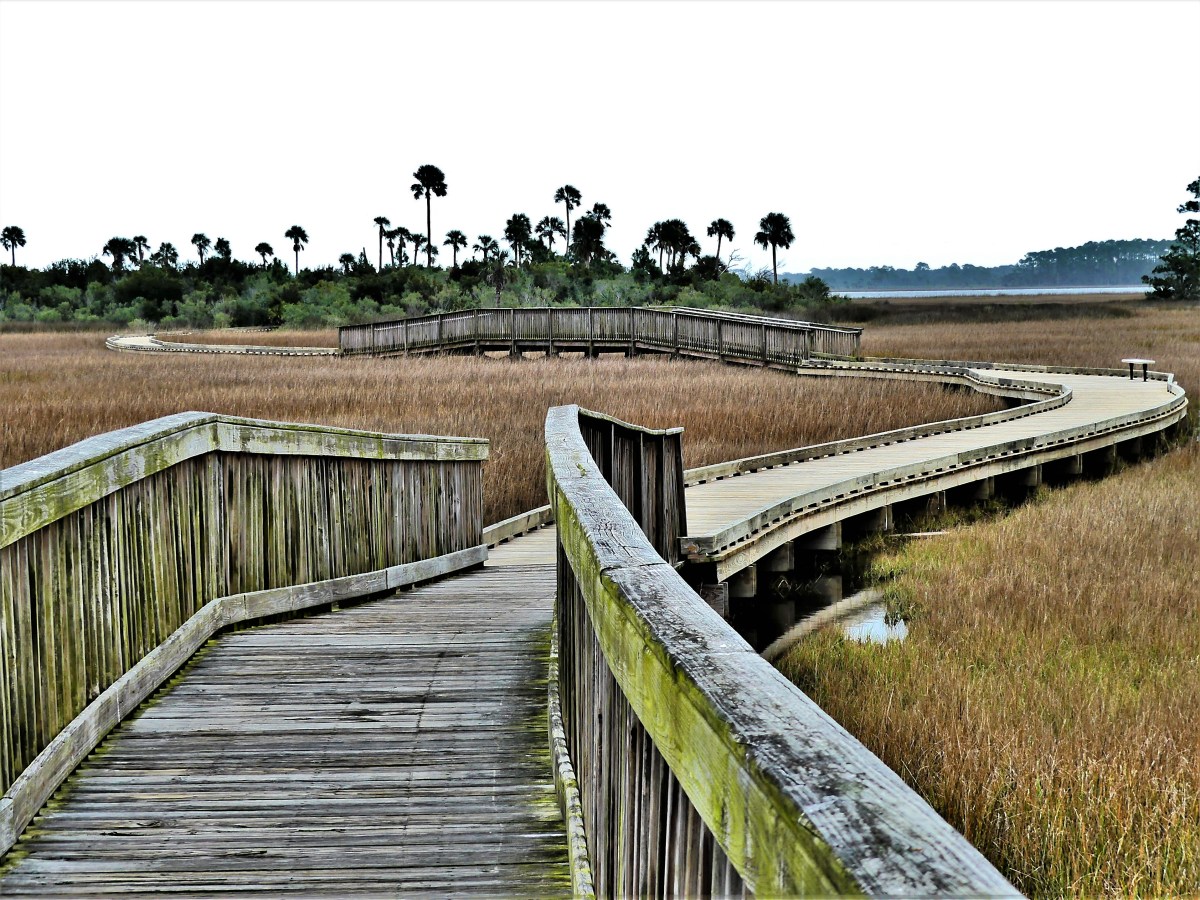
A mile or so of boardwalking through the salt marsh was pleasant though unremarkable. However, it offered me time to play with my newly acquired 1.7X tele conversion lens (see Zoom!).

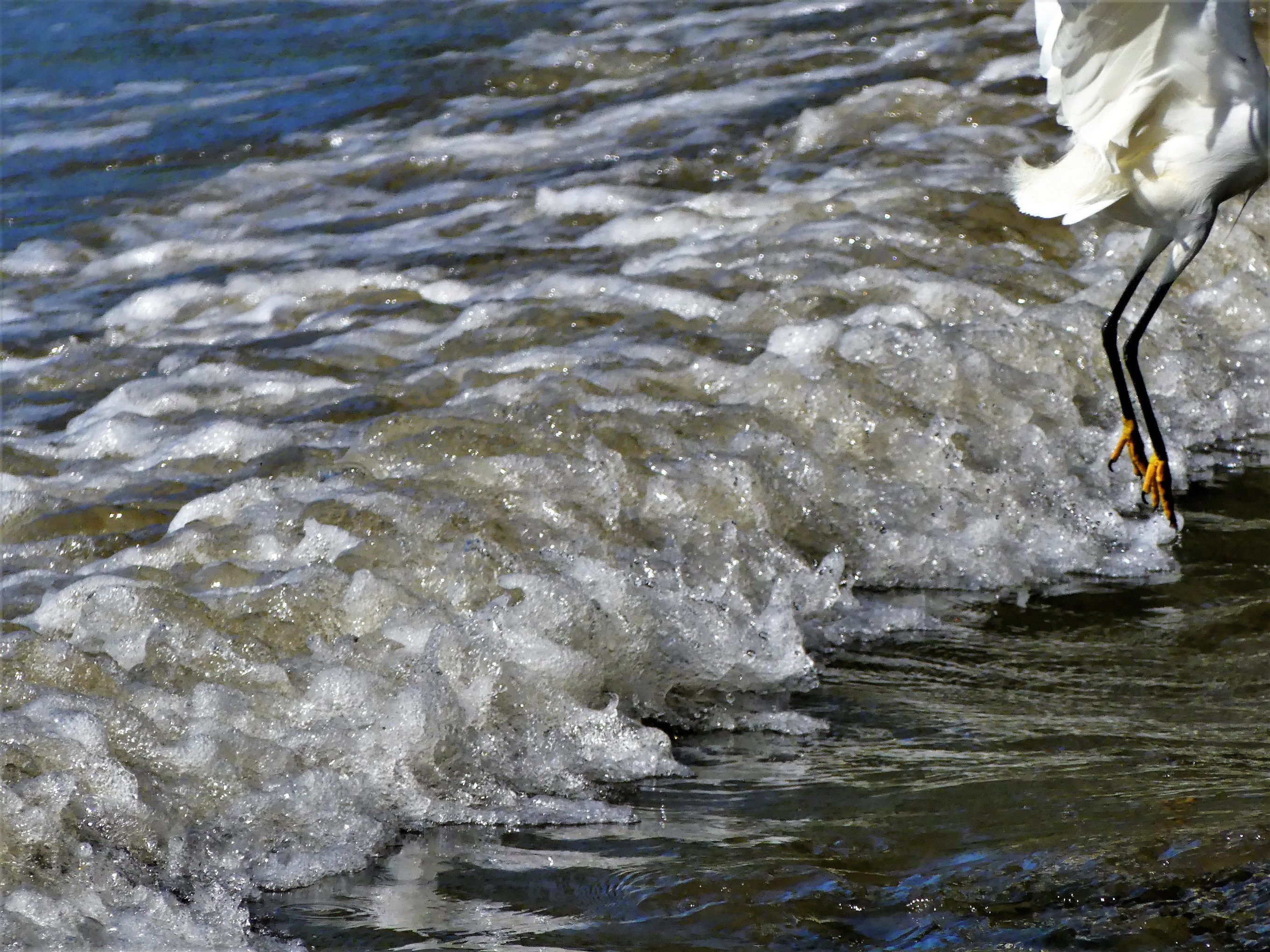
egret takes off

avoiding the wake

Anticipating a loop around the preserve, we were surprised that the trail dropped us at a different parking lot annexed to the town’s public works complex that was surrounded by dilapidated residential trailers planted only blocks from the beach.

cistern1

And so we continued our tour of all things industrial and commercial, until we returned to the preserve entrance.

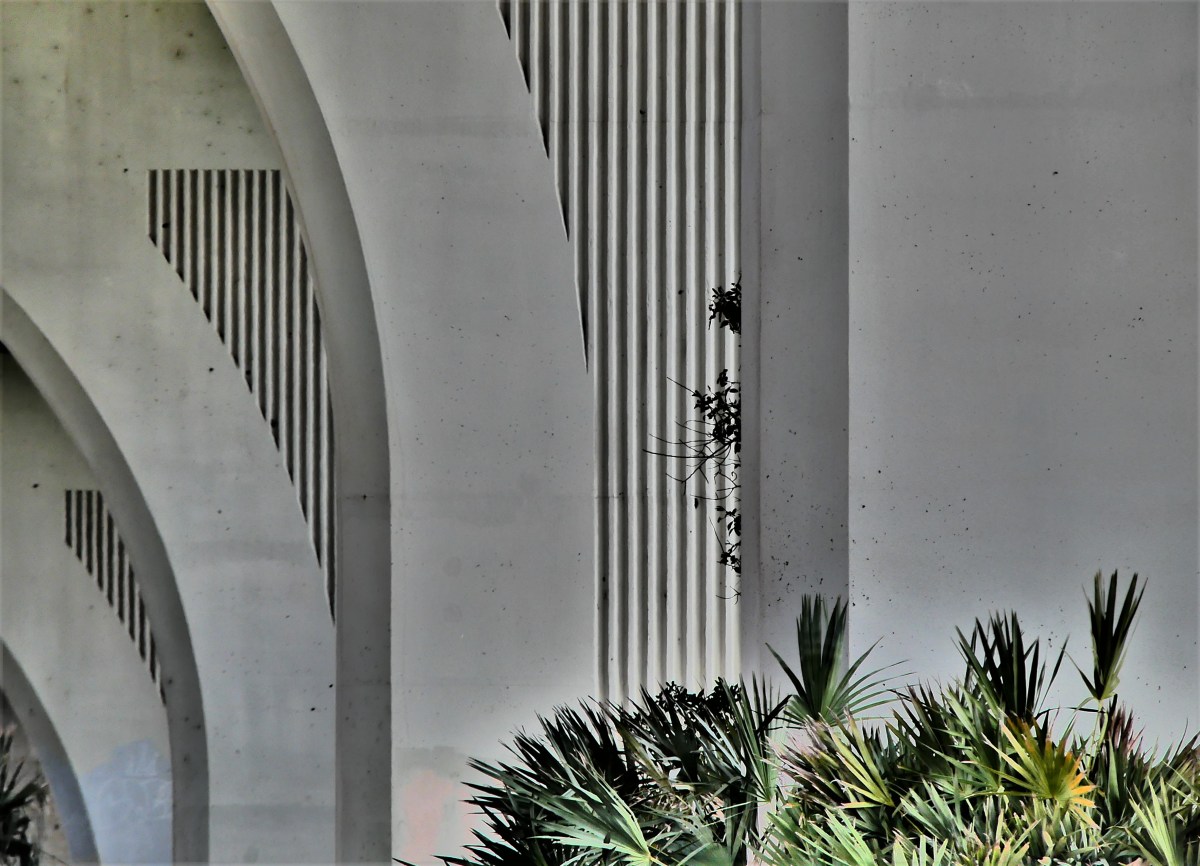
bridge piers

Feeling underwhelmed by our walk-around, I opted for the slow road home, following A1A North on a prayer that the seaside scenery might somehow improve on a somewhat lackluster afternoon.

We passed through nothing of consequence: nondescript shops and eateries, assorted bungalows, big machines for county road repairs, and mainstream subdivisions along the way. But when we reached Palm Coast, the road opened up to a dense maritime hammock of hardwood trees to our left, and I felt compelled to u-turn for a closer look.

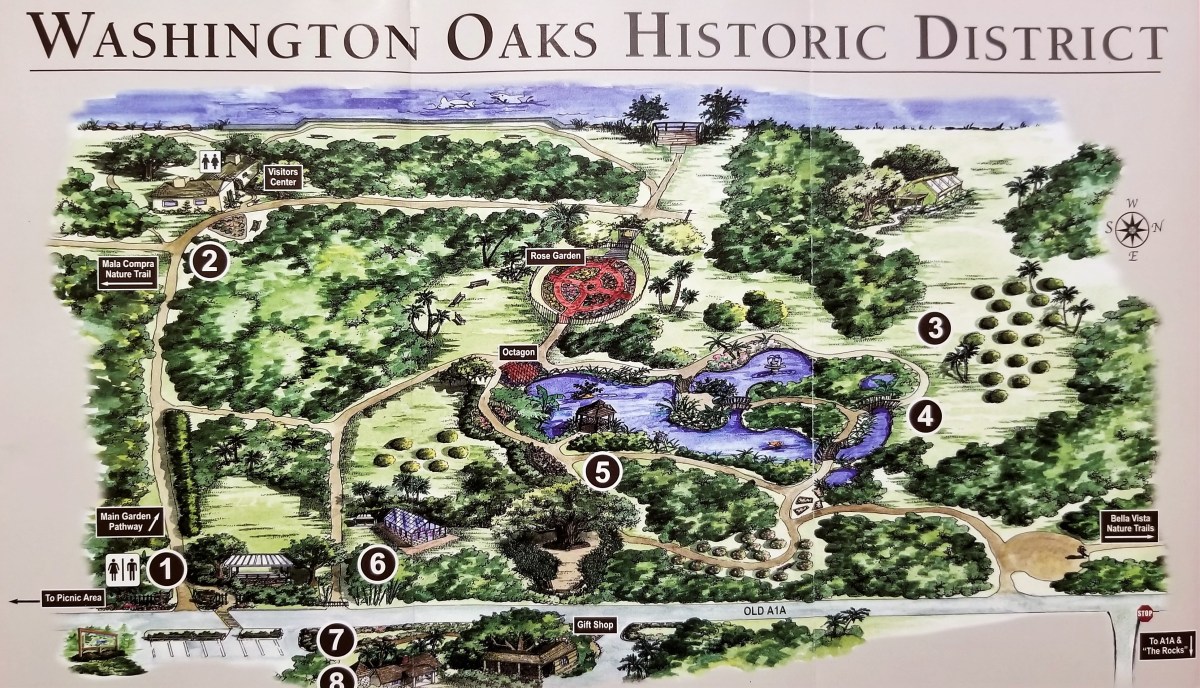
We turned into Washington Oaks Garden State Park,

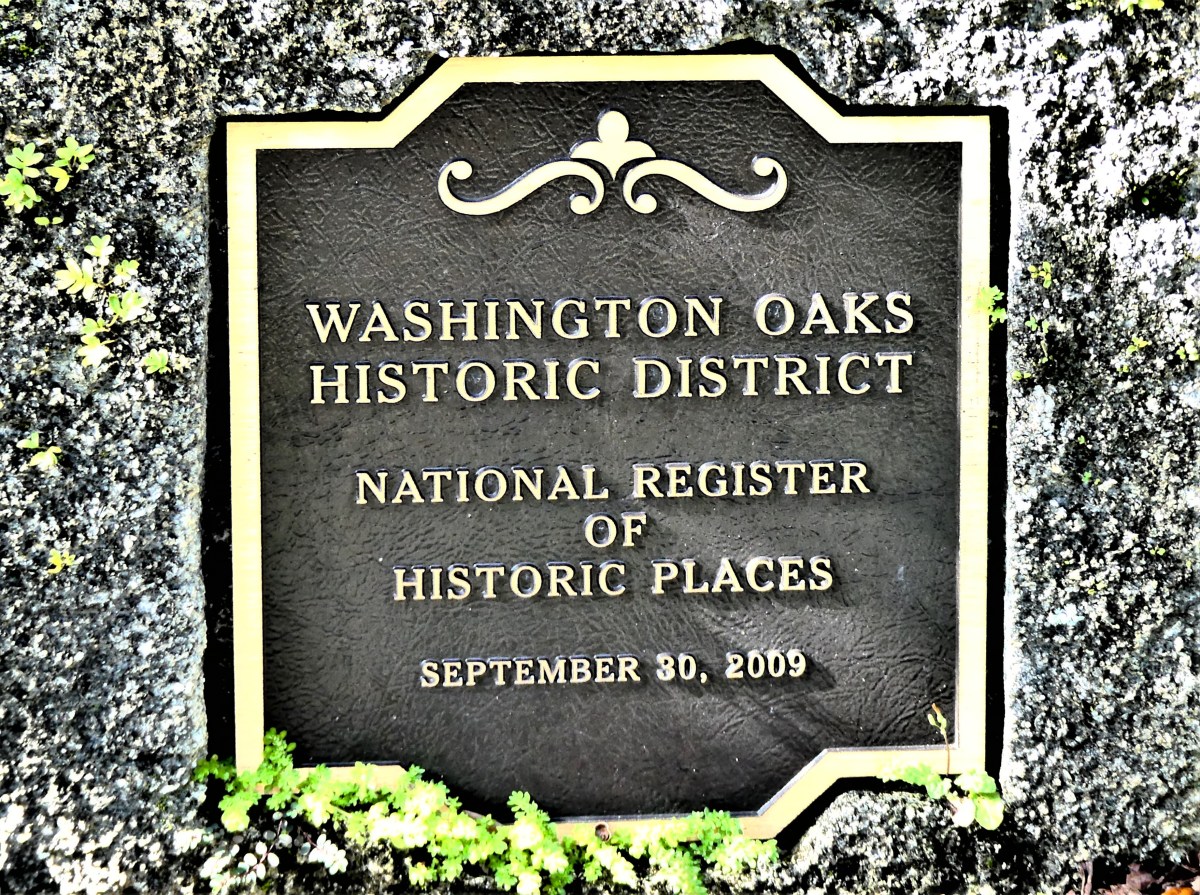
National Register

and heard from the gate attendant that the azalea blooms had just reached their peak, and that was enough to pique my interest.

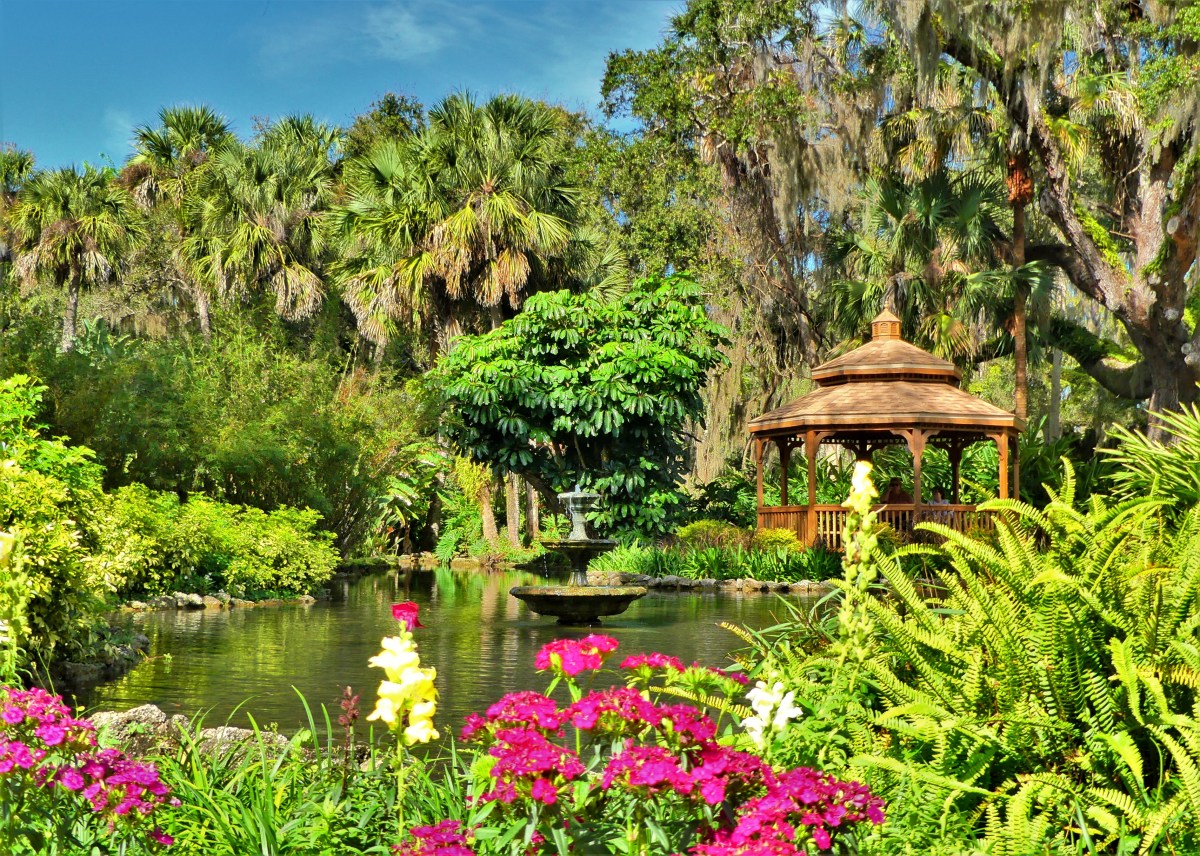
gazebo and fountain

As we completed a self-guided tour of the grounds…

Washington Oaks Historic District

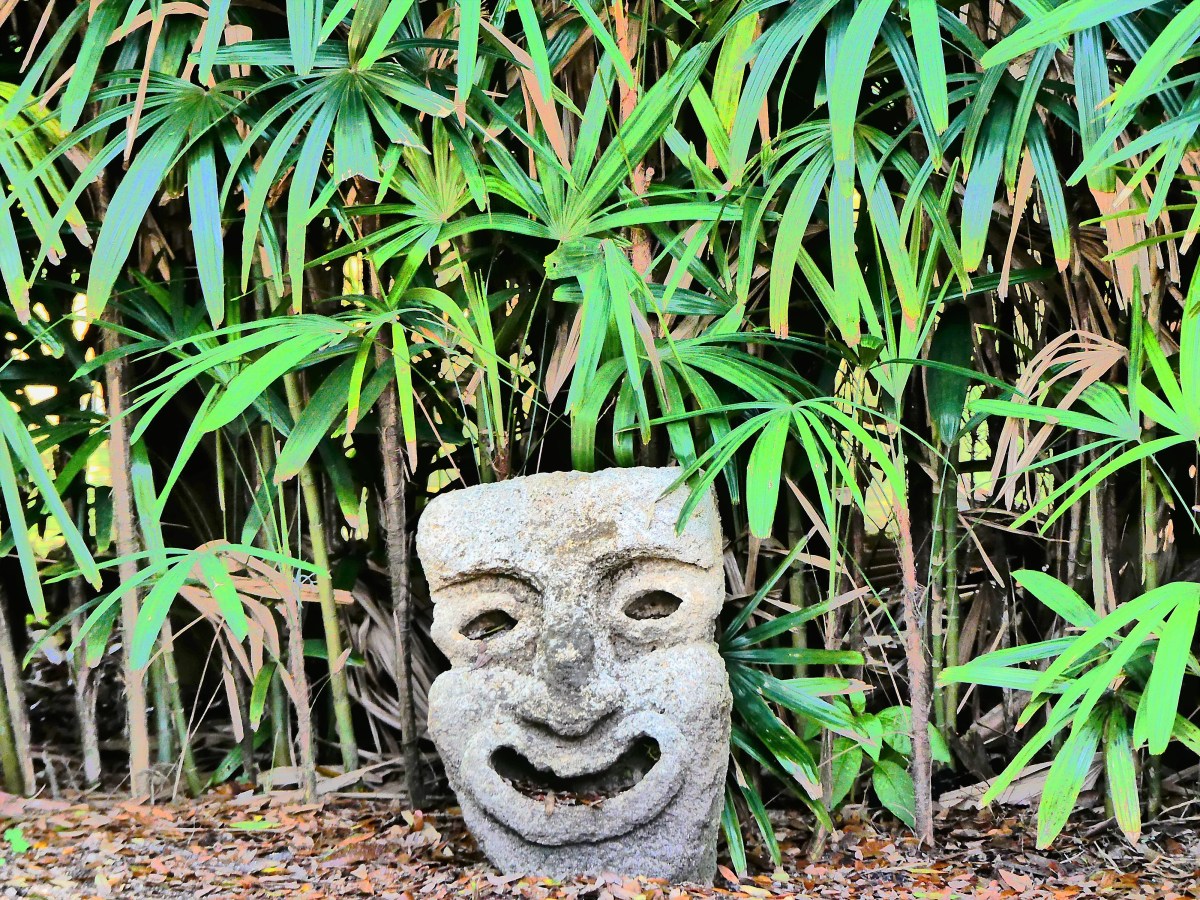
I felt relieved, knowing that our Sunday excursion had been rescued.

mask

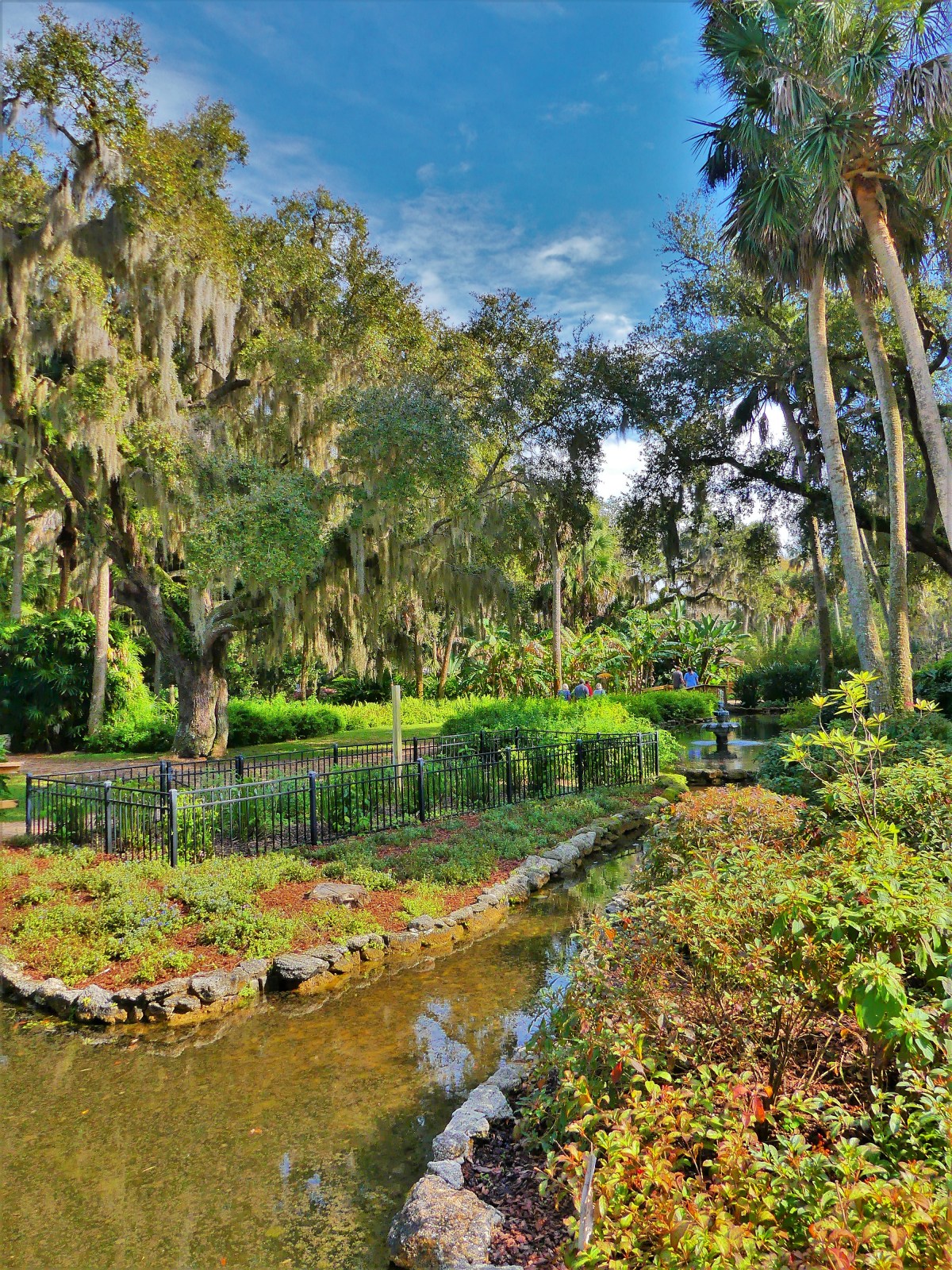
The formal gardens were beautifully unusual,

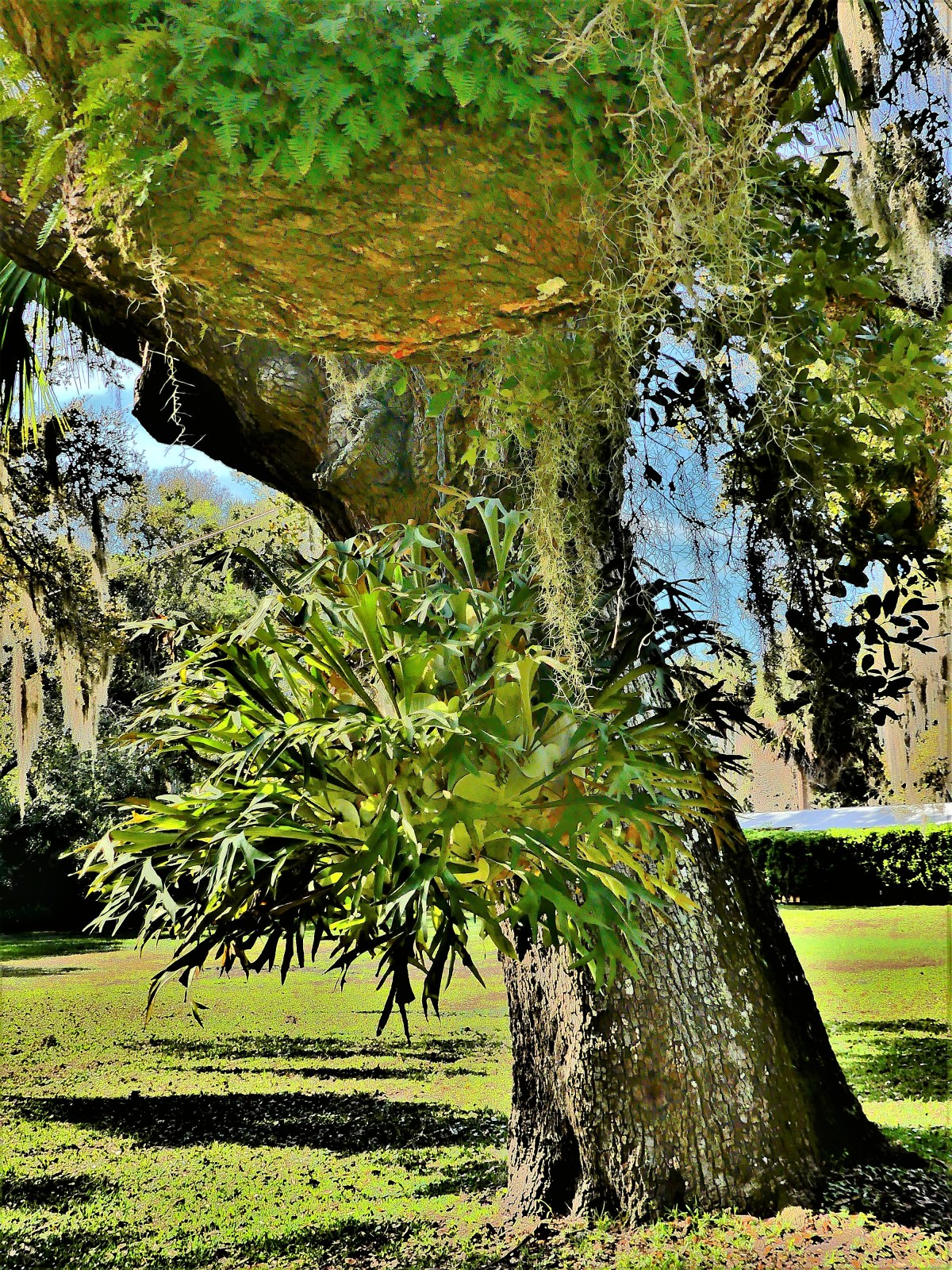
live oak

lushly carpeted,

green garden grasses

and precisely manicured.

garden path

We left the area under partly sunny skies…

marshian sunset

knowing that we would return another day to devote more time to the miles of trails through the hammock.

And weather permitting, we will cross the highway to follow the coquina rock formations that line the Atlantic side when the tide is nigh.

The Rocks


Zoom!

Imagine playing recreational golf with one driver, an iron, and a putter. Accessing the game would be so much easier without the expense of all those clubs. And when playing the course, think how much time could be saved between strokes by not having to decide which club to select for each shot.

While it’s not the perfect metaphor, I’ve approached photography with the same minimalist philosophy. I’ve been photographing with a Panasonic Lumix digital bridge camera (fixed zoom lens) for the past few years instead of lugging around equipment that I might use, but most likely never would.

How do I know this? Despite decades of shooting a variety of photography disciplines (landscape, nature, portrait, street scene, architecture, etc.) that required a variety of prime and telephoto lenses neatly arranged in my equipment bag, I’ve noticed that I’m rarely disappointed by the versatility of the LEICA DC VARIO-ELMARIT 24X optical zoom permanently mounted to my Lumix DMC-FZ300, while also freeing myself of a senseless burden that would invariably sink deeper into my shoulder with every step and slow me down.

It’s truly a remarkable lens for nearly all occasions! The range and reach of the camera’s 25 – 600mm zoom has seldom left me needing more lens, or regretting my camera choice in favor of a full-fledged DSLR…until now…since there are times I’m wishing I could gain greater detail by getting closer to my subject.

For instance, walking across a boardwalk over marshland strictly limits my ability to get closer to wildlife. The following photograph is a hand-held shot of a heron that caught my attention at a scenic overlook while hiking along the Guana Loop of Guana Tolomato Matanzas National Estuarine Research Reserve (GTM). 

heron on a limb

At 24X zoom, the image is acceptable, but if I choose to isolate the heron by cropping the bird to full frame, the resolution suffers greatly. Ideally, a tripod could have provided better image clarity, but the digital noise would still remain the same.

heron on a limb (4)

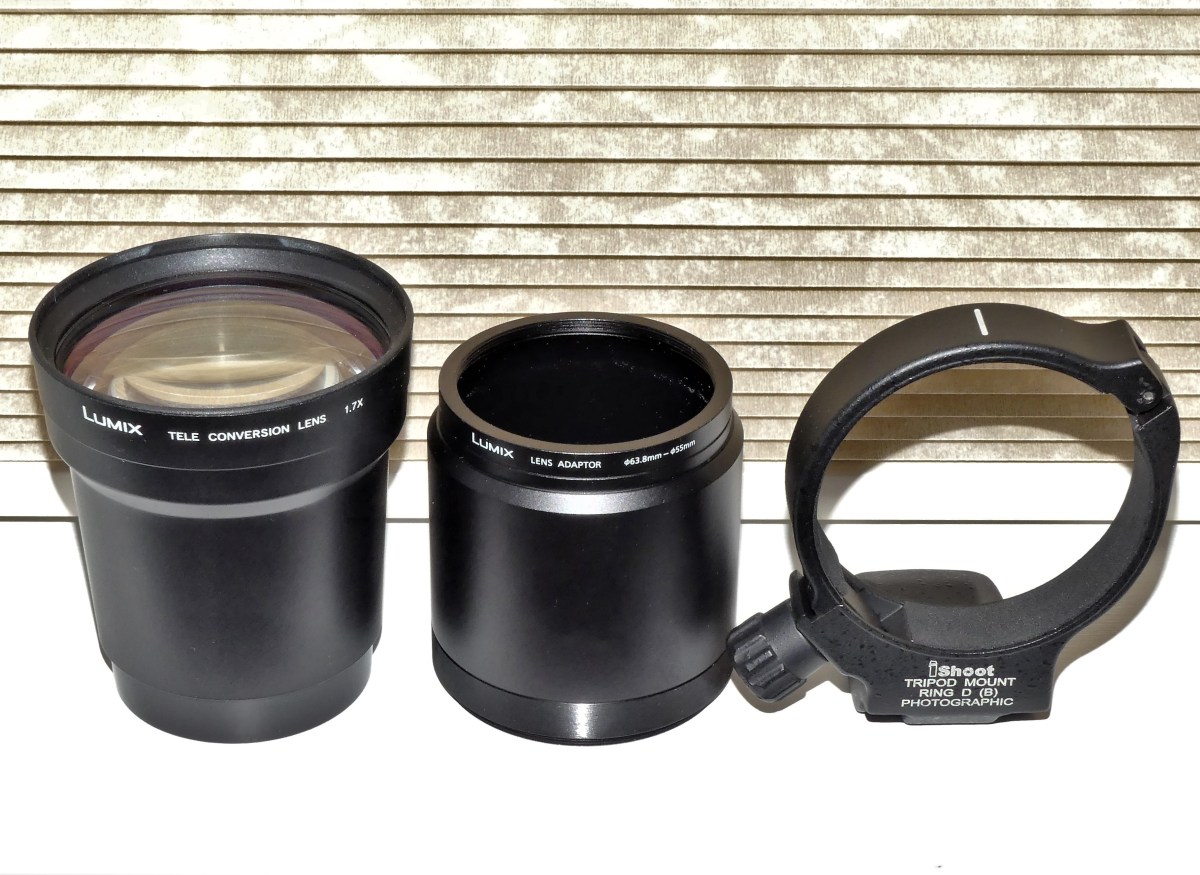
However, I discovered another available option that allows me to get a bit closer without relying on the camera’s built-in digital zoom–which I’m inclined to deactivate since I prefer to shoot RAW. Years ago, Lumix created a 1.7X tele conversion lens with adapter, extending the optical zoom to 40.8X, or the equivalent zoom range of 1020mm. But alas, this accessory has been discontinued.

Fortunately there’s a secondary market for almost everything photographic, so after a brief visit to the internet, I found a seller on eBay that offered the requisite 1.7X tele converter, a close-up lens, mount adapter, and tripod mount ring, all for a fraction of the original price of the tele lens.

And I bought it!

extender setHaving traveled to the GTM with my new/used acquisition, and having survived the burden of carrying extra gear, I assembled the lens and carefully threaded it onto the existing camera lens. I planted my feet, braced myself and shot the heron again!

heron on a branch (2)

A side by side comparison tells the story…

The image on the right is noticeably cleaner, even though the focus appears to be a bit soft, informing me that capturing a crisp, hand-held shot at 40.8X is not my specialty, and probably ill-advised.

Ugh! So now I’m forced to carry a tripod or monopod to make better use of the lens extender. Oh, well. There goes the economy of my photography.

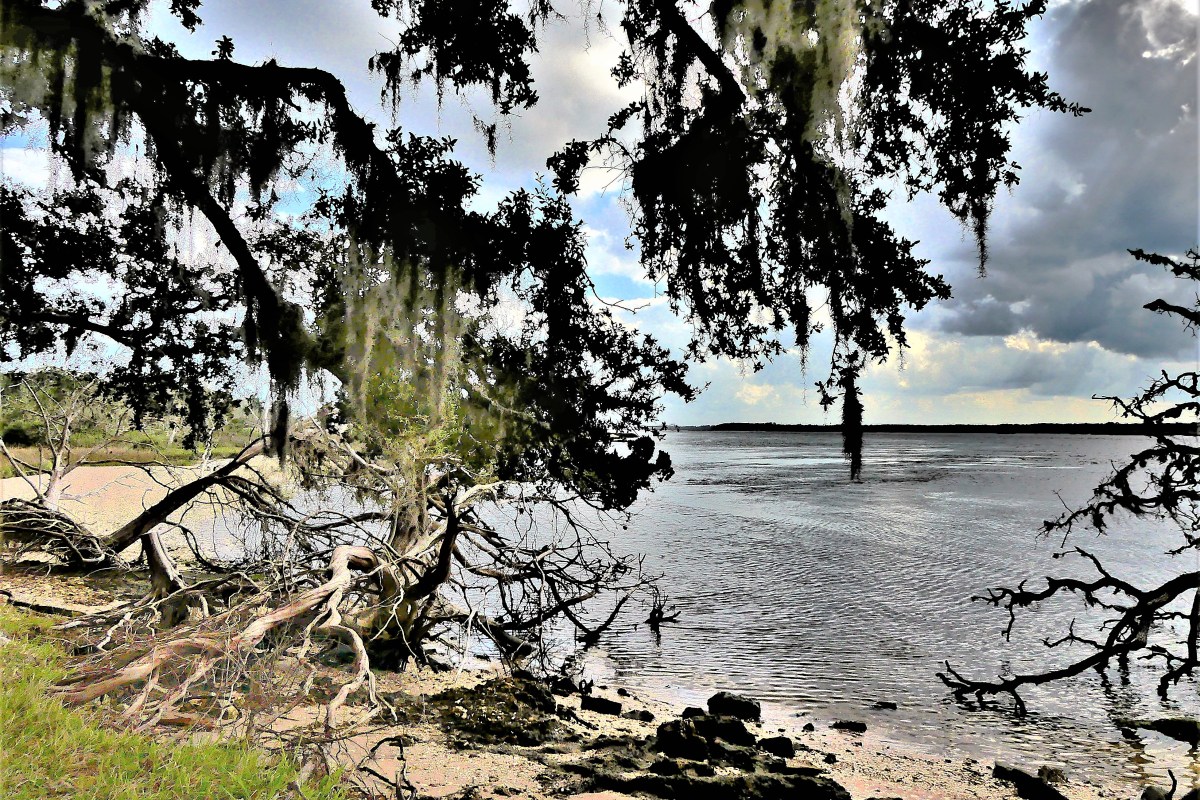
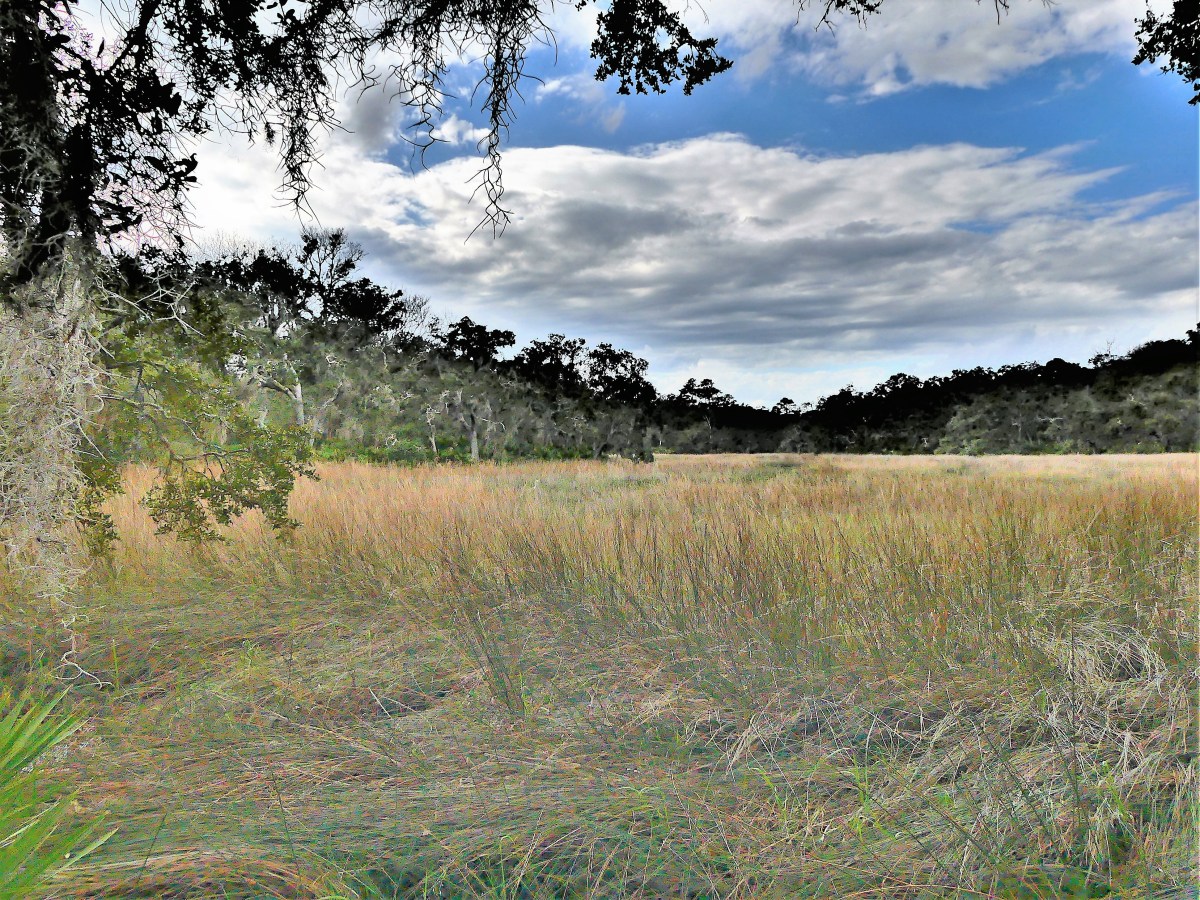
marshland (2)

Then again, I could simply stick to the limits of the original lens…

GTM Estruaine (2)

but then again, with an impending trip to photograph big game animals in Africa at the beginning of May, I’m much better off adjusting to three golf clubs instead of one.

Becoming My Parents

Hiking along New Jersey State and County Park trails the day after Thanksgiving made a lot of sense to Leah, who orchestrated our first return to New Jersey since moving to St. Augustine five months ago. She promised a whirlwind week and a-half of personal appointments and commitments packed with a variety of doctors, friends and family members, all laced with an emphasis on over-eating.

And so, during the course of our visit, as advertised, our food-centric itinerary always included a meal punctuated by scintillating table conversation on family history and folklore–touching on recipes, obituaries, and kin outcasts, with politics and religion occasionally creeping into the dialogue.

But mostly, everybody seemed to be preoccupied with their health. And God help the person who would innocently ask, “So, how are you feeling?” Because this question would open the floodgates for respondents to freely reassign their HIPAA proxy on the spot so they could casually discuss their current condition down to the last agonizing ache and pain, notwithstanding the severity surrounding their prognosis and course(s) of treatments, always followed by a couple of random doctor-horror stories.

It seemed like everyone had a health-related story to tell–whether it was about themselves or someone they knew–not unlike my parents and their friends, who would gather at holiday occasions to compare notes about their medication intake. It was uncanny that the of crux of nearly all of our relationships was now firmly rooted in our faded glory and eventual demise.

Any outsider, after eavesdropping on any of our sessions of non-stop kvetching might be surprised to learn that we are still breathing and have more than one day to live.

And so, it was predictably refreshing to carve out some time to clear our ears of prescription patter, and find an activity that combined friendship and calorie burning. Of course, our opportunity to hike was completely weather-dependent, considering the prior Nor’easter and the Arctic chill that had settled on the Atlantic states.

Like many Northern transplants to Florida, Leah and I had become preoccupied with weather-watching, so we might bask in the warm glow of knowing that we had finally escaped the unfriendly winters by relocating to St. Augustine. But now that we were back in Jersey, it was time to face the hard cold facts of winter; Ramapo Valley Reservation (NYNJTC_RamapoValleyCountyReservationMap-2017) was 18°F at the Reservation trailhead, and expecting to peak at 23°F by the afternoon.

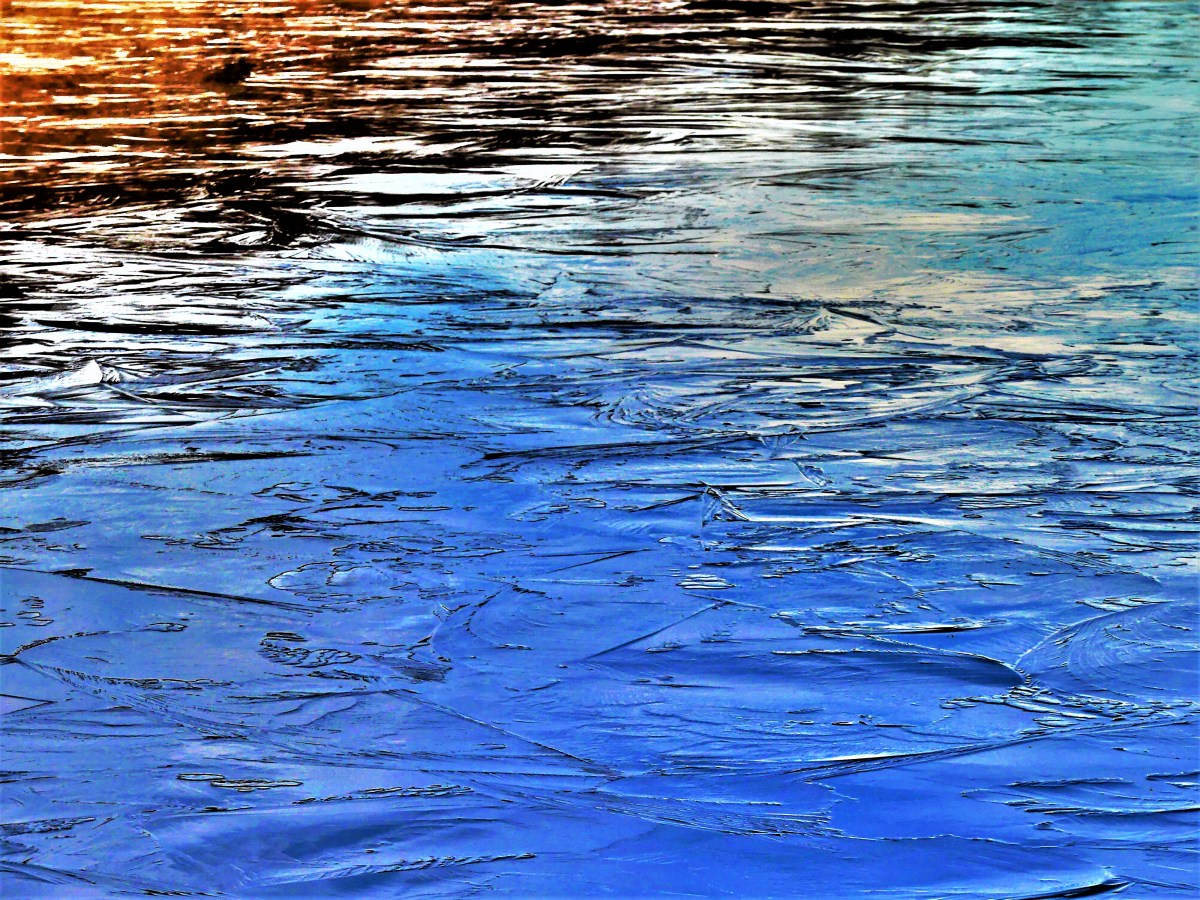
MacMillan Reservoir was partially frozen and dreary…

lake (2)

with the exception of distant water reflections.

frozen reflection

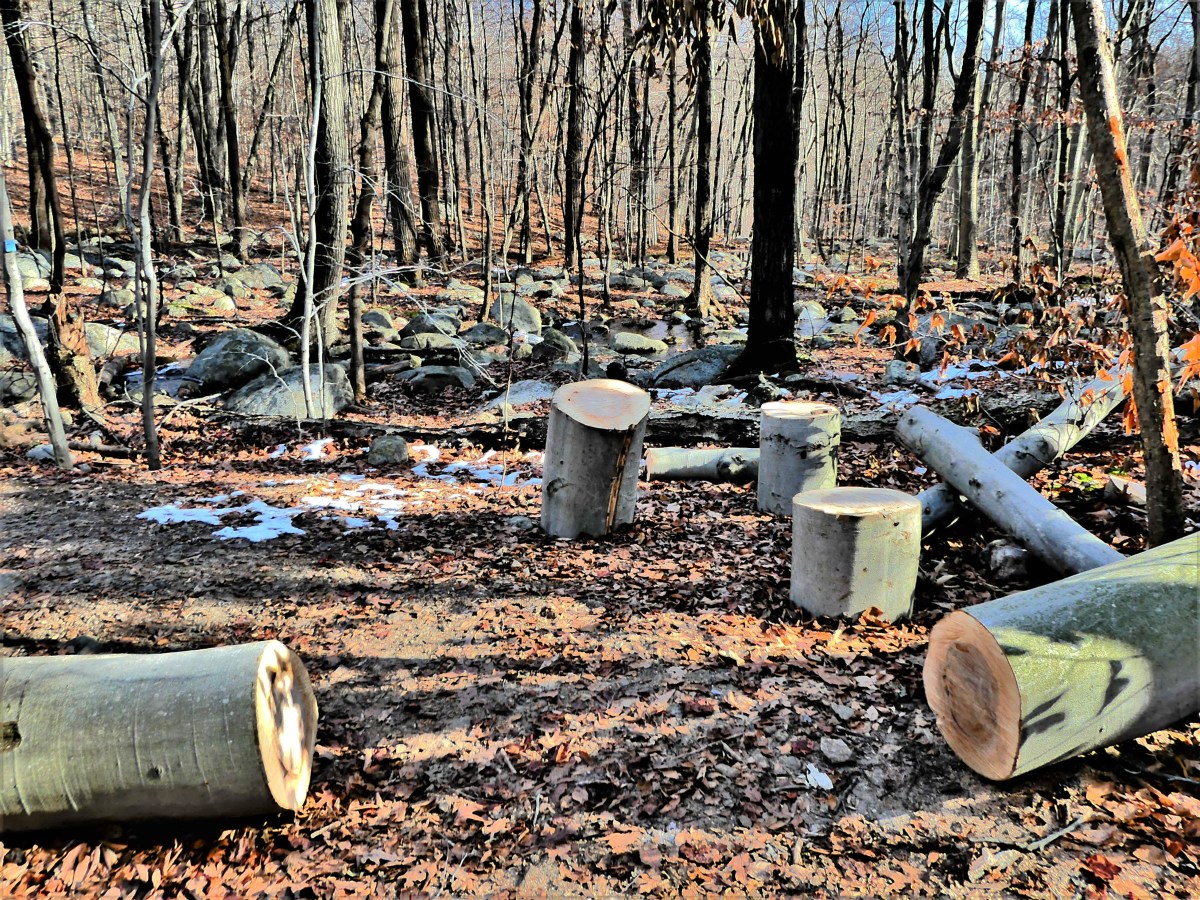
Trails were camouflaged… 

blue trail (2)

by crispy fallen leaves–densely packed and slippery–despite the assortment of Skittles-colored trail blazes nailed to forest saplings.

cut logs

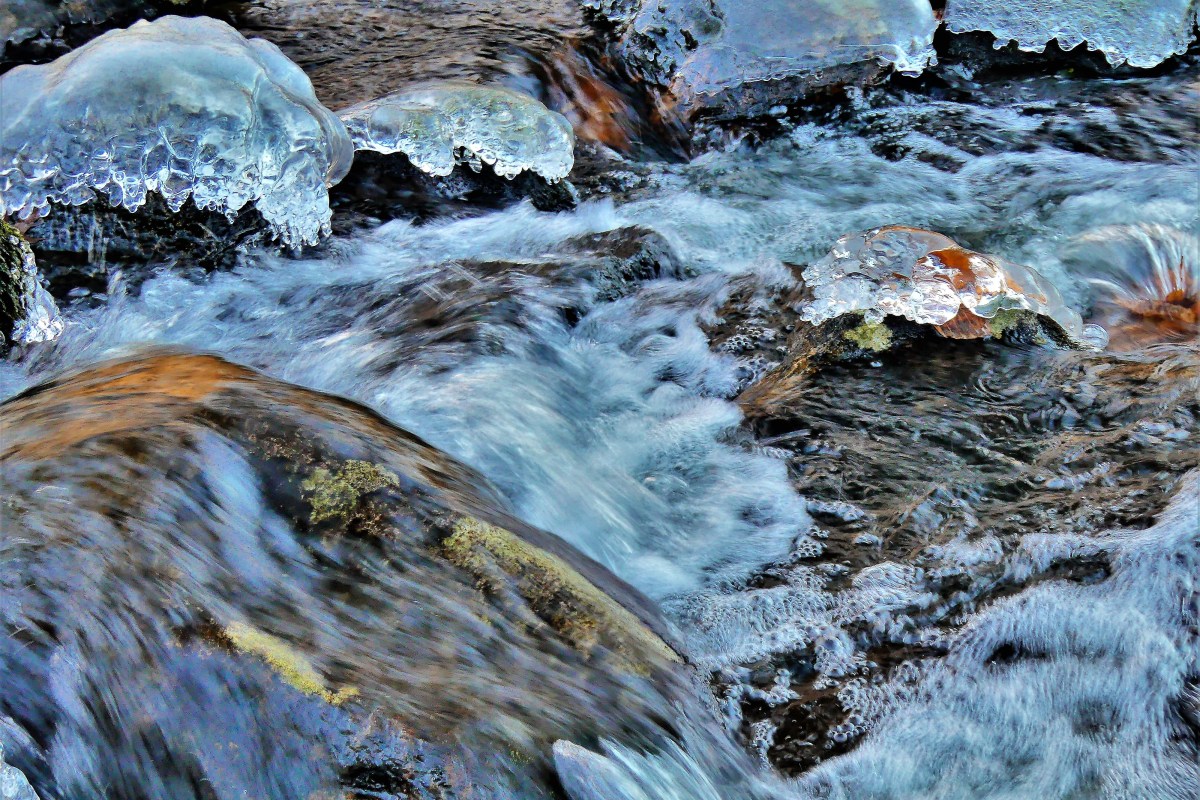
Brooks were running fast and high…

brook flow1 (3)

making each water-crossing challenging and hazardous.

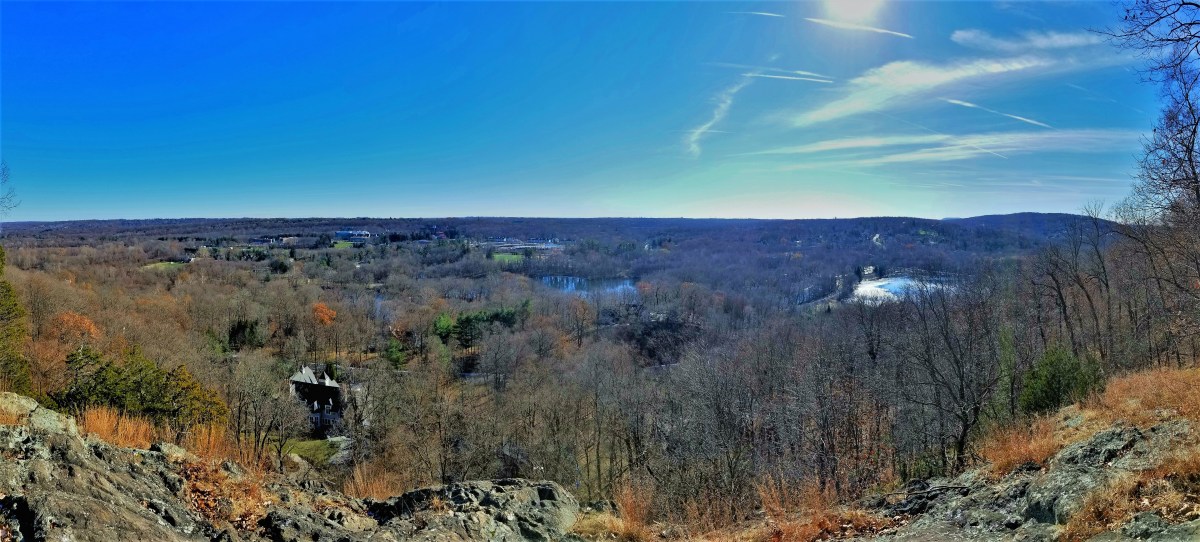
We continued our four-hour excursion with the winds picking up across Campgaw Mountain.

panorama looking east

And it became clear to me that marching through the New Jersey woodlands was not the best birthday present I could have given myself. The cold had already taken its toll on Arlene’s arthritic fingers. Leah, who had recently succumbed to lower back pain and acute Achilles tendonitis was now complaining about her knees.

My knees were also aching from sliding down one too many slippery slopes. Even Doug, the youngest of all of us by at least eleven years had to admit that his right knee was locking up occasionally. The ladies cut their hike short, taking a quick detour to the parking lot, but Doug and I wore our intrepid hats. We continued to the feature waterfall along the Brookside Trail with few delays or complaints…

waterfall

giving us bragging rights to a 7.5 mile accomplishment,

frosty rocks

and leaving me more than ready for my true birthday present to myself: a one-hour Swedish massage at a local day spa, if only to rub my aches and pains away for another day.


Wise Guys

It’s been one year since our visit to Mt. Rushmore, and what could be more American than re-posting this episode on Independence Day…

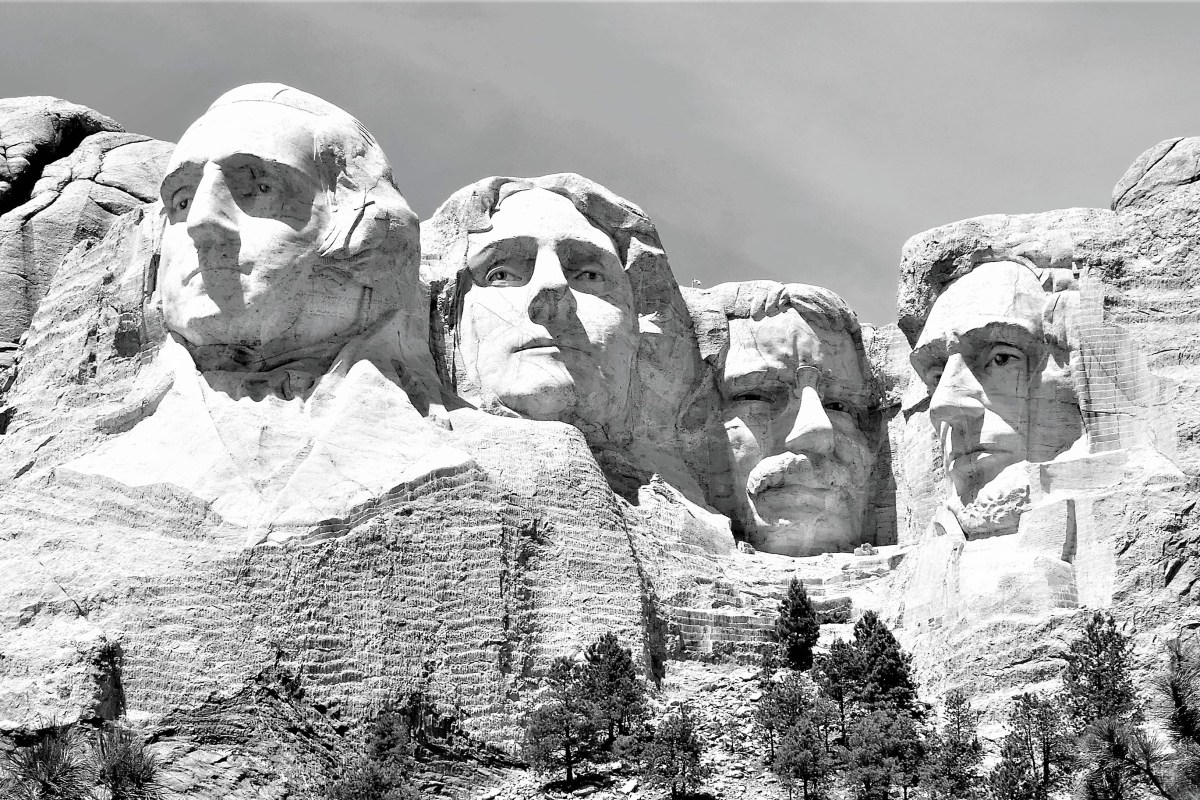
There’s no better way to celebrate the 4th of July, than a trip to Mount Rushmore and the Crazy Horse Memorial. Sure, the crowds were large; that was to be expected. But once the cars were garaged, the pedestrian traffic was easy to negotiate. And with everyone looking up at the mountain, the Presidents’ faces and intentions were never obstructed.

GW

Jefferson

Roosevelt

Lincoln

It was also a time to celebrate family. There were plenty of kids riding in strollers, hanging from moms in carriers, or balancing on dads’ shoulders. Generations of families–many of them immigrants–had gathered to pay homage to the principles of freedom that make our country a beacon for the oppressed and downtrodden.

Seniors were being escorted through the Avenue of Flags by their grandchildren. Extended families organized group pictures at the Grand View Terrace, unified by their love of democracy and their reunion T-shirts.

All expressed awe at Gutzon Borglum’s grand vision and remarkable achievement–the transformation of a mountain into a national symbol visited by approximately 3 million people every year.

long shot

The 14-year process of carving the rock began with dimensionalizing the Presidents’ portraits through Plaster of Paris masks, on view at the sculptor’s studio-turned-museum.

Sculptor's Studio

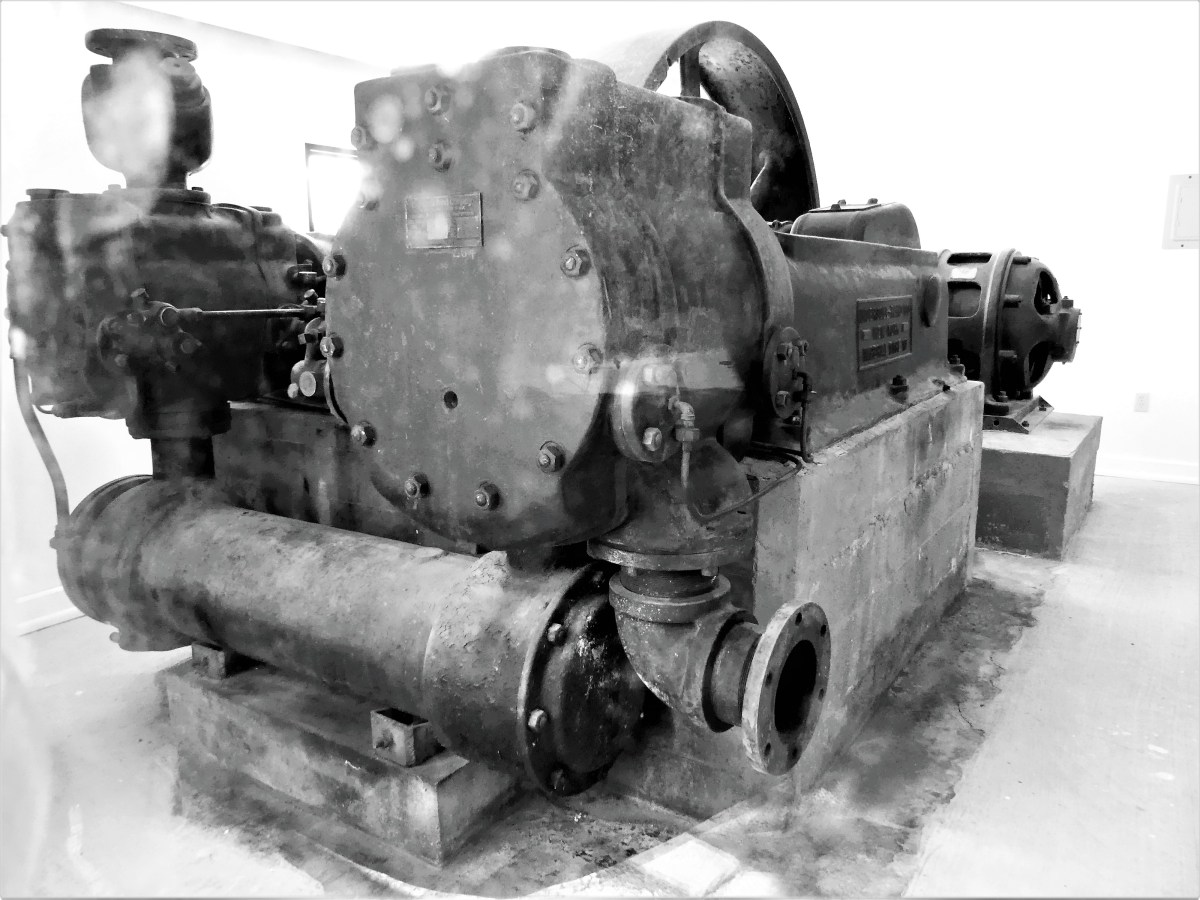
Additional exhibits detail the construction of the memorial, and the tools used by workers, like the original Rand & Waring compressor, which powered the jackhammers for all the finishing work.

compressor

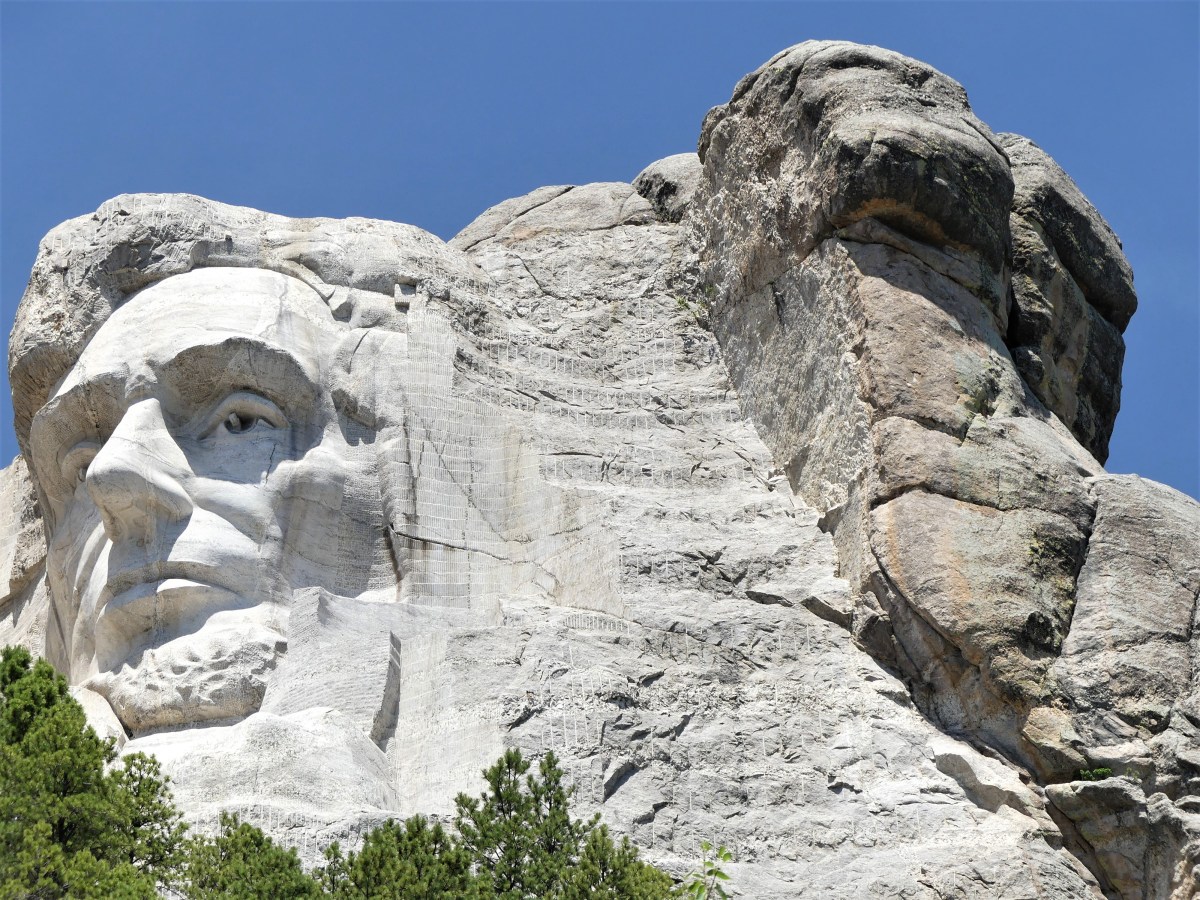
A little known fact is that Mt. Rushmore was once intended to be a tribute to the “Five Faces of Freedom,” but funding ran short when the Congressional appropriation approached $1 million during the Great Depression. Hence, the unfinished carving of the Great Ape to the right of Lincoln serves as a reminder that we are never far from our true ancestors.¹

Planet of the Apes

No less ambitious, and equally as impressive, the Crazy Horse Memorial is a work-in-progress located 16 miles away in the heart of the Black Hills–considered sacred land by the Lakota people.

Crazy Horse LS

Conceived by Korczak Ziolkowski in early 1940s,

crazy horse model (2)

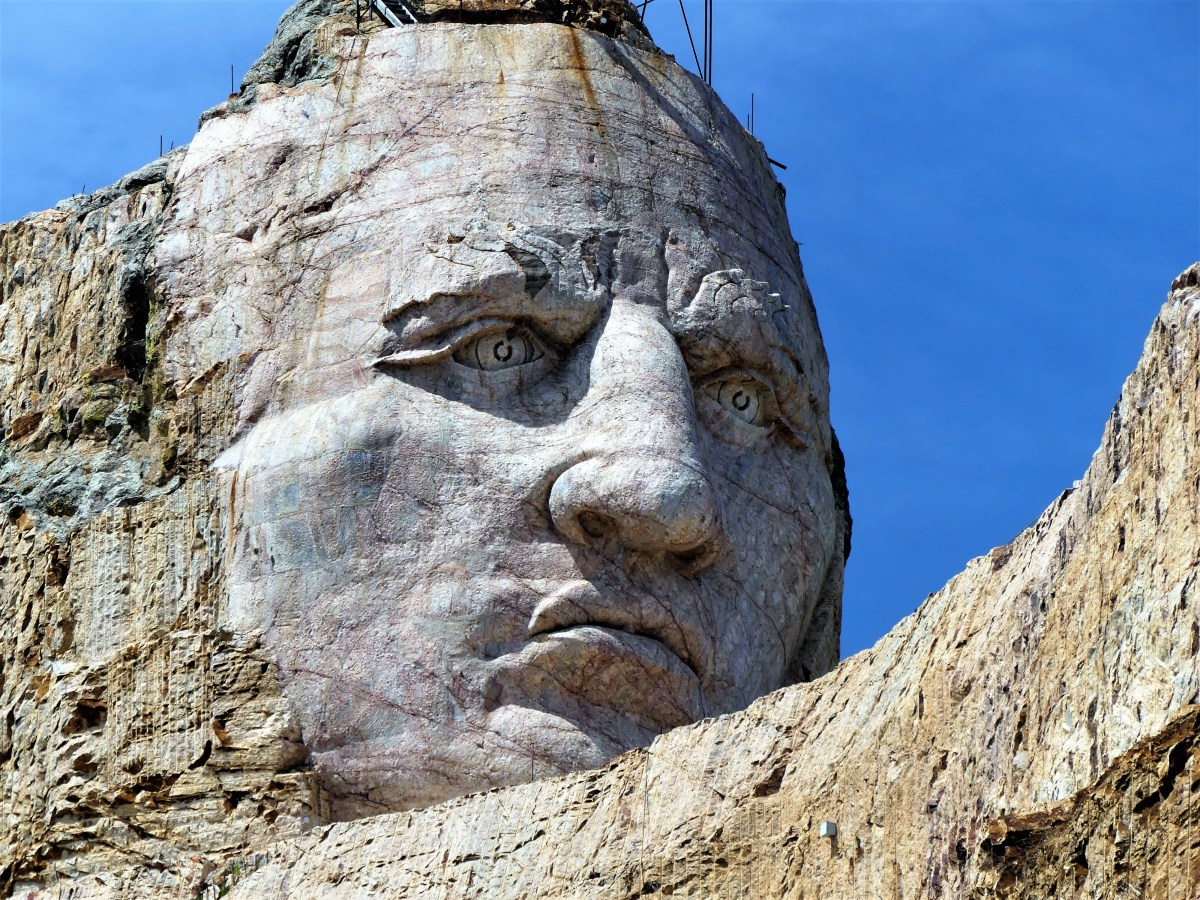
the memorial, when completed will stand 563 ft. by 641 ft. across, and is expected to be the largest sculpture in the world. Already, the completed head of Crazy Horse measures 60 feet tall…

Crazy Horse CU

…twice the size of any of the presidents at Mt. Rushmore. While the first blast was conducted on the mountain in 1947, the current prospects for the memorial are to complete the outstretched arm during the next twelve years. There is no completion date available for the finished carving, which has been financed entirely by private funding since its inception.

Mt. Rushmore was created by a Danish American. Crazy Horse was created by a Polish American. And visitors to both destinations manifest the melting pot that has brought us all together as Americans. It’s our diversity that makes us strong, our ambition and determination that makes us great, and our compassion and sacrifice that make us whole.

These are the values reflected from the faces we’ve immortalized in stone. Yet, we would honor them more by living according to these principles.

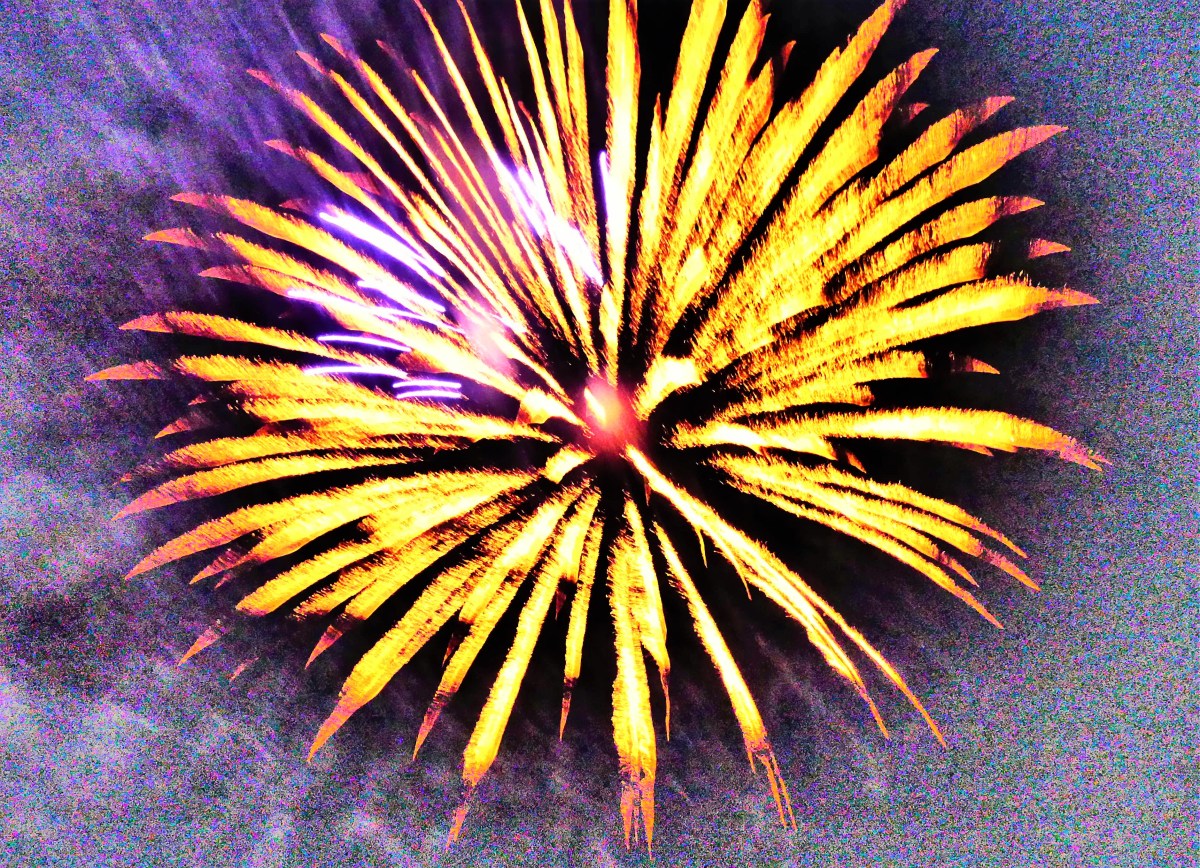
Happy Birthday, America!

fireworks1

¹ Just kidding, but the photograph is real and has not been retouched.

Dynamic Panoramics

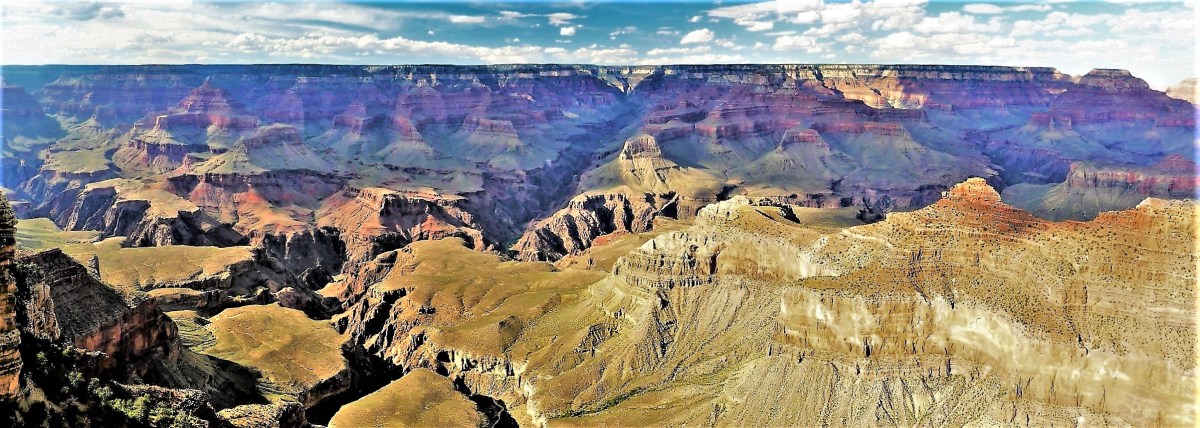
Every so often, when visiting many of the iconic vistas across America, I’d struggle to capture the overwhelming awesomeness of the landscape around me.

Grand Canyon NP
South Rim, Grand Canyon National Park

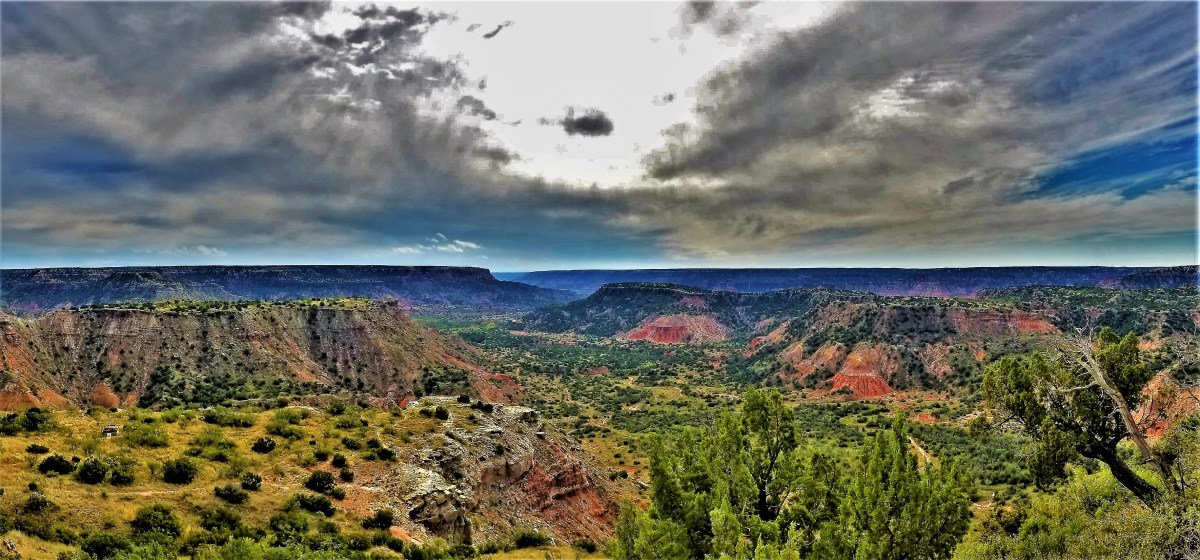
Framing the image through my viewfinder frequently posed a tremendous challenge to adequately represent the expansive angle of the surrounding landscape.

Palo Duro Canyon
Palo Duro Canyon, TX

That’s when I knew it was time to put down my Lumix and pick up my phone.

Mount Victoria, Banff NP
Lake Louise, Banff National Park

By turning to the panorama feature of my Samsung Galaxy S8,

Johnson Ridge, Mt. St. Helens National Monument

I found a tool that brought me closer to recording longer distances.

Zabriskie Point, Death Valley NP
Zabriskie Point, Death Valley National Park

By instantly and seamlessly stitching successive shots with integrated photo-manipulation software,

Iceberg Pass, Rocky Mountain NP
Iceberg Pass, Rocky Mountain National Park

I found another way to express the world around me.

Shenandoah Valley
Blue Ridge Mountains, NC

Panoramas provide an opportunity to share multiple perspectives simultaneously,

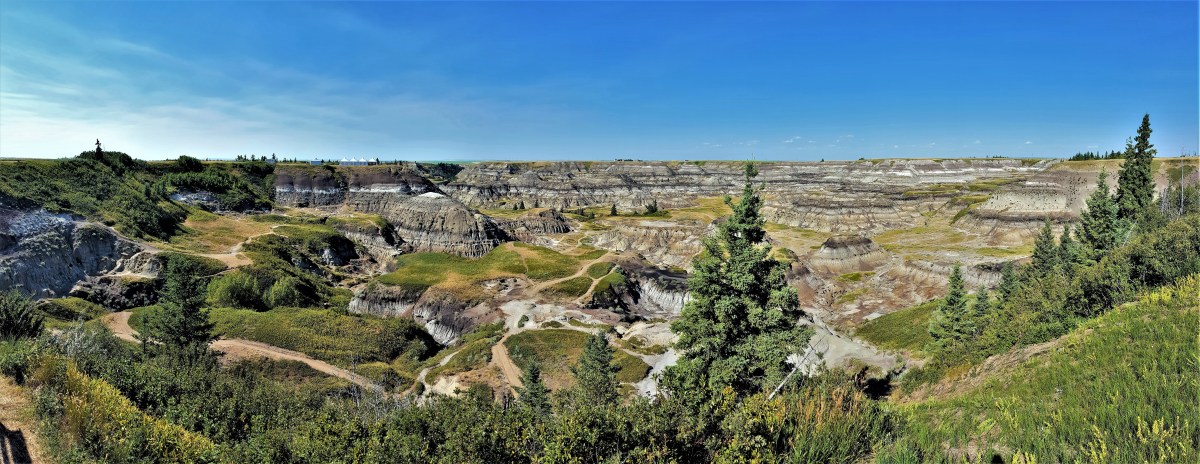
Horseshoe Canyon, Drumheller
Horseshoe Canyon, Drumheller, Alberta

gathering as wide an angle as the scene allows–

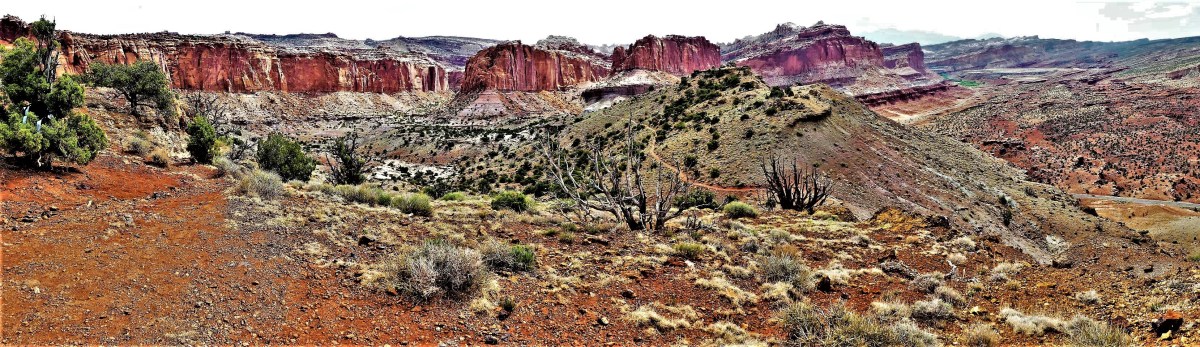
Watermark Vista, Capital Reef NP
Watermark Vista, Capital Reef National Park

–eliminating the frame lines and expanding the aspect ratio to maximum effect.

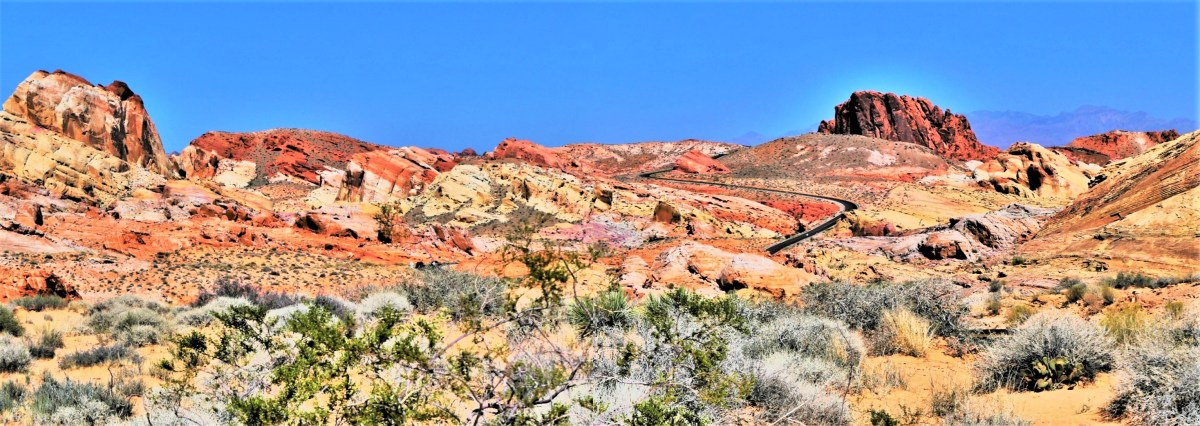
Rainbow Trail, Valley of Fire
Rainbow Trail, Valley of Fire, NV

When used appropriately,

High Bluff, Redwoods NP
High Bluff, Redwoods National Park

whether in color…

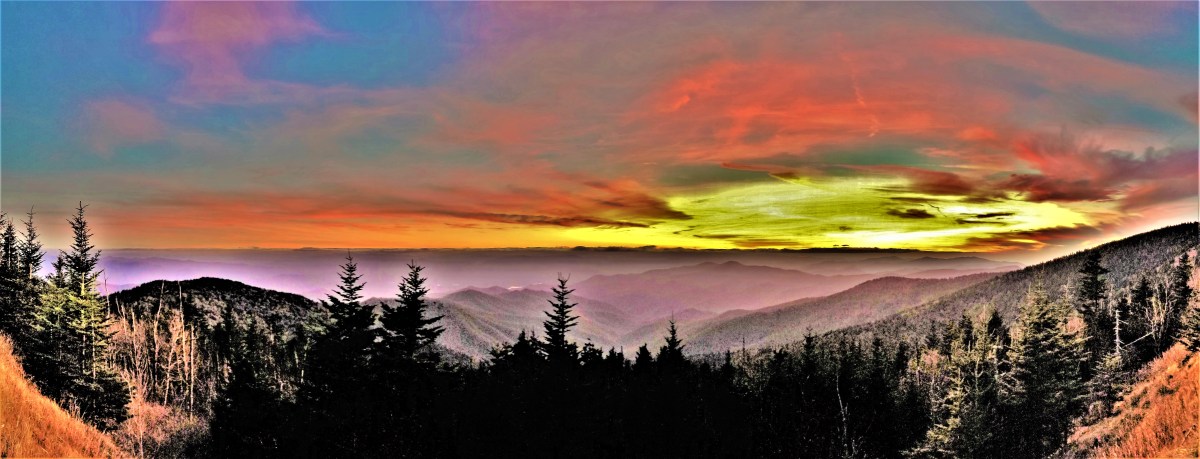
Great Smoky Mountains NP
atop Clingmans Dome, Great Smoky Mountains National Park

or black and white…

Mount Rushmore National Monument
Mt. Rushmore National Monument

there is no better way to establish a field of infinite view without sacrificing the integrity of the image.

Badlands NP panorama
Badlands National Park

Conversely,

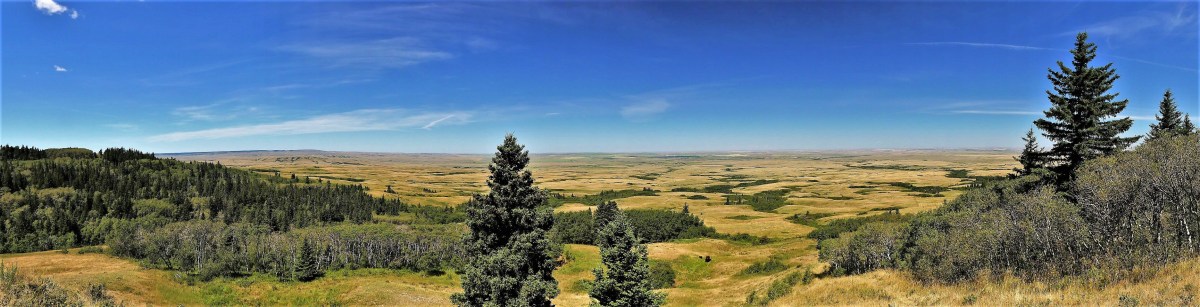
Bald Butte, Cypress Hills PP
Bald Butte, Cypress Hills Provincial Park, Saskatchewan

a case can be made for showcasing the apparent aberrations and distortions that can arise from difficulty interpolating the multiple parallax points across a scene,

Cinder Cone Crater, Lassen Volcanic NP
Cinder Cone Crater, Lassen Volcanic National Park

thus creating something unique and/or imaginary.

Athabasca River, Jasper NP.jpg
Athabasca River, Jasper National Park

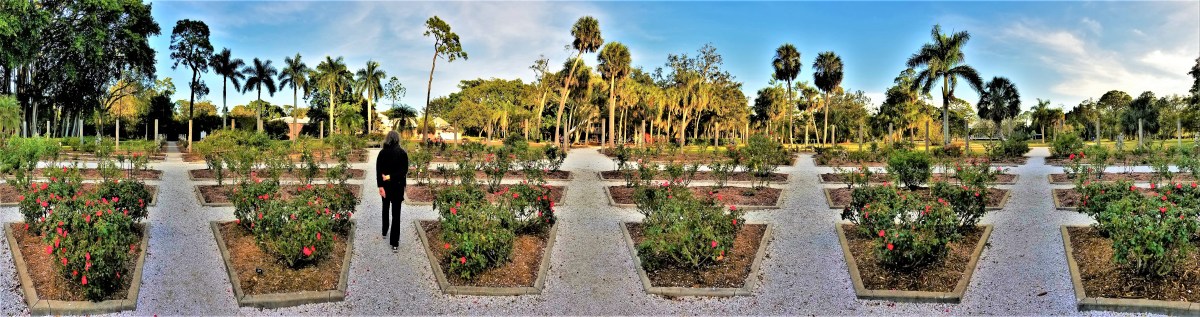
For instance, flattening a circular garden path…

Mable's Rose Garden of Ca'd'zan, Sarasota
Mable’s Rose Garden of Ca’d’Zan, Sarasota, FL

or warping a linear edifice.

Crescent Hotel, Eureka Springs, AR

Additionally,

Cedar Pass, Badlands, NP
Cedar Pass, Badlands National Park

by stepping away from the camera,

Bryce NP, Amphitheater
Amphitheater, Bryce Canyon National Park

and freeing oneself from the single-mindedness of staring,

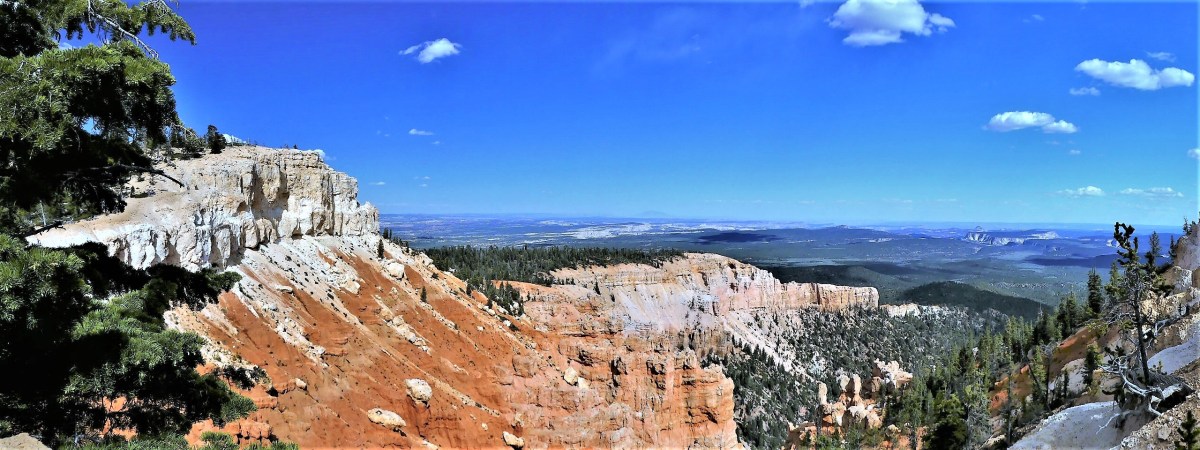
Bryce NP, Yav Point
Bryce Canyon National Park

focusing,

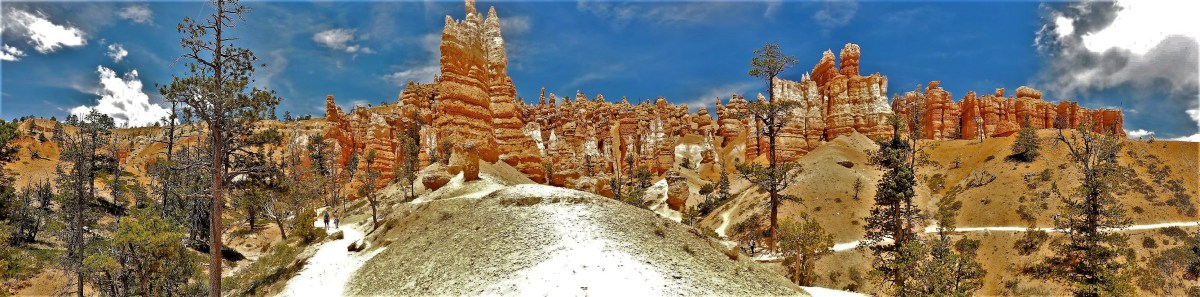
Bryce NP, Queen's Garden
Queen’s Garden, Bryce Canyon National Park

composing through a viewfinder,

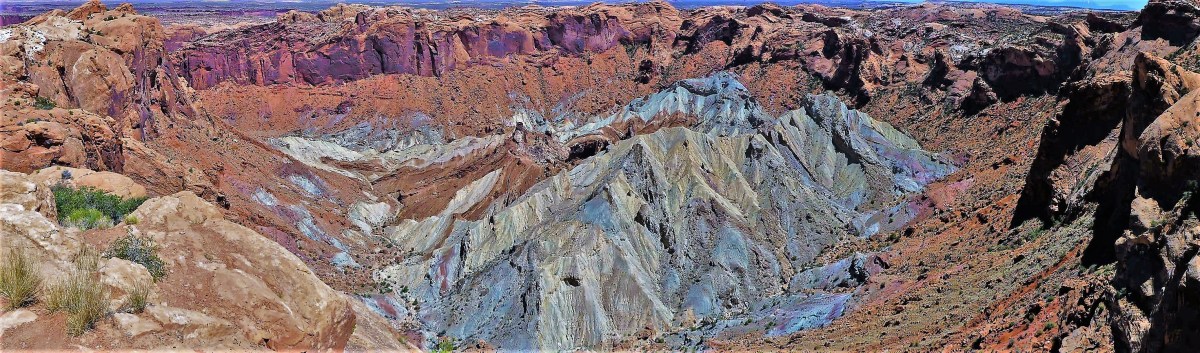
Canyonlands, NP Crater
Upheaval Dome, Canyonlands National Park

a feeling of liberation arises,

El Capitan and Cathedral Mountain, Yosemite NP
El Capitan and Cathedral Rock, Yosemite National Park

which can also deliver a moment of greater clarity of vision…

Waterfowl Lake, Jasper NP
Waterfowl Lake, Jasper National Park

and kinetic connectedness to the photograph,

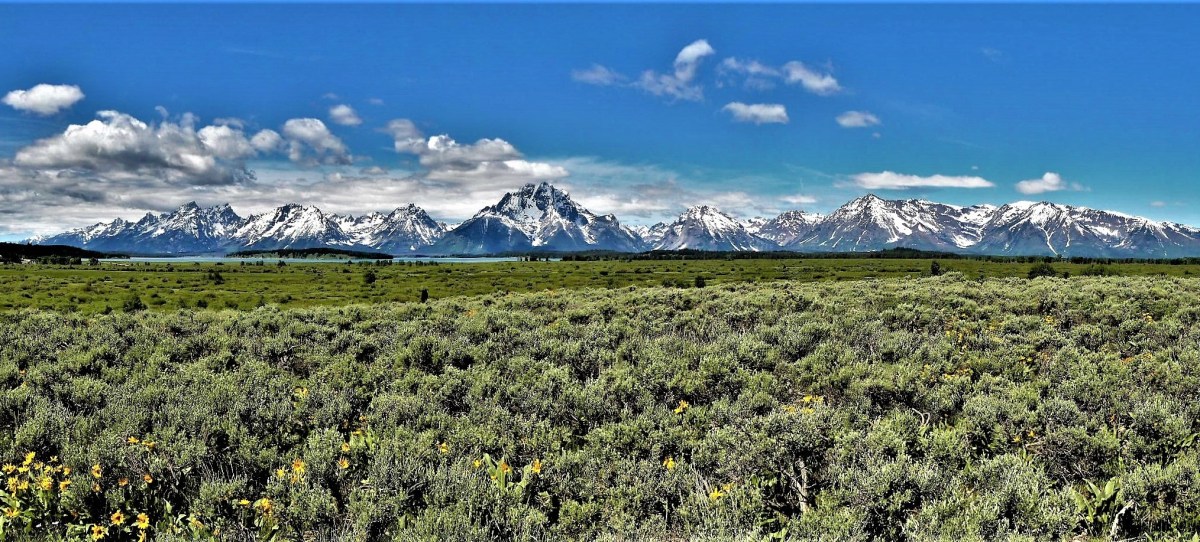
Grand Tetons NP
Grand Tetons National Park

as the body slowly rotates to encapsulate the scene.

Rainbow Curve, Rocky Mountain NP
Rainbow Curve, Rocky Mountain National Park

What follows is a retrospective of panoramic images of some of my favorite places,

Painted Desert, Petrified Forest NP
Painted Desert, Petrified Forest National Park

in an attempt to convey the diversity,

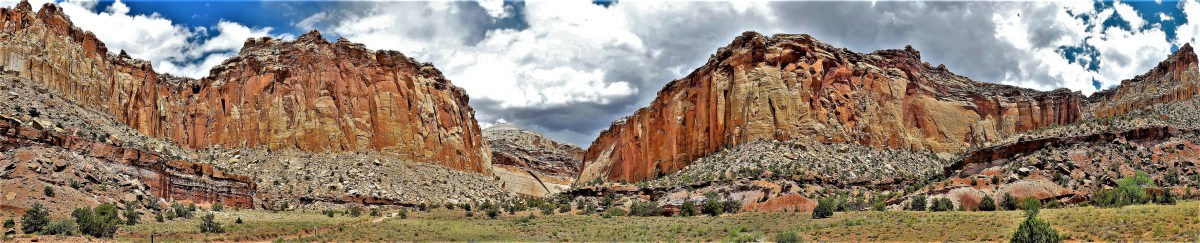
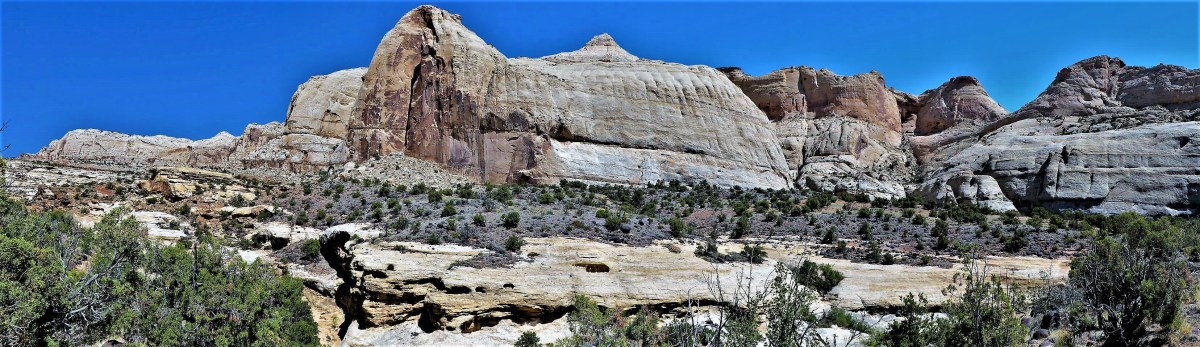
panarama scenic canyon (2)
Capitol Gorge, Capitol Reef National Park

and beauty of wide-open spaces across America,

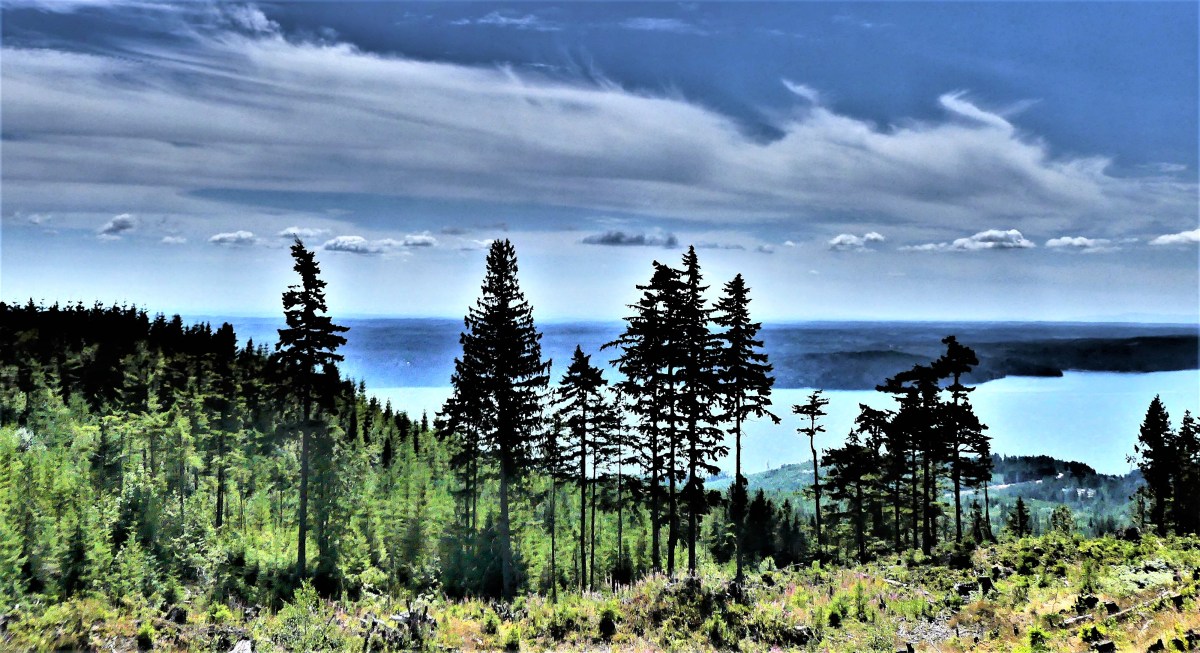
Olympia NP, Hood Canal.jpg
Hood Canal, Olympic National Park

albeit,

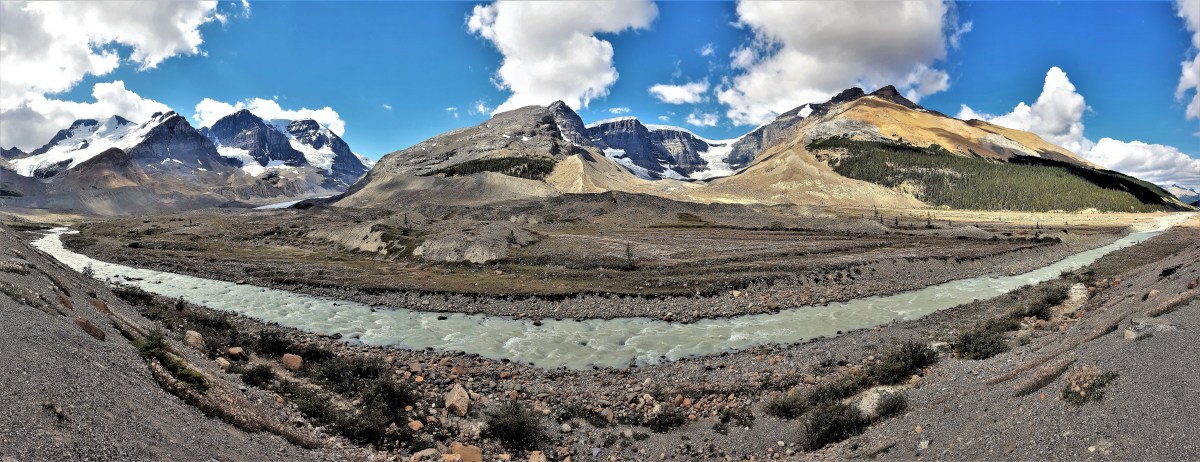
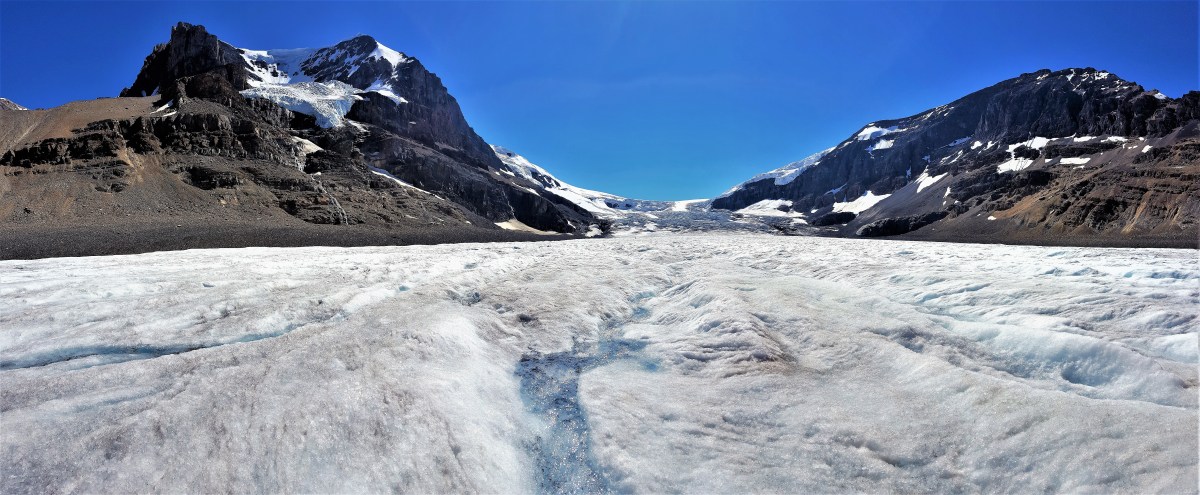
Athabasca Glacier
Athabasca Glacier, Columbia Icefield

with a word of advice:

Lake 4, Jasper NP
Lake 4, Jasper National Park

Although this post can be enjoyed on a mobile device,

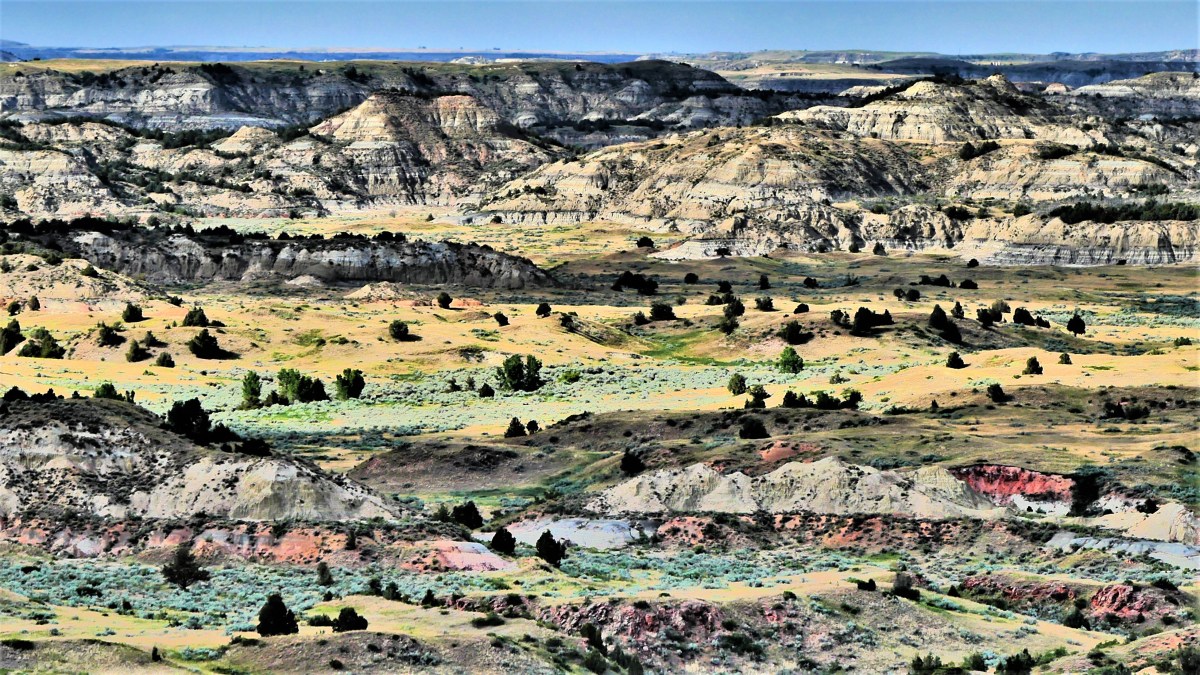
Painted Canyon, Theodore Roosevelt NP
Painted Canyon, Theodore Roosevelt National Park

many of the images are rich in detail,

Olympia NP, Olympic Peninsula
Olympic Peninsula, Olympic National Park

and are best viewed on a larger screen…
Navajo Knob, Capital Reef NP
Navajo Knob, Capital Reef National Park

to better take advantage of the breadth,

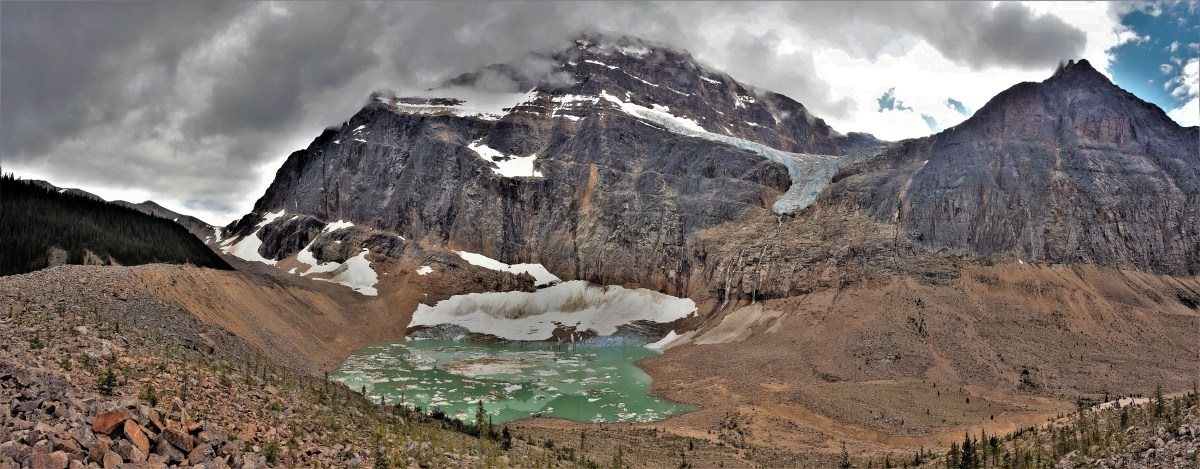
Mt. Edith Cavell, Jasper NP
Mt. Edith Cavell, Jasper National Park

the scope,

Moro Rock, Sequoia NP
Moro Rock, Sequoia National Park

the scale,

Louise Lake, Mt. Ranier NP
Louise Lake, Mt. Ranier National Park

and enormity of the subjects.

Joshua Tree, NP
Joshua Tree National Park

Also,

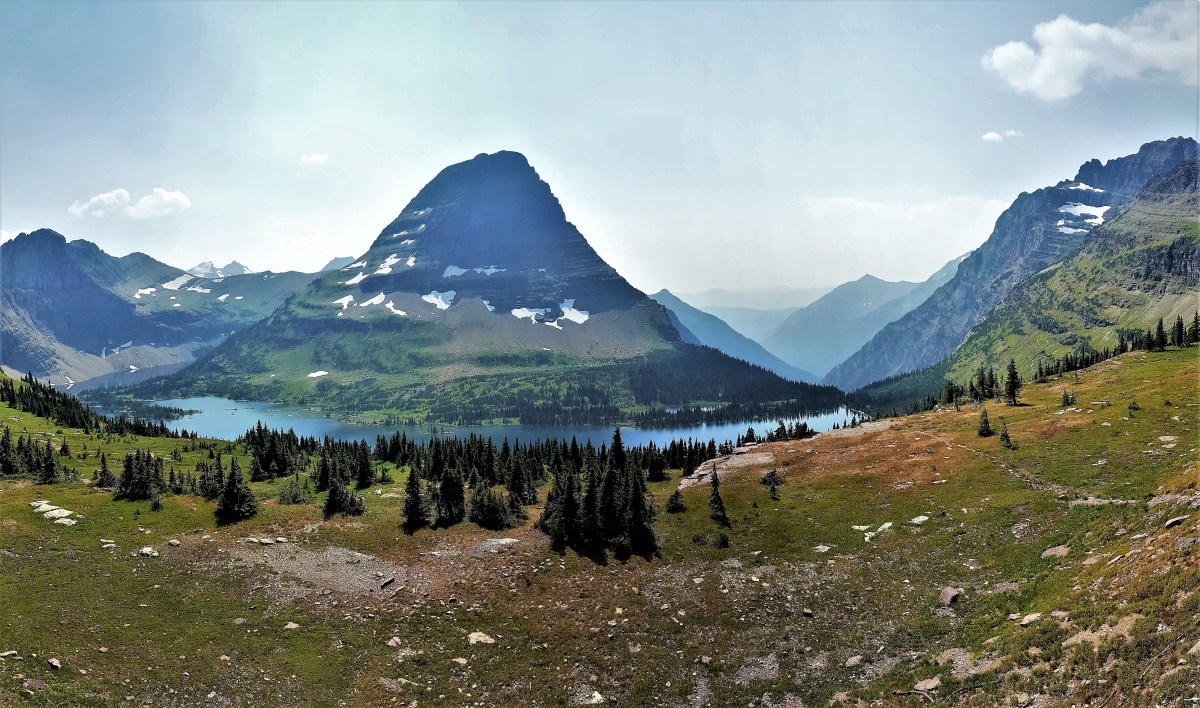
Bearhat Mountain & Hidden Lake, Glacier NP
Bearhat Mountain & Hidden Lake, Glacier National Park

my apologies in advance to those who are downloading on slow networks,

Gooseneck Overlook, Canyonlands, NP
Gooseneck Overlook, Canyonlands, National Park

for the generous number of photographs with large data files…

Forest Canyon, Rocky Mountain NP
Forest Canyon, Rocky Mountain National Park

may make it seem like an eternity before everything eventually loads.

Garden Wall, Glacier NP
Garden Wall, Glacier National Park

But such is the case when shooting a photograph.

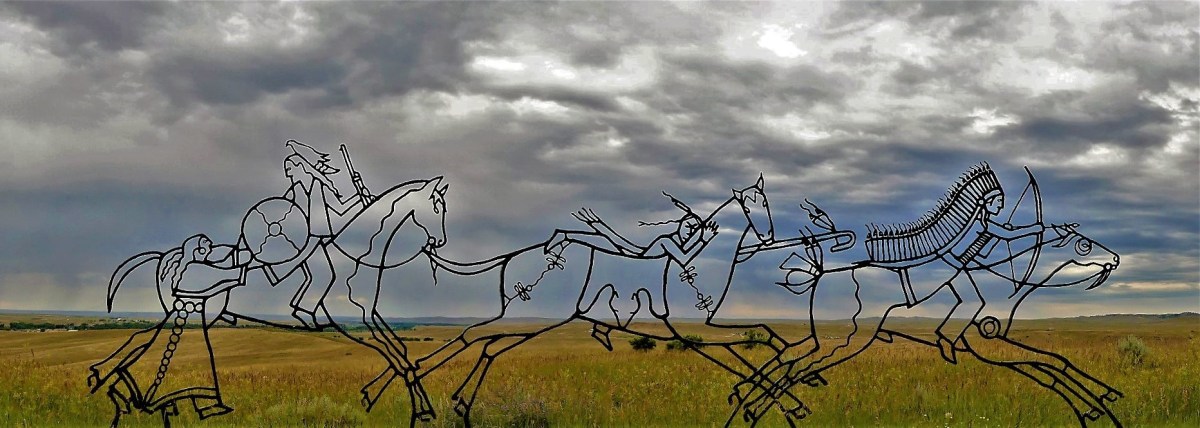
Custer Battlefield National Memorial

The virtue of patience…

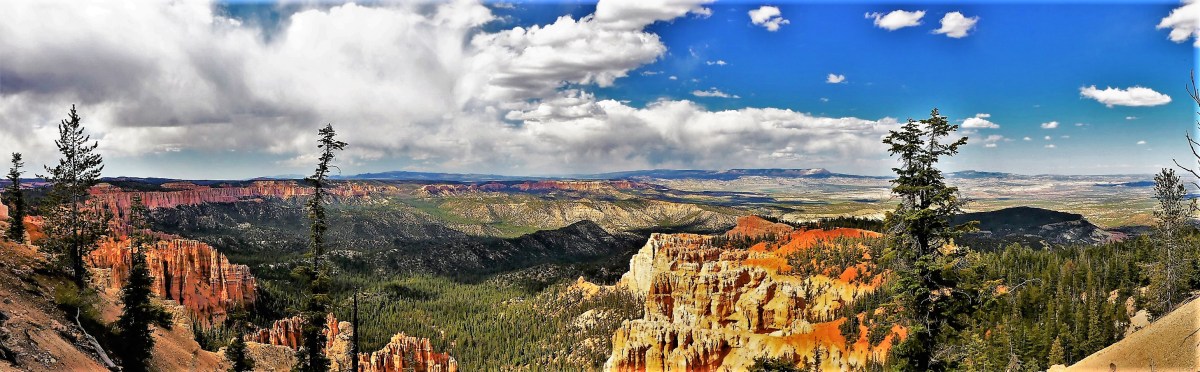
Bryce Canyon
Yav Point, Bryce Canyon National Park

is ultimately rewarded…

Blue Mesa, Petrified Forest NP
Blue Mesa, Petrified Forest National Park

by the satisfaction of knowing that the final image can finally be appreciated.

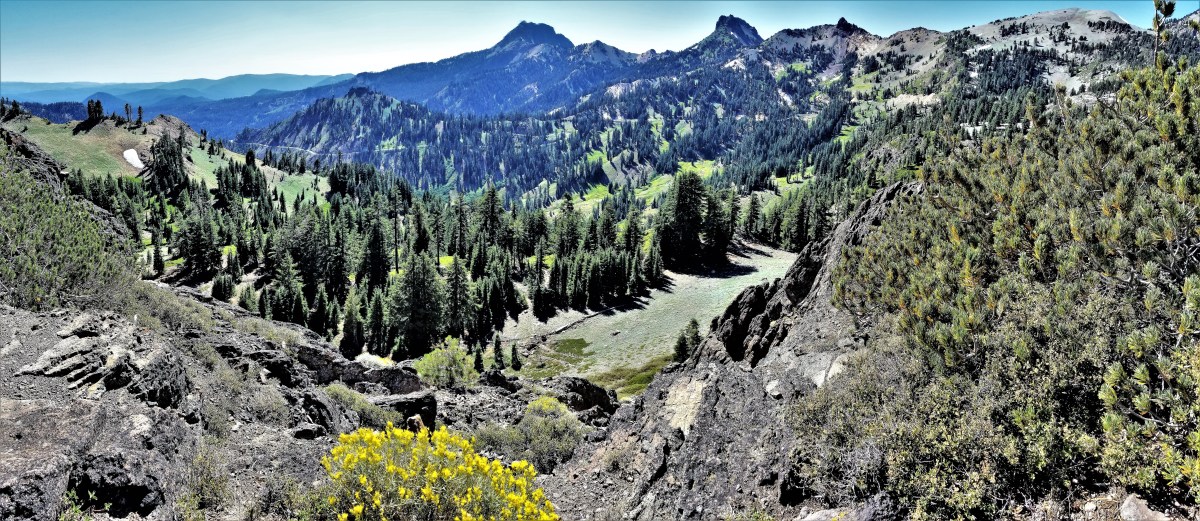
Brokeoff Mountain, Lassen Volcanic NP
Brokeoff Mountain, Lassen Volcanic National Park

The Denim King

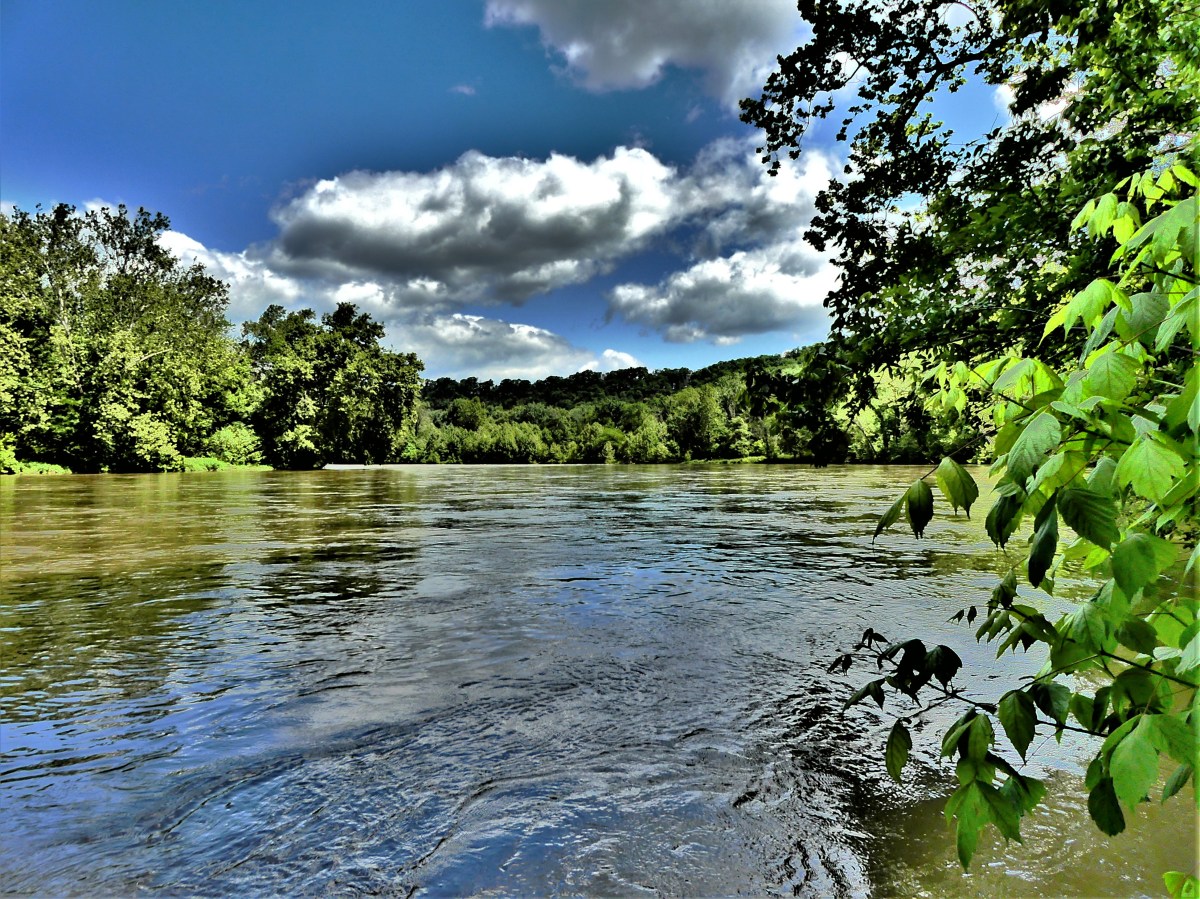
Starting from Shenandoah River State Park…

the Shenandoah

and completing the 105-mile drive through Shenandoah National Park’s Skyline Drive from Front Royal to its southern terminus…

park map (2)
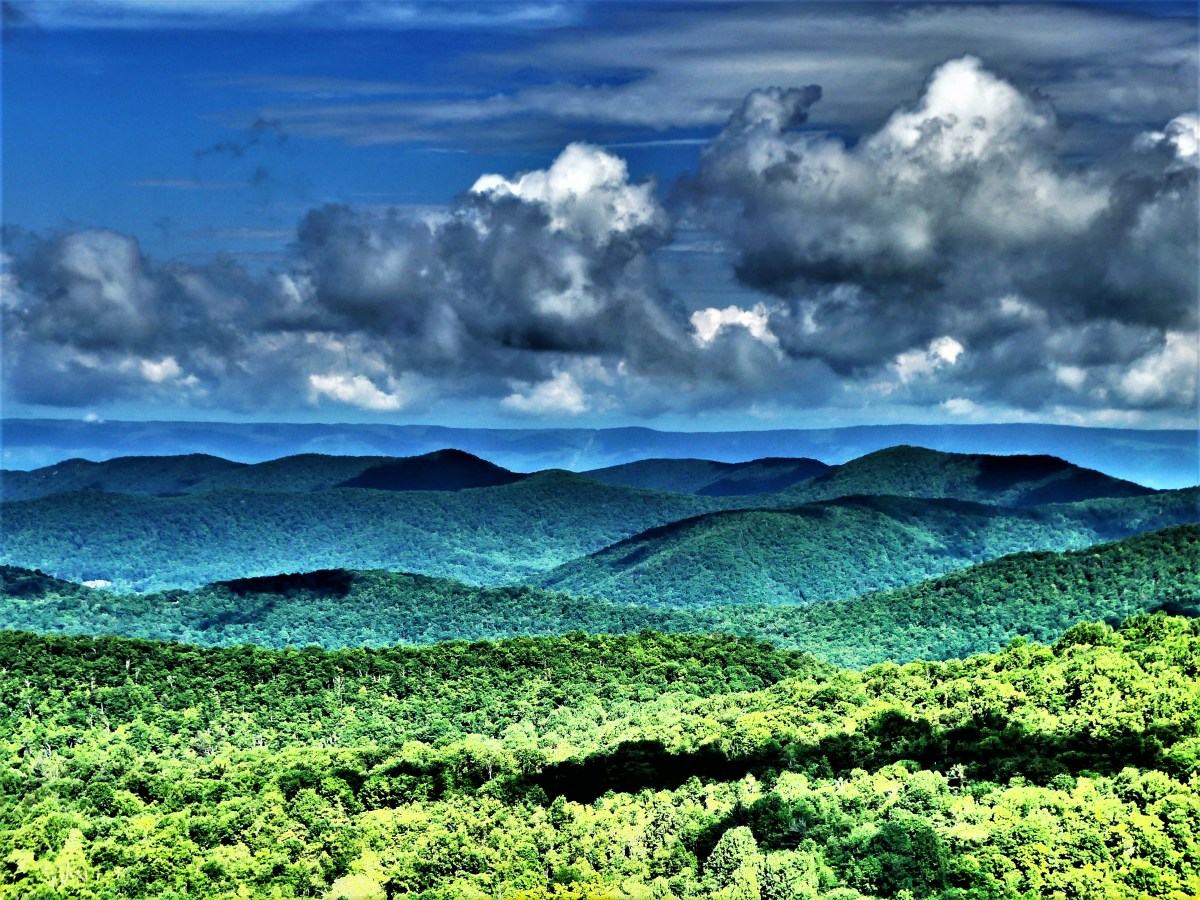
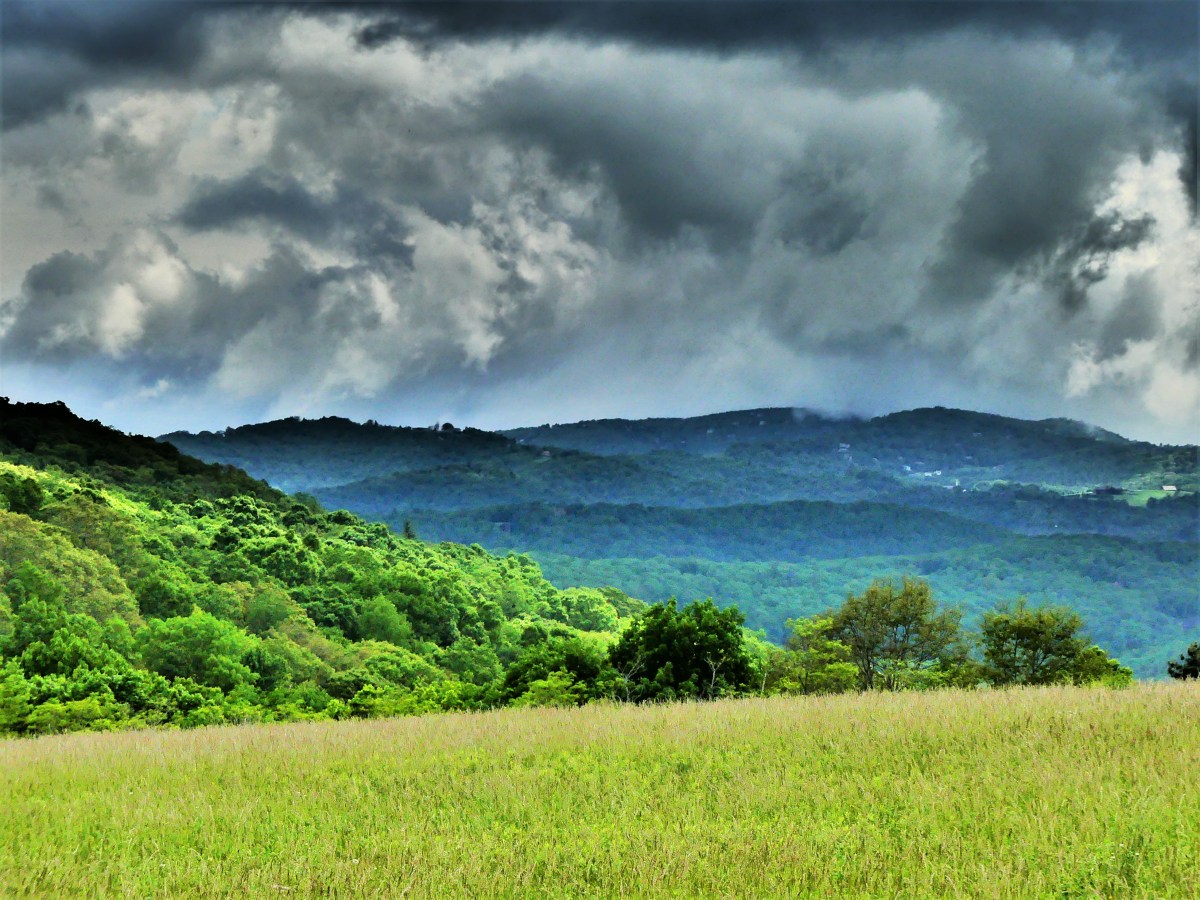
exposed us to more rain in 4 days than we had seen in all of one year on the road. There were moments when the deluge abated long enough to give us broken clouds and glimpses from some of the nearly seventy overlooks of the infinite Piedmont range to the east…

Thorton Hollow Overlook

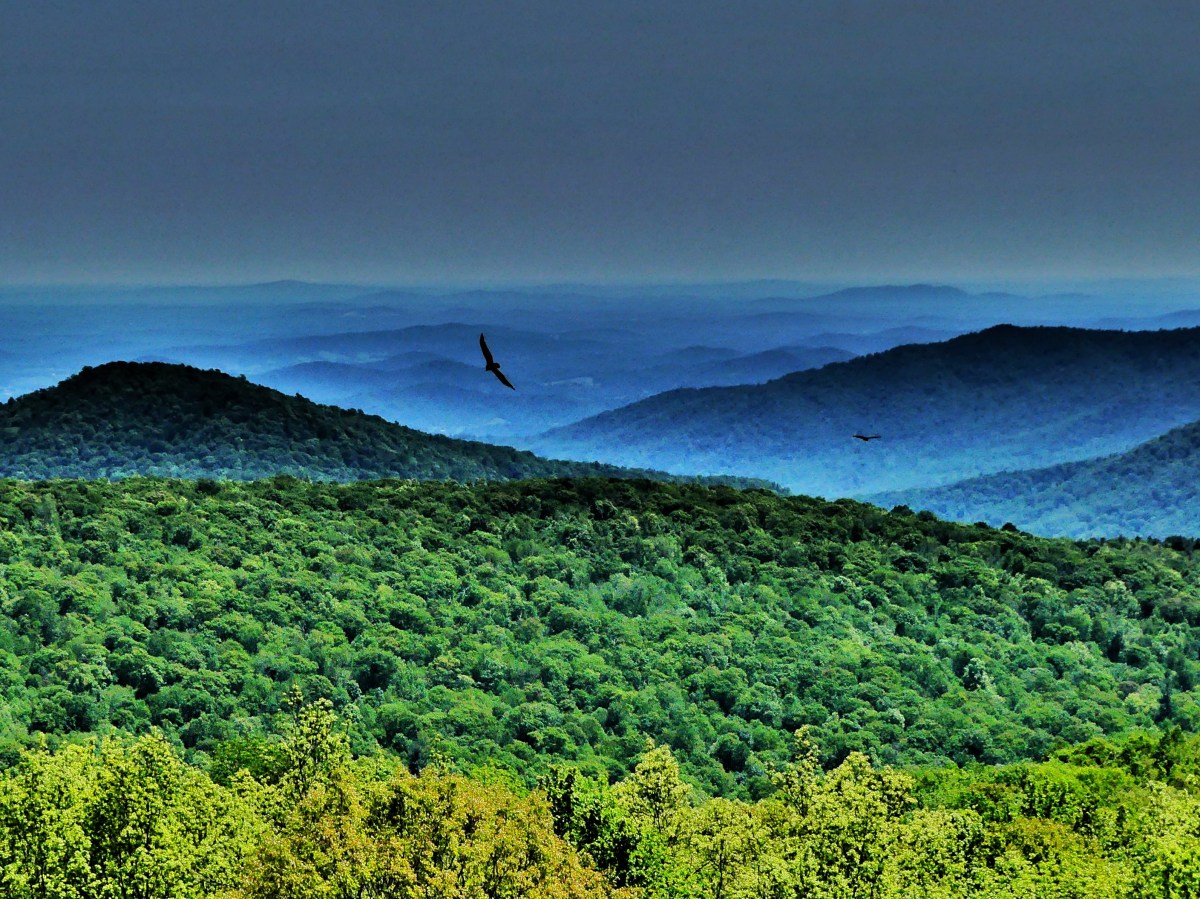
and the Shenandoah Valley to the west.

green to blue infinity

But mostly, we held our breath as we rolled along the two-lane ribbon of asphalt that wound around the mountains and climbed through a fog and cloud cover so dense at times that Leah and I asked ourselves if our summary road trip on the way to retiring the Airstream could literally be a watershed event.

Our travel plans were non-negotiable, as campgrounds had been prepaid along Skyline Drive and the first 300 miles of the connecting Blue Ridge Parkway before we’d exit eastbound toward Charlotte. We had given ourselves this time aboard the Airstream as a last hurrah–a chance to enjoy one more trip and indulge in driving one of America’s great “scenic” byways.

A moving van brimming with our belongings was awaiting departure from New Jersey to Florida, and slated for delivery by the first Monday in June while we slogged through foul weather on our way to Huntersville, North Carolina where our Airstream was destined for dry dock until the following year, giving us ample time to put our St. Augustine house in order and acclimate to Florida living.

Meanwhile, current weather stats revealed that remnants from Alberto (the first official storm of the 2018 hurricane season) had dumped over eight inches of rain along our travel route, punishing nearby dams and washing out essential bridge footings ahead of us, but we dutifully soldiered on, imagining the glorious views that would be to our left and our right.

Every so often, we’d take a break from our mountain miasma, and venture into the valley to escape the cloudburst and capture some of the local color (see A Touch of Blue and Mount Airy, NC), only to return to the Airstream and listen to the downpour pelting the roof like a torrent of bullets.

At times, we’d have a moment of clarity, like when we reached Mabry Mill at Milepost 176 (see Favoritism) and stopped to gawk at red-tailed hawks as they danced atop the thermals,

dancing hawks (2)

but it would be another hundred miles of slogging through doomsday rain before we’d catch another break from the storm.

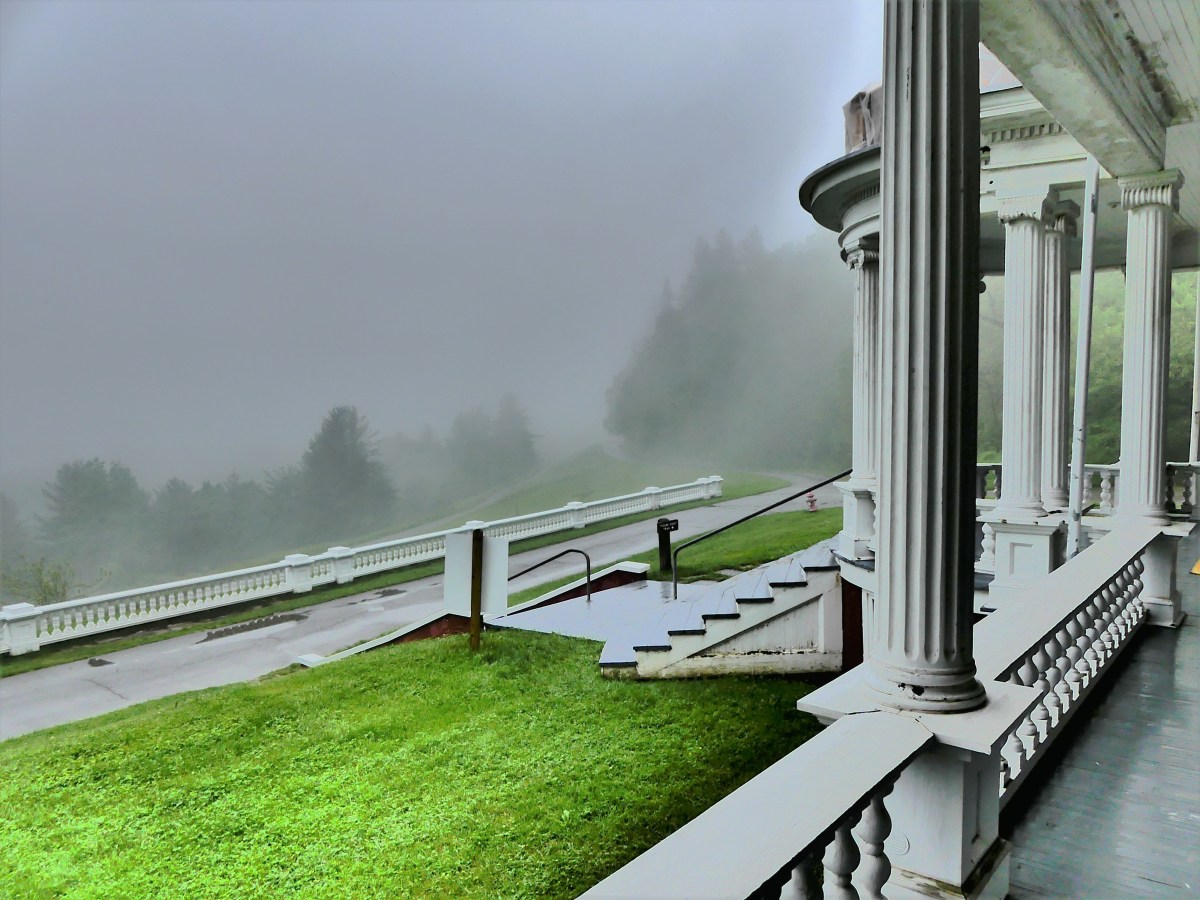
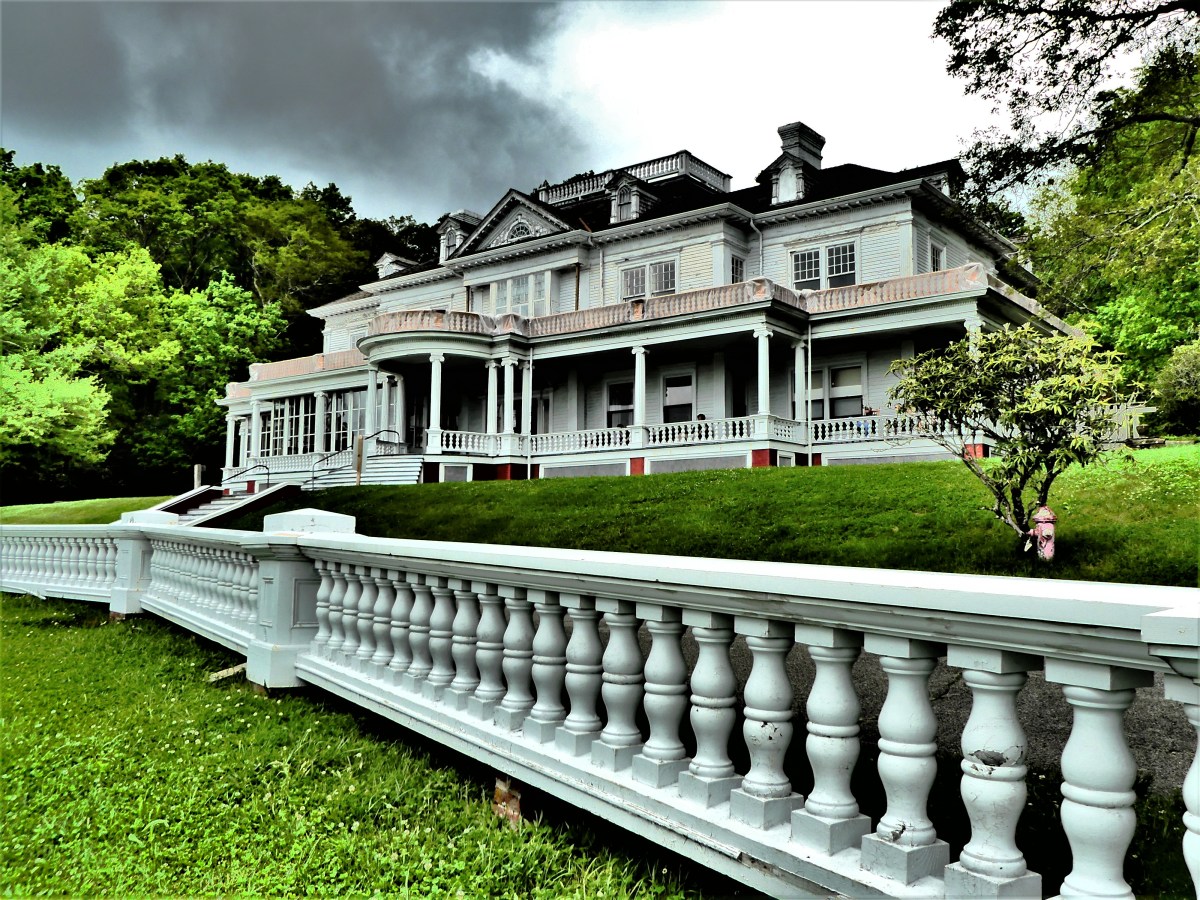
Eventually, we disengaged the Airstream at Price Park Campground near Blowing Rock, North Carolina, and backtracked to investigate Flat Top Manor, a 23-room, 13,000 square foot national historic landmark…

porch.jpg

and once the summer home of Moses Cone, son of German Jewish immigrants originally named Kane,

Cone manor.jpg

and aptly nick-named the The Denim King, for Moses and his closest brother Ceasar dominated the textile industry by acquiring and building manufacturing mills throughout the deep South, becoming the world leader in denim, flannel, and corduroy fabric production, and the sole supplier to Levi Strauss for its “501” brand jeans. Moses Cone, entrepeneur, conservationist and philanthropist had led the South to the Promised Land.

Moses and Bertha built their mansion at the turn of the 20th-century for $25,000 with every modern convenience of the time, despite their 20-mile distance from the nearest railhead, and the remoteness of North Carolina’s Blue Ridge Mountains.

storm brewing

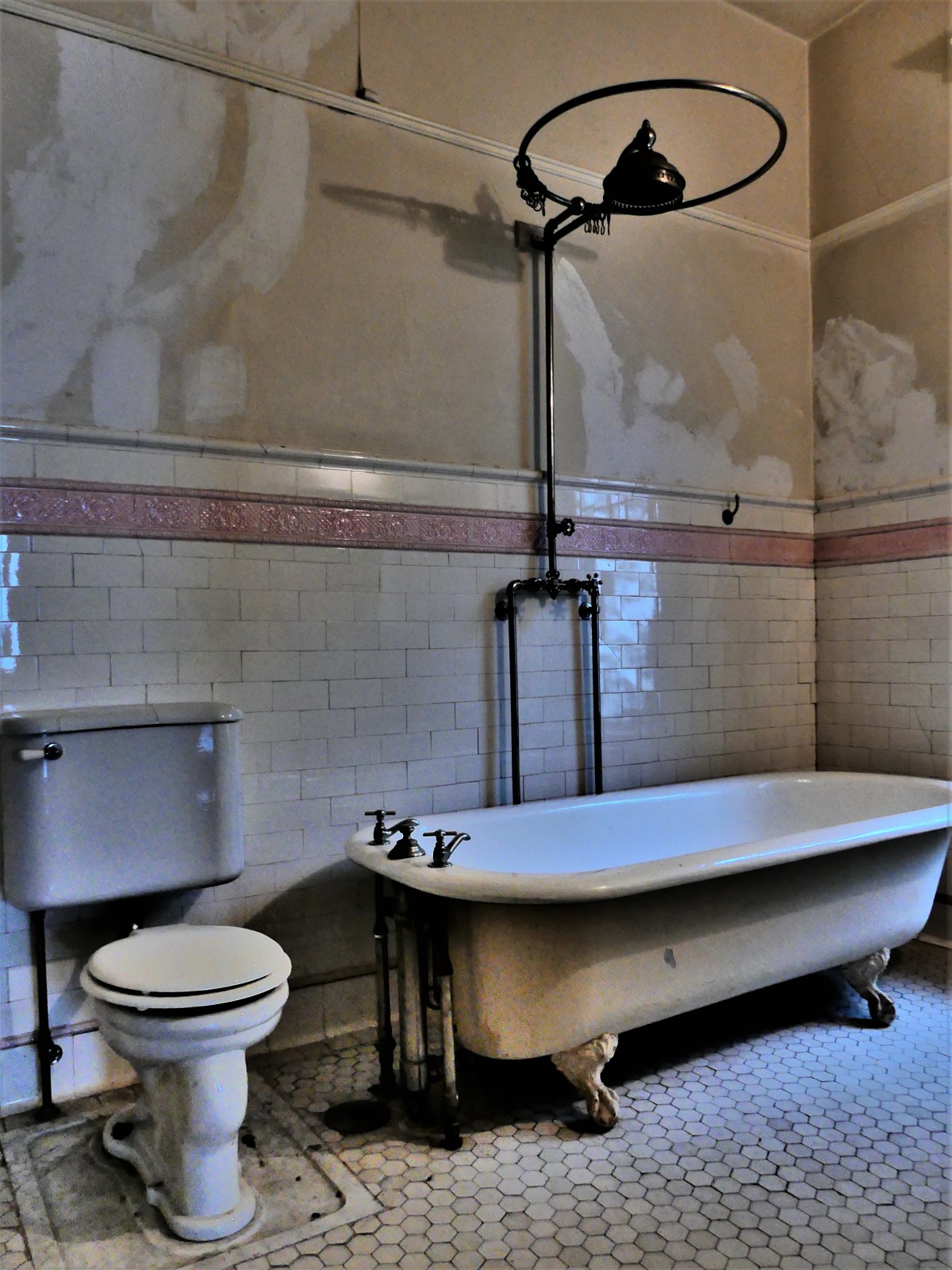
The couple (they never had children) enjoyed central heating, indoor plumbing, telephone, and gaslight–for Bertha eschewed electric light–disliking its unnatural glow and how it affected her skin tone. However, years later, after the death of Moses in 1908, she allowed electricity into the house, replacing the blocks of ice once cut and carried from Bass Lake with a food refrigeration system supplemented by one light bulb in the basement pantry.

pantry

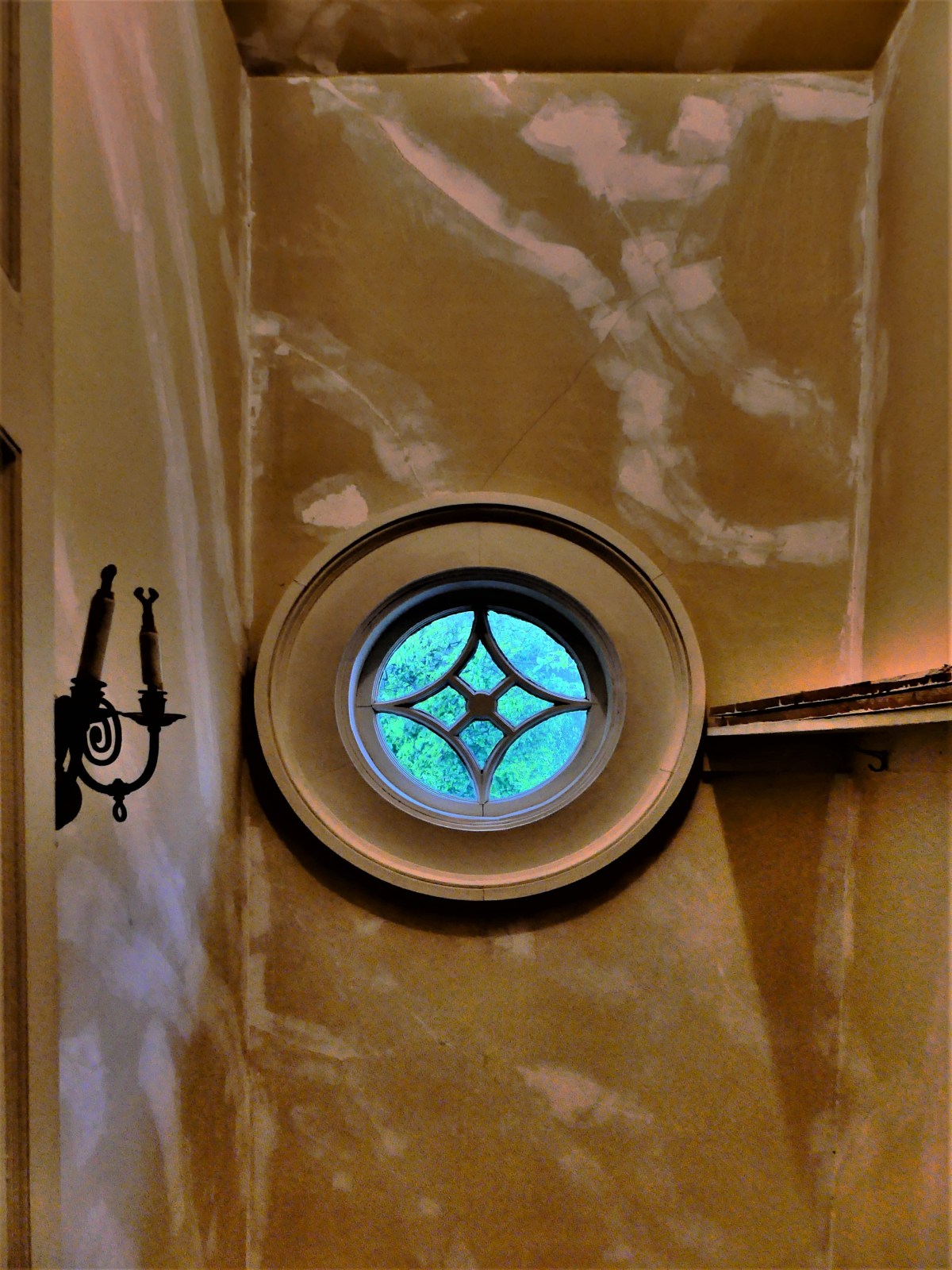
The house stands empty, and appears unfinished. No furniture accentuates its over-sized rooms, and cracks have ravaged once-smooth walls.

master bath

closet window

But there are notable wall decorations…

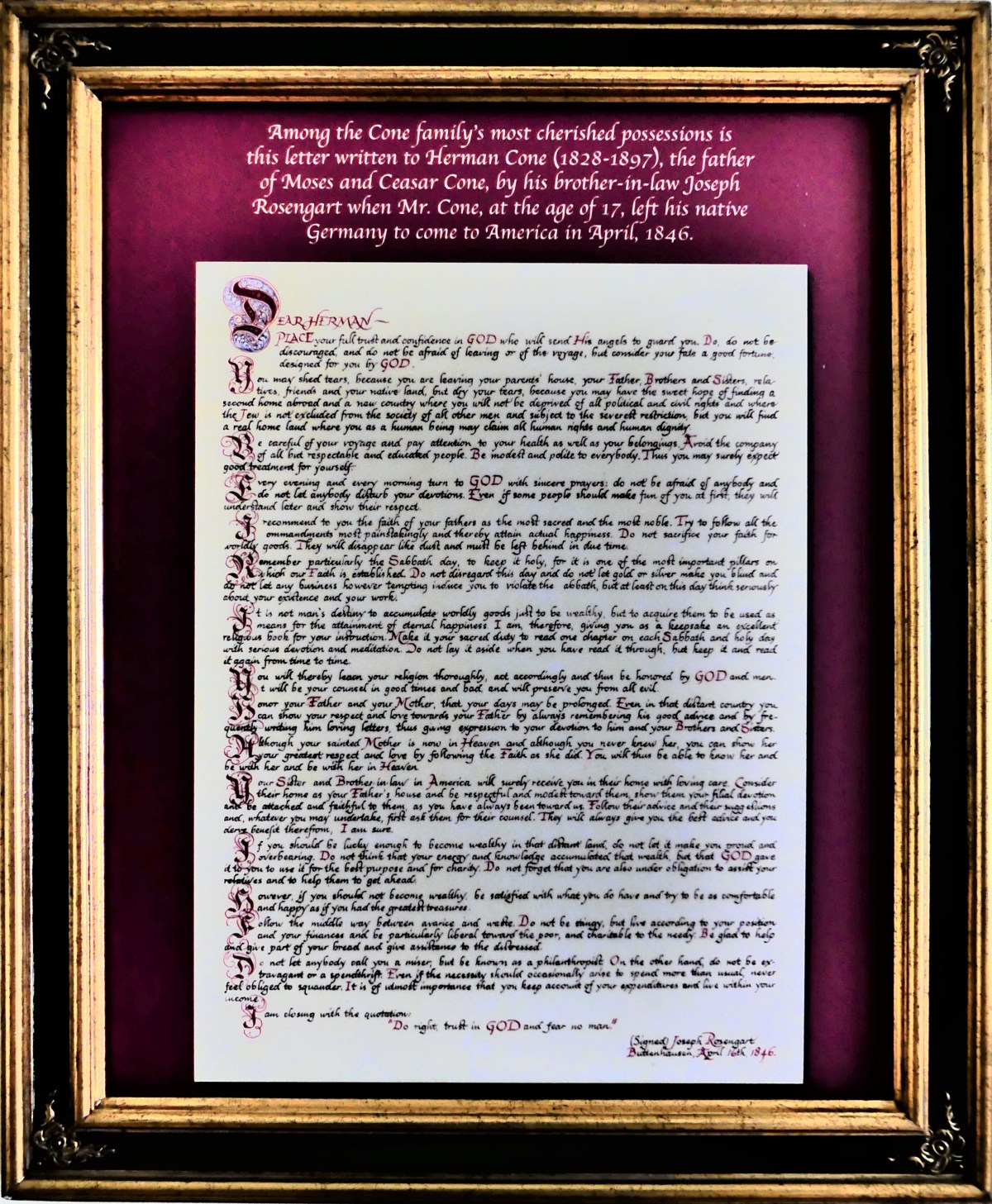
letter

and at one time, a treasure trove of avant-garde art adorned the mansion thanks to lasting friendships and patronage between two unwed Cone sisters, Dr. Claribel and Etta,

Cone sisters (2)
Dr Claribel & Miss Etta (Cone Sisters) by Ronald Brooks Kitaj, c. 1997-2000

and Pablo Picasso and Henri Matisse. Their collection ultimately passed to the Baltimore Museum of Art, now recognized as the Cone Wing, and valued at over $1billion.

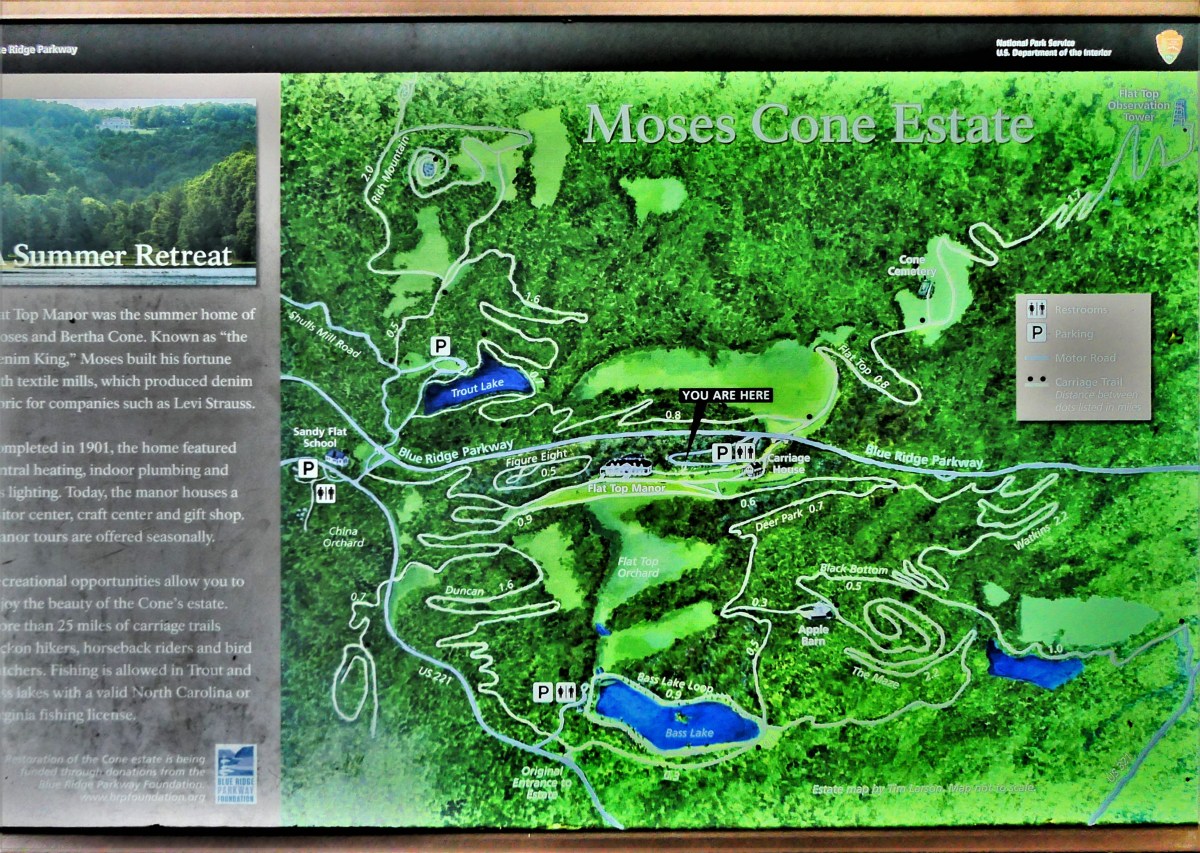
Today, the estate–managed by the National Park Service–services over 25 miles of carriage roads and trails.

cone sign

Leah and I dared the rain, and hiked five miles to the Observation Tower at the southeastern edge of the property, where we were rewarded with pastoral guests,

young head old ass

hare

intriguing butterflies feeding on unknown feces,

butterflies

and a breathtaking panorama of nearby Boone–home of Appalachian State University, endowed by Moses Cone–and the neighboring wilderness.

Observation tower view

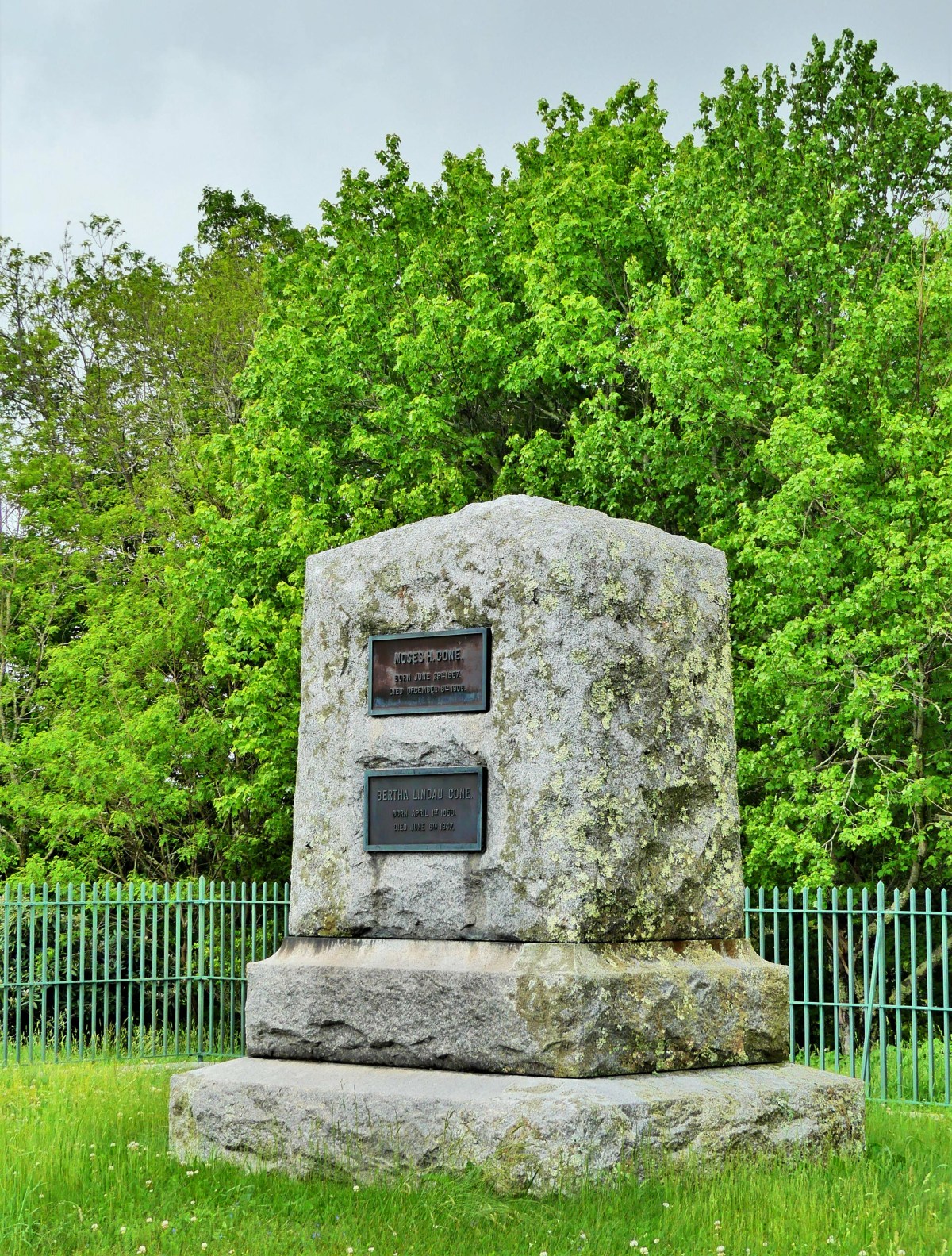
Upon our return, we stopped to pay respects to Moses and Bertha, buried together under Flat Top Mountain,

grave stone

and overlooking 3,500 acres of his legacy, where an orchard of 35,000 apple trees once produced prized fruit for the gentleman farmer.

grave site

The rain returned during the brief drive back to Price Park, but abated just as quickly to capture a lasting moment of smoke wafting across Sim’s Pond.

smoke on the water

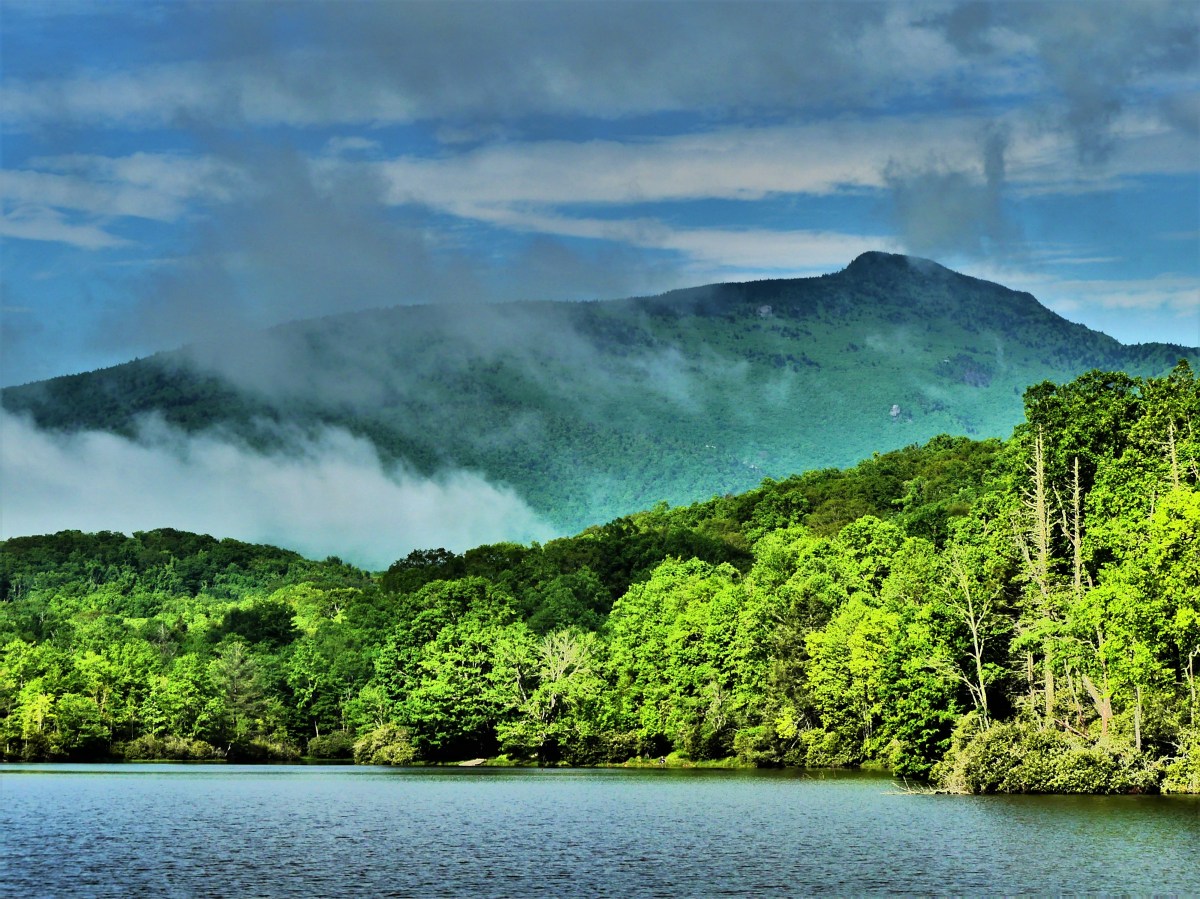
The next morning–our travel day to Charlotte–we awoke to blue skies and sunshine beaming across Grandfather Mountain.

Grandfather Mountain

The run-off from Price Lake was fierce, barreling down Bee Tree Creek.

overflow

Rangers alerted us that the Parkway heading south had been temporarily closed. Flash floods and mudslides had forced a partial shutdown of Interstate 40, necessitating a detour through rural America before we could connect with I-77 S.

Putting our Airstream on blocks in Huntersville was bittersweet. It marked the formal ending of Streaming thru America, but our future holds new surprises.

Already, we’re pre-planning a trip to circumnavigate the Great Lakes during the summer of 2019. Until then, we’ll have to settle for a journey of a different sort, and I hope to keep the world posted.

Liquidscape

While hiking the Bear Lake Loop Trail at Rocky Mountain National Park, I was drawn to a cluster of lodgepole pines raked across the water, with Mt. Wuh peaking in the distance.

Mt. Wuh

Subsequently, the wind picked up, disturbing the mirrored reflection–a quiver of ripples now transforming my quiet reality into a impressionistic interpretation of my Nirvana.

Bear Lake

I was captivated by the shimmering shape of sky and treeline, and inclined to shift my focus to the water, with the notion of turning nature upside down…

Rocky Mountain reflection

…and anchoring the soft glow of a landscape into a liquidscape.