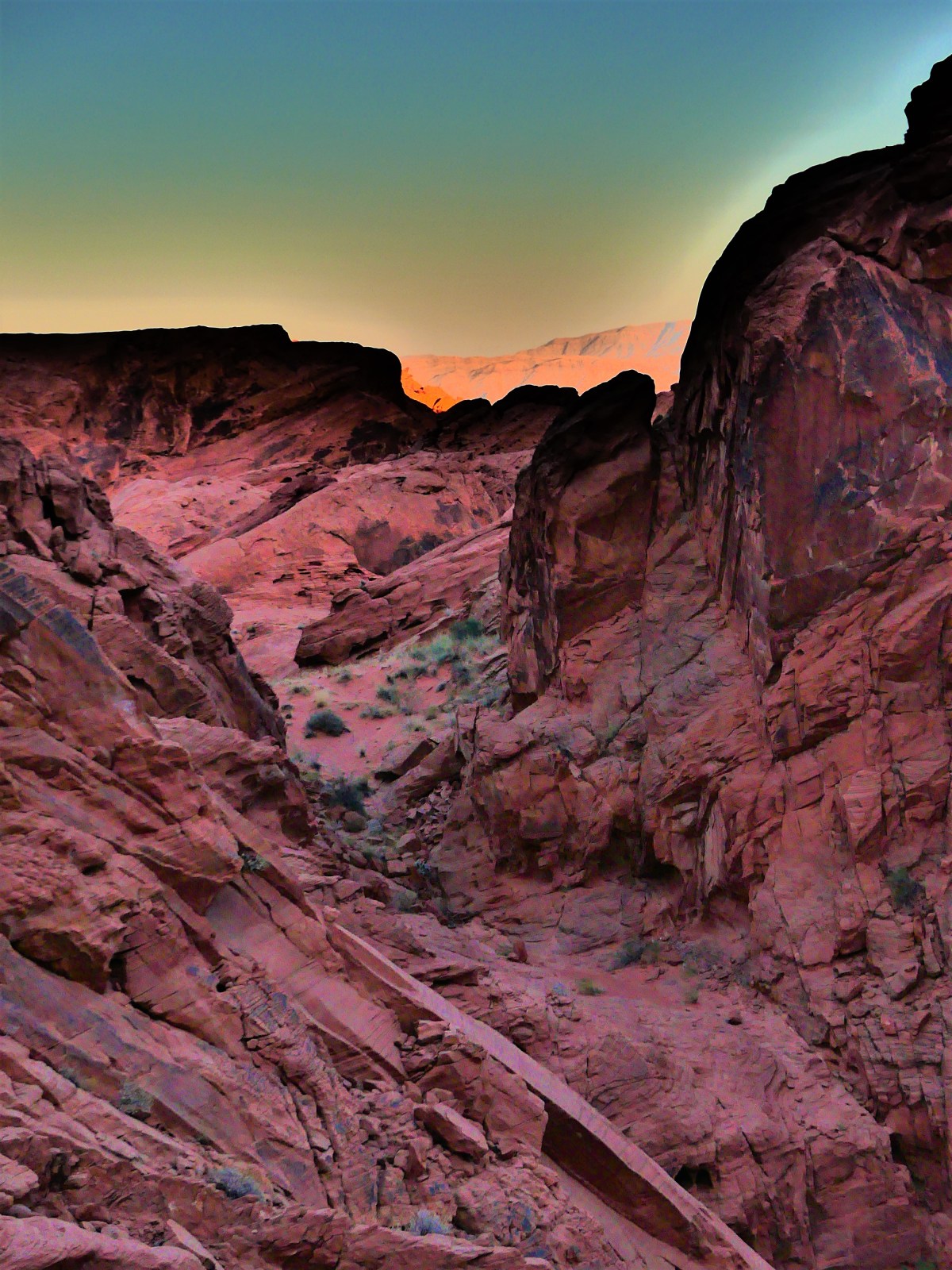
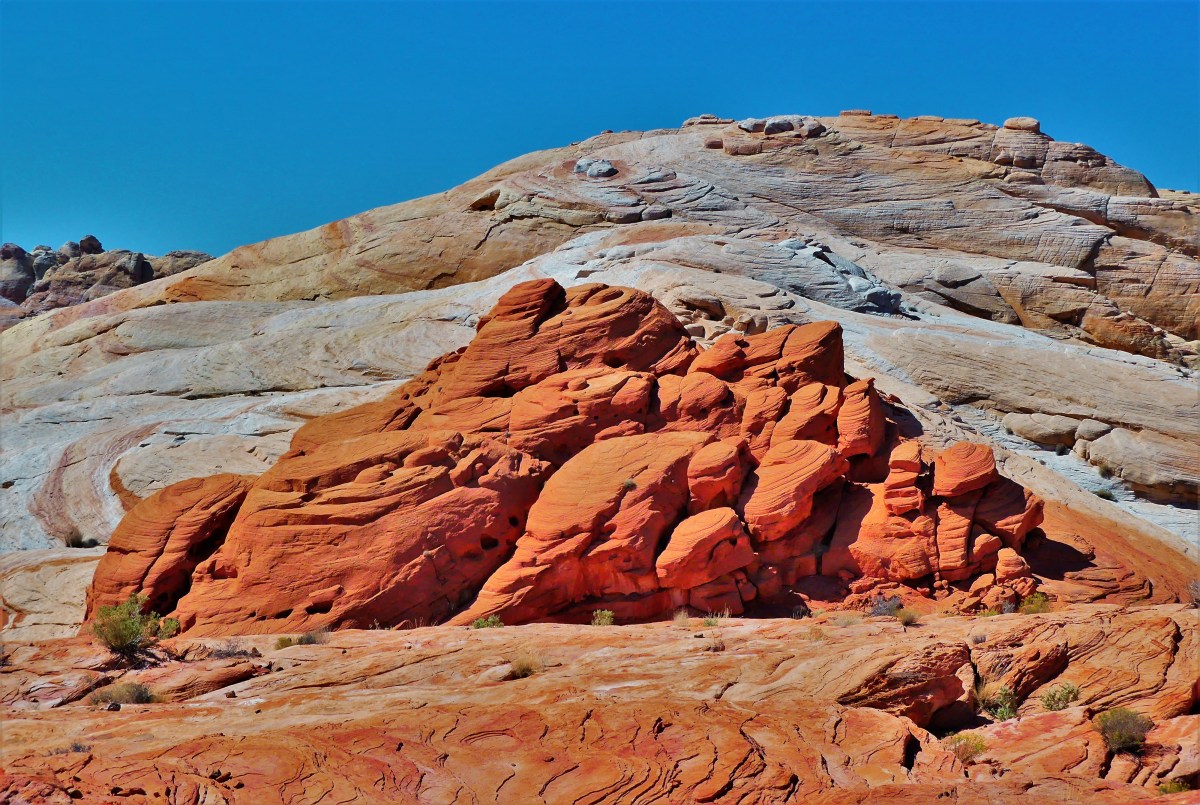
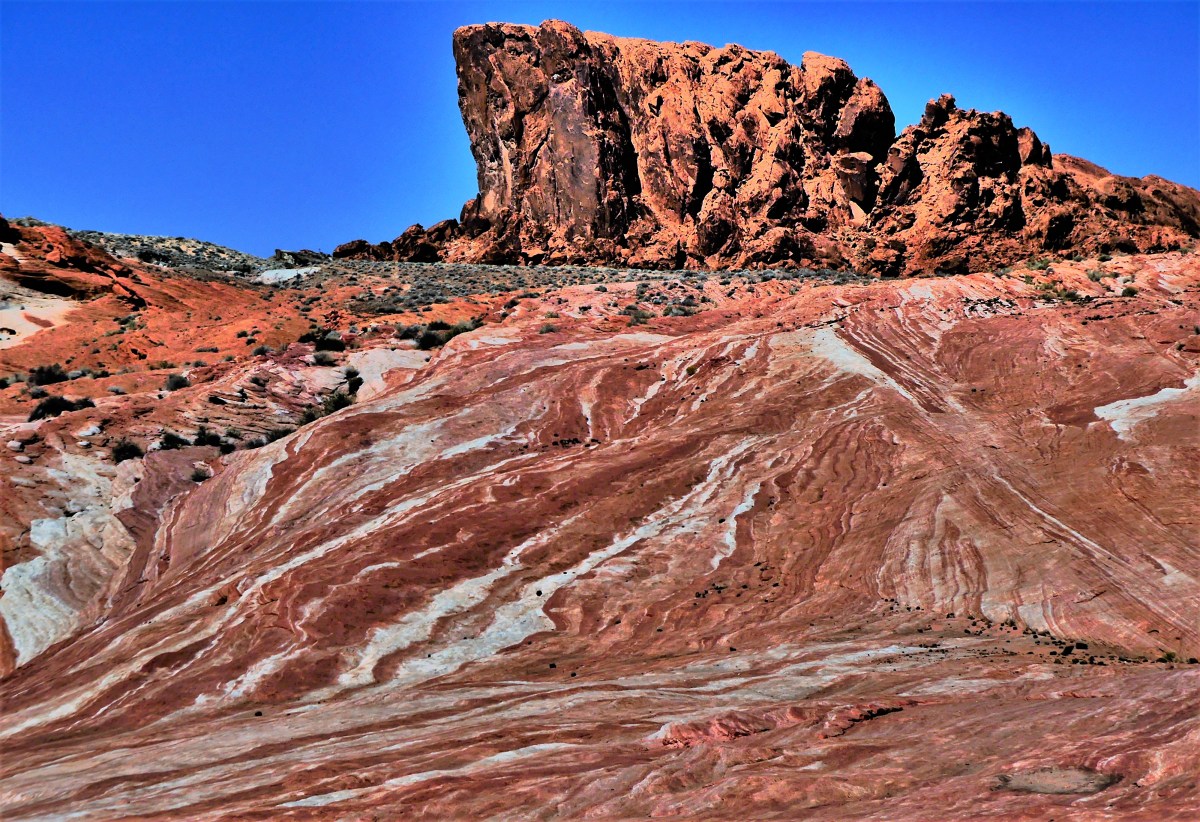
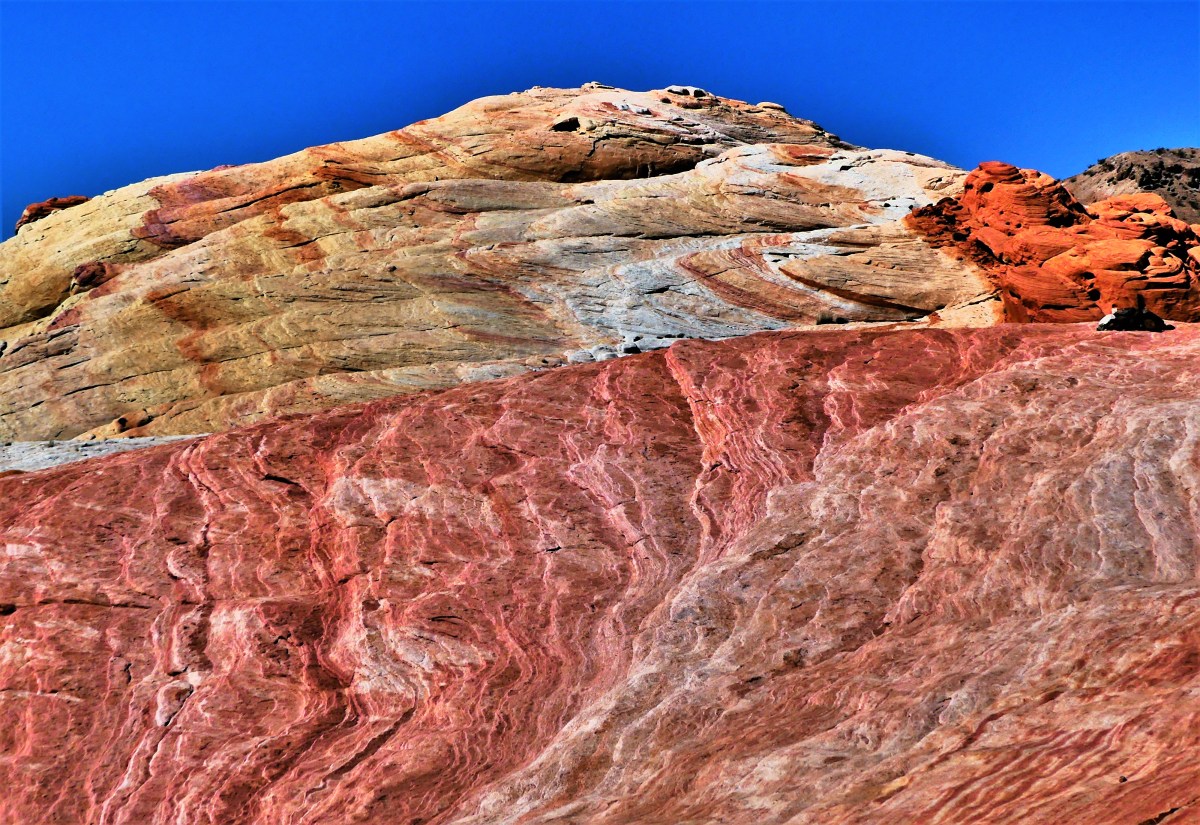
Nowhere, No Way

A seven-mile stretch of road from the southern lip of Great Smoky Mountain National Park to its tunnel terminus remains a source of irritation for generations of locals, and a symbol of an unfulfilled promise from the Federal bureaucracy,
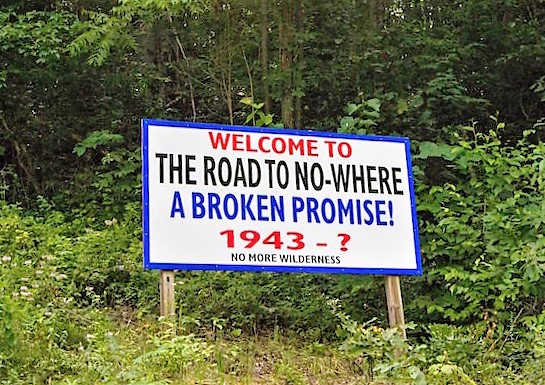
road to nowhere

which once pledged to replace submerged Highway 288, but lost their way amid a forest of red tape and environmental concerns.

Fontana Dam begat Fontana Lake in 1941 after the Tennessee Valley Authority (TVA)–in concert with the Army Corps of Engineers–built a hydroelectric plant for ALCOA in consideration of the military’s demand for aluminum essential for aircraft, ship-building, and munitions during WWII. Consequently, communities and roads disappeared under the high-water reserves, and townspeople lost their land and their livelihoods.

In exchange for losing Highway 288, the displaced people of Swain County were promised a road north of Fontana Lake–through Great Smoky Mountain park lands–for continuing access to their ancestral cemeteries left behind, and compensation for relocation assistance. However, most of the 1,300 citizens who resisted the move never saw a dime after ultimately fleeing the rising waters.

Thirty years later, after building 7.2 miles of road and a quarter-mile tunnel, appropriated funds had dried up and the project stalled. By 2003, the National Park Service eventually revealed a feasibility study listing several considerations for public debate, and in 2007, issued a 13-page report detailing the government’s position, electing the No-Action Alternative:

The No-Action Alternative would forego any improvements to Lake View Road with the exception of routine maintenance. Under this alternative, there would be no changes to the existing conditions within the study area. No compensation would be provided in lieu of building the road. NPS would continue to provide transportation across Fontana Lake for annual cemetery visits and would maintain current  amenities, policies, and practices of GSMNP.

Subsequently, Swain County sought a monetary settlement, demanding $52 million from the Department of Interior for defaulting on the original agreement. Yet to date, only $12 million has been paid, thus generating a pending lawsuit for the balance of money owed.

After learning about the history, Leah and I decided to make the pilgrimage to see this road for ourselves. We departed Bryson City on a dreary autumn morning, surrounded by mist and brisk winds that had us zipping up and foraging for hats and gloves from a backseat storage bin.

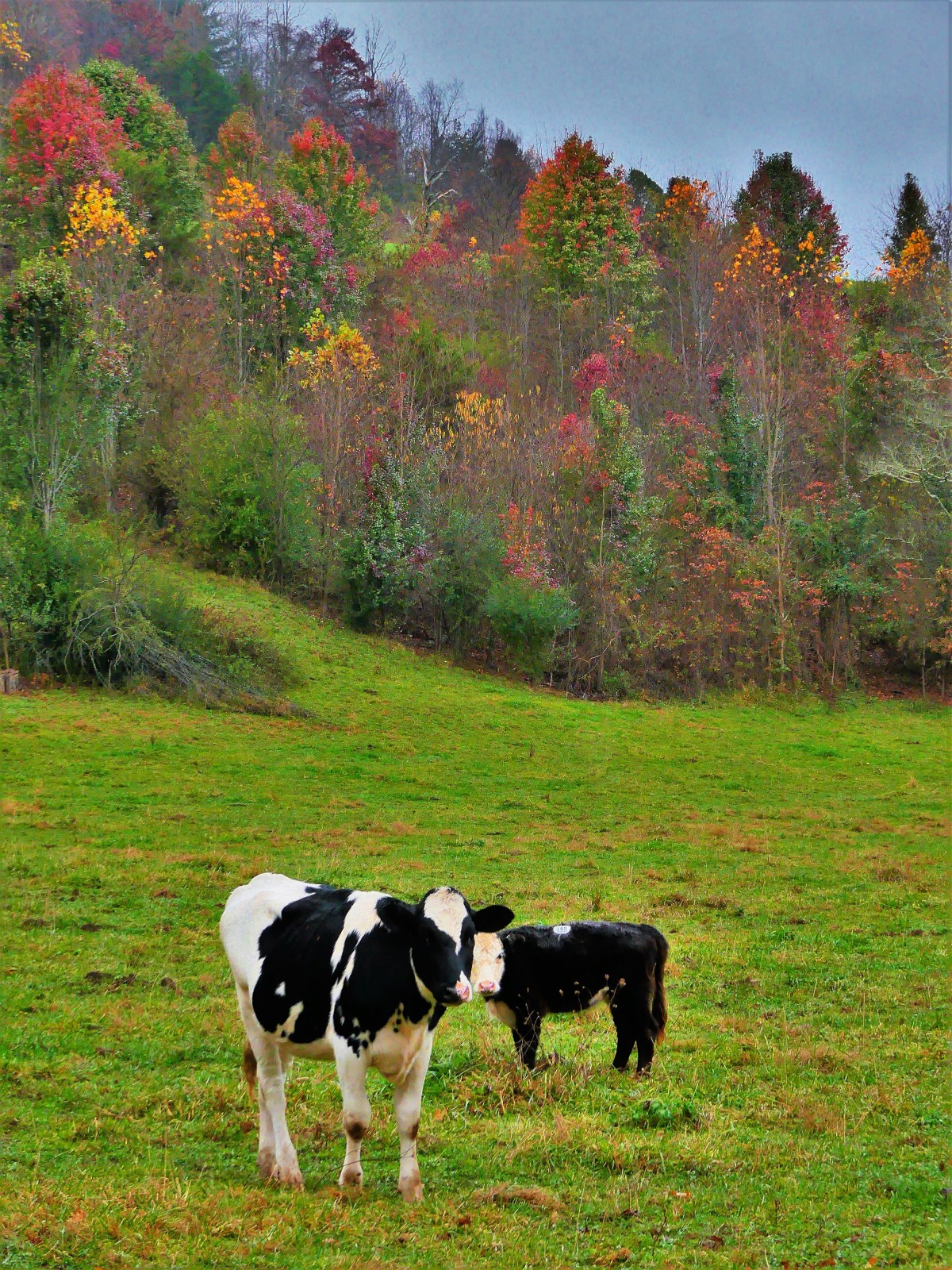
The drive along Fontana Road took us through bucolic farms and pastoral settings.
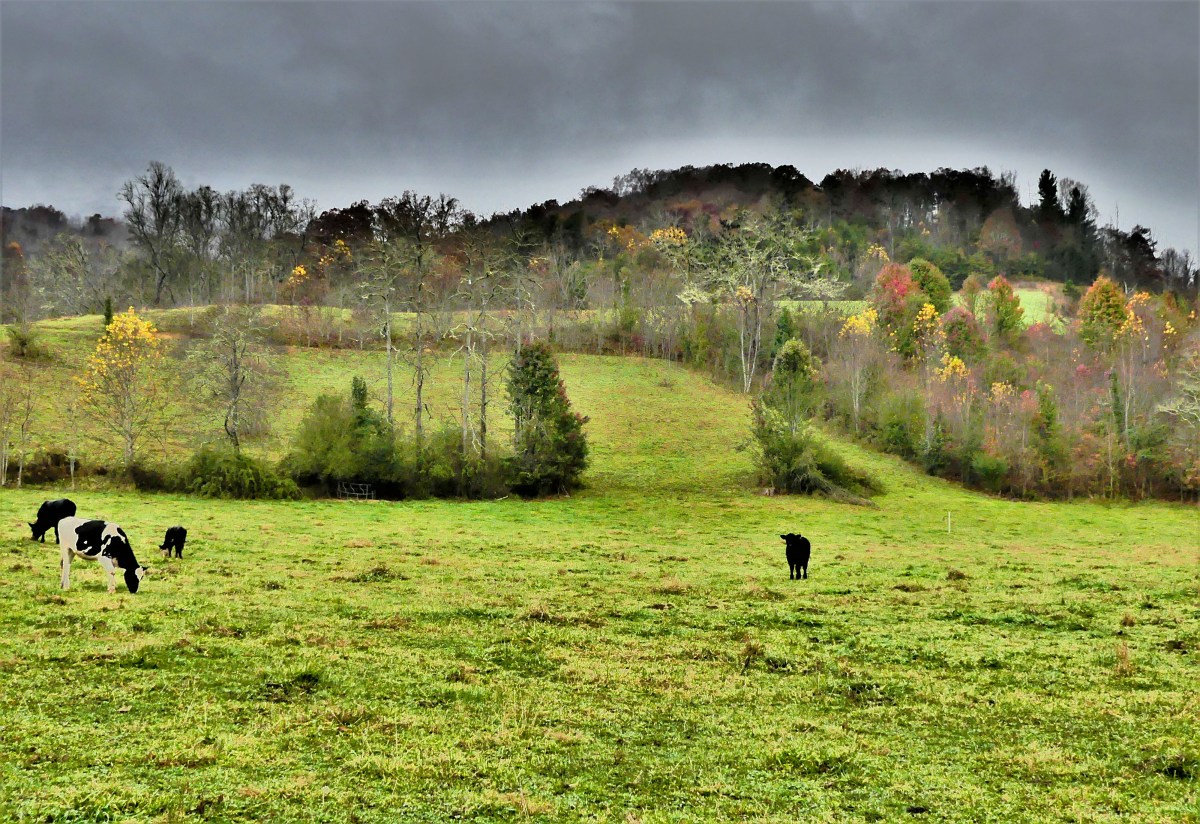
pastureland

autumn cows

We followed the lightly traveled road until we reached the park entrance, and continued along a windy incline dotted with shrouded overlooks of the Tuckasegee River below us.

We knew we had reached the end of the line when we crossed over Nolands Creek,

Tuckasegee

and encountered a barricade of steel poles that barred us from approaching the tunnel around the bend.

lakeshore trail

The ¼-mile tunnel was dark and dank. And while a flashlight was a handy accessory for navigating the rutted road and avoiding scattered animal feces,

tunnel opening

it became an essential tool for spotlighting the pervasive high school graffiti that randomly “decorated” the oft-covered whitewashed walls–
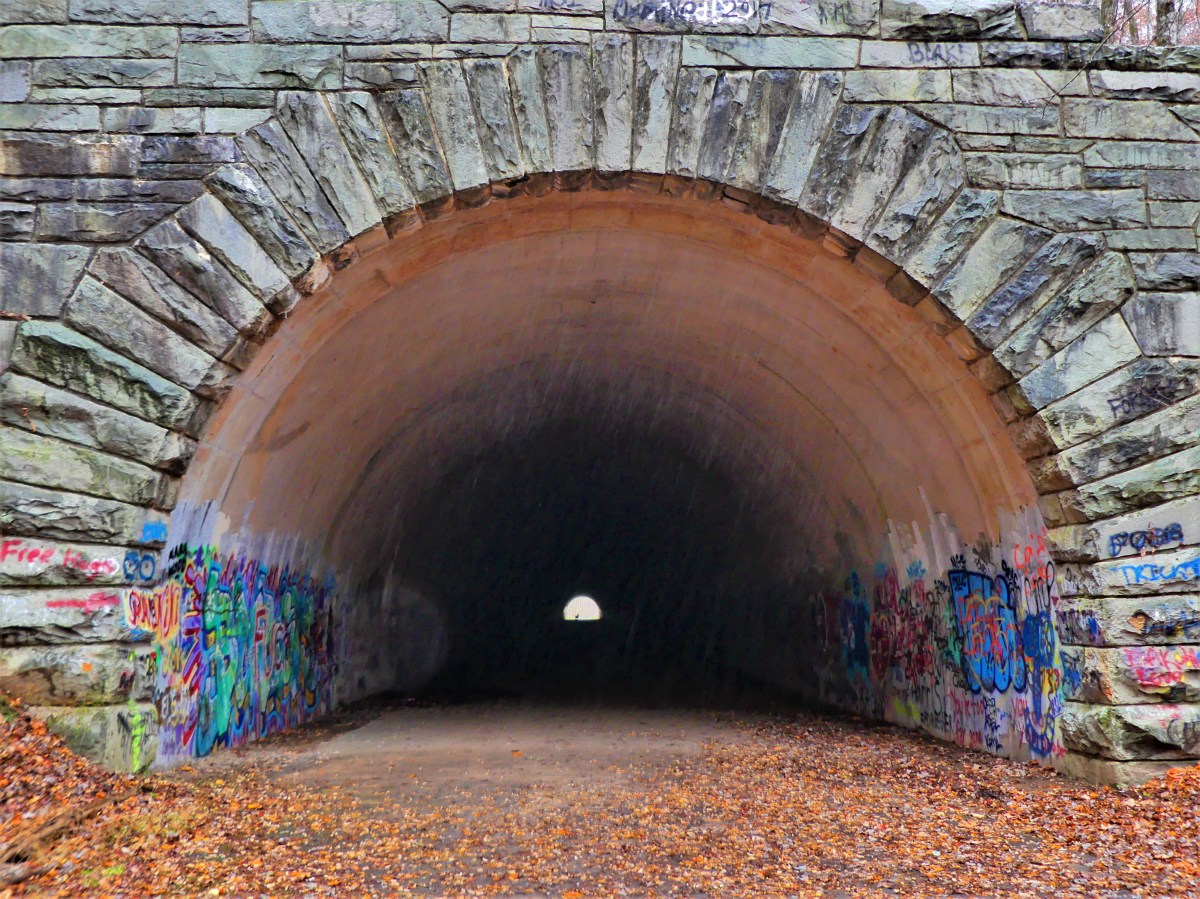
tunnel to nowhere

–most of it, a reflection of egocentric teenagers flexing their hormones…

fuch grafitti

tunnel grafitti

wall cracks

…but in other cases, the graffiti represented a cathartic release of current political expression–

Fuck Donald Trump

–bringing new meaning to an erstwhile patch of pavement.

As advertised, the “Road to Nowhere” terminated on the back side of the tunnel,
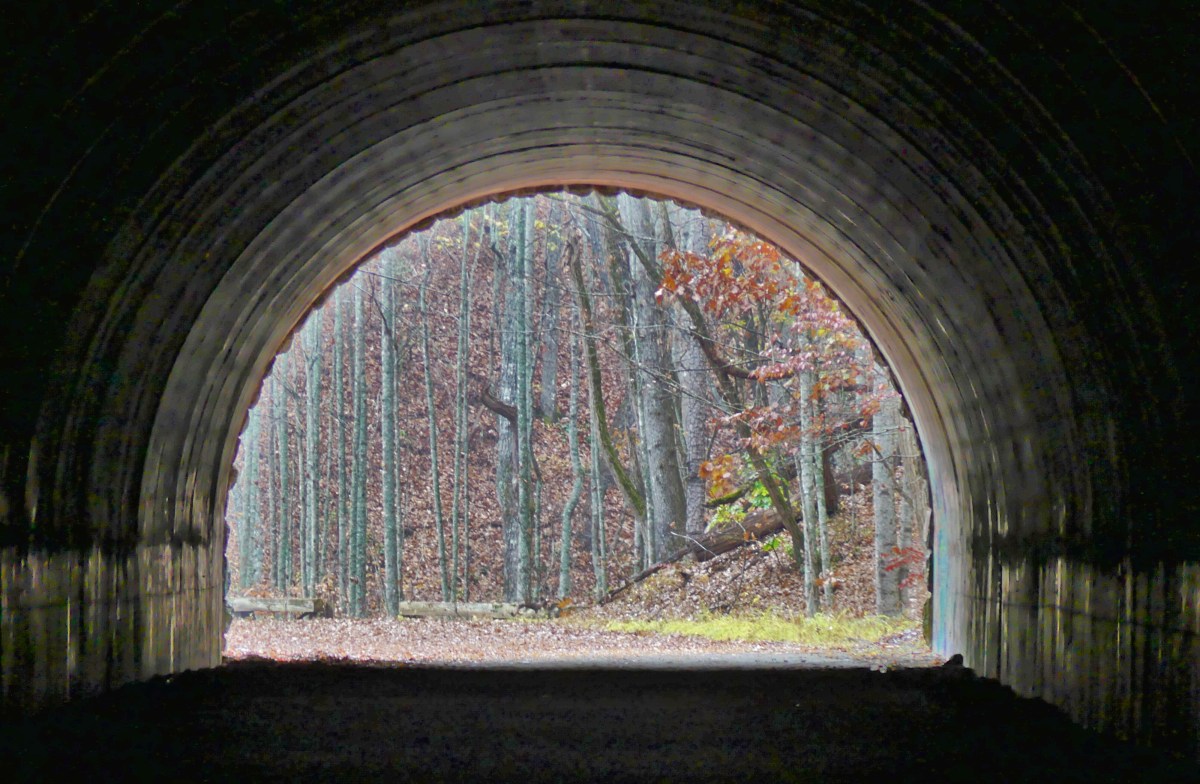
Tunnel End

casting a glimpse of an uncertain future fraught with empty promises disguised as good intentions.


On Top of Old Smokey

A side trip to Great Smoky Mountains National Park from Asheville takes only an hour, but the payoff is timeless. Admission is free, but the views are priceless.

The National Park straddles North Carolina and Tennessee, with Clingmans Dome, the highest peak in Tennessee, and a natural boundary between both states. The park is situated within a day’s drive for 60% of the nation’s population, making it the most popular of all National Parks, with over 9 million visitors per year.

The park can be accessed through a dozen different gateways, with Sugarlands Visitors Center being the prevailing entry point from the north side through Gatlinburg, TN. But Leah and I approached the Great Smokys from the south, and entered via Oconaluftee Visitors Center, the heart of Cherokee Nation.

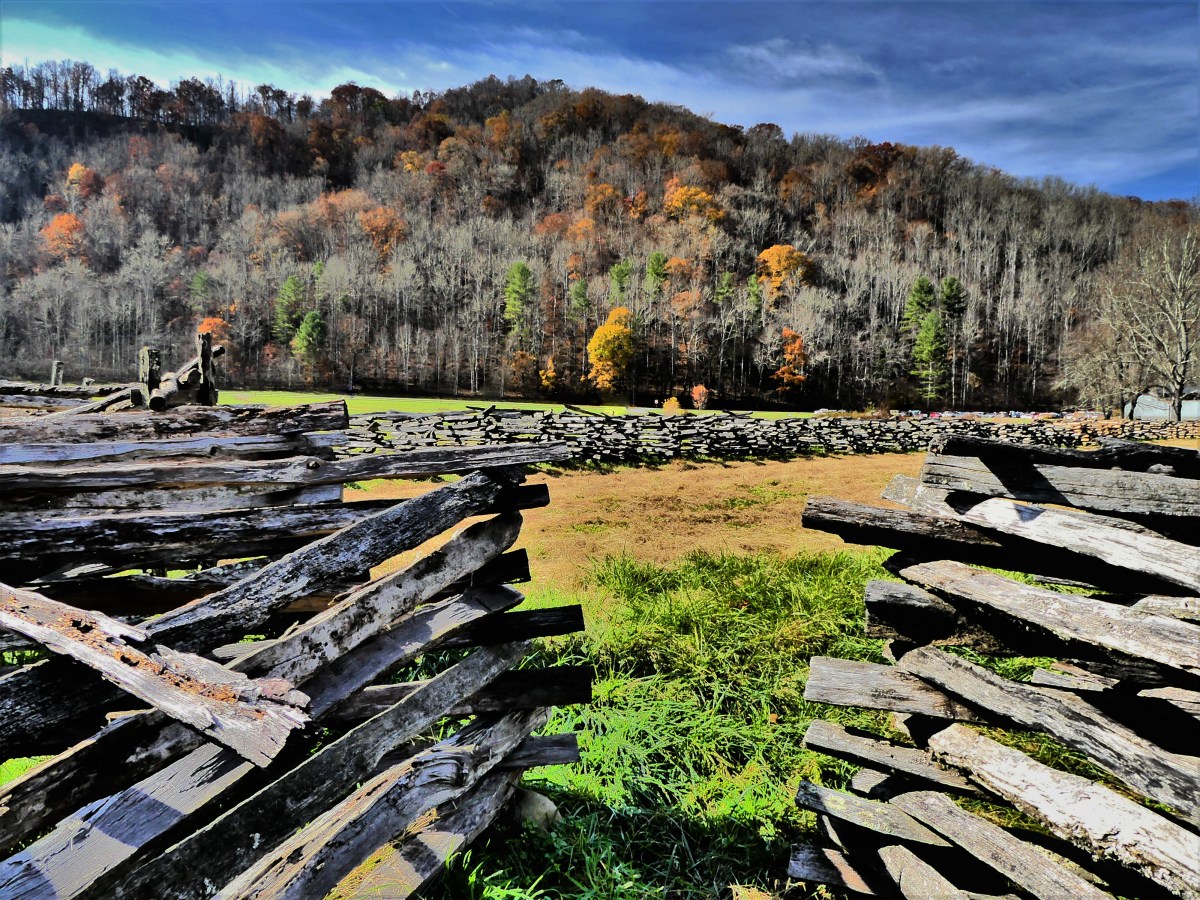
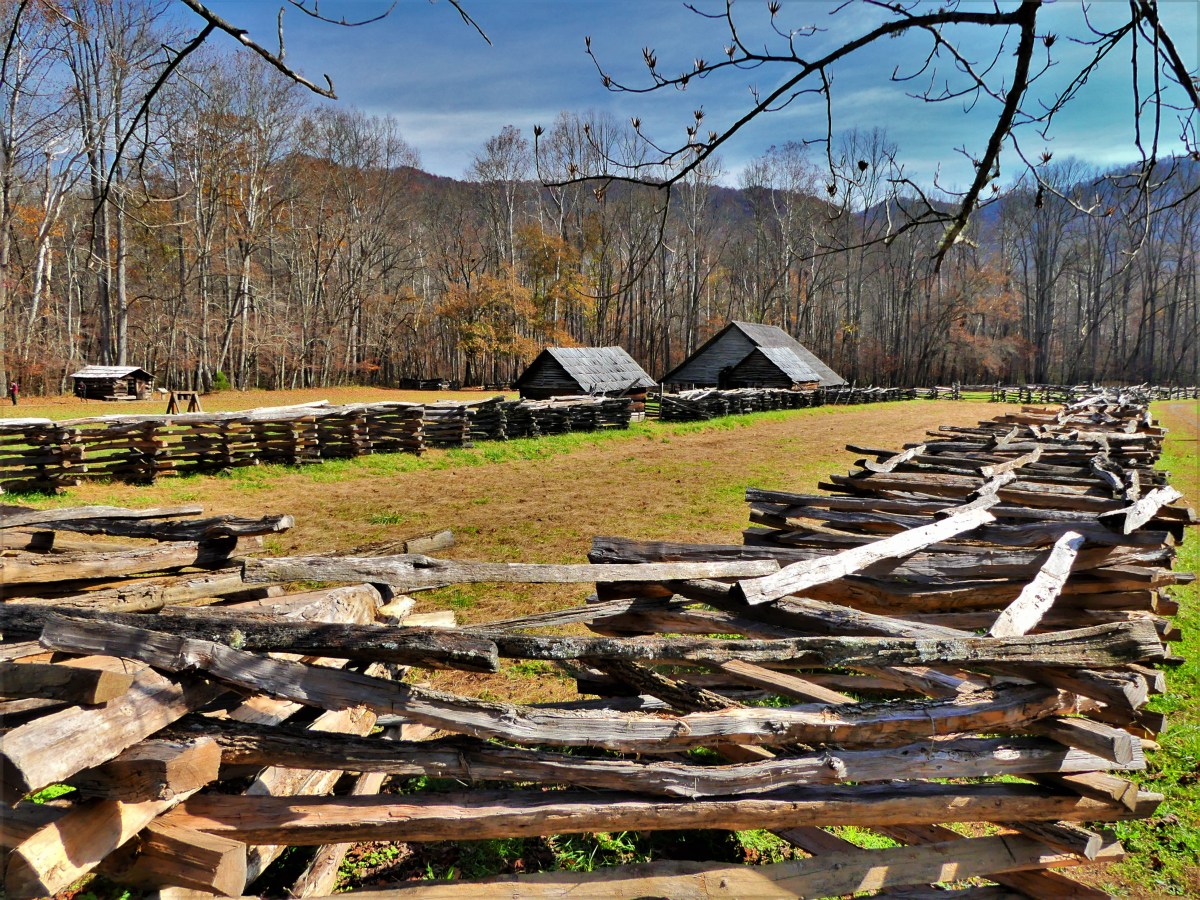
Once there, we took our time strolling through the Mountain Farm Museum on the banks of the Oconaluftee River…

farmhouse

farm garden

elk field fences

corral

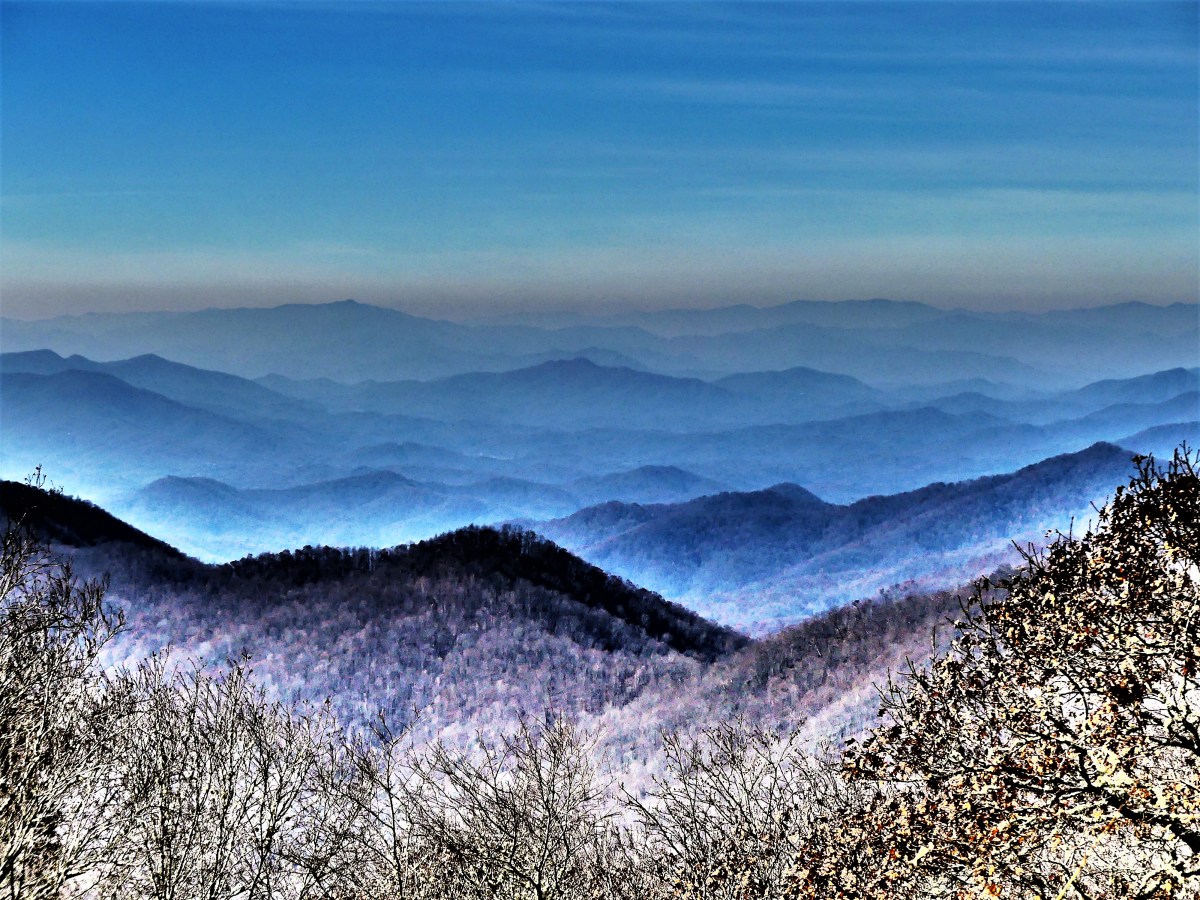
…before driving north on Newfound Gap Road–stopping frequently at the many overlooks–to gaze across Carolina’s side of the Blue Ridge Mountains,

overlook

overlook1

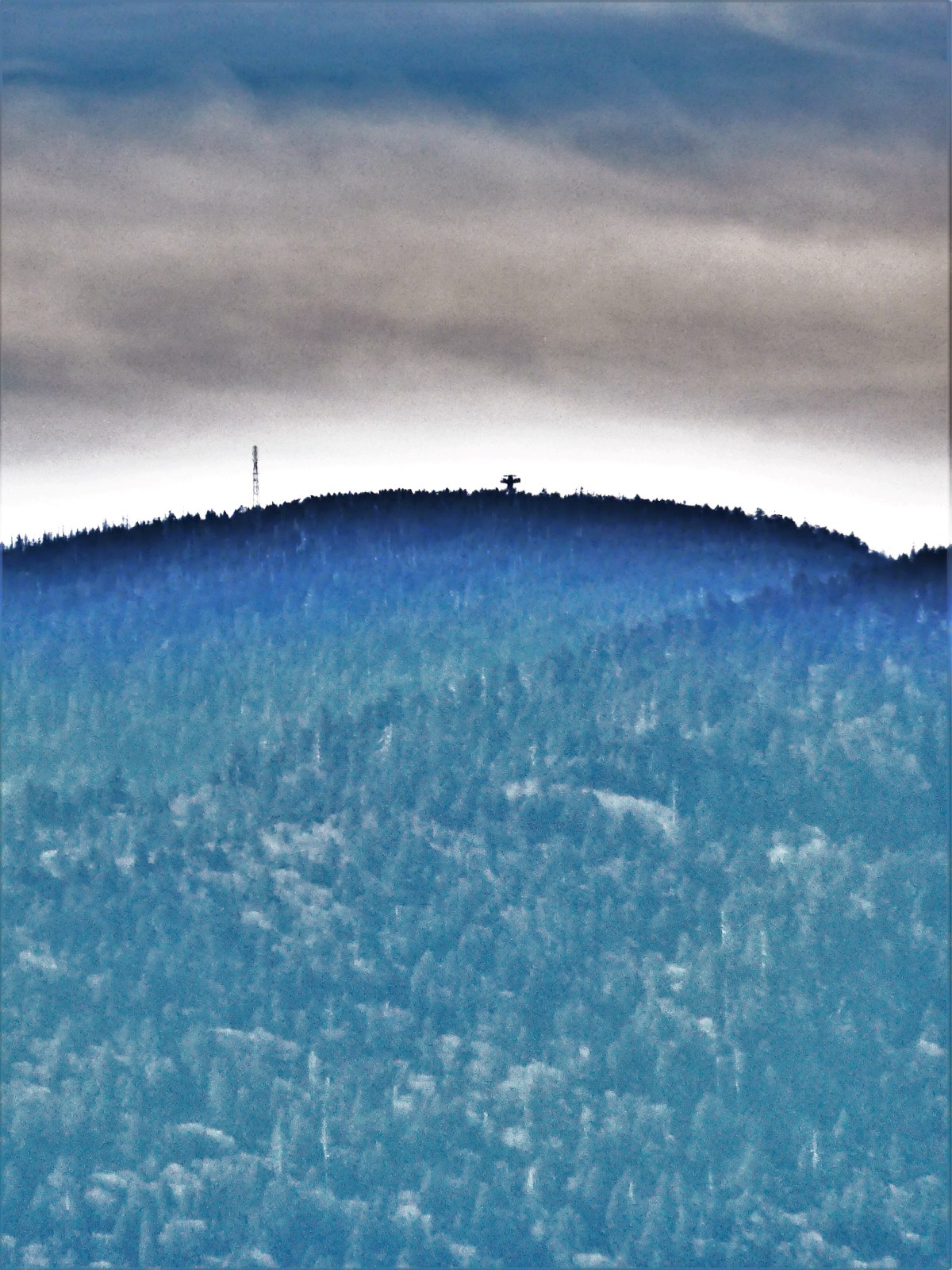
and preview our next destination, Clingmans Dome, at 6,643 feet elevation.

Clingmans Tower LS.jpg

A dogleg turn onto Clingmans Mountain Road took us through short winding turns as we climbed the Appalachian Trail ridgeline, eventually leveling off at an over-sized parking area with trails radiating from the top of the bald, and views extending a hundred miles.

Clingmans Dome view

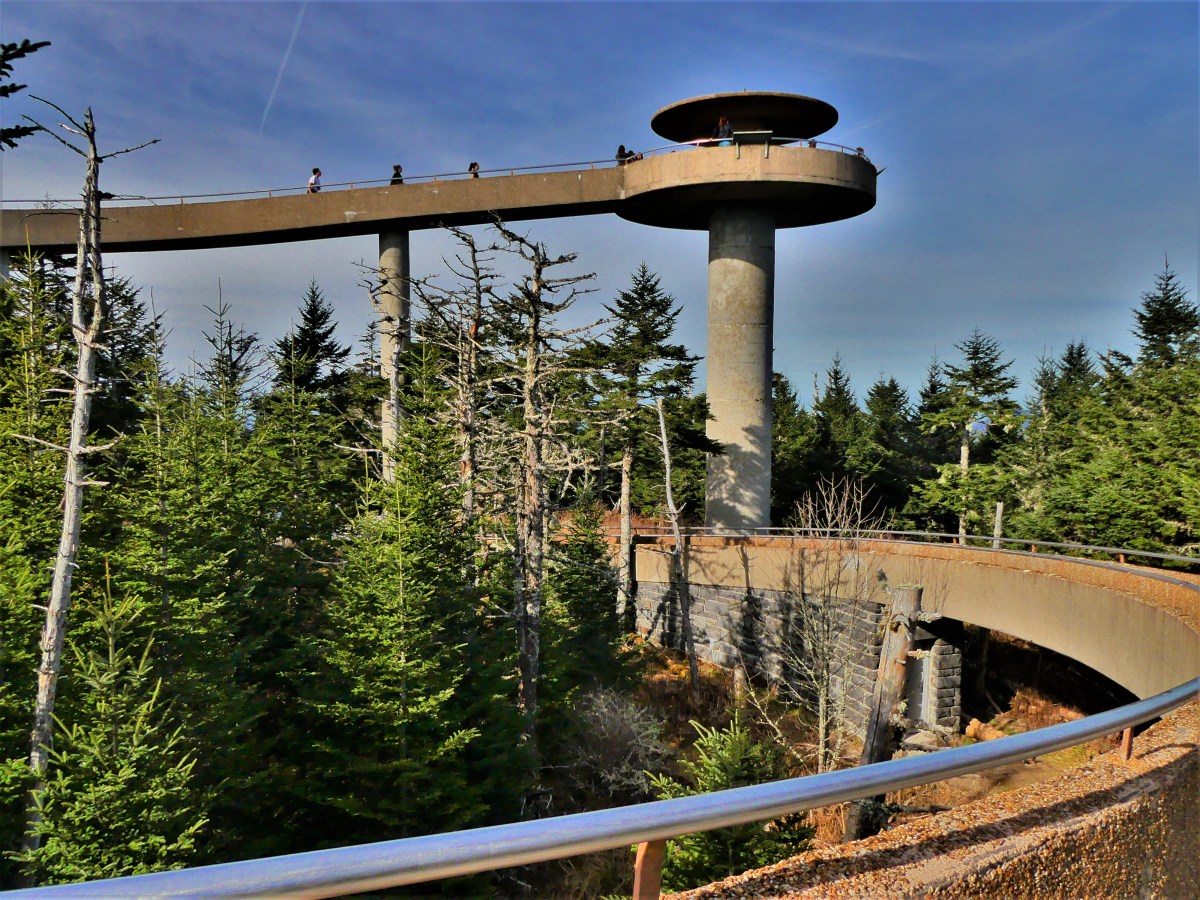
Thinking that views might be even better at the very top–allowing us to see over Mount LeConte–we trekked half a mile up a very steep asphalt path to Clingmans Observation Tower, albeit knowing it was closed for repair until next year.

To our surprise, families were scaling the spiraling ramp to the tower.

Clingmans Tower

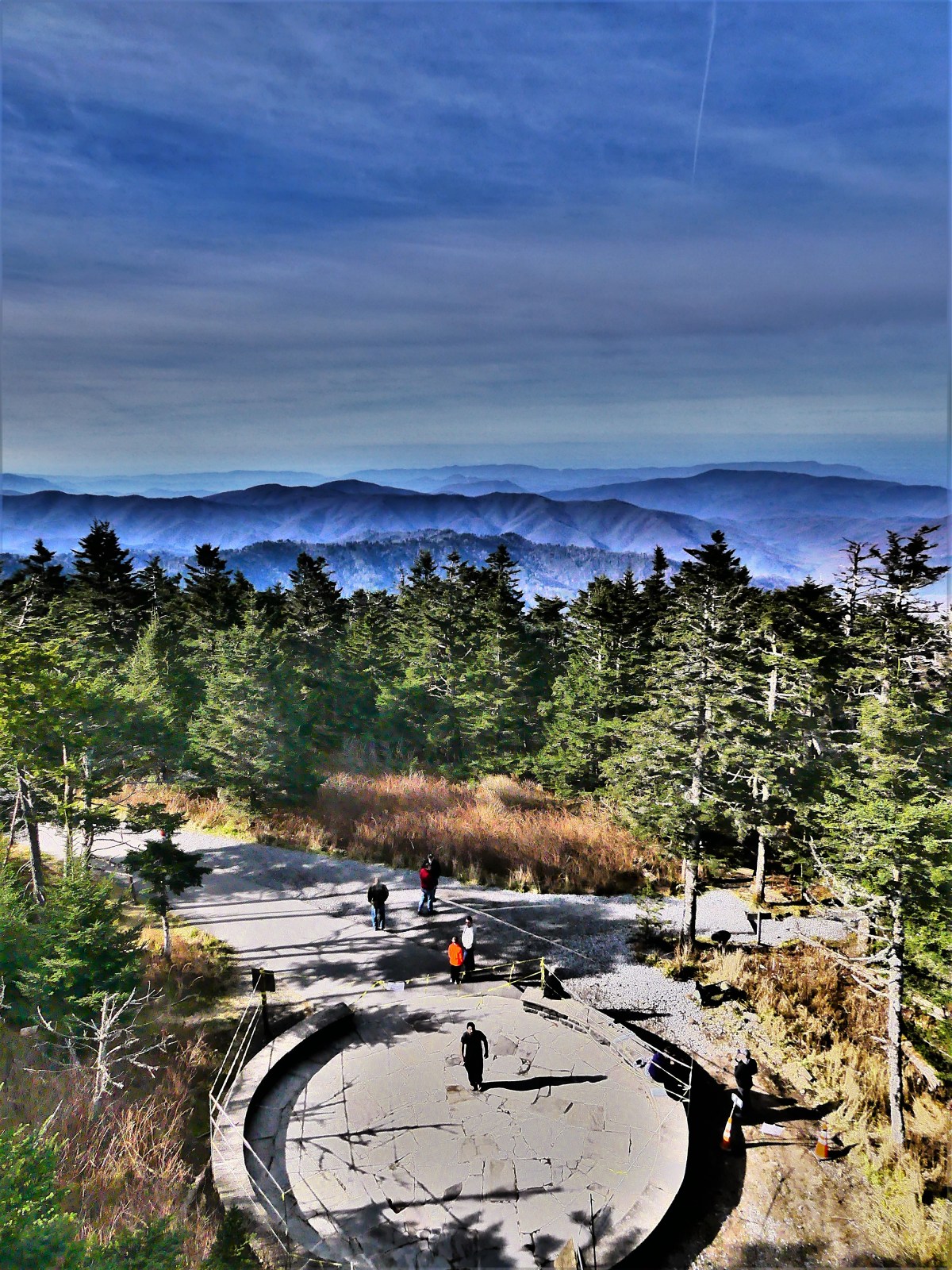
Looking around, there were no views to be had at the base. We were surrounded by a dense growth of evergreens without breaks. Sacks of concrete were stacked under the column with flimsy, yellow, KEEP OUT tape tied across the tower entrance.

Scores of visitors-turned-violators stood around the column base, determining their next move. Should they make the ascent or not? Yes, the tower was officially closed to the public while undergoing repair. But was it too risky to breach the ribbon barricade? There weren’t any park rangers present, but maybe there were cameras? What a moral dilemma!

“I’m not going up there,” exclaimed Leah. “There’s a reason that tower is closed.”

“But look around us! Where are the views?! We hiked up here expecting to see something, yet there’s nothing to look at, unless you want a closer look at this fir stump,” I argued. “And what about everyone already up there? If they really wanted to keep us out, then why didn’t they secure the entrance better? Why didn’t they use fencing instead of tape?”

Leah was adamant. “I’m still not going up there, and I don’t care about everybody else! It’s not the right thing to do.”

I offered Leah my Roy Moore rationale: “But it ain’t illegal if ya don’t get caught!”

I deliberated carefully…

…and ducked under the tape. I couldn’t help myself. I wouldn’t deny myself the views I had come all this way to capture.

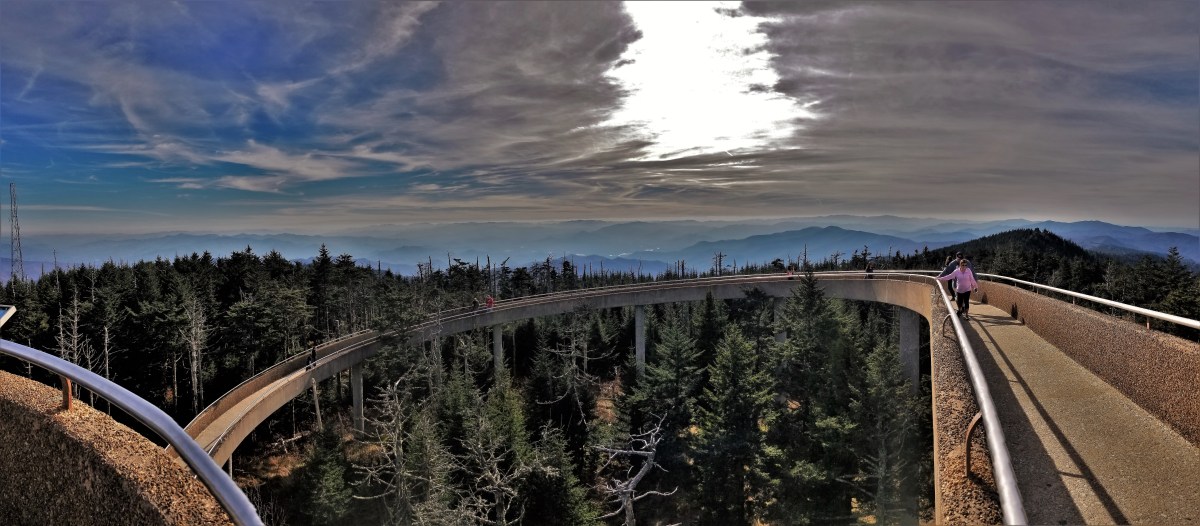
The 45-foot tower was completed in 1959 to give unobstructed 360° views of the surrounding mountains and valleys, and it was showing its age. The concrete pathway was separating from the wall in places, and patches of rebar were visible along the way. But did it warrant closing while in the midst of being repaired?

tower panorama

Probably, but not until I had the chance to document the landscape. I scurried up the ramp with the intention of quickly getting my shots, and hurrying back down, just in case I should be noticed.

Tower base

Tower ramp

On our way back down the trail, several families on their way up the trail, paused to catch their breath and ask, “Is it worth it? Is there anything to see up there?”

“It all depends on how good you are at following orders,” I’d answer cryptically.

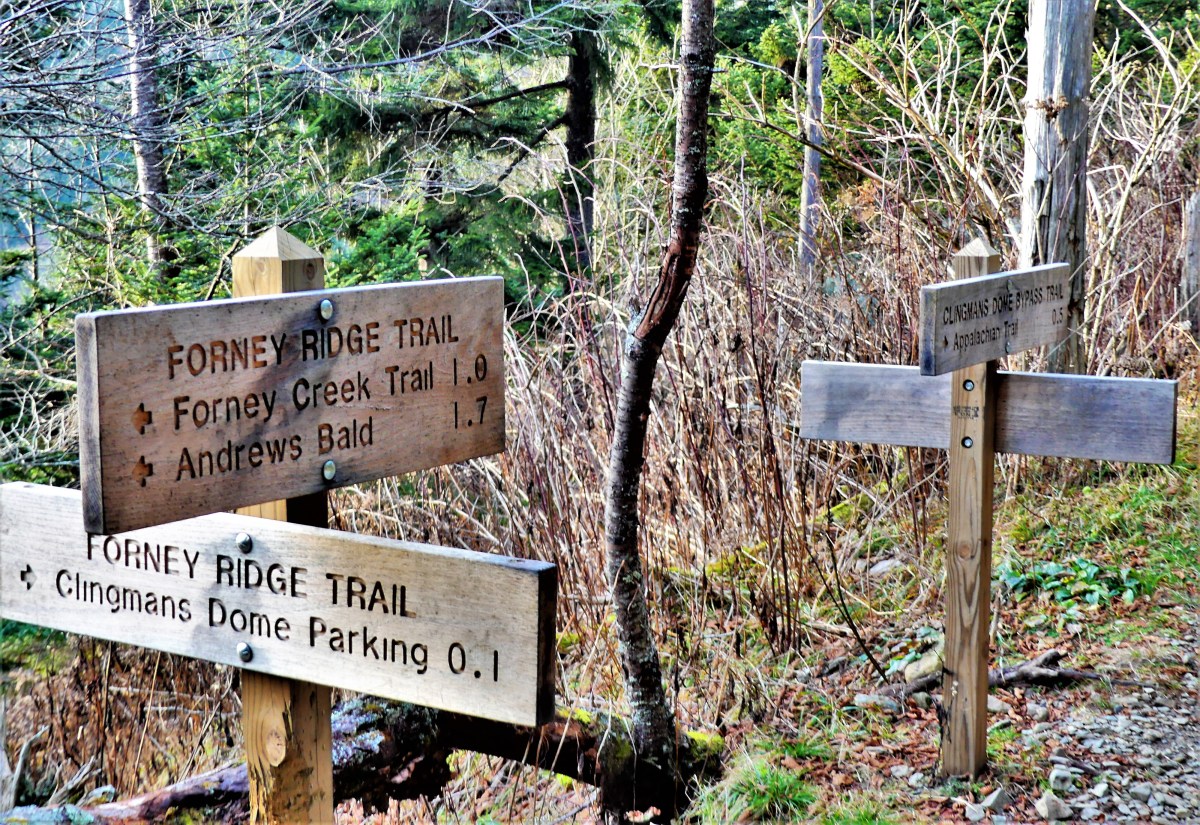
But our day wasn’t done yet. It was only three o’clock, and we hadn’t hiked more than an easy mile. We’d been told by a park volunteer at the Visitor Center that the two-mile trail to Andrews Bald–which intersects with the Appalachian Trail–was a worthwhile hike with amazing views at the end.

trail sign

So, we took her advice, and set out down a narrow, terraced ridge capped by embedded logs as steps–to keep the erosion to a minimum–until it turned to saw-toothed rocks and twisted roots, and occasional mud in low lying places.

boardwalk

“You realize that it’s now getting dark around five, so we’re not gonna have much time before we have to turn around,” Leah warned. “And climbing back up this hill is gonna be a bear!”

“Sunset’s at 5:30, but as long as we’re out by five, we should be fine,” I replied. “Besides, there’s no way I’m gonna miss the sun going down from up top!”

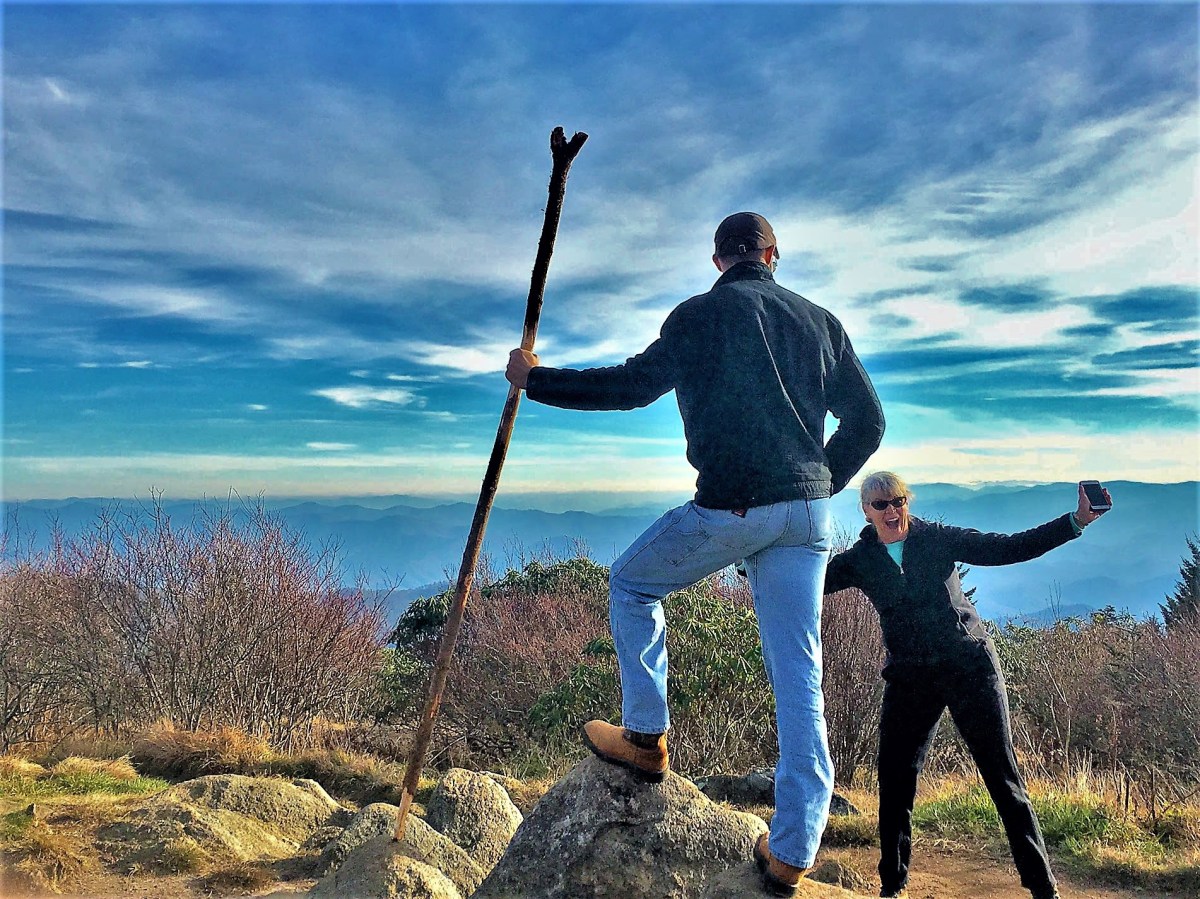
We made excellent time down the mountainside, and crossed onto Andrew Bald, a grassy clearing with breathtaking views. While Leah was making new friends, and photobombing their picture,

photobomb

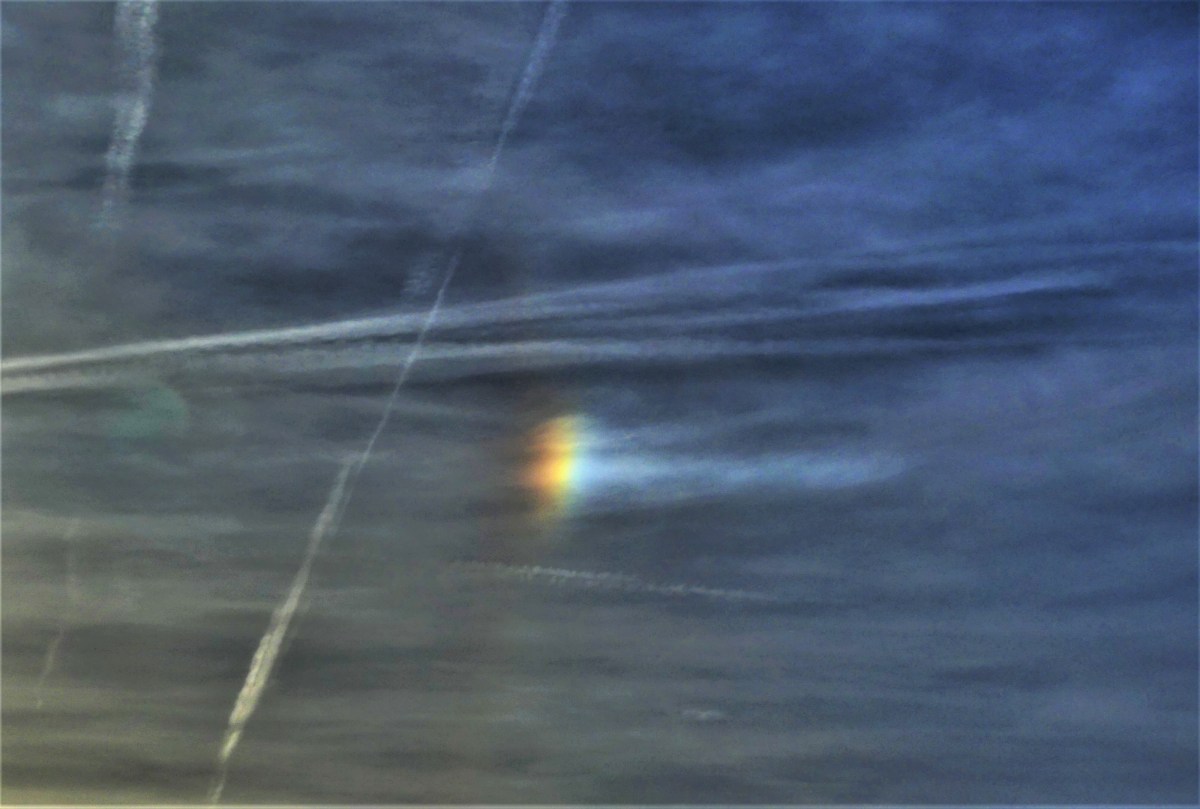
I was focused on the sky, and that’s when I realized that the sun had created something remarkable.

Andrews Bald

That slivered arch of a rainbow crisscrossed by contrails was an elusive sundog, a small portion of an optical phenomenon caused by sunlight refracting off tiny ice crystals in the atmosphere, and creating a larger halo around the sun.

sundog

The excitement of capturing this meteorological moment was enough to propel me up the mountain and back to the parking lot with plenty of time to prepare for sunset. But the look on Leah’s face after emerging from the hike told a different story; her feet were achy and her knee was throbbing.

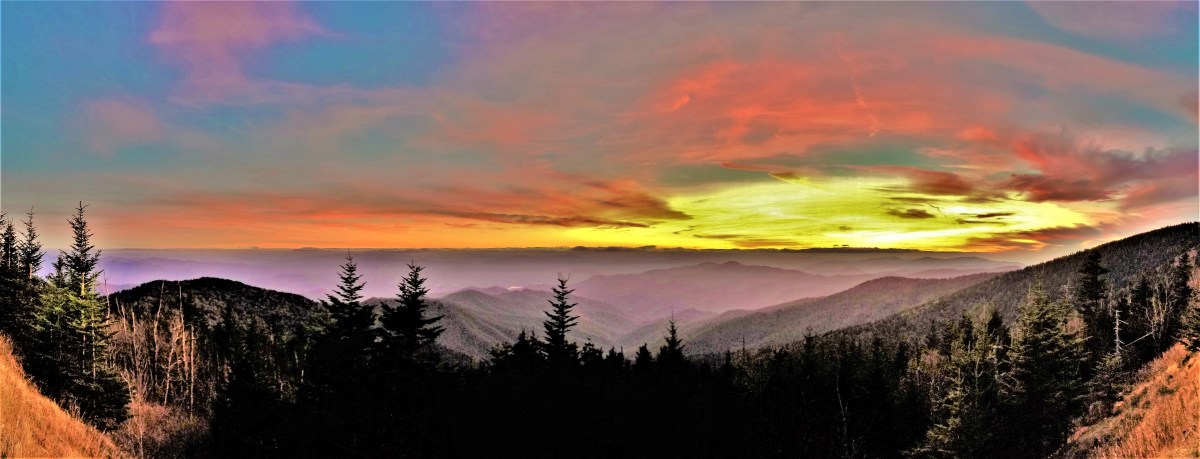
 While she retired to the truck to relax and seek shelter from the bite of cold air moving across Clingmans Dome, I stood steadfast on the edge of the mountain, camera in hand, taking a front row seat to nature’s second act.

Going…

almost sundown1

going…

sundown panorama (2)

gone.

sunset sky

Almost immediately, all the visitors who stood shoulder to shoulder, drifted back to their cars and trucks to wind their way down to the bottom of the mountain road in the faint tinted light of dusk.

If only they had stuck around long enough for nature’s curtain call…

Sky on Fire


Tempus Fugit

When I reflect over the past eight months on the road, it’s a focused blur. Like the miles that melt behind us as we’re cruising on the Interstates, our side-view mirrors only serve to remind us what we once observed before it’s gone in an instant.

“Did you see that?!” has been a common cue while driving, that could come at any time. It could be a natural phenomena like a double rainbow, or a dramatic change to an underwhelming landscape, or a man with no teeth whose nose touches his chin passing us in his hot-rod Mustang convertible.

Whatever the case may be, we usually have just a moment to react and make a meaningful connection before we’re on to the next moment in time. Our experience may be filed into memory, but memories can be sketchy, ambiguous and subjective.

“What’s your favorite place so far?” is a question that unquestionably comes up when meeting friends or strangers who hear about the progress we’ve made on our year-long odyssey. It’s also the hardest question to answer, considering the nearly 30,000 miles we’ve covered en route to 90 different destinations.

Leah and I often joke and reflect about our day at its conclusion, just to gauge if our recollections match.

“Was it a top 10 day for you today?” I’m likely to ask.

Certainly more than 30 times to date, she’ll respond with, “I don’t know if it was ‘top 10’, but definitely among the top 20.”

Looking back–with help from impressions of places from past posts–I’m now ready to answer the question, and reveal my top five favorites thus far, in chronological order.

1) August 2, 2017: Jasper National Park, Alberta Canada–Athabasca Glacier

Herbert detail (2)

Athabasca Glacier currently recedes at 16 ft. per year, and has lost over half its volume over the past 125 years.

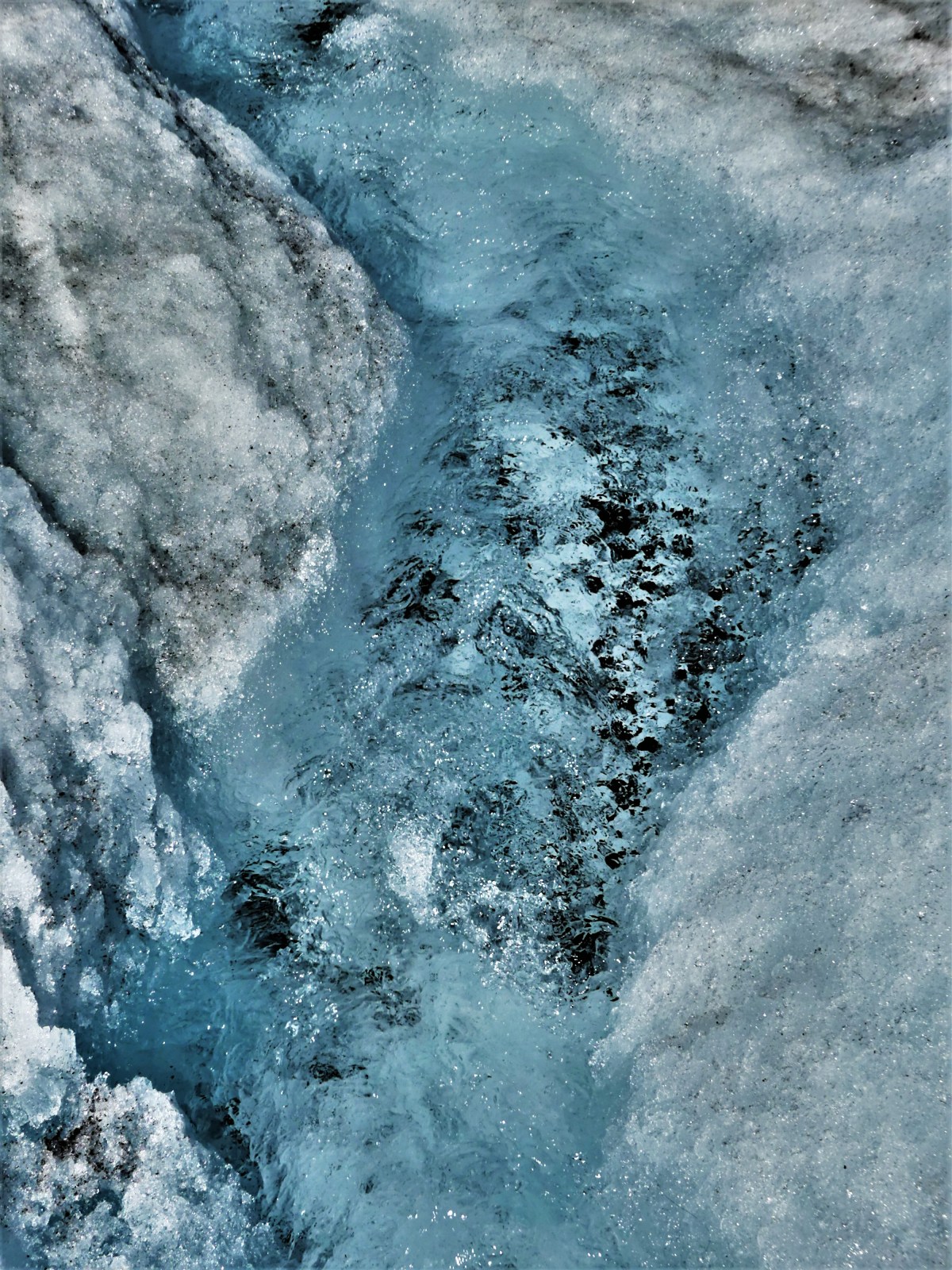
Glacier water

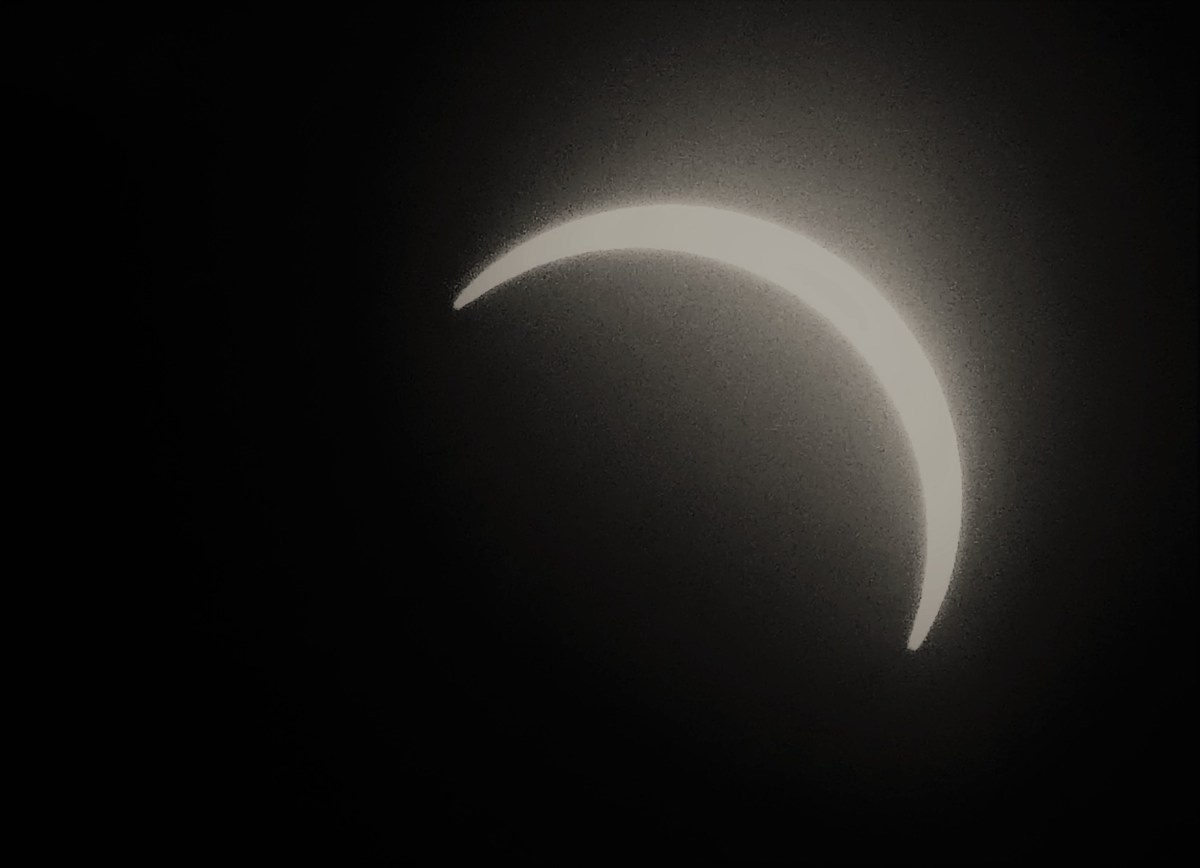
2) August 21, 2017: Corvallis, Oregon–Total Solar Eclipse

totality

Totality of the eclipse lasted one minute, 40 seconds.

partial eclipse (3)

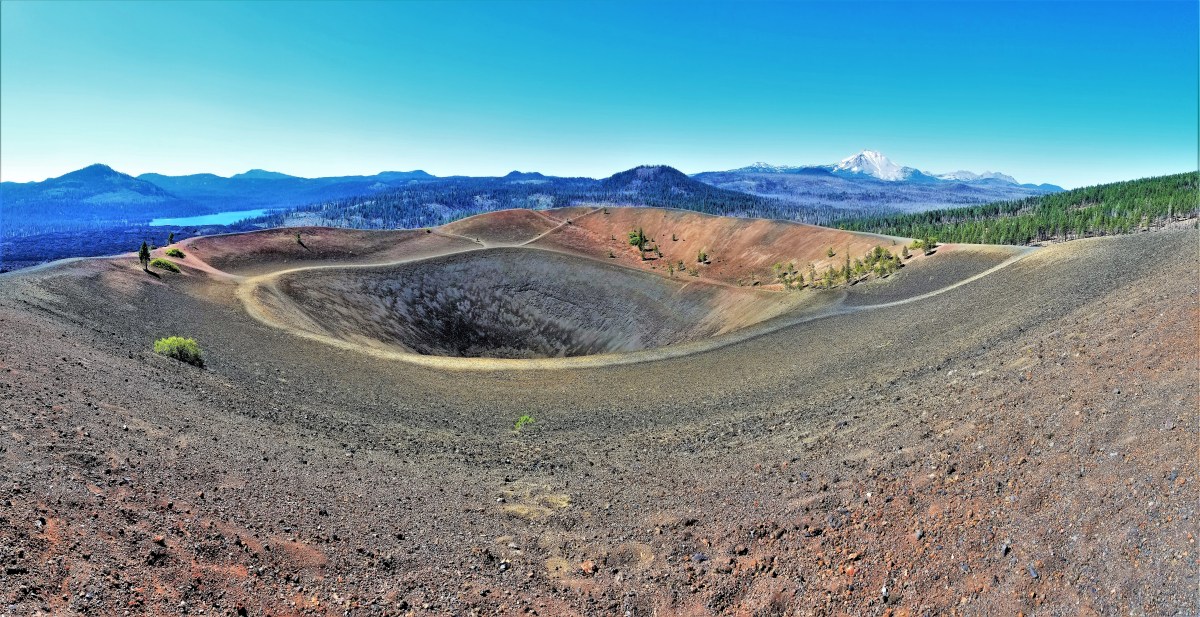
4) August 29, 2017: Lassen Volcanic National Park, California

cinder cone1

The 750 foot ascent up the 35% grade of loose gravel to the rim of the Cinder Cone took 35 minutes.

cone crater panorama (2)

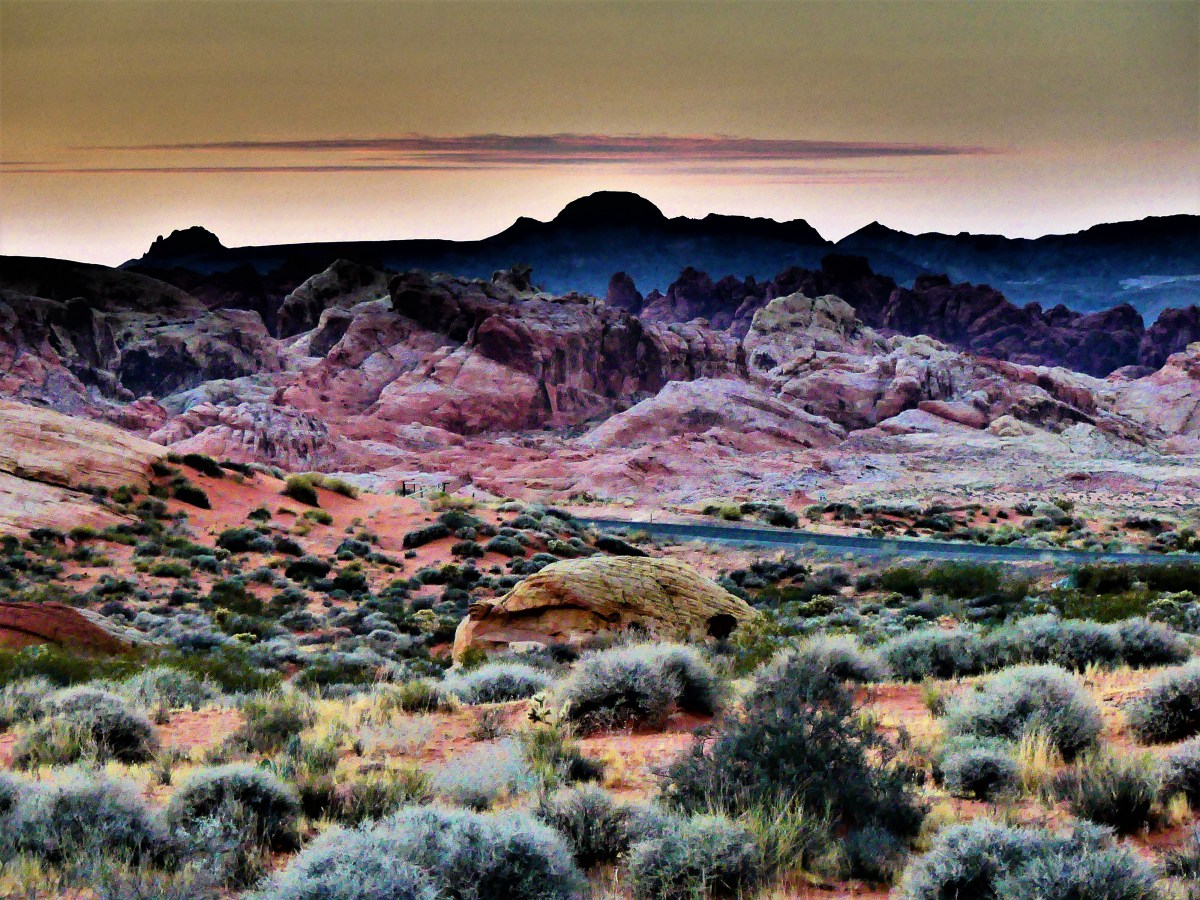
4) October 4, 2017: Valley of Fire State Park, Nevada

Sunset over Rainbow trail

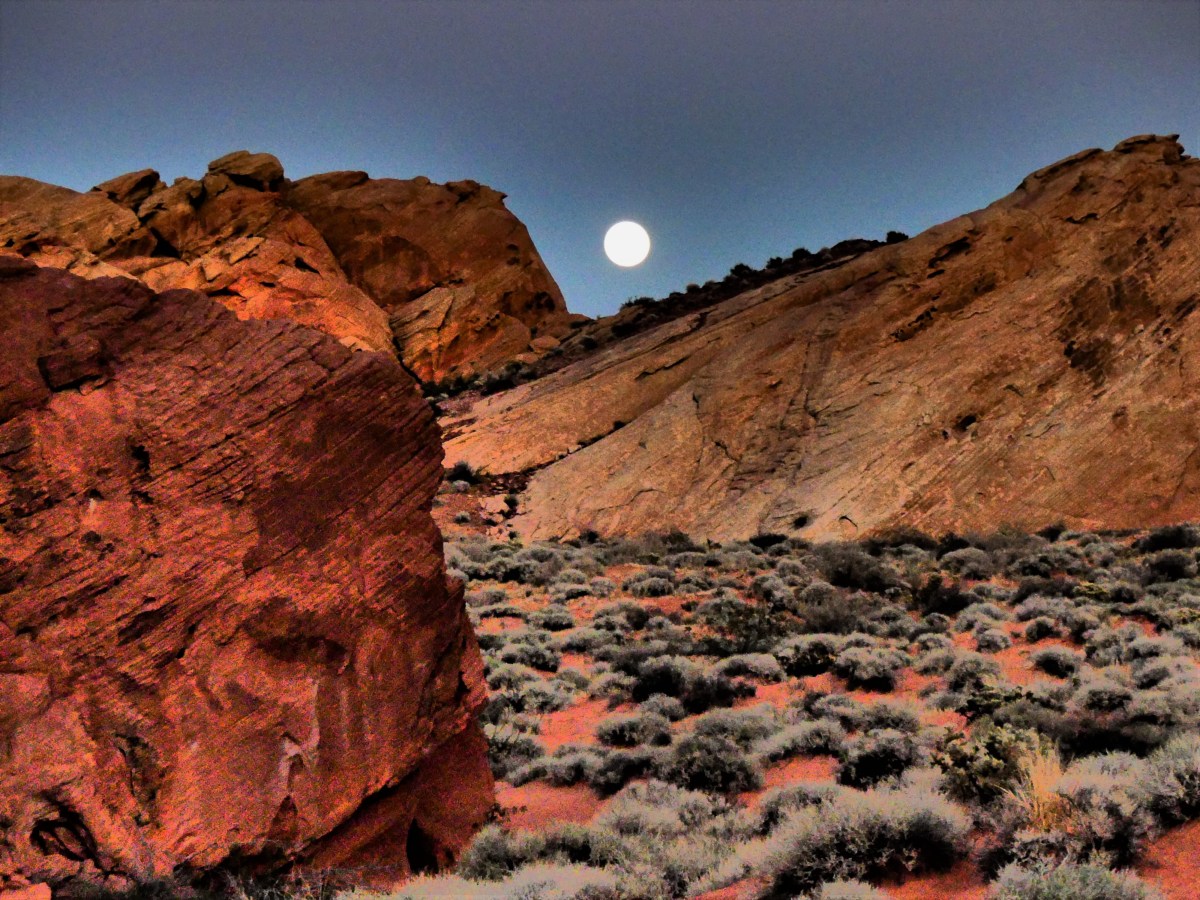
7 minutes lapsed between the sun setting behind the Muddy Mountains to the moon rising over the Valley of Fire.

sheep and moon (4)

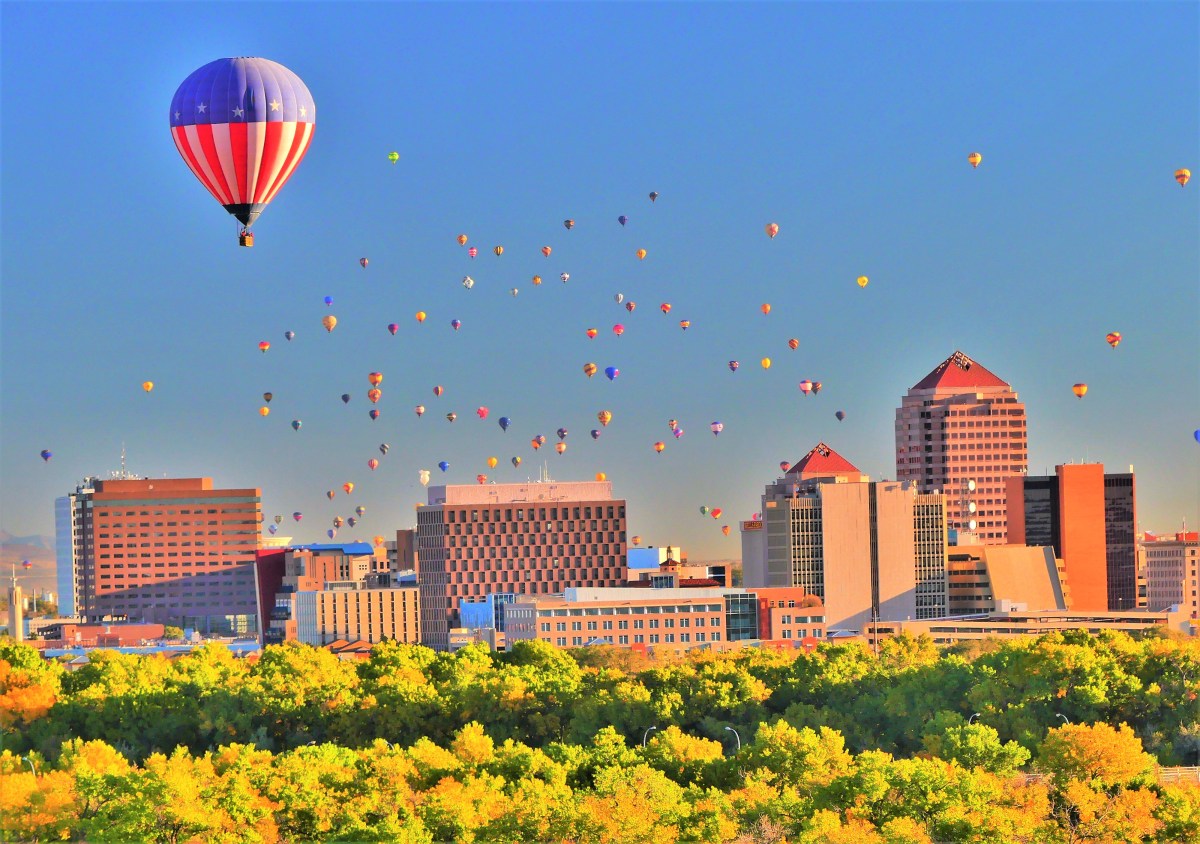
5) October 14, 2017: Albuquerque, New Mexico–Balloon Fiesta

lighting it up

The hot air balloon was aloft over Albuquerque after 13 minutes of inflation.

Balloons over Albuquerque (2)


Although each adventure is fundamentally different from the others, collectively, they represent before and after transitions.
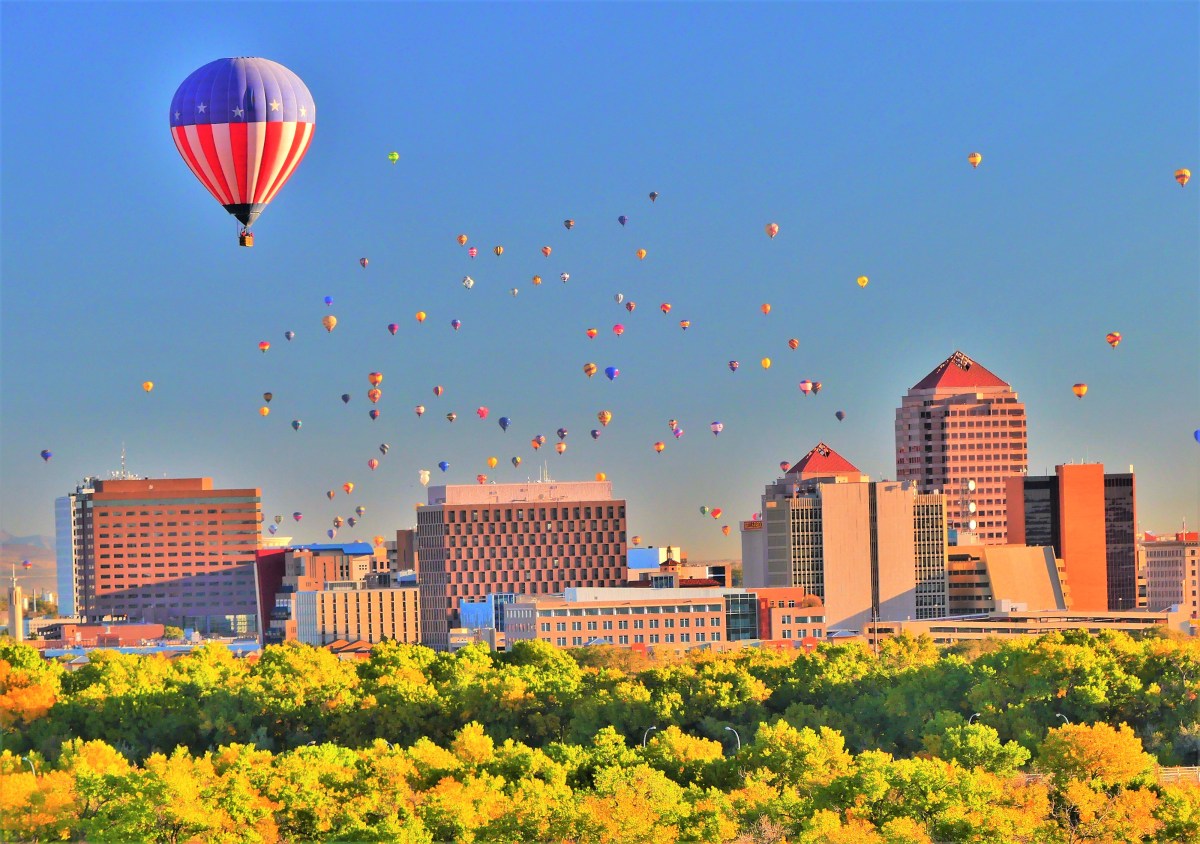
The ephemeral existence of each event is temporary in its own special way, with its own time-stamp carved in soap. Fortunately, the moment can be captured and preserved in words and pictures, lest there be any doubt that something significant happened in our lifetime.


Sanctuary

Sanctuary comes in many different forms: as a retreat–a place one goes for guidance and inspiration; as a house of worship–a place to seek spiritual healing and nourishment; and as a refuge–a place to escape misuse or abuse. Within 24 hours, Leah and I managed to come across all three in a small corner of mid-western America.

For those searching for faith-based education, Oral Roberts University in Tulsa, OK has a campus fingerprint: Make No Little Plans Here

Make No Little Plans Here

The university’s holistic approach feeds the spirit, mind, and body.

hands1

The university’s futuristic and mid-century modern architecture attributed to Frank Wallace is best appreciated from the flying saucer,

prayer tower

that also passes for an observation deck,

ORU observation deck

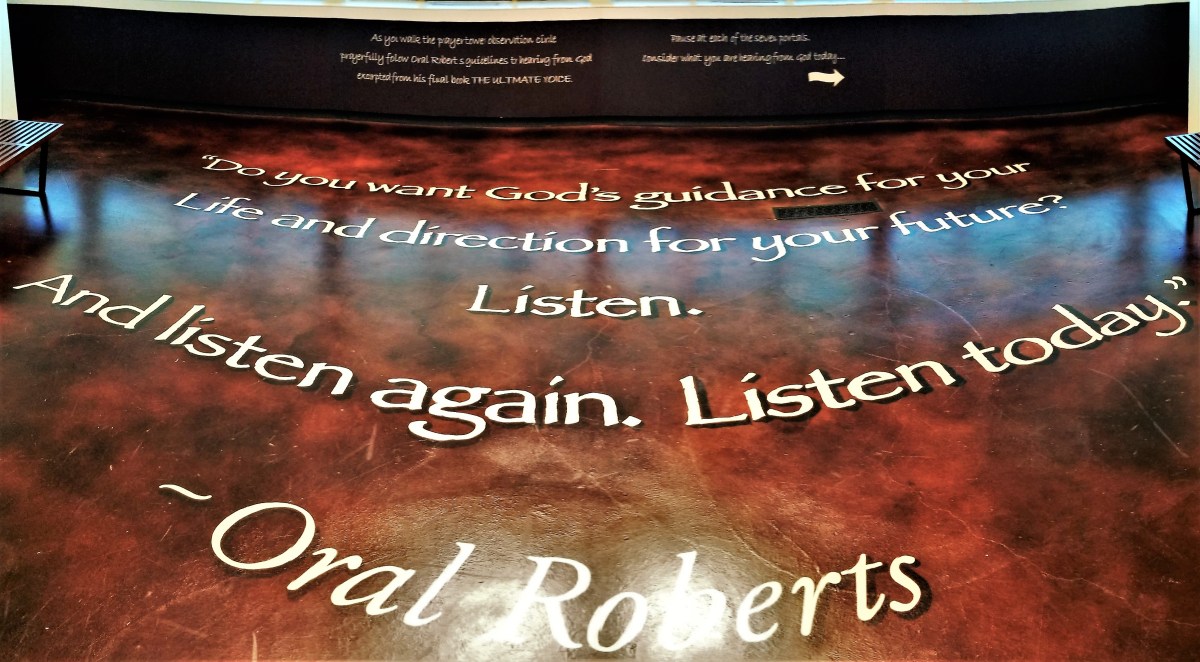
and reflection gallery.

OR advice

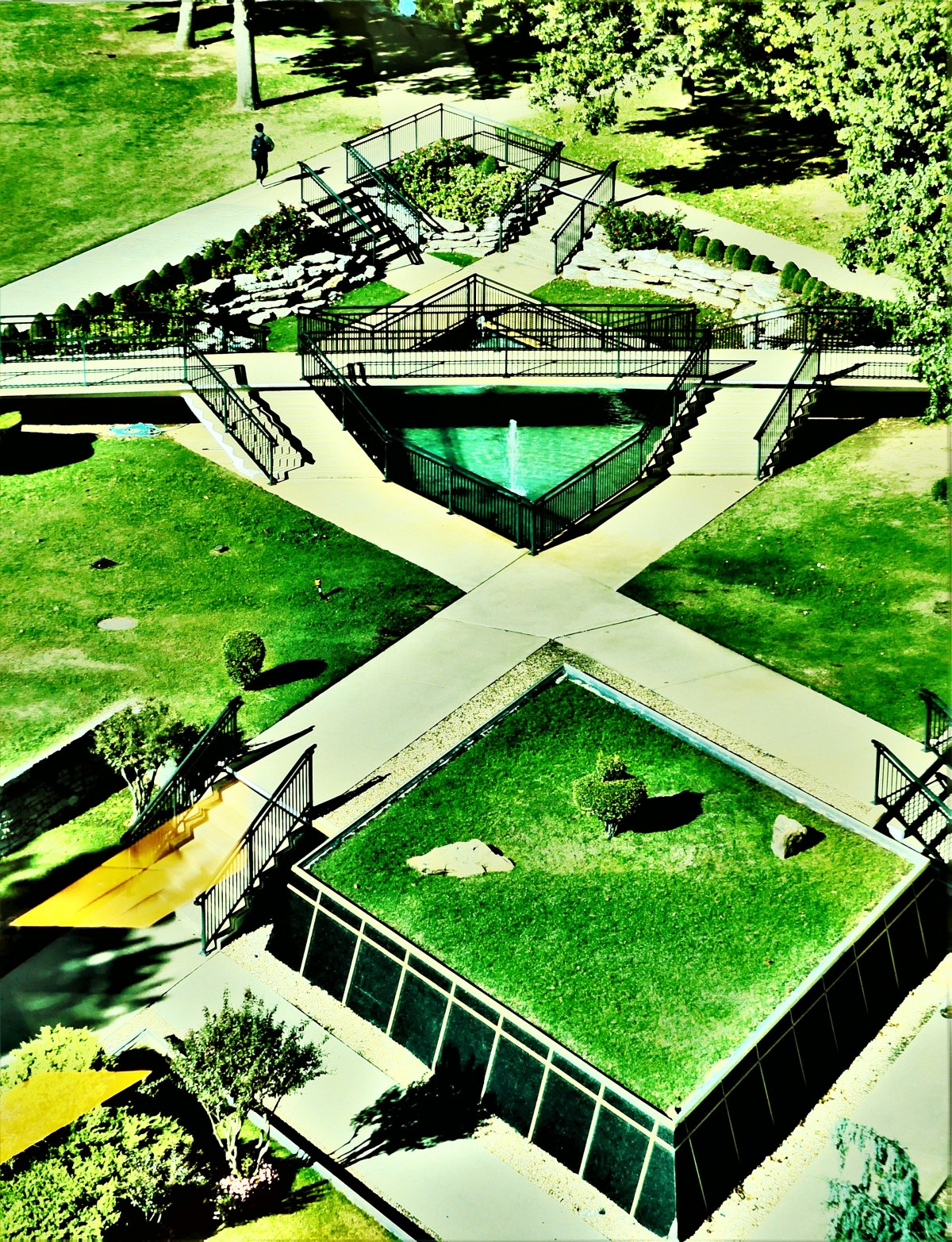
It’s gold-tinted, anti-glare windows colorize the outward views in a peculiar warm bath of Genesis green.

classroom tower

classroom building

auditorium

campus green

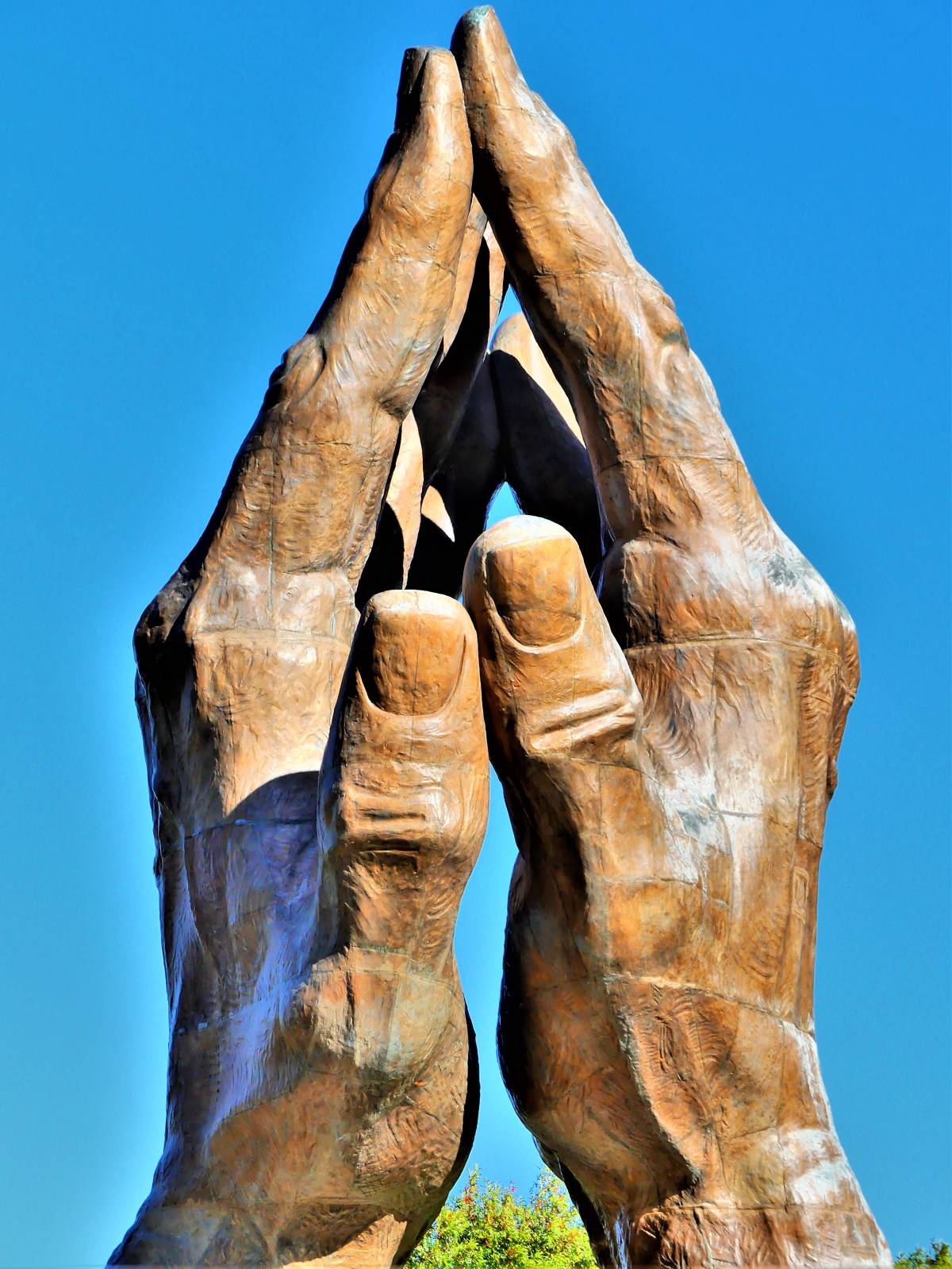
And while folded hands may symbolize a deep connection between God and Christianity,

hands of God

…any university coed would easily characterize the statue as a student praying to pass.


Architecture on a higher plane/plain can be found nearby, in the hills of the Ozarks. While no less spiritual in nature, the Thorncrown Chapel is rooted in nature.

entry

An elaborate composition of wooden trusses embracing 425 windows gives an ethereal nod to a scripture and proverb mash-up of not casting the first stone in glass houses.

From the hillside, the chapel seemingly disappears among the flora,

camouflage

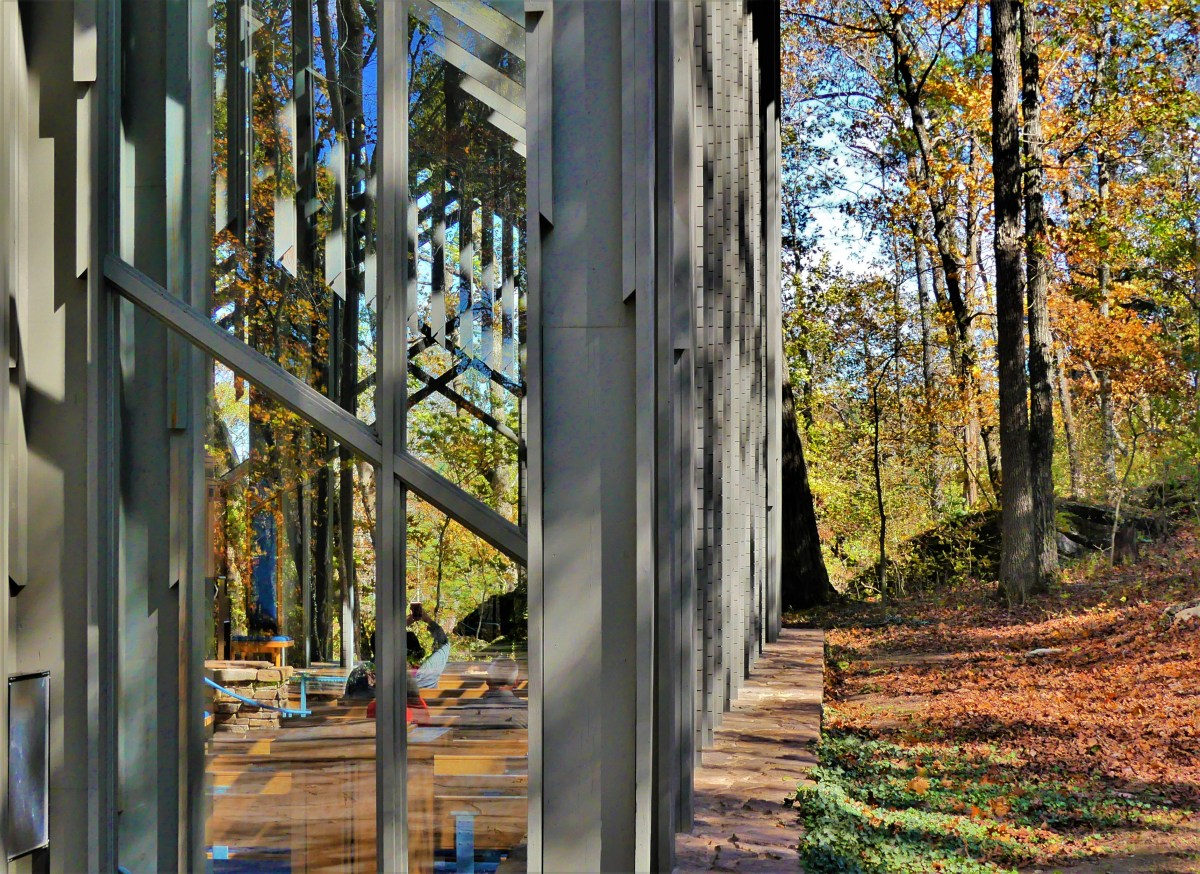
and when juxtaposed to the outdoors, the chapel’s transparency is flaunted by its six thousand square feet of glass.

looking outside in

However, the chapel’s connection to nature shines brighter from within the polished maplewood doors,

interior

where an arboretum of beams reaching forty-eight feet to the clouds…

inside out1

can be contemplated and photographed from a distant pew. (Photography is allowed, but only from a sitting position.)

pews and lights

But Thorncrown Chapel is more than a beautiful building. It’s a celebration of Jim Reed’s spirit and vision, and a noble tribute to the glory of his resignation to a higher power.


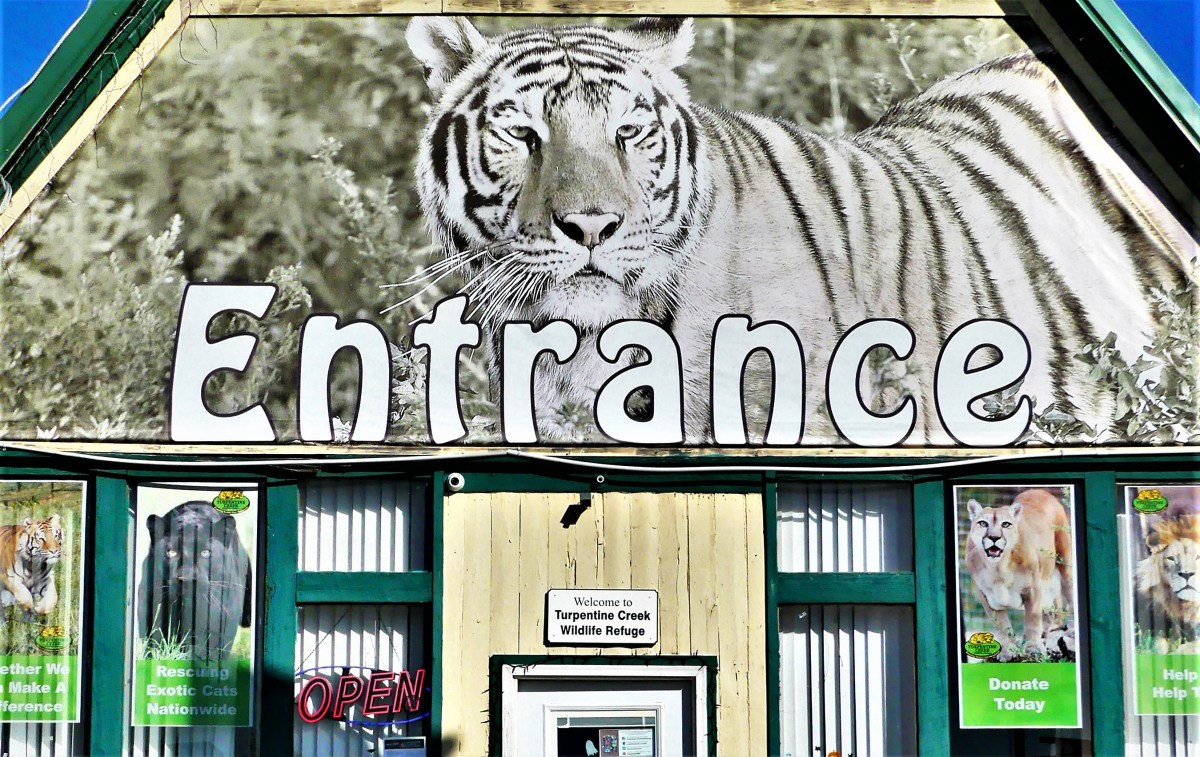
Lastly, eleven miles south, on the edge of Eureka Springs, AK, Turpentine Creek Wildlife Refuge provides shelter and care to abandoned, abused, and neglected wildcats, whose owners have miscalculated the cost and trouble of raising and breeding them in captivity.

entrance1

Currently, Turpentine Creek has become a haven to 100 lions, tigers, ligers, and cougars like Nala and Brody.

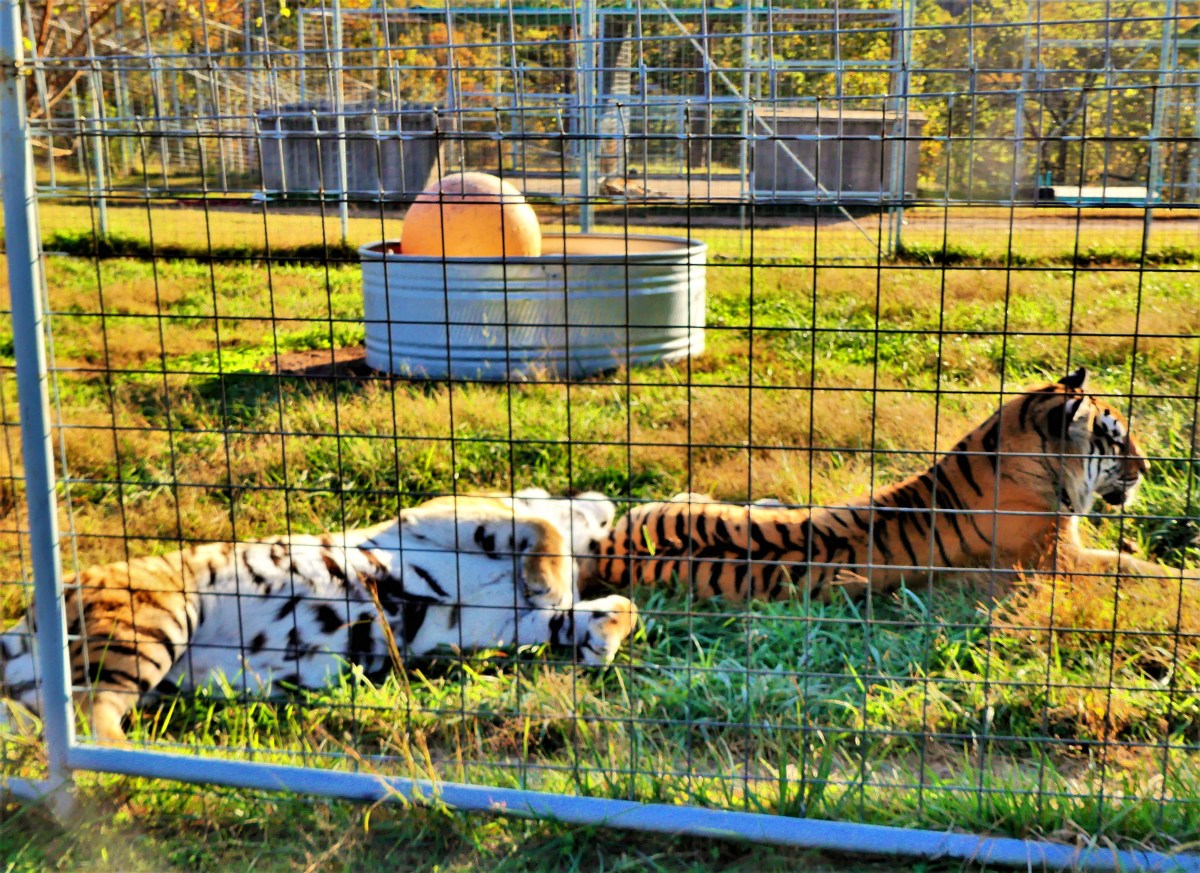
Natural habitats built with benefactor dollars provide asylum to big cats,

2 tiger habitat

who are now free to live out their lives in a protected environment,

2 tigers

while being offered preventative and emergency medical treatment.

tiger repose

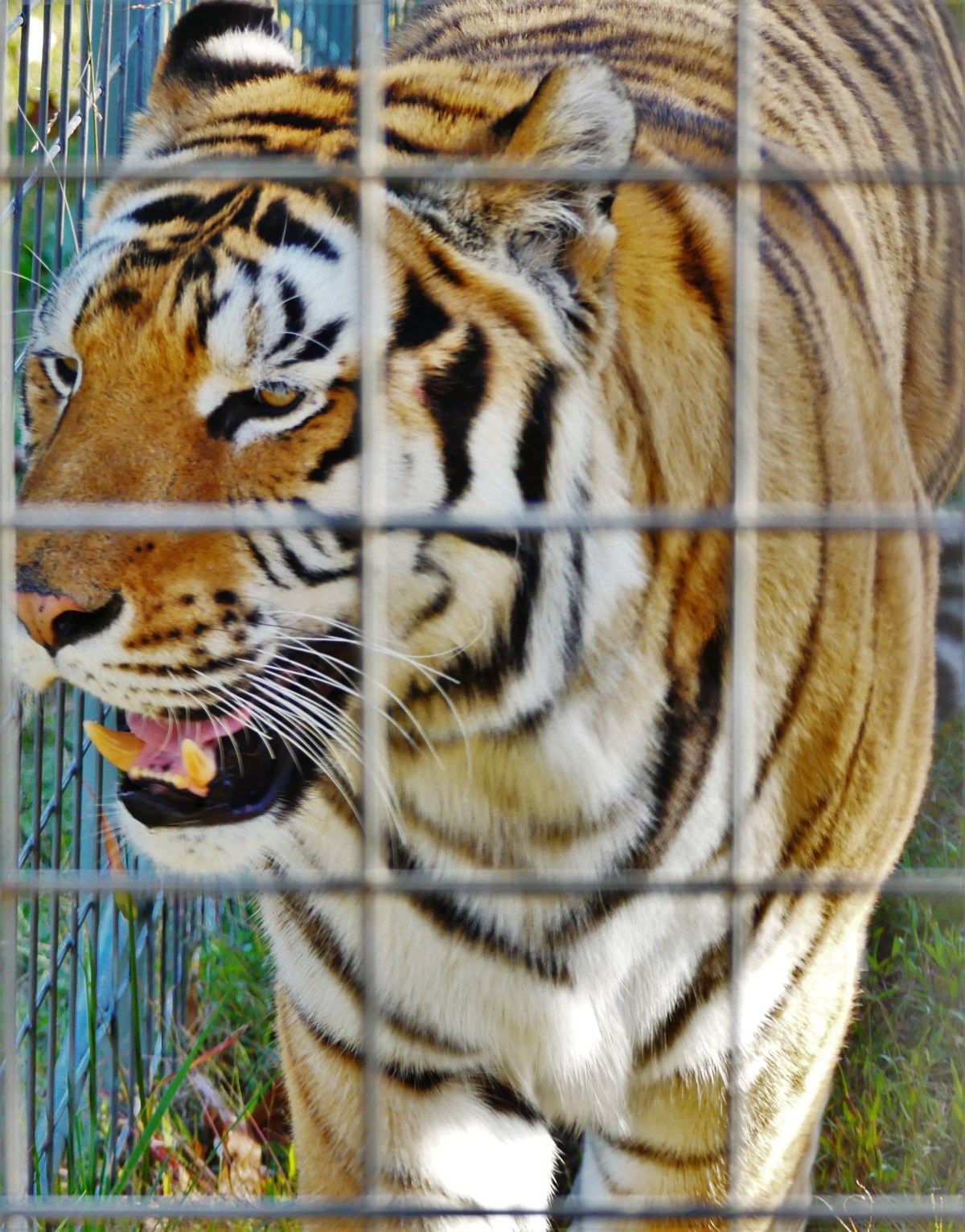
These cats cannot be released into the wild,

tiger habitat

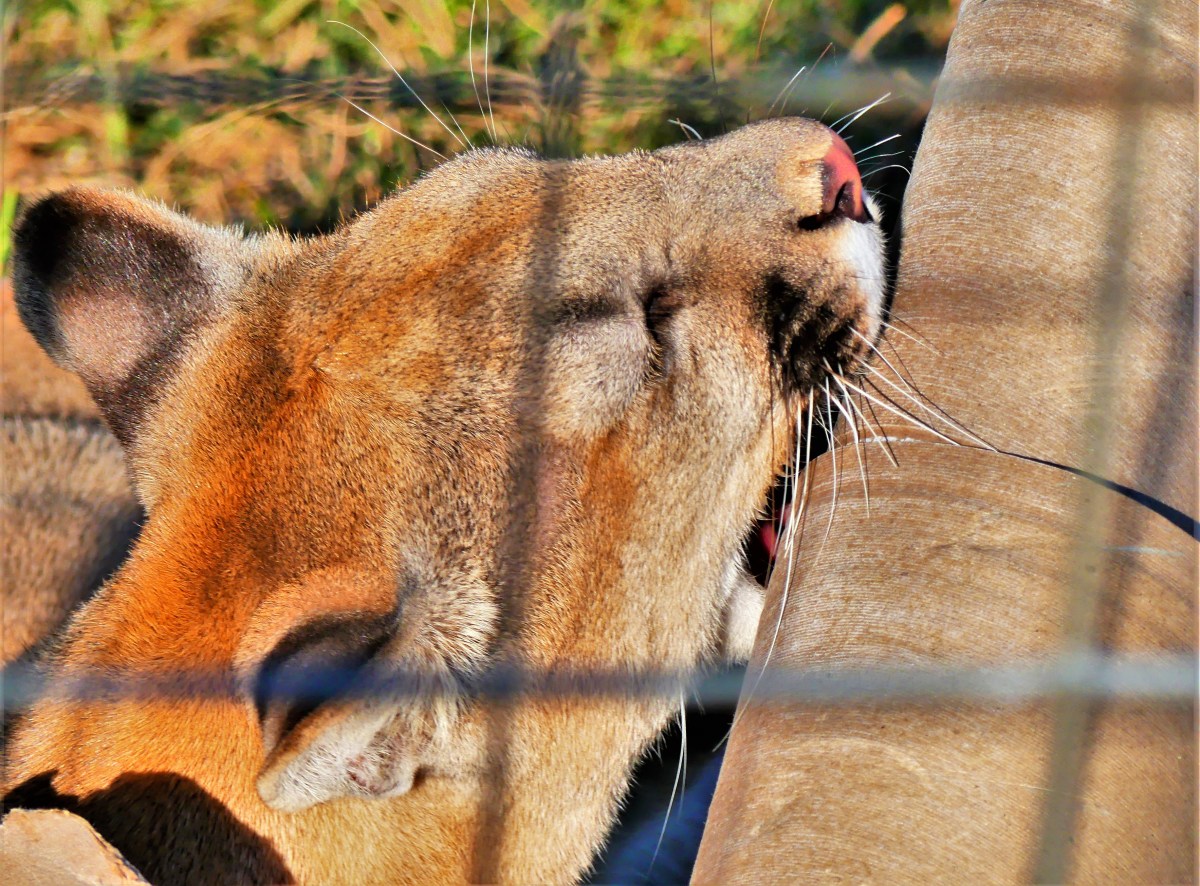
as they’ve lost their ability to fend and defend after being declawed by their owners,

cougar gnawing on cardboard tubing

who in their ignorance and arrogance wished to make them less dangerous to handle as one-time pets.

white tiger

Nevertheless, a cadre of volunteers assists a small staff in feeding, cleaning, examining, and behavior-modifying these beasts. Thus, providing each big cat with a humane existence.

Day-to-day operations are assisted through visitor admissions, gift shop sales, and donations by large corporations like Tyson, who feeds the herd 300,000 lbs. of chicken every year.


Sanctuaries of thought, redemption, and protection offer safe places to learn, to reflect, and retire to. Remove anyone of them, and society faces a danger of turning in on itself, further sewing the sleeves of divisiveness.

Better still, offering asylum to the millions of struggling homeless across the country, and persecuted refugees around the world would improve their safety and dignity, and allow more of humanity to participate in their own recovery.

Palo Duro Canyon Tailwinds

Wouldn’t you know it?! Texas has a Grand Canyon of its own in the middle of its panhandle called Palo Duro. And the best way to see it is from the saddle of a horse while riding at the bottom of the canyon floor.

We’d been wanting to go horseback riding for the past few months, but something always interfered with our plans, or time wouldn’t allow. But Leah was determined.

“If you can ride in a balloon, then I get to ride a horse,” she declared.

And true to her word, reservations made on Thursday got us an early ride time with Jennifer at Old West Stables inside the state park.

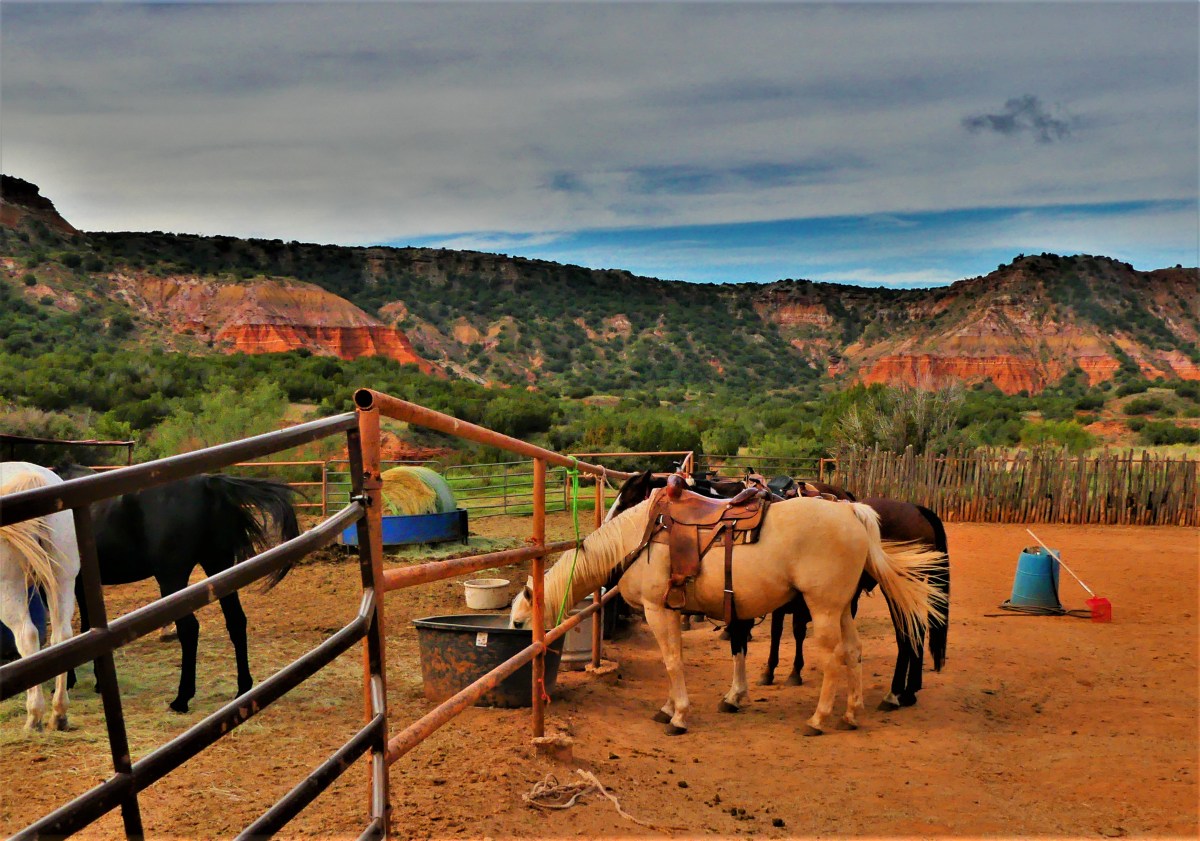
stables

stables1 (2)

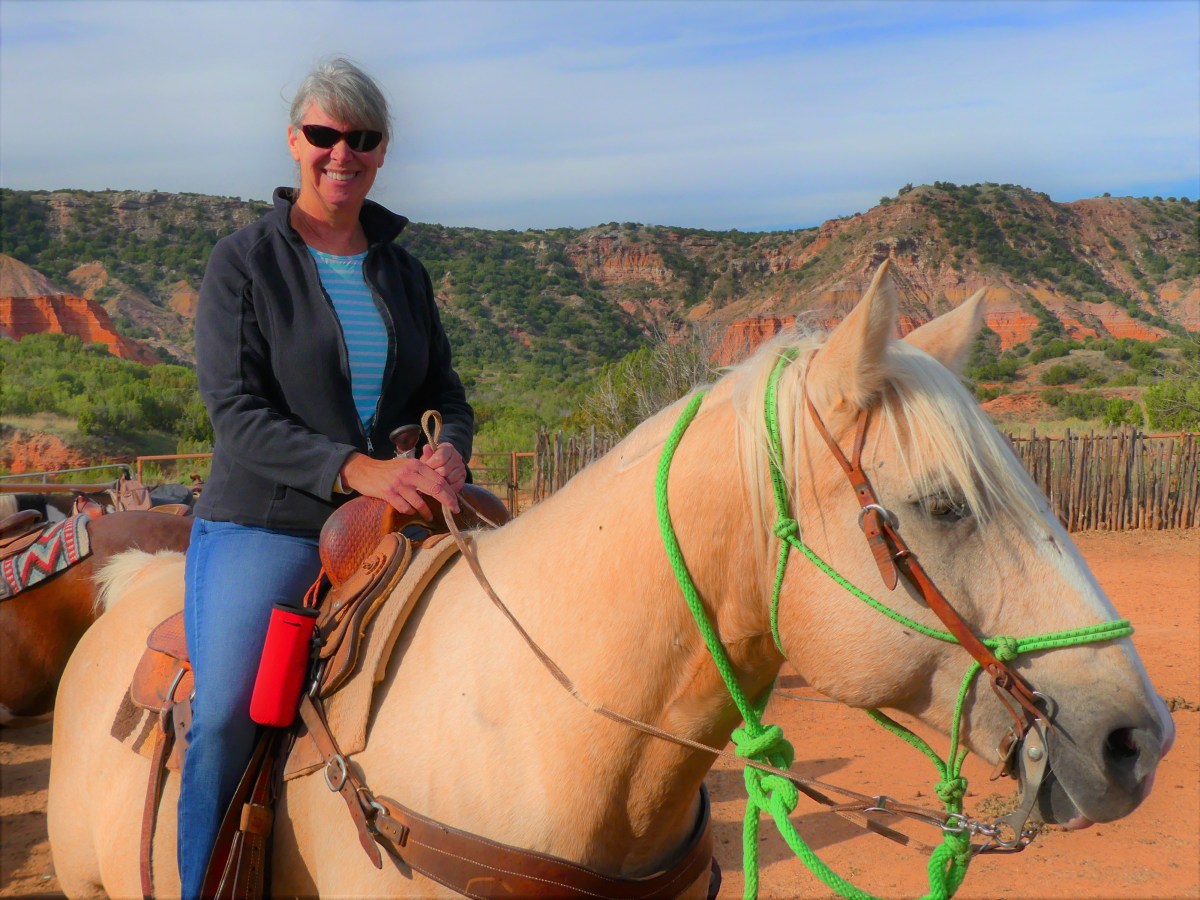
We mounted Buster and Lloyd,

our ride

and rode along an unmapped equestrian trail that took us along the foothills of the canyon walls…

on the trail2

and through the hills and ravines of a basin carved by the Prairie Dog Town Fork of the Red River over one million years ago.

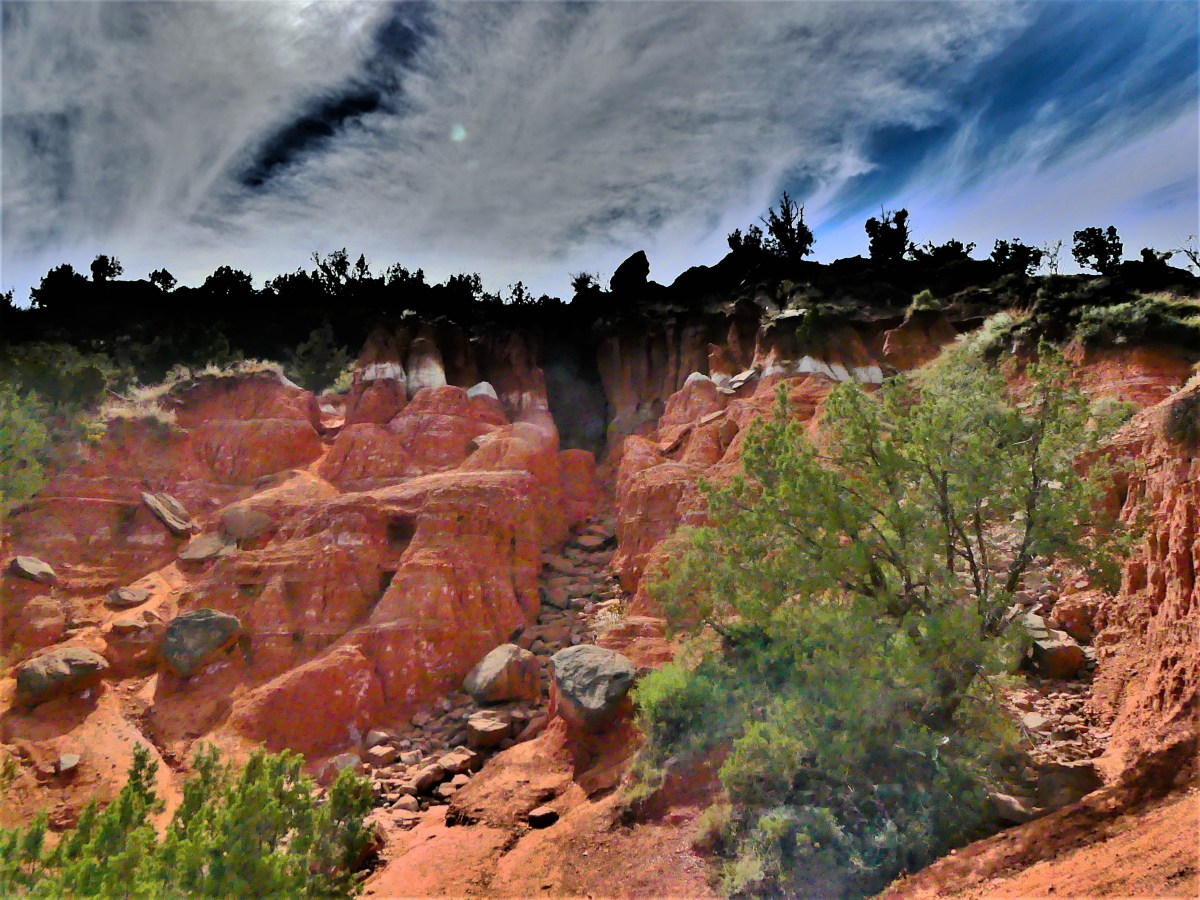
We passed colorful rock formations resulting from a geologic compression of four distinct periods layered over the course of 250 million years.

canyon wall.jpg

While I enjoyed the scenery, and the quiet of the canyon,

canyon peak

canyon strata

I had the disadvantage of riding behind Leah’s horse, Lloyd.

Leah and Lloyd

Lloyd was a farter who always positioned himself behind the lead horse.

on the trail3

And no matter how many times I tried to hold Buster back…

on the trail4

…we would always find our way back behind Lloyd’s swishing tail,

Buster follows too closely

where Buster was always greeted with a slow and steady current of foul wind, followed by an evacuation.

The hour passed as easily as Lloyd’s breakfast, and we found ourselves back at the stable, in time for Lloyd’s lunch.

back at the ranch

Once finished, we took a ride back to the lodge at the top of the canyon for a better perspective of the second largest canyon system in America,

canyon vista1

overview detail

before returning to the basin’s scenic road to explore the Big Cave,

BC trail

an opening in the red rock that’s not as big as it’s unusual.

cave entrance

cave mouth1

Big Cave inside out

cave opening (2)

The Texas panhandle is as flat as a cowpie, and wide as the open sky.

Airstream sunrise1

Thankfully, Palo Duro Canyon provides some variety to a linear landscape, and adds some color to a pale prairie palette.


Balloonatic

“$450 for a balloon ride?! You’ve got to be kidding” I exclaimed to the Rainbow Ryder rep on the phone.

“That’s the price, sir. We are the exclusive balloon ride provider for Balloon Fiesta, unless you’re willing to fly outside the ‘Albuquerque Box’,” she managed.

“What’s the ‘Albuquerque Box’? I inquired.

“It’s a weather phenomenon peculiar to Albuquerque,” she pointed out, “where the lowest winds move in one direction, while the higher winds are moving in the opposite direction. That way, our pilots can take advantage of the different air currents, by floating higher or lower, and return you close to your original launch point.

albuquerquebox
*courtesy of Drumlineramos

“Uh, Ohh-kay,” I shrugged, “and that’s worth $450?”

“That’s the rate for a balloon ride during Balloon Fiesta, sir. And I only have a few openings left for Saturday and Sunday,” she pitched.

“Your price is sky high,” I offered, “so I’m gonna have to think about it.” And this call was over.

I turned to Leah. “Looks like my balloon ride went from bucket list to “fuck-it” list.”

And that was a drag, since Balloon Fiesta is the largest gathering of hot-air balloons in the world, with more balloons lifting off together (mass ascension) than anywhere else.

Leah sensed my disappointment. “Maybe it’s cheaper if you found an outfitter outside the box. Would you still be interested?

“I think I could manage to get excited,” I lamented.

After a flurry of phoning and pricing, I secured a dawn launch on Saturday for $250 with World Balloon, albeit on the northwest side of town, miles away from the Fiesta.

Launch day bears all the markings for a picture-perfect take-off: early air temperature hovers in the mid-40’s; the wind is streaming from the north at 8 mph; and the sky is clear as shimmering water.

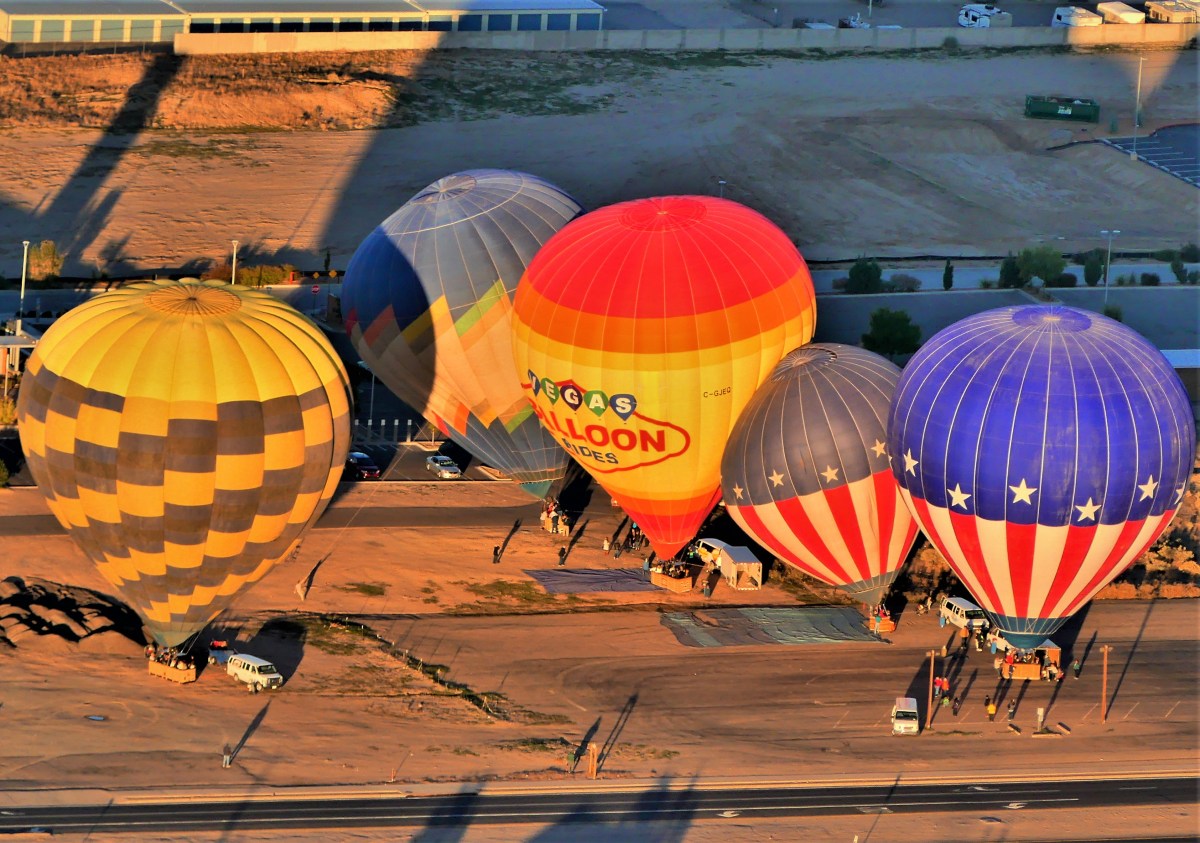
A group of fifty men, women, and children are sub-divided into five, and assigned to a pilot and his balloon crew. Each chase van carries two wranglers, ten passengers, and a trailer packed with gear. We congregate at a barren football-sized lot, and watch as five balloons are prepared for flight.

Baskets are unloaded,

unloading the basket

and assembled.

building the basket

The burners are tested.

testing the burner

With dawn breaking over the horizon, the balloon is unfurled, and rigged to the basket.

rigging the lines

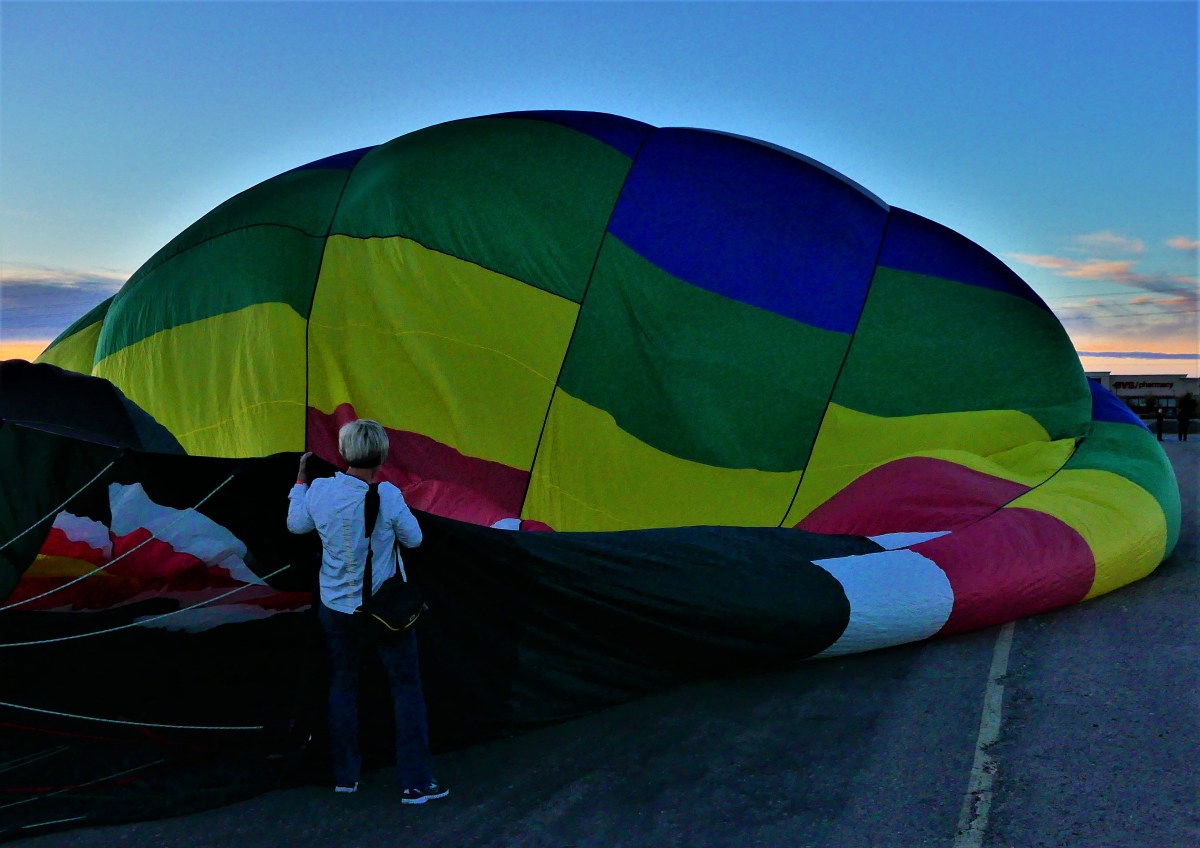
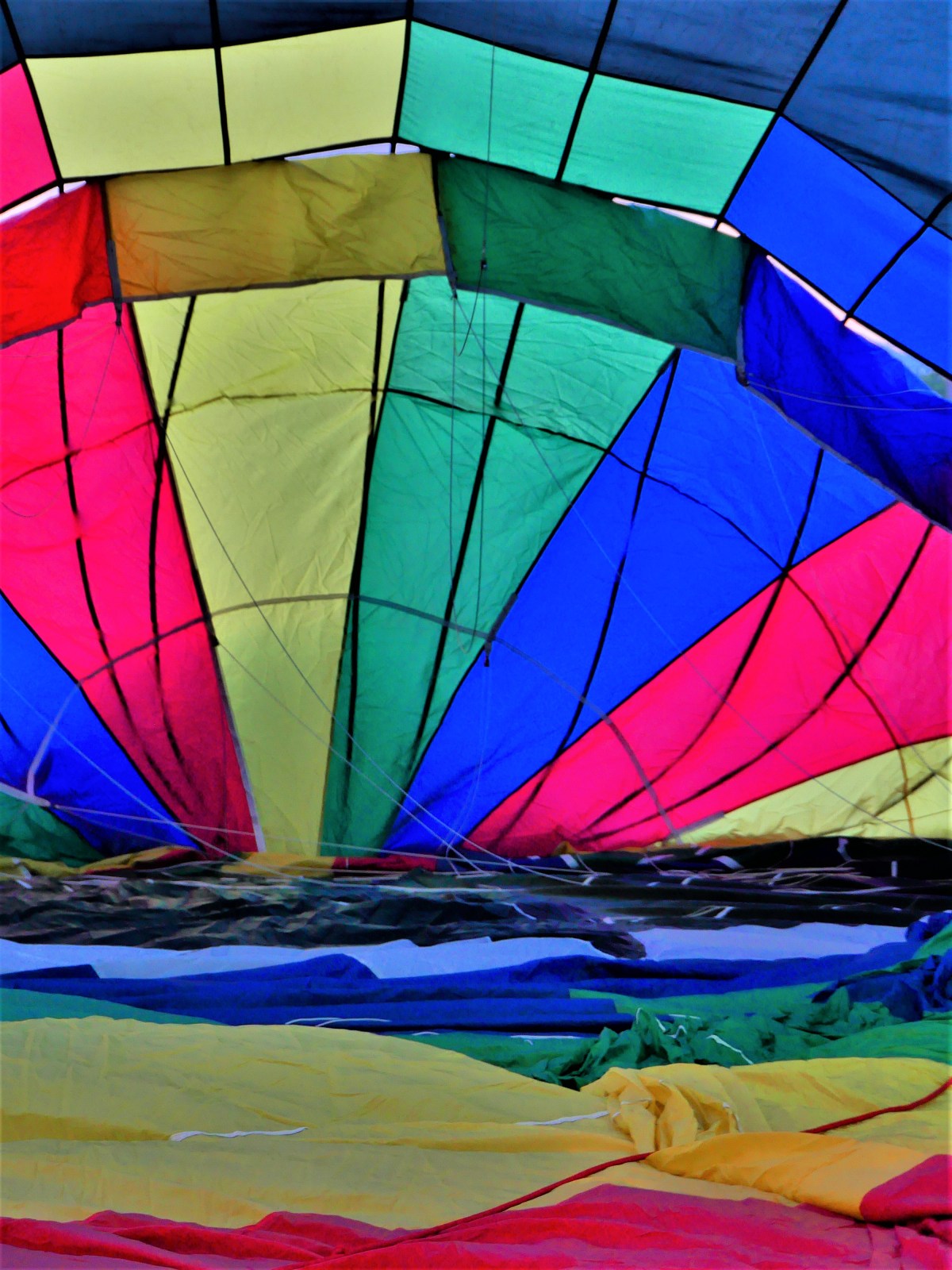
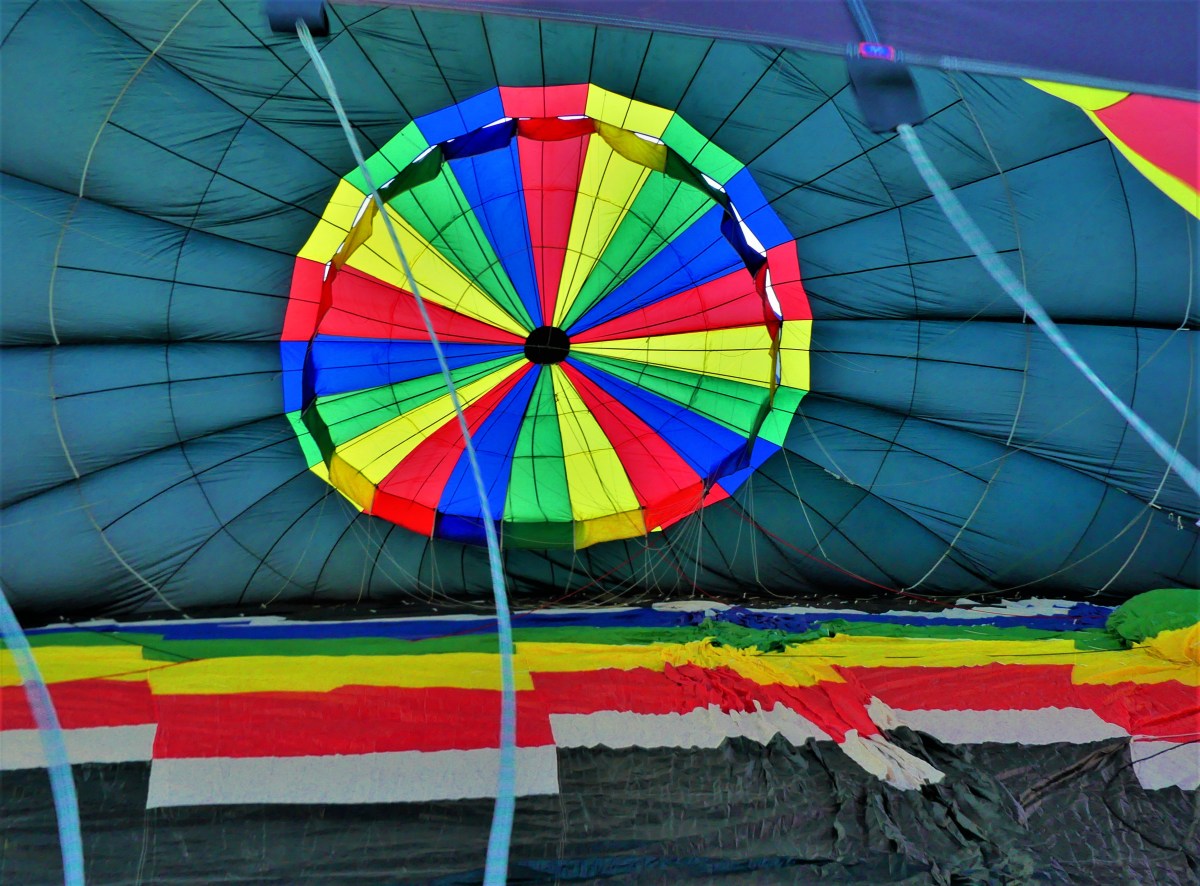
An industrial fan blows cold air into the mouth of limp polyester, and behold, the balloon takes shape.

dawn

raising the dome

filling the balloons

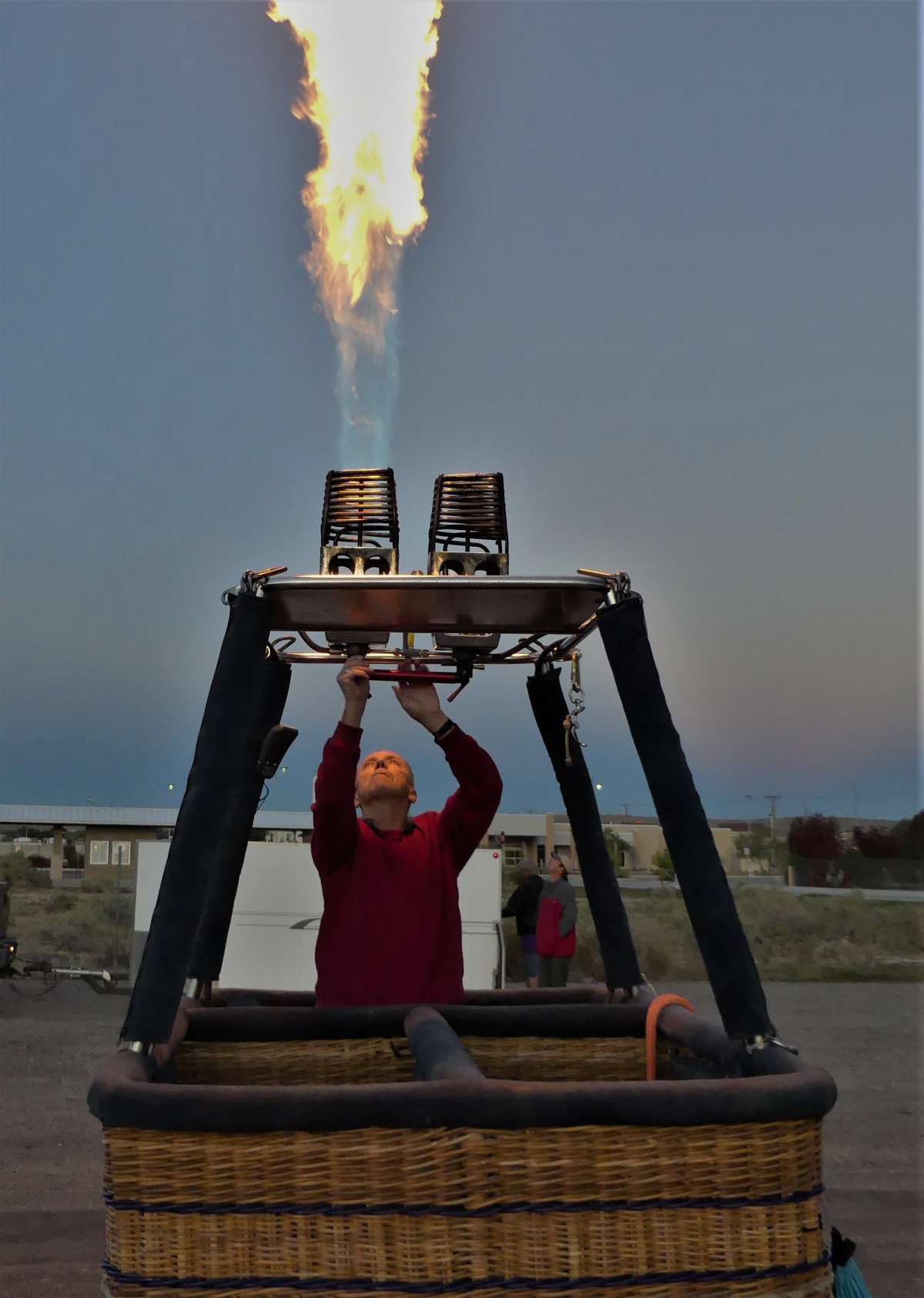
Roy aims the burner flame into the mouth to heat the air,

lighting it up

fire and rigging

and eventually expands the envelope to fullness.

inflation

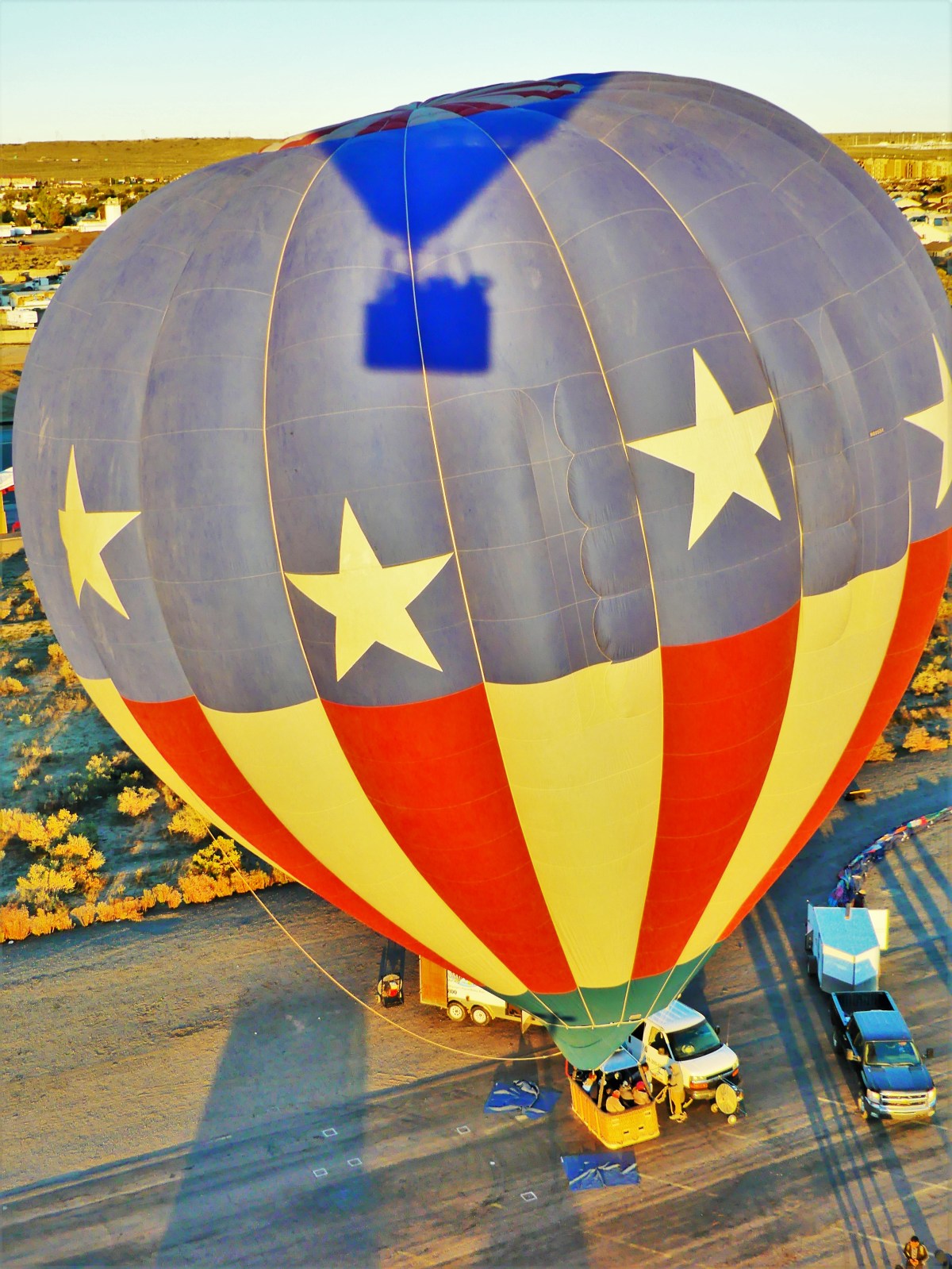
The buoyant balloon rights itself,

sunrise

and the six of us scramble inside to bid adieu to terra firma, and gently float away…

aloft

…one step ahead of a second balloon.

balloon sun glow

All the while, balloons below…

balloon party

…are preparing to follow our Airstream (wink wink, nod nod).

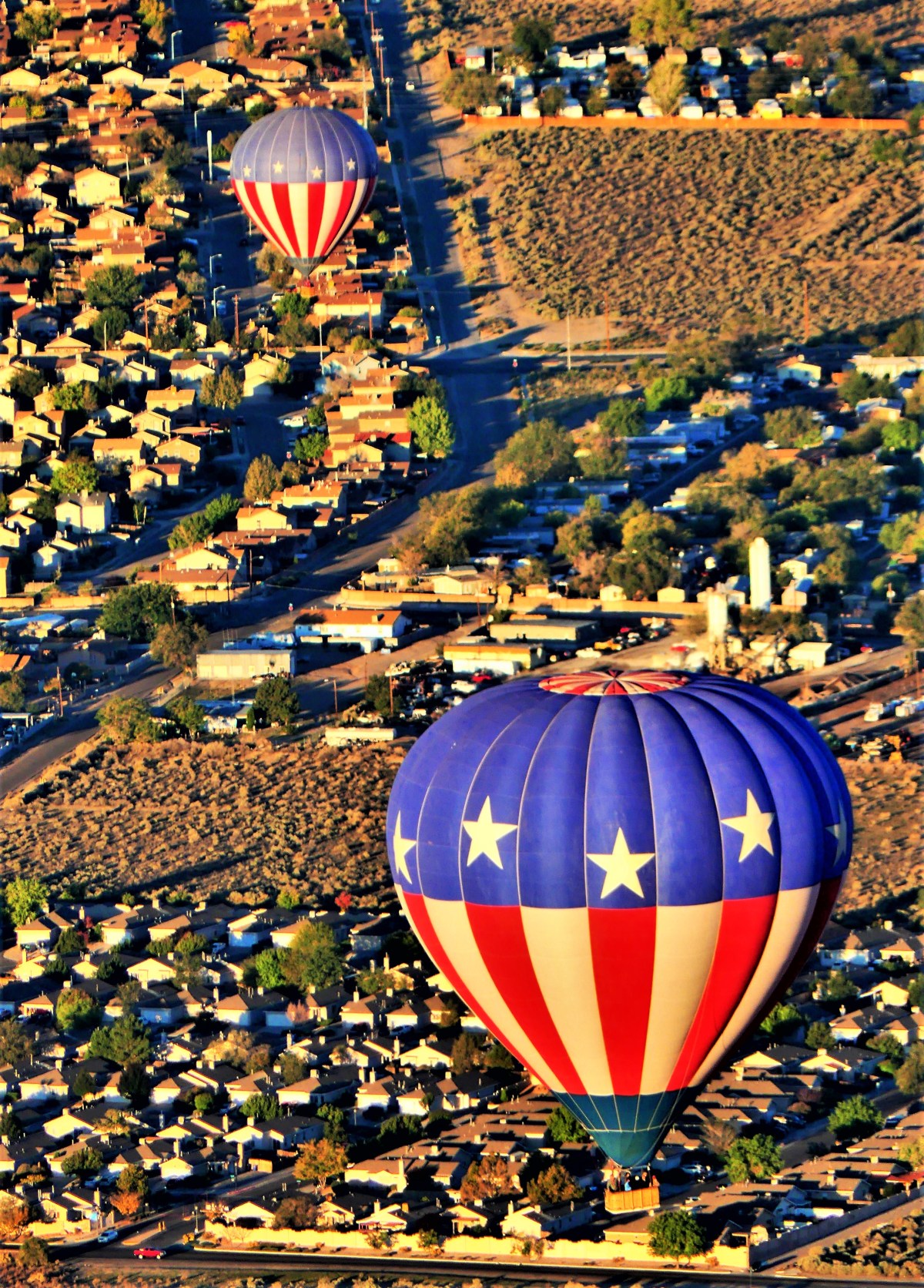
USA balloons

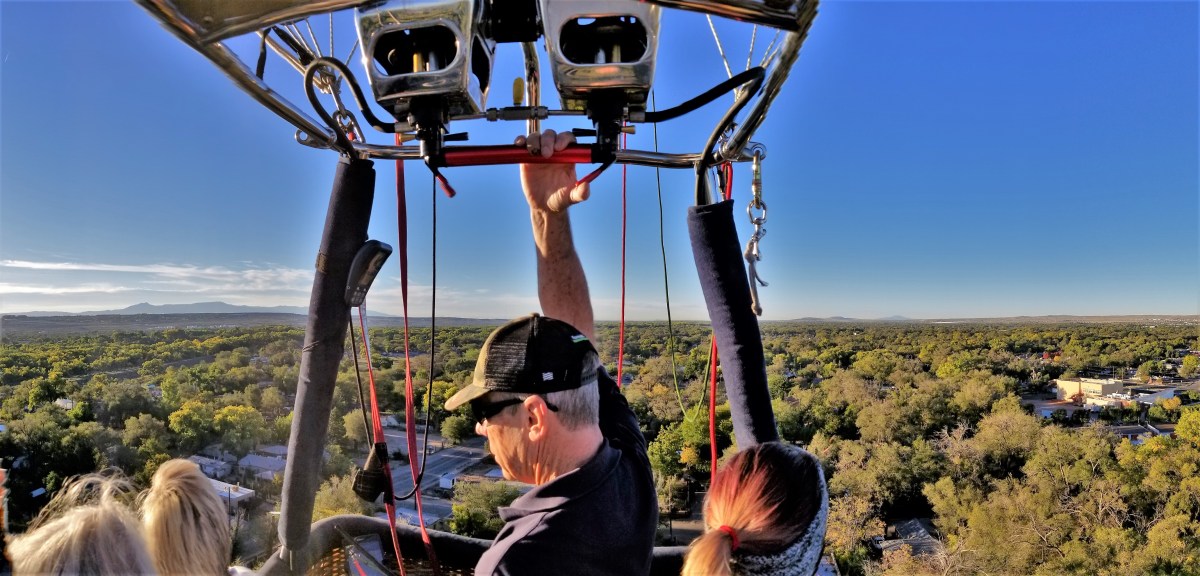
Our pilot, Roy pulls on the burners,

Roy the pilot

carrying us to 5000 ft. above the treetops,

fiesta panorama

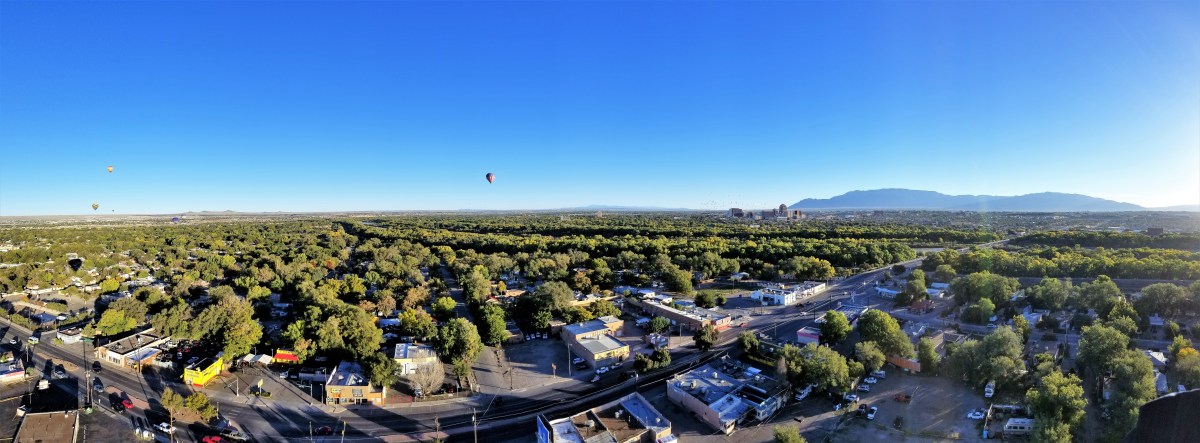
where a birds-eye view of the valley below,

self portrait.jpg

reveals a cityscape punctuated by fantastic dots of floating colors.

Balloons over Albuquerque (2)

Yet closer inspection reveals the full dimension of a multi-colored mushroom gliding through an azure sky.

baloon portrait

After forty-five minutes of soaring and dipping through neighborhoods–arousing excitable dogs,

annoyed dogs

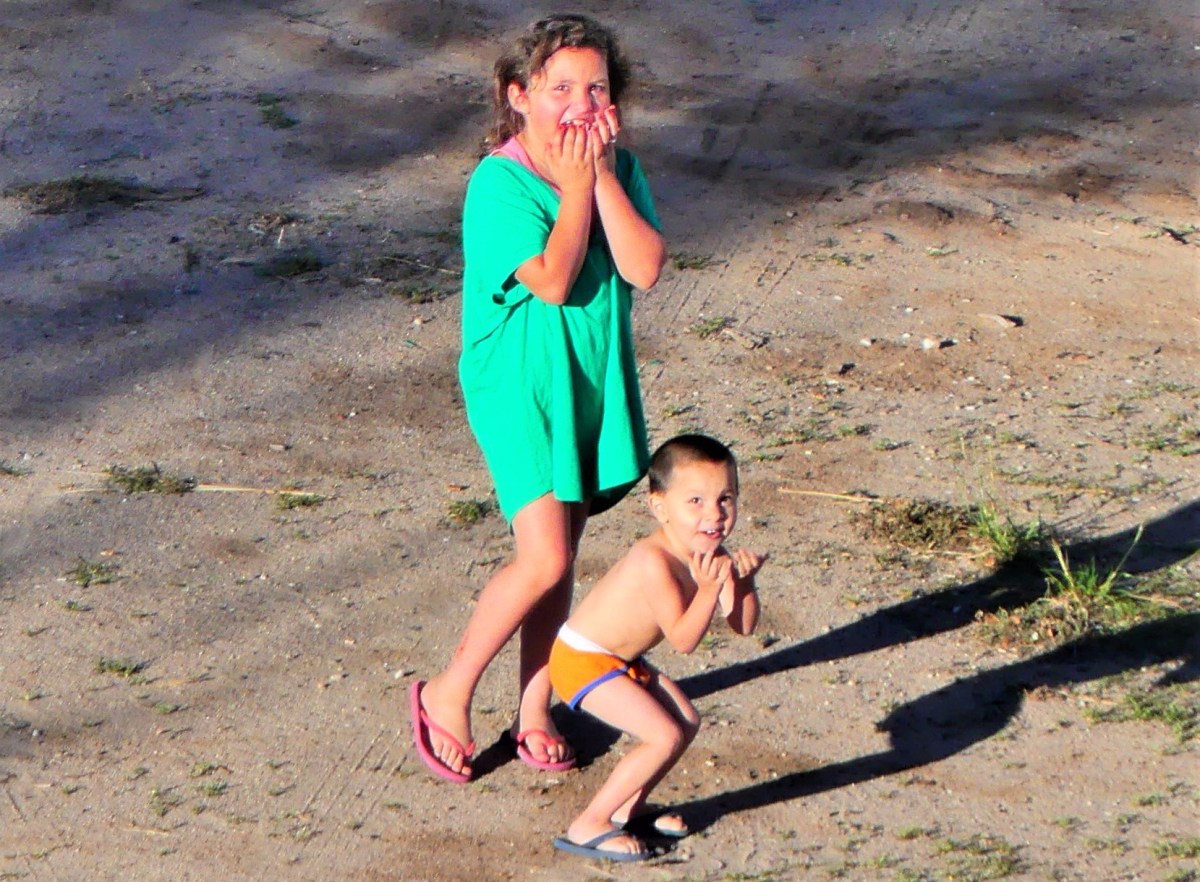
and adoring children–

delighted-children.jpg

Roy is tasked with finding a landing site along our flight path–wide open and away from wires–and accessible to the chase team who’s been following us since our launch. After a few false starts, we locate a large house devoid of landscaping, and gently settle back to earth.

attempting to land (2)

However, a chain-link fence lines the perimeter, and a locked gate gives us no way out. A woman from Birmingham, AL vaults over the side of the basket and runs to the front door to alert the owners to unlock the gate, but nobody’s home.

So it’s back in the air, with the van in pursuit, until we mobilize at a strip mall.

landing place

crew pulling us in

After a quick exchange of passengers (six out and four in), our balloon is re-released with its second set of aeronauts,

group 2 on board

drifting higher into the blue yonder.

group 2 aloft

Fifty minutes later, the vacant parking lot beside the church provides the perfect setting for a second re-entry.

holy touchdown

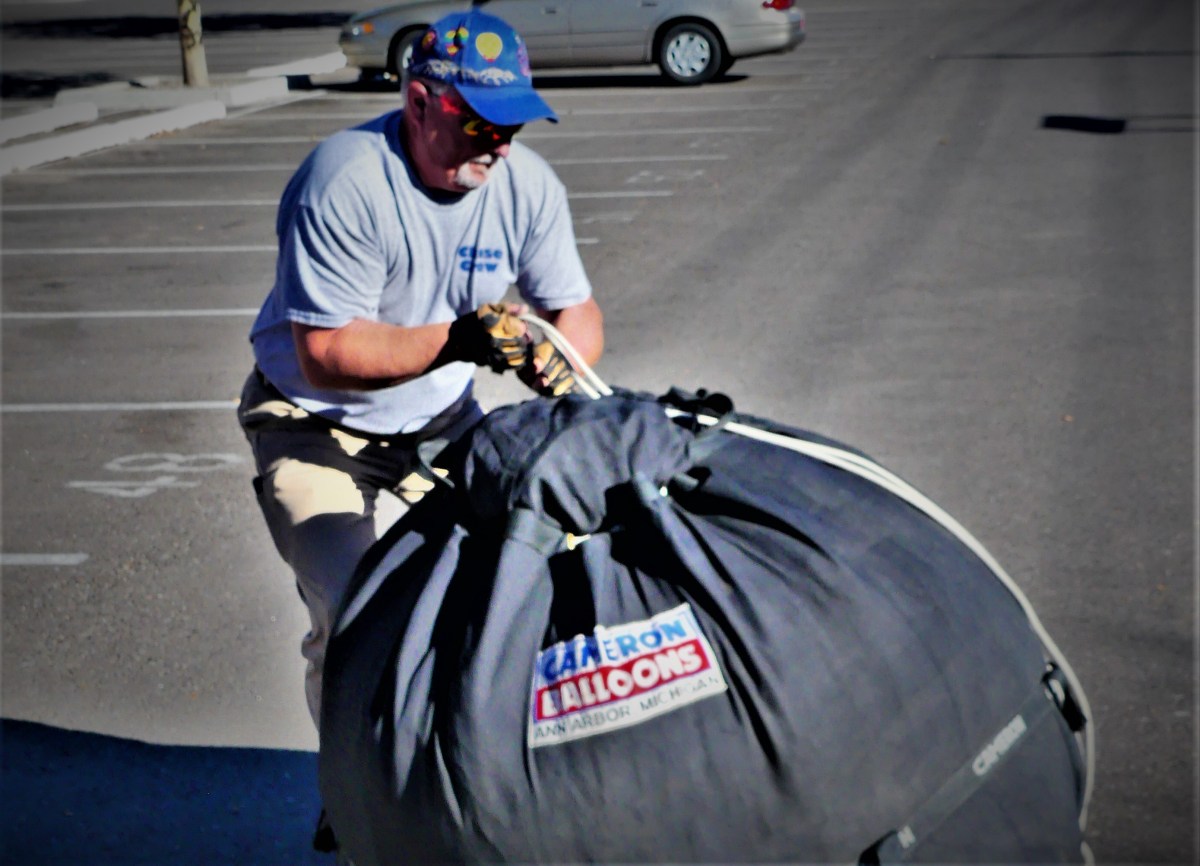
Whereupon, the balloon is quickly collapsed,

gathering air

and folded,

wrangling the rigging

and packed away, until next time.

wrapped up

Back at base camp, it was time for a champagne toast, and a recitation of the balloonist’s prayer:

The winds…

flight certificate

I loved it, and I’d do it again. I guess that makes me a balloonatic.


Nature Under Glass

Exploring Tucson, AZ provided two very different opportunities to experience nature–Saguaro National Park and Biosphere 2–with one generating more interest than the other.

We reserved a site at Catalina State Park’s campground…

Catalina Mtns

to be equidistant between the two National Park districts: Rincon Mountain (RMD-east) and Tucson Mountain (TMD-west). Why two districts? In the 1960’s, concern over RMD’s cactus forest showing a decline in new growth, prompted conservationists to acquire a stand of ancient saguaros to the west of Tucson, separating the two districts by an hour’s drive.

Leah and I began our journey at TMD, at first, through a meandering exurban road that eventually led to an unpaved, rutted, and narrow scenic Bajada loop drive covering five miles of Tuscon Mountain foothills. A stop at the Desert Discovery Trail brought us within no touching distance of magnificent saguaro cacti measuring over thirty feet tall.

key light saguaro (2)

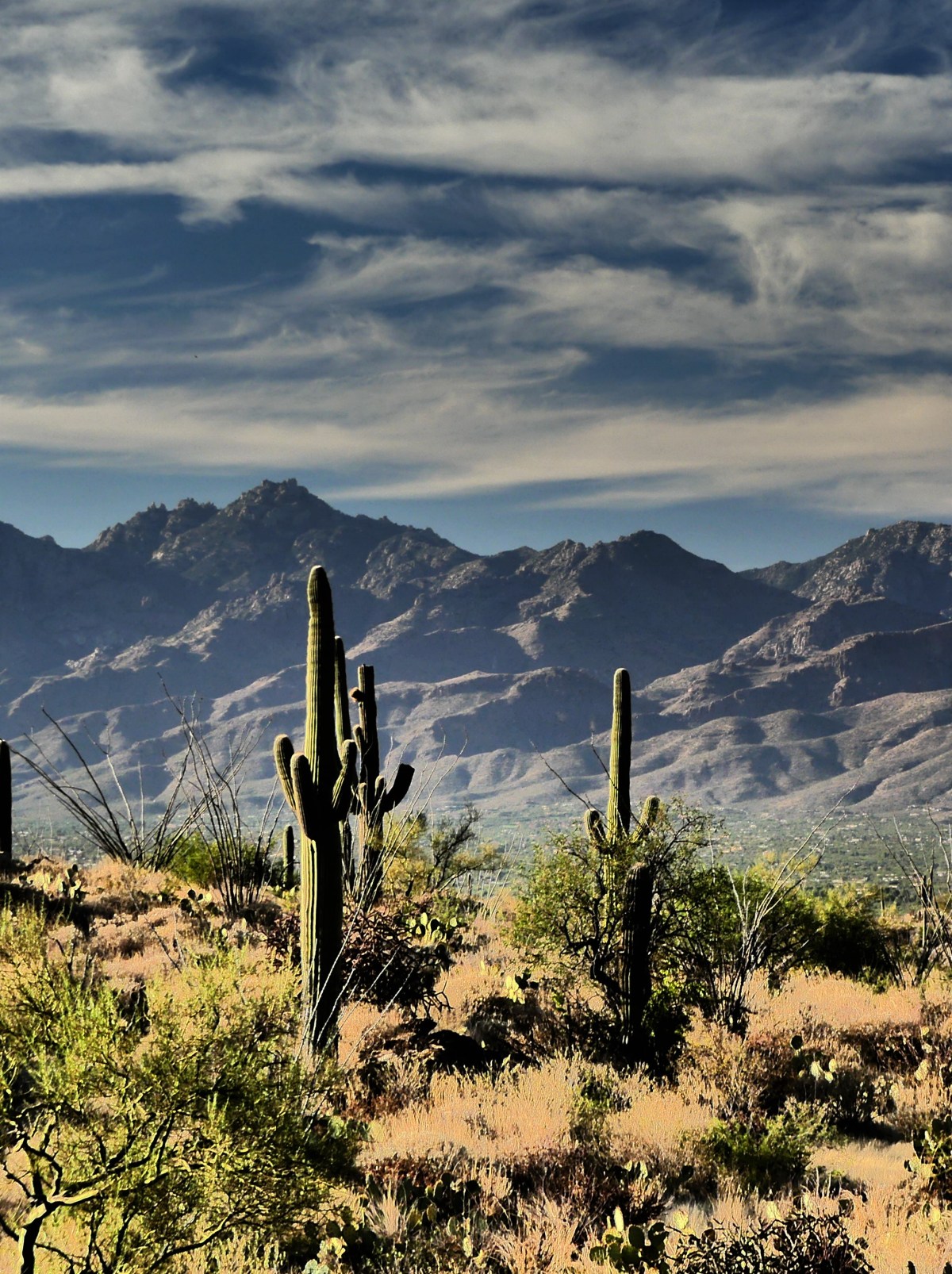
Each specimen appears unique, sprouting limbs in different places, and contorting in all directions,

desertscape (2)

giving relevance to Native American claims that these are people standing among the sand and rocks.

Desert Trail

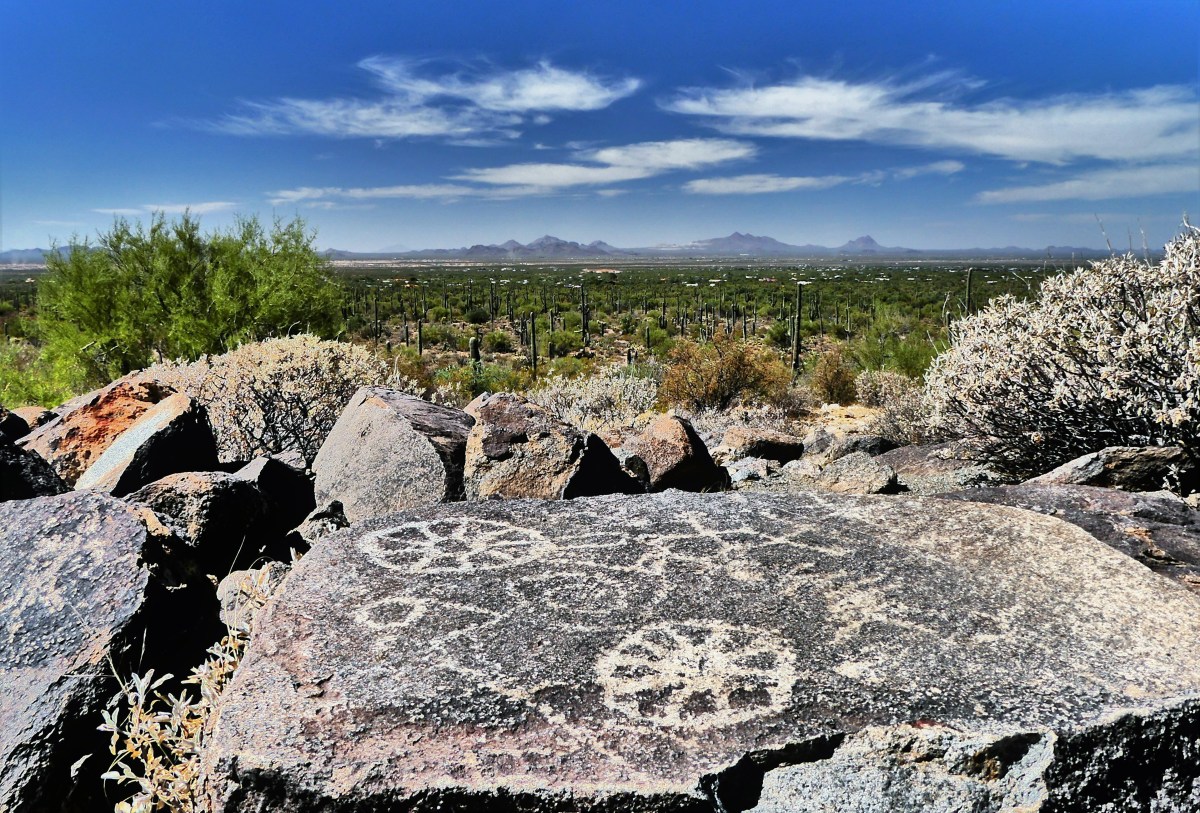
Their petroglyphs across Signal Hill are a testament to their long-standing occupation of the territory more than one thousand years ago.

petroglyph and mountain1

signal hill petroglyphs

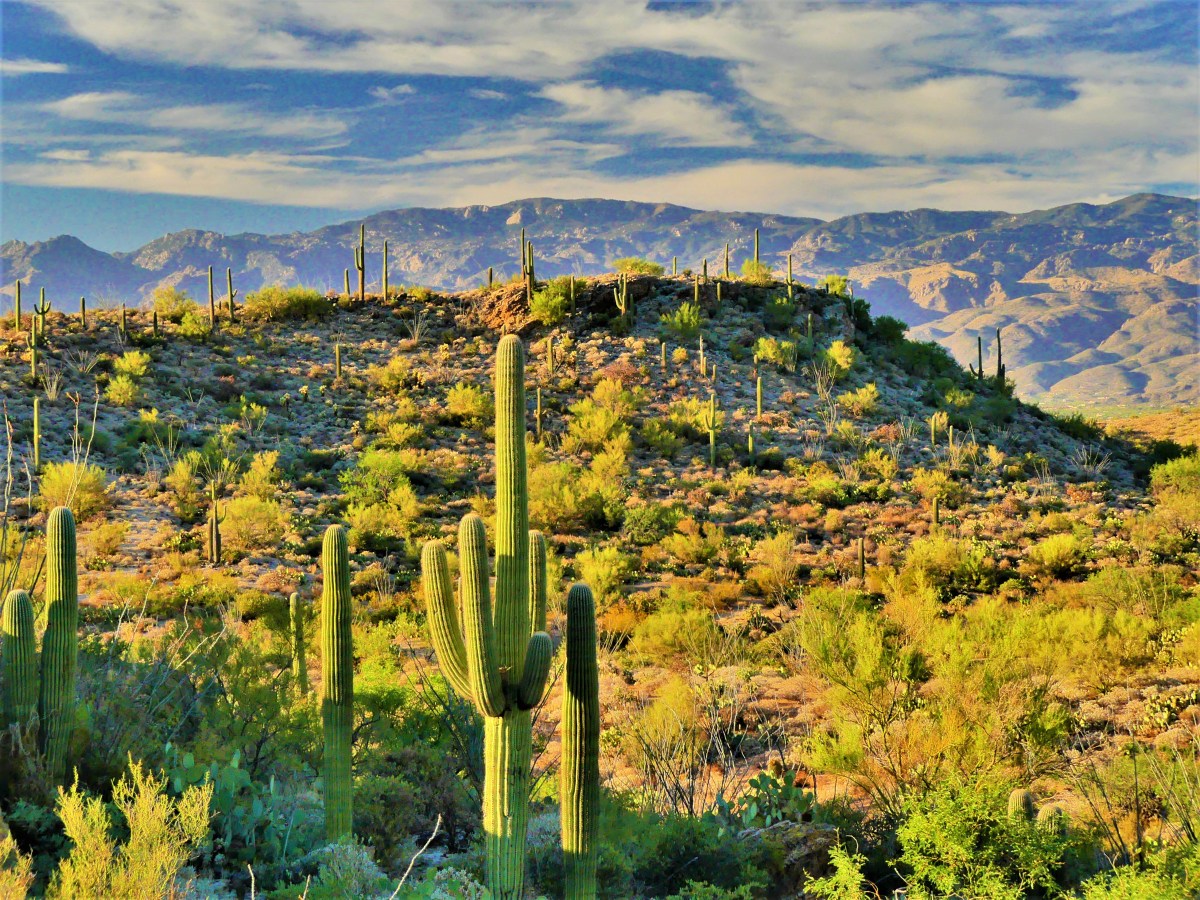
A memorable hike along the Valley View Trail slowly ascends a ridge, offering dramatic views of Avra Valley’s saguaro-sprawl, with Picachu Peak in the distance.

Avra Valley and Picacho Peak

With temperatures reaching into the high 90’s, we avoided all other trails–requiring a minimum of three to four hours of dedicated strain–in favor of cross-town traffic delays that minimized our allotted time to visit RMD.

Once at the eastern park gate, we roamed the paved eight-mile Cactus Forest Drive, switch-backing into higher elevations, with warm western sun casting a golden hue across the desert, turning a forbidding vista…


mtn garden and sky

into an inviting playground,

western sun across the desert

protected by a standing legion of cactus totems.

rincon mtns


The following day, we turned our attention to an experiment in the remote reaches of the Sonoran Desert,

setting

originally conceived in 1984 to “research and develop self-sustaining space-colonization technology,” and leading to two highly publicized missions between 1991 and 1994–where teams of eight were sealed into a self-sustaining environment for two-year terms and monitored for their “survivability”. Scientists named it Biosphere 2.

establishing

bioscape

rincon range

landscaping

Presently, the University of Arizona has assumed stewardship of the facility, turning its focus toward research on climate change–mimicking diverse ecosystems, such as the ocean,

ocean habitat

the rainforest,

rain forest

and coastal fog desert,

desert habitat

all managed under controlled conditions.

Beneath nature’s museum lies the technosphere, a myriad of pipes and wiring,

recycled air conditioning

channels and ducts, tubes and cables, and other facilities necessary for vital operation.

An ingenious dome-shaped lung…

lung

connected to the glass enclosure by tunnels…

tunnel

allows for air expansion caused by ever-changing pressures within the sealed structure.

The scope of the facility is a marvel, boasting double redundancy for all power and life support systems.

power supplies

A common question on the tour, “Why is it called Biosphere 2? Was there another Biosphere before this one?”

The docent is keen to respond, “Yes. Another Biosphere exists, where random, haphazard and uncontrolled experiments called living are carried out on a daily basis, but we commonly refer to it as Earth.”


Putting Leah in Perspective

Picasso painted Marie-Thérèse Walter and Dora Maar among others; Dali’s choice was Gala; and Stieglitz extensively photographed Georgia O’Keeffe. The results of these collaborations are legendary. Artists have always depended on models…for inspiration, as subjects, as lovers.

fallen tree (2)

And while I eschew classifying myself as an artist, my reliance on Leah in my landscape photographs is no different than the aforementioned masters…with one exception: scale!

burned out but alive (2)

Often times during picture editing, she will lament, “Why am I so small? You can hardly see me!”

Rainbow Trail panorama (2)

But being able to insert Leah into a panoramic scene or long shot helps me establish dimension and grandiosity.

Leah F150 formation (2)

And while there are times when I seemingly wait forever for someone to step outside the frame of my shot before pressing the shutter, there are also times when it becomes vital to locate Leah in my scene to anchor its meaningfulness, and increase its effectiveness.

Prairie grass and Leah (2)

Sometimes Leah can be an unwilling participant. She may object if she feels she’s not looking her best, or perhaps she becomes annoyed if she’s not the central focus of my photograph when she feels like posing.

Leah (2)

But either way, she has always been a good sport, and is usually compliant when taking my directions.

waders vertical (2)

But regardless of how many rocks she leans against per my request, it’s evident to me, photography aside, how much I lean on her.

canyon shade

She is my personal rock, who helps me put things in perspective.

balance rock and leah (2)

via Photo Challenge: Scale

Sleepless in Las Vegas

Seldom am I so amazed that I am speechless or at a loss for words…

After visiting twenty-nine U.S. National Parks, four Canadian National Parks, a dozen National Monuments, numerous State and Provincial Parks, and driving thousands of miles of scenic byways over the past twenty-nine weeks,

captured on:

Leah and I have yet to discover a place that is so captivating that we didn’t want to leave…until now.

Rainbow Trail panorama (2)
Leah and me

Valley of Fire State Park allowed us the chance to finally exhale, after America held its collective breath trying to make sense of yet another senseless killing spree, when a maniacal sniper opened fire on a crowd of 20,000 innocents a ¼-mile away.

We were 4½ miles out of harm’s way, staying at an RV resort off I-15 at the time, and wondered about the incessant sirens screaming past our open windows after 10 pm that fateful evening..

“I can’t believe how much crime they have here,” Leah exclaimed.

“Wouldn’t want to live here,” I offered.

Switching on the TV, all stations were locked on breaking news of an active shooter at the strip, but details were sketchy with the story developing by the minute. We quickly realized that we were listening to the soundtrack of a massacre: SWAT teams, police, EMT, and ambulances were sprinting past our Airstream–in and out of the danger zone.

Originally, we booked a couple of days in Vegas to decompress, and intended on exploring the strip in search of available show tickets once the Airstream was unhitched. But the prospects of casino crawling quickly faded after an afternoon of relaxation by the pool. Then again, we figured there would always be tomorrow.

Yet by morning, as the tragedy at Mandalay Bay unfolded, the thought of unthinkable loss left us gasping for air.

Leah summed it up: “It doesn’t feel right having fun when we’re surrounded by so much pain and suffering.”

We needed a getaway. We took off for Red Rock Canyon to escape the inhumanity, and clear our heads.

Callico 1

Keystone Notch Trail

Red Rock Canyon panorama

It was a small dose of nature for the day, and helped to heal our heavy hearts.

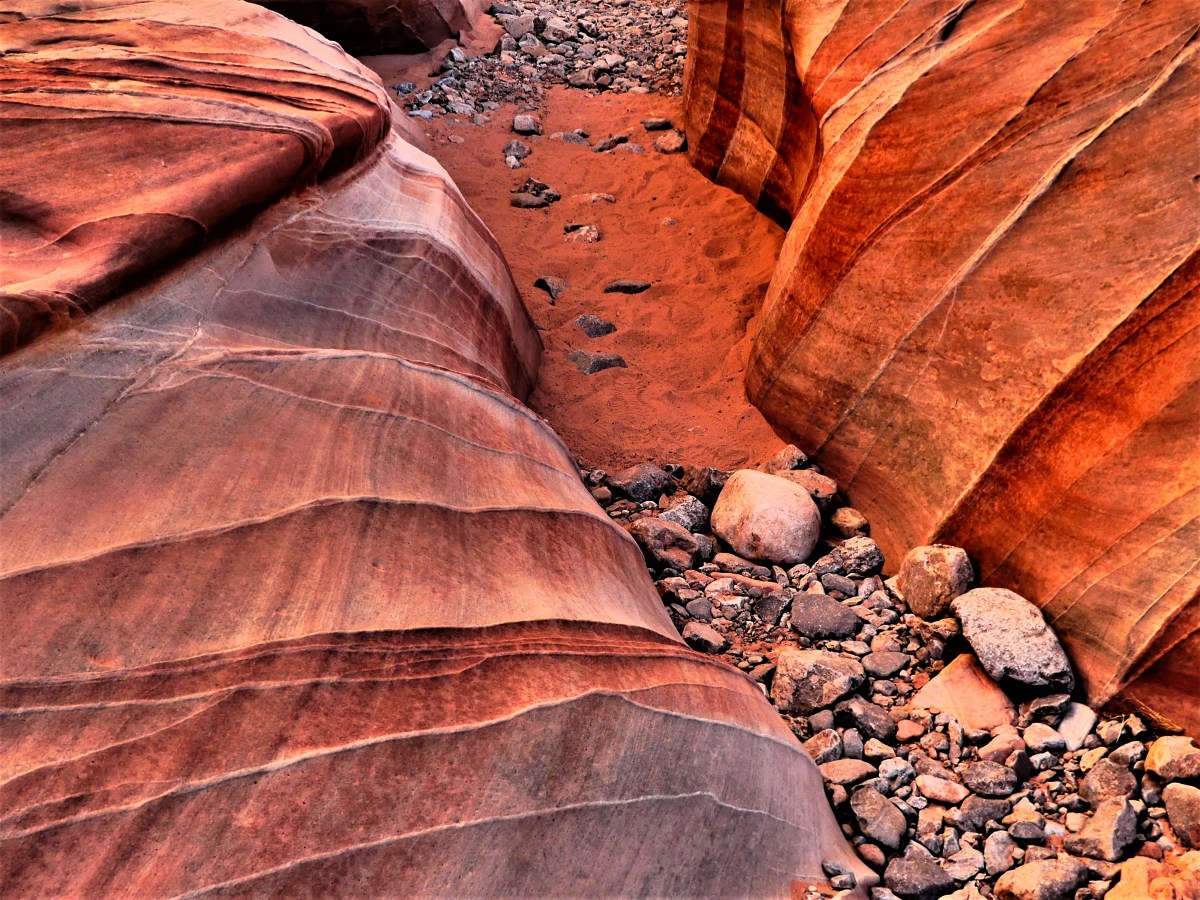
The following day, we moved our Airstream fifty miles east, to the Valley of Fire, where we found the perfect antidote to murder and madness. We found a place where we could breathe,

rainbow road (4)

and the only sound at night was silence.

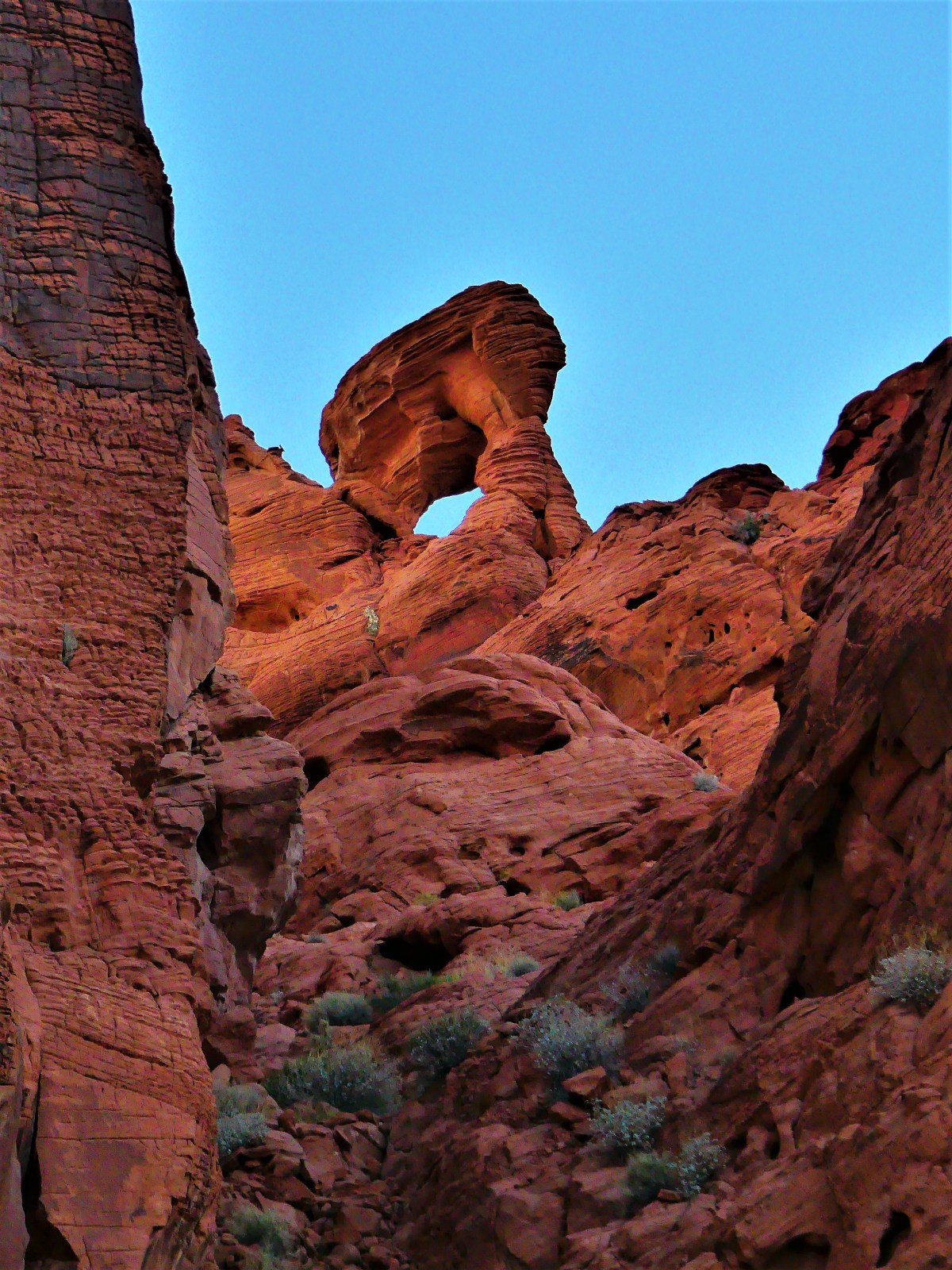
The park has an abundance of features and formations.
Beehive2
Beehives
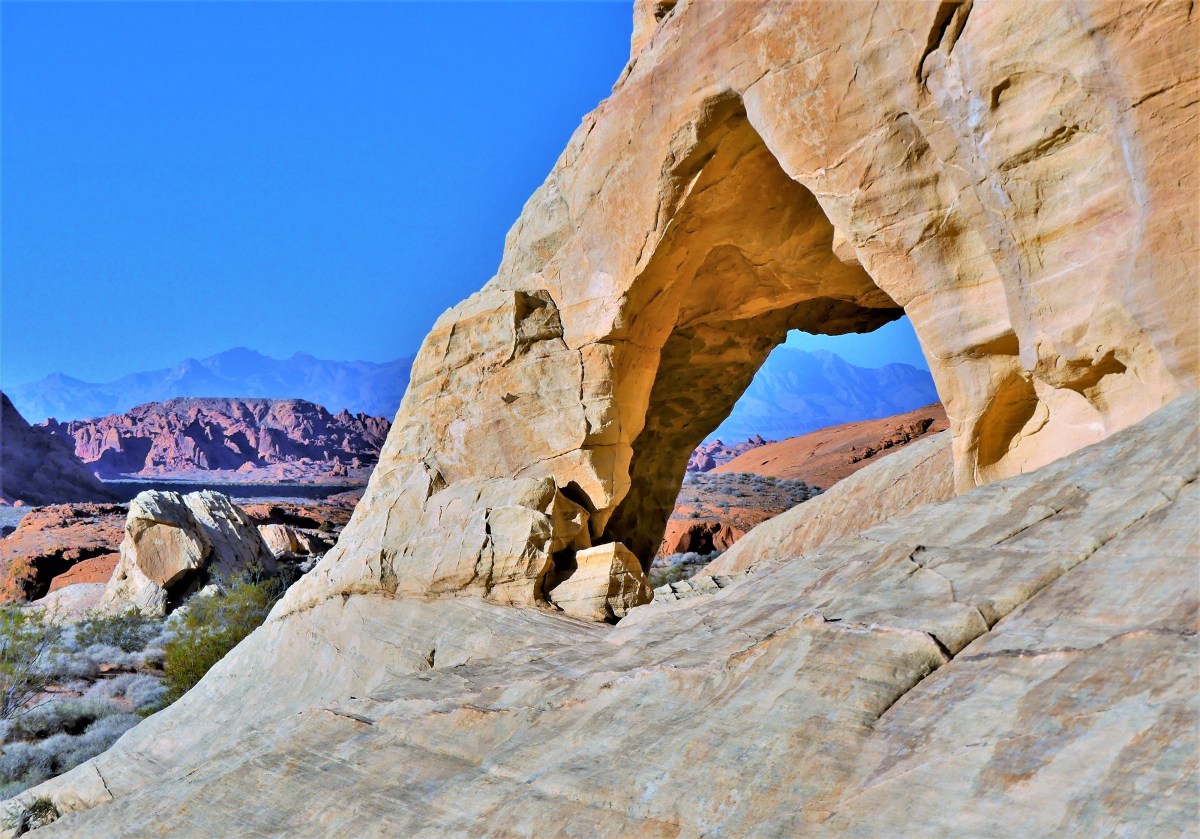
Arch Rock1
Arch Rock
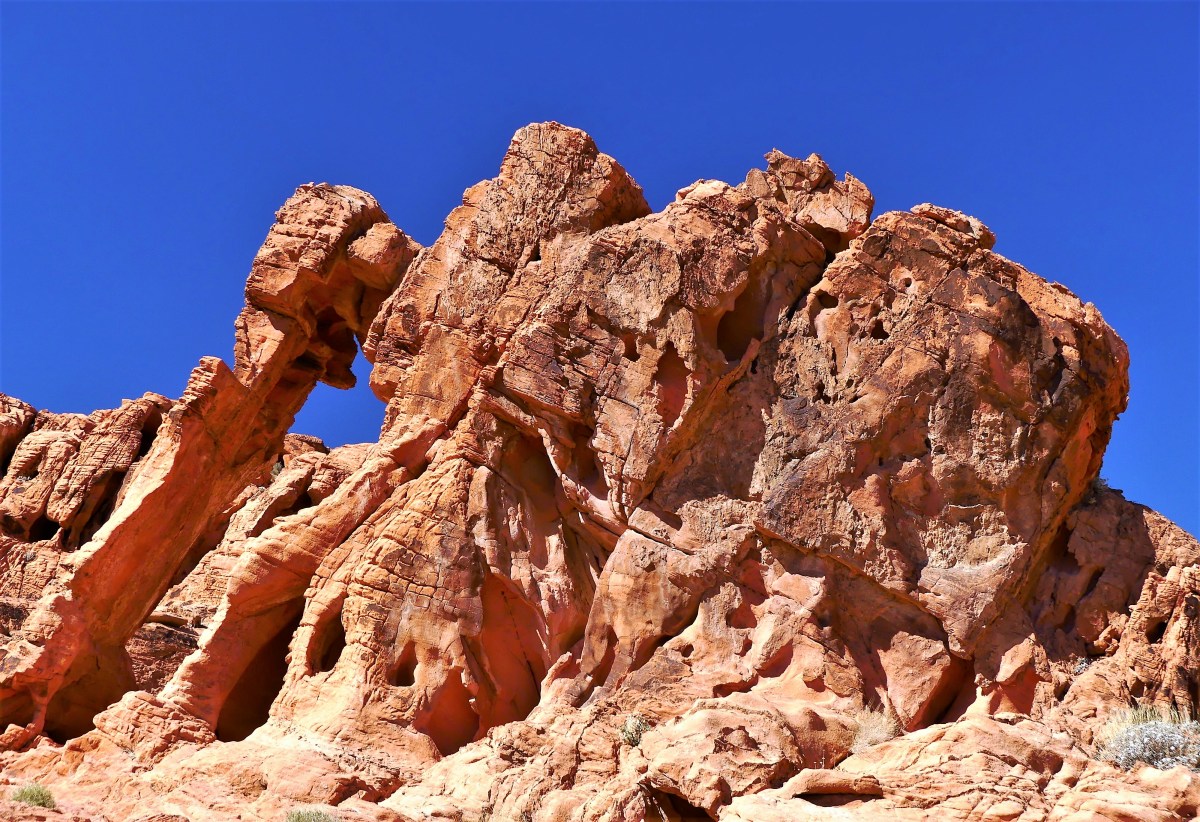
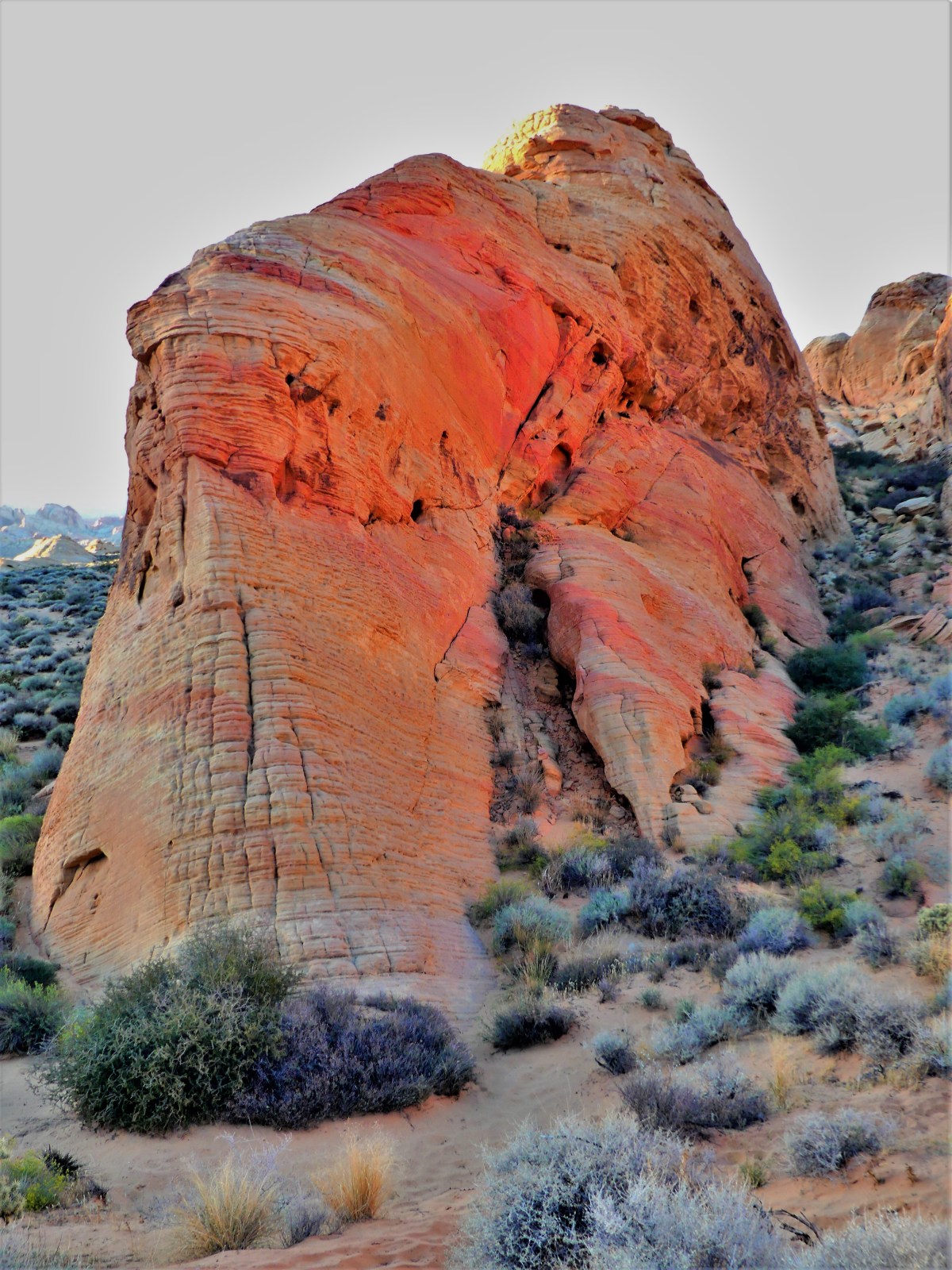
Elephant Rock
Elephant Rock
Silica Rock
Silica Dome
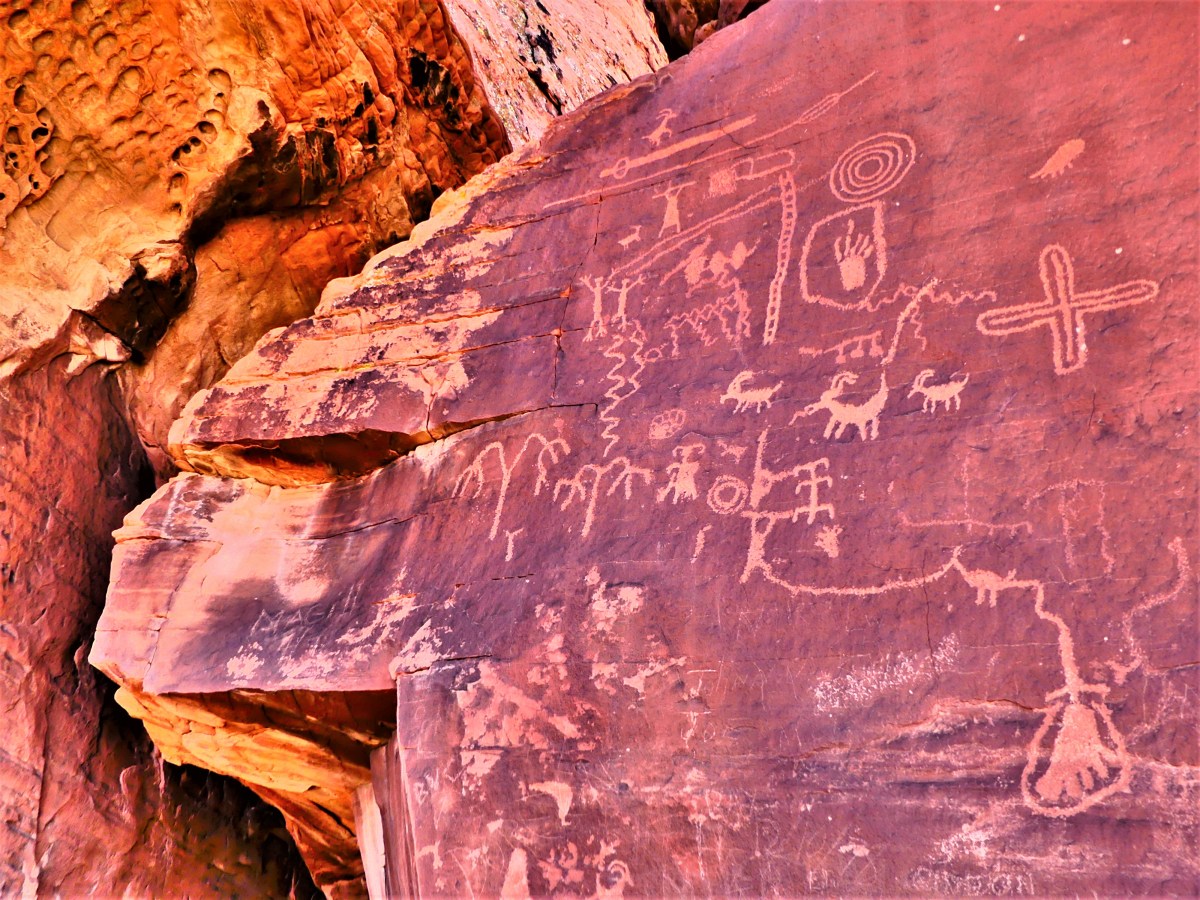
Atlatl Rock
Atlatl Rock
Mouse's Tank
Mouse’s Tank

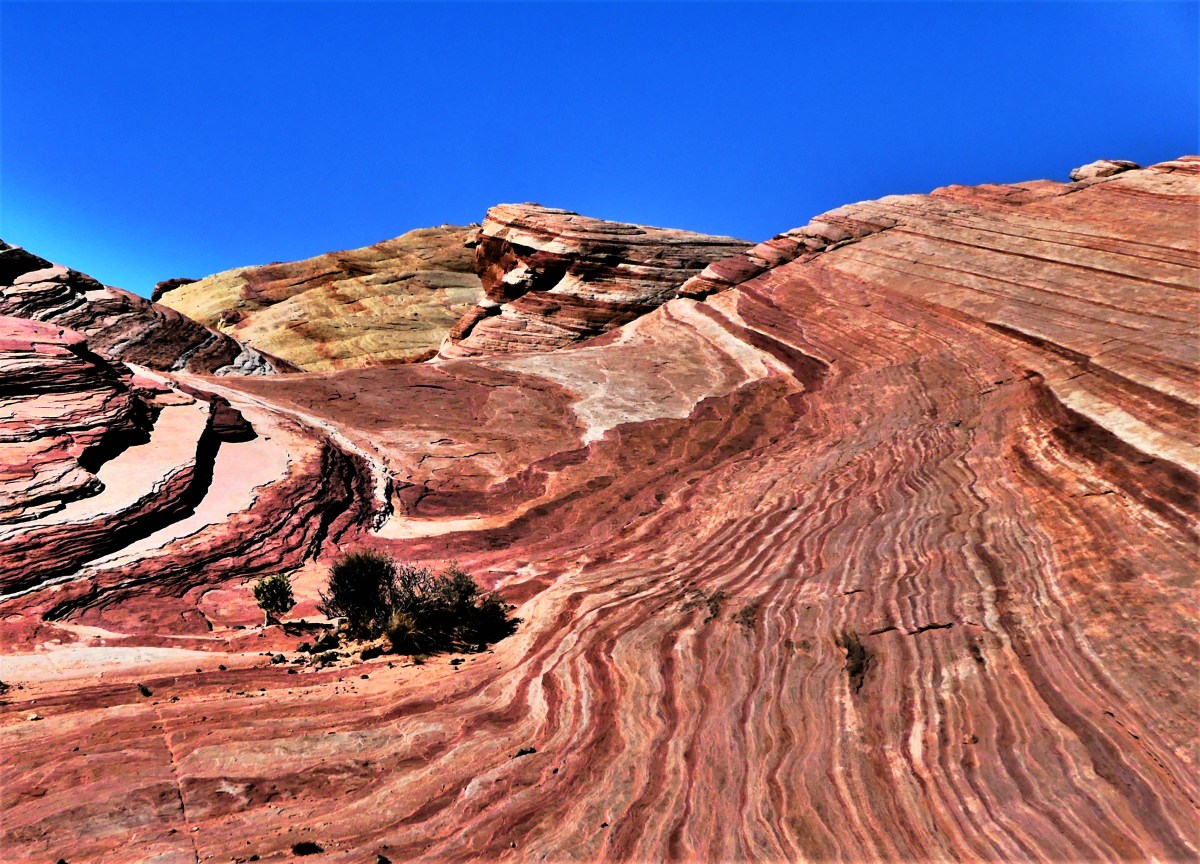
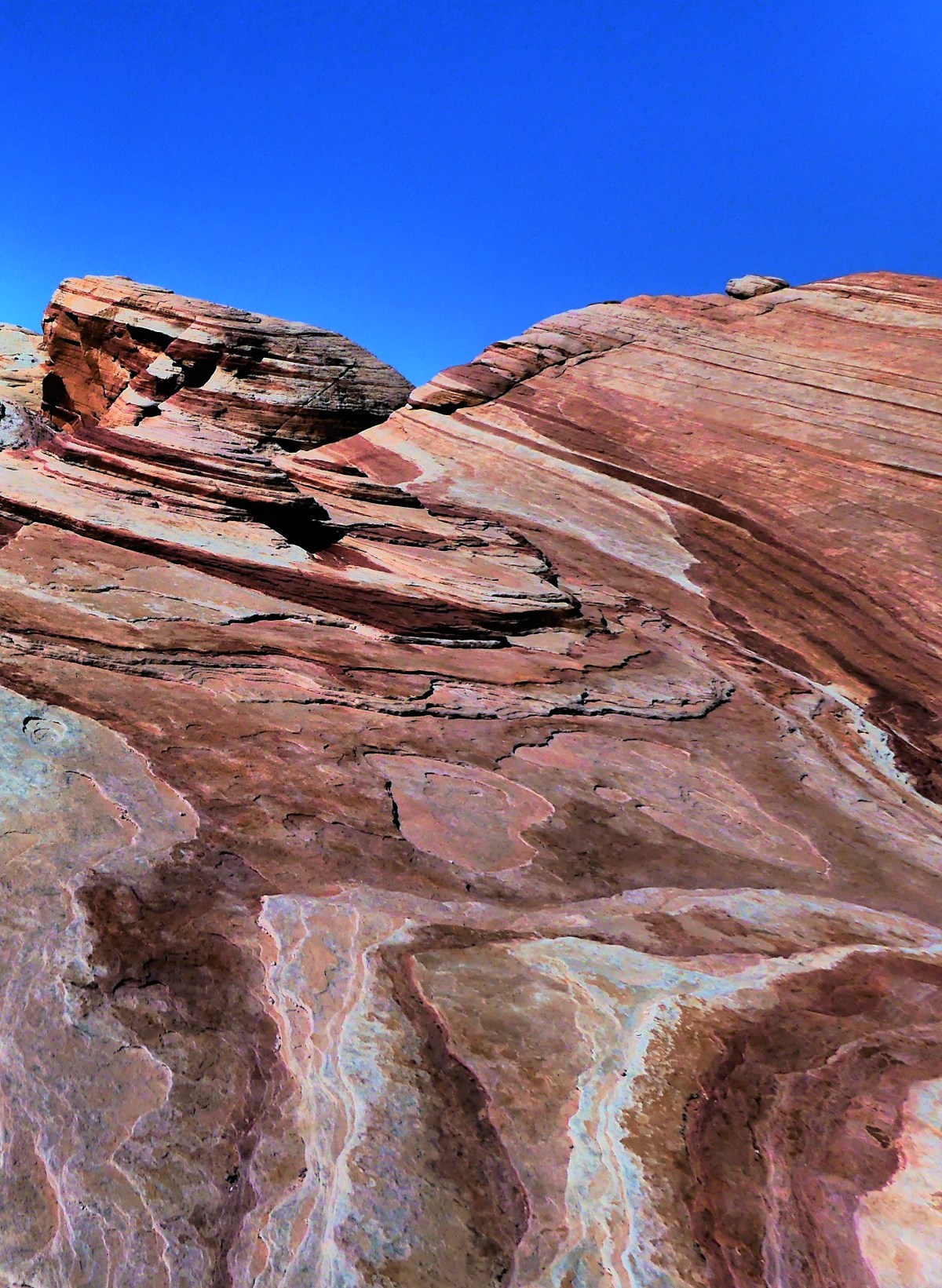
But the hiking trails off White Domes Road offer the biggest reward.

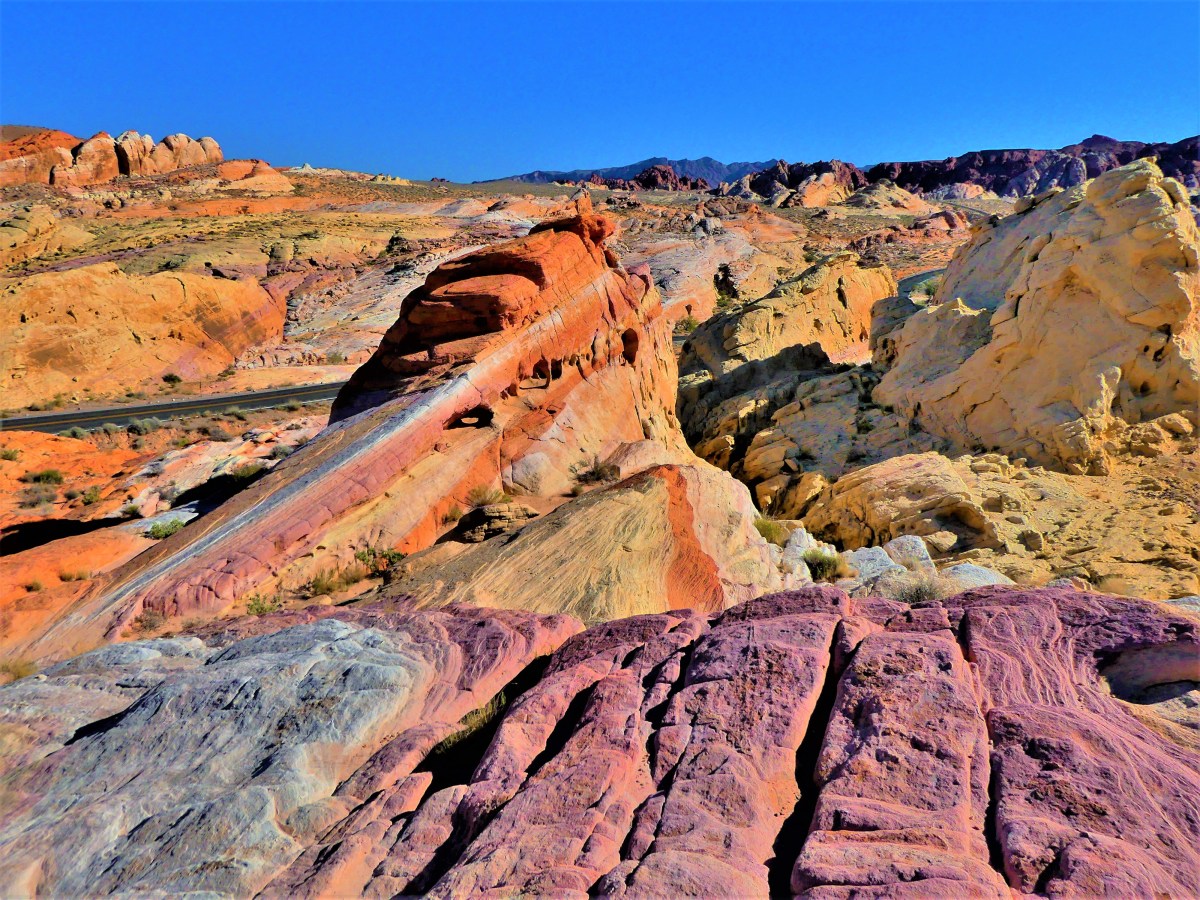
Rainbow Vista  gave us an opportunity to scramble over rocks with more colors than a box of Crayolas.

Roadside formations1 (2)

Roadside formations2 (2)

Roadside formations3 (2)

Roadside formations4 (2)

Roadside formations5 (2)

Roadside formations6

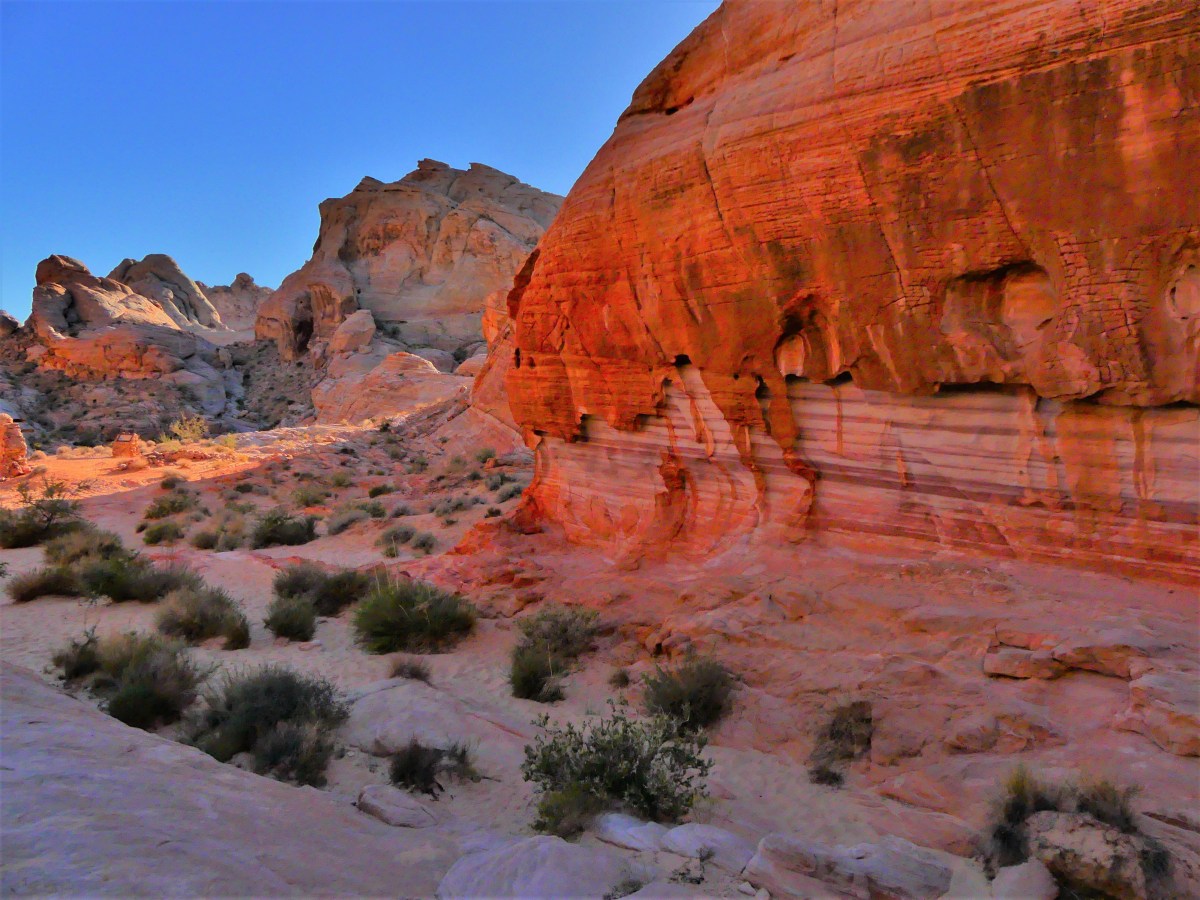
A loop through the deep red sands of White Domes transported us to the 23rd century set of Star Trek: Generations.

monolith (2)

White Dome Trail2

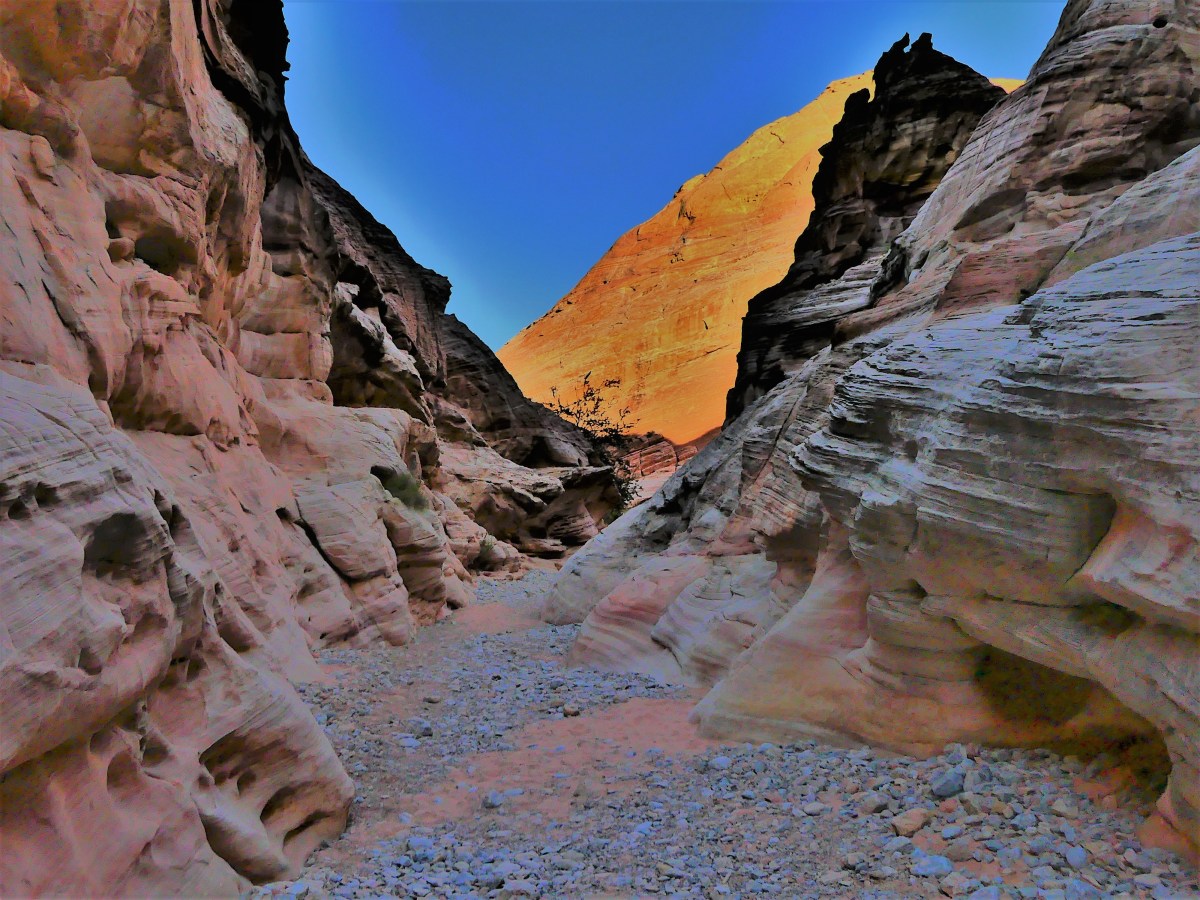
slot canyon2

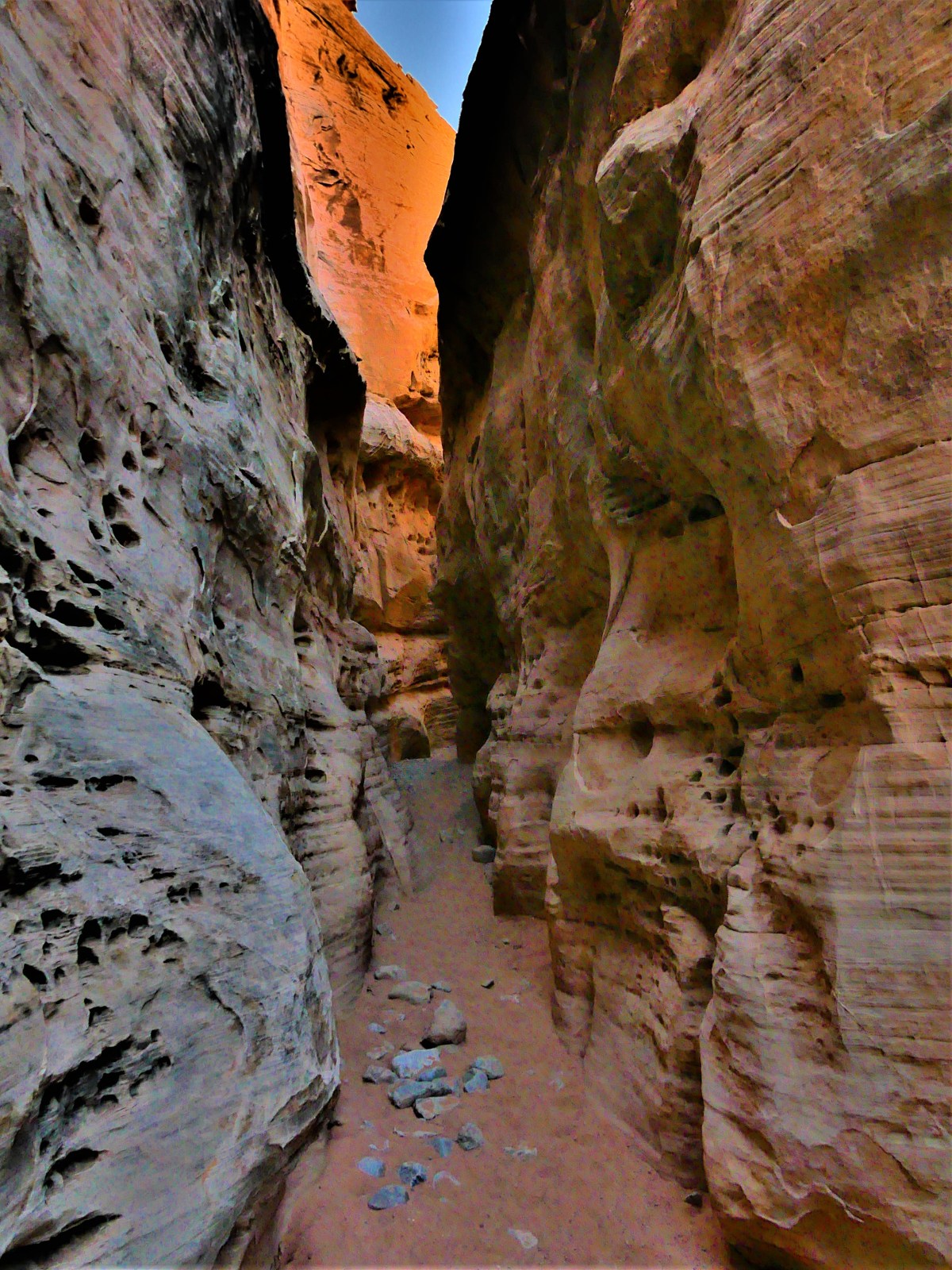
Slot canyon4

canyon opening

keyhole (2)

A stroll through Fire Canyon during late afternoon gave us the impression that each rock radiated from within.

Fire Canyon (2)

rock foot

Magic light

Fire Canyon Arch

sundown

But I was unprepared for the exhilaration I felt after reaching the Fire Wave.

FW8

FW7

FW3

FW1

FW9

FW2

FW6

FW5 (2)

I’ve adopted Valley of Fire as my Muse. Even now, when I close my eyes, I believe I’m  living in Candyland–a magical world where the cliffs look like candy, and all the residents of the world are tolerant of each other. 

This post represents a milestone of sorts, as its #100 in my series of posts for Streaming Thru America–a blog intended to showcase and celebrate the diversity of beauty throughout the country. I dedicate #100 to all the victims, and their families, and I salute the first responders, the good Samaritans, and the medical personnel, who continue to fight for the living.

A Walk in the Park after Dark

2,500 years before Valley of Fire State Park came into being, the Basketmakers, an ancient American culture migrated across the Nevadan high desert valley to hunt and pray, leaving behind pictographic records of their lives throughout the park’s 42,000 acres.

But Atlatl Rock qualifies as the best preserved and most dynamic petroglyph attracting the greatest number of pedestrians.

Atlatl Rock

Easily reached by climbing eighty-four steps over fragile sandstone,

84 steps

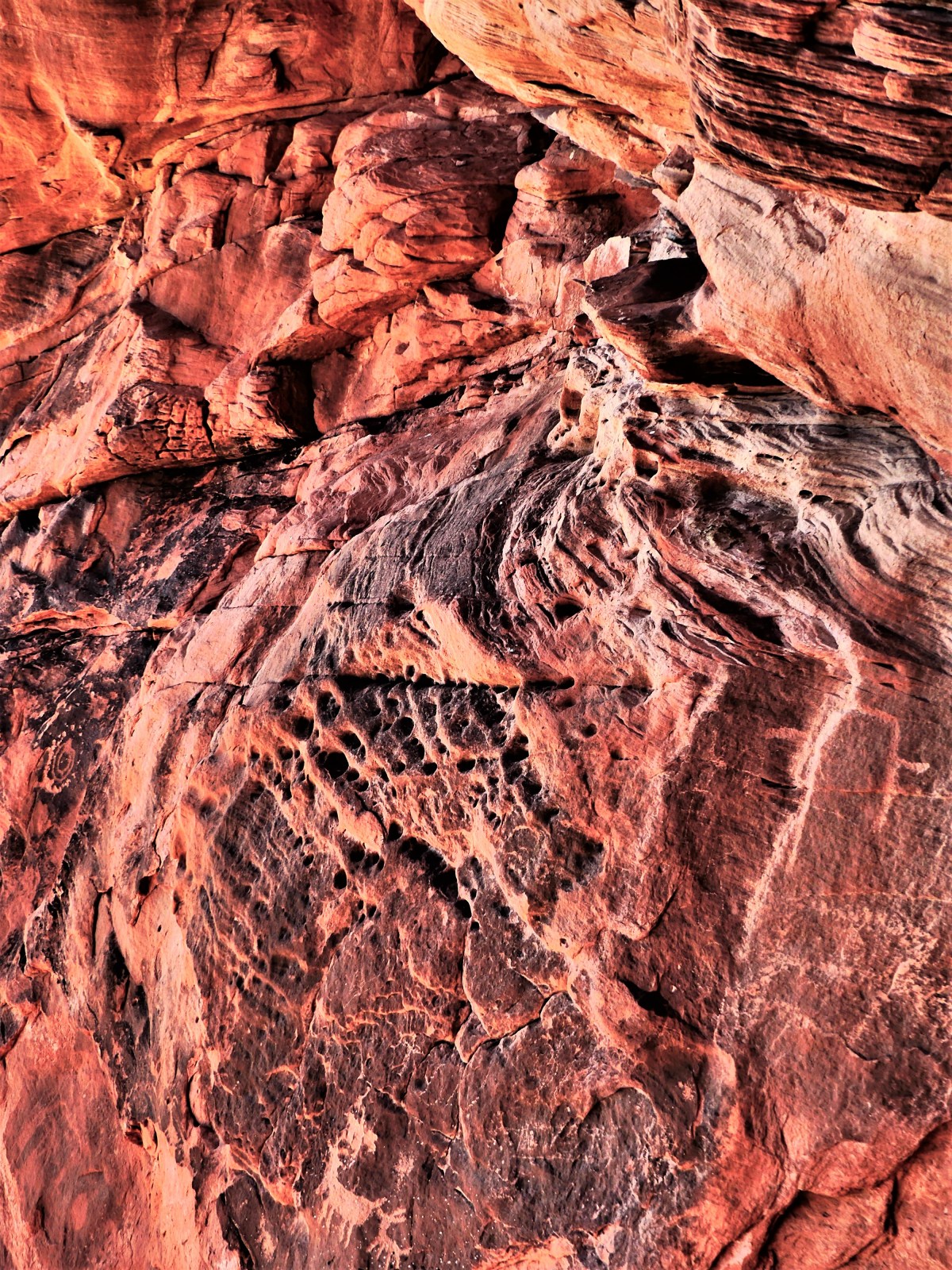
the symbols etched into the black patina tell an uncertain story, but the symbology clearly features known images–notably an atlatl, which was the “bump stock” of its time. Intended as a spear accessory, the atlatl was a forerunner to the bow and arrow, and used to improve speed and throwing distance when reaching bighorn sheep atop the wildly sculpted cliffs.

animal petroglyph.jpg

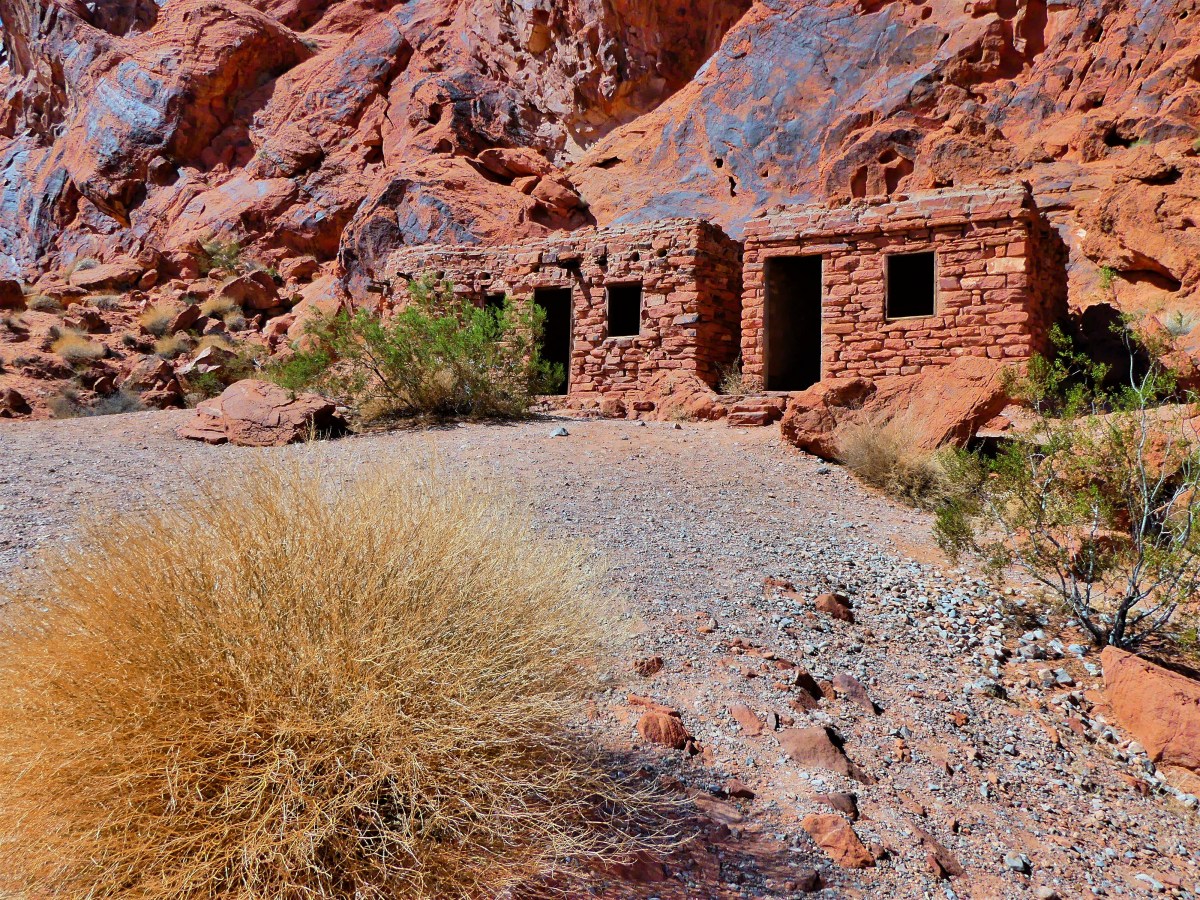
In anticipation of Valley of Fire becoming Nevada’s first state park in 1935, the Civilian Conservation Corps built The Cabins for motorists and pedestrians passing from Salt Lake City to Los Angeles along the Arrowhead Trail.

cabins.jpg

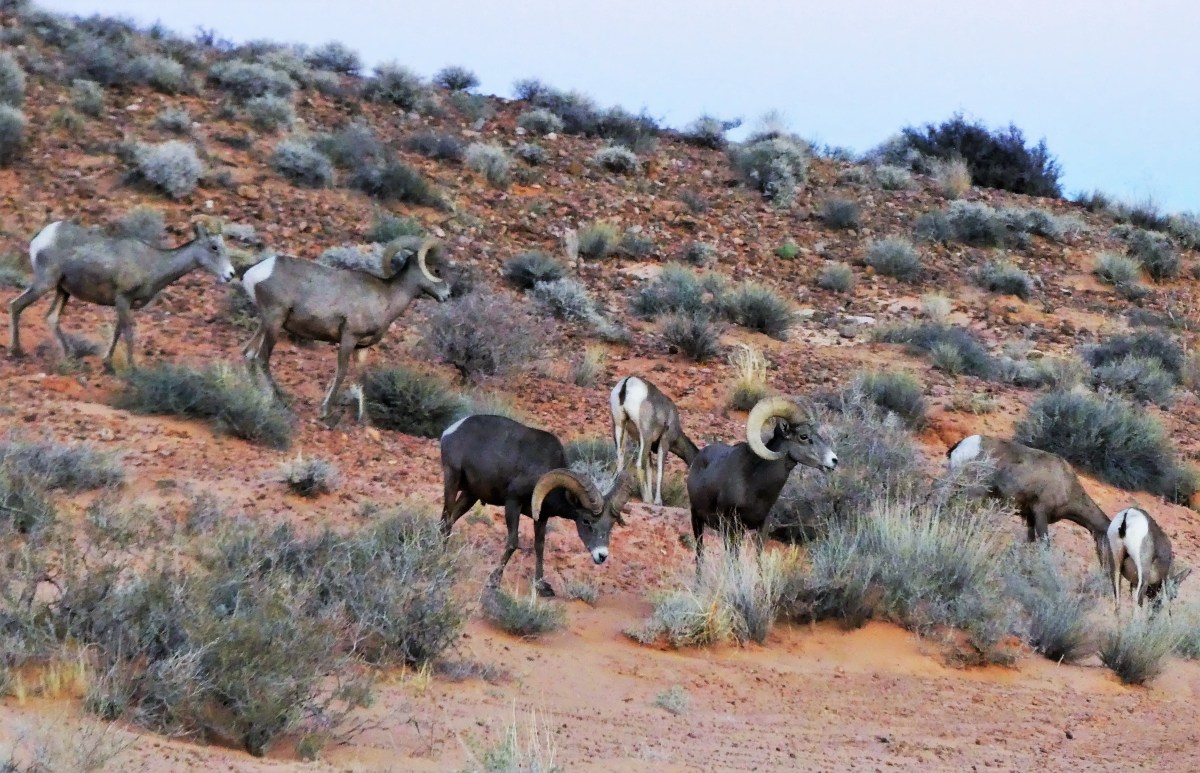
While hiking past Fire Canyon Road in anticipation of a glorious sunset, Leah and I were surprised to encounter a herd of bighorn sheep, perhaps the original inhabitants of the area.

evening graze

We slowly followed at a safe distance as they’d periodically stop and graze across the hillside while heading for higher ground. Always wary and intently watching,

2 males

the leader of the pack stood vigilant.

leader of the pack

As the sun sank behind the Muddy Mountains,

Sunset over Rainbow trail.jpg

and yielded to a spectacular moonrise over the Valley of Fire,

moonrise over fire canyon (2).jpg

moonrise (2)

the celestial guardians of the park had found a place where no atlatl and spear could harm them.

sheep and moon (4)


When They Go Low, We Go High, Part 2

October’s arrival has ushered in cooler weather, granting a seasonal pardon from the intense summer heat. Today’s forecast for Death Valley is expected to peak at only 101° F, which is still good news for lizards, Steve Bannon, and cockroaches, but less ideal for humans.

We awoke to the sounds of early morning buzz around Stovepipe Wells.

A steady stream of early risers traditionally flood the park before the sun becomes too forbidding. Fortunately for us, they will likely swarm to the iconic hot spots, which only accounts as a pen stroke of Death Valley’s complex signature.

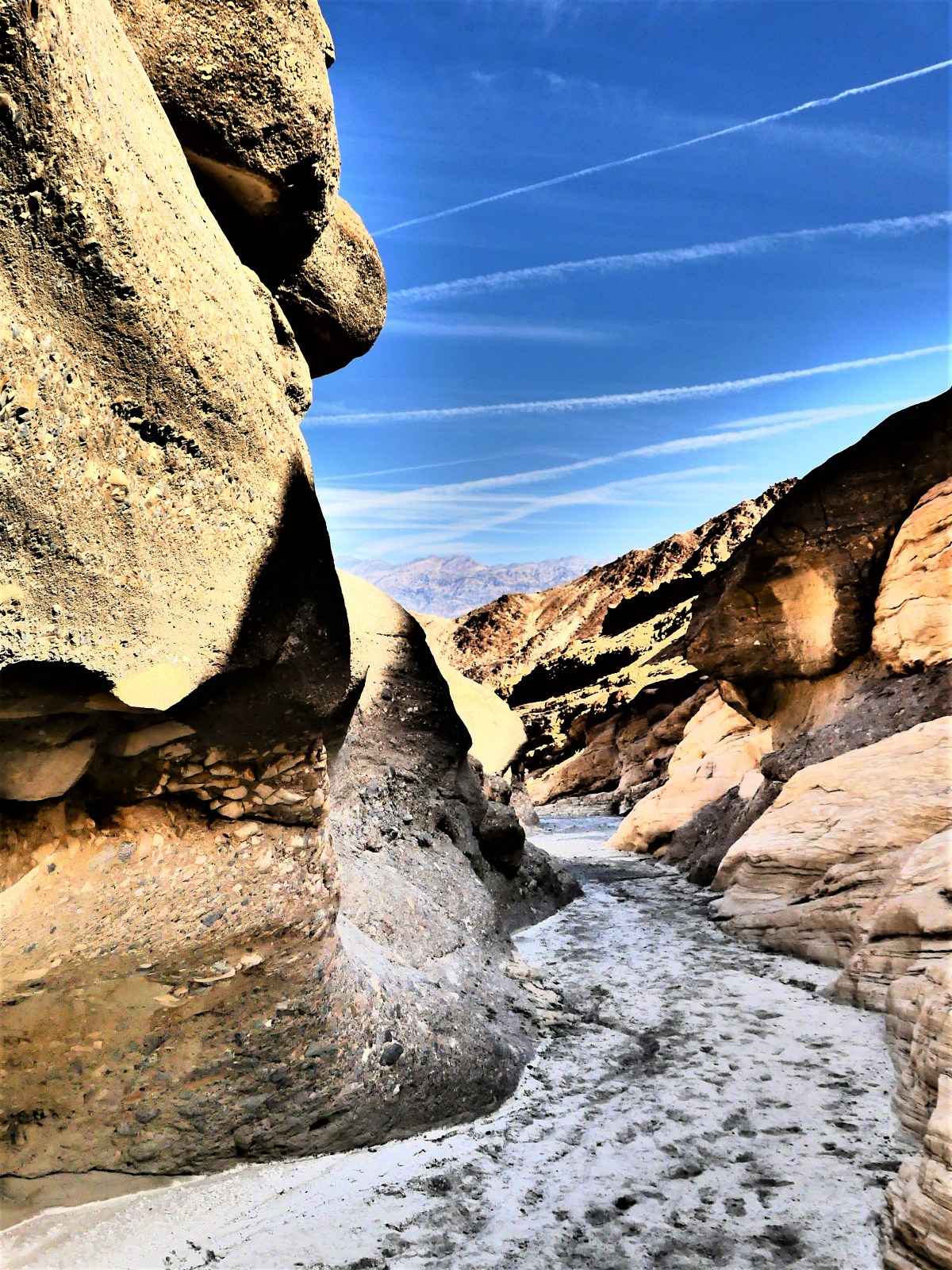
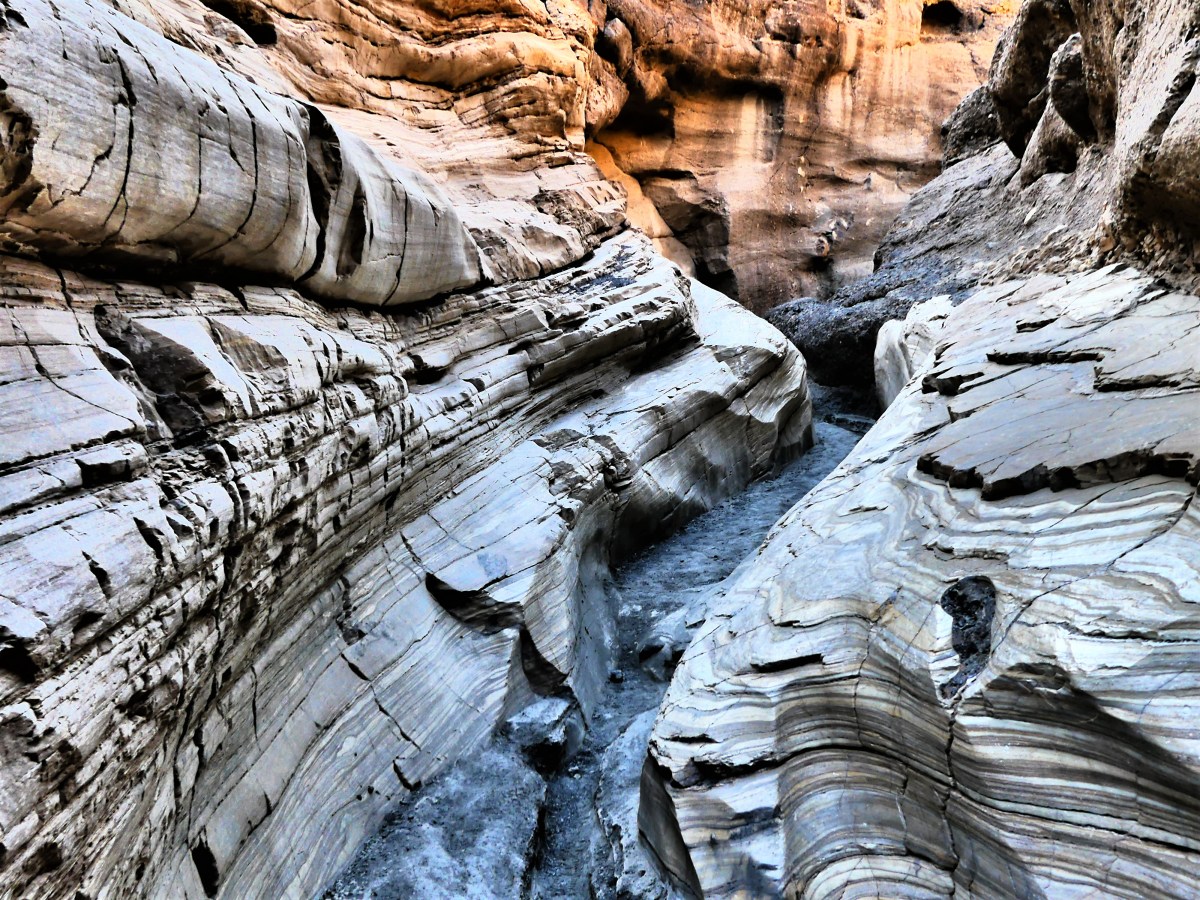
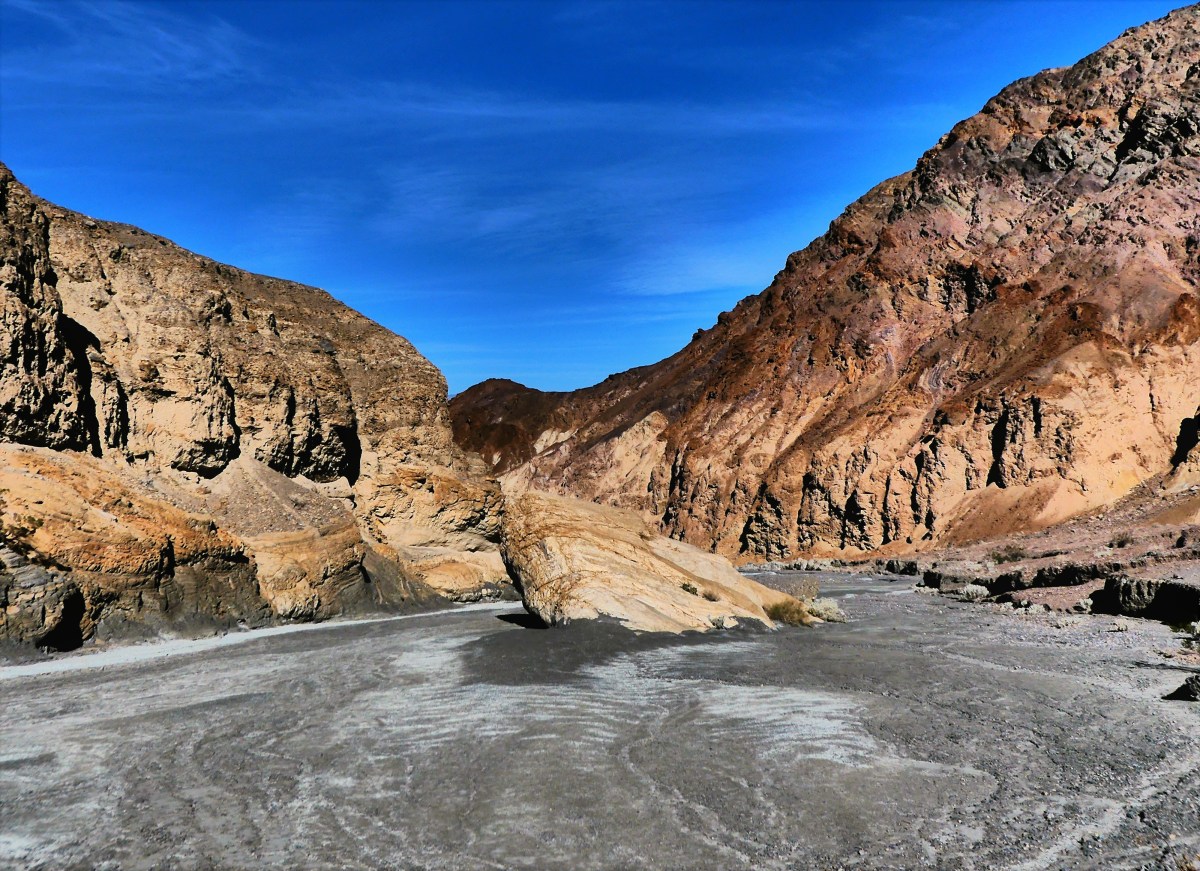
We started the day with an off-road expedition to Mosaic Canyon’s serpentine passage…

Mosaic Canyon mouth.jpg

Marble Mosaic Canyon

…and we hiked until we reached the foothills of the Panamint Range. It was a worthy addition to yesterday’s collection of geologic gems.

Marble Mosaic Canyon1

From there, we took the historic high road through Emigrant Pass, and back to a time of survival–when pioneers and prospectors competed against all that nature could muster. But nothing could dissuade or discourage the hardscrabble men and women with ardent dispositions, and the promise of a gold strike.

Today, the desert is littered with claims. In fact, there are more abandoned mines in Death Valley than any other national park. But one mine is special, and it belonged to Pete Aquereberry.

Eureka Mine (2)

He gained control of the claim after winning his 1907 lawsuit against Shorty Harris, an entrepreneur, a raconteur, and bona fide con-artist, who later built a castle at the top of the valley and filled it with museum-worthy art.

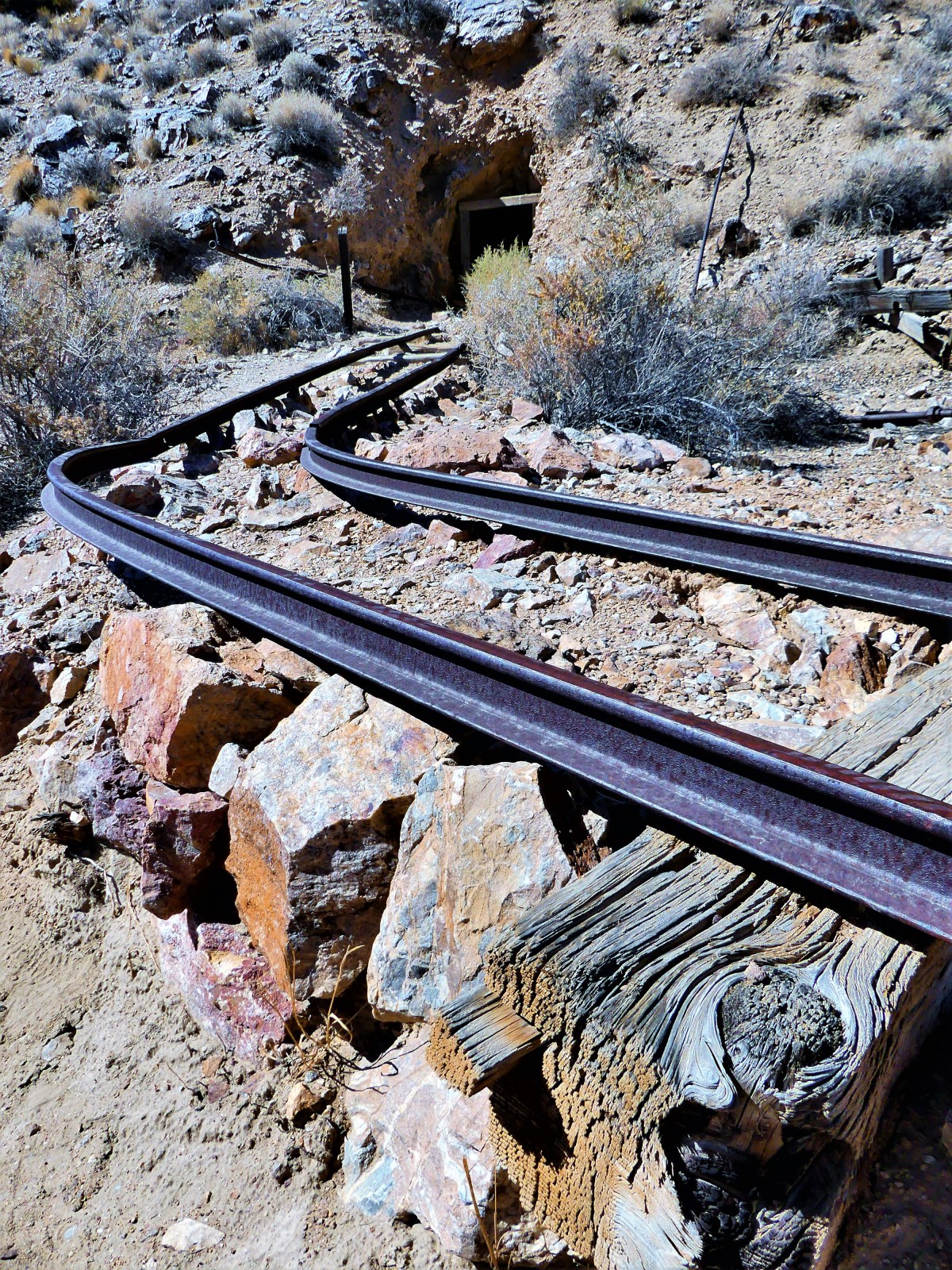
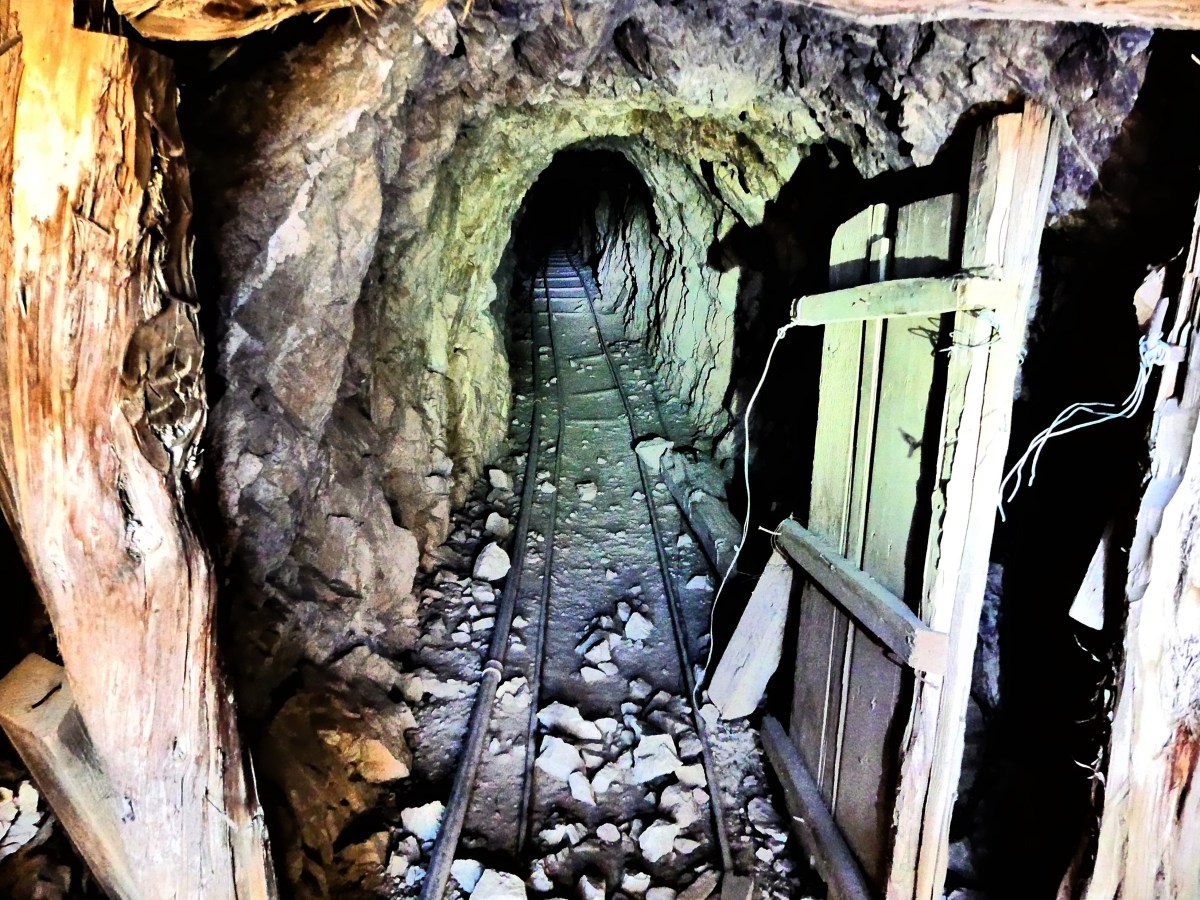
When all the other mines and miners faded away, Pete continued to pull gold from the ground for forty years,

busted rails

mine tunnel

and refined it through his cashier mill.

mine mill.jpg

Fortunes were made and lost in turn-of-the-century boomtowns like Skidoo, Ryolite, Leadfield, Ballarat, but Harrisburg was different. Pete continued to live in his ramshackle cabin until his death in 1945.

Aguereberry cabin.jpg

home exterior

kitchen

mine housing

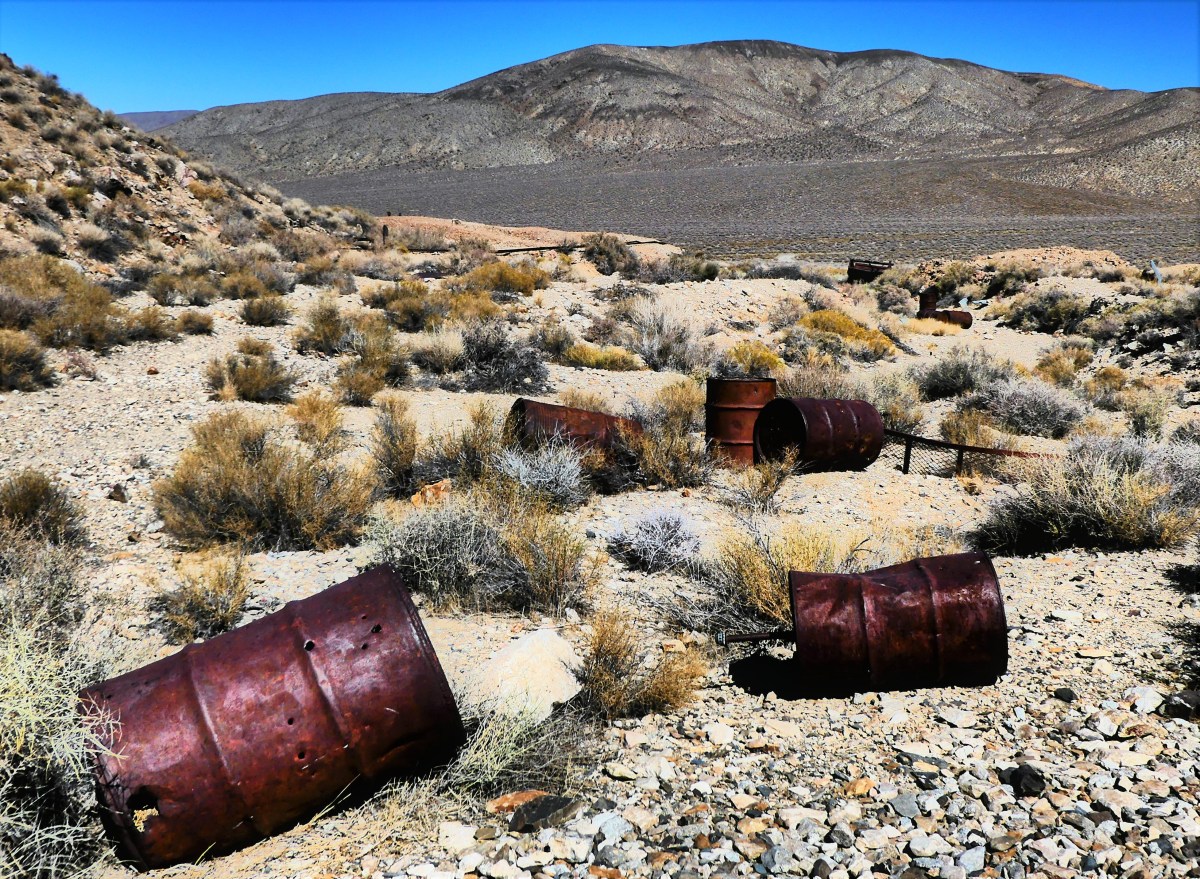
Two-hundred yards up the hill, an overgrown path leads to a graveyard of rusted appliances, oil drums,

barrels on the desert floor

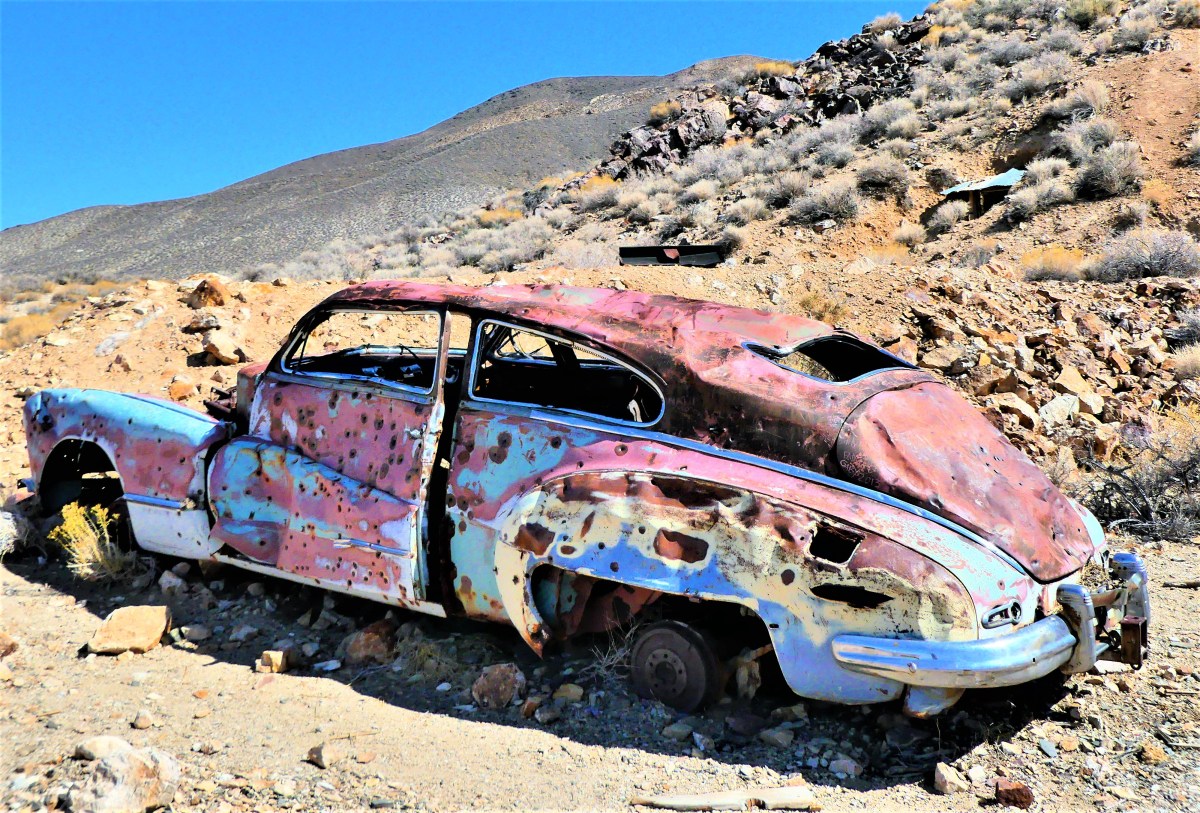
and a bullet-riddled 1948 Buick Roadmaster, an elite automobile at the time of post-war production…

Desert car

Buick front end.jpg

…that sits abandoned in the middle of Nowhere, Nevada…

car interior

and without a reason or a clue of ownership.

Roadmaster.jpg

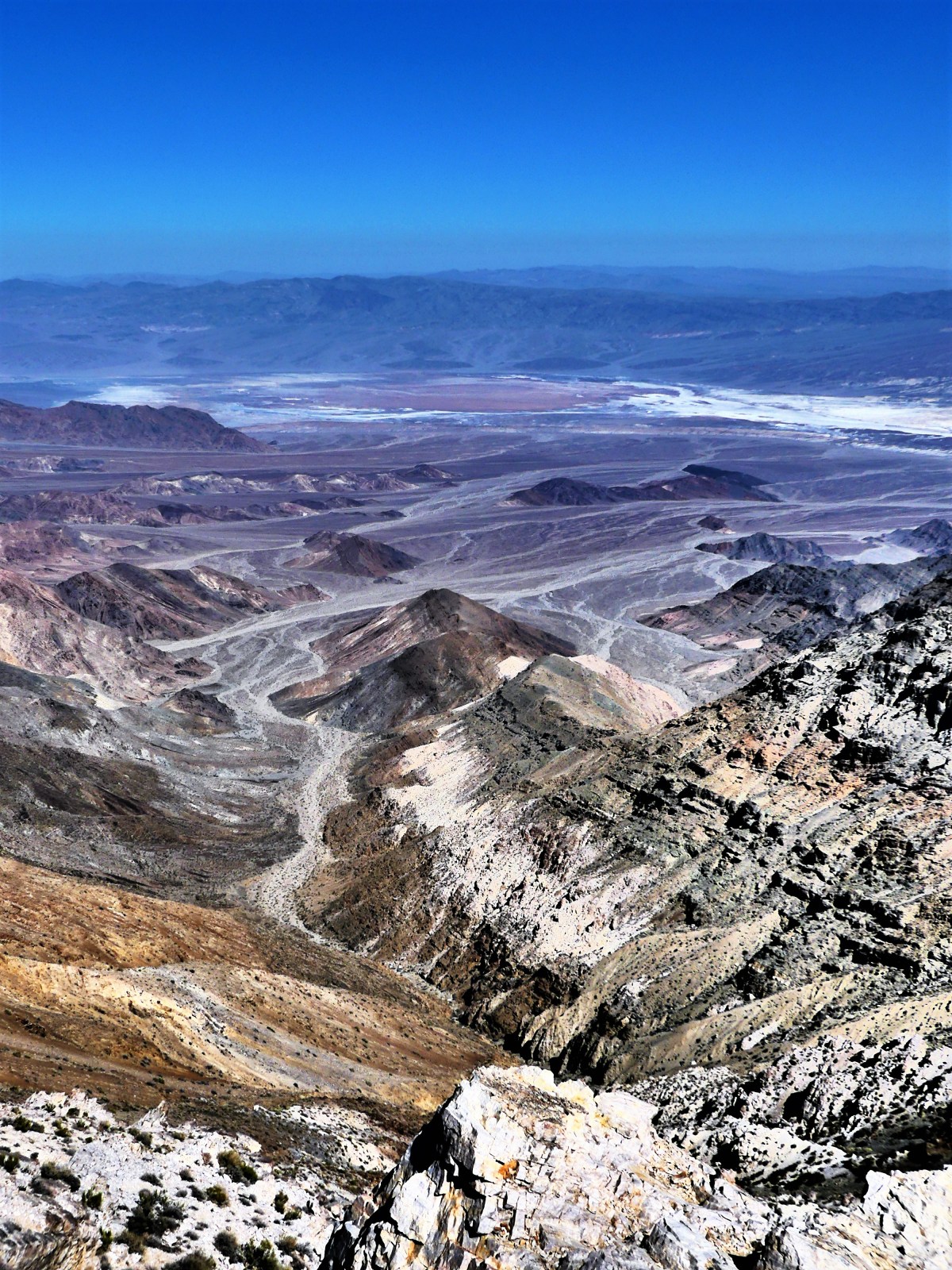
However, beyond the mining camp, and up a primitive road at 6433 ft. above the valley floor lies Aguereberry’s everlasting “Great View”,

Aquereberry Point panorama

better known today as Aguereberry Point, where the air temperature soared to 70° F. Even better was having the mountaintop to ourselves,

Badwater Basin1.jpg

Aguereberry Point.jpg

until a team of law enforcement rangers unexpectedly crashed our party. After chatting awhile, we took our cue and continued in search of the Charcoal Kilns without really knowing what to look for.

Turning east on Wildrose Canyon Drive, we followed the road until pavement turned to gravel, and eventually narrowed to passable traffic. One moment we were driving through high desert, and when we turned the corner, we found ourselves inside a lush forest of piñon pines, as if we’d been transported to another part of the country.

The air was crisp and smelled of sage. Dead ahead was a string of ten identical bee hives–making for a very different kind of Rockettes chorus line.

Charcoal kilns.jpg

That’s when Leah and I realized that we’d found the kilns.

Charcoal kilns1

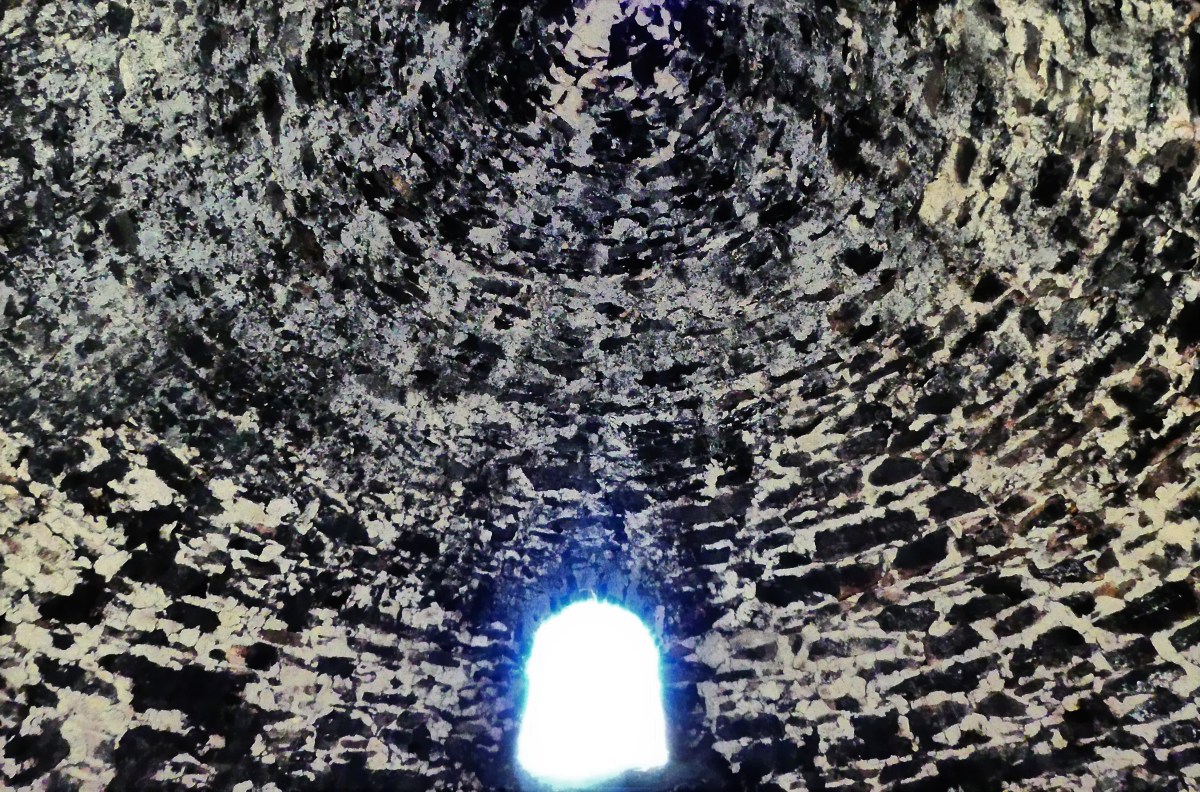
Quarried from the mountainside, these imposing structures built in 1877–and used for only three years–still have the stink of creosote permeated within their stone walls. The cones are perfectly symmetrical, and the inside acoustics sound amazing.

inside the kiln.jpg

Our trip continued past the kilns and up a high-clearance mogul run that was barely one-way-wide. Just then, an Accord barreled down and around a craggy corner faster than anyone should, and came to a skidding stop at the sight of me. It seems we were now engaged in a friendly game of chicken, so I made the first move and crept up the mountain in his direction. Perhaps he presumed that I was pulling off the road to give him a chance to pass, but there was less than no room for him to clear me. He was beaten, and he knew it, as he backed his Honda into a clearing, allowing me to pass. We exchanged fleeting glances, and I realized that winning right-of-way was more of a victory for the truck.

The road topped out at Mahogany Flat, where a lone camper was listening to Ruby Tuesday on his personal speaker, and a middle-aged couple had just completed their hike to Telescope Peak–a fourteen-mile round-trip to the highest peak in the park at 11049 ft.

While our hearts were willing, we were in no condition to start such a big hike so late in the day. But with assurances of great views from two senior hiking superstars, we walked for a mile until we reached the first clearing. While it was good enough for Leah, I wanted more. Leah stayed back while I continued to the second clearing, no more than another ¼-mile ahead.

And that’s when I finally understood the park.

Telescope Peak

Leah and I had visited Death Valley seven years ago, and had a completely different experience. For one, it was February, and it felt like we had the entire park to ourselves. The other oddity was when it rained; it brought a sudden eruption of wildflowers to the desert, and turned the Basin into briny ponds of unusual colors and strange lifeforms.

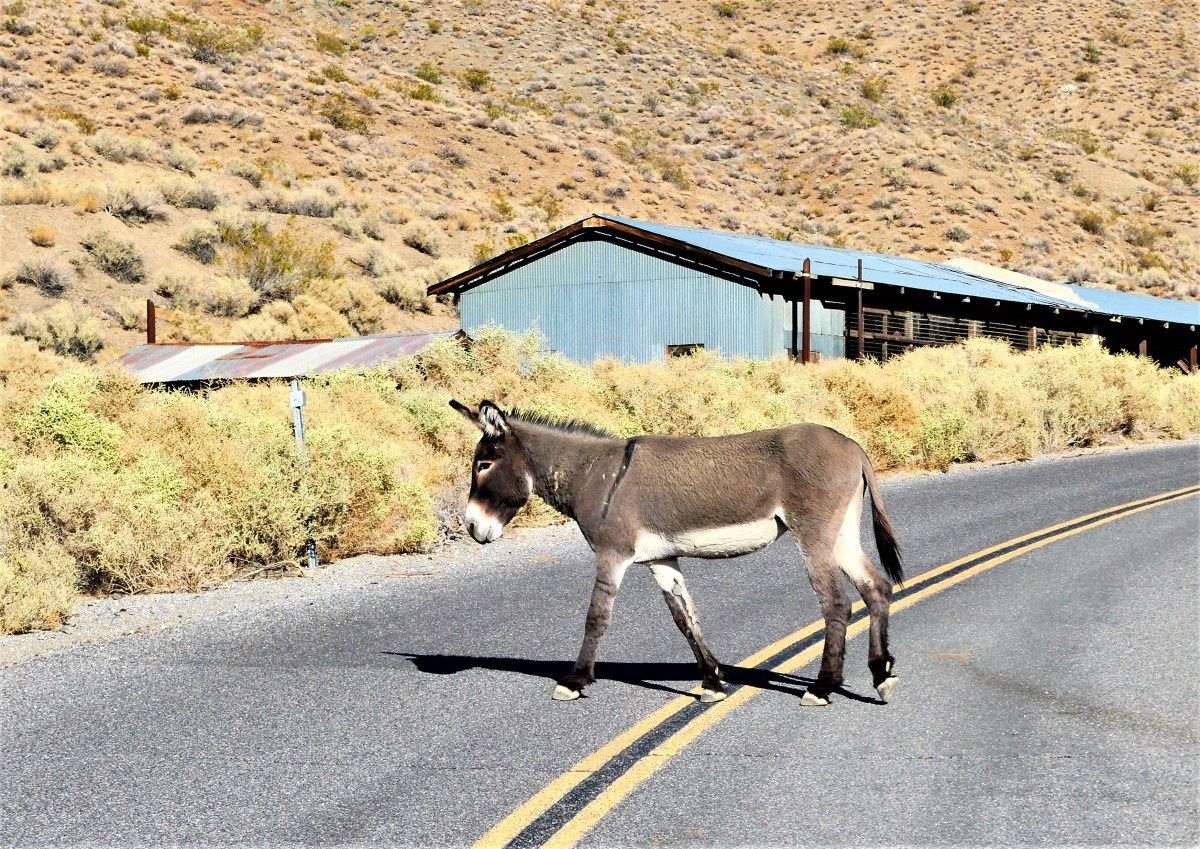
This time around, we elected to pass on the Twenty Mule Team Borax exhibit, having seen it years ago, but it came up again in a strange conversation on our way down from Telescope Peak. For several miles, we’d been passing scattered piles of shit along the road, and wondered about its origin.

Until we had to stop the truck.

dumb ass.jpg

And then we knew what had become of the Twenty Mule Team.

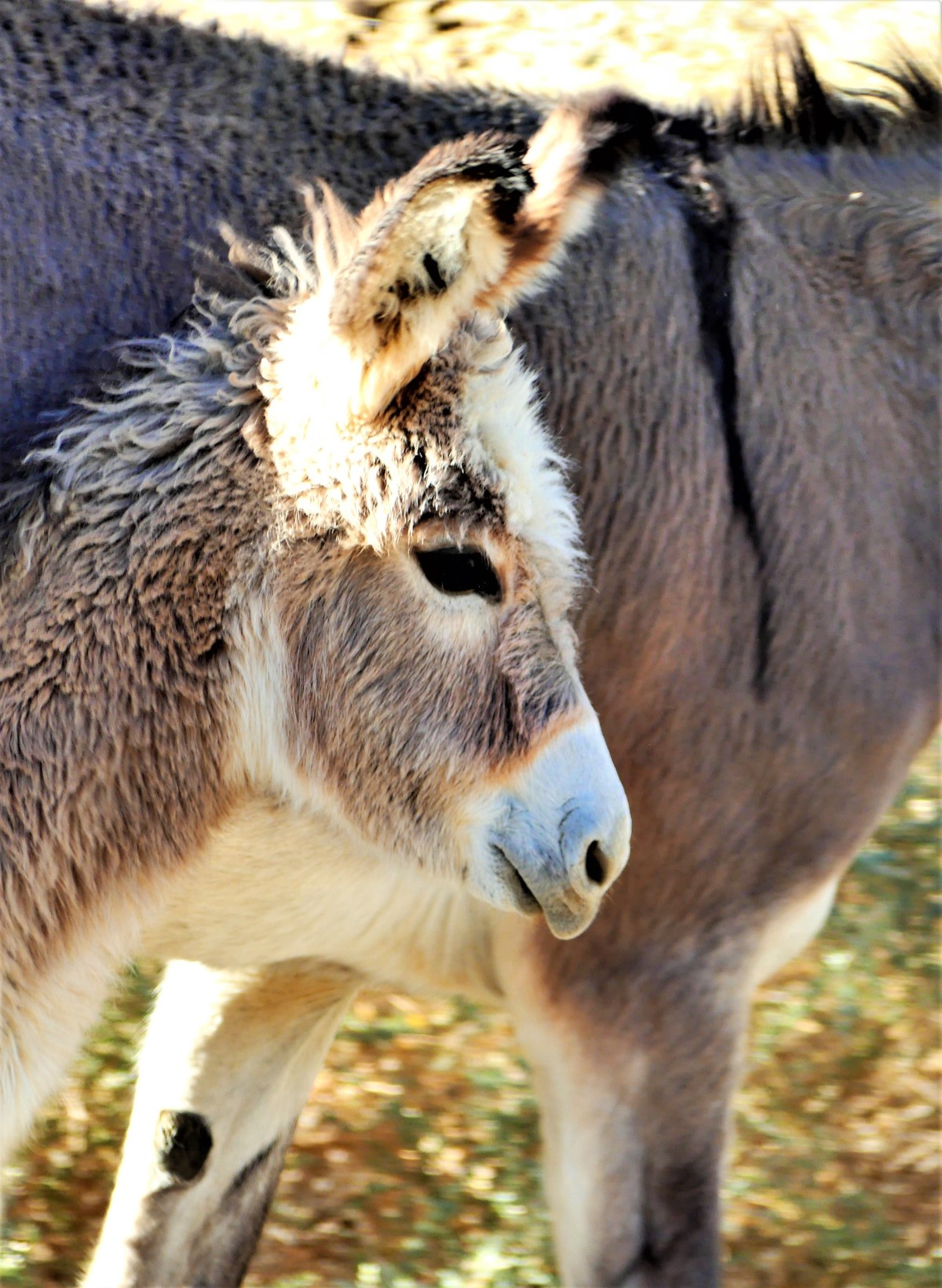
baby mule.jpg

herd.jpg

mule

How Low Can We Go, Part 1

Death Valley is known as a land of extremes. From atop Telescope Peak (the highest point in the park at 11,043′) it’s possible to see the highest point in America (Mt. Whitney at 14,505′) and the lowest point in North America (Badwater Basin at -282′)–all from the same spot. The Panamint towers on the west hold onto snow for three months of the year during winter, while the valley below is the driest place in North America, with annual rainfall under 2 inches. Temperatures have ranged from 134° F to 15° F at Furnace Creek’s weather station.

At 3.4 million acres, Death Valley is the largest National Park outside Alaska. The park is 140 miles long and demands reliable transportation due to its vast and unforgiving character. Nearly 1000 miles of pavement and dirt roads provide access to numerable sights, but the conditions are so punishing, that picking and choosing what to see and do requires reasonability.

With only two days to see the park, Leah and I split our tour around the park’s extremes: on day one, we’d drive the busy low elevation roads–where the weather reigns hotter than anywhere else in the western hemisphere–to explore highlights to the east; and on day two, we’d travel the remote off-road trails to the west, in search of cooler mountain air.

To make it easier on ourselves, we parked the Airstream on an expansive open gravel lot at Stovepipe Wells, where a dozen other trailers and coaches joined us as we listened to early morning howls from a pack of coyotes hunting the birds that frequent the septic pump at the far end of the campground.

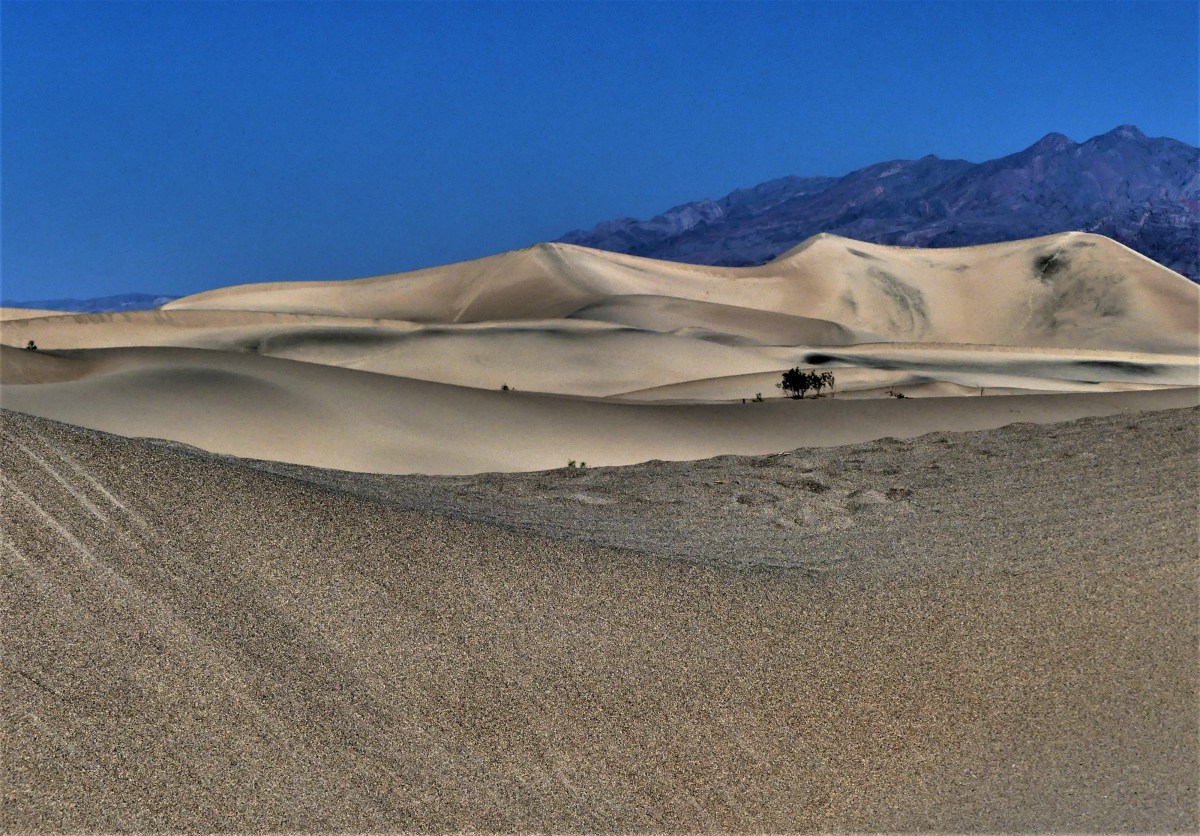
A restless night gave way to a convenient start the following day, with a quick trip (almost unheard of in this National Park) around the bend to Mesquite Flat Sand Dunes.

dunes1

Wandering out to the highest ridge at 100 ft. can be arduous, as the shifting sand will swallow every step.

dunes

However, better traction is available in the dune valleys, where the hard crust anchors the creosote and mesquite shrubs.

Mesquite Sand Dunes

We continued past Furnace Creek…

CA-190.1 (2)

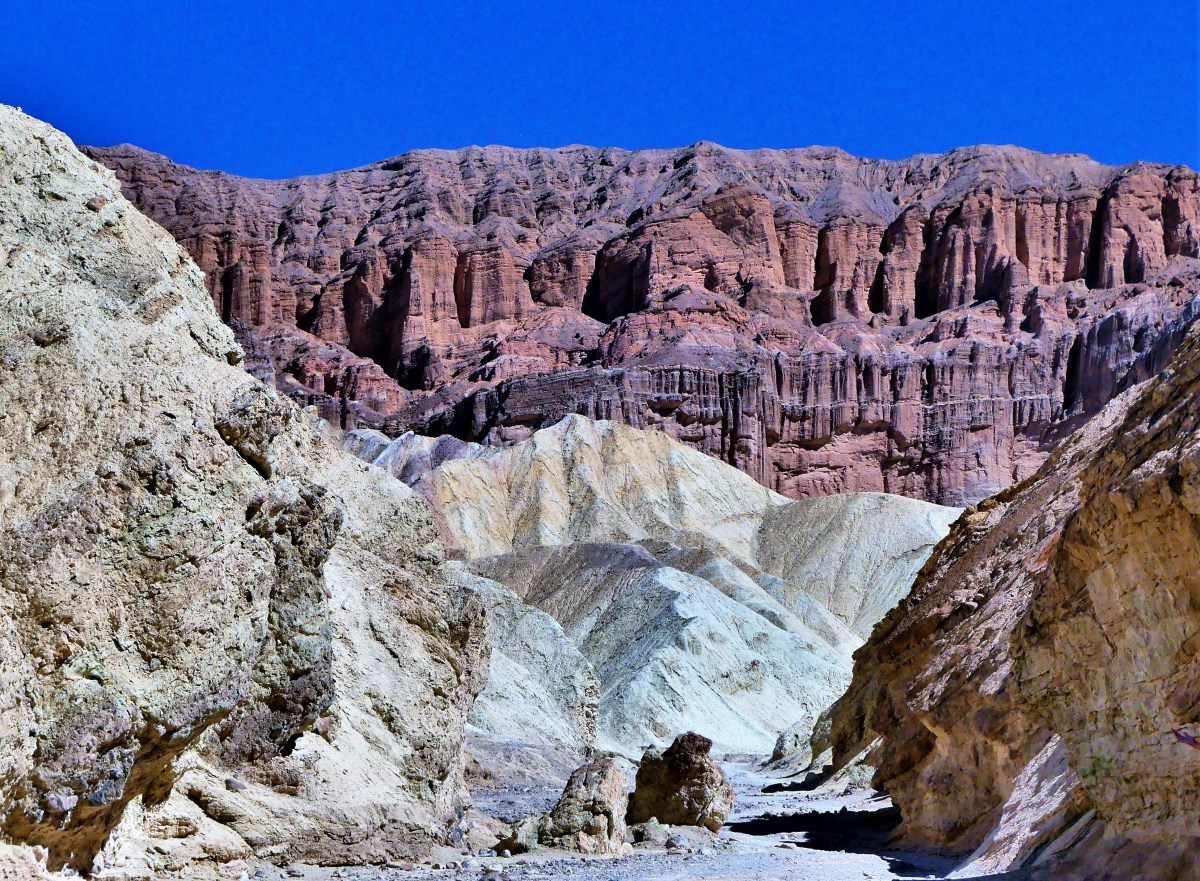
until we reached the Golden Canyon. With the sun arcing across the eastern sky, we wove our way through the passage,

canyon opening

always hugging the canyon walls where we could for a chance at shady salvation.

canyon shade

While the sun was relentless, it was the scenery that left us breathless.

Einstein rock

Golden Canyon spur

Cathedral Red Rock

Back in the truck with the air conditioning cranked to recovery mode, we took CA-190 past the Artists Drive detour, and turned onto a last ditch road that resembled the landscape. At the end of the quarter-mile was a large clearing smack in the middle of an alien landscape called Devils Golf Course*, an immense arena of jagged rock salt deposits turned into land mines that makes for hazardous hiking.

golfcourse panorama.jpg

Devils Golfcourse1.jpg

While no one can ever prepare for surviving in extreme heat for extended periods of time (by now it was now 103° F), we were ready to take our chances in Badwater Basin–the hottest and deepest place in America.

Walking onto salt flats that cover 200 sq miles sounds as overwhelming as it should,

Salt Flats (2).jpg

…yet the impression of watching people walk out so far they almost disappear, helps put the enormity of Badwater Basin into perspective.

Badwater

Leah and I u-turned from this point, and back-tracked to Artist Drive–nine miles of looping and dipping black-top that weaves through narrow rock channels until it opens onto a gargantuan portion of Neapolitan ice cream known as Artists Palette.

bowl of gelato

Five million years of eruptions altered by heat and shaped by wind and water has produced a spectrum of colors across the slopes. On closer inspection, the colors are surreal.

Artist's Palette

Palette detail

While the truck had enough fuel to carry us another two-hundred miles, Leah and I were running out of gas. As we’d ride from one spot to another, we’d repeat the same refrain throughout the day: “Oh, wow! Did you see that? That was amazing! How is that even possible?” We were living on fumes of inspiration.

We closed the day with a visit to Zabriskie Point,

Badlands

a magical setting that showcases the harsh beauty that makes Death Valley so unforgettable, and a place that can awaken the hibernating soul within us. Some go so far as to breach the safety of the overlook, and climb closer to the edge to symbolically feel closer to their personal truth.

One such group of chanting and meditating hippies was seated on plush mats near the cliff edge, their diaphanous silks of many colors flowing in the hot breeze. They were seemingly oblivious to the large number of amateur shutterbugs who were standing on the observation platform and complaining about their compromised view of the Badlands.

Since I believe that we all share the same view equally, I took a narrow path down to where they were sitting to set up my camera shot. I nodded politely as I crossed their viewing angle, and bid them hello.

“I’ll bet their grumbling up there about how we’re spoiling the view for them,” declared the Elder.

“Yeah, there’s a lot of that going on,” I indicated, “but the light won’t be like this forever, so ‘I’m not gonna waste my shot.’

Zabriskie Point

Elder stated, “Y’know, if they were that bummed out, they’d come down here the same as you”

Setting up my shot, with my back to Elder, I commented, “That’s true, but many aren’t as bold as you, and just as many can’t physically make the climb down here. Figure it out!… While you’re praying for world peace, you’re also ignoring the needs of people right behind you.”

“I guess that’s true,” noted the Eldress.

I took the shot…

Zabriskie panorama

and hiked back to where Leah was standing.

“Y’know that group of hippies below us? I think they’re leaving,” I announced.

“That’s gonna make a bunch of people happy,” predicted Leah.

When I saw them rolling up their mats, I figured that like me, they probably had enough heat for one day, or they finally came to their senses before the heat robbed them of their last strand of reasonability.

* Not a Trump® property yet, but the family is working on it!

Joshua Tree–the Album and the National Park

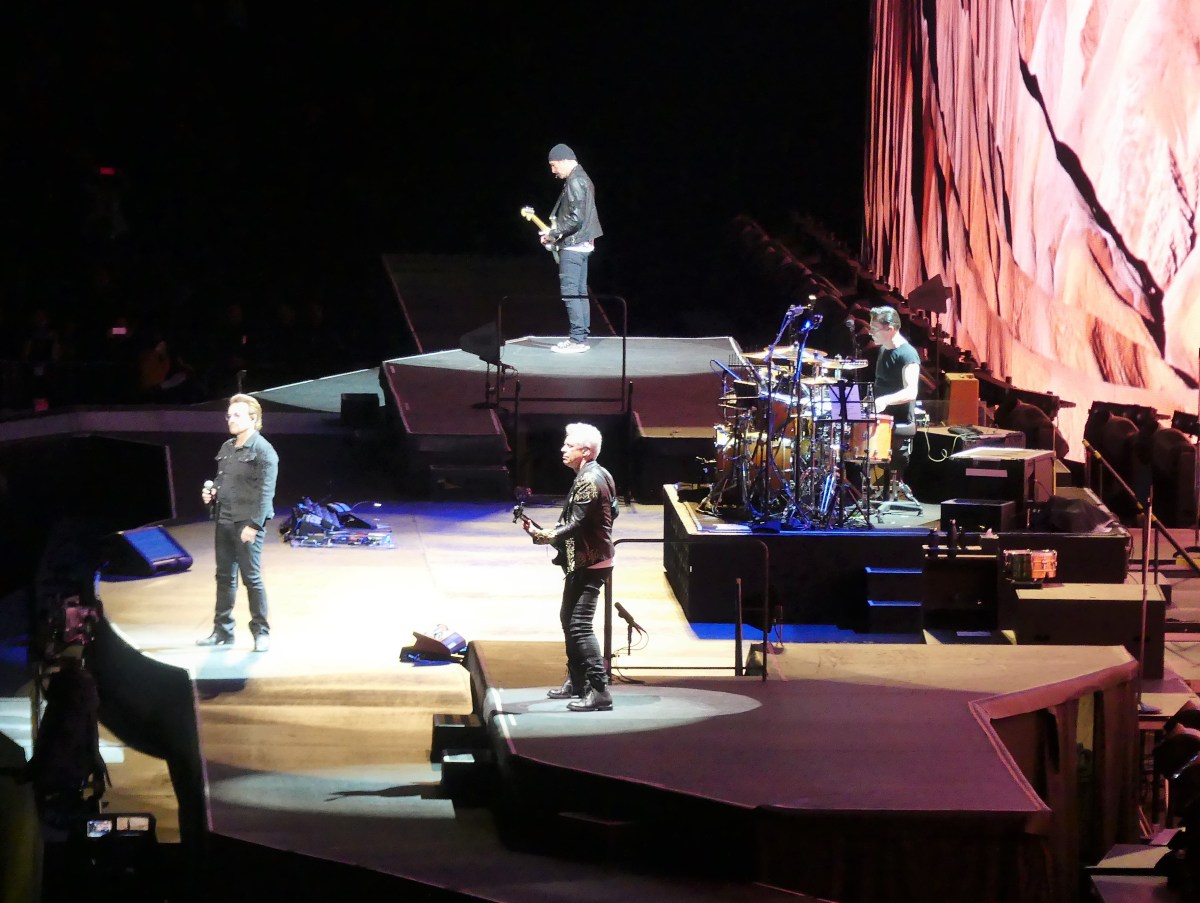
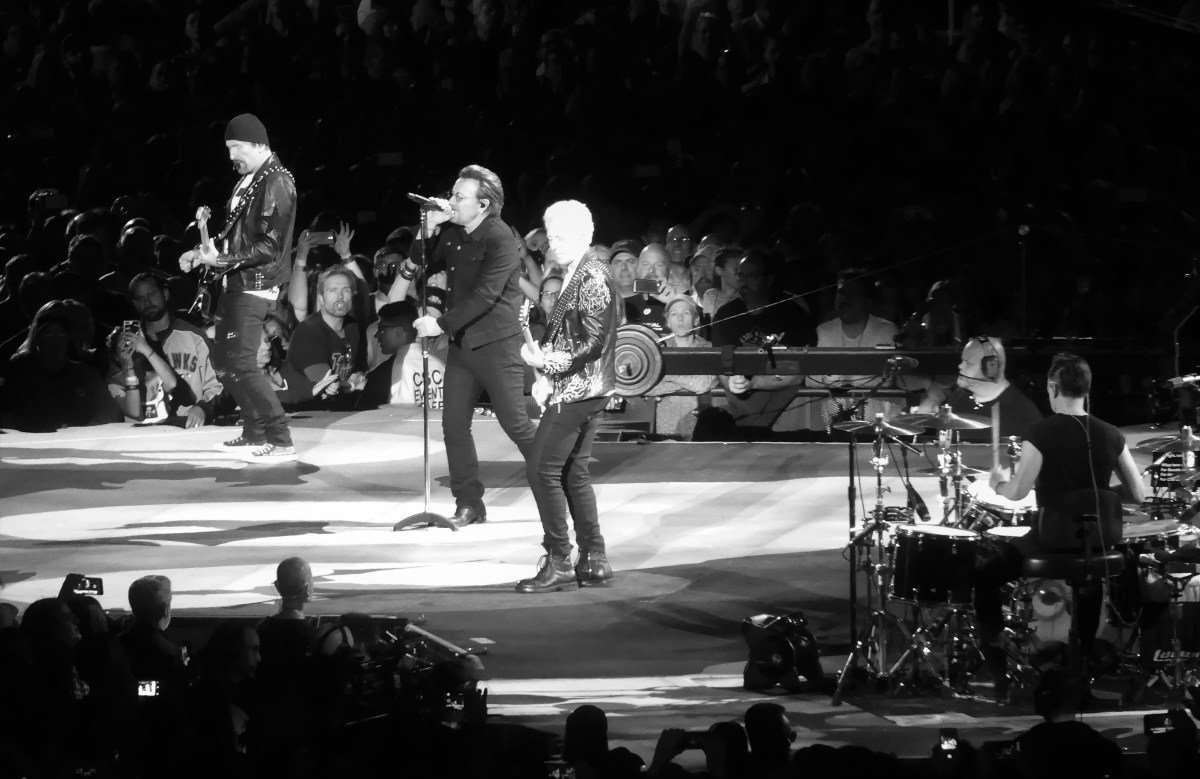
It seemed fitting that scoring tickets to U2’s final U.S. performance of their Joshua Tree tour in San Diego would be the perfect segue to our visit to Joshua Tree National Park one day later. Their iconic album, filled with haunting melodies and provocative lyrics still resonates, even thirty years after its release. That the two events would collide seemed akin to kismet, providing inspiration for a mash-up of U2 music and National Park imagery.

The Joshua Tree concert and park were magical, and lingering memories of both events continue to sustain my creative drive.

Where the Streets Have No Name

main stage

pair of ocochilla
I’ll show you a place
High on a desert plain
Where the streets have no name


I Still Haven’t Found What I’m Looking For

Edge

P1090152
I have spoke with the tongue of angels
I have held the hand of a devil
It was warm in the night
I was cold as a stone


With or Without You

all together in the middle

cacti and rock
See the stone set in your eyes
See the thorn twist in your side


Bullet the Blue Sky

excited

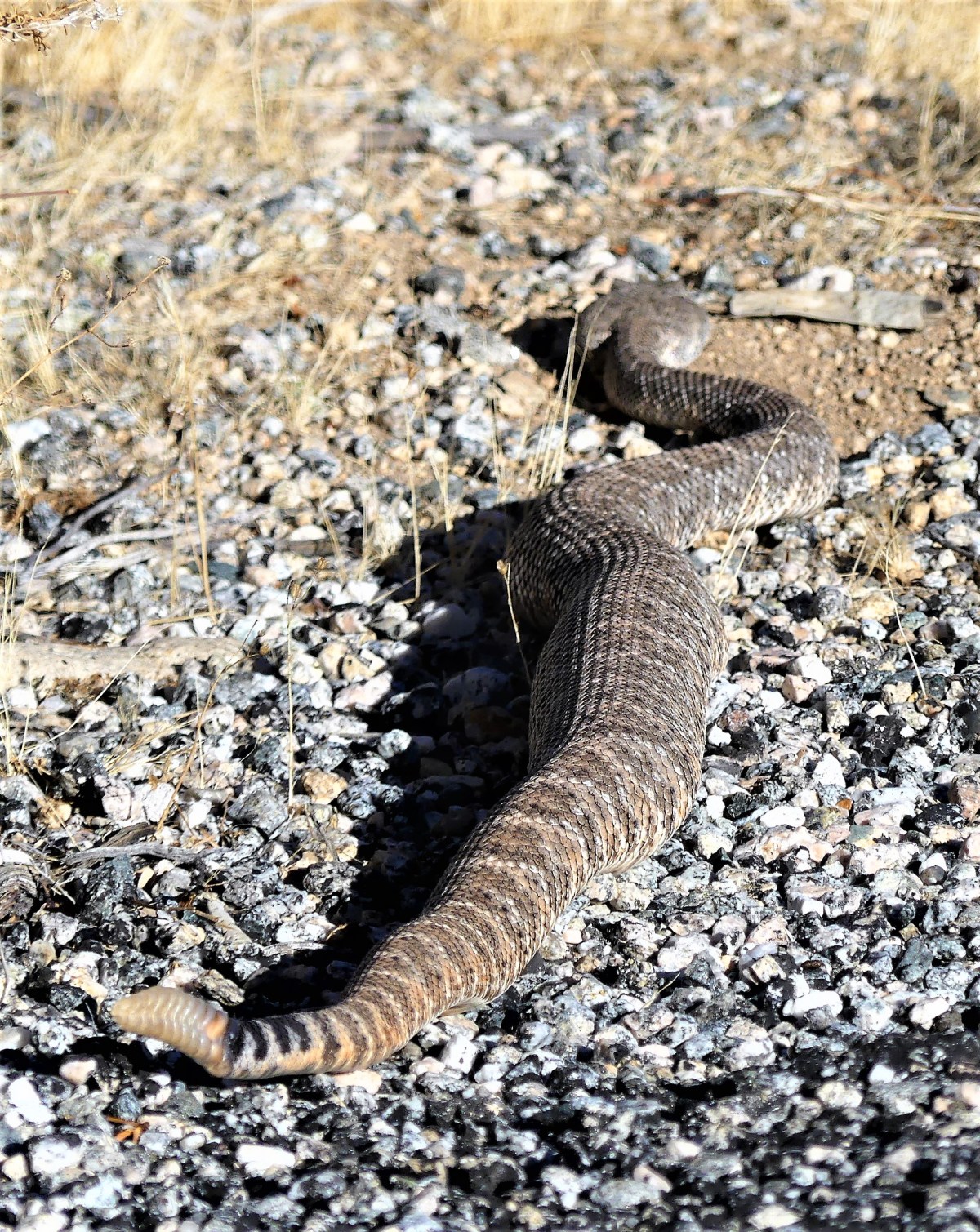
fat rattler
In the locust wind
Comes a rattle and hum


Running to Stand Still

3 in the middle stage

7 towers
I see seven towers
But I only see one way out


Red Hill Mining Town

Turn off the lights

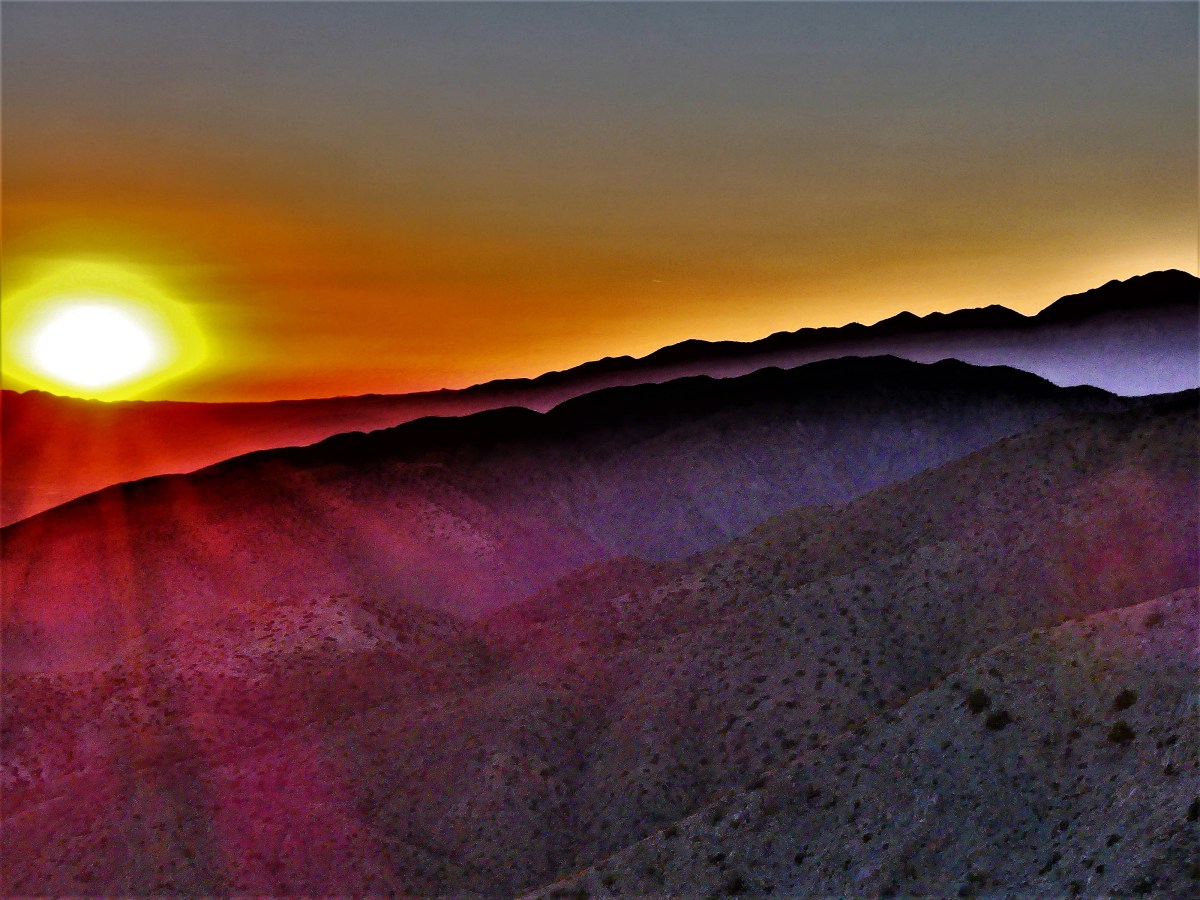
desert sunset
We scorch the earth
Set fire to the sky


In God’s Country

blue light

Barker Dam3
Desert sky, dream beneath the desert sky
The rivers run but soon run dry


Trip Through Your Wires

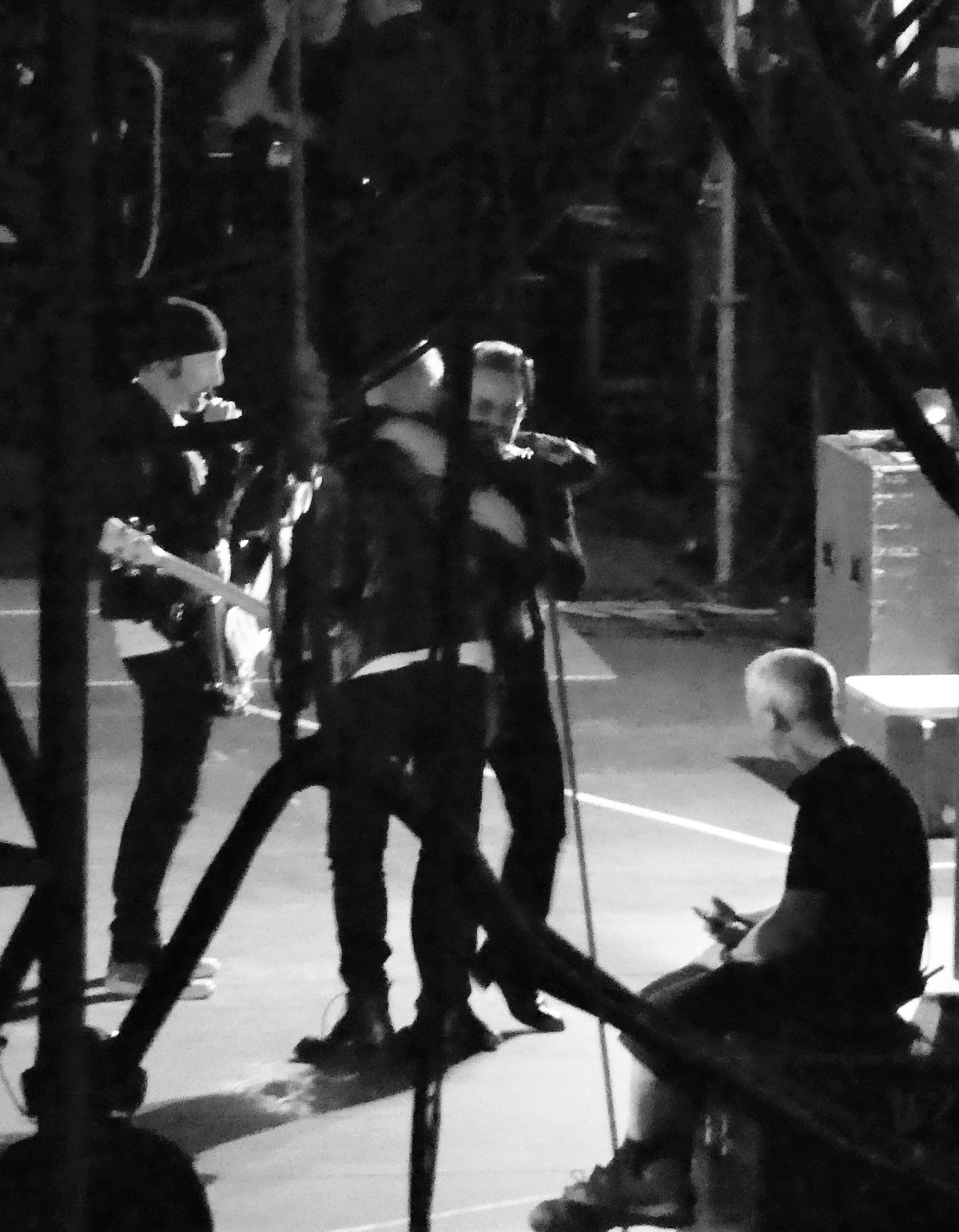
Edge and Bono

Desert Sky (2)
There’s a raincloud
In the desert sky
In the distance


One Tree Hill

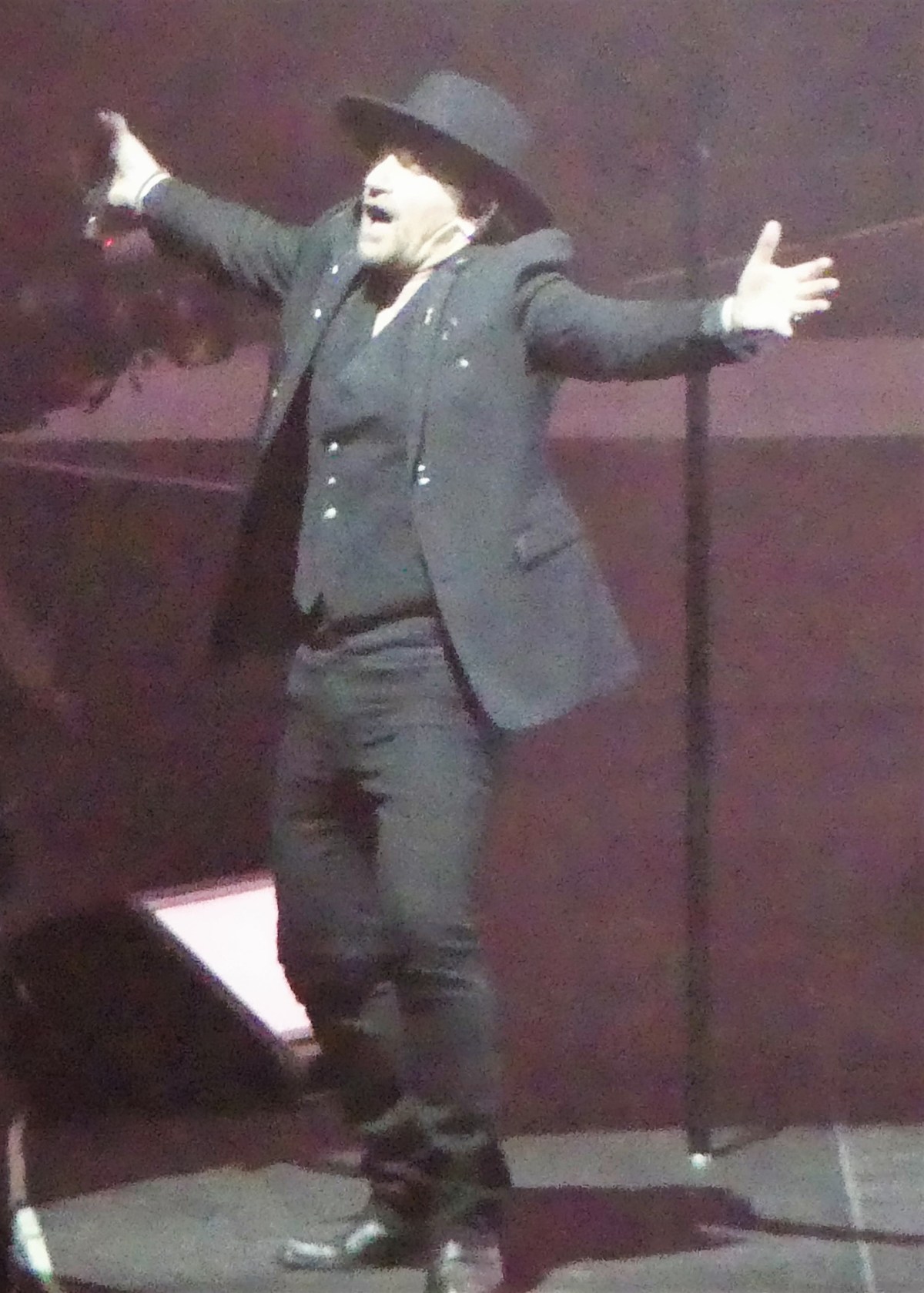
Bono in a hat

blazing sunset
The moon is up and over One Tree Hill
We see the sun go down in your eyes


Exit

Backstage1

folded rocks
He felt the healing
Healing, healing, healing hands of love


Mother of the Disappeared

passing the sheet

White Tank
In the trees our sons stand naked
Through the walls our daughters cry

My thanks to Bono, The Edge, Adam, and Larry for decades of music artistry. And my apologies in advance for crossing the line with my literal and metaphoric interpretations.

Window to a Blue Sky

Ranger Pritchett has a lot to smile about. After twenty years as an enforcement officer at Joshua Tree National Park, he’s recently transitioned to a new position inside the visitor center as a naturalist and he couldn’t be happier. When asked about the park’s attractions and variety of activities, he gets very excited about all the prospects that Joshua Tree has to offer, especially during the off-season, when it’s not “crazy busy”.

He highly recommends a visit to Cottonwood Spring—located three miles behind the Cottonwood Spring Visitor Center—where, miraculously, an underground spring feeds a Babylonian-style garden of large growth trees that frame the azure sky.

twin palms

He draws a circle around Barker Dam on our trail map, and encourages us to hike the loop trail that passes Barker Dam, where the water offers a window to the sky;

Barker Dam (2)

and continues through a thick forest of Joshua trees created to frame the rocks and blue sky;

Joshua tree frame (2)

and finishes with an introspection of ancient Indian petroglyphs carved on a sacred rock that vandals thoughtlessly outlined in paint.

20170927_163002

But Pritchett was reticent about suggesting a visit to White Tank campground. When asked why, he allowed, “In my old job, I got called and cornered there all the time. There were just too many people for the area, and once I got in there to control traffic, it was almost impossible to get out.”

But what made it so crowded?” I continued.

That’s when Pritchett criticized the parkitects. “They should never have designated a trailhead through camp site #9.

“A trailhead to what?” I persisted.

“Oh, it’s just the only natural arch in the park,” he mentioned casually. “But I don’t like to tell a lot of people about it. In fact, it’s not even recorded on the park map.”

But he highlighted the area for us on our trail map.

Leah and I were as excited to discover the arch as a Republican repealing ObamaCare. But when we arrived at Site #9, we weren’t alone. A few other couples were also in on the secret, although the trail was not an easy one to follow; the rock path was too easily camouflaged by the desert terrain.

After some unauthorized trailblazing, we located the source of wonder, and scrambled through a crop of coarse granite for a closer look. Looking through a window of the last 80 million years, the endless erosion of wind and water has molded a mini mound of molten magma into a masterpiece.

20170925_143844

However, the biggest window was waiting for us at the top of Keys View. The small crowd began assembling at 6:15 pm. Everyone’s eyes were fixed on the hazy glow of San Gorgonio Mountain to the north,

the sinking sun

and a mirage of a distant Salton Sea to the south– the two connected by the San Andreas Fault…

Coachella Valley and Salton Sea at sunset

all in preparation for a salute to the sunset over Mount San Jacinto, and the promise of a better day tomorrow.

sunset

Channeling the Islands

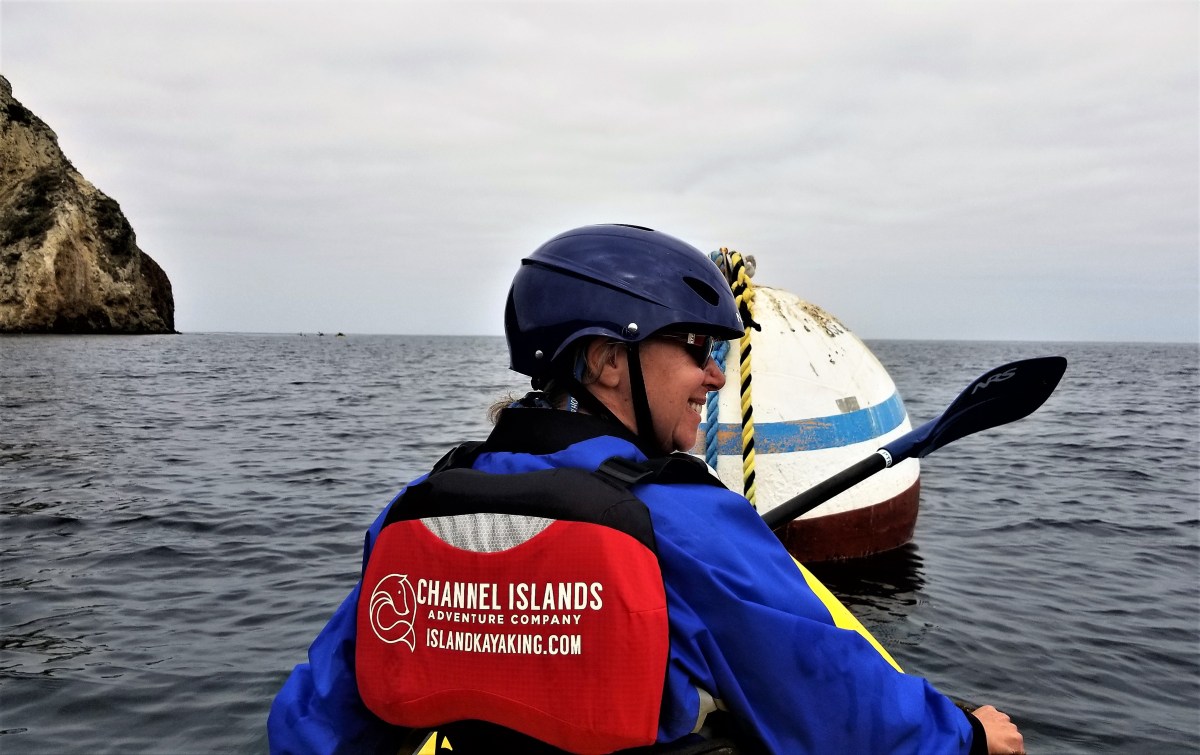
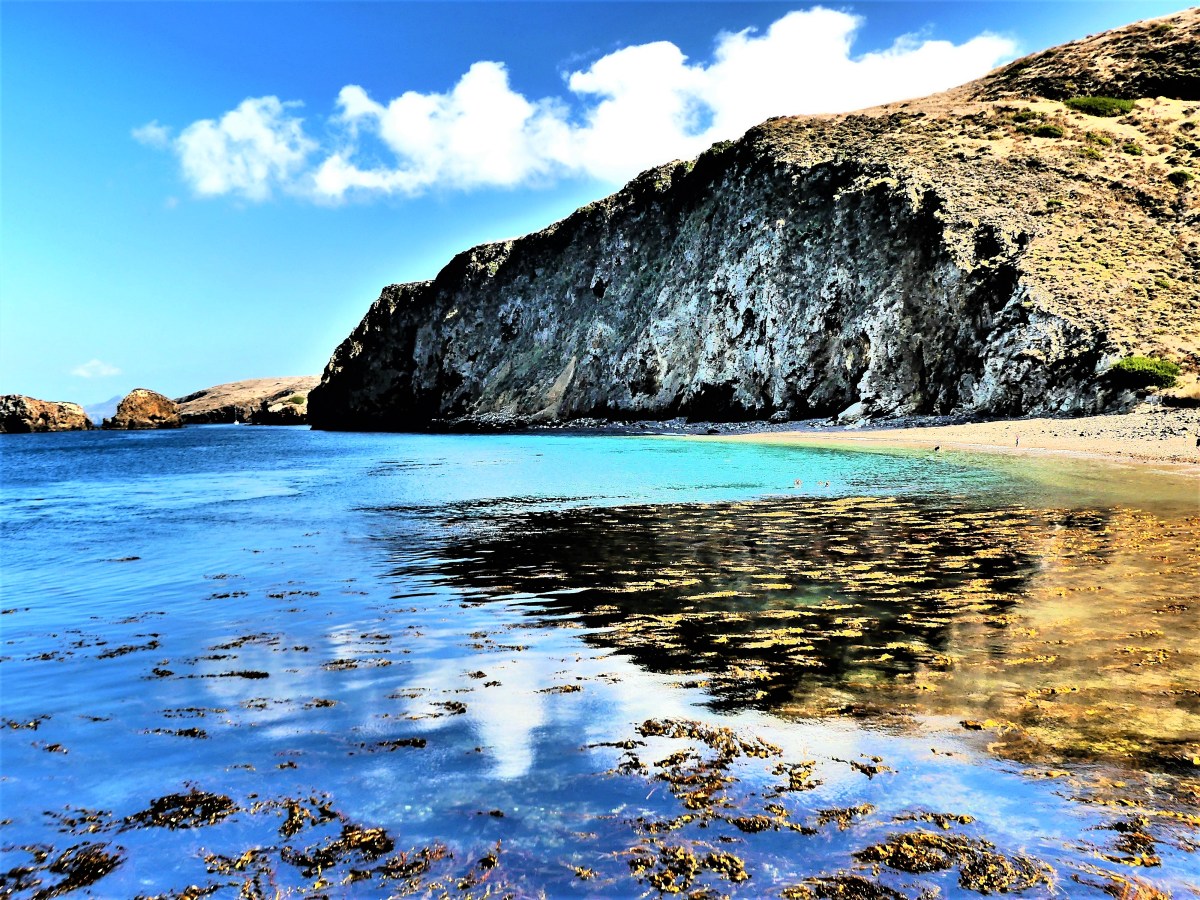
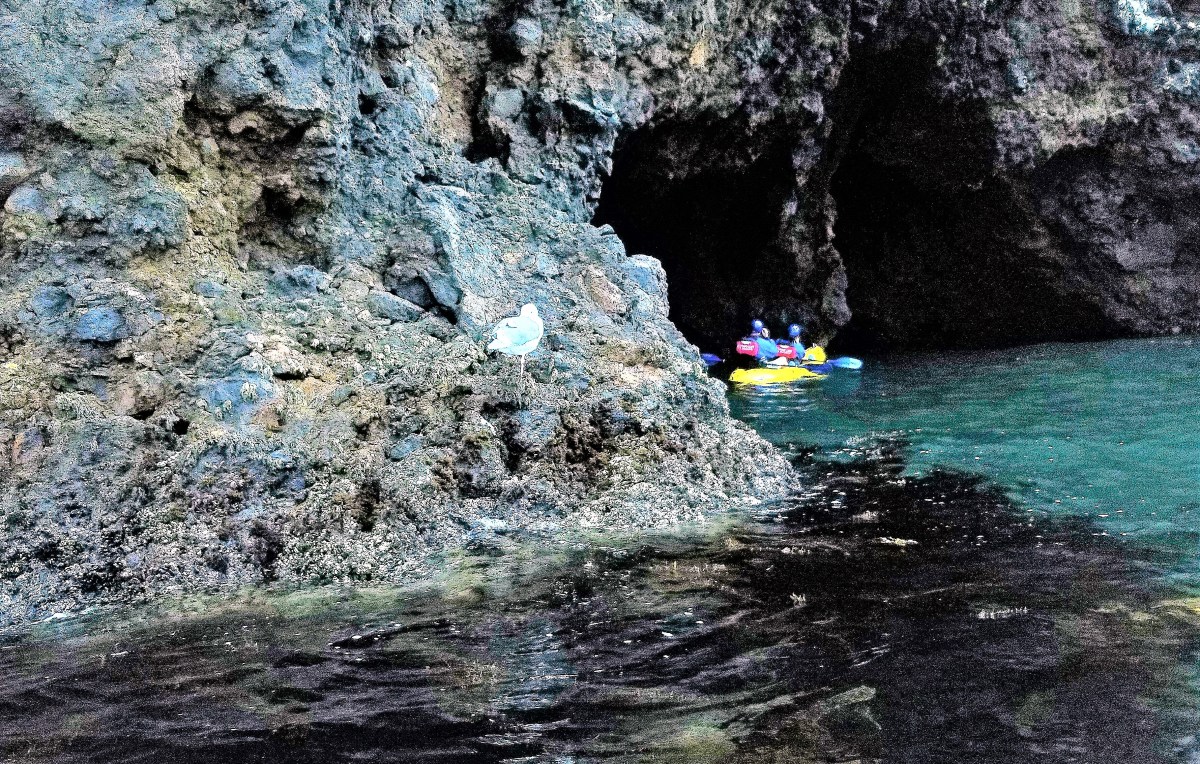
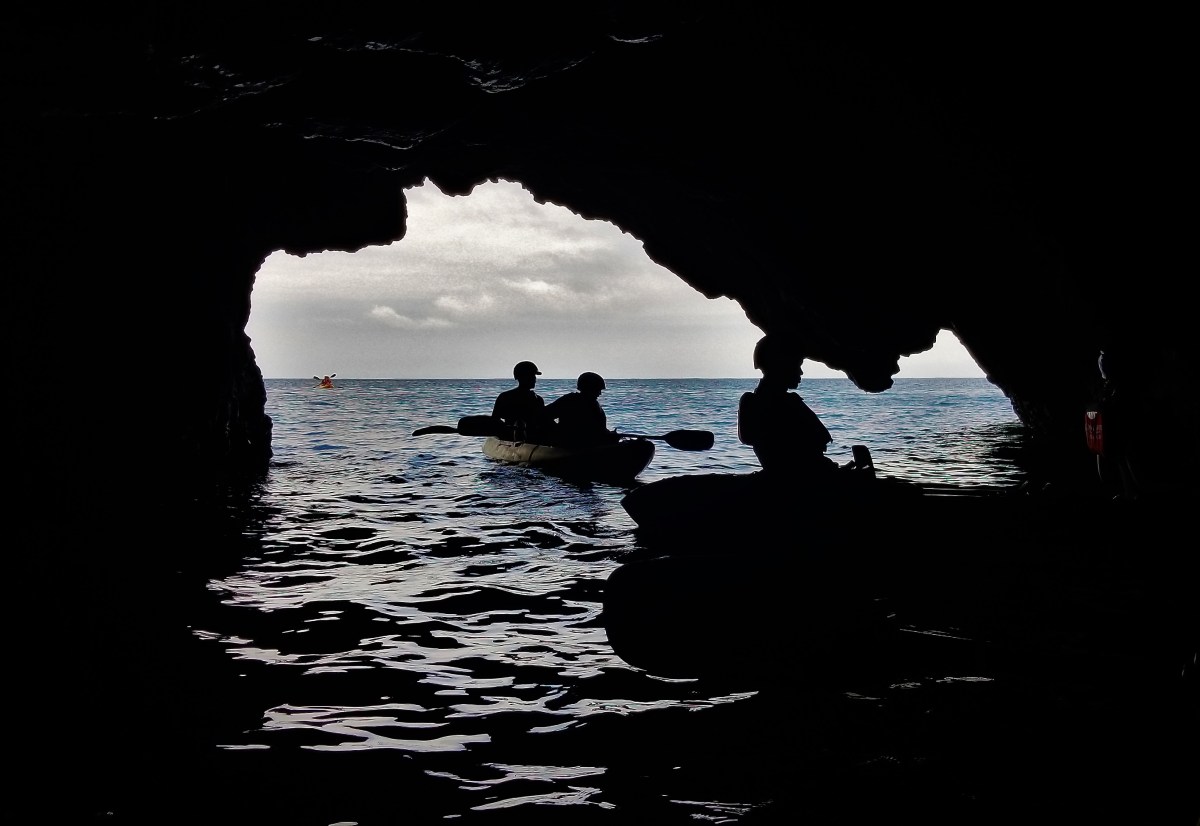
We are sitting on the water, bobbing on small swells in our yellow kayak while waiting to explore some of the many sea cave options available to us on the southeast edge of Santa Cruz Island, the largest of four northern islands–Santa Rosa, Santa Miguel, and Anacapa being the others–that comprise Channel Islands National Park.

pace setter

With names like Limbo, the Green Room, Neptune’s Trident, Flatliners, and Boatwreck, these grottoes suggest something ominous and sinister to less-accomplished sailors like Leah and me.

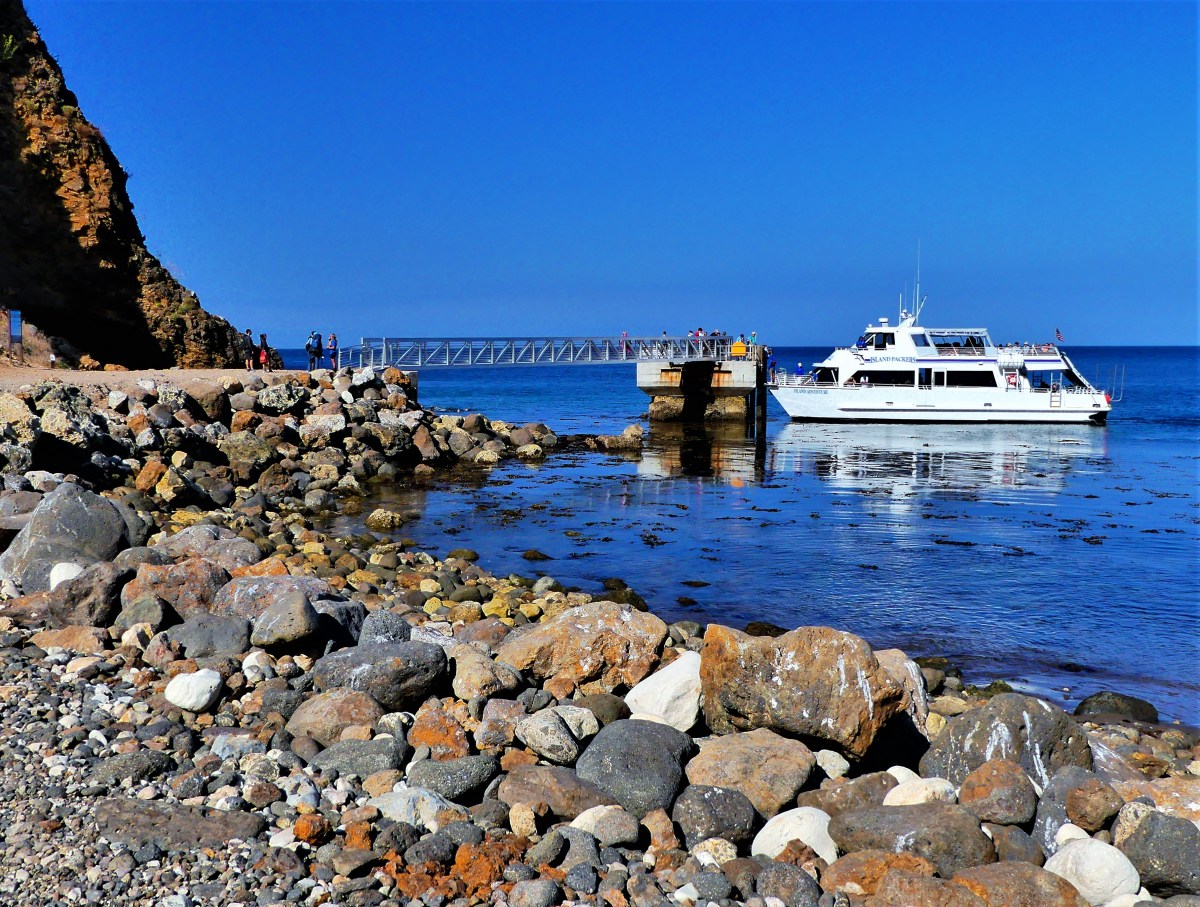
The unconventional road to Channel Islands crosses the Santa Barbara Channel from Ventura Harbor via a dedicated ferry chartered by Island Packers.

Island Packers

After boarding the vessel with day trippers and overnight campers, we embarked at 9:00 am for a 1 to 1.5 hour cruise, depending on encounters with sea creatures,

hauling on a buoy
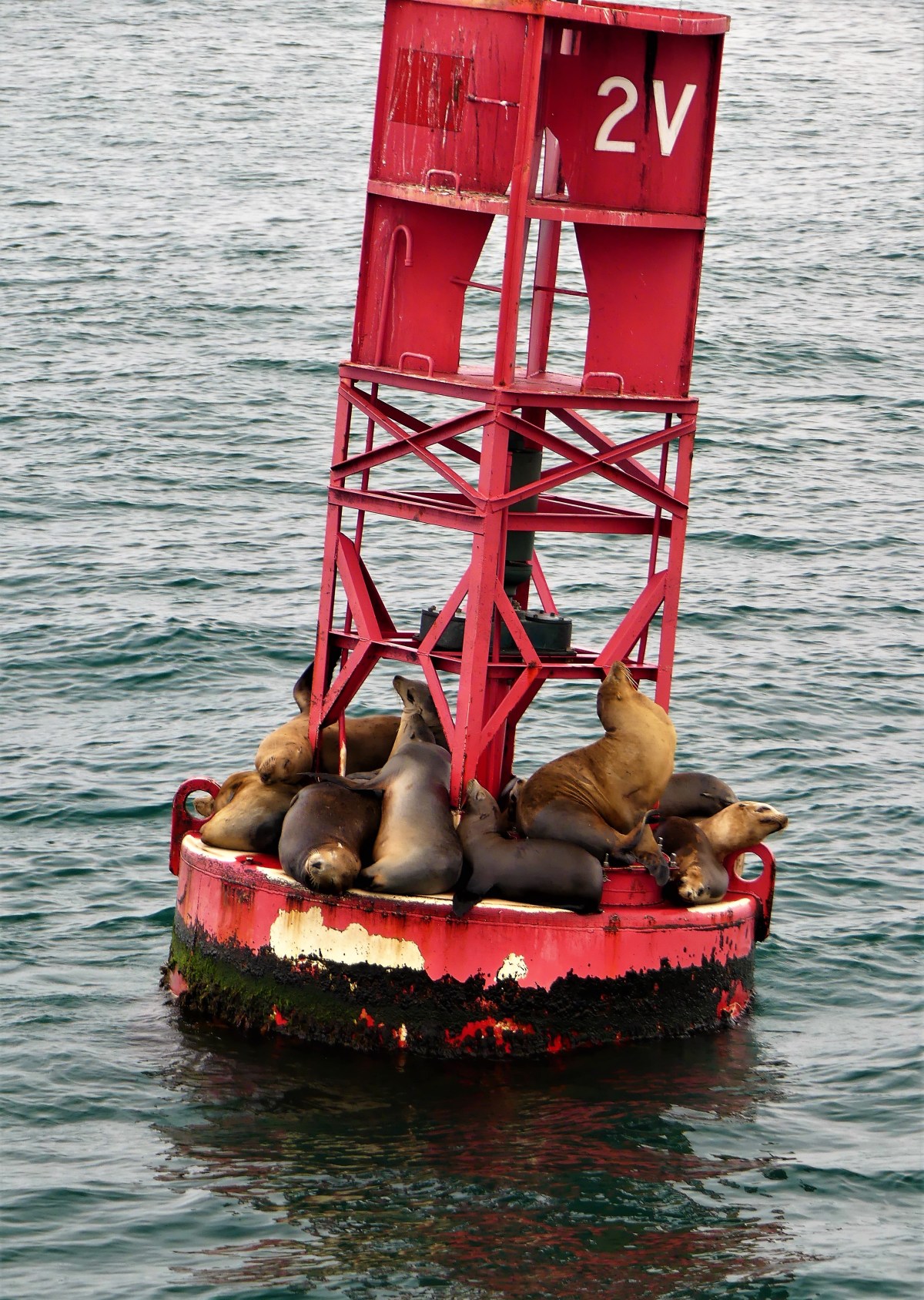
layers of hauled-up sea lions

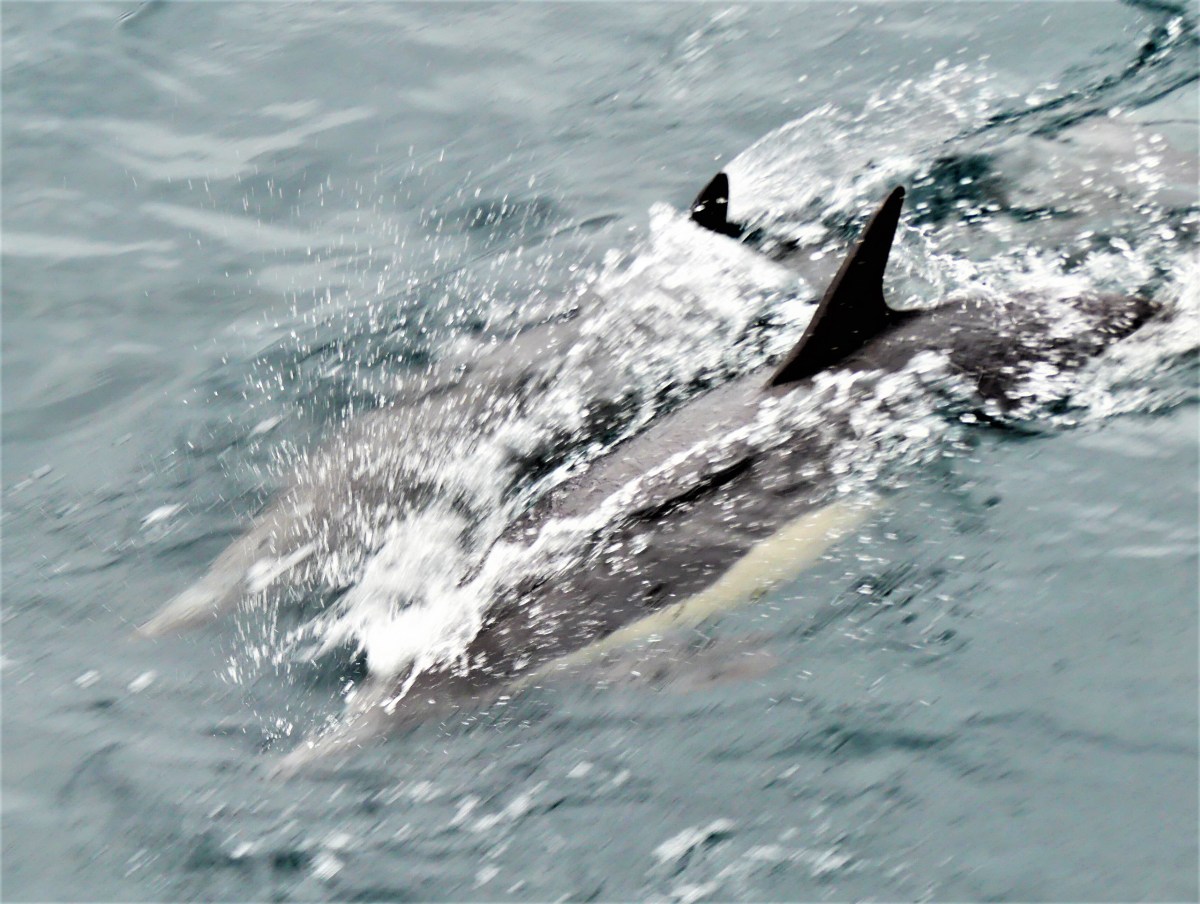
pair of bottlenose dolphins

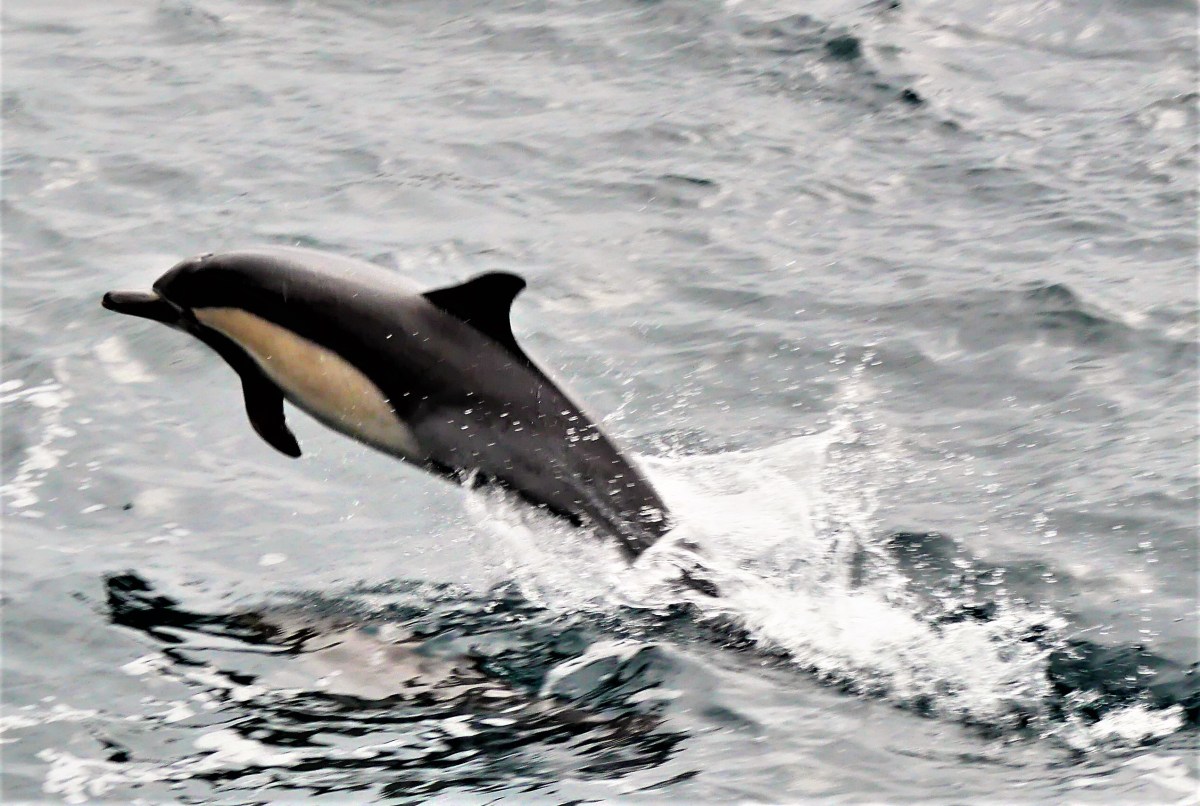
dolphin jump

and immense cargo ships entitled to “right of way”.

NYK with dolphin

NYK Argus
layers of containers

Unfortunately, there were no whale sightings, despite being a regular occurrence during summer months, since humpback and endangered blue whales enjoy feeding beneath these krill-rich waters.

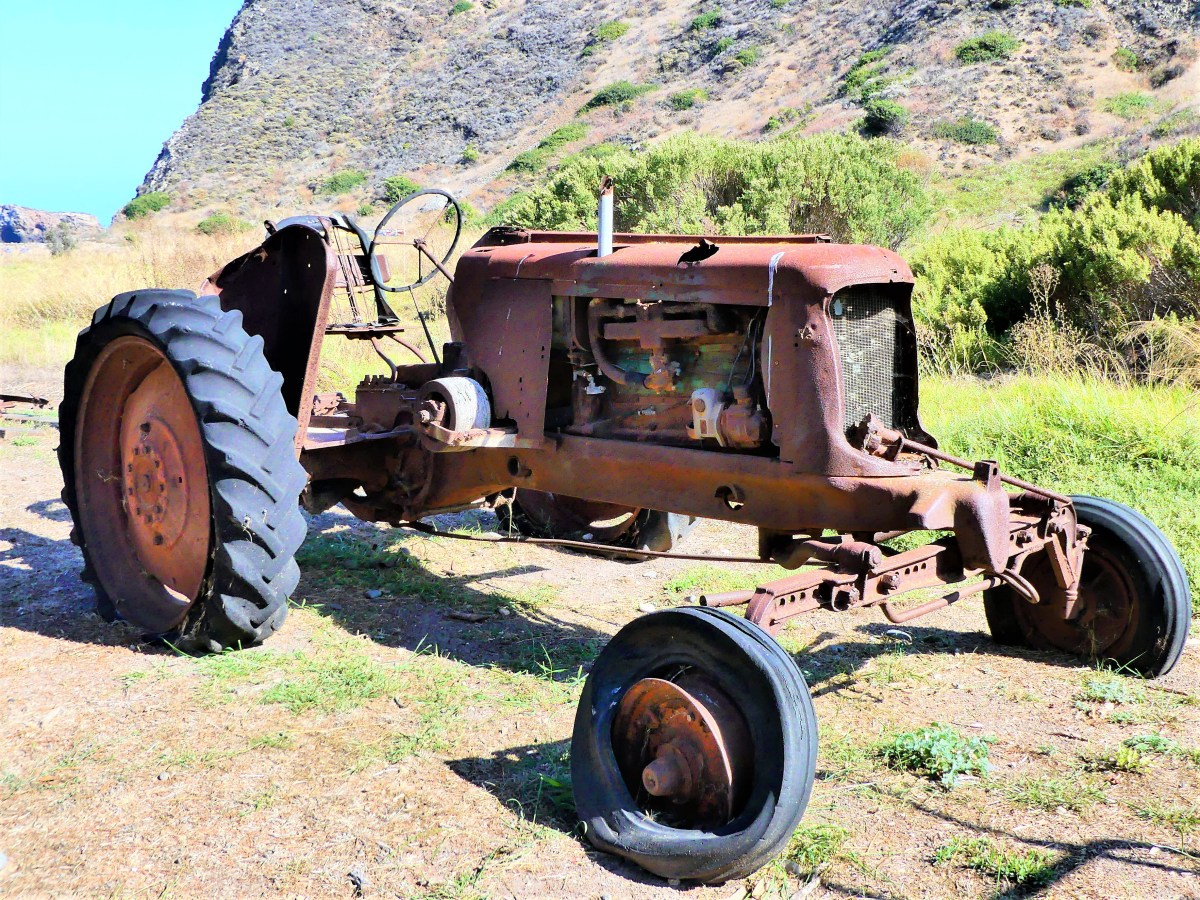
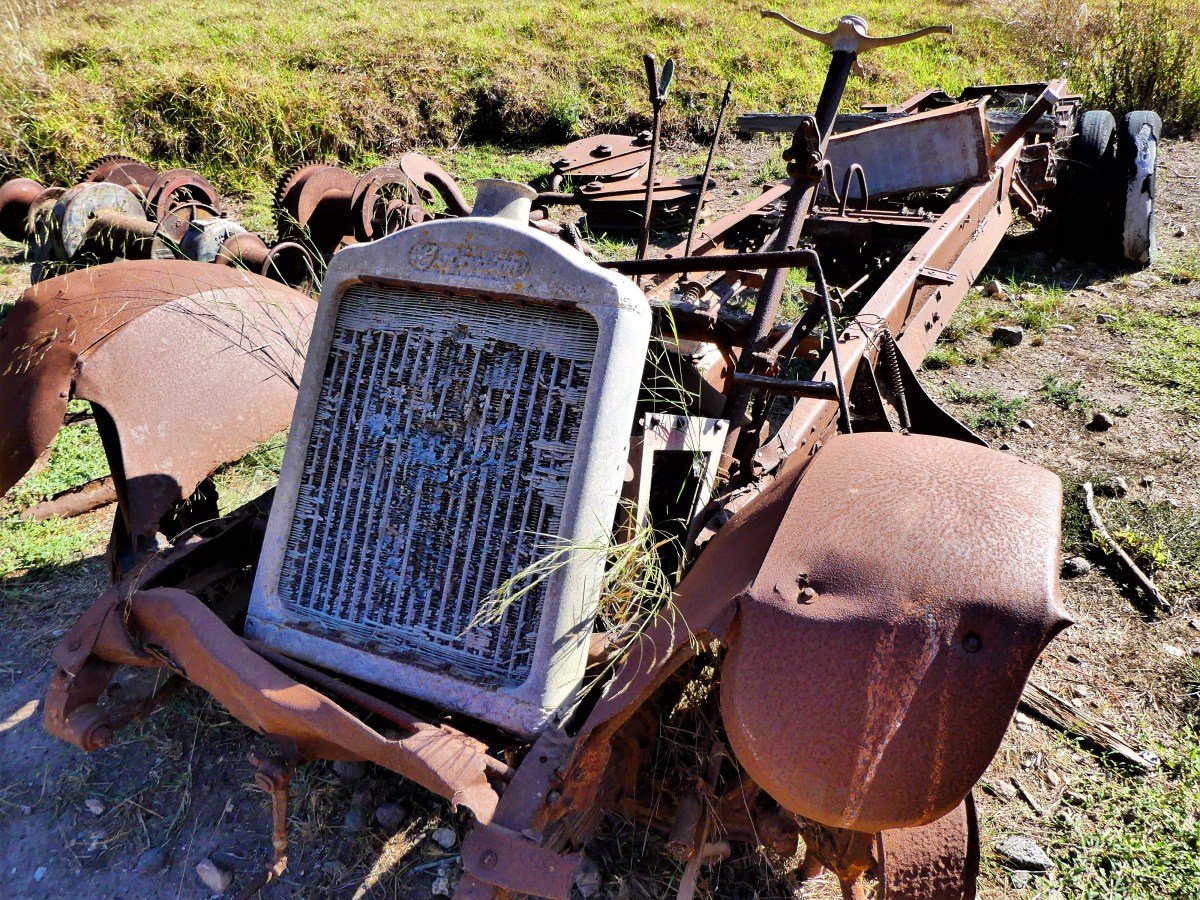
After disembarking from Scorpion Anchorage, a short trek past Scorpion Ranch reminded us that this island was once privately owned and operated as a sheep ranch before the National Park Service acquired the eastern parcel during the 1990’s. Machine wrecks layered with rust bordered the road past the ranch house.

dead tractor

dead truck

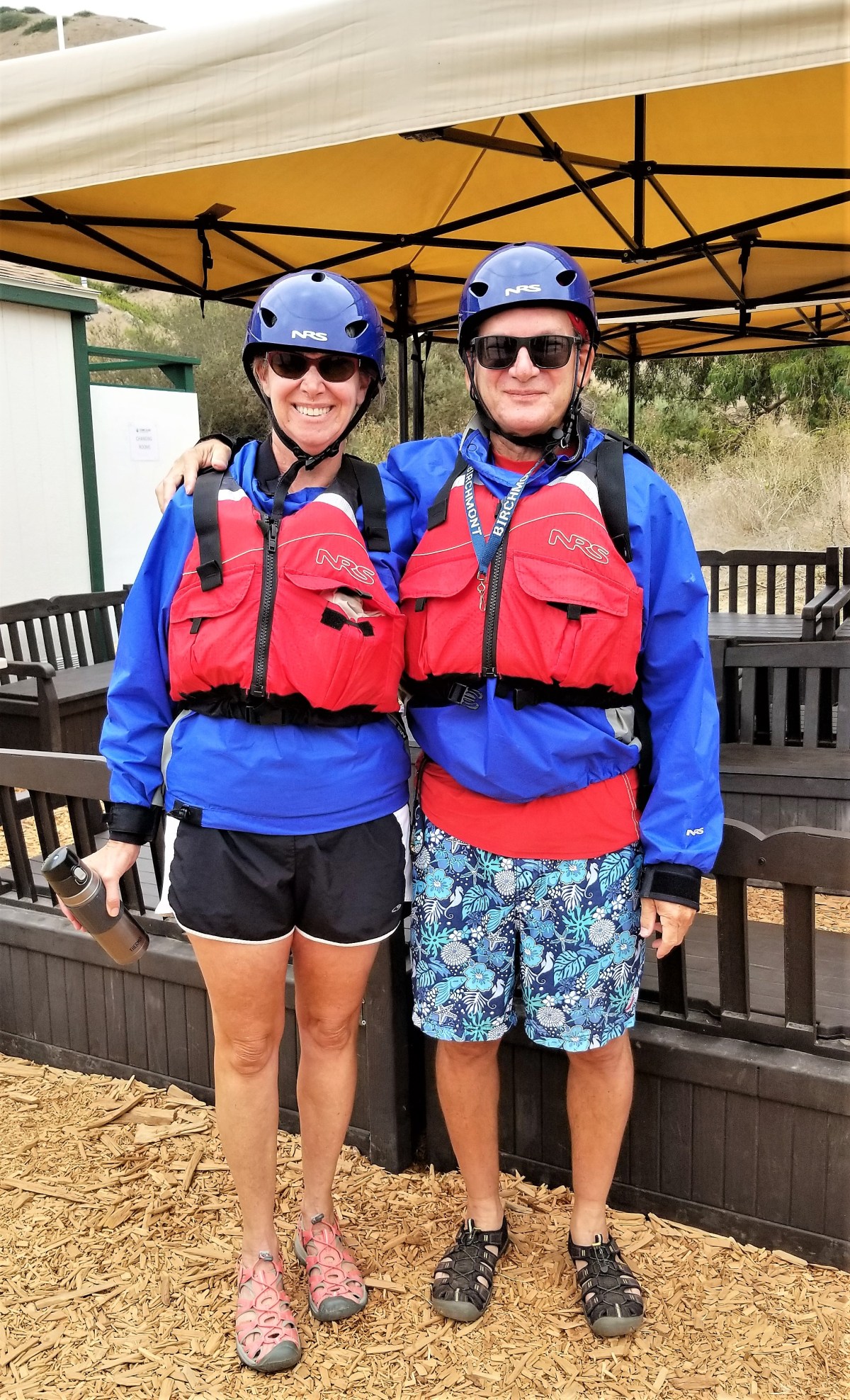
After layering into our kayaking outfit,

what a couple

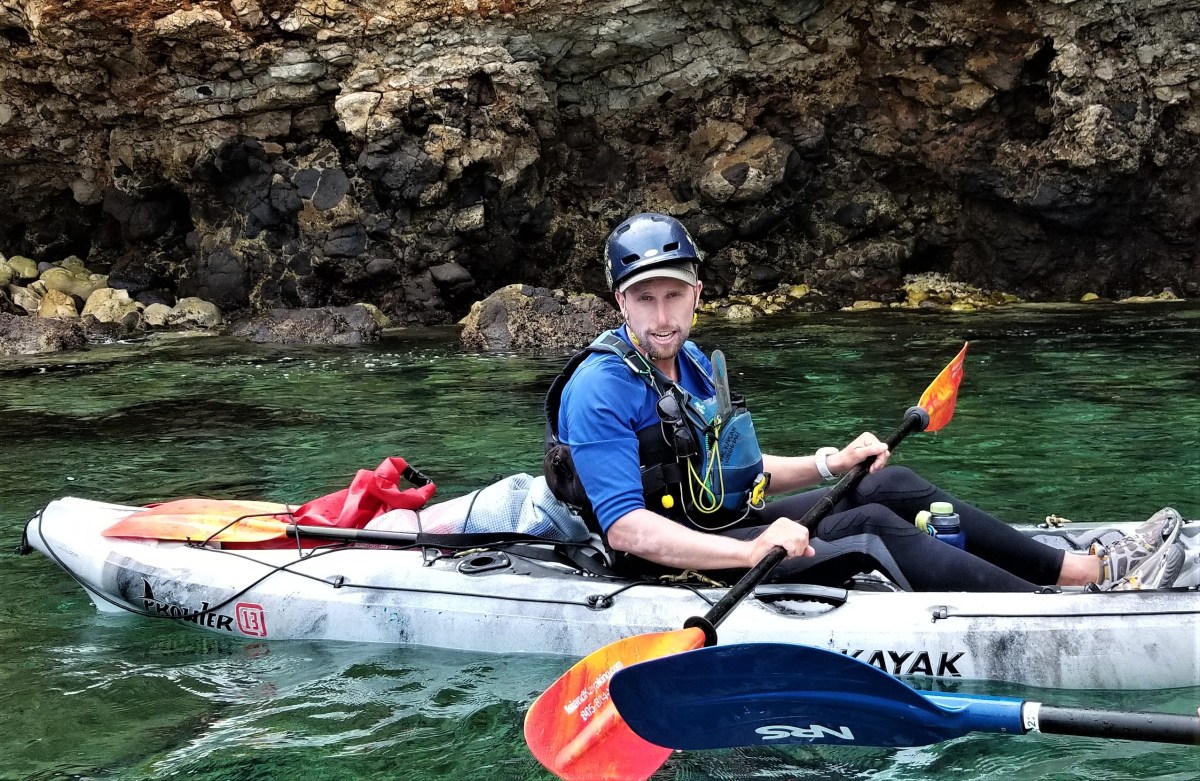
we eventually met up with forth-year guide Marc,

Marc the guide

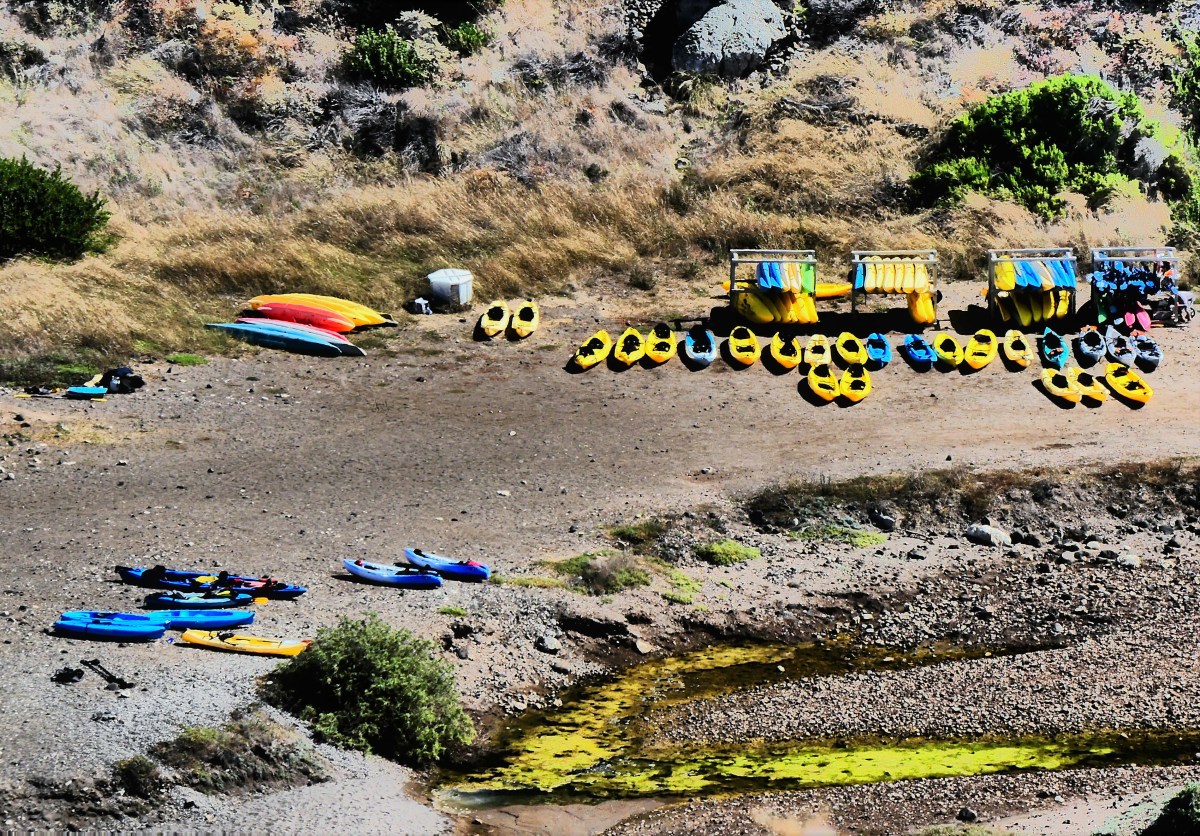
who reviewed safety maneuvers and rowing tips by the launch point.

kayaks

We entered the water at Scorpion Beach,

Scorpion Beach.jpg

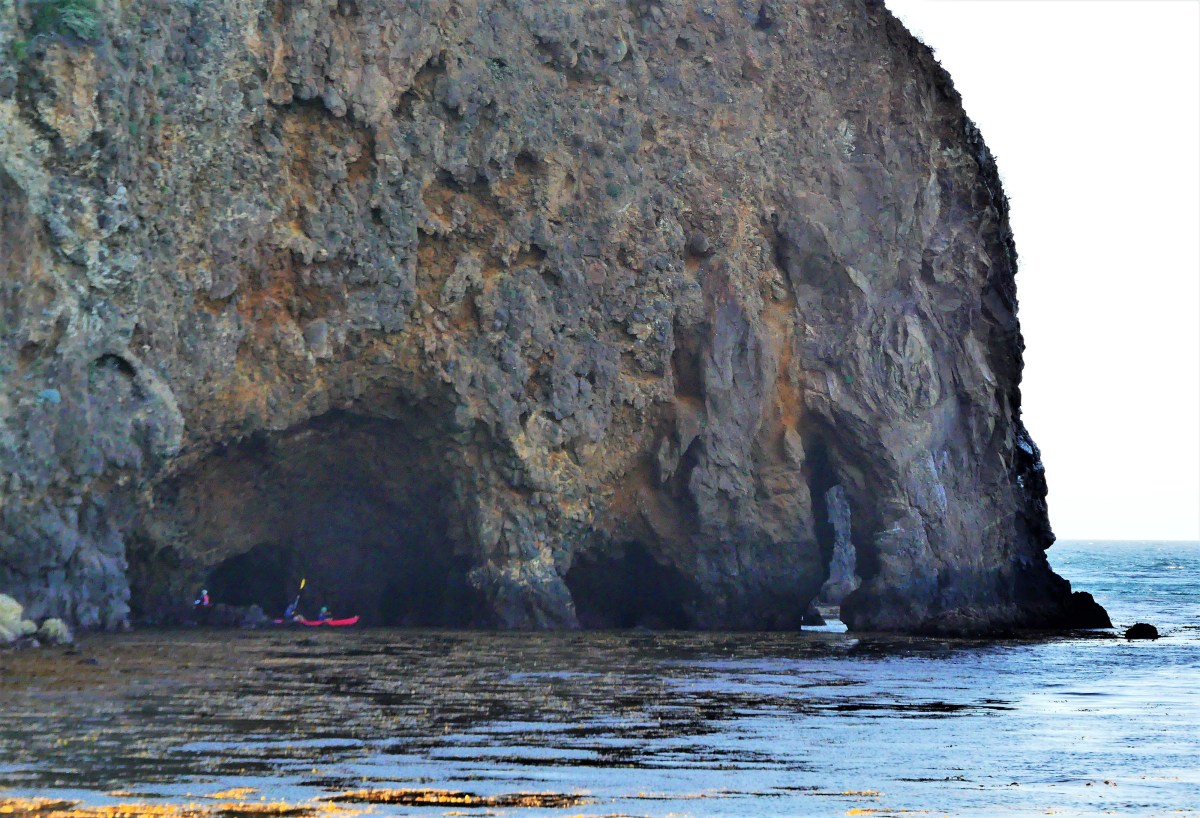
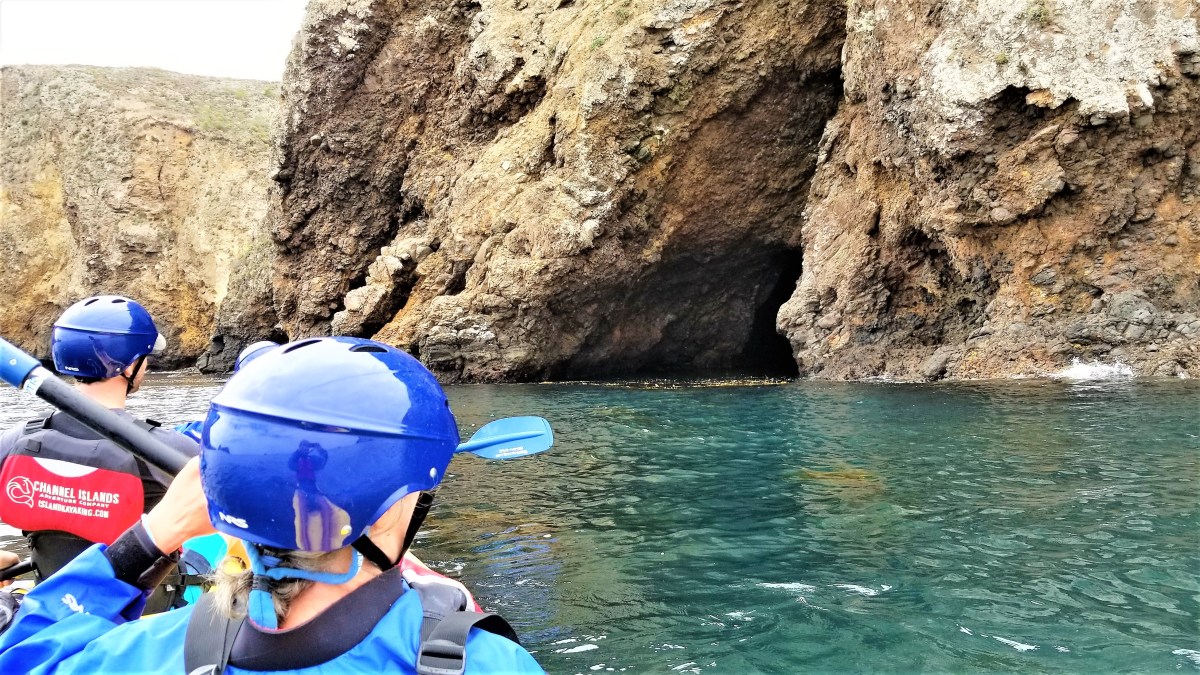
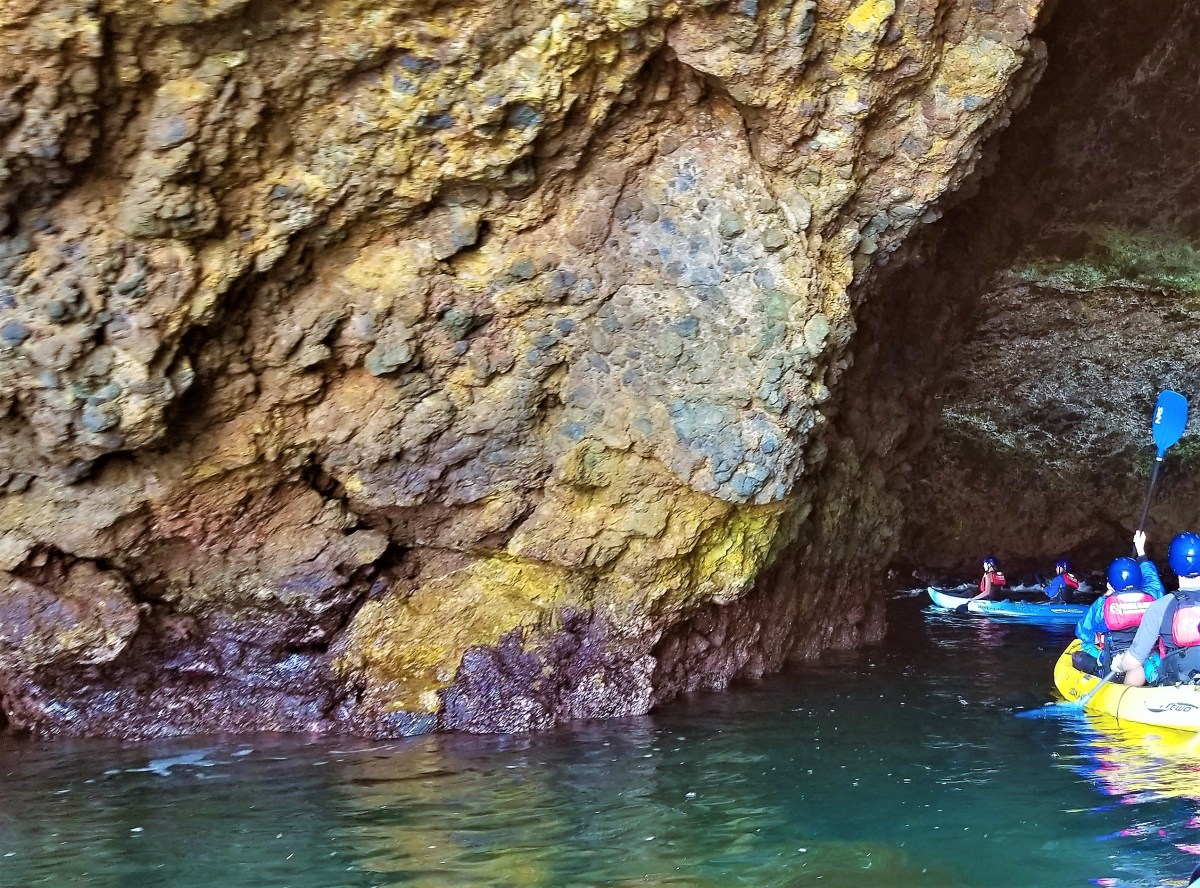
and paddled along the southeastern edge of the coastline toward San Pedro Point, where we visited a handful of caves, each one unique and posing a different challenge: whether it was leaning low while paddling to avoid low-hanging rocks from shrinking ceilings; coping in absolute darkness; guiding the kayak through keyhole passages; or timing our exit to avoid being pummeled by surging water.

entering a cave

approaching sea cave

into the cave

sea cave (2)

inside the sea cave

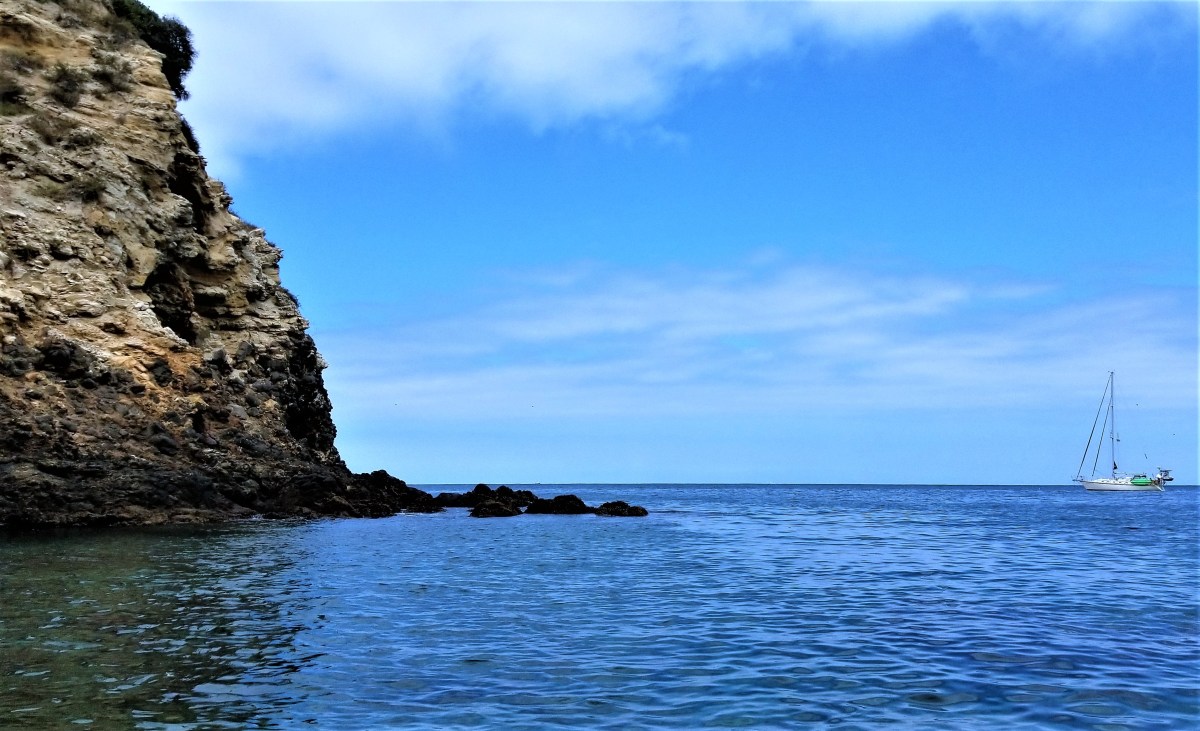
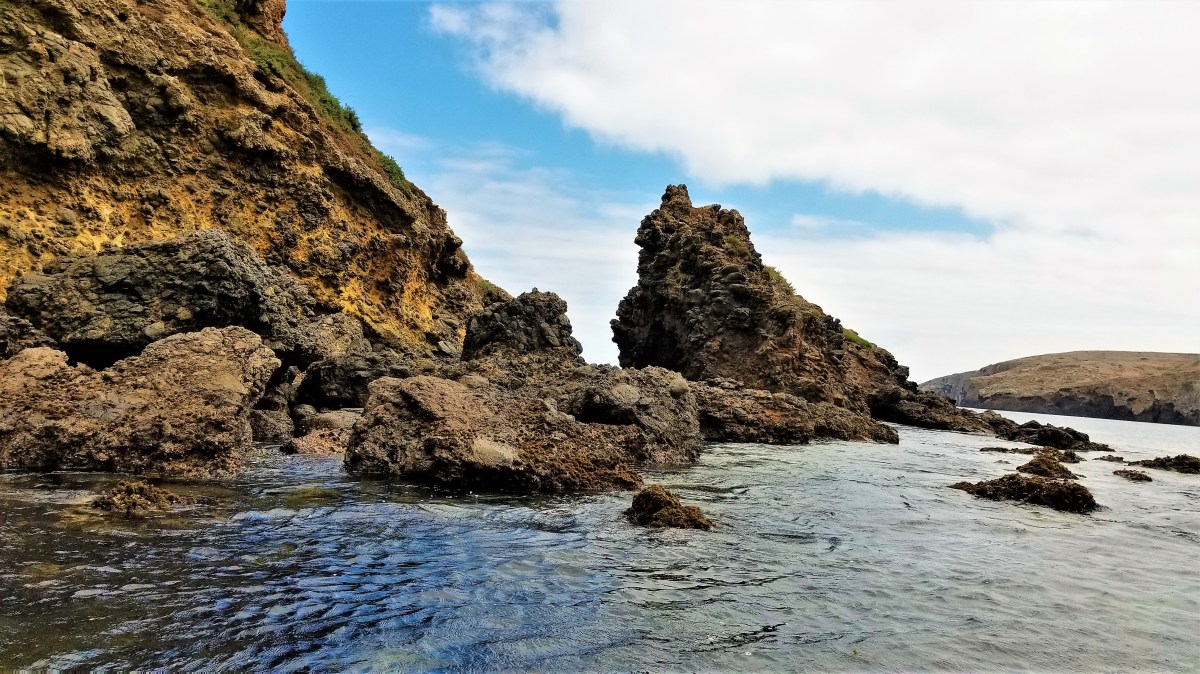
And of course, there were plenty of seascapes along the way.

mooring

rock crops

cove

After two hours in the water, we traded surf for turf, and hiked the canyon loop trail for commanding views of our surroundings. From the Anacapa Passage…

Santa Cruz Island

past a kelp forest…

Kelp forest

…from a wildflower patch…

Anacapa Island

to a chalky cliff at Cavern Point…

Cliff edge

…with a lookout to Prisoners Harbor…

Prisoners Harbor

…and crossing paths with an indigenous creature…the island fox.

fox in repose

Island fox

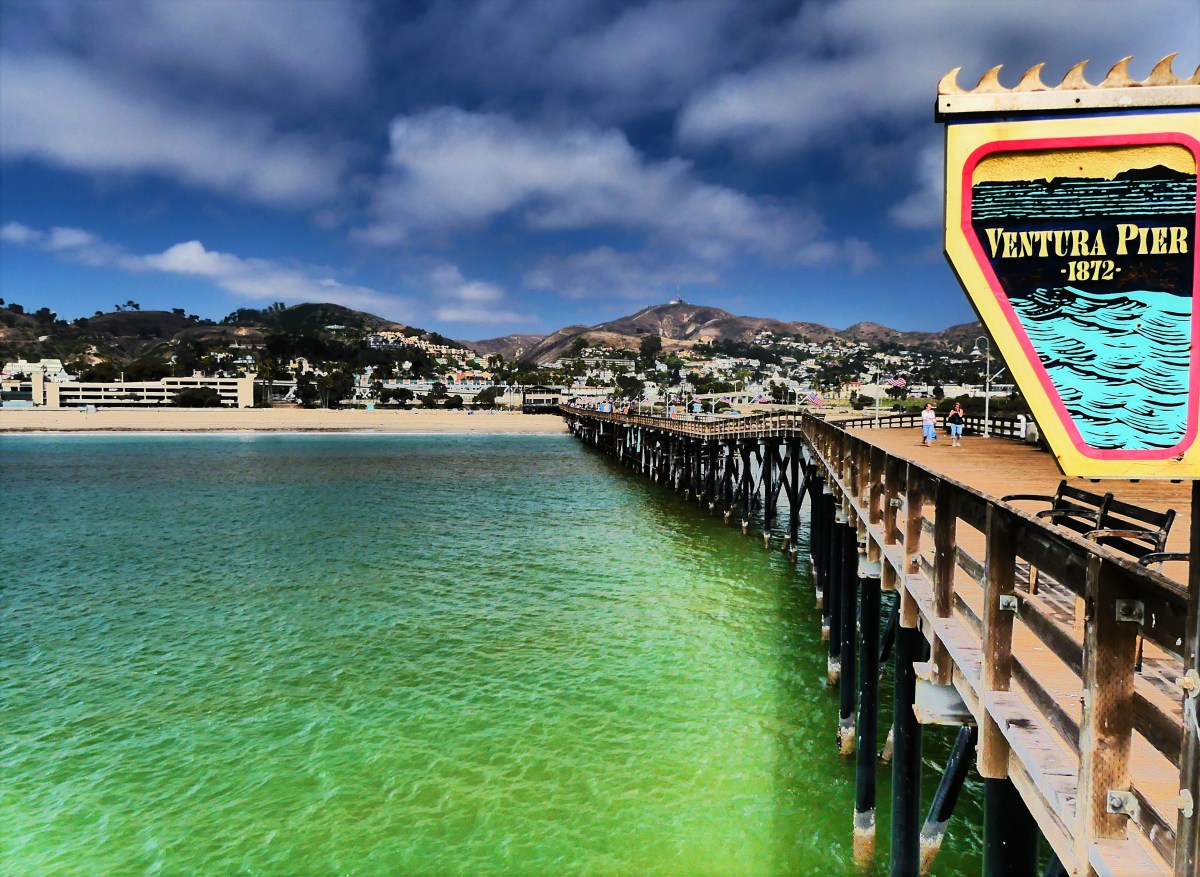
After meeting a multi-layered sea challenge of kayaking, we boarded the ferry and returned to Ventura–where terra firma meets the ocean, and it’s steady beneath our feet.

Ventura Pier


Big Things Come in Small Packages

“Size matters!” has long been considered a hard fact among those who measure the enormity of things, and eagerly justify the value of their preponderance. Yet all things big begin from most things small, and that’s the long and short of it. While this may come as a relief to many who seem challenged by the limited extension of their personality, it comes as no surprise to sequoias that have sensed this for millions of years.

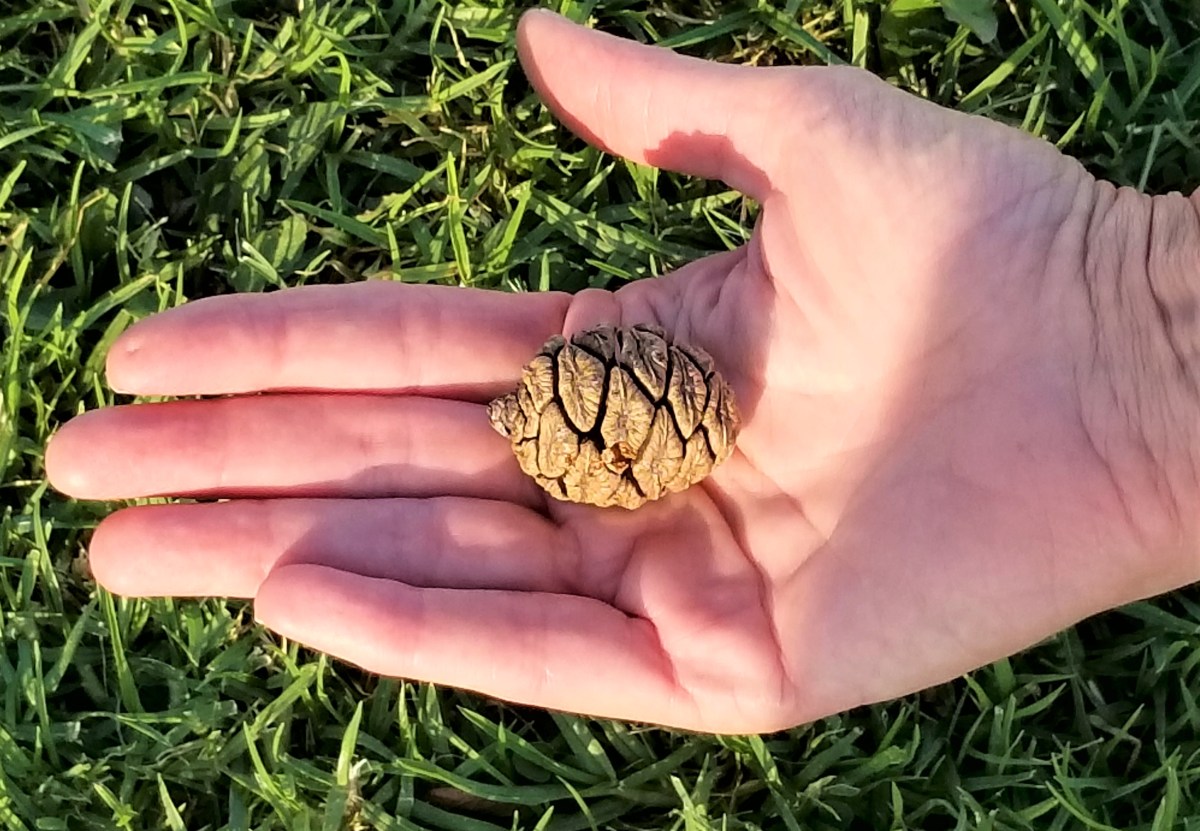
Giant sequoia trees are native to the western slopes of the Sierra Nevadas, where they grow exclusively in protected groves. Every tree starts from a firm cone no larger than a chicken’s egg–

hand and cone

–each one releasing thousands of seeds resembling oat flakes, hoping to take advantage of a litter-free forest floor made fertile by fire.

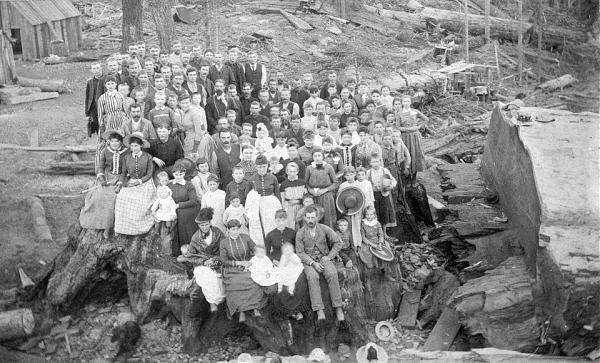
Flash forward 2400 years, and if the then-seedling hasn’t been logged…

Mark Twain stump

…or besieged by fire (although its bark can be 3 ft. thick to ward off the effects)…

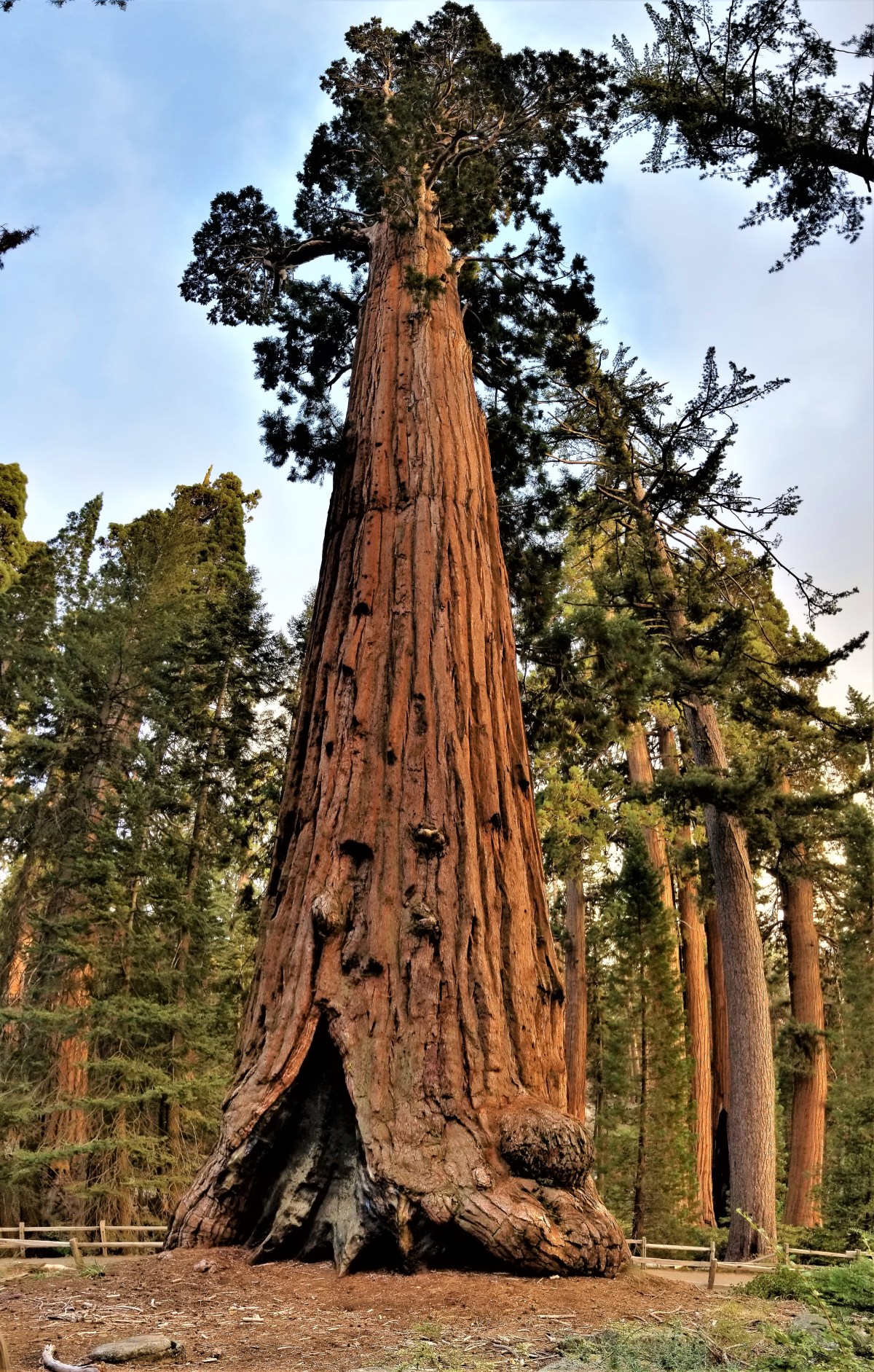
Chimney Tree

the result is the General Sherman Tree:

General Sherman

the largest living organism in the world! While not the tallest tree (Hyperion, a California redwood is 380 ft.), or the widest tree (an Oaxacan cypress tree has a 38 ft. diameter), or the oldest tree (Methuselah, a 5,000-year-old bristlecone pine tree exists in California’s White Mountains), General Sherman’s statistics make it the most massive tree:

Height above base

274.9 ft

83.8 m

Circumference at ground

102.6 ft

31.3 m

Maximum diameter at base

36.5 ft

11.1 m

Diameter 4.5 ft above height point on ground

25.1 ft

7.7 m

Girth Diameter 60 ft above base

17.5 ft

5.3 m

Diameter 180 ft above base

14.0 ft

4.3 m

Diameter of largest branch

8 ft

2.1 m

Height of first large branch above the base

130.0 ft

39.6 m

Average crown spread

106.5 ft

32.5 m

Estimated trunk volume

52,508 cu ft

1,487 m

Estimated mass (wet) (1938)

2,105 short tons

1,910 t

Estimated trunk mass (1938)

2,472,000 lb

1,121 t

Each year, General Sherman gains additional new wood equivalent to a typical 60 ft. tree.

General Sherman1 (4)

Putting things into perspective, the General Grant Tree, connected by Generals Highway and located only miles away in Kings Canyon National Park, is the second largest living organism in the world, at 268 ft. tall with a trunk that’s 1.5 ft. thicker.

General Grant1

Although Sequoia National Park shares billing and borders with Kings Canyon National Park–to its north and west–it’s easily the more accessible of the two, with 18 miles of corkscrews and whiplash hairpins, climbing 5000 ft. in elevation from the foothills, until the Giant Forest trails can be appreciated.

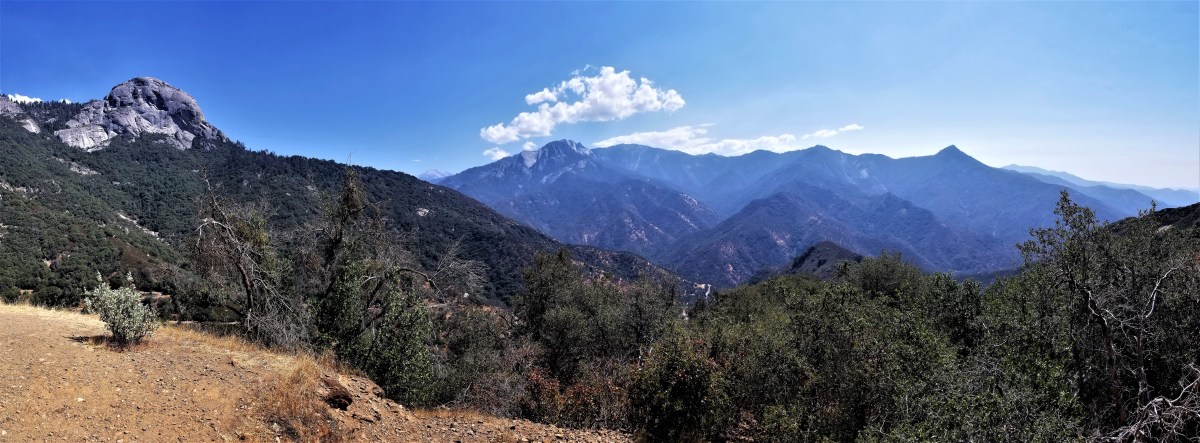
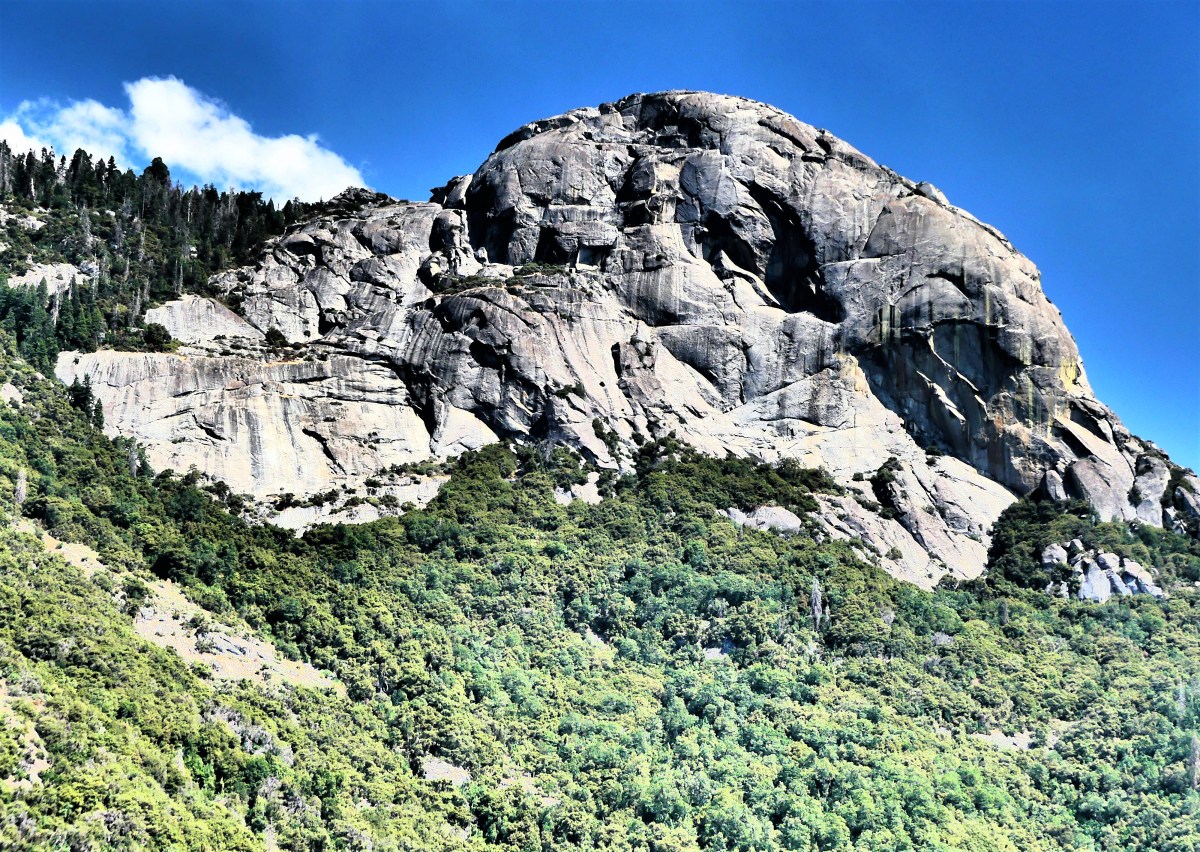
Along the way, a view of Moro Rock–a granite dome-shaped monolith–beckons the adventurous.

Moro Rock panorama (2)

Moro Rock

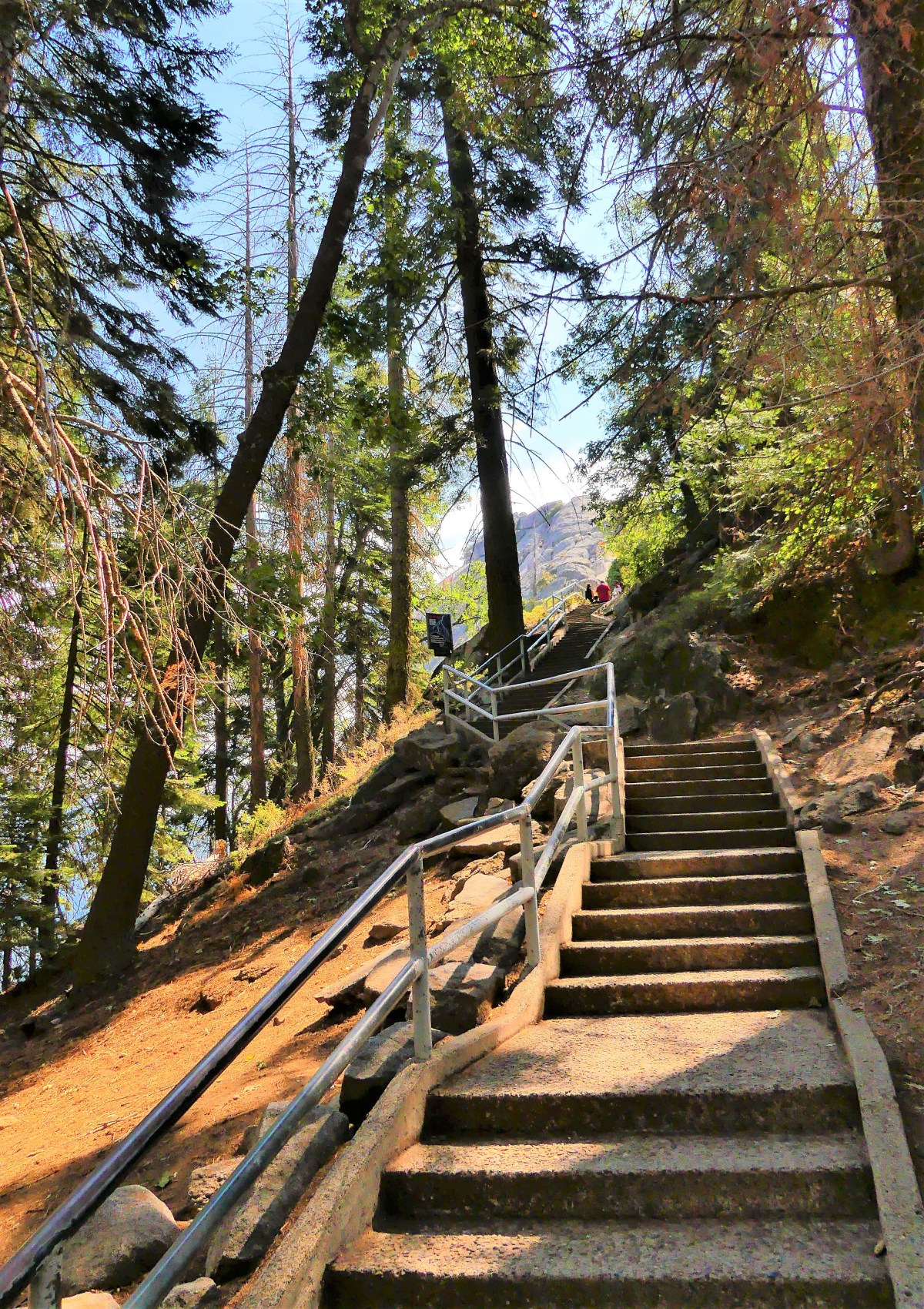
A steep 1/4 mile climb up four hundred rock-cut stairs…

Moro Rock approach

to the summit…

stairs to the top of Moro

offers a forever-hazy glimpse of the serpentine road and Ash Peaks to the west,

view from Moro Rock east

and amazing panoramic views of Kings Canyon’s dominant saw-toothed ridgeline to the east,

Sierra Nevada range

which unfortunately obstructs the 14,494 ft. peak of Mt. Whitney, the highest point of the lower forty-eight.

Crystal Cave is another large attraction wrapped up in a small package that’s deserving of attention. While not the largest cave–with a network of only three miles of which 1/2 mile can be toured–it is a jewel of marbleized and crystal formations that reaches back in time nearly two million years.

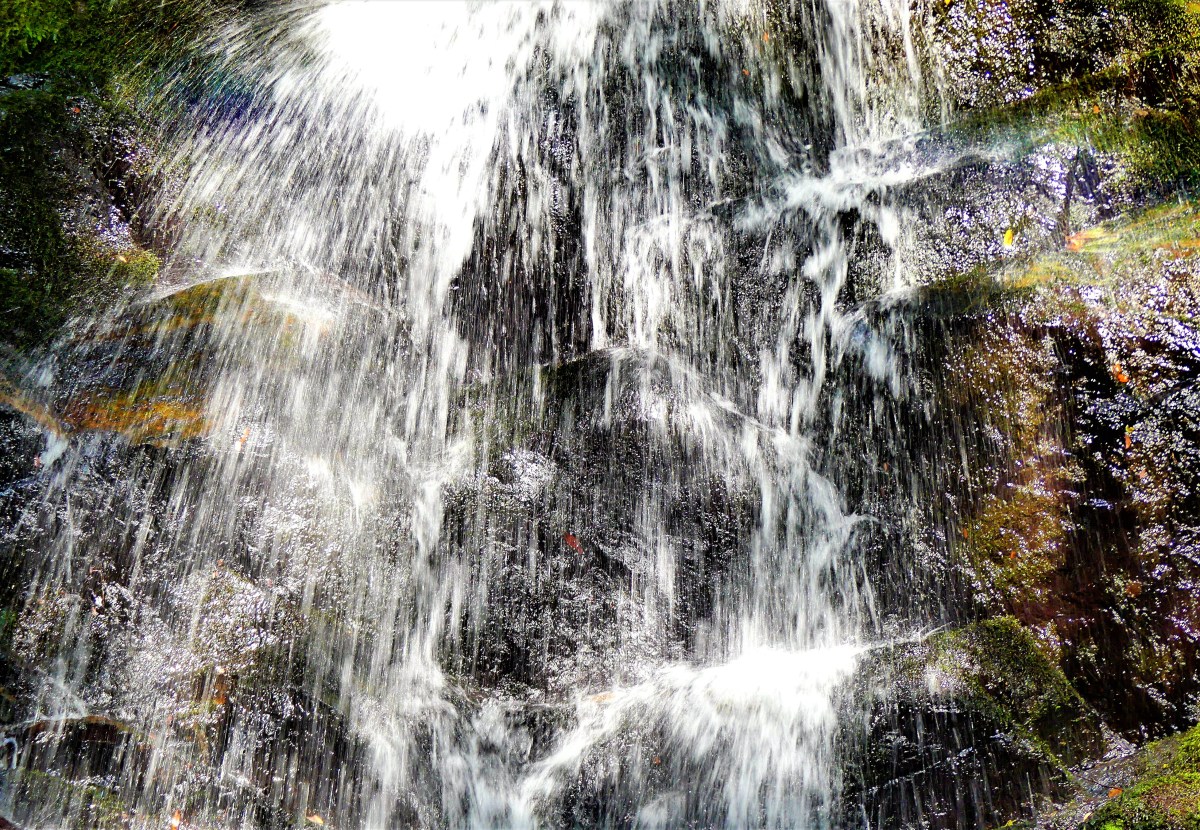
A scenic 1/2 mile hike along a cliff trail of potential obstacles and hazards (poison oak, rock falls, and rattlesnakes) down to the miniature falls that begets Yucca Creek…

water fall into Yucca creek

becomes the watering hole for fifty amateur spelunkers who gather before entering through the iron spider gate.

spider web erntrance

Immediately, the presence of water dominates the cavern. From the flume of rushing water over a bed of blue and white marble at the entrance,

flume

formation9c

to the drip, drip, drip of ever-growing stalactites,

formation7

and the ripple across the calcite-rich pools that spawn glistening pearls and terraced ridges.

calcite pool

The three major rooms of Crystal Cave offer a bounty of formations packed into tight spaces…

formation1

formation2

formation3

formation4

formation5

formation8

formation9b

formation6

…proving once more that bigger is not always better, and true value cannot be measured in increments of worth.

It’s easy to get lost in the details. It’s the basis of most disagreements. It’s the bellwether of how people are judged. It’s the downfall of many photographers. Taking the time to see the whole problem, the total person, the bigger picture gives us the confidence to believe that big things come in small packages.


Gallery

California Potpourri

After leaving Yosemite behind, Leah and I strategically home-based in Petaluma, and ventured along the California coast, from San Francisco to Point Lobos Natural Preserve and places in between.

Our collection of brief visits are best detailed through a series of images that more easily reveal the scope and variety of the scenery we enjoyed.

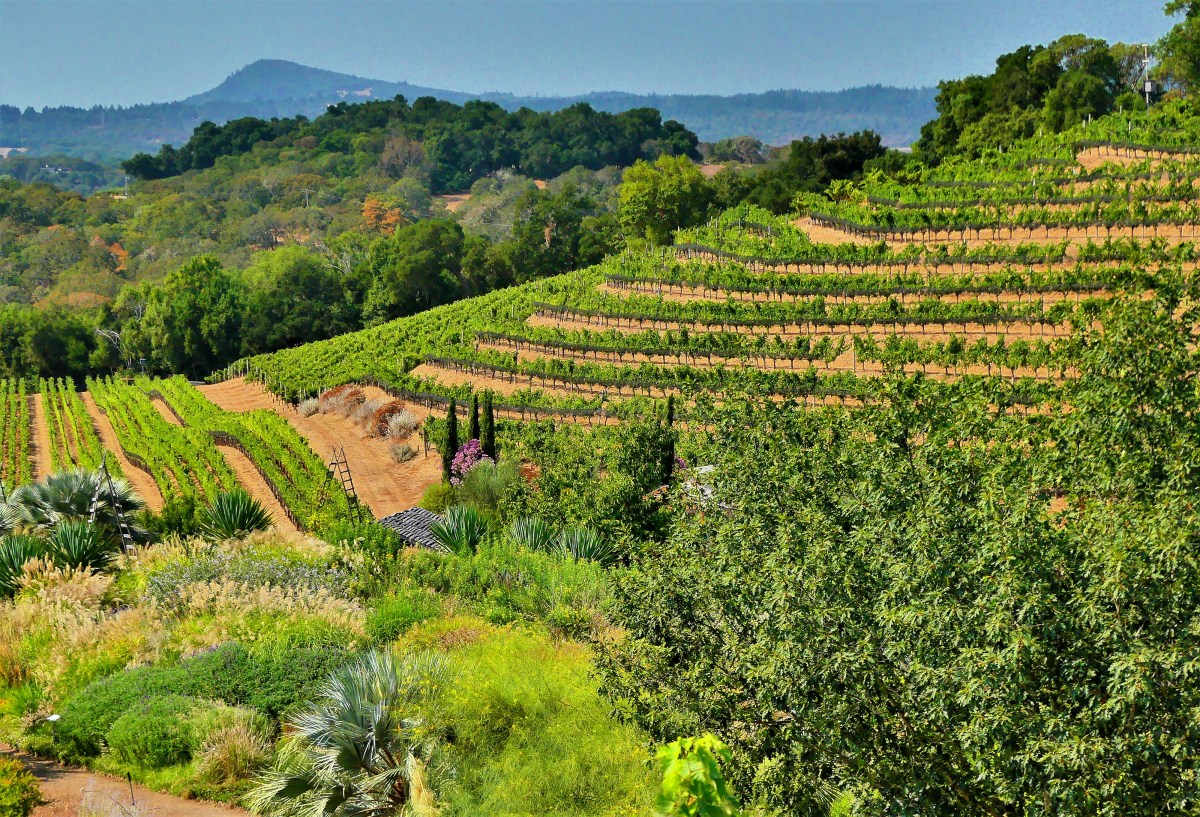
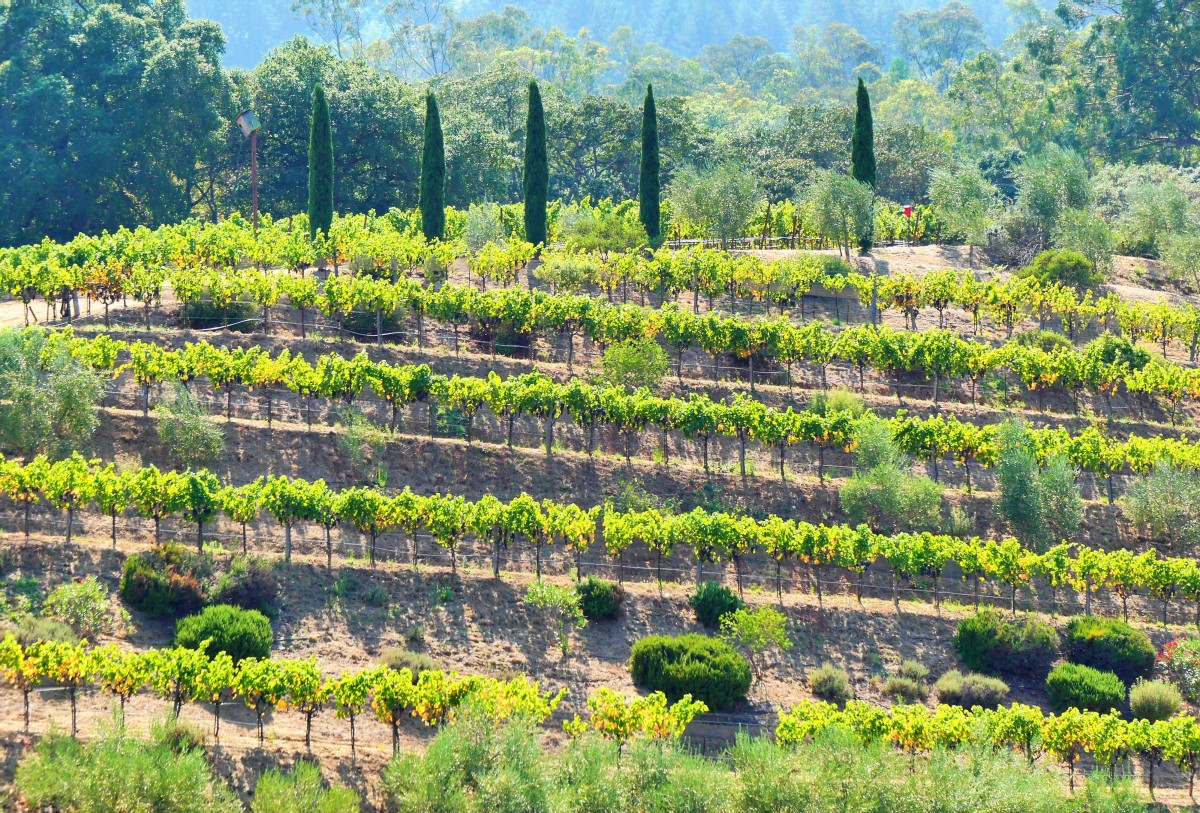
Sonoma Valley: Bezinger and Chateau St. Jean Vineyards

vineyards

terraced vineyards

rows of vines (2)

grove of grapes

fruit on the vine

Chateau St. Jean

John Muir Woods: a hike on the Canopy View Trail

Bohemian Grove

rotting bark

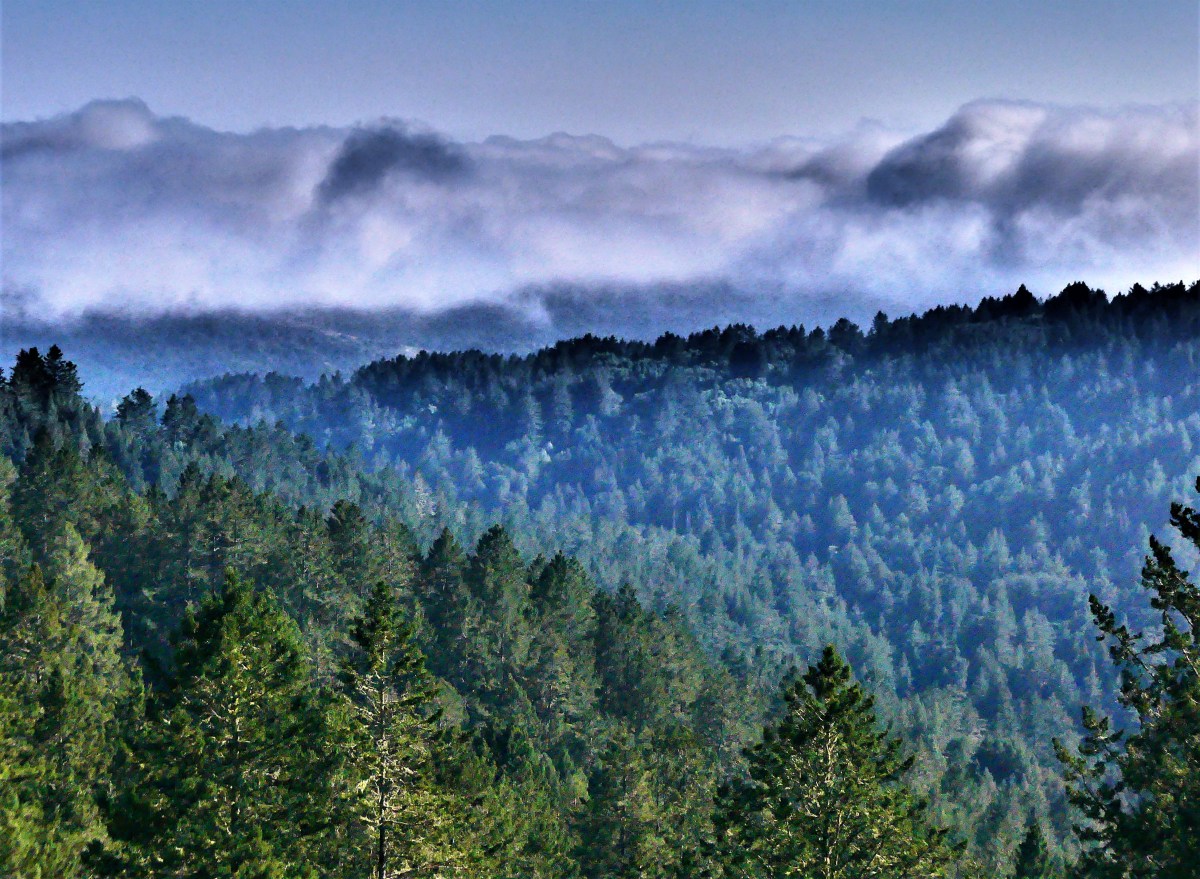
View from Panoramic Road

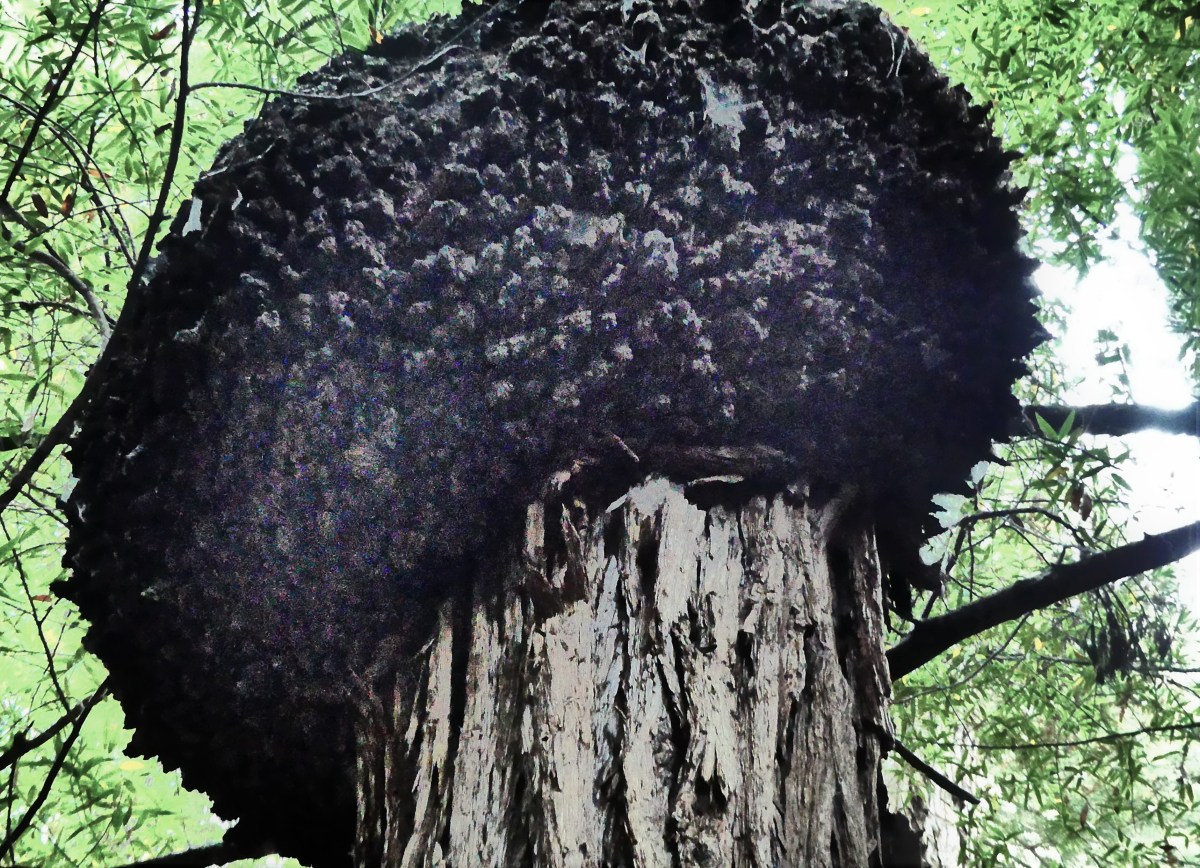
burl

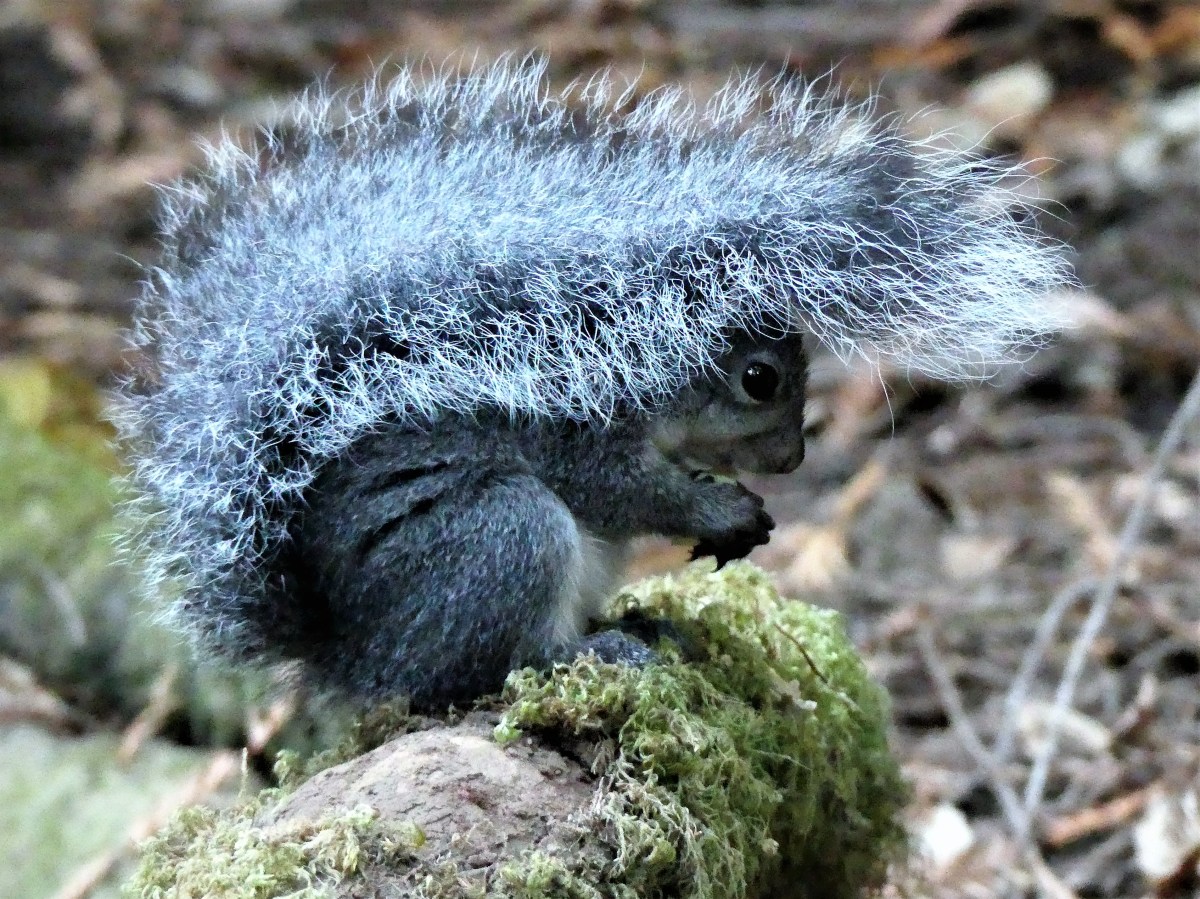
squirel tail

a mouth of weeds

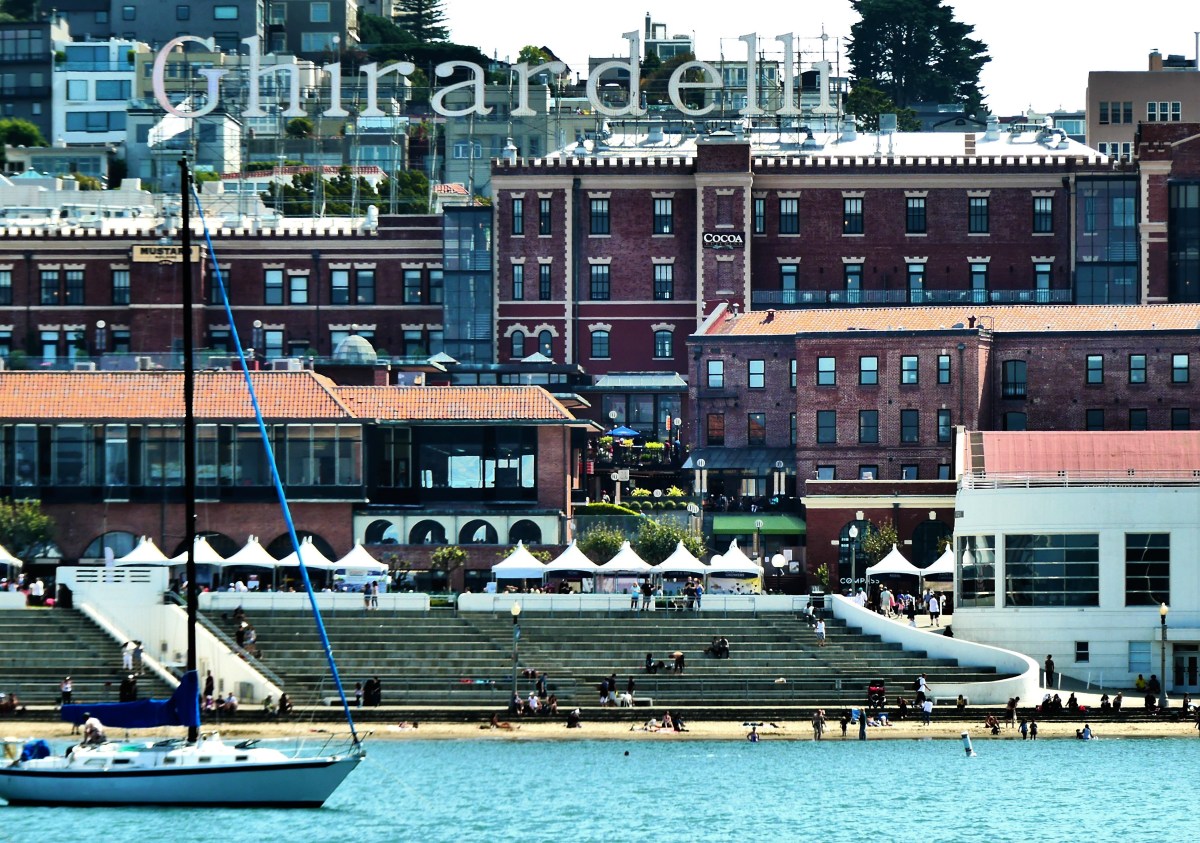
San Francisco: a ferry ride from Tiburon to the Ghiradelli Chocolate Festival

Golden Gate

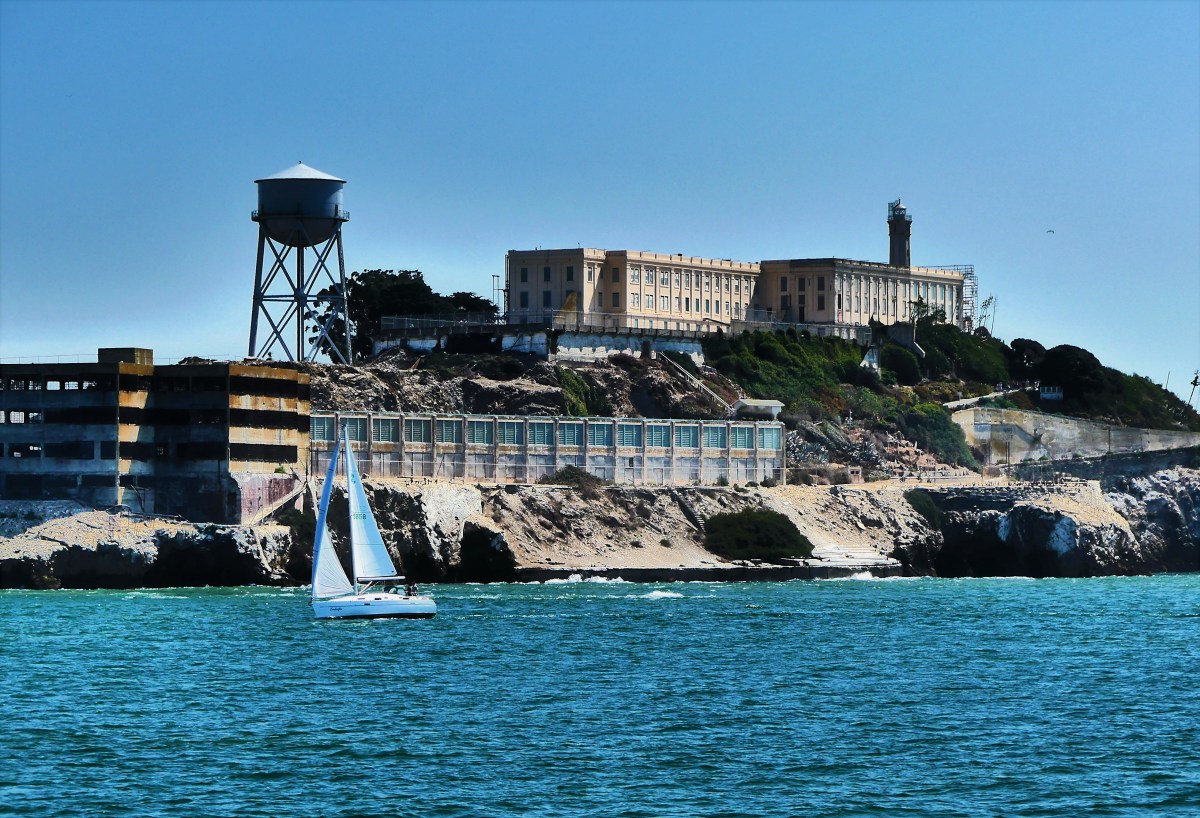
Alcatraz

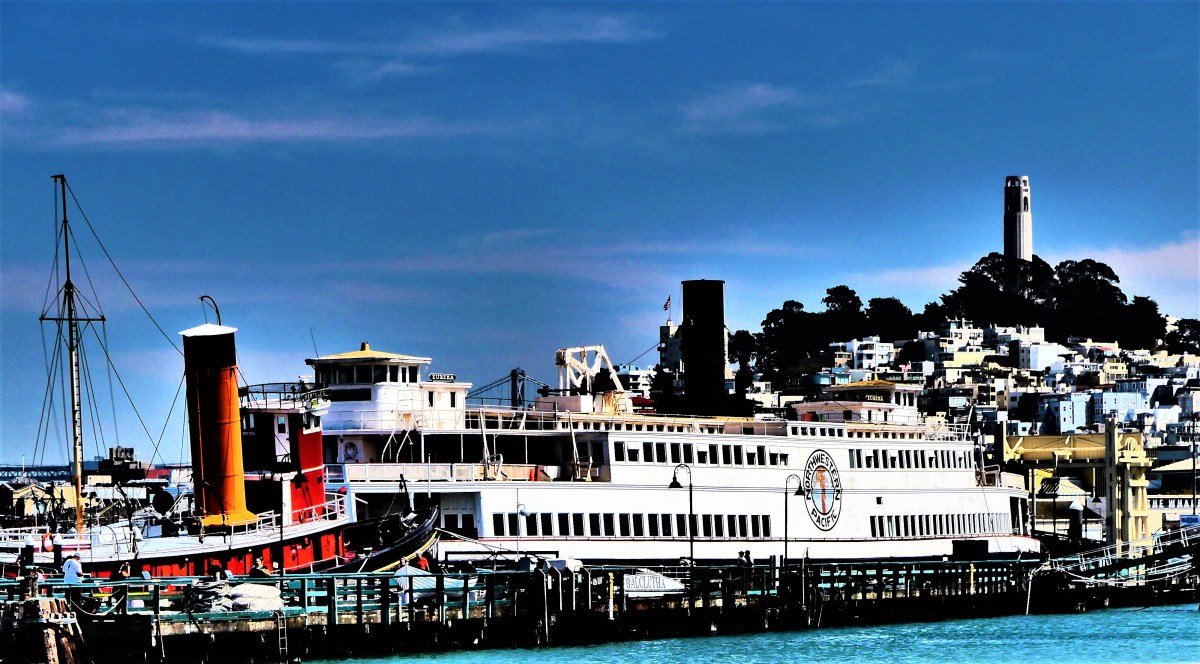
Coit Tower

who's watching whom

SF beaching

Ghiradelli

Carmel Beach: a stroll to Pebble Beach

Carmel Beach

tidal pool

where's my ball

10th green flag

Pebble Beach

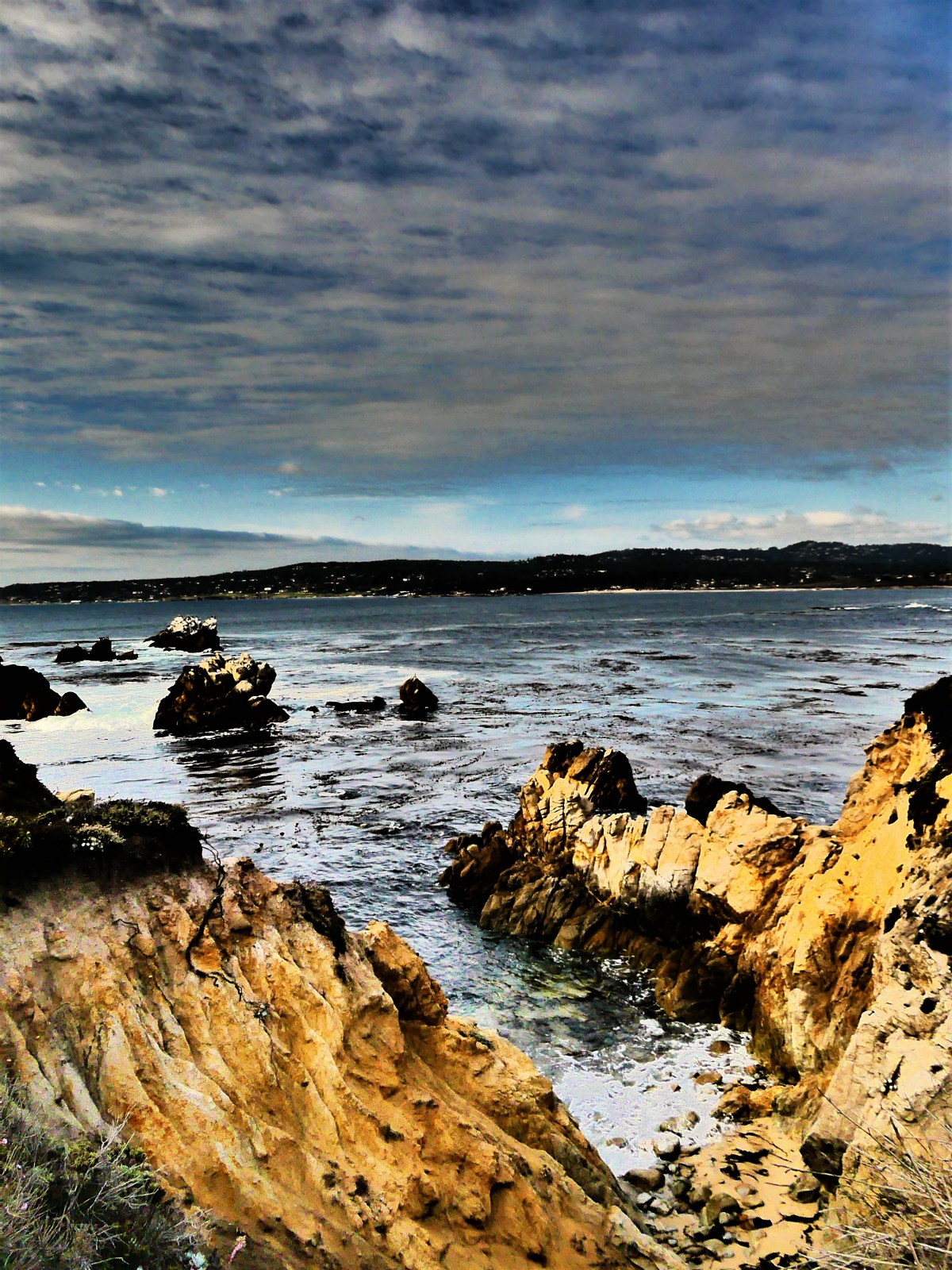
Point Lobos State Natural Reserve: hiking from Whalers Cove to China Cove until sunset

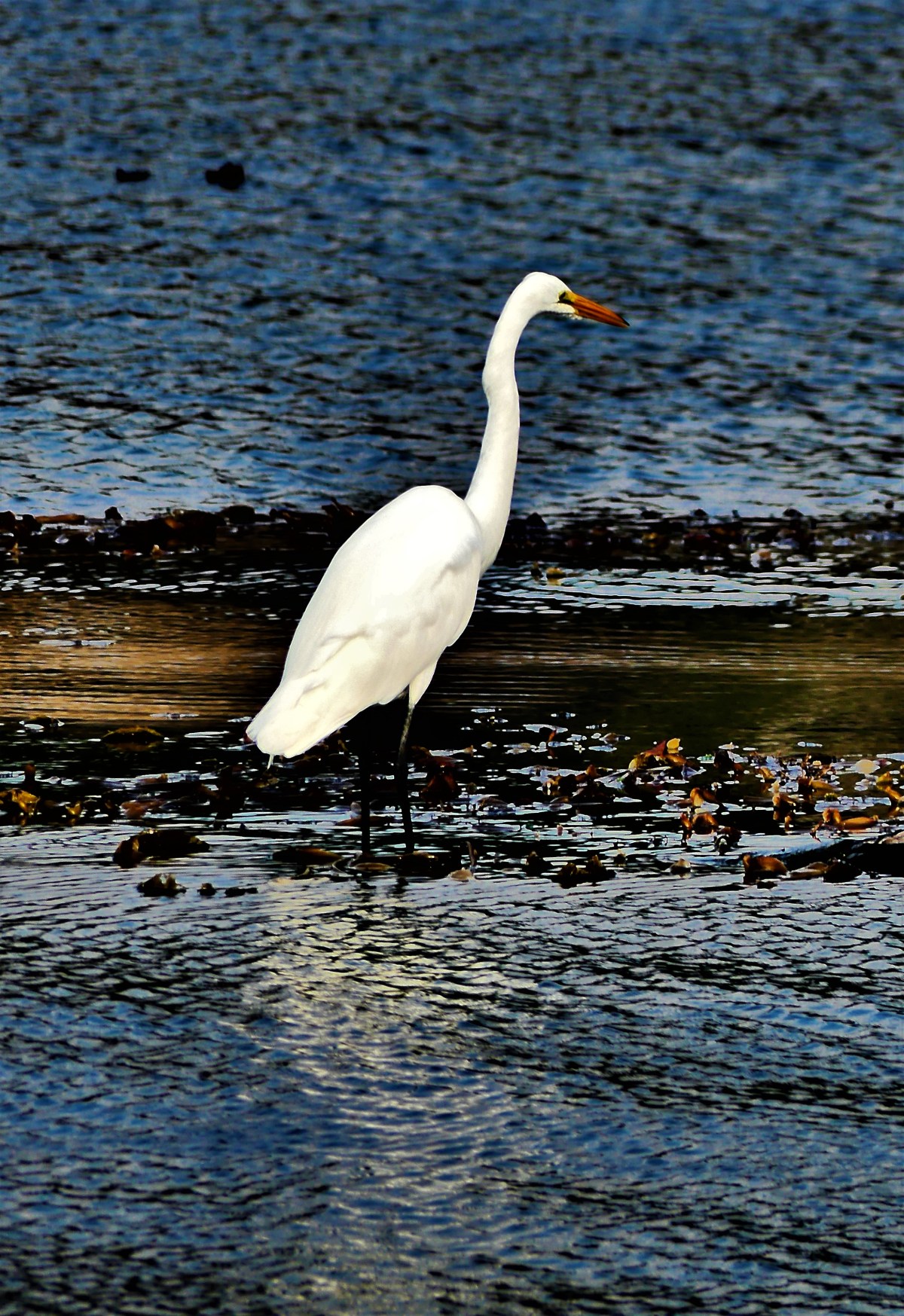
heron

cliffs

China Beach

lonesome tree

Point Lobos rocks

Sunset coast

Sunset cove

pelican sunset

We’ll be back.


Knock, Knock

We are anchored at RV site #1 at Pine Mountain Lake Campground in Groveland, CA, the closest town (albeit 24 miles away) from Yosemite’s western gate. The sites at PML are terraced on a steep hilltop better suited for mountain goats, although there is 50 amp power and a water bib, should goats ever feel the need for air conditioning and a shower.

The pop-up caravan at site #2 has just packed up and pulled out, leaving us completely alone and feeling somewhat relieved. After being cramped for so long at so many “RV resorts”, it’s nice to enjoy the breathing room that comes from having space on both sides of our home, when more often than not, RV parks keep us closer to neighbors than a Grey Poupon commercial.

Yet, despite the constant flux of RV park populations, and the proximity of rigs from stall to stall, there is an unwritten code of ethics that’s very reassuring–where neighbors seem to respect the property of others that typically extends beyond the footprint of one’s camper. Unattended grills, bikes and lawn chairs are a large part of open-door living at campgrounds, and are seldom disturbed by others.

However, when left alone, the isolation can be disquieting and peculiar, leaving us to wonder what it’s like to be on our own.

After breaking camp by mid-morning, the enervating 100 miles of stop-and-go driving from June Lake, over the Tioga Pass, through a crowded Yosemite NP to our final destination at Pine Mountain Lake took up most of our day. Ordinarily, after setting up, a secluded mountain setting would invite us to open our windows for a crisp cross-breeze of fresh air, but Groveland had served up a helping of haze with a side a smoke, giving us little choice but to button-up the Airstream to protect us from the effects of fires in the forest.

Leah was first to bed, while I spent some time editing photos for the blog. I don’t know exactly what time I fell asleep in front of the computer, but I was startled awake at 11:30 pm by a knock on the door, followed by a weak plea for help.

Shaking off the groggy feeling, I turned up the lights and fumbled to unlock the door. Had I been more coherent, I probably would have ignored the distress call, and filed it under “too weird for worry”. But instead, I reacted otherwise.

“Are you in some kind of trouble?” I asked, cracking the door a few inches.

A disoriented rail of a woman with pulled-back hair and dressed in black spandex workout gear was standing by my door.

“I’m lost, and I need a ride home. Can you please drive me to my house?” she pleaded.

“What are you doing here?” I asked, growing increasingly suspicious of her request, and feeling angry that I may have put Leah and myself in jeopardy by answering the door.

“My husband and I had a disagreement and he dropped me here, and I have no way of getting home. I live on the mountain, but I don’t know where I am, so could you please drive me home?” she reiterated.

She didn’t appear upset–just confused, but so was I.

When Leah and I began preparations for our year-long adventure, a common question among friends and family was, “Are you taking a gun with you?”

My response was always the same: “Are you fucking crazy?” But now I’m not so sure.

“I’m not from around here, so I don’t know how to get you home,” I asserted. But what I was really thinking was: “You’ve got to be kidding if you think I’m leaving Leah behind, while you ambush me outside the Airstream or on the way to your home.”

“Then will you let me use your phone so I can call someone?” she suggested.

I anticipated the question. “I’ll be right back,” I announced, closing the door. I reached for the phone I recently replaced two weeks ago, switched on the exterior light, and re-opened the door to find her drinking from a large water bottle. I wondered what else she was hiding on the other side of my door.

“Since we don’t know each other,” I volunteered, “how ’bout I dial the police for you, and you can ask them directly for help?…”

She hesitated as I entered 9-1-1, “…Cause it sounds to me like this warrants a call to the police.”

“Sheriff’s office, what’s your emergency?” answered dispatch.

Switching the phone to speaker, I offered, “I’m calling from Pine Mountain Lake Campground in Groveland, CA. A woman has knocked on my camper door who claims that she’s lost and unable to find her way home. Are you able to help her?”

“Is she still there?” asked the dispatcher.

“She is, and she’s asked me to drive her to her house somewhere nearby,” I confessed.

The dispatcher took over. “Are you alright ma’am? Are you hurt in any way?”

The stranger responded, “I’m okay. I just don’t know where I am is all, and it’s dark, and I don’t know how I’m gonna get home.”

The dispatcher continued, “Can you tell me your name and where you live?”

“My name is Amber and I live at 20247 Longview St.,” claimed the knocker.

“Were you born in 1964?” asked the dispatcher.

“Yeah,” responded Amber.

“Well, this office is not a taxi service, Amber, but if you like, I can offer you the numbers of a few local cab companies who can get you home,” suggested the dispatcher. “Is that a good option for you?”

Amber, dazed, “Sure.”

To Amber, “Be right back.” I let the door slam behind me, and I scrambled for a pen. The dispatcher dictated phone numbers for three taxi services and signed off.

Getting back to Amber, “I’ve got three choices here. Which number would you like me to call?”

“I don’t have the money for a taxi. Can you just tell me the direction to the main road?” asked Amber.

“Ferretti Road is at the bottom of the hill. You can’t miss it,” I declared, and double-locked the door.

From the “bedroom” Leah called out, “What the hell was that all about?”

“I don’t even know where to start, but I hope she’s gone,” I asserted.

“Maybe we should bring in the bear spray from the truck as a precaution,” Leah recommended.

“Only if you get it,” I replied.

“Fuhgeddaboutit! I’m not stepping out there,” exclaimed Leah.

At Leah’s suggestion, I called Pine Mountain Lake Association security, who completed a sweep of the property, but came up empty. Their promise of an increased patrol through the night was reassuring, but the peculiar notion of ever enjoying peace and quiet as a solitary guest in a campground now seems highly overrated.

Gallery

Thank You for Not Smoking

Waiting…patiently.

Waiting…purposefully.

Waiting…painfully.

When will this smoke finally dissipate? I already know the answer…the question was rhetorical. As of today, 74 fires are burning out of control across the western part of America.

fire map of Western states
Current Wildfires

Extreme Smokey

Fires are currently active in nine states throughout the West, according to the National Interagency Fire Center. Here is a breakdown of the acreage burnt so far in active wildfires reported by the National Interagency Fire Center since Aug. 28:

  • Arizona, 1 wildfire, burning 48,443 acres
  • California, 22 wildfires, burning 354,316 acres
  • Colorado, 1 wildfire, burning 1,405 acres
  • Idaho, 19 wildfires, burning 248,141 acres
  • Montana, 26 wildfires, burning 544,583 acres
  • Nevada, 7 wildfires, burning 111,379 acres
  • Oregon, 9 wildfires, burning 146,418 acres
  • Utah, 1 wildfire, burning 5,097 acres
  • Wyoming, 2 wildfires, burning 4,766 acres

For those active fires reported on since Aug. 28 it amounts to 1,464,548 acres actively burnt or burning.

Leah and I have been in the fire zone for over a month–always one-step ahead of the next outbreak–but fire finally found us at Yosemite National Park. Today, the evacuation of Fish Town was lifted, but steps are still being taken to prevent fire from invading Yosemite’s sacred Mariposa Sequoia Grove. Fortunately, Merced and Tuolumne groves remain unaffected.

tunnel tree (2)

roots

fallen tree1

fallen tree

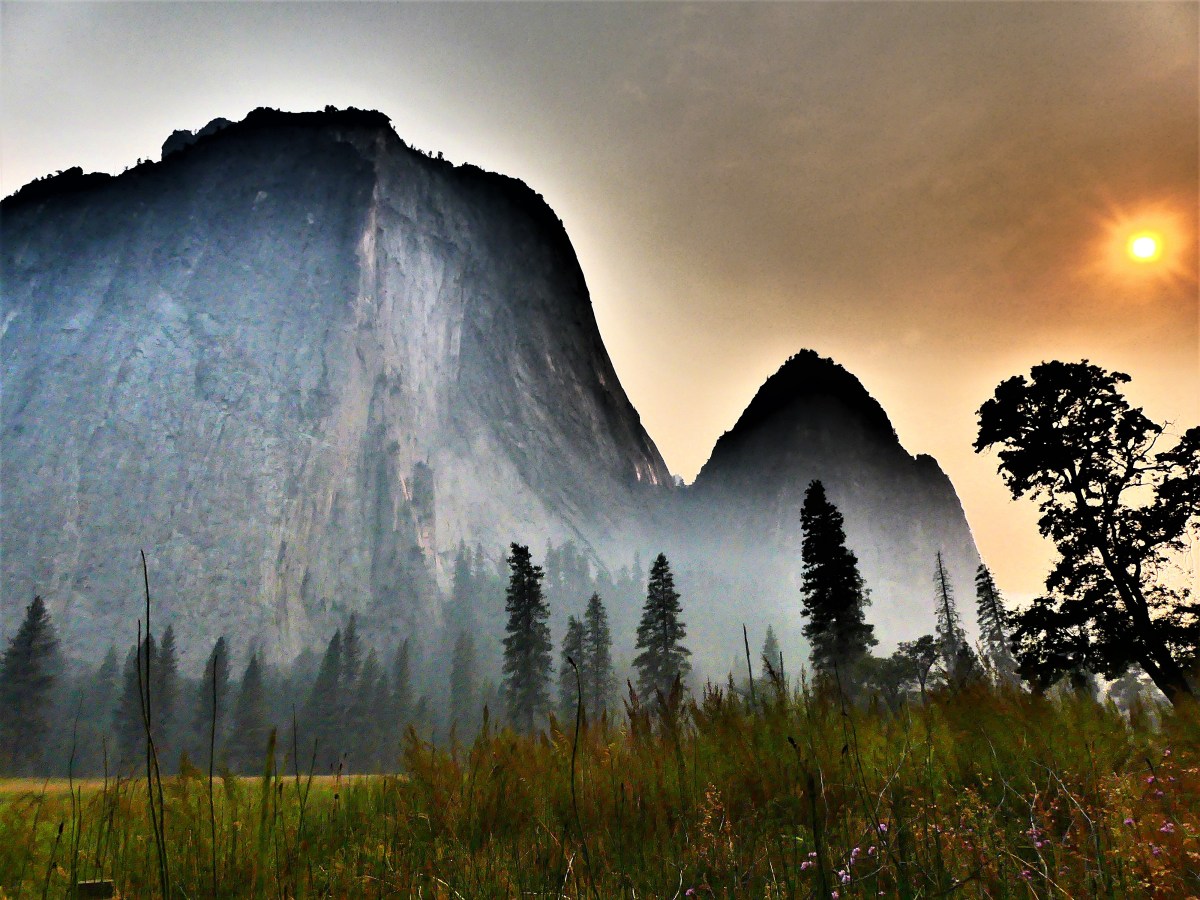
The air is filled with smoke. It’s impossible to ignore…it permeates everything. And nothing stays clean overnight after the ash quietly coats every surface by morning. With the winds blowing, mountains appear…

Tioga Peak (2)

twin peaks

Mt. Dana

Mt. Hoffman

and disappear under a gauze of gray in minutes.

El Capitan

Cathedral Rocks

Fairview Dome1

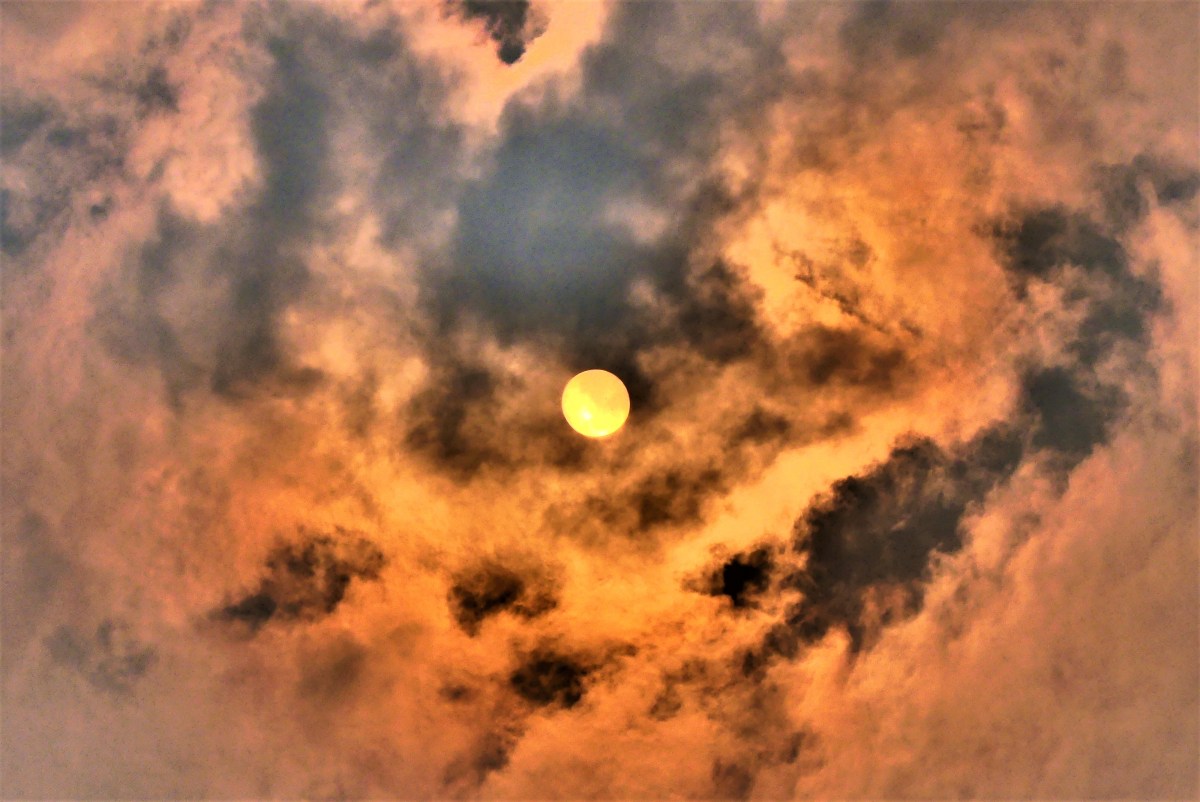
On a good day, the sun will sometimes break through,

smoky sun

if only to tease the highlights from the shadows.

Tenaya Lake

kairns

tree balanced on rock

Bridalveil Falls2 (2)

But the sky is fickle…

smoke clouds

It leaves us waiting …and wanting more, with no guarantee that the sun will return–until it means accepting the best of a bad situation.

ElCapitan

Perhaps waiting has value if it slows us down, and gives us a little more time to appreciate what’s in front of us.

El Capitan and Cathedral (3)

Fire in the Hole

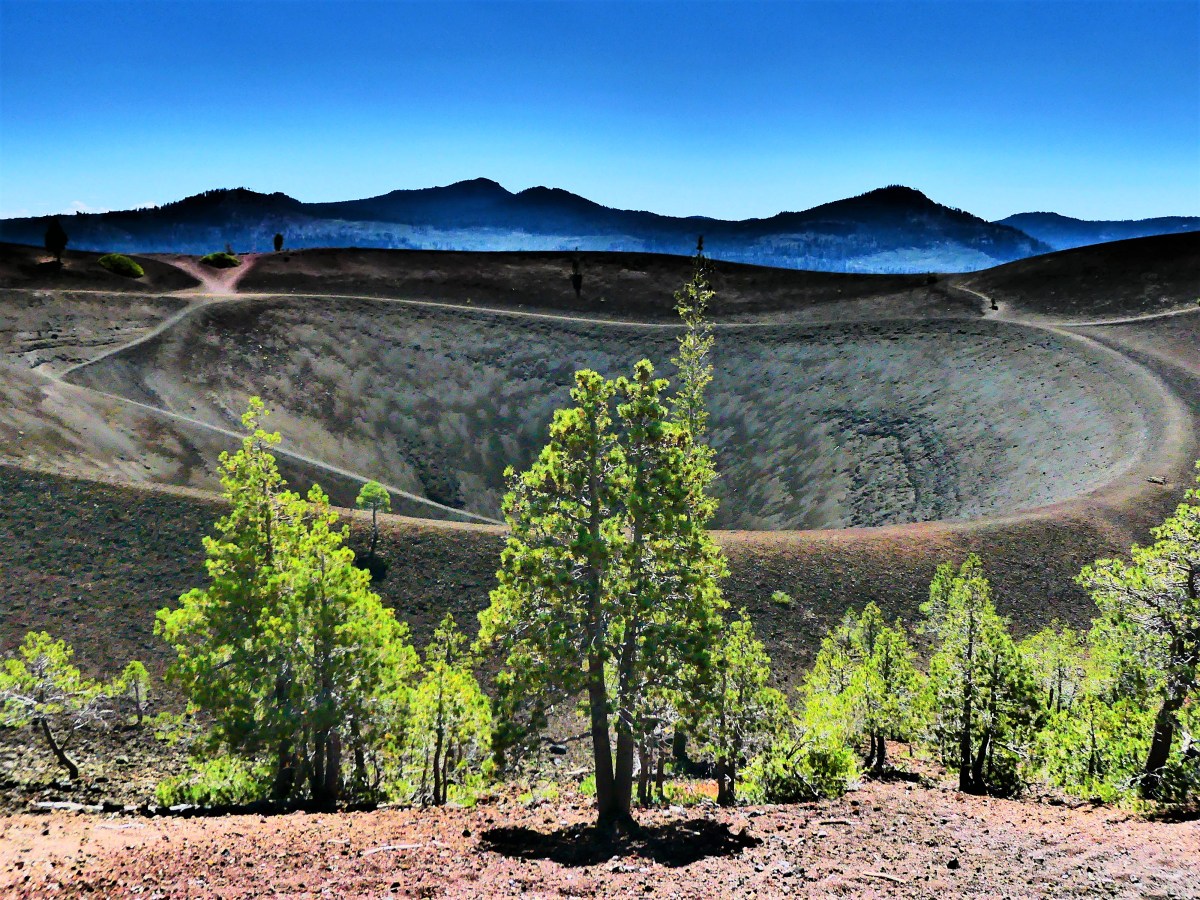
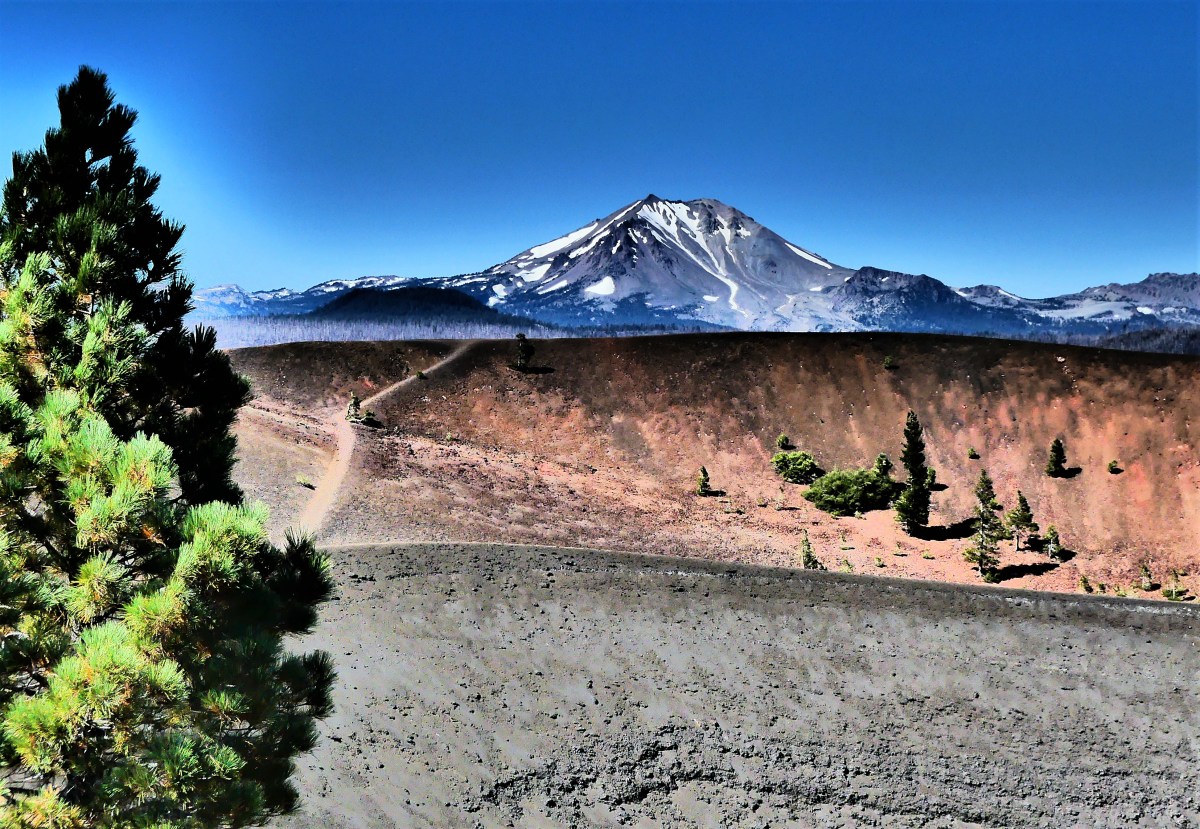
I’m standing on the rim of the Cinder Cone volcano at the northern edge of Lassen Volcanic National Park, and steadying my camera against sustained winds whipping across the crater. My biggest fear at this moment is not for my safety, but being unable to properly memorialize my euphoria in a sharp photograph.

While there is no comparison to the energy of B.F. Loomis’s exposure of Lassen Peak’s 1914 eruption,

lassenerupt

the thrill of standing on the precipice of a monument created by the forces of nature…

cinder cone

should be testament to Lassen’s National Park worthiness.

But getting to Lassen Peak was a thrill of a different kind. If the shortest ground distance between two mountains is a crooked road, then 50 miles of US-299 through the Trinity-Shasta National Forest qualifies as a marathon winner of zigs and zags, and unlike any other road I’ve driven since our trip began more than five months ago.

It had to be the most rising-and-falling-and-winding-and-grinding-kind-of-road that went on and on for more than an hour. Rarely would 100 feet of straight road pass us by before we’d follow a familiar pattern of maneuvering to the right and then pulling the truck to the left and then turning the wheel hard to the right, and leaning around the bend into a corkscrew, only to continue all over again.

The drive was exhausting, but at least we left the smoke behind us. We were now basking in sunlit blue skies without a single cloud.

The park was uncrowded, and it didn’t matter why, but I suspect that families were now tackling teachers’ homework.

After an orientation at the Visitor Center, we strolled around Manzanita Lake for centerfold views of the mountain.

Lassen Peak and Manzanita Lake

Taking the highway deeper into the park, we passed Helene Lake,

Lake Helen and Lassen Peak1

offering a peek at Lassen’s desolate peak.

Lassen Peak and snow.jpg

Since the trail to the summit rises 2000 feet in 2.5 miles without shade–which is not my idea of fun–we continued to Bumpass Hell, named after an early 20th century guide who stepped through the crust of a fumarole while doing his job.

The namesake trail provided commanding views of Brokeoff Mountain and Diamond Peak.

overlook

We found it odd to be crossing snow in the middle of August under a searing sun,

summer melt

but the park receives snowfall averaging 40 feet per year at the higher elevations.

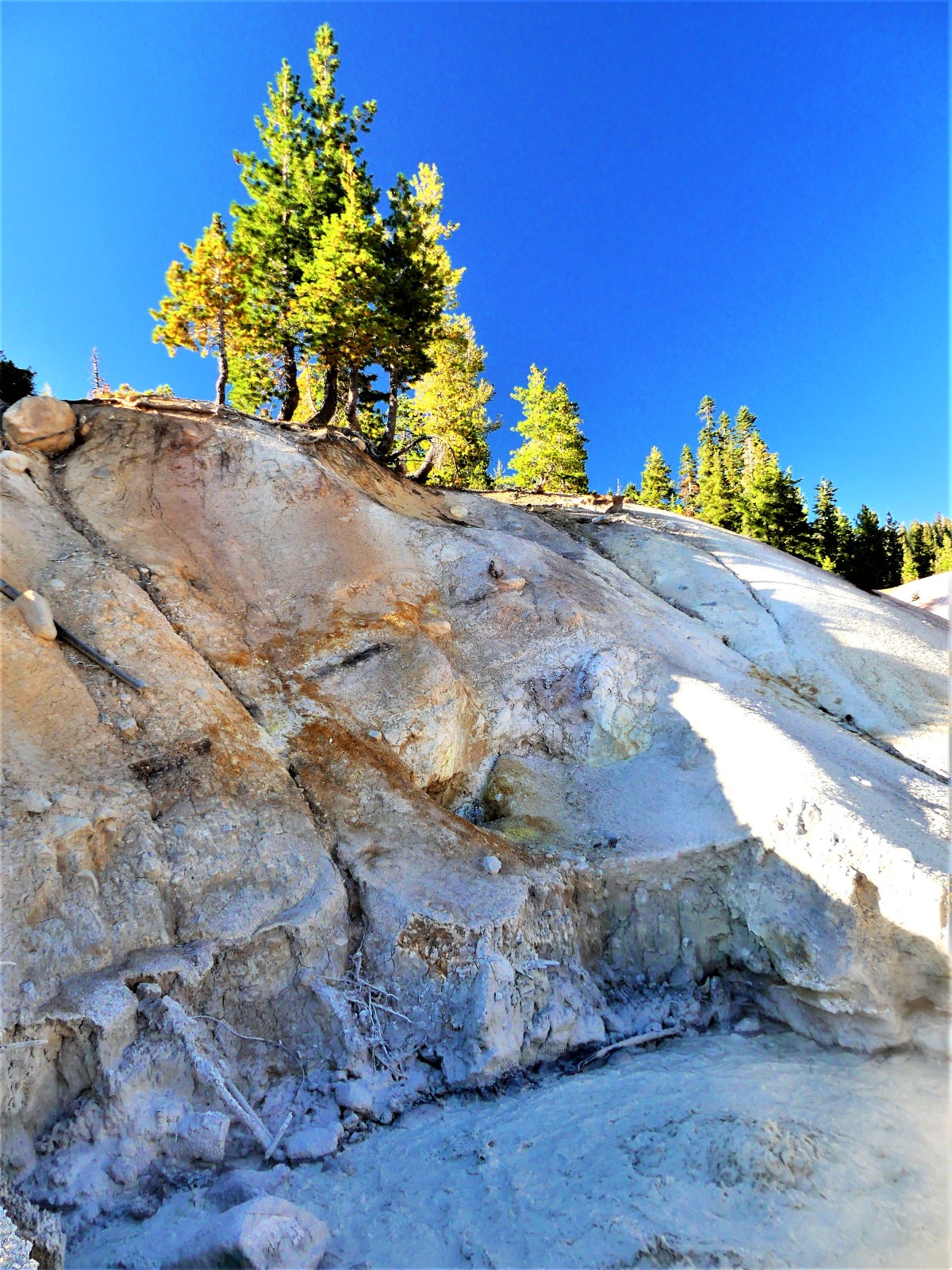
Once over the ridge, the sweet mountain air was replaced with the pungent scent of sulfur bleeding from a hellish valley of hydrothermal activity:

Bumpass Hell

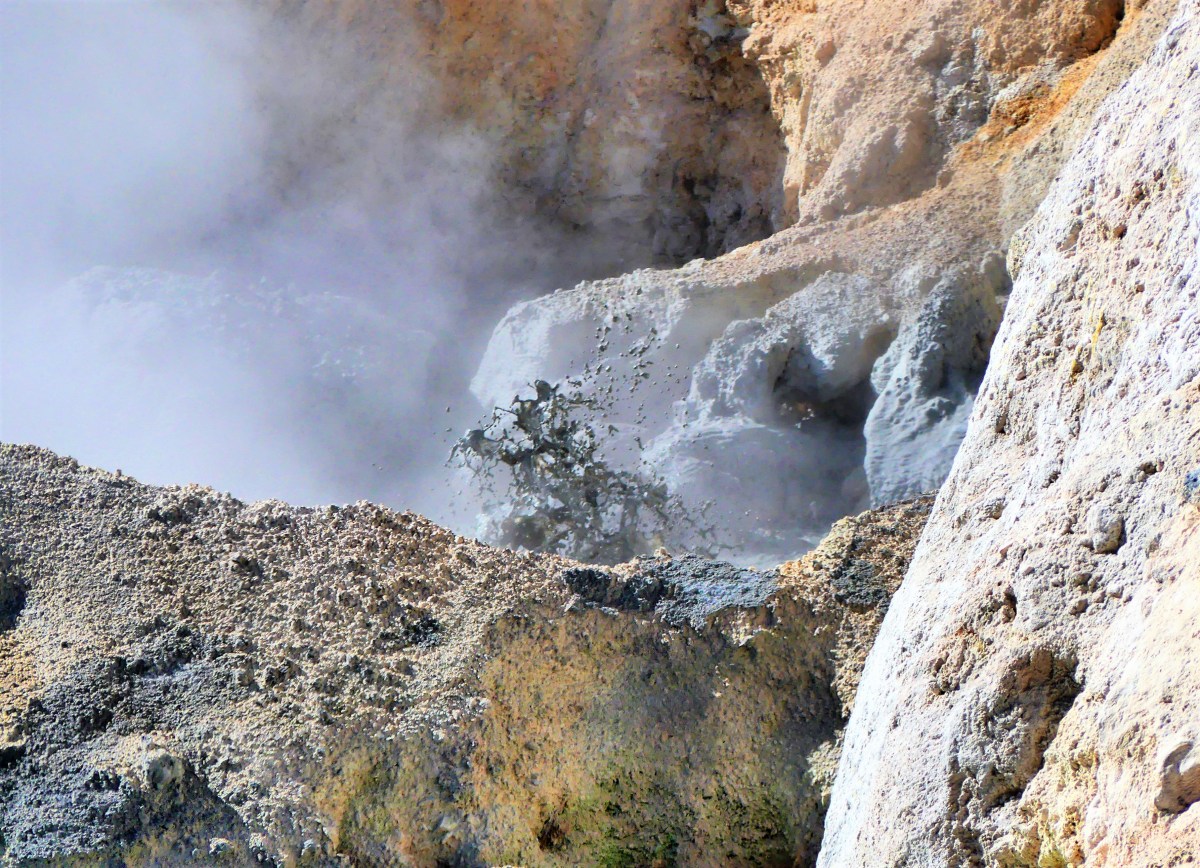
complete with requisite spurting mudpots,

mud pop

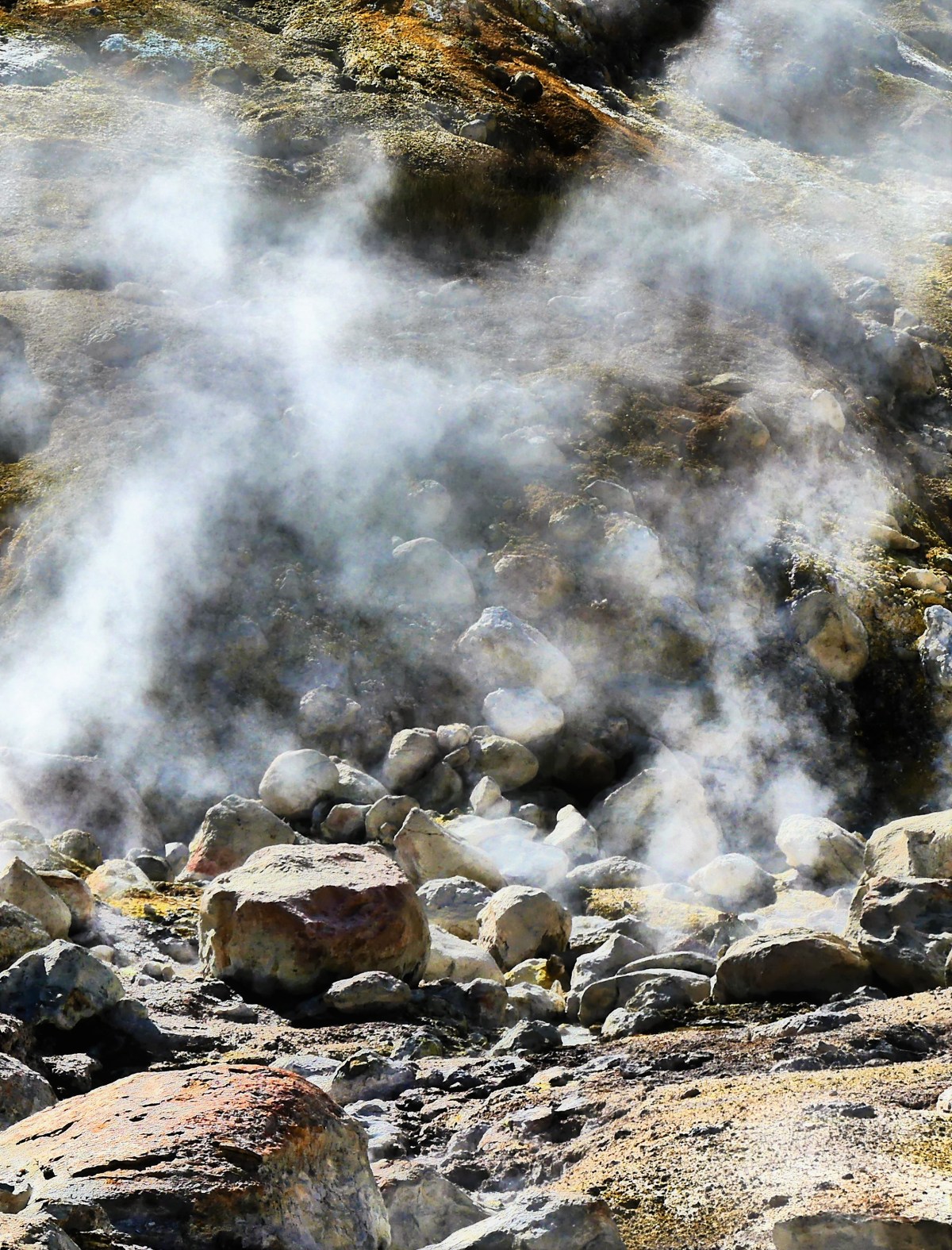
hissing fumaroles venting from angry rocks,

P1070500

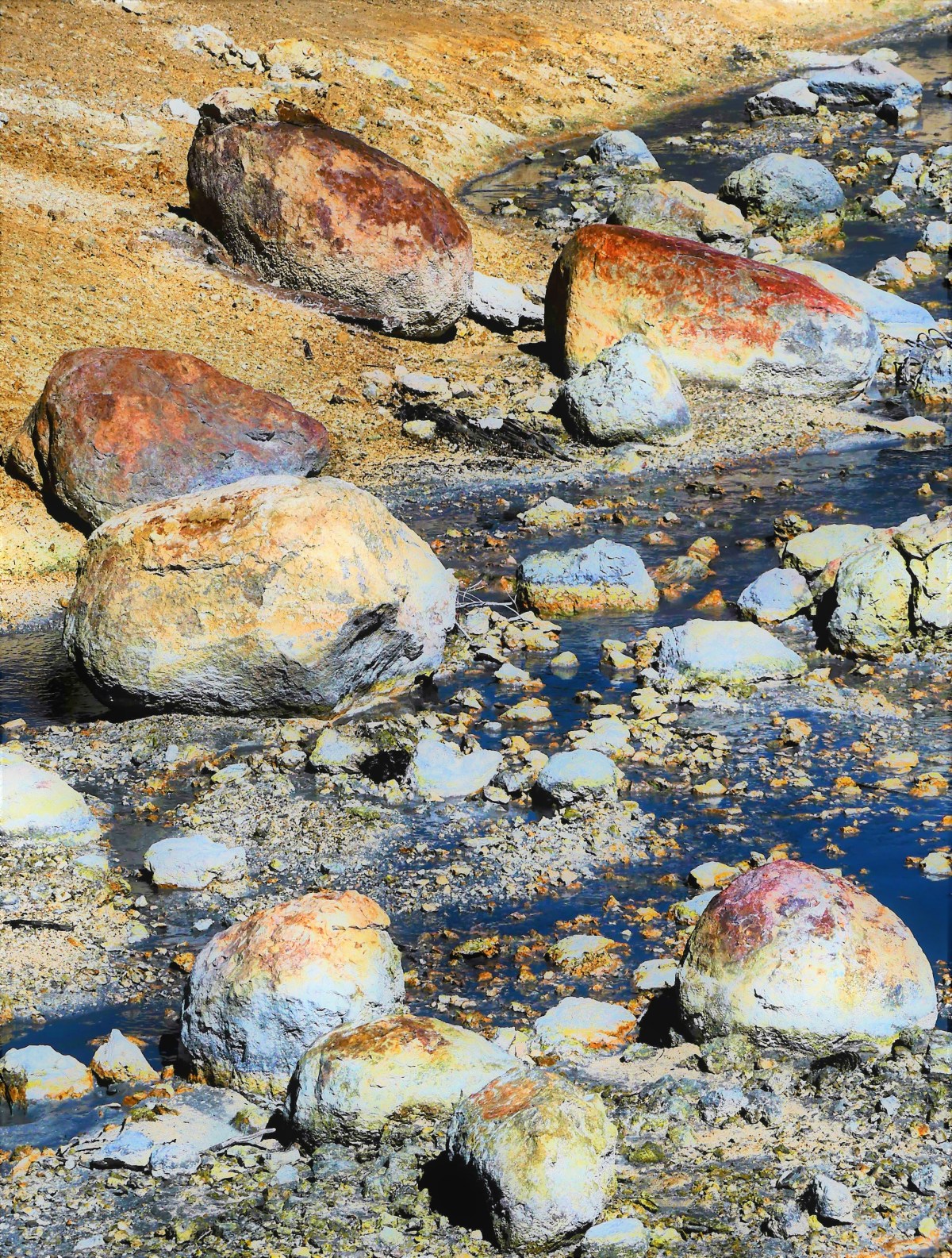
and brilliantly colored hot springs…

hot springs

Bumpass Hell2

mineral rocks

Bumpass Hell1

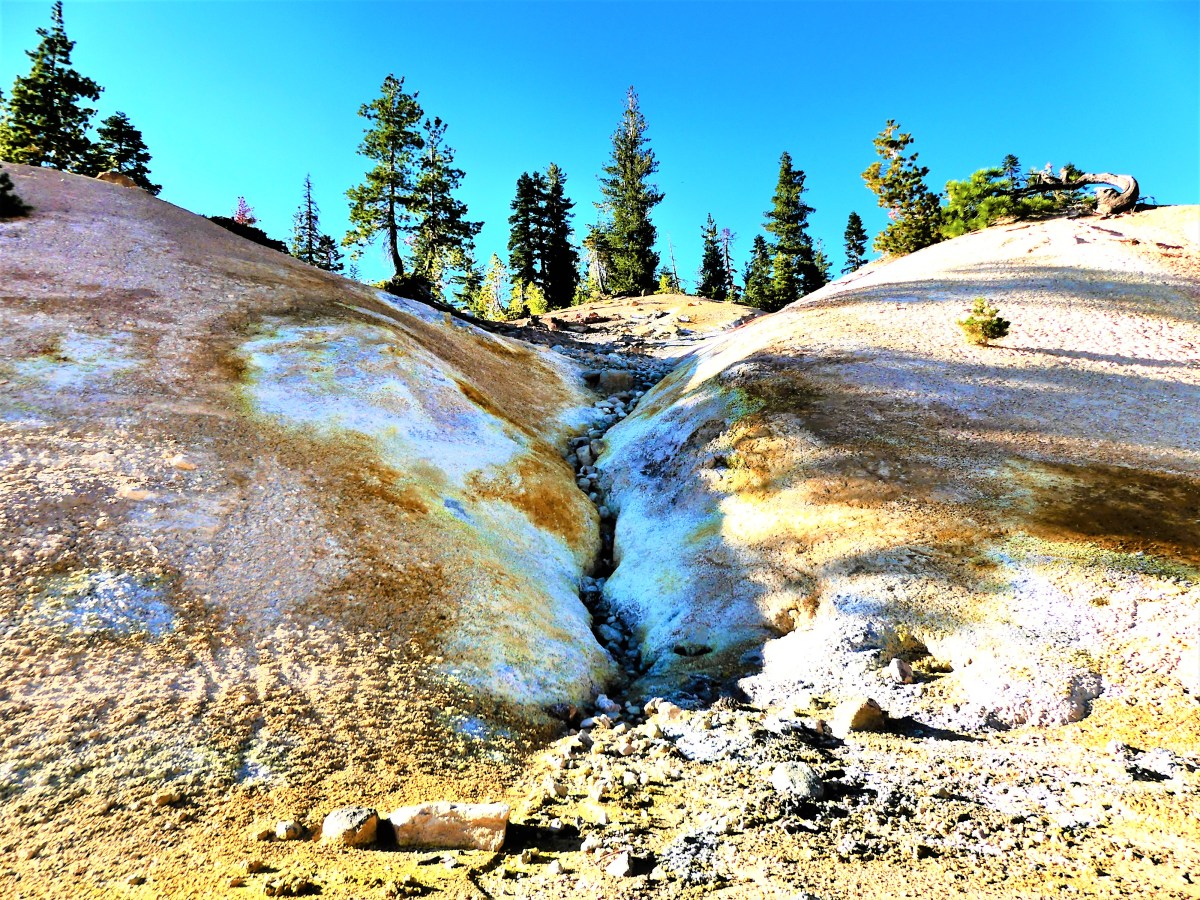
…collecting in a milky stream of hot minerals.

Sulphur Spring runoff

Absolutely gorgeous!

The road to the south entrance of the park took us past the defunct commercial Sulphur Works,

Sulphur works3

Sulphur works1

boiling mudpot

before we u-turned to catch the westerly light on the Chaos Crags,

Chaos Crags

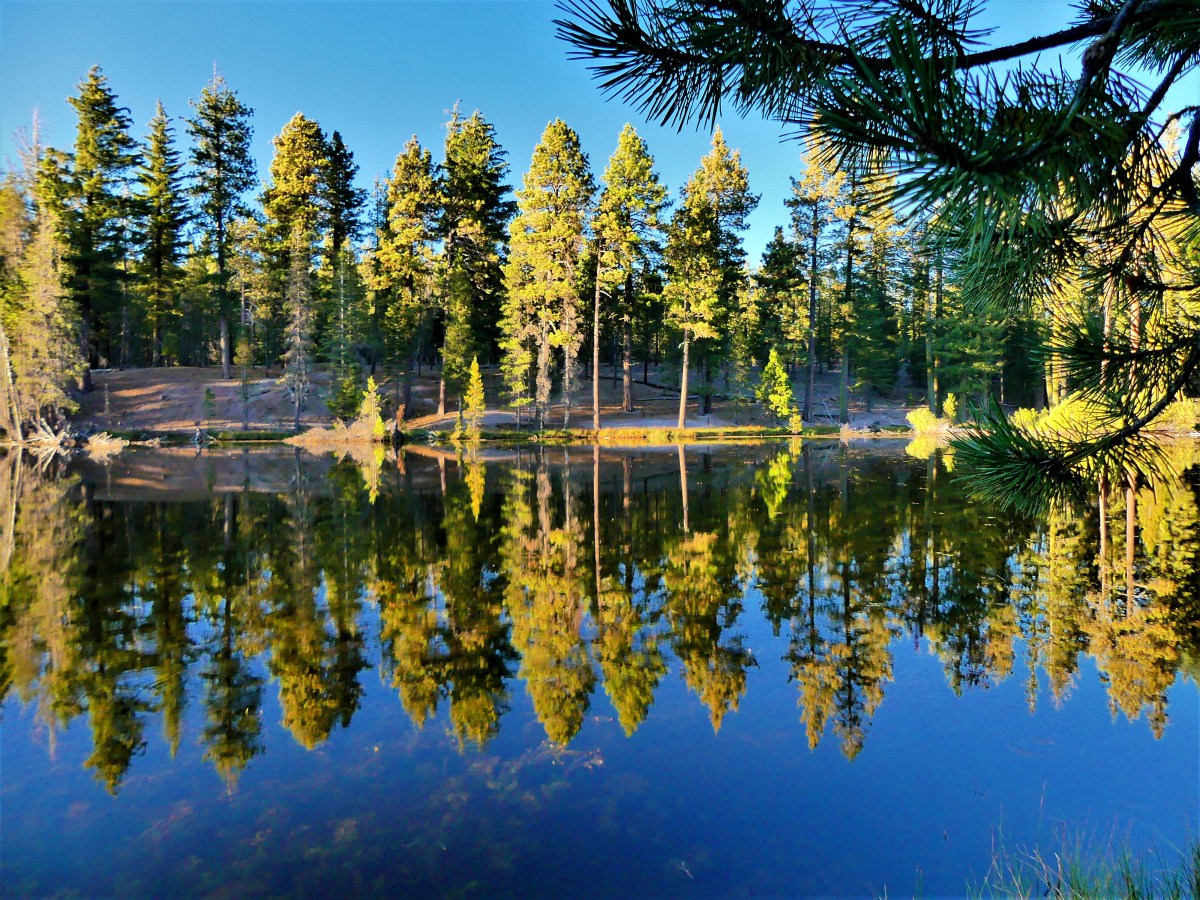
and fawned over the stillness of Reflection Lake.

Reflection Lake

It would be hard to top this day, unless it was from atop the Cinder Cone, and that’s where we traveled the following day.

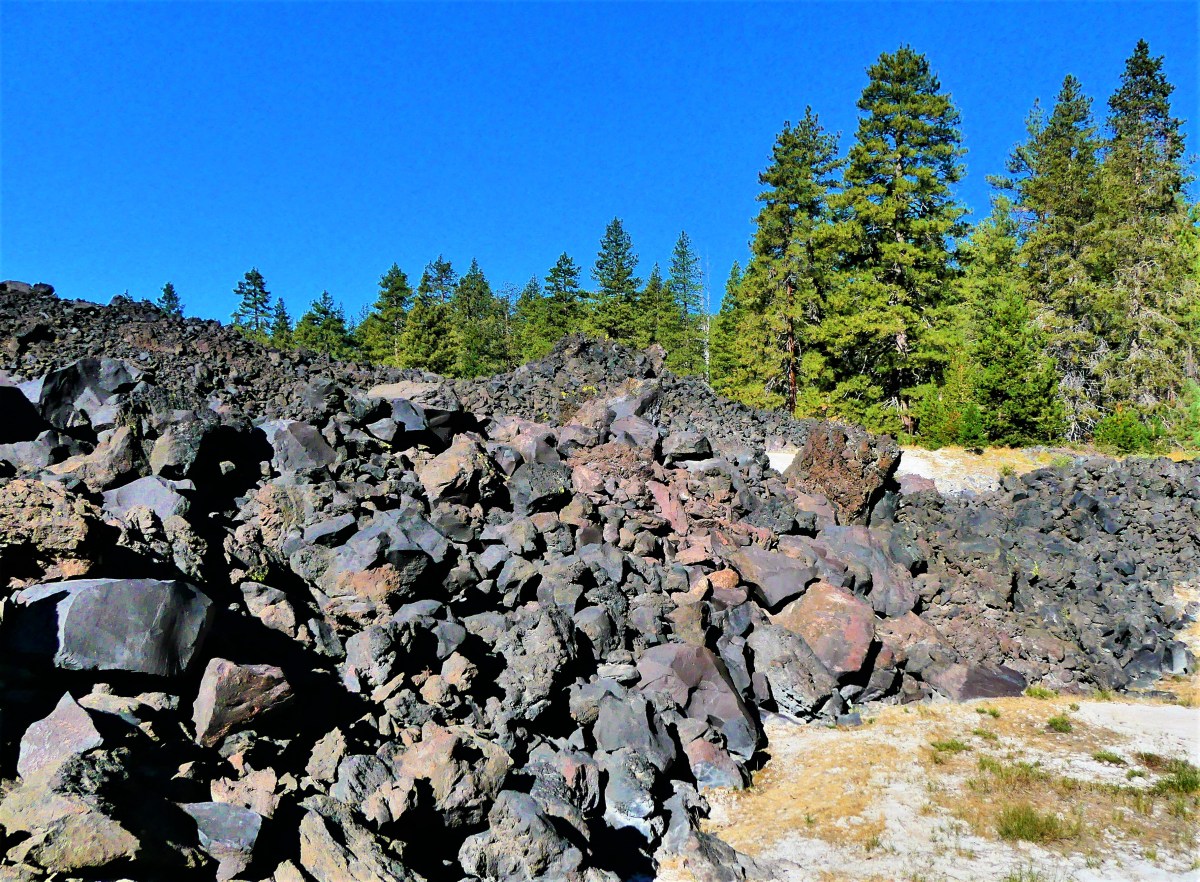
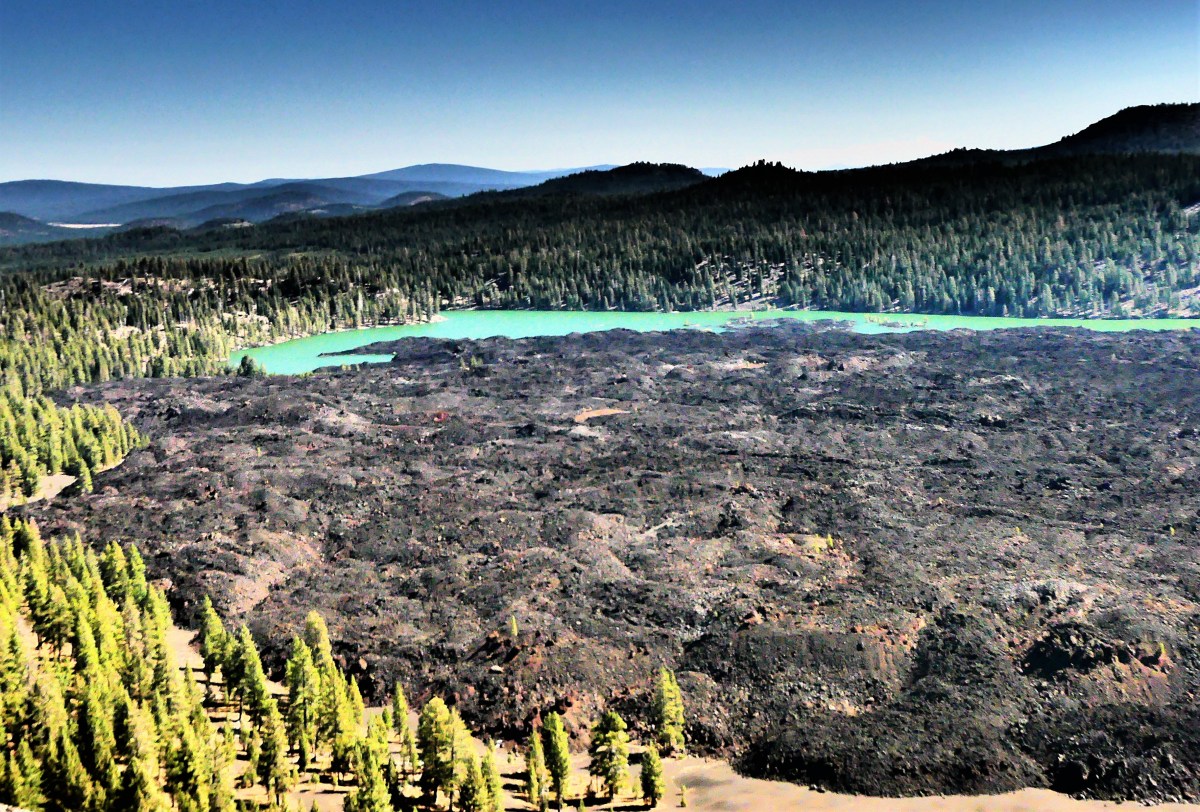
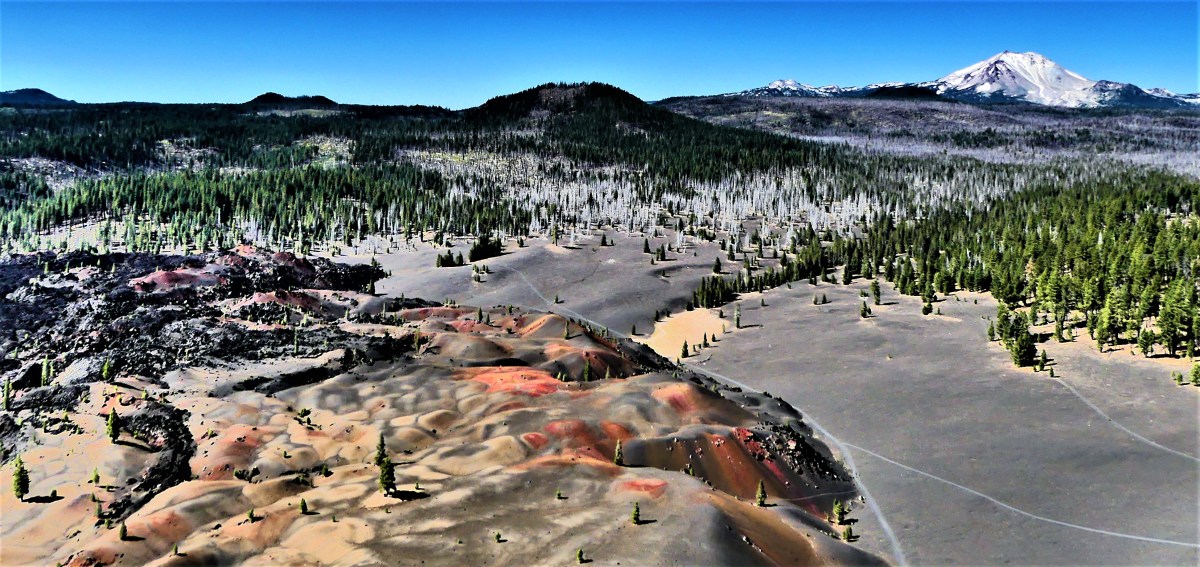
After a drive through dense forest and pastureland to the northeastern corner of the park, we turned onto a dusty hard-packed road terminating at Butte Lake, where a delta of trails branched out for a closer inspection of the Fantastic Lava Beds…

Fantastic Lava Beds

–a heap of sharp and shiny lava rocks rising to heights of 50 feet or more–forming an impenetrable barrier of blackness.

Lava beds and ash

We trudged through shifting black sand bordered by groves of Ponderosa pines for nearly two miles, until we reached a clearing with a view of the cone.

trail

“I don’t think I can make it,” Leah admitted. “It’s too steep for me, and it’s completely exposed, but you should go for it.”

The winding trail up the side of the cone was sloped at a 35% grade, the sharpest possible angle that cinders can stack before rolling downhill. It was going to be very challenging. The ascent over crushed cinders mixed with coarse sand was harder than I presumed. With every step, the gravel swallowed my boots to the ankle.

slow and steady climb

But I was undeterred. The power to continue came from the constant revelations brought by every foot gained along the way,

Lassen peak and lonesome tree

and the promise of something more spectacular by climbing even higher.

Lava beds and Butte Lake

I could follow Leah–becoming increasingly smaller–as she took the detour around the cone, just as she was watching me shrink in size from the base of the volcano.

from the base
glare from Leah’s iPhone

After scrambling most of the 750 feet to the trail’s vanishing point, a whirling wind confronted me from the blind side of the cone, stopping me in my tracks, but offering an amazing overview of the Painted Dunes and Lassen Peak in exchange.

Lassen peak and painted dunes panorama

I imagined a walk through the dunes, taking time to examine the explosion of color, while wondering if camera sensors were sensitive enough to record such an array of wonder.

painted desert1

And then I reached the top of the cone!!

cinder cone crater

The wind at the top was relentless, but so was my need to circle the cone. Nothing was more exhilarating than having the cone to myself (although I would have willingly shared the summit with Leah had she been able). The magical feeling of surveying the terrain from all sides was awe-inspiring.

the cone

cater and peak

And then I discovered that the Painted Dunes continued on the other side of the volcano.

painted desert4

painted desert5

painted dunes

I really didn’t want to leave. But after exploring the area, the only thing left to do was to take the long trail down to share the experience with Leah, and yield the cone to a new arrival.

the long climb