Zoom!

Imagine playing recreational golf with one driver, an iron, and a putter. Accessing the game would be so much easier without the expense of all those clubs. And when playing the course, think how much time could be saved between strokes by not having to decide which club to select for each shot.

While it’s not the perfect metaphor, I’ve approached photography with the same minimalist philosophy. I’ve been photographing with a Panasonic Lumix digital bridge camera (fixed zoom lens) for the past few years instead of lugging around equipment that I might use, but most likely never would.

How do I know this? Despite decades of shooting a variety of photography disciplines (landscape, nature, portrait, street scene, architecture, etc.) that required a variety of prime and telephoto lenses neatly arranged in my equipment bag, I’ve noticed that I’m rarely disappointed by the versatility of the LEICA DC VARIO-ELMARIT 24X optical zoom permanently mounted to my Lumix DMC-FZ300, while also freeing myself of a senseless burden that would invariably sink deeper into my shoulder with every step and slow me down.

It’s truly a remarkable lens for nearly all occasions! The range and reach of the camera’s 25 – 600mm zoom has seldom left me needing more lens, or regretting my camera choice in favor of a full-fledged DSLR…until now…since there are times I’m wishing I could gain greater detail by getting closer to my subject.

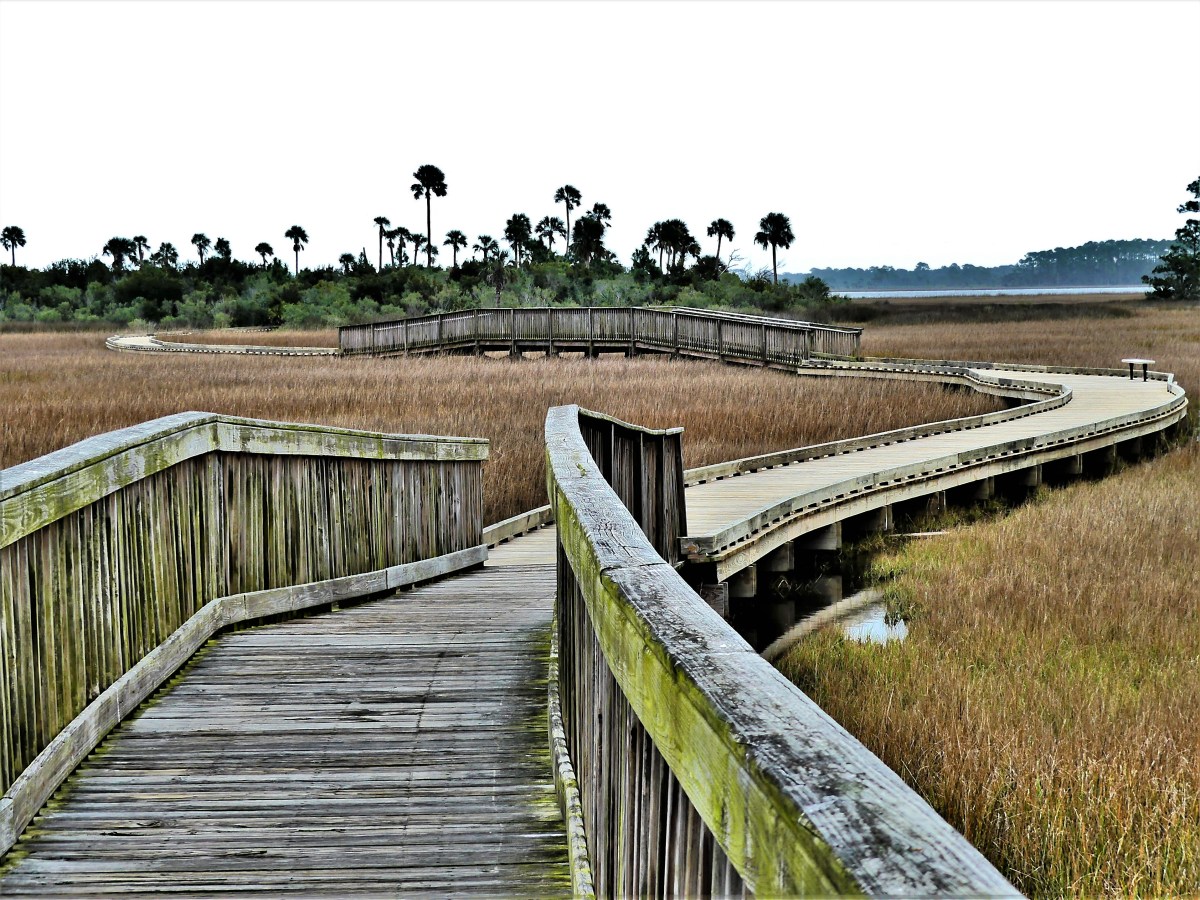
For instance, walking across a boardwalk over marshland strictly limits my ability to get closer to wildlife. The following photograph is a hand-held shot of a heron that caught my attention at a scenic overlook while hiking along the Guana Loop of Guana Tolomato Matanzas National Estuarine Research Reserve (GTM). 

heron on a limb

At 24X zoom, the image is acceptable, but if I choose to isolate the heron by cropping the bird to full frame, the resolution suffers greatly. Ideally, a tripod could have provided better image clarity, but the digital noise would still remain the same.

heron on a limb (4)

However, I discovered another available option that allows me to get a bit closer without relying on the camera’s built-in digital zoom–which I’m inclined to deactivate since I prefer to shoot RAW. Years ago, Lumix created a 1.7X tele conversion lens with adapter, extending the optical zoom to 40.8X, or the equivalent zoom range of 1020mm. But alas, this accessory has been discontinued.

Fortunately there’s a secondary market for almost everything photographic, so after a brief visit to the internet, I found a seller on eBay that offered the requisite 1.7X tele converter, a close-up lens, mount adapter, and tripod mount ring, all for a fraction of the original price of the tele lens.

And I bought it!
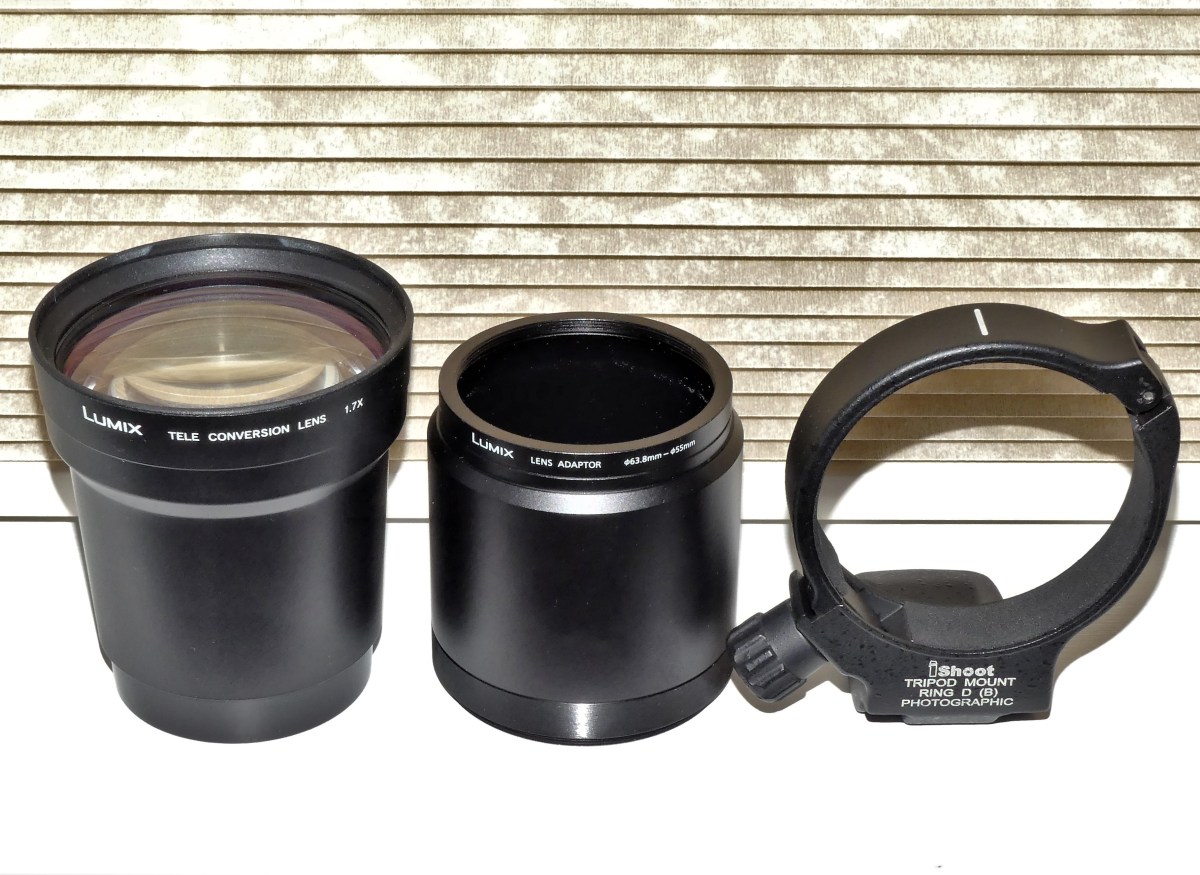
extender setHaving traveled to the GTM with my new/used acquisition, and having survived the burden of carrying extra gear, I assembled the lens and carefully threaded it onto the existing camera lens. I planted my feet, braced myself and shot the heron again!

heron on a branch (2)

A side by side comparison tells the story…

The image on the right is noticeably cleaner, even though the focus appears to be a bit soft, informing me that capturing a crisp, hand-held shot at 40.8X is not my specialty, and probably ill-advised.

Ugh! So now I’m forced to carry a tripod or monopod to make better use of the lens extender. Oh, well. There goes the economy of my photography.
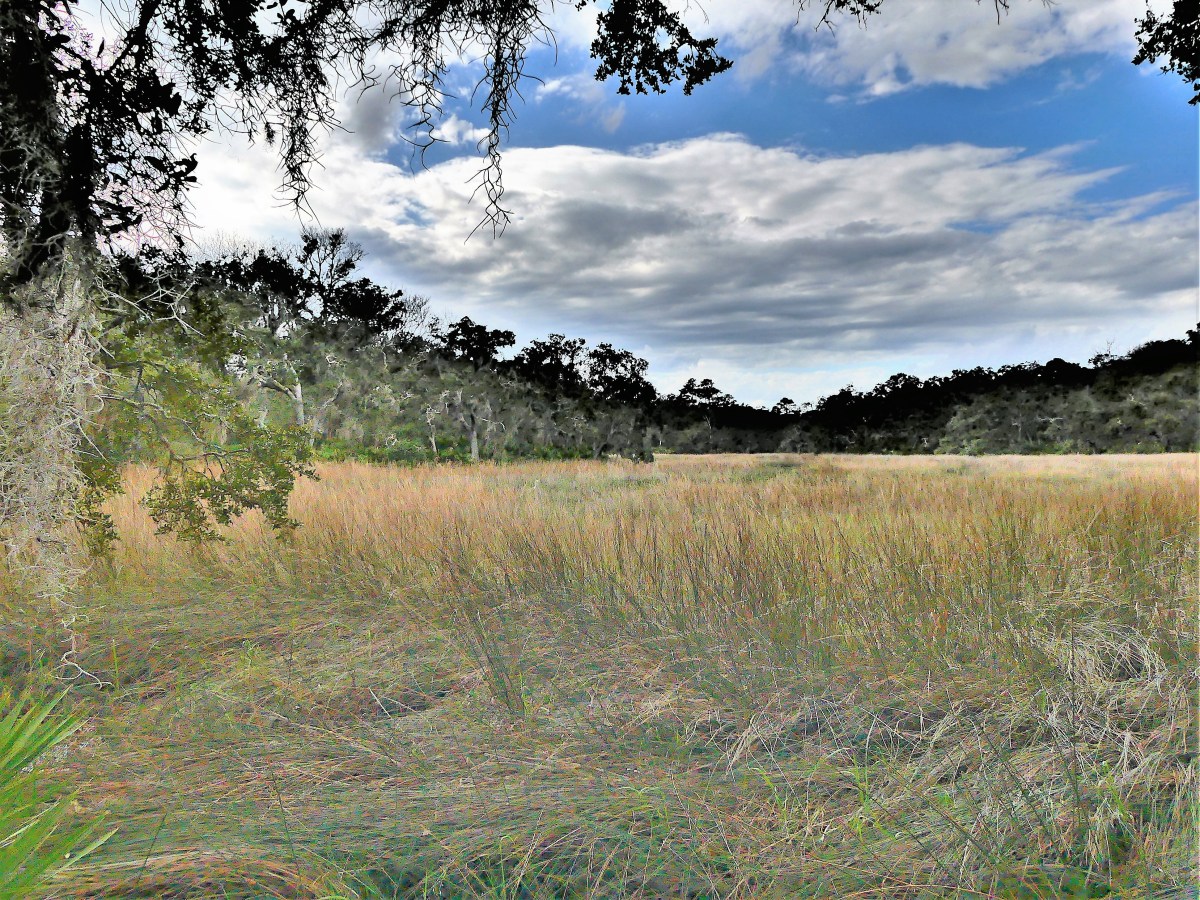
marshland (2)

Then again, I could simply stick to the limits of the original lens…

GTM Estruaine (2)

but then again, with an impending trip to photograph big game animals in Africa at the beginning of May, I’m much better off adjusting to three golf clubs instead of one.

Tequila!

There was a time when slamming back Jose Cuervo tequila shots defined my notion of drinking socially and irresponsibly. When attending college mixers and parties, it was the perfect way to act cool and behave stupidly at the same time. The time-honored tradition of licking salt before swallowing a rim-topped shooter glass and finishing with a limon bite was a pattern of behavior that I remember clearly, but can’t recall with any accuracy.

empty glasses (2)

It was also my surrender to the fiery pepper that typically accompanied the alcohol. While the raspa would rocket through my gastric canal, I often wondered how I survived the taste of jet fuel laced with vanilla extract. But those negative thoughts always melted away after the third shot. That’s the magic of tequila; sometimes it makes you question your own sense of reality.

As we aged, so did our palettes. Drinking buddies flush with more disposable income succumbed to the lure of unblended Scotch or reveled in the crisp bite of French vodka. But not me. I saw no reason to search for a better bitter. It seems I was too emotionally attached to tequila to switch to a competing liquor.

shooter girl (2)

My mission was to find a tequila that didn’t taste so nasty. Move over Jose Cuervo, and say hello to Patrón.

Apart from all the trusted distilleries in Jalisco, Mexico, the one tequila that resonated in America debuted in 1989, and soon captured a coveted 30% market share–not because of Patrón’s unique flavor profile or quality control standards, but because shampoo mogul and co-founder, John Paul DeJoria positioned Patrón’s top-shelf status through its hand-numbered bottles, silk ribbons, and round-top corks. Late-show tequila was now dressed up and ready for prime-time.

It wasn’t long before other celebrities jumped on the brand-wagon to use their cache to cash in. While Jimmy Buffet’s Margaritaville and Sammy Hagar’s Cabo Wabo supported the aging baby boomer sub-culture, George Clooney’s Casamigos courted the endless summer sect, and P. Diddy’s DeLéon catered to the crowd behind the velvet rope.

Tequila’s makeover has generated record-breaking sales since 2012. According to the Distilled Spirits Council (DISCUS):

…tequila volumes [in the U.S.] have grown by 121%, at an average rate of 5.8%. In 2016 alone, 15.9 million 9-liter cases were sold. What is even more impressive is that while the volumes of value and premium tequila grew by 93% and 72% during the aforementioned time frame, those of high-end premium and super-premium shot up by 292% and 706%, respectively.

And spirit producers are betting big that the current wave continues. Last year, DeJoria released his remaining 70% of Patrón shares to Bacardi for $5.1bn, and Diageo secured Casamigos from Clooney for $1bn to stand beside its Don Julio brand acquired from Jose Cuervo in 2014.

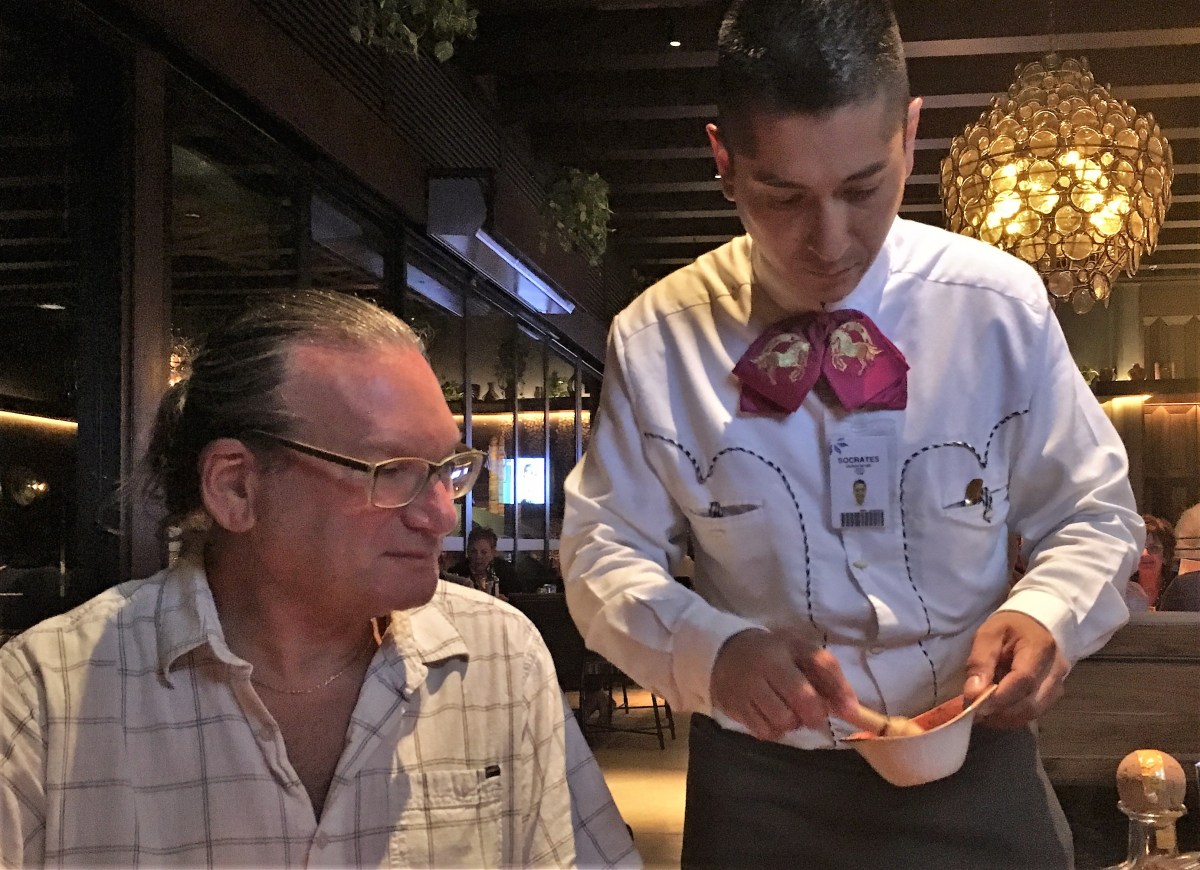
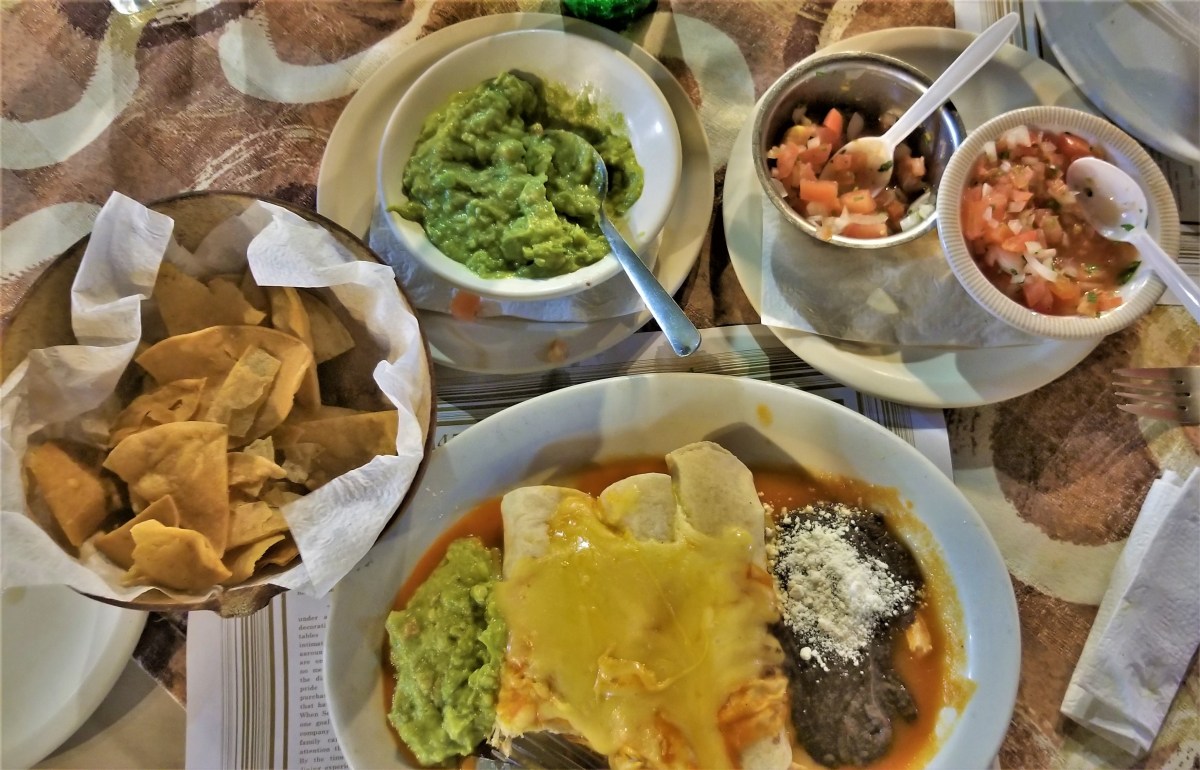
With my head spinning from all the stats, I needed a drink…or more. And I needed clarification and historical perspective to make sense of it all. Fortunately, when at our resort South of the Border, Leah and I were introduced to Socrates, our waiter at Vidanta’s La Cantina on the Riviera Maya, who was eager to share information about his culture, and the connection between tequila and Guadalajara, his family’s home for the past 200 years.

mixing worm salt

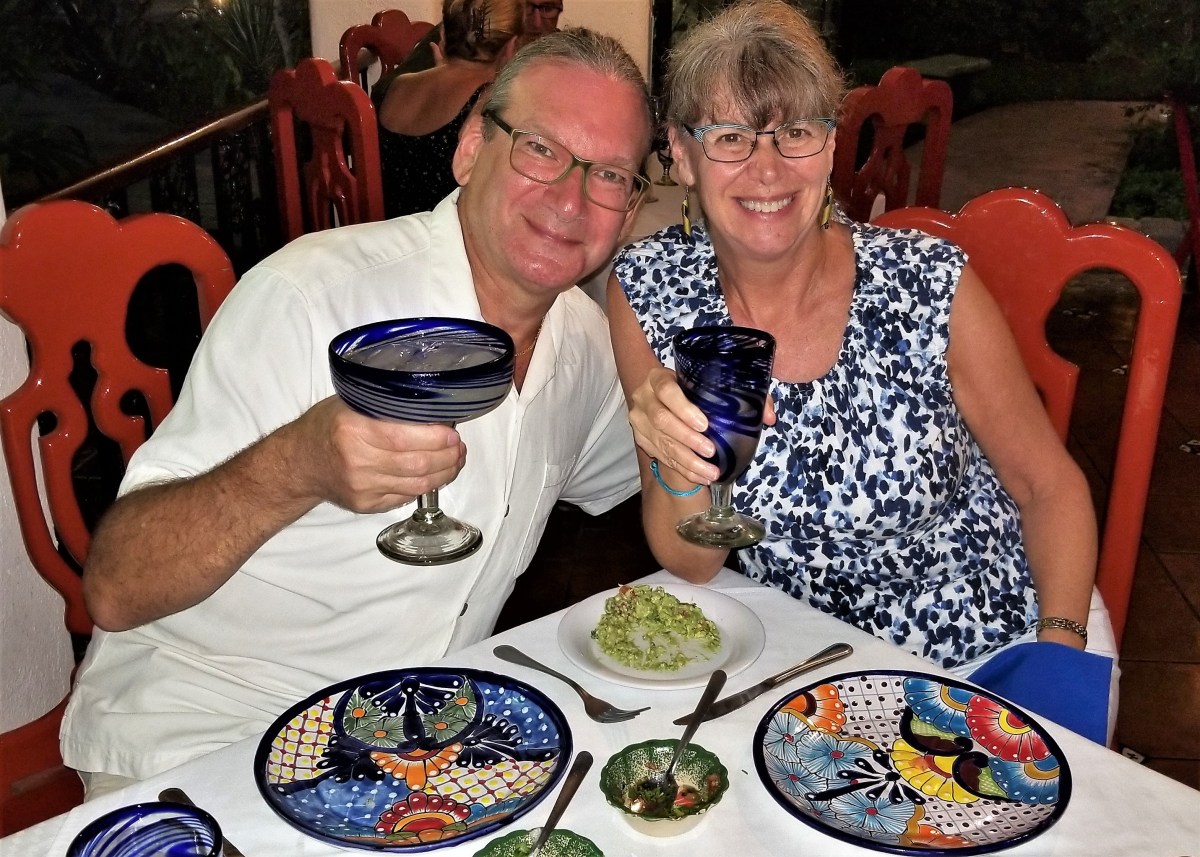
Ordinarily I’d order a margarita before my meal, like so many times before…

margarita

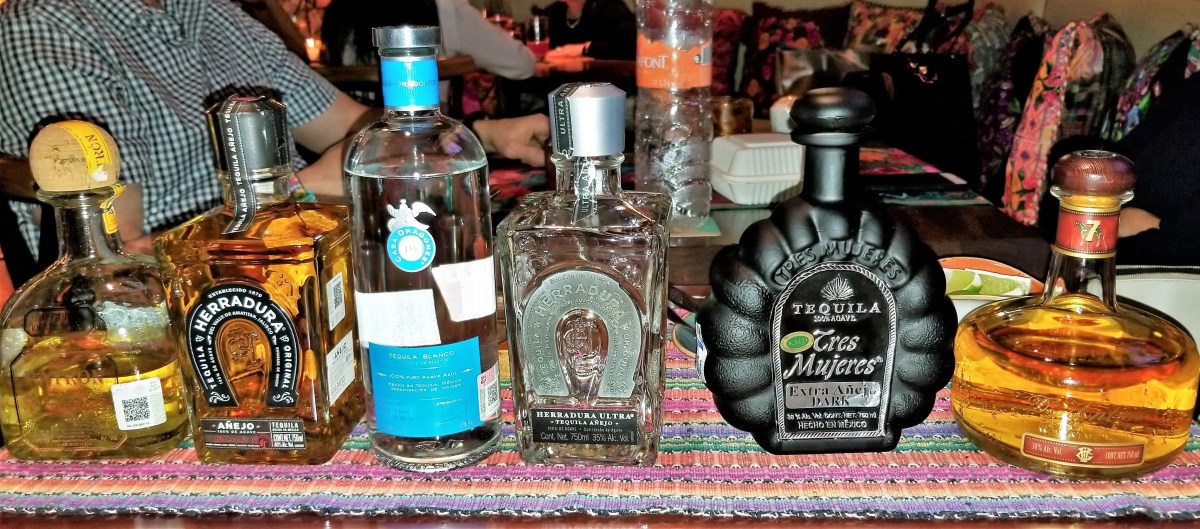
but on this night, Socrates offered me a turn at the tasting table…

smooth fire (2)

and a briefing on the distillation process of tequila and its significance to the Mexican economy.

“Tequila has been produced in Mexico since 1726, but mezcal has been distilled by the Toltecs in clay pots for special ceremonies since the year 600. My family has been growing blue agave and producing spirits before my abuelo was walking,” stated Socrates, “so it is my honor to present you with our wonderful heritage and the drink of my people tonight.”

He continued, “Tequila is a very special drink that requires lots of patience–from the ten years the agave tequilana plant grows to maturity in the sandy hills of my country–until it is harvested. Once all the leaves are stripped from the agave plant, the piña is roasted, and the juice is released by running the tahona over the piña. This is true for all the varieties of tequila you will sample tonight.”

“What makes it clear and what makes it golden-colored?” I asked.

“Ah, that is all about the aging,” replied Socrates. “Silver tequila or blanco is tequila in the purest form with the most natural taste after the distilling process–a little bit of sweet with a taste of citrus and pepper. It is preferred when making margaritas.

“And the golden color?…” I reiterated.

“That is the color from the barrels to age the tequila. Usually 6 months resting in an oak barrel, sometimes already flavored from bourbon or wine, and we call it tequila reposado. The taste is a balance between the agave and the wood–more smooth with hints of caramel and spice,” Socrates continued.

“But for me, the real tequila is the sipping tequila called tequila añejo. This is tequila aged for at least one year in the barrel, which now darkens the tequila to an amber color. It is very smooth like fine wine or whisky, and is to be enjoyed at room temperature,” he concluded.

I pointed to the tequila table. “But there are bottles that are marked ultra and extra añejo. What about them?”

“That’s the newest tequila category that’s been added since 2006,” remarked Socrates. “It refers to tequila that’s been aged more than 3 years. So it tends to be darker still, unless the color has been filtered out, and looking like a blanco. But what’s left behind is tequila that is incredibly smooth and complex and rich, with very little alcohol taste.”

“How rich?” I asked.

“This tequila can cost over $300 a bottle,” he exclaimed.

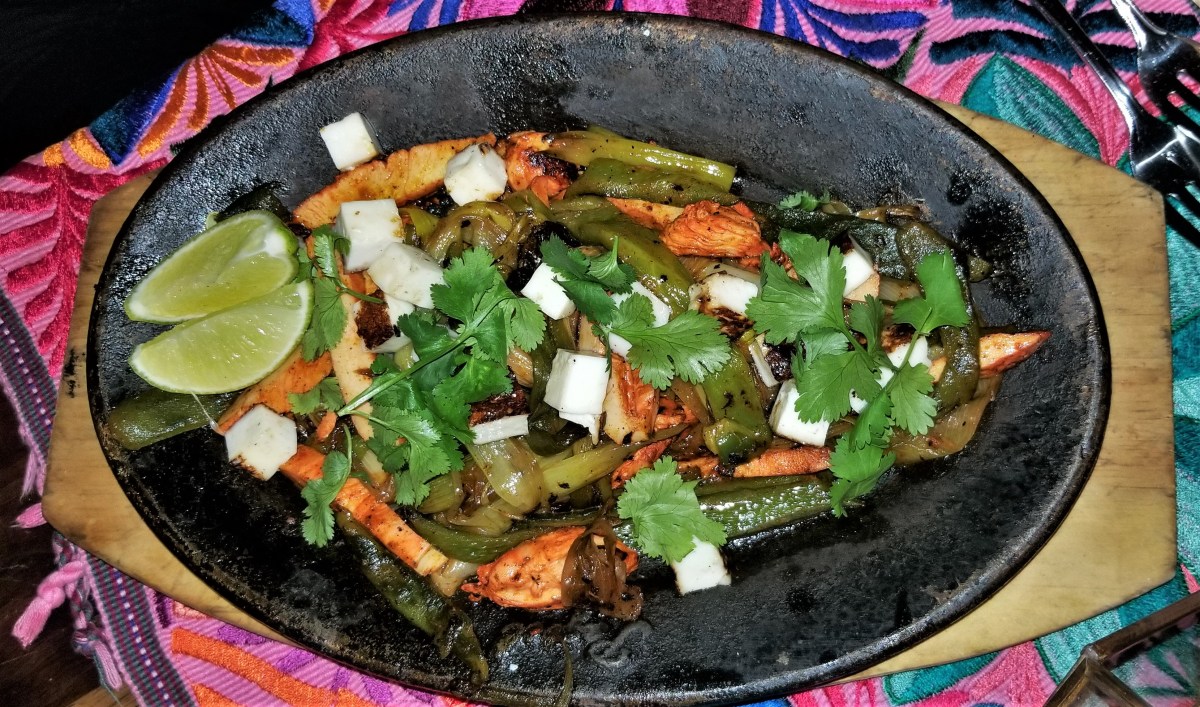
Dinner was served–chicken fajitas for Leah…

chicken frajitas

and lobster tacos for me.

lobster tacos (2)

The food was delicious, but the tequila…

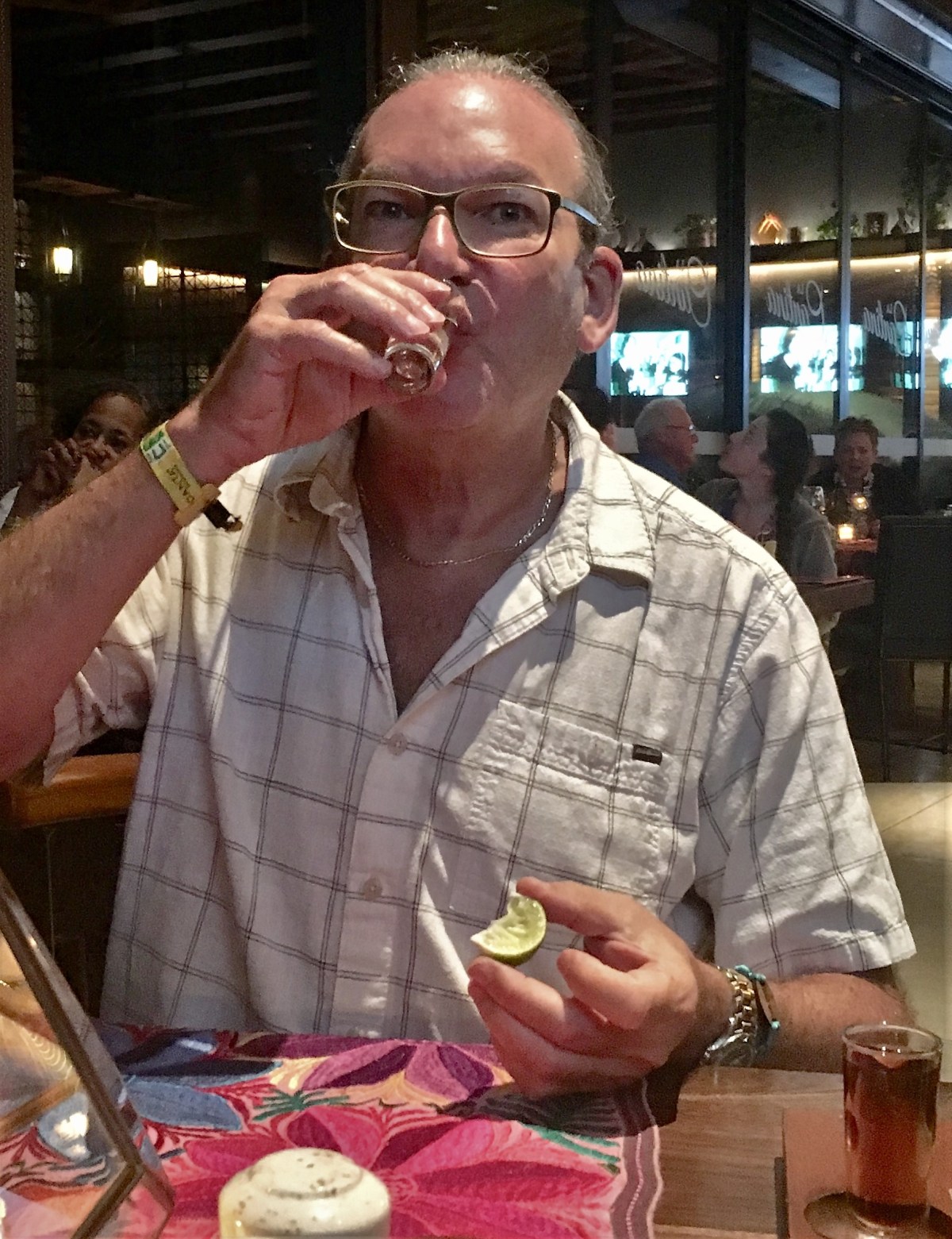
sipping tequila.jpg

OMG!…and worth every peso!!

Eye Candy

I took a stroll
and spied a tool
that looked real cool–
where taffy pulled
around a spool.

I pulled a stool 
to watch this jewel.
And like a fool
who’s ridiculed,
my spittle drolled.

But there’s a rule
recalled from school:
That life is full
of soles with holes
whose souls are whole.

So ’round it folds
a to and fro,
the taffy flows
to fuel a flue
and form a glue.


The Other Side of Cozumel, Part Dos

You may recall from The Other Side of Cozumel that sometimes vacations don’t always turn out as expected. However, since my first taste of Mexico in 1975, subsequent trips south of the border were much more enjoyable and fulfilling. I returned again and again to celebrate the culture and bask in the balmy weather. I ate my fill of fresh fish, tacos and tamales, and always managed to melt my stress away with the help of good tequila.

My status improved in 1988 when I earned my diver certification at a casual Playa del Carmen resort, and thereafter, got spoiled enjoying the drift dives in Cozumel along Santa Rosa wall, or deep diving Devil’s Throat in Punta Sur, or floating through the aquarium of sea-life that is Palancar Reef.

Past Mexican vacations have been spent exploring neighboring hotspots in the Quintana Roo vicinity:

Holbox to the North …

Holbox tour

Holbox beach

Chaccoben to the South…

Chaccoben temple @ Costa Maya

and Tulum in between…

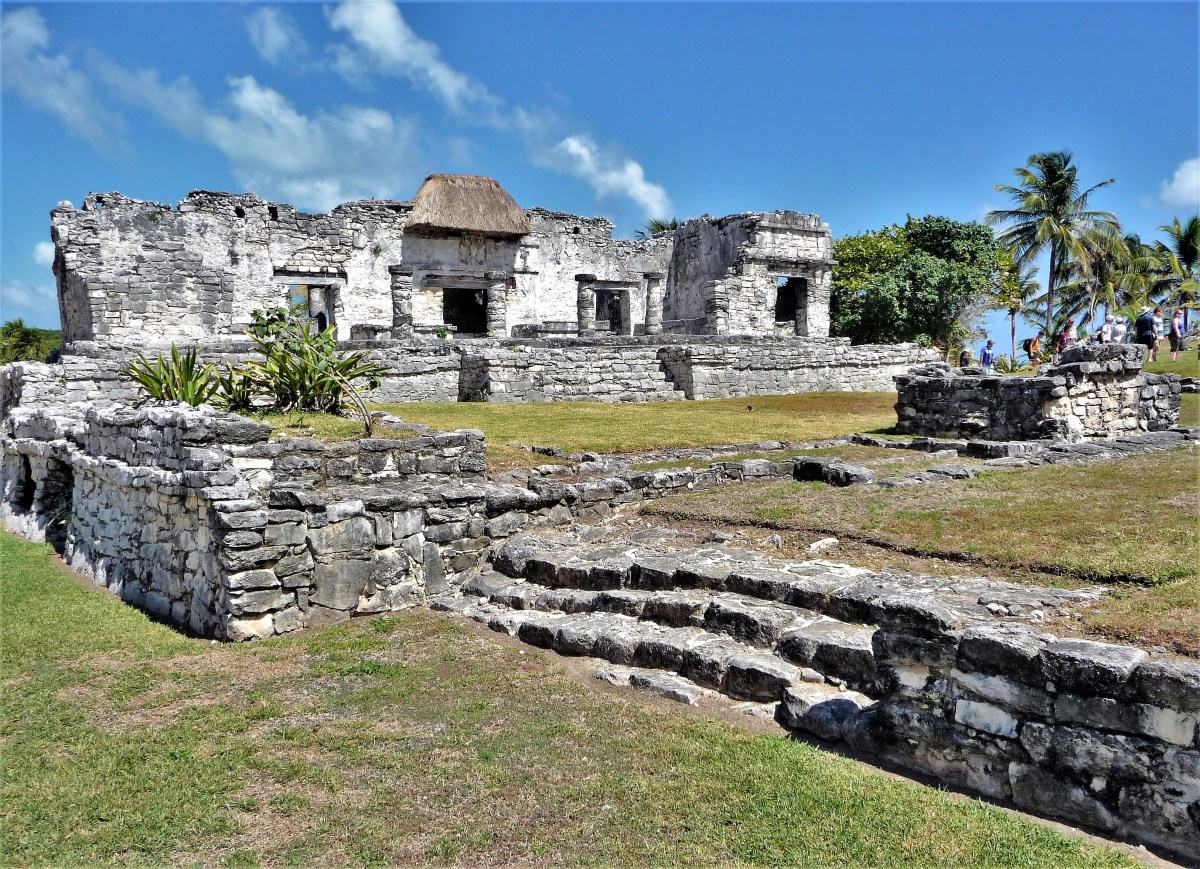
The Castle ruin

Tulum coastline

But the one thing I never got around to doing over the past 45 years was explore the eastern shore of Cozumel. Not that I was avoiding the prospect; it’s that the opportunity never presented itself…until lately.

Rather than rent scooters for the day–which Leah would have never agreed to–I rented a modest Nissan sedan, and the two of us made a day of it.

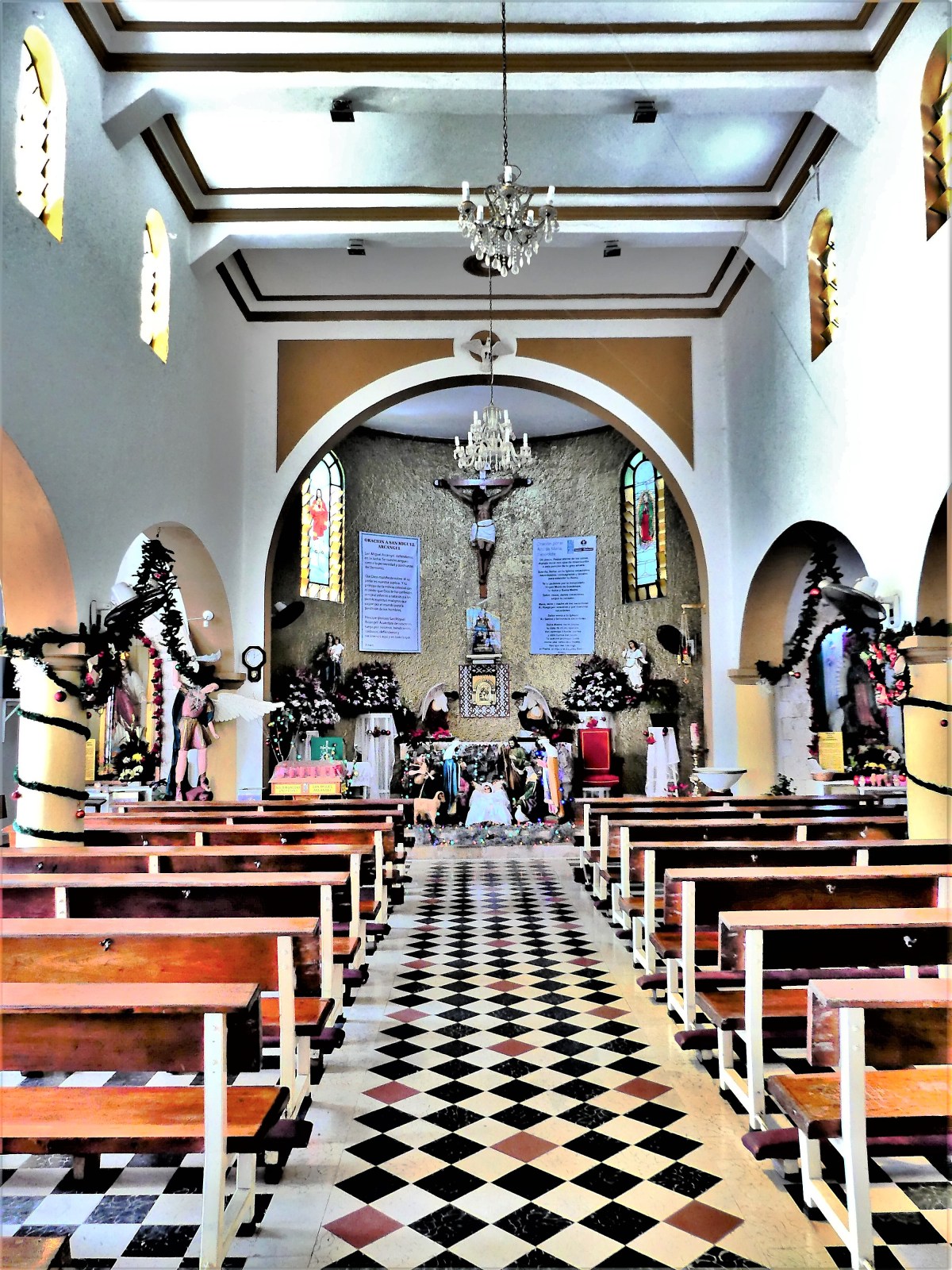
We started out in Centro by the Iglesia de San Miguel, a charming Catholic parish…

San Miguel stained glass (3)

that always draws a queue of cruise ship passengers on shore excursion,

San Miguel (2)

to fill out laborious paperwork at a tucked-away Thrifty satelite office across the way, but that was the medicine we were willing to swallow to save nearly 60% from the rental fee quoted by our hotel concessionaire. From there it was a race to escape 1.5 miles of pedestrian madness between the Ferry Pier and the International Pier Cruise Terminal.

As we left city life behind, the jungle returned with thickets of mangroves and saw palmetto. Occasional glimpses of coastline were visible through a string of scattered beach club parking lots that offered access to rows and rows of lounge chairs, palapas, inflatable water slides, and cocktails for all the cruisers fresh from duty-free shopping or the San Miguel Church tour.

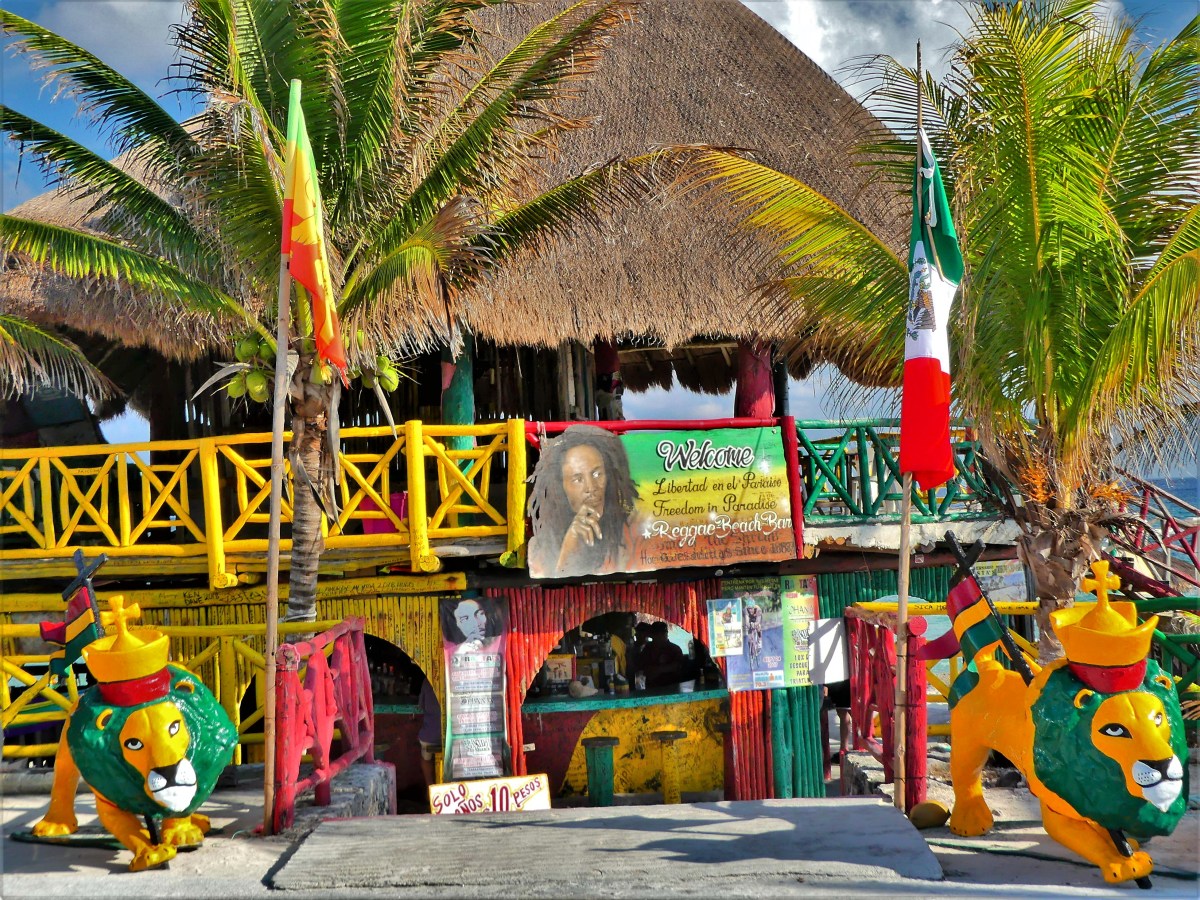
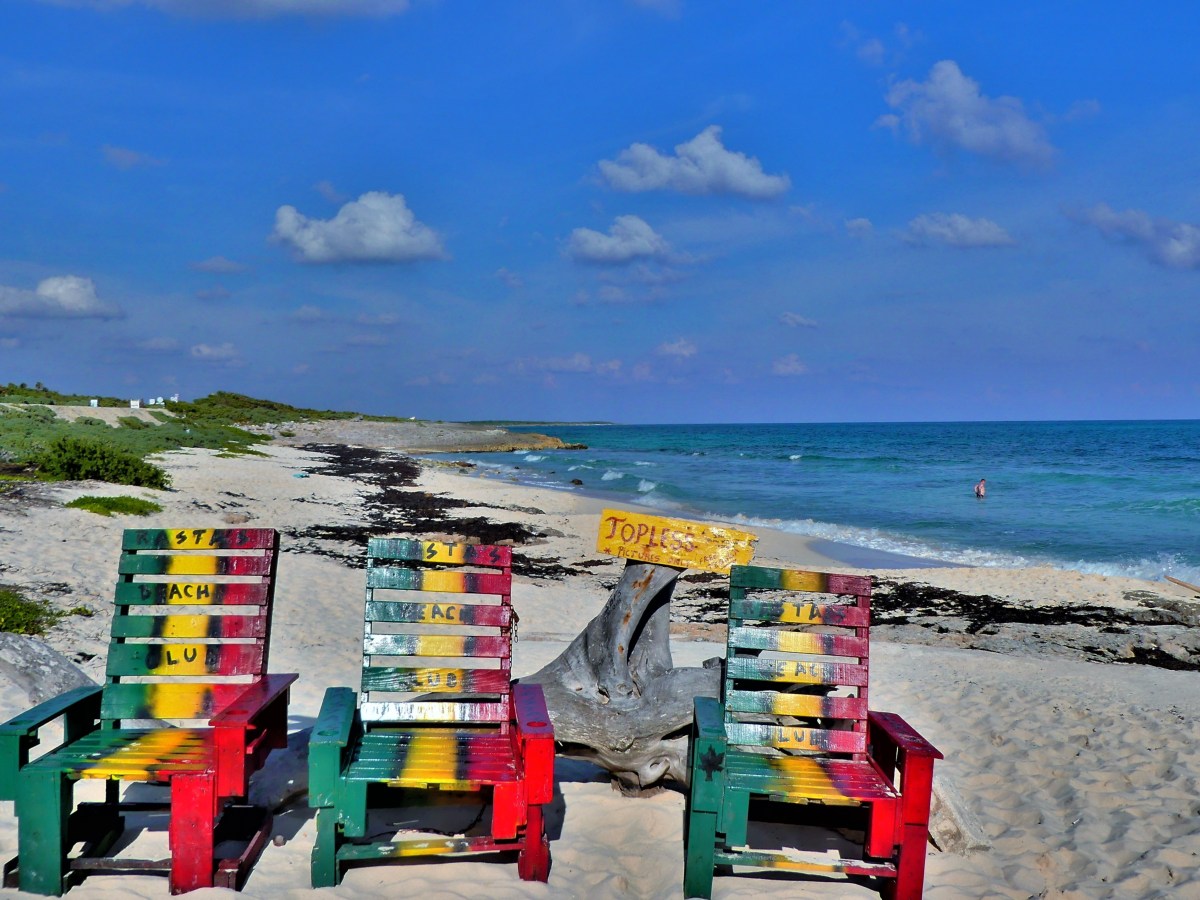
We settled on Playa Palancar for its no-fee beach access, tasty tacos and snorkeling activity. Unfortunately, the fish had reservations at a different beach club at the time, so we were forced to relax before moving on to the southern tip of the island, and a stop at the Rasta Bar at Punta Sur…

reggae beach bar

for views of the ocean,

rasta's beach club chairs1

some old-time religion,

jamaican jesus

and window shopping…

rasta's

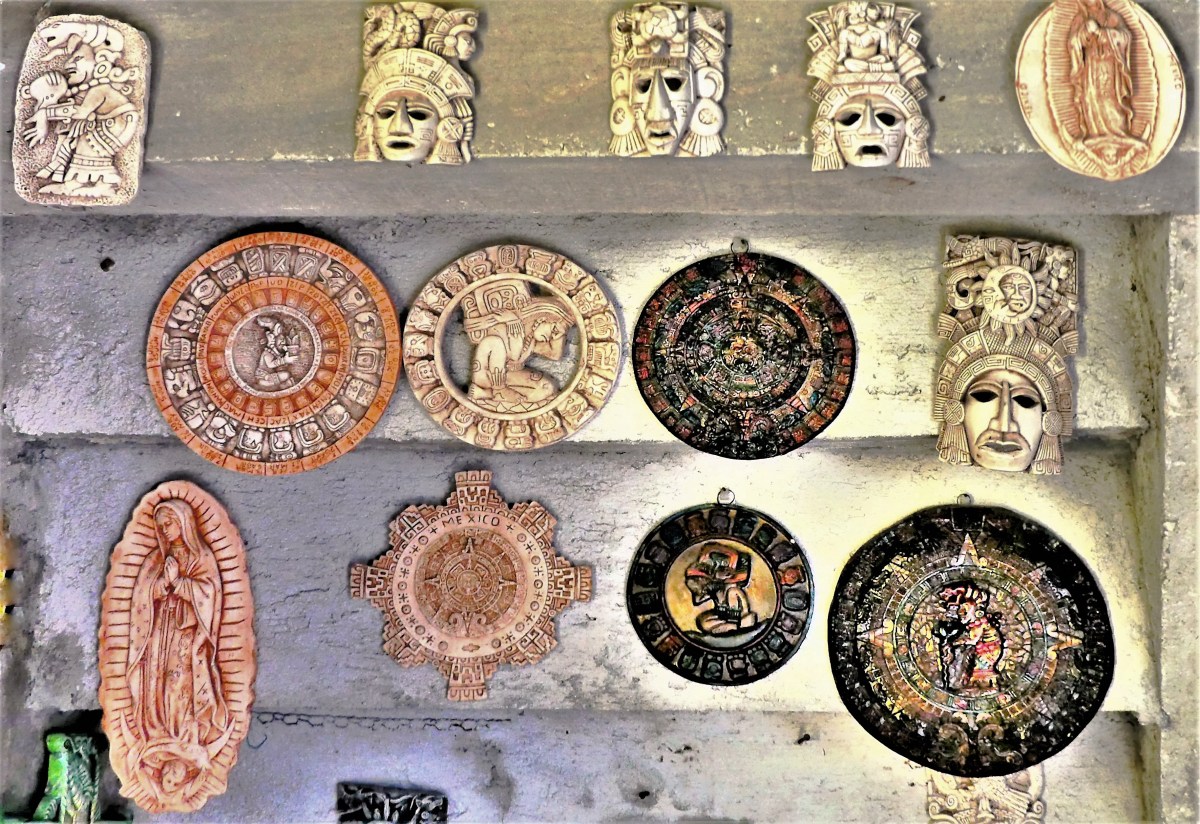
for Mayan medalians.

masks and medalions

Back in the car, we continued around the horn to the backside of the island…

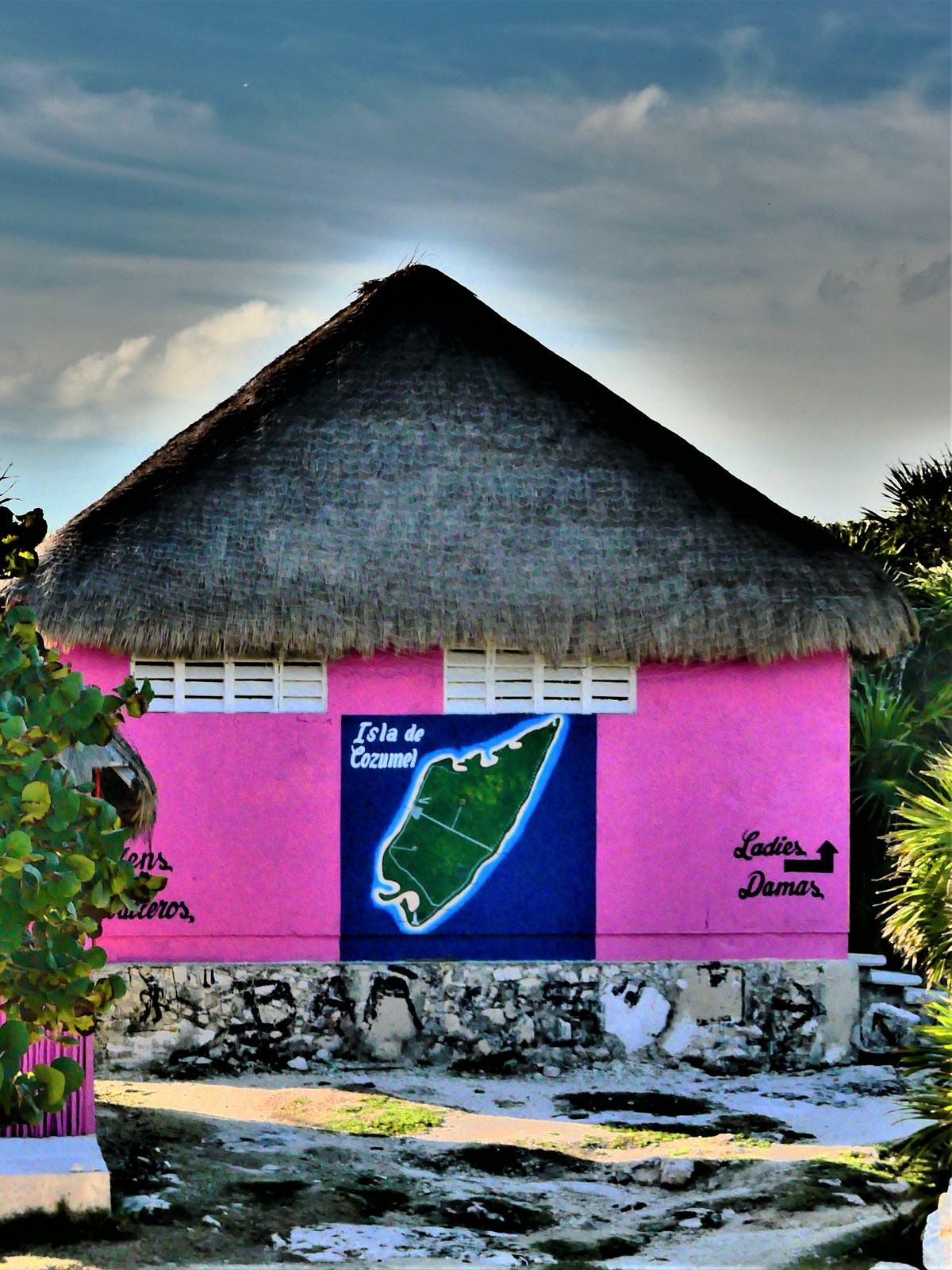
cozumel map

until we reached Playa San Martin, a cozy outpost with a sparse sandy beach…

wild beach

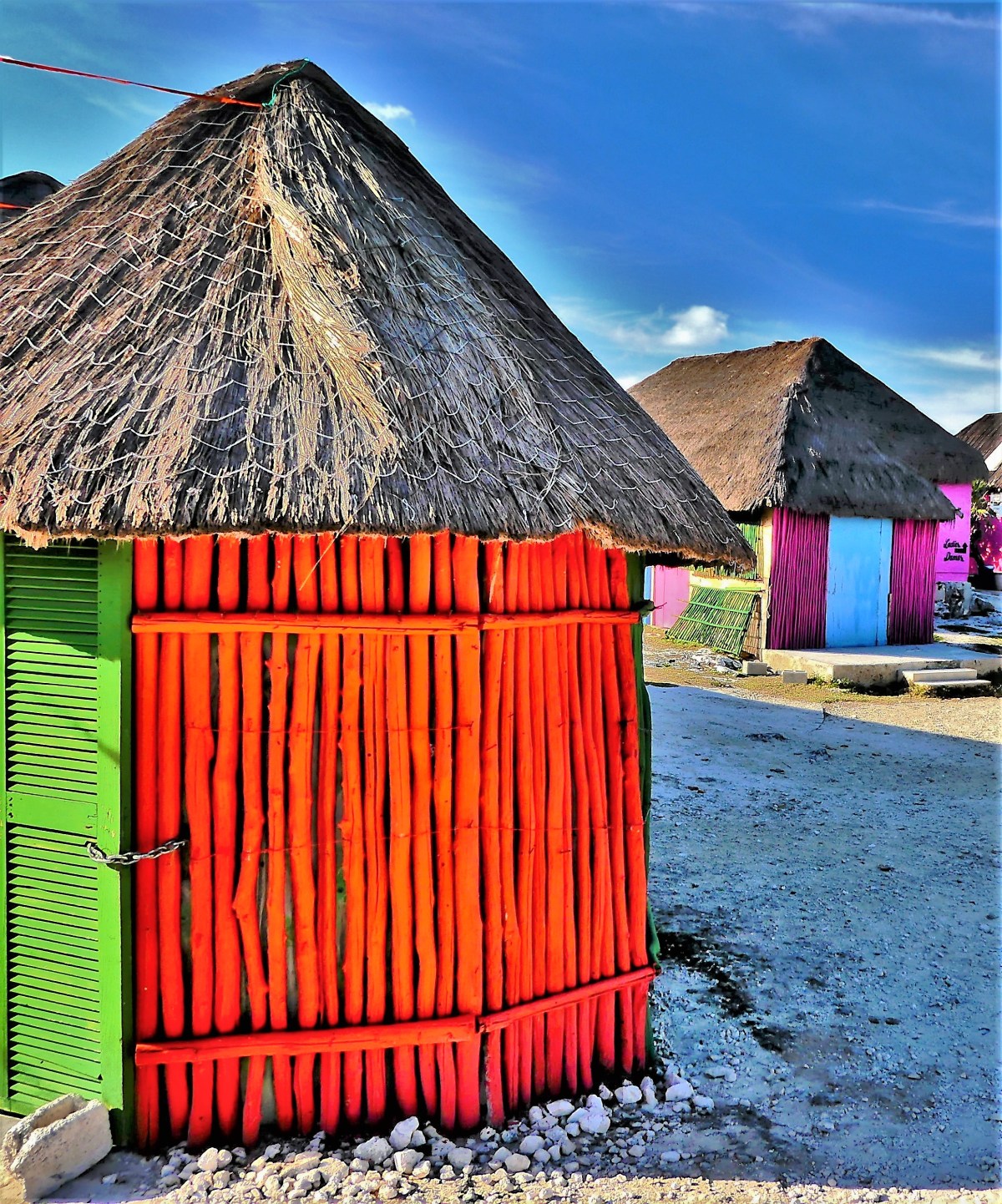
colorful palapas,

banos (2)

backdoor boutique

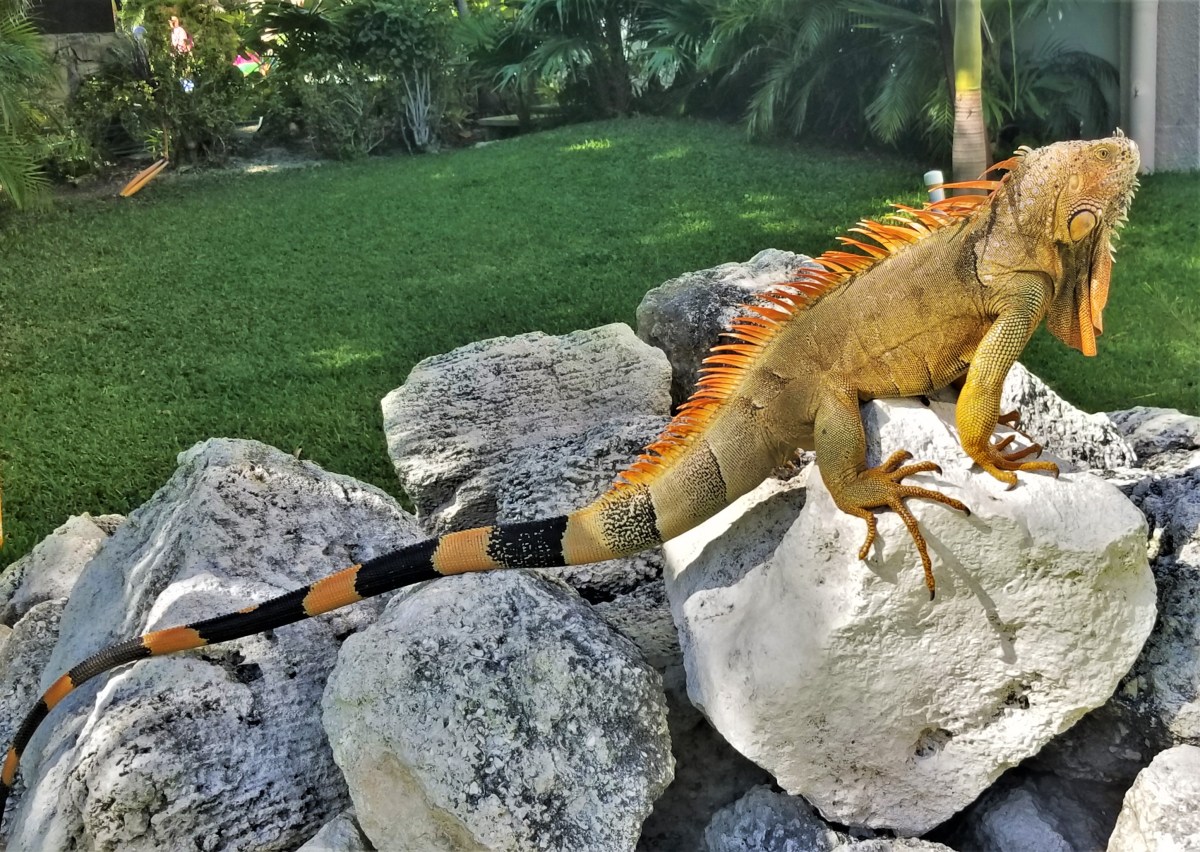
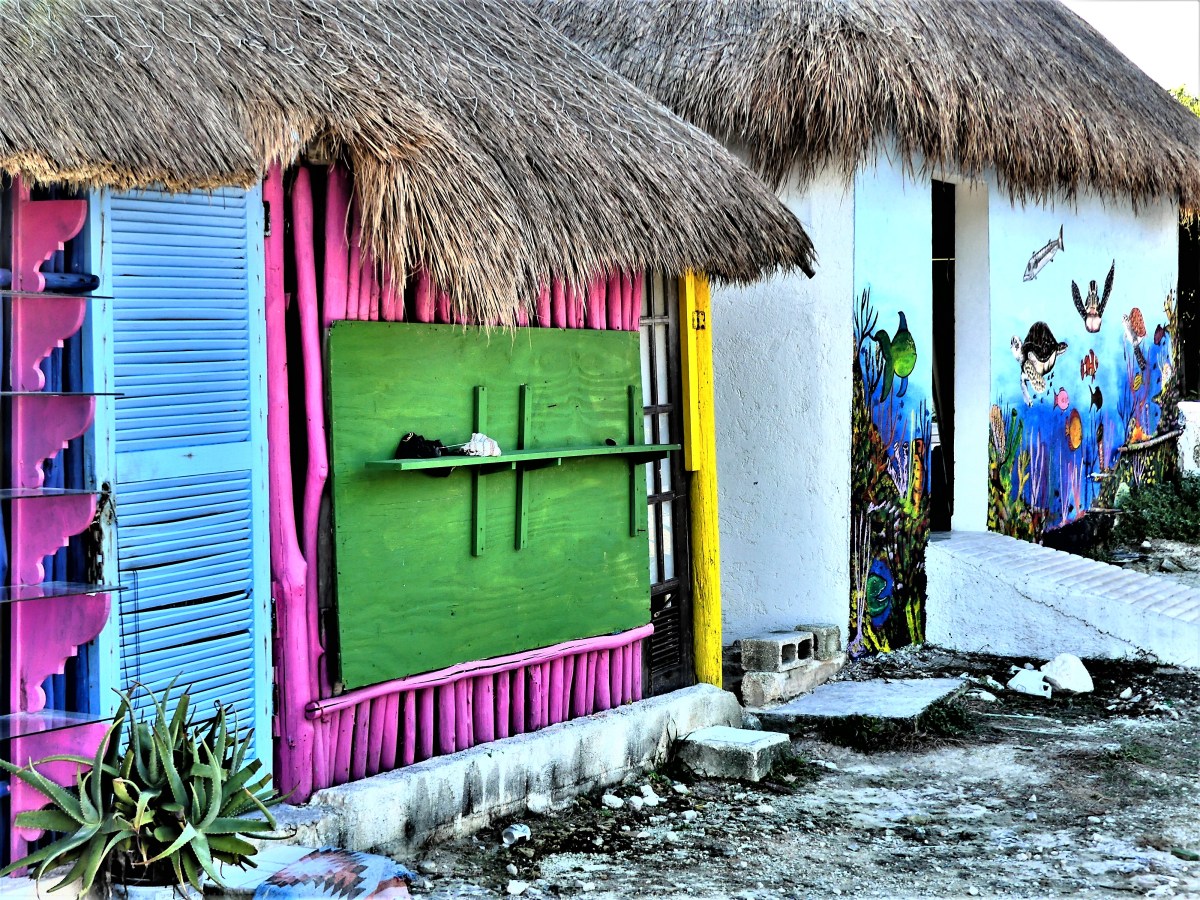
and a population of lazy iguanas.

iguana king

blue iguana

iguana (2)

The two-lane road continued North to an island mid-point, where we reached the Transversal crossroad that transported us back to the population center, dodging scooters, trucks and taxis all the way to the leeward side hotels…

north zone sunset

where high above the rooflines,

door to the rooftop

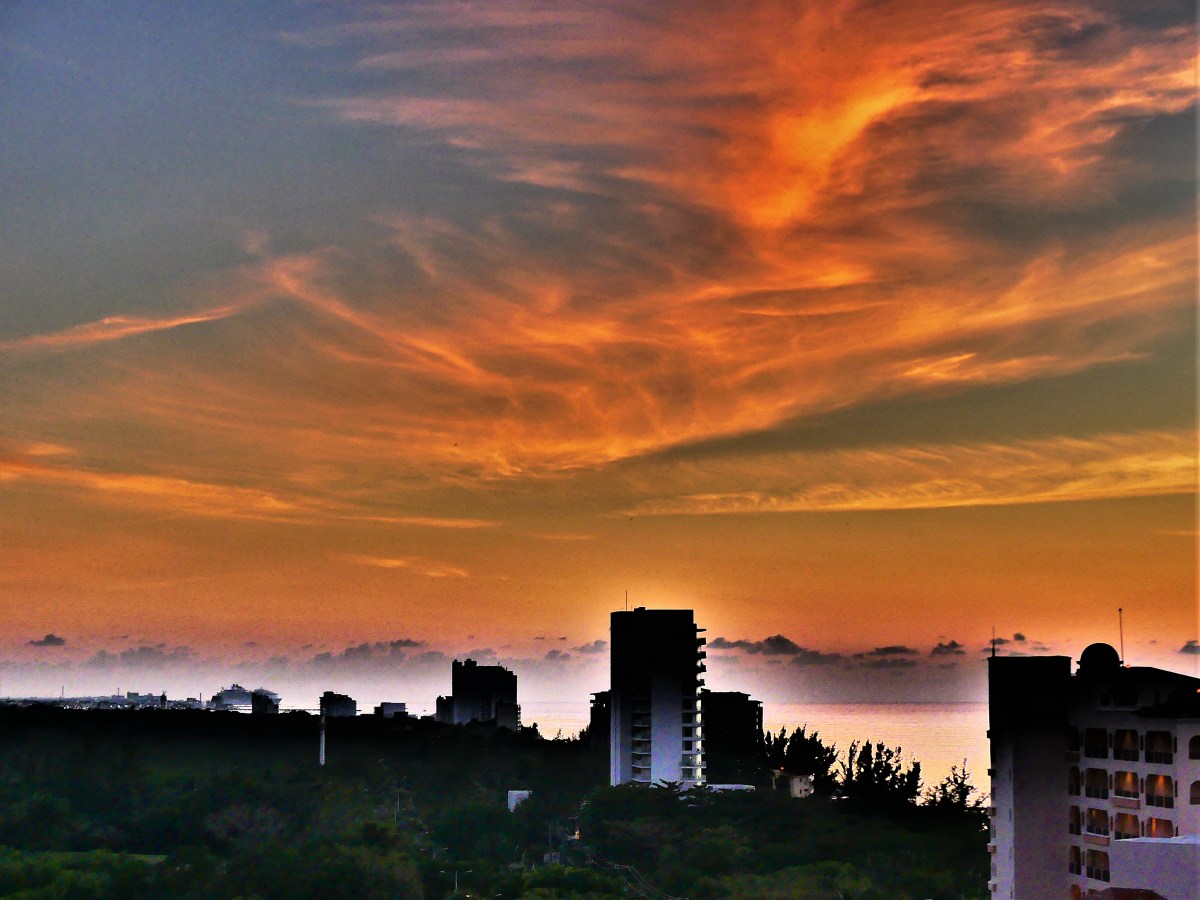
I was just in time for the evening floor show.

sunset (2)


Ancient Light

The day in St. Augustine started out dreary, with passing drizzle and smoky cloud cover, but with the polar vortex finally loosening its grip on the Midwest, and the California coastline bracing for epic rain and mud, the local weather seemed well within the bounds of “I can’t complain” conditions for a Florida weekend.

Nevertheless, taking a chance on an outdoor activity seemed risky. So Leah and I hedged our bets and we traveled to St. Augustine Lighthouse and Maritime Museum, where $12.95 will buy a St. Johns County resident general admission for one year. We figured that we could always duck the rain…

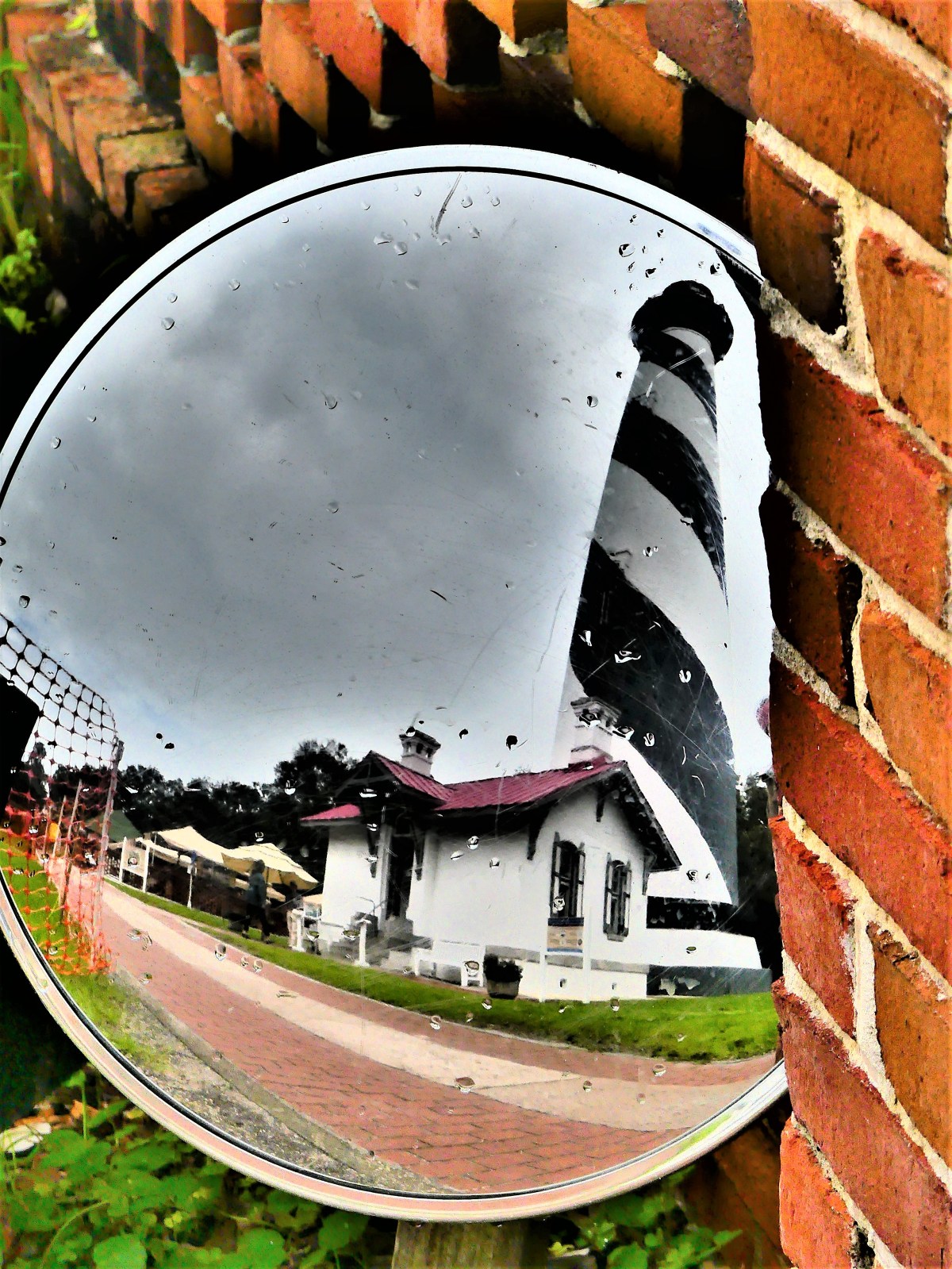
Parabolic view

by browsing the Keeper’s house,

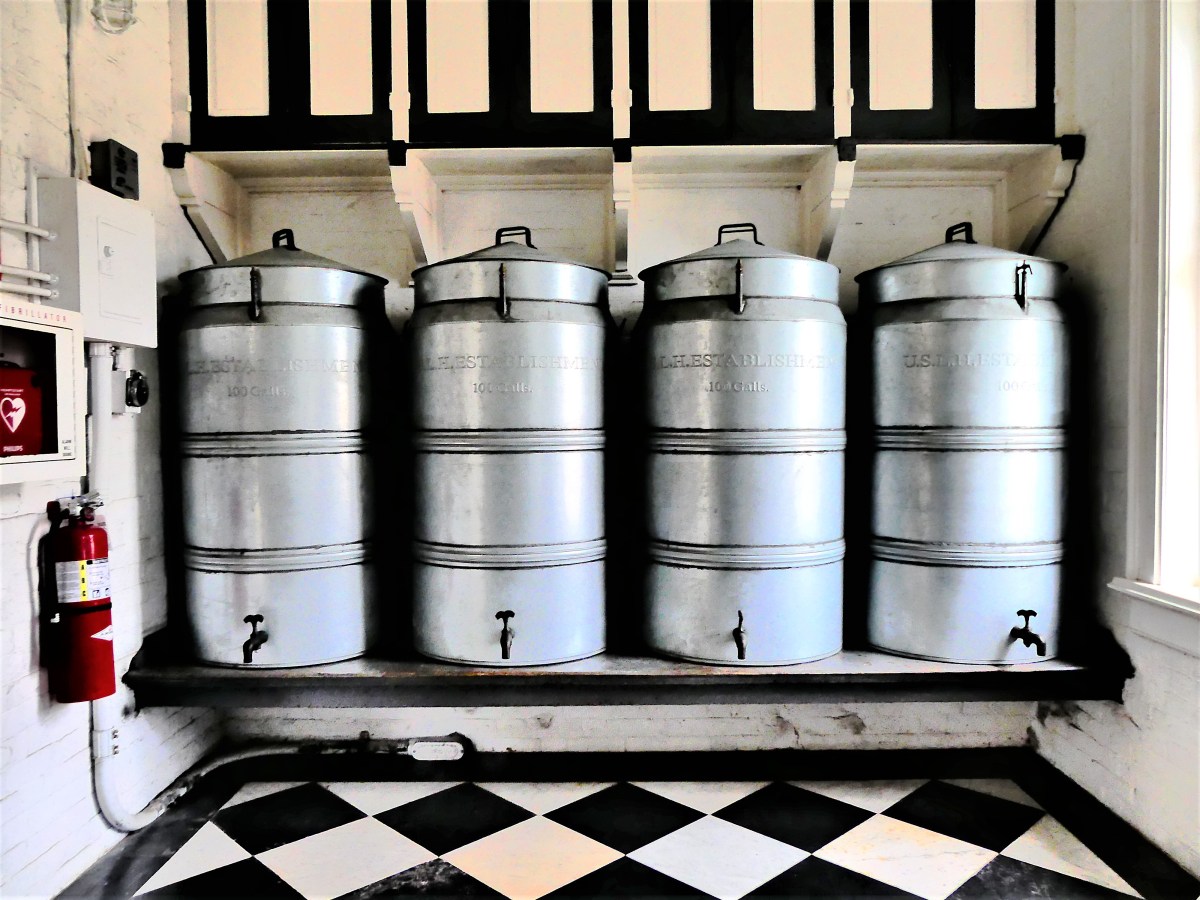
containers

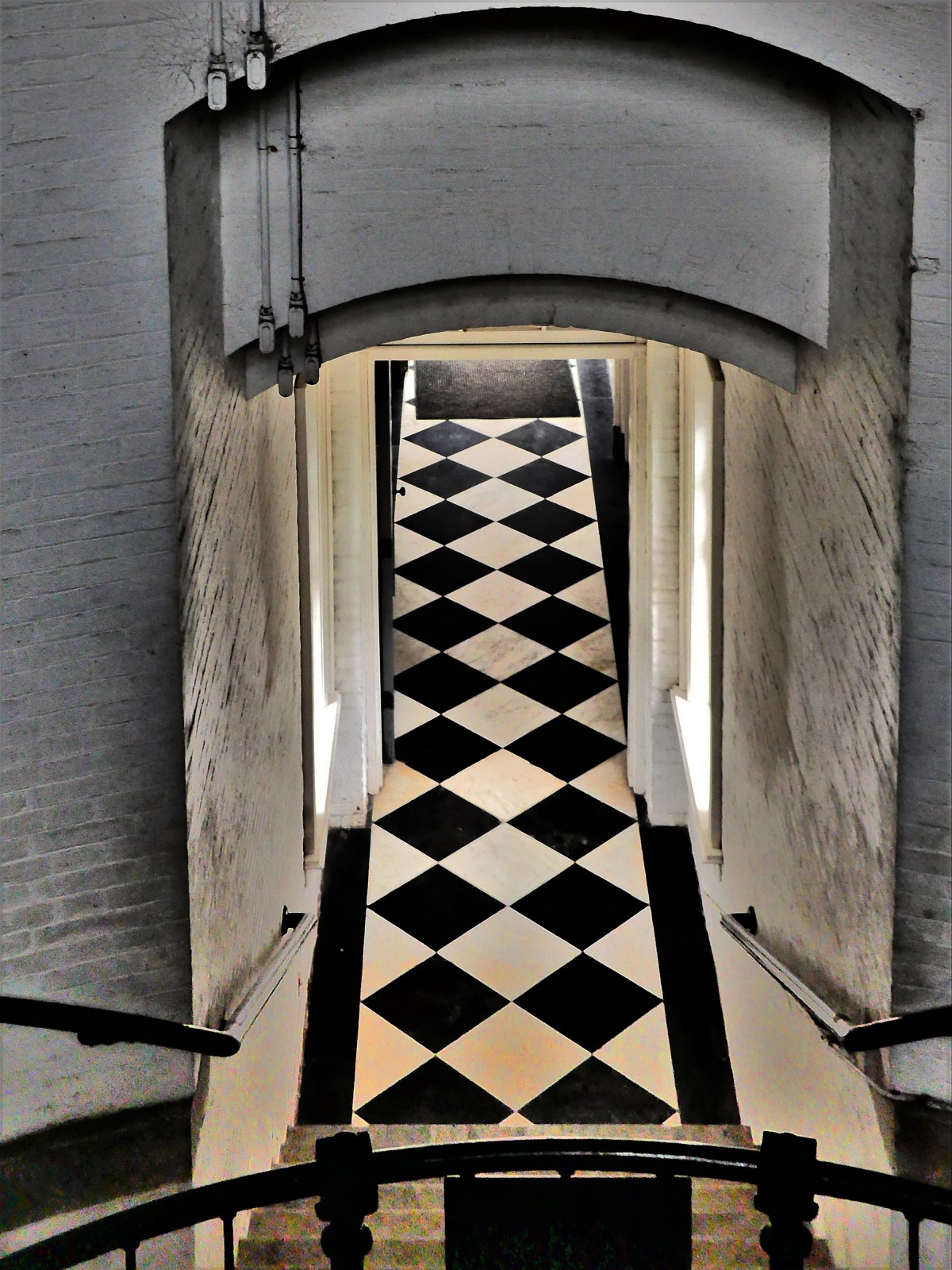
and following the marble tiles to the landing anchorage.

approach

Then it’s 219 steps to the top.

signs 2 (2)

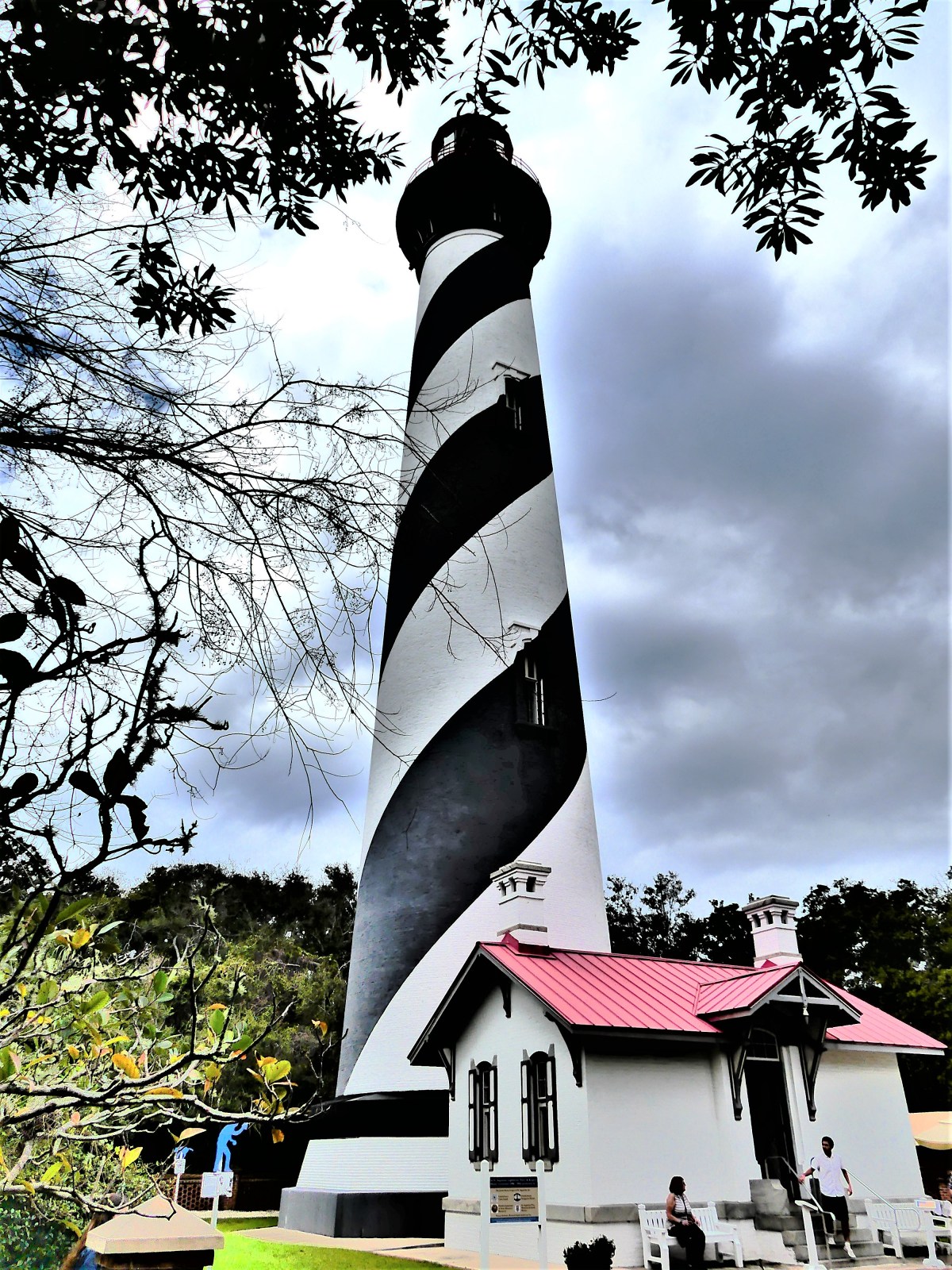
Congress authorized new construction in 1870 to replace the fading “Old Spanish Watchtower” by the shoreline, that’s evolved since the late 1500’s.

$100,000 funded three years of construction.

signs 1 (2)

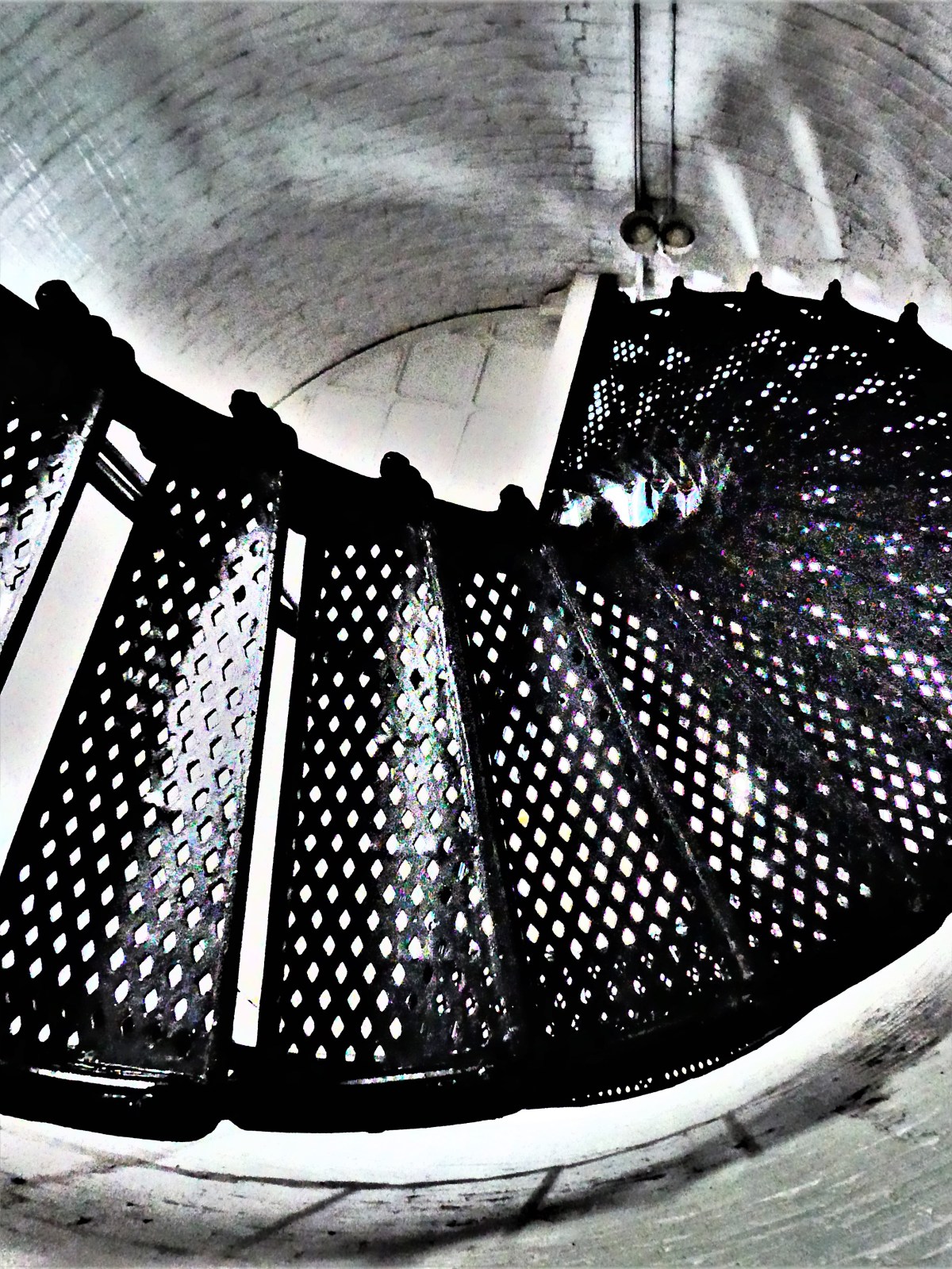
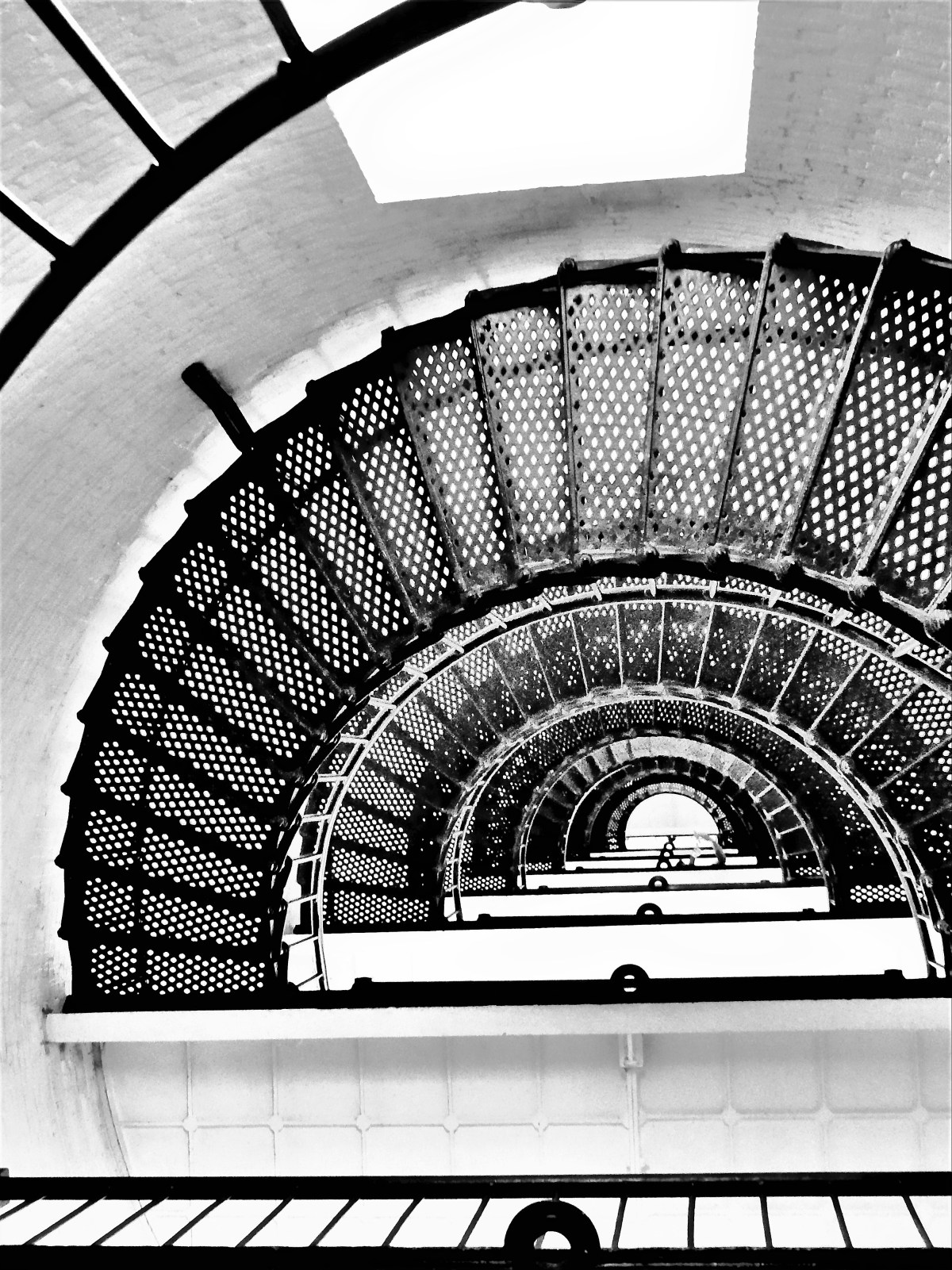
Tourists have been climbing the corkscrew stairs since 1910. The Philadelphia iron works…

stair risers

hug the walls of the 165 foot Alabama brick structure,

signs 3 (2)

occasionally interrupted by keyhole glimpses of life…

looking out.jpg

until the stairs reach an opening…

looking up

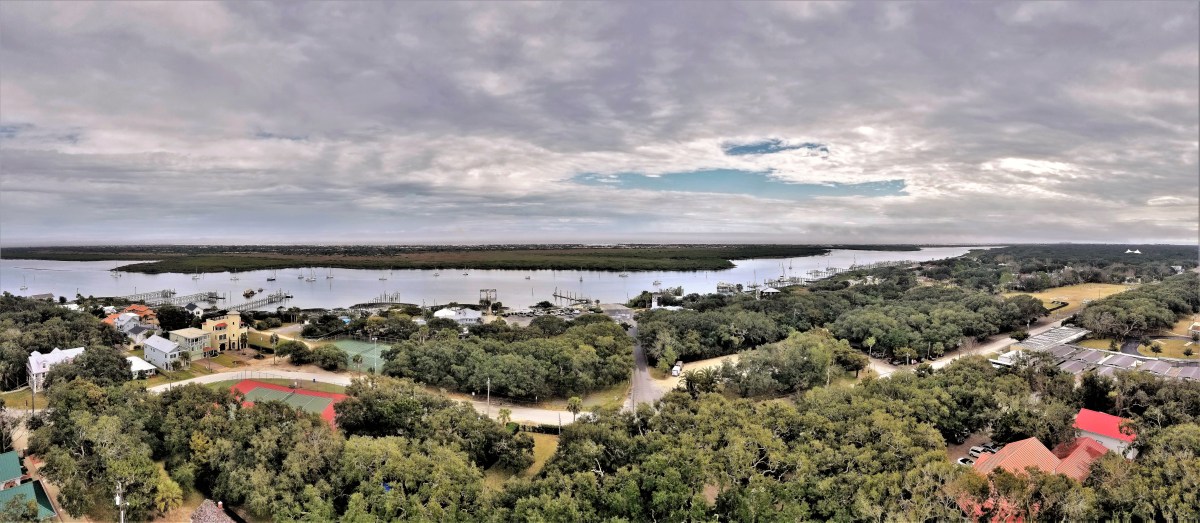
to a 360-degree lookout… 

lighthouse view2 (3)

that’s capped by 370 hand-cut glass prisms arranged in a beehive shape towering twelve feet tall and six feet in diameter.

difracted fresnel

The original lens was restored in 1992 because of vandals, 

The Fresnel Lens (2)

and re-lit by a 1000-watt bulb the following year.

difraction close-up (2)

Today, the tower represents the oldest brick structure in St. Augustine, and shines a bright light on a community that preserves its heritage, protects through its presence, and invests in its future.

lighthouse overview


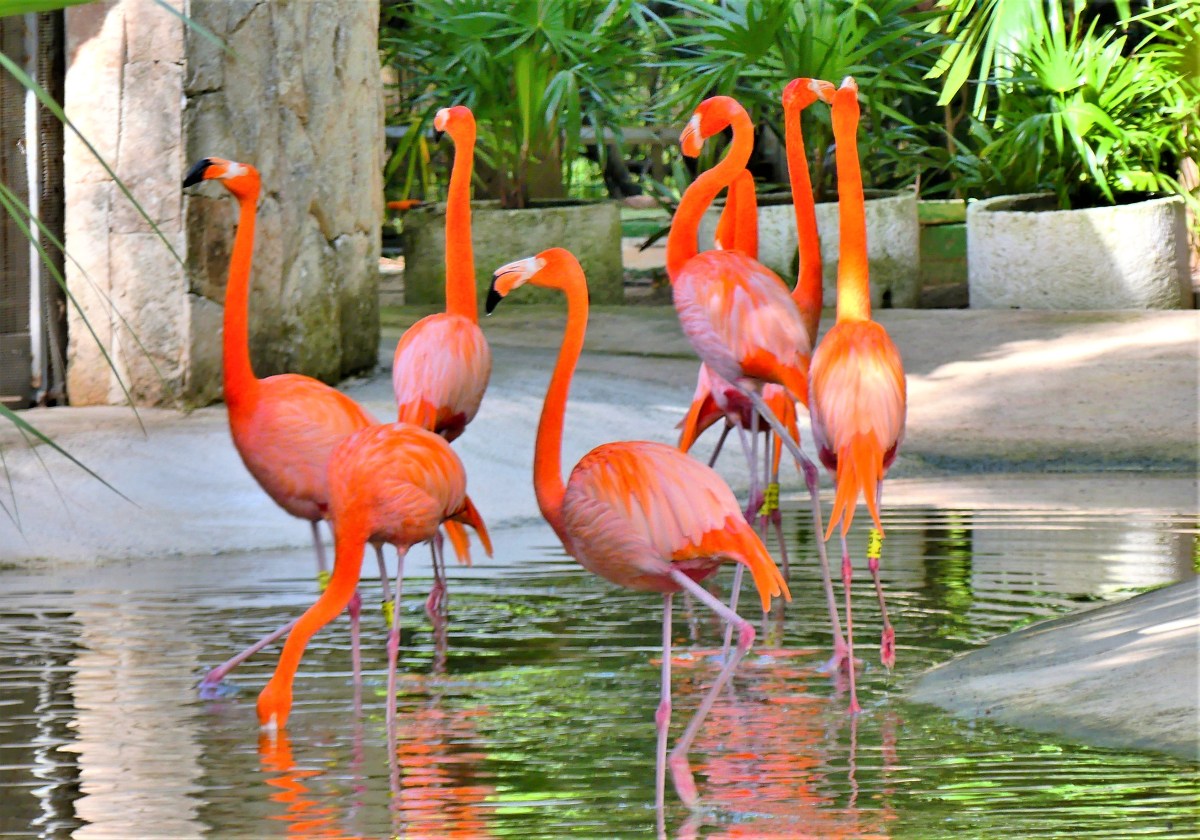
Flamingo Road

The Vindanta vacation resort in Riviera Maya maintains a habitat for flamingos smack in the middle of their property, and neither Leah or I had any idea that it was even there, despite a sign posting by the iguana-laden boardwalk…

boardwalker (2)

just outside our building.

grand mayan 3

We must have walked past the entrance to the preserve a dozen times or more, oblivious of the signage, probably thinking that Flamencos had more to do with a lounge or restaurant concept than the pink birds that occasionally keep company with gnomes and jockeys on people’s front lawns.

So imagine my surprise after learning of a conversation Leah overheard between two hotel guests who expressed such delight in watching these birds, that we had to see this unexpected treat for ourselves.

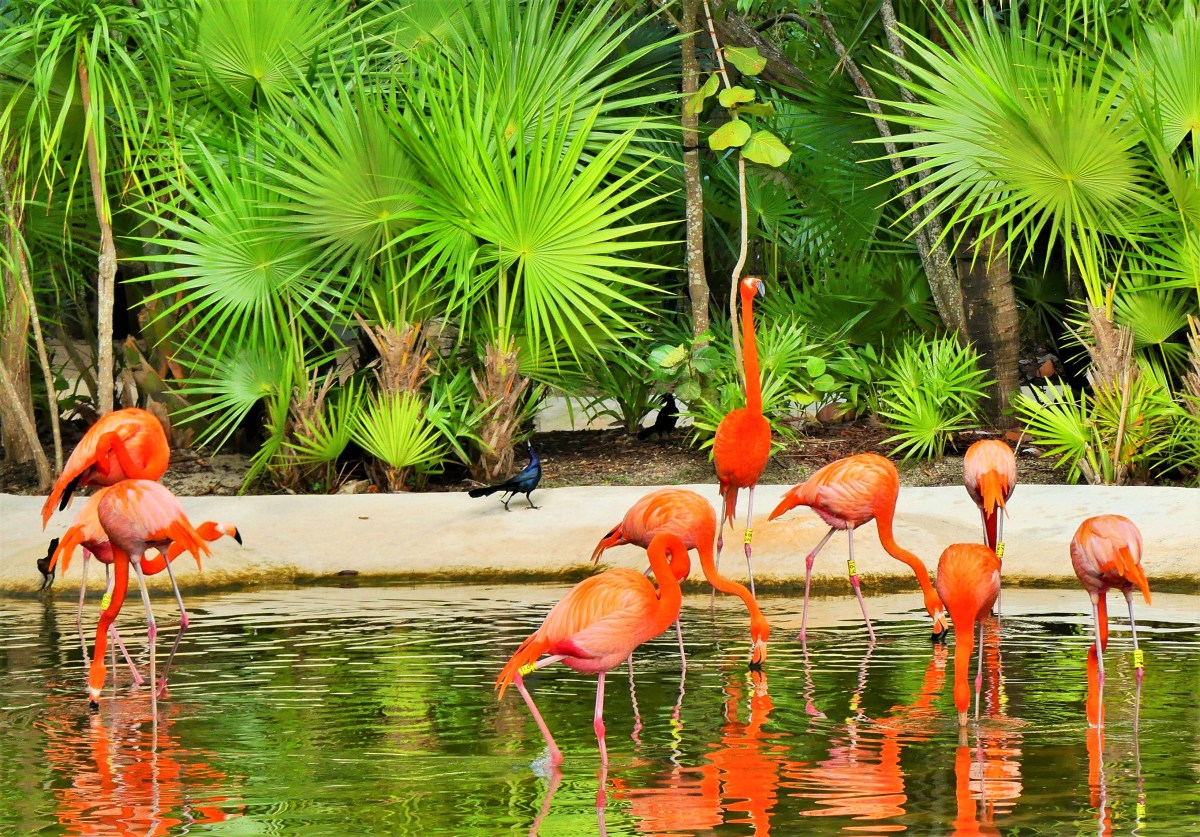
A short walk off the beaten path revealed a contained area at the toe of a foot-shaped lagoon,

bay

where a “pat” of flamingos (maybe 20 or more) were cruising around a contoured wading pool surrounding a small island of palms and mangroves.

bevvy of birds

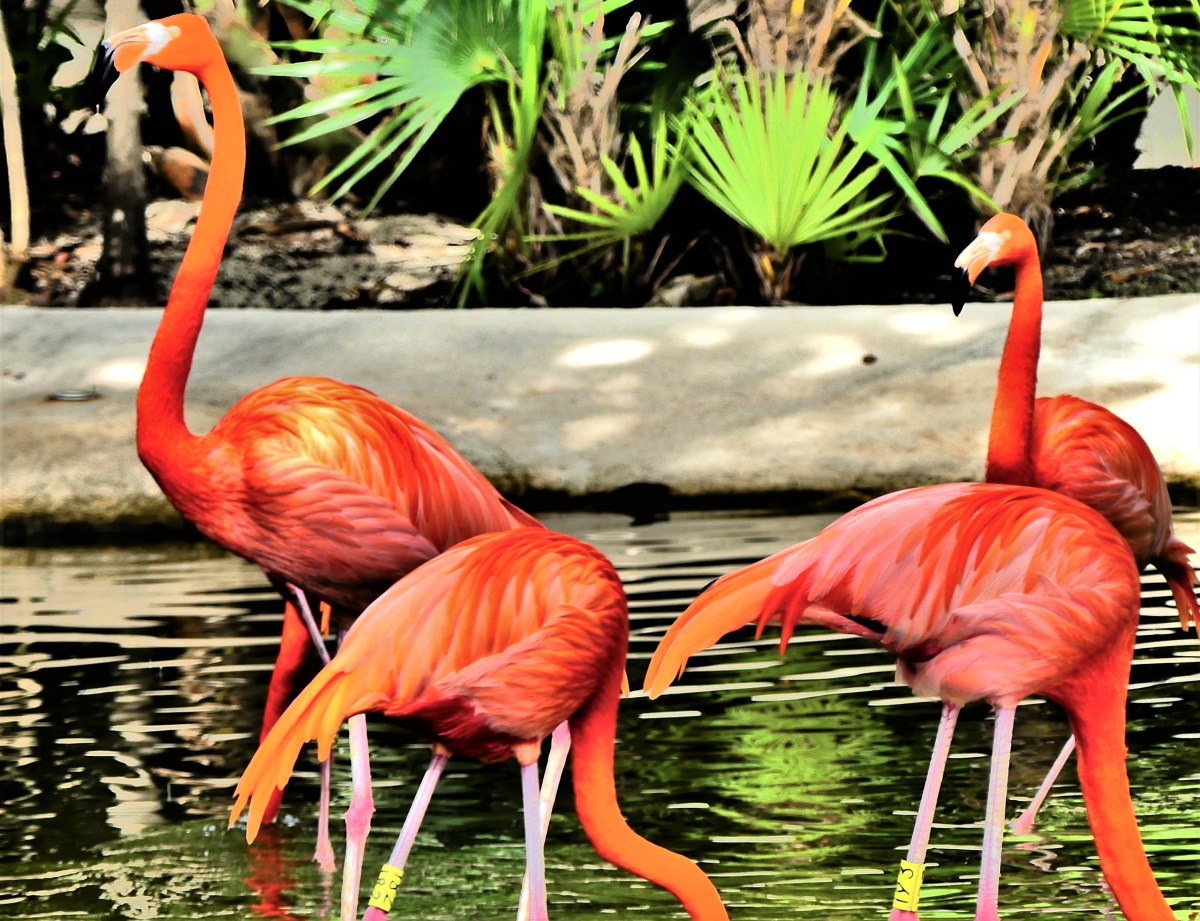
These quirky birds couldn’t stay still for a moment. They mostly followed the leader of the pack–a five foot specimen that often craned its long loopy neck…

black beak

above the preeners,

pretzel neck

wings akimbo

and the feeders–

standing guard

beak dip

as his elongated legs wallowed through the rippled water…

4 birds

while keeping a watchful eye…

one stand out

on the humans who regulary monitor and manage the water conditions.

maintenance

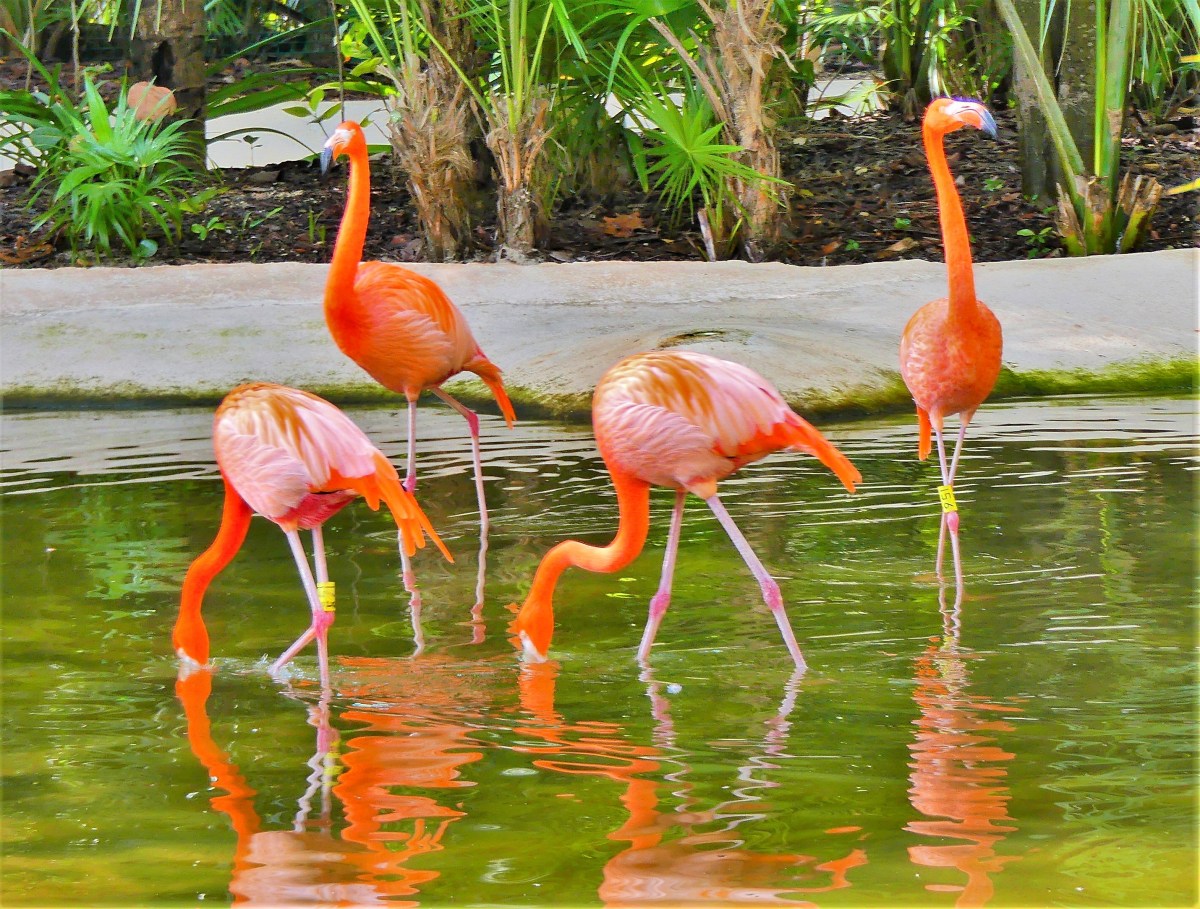
Much of the pat’s time was spent trolling the curve of the pool with their immense beaks fully immersed in water, moving their heads backwards in an inverted position…

trollers and waders

with their beak sharply angled downward from the middle–the narrow upper jaw fitting into the lower jaw–intended for separating mud and silt from the food that they eat.

close-up

The filtering is assisted by hairy structures called lamellae which line the mandible and a large rough-surfaced tongue, helping them extract the brine shrimp that constitutes their main source of food and the reason for the florescent color of their plumes.

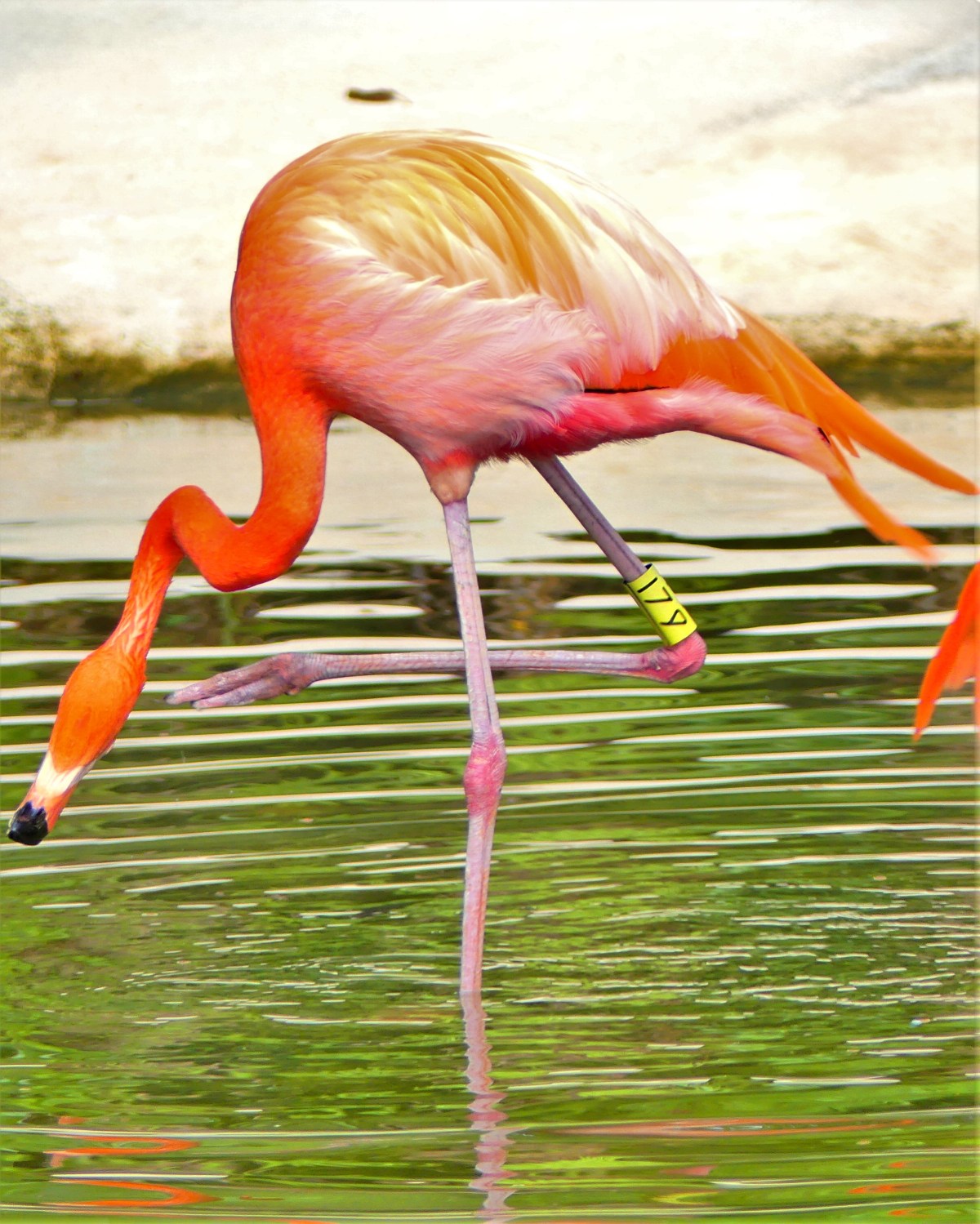
Their fingers feature a webbing that prevents them from sinking in the mud they regularly wade through when feeding.

one leg

The Caribbean pink flamingo (American) reproduces on still waters, or on small islands within shallow salt water ponds and lagoons where it builds a mud mound with a small indentation for depositing its single egg (rarely two). The incubation period lasts from 28 to 32 days, and nesting is performed by both parents. Its offspring feed on regurgitated food for 75 days, although they can feed on their own after 30 days or so.

Flamingos reach maturity between two and three years of age, reaching recorded ages of 27 years in the wild and 50 years in captivity.

reflections (3)

No doubt, these fascinating birds have it made in the shade.

pat

Gulls Take Flight

A stroll along the pier
with seagulls, oh so near,
that roost before they scare–
then quick they take to air,
for what it is they fear
shall always disappear,
because there’s nothing there,
yet soon the boards are bare.


The Other Side of Cozumel

My first Mexican vacation dates back to June 1975, when Mayan archeology was en vogue among discovery buffs and adventure seekers. Notwithstanding the primitive infrastructure and limited tourist facilities throughout the Yucatan Peninsula, the ruins of Chichen Itza and Uxmal were touted as the new off-the-beaten-path destinations worthy of exploring. And sleepy Cozumel was quickly becoming a lightning rod for scuba enthusiasts after Calypso dropped anchor atop the world’s second largest reef system mapped by Jacque Cousteau in 1961.

My unforgettable honeymoon exploits began with a flight to colonial Merida. After a few days roaming the Yucatan capital, my travel agent provided a wretched VW bug for cruising the crude roadways through the jungle to explore the nearby Mayan pyramids. Unfortunately, car shocks were not an available option, so cruising in the beetle became a bone-bruising experience.

The drive took Ros and me from ruin to ruin to Quintana Roo, with a proposed route down the coastline to Akumal’s picturesque Yal-ku lagoon and neighboring cenotes. But not before the bug broke down at noon on the border of a carved out town with a hard-packed dirt road reserved for payloaders and dump trucks. If only I could find a phone to notify the local agency in Merida…but not so fast.

In what was to later become Cancun City, there were only two available telephones in town: one belonged to the military police, and the other was located inside an established cantina, where we waited our turn behind a long line of contractors from Mexico City who had queued up to call home for supplies and payroll.

As luck would have it, my bride and I were befriended by the manager of the Sheraton Hotel–the very first hotelier to arrive on the Cancun scene–who overheard our predicament and offered to advocate on our behalf. Having identified himself as the only bilingual person in the vicinity, I thought I had discovered El Dorado.

We shared a meal of tamales and cervezas, and counted the electronic chimes gonging from the newly erected church tower, as day turned into night-for-day, with crews working around the clock in the hope of meeting an insurmountable deadline. I can’t remember if it was four or five or forever hours, but within that time frame our GM had located and negotiated with a local Mayan mechanic who had limited experience repairing diesel lawnmowers, and was willing to diagnose our car trouble on the spot.

After Fabio rebuilt our carburetor for $75, we were on our way, albeit ten hours behind schedule, but secure in knowing that a full moon would help light our way as we rumbled South to our next few stops.

At the end of our first week on the mainland, we reached a charming fishing village known as Playa del Carmen where we ferried across to Cozumel for what was to be the relaxing second half of our honeymoon. A ride through roiling seas did little for our confidence and constitution.

We checked into Cozumel’s exclusive El Presidente Hotel (because it was the one and only hotel up and running at the time). And without a minute wasted, we hopped on a rental scooter to discover our surroundings. Dressed only in swimsuits and sun protection, we set a course for Centro (town) on our 50cc moped.

With the sun on our faces and sea-breeze at our backs, Ros hung on for dear life as we cruised like Easy Riders for all of ten minutes…in the wrong direction. While I had asked the desk clerk for directions in Spanglish, his quick response in Spanish only left me guessing if I should make a left or right turn at the hotel entrance. So I made a left, and followed the road for five miles.

I still remember the event clearly. There was no warning, no barrier–only a road…then no road–just a drop-off of sand and rocks. A split second reflex to squeeze the brakes to avoid a wipeout was not without consequences. I pictured us in a time-lapsed, slow motion free-fall–my wife hurdling over the handlebars in a tuck position, and me rolling with the bike until it came to a stop in a black gravel pile.

My ears were ringing, making it hard to figure if the groans were coming from Ros or me. Instinctively, I kicked the back wheel off my bloody leg and tried to stand until I realized that my Technicolor world had been replaced by overlapping layers of yellow, magenta, and cyan–ever so slightly out of registration: clear signs of a concussion that I didn’t realize at the time, but none of that mattered at the moment.

My mission, compelled by a sense of urgency (and driven by excessive amounts of adrenalin) was to rescue my wife, who was presently lying beside the broken road, curled into a fetal position and sobbing. Fortunately, her condition looked worse than she felt. We managed to prop each other up, and limp back to the scooter to assess the damage.

We were in the middle of nowhere with a twisted bike frame and no means of calling for help. Our options were few and far between. Collectively, we mustered our strength and pushed the scooter back to El Presidente, where we both collapsed from heat exhaustion and shock. The concierge immediately summoned a doctor from Playa.

Meanwhile, two bellmen carted us to our room in a luggage carrier, where we were met by two housekeepers with wet towels, who oh-so-gently wiped down our blood-stained arms and legs. As we lay in bed waiting for medical assistance, the maids and bellmen–not knowing what else to do for us in our serious state–determined that fanning us would make us feel better, so each took turns waving a bath sheet from the foot of our bed until the doctor arrived.

Fortunately, our diagnosis was better than expected: our limbs and torso wounds were only superficial–analogous to second-degree burns; and my concussion was considered mild. As the doctor cleaned and bandaged us, he recounted that 90% of all accidents on Cozumel were scooter-related. As if to cheer us up, he considered us lucky that our injuries were far less serious than others he’s treated. True, but even so, the treatment seemed cruel and unfair.

Here we were, stranded on a quiet Caribbean island during our honeymoon, surrounded by clear turquoise waters in the thick of summer, and the doctor advised us against swimming for fear of infection. Instead, we were both confined to bed rest with no possible chance of intimacy. And to make matters worse, I was ordered to refrain from alcohol, except for tending to our cuts and scrapes.

For sure, those were the hardest seven days I ever spent in bed.

Stay tuned for Part 2 down the road.

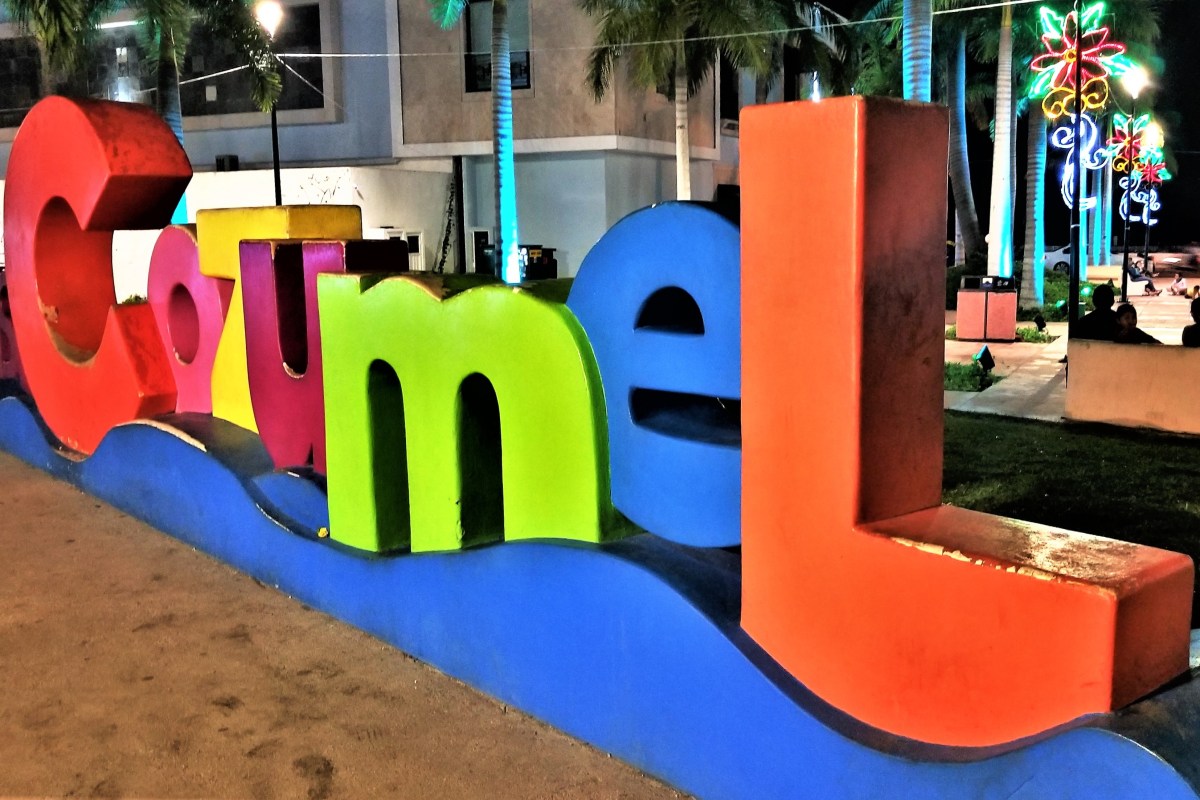
Colorful Cozumel

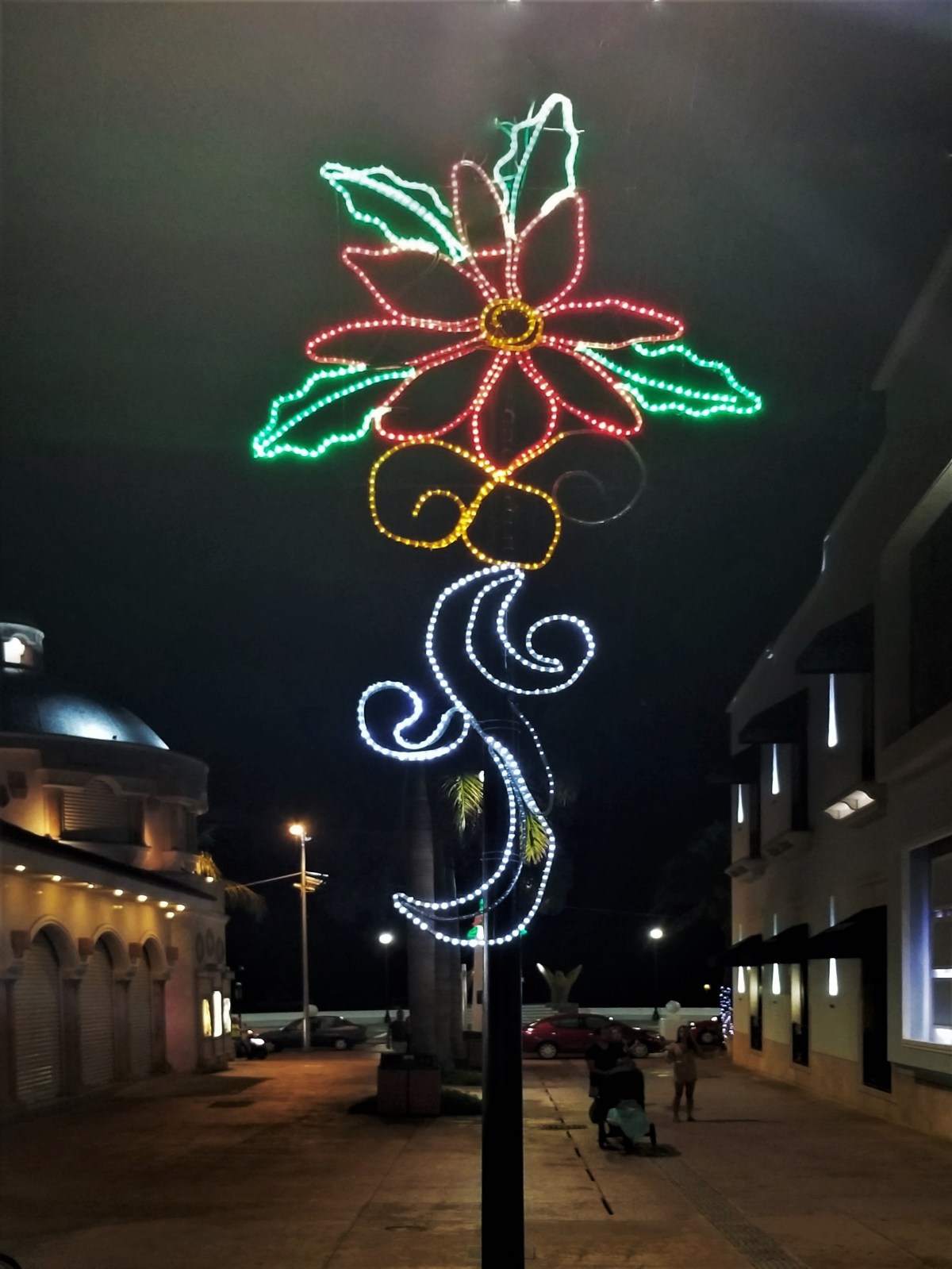
A display of vivid Christmas colors continues to shine brightly throughout Isla Cozumel during its holiday aftermath. But wait a Mexican minute! 

centro ornaments (2)

The holdover decorations from Christmas past are not an exception to the rule, 

holly decoration (3)

because Cozumel’s sun-drenched colors are omnipresent and everlasting, no matter what time of year,

centro square

or time of day.

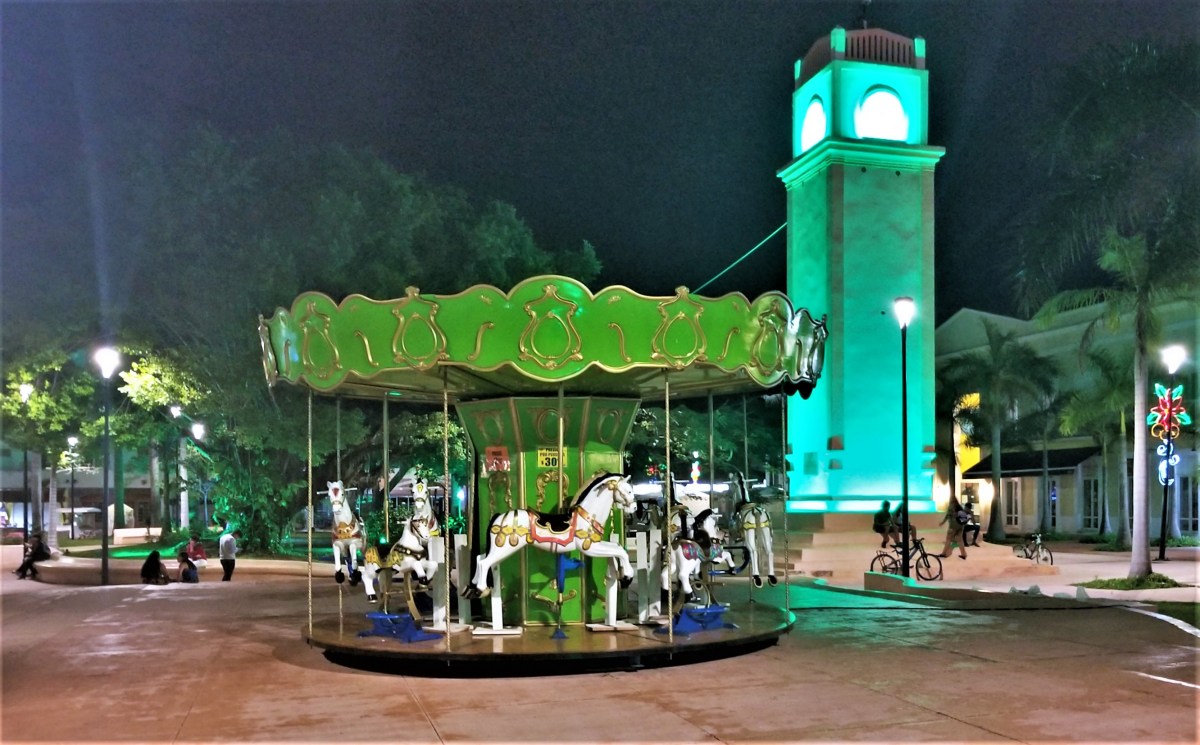
carousel and clock tower

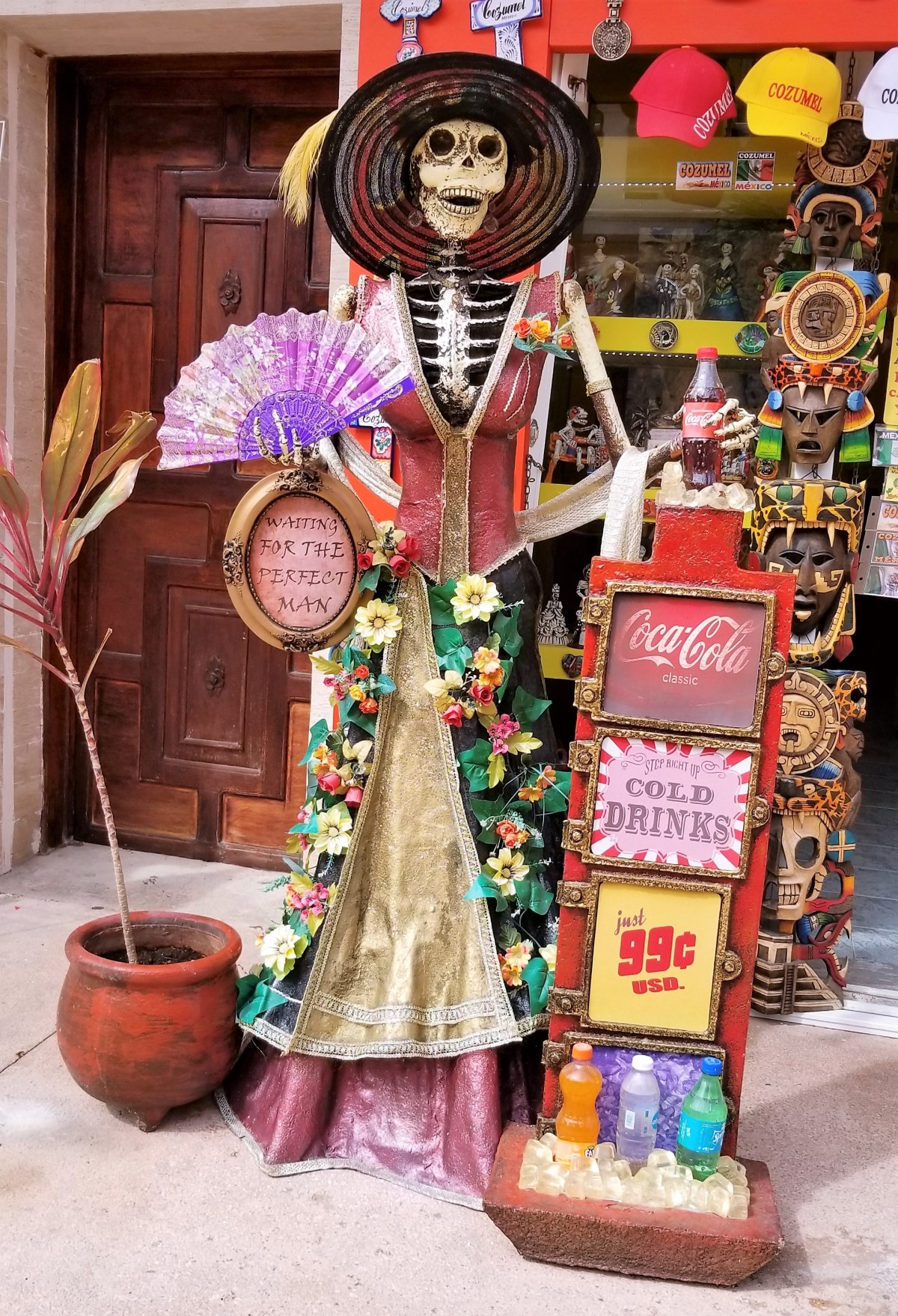
Consider the remnants of Mexico’s sacred Day of the Dead celebration that still prevail around town,

coca-cola calaca

with calacas (skeletons)…

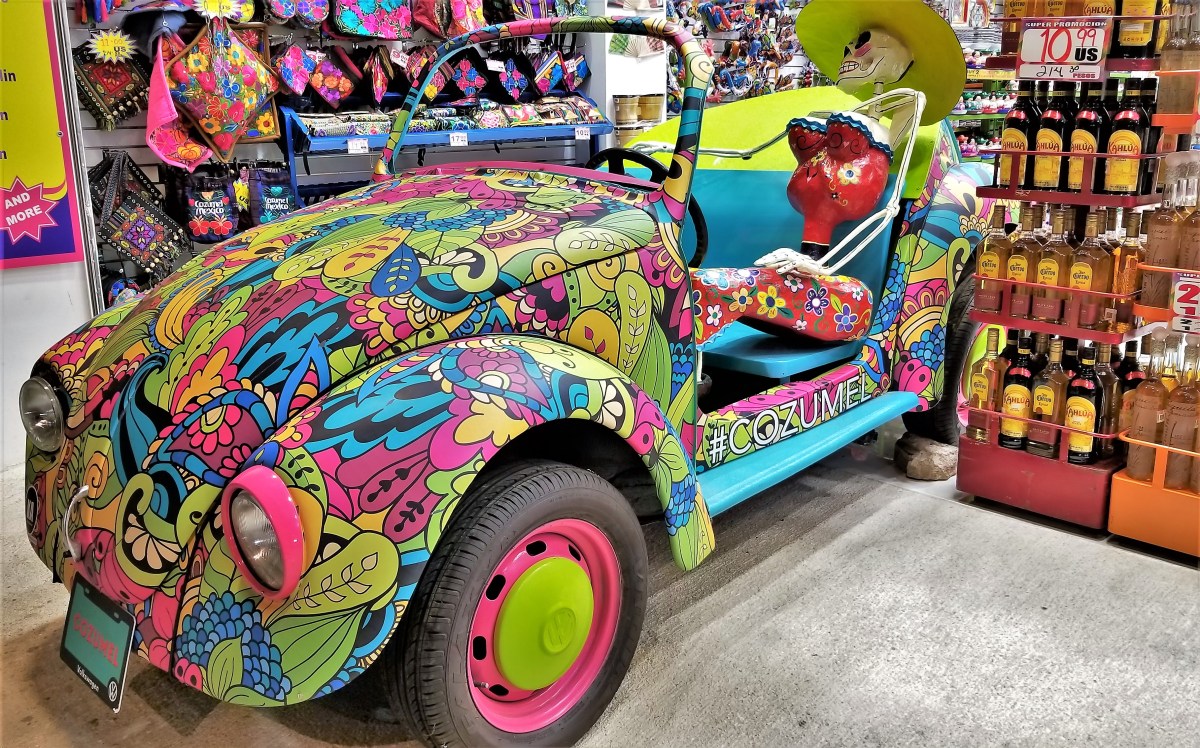
floral bug

engaging tourists and shoppers at every turn along Avenue Rafael E. Melgar (named after one-time appointed governor of Quintana Roo)…

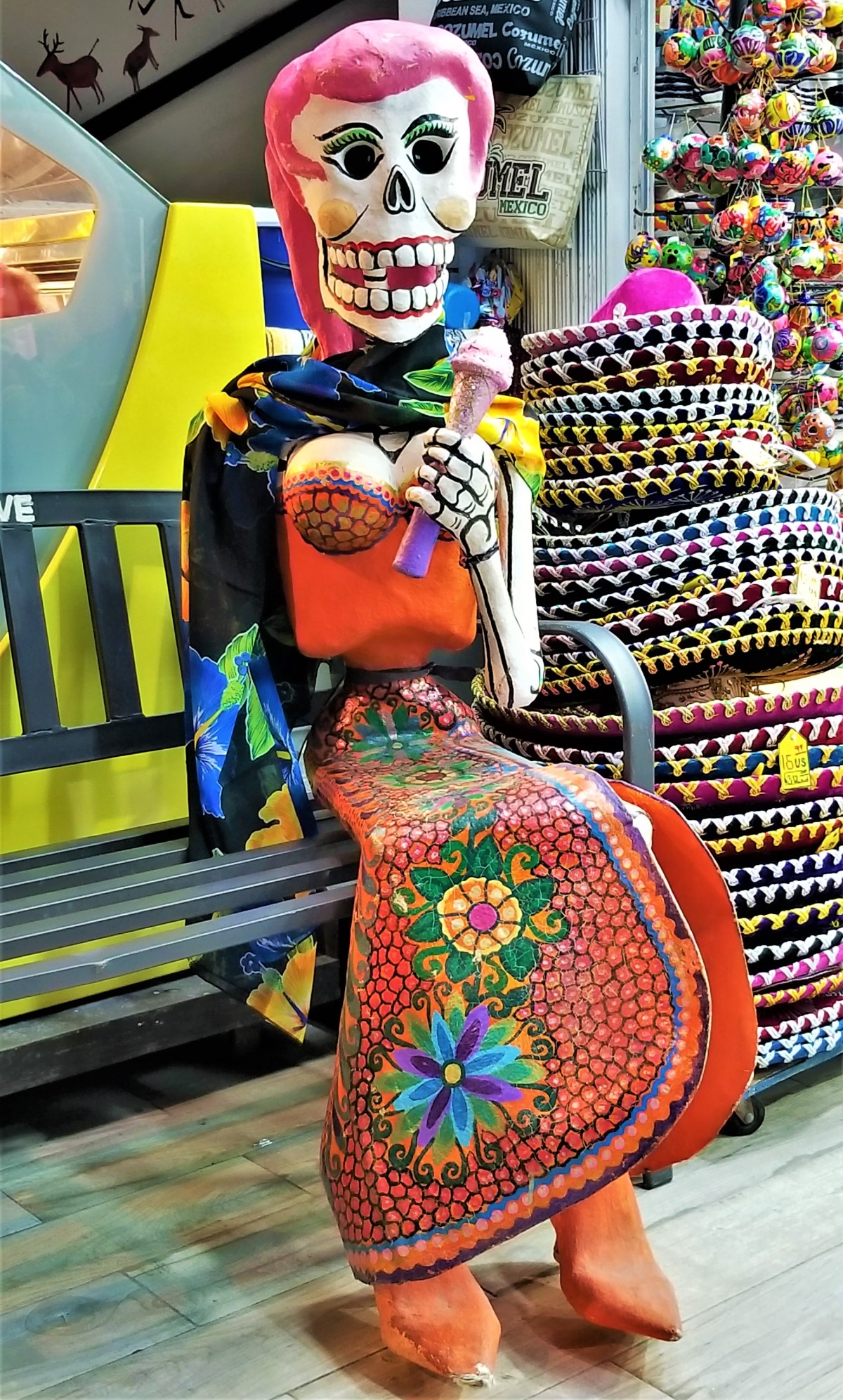
i scream

…with whimsical retail marketing, 

snorkel calaca

and characteristic Mayan flourishes.

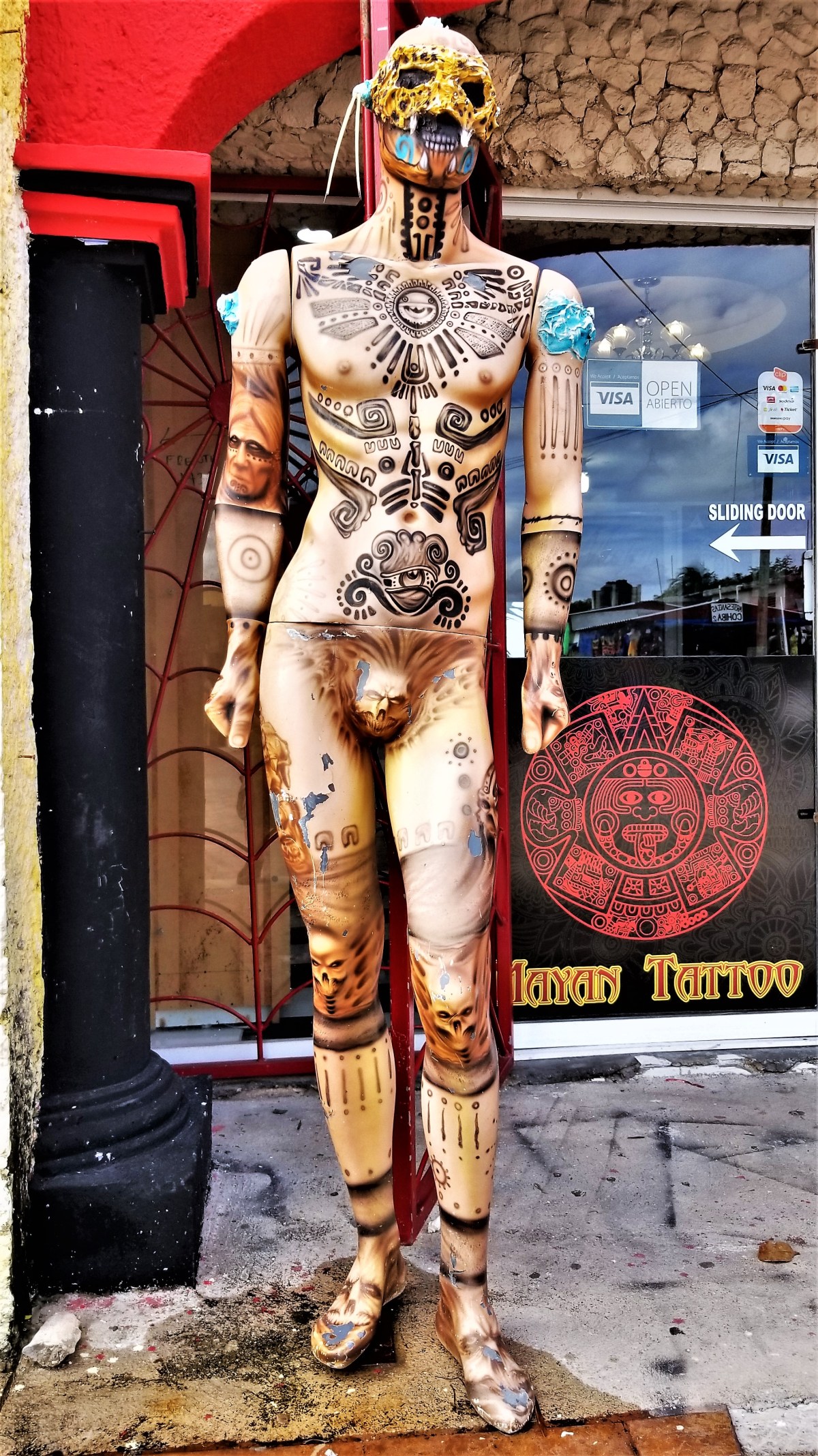
tattoo calaca

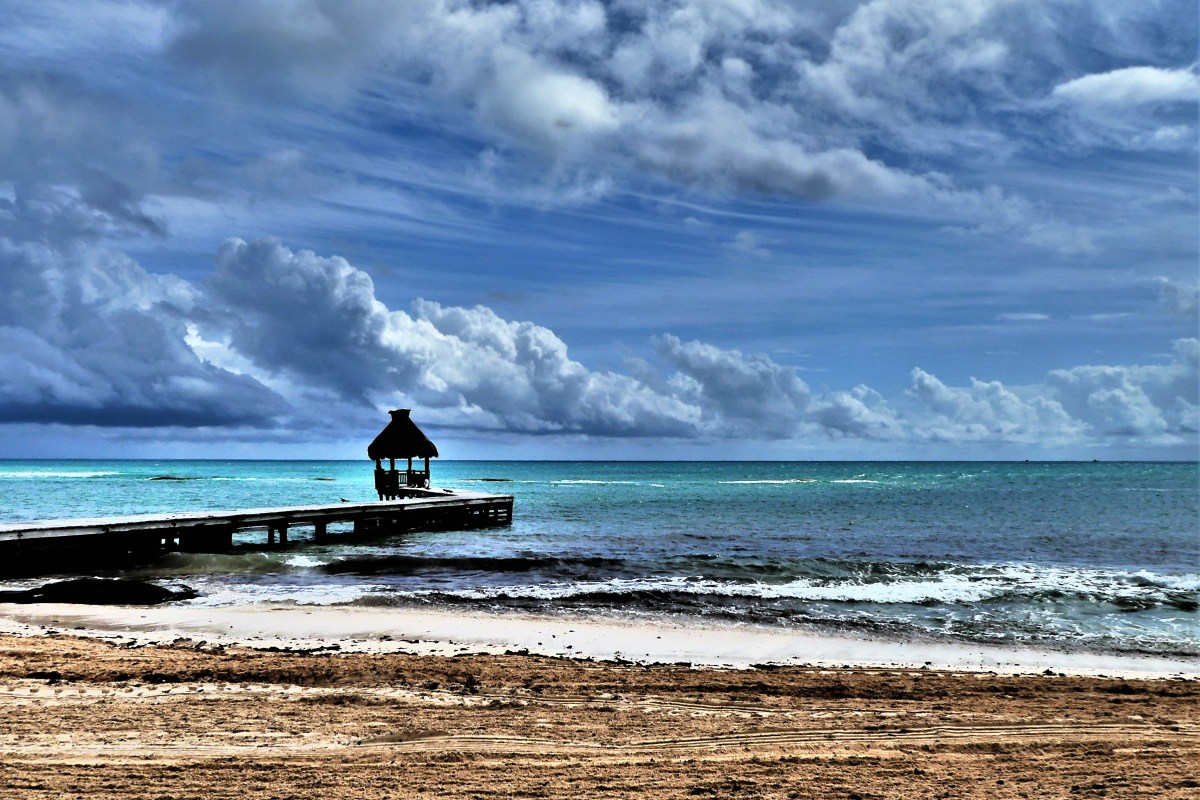
Holidays aside, Cozumel colors are as transparent as the azure waters that lure destination divers,

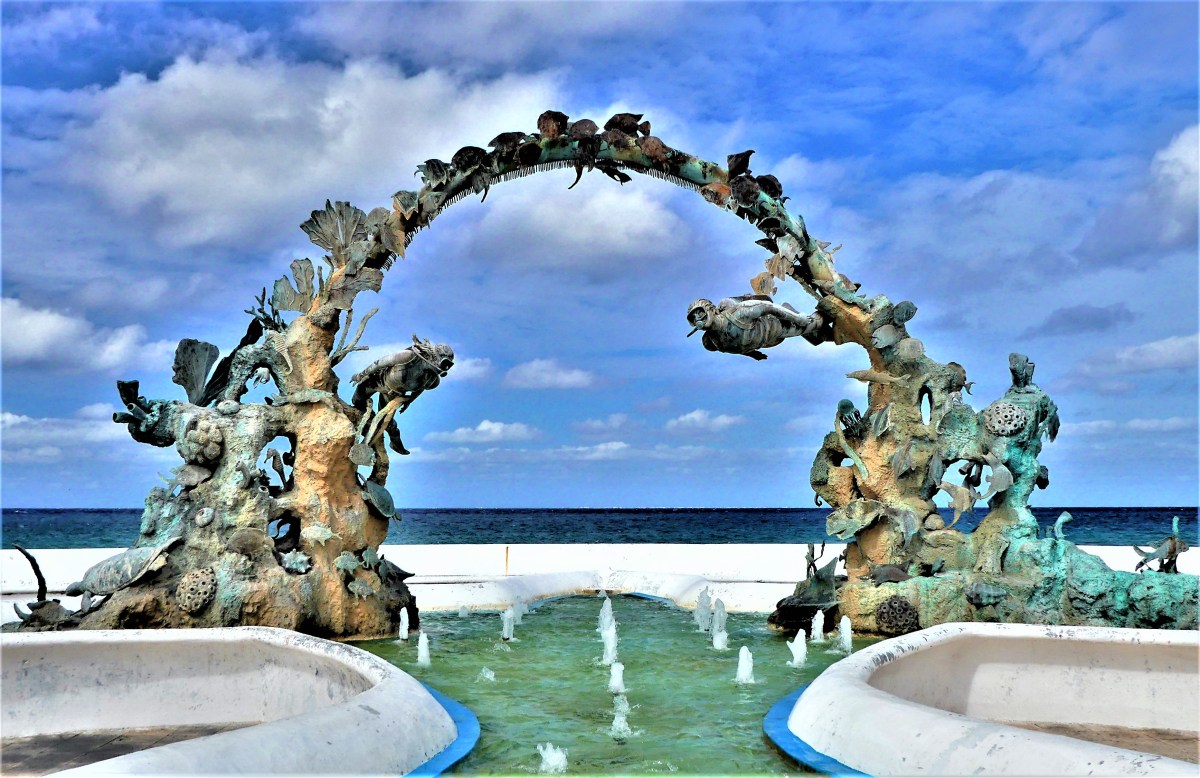
diver' fountain (2)

or apparent as the tropical breezes that sweep through lush palms,

tropic seas (2)

and adamant as cruise ship passengers,

carnival cruiser

who return religiously…

san miguel stained glass (2)

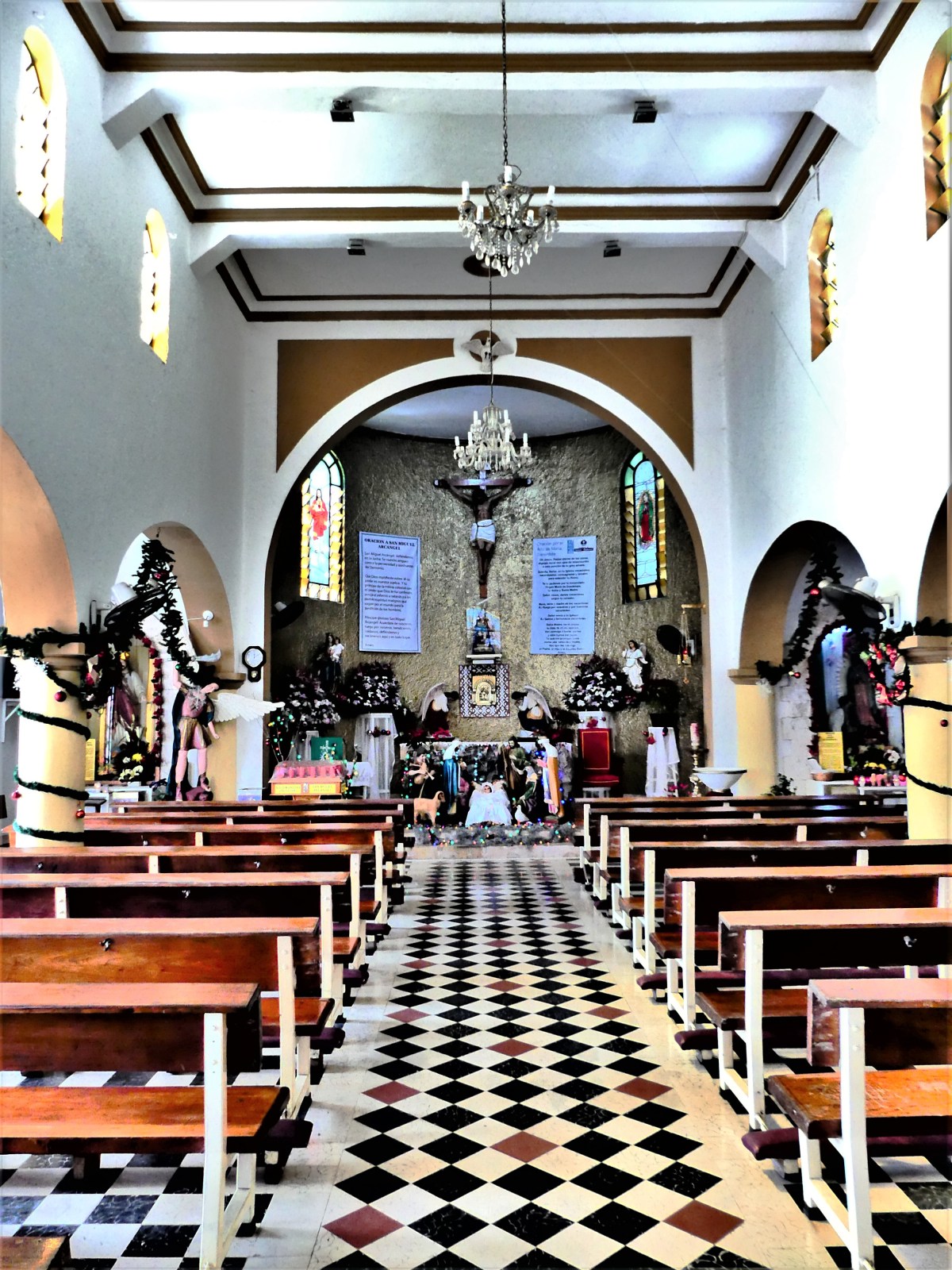
san miguel parish

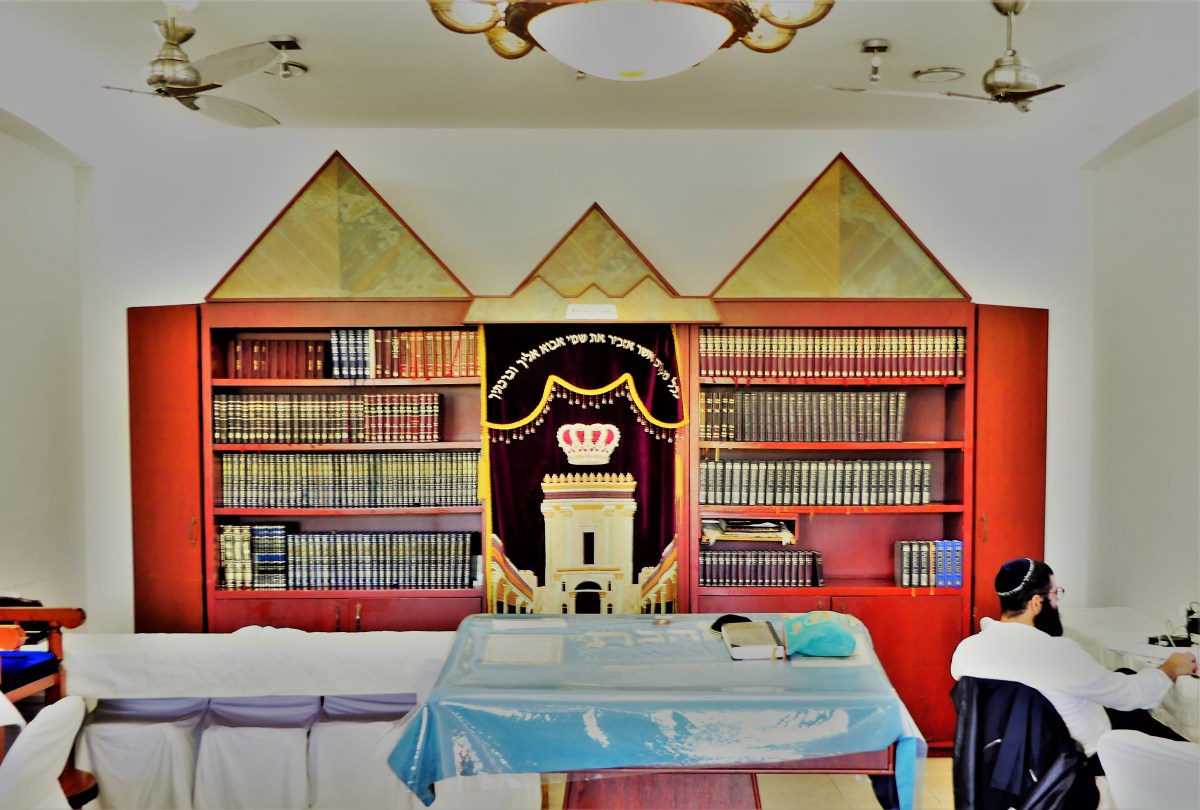
chabad

ark.jpg

to experience the culture,

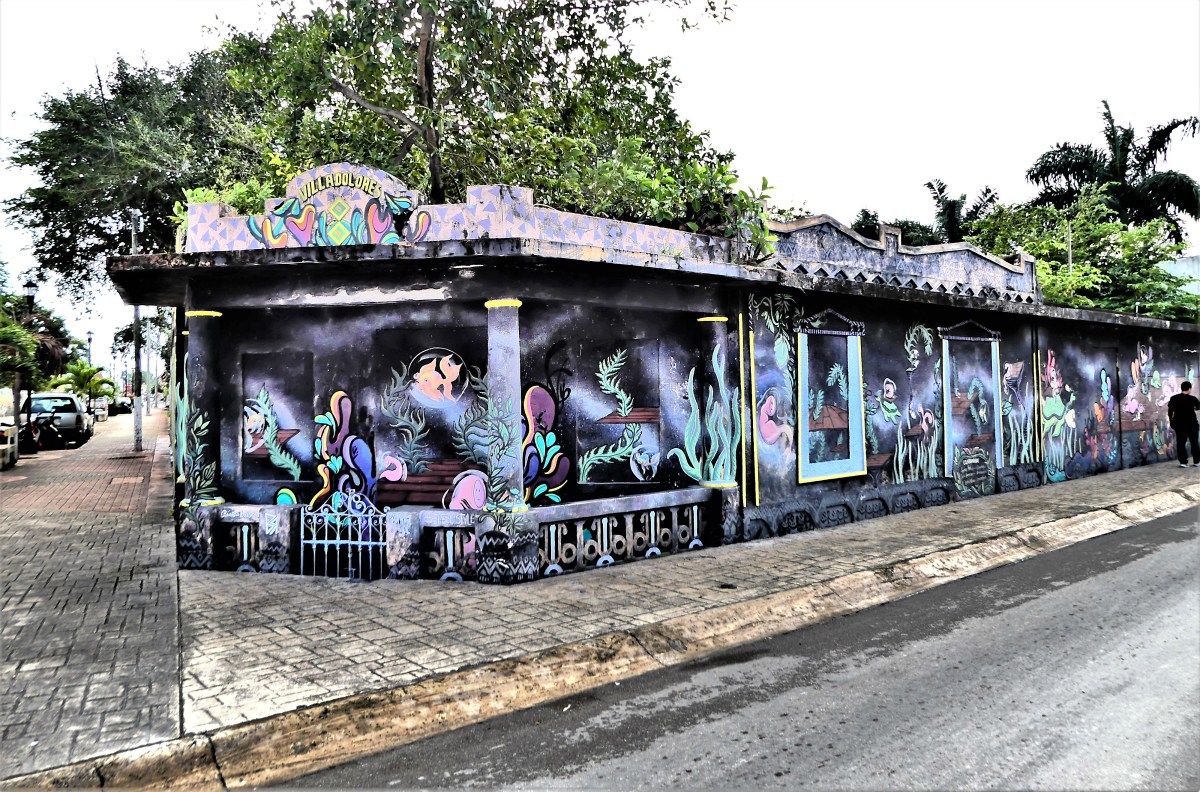
villa dolores

coral mural

mayan culture mural

the hospitality,

dive shop

and the cuisine:

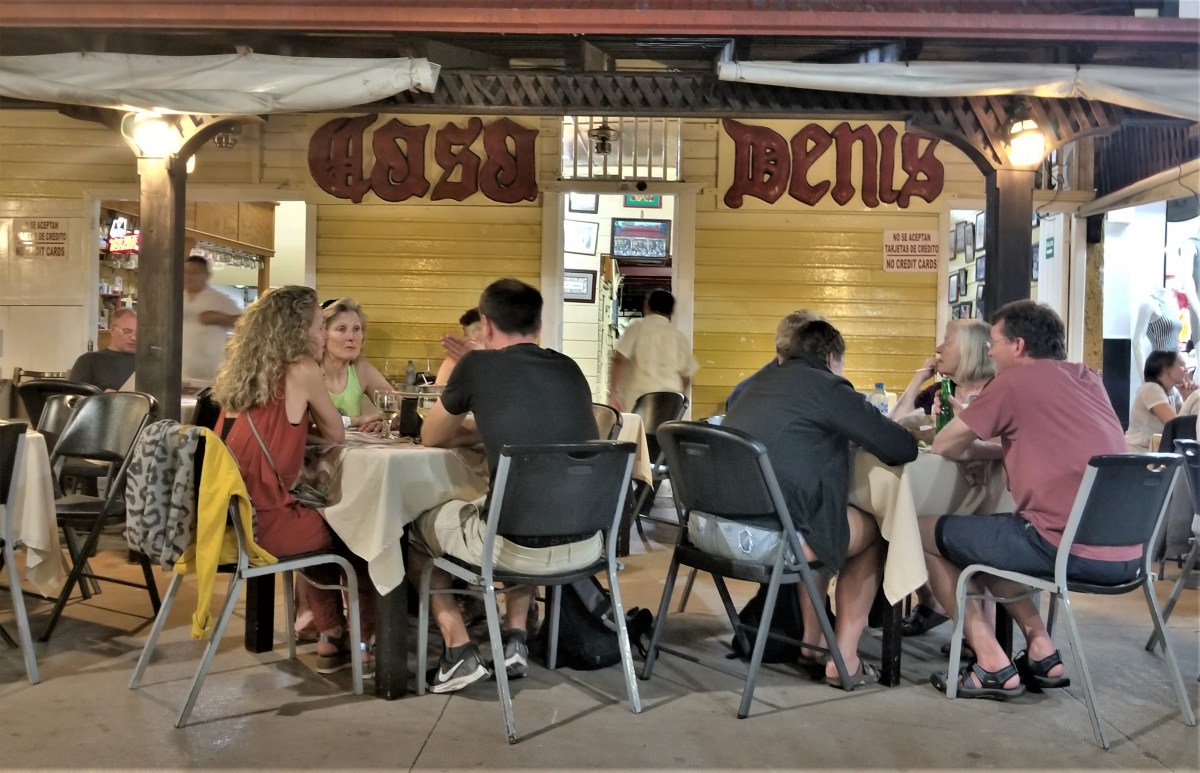
casa denis exterior

Culinary cognoscenti have been enjoying authentic Yucatan fare at Casa Denis since 1945.

casa denis placemat

Three generations of the Angulo family have been serving locals and international travellers alike…

casa denis kitchen

with a mi casa es tu casa sensibility,

casa denis interior

using fresh ingredients at reasonable prices.

casa denis dinner

Yet for all the expected colors surrounding this island gem…

seaweed, sand and chaises at sunset

some things are best expressed in black and white!

overfishing mural
Overfishing by Jack Fox (South Africa)

Critter Cam

Security at our new house in St. Augustine has been a concern from the beginning. While we truly enjoy our privacy, we are physically isolated from all of our neighbors–alone in an outlying cul-de-sac that so far has eluded the new home construction spike occurring throughout our community.

waterfront

However, it’s not as if we are inherently paranoid, or that we have a bucket full of anecdotal evidence to suggest that we have something to fear in our neighborhood. On the contrary, we’ve found our faraway neighbors to be friendly and caring.

But there are times when it would be nice to have some neighbors around to keep a watchful eye on things. Or have them circle the wagons in the event of an ambush.

Which would lead us to conclude that we are pretty much on our own when it comes to protecting our property.

home exterior

The other day, Leah and I were introduced to a new neighbor for the first time, who asked the all-to-familiar question:

“So which house is yours?”

Which was answered in a patterned response:

“We’re pretty much by ourselves. Just look for the lonesome house with the red truck on the remote cul-de-sac,” I replied.

screenshot (75)
Look for the blue lollipop–bottom left

Our neighbor responded, “I know that house. It’s very pretty and lush by you, but aren’t you scared being all alone? Maybe you should get a dog!”

Well, no! Although we are dog friendly, there’s no plan for a dog in our household. Certainly not while we still intend to travel.

However, we had considered getting an alarm system, which doesn’t require regular walking or a vet. After an exhaustive search on the internet that challenged my inner geek, I opted for the wireless and flexible RING system to best integrate all security components (video doorbell, front door smartlock, cameras, floodlights, sensors, keypad and base station) under one umbrella. And the monitoring system–no contract necessary–was a genuine bargain at only $100 a year, with COSTCO picking up the first year expense.

I hooked everything up over the course of a few days, despite dangling from the top of a 14 foot telescoping extension ladder.

screenshot (78)

With all devices connected and communicating, I believe Alexa was immediately impressed, but Leah, not so much. She was waiting for a sign that the installation was worth all the accompanying chirps, bells, and whistles of every indoor/outdoor motion or open door–all in the name of stranger danger.

And then we discovered the unintended benefits of exterior motion detection: CRITTER CAM!

In addition to raccoon reconnaissance, we’ve also observed possums, bats, feral cats and cougars, which gave us a better perspective of what was digging up our yard since our move.

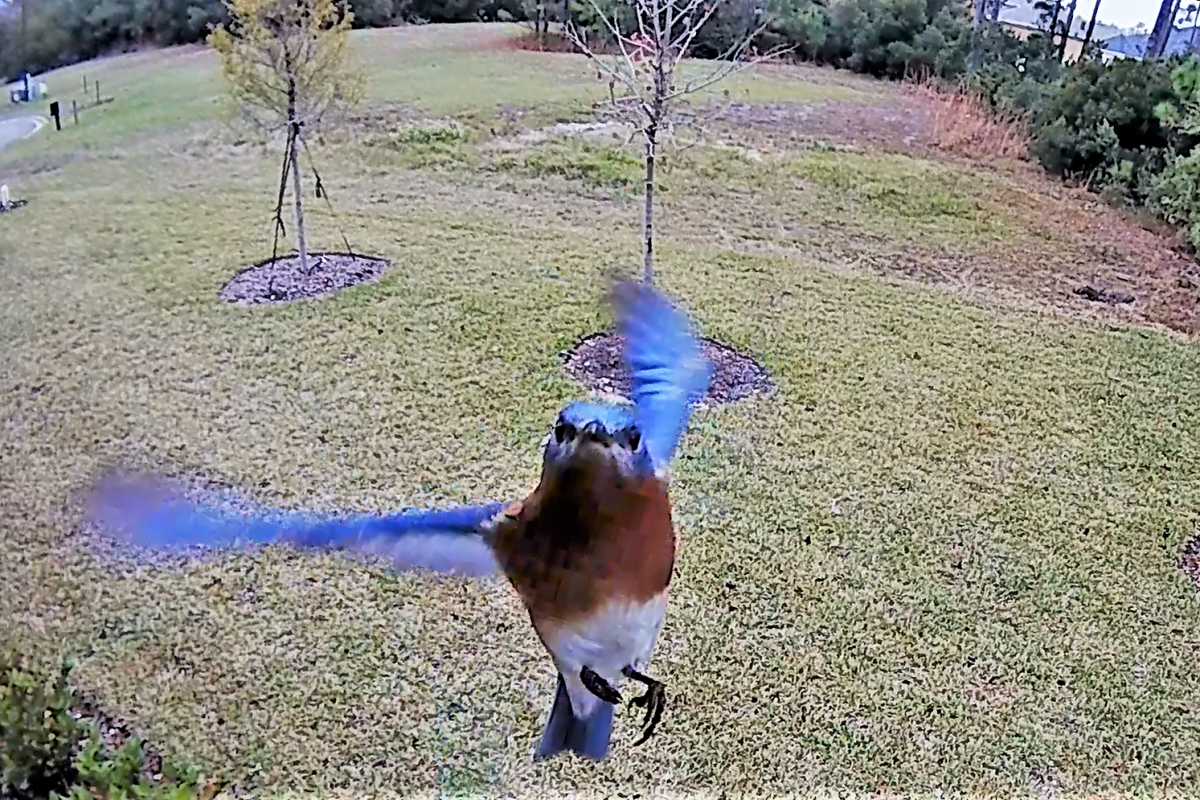
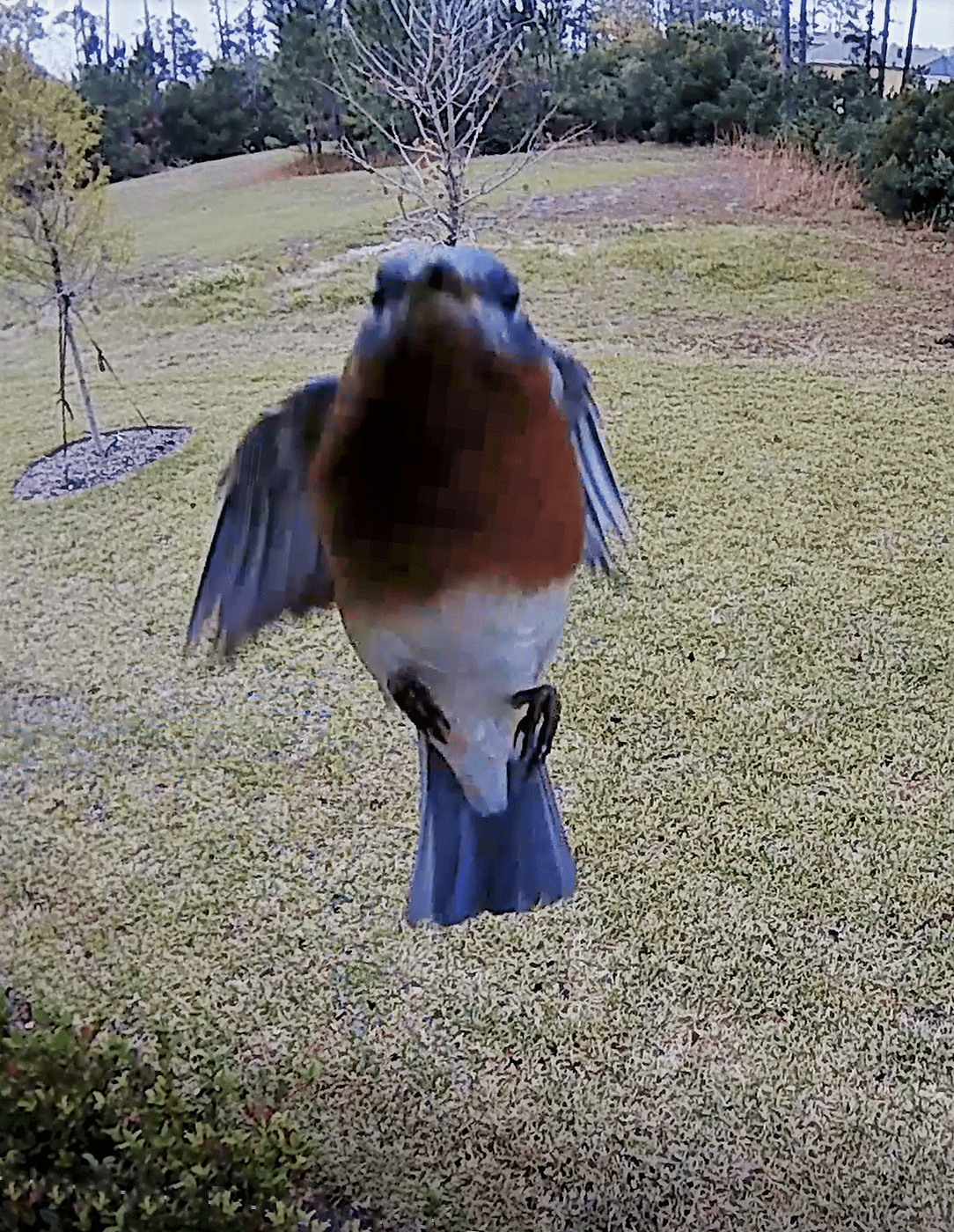
But then, I wasn’t prepared for the camera-mugging bluejay who seemingly came out of nowhere to find an unexpected perch…

Realizing that the video capture happened in a blur, I dissected the imagery to secure a better understanding of what I was watching…

flight1a

flight2

flight3

flight4

flight5a

flight6

flight7

Again…

Little did I realize–to my surprise–that RING would open up a (w)hole new dimension of peek-a-boo. 

Palatka Pride

On the surface, Palatka, FL appears to be an antiquated town that time has left behind. As the county seat of Putnam County, there is legal commerce aplenty,

Putnam County Courthouse1 (2)

but Main Street bears the battle scars of a once-vibrant retail scene.

Offices for Rent

Far too many vacant store and empty sidewalks along St. Johns Avenue suggest that downtown Palatka’s panache has been replaced by big-box retailers like Wal-Mart (only three miles away)–jokingly confirmed by a hand-painted directional crossroads sign…

Walmart sign

beside an empty storefront.

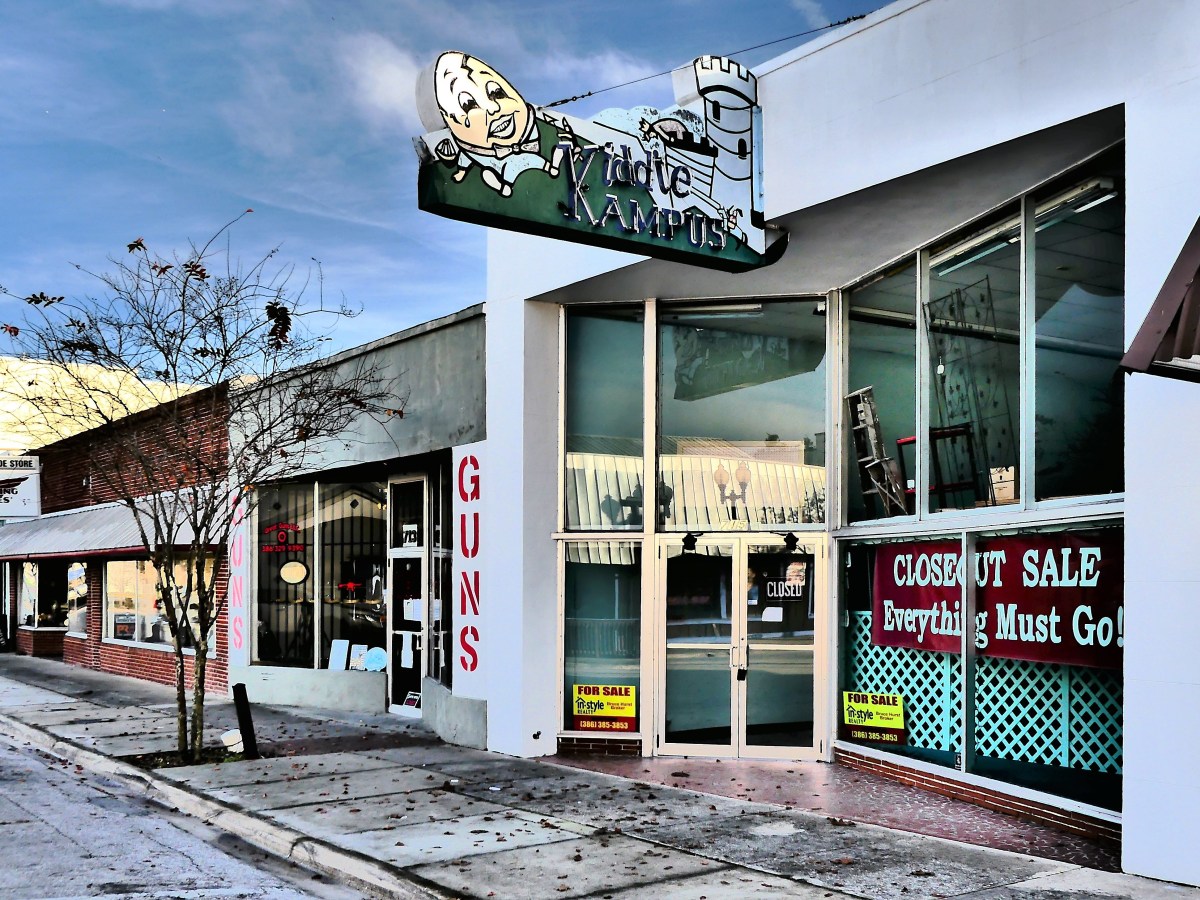
In fact, it would seem that much of Palatka is FOR RENT…

Kiddie Kampus

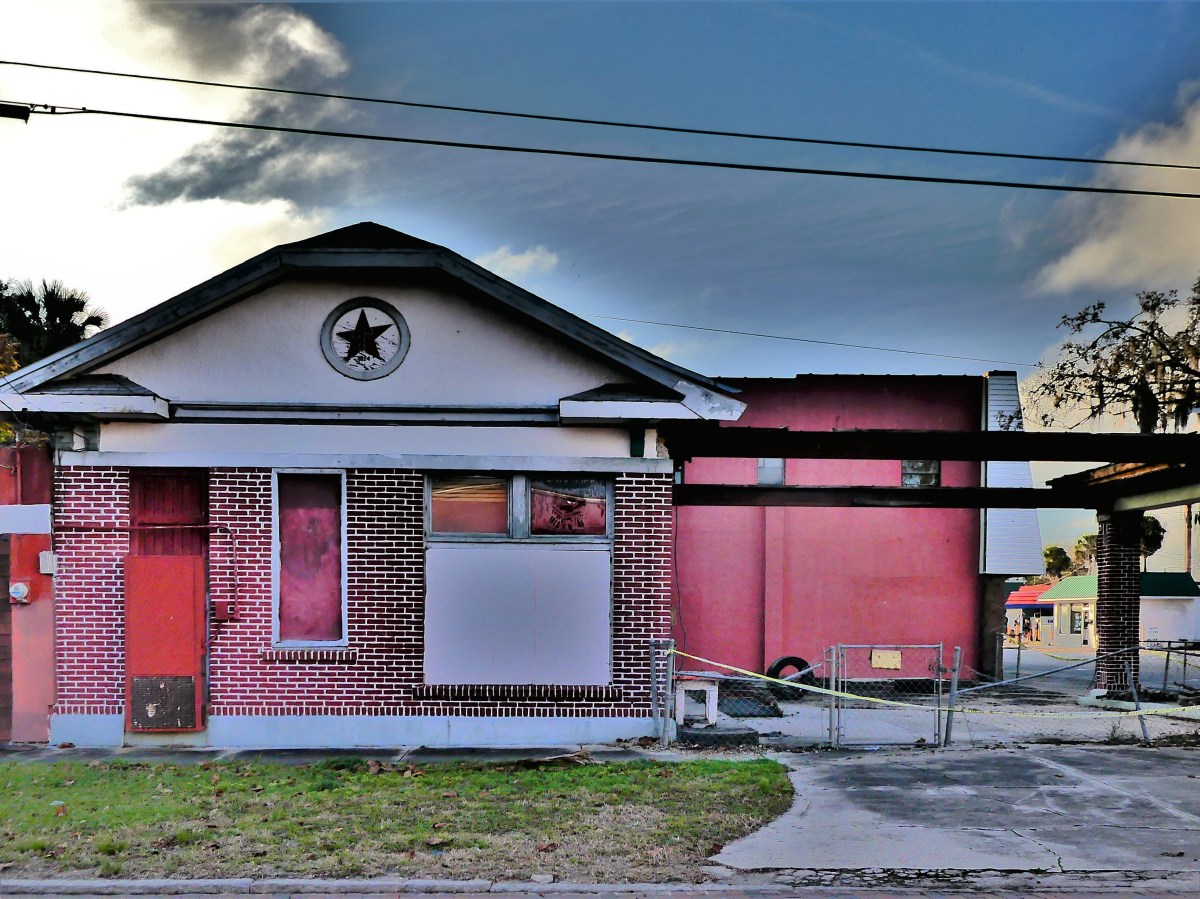
or simply un-rentable…

Texaco Service Station

Palatka sits on the west bank of St. Johns River offering strategic access into Central Florida, which is what made Palatka a once-thriving pre-Civil War trading post after land-hungry American settlers eliminated the Seminoles, driving them west of the Mississippi.

Bird's-eye_View_of_Palatka,_FL (2)

Equally important to Palatka’s economy at the time was its mild sub-tropical winters–extending farmers’ growing season and making the area a popular tourist destination for the hoi polloi, whose wealthier counterparts enjoyed a luxury haven in nearby, coastal St. Augustine (read The Poshest Campus in America, and Otto’s Collections).

Unfortunately, a historic fire in 1884 and deep-freeze in 1894 sealed Palatka’s fate as a favored destination, as most tourists migrated South. The city rebuilt, and eventually re-emerged as a manufacturing hub, with Georgia Pacific currently holding title to the largest private sector employer.

But what of downtown today for its nearly 11,000 residents, and how can they possibly compete with St. Augustine to the North, Orlando to the West, and Daytona Beach to the South?

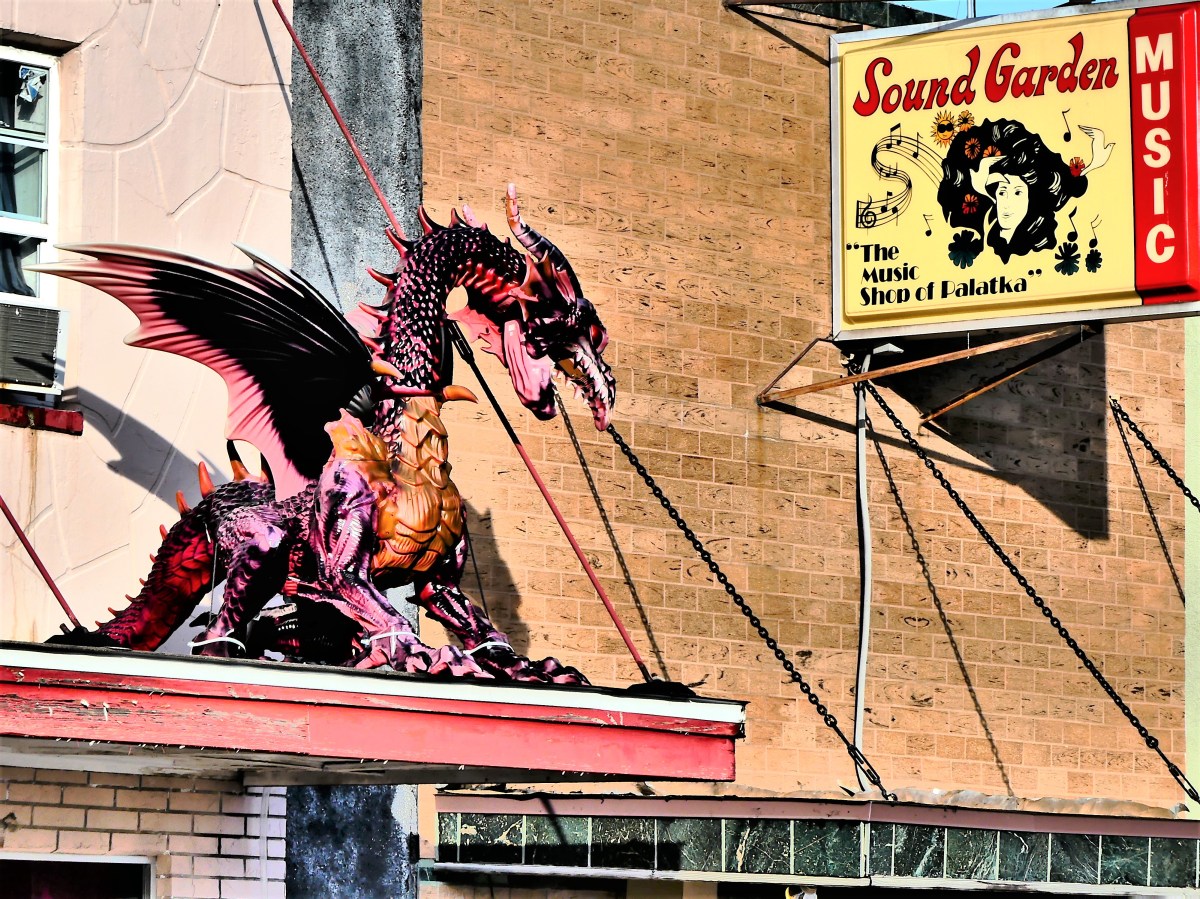
The city, when considering its redevelopment needed a gimmick–something to breath new life into it.

Dragon on a roof

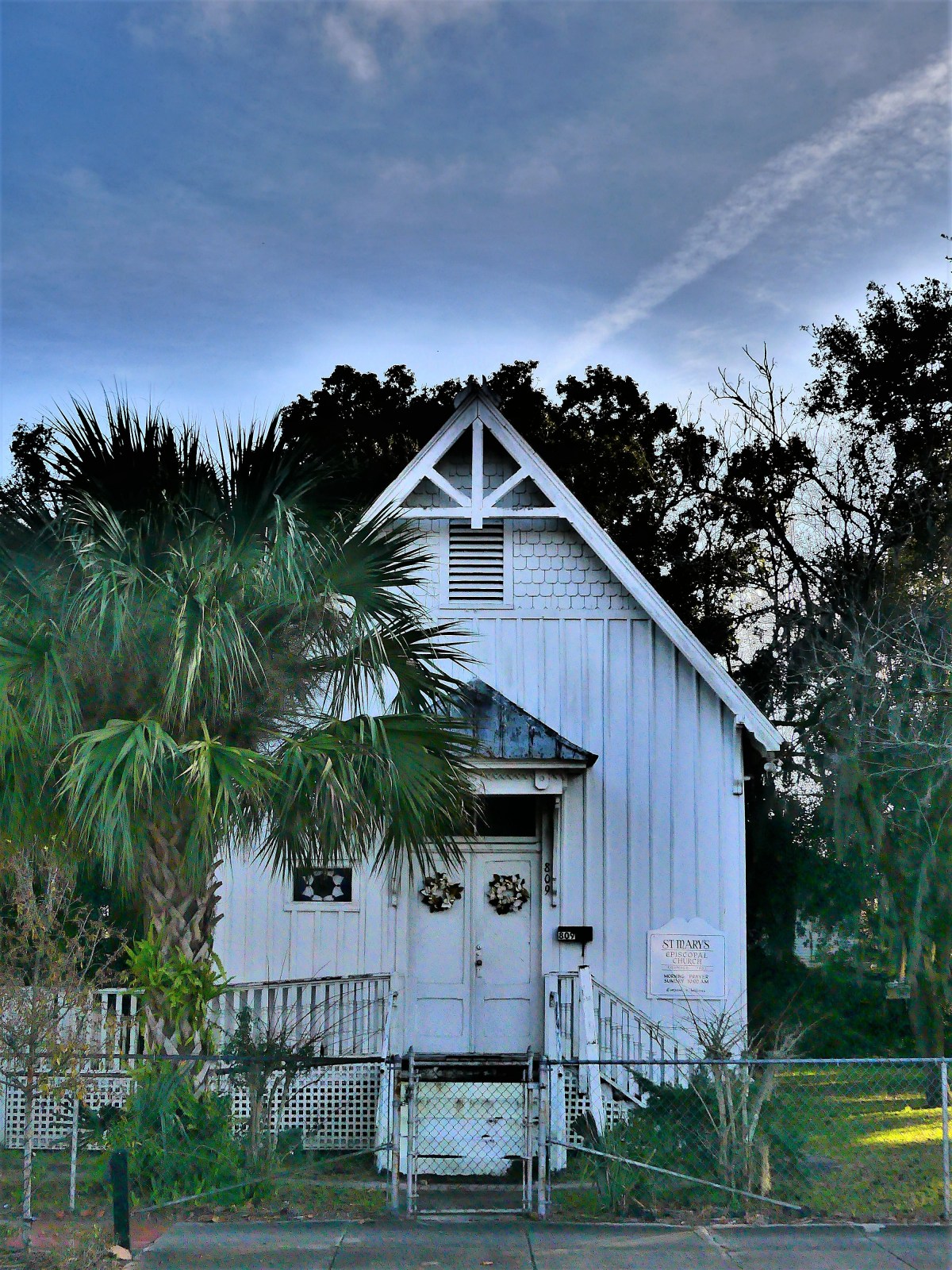
It needed a serious makeover, or maybe some divine intervention.

St. Mary's Church

Driving traffic back to the beat of the city was important. The Bingo Palace added some well-deserved blue-collar cache and shabby chic to the area,

Bingo Palace1

and preserving Angels Diner for future fans of Guy Fieri has also become a go-to venue.

One look around the interior of Angel Diner, and it defies the gravity of its standing as Florida’s oldest diner.

Angels Diner exterior

By any law of nature, it shouldn’t be standing, but this tin-skin dive is a testament to the wire and glue that seemingly holds its walls from caving. Stepping through its Hobbit-like entrance is like being transported back to a time when shiny greasy spoons offered up Happy Day burgers and shakes, while we listened to the jukebox soundtrack of our Growing Pains.

Angels Diner interior

Leah and I shared a hefty order of Fish and Chips. The check came to eight bucks, and it was tasty! 

fish and chips.jpg

A walk around downtown after our meal left the impression that Palatka is much like a collection of rusty charm pieces; although it boasts a historic district with a melange of classic architectural styles, it’s still fighting to remain relevant.

While there is ample nostalgia here, and a story to tell of old Florida, perhaps all that’s really needed is a broom and a fresh coat of paint.

Enter the Conlee-Snyder Mural Committee in 1998, which has opted to:

…accurately depict the historical, cultural, and natural riches of Palatka and Putnam County in larger-than-life murals.  In sharing these pictorial renderings with visitors and citizens, appreciation of the heritage of the community will be enhanced and developed.

The city’s plan of commissioning a plethora of tribute murals over the past twenty years has given rise to a tourism rebirth, notwithstanding the city’s longstanding and dedicated art scene and attention to local culture.

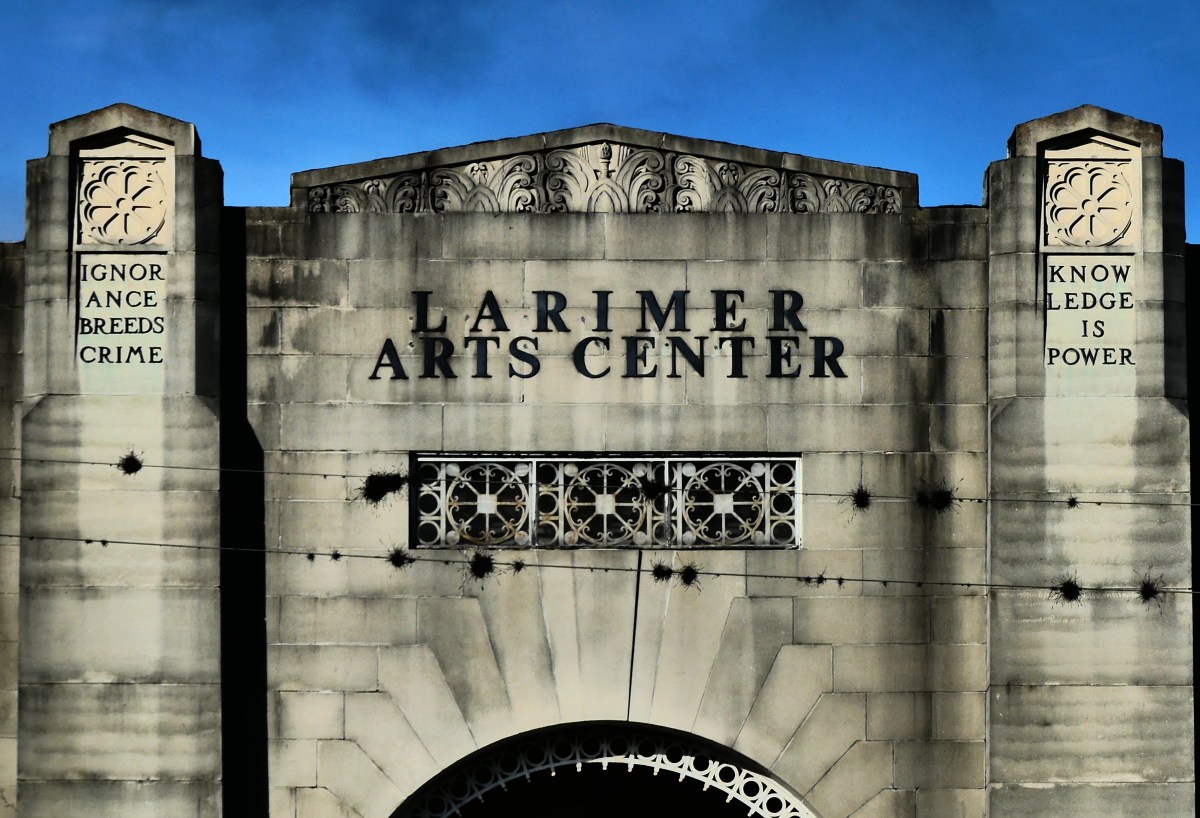
Arts Center

Self-described as the City of Murals,

City of Murals legend (2)

Palatka now boasts a swath of bright colors depicting lively time capsule markers, and always helping to defib drab building back to life.

What follows is a photo essay of just a few of them in no particular order:

William Bartram
William Bartram, c. 1774

on South Third Street at St. Johns Avenue

Wildlife
Putnam Treasures 

on South Seventh Street at St. Johns Avenue

Tightrope Walker
High Time in Palatka, c. 1872 

on South Seventh Street at St. Johns Avenue

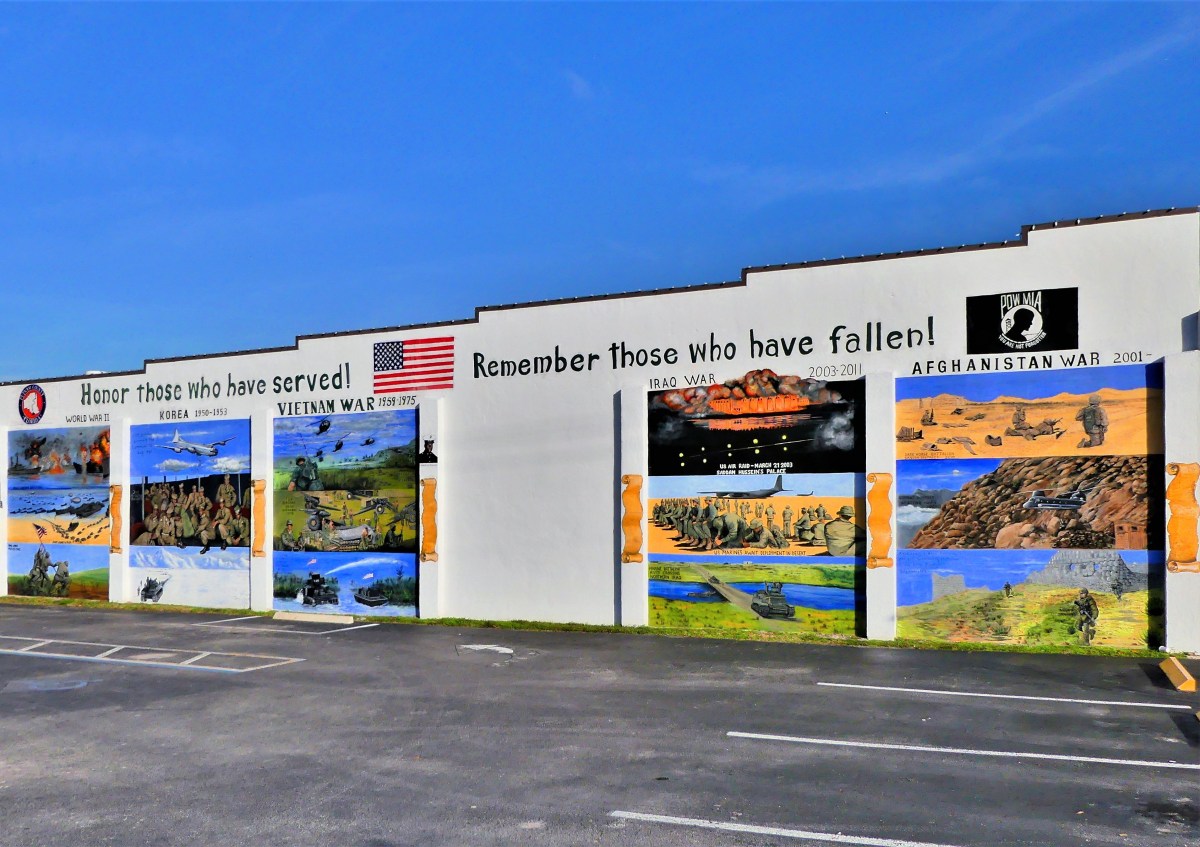
Those Who Have Served
War Veterans Memorial

on North Eighth Street at St. Johns Avenue

Palatka Station
Old J T & K Railway Station, c. 1886

on City Hall, Reid Street at North Second Street

Native Flowers
Putnam County Wildflowers

on South Third Street at St. Johns Avenue

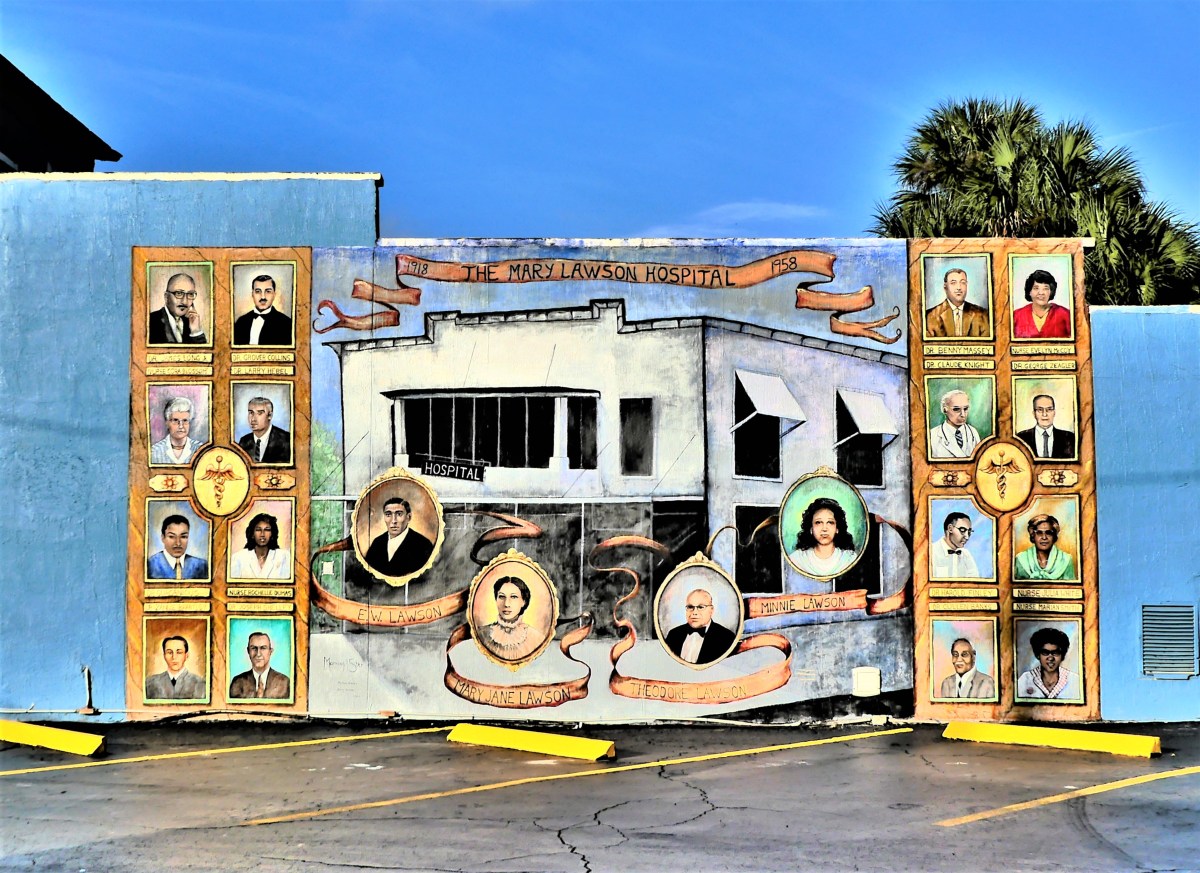
Mary Lawson Hospital

on Ninth and St. Johns Avenue

Hiawatha
Night Passage, c. 1884

on North Fourth Street at St. Johns Avenue

Harlem Nights
Harlem Nights in Palatka

on North Seventh Street at St. Johns Avenue

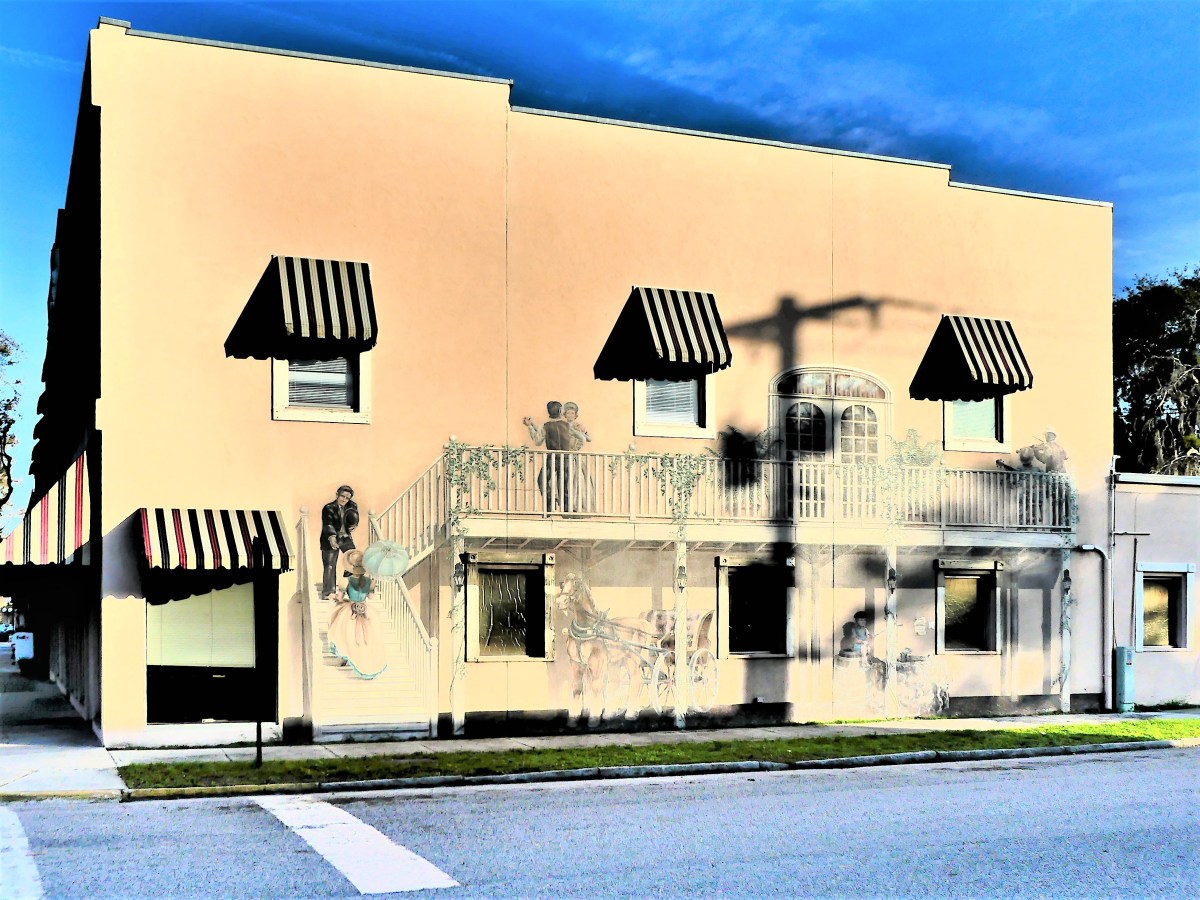
French Balcony
Bygone Days, c. 1880

on South Fifth Street at St. Johns Avenue

Cowboys on the River
Cattle Drive to Paynes Prairie, c. 1930

on North Tenth Street at St. Johns Avenue

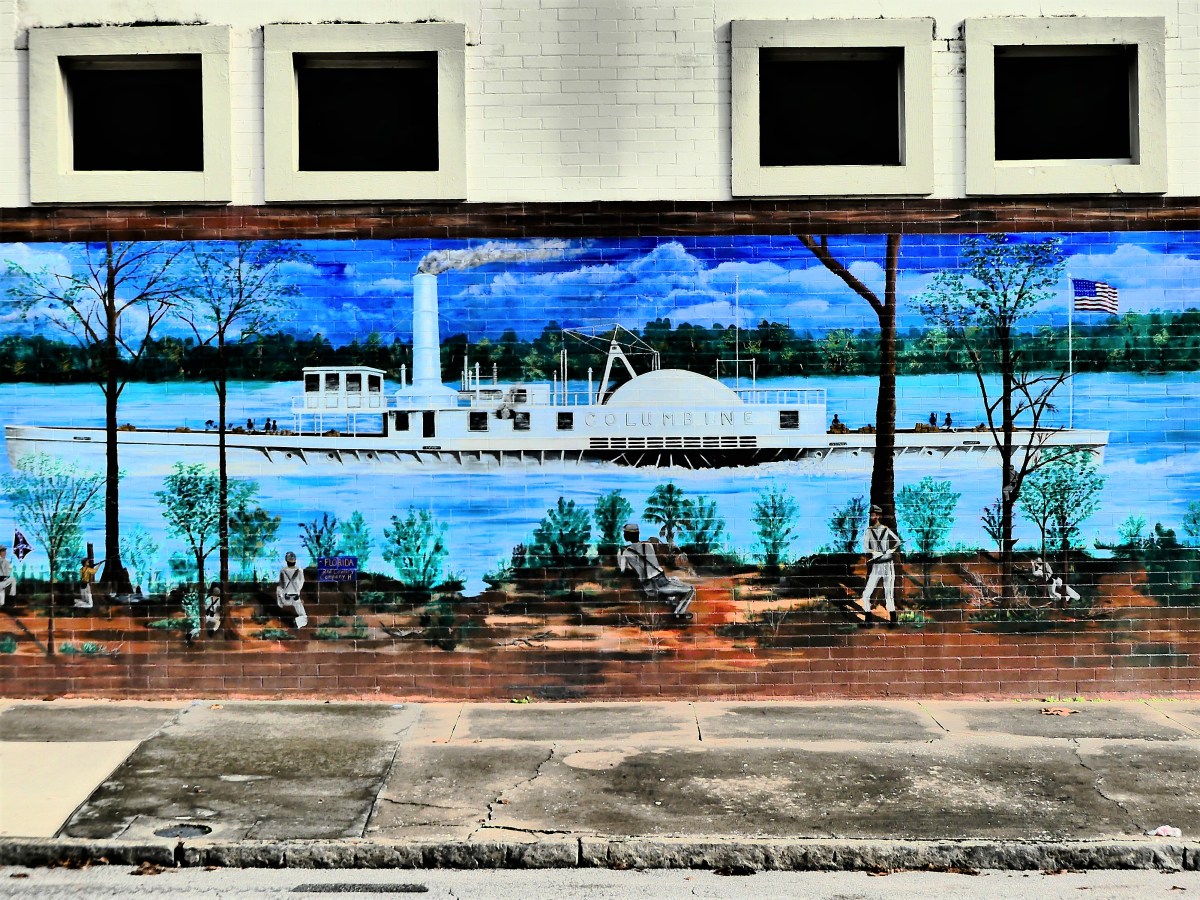
Columbine
Battle at Horse Landing, May 23, 1864

on South Third Street at St. Johns Avenue

Billy Graham
To God Be the Glory, 1937-38

on South Fourth Street at St. Johns Avenue

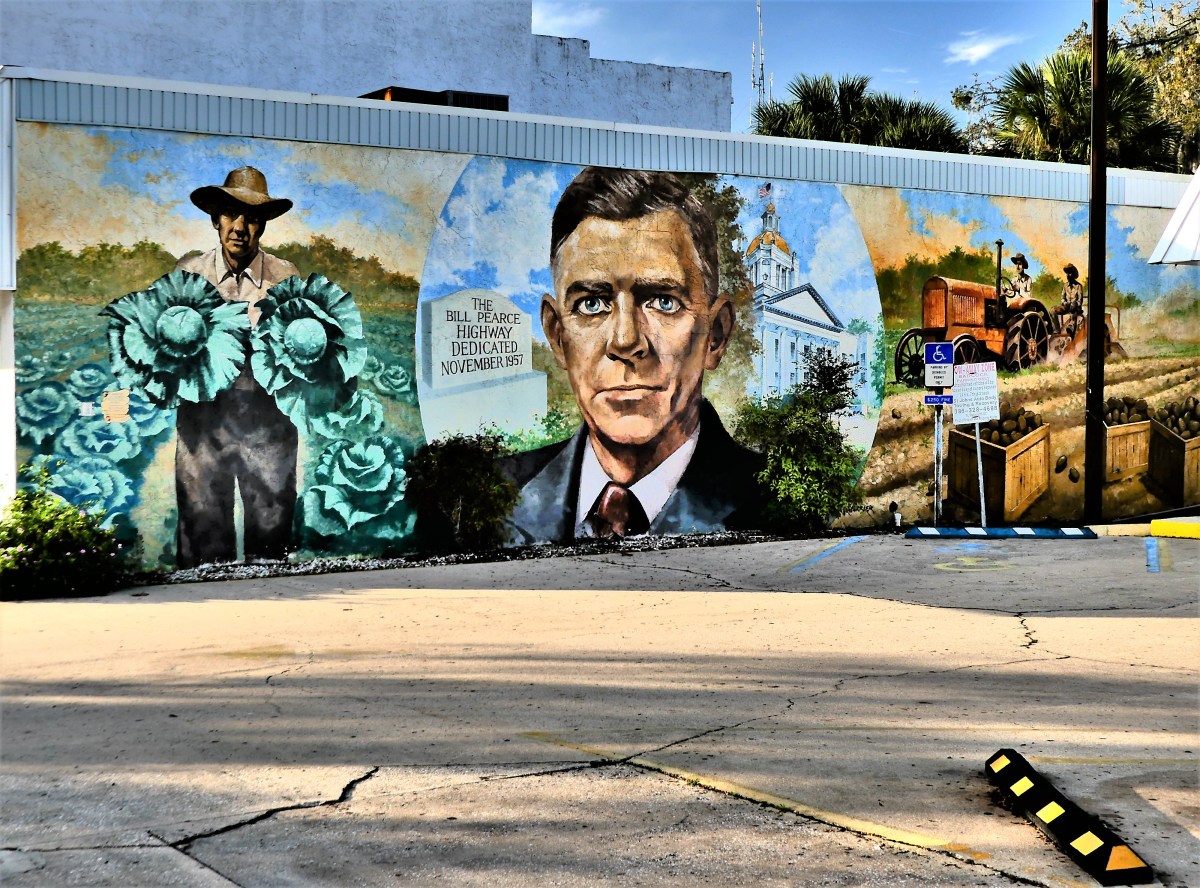
Bill Pearce Highway
Senator B.C. Pearce

on St. Johns Avenue between North Tenth and Eleventh Streets

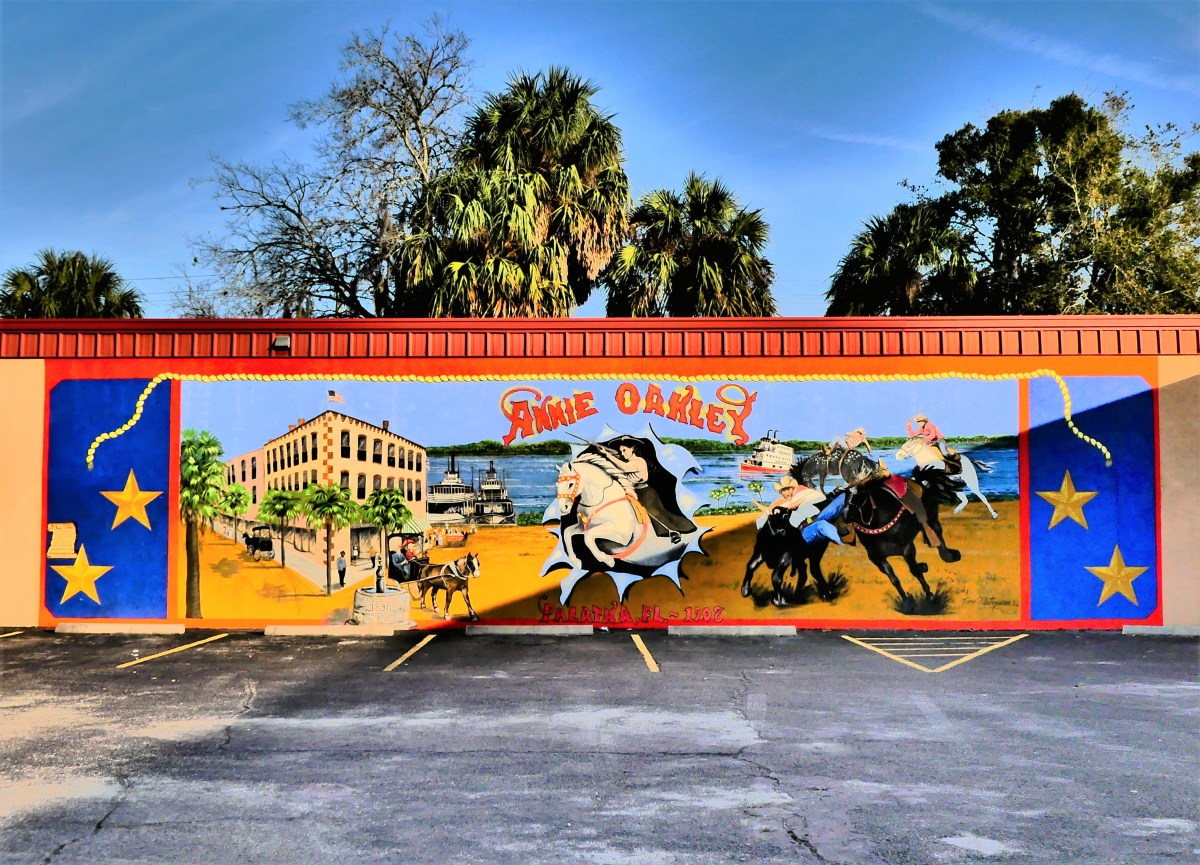
Annie Oakley
Annie Oakley

on South Eleventh Street at St. Johns Avenue

All Hotels Depots
The Putnam House, c. 1891

on North Second Street at St. Johns Avenue

Other merchants have joined in, beautifying the exteriors of their retail establishments…

Peace mosaic

with mixed messages.

Pizza Boyz

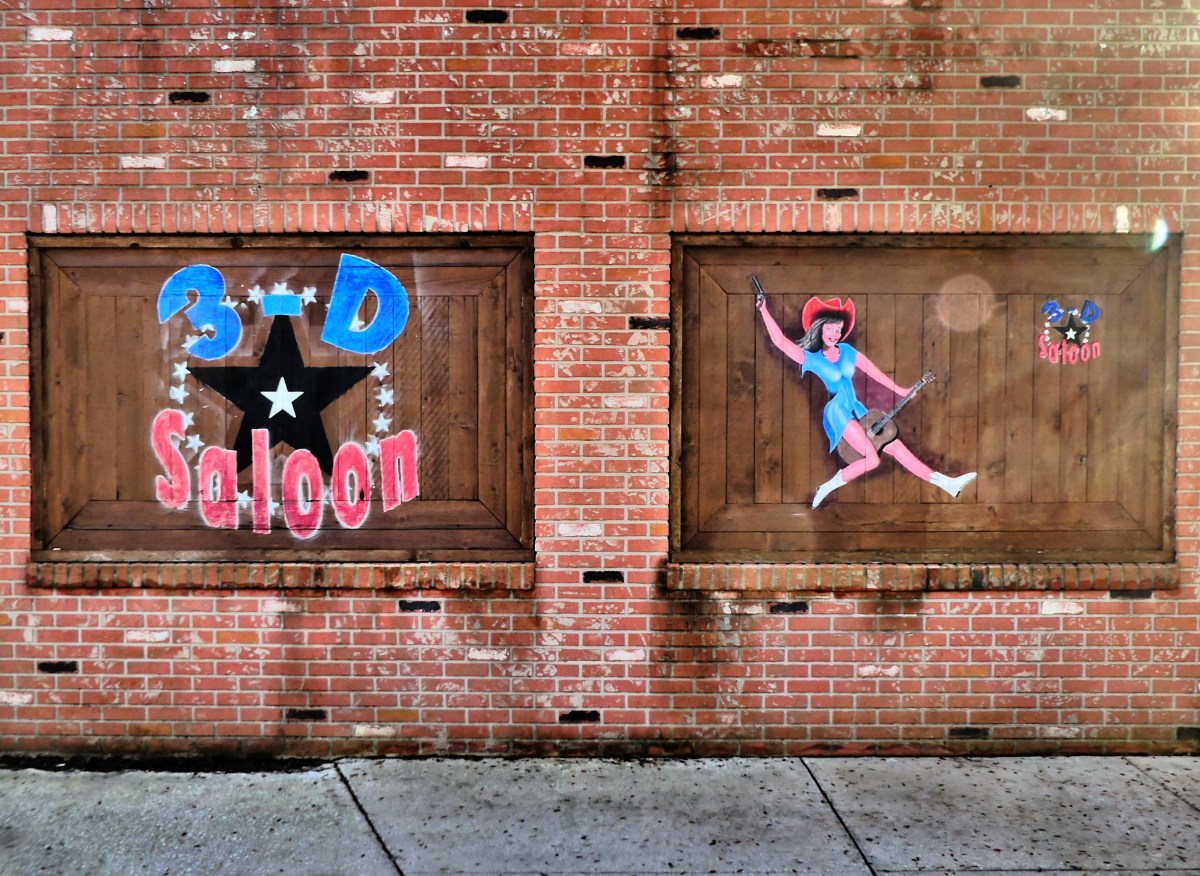
After canvassing the town with my camera for the afternoon, I dropped my work façade,

3-D Saloon.jpg

knowing it was definitely time for a drink!


The Angry Inch

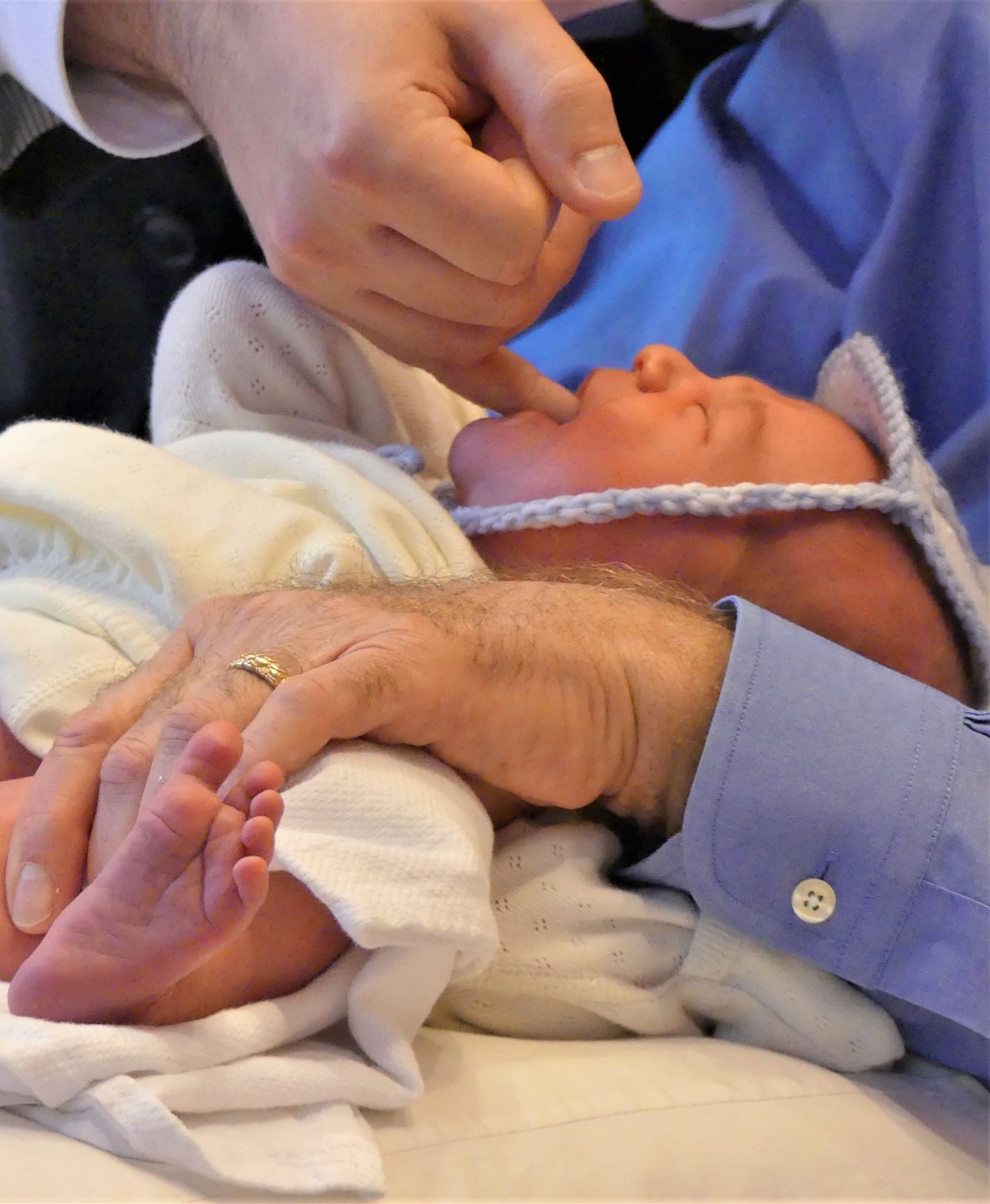
On September 5, my grandnephew Ari unwittingly followed Abraham’s footsteps and entered into a covenant with God by sacrificing his foreskin to join the Tribe. He was only eight-days-old at the time, but had he been asked and able to answer, I’m certain he would have opted out.

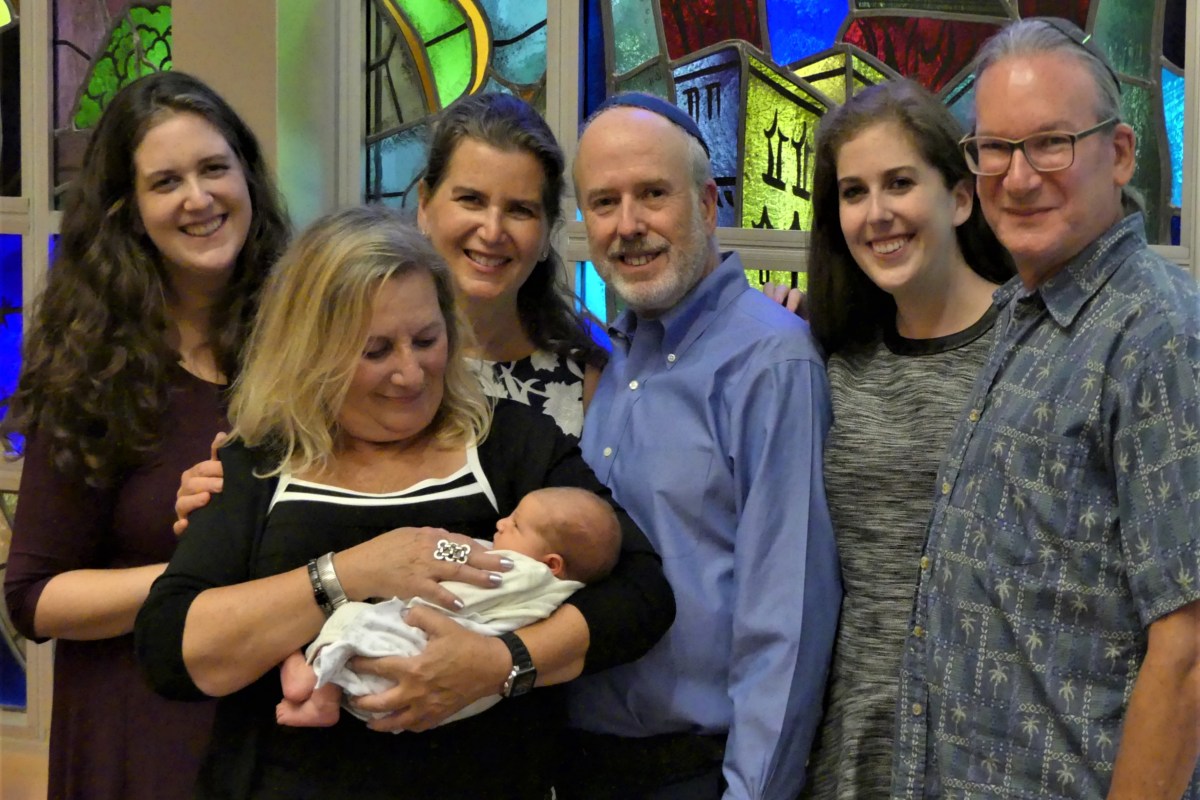
Leah and I travelled to a Scarsdale, NY temple for the event, where we were greeted by Bubbe Debbie, Tante Ava, and most importantly, Ari, dicked out in Bubbe’s crocheted yarmulke creation. Presently locked in a blissful sleep, Ari had little clue of his near-future fate.

greeters

All guests were expected at 11:00 am sharp, but slow arrivals dictated a slower start, which was a good thing for Tante Marilyn–who like cock-work–arrived during the overture, and ran to the restroom with a change of clothes over her arm.  

“There’s no time for that,” I called out as she sprinted by.

“Nevermind,” she answered, and she was gone.

Inside the sanctuary, Ava stood steadfast as Ari’s chaperone, cradling him on a pillow that would hopefully cushion the inevitable blow.

Ava and Ari

Despite outsiders’ cries of trauma and mutilation, the notion of circumcision has stood the test of time for four thousand years, and the ceremony of brit milah, or bris marks the ritual of welcoming the newborn male into a society that connects all Jews through thousands of generations–from Abraham to the great-grandfather…

Great grandfather

to the grandfather…

Yohays

to the father…

David2

to the son.

Ari

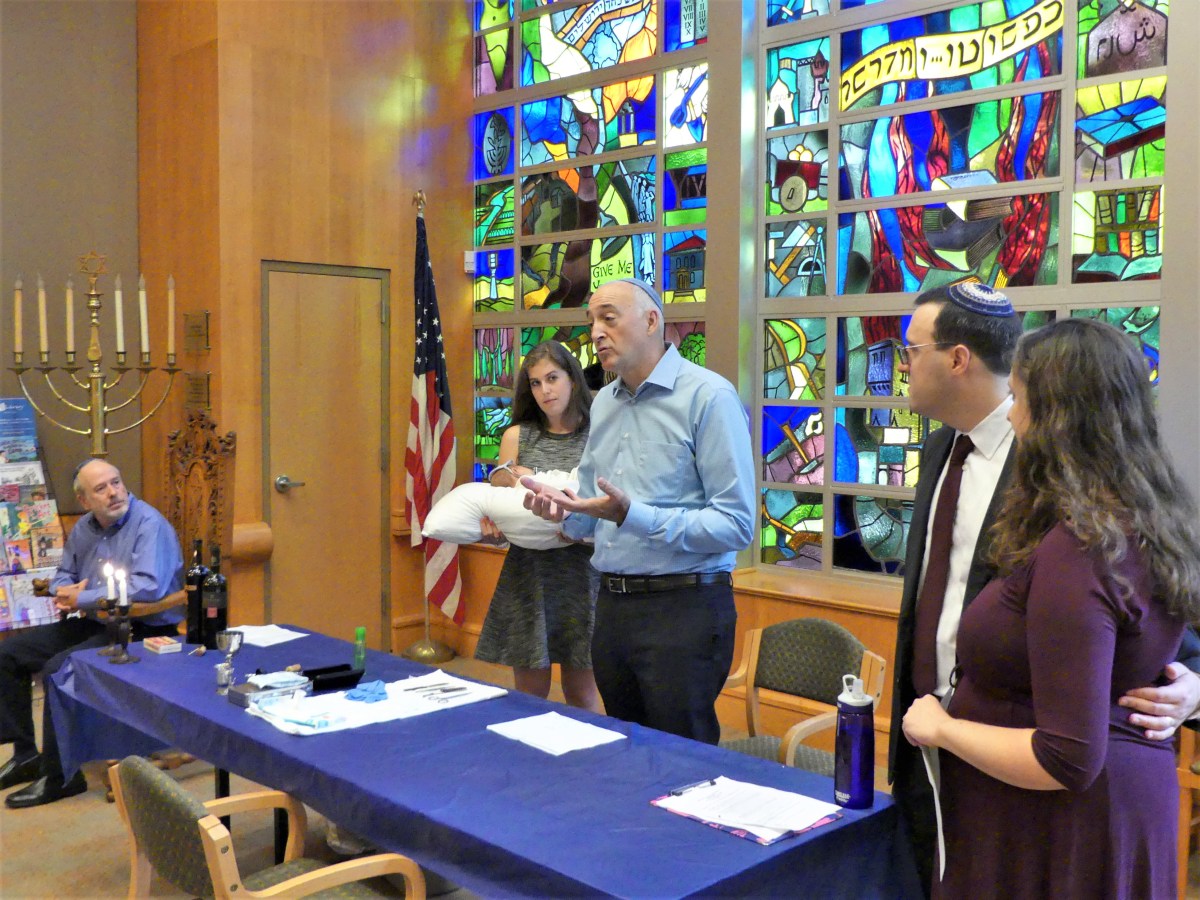
Ari’s mohel (rhymes with recoil), who was hired for his steady hand (and because he only works for tips), stood resolute and cocksure before the congregation,

mohel blessing

as if to reassure Ari’s anxious Mommie,

fighting back tears

that he was more than a cut above the rest.

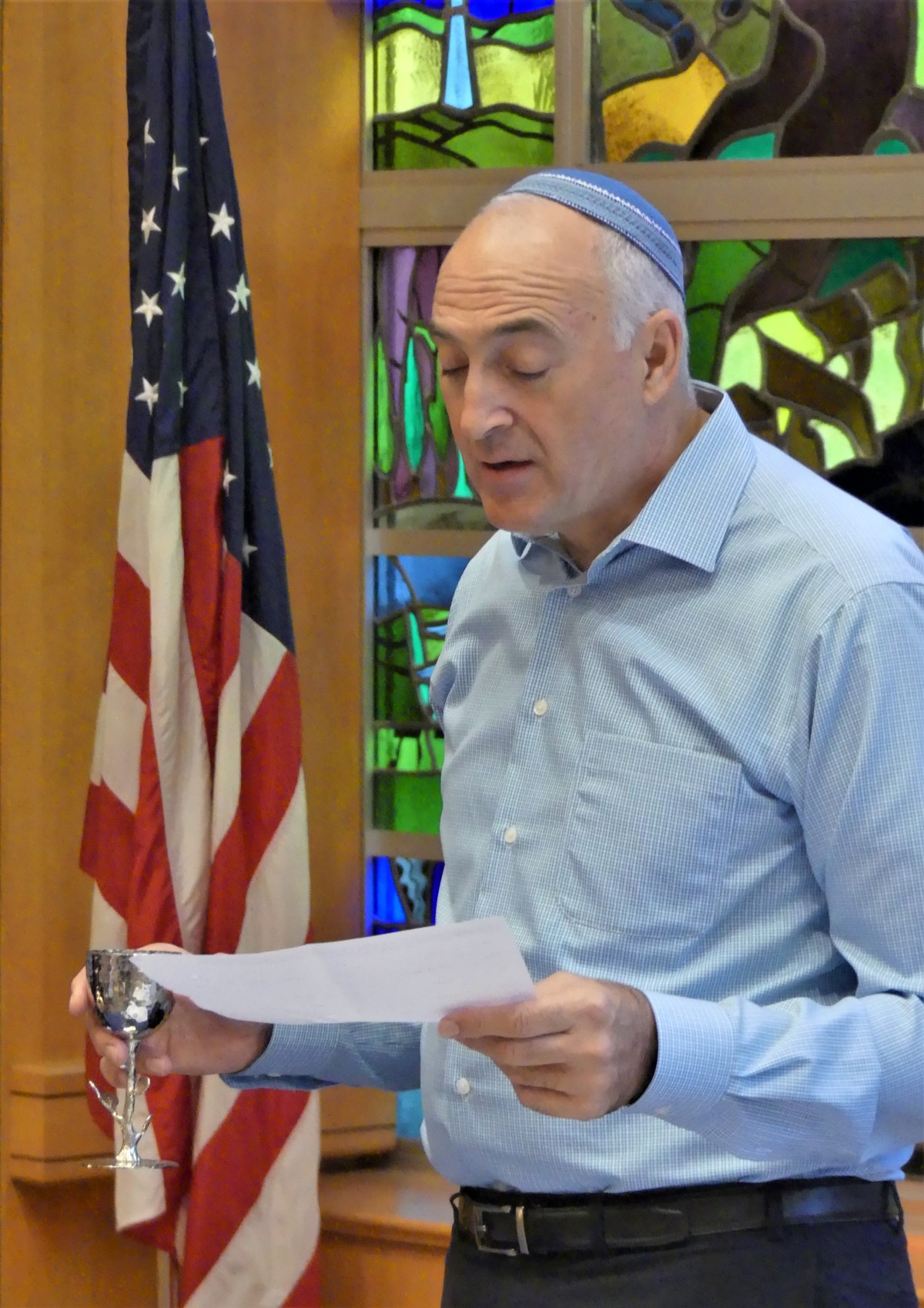
However, after the recitation of several requisite readings,

blessings.jpg

Blessed art Thou, O Lord our God, King of the universe, who hast sanctified us with Thy command­ments, and hast given us the command con­cerning circumcision.

and blessings,

reciting the prayer

Blessed art Thou, O Lord our God, King of the universe, who hast sanctified us with Thy commandments, and hast commanded us to make our sons enter the covenant of Abraham our father.

I concluded the mohel was a touch long-winded, although I never considered asking him to cut it short. 

Finally, it was showtime. The sandek–in this case, Zayde Craig,

preparation (2)

the maternal grandfather–was called upon to hold Ari’s legs, while the mohel got a grip of Ari’s equipment.

before (2)
edited to conceal

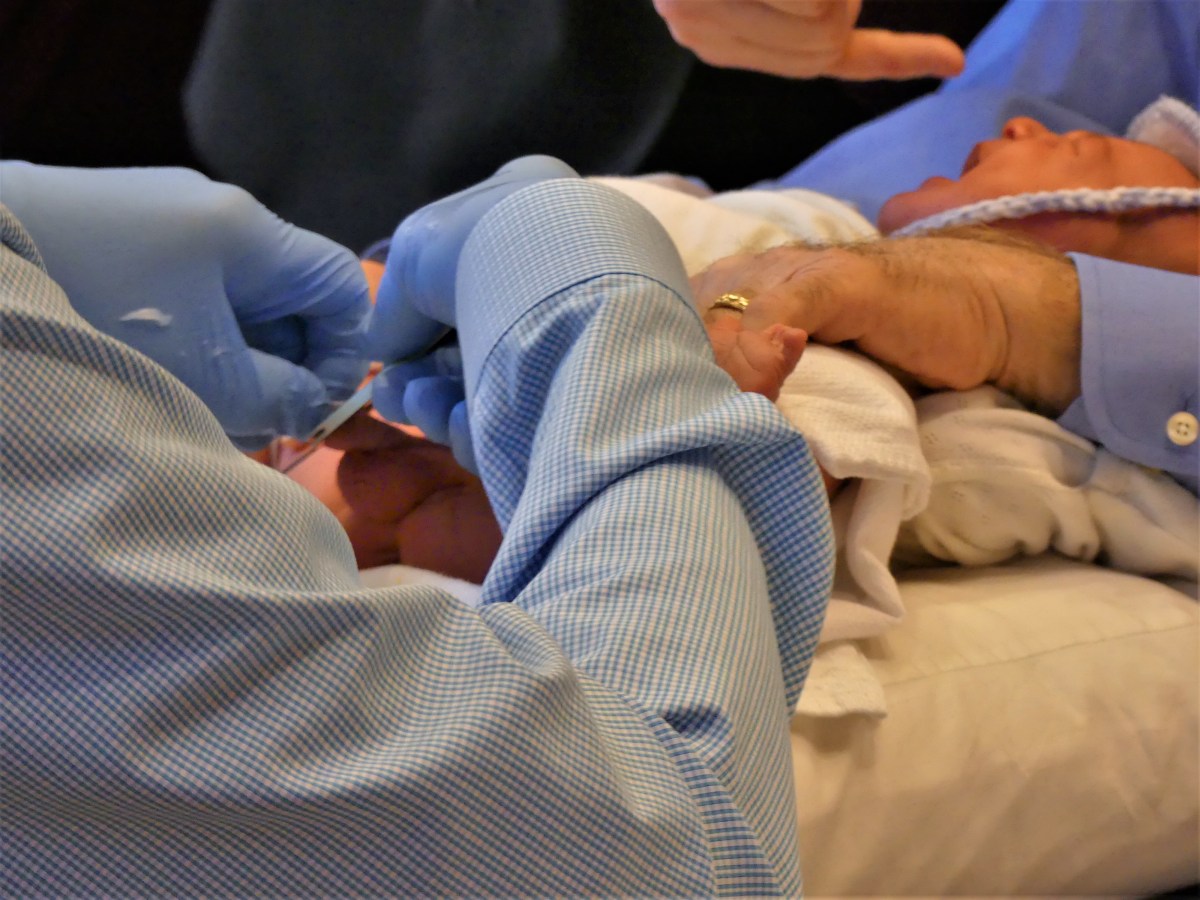
Once the clamp was affixed and the ceremonial anesthetic (Manischewitz wine) was orally introduced,

clamp1

a flick of the wrist…

clamp

left little doubt… 

after (2)
edited to conceal

that Ari was in good hands. The mohel was a consummate professional who handled himself in the long run without getting the sack.

Afterwards, the parents exhaled, although mouth-to-mouth was necessary.

Yohay kiss

In fact, grandparents, and especially Ari felt the whole affair was sensational–even though he was all petered out and it was clear that he wasn’t all there.

Schein kiss (2)


Swimming Upstream

It’s been one year since I featured my father’s battle with Alzheimer’s (read Happy Birthday, Dad!), and I’m pleased to report that on the day of his 94th birthday…

smiles.jpg

…he continues his fight against inevitable debility. In fact, it appears that he is more fit than the year before.

Last year, Dad’s sedentary existence and subsequent lack of stamina was draining his psyche and physical condition. It was becoming apparent that the Use-It-or-Lose-It paradigm was taking over, but fortunately, Dad’s vigilance prevailed.

There was no magic pill or panacea to persuade him. Instead, it was his will to keep moving that helped him battle his personal perfect storm–assisted by diet and exercise.

One year ago, I found myself enabling Dad’s Clean-Your-Plate appetite by repeatedly up-sizing his wardrobe to accommodate his ballooning waistline. Unbeknownst to me, the Memory Care staff had endorsed an unwritten and unspoken Snack and Dessert Proclamation:

 If a 90-year-old man wants a cookie, let him eat one.
But Dad would eat two…or more. He was growing sideways effortlessly with reckless abandon. Belts and elastic waistbands had yielded to suspenders. At 5 feet-2 inches, Dad was tipping the scales at 220 pounds, and it was impacting his ability to balance and breathe without wheezing.

And so I returned him to his love of swimming–his preferred sport for fitness. Growing up, I recalled his need to visit the “Y” religiously every Wednesday to swim laps, take a schvitz and a enjoy a rub-down to blow off the steam of life’s hard-boiled expectations.

And while there was no illusion of recapturing the pleasure of Dad’s “Y” Wednesdays or restoring Dad’s forever-lost cognitive functioning, I anticipated his muscle memory might still respond to water therapy.

I was introduced to Patrick, a licensed physical therapist who was willing to accompany Dad into the pool, and work with him twice a week. After a short period of time, the almost-immediate payoff of sounder sleep, noticeable weight loss, and increased energy and awareness supported my vision of Dad swimming every other day, three times a week.


To date, many of Dad’s vital signs continue to improve. His blood pressure has dropped. He eats less and exercises more, which has resulted in 30 pounds of weight loss in 4 months.

Radio Man

Nevertheless, Dad continues to lose ground to his dementia demons. Steady bouts of “nobody home” syndrome are occasionally interrupted by scattered moments of recognition, and immediately replaced by confusion and silence. 

Struggling for the right words almost always results in stuttering followed by resignation. Lingering name-to-face recognition has been replaced by nuanced sweetheart or honey familiarity. Prompting with closed questions works some of the time, but for the most part, Dad has sunk into an eternal state of bliss that many around him find soothing and reassuring. 

Could his passivity be a cover for his acquiescence? Maybe, but I’m not really sure if it makes a difference or even matters.

siblings (4)

Because whether Dad realizes it or not, the victory of survival is always worthy of a celebration.

Otto’s Collections

The former Alcazar Hotel in St. Augustine, FL was originally built by Henry Flagler in 1888…

The Alcazar from the Ponce (2)

as an adjunct to the Hotel Ponce de Leon (see The Poshest Campus in America) to accommodate overflow patronage and provide recreational facilities to his guests. Built in the style of Spanish Renaissance Revival with Moorish overtones, the Alcazar was patterned after its famed royal palace namesake in Seville, Spain.

tower

The Alcazar enjoyed a storied history, hosting society’s gentry throughout the winter months, and at one time housing the world’s largest indoor swimming pool…

bathing-pool-casino_0 (3)

until the Great Depression forced the hotel to shutter its doors in 1930. The Alcazar remained uninhabited for the next seventeen years, and sunk into ruin.

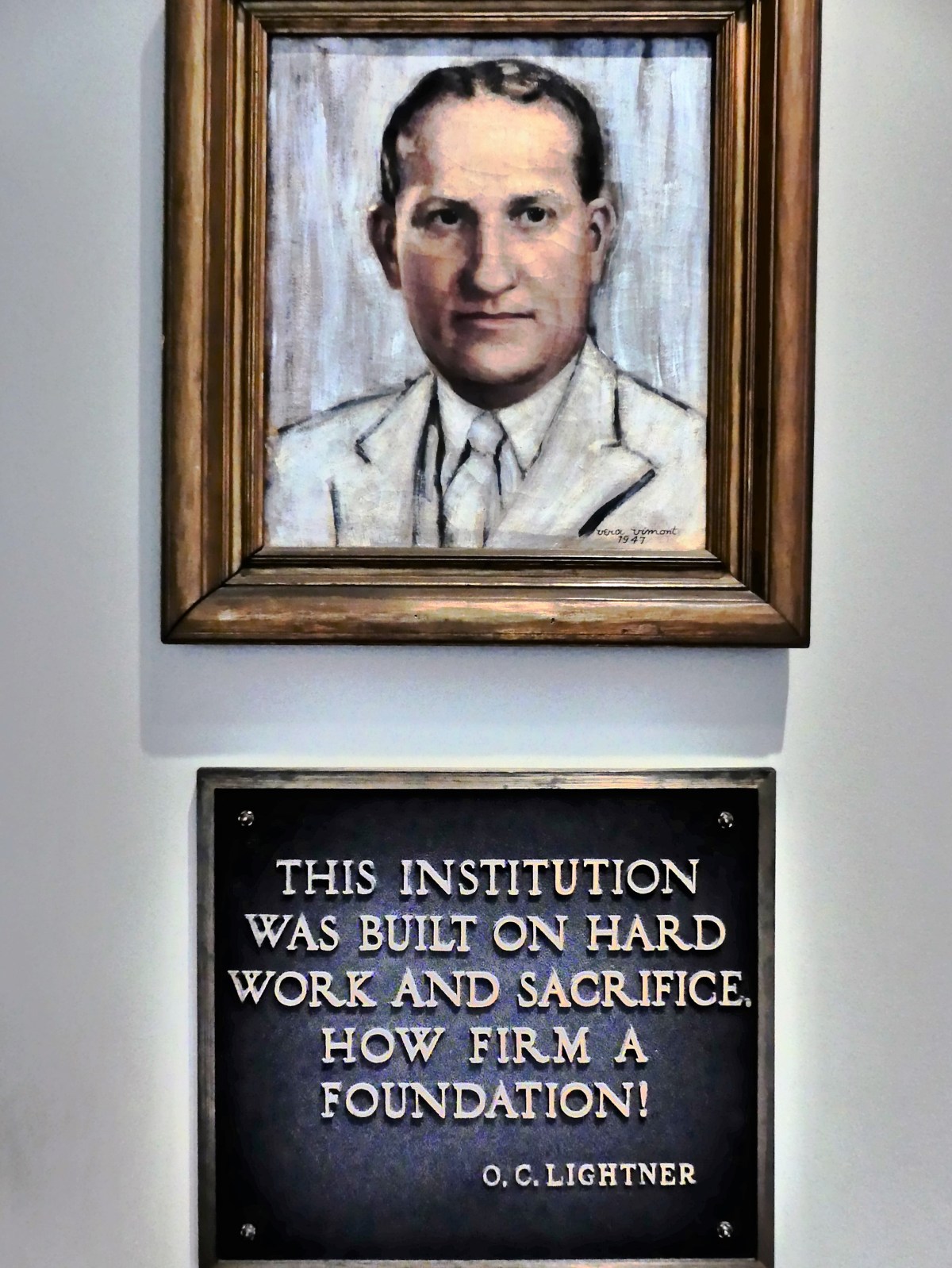
Enter Otto C. Lightner, a Chicago editor and publisher who purchased the property in 1947 for $150,000…

portrait

and began an extensive restoration campaign in anticipation of moving his massive Victorian era arts collection from Chicago into a proper facility worthy of its size and stature.

formal portrait

Today, this National Register Historic Landmark features an elaborate courtyard with a stone arch bridge…

gardens

over a koi pond.

koi

koi frontal

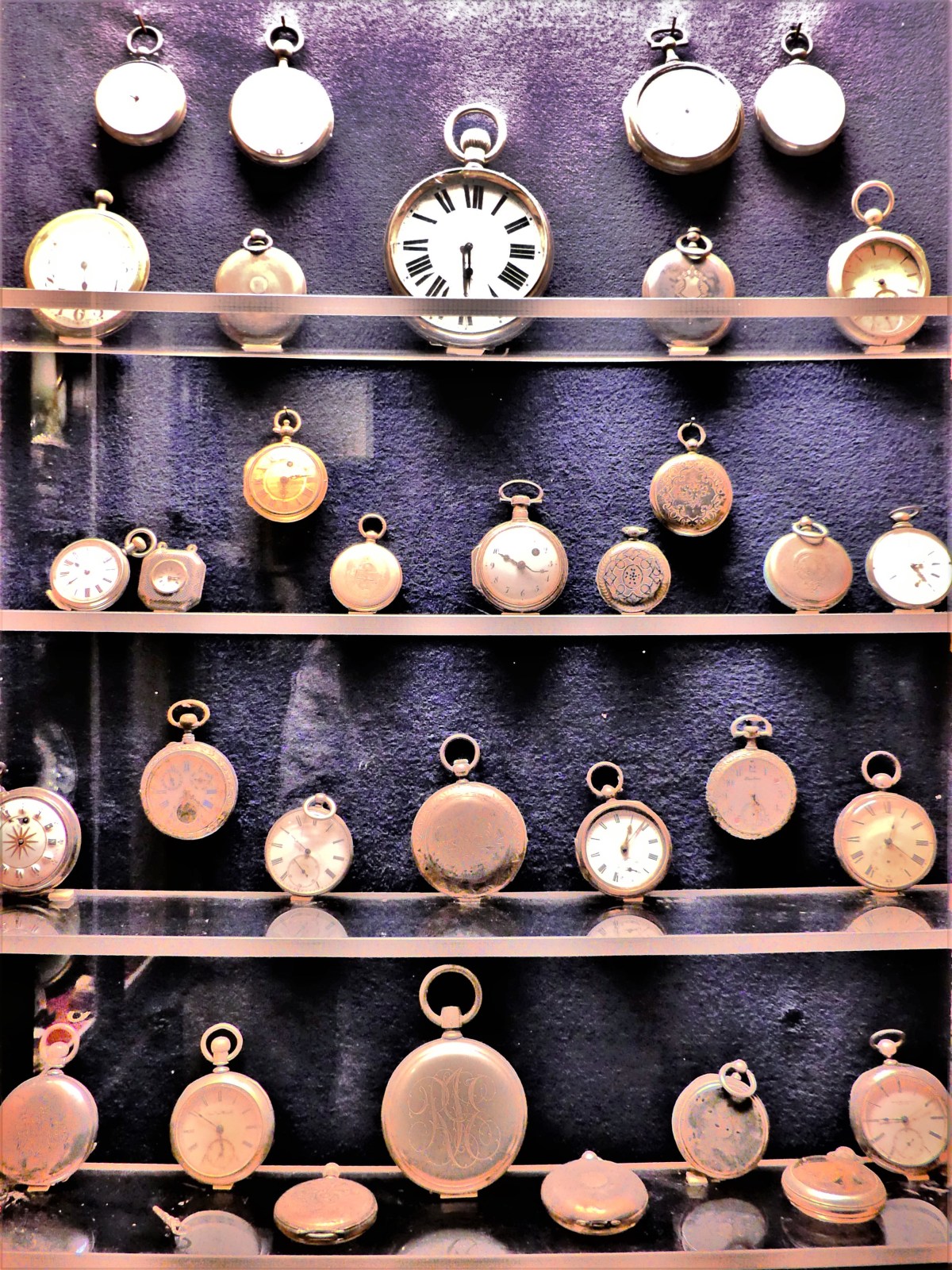
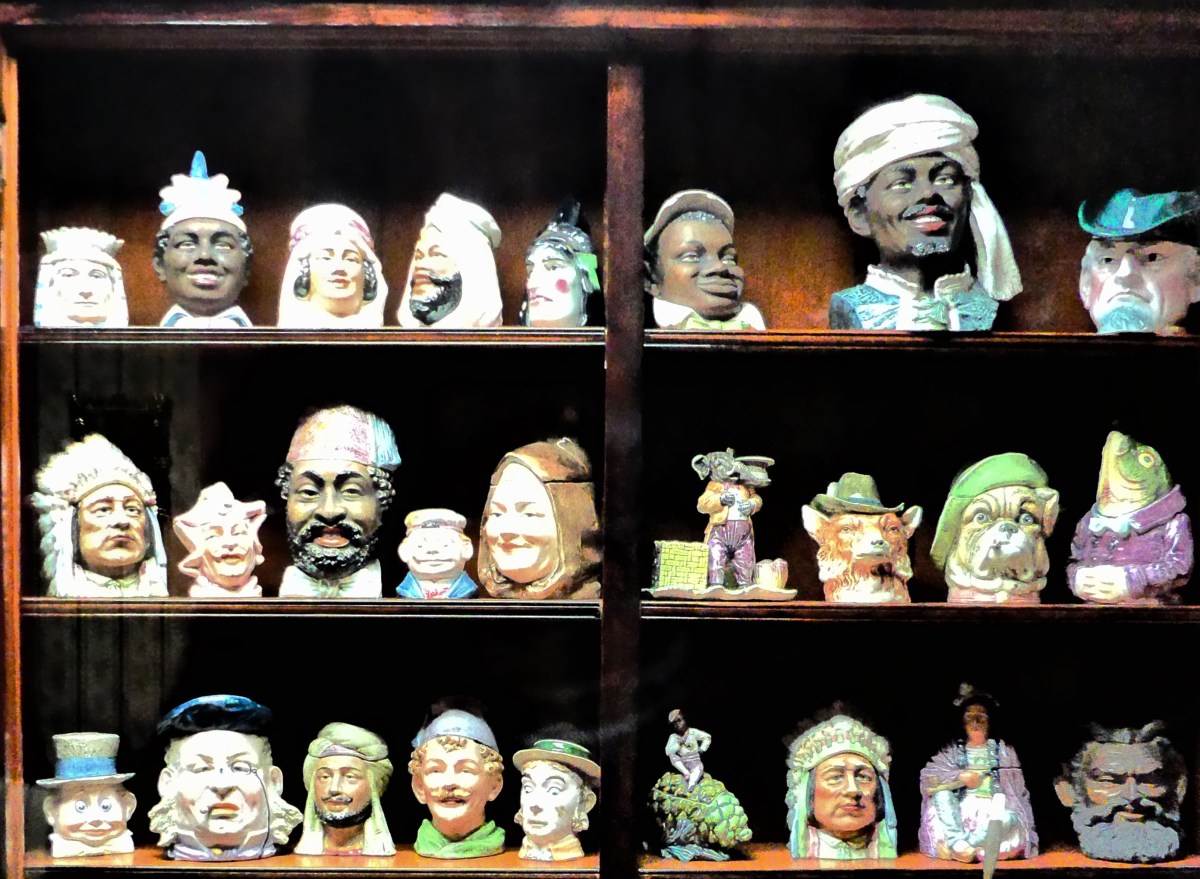
The first floor of the museum simulates a Victorian street emporium showcasing shop front window displays of assorted paraphernalia,

eggs

pocket watches

porcelin-heads.jpg

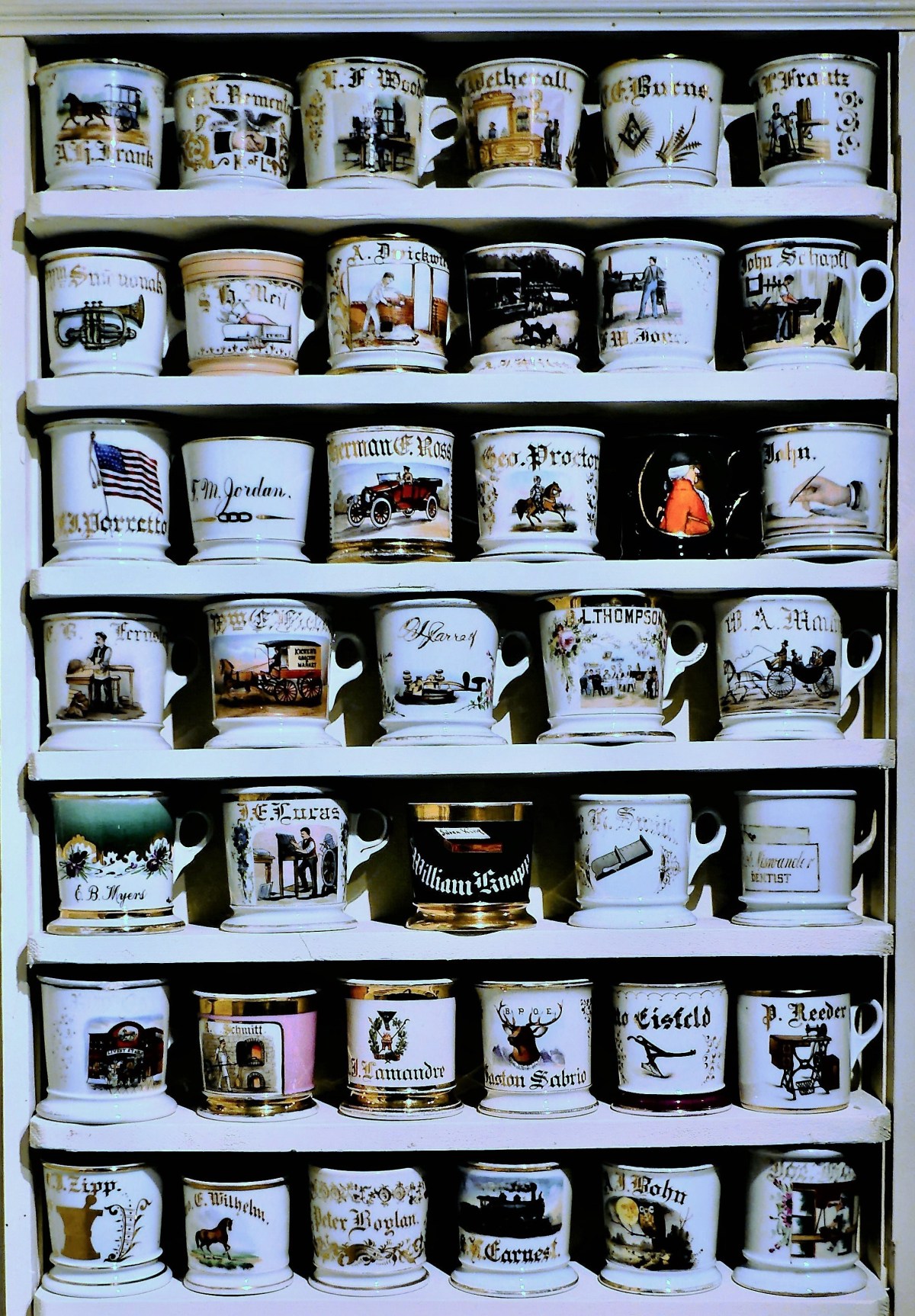
shave-mugs-3.jpg

spectacles

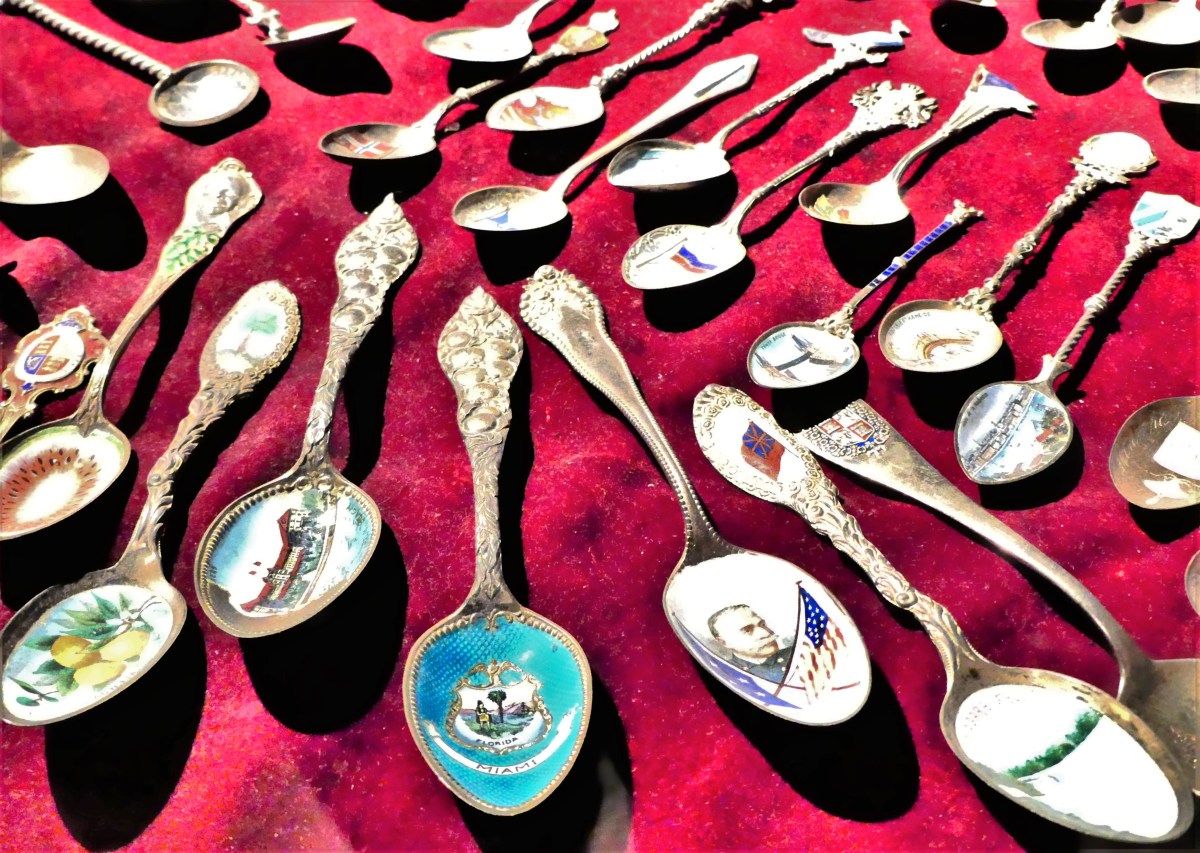
spoons

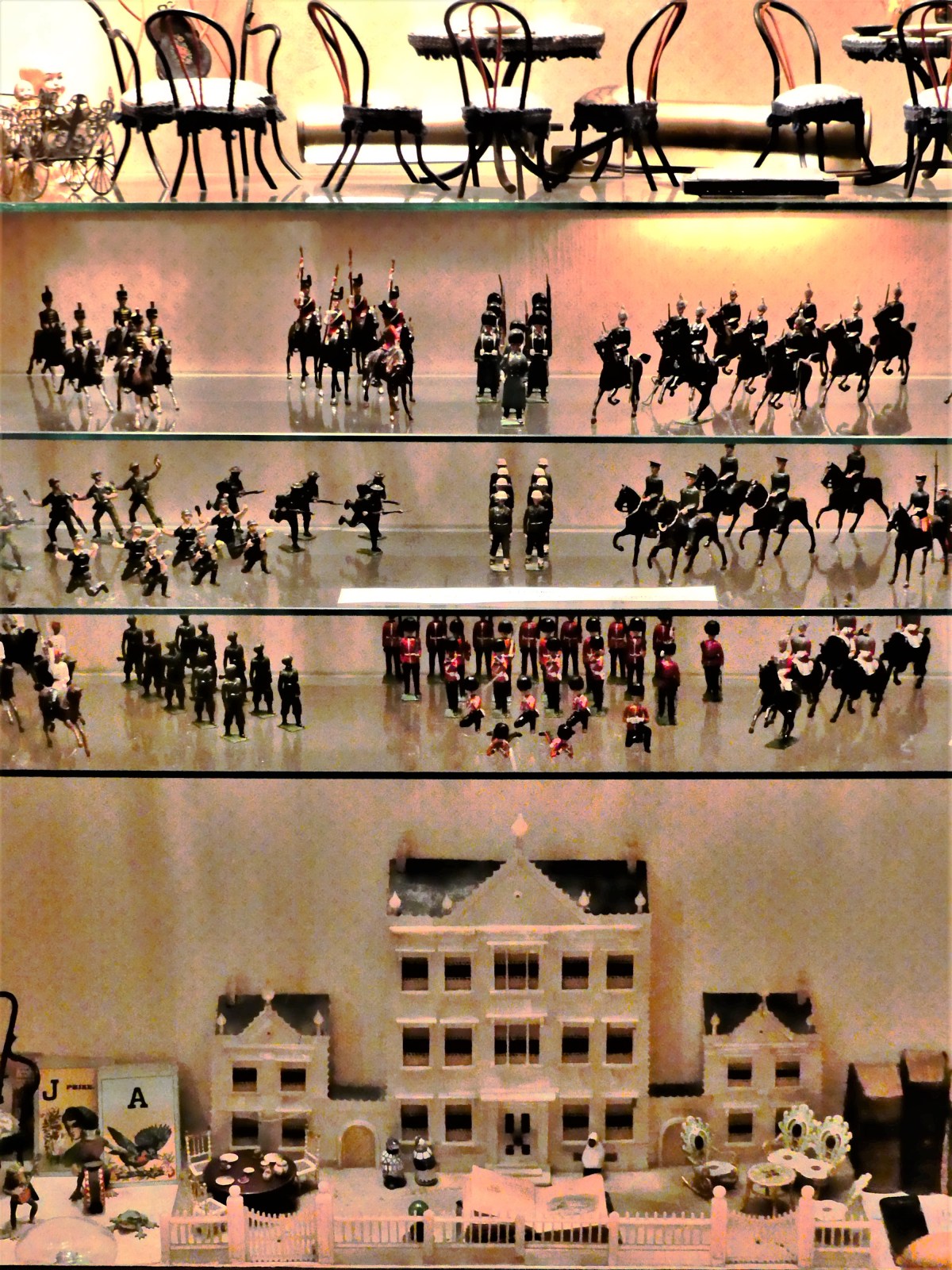
toys

beer steins1

Industrial Arts inventions,

toasters

mechanized music machines,

Victrola speaker

and curiosities, like an Egyptian mummy and an aboriginal shrunken head.

shrunken head (2)

The second floor features the remnants of Alcazar’s Turkish and Russian baths…

bath plumbing

offering vaulted views across the courtyard.

circle window

Access doors to the baths stand at opposing sides the gallery vesibule.

2nd floor

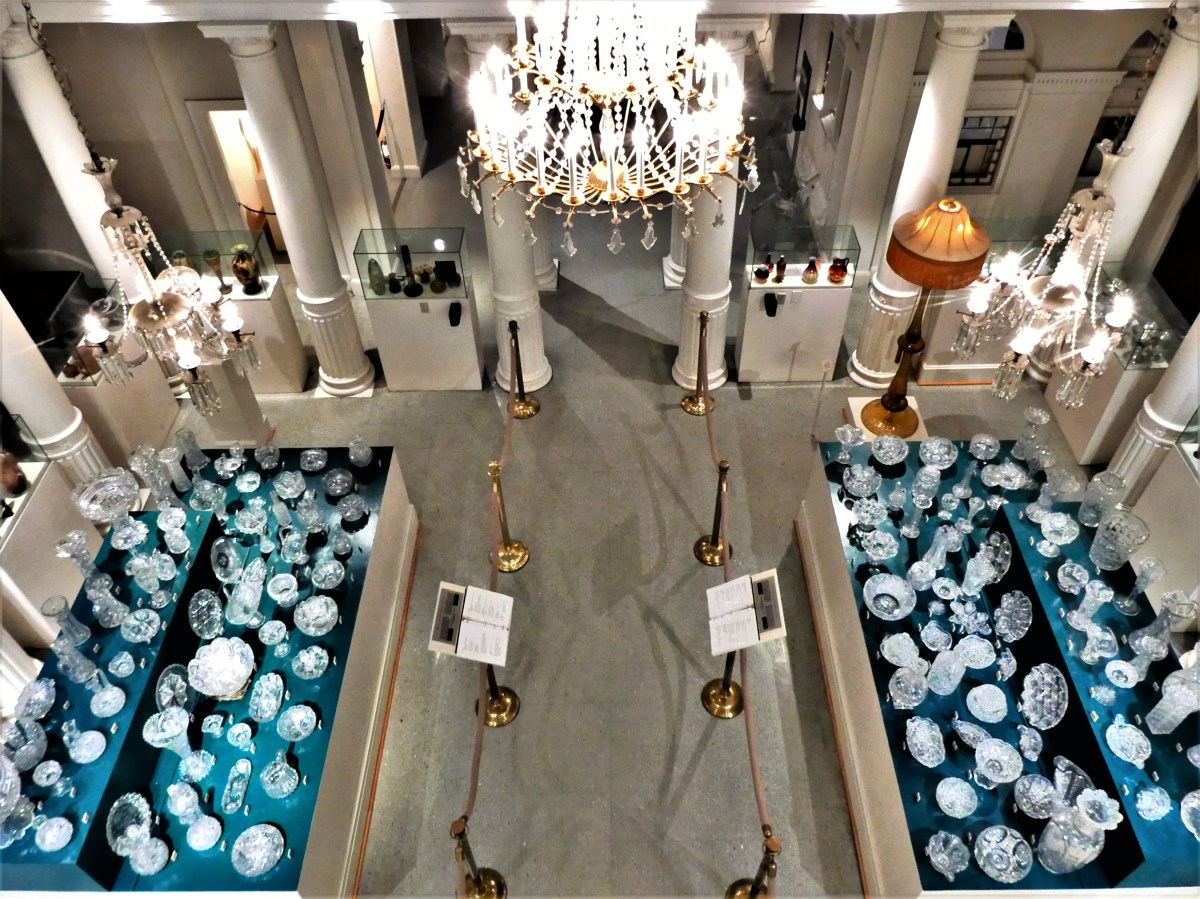
Continuing on, the gallery boasts a prodigious collection of Victorian cut glass beneath a Tiffany chandelier,

glassware

The third floor exhibits fine furniture,

chairs and horn table (2)

relevant fine art oil paintings from the Renaissance,

Cimon and Pero.jpg

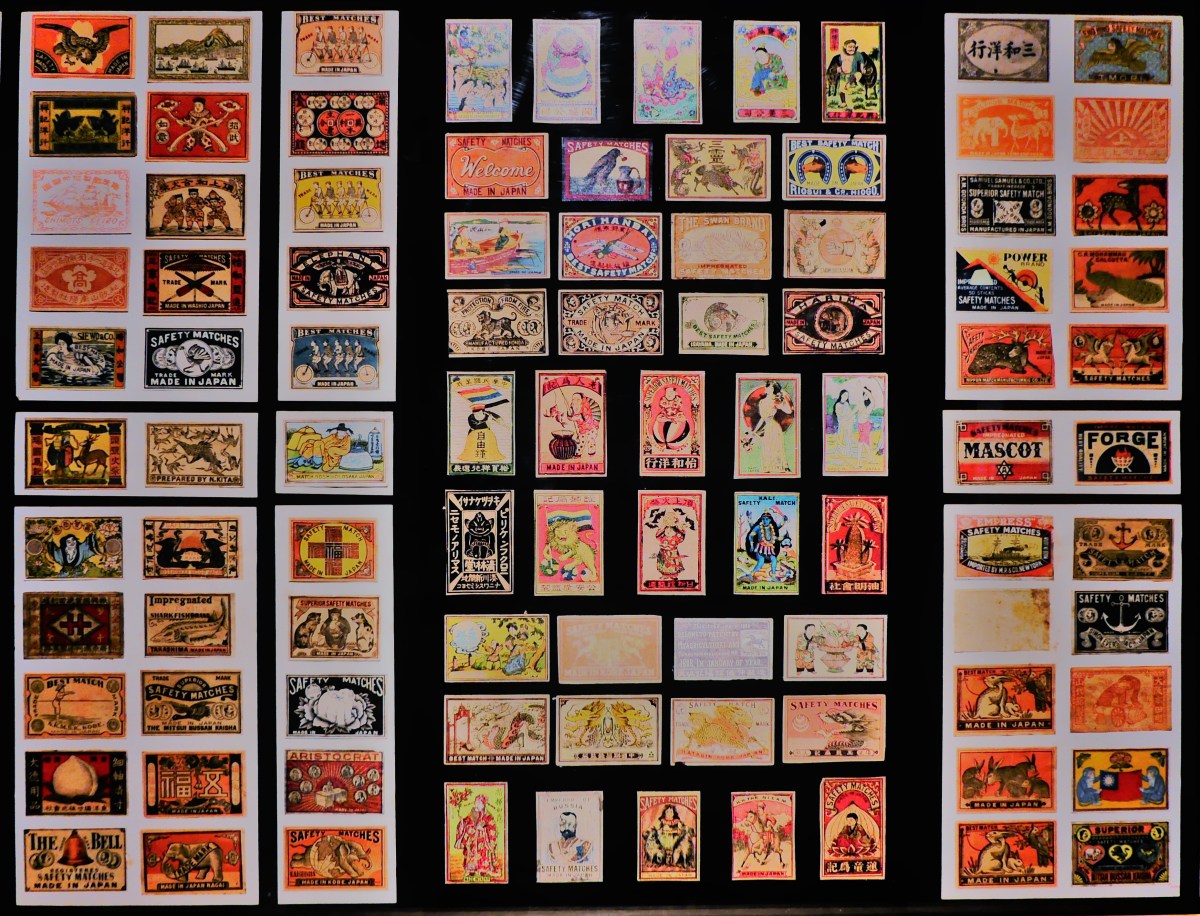
and additional collections, from match boxes…

matchboxes

to cigar bands.

cigar bands1

The Lightner Museum represents Otto C. Lightner’s legacy of collecting.

He endowed his collection to the city of St. Augustine upon his death in 1950, and continues to keep a close eye on his Chicago treasures from the courtyard, where his remains are buried.

When It Rains, It Pours

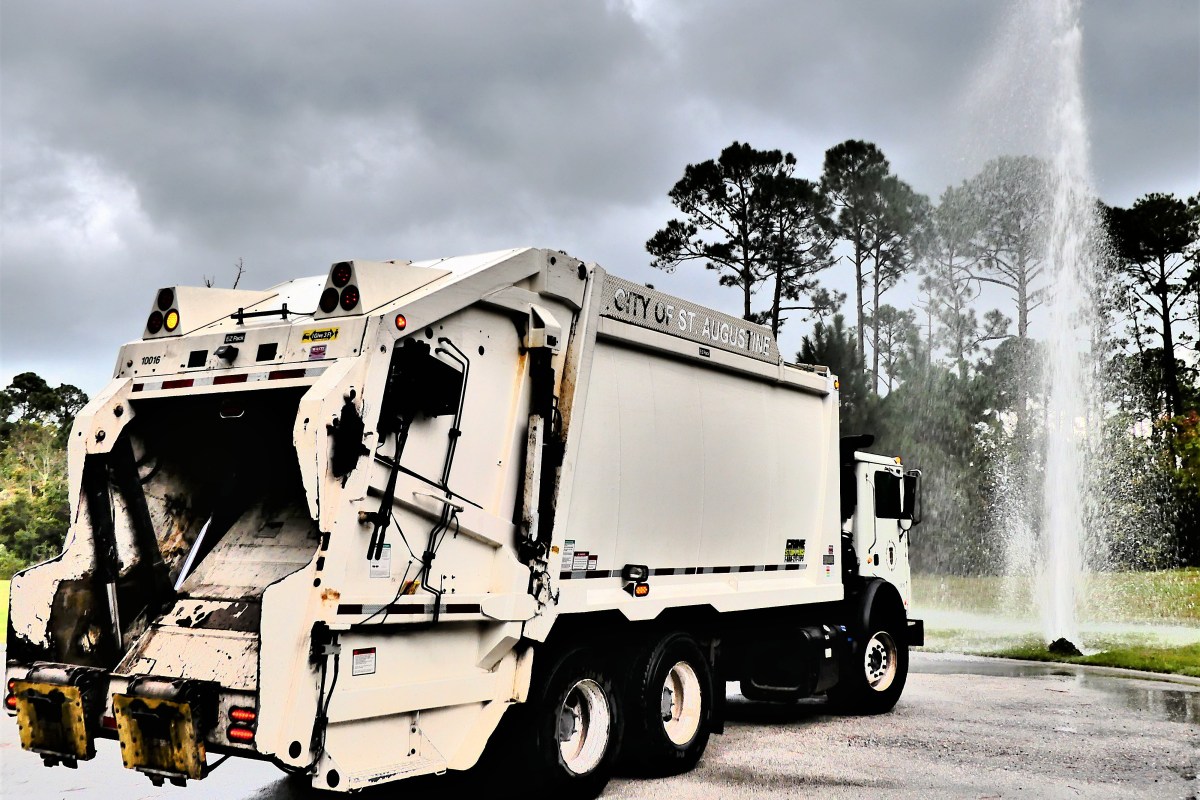
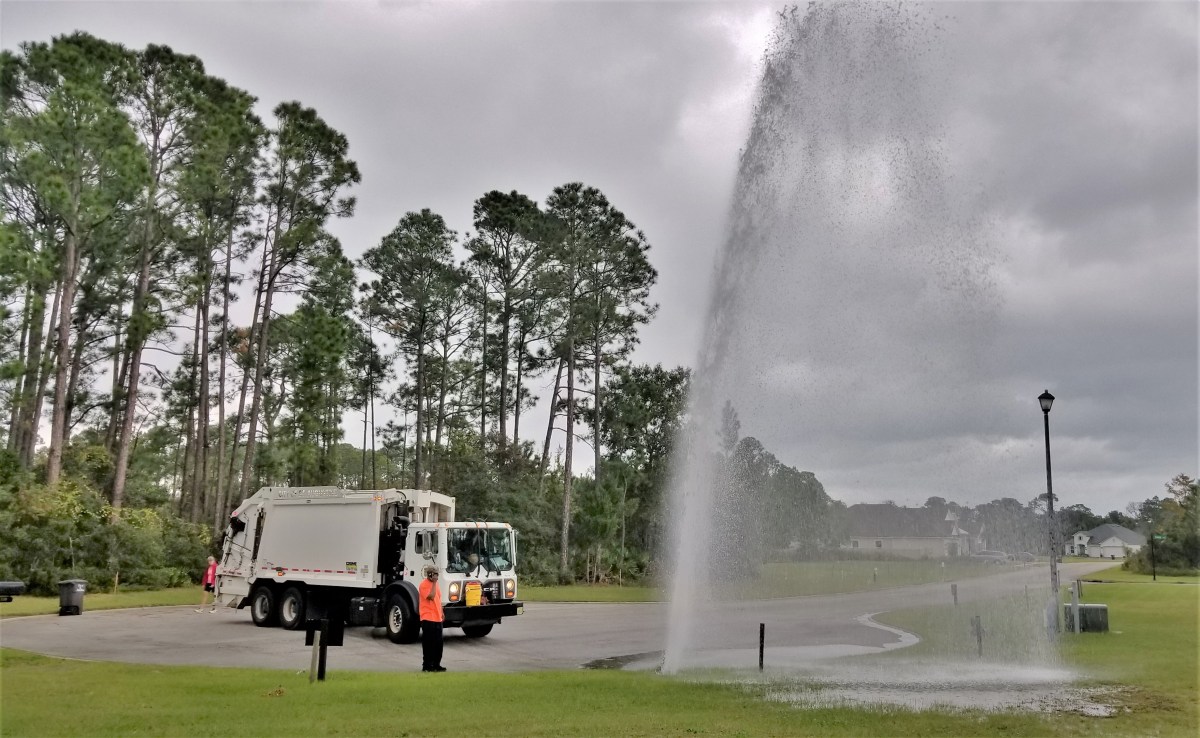
Leah and I were about to step out to take care of an outdoor errand, when a graying sky turned into a routine Florida downpour, putting a damper on our schedule until the storm abated. We were watching the rain from my office window, just as the city sanitation truck arrived, chugging towards our cul de sac for the weekly trash pickup. But this time around, something went terribly wrong.

The driver of the truck entered the cul de sac by driving down the center of the road instead of staying right and following the full curve of the road. Perhaps, the driver thought the truck’s turning radius could negotiate a tight 180° turn out of our dead end from his middle-of-the-road position without jumping the opposite curb…but he was wrong. The vehicle rolled over the curb–its right wheel catching a water supply cover that split under the weight of the cab–which crushed the water valve and sheared the 3-inch supply line underneath.

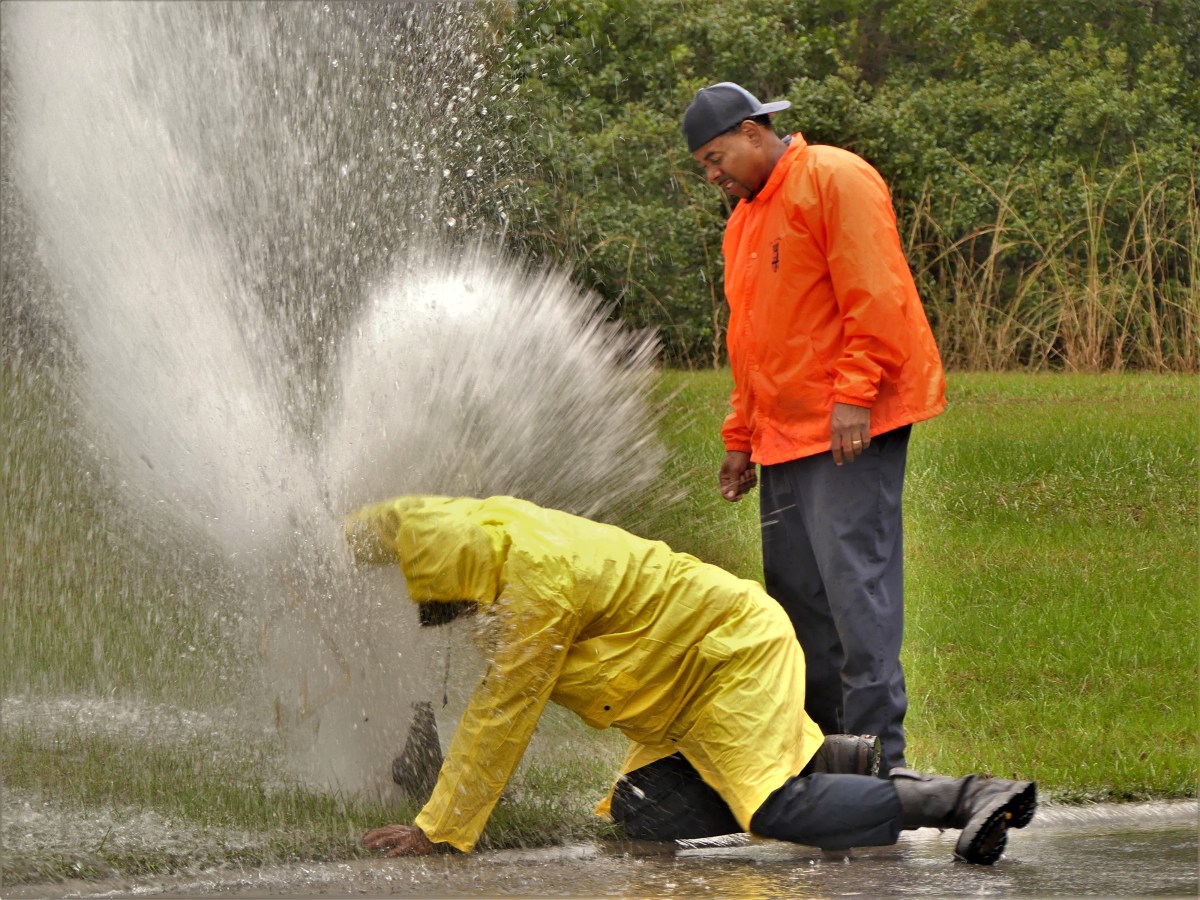
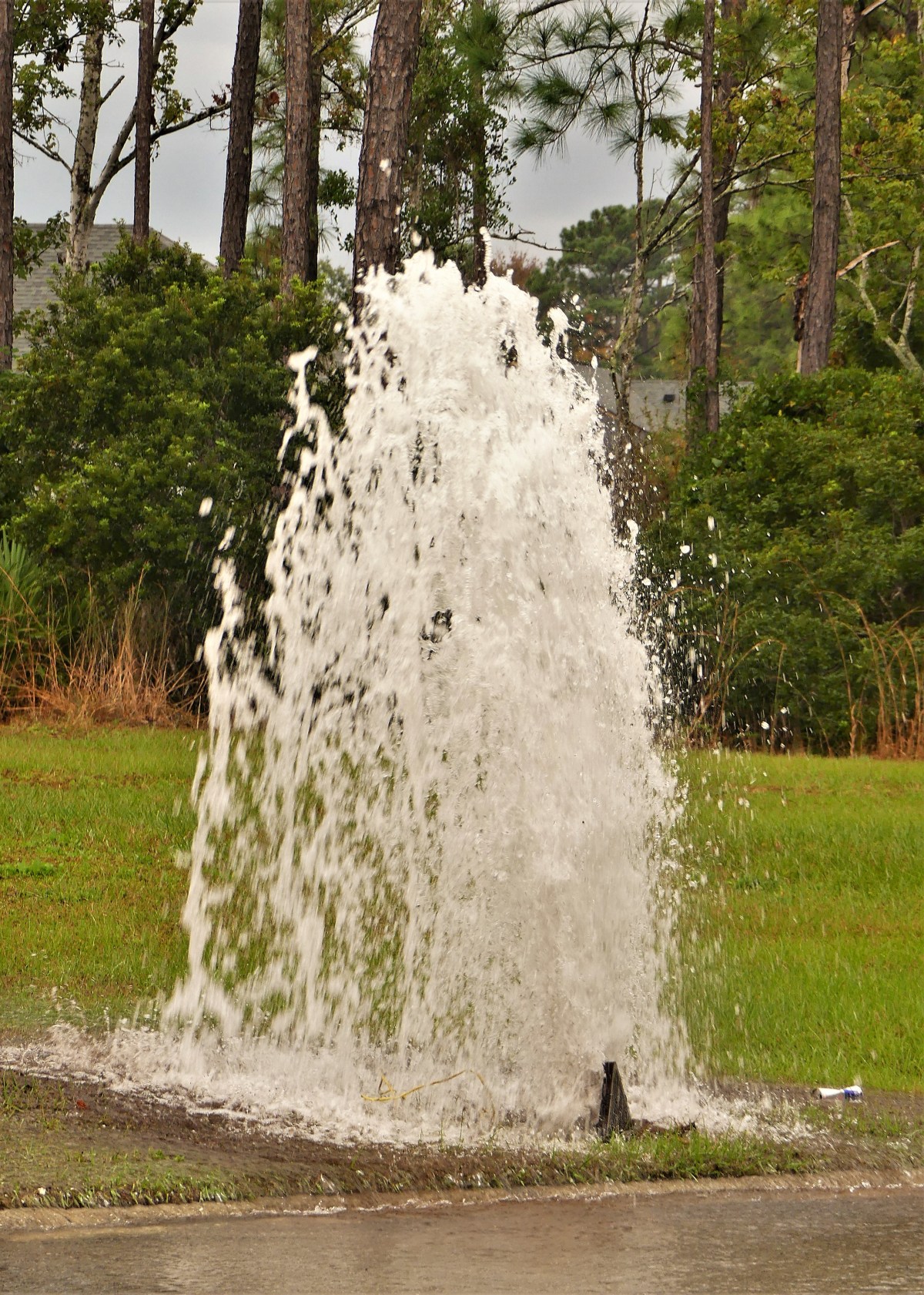
Suddenly, we were looking at an impropmtu geiser eruption in our front yard, rising 60 feet or more.

gusher1.jpg

It was enough for me to grab my camera and photograph the ensuing drama, as if I was part of a crime scene investigation.

police arrival

The police were called–filing a report and issuing a summons to the driver–but stuck around for a while to gawk at the local man-made attraction.

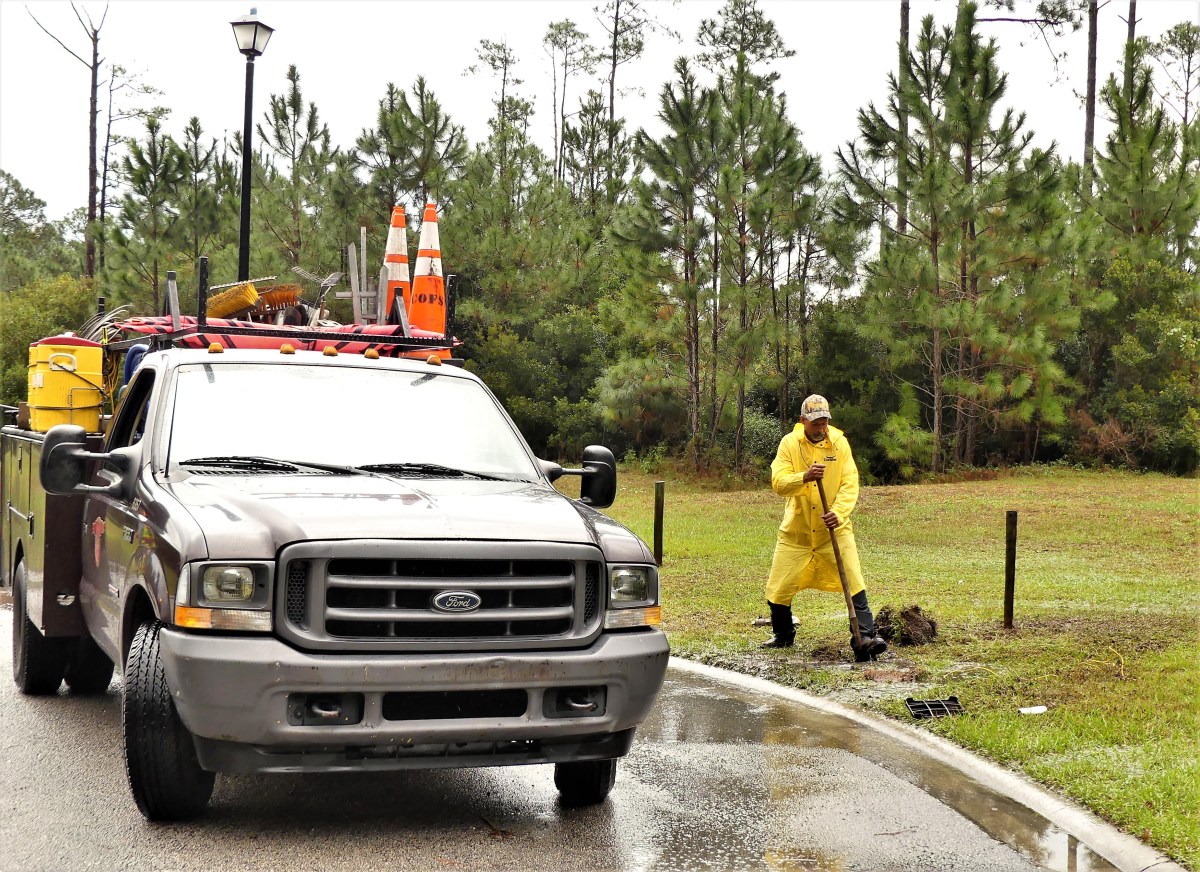
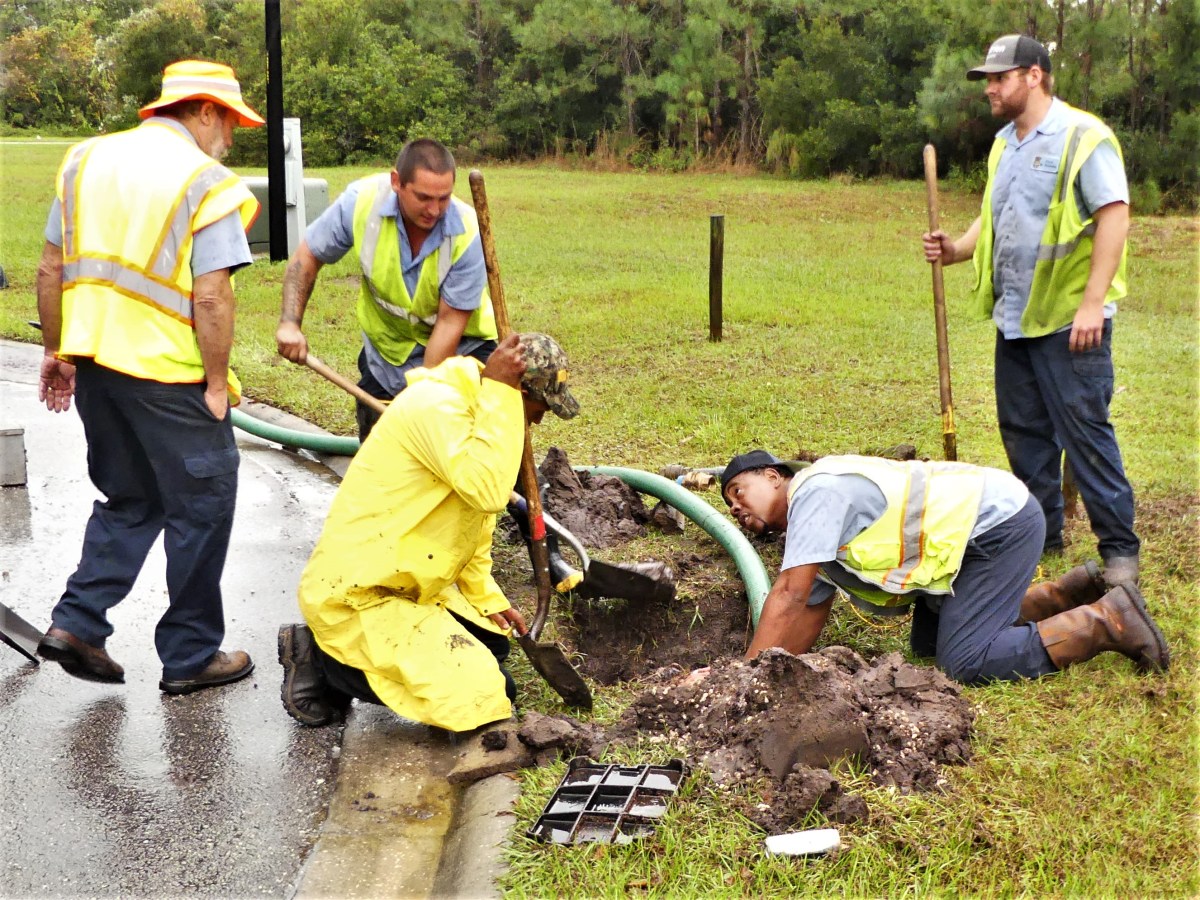
Thirty minutes passed before a Water Department maintenance crew eventually arrived on the scene to figure out their next step.

service truck and geiser

With water being such a precious commodity (see Well Done!), Leah and I wondered how much had been wasted.

“They better not be charging us for that,” she asserted.

“How could they,” I reassured, “It’s not like it was our mistake.”

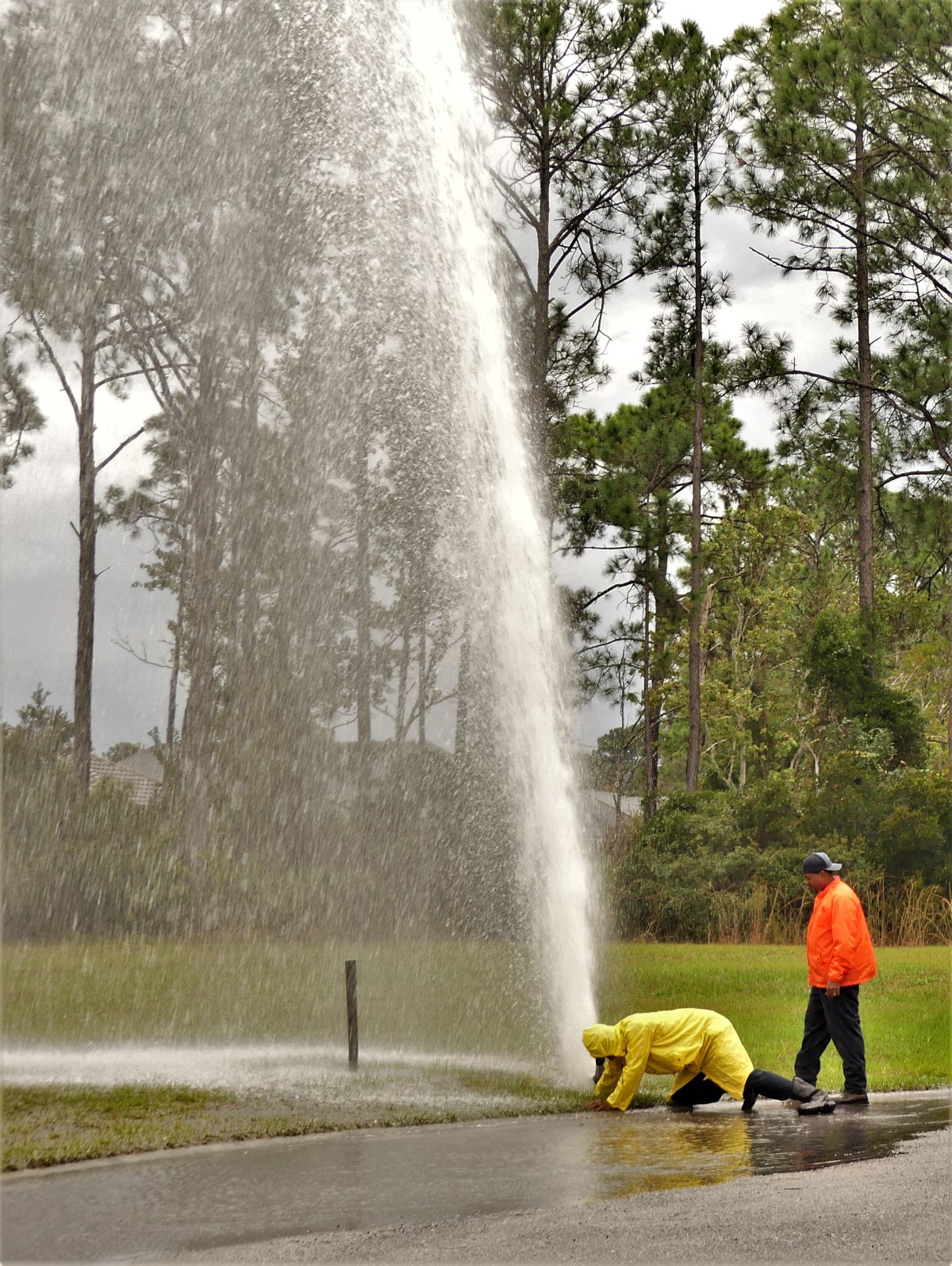
First order of business…

checking the break

…inspect the damage…

water pressure

…then locate the water shut-off…

turning off the water

…and stop the flow…

water recovery.jpg

to enable repairs.

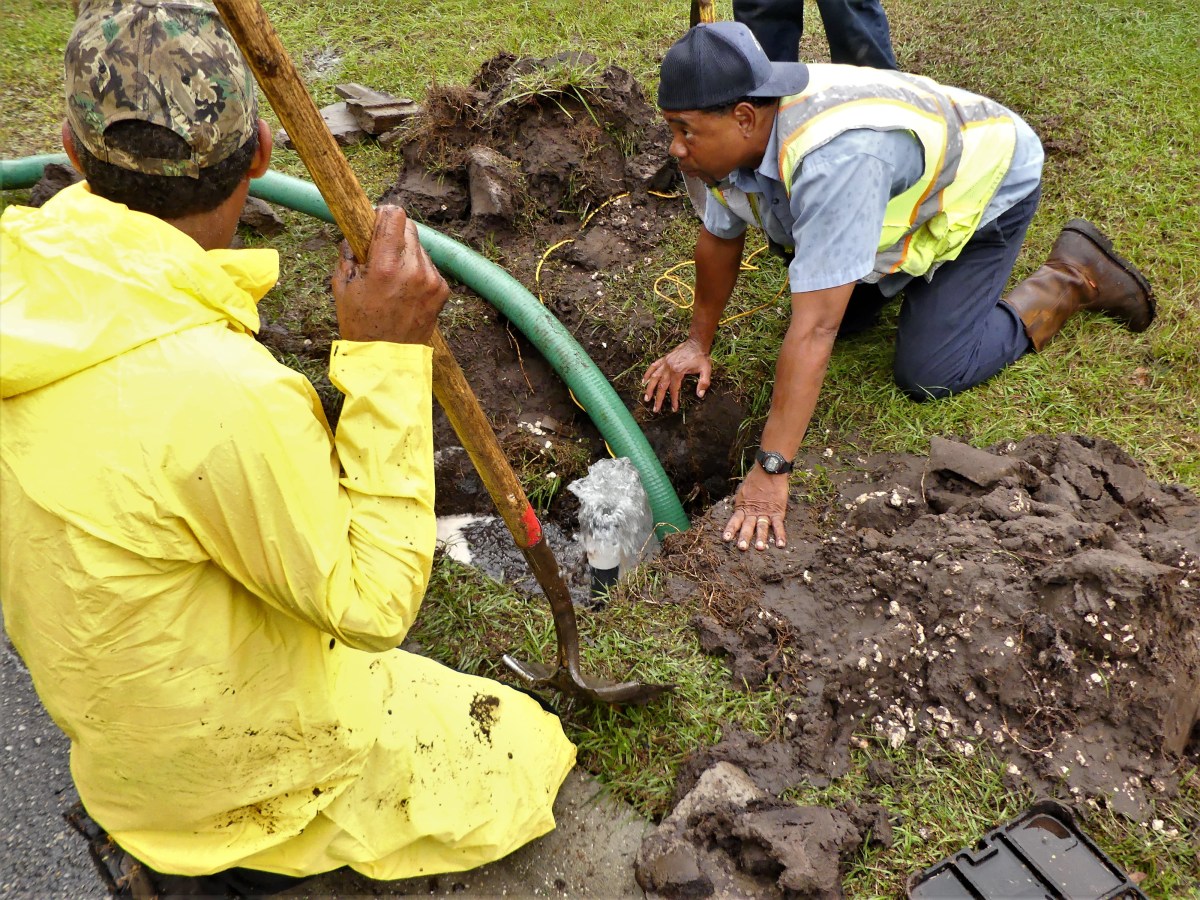
geiser containment

digging out

tools of the trade

pumping water

excavating the pipe head

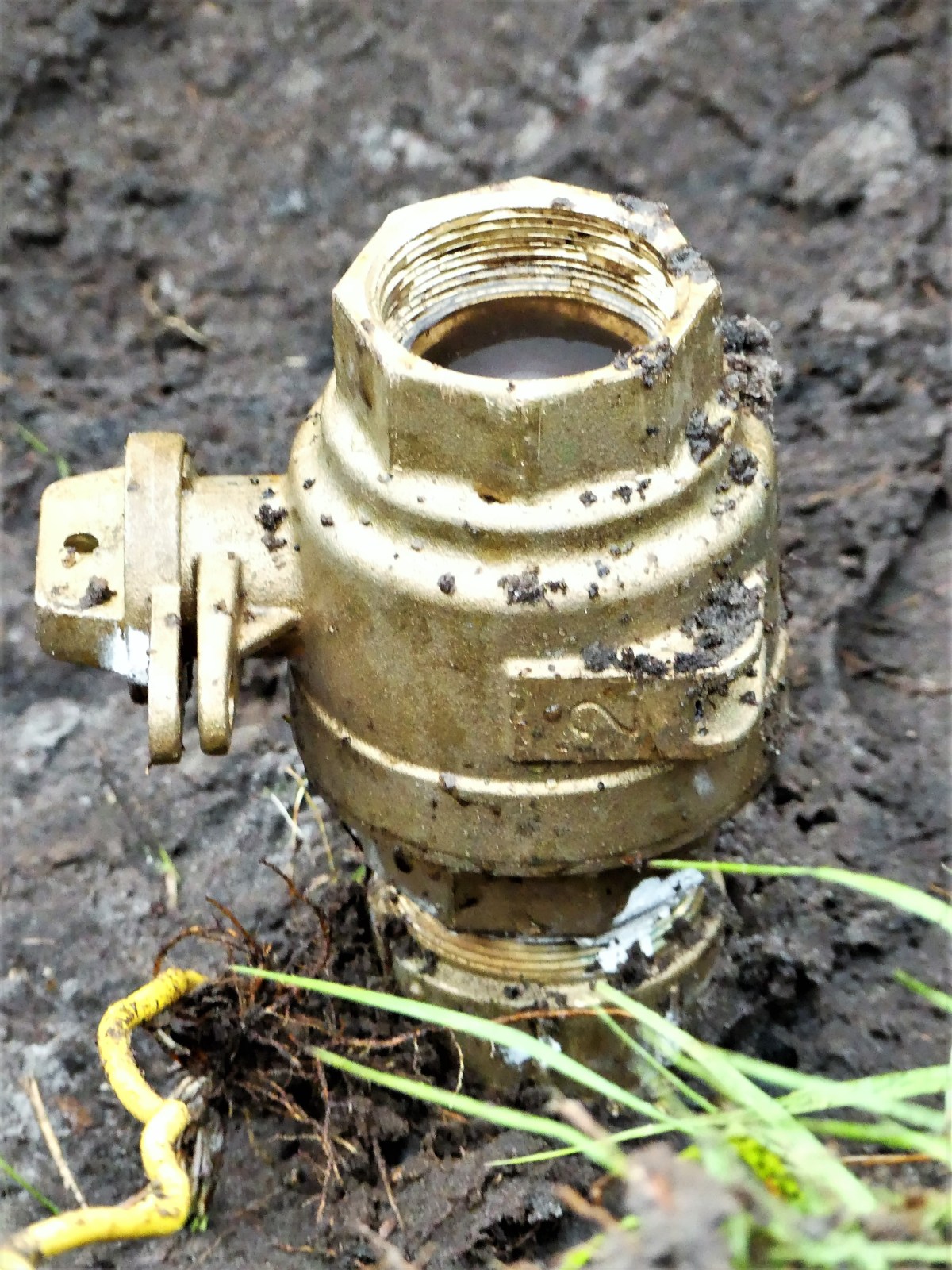
After an hour of tinkering, the damaged fitting was finally replaced…

cracked pipe

…with something shiny and new.

new cap installed

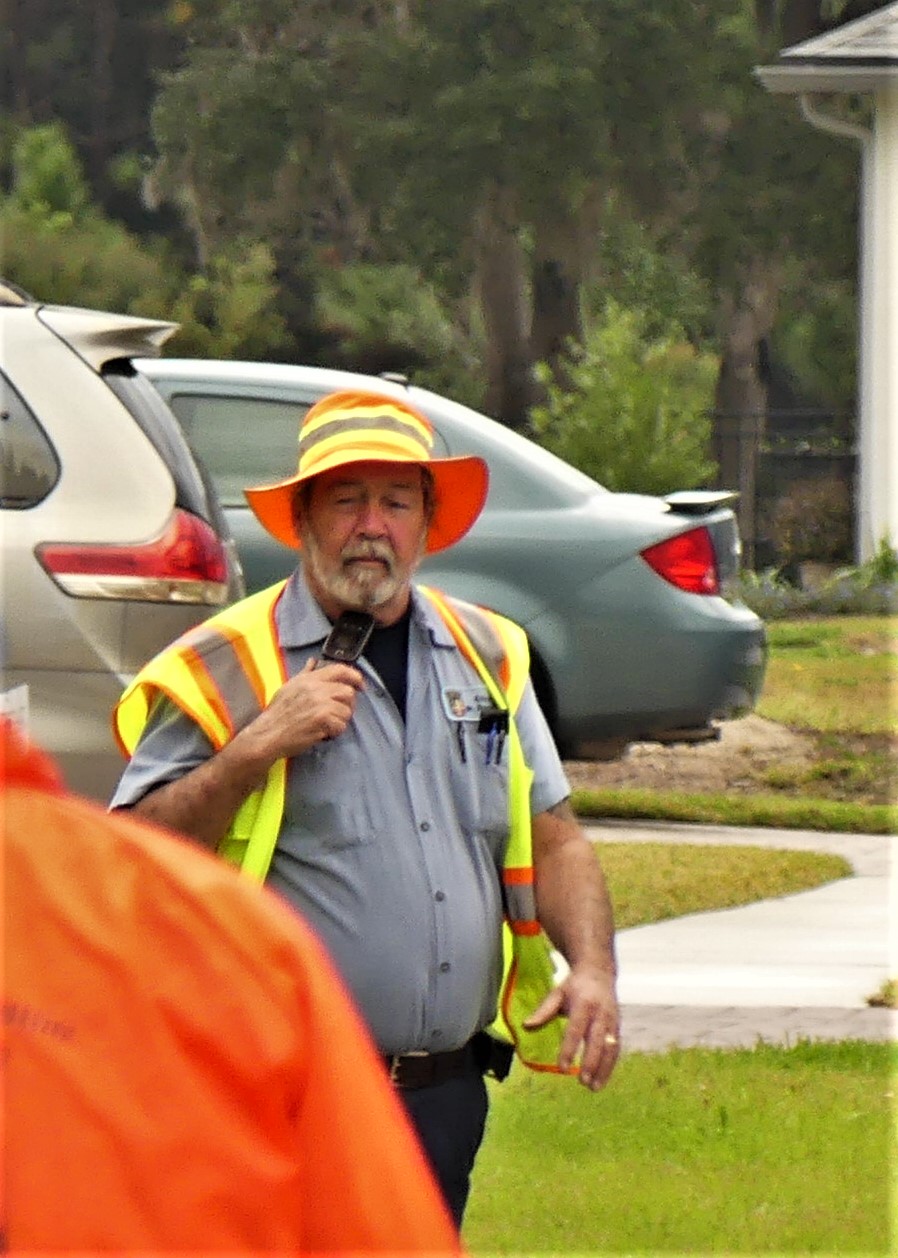
I asked the crew chief how much water he thought had been lost.

crew chief

“Y’know, I have to fill out an EPA report that accounts for missing water,” he explained, “So, if I was to go with a 1000 GPM flow-rate over 45 minutes, I’d be looking at approximately 45000 gallons (or 170,000 liters) lost.”

According to city water rates, that’s equivalent to a $500 water bill, making this accident one very expensive car wash.


Becoming My Parents

Hiking along New Jersey State and County Park trails the day after Thanksgiving made a lot of sense to Leah, who orchestrated our first return to New Jersey since moving to St. Augustine five months ago. She promised a whirlwind week and a-half of personal appointments and commitments packed with a variety of doctors, friends and family members, all laced with an emphasis on over-eating.

And so, during the course of our visit, as advertised, our food-centric itinerary always included a meal punctuated by scintillating table conversation on family history and folklore–touching on recipes, obituaries, and kin outcasts, with politics and religion occasionally creeping into the dialogue.

But mostly, everybody seemed to be preoccupied with their health. And God help the person who would innocently ask, “So, how are you feeling?” Because this question would open the floodgates for respondents to freely reassign their HIPAA proxy on the spot so they could casually discuss their current condition down to the last agonizing ache and pain, notwithstanding the severity surrounding their prognosis and course(s) of treatments, always followed by a couple of random doctor-horror stories.

It seemed like everyone had a health-related story to tell–whether it was about themselves or someone they knew–not unlike my parents and their friends, who would gather at holiday occasions to compare notes about their medication intake. It was uncanny that the of crux of nearly all of our relationships was now firmly rooted in our faded glory and eventual demise.

Any outsider, after eavesdropping on any of our sessions of non-stop kvetching might be surprised to learn that we are still breathing and have more than one day to live.

And so, it was predictably refreshing to carve out some time to clear our ears of prescription patter, and find an activity that combined friendship and calorie burning. Of course, our opportunity to hike was completely weather-dependent, considering the prior Nor’easter and the Arctic chill that had settled on the Atlantic states.

Like many Northern transplants to Florida, Leah and I had become preoccupied with weather-watching, so we might bask in the warm glow of knowing that we had finally escaped the unfriendly winters by relocating to St. Augustine. But now that we were back in Jersey, it was time to face the hard cold facts of winter; Ramapo Valley Reservation (NYNJTC_RamapoValleyCountyReservationMap-2017) was 18°F at the Reservation trailhead, and expecting to peak at 23°F by the afternoon.

MacMillan Reservoir was partially frozen and dreary…

lake (2)

with the exception of distant water reflections.

frozen reflection

Trails were camouflaged… 

blue trail (2)

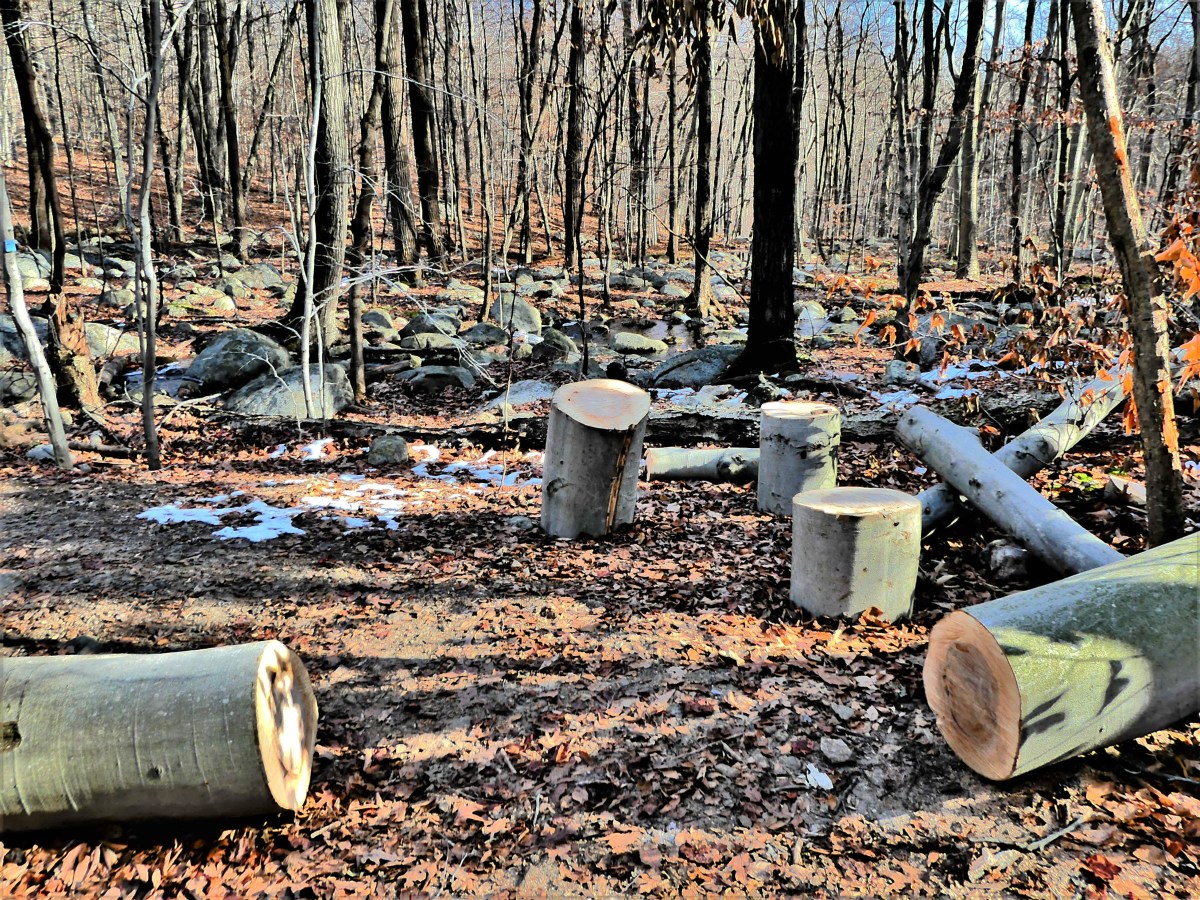
by crispy fallen leaves–densely packed and slippery–despite the assortment of Skittles-colored trail blazes nailed to forest saplings.

cut logs

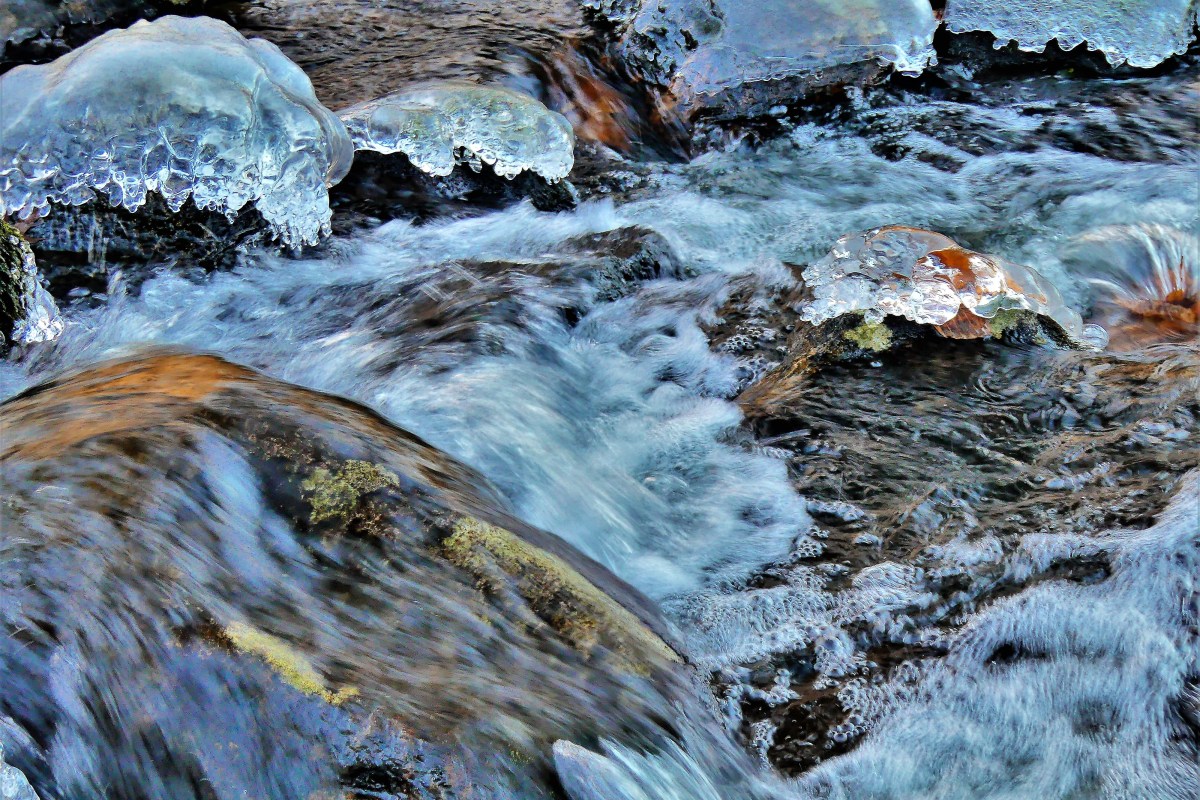
Brooks were running fast and high…

brook flow1 (3)

making each water-crossing challenging and hazardous.

We continued our four-hour excursion with the winds picking up across Campgaw Mountain.

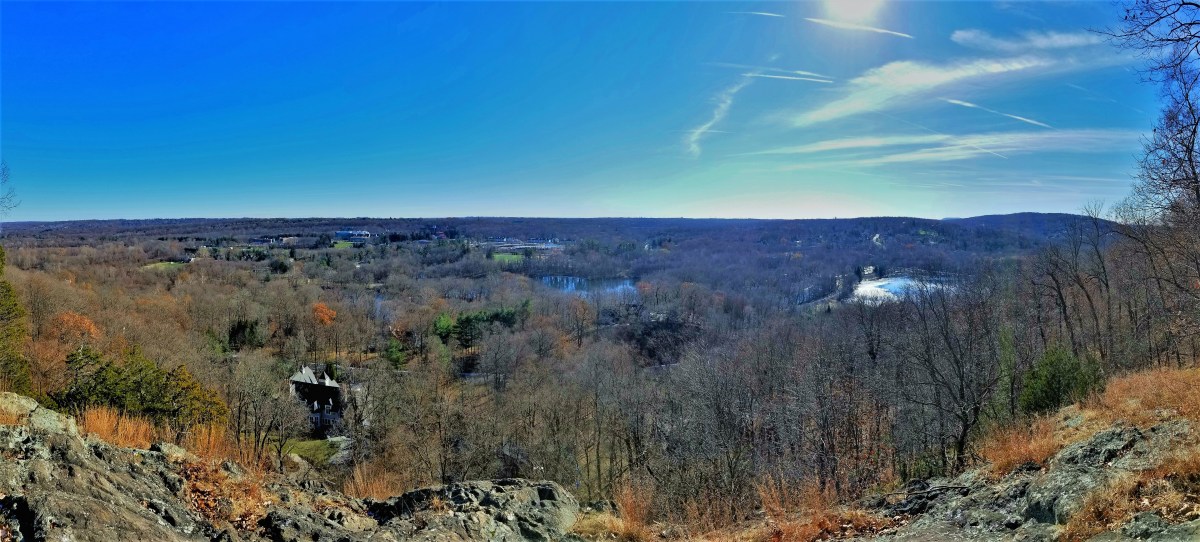
panorama looking east

And it became clear to me that marching through the New Jersey woodlands was not the best birthday present I could have given myself. The cold had already taken its toll on Arlene’s arthritic fingers. Leah, who had recently succumbed to lower back pain and acute Achilles tendonitis was now complaining about her knees.

My knees were also aching from sliding down one too many slippery slopes. Even Doug, the youngest of all of us by at least eleven years had to admit that his right knee was locking up occasionally. The ladies cut their hike short, taking a quick detour to the parking lot, but Doug and I wore our intrepid hats. We continued to the feature waterfall along the Brookside Trail with few delays or complaints…

waterfall

giving us bragging rights to a 7.5 mile accomplishment,

frosty rocks

and leaving me more than ready for my true birthday present to myself: a one-hour Swedish massage at a local day spa, if only to rub my aches and pains away for another day.


Thanksgiving Dinner

Beware!…
the Thanksgiving meal that takes days to prepare,
and the ease of slipping into a digestive coma
just from the aroma–
of roasted turkey, the stuffing, the cranberry relish,
and all the assortments designed to embellish.

But the moment our family sits down to feast
the hunger takes over
with no time to savor
the melange of food flavors,
and sooner than later,
there’s none left to eat.

family dinner (2)

Happy Thanksgiving!

Philadelphia Freeze Out

The Frontier flight was 15 minutes early, arriving from Jacksonville to Philadelphia in under 1½ hours–

Welcome to Philadelphia

just ahead of the Nor’easter that would ultimately drop 6 inches of snow and ice on the region, creating a classic commuting catastrophe.
airport

Yet despite the nail-biting adventure of driving through icy lanes of traffic moving sideways, and the total disregard of STOP sign awareness, there was a calmness to the city that I had never noticed before, giving the illusion of Walking Dead abandonment.
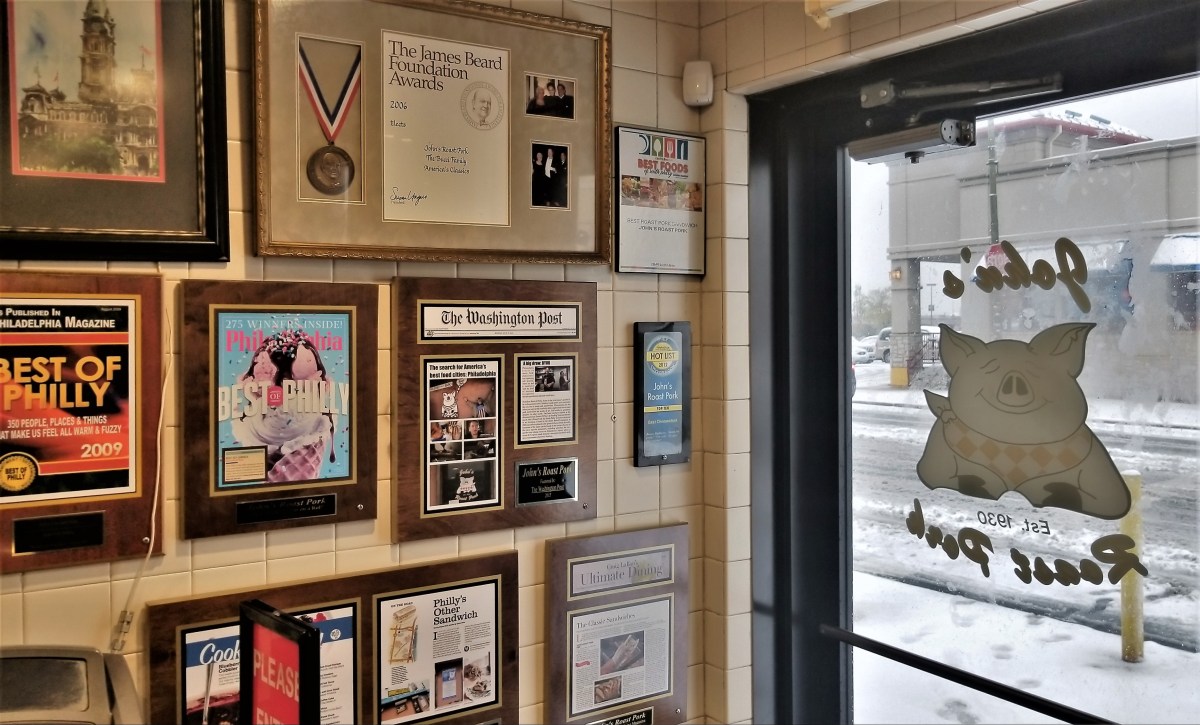
First order of business was food. Move over Pat’s and Geno’s, because there is a rival cheesesteak to adore at John’s Roast Pork in South Philly. Fortunately, the lousy weather short-circuited the out-the-door line that is almost always guaranteed during lunchtime.
John's Roast Pork1.jpg

My son, Noah ordered two 12-inch sandwiches with mushrooms and onions that could easily feed a family of four, but proved worthy of two consecutive lunches for each of us.
Then, we were off to his apartment in Fishtown, an up-and-coming gentrification project that is locked between empty lots boasting scattered mattresses, and hastily-erected, fresh-bricked row buildings that contradict the broken sidewalks–all within viewing distance of Ben Franklin bridge…

Franklin Bridge1

and walking distance to Reading Market.

Iovine Produce.jpg

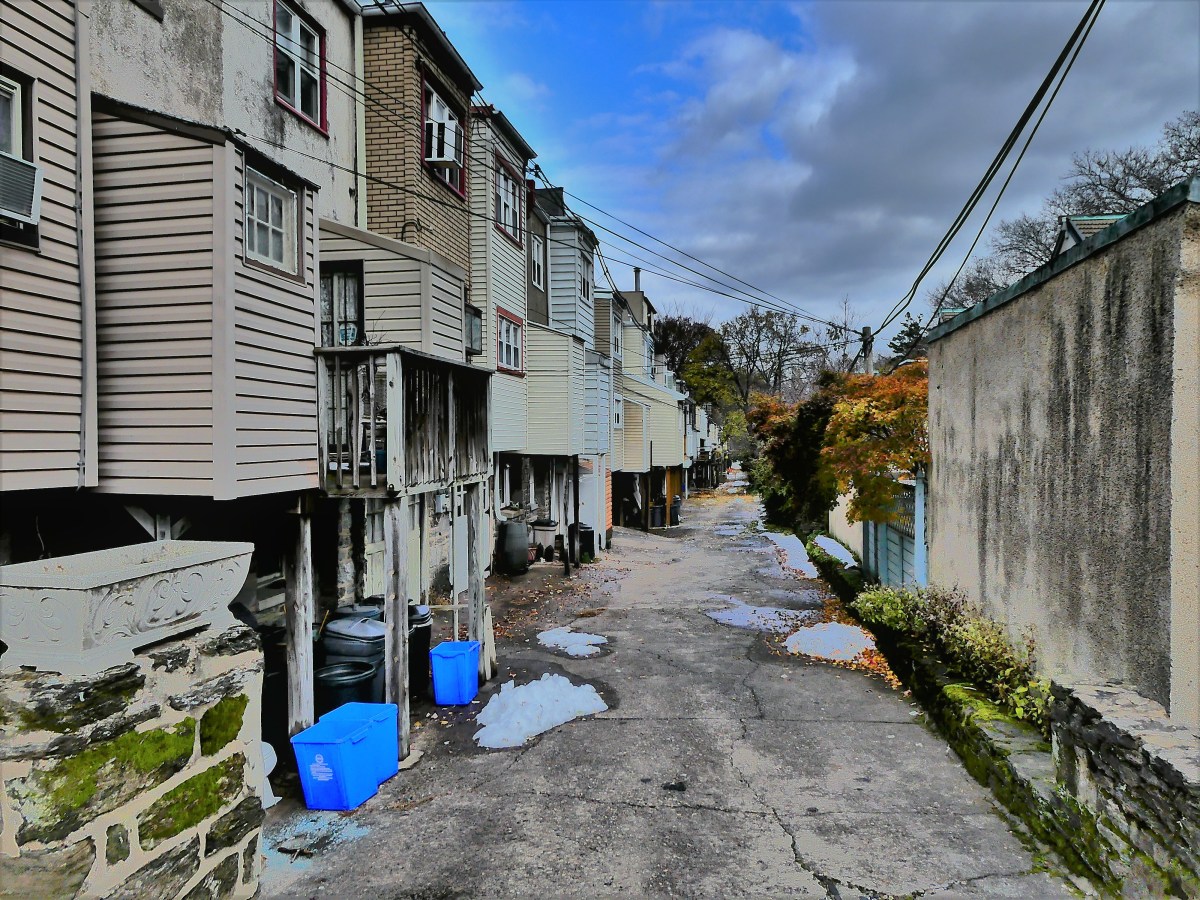
After an overnight stay in Germantown, a walk around the neighborhood revealed only remnants of the shot of winter that overwhelmed the area during the past 48 hours.

alley

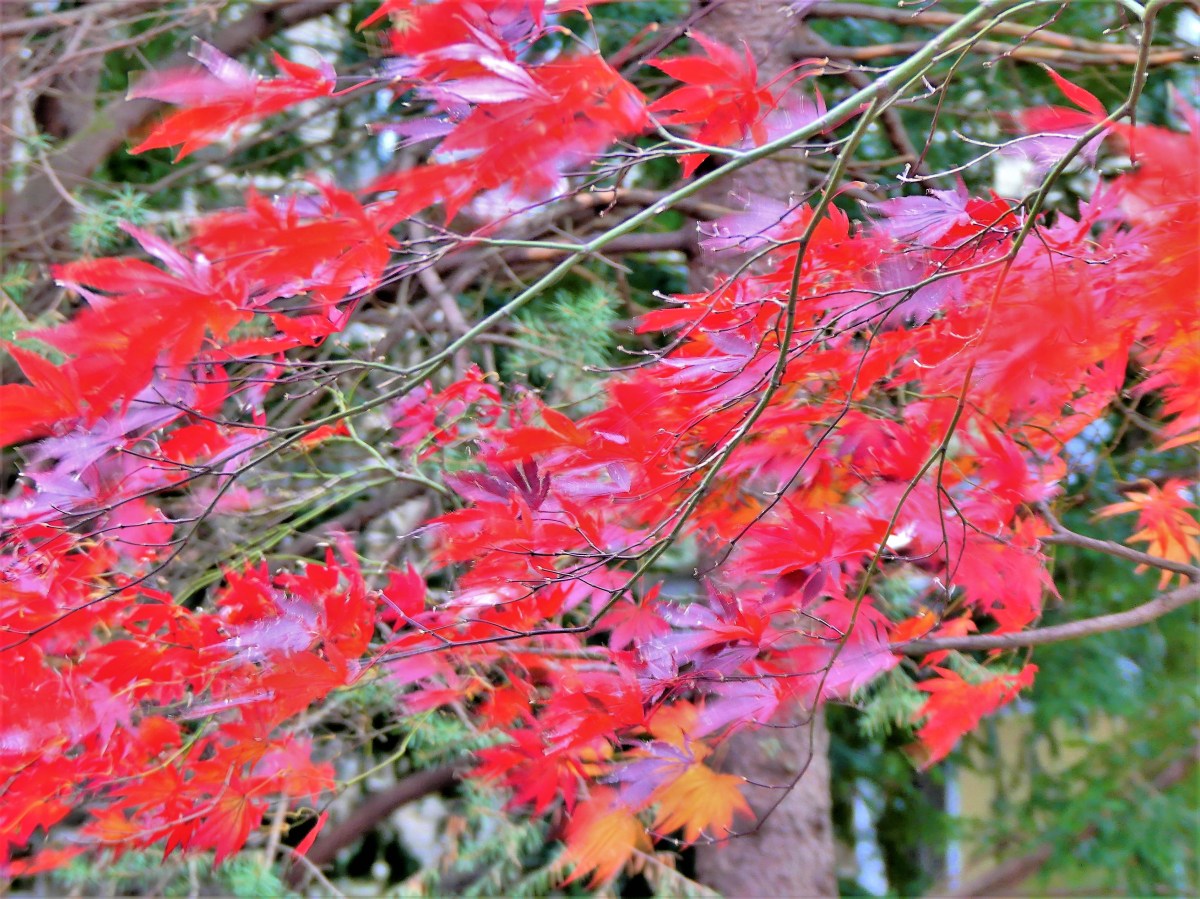
In fact, the signs of fairer weather…

single rose

unexpectedly eclipsed the season’s first storm…

moving leaves (2)

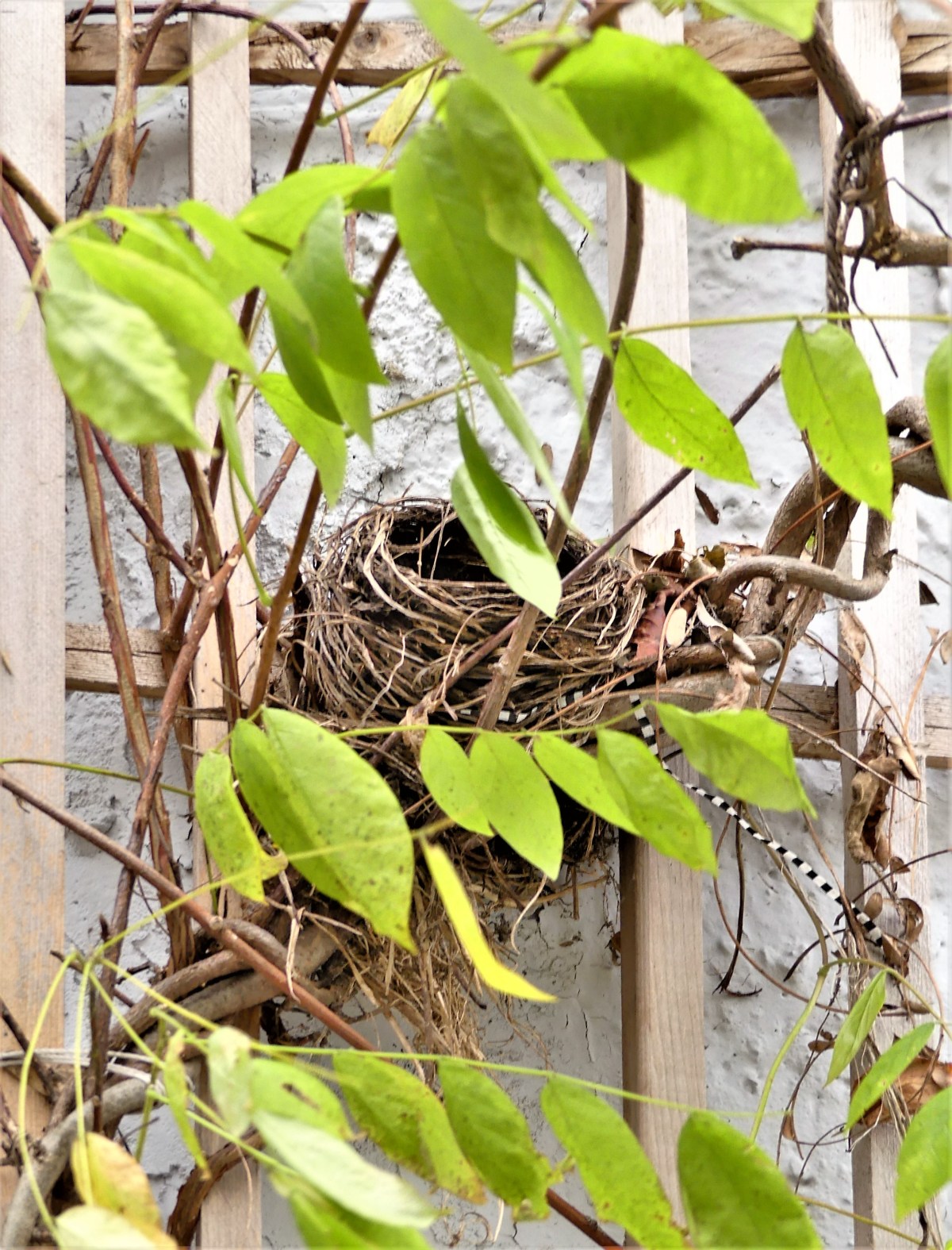
and reminded Mother Nature…

nesting vine

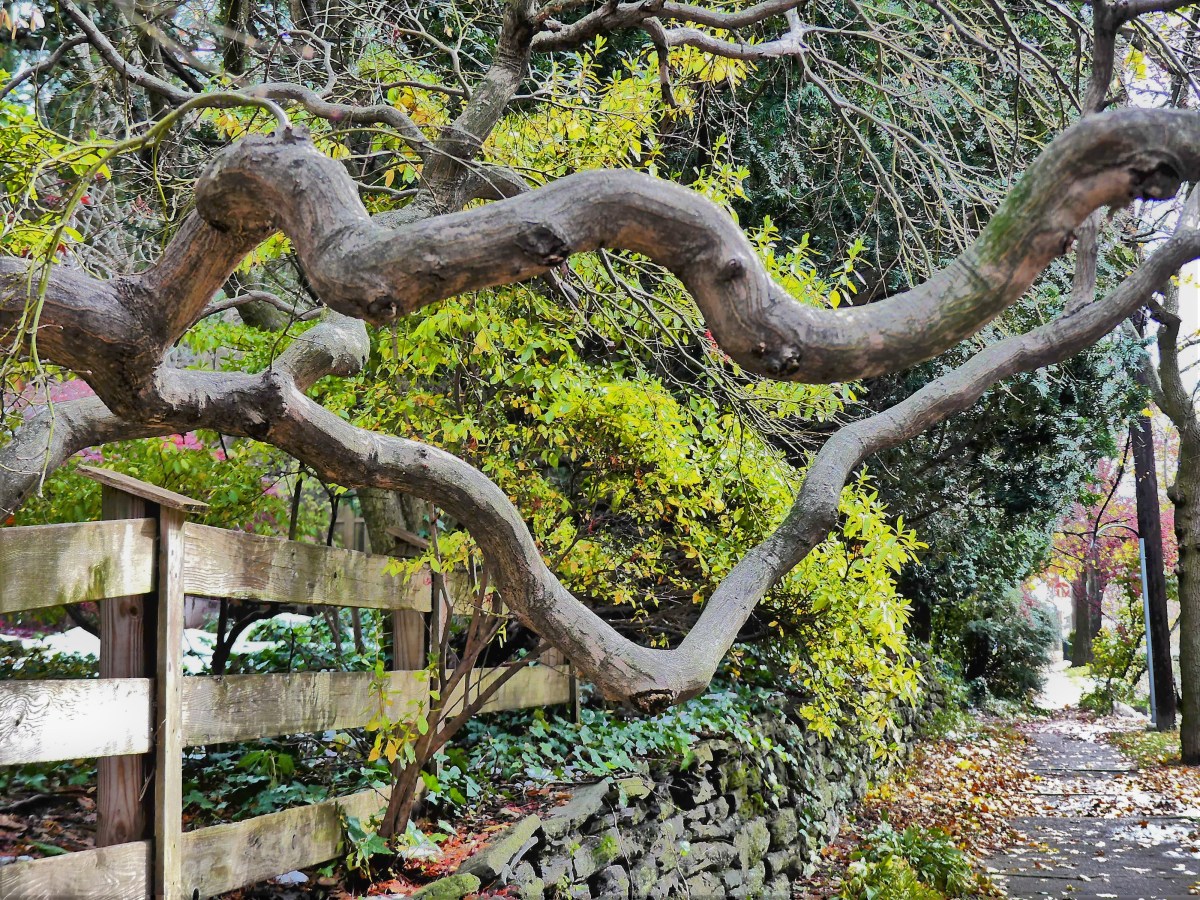
that while the first snow may have melted…

oak boughs

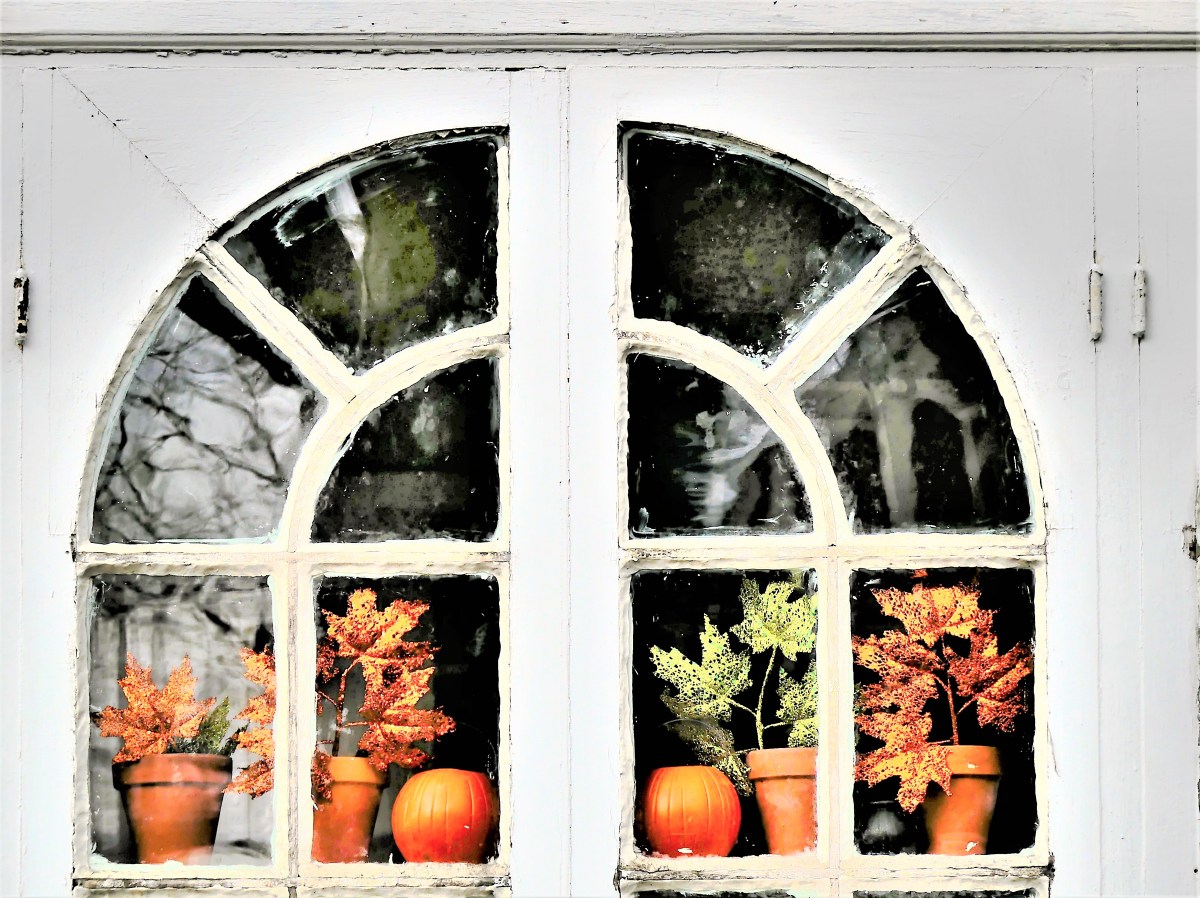
the signs of autumn…

pumpkin arch (2)

were slowly fading…

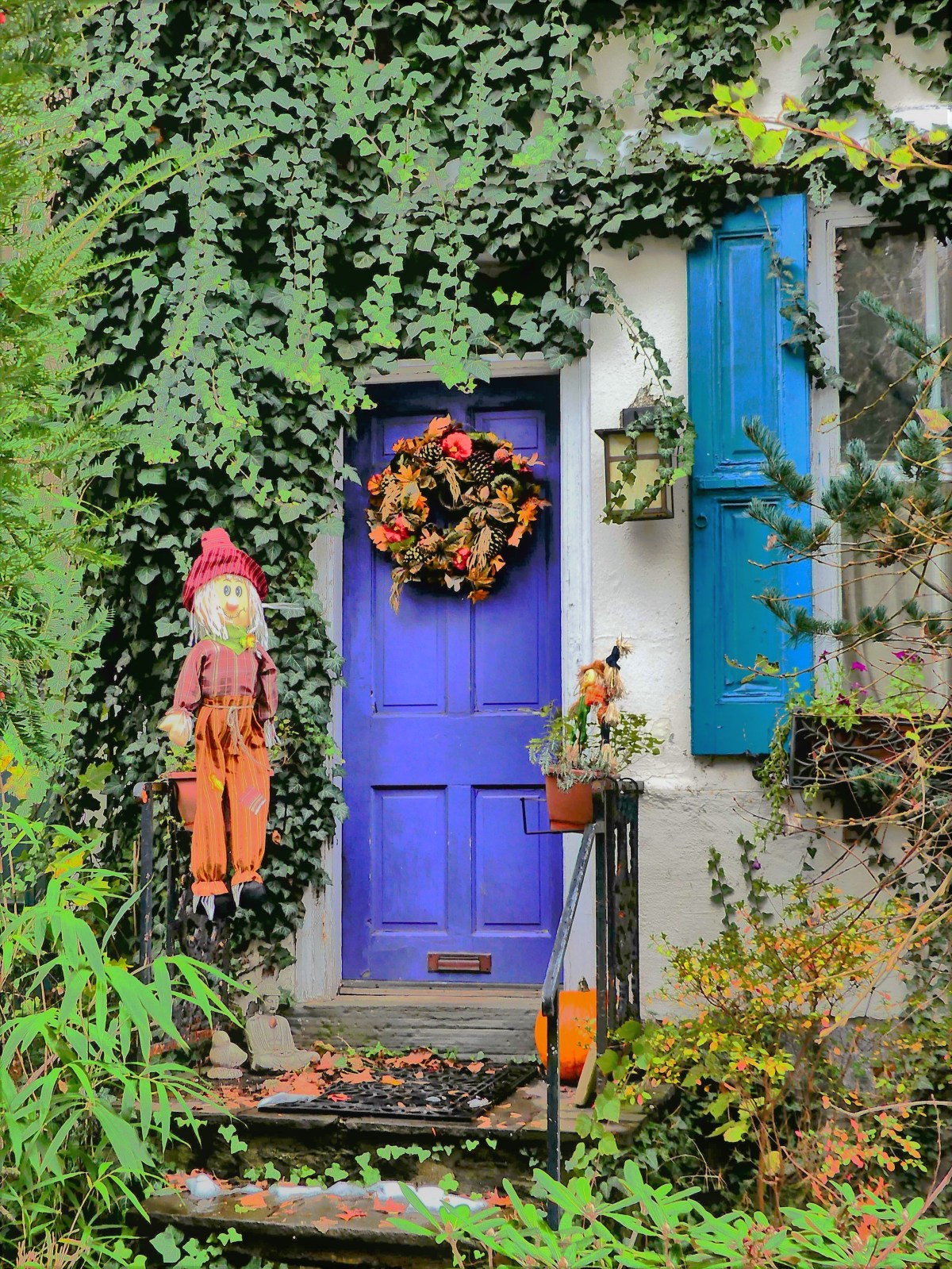
autumn door

to green and blue.

arch room.


Southern Fortitude

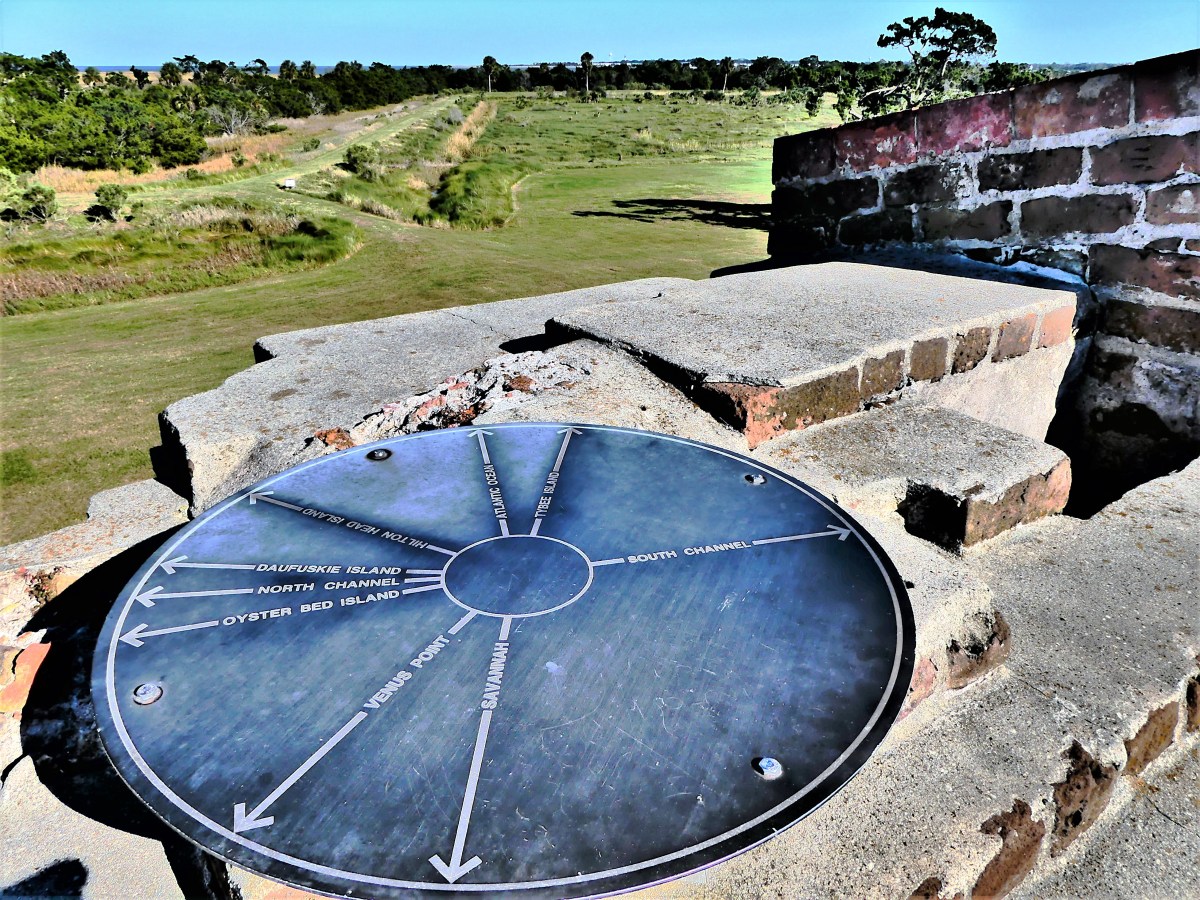
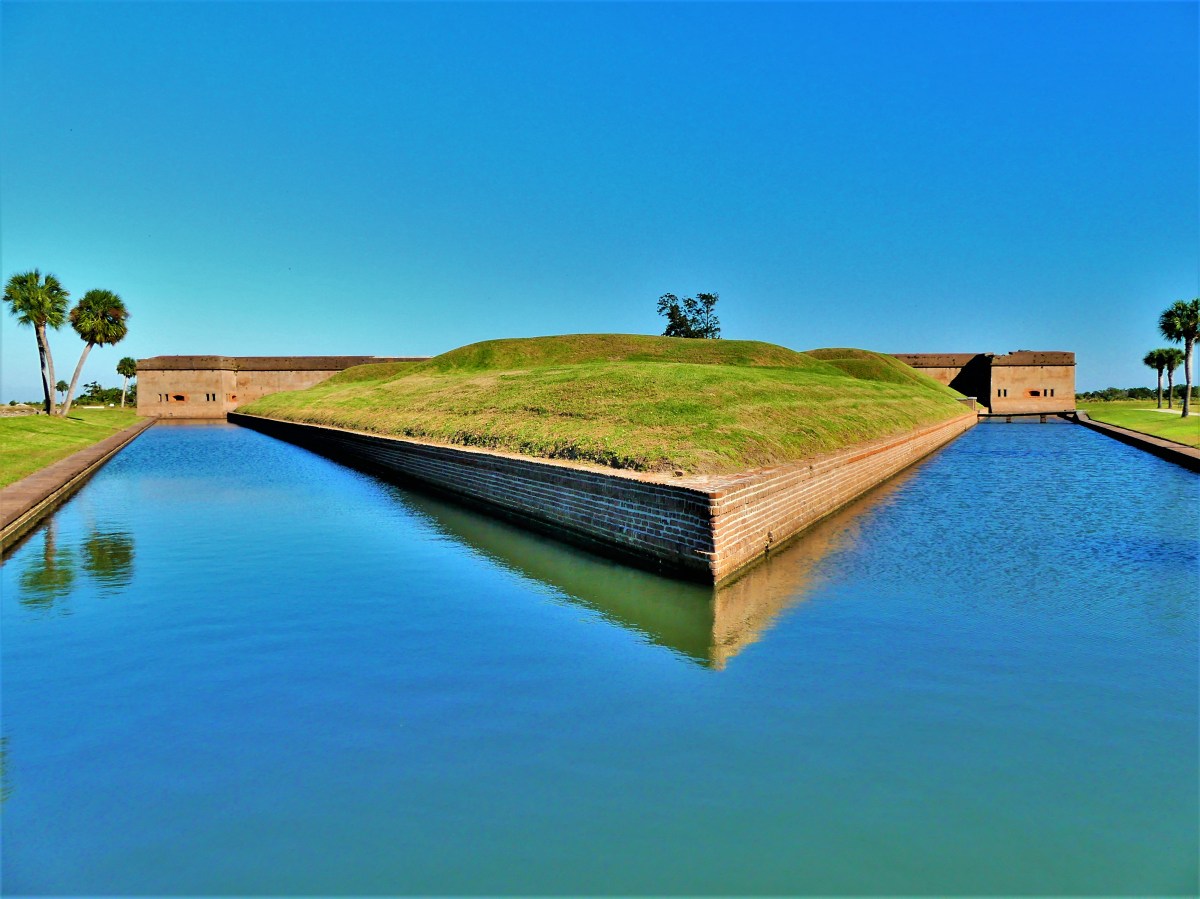
It was a bad day for Col. Charles Olmstead and the Confederate Army on April 10, 1862, when Capt. Quincy Gillmore’s Union artillery attacked Fort Pulaski from the northwest beachhead of Tybee Island, forcing its surrender thirty hours later,

direction dial

and proving that a seemingly invincible coastal fortification that required 25 million bricks, 18 years, and $1 million to build could never catch up to evolving weapons technology.

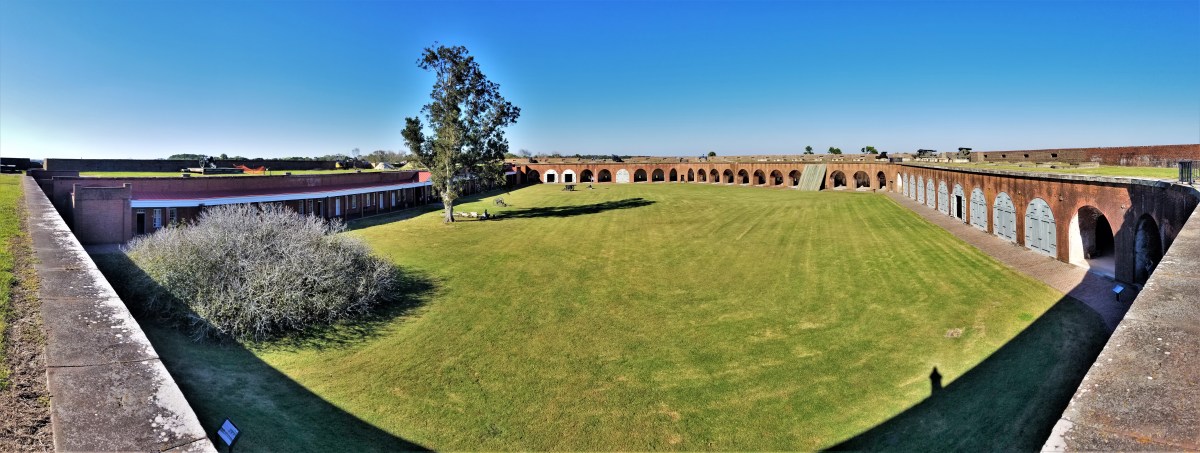
Overview

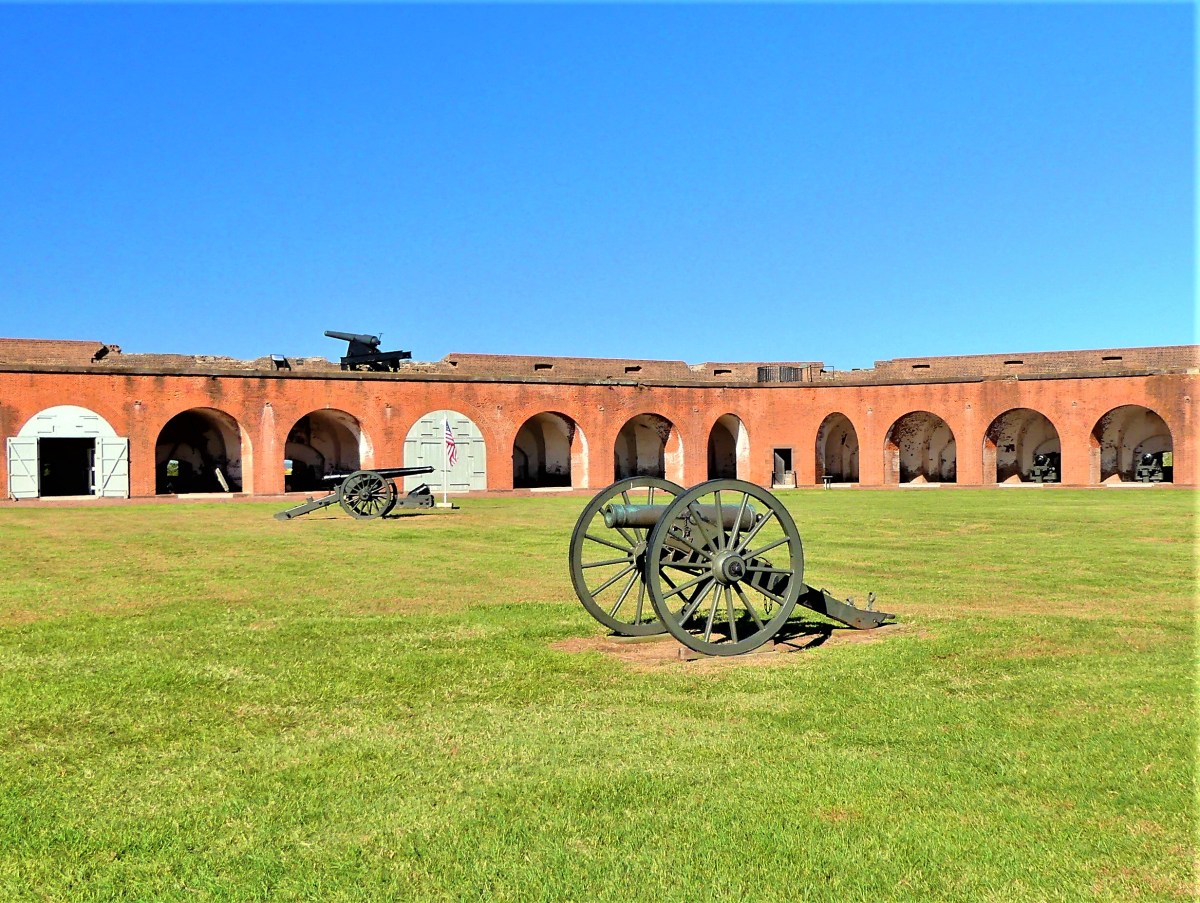
Even 7½-inch-thick mortar walls were insufficient to protect the Fort’s garrison from the explosive bombardment of Gillmore’s experimental rifled cannon fire from one mile away.

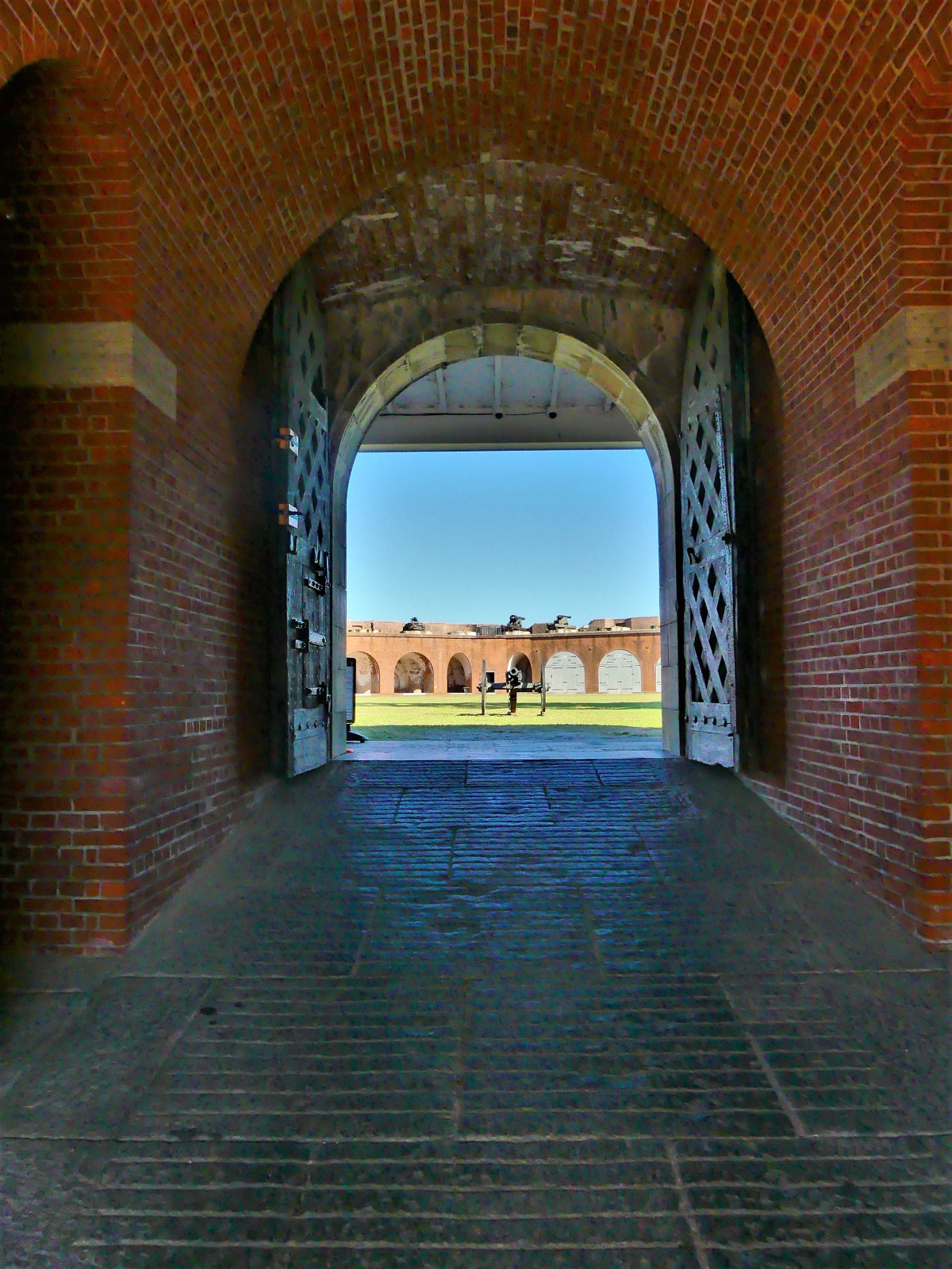
gate

Construction on Fort Pulaski began in 1829 as part of the Third System–in defense of Savannah’s 20,000 citizens and dynamic seaport–adopted by President Madison in response to the War of 1812.

Gorge Wall

With Fort Sumter under Confederate control by Christmas, 1860, Gov. Joseph Brown ordered state militia to seize Fort Pulaski–still unoccupied by Federal troops–on January 3, 1861…

Demilune

…and transferred ownership to the Confederacy following Georgia’s succession on January 19, 1861.

the yard

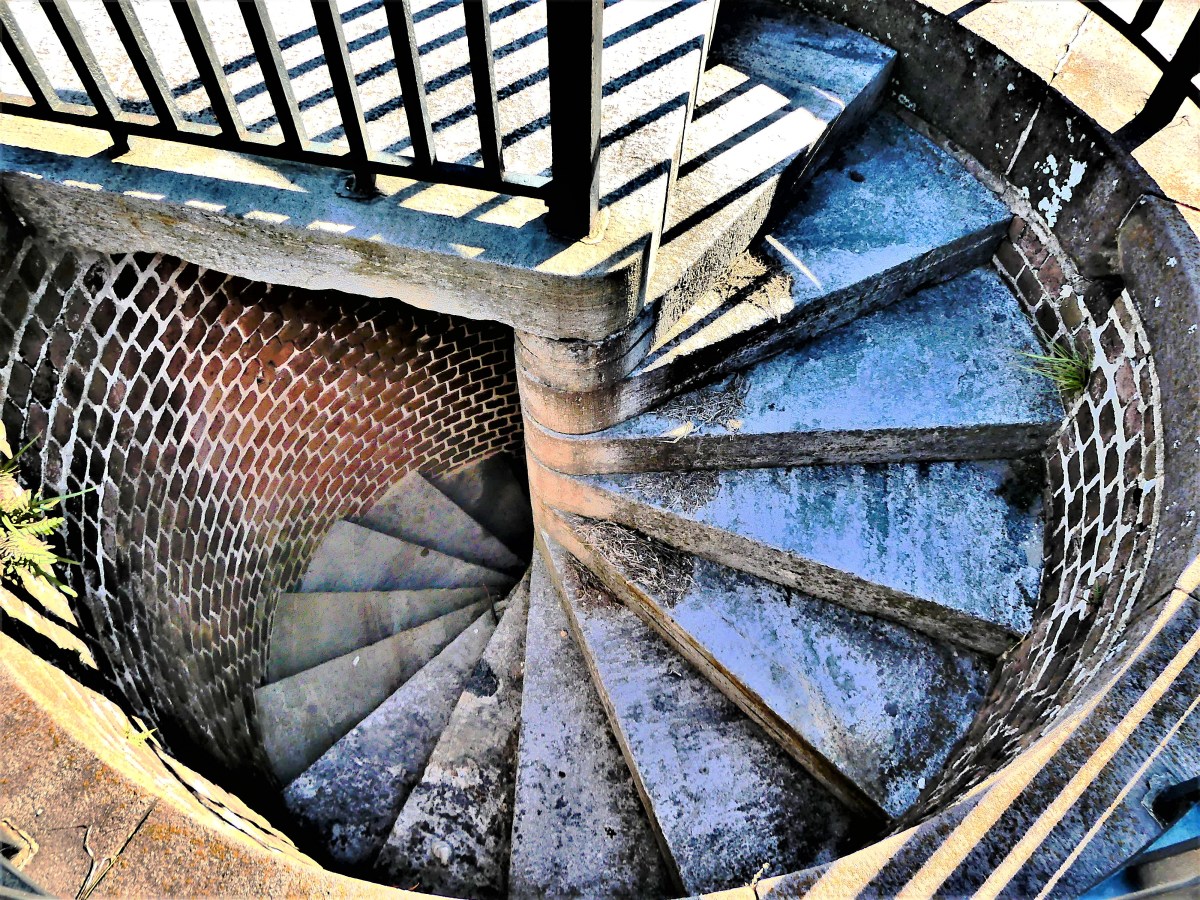
It was a controversial gambit that ultimately escalated into eleven States joining the Confederacy–spiraling the South into Civil War by April 12, 1861.

spiral stairs