Widely considered the Capital of the North, Akureyri is only 100 km south of the Arctic Circle, but boasts the warmest climate in Iceland, with temperatures ranging from 75oF during summer months to 30oF during winter. However, Akureyri is also a very cloudy town, averaging just over 1000 hours of sunshine a year, with virtually no sunlight from November to February.
With a population of 19,000, Akureyri is the largest town beyond Iceland’s densely populated southwest corner, and enjoys many of the amenities of any vibrant urban center–with winding side streets and bustling plazas offering coffee shops, boutiques, gourmet dining, art galleries, and an active nightlife–all of which helps the locals get through the dark winter months.
There’s also a geothermal swimming complex that’s the envy of all of Iceland, and it’s conveniently located downtown behind the church.
If the identity and soul of Akureyri is best symbolized by the twin spires adorning the Church of Akureyri, or Akureyrarkirkja as designed by Guðjón Samúelsson (also known for Reykjavik’sHallgrímskirkja)…
then the heart and soul of Akureyri is in full bloom at Akureyri Botanical Gardens, or Lystigarðurinn—
established in 1912 by a society of women enthusiasts who were eager to provide a green space for locals to recreate or relax.
Not only is Lystigarðurinn the first planned park space in Iceland, it’s also one of the northernmost botanical gardens in the world, featuring over 7,000 species of plants, and making it a valuable resource for botany research.
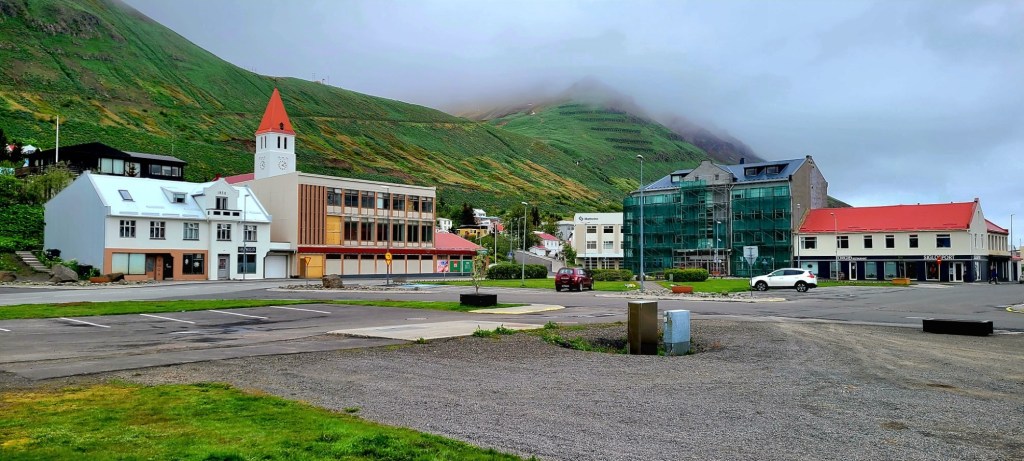
An hour’s drive northbound brought us to Siglufjörður, a colorful and historic fishing village atop the mainland, and only 40 km from the Arctic Circle.
But the tale of Siglufjörður lies in stark contrast to Akureyri. In Akureyki, I had to hunt for a weekend parking space. Not so much in Siglufjörður, where its population has been in steady decline. Once a bustling seaport known as the herring fishing capital of the world, only 1200 residents now call Siglufjörður their home since the herring disappeared in 1968 from overfishing.
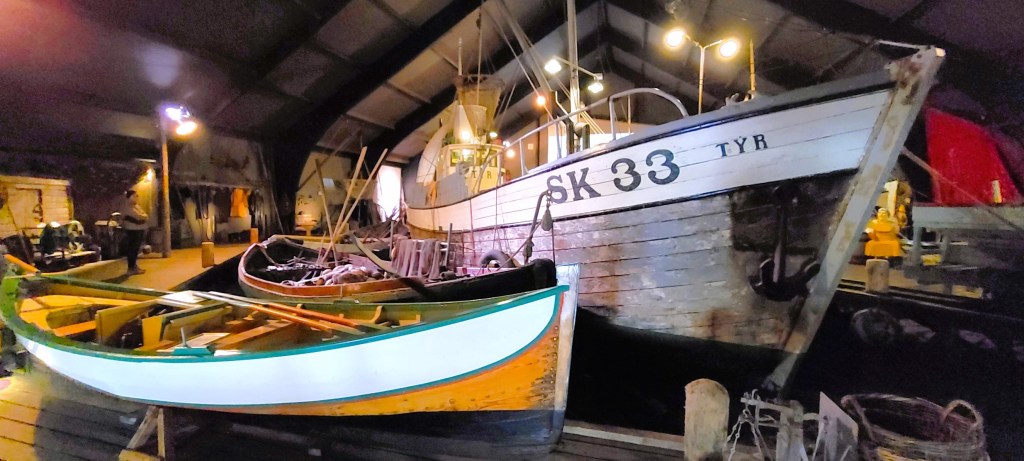
This cautionary tale is well-documented through the town’s award-winning Herring Era Museum.
Having grown up in a household that enjoyed sardines, kippers and herring, I felt compelled to explore the museum’s interactive exhibits: which illustrates how the fresh catch was hauled to port,
and subsequently processed by an army of “herring girls”…
who could gut and brine enough fish to fill three barrels an hour.
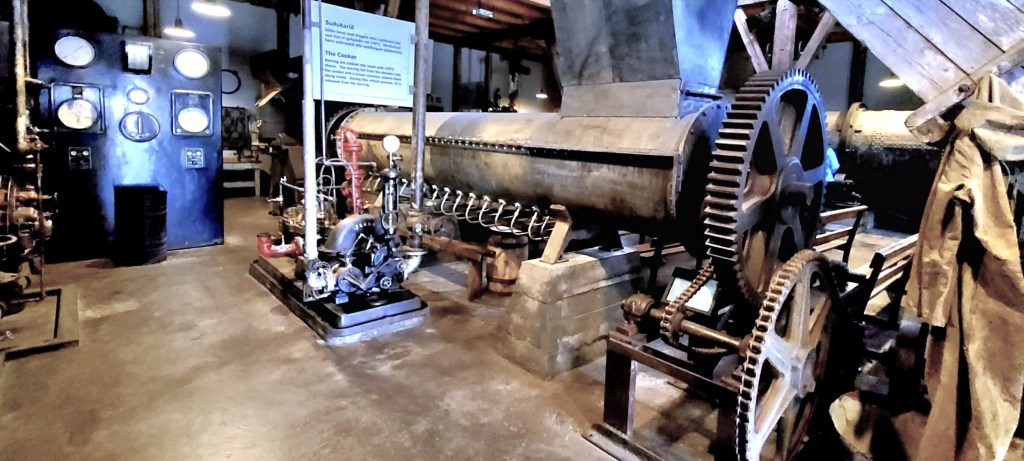
Iceland’s first processing plant was built in 1911, where oil and meal–for pet food–was extracted from the fish. As more fishermen from Scandinavia arrived to fish the fjord’s bounty, the industry prospered.
In 1925, disadvantaged “herring girls” successfully went on strike for equal pay, and formed one of Iceland’s first labor unions.
In its heyday, Siglufjörður had 5 processing factories, and 23 salting stations supported by a hearty population of 3,000.
Today, the town of Siglufjörður hopes to ensure its future and relevance by presenting their history, and Leah’s buddies hope that tourists are listening.
Iceland’s oral and written history is steeped in mythology and folklore, and rooted in the country’s natural wonders. From the time Garðar Svavarsson, a Swedish Viking first settled in Húsavík in 870 AD, Icelanders have imagined a world where phenomena is best interpreted through their sagas of mysticism.
Iceland’s first settlement succeeded in the second half of the ninth century because of adventurous Vikings from Denmark and Norway who were looking for a fresh start in a new world that offered opportunity, security, and stability. A parliamentary assembly of regional chieftains gathered in Thingvellir in 930 to form the Althing (assembly of free men), and ruled as the unifying body of this “free state” until 1264.
Originally, the Althing accepted Northern Germanic religion or Goðatrú (Truth of Gods) which resembled the religion of their homelands. Sacrifices were overseen by landowners/priests in temples and shrines to appease the gods and spirits, of which Thor and Odin were most popular.
By 1000, the Althing rejected paganism and enacted Christianity as the religion of the land under pressure from Norwegian king, Olaf Tryggvason, who embargoed all trade between Icelanders and Norway and held the sons of chieftains as hostages unless Icelanders accepted baptism.
Yet, despite the introduction of Christianity, pagan influence was not easily erased, and still informed how settlers reacted to their old surroundings, and their new spiritual allegiance.
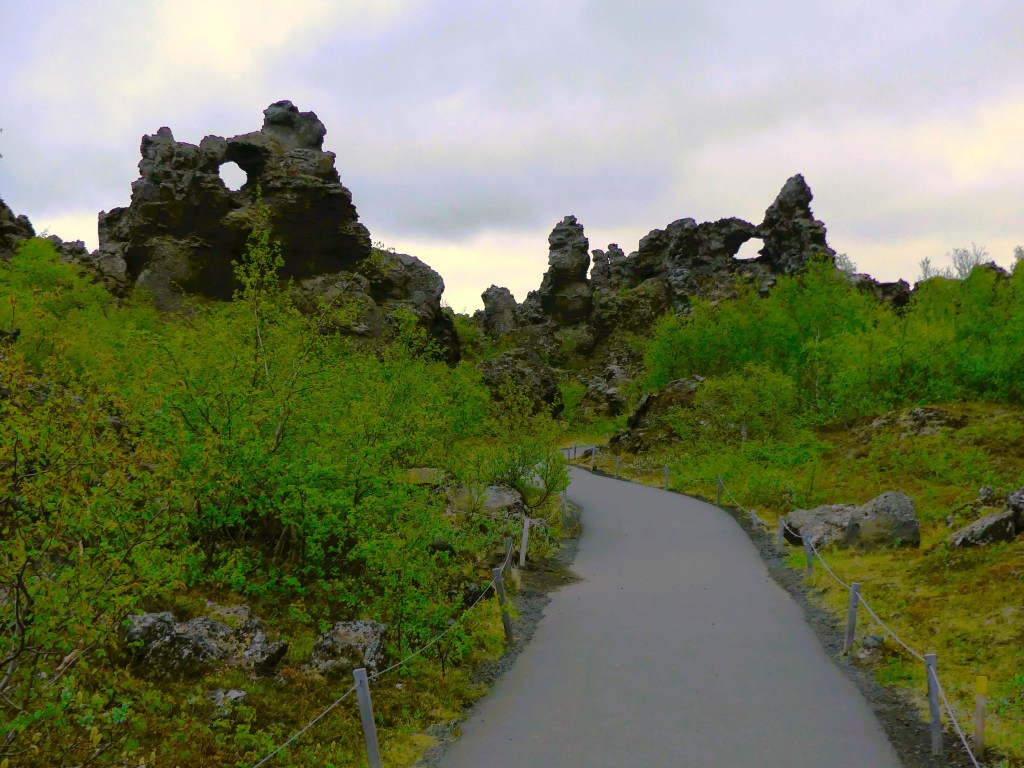
For instance, when Leah and I discovered Dimmuborgir, a dramatic expanse of lava fields east of Myvatn,
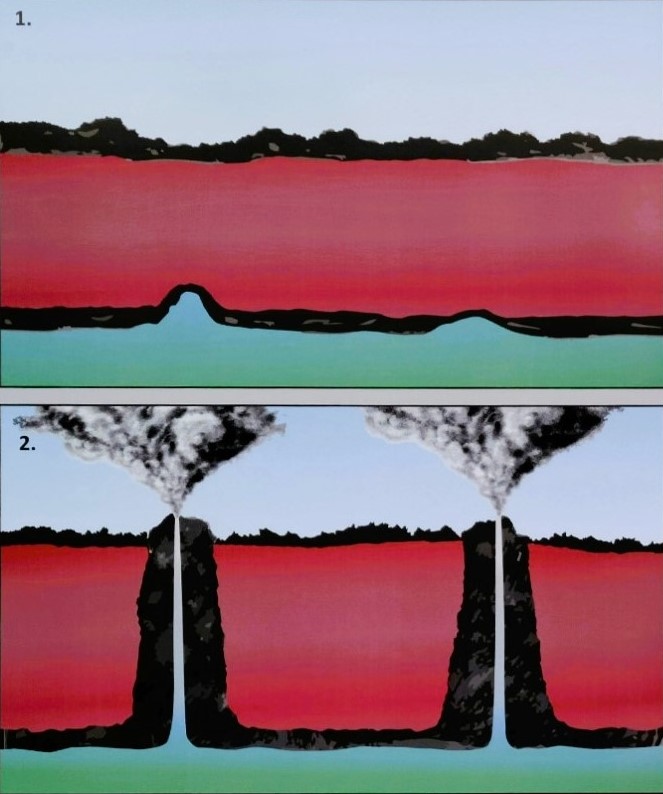
we learned that the pillars were the creation of emptied lava lakes from an immense volcanic eruption about 2300 years ago.
But legend tells us that Dimmuborgir (or “Dark Castles”) was created by Satan after he was cast from heaven, and Dimmuborgir was the gateway to the devil’s “Catacombs of Hell.”
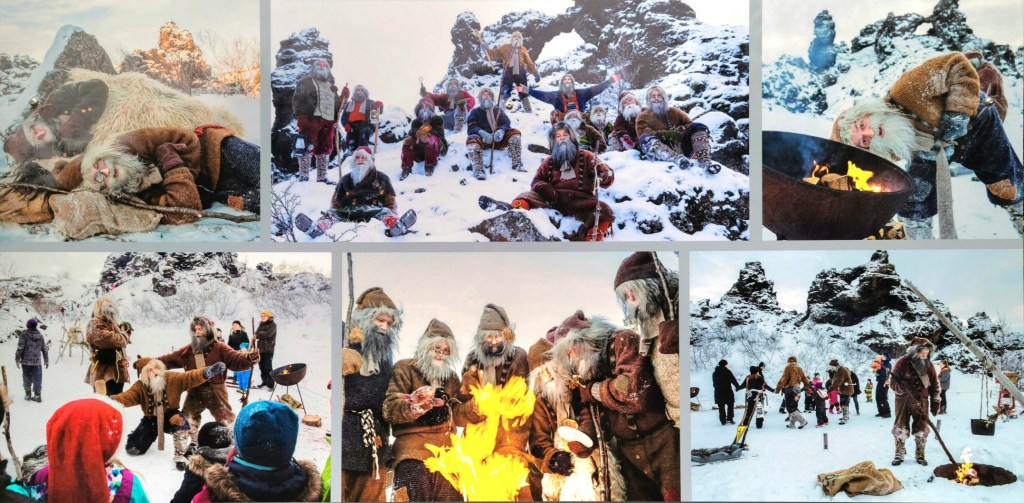
Also seeking refuge at Dimmborgir are the Yule Lads–13 offspring of Grýla and Leppalúði–who are regarded as trollish pranksters who eat misbehaving children before Christmas.
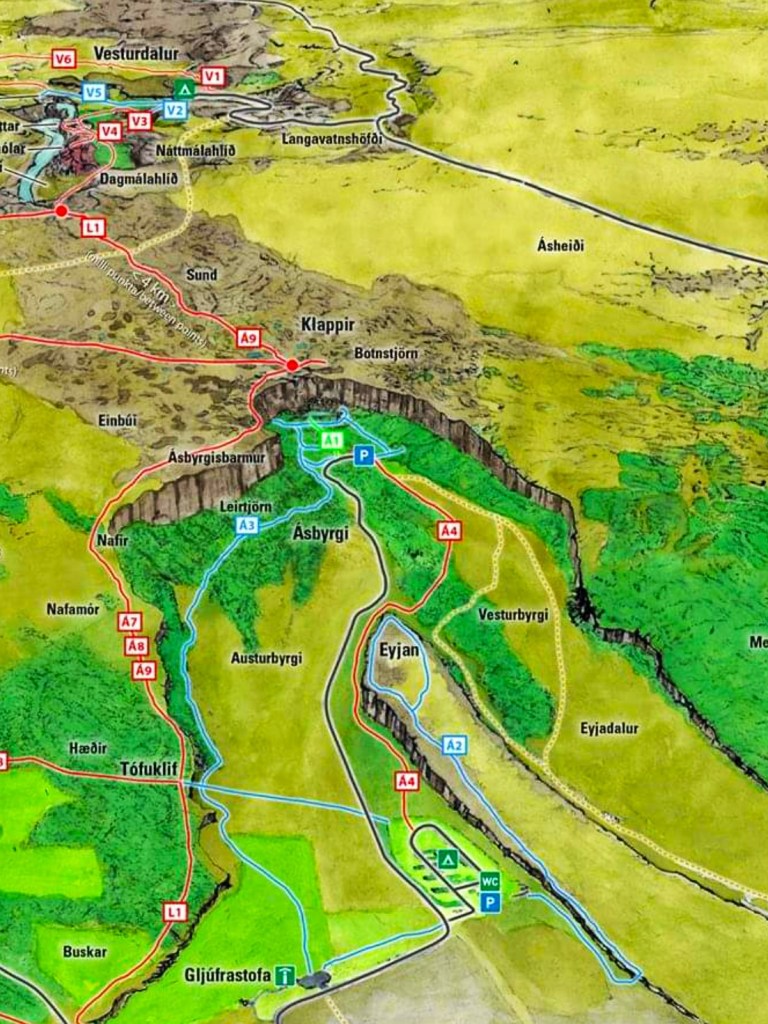
Jökulsárgljúfur National Park is another popular destination we visited that invoked the spirits and captured the imagination of pagan worshippers.
Jökulsárgljúfur, Iceland’s largest canyon, stretching 25 km long and 500 m across is the result of endless catastrophic flooding caused by an Ice Age eruption so fierce that its glacial ice cap exploded.
However, the Norsemen believed that Sleipnir, Odin’s eight-legged steed created this natural wonder by touching earth on a jaunt across the sky, leaving behind the impression of a massive hoofprint that became the canyon Ásbyrgi,
with a rock island spur named Eyjan.
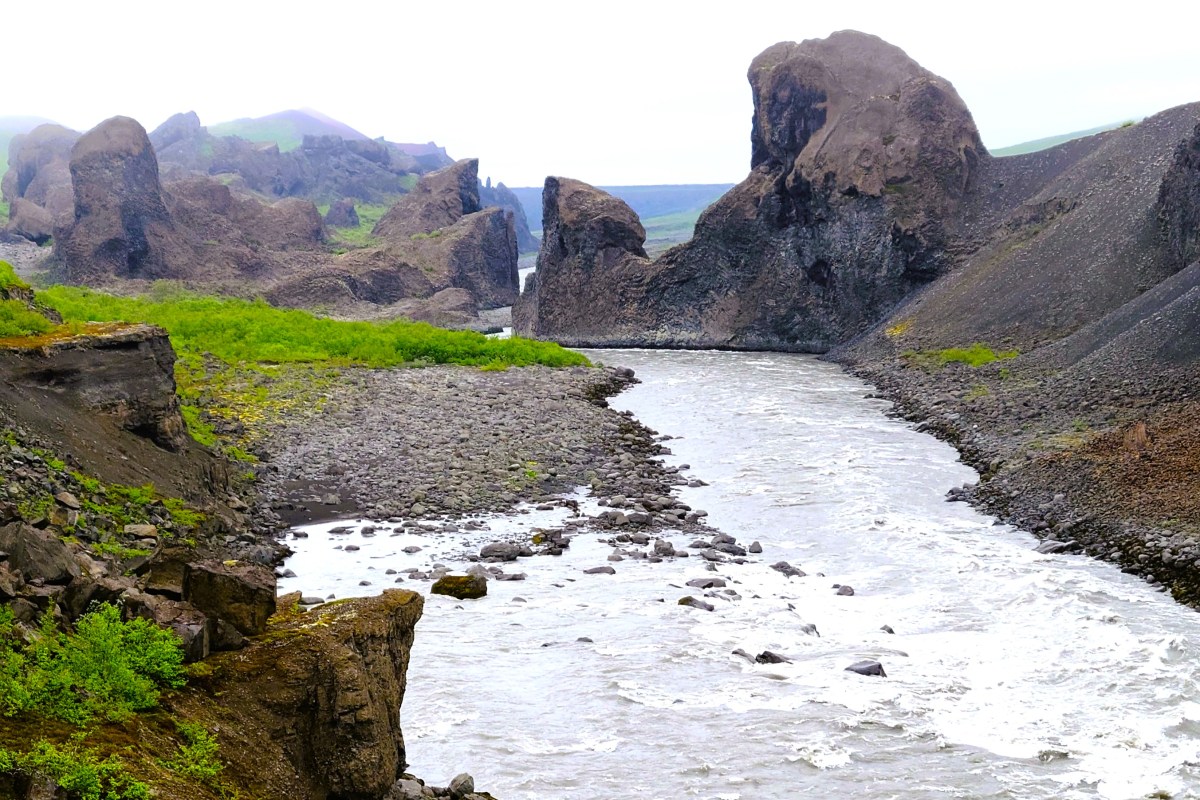
To the west of Ásbyrgi, lie the cliffs of Hljóðaklettar and its inhabitants, the mythical Huldufólk (Hidden People), who cautiously avoid sunlight, or risk the same fate of the elves and trolls who have turned into stone pillars from sun exposure.
Another example of trolls behaving badly can be found along the black sand shoreline of Vatnsnes peninsula in northwest Iceland. From a geological perspective, Hvitserkur is a 15-meter tall basalt monolith that’s been shaped by severe North Atlantic storms and constant temperature changes.
Although Hvitsekur resembles a drinking dragon, Icelandic folklore refers to the stack as an evil troll who raided a local church to silence its bell tower, but turned to stone after being caught by the sun’s early rays. The petrified troll is home to hundreds of nesting birds who forever punish him with a thick layer of guano, and Icelanders who mock him with the name “White Shirt.”
Of all the stories, historians consider Goðafoss a landmark in North Iceland culture, for its here that regional chiefs met with pagan lawmaker, Thorgeir Ljósvetningagoði to determine whether to continue their old ways or embrace Christ as their spiritual guide.
The saga tells us that as a gesture of Iceland’s newly adopted religion, Thorgeir Ljósvetningagoði stood at the brink of the falls to cast a collection of Norse idols into the abyss, marking an end to paganism. Thus, the waterfall was christened Goðafoss, the “Waterfall of the Gods.”
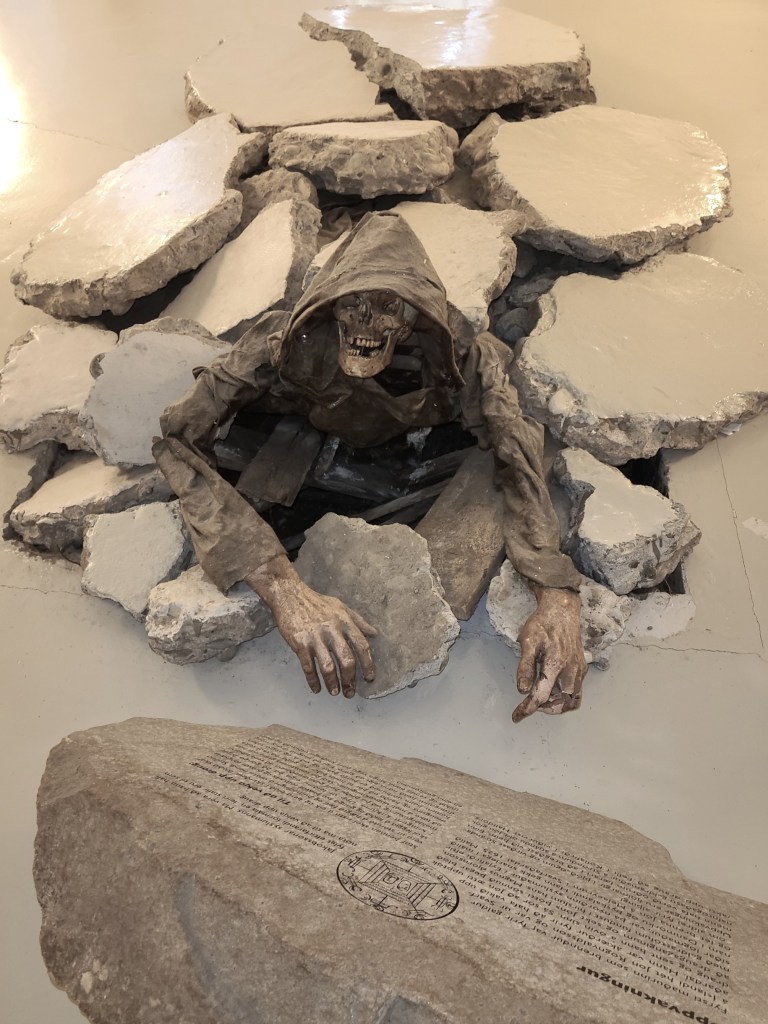
It was the beginning of conversion, and Iceland eventually capitulated to convention. Nevertheless, the notion of magic and sorcery continued to flourish in Iceland, well into the 17th century. A museum located in Hólmavík is devoted to the subject.
It tells the story of 25 or so victims who were executed on charges of witchcraft between 1625 and 1685.
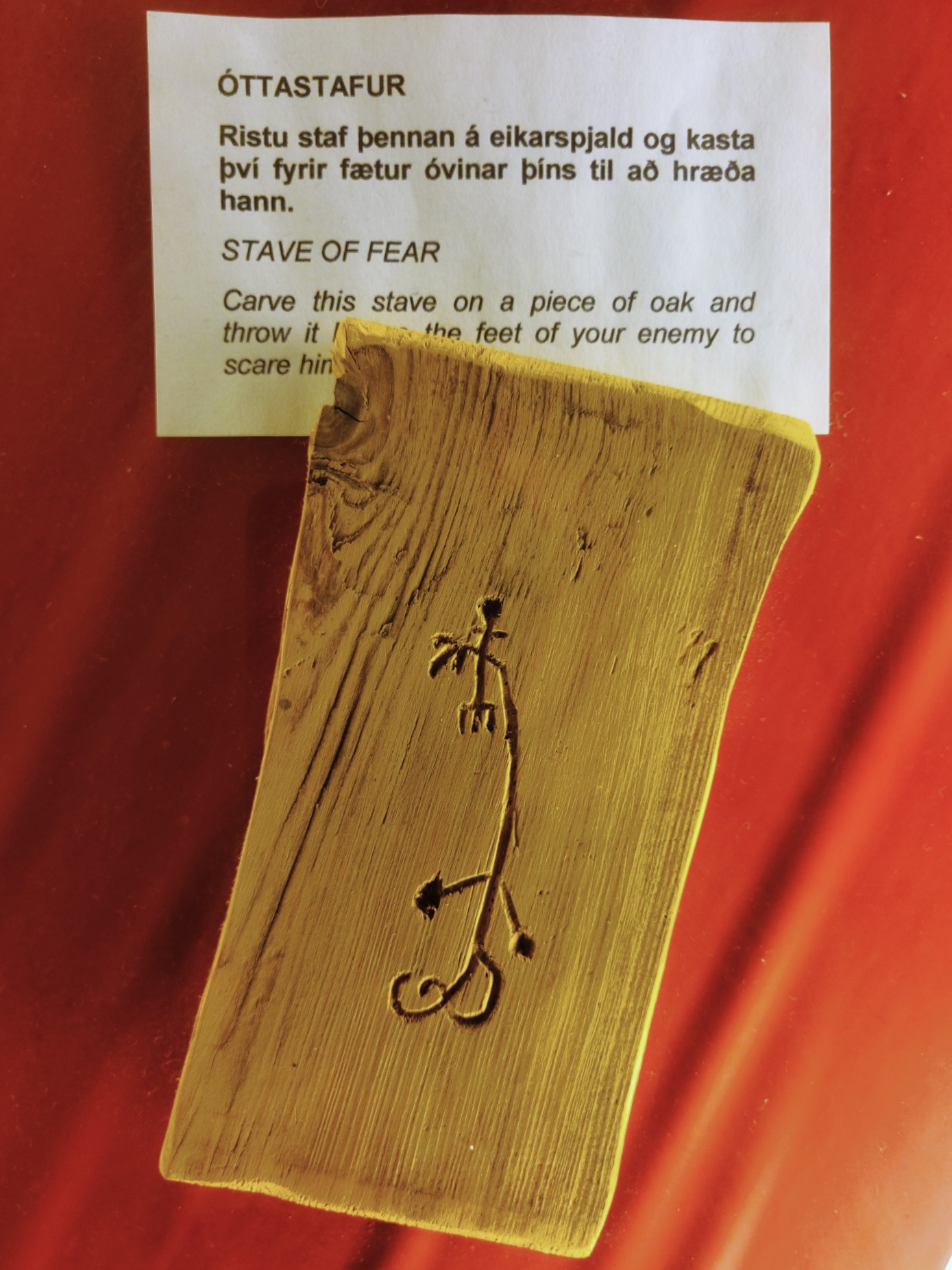
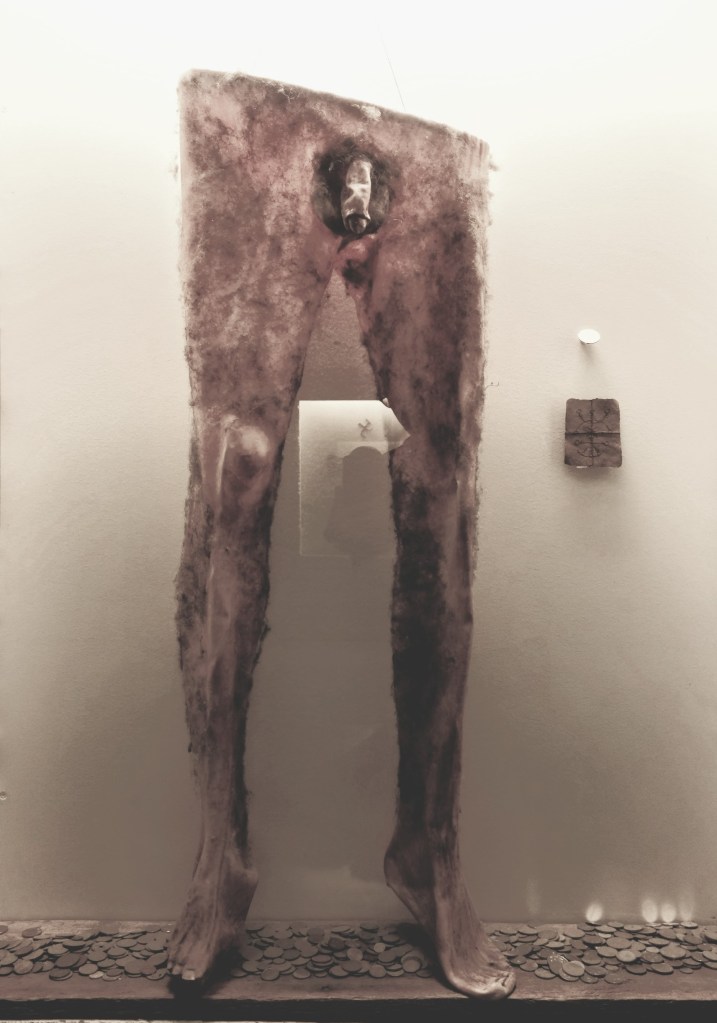
The museum also exhibits some unusual artifacts,
ranging from the sublime…
to the ridiculous.
Superstitions began to fade during the last decades of the 17th century, and the Reformation came as a shock to Icelanders. But consider a 2007 study by the University of Iceland that found an estimated 62% of the nation still believes in the existence of elves, and 40% of the population is irreligious.
As a young boy growing up in the ’50s, I was fascinated by the circus. Toby Tyler, written by James Otis was a bedtime favorite, and fueled my fantasy of running away to join the circus. Alas, over time, the circus has fallen out of favor as family entertainment.
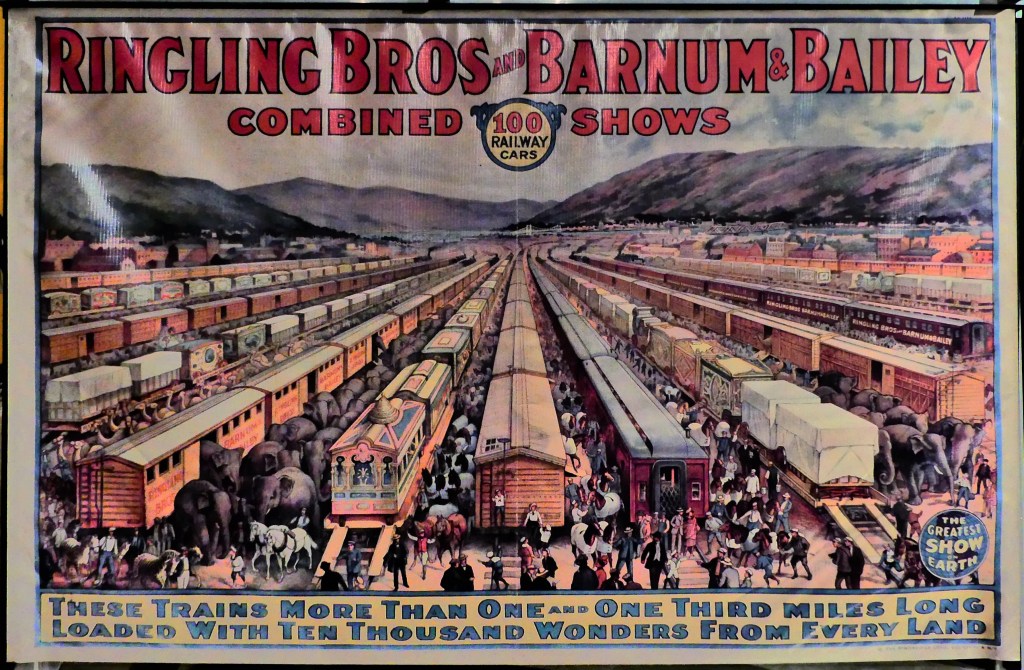
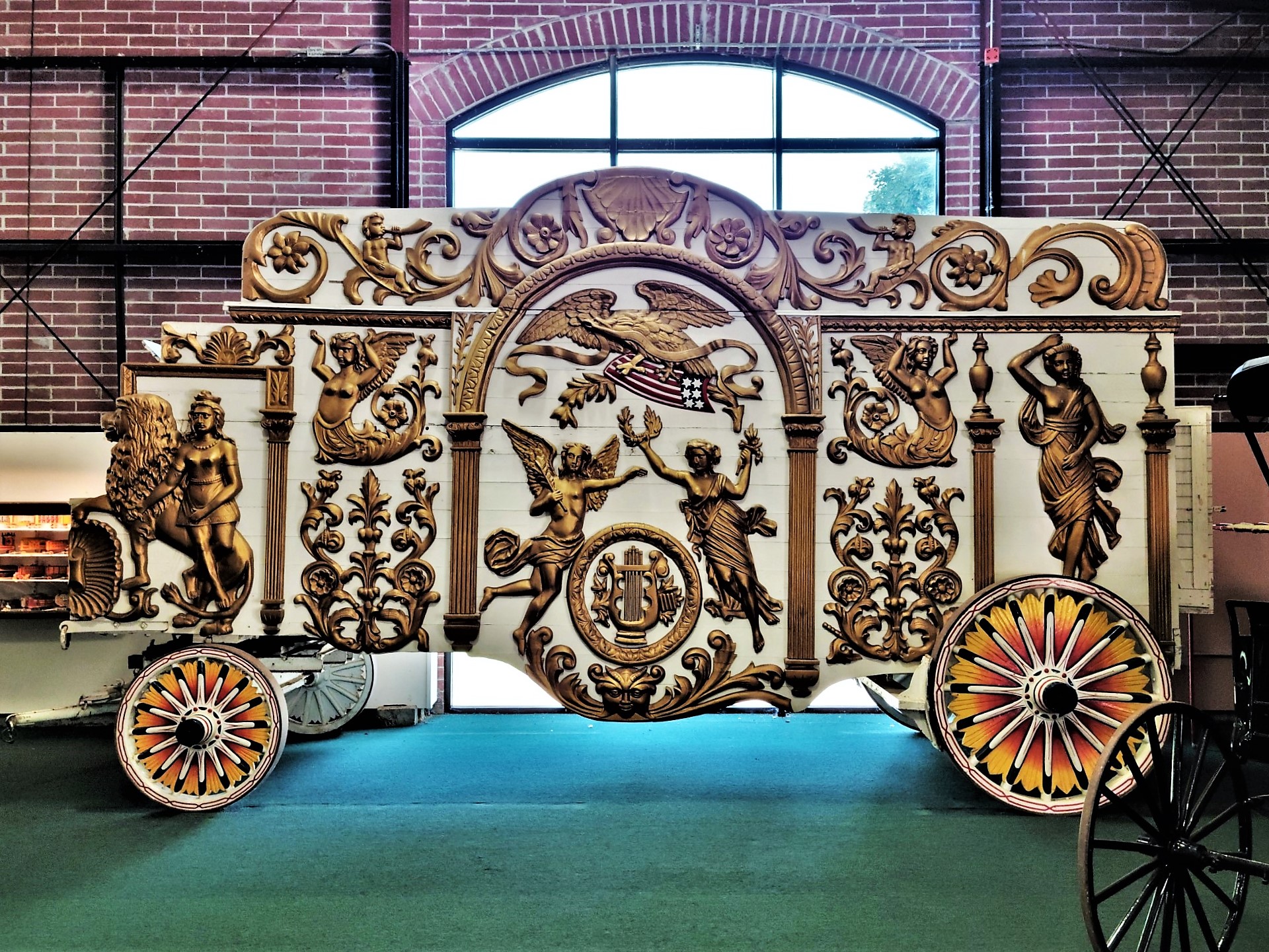
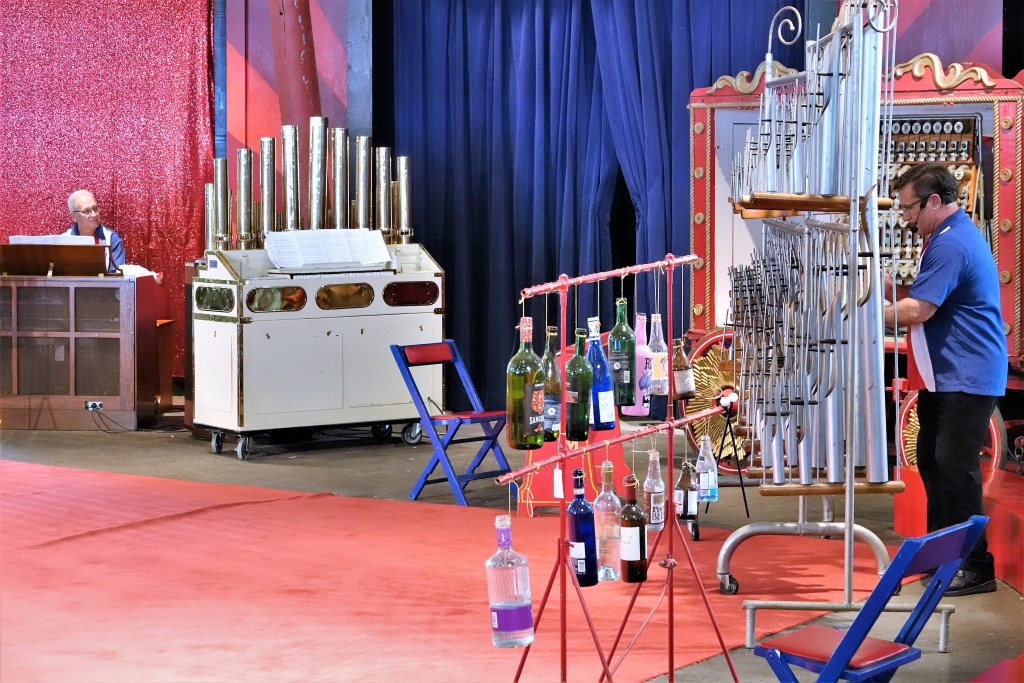
After incessant criticism by animal rights activists and the advent of video gaming and media streaming, the 1905 Gavioli Band Organ Wagon (with 367 wooden and metal pipes, 2 drums, a cymbal, and a 17-bar glockenspiel) which once heralded the arrival of the circus train…
has now been relegated to a circus museum with fifty other antique circus wagons within the W.W. Deppe Wagon Pavilion…
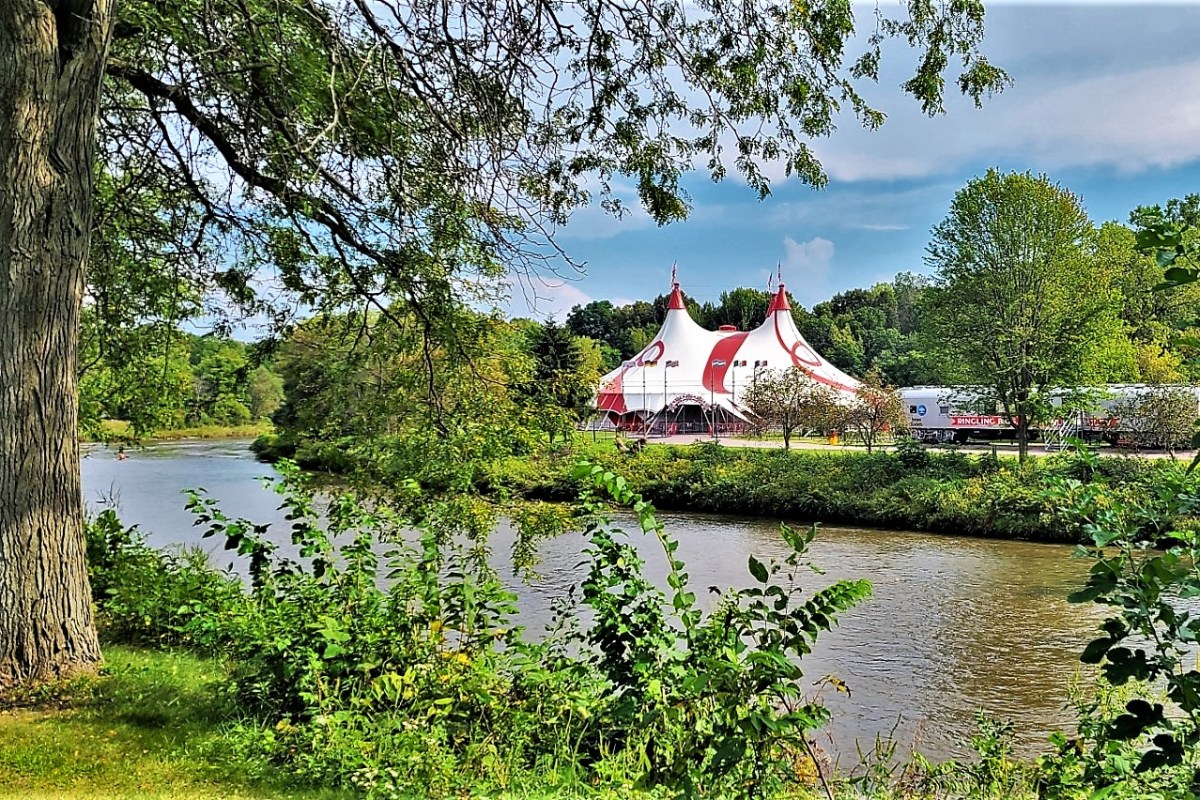
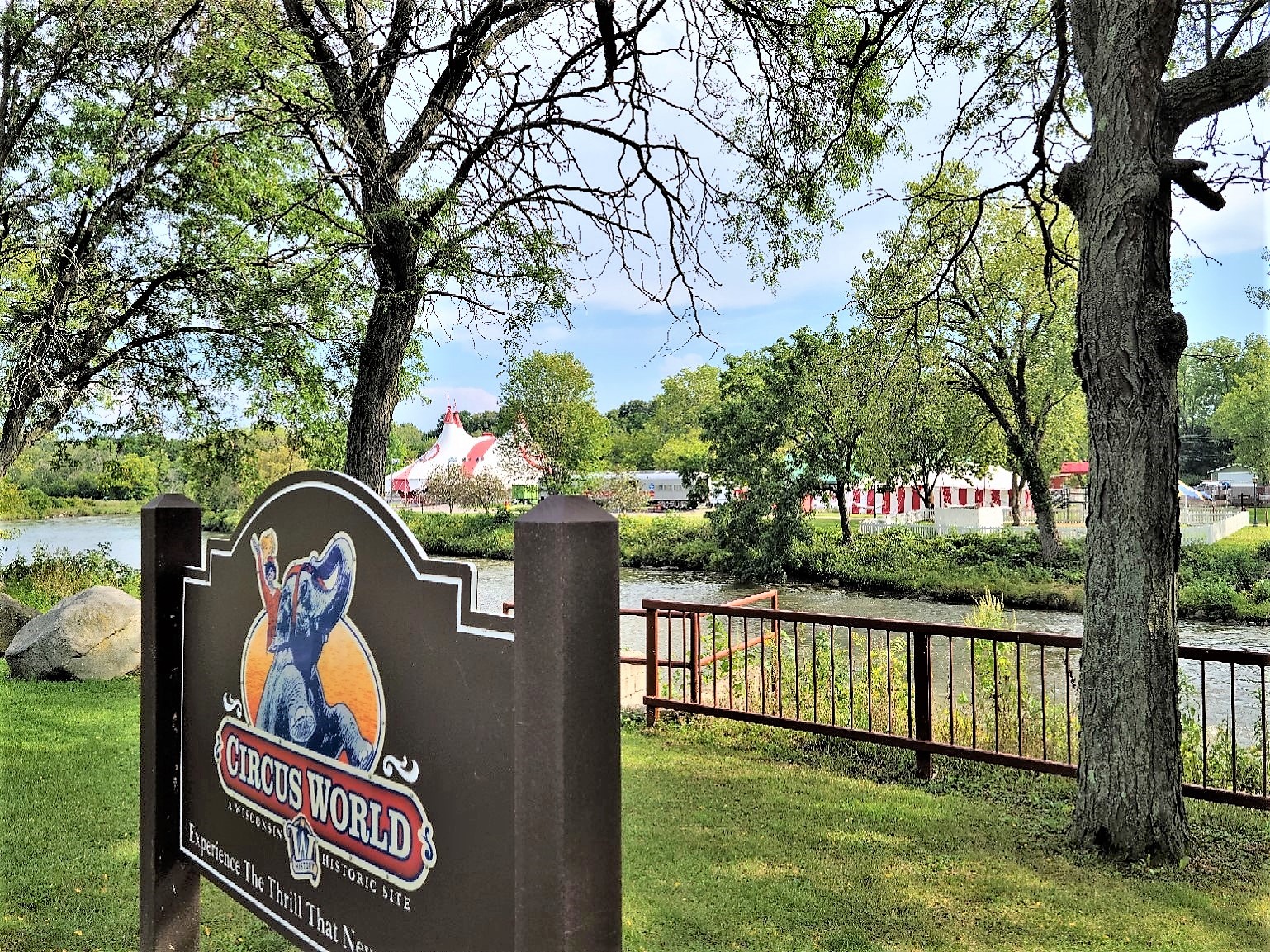
at Circus World in Baraboo, WI,
conceived on grounds known as the winter quarters of the Ringling Brothers,
who launched their first circus tour from Baraboo in 1884.
As we walked the grounds,
we realized that the circus is more than the sum of its parts.
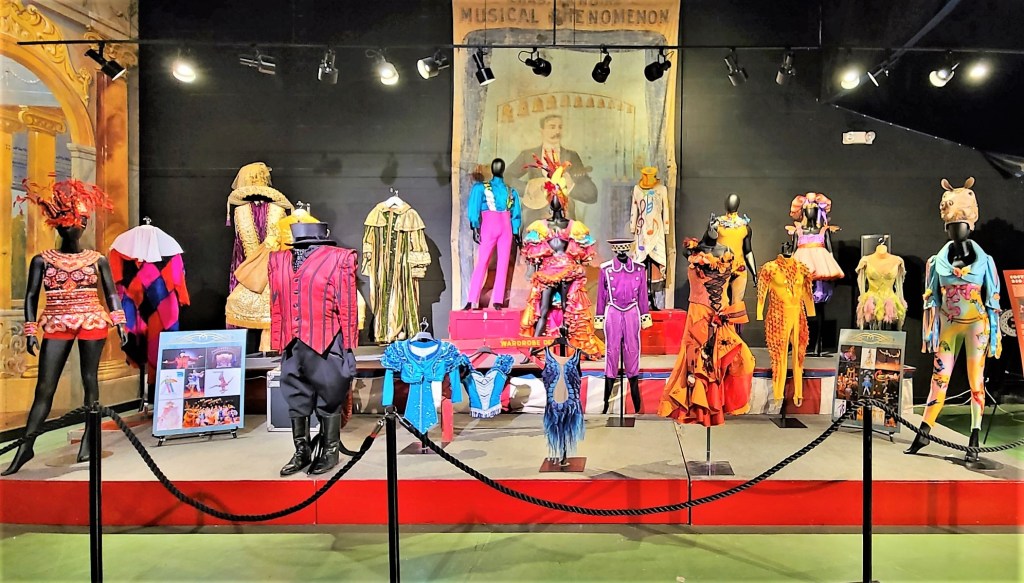
It’s more than the costumes;
more than the animals;
more than the performers;
more than the sideshow attractions;
and more than the music;
It’s a longing for our youth,
and our feelings of wonder before we were forever trapped in our responsible, adult bodies.
Long stretches of telephone totems tethered as far as the eye can see…
Free-ranging livestock sprinkled across the flatlands…
Barbed wire perimeters surrounded by pastureland and littered with cow pies…
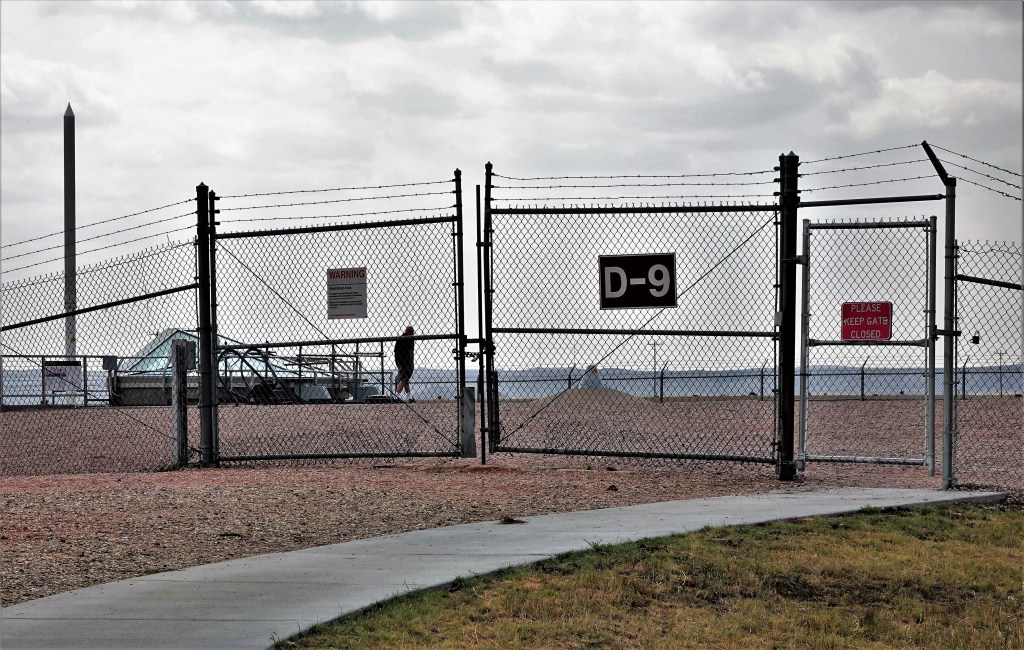
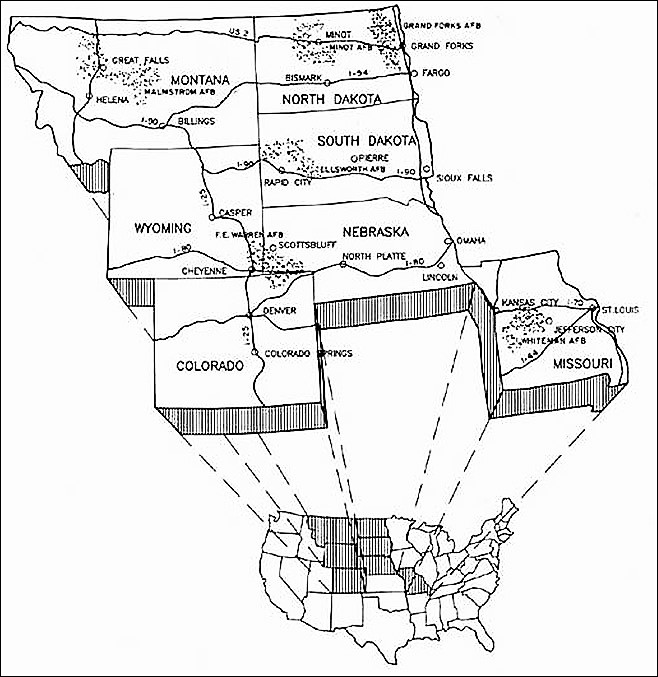
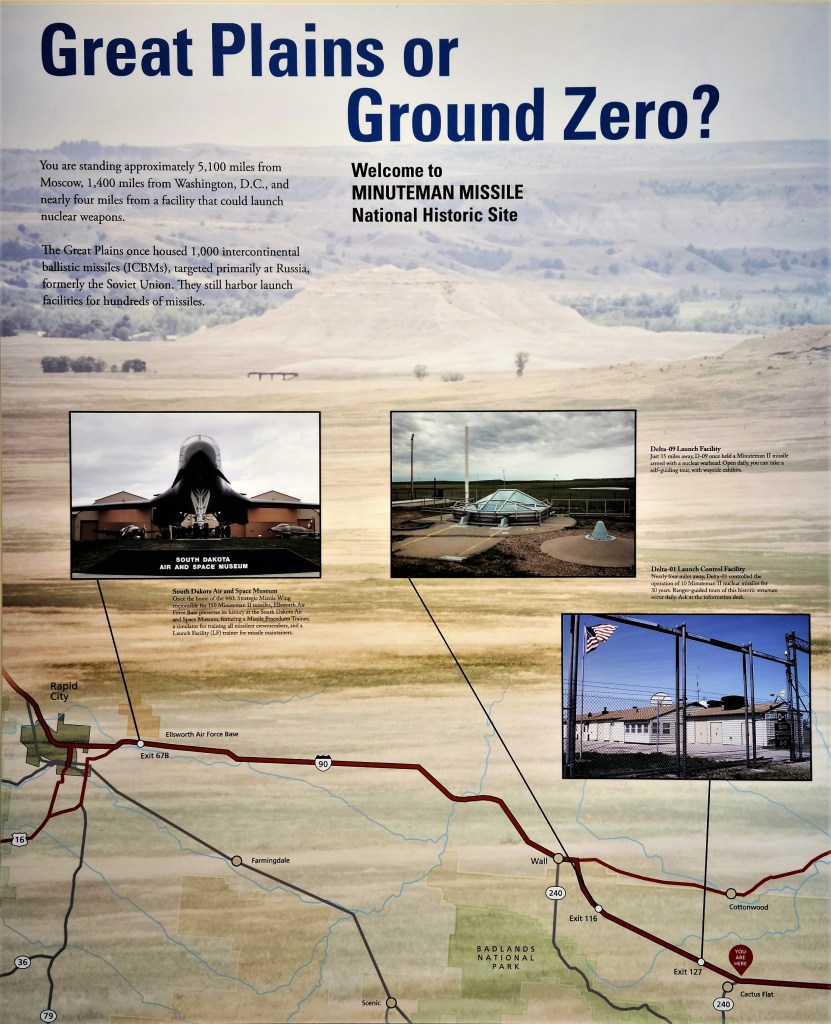
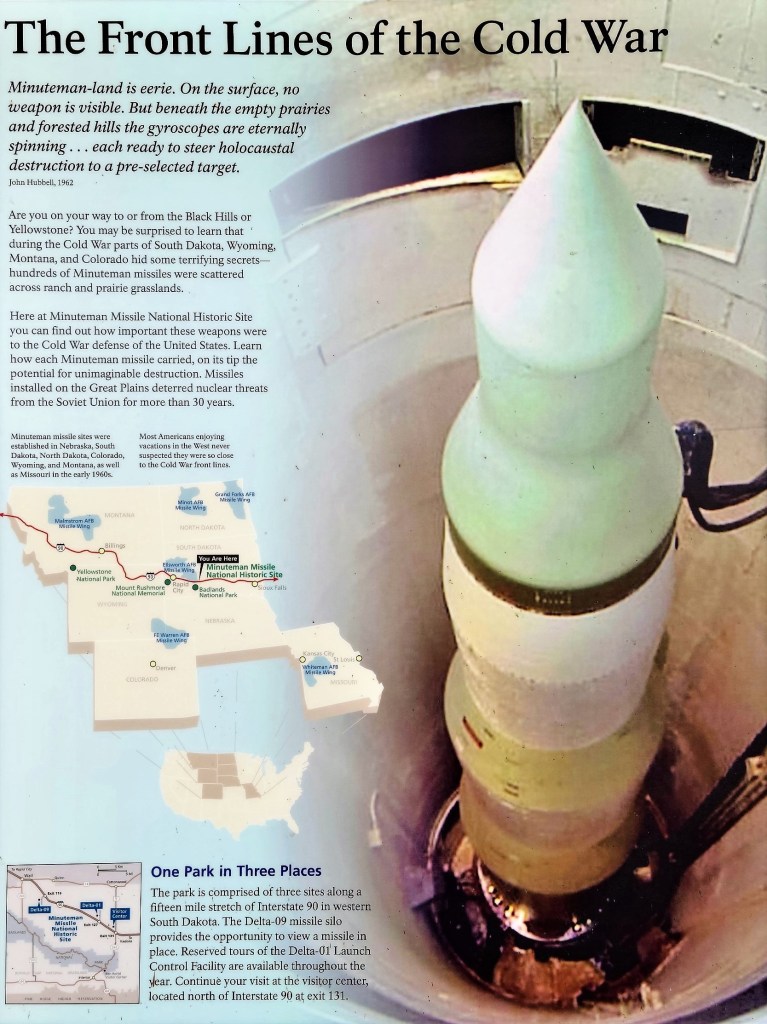
From 1963 to 1993, one thousand Minuteman II missiles (ICBMs) capable of delivering a 1.2 megaton nuclear warhead to a Soviet target in 30 minutes were housed in underground silos like Delta-09 that stretched across the Great Plains,
(Library of Congress)
with 150 launch sites dispersed throughout South Dakota, transforming the serenity of the prairie into a hibernating military zone.
(Library of Congress)
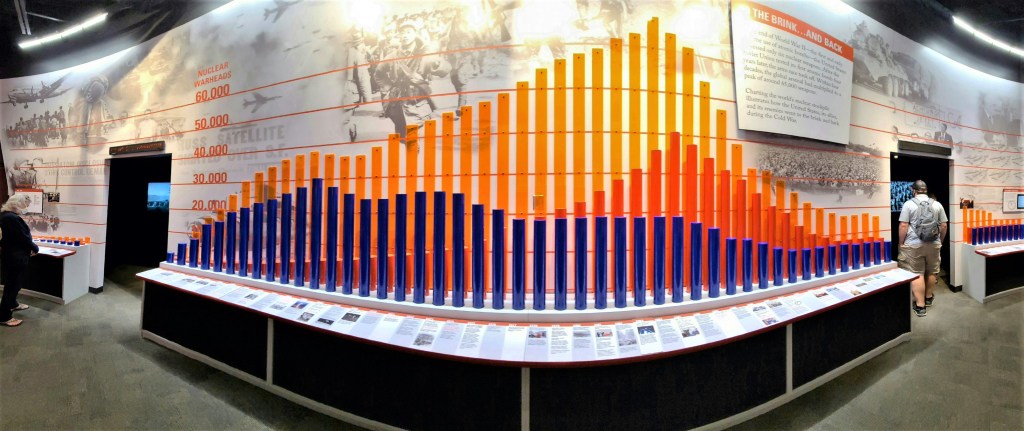
The Minuteman Missile National Historic Site commemorates a period in America’s history when “Mutually Assured Destruction” (MAD) imperiled the world, and delves into the birth of the Cold War, the nuclear arms race, and development of ICBMs.
At the height of the Cold War between Soviet Union and United States there were more than enough nuclear missiles in both arsenals to destroy the planet 5 times over.
As I walked through a maze of interactive exhibits, childhood memories came flooding back.
While growing up in an era of “duck and cover” mindfulness, we were acutely aware of the danger outside our global window.
With the school claxon sounding in 3-clang intervals, my classmates and I responded by hunching under our desks in silence until the principal gave us the “all clear” over the PA. It was our way of showing the Commies that we were prepared and doing our part in the recurring struggle to keep ourselves safe from a political bogeyman.
Of course, as we got older (these drills lasted through middle school), we doubted that “duck and cover” would ever protect us from a nuclear firestorm or subsequent fall-out.
Because of the Cuban Missile Crisis, and the realization that Pittsburgh’s steel mills were a likely military target, my father’s master plan in the event of a nuclear attack was to convert our basement closet filled with dusty canvas awnings and rusted paint cans. We painted the concrete blocks a putrid shade of green under the glare of a single dangling light bulb swinging from the ceiling, and filled the 6 x 6 closet with mattress slabs, jugs of water, and a box of batteries for our flashlights. I always wondered how our family of four (at the time) would survive inside this moldy space.
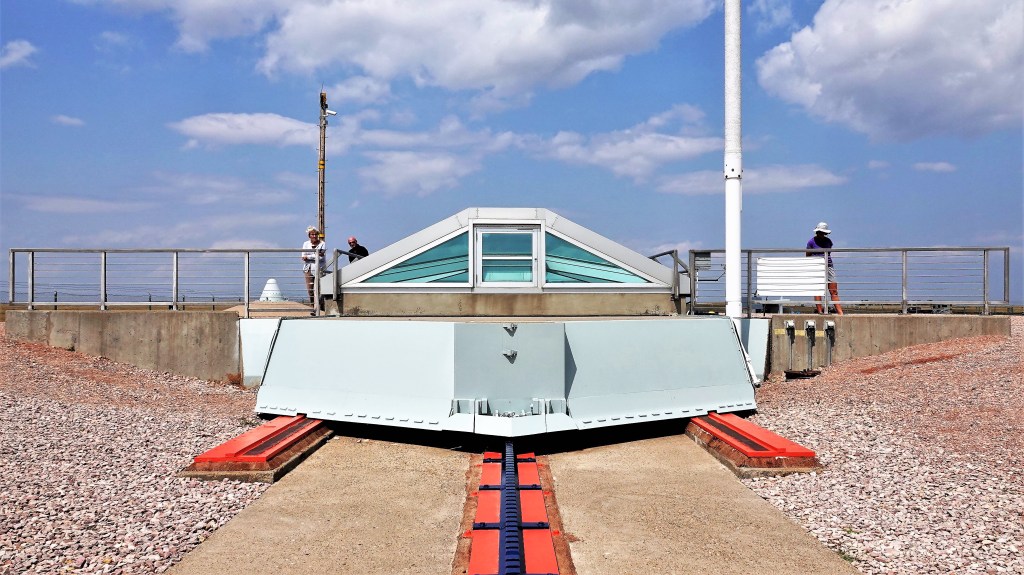
After touring the Visitor Center, we rode 15 minutes on I-90 West to a decommissioned missile silo roughly the size of a football field, and the feeling was ominous.
Locked beneath a sliding 9-ton hatch…
was a vertical rocket in-waiting. I pressed against the tinted, transparent armor and peered into a hole 185 feet deep for a first look and a photograph.
Despite being disarmed,
it was no less unsettling to consider that humanity holds the power of mass destruction, and the Badlands backdrop–75 million years in the making–could vanish in an instant.
U.S. Marine Corps 1st Lieutenant Victor David Westphall III and 16 Bravo Company soldiers under his command lost their lives in an ambush at Con Thien (“Hill of Angels”), a combat base near the former Vietnamese Demilitarized Zone.
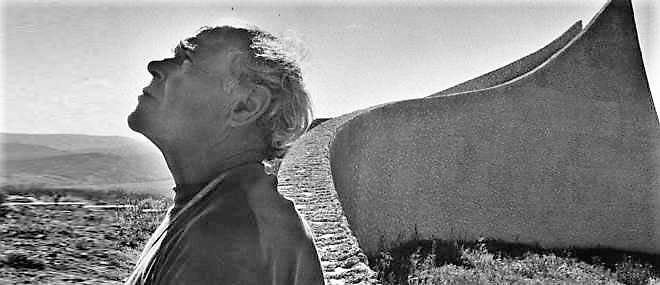
But Victor “Doc” Westphall shaped his grief differently than 58,000 other Gold Star families who were looking to find meaning in their child’s death from a senseless and unpopular war. He and his wife Jeanne would dedicate the rest of their lives working to fulfill their son’s legacy by honoring ALL victims of the Vietnam War.
When sons or daughters die in battle, parents are confronted with the choice of what they will do to honor the courage and sacrifice of that son or daughter. Following the death of our son, Victor David Westphall, on May 22, 1968, in Vietnam, we decided to build an enduring symbol of the tragedy and futility of war.
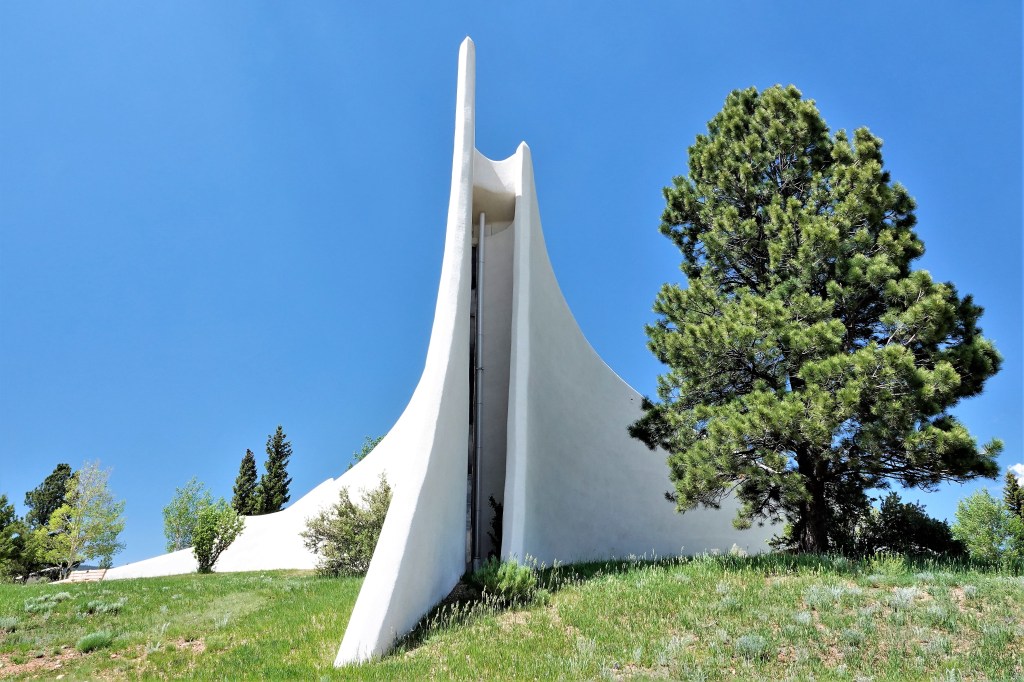
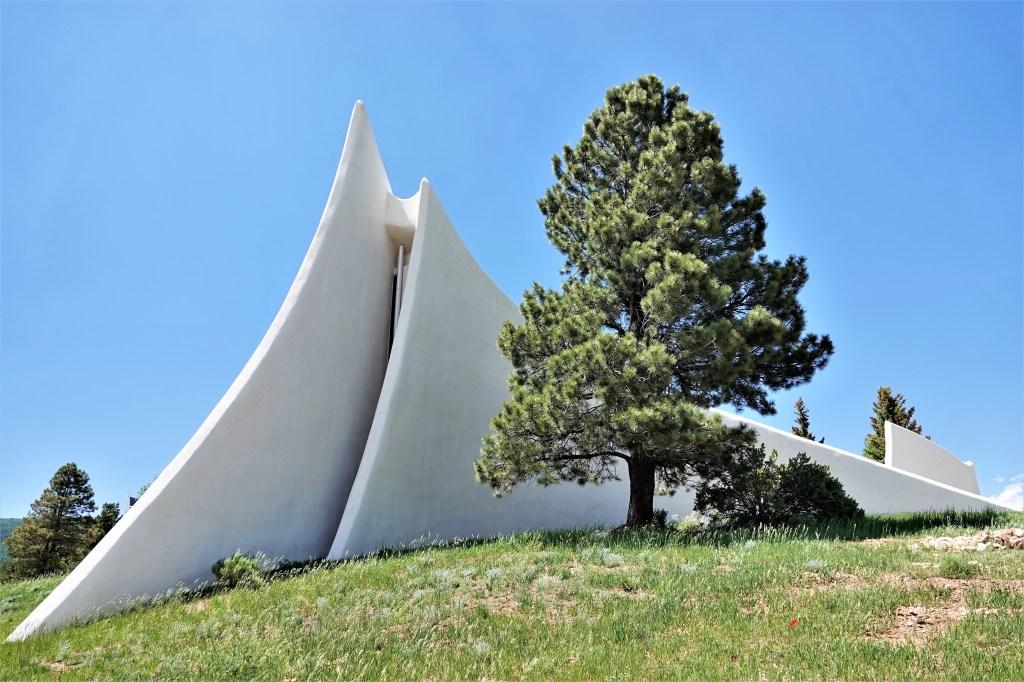
With $30,000 seed money from David’s life insurance payout and another $60,000 in savings, Doc commissioned Santa Fe architect, Ted Luna to design a chapel on his Moreno Valley hillside property off U.S. Highway 64 in Angel Fire, NM.
After three years of sweat equity, Doc presented the Vietnam Veterans Peace and Brotherhood Chapel…
to commemorate the loss of his son.
The spartan, triangular-shaped chapel was intended as a non-denominational sanctuary, with the exception of a towering cross-like torchiere at the vortex.
But Westphall’s vision was running on fumes; he needed $20,000 per year in maintenance expenses, and donations were in short supply, especially after Maya Lin’s national memorial (the Wall) was dedicated in Washington D.C. on November 13, 1982.
Fortunately, the Disabled American Veterans organization committed to funding Doc’s memorial, and ownership was transferred to their foundation. The Disabled American Veterans charity tended “Doc’s” dream till 1998–building a much-needed Visitor Center into the hillside in 1986, and acquiring an additional 25 acres for a buffer zone before reverting ownership back to the David Westphall Veterans Foundation (DWVF).
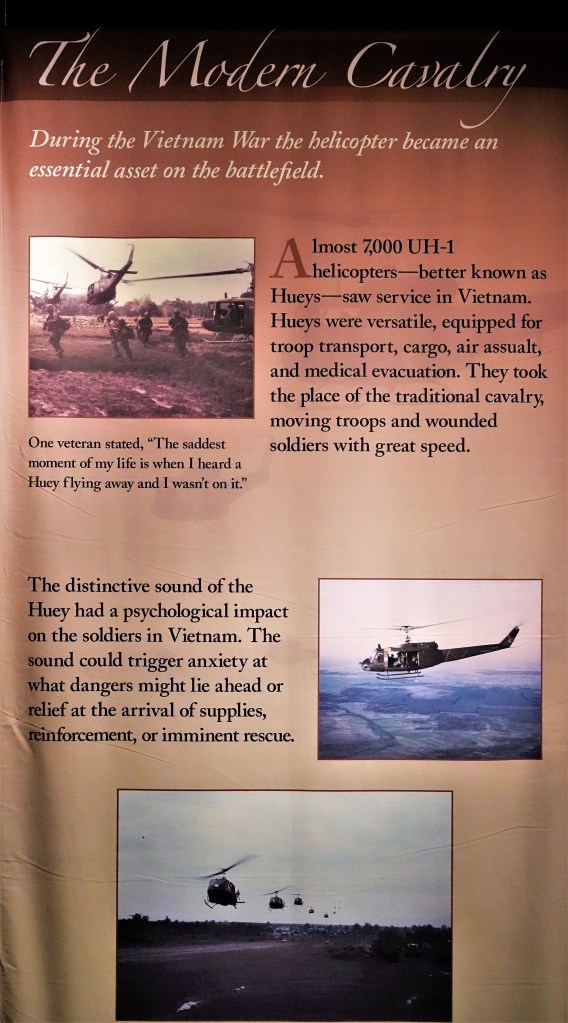
In 1999, DWVF inherited a decommissioned Huey for the Vietnam Veterans Memorial grounds from the New Mexico Army National Guard, acknowledging the impact that the Huey had in Vietnam combat assault, resupply, and medivac missions.
After 17 years of ground service at the memorial, their Huey was lovingly restored…
and returned to its hallowed perch.
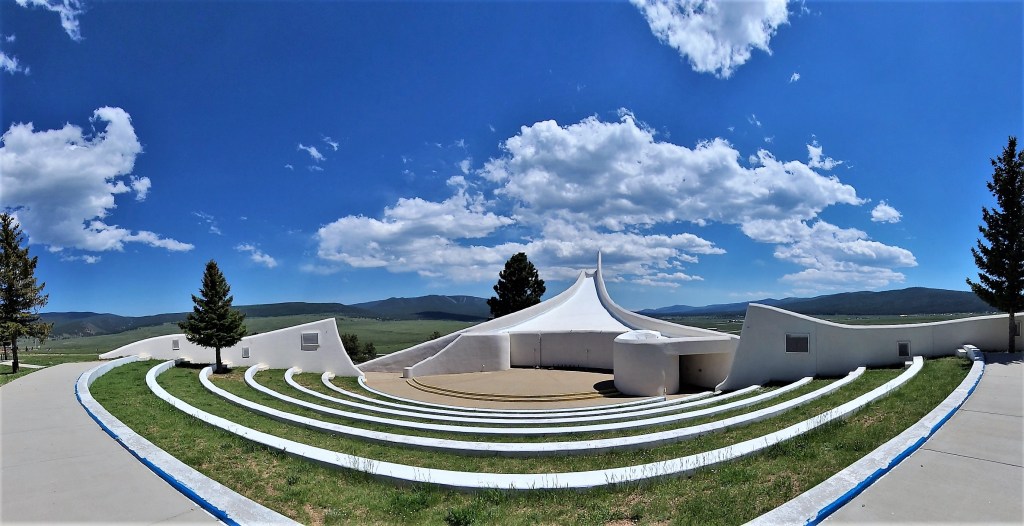
On Veterans Day 2005, Gov. Bill Richardson granted the Vietnam Veterans Memorial state park status, which secured state resources for needed renovations and a newly built amphitheater behind the chapel.
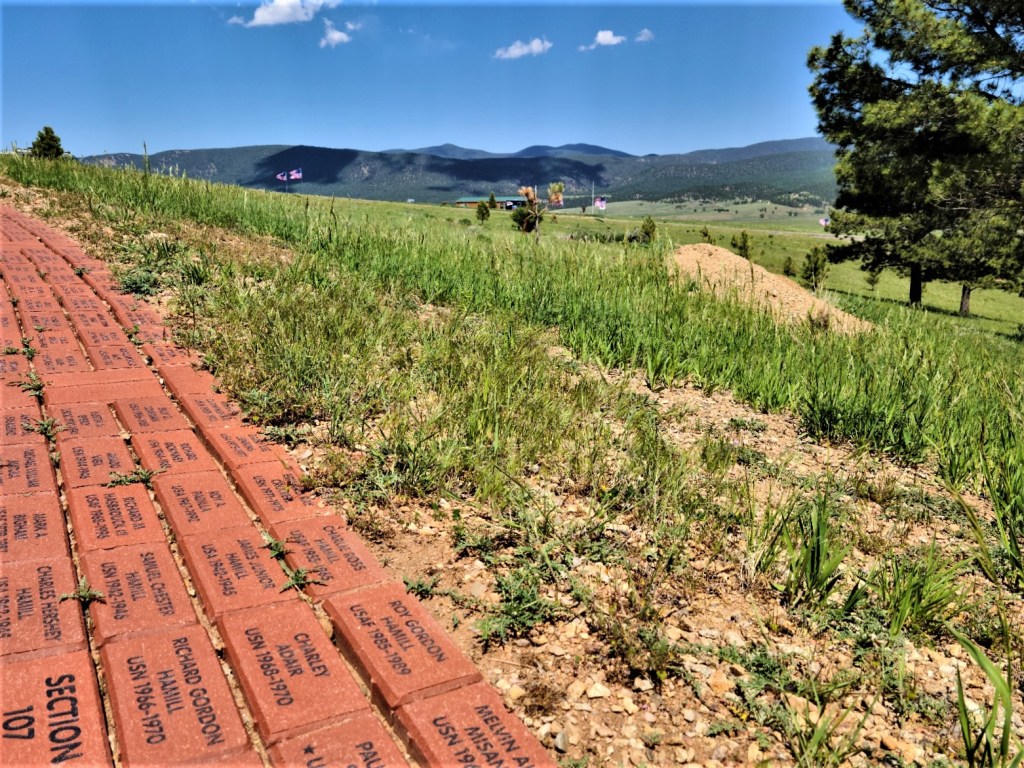
In 2007, a commemorative walkway was inaugurated for all U.S. veterans. The dates on the bricks-for-bucks signify the dates of service. Two stars denote the person was killed in action, and one star designates missing in action.
On July 1, 2017, management of the Memorial was transferred from the NM State Parks to NM Department of Veterans Services.
Doc Westphall died in 2003 at the age of 89, and his wife Jeanne died the following year. Both are buried at the memorial.
At the time–during the Vietnam War–I would have registered as a conscientious objector if necessary, as I had no taste for war. Lucky for me, I side-stepped conscription with a college deferment in 1970, and a high enough number (#181) in the Selective Service Lottery held on August 5, 1971. By then, Nixon had ordered phased withdrawals to coincide with Vietnamization. Consequently, fewer numbers were being called up to relieve the soldiers returning home, who received little fanfare and support from society at large.
Approximately 2.7 million men and women served in Vietnam over the course of 20 years without America ever realizing its objective–to thwart the spread of Communism in Southeast Asia.
So many young soldiers made the ultimate sacrifice to defend their country with honor, and so many paid the ultimate price with their lives. Moreover, far too many came back broken from their war experience. At the very least, we owe them all a debt of gratitude, and above all, our respect.
Thankfully, the Vietnam Veterans Peace and Brotherhood Chapel offers us a place to share our grief, heal old wounds, and bring us closer to awareness and acceptance of our past.
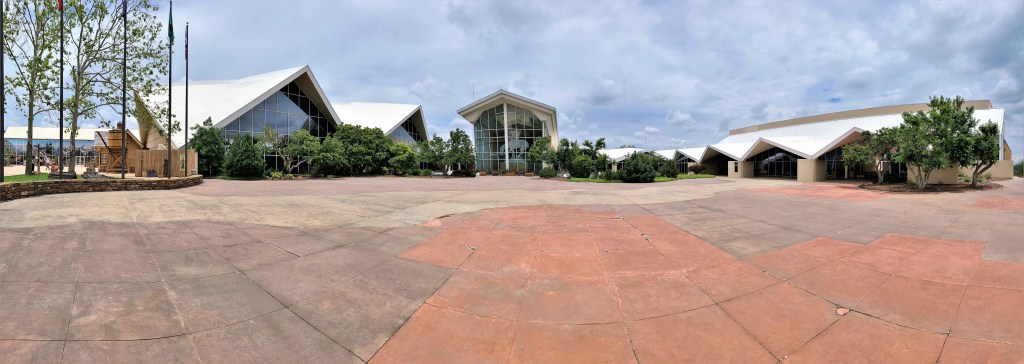
With rainy weather on the horizon in Oklahoma City, Leah and I opted for indoor entertainment, which brought us to the National Cowboy and Western Heritage Museum, home to the most extensive collection of art and artifacts of American West and American Indian culture. With more than 28,000 pieces in its collection, The National Cowboy Museum is an obvious choice for history buffs and art aficionados.
But not for Leah…
“I can’t believe we’re here, she lamented. “This is so ‘not me’.”
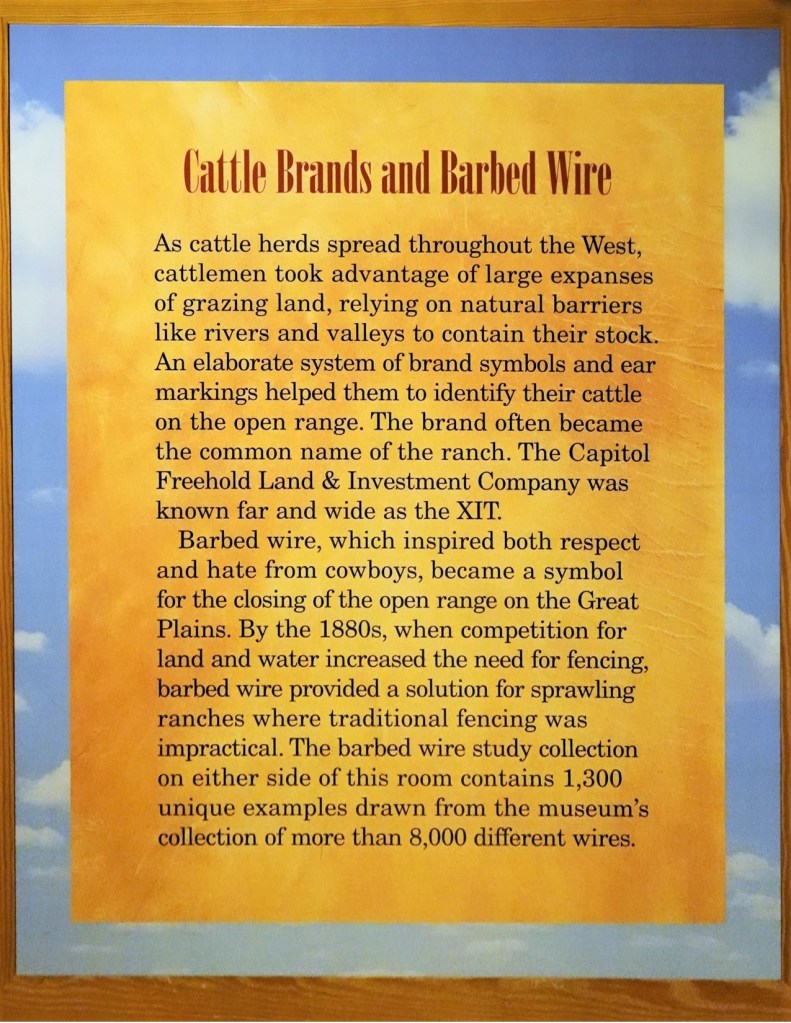
“You’re kidding me. We’re talking about a place with the largest barbed wire collection in the world! More than 8,000 different kinds.” I persuaded.
“Barbed wire isn’t really my thing,” she confessed.
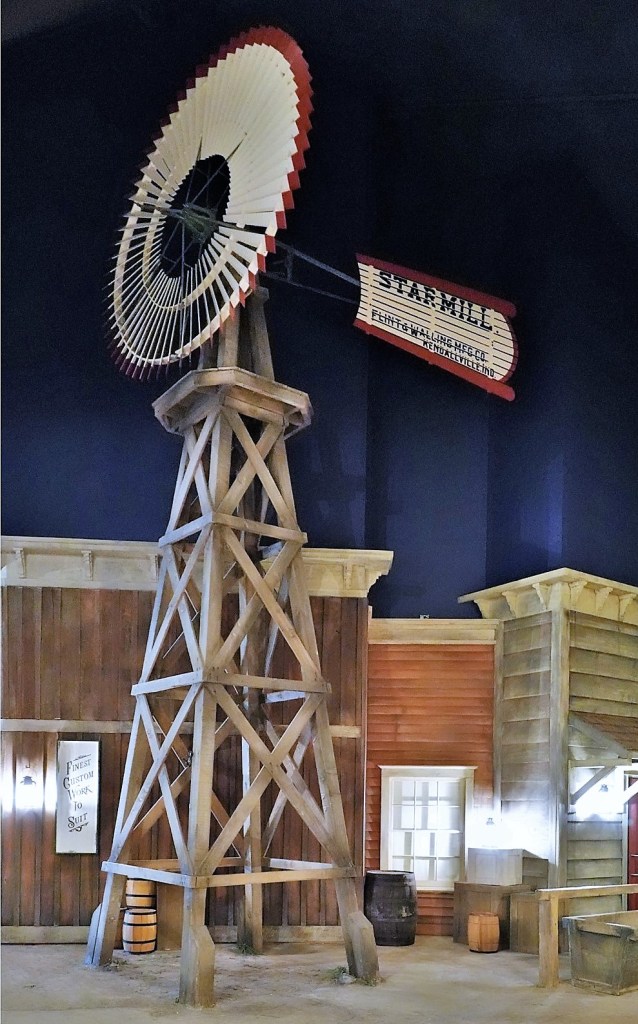
“Then how about the turn-of-the-century western town that’s been recreated indoors?” I implored.
“Certainly, you’d be interested in the structures along the simulated street that have been painstakingly rendered according to scale and design?” I wondered.
“This town may even be set up for some shopping,” I offered as an inducement.
“I’ll have to see about that when I get there,” she proposed.
“What about their Frederic Remington collection? I read that there’s an entire gallery devoted to his work,” I advertised…
“There are small bronzes…
Trooper of the Plains
Coming through the Rye
and large bronzes…
Frederic Remington: COMING THROUGH THE RYE, 1902
and paintings, too,” I hyped.
Frederic Remington: IN FROM THE NIGHT HERD, 1907
“That might be interesting,” Leah affirmed, warming up to the idea.
“Maybe we can stroll around the garden behind the museum,” I suggested.
“I believe the outdoor space might be as big as the museum galleries…
and we can pay homage to Buffalo Bill while we’re in the gardens,” I encouraged.
“That’s a possibility,” Leah conceded.
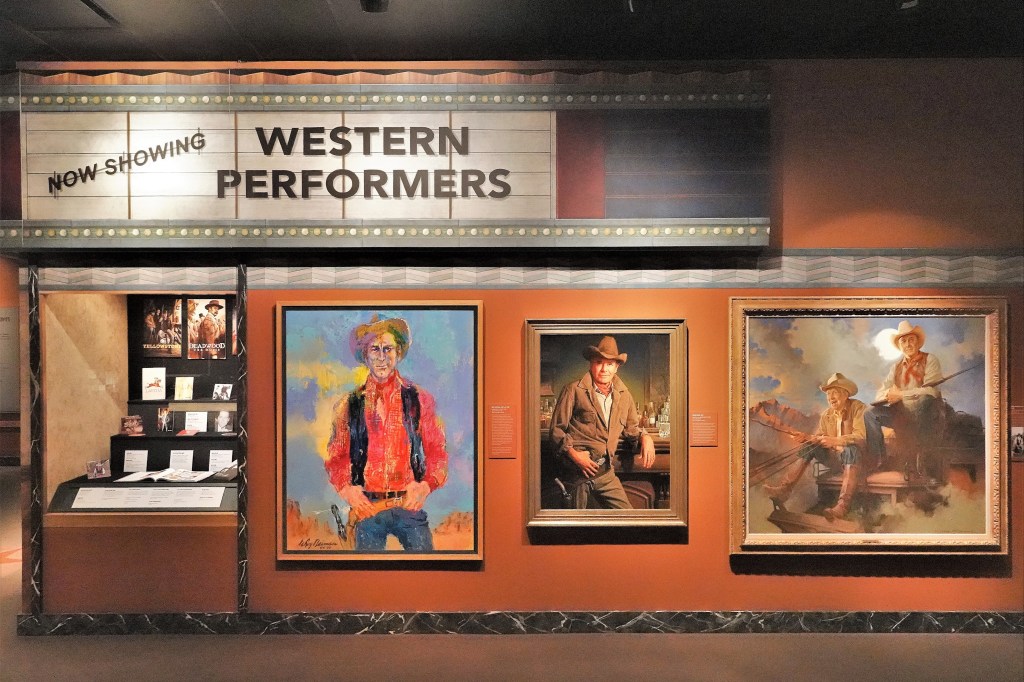
“We could also visit the Western Performers Gallery,” I recommended…
“Y’know, we’ll have a look around at all the memorabilia from our TV star cowboys,
and movie star cowboys,” I proposed.
“That could be fun,” Leah predicted.
“And let’s not overlook the western art created by all the great masters and contemporary artists,” I urged.
Charles Marion Russell: SMOKE TALK, 1924
Tom Lovell: THE HAND WARMER, 1973
William Robinson Leigh: LEADER’S DOWNFALL, 1946
Phil Epp: OUT OF THE BLUE, 2018
Clark Hulings: GRAND CANYON, KAIBAB TRAIL, 1973
Duane Breyers: TWO’S COMPANY, 1997
Wilson Hurley: WINDOWS OF THE WEST–WYOMING SUITE, 1996
Gerald Balciar: CANYON PRINCESS,1995
Martin Grelle: TELLER OF TALES, 2001
“Okay, okay! We may as well go through the place since we’re already here,” Leah admitted.
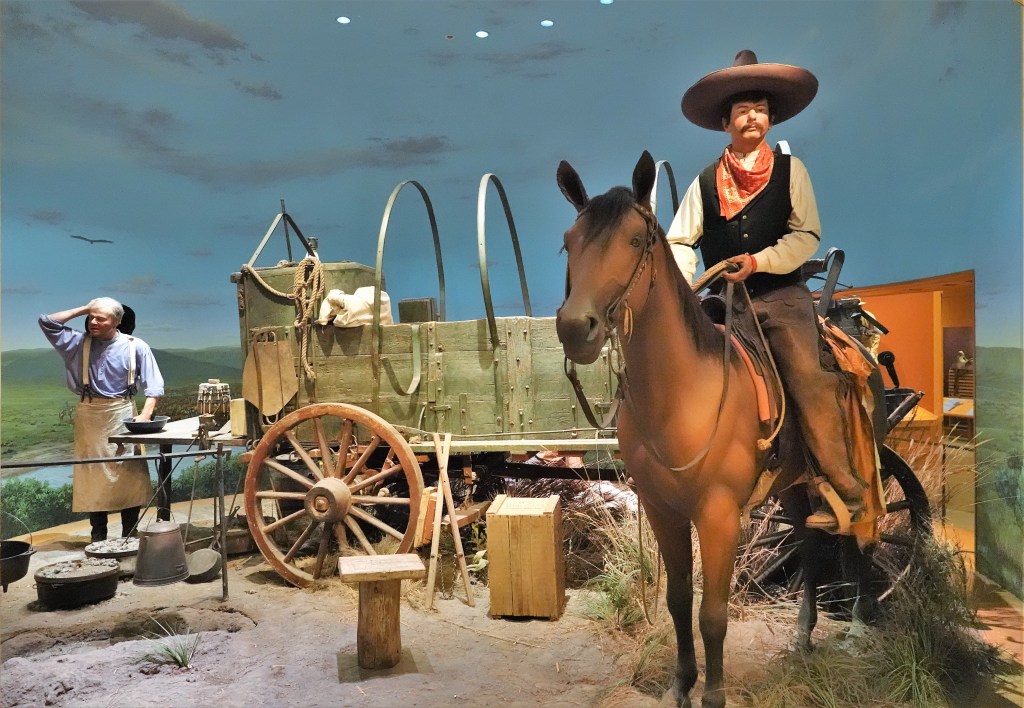
“Finally! So how about a photo of you in front of the wagon?” I suggested.
“Absolutely not!” she insisted.
Once through the entry vestibule, it was difficult to ignore the immensity of the space. Occupying a floor-to-ceiling, window-lit, cul-de-sac at the far end stood the plaster cast of End of the Trail, James Earle Fraser’s iconic 1894 image of a bowed Native American…
and his weary horse, symbolizing the defeat and subjugation of a people driven from their native lands.
“Wow, that’s impressive,” Leah remarked.
Turning the corner, we were met by an impressive stagecoach…and I could see Leah’s layers of resistance slowly fading.
We wandered past Abraham Lincoln,
James Earle Fraser: LINCOLN THE MYSTIC, 1929
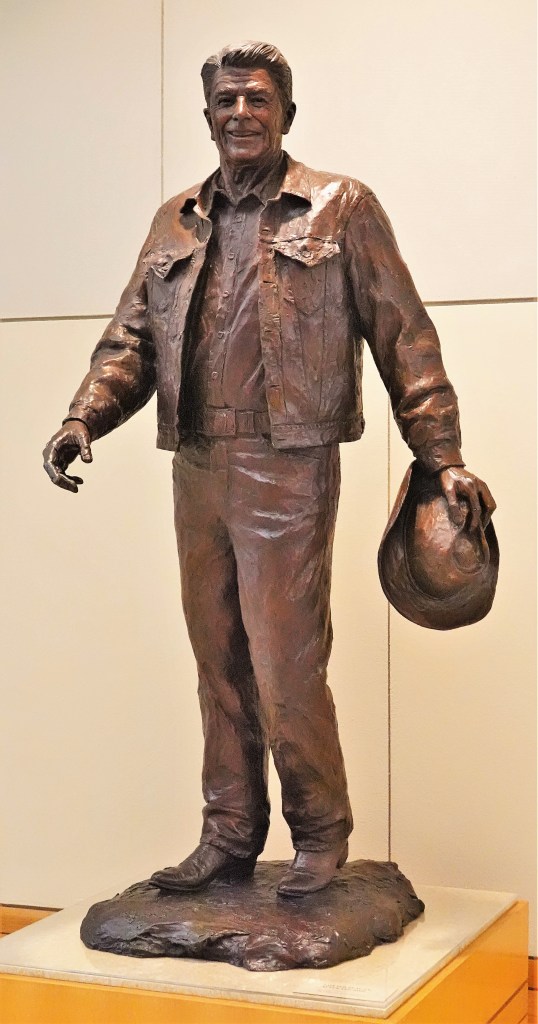
and Ronald Reagan…
Glenna Goodacre: AFTER THE RIDE, 1987
through rodeo trophy rooms, the Native American galleries, the Gallery of Fine American Firearms, the American Cowboy Gallery, and more…
and determined that this was two hours definitely well spent.
As we were leaving, I coaxed Leah once more, “Now can I get a picture of you by the wagon?”
Humans have been taking baths for millennia. The practice of releasing toxins in hot springs dates back tens of thousands of years to the Neolithic Age, when nomadic tribes would soak in thermal waters they accidentally discovered when seeking relief from winter weather.
And there is archeological evidence from the 1900’s from Pakistan, where the earliest public bathhouses were discovered in the Indus River Valley around 2500 BC.
In, fact, every known culture around the world has demonstrated a special bathing ritual with roots in therapeutic cleansing of body, mind and soul.
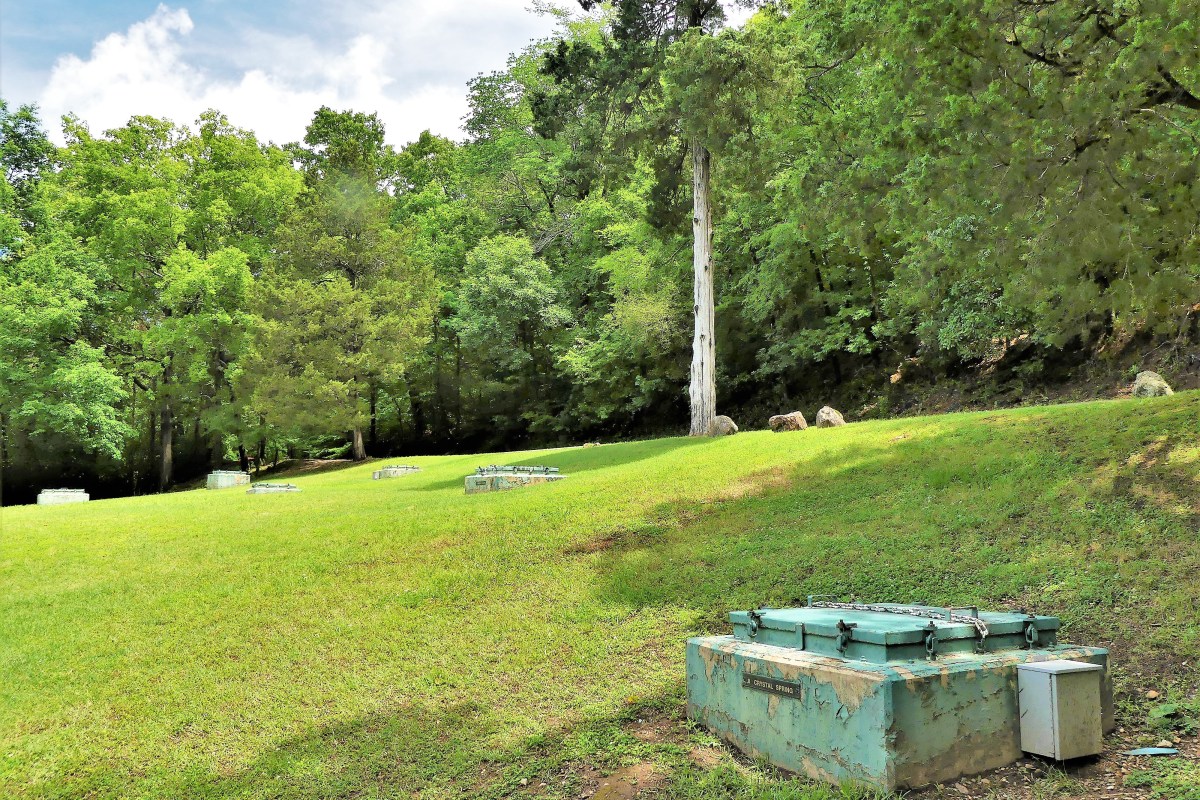
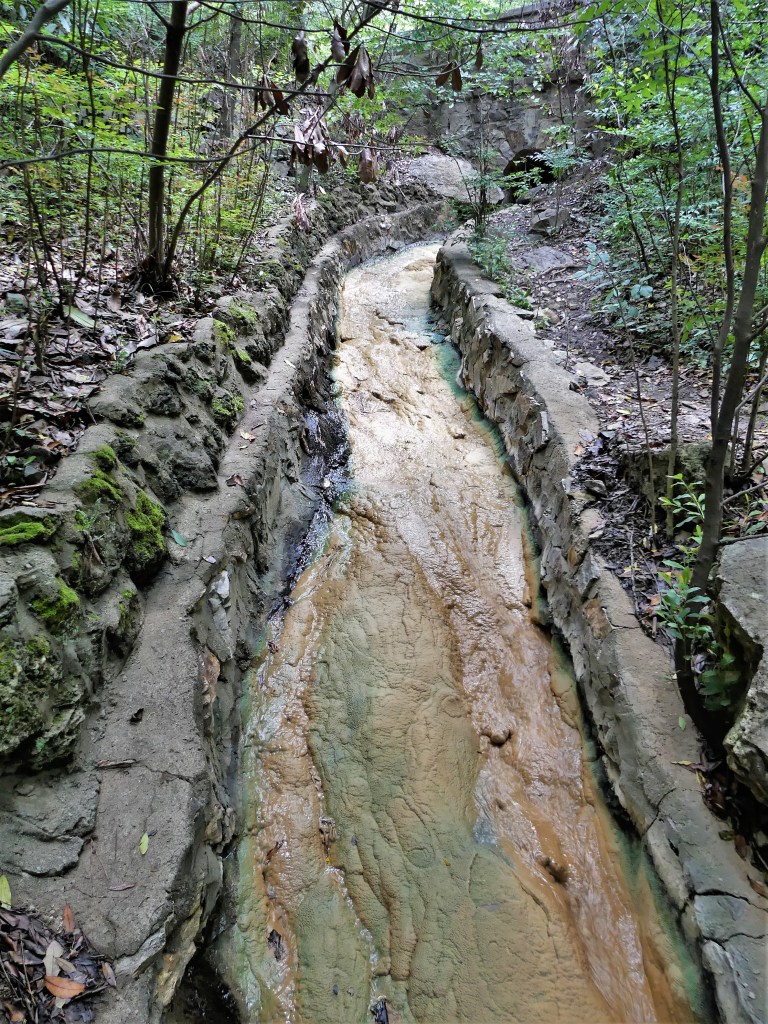
No doubt, Native Americans enjoyed the 147o F waters that flowed from the lower western slope of Hot Springs Mountain in Arkansas. This area was first occupied by the Caddo, and later the Quapaw, who eventually ceded this territory to the U.S. government in an 1818 treaty.
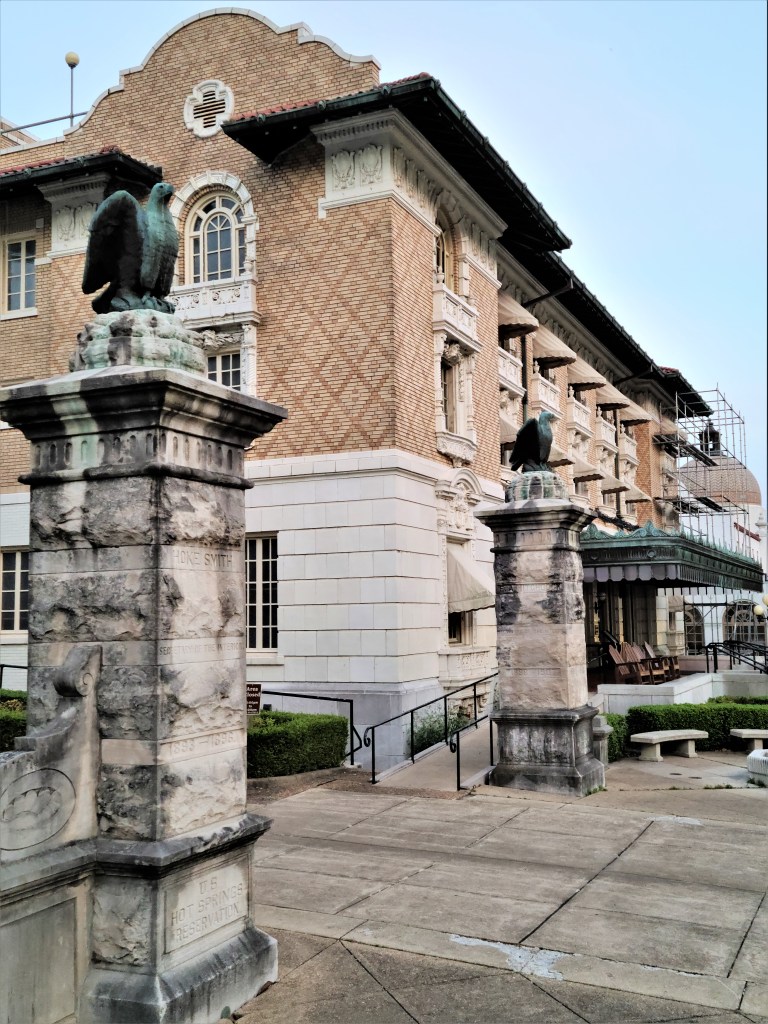
70 years before the National Park Service was established by Teddy Roosevelt, Andrew Jackson declared Hot Springs the first federal reservation in 1832, intending to protect this natural resource.
Scientists ran measurements and evaluated the springs’ mineral properties and flow rate. In journaling their finding, they numbered the springs and rated them according to temperature.
Immediately after, bathhouses began springing up around town to indulge the many guests who would travel to Hot Springs to avail themselves of the water’s restorative powers.
But trouble was brewing closer to the mountain. Ral City emerged as a community of indigents who had no use for fancy bathhouses, and subsequently dug pools beside the springs so they might enjoy the thermal water.
But not before the government put a stop to that and instituted policy that “preserved” and regulated the springs. Fearing contamination, the reservation superintendent ordered the pools filled in, and the transients relocated to a distant spring to appease the bathhouse owners in town.
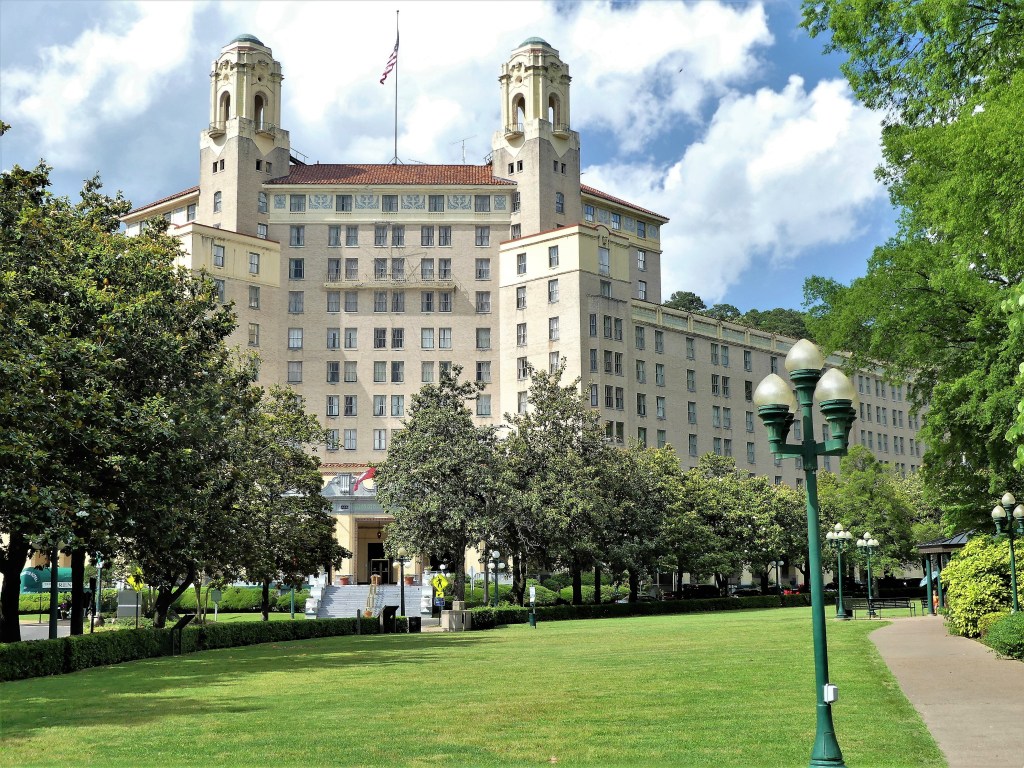
Enterprising businessmen like railroad magnate, Samuel Fordyce saw potential in Hot Springs, and invested heavily in the town’s infrastructure. He financed construction of the Arlington Hotel in 1875–the first luxury hotel in the area…
and vacation residence to every known celebrity, movie star and gangster of the era.
Fordyce also imagined an international spa resort that could rival Europe’s finest, and opened the opulent Fordyce Bathhouse in 1915.
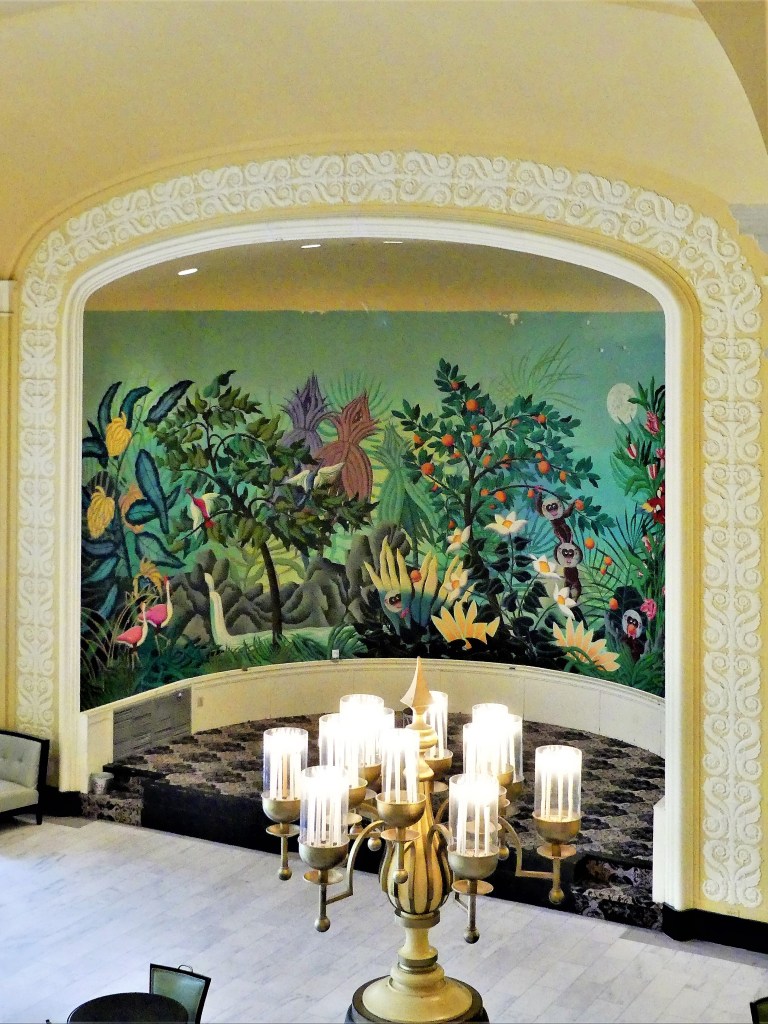
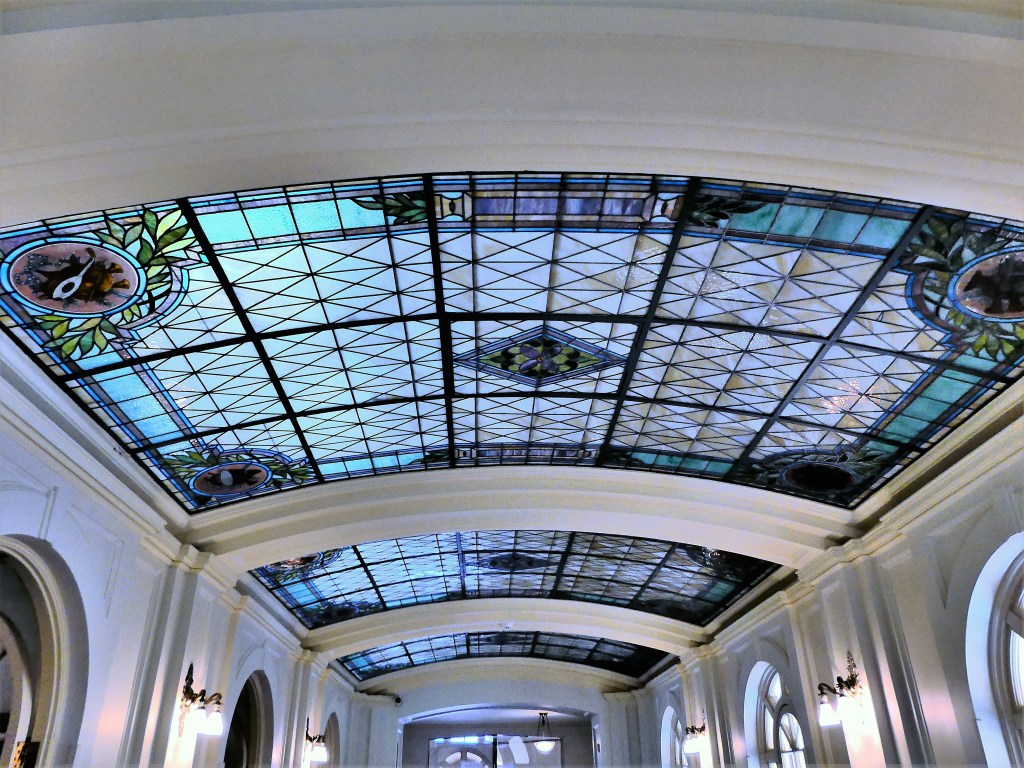
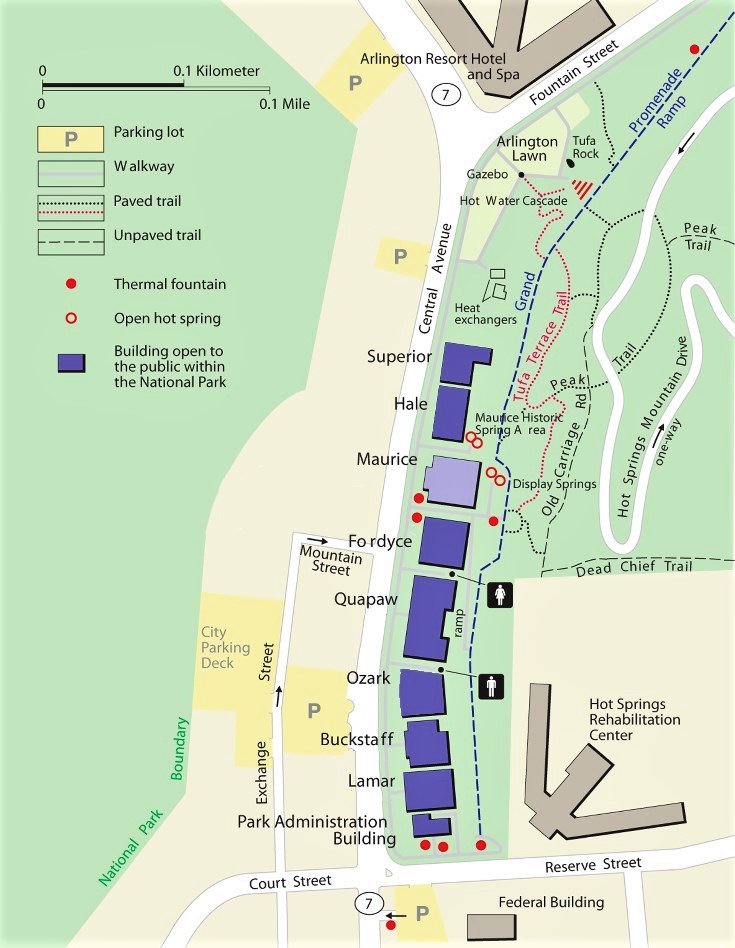
The National Park Visitor Center now occupies this bathhouse–which has been painstakingly restored to reflect the gilded age of health spas, and how turn-of the-century America tapped into Hot Springs’ healing waters to bathe in luxury and style.
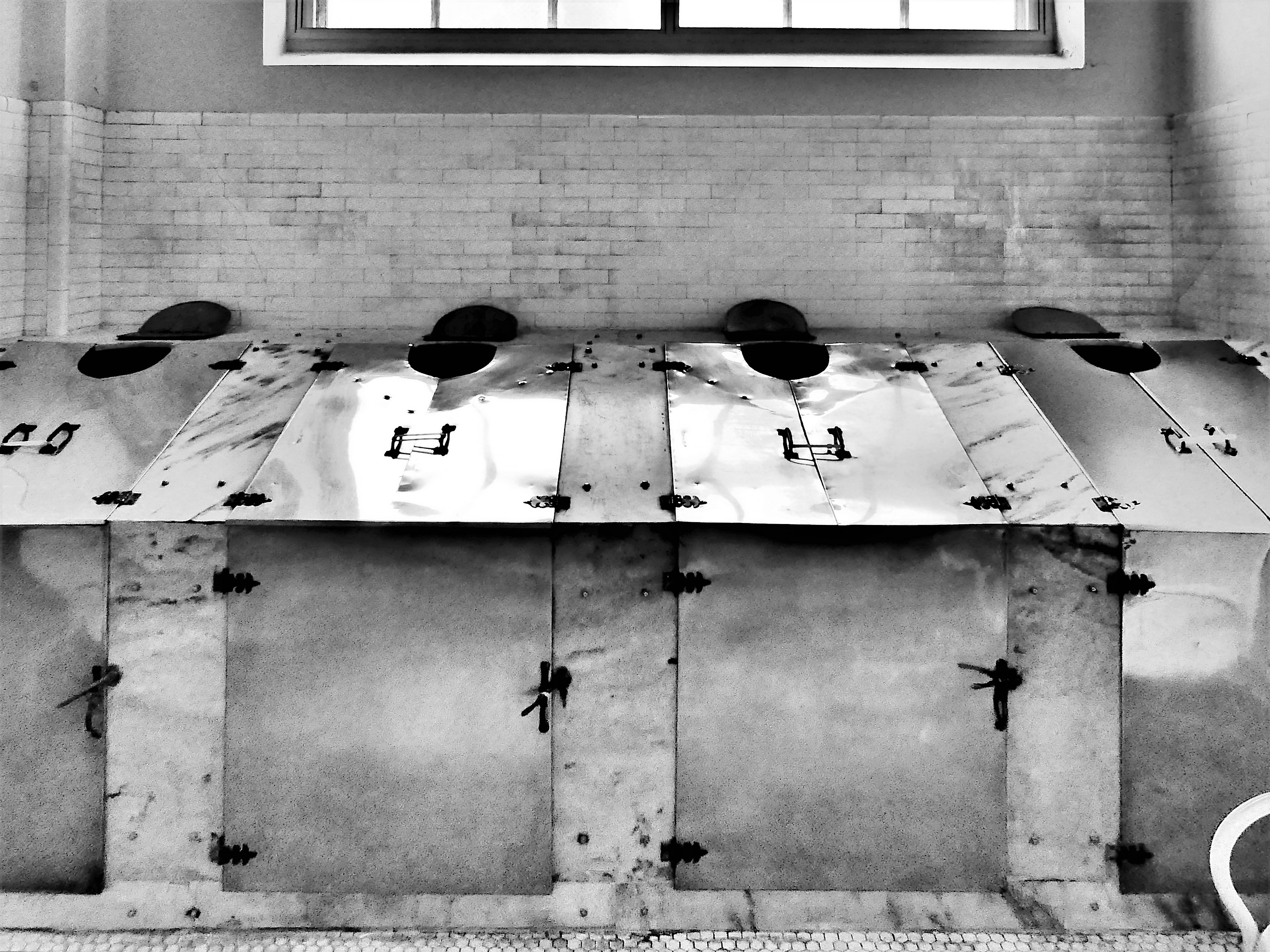
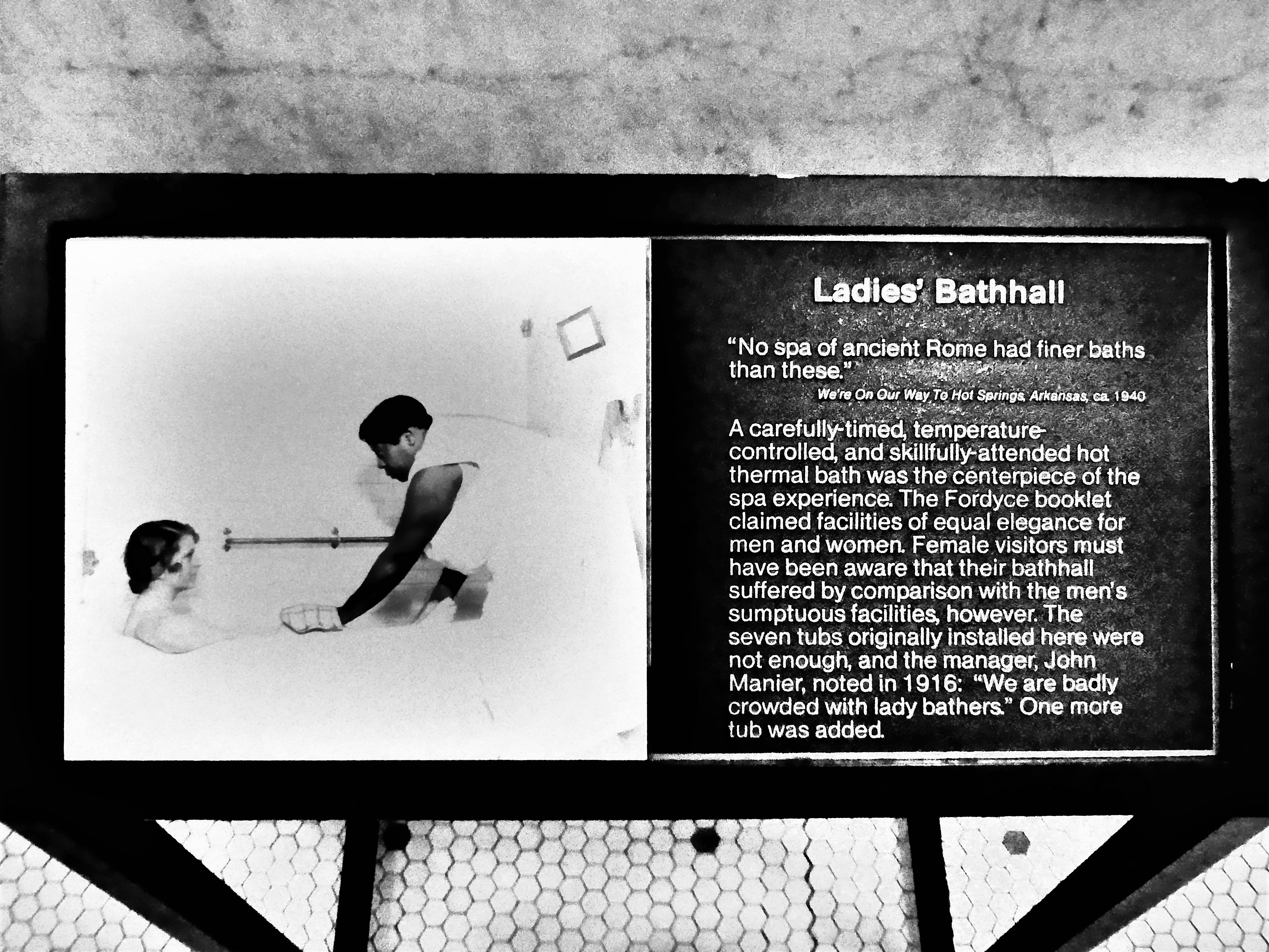
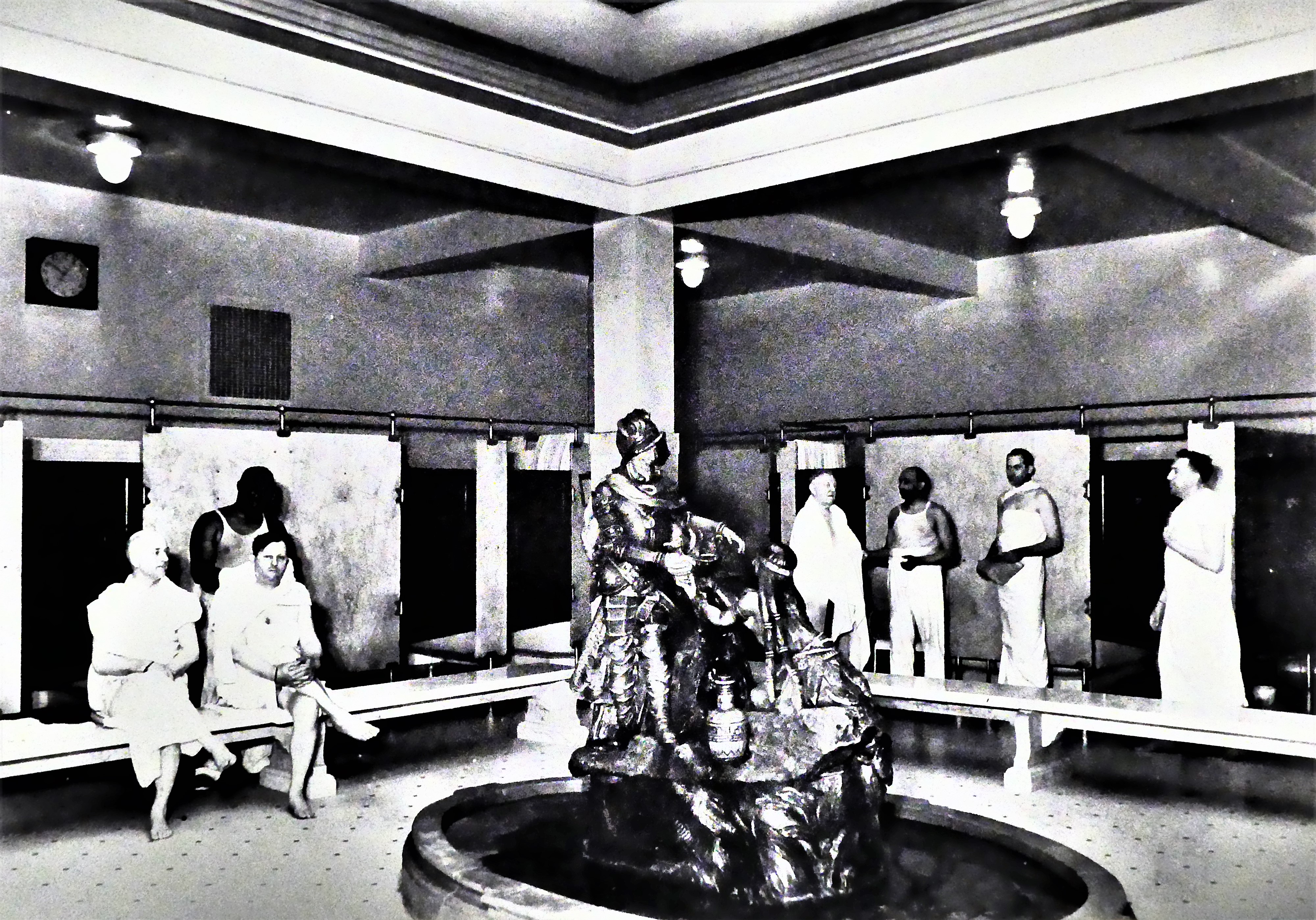
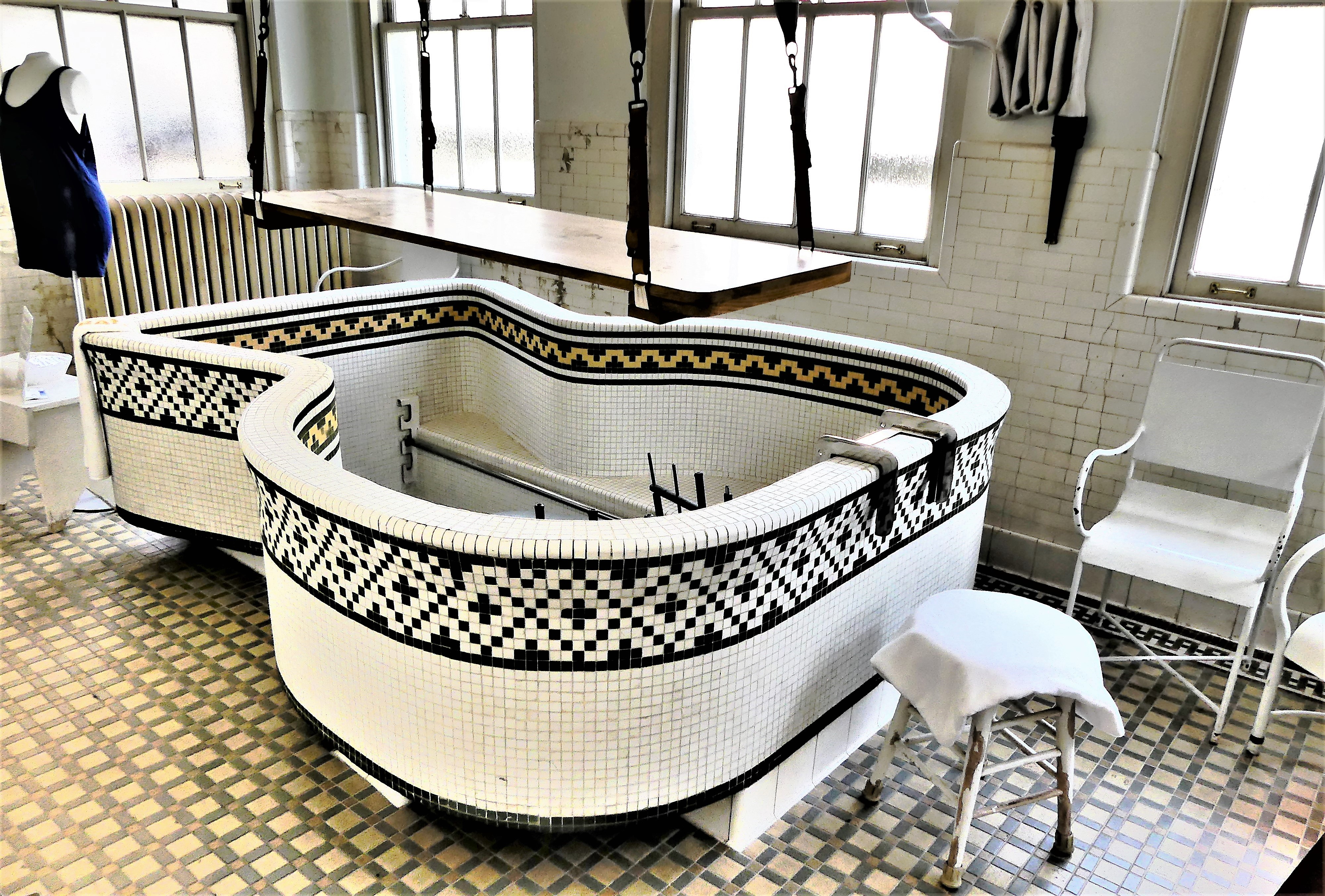
There were many different ways to indulge in water treatments…
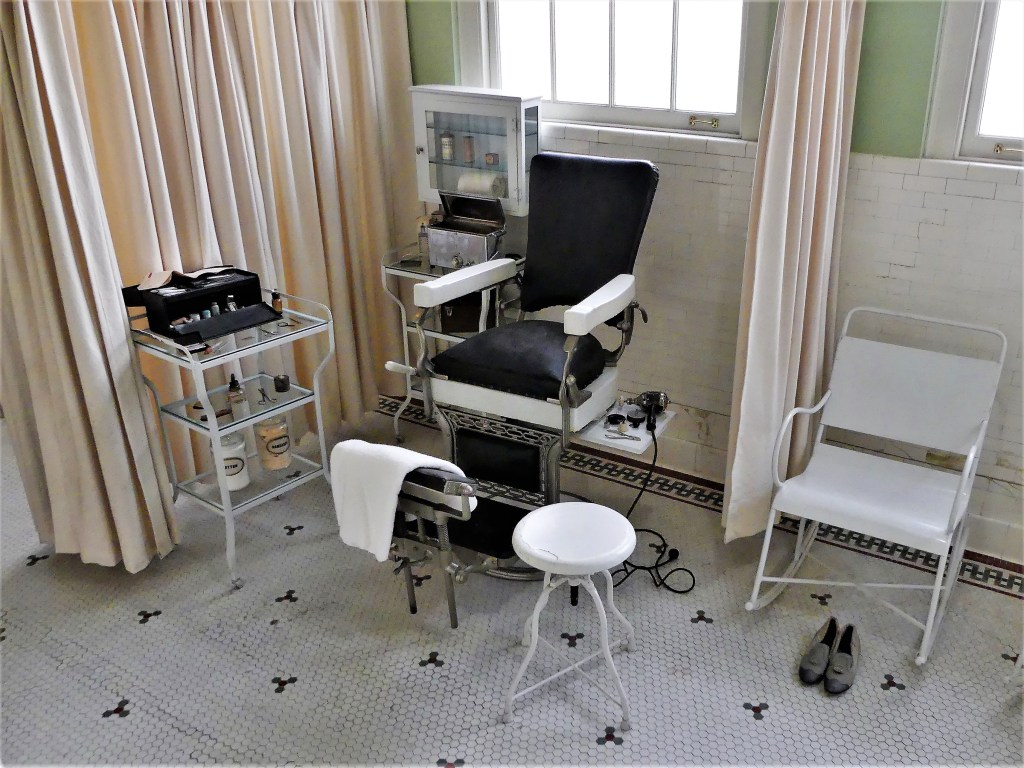
But a menu of ancillary services was also available, such as: massage, chiropody, facials, manicure/pedicure, and exercise, etc…
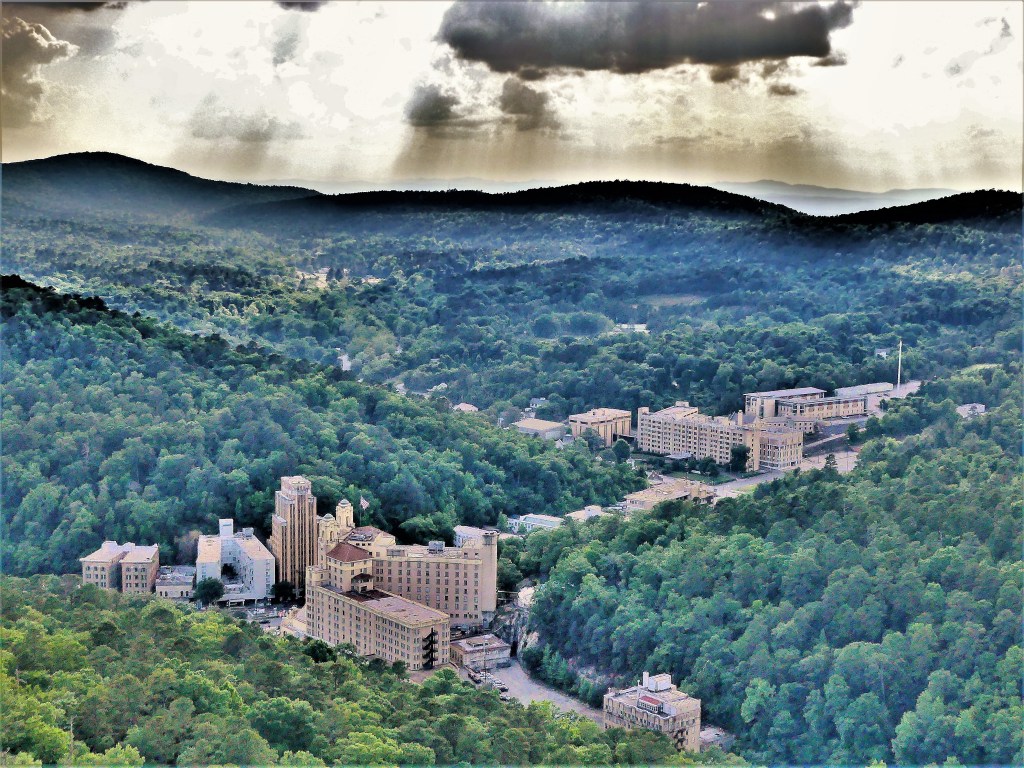
Bathhouse Row quickly filled with competition along Central Avenue,
each one designed with classic architectural details.
and anchored by Hot Springs Rehabilitation Center on the south end of the street.
Formally known as the Army-Navy Hospital, it was the site of the nation’s first general hospital for Army and Navy patients built after the Civil War–treating the sick and wounded through World War II. Subsequently, it became a residential resource center for training young adults with disabilities, but state of Arkansas shuttered the facility in 2019, and the building is now derelict and fallen into disrepair. Currently, it stands as the world’s largest raccoon hotel.
We visited Hot Springs during Memorial Day weekend, and the sidewalks were teeming with families and couples who were happy to return to the land of the living after a year of coronavirus hibernation. Businesses were enjoying record crowds, and the bath houses had finally reopened to the public.
Unfortunately, Leah and I were too late to the party; there were no spa reservations to be had. Water, water everywhere, and not a drop to drink.
So we took a hike up the mountain, spotted a turtle in the middle of the trail,
and continued to the Mountain Tower,
offering majestic, mouth-watering views of hidden springs beneath us, while we massaged each others’ neck and shoulders.
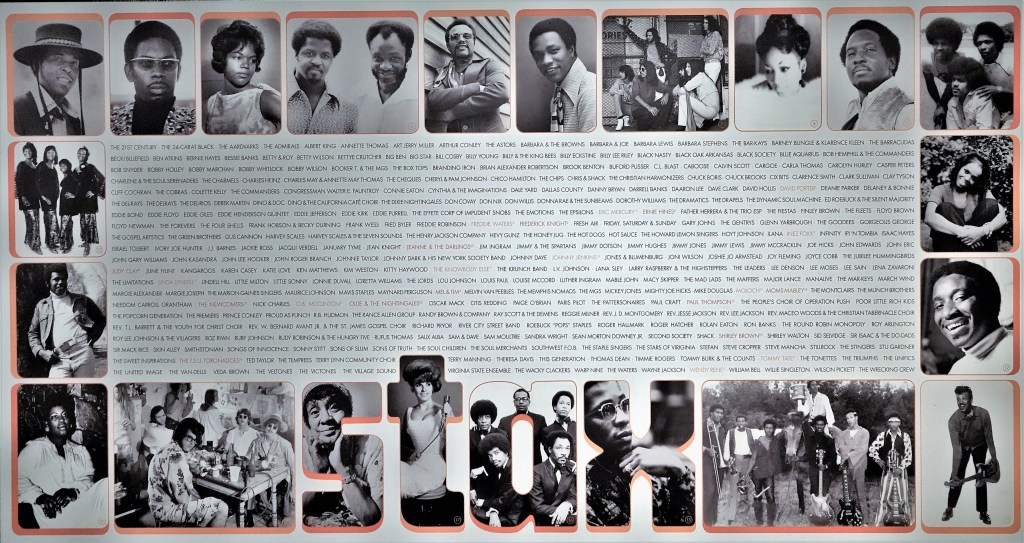
After a spin around Sun Records, Leah and I altered our orbit a couple of Memphis miles to the center of a parallel universe of talent, originally known as Satellite Records in 1957.
Inspired by the success of Sam Phillips, Jim Stewart–a banker by day and frustrated fiddler by night–decided he too could produce hit records despite no music industry experience. Upon realizing his need for professional recording equipment, he enlisted his older sister, Estelle Axton who mortgaged her home for an Ampex 350 console recorder.
In 1960, Satellite Records moved to a converted theater on McLemore Ave. and Stax Records (a fusion of their last names) was born.
Rufus and Carla Thomas recorded the new company’s first hit record, Cause I love You, in 1960…
which caught Atlantic Records’ Jerry Wexler attention and willingness to negotiate a distribution deal for all future Rufus and Carla recordings, and right of first refusal of all other Stax artists.
Steve Cropper also added to the early success of STAX.
Originally, his guitar playing fronted the Royal Spades, but Jim Stewart invited Cropper to Stax where the group was re-billed as the Mar-Keys and became the house band, playing sessions with newly signed artists as well as recording their own sounds, like Last Night, a 1961 hit.
Steve Cropper would leave the Mar-Keys to become head of A&R for Jim Stewart, but continued to play back-up sessions as needed, always a part of the Mar-Keys floating membership. One day, while awaiting a session, Booker T. stepped in for a turn on the Hammond organ, and Green Onions was instantly conceived in 1962.
The Mar-Keys had just morphed into the next Stax session band, a/k/a Booker T. and the M.G.’s,
Stax success continued when Otis Redding, driver for Johnny Jenkins’ took the microphone after Johnny’s dismal performance. Subsequently, Otis auditioned with Booker T. and the M.G.’s on accompaniment, and wowed everyone with his song, These Arms of Mine, released October 1962.
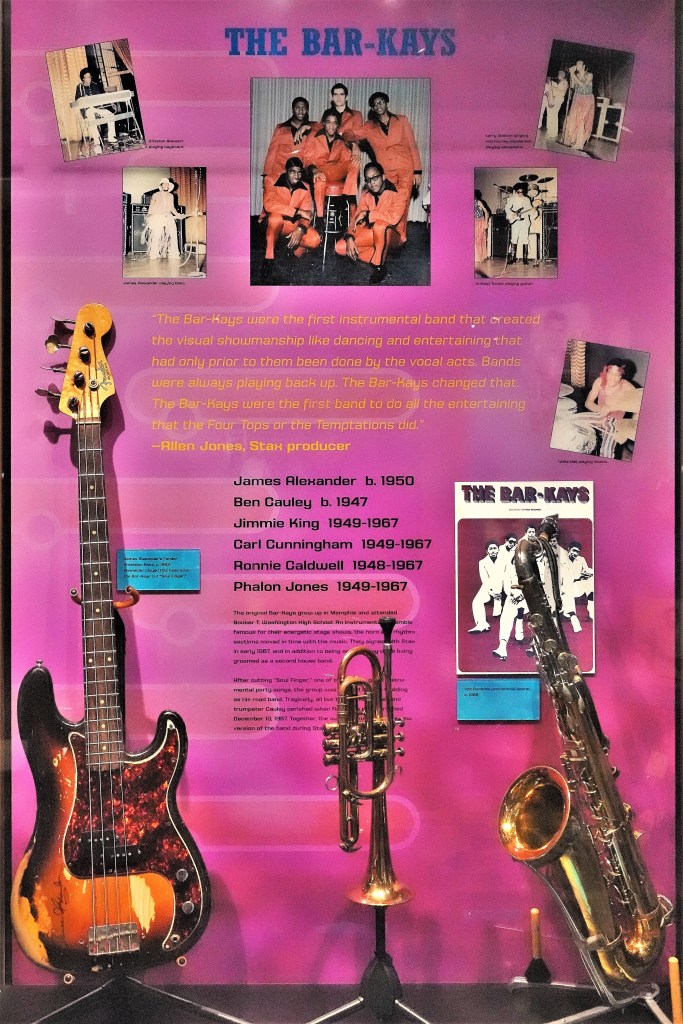
Otis Redding would become the label’s biggest star, continuing with hits: I’ve Been Loving You too Long; Respect; Just One More Day; and Try a Little Tenderness. But like Icarus, who flew too close to the sun, Otis and several members of the Bar-Kays lost their lives in a plane crash on December 10, 1967, enroute to a performance in Cleveland.
Only 6 months earlier, Otis was headlining at the Monterey Pop Festival, backed by Booker T. and the M.G.’s. At the time, he was fully aware of the opportunity and exposure. He said, “It’s gonna put my career up some. I’m gonna reach an audience I never have before.” He was 26 when he died.
(Sittin’ On) The Dock of the Bay, co-written by Steve Cropper was released one month later, and reached #1 on Billboard’s Hot 100.
In 1968, the wheels came off the Stax bus. They lost their distribution deal with Atlantic Records after Atlantic was sold to Warner Bros. Records in 1967. Warner Bros. also reclaimed the library of master tapes held by Stax, citing a clause in Atlantic’s contract that entitled them to “all right, title and interest, including any rights of reproduction.”
Adding insult to injury, Warner Bros. also reclaimed Sam and Dave, who were “on loan” to Stax from Atlantic.
And to make matters worse, the country was at war with itself after the murder of Martin Luther King, Jr. on April 4,1968 just blocks from the label’s headquarters.
With their back catalog depleted and no distribution deal, Stewart sold his shares of Stax to Gulf & Western for millions, but stayed behind to continue running the company. Enter Al Bell, record producer and songwriter, who joined Stax in 1965 as director of promotions, and became co-owner and vice-president after buying out Estelle Axton. In 1969, Bell shepherded the “Soul Explosion,” generating 30 singles and 27 albums within eight months,
utilizing house talent like the Memphis Horns (an off-shoot of the Mar-Keys) and new talent like the Staple Singers.
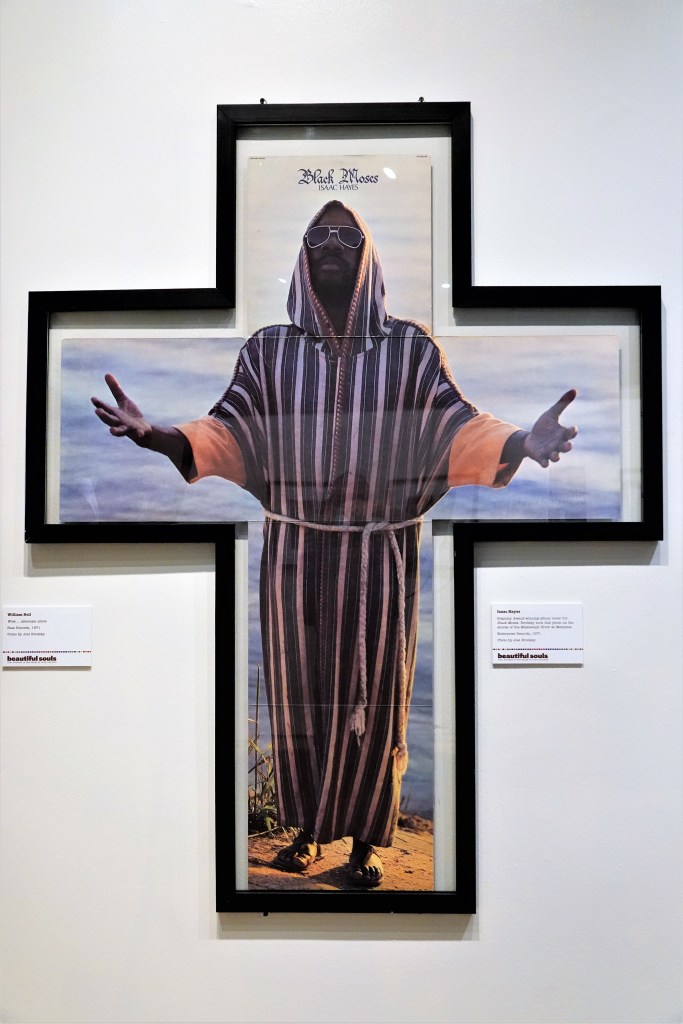
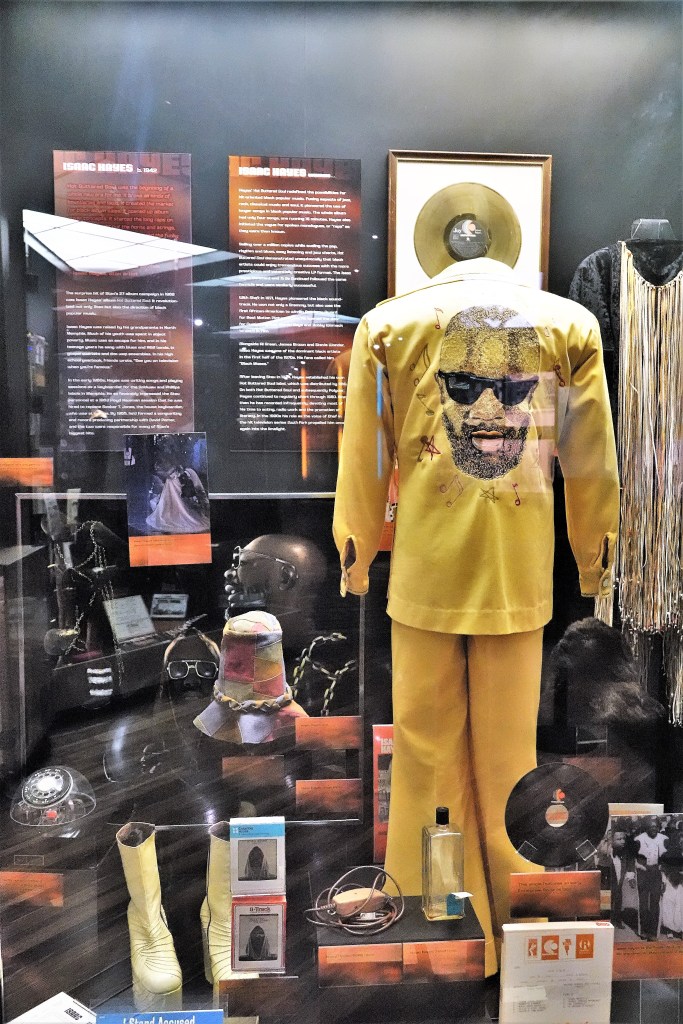
But musically, the resurrection of Stax records can be attributed to Isaac Hayes, the Black Moses.
In 1969, Isaac Hayes released Hot Buttered Soul, his four-song, soul-defining masterpiece which sold 3 million albums.
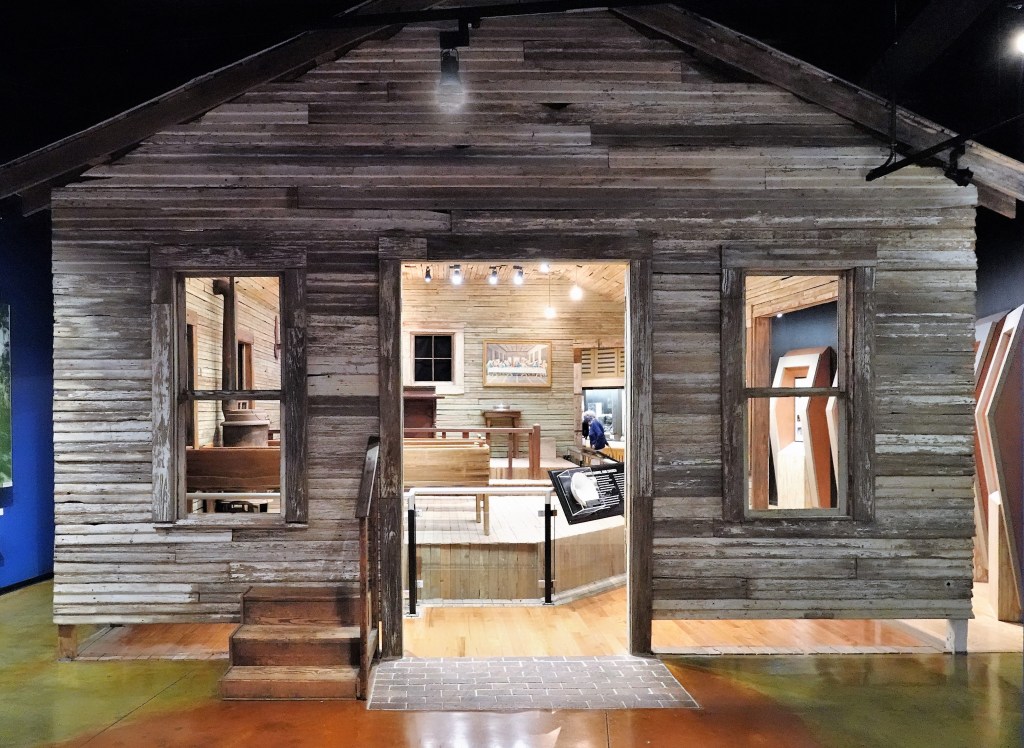
The Stax Museum has many alluring features and exhibits. There’s the reassembled Hoopers Chapel African Methodist Episcopal Church from Duncan, Mississippi built around 1906;
there’s also a disco dance floor, that ideal for busting a move and showing your groove;
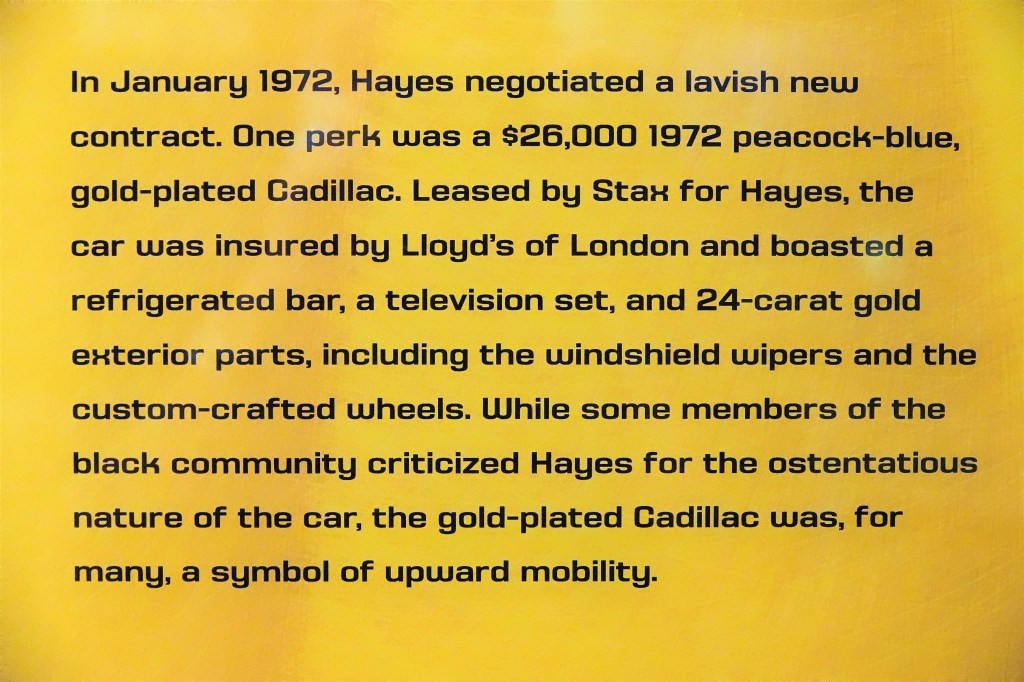
but the crown jewel of the collection has to be Isaac Hayes’ rotating 1972 peacock-blue, 24K gold-plated Cadillac.
The release of Theme from Shaft— which won an Oscar for Hayes for Best Original Song in 1971–
put Hayes in the drivers seat when it came time to renegotiate his contract…
In 1970, with the wind at their backs, Bell and Stewart repurchased Stax from Gulf & Western with borrowed money from Union Planters Bank.
In the summer of 1972, in pursuit of a wider audience, Al Bell brought an all-star revue to Los Angeles Memorial Coliseum–dubbed Wattstax–to commemorate the 7th anniversary of the Watts riots. The sold-out crowd of 100,000 fans spawned a highly regarded documentary film and a live double album of the concert highlights.
Stax archives recount the final years of Stax Records:
By 1971, Stax had grown from a family production company distributed by Atlantic Records, to a freestanding independent record company. Stax now manufactured, marketed and distributed its own recorded music in America and through licensees around the world. The racial harmonies that typified Stax’s early years was becoming an issue. Trust was an issue. Jim Stewart, producer-cum-chief executive officer was tired, disillusioned, and pushing paper instead of making records. He had not attended Wattstax. He told his partner Al Bell that he wanted out.
Change and challenge were pervasive after so much growth. One major problem became the theft of Stax property, including master tapes. Stax hired one of the country’s premiere white-collar crime investigative firms. Their search did uncover improprieties involving some employees, but Jim Stewart and Al Bell decided not to prosecute. Instead new security measures were designed and implemented at the McLemore Avenue and the Union Avenue Extended offices to specifically protect and preserve Stax masters, East Memphis copyrights and other valuable assets.
Al Bell was enjoying a Midas touch. Isaac Hayes, Johnnie Taylor, and the Staple Singers had all emerged as superstars. Rufus Thomas had entered the most successful era of his career. Albert King had broken through to the white rock album market. Mid-level artists such as Soul Children, Frederick Knight, Luther Ingram, and Mel & Tim were all hitting the charts. Bell was pushing company expansion in many different directions at once, issuing pop, rock, jazz, country, gospel, and comedy records in addition to its staple of classic soul tracks.
Though Stax thrived in the independent world, it had still not broken through in mass-market distribution venues like Sear and Roebuck. Seeking a buyer for his company’s other half, Al Bell kept that distribution goal in mind. He wound up, surprisingly, making a distribution deal with Clive Davis at CBS Records. CBS, though successful with many white acts, boasted no major black artists. “The company was” as Bell says, “larger that life white with no real knowledge of the black market.”
Stax and CBS each complemented the other’s weakness. Stax could help CBS reach the small, privately owned stores, and CBS could get Stax into huge chains. In 1972, through a complicated agreement, Bell bought Stewart’s half with money loaned from CBS. Jim Stewart, agreeing to remain with the company for five more years, received $2.5 million, up front, and millions more in payments to come.
Though the new relationship began well, a disaster occurred in May 1973: Clive Davis was fired from CBS. The deal he’d struck with Al Bell was full of nuance and personal commitment between two parties, and Davis’ replacement neither understood nor appreciated the arrangements.
Faced with a contract it felt was a mistake, CBS began systematically reducing payments to Stax for records sold, precipitating a tangle of legal battles and a shortage of operating funds. Stax was bound to CBS as its sole distributer, and could not get its product in to stores nor receive monies for records that had been sold.
To keep the company going, Stax founder, Jim Stewart secured operating loans with his forthcoming CBS payments as collateral. Going further, he gave Stax a personal loan and then personally guaranteed even more borrowed money. But CBS continued to withhold payments and Stax continued to hemorrhage.
Continuing:
By summer 1974, Stax defaulted on payments to Isaac Hayes, and was forced to relinquish the marquee artist. Around the same time, Stax gave Richard Pryor, in lieu of payment, the master tapes for his groundbreaking album That Nigger’s Crazy. Pryor took the album to Warner Brothers; it went gold and won a Grammy award. By the end of 1974 Stax had given 85 of its employees their pink slips.
Bell, Stewart, and Stax vice-president John Burton campaigned for capital to pay off both CBS and Union Planters Bank, from who, Stax had borrowed heavily. Leaving no stone unturned, they approached Saudi Arabia’s King Faisal, A tentative agreement was worked out, and Burton headed to the Middle East. Faisal was assassinated by his nephew on March 25, days before the meeting was to take place.
Stax persevered but times were increasingly turbulent. The nation itself struggled: Watergate led to President Nixon’s resignation. Recession gripped the U.S. economy. In Memphis, Union Planters Bank—which had loaned hundreds of thousands of dollars to Stax—struggled for its own economic survival.
Despite chart topping hits during late 1974 and 1975 by Stax artists including Rance Allen, Little Milton, the Staple Singers, young pop sensationalist Lena Zavaroni, Shirley Brown, Albert King, the Dramatics and others, distribution challenges perpetuated by CBS Records strangled Stax.
When Union Planters abruptly called in Stax’s loans and they were unable to pay promptly, the bank immediately and aggressively pursued the company. Stax’s daily operations were crippled. On June 8, 1975, the company basically ceased being able to pay anyone. In October, Stax officially laid off all its remaining employees. Many still continued to work for free. The battle between the bank and Stax was rancorous and bitter. Many believed that racism was the motivation which drove Union Planters pursuit while others believe that it was strictly a business decision.
For years, Stax had contributed to community efforts. In the company’s final days, the local community gave back. In latter 1975, when Stax could not pay its remaining employees, the proprietor of the College Street Sundry, Ms. Ethel Riley Flowers, regularly fed them at no charge. Merrit’s Bakery also gave food to the last employees “because,” in the words of William Brown, “she knew we didn’t have no money. These people were surviving on the love of each other. They weren’t surviving on waiting for that dollar to come around the corner. They knew it wasn’t coming!”
Unable to pay its bills, its artists, its loans, Stax was shut down on December 19, 1975, forced into receivership by an involuntary bankruptcy petition.
Union Planters Bank, that had helped Stewart and Bell buy back the company from Gulf & Western, moved to collect on personal guarantees given by Jim Stewart. He lost his fortune, his assets, and his home.
The Stax building was padlocked.
In January 1977, Stax’s assets were parceled out in a bankruptcy sale on the courthouse steps. The catalog of tapes was sold to a liquidating company, the office furniture to an auction company, and the recording equipment to an individual who hoped the magic would continue to work.
The Stax building was sold for ten dollars in 1980 to the Church of God in Christ (COGIC).
For Jim Stewart, it’s always been about the music.
He was inducted into the Rock and Roll Hall of Fame in 2002 for his important contribution to the music scene.
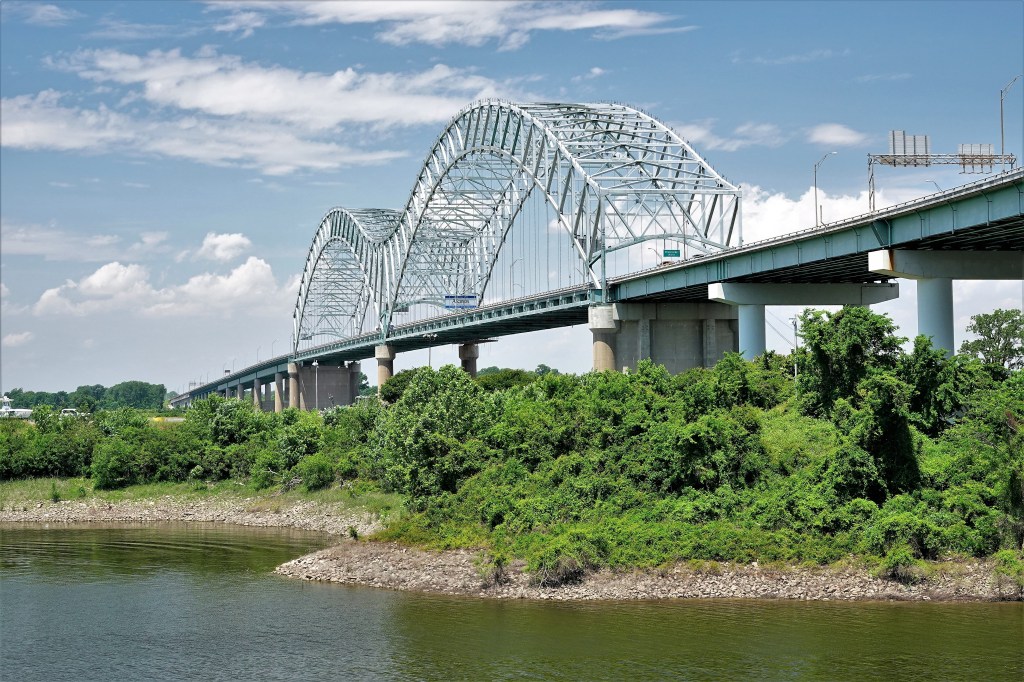
Rolling into West Memphis from Nashville to lay down 3-day roots wasn’t going to be easy. On May 11, the country learned that the I-40 bridge connecting Memphis, TN to West Memphis, AR was shut down after inspectors discovered a critical crack in a 900-foot beam that compromised the bridge’s structural integrity, and it would takes months to complete emergency repairs (oh, infrastructure…wherefore art thou).
All traffic was being rerouted through I-55–a less than desirable 4-lane crossing–that was now backing up for miles in both directions. Leah and I agreed that the only way to avoid traffic mayhem would be to relocate east of the Mississippi.
It was a snap decision with few available options, but we scored a shady site with electricity at F.O Fuller State Park, 2 miles downwind from a sewage processing plant.
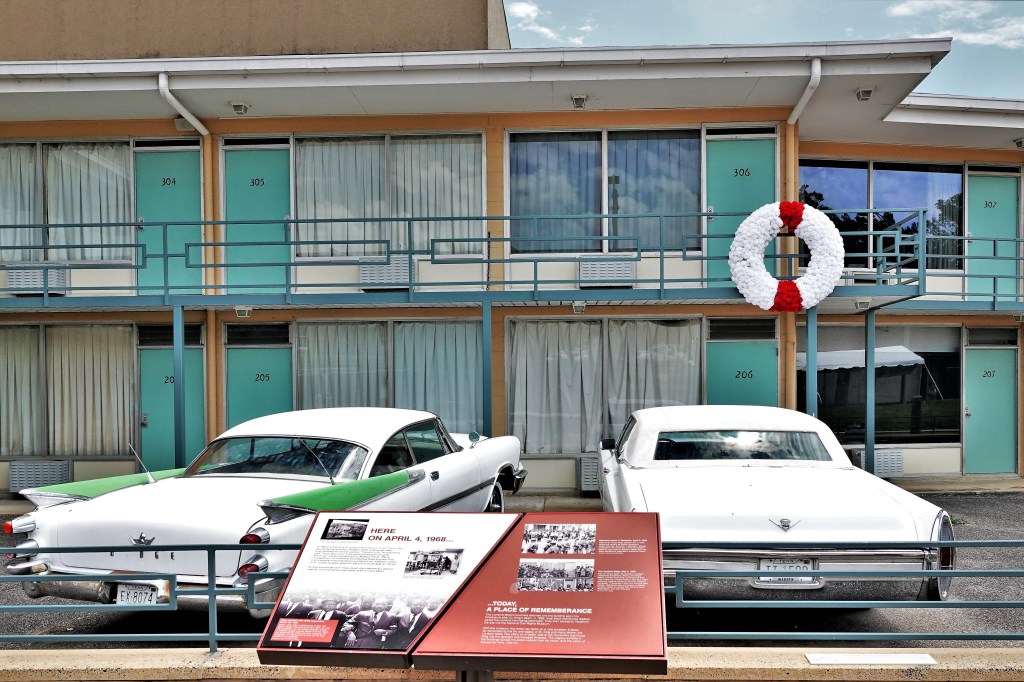
We had designs on visiting the National Civil Rights Museum built around the Lorraine Motel,
which was one of only a few hotels that hosted black entertainers of the era, like Cab Calloway, Count Basie, B.B. King, Aretha Franklin, and Nat King Cole.
Dr. Martin Luther King, Jr. was assassinated outside Room 306 on April 4, 1968, making the Lorraine Motel a symbol for the civil rights movement.
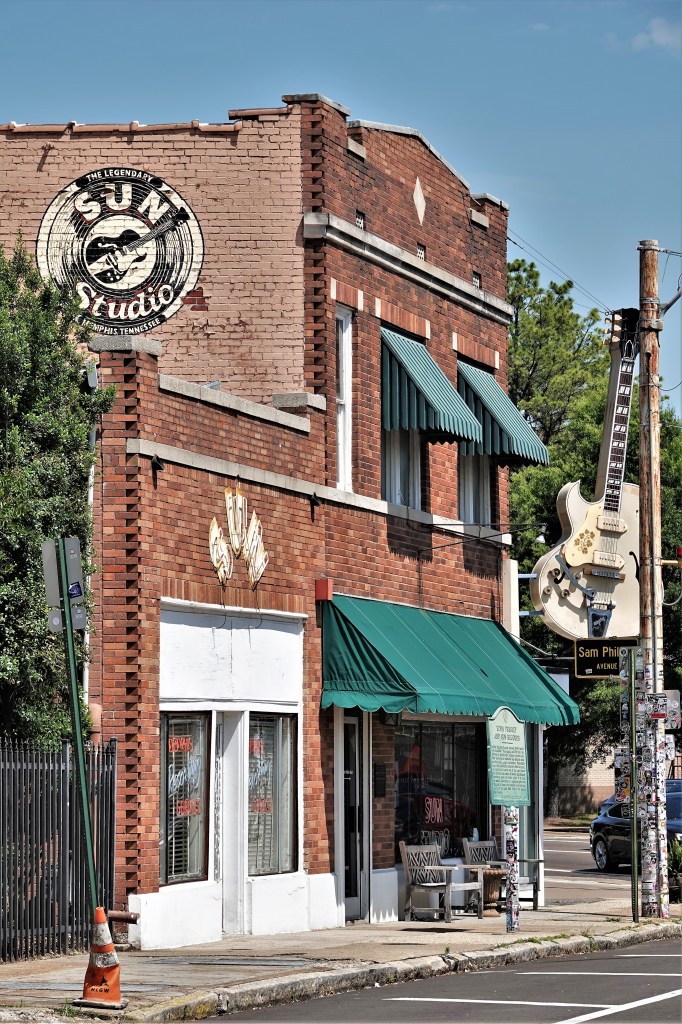
We would have liked to tour the museum, but it was closed. So off we went to Sun Studio…
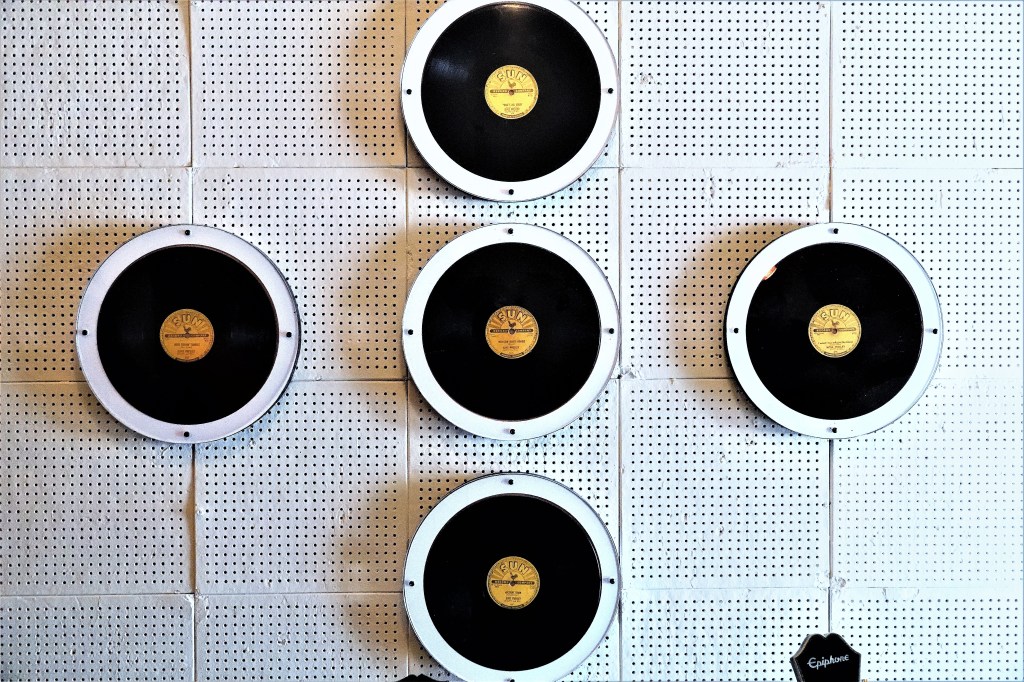
to pay homage to a galaxy of recording stars whose origin stories are etched on acetate discs.
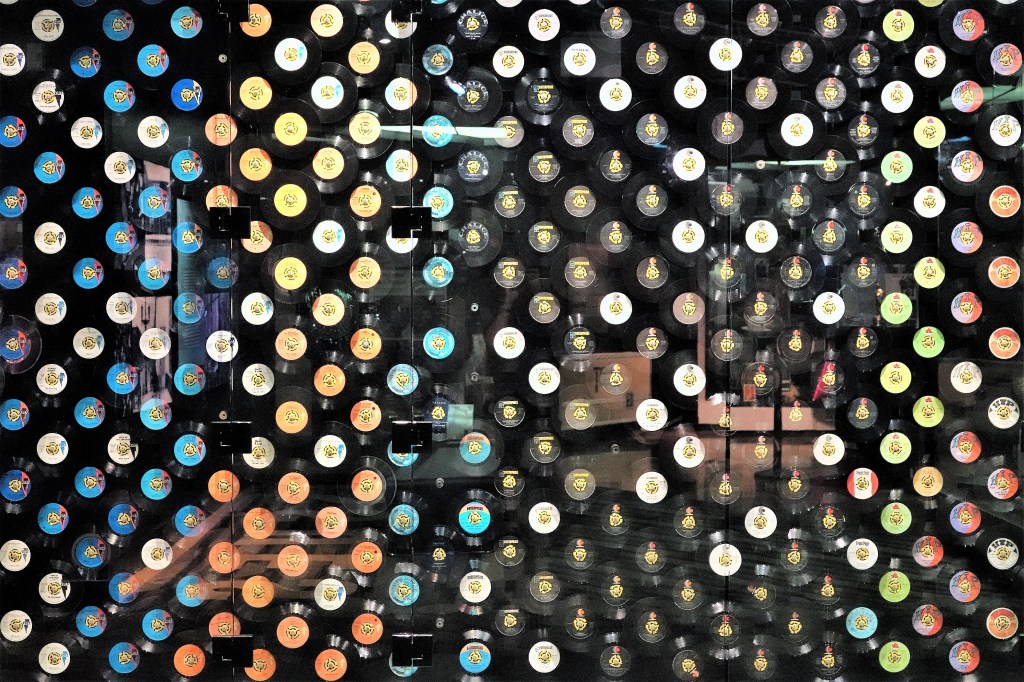
Patrons gathered inside the café waiting for the 45-minute tour to begin. It was a good opportunity to browse the weathered record collection and grab a cold drink.
The tour began on the second floor–at one time a flop house for disadvantaged musicians–where we learned about Sam Phillips’ humble beginnings,
and his role in producing arguably the first rock ‘n roll record in history.
But Sam Phillips was really looking for a white guy, someone who could bridge the gap, someone “with a Negro sound and the Negro feel.”
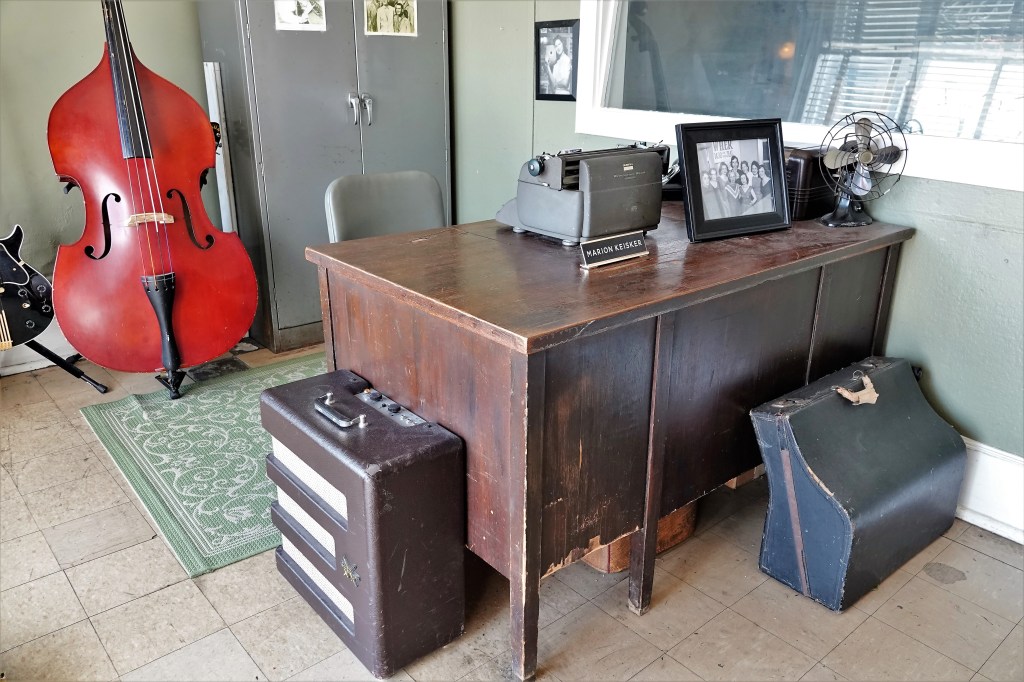
Fortunately, Marion Keisker, Sam’s business manager/lover was at her desk on July 18, 1953…
when a recent high school grad with long sideburns and a greasy ducktail hairdo walked into the studio with $4 to record My Happiness and That’s When Your Heartaches Begin as a gift for his mother, Gladys.
Being the only one present at the time, she took a turn at the console to record his demo–her first and only time–and she immediately knew that Elvis Presley was the real McCoy.
Nearly a year later, Sam called Elvis in for an audition supported by upright bass player Bill Black and guitarist Scotty Moore. After a few sessions of Elvis noodling around, singing different genres of music while strumming his guitar, he stumbled upon an up-tempo blues number by Arthur ‘Big Boy’ Crudup called That’s All Right (Mama).
The trio eventually worked out a raw arrangement for Sam, and the rest is history.
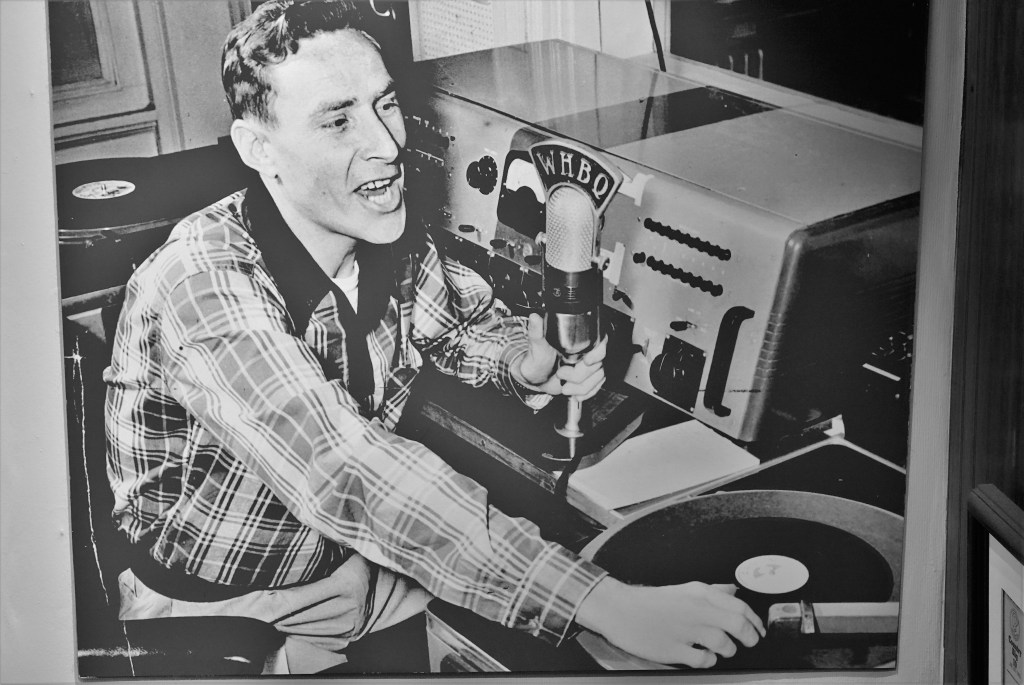
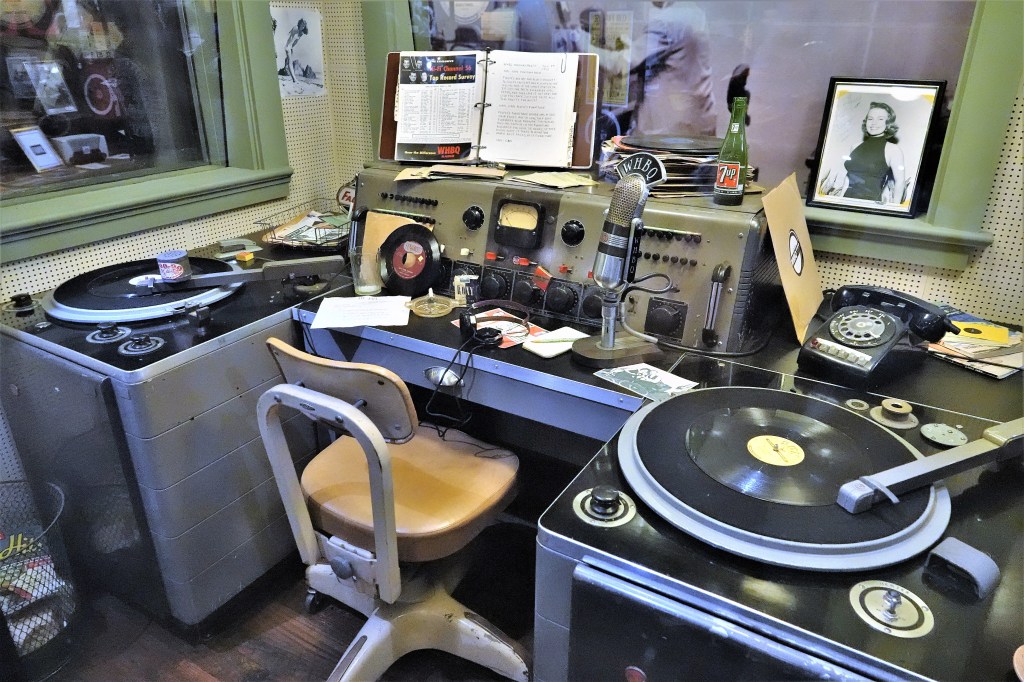
Next thing, Sam called local DJ Dewey Philips for radio support, and he obliged by playing Elvis’s record 40 consecutive times on WHBQ, at times singing along.
Of course, it was a smash hit…
The tour continued downstairs, inside the fabled studio–where not much has changed–that gave rise to so many legendary careers.
Our guide played refrains of famous tunes recorded at Sun. There was Carl Perkins warbling Blue Suede Shoes, Jerry Lee Lewis belting out Great Balls of Fire, Roy Orbison’s crooning Ooby Dooby, and Johnny Cash intoning I Walk the Line.
Elvis had five hits at Sun Studios: That’s All Right, Mystery Train, Milkcow Blues Boogie, Good Rockin’ Tonight, and I’m Left, She’s Right, You’re Gone, and they’re on display.
On November 20, 1955, Colonel Parker brokered a record-breaking deal between Sam Phillips and RCA Records for $35,000, with a signing bonus of $5,000 for Elvis.
A year later, on December 4, 1956, Elvis Presley, Carl Perkins, Jerry Lee Lewis and Johnny Cash reunited at Sun Record Studios for a seminal impromptu jam session dubbed the Million Dollar Quartet. It was history in the making, producing 3 reels of tape.
Our guide delights in telling the story of Bob Dylan’s visit to Sun Records.
It is widely known that Dylan was a huge fan of Elvis. The day he arrived in Memphis, he had a car drive him to Sun. Without ceremony, Dylan walked into the studio and asked if it was true that Elvis had stood on the mark on the floor during his recording of That’s All Right. Upon confirmation, Dylan knelt over the spot and kissed the ground, paying respects to his long lost hero.
It’s also been rumored that Dylan later licked the microphone once held by Elvis, but I’m probably not the best qualified person advising Leah when it comes to germs.
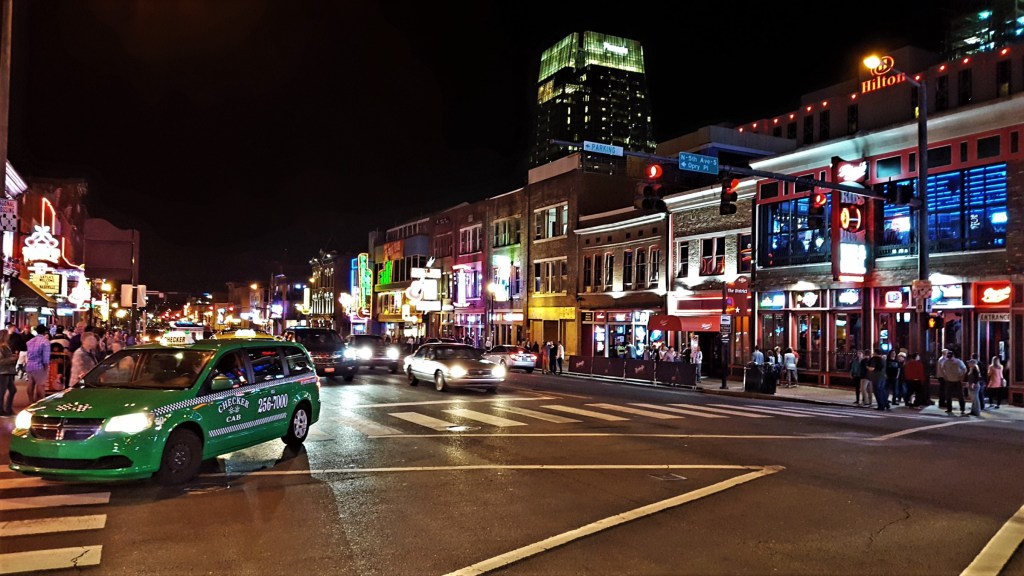
Nashville seldom disappoints, given the music, the Broadway scene, and the local history and flavor that makes Nashville such a go-to destination for letting loose.
But here we were in Nashville again for a third visit in as many years, and again, there were no concert bookings at Grand Ole Opry during our stay, just as before.
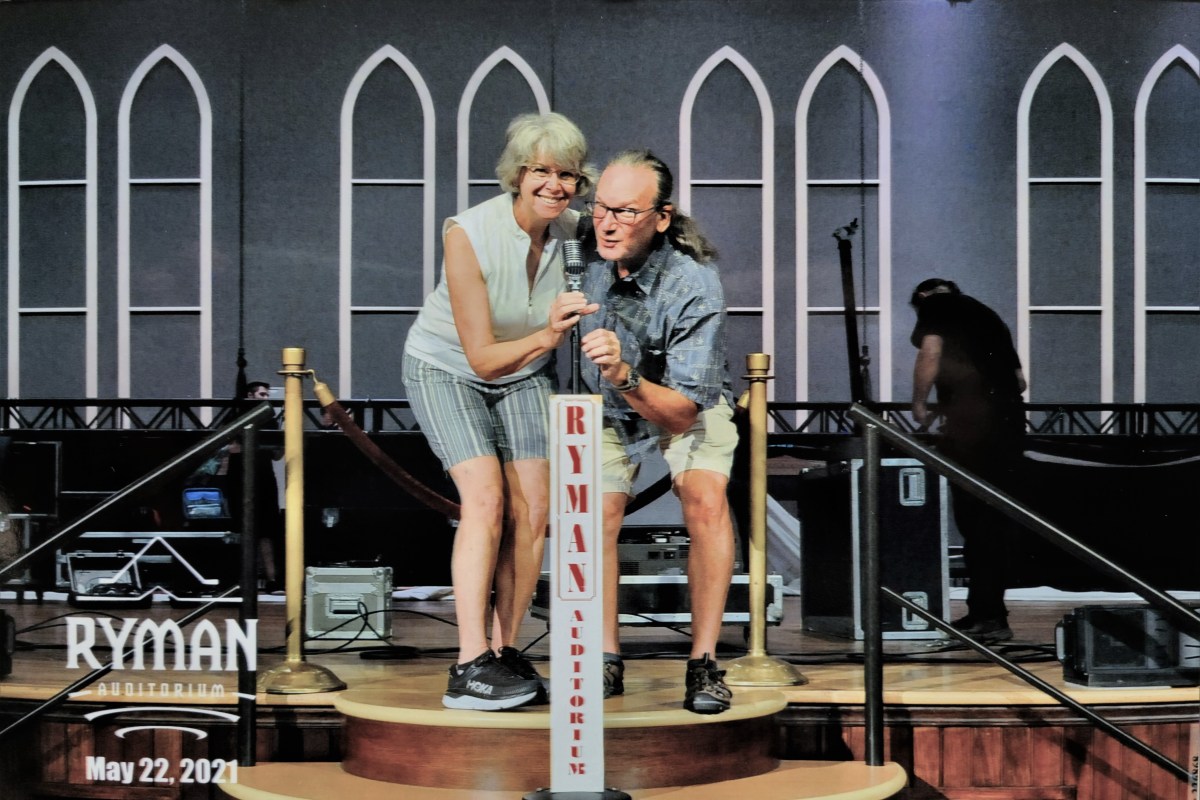
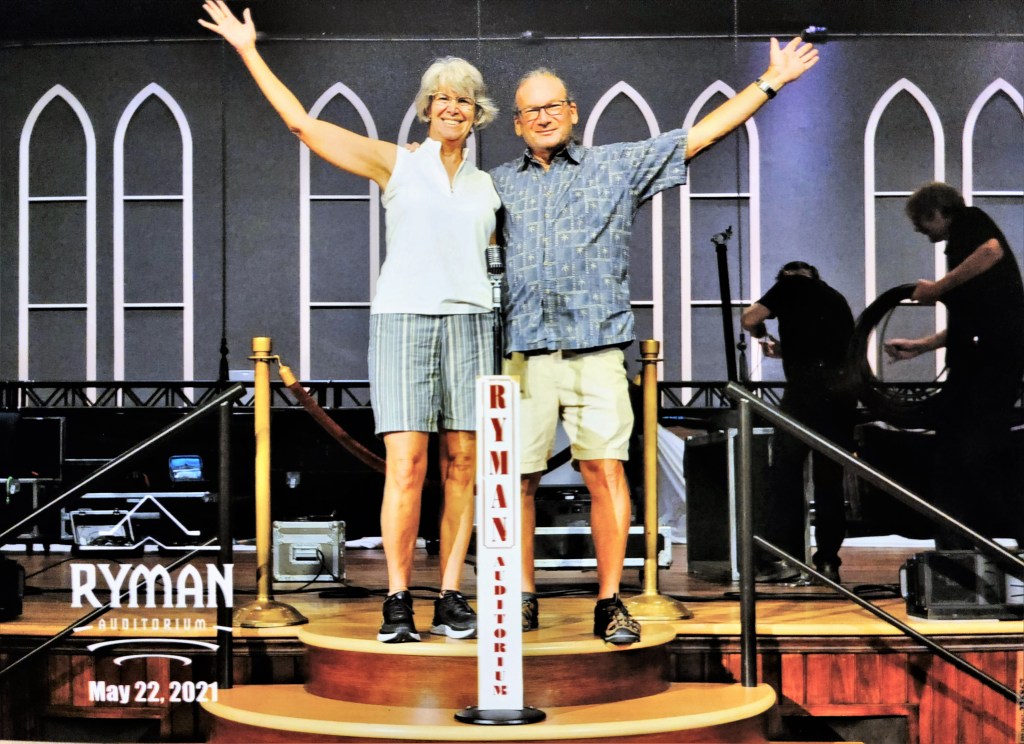
Perhaps, we should make our own music, although we would eventually take the stage at Ryman Auditorium like so many others,
by first taking a self-guided tour of the hallowed hall before having our picture snapped by the gift shop photographer.
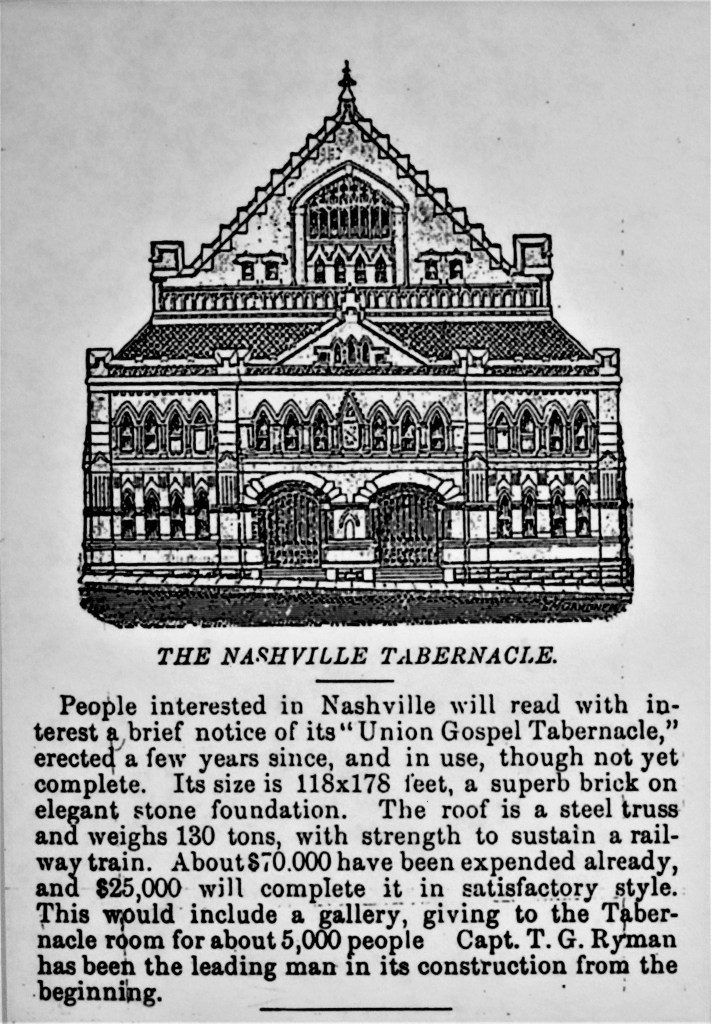
Very little has changed since Ryman Auditorium opened…
Ryman then
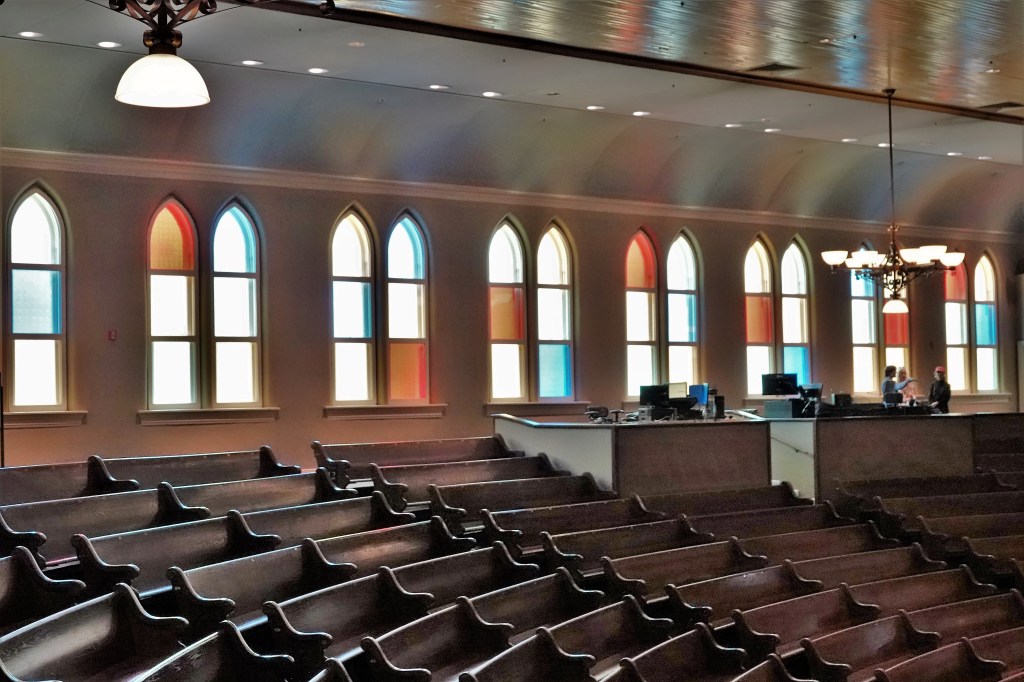
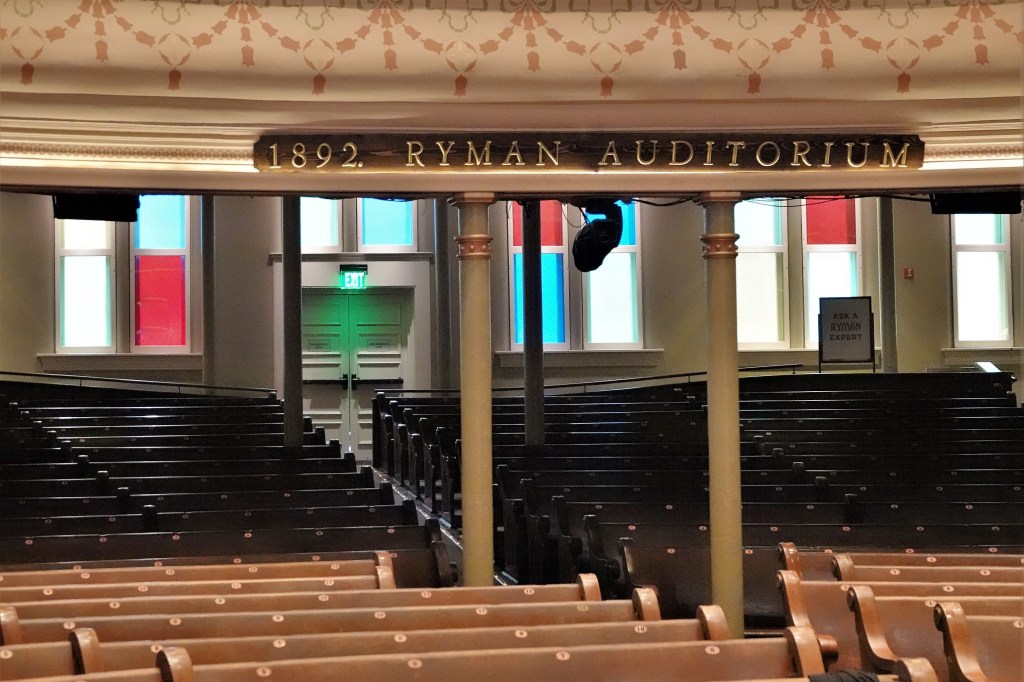
Ryman today
as the Union Gospel Tabernacle in 1892. Originally built as a house of worship…
by Thomas Ryman, who made his fortune from a bevy of saloons and a fleet of riverboats,
Ryman found God at a big-top revival, and vowed to build a tabernacle, allowing Nashville folks to attend large-scale revivals indoors.
The balcony opened in 1897, raising capacity to 6,000 worshippers.
Ryman died in 1904, and was celebrated inside his tabernacle. It was at his memorial service that Samuel Porter Jones, the preacher responsible for Ryman’s conversion, proposed the name change to Ryman Auditorium.
While Ryman Auditorium continued as a religious venue, it also opened its doors to popular culture and performing arts as a means of paying the bills, often hosting concerts, speaking engagements, dance recitals and theater, and earning its reputation as the “Carnegie Hall of the South.”
The Grand Ole Opry took up residency in 1943, and sold out its weekly shows for the next 31 years, becoming “The Mother Church of Country Music.”
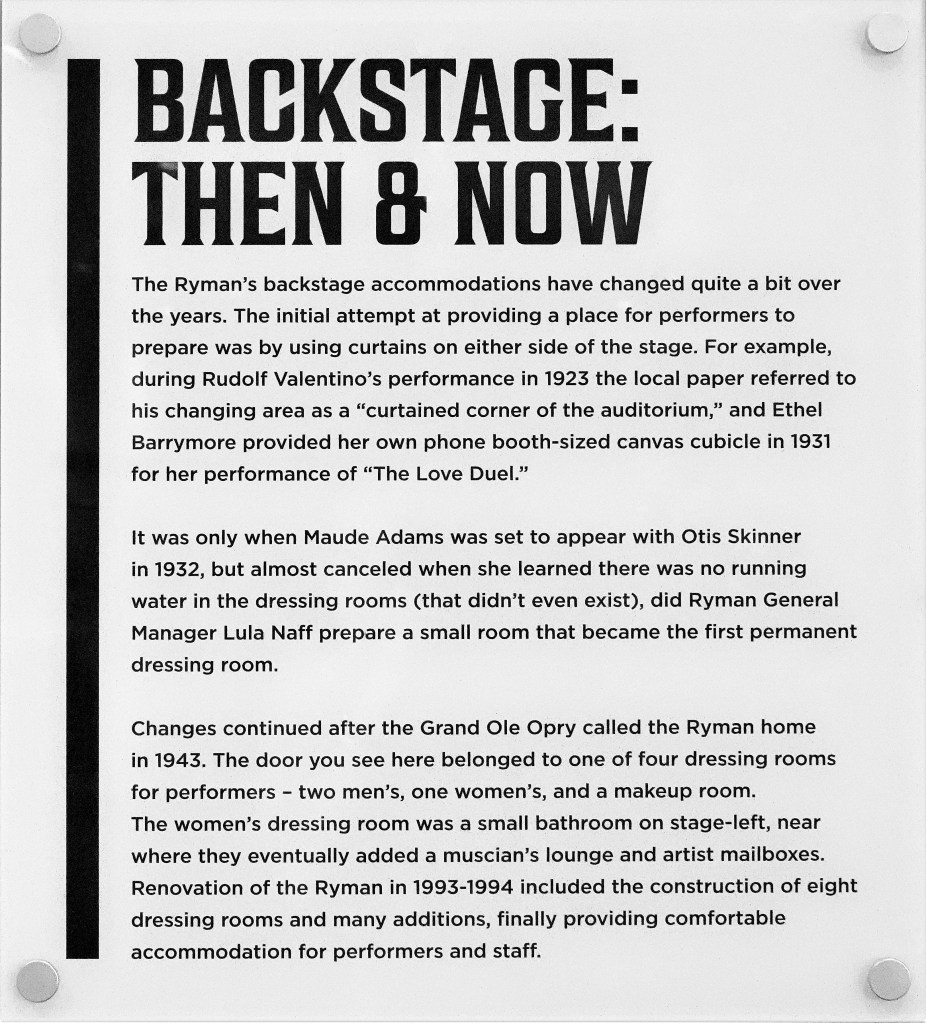
Country music acts performed in front of capacity crowds and reached audiences around the world through radio and television broadcasts, earning them large followings and superstardom. Artists were eager to appear despite the primitive accommodations.
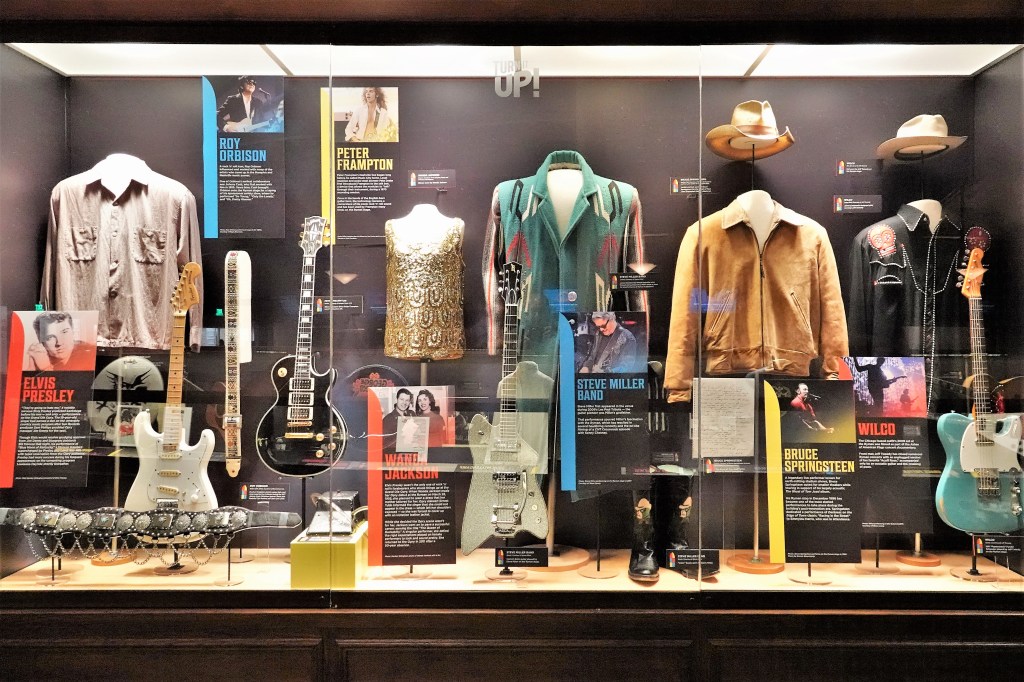
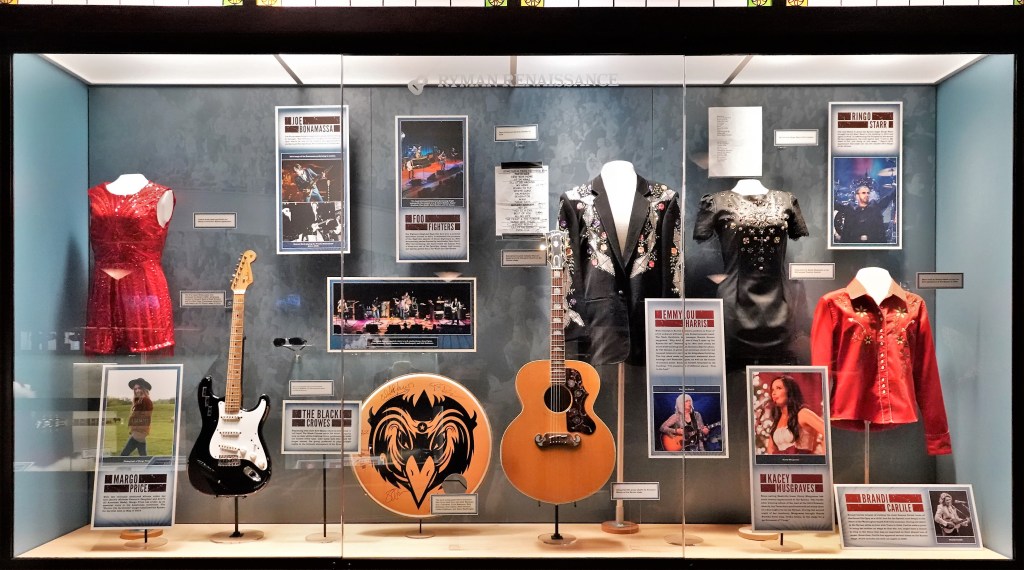
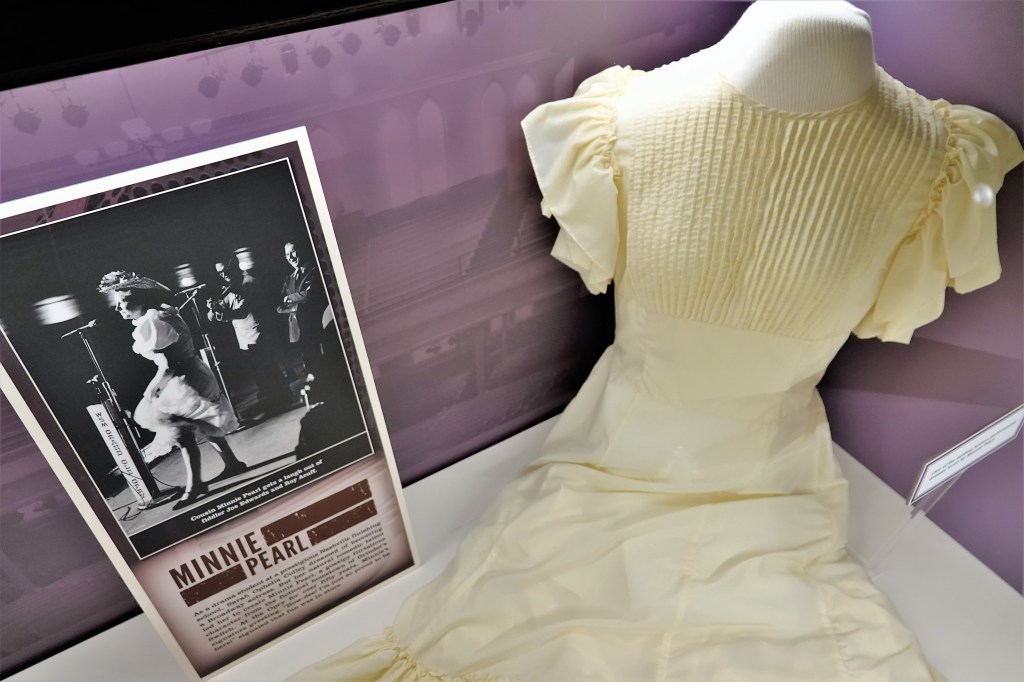
Leah and I took our sweet time as we perused the exhibits note by note, and studied the memorabilia from entertainment royalty…
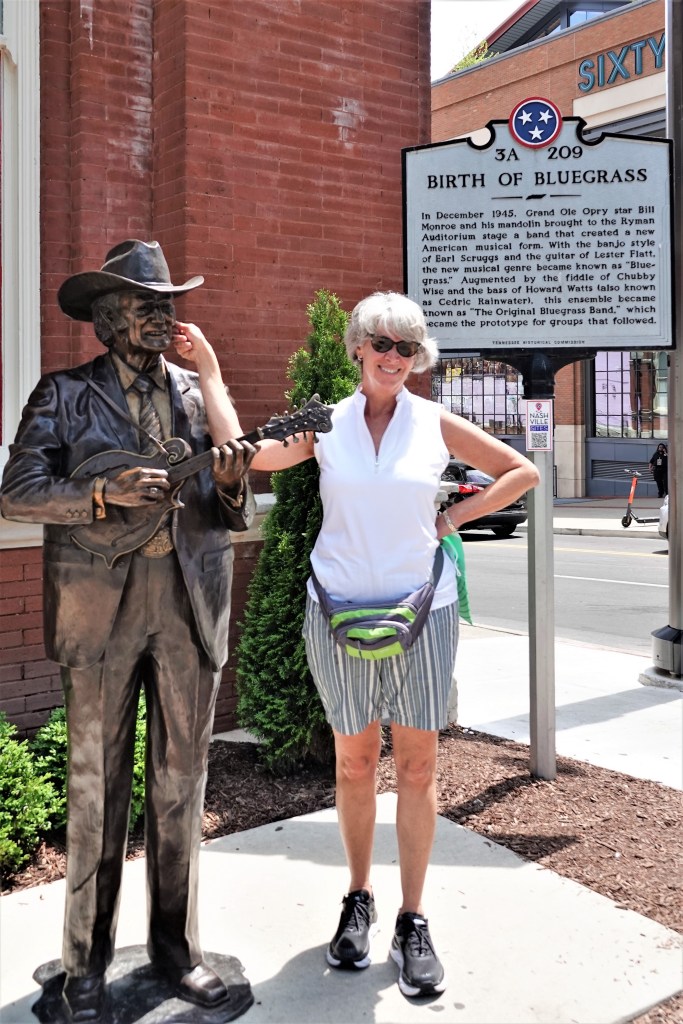
In 1974 the Grand Ole Opry shuttered its downtown location in favor of a larger, modern venue within a theme park setting, dooming Ryman Auditorium to the wrecking ball. But the historical importance of Ryman, known as the birthplace of bluegrass (and so much more) could not go unnoticed, until the preservationists prevailed, and Ryman was saved from demolition.
After a dormant period of 20 years and new ownership, the exterior was eventually rehabbed and the building’s interior was refurbished and modernized for artists and patrons, restoring it as a world-class concert hall that past and present music legends agree has some of the best acoustics in the world, only adding to Ryman’s mystique and continuing renaissance.
As for Leah and me, all that was left for us to do was smile for the camera and take our final curtain call…
Eastern State Penitentiary (ESP), designated a National Historic Landmark in 1965, returns to life each day as a Philadelphia museum that’s open to the public year-round.
Completed in 1836, the imposing, neo-Gothic-styled architecture by John Haviland was intended to strike fear in all who might consider committing a crime. At the time, it was the most expensive public construction project ever built in the country. Famous inmates included Al Capone and Willie Sutton.
Decommissioned in 1971, ESP now lays in ruin, but awaits all who are fascinated by its unique radial design, towering castle walls and folklore.
Photographer, Tiffani Burchett Nieusma first visited ESP in 2016 and was awed by the unexpected beauty of the decay. Her recorded images eventually paved the way for a future gallery show during September, 2021 with a companion monograph of her work to be published on the subject.
Tiffani is currently seeking written word submissions to complement her photography for exhibition and publication. The deadline is May 31, 2021.
Leah and I are on the road again, continuing our Great American Road Trip–part 4, with some significant changes and improvements.
Last year, during the summer of Trumpandemic, we took an abbreviated trip to upstate New York in search of open outdoor vistas with blue skies and limited exposure to crowds, which we found at Letchworth State Park.
Soon after, we rounded the top of New England to enjoy a requisite Maine lobster dinner…
to dip a toe in the Atlantic on Hampton Beach…
and to gawk at the wealthy from Newport’s Cliff Walk.
We hugged the coastline until we reached Chincoteague, Virginia…
in search of precious ponies…
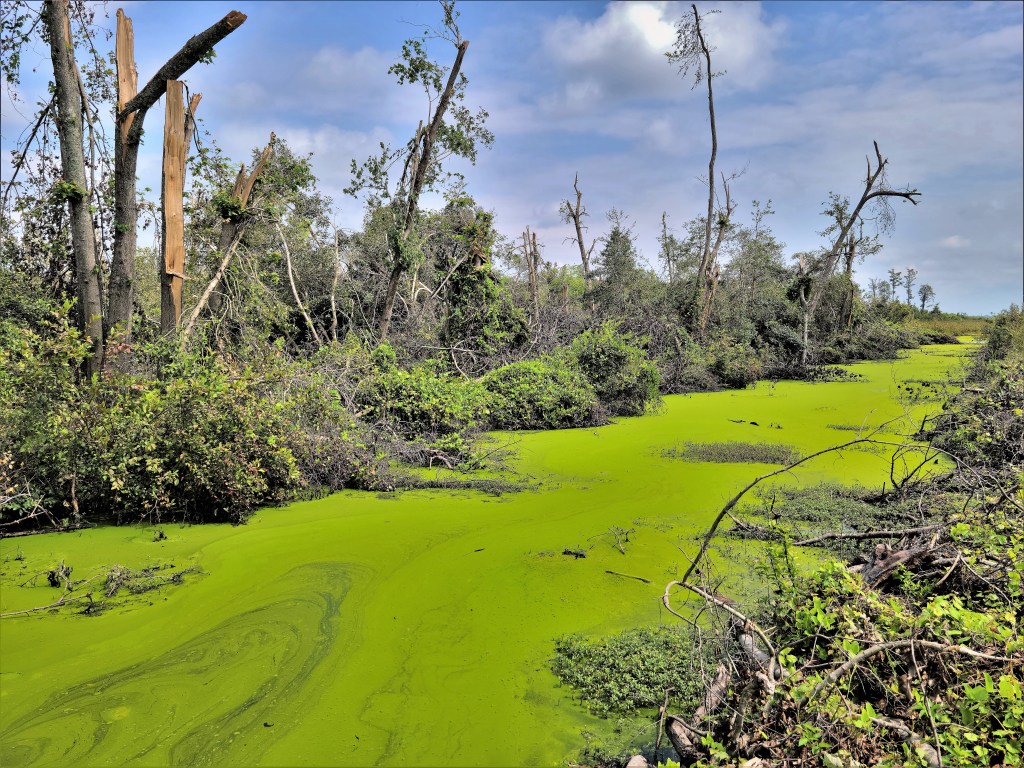
and to listen to the silence at the Great Dismal Swamp in Suffolk, VA.
The trip was short (only 5 weeks and far from our ambitious itineraries of past years) yet refreshing, and daring (for all the anticipated COVID closures) yet unremarkable with one notable exception…I wrecked the Airstream in Tarboro, North Carolina.
Halfway to Tignall, Georgia (our final destination) and needing a lunch break and a leg stretch, we stopped at a charming town boasting a historic district of 18th century and antebellum landmark homes recognized by the National Park Service. I parked the Airstream inches from the curb on a narrow residential road across from Blount-Bridgers House, an 1808 Federal-style mansion-cum-museum,
and returned an hour later to continue our journey.
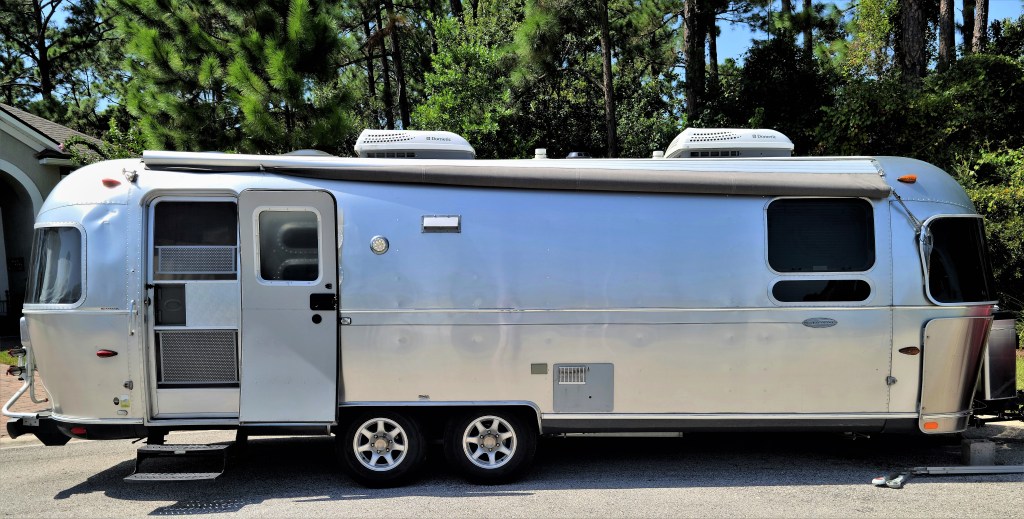
I casually pulled out, unaware that a protruding power pole ID tag had snagged the rear awning support and ripped all the cleats out from the aluminum skin, taking down the entire awning assembly and crushing the end caps to the tune of $17,000.
Thankfully, our insurance completely covered the damage. As we drove our beloved, but bandaged 27FB Flying Cloud to the Tampa Airstream dealer for repair, we considered the possibility of an upgrade should one be available. As luck would have it, a Florida family was trading a 2018 Globetrotter 27FB at the time, pending delivery of their new Airstream by February 2021.
We felt as if we had won the lottery. A deposit was offered on the spot, considering a total lack of previously owned inventory throughout the country.
The deal was sealed in April, when Leah and I picked up our reconditioned summer rig and took it for a dry run in Ruskin, FL in preparation for our summer adventure. We enjoyed the whisper-quiet, ducted AC; the ease of deploying the power stabilizer jacks; the convenience of rolling out the power awning; and the notion that our roof-mounted solar panels could provide us with increased boondocking possibilities.
Join us on the road as we explore 44 destinations (mostly new, sprinkled with some favorites) for the next 20 weeks:
May 1: Lake Powhatan/ Asheville, NC
May 4: Natural Bridge, VA
May 7: Vineland, NJ/ Northern NJ
May 12: Philadelphia, PA
May 15: Pittsburgh, PA
May 18: Jackson Center Airstream Factory/ Dayton, OH
May 19: Indianapolis, IN
May 21: Nashville, TN
May 24: Memphis, TN
May 27: Hot Springs/Little Rock AR
May 29: Eureka Springs, AR
June 1: Oklahoma City, OK
June 4: Amarillo, TX
June 6: Albuquerque, NM
June 10: Taos, NM
.June 13: Great Sand Dunes NP, CO
June 16: Rocky Mountain NP, CO
June 20: Cheyenne, WY
June 22: Flaming Gorge, UT
.June 25: Bear Lake State Park, UT
June 28: Craters of the Moon NP, ID
July 1: Morley Nelson Snake River Birds of Prey, UT
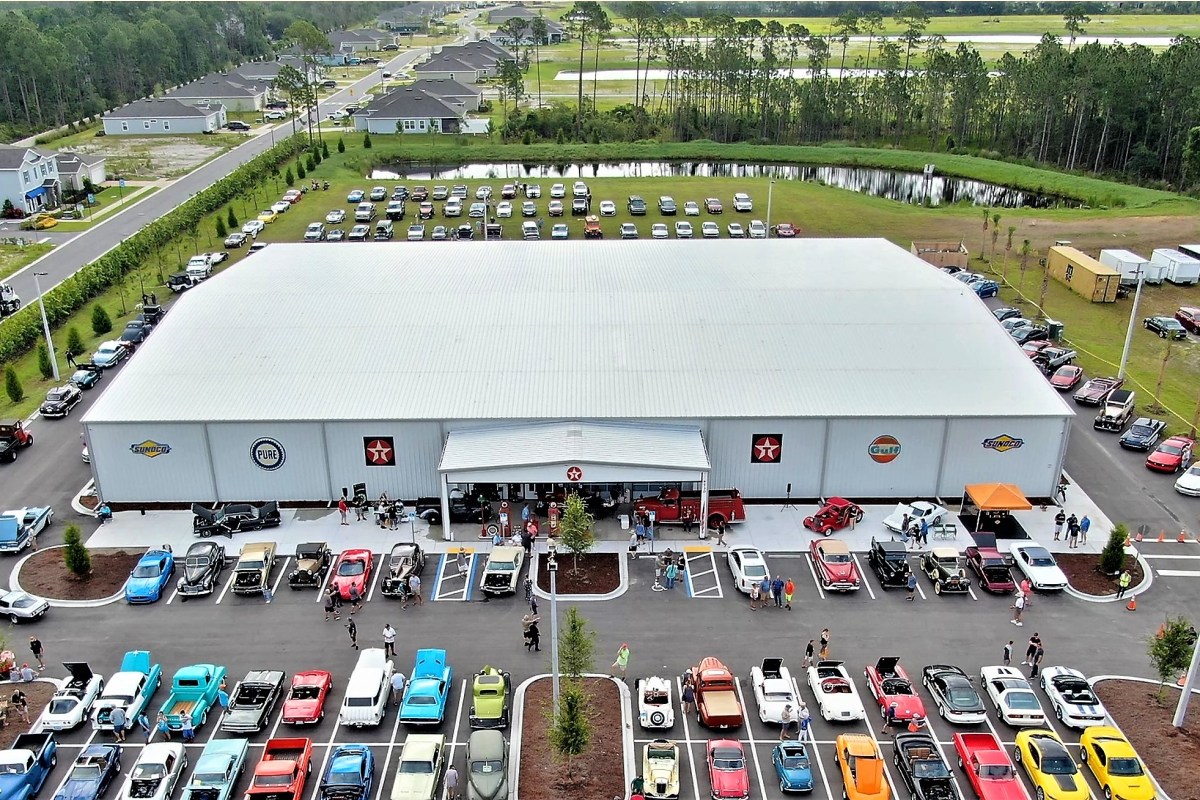
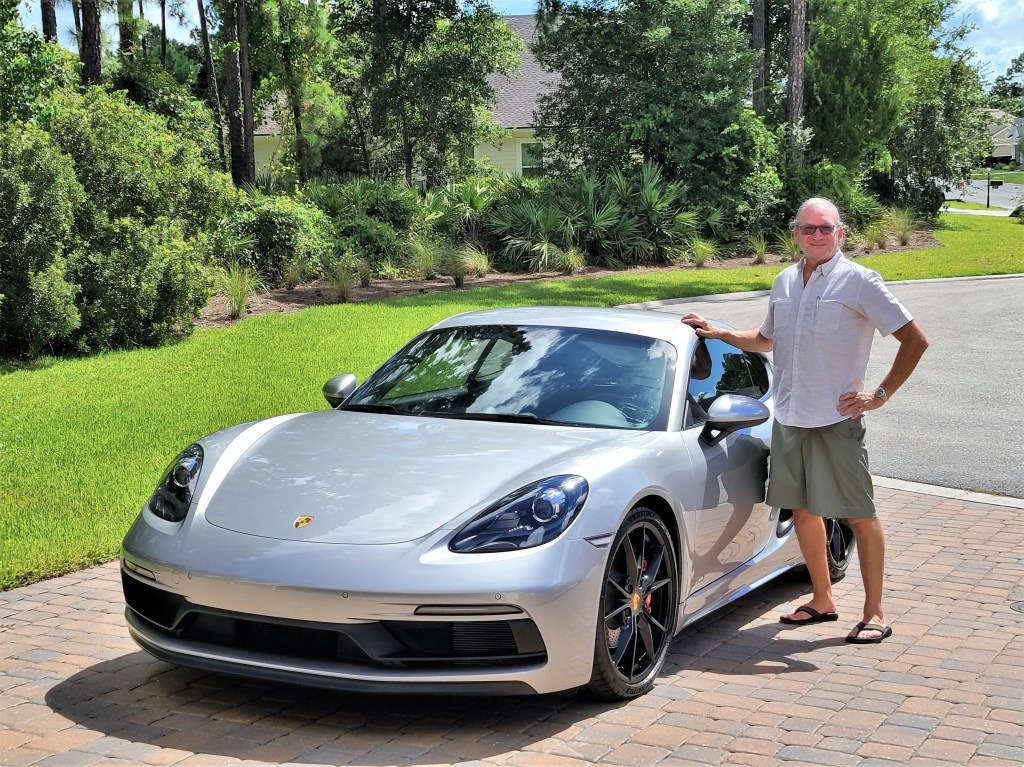
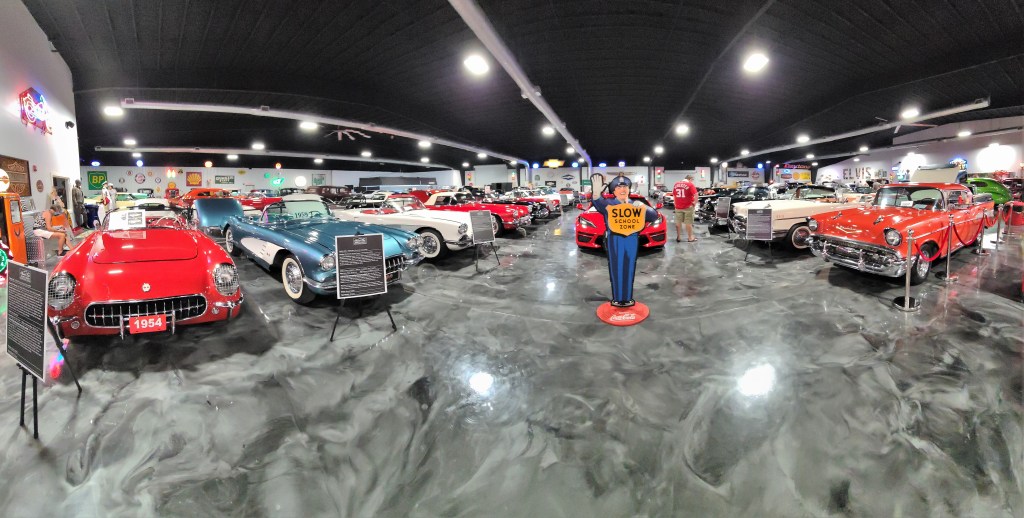
As an automobile enthusiast, I had occasion to visit the recently opened Classic Car Museum of St. Augustine on a drab weather day. It was a fitting opportunity to take my newly acquired Porsche 718 Cayman out for a drive before the expected rain.
The 30,000 sq. ft. garage displays 80 cars from Sidney Hobbs’ collection,
showcasing every decade through the 20th and 21st century,
with a miscellany of antique and classic cars from private collectors consigned for sale.
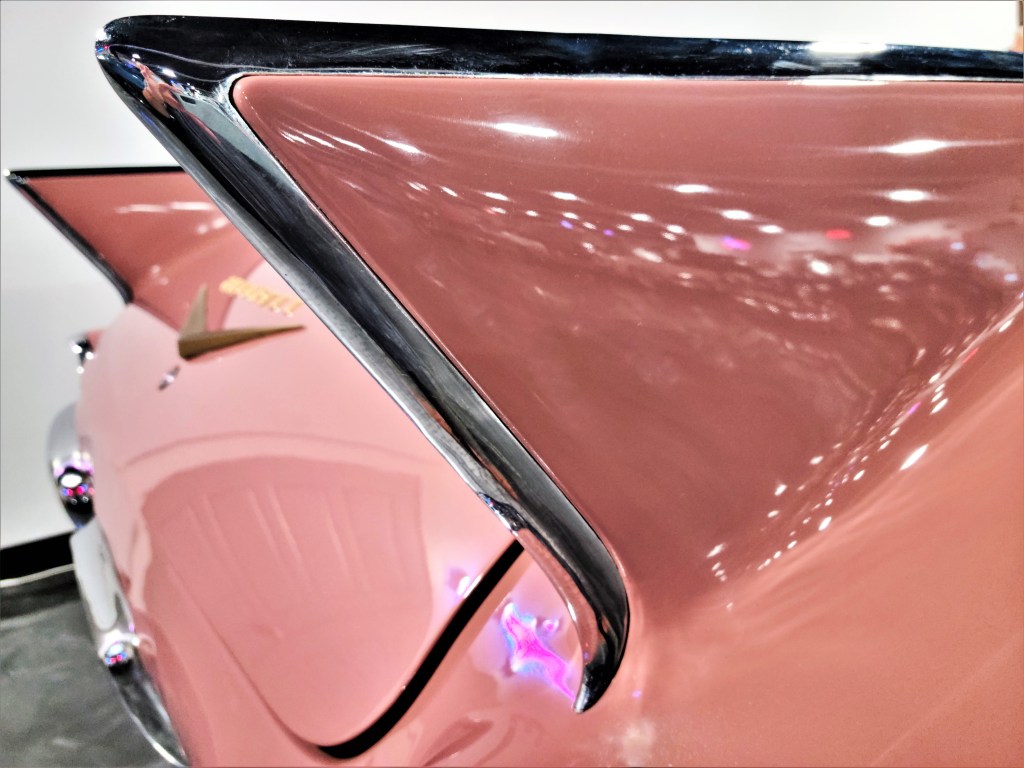
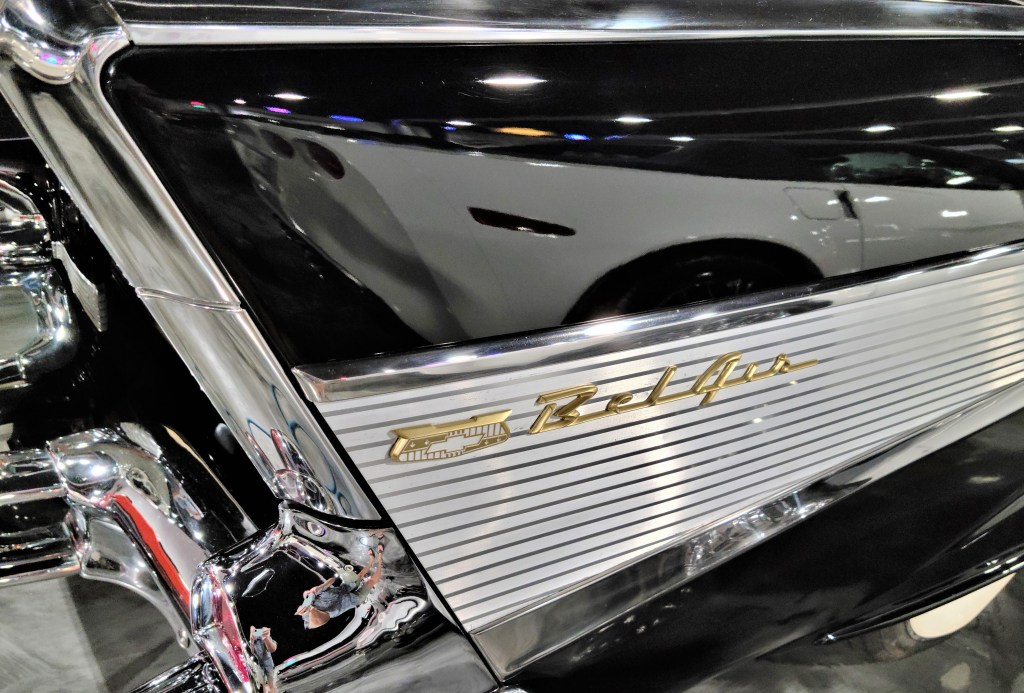
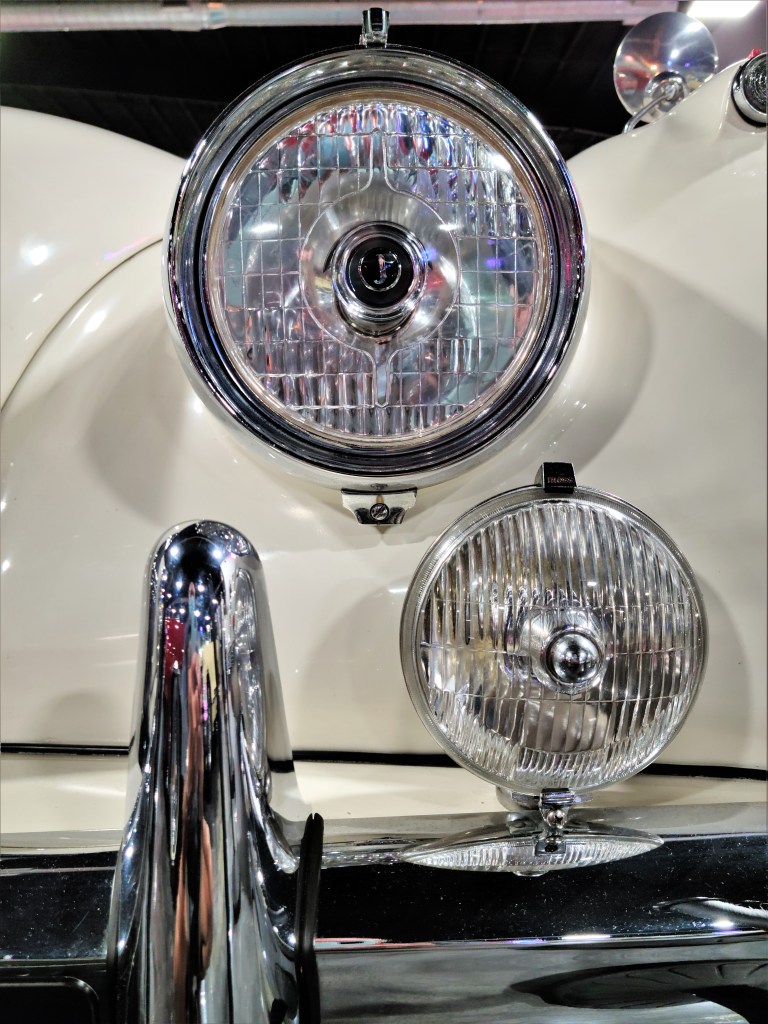
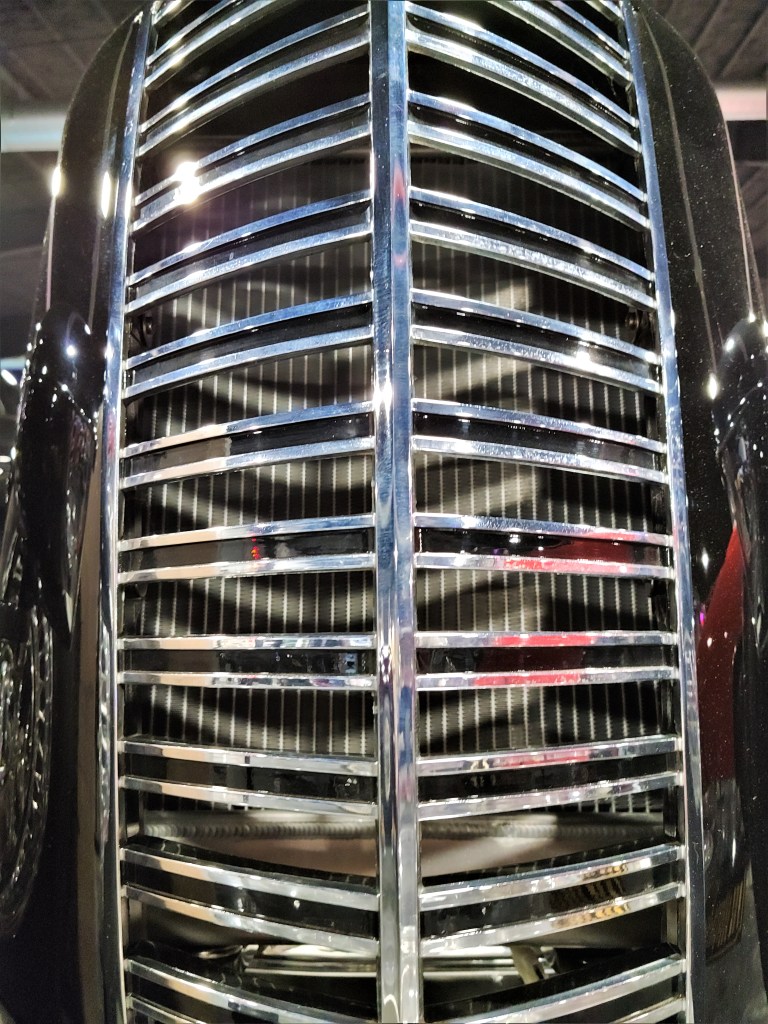
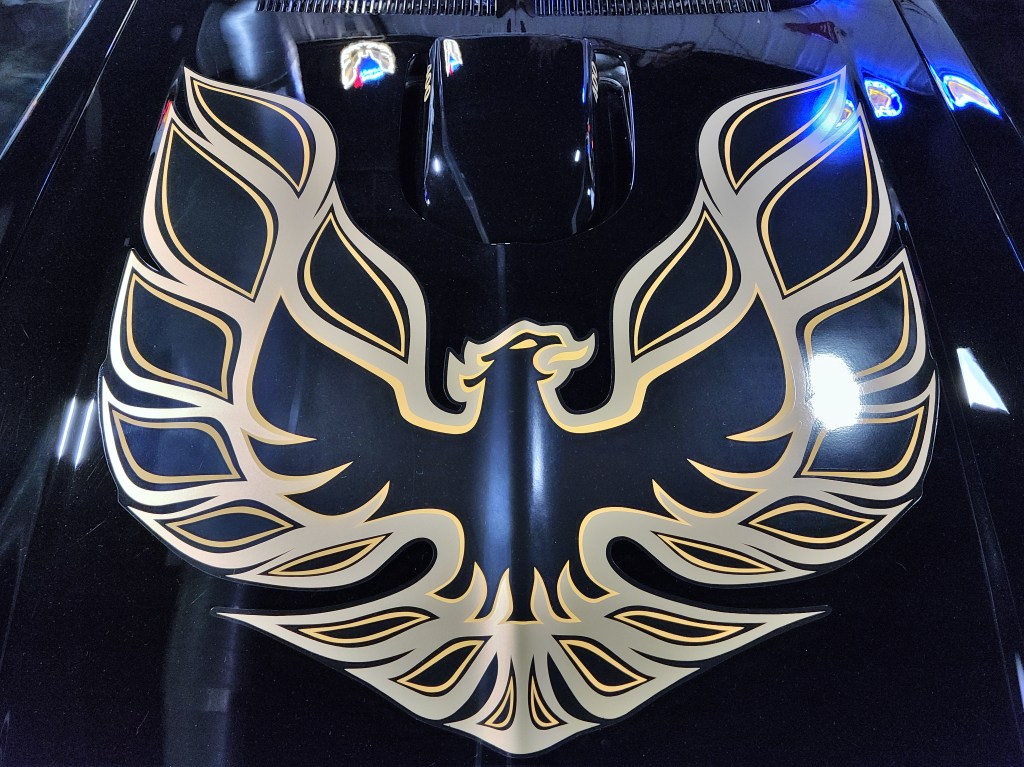
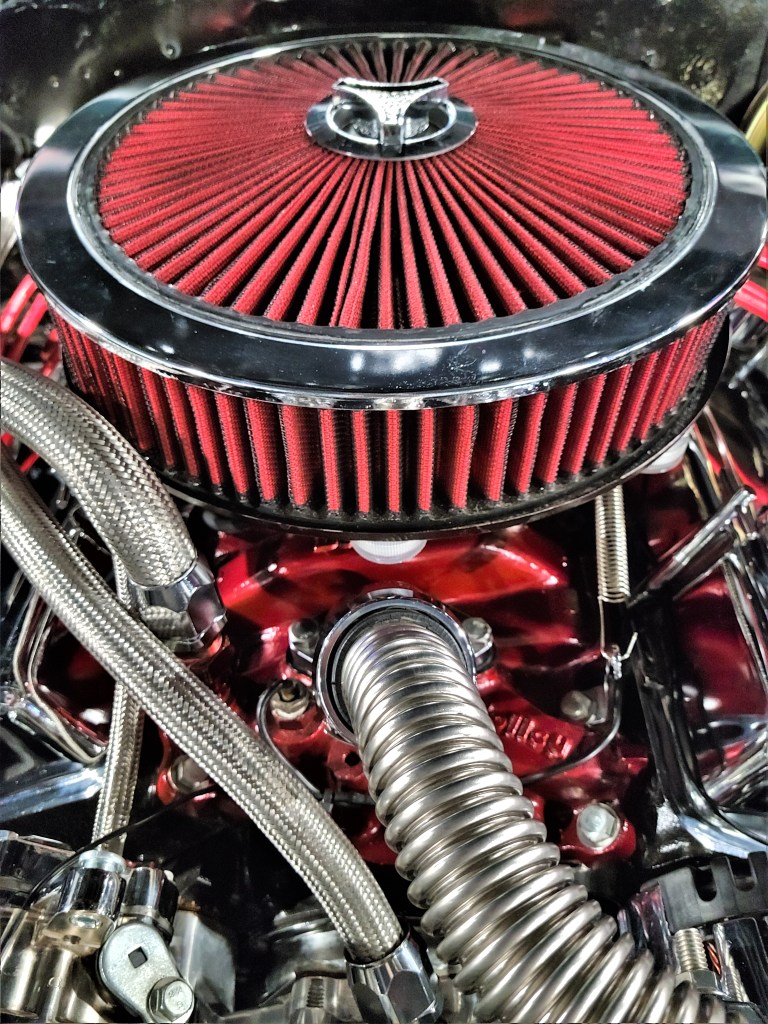
While I appreciate the automobile in its entirety, it’s the design nuances that steer me to it–the features of the vehicle that typically connote high style–always balancing the form and function:
like fins from the 50’s;
or hood ornaments;
or lights;
or radiators.
Sometimes the accents serve little purpose…
and sometimes they do.
And sometimes it nothing more than a bunch of hot air.
But the unspoken truth is, none of it really matters unless the car is driven.
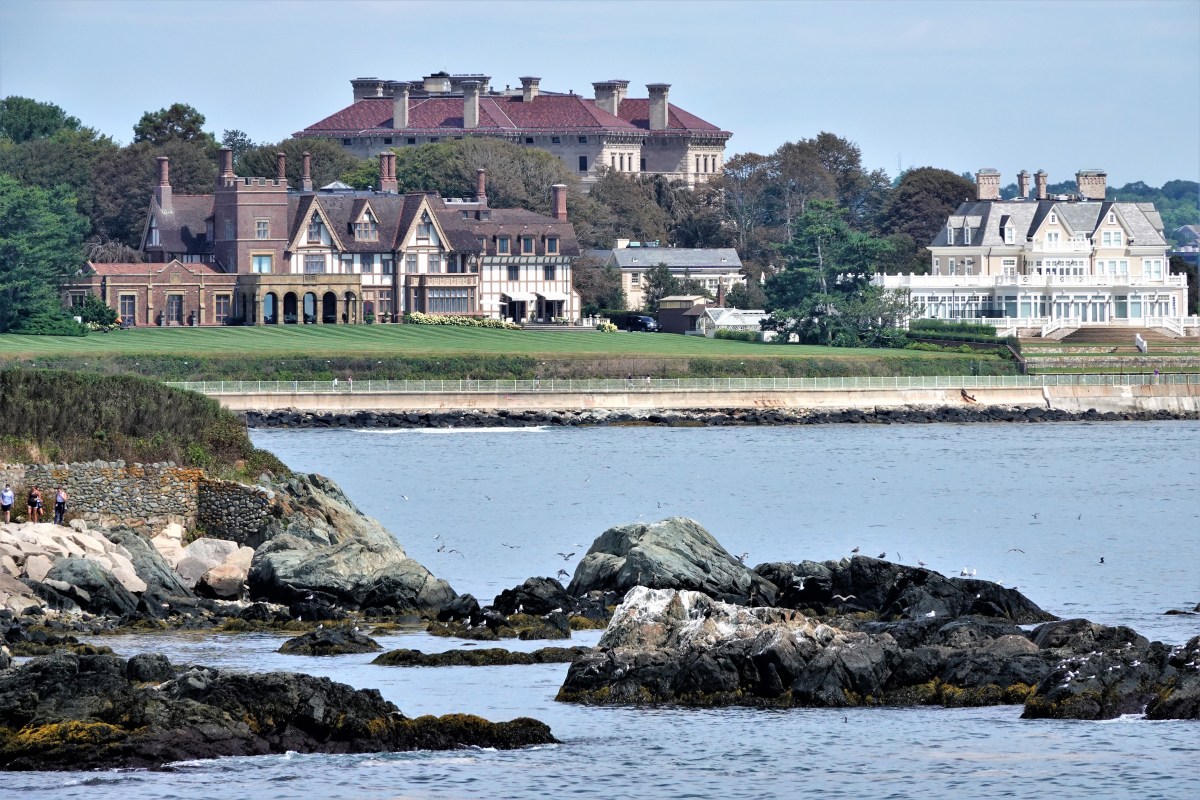
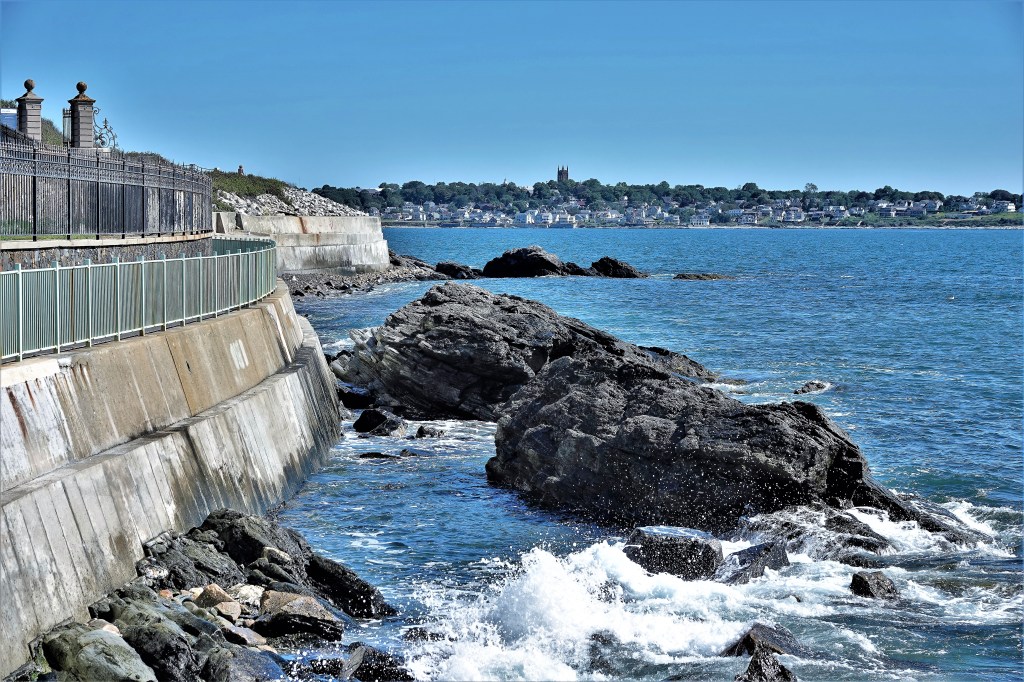
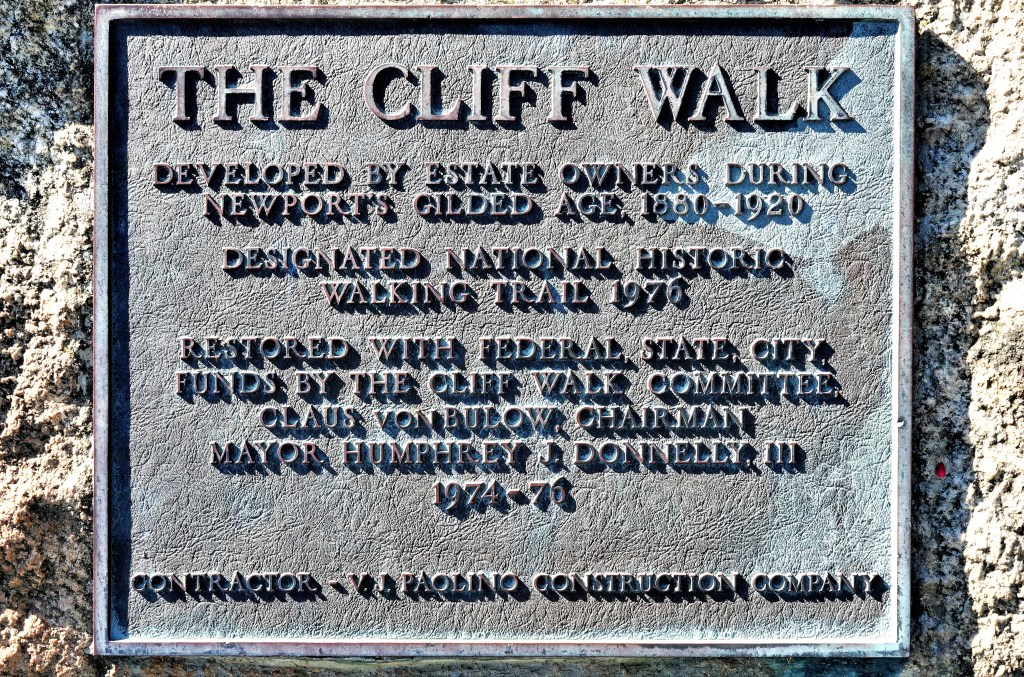
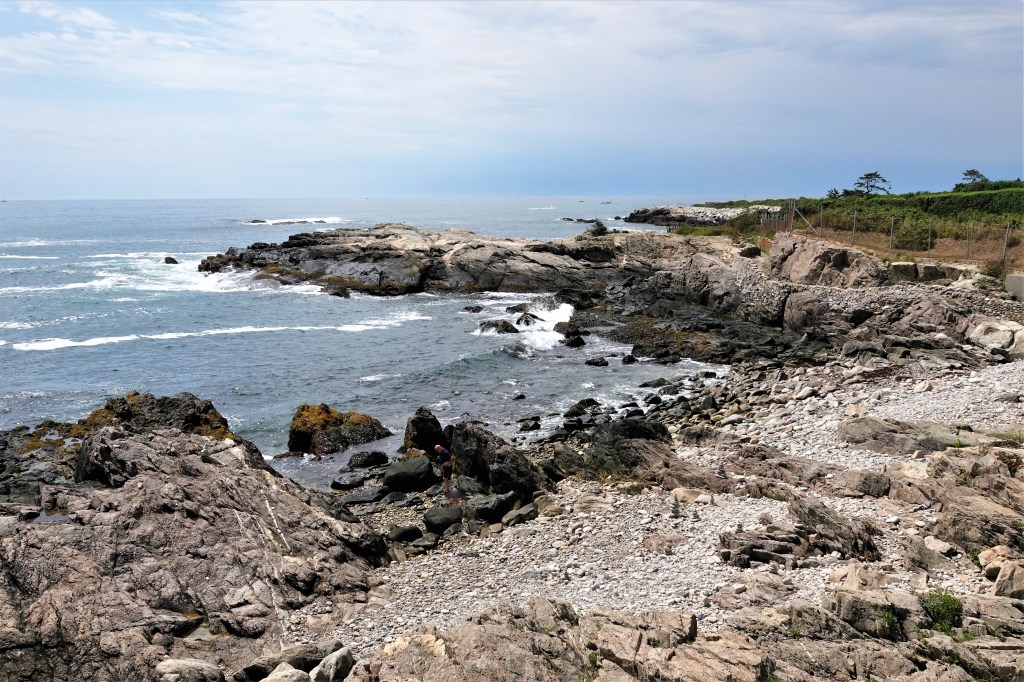
No tour of Newport, Rhode Island is complete without appreciating the summer “cottages” along the Cliff Walk. The walkway runs 3.5 miles along the Atlantic, offering panoramic views of crashing waves against a craggy seawall…
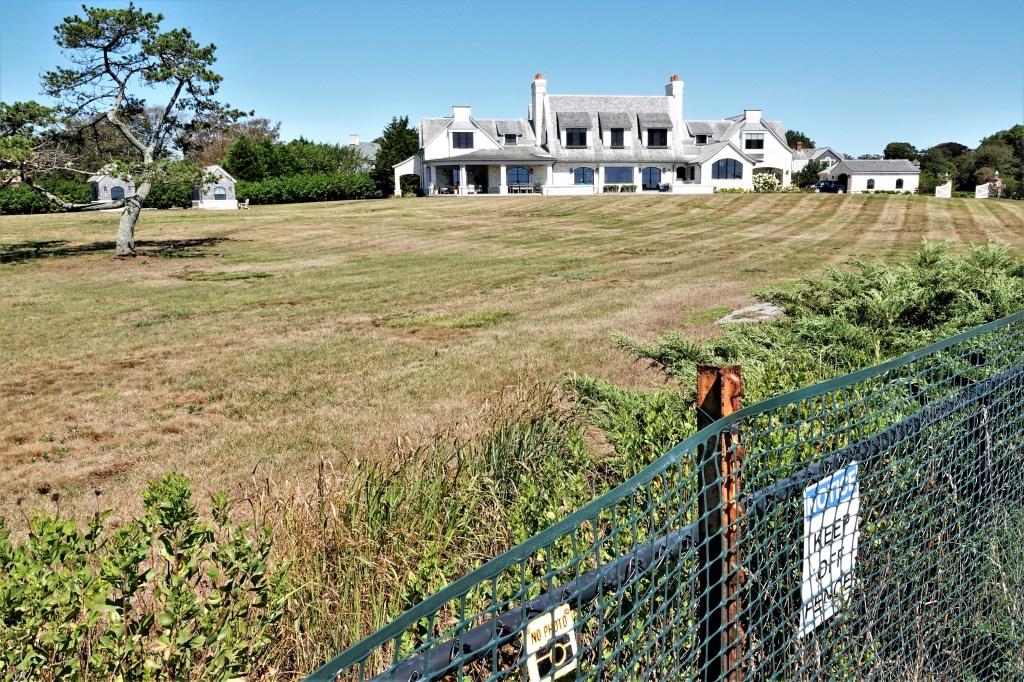
adorned with massive mansions belonging to America’s 19th-century titans of industry.
Leah and I parked at Easton’s Beach…
and followed clearly marked directions to the trail head,
for a walk through time to reflect on the splendor sponsored by owners during Newport’s Gilded Age.
Designed by a cadre of elite architects of the time, these summer homes represent the stylistic diversity of 200 years of architectural history in Newport, and offer a window into the world of its illustrious owners.
To date, many mansions like Rosecliff have been rescued by Newport Restoration Foundation after having been neglected for dozens of years, and threatened with demolition. Boasting the largest ballroom among its neighbors, Rosecliff has become a popular wedding venue.
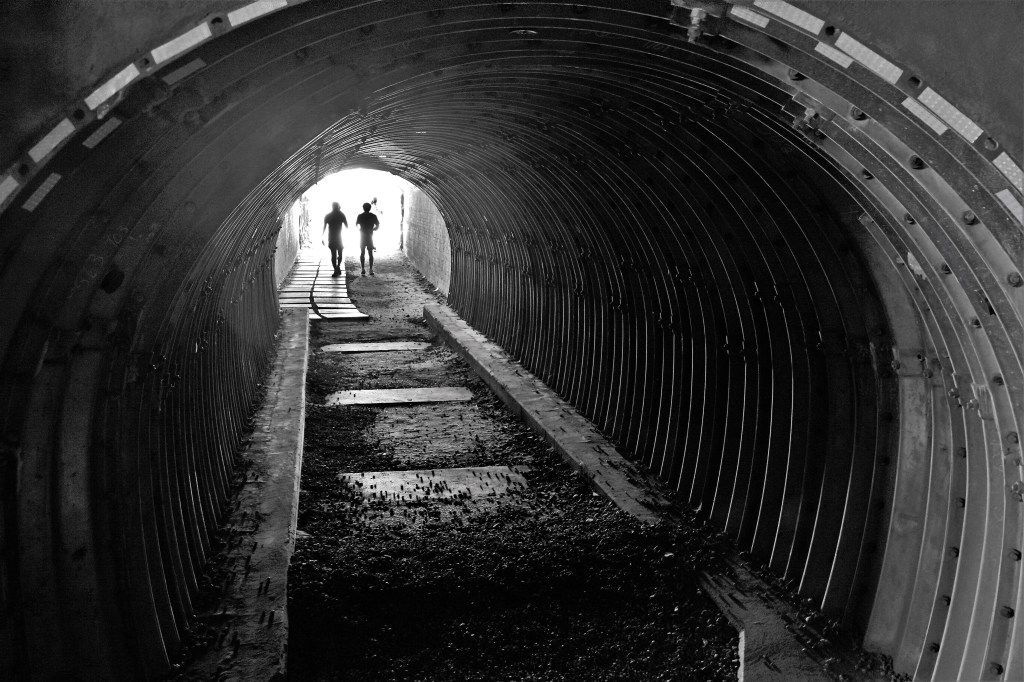
The Cliff walk is essentially a pedestrian hike, but can be challenging in places,
with rocky outcroppings…
and unlikely obstacles that require reasonable footwear other than flip flops.
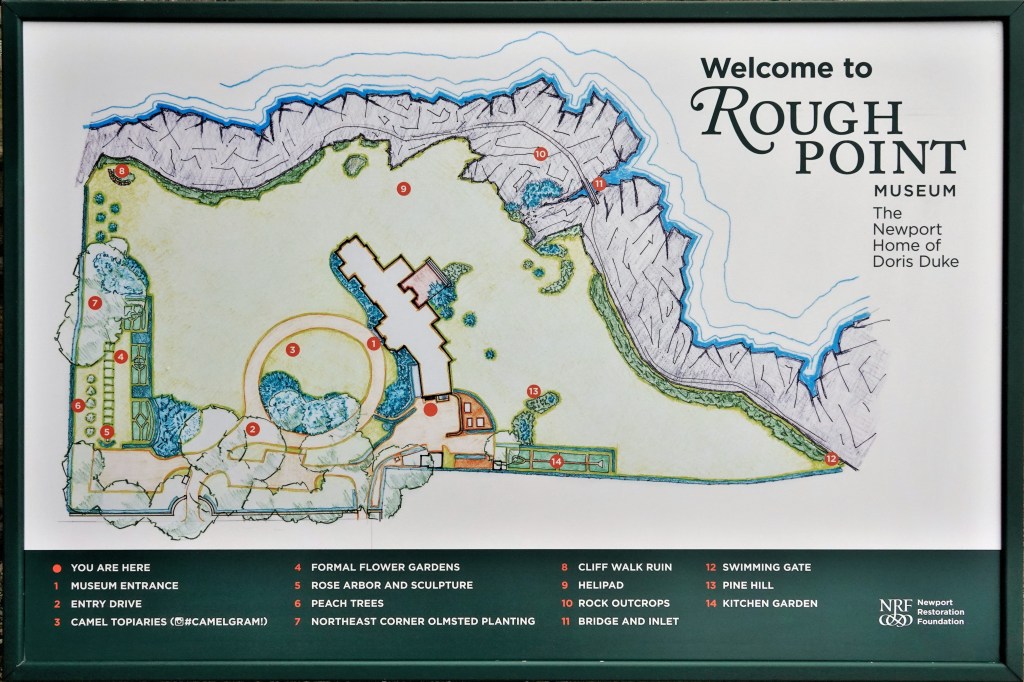
Of course, there are plenty of houses to ogle along 3.5 miles–some that have become museums, like Rough Point…
or repurposed as a Salve Regina University administration building, like Ochre Court…
or converted to condos, like The Waves…
while newer home owners along the walk eschew the notoriety.
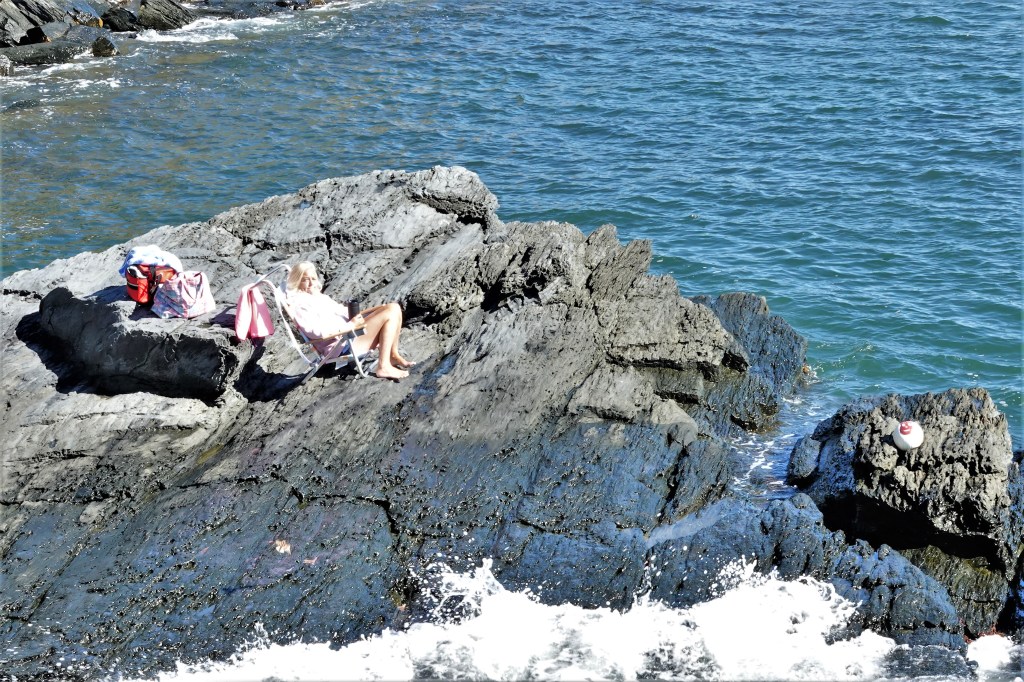
But the real entertainment comes from people met along the way–for instance, a sunbathing cliffhanger getting in touch with her inner mountain goat just beyond the 40 Steps marker.
But she was not alone, as Wilson was seen lounging nearby.
With Tropical Storm Isaias skirting the Florida coastline, and hundreds of northeast coastal towns preparing for wind-driven rain, subsequent storm surge, and certain power outages, Leah and I are presently gazing at a hypnotic sky across Johnston County, NC.
Rather than wait for bad weather, we put Florida in the rear view mirror in search of blue skies elsewhere. Seven hours of driving north through occasional downpours and lightning strikes across our windshield brought us to Selma, NC, where torrential rain was turning our campsite into an ankle-deep pond.
At first, we waited patiently inside the F-150, but within minutes the rain reduced to a drizzle, giving me a much needed window to set up camp…except for a nearby limb that crushed a power line and prevented us from accessing electricity.
Eventually power was restored by 1 AM, when the AC magically resumed its roar inside our capsule, and delivered timely relief from the incessant humidity.
The following day was hot and steamy. We took a ride into downtown Smithfield–a ghost town of shuttered businesses–
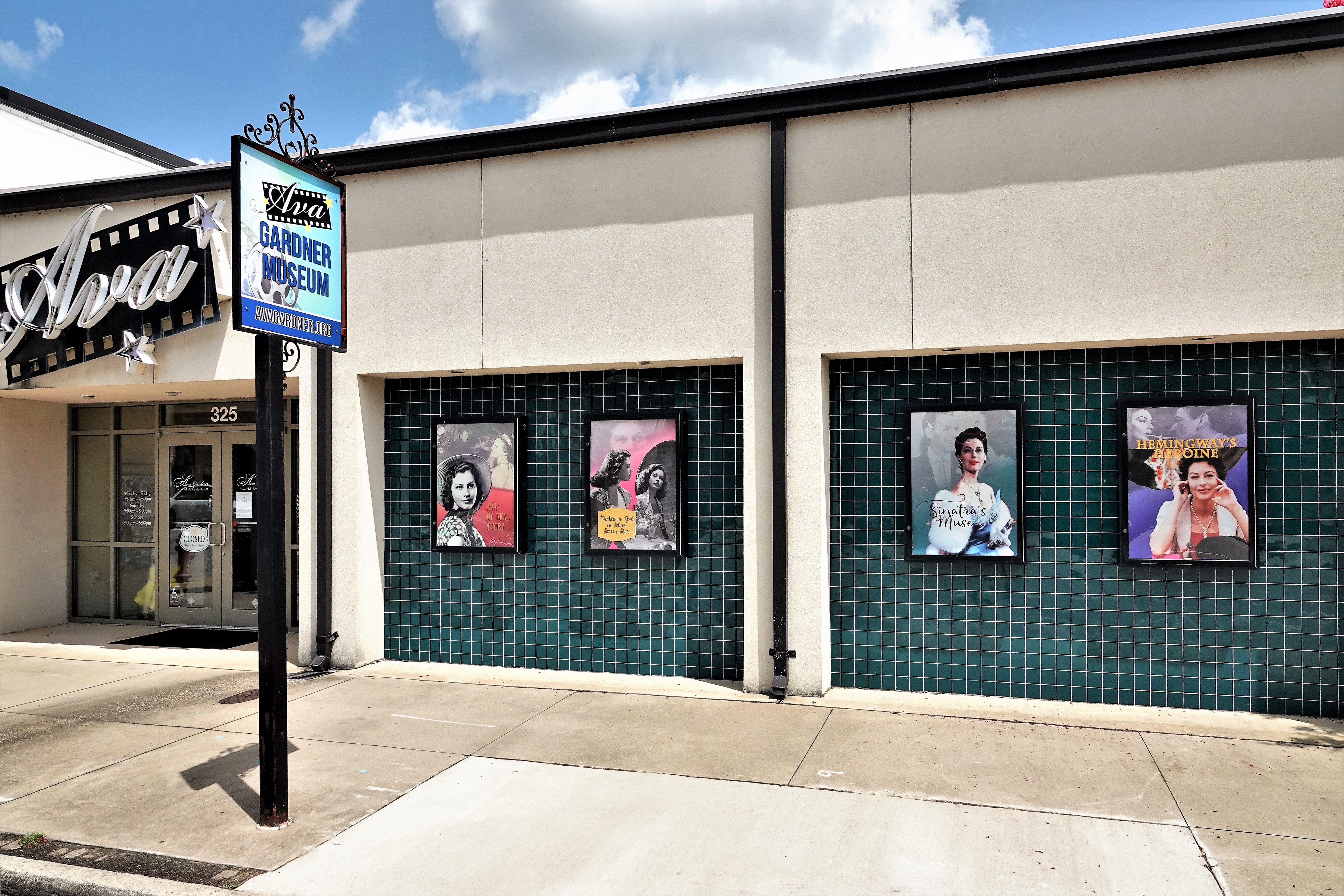
I would have enjoyed a trip down memory lane with Ava, the area’s favorite sharecropper’s daughter from Grabtown, however the museum was closed due to COVID-19. Unfortunately, all I could do was appreciate her stardom through a pane of glass,
and wonder how and when it will be safe to go to the movies again.
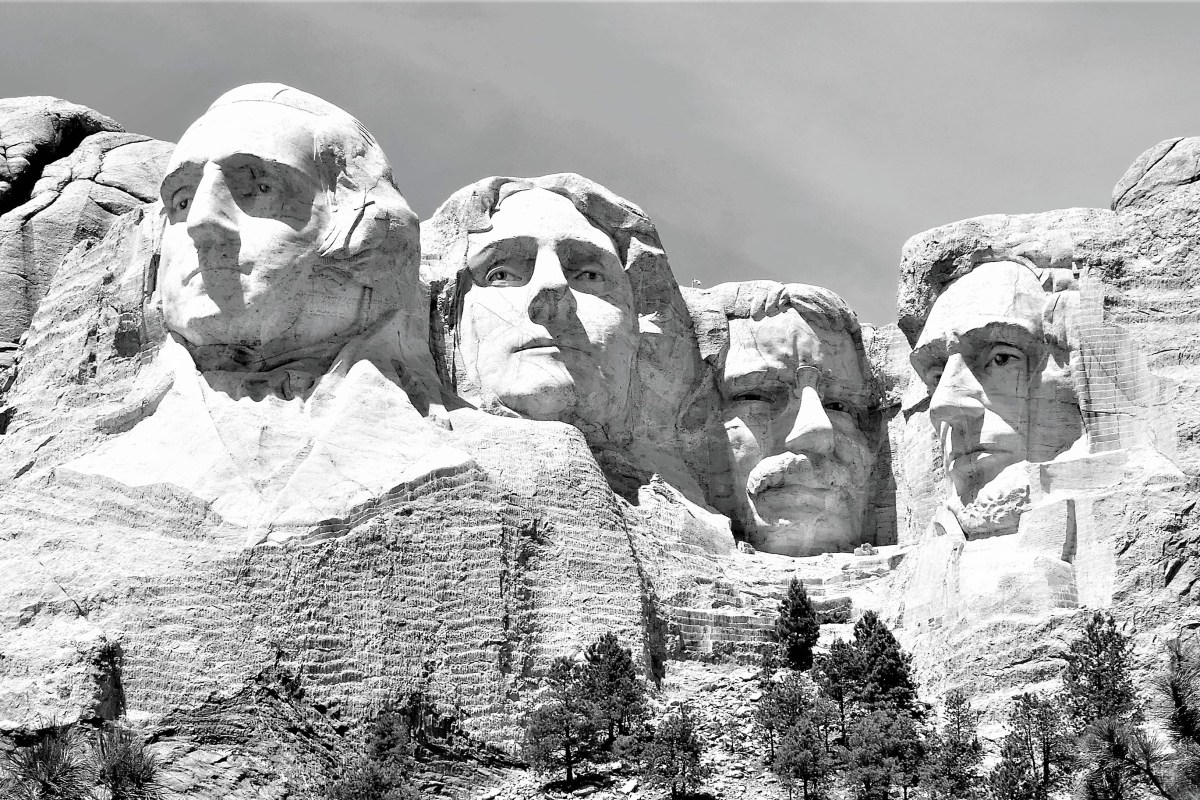
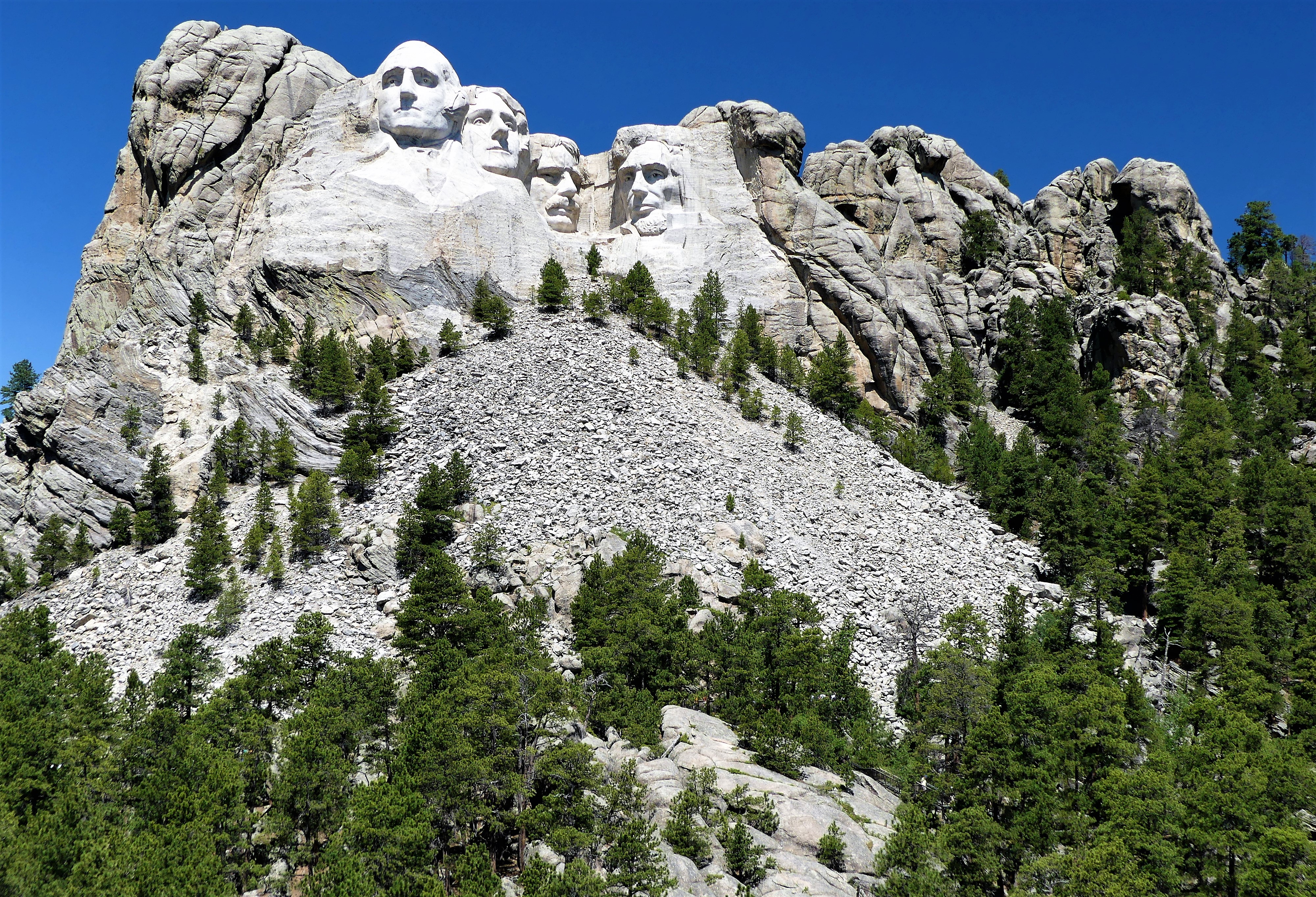
Despite the three years since Leah and I visited Mt. Rushmore, what could be more American than re-posting this visit on Independence Day? And still, there’s great turmoil within the country. A trip to Mt. Rushmore means many different things to different kinds of people. One person’s treasure is another’s abomination. To visit was once considered patriotic. Now it’s an act of partisan politics.
There’s no better way to celebrate the 4th of July, than a trip to Mount Rushmore and the Crazy Horse Memorial. Sure, the crowds were large; that was to be expected. But once the cars were garaged, the pedestrian traffic was easy to negotiate. And with everyone looking up at the mountain, the Presidents’ faces and intentions were never obstructed.
It was also a time to celebrate family. There were plenty of kids riding in strollers, hanging from moms in carriers, or balancing on dads’ shoulders. Generations of families–many of them immigrants–had gathered to pay homage to the principles of freedom that make our country a beacon for the oppressed and downtrodden.
Seniors were being escorted through the Avenue of Flags by their grandchildren. Extended families organized group pictures at the Grand View Terrace, unified by their love of democracy and their reunion T-shirts.
All expressed awe at Gutzon Borglum’s grand vision and remarkable achievement–the transformation of a mountain into a national symbol visited by approximately 3 million people every year.
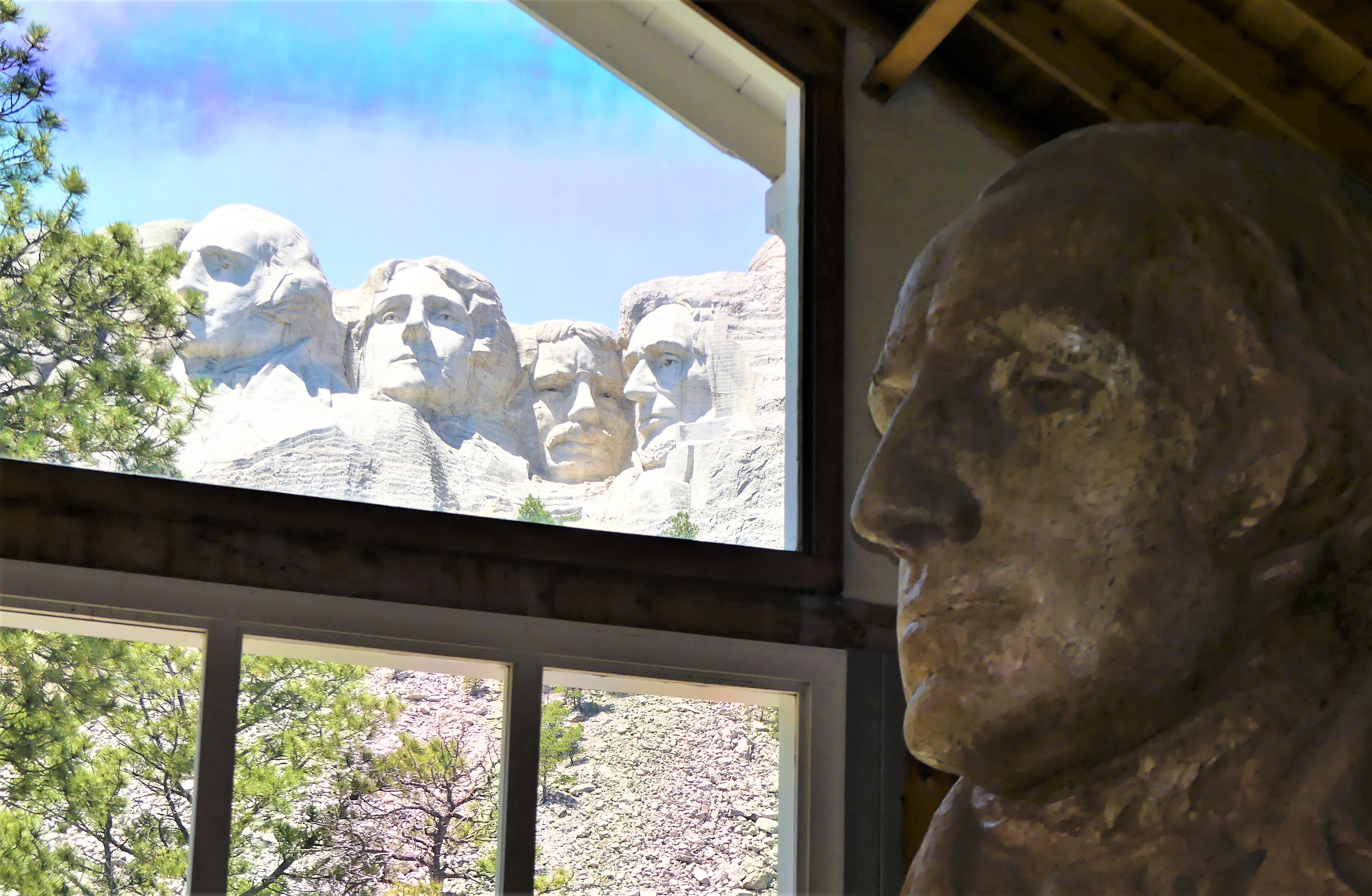
The 14-year process of carving the rock began with dimensionalizing the Presidents’ portraits through Plaster of Paris masks, on view at the sculptor’s studio-turned-museum.
Additional exhibits detail the construction of the memorial, and the tools used by workers, like the original Rand & Waring compressor, which powered the jackhammers for all the finishing work.
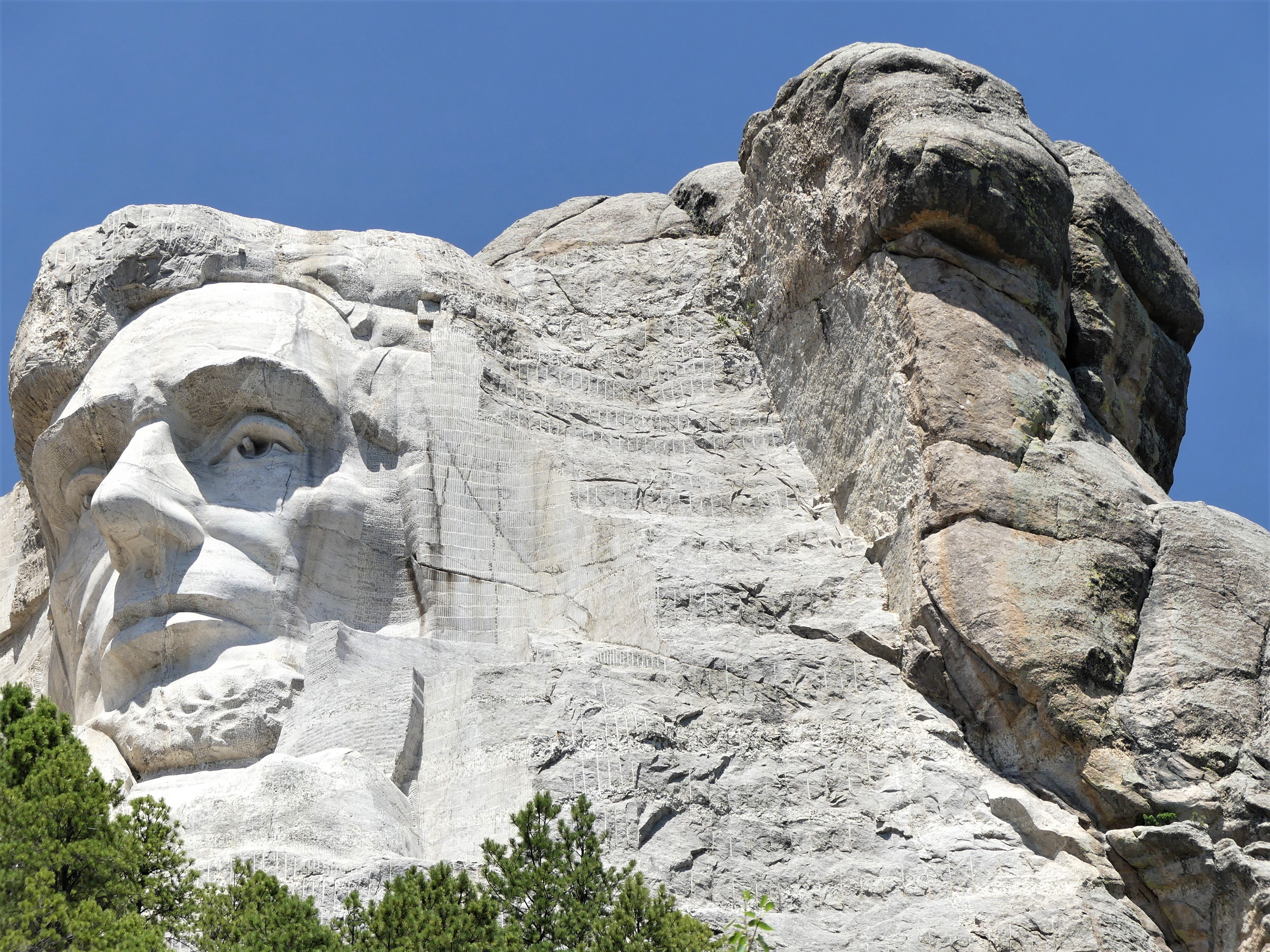
An overlooked fact–Mt. Rushmore was once intended as a tribute to the “Five Faces of Freedom,” but funding ran short when Congressional appropriation for the monument approached $1 million during the Great Depression. Hence, the unfinished carving of the Great Ape to the right of Lincoln serves as a reminder that we are never far from our true ancestors.¹
No less ambitious, and equally as impressive, the Crazy Horse Memorial is a work-in-progress located 16 miles away in the heart of the Black Hills–considered sacred land by the Lakota people.
Conceived by Korczak Ziolkowski in early 1940s,
the memorial, when completed will stand 563 ft. by 641 ft. across, and is expected to be the largest sculpture in the world. Already, the completed head of Crazy Horse measures 60 feet tall…
…twice the size of any of the presidents at Mt. Rushmore. While the first blast was conducted on the mountain in 1947, the current prospects for the memorial are to complete the outstretched arm during the next twelve years. There is no completion date available for the finished carving, which has been financed entirely by private funding since its inception.
Mt. Rushmore was created by a Danish American. Crazy Horse was created by a Polish American. And visitors to both destinations manifest the melting pot that has brought us all together as Americans. It’s our diversity that makes us strong, our ambition and determination that makes us great, and our compassion and sacrifice that make us whole.
These are the values reflected from the faces we’ve immortalized in stone. Yet, we would honor them more by living according to these principles.
Happy Birthday, America!
¹ Just kidding, but the photograph is real and has not been retouched.
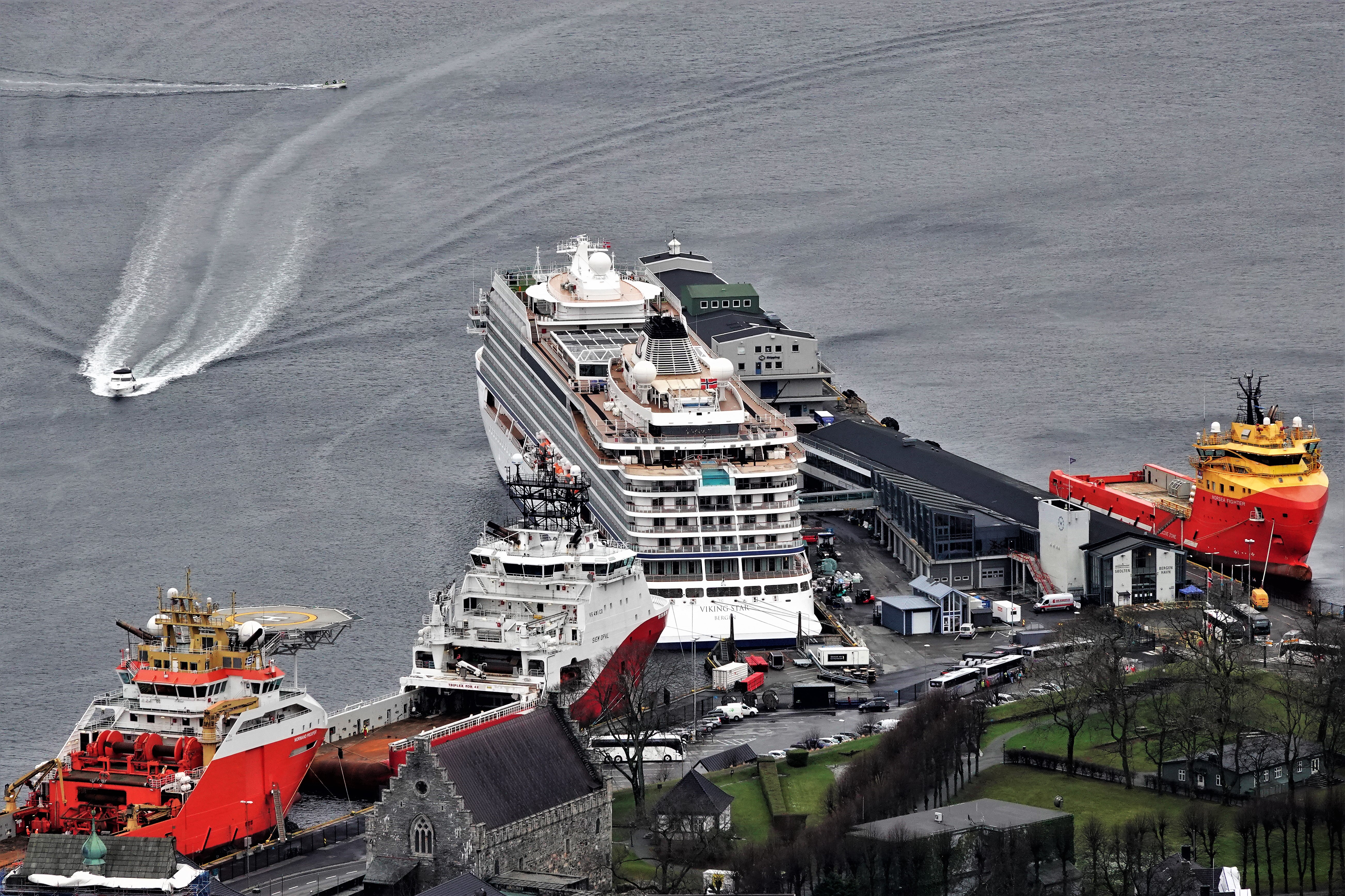
After docking in Bergen, the Viking Star’s final destination of our 13-day cruise along Norway’s western coastline,
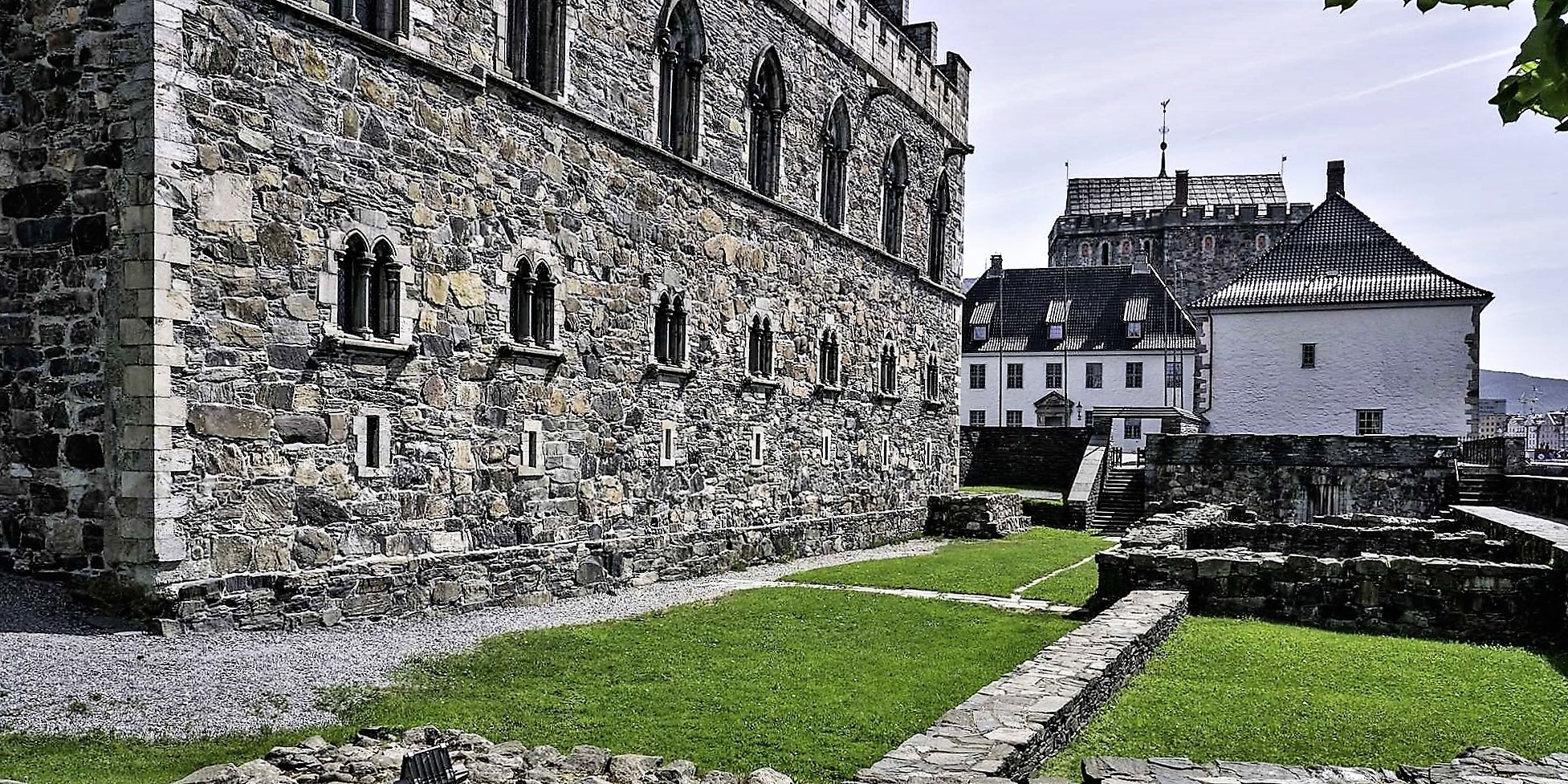
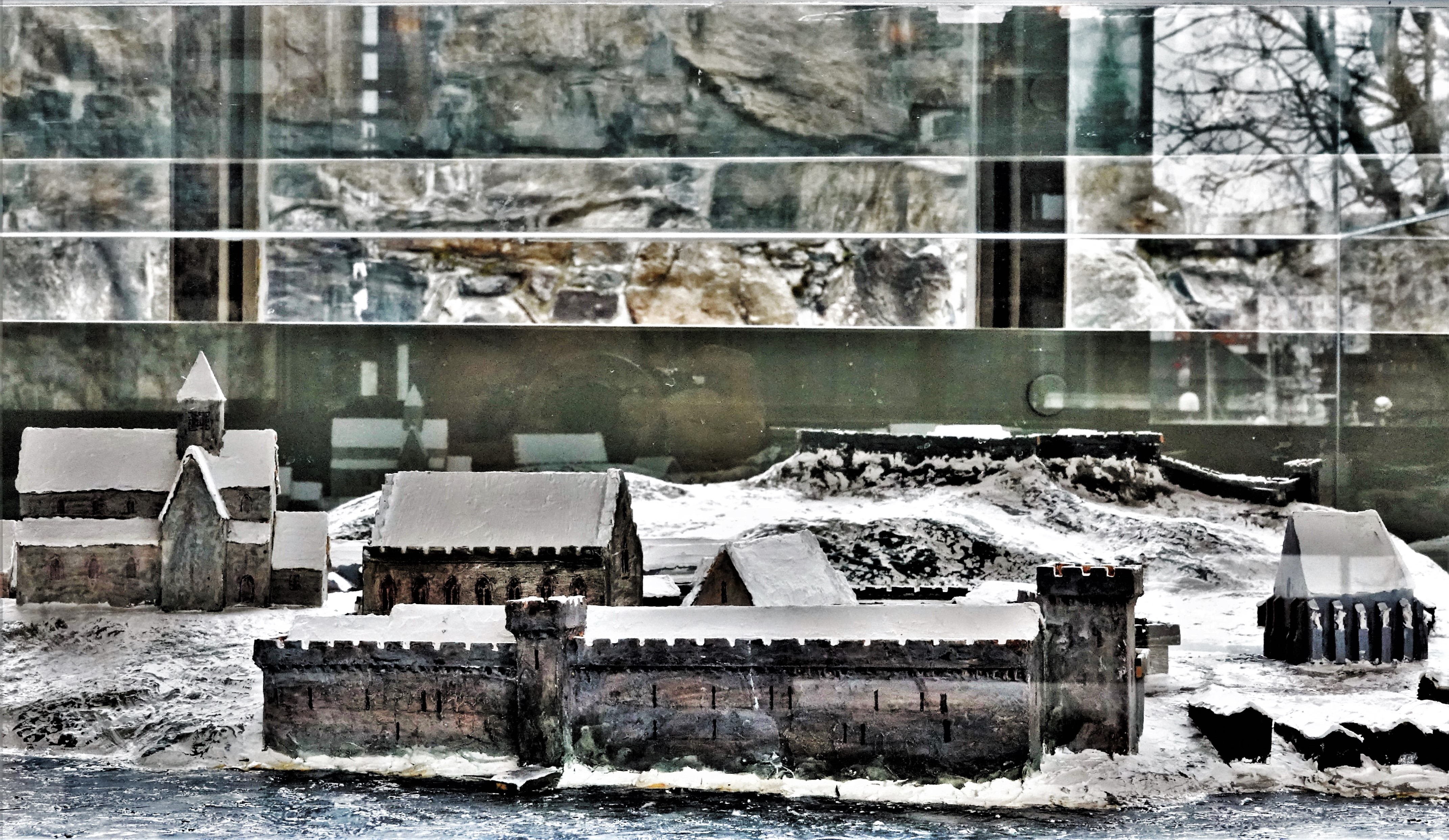
Leah and I were ready to explore our surroundings. First we wandered through the 13th century ruins of Bergenhus Fortress,
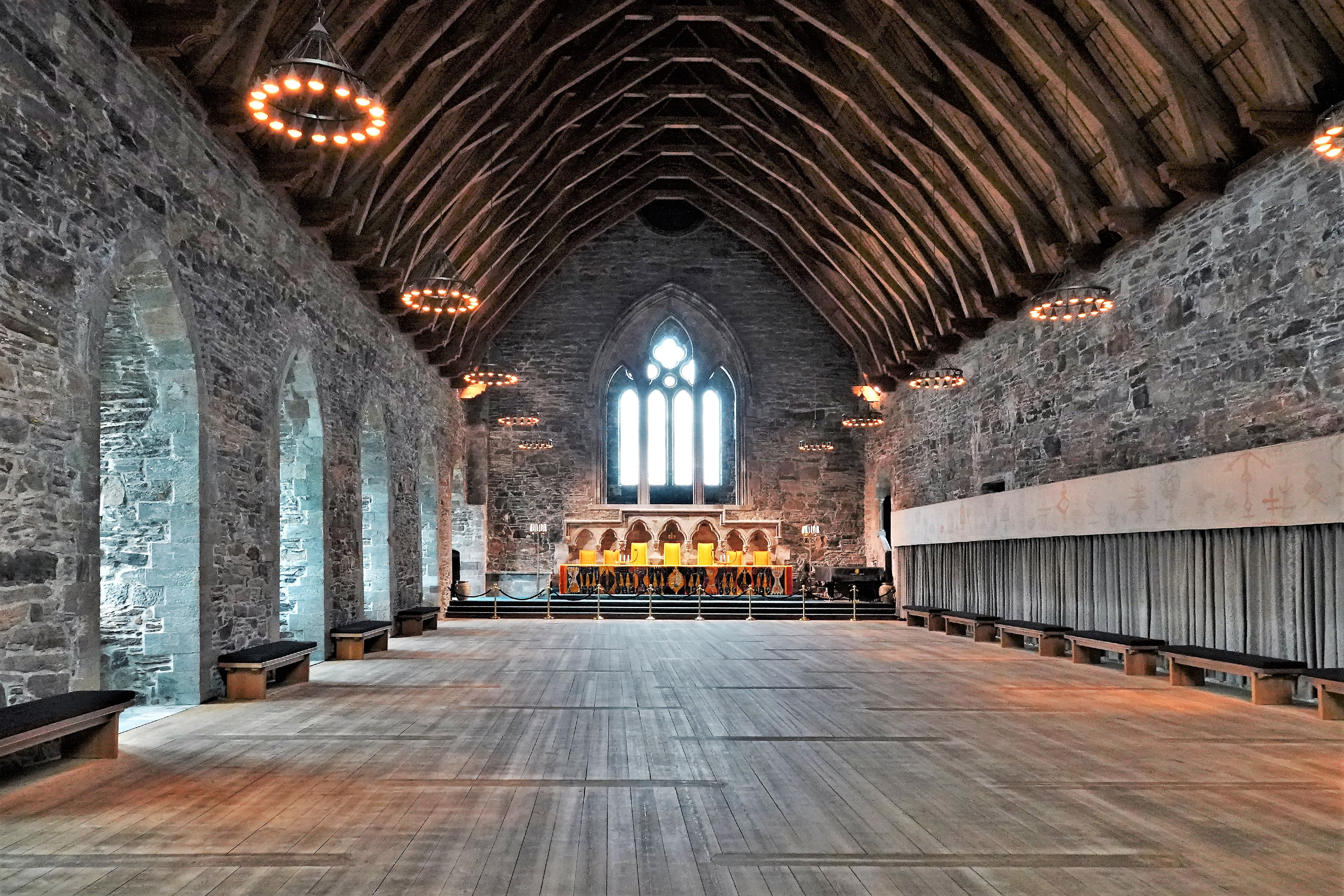
before entering Håkon’s Hall…
to regard the 1950’s restoration of the royal banquet hall that dates to King Magnus’s wedding celebration in 1261,
and where all furnishings have subsequently been replaced to commemorate the 700th anniversary of its first use.
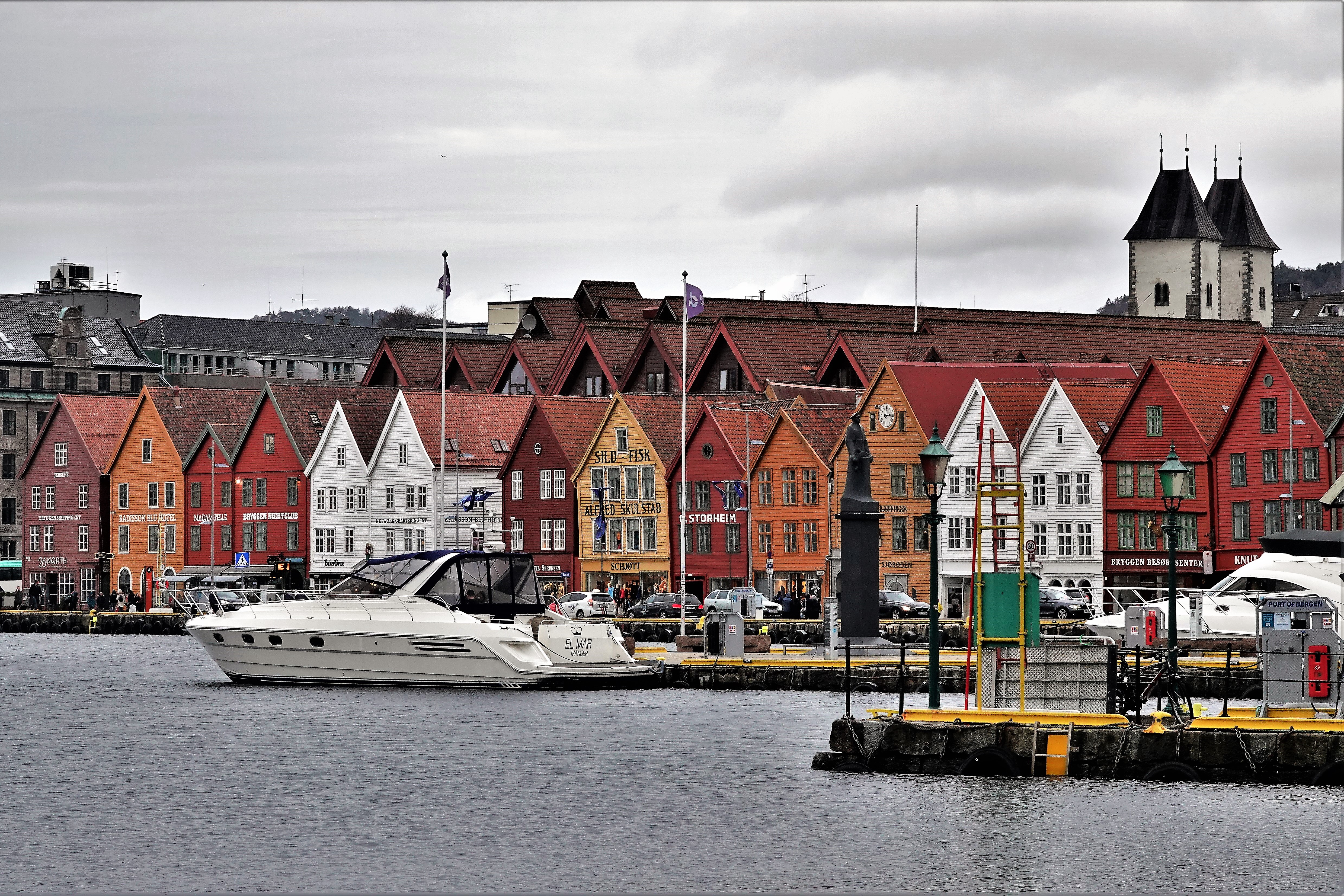
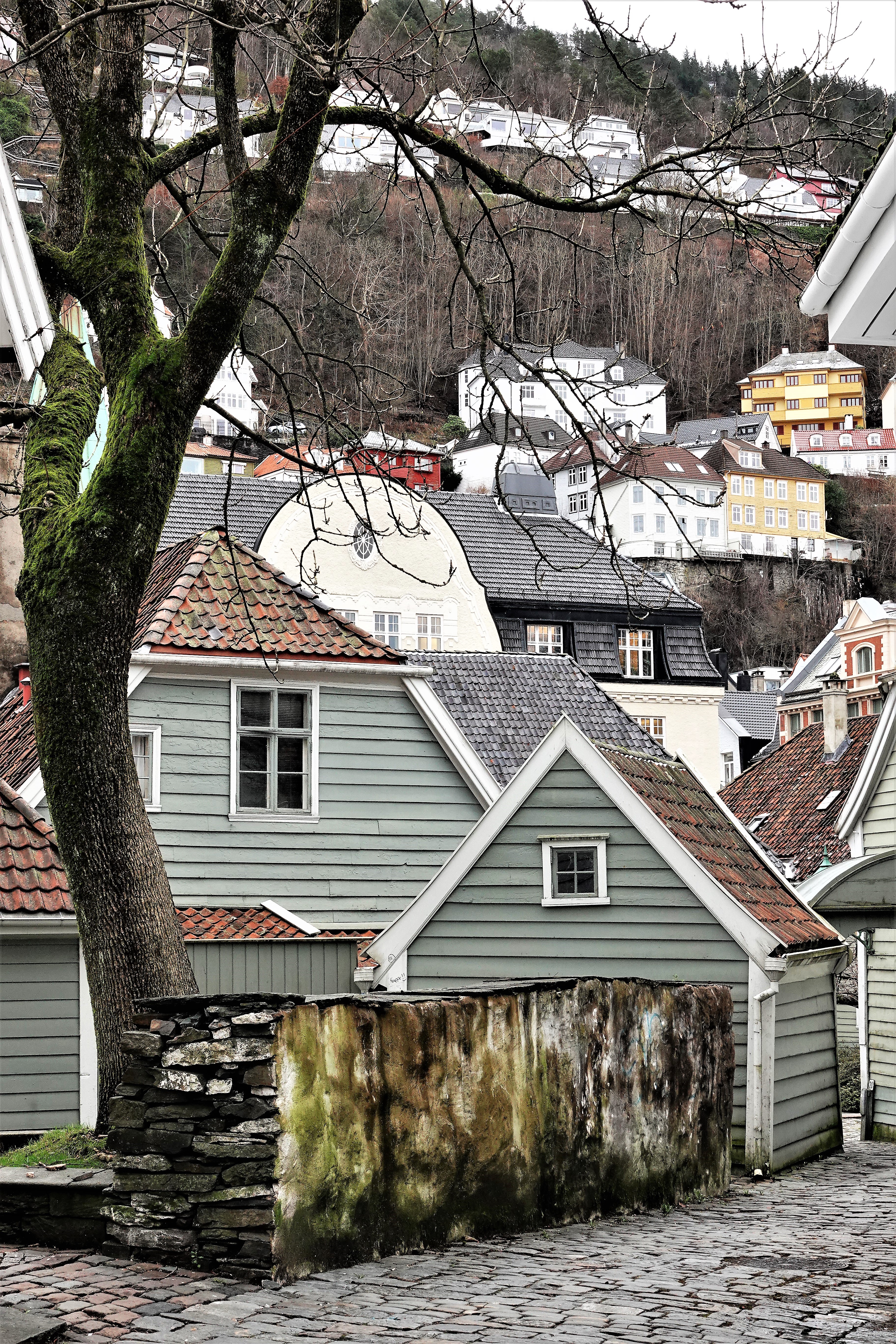
Our walking tour continued along the Bryggen Wharf, a UNESCO World Heritage site preserving original Middle Aged buildings from the Hanseatic League trading era,
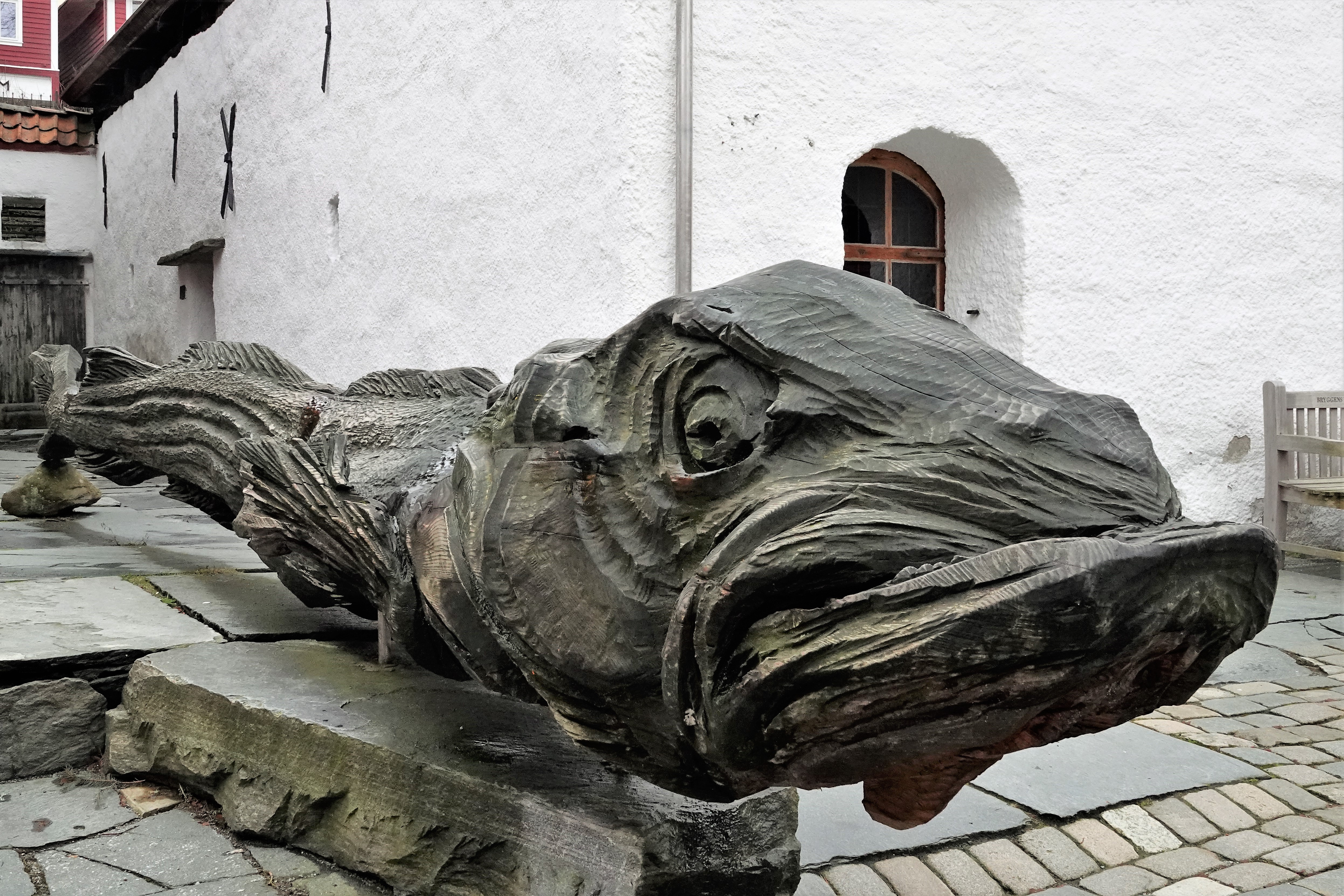
and the Old Wharf–
featuring a sea serpent once rumored to venture out from Bergen caves during summer nights to feed on sea traders.
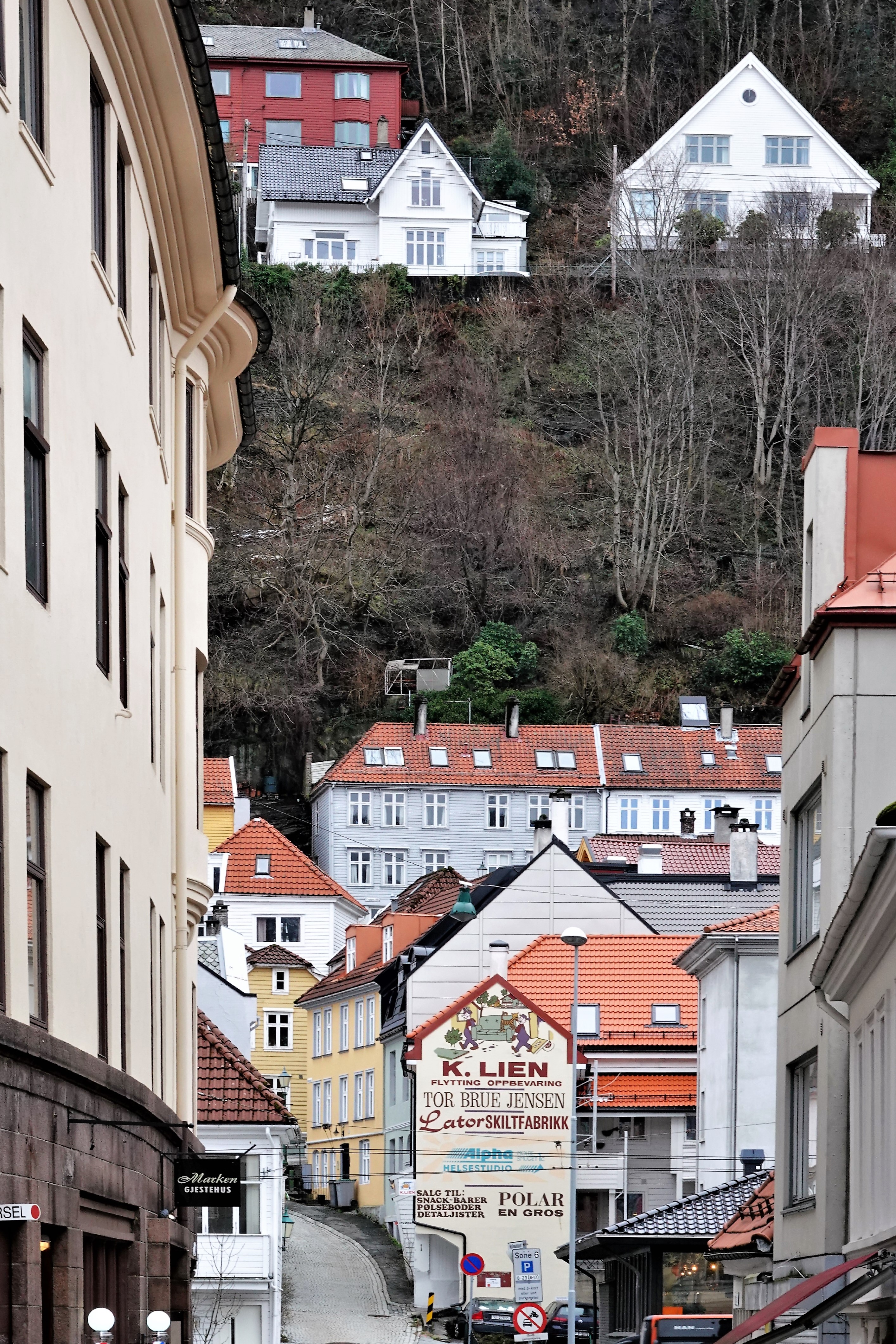
We strolled across the cobblestones of Øvregaten, Bergen’s one-time market for craftsmen and traders,
but now home to residences,
galleries and specialty shops.
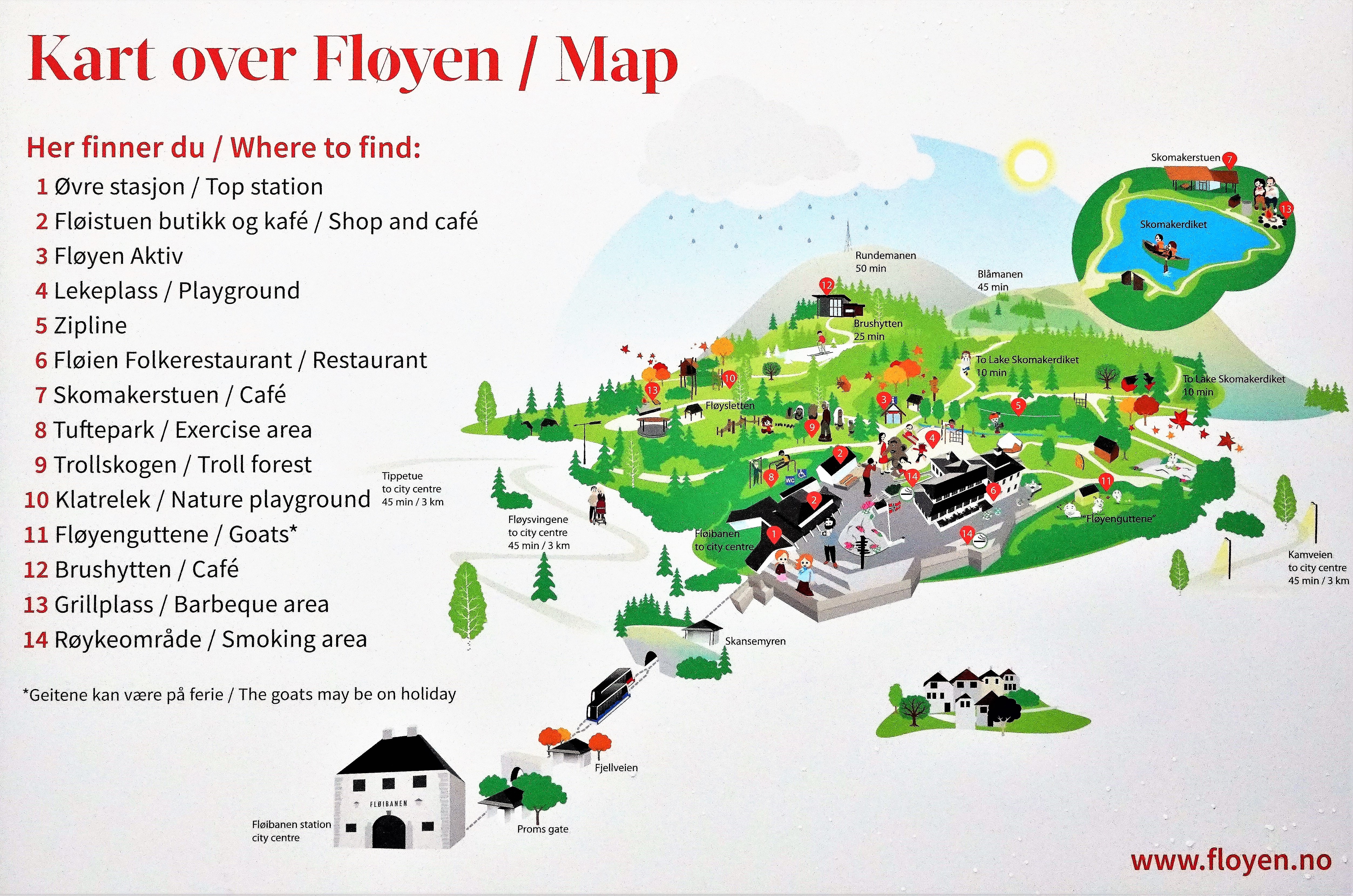
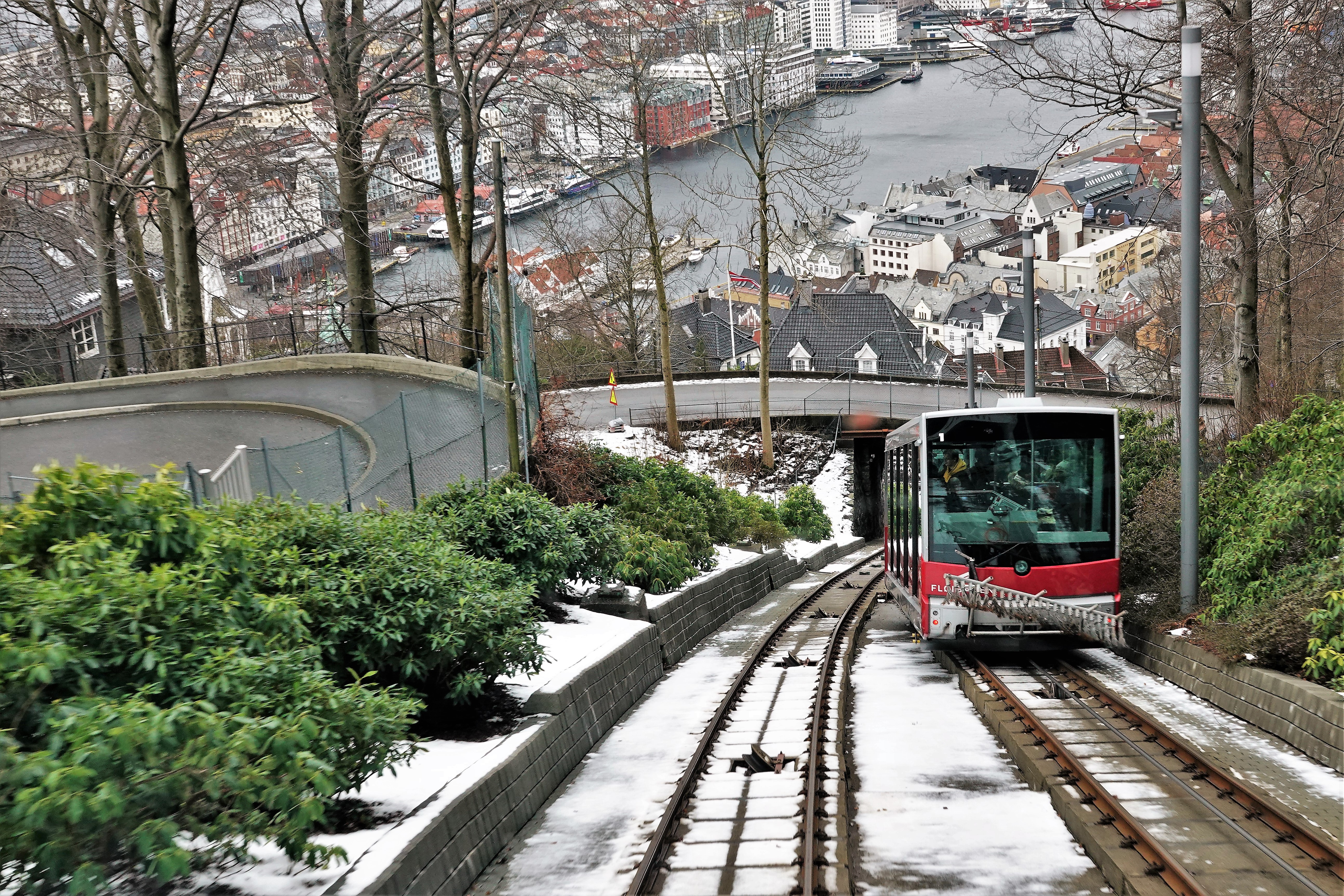
Finally we reached Bergen’s most popular attraction–its Fløibanen,
a funicular railway taking riders to the top of Mount Fløyen.
We passed through three stations in eight minutes,
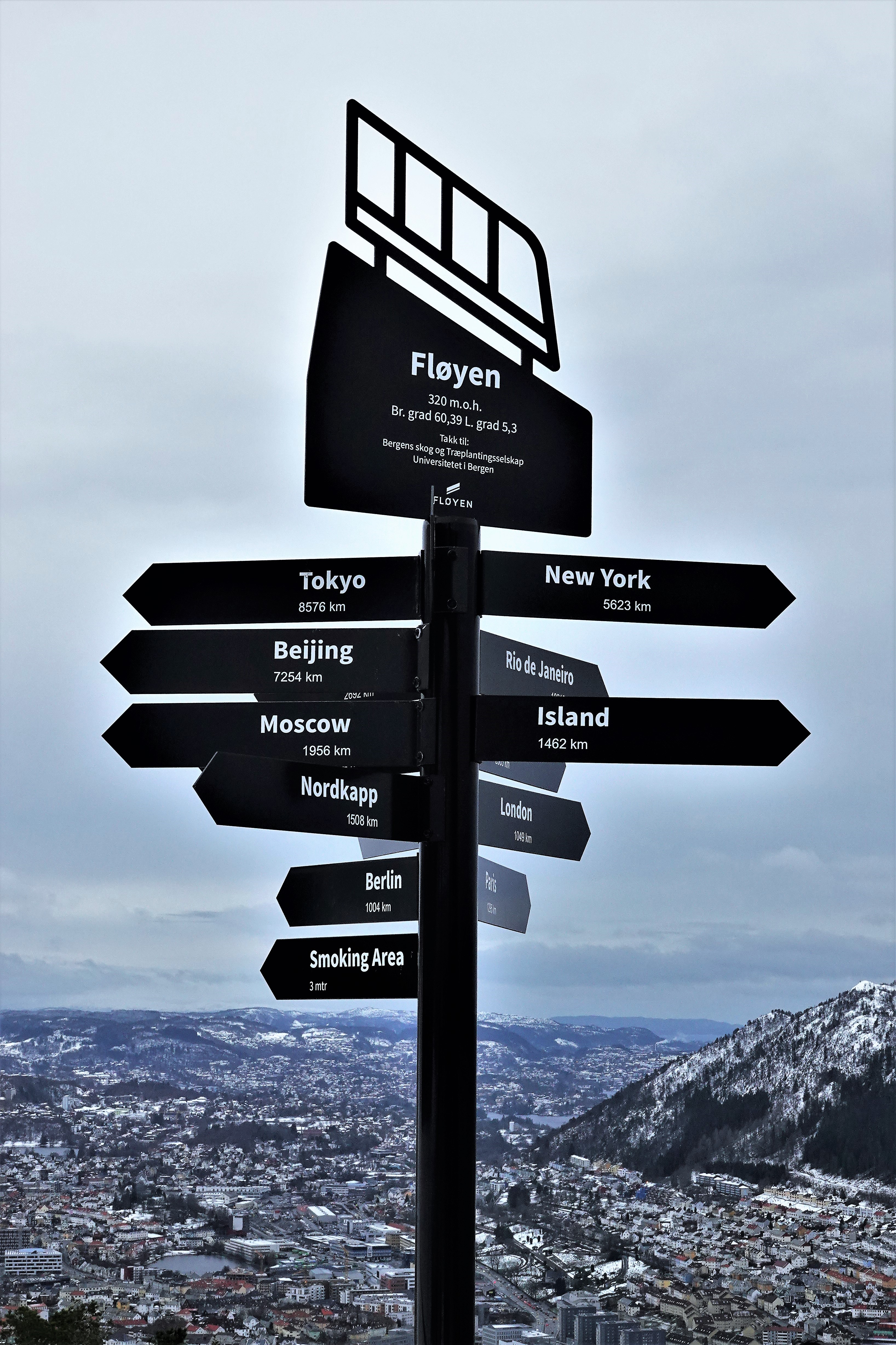
until we finally reached the top.
Once we got our bearings,
we were rewarded with a wintry chill and a view that took our breath away…
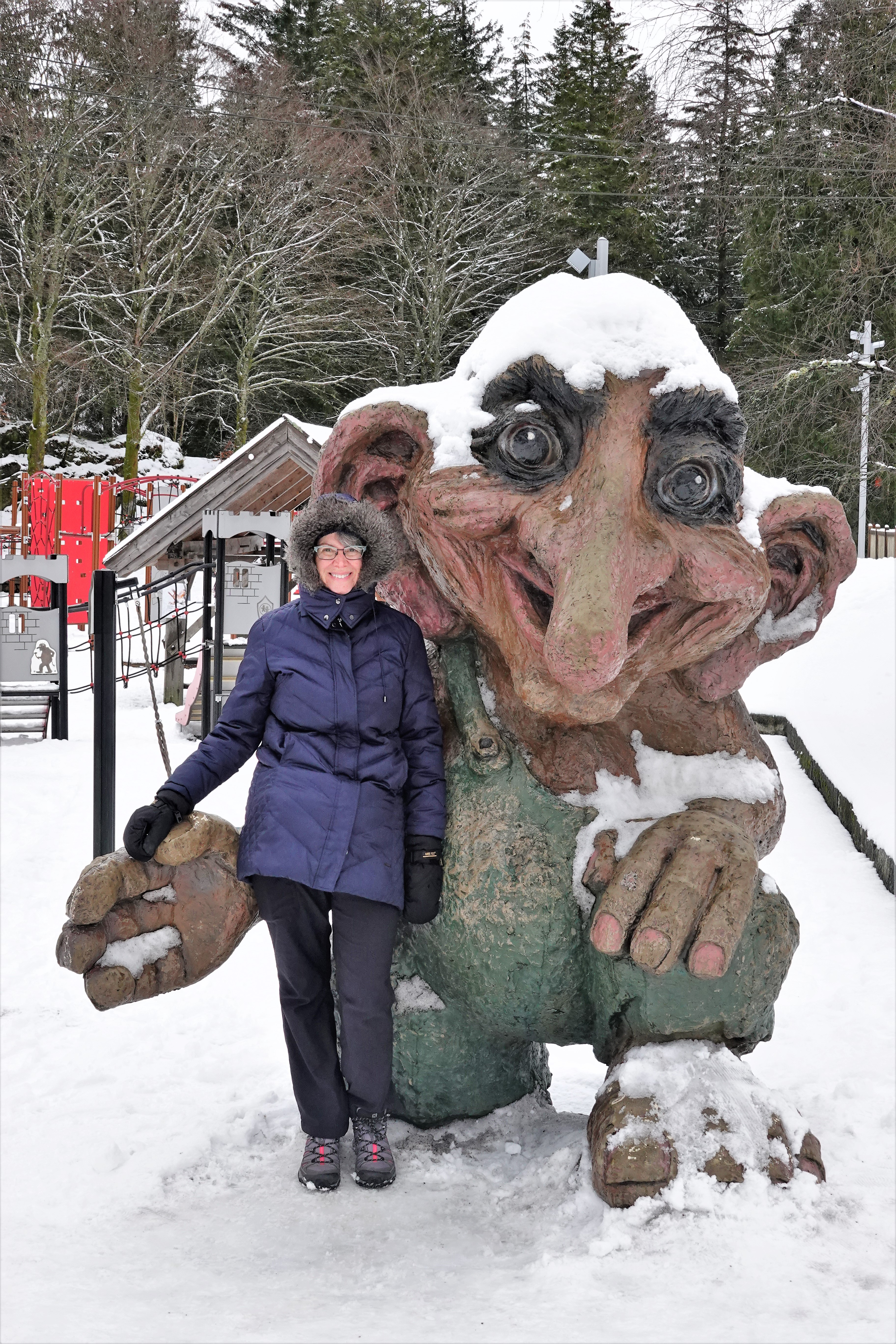
unless that was the mountain troll’s doing?
P.S. This post (my 351st) represents 3 years of blogging! Looking forward to another productive year.
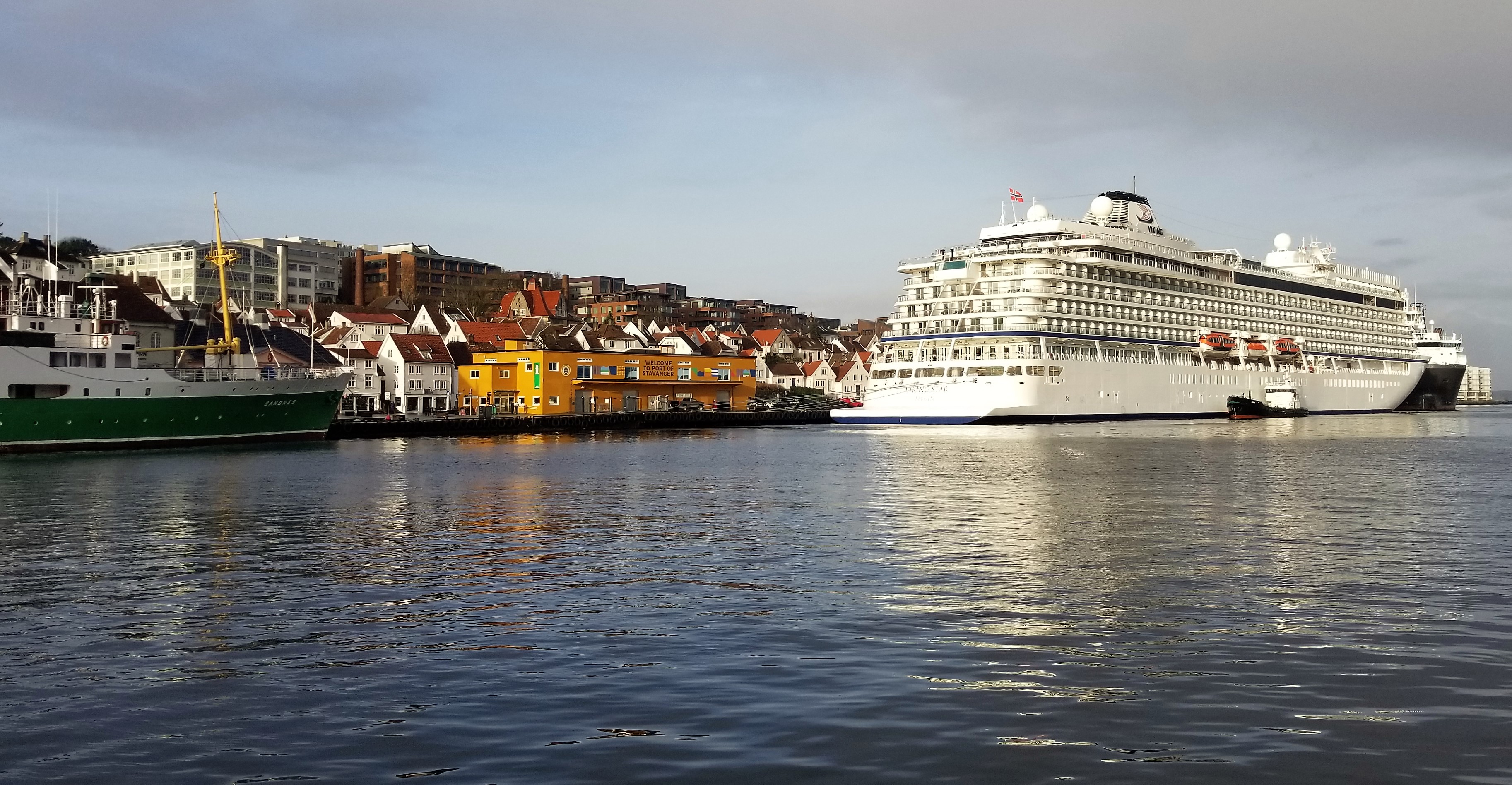
Leah and I crossed a rocky North Sea from Tilbury, England aboard Viking Star (more on this Viking ocean liner later),
and docked at Stavanger Port on an overcast morning.
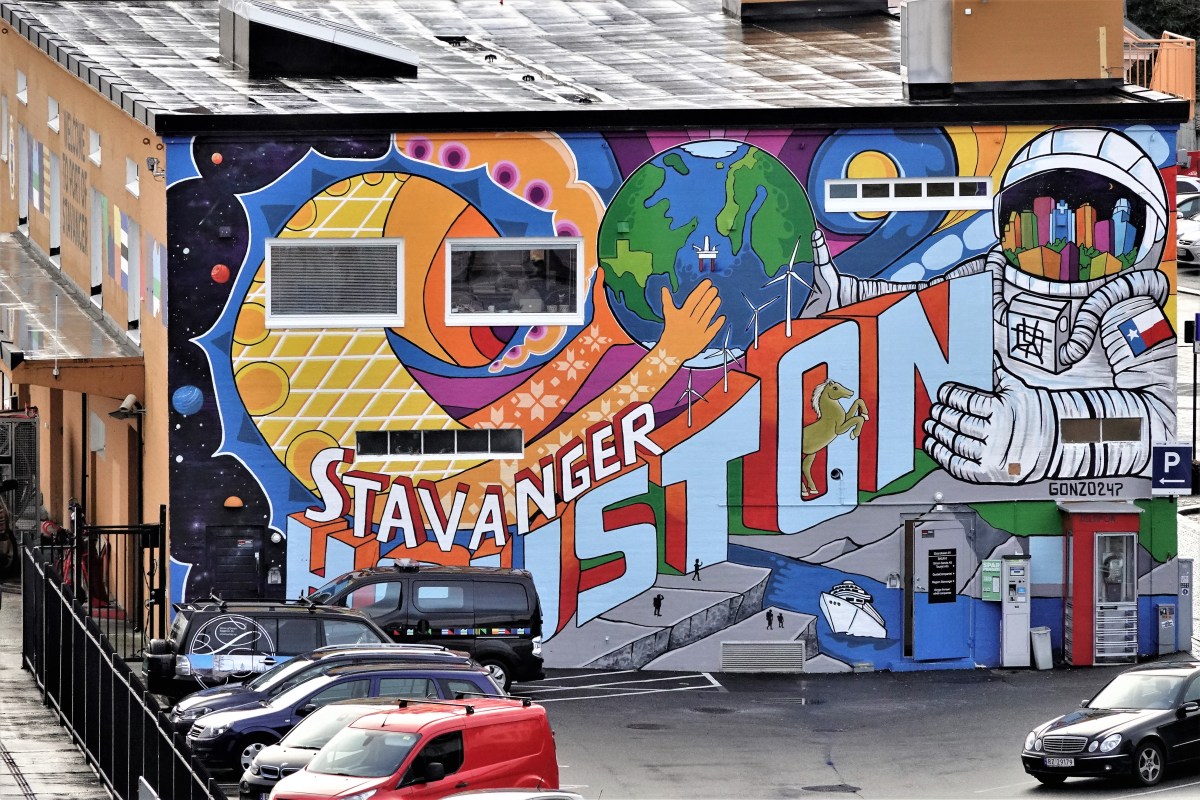
Stavanger is Norway’s third largest region, and best known as the European capital for the oil and gas industry–which explains the town’s Norwegian Petroleum Museum, and its unusual derrick-like design on the city’s waterfront.
Stavanger is also a popular tourist hub, as it’s the gateway to the fjords. To that end, Leah and I had booked an off-ship excursion to Rogaland to cruise through Lysefjord in search of Preikestolen, better known as Pulpit Rock.
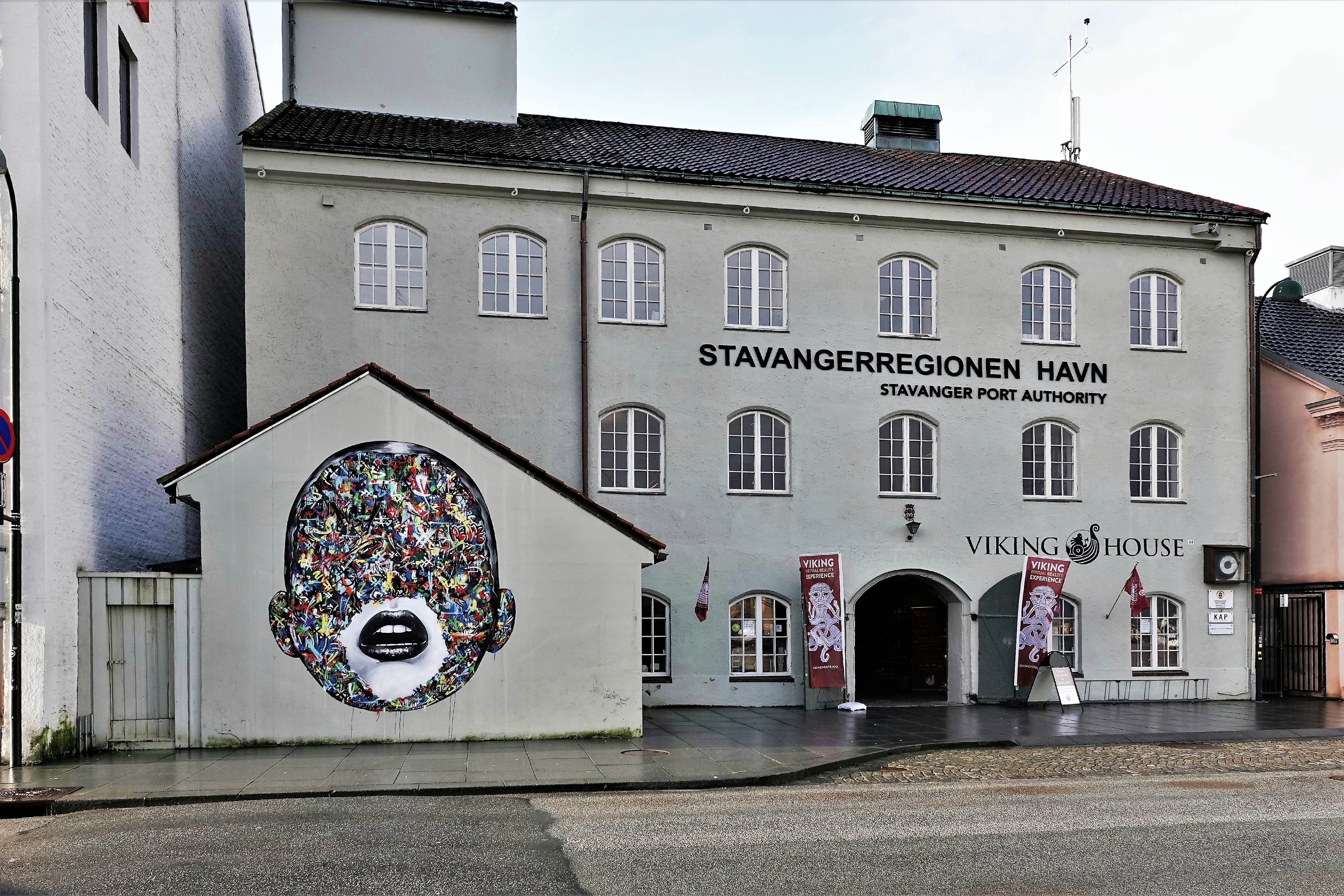
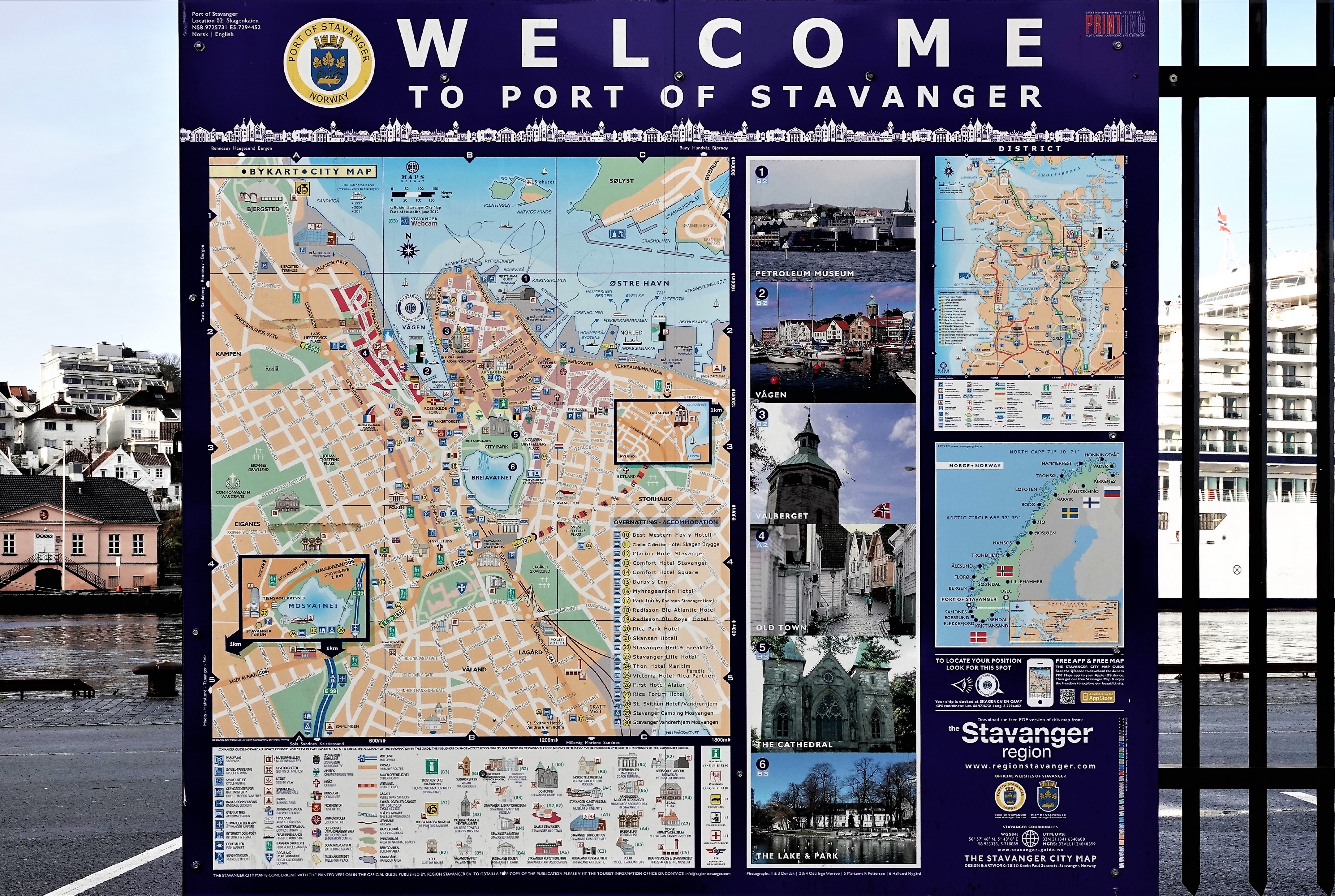
But with some time to kill before our departure, we disembarked early to stroll along the harbor plaza to find our bearings, and regain our sea legs after a day and a half of cruising.
The plaza was sleepy for an early Wednesday morning, but it was refreshing to have the place to ourselves.
We could enjoy the local art (that celebrates the shrimping industry)…
without concern for another’s footsteps.
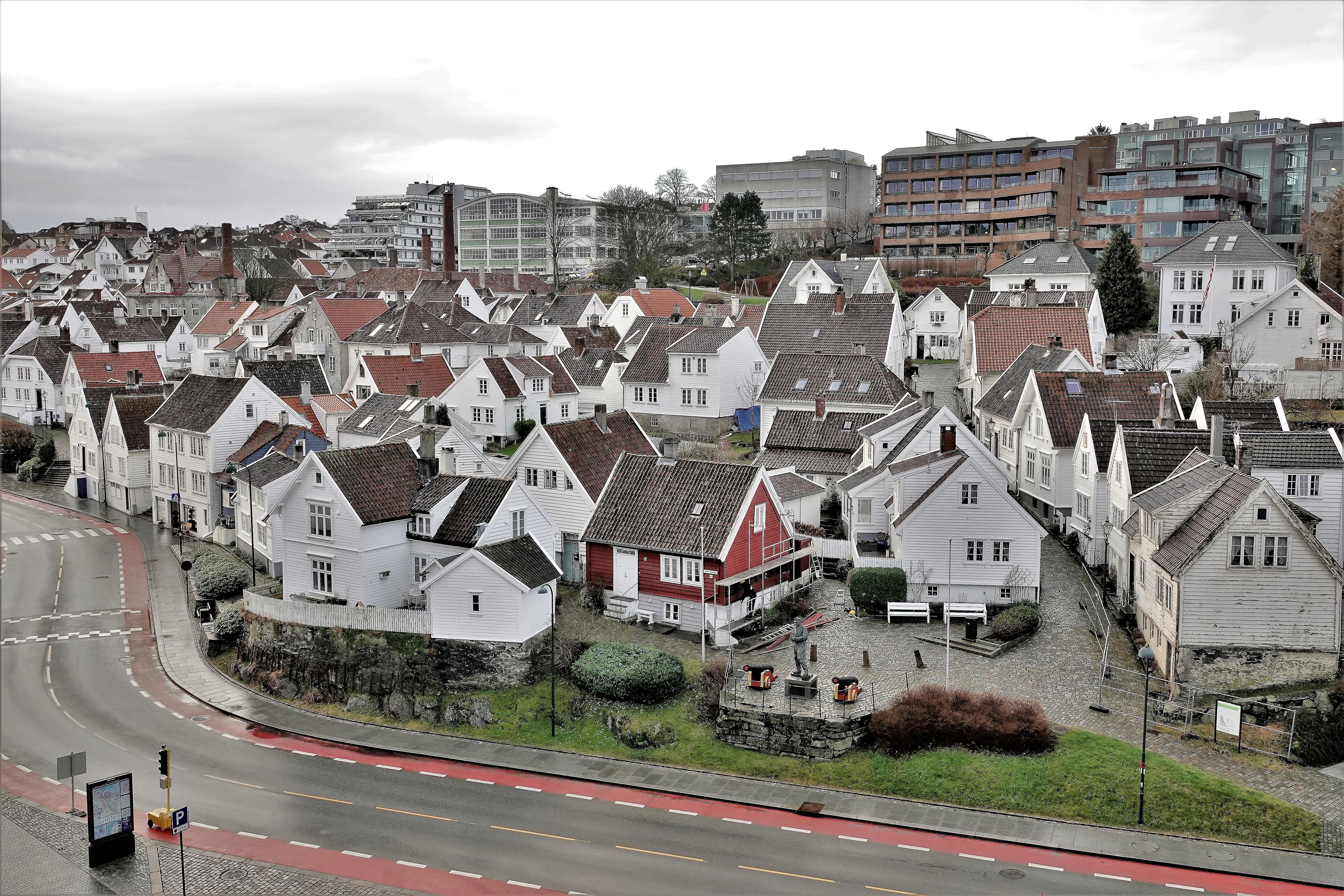
We opted to tour the Gamle Stravanger (Old Town), where 173 wooden buildings from the turn of the 18th century have been preserved…
down to the cast bronze utility plate covers.
A casual walk along Old Town’s winding roads of white cottages…
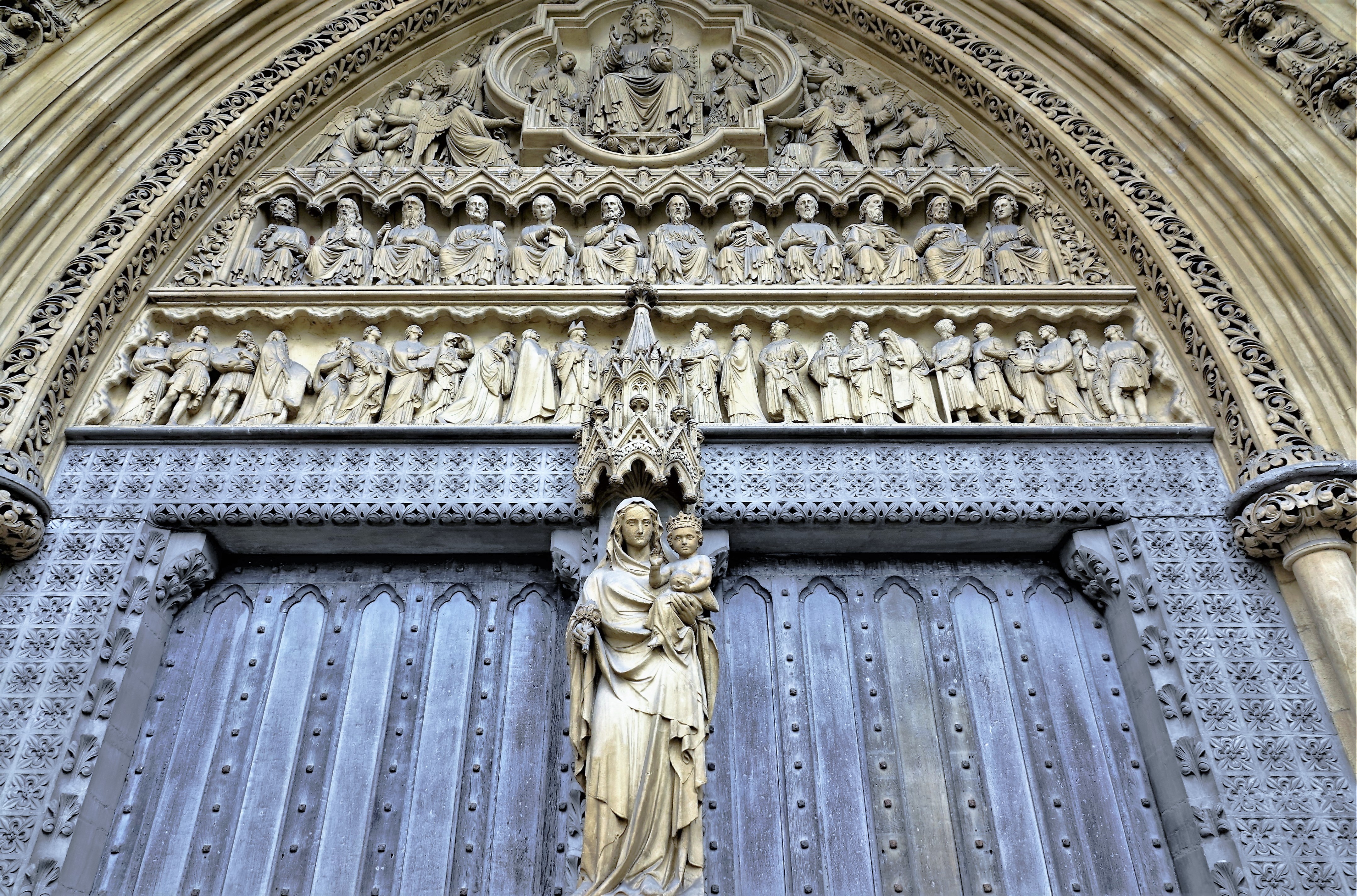
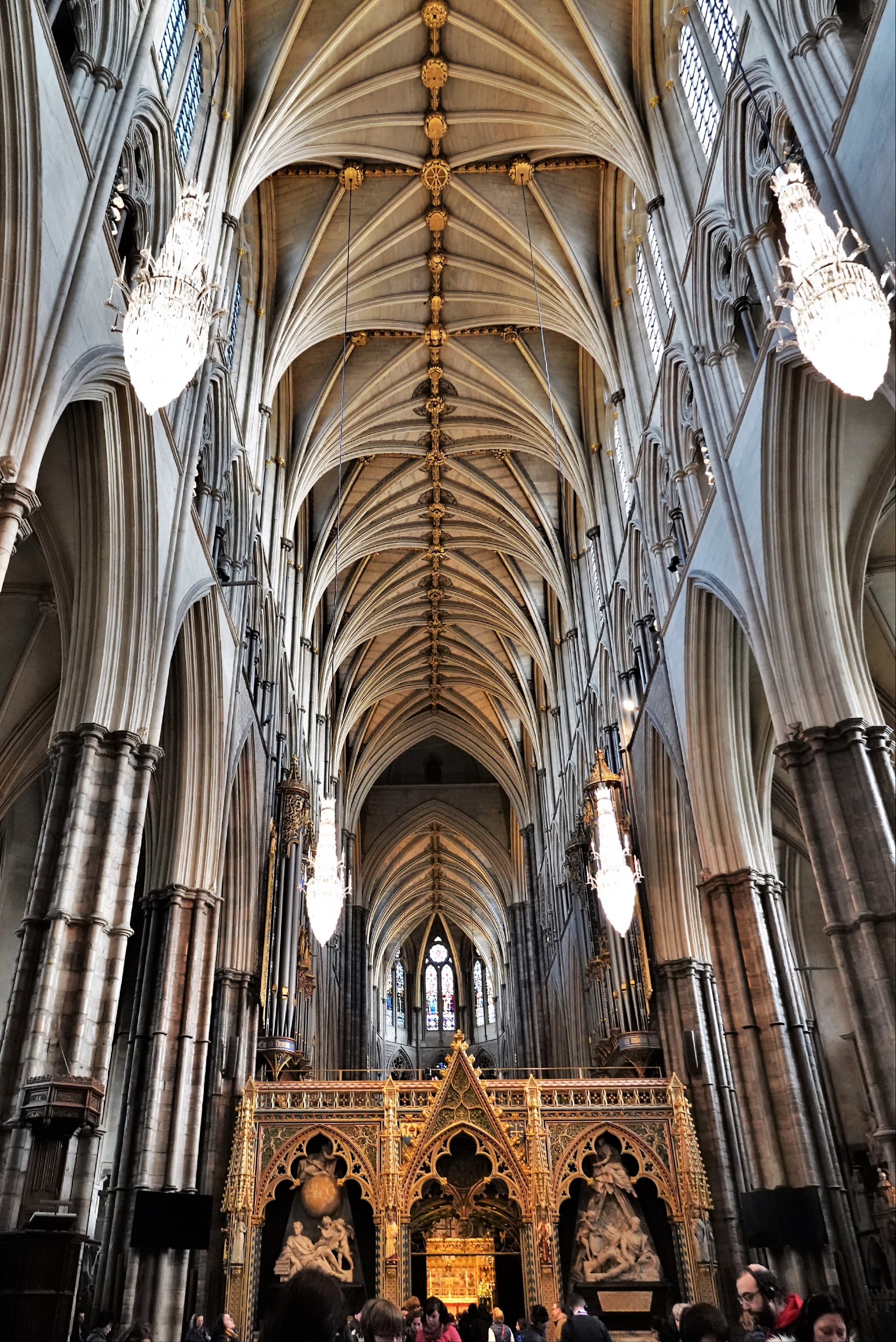
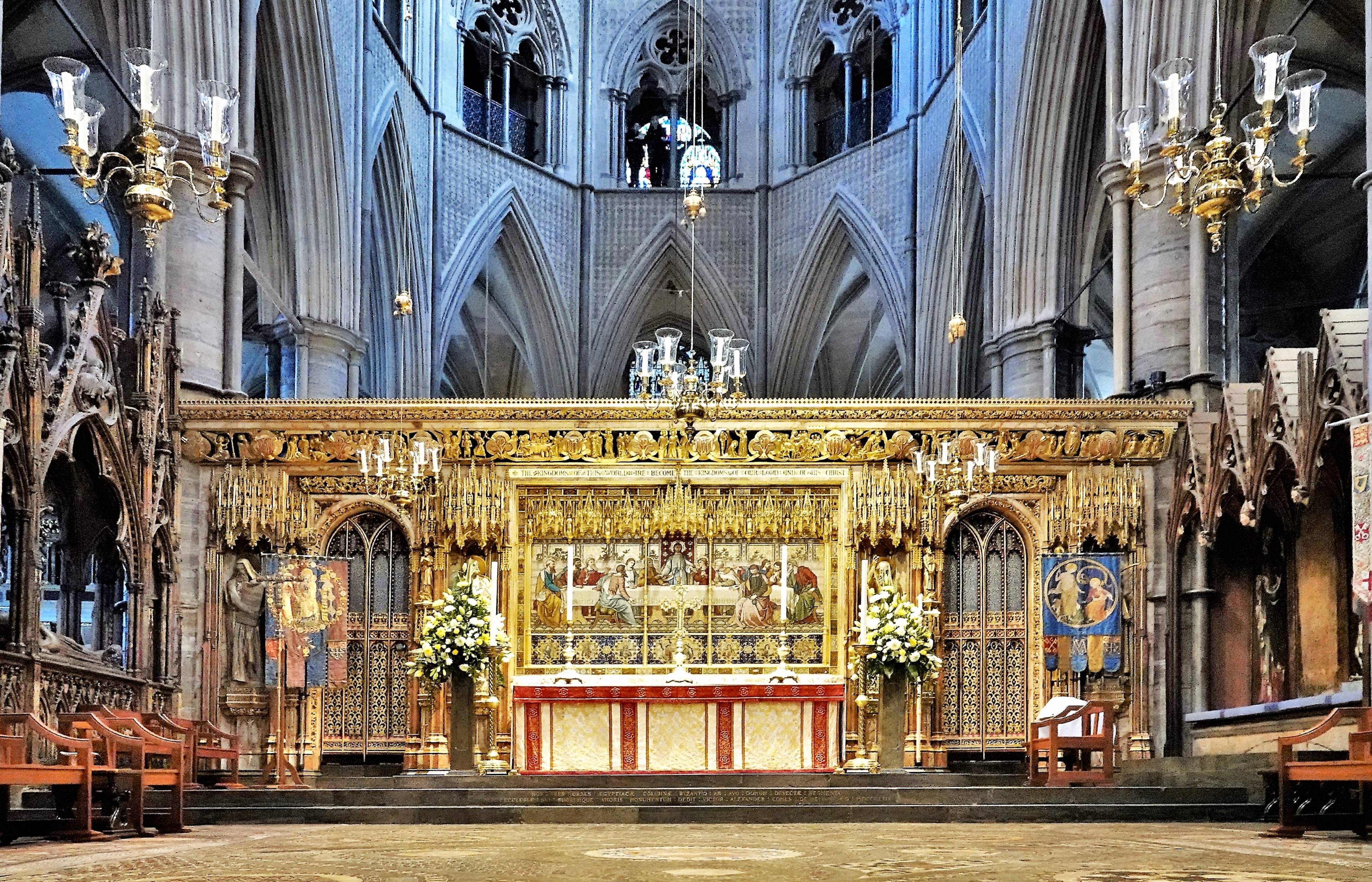
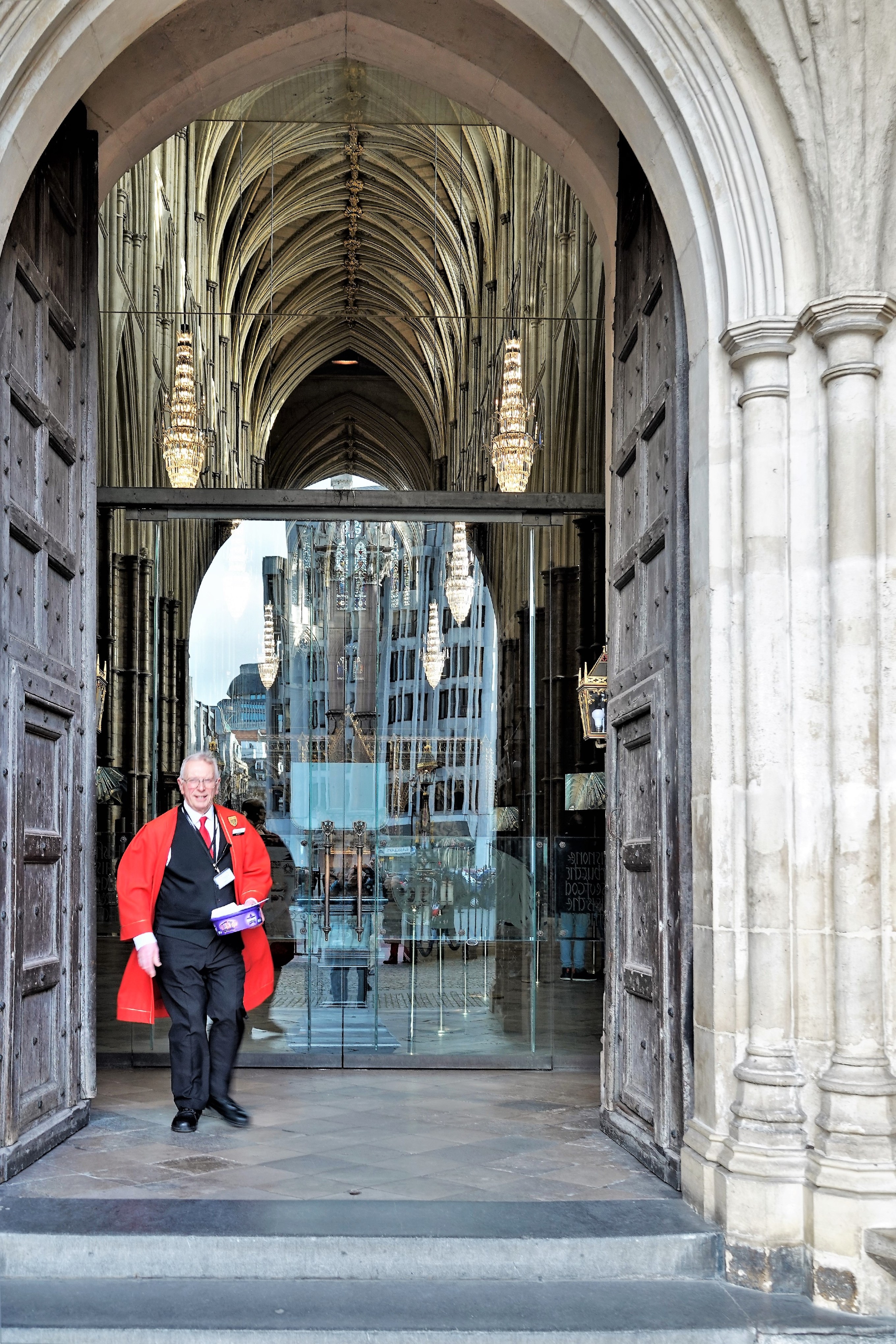
Our time in London was limited–only two days to explore the sights. With so much to see and so little time, Leah and I buckled down for a tour of London’s greatest hits, which easily includes a visit to Westminster Abbey, England’s Gothic royal church, and familiar site for British coronations and weddings, and national celebrations dating back to the 11th century.
We walked around the massive structure until we found the gate entry. Signage informed us that access to this London landmark would set us back 23£ ($30 with current exchange rates), but seniors were entitled to a 3£ discount.
The price seemed steep, but the opportunity to walk through history doesn’t come along every day.
There is a strict NO PHOTOGRAPHY policy inside, which the church keepers will tell you is for the benefit of giving their guests an experience without distraction, and to perserve the solemnity of a working house of worship.
Nevertheless, we walked through the transepts and chapels listening to interactive video recordings while admiring the captivating architecture and memorials, and reflecting on the notion that Charles Darwin and Isaac Newton lie beneath our feet.
But with a newly purchased camera dangling around my neck (Sony RX10 IV), I couldn’t resist the urge.
I had to see what this camera could reproduce in low light…
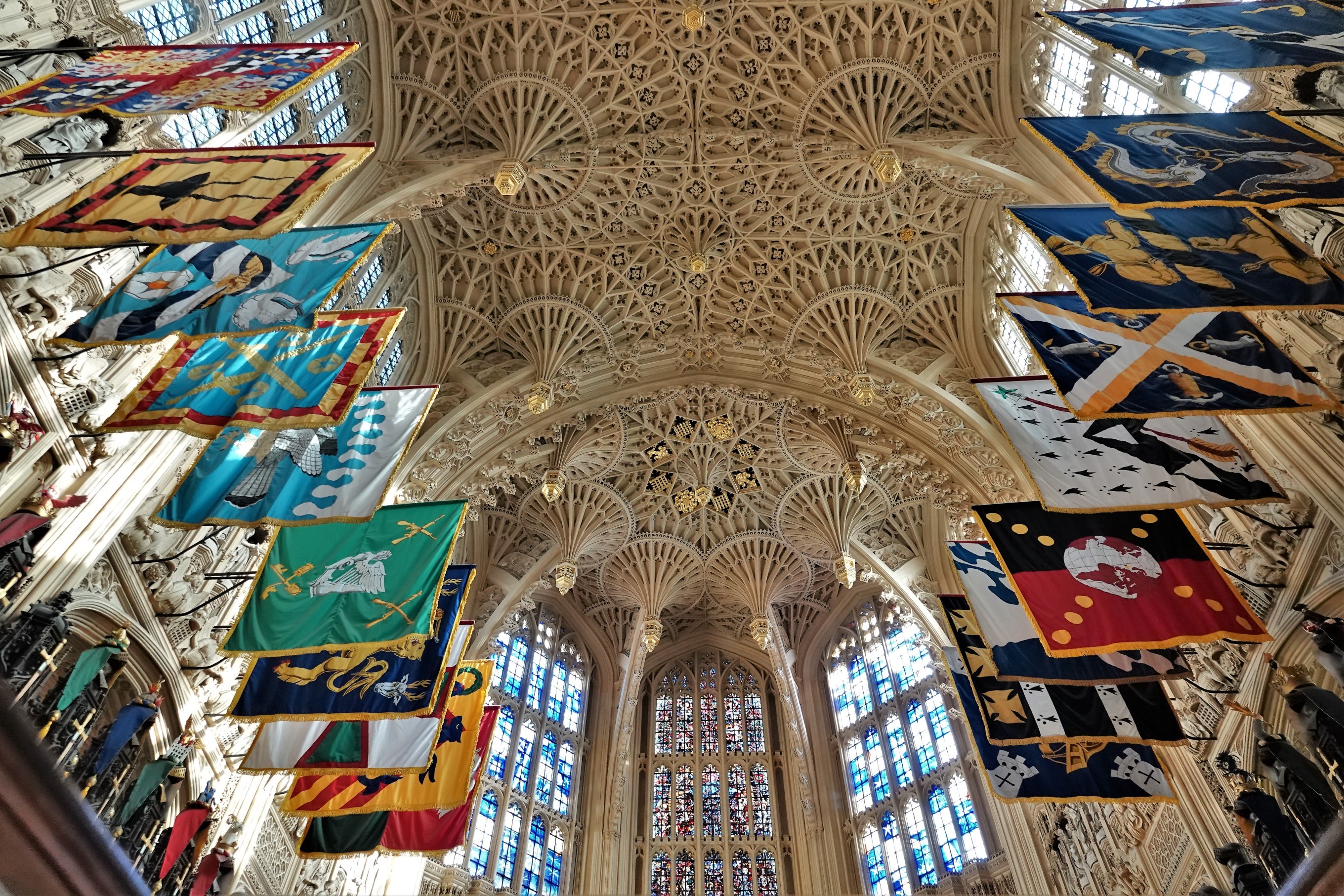
using advanced stabilization software for hand-held shots…
until I was admonished by an Abbey marshal in Henry VII’s Lady Chapel while capturing an overhead view from a polished mirror.
My bad! He wouldn’t leave my side until I reversed the shade and capped my lens. Even then, I could feel his eyes trained on me as I walked around the royal tombs acting as contrite as I could possibly be.
Fortunately, photography IS allowed in the College Garden,
the Cloisters,
and the Chapter House.
As we prepared to leave through the Great West Door, Leah and I walked past the Grave of the Unknown Warrior toward the Coronation Chair behind glass, I was so tempted to surreptitiously point and shoot…but thought better of it. Lesson learned.
As serendipity would have it, the Marshal and I reunited outside, and all was forgiven.
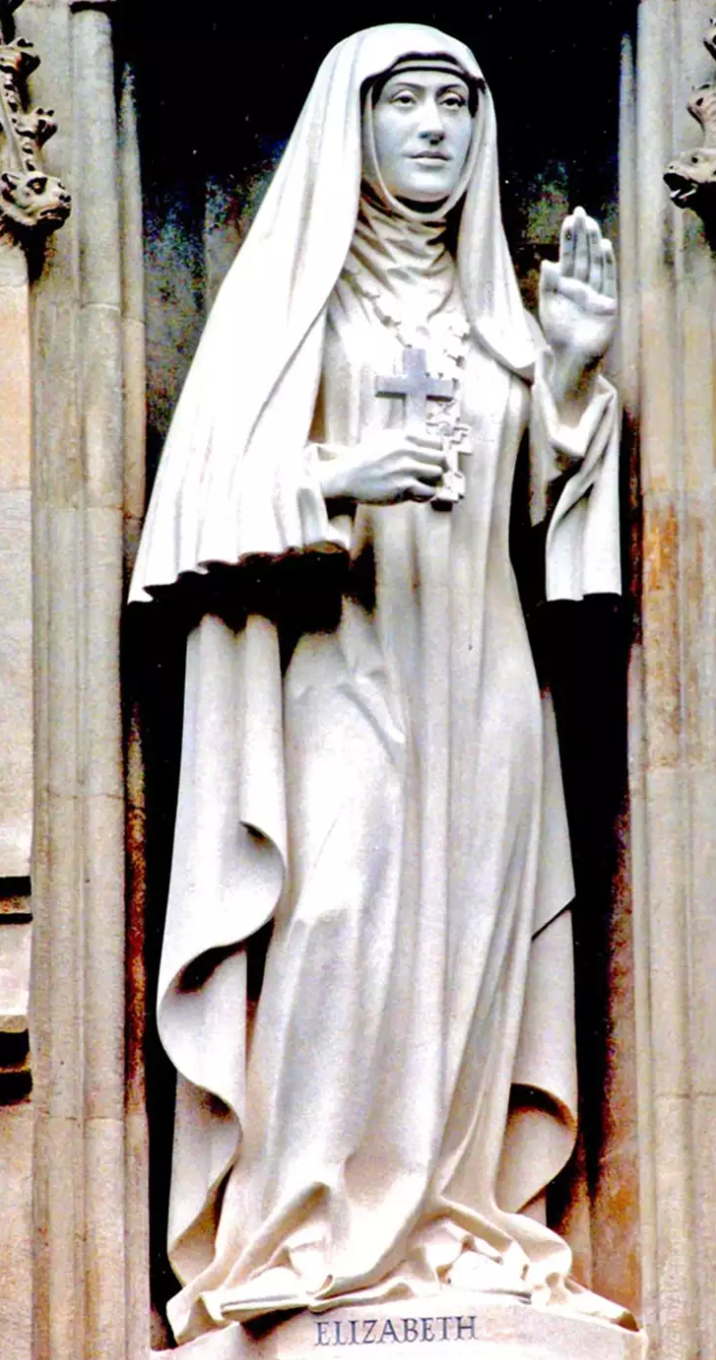
We parted as friends, and I believe I was absolved for my vainglory sin. He used our final moments together to tell us the tale of Grand Duchess Elizabeth Feodorovna, his favorite modern martyr, whose ediface adorns the Abbey’s Great West Door.
According to Marshal John…
Elizabeth of Hesse-Darmstadt was born on 1st November 1864. She was named after Elizabeth of Hungary (1207-1231), a Catholic saint of her own family. Her mother died when she was a child, and she came to England to live under the protection of her grandmother, Queen Victoria. If her childhood was Lutheran, the religious culture of her adolescence was distinctively Anglican. In 1884 Elizabeth married Grand Duke Sergei Alexandrovich, the fifth son of Tsar Alexander II of Russia. Elizabeth found Orthodoxy increasingly absorbing, and in 1891 she adopted the faith.
Although her life had assurance and all the comforts of eminence, it rested on fragile foundations. The Tsarist state maintained its grip over a changing society by repression. Talk of revolution persisted, and grew louder. Acts of terrorism mounted. On 18th February 1905, the Grand Duke Sergei was assassinated.
This marked a turning point in Elizabeth’s life. Now she gave away her jewellery and sold her most luxurious possessions, and with the proceeds she opened the Martha and Mary home in Moscow, to foster the prayer and charity of devout women. Here there arose a new vision of a diaconate for women, one that combined intercession and action in the heart of a disordered world. In April 1909 Elizabeth and seventeen women were dedicated as Sisters of Love and Mercy. Their work flourished: soon they opened a hospital and a variety of other philanthropic ventures arose.
In March 1917 the Tsarist state, fatally damaged by the war with Germany, collapsed. In October, a revolutionary party, the Bolsheviks, seized power. Civil war followed. The Bolshevik party was avowedly atheistic, and it saw in the Orthodox Church a pillar of the old regime. In power, it persecuted the Church with terrible force. In time, hundreds of priests and nuns were imprisoned, taken away to distant labour camps, and killed. Churches were closed or destroyed. On 7th May 1918 Elizabeth was arrested with two sisters from her convent, and transported across country to Perm, then to Ekatarinburg, and finally to Alapaevsk. On 17th July the Tsar and his family were shot dead. During the following night Elizabeth, a sister from SS Mary and Martha named Varvara, and members of the royal family were murdered in a mineshaft.
In the Soviet Union Christianity survived in the face of periodic persecution and sustained oppression. But Elizabeth was remembered. In 1984 she was recognized as a saint by the Russian Orthodox Church Abroad, and then by the Moscow Patriarchate in 1992.
I’m certain that Saint Elizabeth, in her charity, would have pardoned me too.
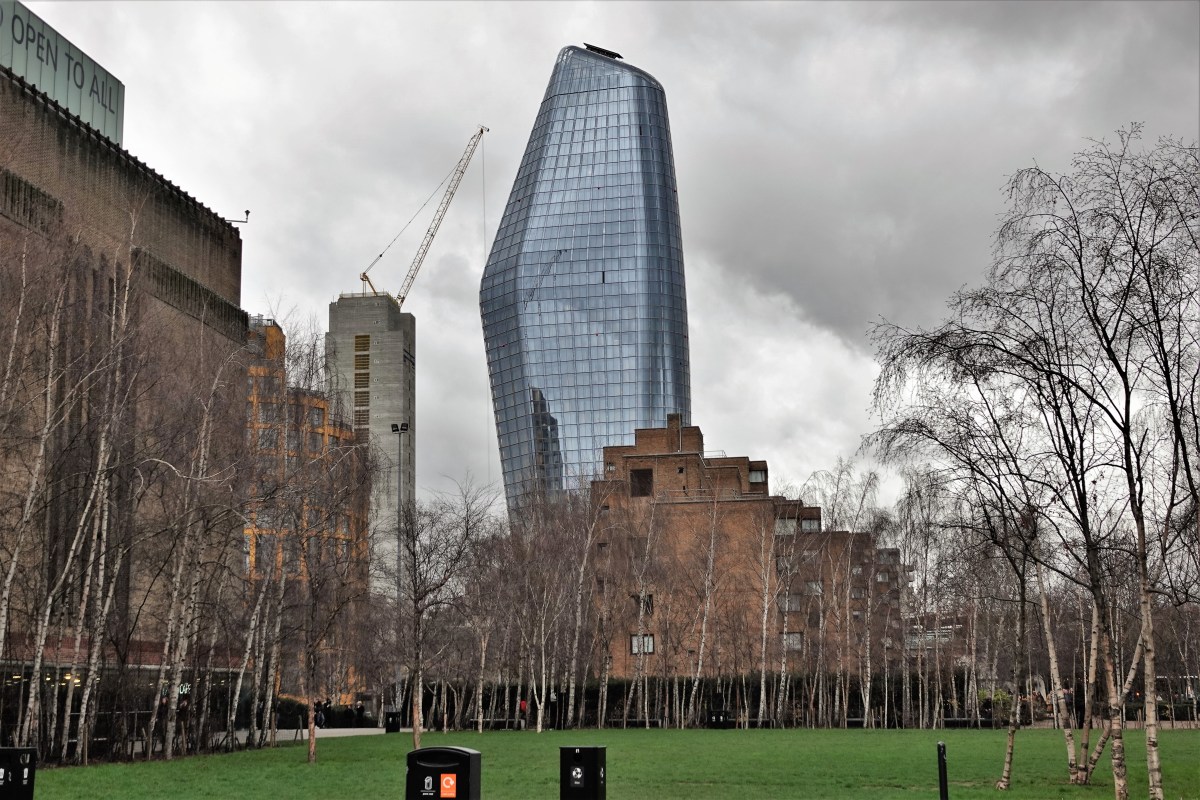
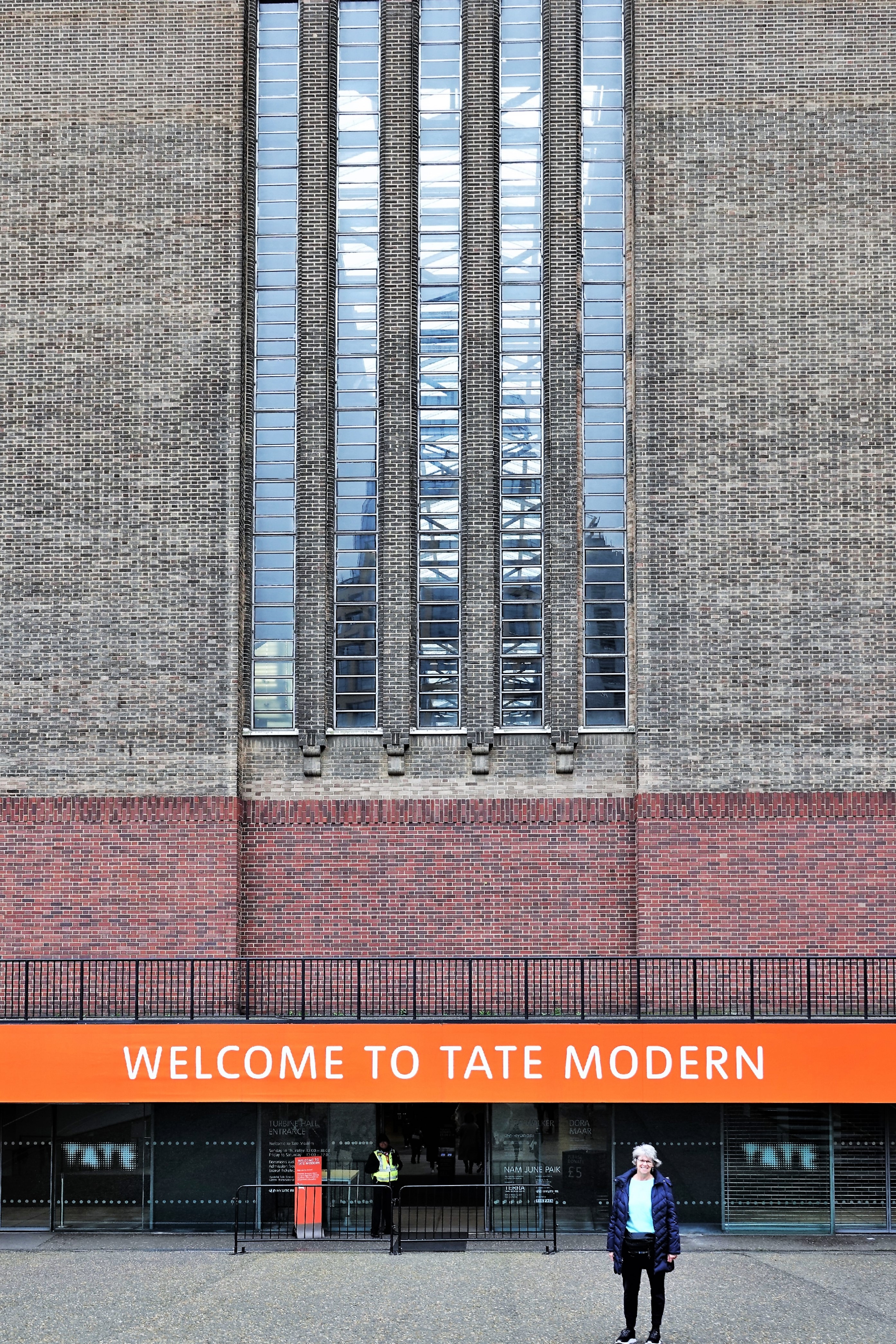
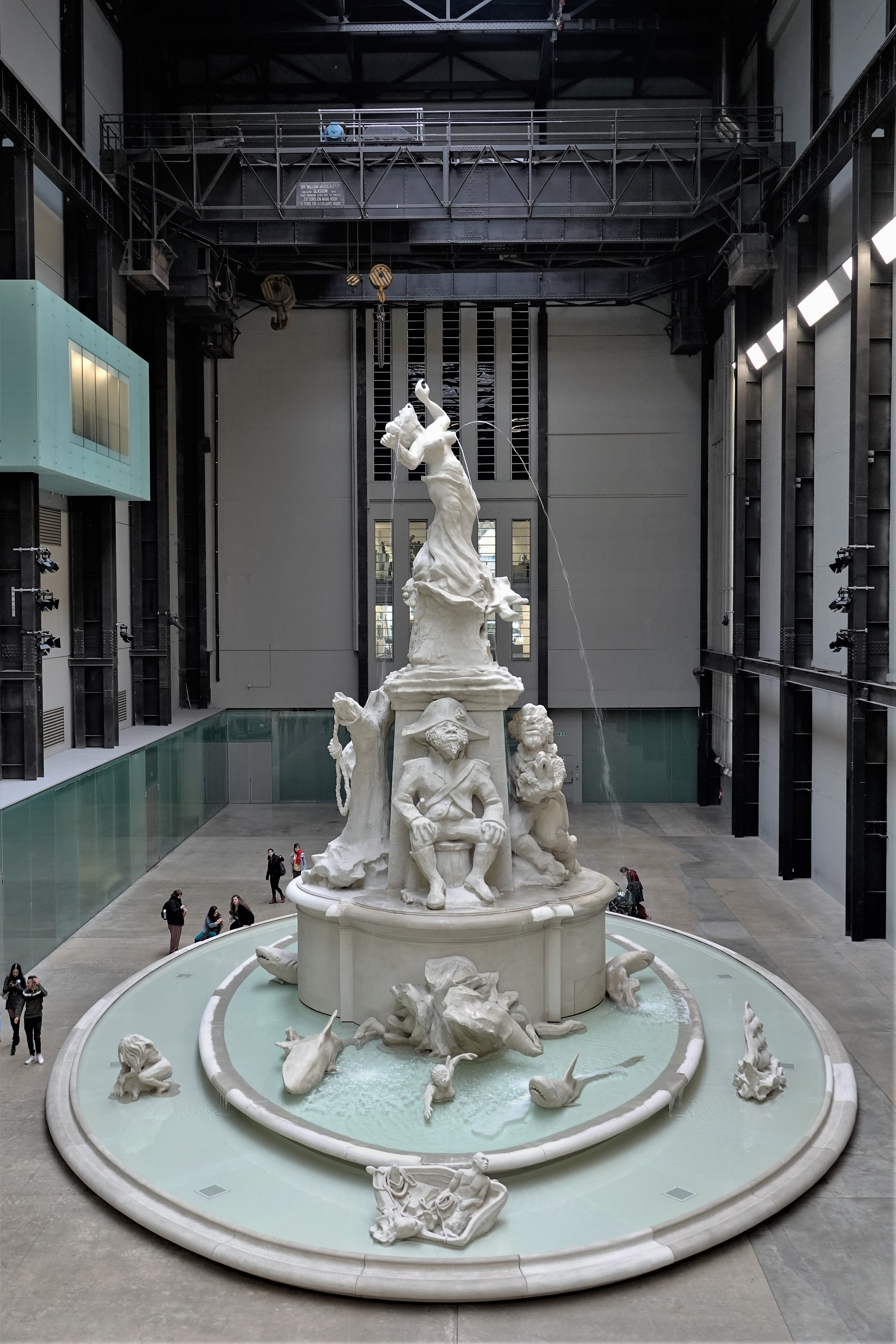
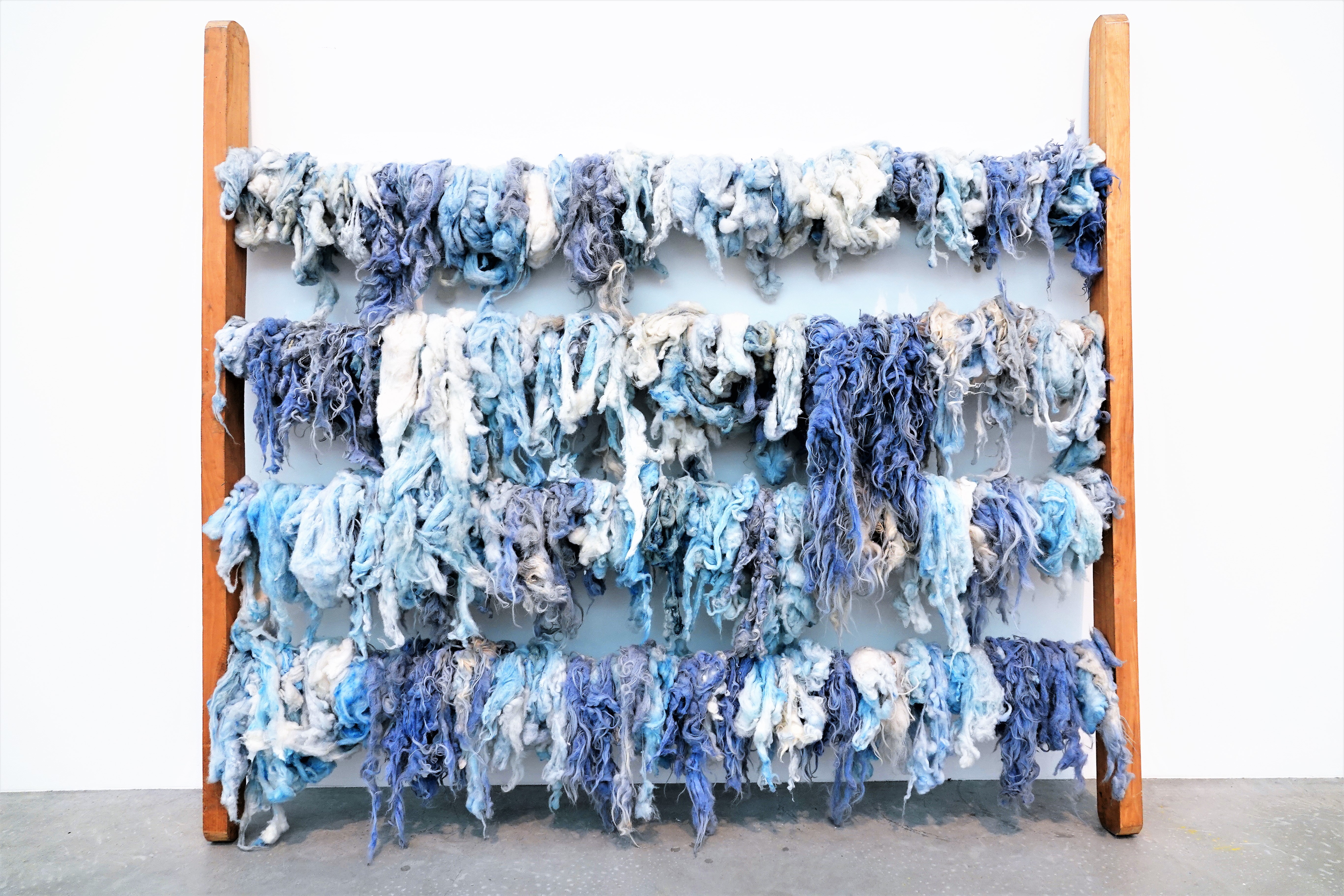
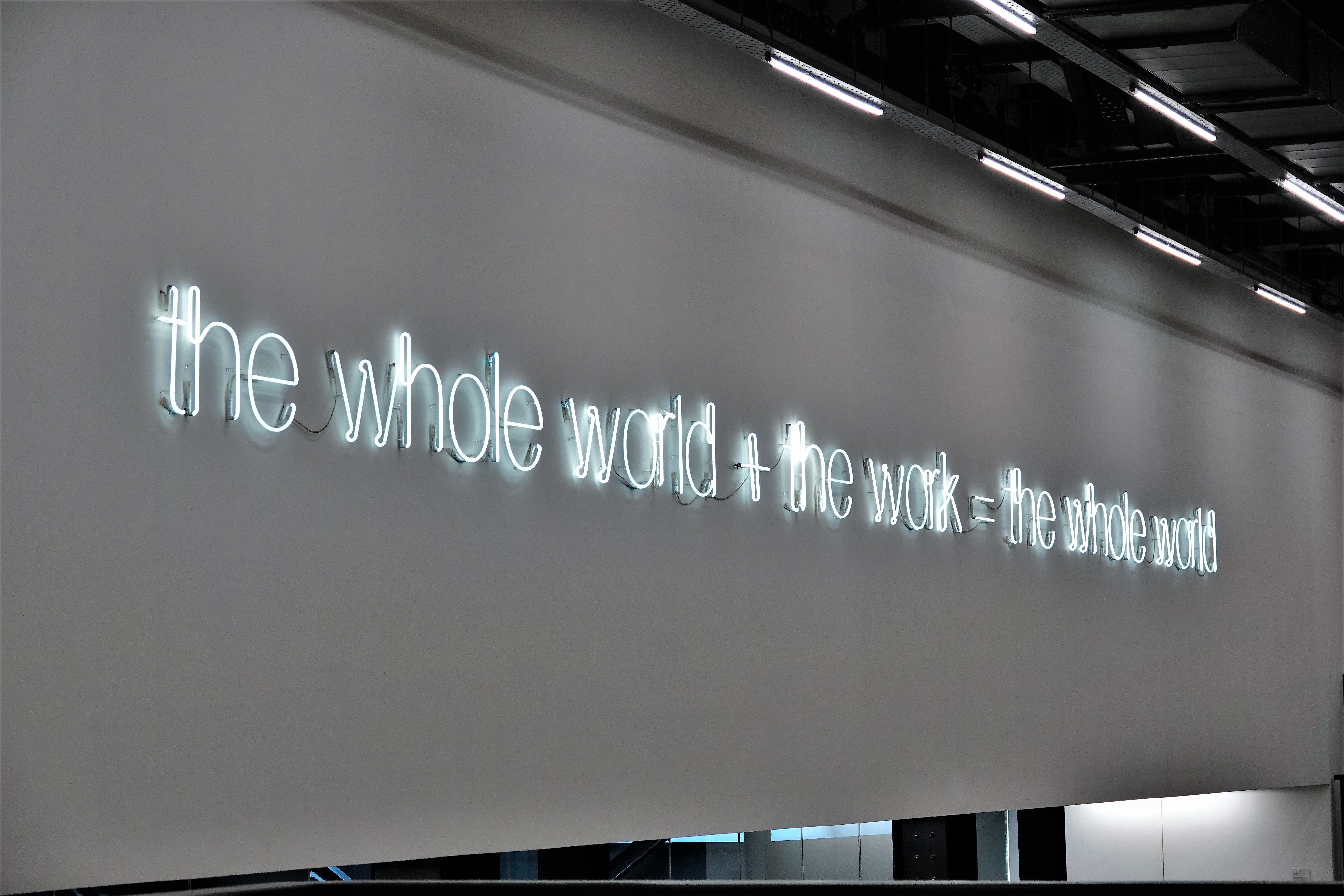
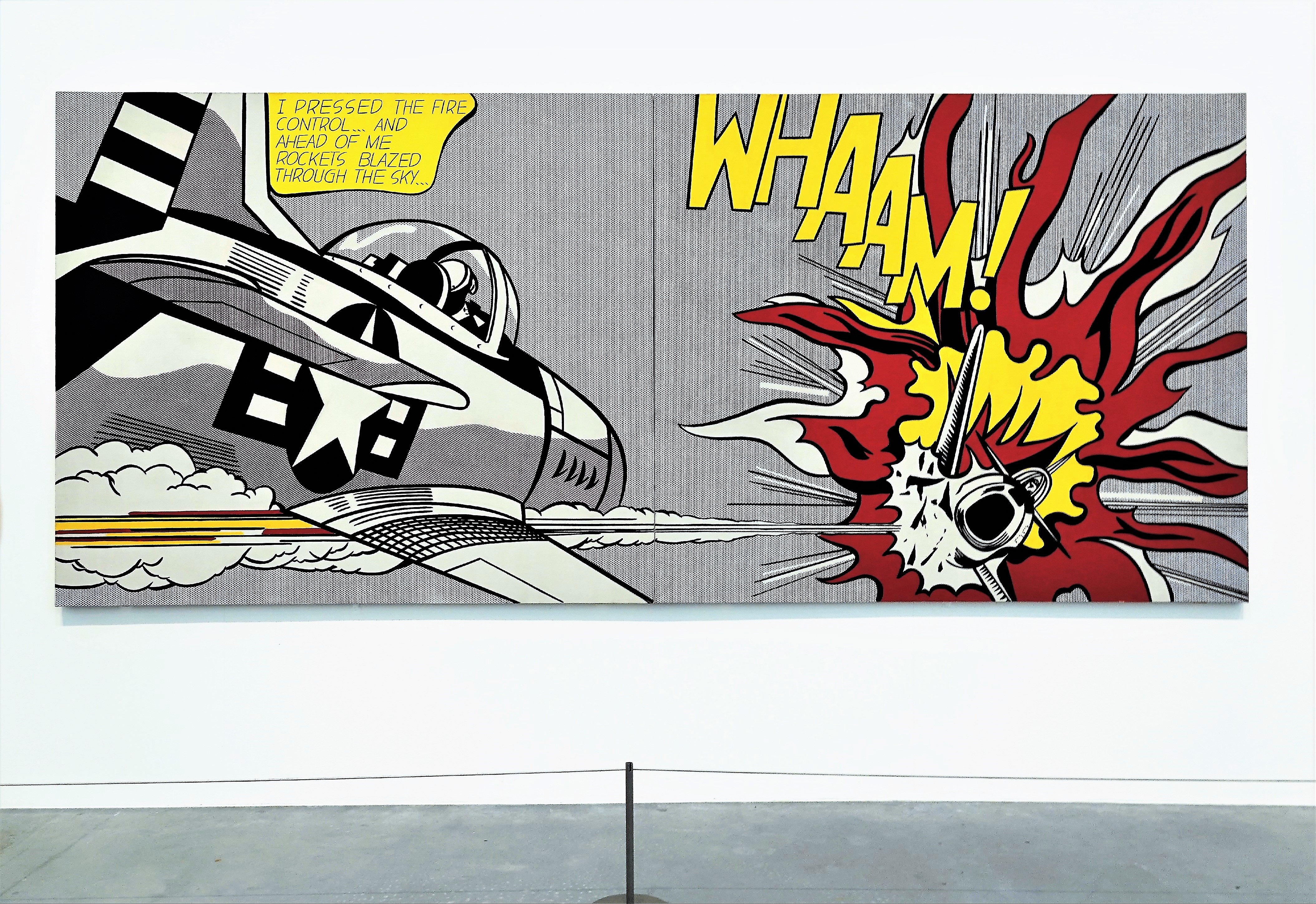
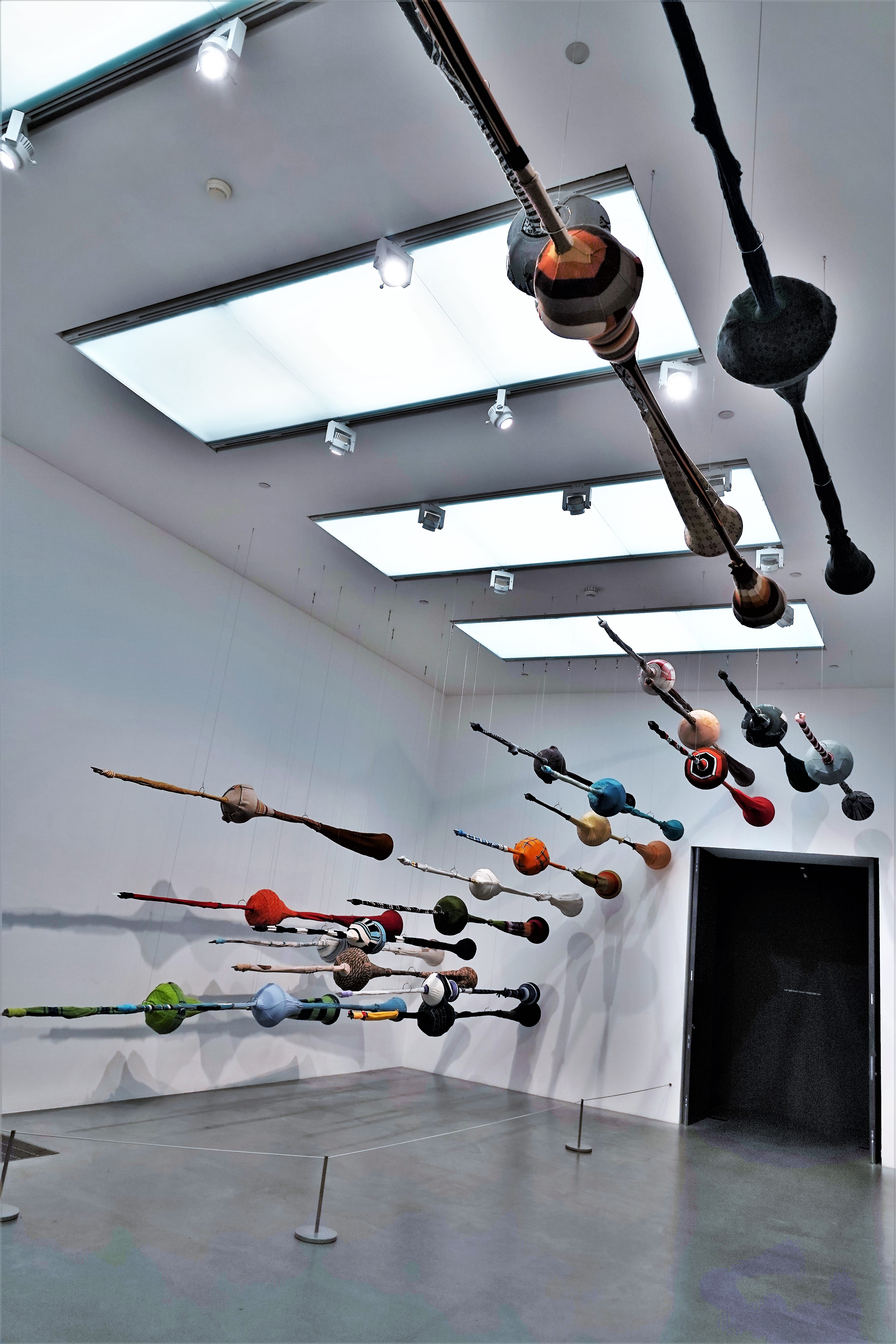
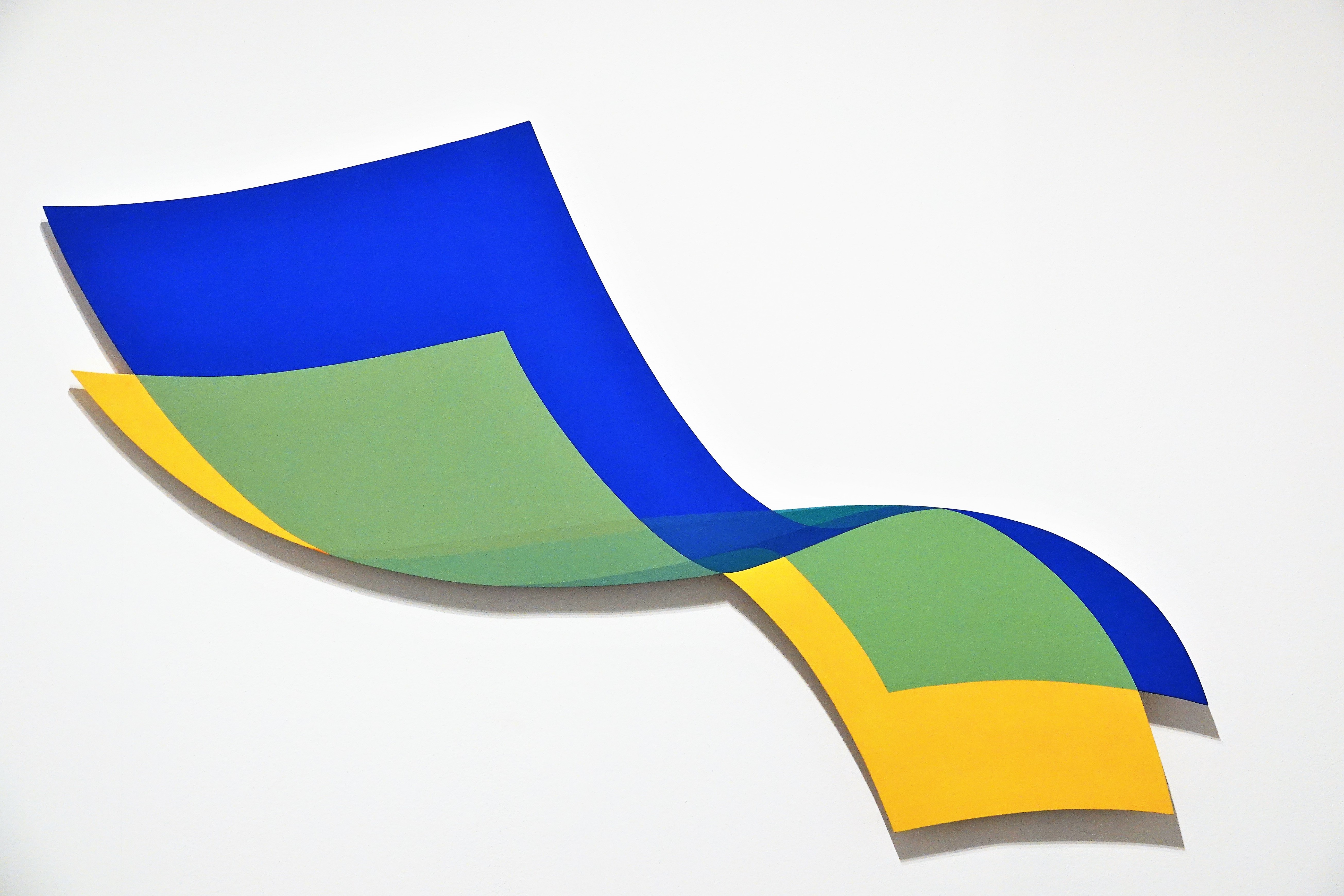
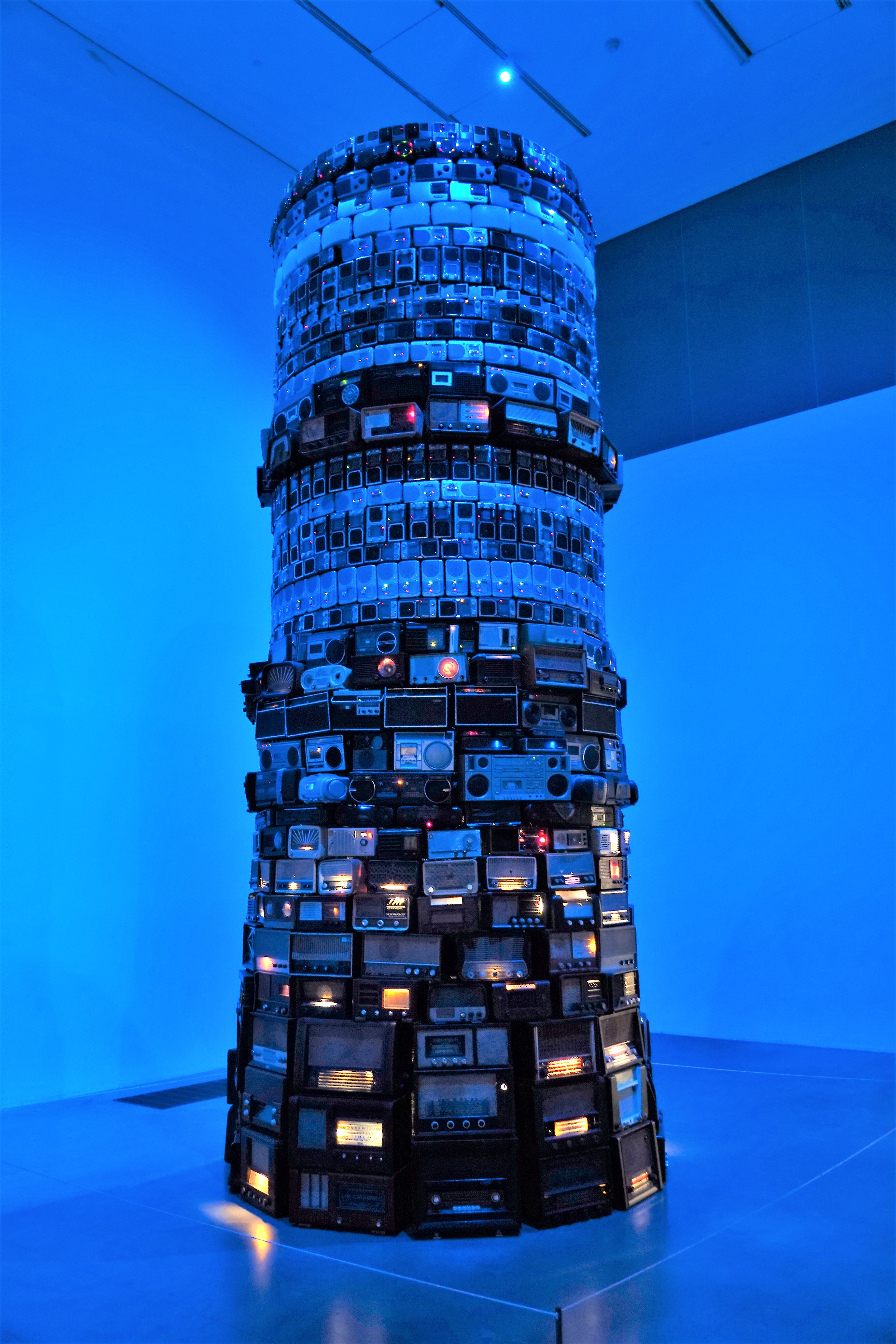
Leah and I could not leave London without visiting Tate Modern, a post-industrial power plant repurposed to house a wide collection of global artists, past and present, who conceptualize their vision through a variety of mediums.
These are only a sampling of my impressions of their work and installations…
























































































































































 Streaming thru America