Road Warriors

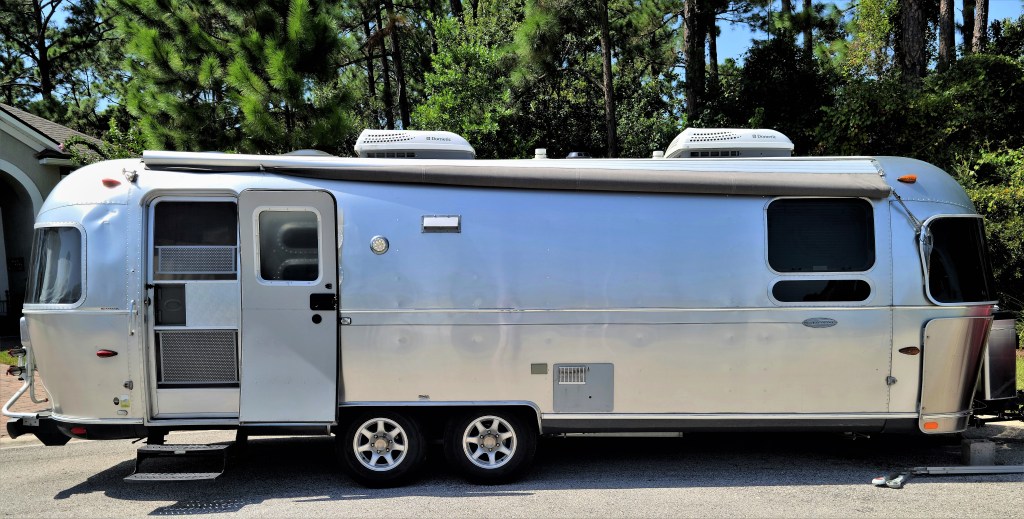
Living out of our newly acquired Airstream for the past few weeks has taught us a few things about durability and reliability when streaming through America across Eisenhower’s Interstate. Years of nasty weather and million-mile road wear (with subsequent band-aid repairs) have left our highways in tatters and our bridges at risk (more on this at a later date), which has a pronounced impact on any home on wheels, considering that bumps and ruts on the outside often translate to shakes and rattles on the inside.

It’s always surprising to see what’s on the cabin floor after a stint of driving between locations. Potholders frequently jump from their hooks, and occasionally, I’ll discover a rogue screw from who knows where, or an A/C vent that’s fallen. However, it’s more disconcerting to find a drawer on the floor or a cabinet door ajar because the locking mechanism has failed.

There was a time when a glass jar of spaghetti sauce was tossed out of the pantry during a rough ride and smashed to bits across the carpet runner that connects our living space to the sleeping space. Leah and I were finding spatter specks years later, stuck to walls, bedding, and curtains. We learned our lesson; today, we look for plastic containers.

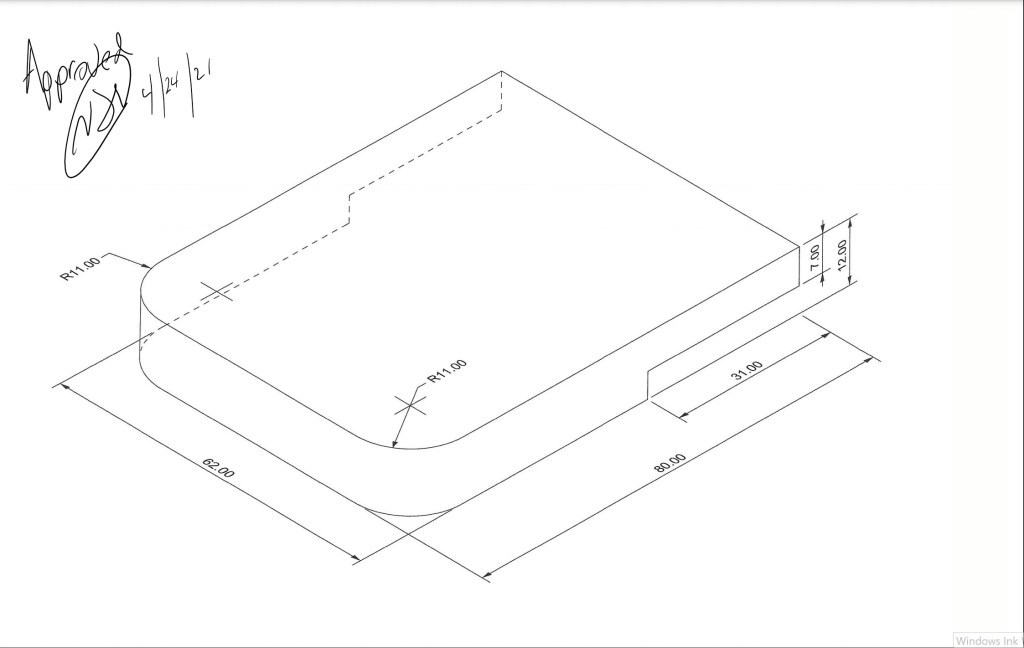
One of our more notable challenges as we prepared for this trip was finding an appropriate bedspread that had gone missing since the last owner. Because the queen-size mattress is rounded and shorter than usual–to accommodate the bedroom dimensions—Airstream charges $534 through their design store to replace it. Fuhgeddaboudit! There is no way any bedspread is worth that much. Yet, an exhausting internet search found nothing close to what we needed.

After continued research, I discovered Top Stitch, an old Airstream supplier, who promised to customize our bedspread for $199. Their first effort was a flat cover and a total flop, completely discounting the unique mattress design. However, after checking and double-checking measurements, and eventually signing off on a scaled drawing…

the project was successfully completed for a fraction of the cost. Hats off to Top Stitch!

Additionally, a stack of drawers under the galley sink—that should have been better secured—needs to be realigned to fit better and roll more smoothly; the left channel of the Polk audio system needs to reconnected; and a missing freezer door lock needs to be located and installed.

We were hopeful that a one-day stopover at Airstream’s Factory Service Center in Jackson Center, OH would satisfy our fix-it list, but only if we were willing to stay through September for the next available appointment.

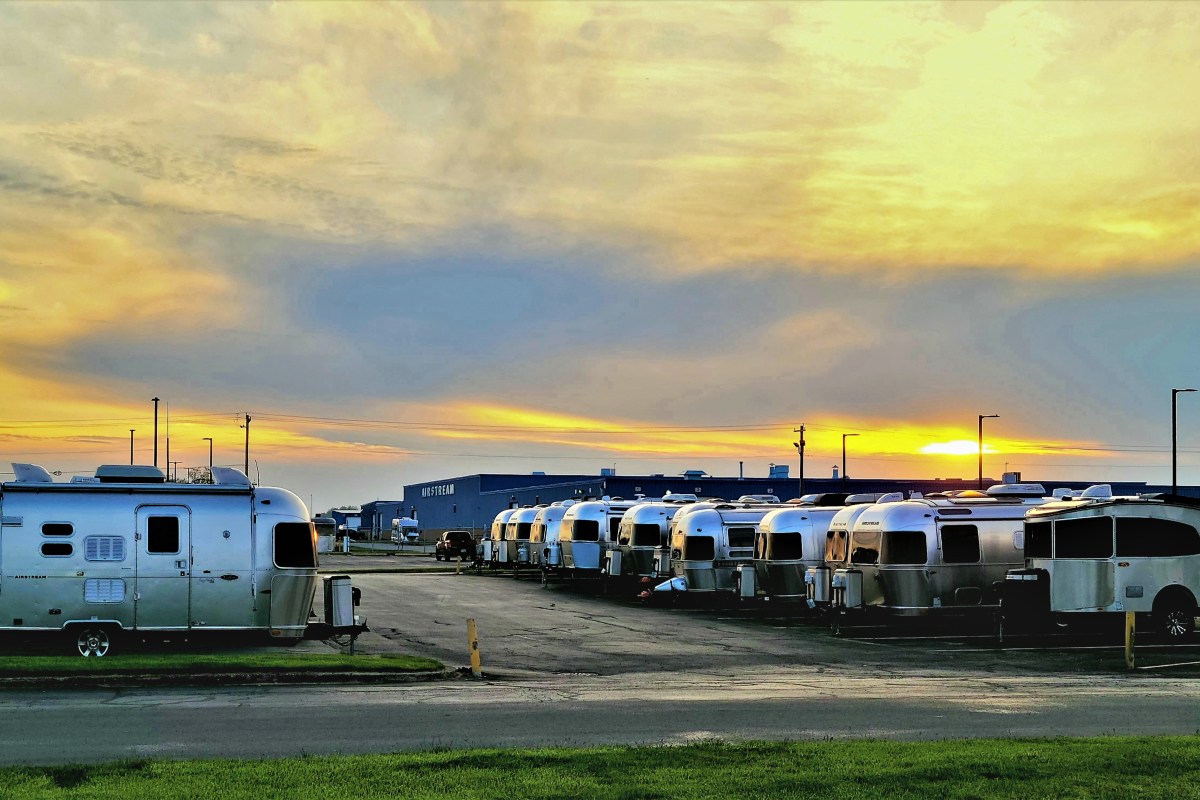
Airstreams waiting for service

Uh…no! But we did stay through the night with full-service hook-up for $10.

The next morning, we were off to Indianapolis with Painter Tape across the drawers and freezer door to limit the number of surprises at our next stop.

It may not be pretty, but it works.

Coasting thru COVID–East Coast Edition

Leah and I have been eager to weave family and friends throughout our Great American Road Trip–Part IV. This summer tour is more than escaping Florida’s summer heat, or seeing the sights and exploring the great outdoors; it’s about personally reconnecting with the world after a year of COVID-19 constraints. For all the good that Zoom has given us to put us in touch with each other across the internet, there can be no substitute for face-to-face.

And in this moment of recalibrated norms, we are craving the sensation of normalcy.

From Virginia, we continued north to New Jersey, where it was previously arranged by Leah and her daughter Danielle, that we would occupy her driveway, and safely distance inside the trailer.

While Danielle and her husband Matt have been vaccinated for some time, Lucy, at age fourteen has not–although CDC officials are now in agreement that all teenagers will be eligible for the shot. So as an extra precaution, Leah and I agreed to a rapid test.

Honestly, I thought the PCR test was overkill, as Leah and I have been fully vaccinated since January, but half an hour later, all was forgotten after getting hugs from Lucy.

Other couples in New Jersey have been less fortunate. Phil and Cheryl both tested positive in November, but Phil required a hospital stay while Cheryl remained asymptomatic. To this day, Phil still suffers long-haul effects of COVID-19, so his reluctance to host our visit was understandable. Certainly, our negative test results must have eased his mind, and it was good to see him feeling more relaxed.

Whenever we return to New Jersey, we always turn to our hiking buddies, Doug and Arlene, who remained healthy throughout the pandemic. We reprised one of our favorite hikes at Pyramid Mountain during the height of pollen season,

sneezing our way to the ridge for electrifying views of New York City.

Next, we were on to Philadelphia with a lunch detour in Vineland to visit Leah’s brother, Harvey who’s lived in a group home with four other adult men for the past 20 years. It’s been three years since our last visit (considering our move to St. Augustine, and de facto quarantine protocols), and relaxed New Jersey state restrictions now gave us an opportunity to take Harvey out for the day.

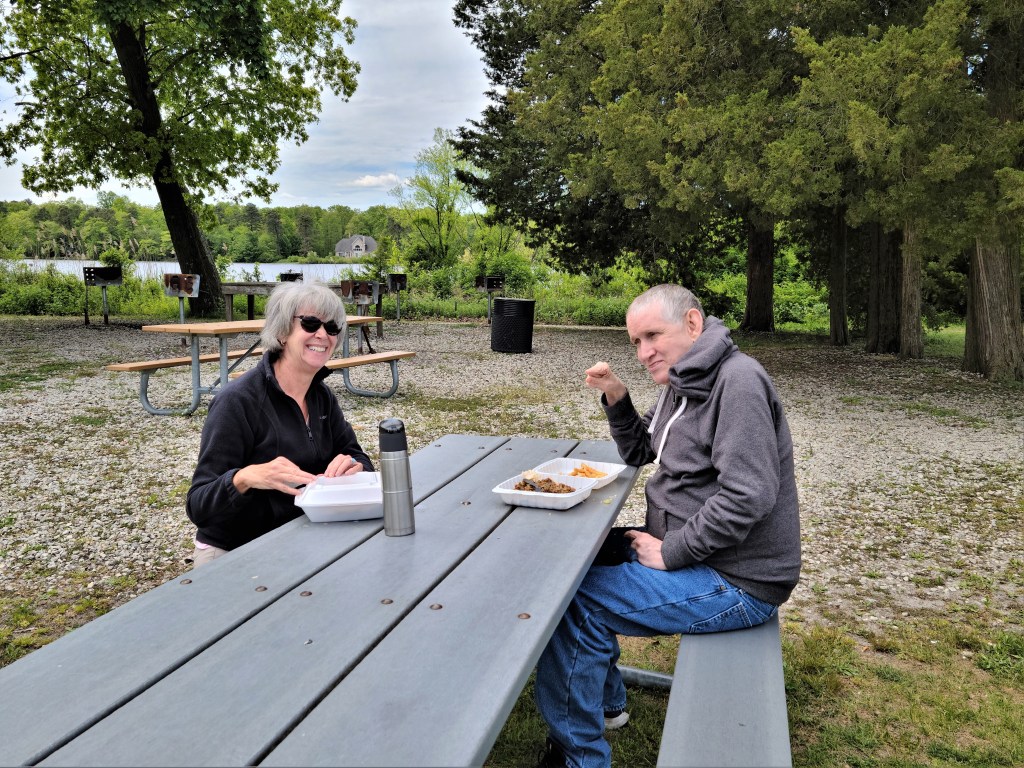
Ordinarily, we’d plan lunch at a nearby diner, but group house rules precluded indoor dining, so a take-out meal, although less than ideal…

followed by a very brief walk through a minefield of goose poop, gave us some much needed time together.

Next day, while camping in Hatfield, PA, we coordinated a day trip to Lambertville, NJ…

to reunite with my oldest son Noah,

who most recently had been tasked with rolling out two dozen mobile testing labs for COVID-19 across metro Philadelphia–making Philly safe “one test at a time”–and ironically testing positive two days after his first vaccine shot. His recovery was rapid, no doubt because of the vaccine.

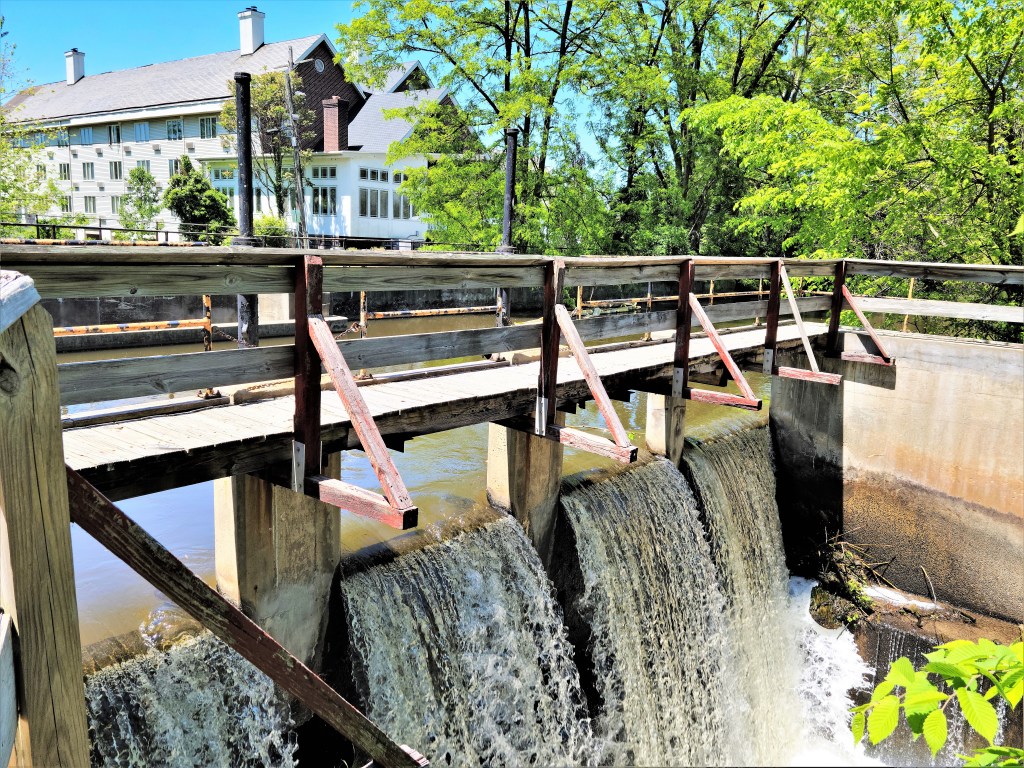
We cycled the Delaware & Raritan Canal Towpath together…

until we reached Washington Crossing State Park, 8 miles north.

Leah and I wrapped up our Philly reunion with a hike along Wissahickon Creek…

with long-time friends Alan and Andrea, who diligently practiced social distancing for the better part of a year.

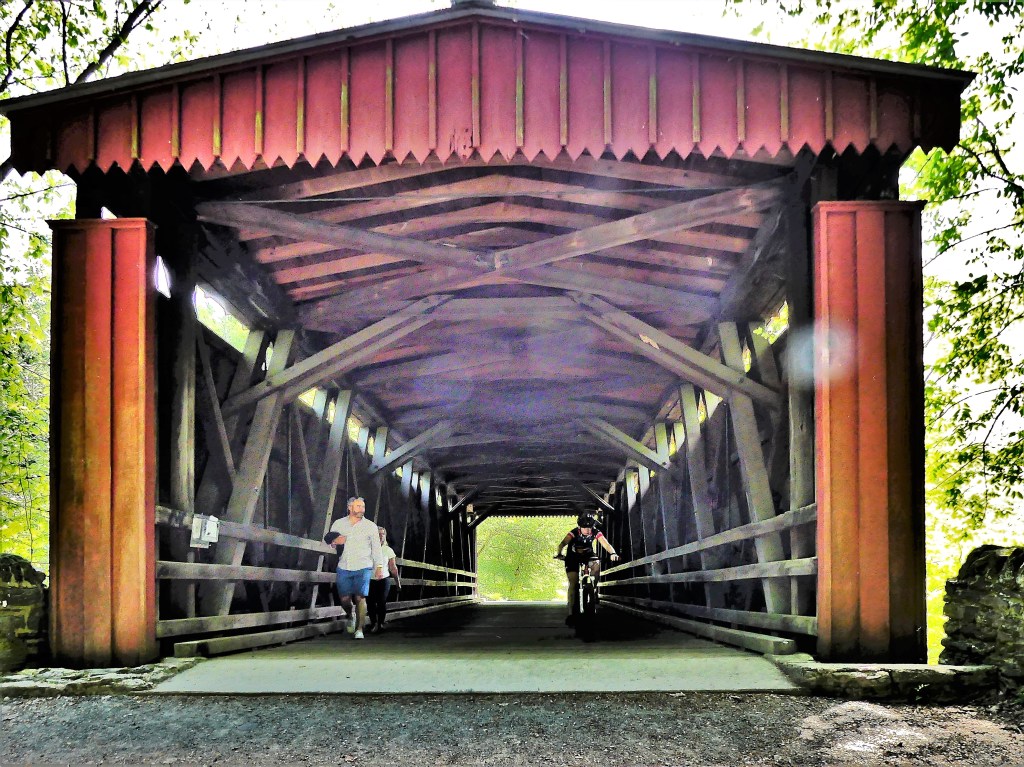
On our way to the Valley Green Inn for lunch, I spotted a garter snake enjoying a meal…

by the covered bridge.

Lastly, Leah and I made our way across the state to Pittsburgh, my hometown and my heartbeat.

Leah and I thoroughly enjoyed the hospitality of my first cousin, Sandy and his wife, Barbara, who allowed us to park our rig in front of their house. Our intention was to sleep inside the safety of our Airstream, but after learning that all of us were dosed by the Moderna vaccine, we were easily persuaded to accept Barbara’s invitation to chill at her 6,700 sq. ft., 100-yr. old resort with Sandy operating as executive chef.

To shed our extra calories, we pedal pushed through the hills of Pittsburgh on our manual bikes

while our hosts cruised along on their e-bikes, assuring us that they were working just as hard as we were.

I don’t think so! From Point Breeze to Point State Park Fountain and back,

we reeled off 26 miles, and worked off some of the food and beer from the cousins’ reunion the day before.

Bottom Line: Leah and I have discovered that COVID-19 may have temporarily disrupted our families, but it’s also brought us closer together.

Natural Bridge Has Caverns Too!

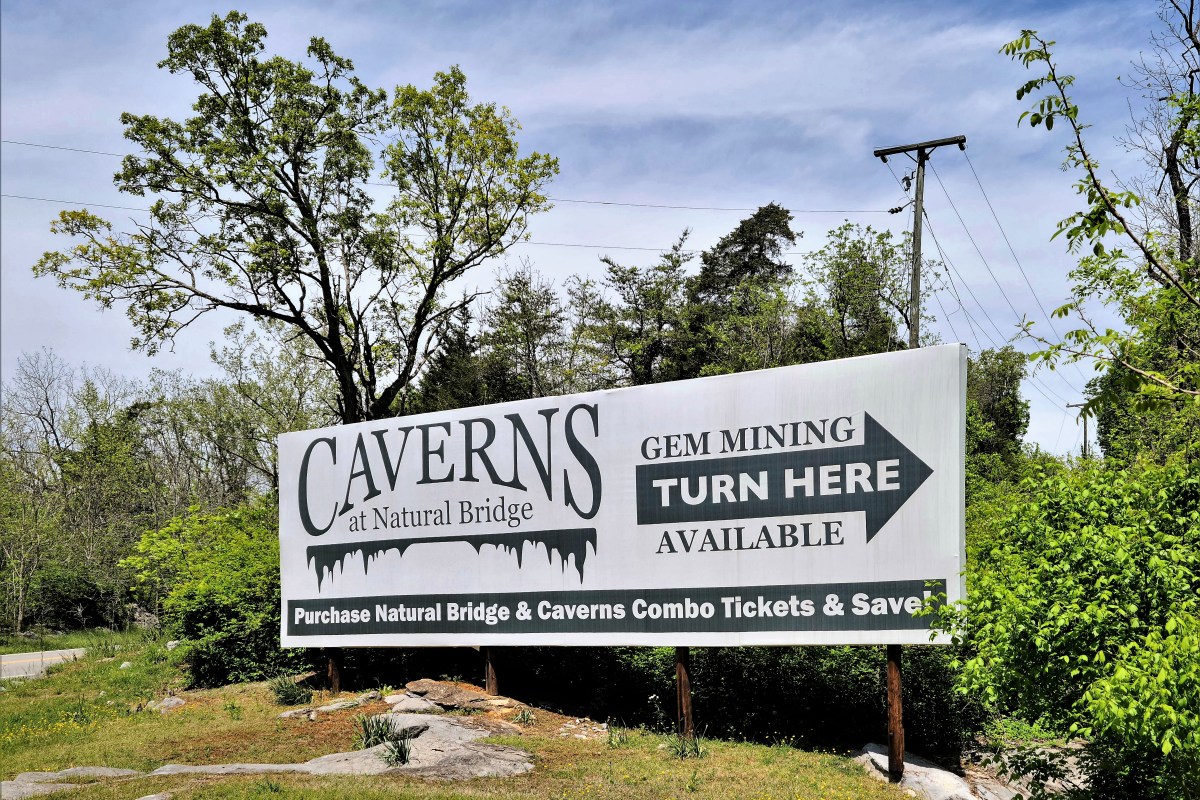
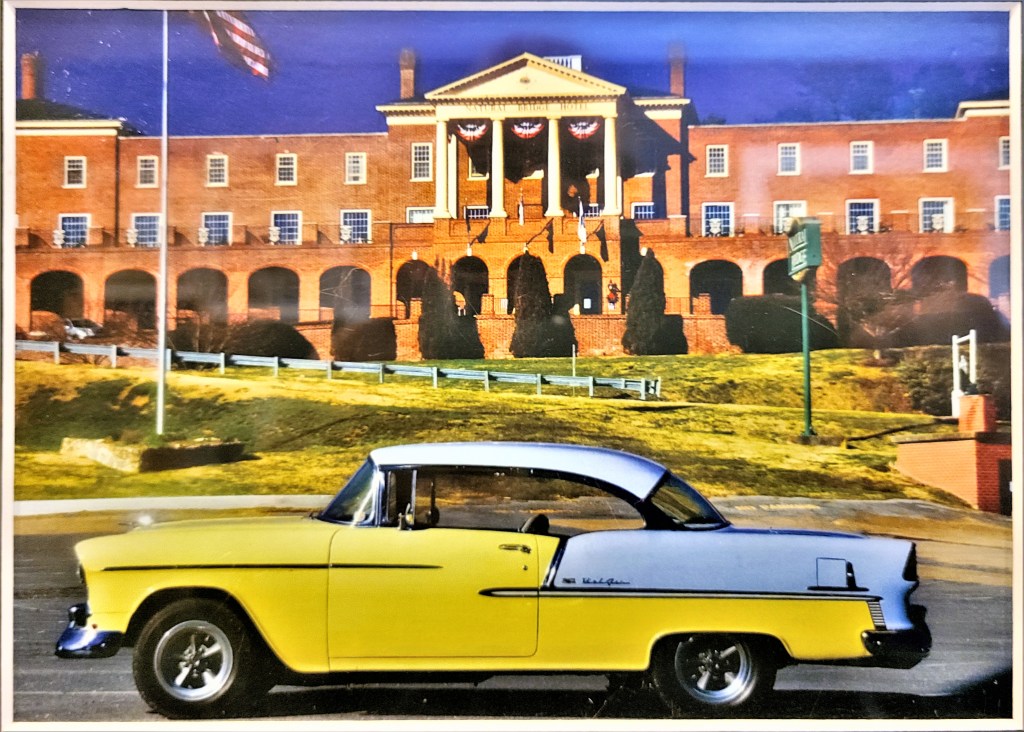
The Caverns of Natural Bridge can’t be more than a 15-minute walk from the Natural Bridge State Park parking lot. Along the way, it’s impossible to miss the Natural Bridge Hotel poised on it’s perch across the road…

where very little has changed as a popular destination for tourists since its rebuilding in 1964 after a doomsday fire.

Continuing up the road and around the corner, stands a rustic cabin set back from the parking lot that’s been open for business since 1977.

The attendant tells us that this is a quiet time for tourists–middle of the week, before Memorial Day–and that’s fine with us. In fact, so far, we are the only spelunkers to have signed up for the 2 o’clock tour. As the hour draws near, only two other women have joined us. But as a party of four, Brian, our guide assures us that we can linger longer at each attraction, since our group is so small.

We are descending into a wet cave (as opposed to a dry cave),

34 stories below the earth’s surface…

where an underwater spring still feeds the formation of speleothems (e.g. stalactites and stalagmites).

The temperature is a humid 54o F, and with masks on

my glasses can’t help but fog with each breath I take. It’s never been so frustrating looking through a viewfinder to frame a photograph.

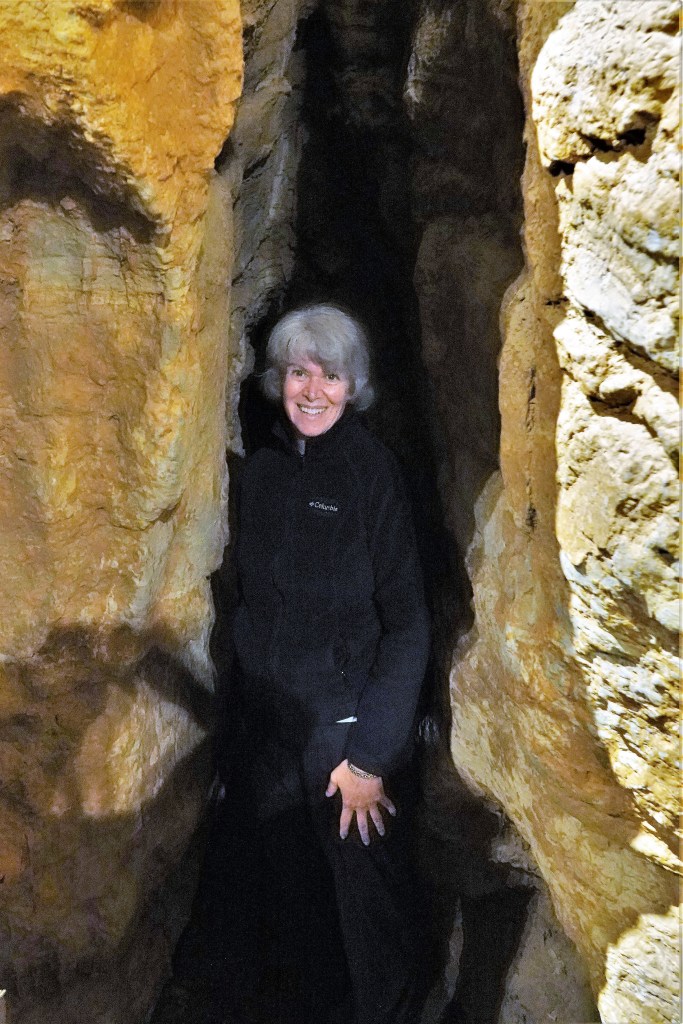
But as we snake our way through low overheads…

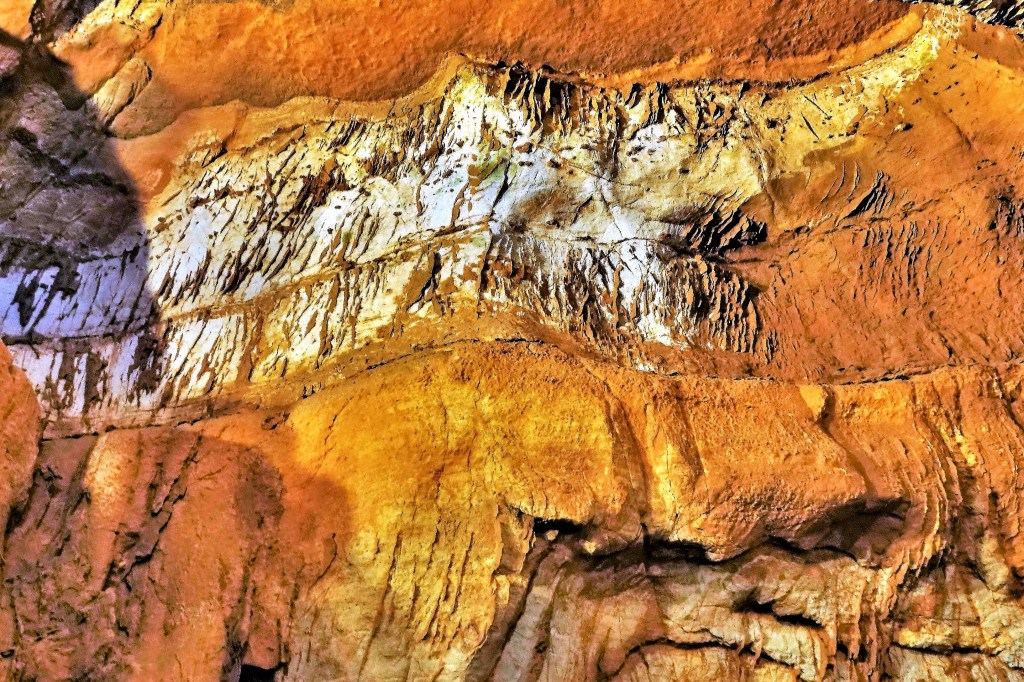
we are surprised to see boxwork, an uncommon, venous formation of calcite residue…

which forms when calcium carbonate dissolves within the cracks, resulting in unusual honeycomb patterns.

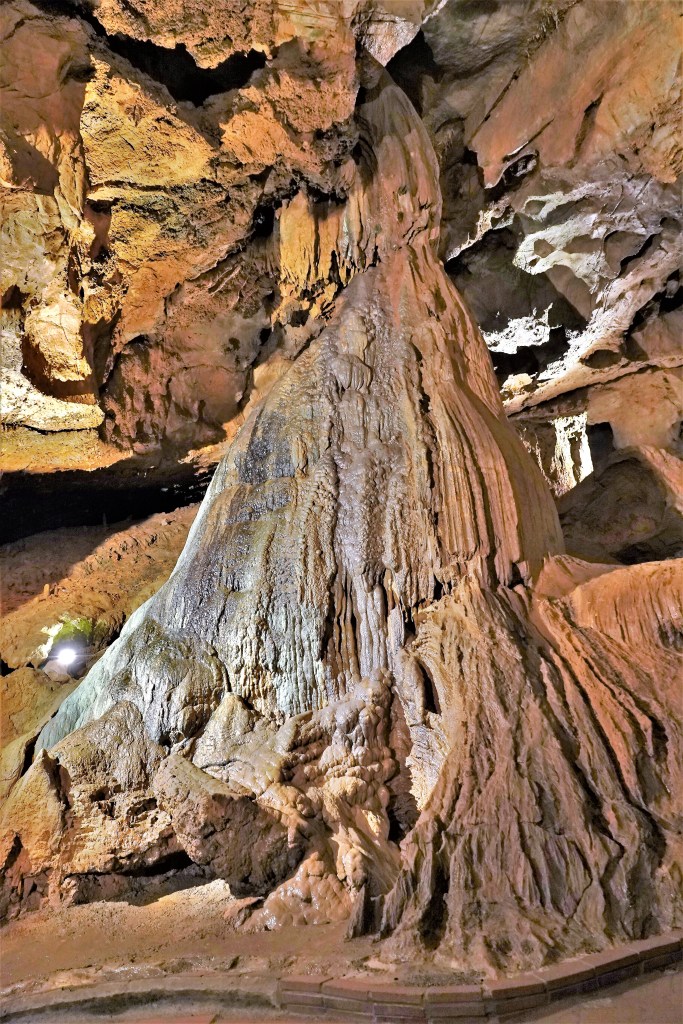
While not the biggest cave system (that belongs to Mammoth Cave), or the most ornate (that belongs to Carlsbad Cavern), Natural Bridge has a pleasant complement of columns…

and detailed domes,

and no shortage of surprises between the cracks and crevices.

Natural Bridge

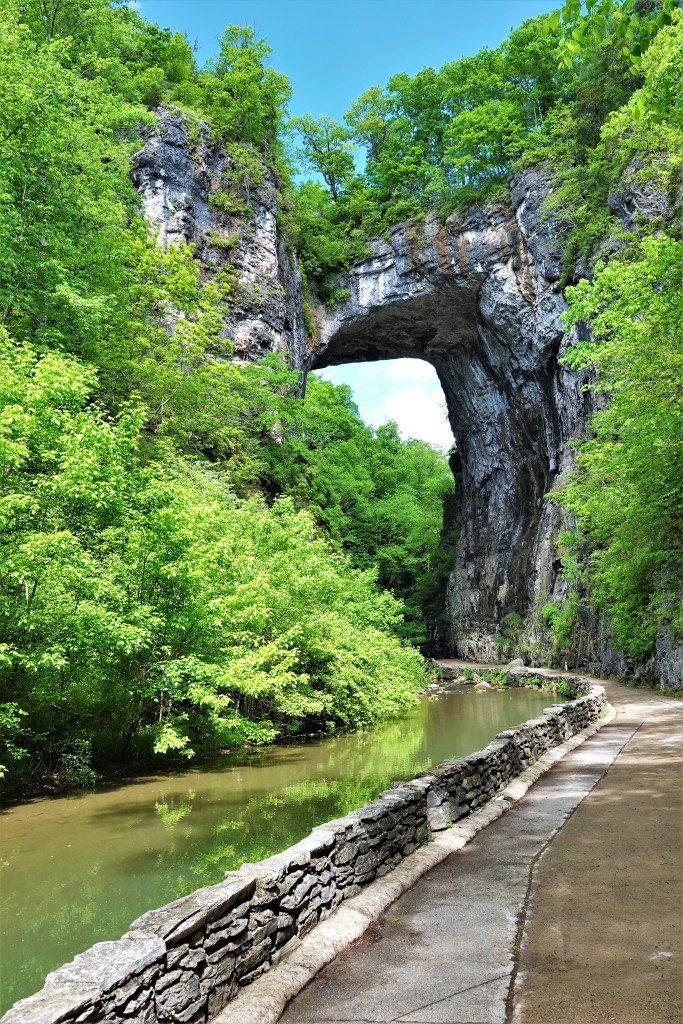
If you’re searching for a town that’s so proud of their community attraction that their town is named after it, look no further than Natural Bridge, Virginia. It’s an unincorporated town tucked within the Shenandoah Valley…

that unsurprisingly features a rock bridge of limestone located in Rockbridge County.

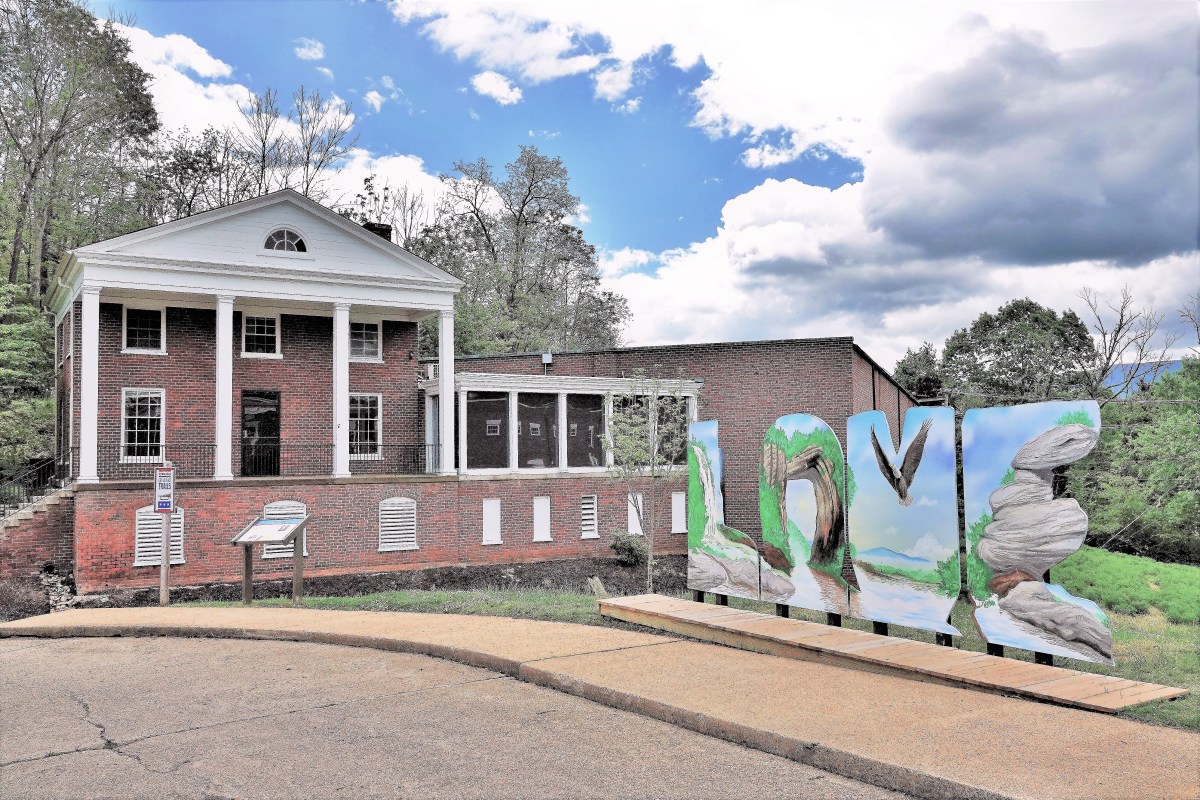
Leah and I masked up, and approached the Georgian-styled Visitor Center to surrender $18 to view this natural wonder.

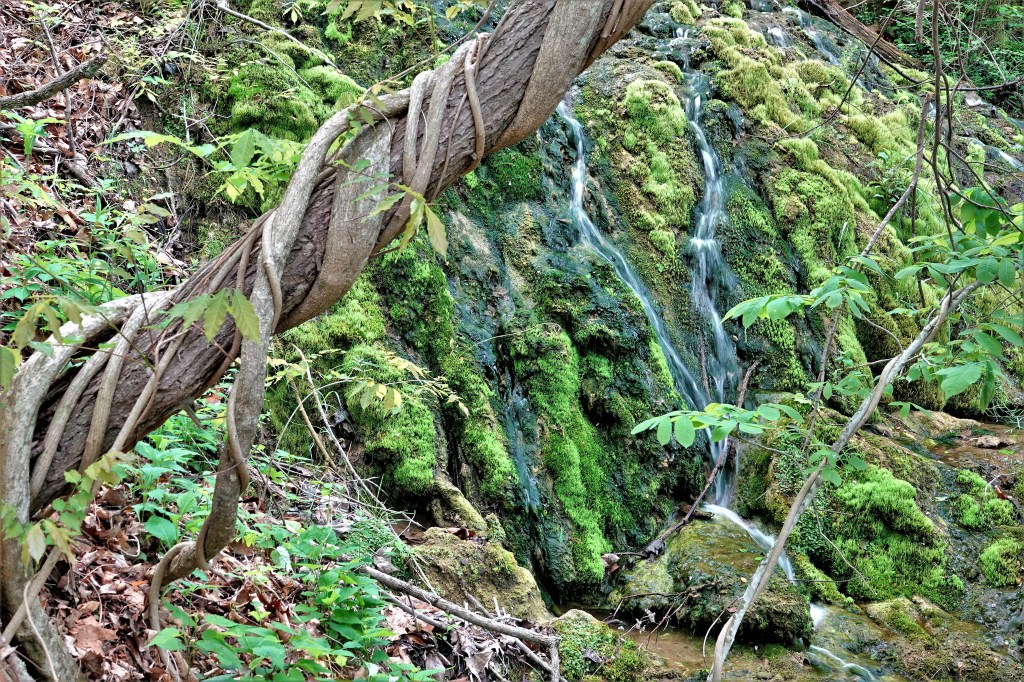
Our downward trail followed a moss-laden terrace of twisted roots and vines laced with wisps of water…

descending into enchanted dripping pools falling on flat rocks…

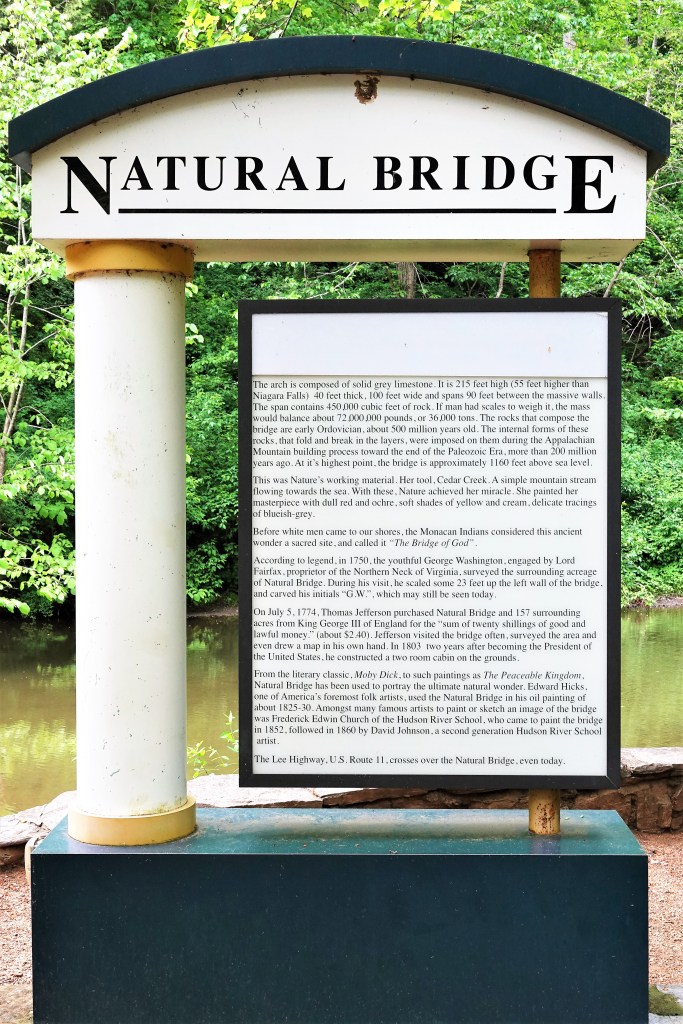
until we reached a T-shirt concession at rock bottom and an imposing graphic…

that tells the story of Natural Bridge:

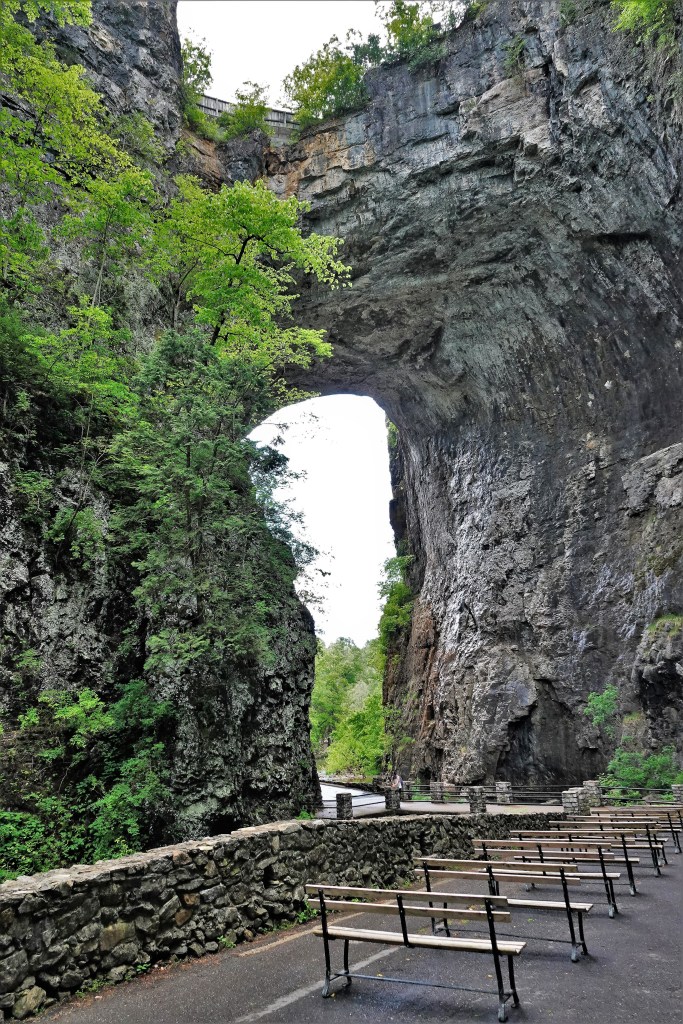
The arch is composed of solid grey limestone. It is 215 feet high (55 feet wider than Niagara Falls) 40 feet thick, 100 feet wide and spans 90 feet between the massive walls.

Looking up at Natural Bridge

The span contains 450,000 cubic feet of rock. If man had scales to weigh it, the mass would balance about 72,000,000 pounds, or 36,000 tons. The rocks that compose the bridge are early Ordovician, about 500 million years old. The internal forms of these rocks that break and fold in the layers were imposed on them during the Appalachian Mountain building process toward the end of the Paleozoic Era, more than 200 million years ago. At its highest point, the bridge is approximately 1160 feet above sea level.

This was Nature’s working material. Her tool, Cedar Creek–a simple mountain stream flowing toward the sea. With these, Nature achieved her miracle. She painted her masterpiece with dull red and ochre, soft shades of yellow and cream, delicate tracings of blueish-grey.

Before white men came to our shores, the Monacan Indians considered this ancient wonder a sacred site, and called it “The Bridge of God.”

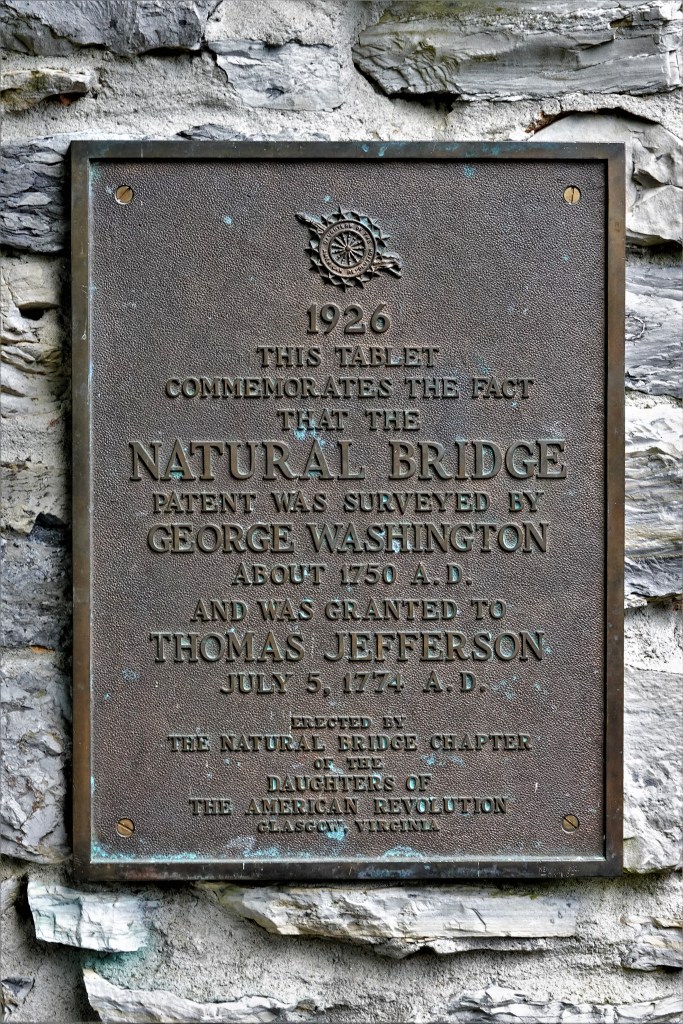
According to legend, in 1750 the youthful George Washington, engaged by Lord Fairfax, proprietor of the Northern Neck of Virginia, surveyed the surrounding acreage of Natural Bridge. During his visit, he scaled some 23 feet upon the left wall of the bridge and carved his initials, which may still be seen today.

On July 5, 1774, Thomas Jefferson purchased Natural Bridge and 157 surrounding acres from King George III of England for the “sum of twenty shillings of good lawful money” (about $2.40). Jefferson visited the bridge often, surveyed the area, and even drew a map in his own hand. In 1803, two years before becoming the President of the United States, he constructed a two-room cabin on the grounds.

From the literary classic Moby Dick, to such paintings as The Peaceable Kingdom, Natural Bridge has been used to portray the ultimate wonder. Edward Hicks, one of America’s foremost folk artists, used the Natural Bridge in his oil painting of about 1825-30.

Amongst many artists to paint or sketch an image of the bridge was Frederic Edwin Church, followed in 1860 by Davis Johnson, a second generation Hudson River School artist.

In later years, Natural Bridge became a merchandising magnet.

Personally, I was equally as intrigued with Cedar Creek as I was impressed by the monolithic bridge…

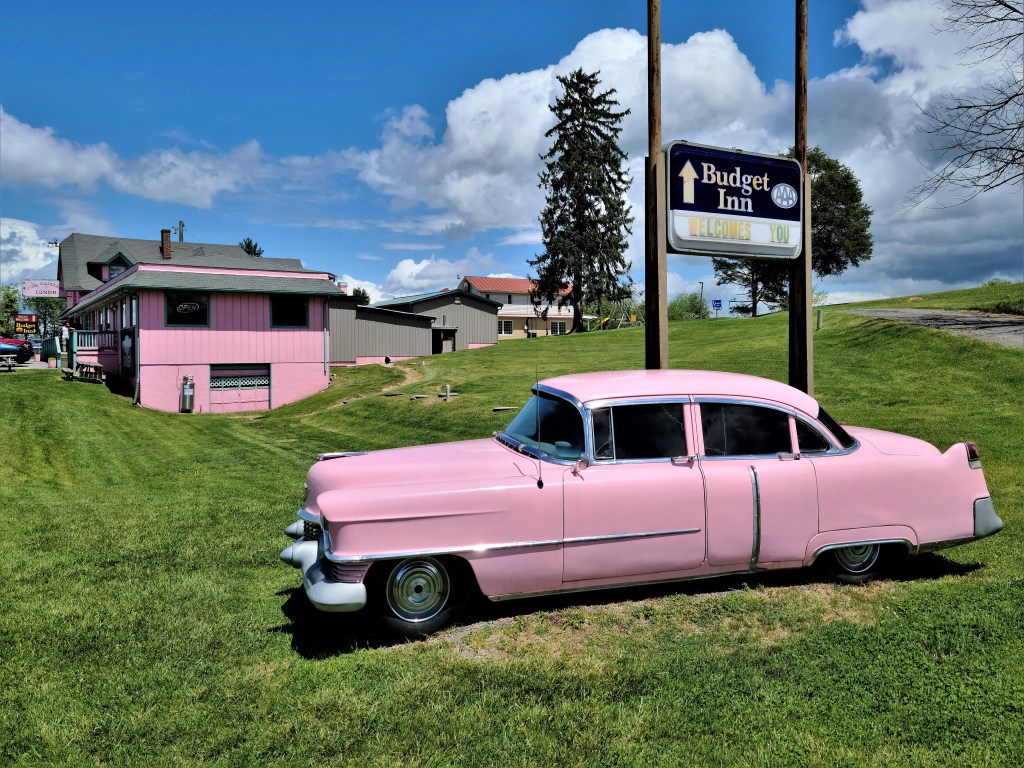
Even today, Lee Highway (U.S. Route 11) runs across the Natural Bridge, and that’s a very good thing, because we crossed many times to access our KOA campground down the road, and more importantly to visit Elvis at the Pink Cadillac Diner.

And We’re Off…

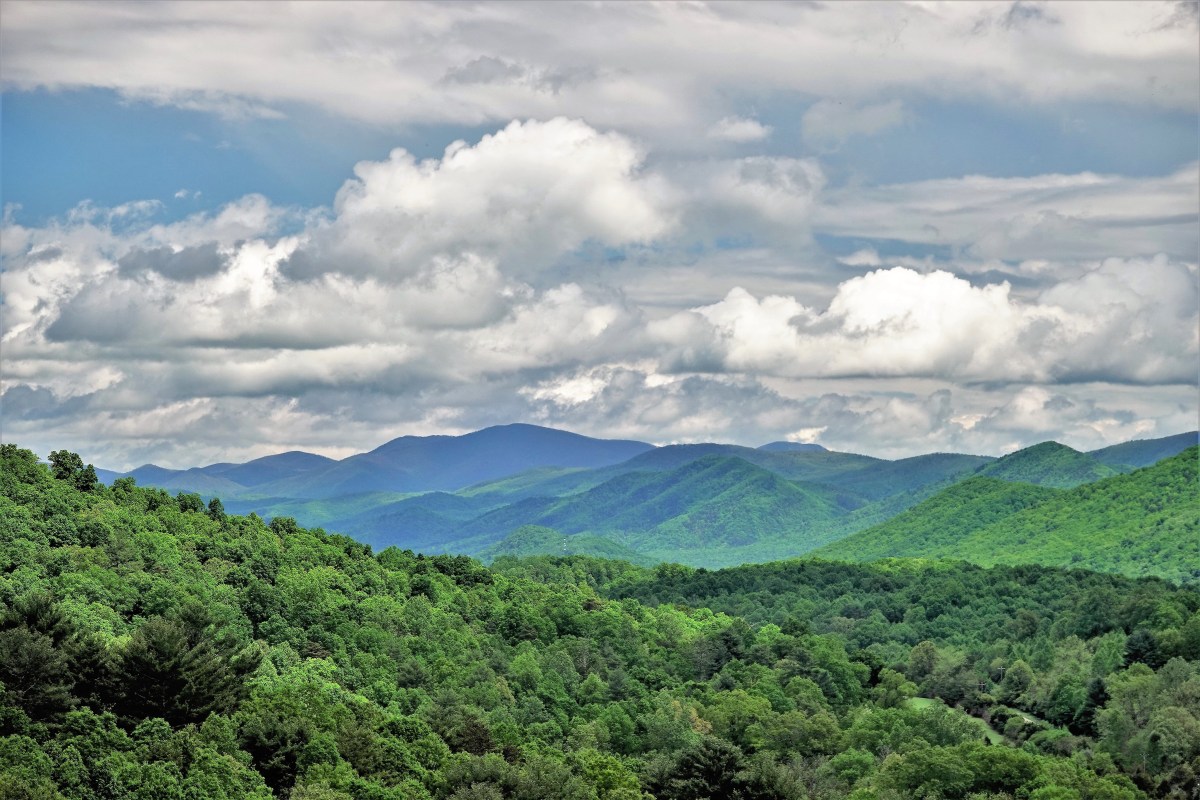
After driving hours upon hours of sameness along I-95 to I-26, Leah and I crossed the border into North Carolina, and rejoiced at our first sight at mountains in the past 9 months–the Blue Ridge. It was a sign that we were entering Pisgah National Forest and approaching Asheville, our first destination of the Great American Road Trip–Part 4.

Although the weather could have been more welcoming, we managed an urban bike ride through Carrier Park and by the River Arts District…

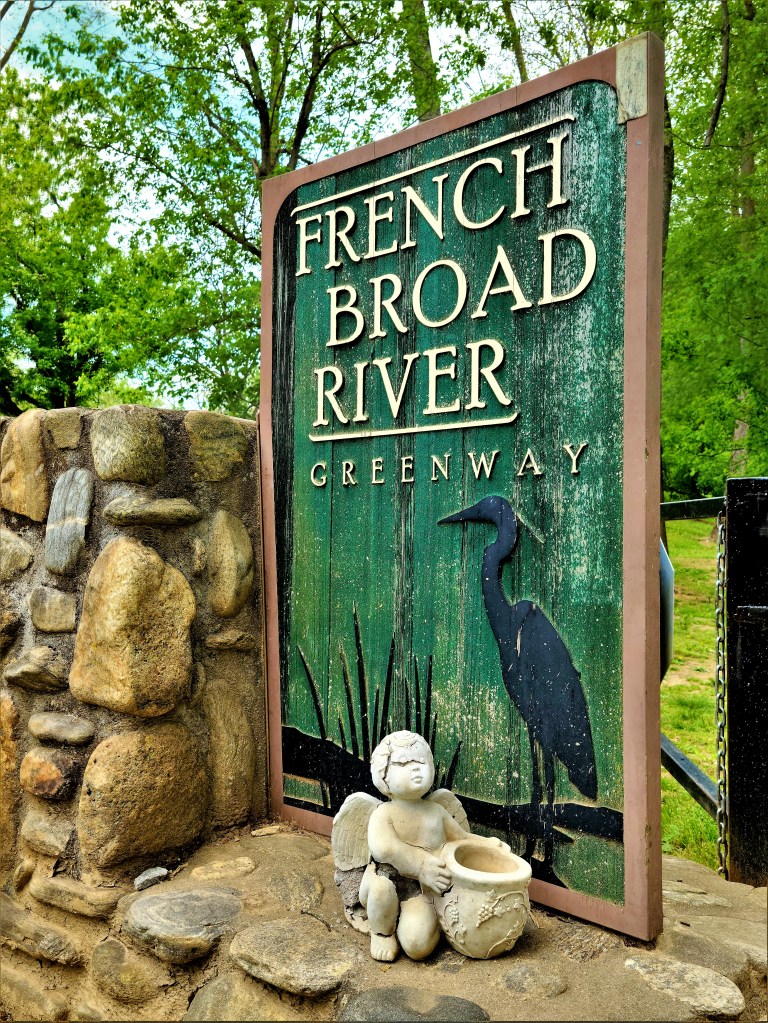
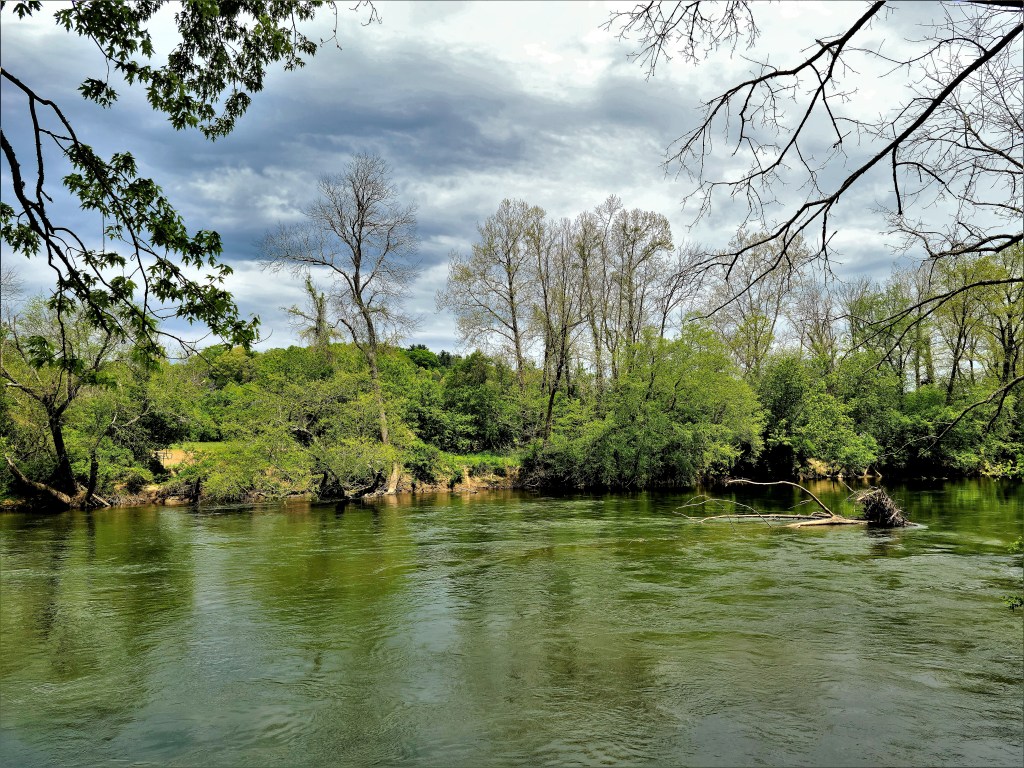
before doubling back along the French Broad River Greenway.

to admire the serenity of the lazy river.

Thank goodness for video downloads, because the incessant rain throughout the evening and into the following day kept us indoors–giving Smokey a much needed fire-watch break–

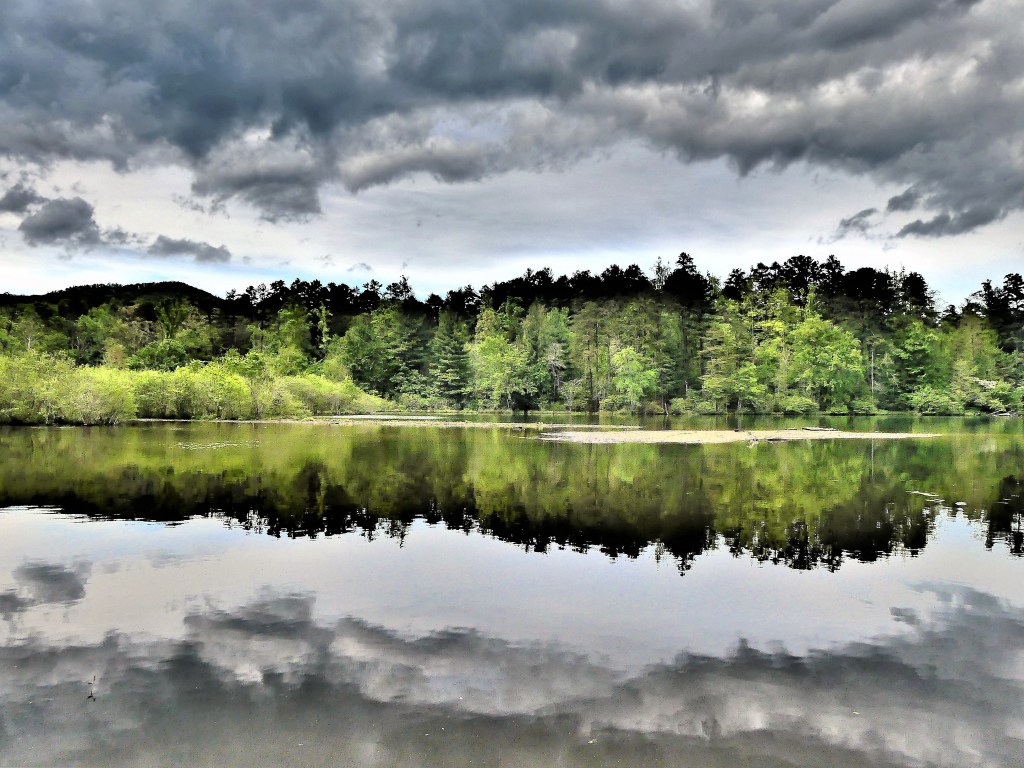
but preventing us from exploring our Lake Powhatan campground surroundings. Fortunately, by mid-afternoon, a partial clearing at the lakefront…

gave us an opportunity to loop around the water through mountain laurel archways…

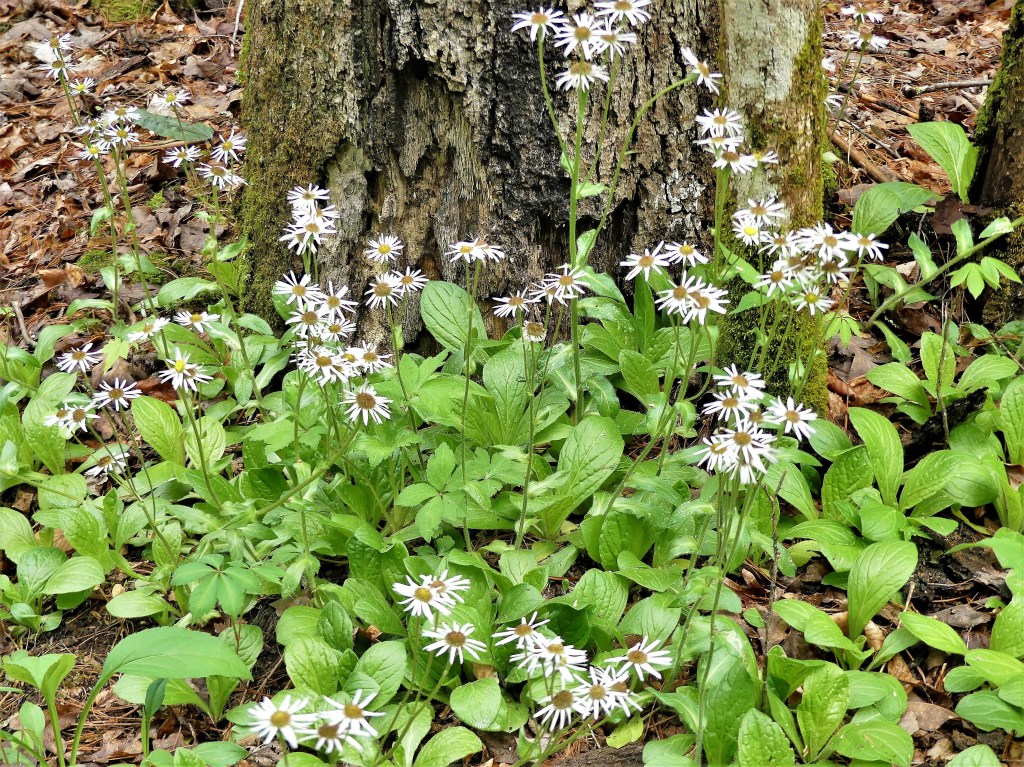
past flora,

falls…

and flume.

All of which brought a smile to our faces.

Happy Campers

Leah and I are on the road again, continuing our Great American Road Trip–part 4, with some significant changes and improvements.

Last year, during the summer of Trumpandemic, we took an abbreviated trip to upstate New York in search of open outdoor vistas with blue skies and limited exposure to crowds, which we found at Letchworth State Park.

Soon after, we rounded the top of New England to enjoy a requisite Maine lobster dinner…

to dip a toe in the Atlantic on Hampton Beach…

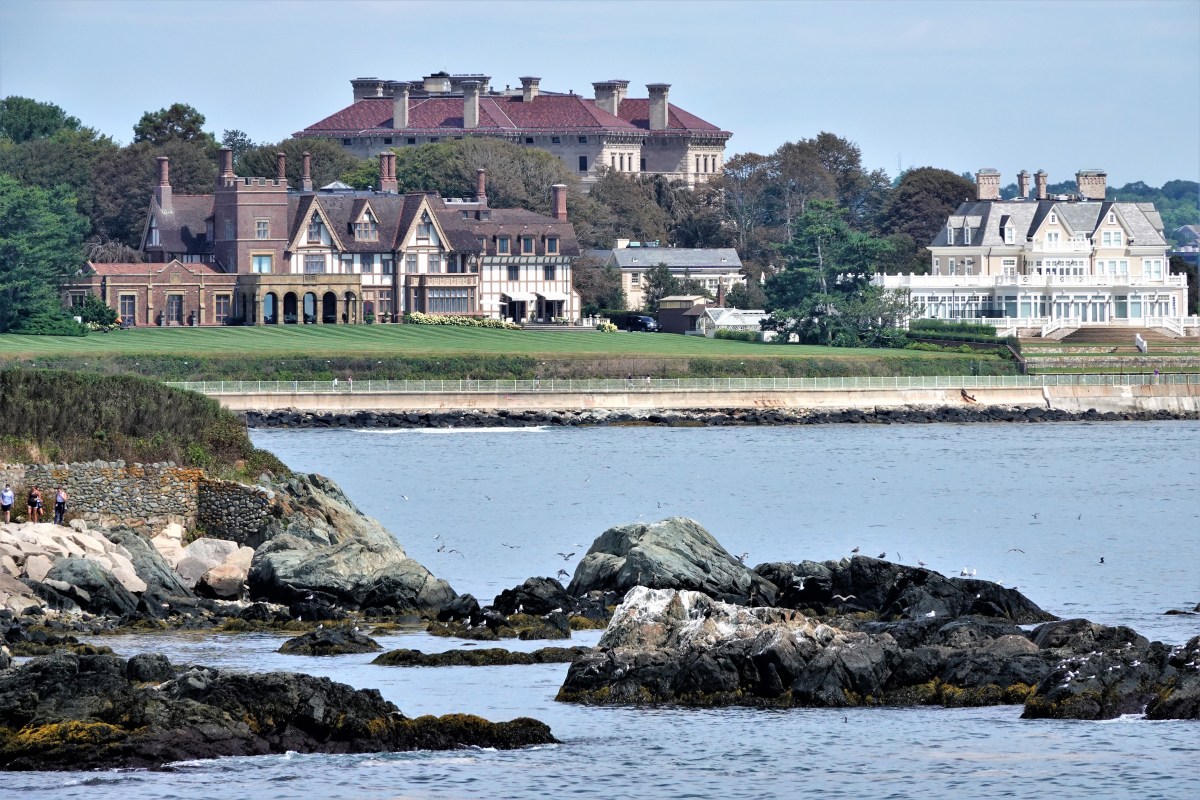
and to gawk at the wealthy from Newport’s Cliff Walk.

We hugged the coastline until we reached Chincoteague, Virginia…

in search of precious ponies…

and to listen to the silence at the Great Dismal Swamp in Suffolk, VA.

The trip was short (only 5 weeks and far from our ambitious itineraries of past years) yet refreshing, and daring (for all the anticipated COVID closures) yet unremarkable with one notable exception…I wrecked the Airstream in Tarboro, North Carolina.

Halfway to Tignall, Georgia (our final destination) and needing a lunch break and a leg stretch, we stopped at a charming town boasting a historic district of 18th century and antebellum landmark homes recognized by the National Park Service. I parked the Airstream inches from the curb on a narrow residential road across from Blount-Bridgers House, an 1808 Federal-style mansion-cum-museum,

and returned an hour later to continue our journey.

I casually pulled out, unaware that a protruding power pole ID tag had snagged the rear awning support and ripped all the cleats out from the aluminum skin, taking down the entire awning assembly and crushing the end caps to the tune of $17,000.

Thankfully, our insurance completely covered the damage. As we drove our beloved, but bandaged 27FB Flying Cloud to the Tampa Airstream dealer for repair, we considered the possibility of an upgrade should one be available. As luck would have it, a Florida family was trading a 2018 Globetrotter 27FB at the time, pending delivery of their new Airstream by February 2021.

We felt as if we had won the lottery. A deposit was offered on the spot, considering a total lack of previously owned inventory throughout the country.

The deal was sealed in April, when Leah and I picked up our reconditioned summer rig and took it for a dry run in Ruskin, FL in preparation for our summer adventure. We enjoyed the whisper-quiet, ducted AC; the ease of deploying the power stabilizer jacks; the convenience of rolling out the power awning; and the notion that our roof-mounted solar panels could provide us with increased boondocking possibilities.

Join us on the road as we explore 44 destinations (mostly new, sprinkled with some favorites) for the next 20 weeks:

  • May 1: Lake Powhatan/ Asheville, NC
  • May 4: Natural Bridge, VA
  • May 7: Vineland, NJ/ Northern NJ
  • May 12: Philadelphia, PA
  • May 15: Pittsburgh, PA
  • May 18: Jackson Center Airstream Factory/ Dayton, OH
  • May 19: Indianapolis, IN
  • May 21: Nashville, TN
  • May 24: Memphis, TN
  • May 27: Hot Springs/Little Rock AR
  • May 29: Eureka Springs, AR
  • June 1: Oklahoma City, OK
  • June 4: Amarillo, TX
  • June 6: Albuquerque, NM
  • June 10: Taos, NM
  • .June 13: Great Sand Dunes NP, CO
  • June 16: Rocky Mountain NP, CO
  • June 20: Cheyenne, WY
  • June 22: Flaming Gorge, UT
  • .June 25: Bear Lake State Park, UT
  • June 28: Craters of the Moon NP, ID
  • July 1: Morley Nelson Snake River Birds of Prey, UT
    • changed to Bruneau Sand Dunes State Park
  • .July 3: Crystal Crane Hot Springs/ Burn, OR
  • July 4: Bend, OR
  • .July 9: Crater Lake NP, OR
  • .July 12: South Beach State Park, OR
  • July 15: Seaside, OR
  • .July 18: Olympic NP, WA
  • .July 21: Port Angeles, WA
  • July 25: Mount Rainier NP, WA
  • July 28: Bothell, WA
  • Aug 2: North Cascades NP, WA
  • Aug 5: Spokane, WA
  • Aug 8: Glacier NP, MT
  • Aug 12: Great Falls, MT
  • Aug 14: Billings, MT
  • Aug 16: Deadwood, SD
  • Aug 19: Badlands NP, SD
  • Aug 22: Sioux Falls, SD
  • Aug 25: Baraboo, WI
  • Aug 29: Clinton Lake State Rec Area/ Dewitt, IL
  • Sept 1: Land Between Lakes National Rec Area, TN
  • Sept 5: Top of GA Airstream Park
  • Sept. 9: Skidaway Island State Park, GA
  • Sept 15: Home

Yes, we are happy campers!

Inhu•manatee

Florida manatees are in trouble and it’s troubling. Today, wildlife conservationists put their current census at around 6500 individuals–up from a few hundred in the 1970’s–

and have reclassified these docile creatures as “threatened.” However, the tide may be returning to “endangered,” given the increasing number of manatees at risk from boat strikes (averaging 100 every year), and the consensus that manatees are dying in unexpected numbers this year from extreme weather. Simply put, they are starving to death.

There’s a chill in the air, and the West Indian manatees of northern Florida have been scrambling to find warmer waters during winter months, where they usually huddle in large numbers, which assists in the yearly count.

Many coastal manatees migrate to Manatee Lagoon…

to bask in the warm-water discharges of FPL’s Next Generation Clean Energy Center at West Palm Beach,

while hundreds flee to Blue Springs State Park, in Orange City, Florida, where they find safe haven at a wellspring releasing 72° water year-round.

Others migrate to Silver Springs State Park,

where clear, calm, and temperate waters provide an abundance of sea grass for grazing.

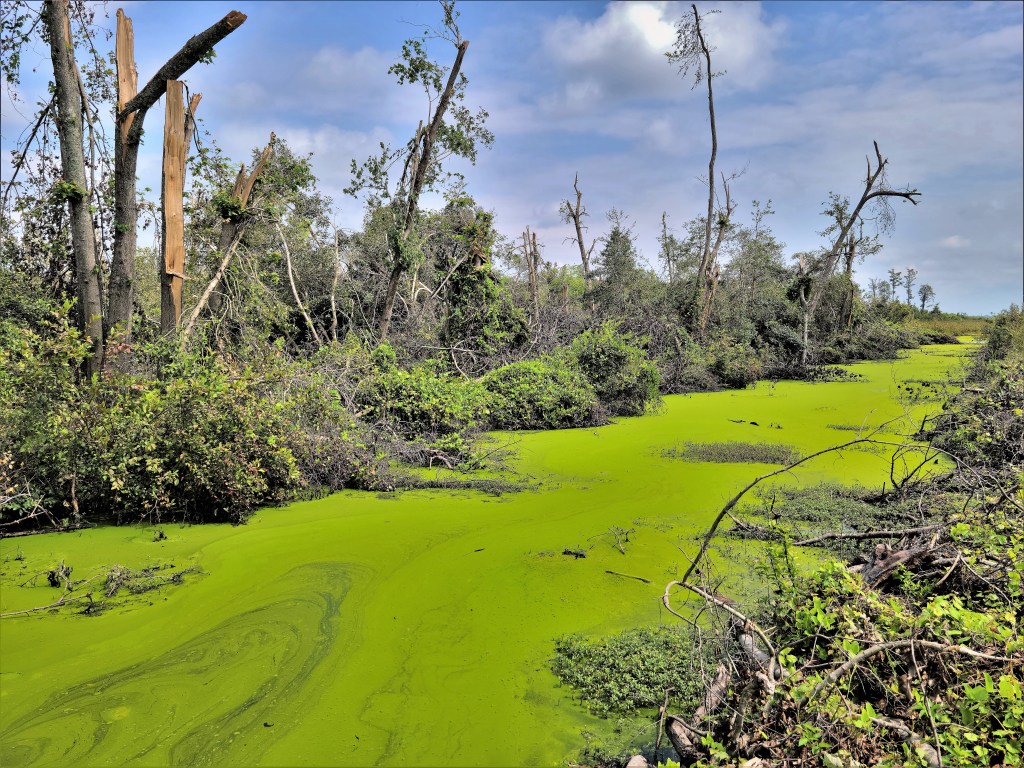
But that’s not the case in many other places where manatees congregate. In recent years, massive toxic algae blooms accelerated by increased extreme weather have eliminated several hundred “sea cows” every year.

The Indian River Lagoon on the Atlantic side of the state accounts for the majority of manatee losses.

According to Indian River Lagoon guide Billy Rotne:

The raw truth of the matter is due to negligence of our storm water. We’ve had continual algal blooms over the past 10 years, which blocks out seagrass and kills it…so the manatees are starving to death.

And Patrick Rose, executive director of the Save the Manatee Club further connects the dots:

I believe that seagrass loss is making manatees travel farther to get food, often going into man-made canals where they are more exposed to boat traffic.

Manatees have no natural predators. Sharks, whales and alligators usually swim in different waters and pose no threat to them.

Only humans have the capacity to put manatees at risk, with at least 432 having already perished in the first two months of 2021, accounting for 5 times the number of deaths in recent years.

Even more disturbing, a boat charter captain trolling the Homosassa River in the western part of Florida observed a manatee with “TRUMP” etched along its back.

Perhaps we need to do a better job of protecting them, if they are going to survive our abuses.

Just Wondering…

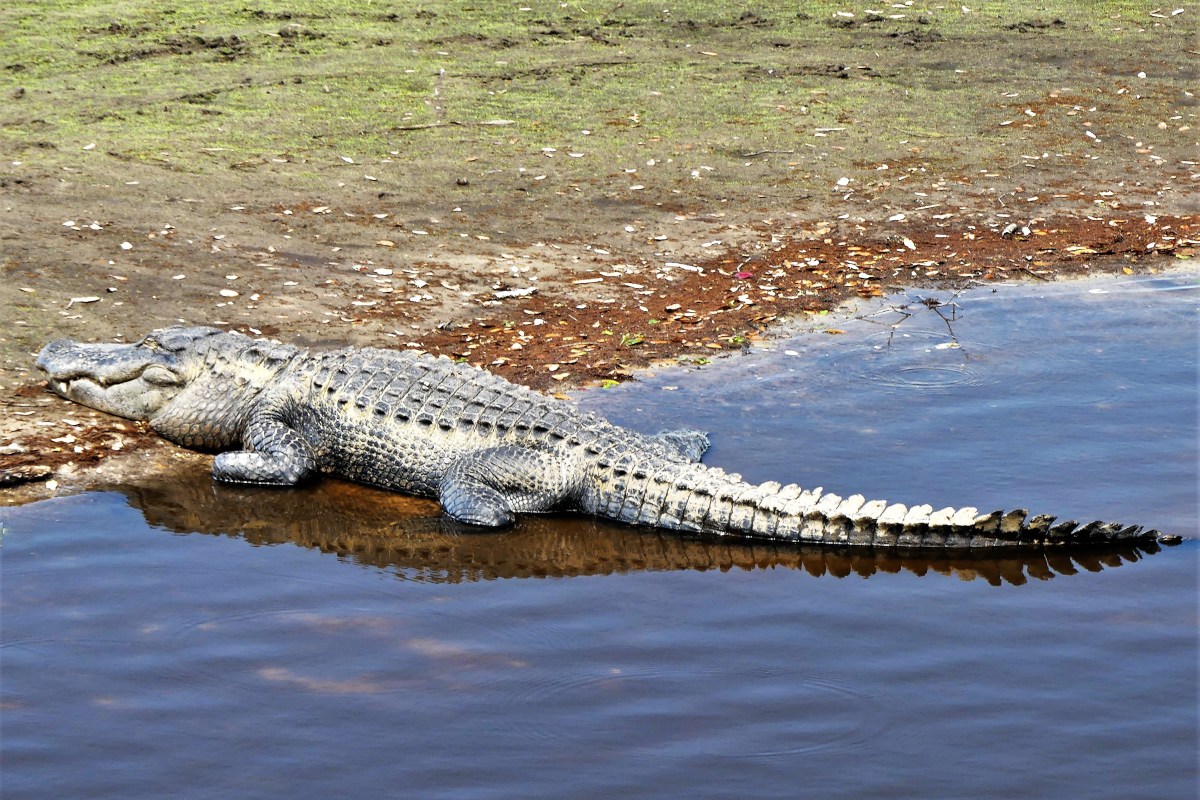
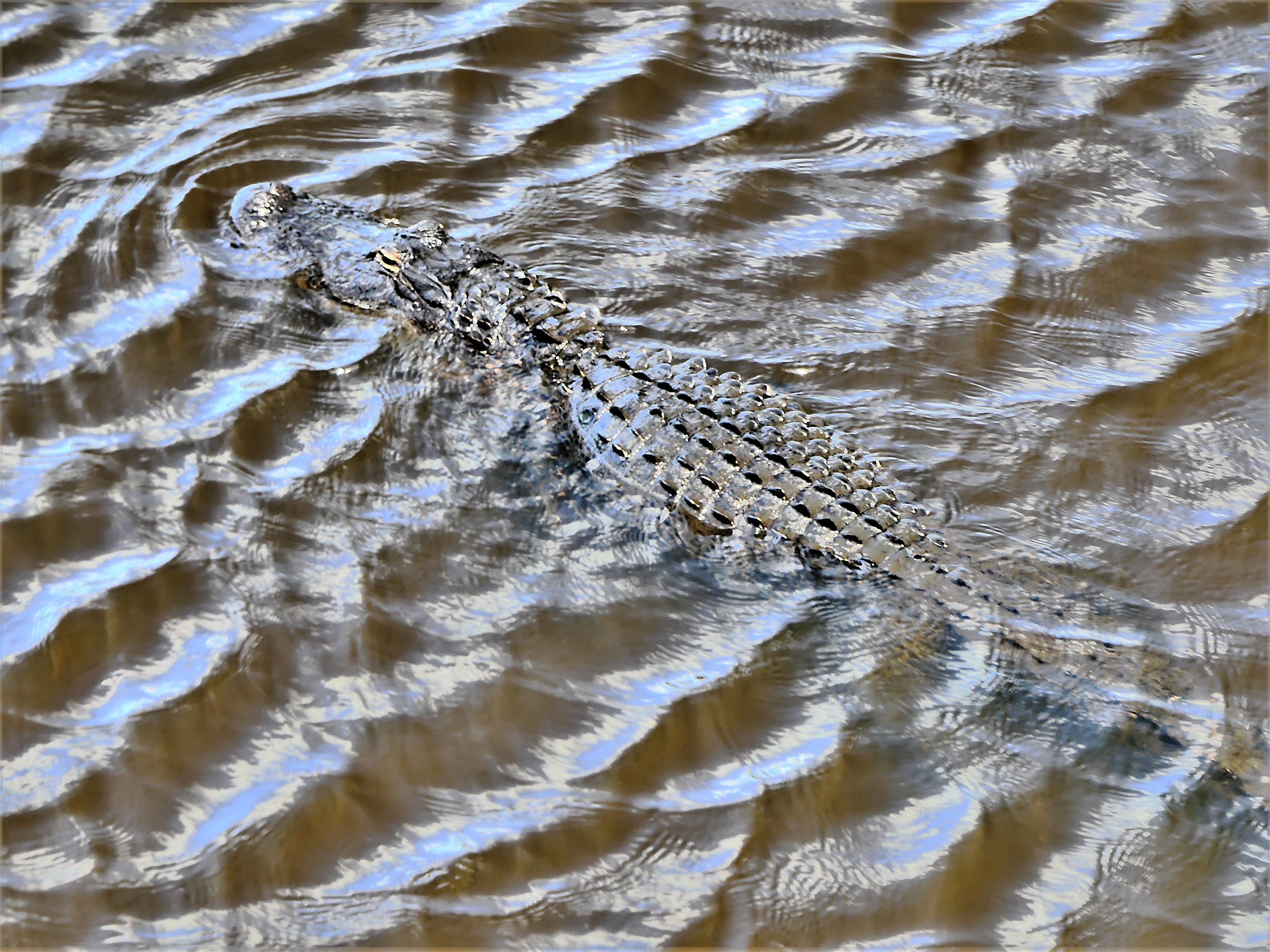
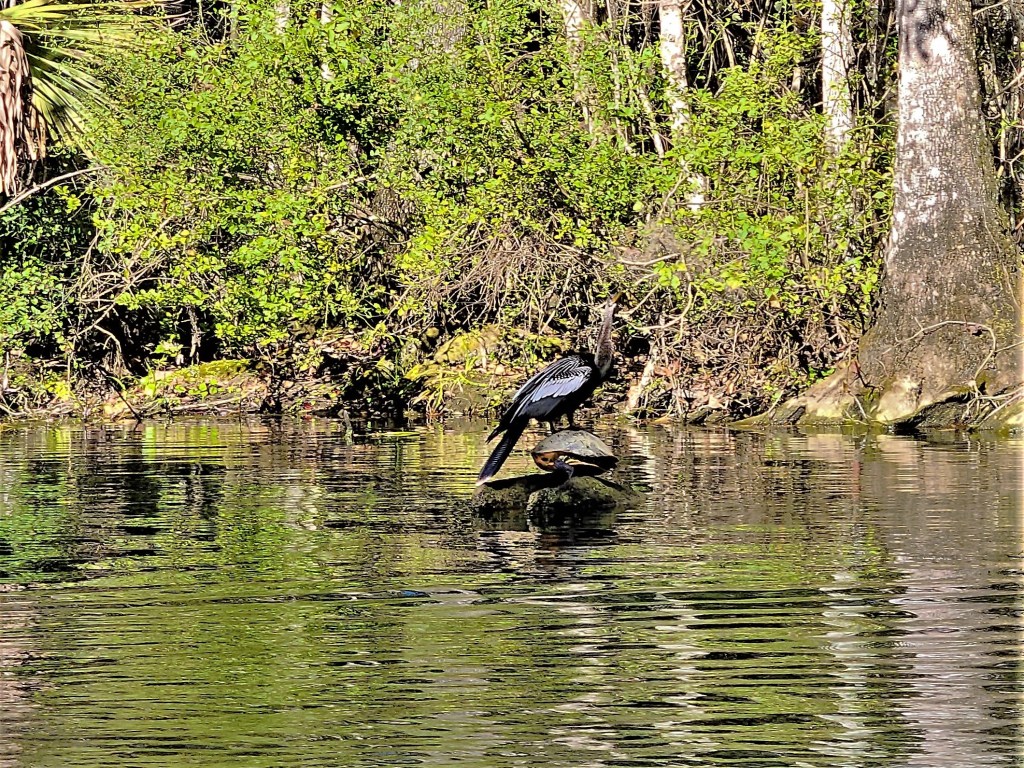
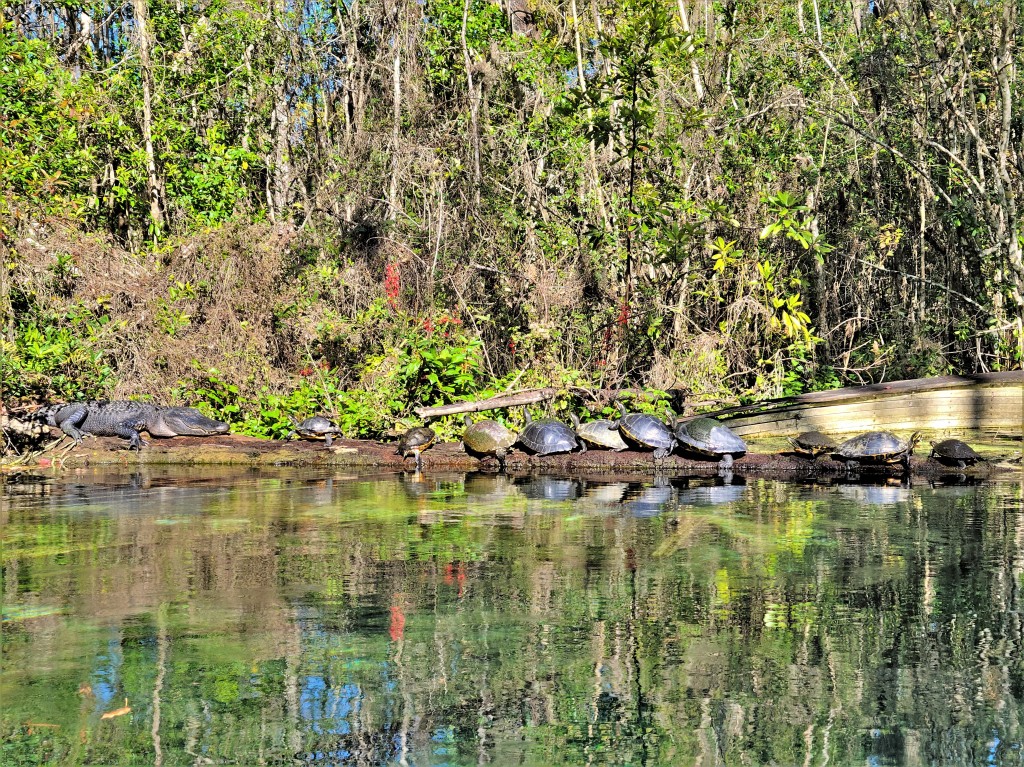
If gators…

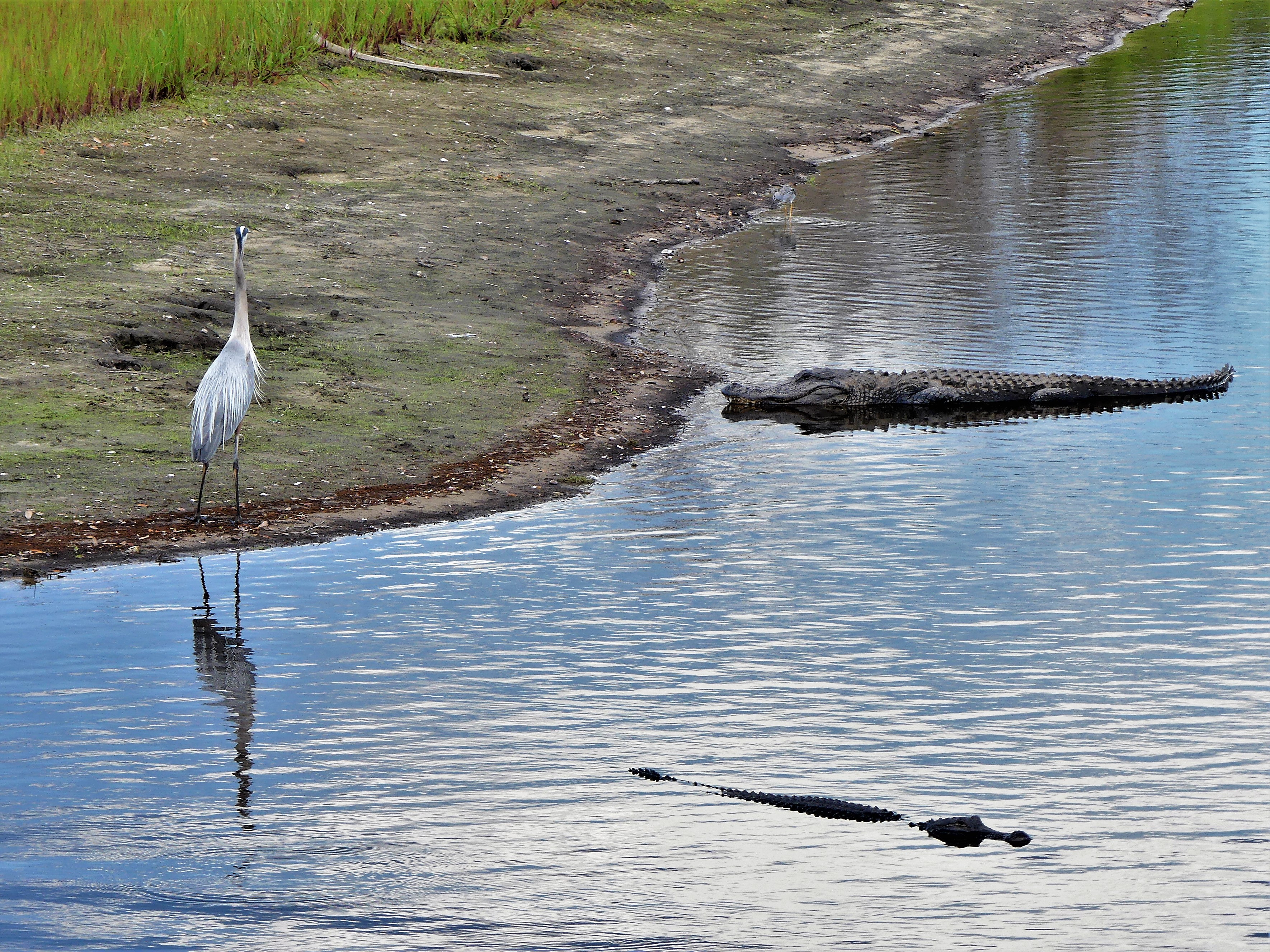
and birds…

can coexist side by side,

why can’t we abide.


The above-mentioned poem and pics were motivated by a day-trip to Myakka River State Park, outside Sarasota, Florida.

Originally, my early inclination was to post this as a stand-alone, abstract reaction to all the hate that’s been circulating around the country of late, but as luck would have it–at Leah’s urging–I walked along Sarasota’s Bayfront…

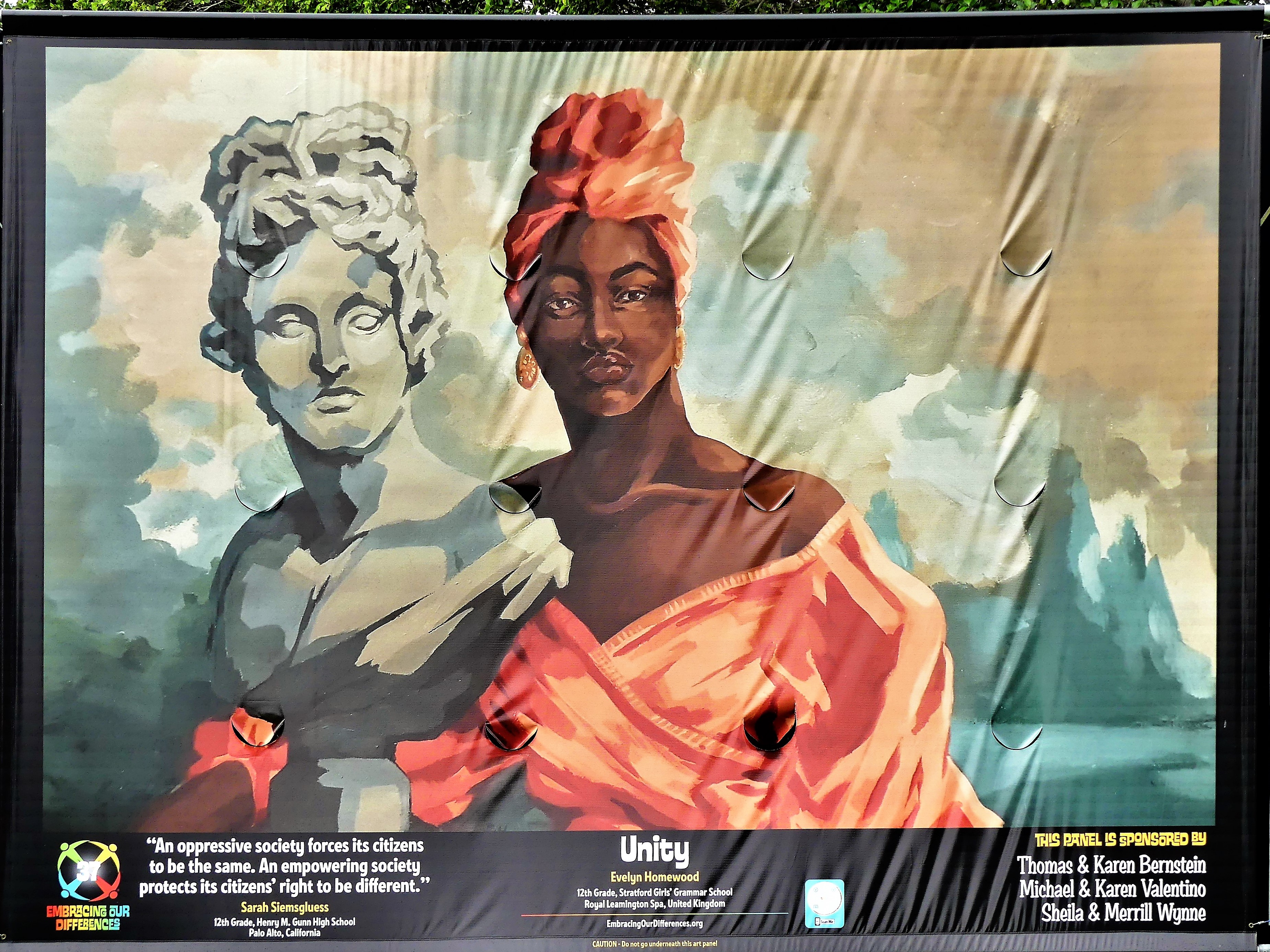
and discovered the 18th Annual Art Exhibit Celebrating Diversity and Inclusion.

Almost immediately, after walking through the exhibition, I realized that showcasing birds and preying reptiles was too esoteric in getting my message across.

And I knew I had to include a sampling of the thoughtful, amazing talent from local and international students…

who have found a way to express themselves both poetically and graphically in ways that astound me, and give me hope for the future of our planet.

50 panels are spread throughout a marine park setting frequented by families, dog-walkers, tourists, and boaters, etc.,

interacting among billboard-sized art.

Indeed, a captive audience for a captivating display of enlightenment that’s too good to ignore.

Cliffhangers

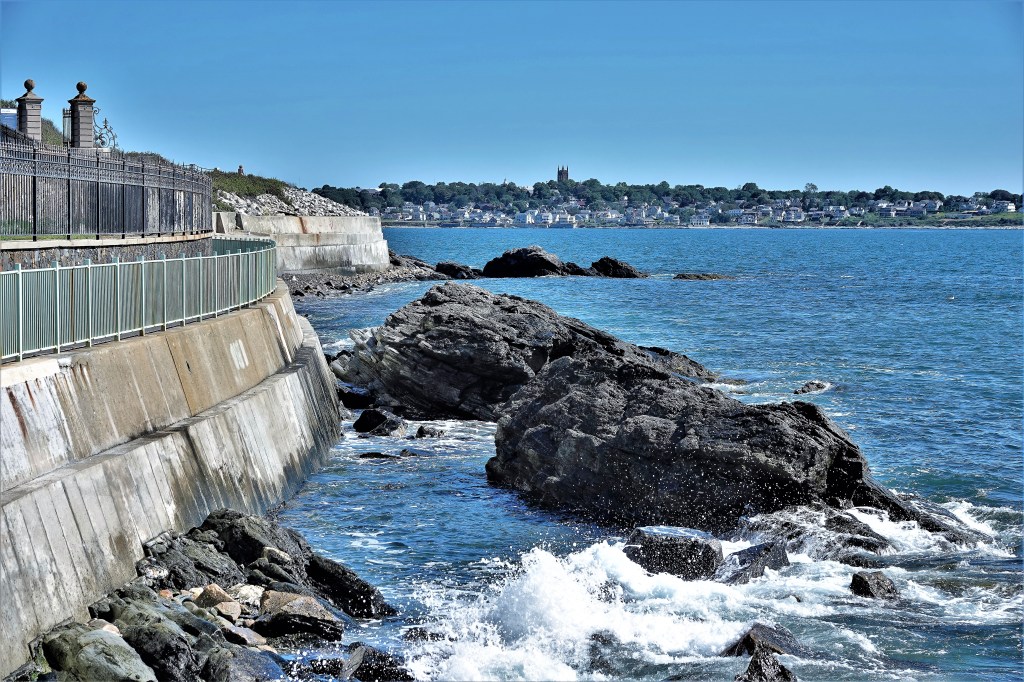
No tour of Newport, Rhode Island is complete without appreciating the summer “cottages” along the Cliff Walk. The walkway runs 3.5 miles along the Atlantic, offering panoramic views of crashing waves against a craggy seawall…

adorned with massive mansions belonging to America’s 19th-century titans of industry.

Leah and I parked at Easton’s Beach…

and followed clearly marked directions to the trail head,

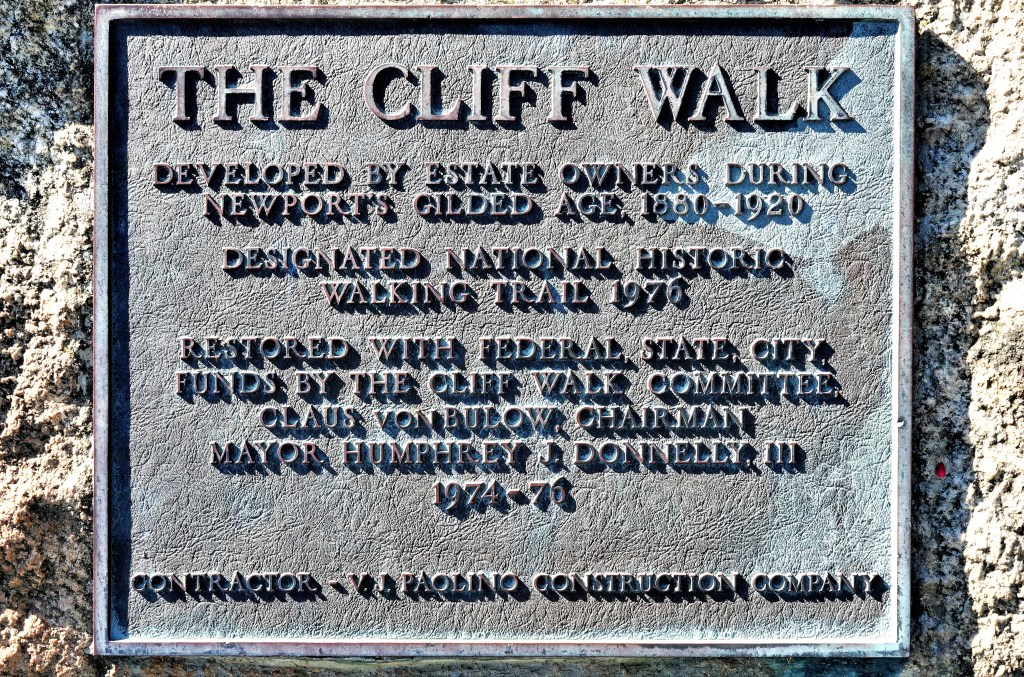
for a walk through time to reflect on the splendor sponsored by owners during Newport’s Gilded Age.

Designed by a cadre of elite architects of the time, these summer homes represent the stylistic diversity of 200 years of architectural history in Newport, and offer a window into the world of its illustrious owners.

To date, many mansions like Rosecliff have been rescued by Newport Restoration Foundation after having been neglected for dozens of years, and threatened with demolition. Boasting the largest ballroom among its neighbors, Rosecliff has become a popular wedding venue.

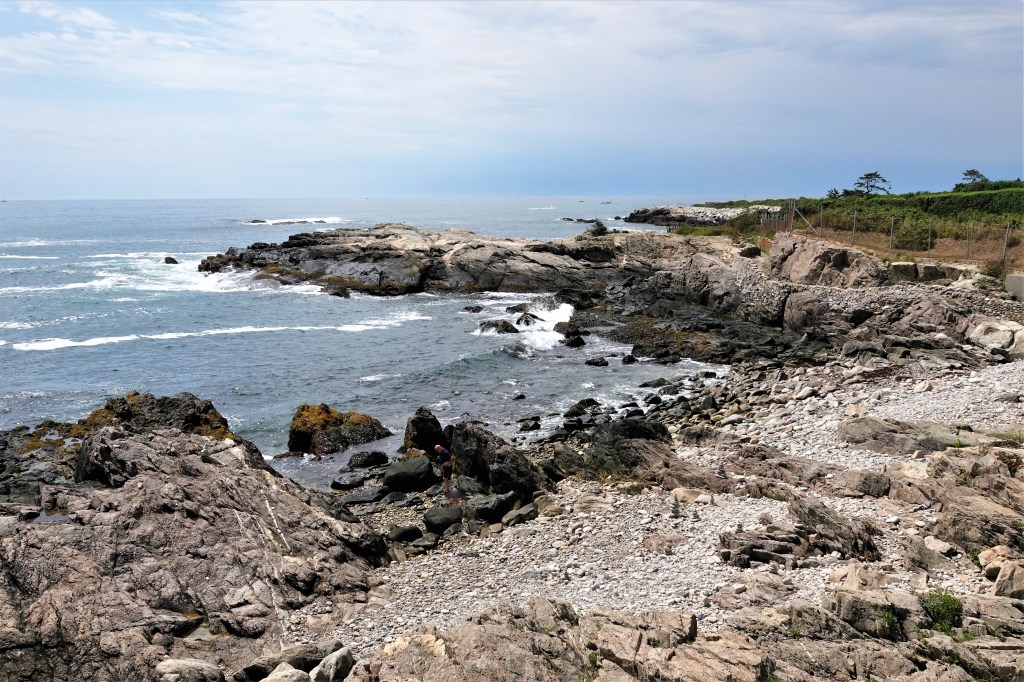
The Cliff walk is essentially a pedestrian hike, but can be challenging in places,

with rocky outcroppings…

and unlikely obstacles that require reasonable footwear other than flip flops.

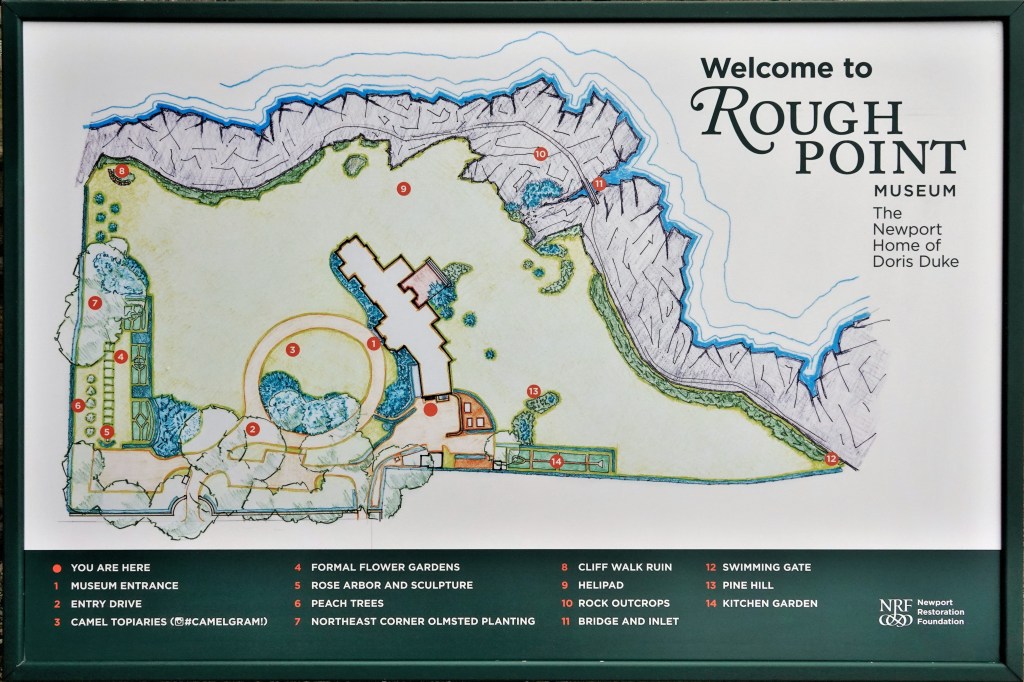
Of course, there are plenty of houses to ogle along 3.5 miles–some that have become museums, like Rough Point…

or repurposed as a Salve Regina University administration building, like Ochre Court…

or converted to condos, like The Waves…

while newer home owners along the walk eschew the notoriety.

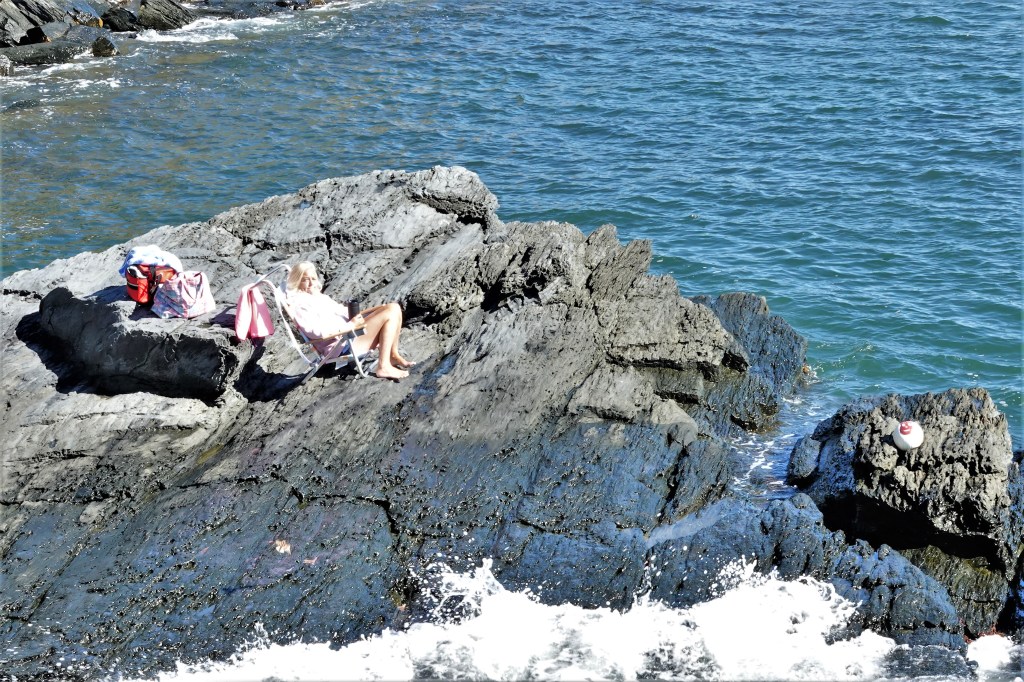
But the real entertainment comes from people met along the way–for instance, a sunbathing cliffhanger getting in touch with her inner mountain goat just beyond the 40 Steps marker.

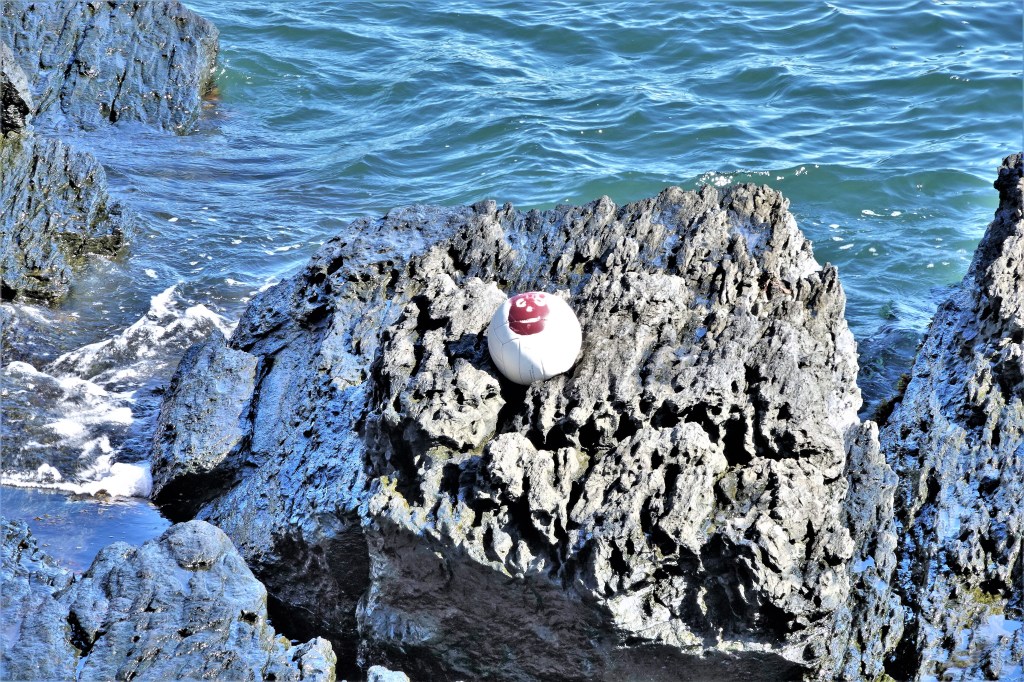
But she was not alone, as Wilson was seen lounging nearby.

Losing My Religion

It’s easy to forget, considering today’s smoldering political climate, that America was the best last hope for Separatists fleeing England in 1620. They were so determined to stand up for their Christian beliefs that they were willing to risk a perilous voyage and an uncertain future in the New World.

102 Puritans boarded the Mayflower in Plymouth, Devon…

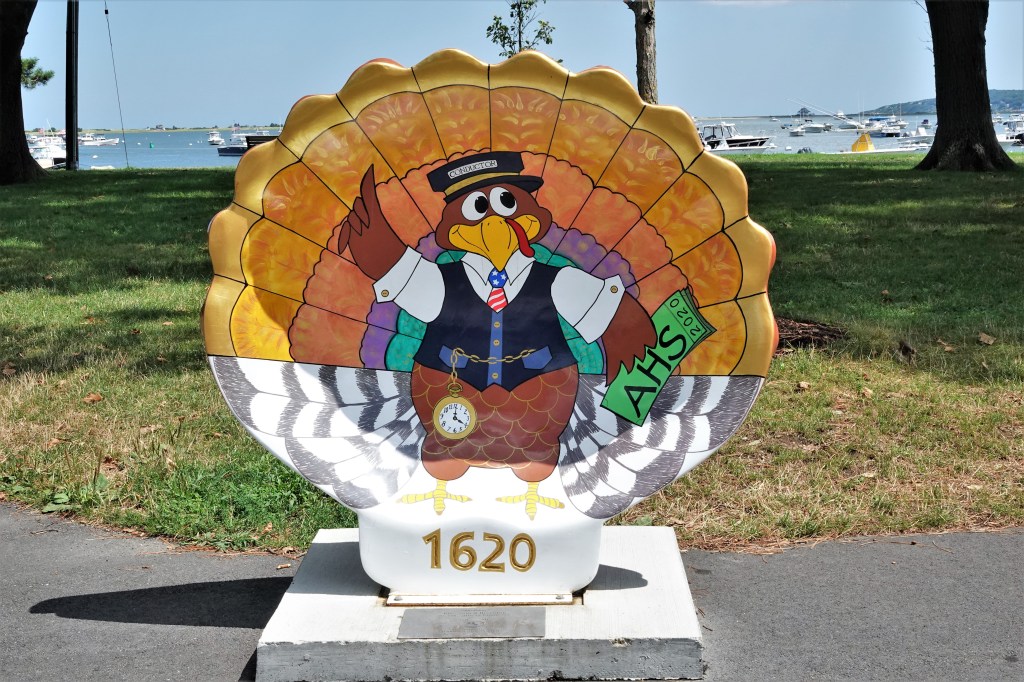
and 102 landed in “Paradise” (one passenger had died and a baby was born at sea during the harsh 65-day passage across the Atlantic) on November 11, 1620,

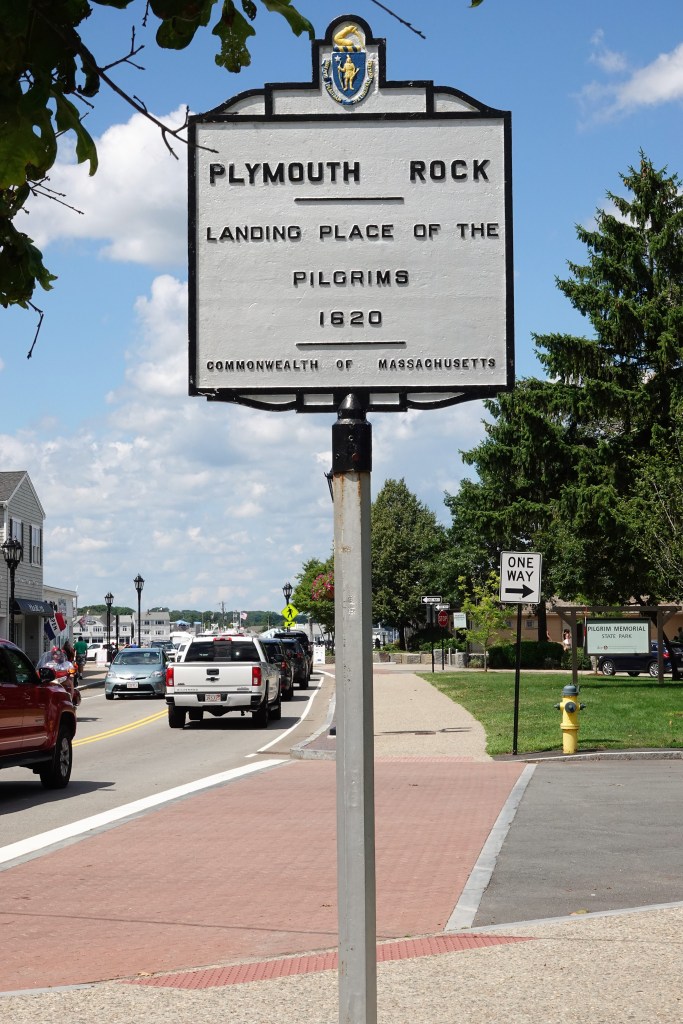
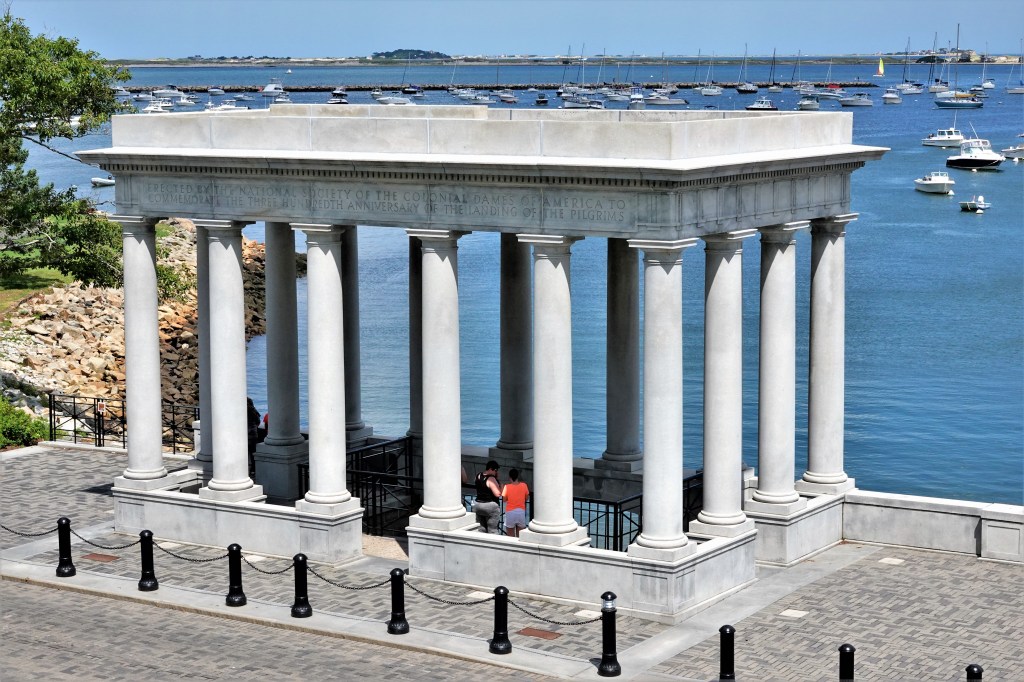
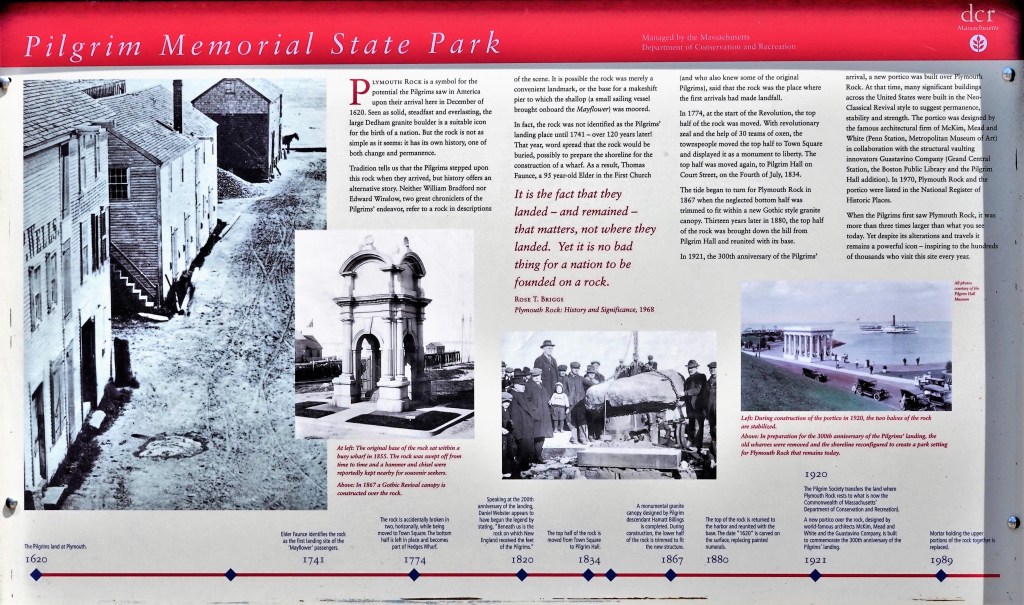
commemorated by “a great rock”…

that’s protected by a granite canopy overlooking Plymouth Harbor,

at what is now Pilgrim Memorial State Park.

Thanks to Massasoit, leader of the Wampanoag tribe who forged an alliance with the Pilgrims,

the colonists survived famine and disease aboard the Mayflower–losing half their numbers–before they eventually settled ashore to form the Massachusetts Bay Colony the following year, and celebrate their first Thanksgiving with the Wampanoags.

Roger Williams, a long-time friend of Massasoit was less fortunate in the coming years. He was exiled from the Massachusetts Bay Colony in 1635 for sedition and heresy after questioning the legitimacy of the Kings’s charter which provided no payment for land confiscated from the Wampanoags.

Smith went on to settle in Narragansett Bay, and established Providence, Rhode Island, which became a safe haven for all the like-minded dissenters who believed in true religious freedom, and separation between church and state.

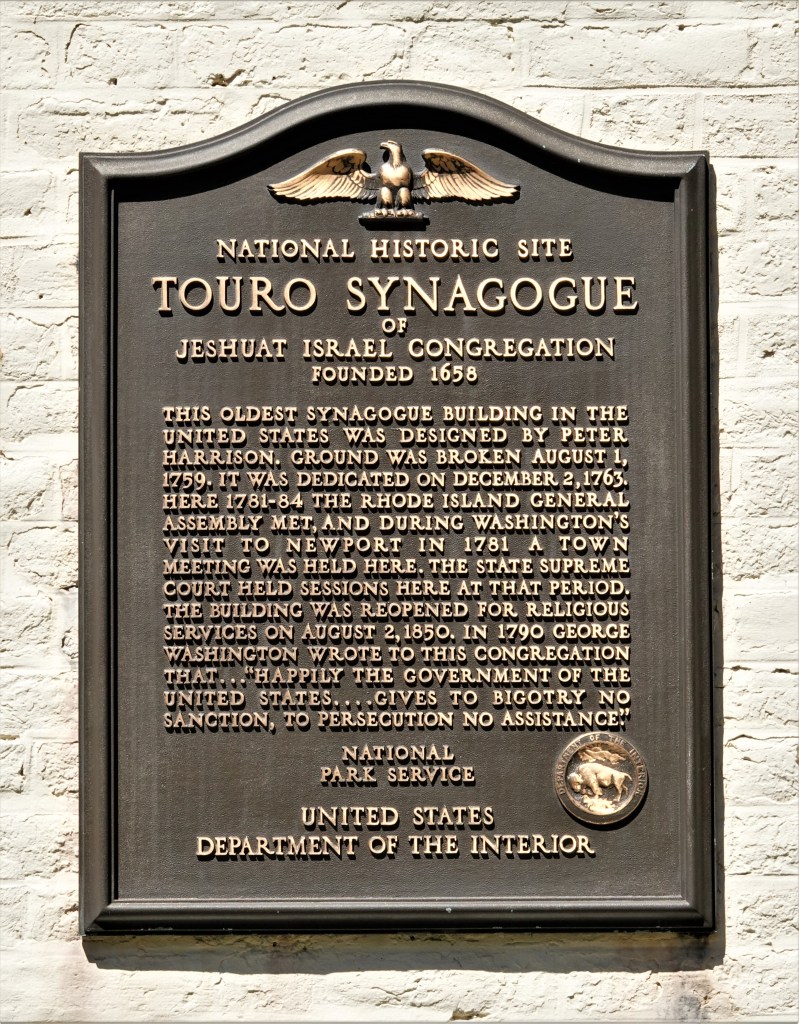
This principle was later put to the test by Jewish settlers who migrated to Newport, RI from Portugal via Barbados as early as c. 1658 to form Jeshuat Israel, the second oldest congregation in America (Congregation Shearith Israel in New Amsterdam was first in 1654).

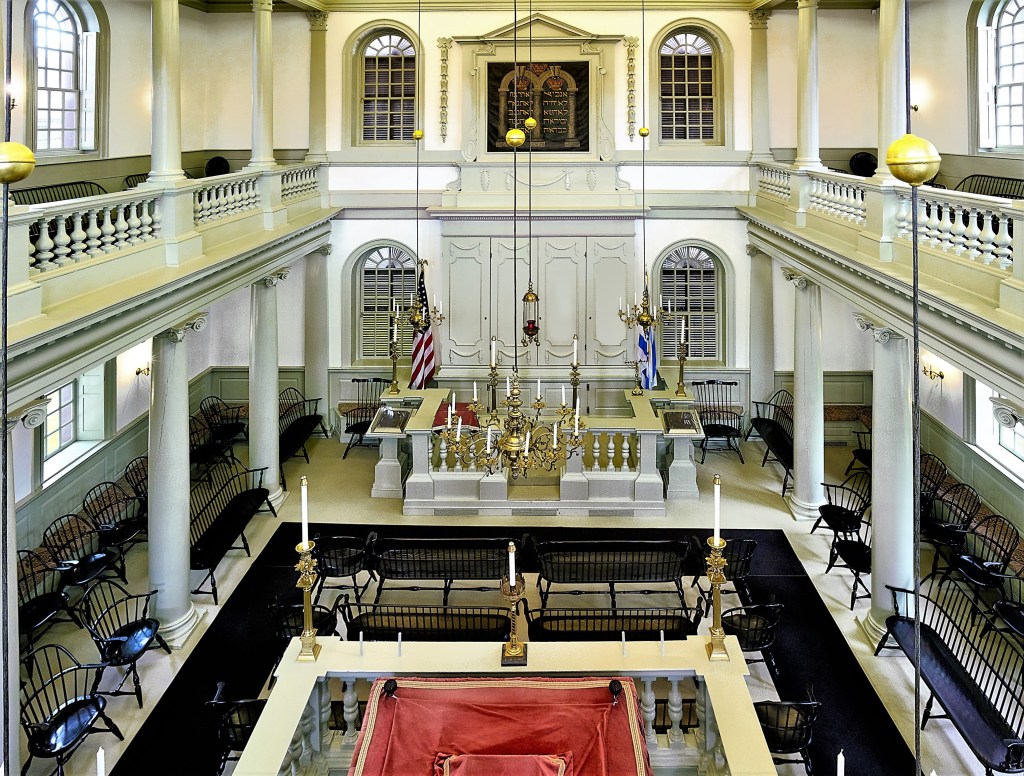
By 1758, consideration was given to design and build New England’s first temple. Peter Harrison, a sea captain and amateur architect drafted plans for what would become Touro Synagogue, dedicated in time for Hanukkah in 1763.

The interior design was drawn from references from Isaac Touro, the congregation’s spiritual leader and others,

whose religious upbringing called for separation of men and women between floors.

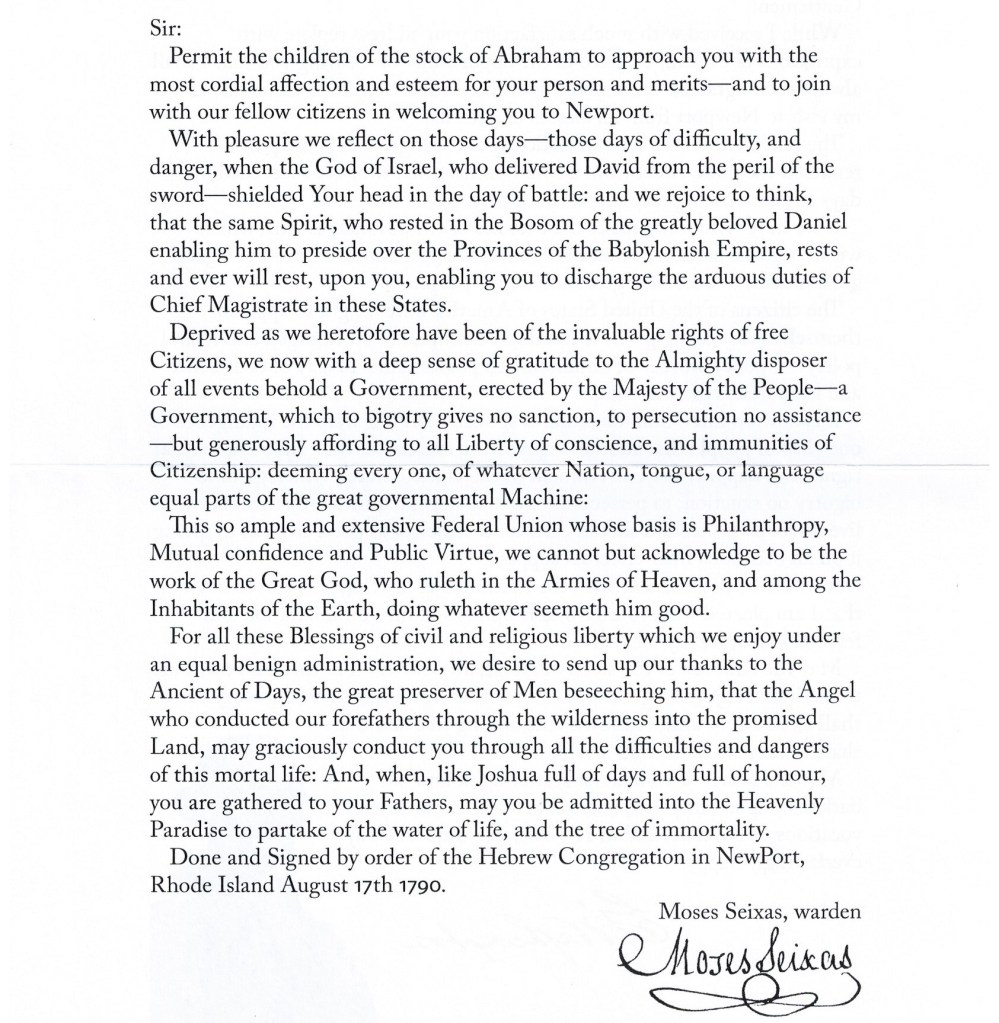
Religious freedom was tested once again, when Moses Mendes Seixas, then president of Congregation Yeshuat Israel greeted George Washington in August 1790 with a letter…

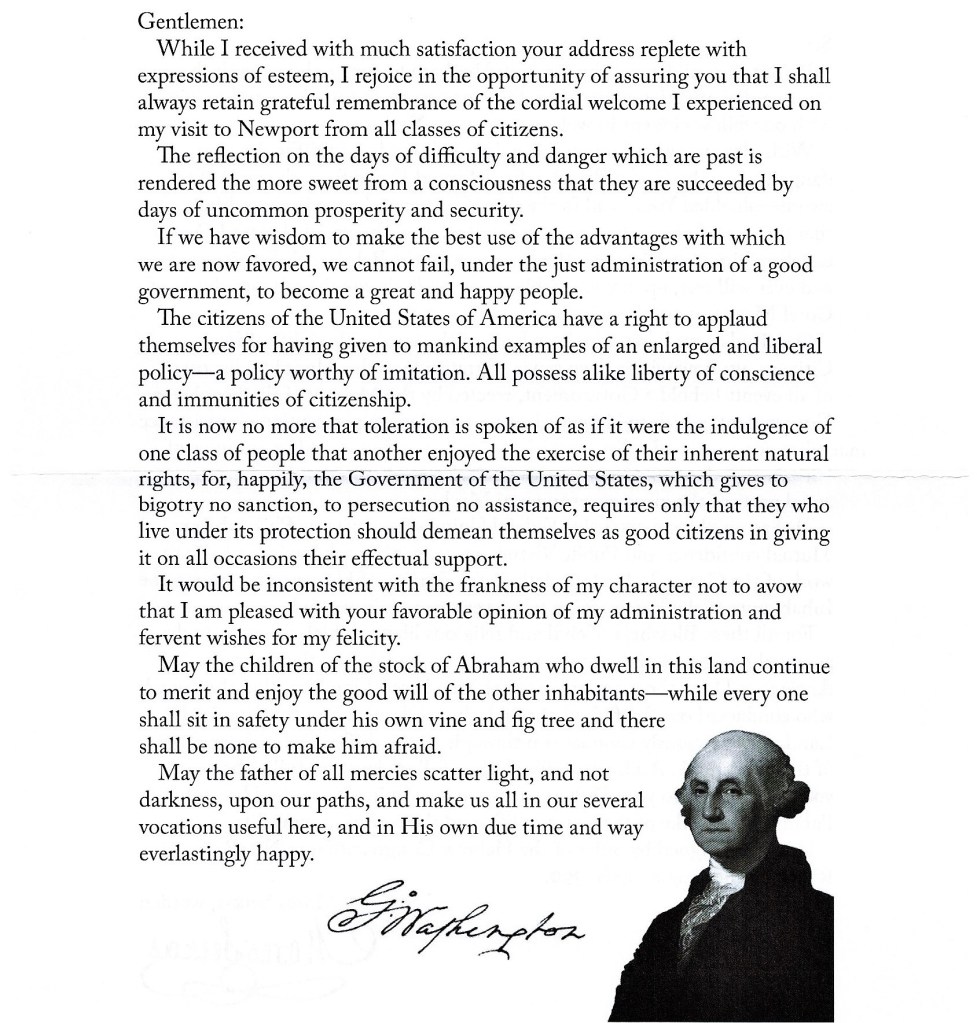
President Washington responded in kind…

…thus reasserting to the congregants that they enjoyed full liberty of conscience, regardless of their religious belief.

As a young Nation, the United States was a guiding light for the oppressed around the world. Folks from all walks of life risked everything to make pilgrimage to these shores in search of religious freedom. It was an idea that’s survived two World Wars, yet today stands perilously close to extinction, but only if we allow it to happen.

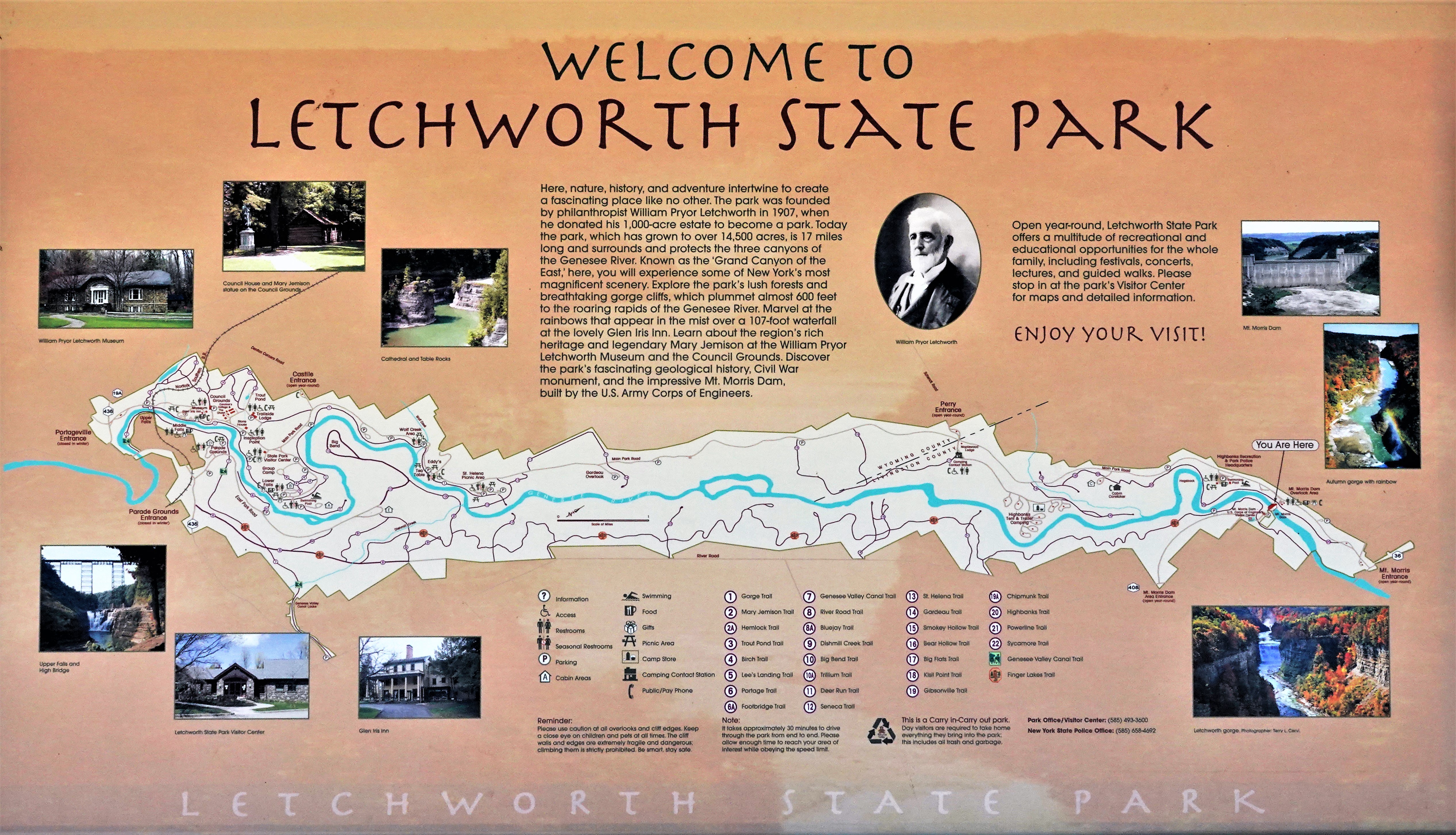
Letchworth State Park


Without question, the feature attraction of Letchworth State Park…

LSP signage

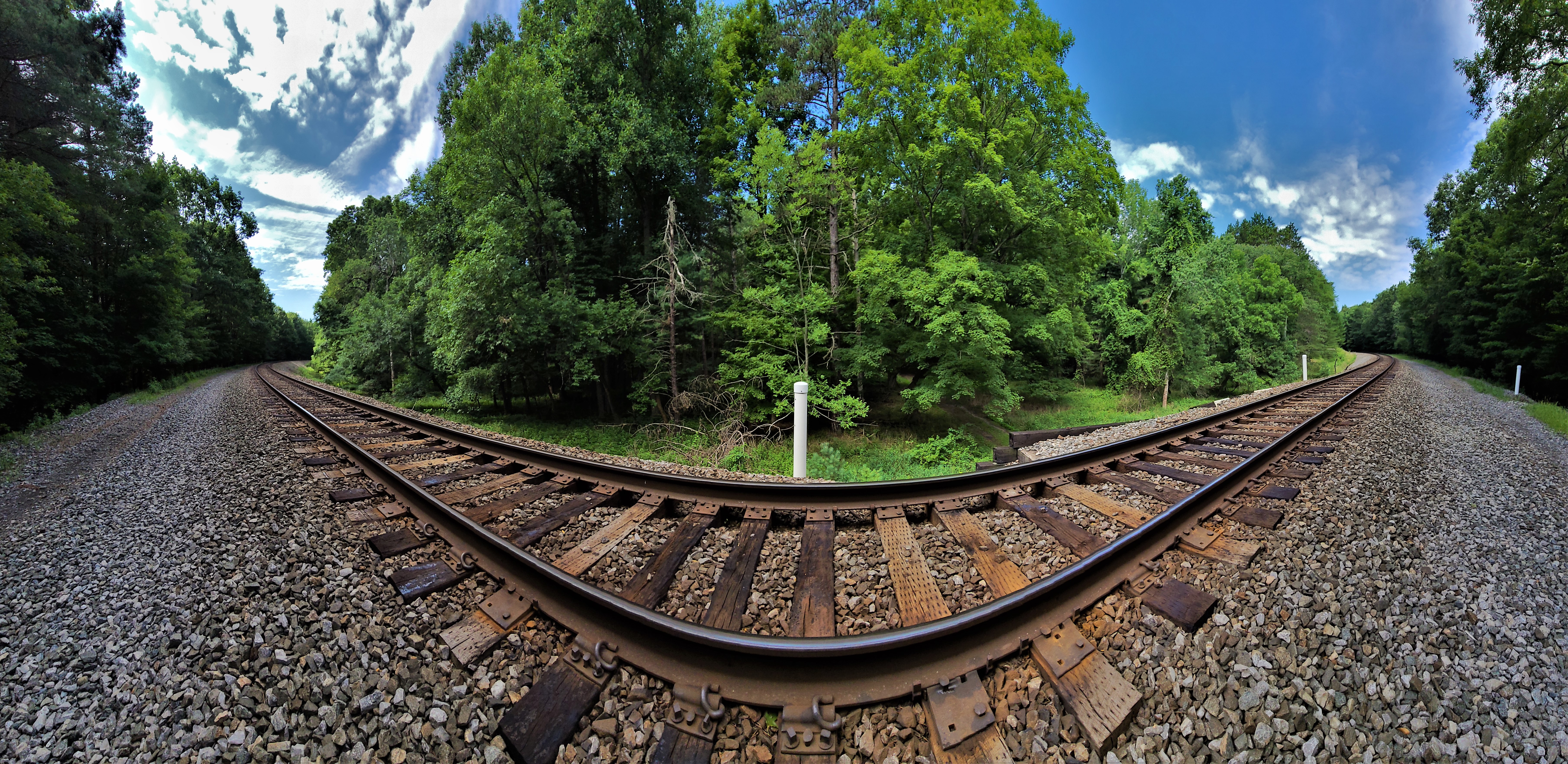
has to be the trinity of waterfalls in the southern corridor of America’s favorite State Park (USA TODAY, 2015 Reader’s Choice), that stretches from the newly-replaced railroad trestle crossing the Portageville Entrance…

Upper falls and bridge

RR smile

RR span girders

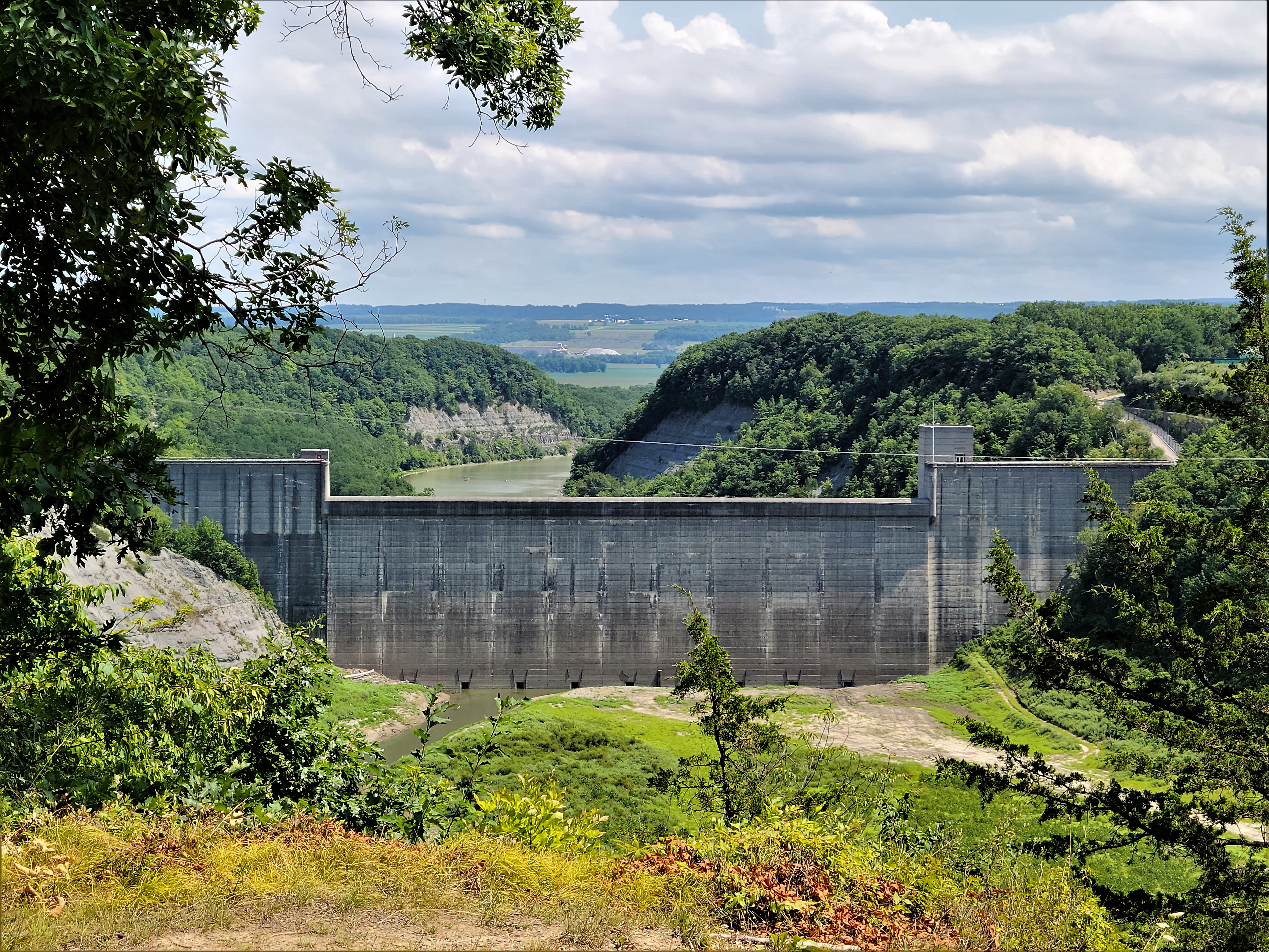
to the Mt. Morris Dam, 17 miles to the north.

Morris Dam

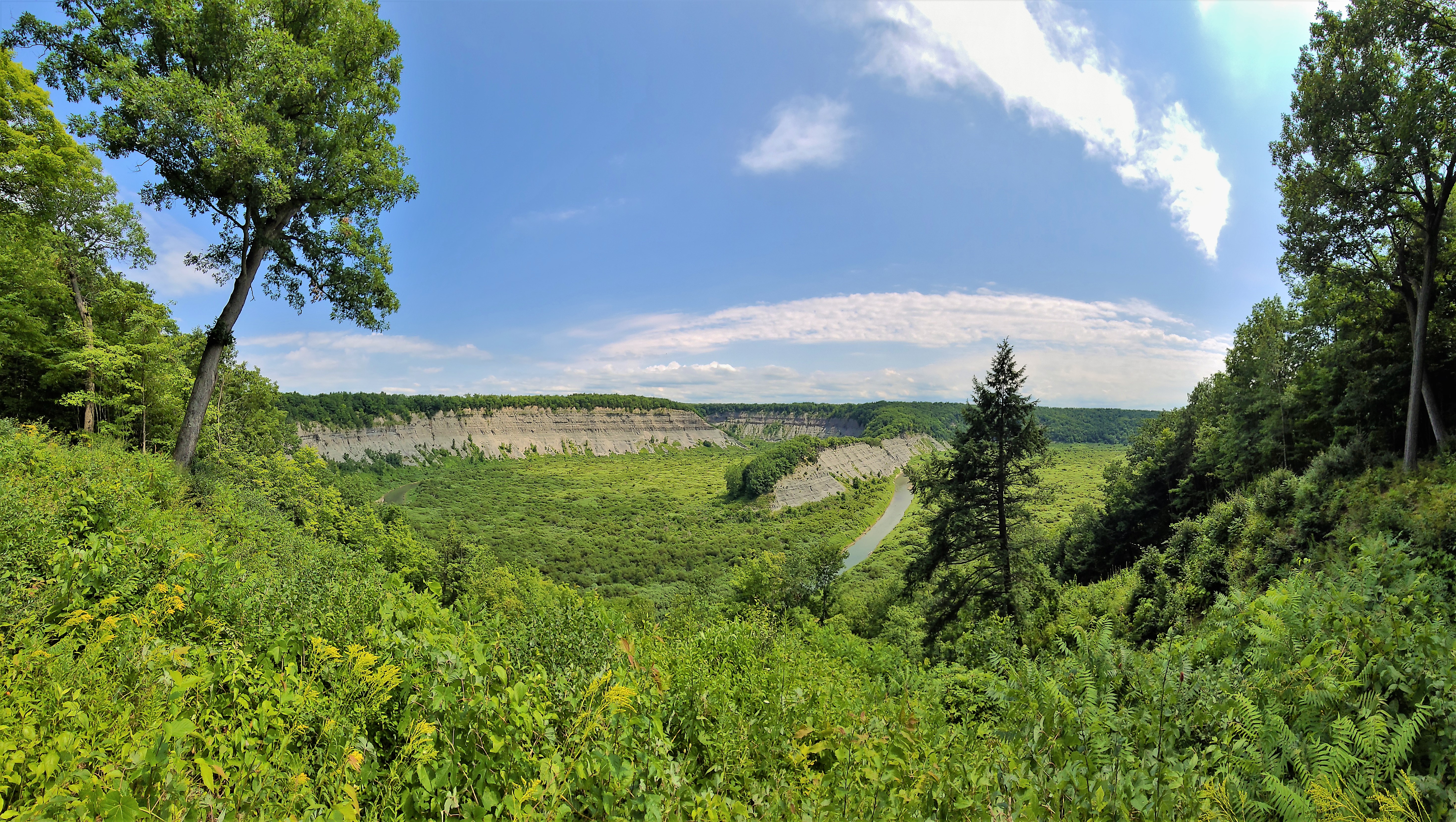
And it’s the mighty Genesee River that flows between both boundaries–

Hogsback Overlook pano

continuing to carve out a bedrock gorge of mostly shale,

Genesee S curve

with exposed cliffs that rise 600 feet into the air,

Hogsback Overlook

earning Letchworth the distinction of being known as the “Grand Canyon of the East.” 

keyhole

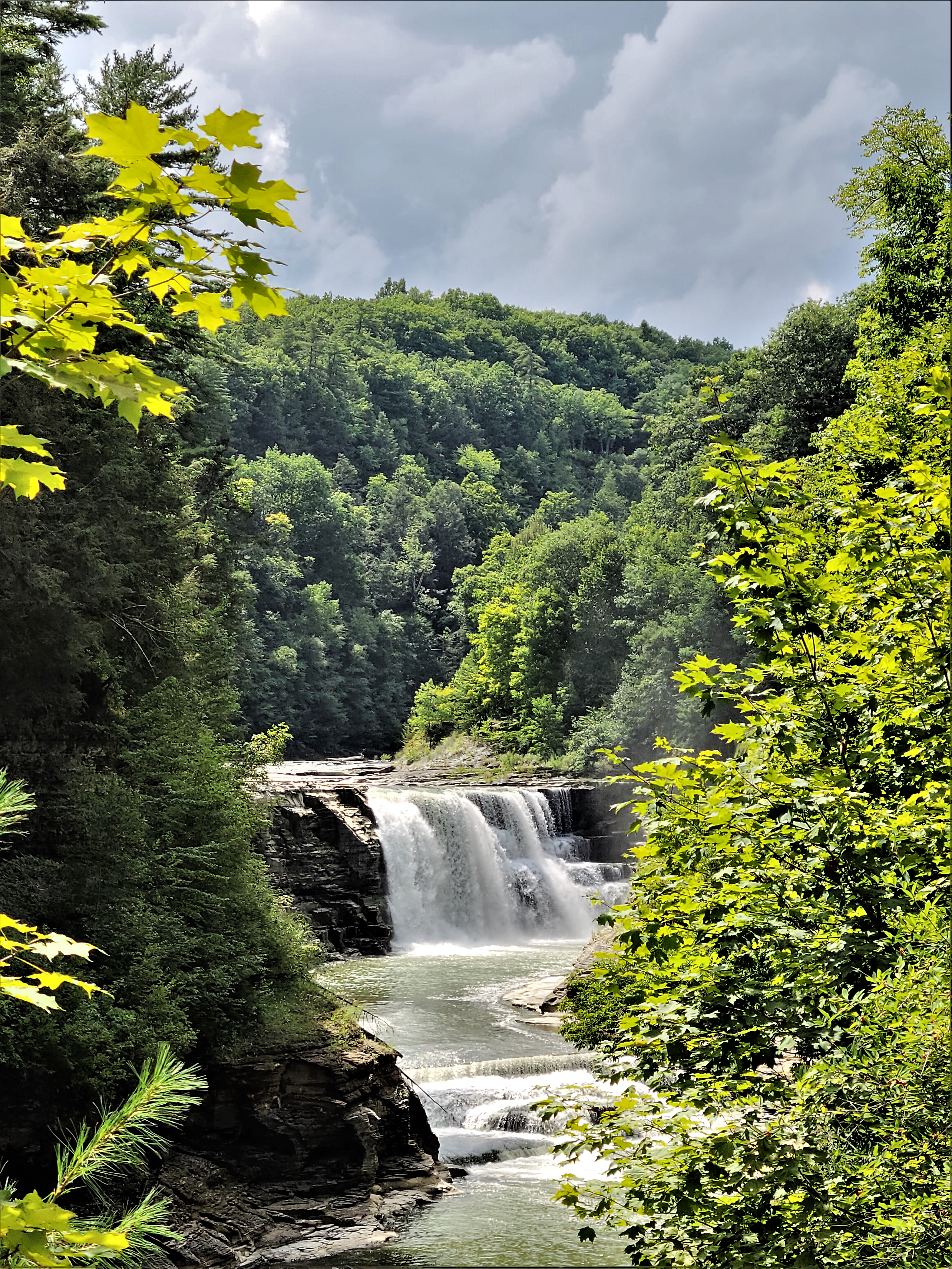
But it’s the waterfalls that most visitors come to see…

curtain falls (3)

Well almost, because there are as many as 50 smaller waterfalls throughout the park that flow into the Genesee. But none are as impressive as Middle Falls, which cascades over a 107 ft drop.

middle falls day

As the name suggests, Middle Falls falls directly in the middle,

middle and upper falls

between Upper Falls…

pool of rocks

and Lower Falls.

20200807_144857 (2)

While the names of the waterfalls seem conventional, it was an unconventional man, William Pryer Letchworth, who had the foresight to buy the property surrounding Upper and Middle Falls to thwart the installation of a hydro-electric turbine, and save the falls from ruin.

trail

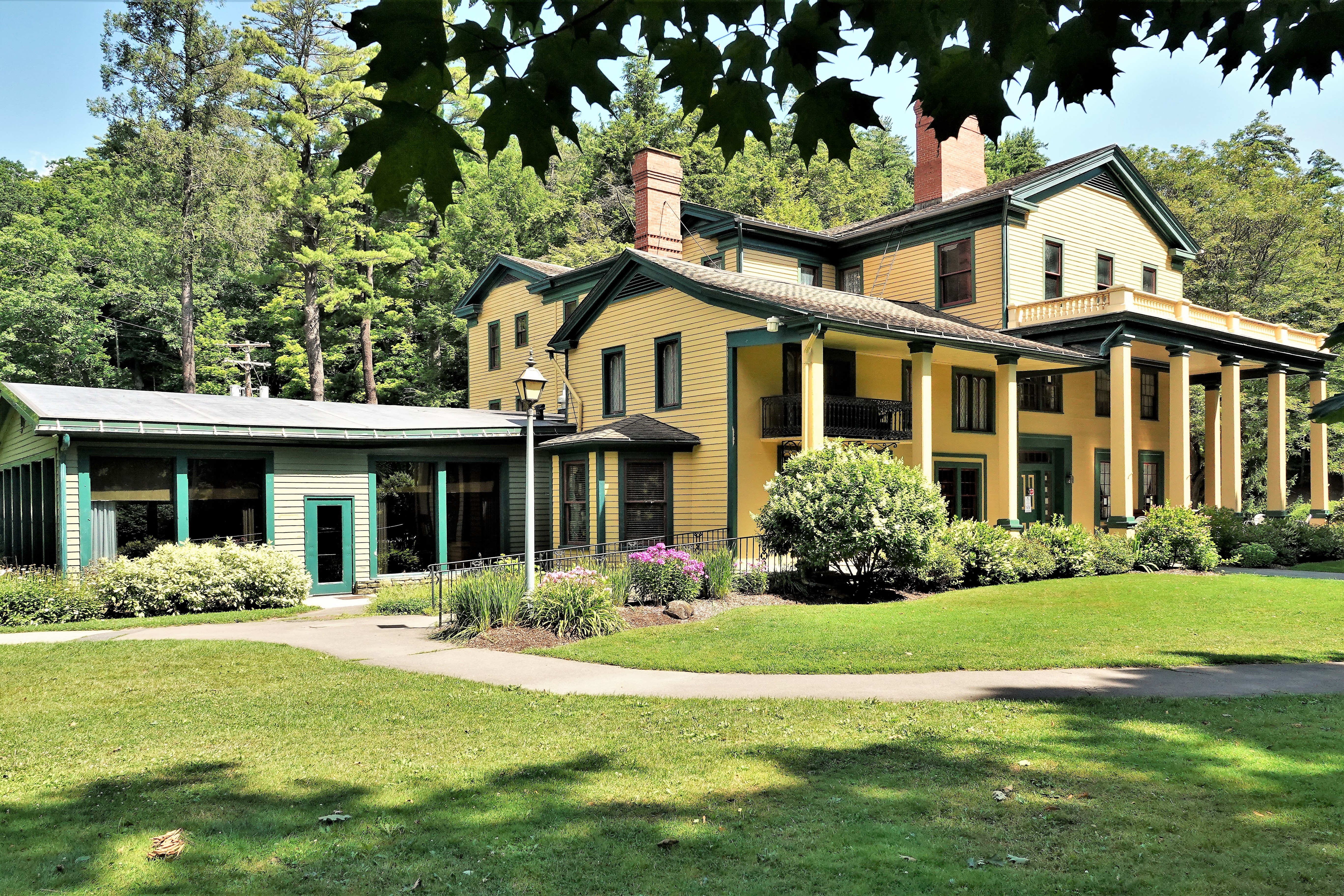
Letchworth also transformed an existing building atop the cliff overlooking Middle Falls into his estate, and named it Glen Iris.

Glen Iris B&B (2)

Today, it operates as a shabby-chic Bed and Breakfast, offering meals in the garden on the lawn, on the porch under the veranda, or in any one of several indoor dining rooms.

Leah and I sat outside, dining on spicy pizza and Parmesan-garlic chicken wings. We kept our eye on the New York sky, and we were eager for dusk to arrive.

At the appointed time–when daylight surrenders–the floodlights flashed on and burned onto the water spill.

Bar tab and entrees came to $60 bucks, but the view of the falls from the top of the cliff was priceless.

middle falls lit

Avoiding T.S. Isaias

With Tropical Storm Isaias skirting the Florida coastline, and hundreds of northeast coastal towns preparing for wind-driven rain, subsequent storm surge, and certain power outages, Leah and I are presently gazing at a hypnotic sky across Johnston County, NC.

Rather than wait for bad weather, we put Florida in the rear view mirror in search of blue skies elsewhere. Seven hours of driving north through occasional downpours and lightning strikes across our windshield brought us to Selma, NC, where torrential rain was turning our campsite into an ankle-deep pond.

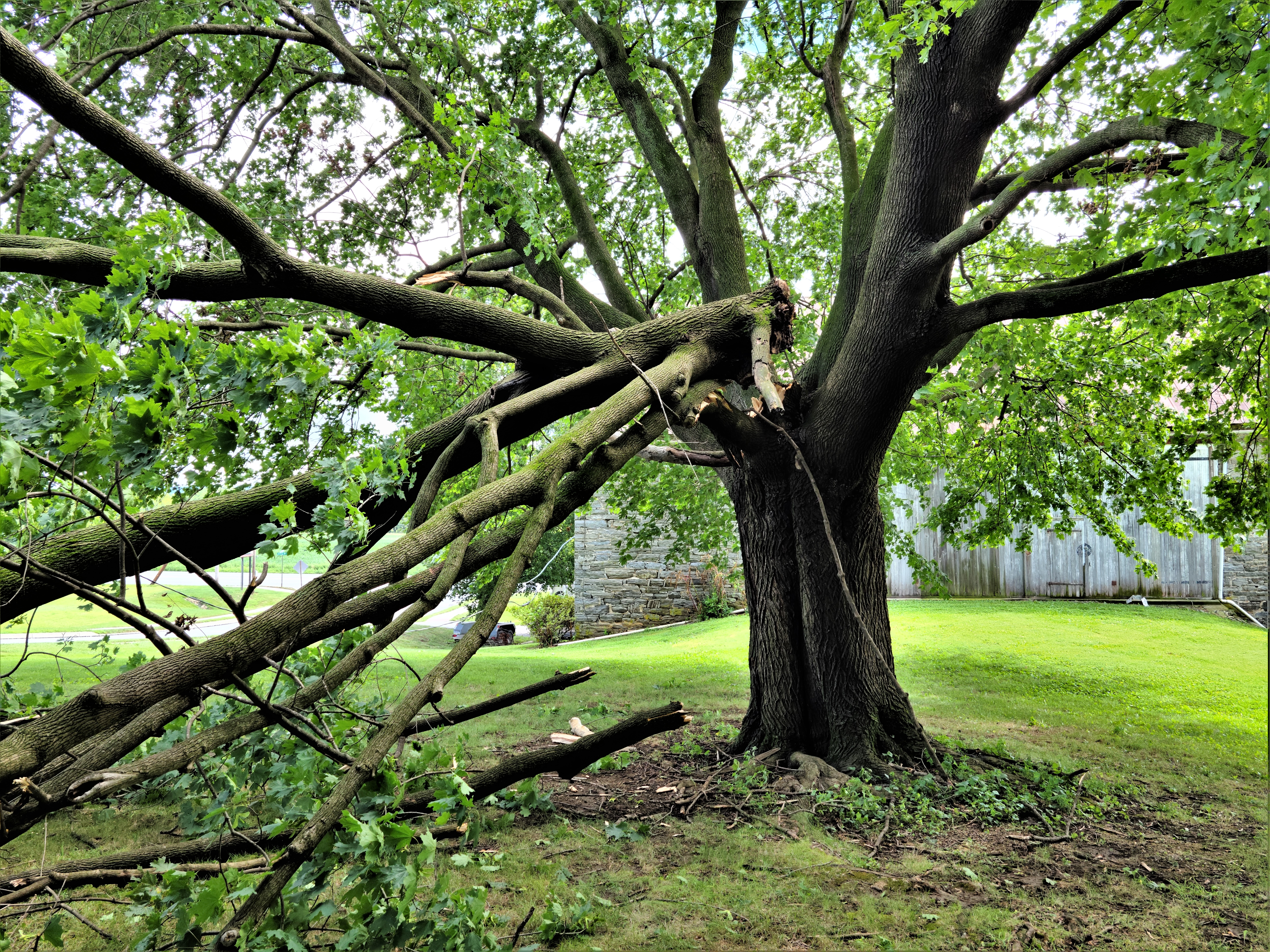
At first, we waited patiently inside the F-150, but within minutes the rain reduced to a drizzle, giving me a much needed window to set up camp…except for a nearby limb that crushed a power line and prevented us from accessing electricity.

tree limb down

Eventually power was restored by 1 AM, when the AC magically resumed its roar inside our capsule, and delivered timely relief from the incessant humidity.

The following day was hot and steamy. We took a ride into downtown Smithfield–a ghost town of shuttered businesses–

iron cycle

to explore our surroundings, 

Lee's surrender

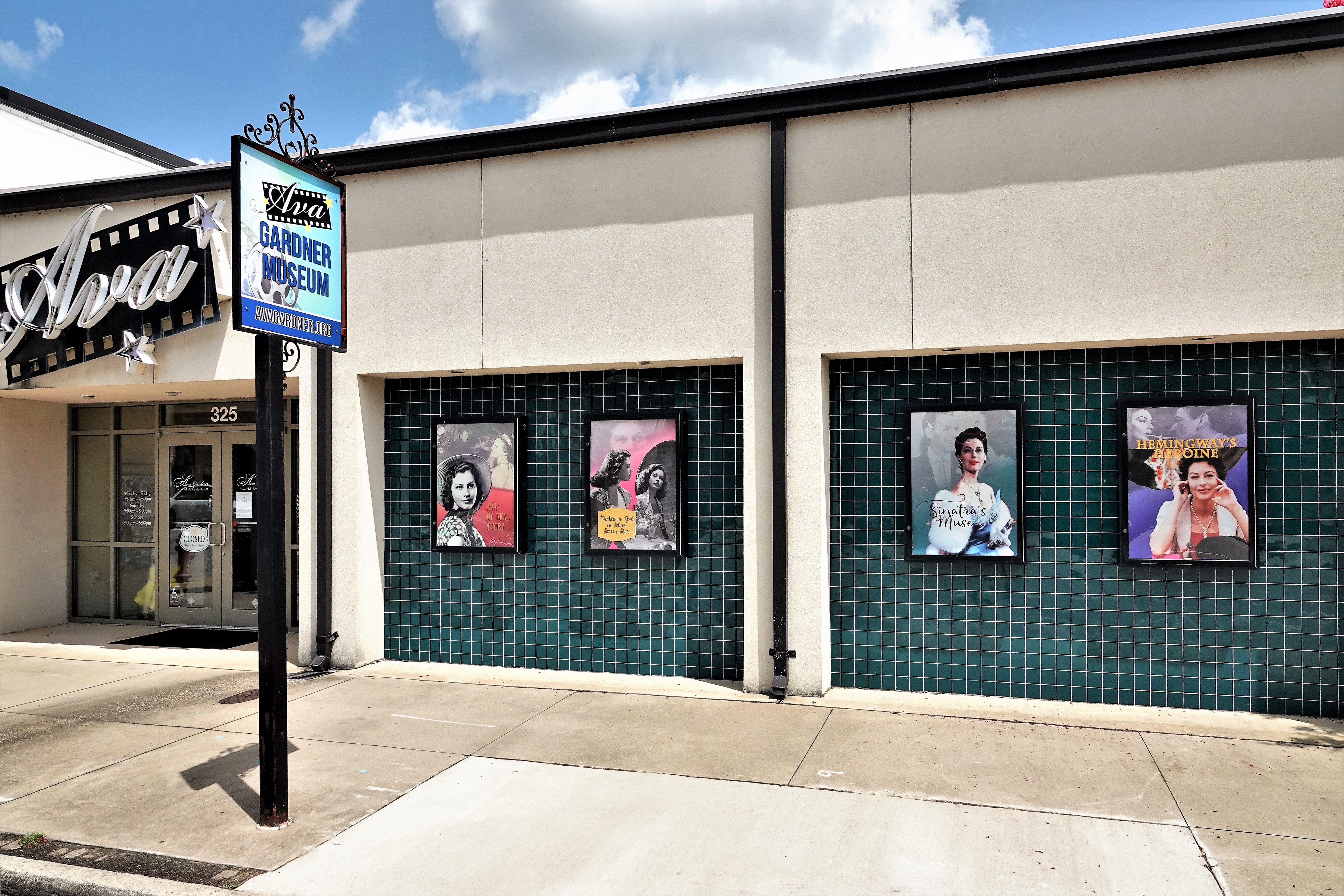
and happened upon the Ava Gardner Museum. 

Ava Gardner

I would have enjoyed a trip down memory lane with Ava, the area’s favorite sharecropper’s daughter from Grabtown, however the museum was closed due to COVID-19. Unfortunately, all I could do was appreciate her stardom through a pane of glass,

Ava Gardner interior

and wonder how and when it will be safe to go to the movies again.

Wise Guys

Despite the three years since Leah and I visited Mt. Rushmore, what could be more American than re-posting this visit on Independence Day? And still, there’s great turmoil within the country. A trip to Mt. Rushmore means many different things to different kinds of people. One person’s treasure is another’s abomination. To visit was once considered patriotic. Now it’s an act of partisan politics.


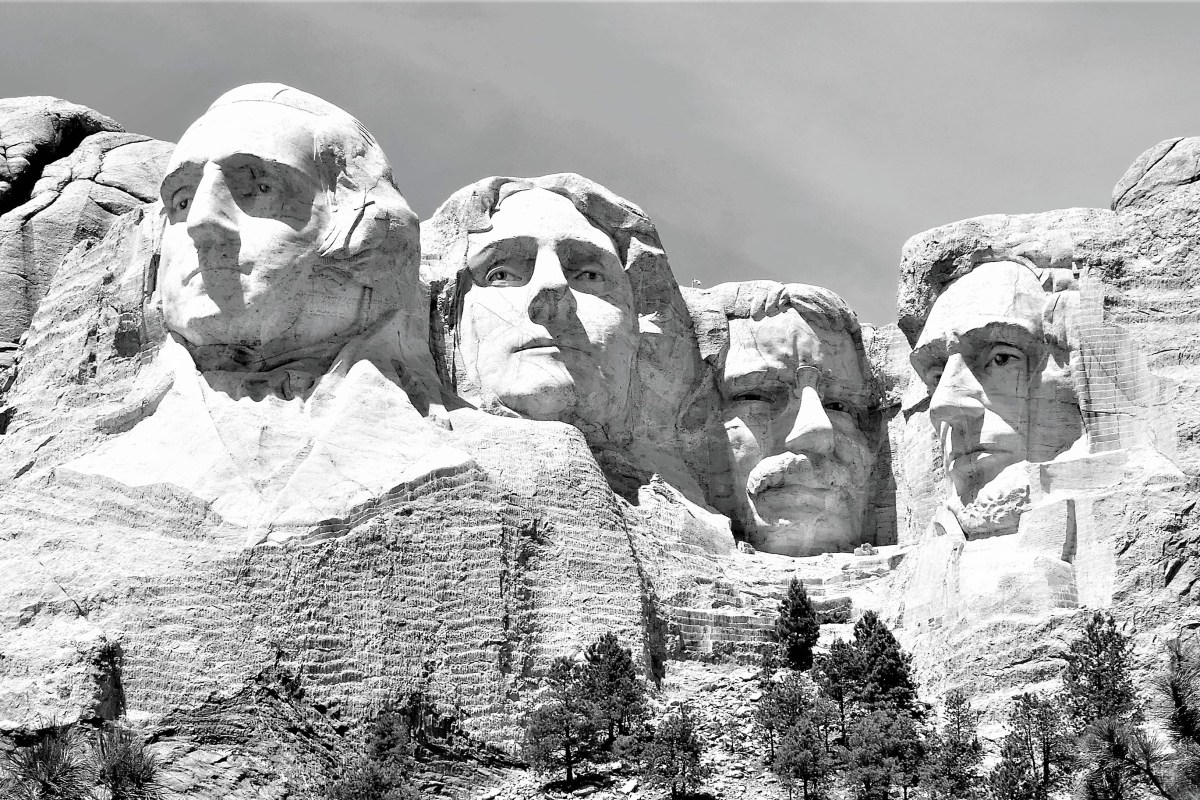
There’s no better way to celebrate the 4th of July, than a trip to Mount Rushmore and the Crazy Horse Memorial. Sure, the crowds were large; that was to be expected. But once the cars were garaged, the pedestrian traffic was easy to negotiate. And with everyone looking up at the mountain, the Presidents’ faces and intentions were never obstructed.

GW

Jefferson

Roosevelt

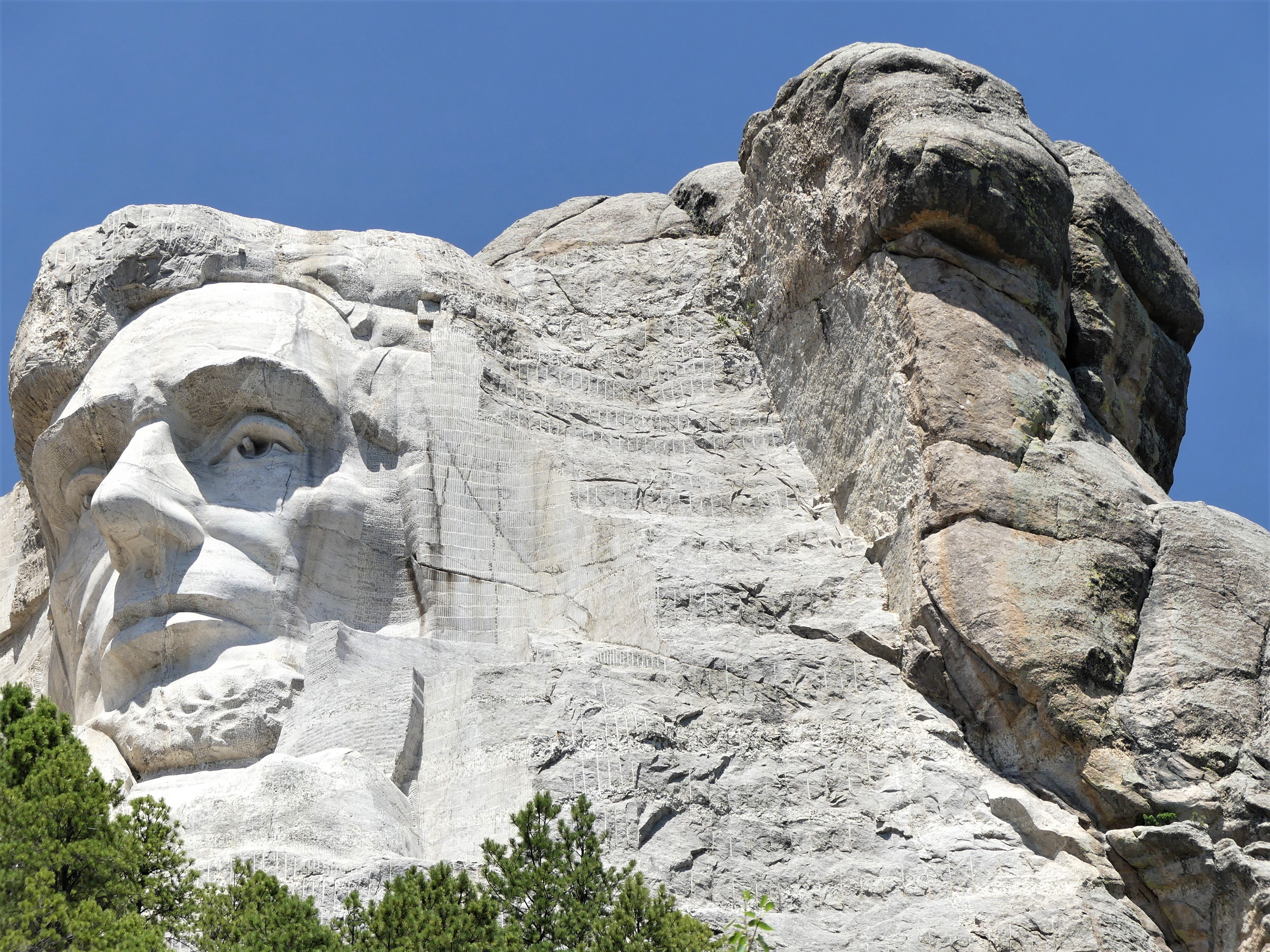
Lincoln

It was also a time to celebrate family. There were plenty of kids riding in strollers, hanging from moms in carriers, or balancing on dads’ shoulders. Generations of families–many of them immigrants–had gathered to pay homage to the principles of freedom that make our country a beacon for the oppressed and downtrodden.

Seniors were being escorted through the Avenue of Flags by their grandchildren. Extended families organized group pictures at the Grand View Terrace, unified by their love of democracy and their reunion T-shirts.

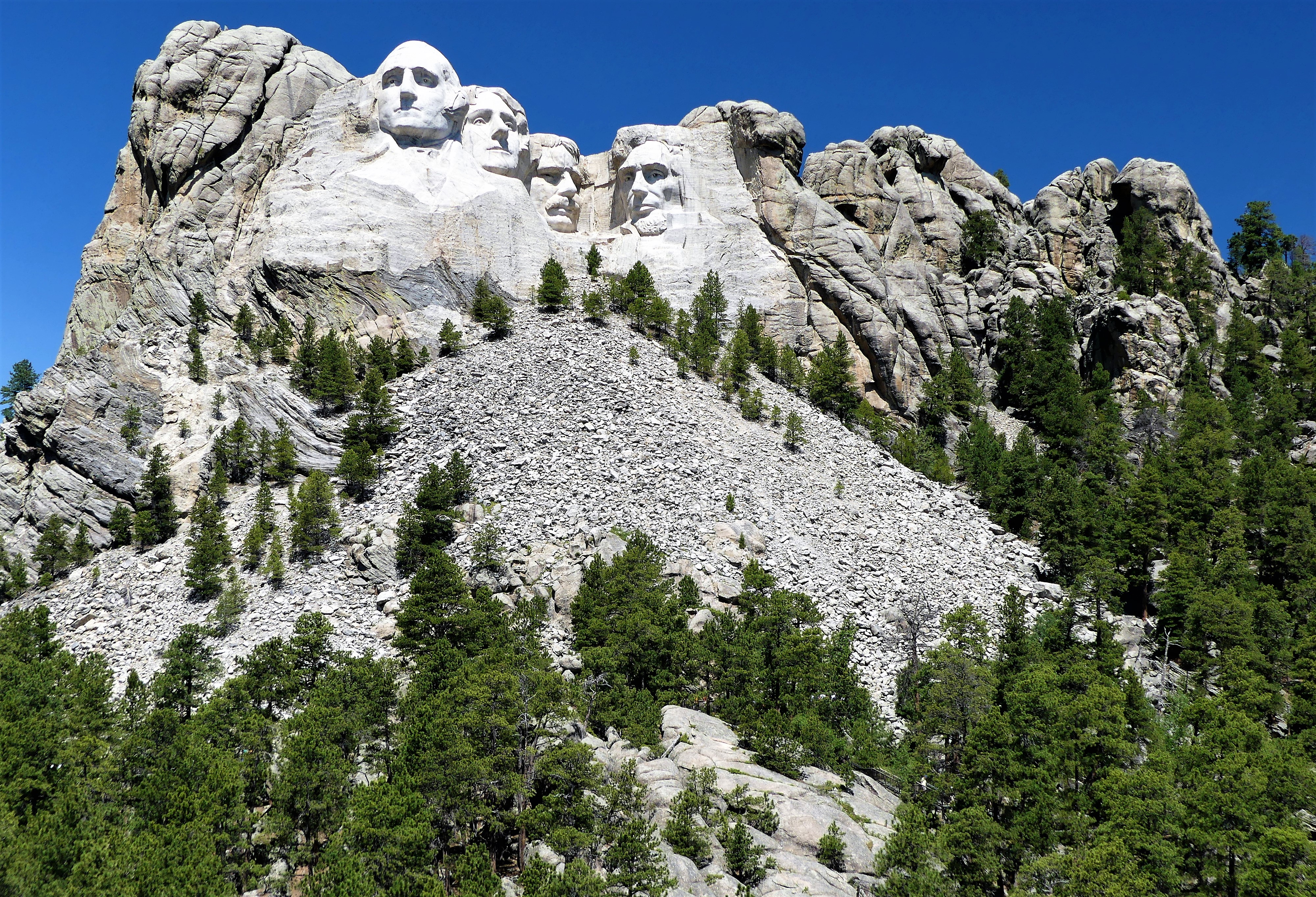
All expressed awe at Gutzon Borglum’s grand vision and remarkable achievement–the transformation of a mountain into a national symbol visited by approximately 3 million people every year.

long shot

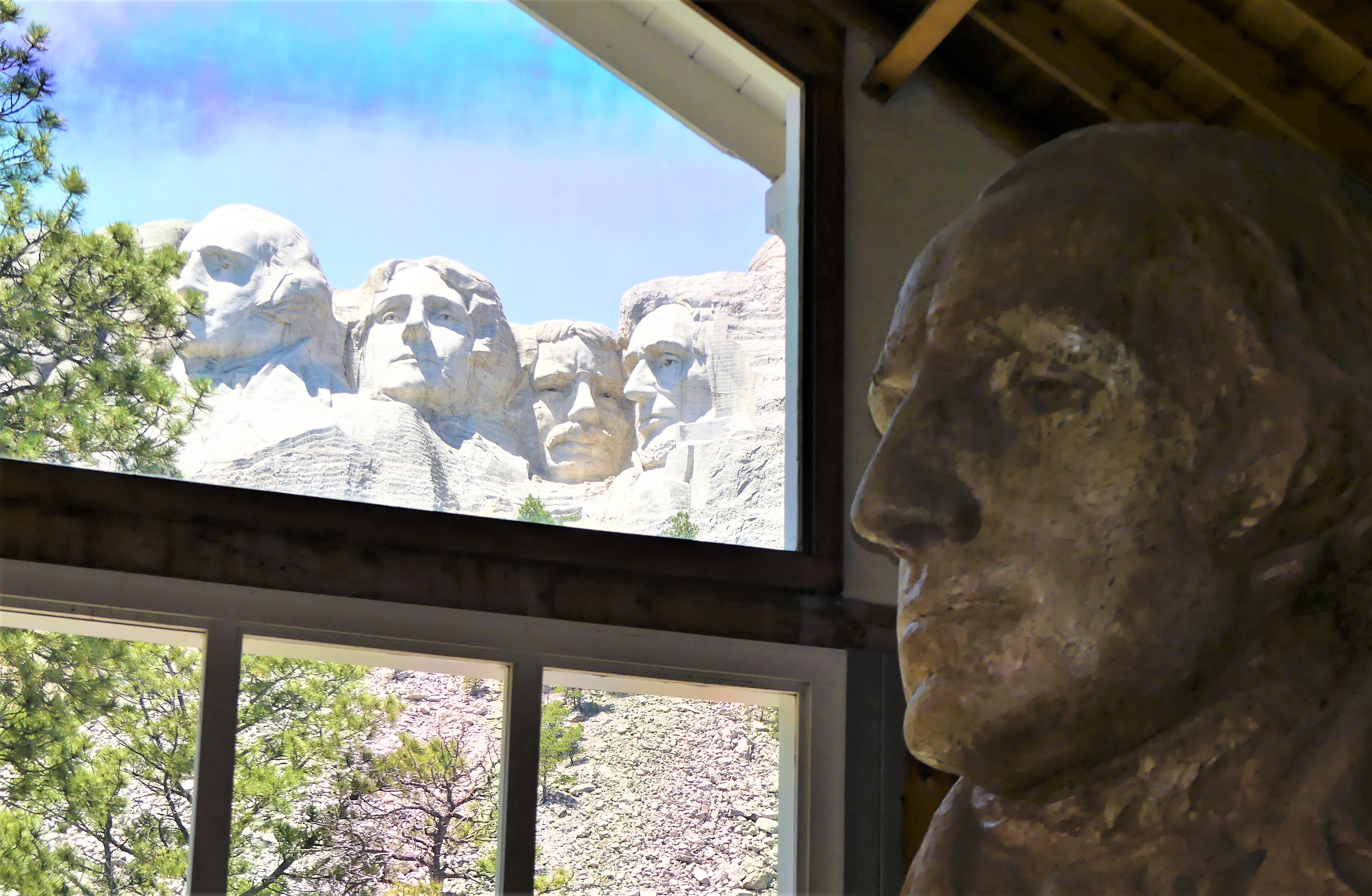
The 14-year process of carving the rock began with dimensionalizing the Presidents’ portraits through Plaster of Paris masks, on view at the sculptor’s studio-turned-museum.

Sculptor's Studio

Additional exhibits detail the construction of the memorial, and the tools used by workers, like the original Rand & Waring compressor, which powered the jackhammers for all the finishing work.

compressor

An overlooked fact–Mt. Rushmore was once intended as a tribute to the “Five Faces of Freedom,” but funding ran short when Congressional appropriation for the monument approached $1 million during the Great Depression. Hence, the unfinished carving of the Great Ape to the right of Lincoln serves as a reminder that we are never far from our true ancestors.¹

Planet of the Apes

No less ambitious, and equally as impressive, the Crazy Horse Memorial is a work-in-progress located 16 miles away in the heart of the Black Hills–considered sacred land by the Lakota people.

Crazy Horse LS

Conceived by Korczak Ziolkowski in early 1940s,

crazy horse model (2)

the memorial, when completed will stand 563 ft. by 641 ft. across, and is expected to be the largest sculpture in the world. Already, the completed head of Crazy Horse measures 60 feet tall…

Crazy Horse CU

…twice the size of any of the presidents at Mt. Rushmore. While the first blast was conducted on the mountain in 1947, the current prospects for the memorial are to complete the outstretched arm during the next twelve years. There is no completion date available for the finished carving, which has been financed entirely by private funding since its inception.

Mt. Rushmore was created by a Danish American. Crazy Horse was created by a Polish American. And visitors to both destinations manifest the melting pot that has brought us all together as Americans. It’s our diversity that makes us strong, our ambition and determination that makes us great, and our compassion and sacrifice that make us whole.

These are the values reflected from the faces we’ve immortalized in stone. Yet, we would honor them more by living according to these principles.

Happy Birthday, America!

Mt Rushmore1

¹ Just kidding, but the photograph is real and has not been retouched.

Helsinki–The Sibelius Monument

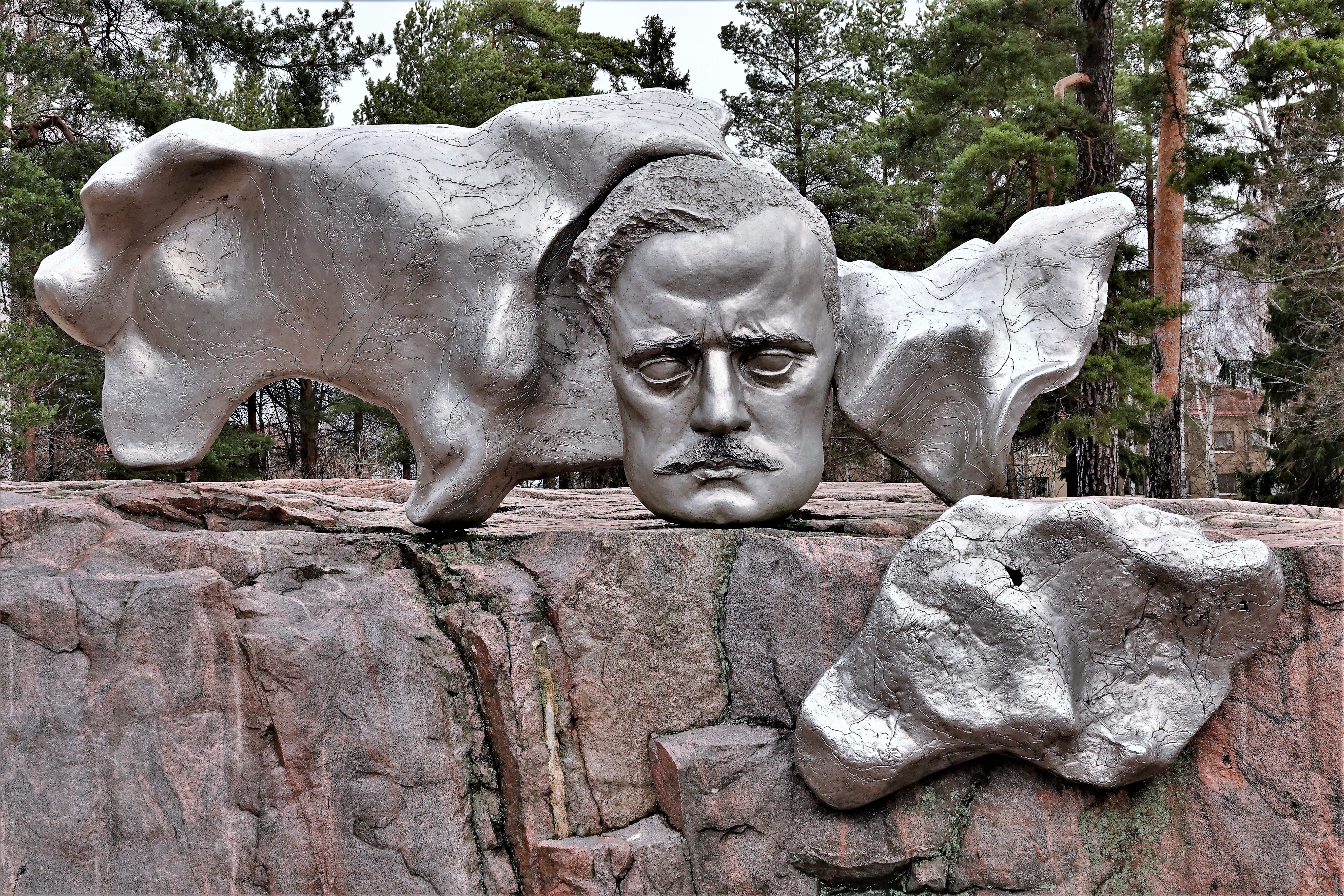
Eila Hiltunen’s landmark sculpture, Passio Musicae pays tribute to Finland’s Jean Sibelius, but not without controversy.

Sibelius was an internationally acclaimed symphonic composer inspired by Finnish folklore. Long regarded by Finns as a national icon, his celebrity and talent sparked a public fundraising campaign to memorialize him in a meaningful way after his death in 1957, while also fueling a public debate on the purpose of public art.

In 1961, the Sibelius Society arranged a competition among 50 of Finland’s finest sculptors. The local jury recognized five finalists with statuary proposals and gave consideration to Hiltunen’s abstract design of 600 stainless steel tubes clustered in free-form formations.

staggered pipes (2)

The second tier of judging was bolstered by three additional experts of international reputation, who ultimately favored Hiltunen’s more refined proposal, and awarded her the commission,

looking up

immediately angering half of Finland’s population who favored a more figurative solution (later added by Hiltunen as a compromise),

mask face

yet pleasing the other half of the nation looking for a modernist approach.

pipes tied together

But irony abounds when Hiltunen’s monument honors an accomplished violinist, but resembles a mighty display of scrolled organ pipes, or perhaps a birch forest or the Northern Lights to an imaginative viewer.

pipes on a rock

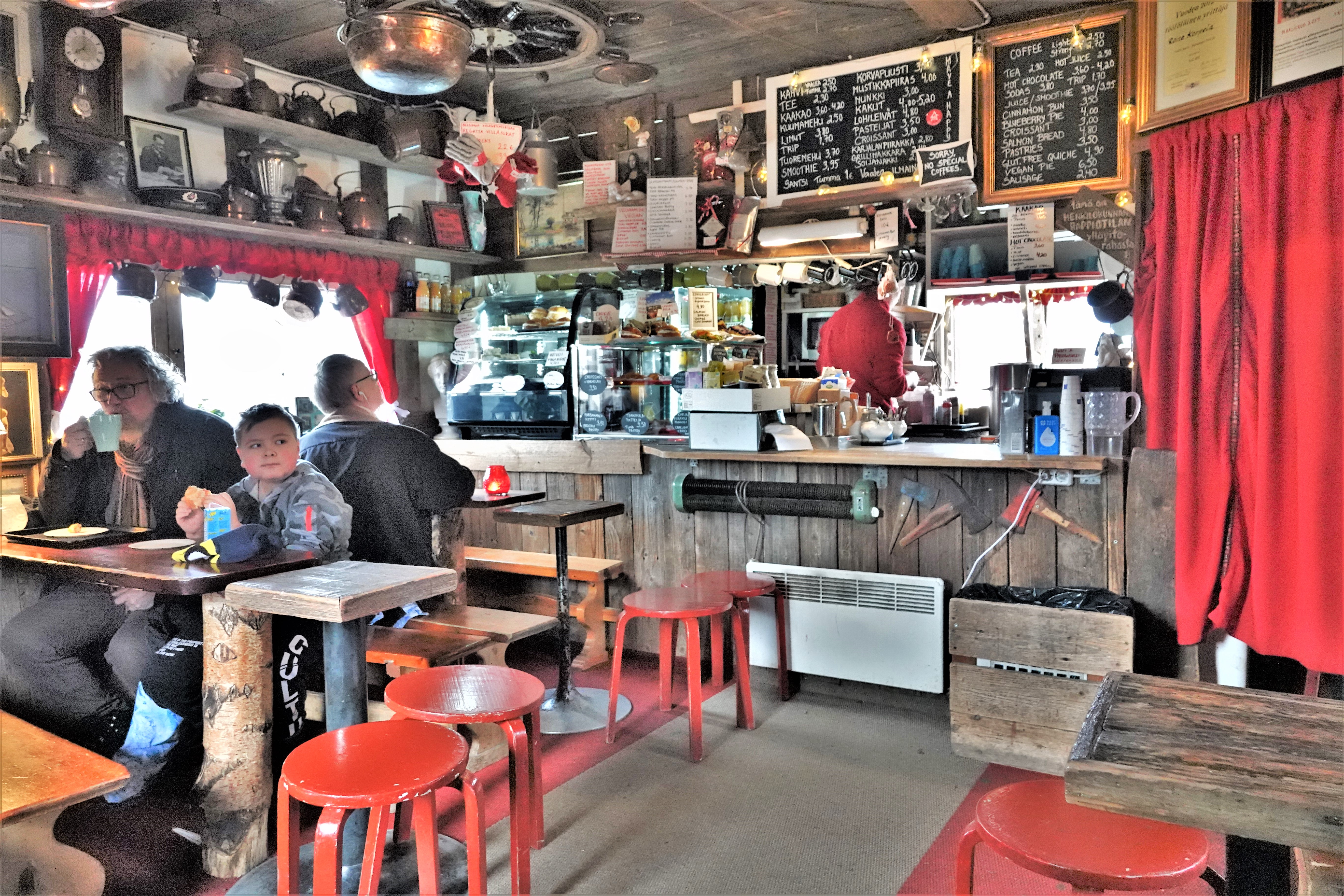
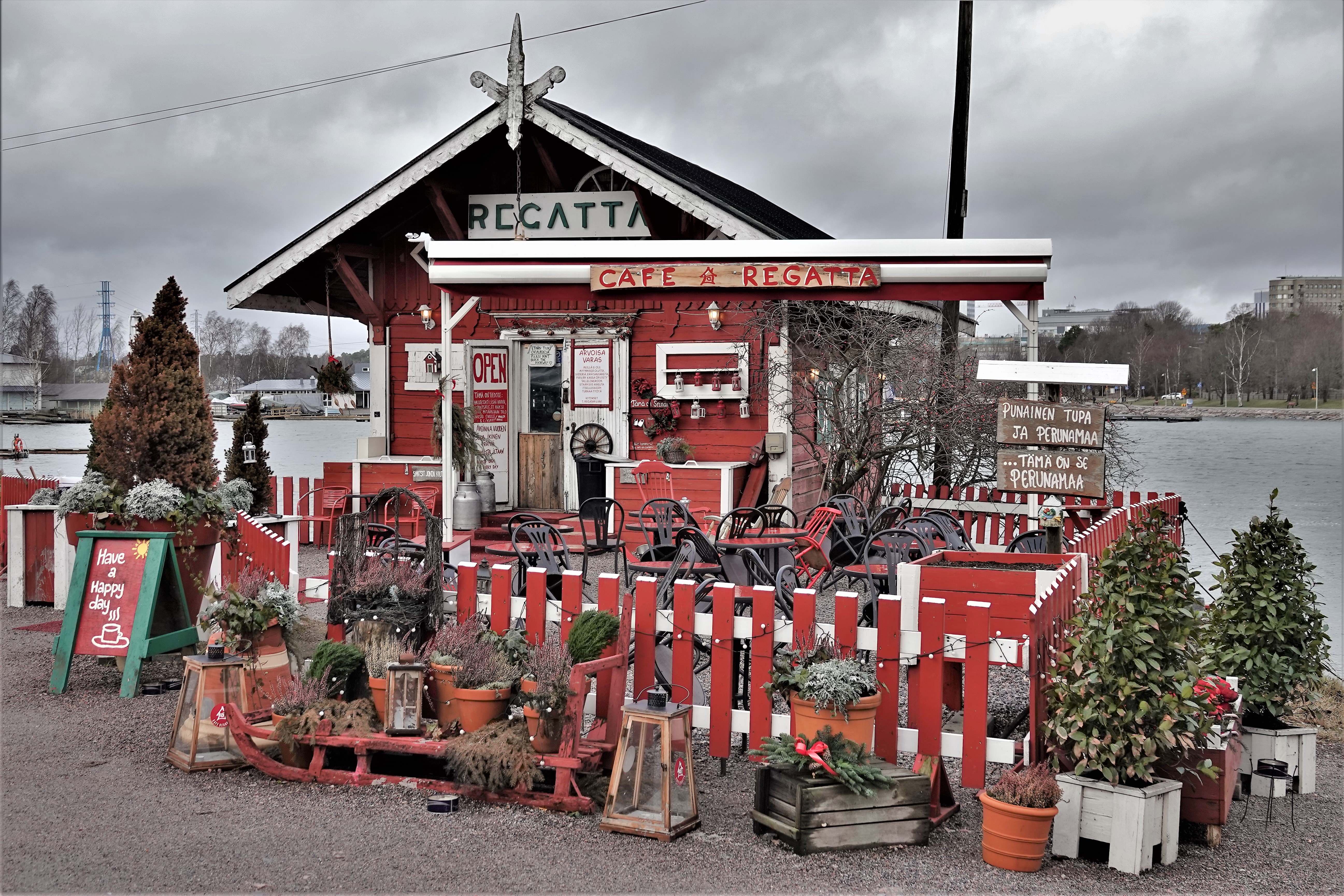
Nearby, Leah and I huddled for warmth inside a fanciful shoebox called Cafe Regatta, located on the edge of the park,

warm and dry

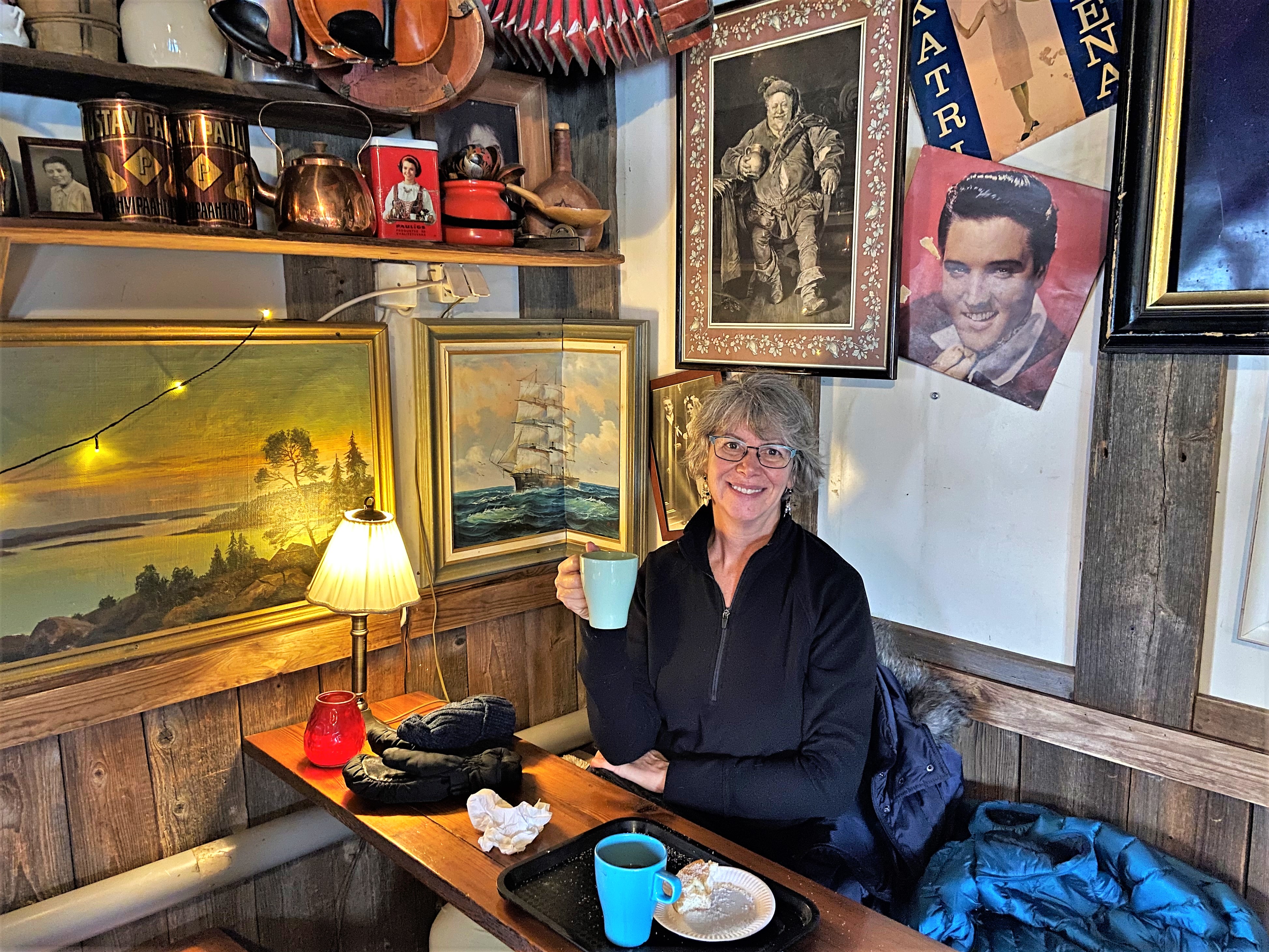
to contemplate the Sibelius monument, and enjoy a hot cocoa and donut…

Leah inside Cafe Regantta

while around the bend, on the water’s edge,

Cafe Regatta

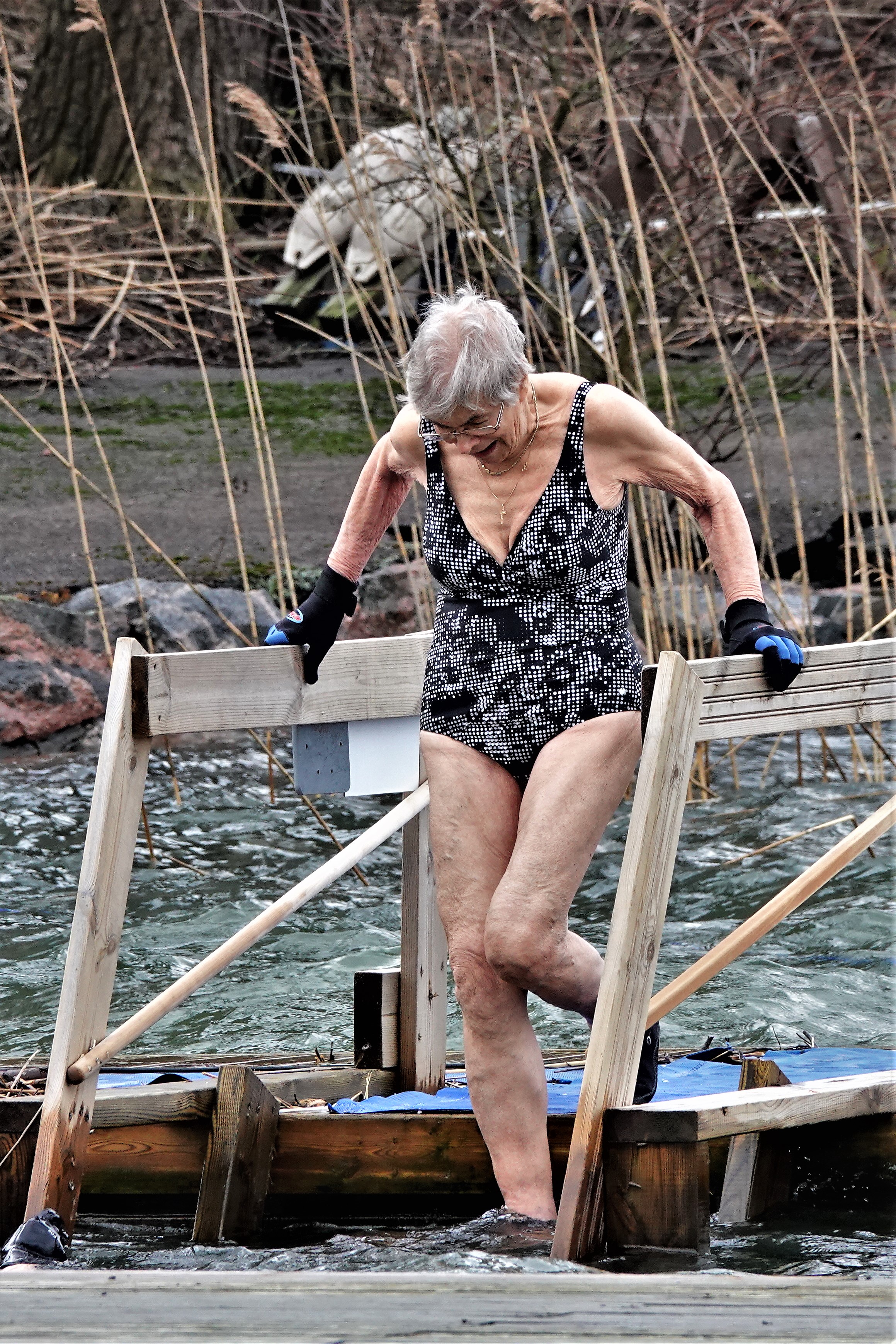
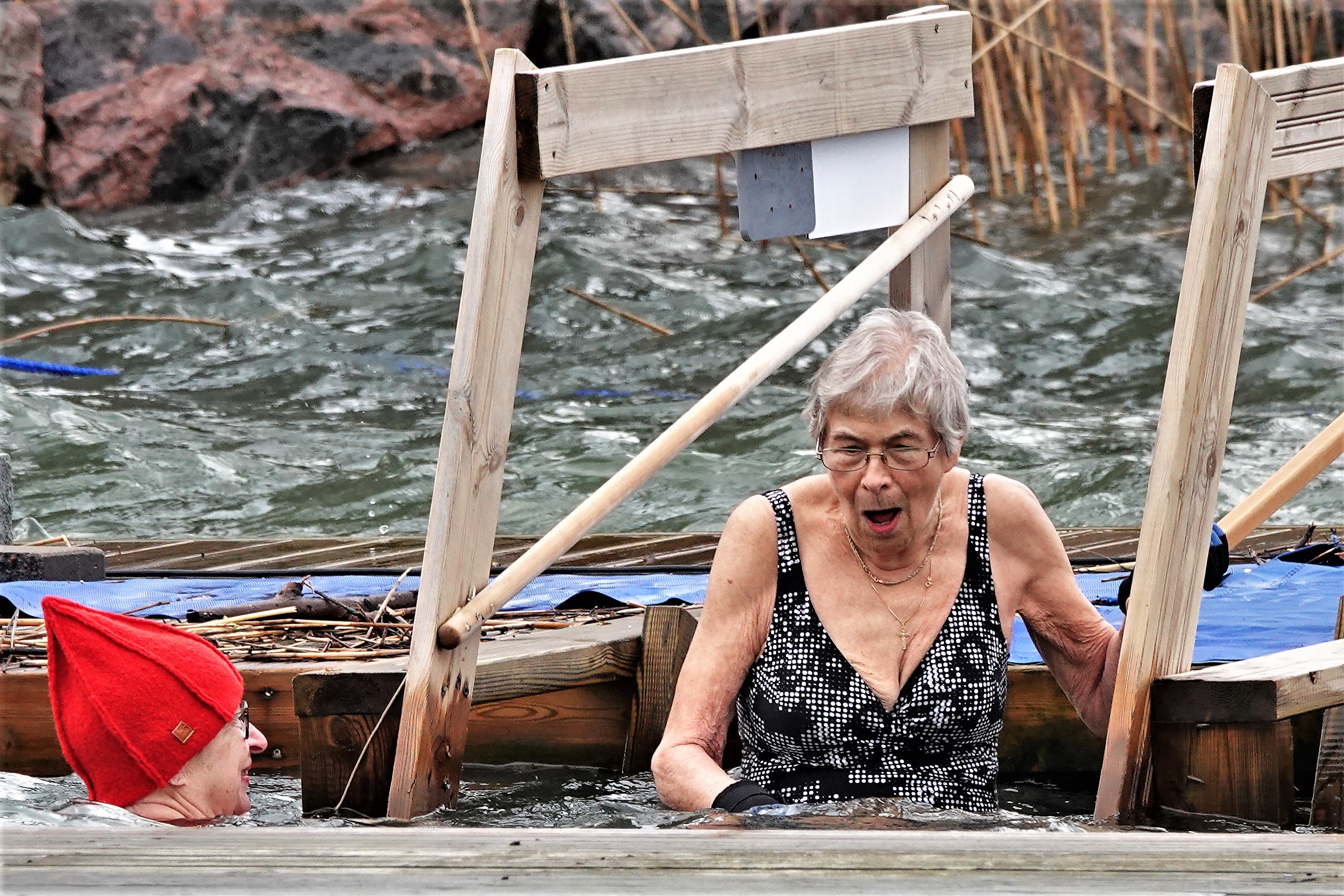
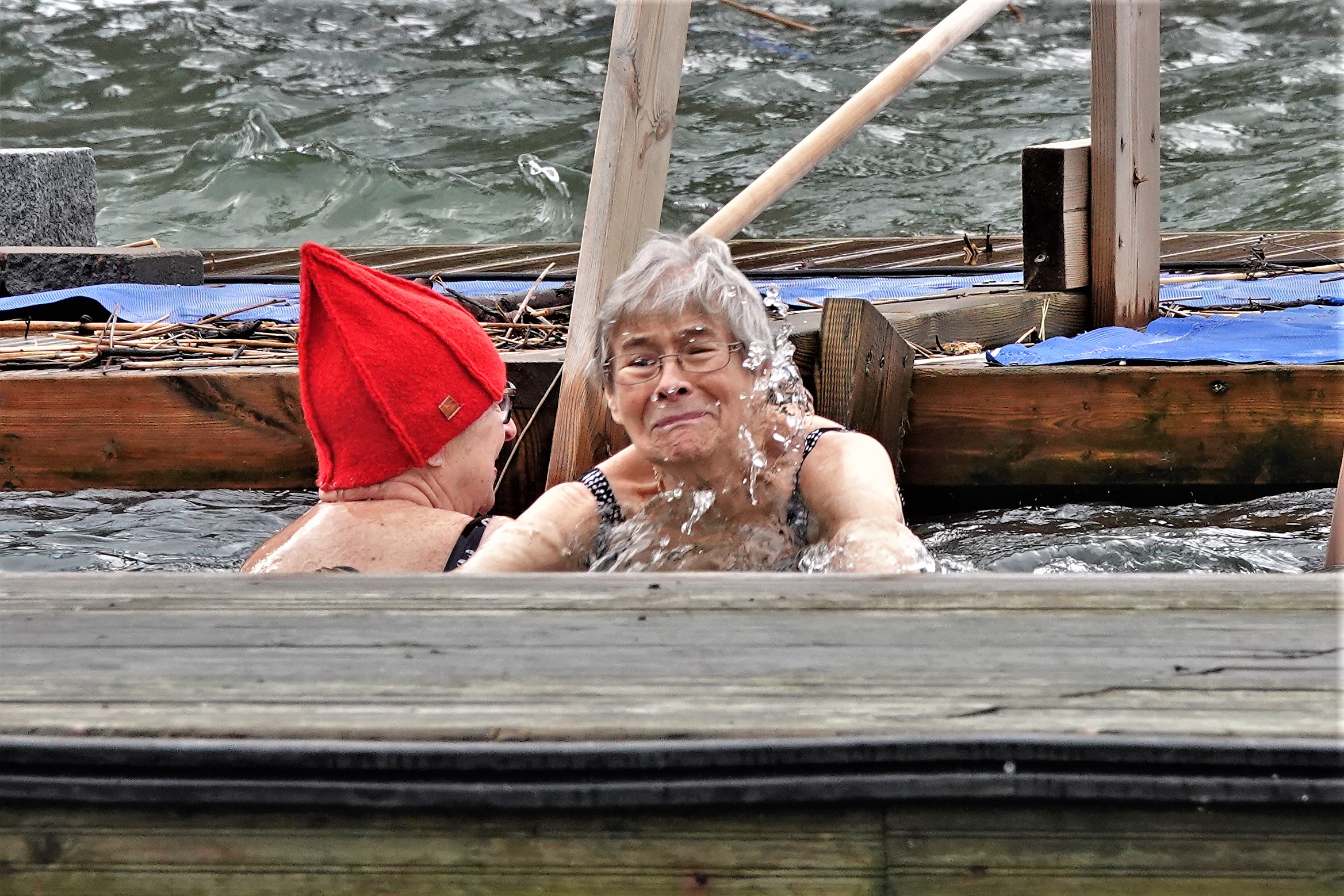
two hearty locals dared to dip into icy waters–

1 approach to water

2 brace yourself

3 one foot in

4 two feet in

5 thigh deep

6 almost immersed

7 the plunge

reminding me that taking the plunge is risky, but the results can take your breath away.

Helsinki–Church of the Rock

With our Norway cruise behind us, Leah and I had designs on extending our Northern European adventure. Unfortunately, our plan to visit St. Petersburg hit a fatal snag after we neglected to apply for Russian visas in a timely fashion.

Originally, our flight from Bergen to St. Peterburg required a transfer through Helsinki, so Helsinki became our default destination for the next four days. Although my dream of touring the Winter Palace and Hermitage was temporarily dashed, Helsinki seemed like a worthy safety net and exciting city to explore.

But something about Helsinki was off. Ordinarily, Helsinki during winter months would be blanketed in snow with the harbor frozen over…

overview in snow

but during our visit, the landscape was fully thawed.

overview with no snow

In fact, residents hadn’t seen a trace of snow since winter’s arrival, although they were experiencing one of the wettest and gloomiest seasons on record.

And that’s exactly how it felt to us as we wandered through Helsinki’s city streets, taking in the cultural setting and the vibe.

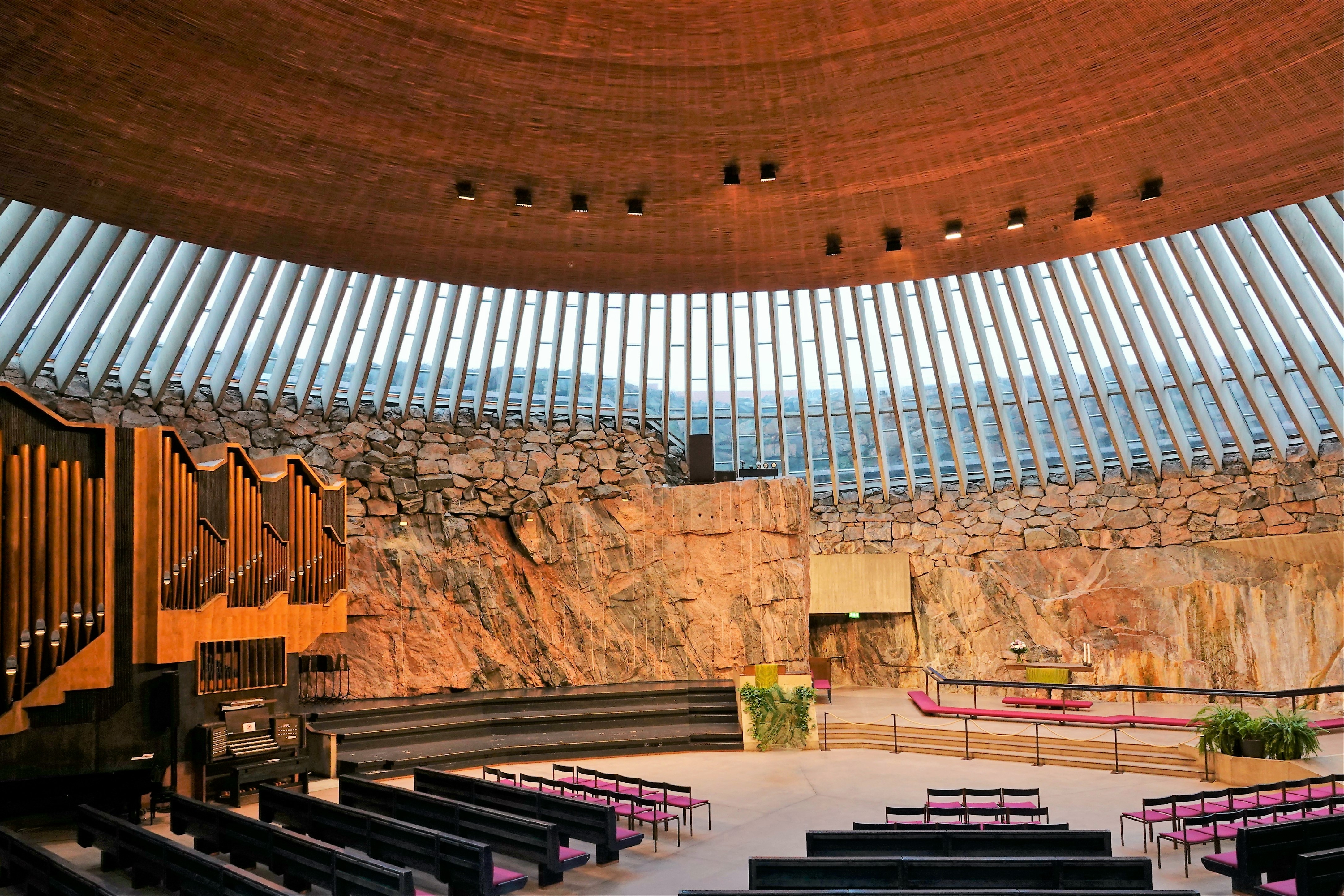
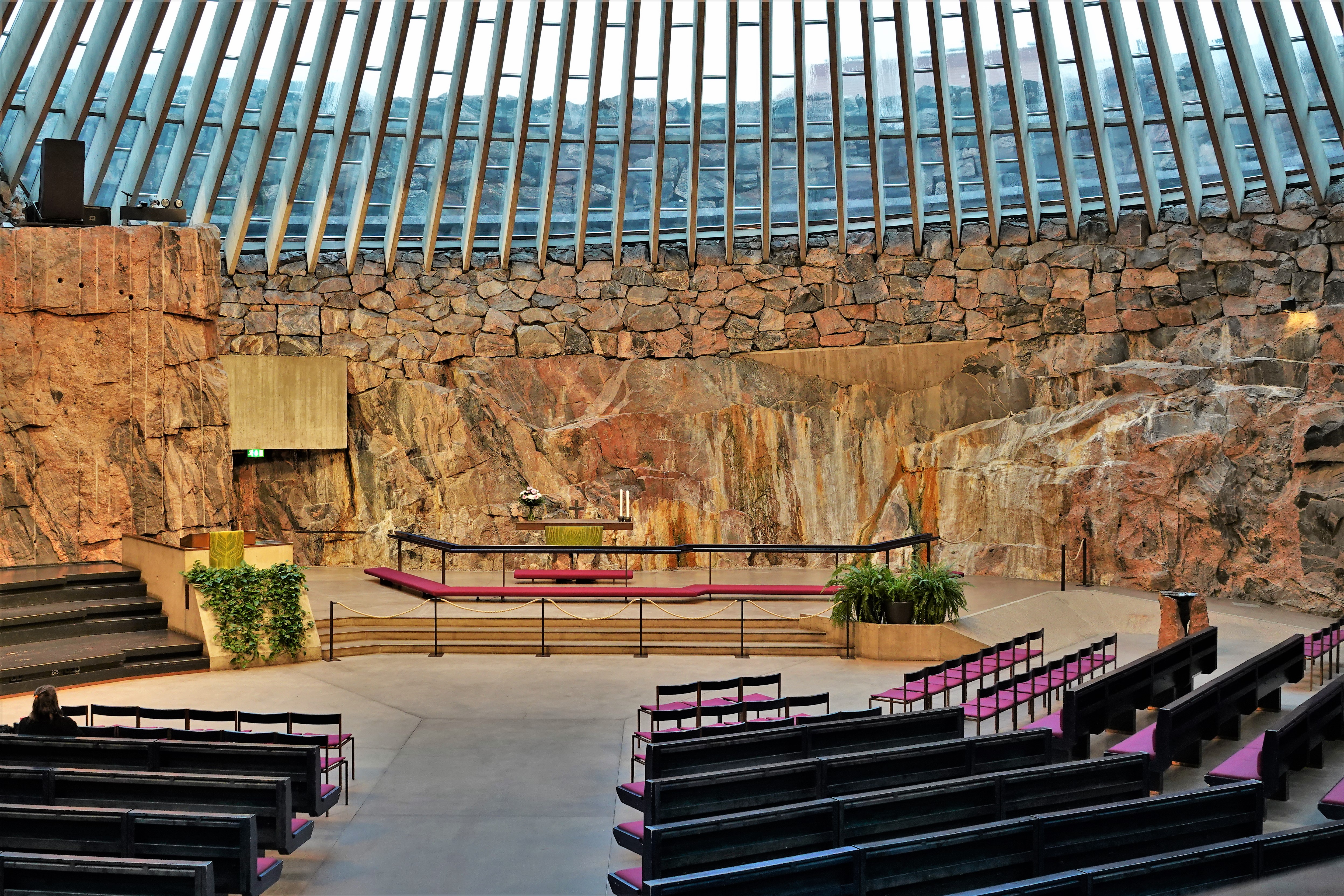
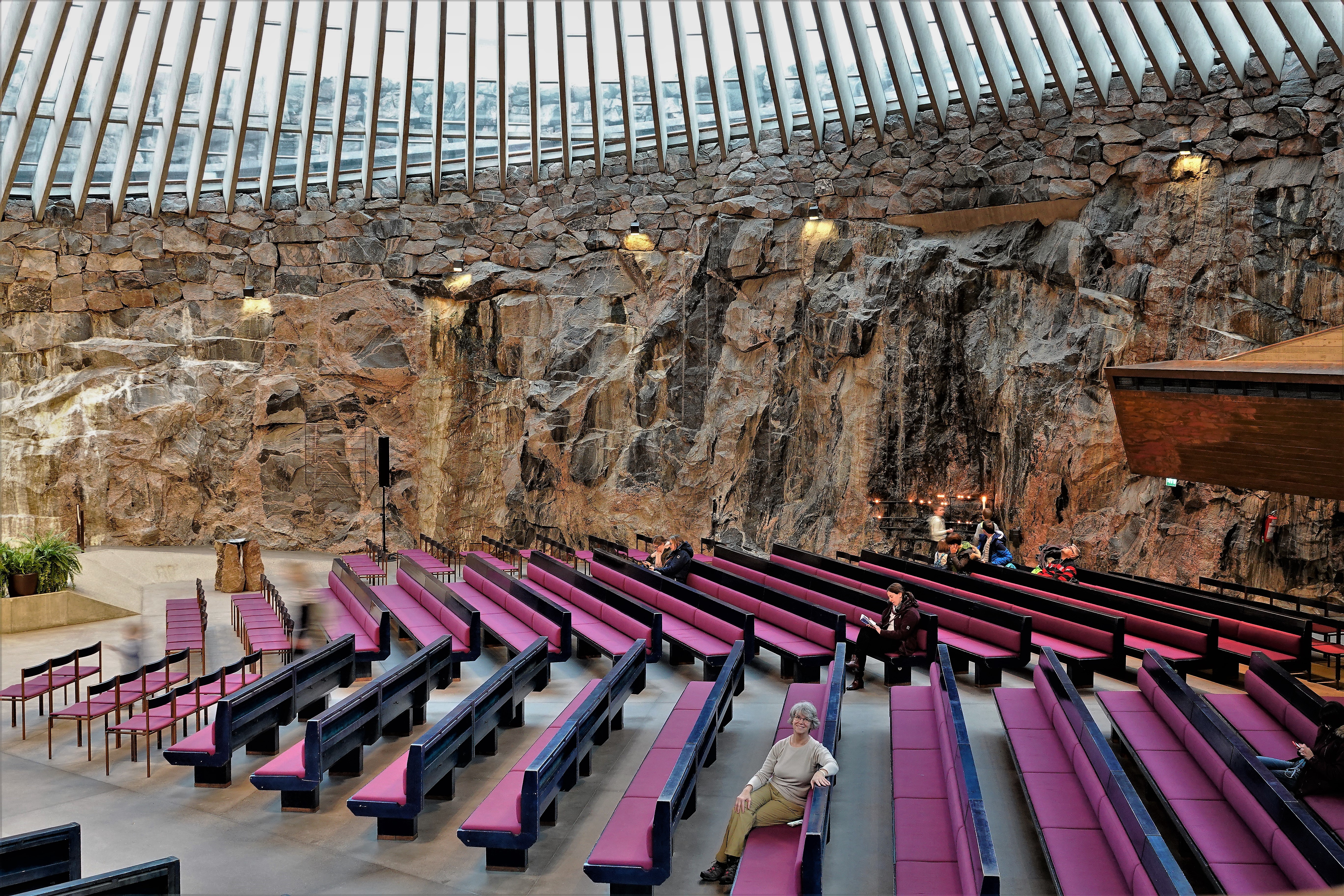
On our first day of touring, the rain and wind was relentless, but we were undeterred. In the end, we punished our umbrellas, and rendered them useless. But they saved us from a soaking and protected my camera as we found our way to Helsinki’s 50-year old landmark, the Church of the Rock–

Entrance (2)

embedded in bedrock,

aerial

and capped by an oval dome of skylights and copper.

atop the rock

In 1961, Timo and Tuomo Suomalainen–Finnish brothers and architects–conceptualized a church excavated from solid rock amidst Helsinki’s Töölö district, and were awarded the commission by a jury of their peers.

overview

Ultimately, budget constraints and construction delays prevented the project from getting underway until February 1968, but the brothers saw their vision consecrated in September 1969.

altar

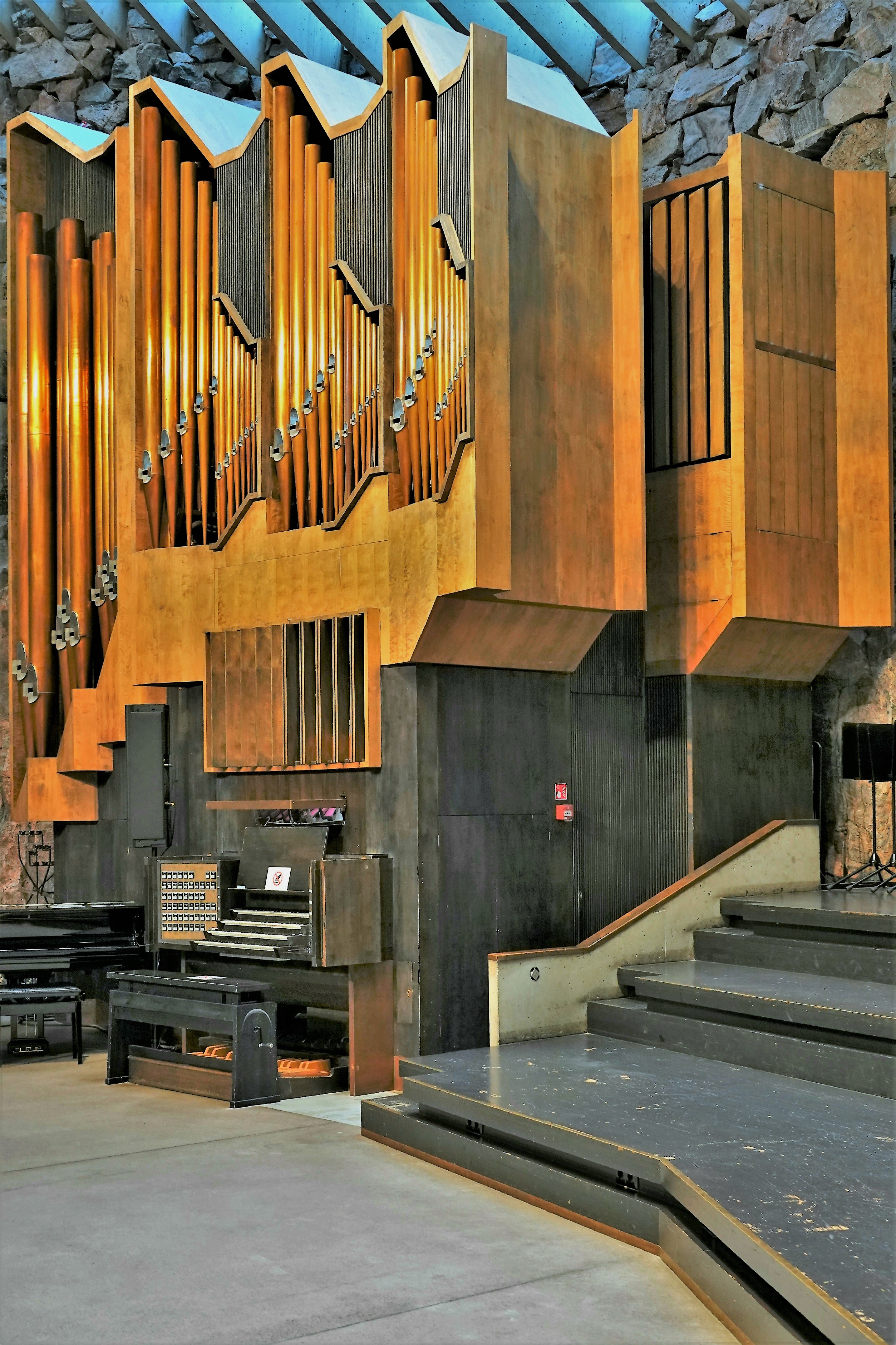
The church became an instant mecca for concerts,

organ (2)

after sound engineers determined that exposing the rough-hewn rock walls could deliver an acoustic nirvana.

candle sconce

More than half a million visitors a year flock to Church of the Rock for worship, wedding celebrations, and meditation.

Leah (2)

But I came to dry off and stare at the ceiling.

flying saucer

Cruising for a Bruising

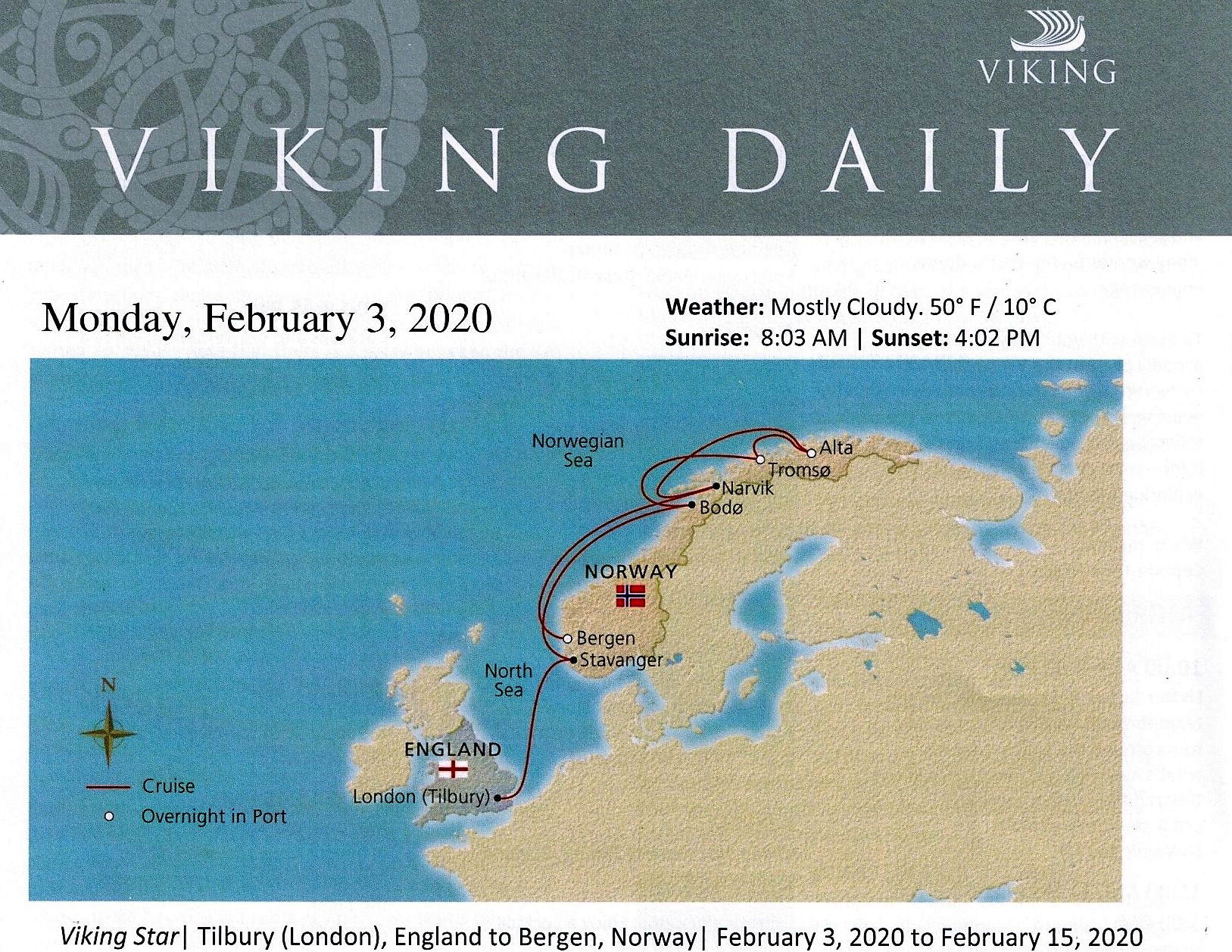
When Leah and I embarked on our Norwegian adventure aboard the Viking Star,
Viking Daily

we were unaware that COVID-19 was invading the decks of Diamond Princess while she cruised from Hong Kong to Japan–inevitably turning her into a floating Petri dish of suffering for its 3711 passengers and crew.

There was no mention of Diamond Princess peril during our maritime emergency drill–but an advisory letter was delivered to our stateroom that evening.

Covid-19 letter

When the general alarm sounded, all 450 crew members reported to their assigned muster stations,

crew on drill

while 920 passengers assembled inside the Star Theater to learn how to prepare for an emergency evacuation.

crew on drill1 (2)

After instruction, the crew went about their business, and passengers scattered throughout the ship to enjoy themselves, unconcerned with what was brewing in Asia. Afterall, this was our home to share for the next two weeks.

The Viking Star never felt too crowded or too busy. The spacious Living Room had plenty of comfortable seating for small talk and table games.

puzzle

As a whole, people took their time getting from point A to point B. Many strolled with canes–others with walkers. It made Leah and I feel so much younger than the seventy-somethings attracted to Viking’s vision of casual luxury.

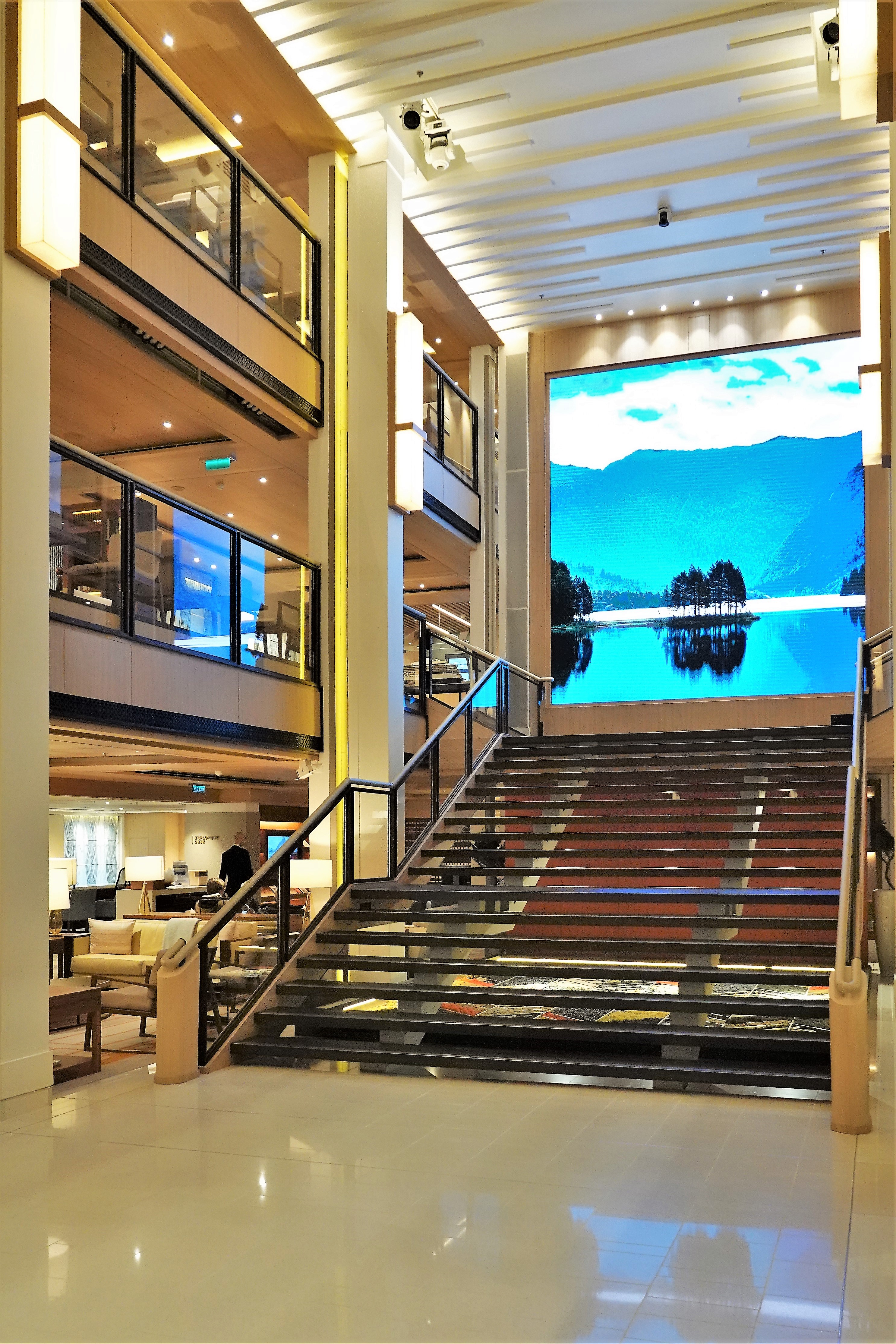
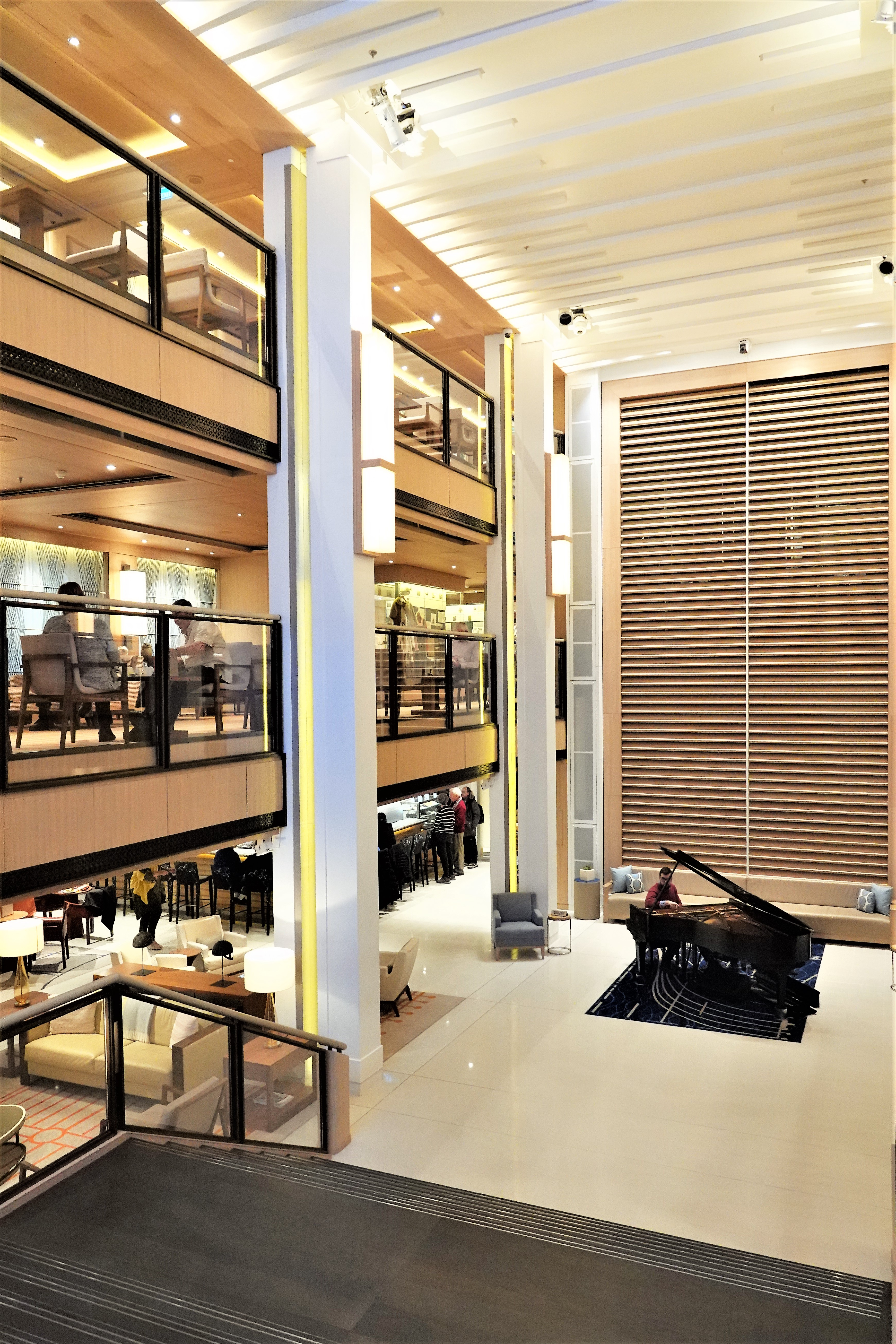
During the course of our cruise, we always gravitated to the 3-deck Atrium at mid-ship,
atrium staircase (2)

where people gathered for conversation and daily music performances. While more than 20 different nationalities were represented onboard, nearly half the ship was American, with large blocks of Brits, Aussies, and Brazilians filling out the count.
piano atrium

When it came to dining, we had a variety of options that came with a couple of rules. The dinner dress code required shoes for all and collared shirts for men. Additionally, use of sanitizer stations or hand sinks at all dining room entrances and exits was expected before seating.

We enjoyed sampling the fish and meats at The Restaurant, located aft on deck 2. It is the Viking Star’s largest menu-driven dining room,

Chef's Table

delivering breakfast, lunch and dinner.
Manfredi's

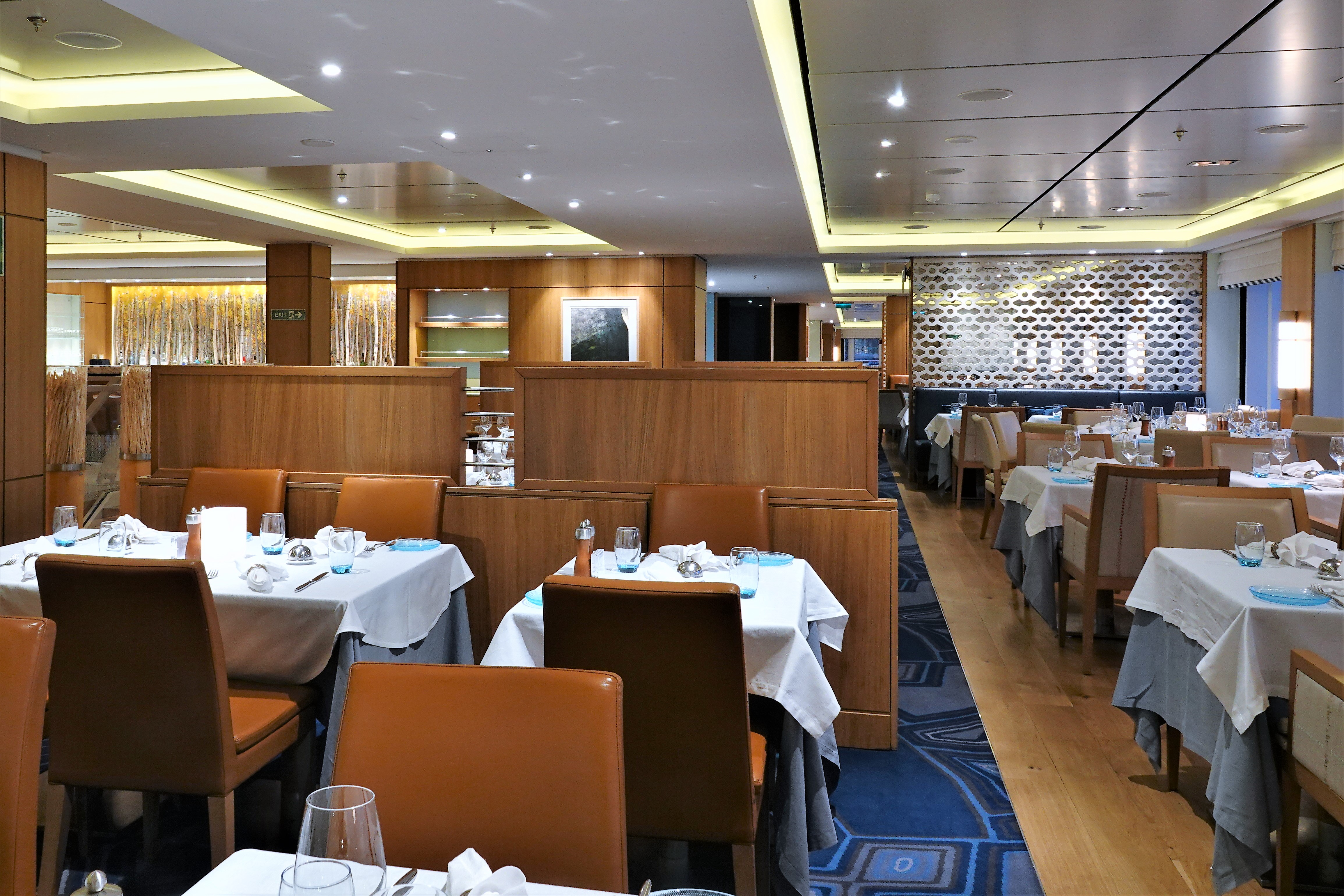
But for intimate dining, we found Manfredi’s–directly below on deck 1–to be as good a classic Italian eatery as any on sea or land, and without a surcharge to boot. Naturally, early dinner reservations were coveted and prioritized by cabin category, but late-evening seatings became an acceptable compromise for us.
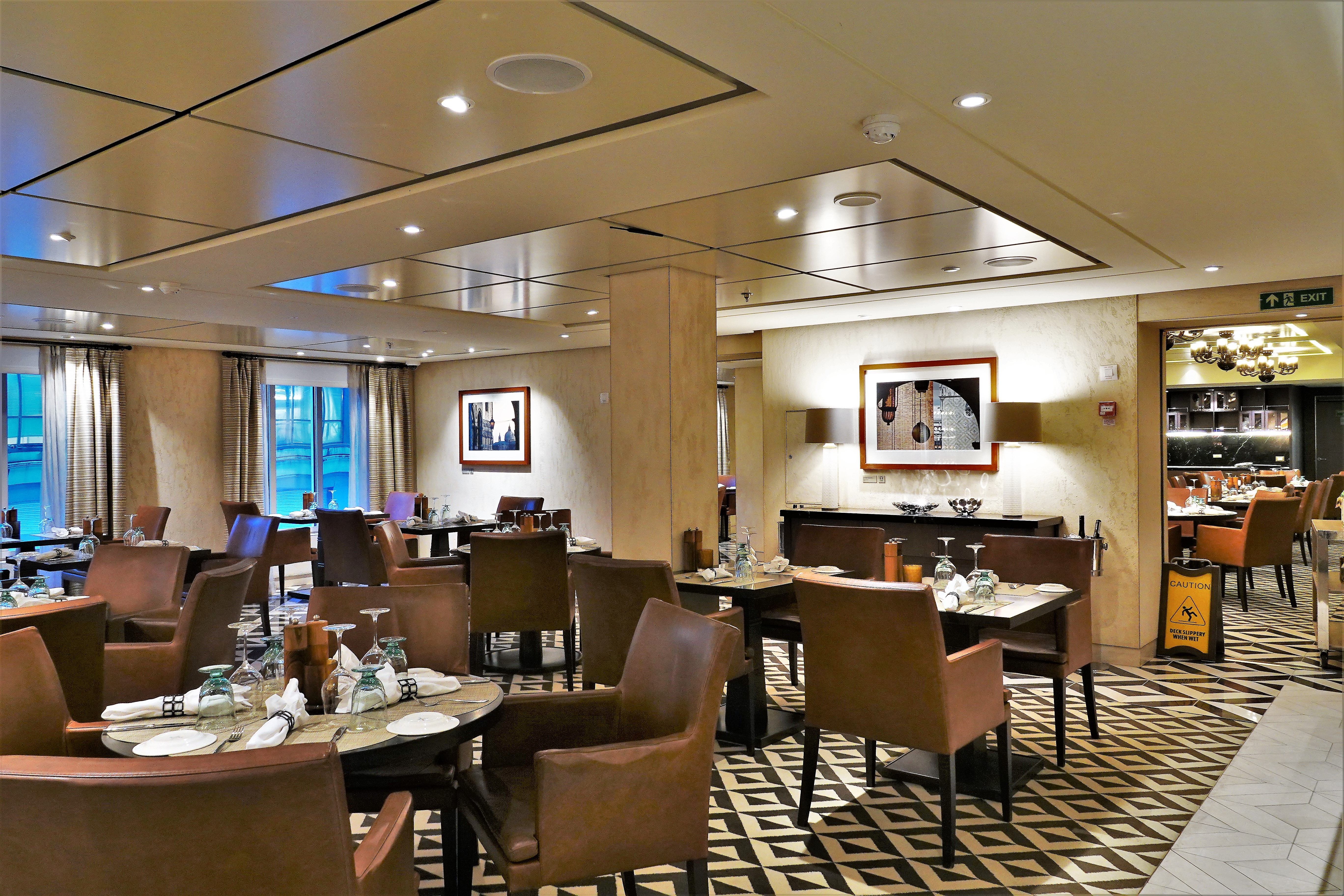
The Restaurant (2)

Next door was Chef’s Table, a small dining room that focused on delivering five fixed courses prepared from locally-sourced ingredients, and paired with selected wines. The course selection changed every few days to showcase a different world cuisine, and was included without surcharge, but by reservation-only.

world cafe

The World Cafe, located aft on deck 7 was Viking Star’s buffet option, and most popular breakfast venue for a wide range of appetites.

buffet line

However, Leah and I have always been wary of buffet lines, which are commonly compromised by passengers who inevitably return for second and third helpings. They unwittingly grab the serving tongs without considering that they may have licked their fingers earlier. Eww!

Bringing our personal hand sanizer to the table always provided a thin veil of protection.

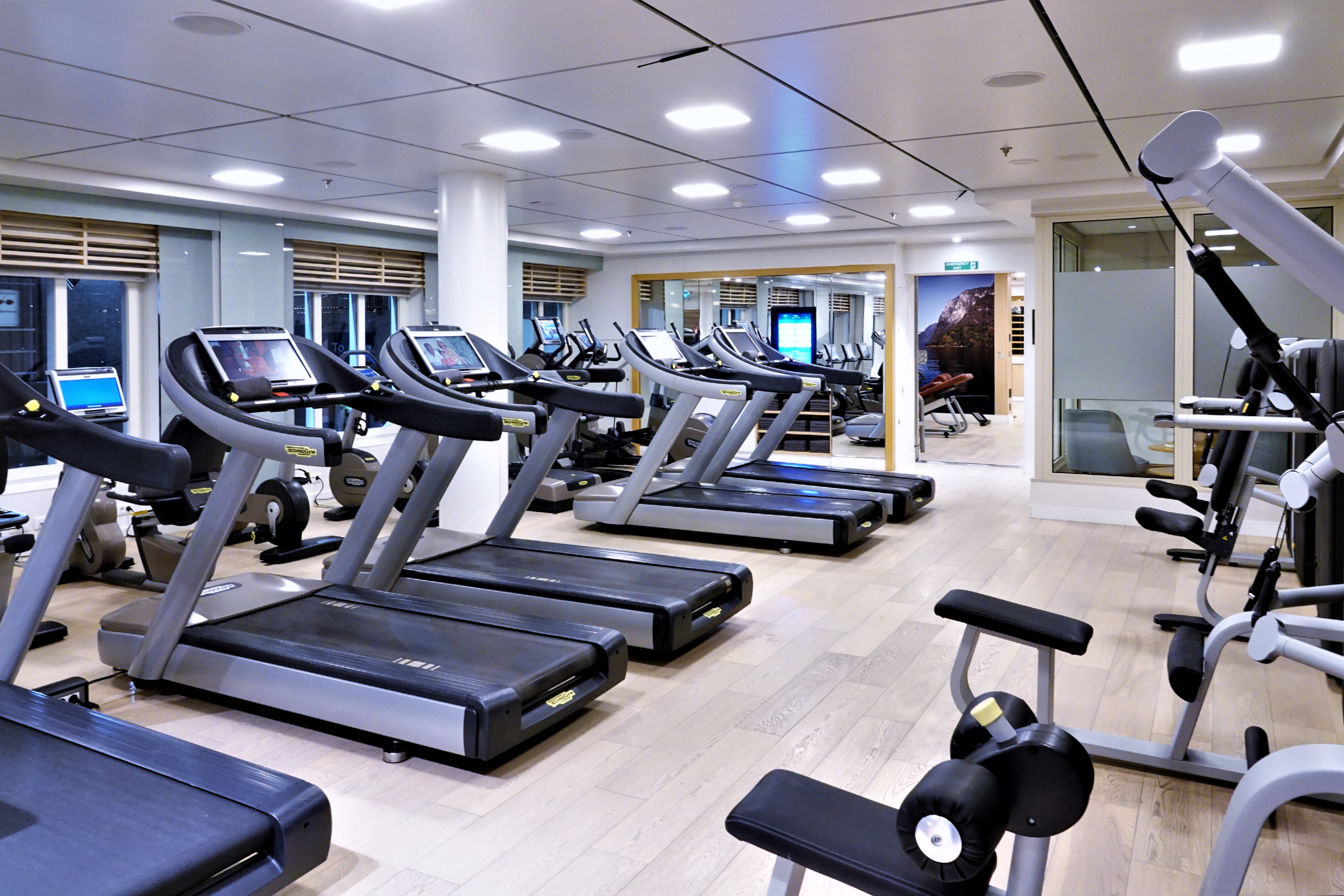
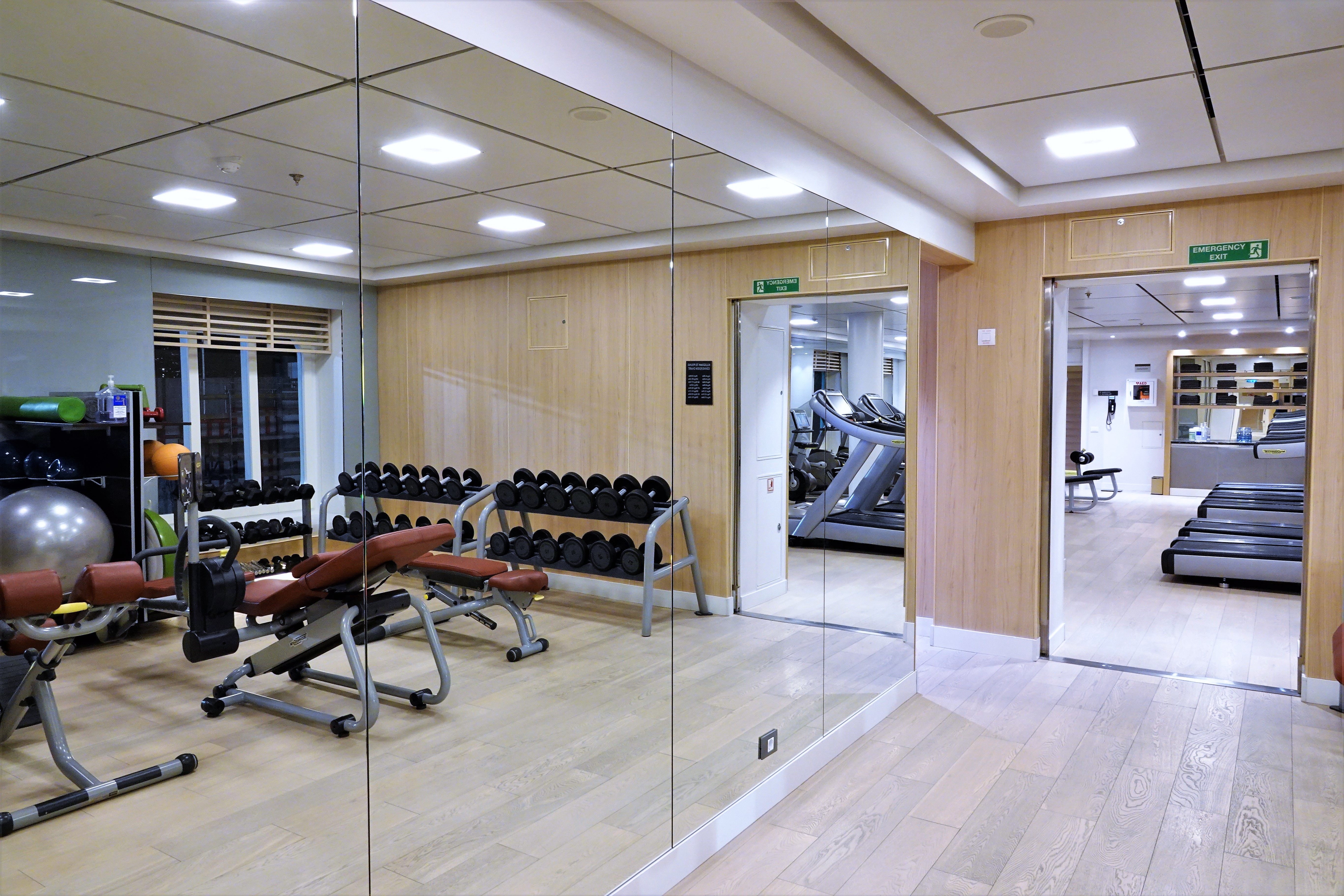
An inspection of The Spa on deck 1 seemed appropriate after so many good meals. We discovered the weight gym,
gym weights

and the machine room.

machine room

and an amazing thermal suite, with a salt water hydrotherapy pool, sauna and snow room.

spa pool

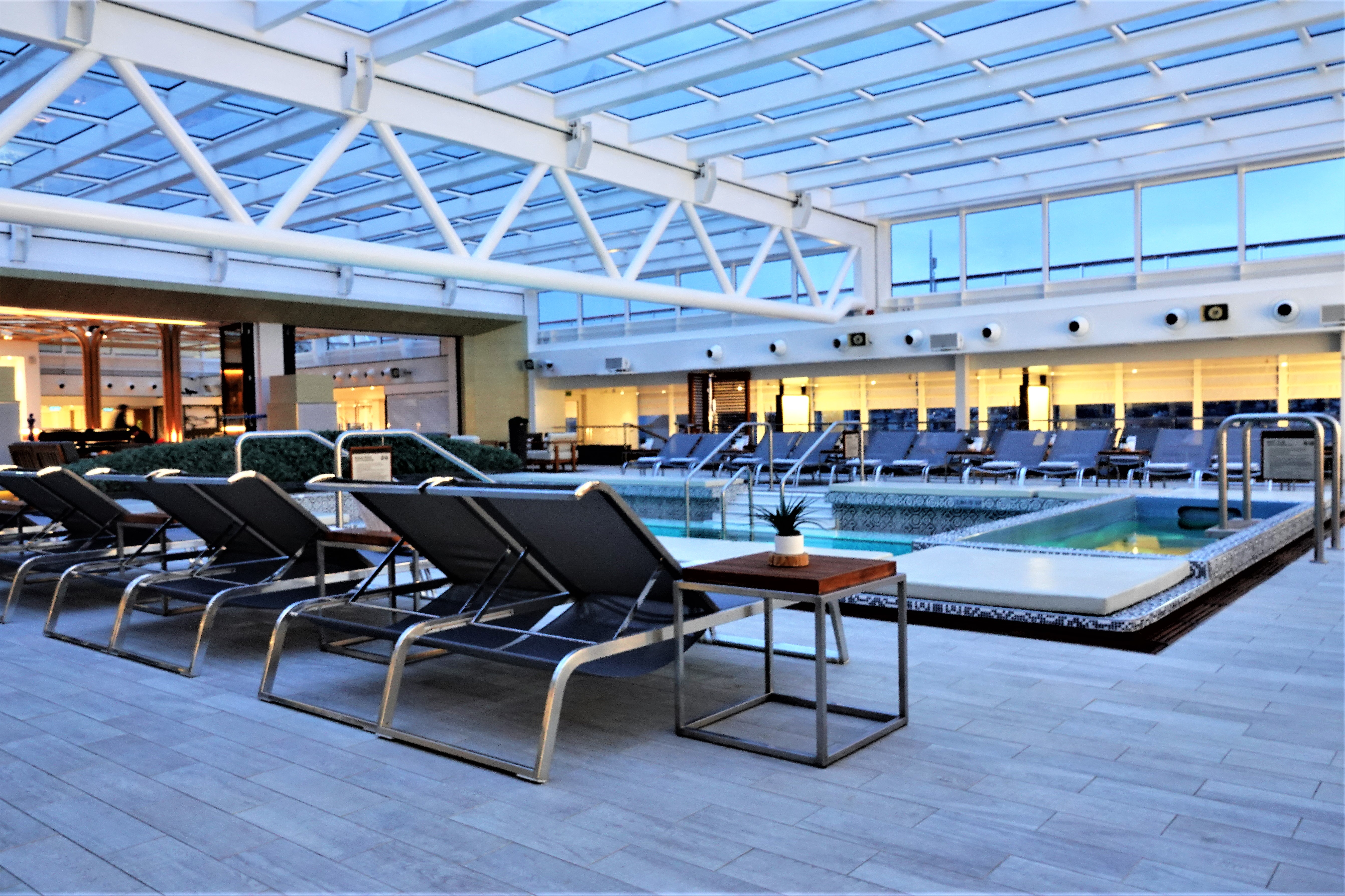
Of course, climate-controlled swimming was available–if we were so inclined–at the Main Pool on deck 7, under a retractable roof.
pool deck

For lounging and relaxation, we could contemplate the panoramic views of the 2-tiered Explorers’ Lounge, forward on decks 7 and 8;

Explorer Lounge

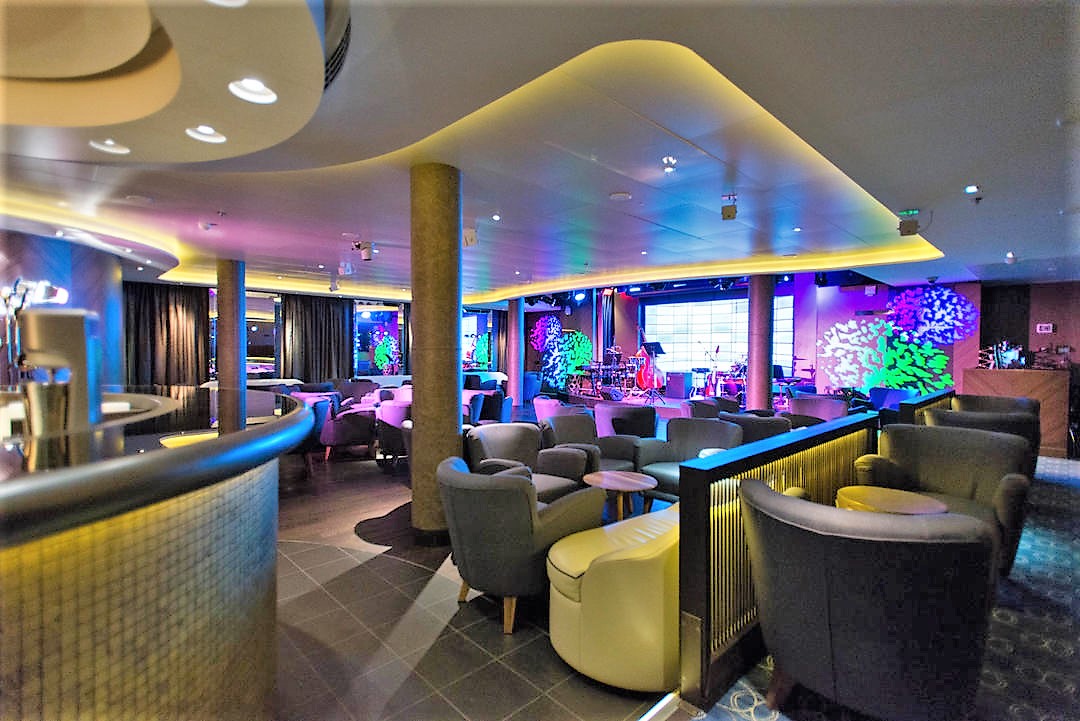
or the Torshavn Lounge,

Torshavn

a nightclub venue for dancing and light entertainment.

entertainment

However, to get away from it all, Leah and I felt very comfortable social distancing inside 5006–

suite 5006 (2)

our Scandinavian-styled veranda stateroom with a king-size bed, a smart TV, and a well-stocked bar refrigerator.

5006 interior

Our cabin was outfitted with a generous-sized bathroom…

bathroom1

that featured an amazing shower.

shower (2)

Thanks to Eric, our room attendant and all the other housekeepers, the ship always sparkled–

Leah and Eric

especially after two ship inspections during our voyage. It was reassuring to see crew members scrubbing and polishing so thoroughly.

On February 14th, our final evening, Leah and I enjoyed dinner at Chef’s Table to celebrate Valentine’s Day, and a return to live TV reception, now that we were floating south of the Arctic Circle.

While savoring our tenderloin stir-fry, we reminisced about our favorite ports:

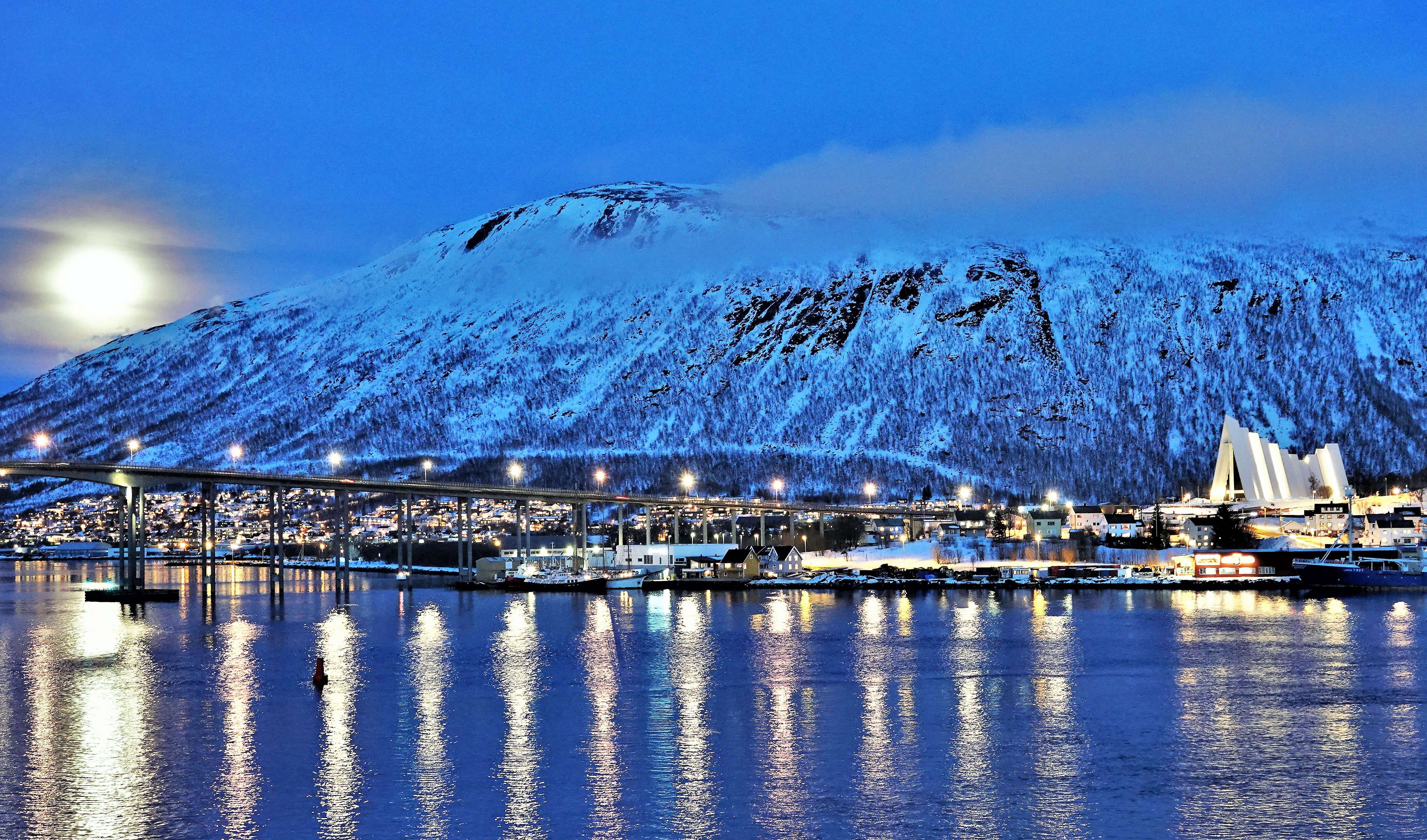
TromsoViking Star in Tromso (3)

moonrise over Tromso (3)

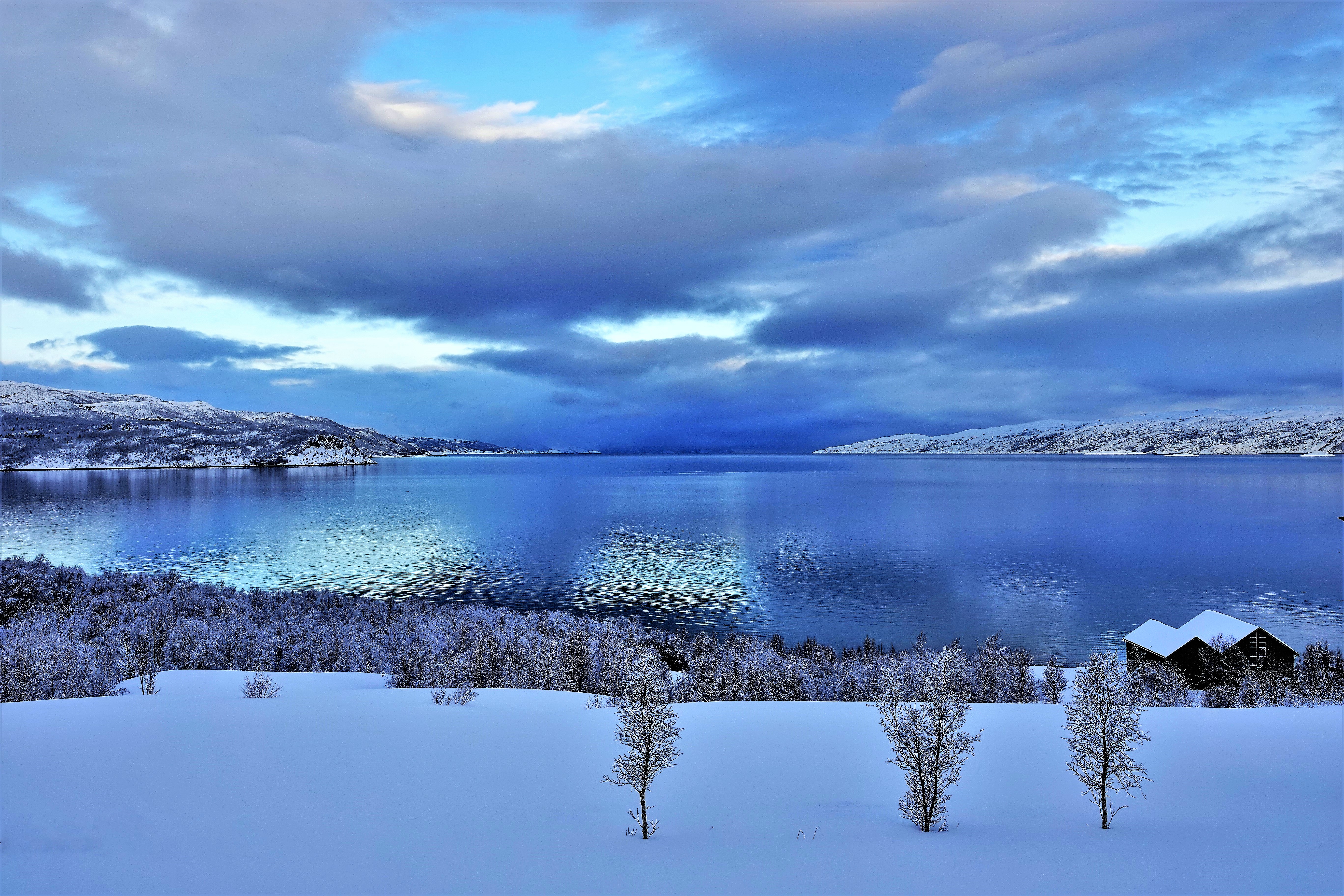
Altadocked

museum fjord (2)

StravangerViking Star in Stavanger

through fjord storm

and later toasted our crew, who kept us safe and made our cruise so enjoyable.

crew

On the other hand, we learned from current reports that passengers and crew aboard the Diamond Princess had been less fortunate. They were riding out a quarantine south of Tokyo while confined to their cabins. We learned that 218 passengers and crew had shown positive results among a sample of 700 who were tested.

On February 14th, there were 15 cases of COVID-19 in America and over 64,000 cases worldwide with nearly 1400 deaths. Speaking to National Border Patrol Council members, Donald Trump theorized that April’s warmer weather would stifle the spread of the virus.

Today, the world is on fire. At this moment, over 1.1 million people around the world have tested positive for coronavirus, killing over 57,000. The US has reported more than 277,000 cases with over 7,500 deaths, and there is no end in sight. The warm-weather theory has been debunked.

As I write, Holland America’s Zaandam has finally docked at Ft. Lauderdale, carrying 4 dead and another 26 passengers and 50 crew members infected with COVID-19.

Sadly, for the near future, there can only be one way to appreciate a cruise liner.

Viking Star model (2)

Bergen Walking Tour

After docking in Bergen, the Viking Star’s final destination of our 13-day cruise along Norway’s western coastline,

Viking Star at port

Leah and I were ready to explore our surroundings. First we wandered through the 13th century ruins of Bergenhus Fortress,
Holman ruin

maquette (2)

courtyard (3)

before entering Håkon’s Hall…

Haakom Hall facade

to regard the 1950’s restoration of the royal banquet hall that dates to King Magnus’s wedding celebration in 1261,

Haakom Hall

and where all furnishings have subsequently been replaced to commemorate the 700th anniversary of its first use.

arches and furnishings

Our walking tour continued along the Bryggen Wharf, a UNESCO World Heritage site preserving original Middle Aged buildings from the Hanseatic League trading era,

Bryggen Wharf

and the Old Wharf–

Bryggen courtyard

featuring a sea serpent once rumored to venture out from Bergen caves during summer nights to feed on sea traders.

serpent

We strolled across the cobblestones of Øvregaten, Bergen’s one-time market for craftsmen and traders,

cobblestones

but now home to residences,

residences (2)

galleries and specialty shops.

K. Lien

Finally we reached Bergen’s most popular attraction–its Fløibanen,

Floibanen1

a funicular railway taking riders to the top of Mount Fløyen.

Finicular map (3)

We passed through three stations in eight minutes,

mid station

until we finally reached the top.

last stop (2)

Once we got our bearings,

signpost (2)

we were rewarded with a wintry chill and a view that took our breath away…

panorama

unless that was the mountain troll’s doing?

Leah and troll


P.S.  This post (my 351st) represents 3 years of blogging! Looking forward to another productive year.