Mercer’s Swan Song

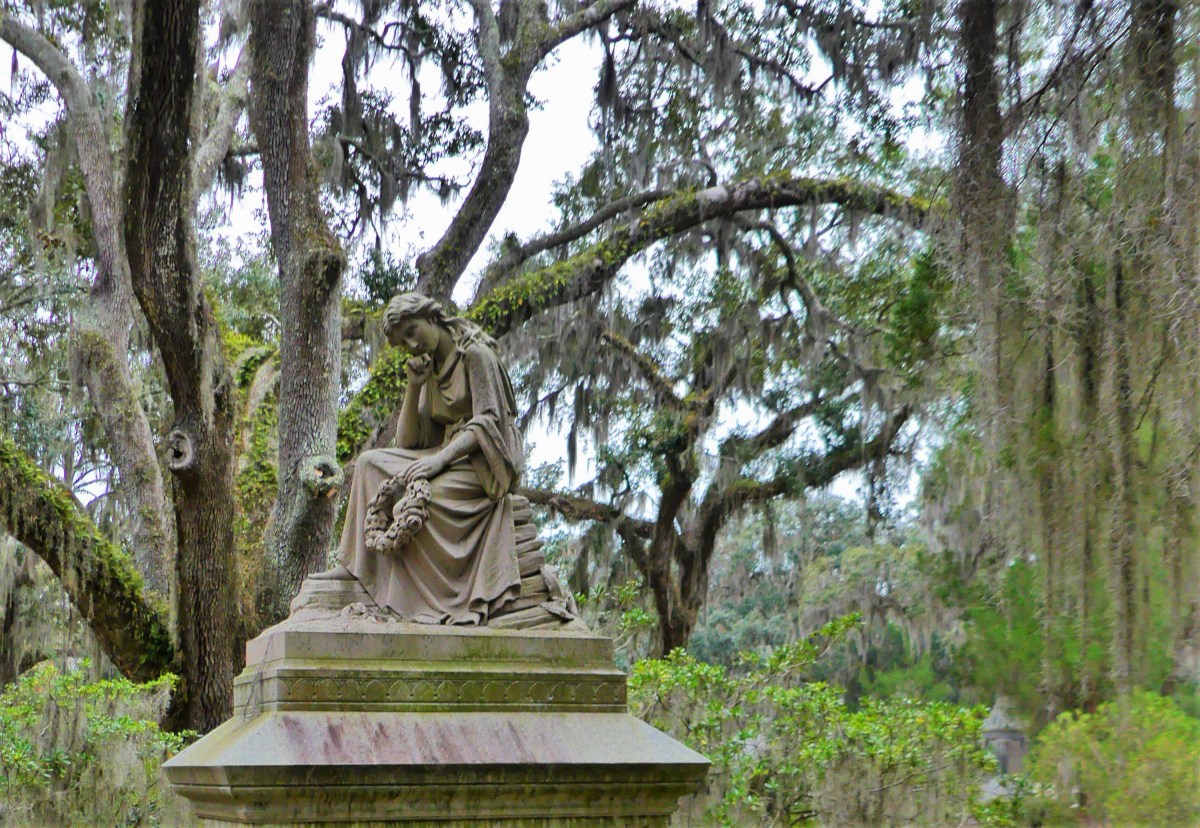
High on a bluff, overlooking the Wilmington River, sits Bonaventure Cemetery, 160 acres of inspired Southern Gothic funerary art and monuments worthy of any fabled ghost story setting, and one of the most hauntingly beautiful resting places found in America.

Named Bonadventure–good fortune in Italian–and conceived as a 9,920-acre plantation stretching from Ebenezer to Sunbury, Georgia, the land owners, Tattnall Sr. and Mullryne (son and father-in-law) mistakenly sided with King George III during the Revolutionary War, and were immediately denounced as traitors and stripped of their holdings by a Georgia council.

Tattnall Jr. returned from England soon after the war and reacquired a 750-acre tract of the property, where he settled with his Savannah-bred wife and family, before selling to Peter Wiltberger in 1846, who converted the land to a cemetery.

The day of our visit was dreary and wet, and it seemed fitting that the Spanish moss draped over 300 year-old oak trees would be weeping from the occasional drizzle.

Theuslandscape

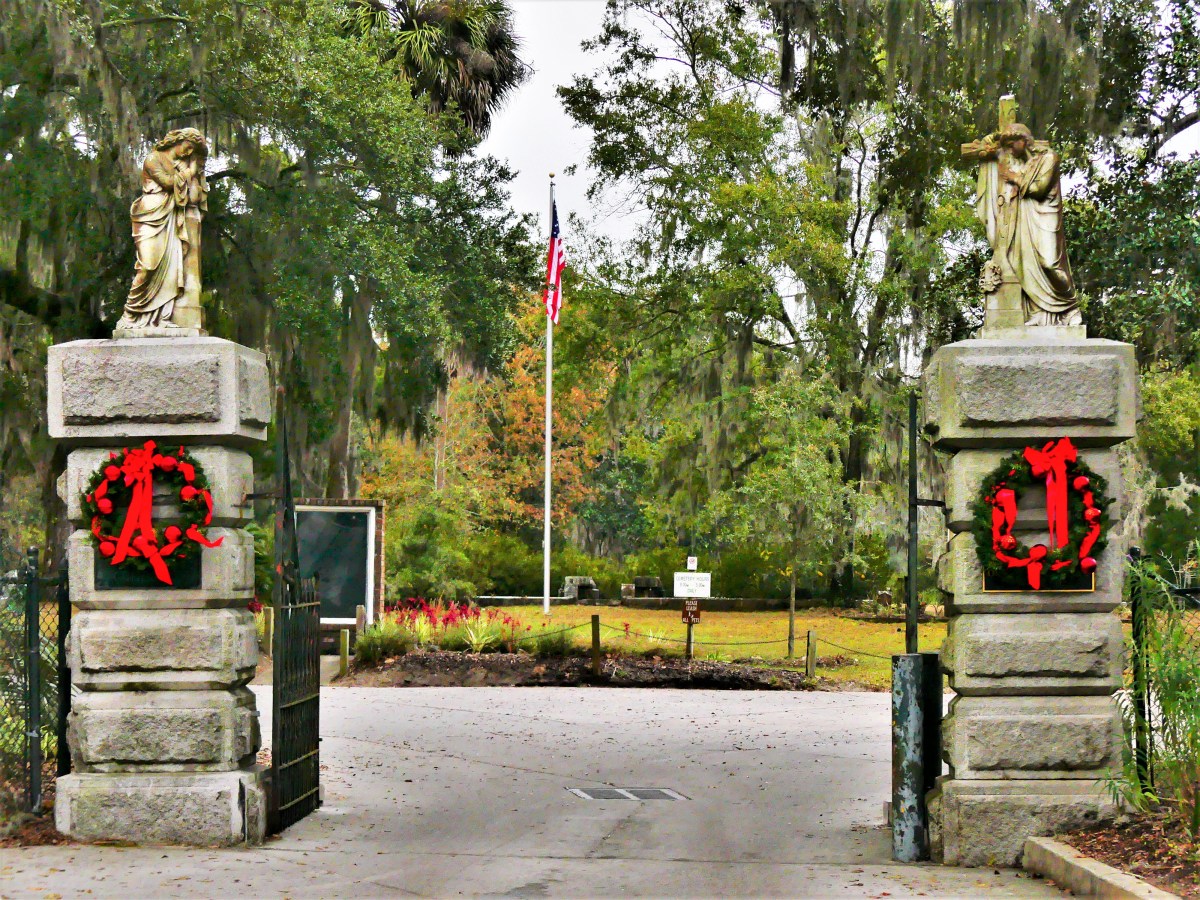
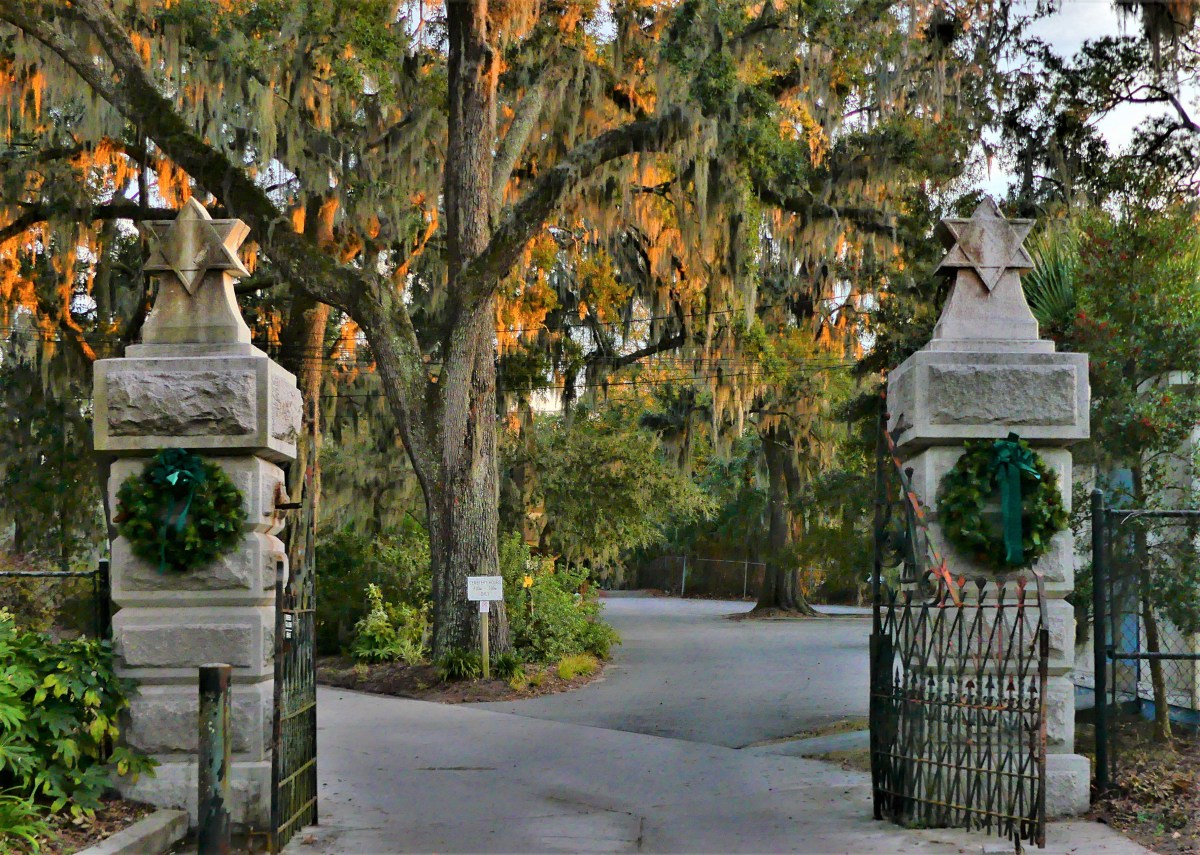
Oddly, two sets of gates provide access to the graveyard: a Christian wing to left…

Christian entrance

and a Jewish gate to the right.

Bonaventure gate for Jews

We approached a gravedigger who was stepping out of his pick-up.

“I couldn’t help but notice the Jewish stars on top of the gate posts,” observed Leah.

“Yes, ma’am,” responded Doug, “This here’s a public cemetery.”

So Christians and Jews are buried together?” I questioned.

“Yes, sir,” agreed Doug. “Each religion’s got their own separate sections, and…”

“And there’s still room inside?” Leah interrupted.

“Yes, ma’am. I dug two fresh graves today. But you can’t buy your way in anymore, cuz everything’s all sold out long ago. But people keep askin’. I guess they’s dyin’ to get in,” joked Doug.

Fascinating!

We set off to explore. The cemetery was unexpectedly quiet for being a top attraction for curiosity seekers, and the bereaved.

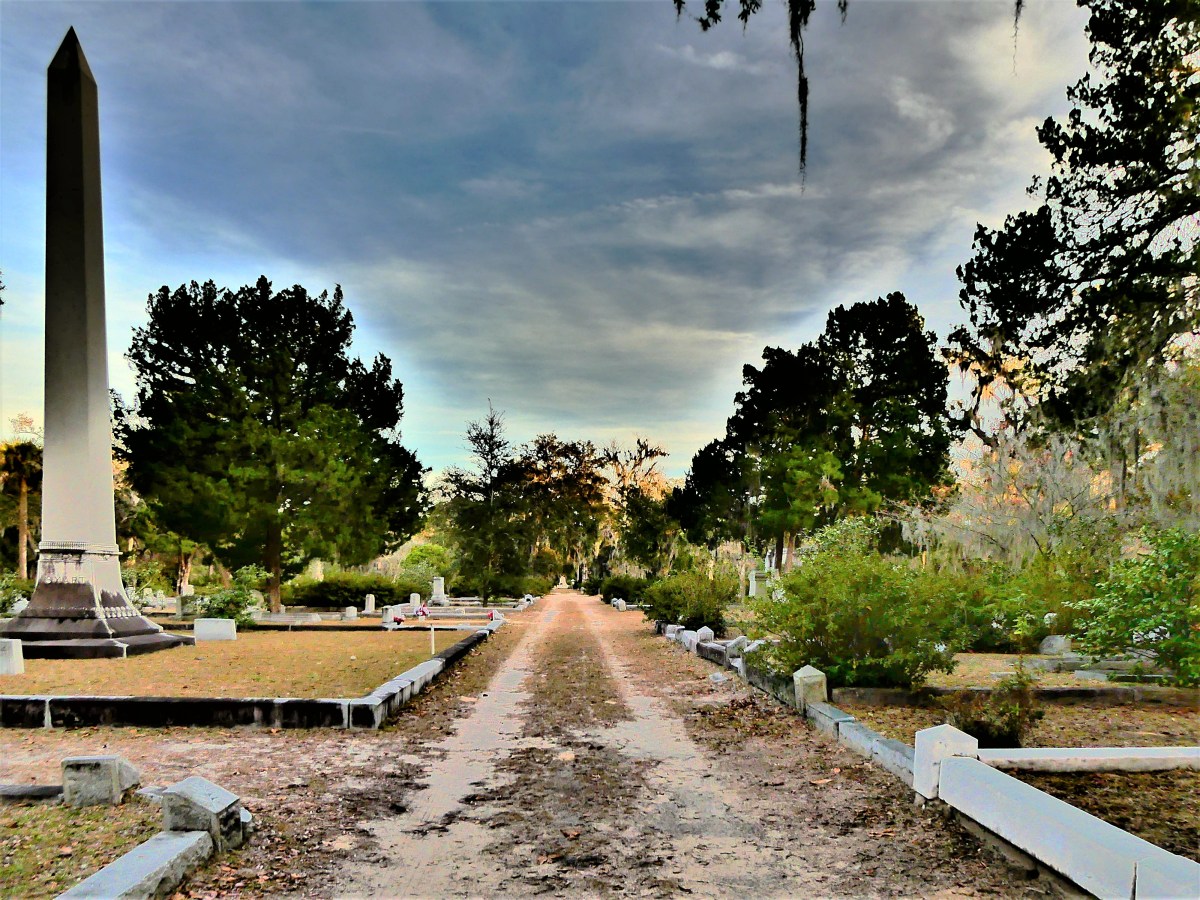
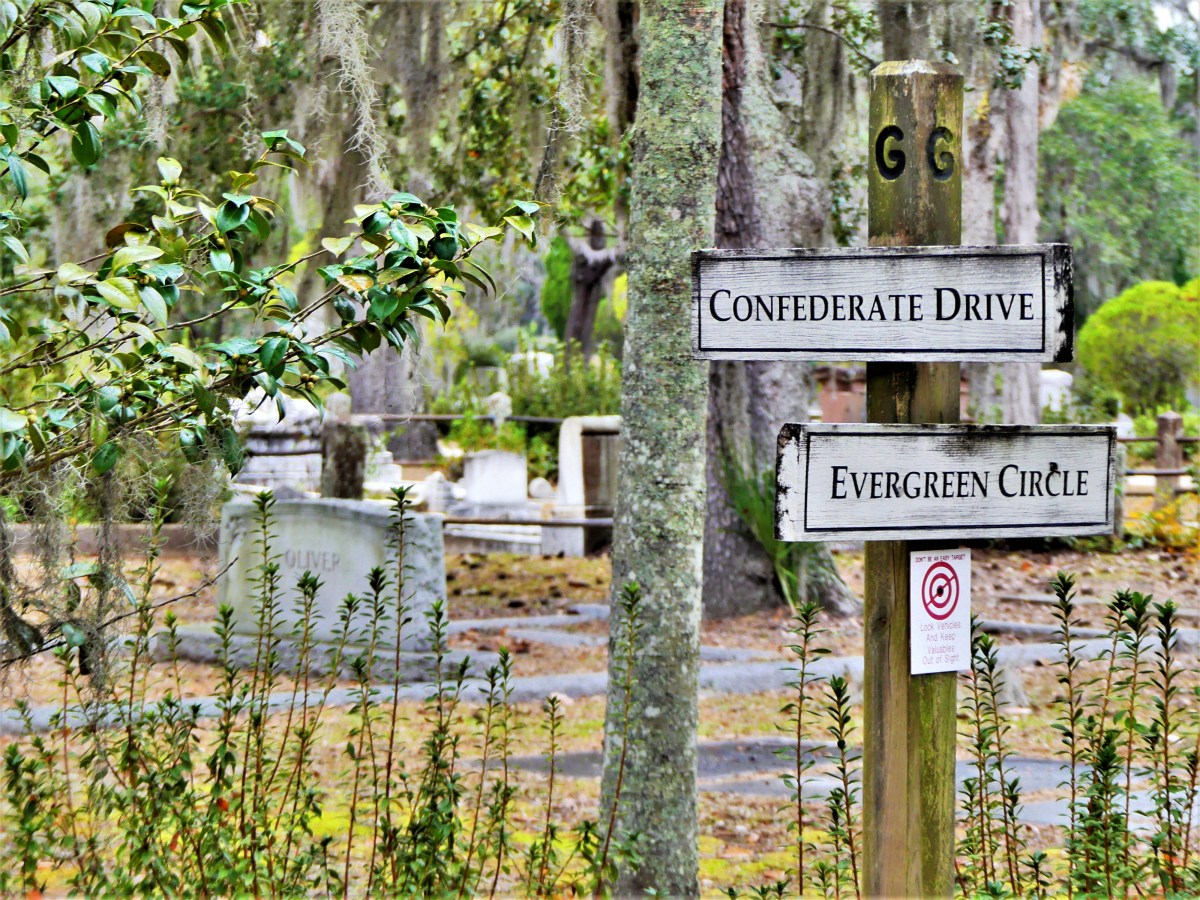
Bonaventure Lane

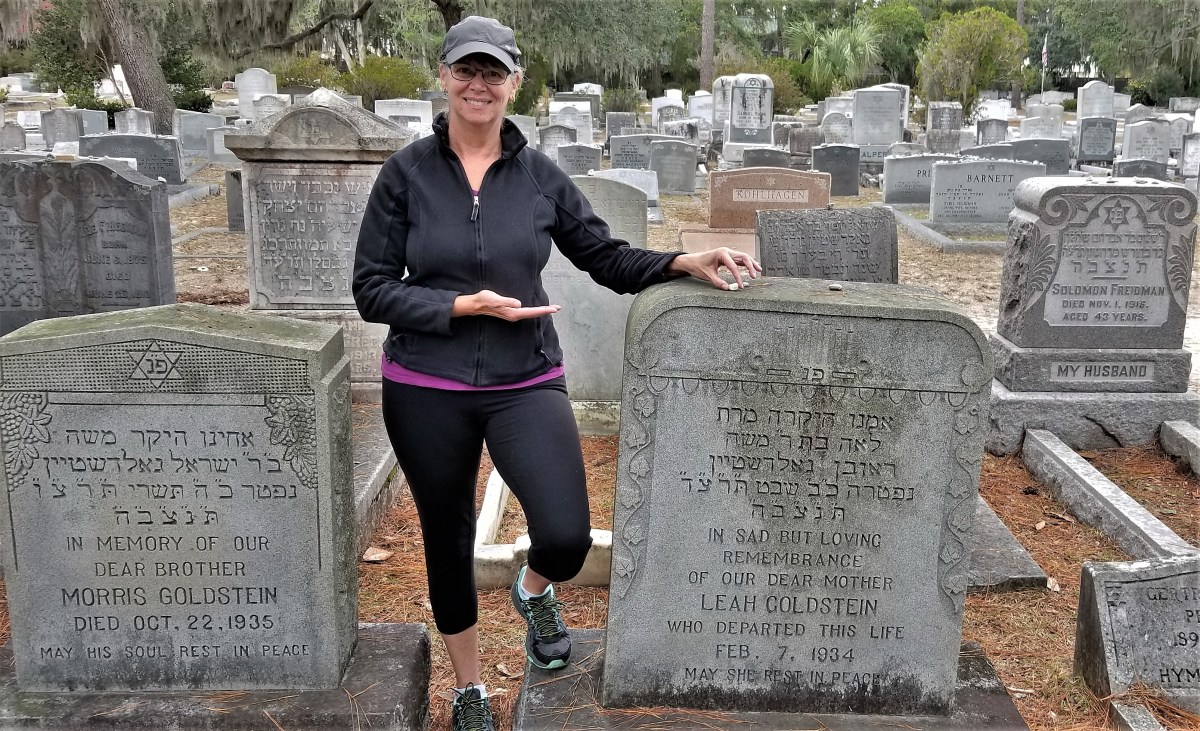
We were on separate missions. Leah went in search of her namesake, and found her in a short matter of time.

Leah Goldstein

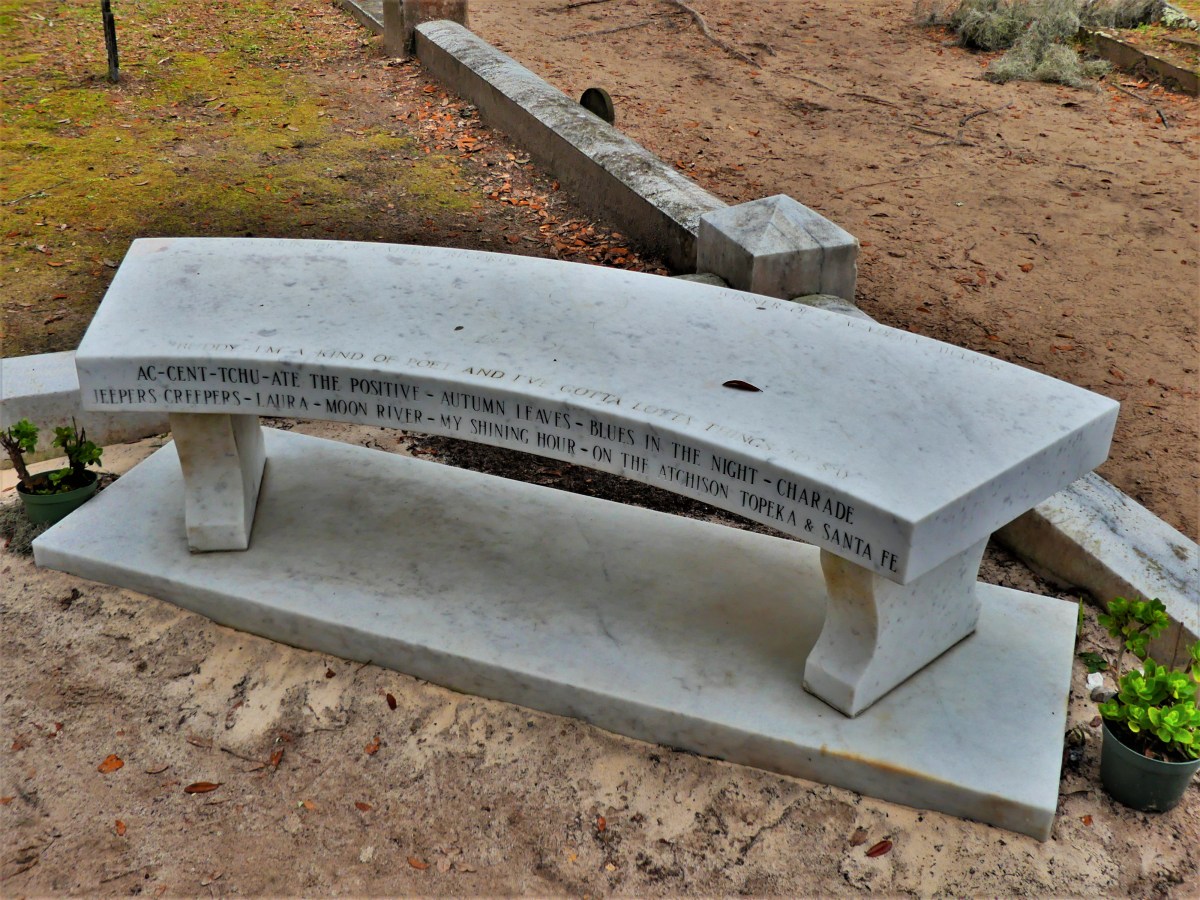
Whereas, I was in search of Johnny Mercer’s memorial–the legendary lyricist who penned over 1500 songs, was nominated for 14 Academy Award nominations, won Oscars for The Days of Wine and Roses, Moon River, In the Cool, Cool, Cool, of the Evening, and On the Atchison, Topeka and Santa Fe, and co-founded Capitol records–which turned into more of a scavenger hunt.

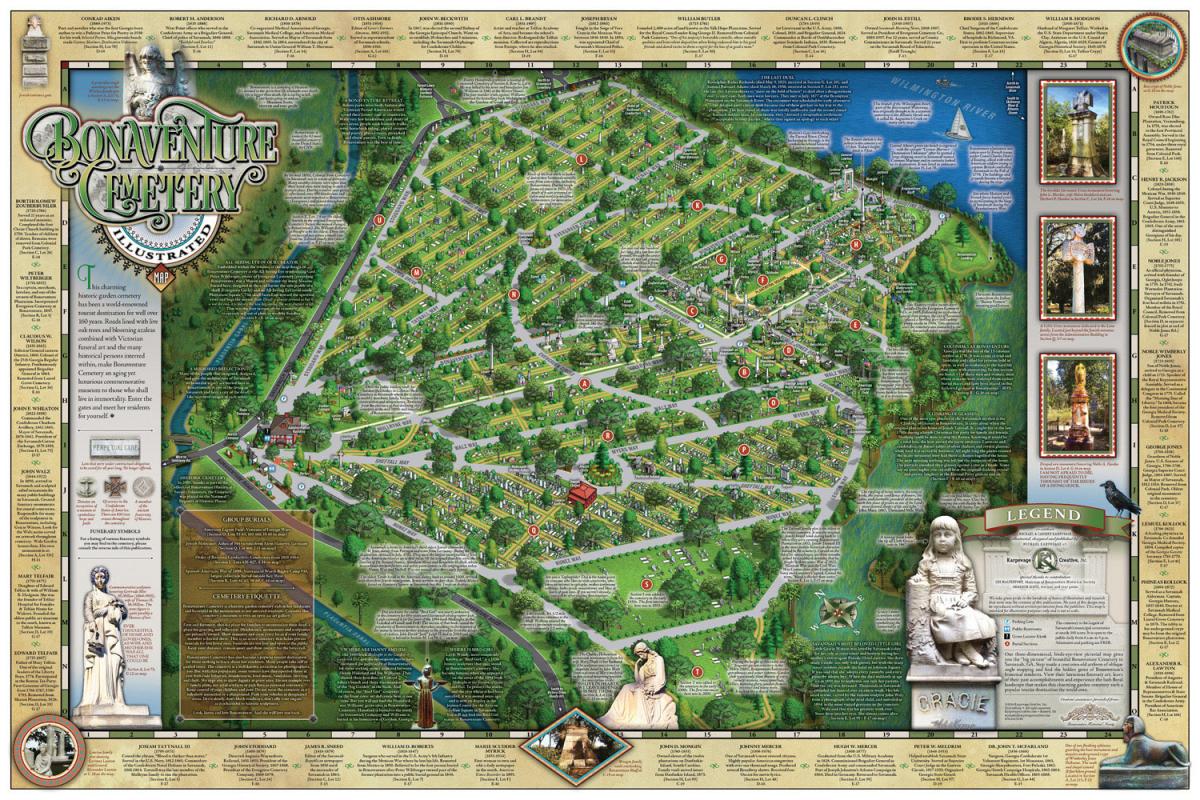
Resorting to the internet, I discovered the section and plot (H-48), but finding it was another matter, since the layout is unlike any grid, with over 31,000 burial records to date.

map.jpg

Leah went one way, and I went another. We wandered aimlessly through rows and rows of plots till we plotzed. I quickly understood why guided tours through Bonadventure Cemetery are so popular.

Eventually, I got some help from a pair of caretakers who were blowing damp leaves across the dirt and gravel roads. They were eager to help, but my inability to translate Malaysian, turned my request into a game of Charades.

Using broken English and hand gestures, they redirected us to the general vicinity, where we crossed paths…

intersection

with officers…

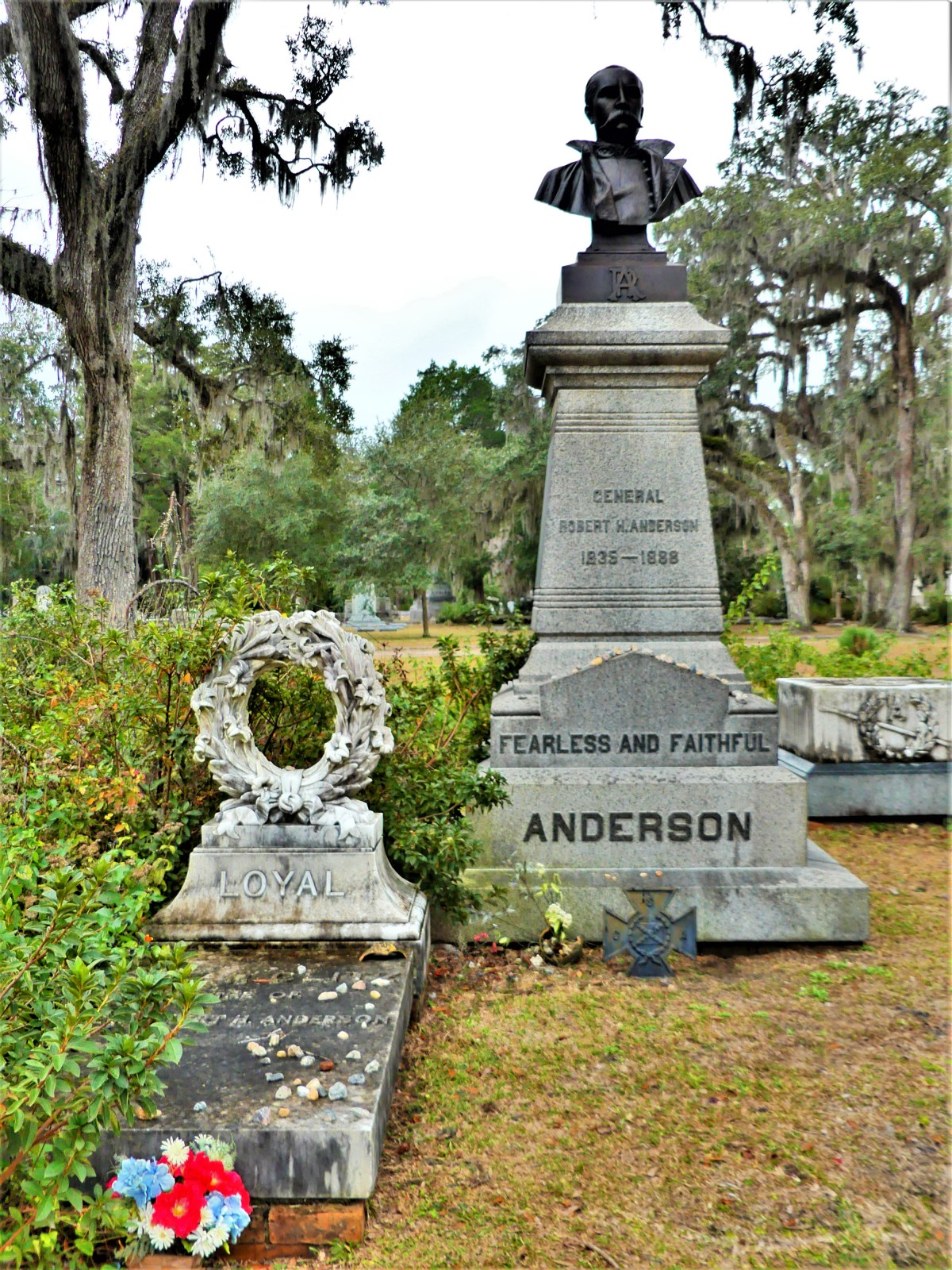
General Anderson

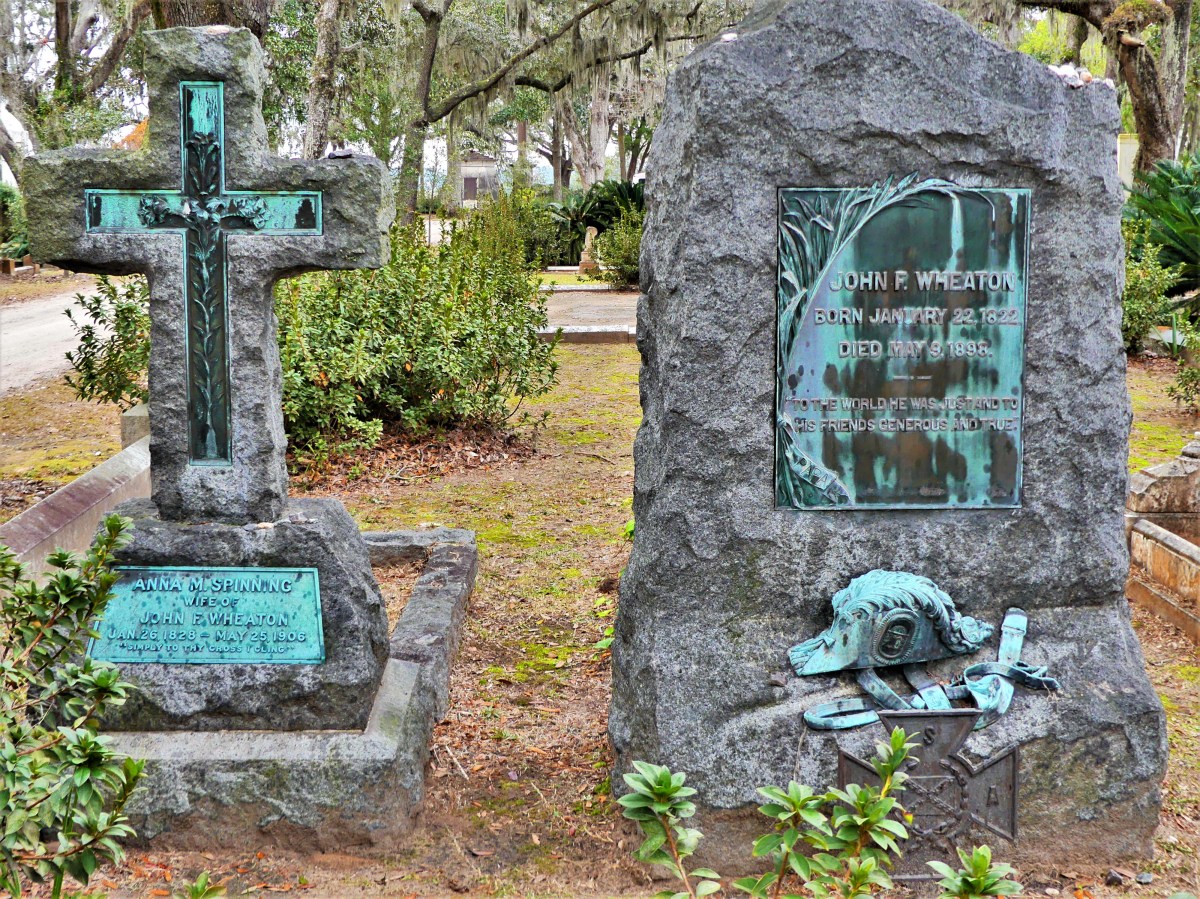
Wheaton and wife

and gentlemen…

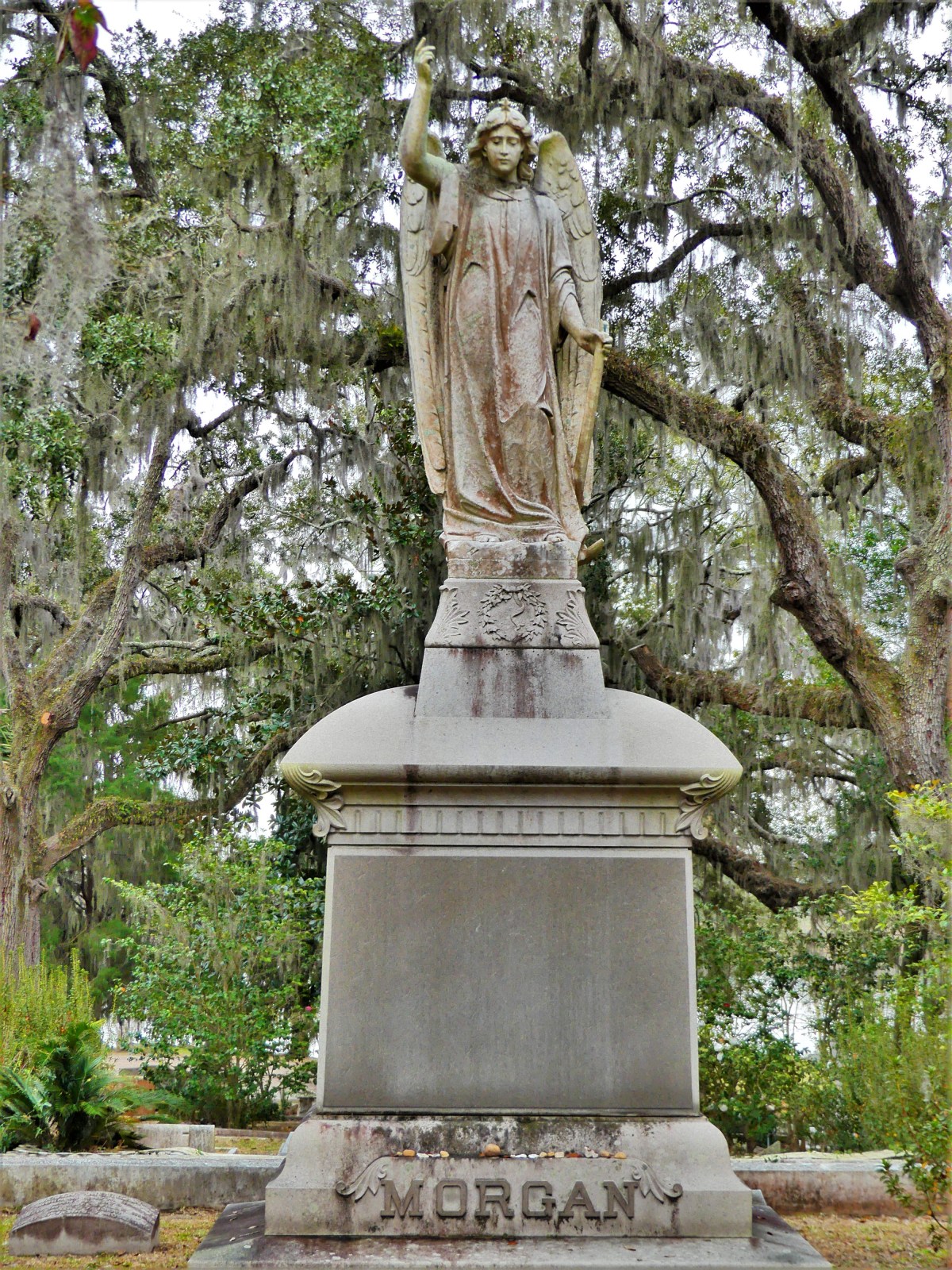
Morgan

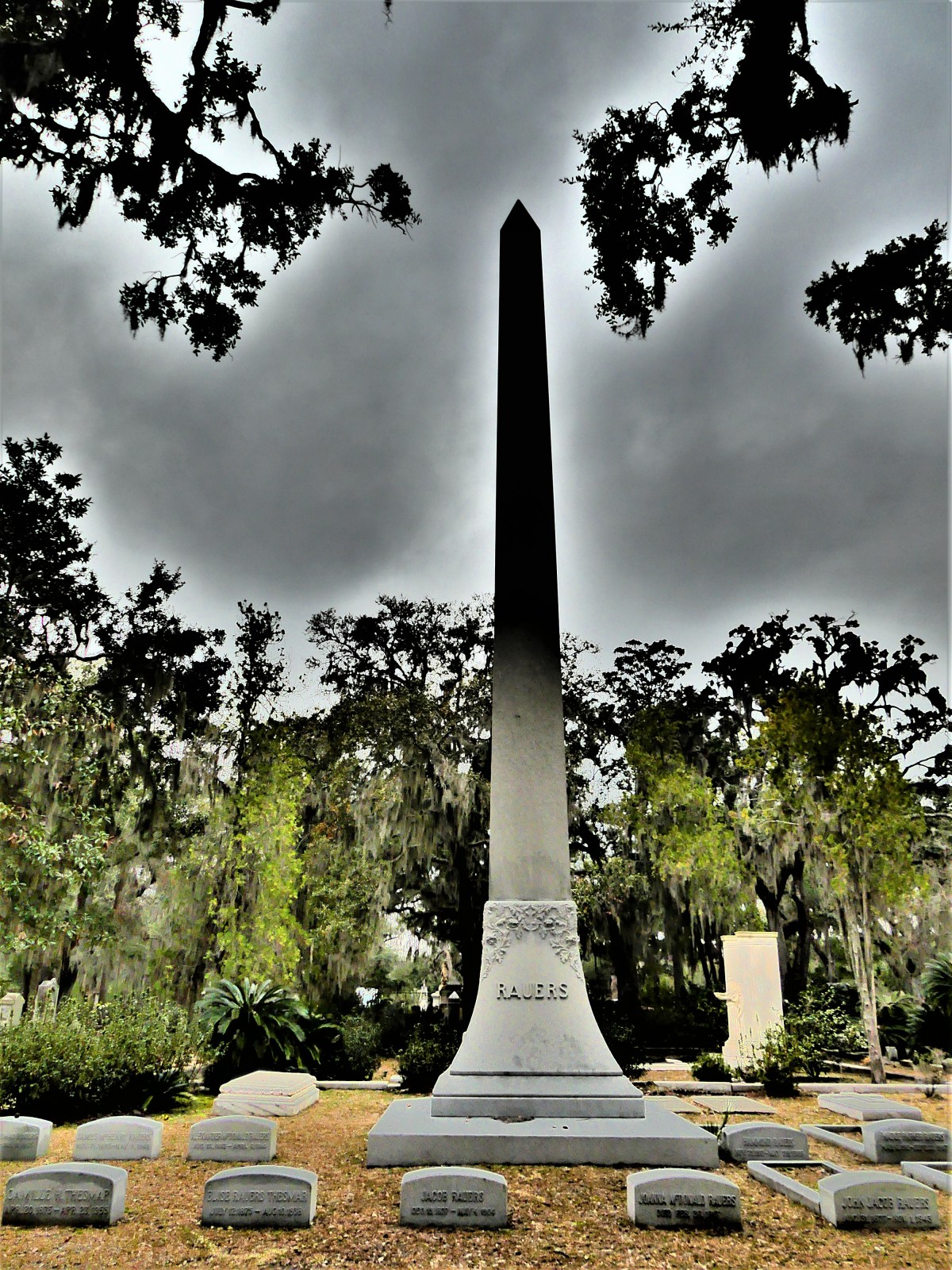
Rauers

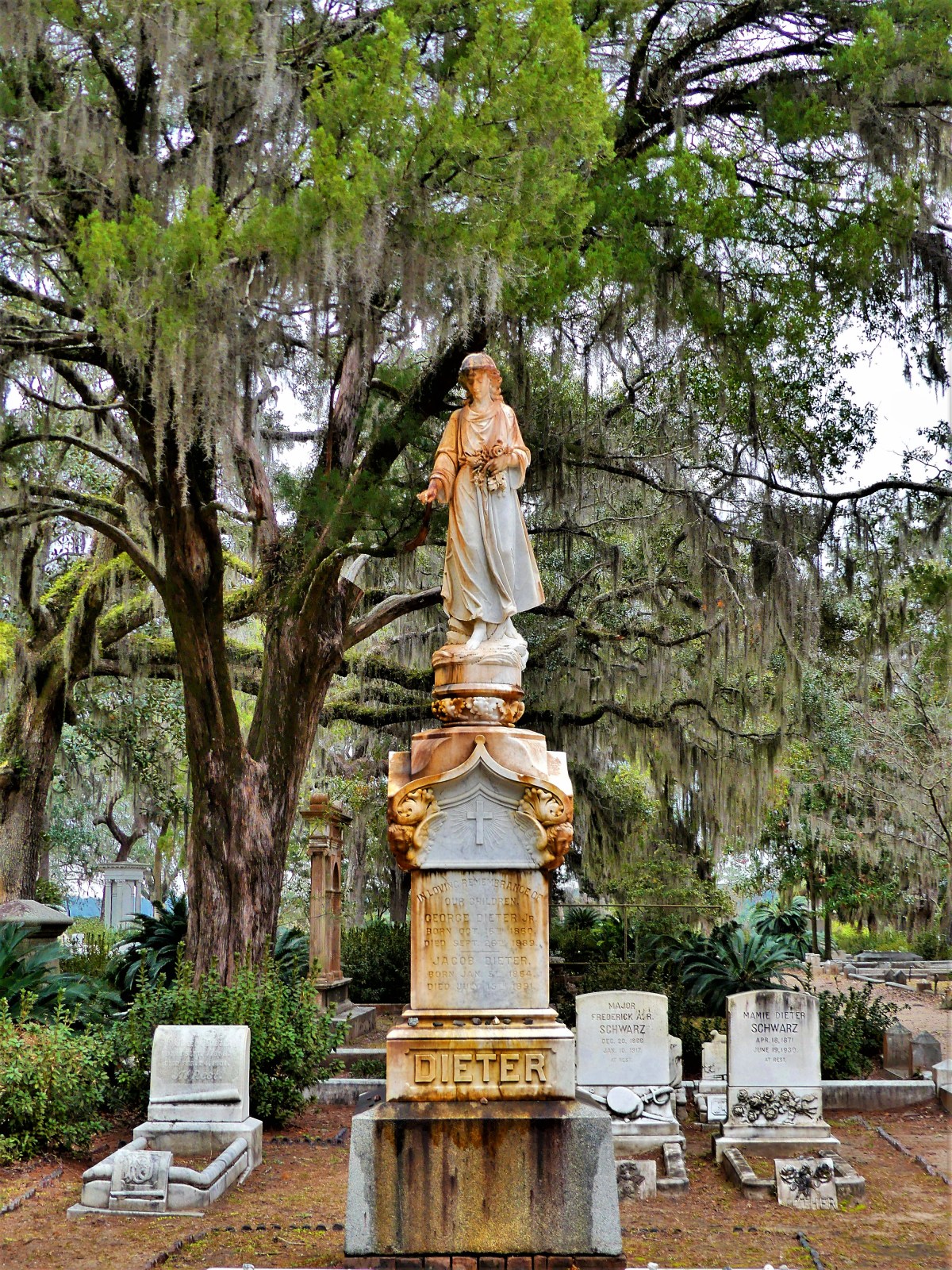
Dieter

ladies…

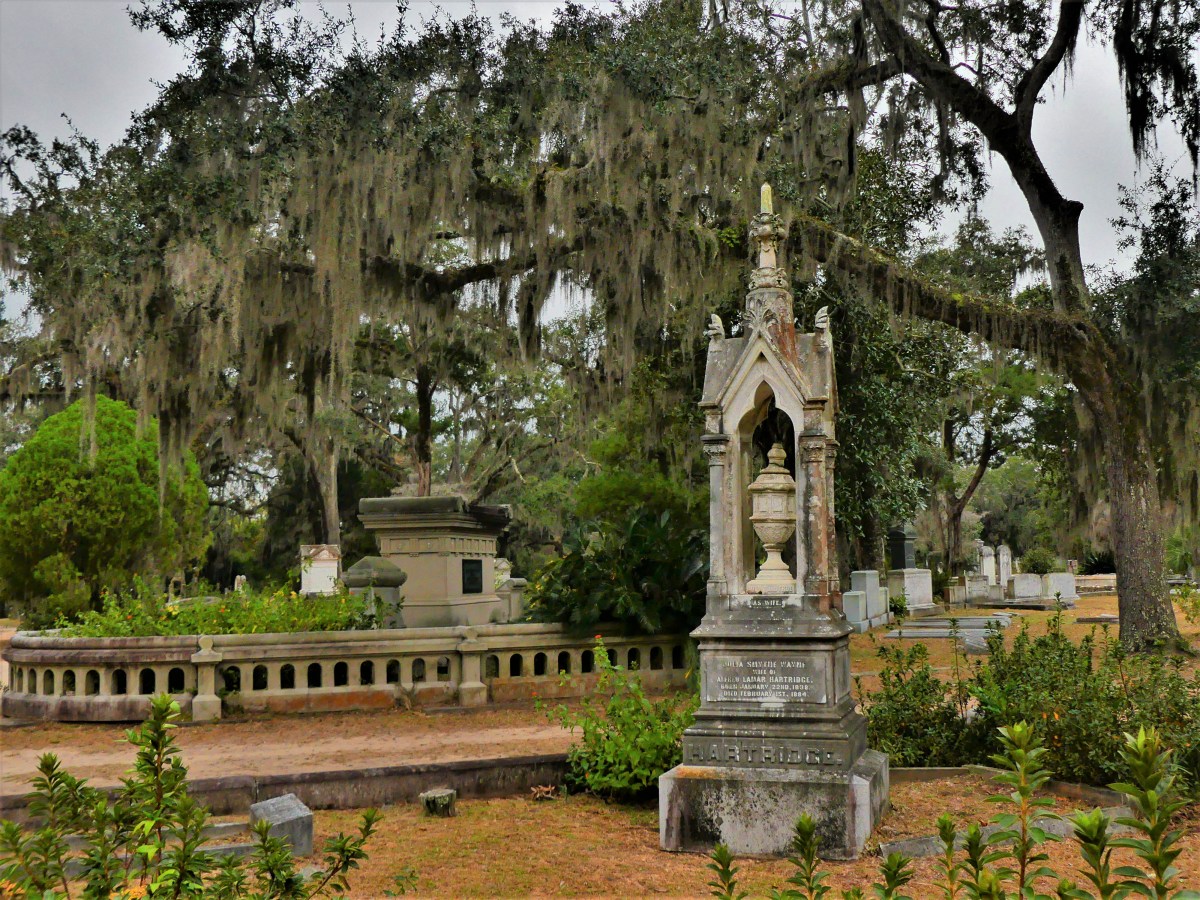
Hartridge

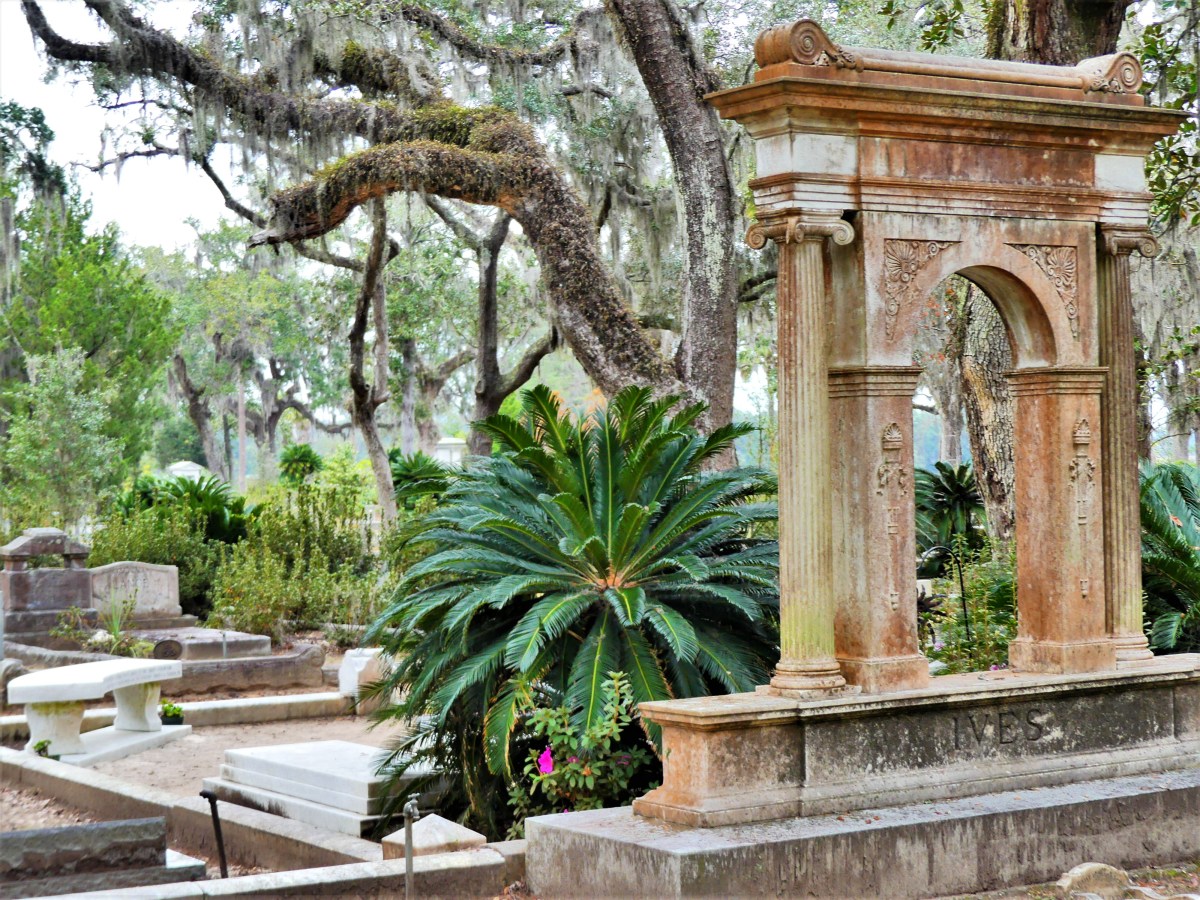
Ives

…and children.

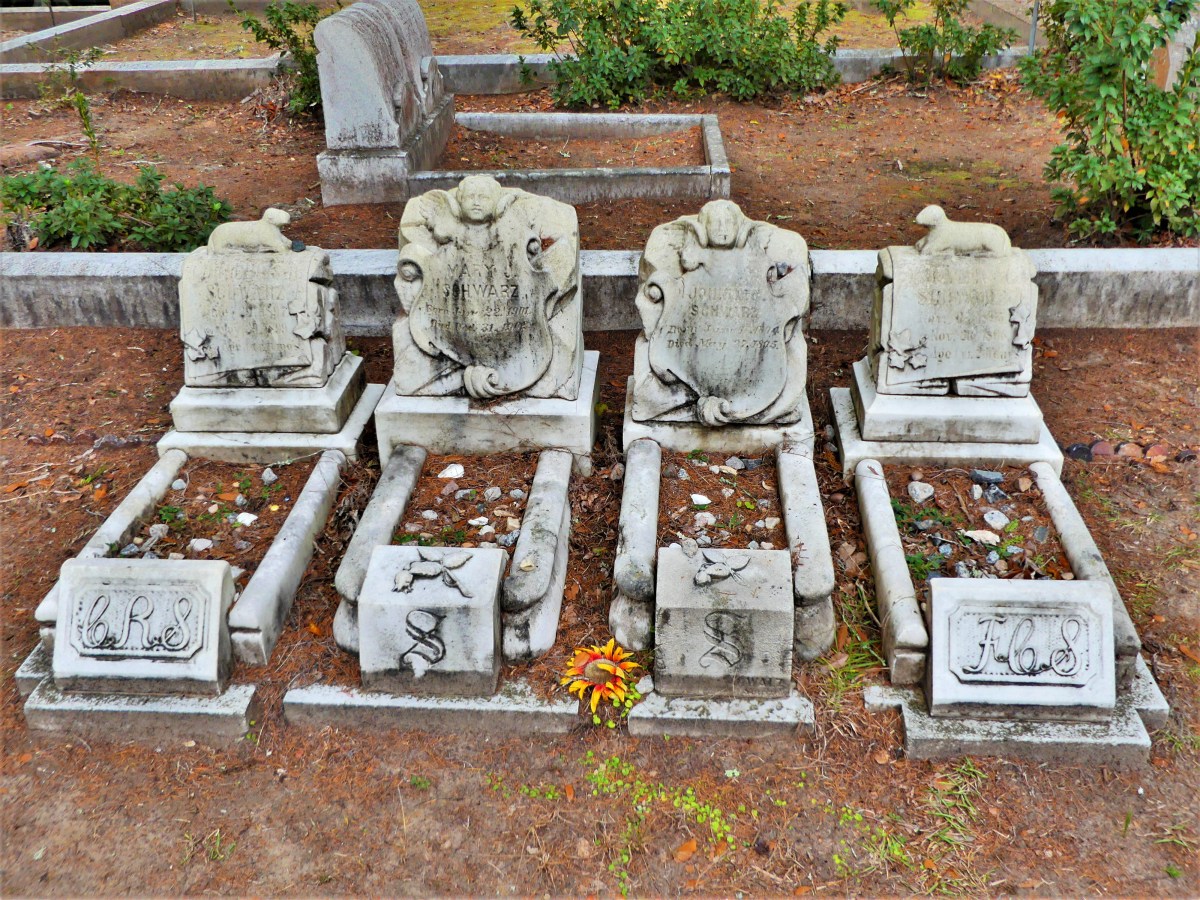
4 babies

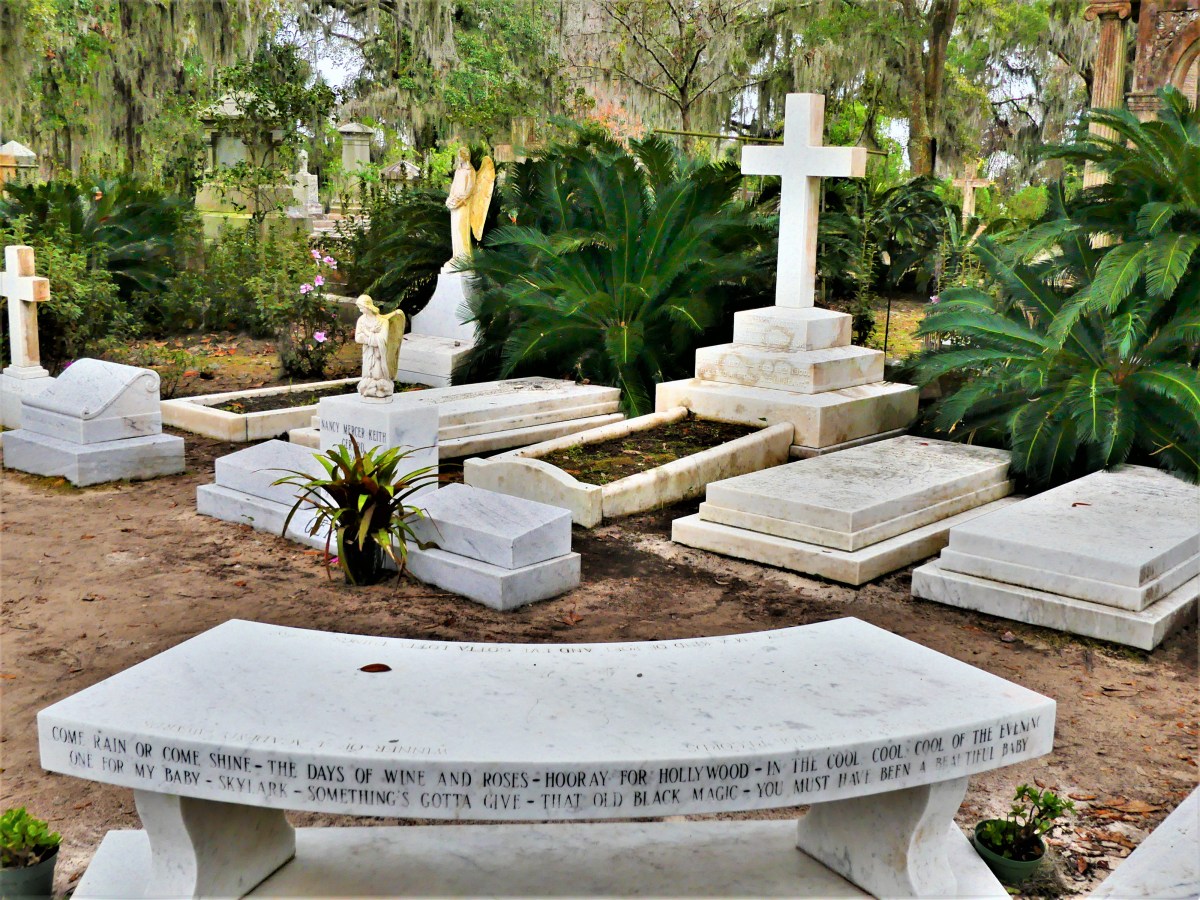
We wound our way through Section H until signs pointed to Johnny Mercer’s shrine of hits.

Johnny Mercer site

JM bench

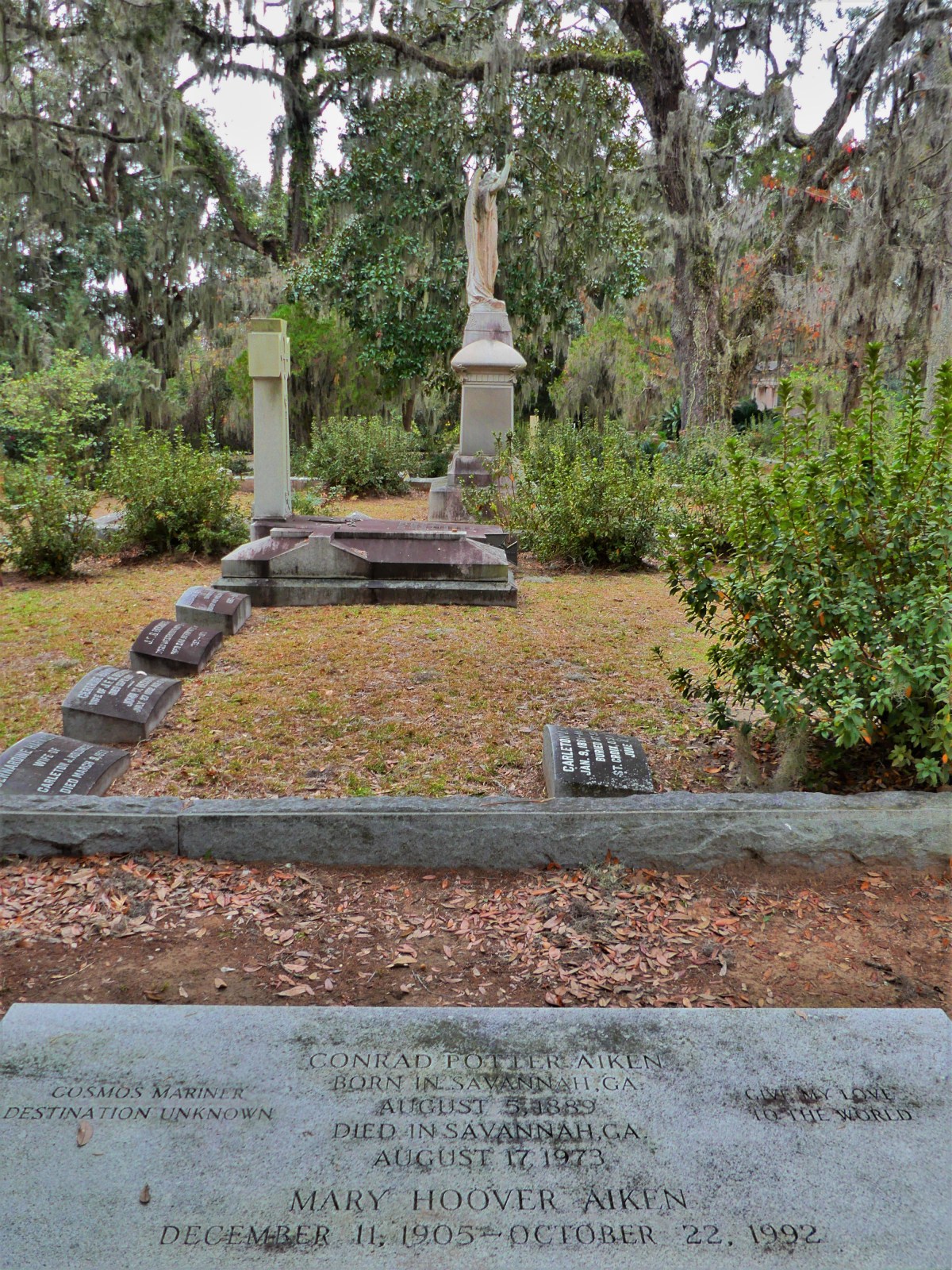
Also in the vicinity, lies Georgia’s poet laureate and tragic orphan, Conrad Aiken,

Conrad Aiken

who is buried beside his father who murdered his mother, before turning the gun on himself when Conrad was 11-years old. Conrad went on to study at Harvard, where he was mentored by T.S. Eliot, and won the Pulitzer Prize for Selected Poems in 1930.

Another literary thread woven through the Bonaventure fabric includes New York Time’s longest-standing (216 weeks) bestseller, Midnight in the Garden of Good and Evil, a true tale written by John Berendt.

midnight-in-the-garden-of-good-and-evil

The book cover featured Sylvia Shaw Judson’s Bird Girl, who graced the graveyard in relative obscurity for decades, until fans of the book sought out the statue’s location at Bonaventure, and began chipping away at its base for souvenirs. Eventually, Bird Girl was rescued and resettled in Savannah’s Telfair Museum of Art, where she can rest in one piece.

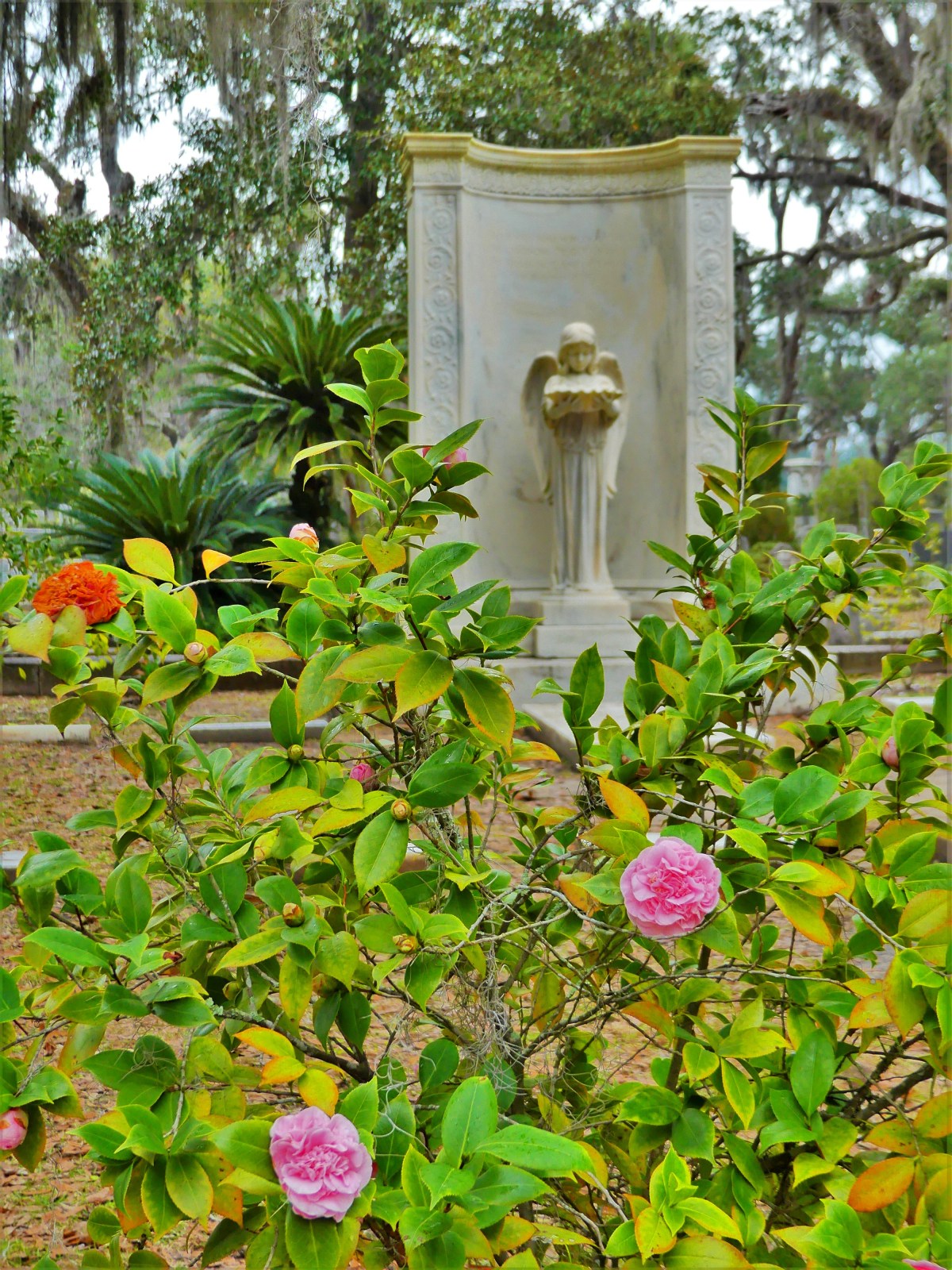
Bonaventure Cemetery under overcast skies during late autumn appears mostly monochromatic and presents a solemn and sombre mood. There are occasional pops of color from late blooms, to liven up a lifeless location,

angel and roses

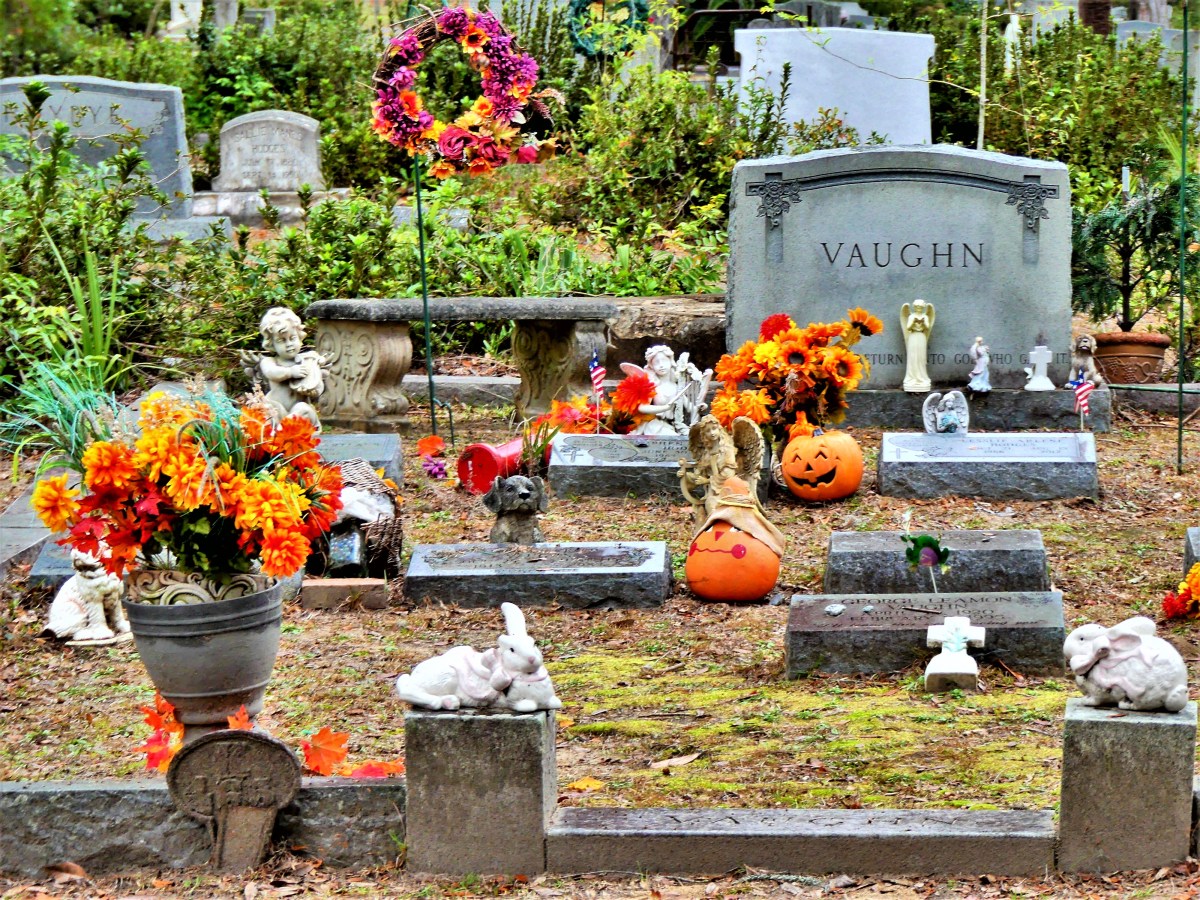
but I was unprepared for the cheeky display I discovered on my way out.

cheeky Vaughn

For me, this represents a bonafide celebration of a life once lived, versus a death soon forgotten.

Southern (C)Harm

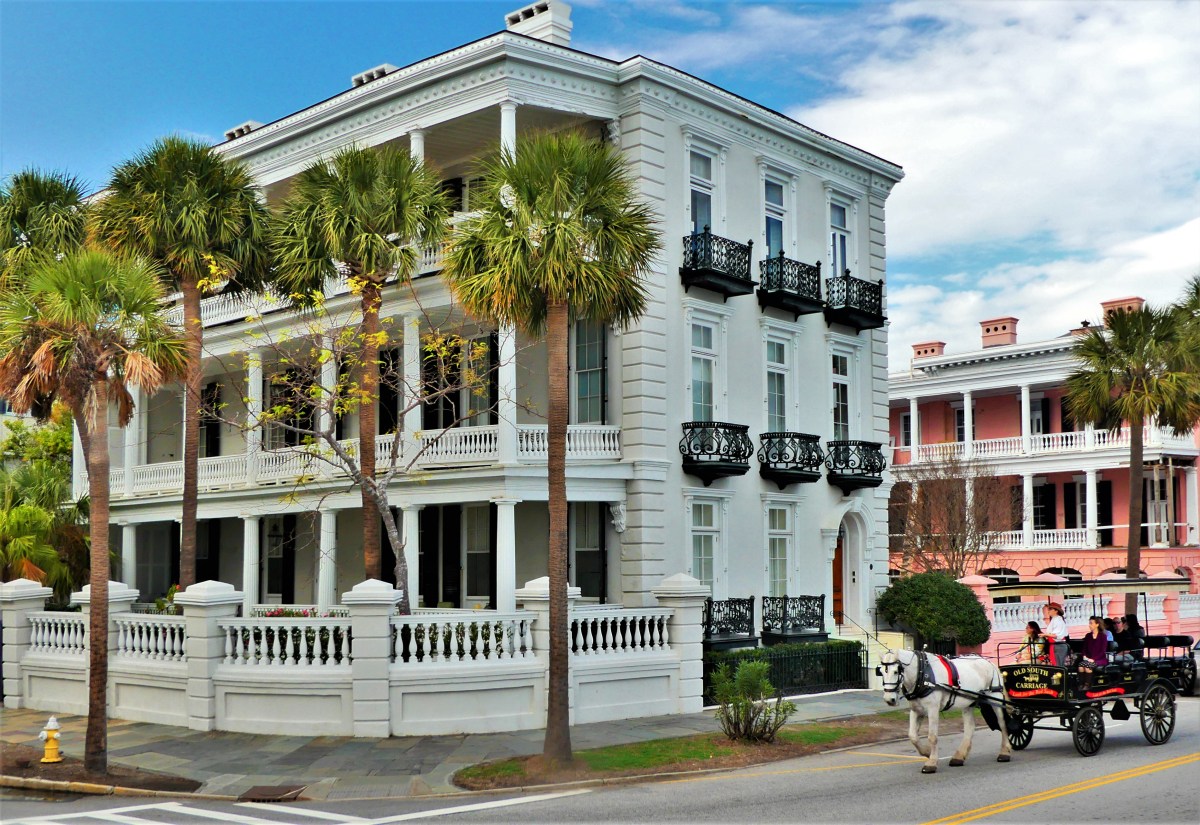
Charleston, South Carolina has a picture postcard personality with an imperfect and unpleasant past–mostly because Charleston was built on the backs of slaves for nearly 200 years, with nearly 1.5 million slaves passing through Charleston Harbor until the 13th Amendment to the Constitution abolished slavery in 1865–yet the appeal and beauty of Charleston cannot be denied.

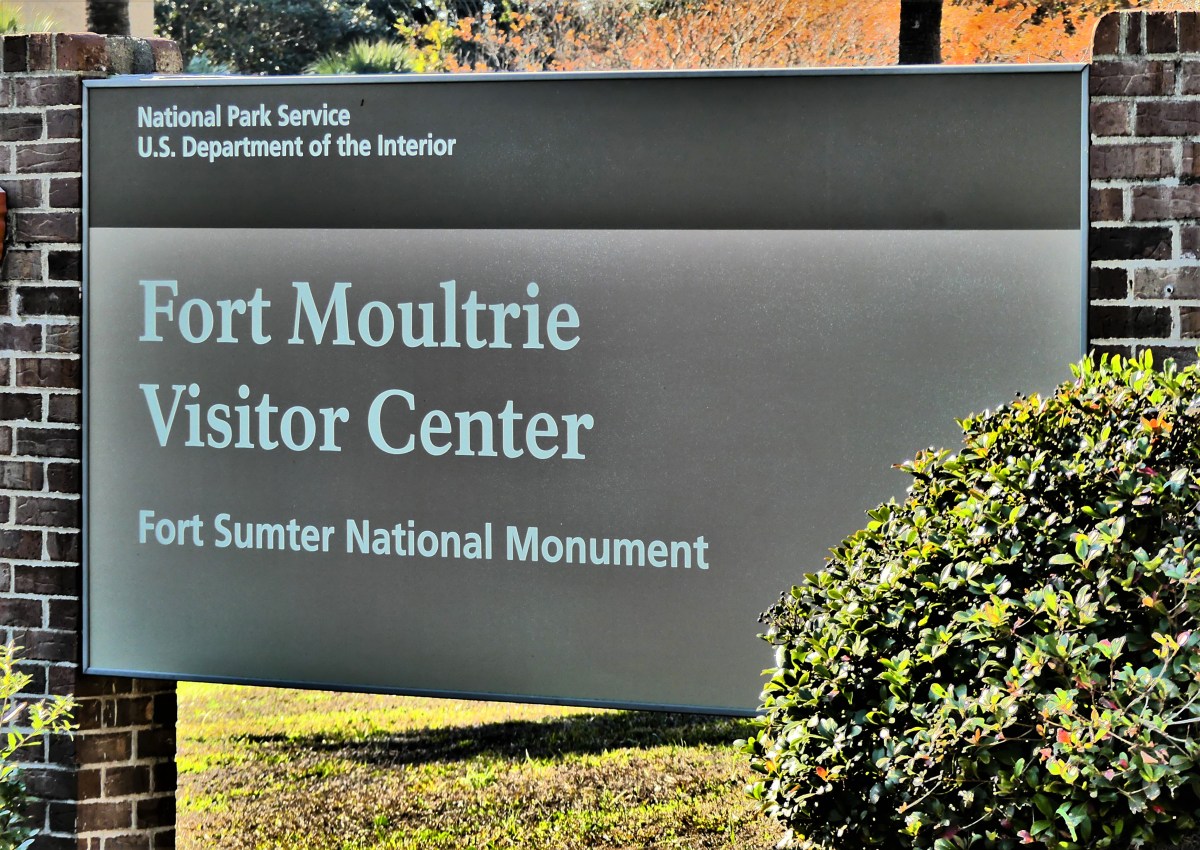
A tour of Fort Moultrie on Sullivan’s Island offers a historical narrative that addresses the highs and lows of the Low Country from a military perspective.

Fort Moultrie sign

The earliest protection of Charleston’s harbor came from its outlying shoals, forcing ship traffic from the south, and across Sullivan’s Fort.

regional map_LI

Early defense of the harbor relied on a sixteen-foot thick sandwich between two slices of palmetto log-walls that British bombardments found impossible to penetrate. In June 1776, nine British warships were driven off under a hail of smooth-bore cannon fire during the Revolutionary War.

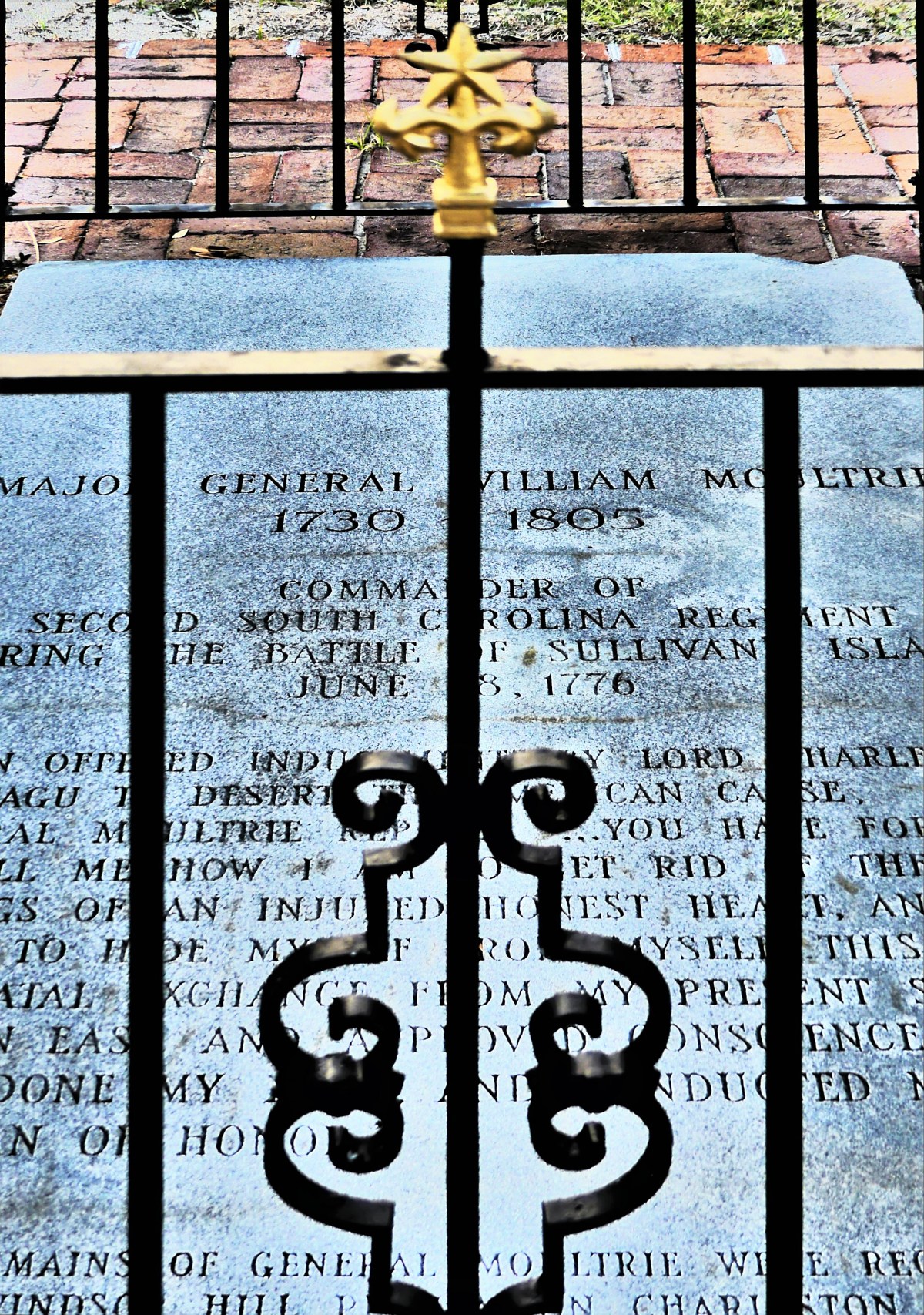
Consequently, Charleston was saved and the fort was renamed in honor of its commander, William Moultrie (1730-1805).

Moultrie grave

In 1794, with the addition of Vermont and Kentucky to the Union, a new 15 star/15 stripe flag flew beyond the sally port…

15 stars (2)

over a newly-styled defense system, with walls of earth and timber rising 17 feet above the shoreline.

ramparts

vista

In 1804, a hurricane destroyed the fort, calling for Congress to appropriate funds for a Second American System of coastal fortifications, including an 1809 rebuild of Fort Moultrie fortified with brick,

Ordinance building

and the addition of Fort Sumter to its south.

Fort Sumter1

South Carolina’s secession from the Union in 1860 provoked the Civil War. Moultrie was quickly abandoned in favor of Sumter’s stronger defense system. However, the Confederates bombed Sumter into submission three months later, gaining control of the harbor–and successfully defended against a Federal fleet of Ironclads with a string of 32-pounders lined across its battlements–until Charleston surrendered in 1865.

Fort Sumter

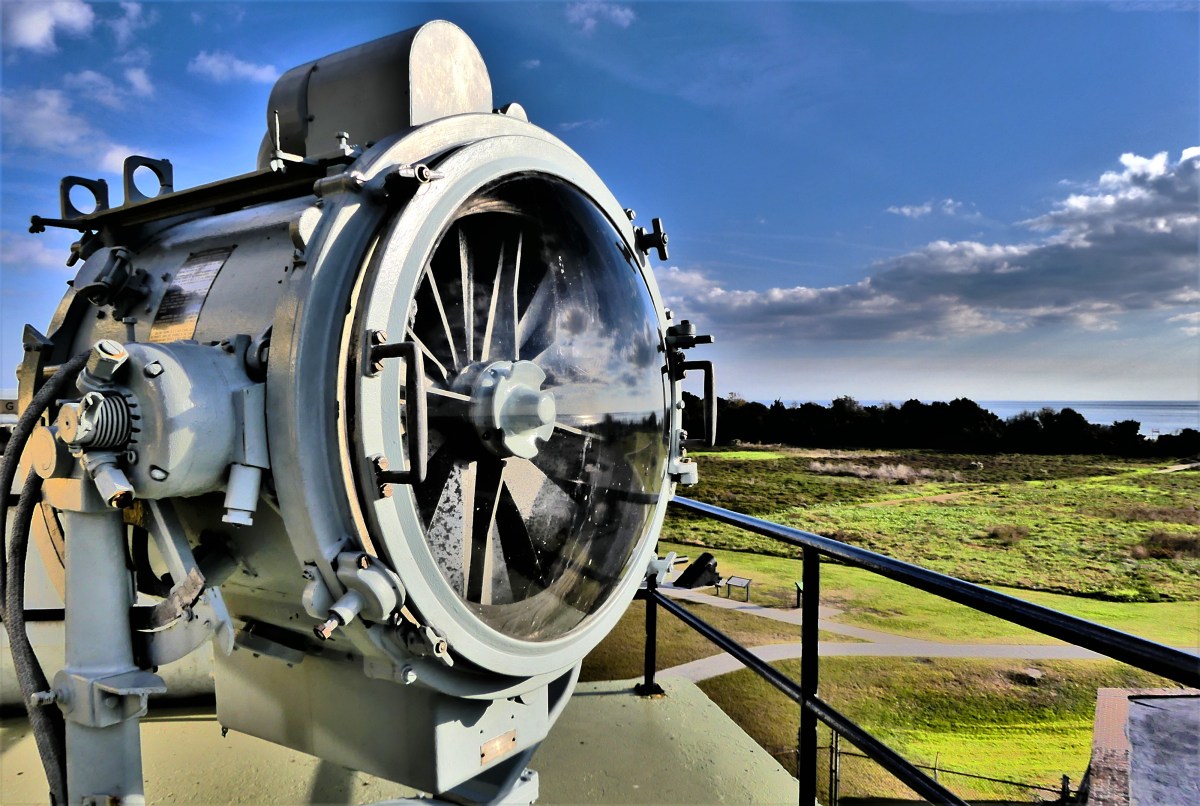
Fort Moultrie continued to modernize, and sustained to protect the southern coastline through both World Wars…

searchlight

…by coordinating all harbor defenses through its Harbor Entrance Control post,

control room

until its decommission in 1947.

Communications room

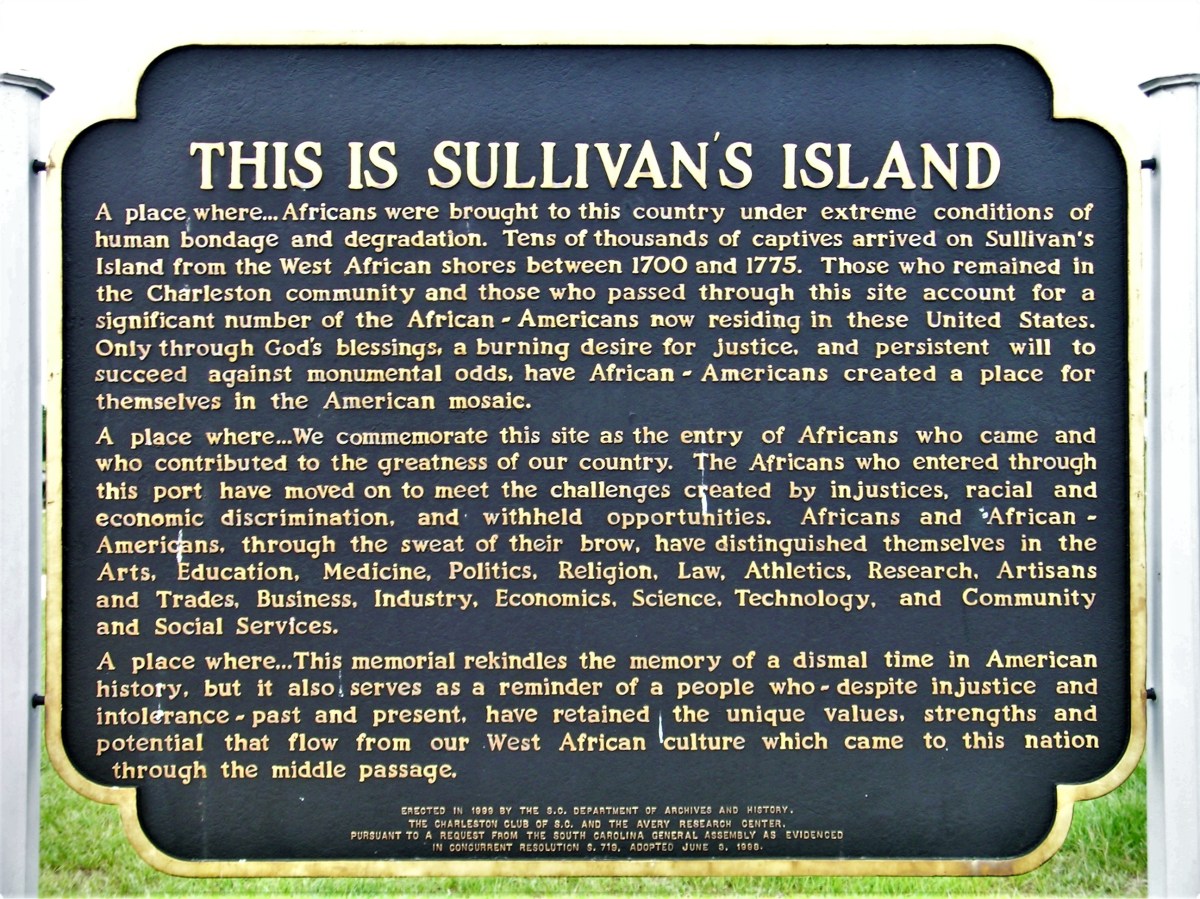
Sullivan’s Island was also the first line of defense against virulent disease, providing “pest houses” for in-transit African slaves between 1700 and 1775. who were processed and quarantined prior to dispatch to the Slave Mart in Charleston,

Old Slave Mart Museum entrance

suggesting a crude and culpable counterpart to white immigration at Ellis Island.

The Old Slave Mart–now converted to a museum–tells the painful story of America’s darkest days in a straightforward way…

Selling a Slave

offering a self-guided tour through an unimaginable time when freedom was confiscated for a price,

The Price of a Human Being

and families were ripped apart,

museum attendee

so America could prosper.

The buyer

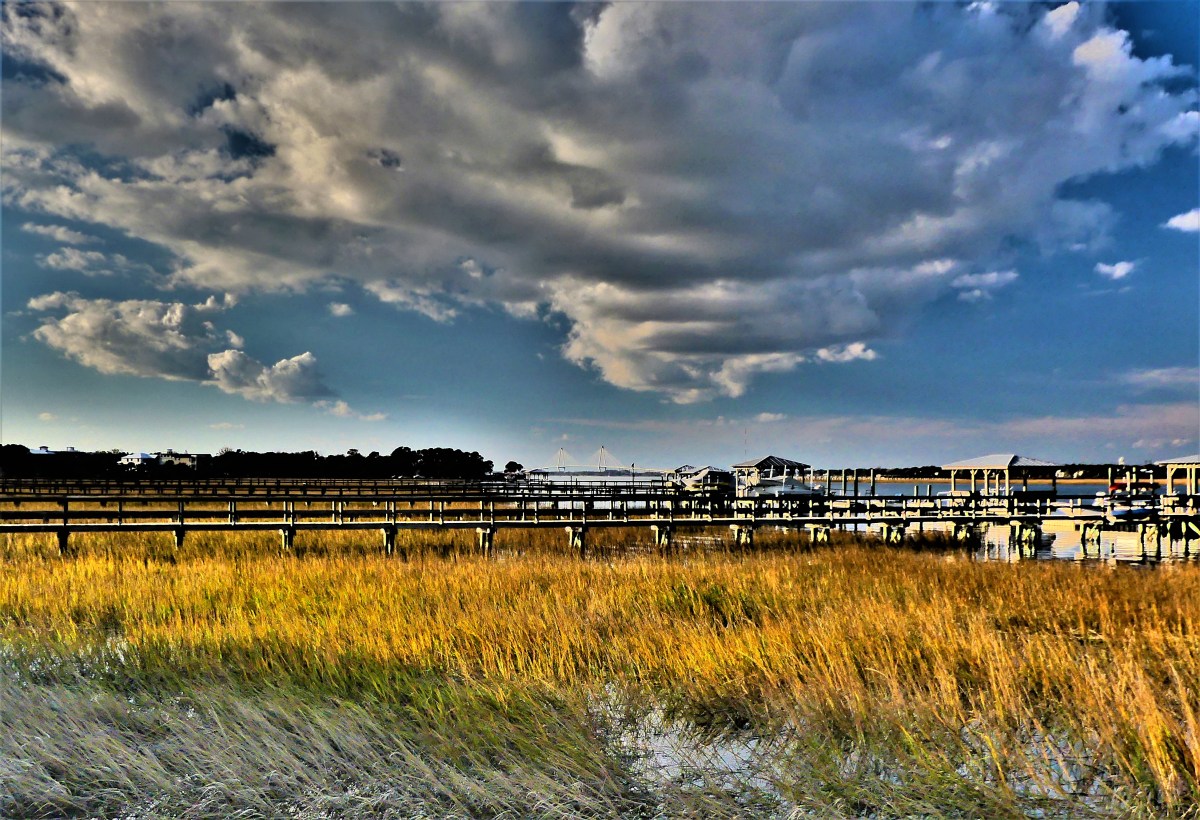
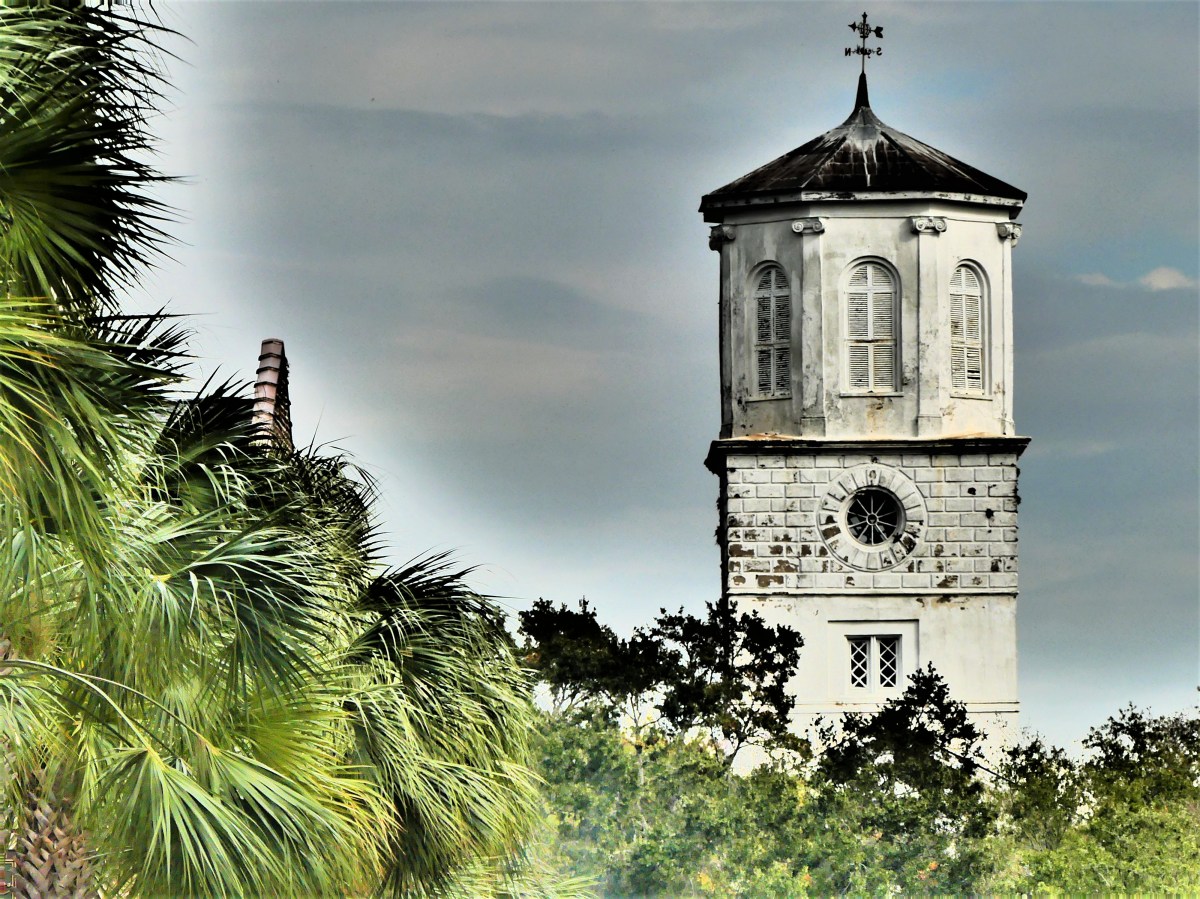
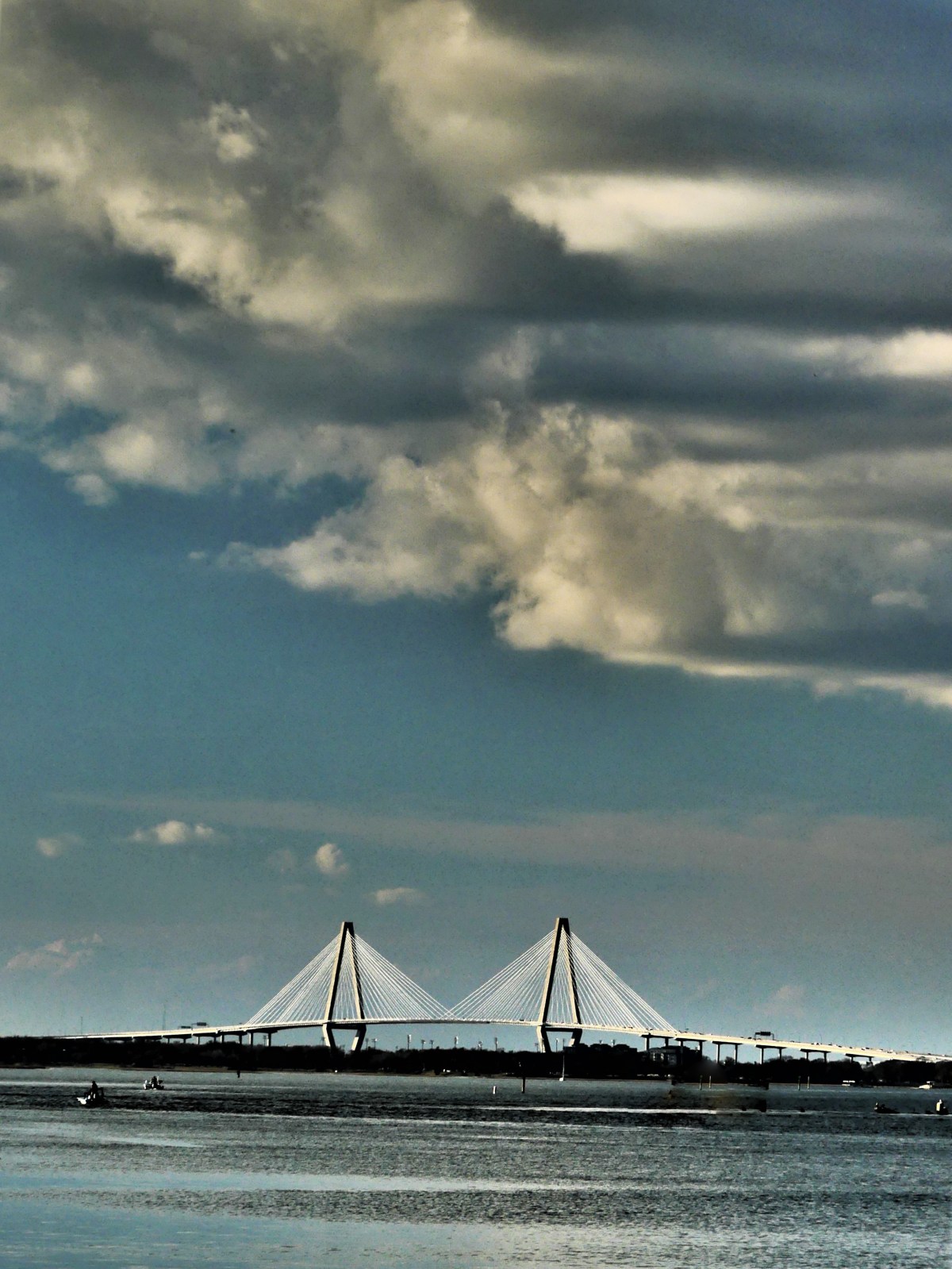
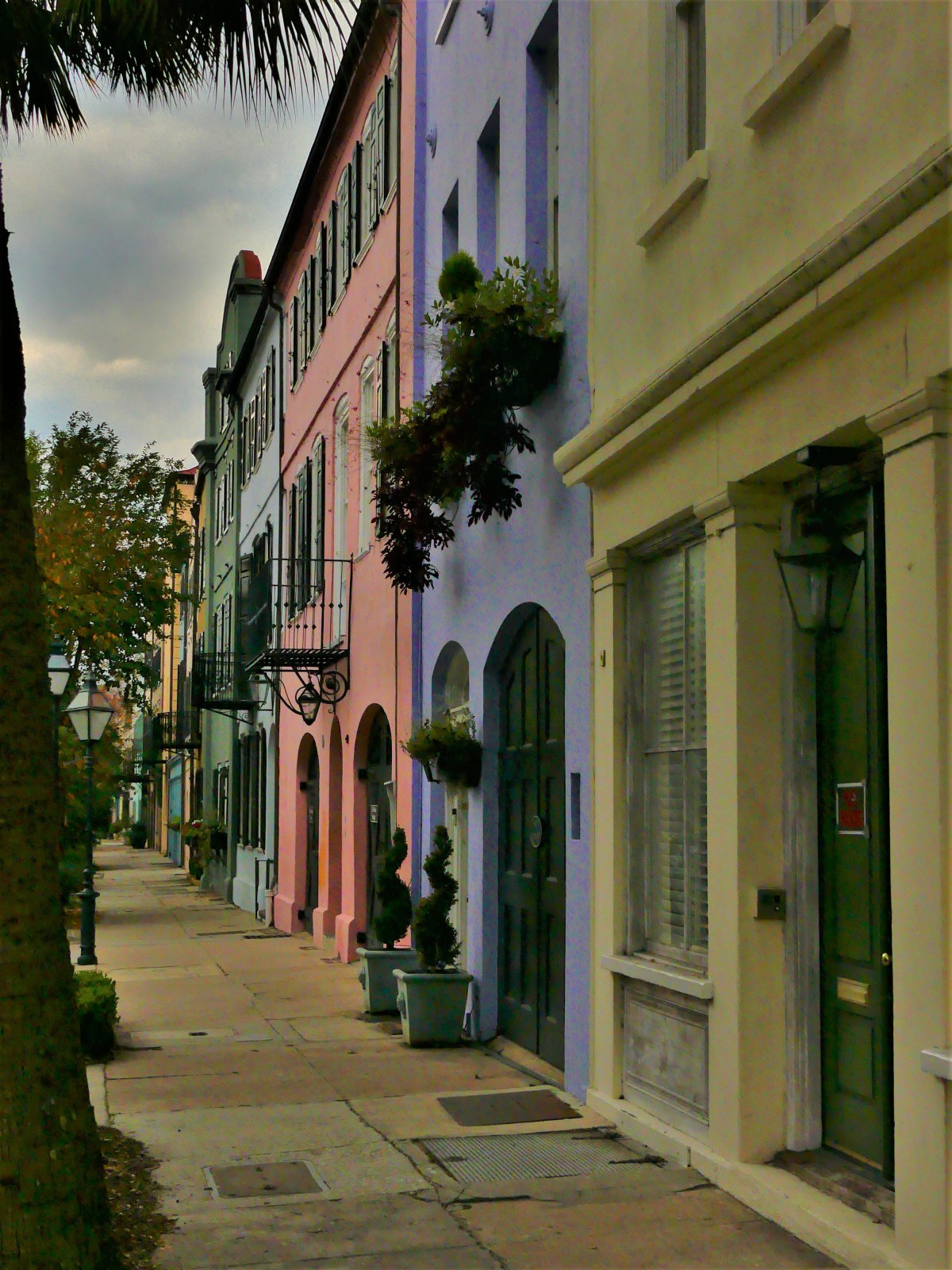
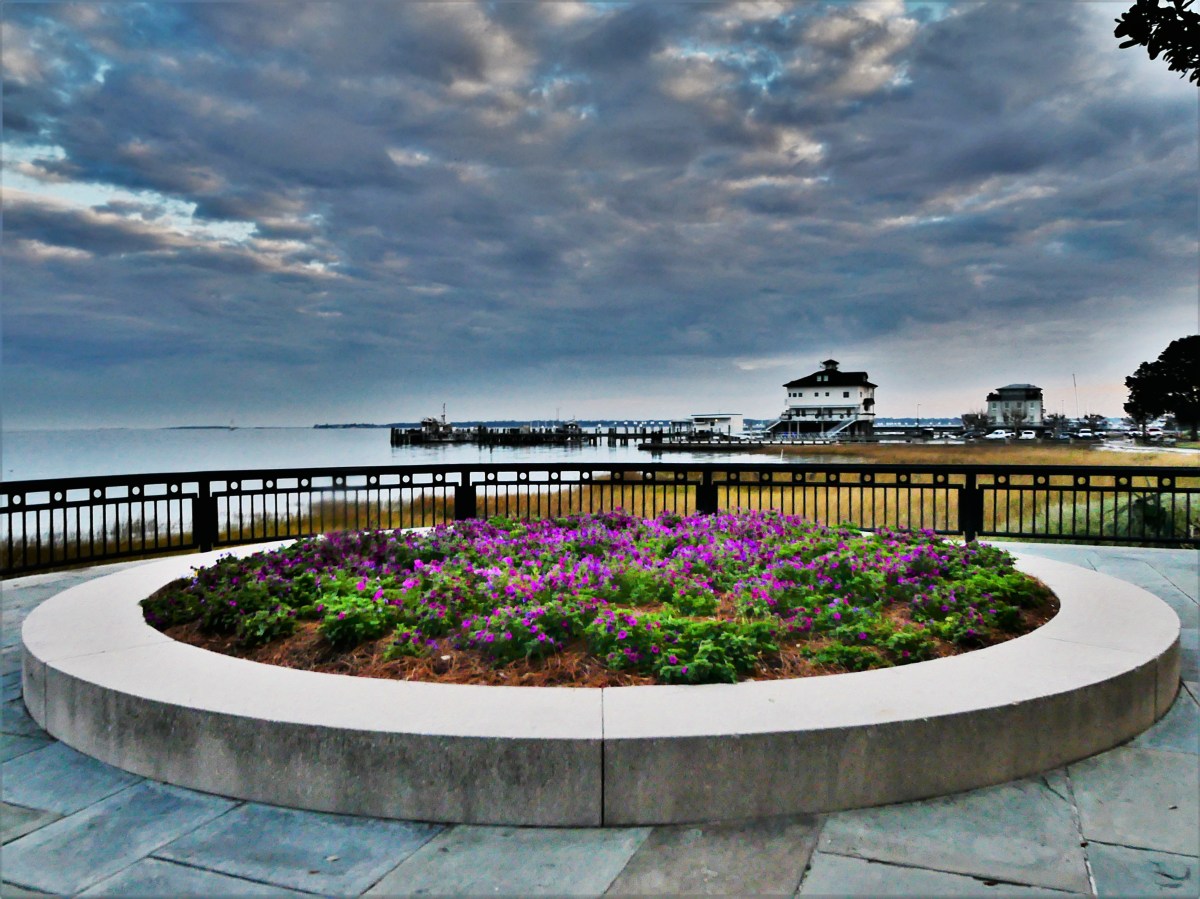
Yet, such a beautiful city has been wrought in the wake of such misery.

Fort Citadel (3)

long piers and bridge

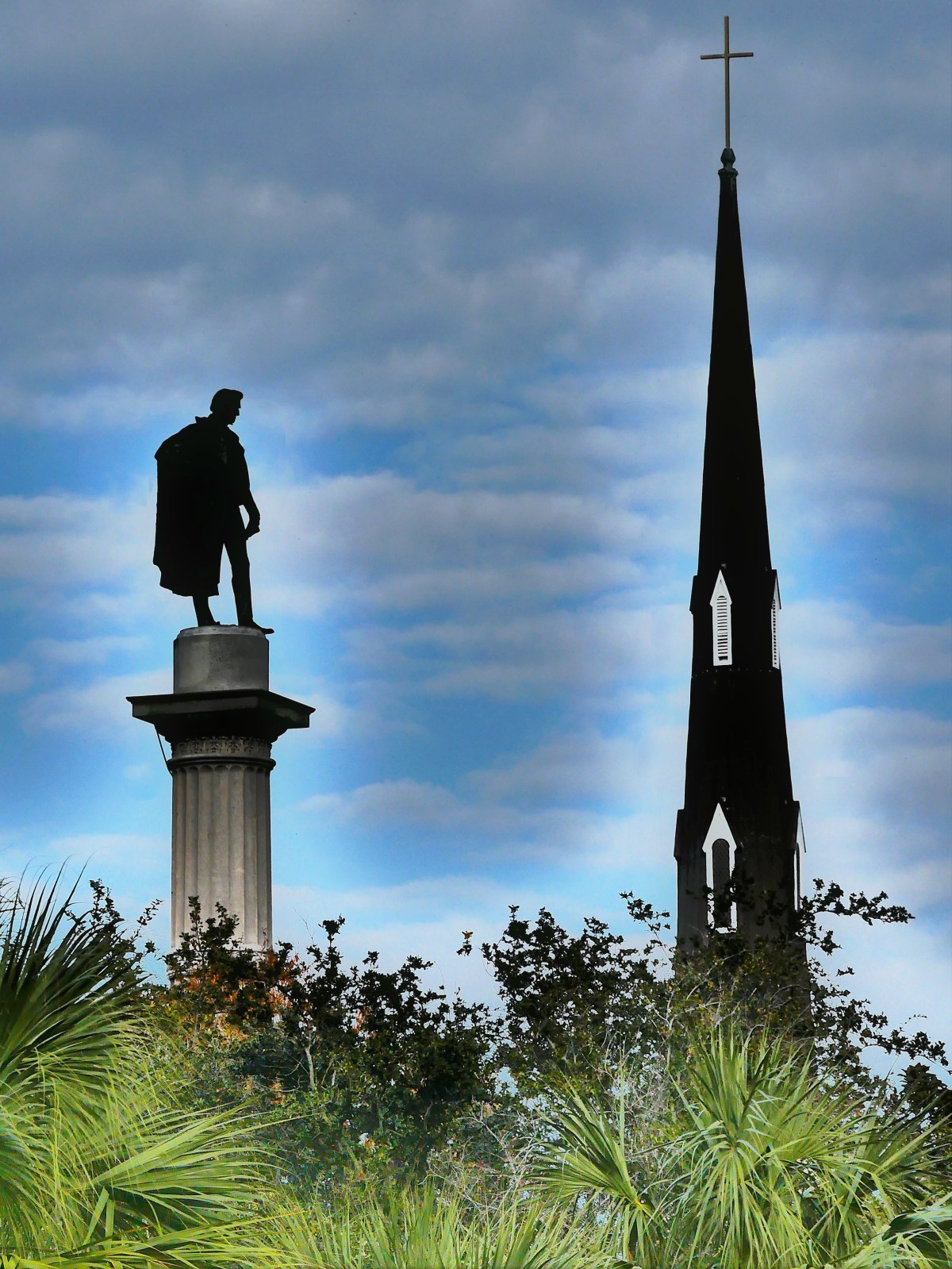
2nd Presbytarian Church

Ravenal Bridge (2)

rainbow row

rainbow row sign

river walk

Waterfront Park

Moultrie Square

waterfront park and fountain (3)

But lest we forget:

This is sign (2)


Serenity Now

New York City is an acquired taste.

To many who live and work in haste,

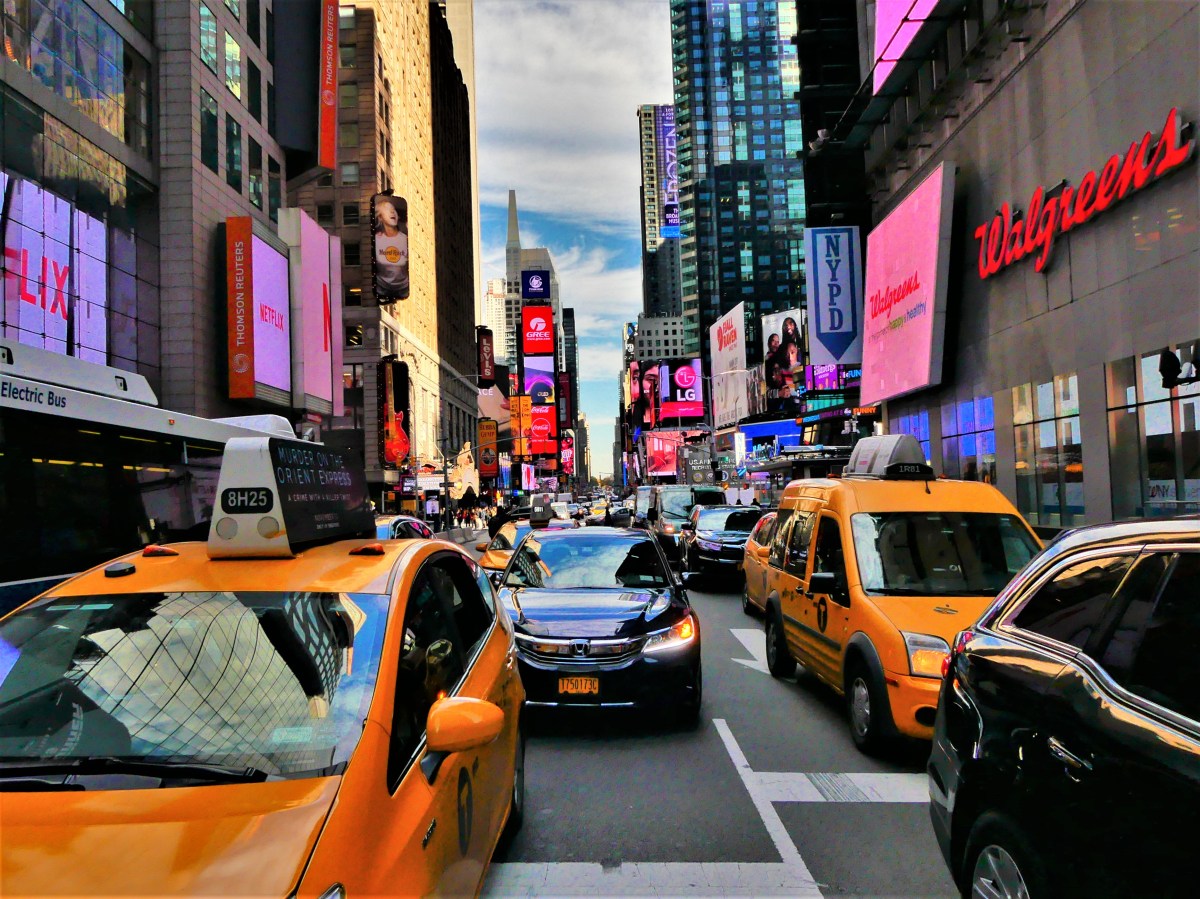
the din of Manhattan traffic is the soundtrack of modern mayhem.

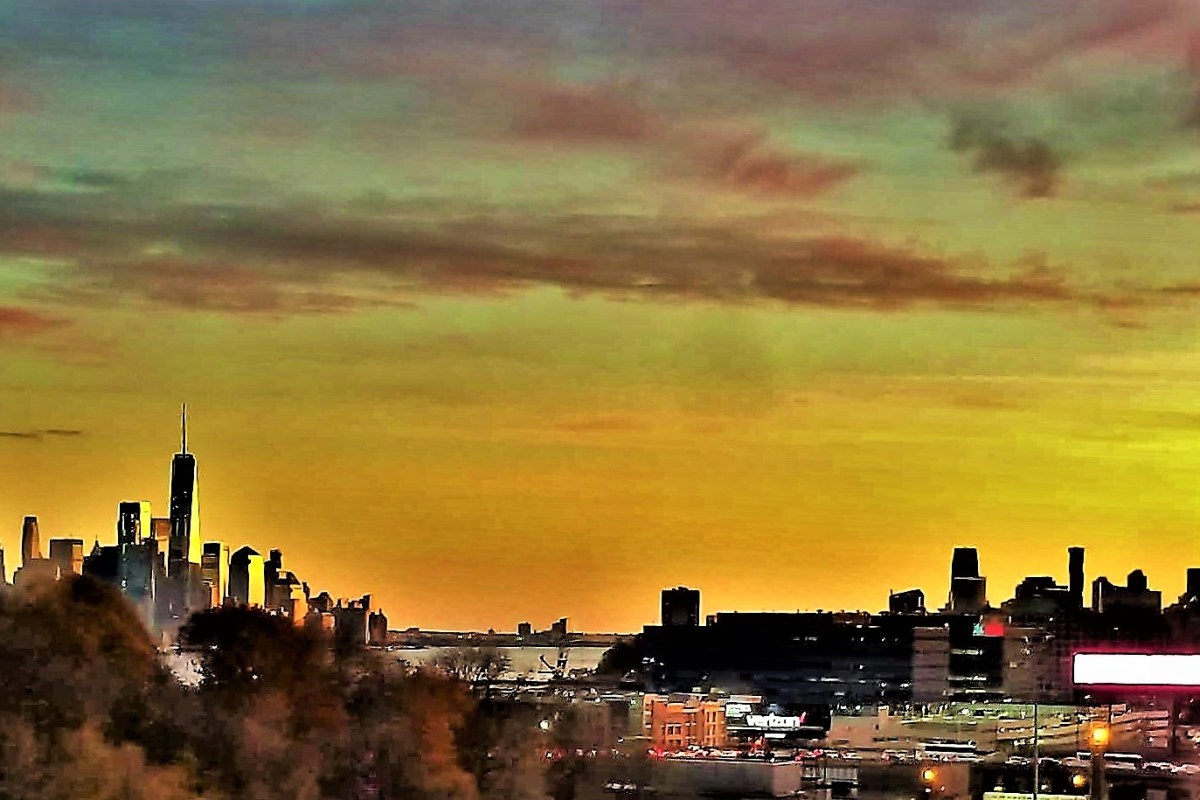
TSQ traffic

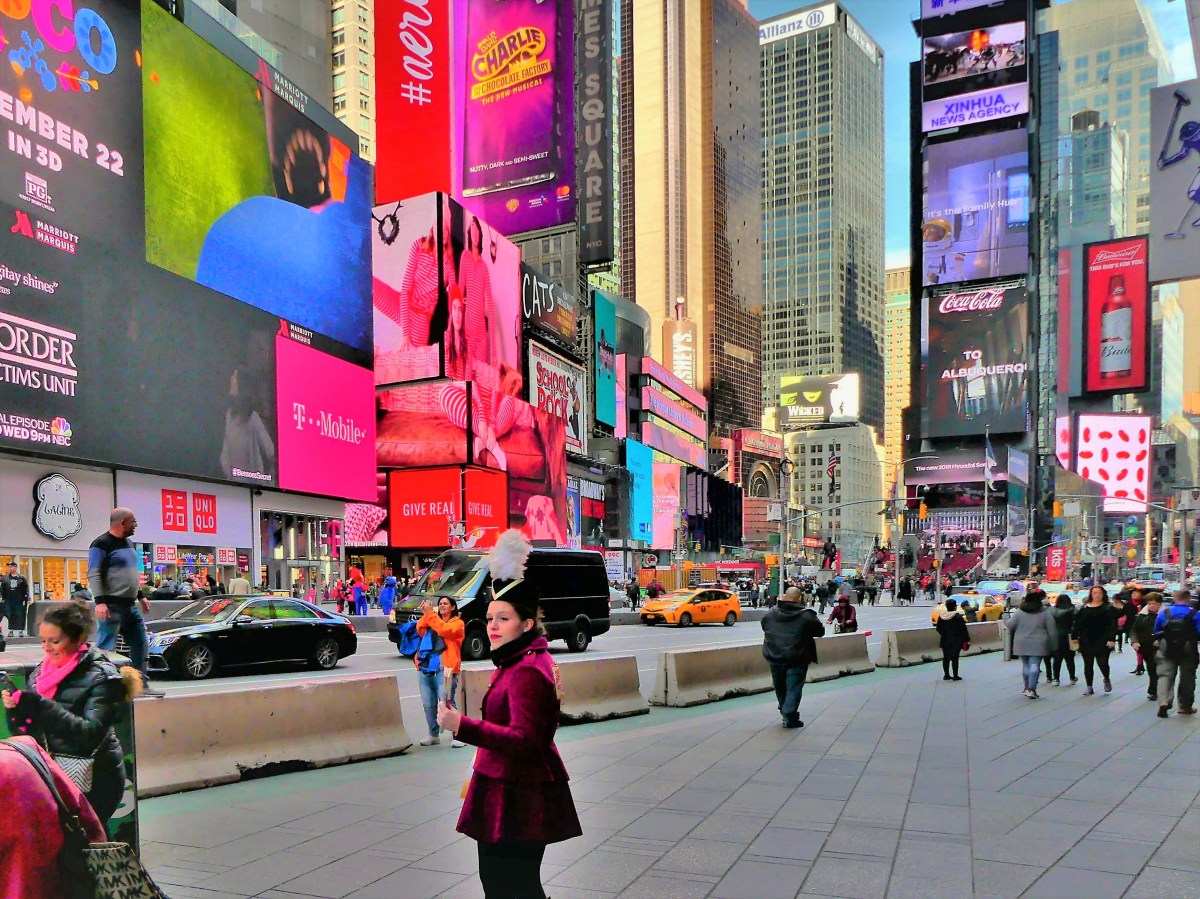
And the synthetic daylight of Times Square practically requires sunglasses,

regardless of the weather or time of day.

Times Square1

While many visitors may revel in the tumult,

equal numbers endure the assault,

induced by constant hustle and bustle.

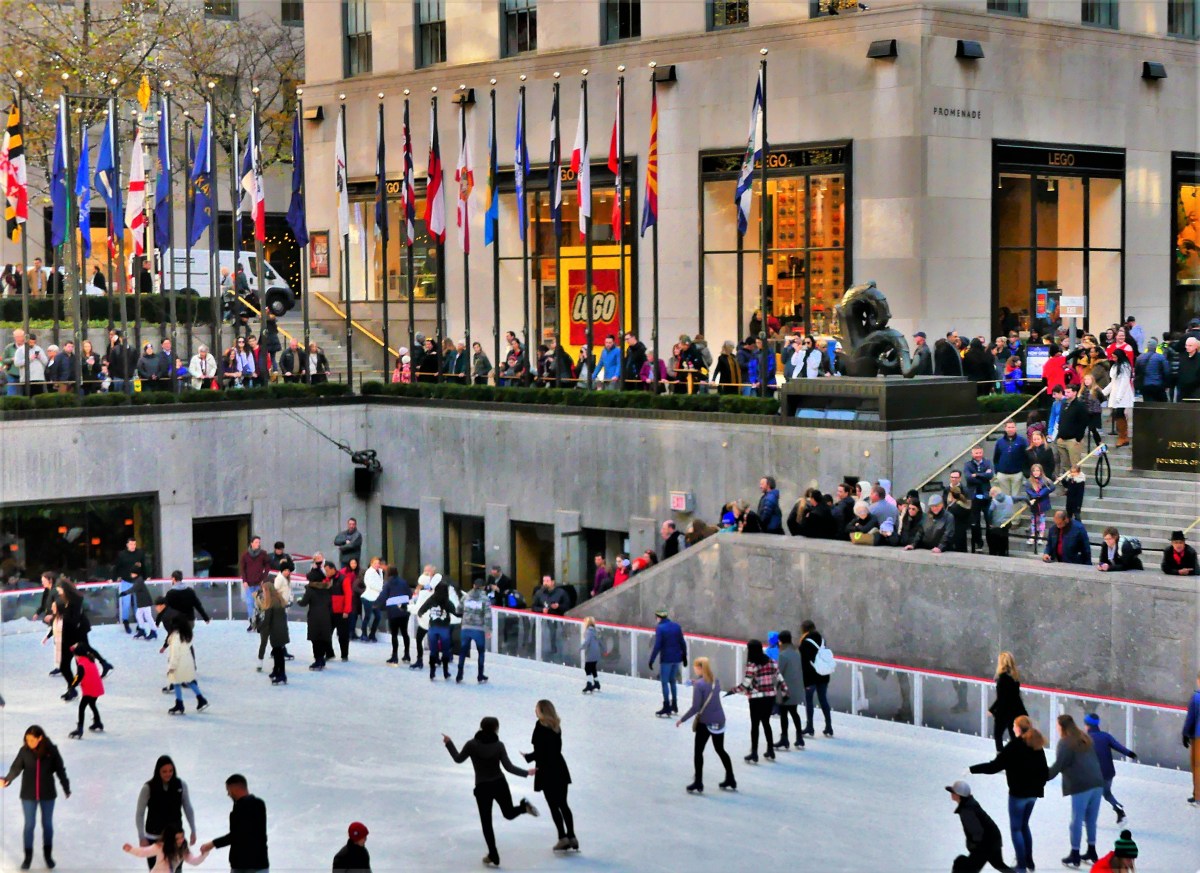
skating.jpg

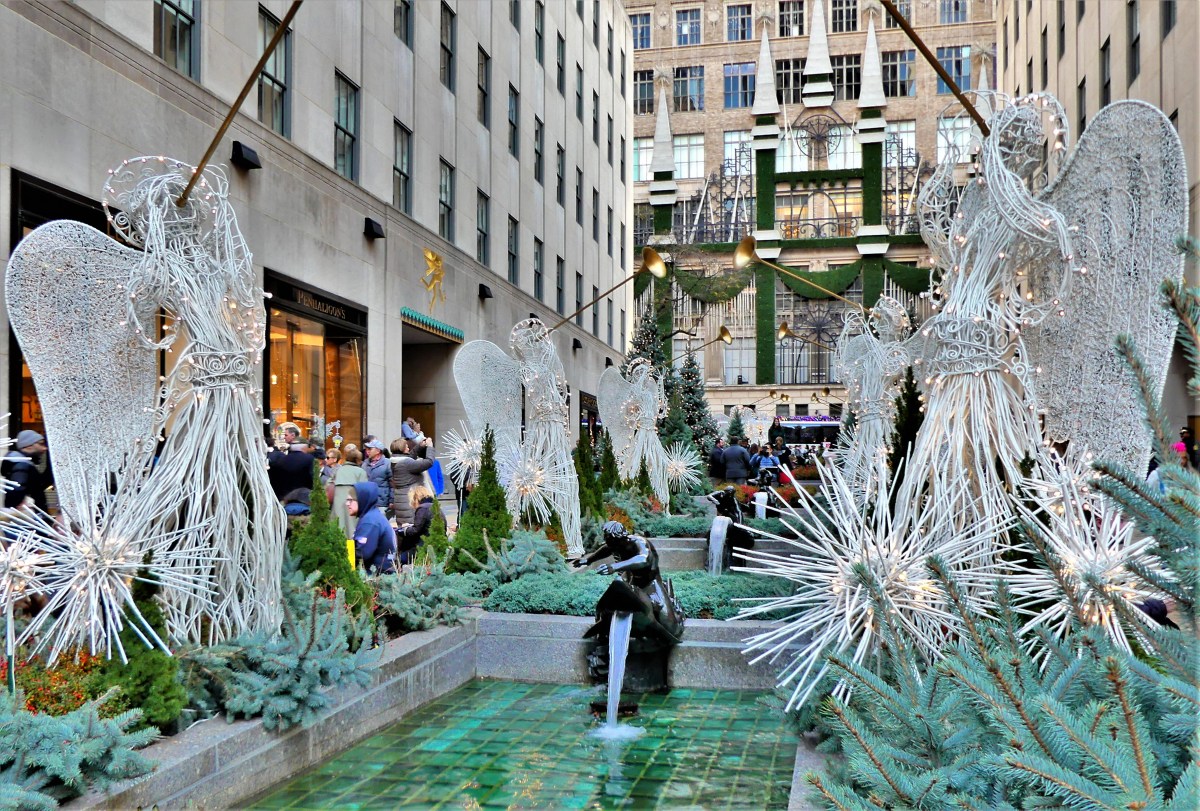
But the Herald Square Angels

have a secret to share:

promenade

“Step back to infinity,

wait for twilight to set the city zest aglow,

and bask in the serenity.”

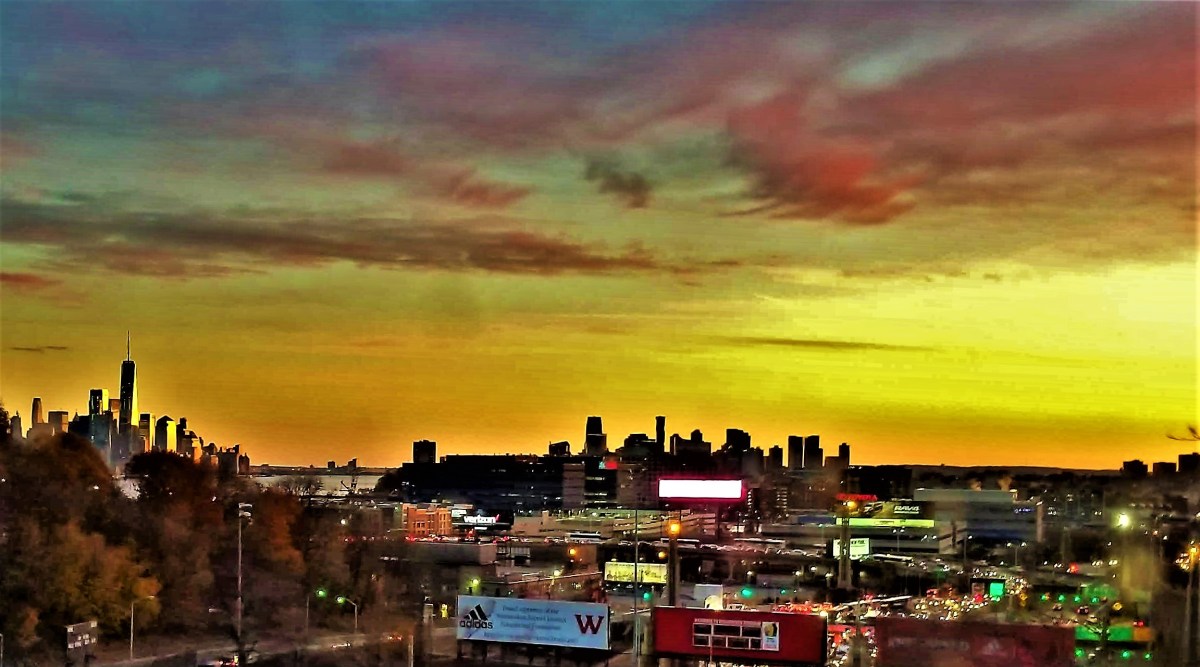
skyline (6)

Nowhere, No Way

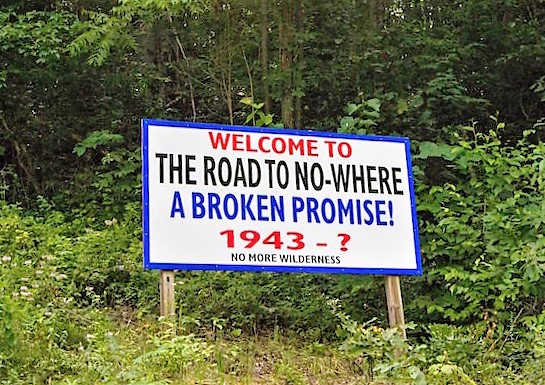
A seven-mile stretch of road from the southern lip of Great Smoky Mountain National Park to its tunnel terminus remains a source of irritation for generations of locals, and a symbol of an unfulfilled promise from the Federal bureaucracy,

road to nowhere

which once pledged to replace submerged Highway 288, but lost their way amid a forest of red tape and environmental concerns.

Fontana Dam begat Fontana Lake in 1941 after the Tennessee Valley Authority (TVA)–in concert with the Army Corps of Engineers–built a hydroelectric plant for ALCOA in consideration of the military’s demand for aluminum essential for aircraft, ship-building, and munitions during WWII. Consequently, communities and roads disappeared under the high-water reserves, and townspeople lost their land and their livelihoods.

In exchange for losing Highway 288, the displaced people of Swain County were promised a road north of Fontana Lake–through Great Smoky Mountain park lands–for continuing access to their ancestral cemeteries left behind, and compensation for relocation assistance. However, most of the 1,300 citizens who resisted the move never saw a dime after ultimately fleeing the rising waters.

Thirty years later, after building 7.2 miles of road and a quarter-mile tunnel, appropriated funds had dried up and the project stalled. By 2003, the National Park Service eventually revealed a feasibility study listing several considerations for public debate, and in 2007, issued a 13-page report detailing the government’s position, electing the No-Action Alternative:

The No-Action Alternative would forego any improvements to Lake View Road with the exception of routine maintenance. Under this alternative, there would be no changes to the existing conditions within the study area. No compensation would be provided in lieu of building the road. NPS would continue to provide transportation across Fontana Lake for annual cemetery visits and would maintain current  amenities, policies, and practices of GSMNP.

Subsequently, Swain County sought a monetary settlement, demanding $52 million from the Department of Interior for defaulting on the original agreement. Yet to date, only $12 million has been paid, thus generating a pending lawsuit for the balance of money owed.

After learning about the history, Leah and I decided to make the pilgrimage to see this road for ourselves. We departed Bryson City on a dreary autumn morning, surrounded by mist and brisk winds that had us zipping up and foraging for hats and gloves from a backseat storage bin.

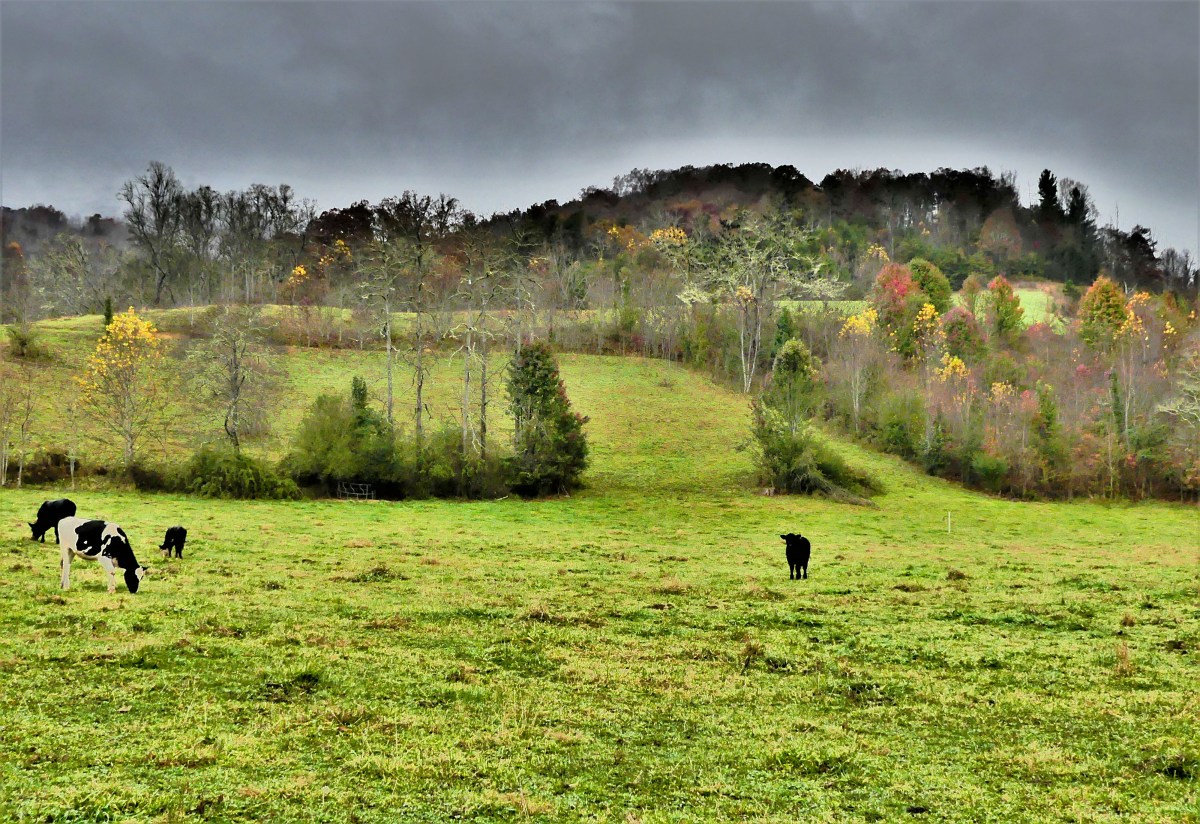
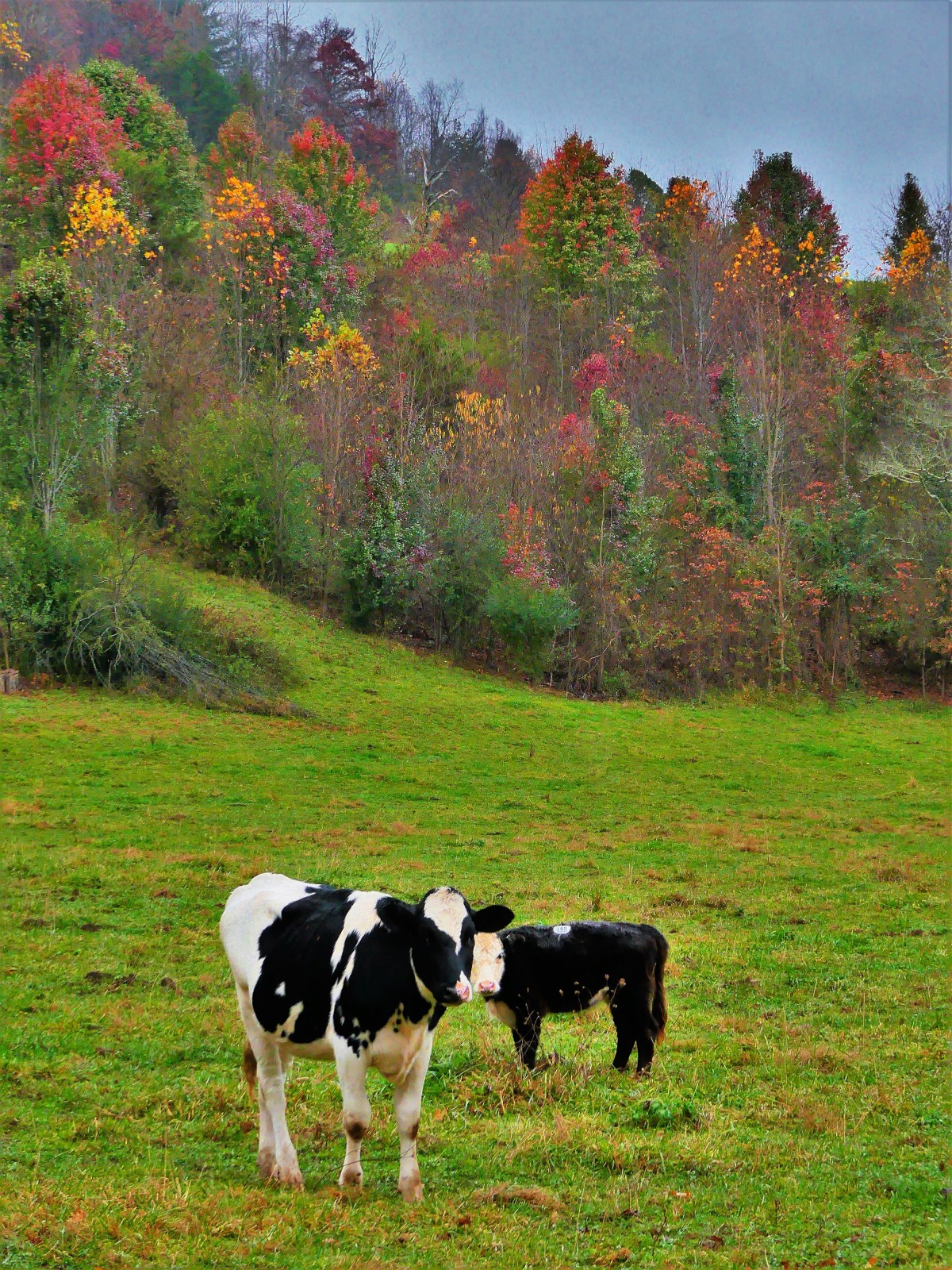
The drive along Fontana Road took us through bucolic farms and pastoral settings.

pastureland

autumn cows

We followed the lightly traveled road until we reached the park entrance, and continued along a windy incline dotted with shrouded overlooks of the Tuckasegee River below us.

We knew we had reached the end of the line when we crossed over Nolands Creek,

Tuckasegee

and encountered a barricade of steel poles that barred us from approaching the tunnel around the bend.

lakeshore trail

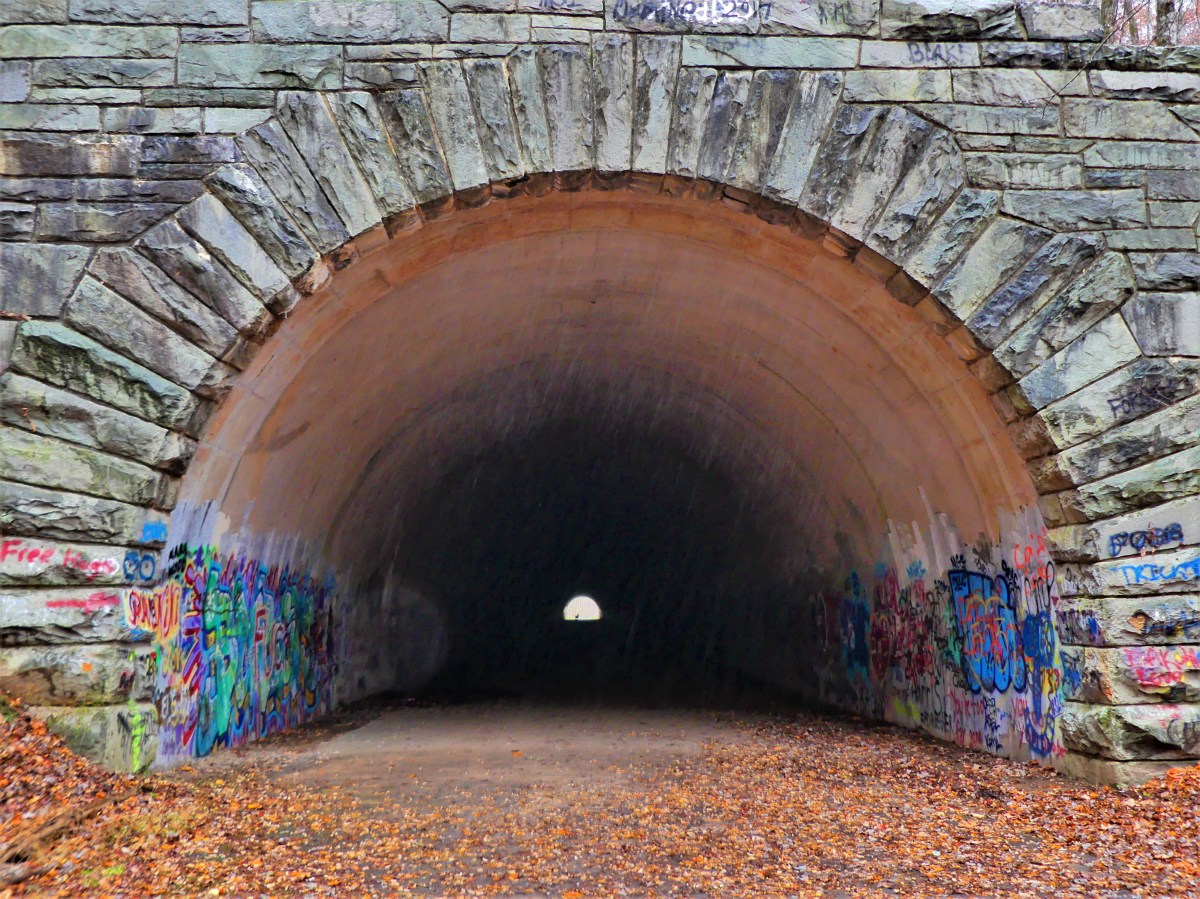
The ¼-mile tunnel was dark and dank. And while a flashlight was a handy accessory for navigating the rutted road and avoiding scattered animal feces,

tunnel opening

it became an essential tool for spotlighting the pervasive high school graffiti that randomly “decorated” the oft-covered whitewashed walls–

tunnel to nowhere

–most of it, a reflection of egocentric teenagers flexing their hormones…

fuch grafitti

tunnel grafitti

wall cracks

…but in other cases, the graffiti represented a cathartic release of current political expression–

Fuck Donald Trump

–bringing new meaning to an erstwhile patch of pavement.

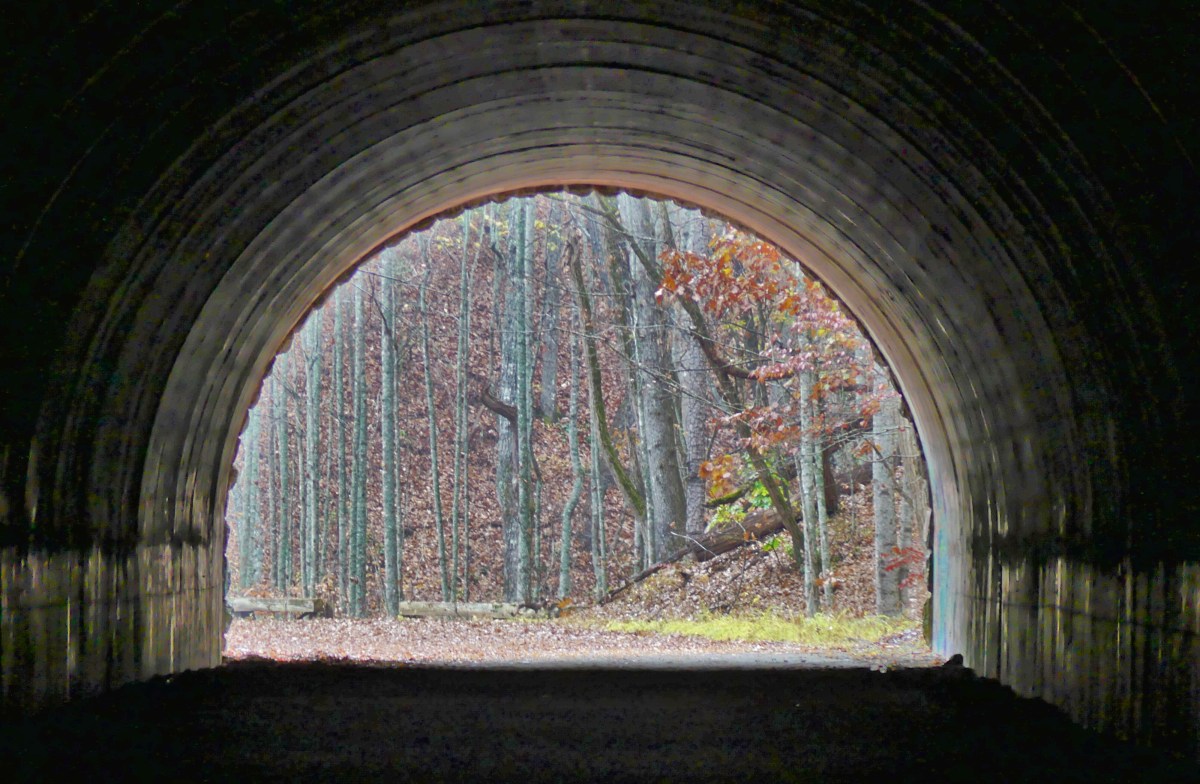
As advertised, the “Road to Nowhere” terminated on the back side of the tunnel,

Tunnel End

casting a glimpse of an uncertain future fraught with empty promises disguised as good intentions.


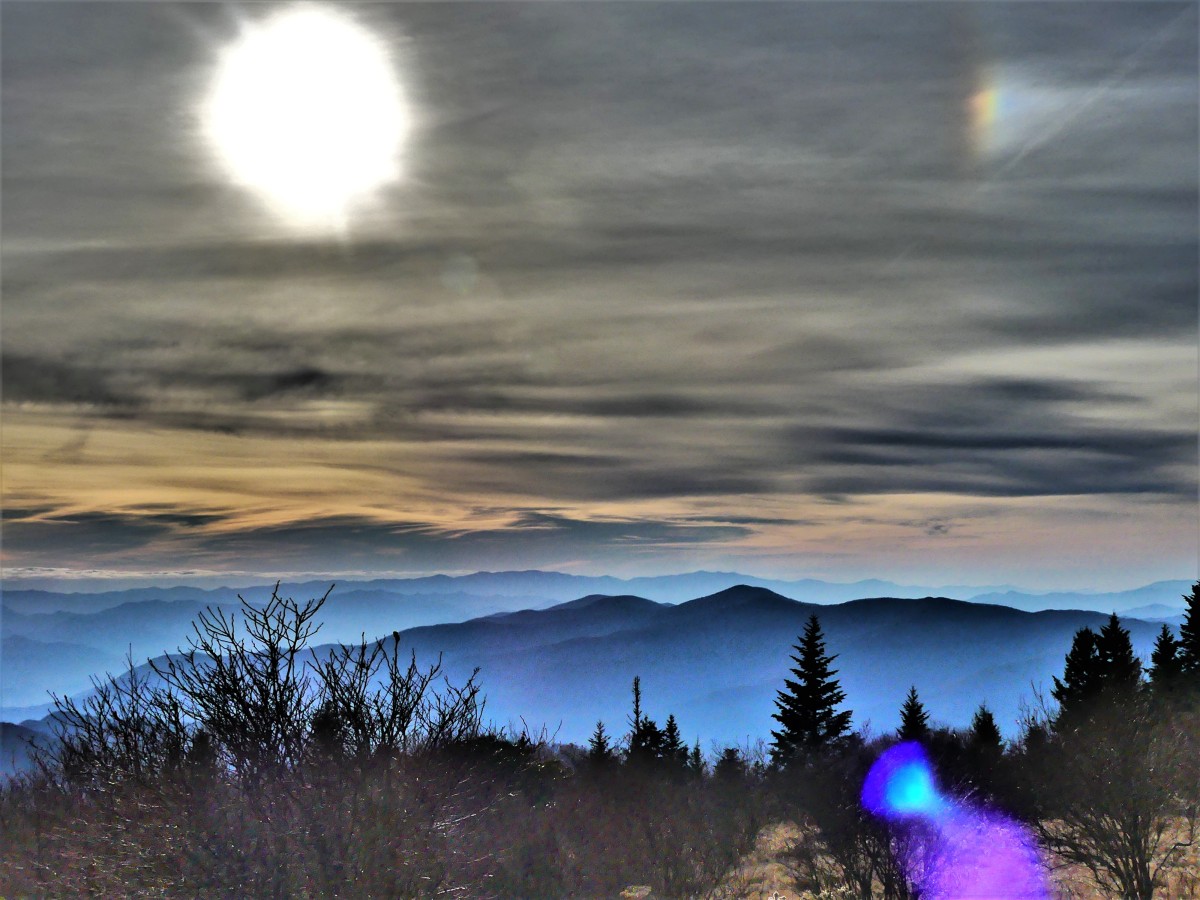
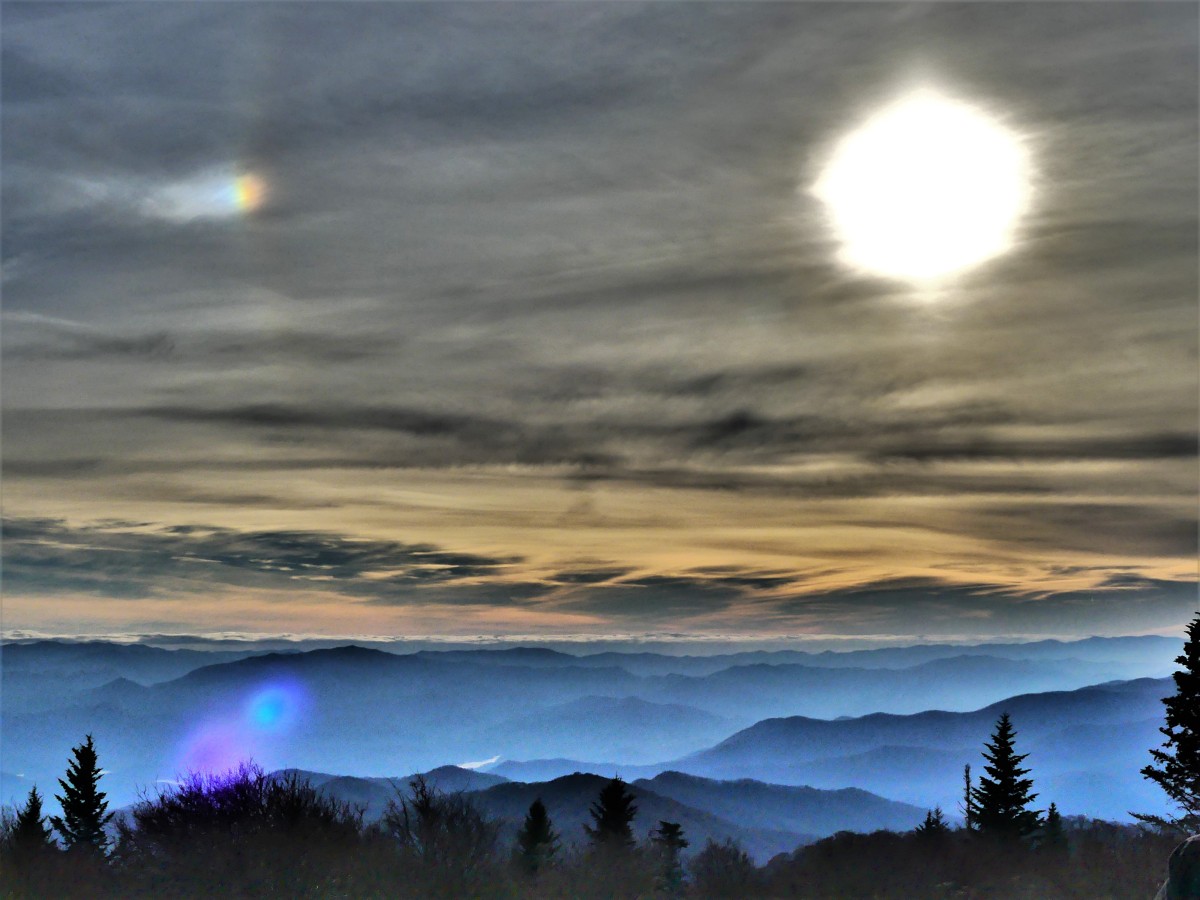
Parhelic Circle with Sundogs

While enjoying the exhilarating views of the Great Smoky Mountains from the vantage of Andrew Bald’s grassy slopes, a narrow ribbon of color caught my eye just as the clouds were parting on the right side of the sun. I knew I didn’t have much time, so I refocused my attention on capturing my discovery through the lens of my camera, while trying not to blow-out the exposure by shooting into the sun.

right side

“Ooh, a rainbow,” I thought, “That’s cool.” I turned to the few hikers present, now relaxing after the trek down from Clingmans Dome.

“Did anyone else see the rainbow?” I asked around to no one in particular.

Their casual shrugs spoke volumes. Glancing back to the sky, I understood their ambivalence; the rainbow had already vanished.

After a snack and a brief respite, it was time to start up the mountain before darkness descended, but not without one last look as I was leaving the clearing. That’s when I noticed–if only for an instant–a reciprocal slice of color on the left side of the sun…

left side

…and then it was gone. Leah and I ascended the trail in sufficient time for photographing a glorious sunset over Clingmans Dome, and nothing more was considered, until it was time to construct the post, On Top of Old Smokey.

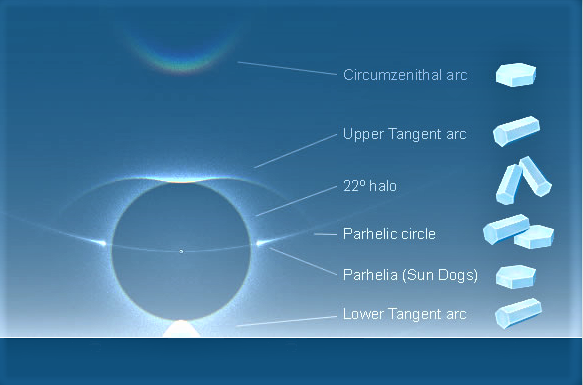
While putting my thoughts together with the TV running in the background, I became distracted by a local meteorologist from Charlotte, who was standing in front of a projected image submitted by a viewer that looked very similar to photographs I had recorded on Andrew Bald.

And then he replaced the image with this graphic:

parhelic graphic (2)

while giving a brief explanation of the earth science behind the phenomenon of a parhelic circle with flanking sundogs.

That’s when I realized I had captured something special…caused by sunlight refracting off tiny ice crystals in the atmosphere, and creating a larger halo around the sun.

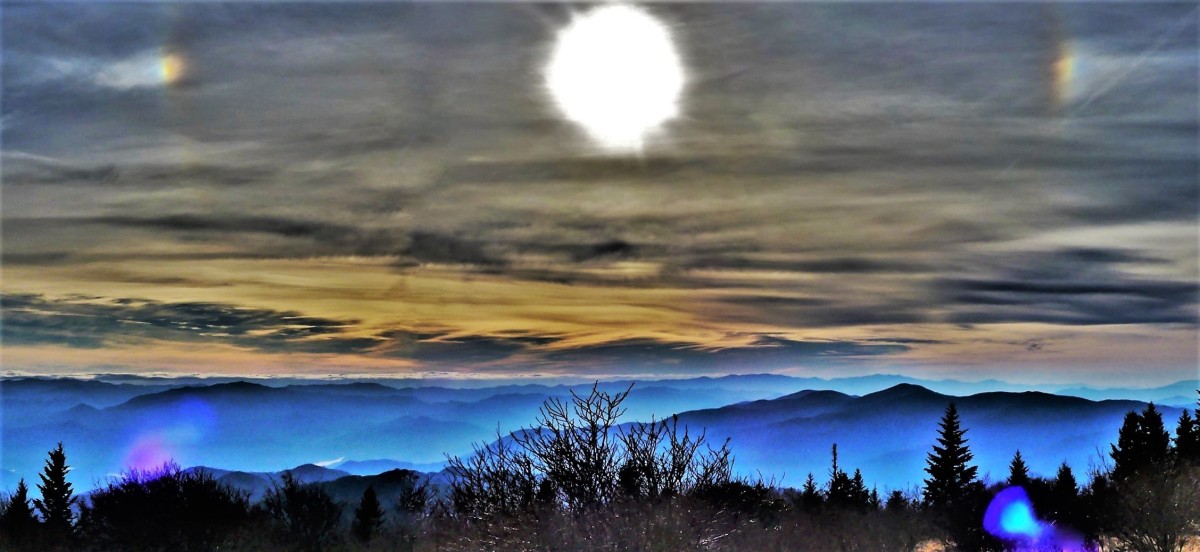
I returned to the file to re-examine the photographs, and wondered–by chance, and given limited resources–if I could stitch the two views together using Windows Publisher to reproduce the full effect, even though the photographs of both sides of the sun were taken minutes apart from two different viewpoints and parallax.

While the technique is purely experimental, I believe the result comes very close to interpreting “what could have been” had the clouds not interfered with my “rainbows”…

parhelic circle with sundogs

…all of which makes for a more remarkable discovery, given the Great Smoky Mountain smoke.

On Top of Old Smokey

A side trip to Great Smoky Mountains National Park from Asheville takes only an hour, but the payoff is timeless. Admission is free, but the views are priceless.

The National Park straddles North Carolina and Tennessee, with Clingmans Dome, the highest peak in Tennessee, and a natural boundary between both states. The park is situated within a day’s drive for 60% of the nation’s population, making it the most popular of all National Parks, with over 9 million visitors per year.

The park can be accessed through a dozen different gateways, with Sugarlands Visitors Center being the prevailing entry point from the north side through Gatlinburg, TN. But Leah and I approached the Great Smokys from the south, and entered via Oconaluftee Visitors Center, the heart of Cherokee Nation.

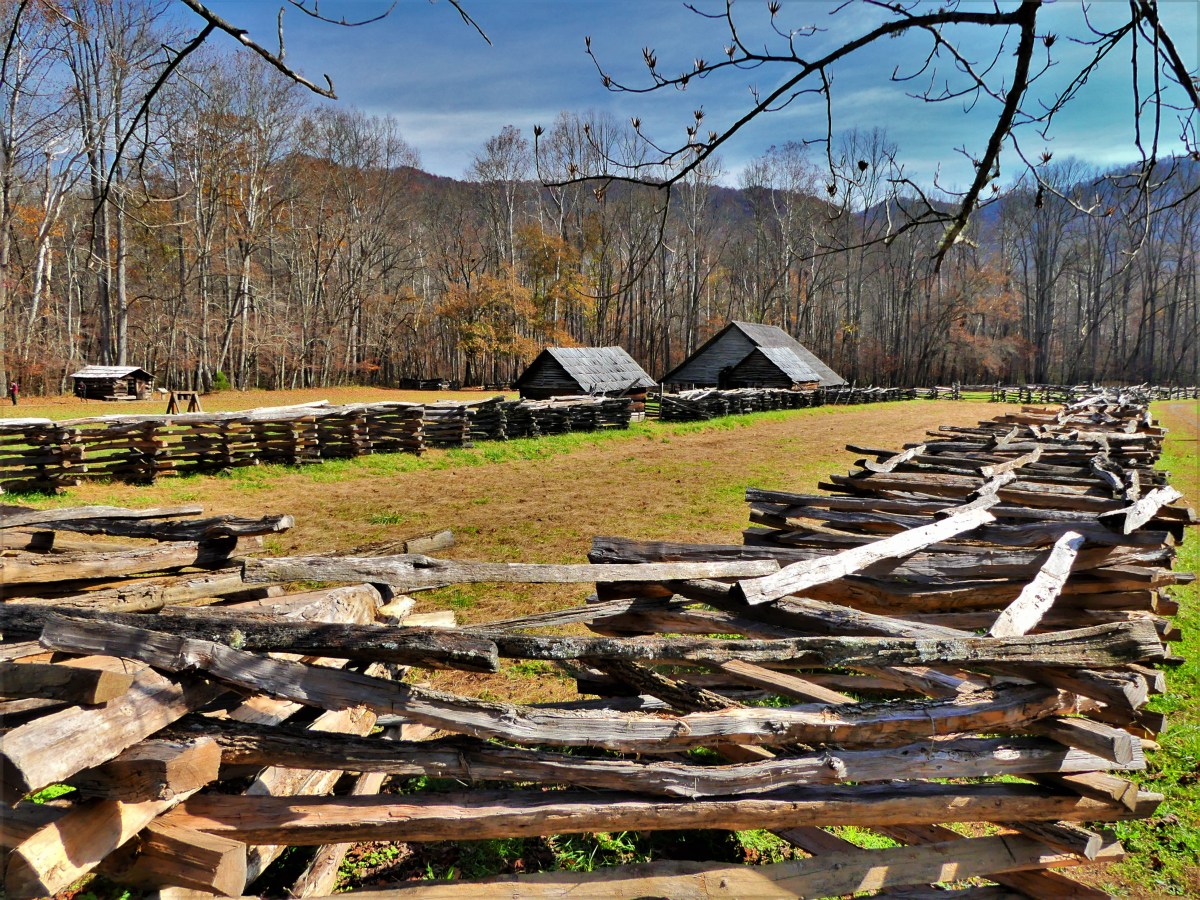
Once there, we took our time strolling through the Mountain Farm Museum on the banks of the Oconaluftee River…

farmhouse

farm garden

elk field fences

corral

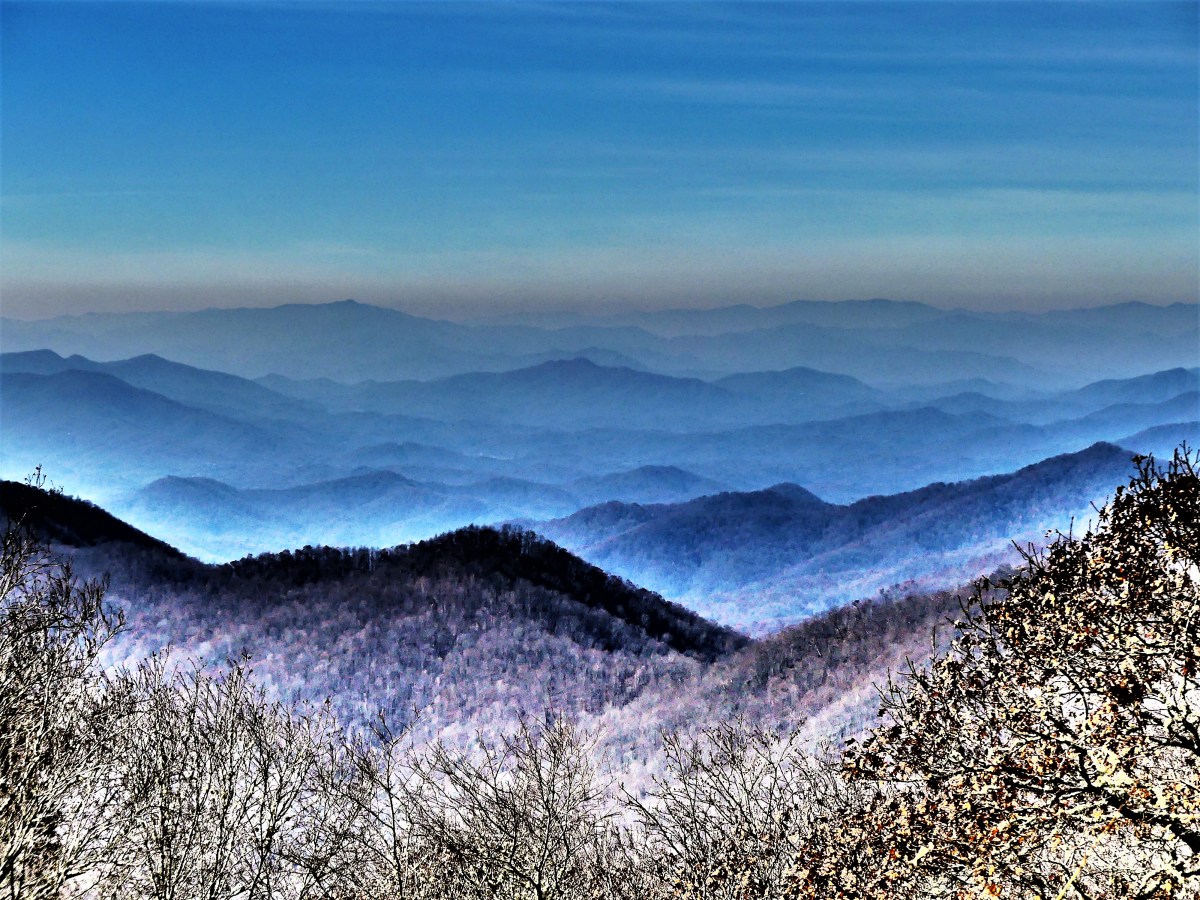
…before driving north on Newfound Gap Road–stopping frequently at the many overlooks–to gaze across Carolina’s side of the Blue Ridge Mountains,

overlook

overlook1

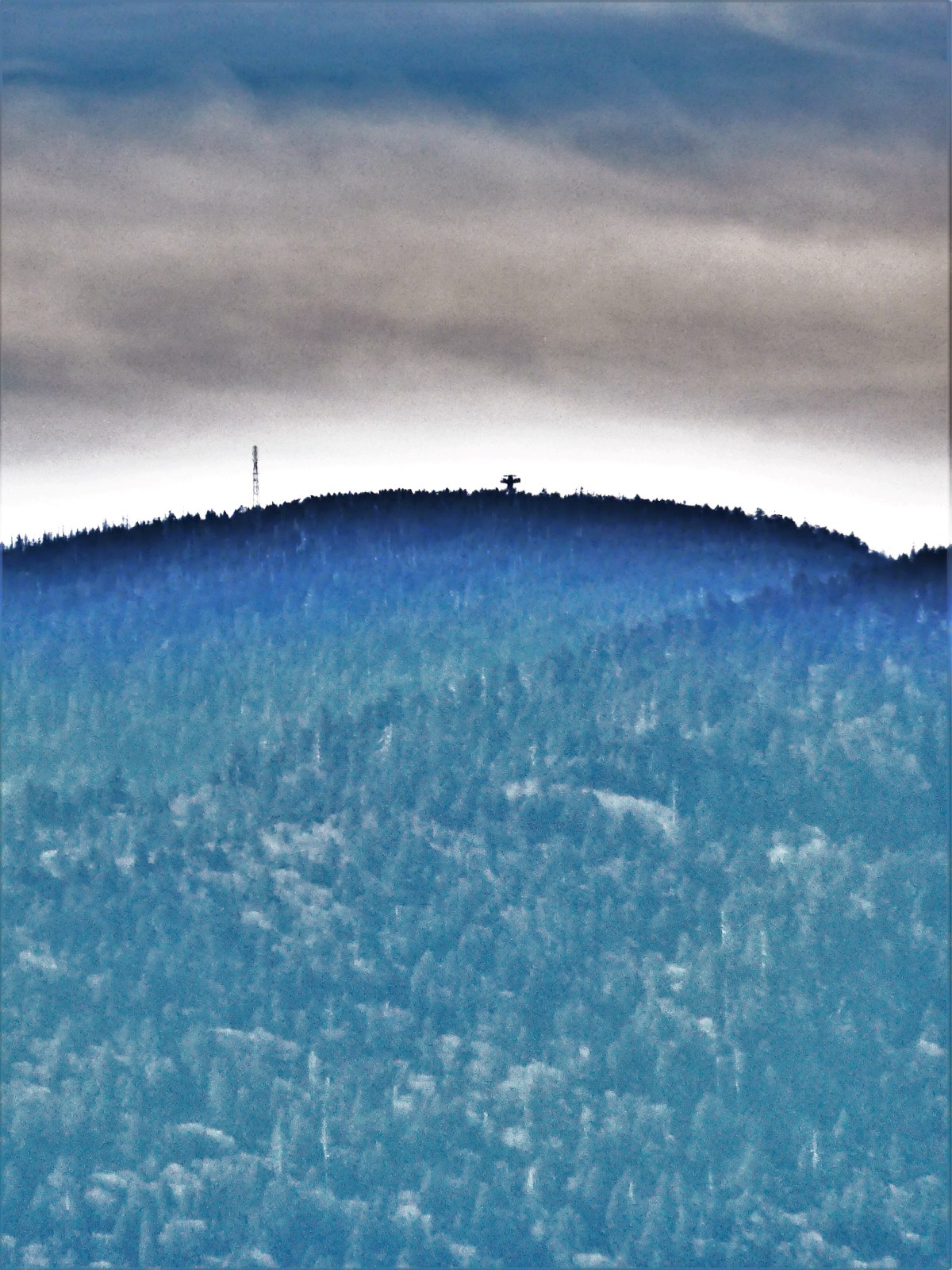
and preview our next destination, Clingmans Dome, at 6,643 feet elevation.

Clingmans Tower LS.jpg

A dogleg turn onto Clingmans Mountain Road took us through short winding turns as we climbed the Appalachian Trail ridgeline, eventually leveling off at an over-sized parking area with trails radiating from the top of the bald, and views extending a hundred miles.

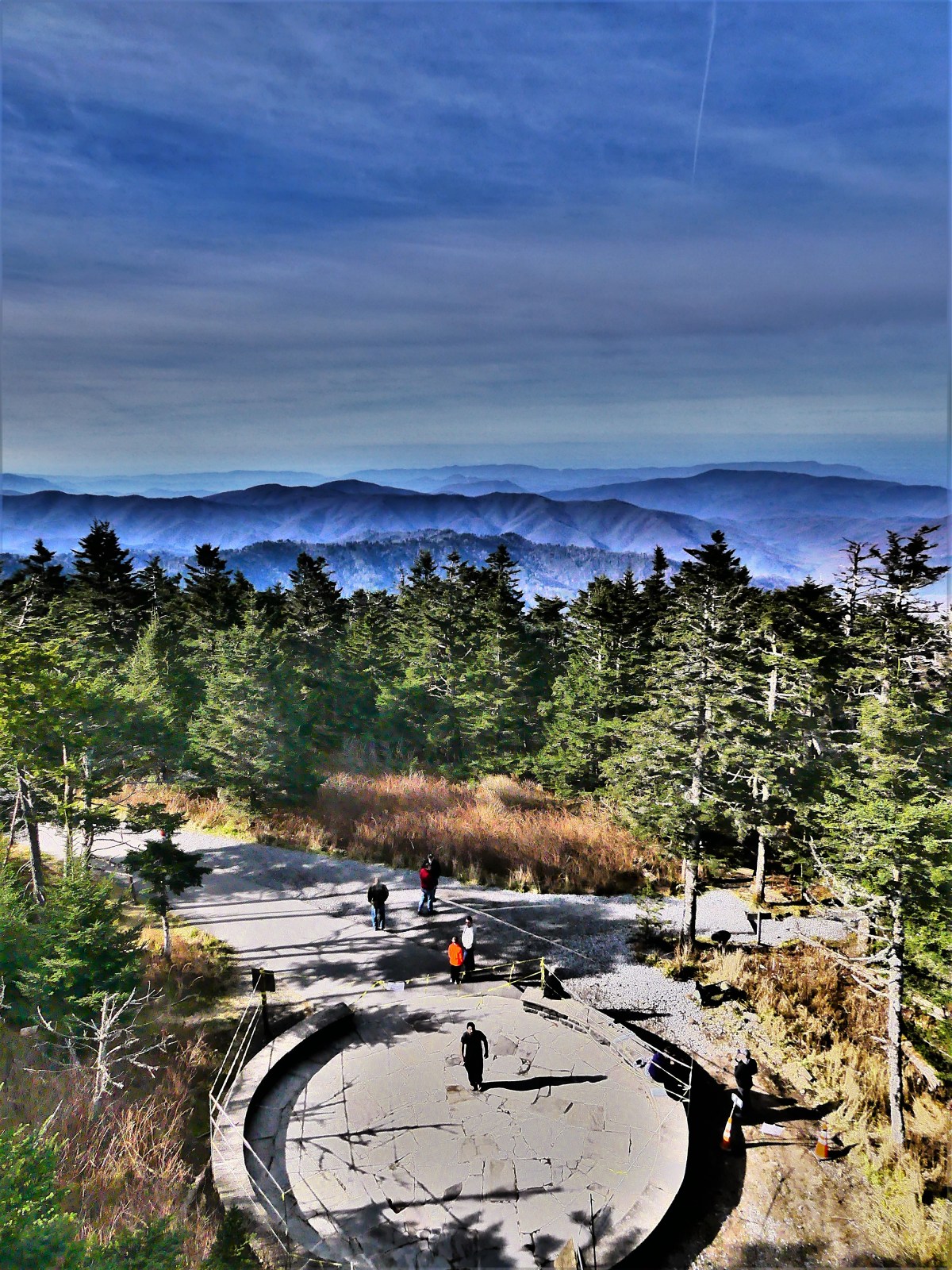
Clingmans Dome view

Thinking that views might be even better at the very top–allowing us to see over Mount LeConte–we trekked half a mile up a very steep asphalt path to Clingmans Observation Tower, albeit knowing it was closed for repair until next year.

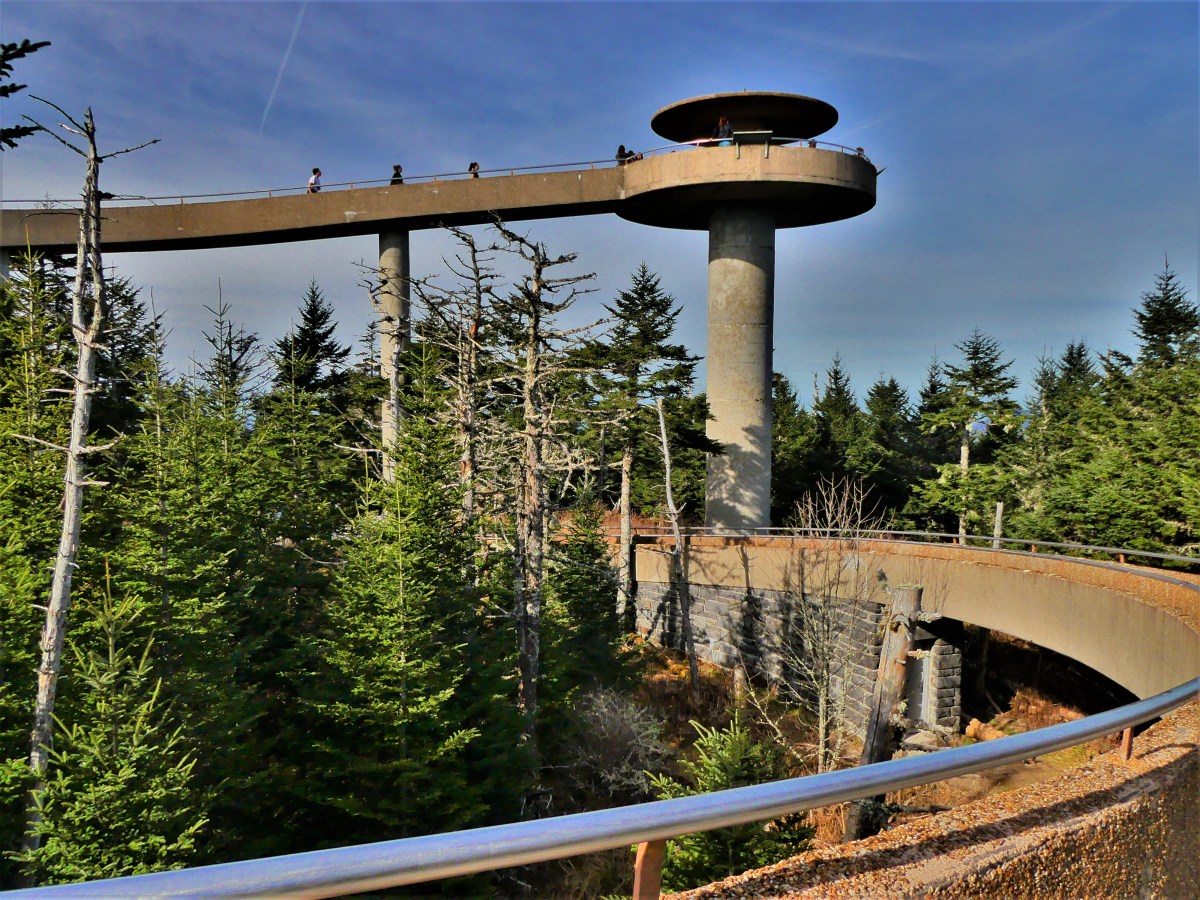
To our surprise, families were scaling the spiraling ramp to the tower.

Clingmans Tower

Looking around, there were no views to be had at the base. We were surrounded by a dense growth of evergreens without breaks. Sacks of concrete were stacked under the column with flimsy, yellow, KEEP OUT tape tied across the tower entrance.

Scores of visitors-turned-violators stood around the column base, determining their next move. Should they make the ascent or not? Yes, the tower was officially closed to the public while undergoing repair. But was it too risky to breach the ribbon barricade? There weren’t any park rangers present, but maybe there were cameras? What a moral dilemma!

“I’m not going up there,” exclaimed Leah. “There’s a reason that tower is closed.”

“But look around us! Where are the views?! We hiked up here expecting to see something, yet there’s nothing to look at, unless you want a closer look at this fir stump,” I argued. “And what about everyone already up there? If they really wanted to keep us out, then why didn’t they secure the entrance better? Why didn’t they use fencing instead of tape?”

Leah was adamant. “I’m still not going up there, and I don’t care about everybody else! It’s not the right thing to do.”

I offered Leah my Roy Moore rationale: “But it ain’t illegal if ya don’t get caught!”

I deliberated carefully…

…and ducked under the tape. I couldn’t help myself. I wouldn’t deny myself the views I had come all this way to capture.

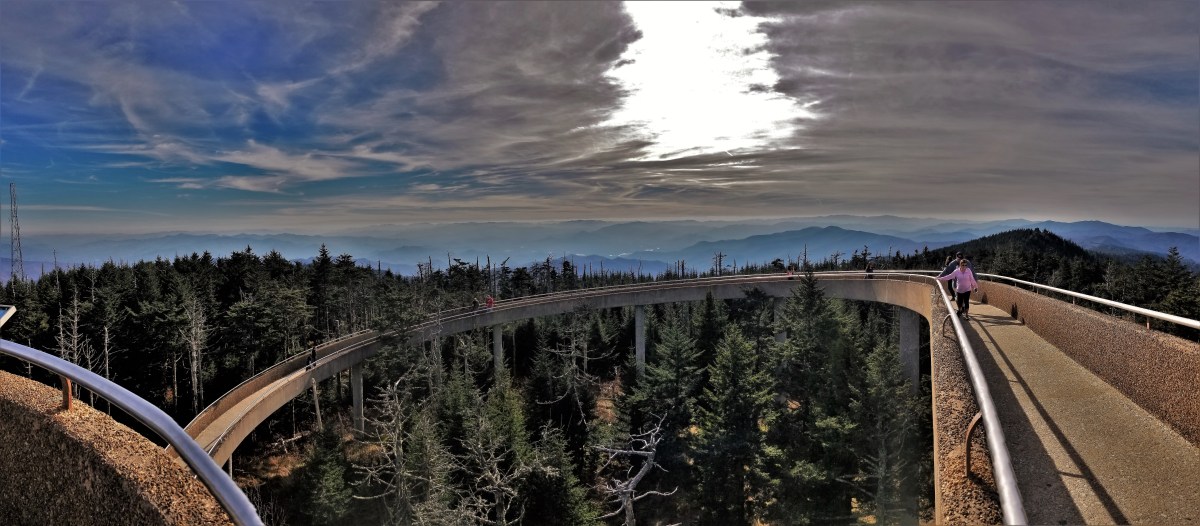
The 45-foot tower was completed in 1959 to give unobstructed 360° views of the surrounding mountains and valleys, and it was showing its age. The concrete pathway was separating from the wall in places, and patches of rebar were visible along the way. But did it warrant closing while in the midst of being repaired?

tower panorama

Probably, but not until I had the chance to document the landscape. I scurried up the ramp with the intention of quickly getting my shots, and hurrying back down, just in case I should be noticed.

Tower base

Tower ramp

On our way back down the trail, several families on their way up the trail, paused to catch their breath and ask, “Is it worth it? Is there anything to see up there?”

“It all depends on how good you are at following orders,” I’d answer cryptically.

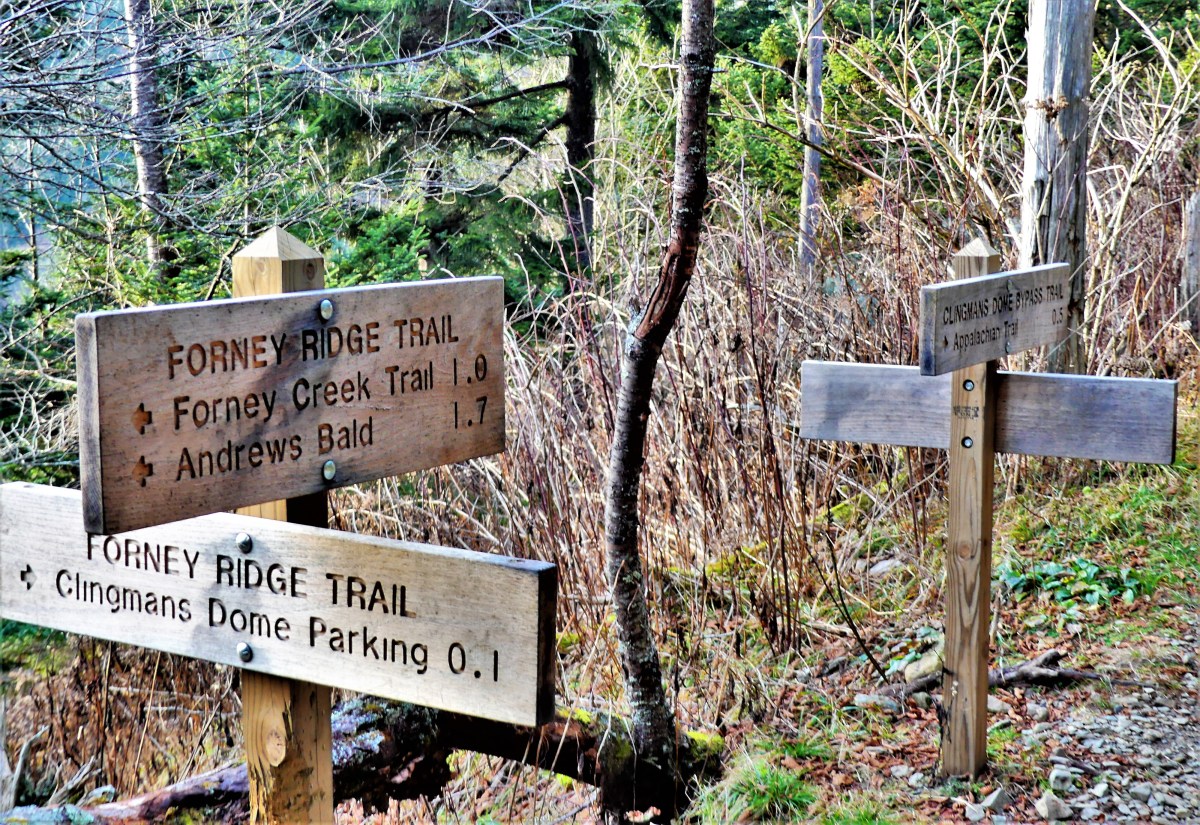
But our day wasn’t done yet. It was only three o’clock, and we hadn’t hiked more than an easy mile. We’d been told by a park volunteer at the Visitor Center that the two-mile trail to Andrews Bald–which intersects with the Appalachian Trail–was a worthwhile hike with amazing views at the end.

trail sign

So, we took her advice, and set out down a narrow, terraced ridge capped by embedded logs as steps–to keep the erosion to a minimum–until it turned to saw-toothed rocks and twisted roots, and occasional mud in low lying places.

boardwalk

“You realize that it’s now getting dark around five, so we’re not gonna have much time before we have to turn around,” Leah warned. “And climbing back up this hill is gonna be a bear!”

“Sunset’s at 5:30, but as long as we’re out by five, we should be fine,” I replied. “Besides, there’s no way I’m gonna miss the sun going down from up top!”

We made excellent time down the mountainside, and crossed onto Andrew Bald, a grassy clearing with breathtaking views. While Leah was making new friends, and photobombing their picture,

photobomb

I was focused on the sky, and that’s when I realized that the sun had created something remarkable.

Andrews Bald

That slivered arch of a rainbow crisscrossed by contrails was an elusive sundog, a small portion of an optical phenomenon caused by sunlight refracting off tiny ice crystals in the atmosphere, and creating a larger halo around the sun.

sundog

The excitement of capturing this meteorological moment was enough to propel me up the mountain and back to the parking lot with plenty of time to prepare for sunset. But the look on Leah’s face after emerging from the hike told a different story; her feet were achy and her knee was throbbing.

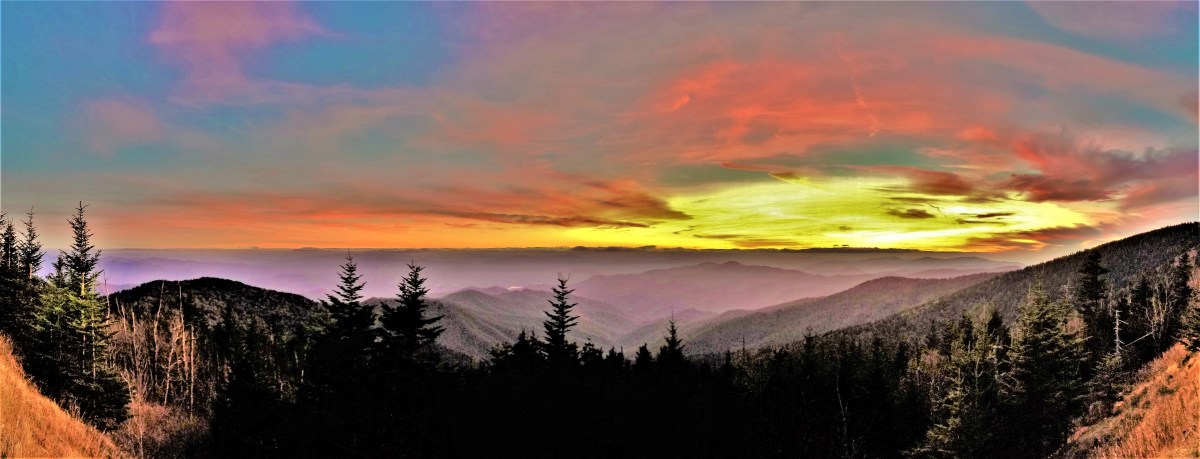
 While she retired to the truck to relax and seek shelter from the bite of cold air moving across Clingmans Dome, I stood steadfast on the edge of the mountain, camera in hand, taking a front row seat to nature’s second act.

Going…

almost sundown1

going…

sundown panorama (2)

gone.

sunset sky

Almost immediately, all the visitors who stood shoulder to shoulder, drifted back to their cars and trucks to wind their way down to the bottom of the mountain road in the faint tinted light of dusk.

If only they had stuck around long enough for nature’s curtain call…

Sky on Fire


A VanderBiltmore Christmas

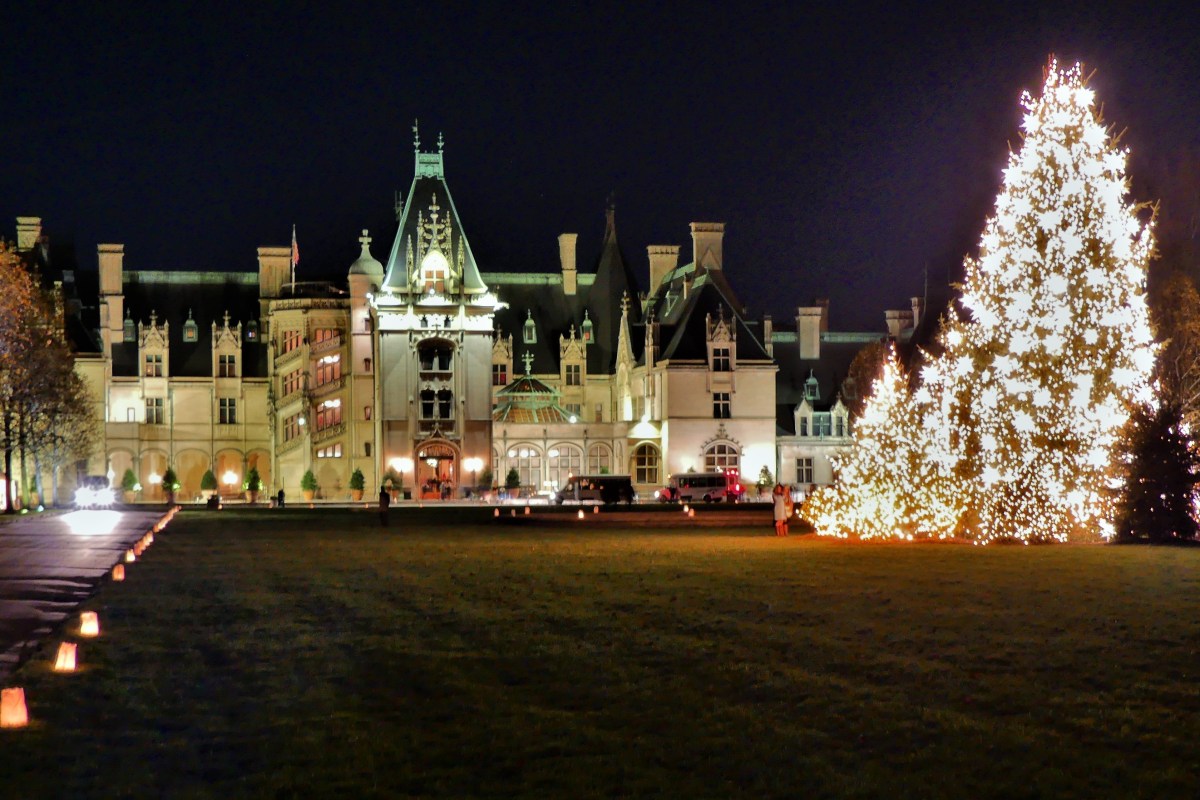
Completed in 1895 as a collaboration between owner George Vanderbilt, architect Richard Morris Hunt, and landscape architect Frederic Law Olmsted, the Biltmore House opened on Christmas Eve after six years of intensive construction,

construction

and remains the largest private residence in America, with 250 rooms covering 175,000 square feet.

The fourth and fifth generation of Vanderbilt descendants continue to operate the estate as a tourism mecca, welcoming the general public since the Great Depression, and generating needed income to preserve this Versailles-inspired masterpiece.

A variety of tours around the property are available, including: insight into the design, technology, and construction; biographical nuances about the owners and guests; historical notes on the rare artifacts and art collection; and upstairs-downstairs living comparisons.

We started our day by cycling through miles and miles of groomed gardens and grounds,

cornfield

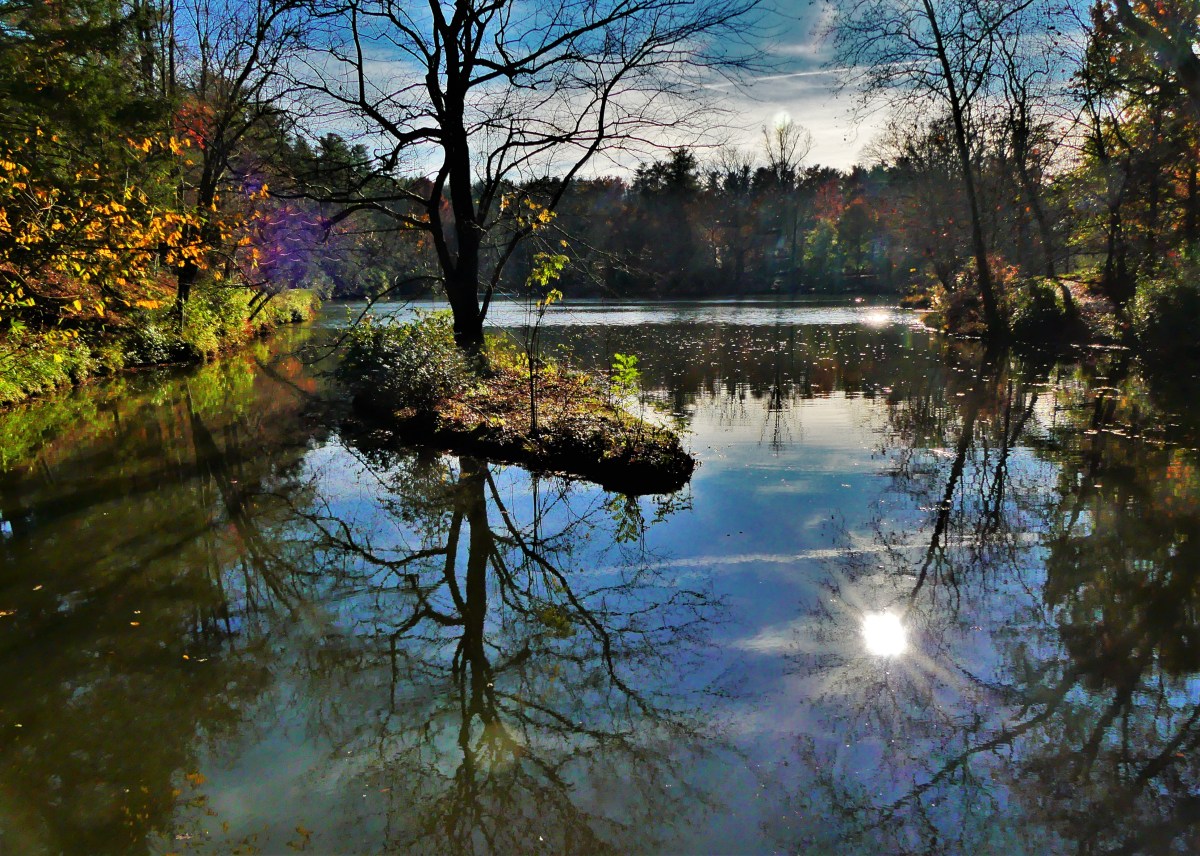
lake gazebo view

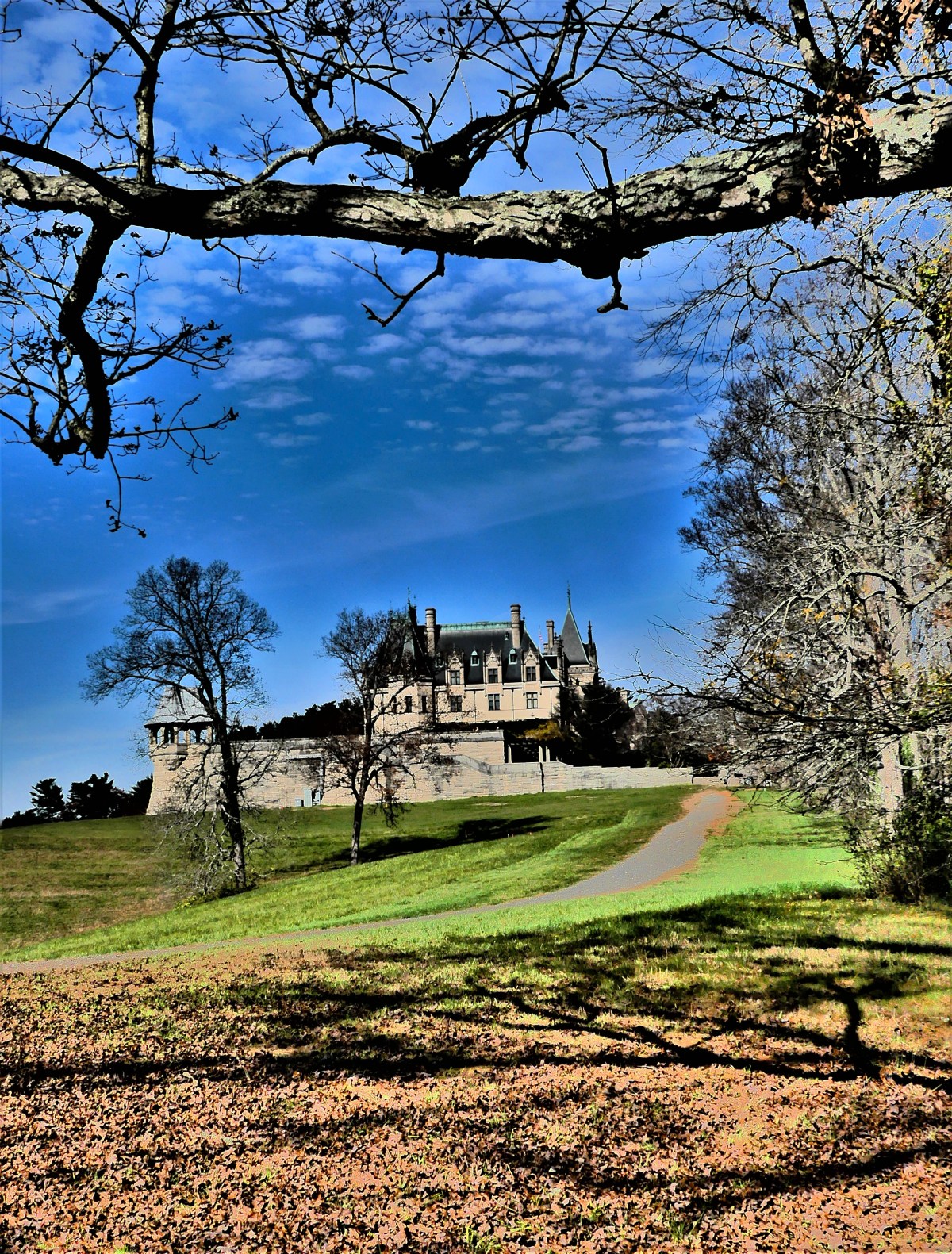
to gain a better perspective of the castle on the hill,

rowboat

estate wall

while surviving the first wave of Asheville’s brisk winter air.

By late afternoon, we’d had our fill of chill, and eagerly sought the warmth of the Biltmore House. We opted for a self-guided house tour of selected rooms that allowed us to visit at our leisure. The programmed route was matched to an accompanying booklet that provided brief reflections and information highlights that has assisted me in captioning the many photographs taken as we moved from room to room.

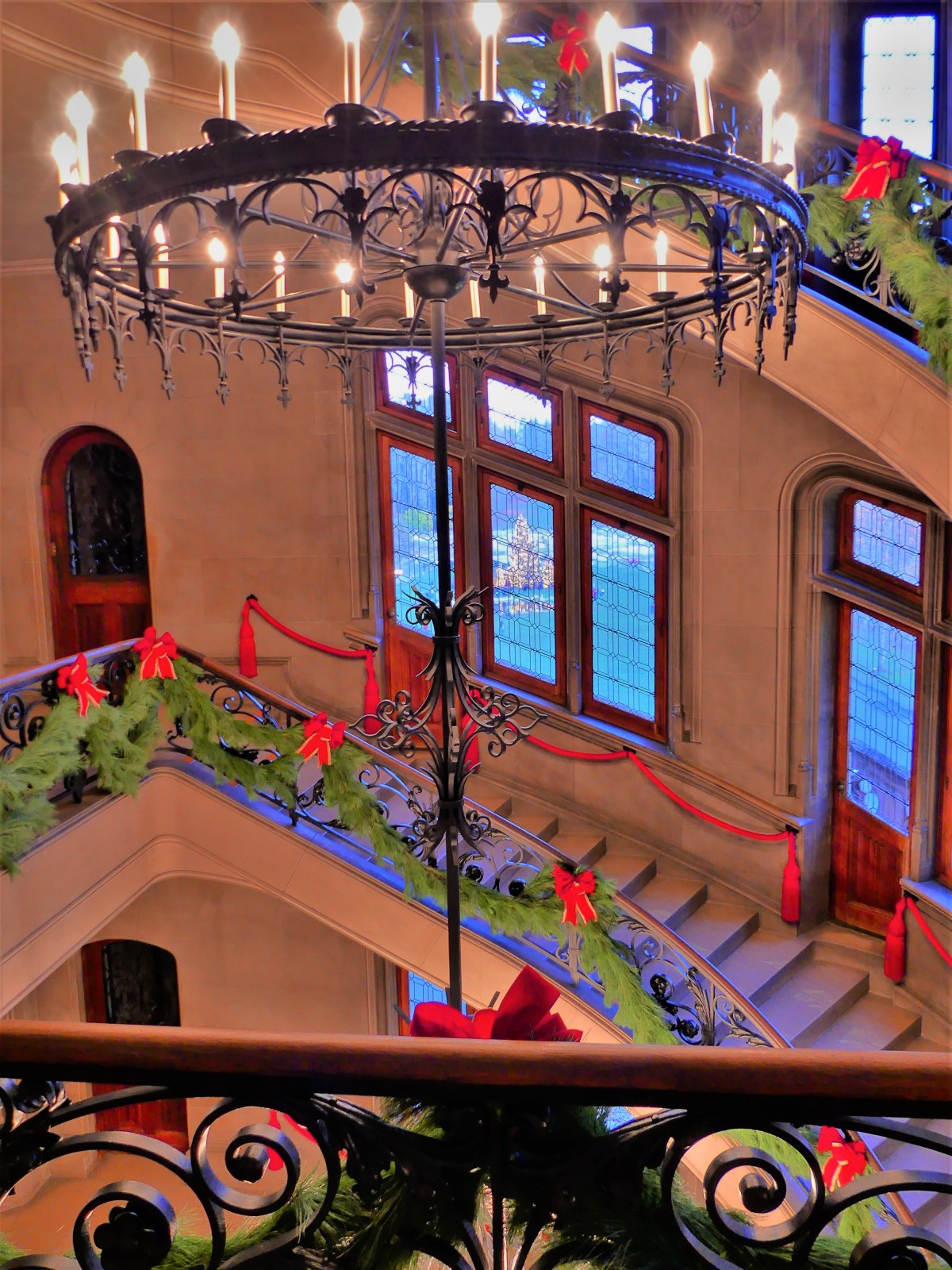
Our first impression of the residence upon entering the Entrance Hall was sheer wonder and amazement. Looking skyward through the spiraling staircase, was the perfect foreshadow of the immensity and grandiosity of what was to come.

chandeliers

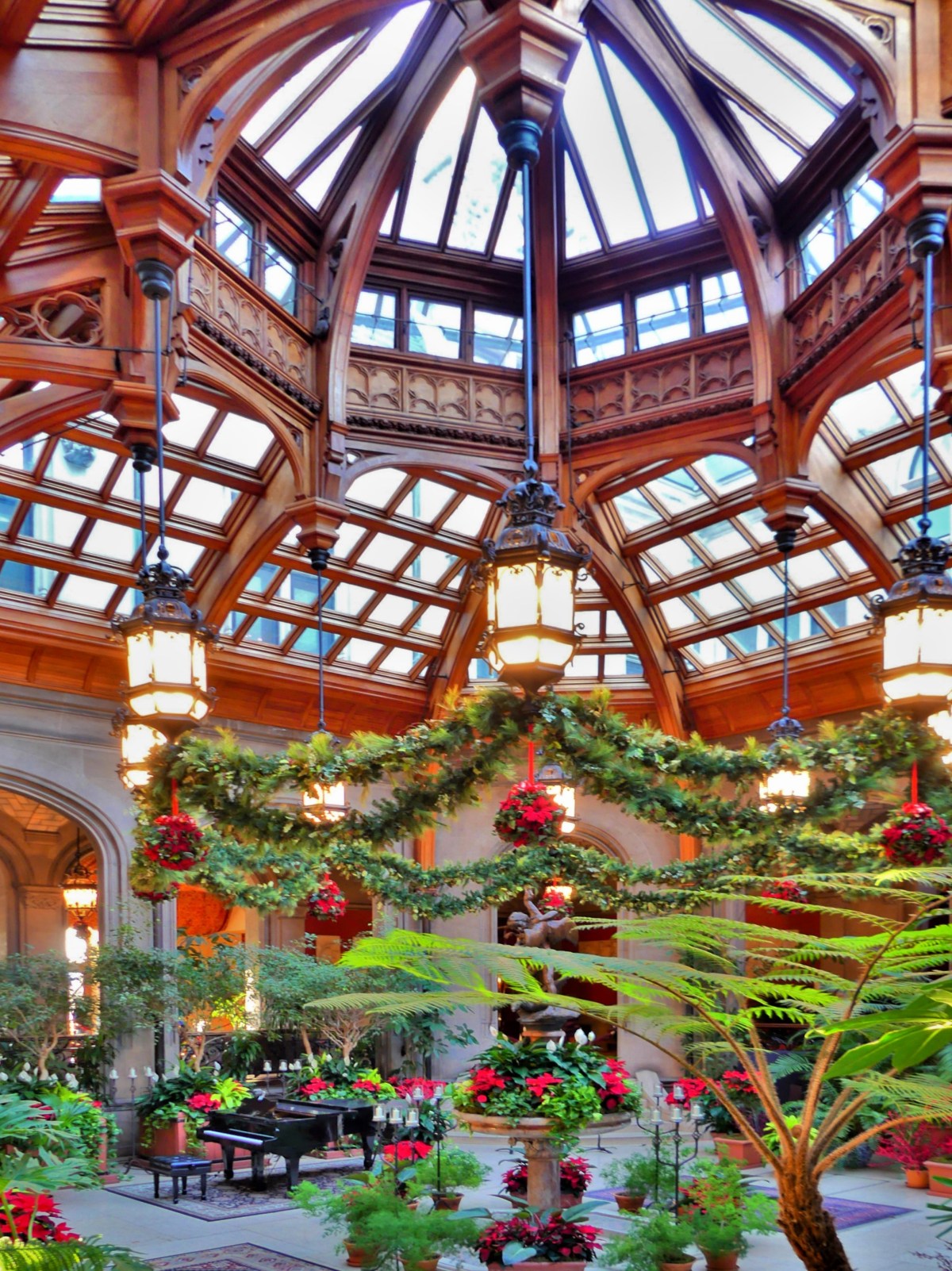
Just beyond the center hall stands the Winter Garden,

Winter Garden
The glass roof illuminates the center fountain sculpture Boy Stealing Geese by Karl Bitter.

an acoustic marvel for instrument and voice.

caroling

We followed signs to the Banquet Hall.

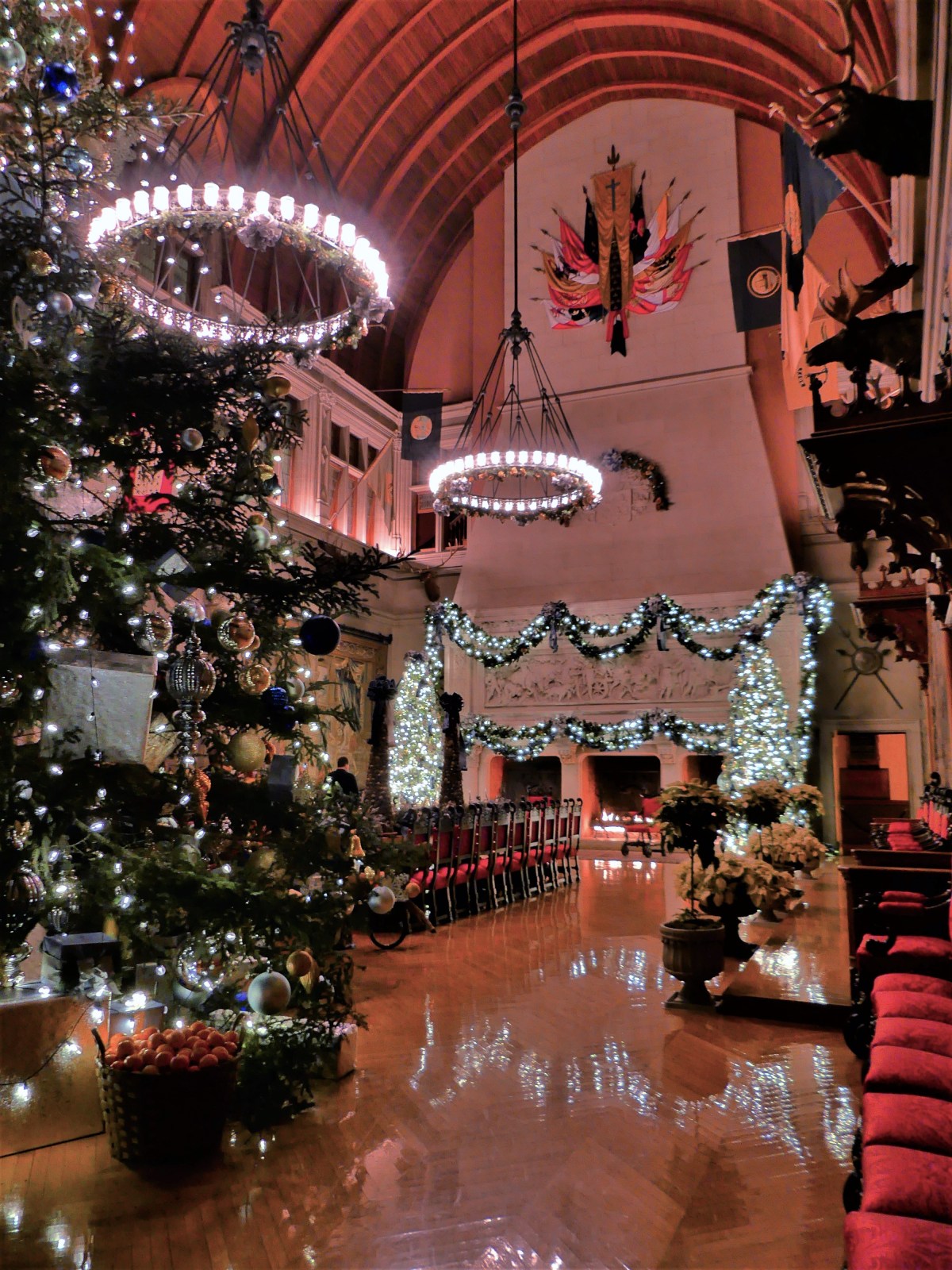
Banquet Hall
This impressive room with a seven-story high ceiling and Flemish tapestries from the mid 1500s was the scene of dinner parties and celebrations.
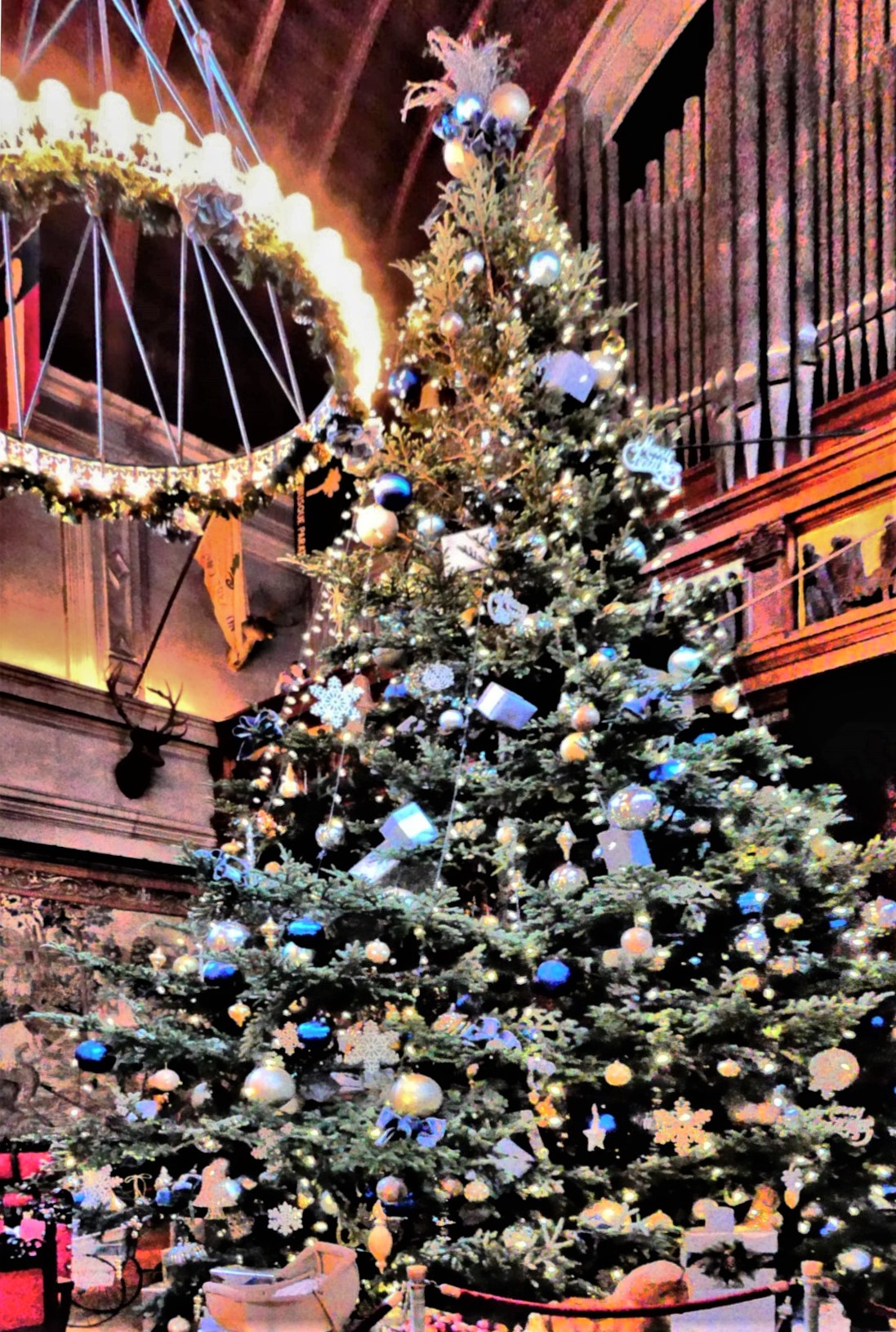
Organ Loft
Organ Loft houses a 1916 Skinner pipe organ powered by an electric blower below the floor.

Moving on, we entered the Breakfast Room.

breakfast room
Both breakfast and lunch were served in this room. Portraits displayed include Cornelius “Commodore” Vanderbilt, George’s grandfather, and founder of the family fortune.

Exiting left, leads into the Salon,

Salon
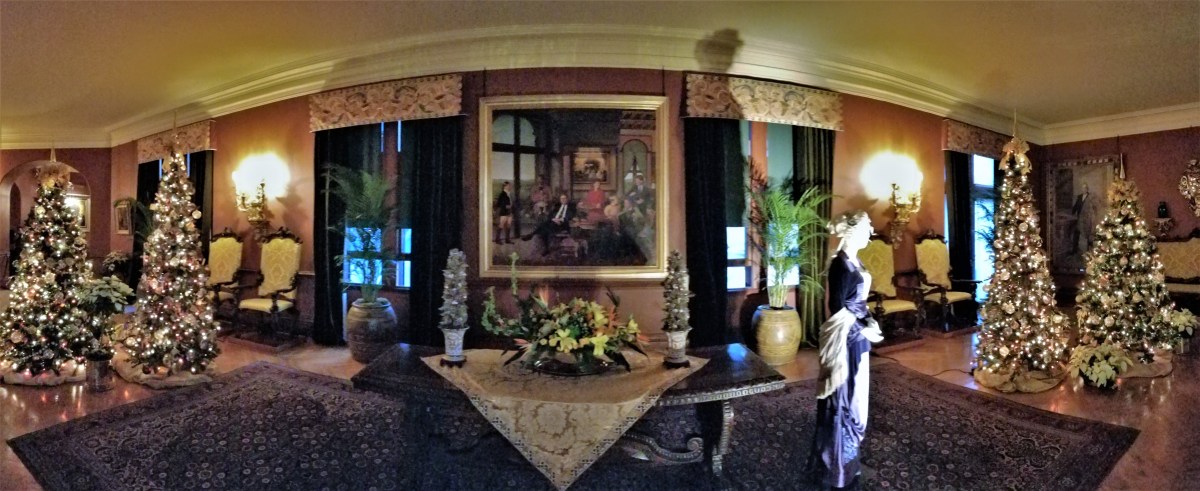
Once unfinished, this formal sitting area, decorated in the French style was completed by Vanderbilt’s descendants in the 1970s with selections from the original collection.

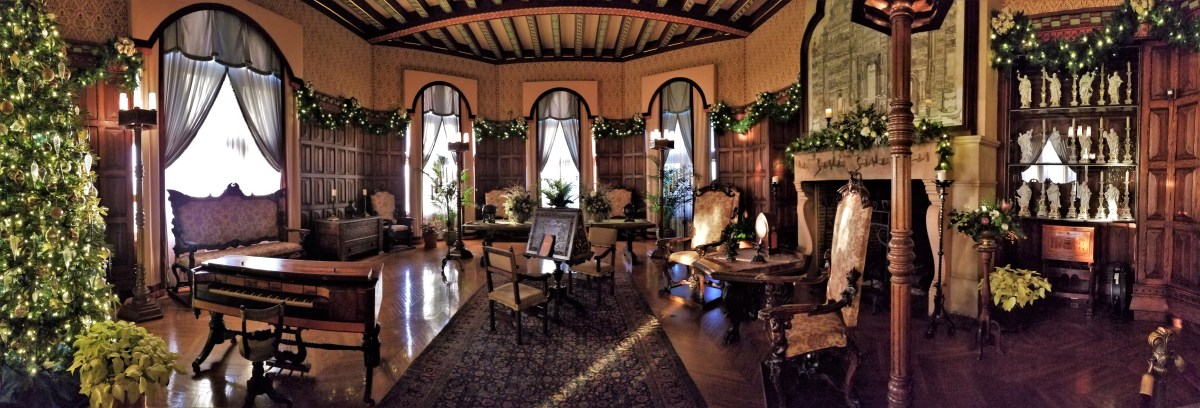
and continues through the Music Room.

music room
Also left unfinished during George Vanderbilt’s time, the current owners completed the room in 1976. The cabinet to the right of the fireplace features a rare collection of 12 Meissen porcelain apostle figures and 12 candlesticks from the 1730s and 1740s made for the Austrian Hapsburgs.

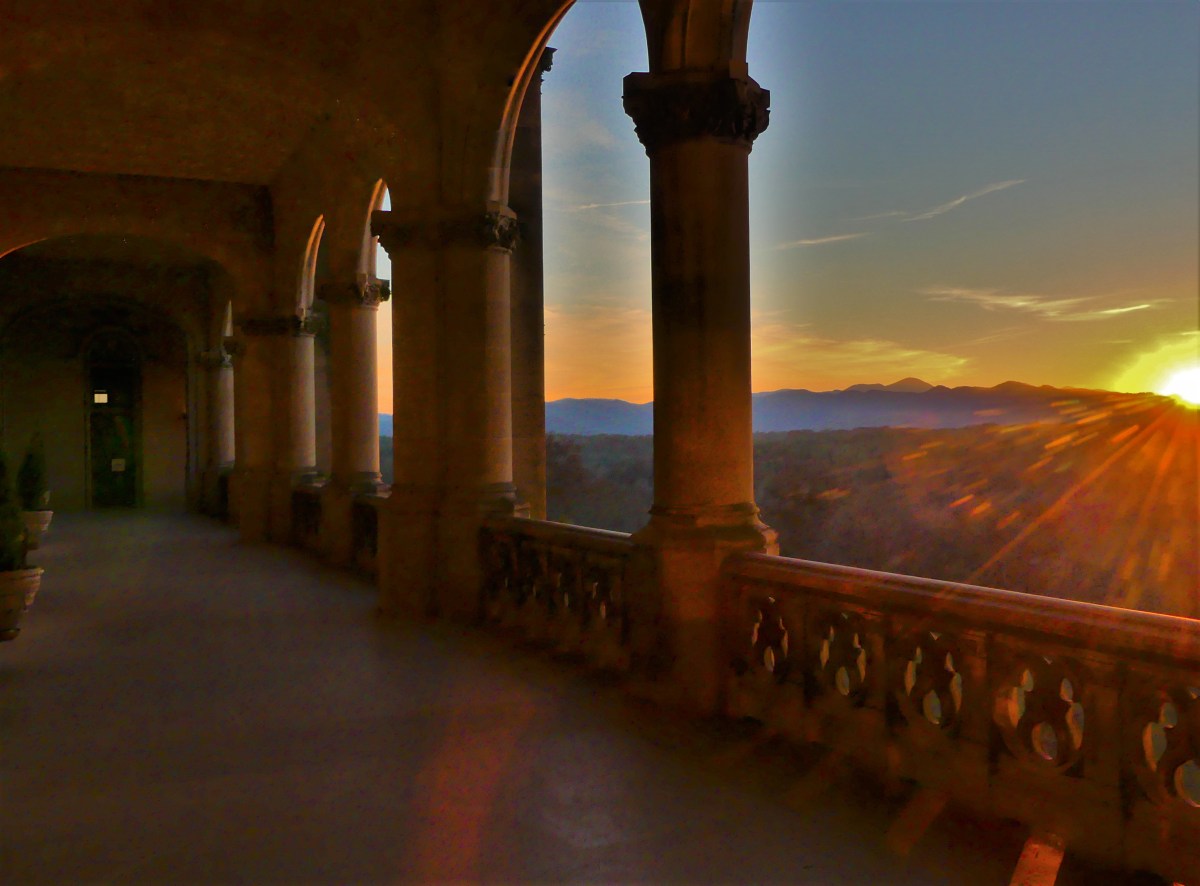
On the other side, stands the Loggia,

Loggia
This covered room offers views of Deer Park and the Blue Ridge Mountains in the distance.

which is an extension of the adjoining Tapestry Gallery.

Tapestry Gallery
This 90-foot-long room was used for entertaining guests with refreshments and music. The three Flemish tapestries on the wall are from the 1530s, and represent Charity, Faith, and Prudence from the set known as The Triumph of the Seven Virtues.

A walk down the runner terminates at the Library.

library
The Library houses half of George’s 22,000-volume collection of subjects ranging from American and English fiction, to world history, religion, architecture, art, and philosophy.

Above the vaulted ceiling is a valued fresco.

library ceiling fresco
The Chariot of Aurora, painted in the 1720s by Giovanni Pellegrini, once adorned the Pisani Palace in Venice.

Returning to the Entrance Hall, a climb of the Grand Staircase, reveals the Second Floor Living Hall.

Second Floor Living Hall
This room, intended as a picture gallery and formal hallway was restored in 2013, with John Singer Sargent’s portraits of architects Hunt and Olmsted hanging in their original locations.

Turning left and down the hall is the approach to George Vanderbilt’s Bedroom.

George Vanderbilt's Bedroom
The furnishings in his bedroom include 17th-century Portuguese turned and carved furniture, and feature a canopied walnut bed. George would dress between four to six times a day, according to activity and time of day.

The neighboring Oak Sitting Room…

Oak Sitting Room
The Vanderbilts shared breakfast here while planning their day with the Head of Housekeeping. As hostess of Biltmore, it was Edith’s responsibility to manage the social calendar and anticipate the needs of their arriving guests.

…was a buffer between George’s and Edith’s Bedroom.

Edith Vanderbilt's Bedroom
Edith, upon her marriage to George at age 25, retired to this oval room with purple and gold silk fabrics and furnishings in the style of Louis XV.

The stairs to the Third Floor, left of Mrs. Vanderbilt’s Bedroom lead to the Guest Quarters, connected by the Third Floor Living Hall.

Third Floor Living Hall
Guests in nearby rooms congregated here to relax, listen to music, and unwind after dinner.

However, access to grandest guest rooms are located behind the Vanderbilt’s bedrooms on the Second Floor. A walk down the hallway, and a gaze out the window offers incredible details of the limestone-clad exterior of Biltmore, with its statuary and gargoyles hanging from the decorative edifice.

twilight and tree

Spiraling down to the Second Floor via the Grand Staircase…

staircase and tree

garland staircase

…is the entrance to the Damask Room,

Damask Room
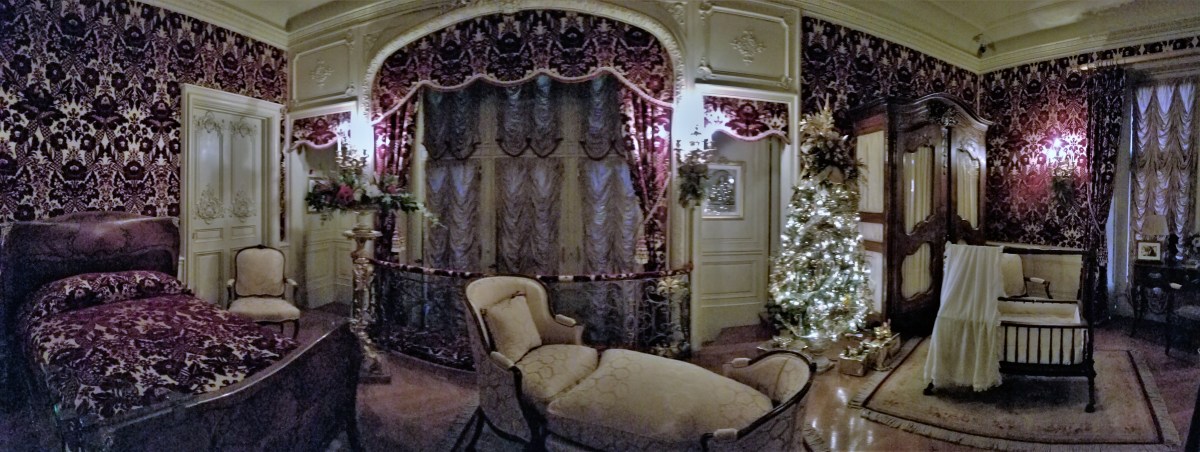
The name of this room was inspired by the silk damask draperies and style of the wallpaper.

followed by the Tyrolean Chimney Room,

Tyrolean Chimney Room
This room is named for its hand-painted 18th-century Swiss porcelain tiled overmantel.

and the Louis XV Room, where Edith gave birth to Cornelia, and spent several weeks of convalescing, as was the custom of the time.

Louis XV Room
This room was named for the French king who inspired a style of ornate furnishings. Following in the footsteps of her mother, Cornelia also birthed her two sons in this room during the 1920s.

After taking breakfast in their rooms, guests of the Vanderbilts could enjoy a variety of indoor activities located on the Basement level, accessible by descending the Grand Staircase, and passing through the Stone Hallway, with foundation footings extending 29 feet into hillside.

Stone Hallway

The hallway passage winds into the Halloween Room,

Halloween Room wall art

so-named after friends and family of Cornelia and her newlywed husband, John Cecil spent several weeks painting whimsical wall scenes for a New Year’s Eve party to welcome the year 1926.

A Recreation Lounge along the hallway…

Recreation Lounge

…transitions to the one of the nation’s first bowling alleys built for a private residence.

bowling alley
Since there was no automatic pinsetters at the time, servants would reset the pins and roll the ball back to the bowler.

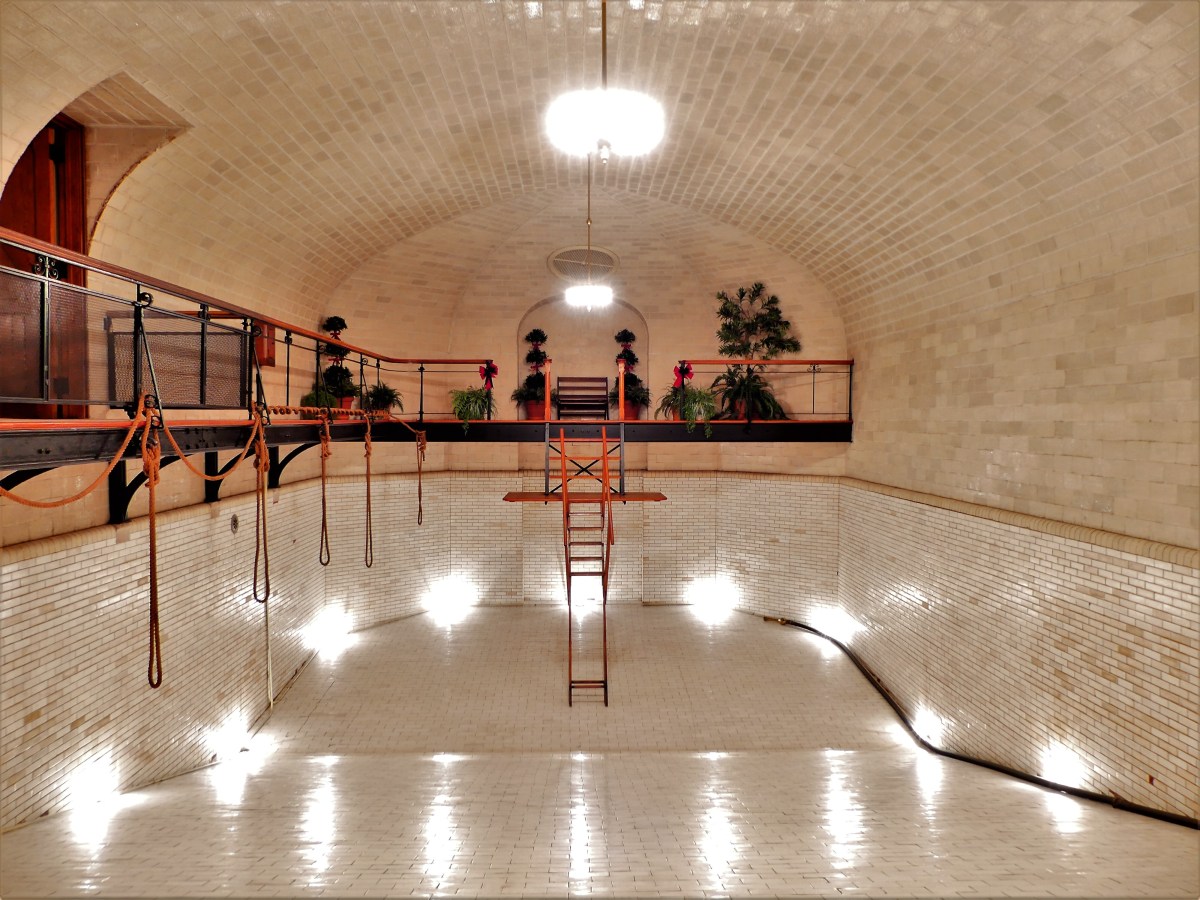
the hallway continues down a long narrow row separating two sides of dressing rooms–one for men, the other for ladies–where guests could change to use the 70,000 gallon indoor Swimming Pool,

swimming pool

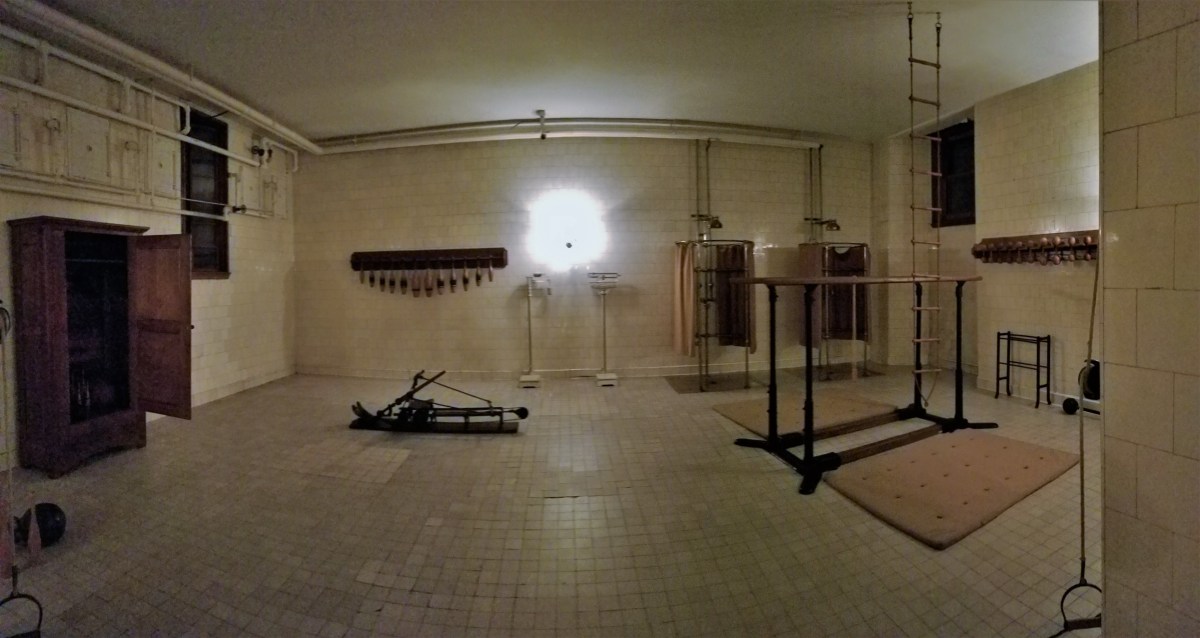
or the fully-equipped Gymnasium, where guests kept fit by rowing, swinging Indian clubs, tossing medicine balls, and practicing on the parallel bars.

gymnasium
Needle Baths along the back wall offered stimulating “massage” showers.

Just beyond the Gymnasium is the Servants Wing, containing the servants’ quarters and work stations.

servant's quarters
Female housemaids, laundresses, cooks and kitchen maids lived in the house, while male employees like groomsmen and stable boys lived above the Stable. Each servant had a comfortably furnished, heated, private room–most uncommon for the period. Most servants were entitled to two hours off daily, but still remained on call. They received one afternoon and one evening off per week, and a half day every other Sunday.
Main Kitchen
This kitchen was used to make elaborate deserts by the pastry chef.
servants' dining room
This dining room could feed up to 30 servants, three meals a day.
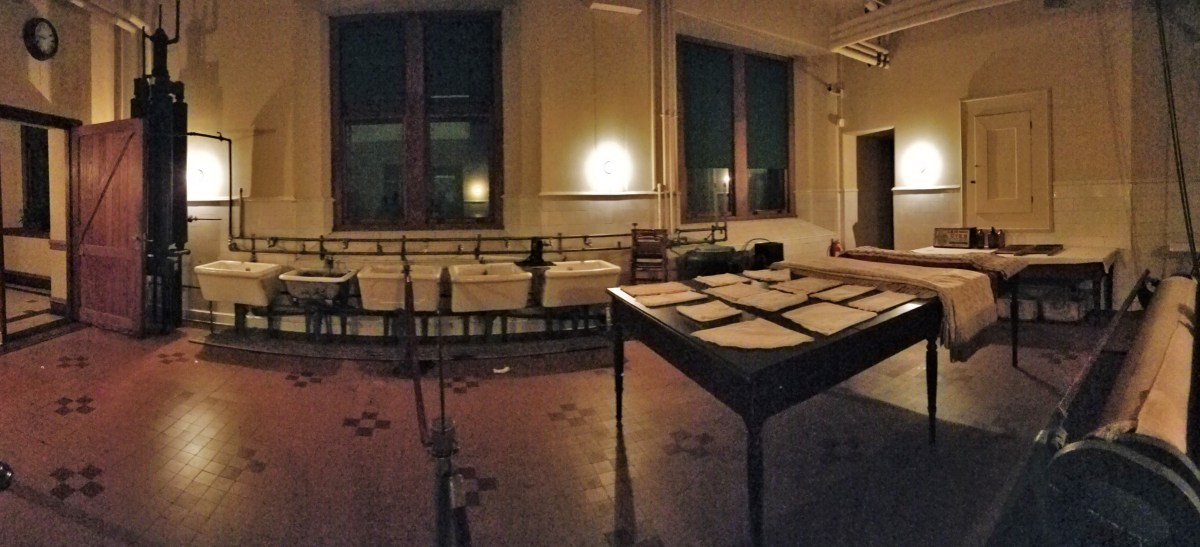
laundry
The Main Laundry was as large and well-equipped as any stately hotel of the day.
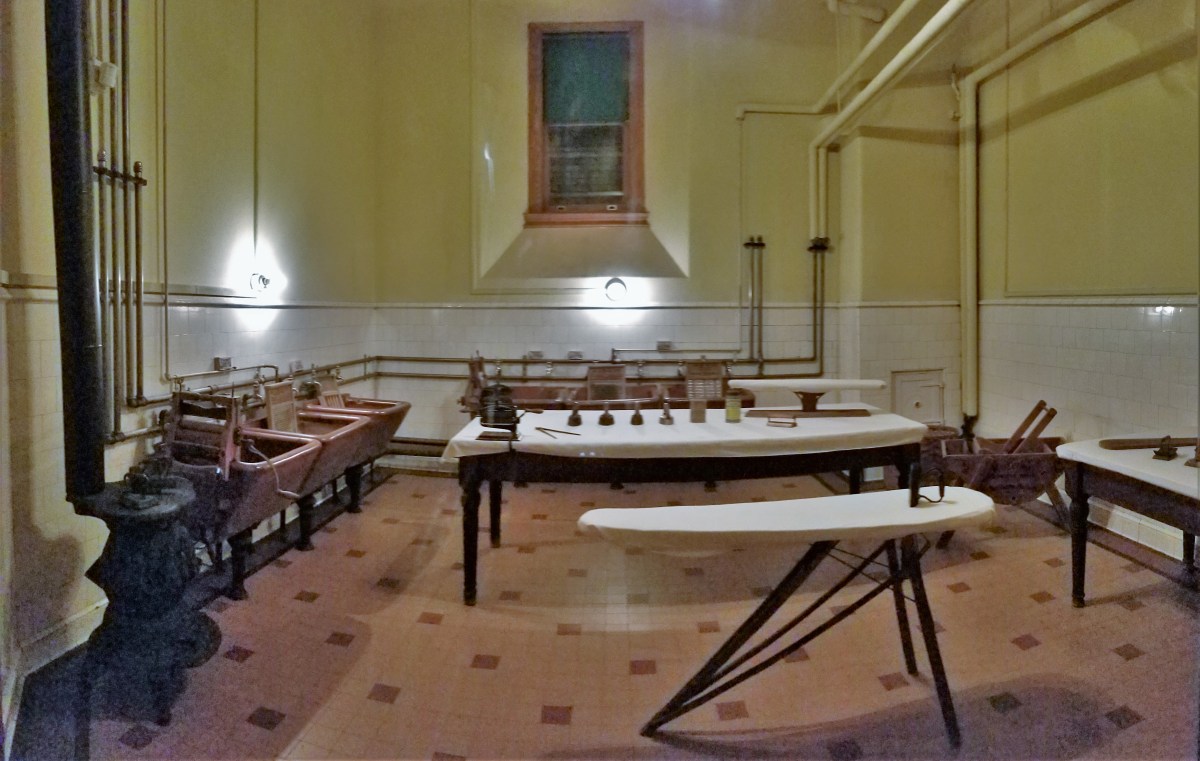
laundry finishing
Laundry finishing and detail work was completed here.

Servants’ Stairs climbing to the Main Floor of the Bachelors’ Wing…

servant staircase

provided access to the Billiard Room.

billiard room
Female and male guests gathered here to play dominoes and billiards, while enjoying evening refreshments in this richly paneled room.


This house tour represents one of many we’ve taken since hitting the road. For example, we have walked through plantation houses outside New Orleans, Andrew Jackson’s Hermitage, the Kaufman House at Fallingwater, Elvis Presley’s Graceland, and Hearst’s Castle during another trip.

But nothing, and I mean NOTHING compares in scope or elaborateness, and attention to restorative detail as the Biltmore estate… especially when it’s decorated for Christmas.


A VanderBiltmore Christmas

Completed in 1895 as a collaboration between owner George Vanderbilt, architect Richard Morris Hunt, and landscape architect Frederic Law Olmsted, the Biltmore House opened on Christmas Eve after six years of intensive construction,

construction

and remains the largest private residence in America, with 250 rooms covering 175,000 square feet.

The fourth and fifth generation of Vanderbilt descendants continue to operate the estate as a tourism mecca, welcoming the general public since the Great Depression, and generating needed income to preserve this Versailles-inspired masterpiece.

A variety of tours around the property are available, including: insight into the design, technology, and construction; biographical nuances about the owners and guests; historical notes on the rare artifacts and art collection; and upstairs-downstairs living comparisons.

We started our day by cycling through miles and miles of groomed gardens and grounds,

cornfield

lake gazebo view

to gain a better perspective of the castle on the hill,

rowboat

estate wall

while surviving the first wave of Asheville’s brisk winter air.

By late afternoon, we’d had our fill of chill, and eagerly sought the warmth of the Biltmore House. We opted for a self-guided house tour of selected rooms that allowed us to visit at our leisure. The programmed route was matched to an accompanying booklet that provided brief reflections and information highlights that has assisted me in captioning the many photographs taken as we moved from room to room.

Our first impression of the residence upon entering the Entrance Hall was sheer wonder and amazement. Looking skyward through the spiraling staircase, was the perfect foreshadow of the immensity and grandiosity of what was to come.

chandeliers

Just beyond the center hall stands the Winter Garden,

Winter Garden
The glass roof illuminates the center fountain sculpture Boy Stealing Geese by Karl Bitter.

an acoustic marvel for instrument and voice.

caroling

We followed signs to the Banquet Hall.

Banquet Hall
This impressive room with a seven-story high ceiling and Flemish tapestries from the mid 1500s was the scene of dinner parties and celebrations.
Organ Loft
Organ Loft houses a 1916 Skinner pipe organ powered by an electric blower below the floor.

Moving on, we entered the Breakfast Room.

breakfast room
Both breakfast and lunch were served in this room. Portraits displayed include Cornelius “Commodore” Vanderbilt, George’s grandfather, and founder of the family fortune.

Exiting left, leads into the Salon,

Salon
Once unfinished, this formal sitting area, decorated in the French style was completed by Vanderbilt’s descendants in the 1970s with selections from the original collection.

and continues through the Music Room.

music room
Also left unfinished during George Vanderbilt’s time, the current owners completed the room in 1976. The cabinet to the right of the fireplace features a rare collection of 12 Meissen porcelain apostle figures and 12 candlesticks from the 1730s and 1740s made for the Austrian Hapsburgs.

On the other side, stands the Loggia,

Loggia
This covered room offers views of Deer Park and the Blue Ridge Mountains in the distance.

which is an extension of the adjoining Tapestry Gallery.

Tapestry Gallery
This 90-foot-long room was used for entertaining guests with refreshments and music. The three Flemish tapestries on the wall are from the 1530s, and represent Charity, Faith, and Prudence from the set known as The Triumph of the Seven Virtues.

A walk down the runner terminates at the Library.

library
The Library houses half of George’s 22,000-volume collection of subjects ranging from American and English fiction, to world history, religion, architecture, art, and philosophy.

Above the vaulted ceiling is a valued fresco.

library ceiling fresco
The Chariot of Aurora, painted in the 1720s by Giovanni Pellegrini, once adorned the Pisani Palace in Venice.

Returning to the Entrance Hall, a climb of the Grand Staircase, reveals the Second Floor Living Hall.

Second Floor Living Hall
This room, intended as a picture gallery and formal hallway was restored in 2013, with John Singer Sargent’s portraits of architects Hunt and Olmsted hanging in their original locations.

Turning left and down the hall is the approach to George Vanderbilt’s Bedroom.

George Vanderbilt's Bedroom
The furnishings in his bedroom include 17th-century Portuguese turned and carved furniture, and feature a canopied walnut bed. George would dress between four to six times a day, according to activity and time of day.

The neighboring Oak Sitting Room…

Oak Sitting Room
The Vanderbilts shared breakfast here while planning their day with the Head of Housekeeping. As hostess of Biltmore, it was Edith’s responsibility to manage the social calendar and anticipate the needs of their arriving guests.

…was a buffer between George’s and Edith’s Bedroom.

Edith Vanderbilt's Bedroom
Edith, upon her marriage to George at age 25, retired to this oval room with purple and gold silk fabrics and furnishings in the style of Louis XV.

The stairs to the Third Floor, left of Mrs. Vanderbilt’s Bedroom lead to the Guest Quarters, connected by the Third Floor Living Hall.

Third Floor Living Hall
Guests in nearby rooms congregated here to relax, listen to music, and unwind after dinner.

However, access to grandest guest rooms are located behind the Vanderbilt’s bedrooms on the Second Floor. A walk down the hallway, and a gaze out the window offers incredible details of the limestone-clad exterior of Biltmore, with its statuary and gargoyles hanging from the decorative edifice.

twilight and tree

Spiraling down to the Second Floor via the Grand Staircase…

staircase and tree

garland staircase

…is the entrance to the Damask Room,

Damask Room
The name of this room was inspired by the silk damask draperies and style of the wallpaper.

followed by the Tyrolean Chimney Room,

Tyrolean Chimney Room
This room is named for its hand-painted 18th-century Swiss porcelain tiled overmantel.

and the Louis XV Room, where Edith gave birth to Cornelia, and spent several weeks of convalescing, as was the custom of the time.

Louis XV Room
This room was named for the French king who inspired a style of ornate furnishings. Following in the footsteps of her mother, Cornelia also birthed her two sons in this room during the 1920s.

After taking breakfast in their rooms, guests of the Vanderbilts could enjoy a variety of indoor activities located on the Basement level, accessible by descending the Grand Staircase, and passing through the Stone Hallway, with foundation footings extending 29 feet into hillside.

Stone Hallway

The hallway passage winds into the Halloween Room,

Halloween Room wall art

so-named after friends and family of Cornelia and her newlywed husband, John Cecil spent several weeks painting whimsical wall scenes for a New Year’s Eve party to welcome the year 1926.

A Recreation Lounge along the hallway…

Recreation Lounge

…transitions to the one of the nation’s first bowling alleys built for a private residence.

bowling alley
Since there was no automatic pinsetters at the time, servants would reset the pins and roll the ball back to the bowler.

the hallway continues down a long narrow row separating two sides of dressing rooms–one for men, the other for ladies–where guests could change to use the 70,000 gallon indoor Swimming Pool,

swimming pool

or the fully-equipped Gymnasium, where guests kept fit by rowing, swinging Indian clubs, tossing medicine balls, and practicing on the parallel bars.

gymnasium
Needle Baths along the back wall offered stimulating “massage” showers.

Just beyond the Gymnasium is the Servants Wing, containing the servants’ quarters and work stations.

servant's quarters
Female housemaids, laundresses, cooks and kitchen maids lived in the house, while male employees like groomsmen and stable boys lived above the Stable. Each servant had a comfortably furnished, heated, private room–most uncommon for the period. Most servants were entitled to two hours off daily, but still remained on call. They received one afternoon and one evening off per week, and a half day every other Sunday.
Main Kitchen
This kitchen was used to make elaborate deserts by the pastry chef.
servants' dining room
This dining room could feed up to 30 servants, three meals a day.
laundry
The Main Laundry was as large and well-equipped as any stately hotel of the day.
laundry finishing
Laundry finishing and detail work was completed here.
Servants’ Stairs climbing to the Main Floor of the Bachelors’ Wing…

servant staircase

provided access to the Billiard Room.

billiard room
Female and male guests gathered here to play dominoes and billiards, while enjoying evening refreshments in this richly paneled room.


This house tour represents one of many we’ve taken since hitting the road. For example, we have walked through plantation houses outside New Orleans, Andrew Jackson’s Hermitage, the Kaufman House at Fallingwater, Elvis Presley’s Graceland, and Hearst’s Castle during another trip.

But nothing, and I mean NOTHING compares in scope or elaborateness, and attention to restorative detail as the Biltmore estate… especially when it’s decorated for Christmas.


Tempus Fugit

When I reflect over the past eight months on the road, it’s a focused blur. Like the miles that melt behind us as we’re cruising on the Interstates, our side-view mirrors only serve to remind us what we once observed before it’s gone in an instant.

“Did you see that?!” has been a common cue while driving, that could come at any time. It could be a natural phenomena like a double rainbow, or a dramatic change to an underwhelming landscape, or a man with no teeth whose nose touches his chin passing us in his hot-rod Mustang convertible.

Whatever the case may be, we usually have just a moment to react and make a meaningful connection before we’re on to the next moment in time. Our experience may be filed into memory, but memories can be sketchy, ambiguous and subjective.

“What’s your favorite place so far?” is a question that unquestionably comes up when meeting friends or strangers who hear about the progress we’ve made on our year-long odyssey. It’s also the hardest question to answer, considering the nearly 30,000 miles we’ve covered en route to 90 different destinations.

Leah and I often joke and reflect about our day at its conclusion, just to gauge if our recollections match.

“Was it a top 10 day for you today?” I’m likely to ask.

Certainly more than 30 times to date, she’ll respond with, “I don’t know if it was ‘top 10’, but definitely among the top 20.”

Looking back–with help from impressions of places from past posts–I’m now ready to answer the question, and reveal my top five favorites thus far, in chronological order.

1) August 2, 2017: Jasper National Park, Alberta Canada–Athabasca Glacier

Herbert detail (2)

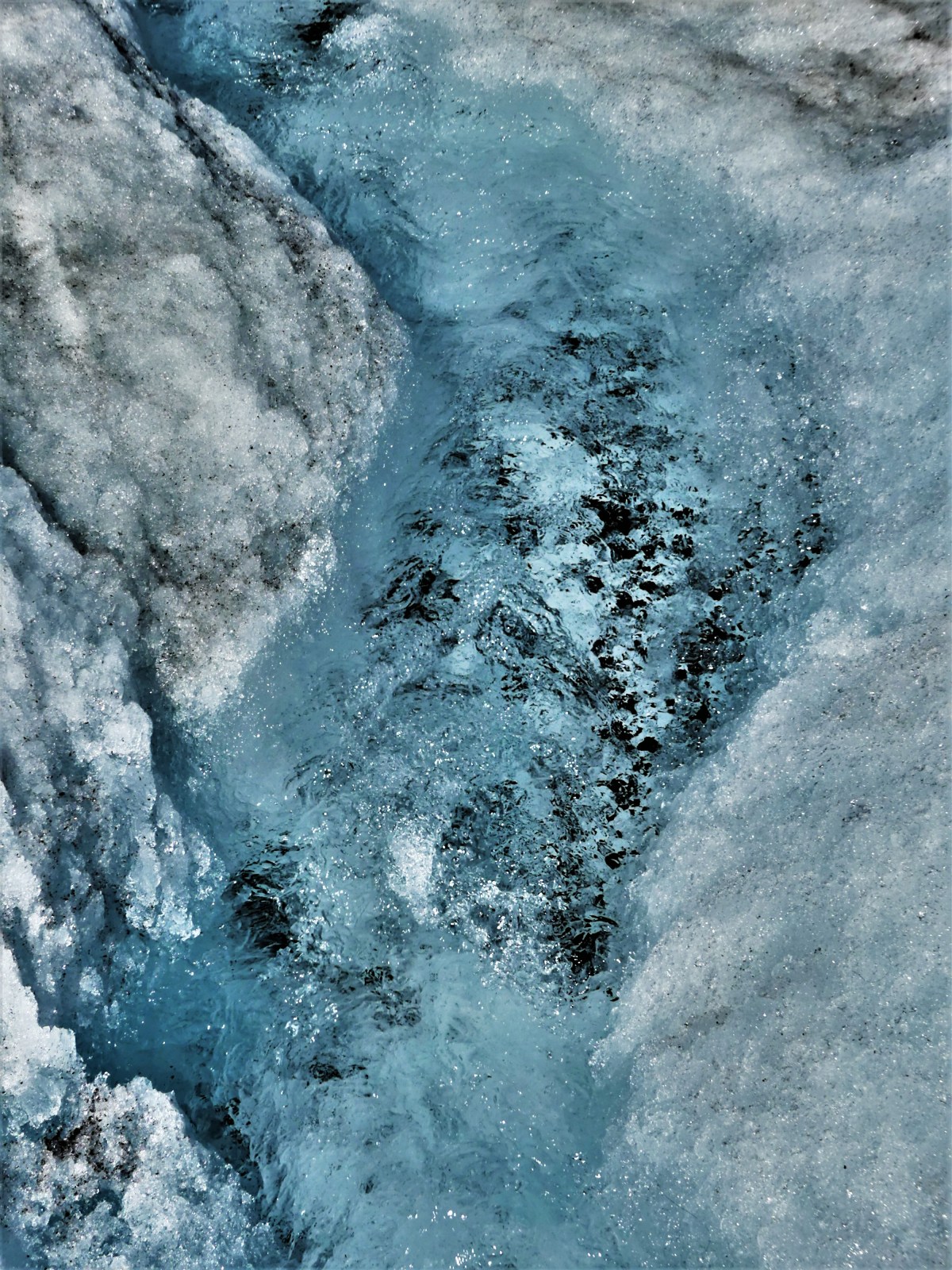
Athabasca Glacier currently recedes at 16 ft. per year, and has lost over half its volume over the past 125 years.

Glacier water

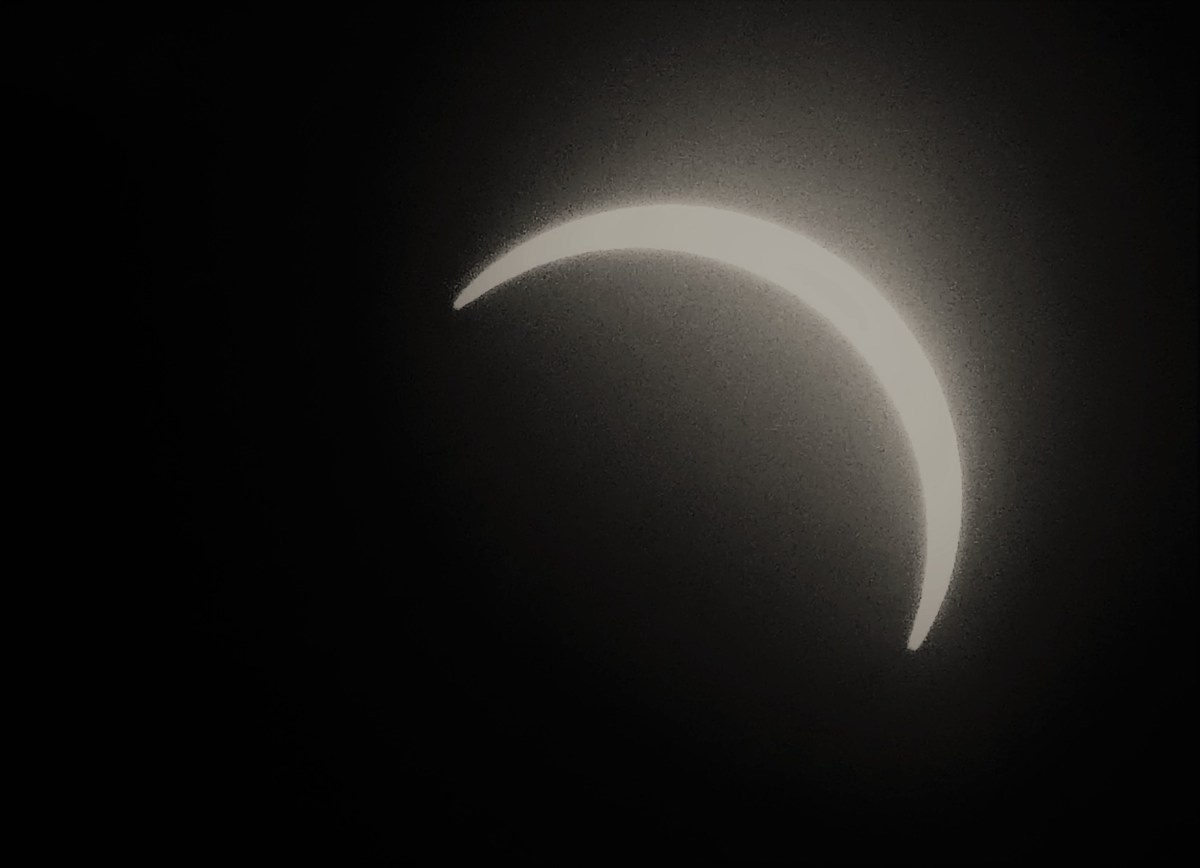
2) August 21, 2017: Corvallis, Oregon–Total Solar Eclipse

totality

Totality of the eclipse lasted one minute, 40 seconds.

partial eclipse (3)

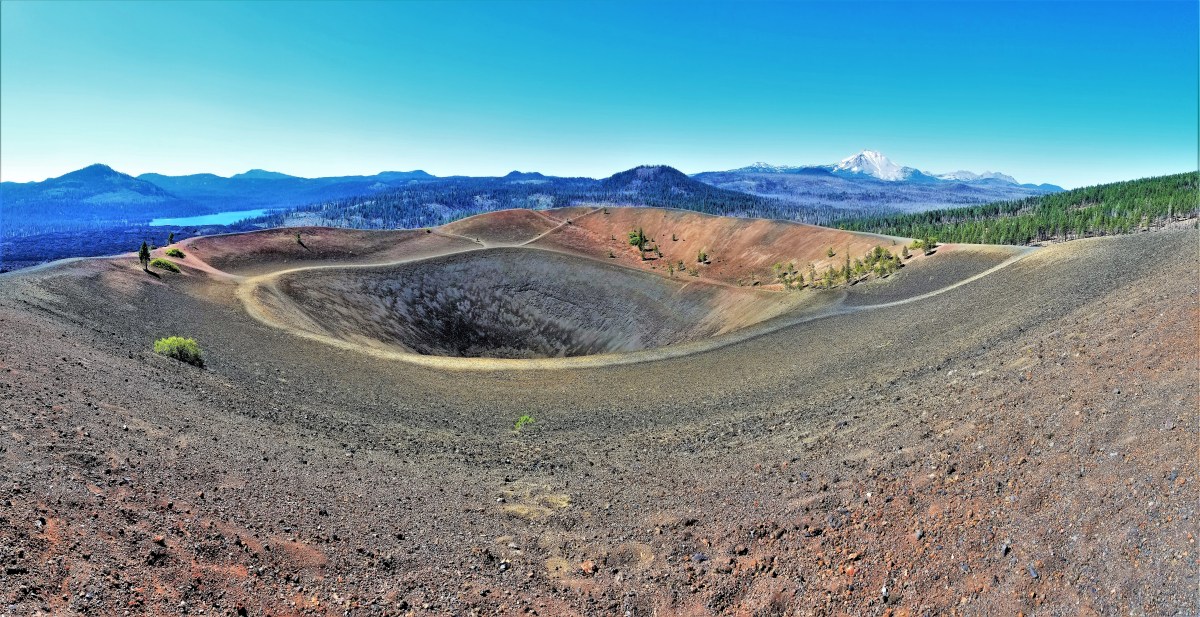
4) August 29, 2017: Lassen Volcanic National Park, California

cinder cone1

The 750 foot ascent up the 35% grade of loose gravel to the rim of the Cinder Cone took 35 minutes.

cone crater panorama (2)

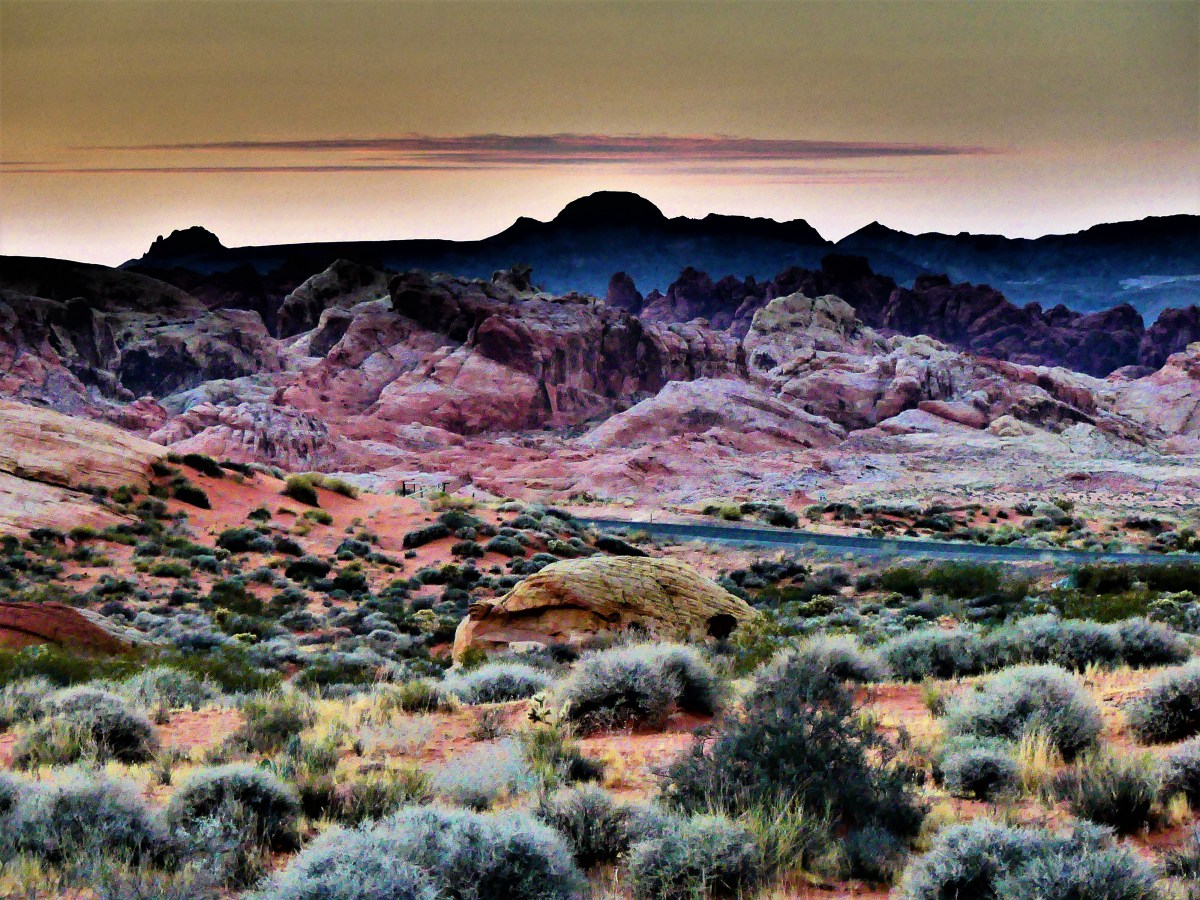
4) October 4, 2017: Valley of Fire State Park, Nevada

Sunset over Rainbow trail

7 minutes lapsed between the sun setting behind the Muddy Mountains to the moon rising over the Valley of Fire.
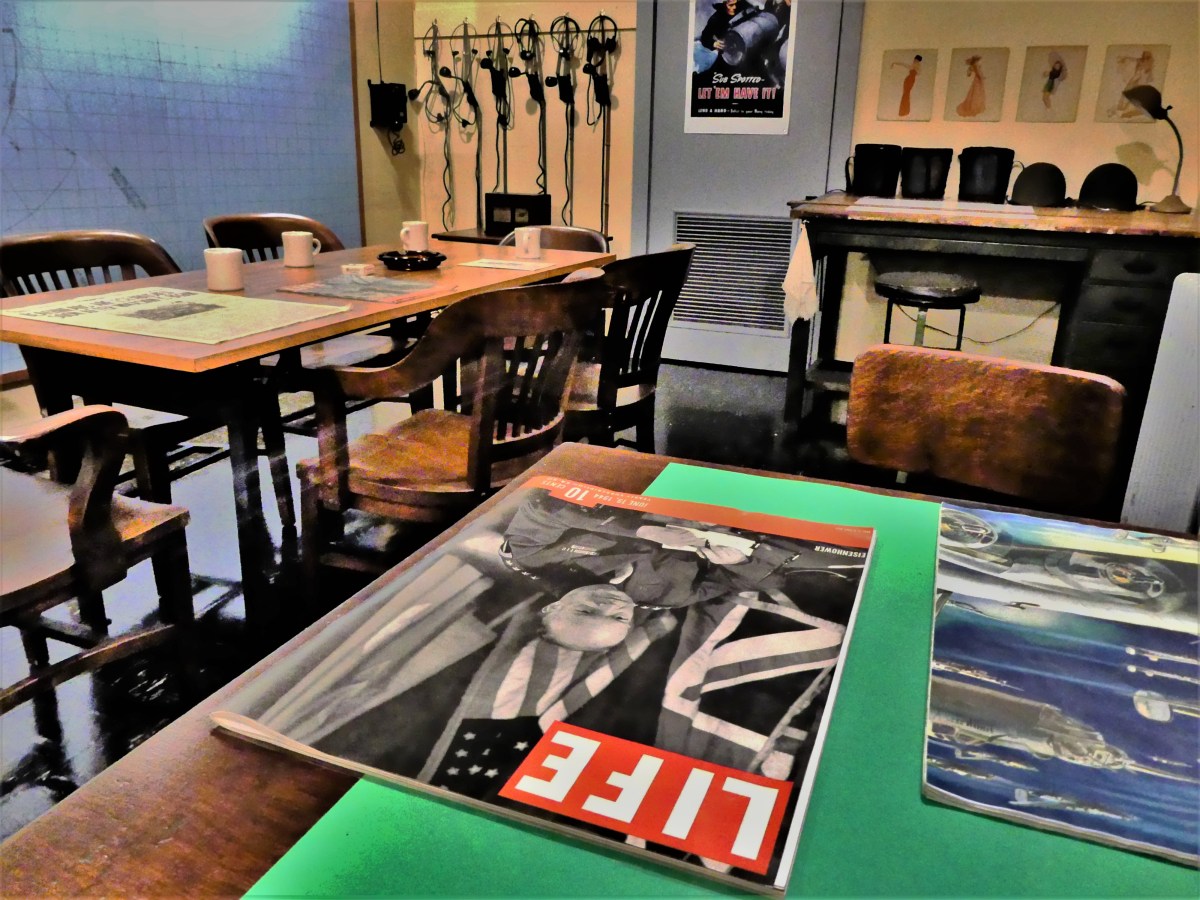
sheep and moon (4)

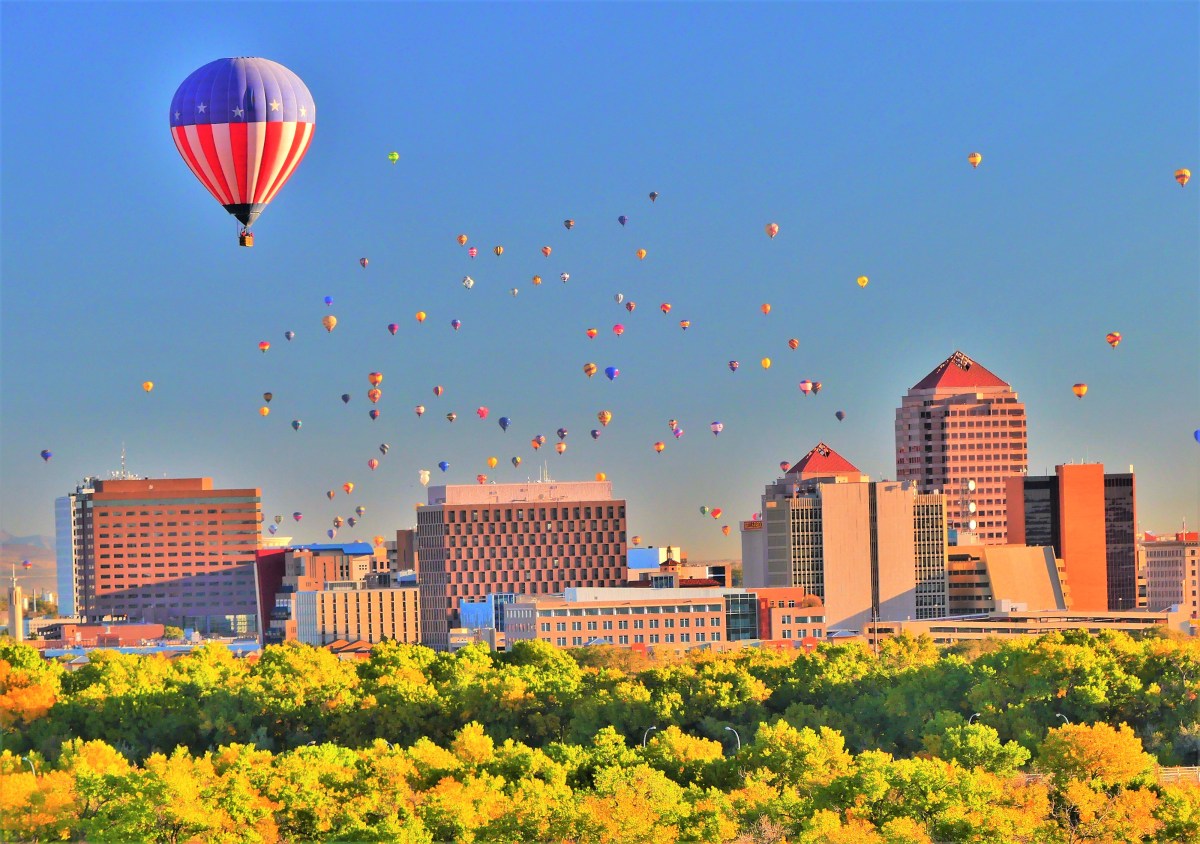
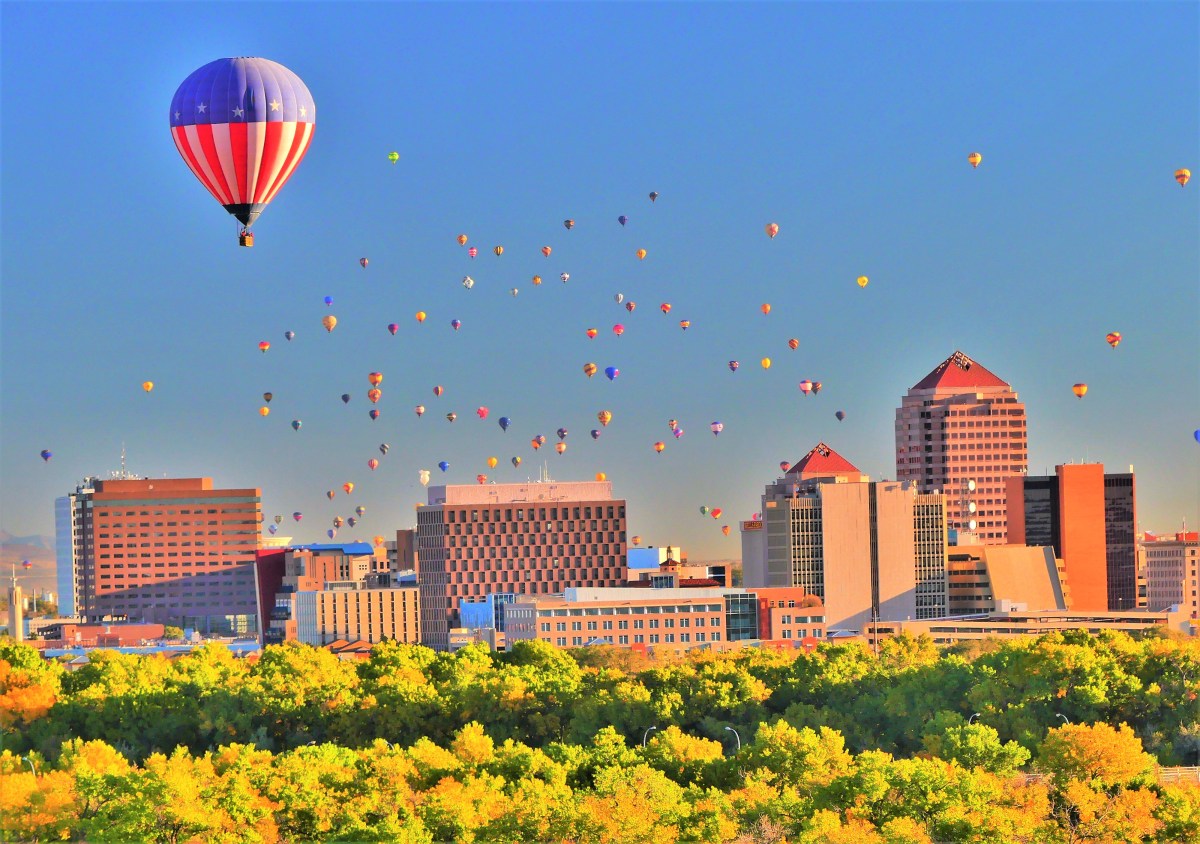
5) October 14, 2017: Albuquerque, New Mexico–Balloon Fiesta

lighting it up

The hot air balloon was aloft over Albuquerque after 13 minutes of inflation.

Balloons over Albuquerque (2)


Although each adventure is fundamentally different from the others, collectively, they represent before and after transitions.

The ephemeral existence of each event is temporary in its own special way, with its own time-stamp carved in soap. Fortunately, the moment can be captured and preserved in words and pictures, lest there be any doubt that something significant happened in our lifetime.


Arch ‘n Bunker

“Please don’t let it rain,” I beseeched the angry sky.

After savoring four months of dry weather from Oregon to Arkansas, we arrived in St. Louis at the same moment a cold gray funk had arrived for Halloween. Leah and I had put off our visit to the Gateway Arch in our hope that conditions would clear, but our window of opportunity had narrowed with a rainy forecast predicted for the following day. Running out of options, we bit the bullet and pulled the trigger.

Tickets to the monument are available at the Old Courthouse–headquarters for the Jefferson National Expansion Memorial,

Old Courthouse

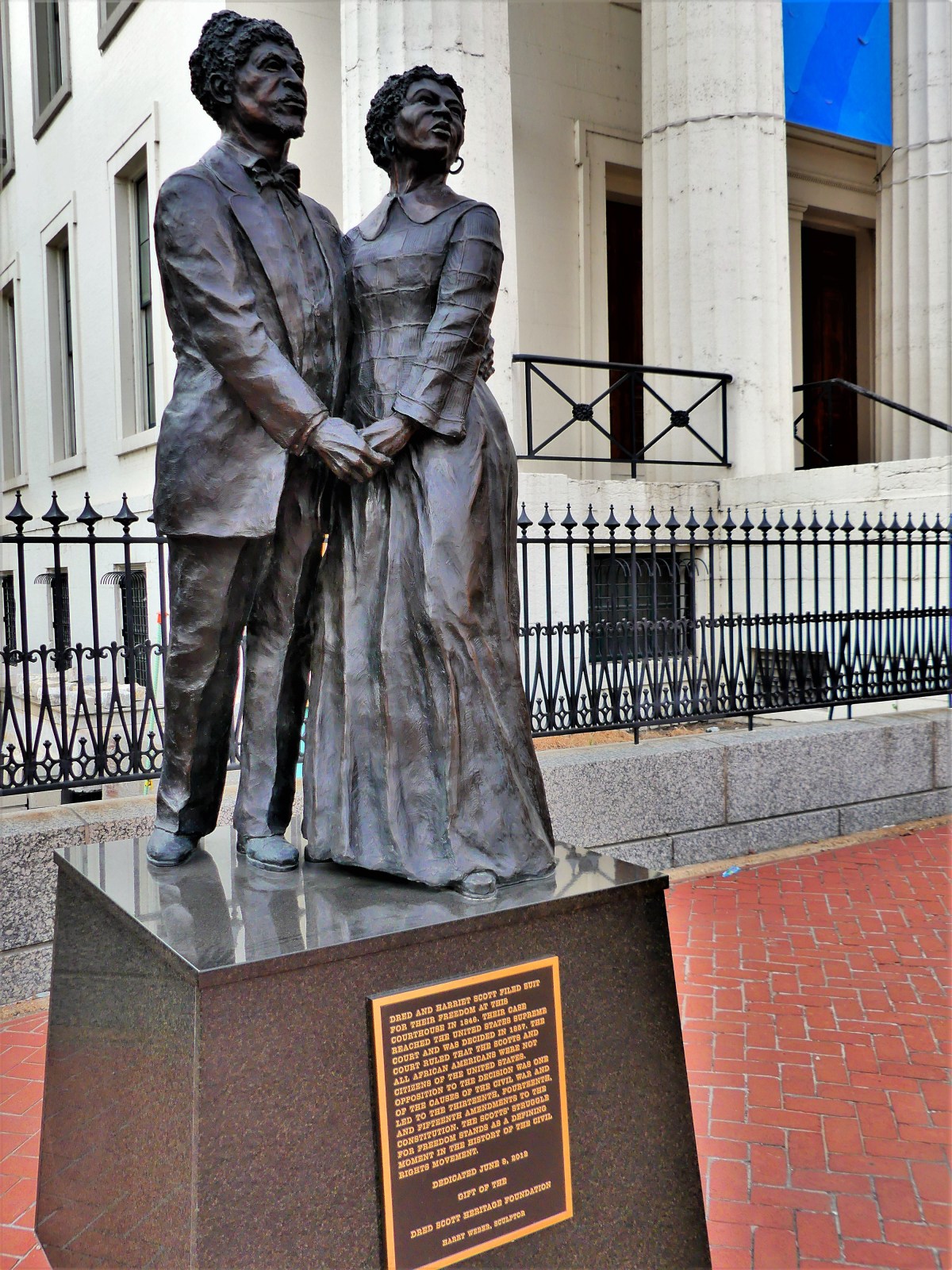
and historic location of the landmark Dred Scott trials–where an ordinary man took extraordinary measures to free his family from the indignities of slavery, by bringing suit against the United States of America.

Dred Scott

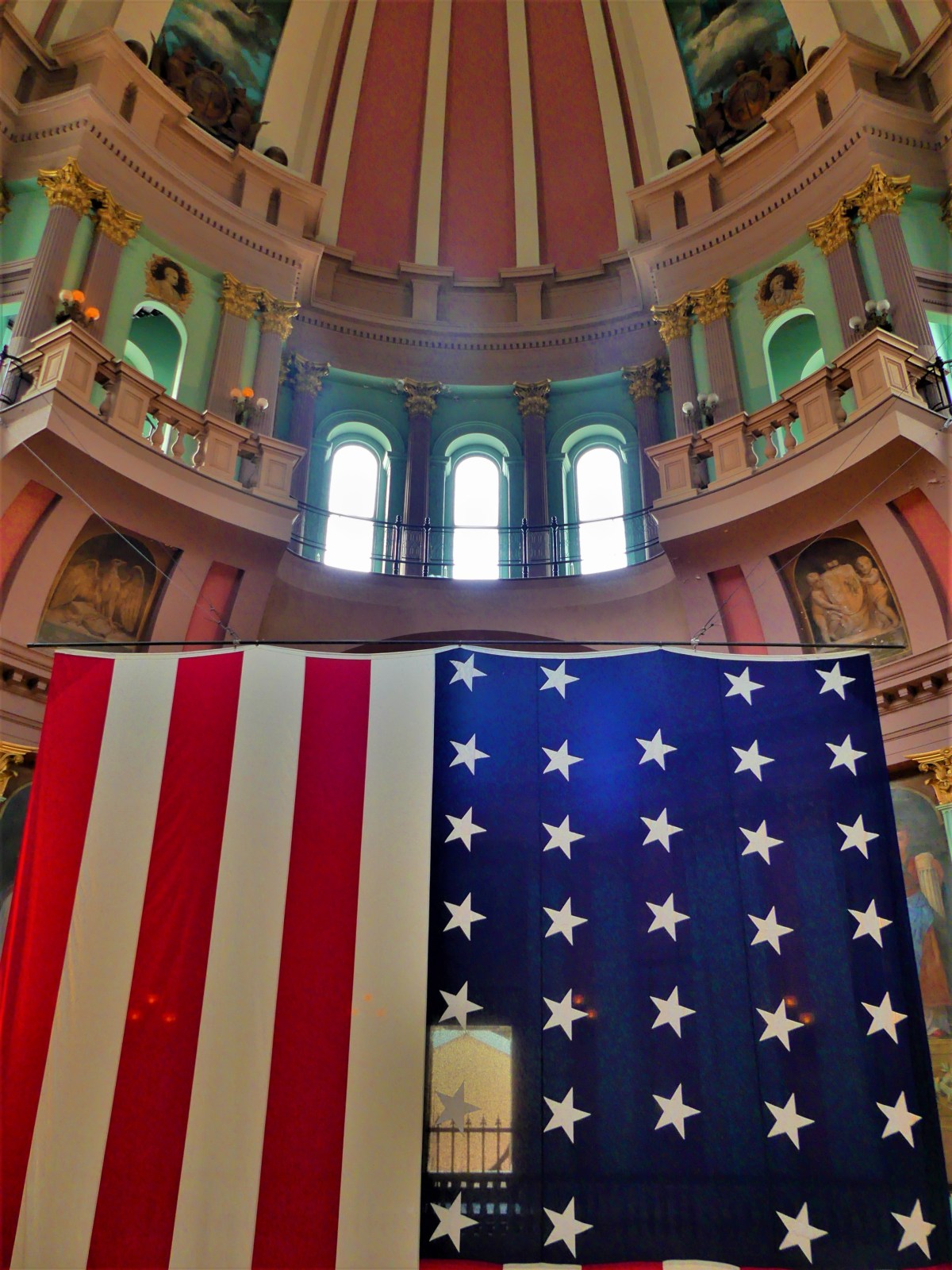
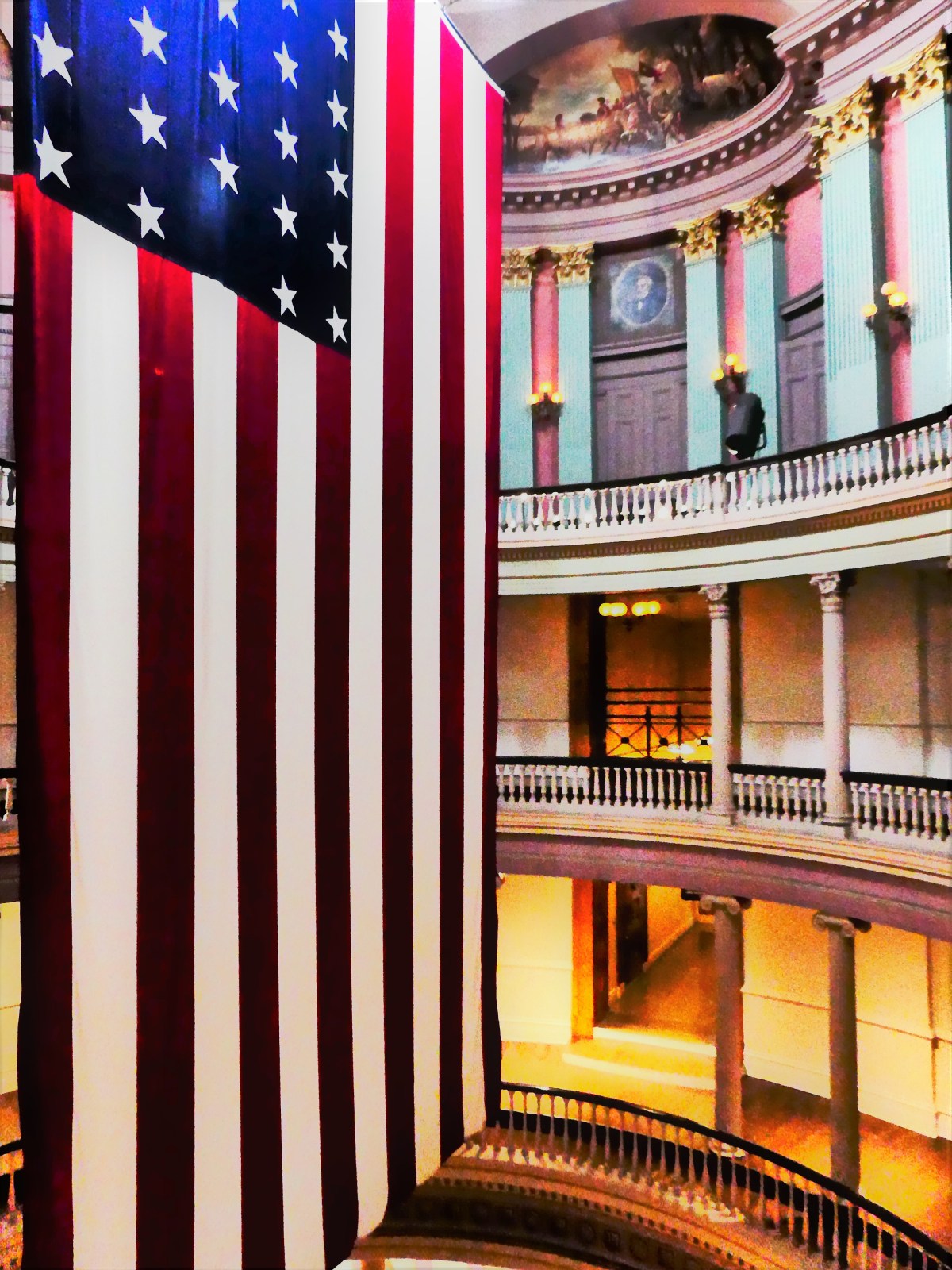
A walk inside reflects two hundred years of history. Directly beneath the dome and the 33-star flag (dating back to July 4, 1859)…

Old Courthouse rotunda

…rests a 3-foot diameter flagstone amid the pavers–the acoustic sweet spot of the courthouse–where orators would stand to speak and be heard from top to bottom,

2nd flr view

and throughout the wings.

flag and columns

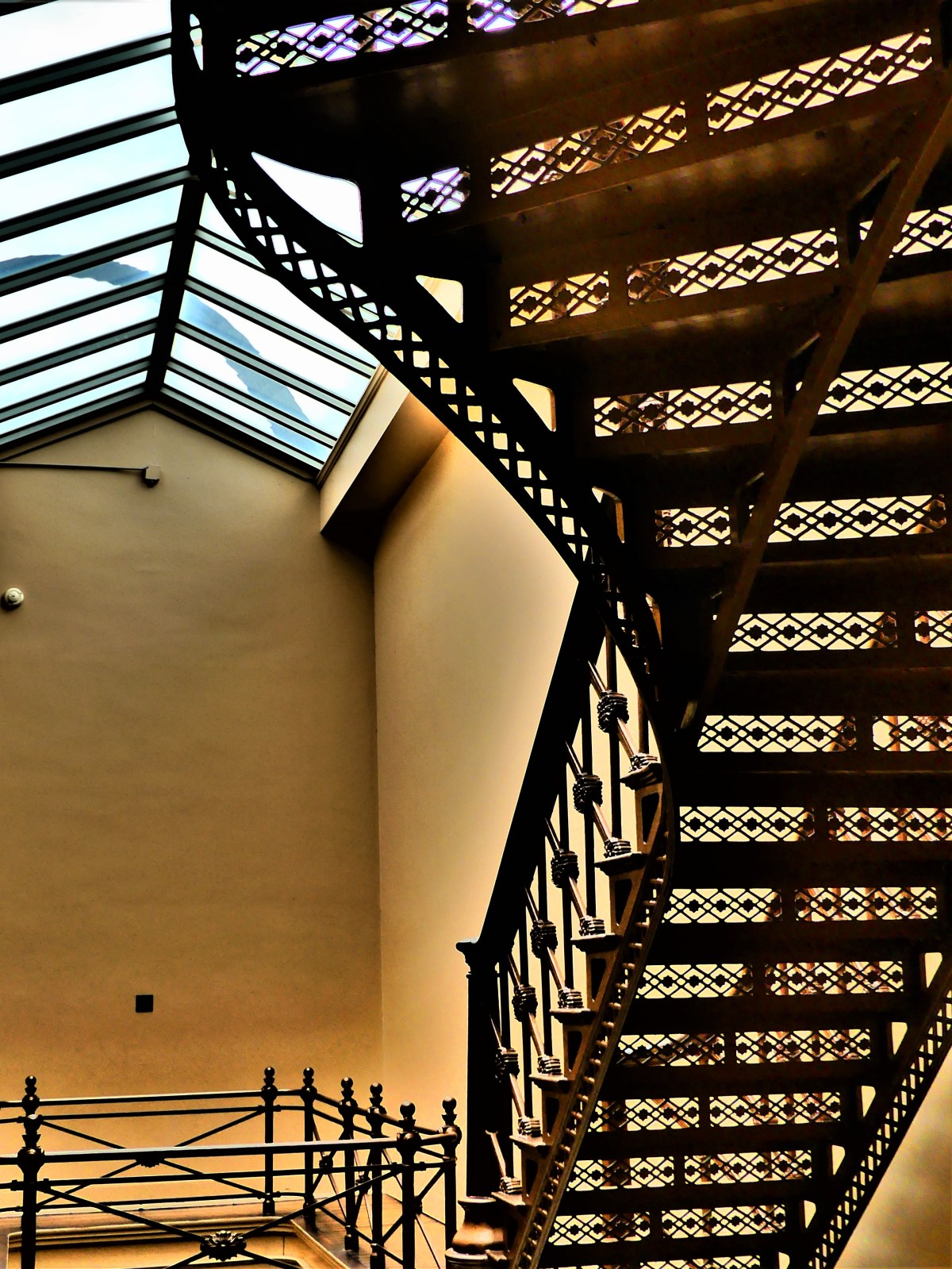
Stairwells lit by skylight…

stairs

stairs thru the door

carried us to higher floors, providing a peek of the nearby Arch,

stairs and arch

Arch thru courthouse skylight

and a recreation of the courtroom that memorializes where Louis D. Brandeis was admitted to the Missouri bar on November 21, 1878.

Brandeis courtroom

After a brief detour around a barricaded green space currently under construction, we arrived at the south bunker beneath the arch…

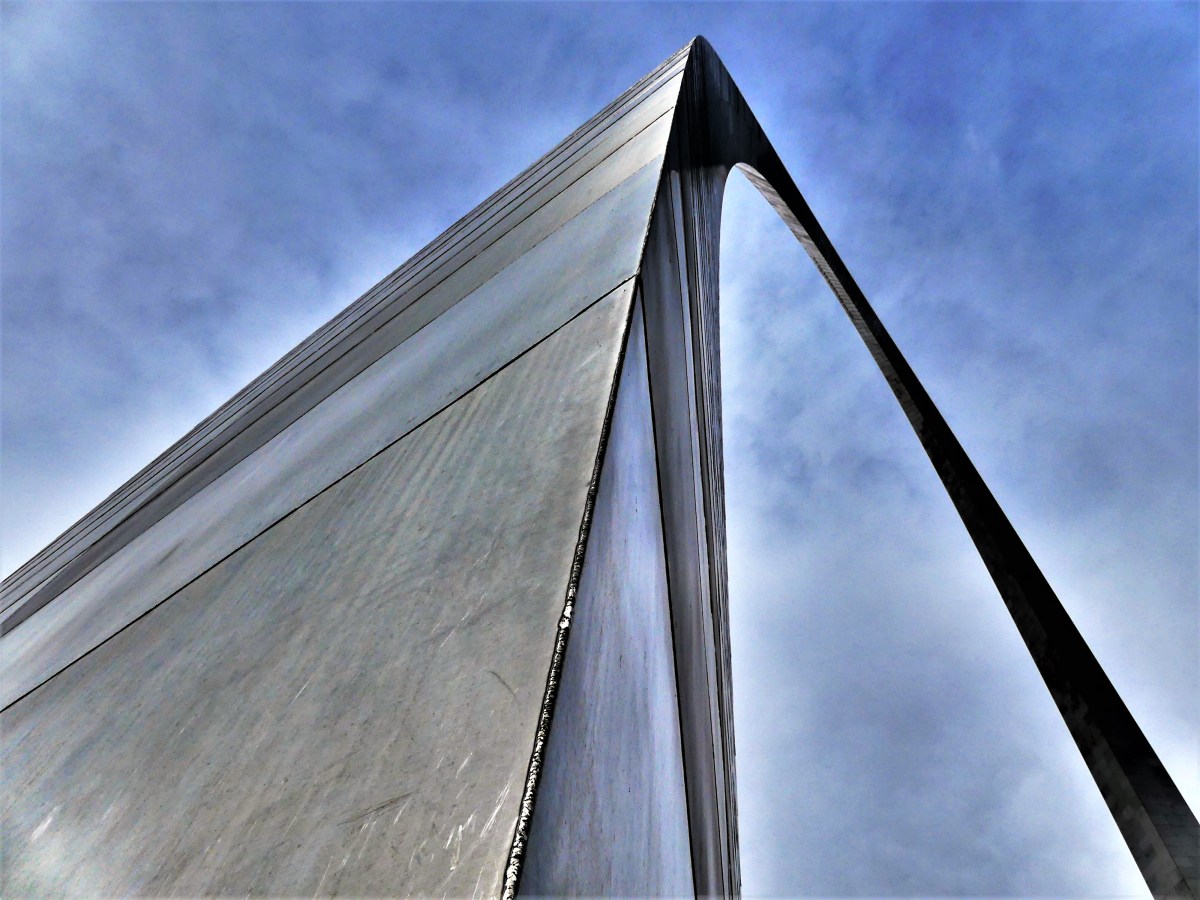
Arch against the sky

Arch curvature

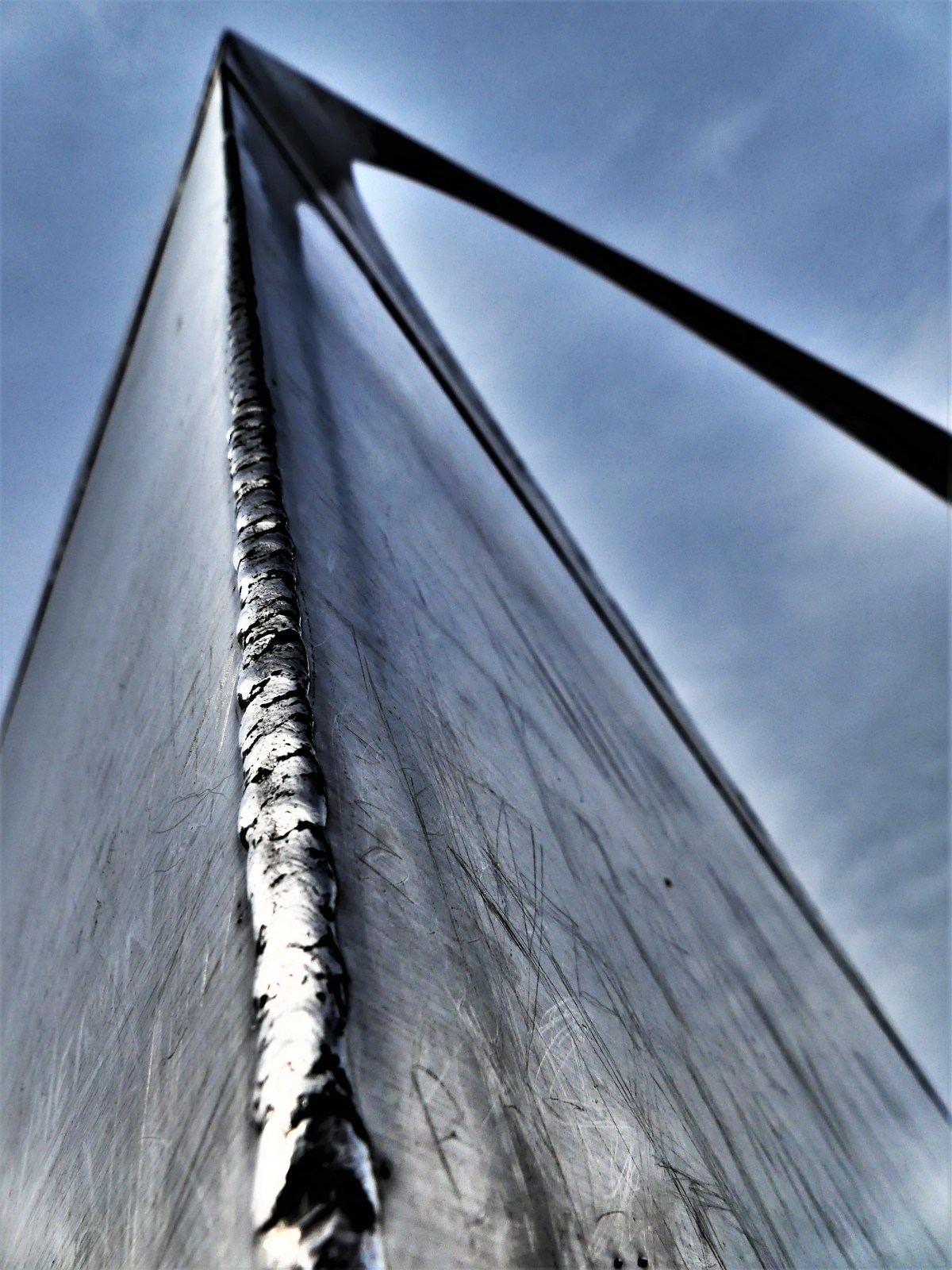
scratches and weld

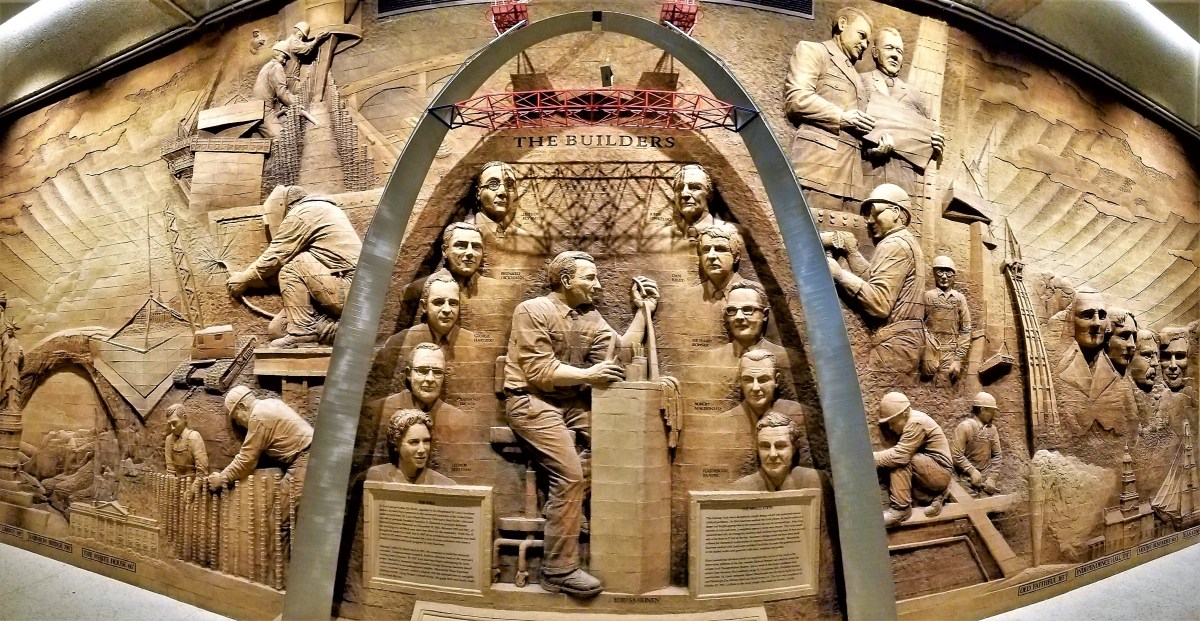
that houses walls of exhibits documenting construction from 1963 to 1965,

ediface sculpture

and more importantly, access to the carriage cars that carry visitors to a viewing gallery 630 feet above the city.

pod control

After a four minute ride, we emerged from our pod,

cable pod2

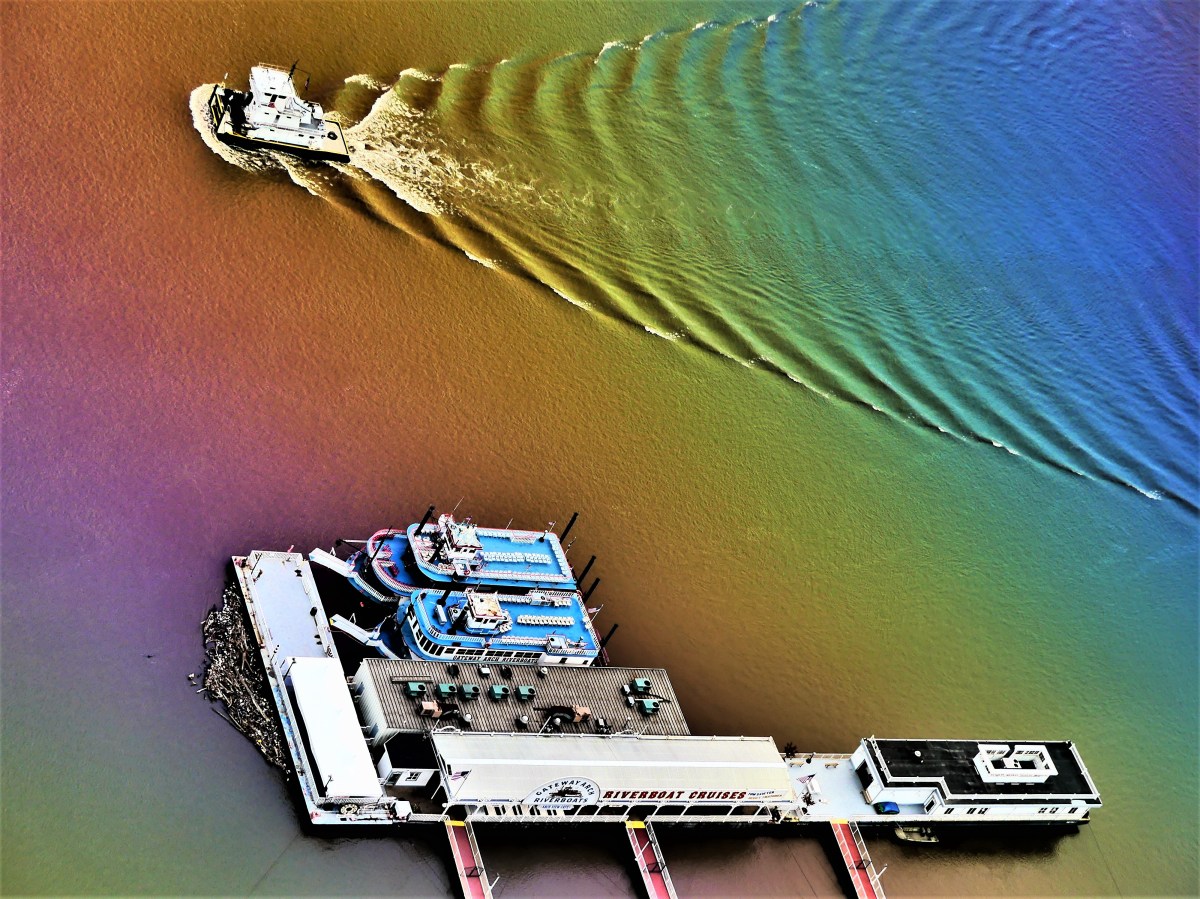
into an enclosed ramp with multiple portholes overlooking east of the Mississippi,

Mississippi Riverboats

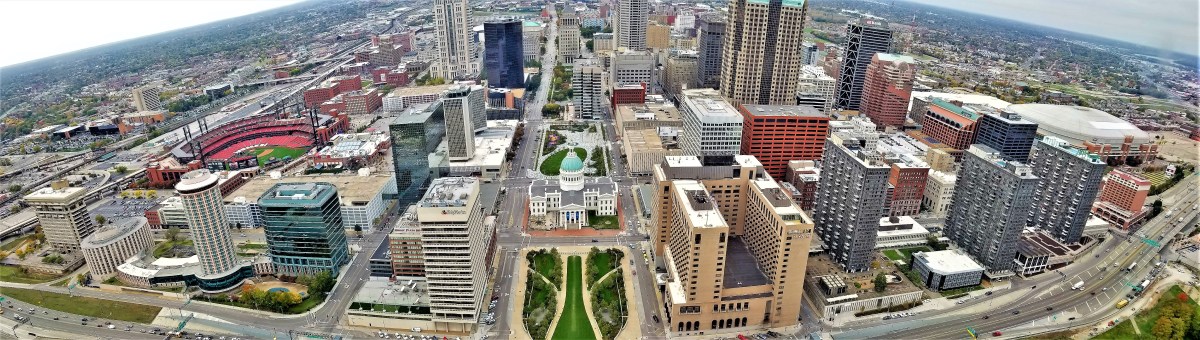
and unobstructed views westward, beyond St. Louis.

St. Louis panorama

As we drove through St. Louis drizzle the following day, we were never far from occasional glimpses of the Arch shrouded in rain clouds.

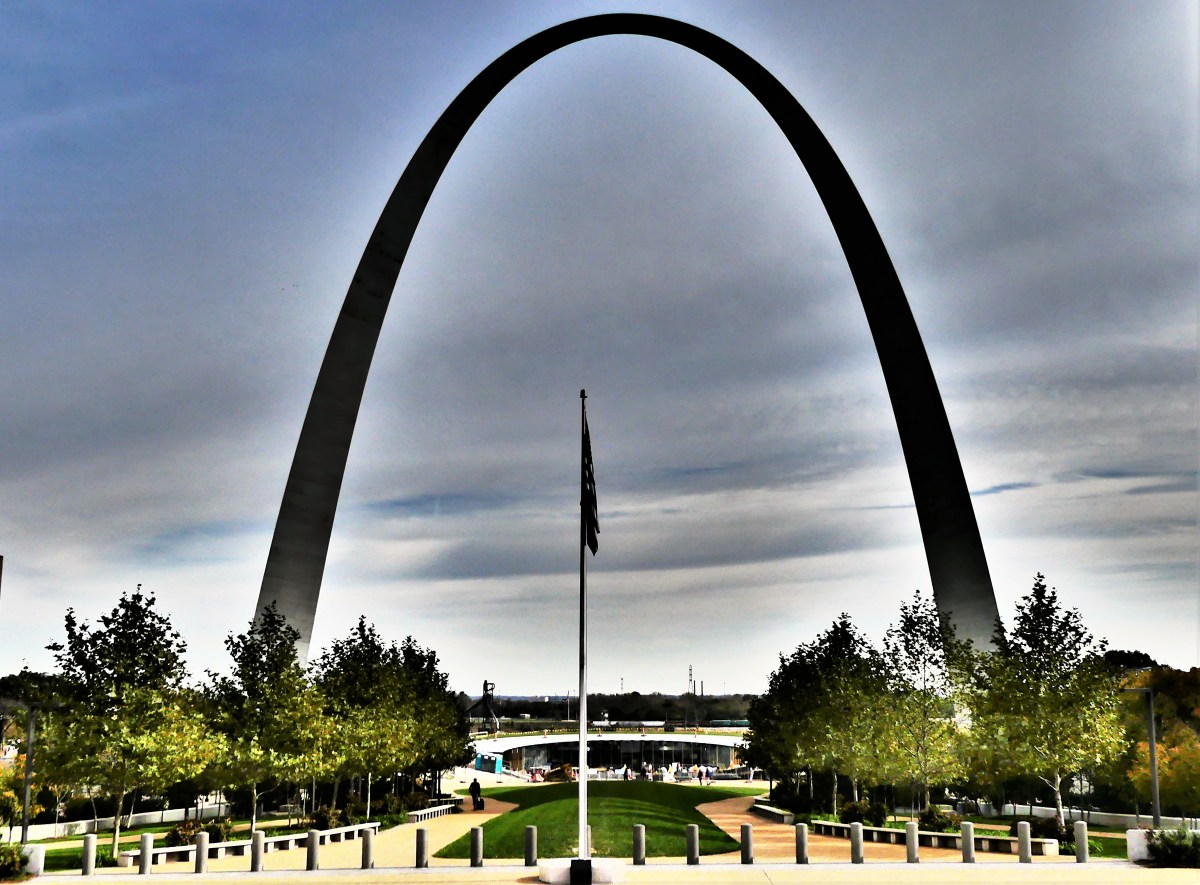
While I never had a sunny day to capture the full beauty of the simple architecture created by Eero Saarinen, I could still bask in the warm glow of an iconic structure that celebrates the spirit of American exploration.

Gateway Arch


American Kitsch

Years ago, Dennis Miller–when he was funny–referred to Branson, Missouri as Las Vegas for people without teeth. Twenty years later, Miller’s revelation still hits the mark, despite the advent of implants and veneers.

While attending a sold-out concert featuring the Oak Ridge Boys at the Mansion Theater,

Oak Ridge Boys1 (2)

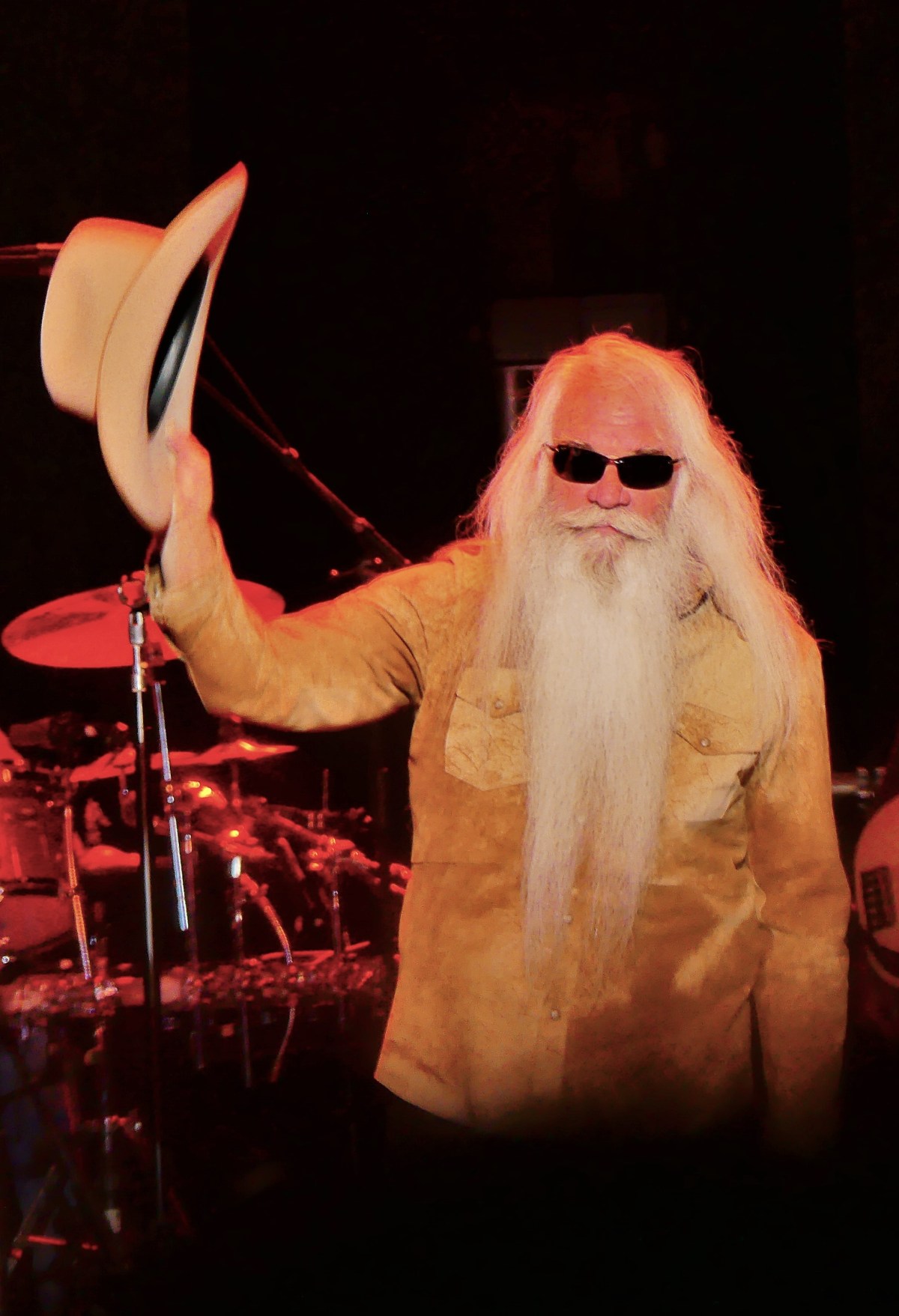
it was hard not to notice the adoration of a graying audience. Women wearing shades of autumn-colored hair to complement their leopard print outfits seemed to swoon through an earnest and sincere set of gospel-laced ballads and patriotic country-swing tunes, while their stoic significant others, coiffed in their stiff anywhere/anytime cowboy hats, eventually removed them, perhaps taking a cue from William Lee Golden during his performance.

‎ORB William Lee Golden

Upon returning to the parking lot after the show, we noticed how haphazardly most vehicles were parked, with little regard for lane assignments. It could have been a freeze frame from a demolition derby. Few could recall where they parked their trucks or SUVs, so collectively pressing the alarm buttons on their keys produced a cacophony of blaring horns and flashing headlights that continued to frustrate a clueless crowd.

Of course, things are no better on the roads. The yellow, blue and red routes always appear to be congested, because drivers can’t get out of their own way, and nobody knows where they’re going. Unfortunately, turn signals are no more than car decoration.

Or maybe the sites on the edge of the road are so compelling that traffic snarls are to be expected.

What follows is a sampling of some of the roadside attractions that caught my attention.

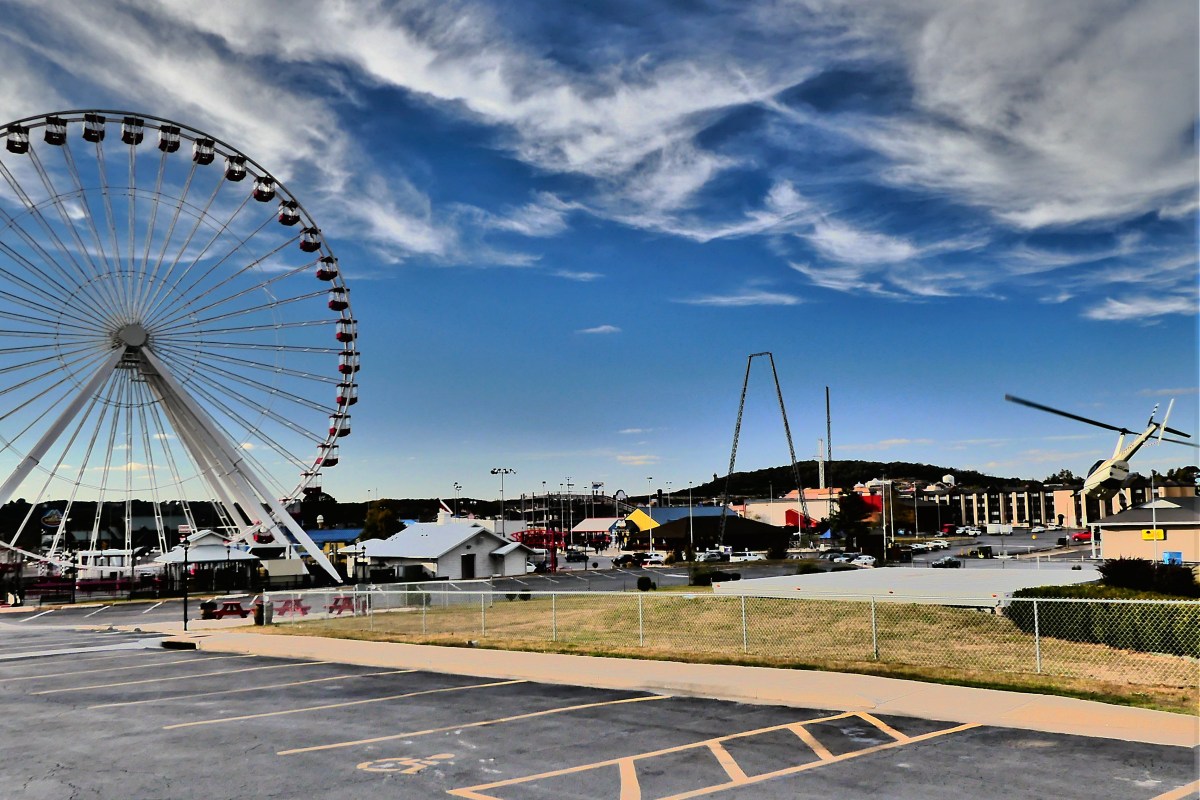
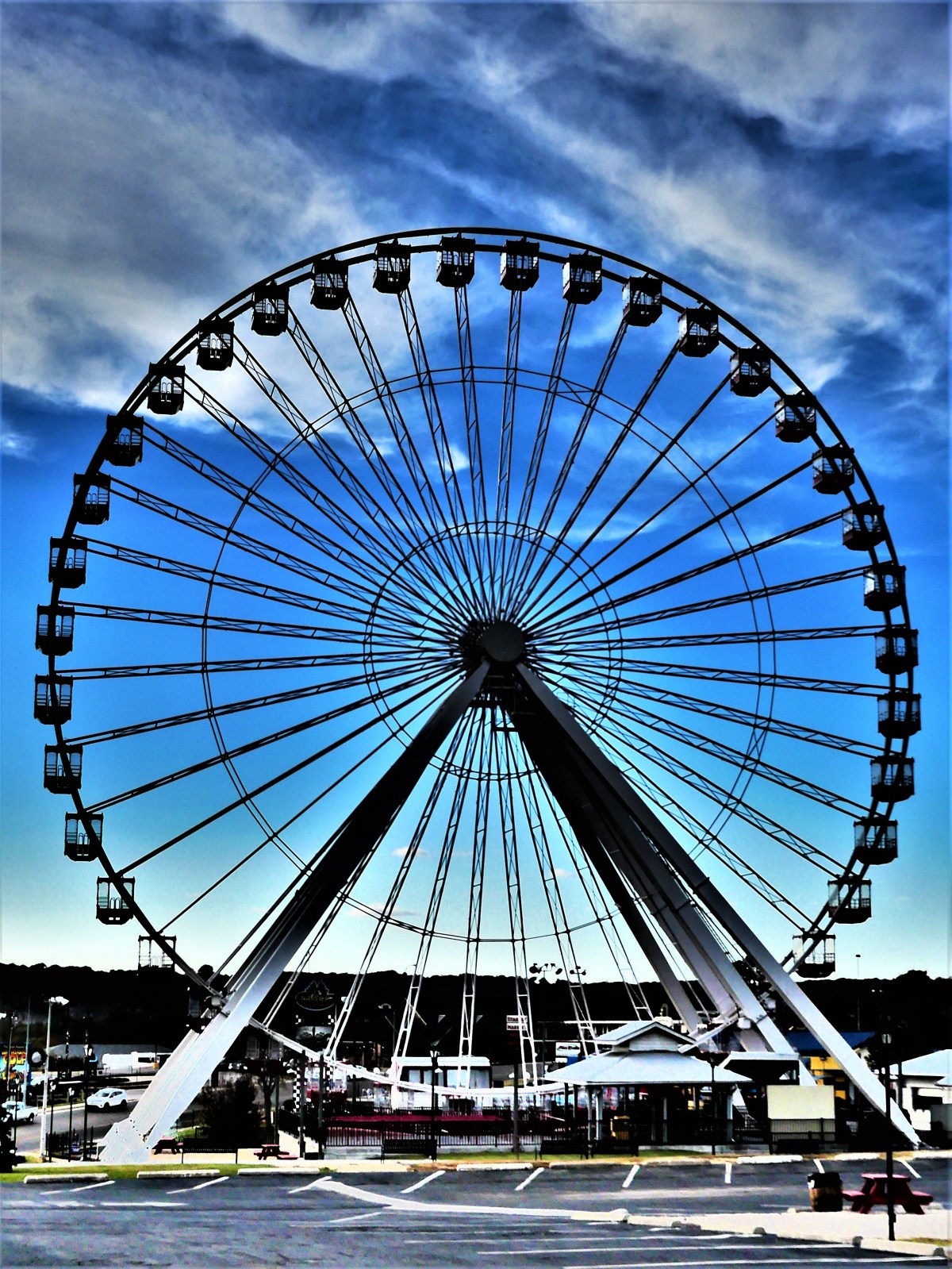
ferris wheel

fork and meatball

King Kong

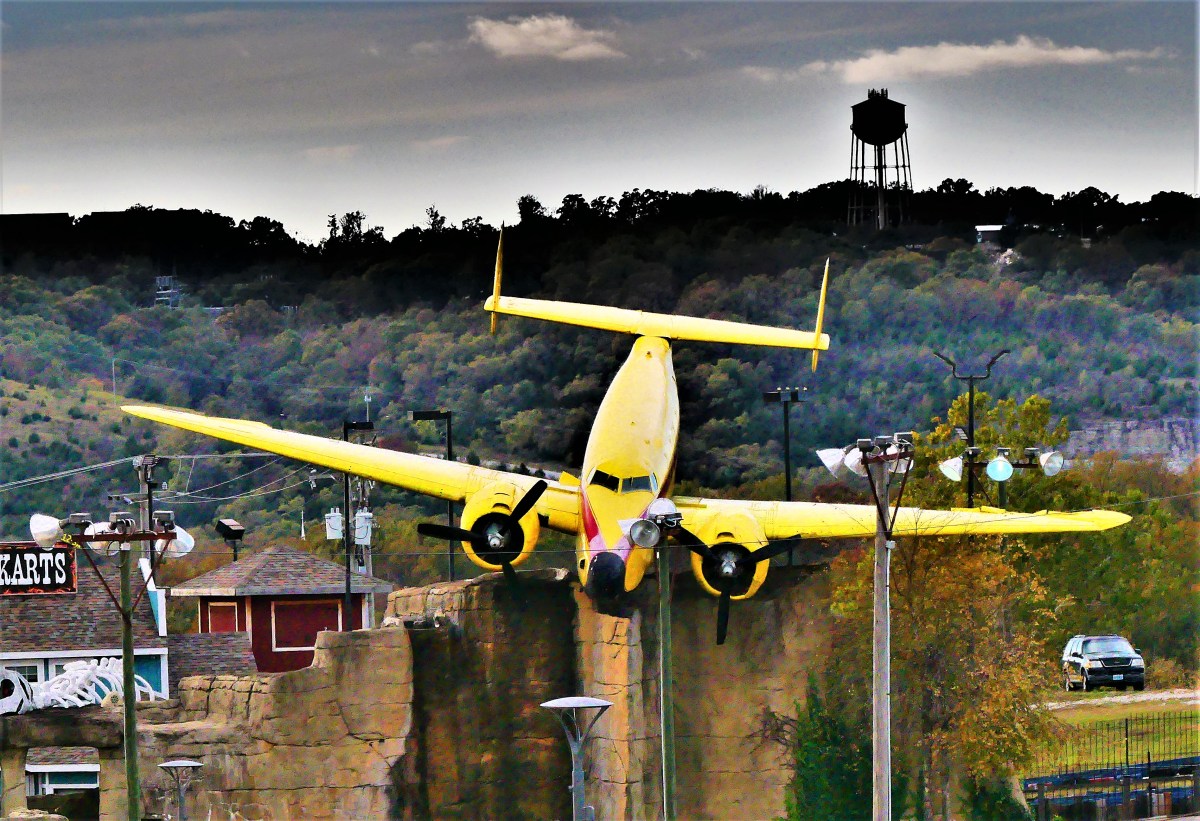
plane

Titanic

Ripley's

chicken dinner

P.S. We found our truck in the Mansion lot, and found our way back to the Airstream, but it took forty minutes to travel four miles.


Eureka!

A stopover in Eureka Springs, AR along the way to Branson, MO produced some Eureka! moments and other assorted revelations.

For one, there are seventeen registered churches in Eureka Springs, ministering to two thousand healing hearts and souls around town, plus a Tibetan Buddhist temple and an integrated monastery of celibate brothers and sisters.

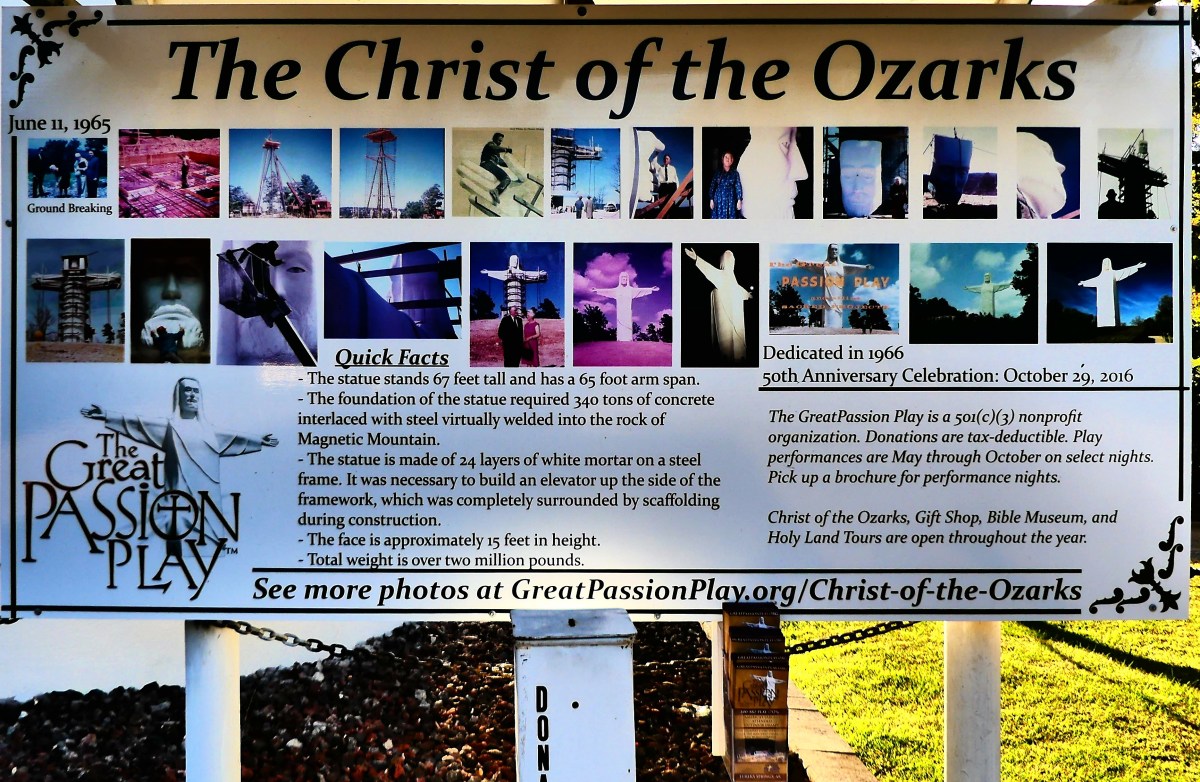
Religious overtones are also pervasive throughout town. Our Airstream was parked along Passion Play Rd., above the hallowed hollow where The Great Passion Play’s dramatic reenactment of the last week of Jesus Christ is the #1 tourist attraction in the area, and The Christ of the Ozarks rises nearby, hovering above the dense woods of Magnetic Mountain.

Jesus of the Ozarks

Christ sign

Big Jesus side view

Also looking down from town, the Crescent Hotel–recently added to the National Register of Historic Places–delivers luxurious living and salon services, in what’s billed as America’s Most Haunted Hotel.

Historic Crescent Hotel

Crescent Hotel

A fourth-floor lookout…

P1100279

provides familiar views in the distance,

Jesus over sunset

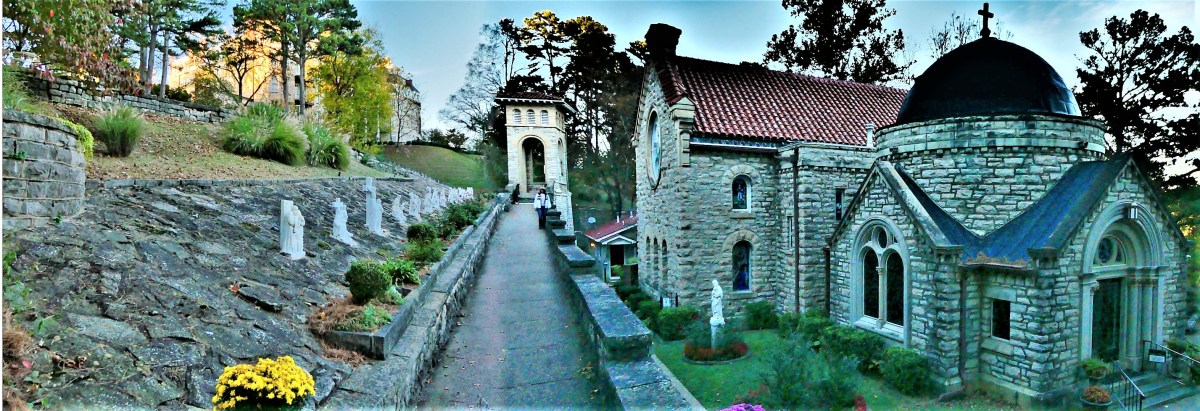
and an overlook of St. Elizabeth Catholic Church of Hungary–listed in Ripley’s Believe It or Not as the only church in America with entry through the bell tower.

St. Elizabeth Church1 (2)

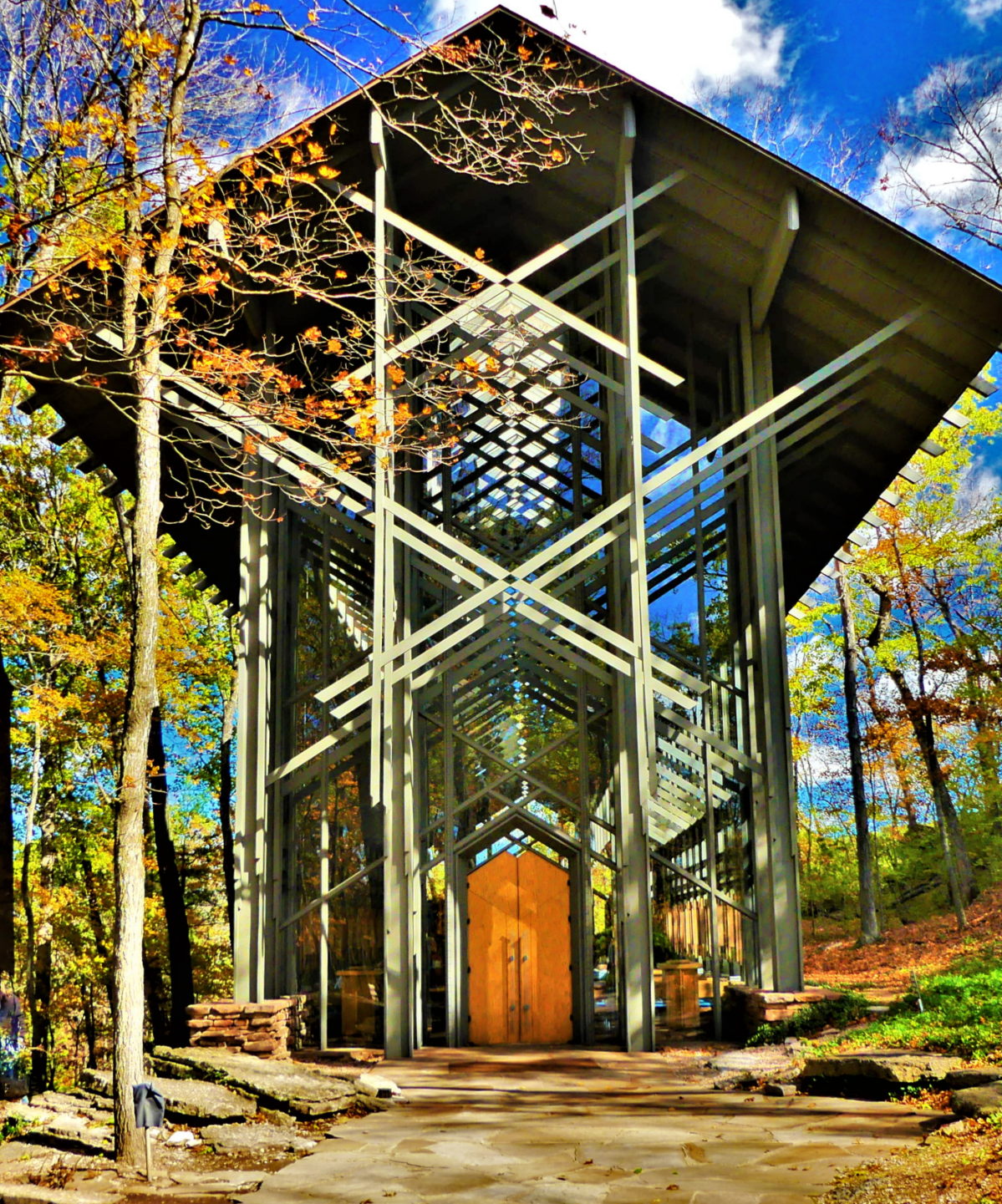
Stunning religious “art-chitecture” can also be found at the Thorncrown Chapel, a jewel of glass and wood tucked into the hillside atop a ledge of flagstone.

Thorncrown Chapel1 (2)

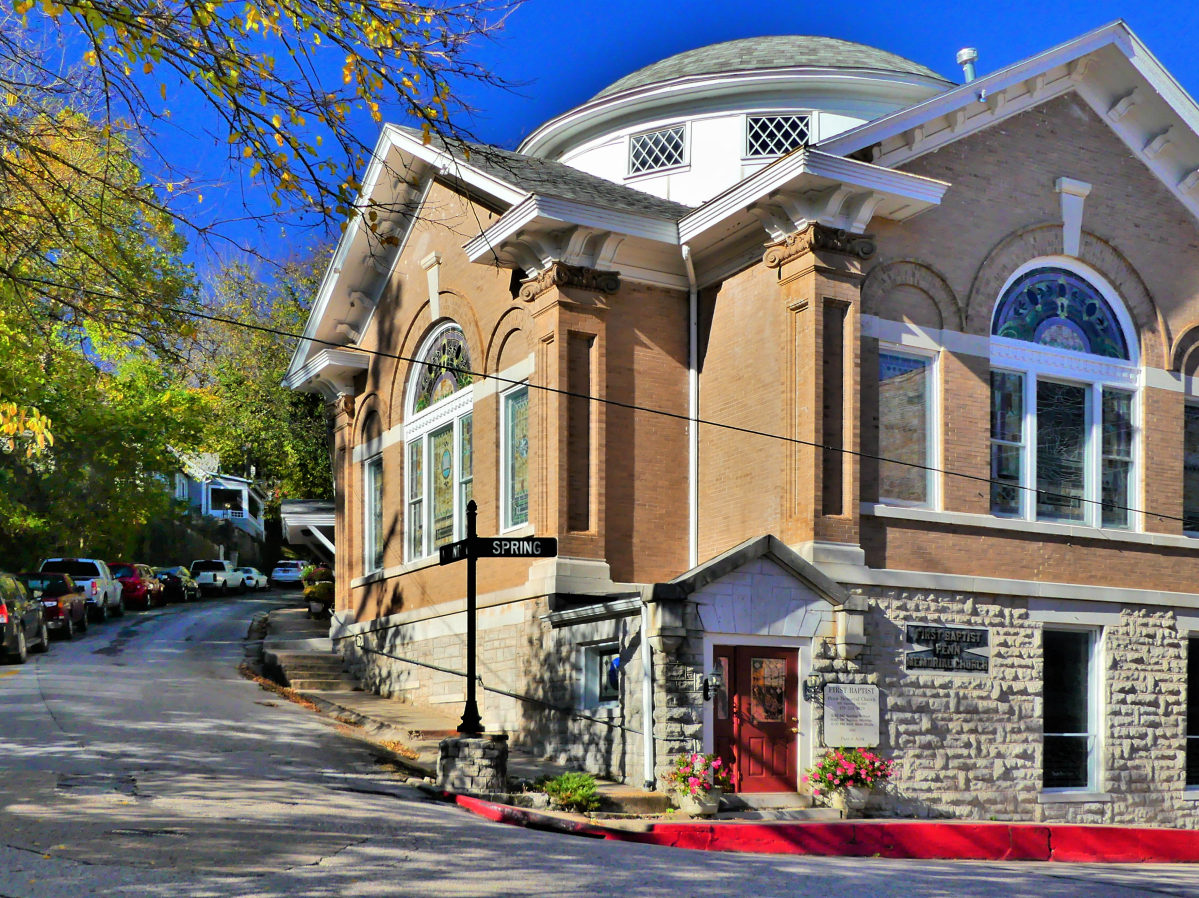
Inside Eureka Springs’ Victorian historical district, the Byzantine-styled First Baptist Church stands at the corner of three intersecting streets with entrances at each of its four levels, giving it four distinct addresses and cause for another Ripley’s entry.

First Baptist Church

The charm of downtown carries through its narrow winding streets, acute corners, and graded roads of 30% or greater, routinely decorated with accents of fine art…

down the street

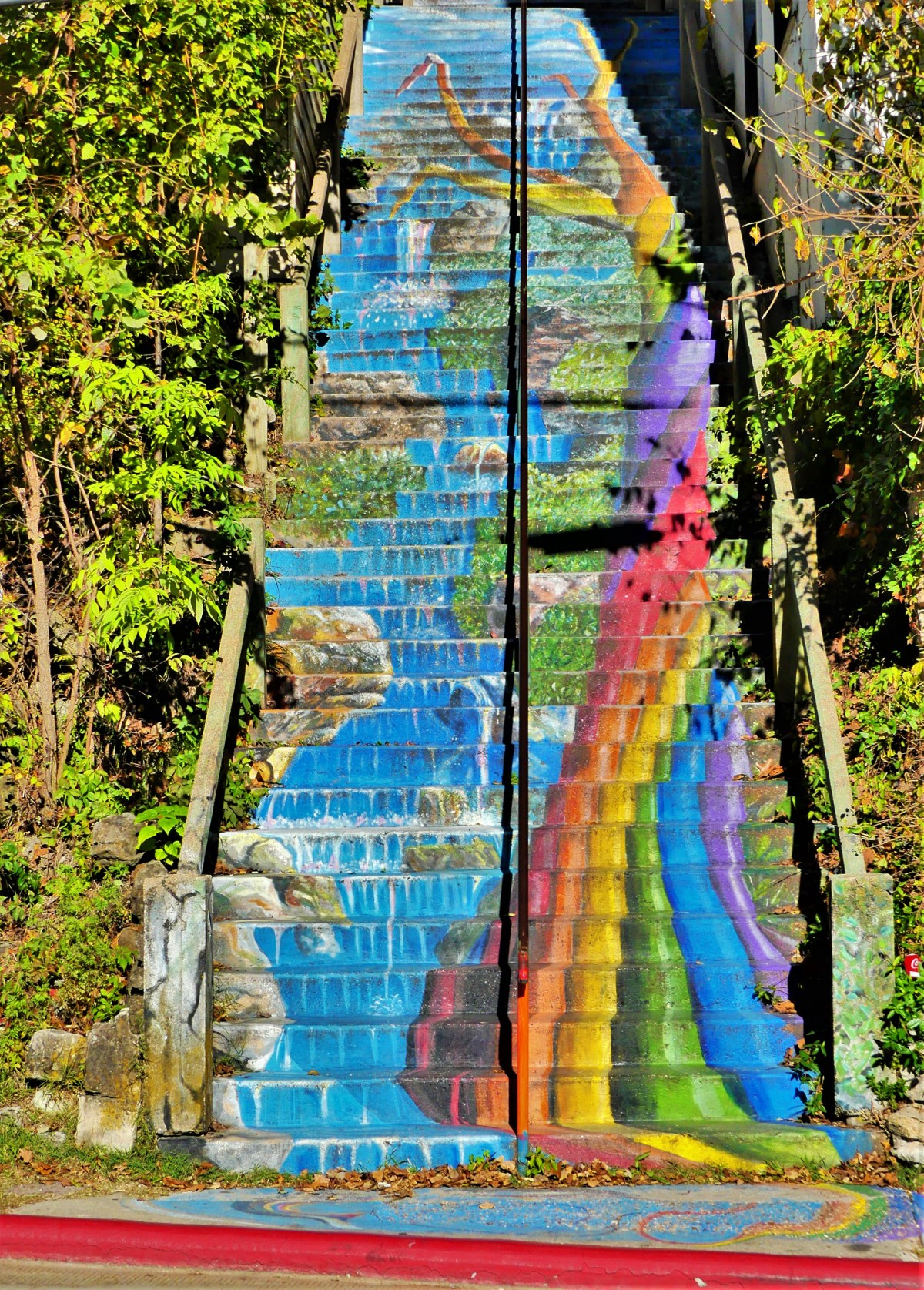
Steps to Spring St.

…and frivolity.

Humpty Dumpty gnome

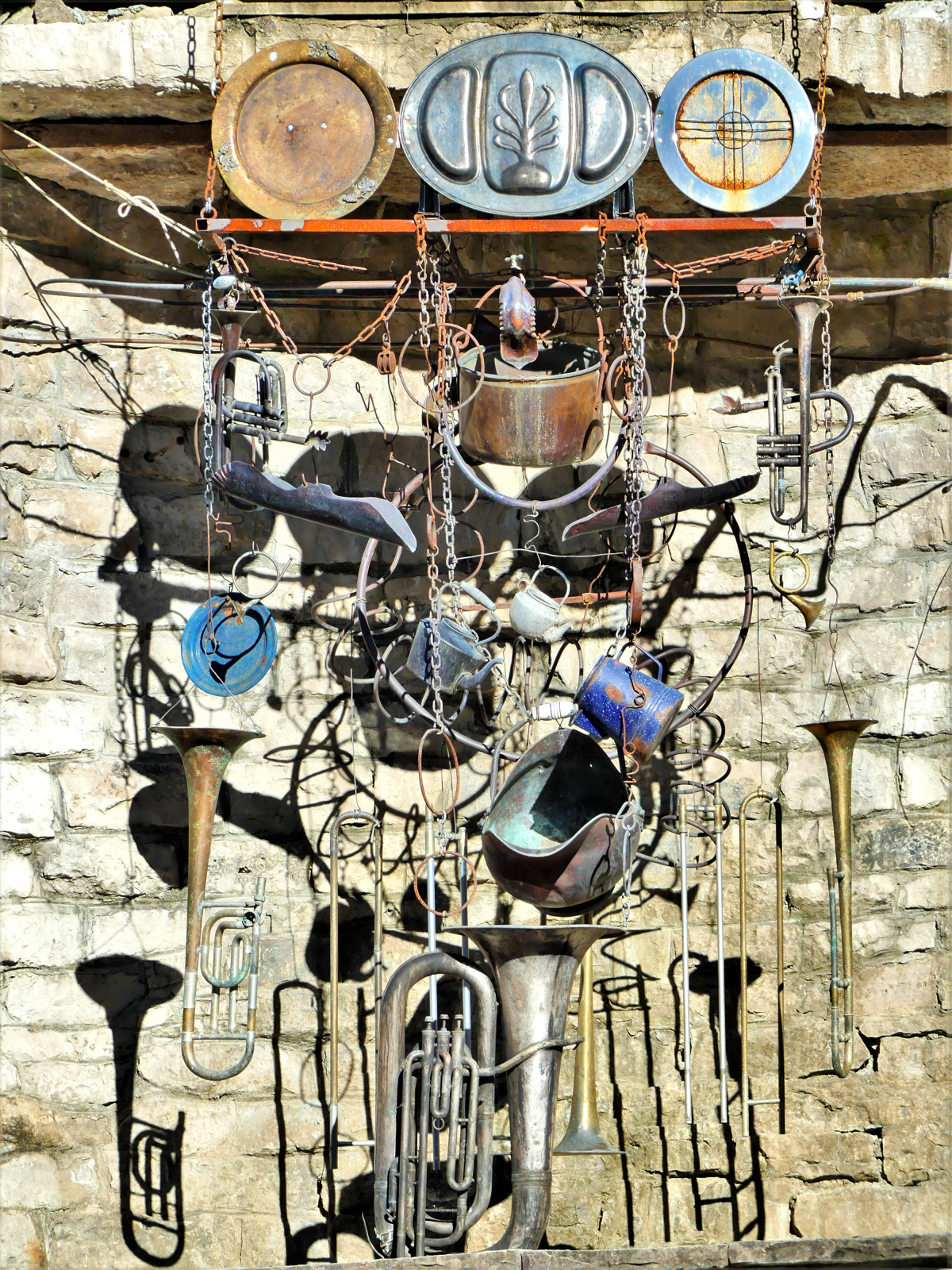
horn orchestra (2)

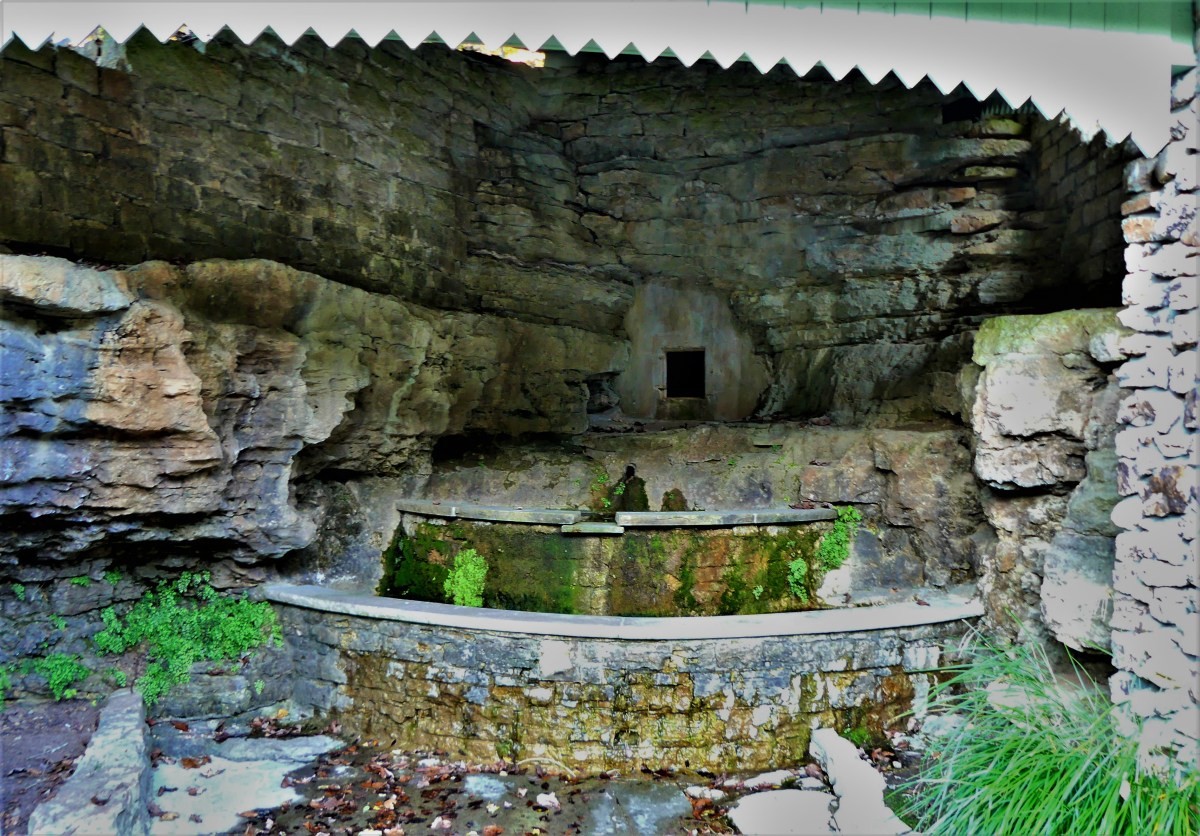
Eureka Springs came by its name naturally, manifesting no less than sixty-two springs that gushed from the mountainside with so-called healing properties. Its establishment as a resort community during the 1870’s prompted visitors from near and far to “take the waters” by drinking up and soaking in its therapeutic juices.

civil war healing

90% cure rate

Today, over a dozen springs have been restored to former glory.

Magnetic Spring plaque

Magnetic Spring

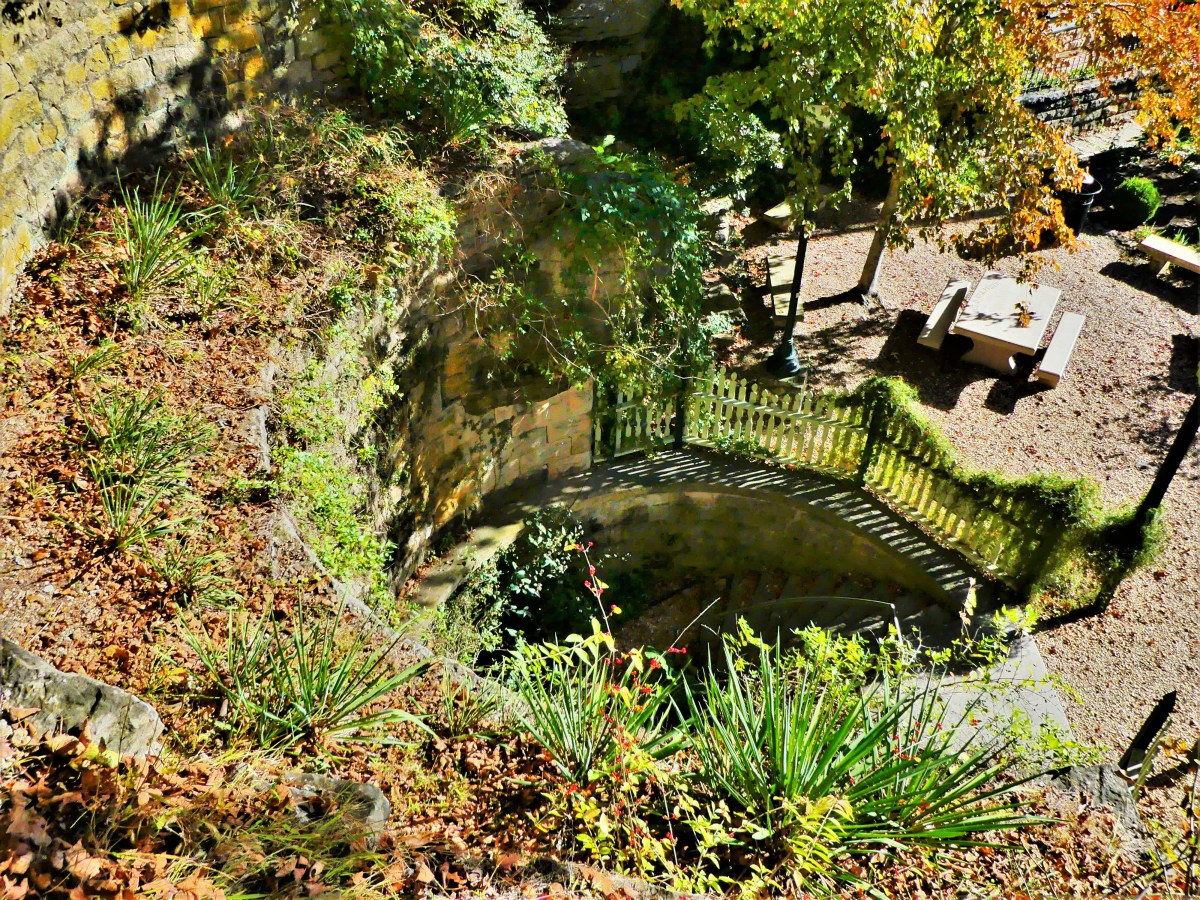
And while the water is no longer potable, the park habitats have given the springs a new lease on life,

Harding Spring

Basin Spring

and have renewed the town’s reputation as a popular healing destination,

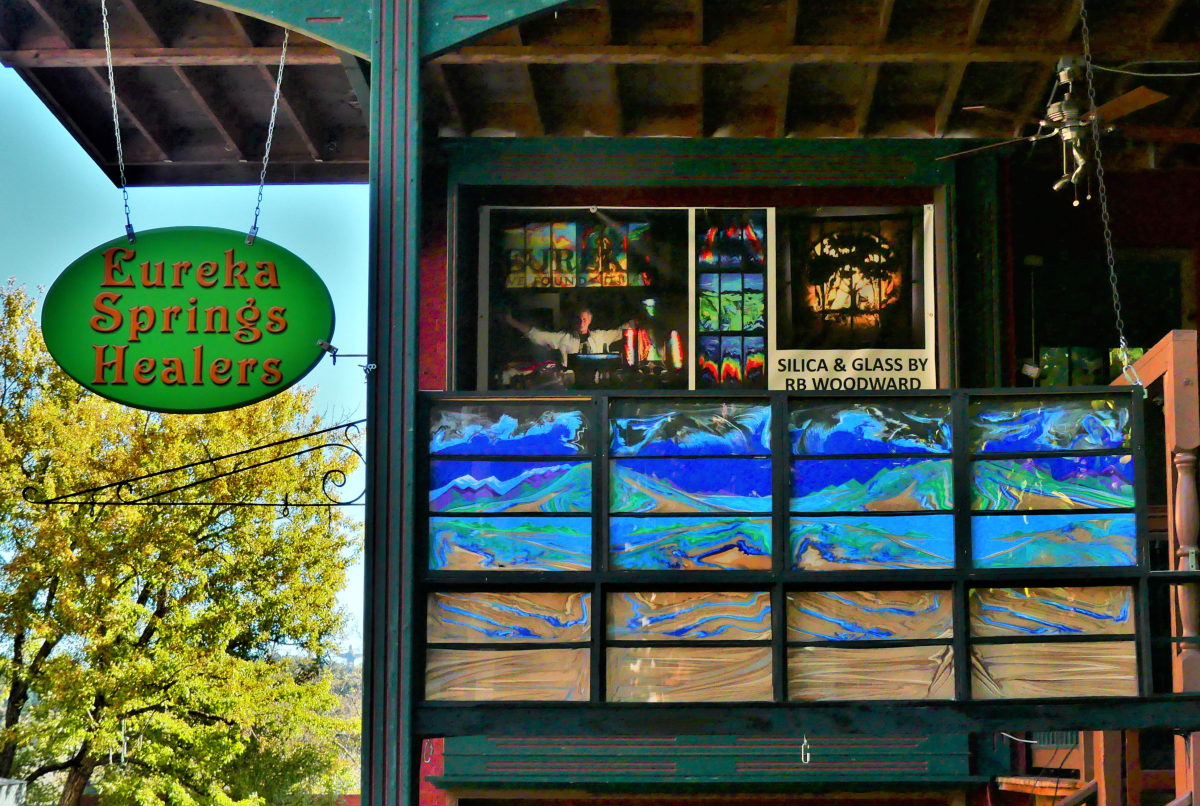
Eureka Healing (2)

with an emphasis on preserved charm.

County Courthouse

top floor (2)

ball and house

facade

facades.png

Palace Hotel gazebo

Perhaps the biggest paradox of Eureka Springs would have to be the town’s united commitment to all things ghosts and Halloween, given its adherence and roots in Christiandom, while billing itself as “the place” for the best Halloween party in America…

Grand Central Hotel

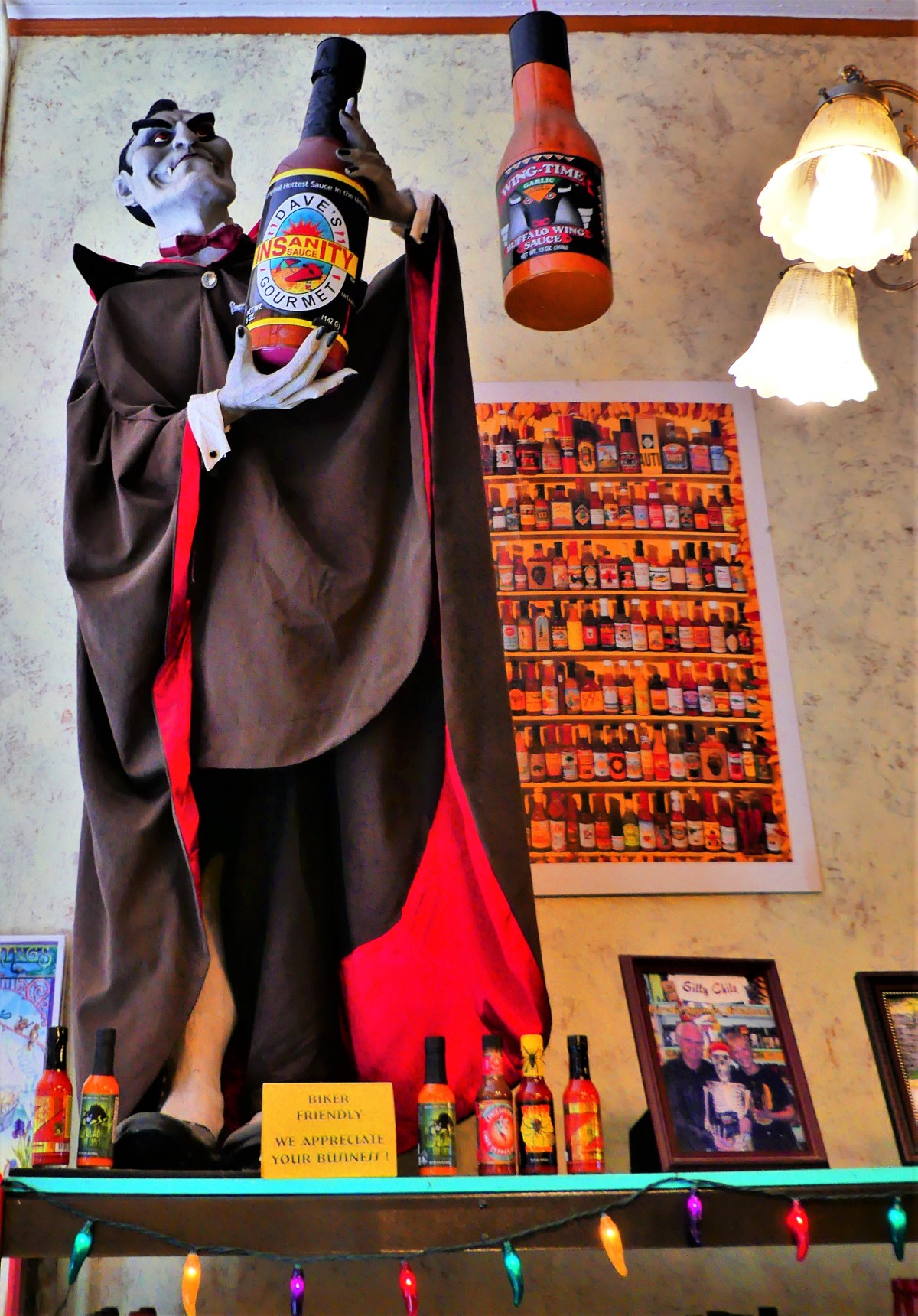
Chile Lily

…breathing spiritual relevance into Euripides’ quote: Money is the wise man’s religion.

Sanctuary

Sanctuary comes in many different forms: as a retreat–a place one goes for guidance and inspiration; as a house of worship–a place to seek spiritual healing and nourishment; and as a refuge–a place to escape misuse or abuse. Within 24 hours, Leah and I managed to come across all three in a small corner of mid-western America.

For those searching for faith-based education, Oral Roberts University in Tulsa, OK has a campus fingerprint: Make No Little Plans Here

Make No Little Plans Here

The university’s holistic approach feeds the spirit, mind, and body.

hands1

The university’s futuristic and mid-century modern architecture attributed to Frank Wallace is best appreciated from the flying saucer,

prayer tower

that also passes for an observation deck,

ORU observation deck

and reflection gallery.

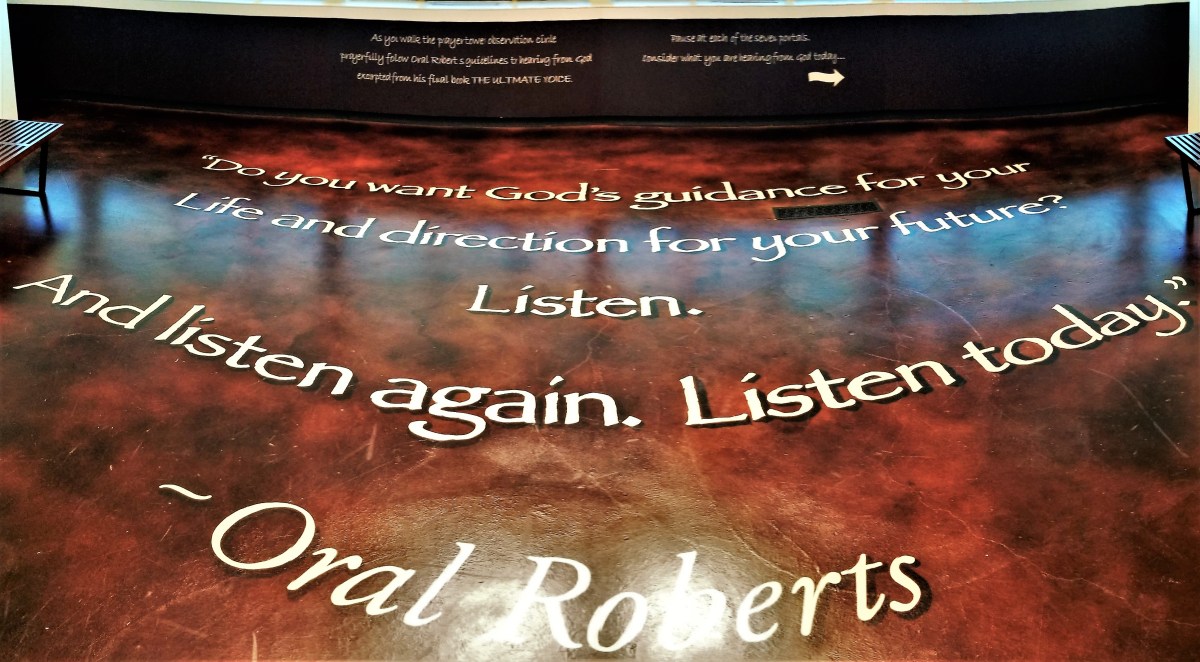
OR advice

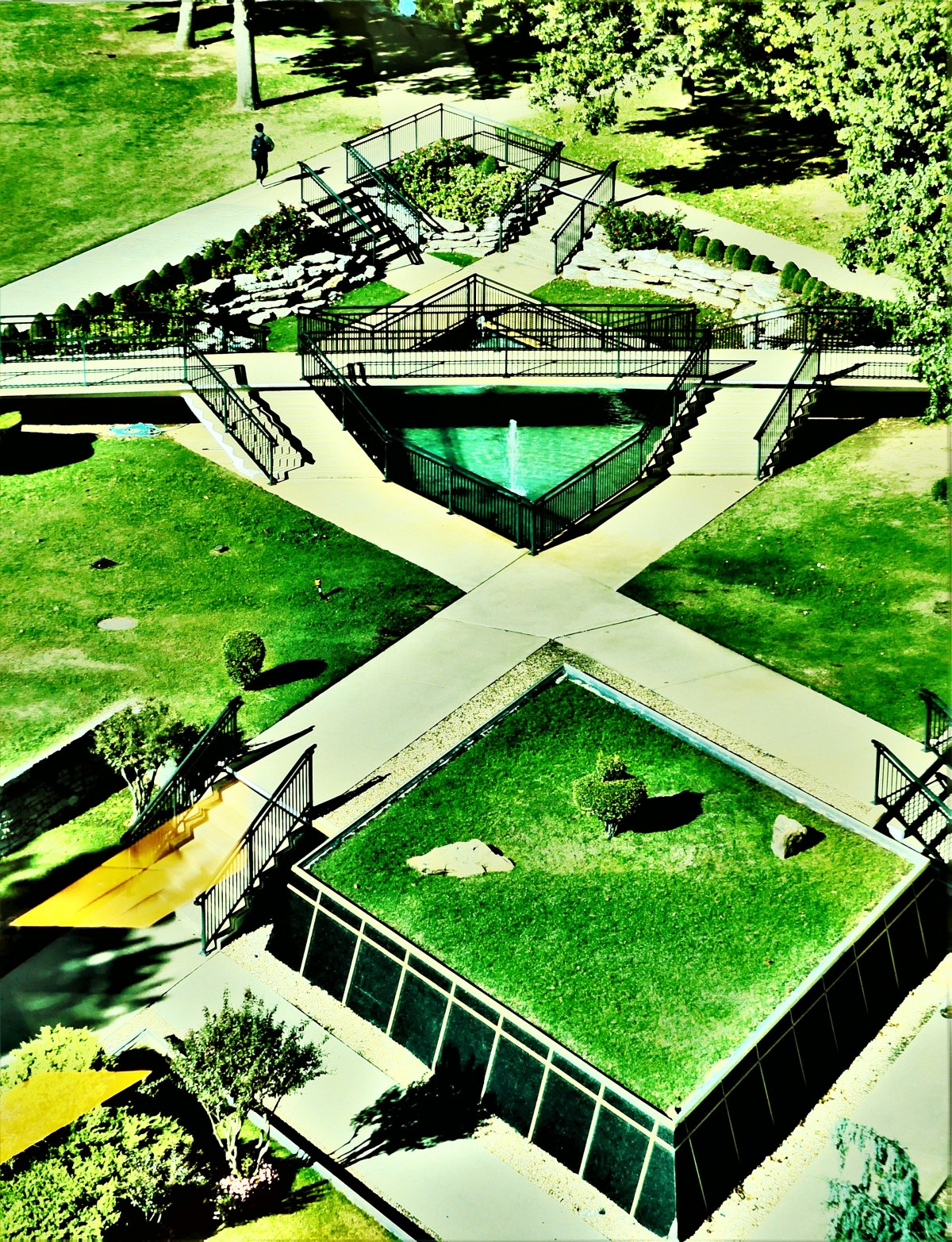
It’s gold-tinted, anti-glare windows colorize the outward views in a peculiar warm bath of Genesis green.

classroom tower

classroom building

auditorium

campus green

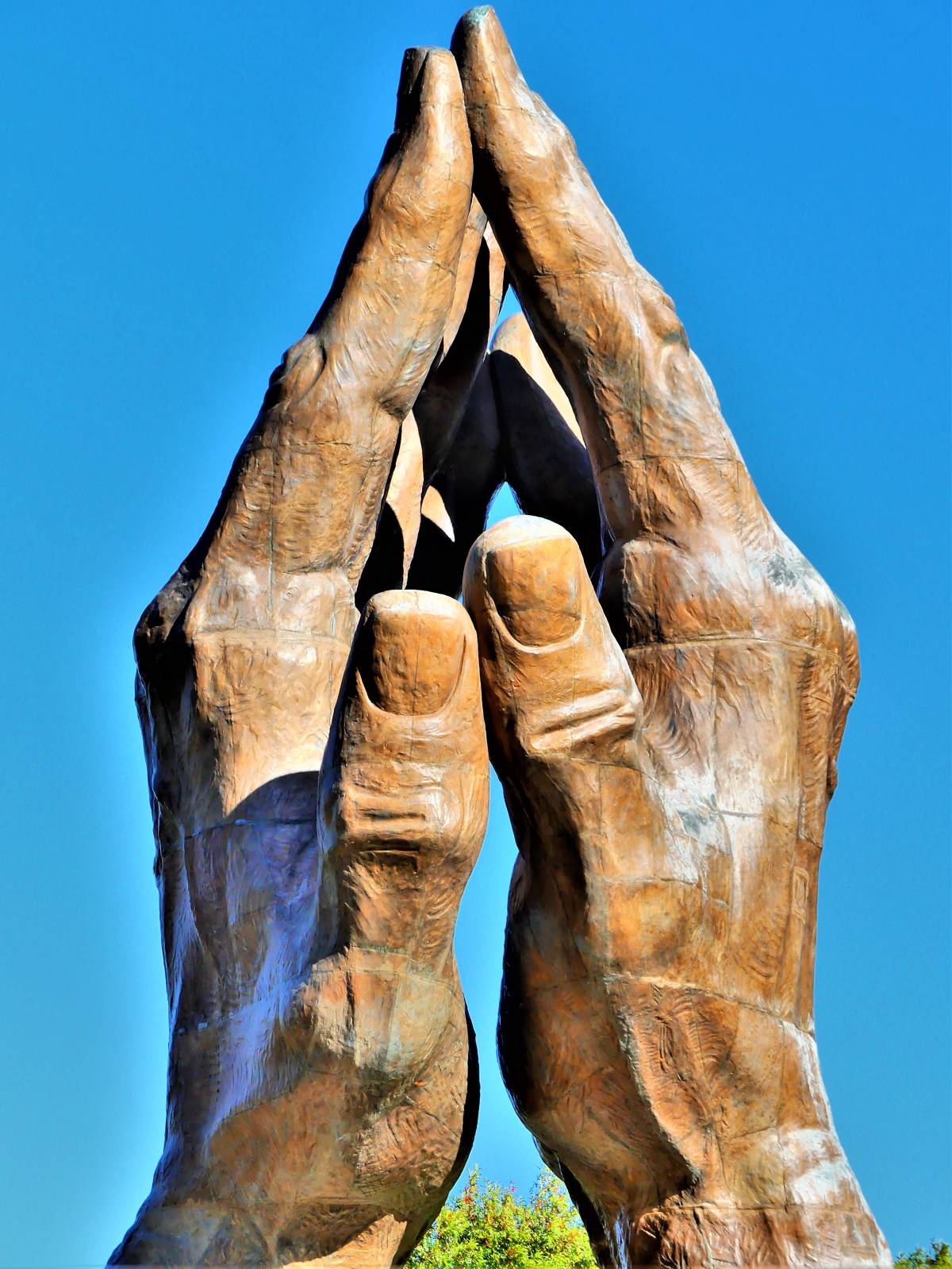
And while folded hands may symbolize a deep connection between God and Christianity,

hands of God

…any university coed would easily characterize the statue as a student praying to pass.


Architecture on a higher plane/plain can be found nearby, in the hills of the Ozarks. While no less spiritual in nature, the Thorncrown Chapel is rooted in nature.
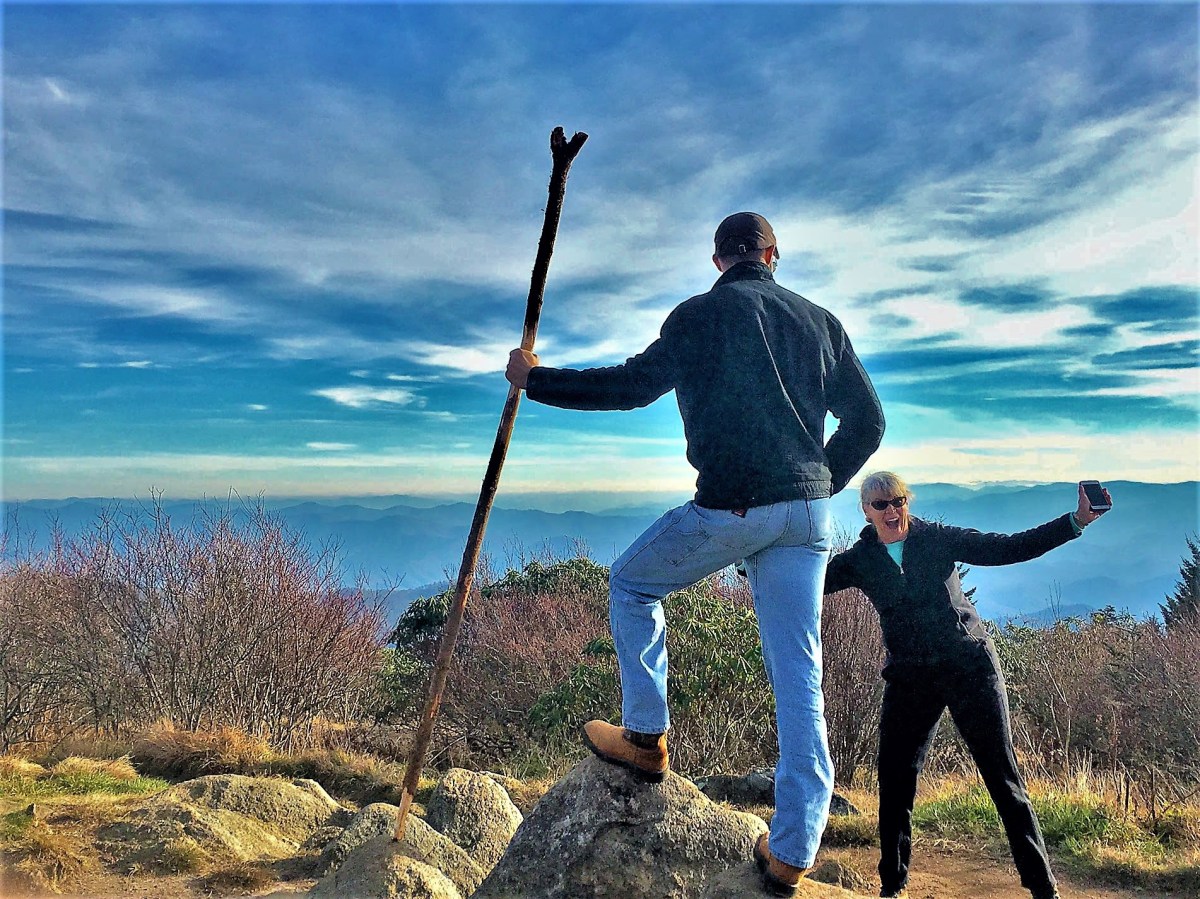
entry

An elaborate composition of wooden trusses embracing 425 windows gives an ethereal nod to a scripture and proverb mash-up of not casting the first stone in glass houses.

From the hillside, the chapel seemingly disappears among the flora,

camouflage

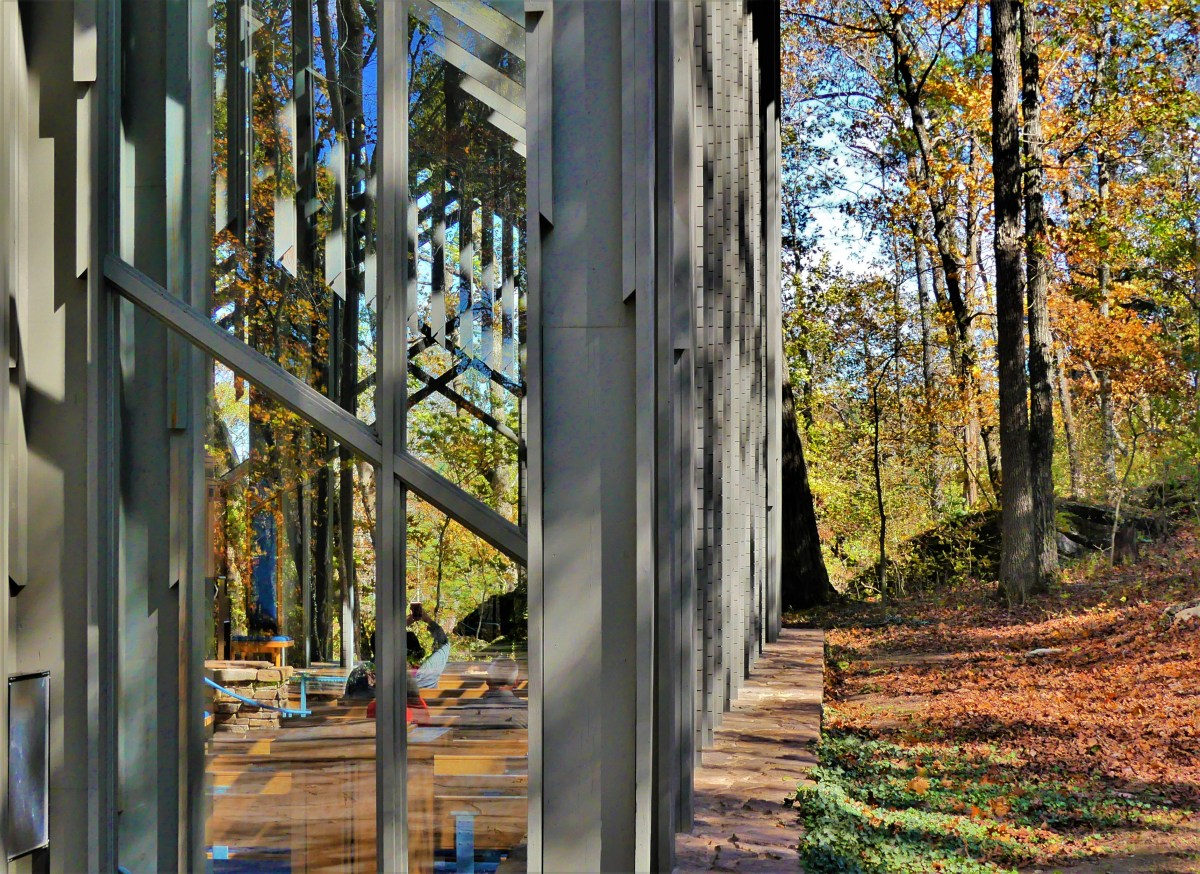
and when juxtaposed to the outdoors, the chapel’s transparency is flaunted by its six thousand square feet of glass.

looking outside in

However, the chapel’s connection to nature shines brighter from within the polished maplewood doors,

interior

where an arboretum of beams reaching forty-eight feet to the clouds…

inside out1

can be contemplated and photographed from a distant pew. (Photography is allowed, but only from a sitting position.)

pews and lights

But Thorncrown Chapel is more than a beautiful building. It’s a celebration of Jim Reed’s spirit and vision, and a noble tribute to the glory of his resignation to a higher power.


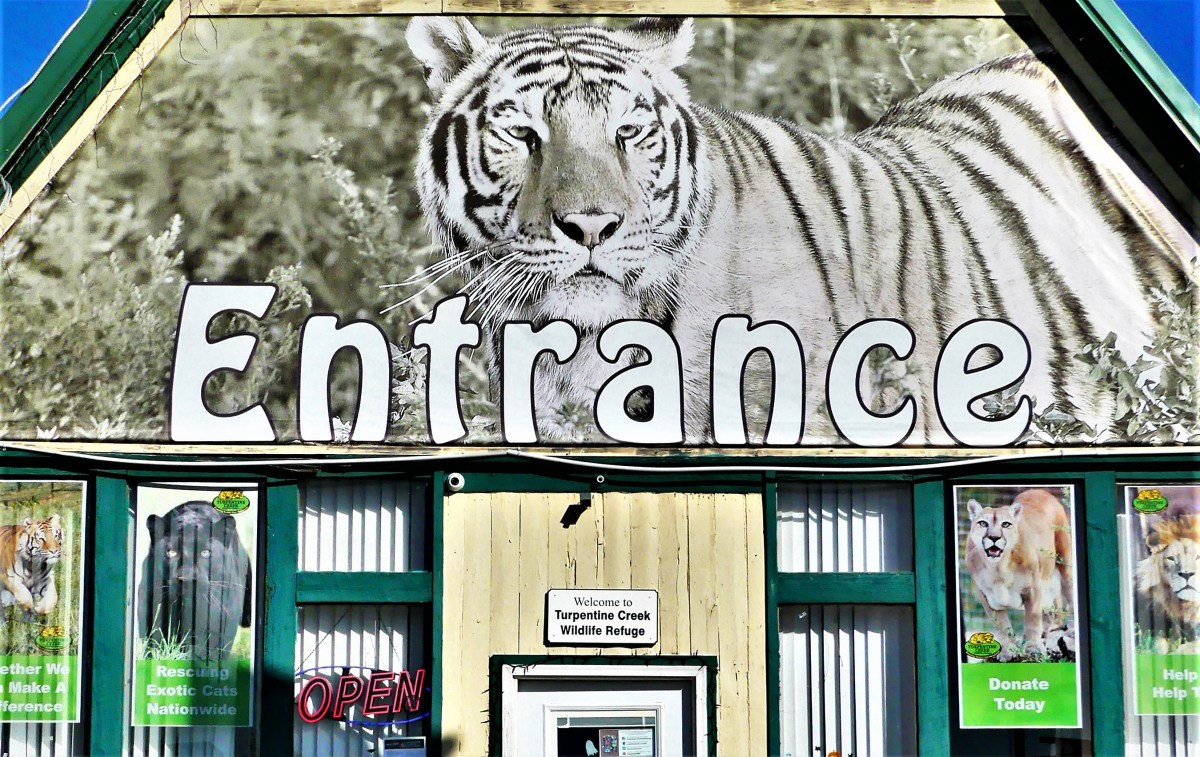
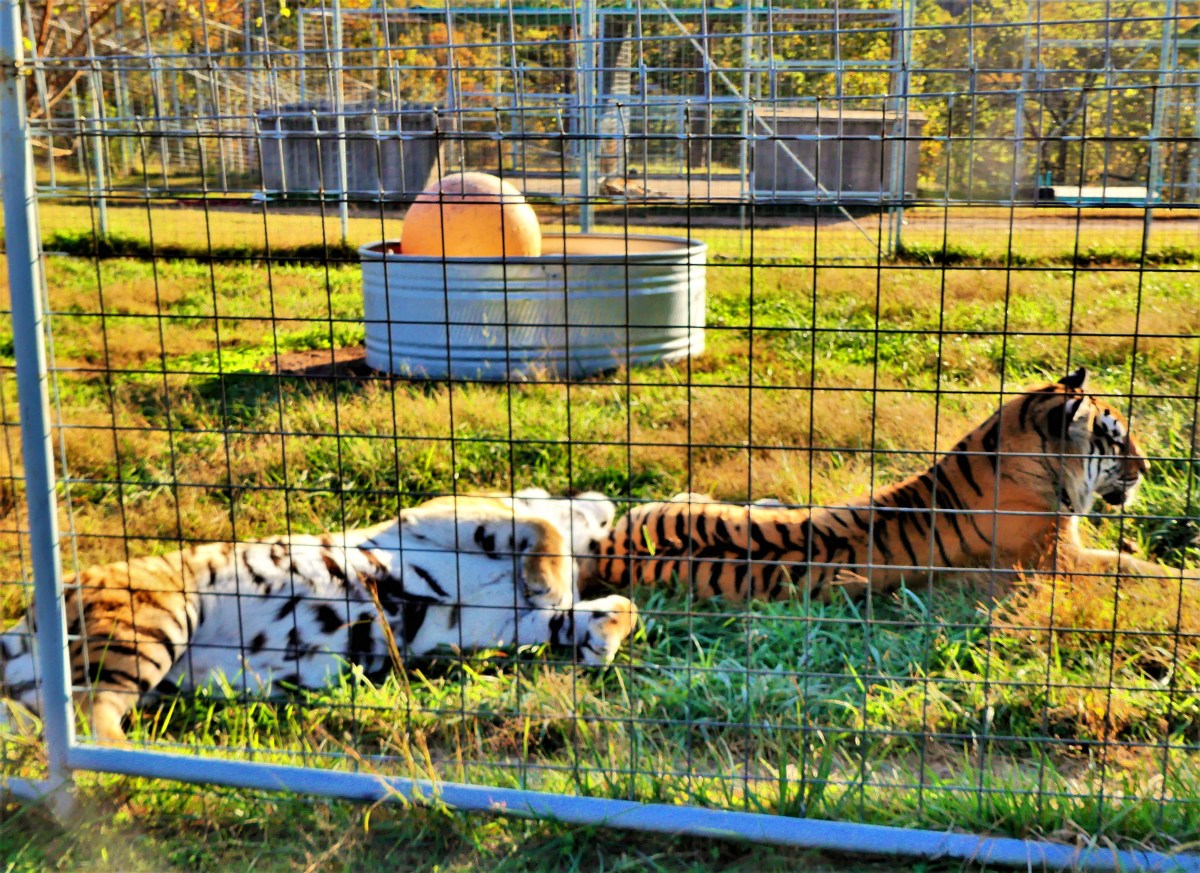
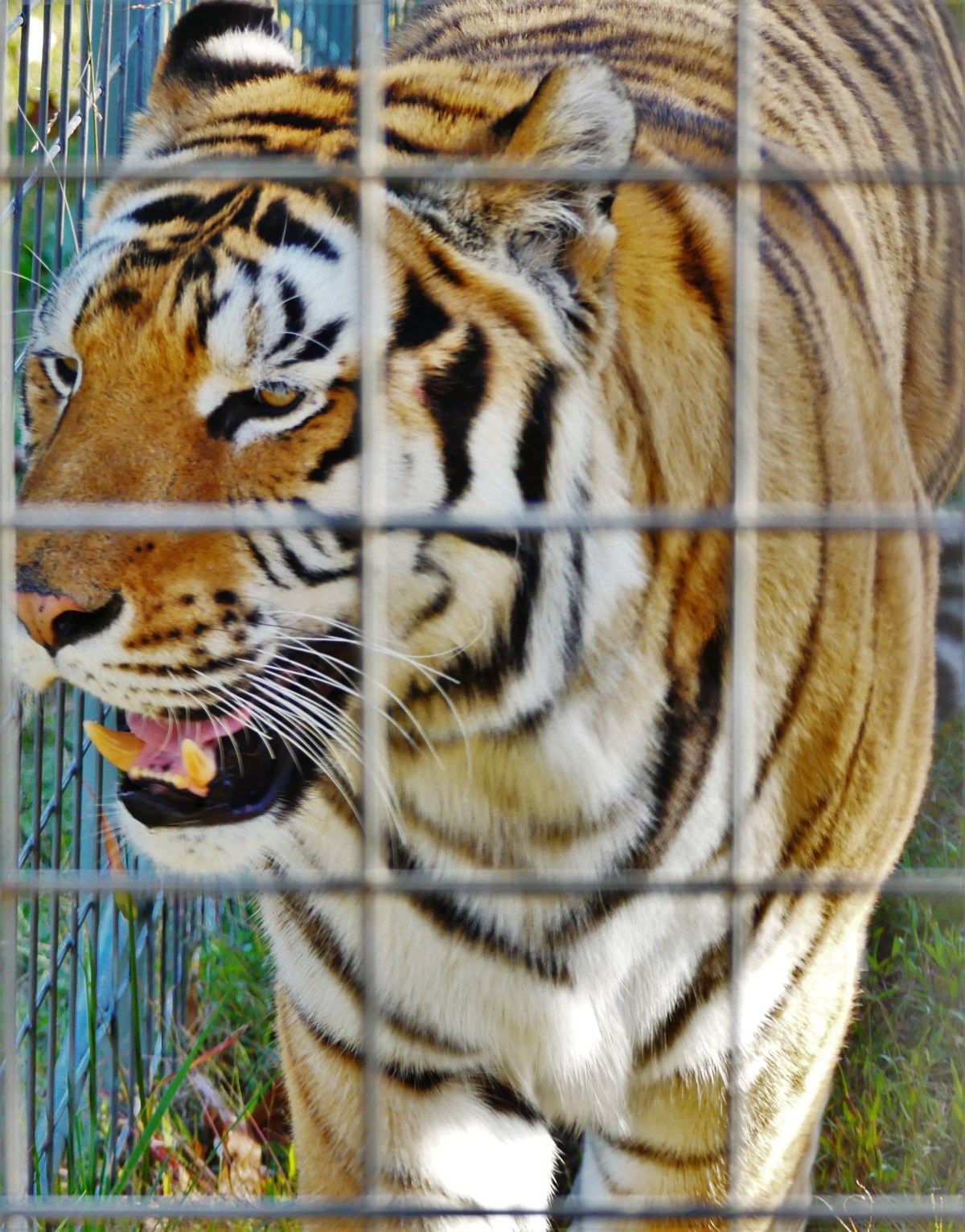
Lastly, eleven miles south, on the edge of Eureka Springs, AK, Turpentine Creek Wildlife Refuge provides shelter and care to abandoned, abused, and neglected wildcats, whose owners have miscalculated the cost and trouble of raising and breeding them in captivity.

entrance1

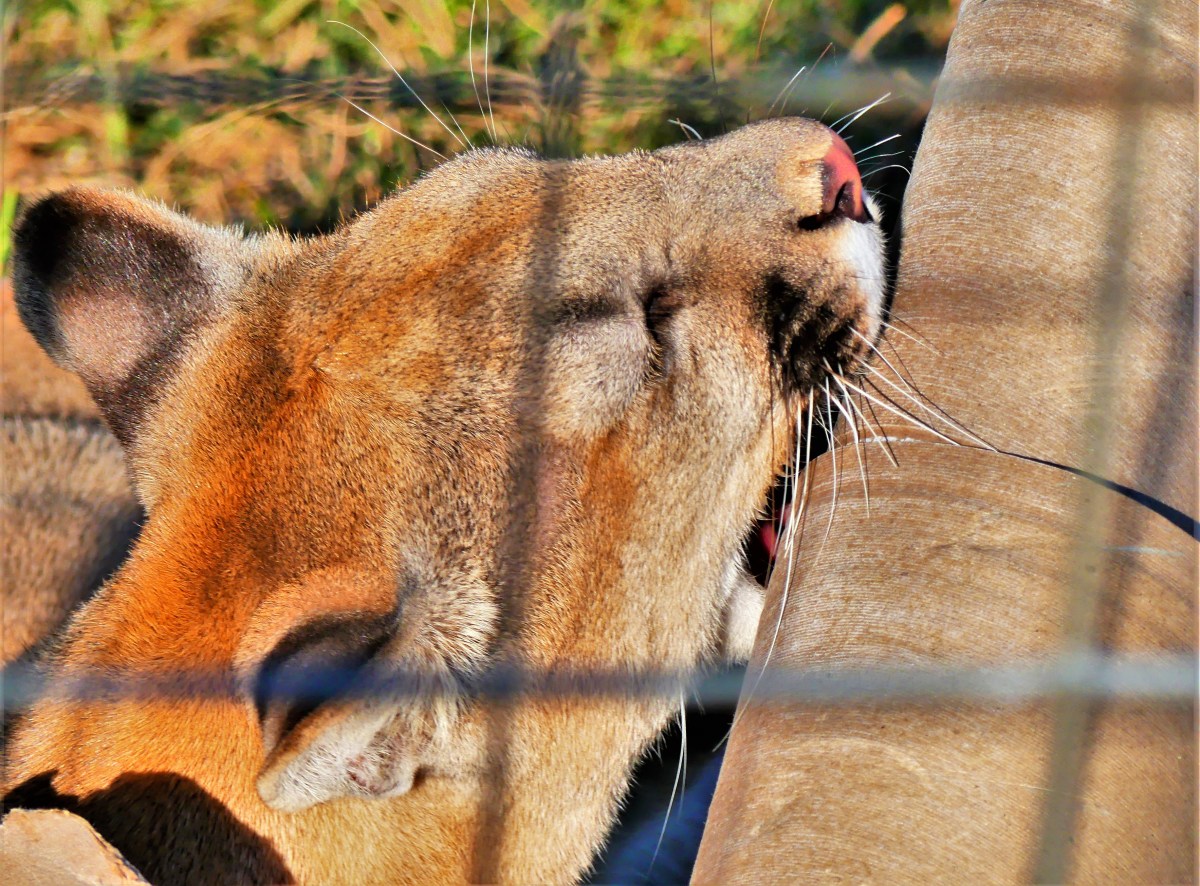
Currently, Turpentine Creek has become a haven to 100 lions, tigers, ligers, and cougars like Nala and Brody.

Natural habitats built with benefactor dollars provide asylum to big cats,

2 tiger habitat

who are now free to live out their lives in a protected environment,

2 tigers

while being offered preventative and emergency medical treatment.

tiger repose

These cats cannot be released into the wild,

tiger habitat

as they’ve lost their ability to fend and defend after being declawed by their owners,

cougar gnawing on cardboard tubing

who in their ignorance and arrogance wished to make them less dangerous to handle as one-time pets.

white tiger

Nevertheless, a cadre of volunteers assists a small staff in feeding, cleaning, examining, and behavior-modifying these beasts. Thus, providing each big cat with a humane existence.

Day-to-day operations are assisted through visitor admissions, gift shop sales, and donations by large corporations like Tyson, who feeds the herd 300,000 lbs. of chicken every year.
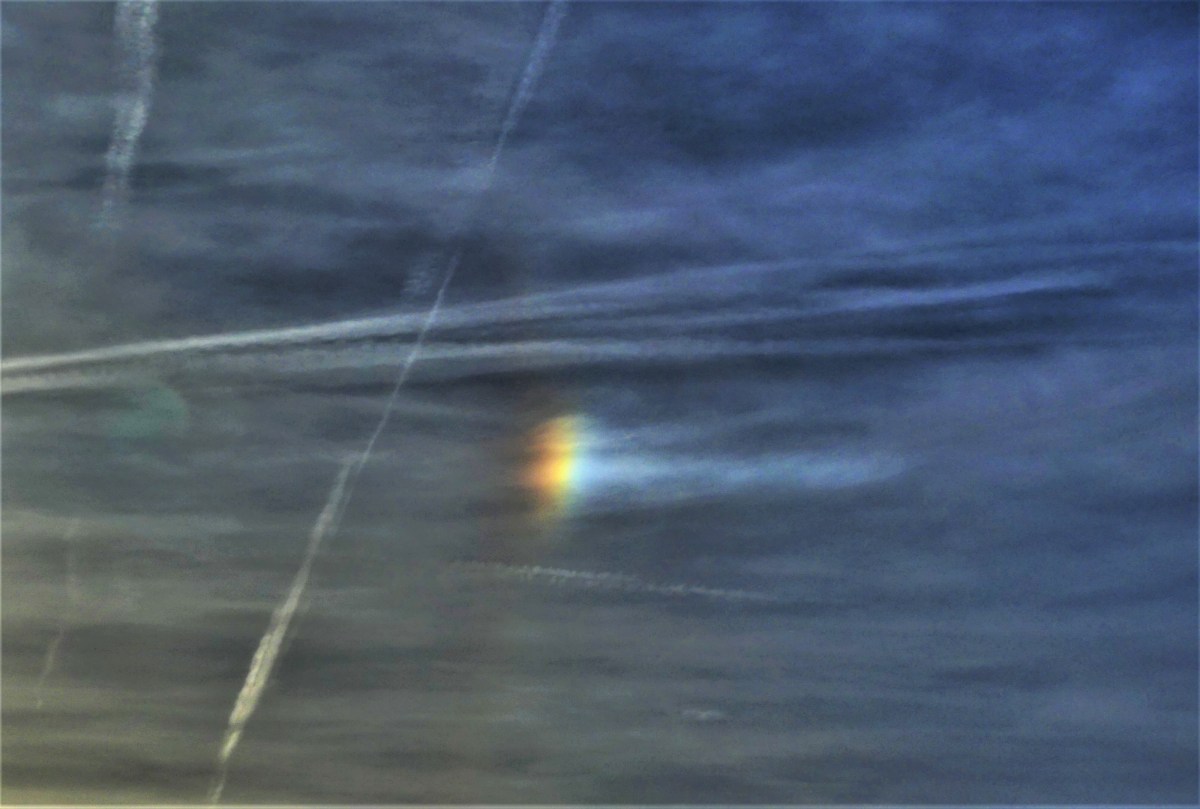


Sanctuaries of thought, redemption, and protection offer safe places to learn, to reflect, and retire to. Remove anyone of them, and society faces a danger of turning in on itself, further sewing the sleeves of divisiveness.

Better still, offering asylum to the millions of struggling homeless across the country, and persecuted refugees around the world would improve their safety and dignity, and allow more of humanity to participate in their own recovery.

Palo Duro Canyon Tailwinds

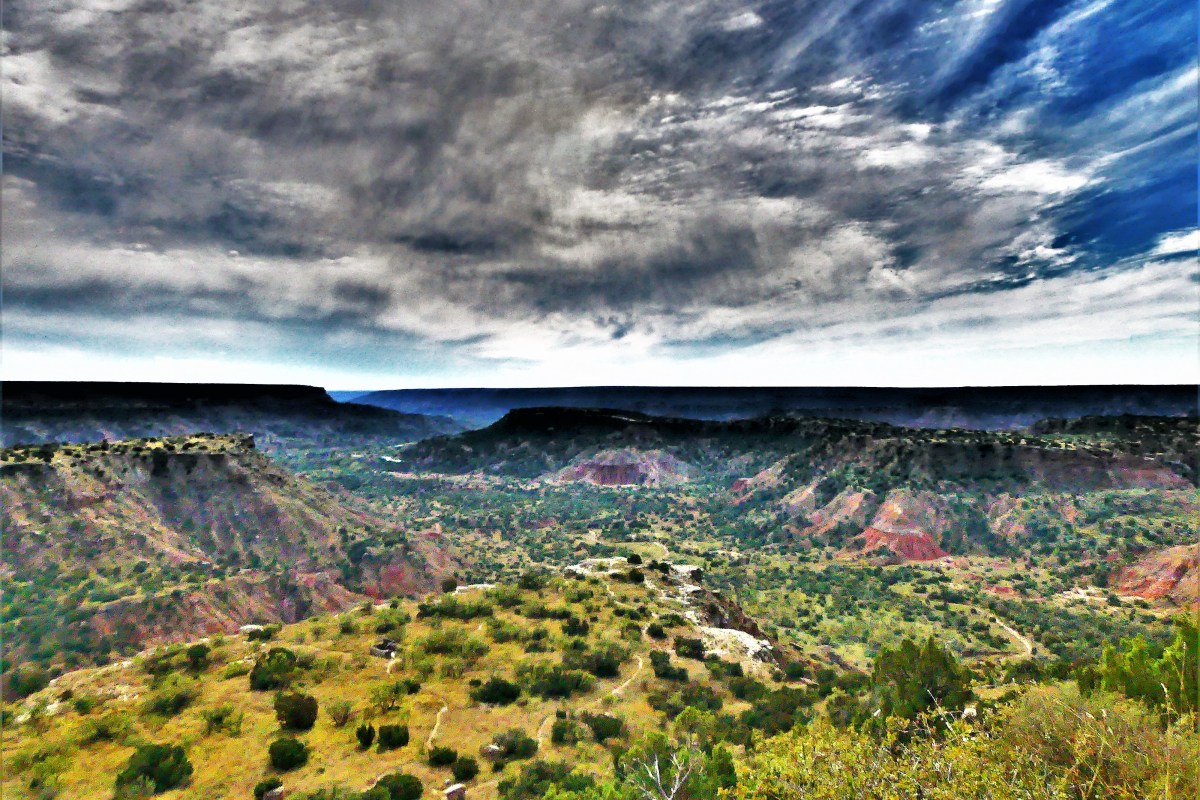
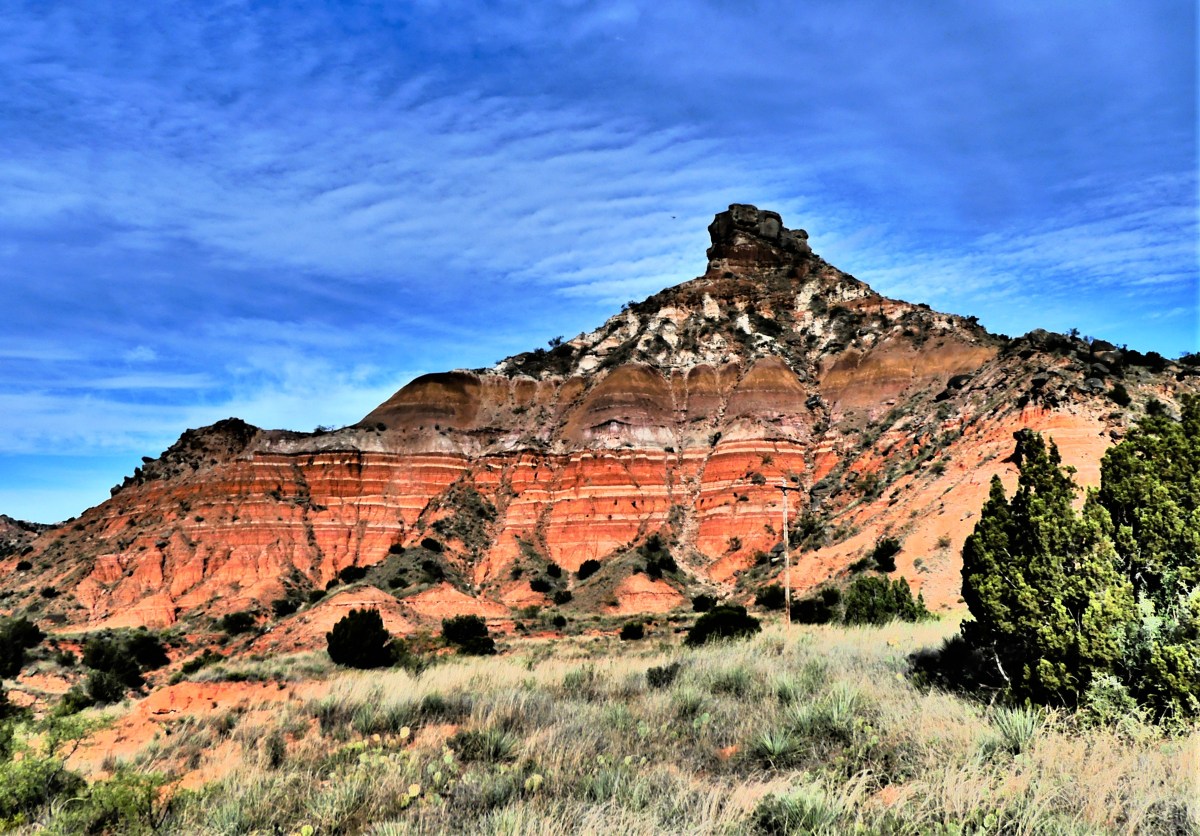
Wouldn’t you know it?! Texas has a Grand Canyon of its own in the middle of its panhandle called Palo Duro. And the best way to see it is from the saddle of a horse while riding at the bottom of the canyon floor.

We’d been wanting to go horseback riding for the past few months, but something always interfered with our plans, or time wouldn’t allow. But Leah was determined.

“If you can ride in a balloon, then I get to ride a horse,” she declared.

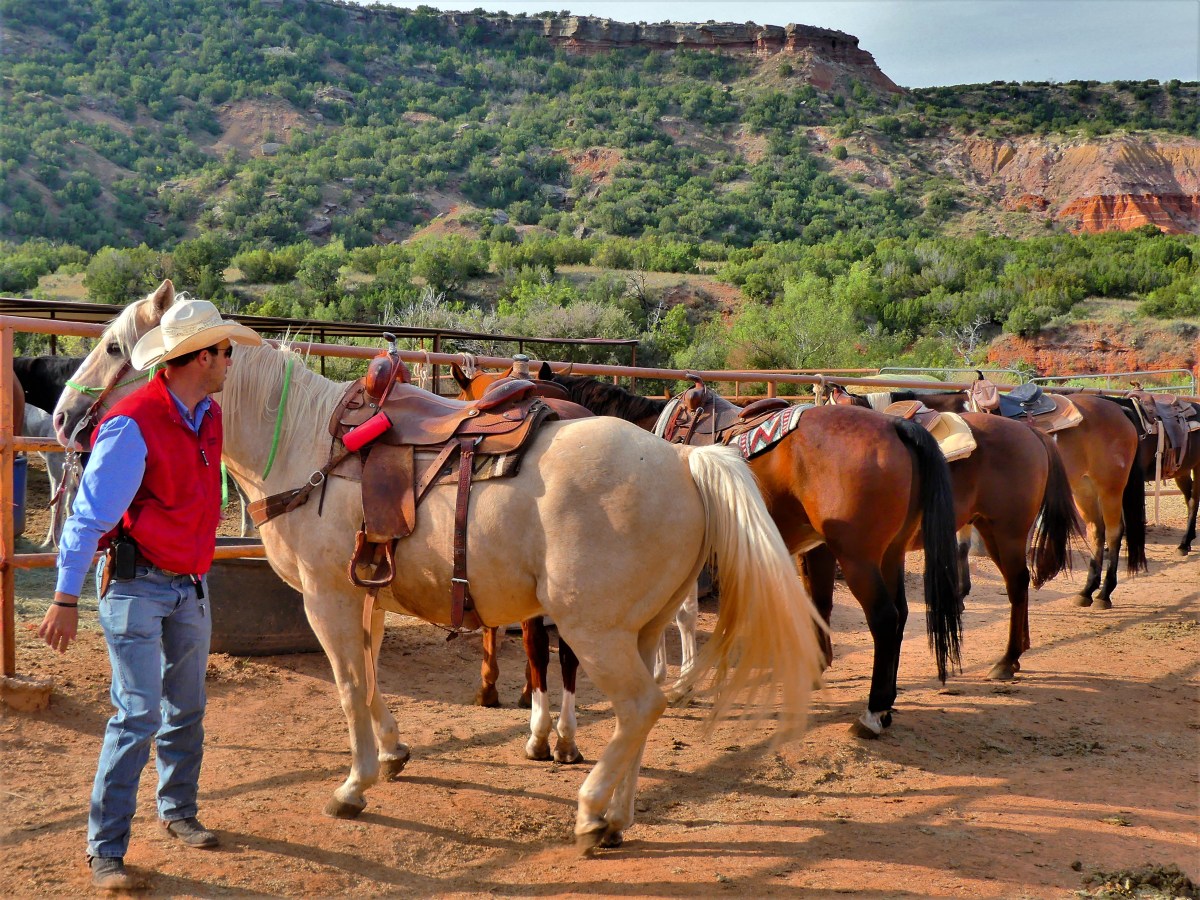
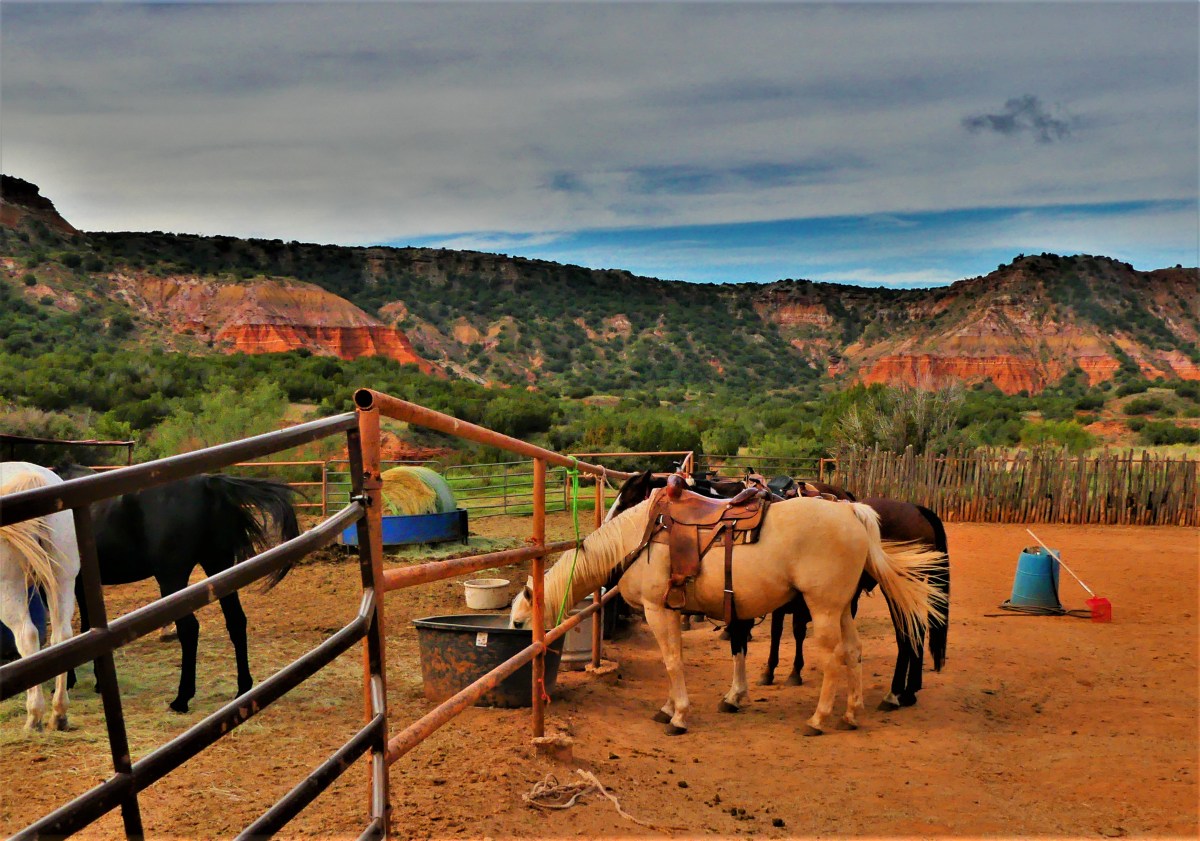
And true to her word, reservations made on Thursday got us an early ride time with Jennifer at Old West Stables inside the state park.

stables

stables1 (2)

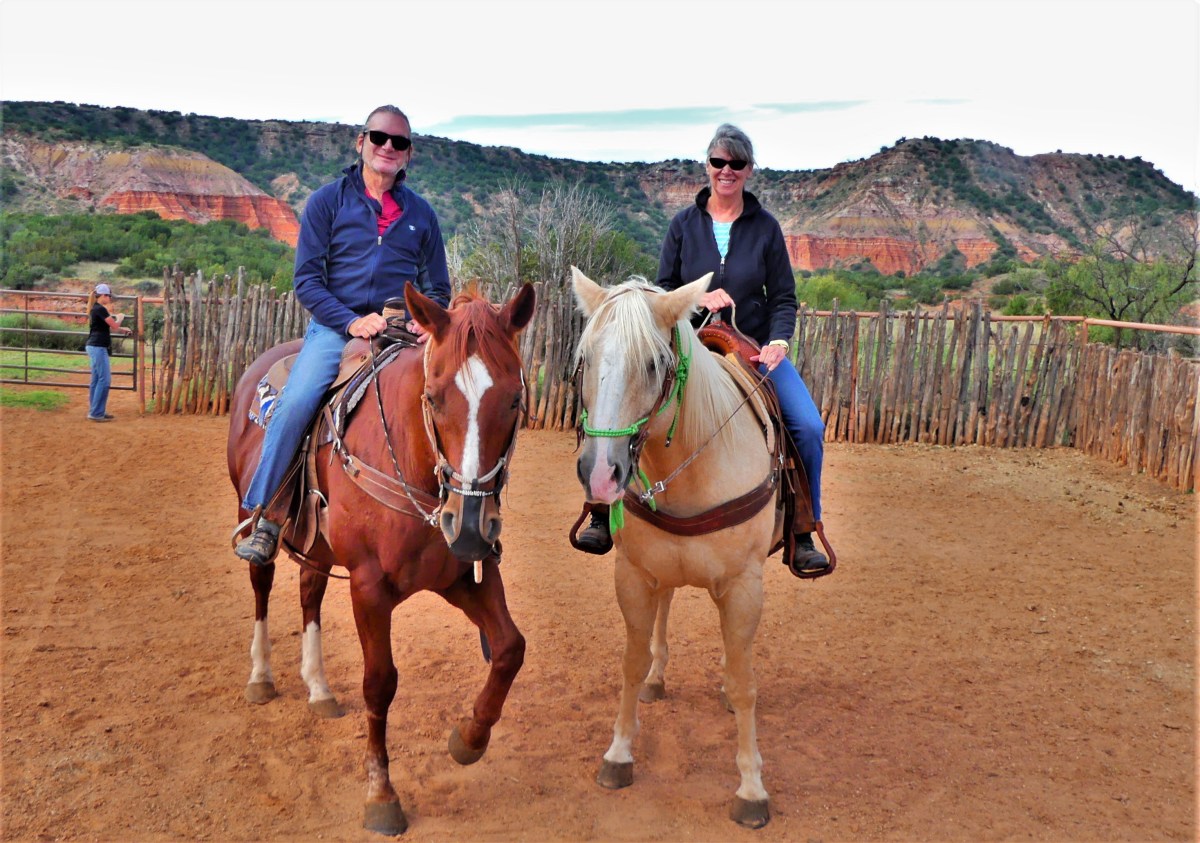
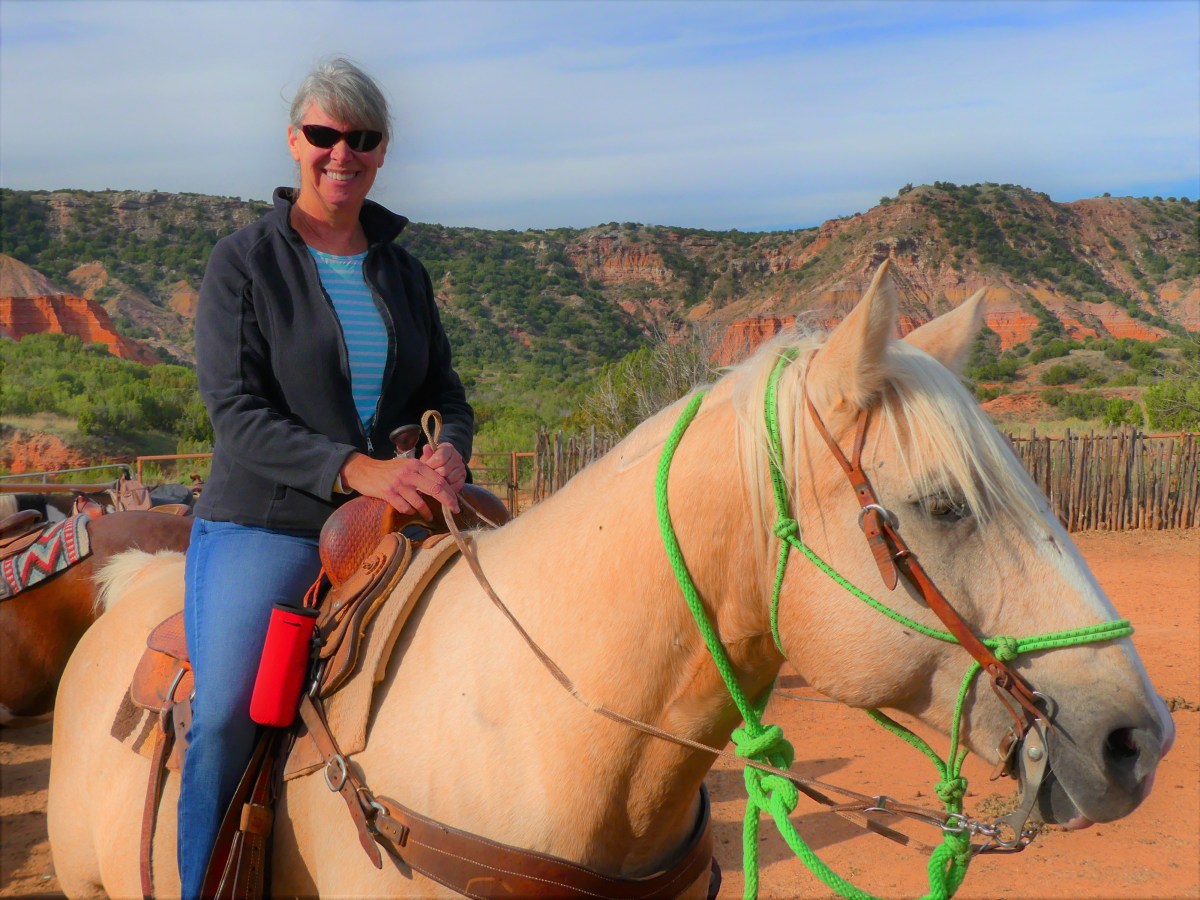
We mounted Buster and Lloyd,

our ride

and rode along an unmapped equestrian trail that took us along the foothills of the canyon walls…

on the trail2

and through the hills and ravines of a basin carved by the Prairie Dog Town Fork of the Red River over one million years ago.

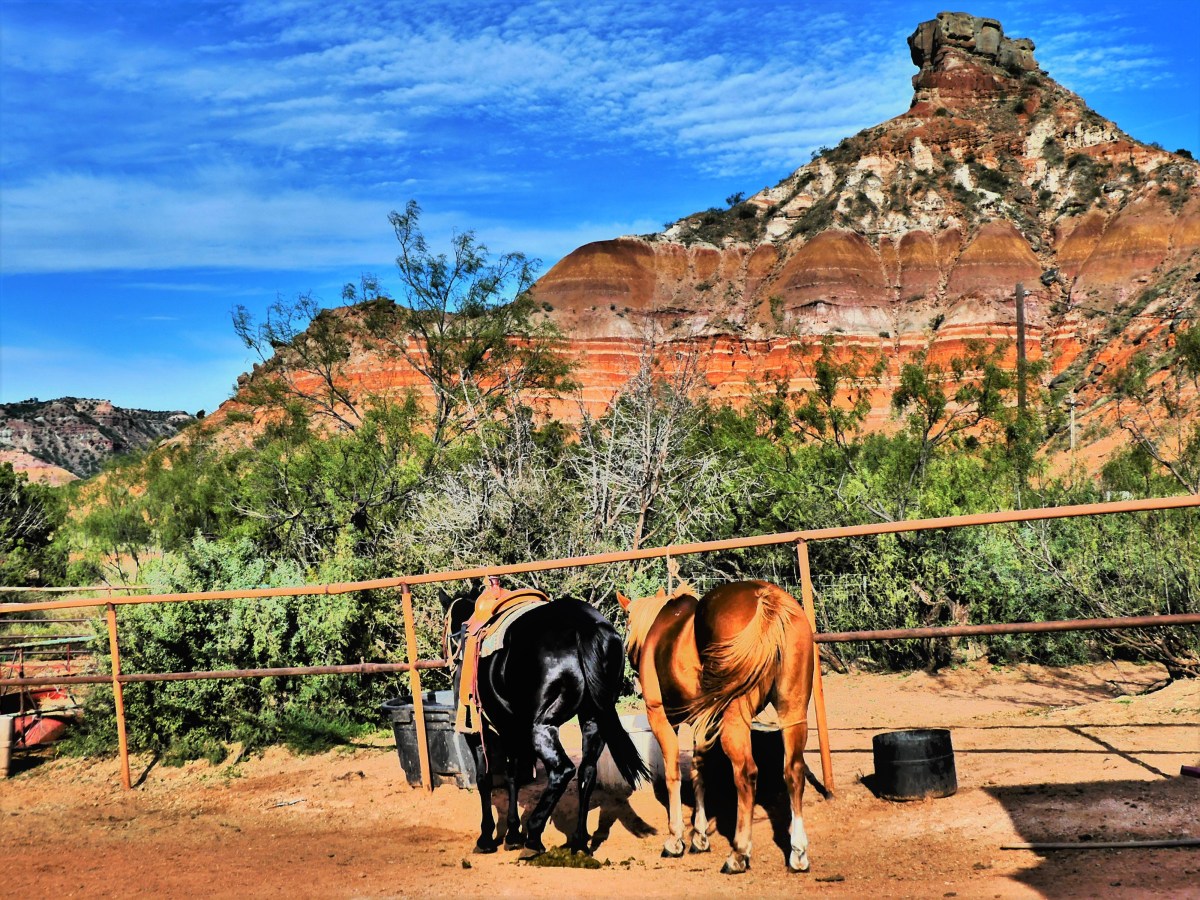
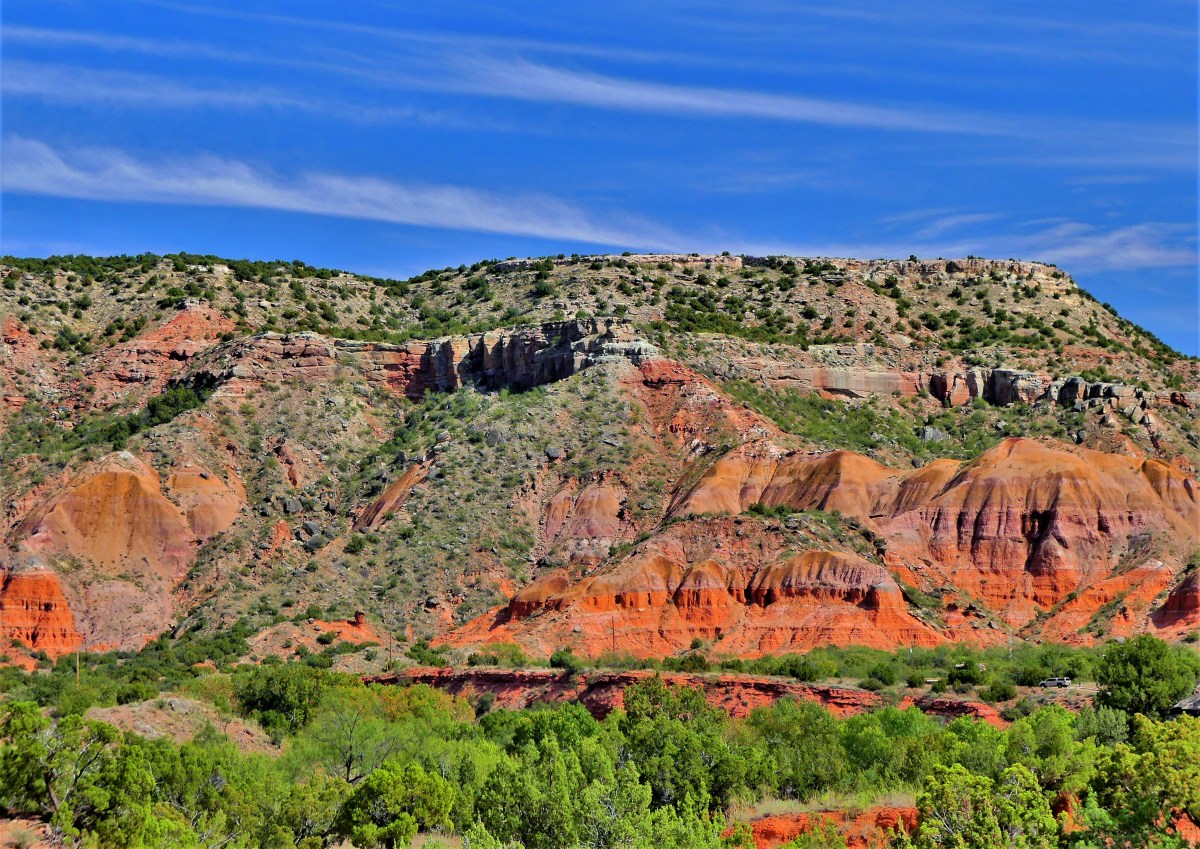
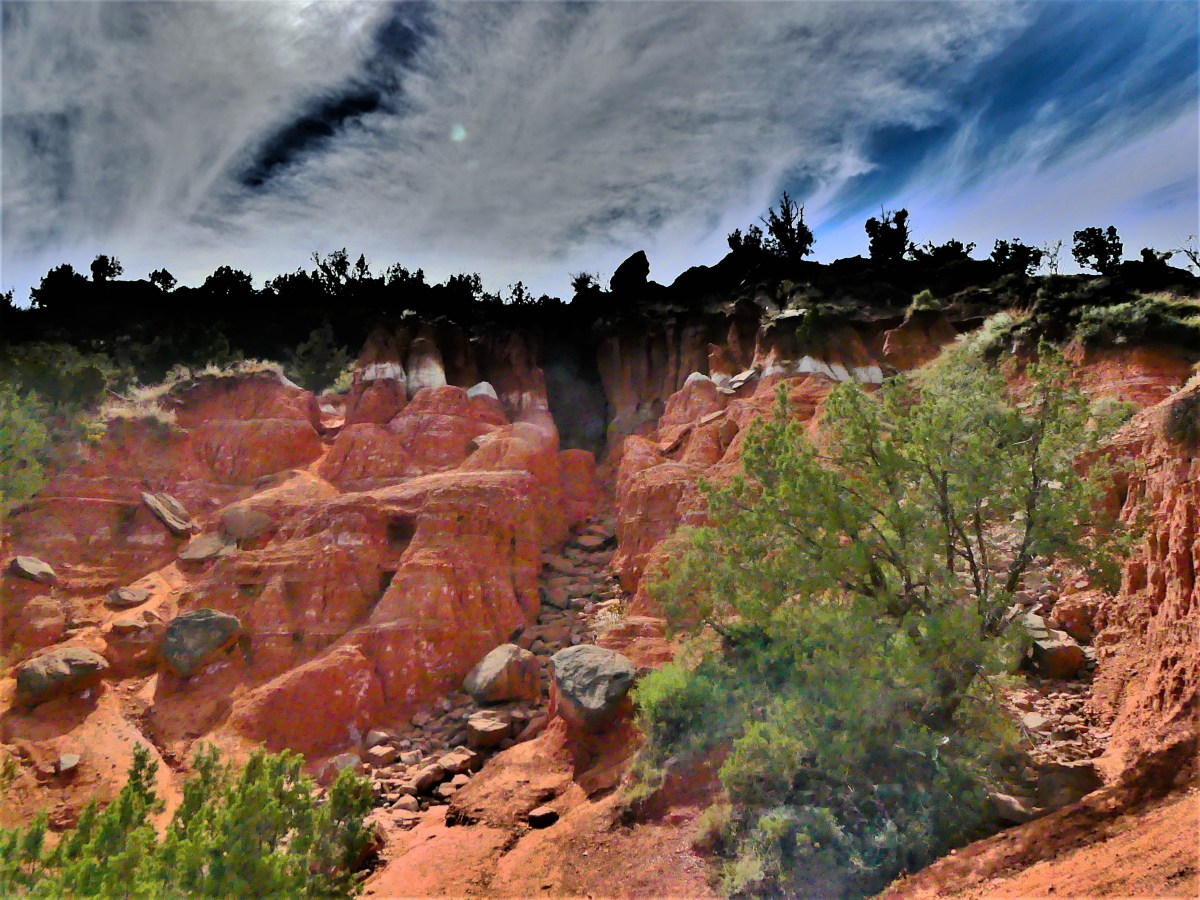
We passed colorful rock formations resulting from a geologic compression of four distinct periods layered over the course of 250 million years.

canyon wall.jpg

While I enjoyed the scenery, and the quiet of the canyon,

canyon peak

canyon strata

I had the disadvantage of riding behind Leah’s horse, Lloyd.

Leah and Lloyd

Lloyd was a farter who always positioned himself behind the lead horse.

on the trail3

And no matter how many times I tried to hold Buster back…

on the trail4

…we would always find our way back behind Lloyd’s swishing tail,

Buster follows too closely

where Buster was always greeted with a slow and steady current of foul wind, followed by an evacuation.

The hour passed as easily as Lloyd’s breakfast, and we found ourselves back at the stable, in time for Lloyd’s lunch.

back at the ranch

Once finished, we took a ride back to the lodge at the top of the canyon for a better perspective of the second largest canyon system in America,

canyon vista1

overview detail

before returning to the basin’s scenic road to explore the Big Cave,

BC trail

an opening in the red rock that’s not as big as it’s unusual.

cave entrance

cave mouth1

Big Cave inside out

cave opening (2)

The Texas panhandle is as flat as a cowpie, and wide as the open sky.

Airstream sunrise1

Thankfully, Palo Duro Canyon provides some variety to a linear landscape, and adds some color to a pale prairie palette.


Balloonatic

“$450 for a balloon ride?! You’ve got to be kidding” I exclaimed to the Rainbow Ryder rep on the phone.

“That’s the price, sir. We are the exclusive balloon ride provider for Balloon Fiesta, unless you’re willing to fly outside the ‘Albuquerque Box’,” she managed.

“What’s the ‘Albuquerque Box’? I inquired.

“It’s a weather phenomenon peculiar to Albuquerque,” she pointed out, “where the lowest winds move in one direction, while the higher winds are moving in the opposite direction. That way, our pilots can take advantage of the different air currents, by floating higher or lower, and return you close to your original launch point.

albuquerquebox
*courtesy of Drumlineramos

“Uh, Ohh-kay,” I shrugged, “and that’s worth $450?”

“That’s the rate for a balloon ride during Balloon Fiesta, sir. And I only have a few openings left for Saturday and Sunday,” she pitched.

“Your price is sky high,” I offered, “so I’m gonna have to think about it.” And this call was over.

I turned to Leah. “Looks like my balloon ride went from bucket list to “fuck-it” list.”

And that was a drag, since Balloon Fiesta is the largest gathering of hot-air balloons in the world, with more balloons lifting off together (mass ascension) than anywhere else.

Leah sensed my disappointment. “Maybe it’s cheaper if you found an outfitter outside the box. Would you still be interested?

“I think I could manage to get excited,” I lamented.

After a flurry of phoning and pricing, I secured a dawn launch on Saturday for $250 with World Balloon, albeit on the northwest side of town, miles away from the Fiesta.

Launch day bears all the markings for a picture-perfect take-off: early air temperature hovers in the mid-40’s; the wind is streaming from the north at 8 mph; and the sky is clear as shimmering water.

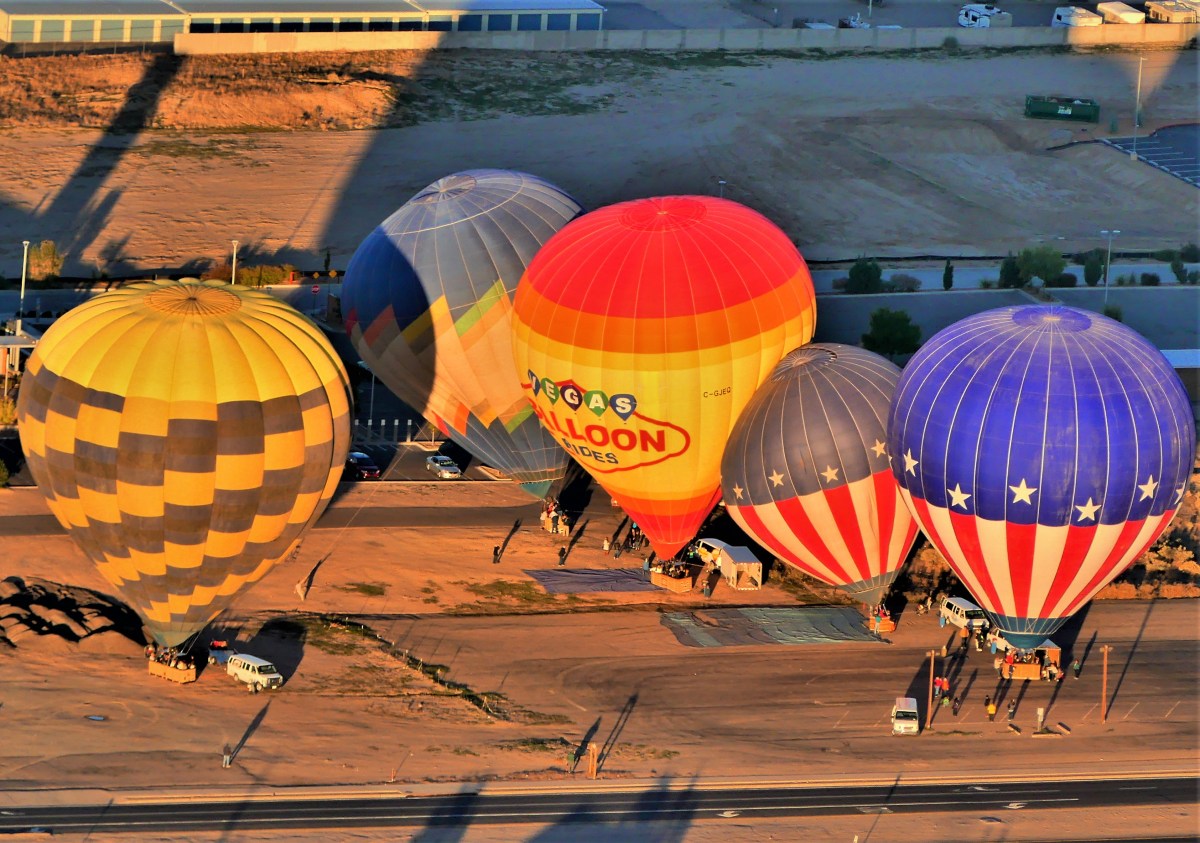
A group of fifty men, women, and children are sub-divided into five, and assigned to a pilot and his balloon crew. Each chase van carries two wranglers, ten passengers, and a trailer packed with gear. We congregate at a barren football-sized lot, and watch as five balloons are prepared for flight.

Baskets are unloaded,

unloading the basket

and assembled.

building the basket

The burners are tested.

testing the burner

With dawn breaking over the horizon, the balloon is unfurled, and rigged to the basket.

rigging the lines

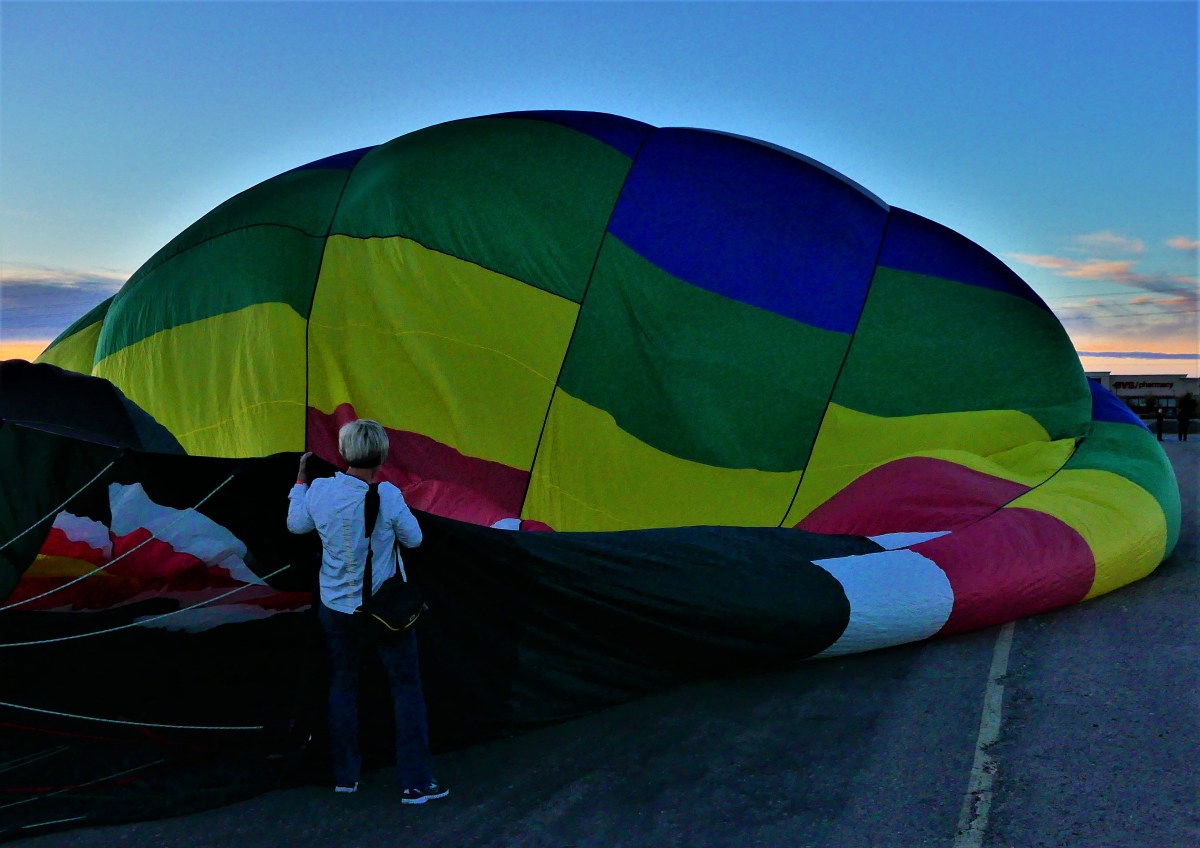
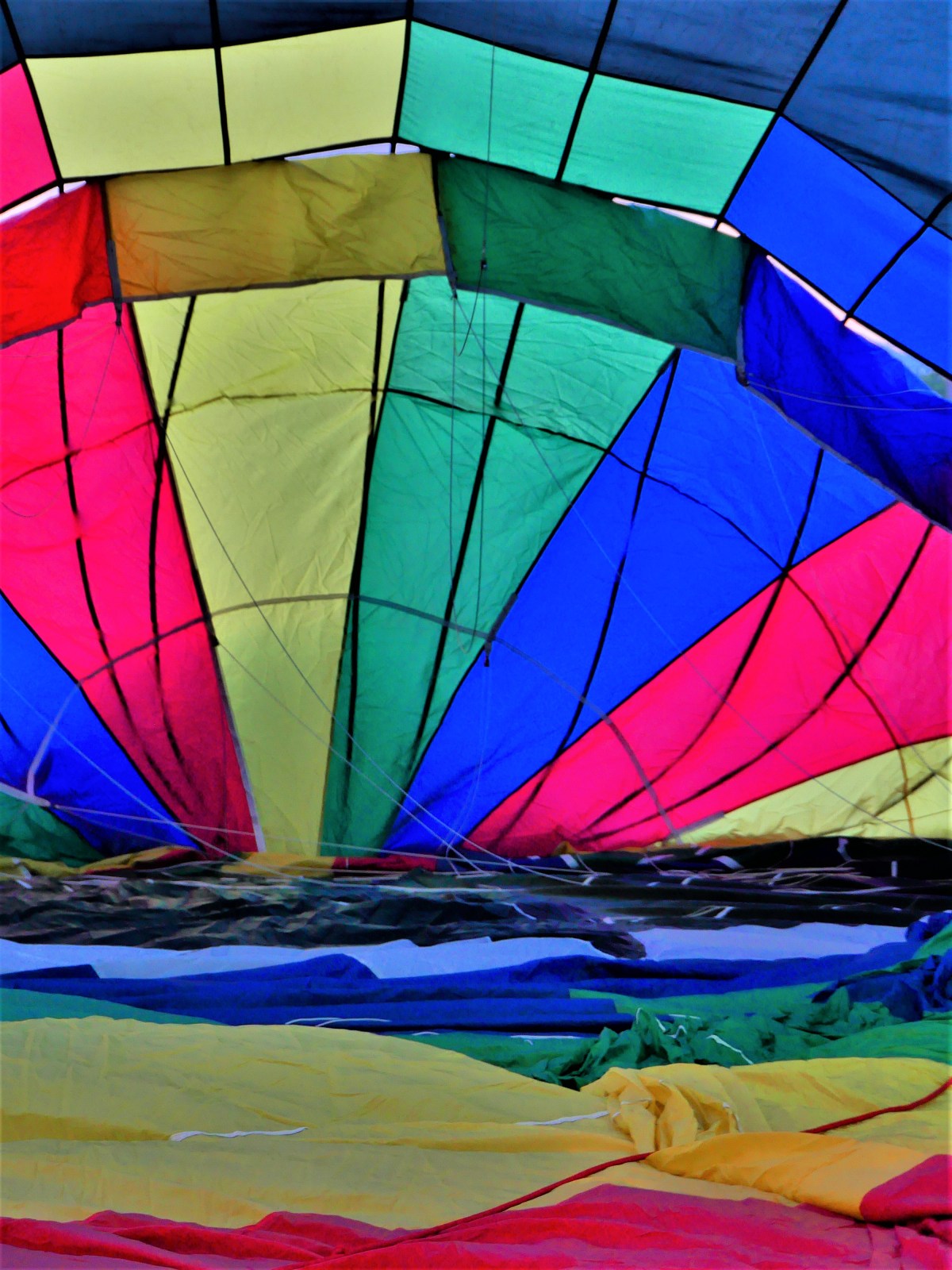
An industrial fan blows cold air into the mouth of limp polyester, and behold, the balloon takes shape.

dawn

raising the dome

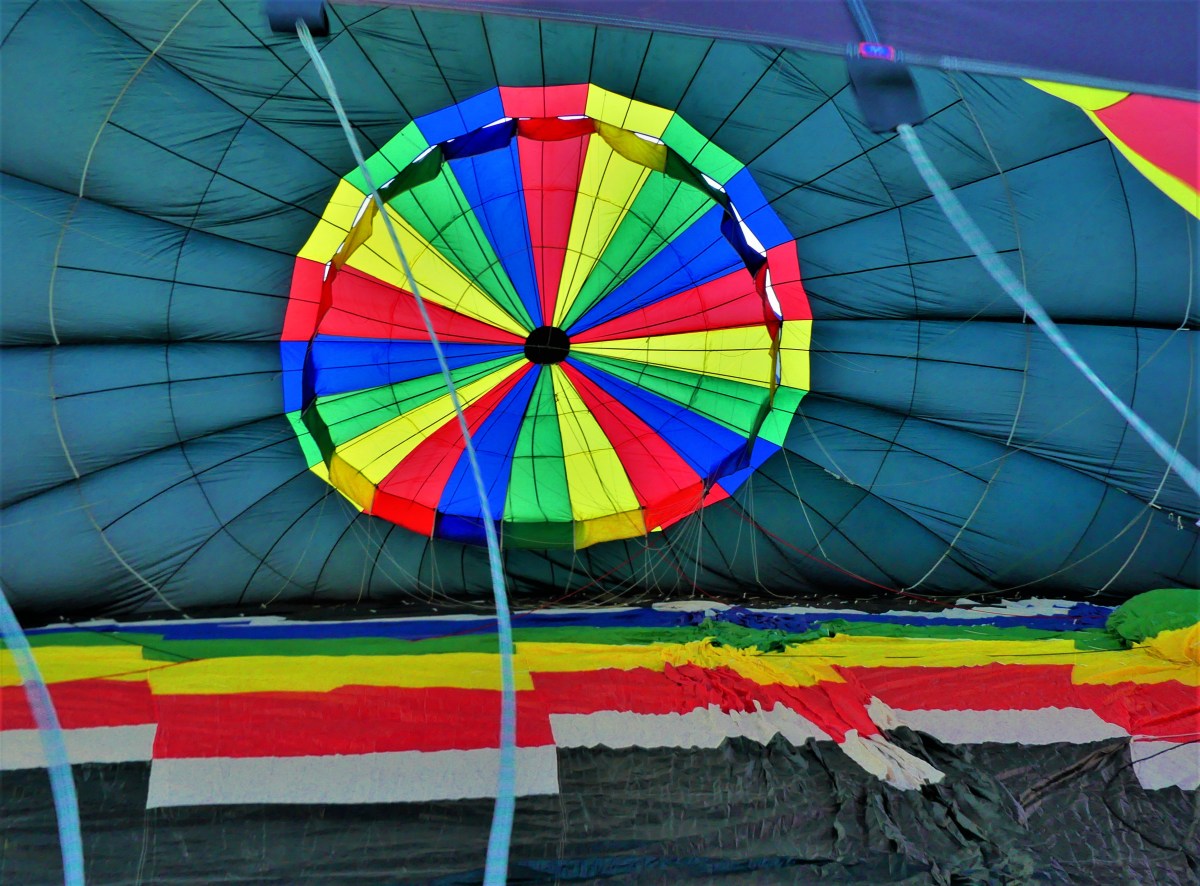
filling the balloons

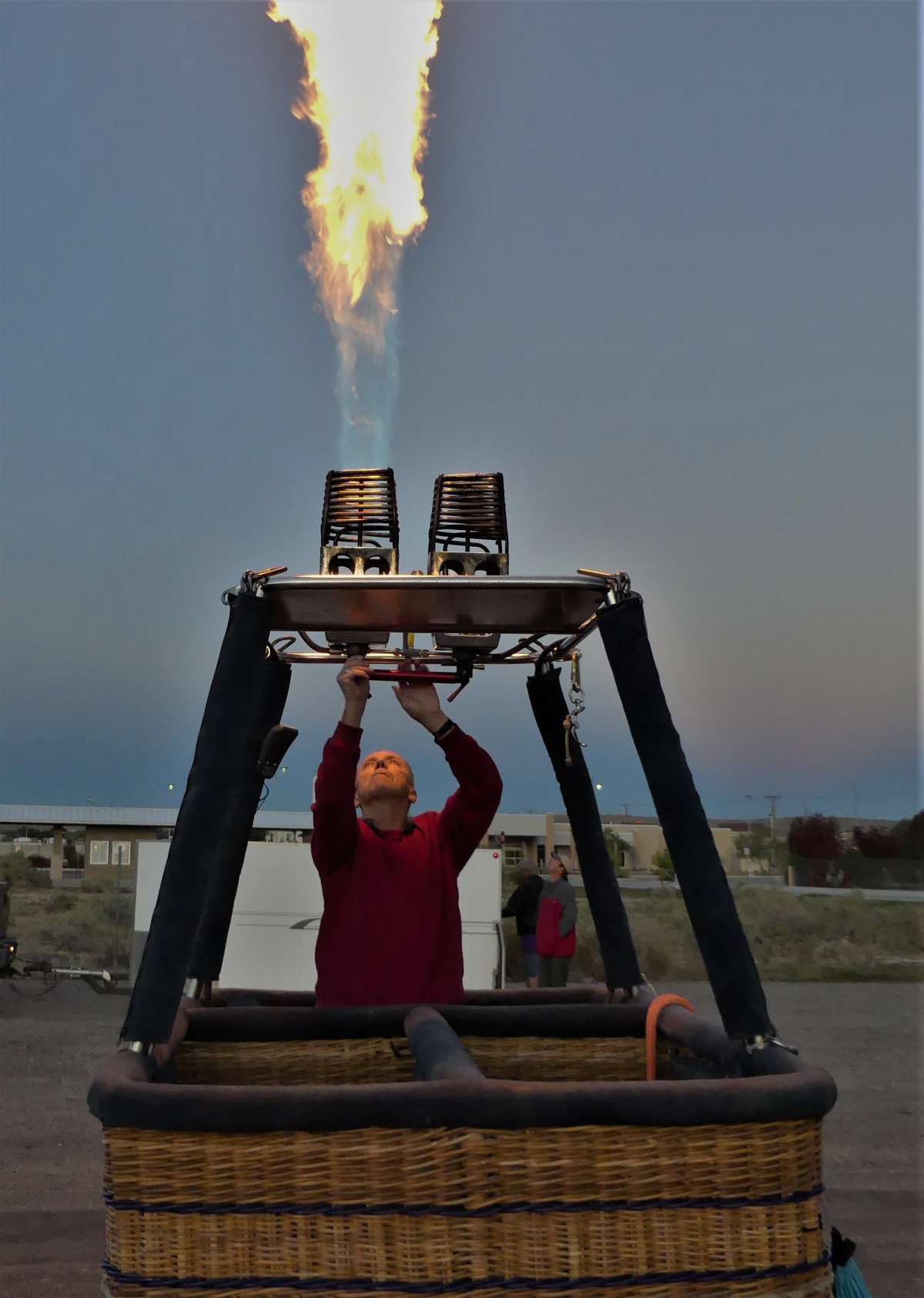
Roy aims the burner flame into the mouth to heat the air,

lighting it up

fire and rigging

and eventually expands the envelope to fullness.

inflation

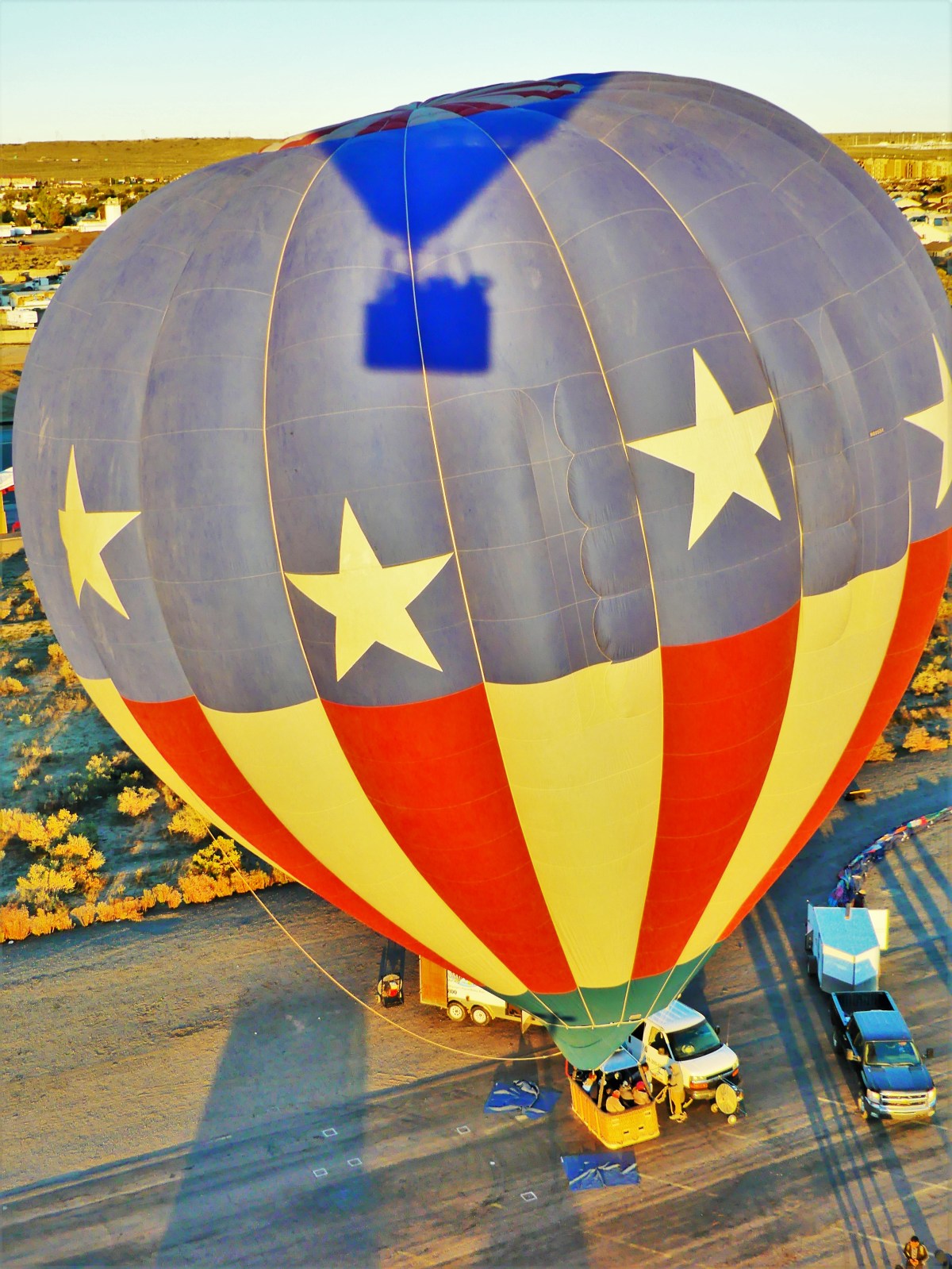
The buoyant balloon rights itself,

sunrise

and the six of us scramble inside to bid adieu to terra firma, and gently float away…

aloft

…one step ahead of a second balloon.

balloon sun glow

All the while, balloons below…

balloon party

…are preparing to follow our Airstream (wink wink, nod nod).

USA balloons

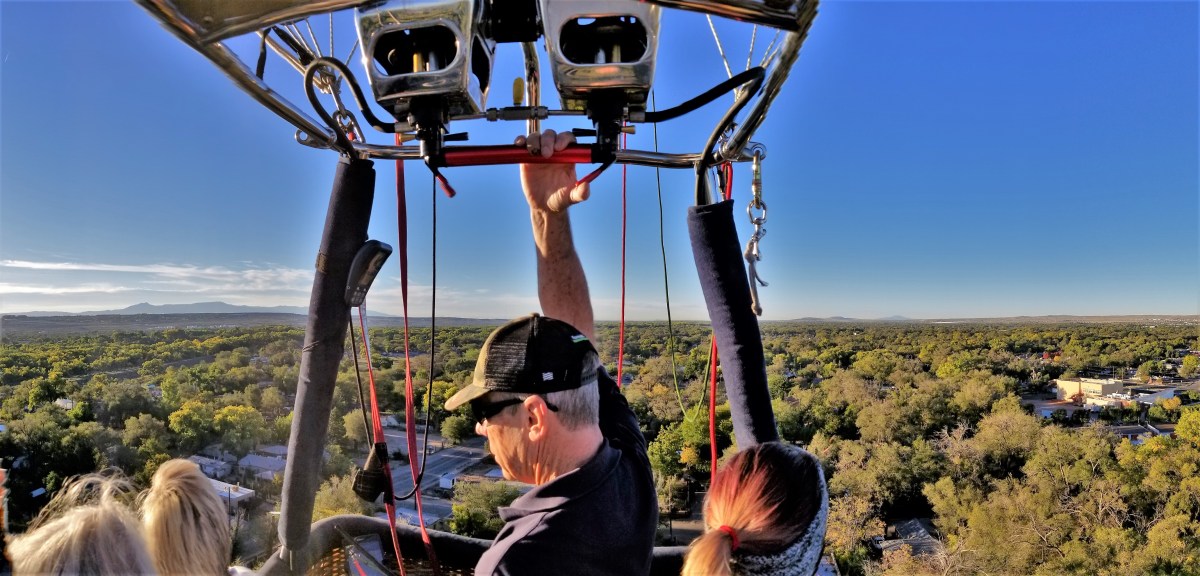
Our pilot, Roy pulls on the burners,

Roy the pilot

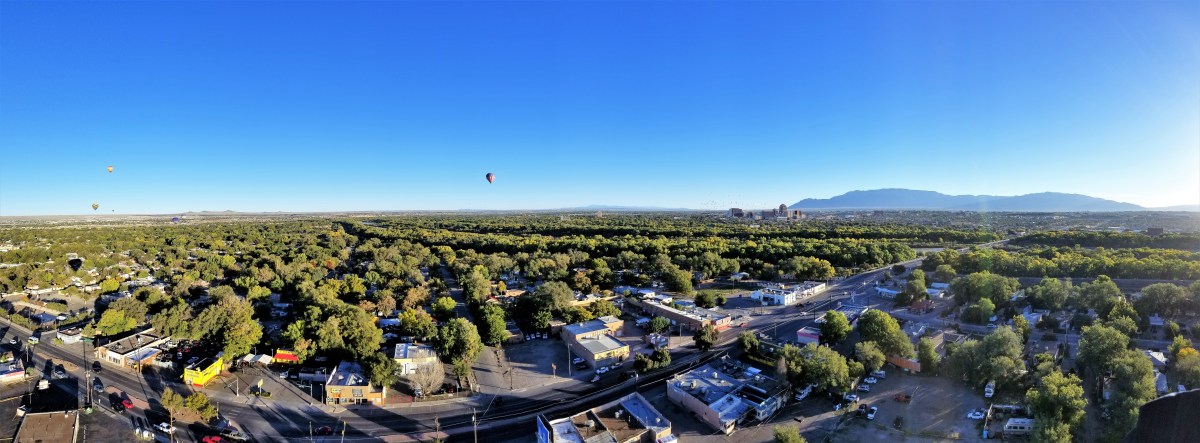
carrying us to 5000 ft. above the treetops,

fiesta panorama

where a birds-eye view of the valley below,

self portrait.jpg

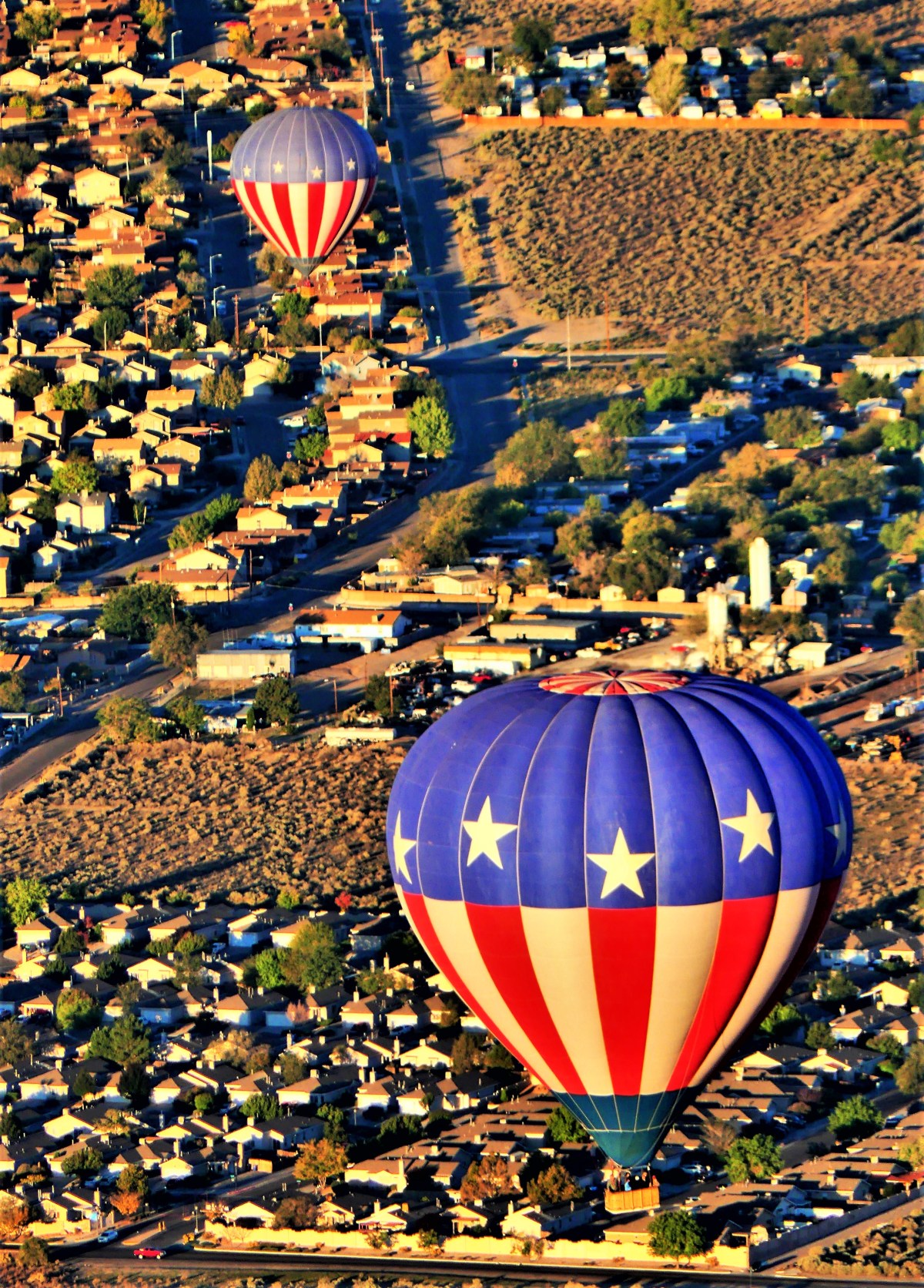
reveals a cityscape punctuated by fantastic dots of floating colors.

Balloons over Albuquerque (2)

Yet closer inspection reveals the full dimension of a multi-colored mushroom gliding through an azure sky.

baloon portrait

After forty-five minutes of soaring and dipping through neighborhoods–arousing excitable dogs,

annoyed dogs

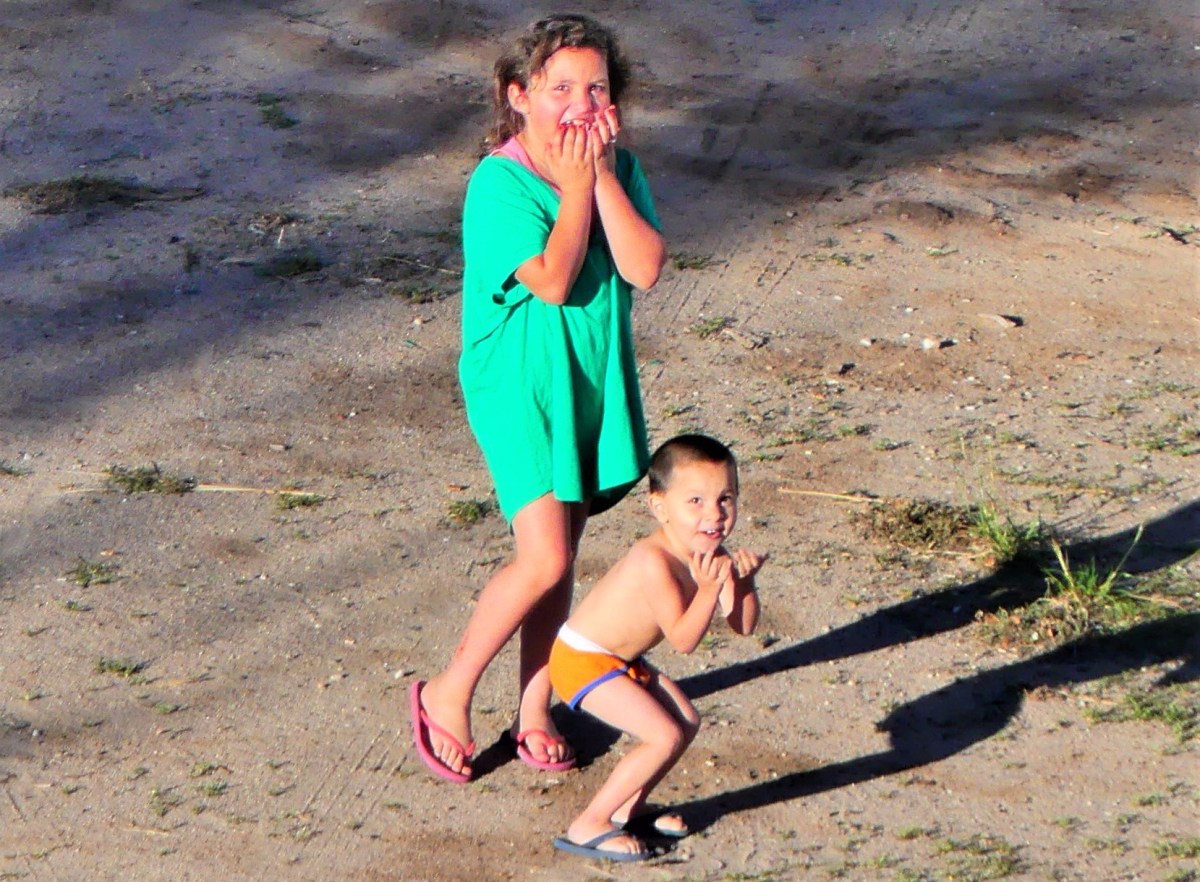
and adoring children–

delighted-children.jpg

Roy is tasked with finding a landing site along our flight path–wide open and away from wires–and accessible to the chase team who’s been following us since our launch. After a few false starts, we locate a large house devoid of landscaping, and gently settle back to earth.

attempting to land (2)

However, a chain-link fence lines the perimeter, and a locked gate gives us no way out. A woman from Birmingham, AL vaults over the side of the basket and runs to the front door to alert the owners to unlock the gate, but nobody’s home.

So it’s back in the air, with the van in pursuit, until we mobilize at a strip mall.

landing place

crew pulling us in

After a quick exchange of passengers (six out and four in), our balloon is re-released with its second set of aeronauts,

group 2 on board

drifting higher into the blue yonder.

group 2 aloft

Fifty minutes later, the vacant parking lot beside the church provides the perfect setting for a second re-entry.

holy touchdown

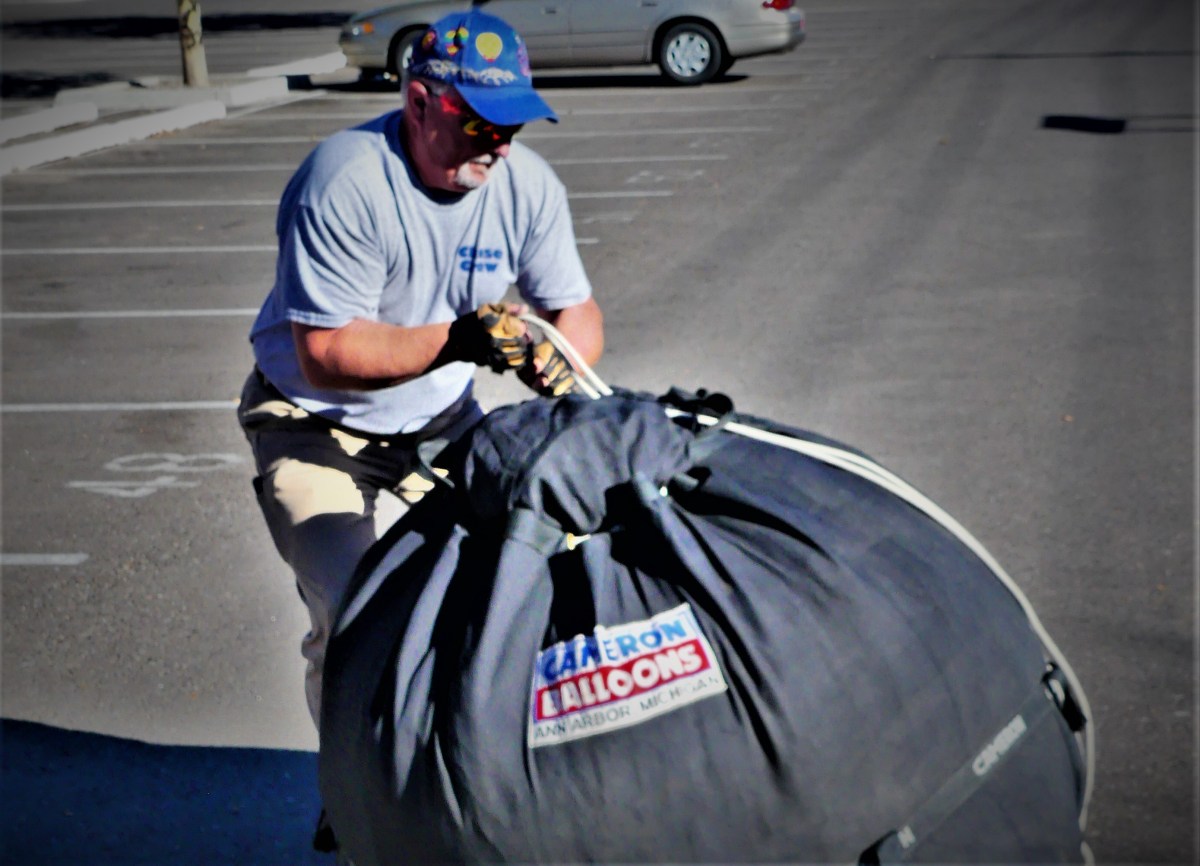
Whereupon, the balloon is quickly collapsed,

gathering air

and folded,

wrangling the rigging

and packed away, until next time.

wrapped up

Back at base camp, it was time for a champagne toast, and a recitation of the balloonist’s prayer:

The winds…

flight certificate

I loved it, and I’d do it again. I guess that makes me a balloonatic.


Cadillac Ranch

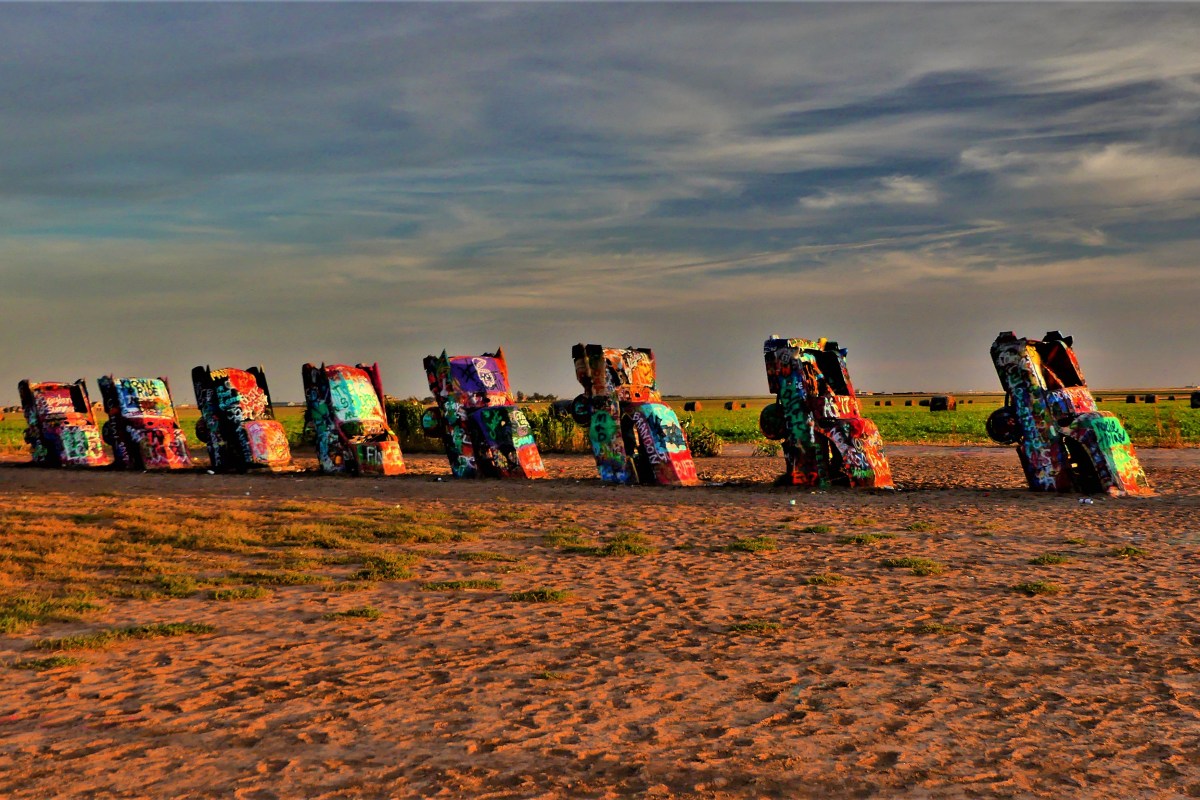
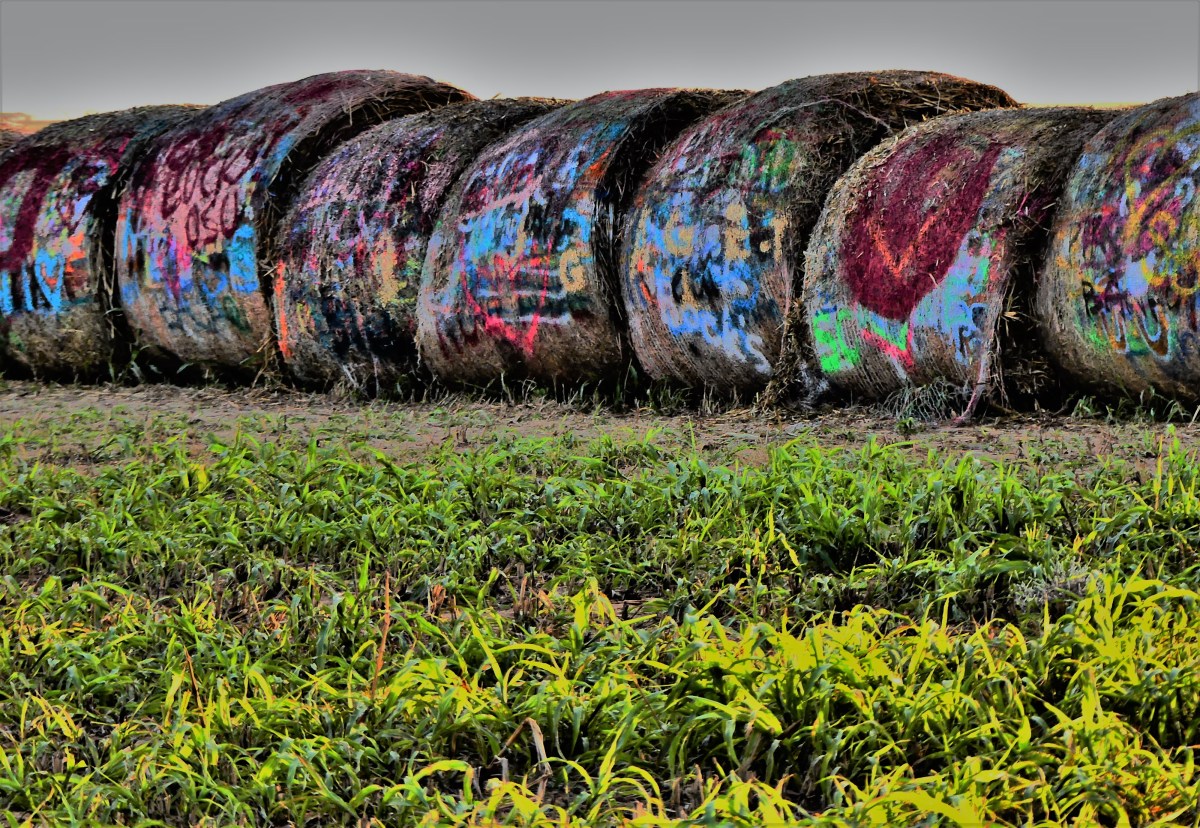
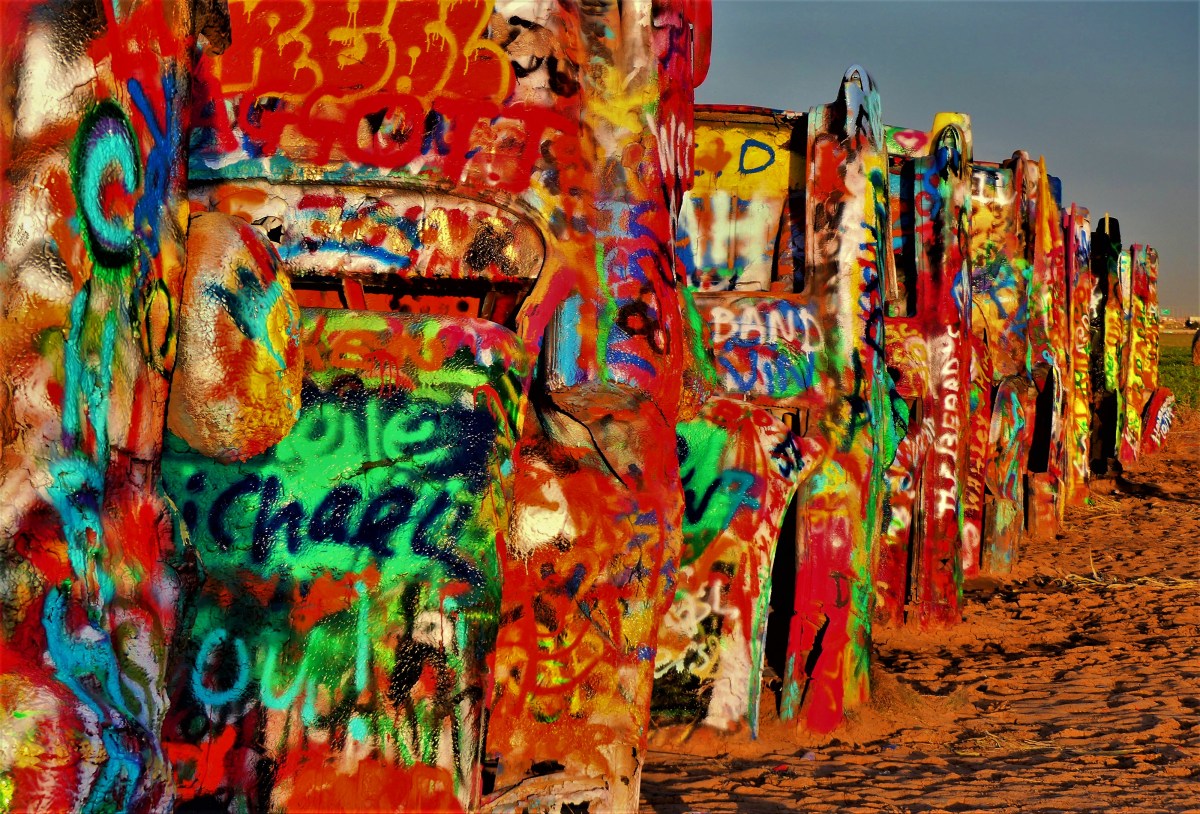
A handful of cars and trucks were pulled onto the shoulder of a road beside a cow pasture along Interstate 40 in Amarillo, TX. A barbed wire perimeter protected entry to the field, but a rainbow-colored cattle gate provided access to an infinite vista of grassland and graffitied hay rolls.

hayrolls.jpg

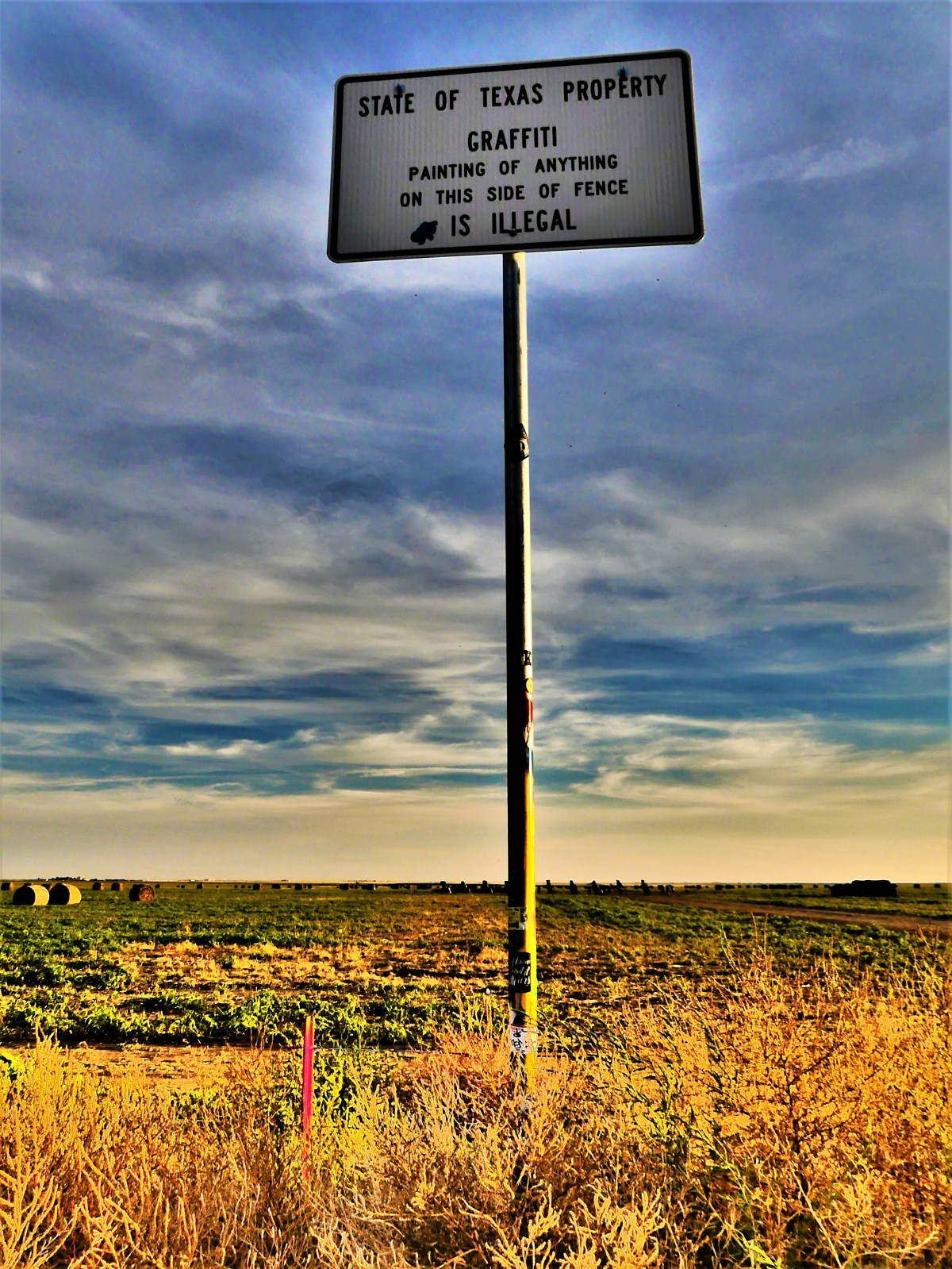
Although road signage made it very clear that all graffiti stay on the other side of the road,

Graffiti.jpg

anything on Stanley Marsh’s property was fair game for tagging and tacitly encouraged.

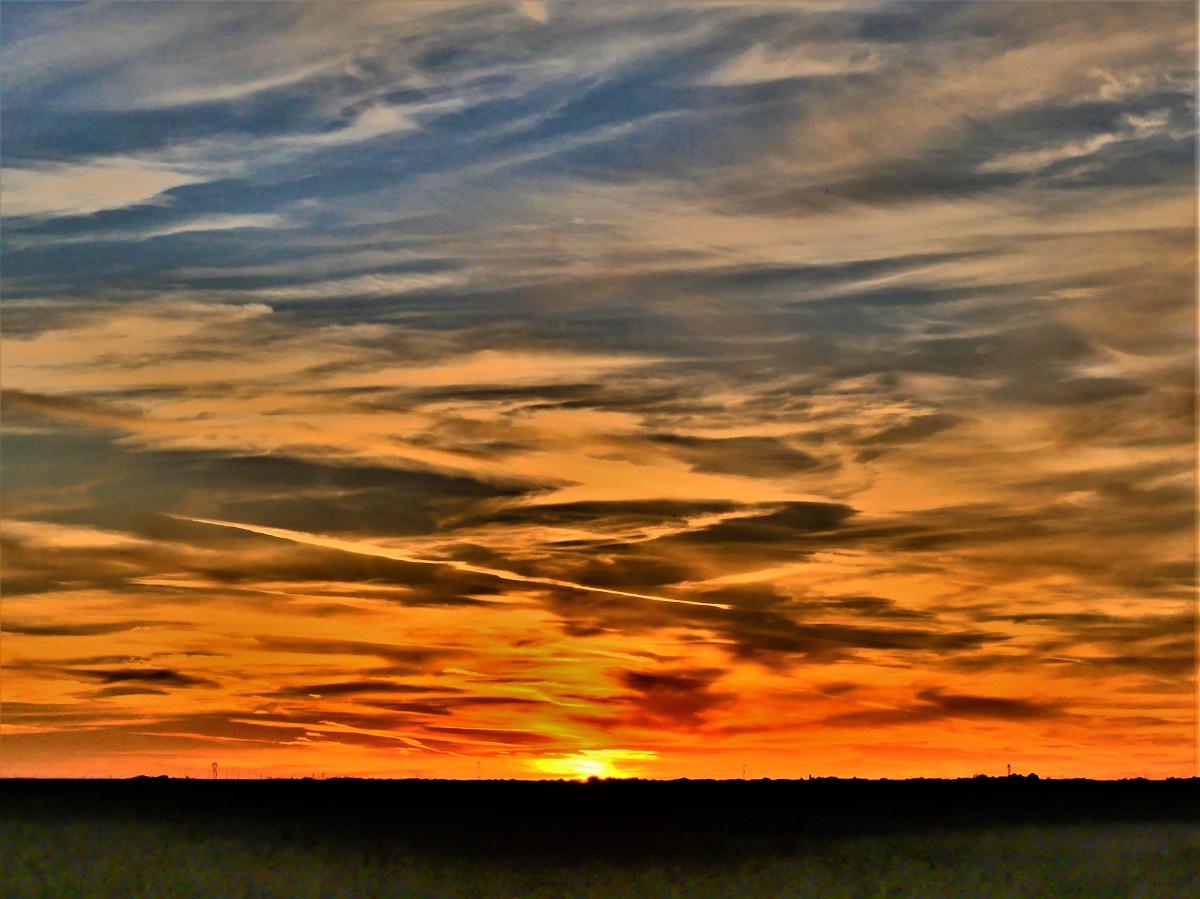
The sun was setting,

sunset

and the mosquito swarm was brutal, as if they saw it as their obligation to annoy anyone curious to walk through a field where ten Cadillacs were partly buried in the ground.

Additionally, with golden hour light fading quickly, I felt my glow time was severely limited.

Nevertheless, working around the tall shadows cast by a low-hanging sun, I managed to capture a spectrum of random and radiant colors that seemingly changes by the hour, courtesy of spray-painters who choose to be anything but anonymous.

CR1a


Western Decivilization

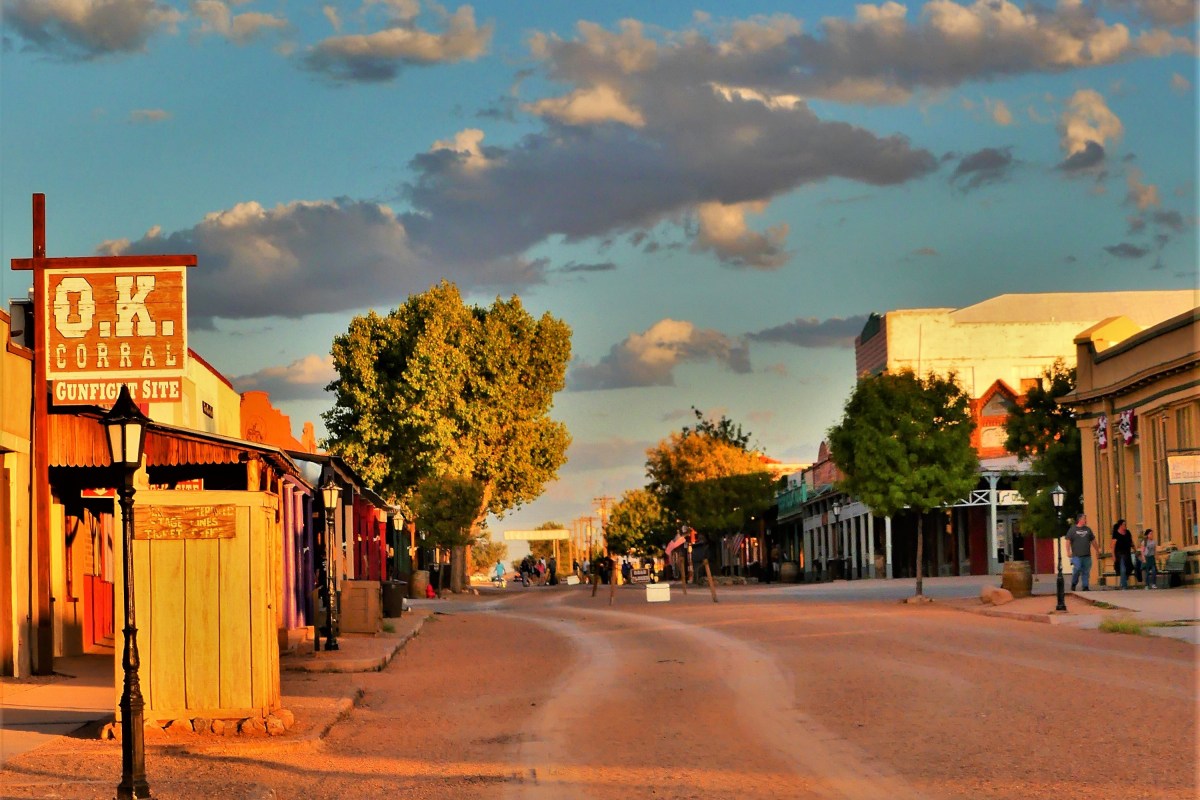
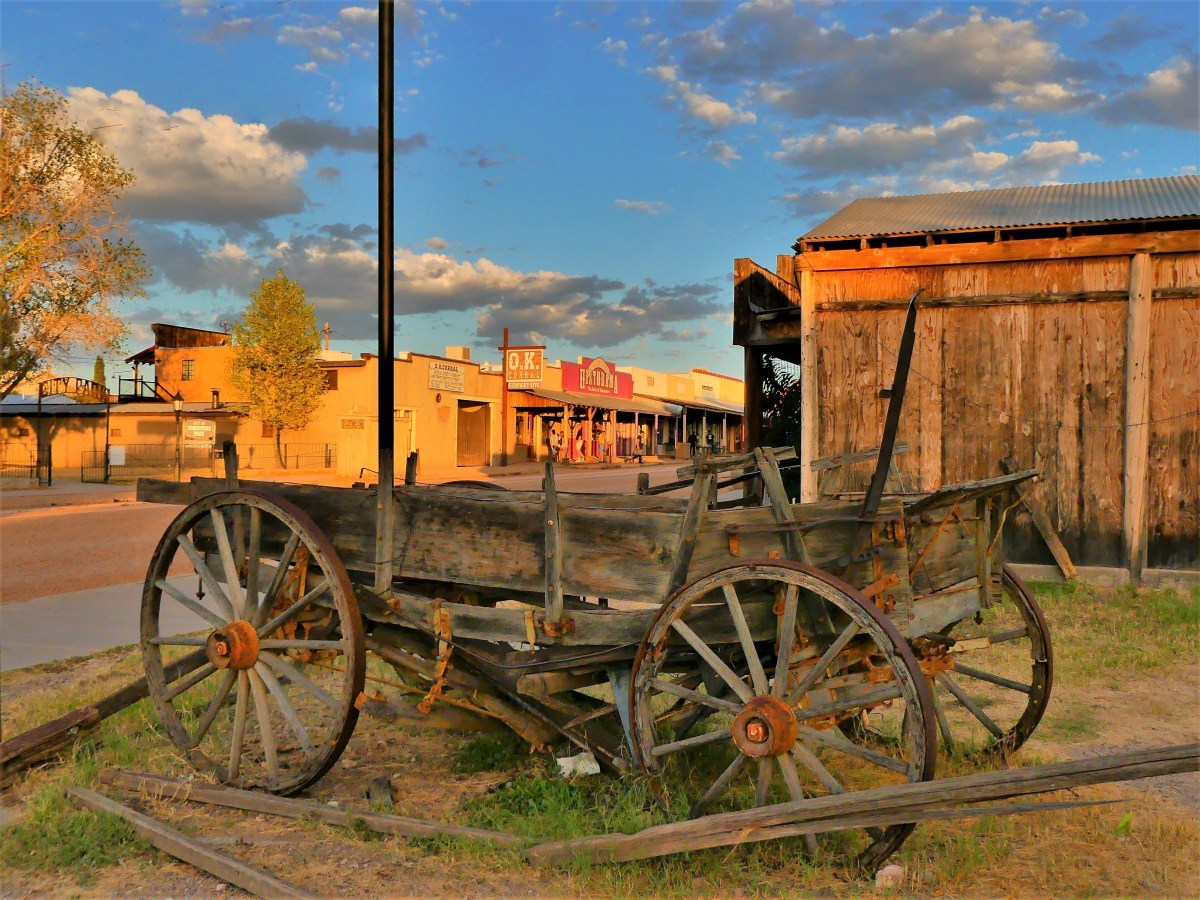
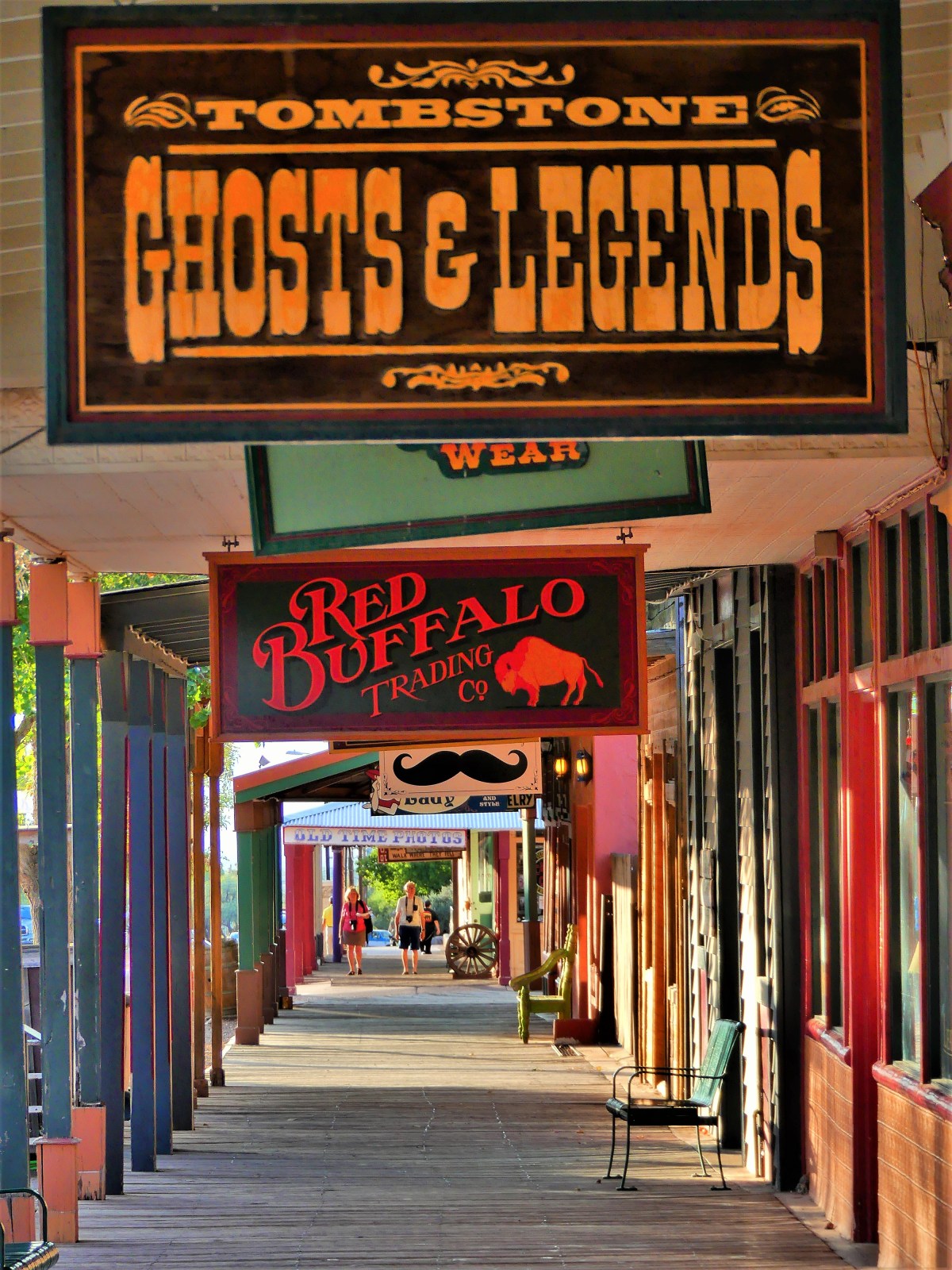
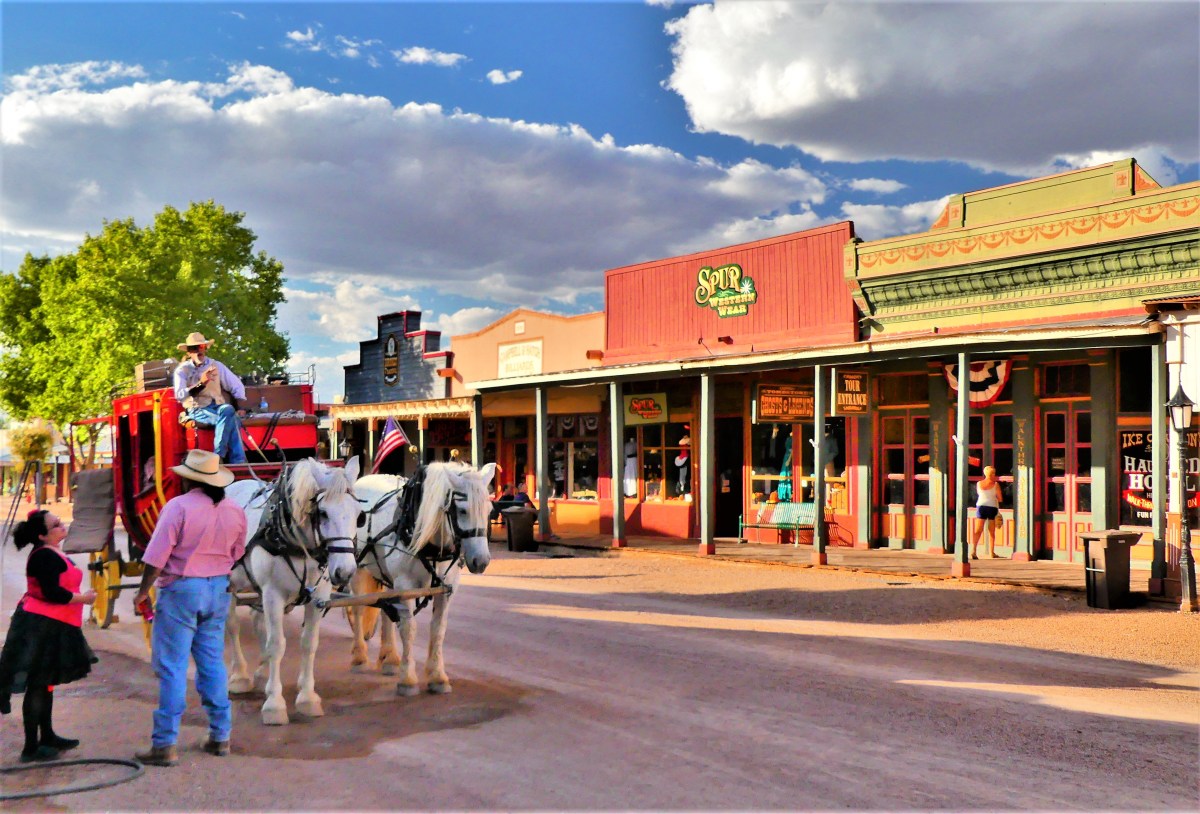
It was late afternoon, golden hour, and the town was aglow. We rolled into Tombstone, AZ with the tumbleweeds, and got out of town by morning, but not before taking a sun-soaked stroll down Allen Street past the O.K. Corral, tracing the footsteps of a by-gone time.

wagon (3).jpg

The Old West town was unusually quiet this day,

boardwalk

as if its residents were hiding out, bracing for yet another round of random violence, when claim jumpers, cattle rustlers, horse thieves, prostitutes, and gamblers challenged the moral fiber of a nascent society teetering between greatness and greed.

Despite the fear, there were some who dared to venture out…

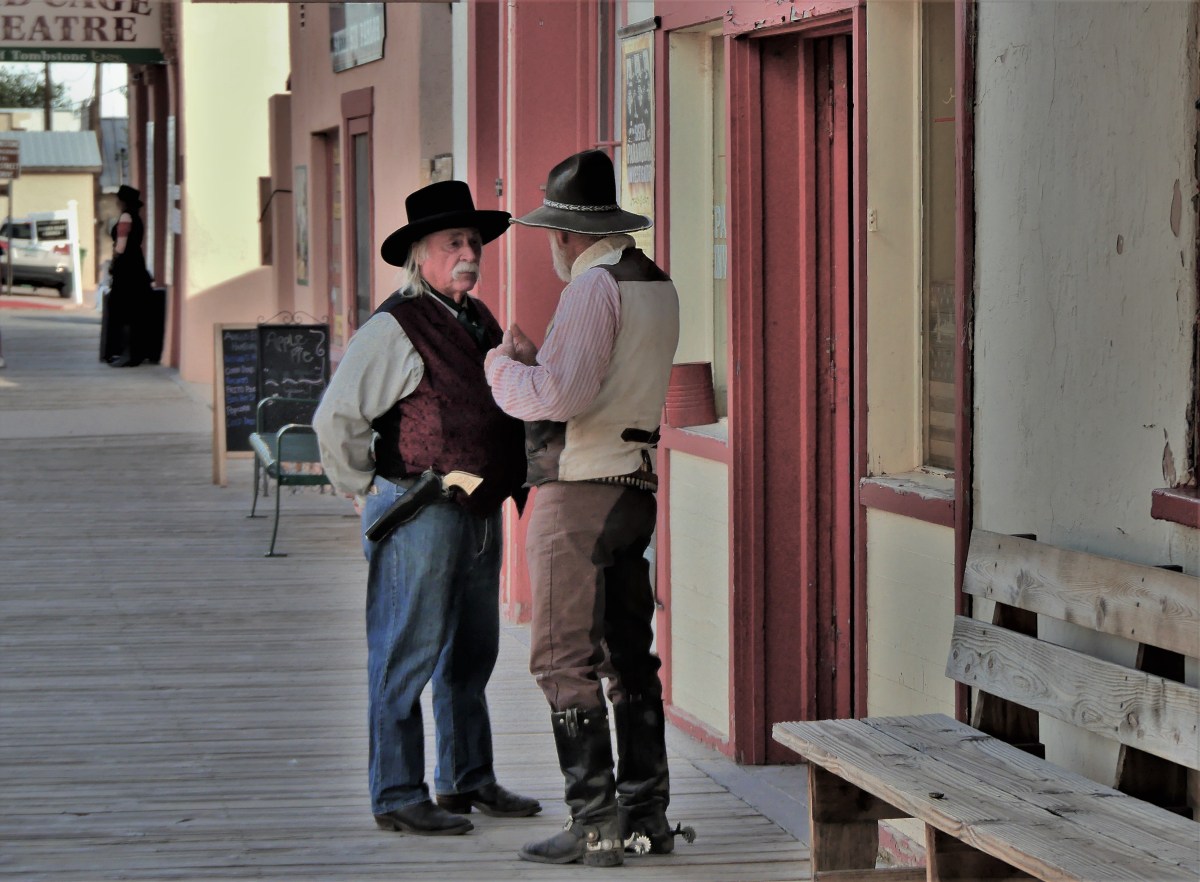
Allen Street

and walk the dusty planks of a fragile peace, with their trusty sidearms at the ready.

local color (2).jpg

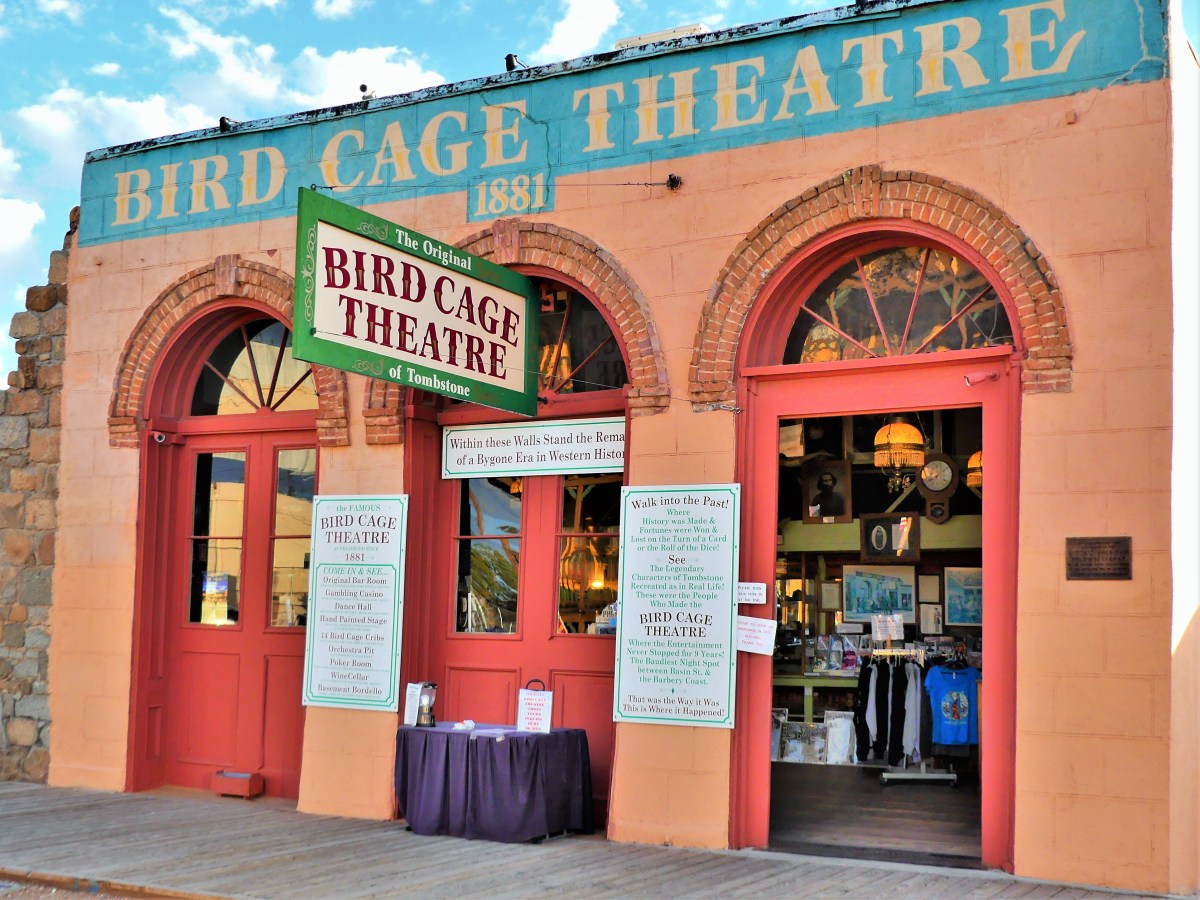
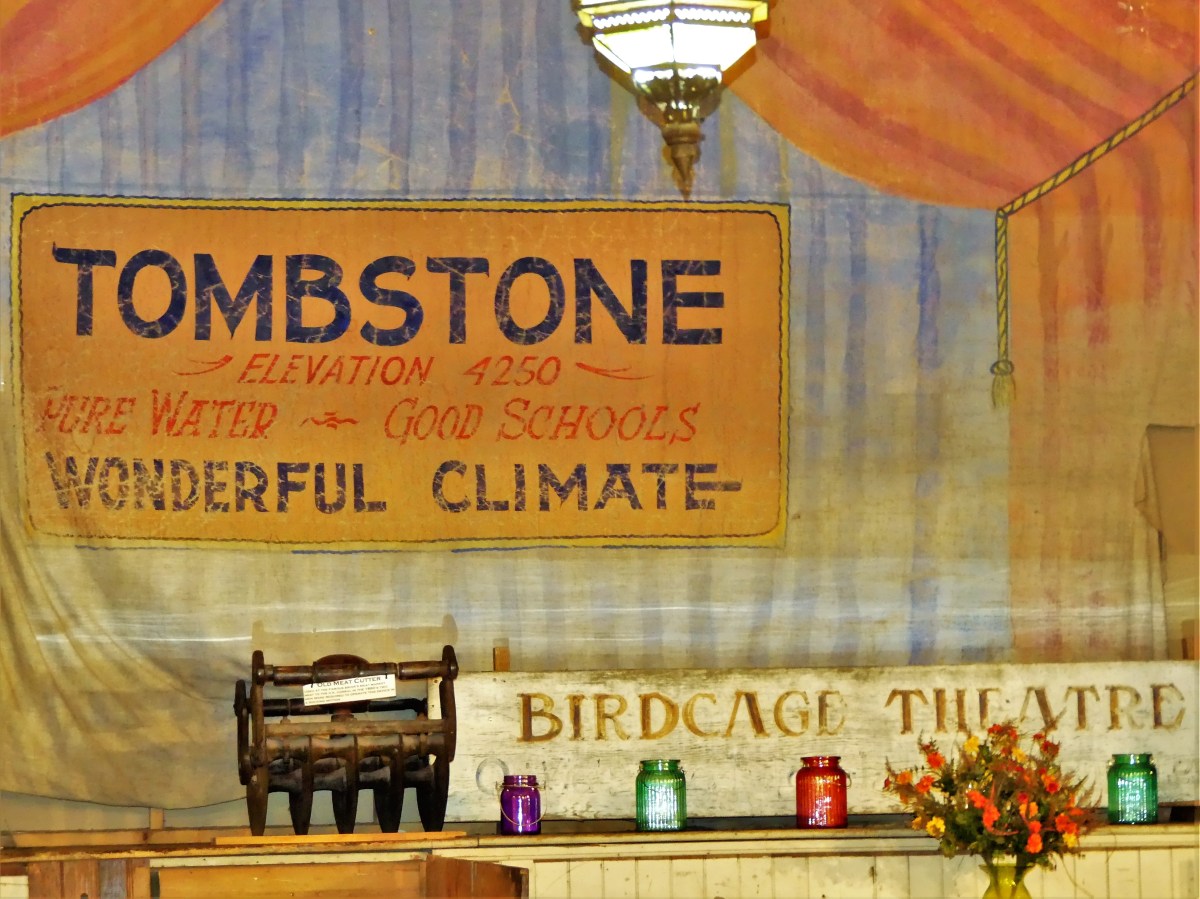
Yet it was business as usual at the Bird Cage Theatre,

birdcage theatre

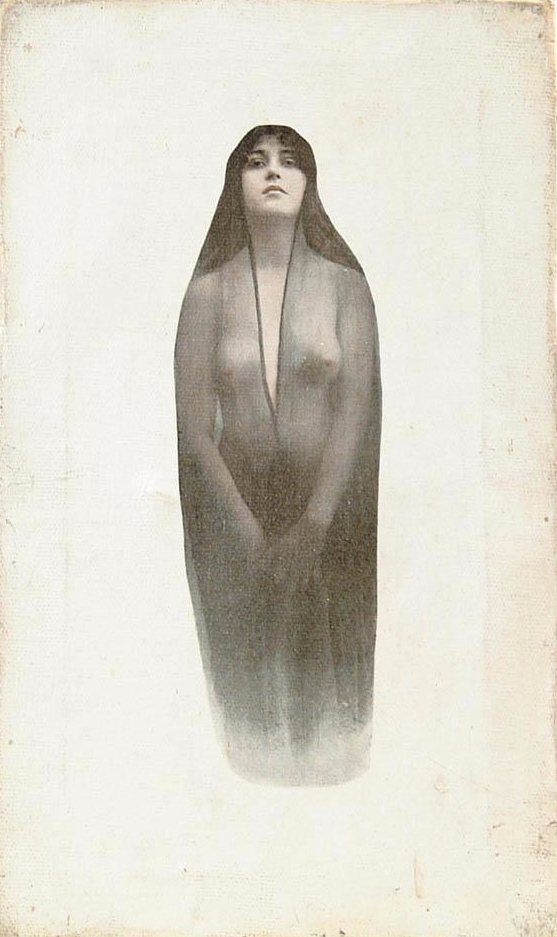
where wanton women plied their trade at twenty-three bucks a pop,

27-01.jpg

in their boudoir quarters…

dressing room

boudoir

…beyond the catwalk over the saloon,

catwalk

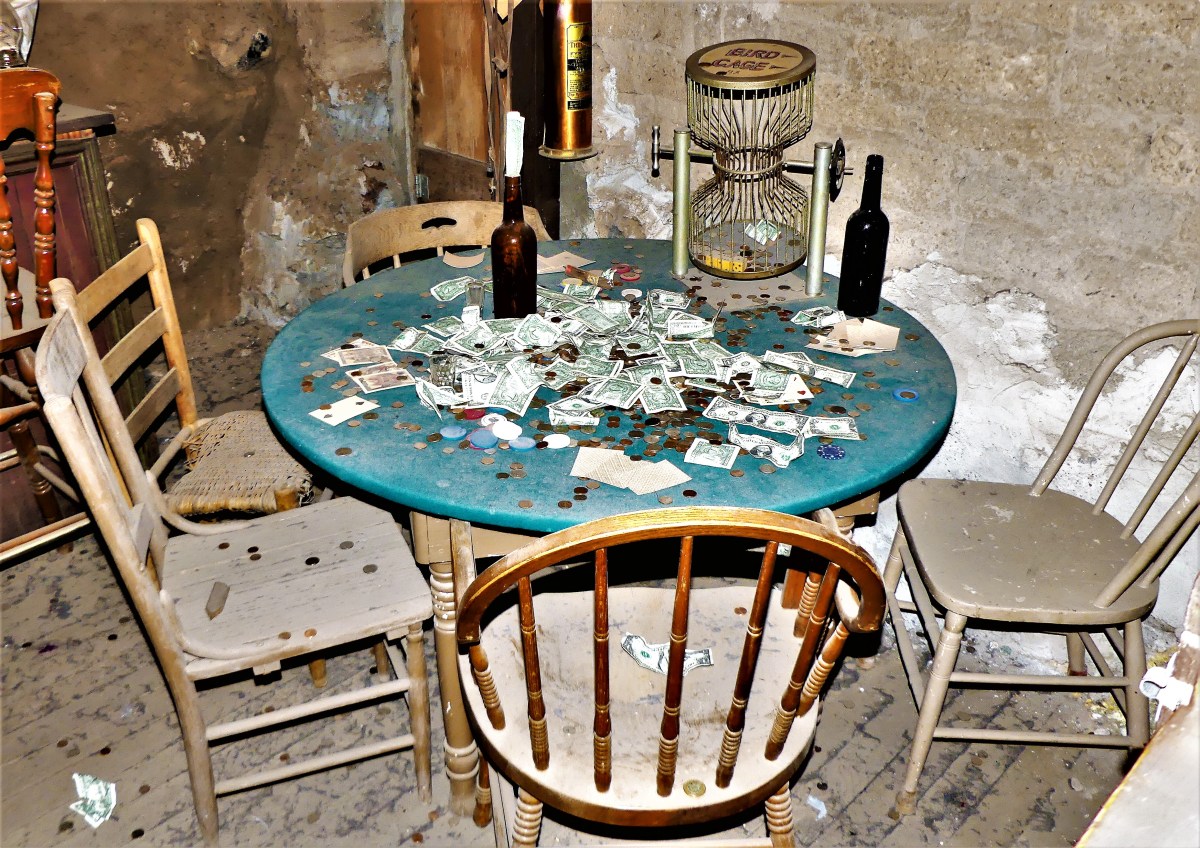
while high-stakes poker flourished under the stage,

stage curtain

with a $1000 minimum buy-in.

poker table.jpg

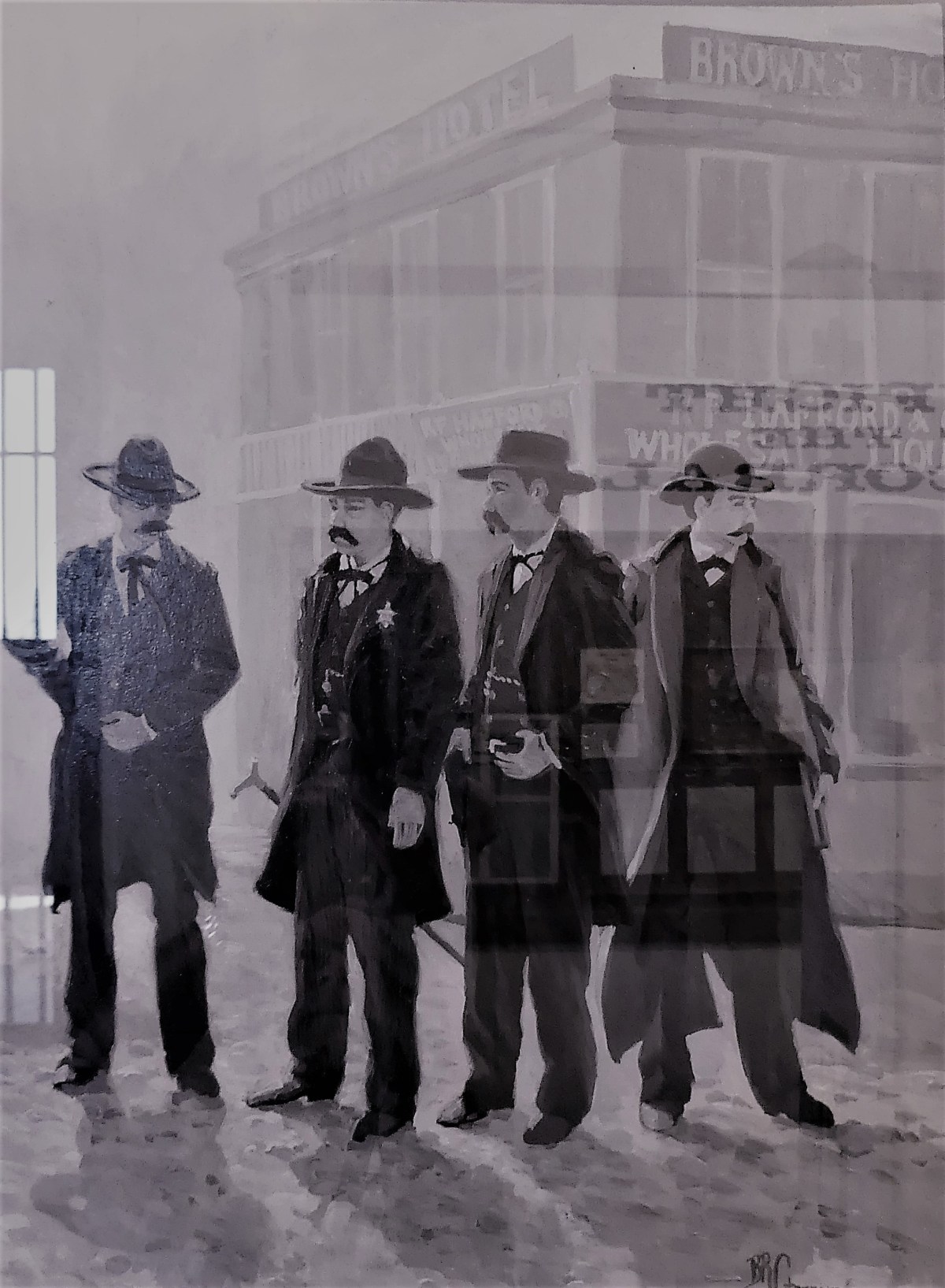
But outside on the street, trouble was brewing.

Slide 1.jpg
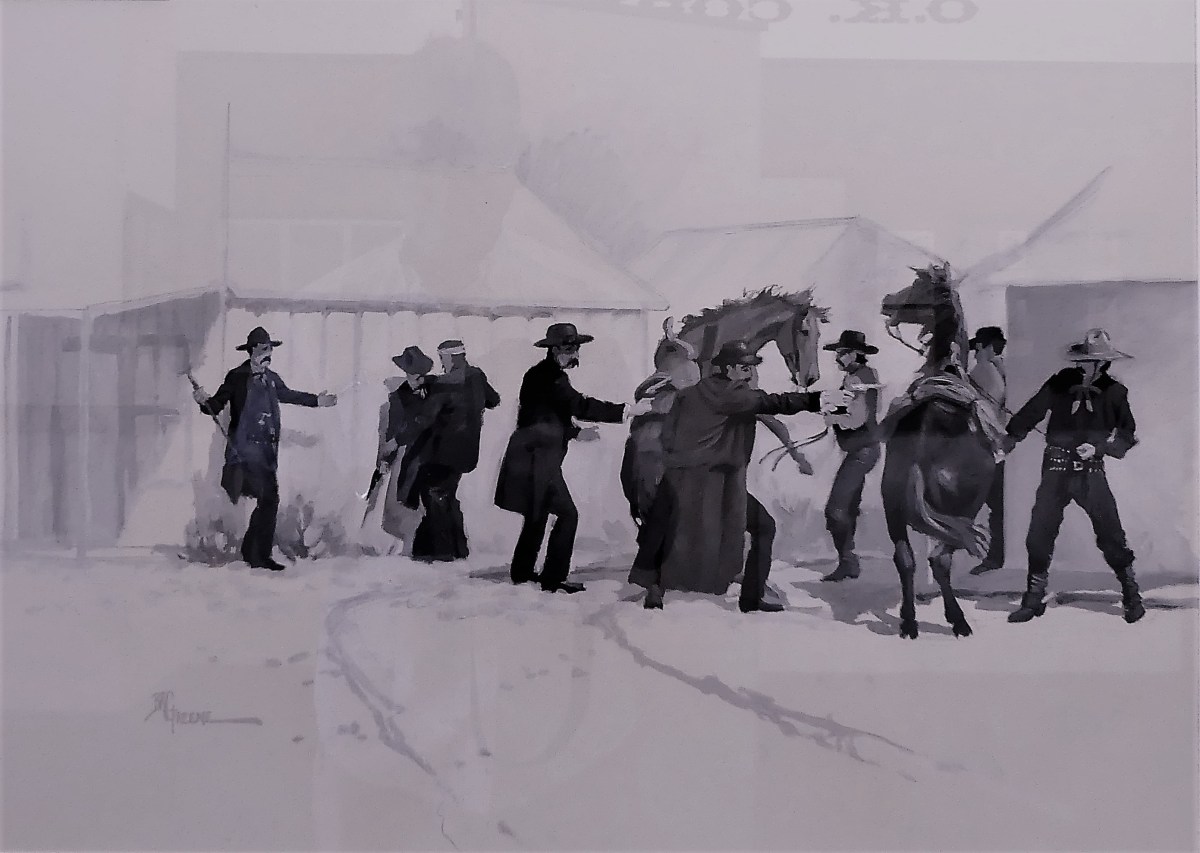
The Earps had heard that “The Cowboys” were gathering at the O.K. Corral making threats and spoiling for a fight.
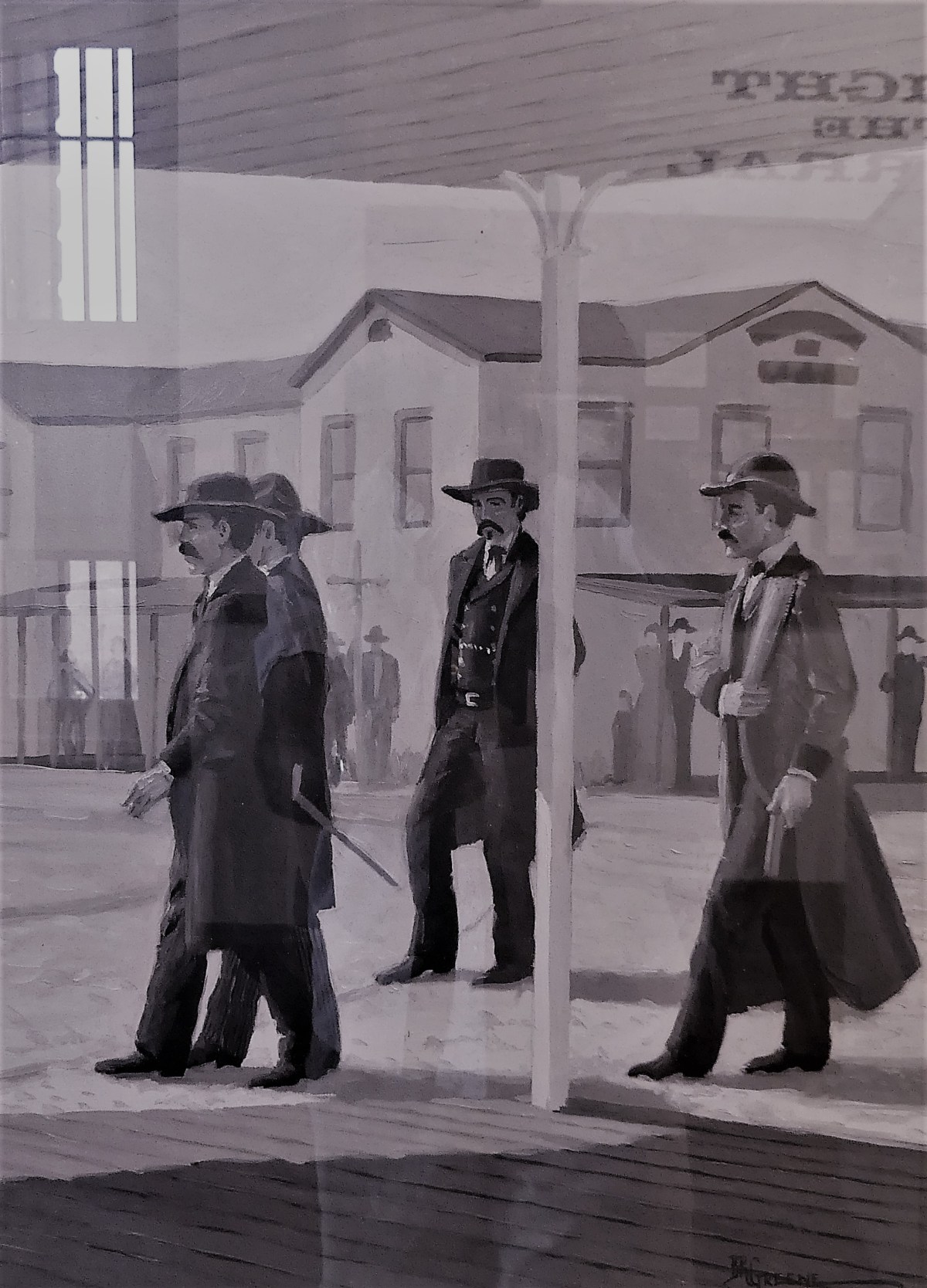
Slide 2.jpg
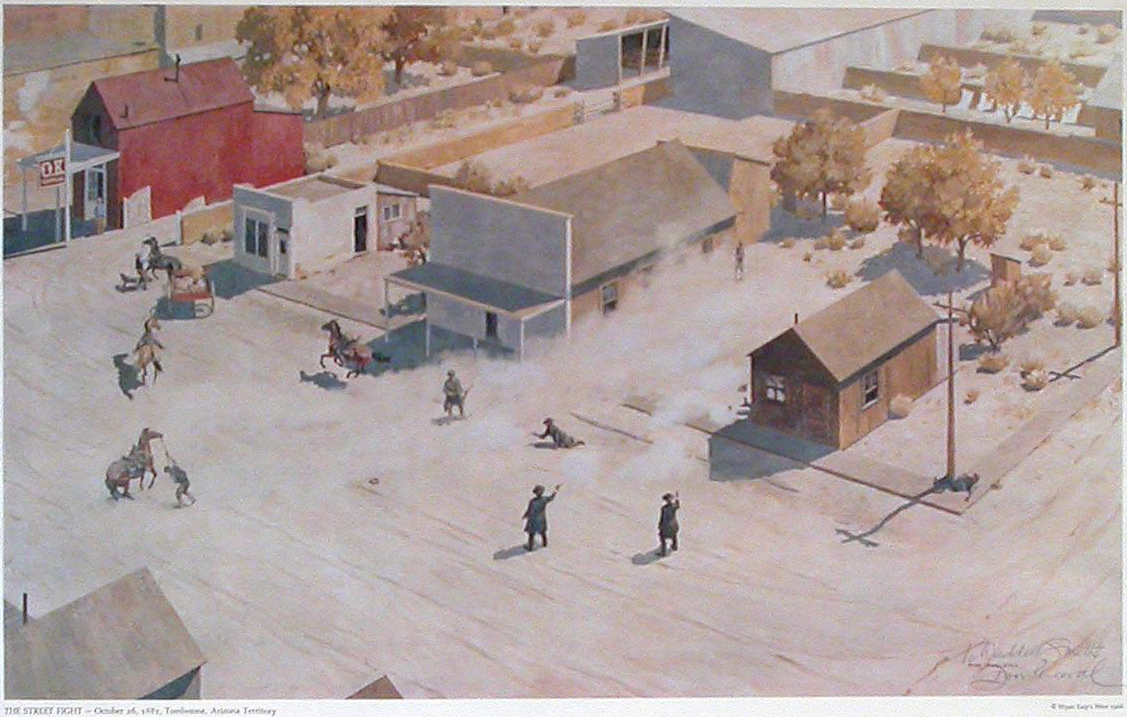
Rounding the corner of 4th and Freemont, the Earps headed west to the rear entrance of the O.K. Corral for a date with destiny.
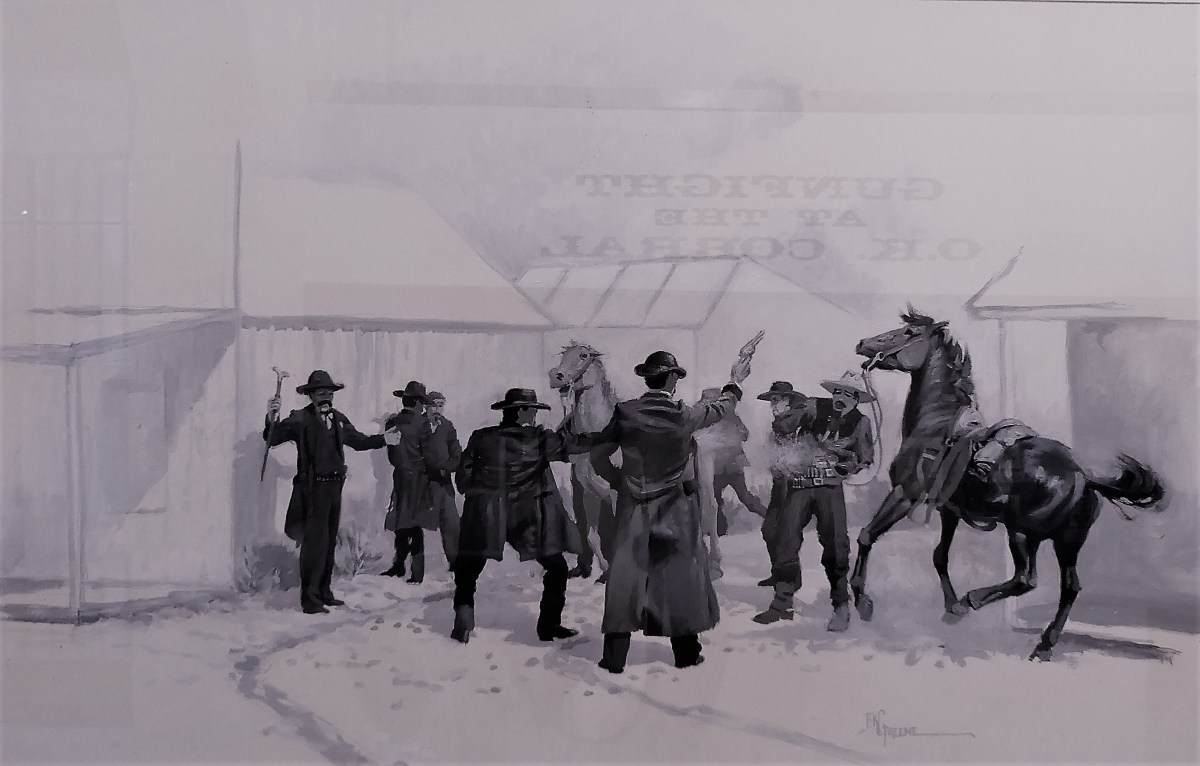
Slide 3.jpg
When the fight begins, Town Marshal Virgil Earp (with cane) says “Hold on, we don’t want that,” as Frank McLowery and Billy Clanton take the first bullets from Doc and Morgan.
Slide 4.jpg
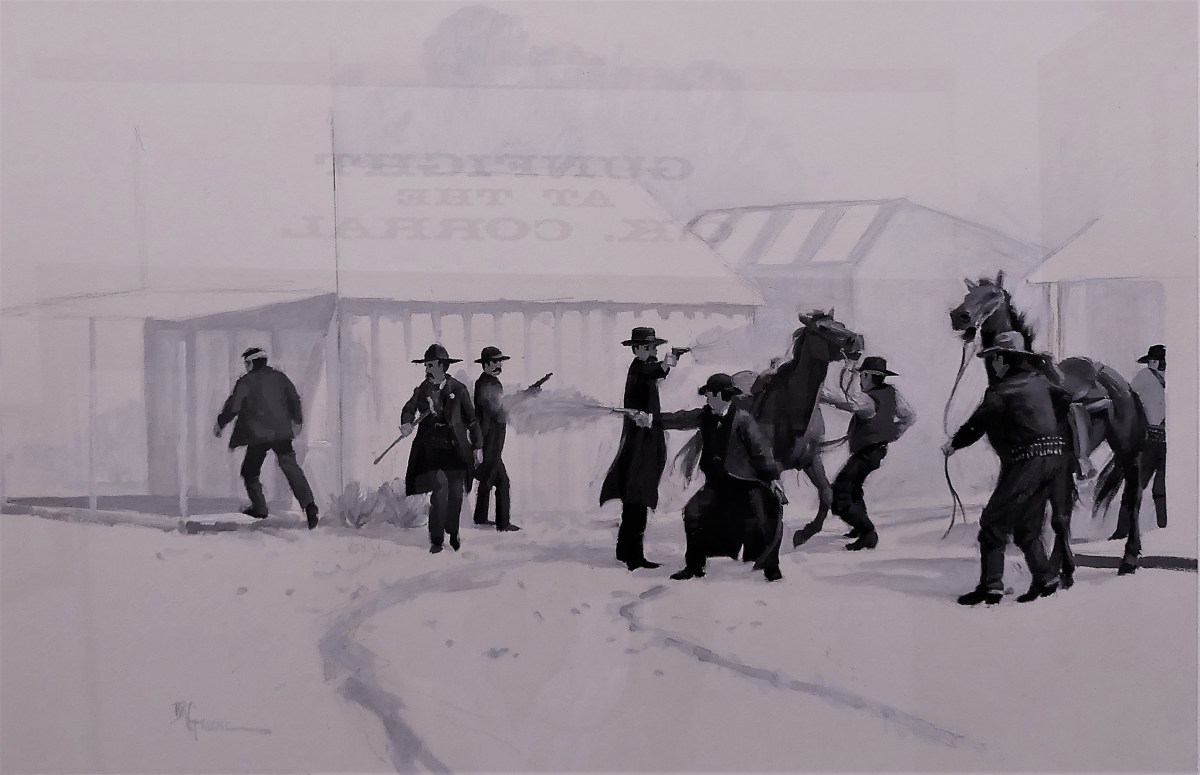
Billy Clanton (2nd from right) draws his gun and begins to fire back as his brother Ike begs Wyatt Earp not to shoot him. Morgan and Doc are concentrating on Frank McLowery and the game Billy Clanton who, though mortally wounded, continues to shoot. Frank and Tom maneuver their horses as shields.
Slide 5.jpg
As Ike Clanton flees, Virgil Earp and Tom McLowery bring their guns into action. Doc Holiday turns to fire at the fleeing Ike, while Morgan continues to fire at the wounded Frank McLowery.
Slide 6.jpg
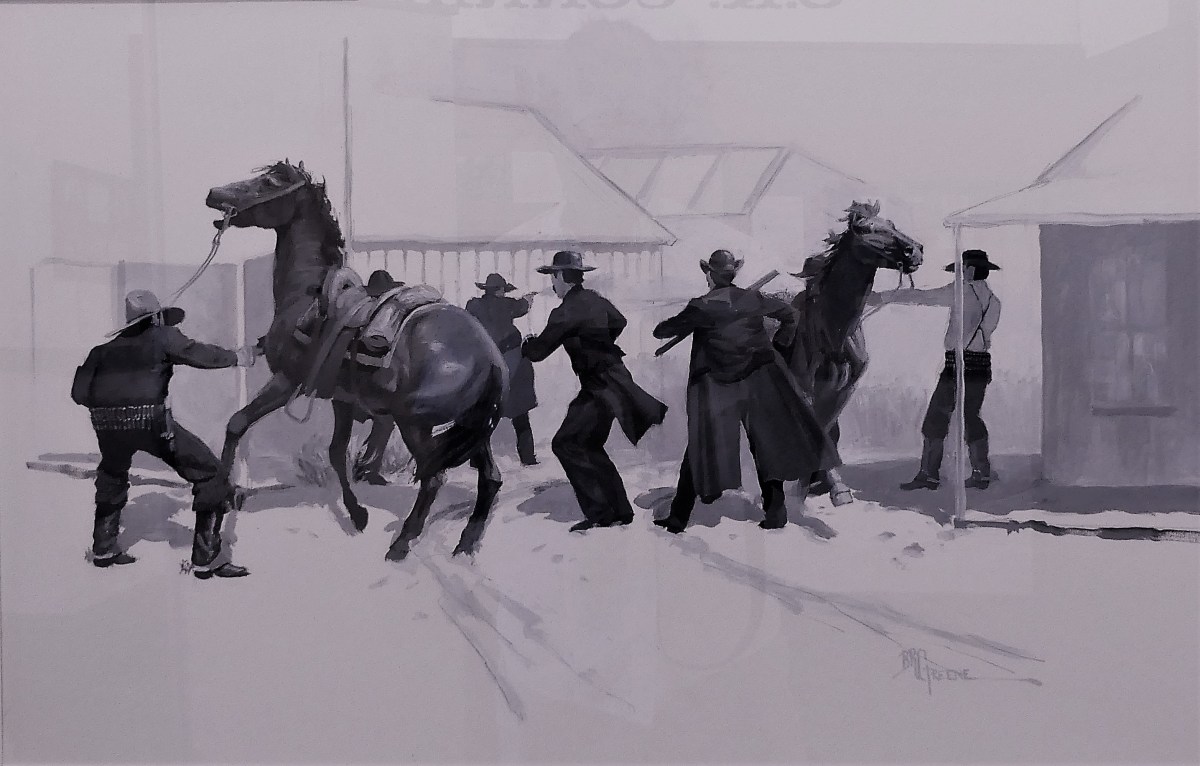
Frank McLowery maneuvers his horse into the street and fires back under the horse’s neck as Holliday pulls a sawed-off shotgun from under his coat. An anonymous shot, possibly from Billy Claiborne is fired from within the O.K. Corral, diverting the Earps’ attention.
Slide 7.jpg
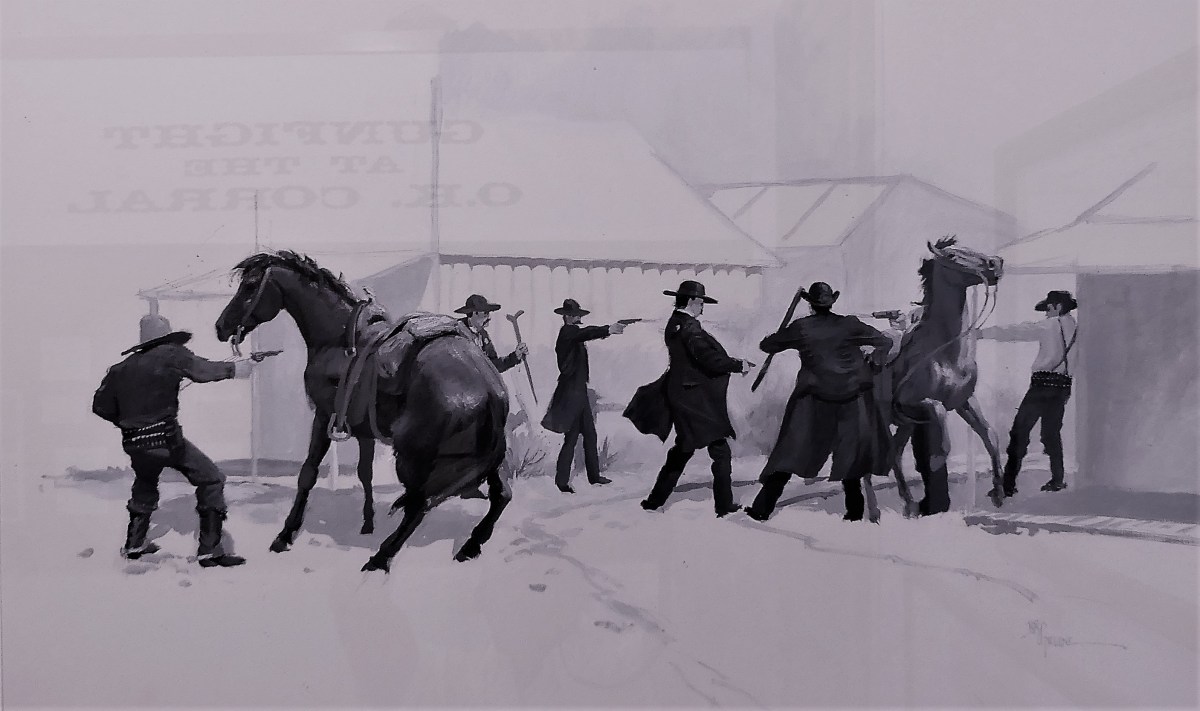
Frank McLowery still manages to hang onto his horse for cover as his brother Tom, shooting over his saddle, hits Morgan Earp. Billy Clayton (nearing death) returns fire at Virgil and Wyatt. A shot from Frank hits Marshal Virgil Earp in the right leg.
103742_0.jpg
Thirty bullets are fired in a thirty second outburst. When the smoke clears, Billy Clanton and both McLaury brothers lay dead in the street. Ike Clanton, claiming that he was unarmed has run from the fight, along with Billy Claiborne. Virgil, Morgan, and Doc Holliday are wounded, but Wyatt Earp is unharmed.

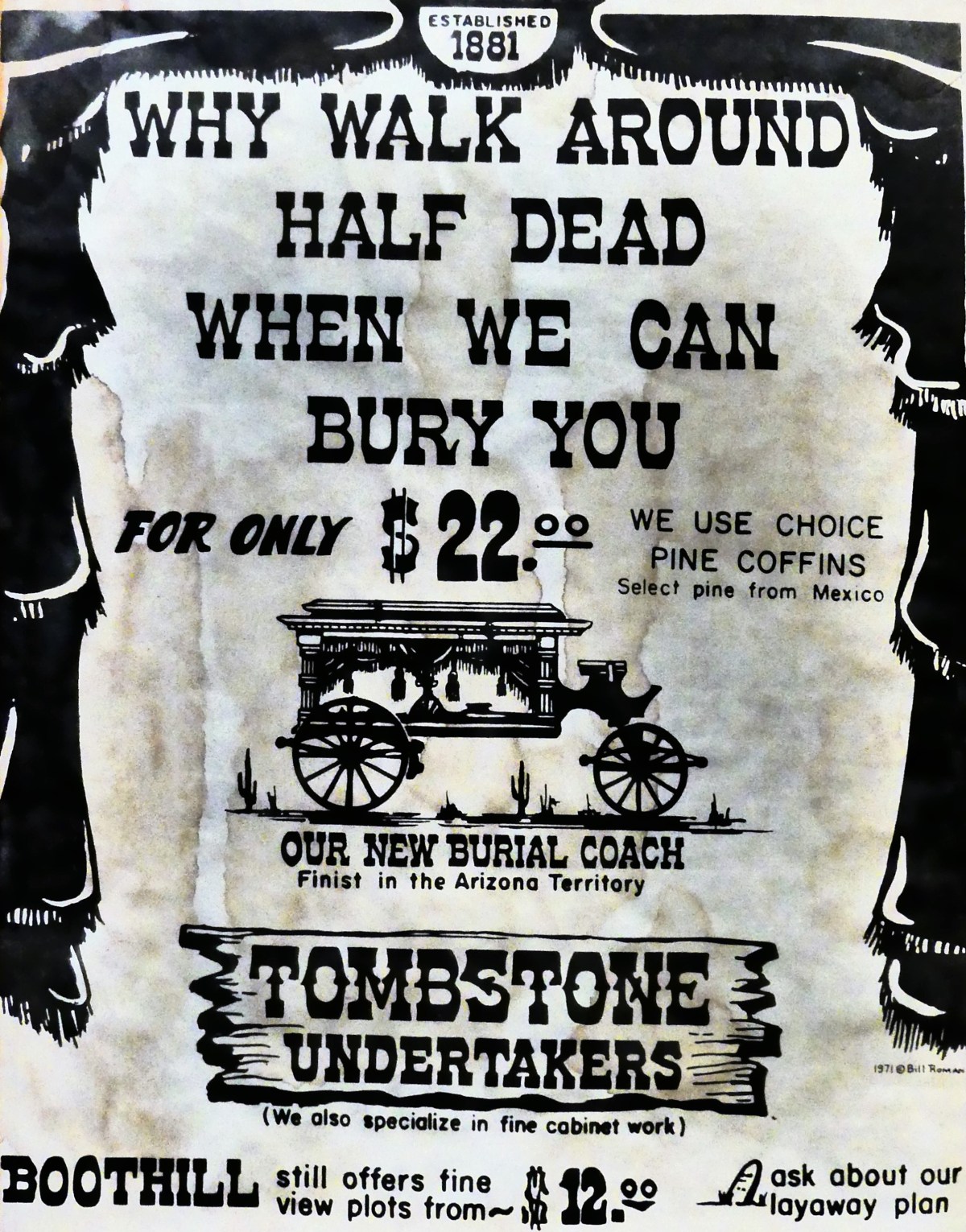
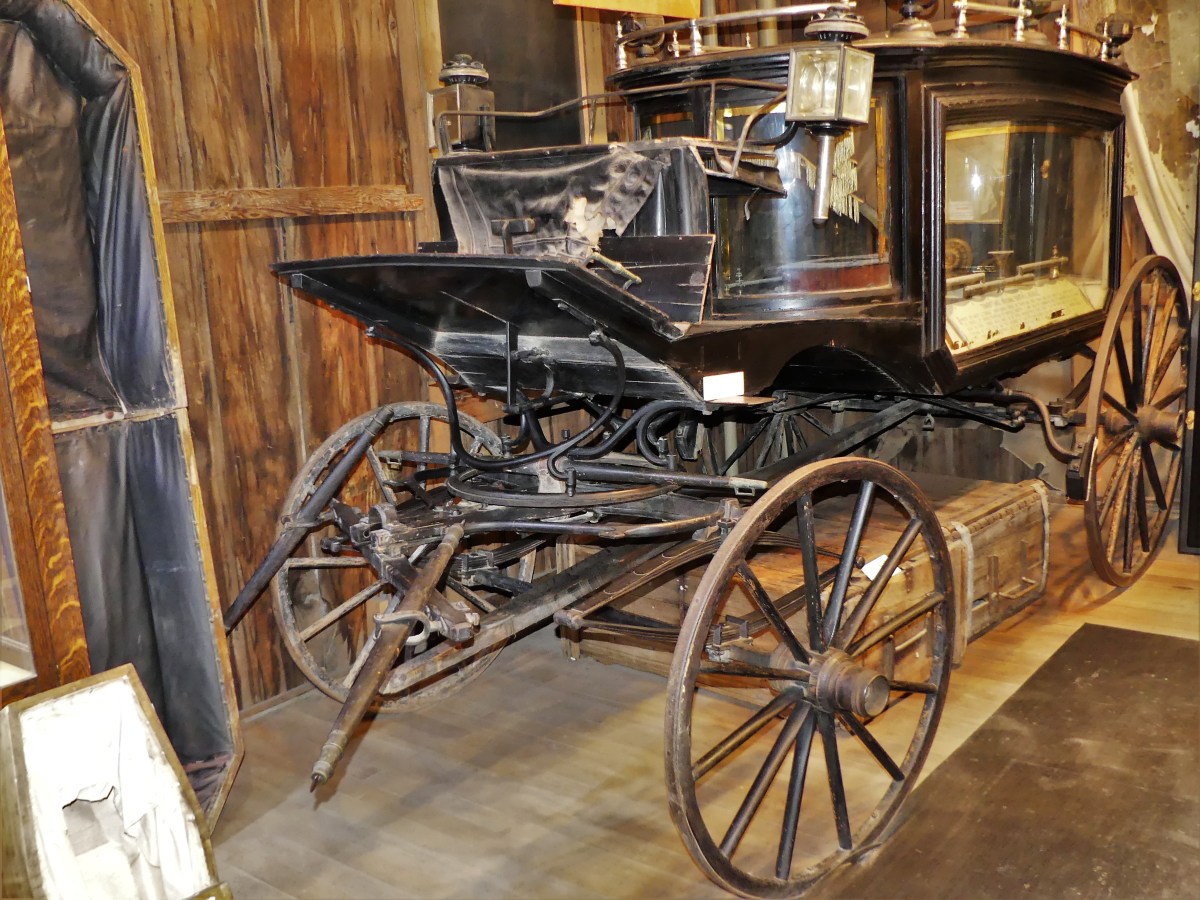
Certainly, death was big business for the Tombstone Undertakers.

coffin ad (2).jpg

funeral carriage

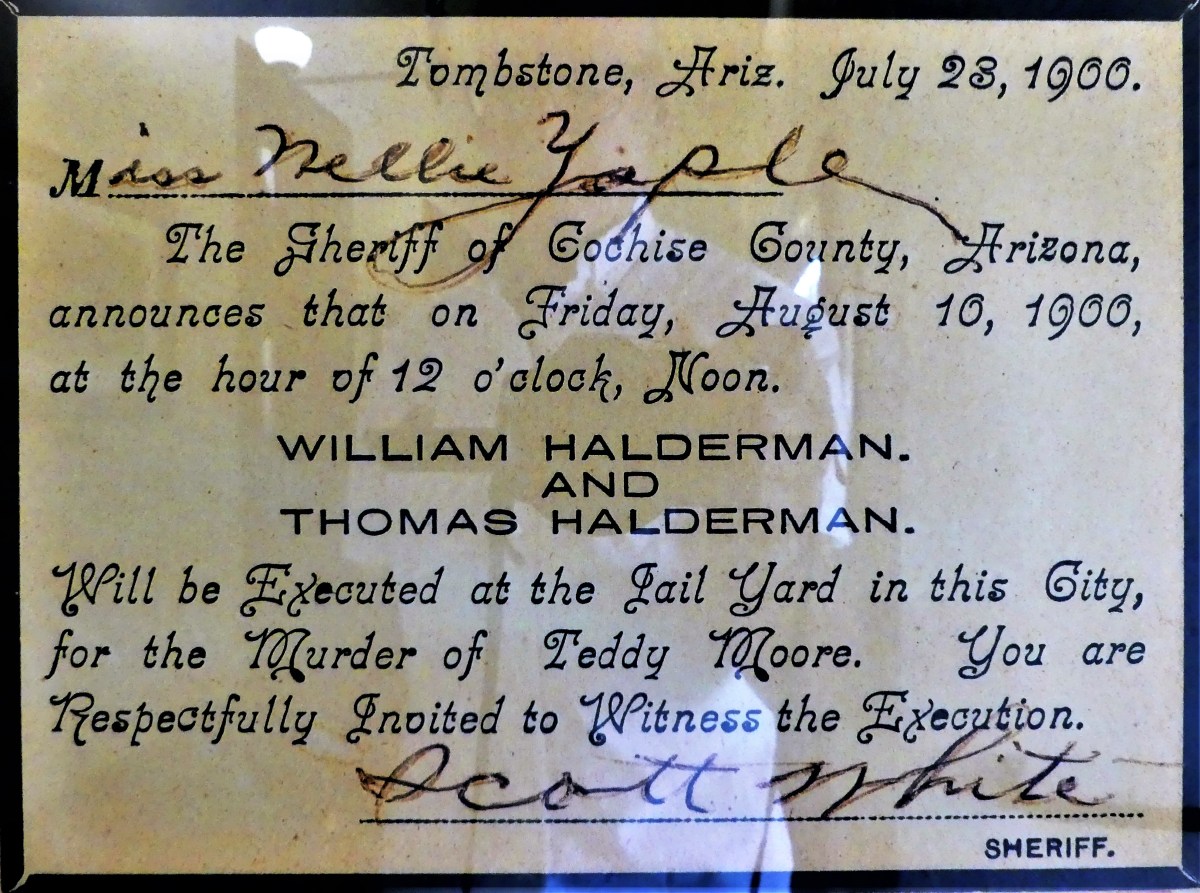
And on occasion, death was high entertainment for the townsfolk.

invitation to a hanging

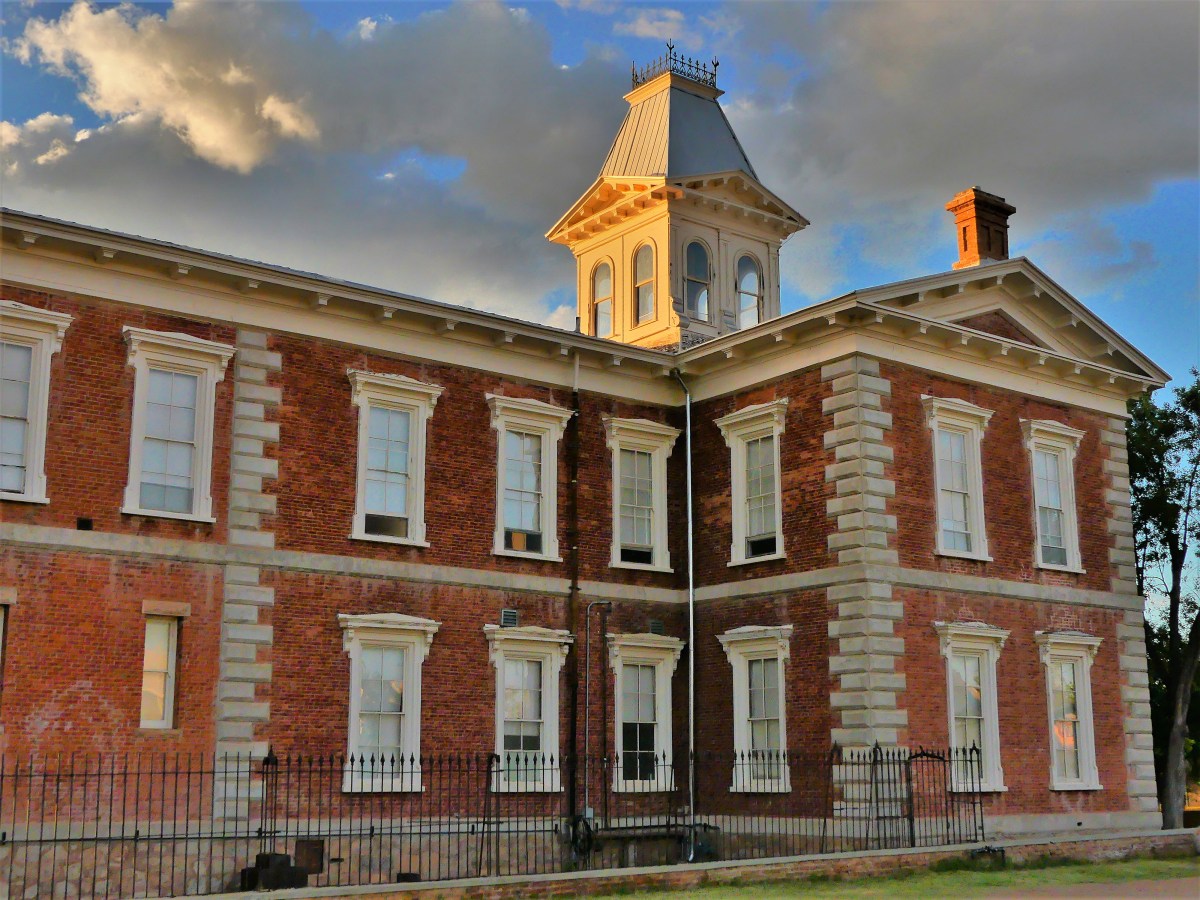
Cochise County Court House

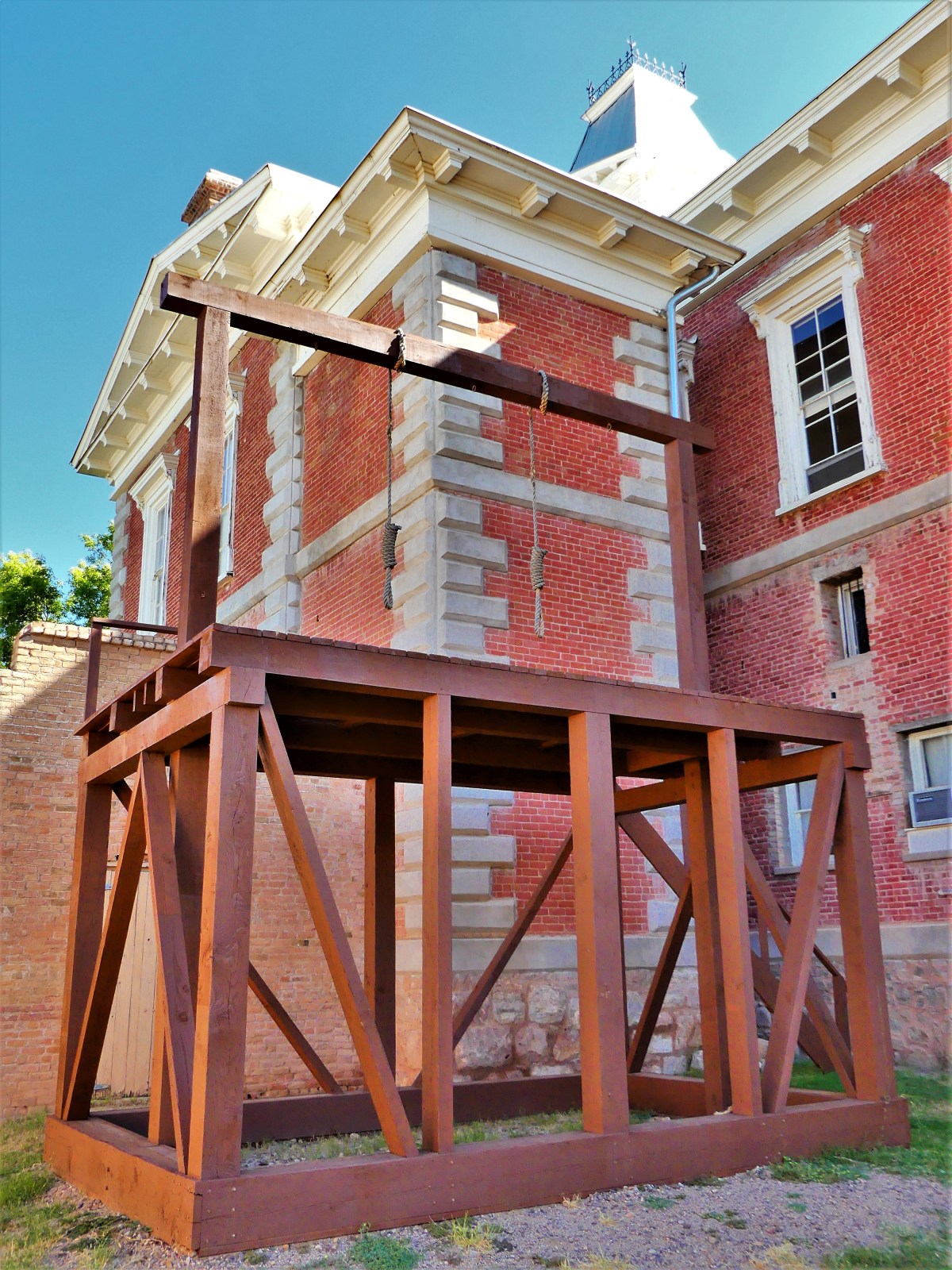
courthouse gallows

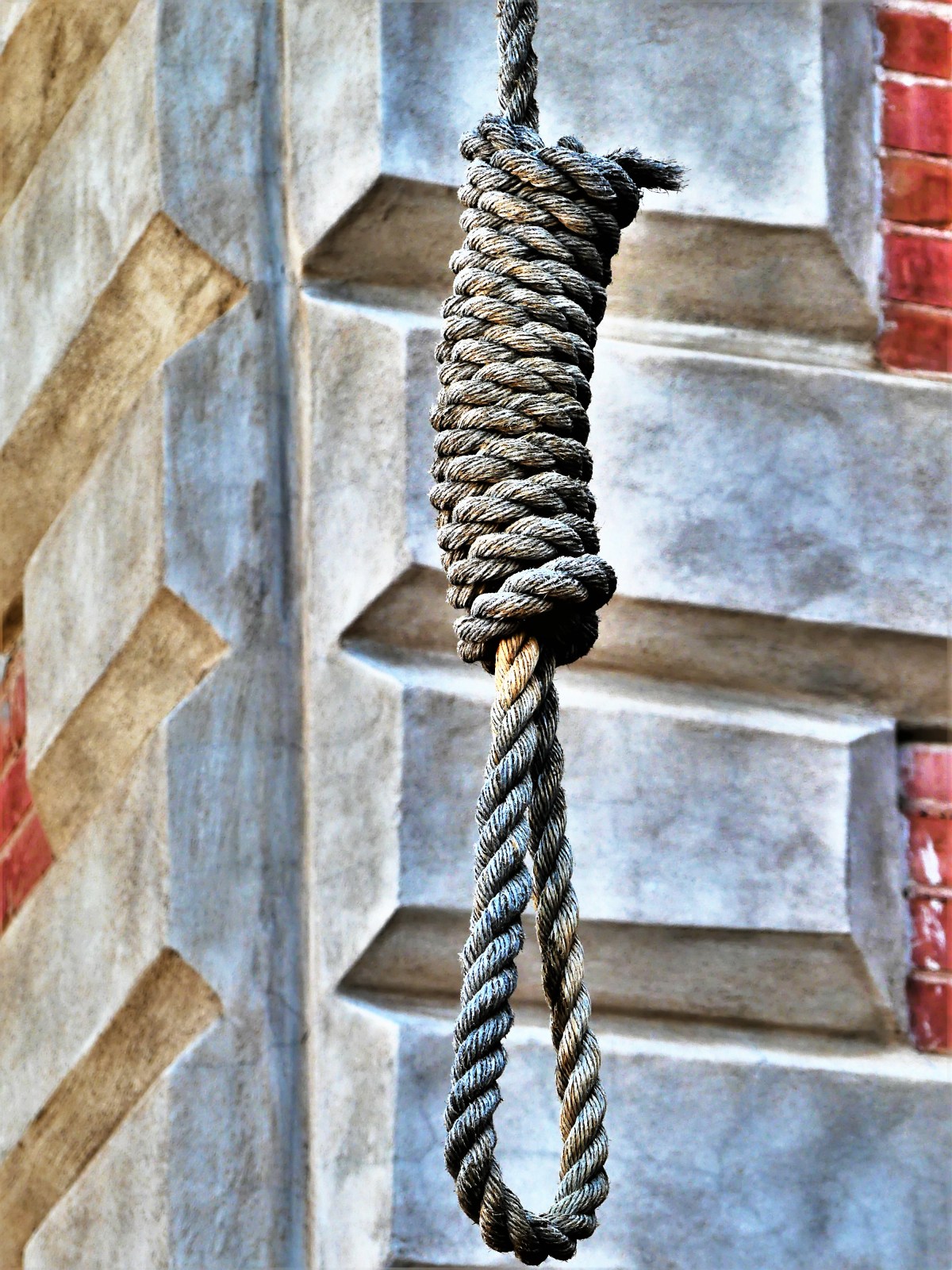
hanging noose

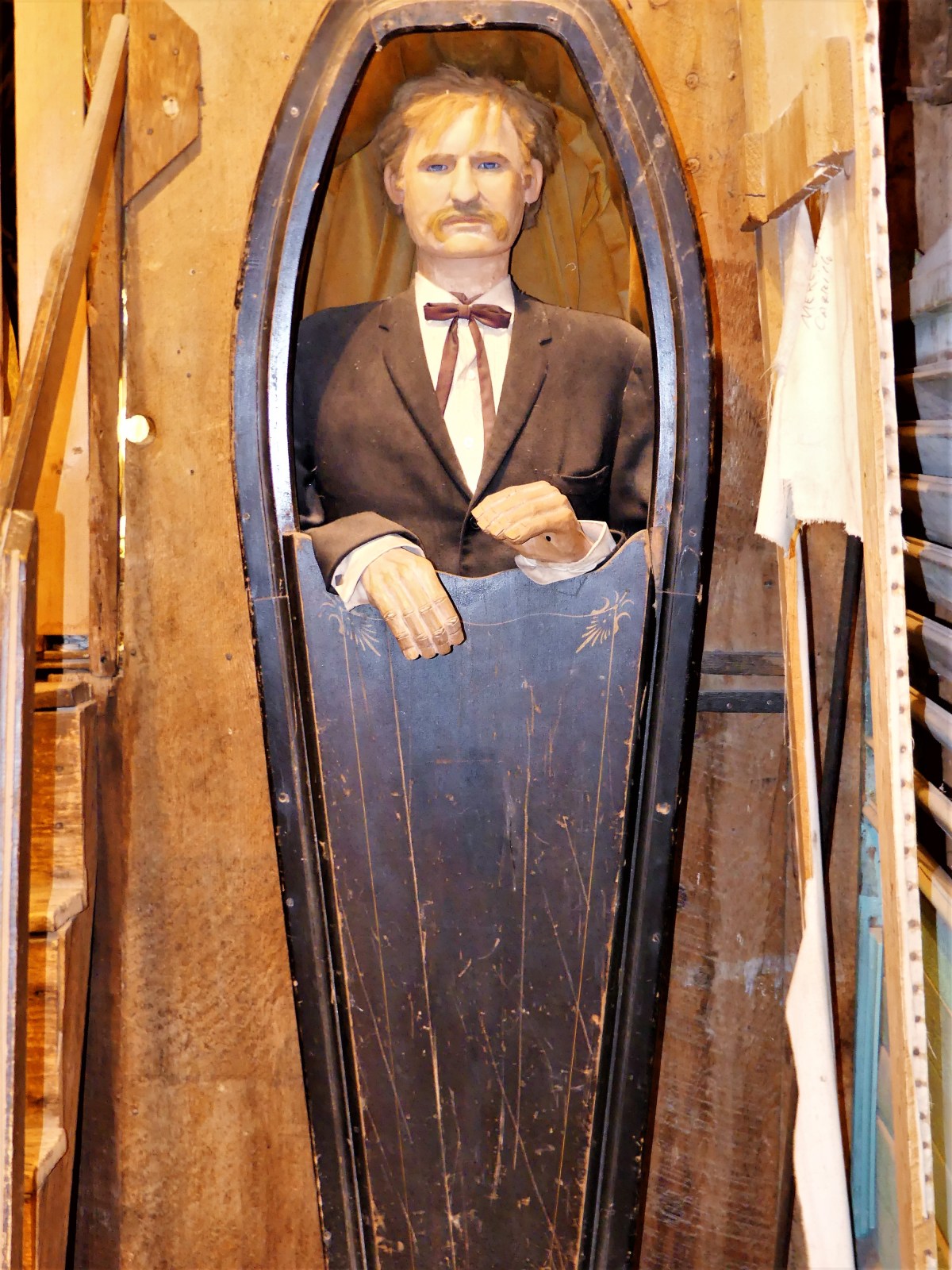
standing coffin

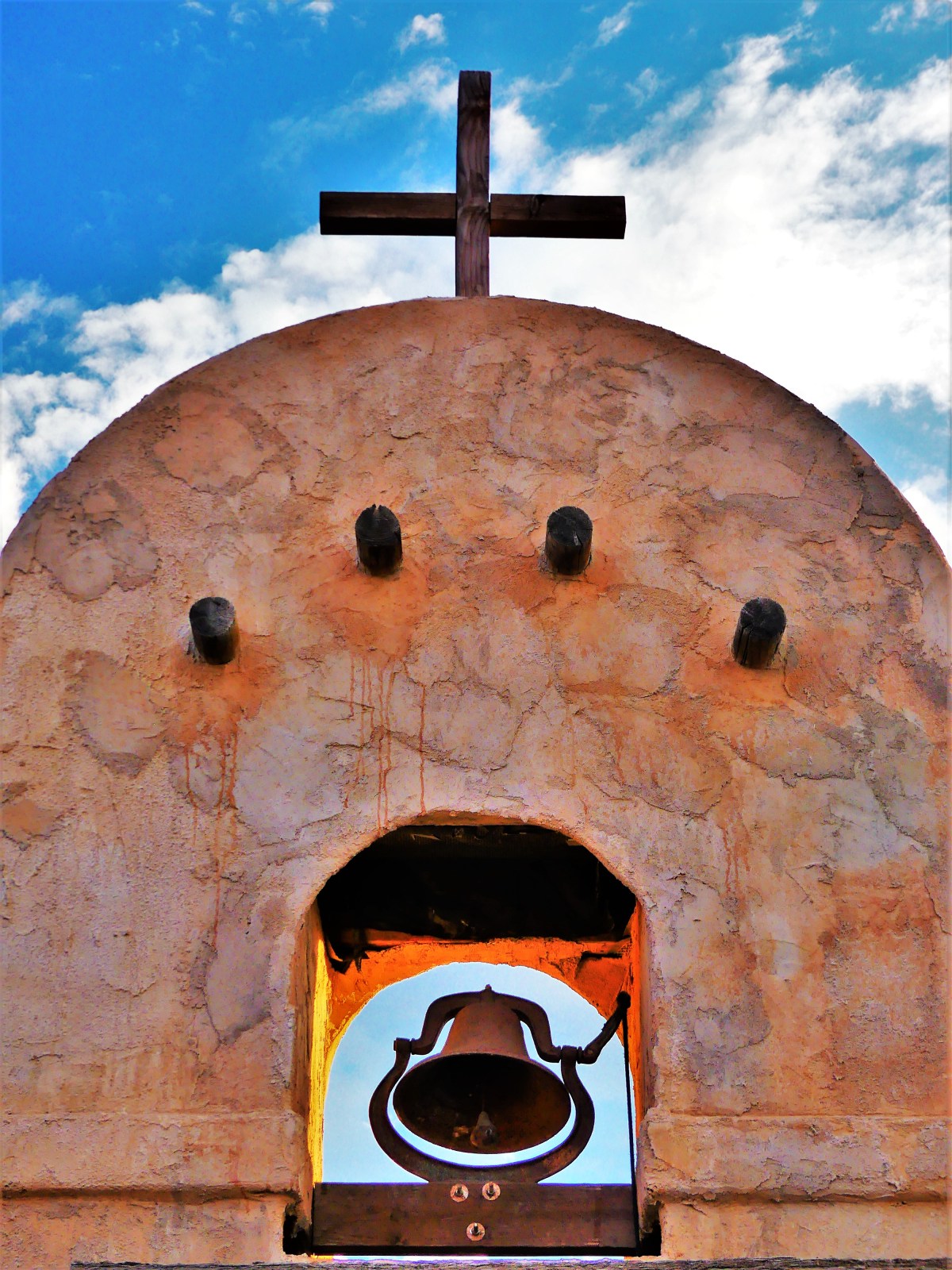
mission bell

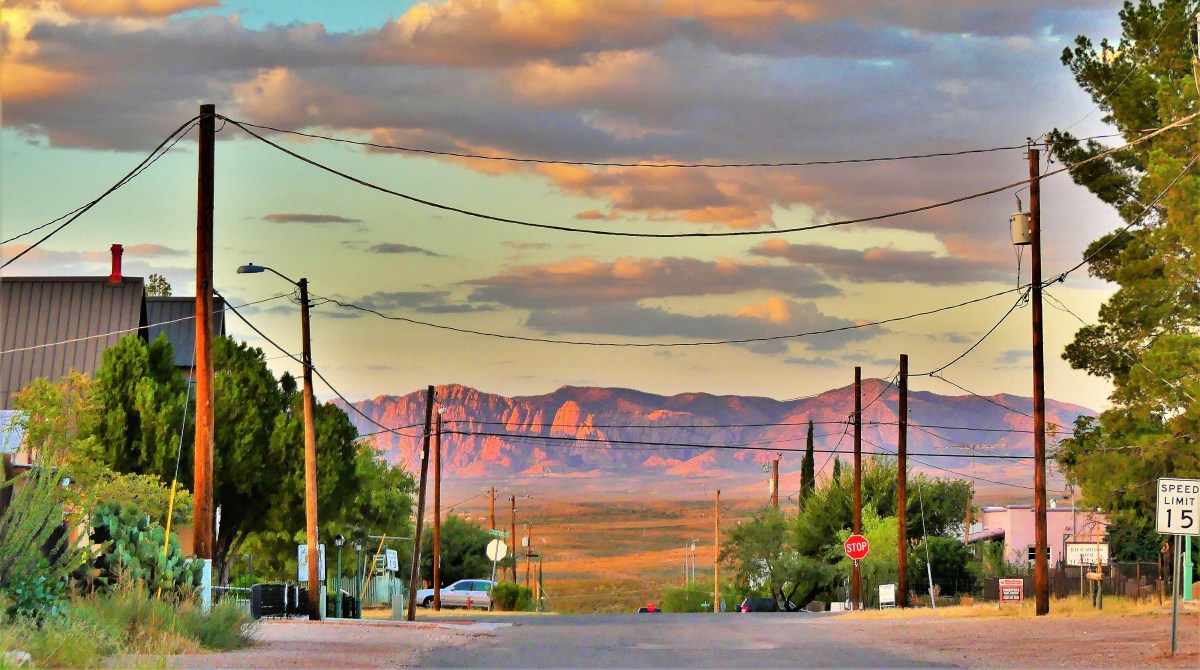
And as the sun sets on Tombstone…

sunset over tombstone (2)

we remember the lawlessness of the Wild, Wild West,

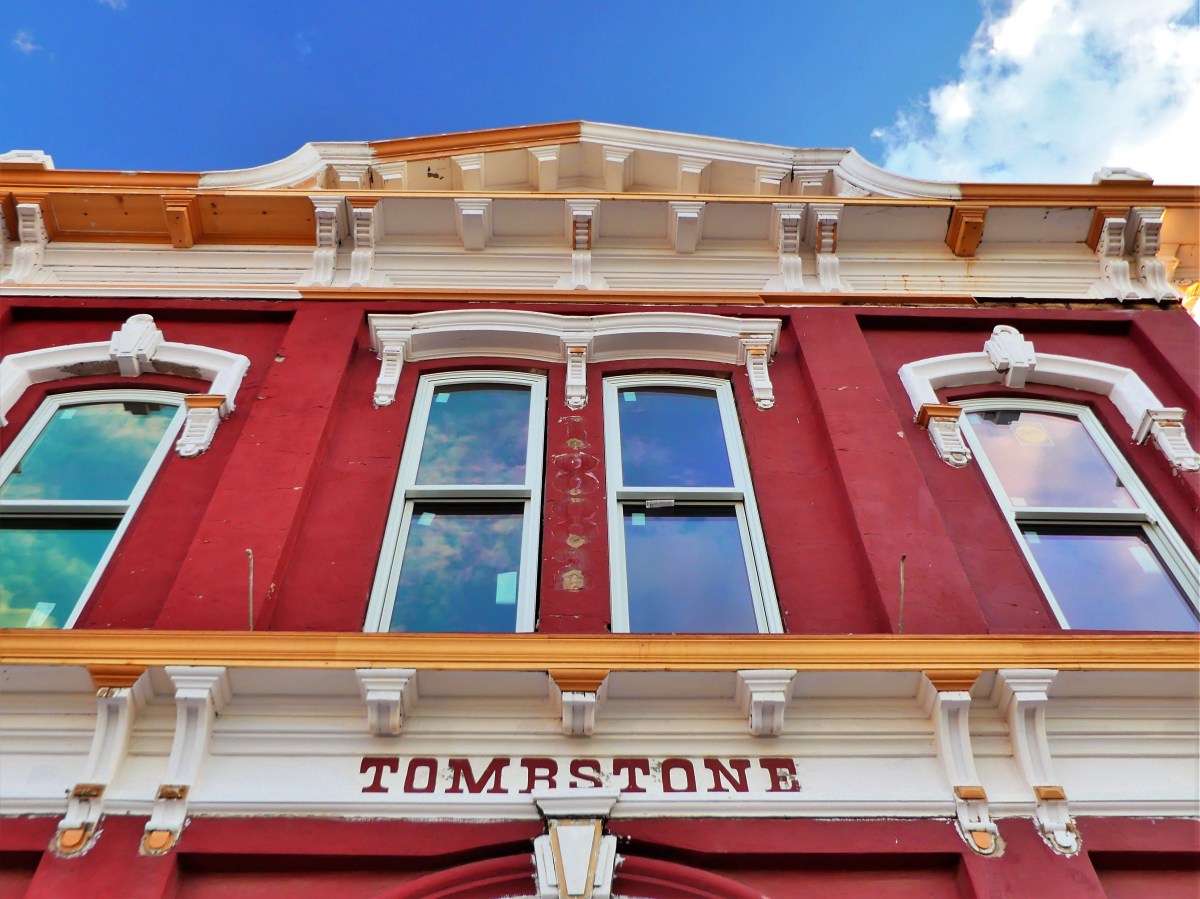
City Hall

but we celebrate the triumph of a Town Too Tough to Die…

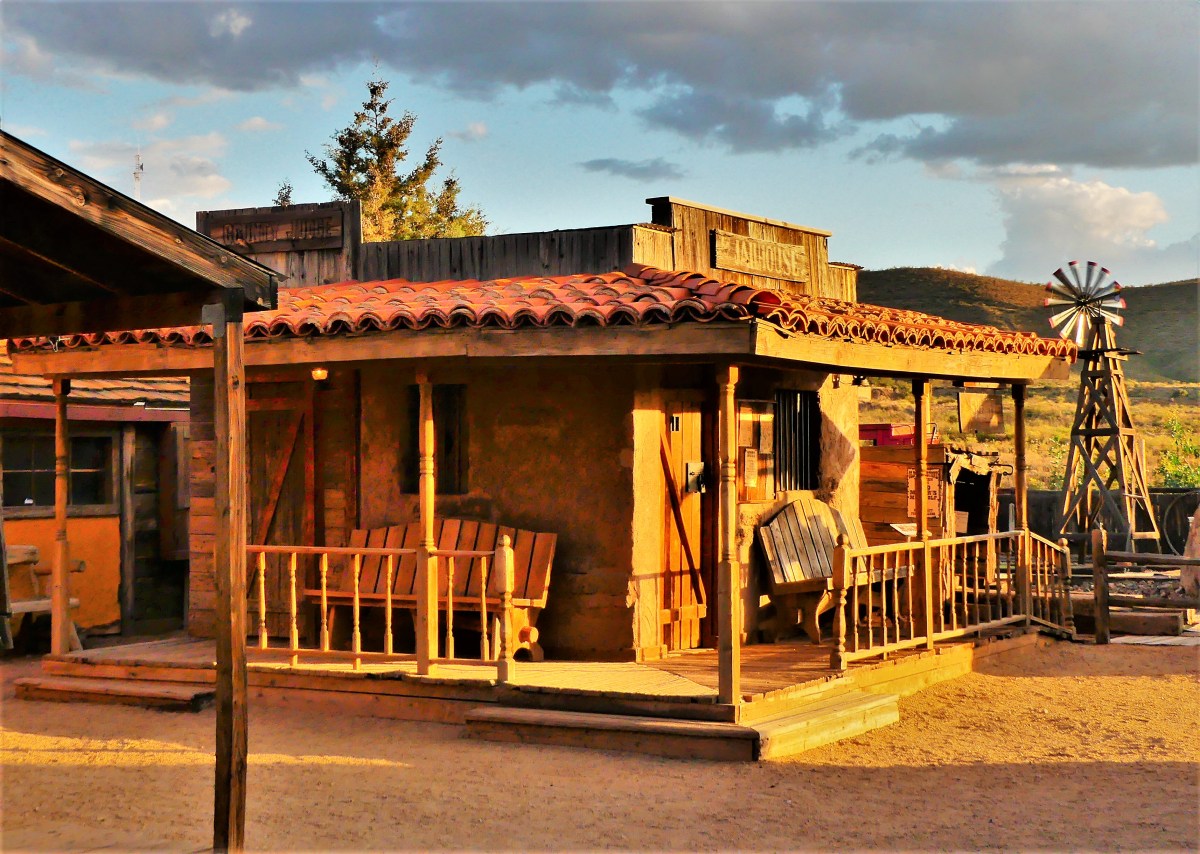
old town set

…a worthy consideration while we soaked away the stress in a hot spring along the Rio Grande the following day in Truth or Consequences, NM.

morning soak by the rio grande .jpg


Nature Under Glass

Exploring Tucson, AZ provided two very different opportunities to experience nature–Saguaro National Park and Biosphere 2–with one generating more interest than the other.

We reserved a site at Catalina State Park’s campground…

Catalina Mtns

to be equidistant between the two National Park districts: Rincon Mountain (RMD-east) and Tucson Mountain (TMD-west). Why two districts? In the 1960’s, concern over RMD’s cactus forest showing a decline in new growth, prompted conservationists to acquire a stand of ancient saguaros to the west of Tucson, separating the two districts by an hour’s drive.

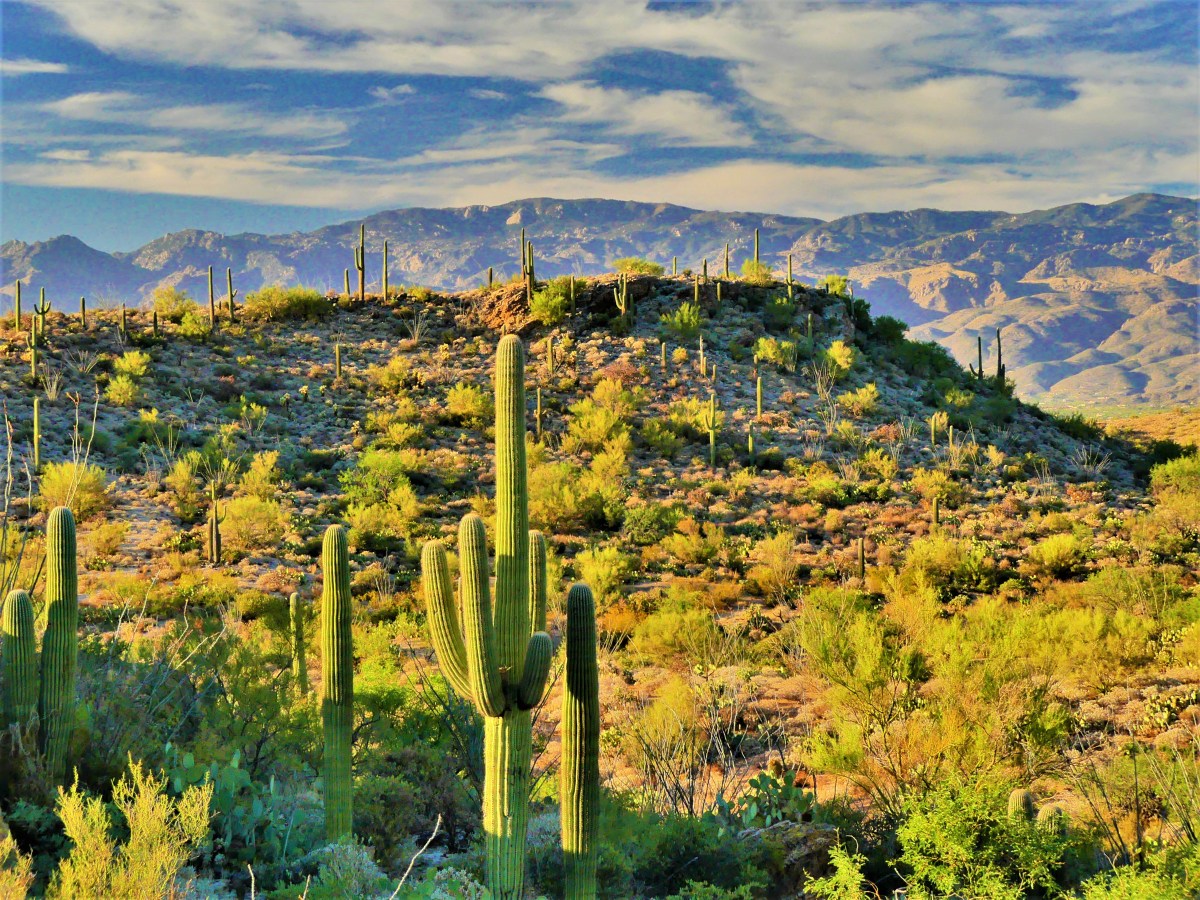
Leah and I began our journey at TMD, at first, through a meandering exurban road that eventually led to an unpaved, rutted, and narrow scenic Bajada loop drive covering five miles of Tuscon Mountain foothills. A stop at the Desert Discovery Trail brought us within no touching distance of magnificent saguaro cacti measuring over thirty feet tall.

key light saguaro (2)

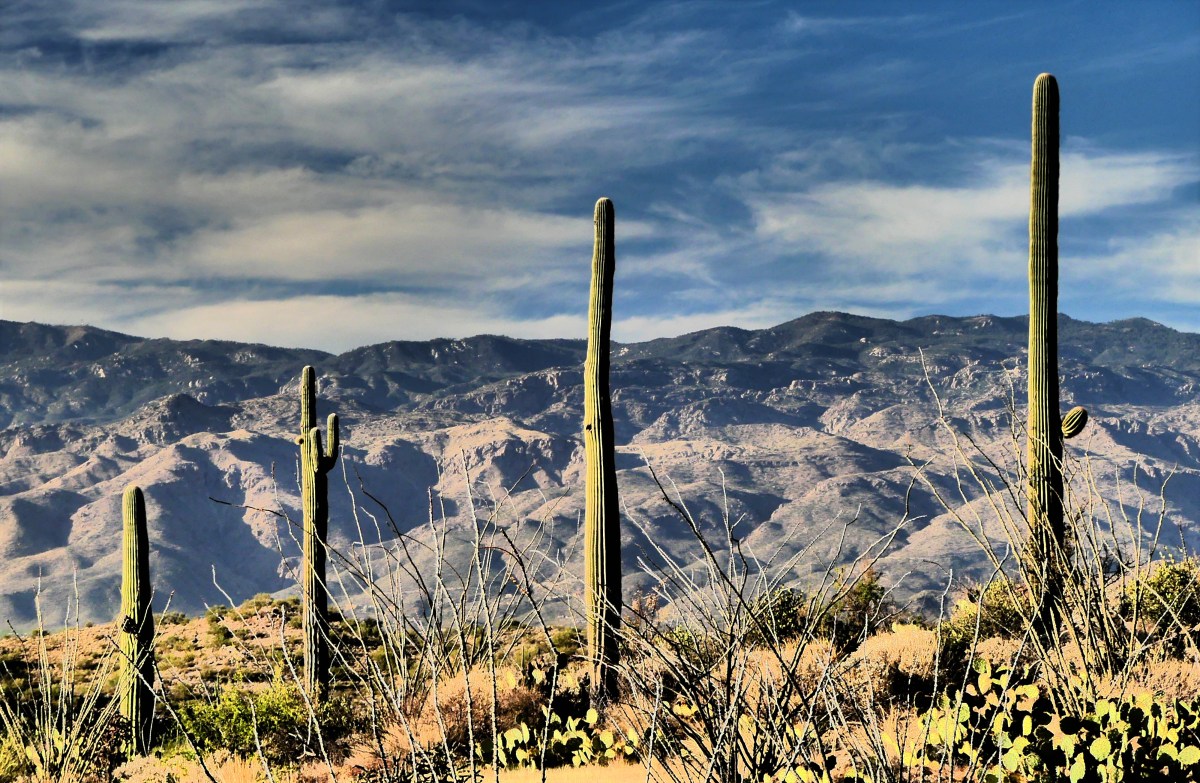
Each specimen appears unique, sprouting limbs in different places, and contorting in all directions,

desertscape (2)

giving relevance to Native American claims that these are people standing among the sand and rocks.

Desert Trail

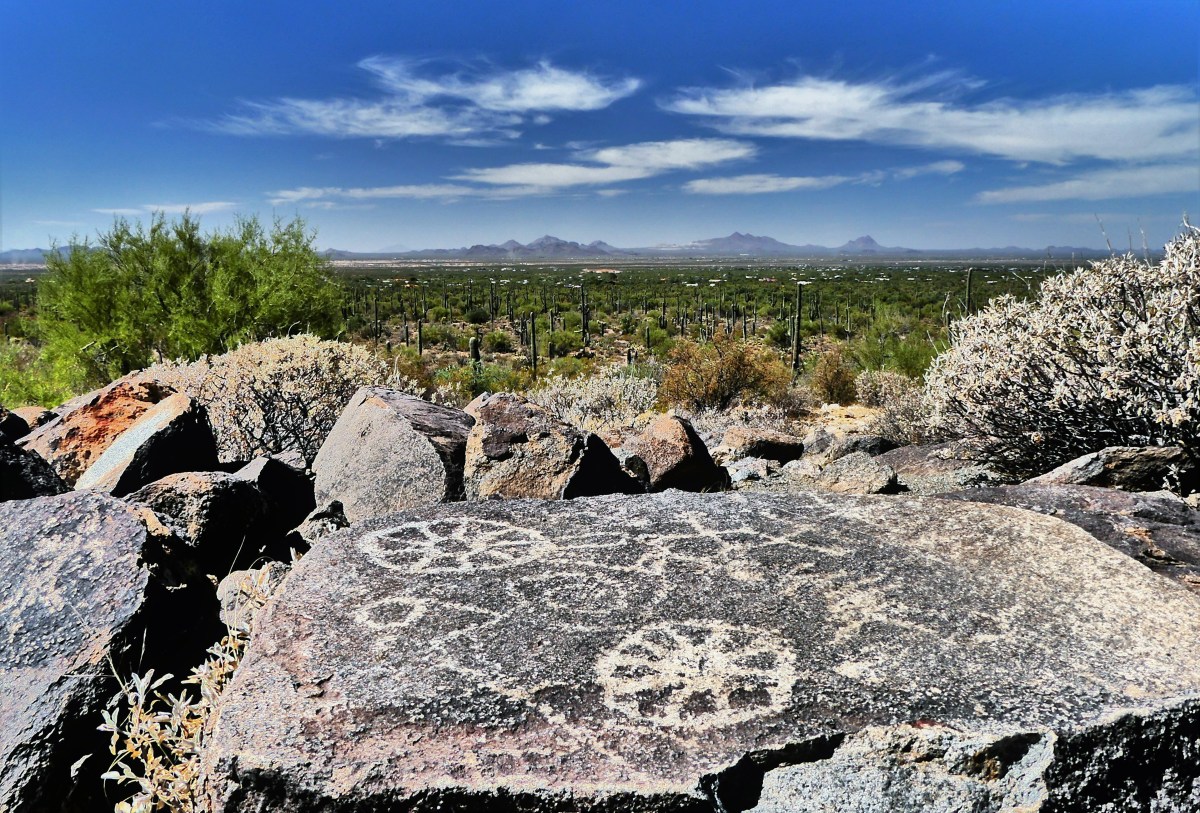
Their petroglyphs across Signal Hill are a testament to their long-standing occupation of the territory more than one thousand years ago.

petroglyph and mountain1

signal hill petroglyphs

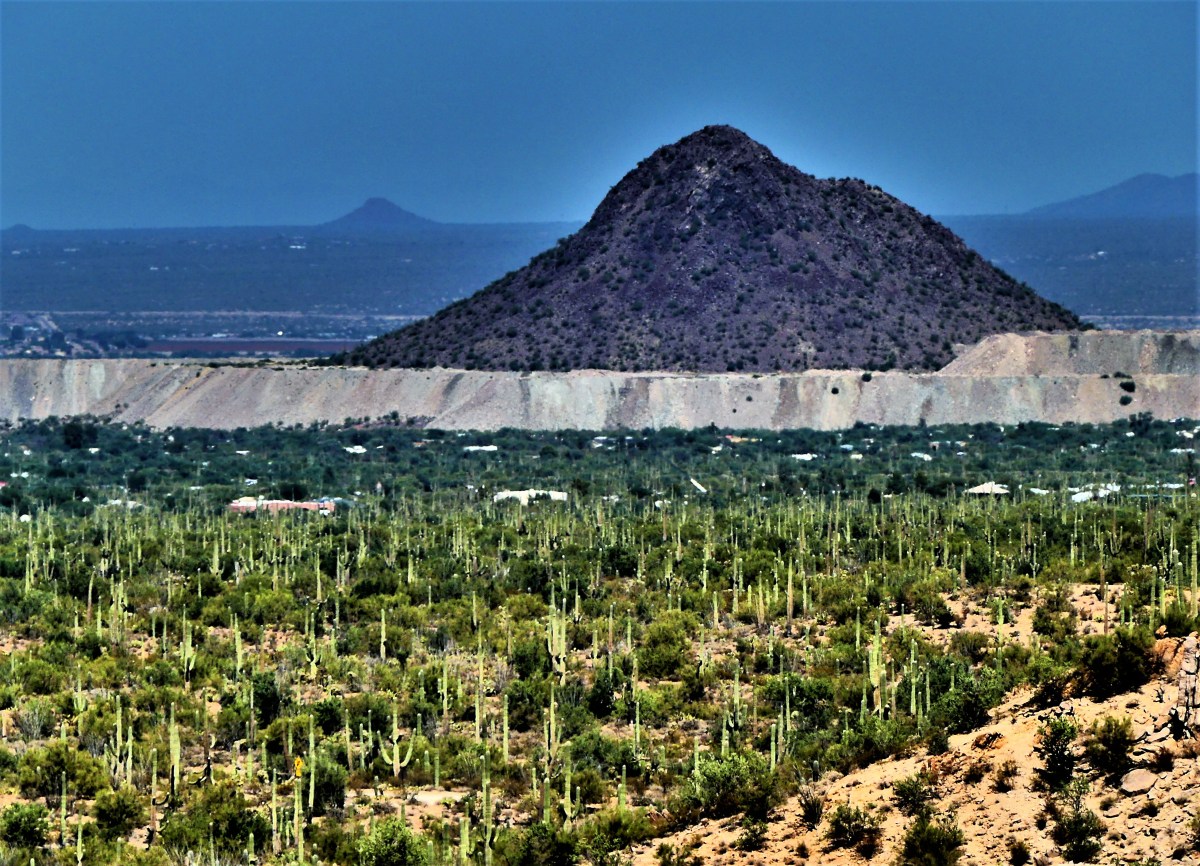
A memorable hike along the Valley View Trail slowly ascends a ridge, offering dramatic views of Avra Valley’s saguaro-sprawl, with Picachu Peak in the distance.

Avra Valley and Picacho Peak

With temperatures reaching into the high 90’s, we avoided all other trails–requiring a minimum of three to four hours of dedicated strain–in favor of cross-town traffic delays that minimized our allotted time to visit RMD.

Once at the eastern park gate, we roamed the paved eight-mile Cactus Forest Drive, switch-backing into higher elevations, with warm western sun casting a golden hue across the desert, turning a forbidding vista…


mtn garden and sky

into an inviting playground,

western sun across the desert

protected by a standing legion of cactus totems.

rincon mtns


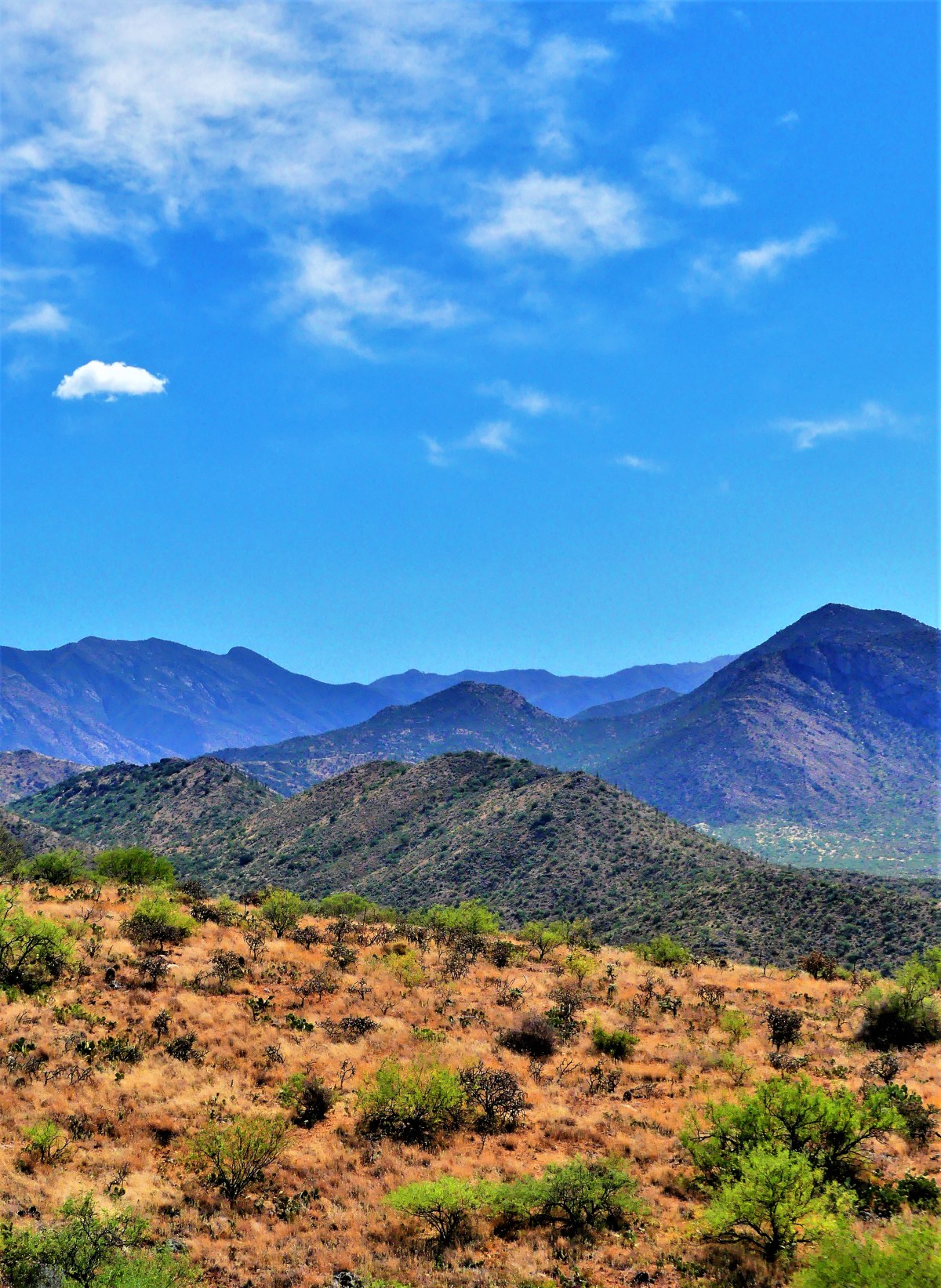
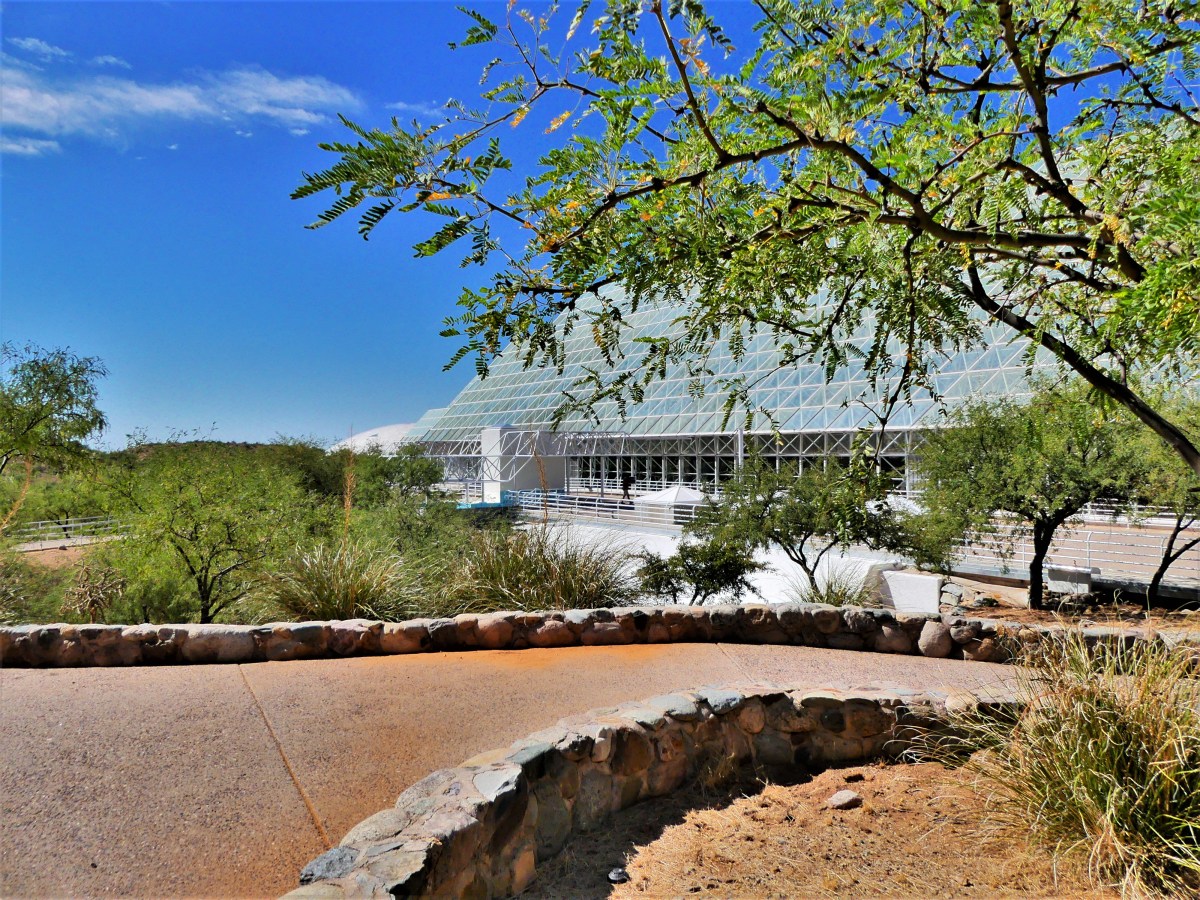
The following day, we turned our attention to an experiment in the remote reaches of the Sonoran Desert,

setting

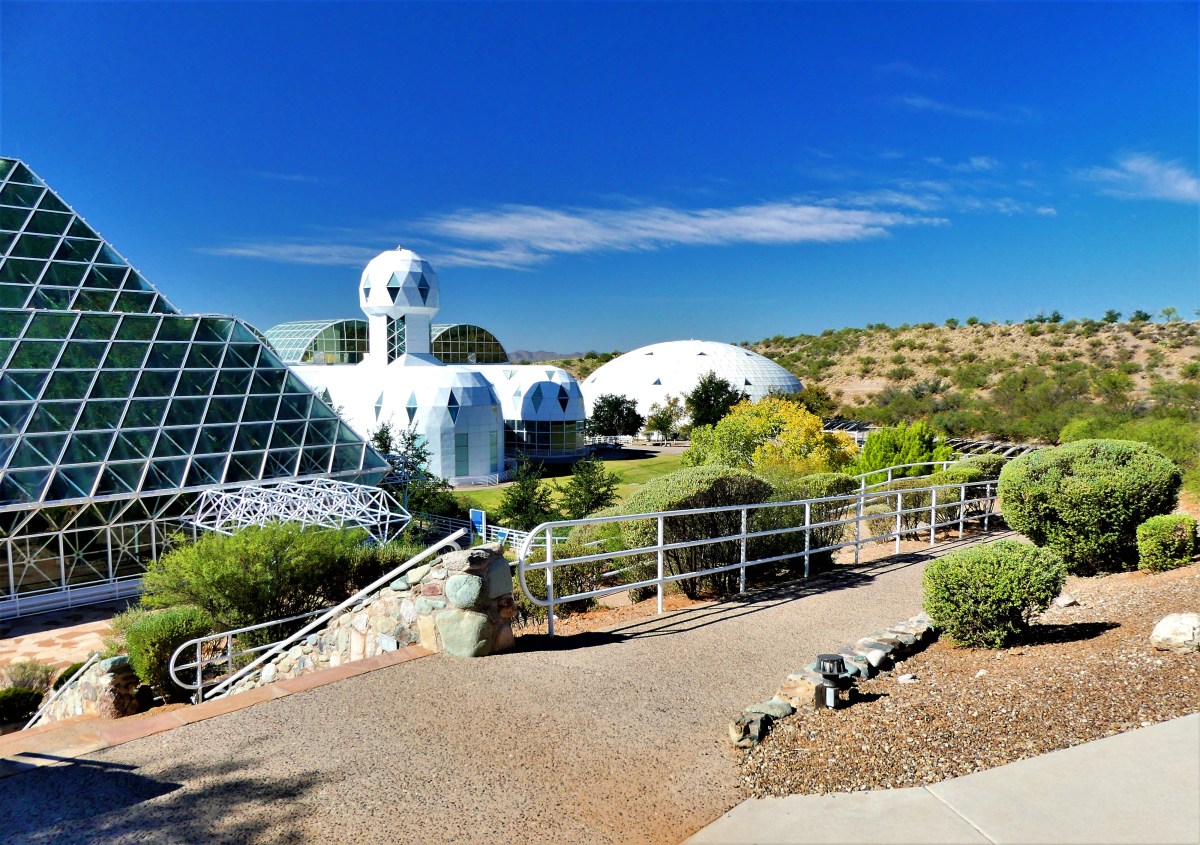
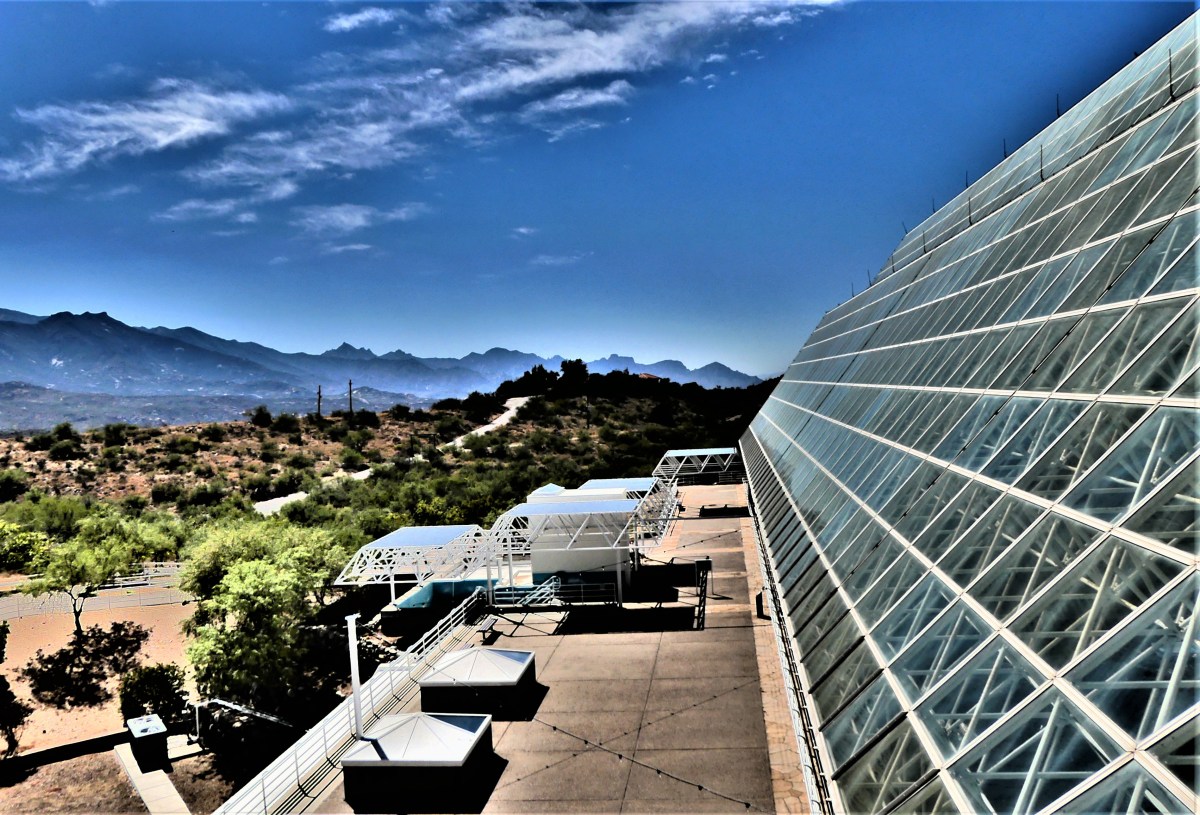
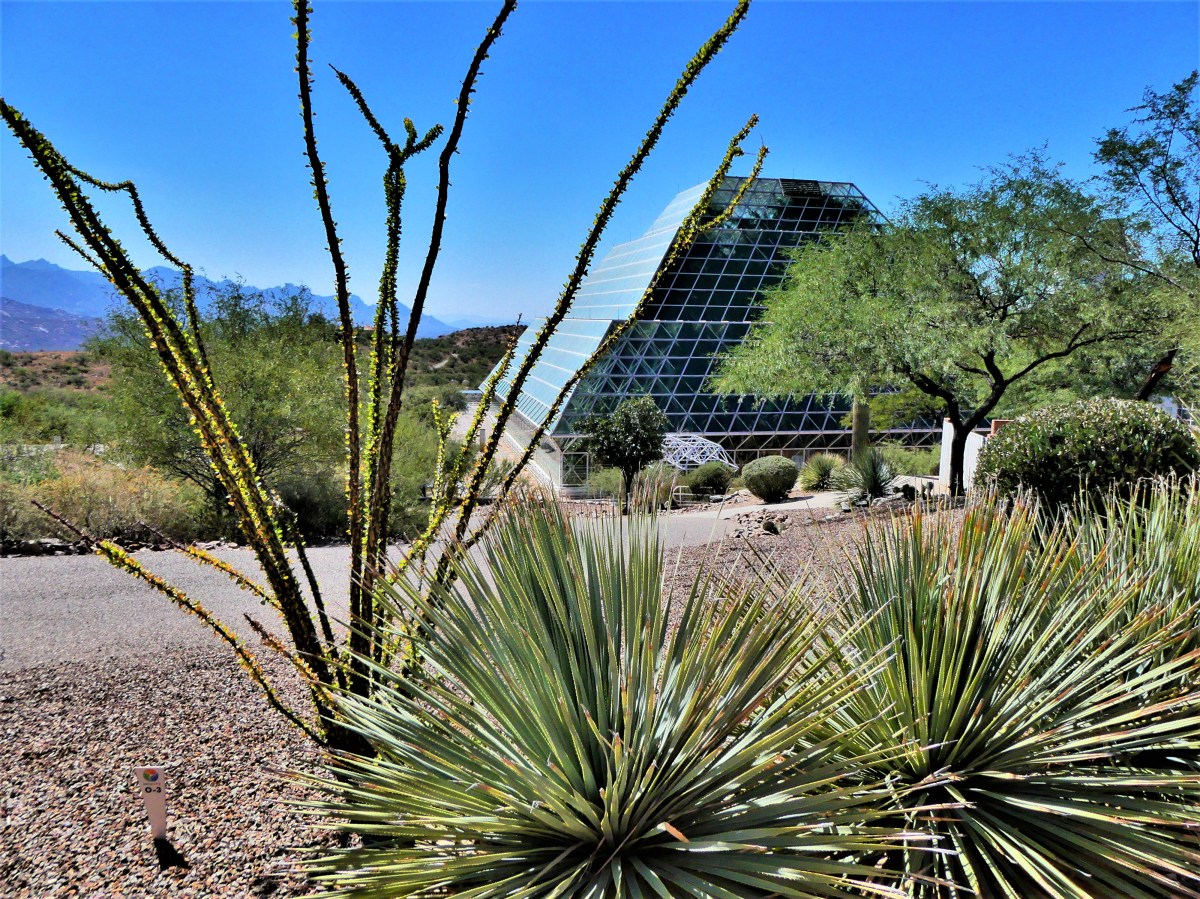
originally conceived in 1984 to “research and develop self-sustaining space-colonization technology,” and leading to two highly publicized missions between 1991 and 1994–where teams of eight were sealed into a self-sustaining environment for two-year terms and monitored for their “survivability”. Scientists named it Biosphere 2.

establishing

bioscape

rincon range

landscaping

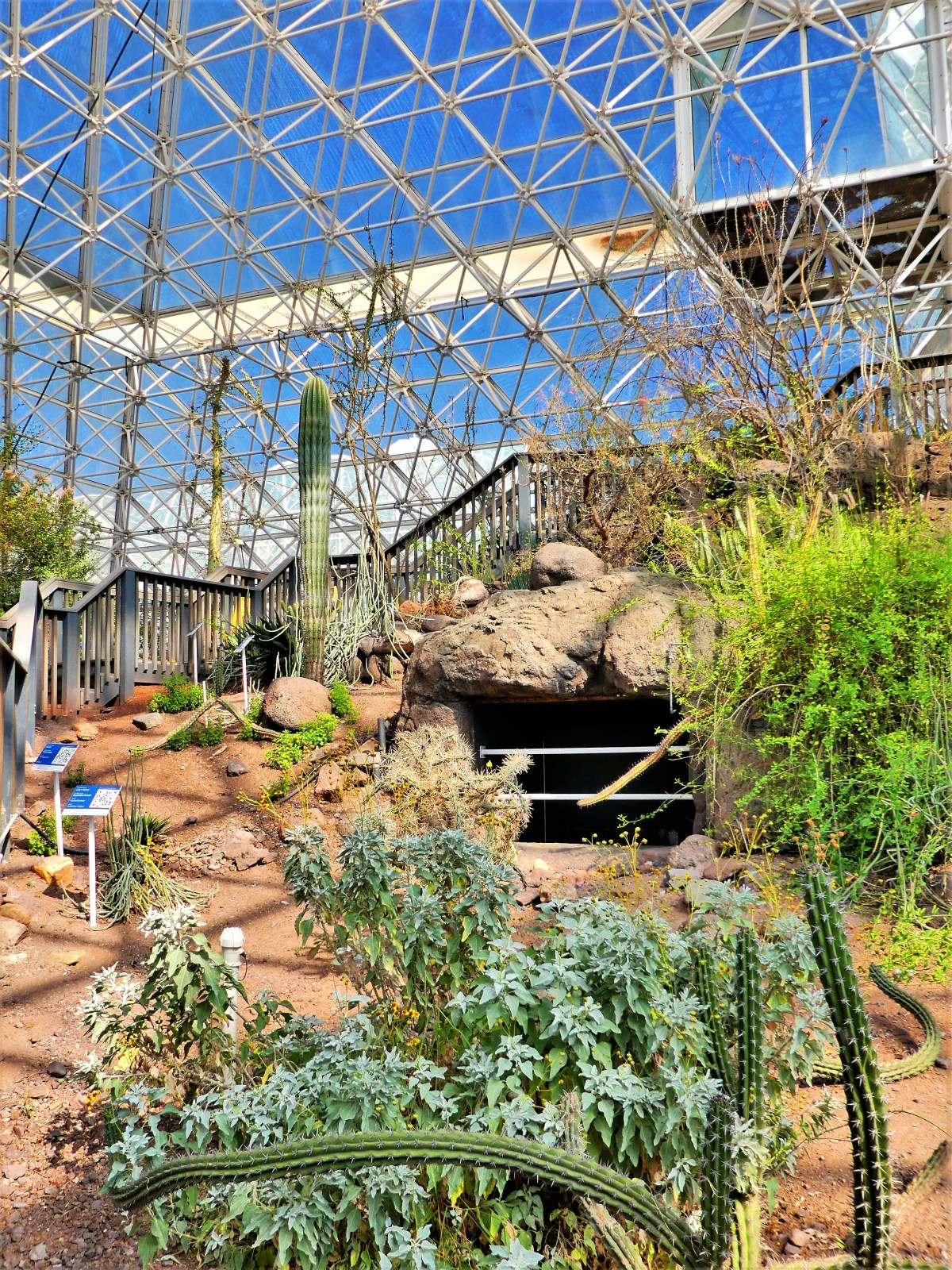
Presently, the University of Arizona has assumed stewardship of the facility, turning its focus toward research on climate change–mimicking diverse ecosystems, such as the ocean,

ocean habitat

the rainforest,

rain forest

and coastal fog desert,

desert habitat

all managed under controlled conditions.

Beneath nature’s museum lies the technosphere, a myriad of pipes and wiring,

recycled air conditioning

channels and ducts, tubes and cables, and other facilities necessary for vital operation.

An ingenious dome-shaped lung…

lung

connected to the glass enclosure by tunnels…

tunnel

allows for air expansion caused by ever-changing pressures within the sealed structure.

The scope of the facility is a marvel, boasting double redundancy for all power and life support systems.

power supplies

A common question on the tour, “Why is it called Biosphere 2? Was there another Biosphere before this one?”

The docent is keen to respond, “Yes. Another Biosphere exists, where random, haphazard and uncontrolled experiments called living are carried out on a daily basis, but we commonly refer to it as Earth.”


Putting Leah in Perspective

Picasso painted Marie-Thérèse Walter and Dora Maar among others; Dali’s choice was Gala; and Stieglitz extensively photographed Georgia O’Keeffe. The results of these collaborations are legendary. Artists have always depended on models…for inspiration, as subjects, as lovers.

fallen tree (2)

And while I eschew classifying myself as an artist, my reliance on Leah in my landscape photographs is no different than the aforementioned masters…with one exception: scale!

burned out but alive (2)

Often times during picture editing, she will lament, “Why am I so small? You can hardly see me!”

Rainbow Trail panorama (2)

But being able to insert Leah into a panoramic scene or long shot helps me establish dimension and grandiosity.

Leah F150 formation (2)

And while there are times when I seemingly wait forever for someone to step outside the frame of my shot before pressing the shutter, there are also times when it becomes vital to locate Leah in my scene to anchor its meaningfulness, and increase its effectiveness.

Prairie grass and Leah (2)

Sometimes Leah can be an unwilling participant. She may object if she feels she’s not looking her best, or perhaps she becomes annoyed if she’s not the central focus of my photograph when she feels like posing.

Leah (2)

But either way, she has always been a good sport, and is usually compliant when taking my directions.

waders vertical (2)

But regardless of how many rocks she leans against per my request, it’s evident to me, photography aside, how much I lean on her.

canyon shade

She is my personal rock, who helps me put things in perspective.

balance rock and leah (2)

via Photo Challenge: Scale

Sleepless in Las Vegas

Seldom am I so amazed that I am speechless or at a loss for words…

After visiting twenty-nine U.S. National Parks, four Canadian National Parks, a dozen National Monuments, numerous State and Provincial Parks, and driving thousands of miles of scenic byways over the past twenty-nine weeks,

captured on:

Leah and I have yet to discover a place that is so captivating that we didn’t want to leave…until now.

Rainbow Trail panorama (2)
Leah and me

Valley of Fire State Park allowed us the chance to finally exhale, after America held its collective breath trying to make sense of yet another senseless killing spree, when a maniacal sniper opened fire on a crowd of 20,000 innocents a ¼-mile away.

We were 4½ miles out of harm’s way, staying at an RV resort off I-15 at the time, and wondered about the incessant sirens screaming past our open windows after 10 pm that fateful evening..

“I can’t believe how much crime they have here,” Leah exclaimed.

“Wouldn’t want to live here,” I offered.

Switching on the TV, all stations were locked on breaking news of an active shooter at the strip, but details were sketchy with the story developing by the minute. We quickly realized that we were listening to the soundtrack of a massacre: SWAT teams, police, EMT, and ambulances were sprinting past our Airstream–in and out of the danger zone.

Originally, we booked a couple of days in Vegas to decompress, and intended on exploring the strip in search of available show tickets once the Airstream was unhitched. But the prospects of casino crawling quickly faded after an afternoon of relaxation by the pool. Then again, we figured there would always be tomorrow.

Yet by morning, as the tragedy at Mandalay Bay unfolded, the thought of unthinkable loss left us gasping for air.

Leah summed it up: “It doesn’t feel right having fun when we’re surrounded by so much pain and suffering.”

We needed a getaway. We took off for Red Rock Canyon to escape the inhumanity, and clear our heads.

Callico 1

Keystone Notch Trail

Red Rock Canyon panorama

It was a small dose of nature for the day, and helped to heal our heavy hearts.

The following day, we moved our Airstream fifty miles east, to the Valley of Fire, where we found the perfect antidote to murder and madness. We found a place where we could breathe,

rainbow road (4)

and the only sound at night was silence.

The park has an abundance of features and formations.

Beehive2
Beehives
Arch Rock1
Arch Rock
Elephant Rock
Elephant Rock
Silica Rock
Silica Dome
Atlatl Rock
Atlatl Rock
Mouse's Tank
Mouse’s Tank

But the hiking trails off White Domes Road offer the biggest reward.

Rainbow Vista  gave us an opportunity to scramble over rocks with more colors than a box of Crayolas.

Roadside formations1 (2)

Roadside formations2 (2)

Roadside formations3 (2)

Roadside formations4 (2)

Roadside formations5 (2)

Roadside formations6

A loop through the deep red sands of White Domes transported us to the 23rd century set of Star Trek: Generations.

monolith (2)

White Dome Trail2

slot canyon2

Slot canyon4

canyon opening

keyhole (2)

A stroll through Fire Canyon during late afternoon gave us the impression that each rock radiated from within.

Fire Canyon (2)

rock foot

Magic light

Fire Canyon Arch

sundown

But I was unprepared for the exhilaration I felt after reaching the Fire Wave.

FW8

FW7

FW3

FW1

FW9

FW2

FW6

FW5 (2)

I’ve adopted Valley of Fire as my Muse. Even now, when I close my eyes, I believe I’m  living in Candyland–a magical world where the cliffs look like candy, and all the residents of the world are tolerant of each other. 

This post represents a milestone of sorts, as its #100 in my series of posts for Streaming Thru America–a blog intended to showcase and celebrate the diversity of beauty throughout the country. I dedicate #100 to all the victims, and their families, and I salute the first responders, the good Samaritans, and the medical personnel, who continue to fight for the living.