I met Andy Warhol once, although it was nothing glamorous. I can’t brag about meeting him on the set of one of his Factory films or dancing together at Studio 54 or sharing lines of coke in the ladies room of Max’s Kansas City. Nevertheless, I’ll settle for our chance encounter in the back seat of my taxi.
It was July 25, 1985 and I was waiting at the light on W. 65th St. and Amsterdam Avenue when I recognized Warhol exiting Lincoln Center. He stepped off the curb to hail a cab, and I held my breath that the light would change before another driver could snatch him from me.
When the light turned green, I gunned the feeble engine, and the taxi lurched across the intersection. I pulled up alongside of Warhol, and he scrambled into the back seat of my cab carrying a Commodore tote bag. He requested I drive him to his Upper Eastside townhouse after attending a Lincoln Center event with Debbie Harry to launch Commodore’s Amiga 1000, and promote its color graphic capabilities.
He wasn’t much of a conversationalist, and the trip–all of 15 minutes–was covered in relative silence, although he asked me turn up the volume when “Brown Sugar” played over the radio.
“I designed that album cover for the Stones, y’know,” he said softly.
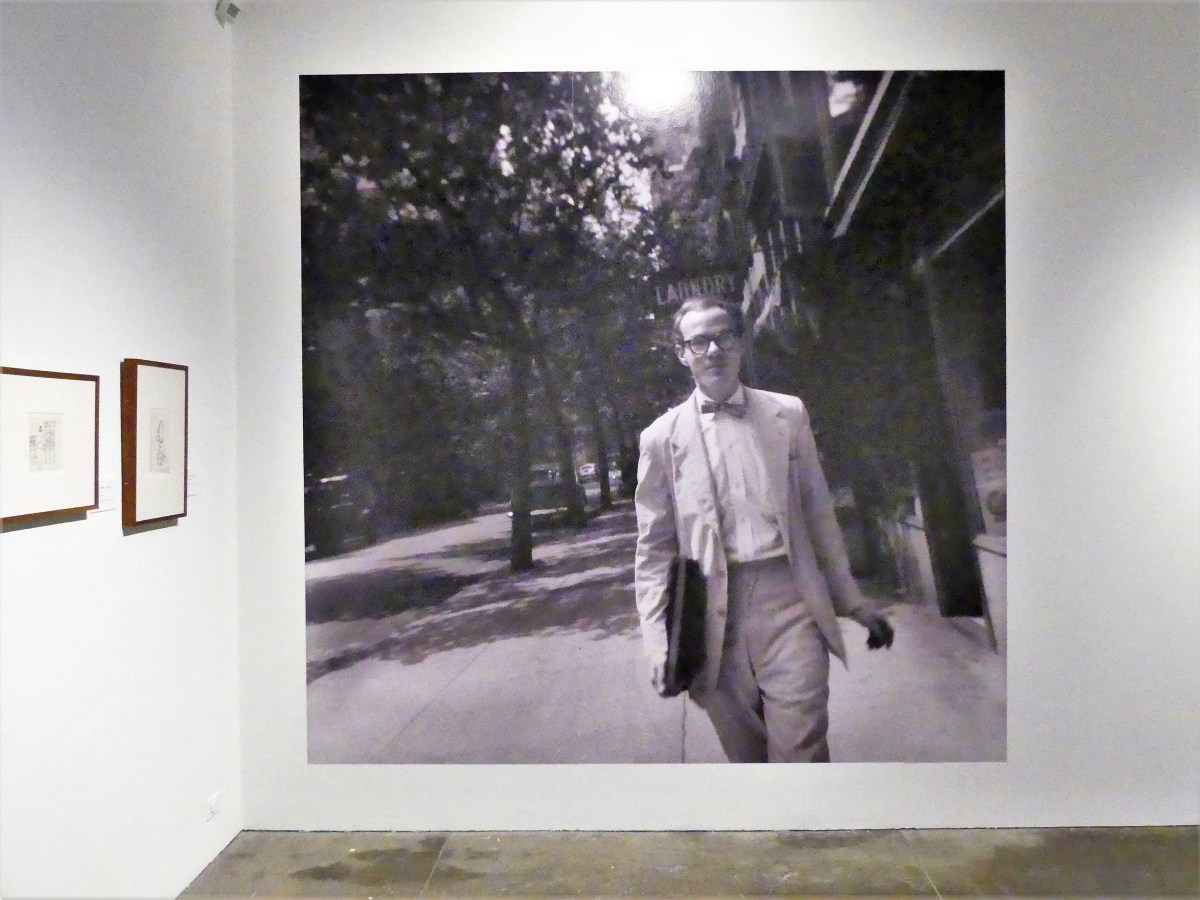
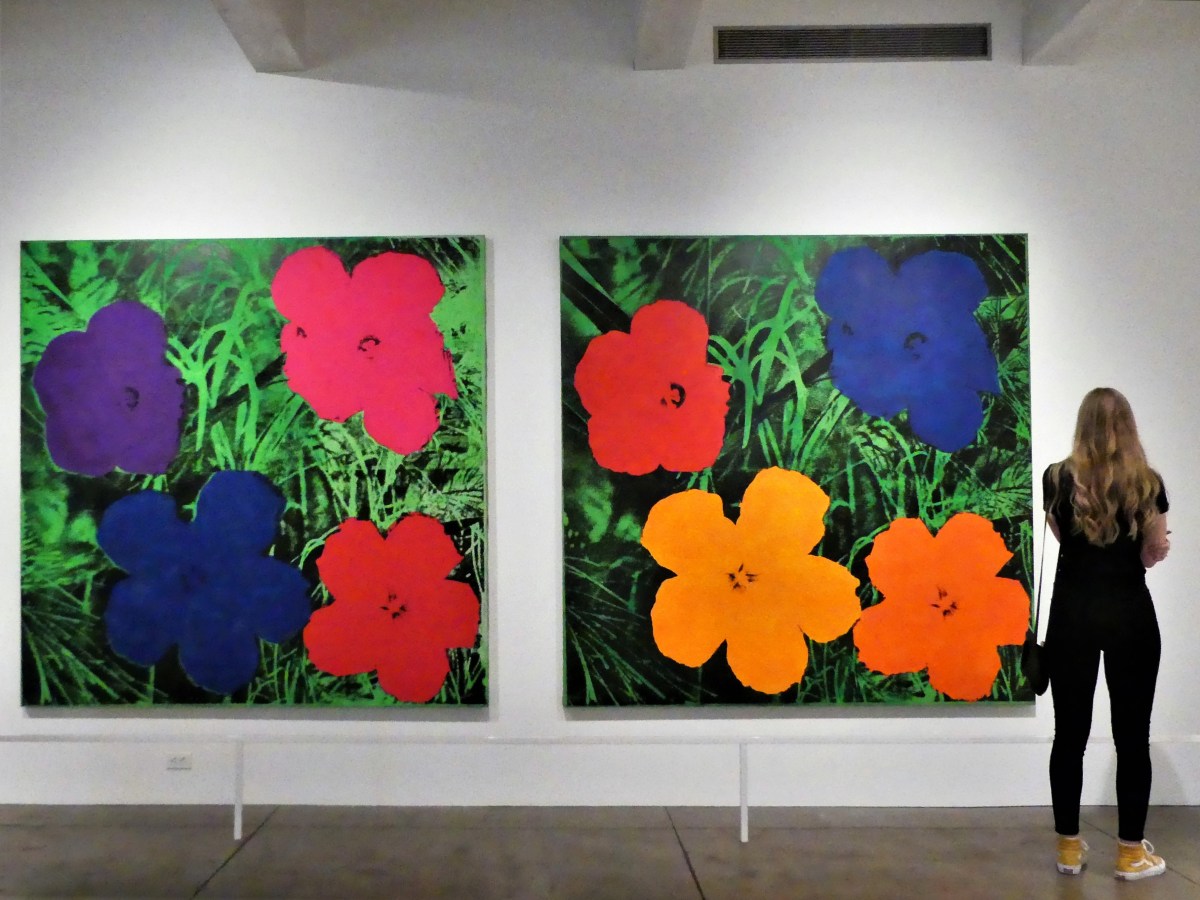
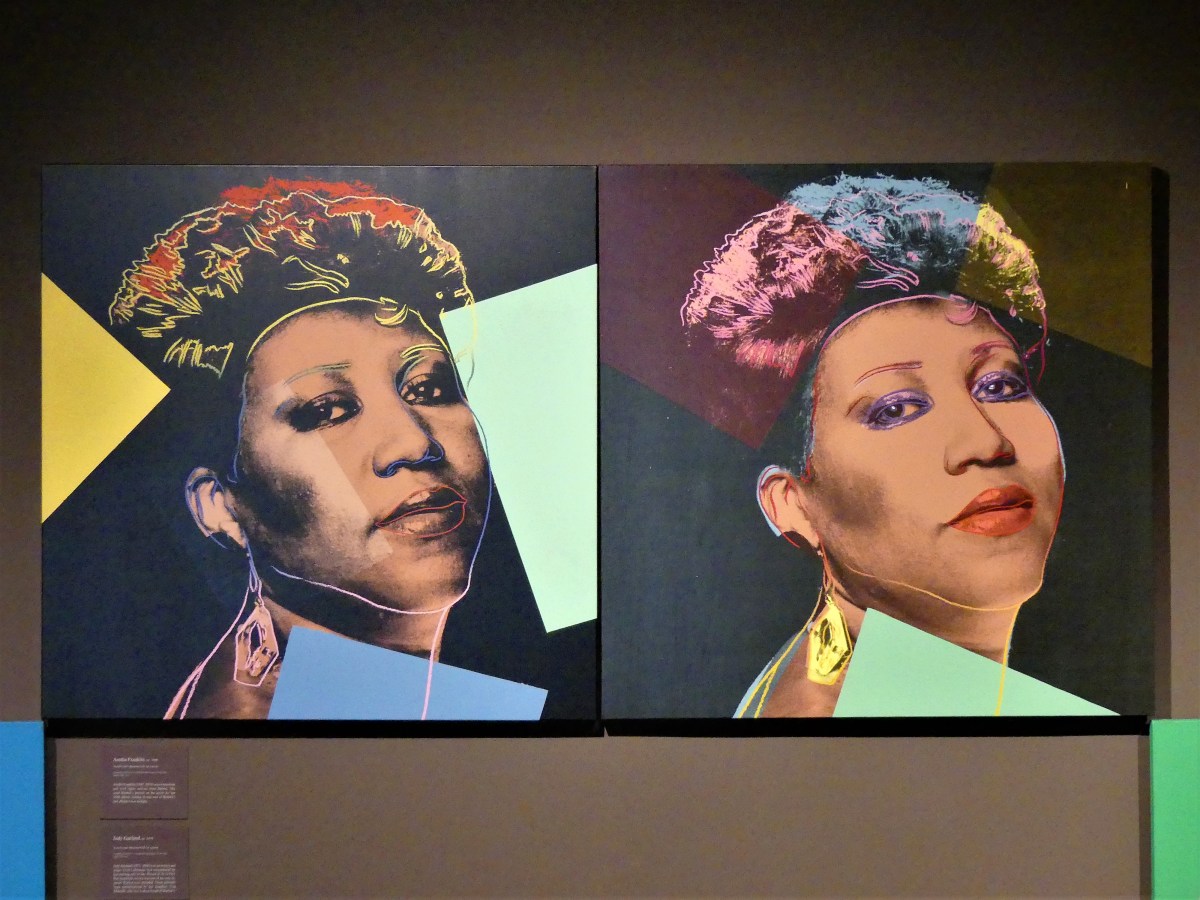
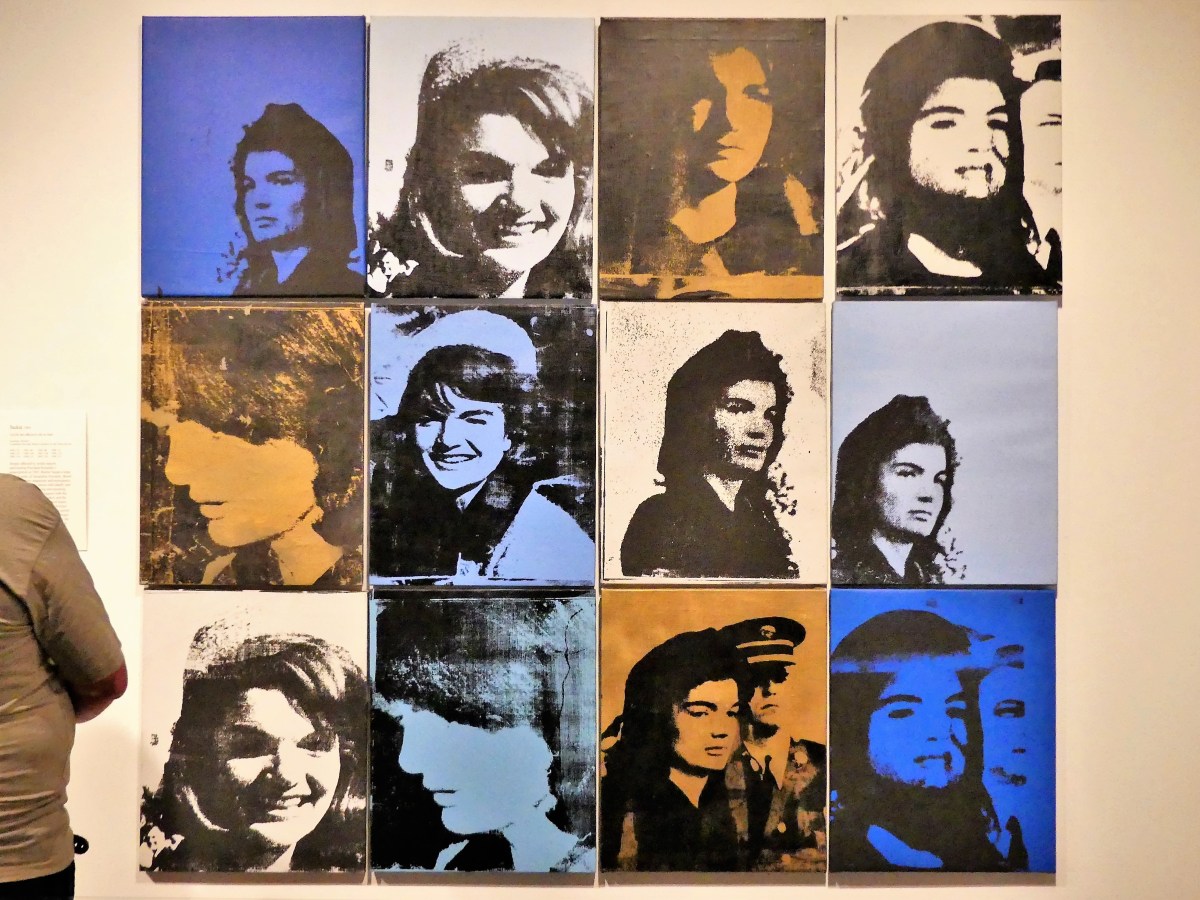
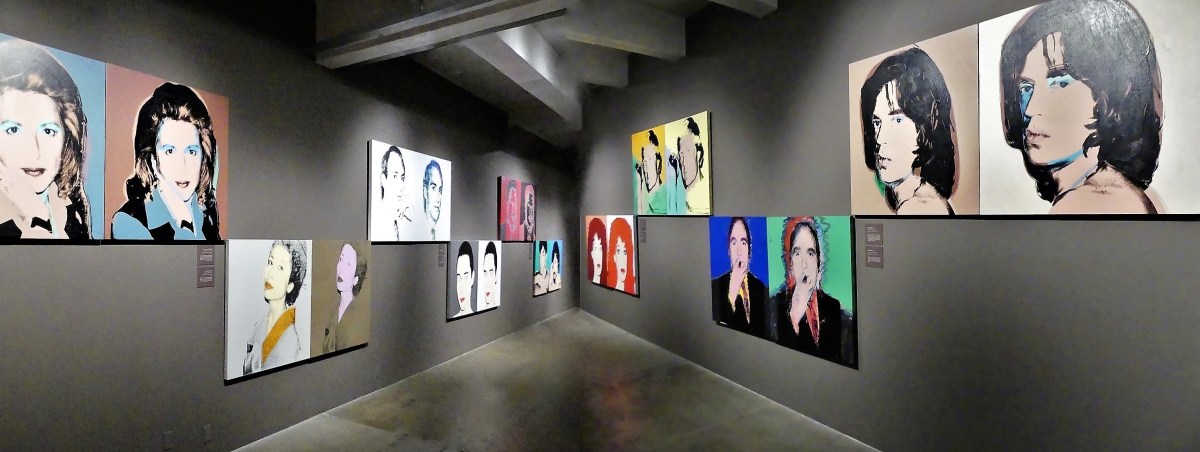
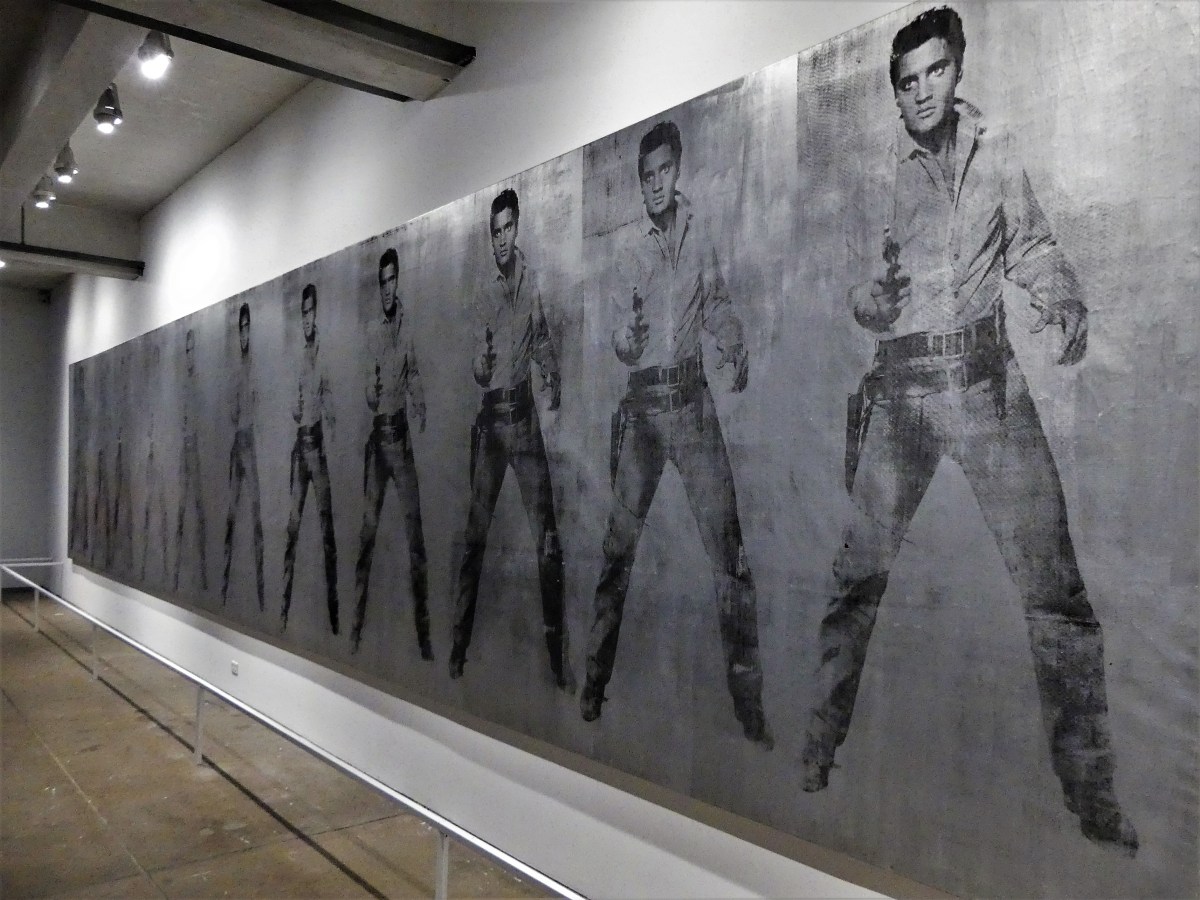
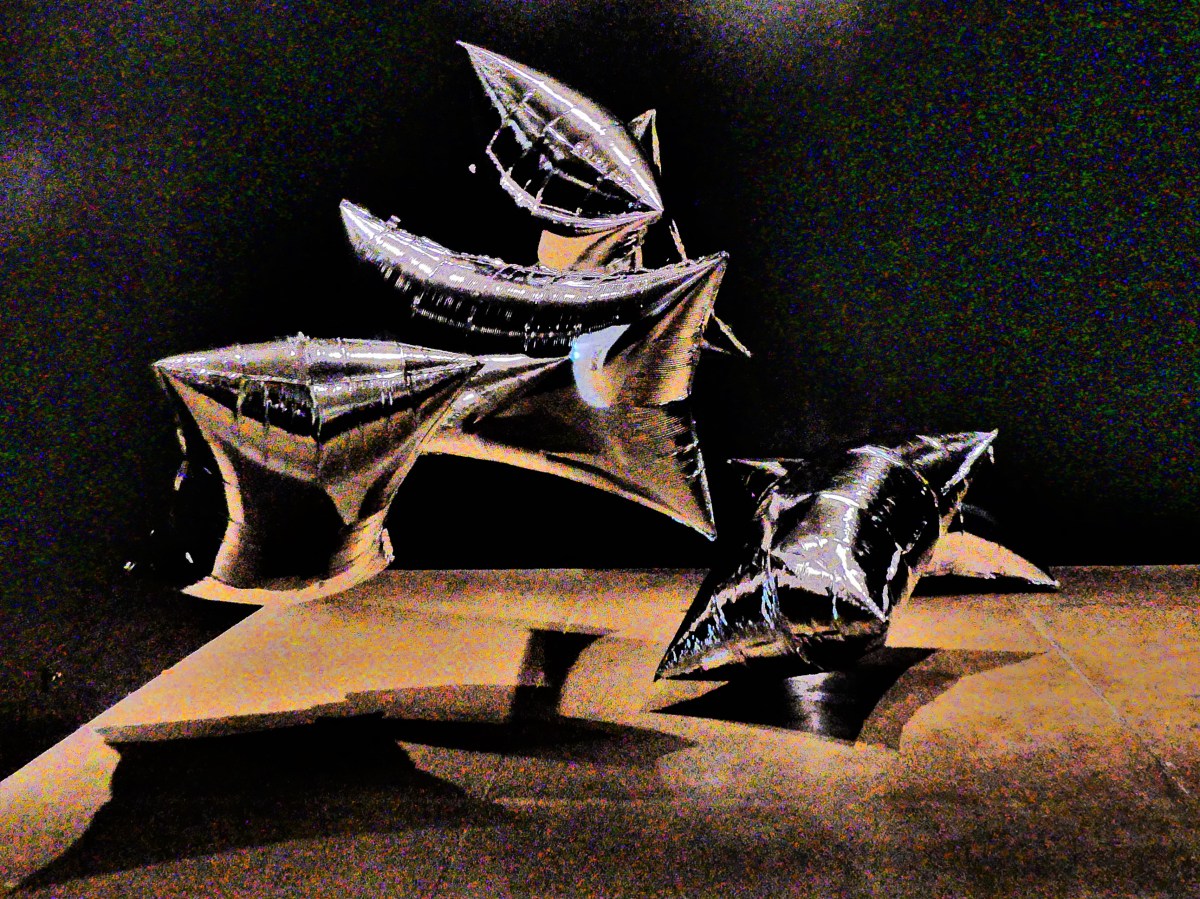
These memories came flooding back to me as I explored the Andy Warhol Museum in Pittsburgh, walking through seven floors of collections from the early years,
through his productive New York days,
until his demise in 1987.
The Andy Warhol Museum–managed by the Carnegie Museum of Art–holds the world’s most extensive collection of Warhol’s art, including:
“…900 paintings;
…approximately 100 sculptures;
…nearly 2,000 works on paper;
…more than 1,000 published and unique prints;
…4,000 photographs; 60 feature films; 200 Screen Tests; and more than 4,000 videos.”
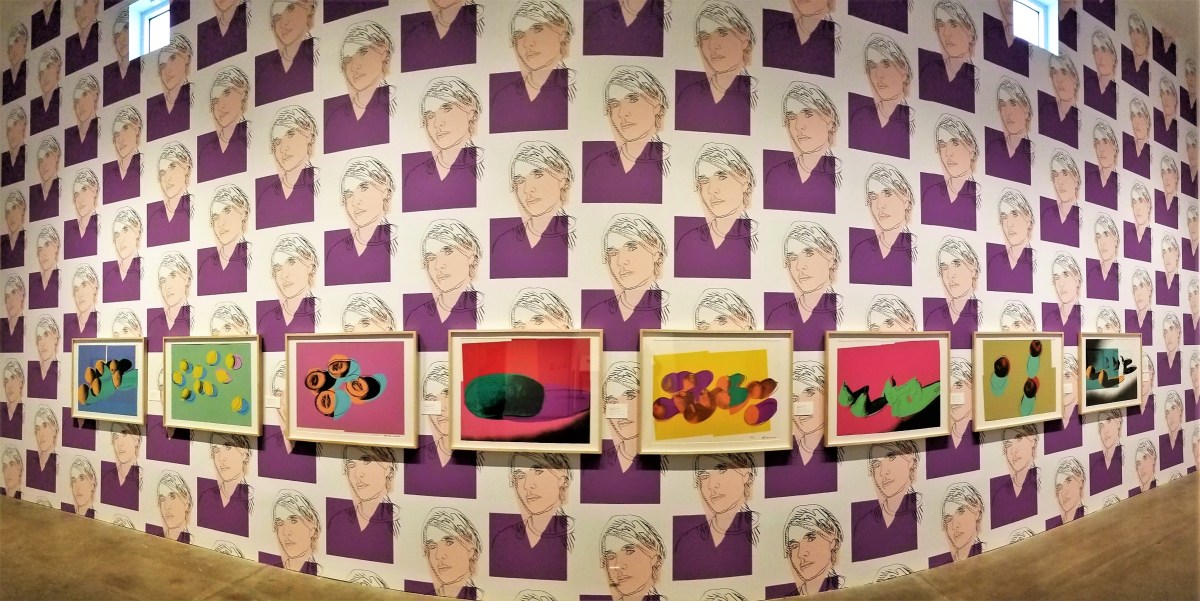
The collection also features Warhol wallpaper and books;
…and an archive of perhaps half a million objects collected by Warhol spanning a 40-year career, including his original Amiga 1000 computer and assorted discs filled with unseen digital art…until recently.
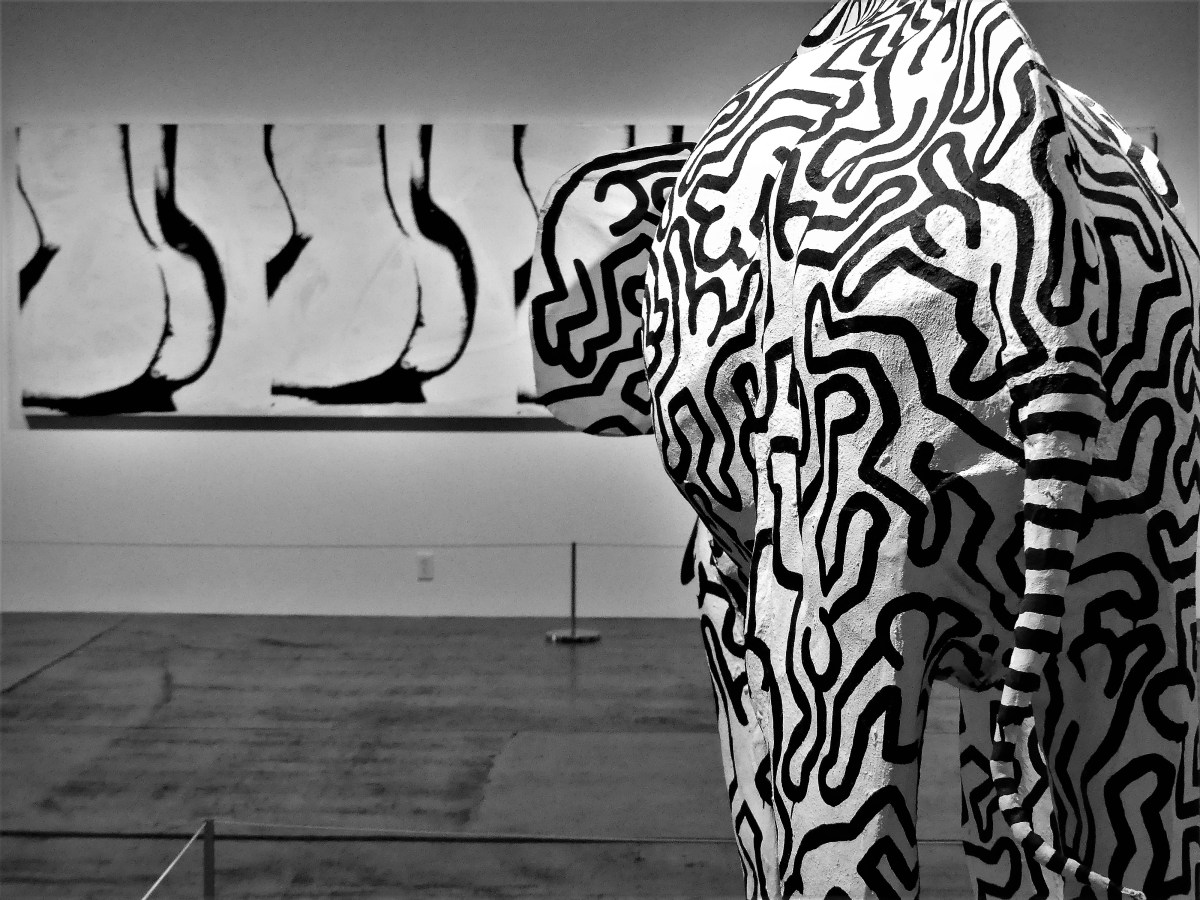
Nearing the end of the exhibition, I approached a Warhol painting detailing a series of female torsos, but found the photograph lackluster and flat. And I wondered, “What would Andy do in this situation to add contrast and depth?”
That’s when I framed a posthumous collaboration of Keith Haring’s painted elephant with Andy’s torsos.
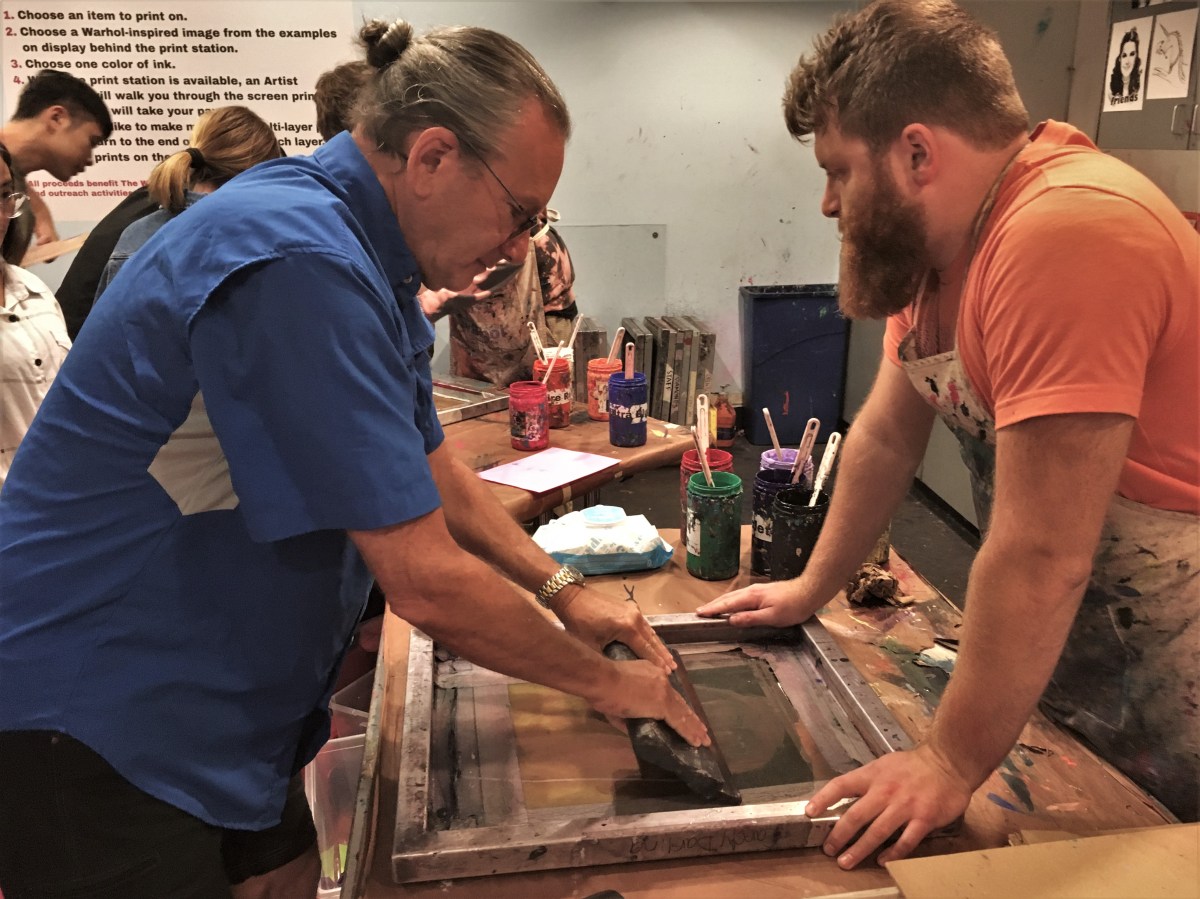
Feeling inspired and somewhat creative, I decided to try my hand at screening a kerchief in the Underground Lab for $2.00.
While it’s not perfect, it’s nothing to sneeze at, so I’ll be using tissues instead, whenever necessary.
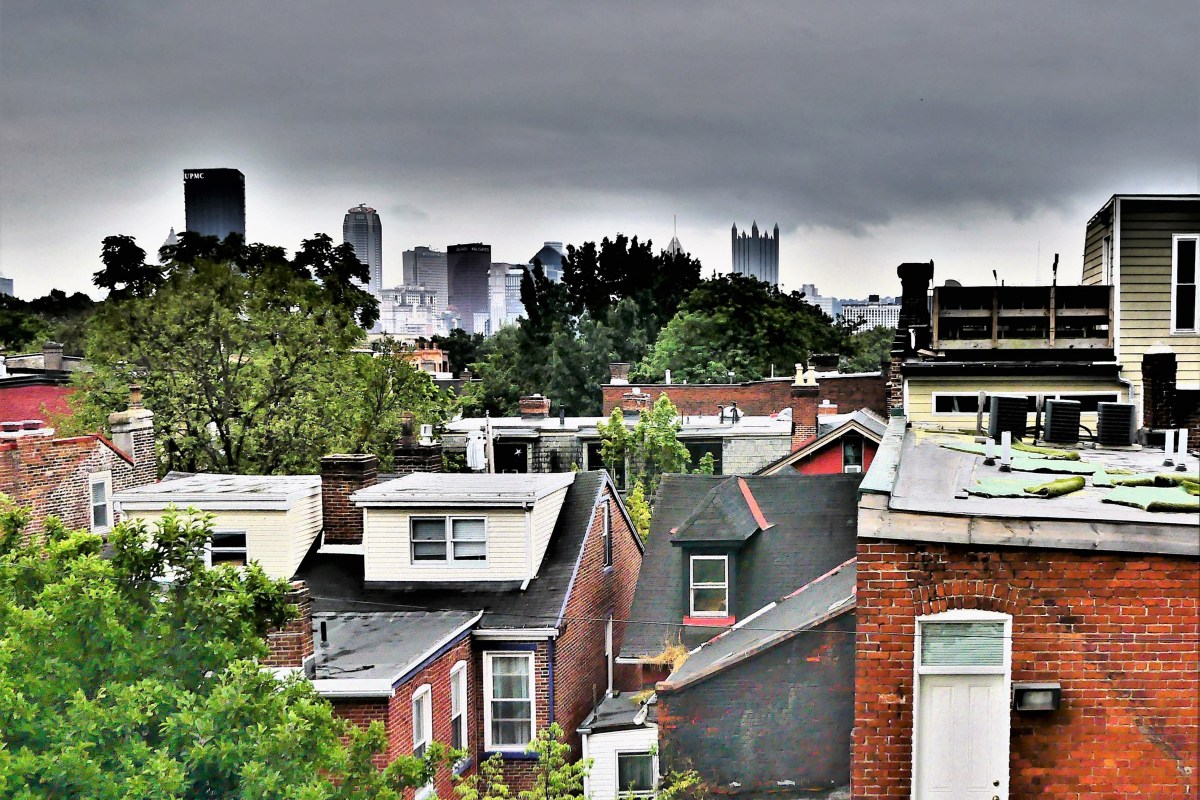
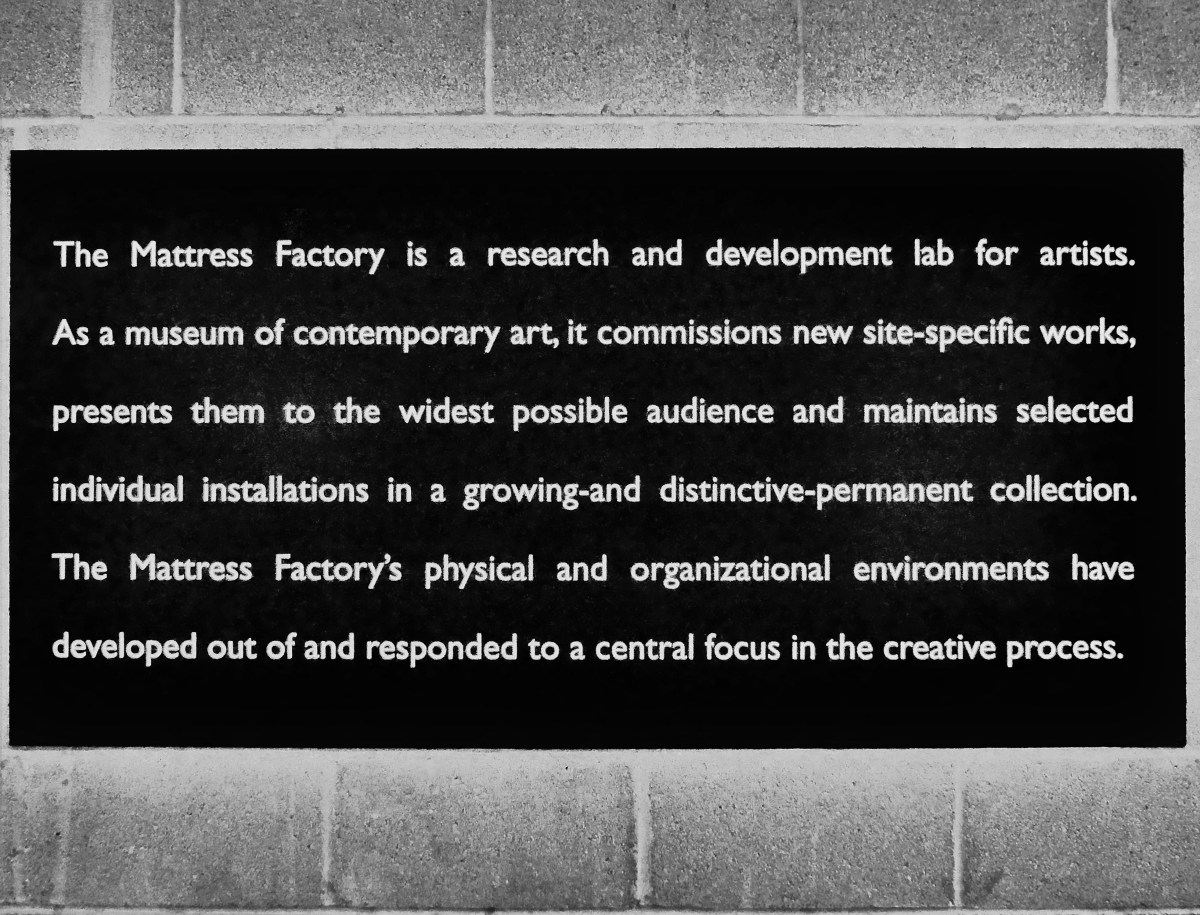
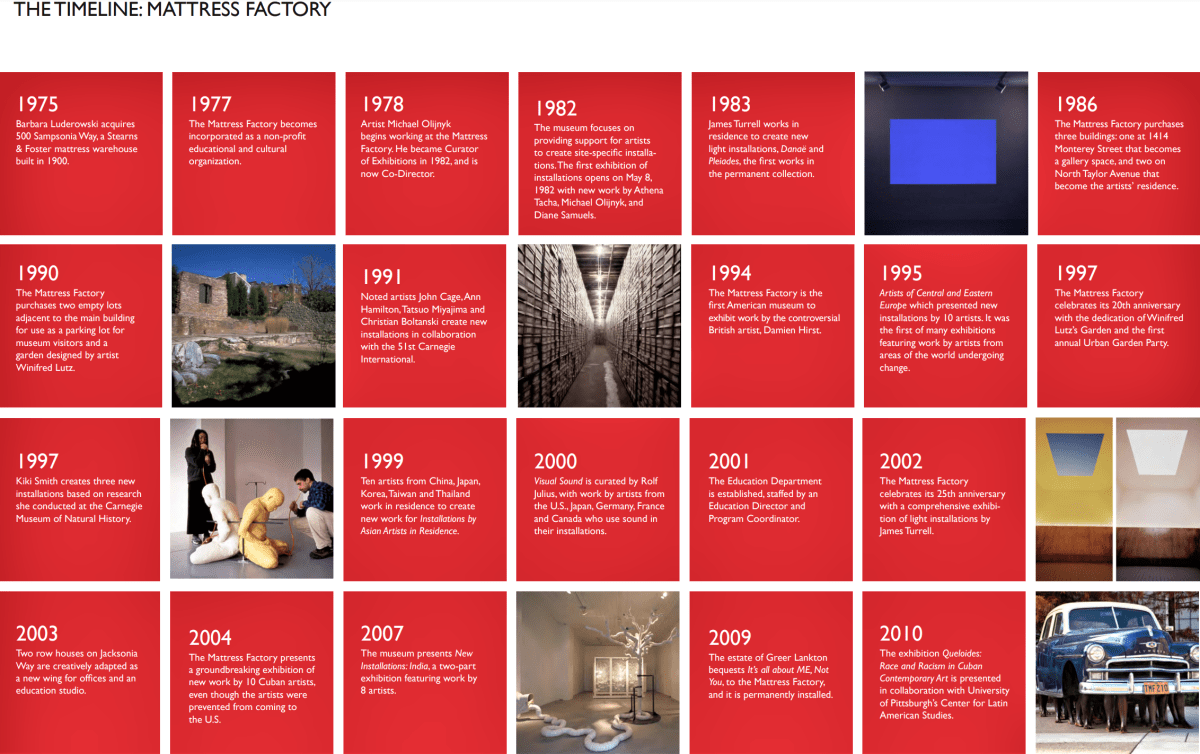
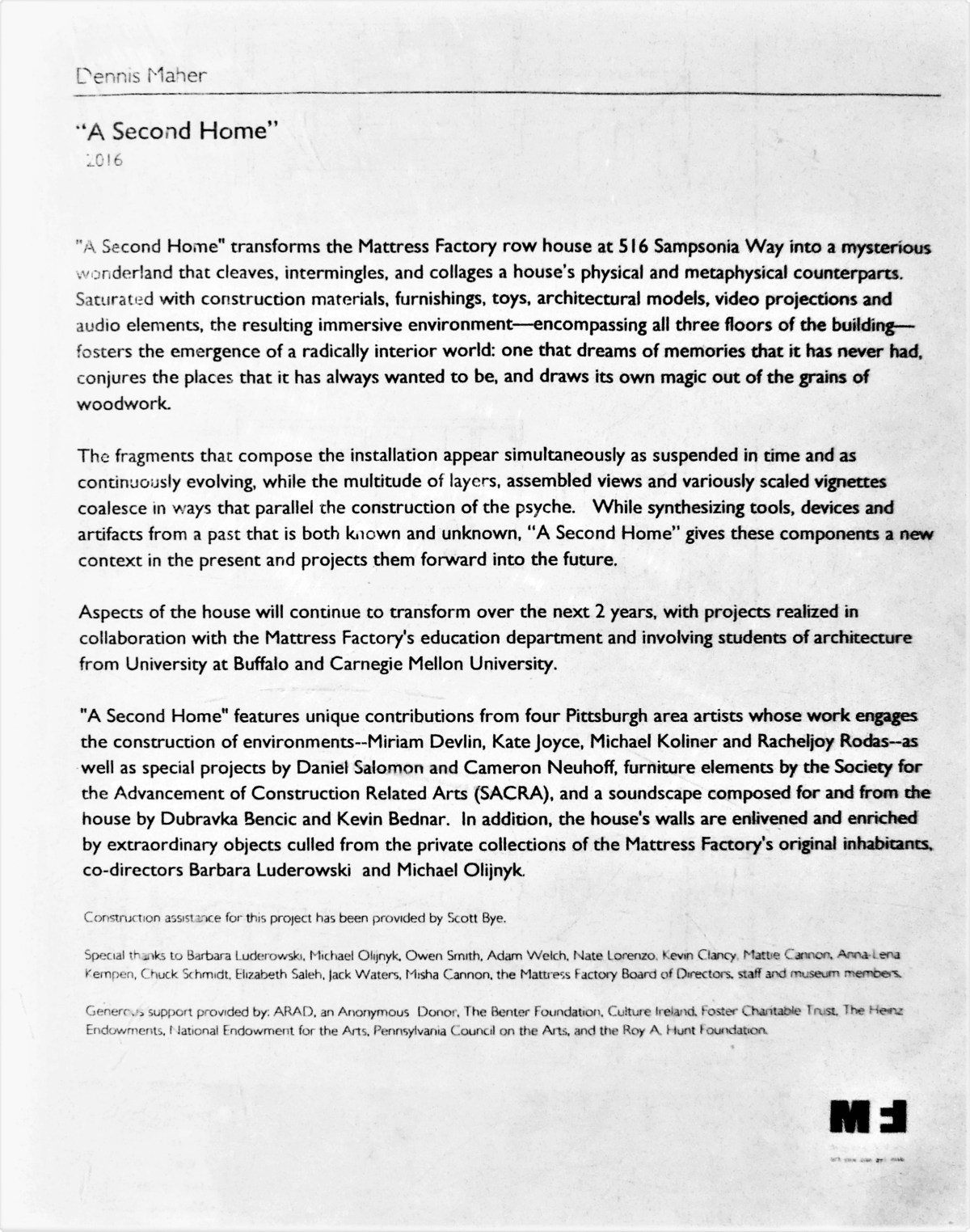
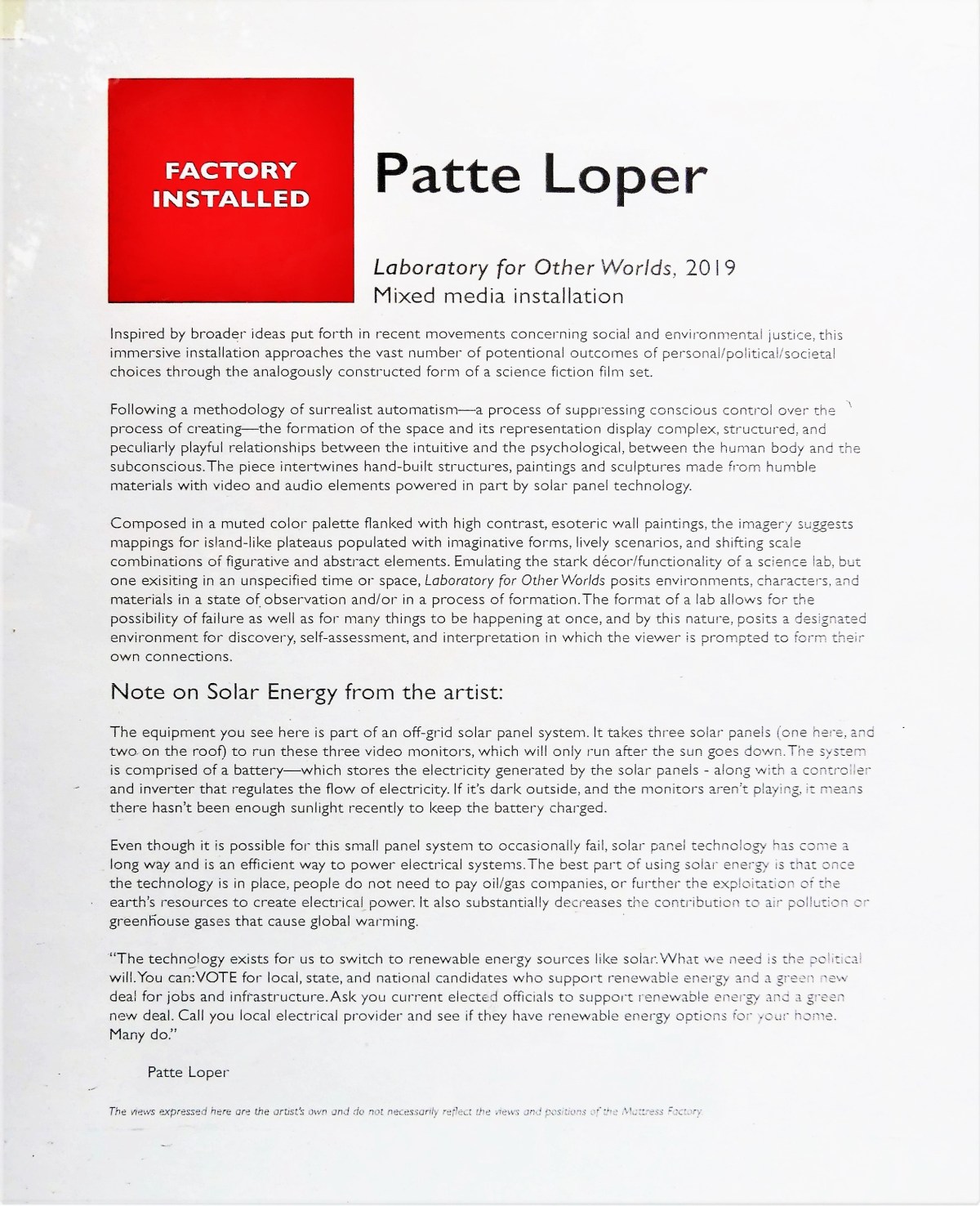
The cultural evolution of Pittsburgh’s North Side began with the Mattress Factory–an anchor and incubator for contemporary art that’s been cutting the experimental edge of international expression by artists for artists since 1977.
Just a short walk fromRandyland, the Mattress Factory factors heavily in site-specific installations occupying a collection of once-abandoned, but rehabilitated properties that have contributed greatly to the economic development and revitalization of a once-depressed community.
Not knowing what to expect, Leah and I dropped in during a transitional time for the museum, when much of the Main Building was undergoing preparation in anticipation of a late September opening.
But what we saw pushes the boundaries of form and information, while pushing the buttons of eccentric taste and interpretation.
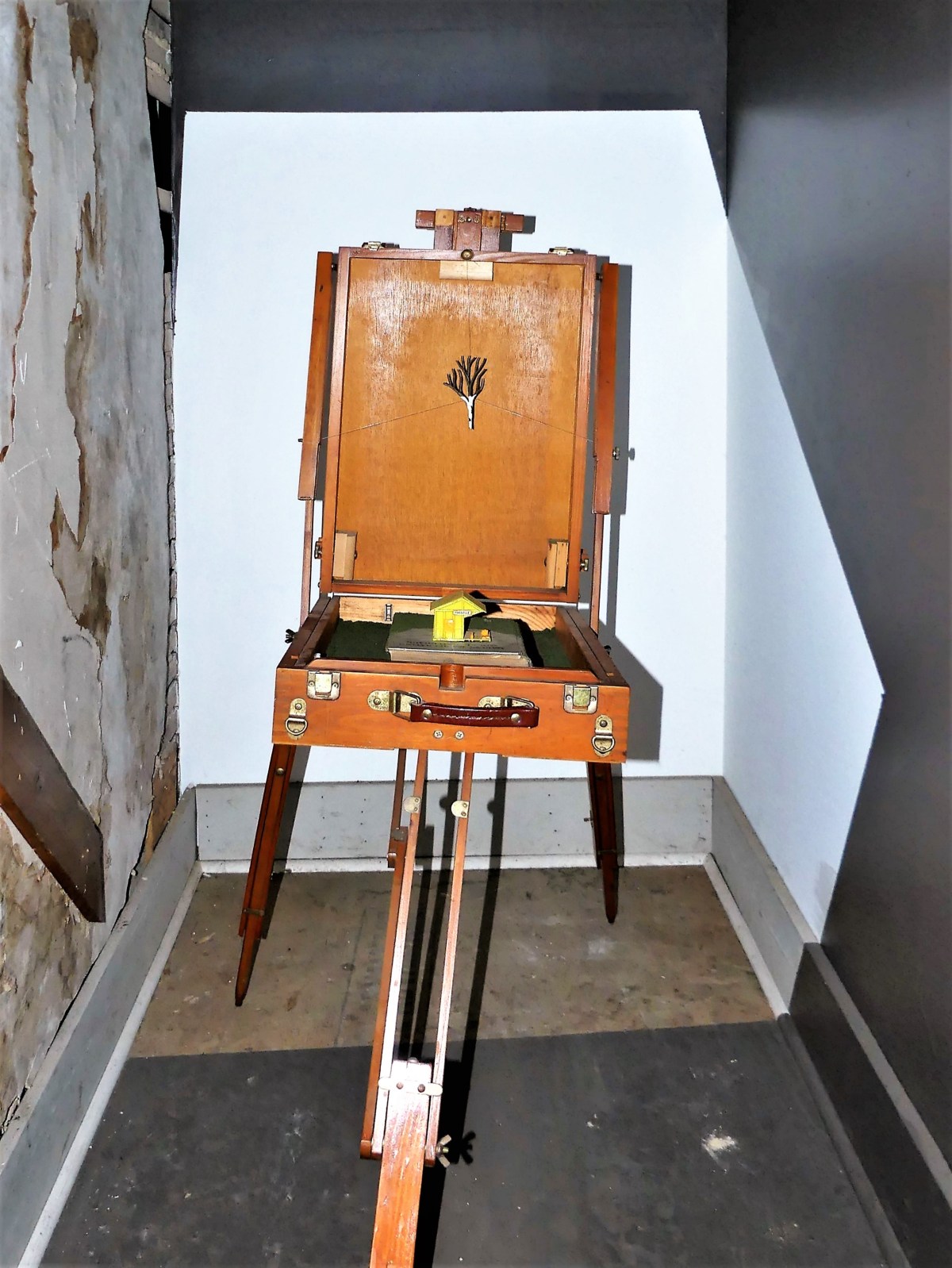
Two outlying row houses housed separate exhibits. Our exploration began at the Monteray Annex…
…and continued at the Sampsonia Annex…
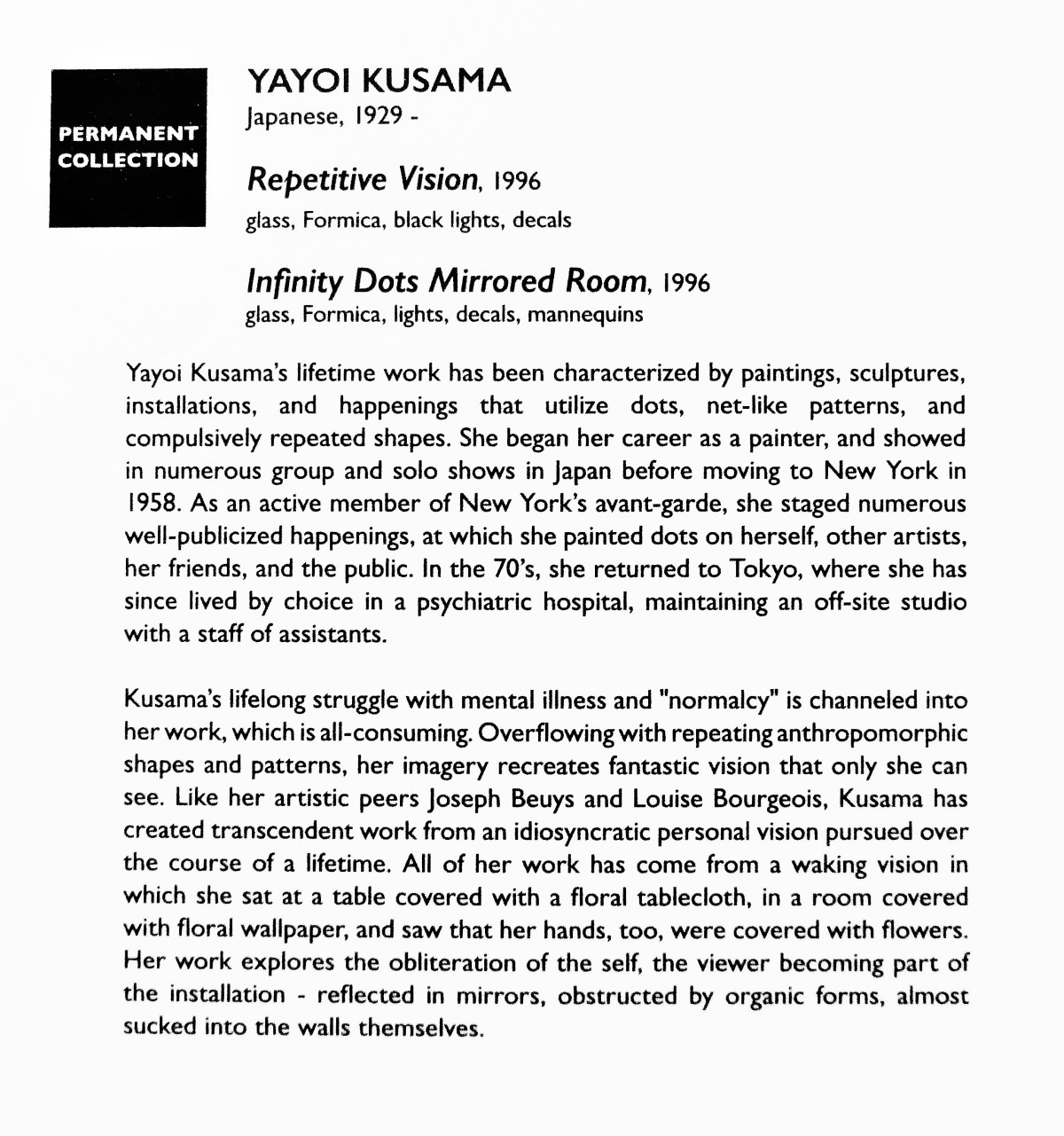
…before returning to the Main Building, where we followed the advice of an admissions clerk, and started on Floor 3 for a look at Yayoi Kusama’s two rooms…
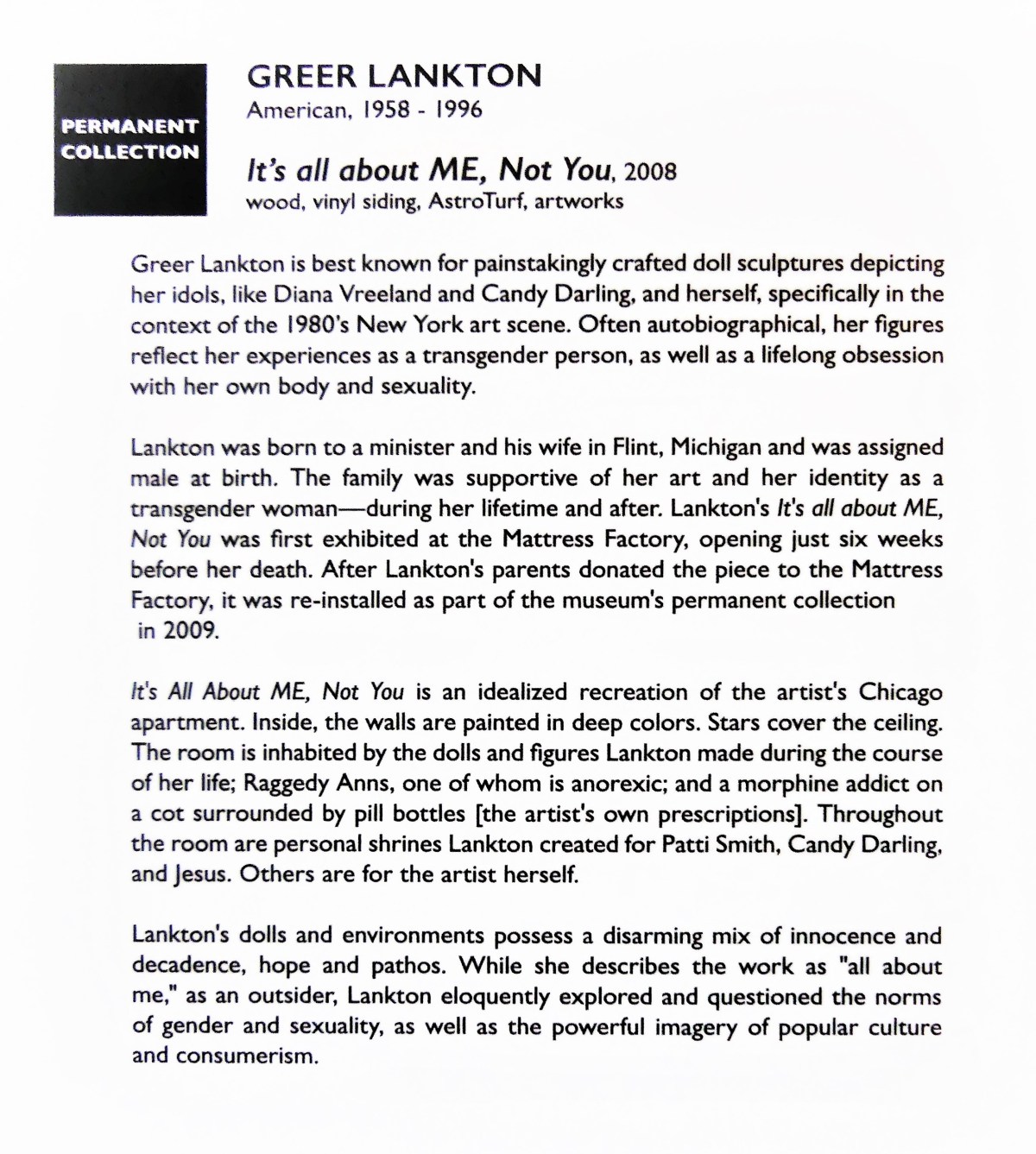
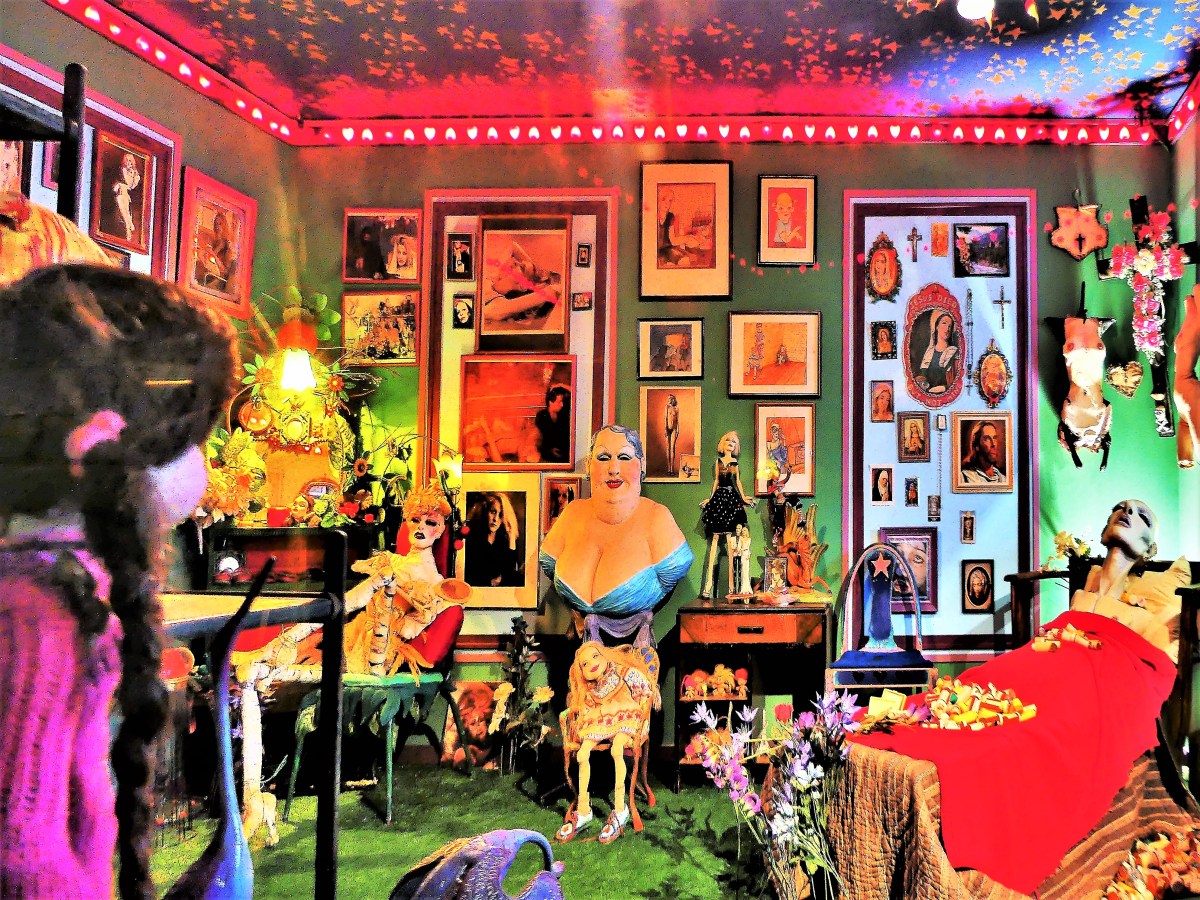
…followed by a voyeuristic installation by Greer Lankton.
When the elevator dropped us at Floor 2, we paused long enough in the darkened foyer for our eyes to adjust, before feeling our way through a serpentine corridor that guided us to James Turrell’s light projections.
We finished our tour with a stroll around a compact courtyard garden designed by Winifred Lutz.
While not as exhaustive as a Whitney Museum Biennial, the Mattress Factory holds a firm place in the art world, where artists can dream and “create remarkable works of art that help us see the world in a fresh and different way.”
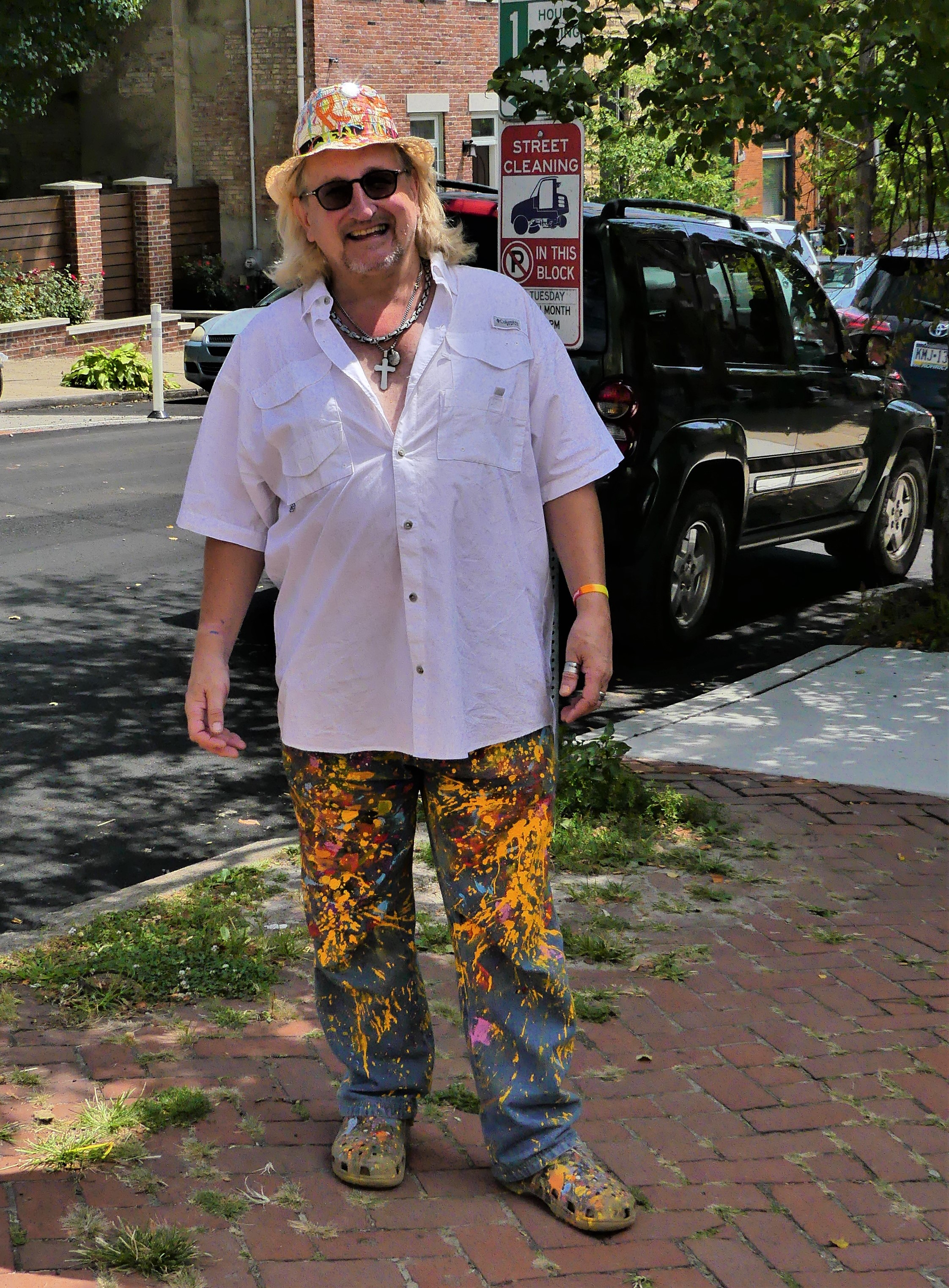
Randy Gilson grew up dirt poor in a small mill town just outside Pittsburgh’s city limits. As one of six children from a “broken” family, he remembers being teased by schoolmates, who called him “dumb, stupid, dadless, welfare boy, and white trash.” But his mother, a minister, advised him to ignore the noise, and instilled in him a commitment to do good for others. Her voice became Randy’s moral compass, and he’s walked the high road ever since.
He recalls a childhood Christmas when there was no money for presents, so he scavanged the neighborhood trashcans in search of discarded toys, and placed a wrapped gift for each of his siblings under the tree. It was a powerful lesson.
He learned that “making others happy made me happy.”
He also discovered that traditional learning was a waste of his time. He was wired differently from others, and blamed his failing school grades on an unofficial diagnosis of “ADHD and OCD, mixed with a little bit of autism,” because he was never formally tested. Rather than depend on his brain, he reminded himself that “my eyes are a tool to see, my ears are a tool to hear, my hands are a tool to work, and my heart is a tool to help.”
Randy’s first money came from mowing neighbors’ lawns, but in a roundabout way. At first, he furtively cut their overgrown grass as a goodwill gesture. The neighbors called Randy out for tresspassing, but eased their anger once they realized the benefit to their properties. Eventually, they hired Randy to tend their yards–where he honed his topiary skills on their hedges and trees.
Additionally, working on family farms over the summers taught him the value of nurturing seeds and the resultant harvest. In later years, Randy’s interest in horticulture blossomed into the Old Allegheny Garden Society, which resulted in planting hundreds of whiskey barrel gardens along the Mexican War Streets of Pittsburgh’s North Side during a risky time of transition and uncertainty.
“Living his life” gave Randy the confidence to gamble on his future. In 1978, he moved to Pittsburgh’s North Side, because it was the best he could do at the time. When long-time residents fled to the suburbs, the gangs moved into the area, and a drug culture took root and held the community hostage. “The neighbors used to shoot off guns in the middle of the night. For them, it was particularly useful in keeping the rents low,” claimed Randy.
But Randy stood his ground. Although planting gardens and painting murals raised eyebrows of derision and suspicion among grown-ups, the children of the streets gave Randy the benefit of the doubt. At first they were confused.
“Why would a stranger be doing all sorts of nice things on their streets?” Randy mused. “When I told them that I was doing it for them, then they wanted to help, too.”
The street became Randy’s parish, and he preached a gospel of stewardship and goodness. Soon after, his Pied Piper nature won over the rest of the community, and he was accepted as their resident eccentric (or eccentric resident).
An opportunity presented itself in 1995. An abandoned building on Arch Street, earmarked for the wrecking ball, was saved from demolition when Randy bought the property from the bank with a $10,000 credit card loan covered by the bank.
Immediately, he began collecting litter, planting gardens and painting wall murals.
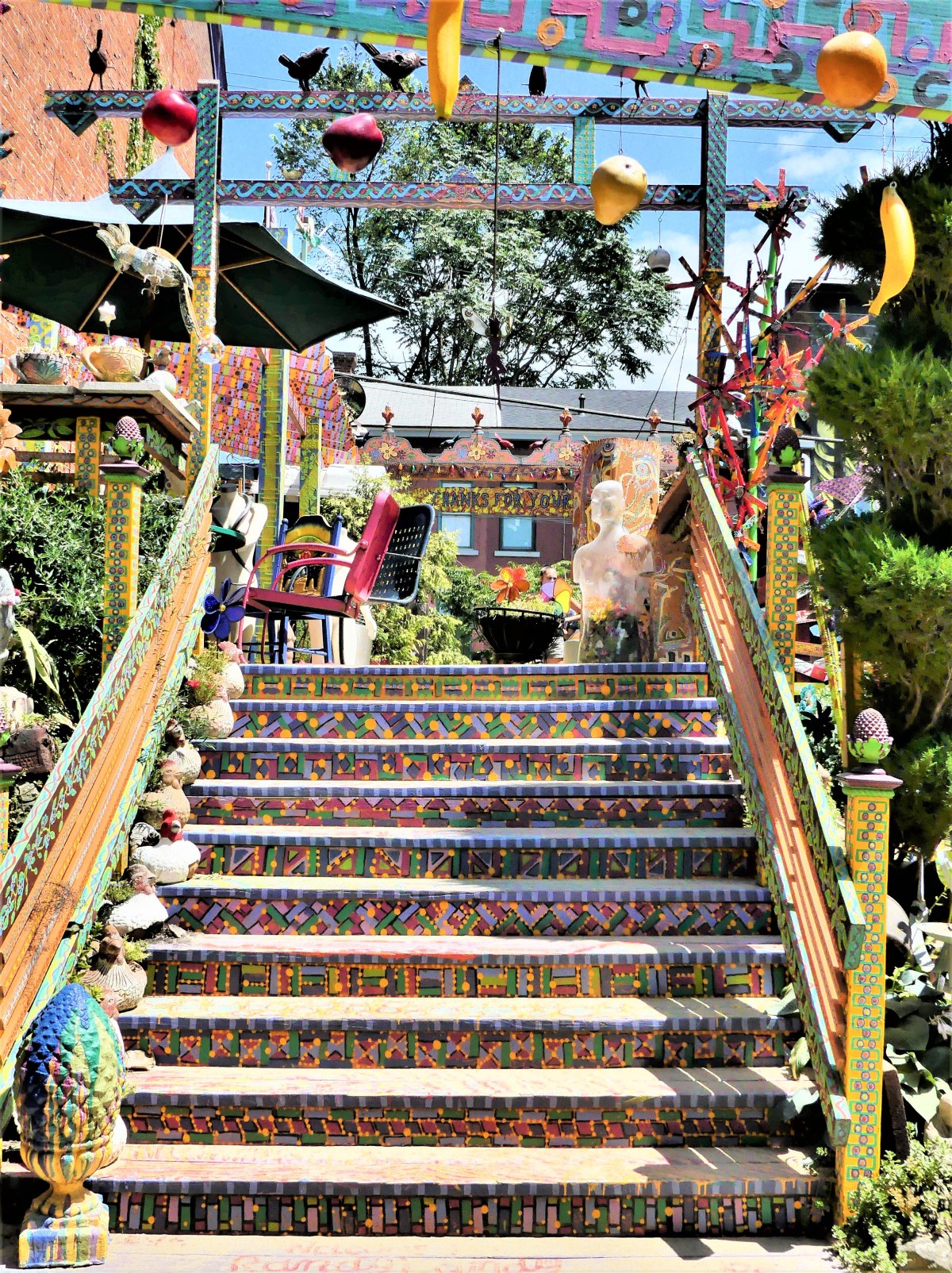
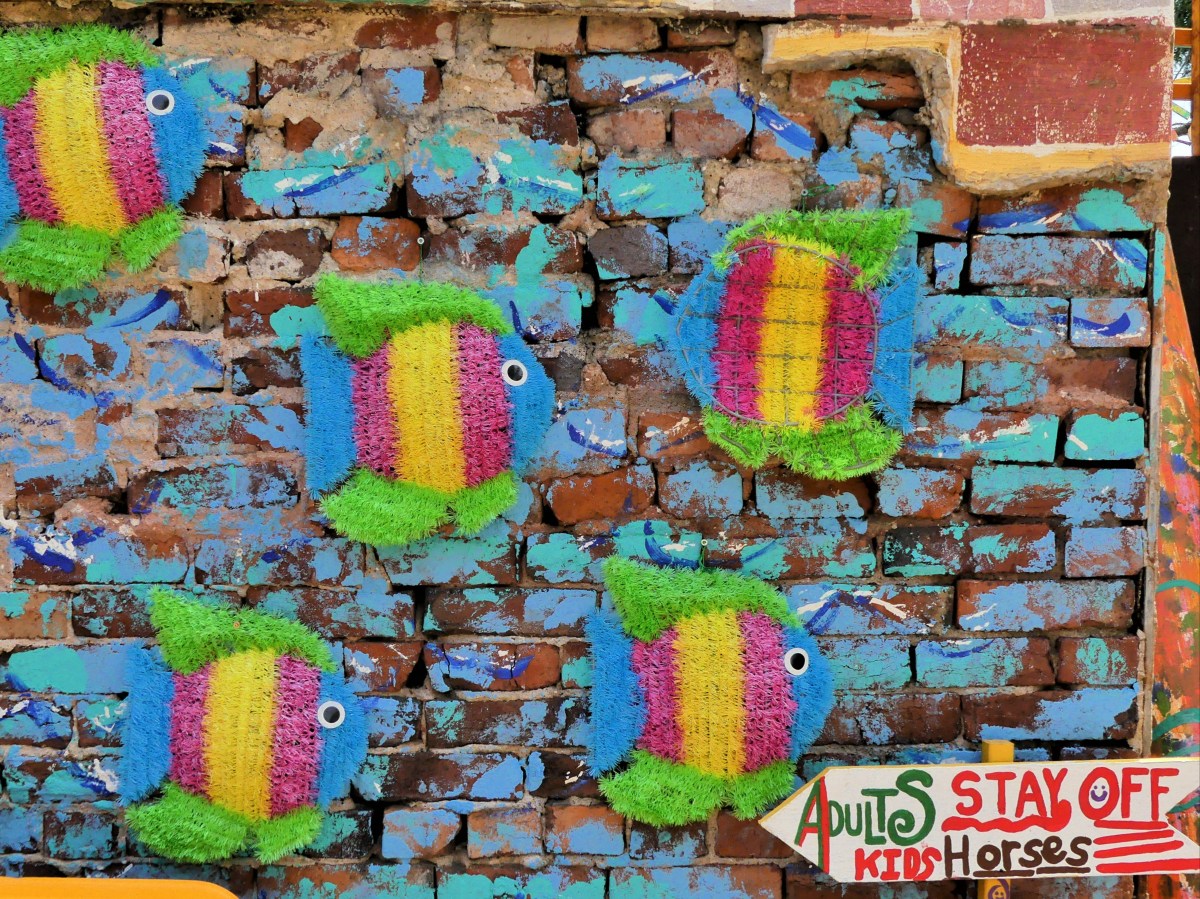
That was the genesis of Randyland…
a candy-coated, pie-in-the-sky habitat of repurposed whimsy and soul,
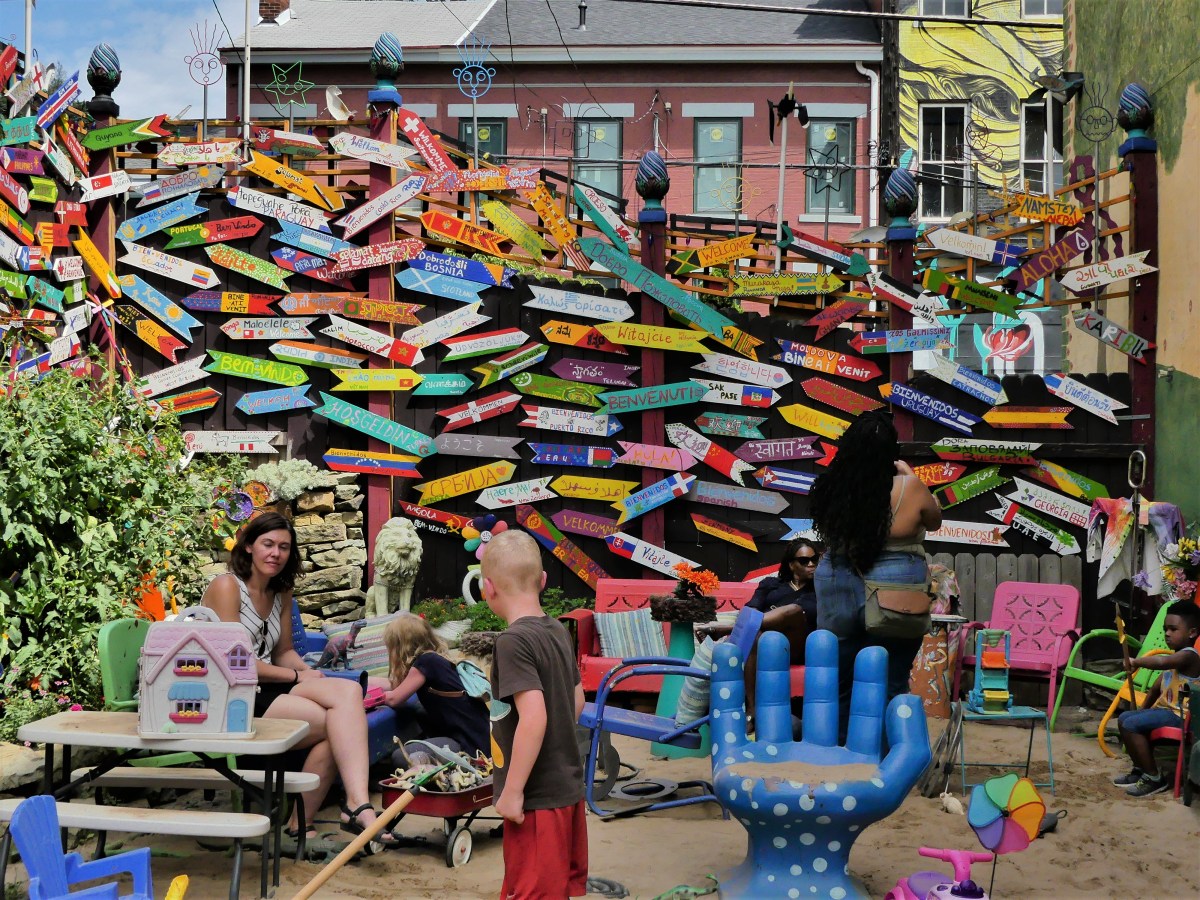
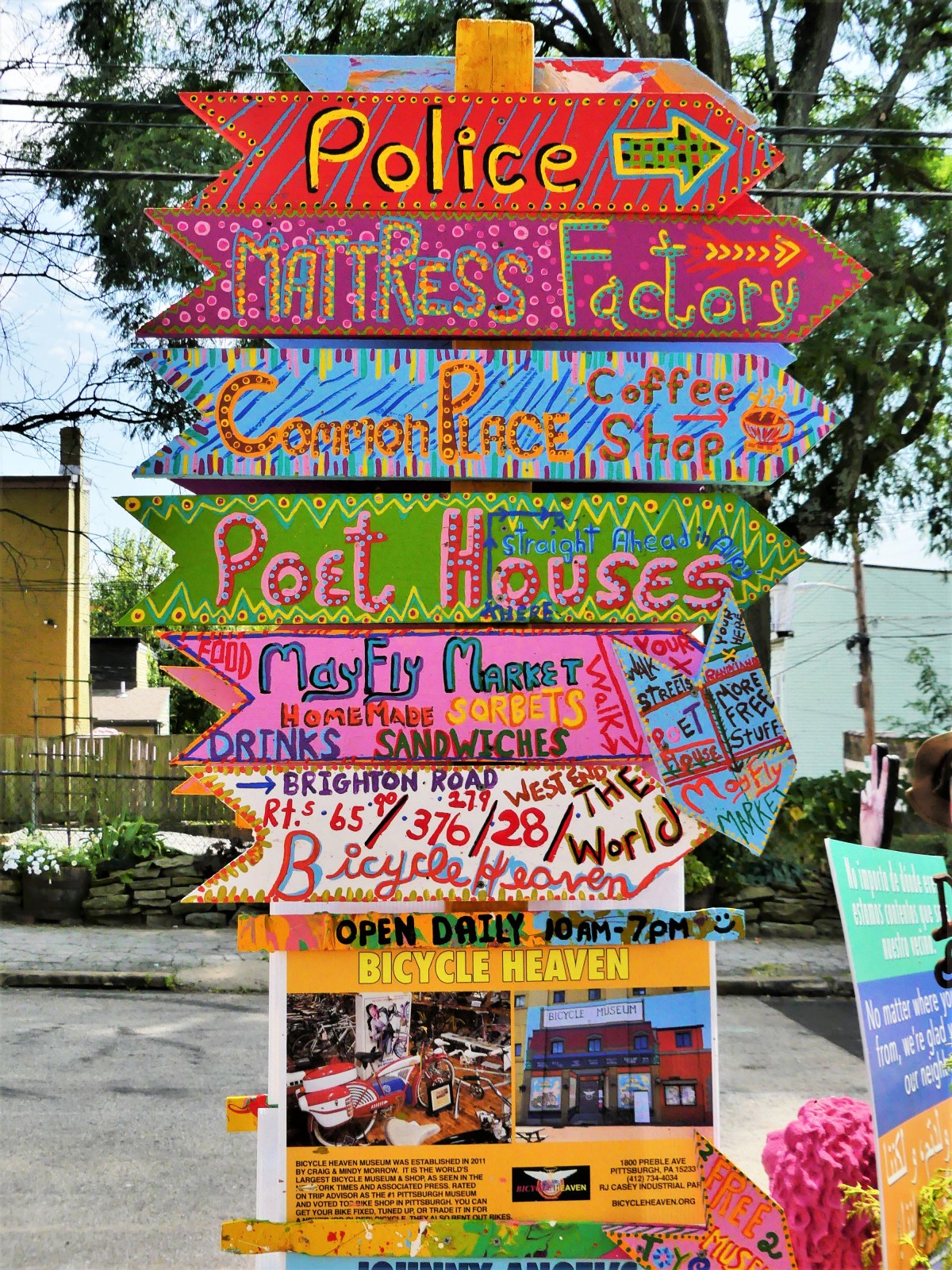
People travel to Randyland from around the world, and prepare destination arrows to indicate their country of origin.
They stop by for the novelty…
for the vibe and the energy…
and to remember the child still trapped inside us all.
Randy doesn’t pretend to be an artist. In fact, he disagrees with the characterization. “I’m not an artist. I’m a gay hippie that smokes pot, and believes in sharing my vision.”
Randy’s charm is infectious; his energy is contagious;
and his message is inspirational. His mother would be proud of him.
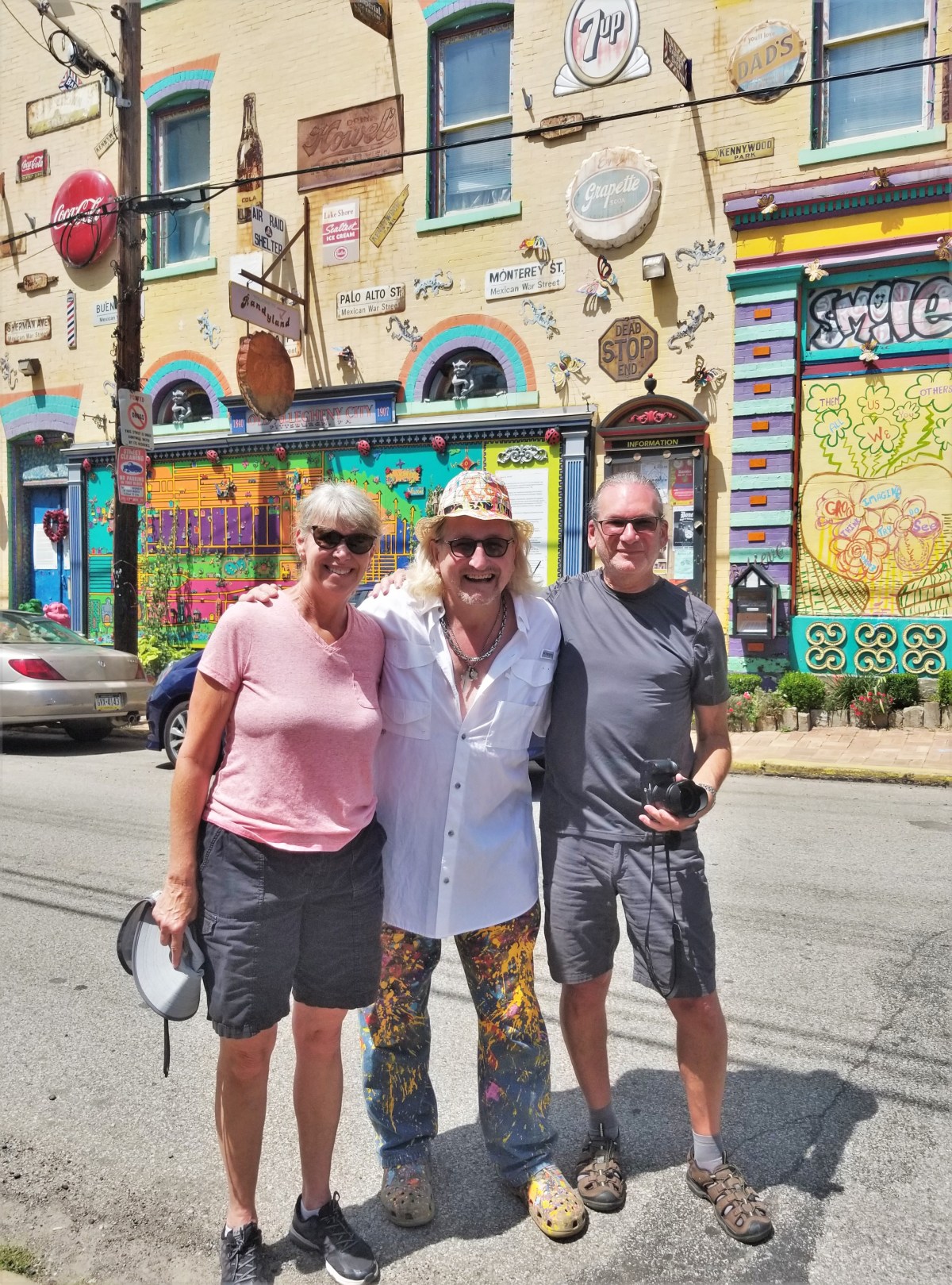
What started out as a typical tour of a colorful outdoor habitat, turned into a surprisingly deep and endearing conversation with Randy, once Leah and I introduced ourselves.
Passerby cars with follow-up horn toots were a constant interruption, but Randy always had a quick response for them:
“Hey, pretty mama…”
“I love your weave…”
“Lookin’ good in the neighborhood.”
Randy is eager to tell his story and have his story told. He is also unabashed about his upbringing and background. Few people I know are so accepting of themselves. He easily shares the details of his life normally reserved for confidants or therapists. But then I realize that Randy’s candor is probably an ongoing part of his therapy…where he plays the therapist.
Randy placed a wad of business cards in my hand, and like a butterfly in search of its next flower nectar, he flew off to be photographed with his next best friends.
It’s easy spotting a rainbow, but following him to his pot of gold is a greater reward.
Detroit has been working overtime on a public relations campaign to scrub the grime off its tarnished reputation and buff the rentability of its landmark towers. A downtown resurgence is helping to restore the luster of a once-burgeoning city that grew into an industrial and economic juggernaut during the first half of the 20th century, but became a municipal pariah after accruing $20 billion of debt since the 1950s.
In its heyday, Detroit was a magnet of opportunity, attracting new residents from all American sectors with the promise of manufacturing jobs. Consequently, its population swelled to 2 million.
The collapse of the city’s automobile industry was the catalyst for Detroit’s demise. Racial tensions culminated in riots in 1967 that led to a mass exodus, and Detroit shrank to a third of its size. Vacant lots and abandoned buildings became the norm. Ultimately, the city went bankrupt in 2013–the largest debt of its kind for an American city.
Today, Detroit is rebounding, but not without new growing pains. City leaders hope to strike a balance between renewed economic confidence and building a future that is more inclusive of long-term residents who have suffered the most.
As it’s explained by Pete Saunders for Forbes Magazine:
…A partnership between city and state government, business leaders and the city’s philanthropic community led an innovative effort to restructure the city’s debt, estimated at $19 billion.
Private investment in downtown Detroit, already on the upswing prior to the bankruptcy filing, continued to trend upward. Last fall’s opening of Little Caesar’s Arena, part of the larger District Detroit business and entertainment area, the construction of a landmark mixed use development on a former iconic department store site, and the recent acquisition by Ford Motor Company of Michigan Central Station all demonstrate the accelerated pace of development in the city.
Detroit’s Midtown area, also just north of downtown and home to many of the city’s arts and cultural institutions and Wayne State University, has been the site of dozens of new mixed use developments with hundreds of new units designed to attract Millennial urban dwellers.
The city’s former warehouse district on the east riverfront is attracting development attention for high-end condos and apartments with downtown and waterfront views.
Detroit’s Corktown neighborhood, the city’s oldest neighborhood and one that’s grown in trendiness over the last half-decade, is set to receive more investment in commercial and residential development, pushing its recent successes to the next level.
Detroit’s development resurgence is being tied together by a brand-new streetcar line that opened last year, the QLine. The 3-mile streetcar connects downtown with the adjacent neighborhoods where activity is taking place, and there are hopes that the line could expand further outward and gain additional branches.
Leah and I took a walk around downtown to see for ourselves. First, we stopped at an Art Deco-styled landmark building celebrating its 90th anniversary.
A short walk to the Detroit River brought us face to fist with an homage to Joe Louis.
Nearby, the Spirit of Detroit was undergoing a makeover.
We crossed E. Jefferson to arrive at Hart Plaza to gaze at Michigan’s Labor Legacy.
Walking a short distance to the Detroit River brought us views of Windsor, Canada as once imagined by slaves making their escape through the Underground Railroad.
In the distance, stands the Ambassador Bridge–the busiest crossing between U.S. and Canada–with 10,000 commercial vehicles making the trip daily.
Beyond Dodge Fountain, the GM Renaissance Tower rises from the International Riverfront.
A walk along the riverwalk delivered us to the GM Wintergarden, where a life-sized model of a Chevy Silverado was made entirely of Legos.
It took 18 master builders over 2,000 hours and 334,544 “bricks” to complete. At 3,307 lbs., the sculpture stands at half the curb weight of its legitimate counterpart.
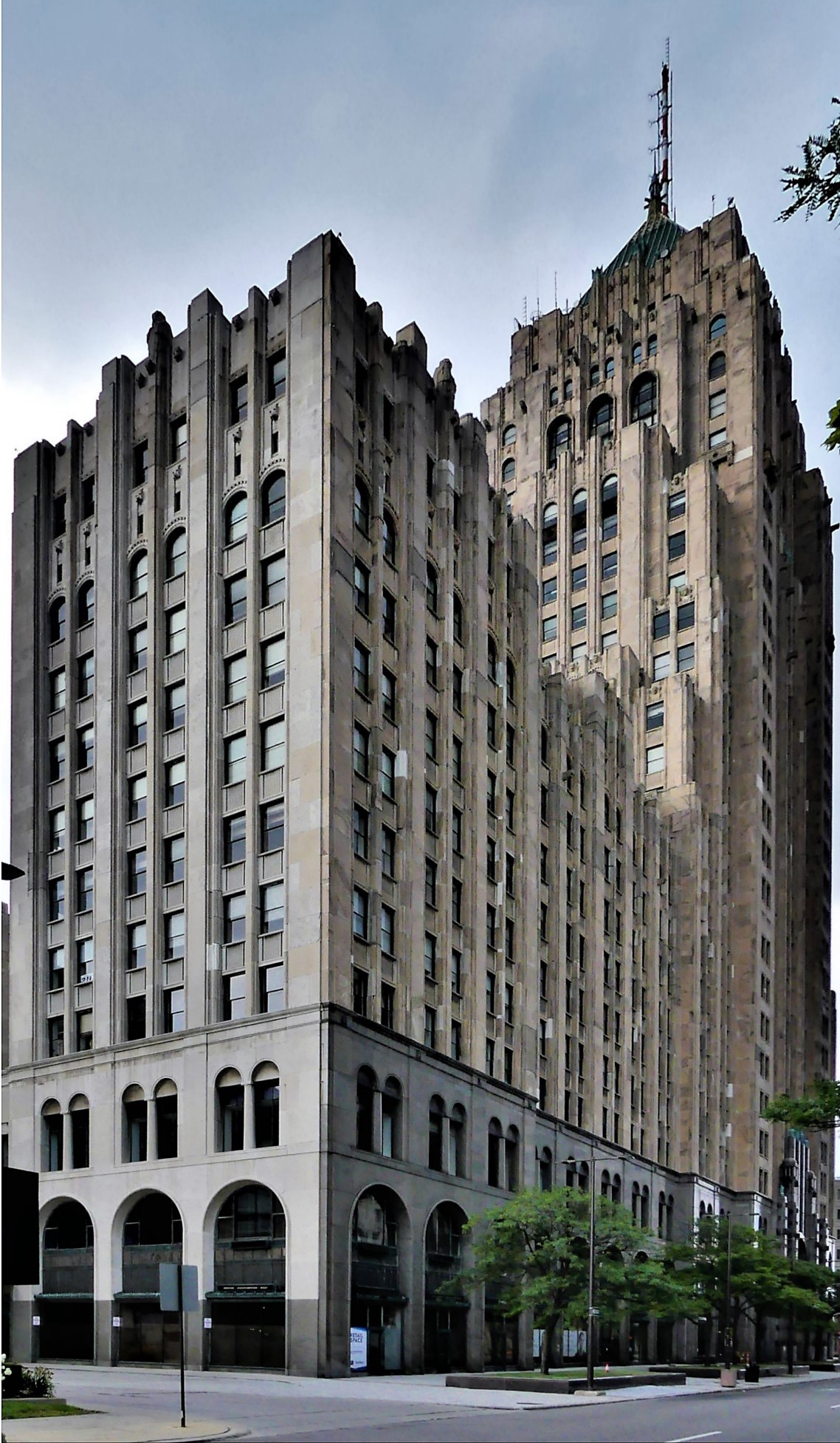
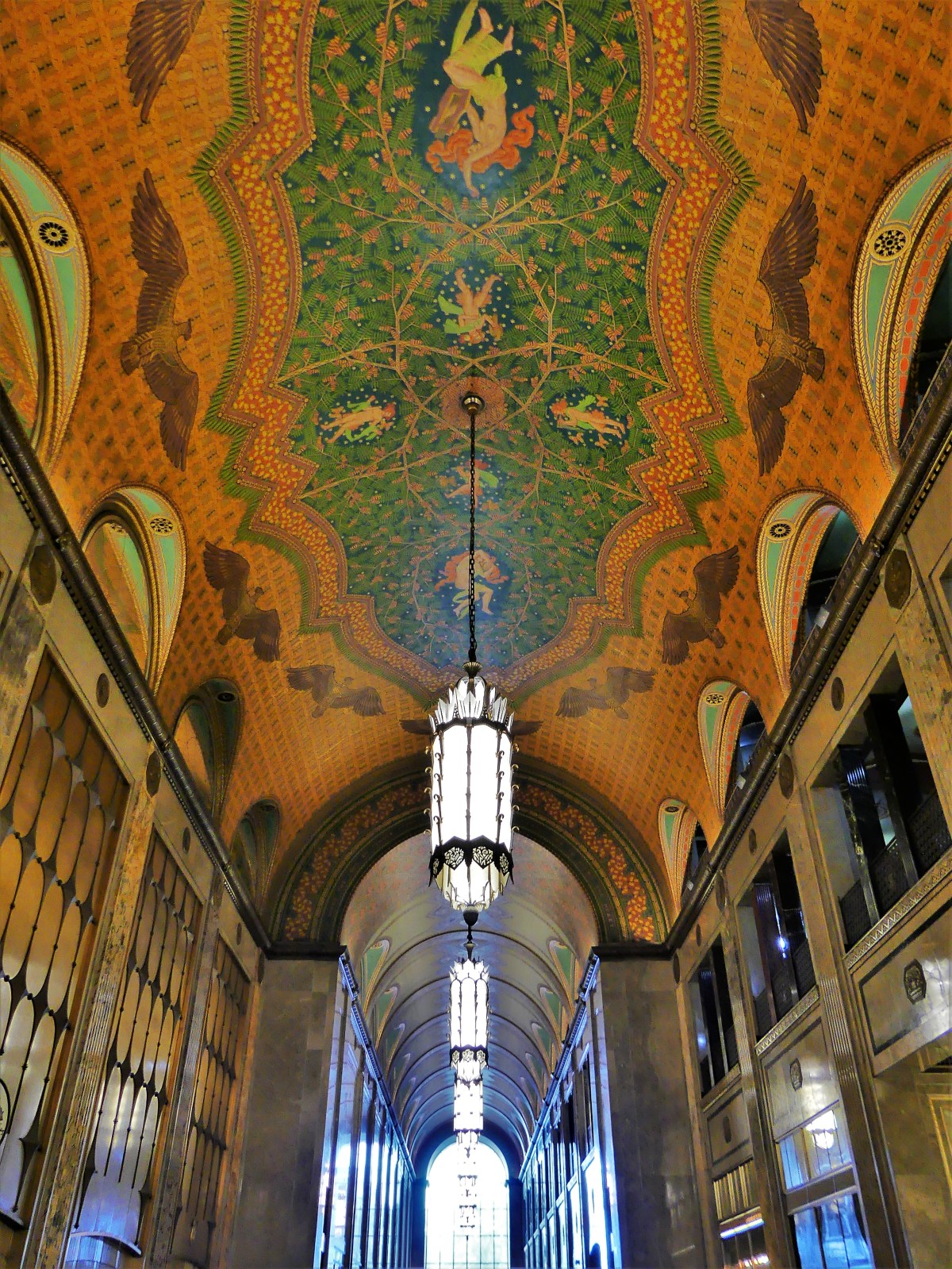
Equally as impressive, and no less the engineering feat, the Fisher Building has been referred to as “Detroit’s largest art object.”
Finished in 1928, the 30-story building was financed by the Fisher family from the sale of Fisher Body Company to General Motors.
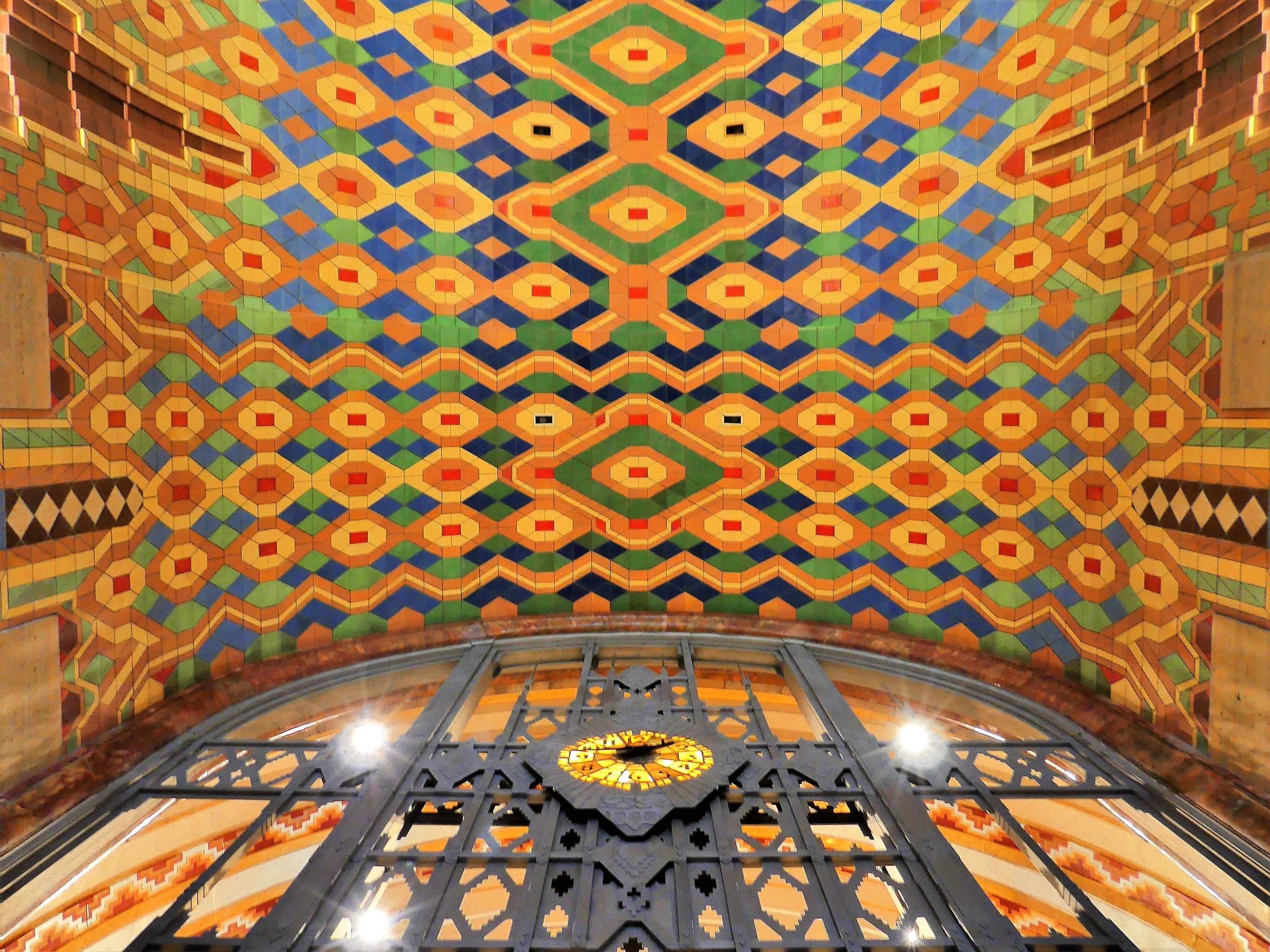
Albert Kahn’s opulent 3-story barrel vaulted lobby…
decorated in paint…
and marble by Géza Maróti is considered a masterpiece.
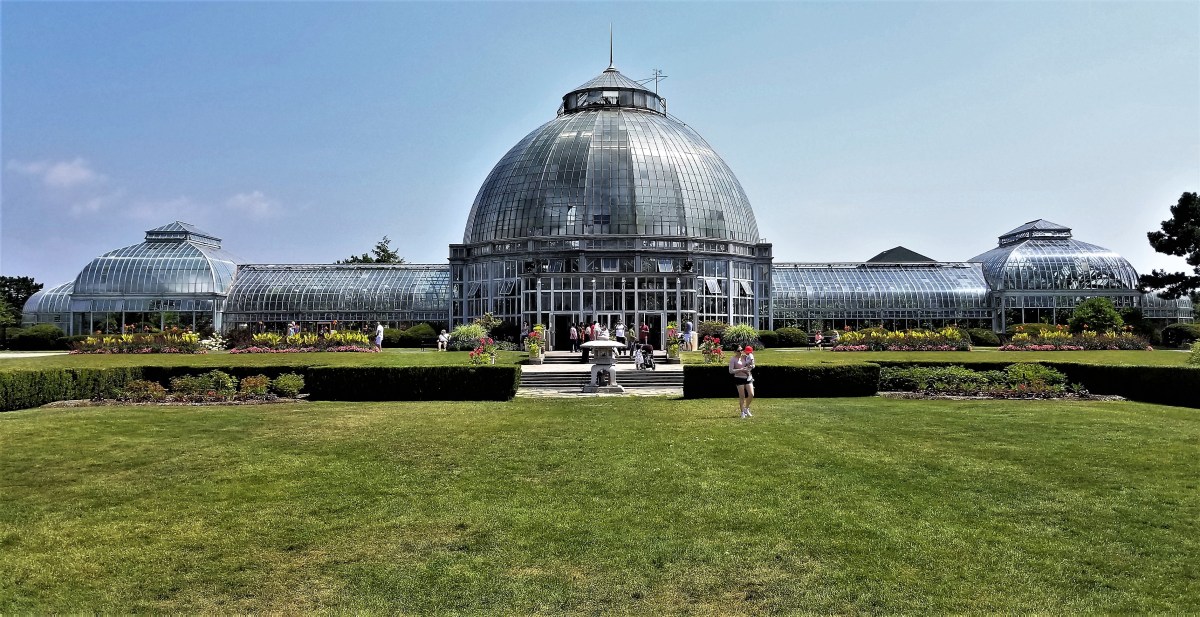
Alfred Kahn also spent time up river on Belle Isle (an island park originally designed by Frederick Law Olmstead in the 1880s), where he designed America’s first Aquarium and Conservatory in 1904.
Another part of Detroit’s revitalization effort included the construction of Ford Field, the domed home of NFL’s Detroit Lions,
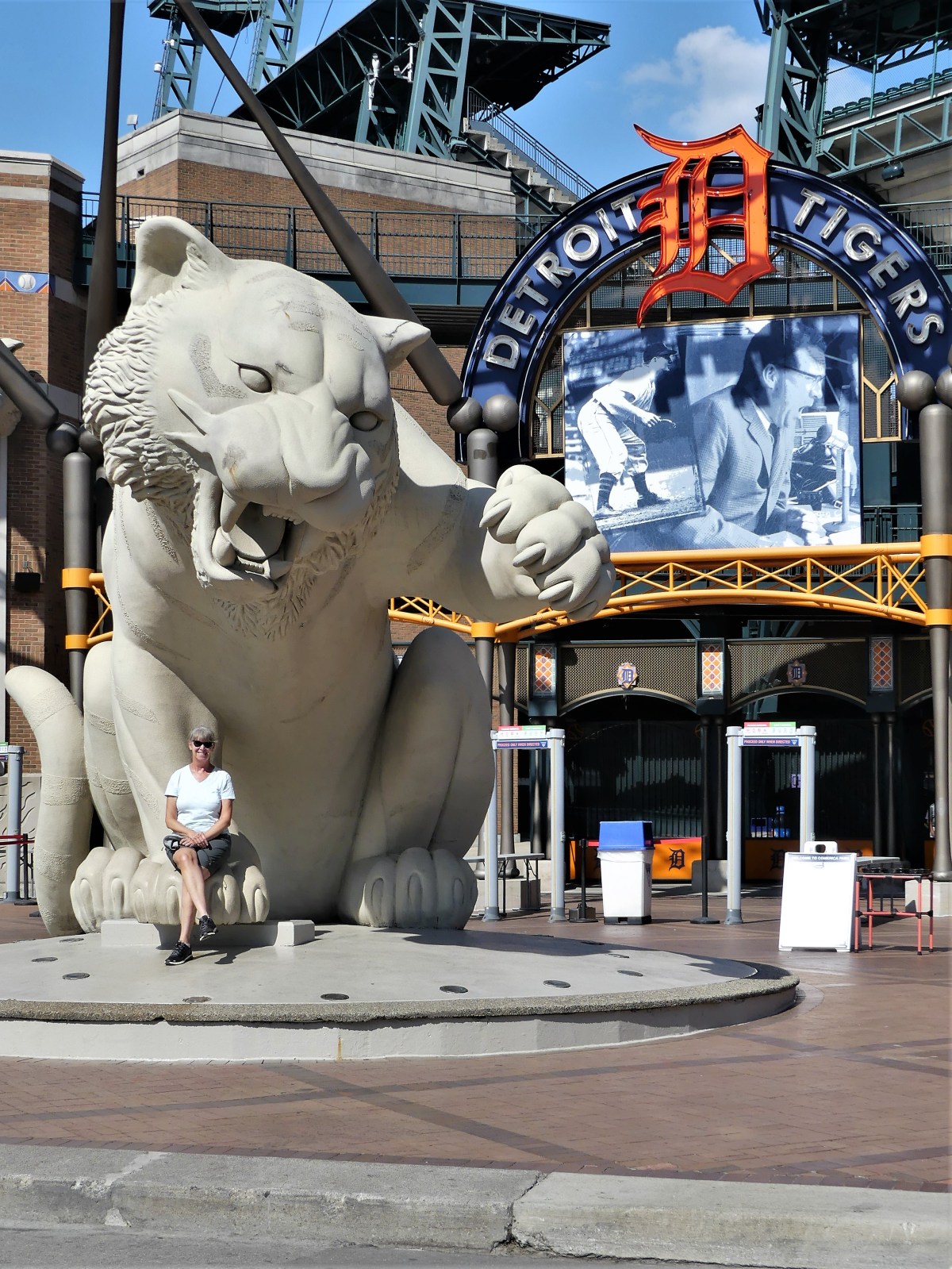
conjoined with Comerica Park, home to baseball’s Detroit Tigers.
Detroit has been hailed as The Comeback City, emerging from Chapter 9 with a new vibe that seems to be drawing people back to a city that was broke and broken, and considered unliveable only six years ago. With continuing investment and broad community suport, the prospects for Detroit are bright,
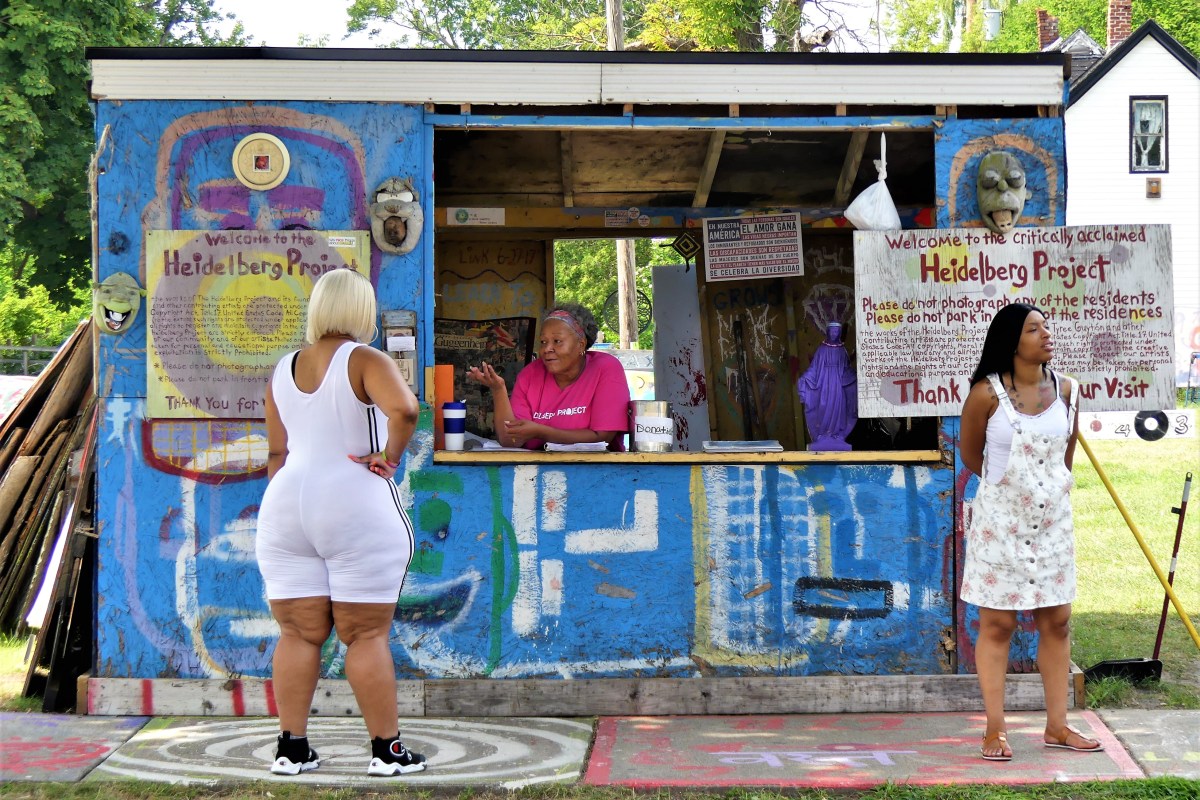
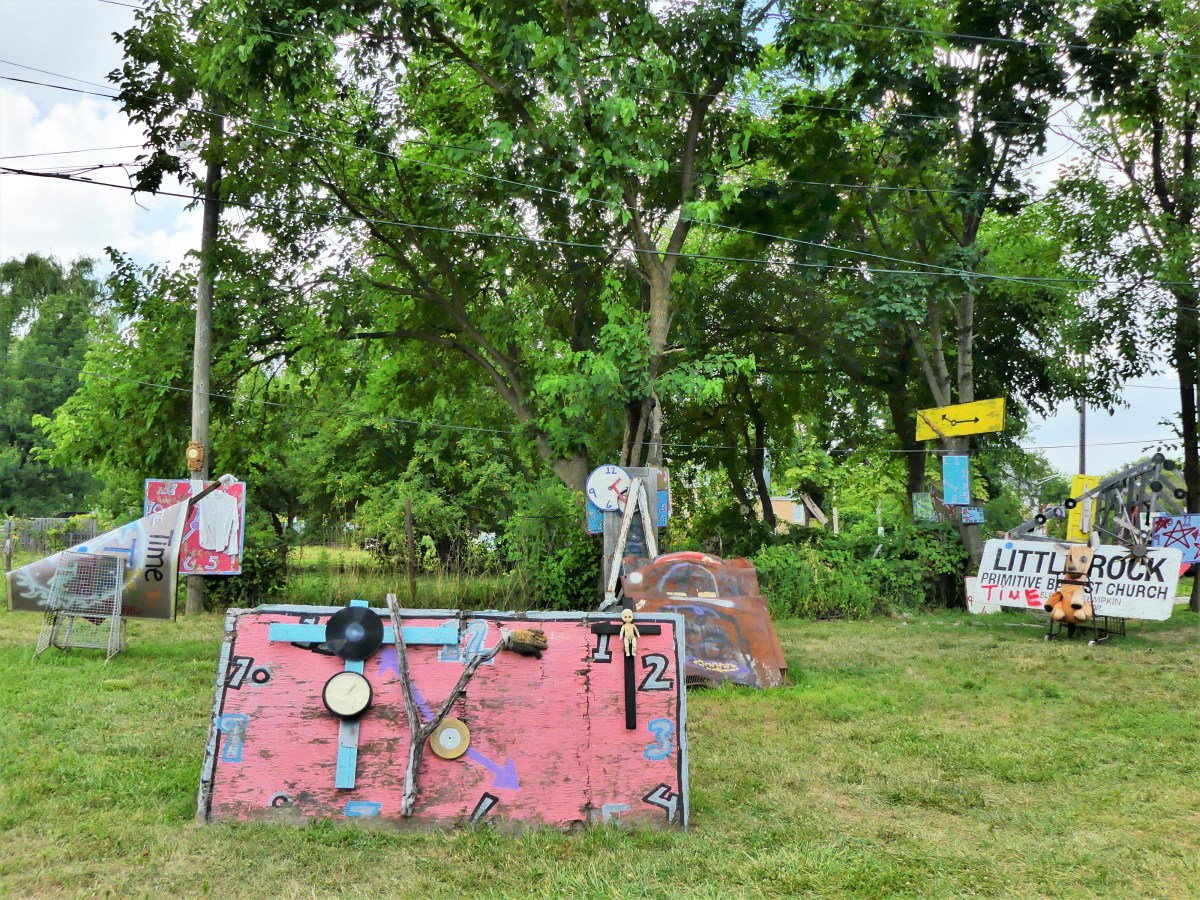
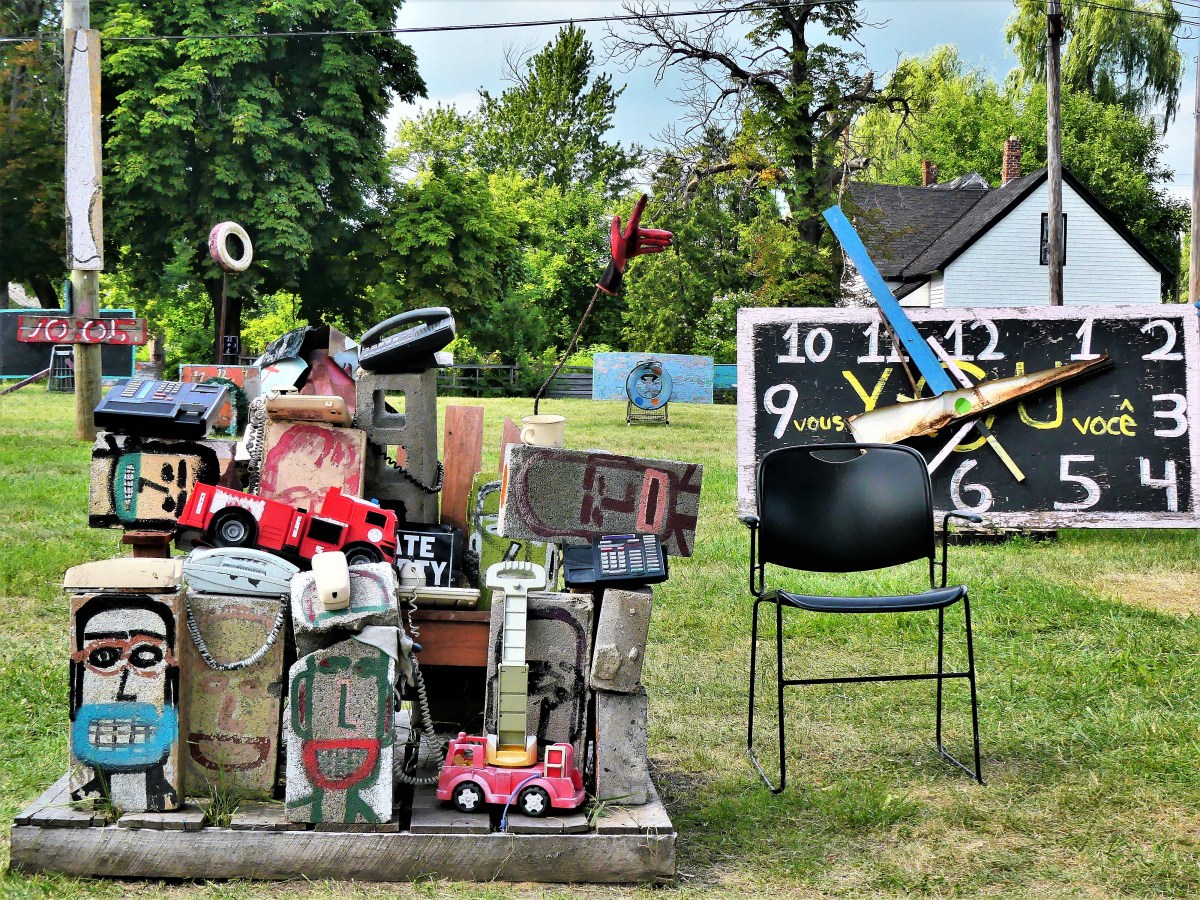
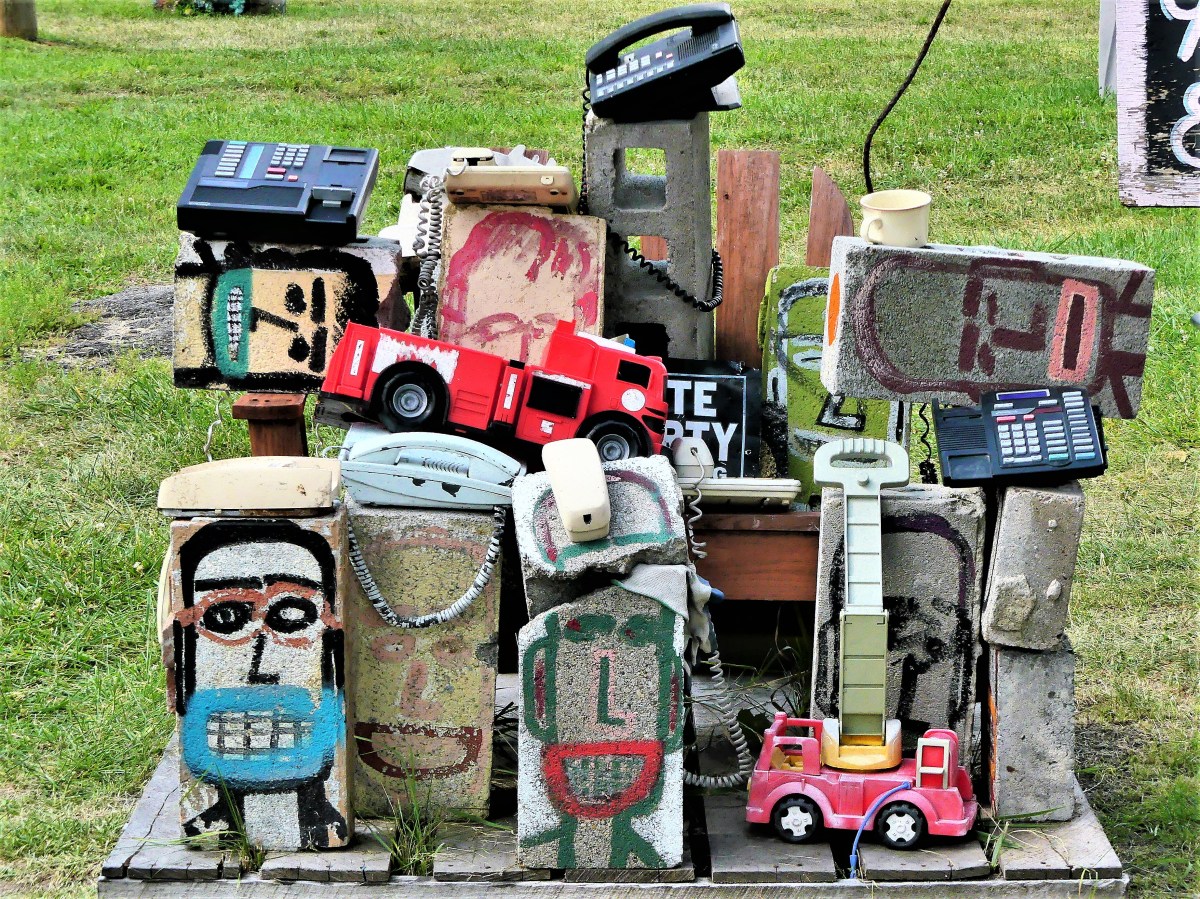
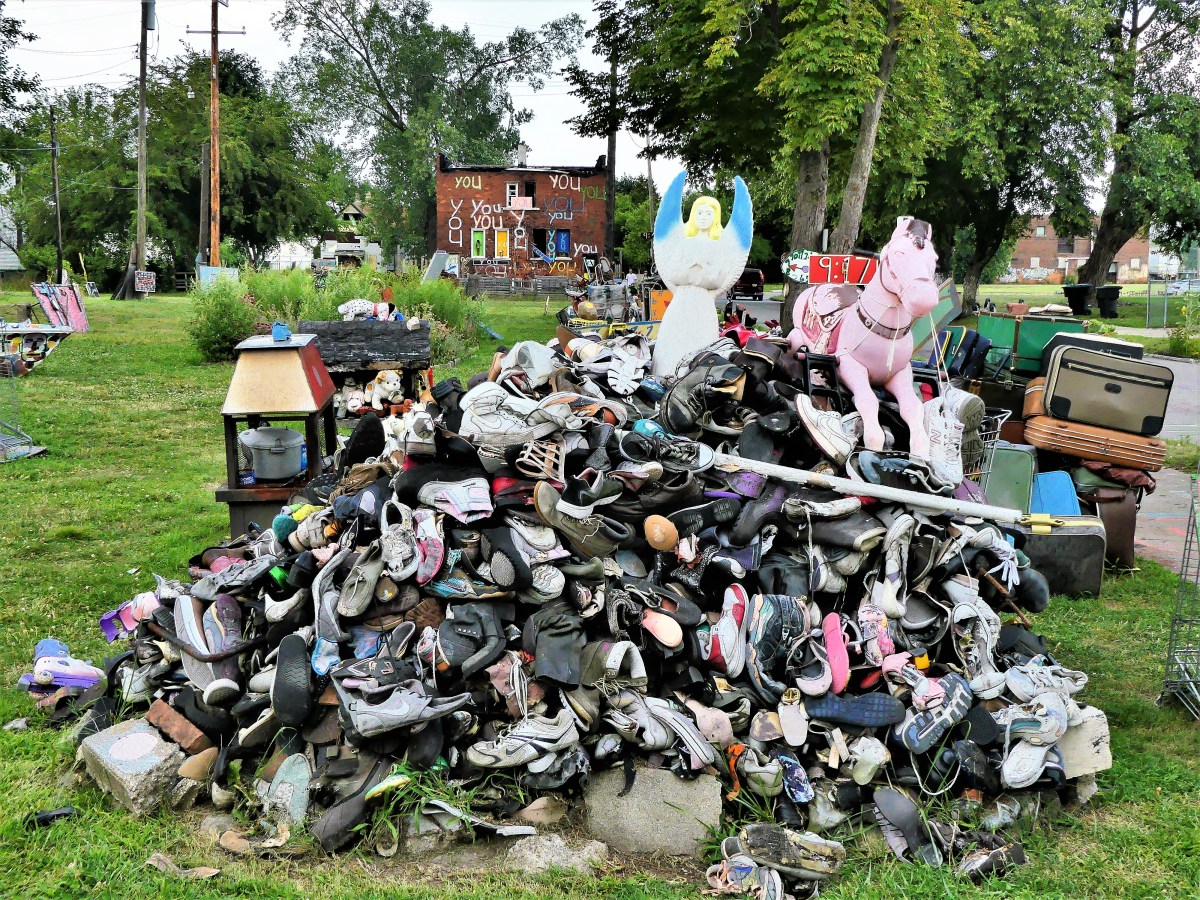
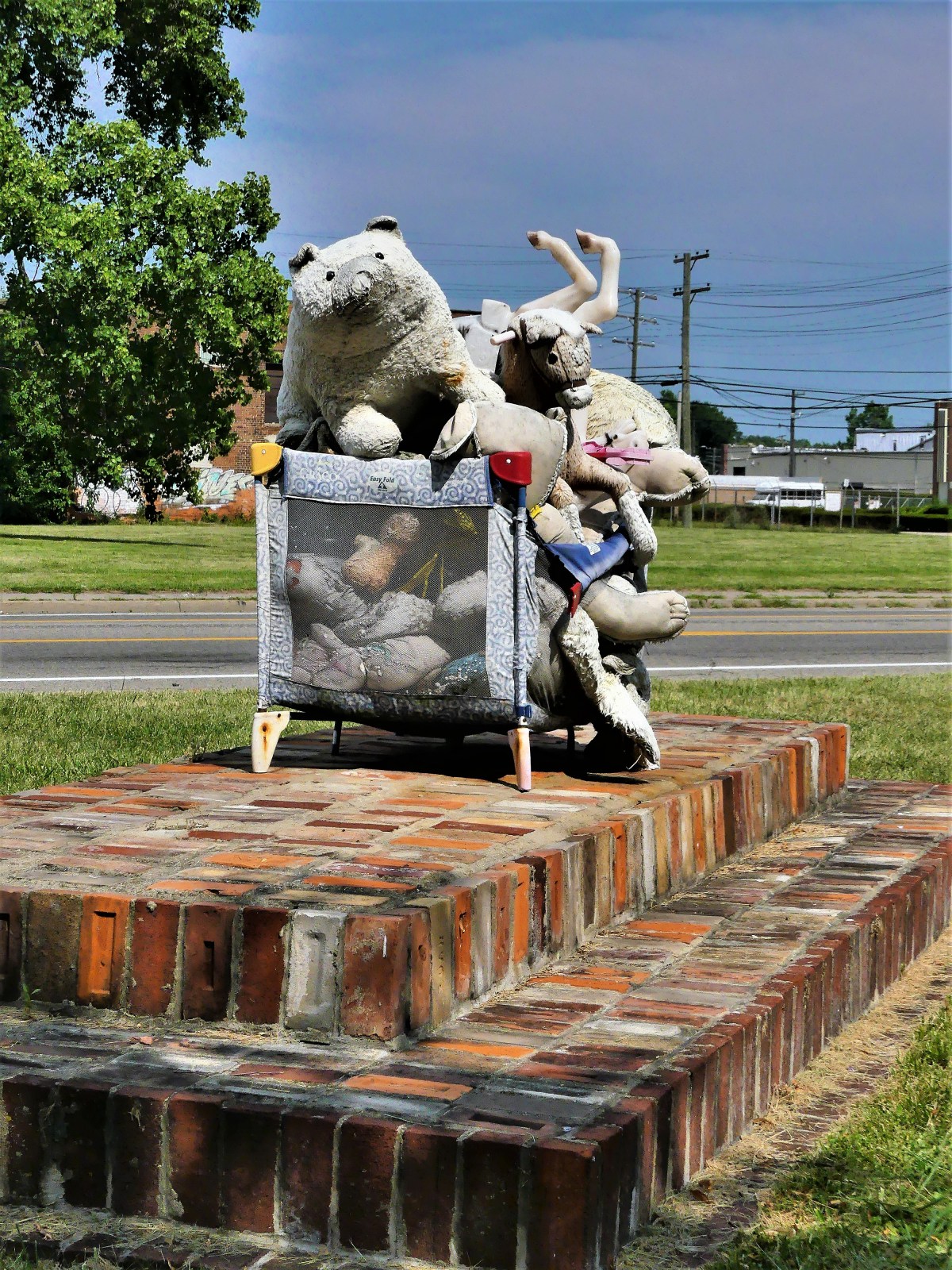
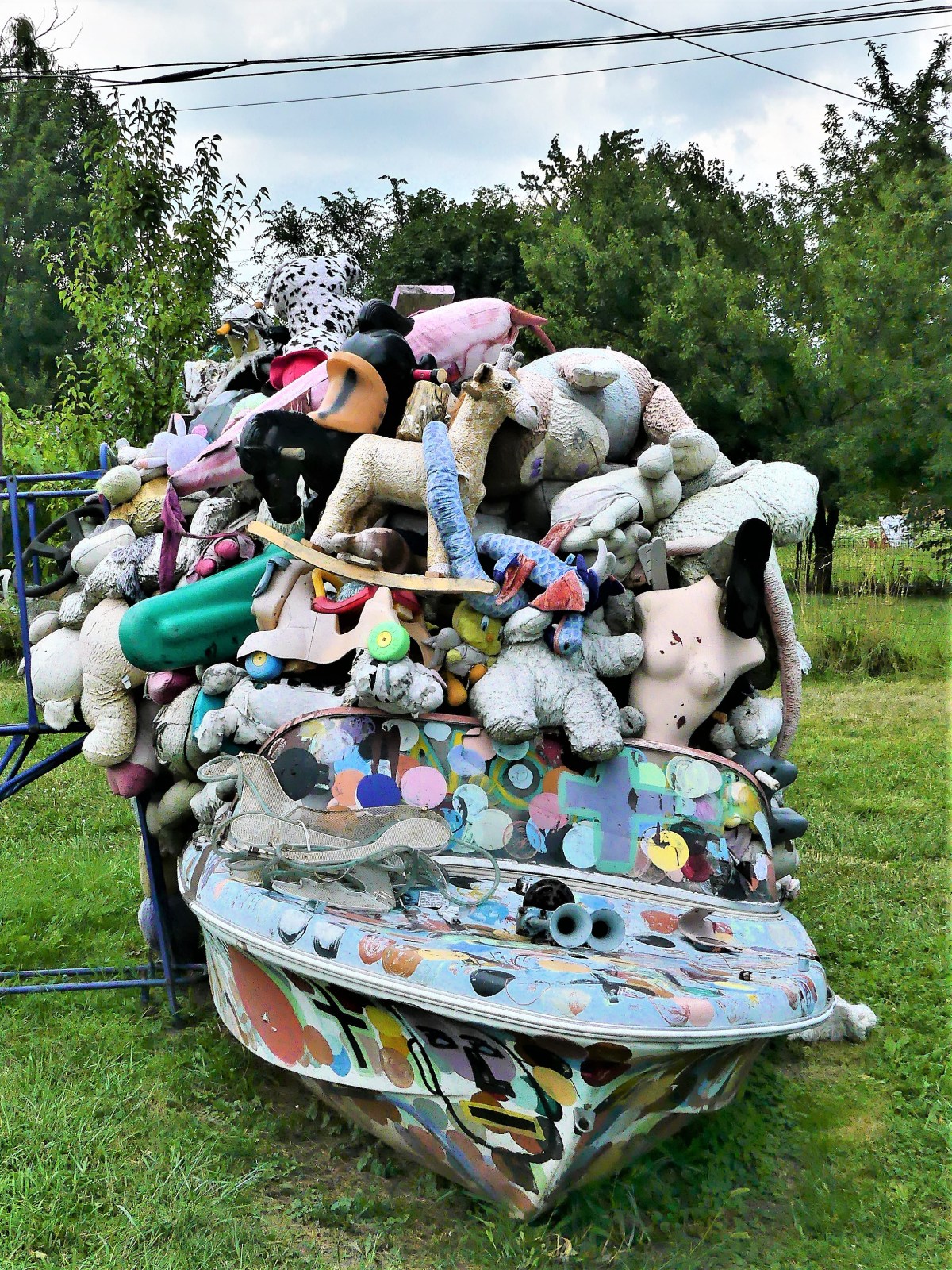
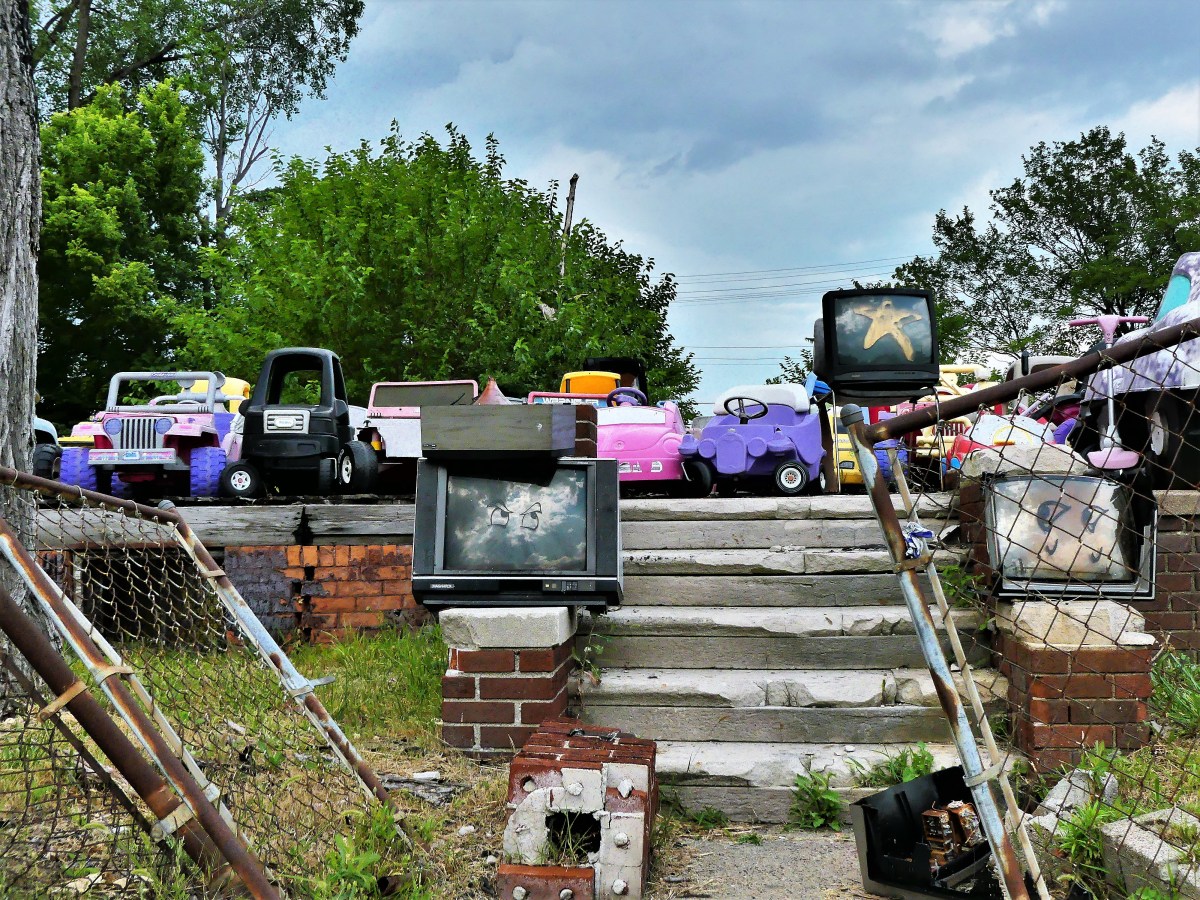
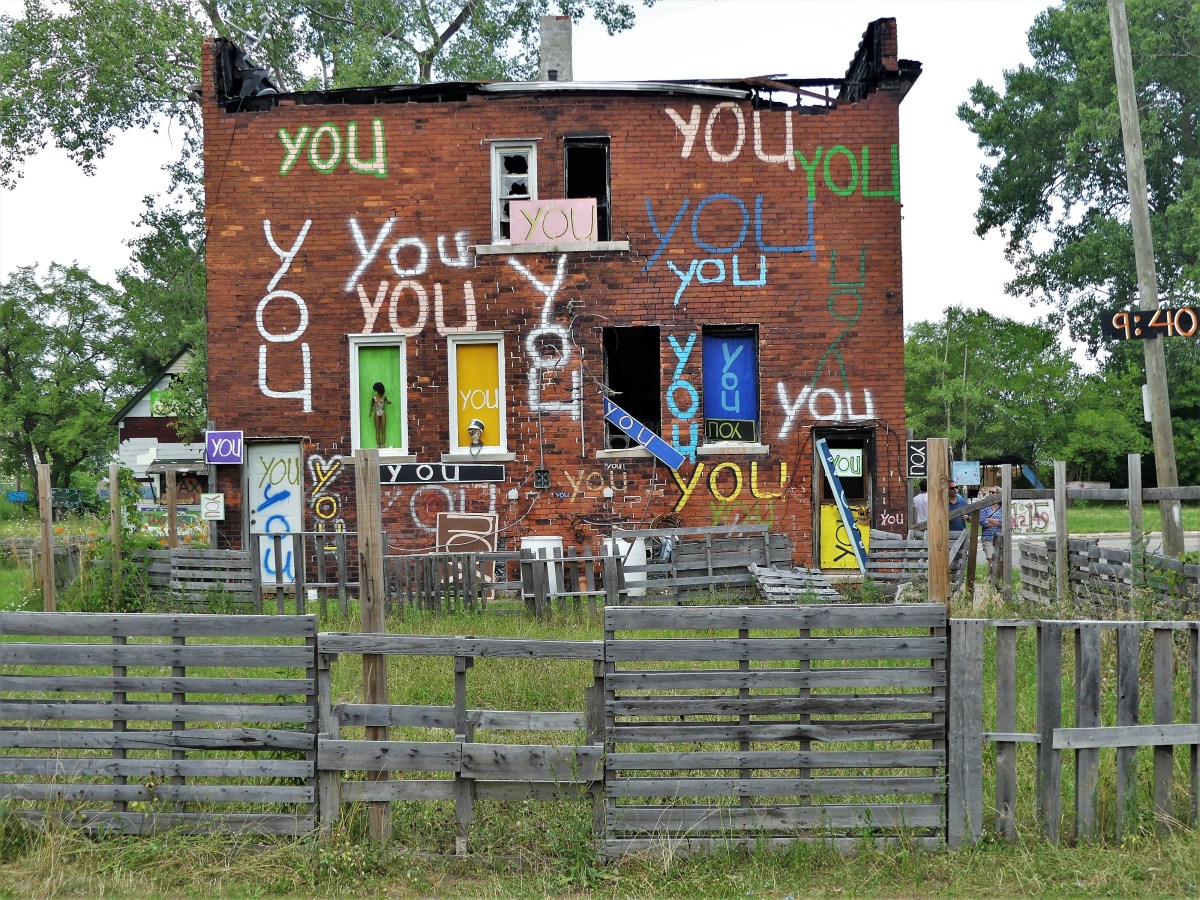
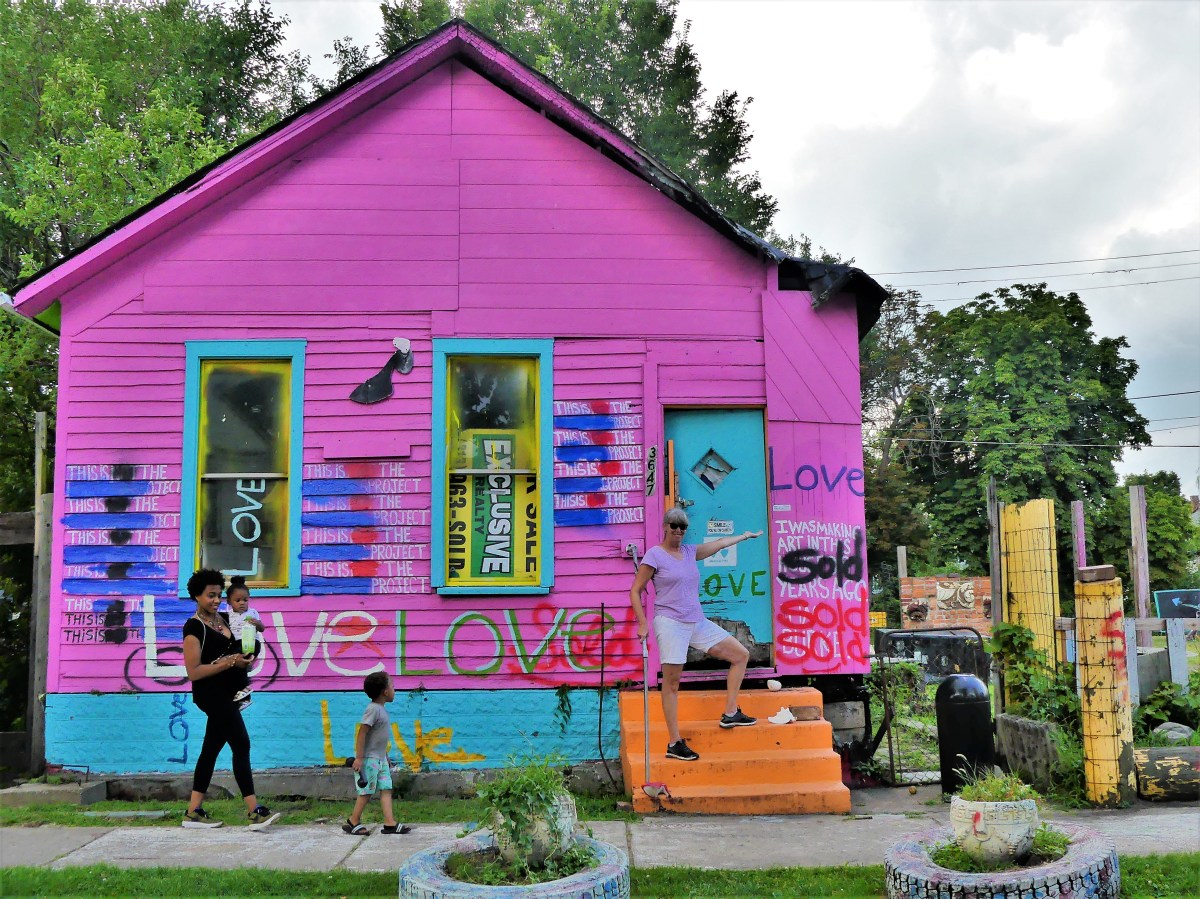
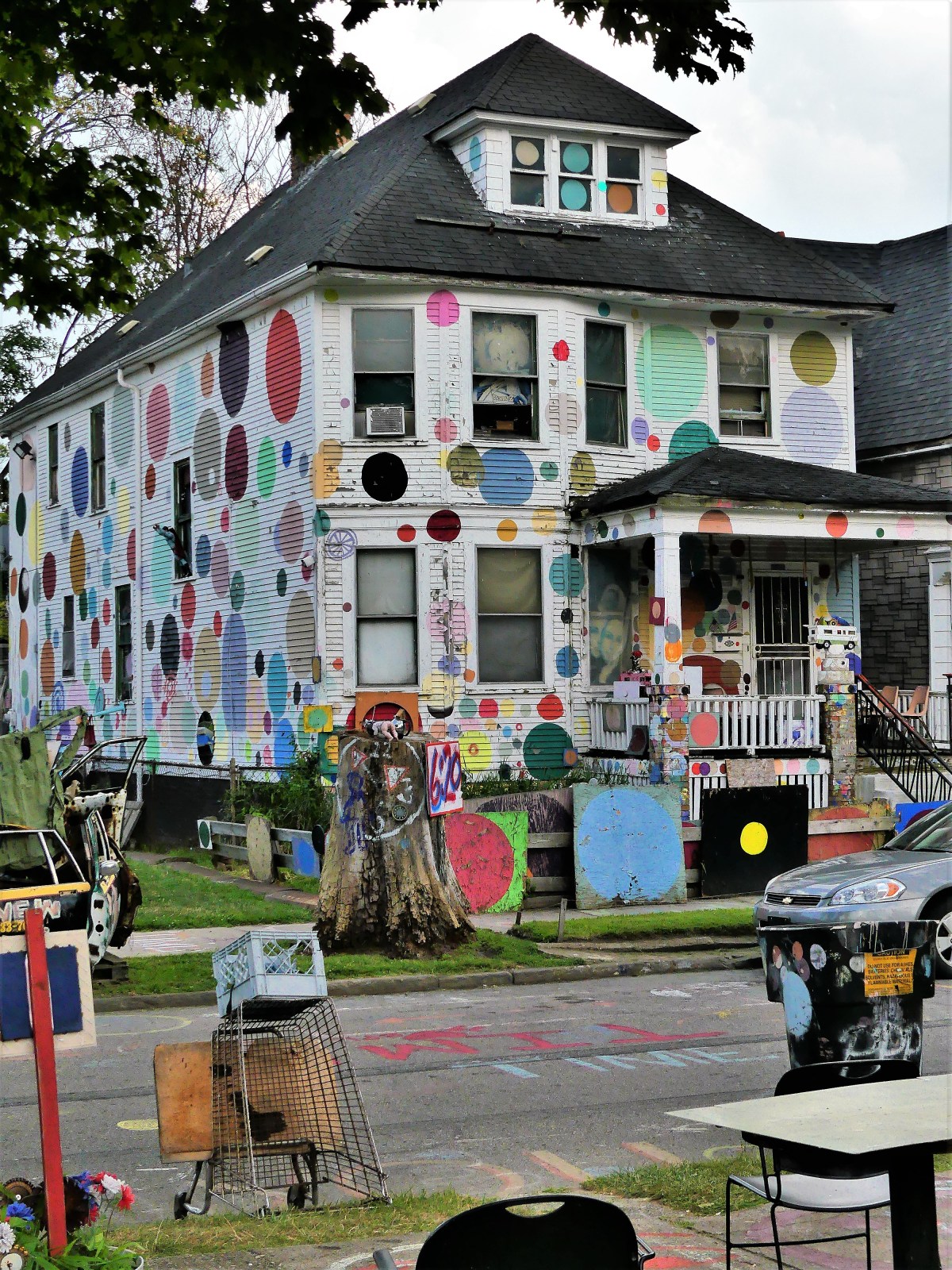
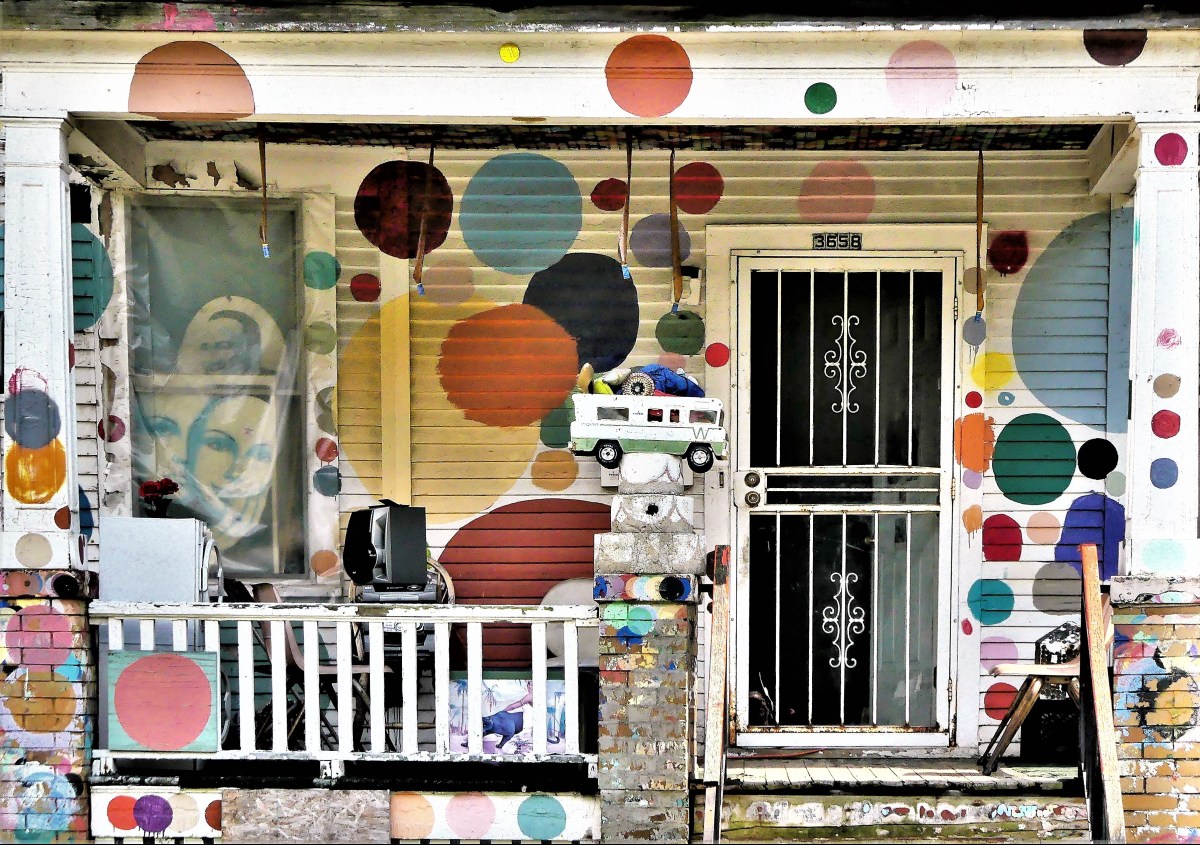
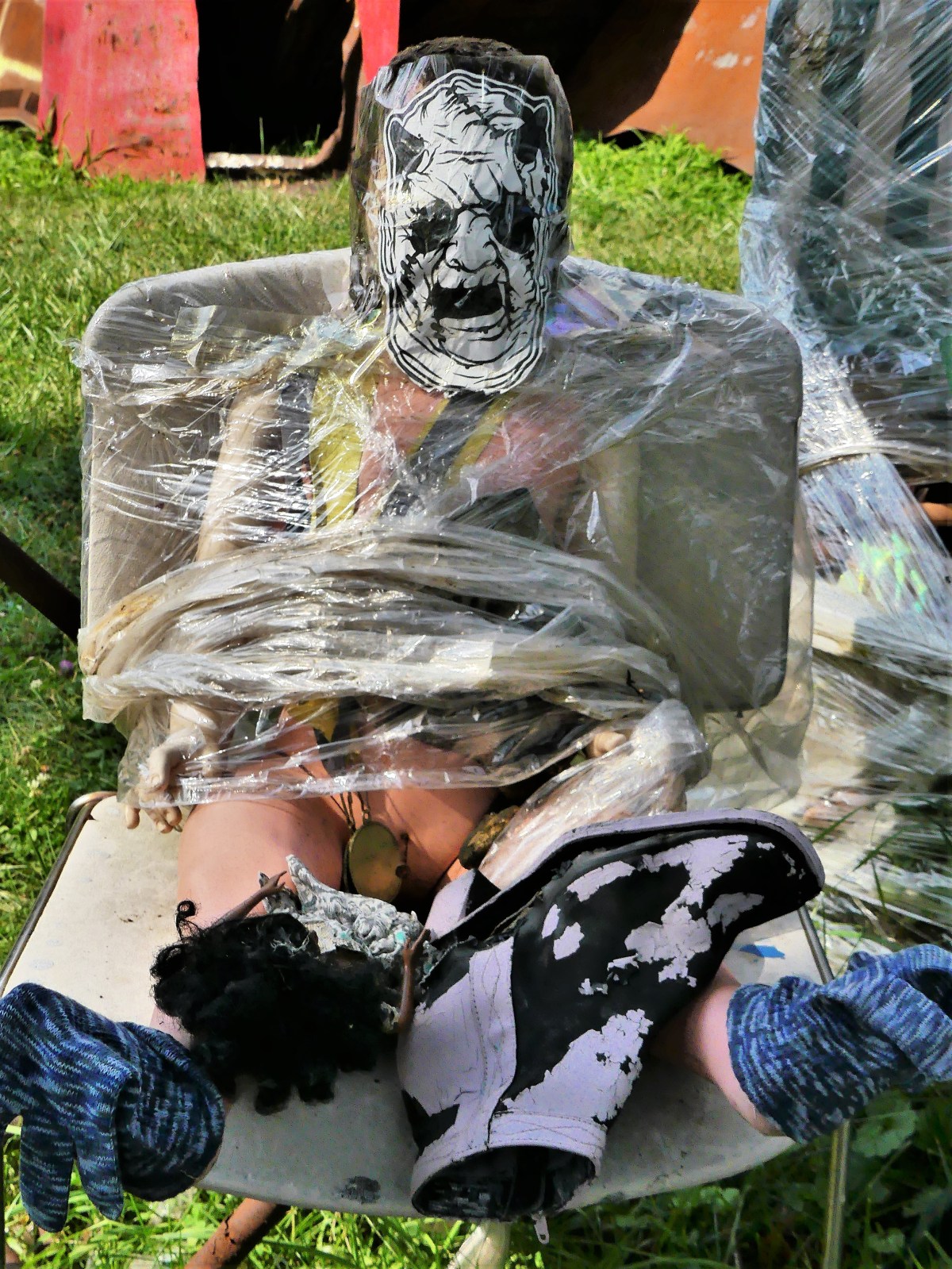
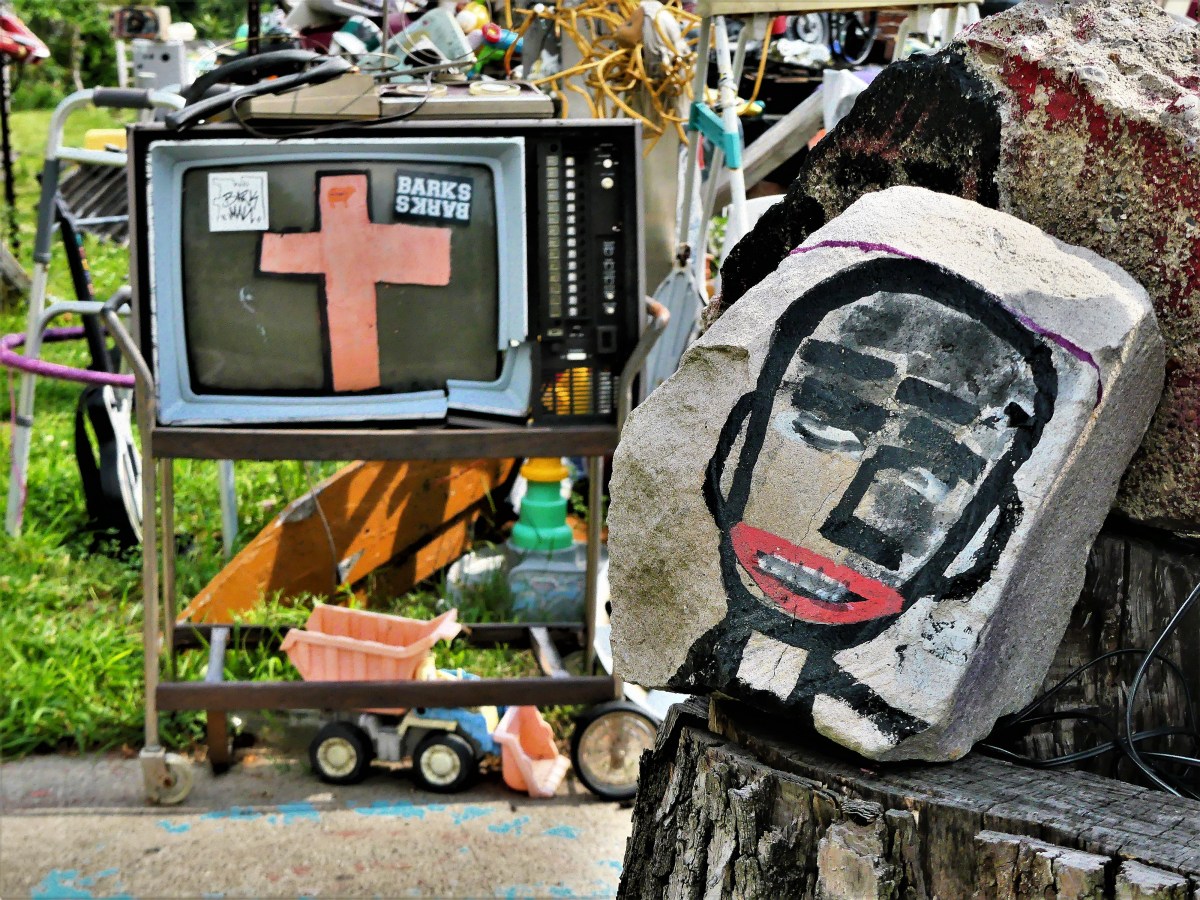
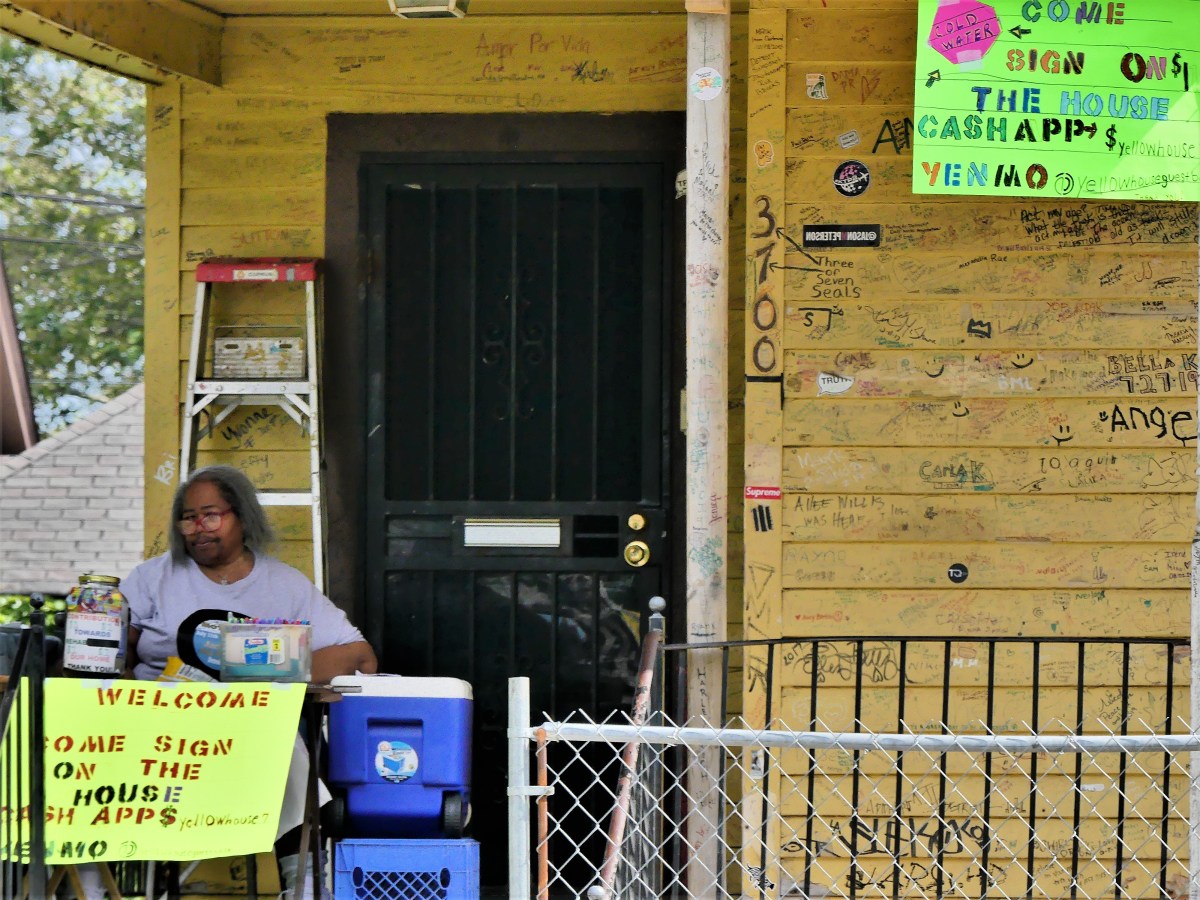
At first glance, the large number of vacant lots between derelict buildings on Heidelberg Street in Detroit, MI resembles a crooked smile through a handful of broken teeth. The gaps are filled with collections of discarded remnants from everyday life that could easily be mistaken for a flea market on crack. But first impressions are completely unjustified, and there is a purpose to the madness…to be discovered over time.
In 1986, Tyree Guyton returned to his childhood neighborhood in Detroit’s East Side, only to find a ghetto ravaged by drugs and poverty so severe that it touched his soul and roused his spirit. With encouragement from Grandpa Sam Mackey, he vowed to fight back with a paintbrush and a broom, which would eventually carry him on a celebrated journey–fighting his way through local partisan politics to national prominence.
To his credit, Guyton recruited sympathetic volunteers to change the face of their community, and after a massive clean-up, he incorporated the wreckage gathered from vacant lots, converting his neighborhood into an urban sculpture installation that has garnered world-wide attention.
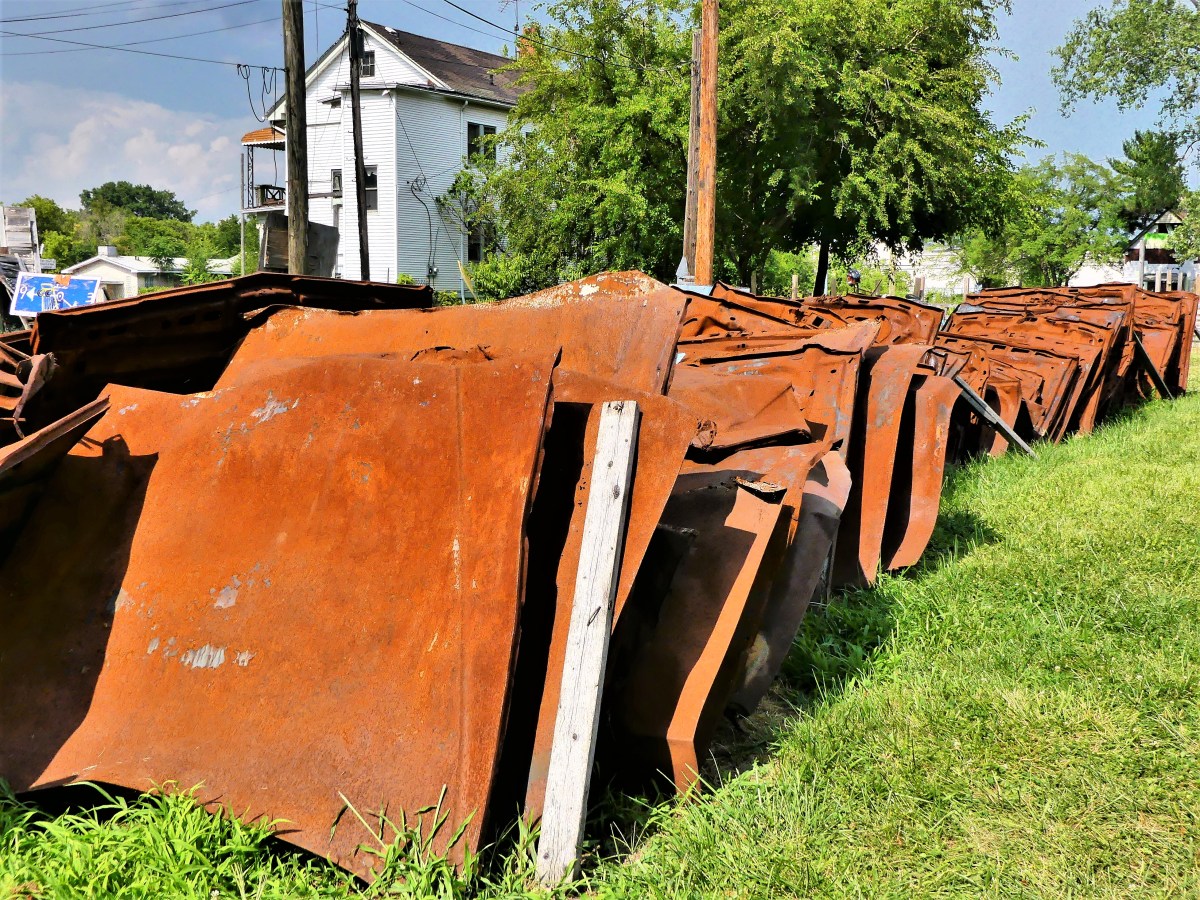
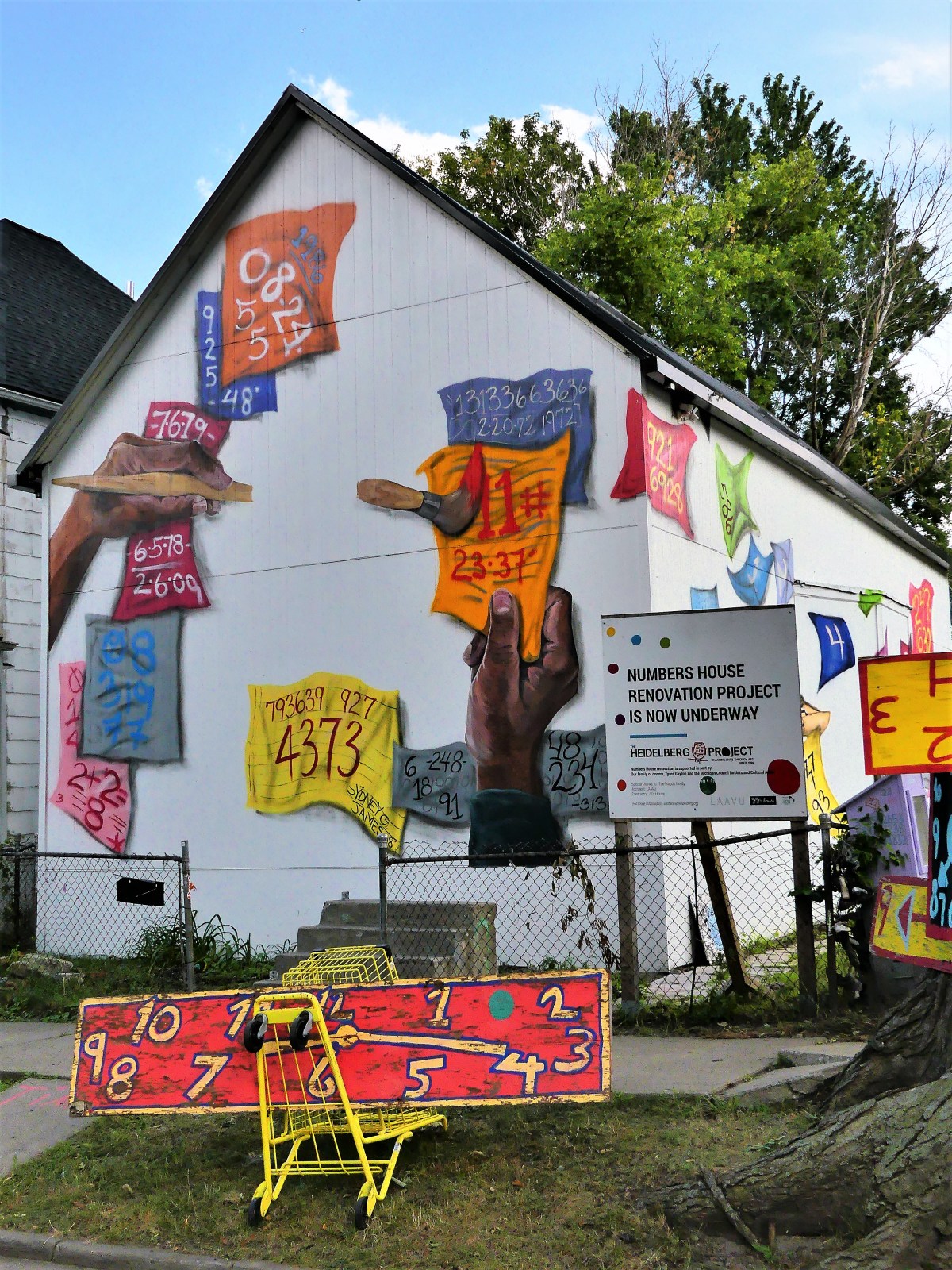
For 30 years, Heidelberg Street has been a grass roots, work-in-progress. The HP (r)evolution continues today through personal donations and strong foundation support–providing funding for transformative paint-overs, and the acquisition of border properties to replace the homes lost to arson.
During my visit, I crossed paths with several photographers who felt as I did–that we had walked into someone’s wild dream, and we were there to interpret his dream through our cameras.
However, should the art critics and cognescenti remain unmoved, or the public dismisses Guyten’s art as junk, there is more to the story at the end of the day. When all the visitors return to their homes, the residents of Heidelberg Street stay behind knowing that their plight has been replaced by pride and opportunity.
Leah and I had set up camp near Muskegon, MI with plans to visit Grand Rapids for an evening concert with “Weird Al” Yankovic. Being one hour away, we decided to make a day of it and explore the Grand Rapids area, but we needed an activity to keep us occupied until late afternoon, and it had to be captivating. After an internet search, all roads led to Frederik Meijer Gardens and Sculpture Park.
Not knowing what to expect, we packed a lunch and set a course for what Trip Adviser informed us was the #1 attraction in Grand Rapids. With over 2800 reviews, who were we to argue with such a consensus. Upon arrival, our first impression was the immensity of the property (158 acres), And the bigness was becoming bigger with new construction all around us.
Apparently, Frederik Meijer was a big success. Who knew? Turns out, Fred was a supermarket magnate worth billions, and this park was to be his legacy–with an endowment fit for a world-class museum, and subsequent listing by 1,000 Places to See before You Die as one of the “30 Must-See Museums” in the world.
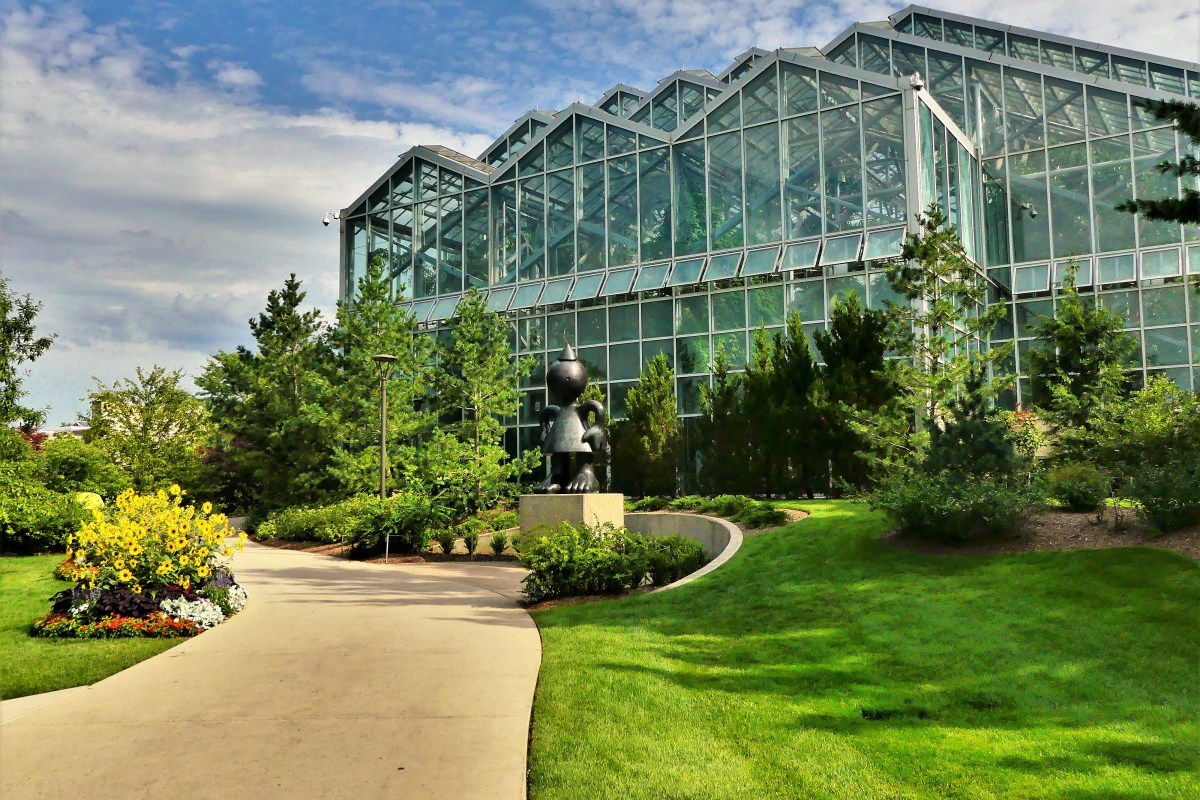
There is an impressive conservatory on the grounds with flora from every climate and environment, including a trove of carniverous plants,
and cacti…
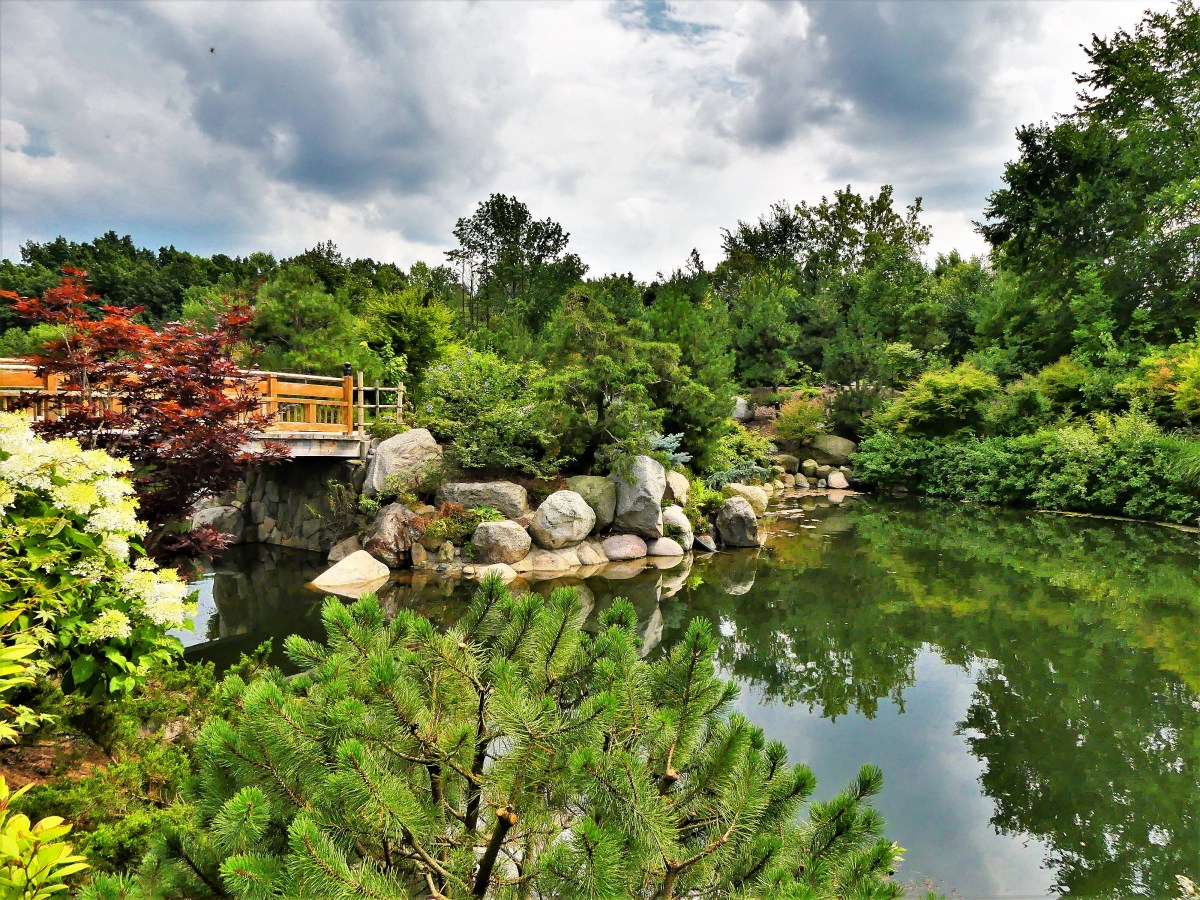
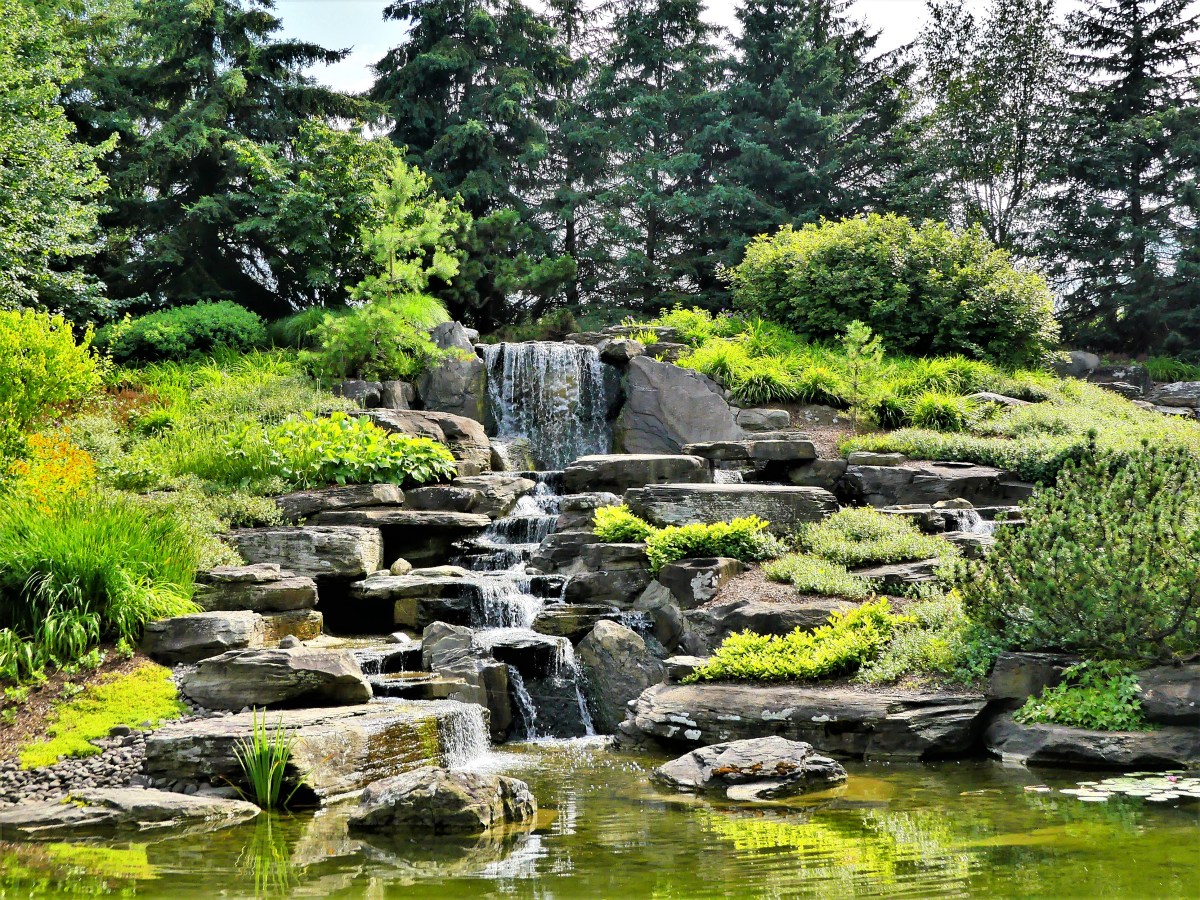
but it was a beautiful day and we were there to walk the Japanese gardens…
and celebrate Meijer’s devotion to outdoor sculpture.
These are a few of my favorite things…listed alphabetically by artist:
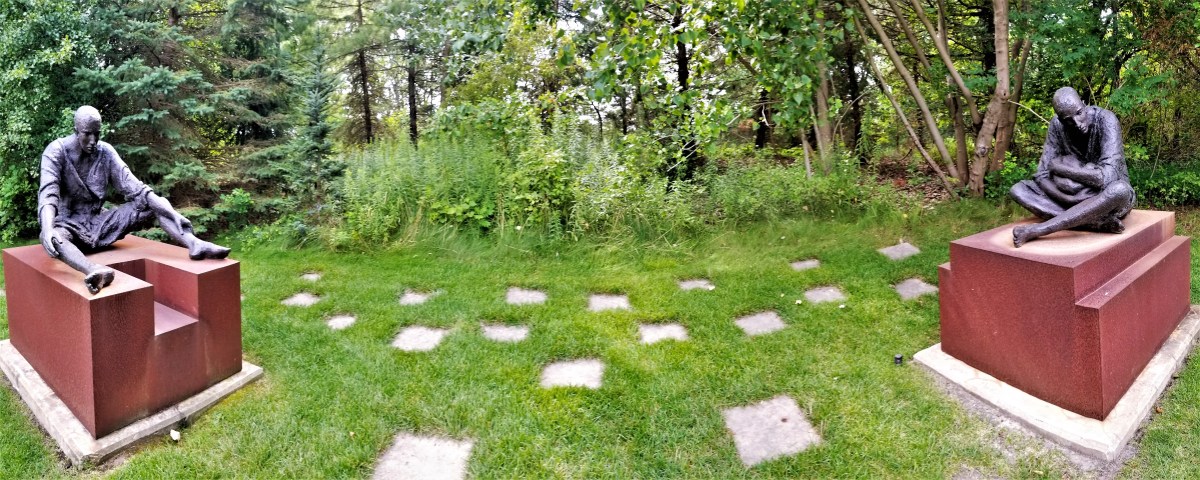
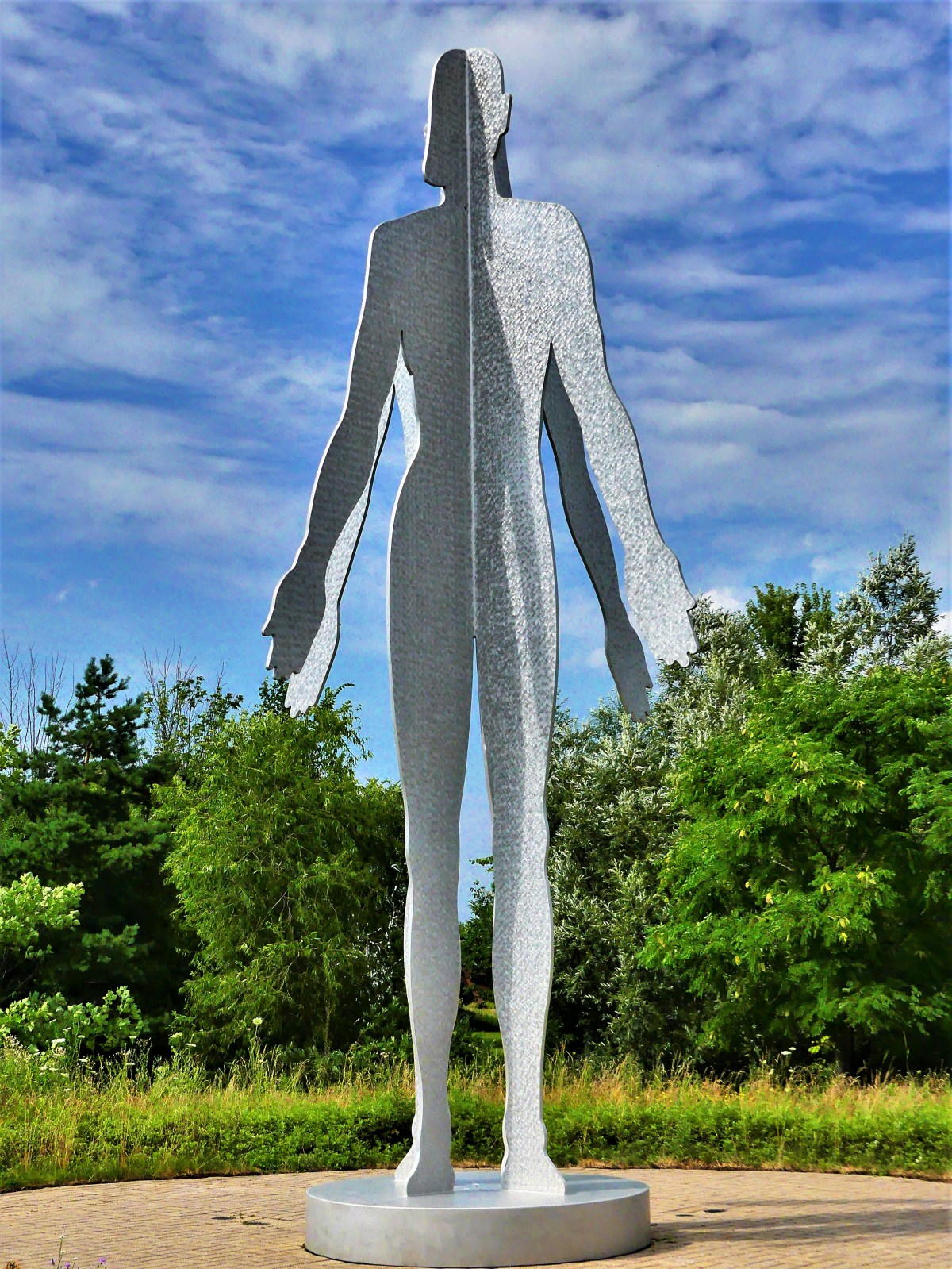
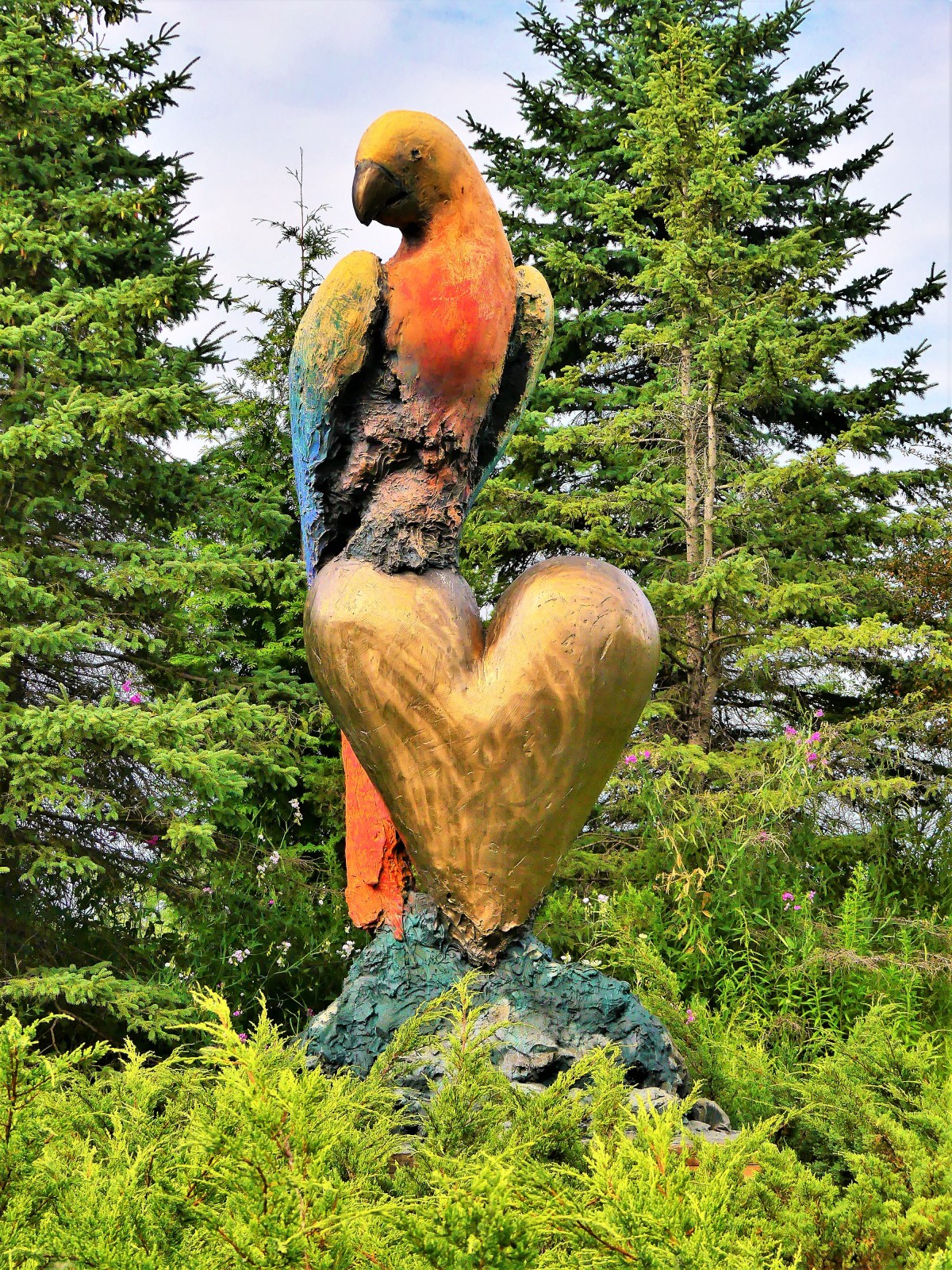
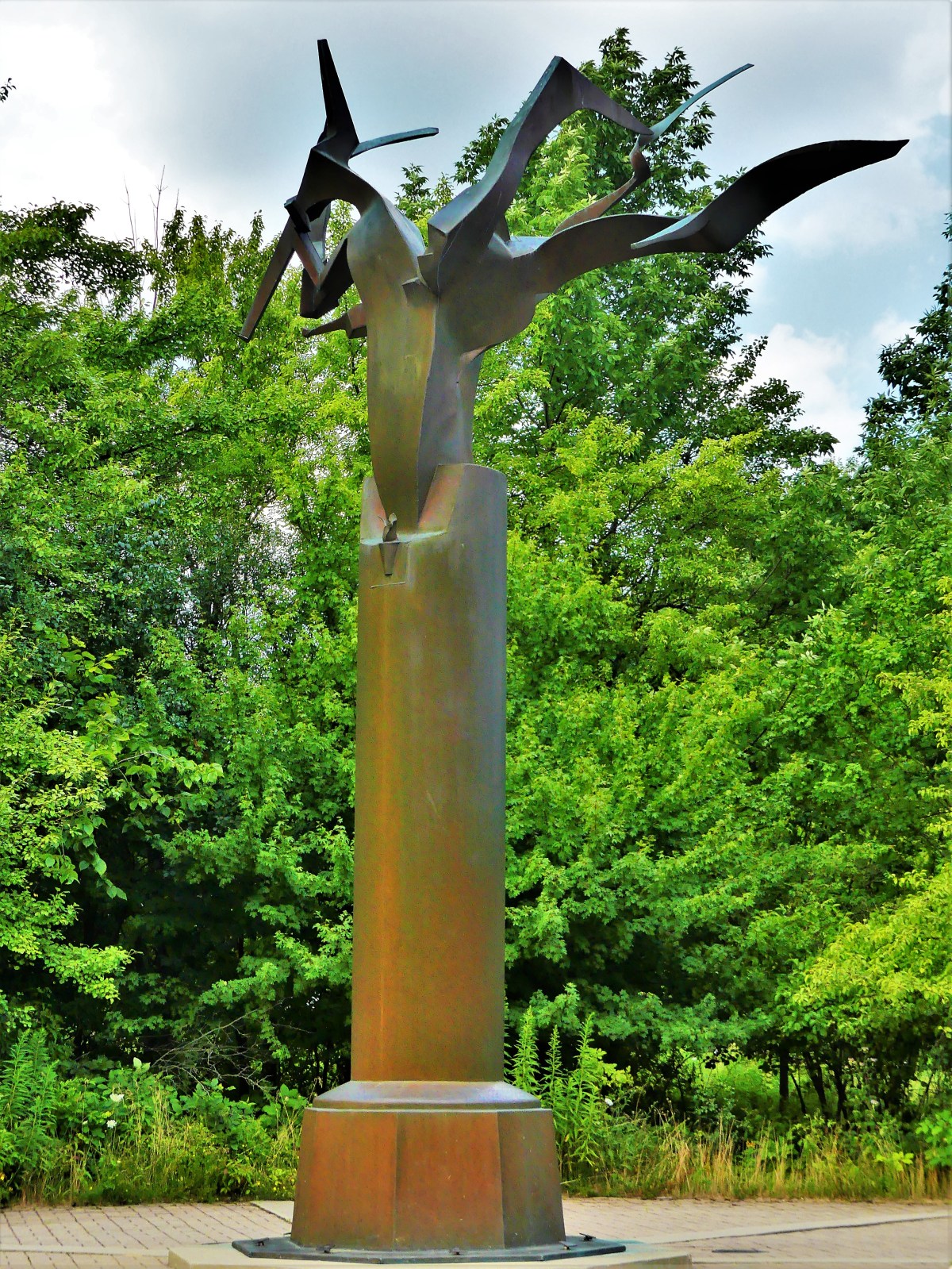
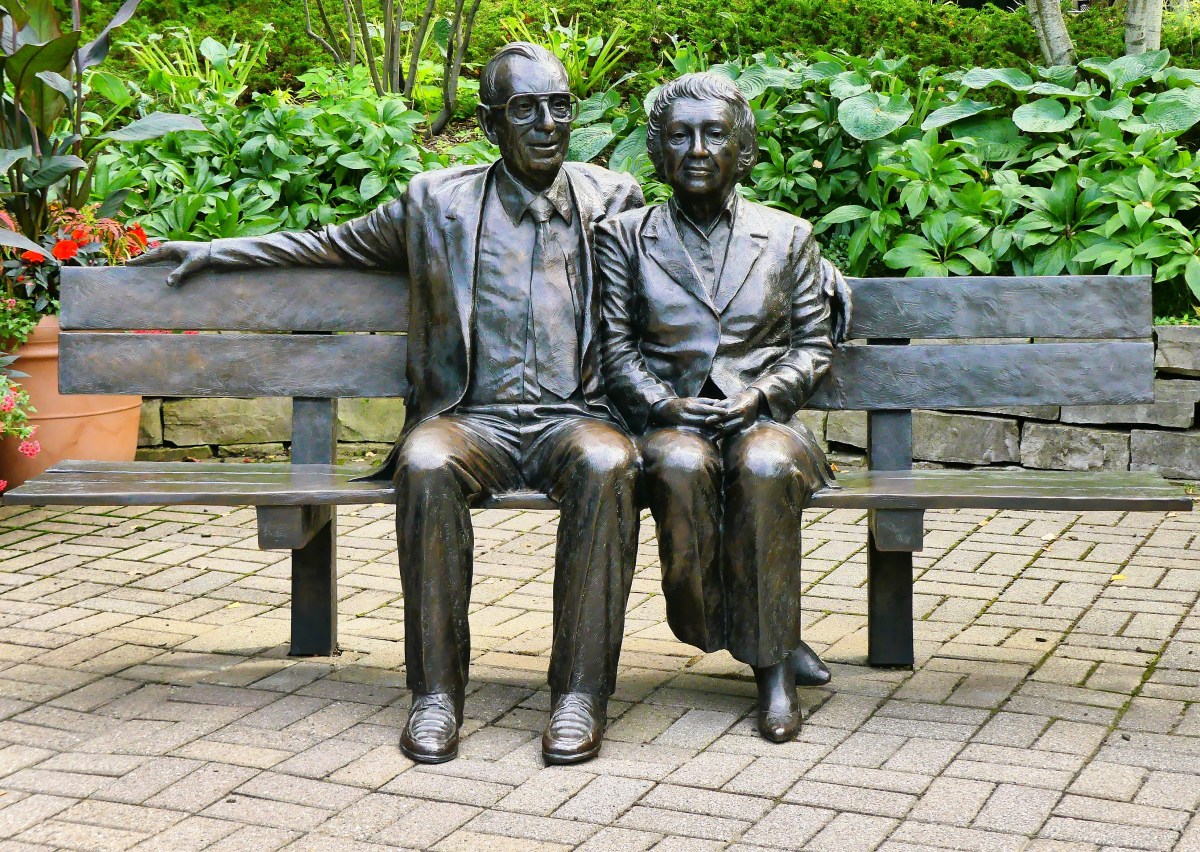
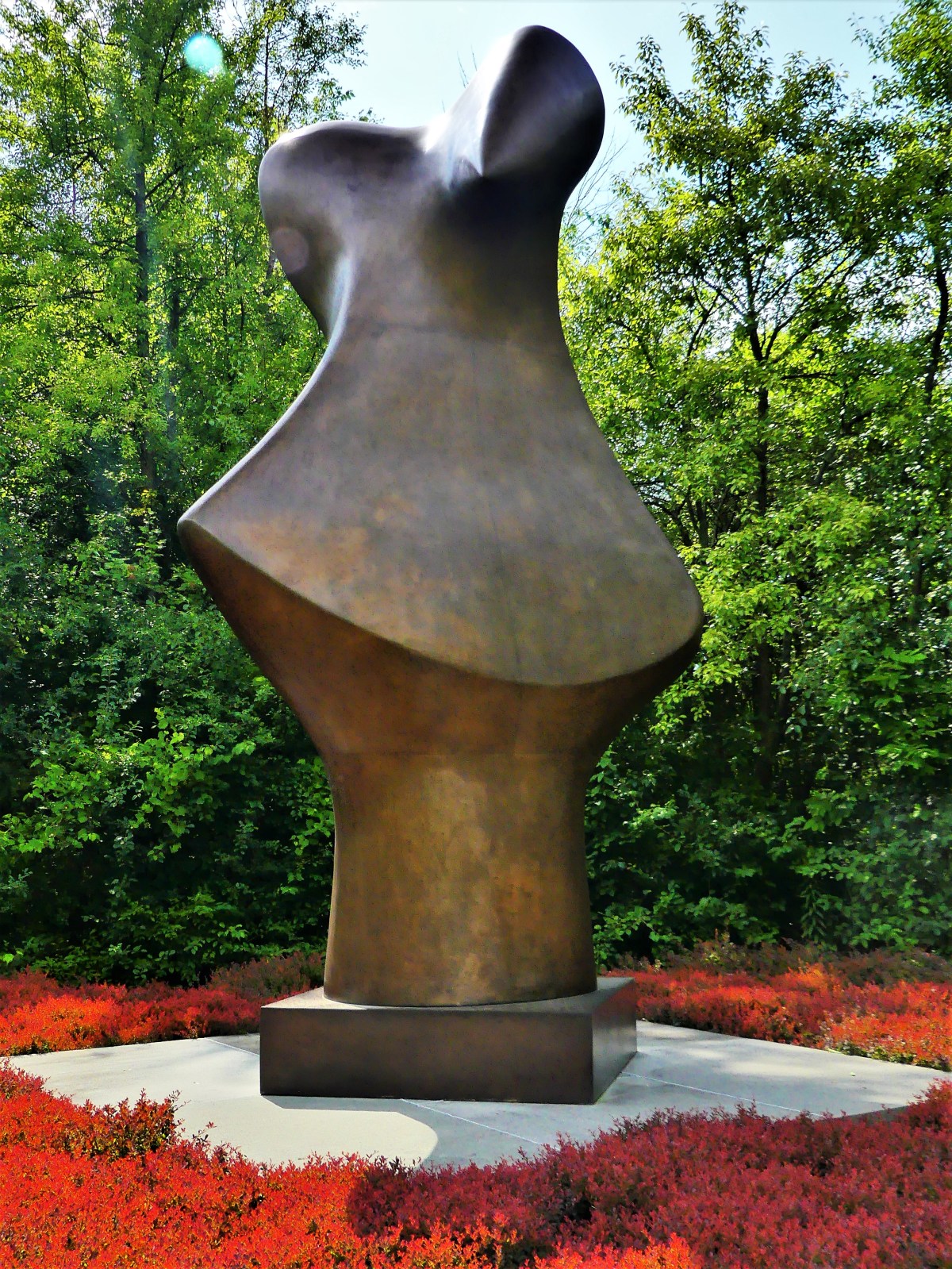
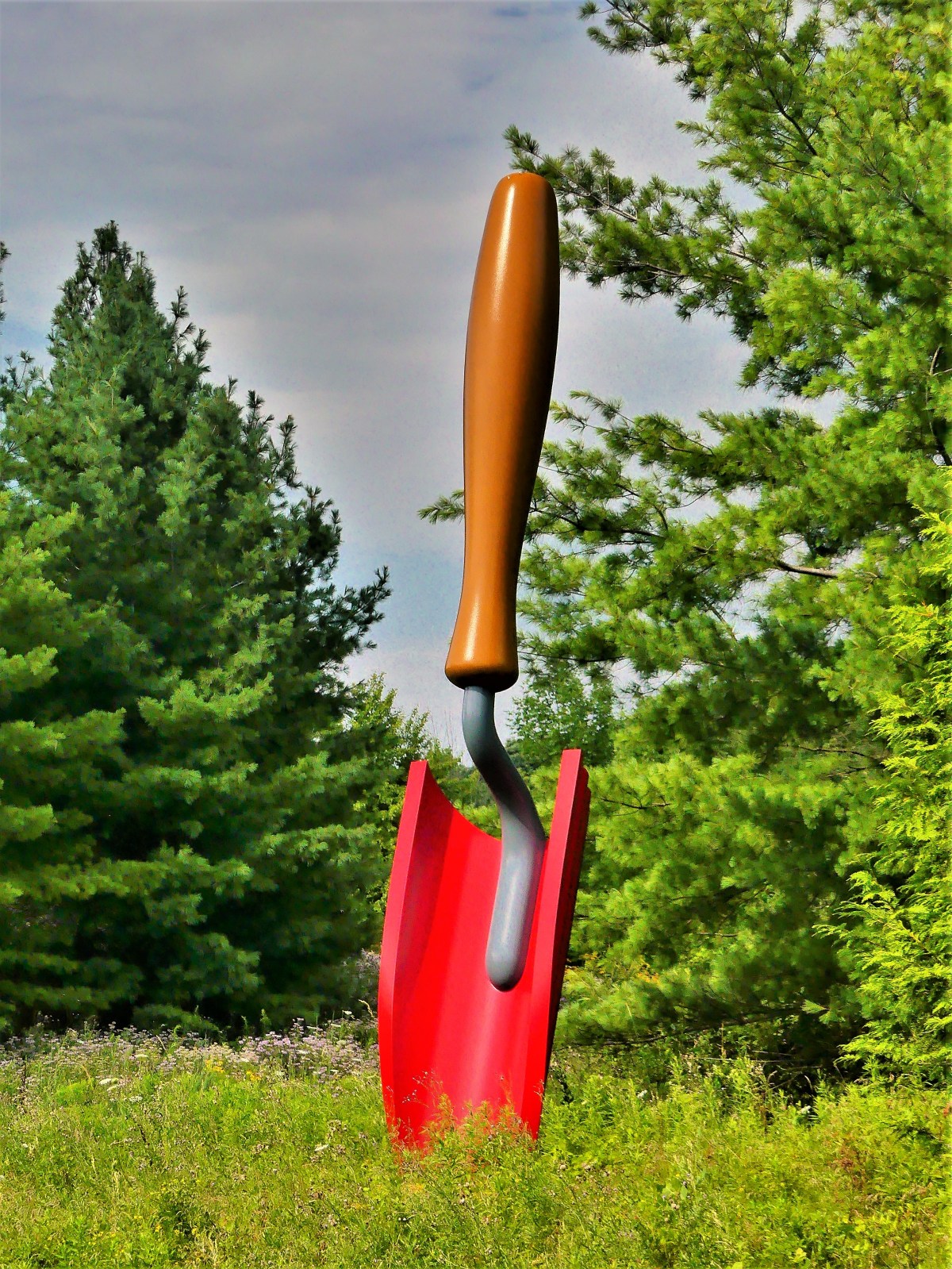
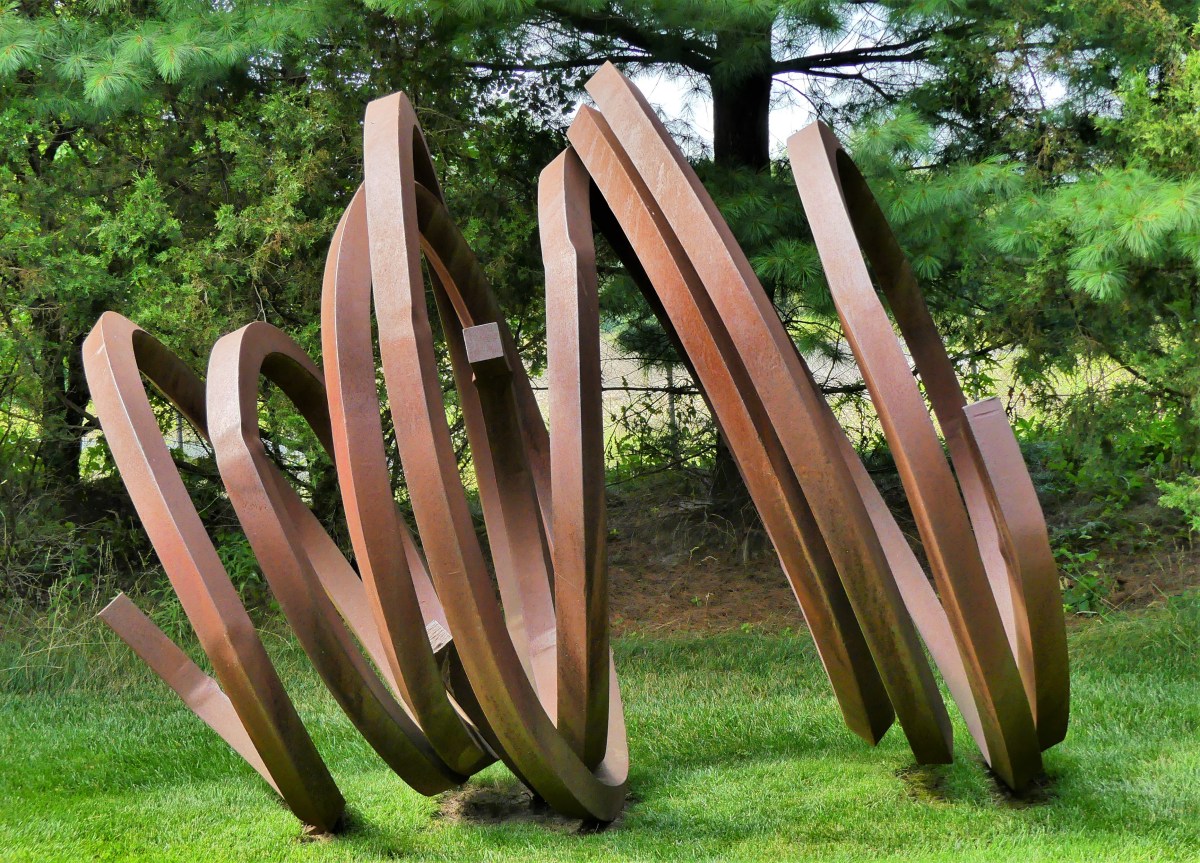
The American Horse A monument to creativity, The American Horse was created by famed animaliere, or animal sculptor, Nina Akamu. The work was inspired, in part, by a work created by Renaissance master Leonardo da Vinci for the Duke of Milan in the late 15th century. The project was championed by Fred Meijer in the late 1990’s, resulting in two casts of the 24-foot monument—one for Meijer Gardens and one for the city of Milan, Italy. In addition to inspiration from Leonardo, Akamu was also inspired by the history of equine imagery and the study of horses.Number 26 and Number 25 While these life-size sculptures are made from bronze, they are finished to appear more like terra cotta, which Beaumont often prefers. She is also known for her work in clay and iron. Their rough surfaces convey a strong sense of age, deterioration and simplicity, while the silence and stillness of the figures helps to create intimacy between the sculptures and the viewers. Male/Female One of the most recognizable and celebrated works in the Sculpture Park, Male/Female depicts the precise 180 degree intersection of a male and female silhouette. To fully understand the meaning and form of this colossal sculpture, the work is best viewed from a variety of vantage points. For Jonathan Borofsky, this sculpture represents two energies, the male and the female, coming together to create a stronger whole. In this way, his figures are not portraits, but symbolic images presenting the common human condition.Spider Louise Bourgeois was one of the most intriguing and influential artists in Contemporary art. Beginning her career as a painter, sculpture and installation work became her focus and strongest legacy. Biography and the relationships among family are frequently addressed in her work and Spider, one of her most iconic themes, is no exception. In tribute to her mother who made a living repairing ancient tapestries, Bourgeois portrays spiders as clever, dainty and protective. The eggs described in the lower portion of the body emphasize the maternal symbolism of the sculpture.Cabin Creek Deborah Butterfield’s work focuses on the spirit and form of the horse as an intelligent mare rather than the war horse which is usually illustrated in art. Cabin Creek is the name of the location where Butterfield found a variety of materials for this sculpture. First, she assembled the found materials to form an image of a horse. Then each piece of wood was meticulously translated into bronze, then reassembled and patinated. Such a process allows Butterfield to create works appropriate for outdoor placement.Scarlatti Since the 1960’s, Mark di Suvero has been at the forefront of Contemporary American sculpture. Working on a monumental scale and focusing on composition and space, he uses industrial building materials such as I-beams, scrap metal, and steel cables. Movement, whether actual or implied, is another key element in his sculpture. di Suvero frequently uses references to music and literature in his titles. Scarlatti is named for Domenico Scarlatti, the eighteenth-century Italian composer whose music di Suvero greatly admires. In this piece, the suspended “V” beneath the tip of the central beam is intended to move with the wind.Large Parrot Screams Color Together with Claes Oldenburg, Andy Warhol and Roy Lichtenstein, Dine helped define the Pop Art movement, which transformed the art world with the use of imagery from popular culture. The form of the heart has been a part of Dine’s artistic vocabulary since the mid 1960s and it has appeared prominently in his paintings, drawings and prints as well as in his sculpture. Grand Rapids Arch Andy Goldsworthy works with natural materials such as leaves, sand, ice, and stone to create and often photograph highly ephemeral works of art. Permanent works, such as the Grand Rapids Arch, are more rare. Made with stone from the artist’s native Scotland, this piece is intended to be viewed as a work of sculpture rather than an architectural element. Goldsworthy sited the work during his visits to Meijer Gardens. For Goldsworthy, the arch is a way to talk about movement, commenting, “The arch seemed an appropriate form to talk about ideas of travel because the stone, out of the context of an archway or a building, a free-standing arch, has a sense of a stone taking a walk; a stride; a movement. So that became the really important motivating idea behind the arches,” he shares.Julia The simple, graphic style Keith Haring used in his two-dimensional pieces often translated into his sculpture throughout his career. His three-dimensional forms primarily focus on balance and the energetic movement of shapes. As the only portrait sculpture Haring ever created, this piece was named after Julia Gruen, a friend of the artist. A dancer, Julia seems to capture the energy and excitement of 1980s New York.Column of the Free Spirit Richard Hunt lives and works in Chicago. Hunt is inspired by science, history, literature, music, and African art. Column of the Free Spirit was commissioned for Frederik Meijer Gardens & Sculpture Park in 1999 and installed in 2000. The columnar form references architectural monuments in Western art. The flame-like finial alludes to notions of freedom, inspiration and unlimited boundaries. Fred and Lena Meijer Fred Meijer discovered the work of Joseph Kinkel in his travels and commissioned this portrait sculpture and several variations. The earliest version featured only Fred, but Lena Meijer was added by the artist. This charming duo is a favorite at Meijer Gardens and has been recorded countless times in photographs. Kinkel designed the sculpture so visitors could join the Meijer seated on the bench while the site was developed to allow groups to gather around.Grosser Trefree Dietrich Klinge is a highly respected German artist who received training in drawing, printmaking, and sculpture. Much of Klinge’s early imagery references woodland spirits from tales of German folklore and legends. This sculpture was originally carved in wood and then cast in bronze to preserve the characteristics of the wood. The bold form and textured surface reflect early 20th century expressionism and non-western traditions.Aria Concurrent with a distinguished career in publishing, Alexander Liberman was actively engaged as an artist, finding critical and popular acclaim for his paintings, photographs and sculpture. Standing more than 42 feet, enabling viewers to walk around and through the work, Aria clearly references the artist’s admiration for architecture. An “aria” is an elaborate melody sung by one voice. The organic shaped elements of Aria seem to suggest music notes, while linear elements seem to reference a music staff or interlocking sounds, with red color unifying the composition. Torso of Summer The early 20th century French master Aristide Maillol is viewed as the most influential sculptor in the generation following Auguste Rodin. However, unlike the expressive forms of the latter, Maillol achieved a new classicism inspired by the pose and attitude of Greco-Roman sculpture and, innovatively, the sensuality of Indian sculpture. Many of his works utilize the female nude in symbolic or allegorical ways. Torso of Summer is part of a series which celebrates the four seasons. Specifically, the rounded forms of the figure reference the fullness of summer.Woman and Bird The imaginative nature of Joan Miro’s repertoire is widely admired. Although associated with 20th century Surrealism, his long career was highly individualized. Unlike his paintings and prints, most of Miro’s sculptures began with simple found objects transformed nearly beyond recognition to create another form or figure. In Woman and Bird for example, the body of the figure derives from an old milk stool and the head from the lid of a can. Shared with his two-dimensional works, his sculptures are frequently brightly painted vibrant colors contributing to the visual energy, even playfulness, of the work.Bronze Form Henry Moore is recognized as the single most important figure in the history of British art during the last century and his work has been of critical importance internationally for more than sixty years. Moore’s sculpture was initially highly representational, but he gradually moved toward a vocabulary of organic, simplified forms, frequently drawn from nature — including rocks and bones. In this piece, Moore has abstracted the human form and the shape of the sculpture changes greatly as the viewer moves around it.Broken Nose Carrying Bottle Number One Juan Muñoz was born and raised in Madrid, Spain but went on to study art in London and New York. Before his untimely death, he was an important figure in contemporary sculpture and held exhibitions internationally and was collected worldwide. He is known for his unexpected placement of figures which create tension between works and viewer. Muñoz was also a writer and was interested in other creative fields such as music, literature, history, and architecture.Plantoir Claes Oldenburg gained initial acclaim as one of the leaders of Pop Art movement recreating ordinary objects from consumer or popular culture. Beginning in the late 1970’s, he began to work with Coosje van Bruggen as a husband and wife team on a series of large-scale public projects. The couple is celebrated internationally for the transformation of objects from everyday life into colossal projects. Plantoir is the first monumental sculpture created specifically for a garden context. It was sited specifically by the artists.Neuron Roxy Paine is one of the most highly regarded Contemporary sculptors. Neuron reflects ideas about nature, industry and artistic processes. It is one of Paine’s most inventive forms, extending out from a central mass. It derives from his critically acclaimed Dendroid series which closely follow the shape and form of trees. Neuron goes beyond this tradition and simultaneously calls to mind a neuron and elevated root ball.I, you, she or he… Jaume Plensa is primarily a figurative artist, often using ideas about language and communication in his sculptures and installations. This commission for Meijer Gardens includes a composition of three figures seated on boulders, whose shells are made of stainless steel letters. Faces are left unfinished to encourage the universality of the forms and visitors are encouraged to walk among the sculptures. The composition and setting were selected by the artist and he intendeds it to represent a kind of ongoing, silent conversation. Although most well-known In the United States for his Crown Fountain in Chicago’s Millennium Park, Plensa’s is one of the leading international sculptors working today.
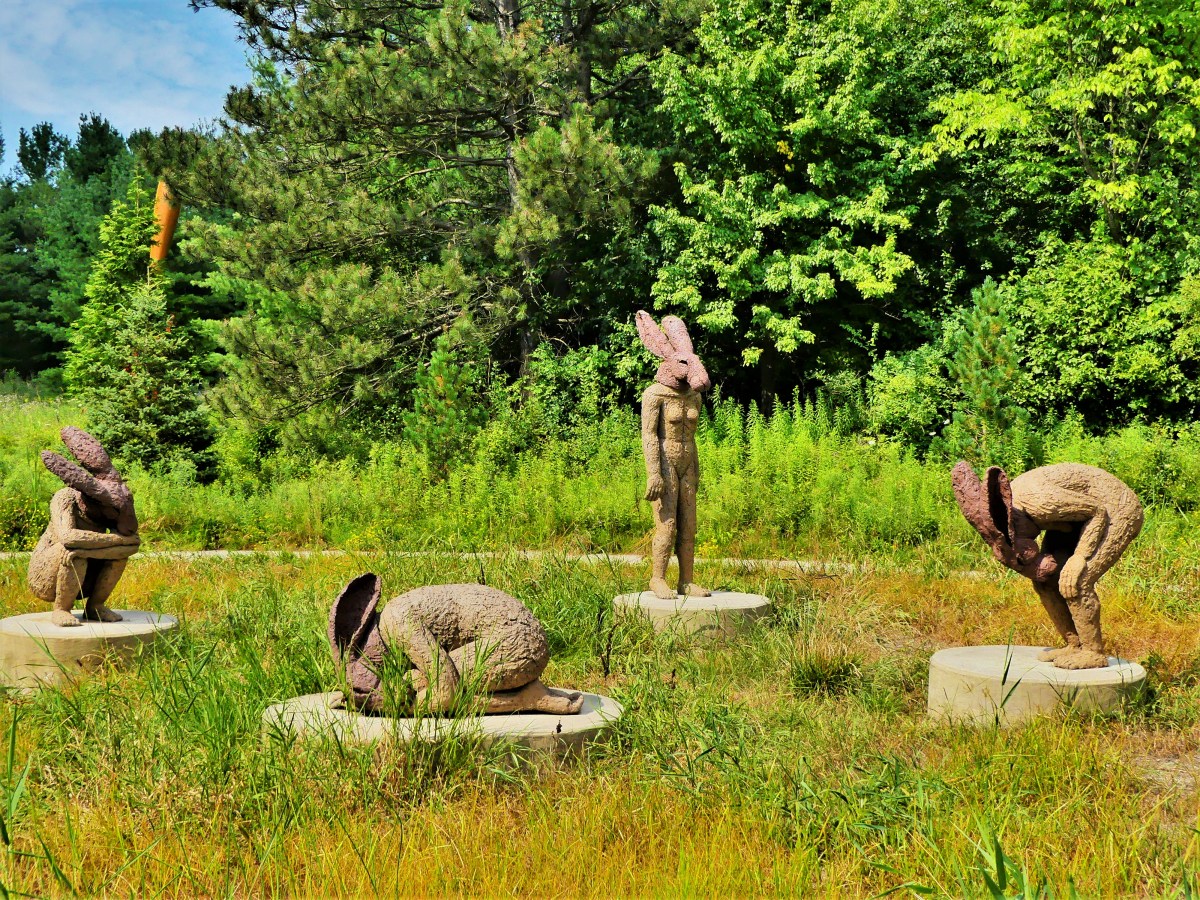
Eve Originally created in association with his famed Gates of Hell for the never completed museum of decorative arts in Paris, Eve became one of the artist’s most celebrated descriptions of the female figure. Standing awkwardly in an attempt to cover her body, the figure distorts the classical “controposto” or “weight-shift” position. Additionally, Rodin has forsaken the traditional smooth surfaces and rounded contours apparent in figurative sculpture since the Renaissance in favor of something highly textured and emotive. This is one of twelve known full-scales casts of Eve.Introspective Sophie Ryder is a figurative artist who focuses on animal imagery, in particular hares, dogs, and minotaurs, to comment on universal human emotions and relationships. She creates drawings, bronze sculptures, collages and prints, but is best known for her wire drawings and sculptures. Wire, which adds a heavy textured surface to the sculptures, is not suitable for outdoors, so some of the pieces are cast in bronze. This piece was created in response to the tragedy of 9/11 and the way in which many mourn.B-Tree II Sculptor, photographer, and mathematician Kenneth Snelson has commented, “My art is concerned with nature in its most fundamental aspect, the patterns of physical forces in three dimensional space.” B-Tree II is a site-specific commission that while concerned with nature, firmly utilizes geometry, mathematics and engineering in referencing the natural world. Based on patterning systems using the number three and triangles, the colossal structure utilizes the artist’s patented “tensegrity,” wherein the carefully calculated tension of the stainless steel cords locks the tubular elements up and into space. B-Tree II is the largest structure Snelson created.Two Indeterminate Lines Bernar Venet never made preparatory drawings for this work and described each sculpture in his Indeterminate Lines series as “the result of improvised, intuitive, empirical work.” This sculpture highlights the use of industrial material, bent and twisted, to imitate a drawn line. His presence in public and private collections around the world is well known.Listening to History Bill Woodrow is one of the leading contemporary British sculptors. He often addresses issues of humor and irony with his work. In his early pieces, he combined found objects to create new meaning. In Listening to History, the placement of the head on the ground with the book tied against it and blinding the eyes suggests many possible narrative meanings: learning from history, being blind to history, open/closed mindedness, and so on. Note the meticulous concern for detail in this work.
Our time through the park went quickly. We walked over 2 miles, and returned to the parking lot to find hundreds of people tailgating behind the amphitheater, awaiting Lyle Lovett’s evening performance. Had we not made previous plans to see “Weird Al,” it would have been the perfect venue for another songfest from Lyle (seeMusic City, USA).
We must return some other day…after checking the concert calendar first.
The Chicago Art Institute is considered one of the highly regarded art museums in the world. Its collection is deep; it is wide; and it’s displayed in 200+ galleries over three floors.
However, with only two days scheduled in Chicago and so much to do, Leah and I had less time to roam the museum than I would have preferred. What to do?
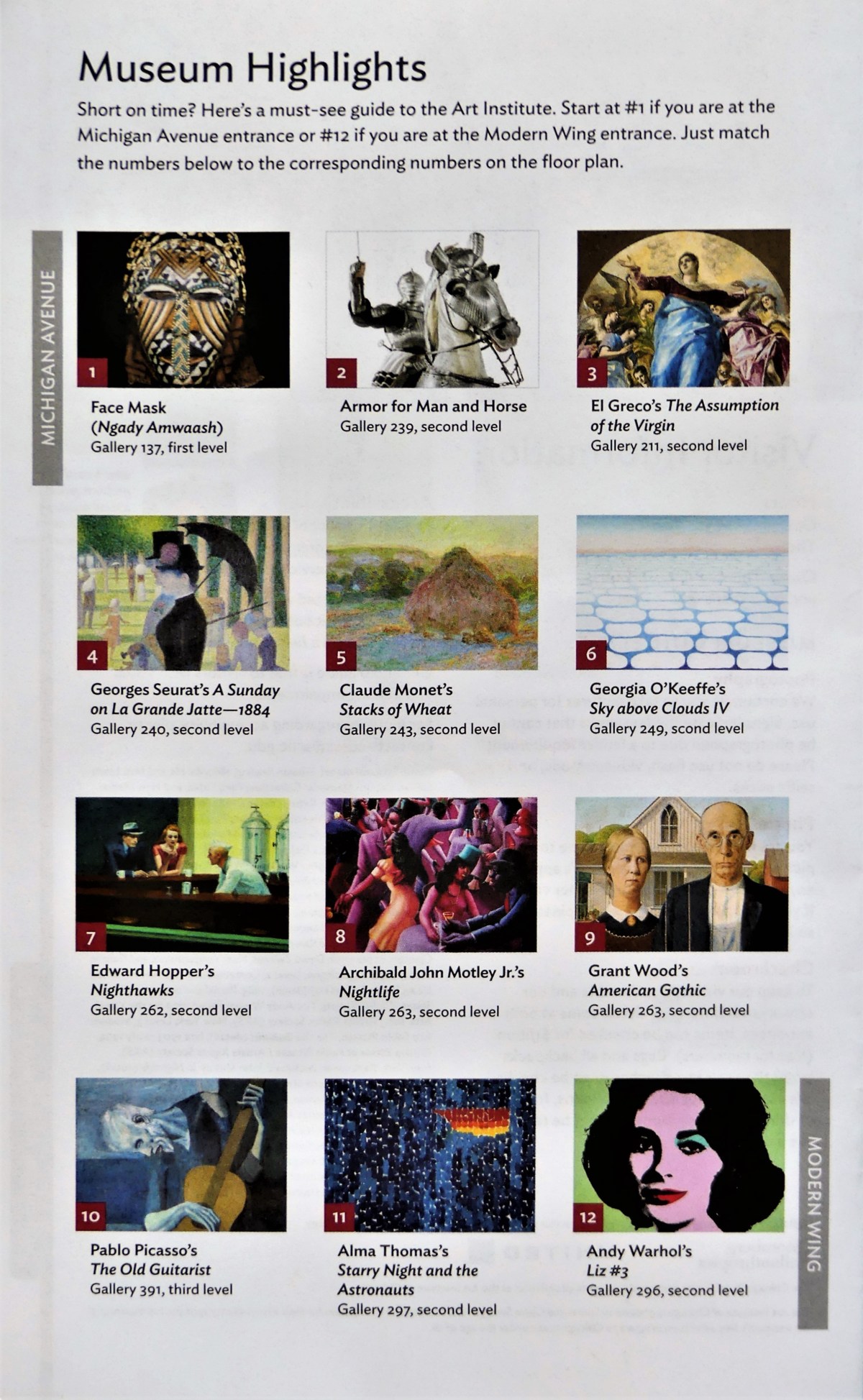
Fortunately, the Art Institute has a solution! The museum provides a guide for locating twelve essential must-sees, and comprehensive floor plans to help find them. It’s their version of a cultural scavenger hunt through time and space.
Leah and I accepted the challenge, walking 3 miles in 2 hours (which also included a visit to the Member’s Lounge to sip some coffee) until we saw all twelve works of art.
Realizing that time is precious, and many people may not have the capacity to travel, I’ve taken the liberty of recording the museum’s highlights and displaying them for all to see without spending the time or walking the distance–although it’s impossible to replace the sensation of seeing these masterpieces up close and personal.
Nevertheless, consider it a public service and a crash course in art appreciation…
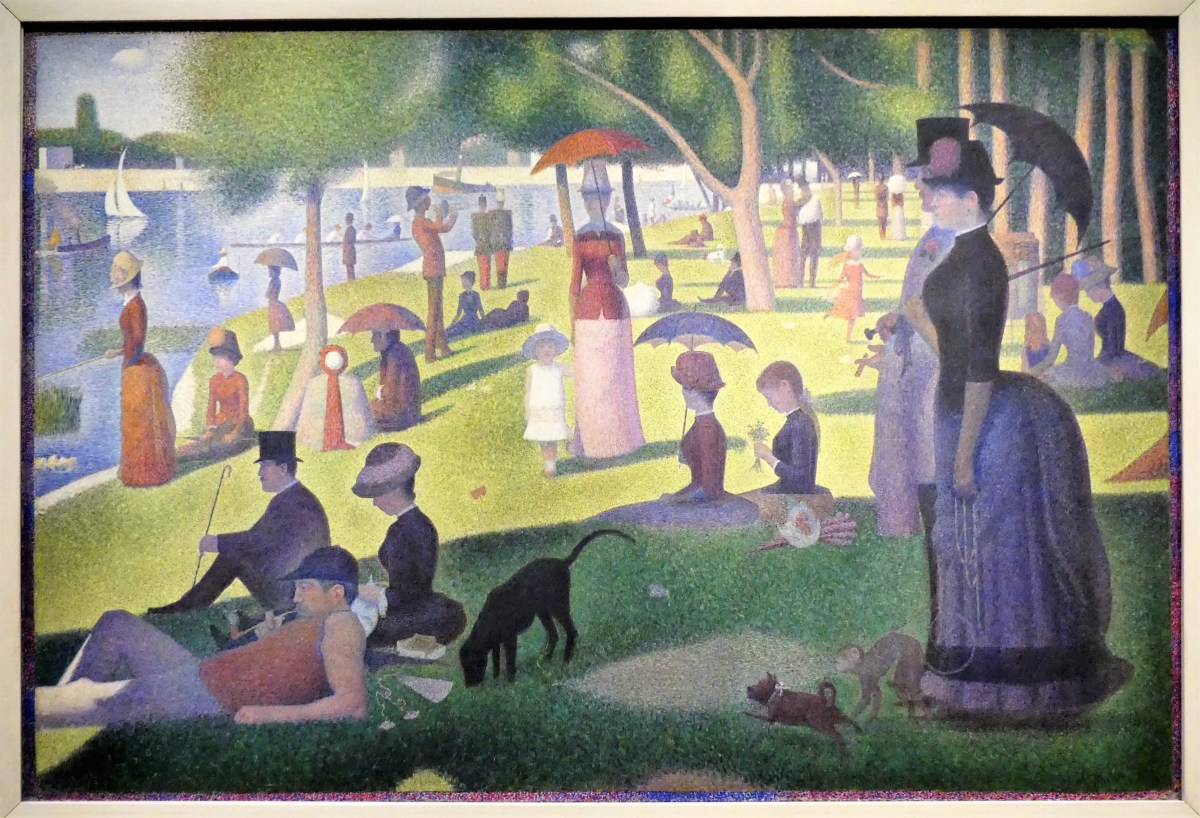
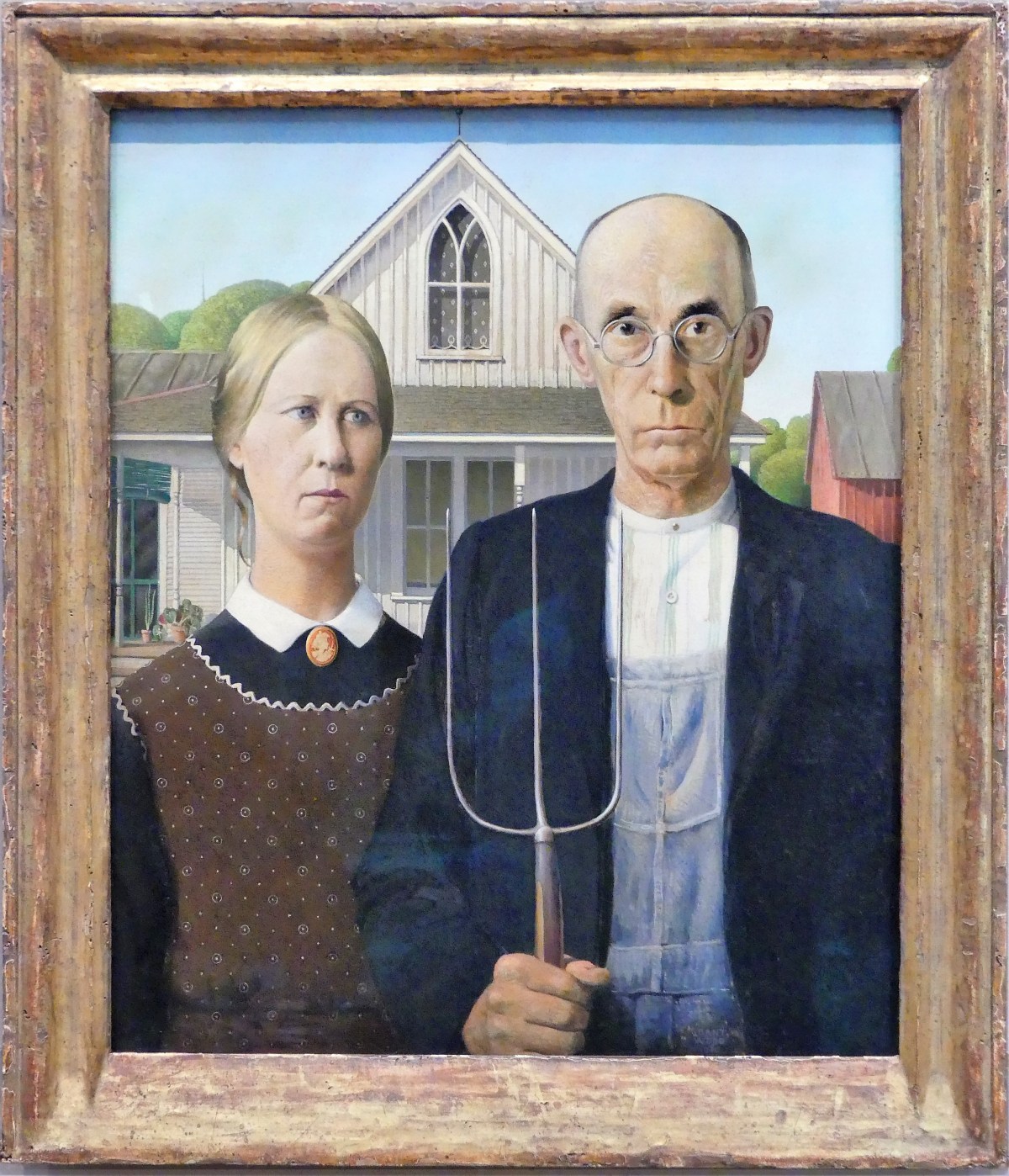
Face Mask (Ngady Amwaash)Armor for Man and HorseEl Greco’s The Assumption of the VirginGeorges Serat’s A Sunday on La Grande Jette–1884Claude Monet’s Stacks of WheatGeorgia O’Keefe’s Sky above Clouds IVEdward Hopper’s NighthawksArchibald John Motley Jr.’s NightlifeGrant Wood’s American GothicPablo Picassa’s The Old GuitaristAlma Thomas’s Starry Night and the AstronautsAndy Warhol’s Liz #3
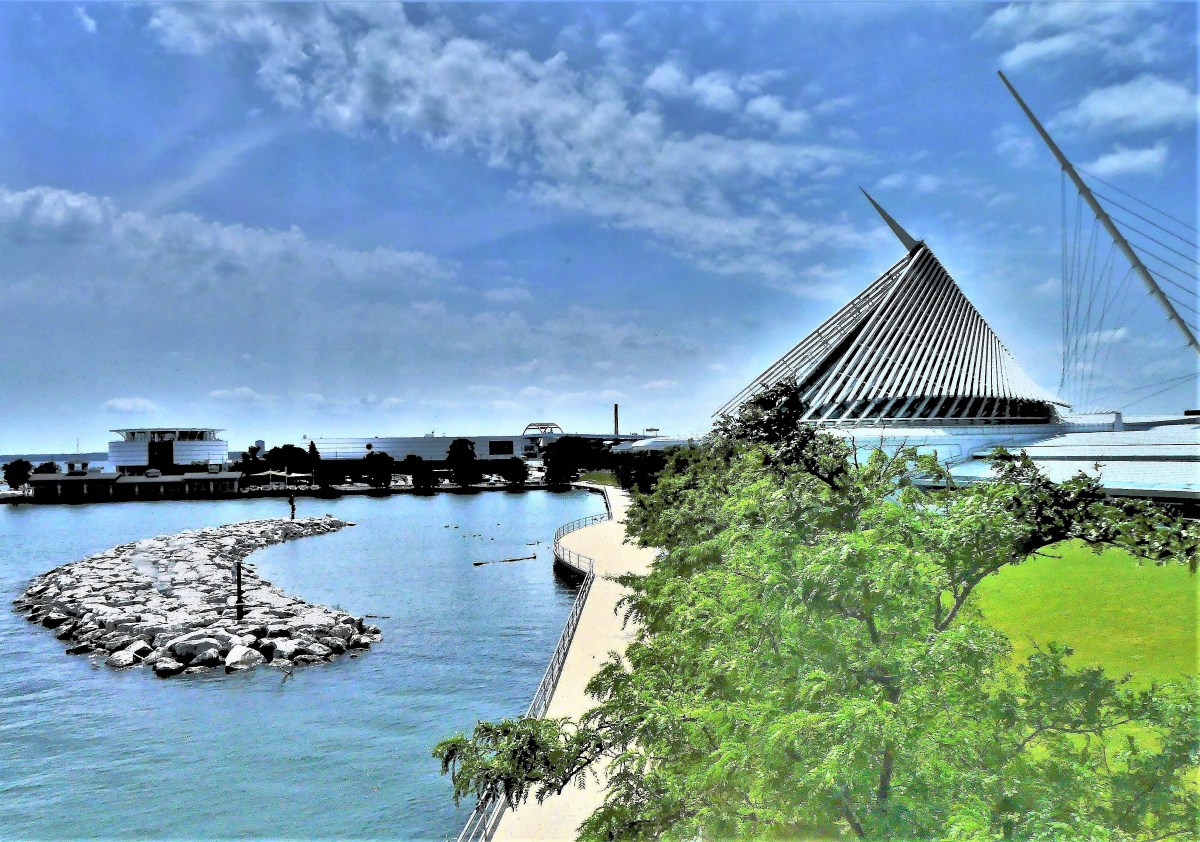
Our appetite for fine art took us to Milwaukee Art Museum with its collection of 25,000 works on display–making it one of the nation’s largest galleries. While I was curious about the collection, I was most interested in the Quadracci Pavilion, built by Spanish architect Santiago Calatrava in 2001.
The iconic winged structure has demonstrably changed the city skyline by Lake Michigan’s waterfront…
to the point that Milkwaukee now incorporates Calatrava’s brise soleil in it logo.
Parallels to Calatrava’s Oculus at NYC–Gound Zero are unmistakable;
comparisons are inevitable.
The wings are extended most days until sunset, but stay retracted during nasty weather or high winds.
Sadly, Leah and I were greeted with high winds, but we were fortunate to tour the museum with so few visitors.
With the exception of a group of mini-pals,
and isolated cases…
here and there…
we felt like we had the space to ourselves–
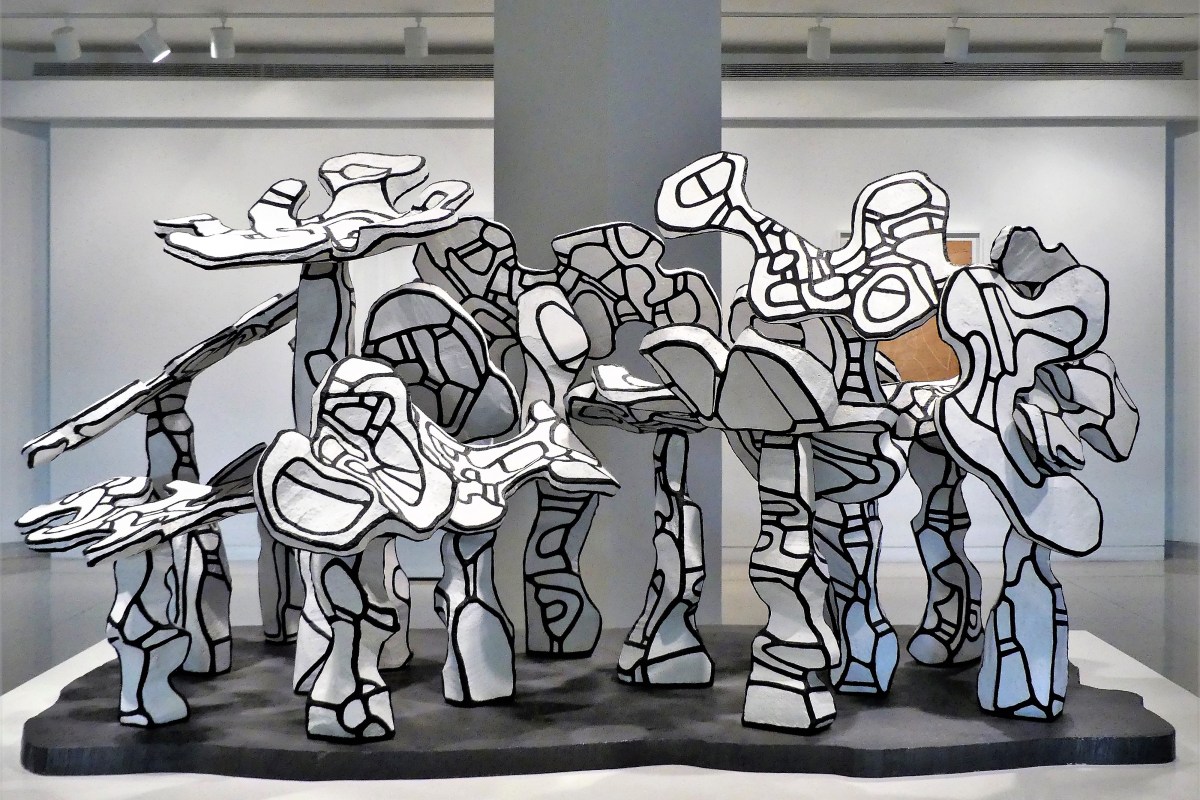
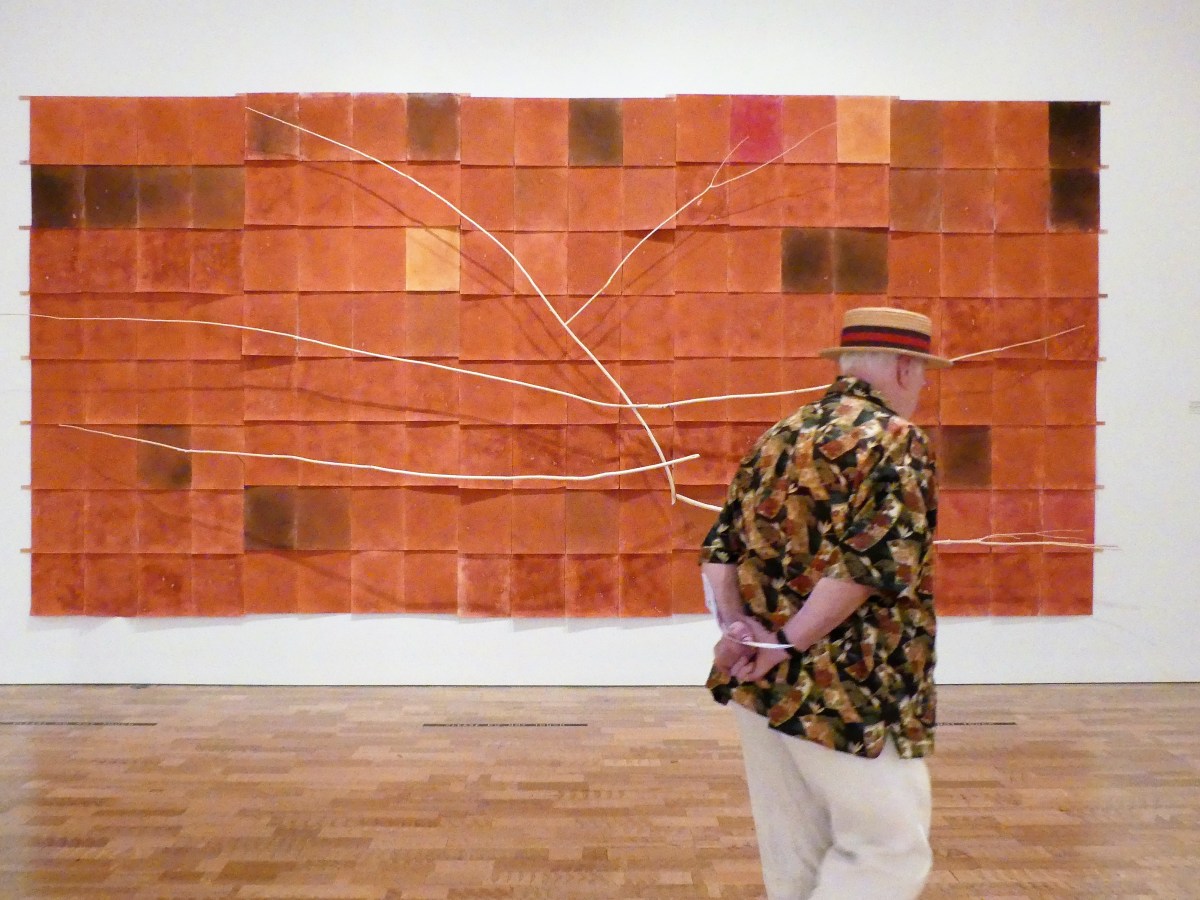
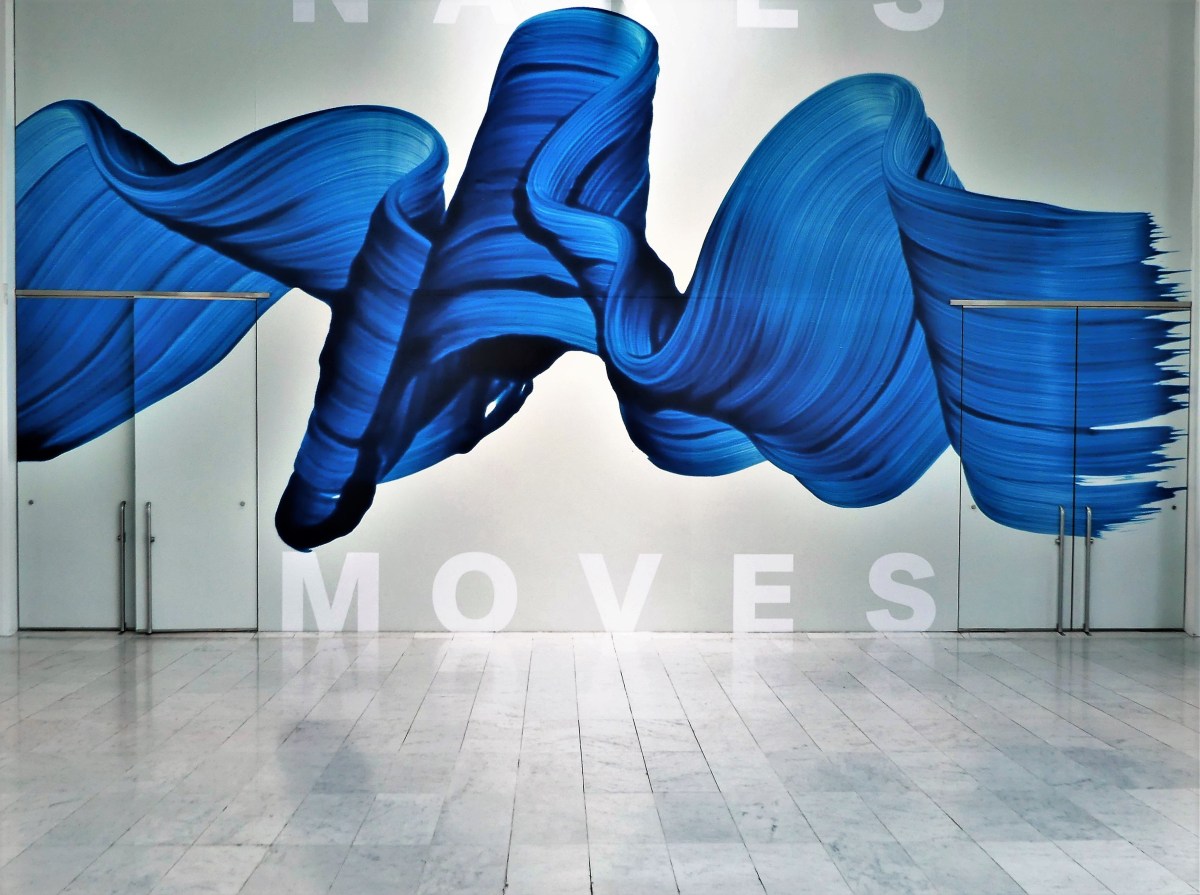
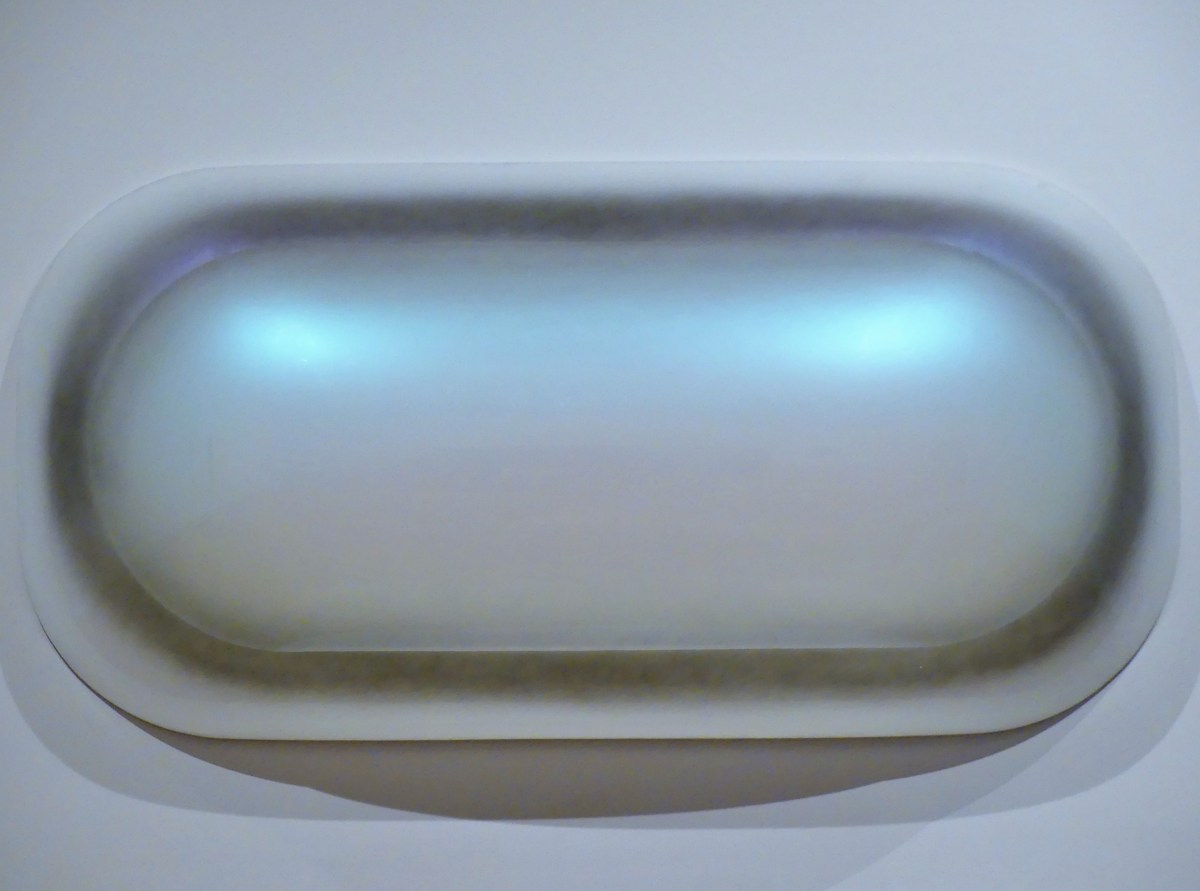
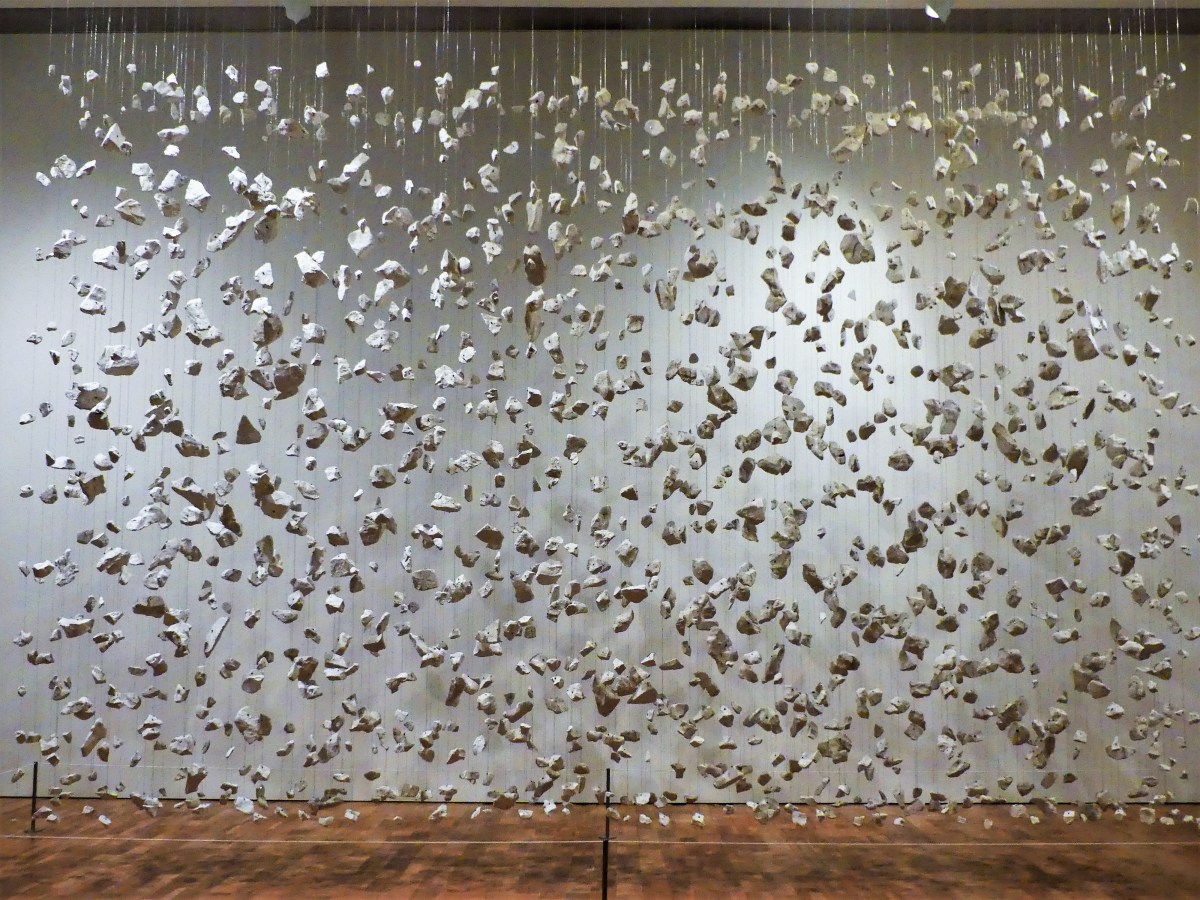
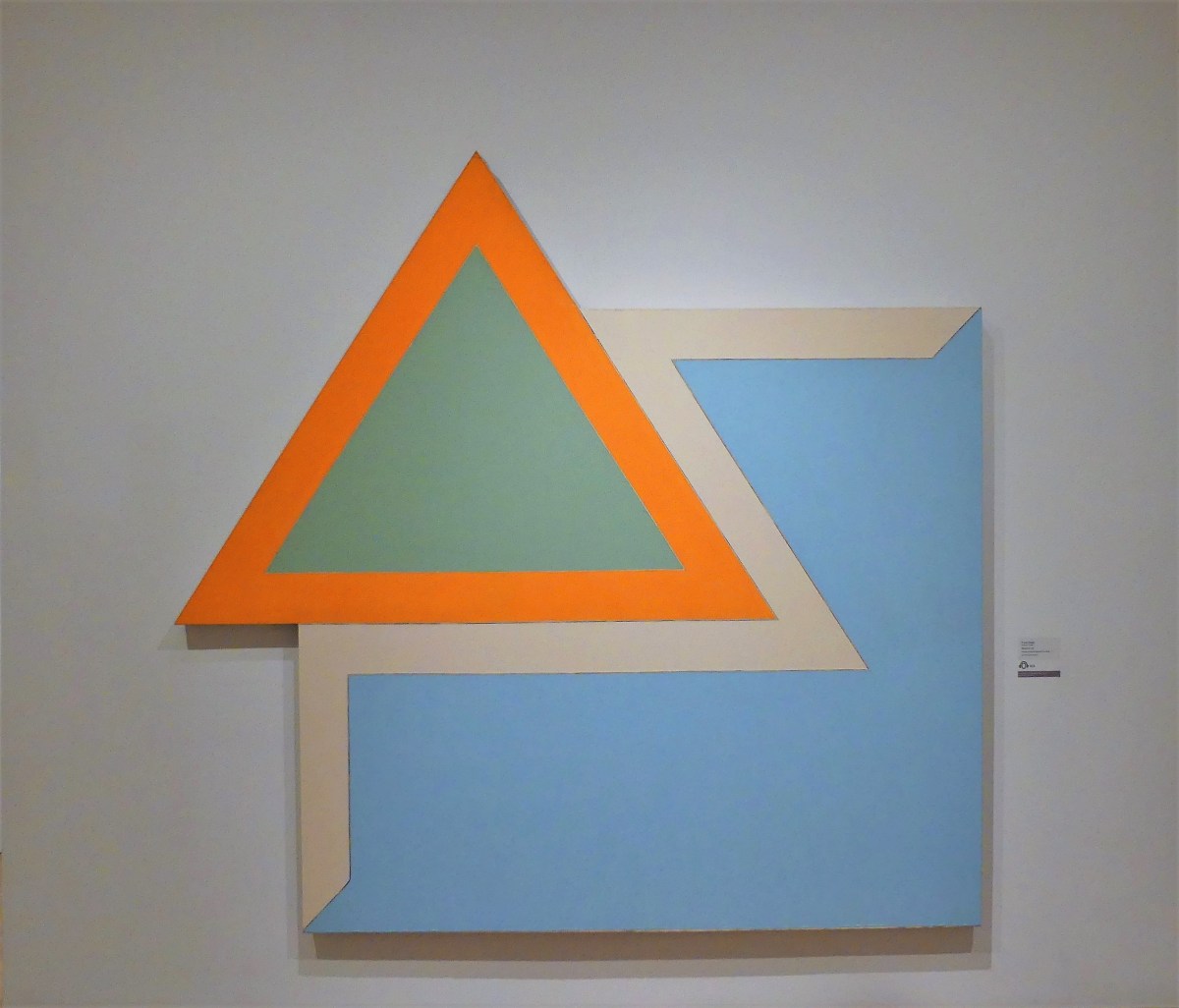
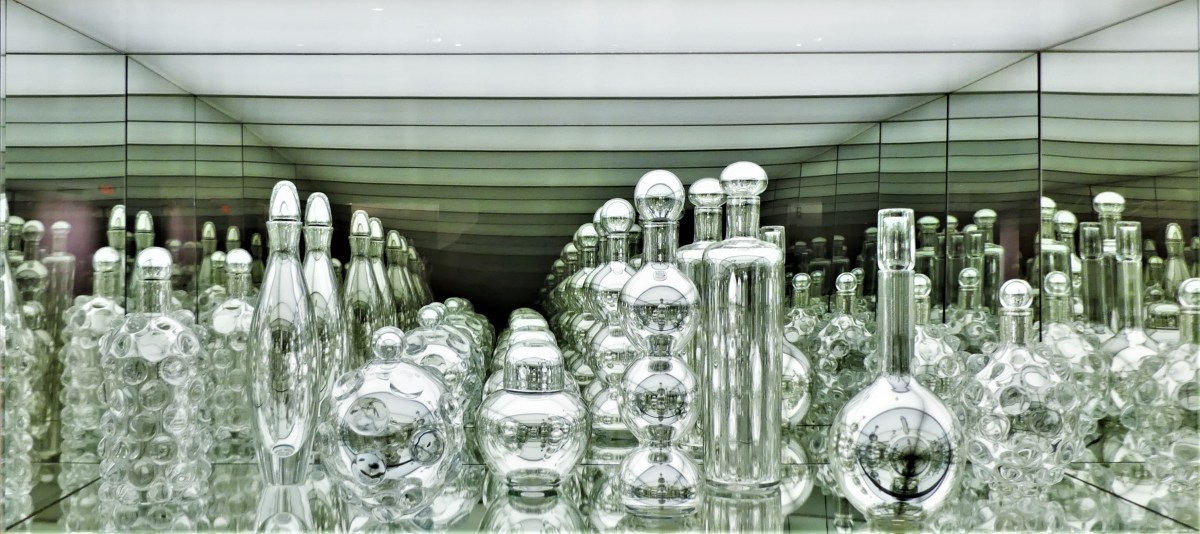
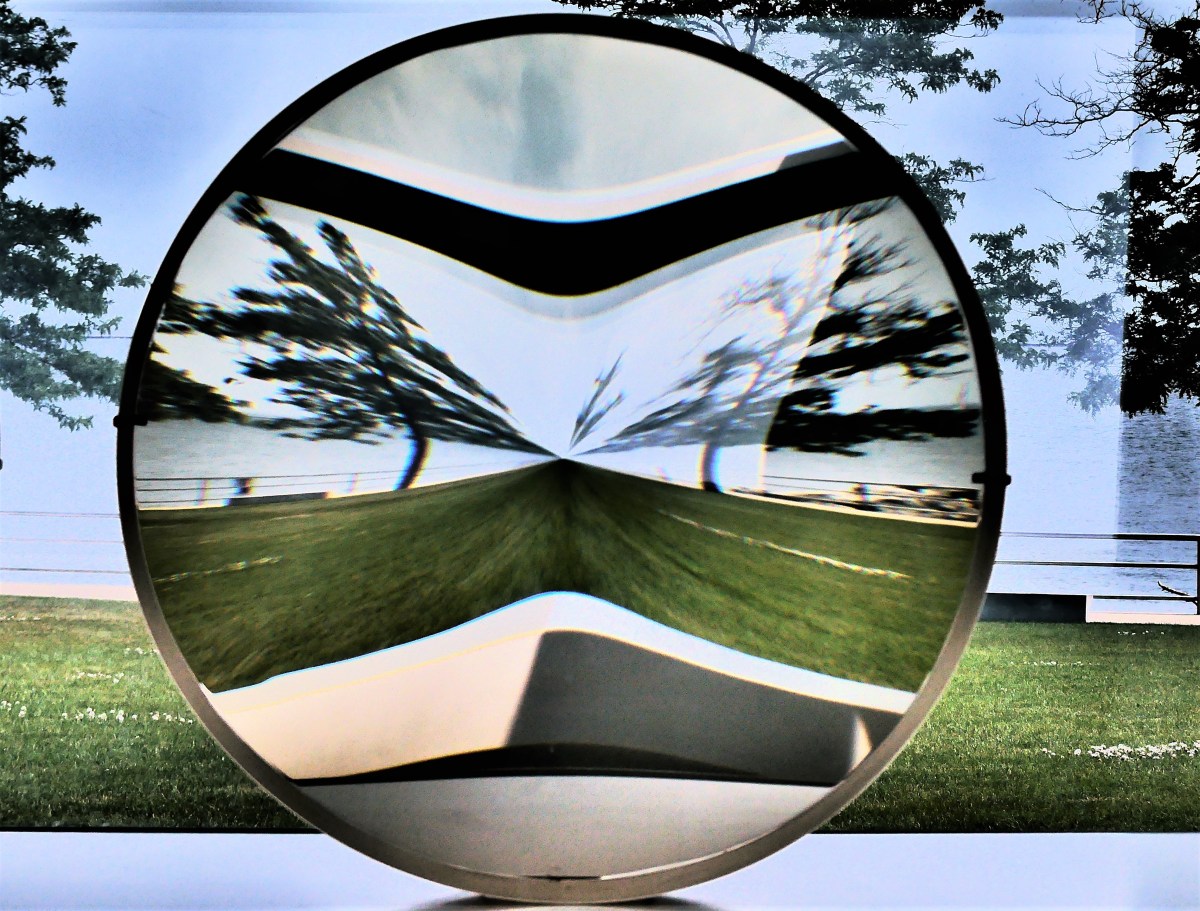
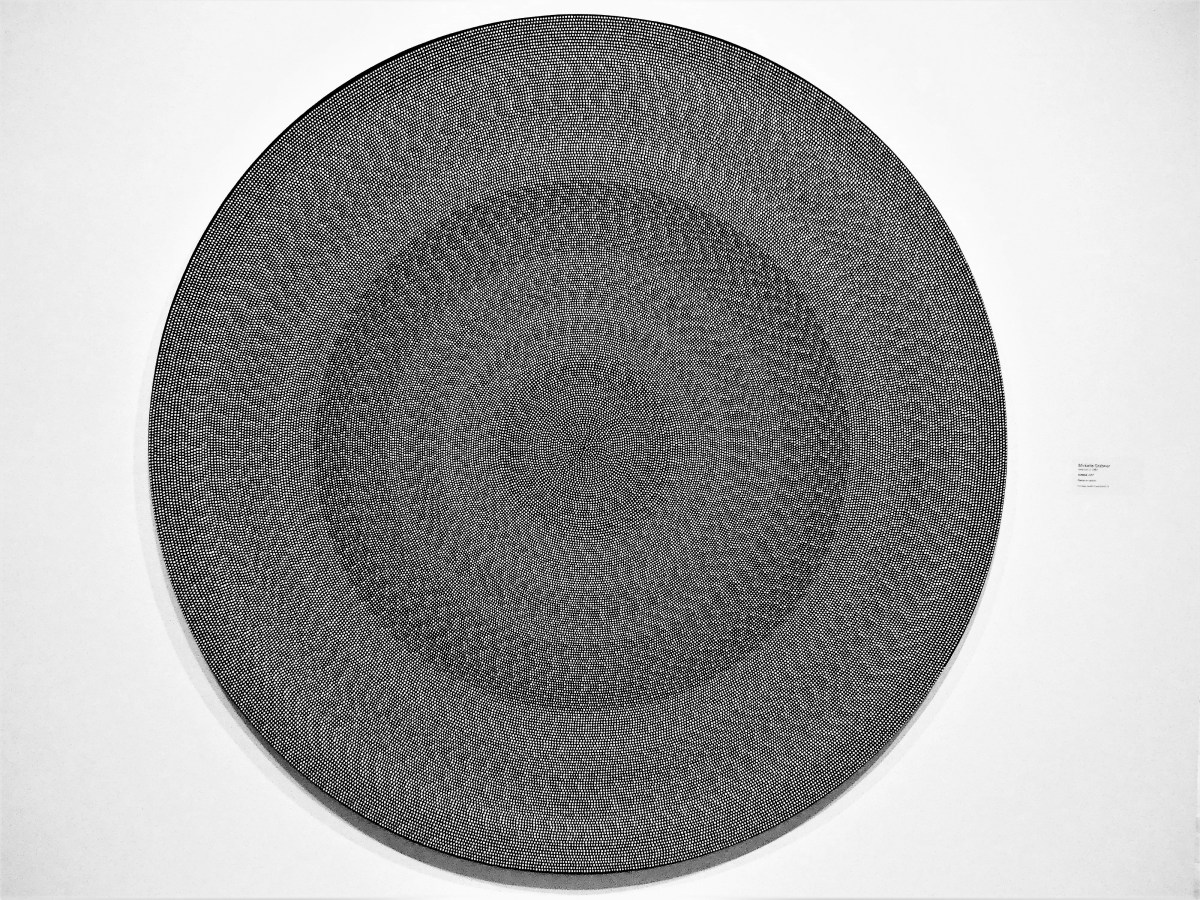
which gave us more time to study some of the special artwork in greater detail without distraction or interruption:
(quickly scroll up and down for cool moiré effect)
While I never considered that the building was competing with the exhibitions, I was always eager to return to Calatrava’s public spaces…
to cleanse my palette before indulging in another bite of brain food!
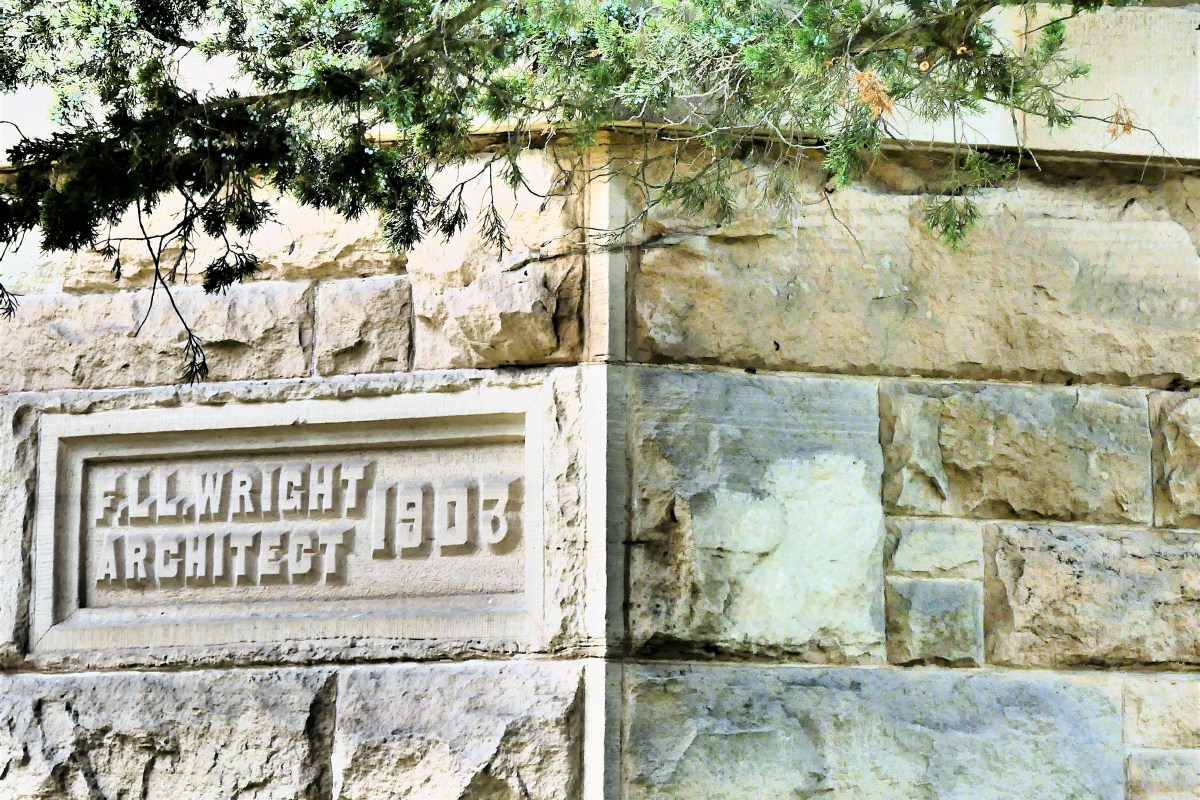
There’s very little to write about Frank Lloyd Wright that scholars haven’t already written.
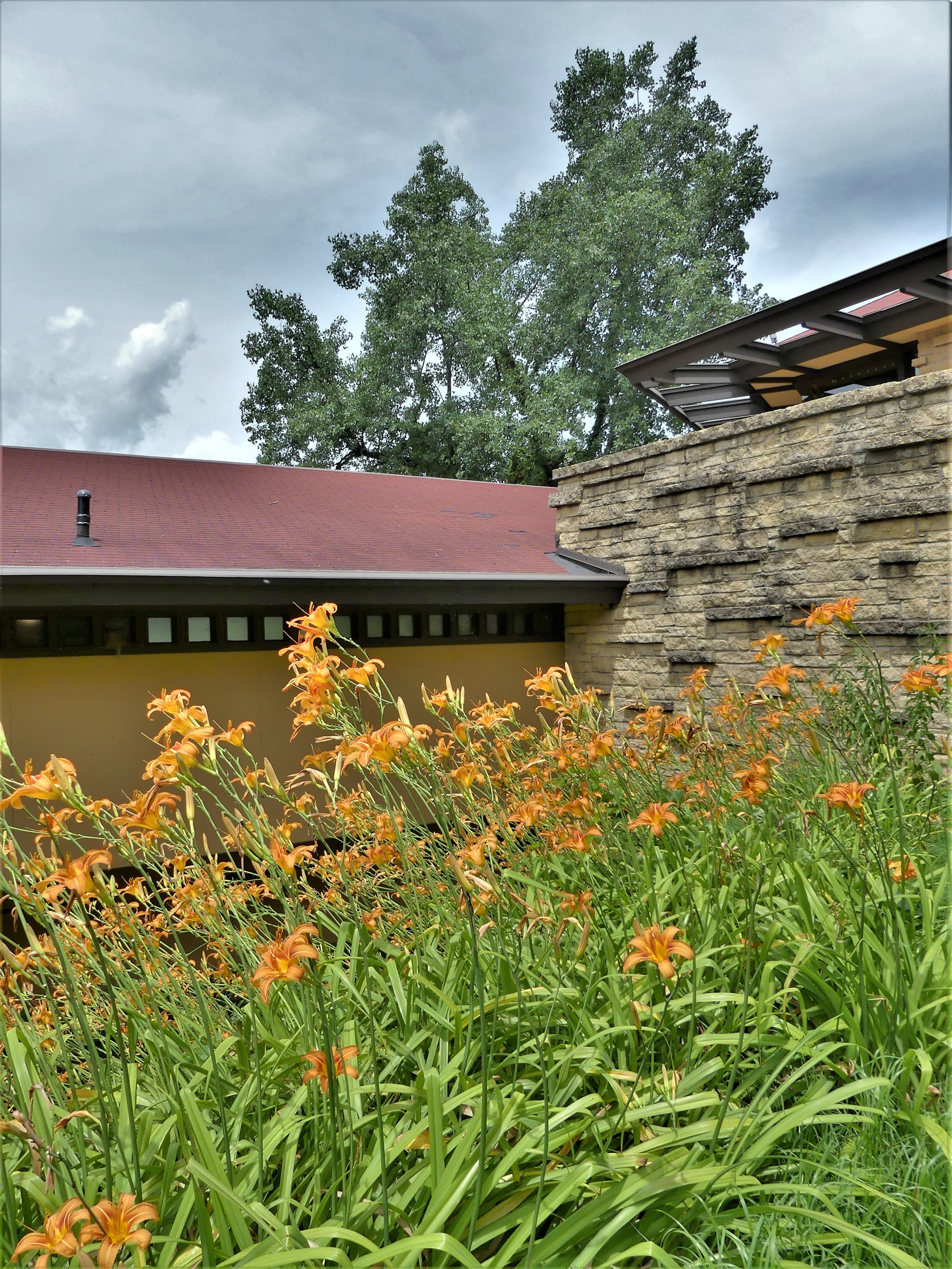
His affinty for nature, his indefatigable energy, his genius for design, his eagerness to experiment, his immense ego, his appetite for women, his dedication to family–it’s all been revealed and discussed in numerous books and lectures. But it’s also apparent from walking through his Taliesin estate in Spring Green, Wisconsin.
Leah and I would have preferred the immersive, 4-hr Estate Tour, but when I checked on-line for tickets, only one ticket was available when I needed two. It seems that no tour exceeds 21 people, matching the number of seats on the shuttle. Instead, we opted for the 2-hr Highlights Tour.
We boarded the bus at the Visitor Center–
orginally designed by Wright in 1953 as a restaurant and “gateway” to Taliesin, but Wright’s death in 1959 stalled any further construction until his former apprentices completed the building in 1967.
The ride took us past Midway Barn, Uncle John’s farming complex,
on the way to Hillside, the site of the home school he built for his Aunts Jane and Ellen Lloyd Jones.
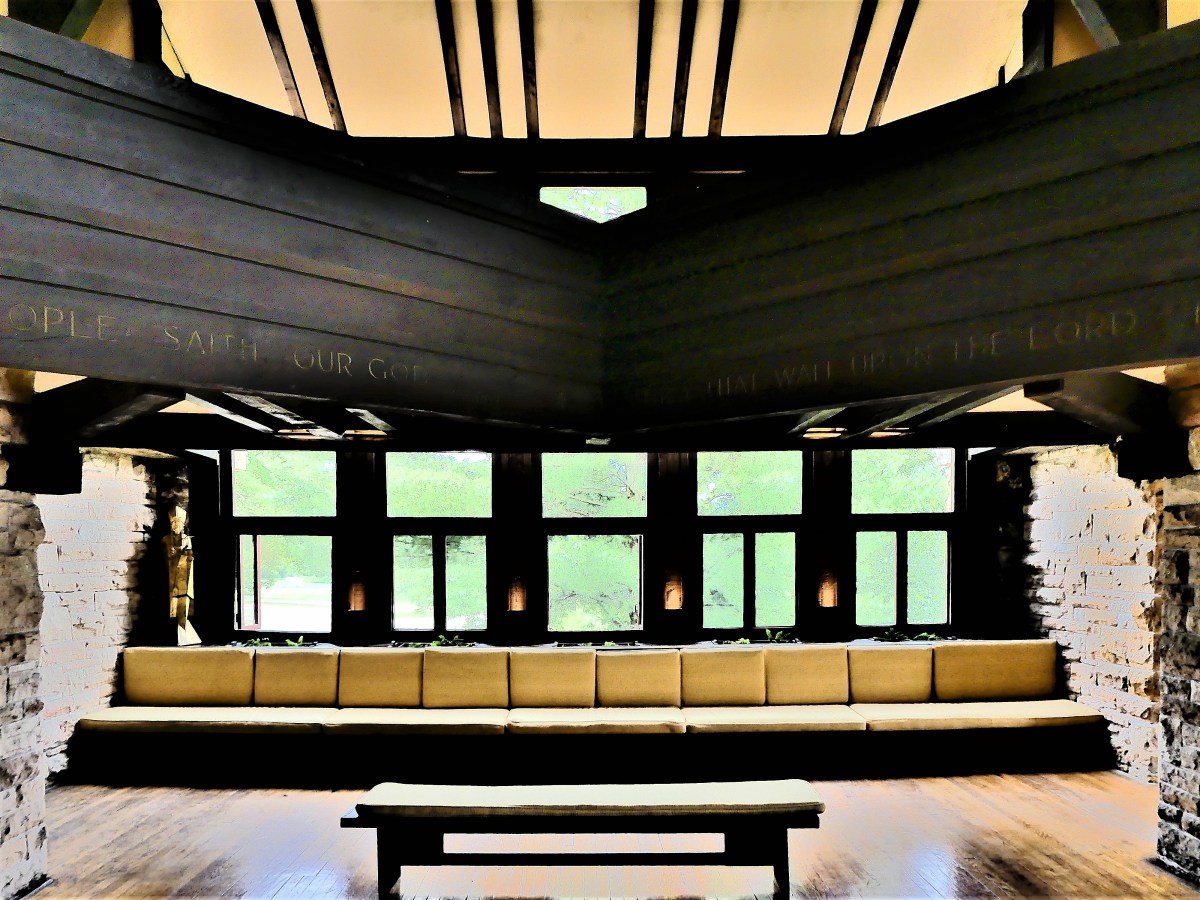
Currently, the building is occupied by a time-shared architecture “Fellowship”–funded by the Taliesin Foundation–that occaisionally gathers in the Assembly Hall,
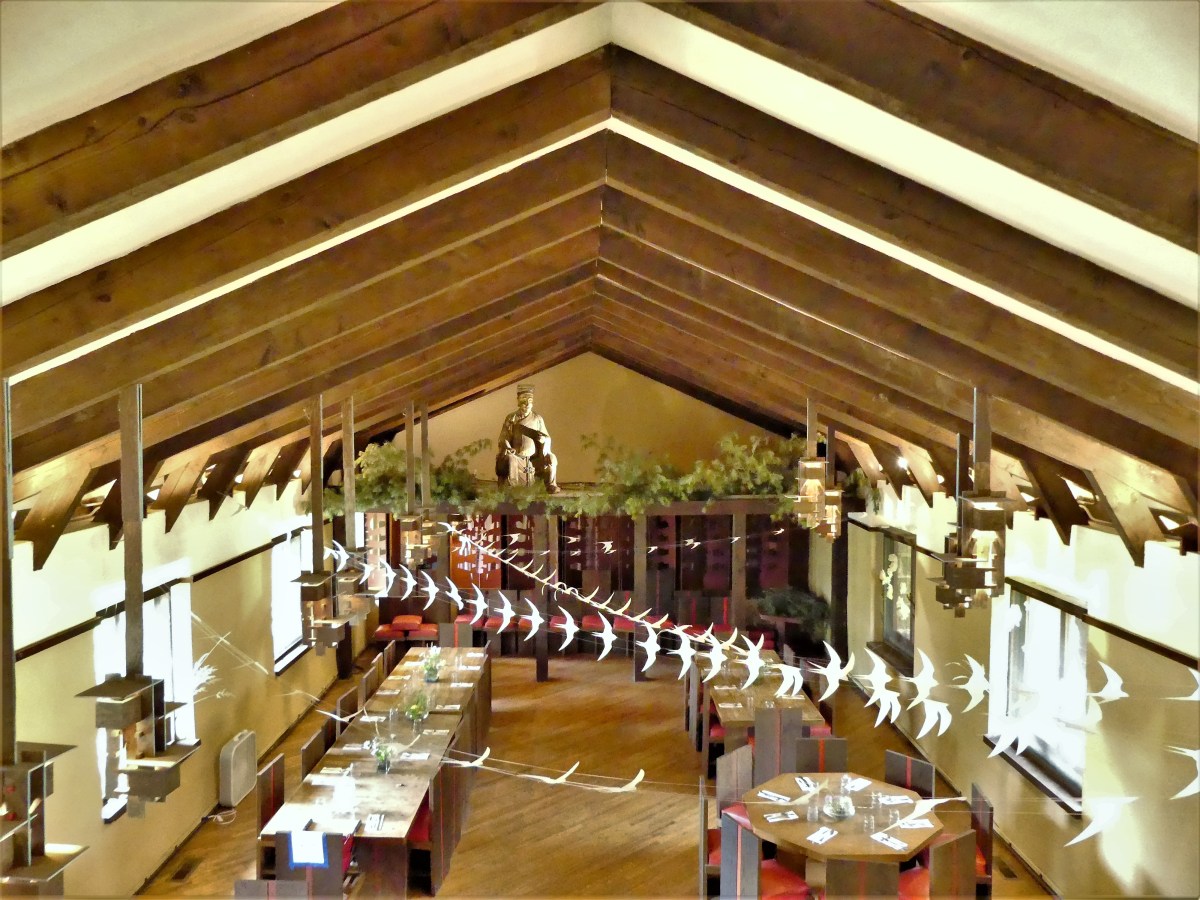
and takes meals in the Fellowship Dining Room,
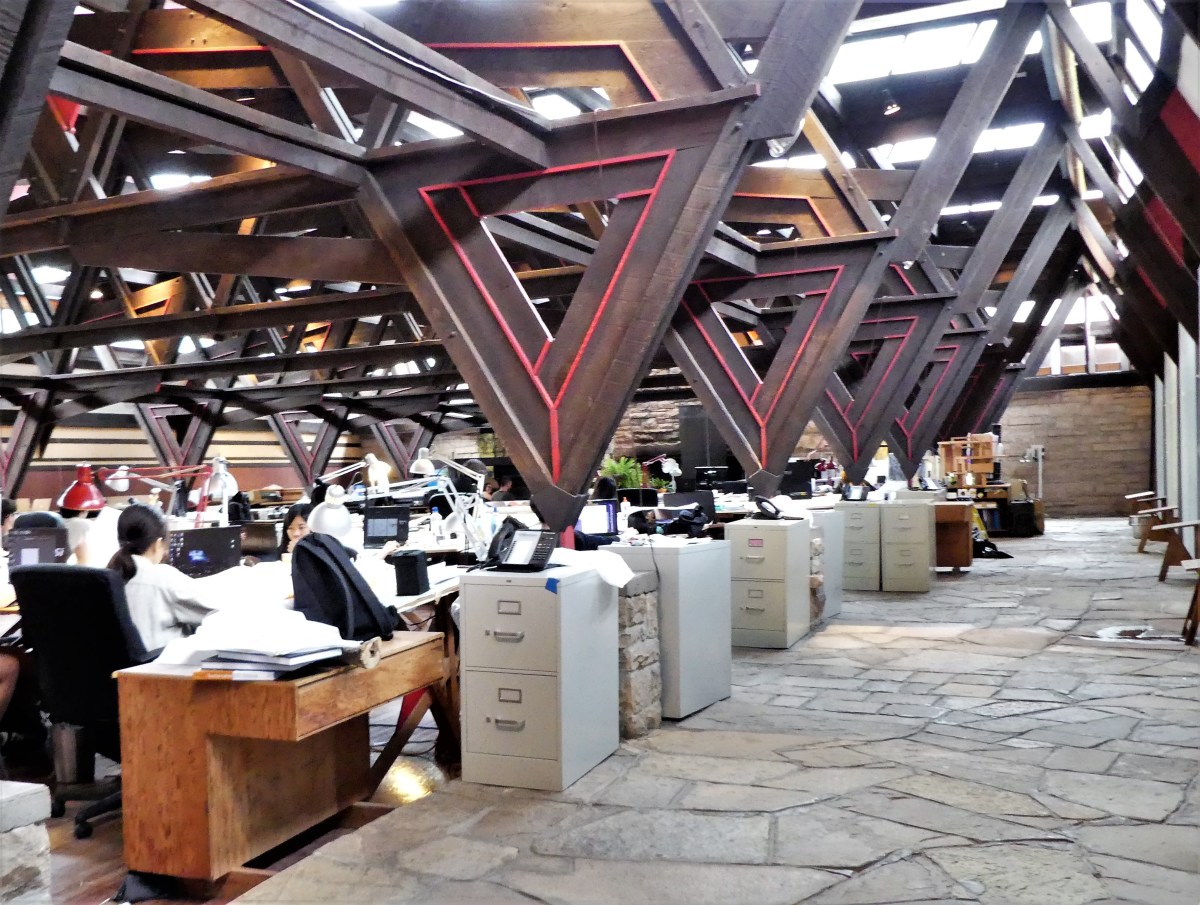
before returning to the 5,000 sq. ft. “abstract forest” Drafting Studio.
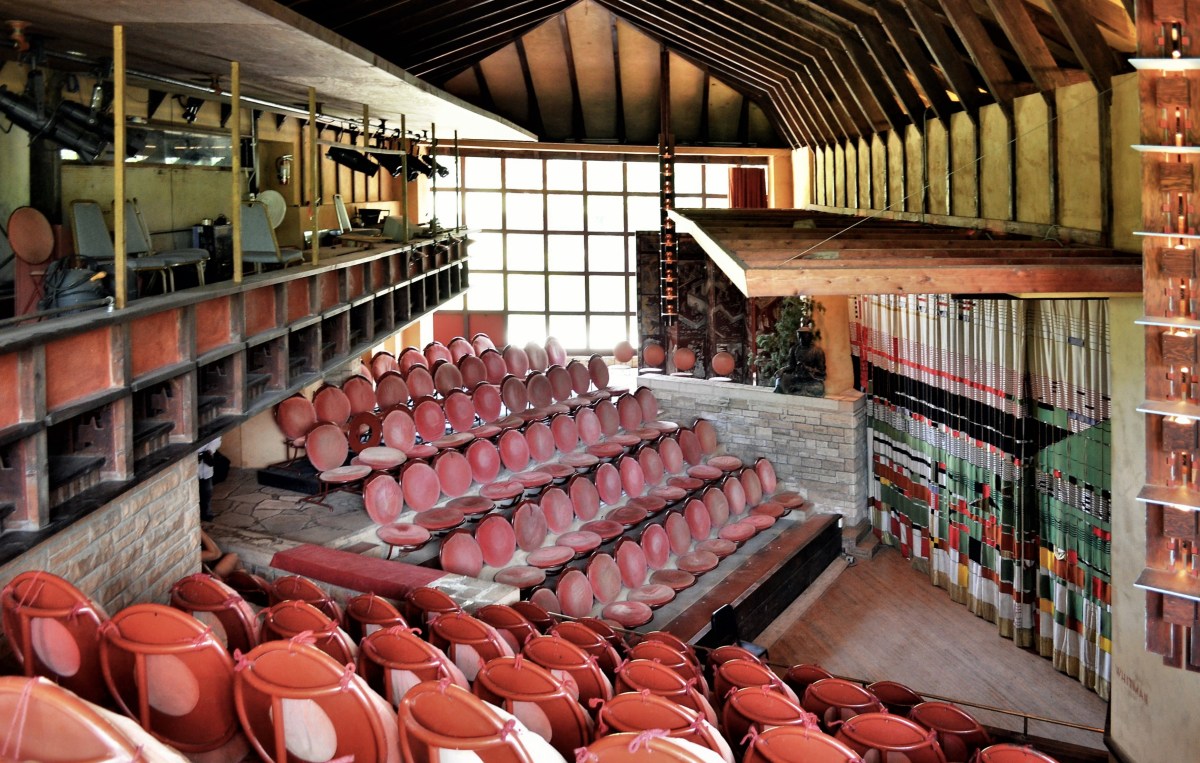
We finished up at Wright’s intimate, 120-seat Hillside Theater–originally intended as a gymnasium, but converted by Wright to a cultural space after determining that the arts were more important than sports–
and reboarded the bus for a brief blast of air conditioning and quick trip to Wright’s home studio,
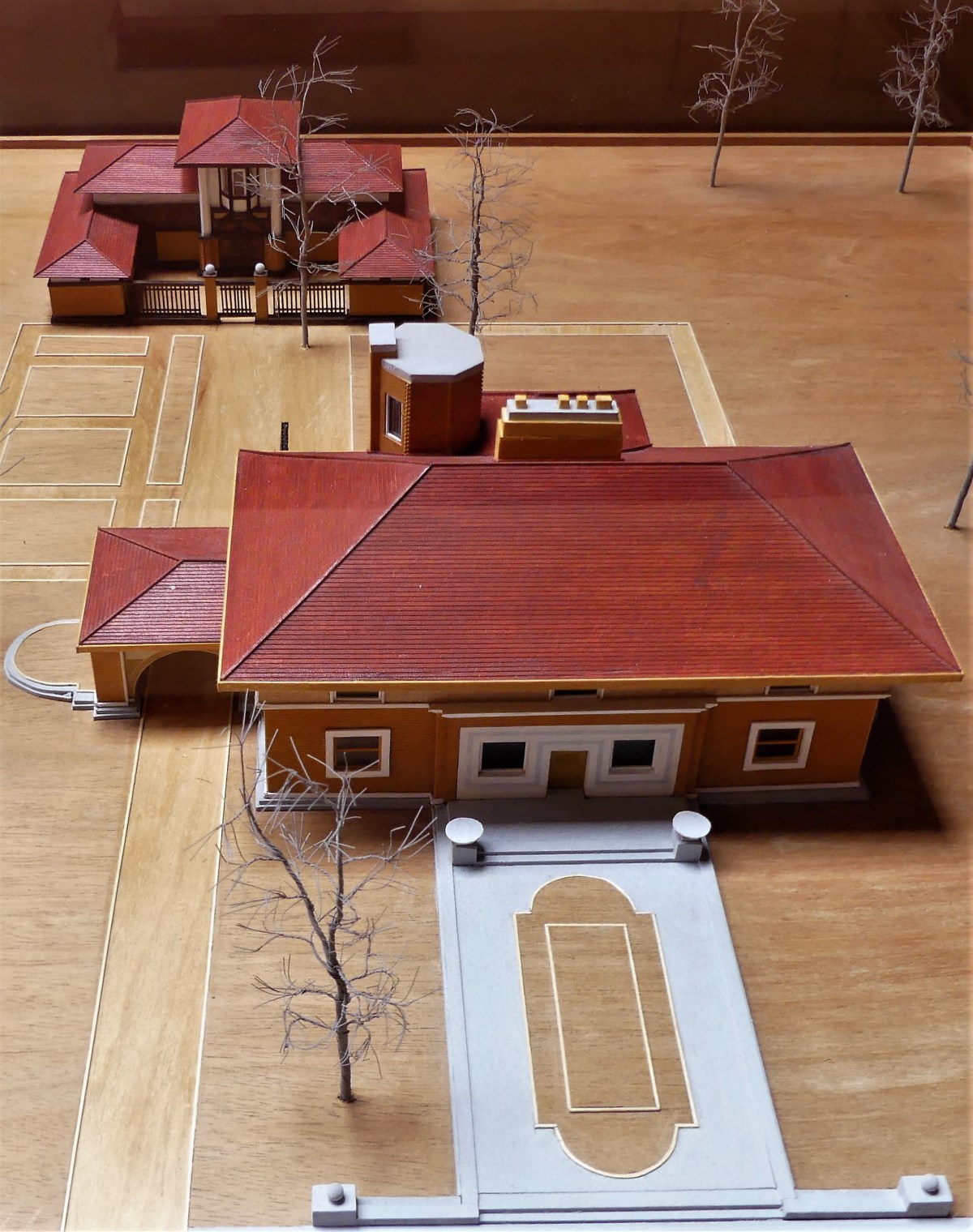
where we browsed through a drafting room filled with “Usonian” models, like the Willey House from 1934,
and assorted personal artifacts.
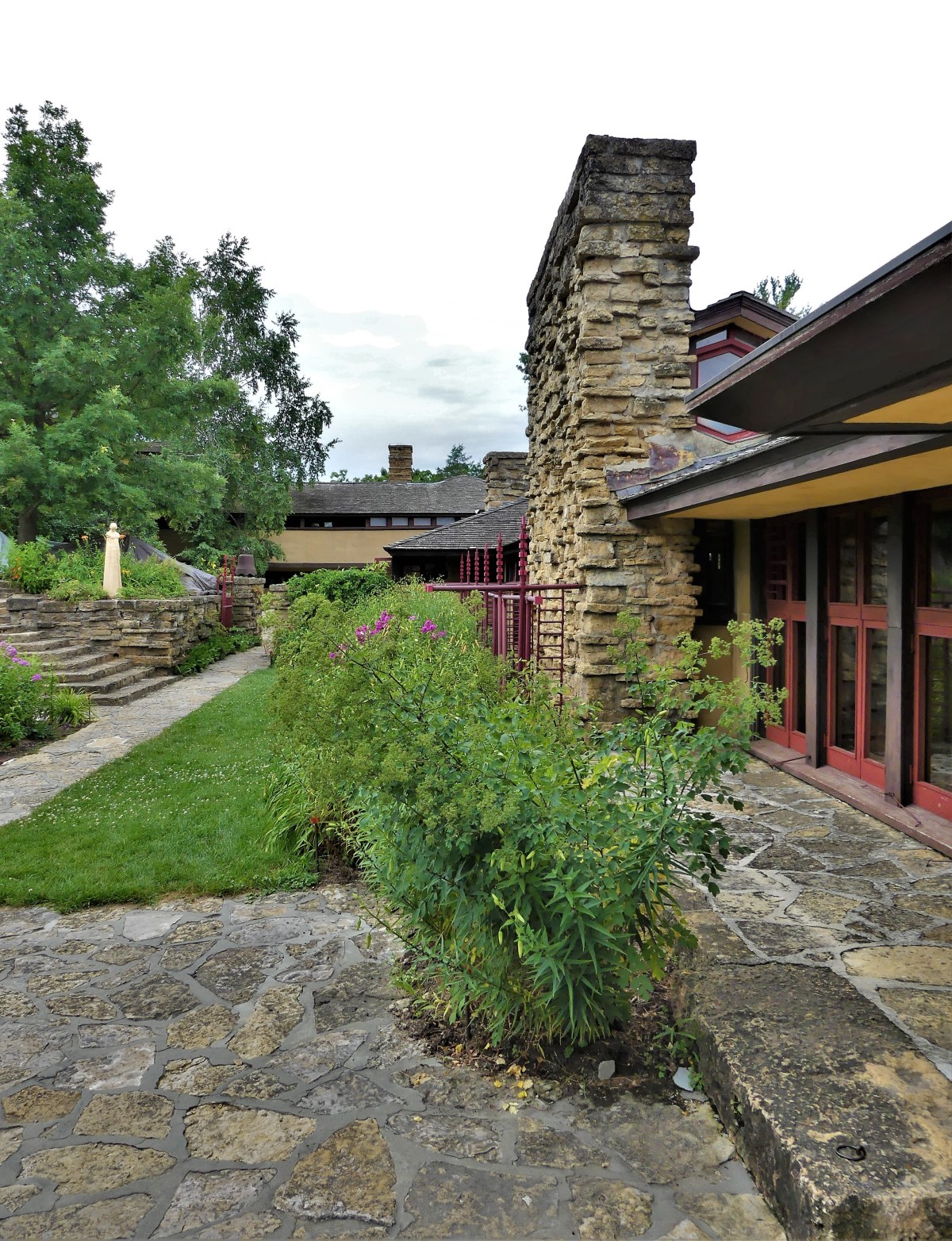
The house was noticably cooler, thanks to geothermal plumbing installed during the third re-build. We rounded the studio from the outside,
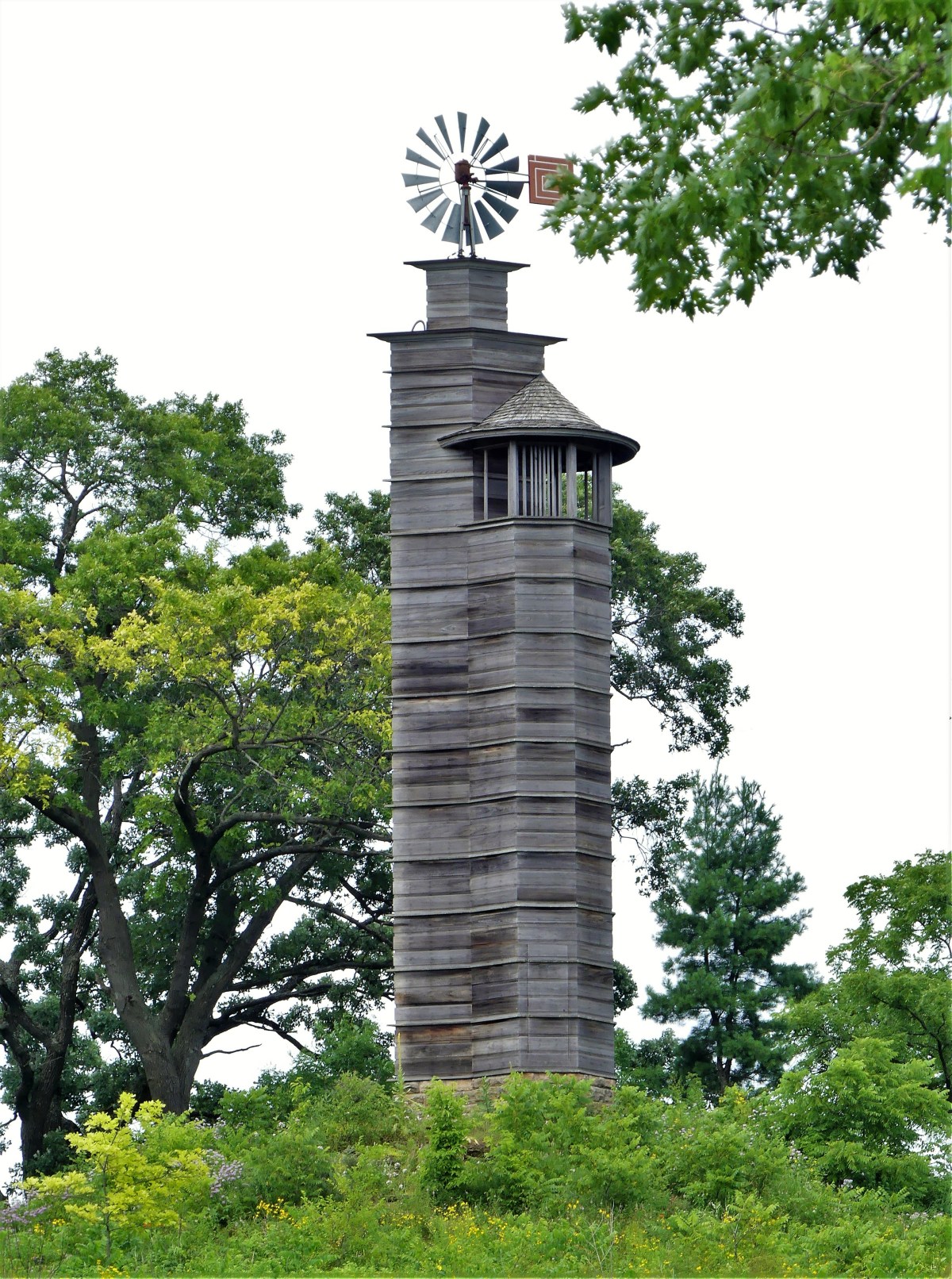
walked across a mound with views of the restored Romeo and Juliet windmill,
and traversed the gardens,
before re-entering the house through the expansive living room,
filled with wonderful flourishes, like glass-cornered windows (which Wright would ultimately perfect at Fallingwater)…
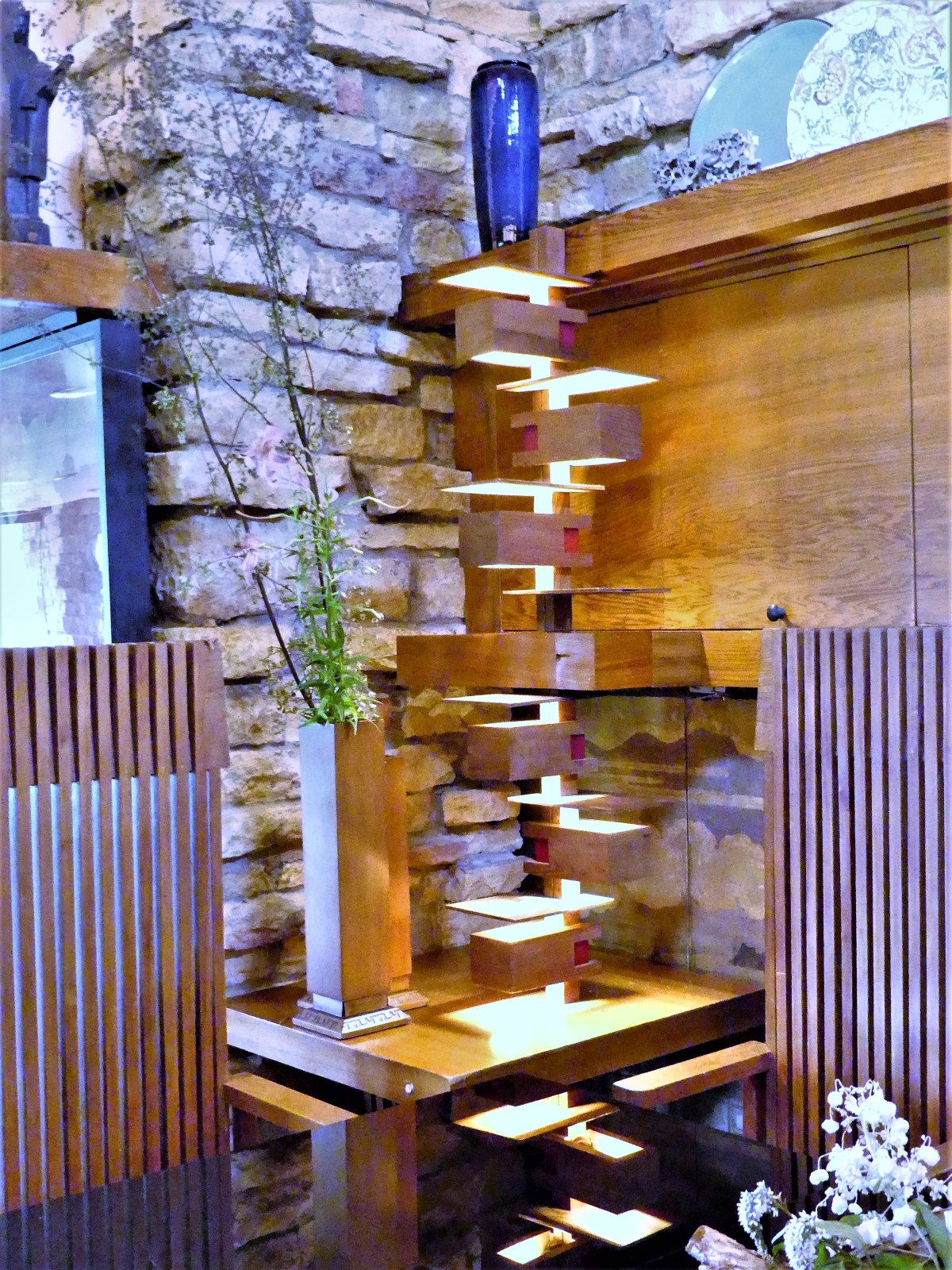
built-in table lamps,
and integration of sculptures that survived the previous two house fires.
Roaming through Wright’s personal bedroom (because he was an insomniac), we discovered no door, a wall of windows without window treatments, and original electric- blue shag carpeting.
The terrace offered glorious views of the Wisconsin River and Tower Hill State Park,
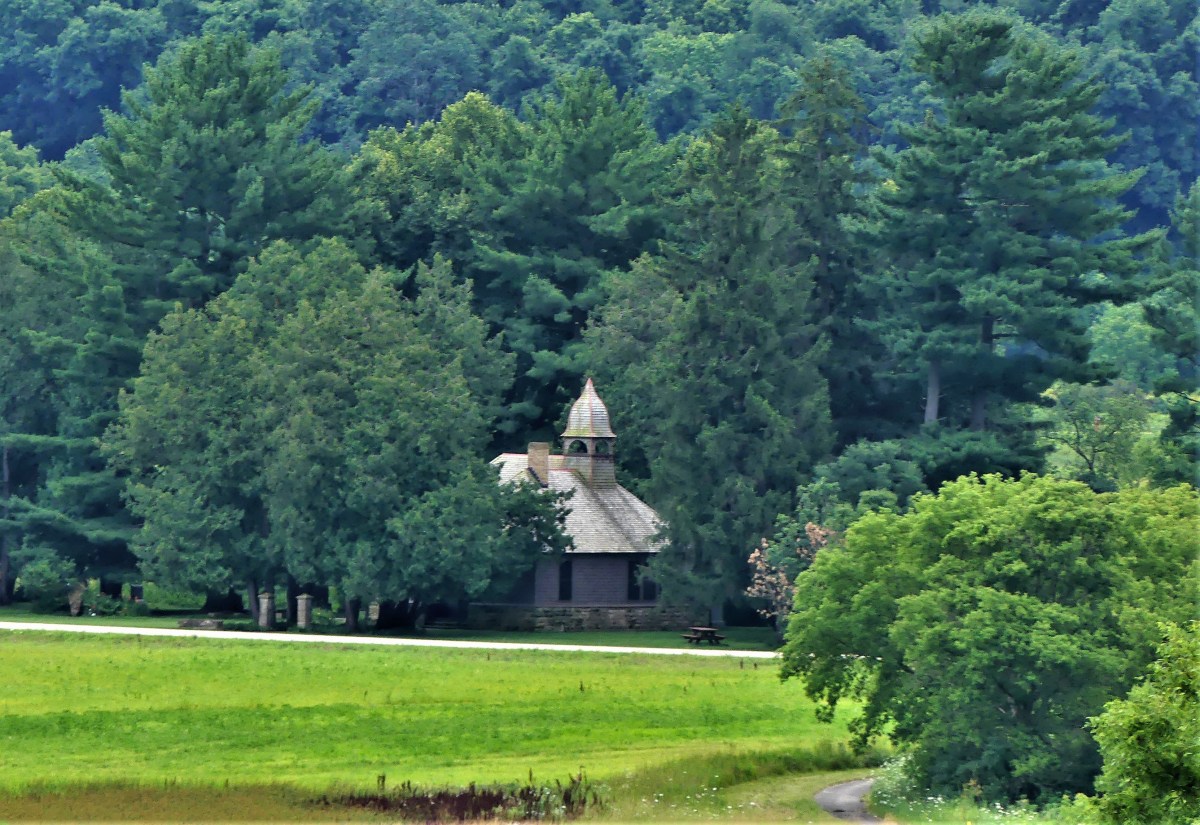
and Unity Chapel in the distance–
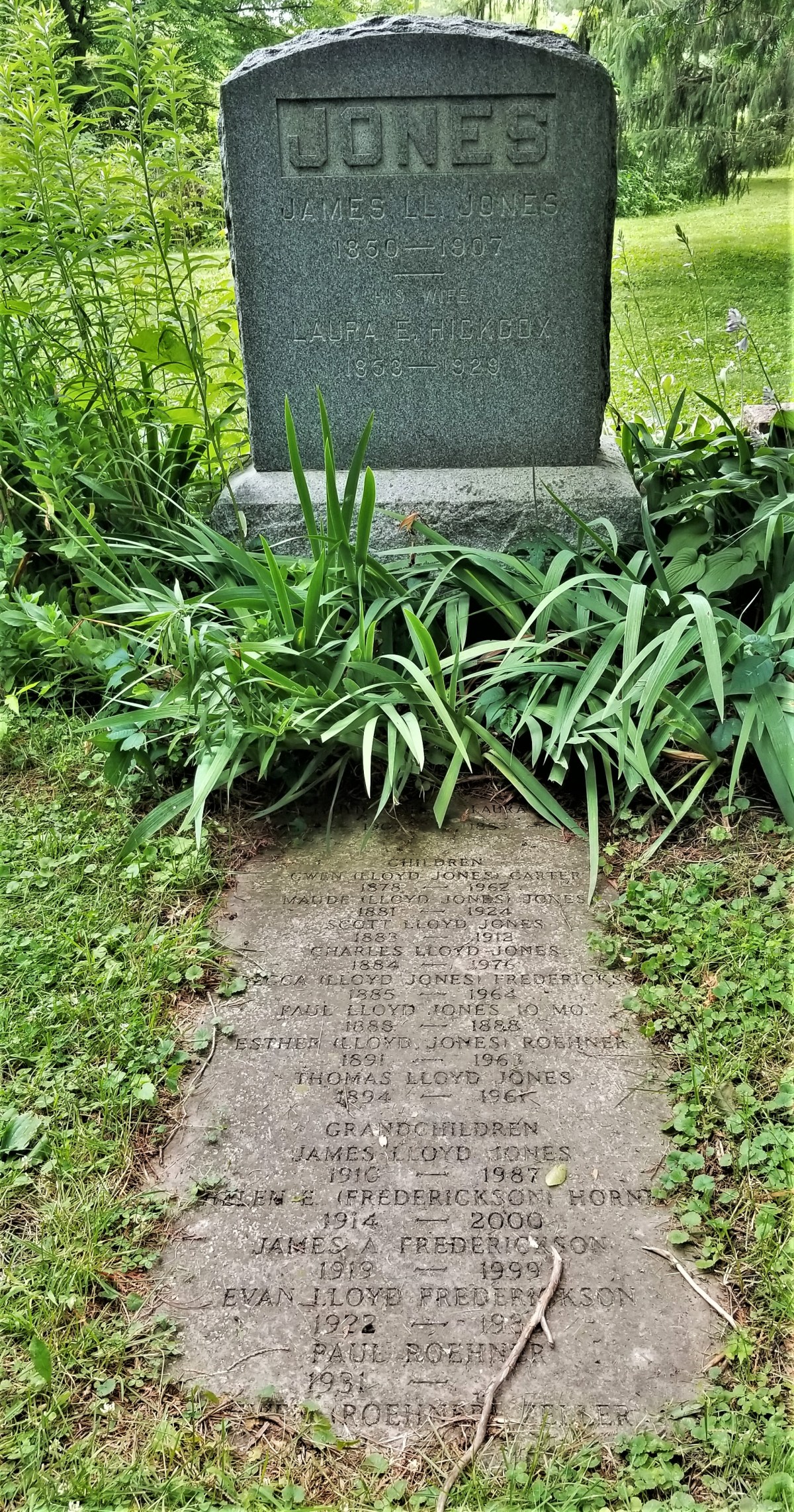
the site of Wright’s maternal family’s burial plots, his stone marker, and his empty grave.
As our driver passed Wright’s man-made falls,
our docent passed along a local story of intrigue and scandal:
During March 25, 1985, under cover of darkness, Frank Lloyd Wright’s body was exhumed from his Unity Chapel resting place by his oldest granddaughter, Elizabeth Wright Ingraham, and moved to a burial site at Taliesin West, in Scottsdale, Arizona.
She claimed to be fulfilling the dying wishes of her grandmother and Wright’s widow, Olgivanna Lloyd Wright, whose ashes were united with her husband’s within a memorial wall overlooking Paradise Valley. The event sparked outrage around the globe from associates and friends who argued that the architect would have desired to spend eternity at Unity Church with his family.
Even now, Spring Green residents hope that one day their favorite son will get his ash back to Wisconsin.
Seemingly, Duluthians have only two seasons: winter and summer. During the 2018- 2019 weather calendar, city residents shoveled snow from October 10 to May 9, breaking a record dating back to 1884. Temperatures were moderate for the remaining months of the year.
But when the last snow melted, the Northlanders traded their shovels and skis for bicycles and hiking shoes–eager to take advantage of the wealth of recreational resources in the vicinity. Leah and I sampled some of the more popular options during our recent visit.
The 70-mile Hinkley-Duluth segment of the Munger State Trail offers hiking, biking, in-line skating and snowmobiling on a fully paved road, cut through a forested ridge that follows a busy railway.
Leah and I cycled a scenic 8-mile stretch from Buffalo Valley Camping (our temporary home) to the Carlton terminus,
where the trail parallels Forbay Lake…
until it crosses a nearby St. Louis River dam release.
Lunch at Magnolia Cafe in Carlton gave us the energy we needed to pedal back to camp. Kudos on the cold-brewed coffee and gluten-free chocolate chip cookies.
With our energy restored, we drove to Duluth in search of craft beer. Despite a population center under 90,000, Duluth has earned a reputation as Minnesota’s capital of craft beer, boasting more than a dozen production facilities in the area that are eagerly taking advantage of Lake Superior’s pristine waters.
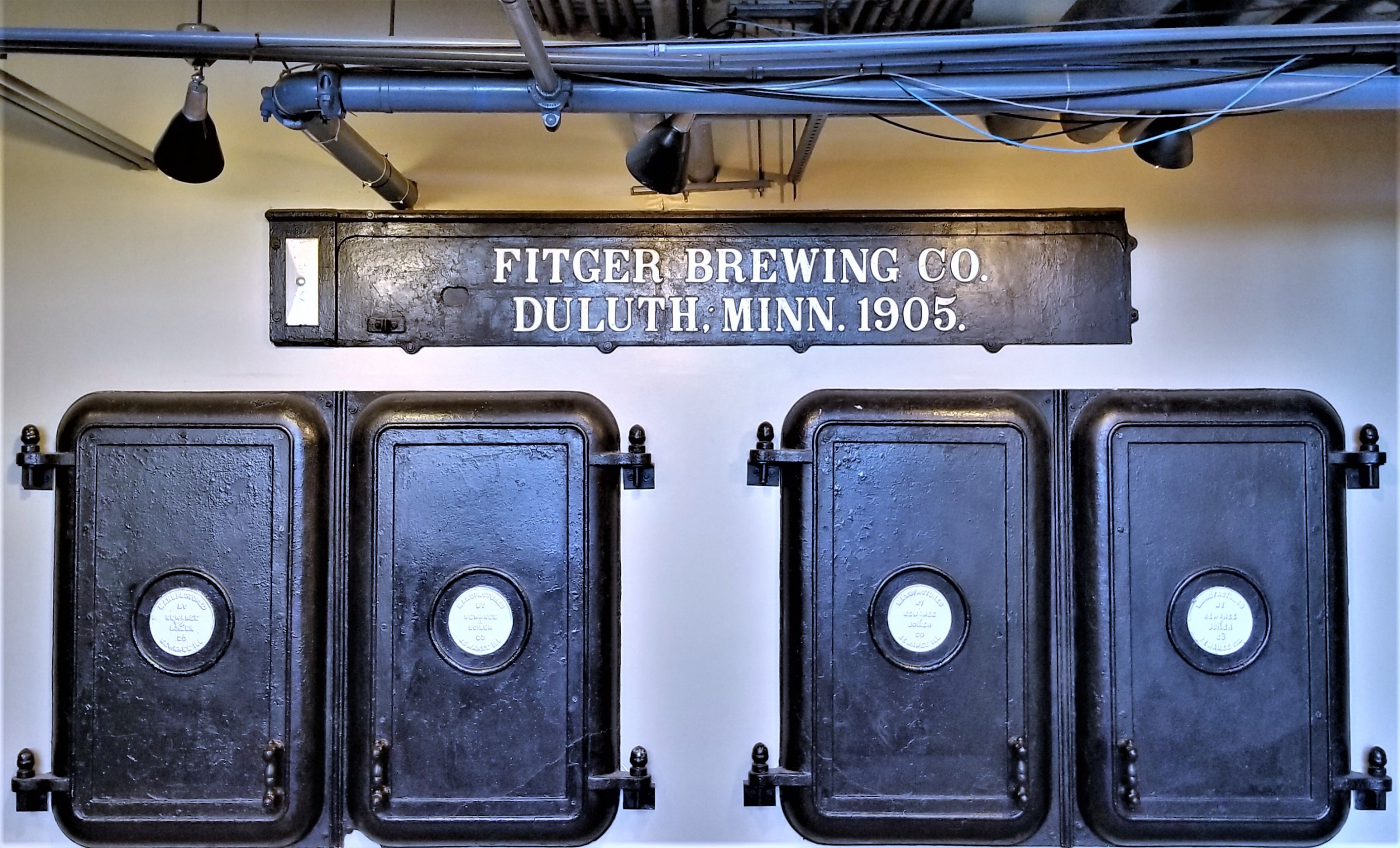
Fitger’s Brewhouse is the oldest and perhaps the most famous active brewery,
dating back to 1881…
with over 100 original recipes…
still brewed at its present location along the Lakewalk.
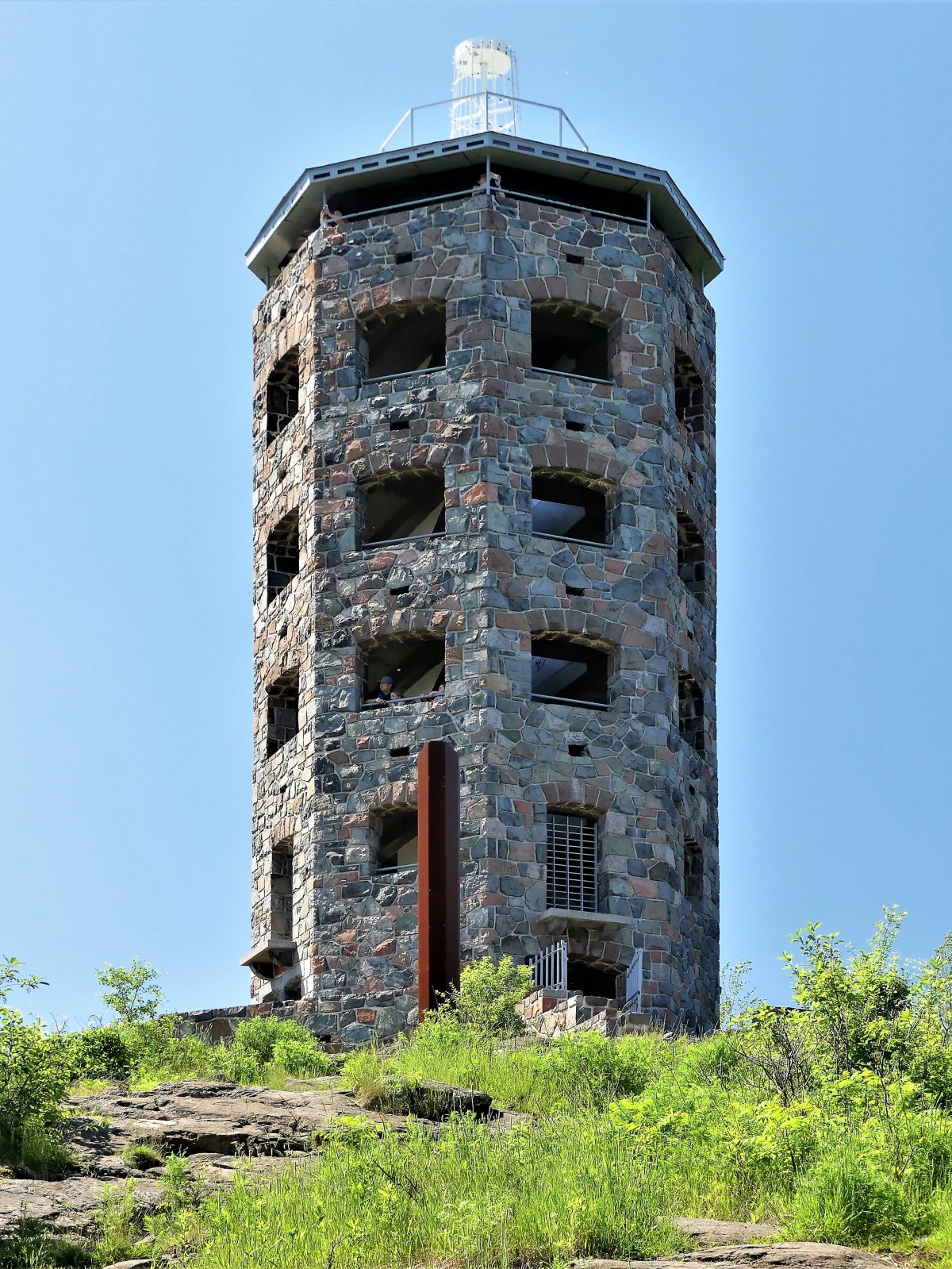
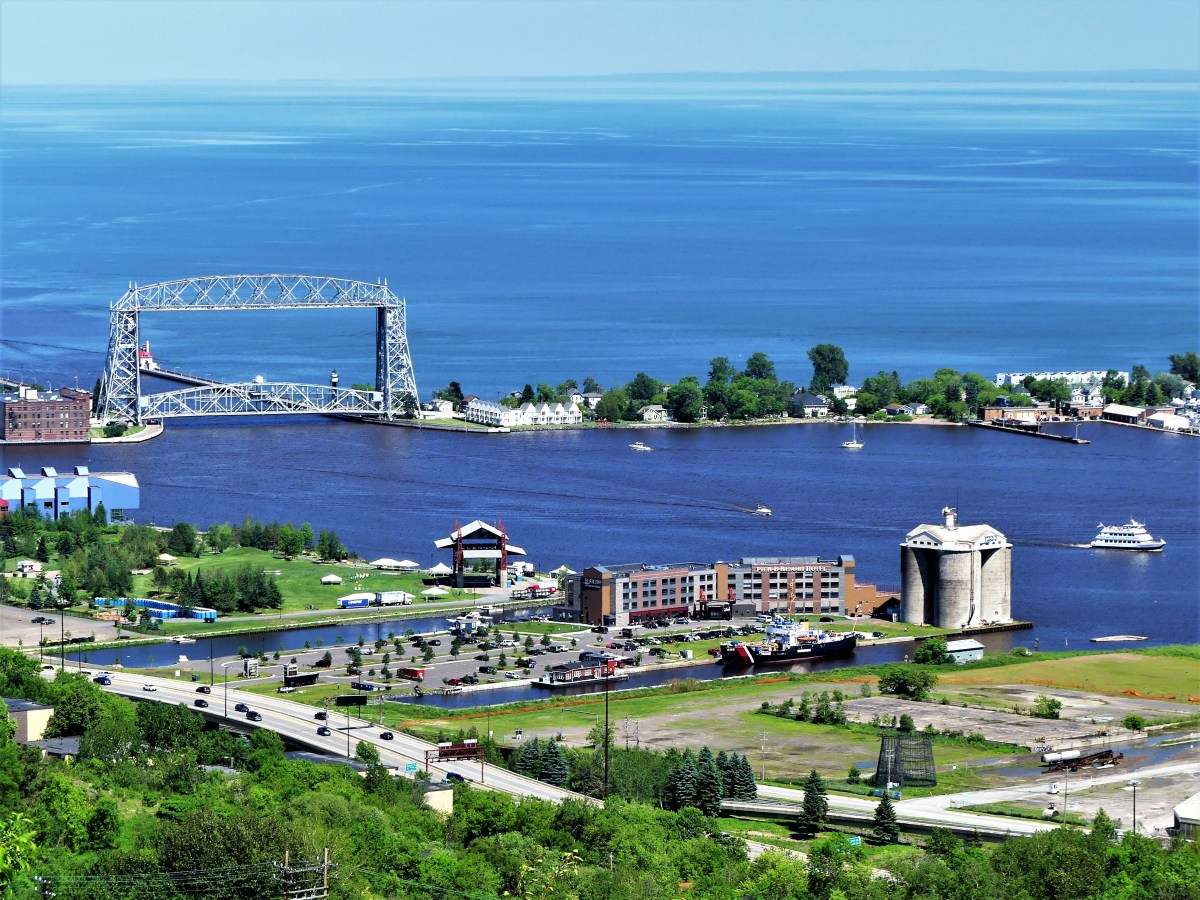
For views of the city, nothing beats Enger Tower, the highest point in Duluth,
and no better place to see where the city opens up to the sea,
while revealing its industrial underbelly.
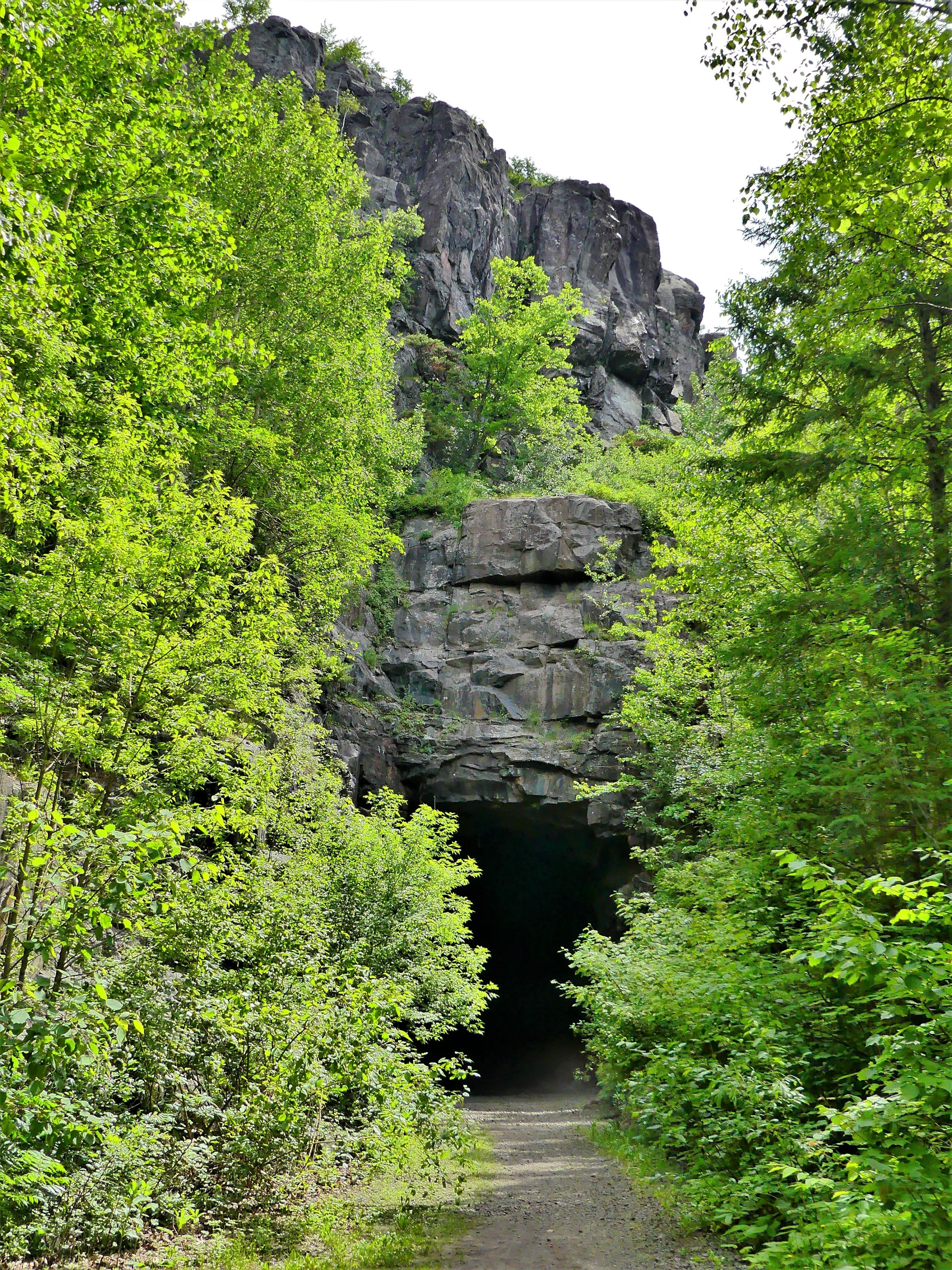
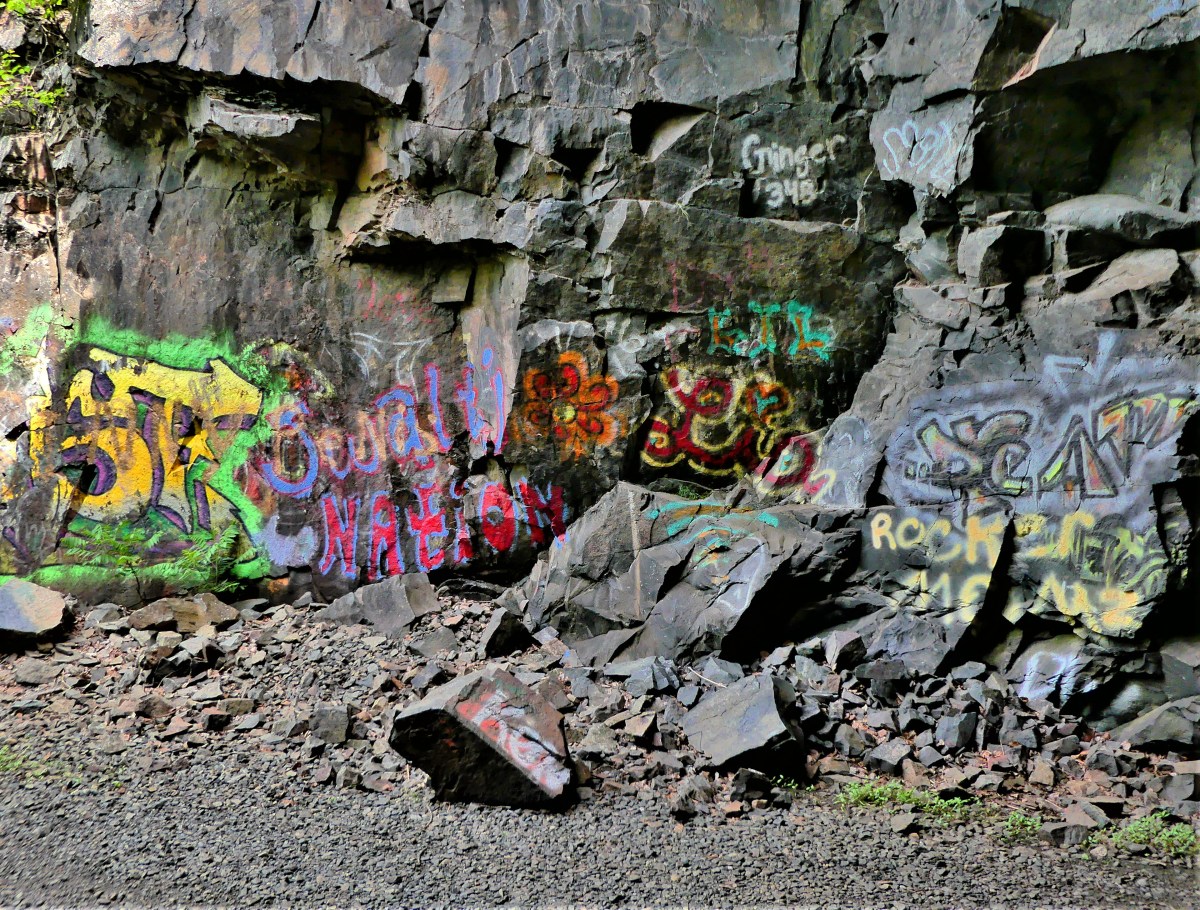
The following day, we were looking for a short but moderate morning hike. All internet indicators pointed to Ely’s Peak, a popular trail reached by following the abandoned Duluth, Winnipeg, and Pacific (DWP) railroad corridor to the entrance of a 1911 railroad tunnel.
The trail was named after Rev. Edmund Ely of Massachusetts,
whose mission was converting the Fond Du Lac Native Americans during the mid-1800s.
From the tunnel to the top and back is 1.8 miles. The loop takes hikers on a 300 ft. ascent offering far-reaching views of the Fond du Lac Reservation and beyond.
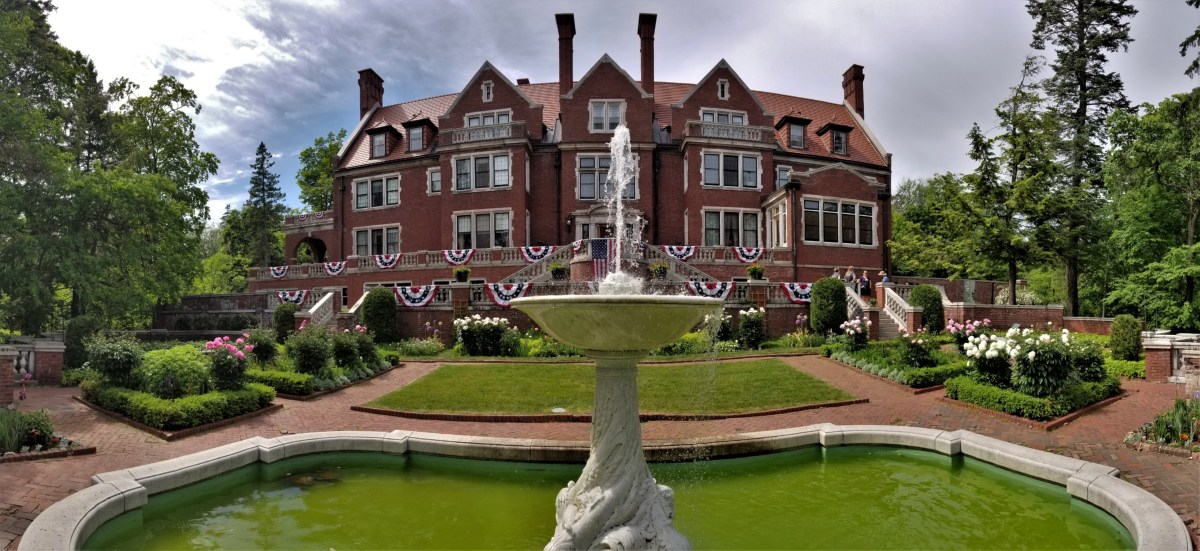
We spent the afternoon touring Glensheen, a 20,000 sq ft. Beaux-Arts-styled mansion surrounded by a 12-acre estate…
built beside Lake Superior between 1905 and 1908 by Clarence Johnston, Sr…
for Chester Adgate Congdon and family.
The 39-room historic mansion is reknown for its design and craftmanship of the day…
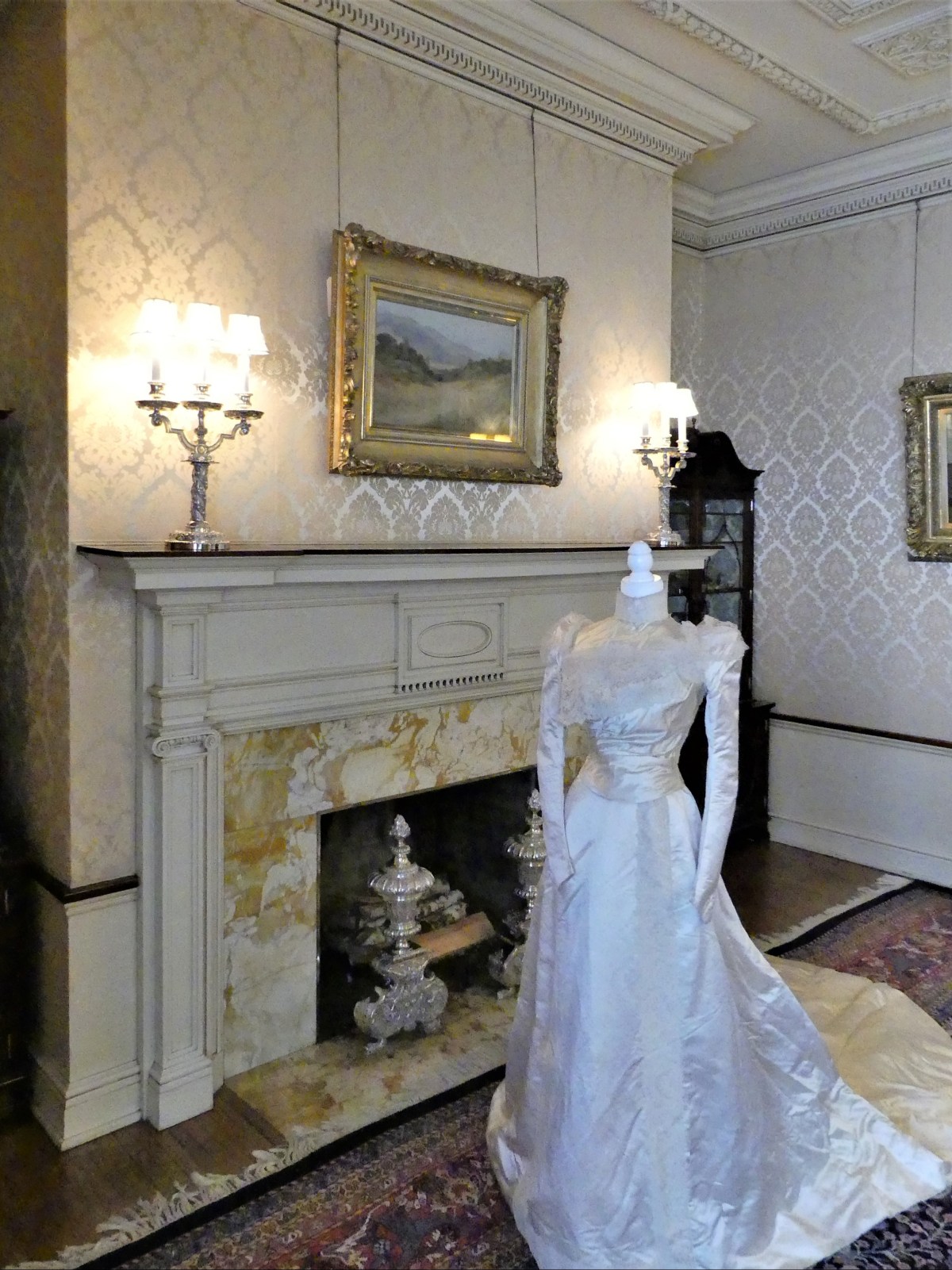
and that almost nothing from William French’s orginal interior design has changed in 110 years–down to the furniture placement…
and the accessories that adorn the house.
But the most unusual part of the tour was what Nick, our docent would not share with the group when asked about the murders of Elisabeth Congdon and her private nurse, Velma Pietila.
Instead, we were referred to a brochure card with a disclaimer and few details.
It was a brutal crime that was sensationalized by the media, and still remains unsolved.
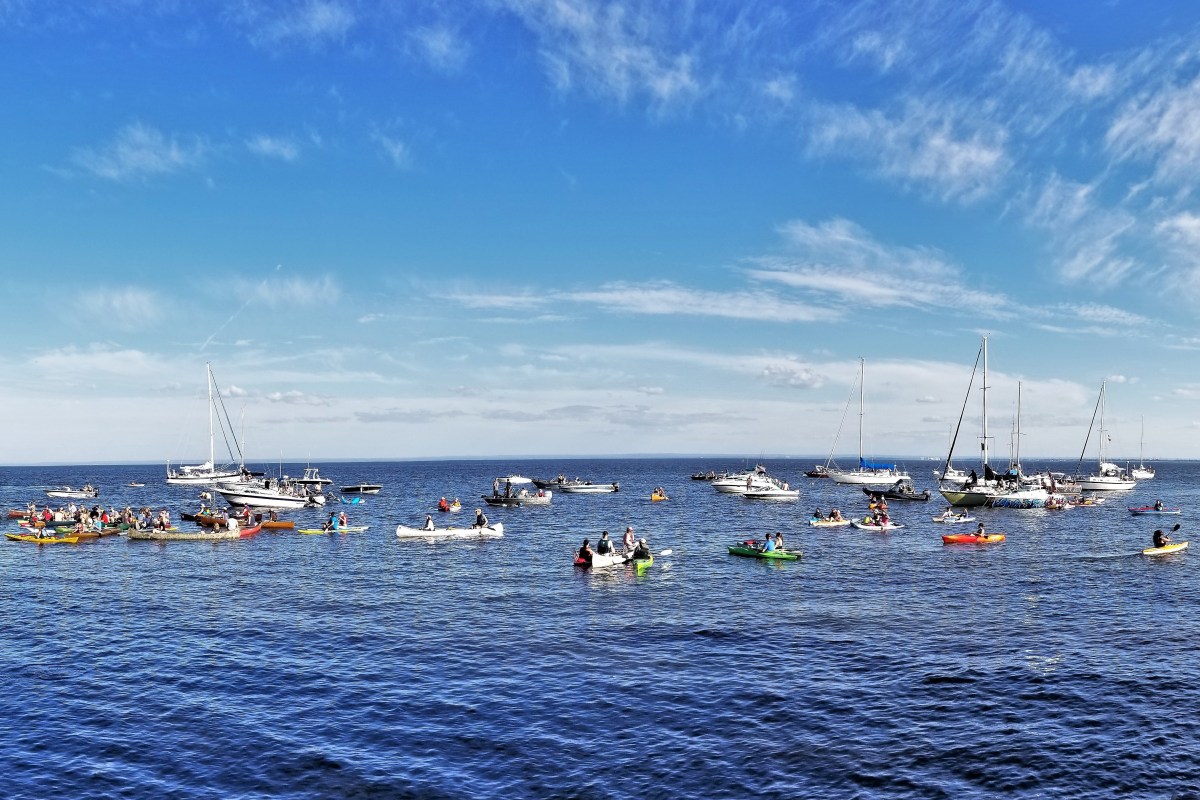
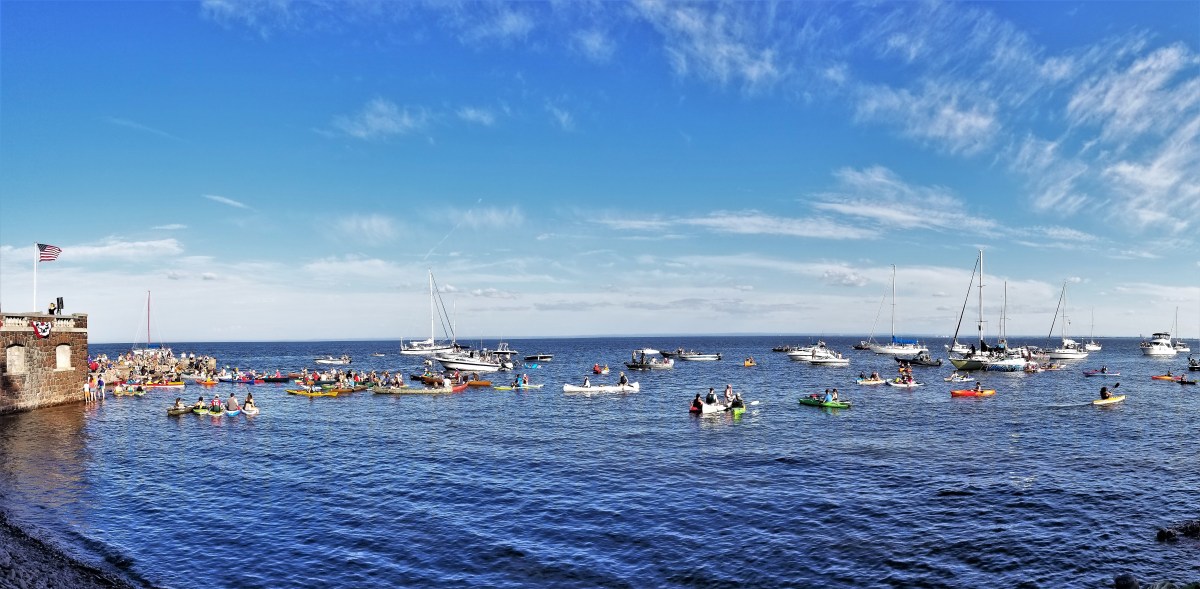
Leah and I concluded our day sitting in stadium chairs by the Glensheen boathouse pier, noshing on local food truck fare while listening to Charlie Parr, a local folk singer performing an evening of Minnesota moonshine music to kick off the 5th season of Concerts on the Pier.
It was the perfect way to end the day:
enjoying the sunshine and the breeze coming off the lake;
meeting and appreciating new people around us;
watching a mish-mash of vessels manuevering through an ad hoc harbor;
and being interviewed by Ryan Juntti, for WDIO’s 6:00 PM News.
Although it’s been two years since Leah and I visited Mt. Rushmore, what could be more American than re-posting this visit on Independence Day?
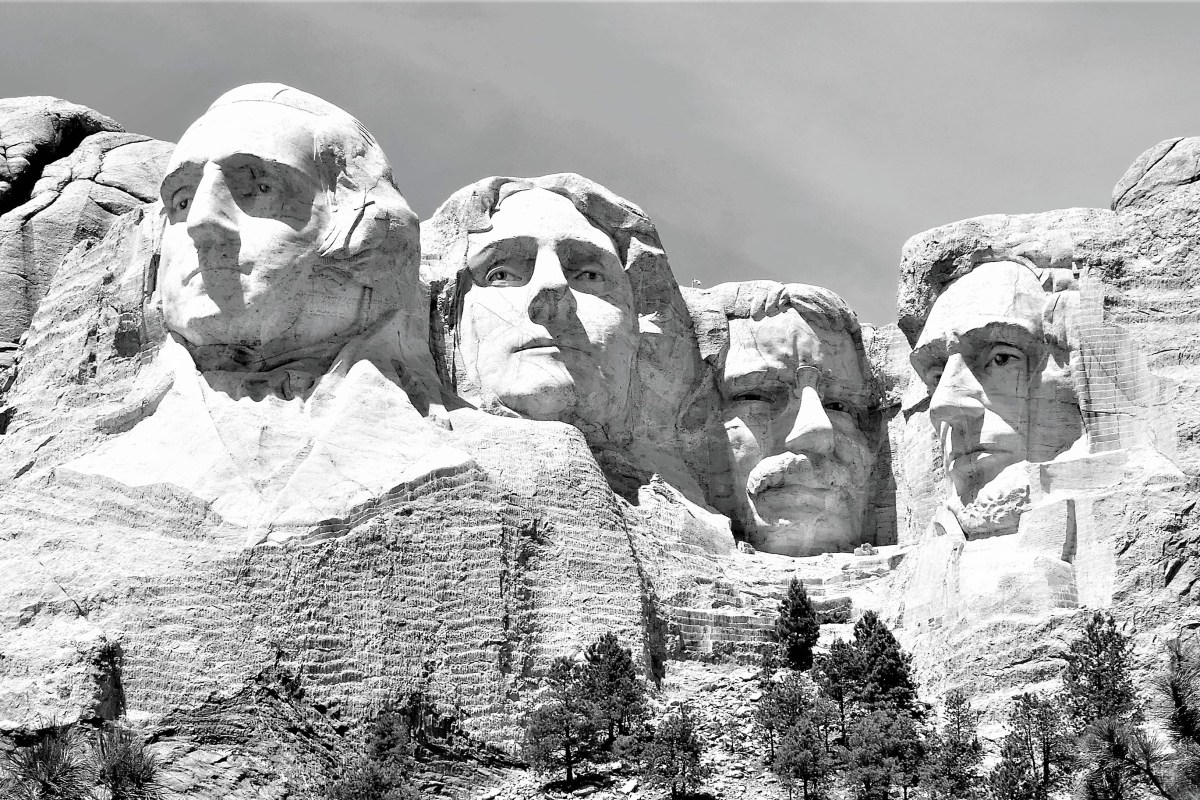
There’s no better way to celebrate the 4th of July, than a trip to Mount Rushmore and the Crazy Horse Memorial. Sure, the crowds were large; that was to be expected. But once the cars were garaged, the pedestrian traffic was easy to negotiate. And with everyone looking up at the mountain, the Presidents’ faces and intentions were never obstructed.
It was also a time to celebrate family. There were plenty of kids riding in strollers, hanging from moms in carriers, or balancing on dads’ shoulders. Generations of families–many of them immigrants–had gathered to pay homage to the principles of freedom that make our country a beacon for the oppressed and downtrodden.
Seniors were being escorted through the Avenue of Flags by their grandchildren. Extended families organized group pictures at the Grand View Terrace, unified by their love of democracy and their reunion T-shirts.
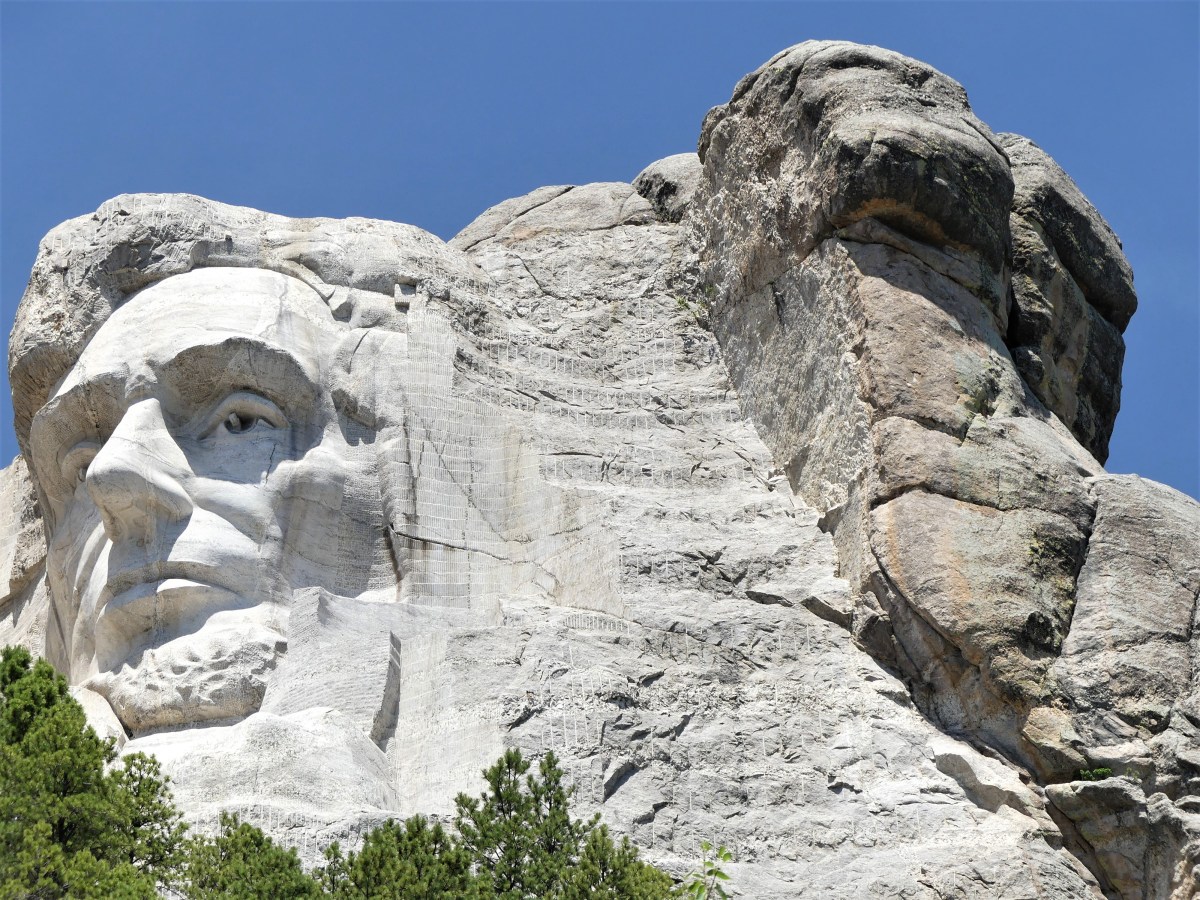
All expressed awe at Gutzon Borglum’s grand vision and remarkable achievement–the transformation of a mountain into a national symbol visited by approximately 3 million people every year.
The 14-year process of carving the rock began with dimensionalizing the Presidents’ portraits through Plaster of Paris masks, on view at the sculptor’s studio-turned-museum.
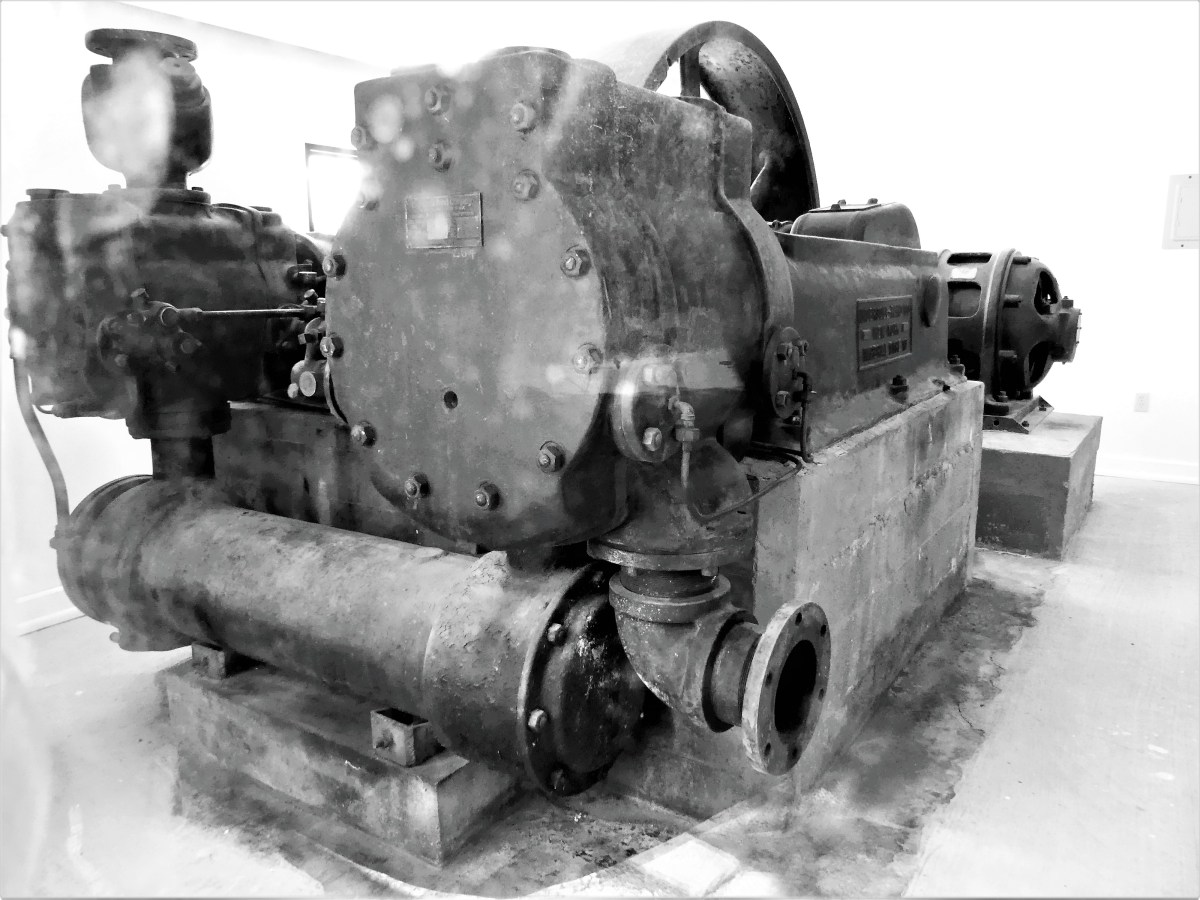
Additional exhibits detail the construction of the memorial, and the tools used by workers, like the original Rand & Waring compressor, which powered the jackhammers for all the finishing work.
A little known fact is that Mt. Rushmore was once intended to be a tribute to the “Five Faces of Freedom,” but funding ran short when the Congressional appropriation approached $1 million during the Great Depression. Hence, the unfinished carving of the Great Ape to the right of Lincoln serves as a reminder that we are never far from our true ancestors.¹
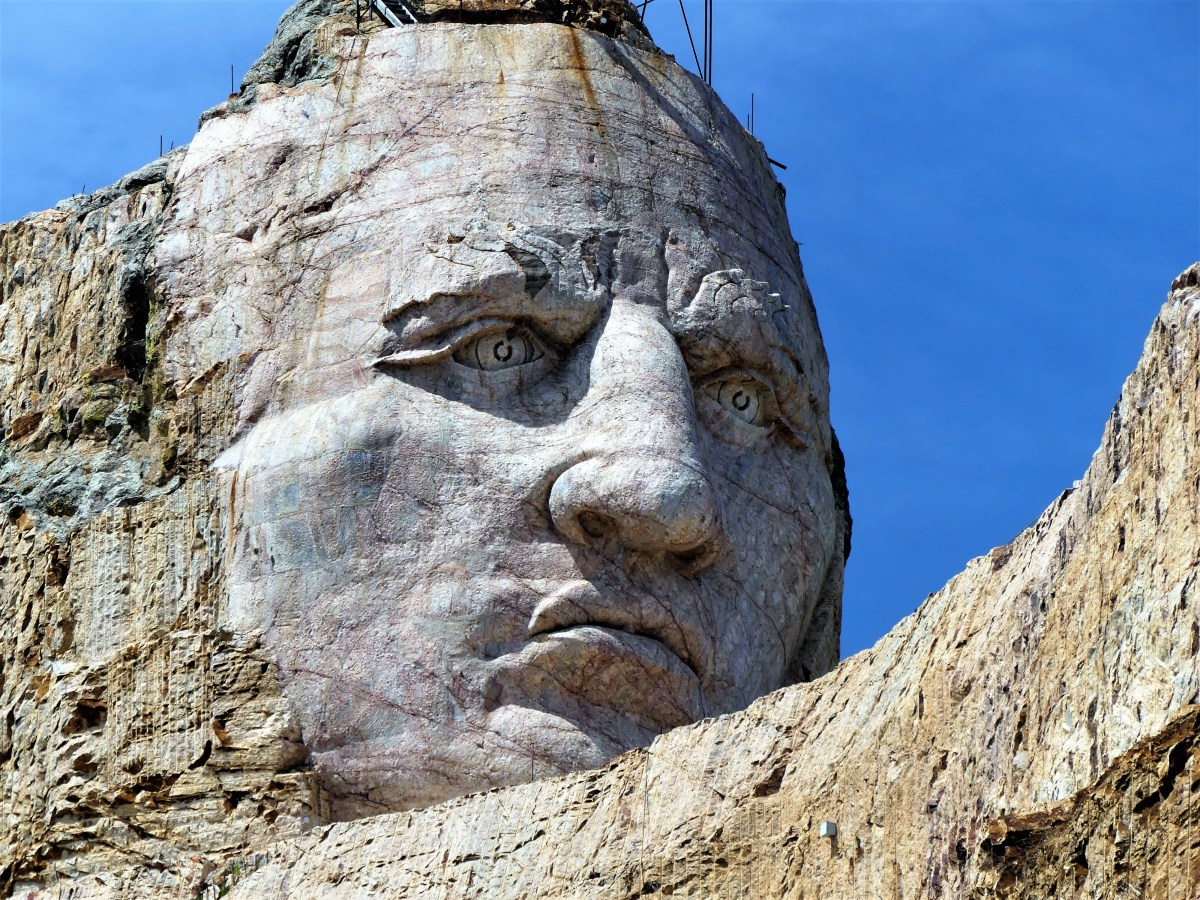
No less ambitious, and equally as impressive, the Crazy Horse Memorial is a work-in-progress located 16 miles away in the heart of the Black Hills–considered sacred land by the Lakota people.
Conceived by Korczak Ziolkowski in early 1940s,
the memorial, when completed will stand 563 ft. by 641 ft. across, and is expected to be the largest sculpture in the world. Already, the completed head of Crazy Horse measures 60 feet tall…
…twice the size of any of the presidents at Mt. Rushmore. While the first blast was conducted on the mountain in 1947, the current prospects for the memorial are to complete the outstretched arm during the next twelve years. There is no completion date available for the finished carving, which has been financed entirely by private funding since its inception.
Mt. Rushmore was created by a Danish American. Crazy Horse was created by a Polish American. And visitors to both destinations manifest the melting pot that has brought us all together as Americans. It’s our diversity that makes us strong, our ambition and determination that makes us great, and our compassion and sacrifice that make us whole.
These are the values reflected from the faces we’ve immortalized in stone. Yet, we would honor them more by living according to these principles.
Happy Birthday, America!
¹ Just kidding, but the photograph is real and has not been retouched.
“It says so in the brochure,” she states. “I quote, ‘Caution is advised when venturing onto this rock ledge due to its slope and the unpredictable nature of Lake Superior and its wave action.'”
“Sounds like fun. We should see it,” I suggest. “This is ancient historical shit!”
“It sounds a lot like the petroglyphs that we saw in Nevada,” she offers.
“But this one’s on the water, and not the desert,” I tease.
“I know that, smart ass, and it’s also harder to get to, so you need to be careful!” Leah lectures.
“Like I said, how hard can it be?” I reiterate.
We park the truck only minutes from our campsite at Agawa Bay, and enter the trailhead where we are met with a screaming red sign:
“Like I said…” drops Leah.
I deflect the dig. “Check it out.” I direct Leah’s attention to a different sign to our right–a red diamond hammered to a tree with a white arrow and 400 km on it.
“That’s where the trail begins. And according to that sign, we’ve already walked 20% of the trail!”
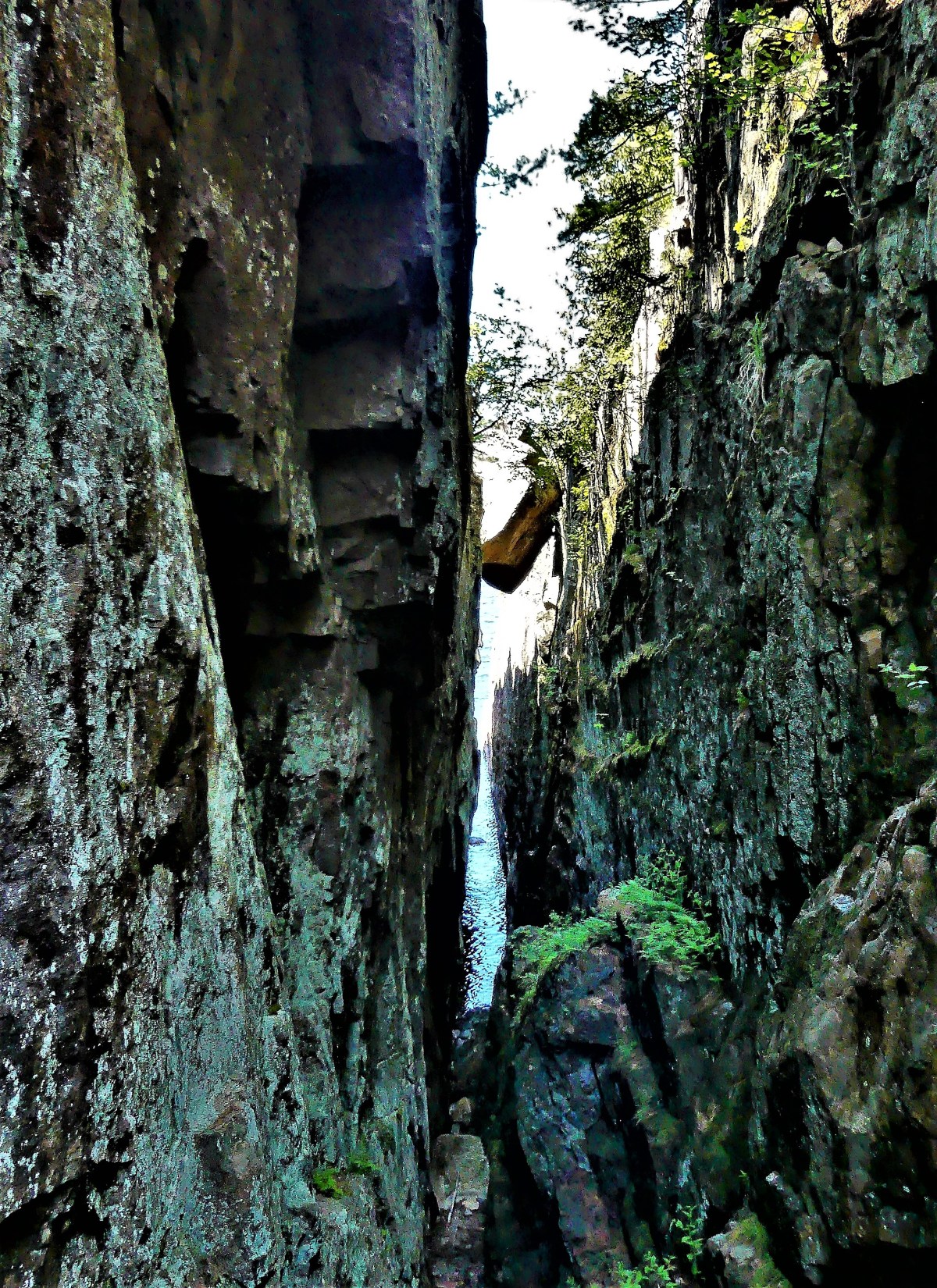
It’s true the trail is rugged and a scramble. The descent runs through a narrow chasm, over sharp boulders and bulging roots. But it’s only treacherous if wearing flip flops, which a student rangerette at the visitor’s center admits can be a problem with some hikers.
Halfway to our destination, a gash in the cliff exposes a 10 ft granite chunk mysteriously wedged between darkness and daylight.
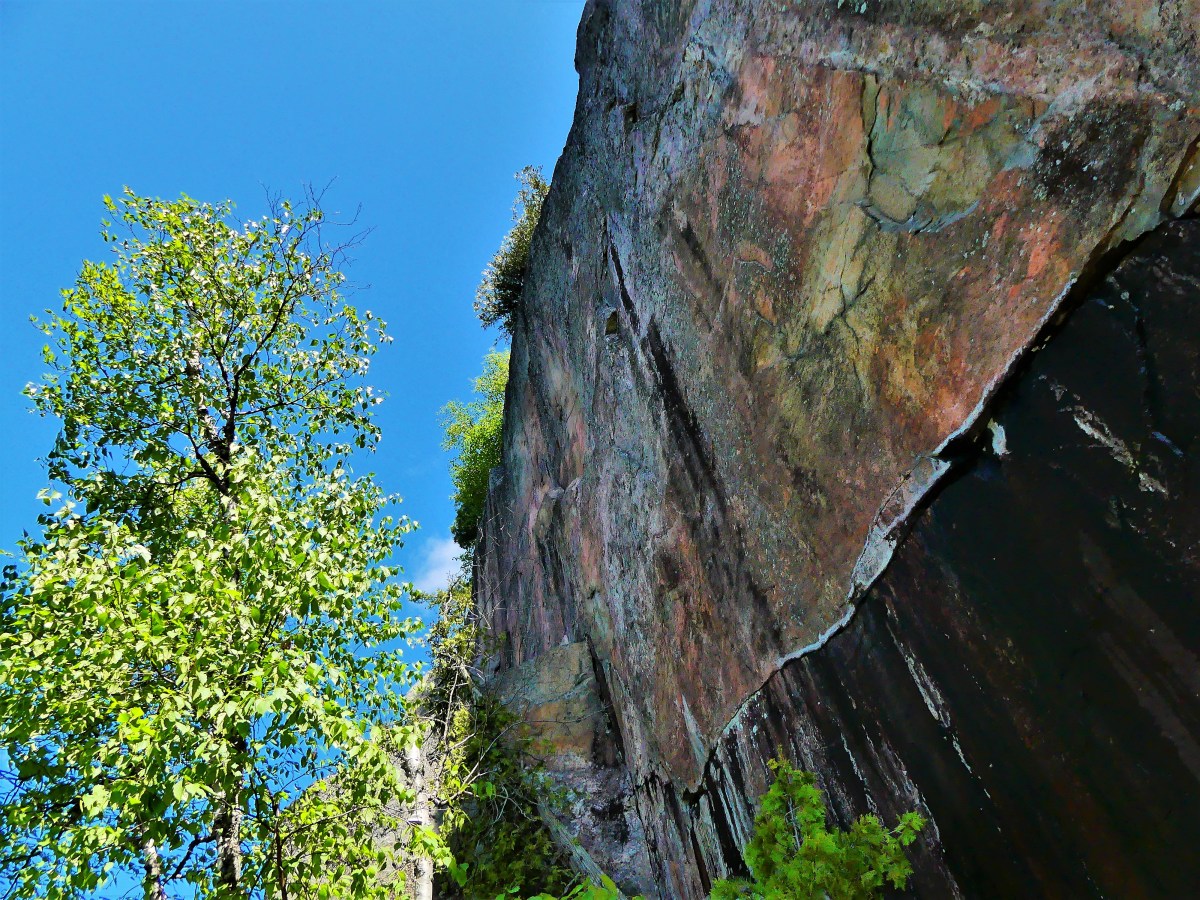
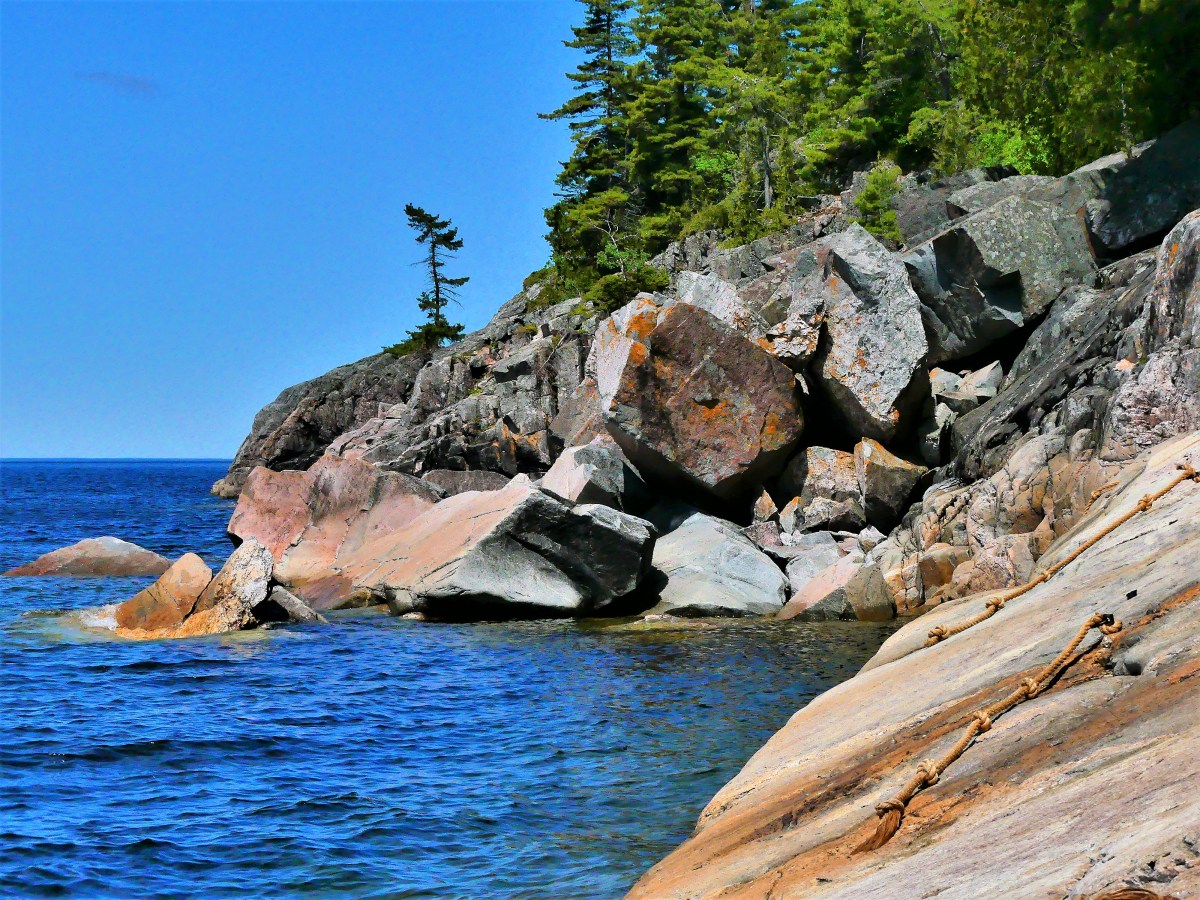
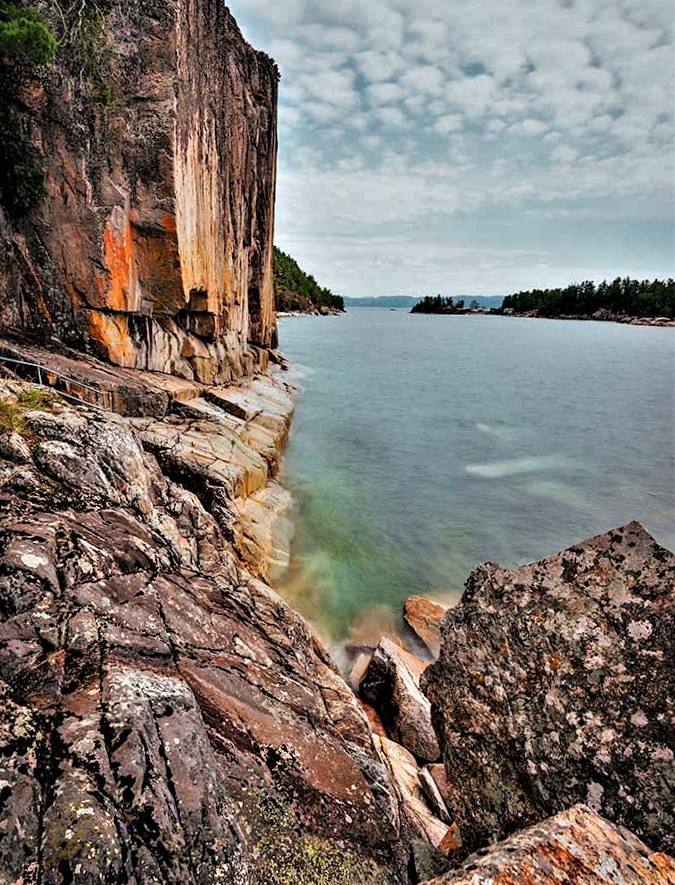
In 15 minutes we arrive at a clearing of flat rock where the sky opens up to the water. A colorful cliff 15 stories high looms above us, grabbing my attention.
Leah is content holding onto a pipe rail that separates the adventurous from the cautious.
“Are you coming?” I ask.
“Down there? Not a chance!” Leah answers instinctively.
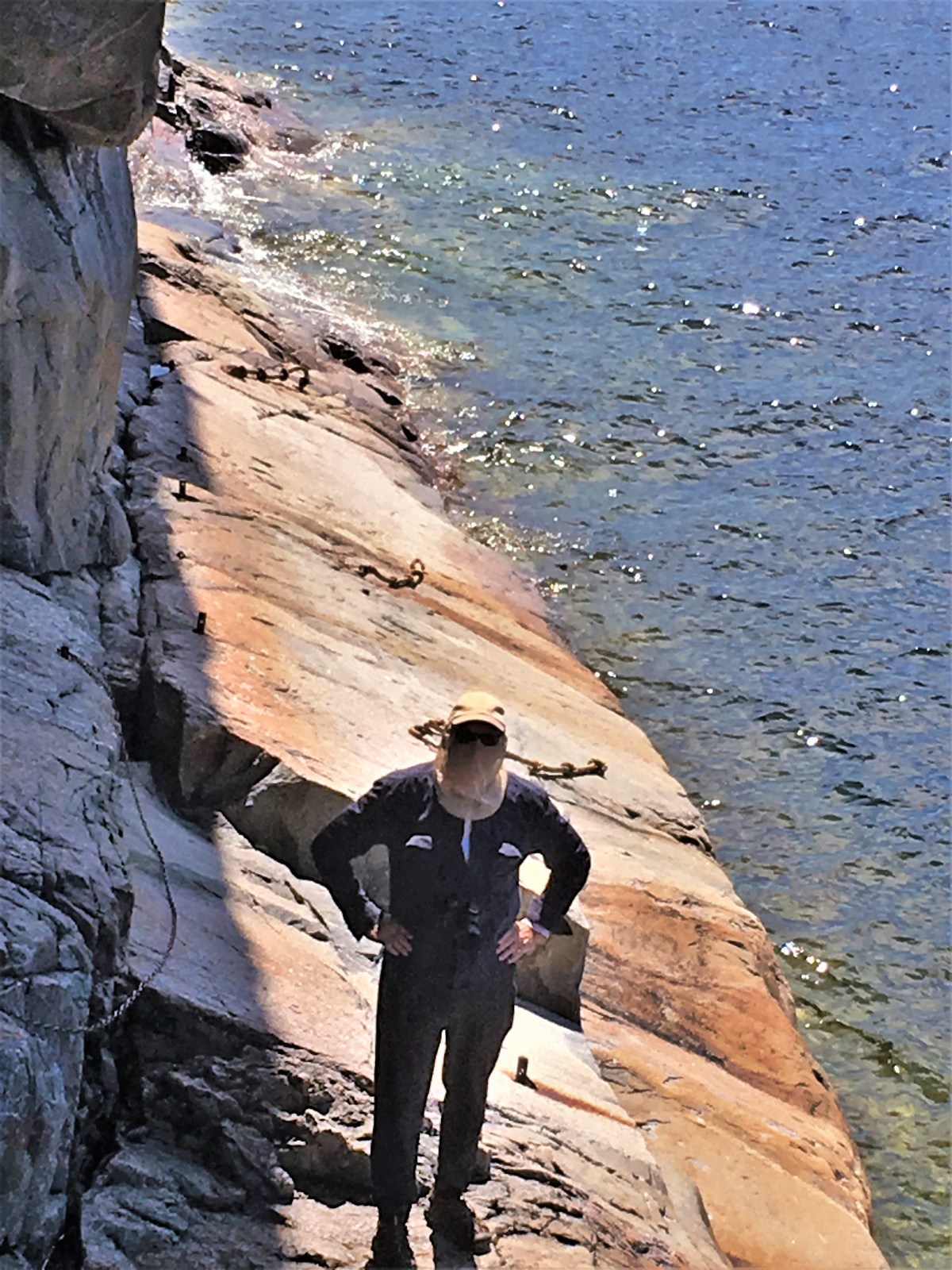
A short drop onto a wet ledge of granite sloping into Lake Superior takes added time, but planting my feet with measured steps is the best method for staying safe.
courtesy of Leah
Knotted ropes threaded through embedded pipes are there to assist the daredevils who spill into 50° F water.
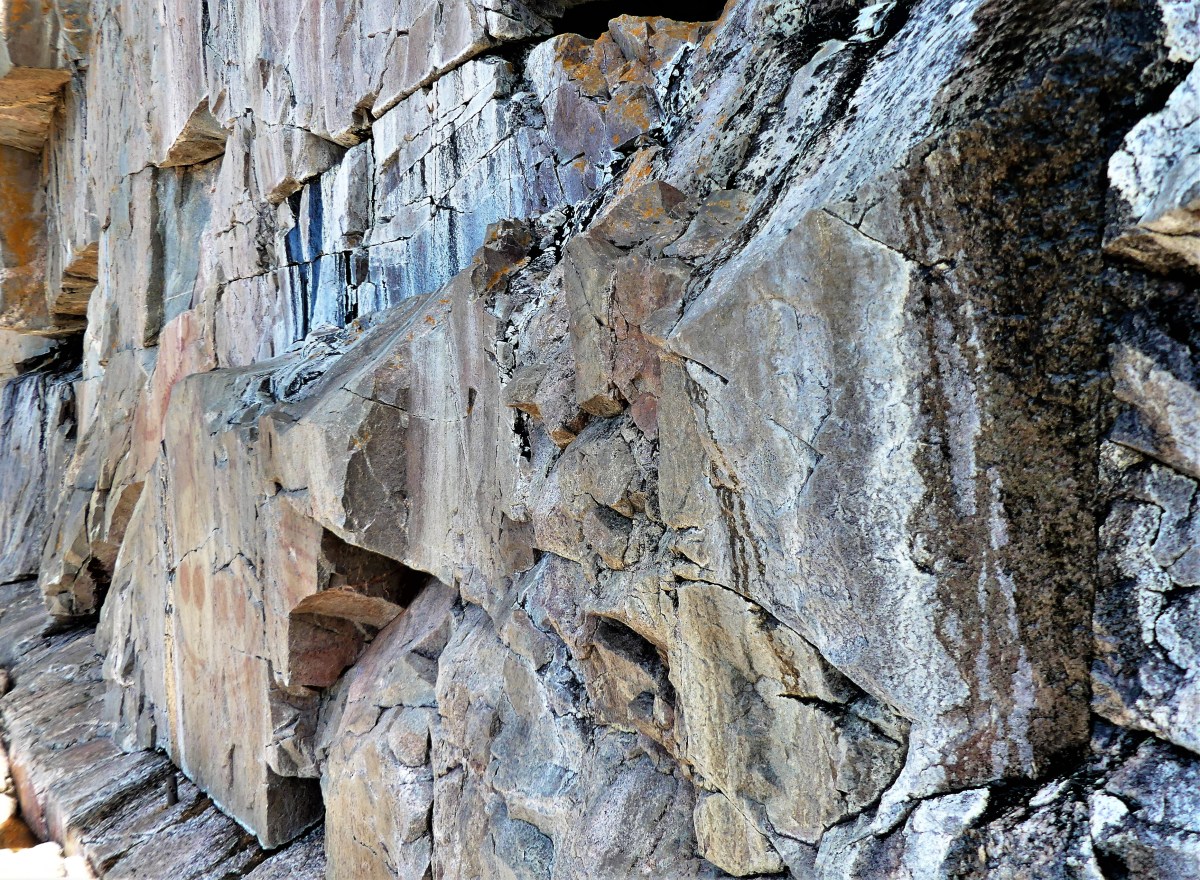
Once I get my footing, I can sidle across the ledge for a better look at the cliff face.
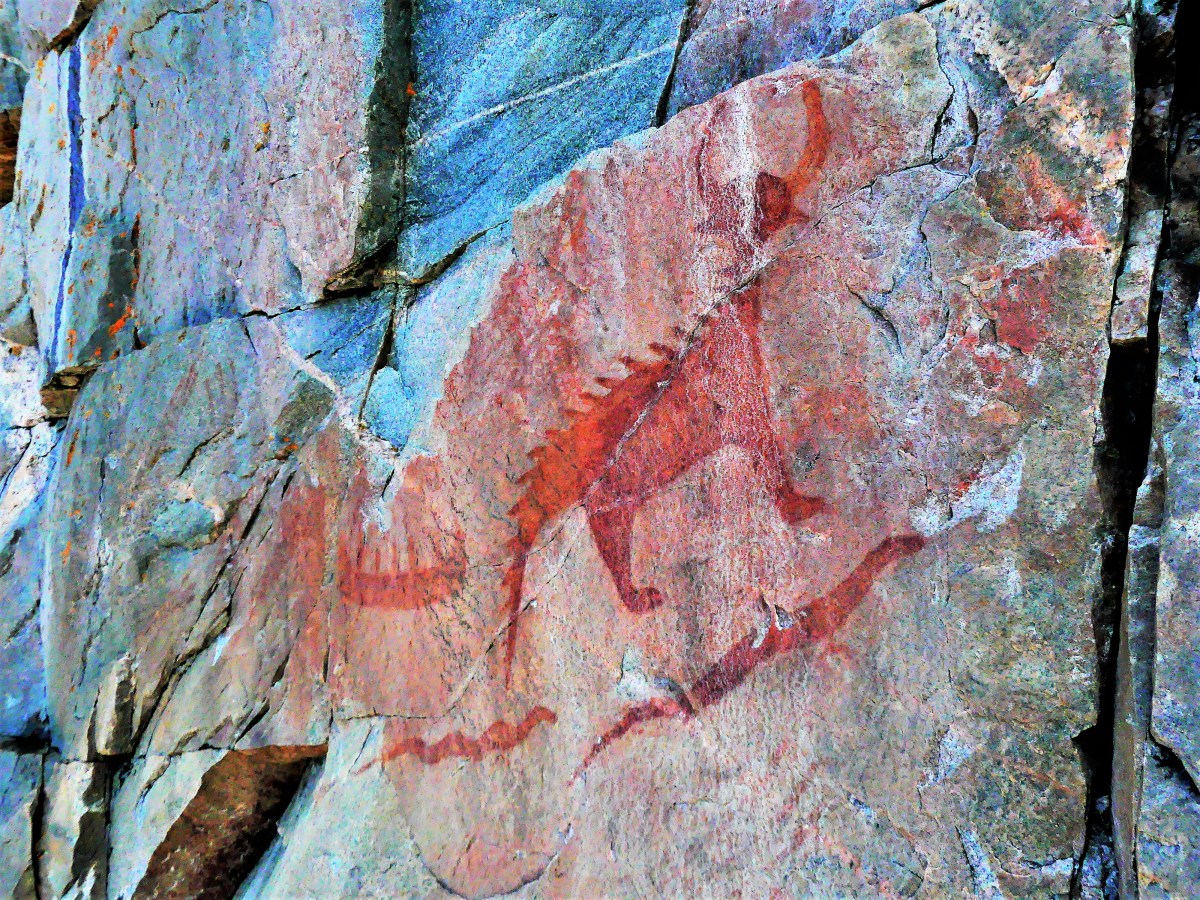
Venturing further out on the ledge, I meet Mishipeshu, the Great Lynx, who was empowered by the ancient Ojibways to control Lake Superior.
There are dozens of sacred drawings set in stone, dating back to the 17th century, but most are faded and nearly unrecognizable from eons of sun, water, ice and wind. Their message remains unknown, but experts reason that the pictographs depict historical events, and could signify manitous from shamanistic ceremonies.
I carefully manuever onto terra firma,
and we hike back to the parking lot.
“That was amazing, down there,” I exclaim.
“It was alright,” notes Leah.
“But you never got to see the pictographs,” I mention.
“That’s OK. You did all the hard work for me. I’ll just have a look at your photographs,” she laughs.
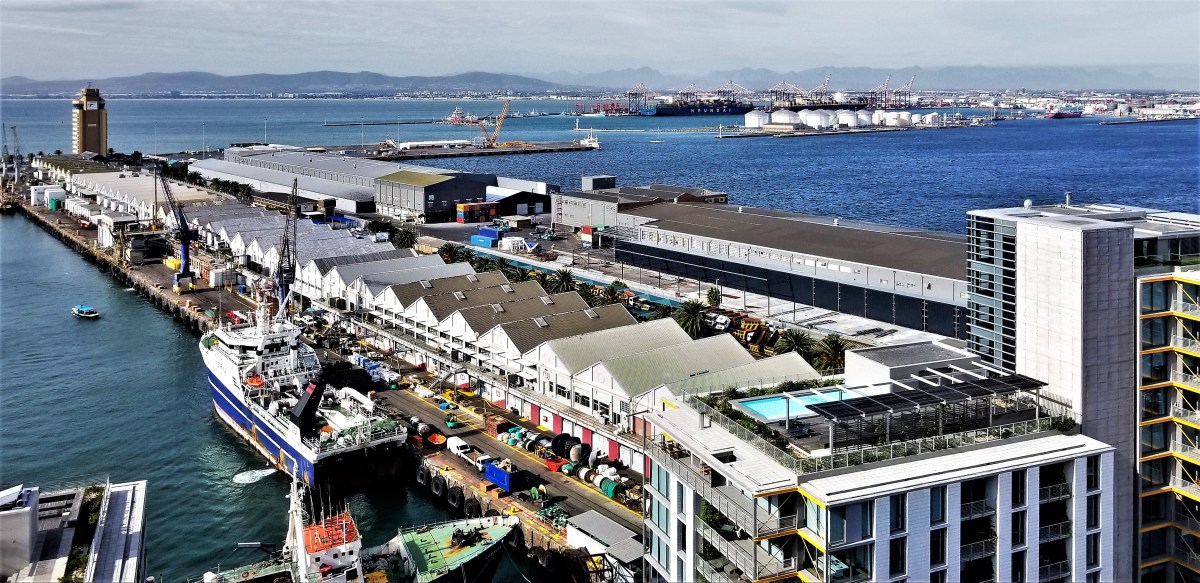
Much of Cape Town radiates with modern appeal, brandishing its abundance of fashionable and trendy shops, galleries, cafes, restaurants, and hotels throughout the city. However, the crossroads where residents and tourists travel to find it all is Cape Town’s waterfront.
Leah and I took a walk through the waterfront district to see for ourselves, and found that one day was not enough to cover it all.
The heartbeat of the waterfront is the Victoria and Albert Wharf, where the city meets the sea.
Grounded by a two-story mall, the Victoria Wharf Shopping Centre bustles with 450 retail stores, and over 80 restaurants and eateries.
Beyond a swinging bridge and a capsule of specialty malls stands the Clock Tower, where a ferry (calm seas and weather permittting) awaits to shuttle intrepid visitors to Robben Island…
the one-time prison of Nelson Mandela from 1964 to 1982, but now a museum and World Heritage site. Unfortunately, high swells prevented us from visiting.
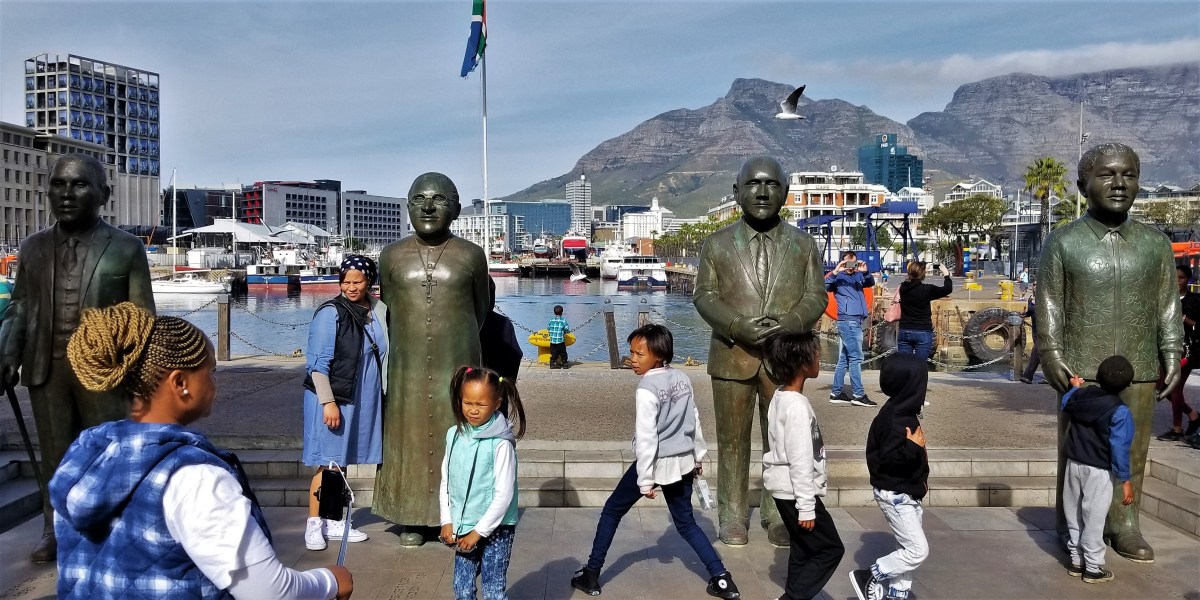
His importance to the city and country cannot be underestimated, as his name and face is omnipresent throughout the region.
Visible from all points of the city, and looming over the wharf is Table Mountain,
accessible by cable car, with commanding views of the city below. Unfortunately, Leah and I never made it to the top because of gusting winds at the time.
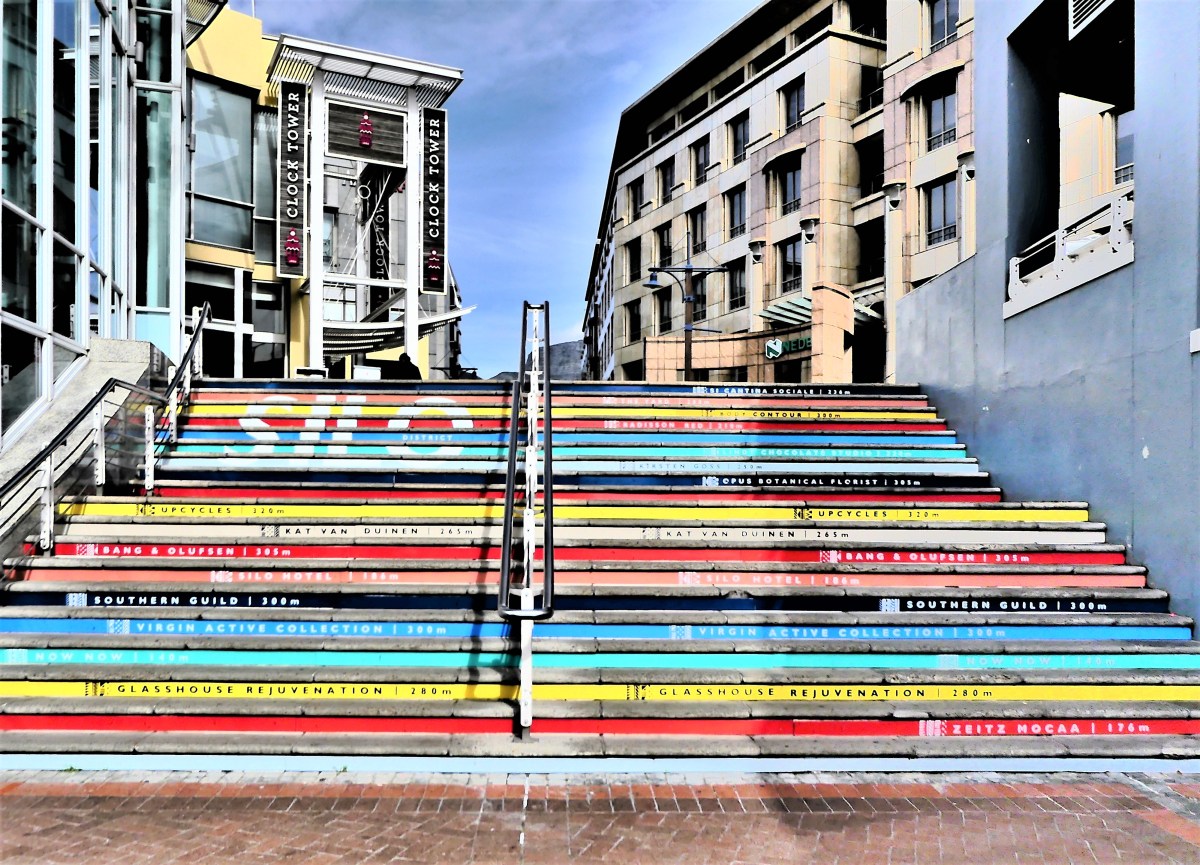
Continuing south, we mounted a set of stairs…
directing us to the Silo District, where a 1920s grain silo…
has been repurposed into the Zeitz Museum of Contemporary African Art,
having opened on September 2017, and boasting the world’s largest collection of African art.
The building also houses the Silo Hotel, occupying the top six floors within the one-time grain elevator. Daily rates during low season range from $900 for a luxury room to $5000 for a 1-Bedroom Penthouse. Leah and I thought we’d have a look around.
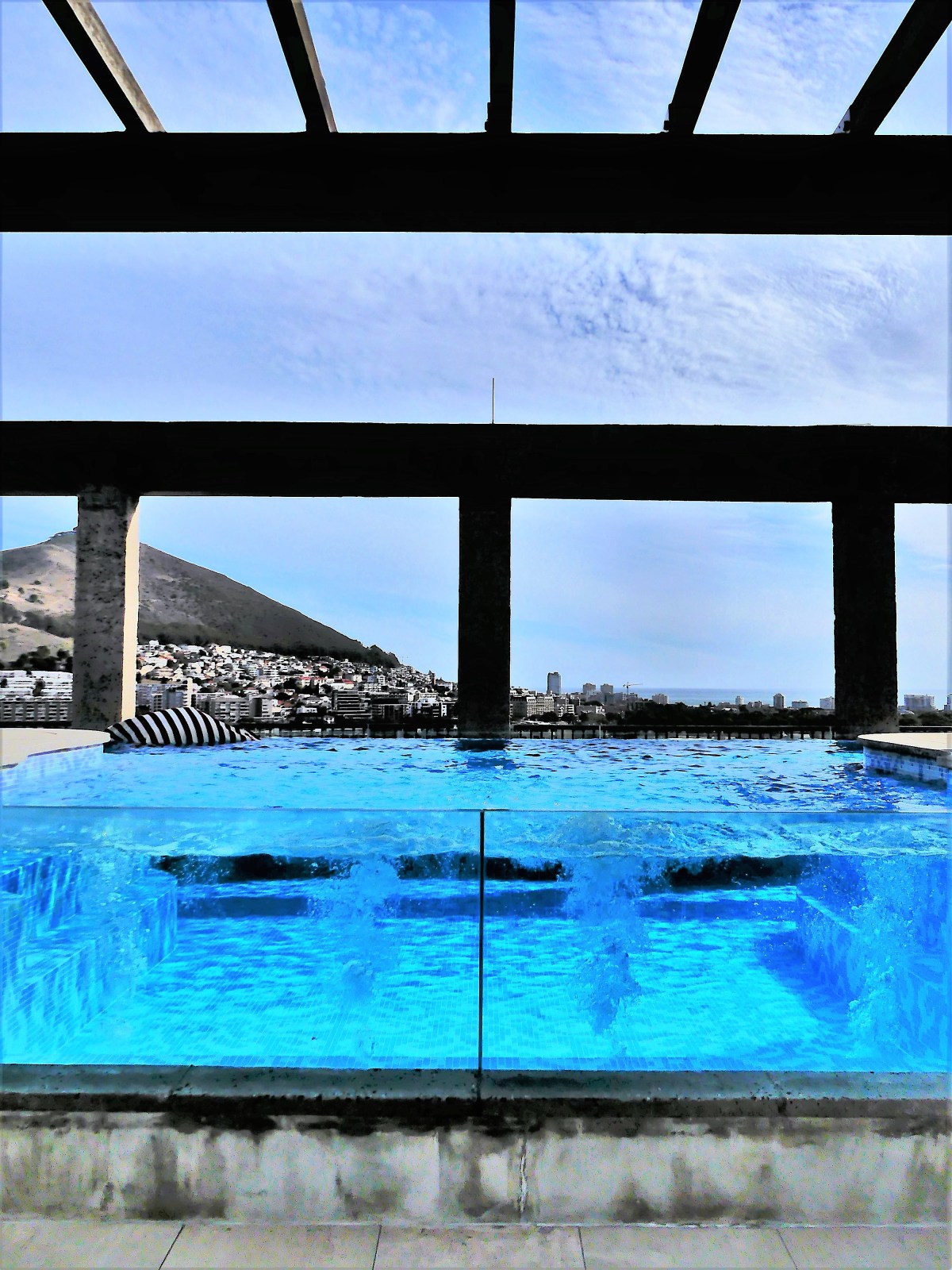
The elevator carried us to reception on the sixth floor, where we spoke to an attendant who eagerly escorted us to the eleventh floor open-air restaurant, lounge and pool.
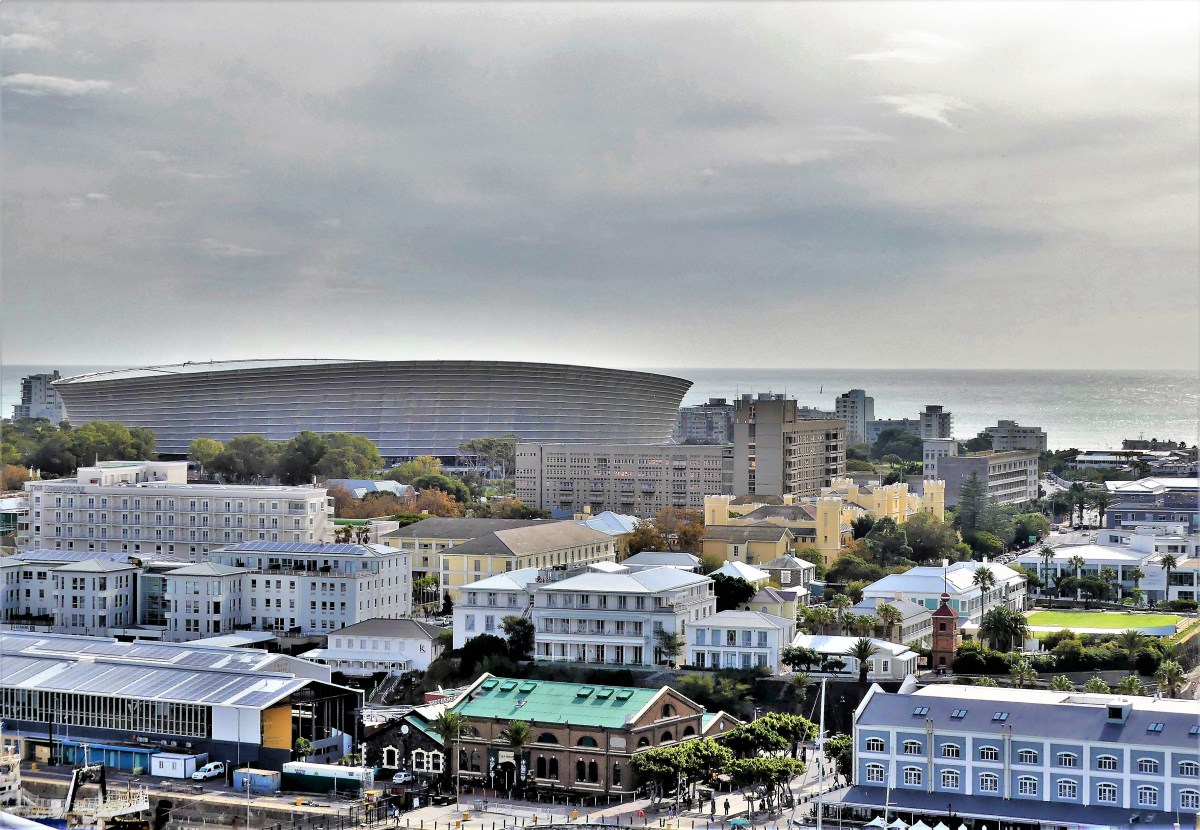
Having missed out on a Table Mountain overlook because of weather, our surrounding views of the stadium,
the wharf,
the ship terminal,
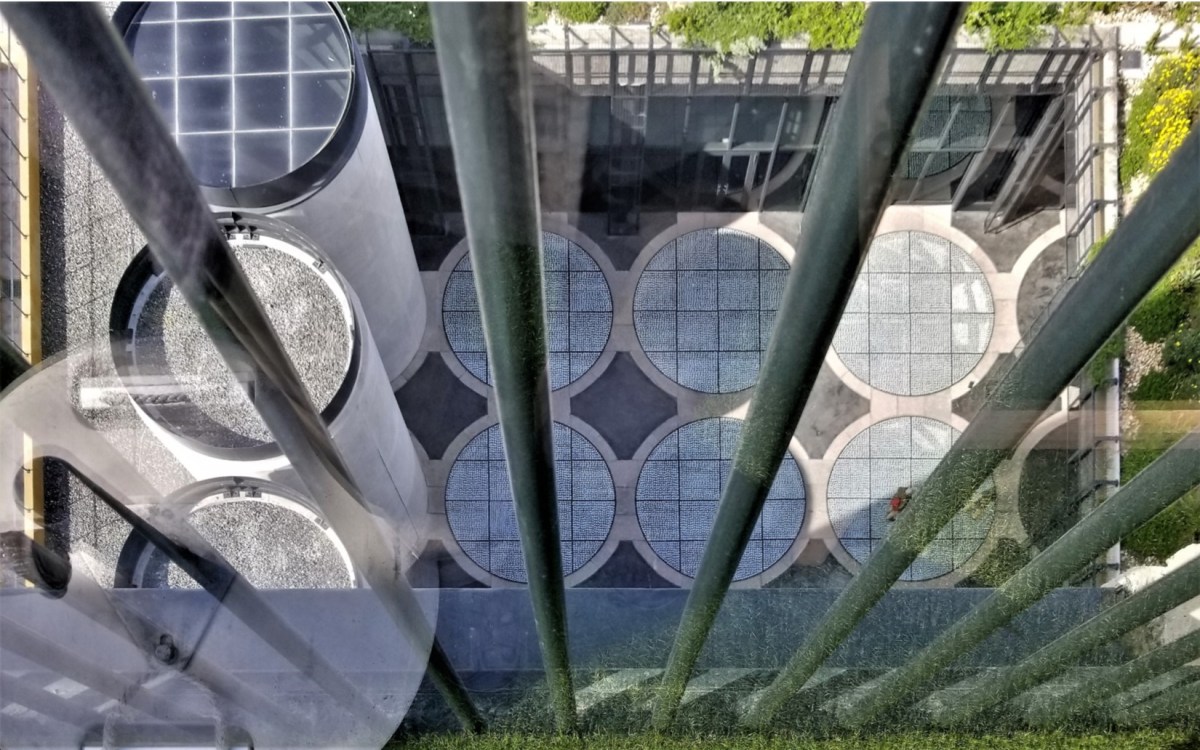
and the courtyard below were spectacular, and made up for our disappointment.
Once back on earth, we headed past the shipyards…
and along the canal…
to Battery Park, a greenspace where families gather to skate and picnic.
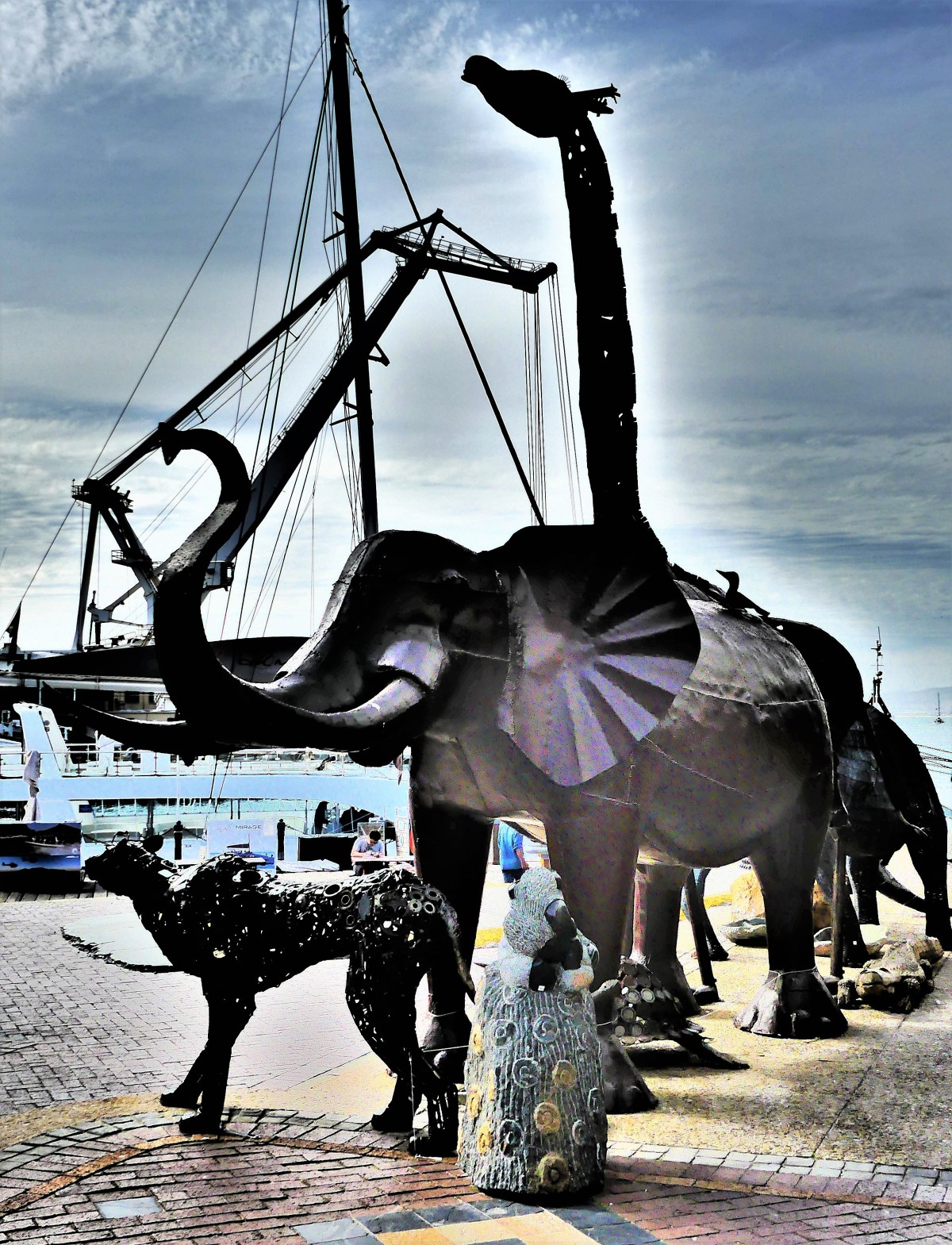
After reaching City Hall in the distance, we doubled back to the waterfront, eager to continue the next part of our journey in search of wild animals.
A recent two-week trip abroad was much more than a European romp through a handful of city centers. My mission was ambitious: to gather relevant data on my mother’s ancestry that has thus far proved elusive, and reconnect with family across the Atlantic whom I haven’t seen in nearly 48 years.
My itinerary took me through the highlands of Scotland, to the canals of Holland, to the Rhineland of Germany,
with travel hubs in Edinburgh,
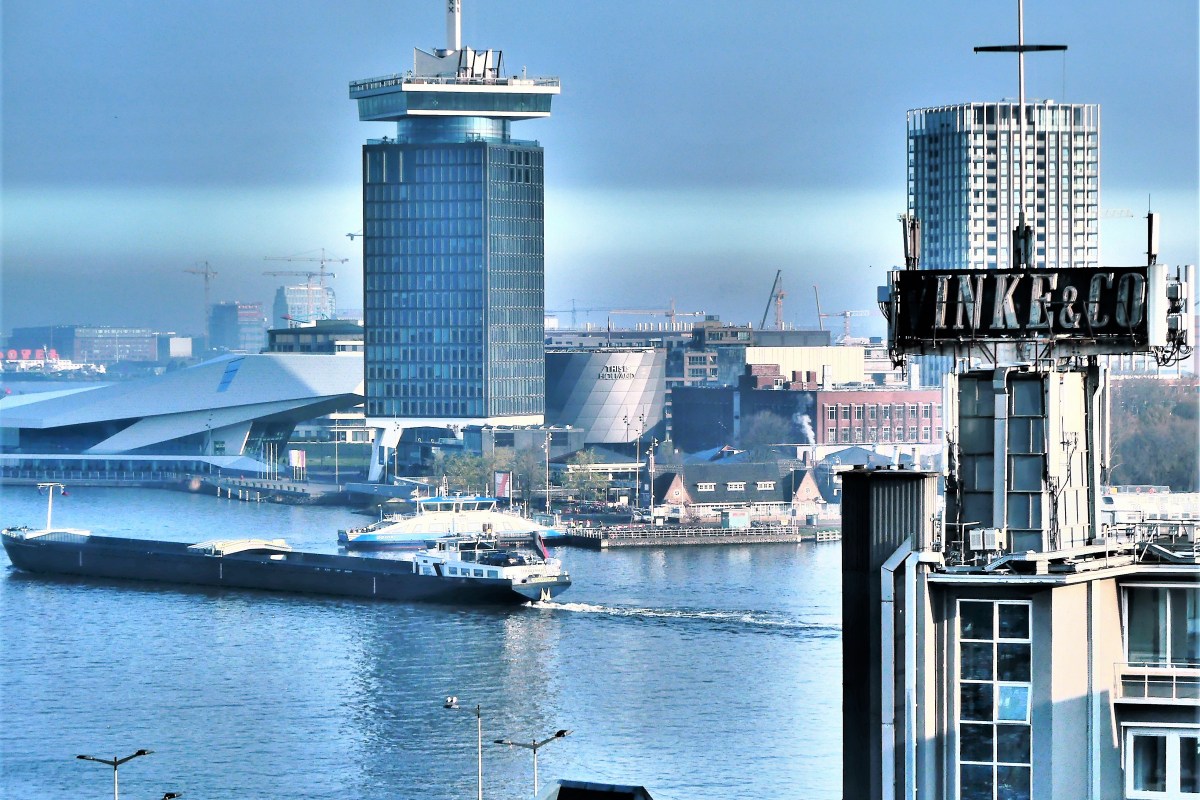
Amsterdam,
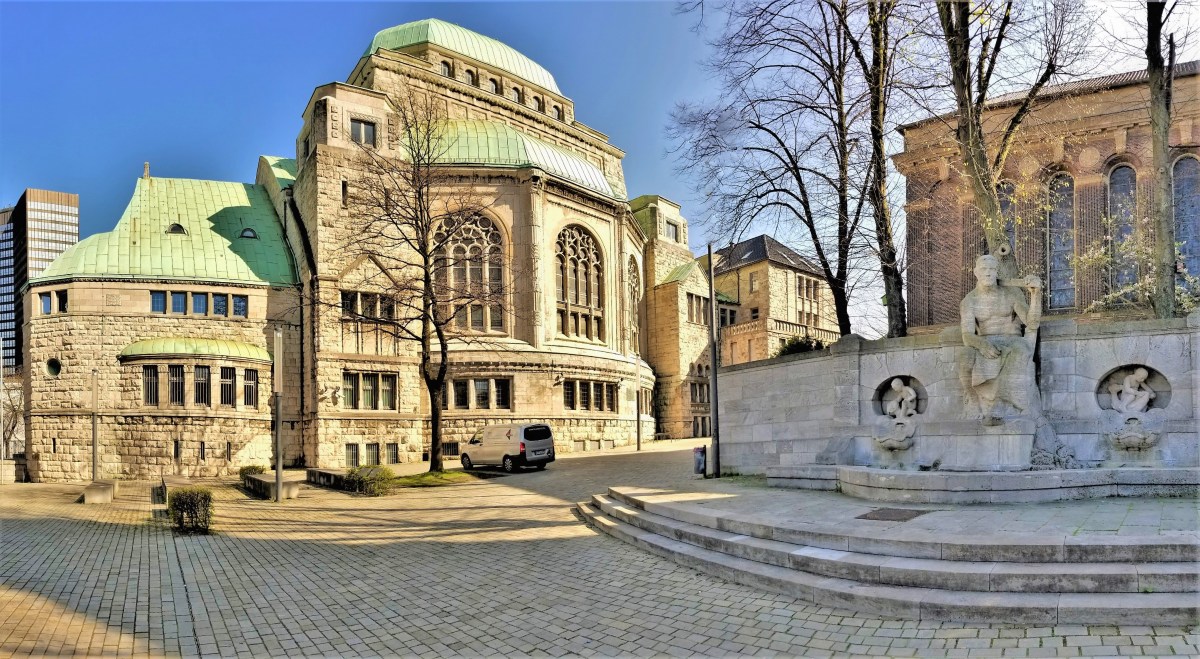
and Essen,
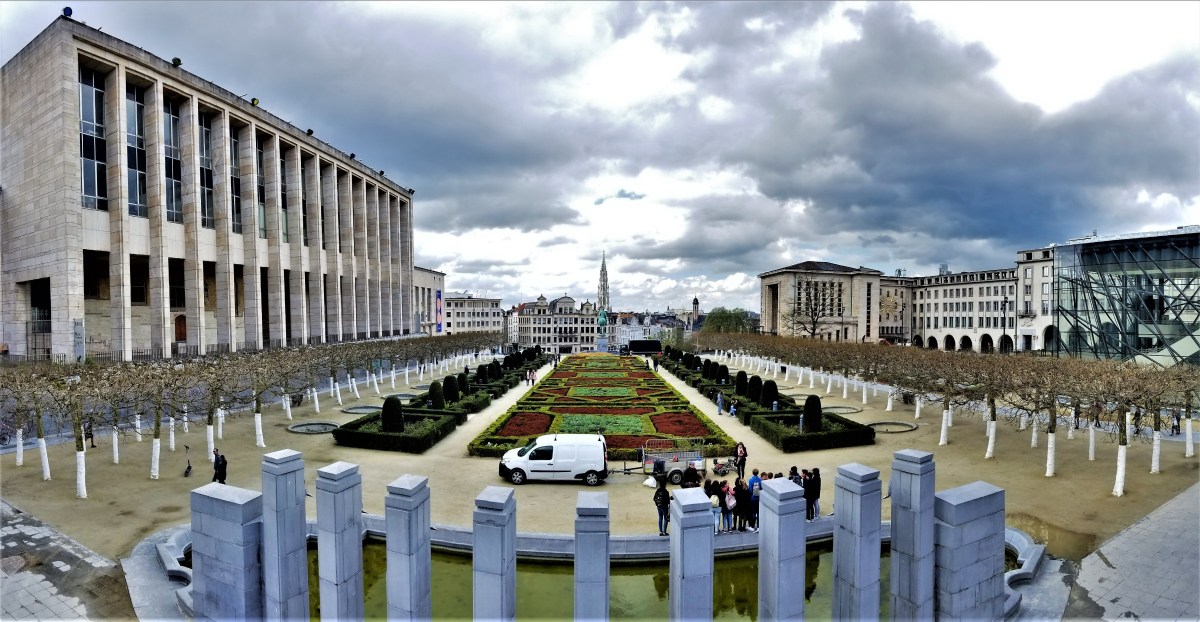
before taking a breath, and finishing strong as a tourist in Brussels,
and Paris.
Each stop was consequential in my quest to uncover vital research of my mother’s epic escape from Nazi Germany, and the endless road taken to reunite her broken family.
This was not an easy trip, but I could sense that during the planning stage. Yet, preparing myself for the inevitable and predictable emotional turmoil was balanced by the prospect of discovery–knowing that every step was taking me closer to connecting the dots.
Starting in the UK, I then worked my way back in time to The Netherlands, and eventually Germany–where it all began–but it was Amsterdam that proved most pivotal in my discovery and the epicenter of my travels, because it was Amsterdam that first offered safe harbor and hope for two young sisters, who until then, only had each other.
It was in Amsterdam that my long-distance cousin Jude and I began to fill in the missing pieces.
It so happened that a landmark exhibit of rare photographs at Amsterdam’s National Holocaust Museum coincided with our visit, and immediately became a must-see.
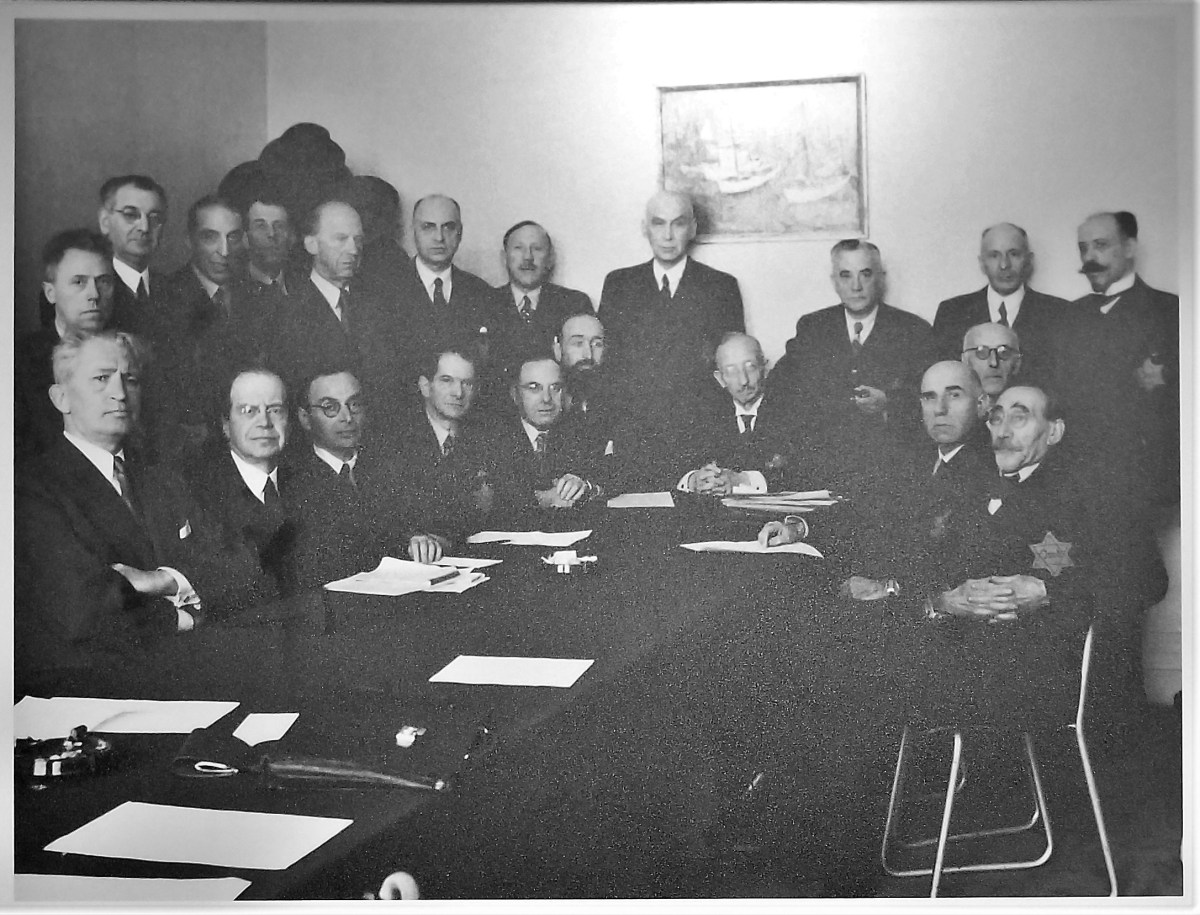
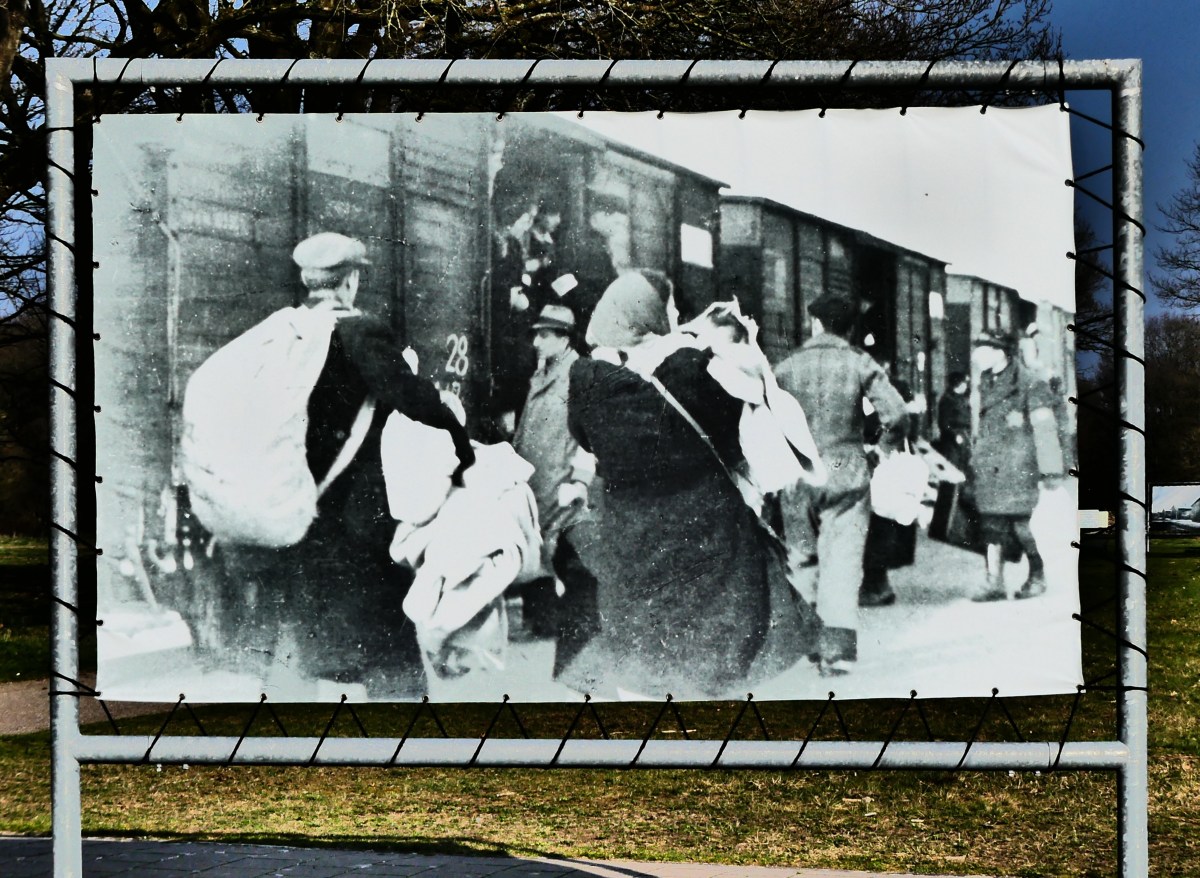
A large number of photos were taken by professional photographers, mostly commissioned by German authorities for use as propaganda.In addition, there were also countless amateurs who photographed the persecution and deportation of the Jews.The NIOD (Institute for War, Holocaust and Genocide Studies) manages by far the largest photo collection on this theme and conducted extensive research into the visual history of the persecution of the Jews in the Netherlands.Countless archives at home and abroad were consulted;this has led to the discovery of many still unknown photos. The exhibition shows a large and representative overview of the photographic recording of the persecution of the Jews.The images show in a penetrating and confronting way, the consequences of the anti-Jewish measures in the occupied Netherlands.They bear witness to the merciless behavior of the German occupiers, the cooperation of the Dutch in the deportations, but also the help to people in hiding and to the daily Jewish life during the occupation.In addition, attention is paid to the post-war reception of the few survivors from the camps and those who returned from hiding.
First greeted with a timeline of events,
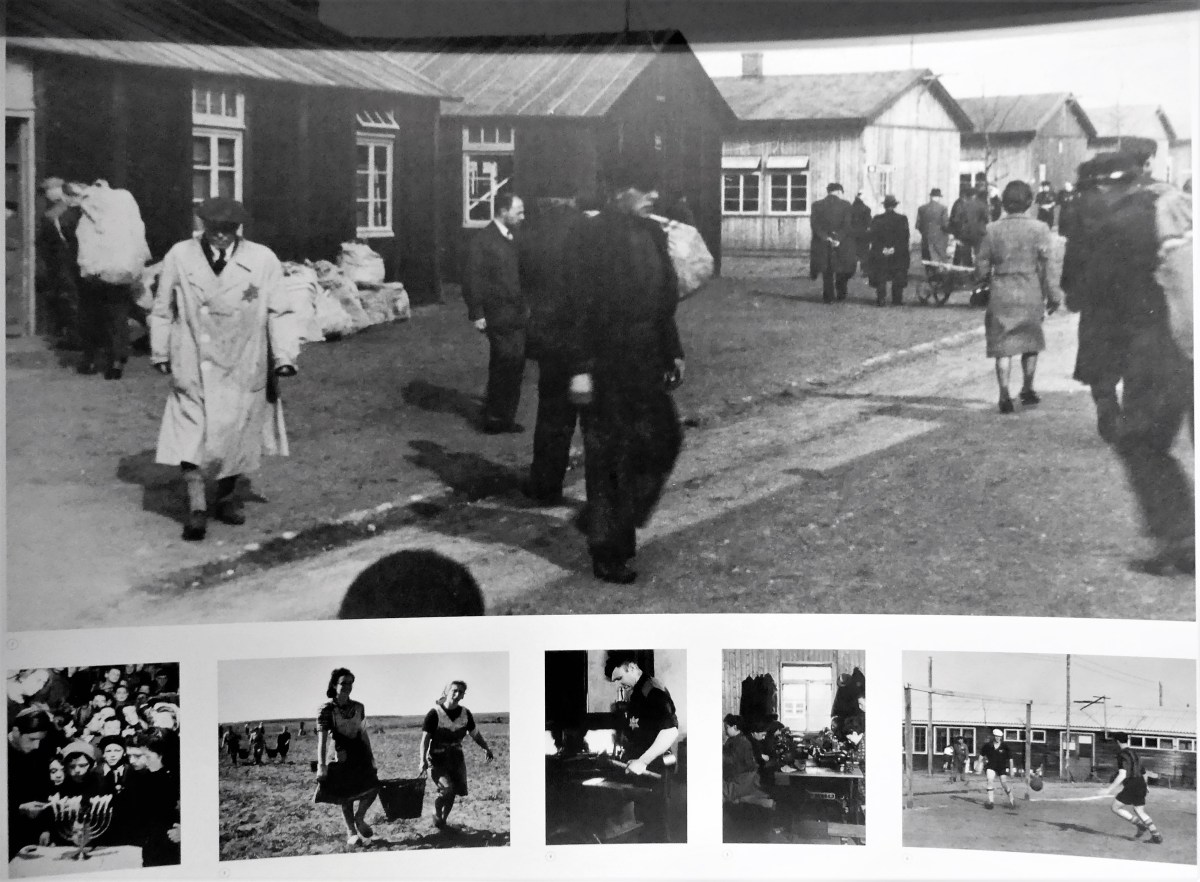
we proceeded through an open-air corridor and into a subdued chamber, where mostly elderly patrons followed a photographic progression of Holland’s involvement in the war, and its impact on the Jewish population:
Experiencing the exhibit was numbing to my core, but still my senses were on high alert. What were my chances, I wondered, that of the 140,000 remaining Jews in Holland from 1940-1945, I might find a photograph of my grandmother stitching an article of clothing…
for the Jewish Council,
to match up with one of the few yarns she used to tell me when I was so much younger and unappreciative of her travails?
Perhaps, she could be the proper woman in the gray coat with the straight back walking the lane between barracks in Westerbork.
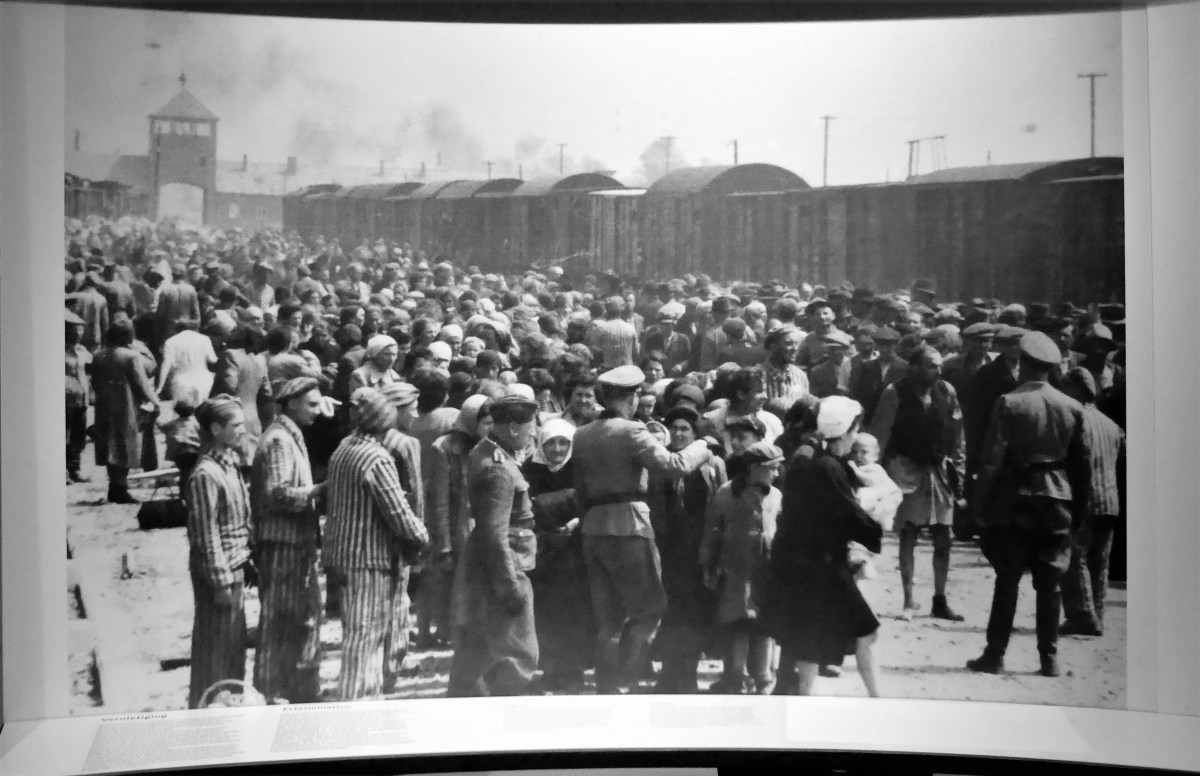
Or might I recognize her in a crowd of 2,500 faces that was awaiting one of three “death trains” to Theresienstadt after the Nazi command realized that the Allies were only days away from liberating Bergen-Belson on April 15, 1945.
At times, I used my camera as a shield to protect me from the full impact of the horror behind the photographs, thinking that if I could position myself as someone who is solely documenting the documents, than I could better insulate myself from the madness that she and so many others must have experienced.
An interactive Remembrance Wall occupied a room by the Museum foyer, encouraging patrons to search its ever-evolving database for the names and dates of Jewish victims who perished in Holland.
As a tribute to my unknown maternal grandfather Mnil…
I entered his name into the query window. He never survived Westerbork, and I had a quiet moment of reflection and gratitude for his courage to save his family before himself.
A two-hour drive to Kamp Westerbork with Jude did nothing to assuage my feelings of emptiness and sadness, but the site was ironically enlightening and beautifully serene.
Once at the memorial museum, we were greeted by a train of suitcases, representing the cycle of detainees that the Dutch pushed through Westerbork over the years,
with an emphasis on the plight of 102,000 Jews who sacrified their lives, all for the sake of a twisted manifesto of hatred.
Jude and I met Guido, the senior conservator of the museum at the museum cafe,
where he eagerly shared news and theories of our grandfather’s demise and our grandmother’s salvation through a collection of registration documents.
Two miles away, the hallowed grounds of the memorial can be reached on foot or by bus. Mostly empty space and green fields for an array of radio telescopes,
it nevertheless showcases a collection of iconic relics from the war that survived the Dutch government’s demolition of the camp in the 1960s.
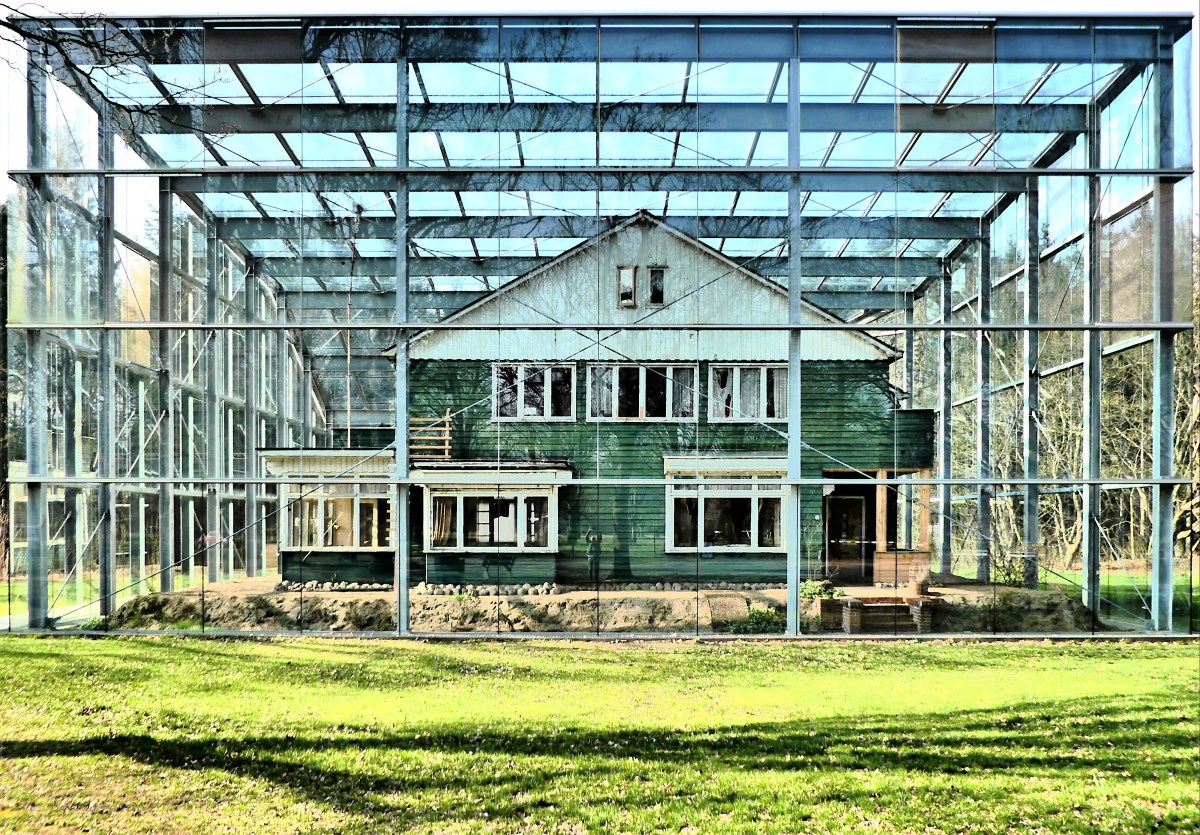
There is a glass enclosure protecting the Commandant’s quarters;
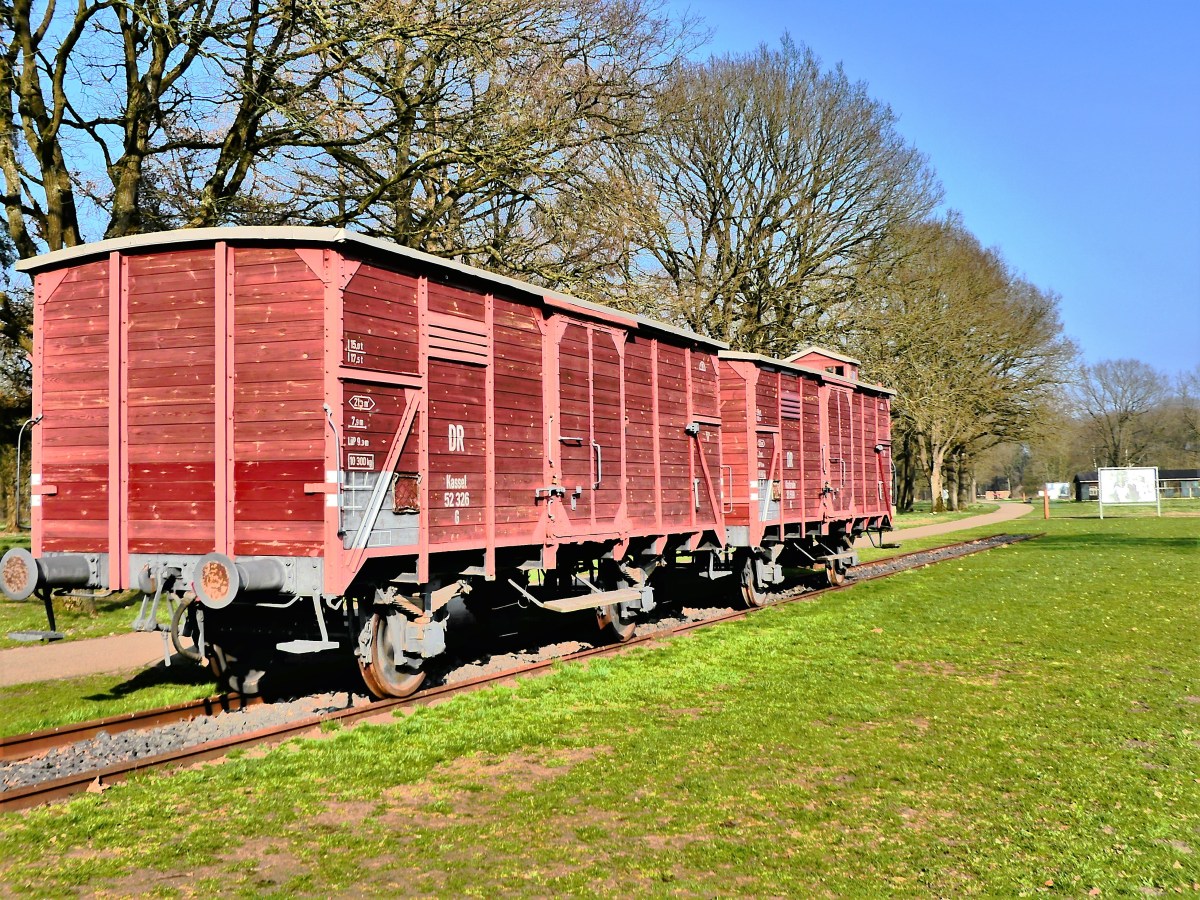
an original boxcar that stands as a testament to the 84 trains that transported Jews to Auschwitz and Sobibor,
where nearly all of the 94,643 persons deported were killed on arrival;
a monument to the 102,000 Jews of The Netherlands who passed through Westerbork…
and lost their lives;
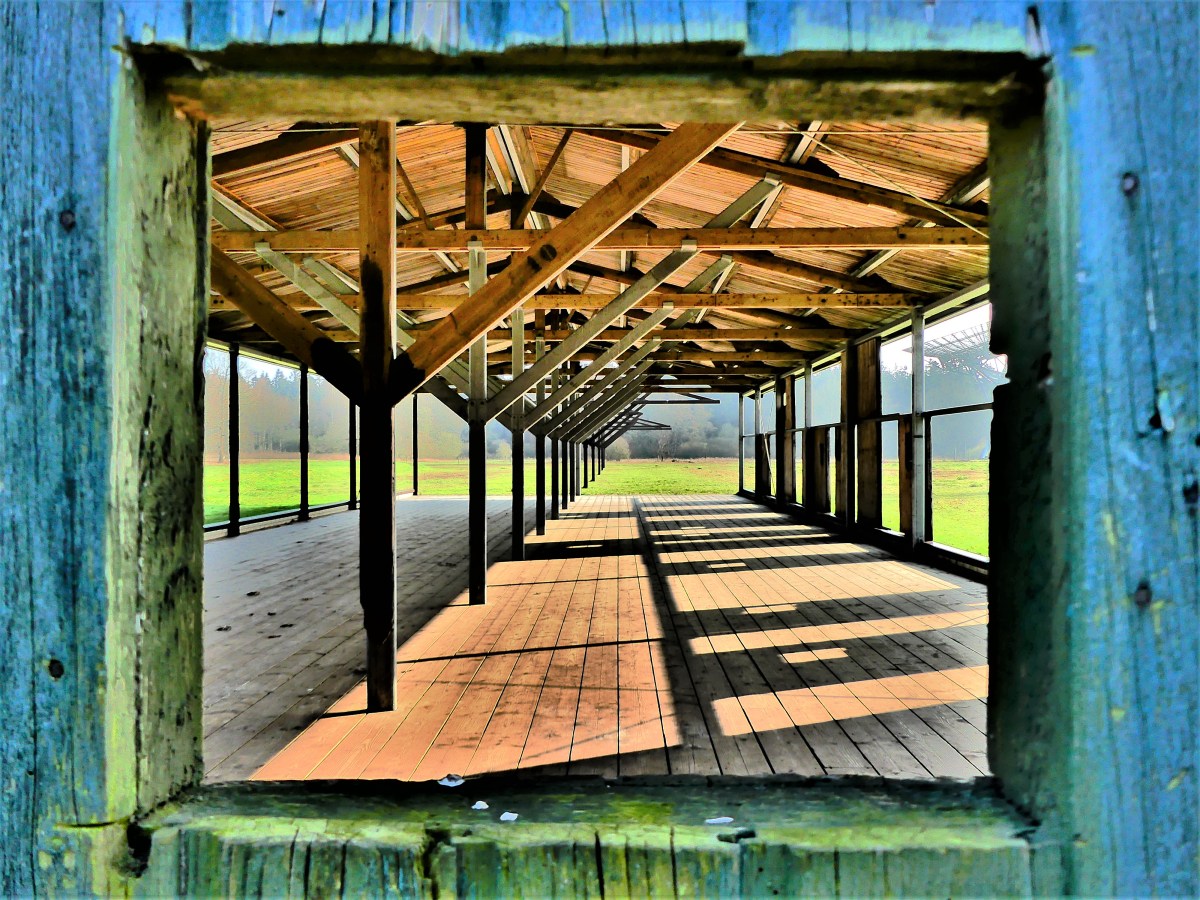
the remnants of a barrack;
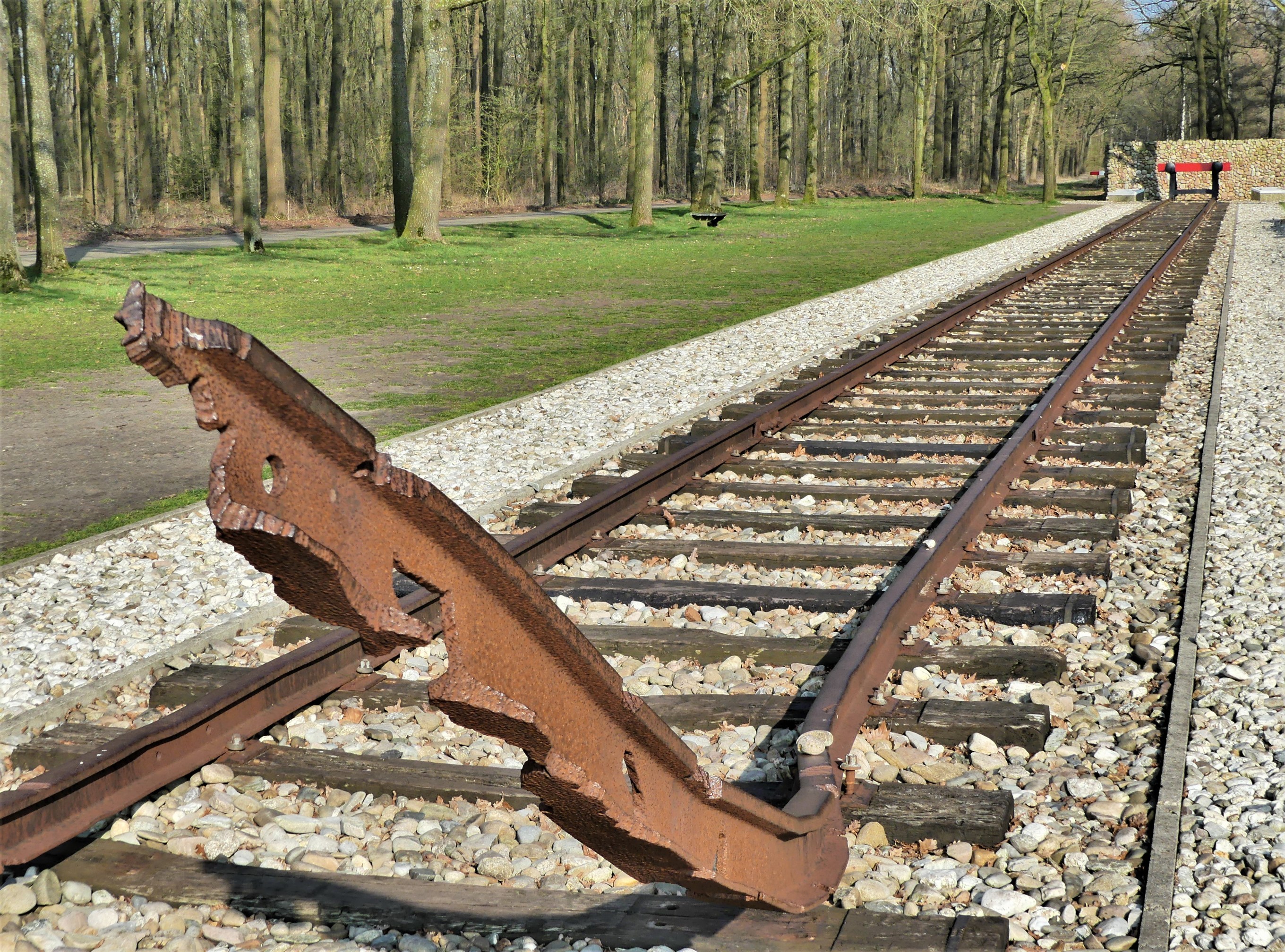
and a guard tower standing beside a metaphoric railbed.
I drifted from display to display, as if being involuntarily directed like a Ouija board peg–believing that I was somehow being programmed to walk in the footsteps of my grandparents.
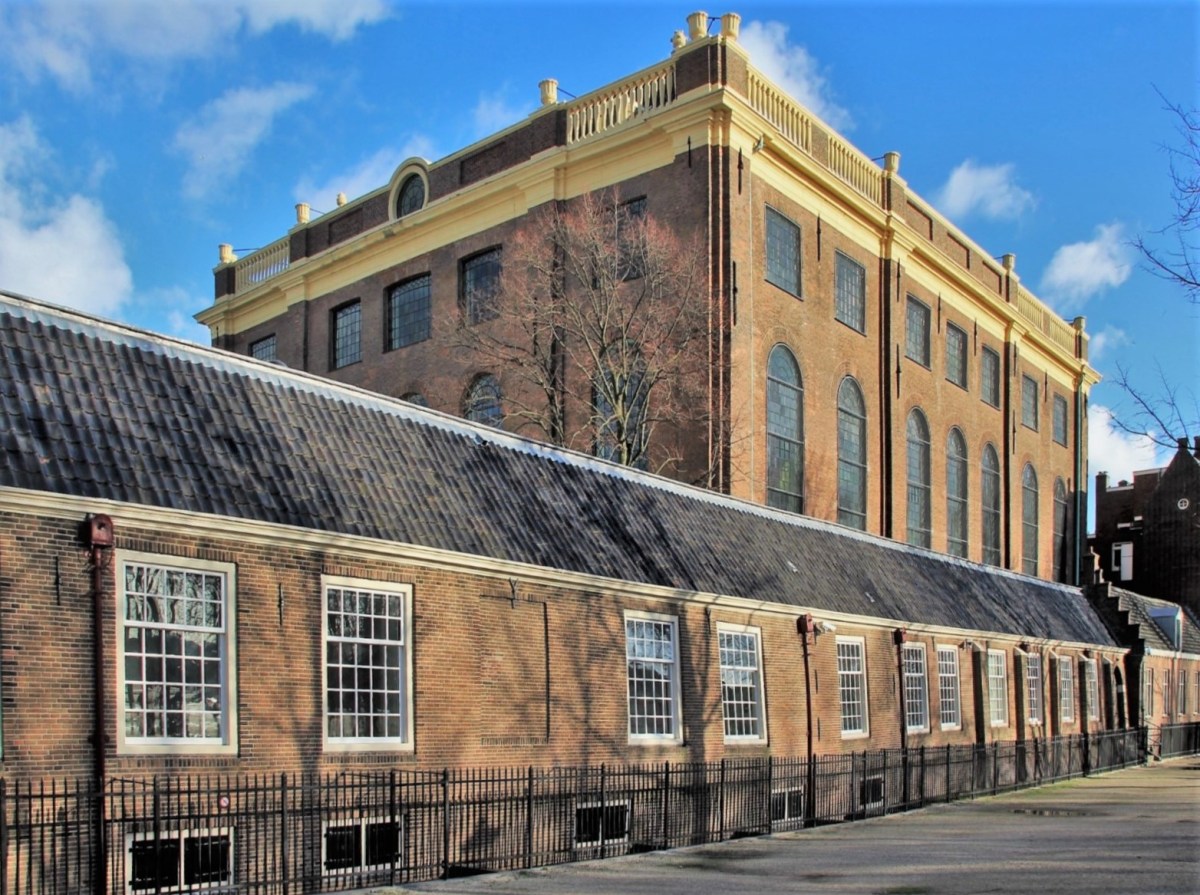
Upon return to Amsterdam, Jude and I strolled through the Jewish District, walking past the Portuguese Synagogue, an imposing Baroque structure completed in 1675, where most certainly, our family would have prayed, but sadly, never as a family;
and along Weesperstraat, past the Monument of Jewish Gratitude,
where a controversial limestone edifice will soon be replaced by Daniel Libeskind’s Shoah Memorial.
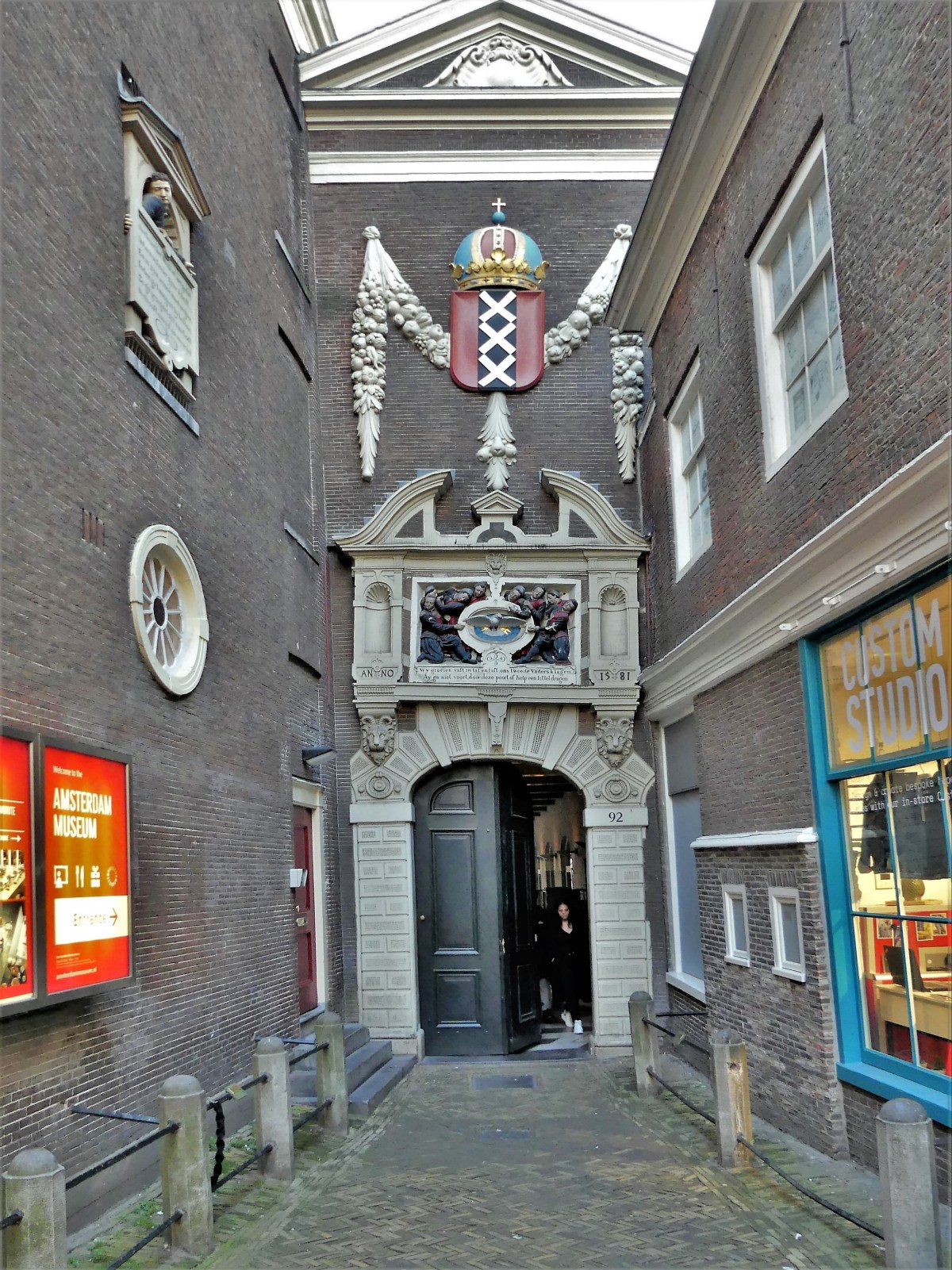
From there, we strolled in search of the Burgerweeshius,
once the landmark orphanage that sheltered our moms after they were transported from Soesterberg…
Bertie stands in the back row in front of the tree; Eva sits in the second row, third from the right
and now home to the Amsterdam Museum.
For one moment, I thought I could hear the faint and familiar sound of children playing in the courtyard–playing tag around the tree, and playing soccer across the herringbone pavers.
Amsterdam had much to offer. Walking through the city, I felt an eerie sense of belonging–not because of the dissonance of grief–past or present–but the resonance of a shared understanding brought about by reconnecting with my cousin, Jude and the revelation that Amsterdam’s secrets have become an open book of acknowledgement and remembrance.
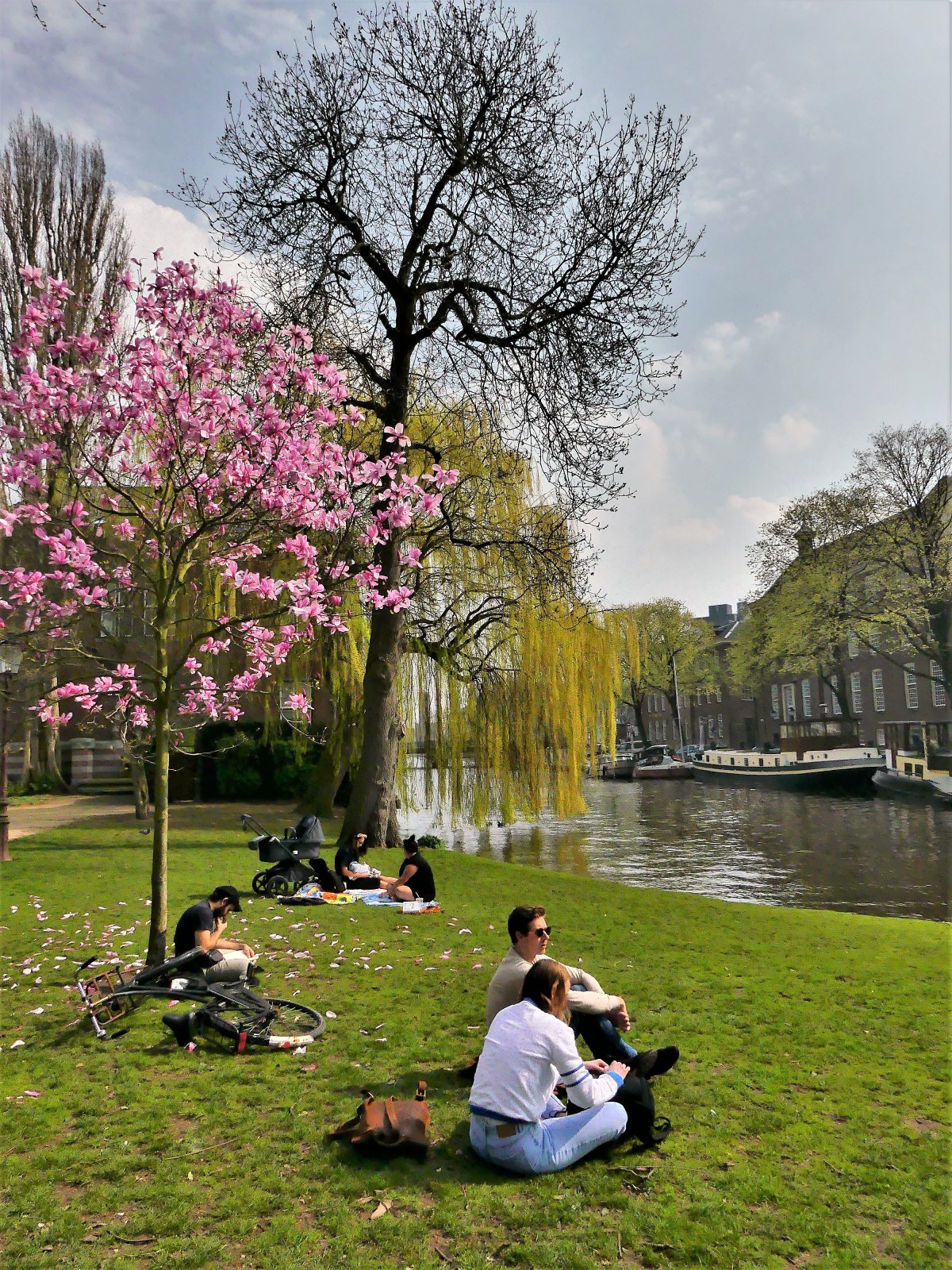
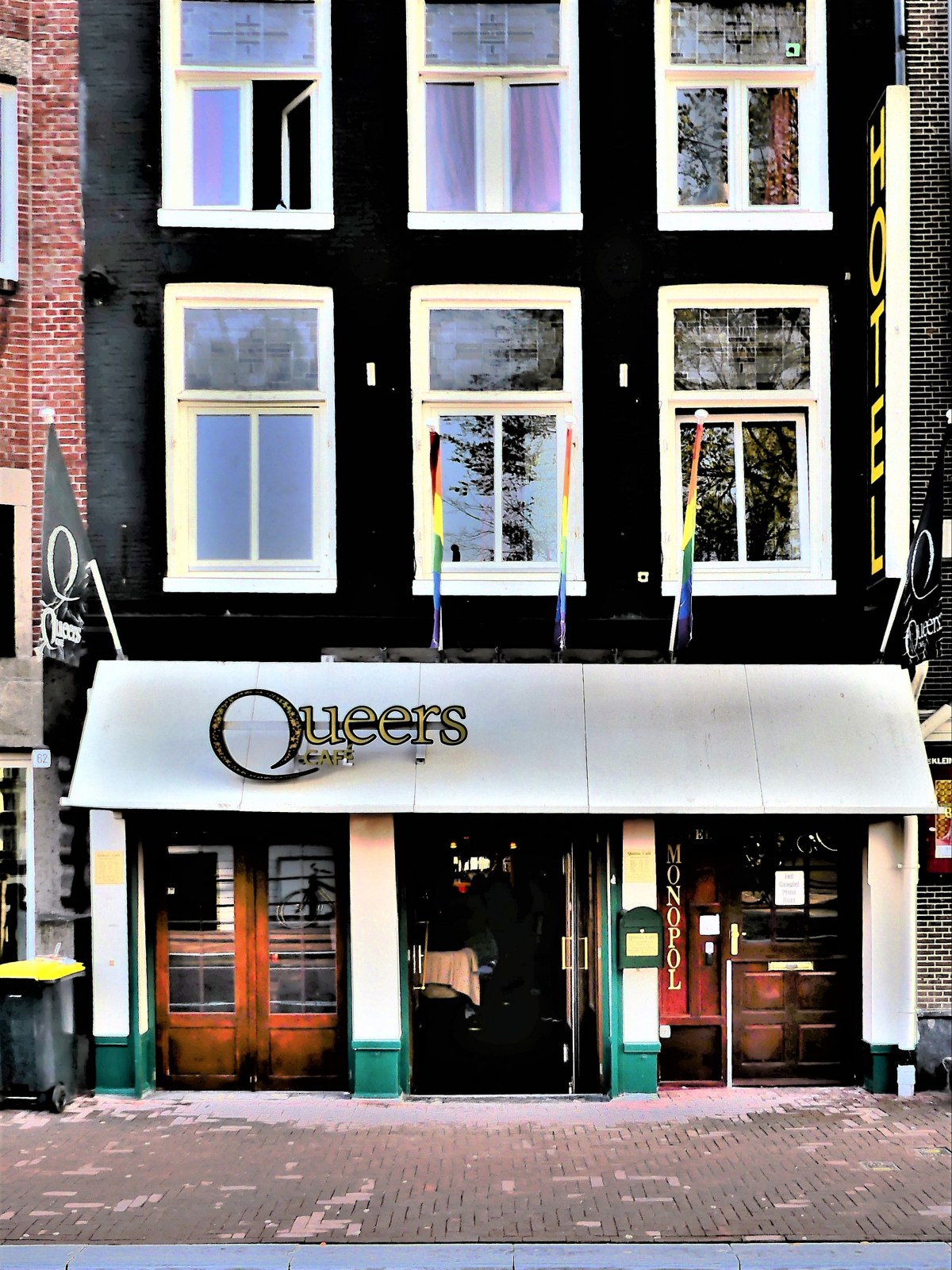
Peering into shop windows along the streets and canals of Amsterdam…
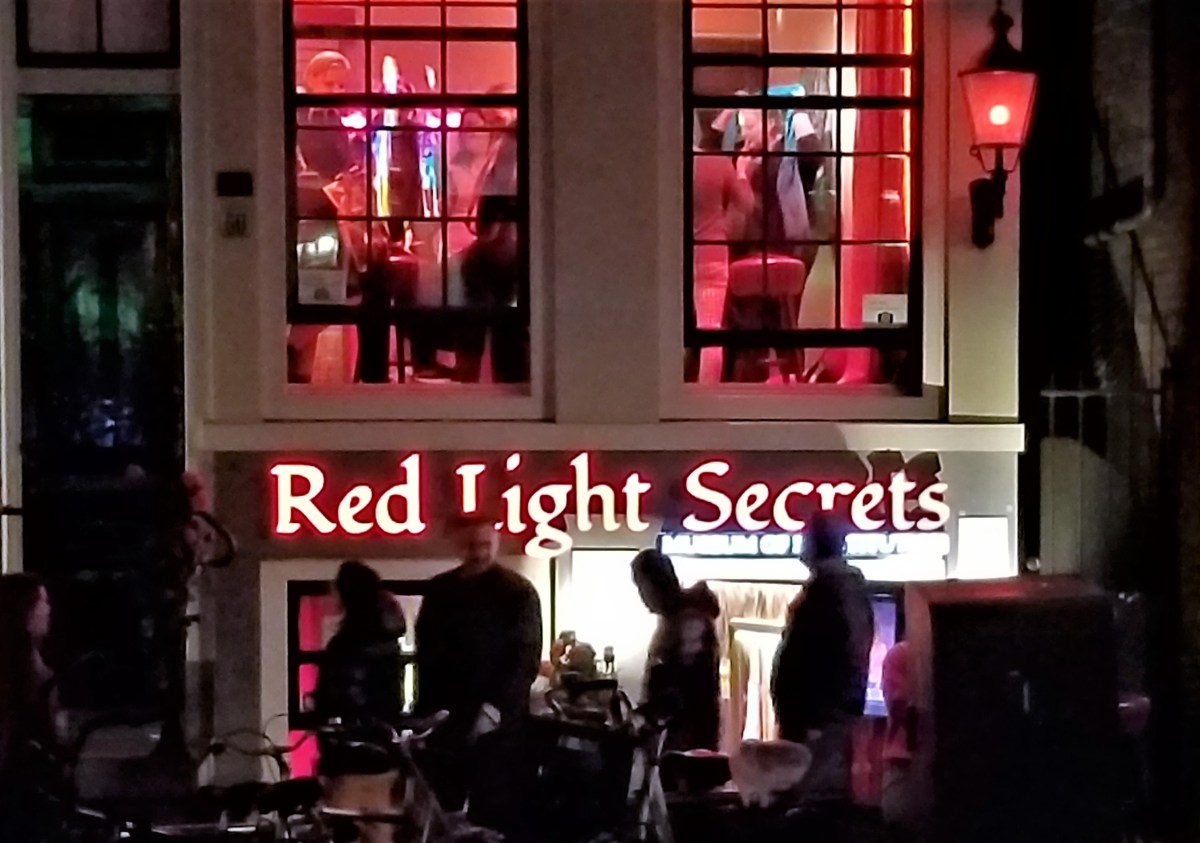
…presents many an oddity that will surely arouse the senses. Although, considering Amsterdam’s predilection and distinction for legal marijuana and prostitution, it would seem unlikely that there could be any room for other surprises.
Yet oddly enough, despite the merchandising overload of everything cannabis,
and the city’s penchant for 24-hr flesh peddling,
there is more to Amsterdam than just kink and circumstance.
There are also plenty of museums,
and enough al fresco cafés and frites stores to support a cultural and gastronomical battalion.
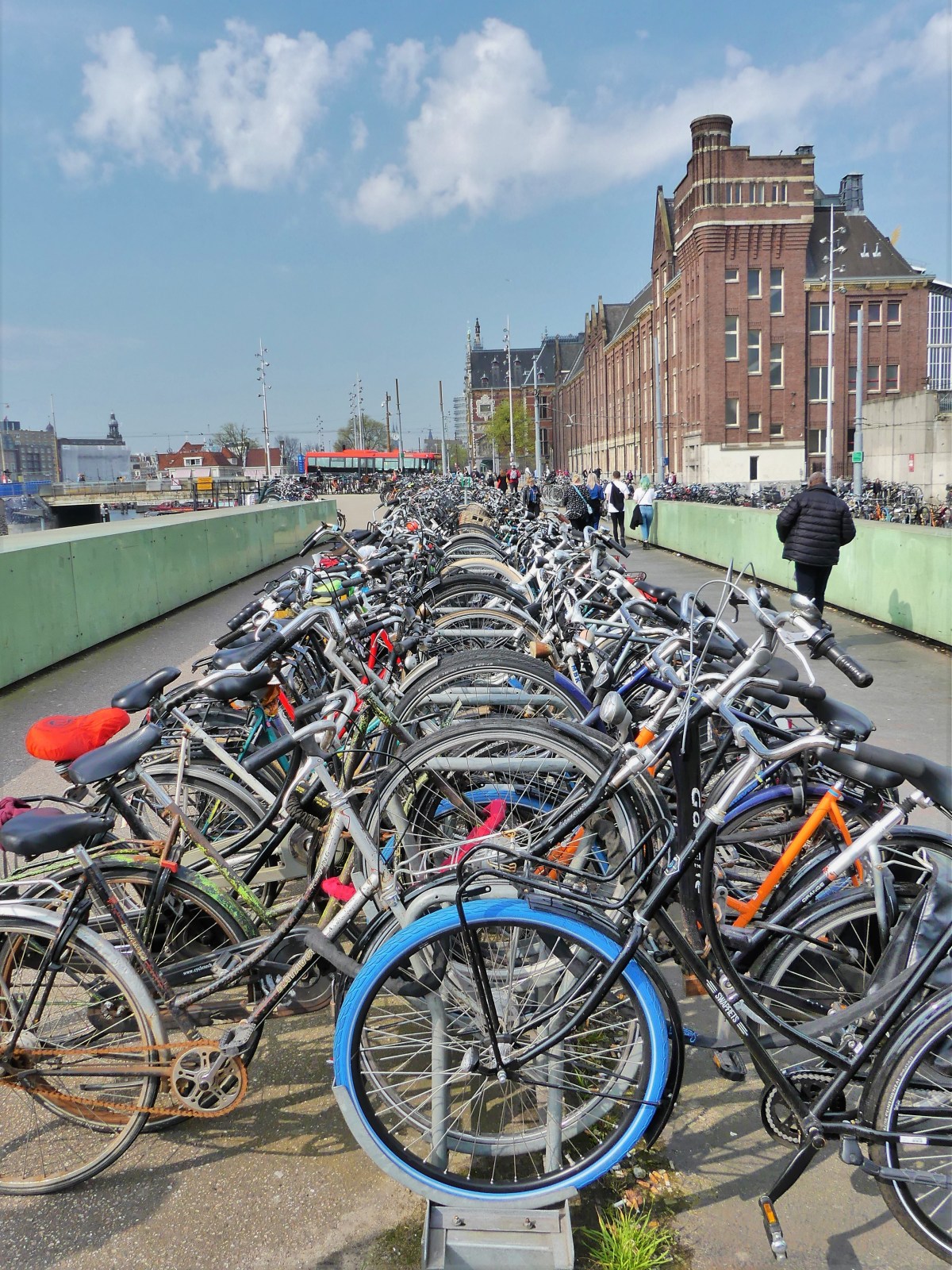
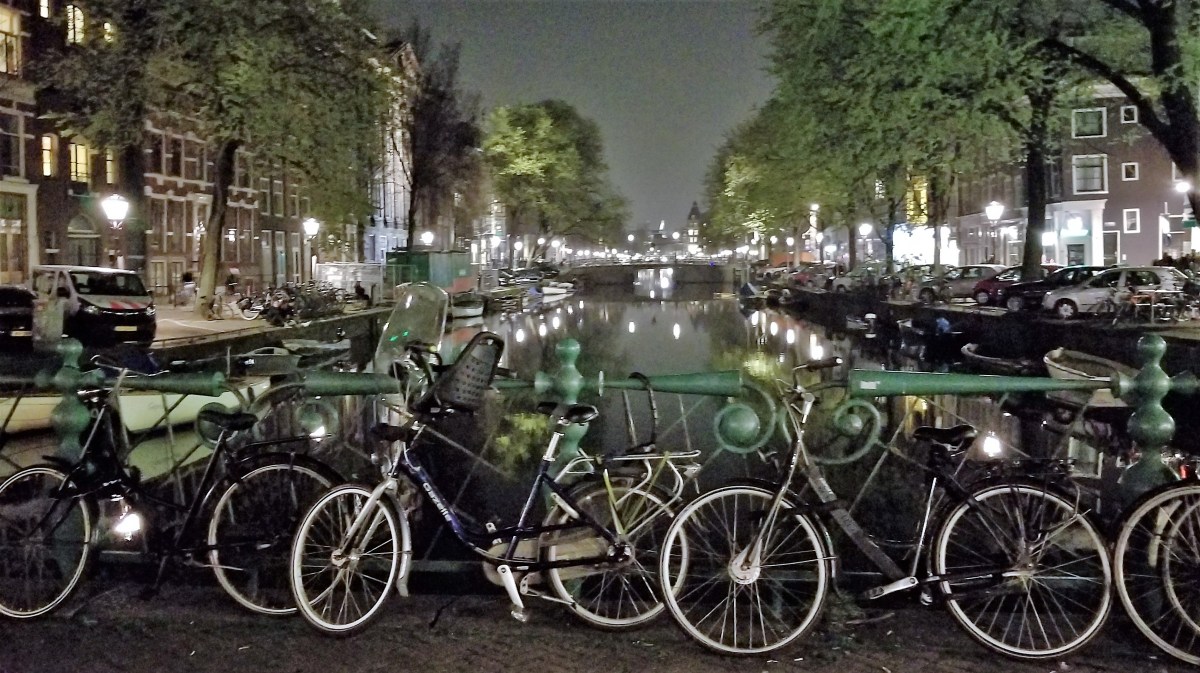
Amsterdam is a place for eyes behind your head, because two eyes in front is not enough to sidestep all the oncoming cyclists coming from every direction,
but also to catch all the head-turning outrageousness of an unrepentant town that still embraces Easter.
Amsterdam is a place to relax. Heck, half the population is already stoned, and the pungent waft of weed is a strong reminder to kick back and enjoy the scenery.
Amsterdam is a tolerant town, where all kinds of people gather and co-exist without judgement or little reservation. Citizens are proud and expressive, at times aggressive, but mostly helpful–although they smoke entirely too much, and regard the street as their personal ashtray.
As a laissez-faire society by practice and design, it appears to work. Quite simply, Amsterdam is a libertarian’s delight!
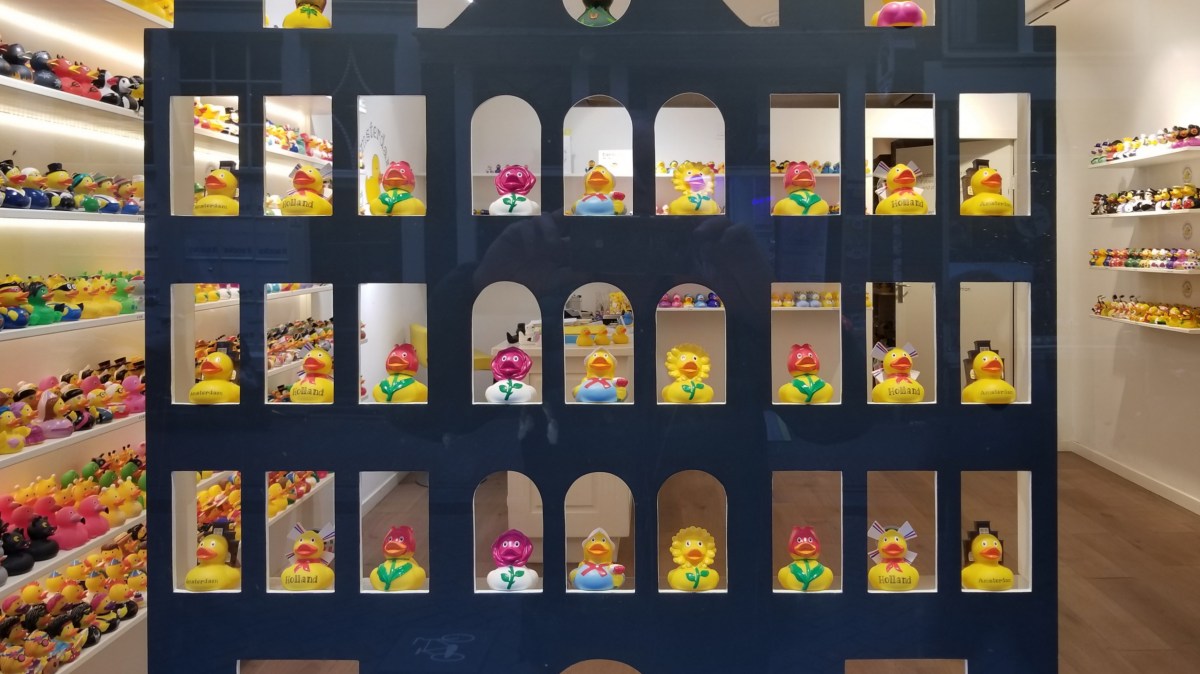
And that leaves plenty of room for rubber duckies and vaginas, and everything between.
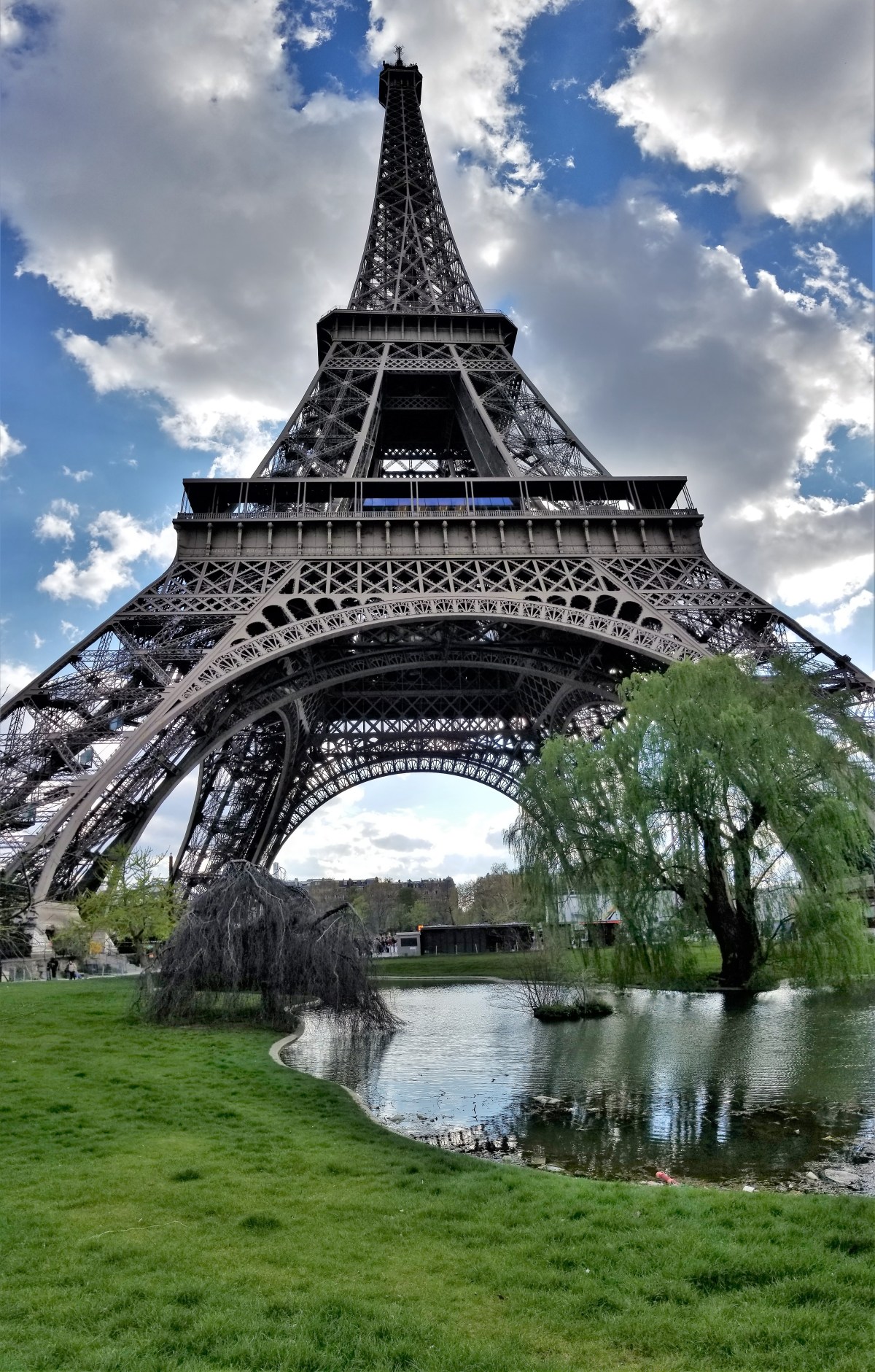
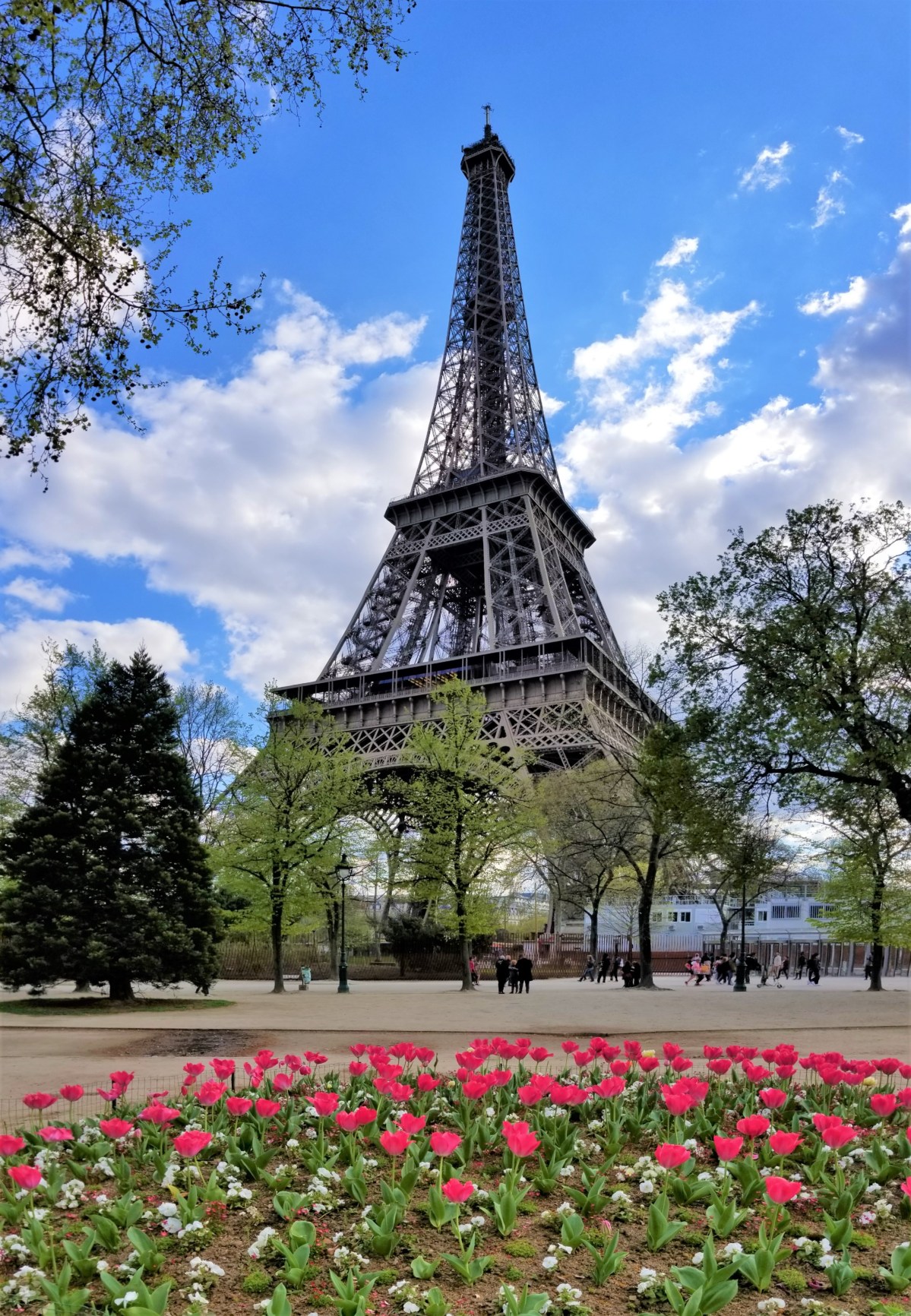
Let’s face it! The Eiffel Tower is one of the most photographed structures in the world. Since celebrating the 130th anniversary of its opening last week, more than 7 million people a year now flock to gawk at it’s imposing presence along the Champ-de-Mars.
I’m certain that it’s been photographed from every imaginable angle, in all sorts of light–day and night–and in all sorts of weather conditions.
But not by me! After arriving in Paris and settling in my hotel in Montparnasse, the first thing I wanted to visit was the Eiffel Tower. To me, it meant that I was in Paris!
There’s security now. Since July 2018, a 3-meter high wall of bullet-proof glass (2.5 inches thick) protects the “Iron Lady” and visitors from vehicle-ramming attacks, while two sentried openings scan personal property. But the inconvenience is minimal compared to the lines that form for stairs and elevators to the top.
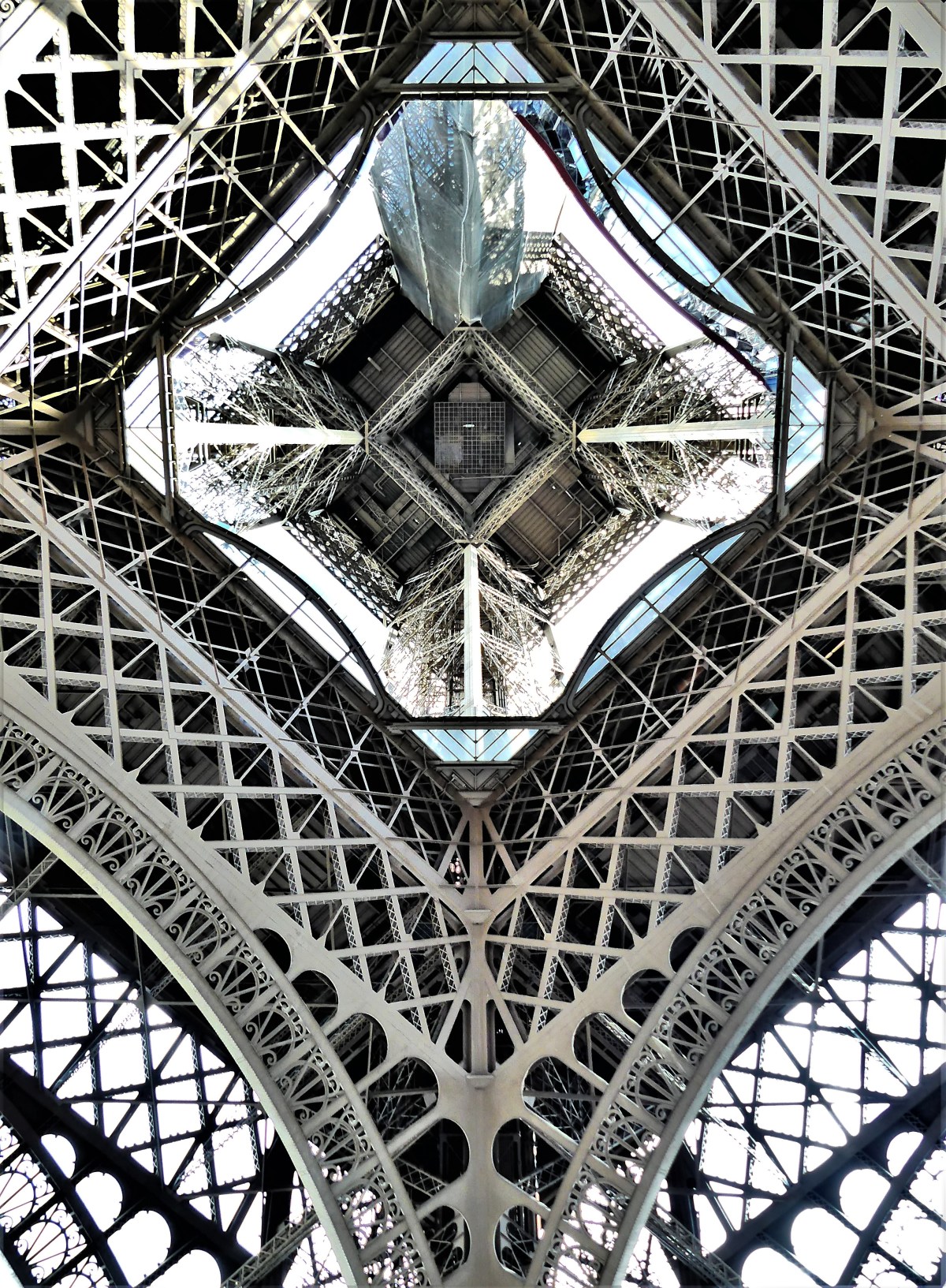
Once inside the enclave, the enormity of the tower is that much more imposing, stretching the length of one football field in all directions from the center to its foundation footings.
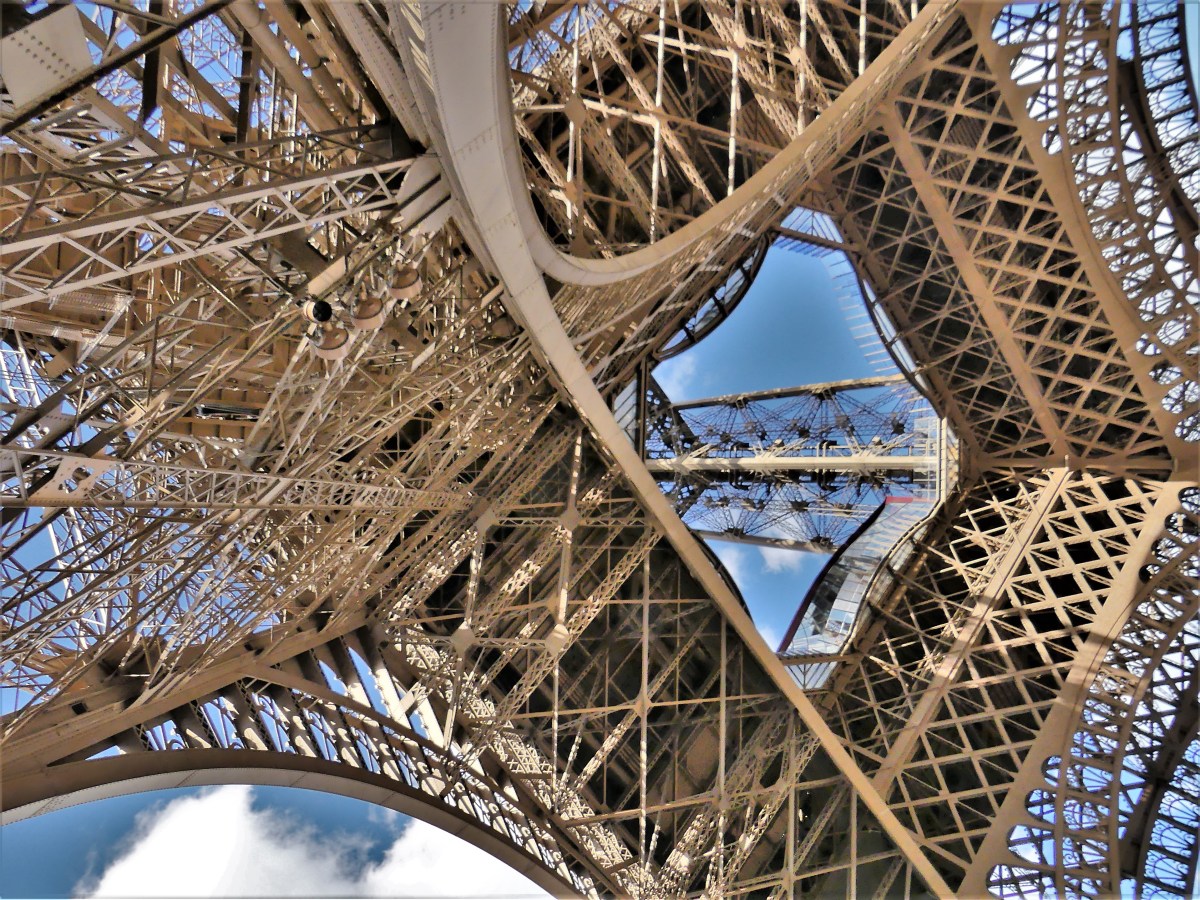
Examining the intricacy of the lattice can be hypnotizing,
when studying the symmetry of shapes,
or it may seem random and haphazard by a clash of metal girders.
But if abstracting the Eiffel Tower appears upsetting or unsettling, a postcard version of this Parisian landmark can always please the senses…
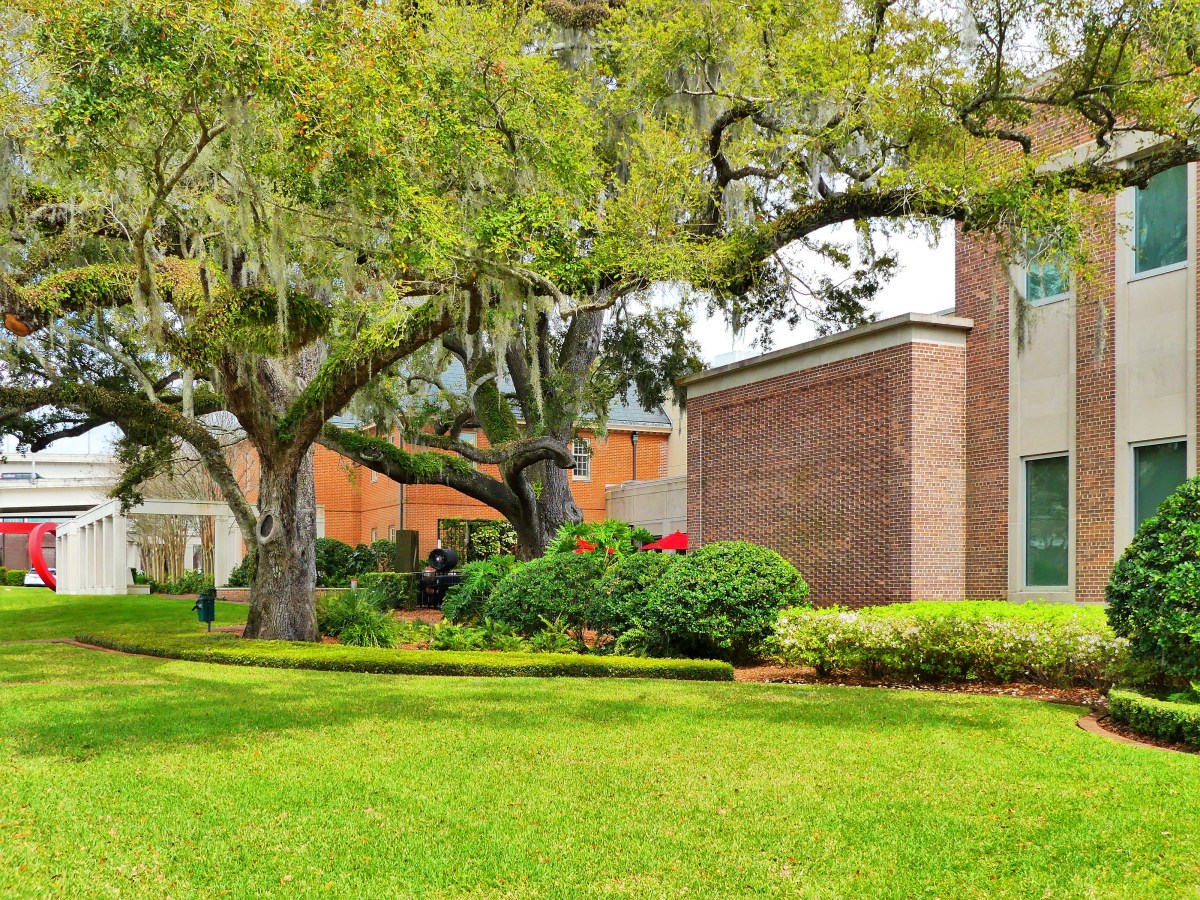
In celebration of Pi-Day, Leah and I scored theater tickets to the national tour of Waitress, presenting at Times-Union Center in downtown Jacksonville. Wanting to take advantage of fair weather, and never having seen Jacksonville during daylight hours, we decided to make an afternoon of it by visiting the Cummer Museum of Arts and Gardens located in Jacksonville’s Riverside neighborhood, a short distance from our evening venue.
And it was well worth the trip.
In 1902, Arthur Cummer joined his parents, Wellington and Ada at their St. Johns River homestead, and built a half-timber English Tudor style house for Ninah, his bride. Arthur and Ninah began collecting art soon after.
Only the designated Tudor Room remains from the original house, so “the public at large may enjoy some insight into the personality of the owner.”
A series of interconnected museum wings are separated by a courtyard paved with terra-cotta tiles from the Cummer’s old roof.
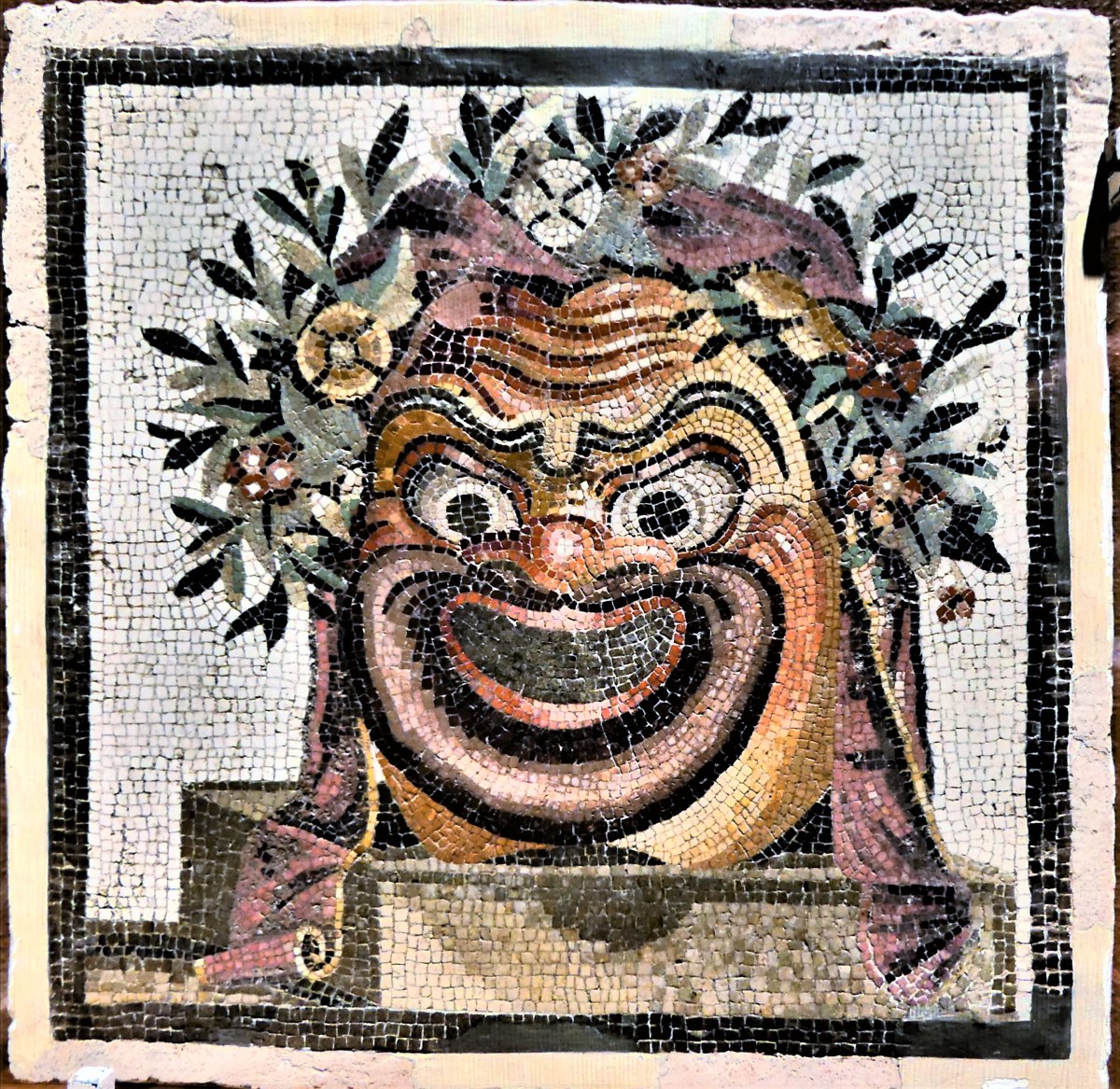
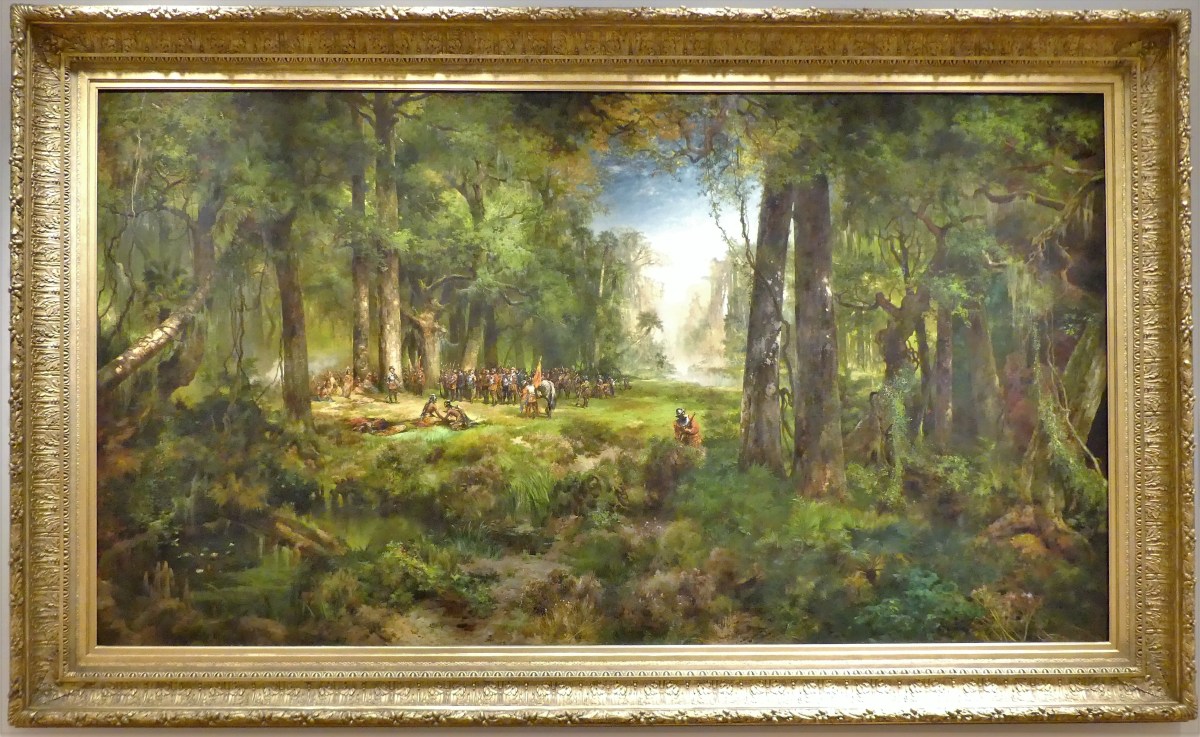
The original Cummer collection plus acquired collections of paintings, sculptures, and Meissen porcelain fill fourteen galleries, span 3200 years, and range from:
2100 BCE…
to 100 CE…
to 13th century…
to 17th century…
to 18th century…
to 19th century…
…to contemporary artists like Harlem Renaissance sculptor, Augusta Savage, whose work is currently exhibiting in the Mason Gallery.
Following Arthur Cummer’s death in 1943, Ninah wished to establish a “center for beauty and culture…[for] all of the people” on the residence grounds.
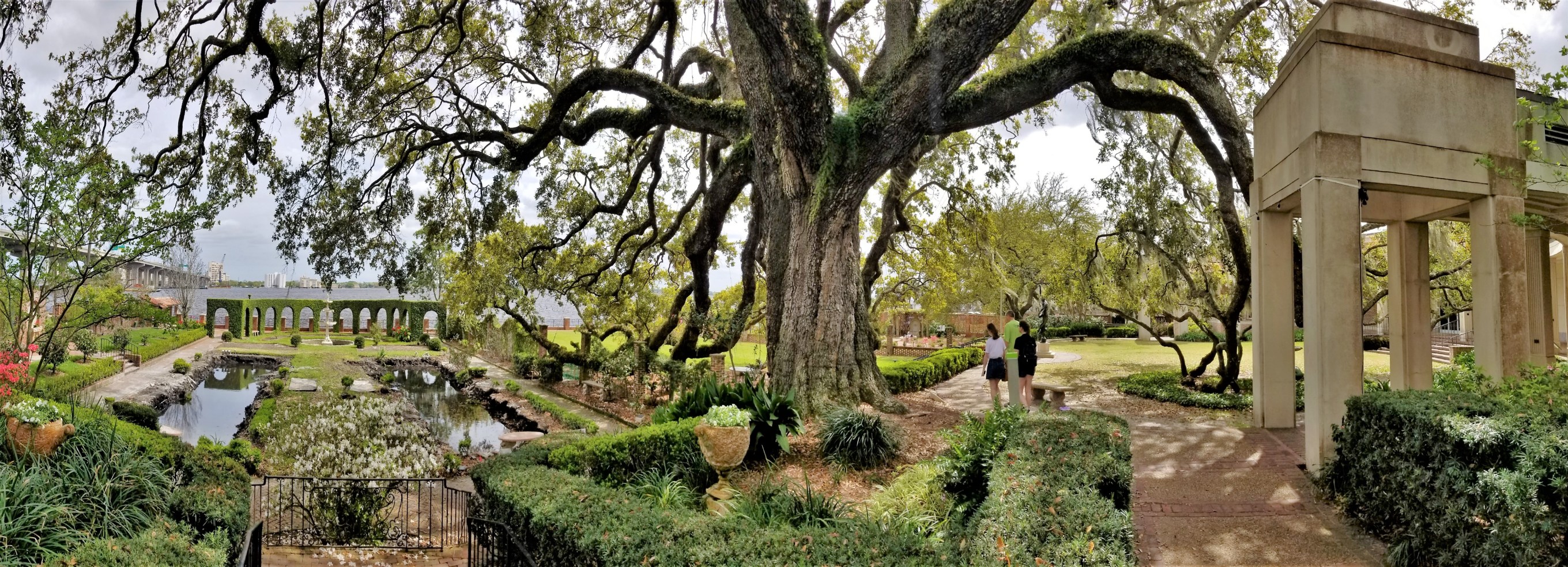
Upon the widow’s death in 1958, the estate and gardens were granted to the DeEtte Holden Cummer Museum Foundation. Soon after, buildings were demolished (with the exception of the Tudor Room) in favor of a state-of-the-art museum that opened in 1961, followed by a detailed restoration of the property’s Italian Garden…
the Olmstead Garden…
and the English Garden–
all of which were added to the National Register of Historic Places in 2010 for outstanding “American landscape design in the first four decades of the twentieth century.”
As northeast Florida’s largest and most significant museum and arts education center housing over 5,000 works of art…
the sky is the limit.
BTW…the show was a tasty morsel about a bittersweet topic.
On the third day of a four-day affair, the 1-mile approach to the Ritz-Carlton Hotel was thoroughly congested. In addition to stand-still traffic, an unbroken chain of cars akimbo were parked on both sides of the grassy shoulder.
A steady stream of walkers of all ages easily out-paced my Ford pickup on the way to the Amelia Island Concours d’Elegance, north Florida’s premier destination for car connoisseurs–and in some cases–car collectors with deep pockets. They have come from around the world to claim bragging rights for owning many of the rarest sporting and cruising motorcars worthy of six to seven-figures.
We mastered the final quarter-mile in 30 minutes. Once past the event entrance, we took a quick right and followed the signs that led us to a string of ad hoc neighborhood parking concessions charging $40 for the day. Fortunately, as I approached the first backyard turn-in, a couple was just claiming their vehicle–leaving an open spot for me.
“Are you kidding?! I’m not paying that kind of money for a parking spot! That’s highway robbery!” announced Leah to me.
“Is it any cheaper down the road?” Leah called out to the attendant/mansion owner.
“It’s the same, but if you’re willing to walk back about 20 minutes, you might be able to park somewhere for half the price,” he offered, “but you need to make up your mind ’cause there’s traffic piling up behind you.
I turned into the lot.
“Location, location, location,” I declared.
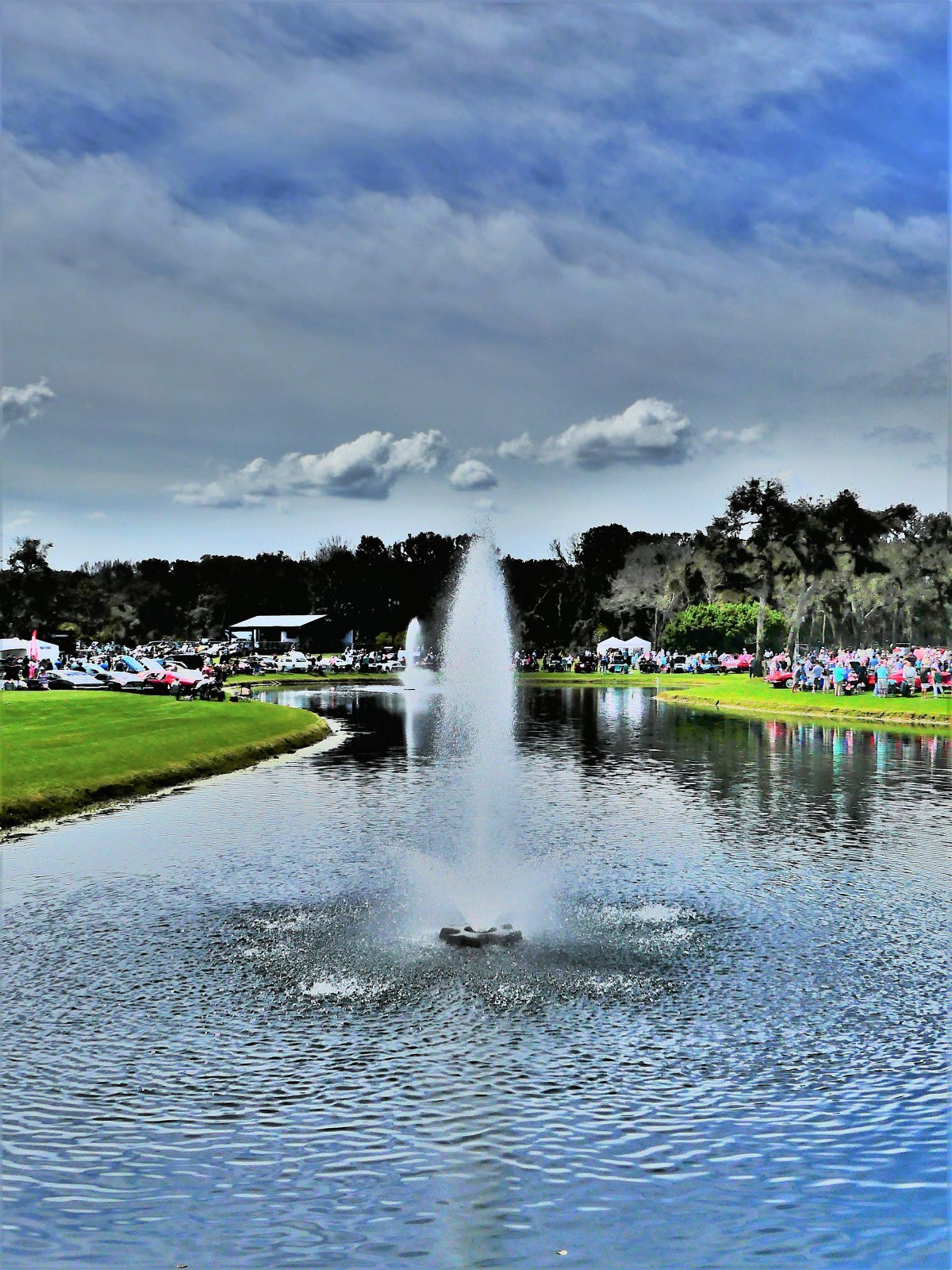
The sunny skies were a blessing and a curse. The weather was perfect for strolling along the 1st, 10th, and 18th fairways of the Golf Club of Amelia Island…
to gaze at more than 400 classic and exotic automobiles.
However, the owners who were standing guard over their prized possessions were invariably hard at work, answering questions, overstating their cars’ value, and forever polishing away the glaring fingerprints of so many gawkers-turned-touchers.
A full representation of cars from every manufacturer was mostly categorized by brand, ranging from Datsuns…
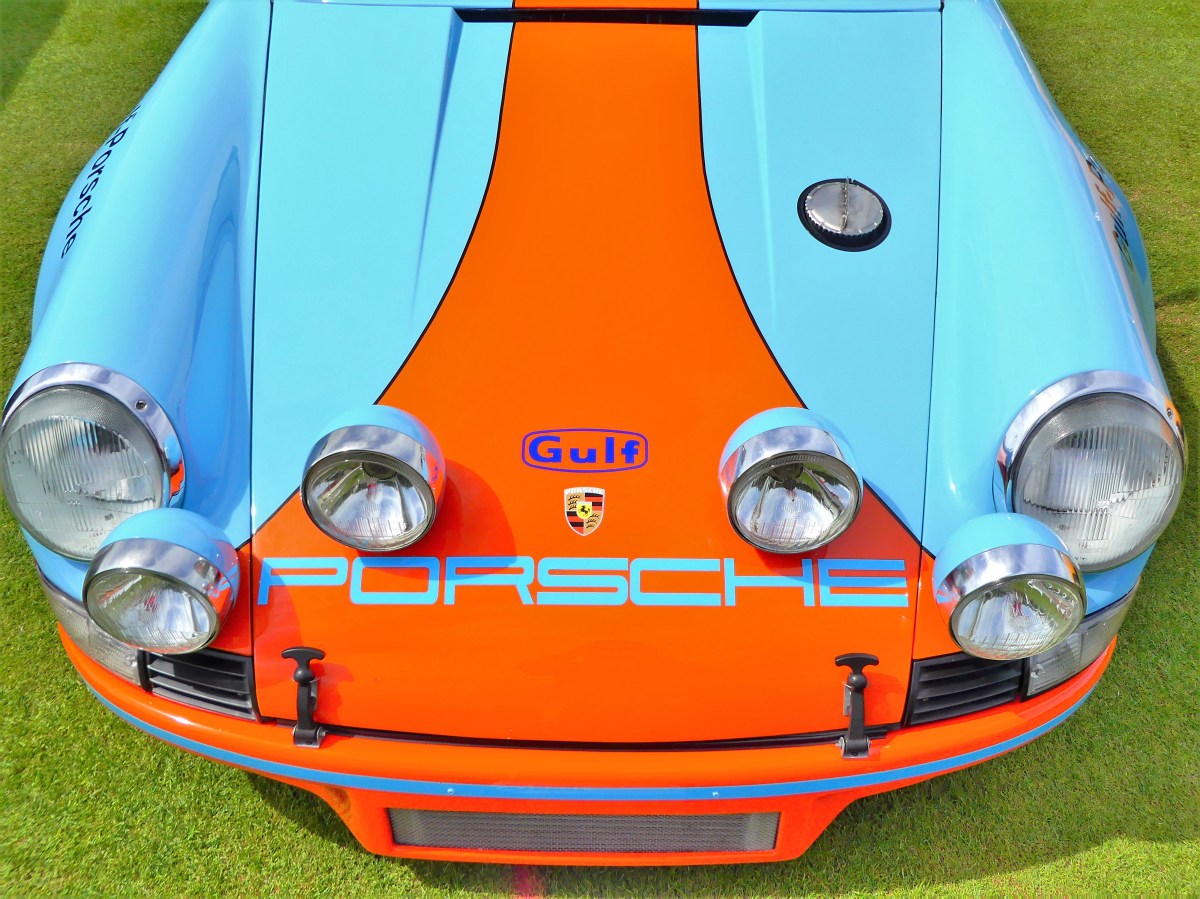
to Porsches…
with occasional support provided by corporate tents and stages…
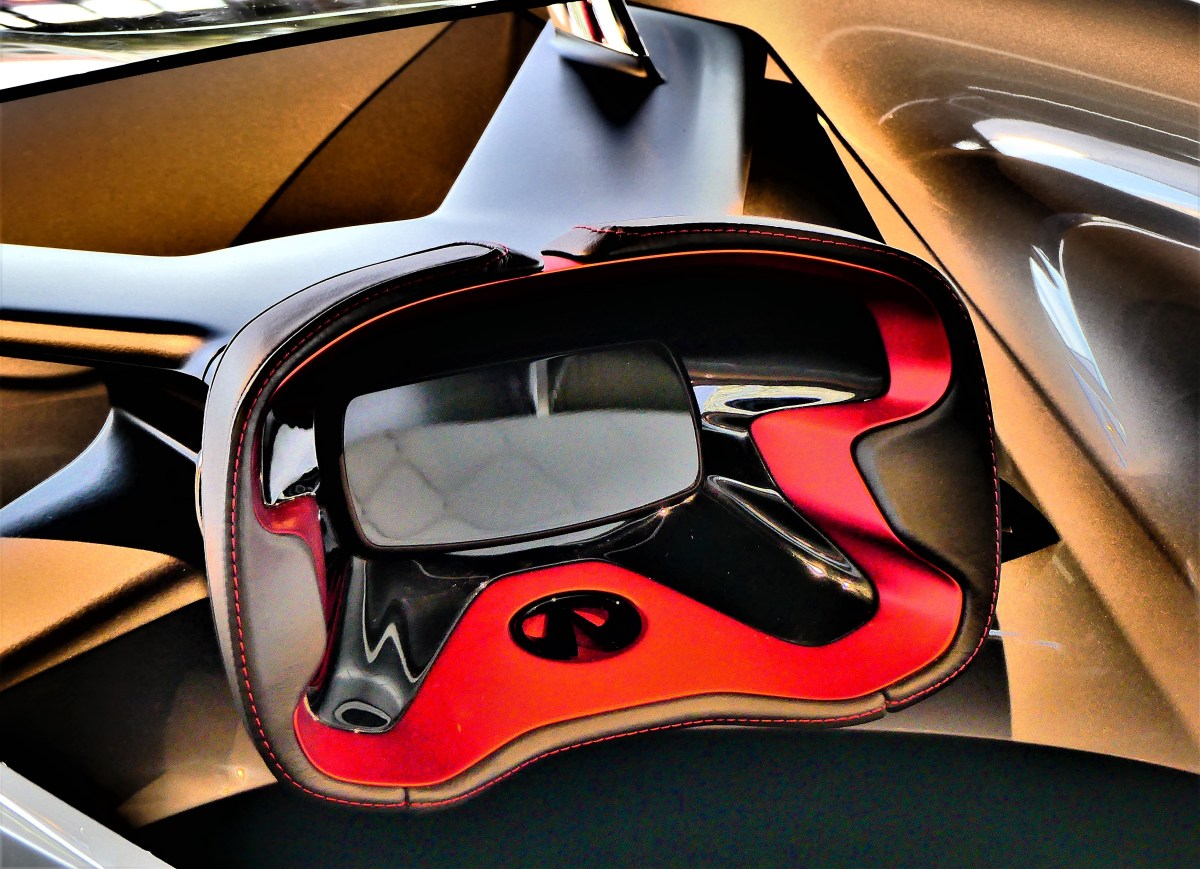
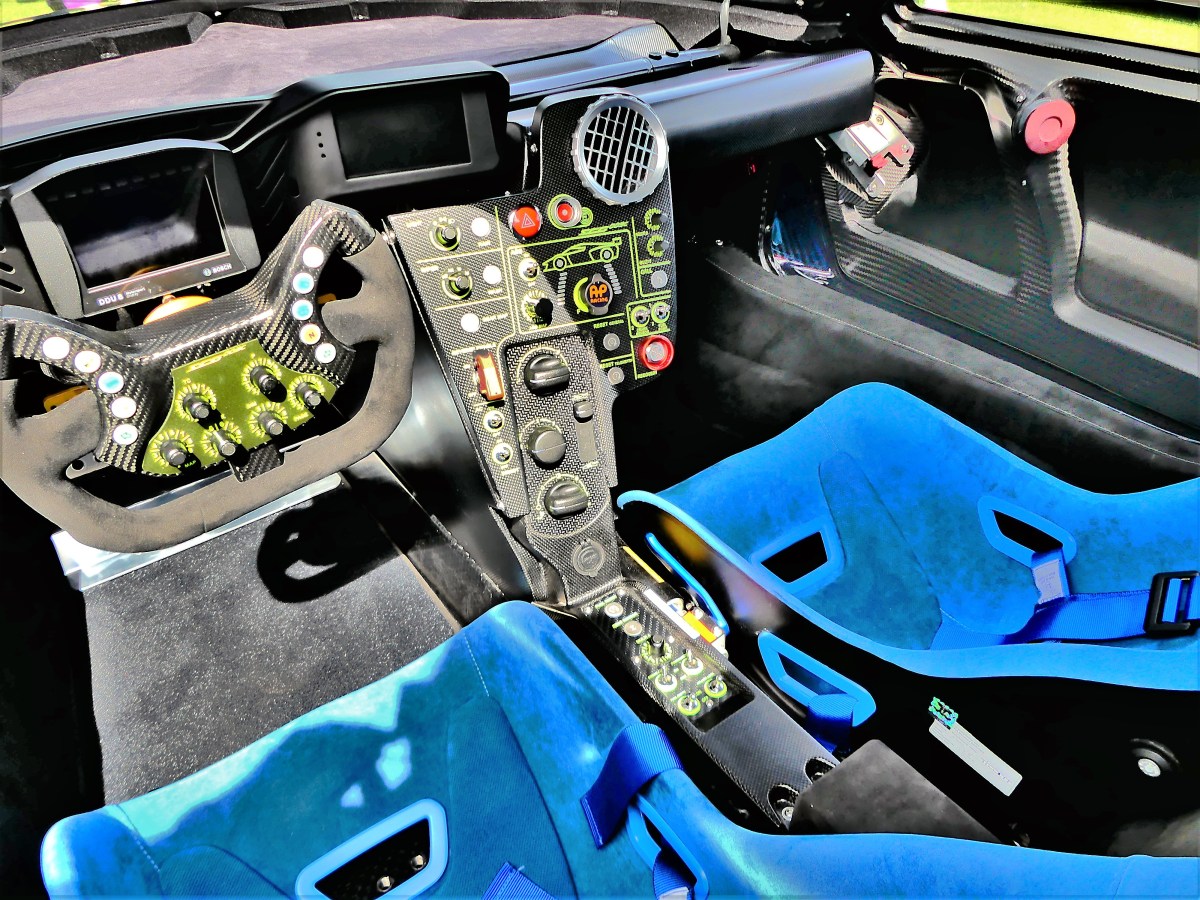
showcasing concept cars…
elite production models,
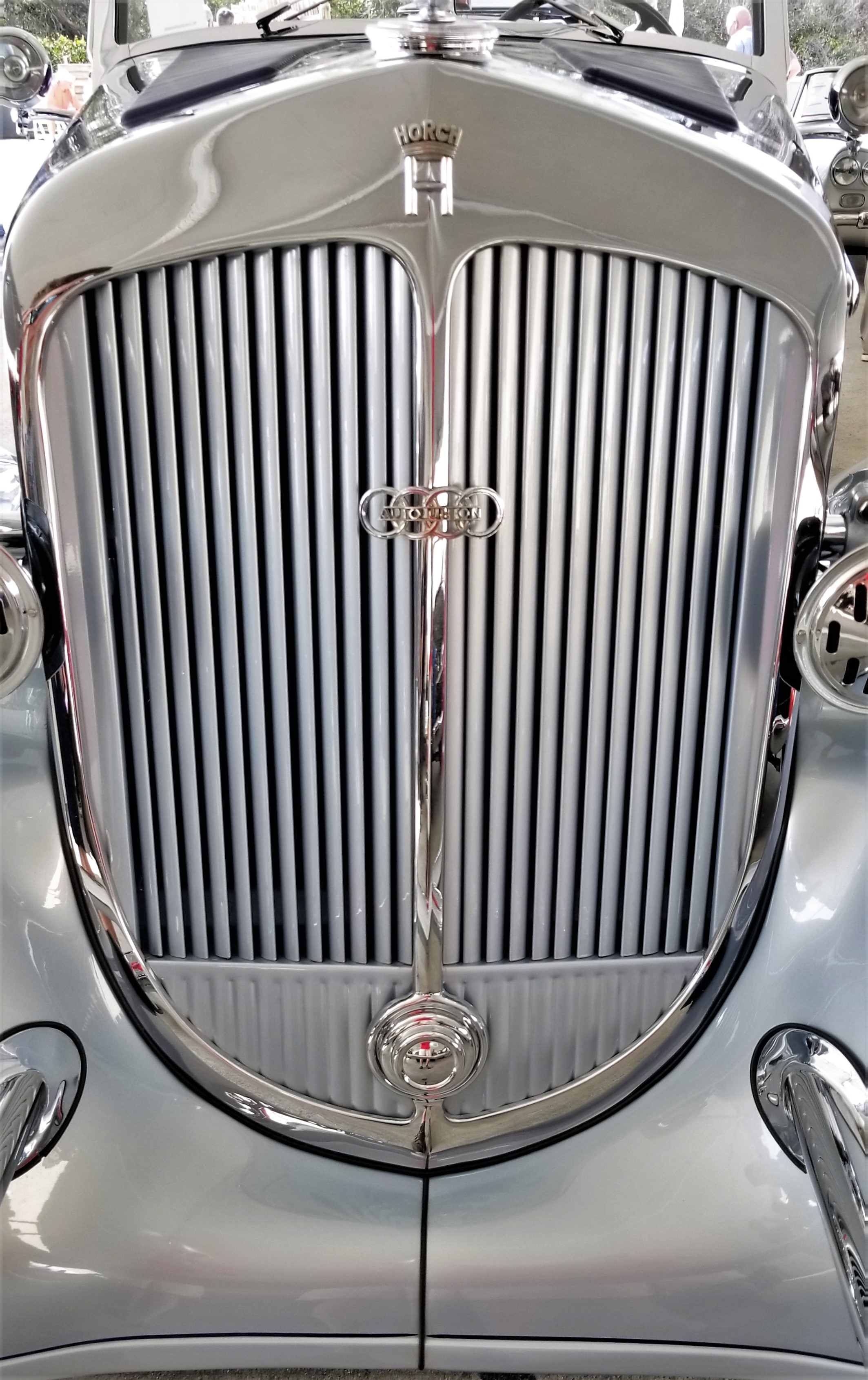
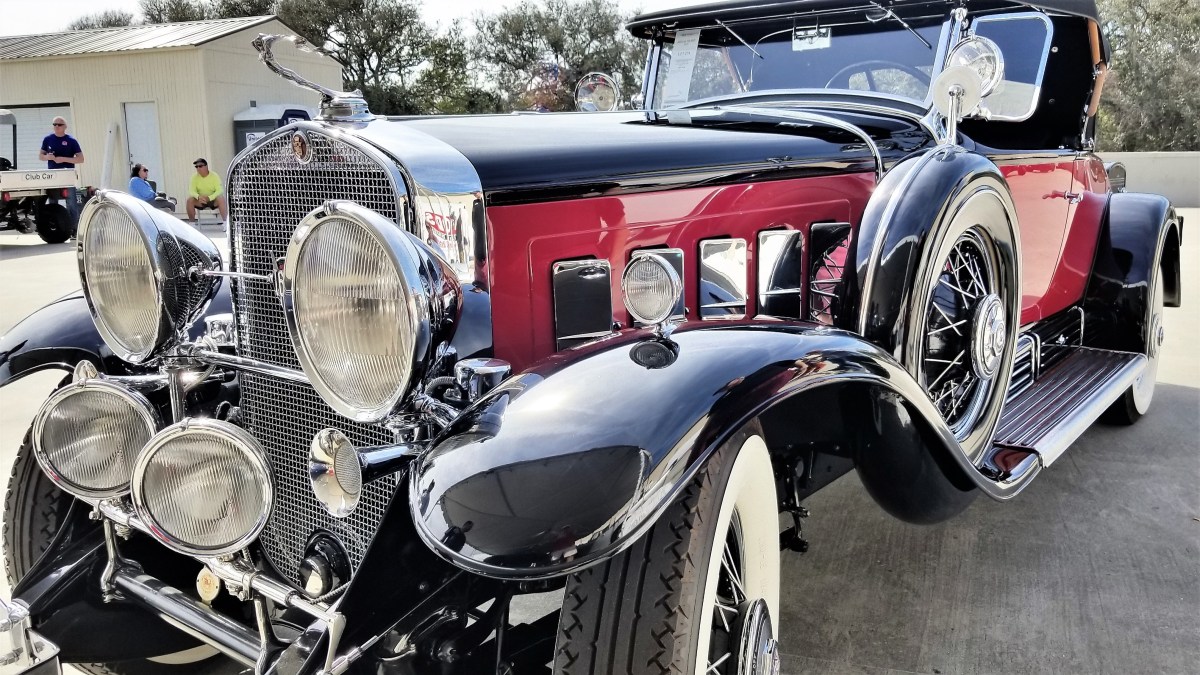
and vintage heirlooms.
There were novelties…
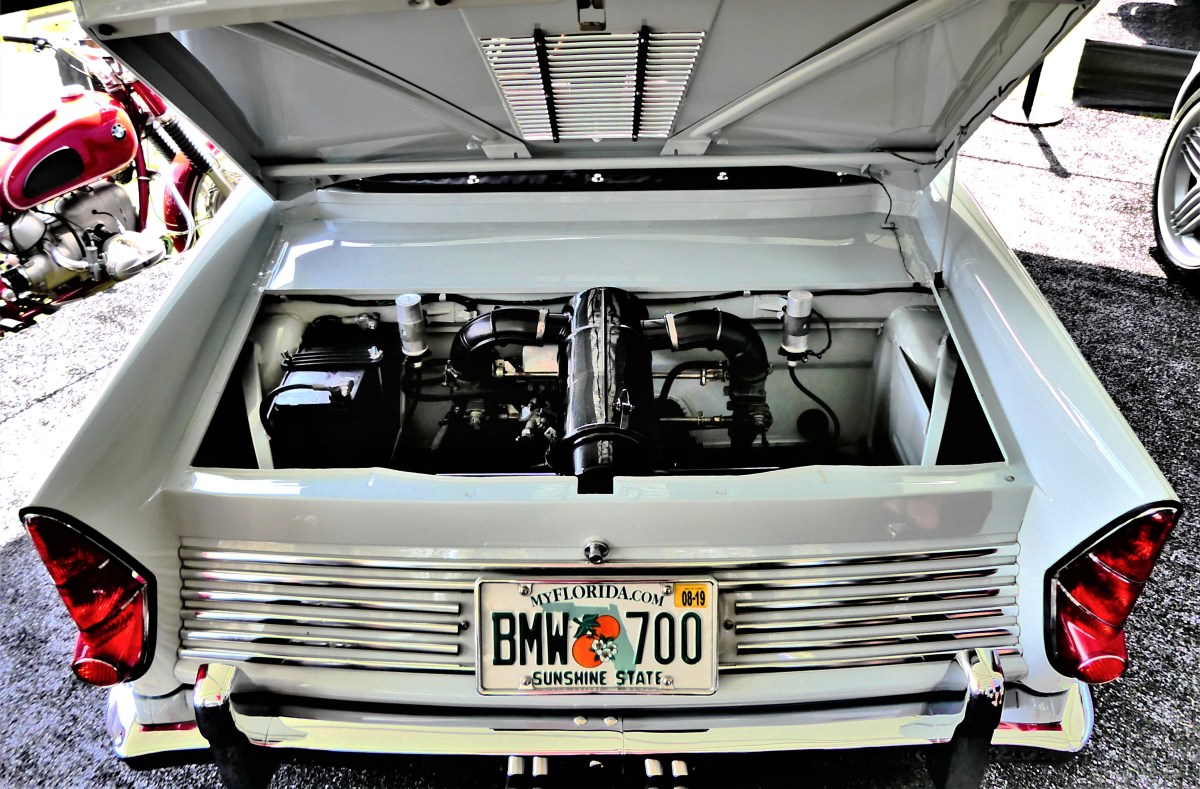
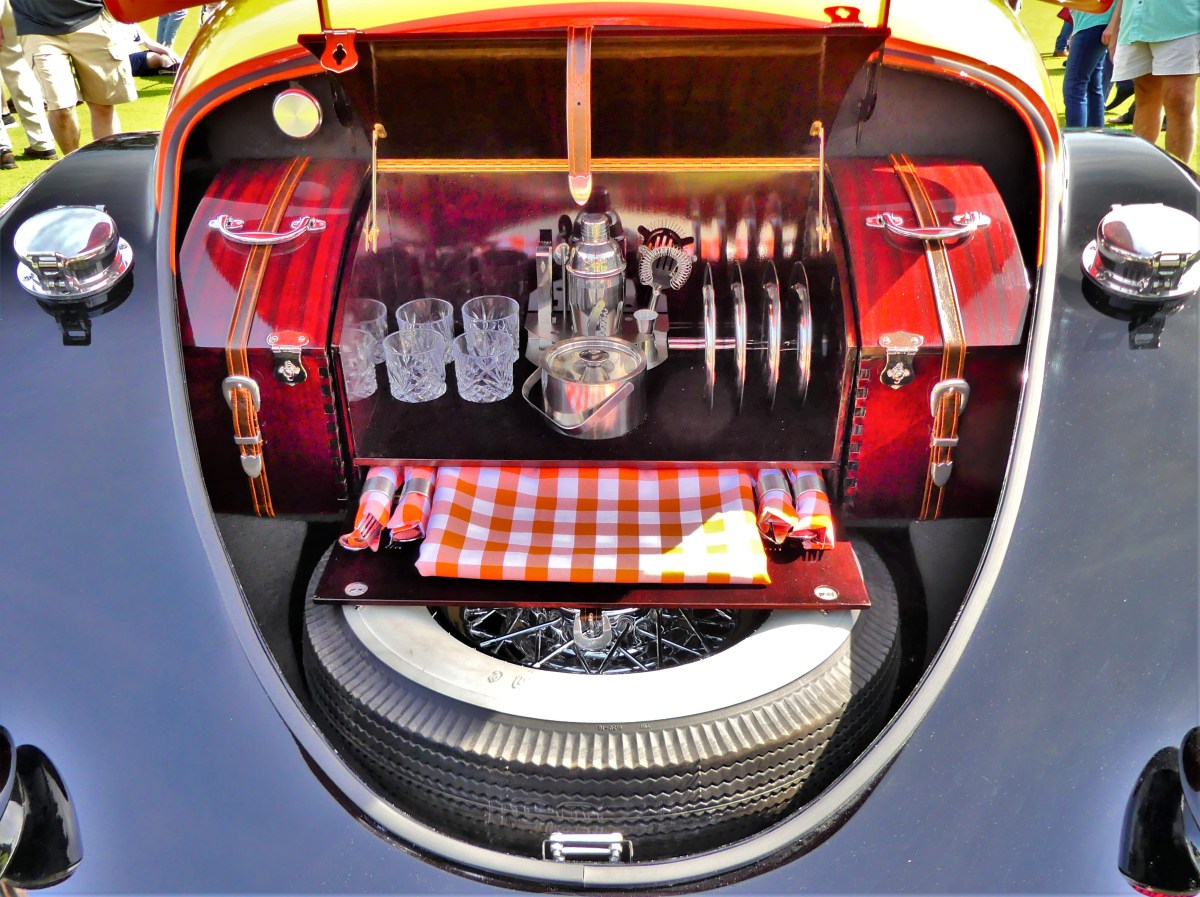
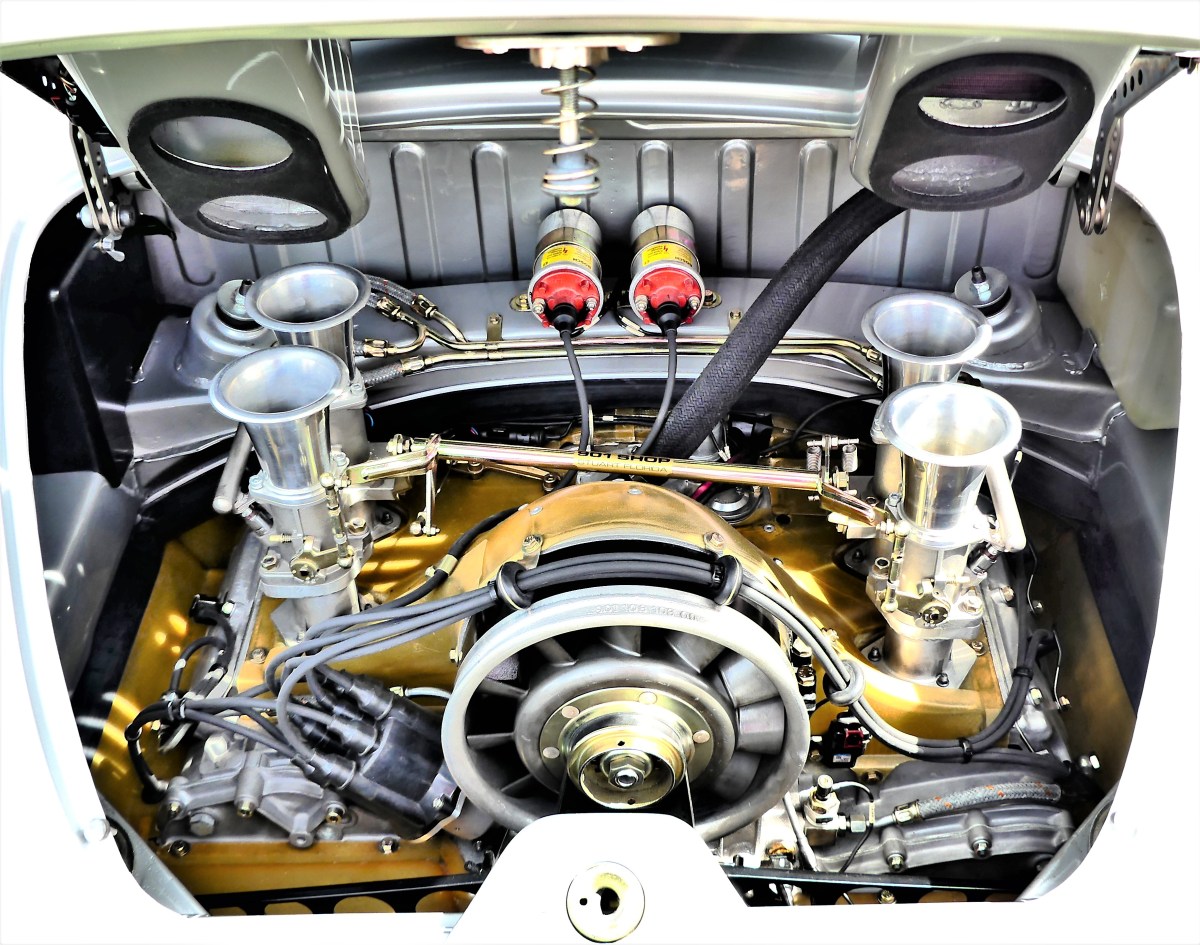
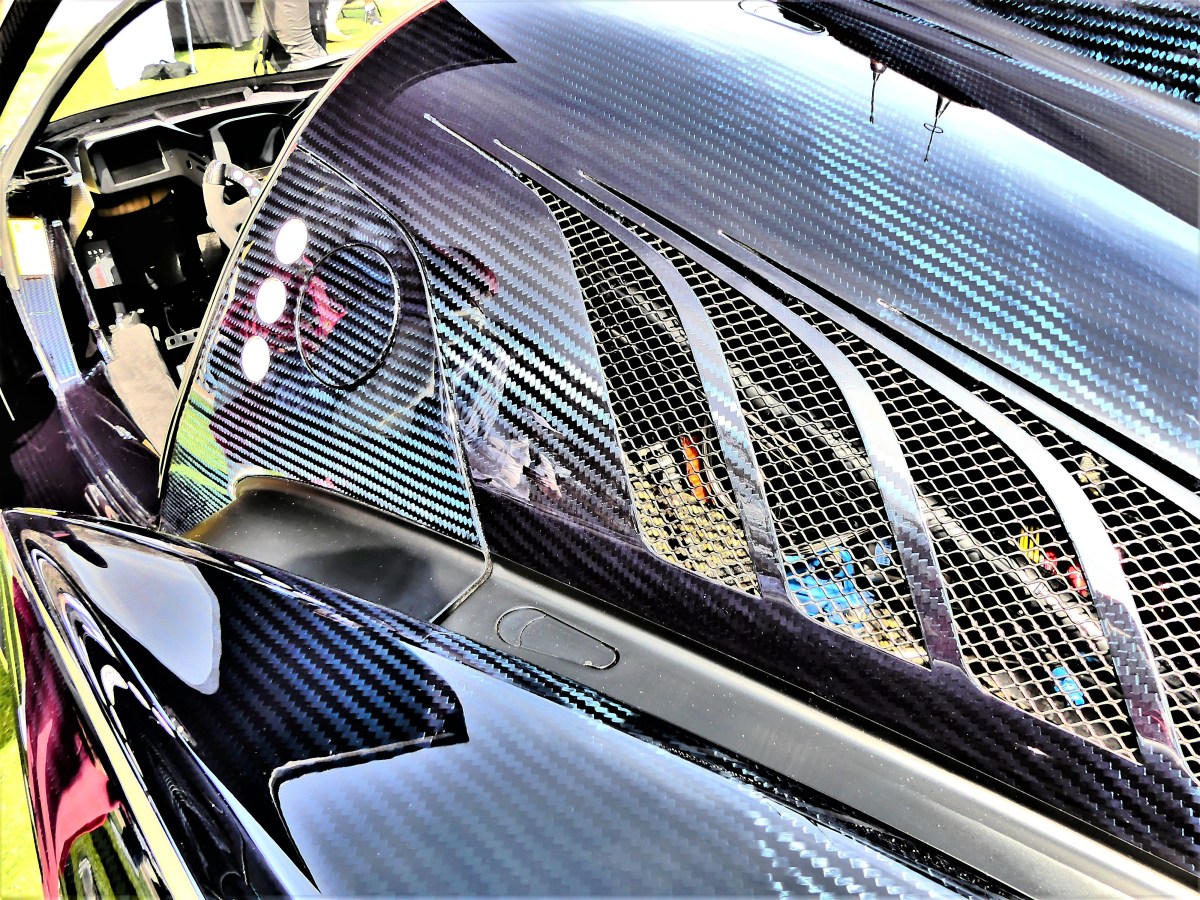
steamed-clean engines to admire…
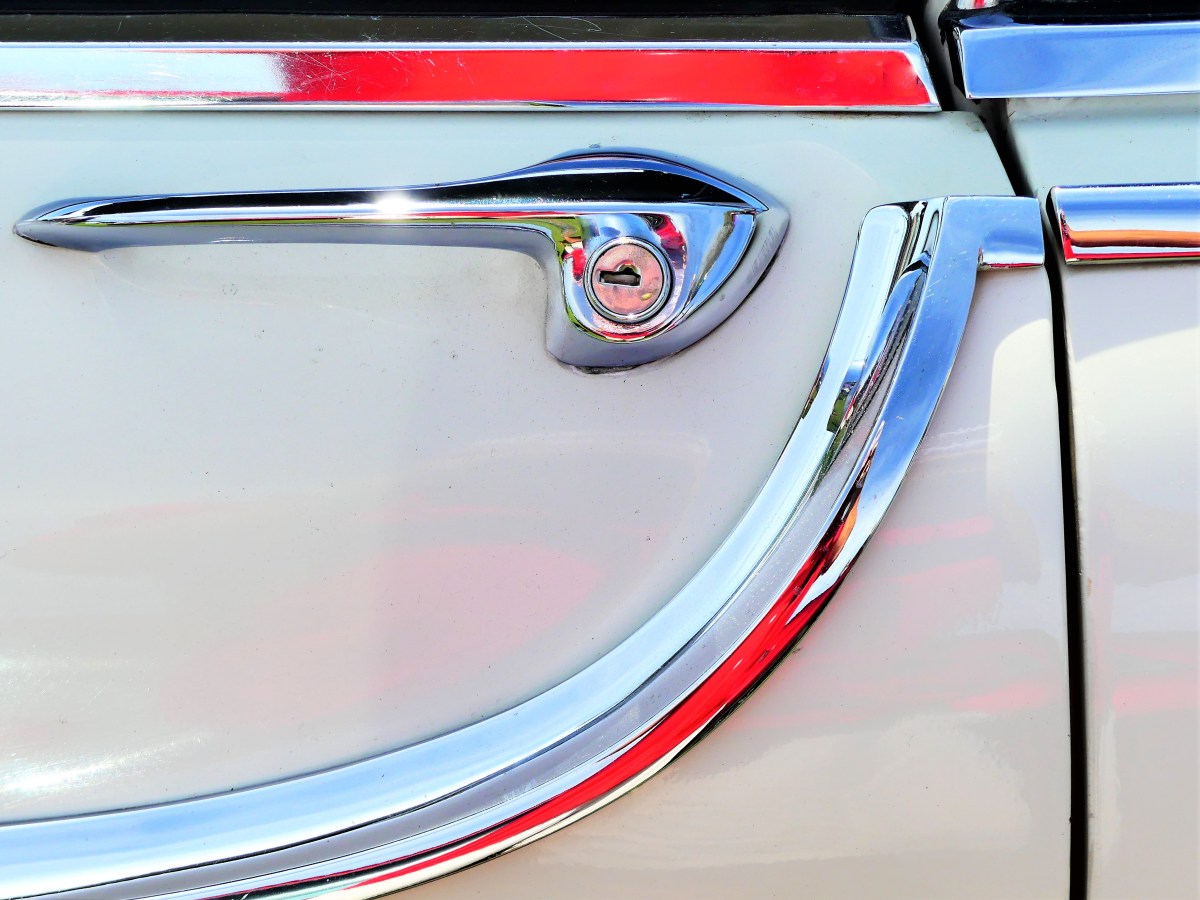
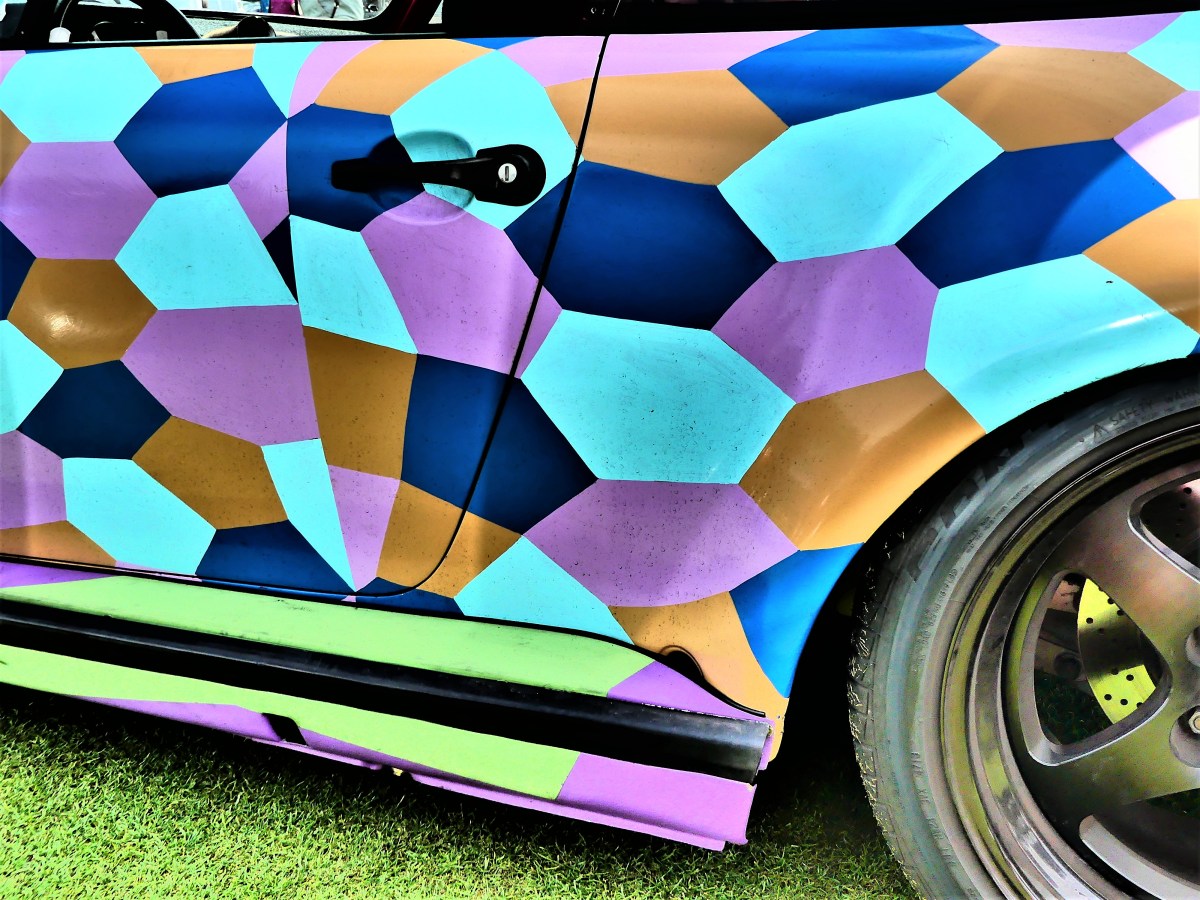
and glorious paint jobs to behold…
But most enjoyable was sitting on the sidelines watching a parade of auctioned vehicles…
as they were being polished,
and preened…
by teams of attentive handlers in white gloves…
before facing RM Sotheby’s gavel. According to the auctioneer:
Leading RM’s string of 19 individual million-dollar-plus sales and claiming top honors of the 2017 Amelia Island auctions was a striking 1937 Bugatti Type 57S Cabriolet, one of only three examples sporting rare coachwork by Vanvooren of Paris. Offered for public sale for the first time in its 80-year history, the highly original Type 57S sparkled under the auction lights during Saturday’s sale session, commanding $7,700,000. Just moments prior to the Bugatti’s sale, a well-known 1929 Stutz Model M Supercharged Coupe, one of only three supercharged Stutzes in existence, proved demand remains strong for great American Classics at auction, selling for $1,705,000 against a pre-sale estimate of $1/1.2 million. The strong sales price represents a new record for a Stutz at auction.
Friday’s sale session was also one for the books, with the Orin Smith Collection generating $31 million in sales with a 100 percent sell-through. A wonderful showcase of RM Sotheby’s expertise and capabilities in handling private collection auctions, the sale represented the first time RM has hosted a Friday evening sale at Amelia, and provided a fitting tribute to a man beloved by the Amelia crowd, drawing a packed sales room. The group of 63 vehicles was headlined by a stunning 1936 Lancia Astura Cabriolet Series III “Tipo Bocca” at $2,145,000. Other notable sales included:
the 1956 Bentley S1 Continental Drophead Coupe, just two registered owners from new, shattered both its presale estimate of $700/900,000 and the previous auction record for the model at a final $1,683,000;
a superbly restored 1933 Rolls-Royce Phantom II Special Newmarket Permanent Sedan soared past its $1,000,000 high estimate at a final $1,237,500; and,
a 1966 Aston Martin Short-Chassis Volante, the very first example of just 37 built, sold for $1,705,000.
The power of ‘no reserve’ exhibited at Friday’s Orin Smith Collection sale was witnessed again on Saturday with terrific results achieved for a well-known private collection of 10 sporting cars. Highlighting the group, a dramatic two-tone red and black 1956 Maserati A6G/54 Frua Coupe Series III, much-admired by enthusiasts during preview, provided one of the most intense and lively bidding contests of the weekend, eventually selling for $2,365,000 against a pre-sale estimate of $1.6/2.2 million. From the same collection, a 1974 Porsche 911 Carrera RS 3.0 eclipsed its pre-sale estimate of $900,000 – $1.1 million to storm into the record books at a final $1,375,000 (an auction record for the model). Also commanding strong bids were a spectacular 1954 Mercedes-Benz 300 SL Gullwing, which realized $1,358,500, and a stunning 1955 Alfa Romeo 1900C SS Coupe, which brought $1,100,000.
Other noteworthy sales of RM’s 2017 Amelia Island event include:
the 5,694-mile 1995 Ferrari F50, originally delivered to famed heavyweight Champion boxer, Mike Tyson, sold for an above-estimate $2,640,000;
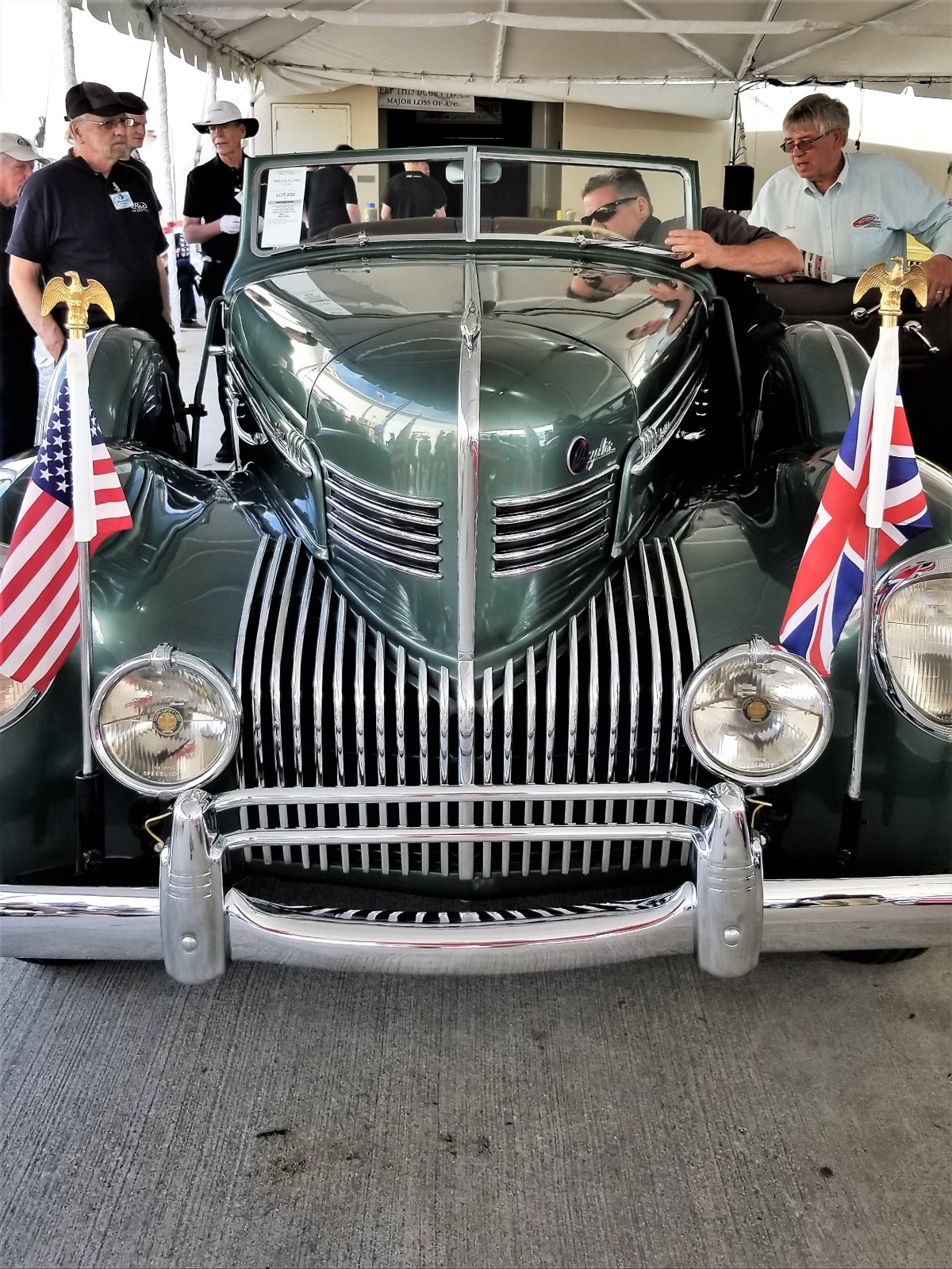
a 1938 Graham 97 Supercharged Cabriolet, exquisitely restored by RM Auto Restoration, set a new benchmark for a Graham at auction with its strong $770,000 final price; and,
ending Saturday’s sale session on a fun note, a 1963 Meyers Manx—the original dune buggy—doubled its pre-sale estimate to sell for a record $68,750.
Collective sales for 135 blue-chip entries generated nearly $71M in sales–producing a record high in the event’s 24-year history…
…and at prices that would make a hood ornament blush.





















![torsos and painted rocks].jpg](https://streamingthruamerica.com/wp-content/uploads/2019/09/torsos-and-painted-rocks.jpg?w=1200)






















































 (quickly scroll up and down for cool moiré effect)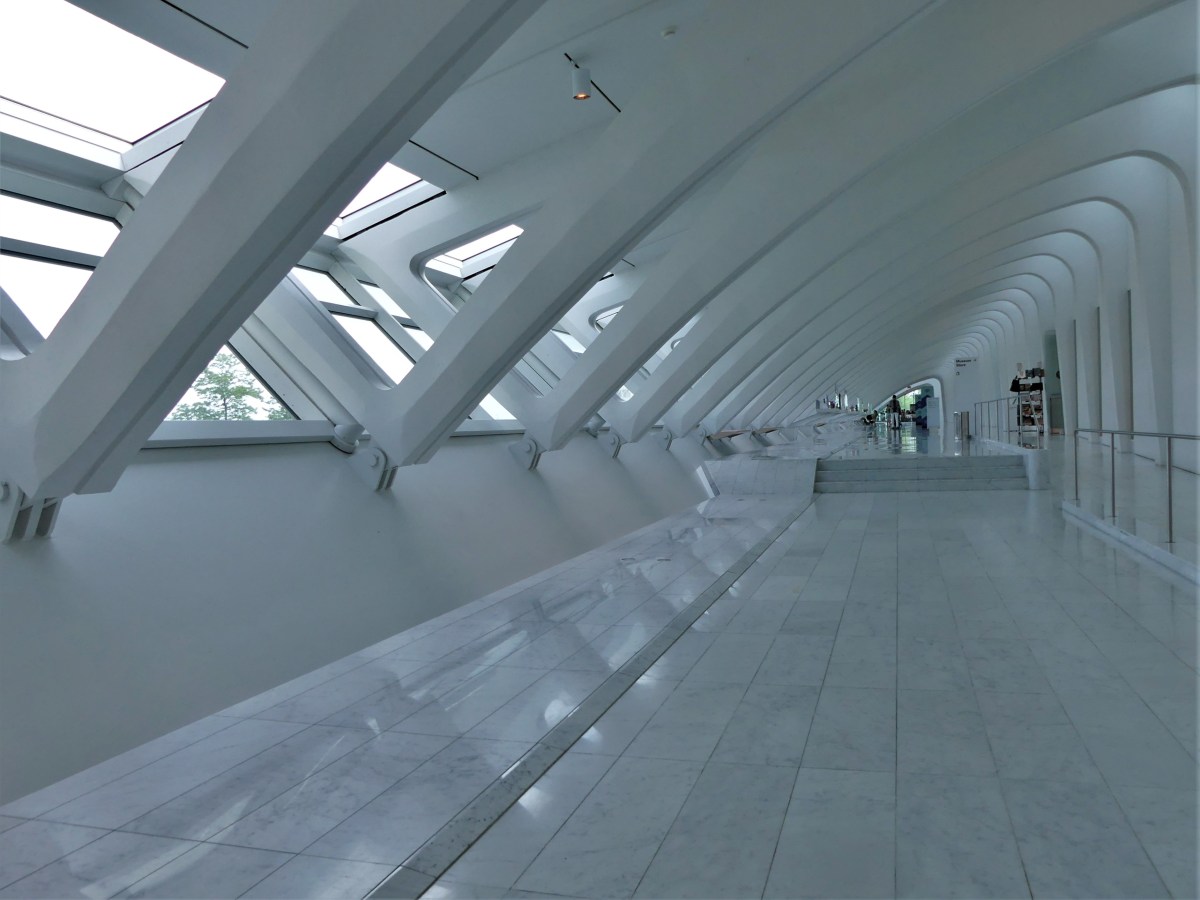


























































































 Streaming thru America