
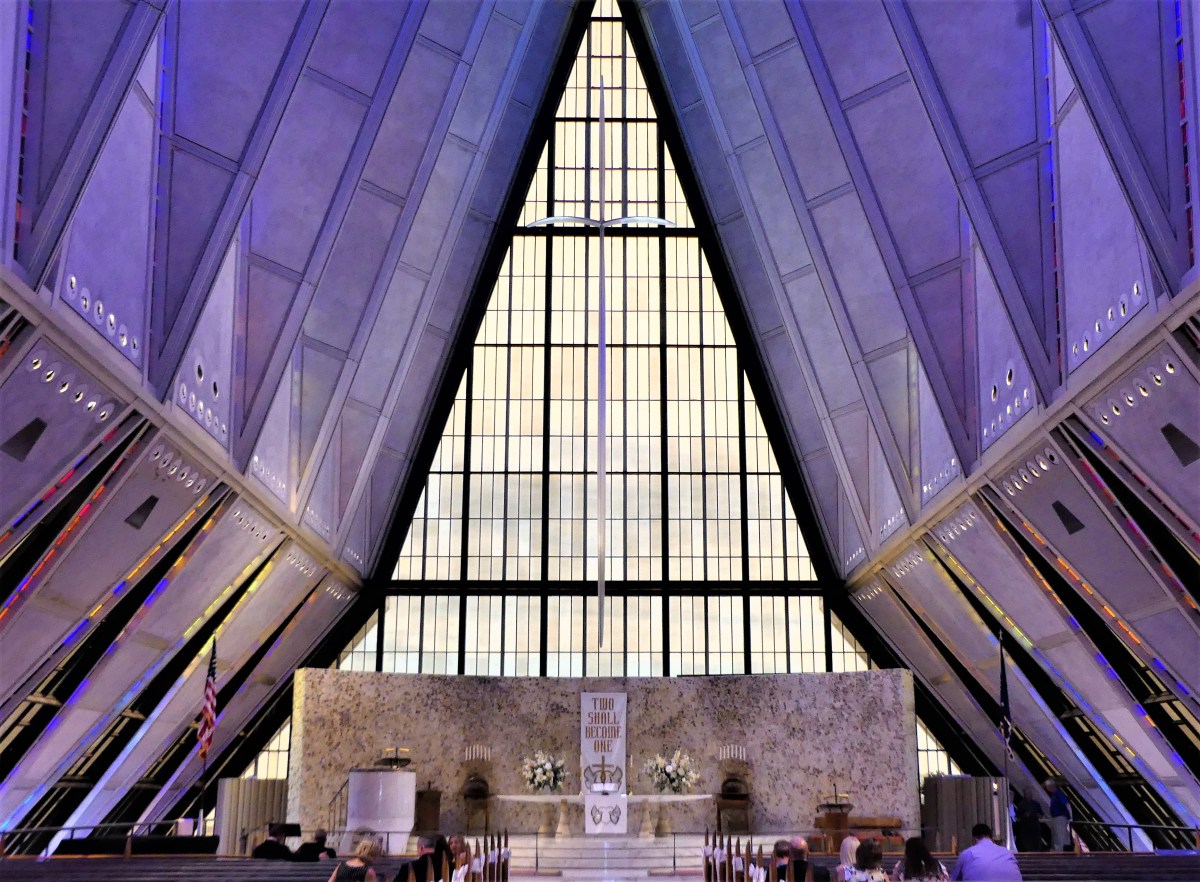
Two weddings were scheduled today, and we weren’t invited to either one of them. To be fair, we didn’t know the brides and grooms or their families, but for now, to view the main sanctuary of the cadet chapel of the United States Air Force Academy, we would need invitations to their weddings.
All we could do was watch the guests file past us to witness a marriage between academy graduates,
 while the rest of us–visitors and tax payers alike–stood outside, trying to imagine a ceremony staged under the soaring lines of this ethereal cathedral.
Time and again, the misinformed and uninvited would climb the stairs to the cathedral entrance, only to be turned away by Ret. Captain Richard Mosbach, class of 1964. “But we came all the way from New Jersey to see this chapel,” Leah implored. “I guess today wasn’t the best day to visit.”
Capt. Mosbach tried redirecting. “Probably not. I was surprised about the day’s schedule when I arrived. I was expecting one wedding today, but not two. So for that reason, the Protestant chapel is closed to the public. However, there are other beautiful chapels on the lower level that are available for viewing.”
It was disappointing. While the chapel’s presence is so dominant and dramatic across the campus landscape, it’s really the interior that sets it apart from being a vertical stack of seventeen tapered arrowheads… pointing to the heavens.
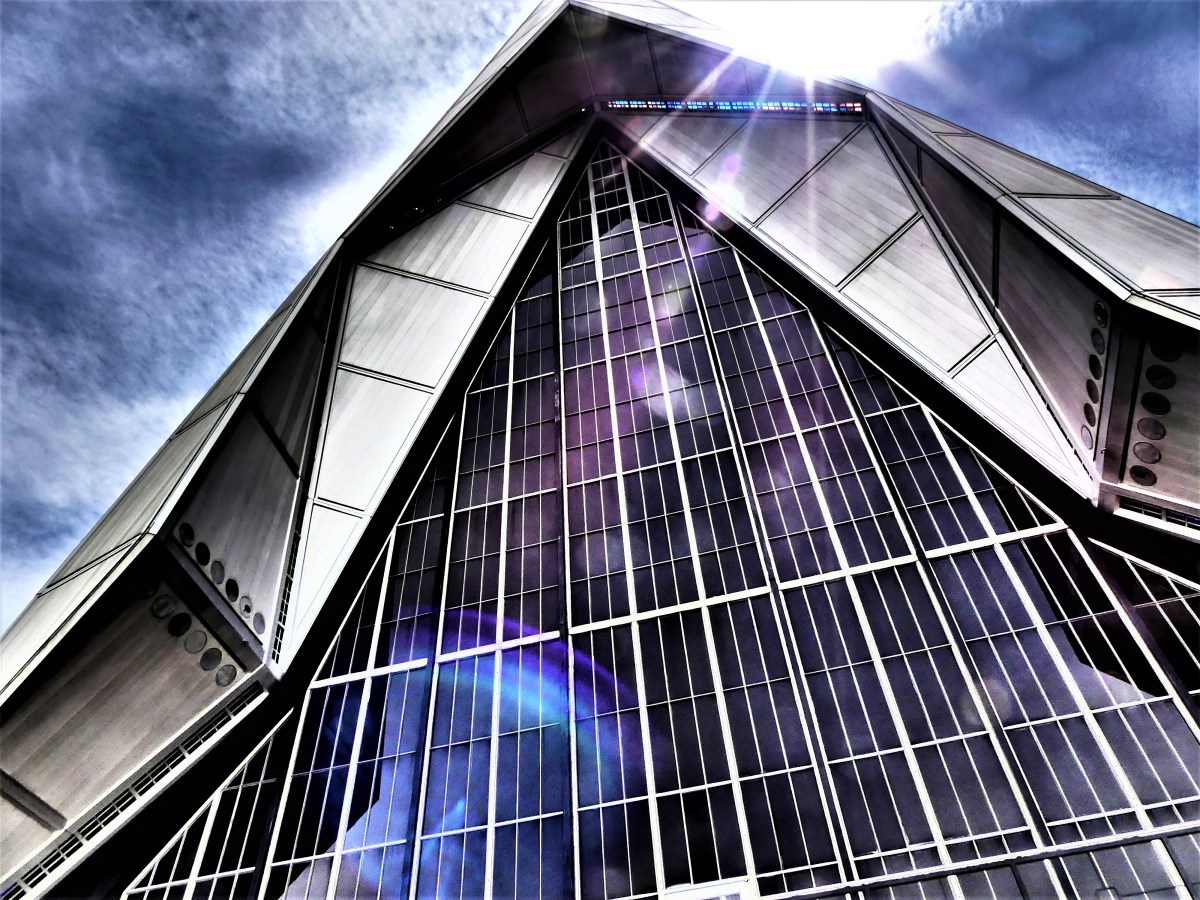
Reluctantly, we followed signs to the ancillary chapels beneath the looming aluminum panels. Ground level is home to a Catholic chapel, a synagogue, and a recently dedicated Buddhist temple. Additionally, a Muslim reading room occupies the chapel basement. Square footage has been appropriated according to academy demographics: 400 Catholic parishioners, 100 observant Jews, and 25 chanting Buddhists.


We happened upon an impromptu lecture/sermon delivered by the Academy’s Jewish chaplain emeritus, and foremost authority on the nine priceless Shlomo Katz paintings of biblical depictions that line the temple’s circular hall.

All of it was special, but still, it was the Protestant Chapel we came to see. Leah and I ventured around the perimeter of this revered and Historic Landmark,
 and surprised Beth and Ivy–two of the bride’s cousins hanging out by the handicap access–sharing a cigarette and some giggles.
“Don’t worry. You’re secret’s safe with me,” I reassured. “All I ask in return are invitations for us, so we can see the inside.”
Leah continued, “We came all the way from New Jersey to see the chapel, and I guess today wasn’t the best day.”
Beth commiserated, “That’s a bummer.”
“Do you want me to take a picture for you?” offered Ivy.
I’d never met this girl before, and I couldn’t tell you if she was a reliable and responsible person, but on the spur of the moment, I shed my Lumix from around my neck, and handed it to Ivy without hesitation. I preset the camera to auto-focus and auto-exposure, and showed her very basic operation functions, before sending her off to document the chapel interior.
That’s when Capt. Musbach approached us for the second time. “I see you’re still here, and you’ve made a connection with the wedding party. Follow me!” he ordered.
He took the inside stairway to the back entrance behind the altar, and led us out to the edge of the chapel’s first arch. Beth and Ivy met us behind the wall to return my camera.
“I think I got some really cool shots for you. Do you wanna see?” she gushed.
“That’s okay. I’m certain whatever you shot has to be better than anything I was unable to shoot,” I confessed. “Thank you so much,” I intoned while replacing the camera around my neck, “And your secret’s safe with me.”
We stood in awe, bowed by the beauty of the chapel’s simplicity within the context of it’s complex geometry. We chatted with Capt. Mosbach for twenty minutes under the cool glow of sky-lit stained glass. As one of five volunteer docents who “works” every Tuesday and Saturday, he fed us factoid after factoid about the cadet chapel, making it abundantly apparent about this allegiance to the Academy, his fondness of the campus, and his affinity for sharing personal and academy history with strangers like Leah and me.
Just asking a simple question about the pipe organ housed in the choir lift at the top of the nave begets a five minute discourse about the 83 ranks and 67 stops, controlling 4,334 pipes.
 However, more than 200 pipes don’t work due to continuing water damage caused by stained glass tiles that have leaked since the dedication in 1963.
 Just as Capt. Mosbach was expounding on the the controversy surrounding Walter Netsch’s modernist design–when first unveiled by Skidmore, Owings, and Merrill in 1958–a couple of tourists arrived at our location with the intention of looking around.
Capt. Mosbach immediately switched over to door security protocol, and stated emphatically, “This area is closed to all public traffic while a wedding is in progress. So you’re going to have to leave, please.” Then he returned to his story, never missing a beat.
After fifty-five years of hosting weddings and ceremonies, the cadet chapel is to be shuttered at the end of 2018 for a complete interior overhaul. However, the chapel’s exterior will continue to remind us that man-made monuments are no less inspiring than the mountains that surround us, and can be a great catalyst for kindness.
Our thanks to Beth and her cousin Ivy who provided the photography below, and to Ret. Capt. Robert Mosbach who brought the pictures to life.


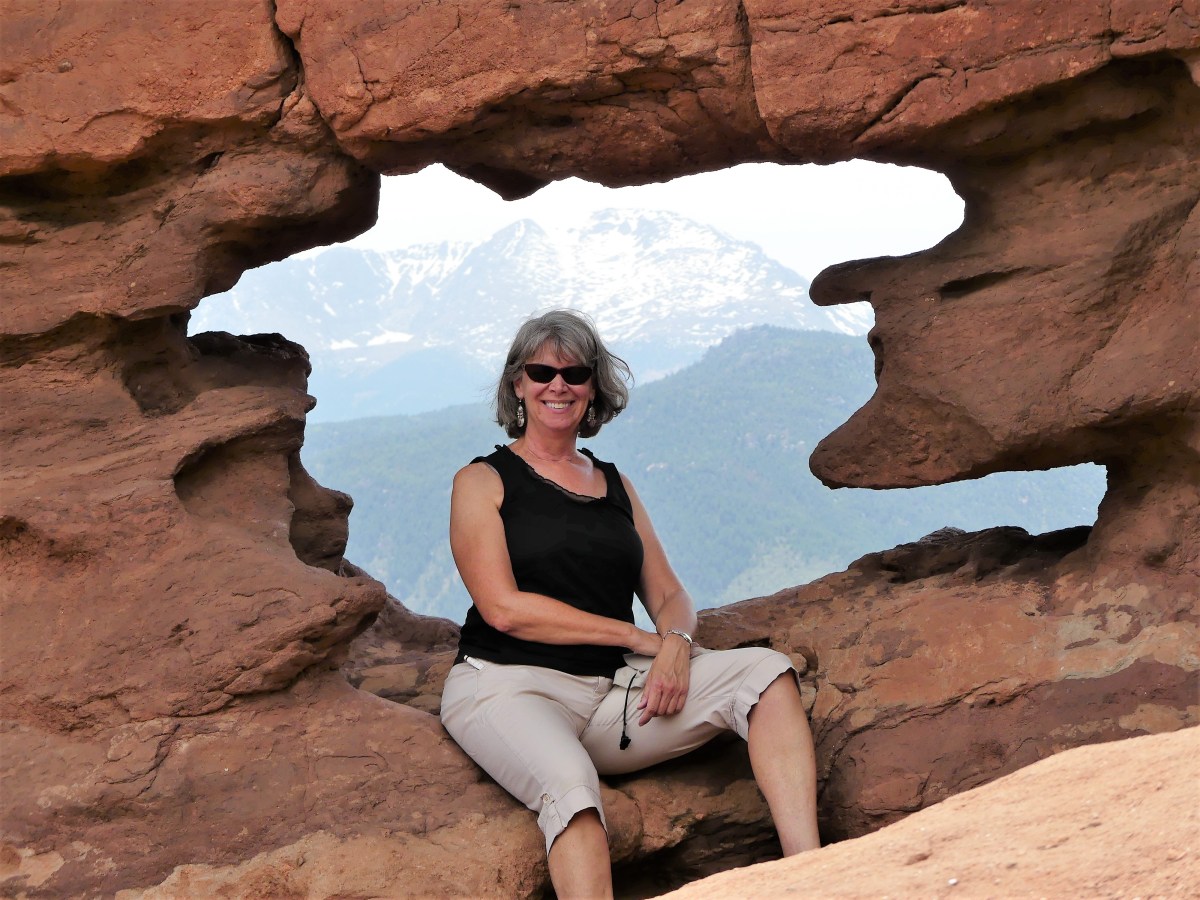 The twisting road through the many park features and attractions carried us out to Manitou Springs, the gateway to Pikes Peak, and a pop culture village filled with hipsters, curiosity seekers, and wannabees.



 Although the views are enough to distance you from the rest of the world, the cold is enough to bring you closer together.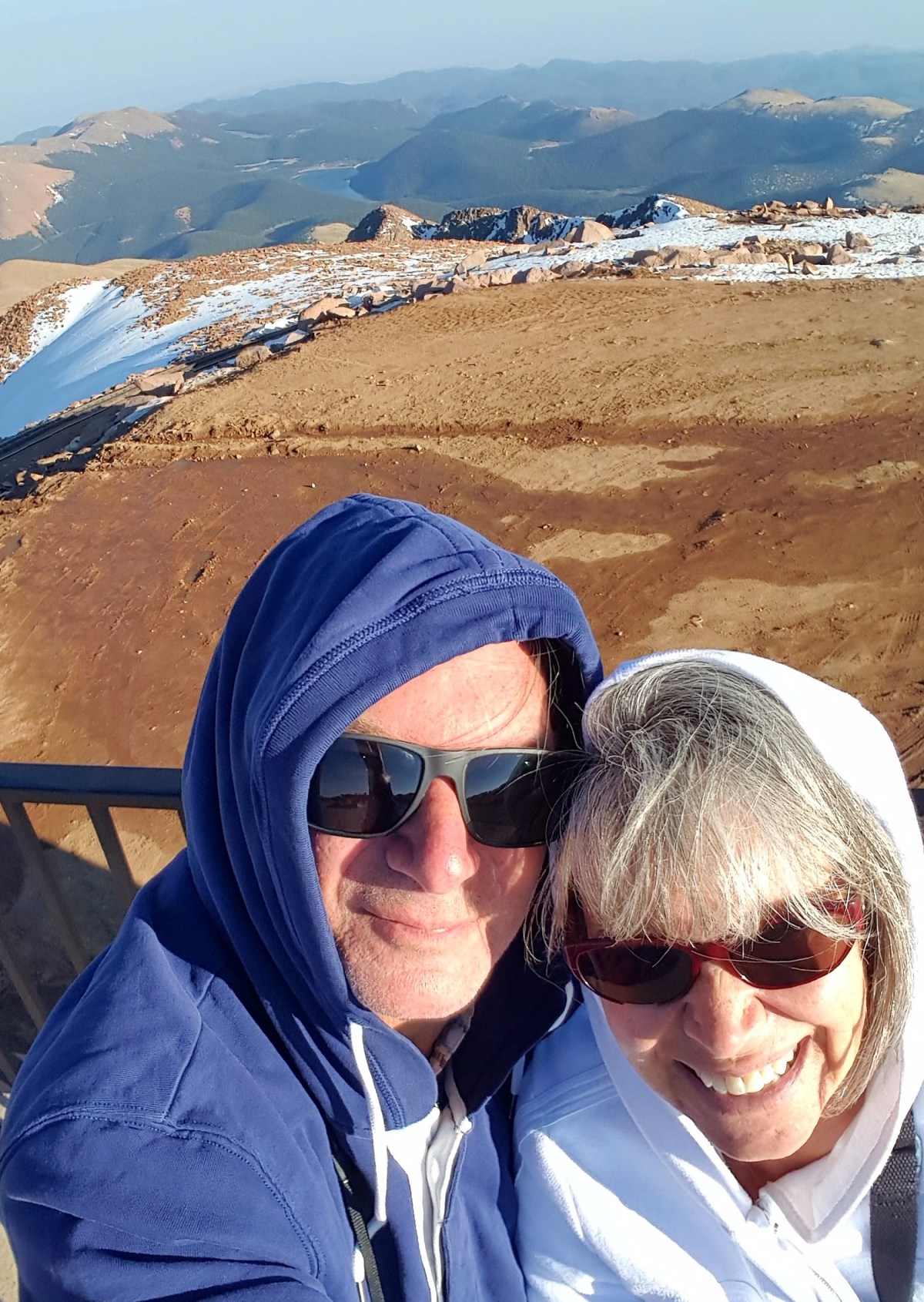



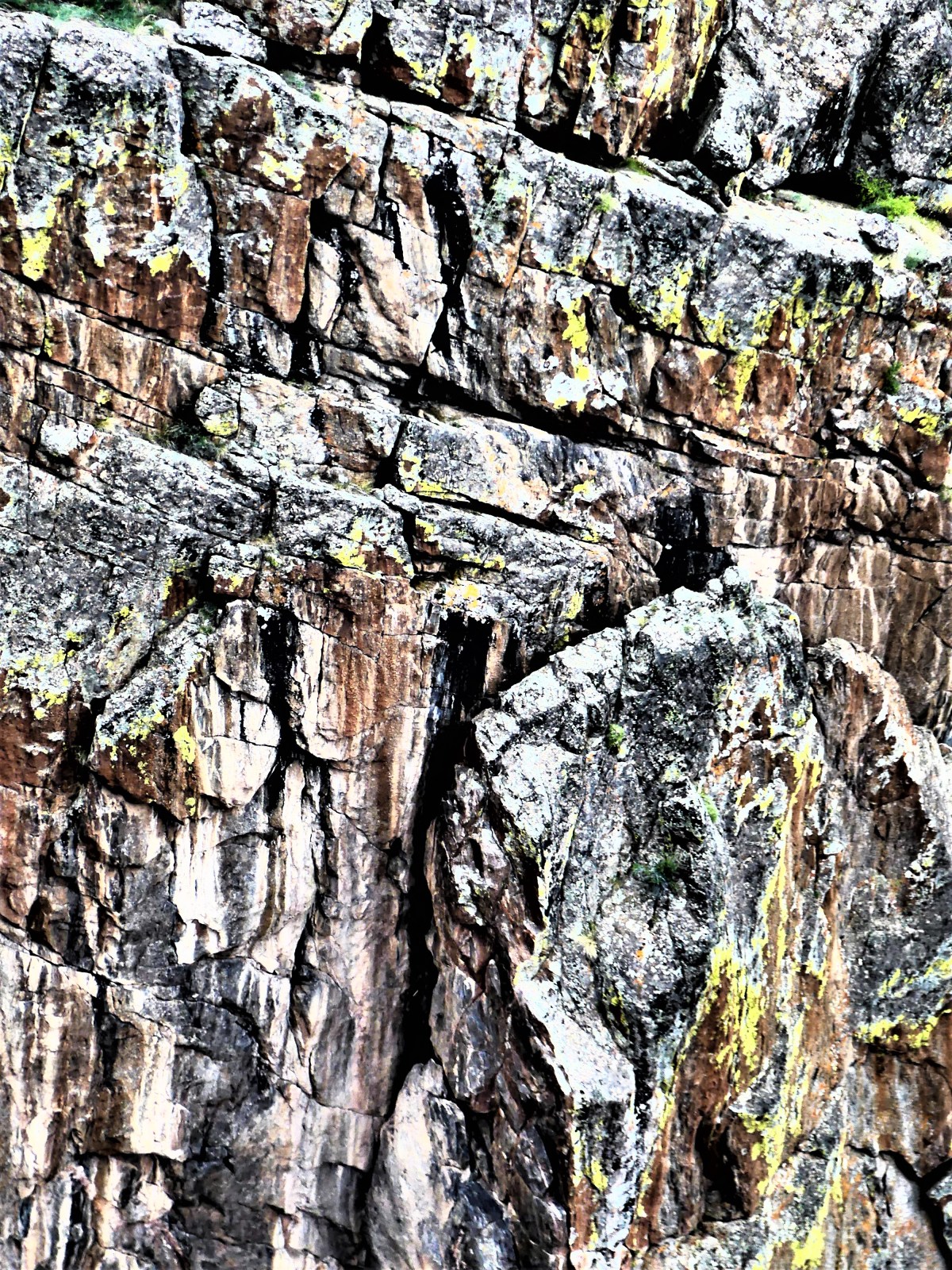
 as the roar of the Gunnison River echoes against the sheer walls of gneiss and schist.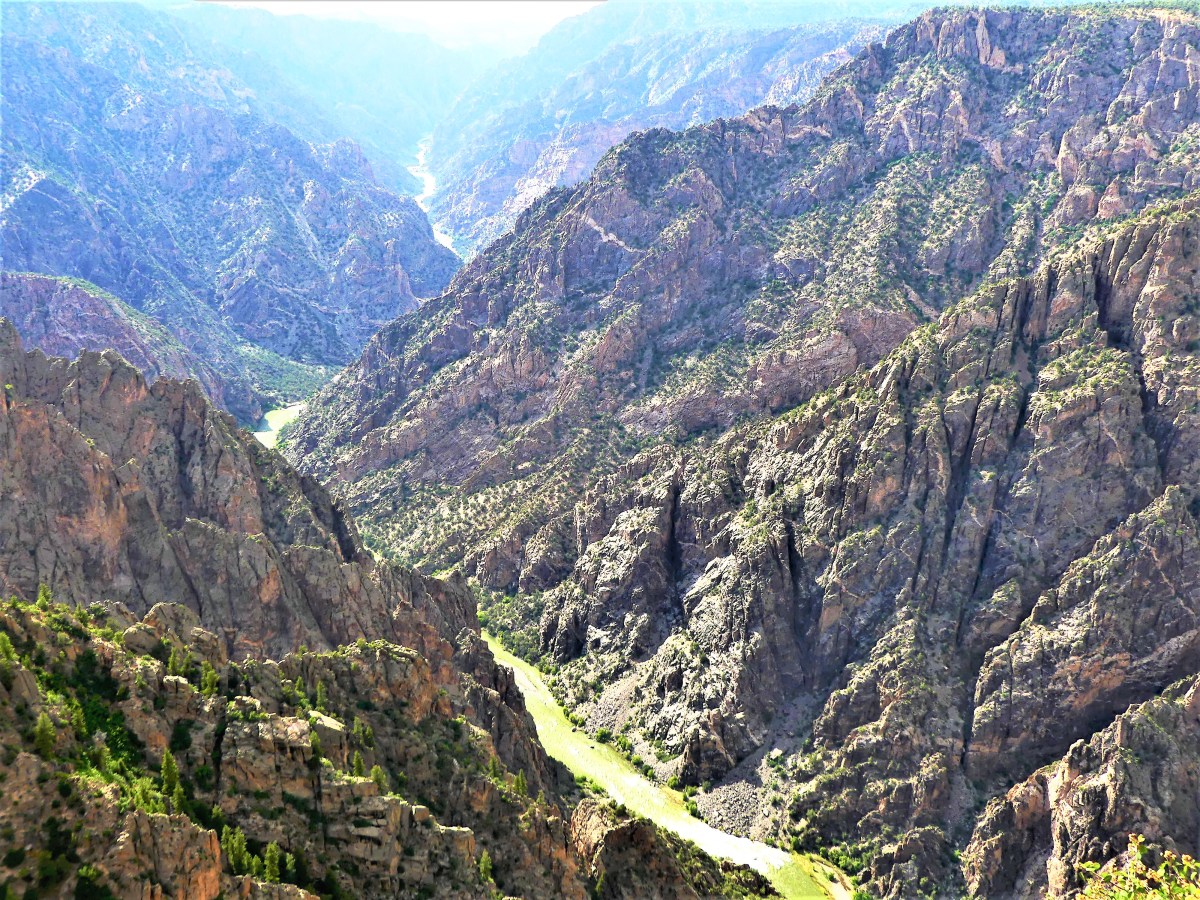


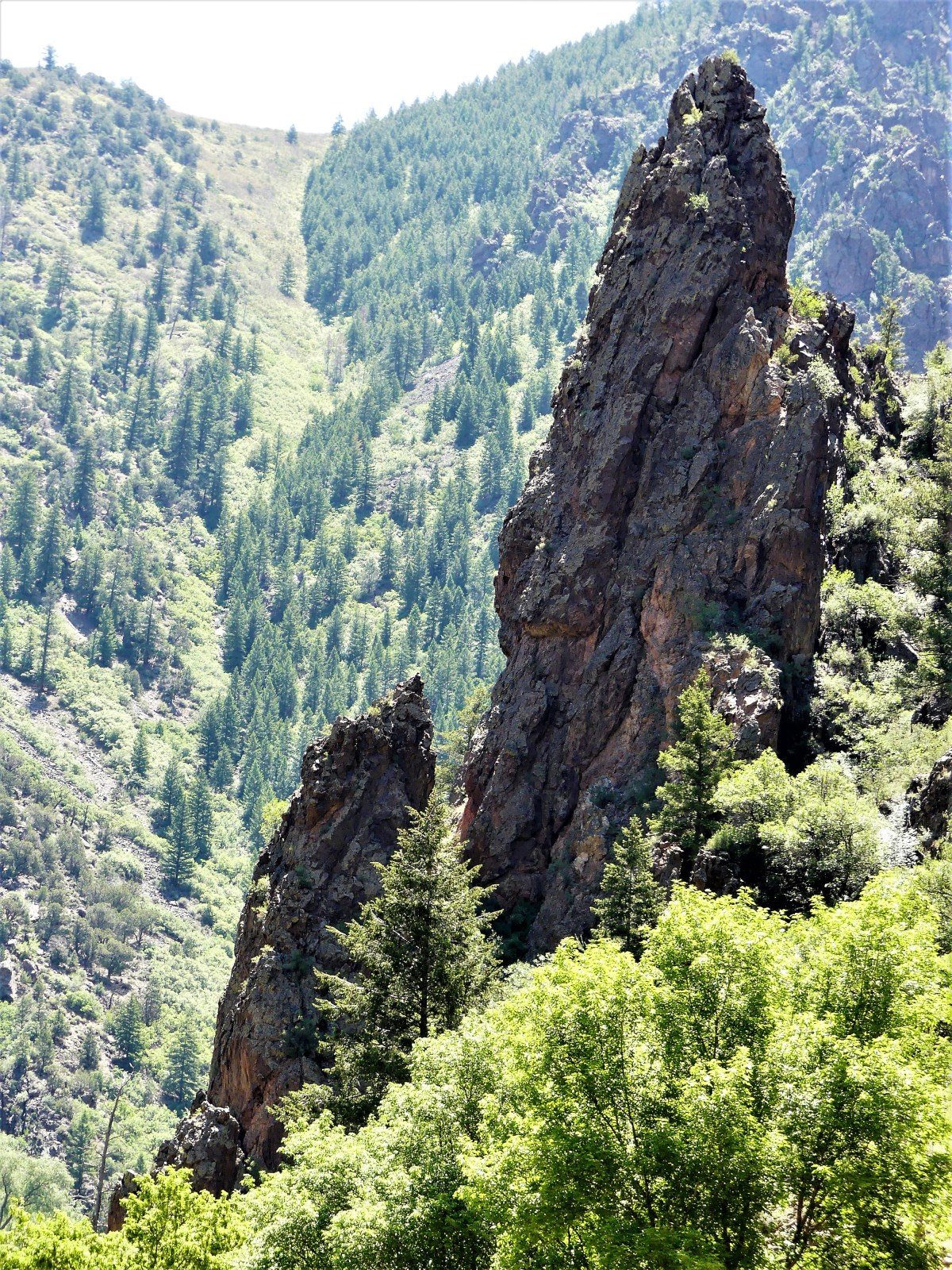
 The river’s pivotal role in carving out 2 million years of metamorphic rock has resulted in canyon walls that plunge 2700 vertigo-inducing feet at Warner Point into wild water that has been rated between Class V and unnavigable.
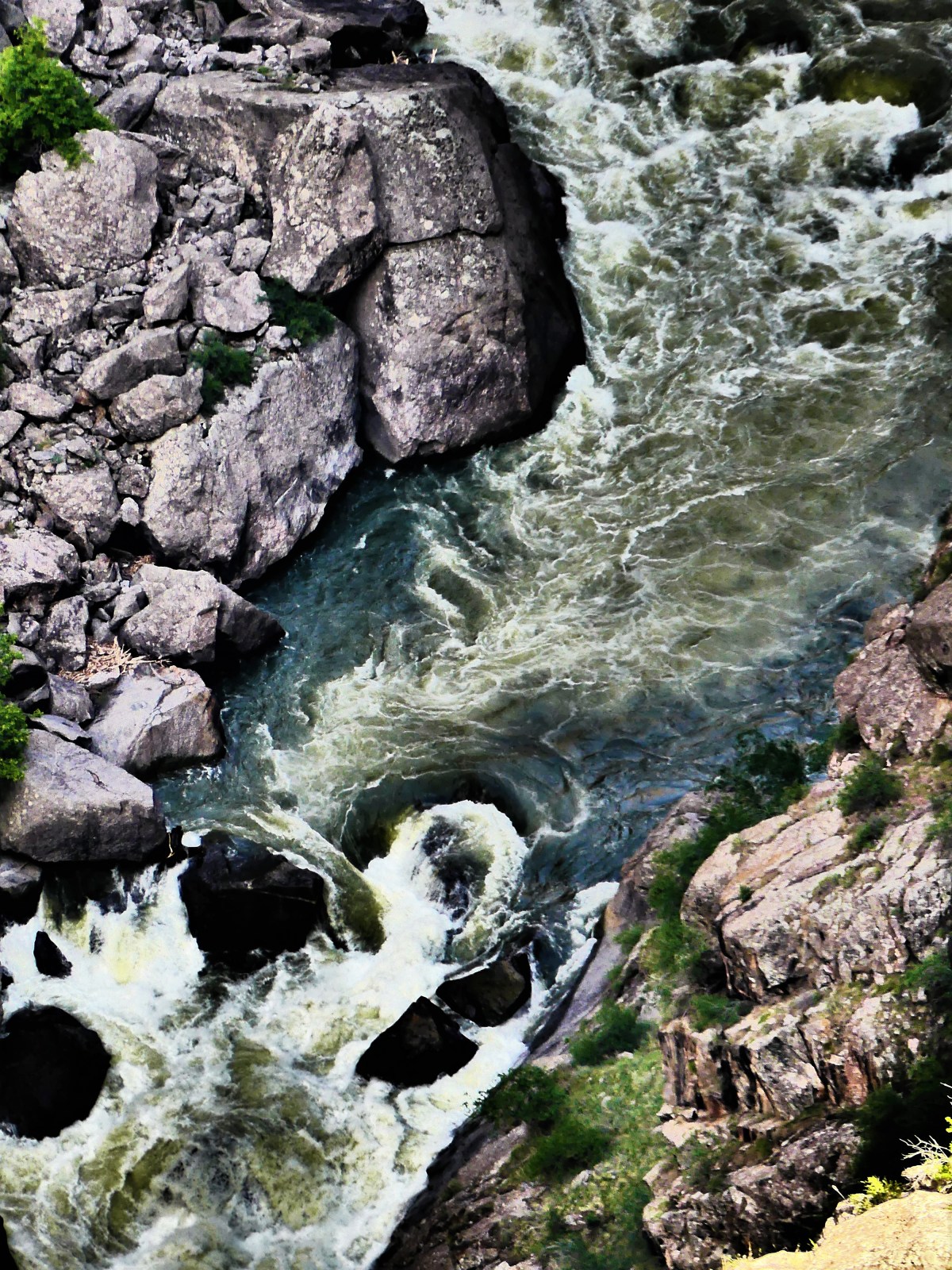 The view at Dragon Point showcases brilliant stripes of pink and white quartz extruded into the rock face, personifying two dragons who have symbolically fused color into a somber Precambrian edifice.
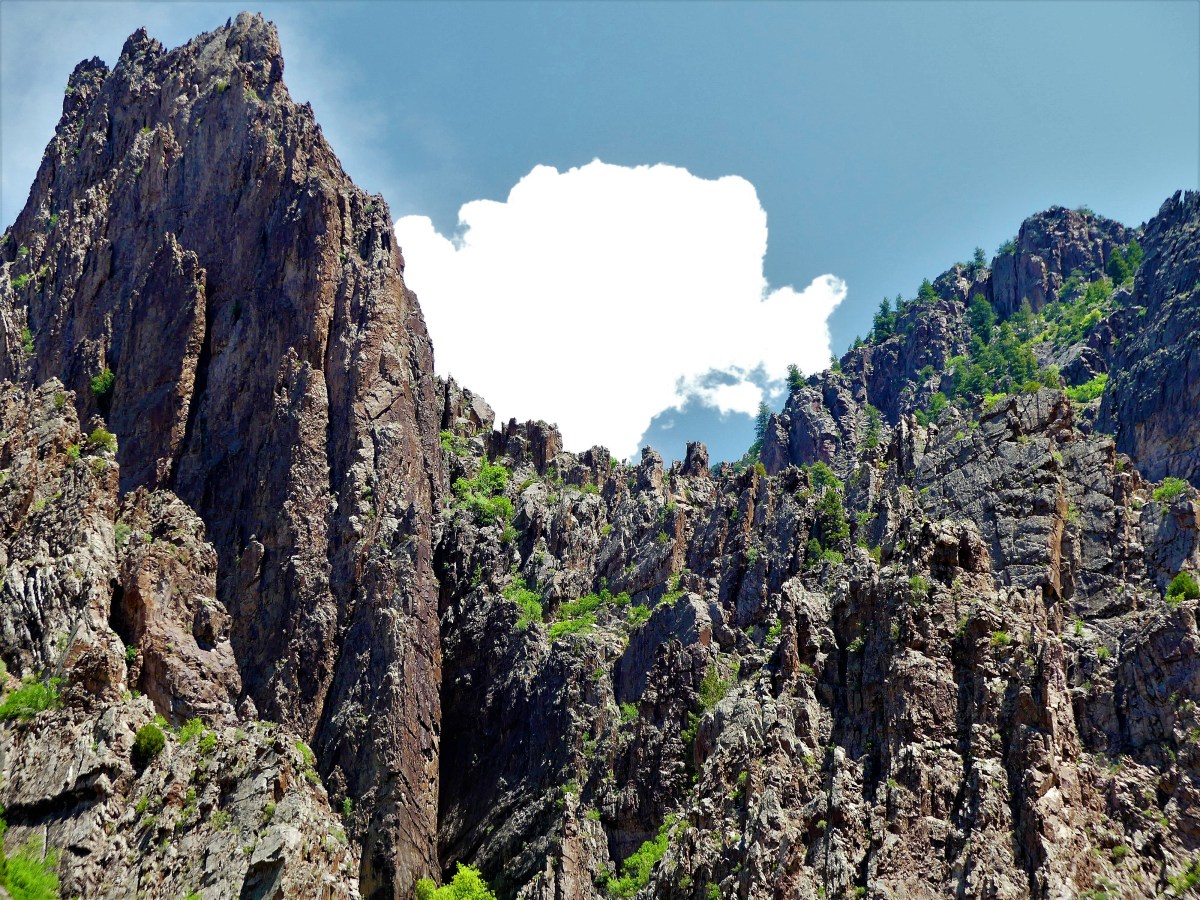
 and focuses on an untamed water system that’s required three dams to slow the erosion of the canyon floor.
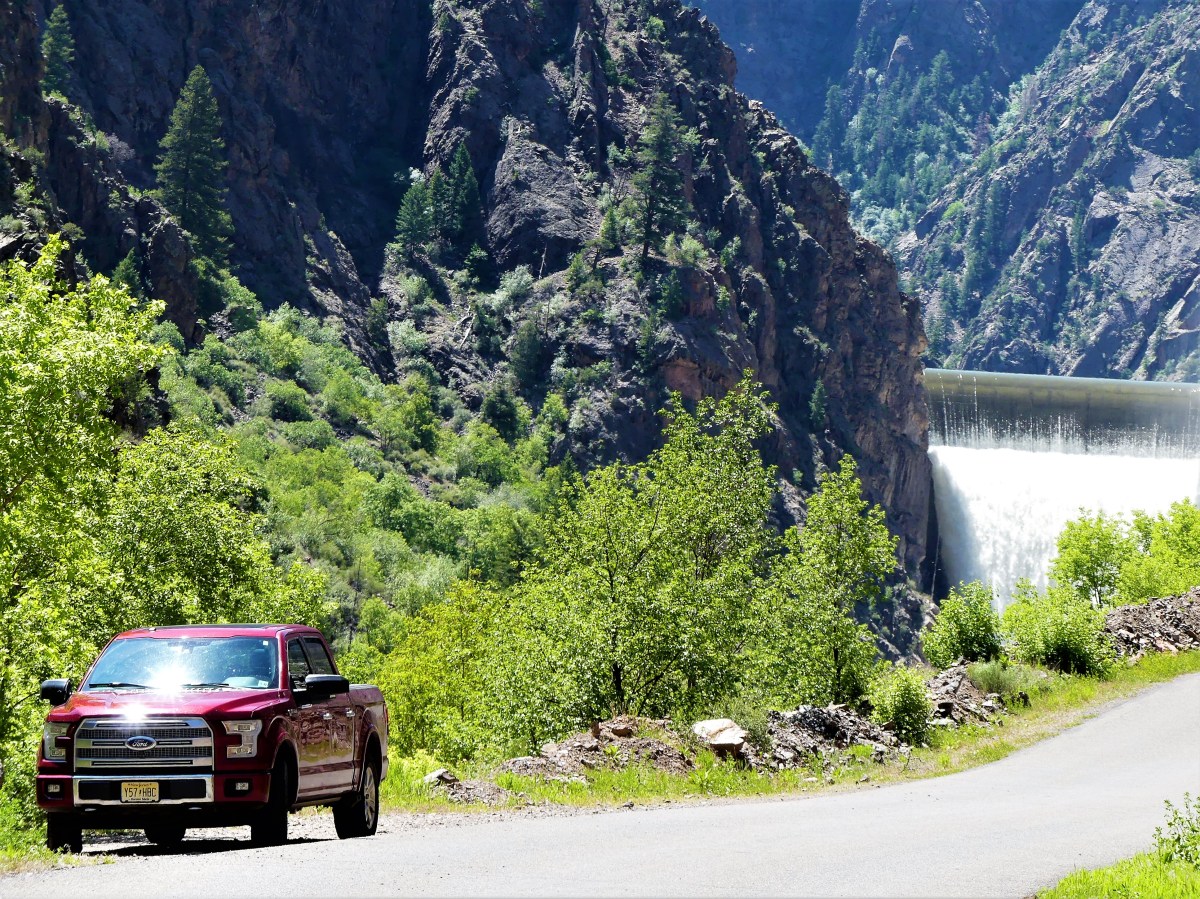 According to Park Service statistics, left unchecked, the Gunnison River at flood stage would charge through the gorge at 12,000 cubic feet per second with 2.75 million-horse power force. Dams now provide hydroelectric energy, and have created local recreation facilities for water sports, including Blue Mesa Reservoir, Colorado’s largest body of water.
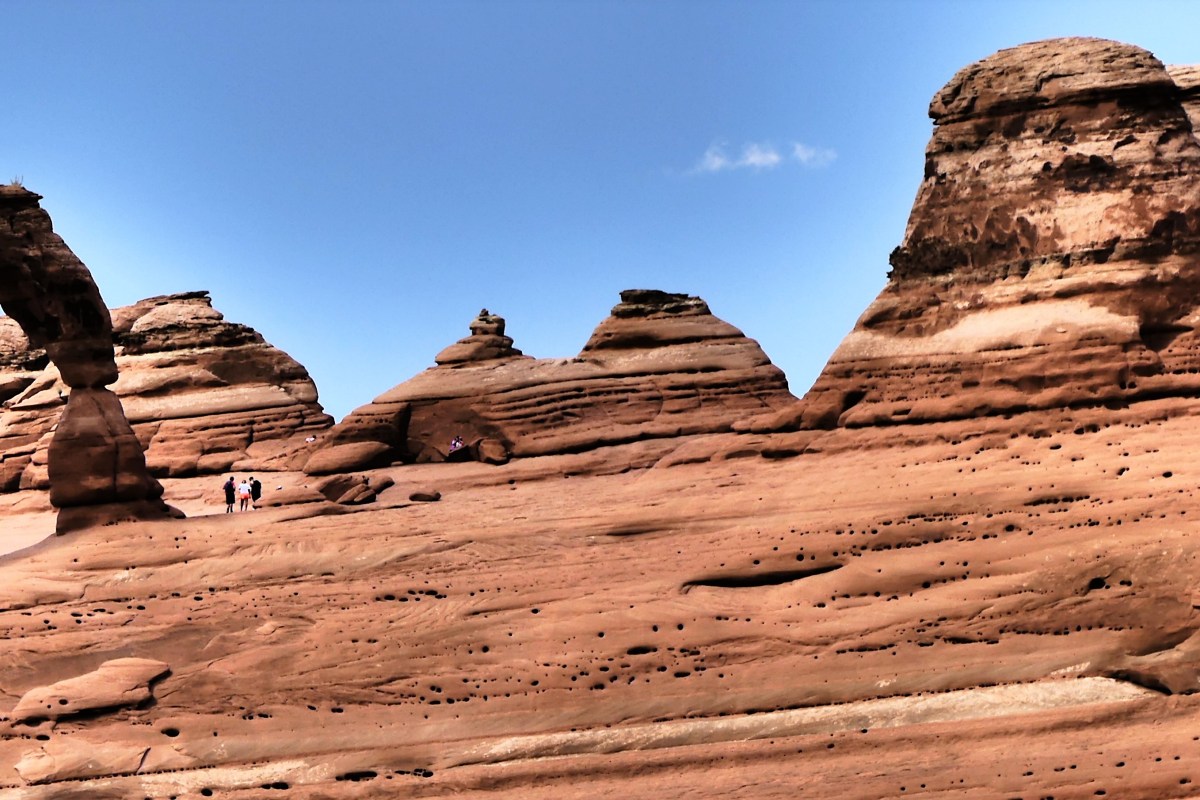


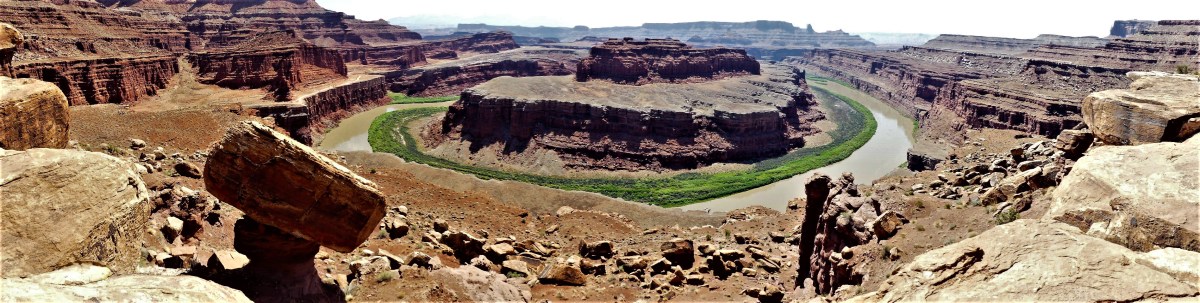

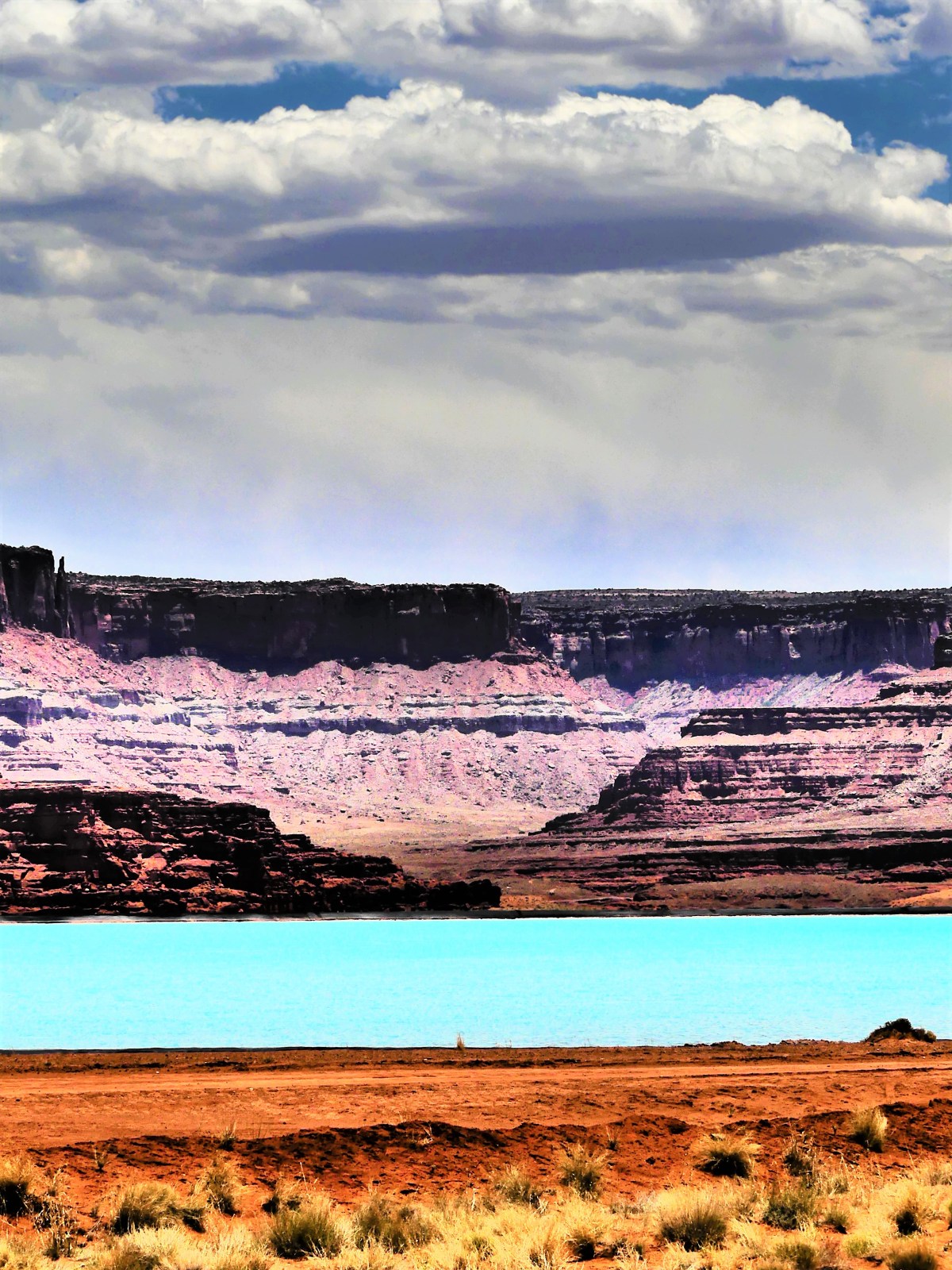


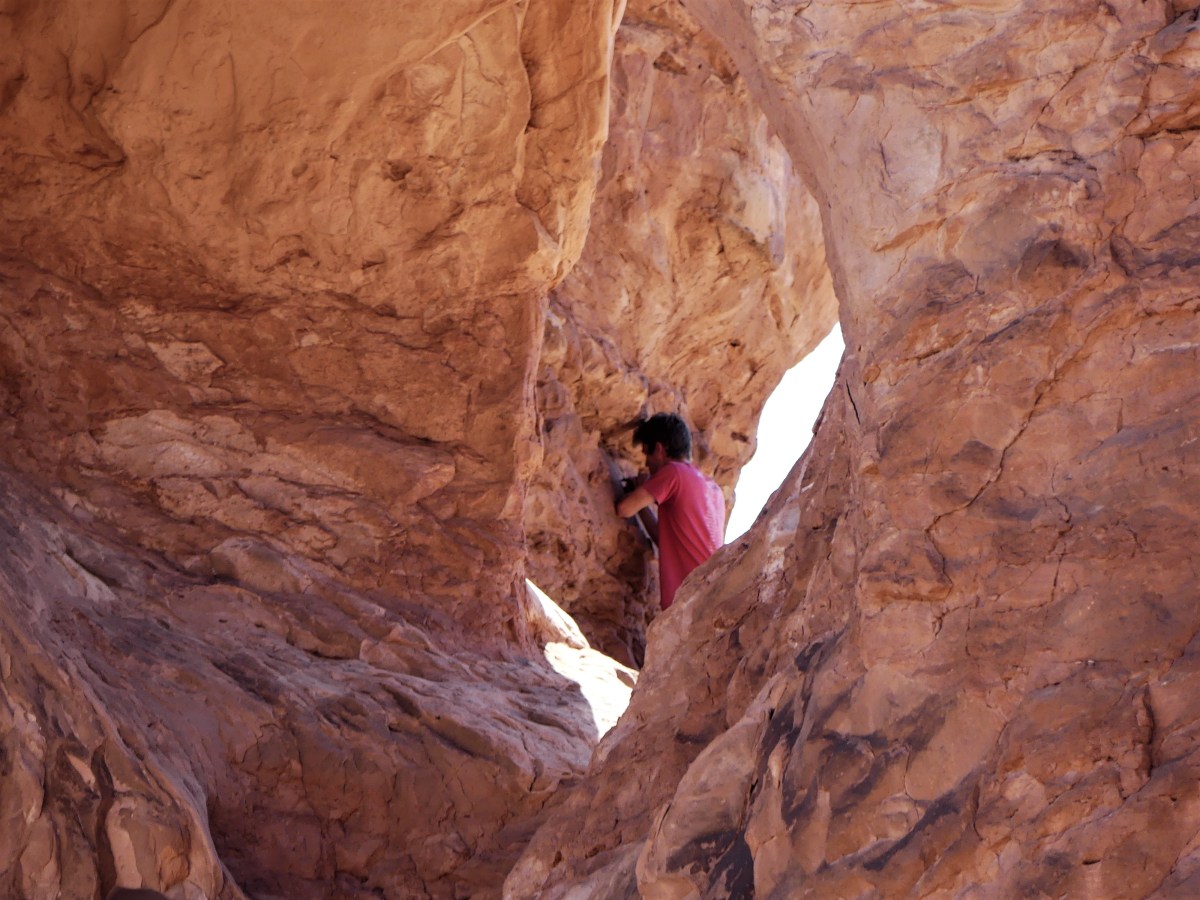


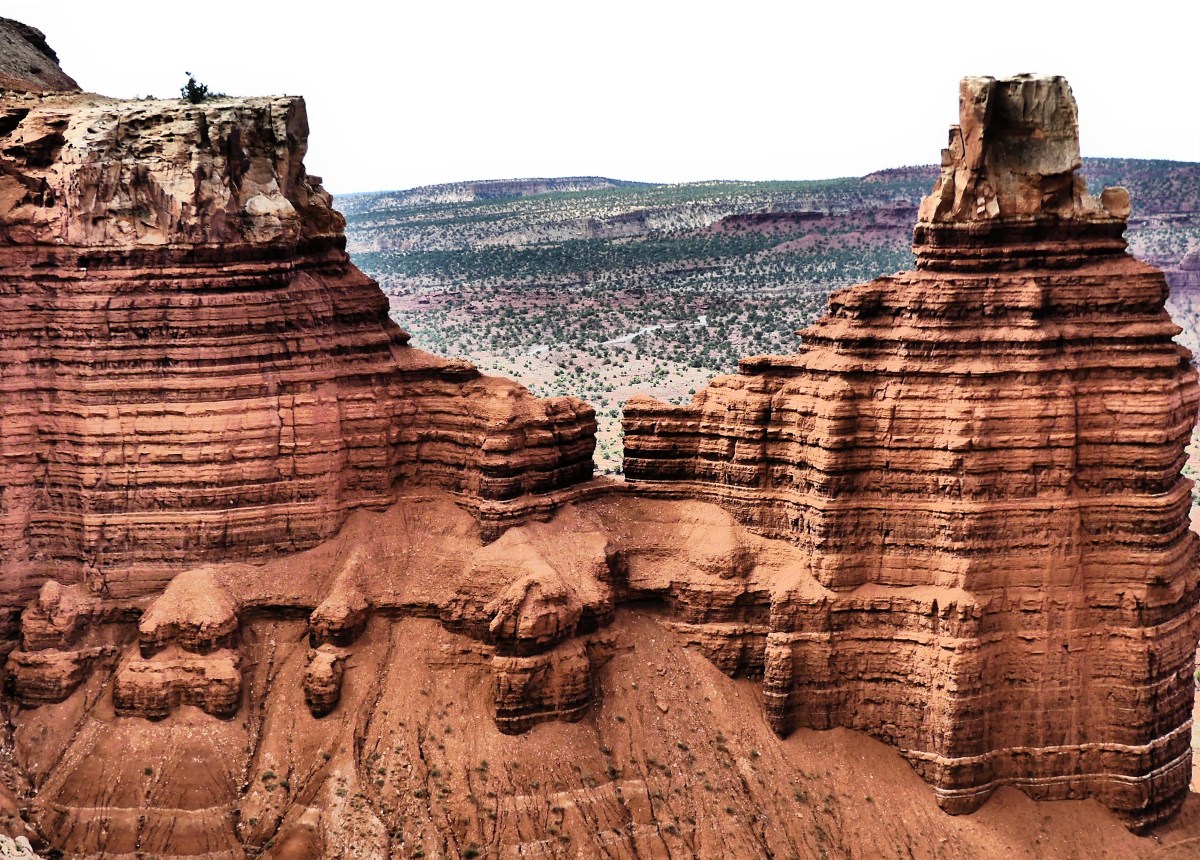

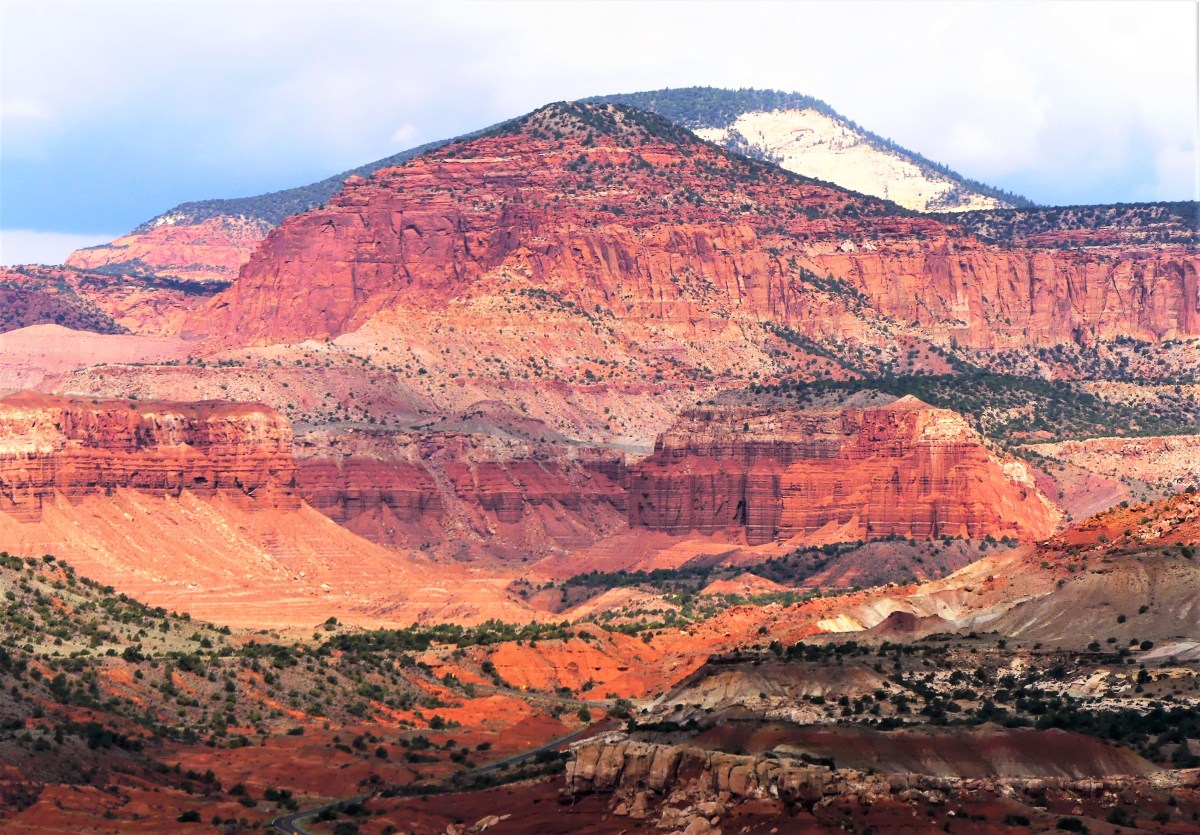


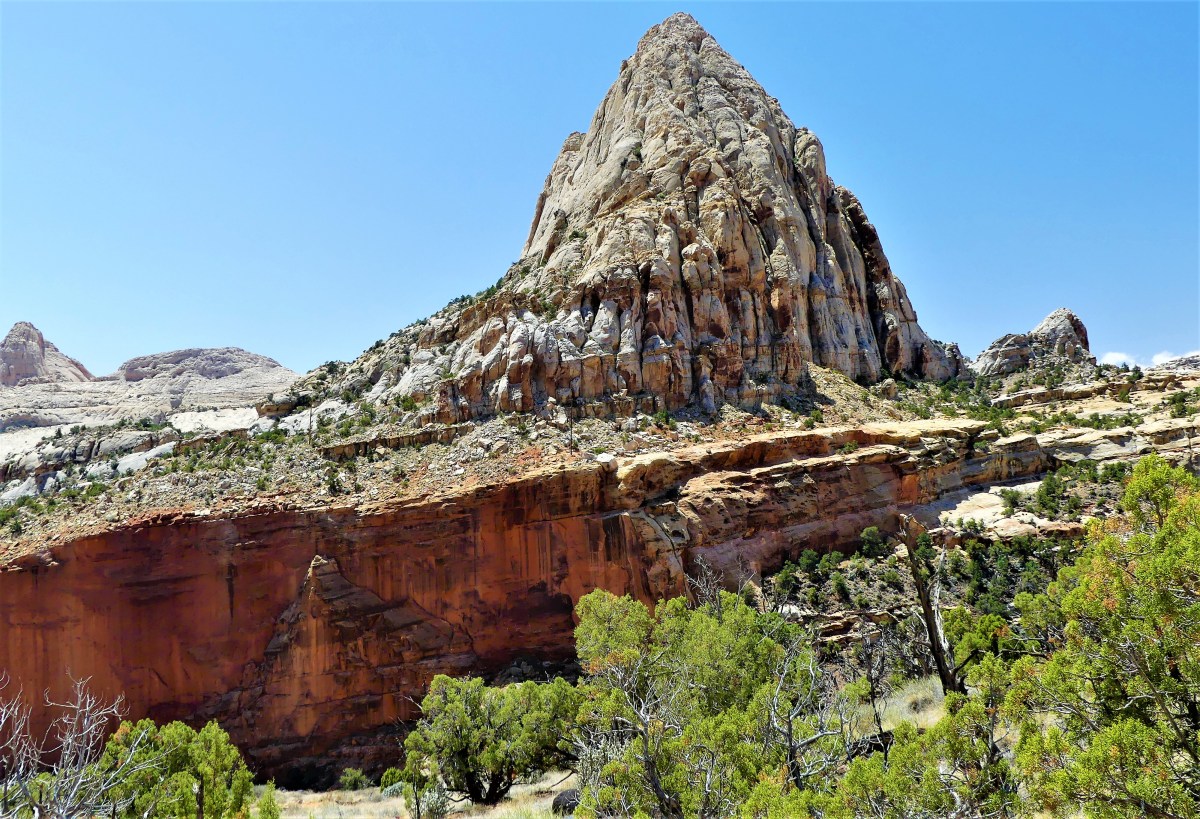
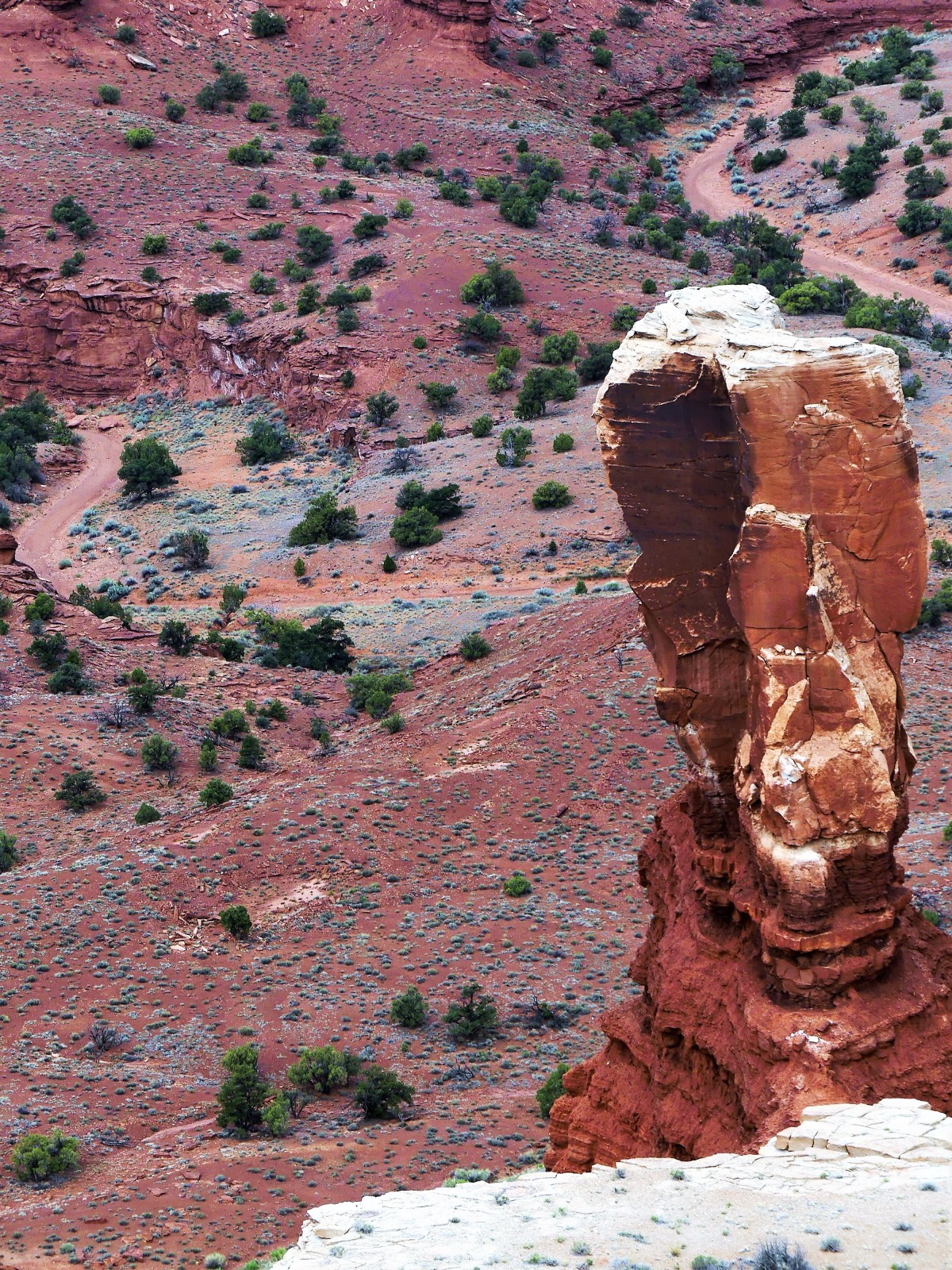
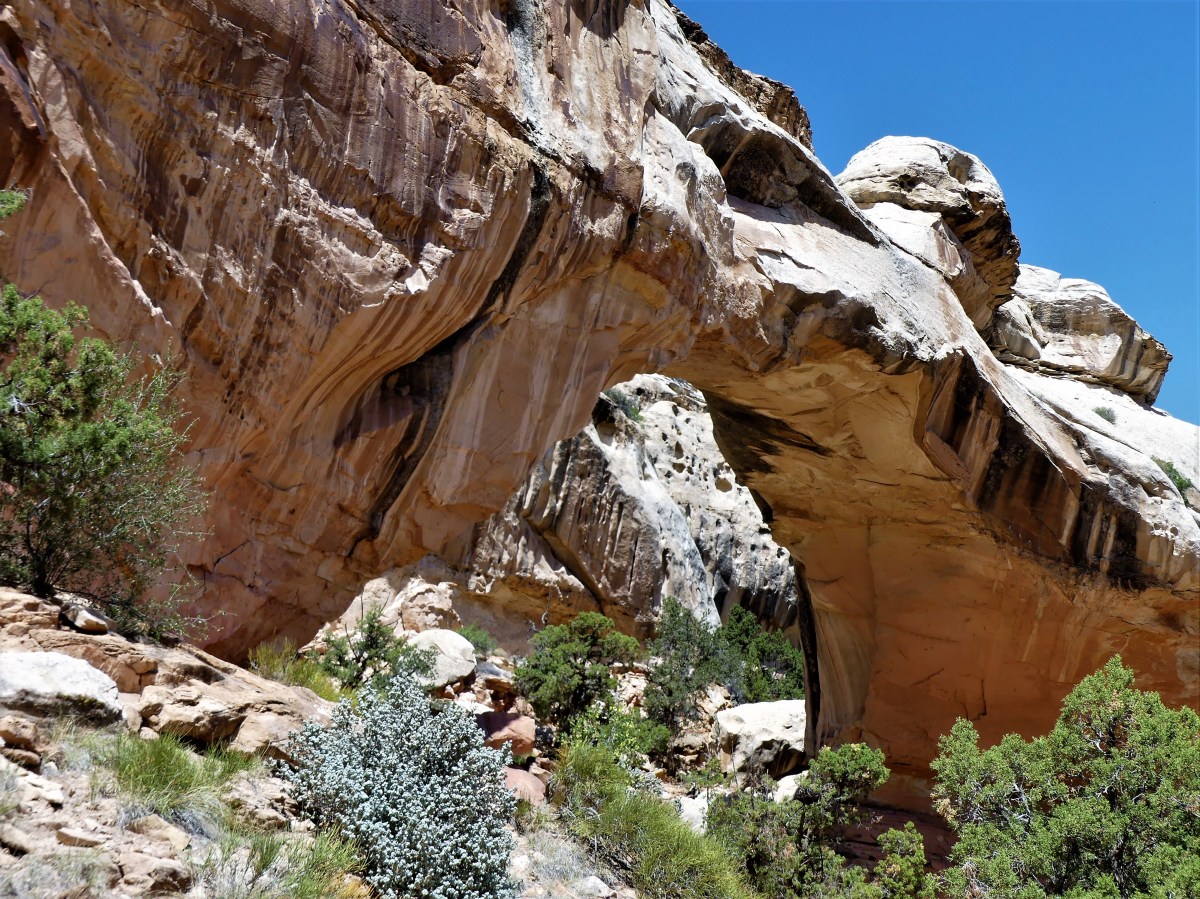


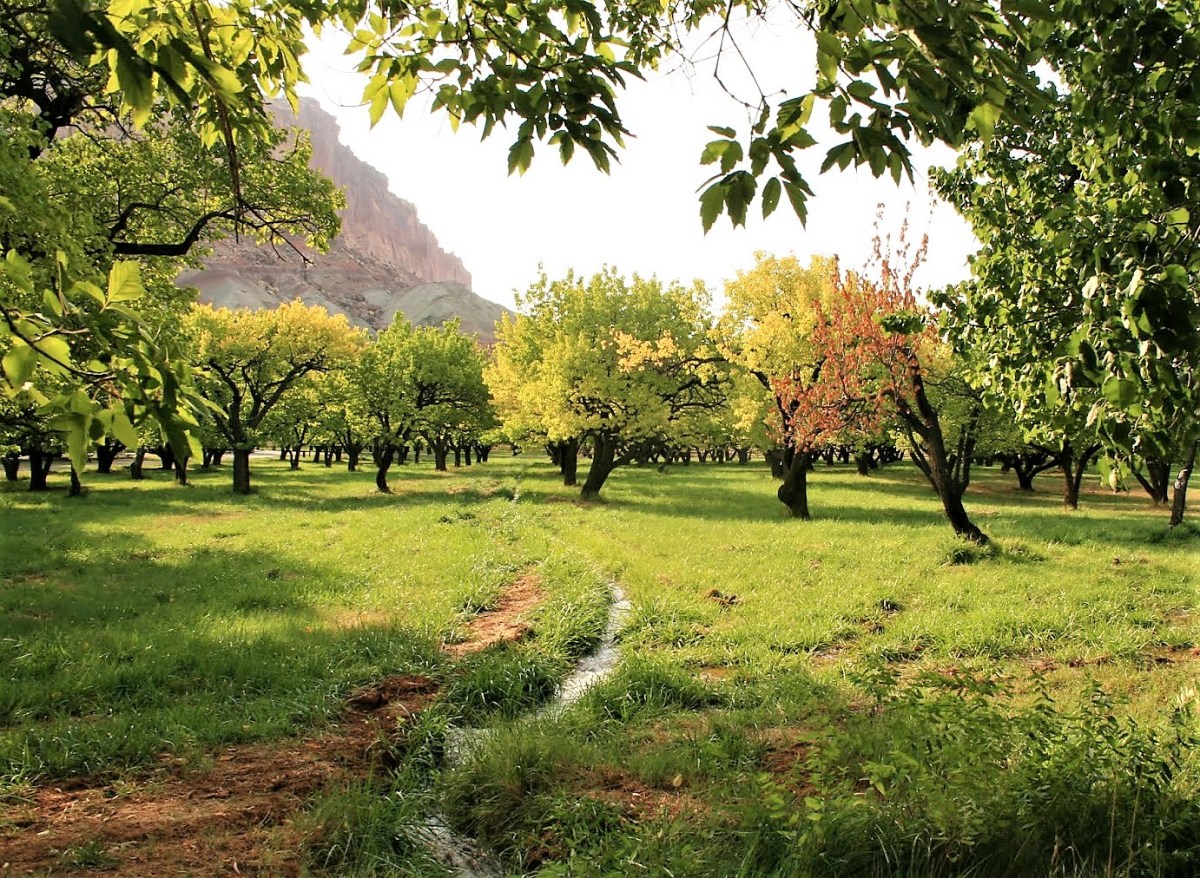 sprinkle in some petroglyphs,

 you would have a delicious National Park named Capitol Reef that few would ever taste. And that would be the greatest crime, because this is a four-course park that satisfies all the senses, and requires at least four days to consume all it has to offer.
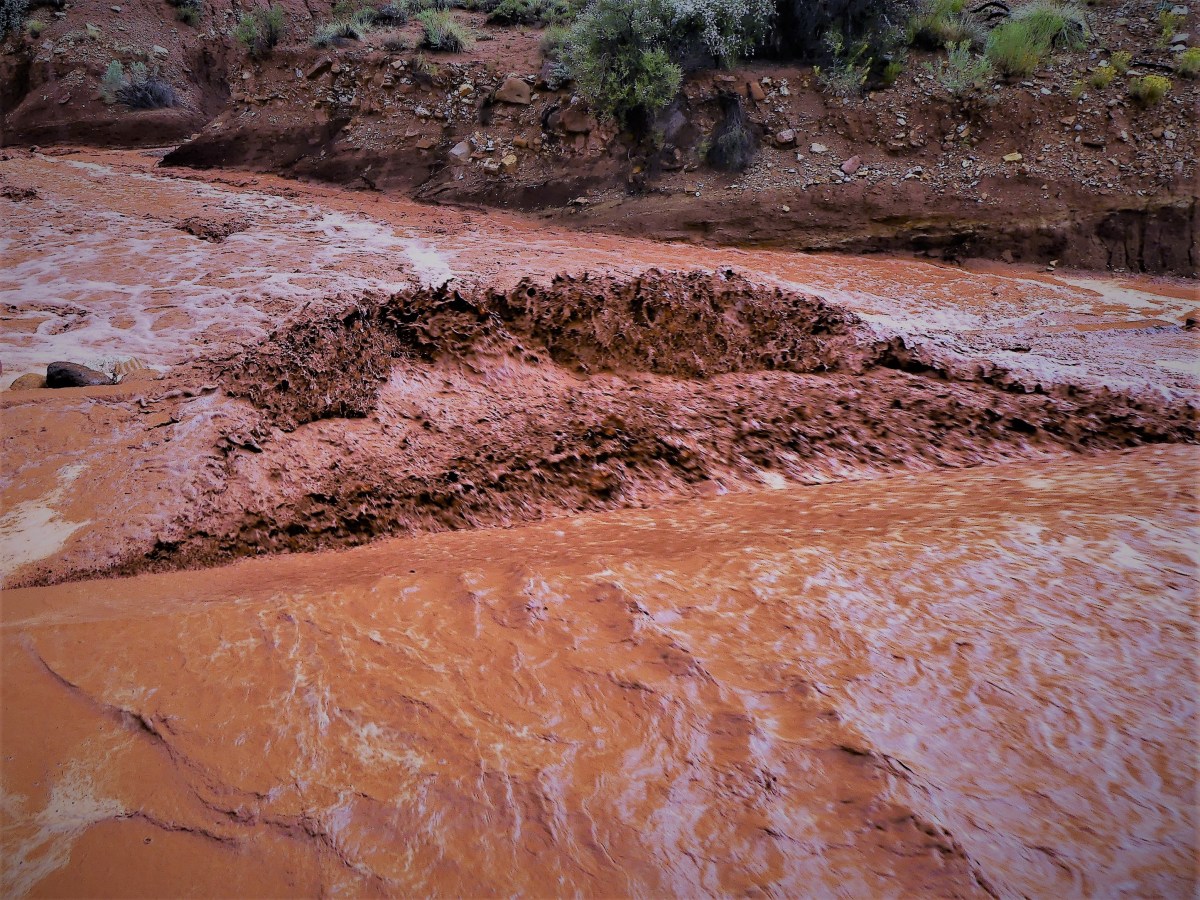 But we would not be detained. The truck’s high clearance and V-8 muscle was more than enough to plow through two feet of fast water, cutting a red swath through the wash, and a sending a bloody spray across my windshield and windows. The benefit of beating the waterfall gave us the road ahead to ourselves, as all the other cars were left behind in our wake.
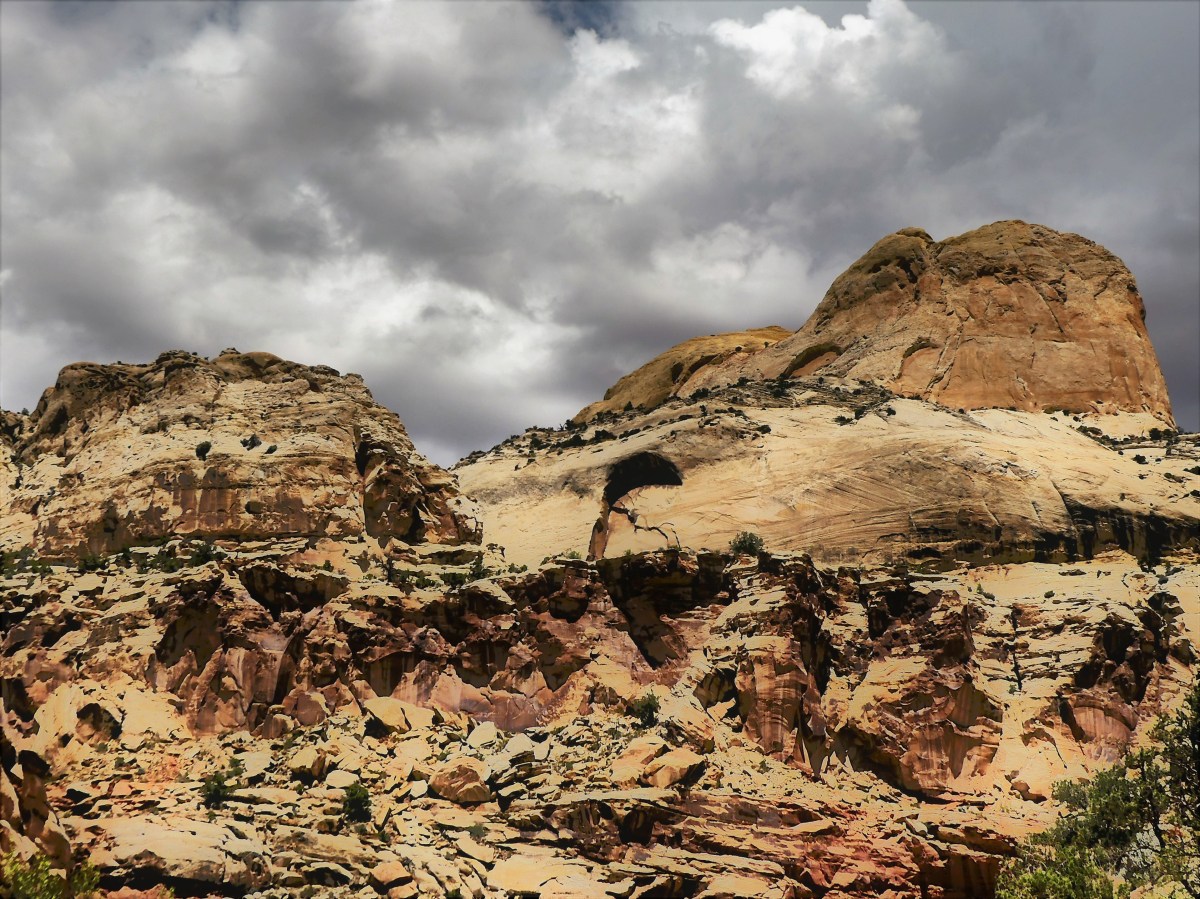 and coincidentally coincided with a Sirius-XM radio broadcast of Trump announcing the American withdrawal from the Paris Climate Accord. It’s hard to relay the irony of negotiating the winding narrow passage between the canyon walls while listening to Trump rationalize his decision under the guise of job losses in front of a partisan Rose Garden rally. With every fractured sentence and every tired hyperbole, the crowd would erupt with enthusiastic applause, acknowledged by Trump’s demure, “Thank you, thank you.”
 tracing many generations of footsteps before us.
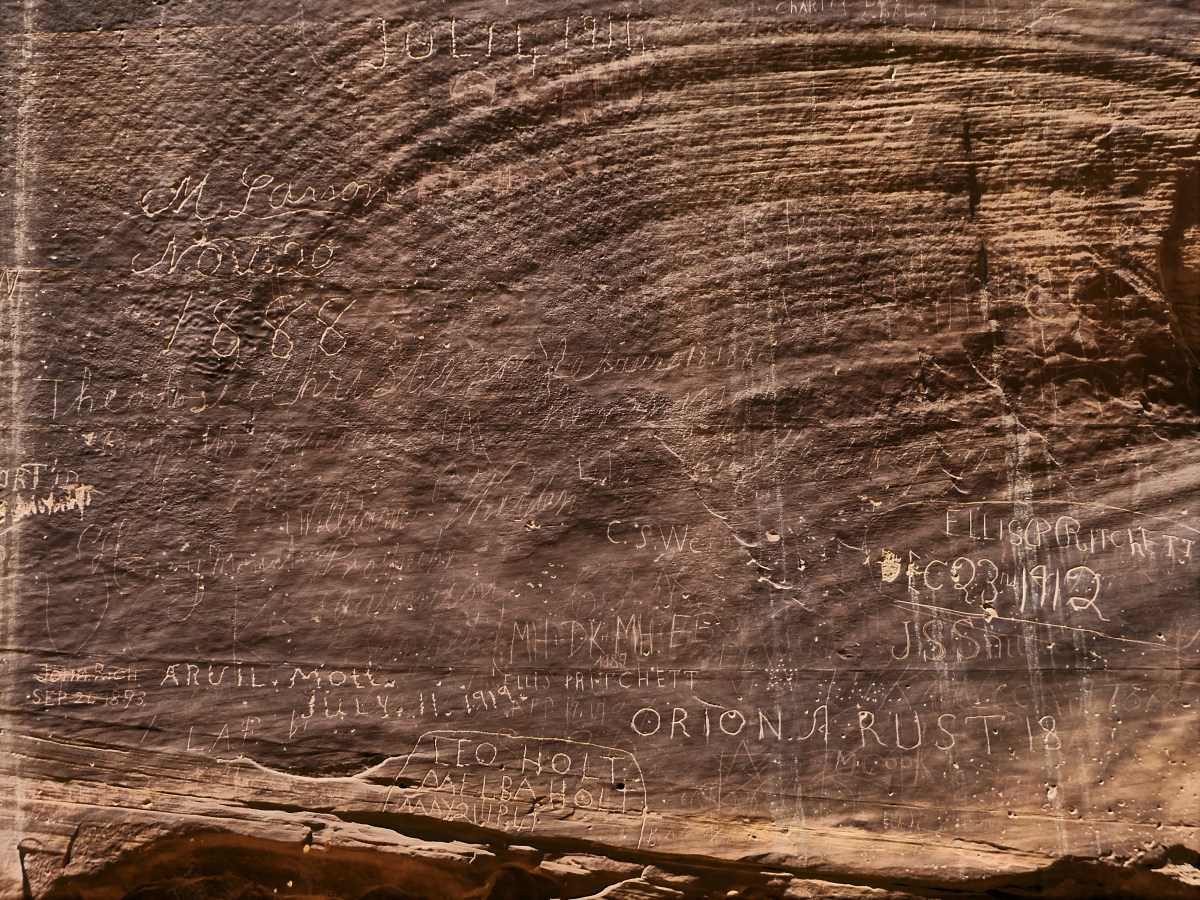 These people left us a great treasure (discounting the grafitti–more on that later) to inspire us, but also assigned us a great responsibility to preserve and protect it so that future generations may also be inspired. Our legacy as moral and ethical humans relies on it. And our future as a planet depends on it.
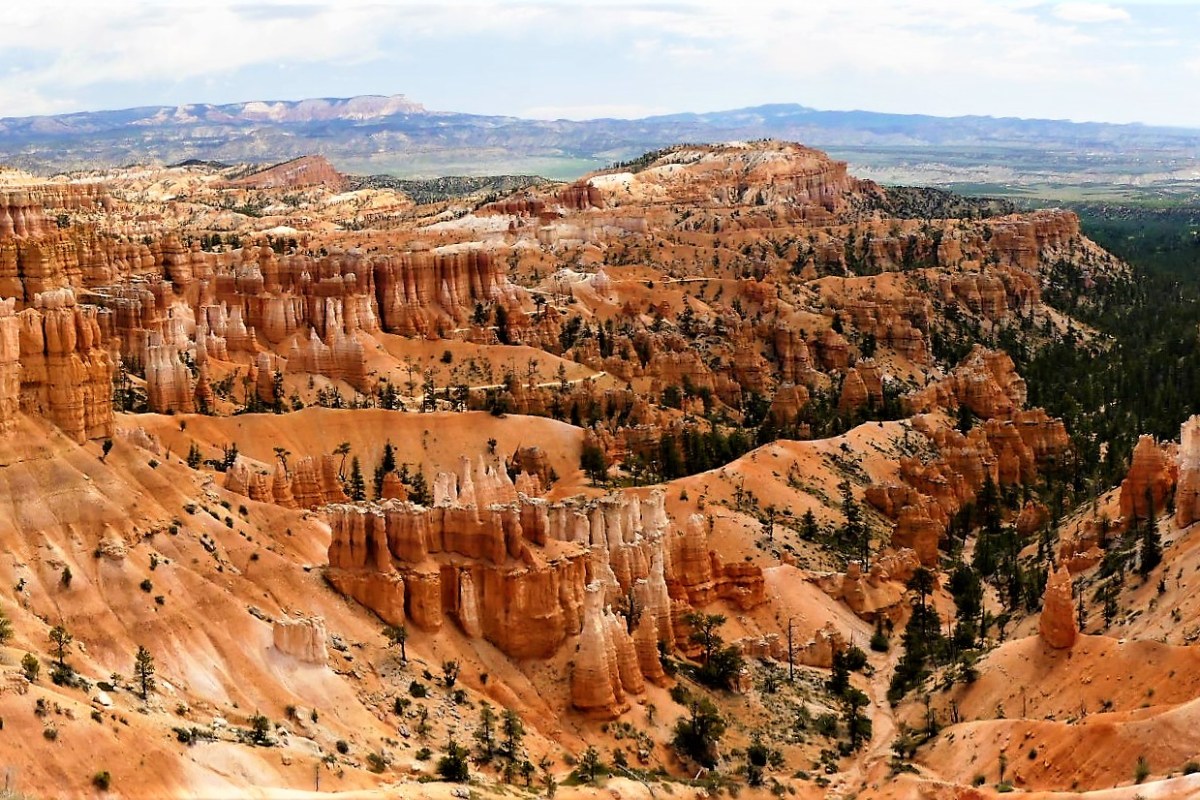
 offering panoramic views of the Colorado Plateau going as far back as the Grand Canyon’s North Rim. Clear days at Bryce can offer the longest views anywhere on the planet–beyond 100 miles away, thanks to the amazing clean air quality.

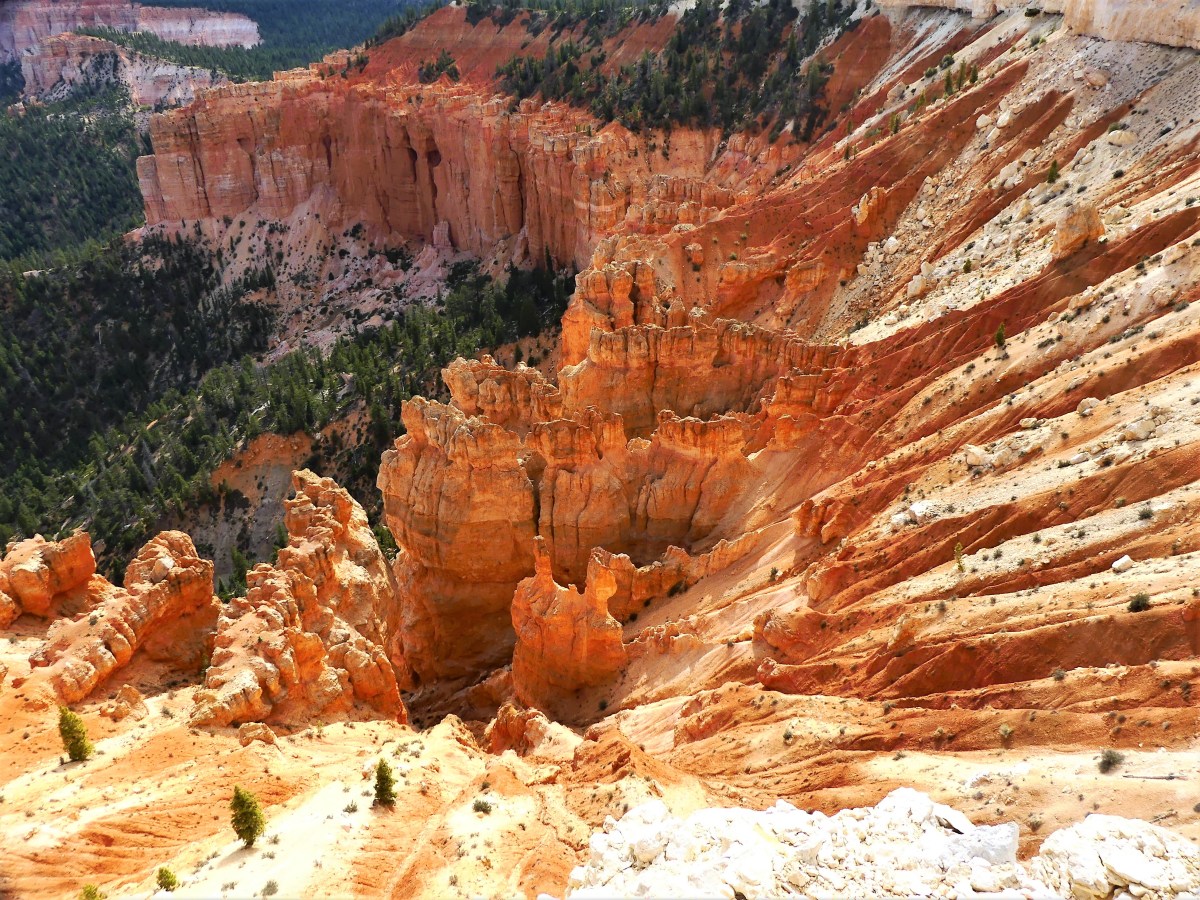


 through the Navajo Loop Trail following the steep switchbacks…
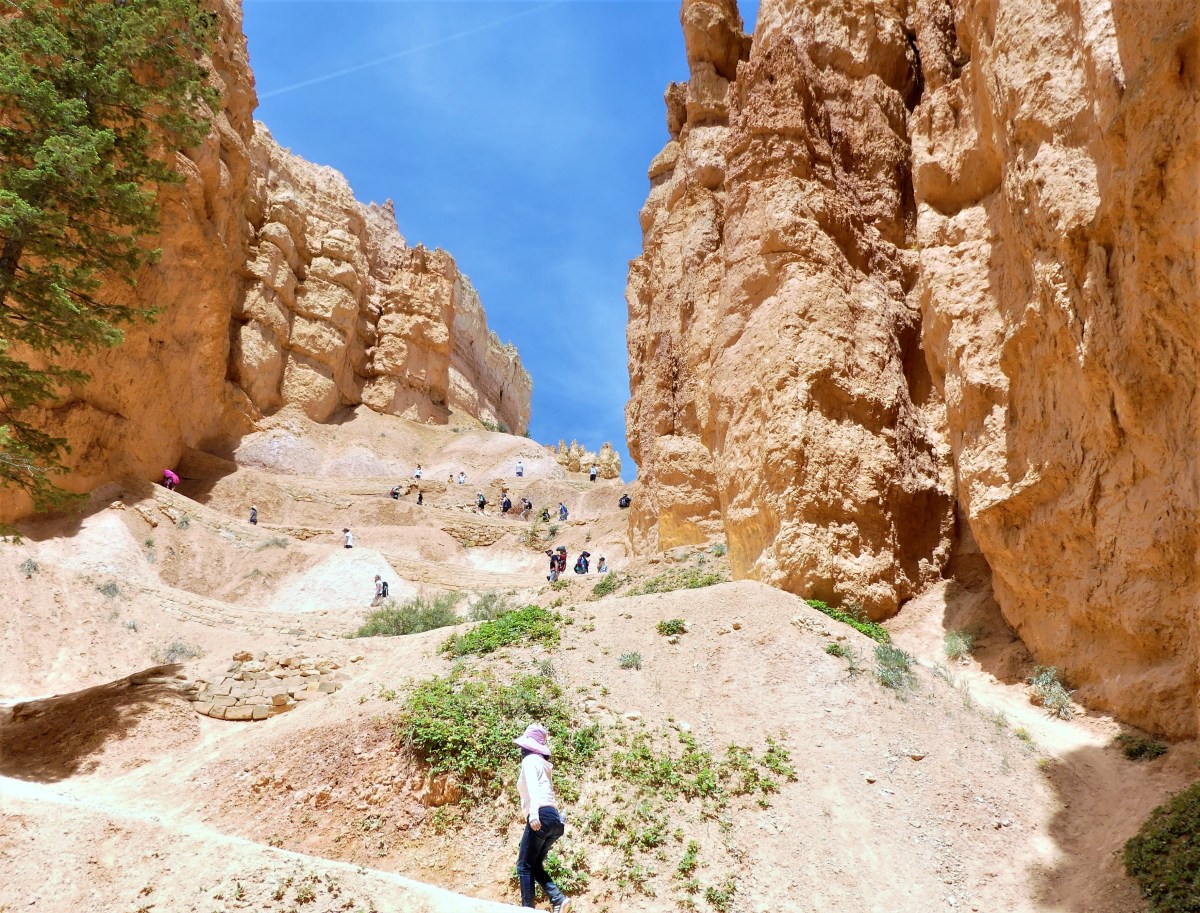 to Wall Street, where enormous Douglas firs have balanced in the rift for over 750 years, like sacred totems,
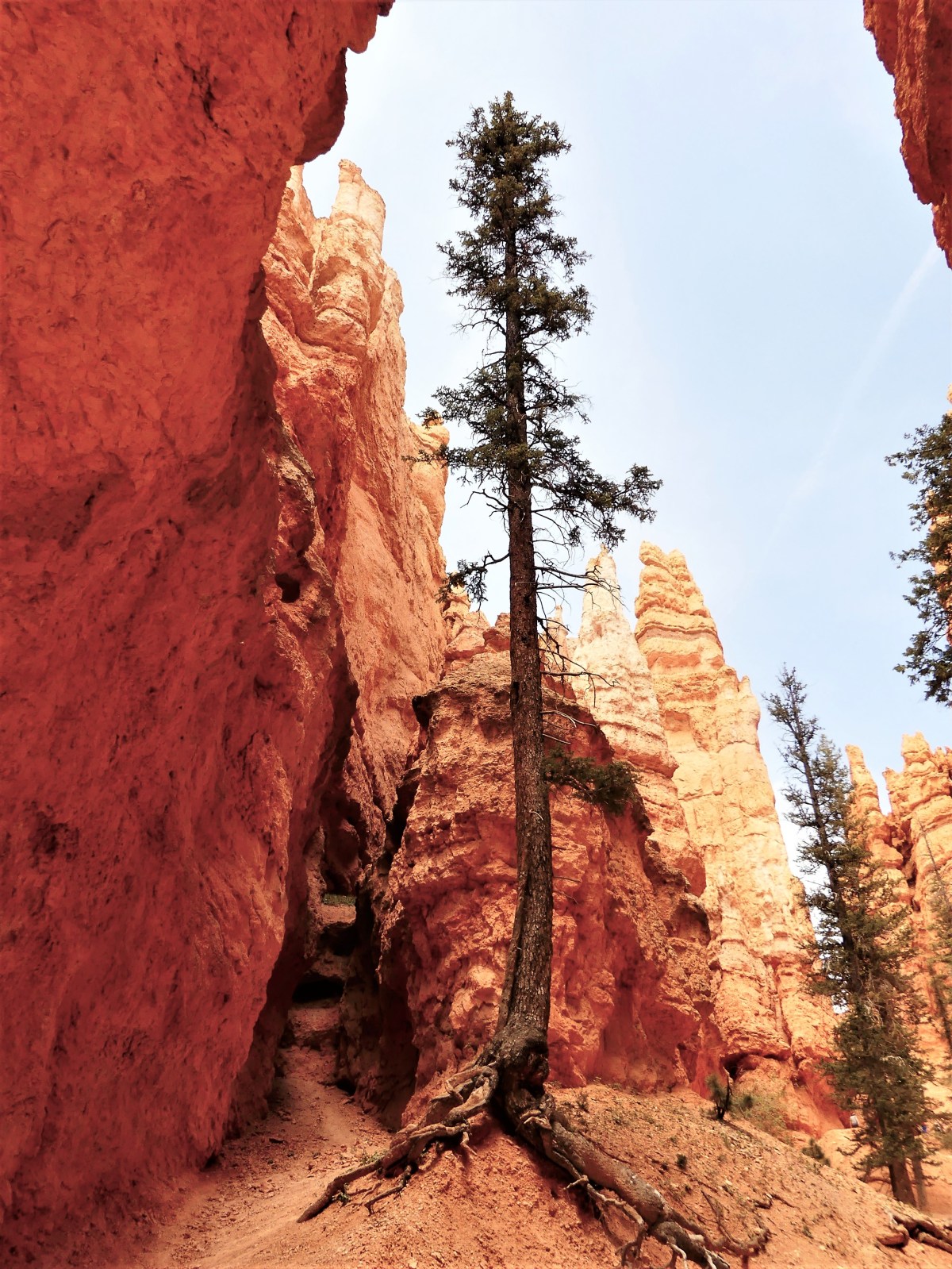 and views of Thor’s Hammer are something to “marvel”.
 Beyond Twin Bridges (another iconic hoodoo formation),
 another series of switchbacks dropped us to the Amphitheater floor. Rather than continue the loop, we opted to cross into Queens Garden, for cake and a spot of iced tea.
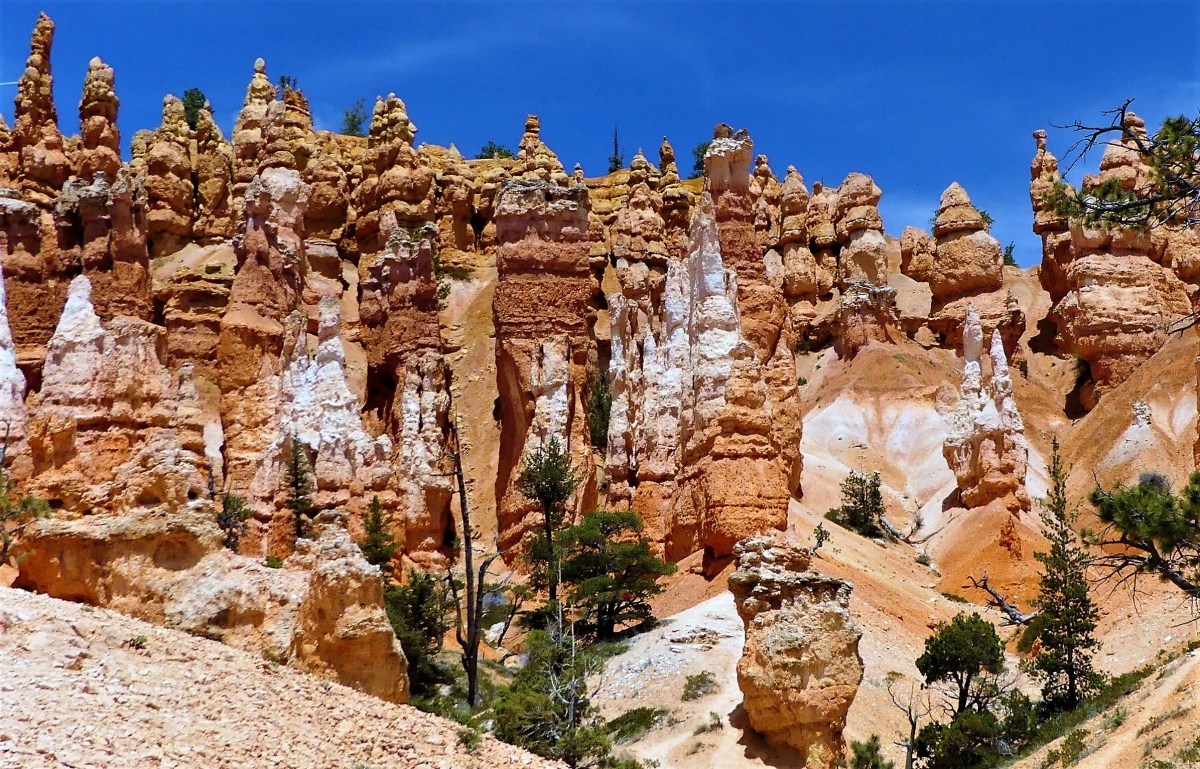 standing along side the Queen’s castle…
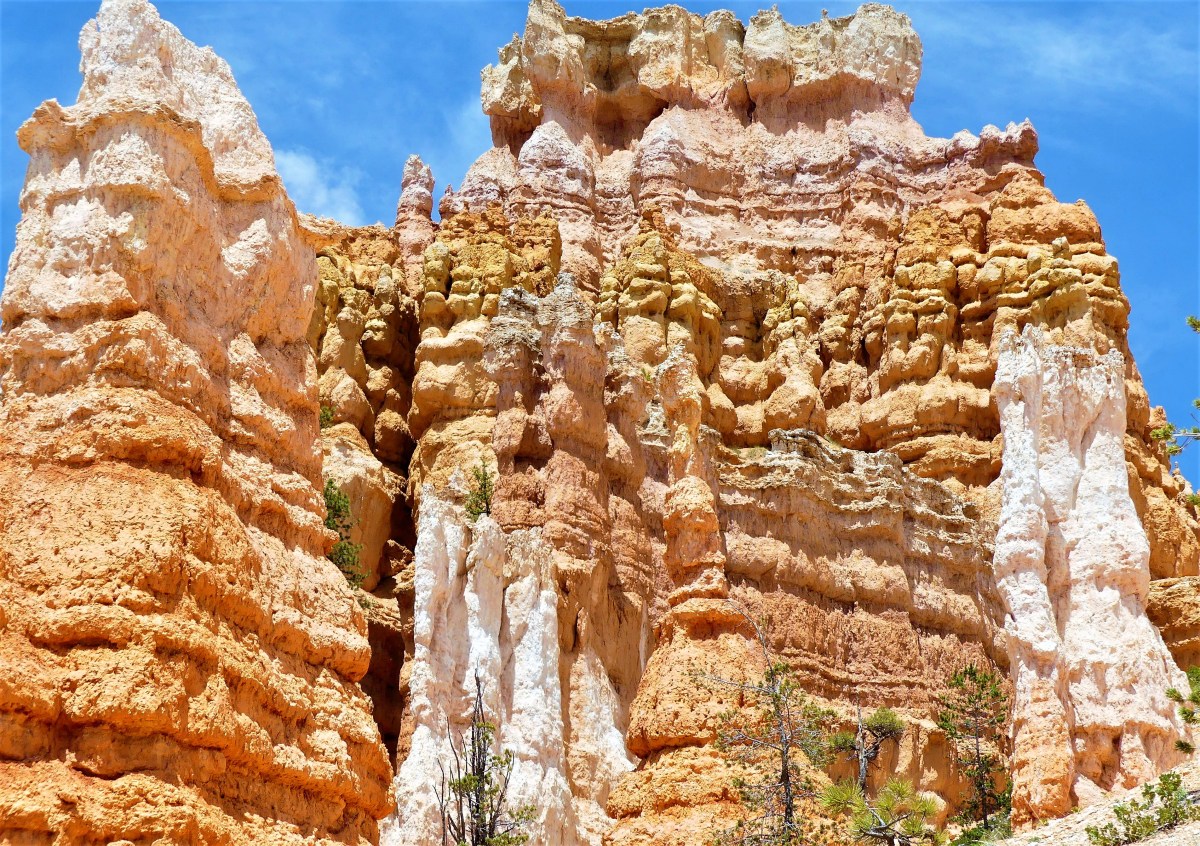 as Queen Victoria looked on high.
 It was a “monumental” hike out of the canyon that left us tired, but enthused by the energy surrounding us. Perhaps it was hoodoo voodoo?
 But one thing that we both agreed on… we were ravenous after spending time in this imaginary Fairyland world.
 Shades of


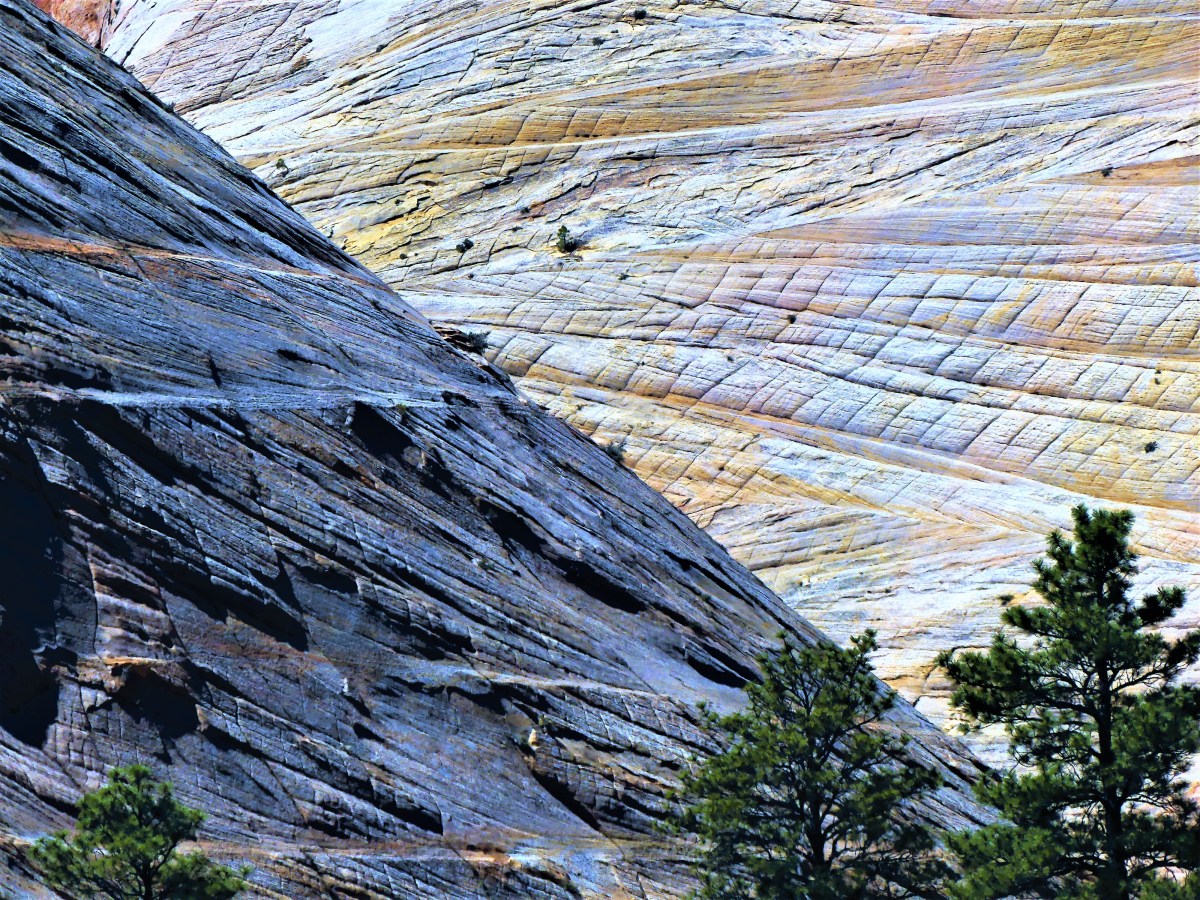


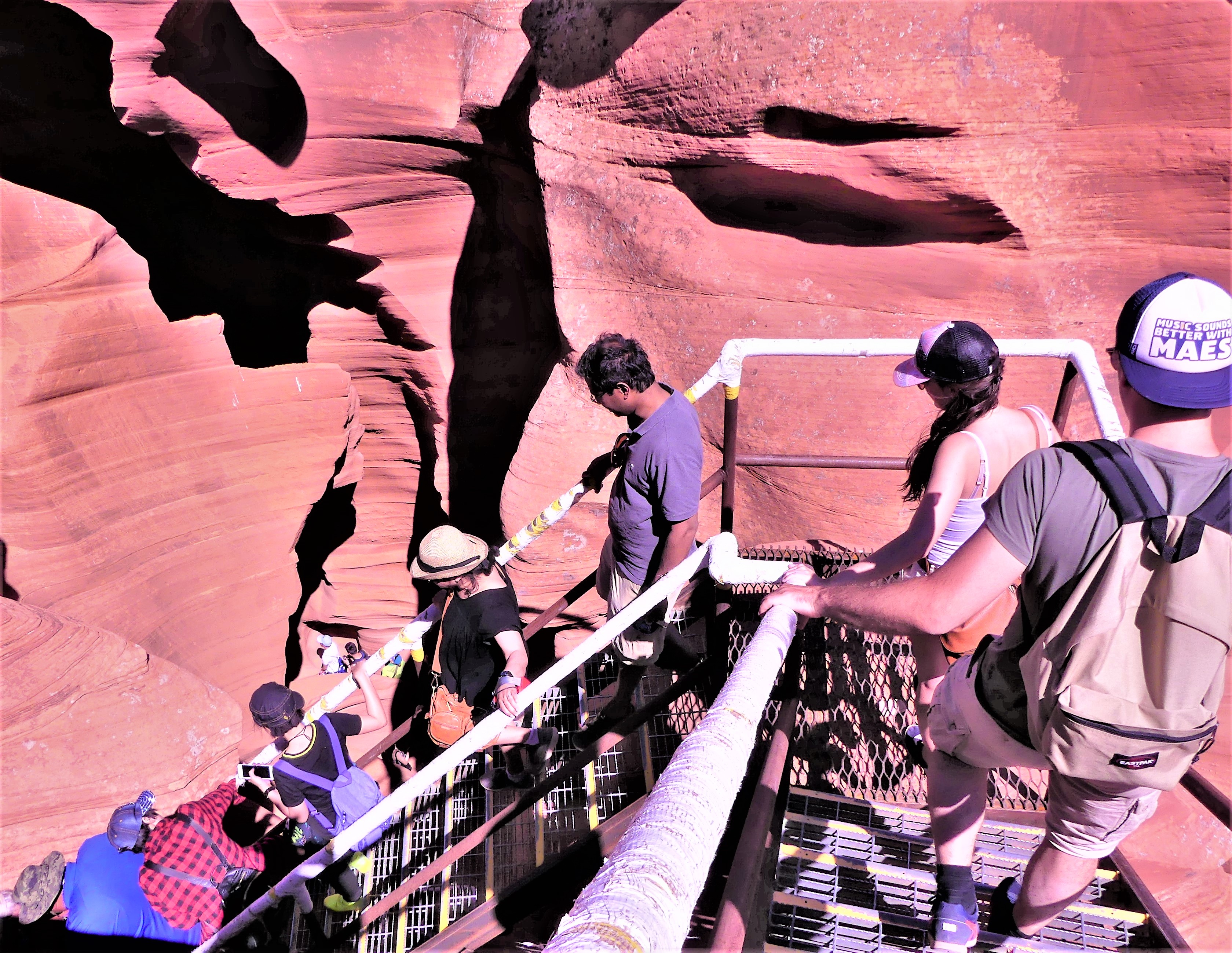


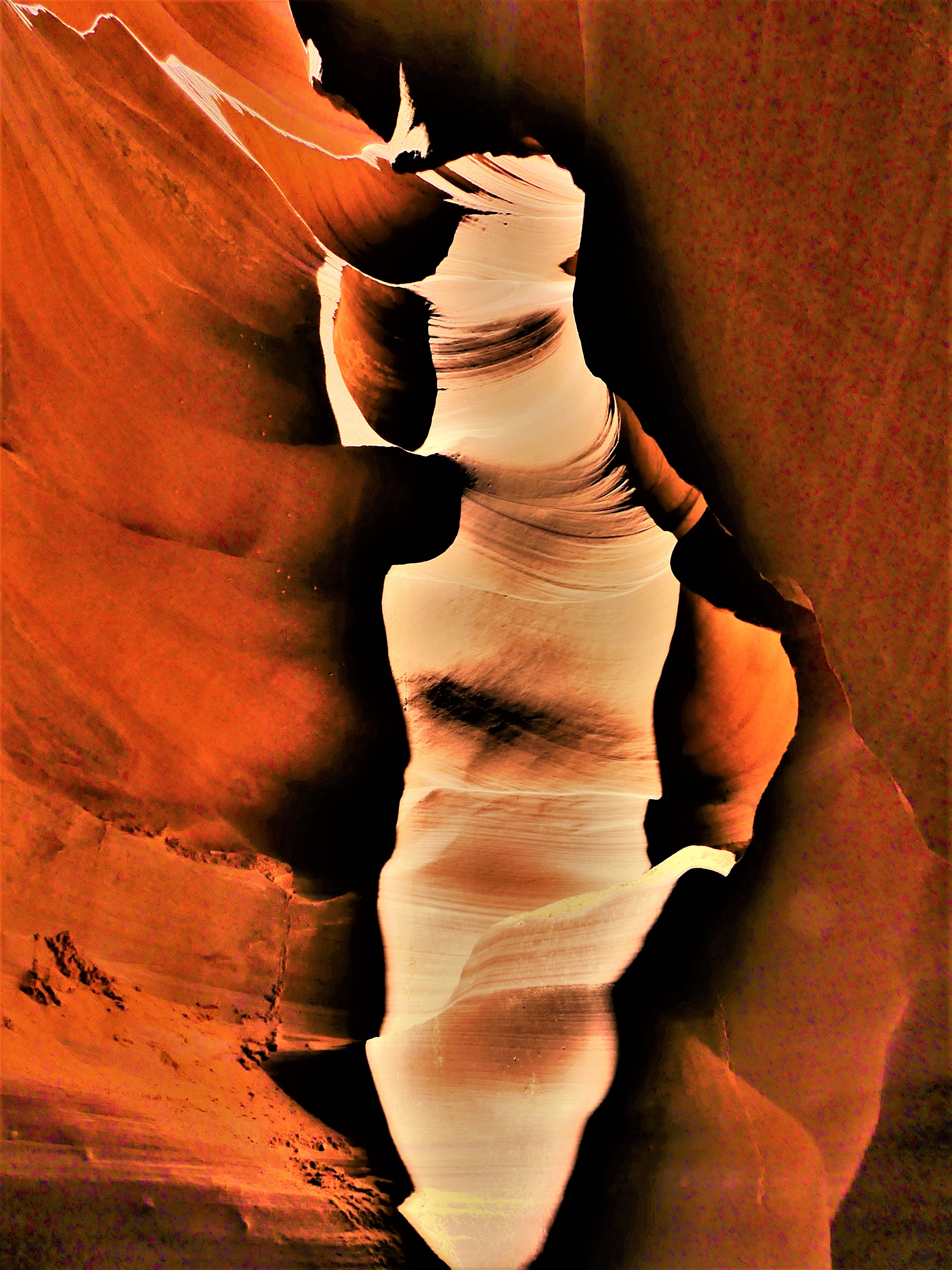


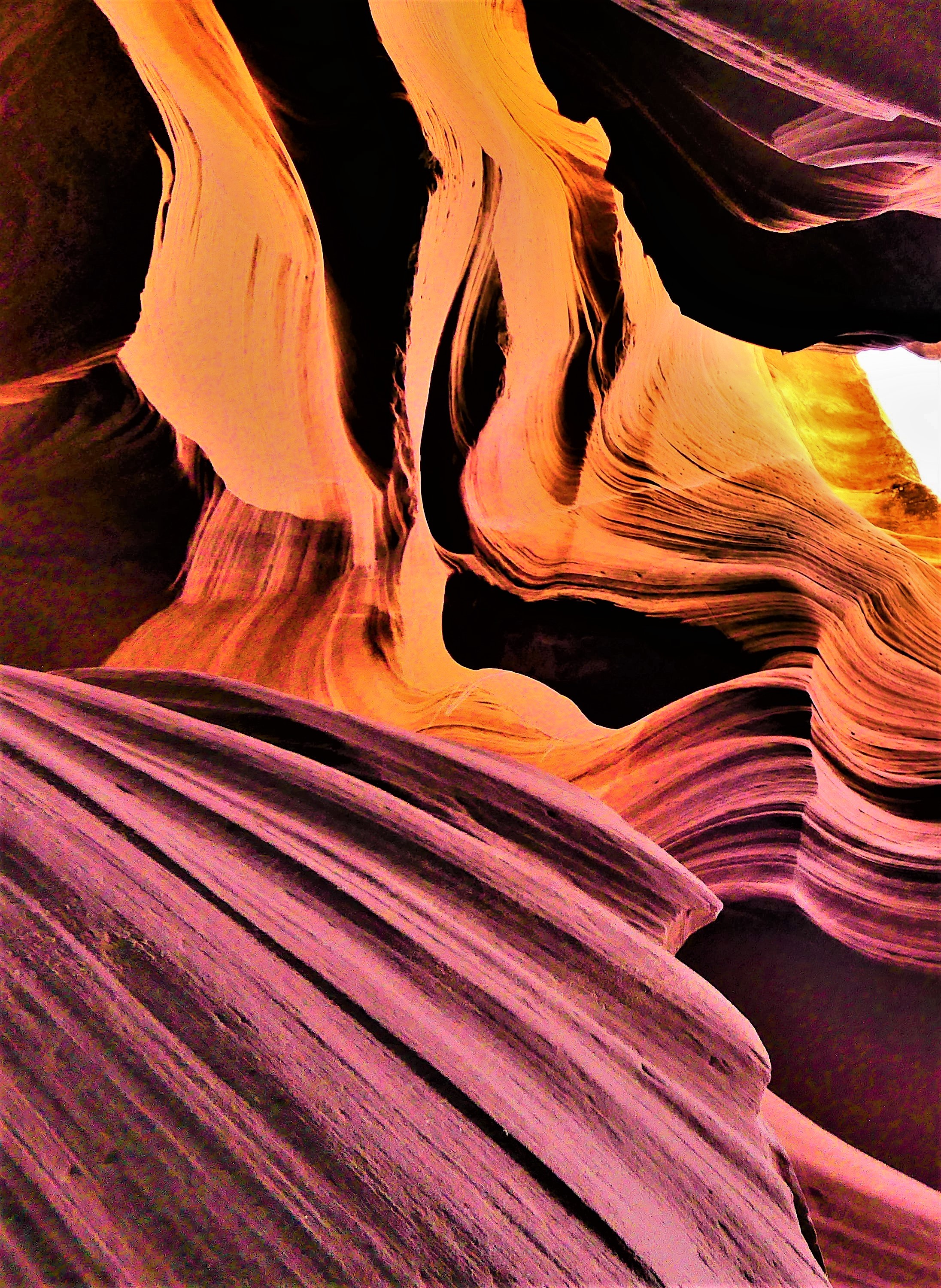
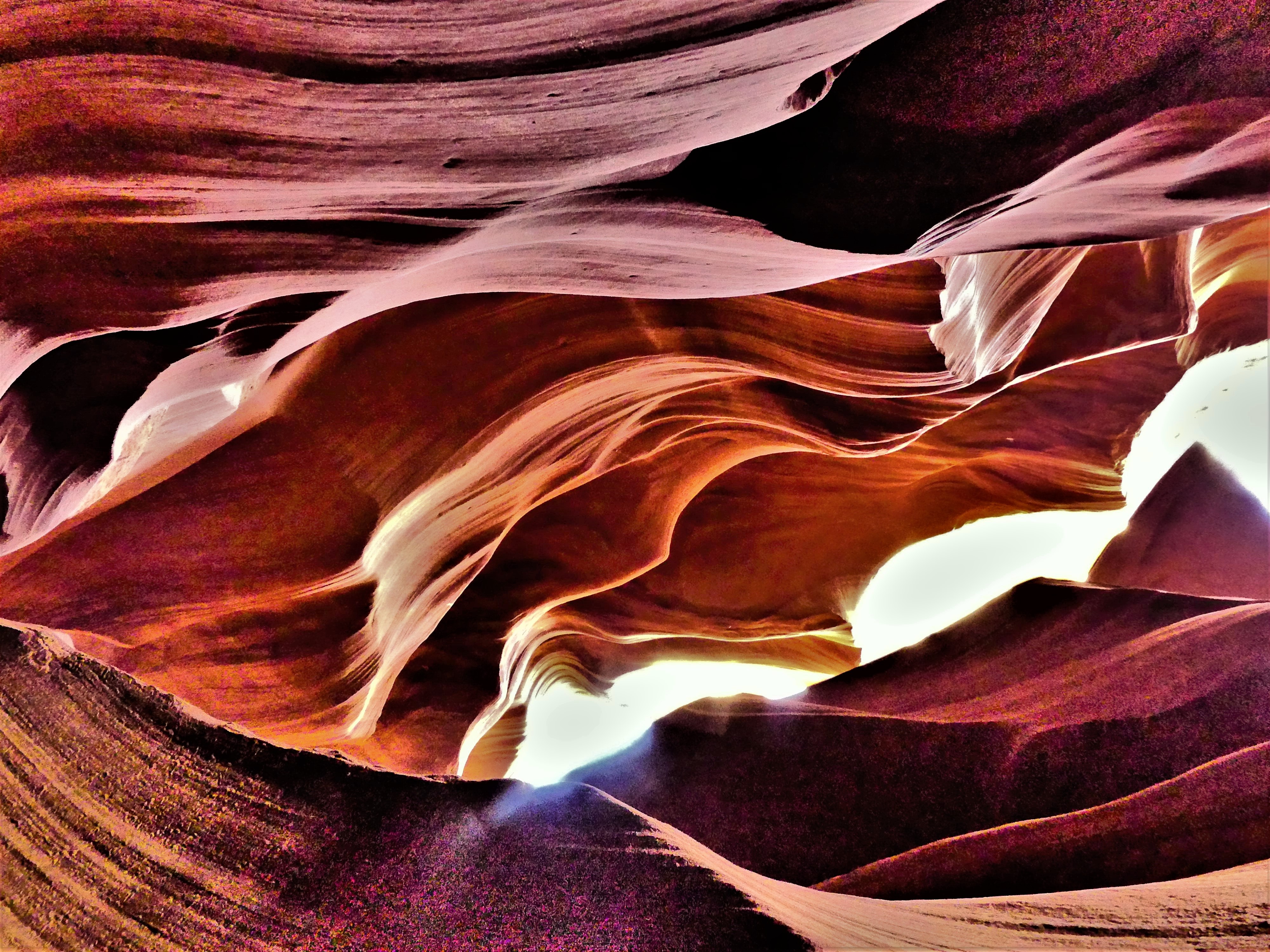


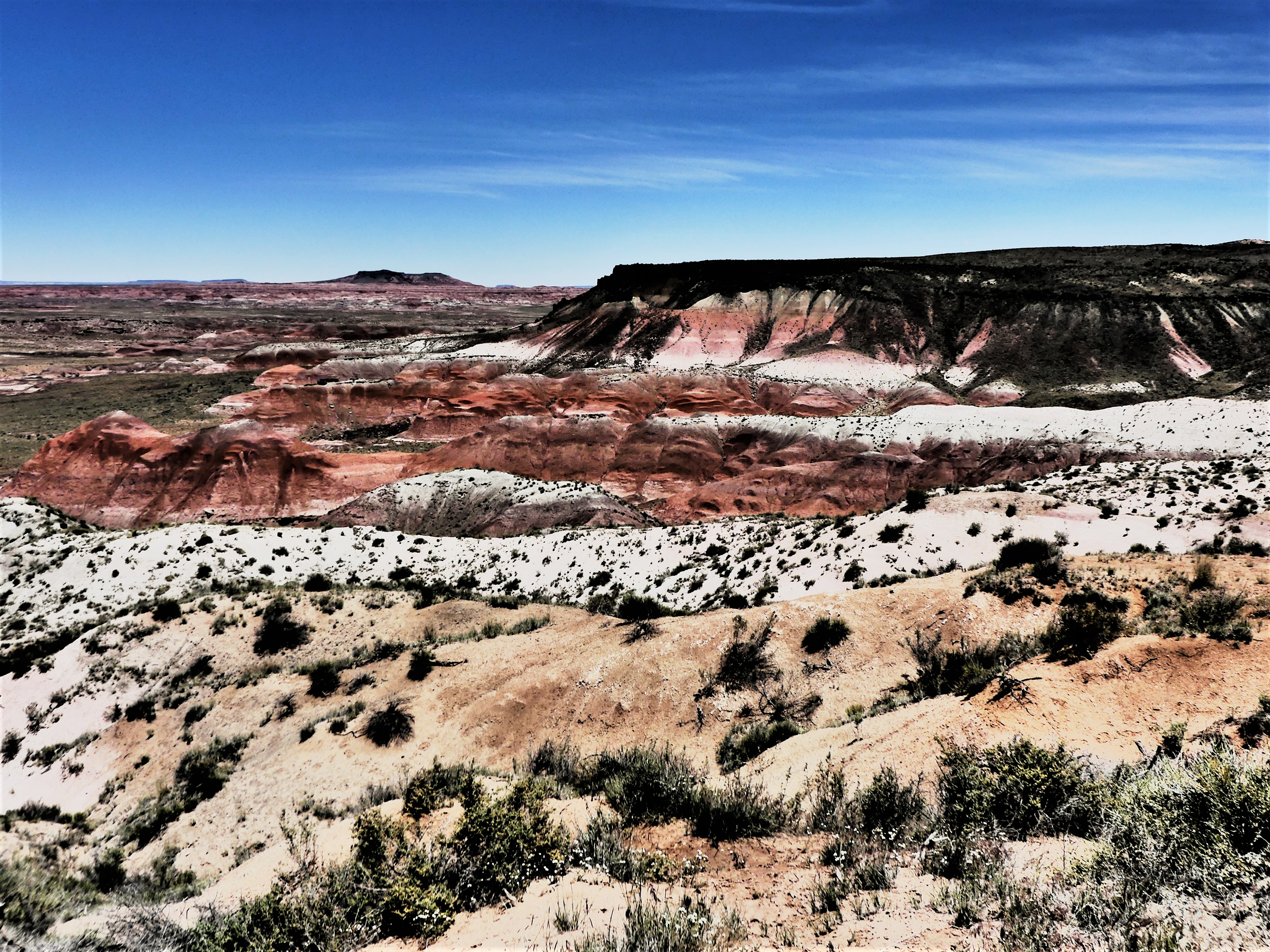

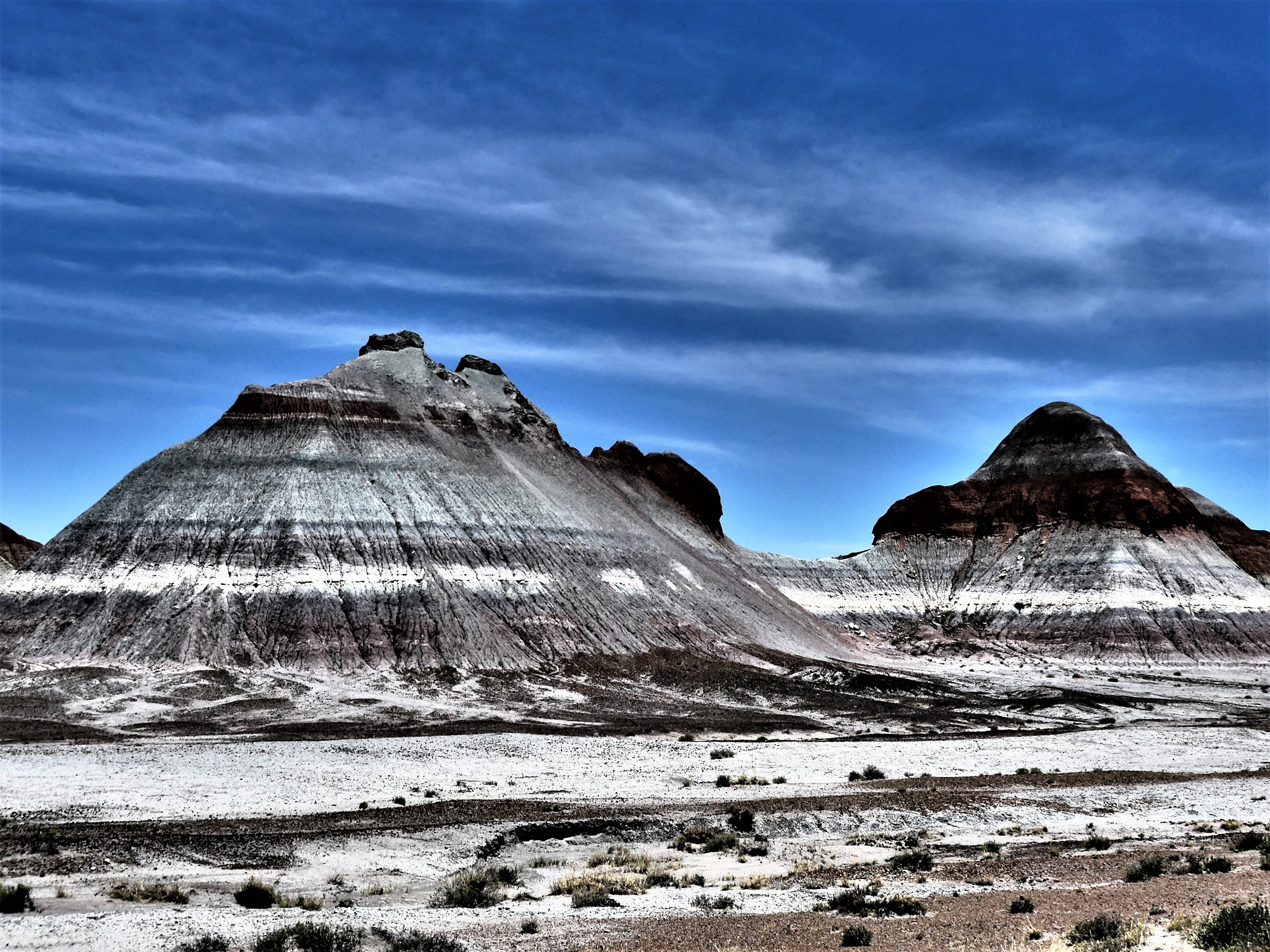


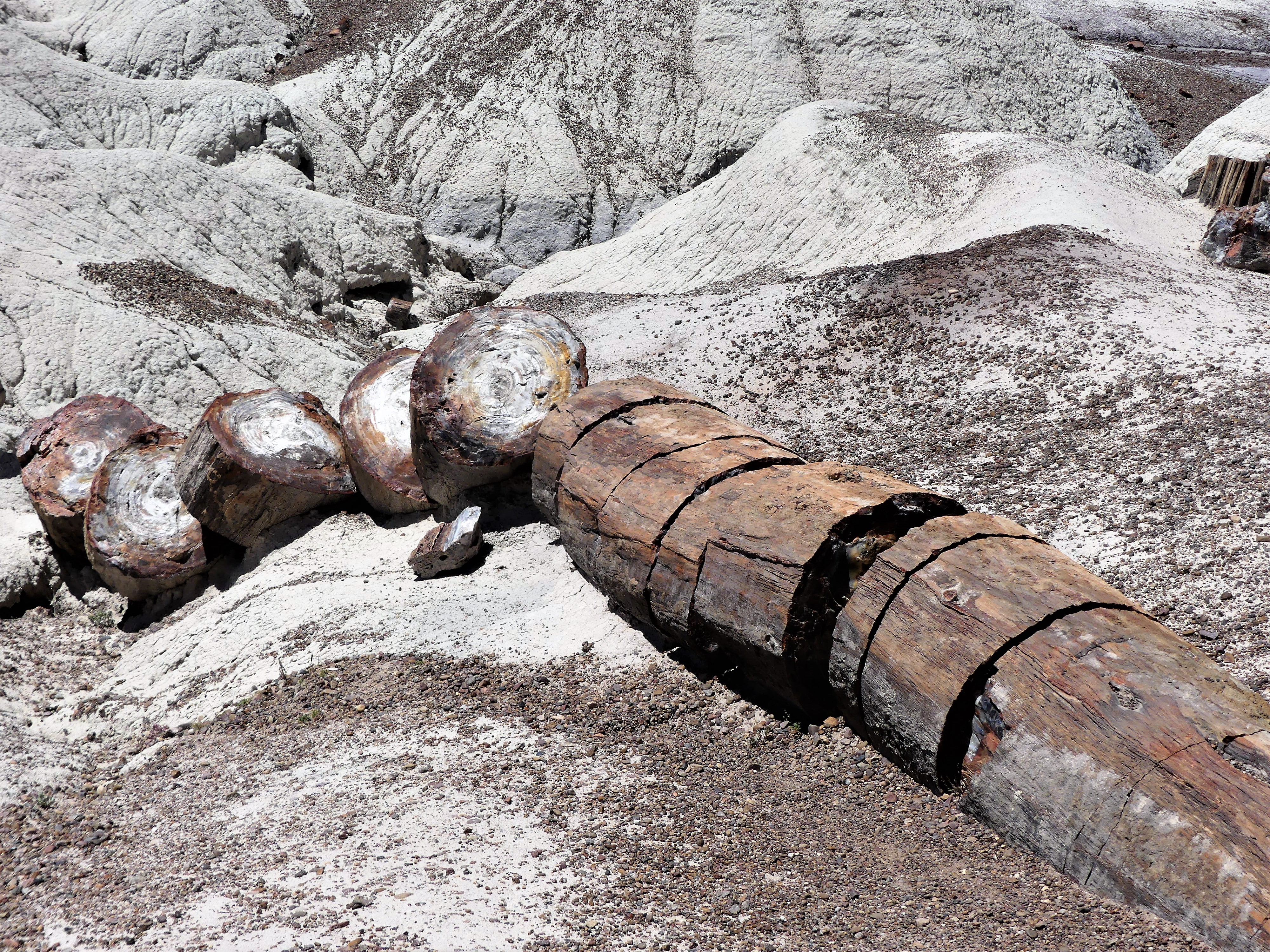

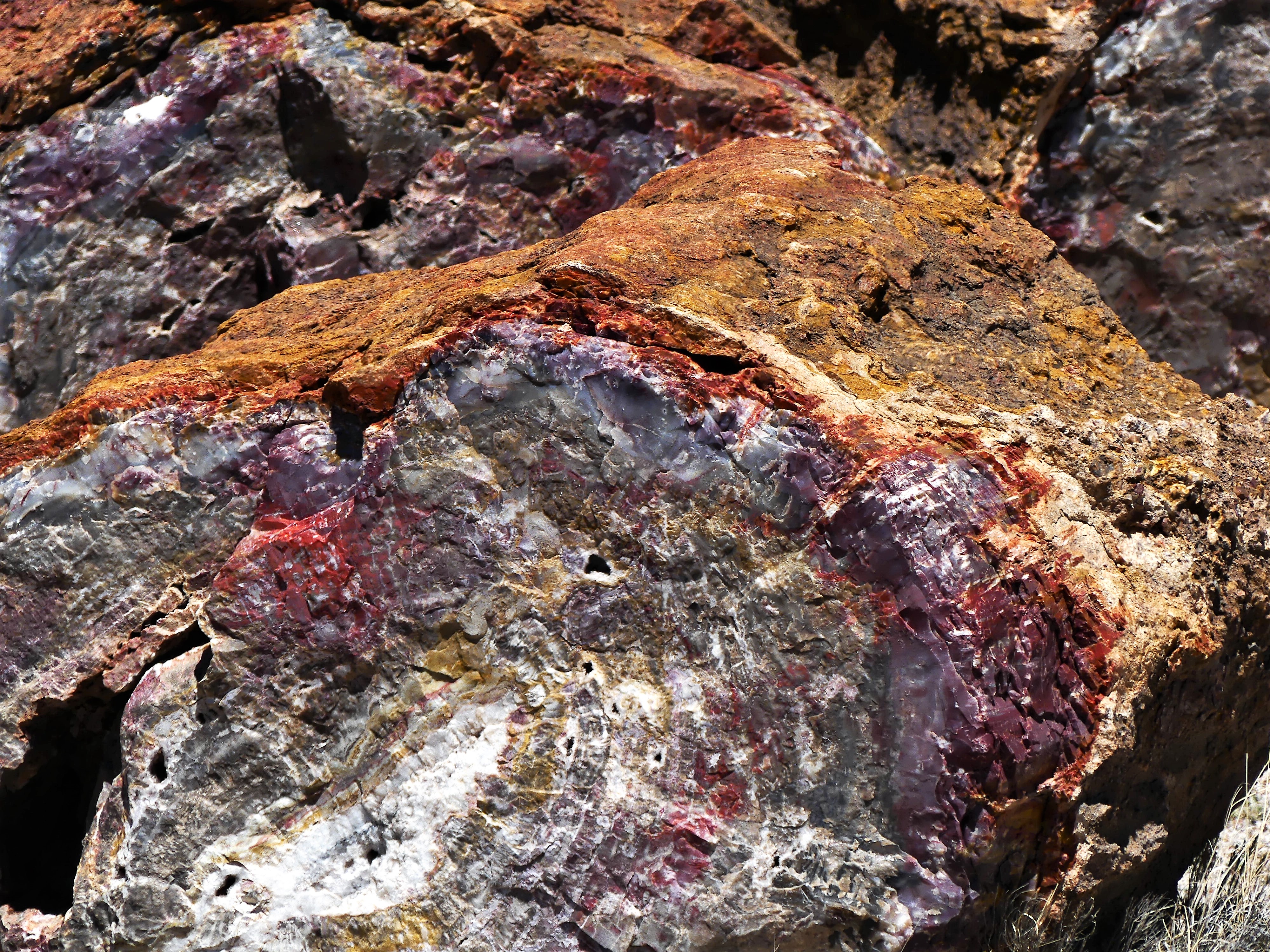


 as we cross several dry river beds…
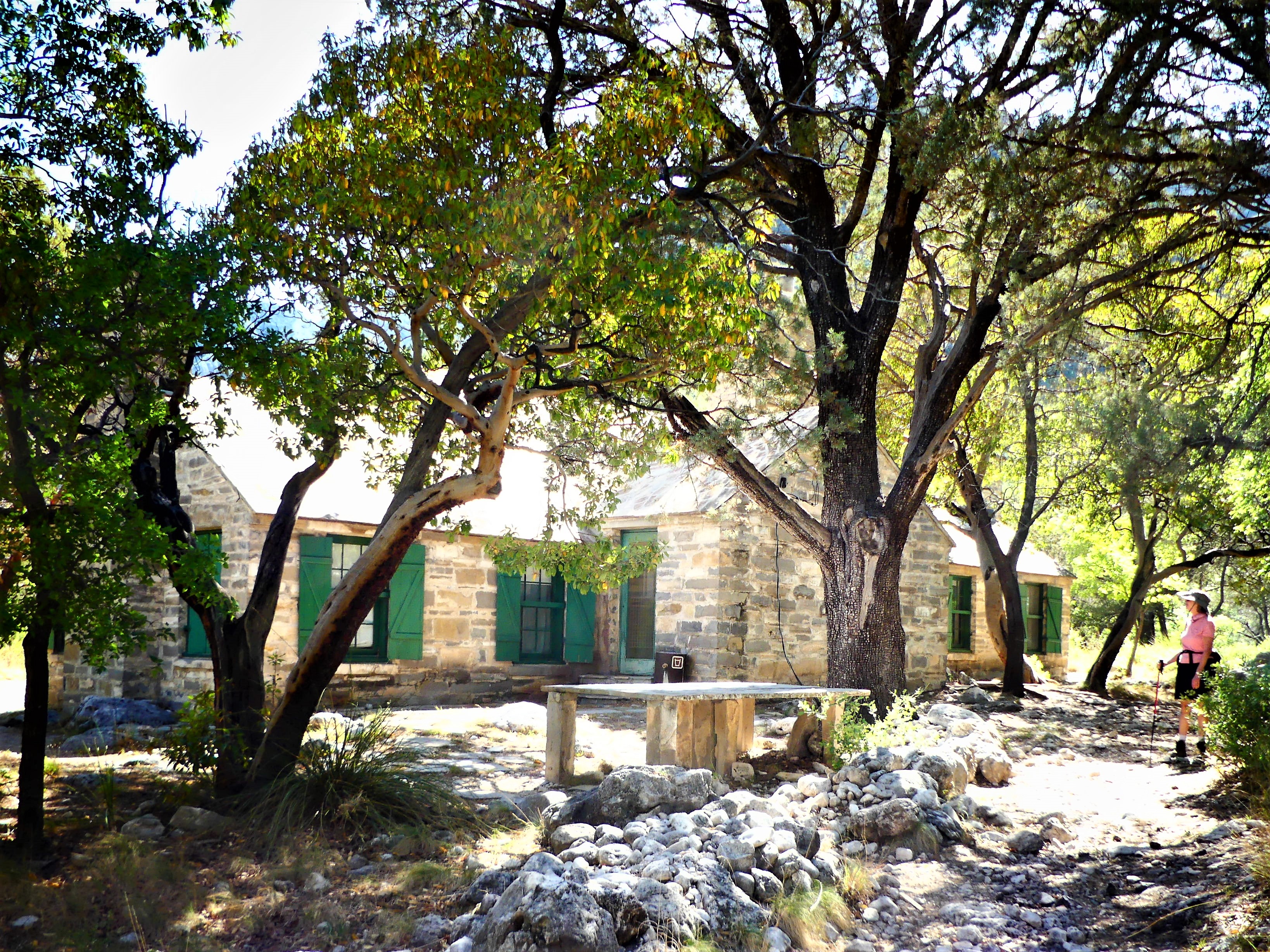
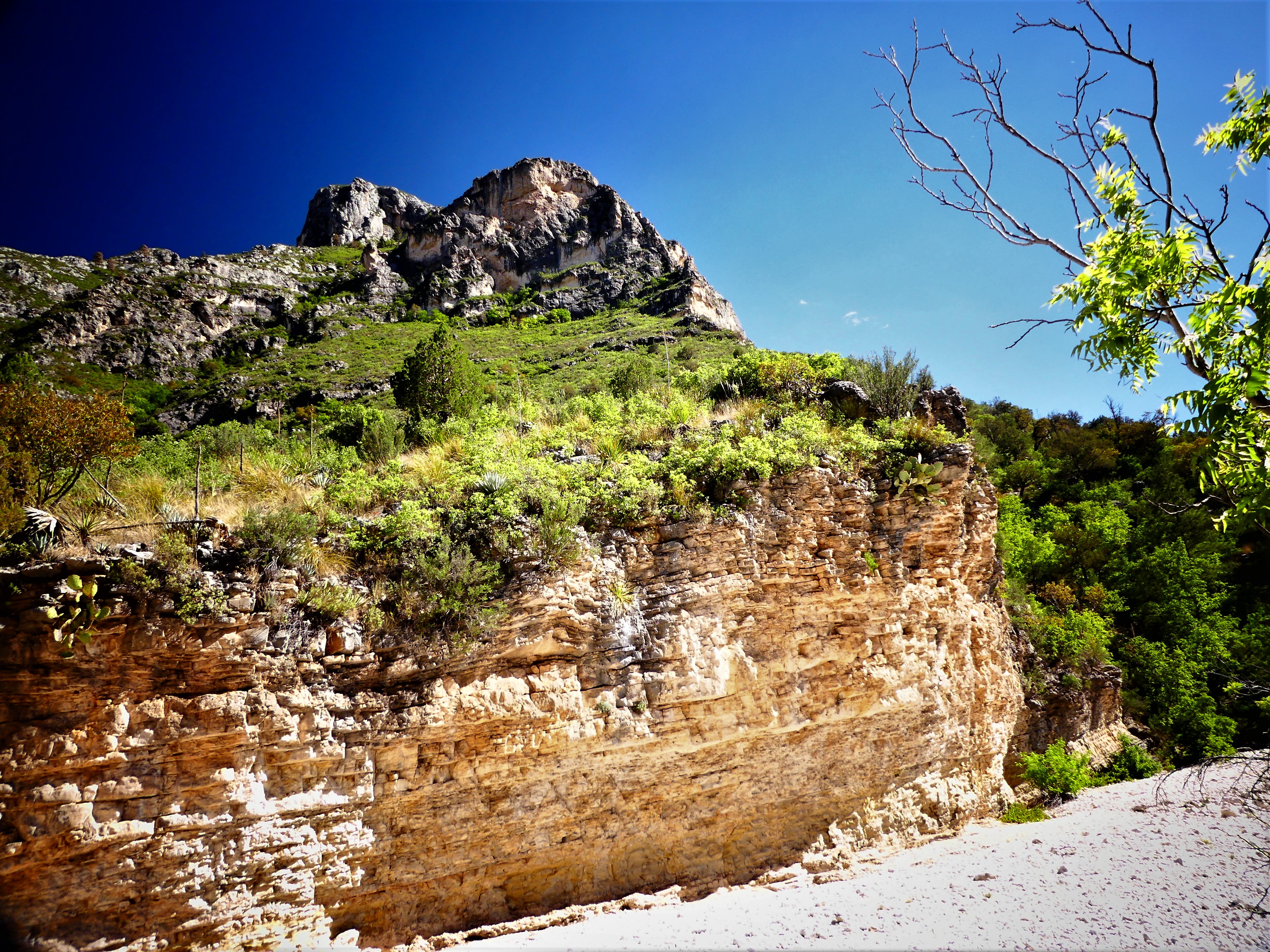 along the arroyo to Pratt Cabin, a Depression-era structure built entirely of stone.
 Rocking chairs under a cool porch provide perfect respite from the simmering sun.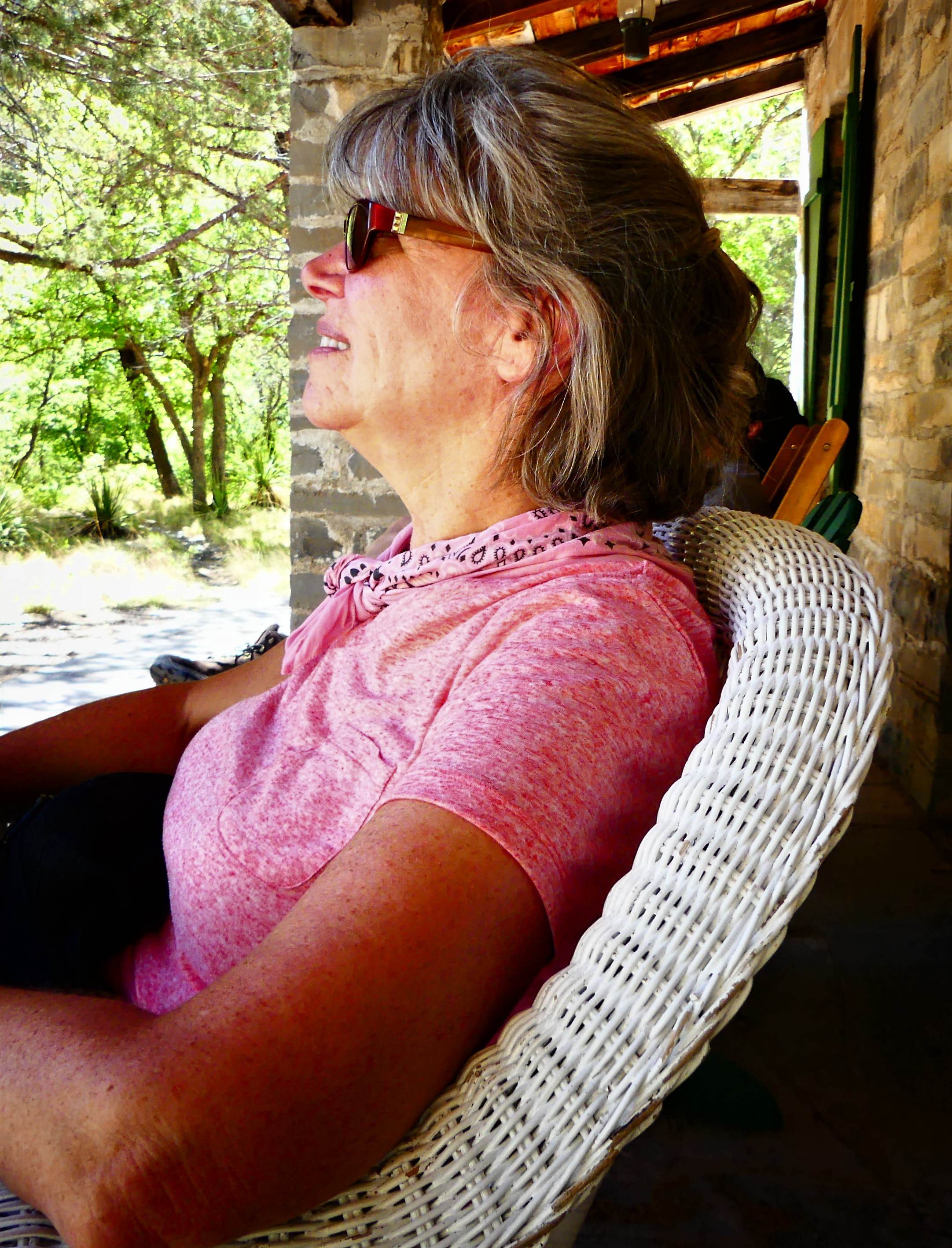









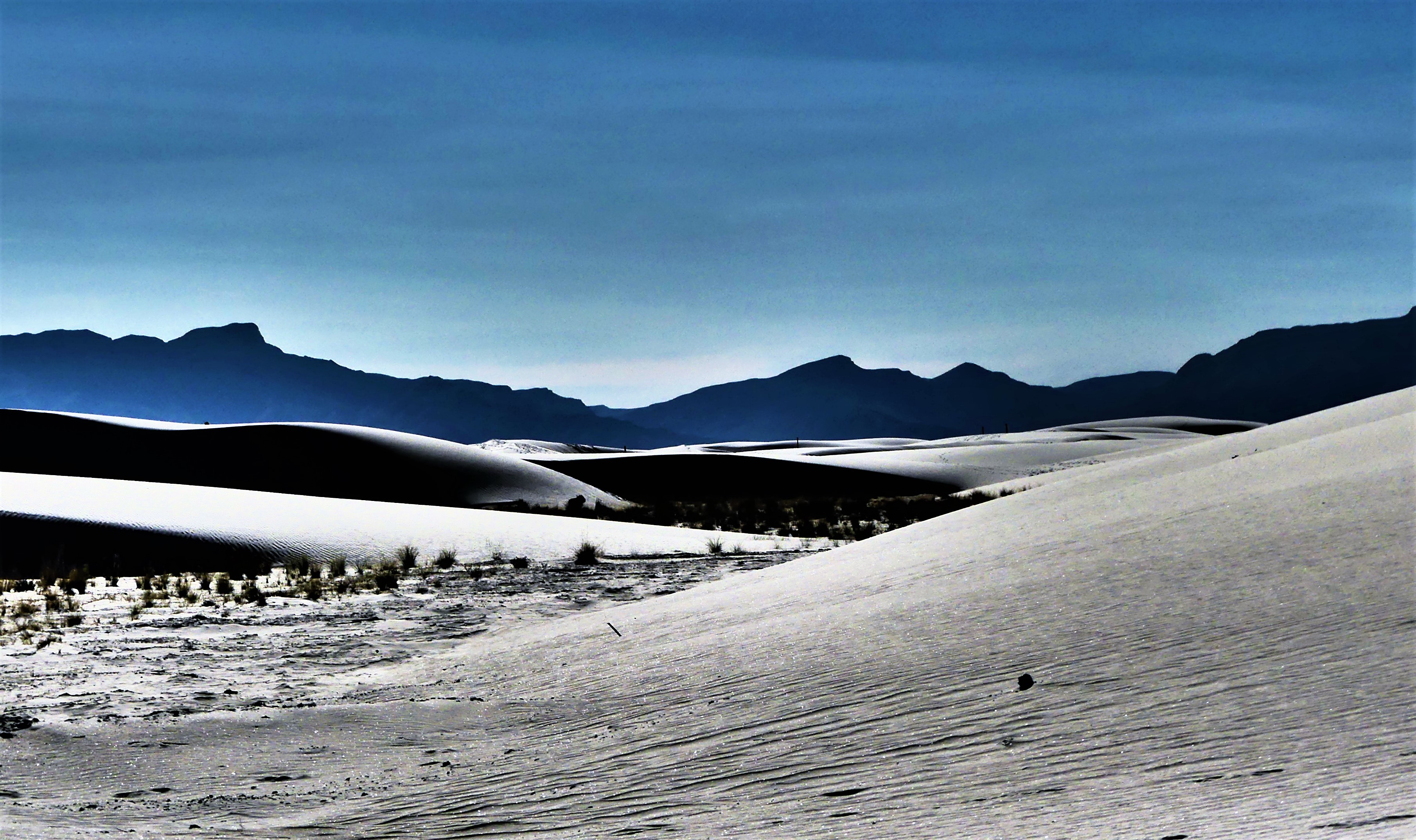


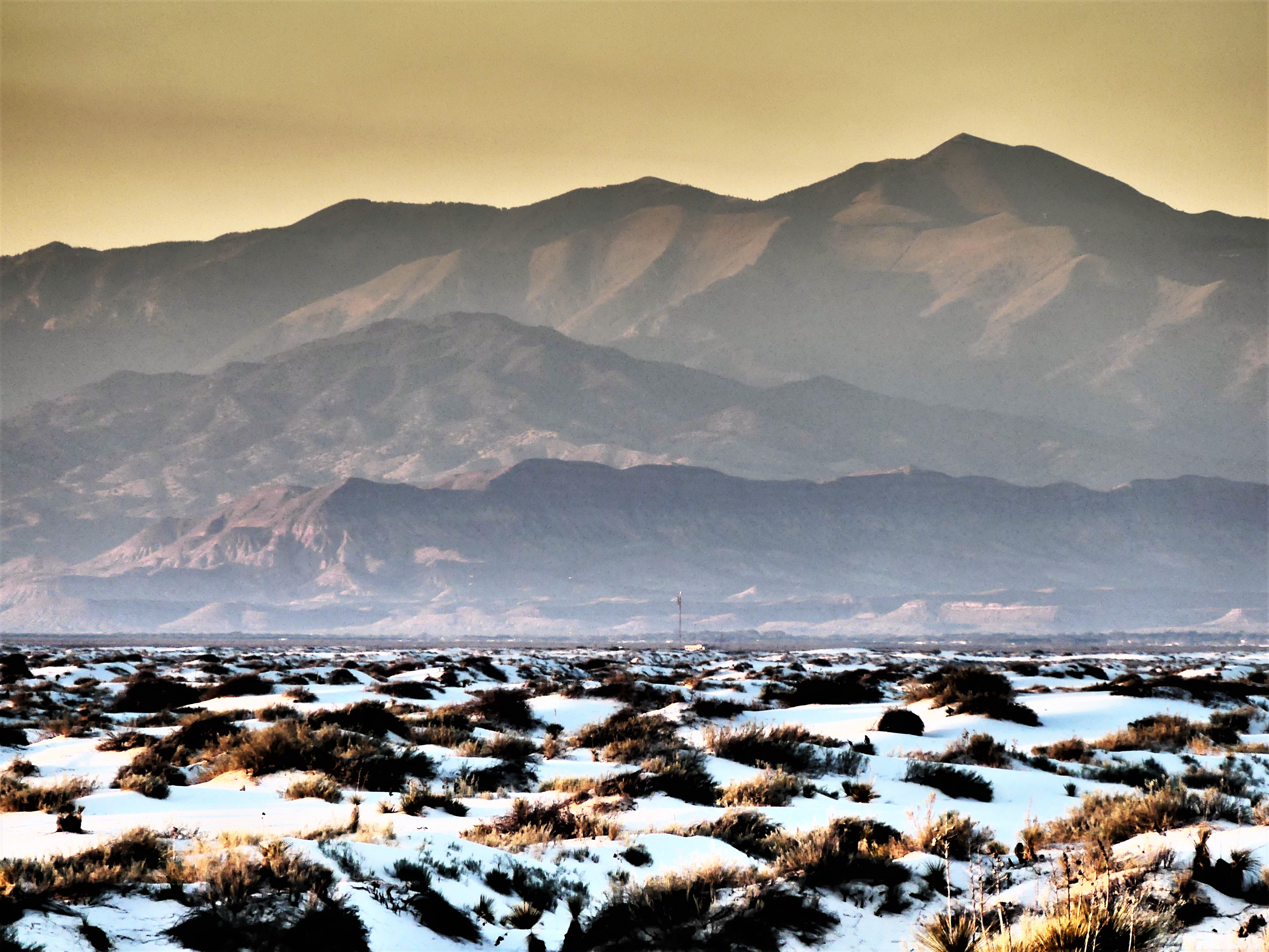


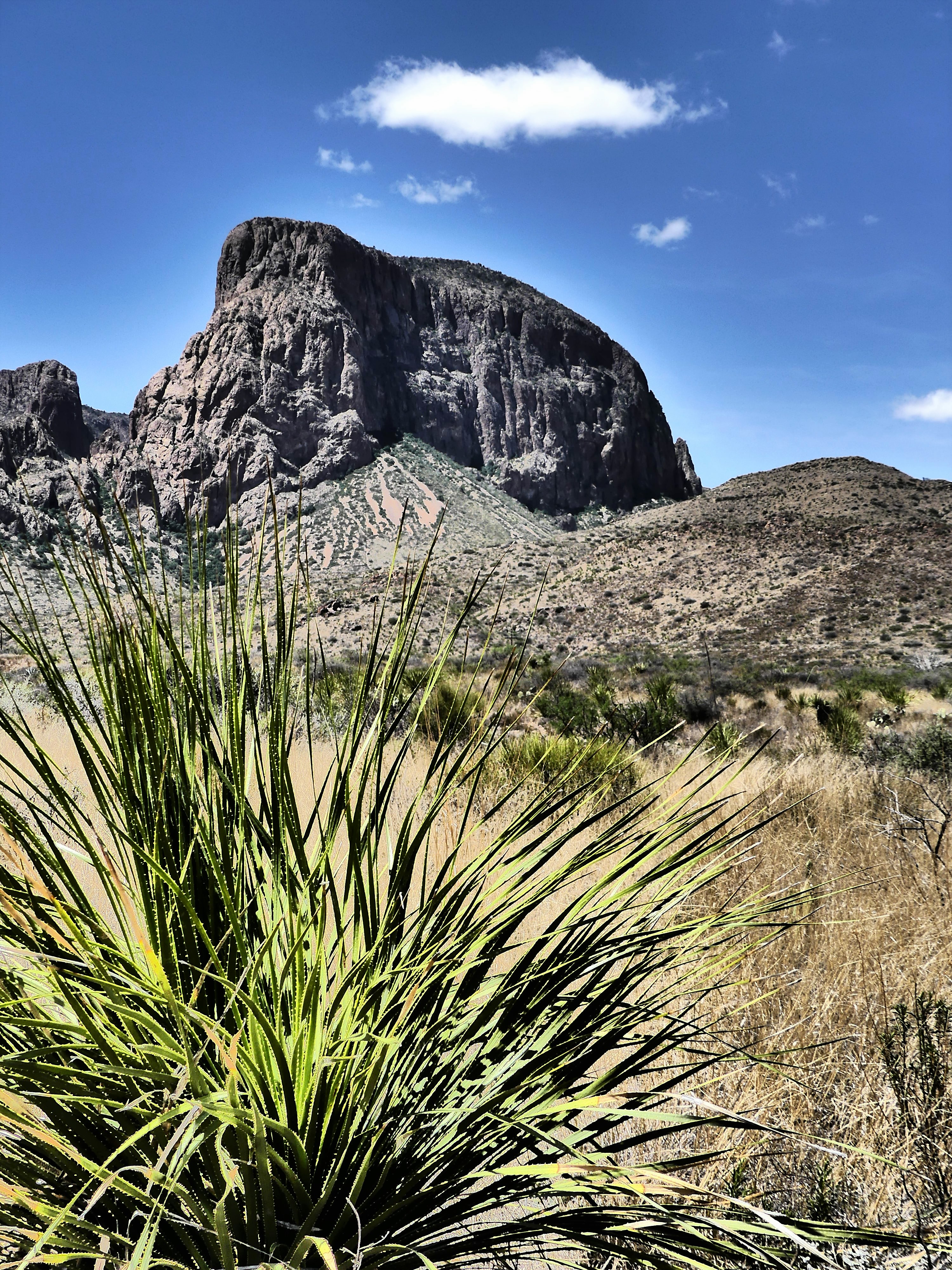


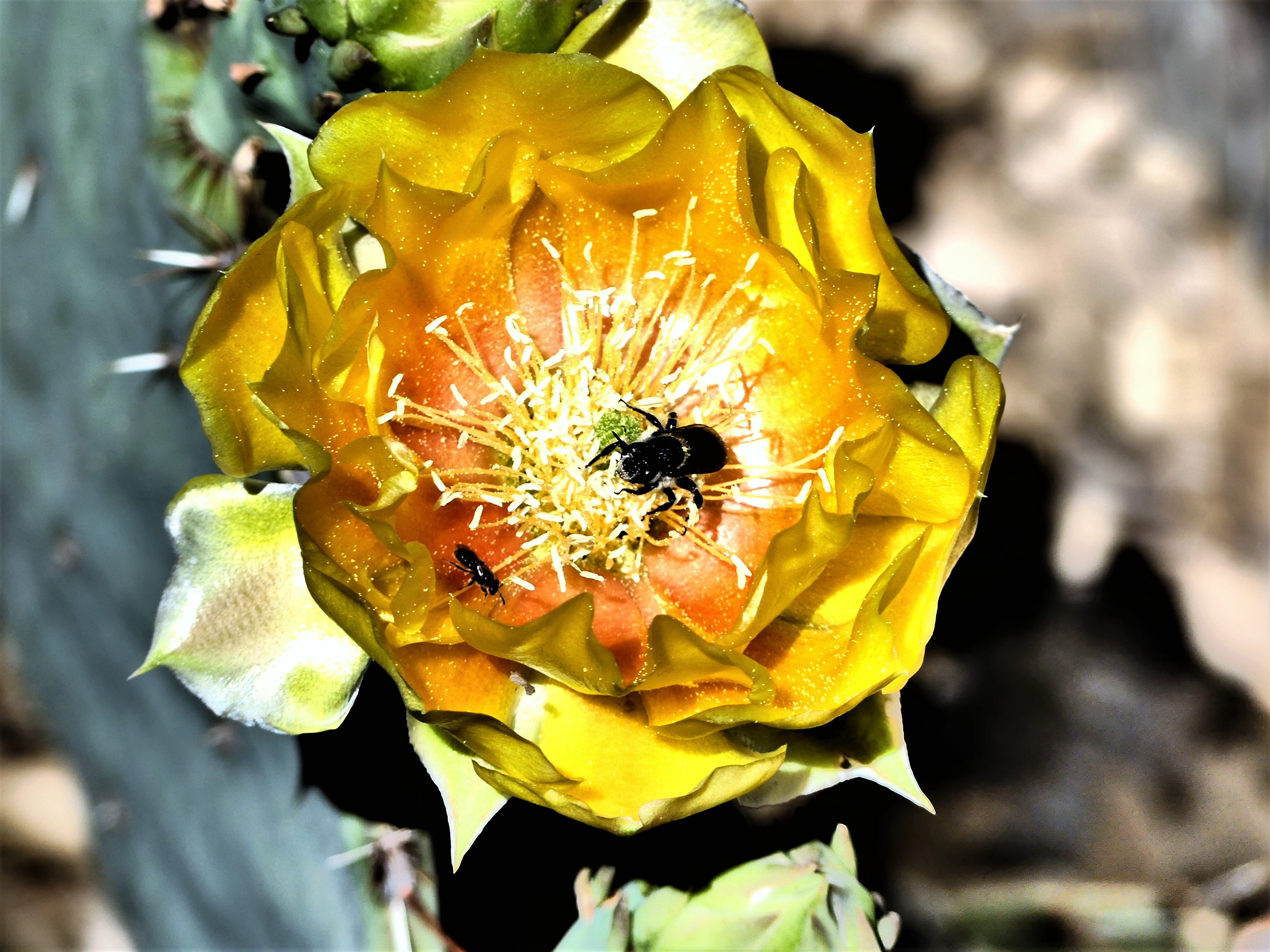
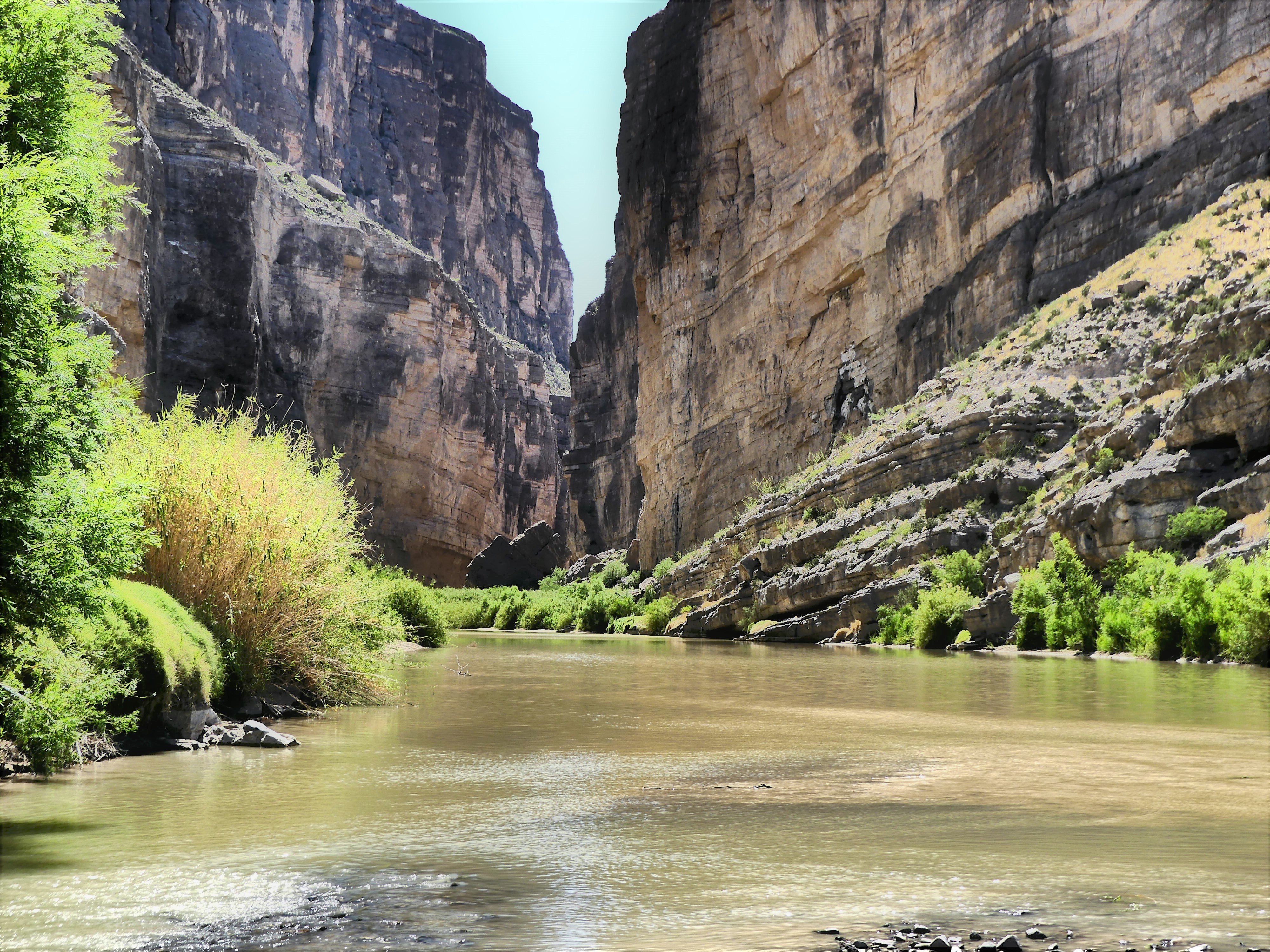
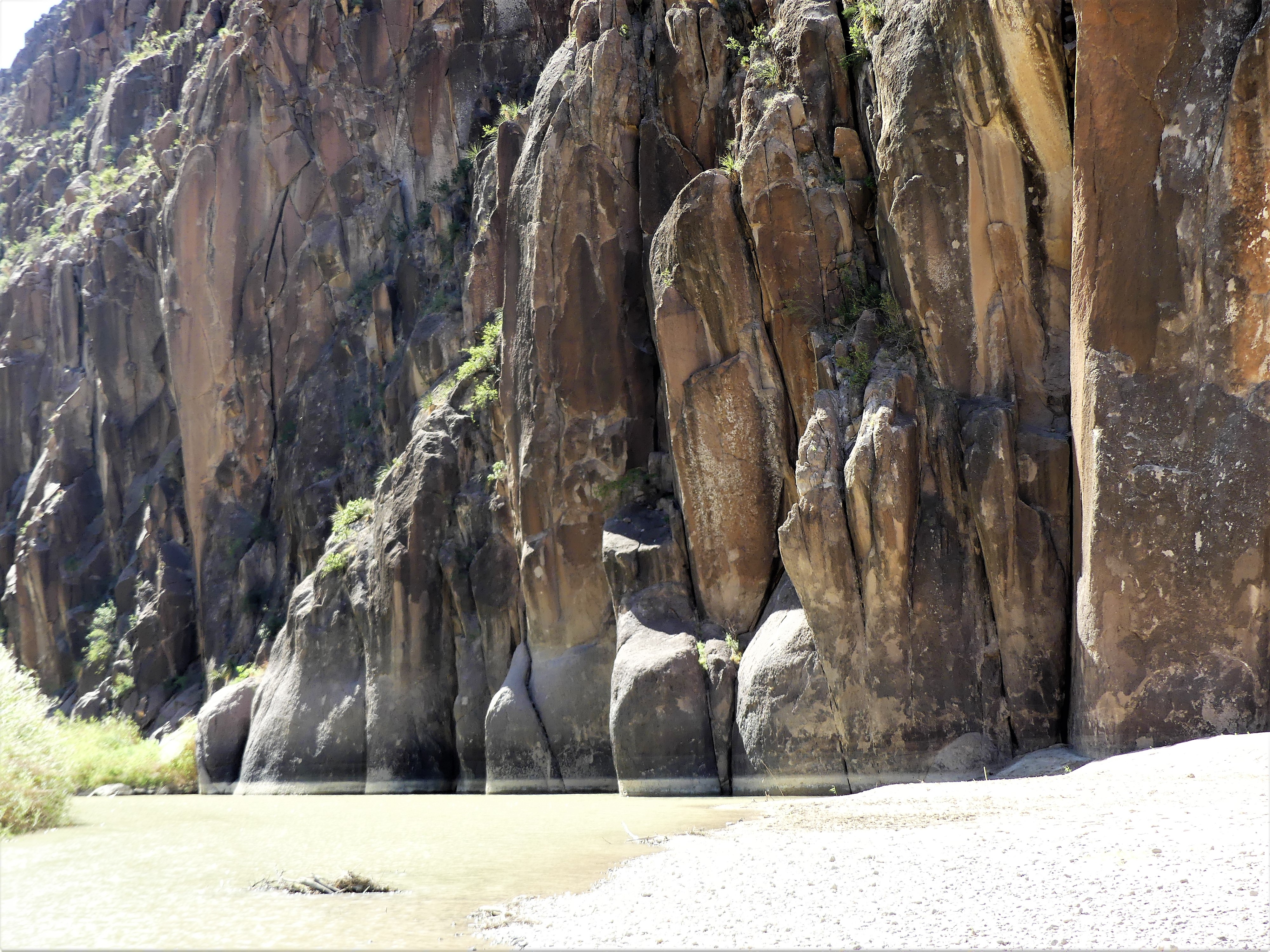
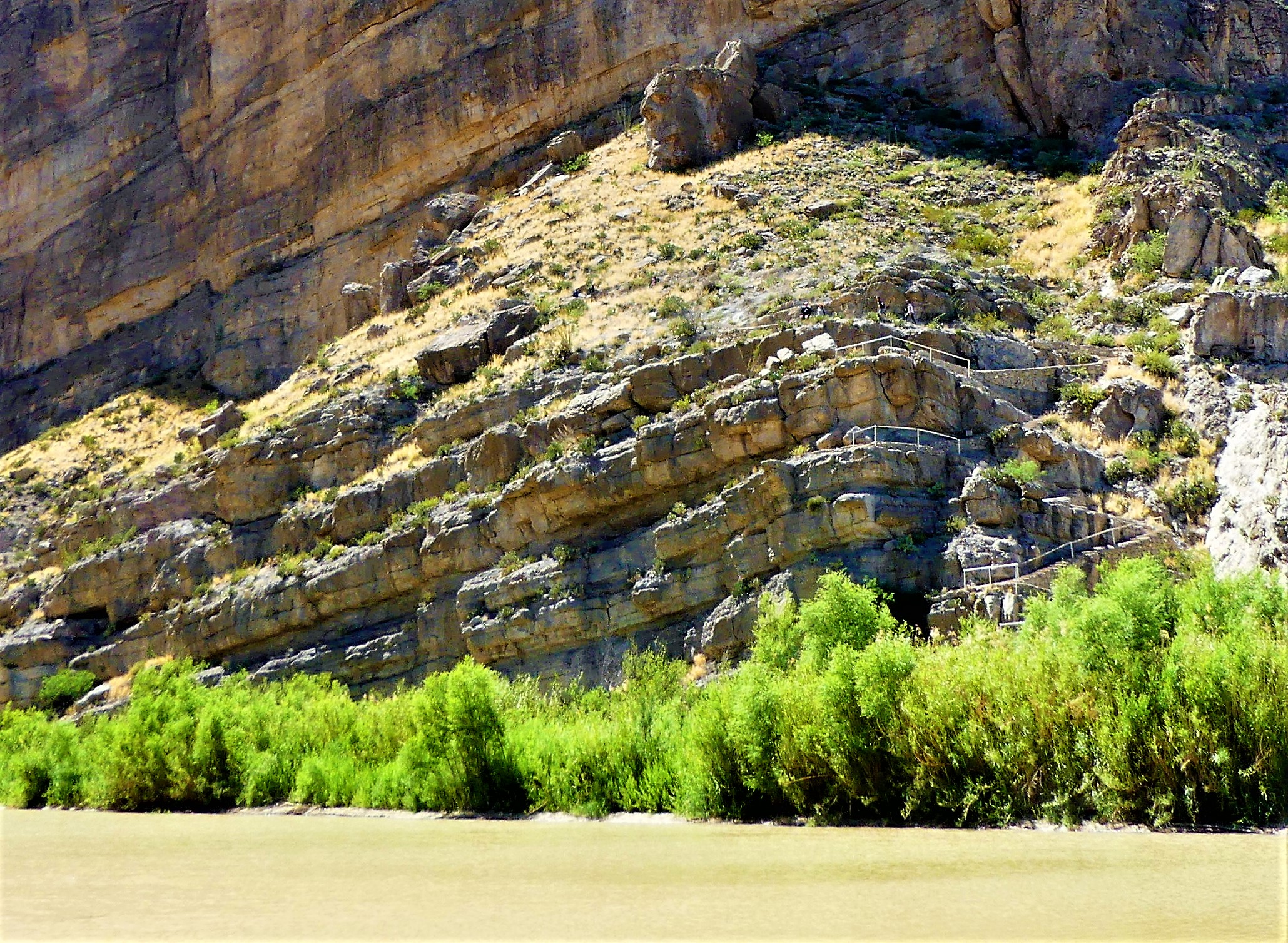
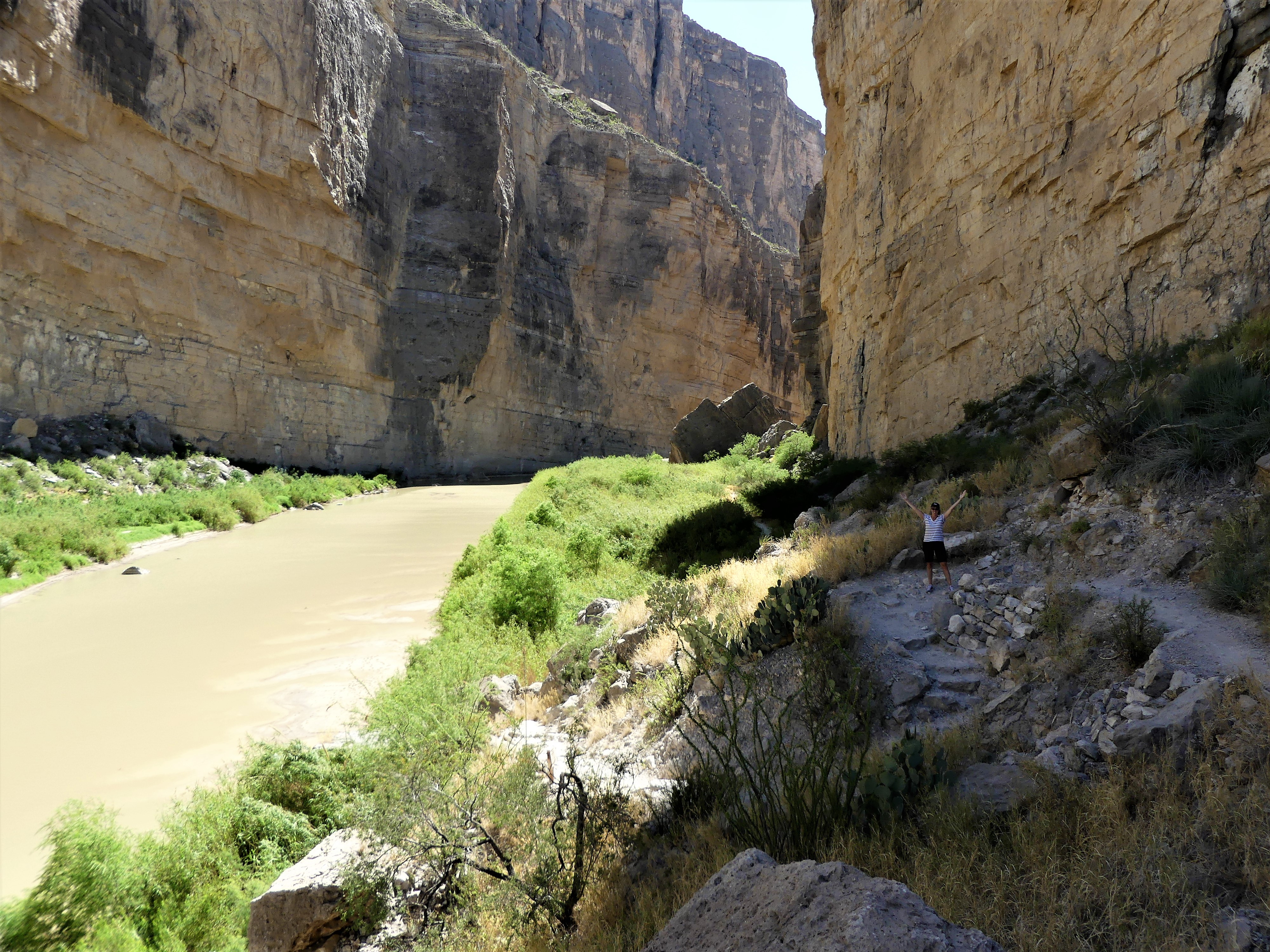
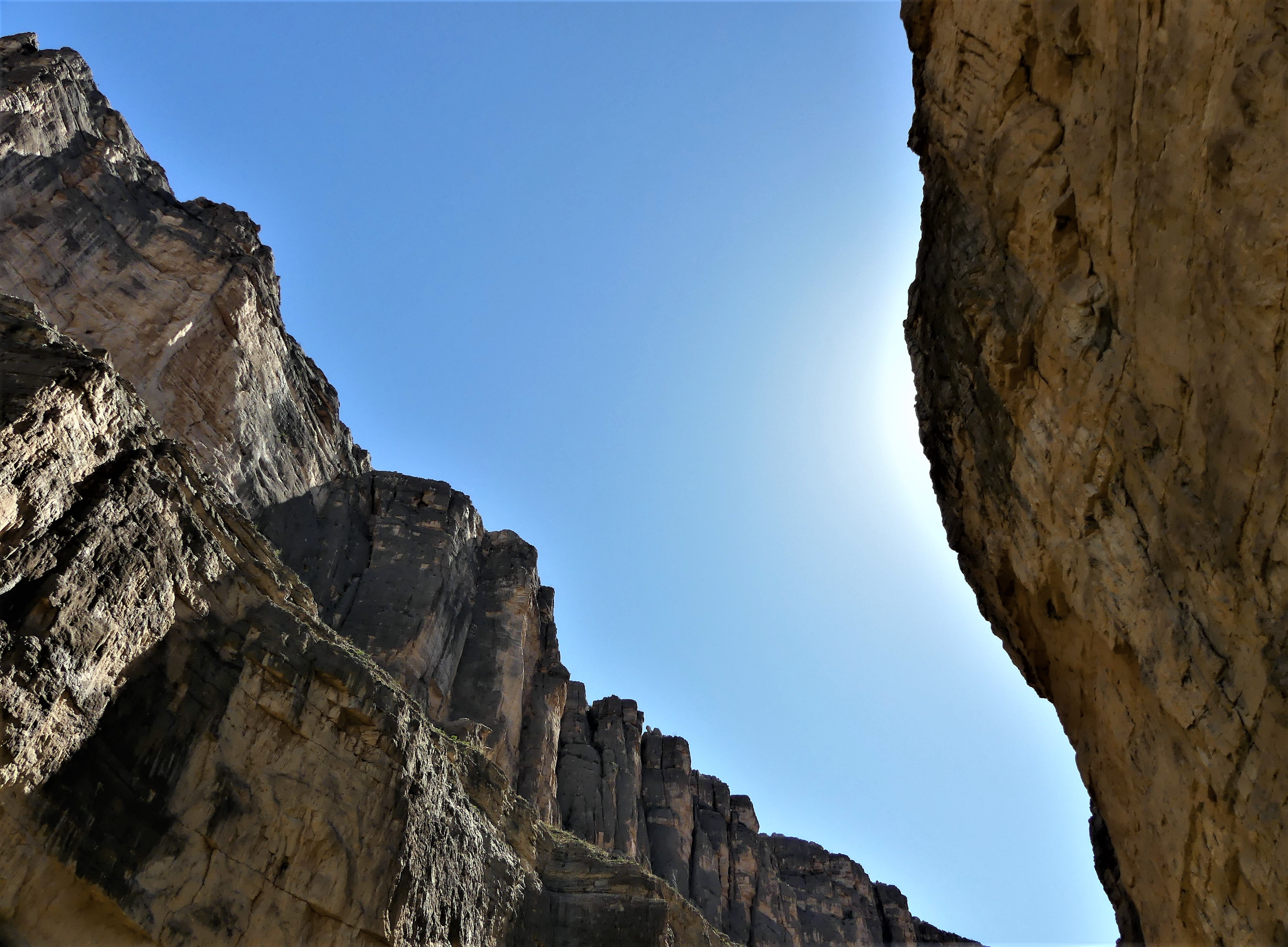
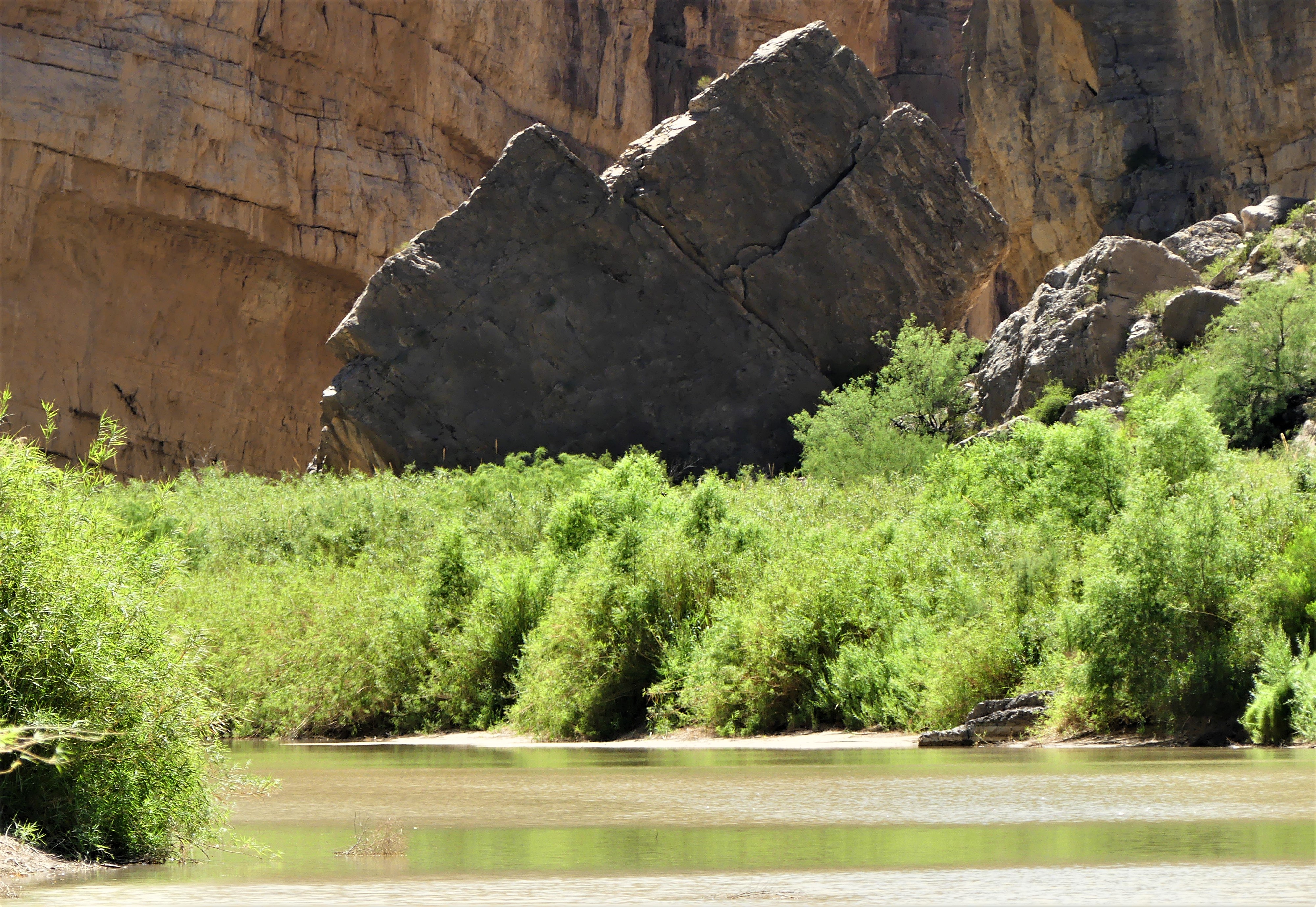


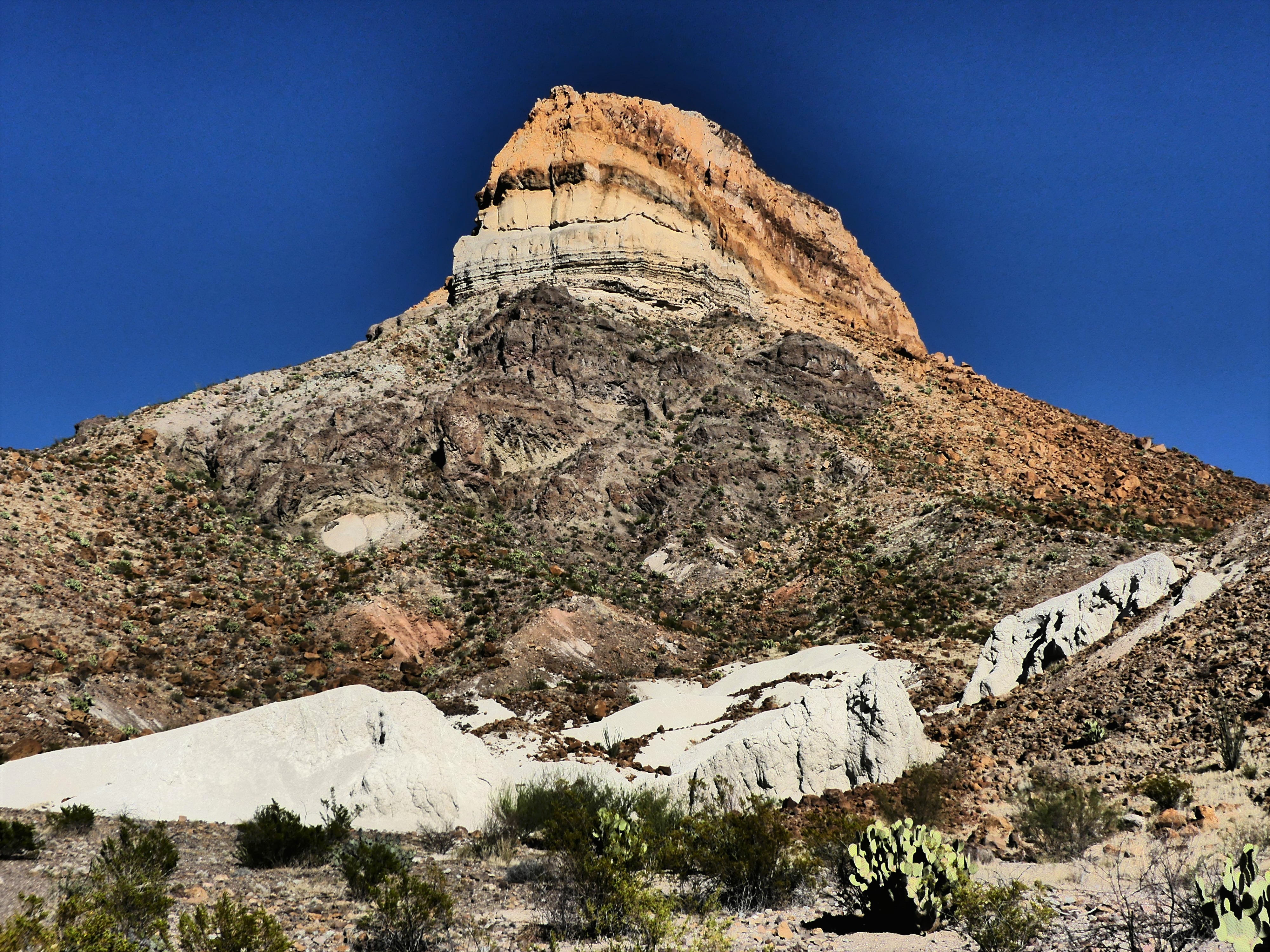


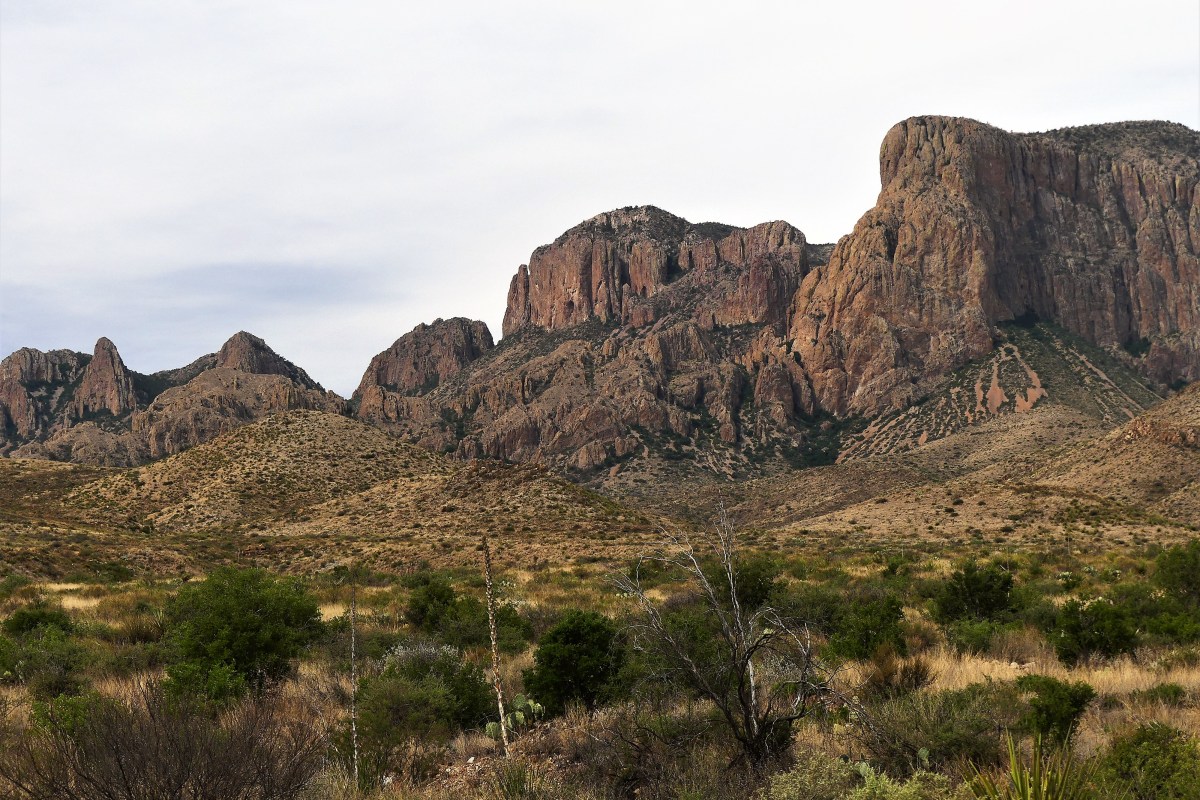
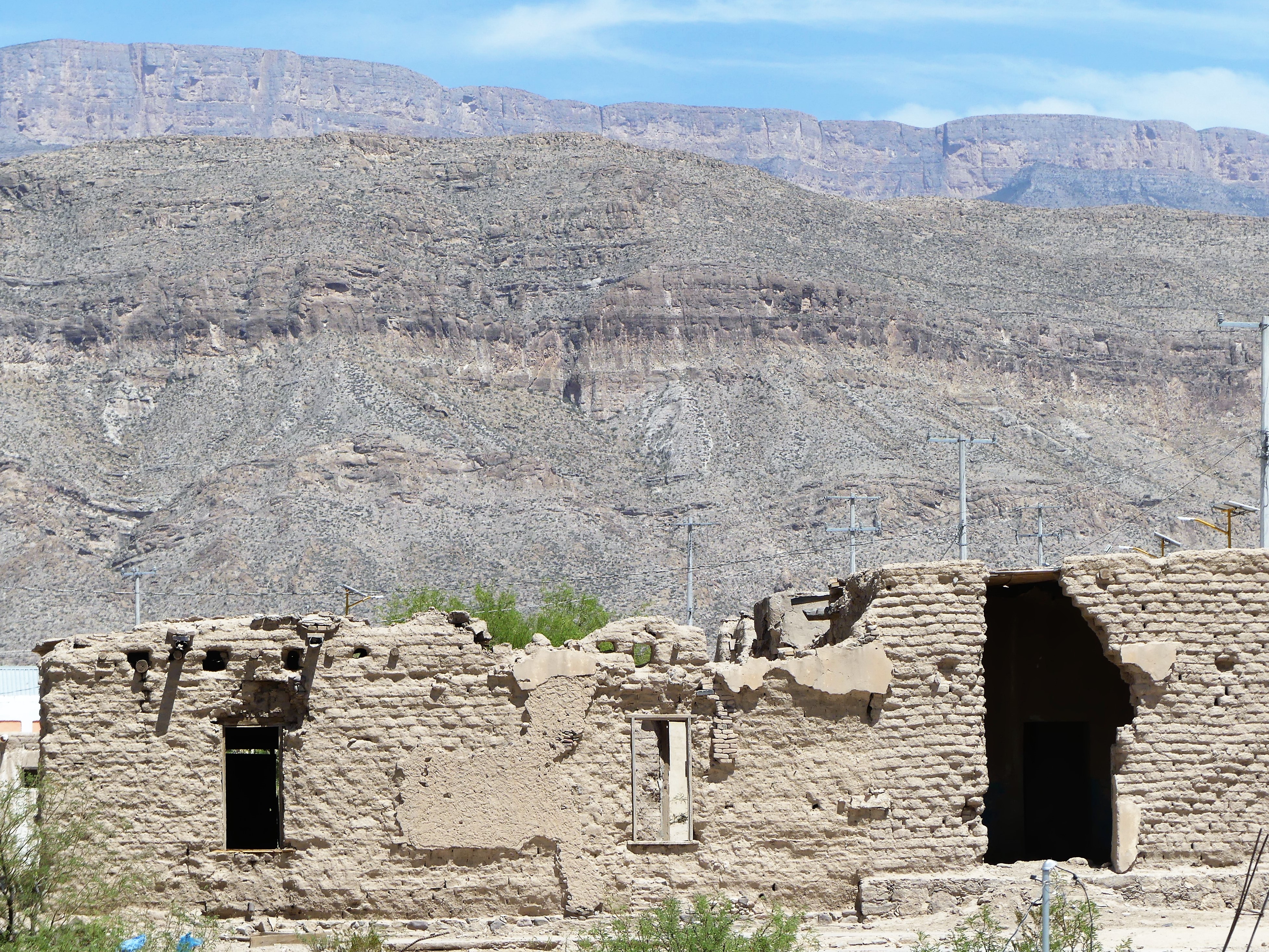
 The road continued another 7.5 miles up and down multiple grade changes, curling in and around exposed mountain walls, and mimicking the serpentine lines of the Rio Grande, making it a driver’s delight and a passenger’s revelation. It’s little wonder that El Camino del Rio has consistently ranked as a “ten-best” scenic drive in America.
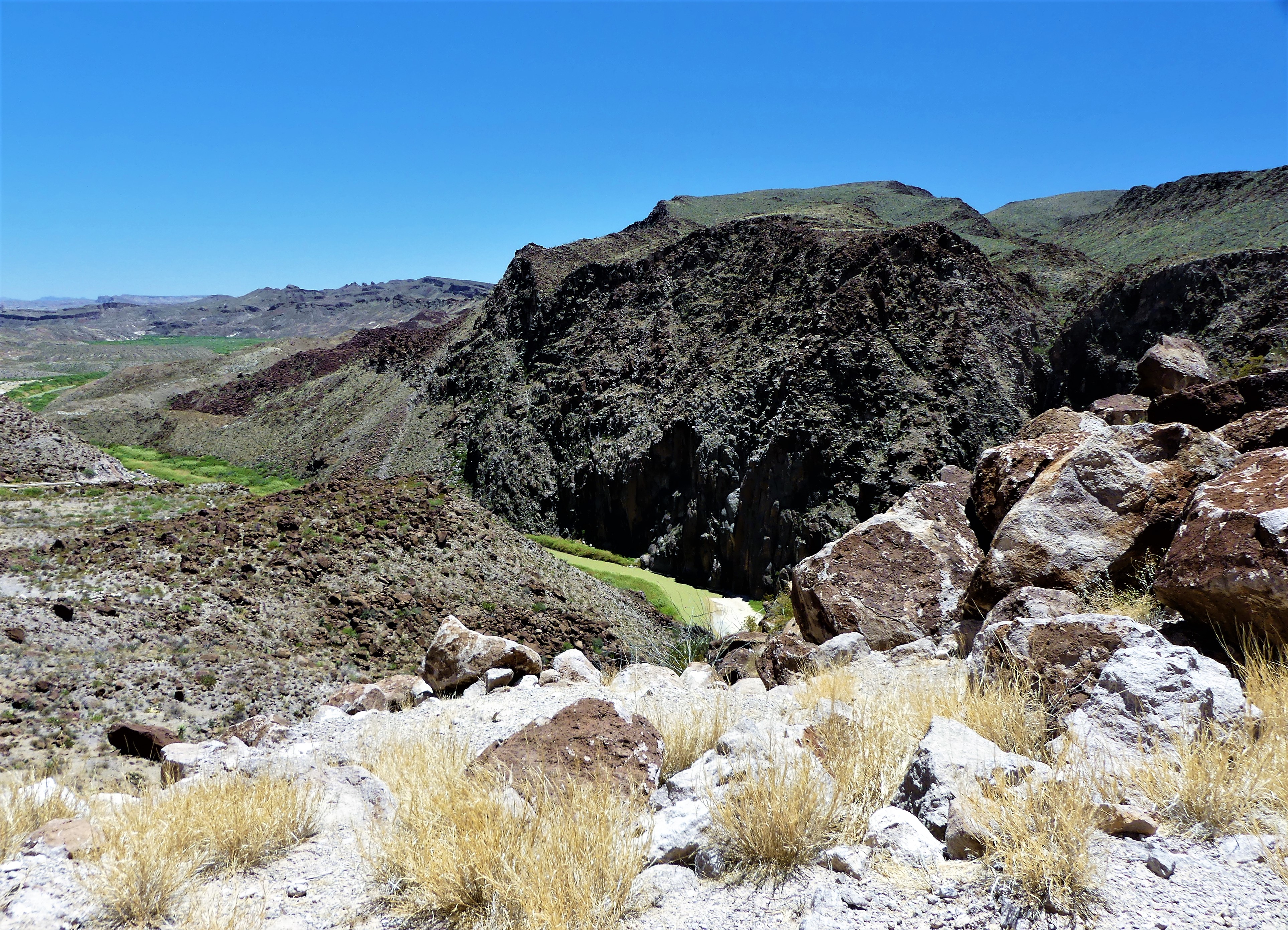 The signage throughout the State Park suffers because of its immensity (300,000 acres) and limited resources, so having Mike as lead proved advantageous, since it would have been so easy to overshoot the trail head in favor of the surrounding vistas and roadside scenery.
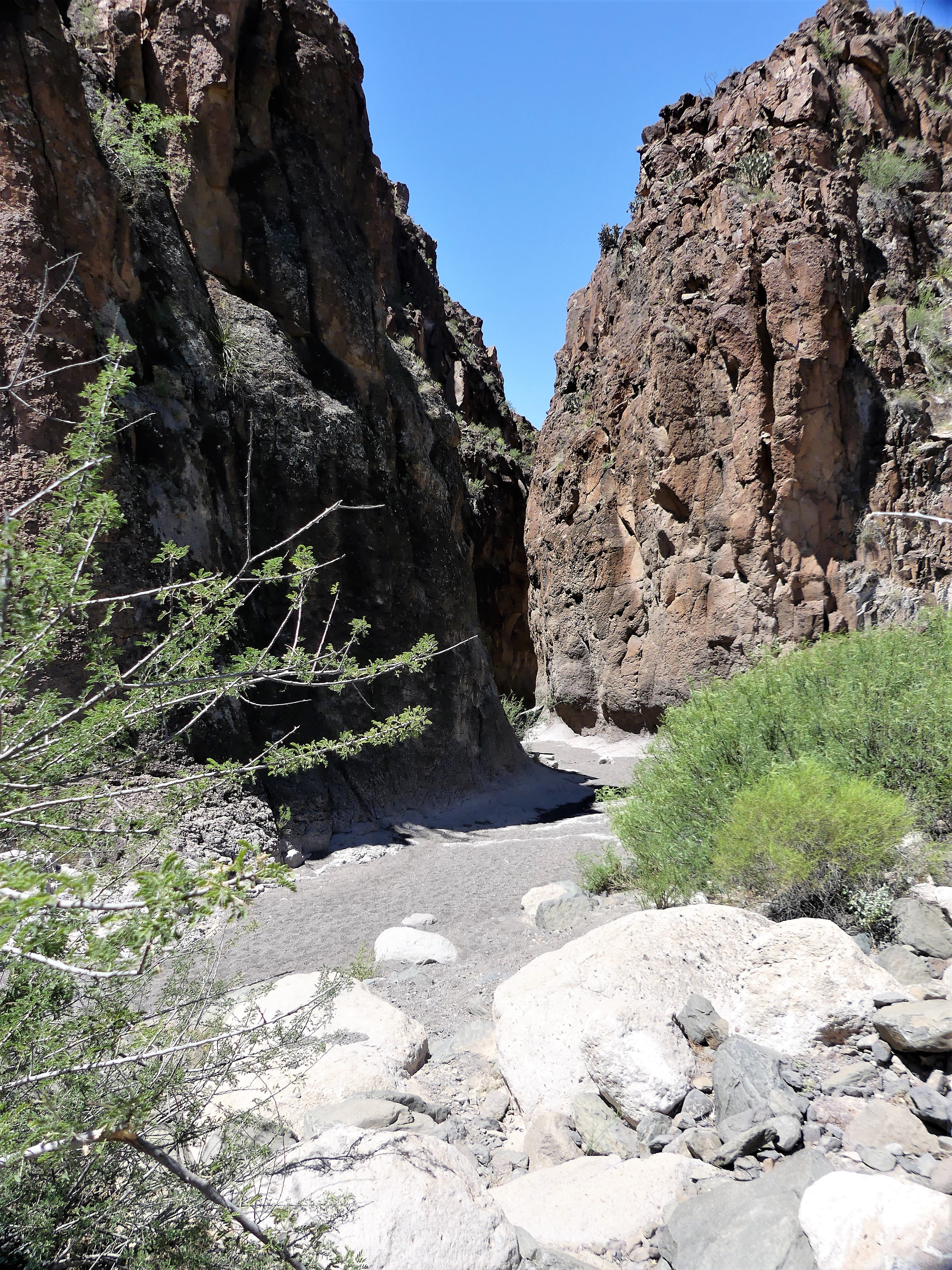 “Anything we should watch for?” I asked.
 While the wildlife sighting reanimated us, Leah wasn’t sufficiently satisfied.
 Uncertain of Mike’s politics, I lobbed him an ICE-breaker. “Any chance,” I subtly inquired, “we’ll have a Mexican sighting?”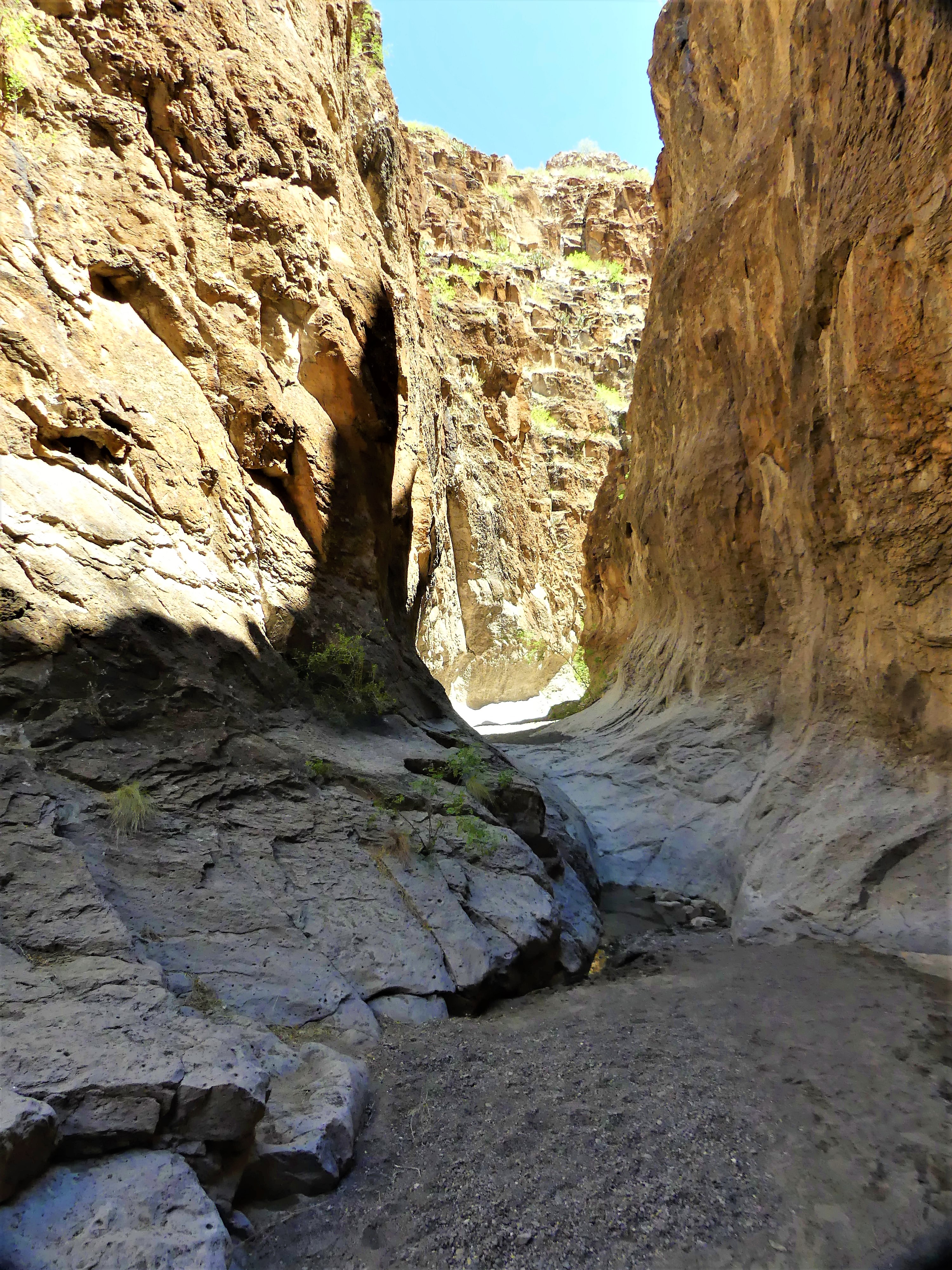
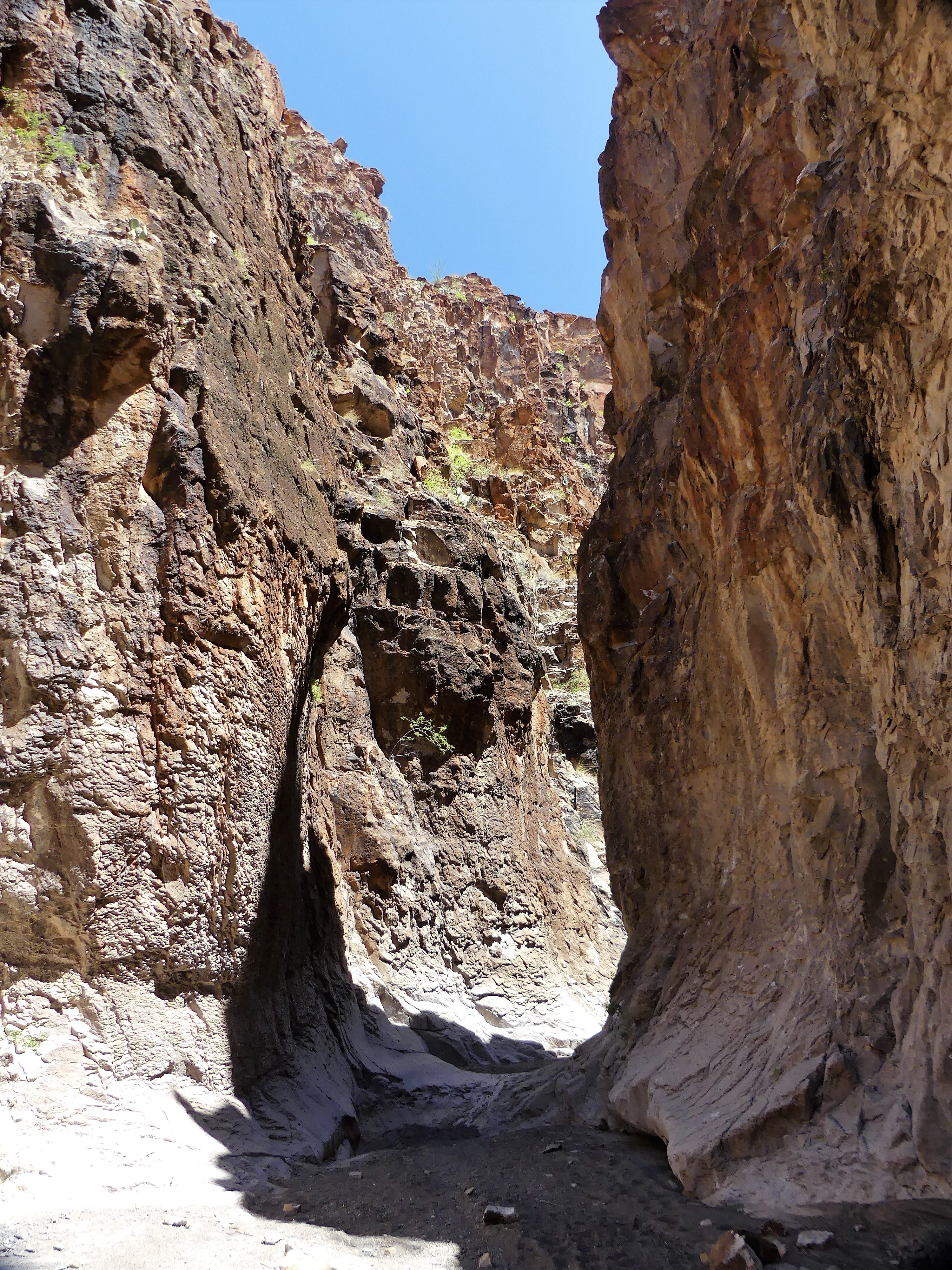 No argument from me. We worked our way further into the slot, scrambling over, around, and down water-polished rock, sometimes stopping to avoid the many tinajas–potholes of jaundiced water of undetermined depths scattered across the canyon bottom.
 After an hour on the trail we reached an impasse. At this point, the canyon walls were narrow enough to touch with both arms extended, but the tinaja before us was too deep to ford, and too wide to bypass. All we could do was turnaround and hike out.

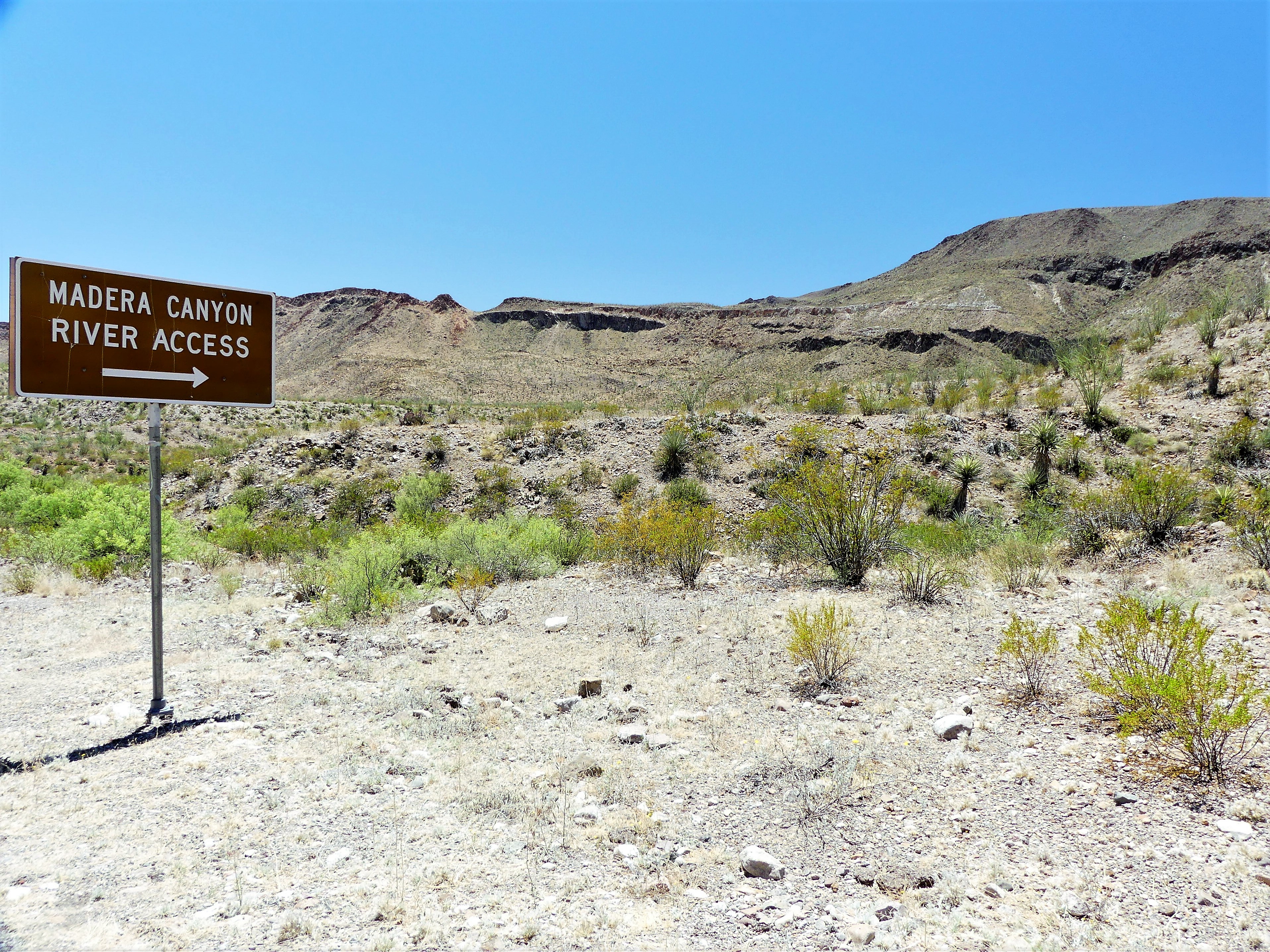
 And found we had the whole river to ourselves.
 It was Mike, our river guide in one boat and us—with Leah at the bow and me at the helm—in the other.
 The air temperature was equal to the water temperature at about 75°, and the wind was at our backs. It could not get any better, or be any easier…until we reached the first of three technical skill zones.
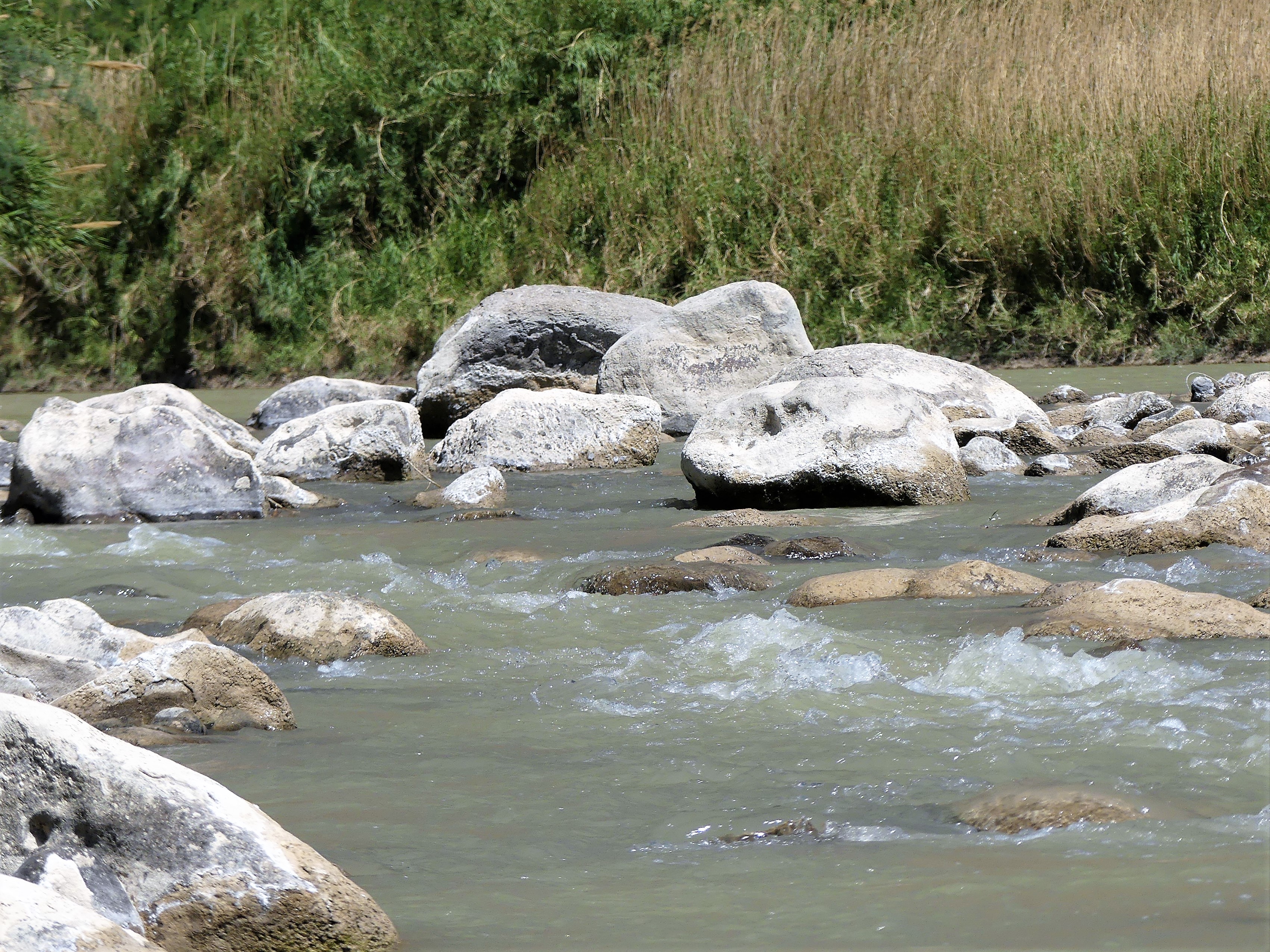 “With this one,” Mike warned, “it’s very easy to capsize, so if you feel the boat tipping, just step out onto the rocks.
 “I don’t know about this,” Leah yelled.
 I zigged when and where I was meant to zig, and zagged at the appropriate time and place, until…
 “Is that it?” asked Leah.


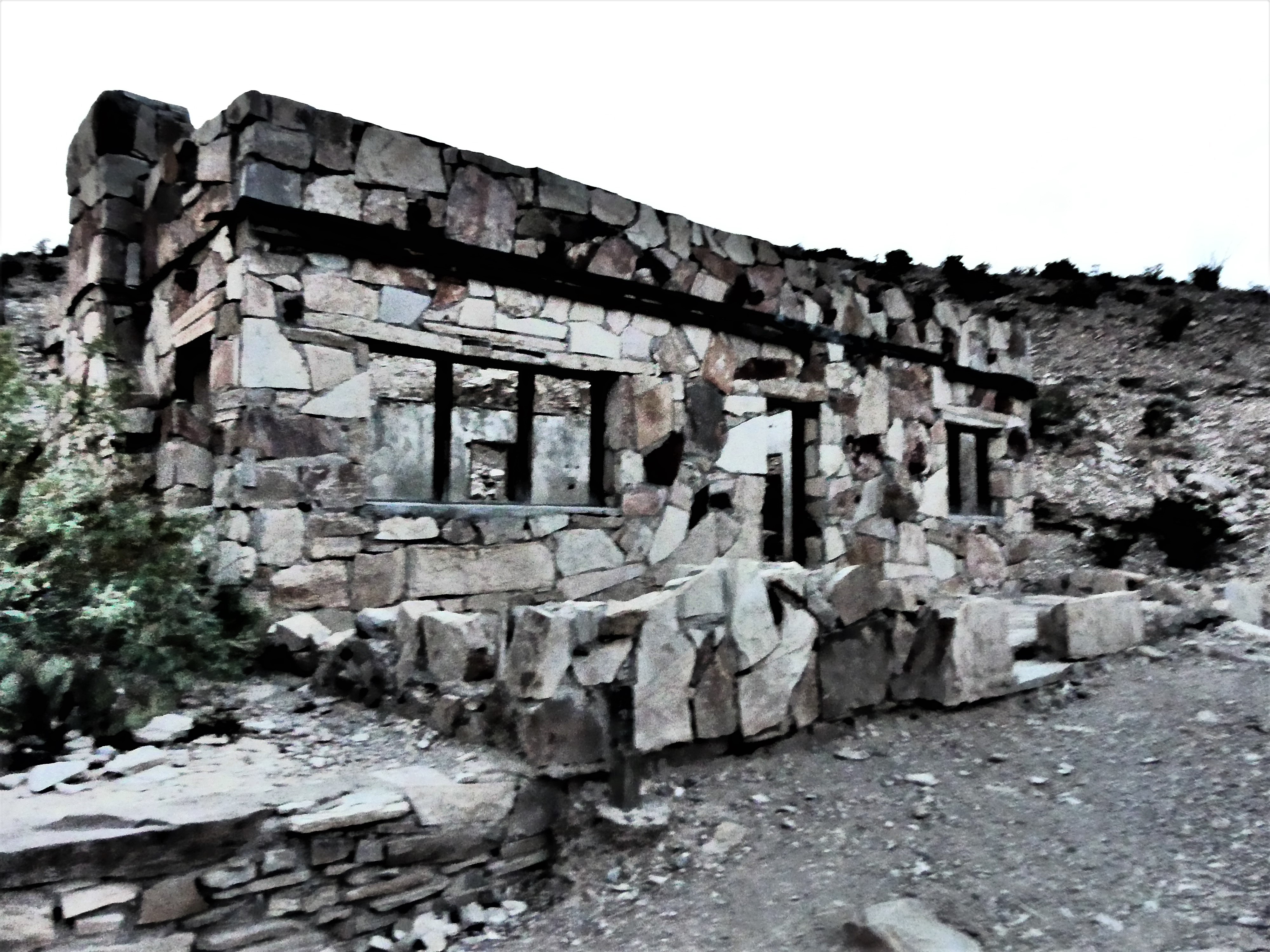
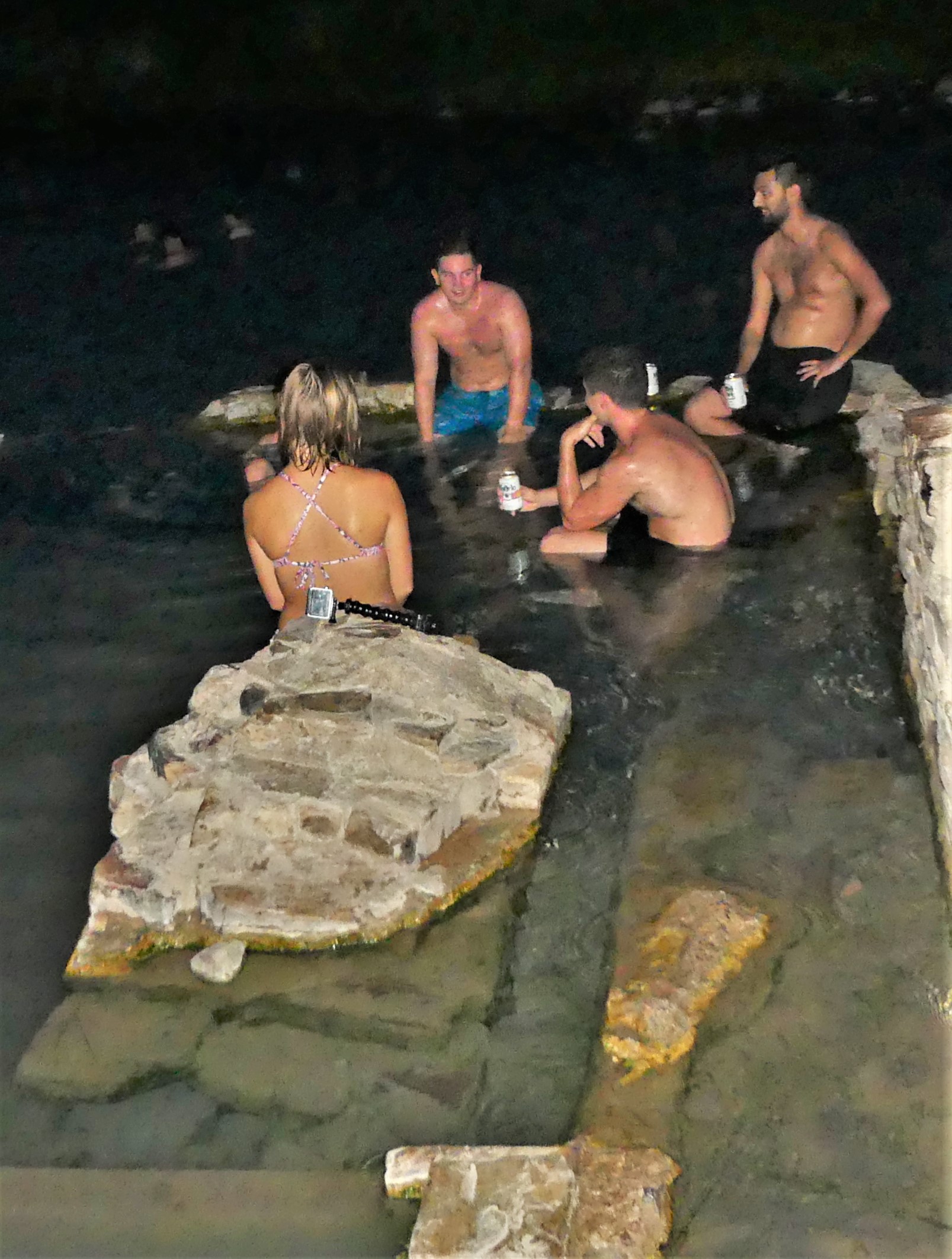





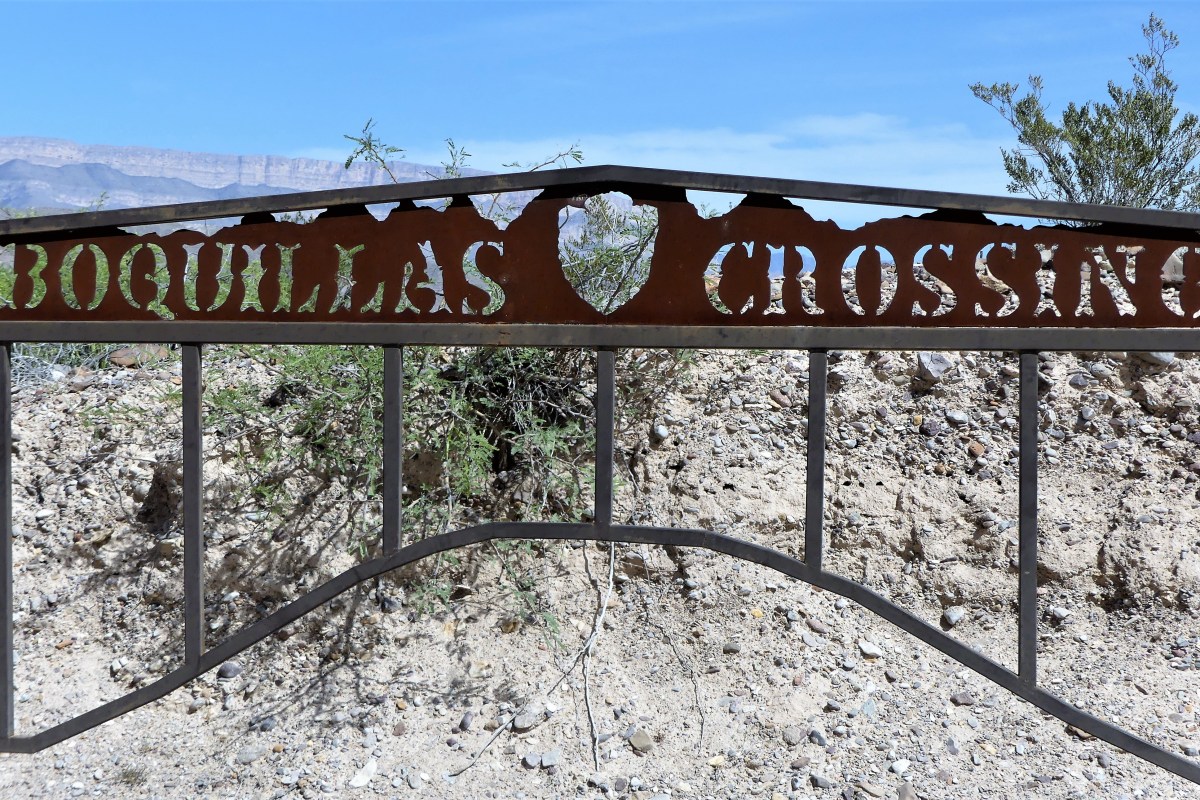
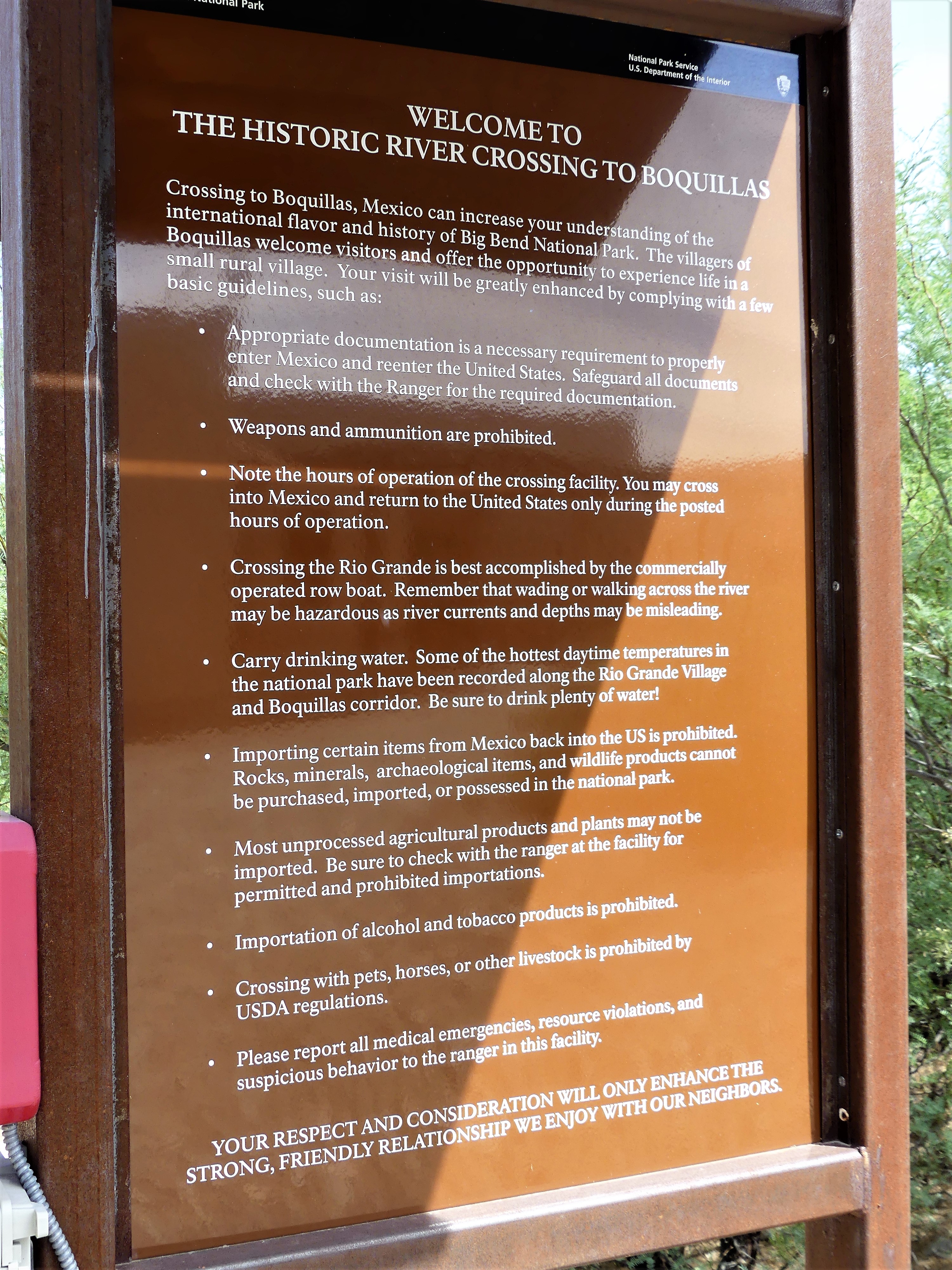
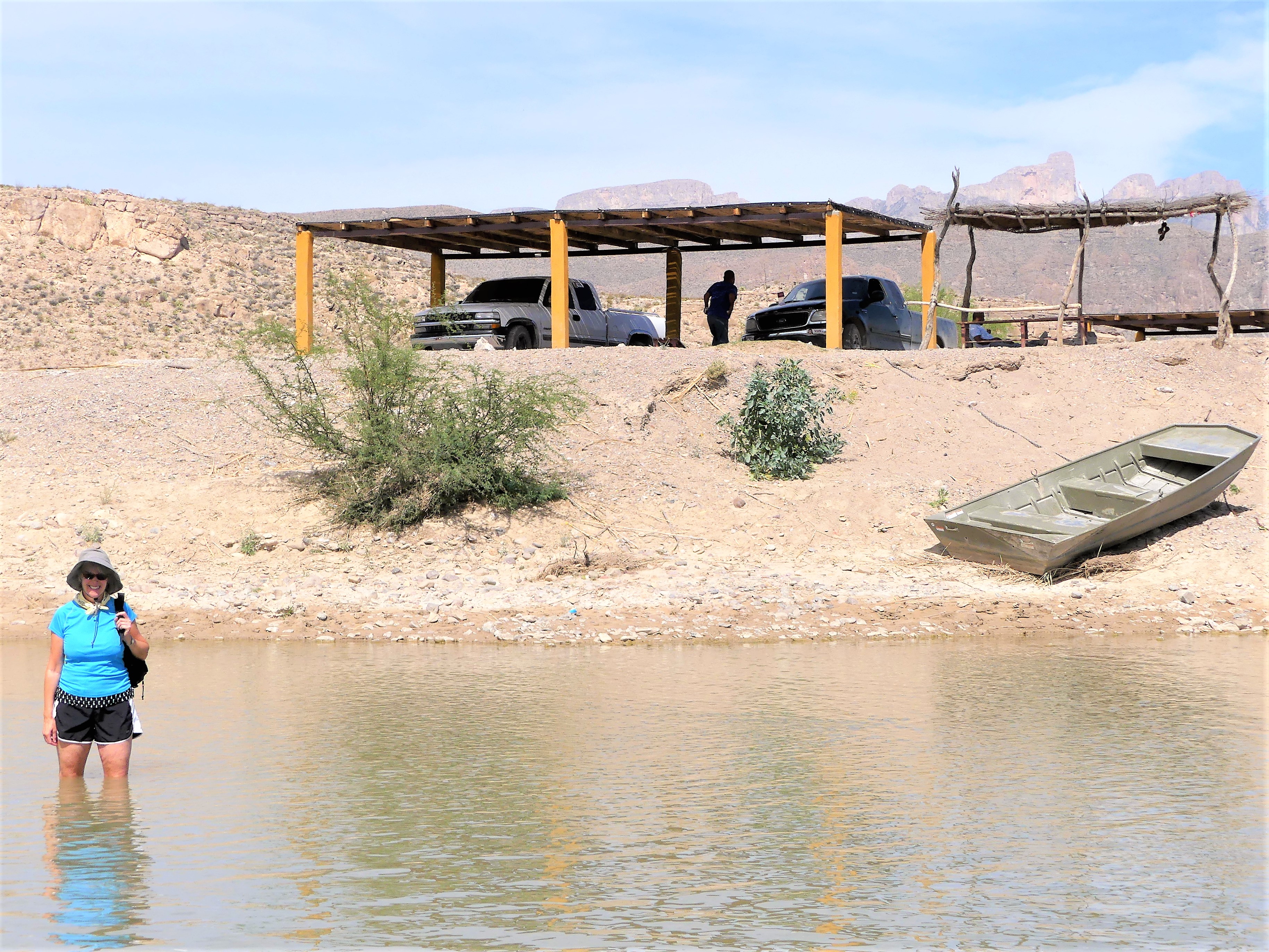
 The trail ends at a sandbar where eager Mexicans negotiate with Gringos to ferry them across the river by rowboat. Five dollars is generally the agreed upon price.
 However, with the Rio Grande water levels so low, Leah and I found it cheaper to wade across fifty feet of knee-deep water to the other side.
 Land transportation comes from Uber burros, charging five dollar fares to cover the dusty and shit-laden ¾-mile trip…
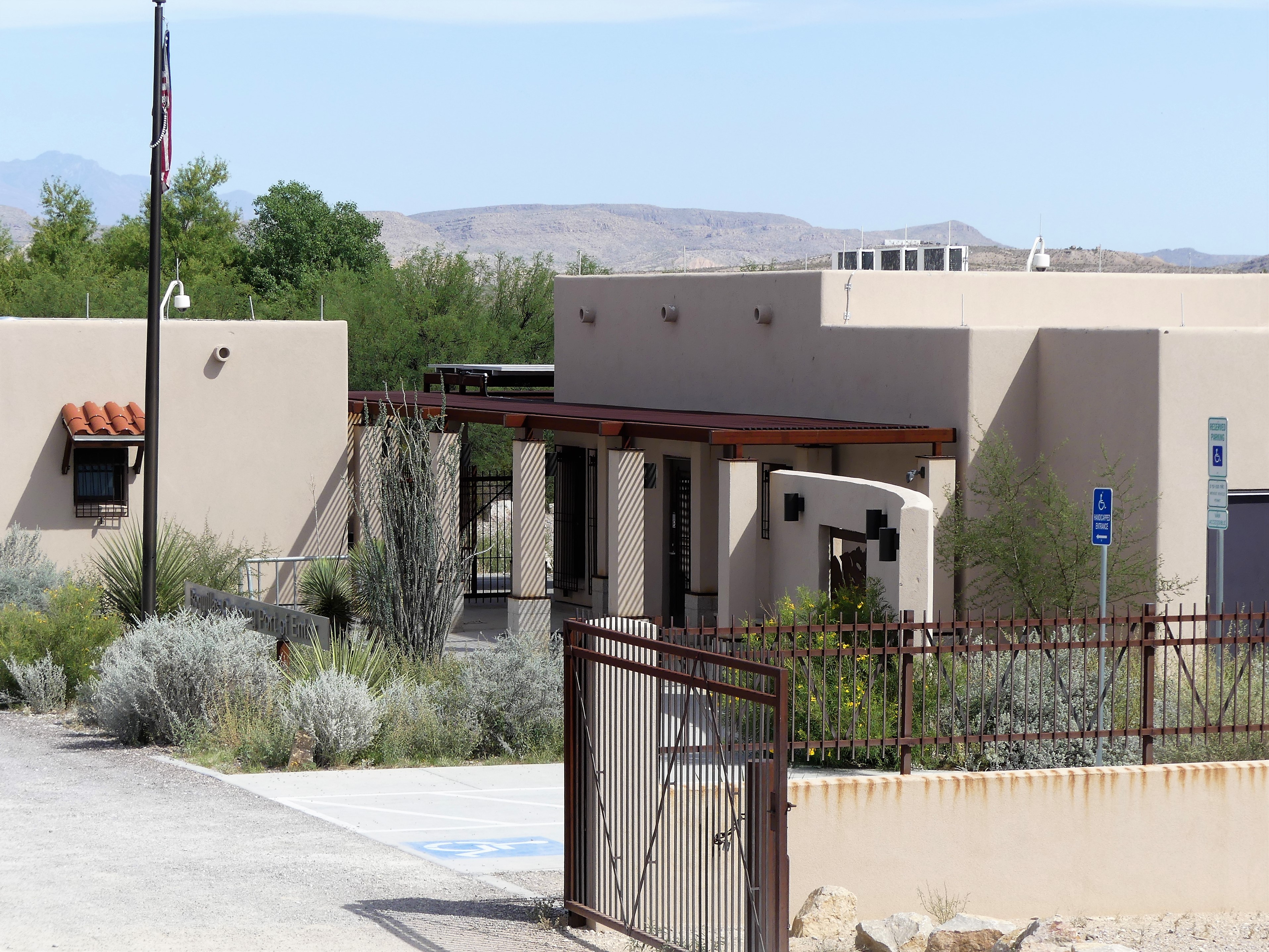
 …to a white trailer check-point surrounded by cyclone fencing on the edge of the village. It was a treat to sit in Boquillas’s only air conditioning for a few minutes to escape the 100◦ heat, while our identities were checked against a drug cartel database.
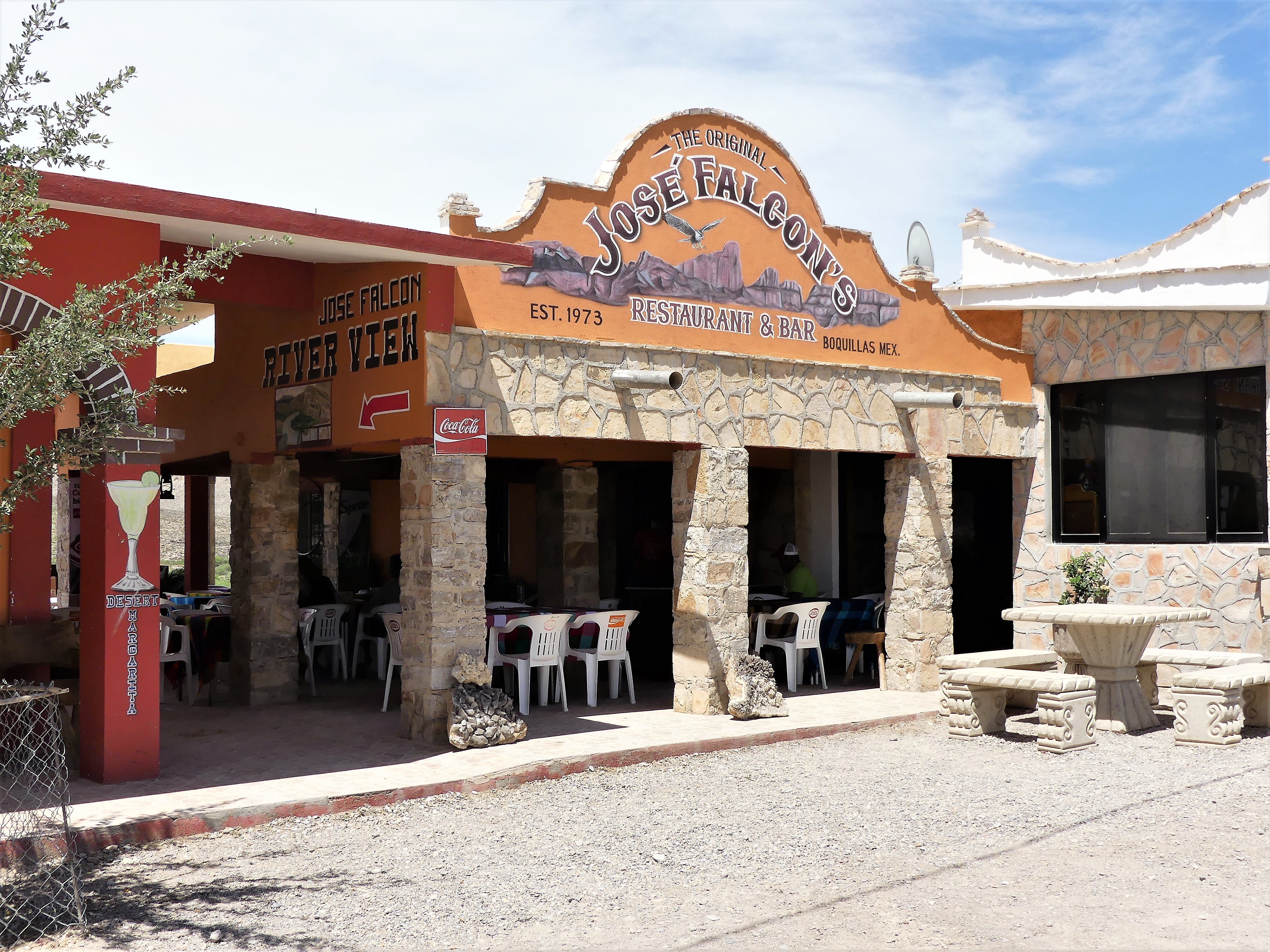 …with an overlook of the Boquillas Canyon.
 Mama Falcone was sitting on the patio in her kitchen apron working on a future needlepoint tapestry that would soon display in the family curio shop next door, while her nephew Renaldo brought us menus and took our order—chicken quesadilla for Leah, and beef burrito for me. Meanwhile, a family of three from South Carolina sat at a nearby table chatting it up with Mama’s daughter, Lillia.
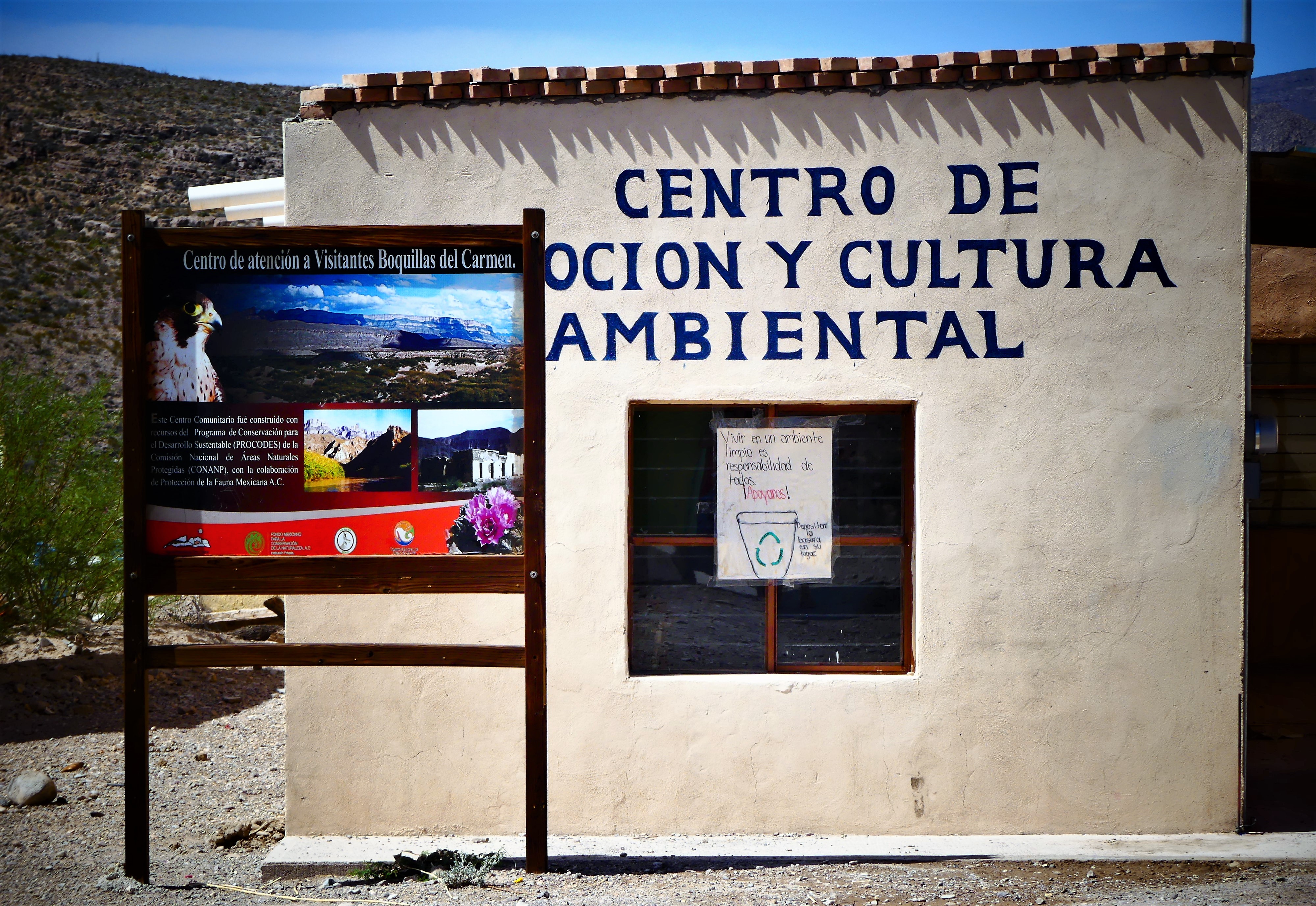
 The town population shrank from three hundred to one hundred adults and children, with many leaving for Muzquiz—the nearest Mexican city, and a seven-hour bus ride away. Eventually, Mama and Lillia found work in the States, but returned home to the restaurant after the crossing officially reopened in April 2013.
 They are hopeful for an economic recovery, but the town is in shambles, and it will take many more Americans to salvage Boquillas’s economy.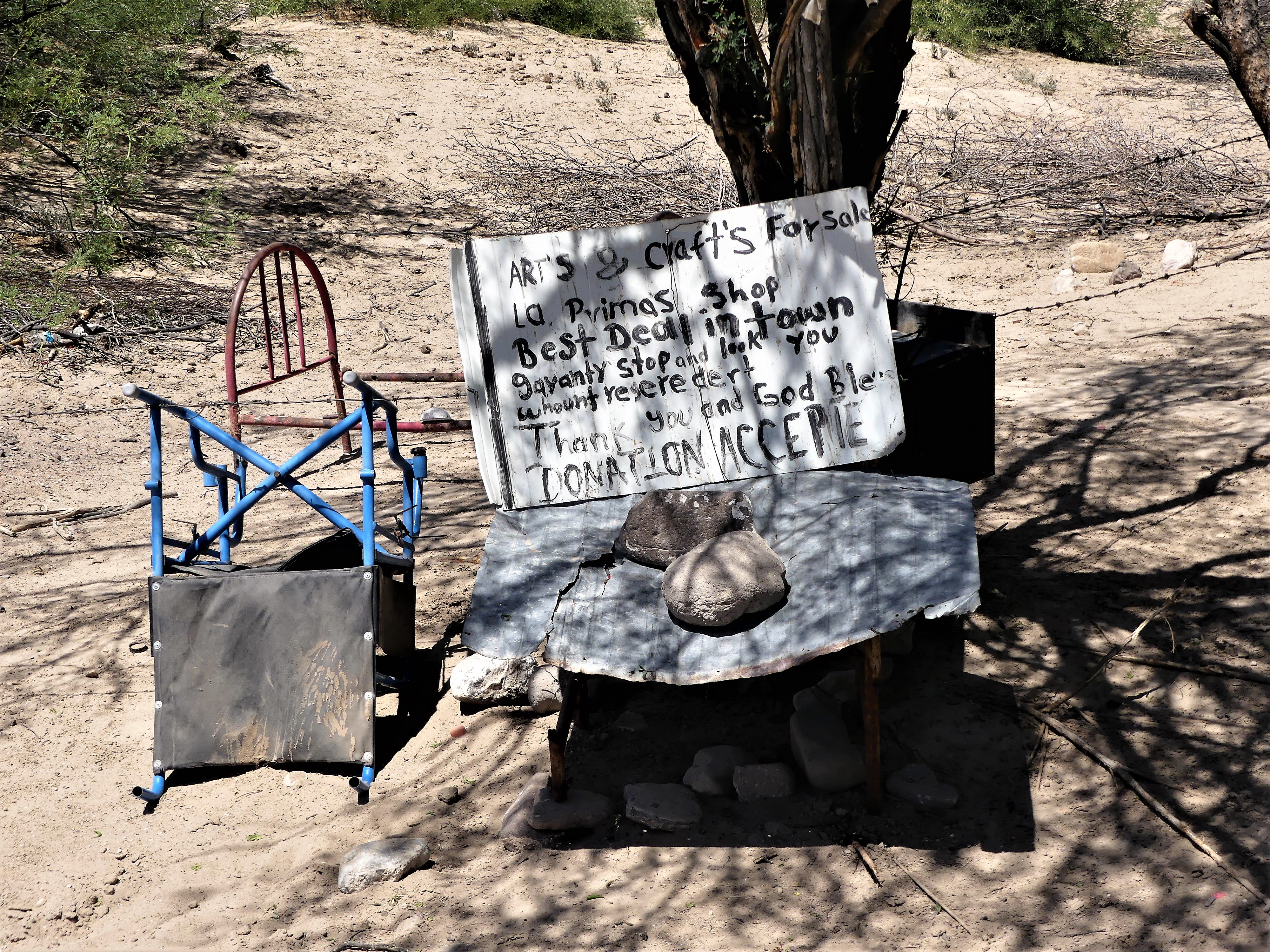
 I have met the enemy face to face and I do not fear them. Their rowboats and mules would be no match against our ships and tanks.

 After listening to Ranger Matt’s presentation, I have a personal theory why natives might have avoided the cave. It seems that during the cold winter months, the cave acts as a warm weather haven for Indiana Jones’ worst nightmare. Only until the weather heats up outside, and all the good snakes wind their way out of their cozy cave den is it safe for humans to explore the inner depths, and that’s where master spelunker Ranger Matt was taking us.
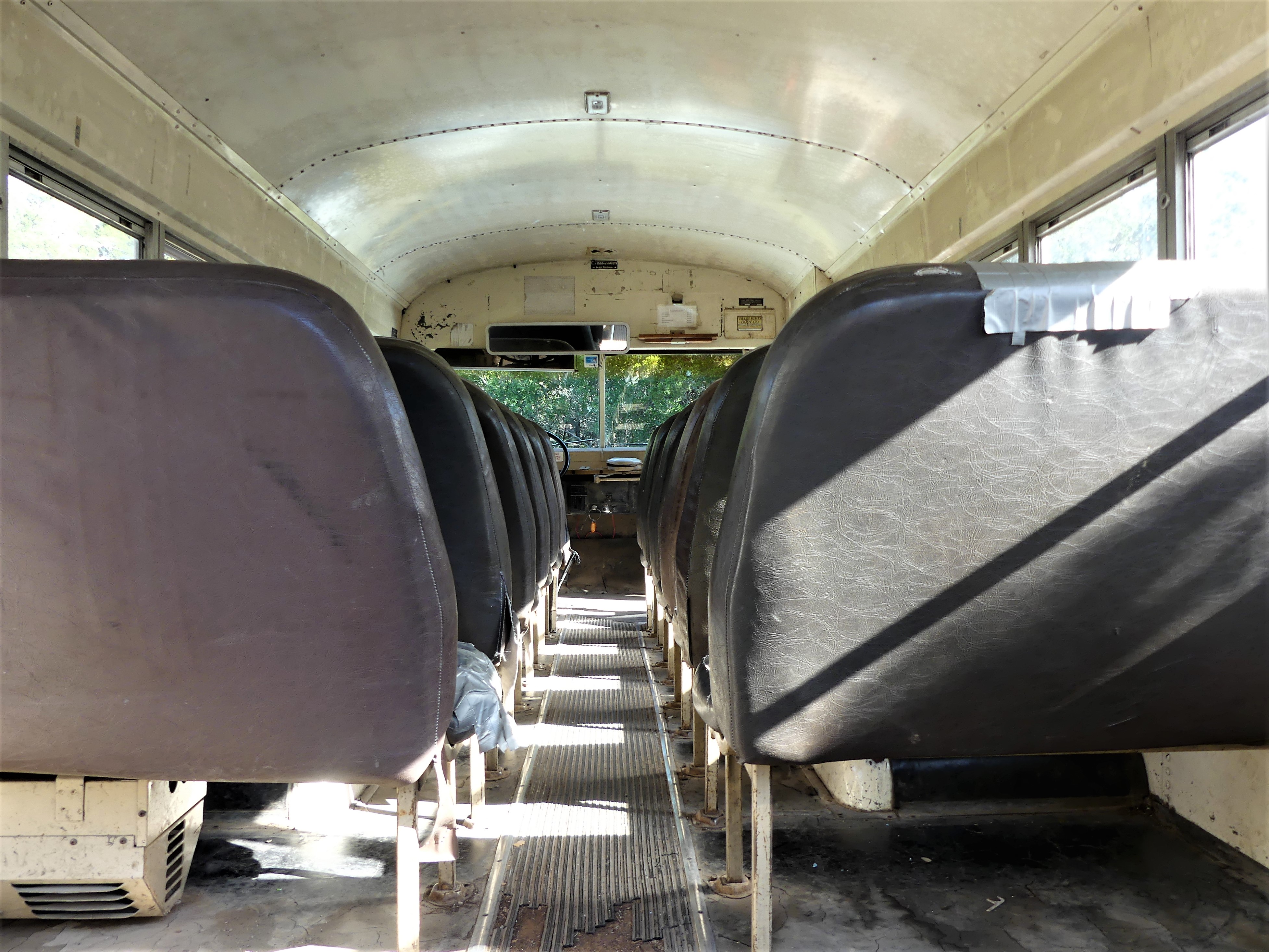 “That explains the bullet hole in the windshield,” I presumed.
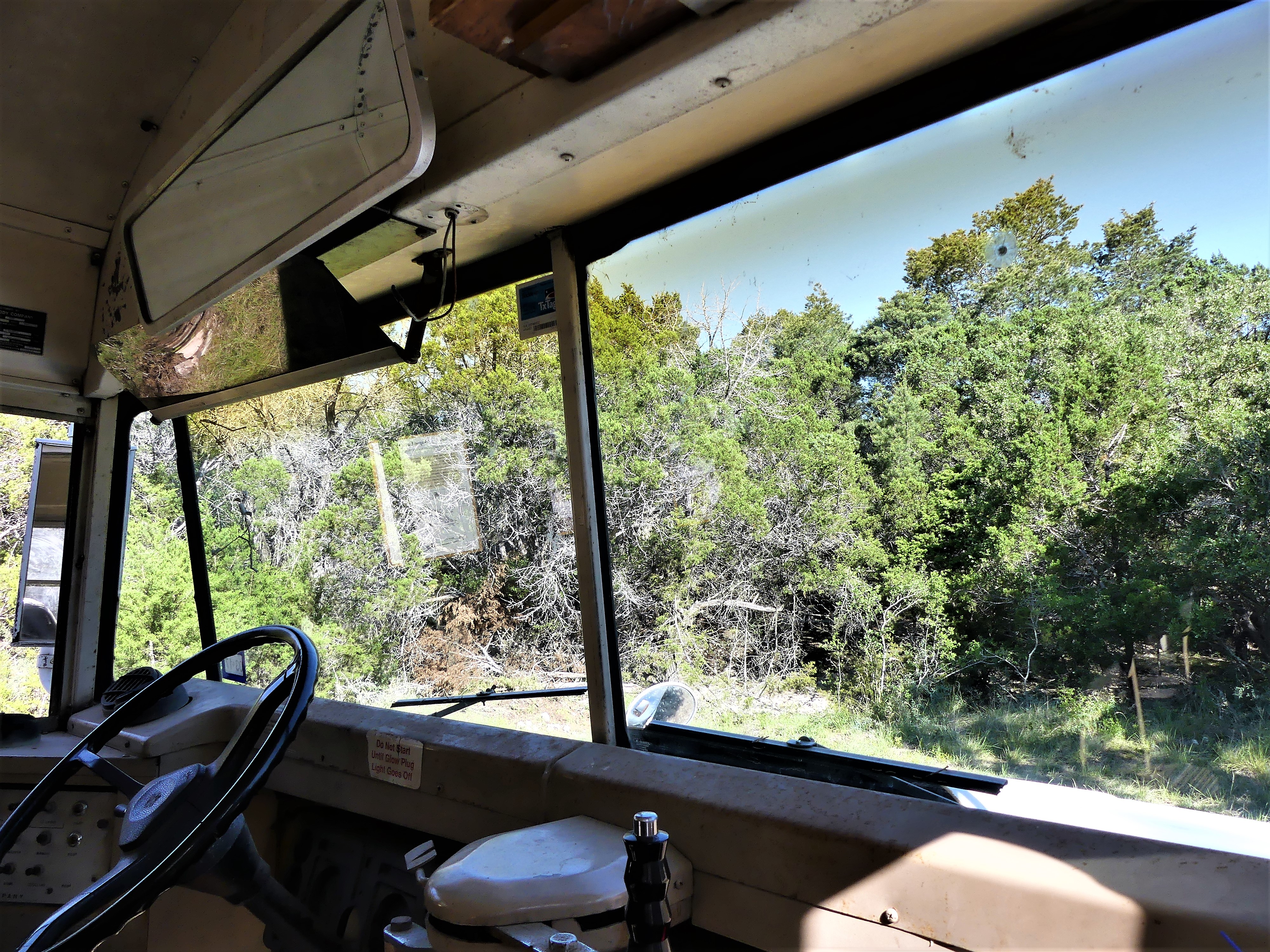 Bertha had been given a pardon, only to be reincarnated as a park bus. For some reason, I was reminded of a road sign I spied on the way to Kickapoo that read: DO NOT PICK UP HITCHHIKERS. THEY MAY BE PRISON ESCAPEES.
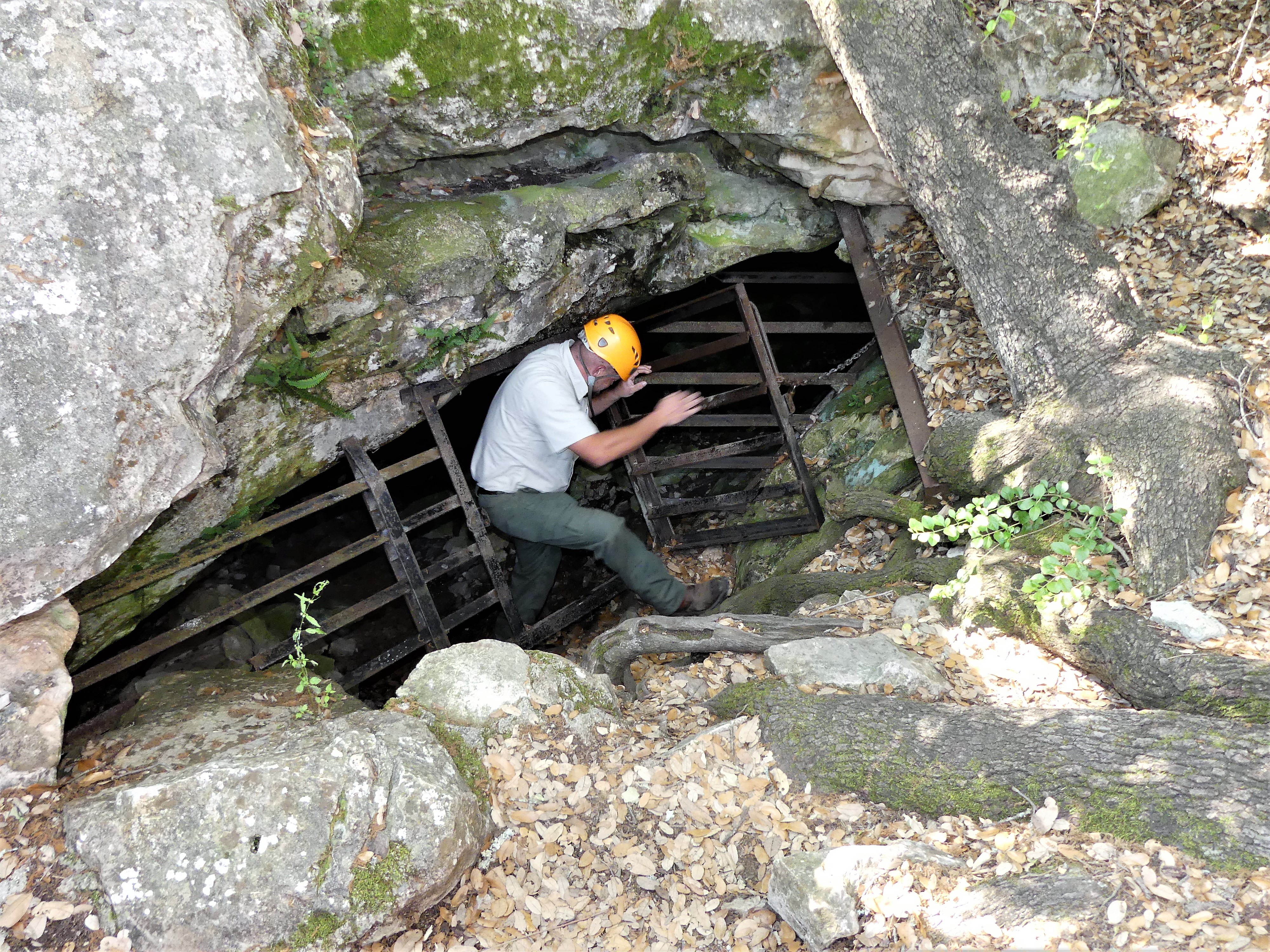 checking for varmints before allowing us to climb through a small crack in the ground,
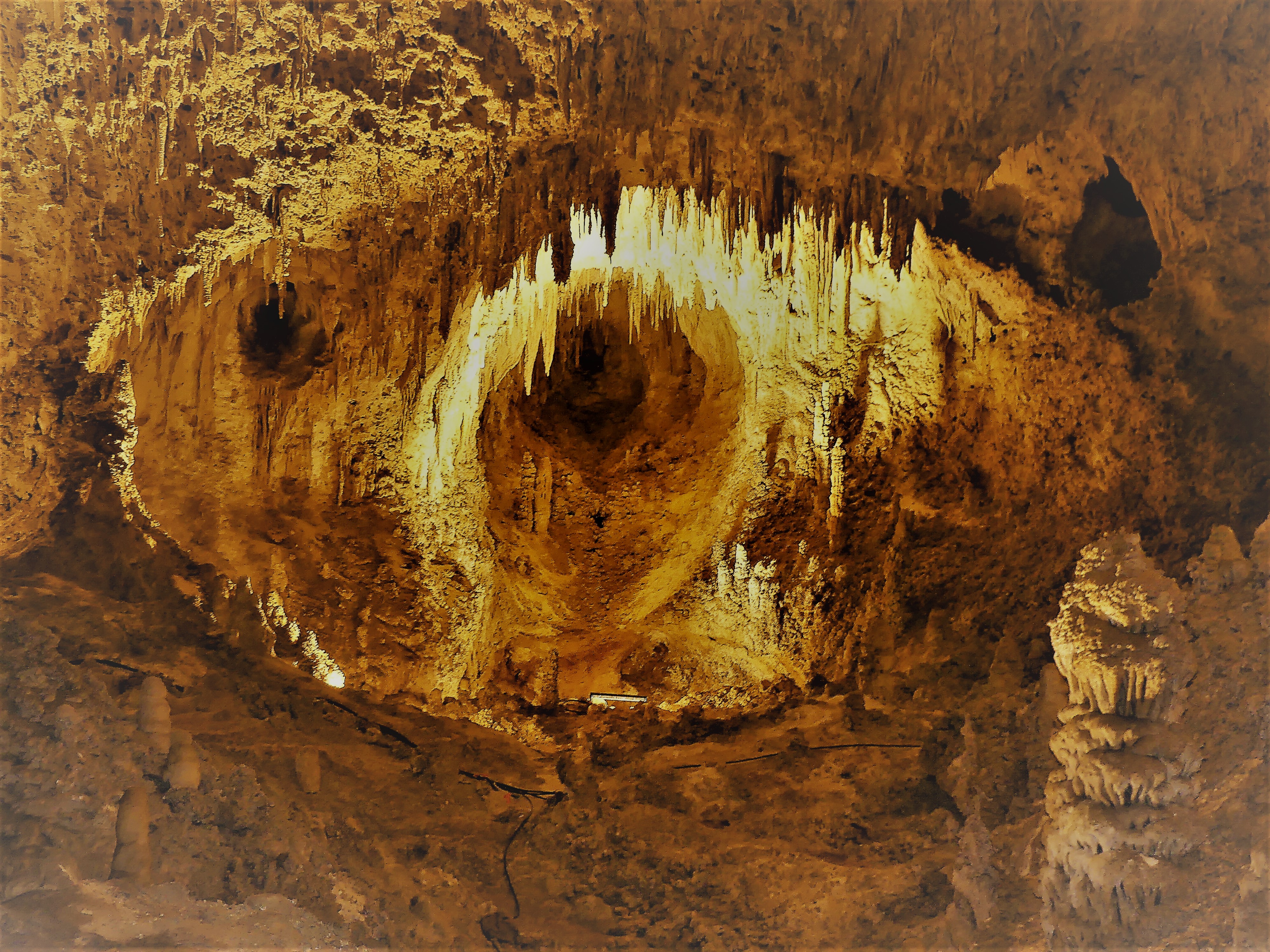
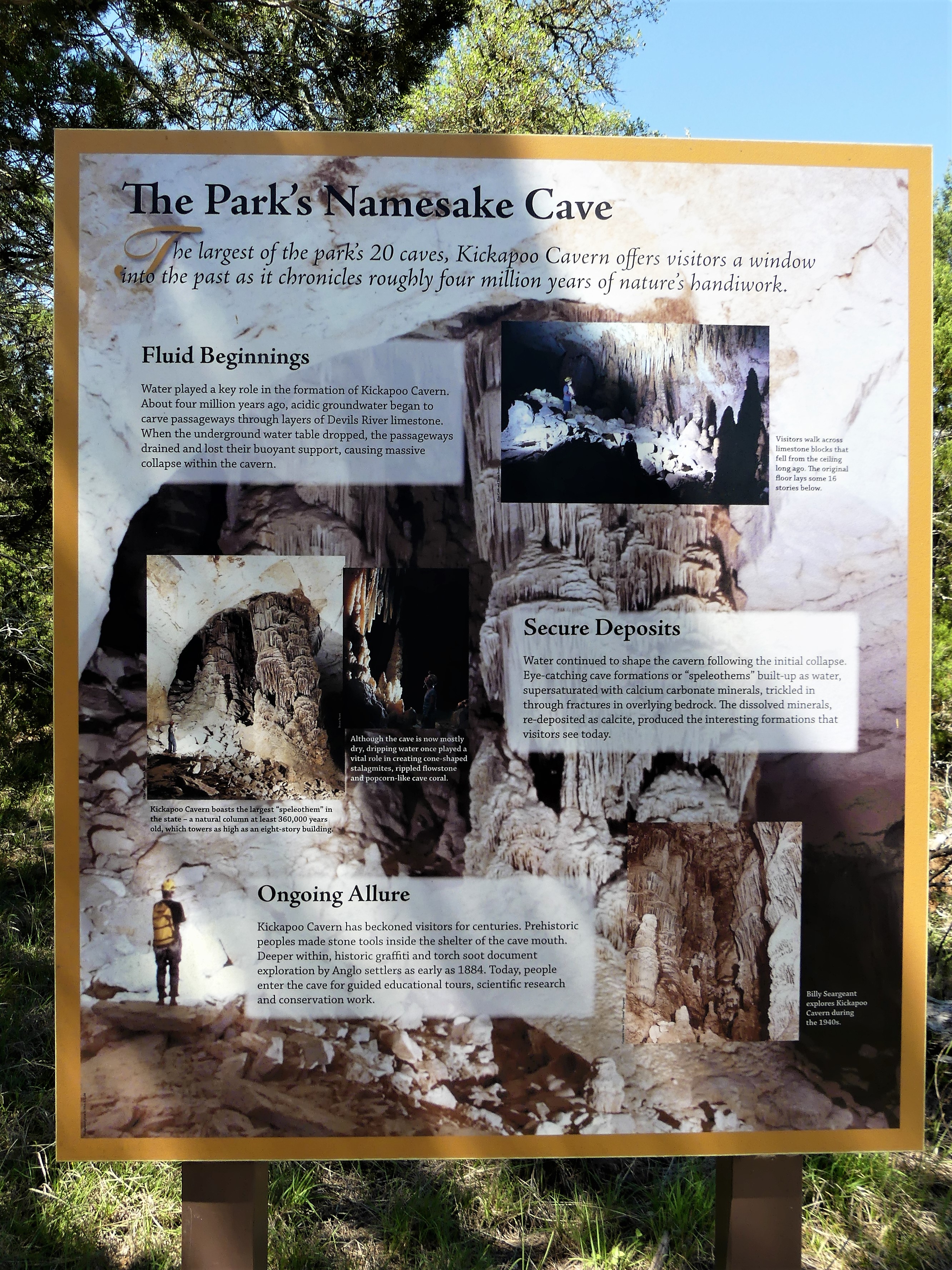
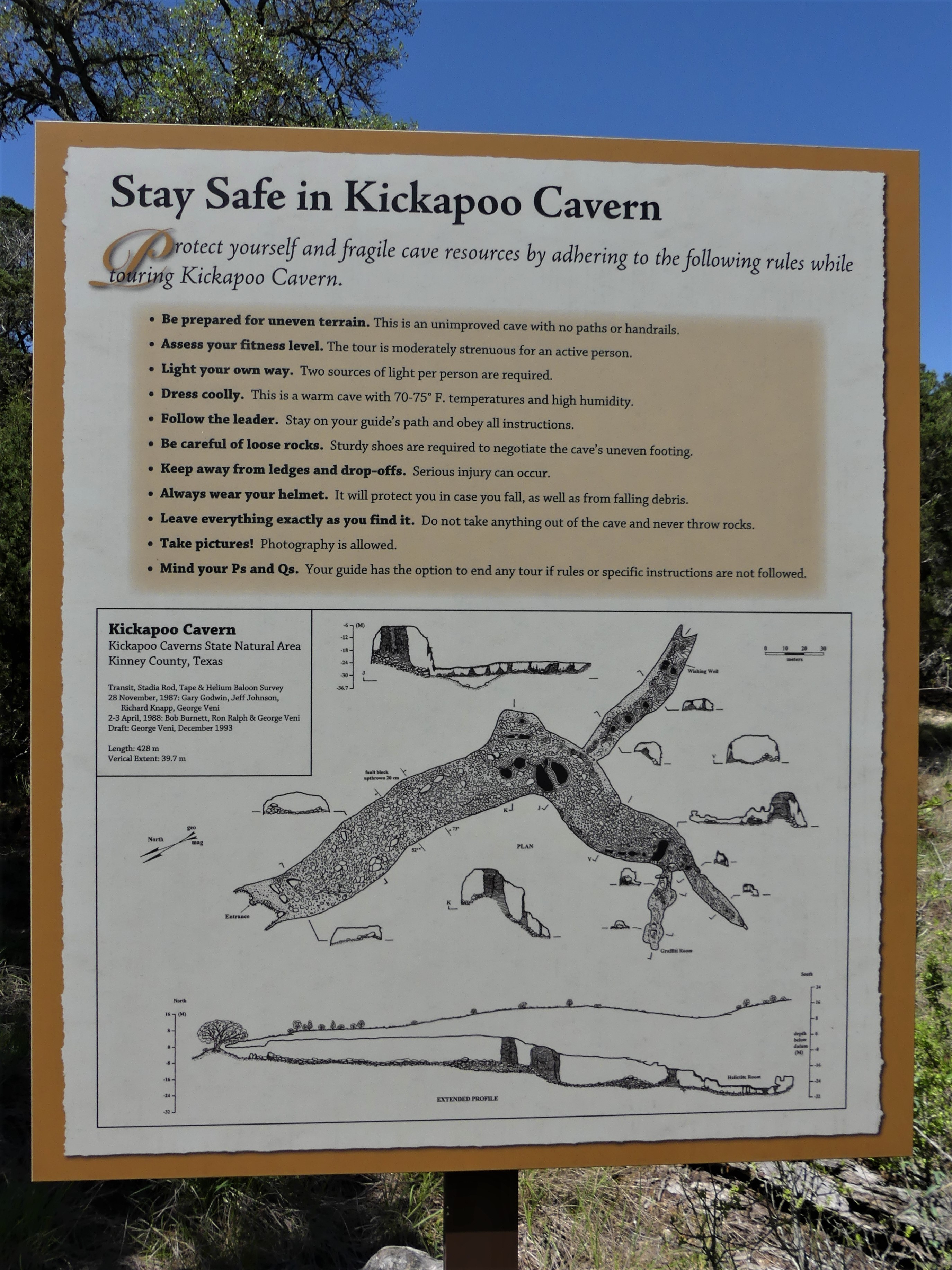
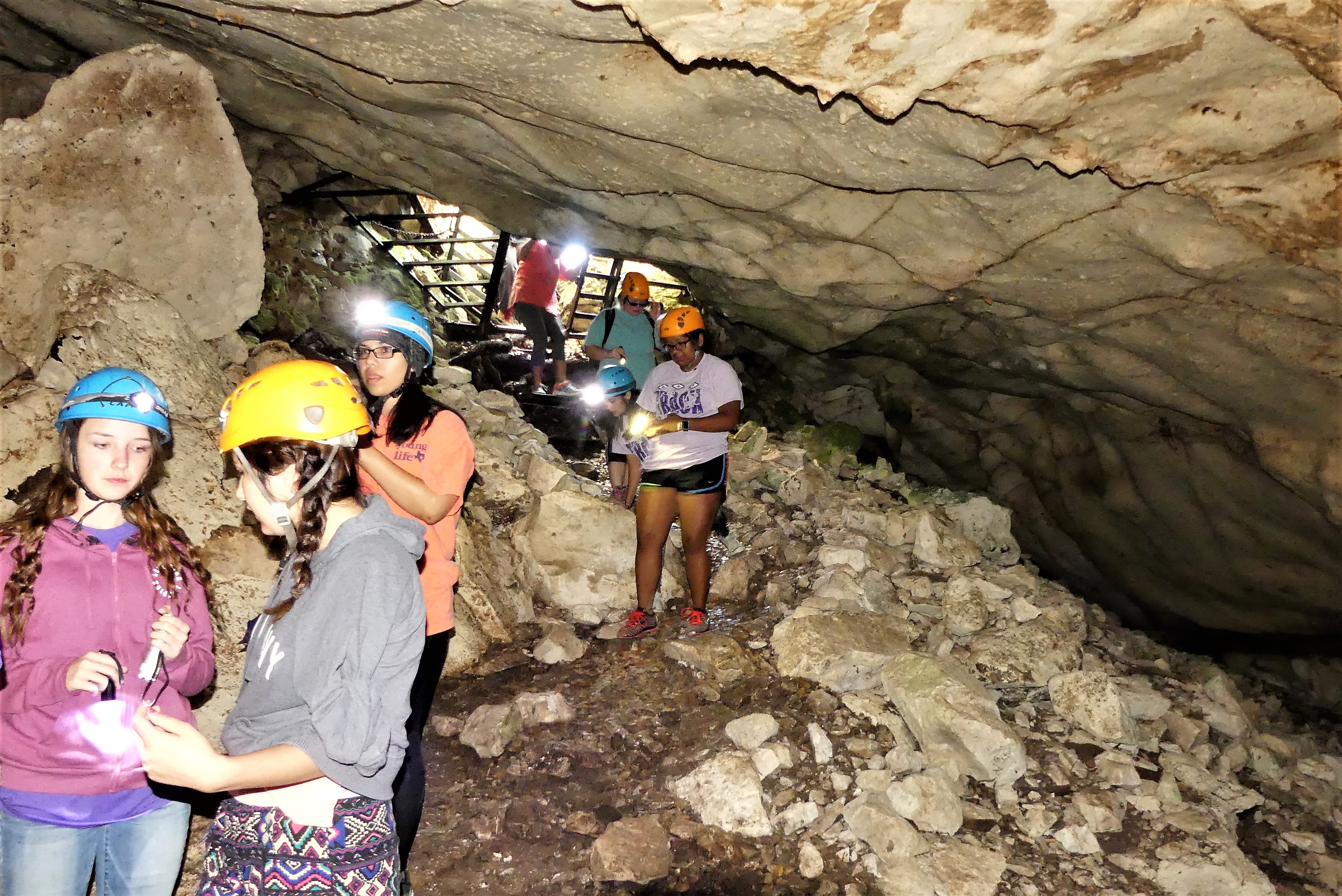 where we found ourselves standing on the collapsed ceiling of a limestone rock pile measuring 130 feet thick. The mouth of the room was big enough to park a Cessna if you could figure a way to get it inside.
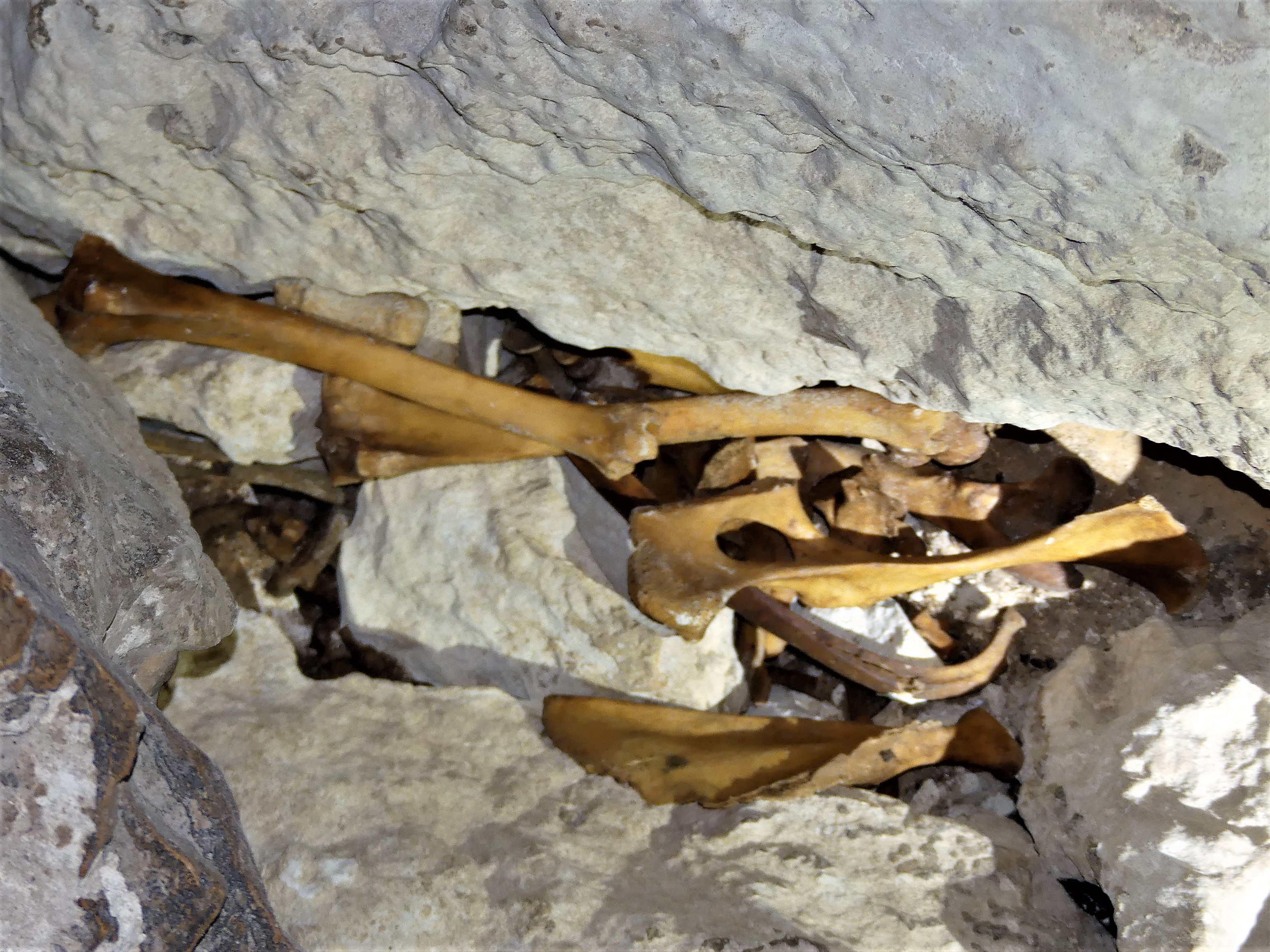
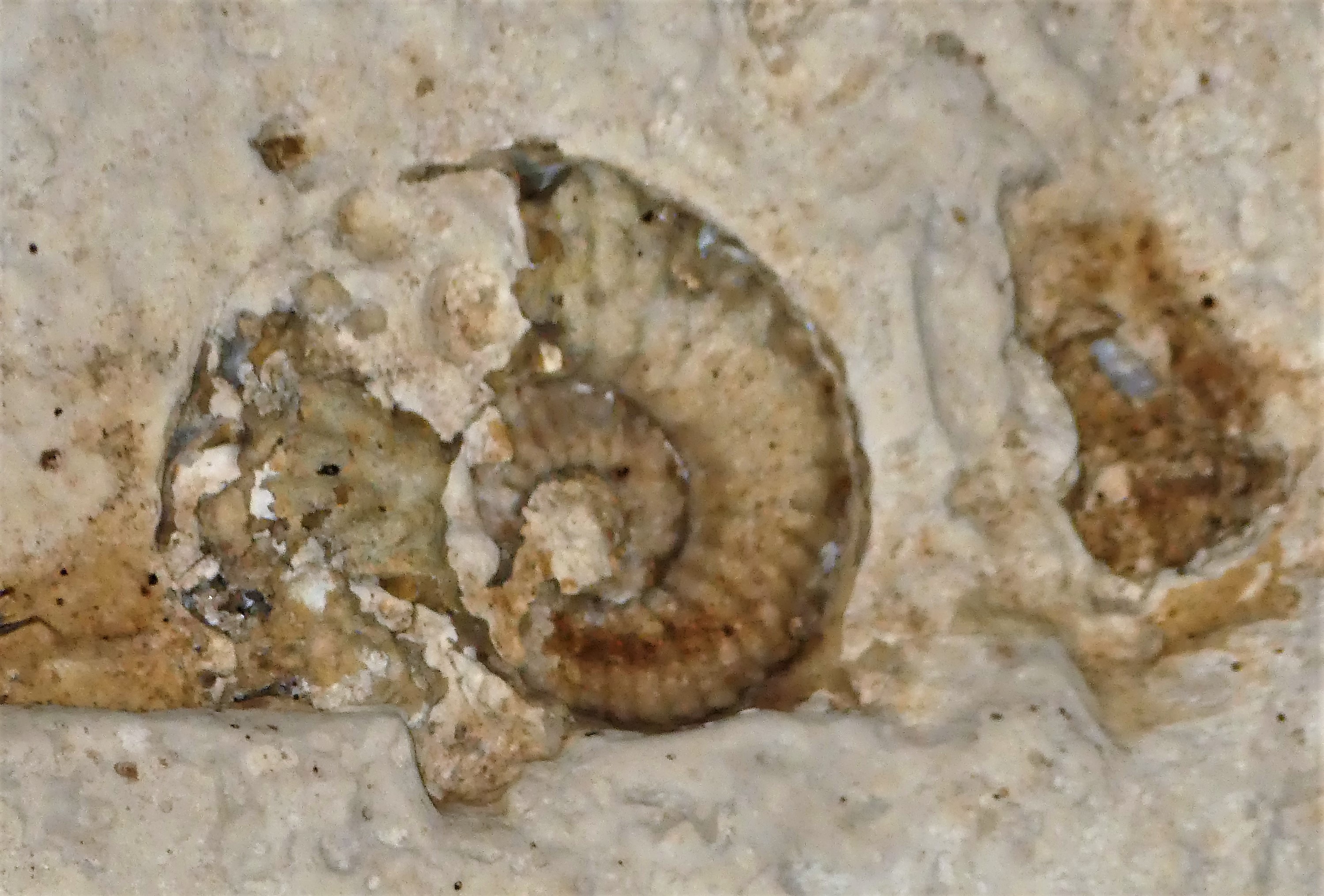 and more recent remains of an unfortunate sheep or goat littering the floor
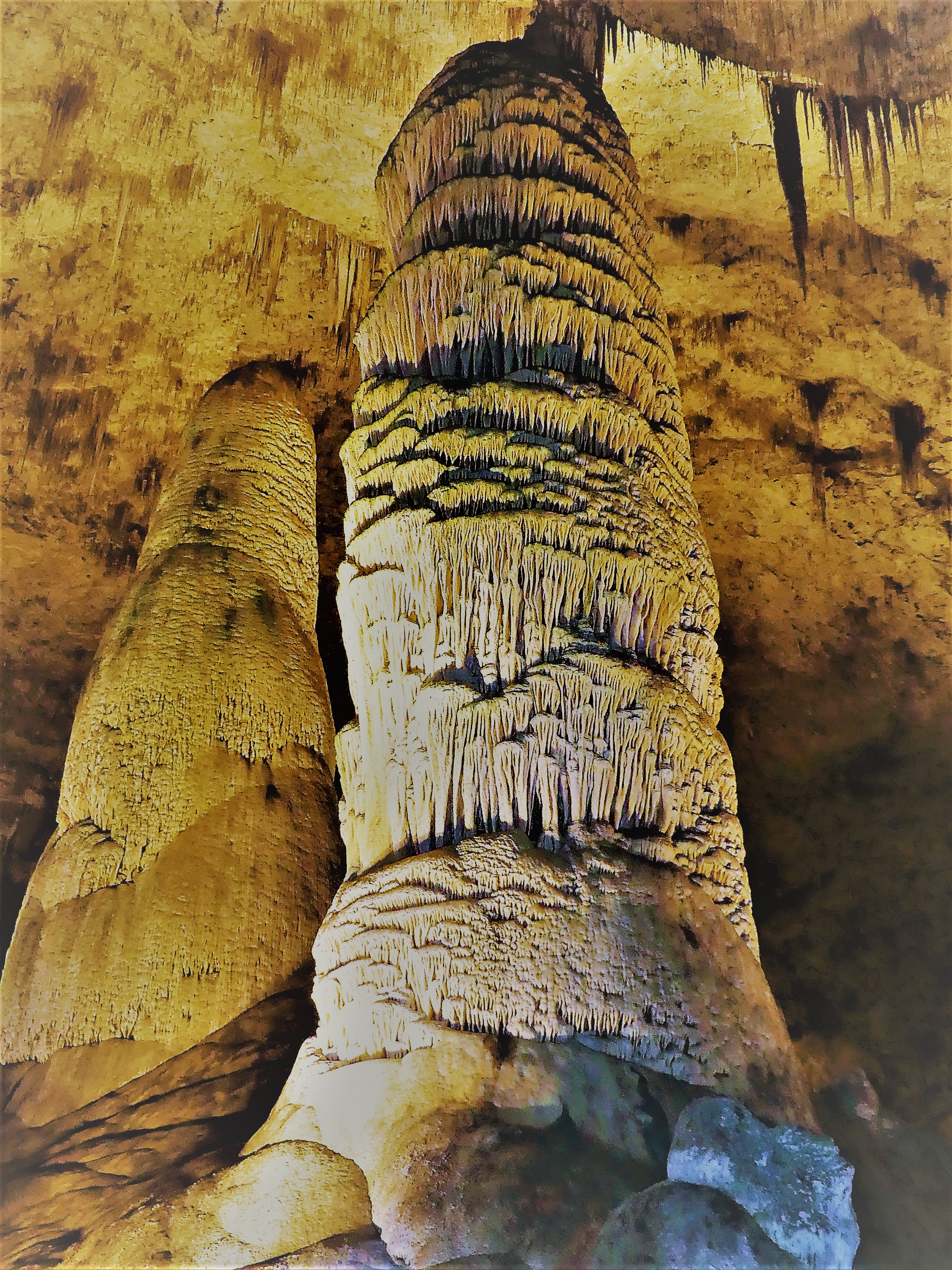
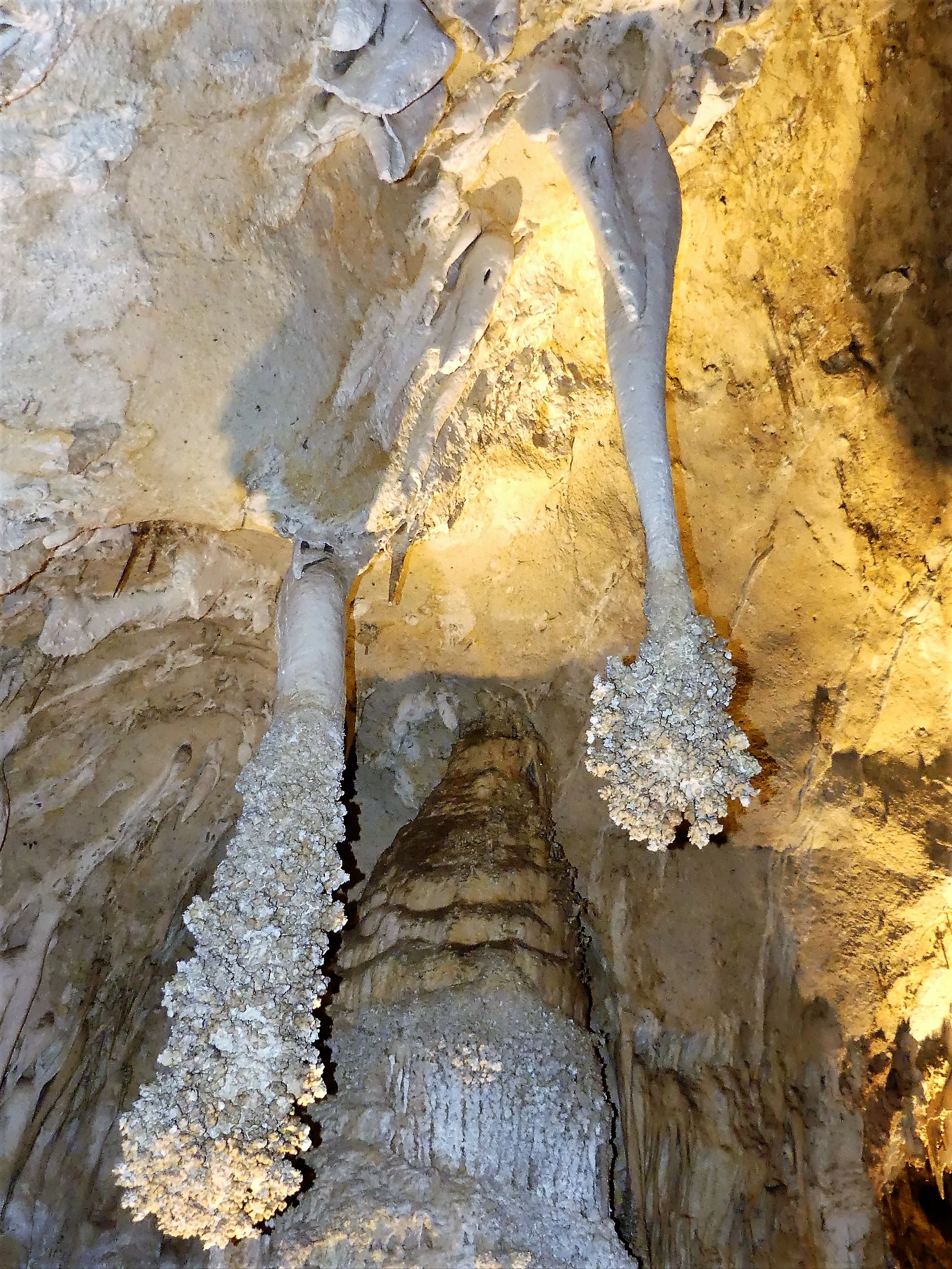
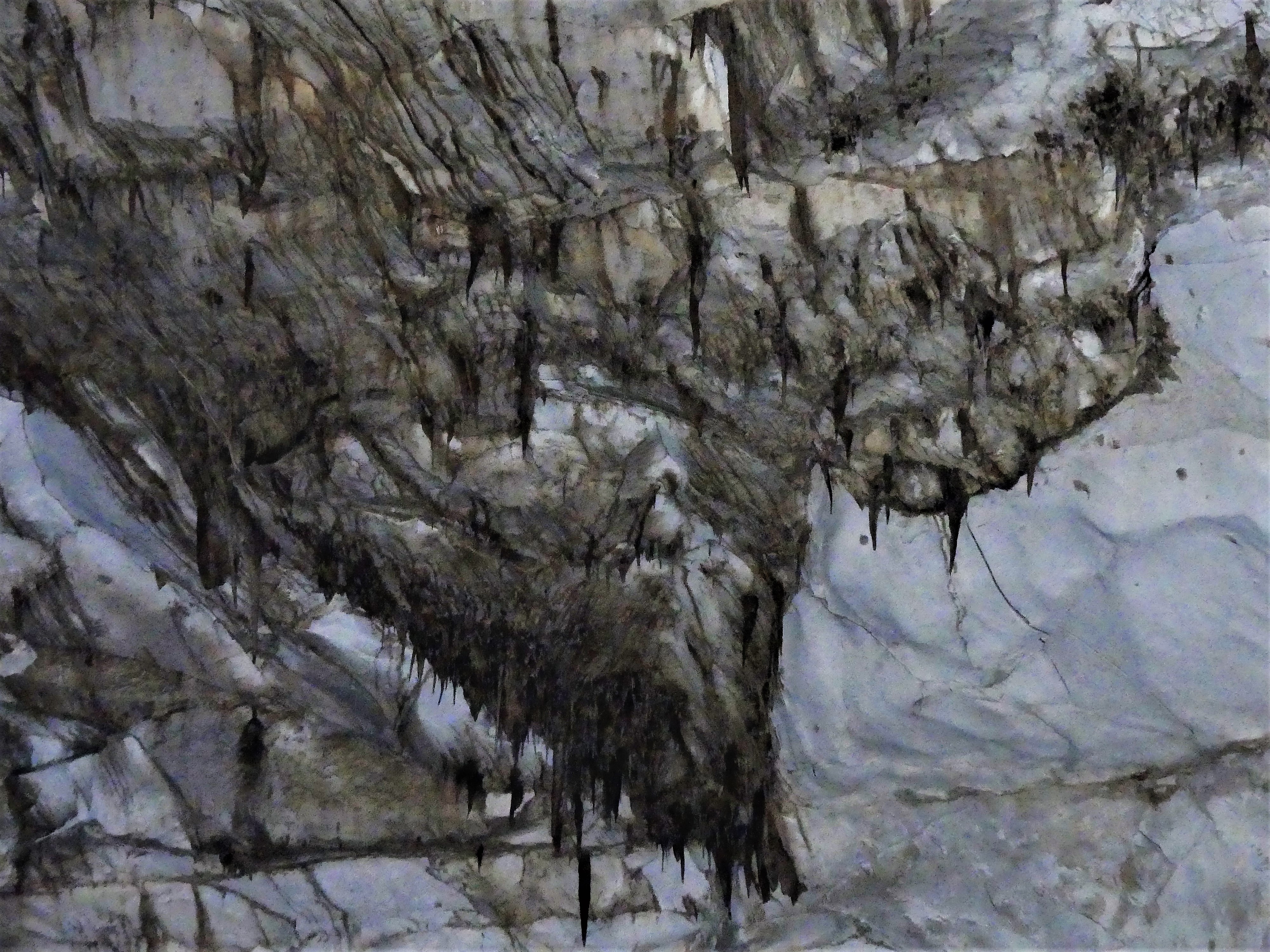
 From there we dropped approximately 40 feet, scrambling over ledges of flat rock and boulders, on our way to survey the three largest columns (when a stalactite meets a stalagmite) in Texas. How apropos that along the way, we would pass a formation of stalactites that managed to aggregate into the shape of the Lone Star state.
 There was no meaningful trail. Every step was a floating rock, see-sawing under our weight. That’s when I heard Leah go down hard behind me. I swung around to see her flat on her back, saved by her fanny pack.
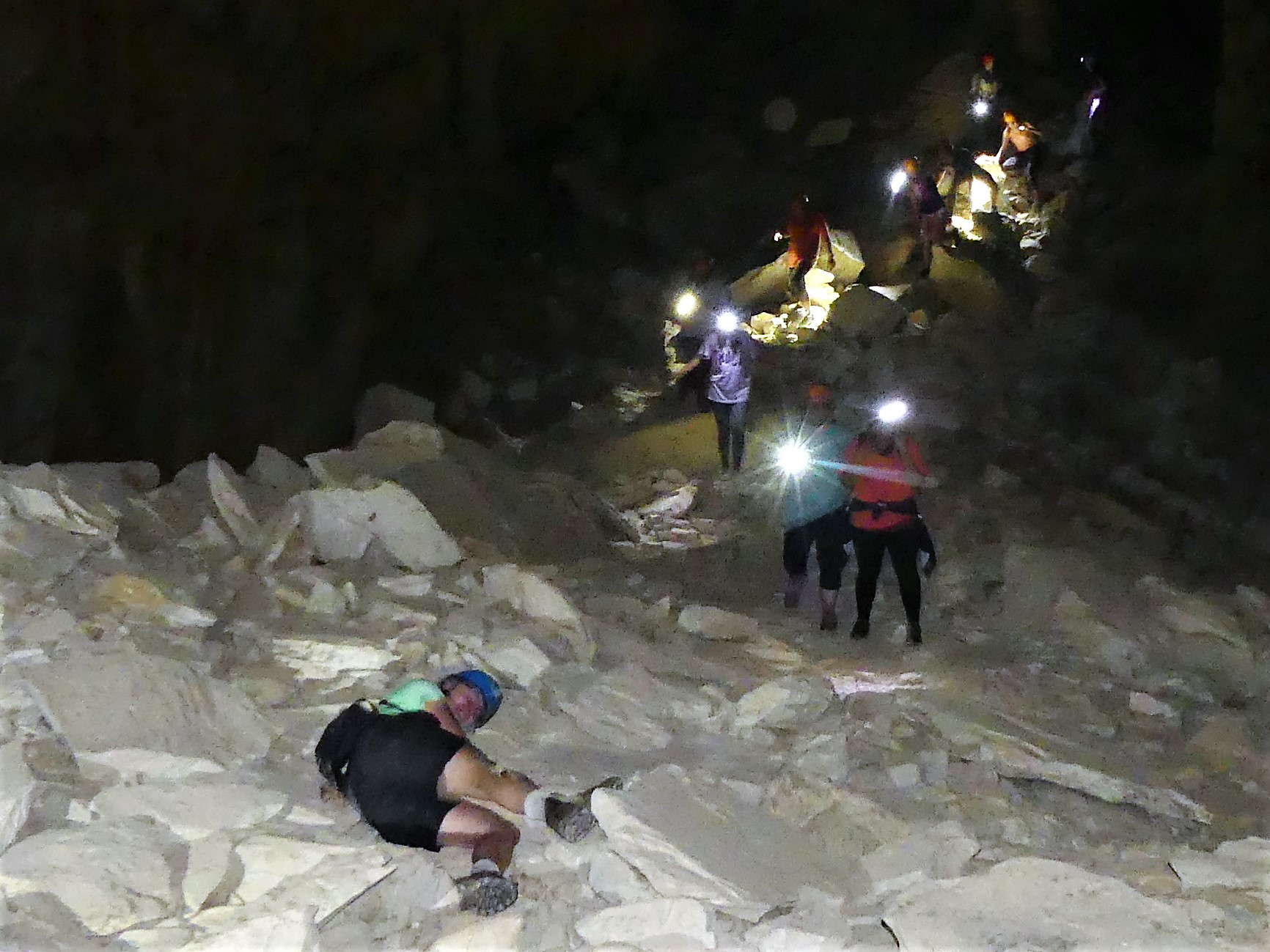 And Matt was there in an instant.
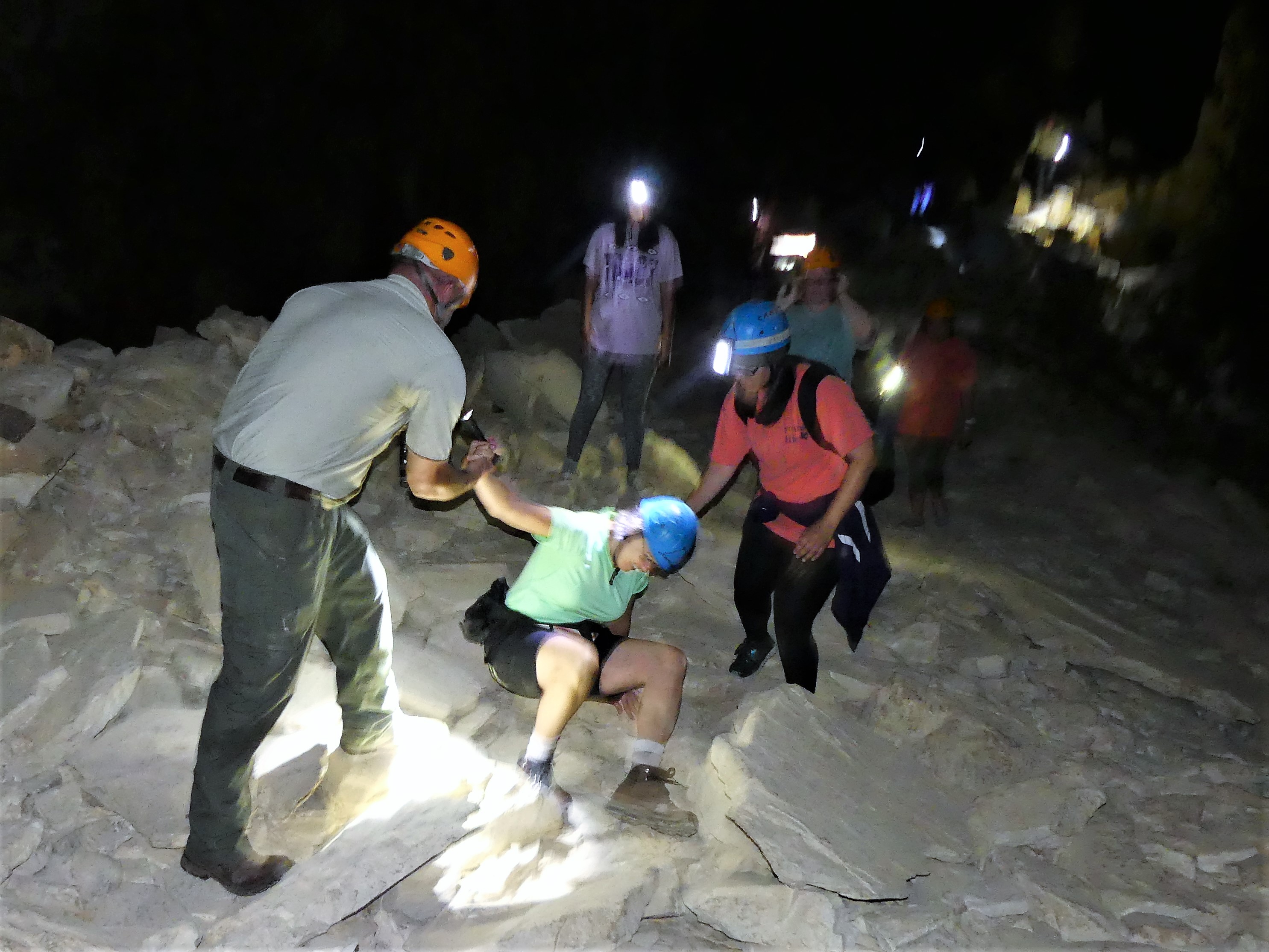 “I’m alright,” she declared. “I just lost my balance on the rocks.” It was good news to my ears. For some reason, Leah and caves are not on equal footing, and rarely without incident (see “A Hole in the Head” post),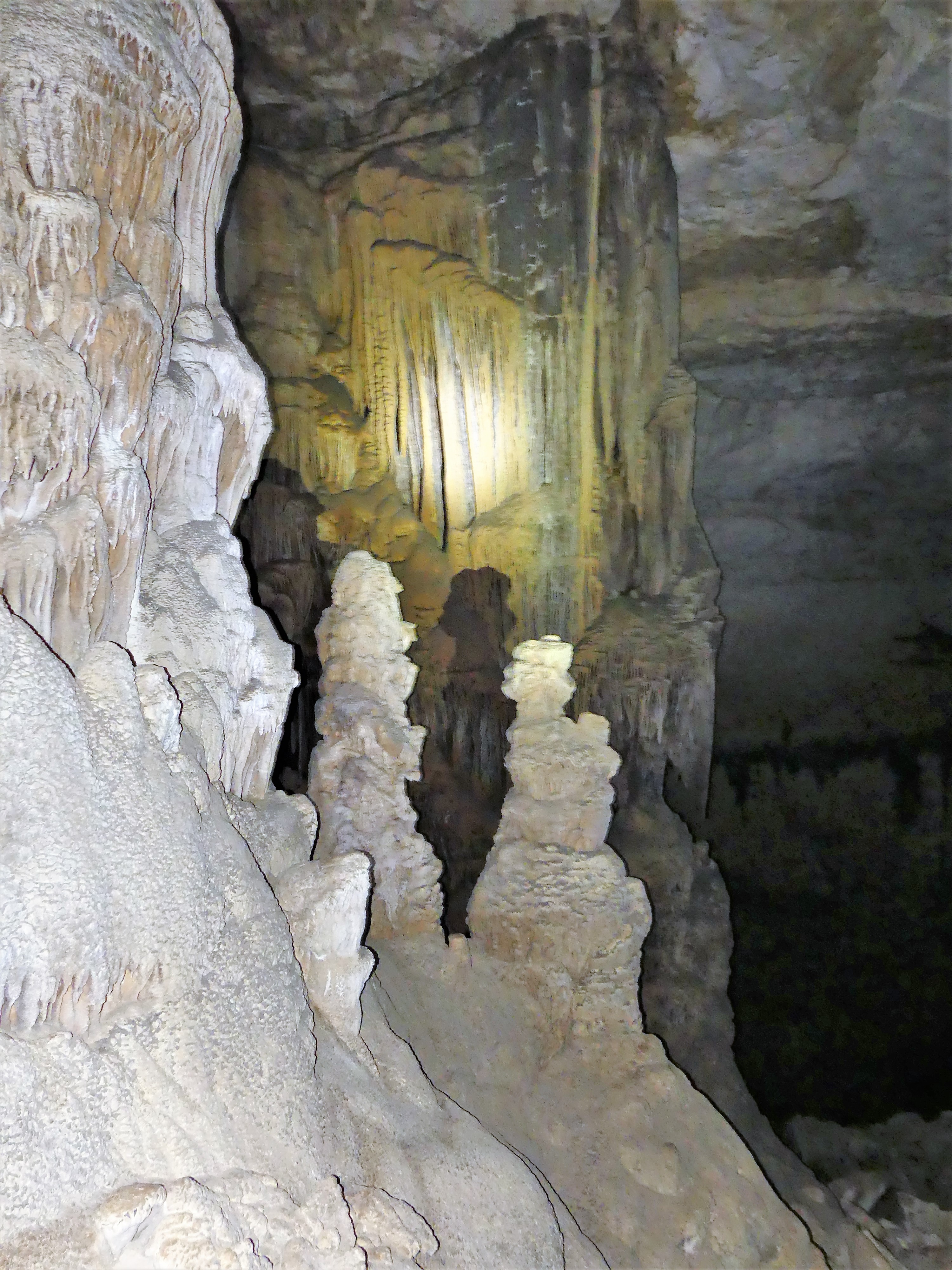
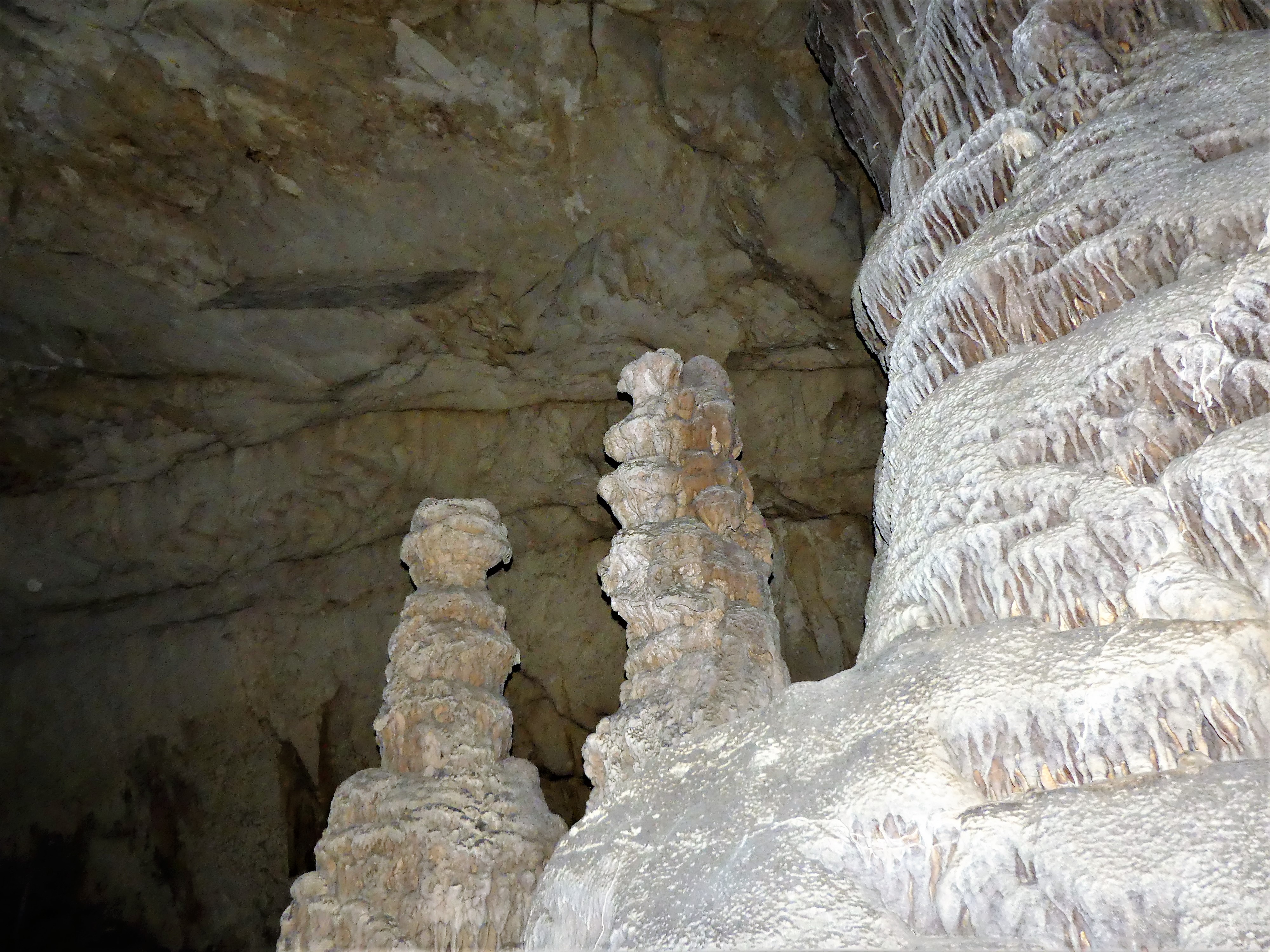 We turned the corner and the room opened up. The ceiling vaulted higher to accomodate the caves’s largest column.
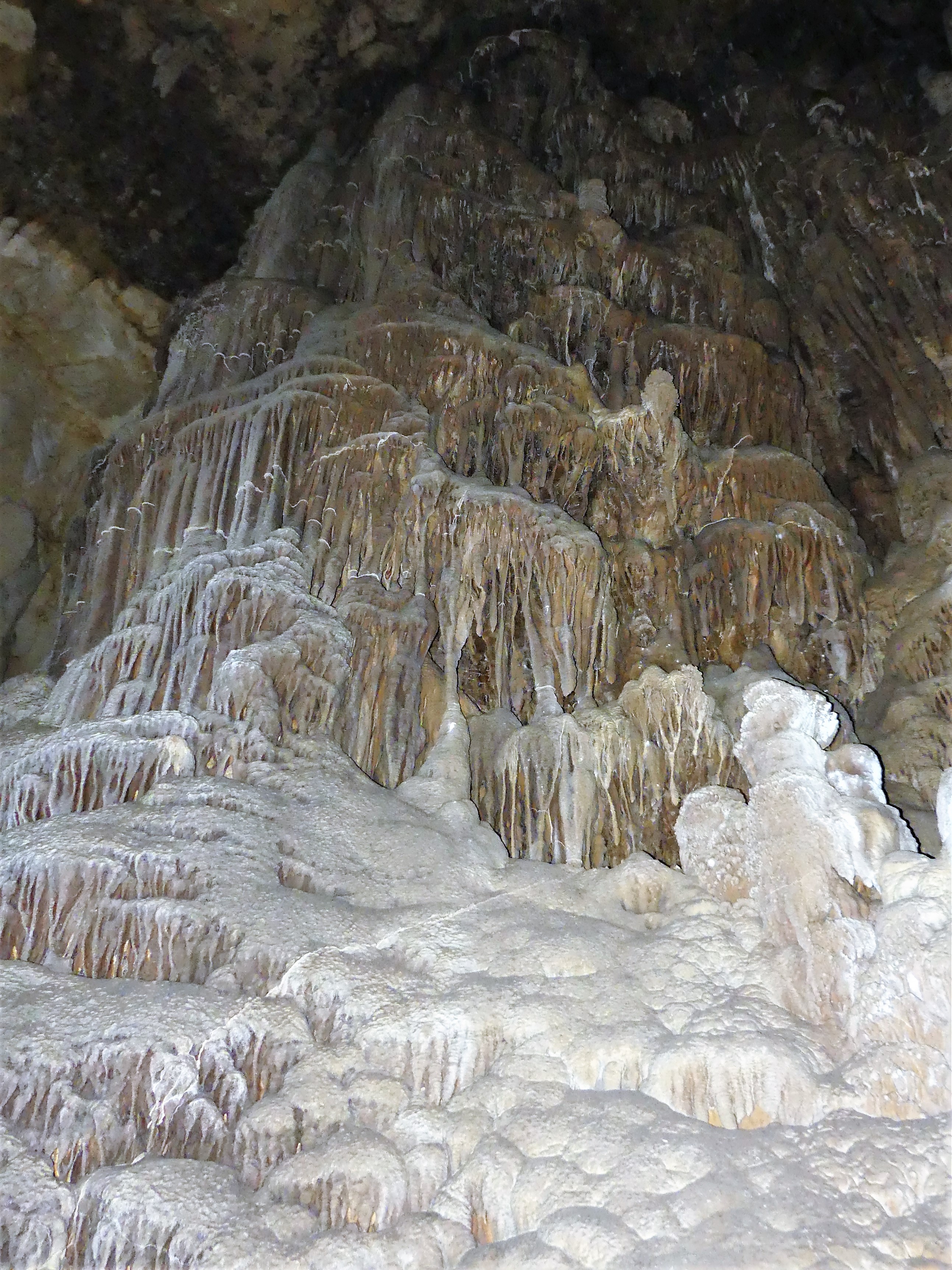 “Don’t be afraid to touch anything,” announced Ranger Matt. “We’re not like most of those other parks that have guard rails and ropes, and psychedelic lights with church music playing.” He was preaching to my choir.
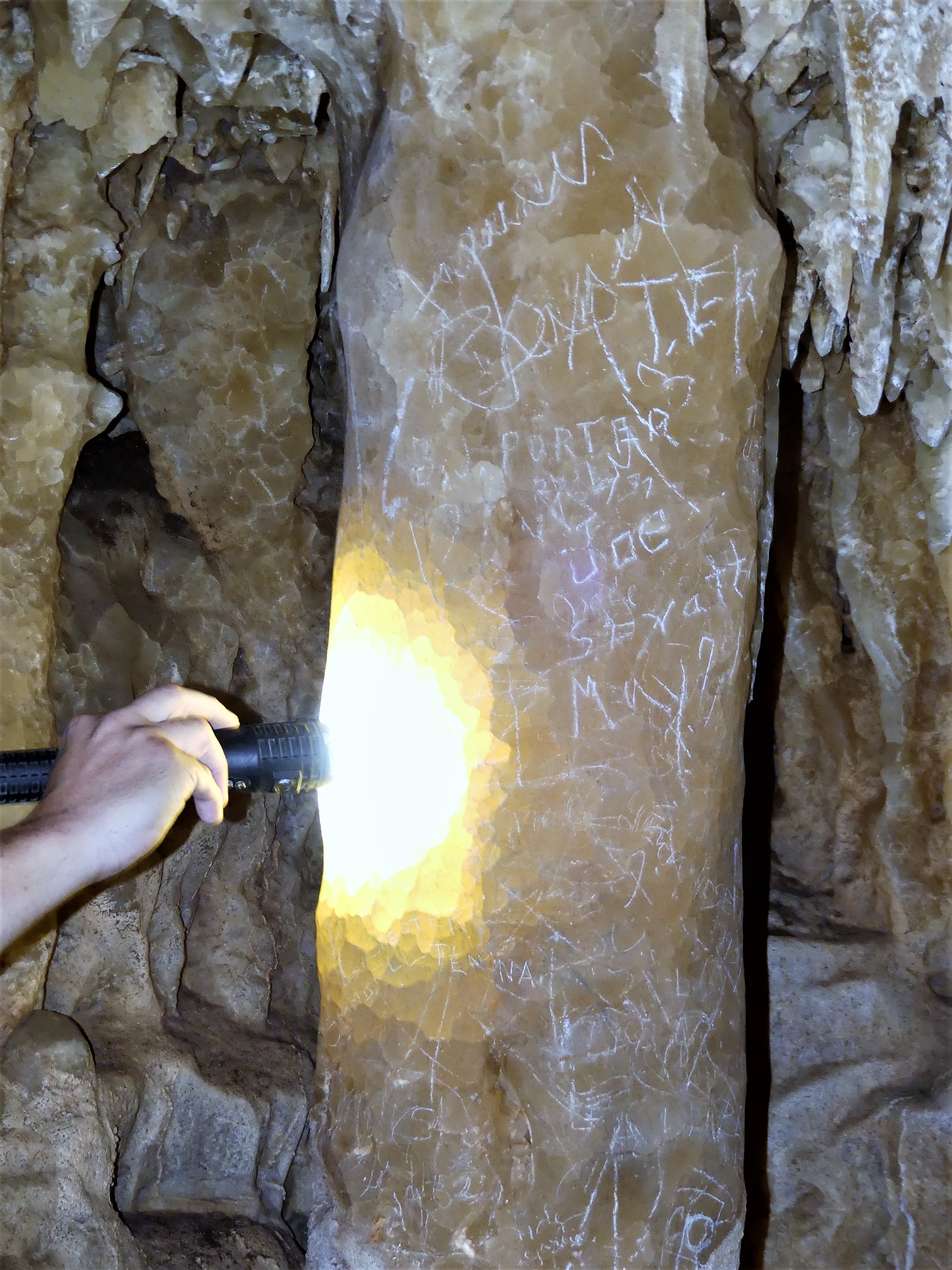 “Like this one over here?” suggested a blond coed, pointing to a name scratched into the calcite that dated back to 1887.
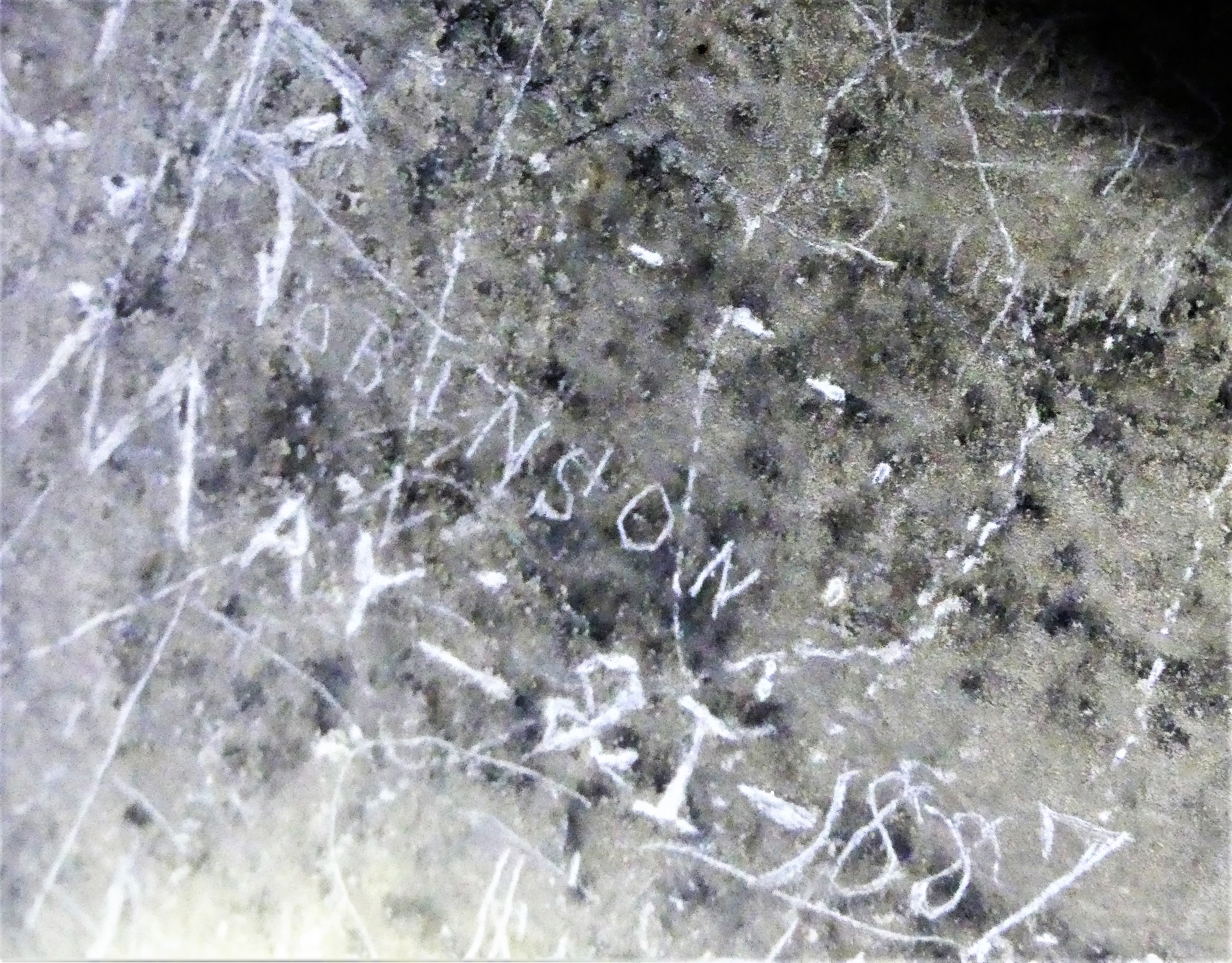 “Ah, good ol’ C. Robinson,” Ranger Matt explained, “He was one of the early ones. But there’s older graffiti in this cave that predates Mr. Robinson–written with torch soot–but that’s in a room that’s off limits because it’s still developing.”
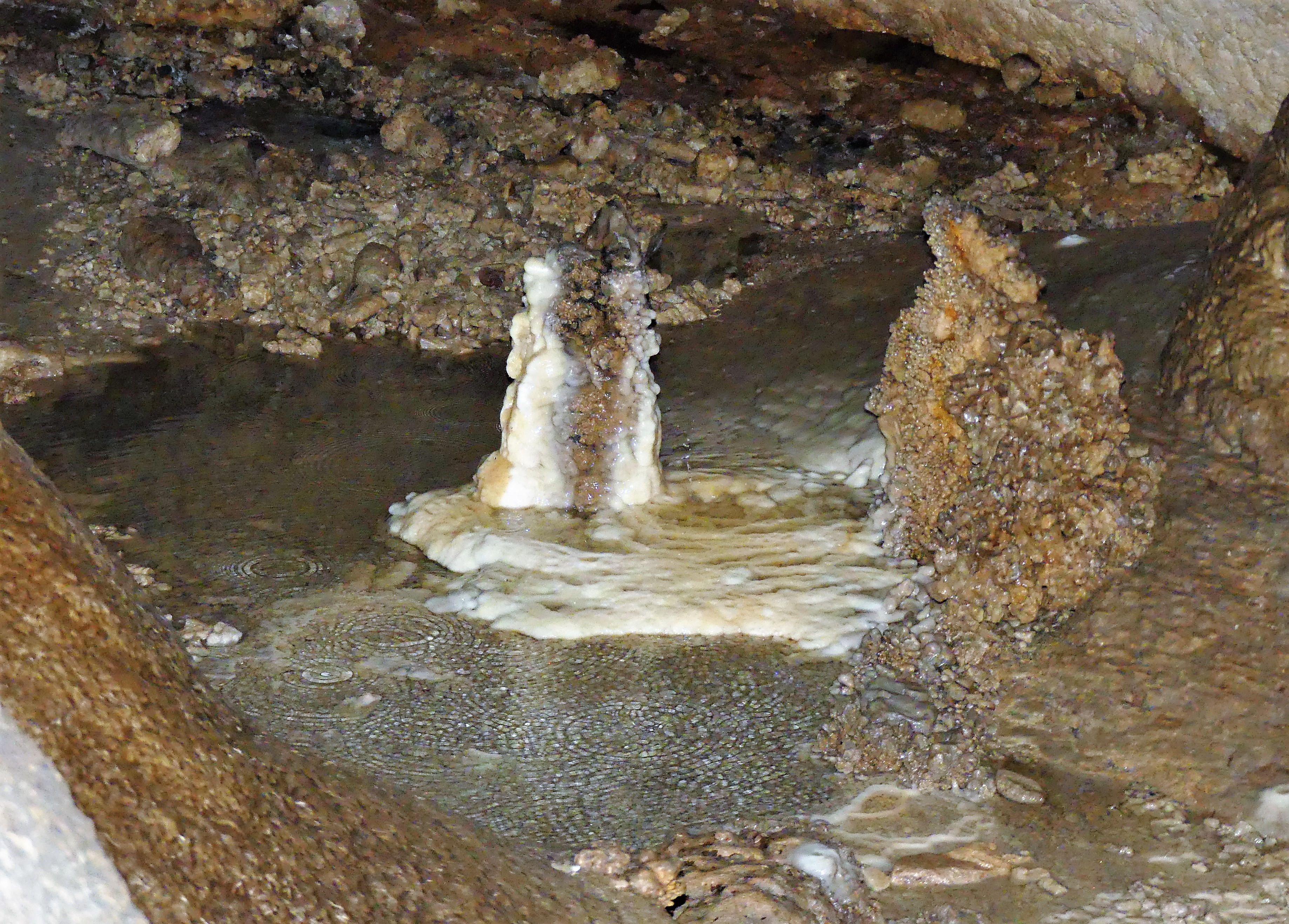 We solemnly wove our way around the space, beholding the nascent natural beauty that will one day become a future column.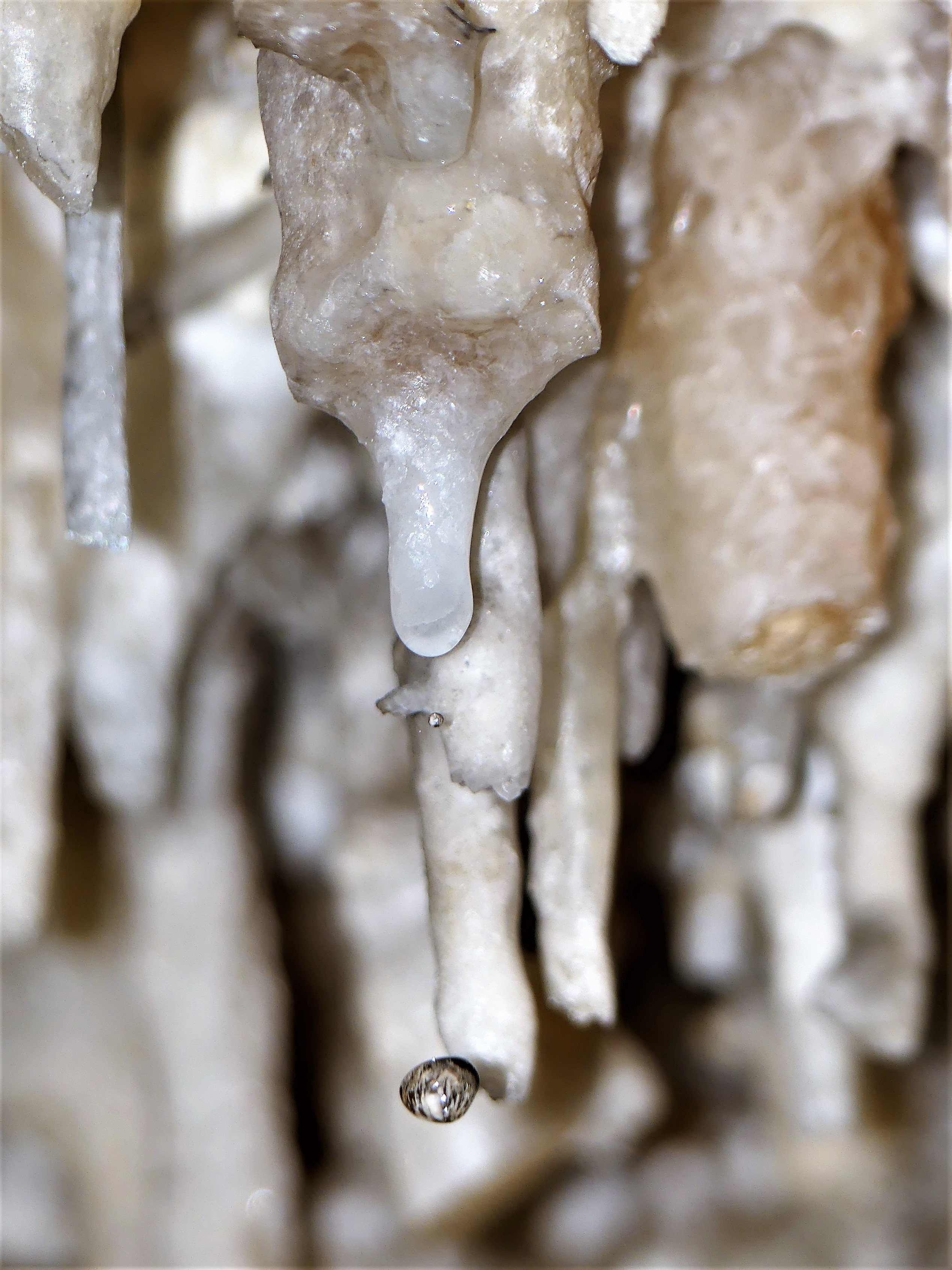

 Streaming thru America