Uncertainty: Chapter Four

Uncertainty: Prologue
Uncertainty: Chapter One
Uncertainty: Chapter Two
Uncertainty: Chapter Three


Uncertainty: Chapter Four

We awoke to news of Essen from Maxwell and Ilse Köhler, our country hosts who had gone to town to acquire some of the supplies Rochel and I would need for our stay at the farm. It was to be our temporary hiding place until the Gestapo’s deportation campaign subsided, and when we figured it would be safe to cross into Nederlands.

The Köhlers reported that last night’s pogrom had spilled into the morning, affecting every Jewish community across the Reich. The Gestapo was responsible for torching more than 1000 shuls throughout Germany and Austria, destroying thousands of Jewish homes and thousands of Jewish-owned businesses, arresting more than 30,000 Jews who were expedited to Nazi concentration camps, and inciting riots that left nearly 100 Jews dead in their homes and streets.

Even now, the Jewish orphanage in Dinslaken, 28 kilometers north of us is still burning.

Polish Jews in particular were being heavily targeted by the Nazis as retribution for the assassination of a German diplomat in Paris days earlier by a Jewish teenager from Hannover whose parents had recently been deported back to Poland.

We all sat down to Ilse’s hearty breakfast of fresh-baked Bauernbrot1, marmalade, egg omelet with Gouda cheese, and chopped herring. We mostly ate in silence, using our meal as a last defense against discussing last night’s disturbing details. “There is to be no talking with your mouth full at the dinner table!” was a rule the girls were very familiar with, and with all of us still in shock, there was no fear of this rule being broken now. But a conversation about our future was undeniable and inescapable, and Berte and Eva were deserving of emmes2.

Then just as I was about to confess…

_________________________________________

Abba, do you have something you want to tell us?” Berte perceptively interrupted.

“There is,” Abba announced. “First of all, I want to apologize. Mutti3 and I are so sorry that your lives have been turned upside down.”

“It’s not your fault, Abba,” expressed Eva. “It’s those damn Nazis.”

“Eva! Don’t make me get the soap!” warned Eema.

“Sorry, Eema,” Eva quickly surrendered.

“You know your Tatti4 and I only want what’s best for you,” conceded Eema.

“That’s right,” Abba continued, “so Mutti and I have come to some bitter truths about our situation…and that means we will no longer be returning to our house. Your Tante5 Ilse and Onkel6 Max went by Ribbeckstrasse this morning to have a look around, and they discovered that there was nothing left of our home or the shop. So really, we have nothing to go back to.”

“But where will we go?” Eva was fighting back tears. “Are we going to the poorhouse?”

“They’re just things, my dear. I will miss them, and it is a big loss for our family, but we are lucky to be alive and be together, Gott Will7!” Eema looked up, trying to make a connection with God, but I was doubtful of an answer.

“And what about school? And what about Shabbat, which is coming tomorrow?” I interjected. I wanted everyone to know how clever I was.

“Ah gezunt ahf dein kup8,” gushed Eema.

Abba proceeded with straight talk. “For now, this is your home. We’re going to be living here with Tante Ilsa and Onkel Max for a bissel. But with some very strict rules, 100 percent,” he affirmed.

“Let me explain,” Eema interrupted–but now extremely sincere. “Your Tatti and I need to remind you that this is a secret that no one must ever know about…for any reason. Our lives depend on this. Farshteyn9?”

“Yes, Eema,” agreed Eva.

“Yes, Eema,” I agreed, and then I thanked Tante Ilse and Onkel Max for letting us stay in their house. But then I couldn’t keep it to myself any longer. I had to know. I had to ask

Abba, “Does that mean I get to see Shaina Maidel every day?”

Abba grinned back, “Whever you want, my shaina maidel.”

Abba stood, clasped both hands together to form a broadcast scoop, and brought them to his lips in a grand gesture to capture everyone’s attention. “Ladies and gentleman…May I please have your attention…I have an important announcement to make…From now on…we are officially in hiding.”

After the laughter died, he paused and looked as serious as the time I fell from Shaina Maidel the first time I rode her. “And no one is to know that we are here,” he continued. Everything that we need while we are here, Tante Ilse and Onkel Max will provide for us.”

“But that’s not fair! How come Tante Ilse and Onkel Max get to go out, but we can’t?” Eva started up.

“Your Tante and Onkel are grown-ups, and they are not going to do anything that will jeopardize our well-being,” declared Eema.

“But aren’t they going to be in big trouble if they’re not hiding with us?” Eva continued.

Abba walked around the table to where Eva was sitting. He wrapped his arms around her from behind, and leaned into her ear. “Nobody’s going to get in trouble if you follow the rules, 100 percent.”

“But what if Tante and Onkel get caught in town? Then who’s going to take care of us?” she persisted.

Abba’s mood changed, and I knew for certain that Eva’s relentless curiosity had finally gotten to him, and he would explode. He straightened up and playfully formed his large hands around Eva’s neck, pretending to strangle her.

Oy gevalt10! Too many what ifs! Genug11 with the questions, Eva,” Abba geshrign12.

Eva played along. She vigorously wagged her head to and fro to imitate being choked to death. She slowly closed her eyes and abruptly went limp. Then she ever-so-slowly rolled out her tongue. We gave her a standing ovation.

Tante Ilse reached across the table and grabbed Eva’s hand. “Don’t worry your pretty head about anything. Nobody’s going to hurt us, or hurt your family. Ich verspreche13.”


1German farmer’s bread
2truth
3mommy
4daddy
5aunt
6uncle
7God willing
8blessing on your head
9understand
10Enough already!
11enough
12shrieked
13I promise


Uncertainty: Chapter Three

Uncertainty: Prologue
Uncertainty: Chapter One
Uncertainty: Chapter Two


Uncertainty: Chapter Three

I drove the back roads to the farm with the van’s headlights off as a general precaution. Leaders of the Jewish community had informed me earlier in the evening that the Nazis were on high alert–canvassing the roads and making hundreds of arrests across town. The last thing Rochel and I needed was for something to go wrong.

There was no reason to return to the house and the store. It wasn’t safe there anymore, and anything of value had probably been stolen, destroyed or tossed into the street. At least we managed to grab the important things, like our coats and our papers before the pogrom spread through the neighborhood like a virus.

Packed suitcases and my sewing machine from Lodz were already in the back of the van (from our last attempt), hidden under a mattress of worsted wool that my angels were now using as bedding. Glancing back at them, both girls appeared to be fast asleep. It melted my heart.

Whispering, “This is not what we planned, Rochel. This is not how we intended to protect the kinder1.”

“I know, Manny. But it’s too risky to hide them at the farm. In fact, it’s not safe anywhere in Germany, right now. We’ll have a talk with them in the morning.”

_________________________________________________

Eema pulled the barn doors apart in darkness. The van quietly coasted into the open barn, and pulled up beside the Opel. Abba shut off the engine, exited the van, and joined Eema in securing the barn doors with a heavy chain through the handles of both doors.
Eema approached the back of the van and swung open the back doors before Abba could stop her. Whispering, “Rochel, let’s not disturb them. Let the kinder shluffen2 a bissel3.”
Eema nodded. She reached inside for the picnic blanket and spread it across our curled- up bodies, up to our faces.

I tried to stifle it, but I couldn’t help but sneeze. Eva stirred for an instant, but remained asleep.

Gesundheit4!” Eema answered reflexively. She paused for a moment and sniffled, “Lang Lebn5 my beauty,” before turning away.

I watched through the windshield as they slowly walked arm-in-arm to the front of the barn with a familiar closeness, and slipped into darkness.


1children
2sleep
3a small amount
4health/ bless you
5long life

Uncertainty: Chapter Two

Uncertainty: Prologue
Uncertainty: Chapter One


Uncertainty: Chapter Two

“It’s not practice anymore,” I reminded Eva. “Remember, we need to be 100 percent!”

“I know, Bertie!”

I held her hand firmly as we wove through the growing crowd surrounding the synagogue entrance. Abba and Eema led the way, clearing a path for us, and we followed close behind.

We crossed over to the other side of the shul as a squad of brown-shirted hooligans kicked open the temple doors carrying armloads of siddurim1 that they dropped on the steps in a heap and splashed with some kind of liquid. Abba and Eema paused to watch, and we took to their sides. The Storm Troopers were followed by another man in a black shirt who held a torch aloft and lit the books on fire. A Gestapo officer in a long black coat was close behind with sacred Torah scrolls stacked to his chin.

“These are the words of Satan, and they will burn in hell just like each and every one of you Jewish scum!” he shouted. When he flung them into the fire, the gathering seemed to collectively recoil in horror from the sight of something so unholy–the text of untold generations of prayers withering in a funeral pyre of desecration.

The flames leapt high into the cool air, carrying ashen remnants past our faces and beyond, drifting above the rooftops to a heavenly resting place. People were sobbing all around us. Abba was having a whispered conversation with a local Zionist leader while Eema was clutching Abba’s arm and wiping her eyes with Abba’s handkerchief. Eva had buried her face in my coat. I knew that I hated the Nazis for what they were doing to our mishpucha2.


1Jewish prayer books
2family

Uncertainty: Chapter One

For those just starting out, read the previously published post…Uncertainty: Prologue


Chapter One

Abba and Eema had a plan. They knew one day the Nazis would come for us, and we needed to be prepared when that day should arrive. So on Sundays for the past few months — when the goyim1 were at church — we would practice our escape to Venlo, where Abba kept a small storage room above a shop on Jodenstraat. We pretended to make it look like an innocent outing in the countryside, but it never seemed right to me. I couldn’t pretend how unfair it was that we should lose everything that Abba and Eema had worked so hard to achieve just because we were Jewish.

Ordinarily, Eema packed a lunch, and we’d gather inside the delivery van with our empty suitcases and drive to the farm on the edge of town where Shaina Maidel lived. While I spent a few minutes with my horse, the rest of the family moved merchandise from the van to the trunk of Abba’s Opel. Then we were on the road again. We would drive to Duisburg, and enjoy Eema’s picnic on the grassy hill overlooking the riverbank where the Ruhr flows into the Rhine. We would nosh2 on Eema’s cold chicken leftovers while watching the steamboats navigate the confluence.
Afterwards, we would cross the German border into Venlo–a small Dutch town with a small Jewish district–where Abba thought we would be safe from the Nazis. If Eva and I helped Abba carry his merchandise from the Opel to the second floor storage without complaining, he would buy us something sweet from the Kosher bakery on the ground floor.

Sunday was a good day to cross over. There was less traffic on Sundays, and fewer guards at the border crossing where we’d always have to stop and show our papers. Abba’s and Eema’s papers were different from mine and Eva’s because our nationality was German, and theirs was Polish, so it always took a little bit longer to sort things out at the checkpoint. This was the riskiest time during the trip.

Eva and I knew from Abba and Eema to be extra quiet when we got to the border so as not to attract attention. Sometimes, Eva and I would make a game of it so she wouldn’t be so frightened. We would imagine what the guard looked like standing outside the gate in his underwear, but Abba said we should take it more seriously. Of course he was right, because things didn’t go as planned in what was to be our last practice before the Kristallnacht3 pogrom shattered the night.

On this day our suitcases were packed, and we had more than the usual cargo in the trunk. When we approached the checkpoint gate, we slowly rolled past an older man laying on the ground outside his open car. He was trying to cover up and protect himself from a soldier who was beating him bloody with a rifle stock. With each jab of his rifle the soldier was yelling something obscene. Eva couldn’t help herself. She got upset and started to cry.

“Why are they doing that to the man?” she wailed.

I tried to quiet her by cradling her under the picnic blanket. “You have to keep your voice down, Eva. If you don’t, they’re going to catch us.”

But I couldn’t completely stop her from whimpering. As I peeled away the blanket, I noticed the guard glaring at me through the backseat window as we came to a stop in front of the guardhouse. Abba rolled down his window to present our papers. With every turn of the page, the guard scrutinized our identities against our pictures. When he got to Eva’s papers, he demanded to see her face, still hidden beneath the blanket.

“Show yourself!” he ordered.

Abba tried to explain. “I apologize, officer. She’s not feeling very well. We are on our way to see a doctor in Venlo about her condi…”

“Silence!” the guard interrupted. A loud gunshot rang out behind us near the old man on the ground, and I willed myself to ignore it.

The guard returned his attention to the backseat. “I said show yourself!”

All of which intensified Eva’s crying. She slowly pulled the blanket away from her face to reveal her swollen red eyes filled with tears.

The guard returned to Abba, impatiently tapping our folded papers against his gloved hand. “Juden!?” he expressed more than he asked. The guard already knew the answer to his question, having noticed the “J” on Abba’s passport before the exchange.

“Yes, officer,” confessed Abba, his voice filled with resignation.

Handing back our papers, “You will not be continuing into Nederlands,” he informed. “You will turn around and return to Essen. Do you understand?”

“Yes, officer. Thank you, officer.” Abba accepted our passports, rolled up his window, and u-turned the Opel in the direction of home. I instinctively shielded Eva’s eyes as we drove past the beaten driver who was laying perfectly still in a small pool of blood from a bullet to his head.

Usually, after returning home from Venlo, Eema would prepare dinner while Eva and I would listen to Abba’s critique of our performance during the escape drill. “You can’t be just a little bit right,” he’d say emphatically. “You have to be one hundred percent right, as if your life depended on it!”

And how do you get to one hundred percent?” Eema always quizzed from the kitchen.

“You have to learn from your mistakes,” I would state with assurance.

“Right you are!” asserted Abba. “And what do you think would happen if I always made one hoyzn4 leg longer than the other?”

Now it was Eva’s turn to answer. “We would lose all our customers, Abba, and then we’d end up in the poorhouse with the other beggars.”

It was a scary thought, but not as scary as the encounter with the guard. On that night, Abba didn’t have anything to say at all. He kept to himself, smoking his pipe and reading the paper in his favorite armchair. Eva cautiously approached him and climbed into his lap, forcing him to adjust his newspaper.

“I’m sorry, Abba. I didn’t mean to cry. It’s just that when I saw that man being hit by the soldier, I imagined that he was doing that to you.”

That evening, Abba explained that hatred towards Jews was increasing, and it was just a matter of time before the German soldiers became more aggressive. He was already aware of several instances of Jews being arrested and deported back to Poland. “Your mother and I are very worried about your welfare, so we decided that this time we were leaving Essen for good and going to stay in Nederlands. But I guess it didn’t work out that way.”

Eva locked her long arms around him and held him closely. “That’s okay, Abba. At least we’re all together.”


1non-Jews
2nibble
3“Night of Broken Glass”
4pants

Tied Pools

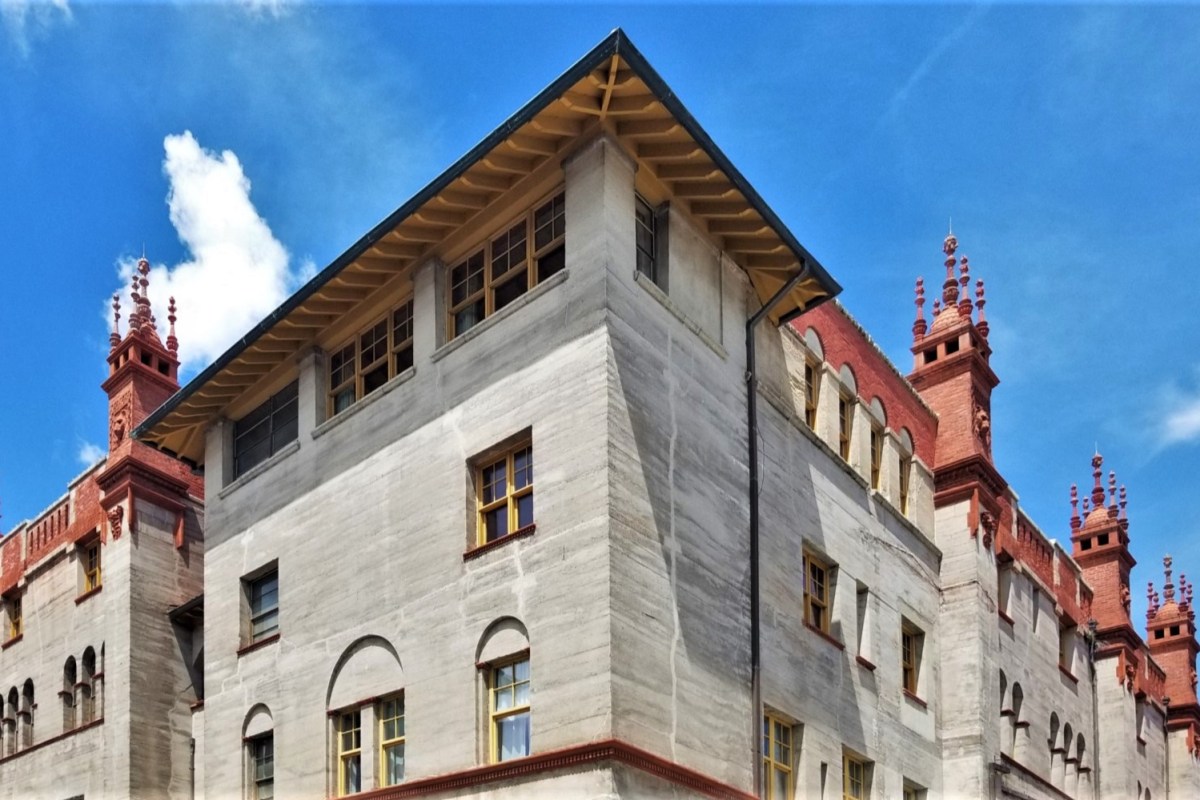
Henry Flagler’s Hotel Alcazar opened its doors in 1888 to fête the upper crust who rode his rails to St. Augustine to escape the harsh northeastern winters.

Designed in the Spanish Renaissance Revival style, the hotel was an elegant getaway that boasted every convenience and amenity for its guests, including the world’s largest swimming pool at 120 feet long by 50 feet wide, and depths ranging from 3 feet to 12 feet.

pool history

The pool was constructed as the centerpiece of the hotel casino annex that also featured a workout room, therapeutic baths, a steamroom, and bowling lanes. An artesian well fed a constant flow of fresh sulphur water to the pool to sustain moderate temperatures and assure clarity. The roof featured louvered glass panes that opened for ventilation.

bathing-pool-casino_0 (3)

The hotel was shuttered in 1932, and laid dormant until Otto C. Lightner purchased the building in 1947 to showcase his extensive Victorian Era arts collection.

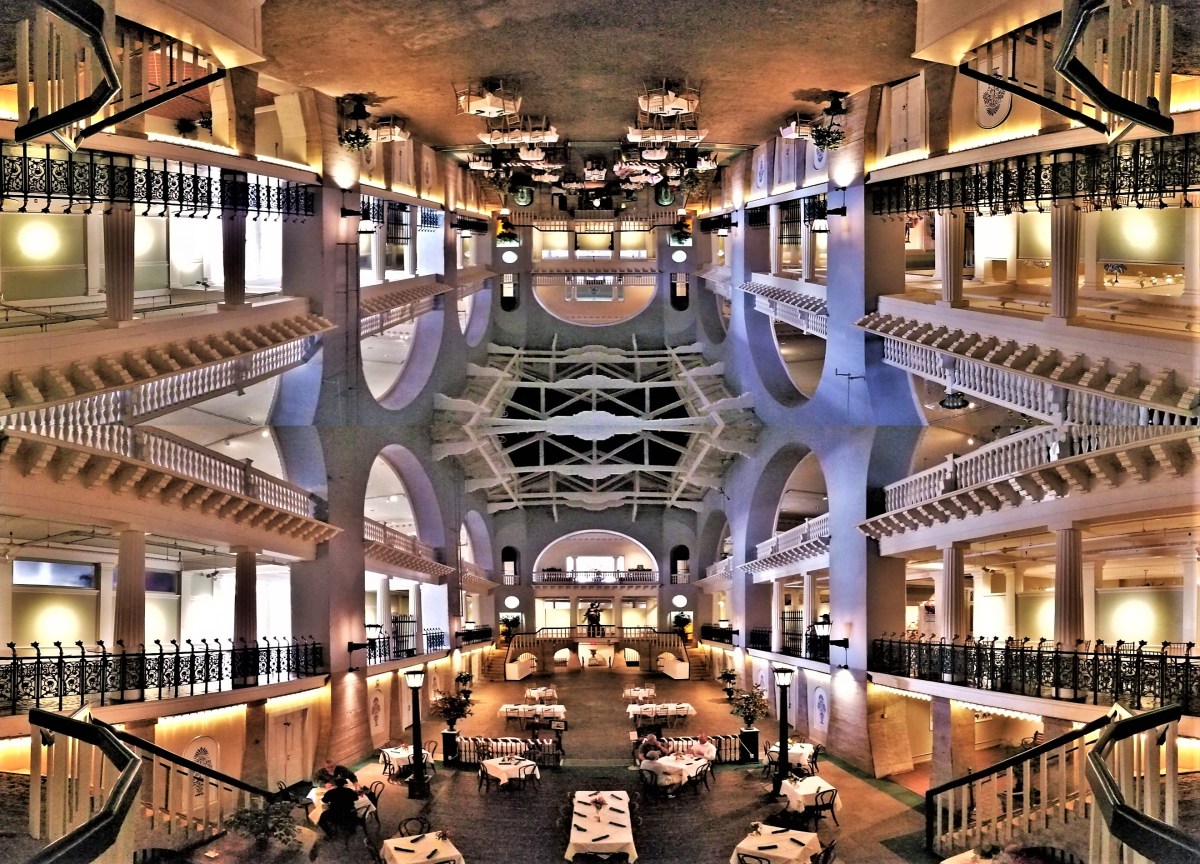
Today, the Lightner Museum is listed on the National Register of Historic Places, and the pool is home to Café Alcazar, a subterranean eatery serving lunch off the deep end.

deep poolside (2).jpg

The moment I entered the room, I felt I was in the middle of a Downton Abbey episode. It was easy to imagine a tony troop of aristocrats parading in their top hats and arm length evening gloves.

After surveying the room, I had a notion to create an Escheresque puzzle that could tease the viewer into questioning whether the following composition is a mirror image of itself, or a pool reflection, or both.

Or is it just a deception?

There are subtle clues in plain sight that may aid in deciphering the composition. The proof is in the putting.

fool pool1a (2)

Happy hunting!

Uncertainty: Prologue

Uncertainty: Prologue

The crash of shattered glass from the haberdashery shop below, and the chorus of discordant shrieks that followed was enough to drive Eva into Berte’s bed. With the covers pulled over their heads, the two sisters — almost four years apart — huddled together in darkness, listening in silence to a din of destruction coming from the street outside their bedroom window.

At once, the printed ponies on the quilt came to life from the flickering light that shone through the fabric that momentarily managed to insulate them from the unknown and the unthinkable, and they delighted in the illusion until Eema barged in and broke the spell.

“Mach schnell1, girls!” she commanded, the urgency quaking in her voice, “Grab a sweater and your dress coats. We have to move quickly. It’s not safe here.”

“Where are we going, Eema2?” asked Berte, peering out from under the blankets, but Eema was already out the door screaming something inaudible to Abba3 down the hall.

“Look Bertie!” Eva was tugging on Berte’s pajamas from behind.

“Not now, Eva! We have to listen to Eema.”

“But Bertie, the shul’s4 on fire!”

They ran to the window looking out from Ribbeckstrasse — their attention drawn to the commotion across the street.

Essen Synagogue (2)
Neue Synagogue burning, Photo Archive Ruhr Museum (photographer unknown)

Flames were darting through the top floor windows while white smoke billowed from the stone arches surrounding the facade. People gathered to gaze at the spectacle — as if in a trance — but nobody lent a hand to douse the blaze.

The Neue5 Synagogue of Stalerstrasse was Essen’s cultural and social epicenter for the 4500 Jews in town. The imposing freestanding stone monument with four striking copper cupolas was consecrated in 1913 from Edmund Körner’s designs,

Neue Synagogue (2)
Neue Synagogue, Essen (Ruhr Museum)

and considered to be one of Europe’s largest and architecturally significant synagogues of all time. Built to accommodate 1,400 worshipers, Bertha often kvelled6 at the size of the sanctuary. She marveled at the symmetry of the polished organ pipes above the altar, and how its acoustics would carry her from her seat beside Eema in the women’s gallery to the soaring dome high above her — as distant as the sky — where she could still hear the whispers of the men cloaked in talllit7 who were davening8 on the floor below.

INTERIOR (2)
Neue Synagogue interior, Beth Hatefutsoth Photo Archive

Eema also adored the Neue Synagogue, although she claimed that Piotrkow’s Wielka Synagogue9 outside Lodz easily rivaled its beauty and immensity.

Wielka Synagogue (2)
Great Synagogue, Piotrkow Trybunalski, Poland

It was there, at the August Oneg Shabbat10of-the-month social, that Eema first met Abba. The year was 1914, and Menil Strawszinski and Rochel Kolski were teenagers at the time. As the daughter and son of textile workers, their families thought Menil the perfect button to Rochel’s bow, and arranged a meeting for them at the Great Synagogue that night. However, they found themselves in the midst of a regional struggle for Lodz, with Nicholas II and Wilhelm II threatening the peace.

During the Oneg celebration, a gang of Russian Imperial soldiers entered the synagogue under the guise of conducting a mission to uncover the whereabouts of a hidden telephone with a direct link to the German command. Unable to substantiate their claim, the soldiers ransacked the room and roughed up several of the members who dared to interfere with their “investigation”. Menil’s pride was wounded, but most of all, his bruises and bloody nose were a reminder of the capricious violence that surrounded them.
Turmoil in Lodz continued under German occupation from 1915 until the end of the war, when the Polish state was re-established on November 11, 1918 and Poland’s independence was restored. But peace was ephemeral. Soon after, military conflict resumed when Polish armies pushed hard against Ukraine’s eastern borders — intended as a bulwark against future encroachment by the Soviets, who viewed Poland as a pathway to sowing seeds of communism in vulnerable post-war Germany.

On New Year’s Day, 1919, Menil turned 21, and two months later became eligible for compulsory conscription when the Sejm of the Republic of Poland enacted the Provisional Statute on Mandatory Military Service for all male citizens. With anti-Semitism flourishing through the ranks of the armed forces, and an uncertain future awaiting him at the Ukrainian frontline, Menil knew what he had to do. With their parents’ blessings, and a modest nadn11 of a sewing machine and seven bolts of wool fabric from the Kolski’s, Menil and Rochel were married in a quiet Jewish ceremony, and boarded a train to Essen, where a second cousin, once removed could offer them a fresh start.

Menil and Ruchel’s migration to North Rhine-Westphalia was typical of thousands of other Jewish Poles who fled a fragile and defeated Eastern European landscape, hastened by the political instability and famine created by The Great War and the Russian Revolution.

Breadline in Piotrkow (2)
Breadline in Piotrkow

They arrived in Essen — under an opportunistic umbrella of social acceptance and religious tolerance — eager to capitalize on a climate of post-war possibilities, with hopeful prospects of putting down roots. Living by Jewish tenets of hard work and the value of education, coupled with their Christian neighbors’ encouragement and cooperation, the Jews of Essen seamlessly assimilated into a world of German mercantilism, and became an accepted part of Germany’s middle class.

At first, Menil worked two years for his second cousin as a pattern cutter and a tailor, while Rochel helped with the books and ordered the notions, but their dream was always to open their own retail shop in the city center. Their break came when Moishe Samuels invited Menil to his shop on Ribbeckstrasse to help him cut custom suits for the famed Hirschland family, a leader in Essen’s Jewish community and the world of finance. In fact, it was Isaac Hirschland, the family elder, who originally recommended the location down the road where the Neue Synagoue would subsequently be built.

After two years of working for Moishe and living in a small one-room flat above the store, Menil and Rochel arrived at the crossroads of their future. Moishe Samuels passed away after a prolonged battle with liver cancer, and Menil and Rochel acquired the business from his widow. They expanded into ready-to-wear menswear and boys clothing, with an emphasis on custom tailoring, and became the first in the area to showcase double-breasted jackets as part of their fashion line — all of which guaranteed the store’s success for years to come.

Not that there weren’t setbacks. The rising tide of German nationalism — as a response to communist rhetoric and activity — catapulted the National Socialist German Workers’ Party into power in 1933, resulting in an anti-Semitic city manifesto calling for random arrests of Jewish citizens, Jews to be fired from their jobs (regardless of their prominence), and Jewish-owned businesses to be boycotted.

München, Hitler bei Einweihung
Hitler and NSDAP-Reichsschatzmeisters Franz Xaver Schwarz, Hauptarchiv der NSDAP (Bild 119)

Strawszinski’s Haberdashery survived an initial wave of Nazi attacks on Jewish merchants, but repeated discrimination and Nazi-sponsored decrees took its toll on Menil’s bottom-line. His customer base was slowly shrinking, his supply lines were becoming unreliable, and his shipments were being poached by corrupt officials. There were times when Menil and Rochel felt like giving up, but where could they go? Everything that was theirs was invested in the shop, and now they had a family to consider.

Berte had just turned seven — the year Hitler was elected as Chancellor — and Menil cherished her with all his being. She would pretend to help him around the shop after school — dusting the mannequins, picking up loose pins, and sweeping the floor. She was his shaina maidel12Just last year, she had requested that he buy her a horse for her sixth birthday, and he couldn’t disappoint her. They drove to a local barn on the edge of town, and he let her pick out whichever one she wanted. Of course, Menil had already made the necessary arrangements with the farmer ahead of time, so Berte’s pick was limited, but she had to have the chestnut mare with the white face, and she named her Shaina Maidel.

Eva, on the other hand, was still in diapers at age 3, and clung to Rochel as if her life depended on it. There was no putting her down for fear of a crying storm that would only abate when she was back in Rochel’s arms. Menil and Eva had a different kind of bond. He felt he knew her heart better than anyone, even Eema. Maybe it was because they shared the same birthday. Or maybe it was because she always knew how to grab Abba’s attention when he was unhappy, and cheer him up. But oy13the crying! Gott sei Dank14, Berte could console Eva long enough to allow Eema to light and bless the Shabbos15 candles.

It was 1938. Strawszinski’s Haberdashery had managed to survive, and even boasted a modest 15-year anniversary celebration, but now the store was being looted by a riotous mob, and the shul was burning.

Tears welled up in Eva’s eyes, and her voice quivered. “Why isn’t anybody putting out the fire? And where are we going to pray on Shabbat?”


1hurry up
2mother
3father
4synagogue
5new
6expressed pride
7prayer shawls
8praying
9The Great Synagogue
10Sabbath celebration
11dowry
12pretty girl
13Oh, my!
14fortunately
15Sabbath

Nighttime Sun Worshippers

Taking nothing away from Comic Con, the assembly of tailgaters along Florida Route-401 at Port Canaveral was probably one of the largest collection of early morning geeks ever recorded. It was a carnival atmosphere, with fellow space cadets gathered from around the world to witness one of science’s greatest guilty pleasures–a space launch from Cape Canaveral Air Force Station.

But this was to be no ordinary launch. This time around, the payload carried atop the United Launch Alliance Delta IV Heavy rocket has been 60 years in the making, named for Eugene N. Parker, a pioneer astrophysicist who predicted the existence of solar winds in a 1958 paper presented to an editorial panel who flatly rejected his claim.

Dr. Parker--Joshua Lott for The New York Times
Photo credit: Joshua Lott for the New York TImes

Four years later, NASA’s Venus probe (Mariner 2) measured interplanetary energy particles that eventually vindicated Dr. Parker’s belief.

The Parker project was conceived for NASA by engineers at John Hopkins Applied Physics Lab in 2005, later amounting to costs running $1.5 billion in order to investigate the nature of our star, and gain an up-close understanding of solar winds.

Originally, Leah and I were on the fence about whether we should make the 2-hour trek from St. Augustine for the launch last night. After all, we’d been burned earlier in the year when we attempted to catch a SpaceX Falcon 9 rocket lift-off (T Minus 3 Days and Holding) during January’s Florida freeze-out.

But this time around, it was personal. Leah’s family had traveled to Florida’s Space Coast from Albuquerque last week (Tourist Attractions) with the intention of watching the Parker Solar Probe launch, only to be disappointed when the on-again-off-again mission was scrubbed for the third time on August 4, when a loose piece of foam was discovered inside the fairing. Daniel’s family was to be NASA’s guests to acknowledge SolAero’s design and fabrication of the probe’s photovoltaic assembly. Leah and I were to be tag-alongs.

Although we had no official invitation for this morning’s event, Leah and I were still determined to bear witness as a tribute to Daniel’s work. We departed at 11:30 pm, and made easy time on I-95S, cruising down the interstate to an uncertain destination. NASA had delivered a 65-minute window for the 3:33 a.m. launch, so we would pad our arrival time in anticipation of getting situated.

We knew we had arrived when we discovered a cluttered roadside collection of vehicles illegally parked along a shoreline clearing with an ersatz view of the gantry in the far distance.

Google map.png

The eight miles separating us from the rocket would be as close as we could get, since access to the base was restricted and blockaded by a fleet of sheriff cars.

sheriff patrol (2)

After a couple of runs up and down the strip, I wedged the F-150 into a narrow gap of parked cars, barely touching the inside road line, but nevertheless legitimate enough to get a pass from the deputy.

I found a vacancy among the scores of tripods already populating the tall grass beside the rocky beach, and staked my claim–although I felt totally inadequate and out-classed–while surrounded by all the super-duper telephoto lenses, and suffering from an acute case of optics envy.

In preparation of the big moment, amateurs and pros alike fussed and fawned over their equipment, changing batteries, polishing lenses, accessorizing camera bodies with autodrives and cable releases, and participating in riveting discussions on ISO vs. aperture vs. shutter speed.

Yet nothing could compare to the mobile telescope for astrophotography that occupied the largest footprint of our makeshift parking lot.

electronic camera

Even its imaging display seemed more complicated than it had to be.

monitors

While it was impossible to compete with all the big boys and their toys, I took a practice shot after setting up, although I knew the lighting would never compare to the day for night exposure once the rocket thrusters lit up the sky.

Zoomed to the max at 600mm, the ISO set at 200, the aperture set at ƒ/8, and a 1 second exposure, my Lumix FZ300 captured this shot of the gantry 8 miles away.

Parker Probe

I reckon that if the atmospheric conditions had been less humid, the image would have been crisper-looking.

There was nothing more to do except wait…

The 3:48 am goal had come and passed without results.

The revised launch time was pushed to 3:53 a.m. The countdown resumed at T-minus-four, and again–for some unknown reason–the launch was suspended while engineers determined the fate of the rocket.

When NASA calculated to green-light the launch at 4:28 a.m., the buzz around us was that this would finally be the moment. Nobody would dare admit aloud or to themselves that this was just another dress rehearsal.

We mostly waited in silence for the next half-hour. The sound of jumping fish in the darkness was a pleasant distraction from the drone of distant internet reporting from a fan’s elaborate sound system.

And then the moment all of us dreaded…with under one minute before the serious countdown:

“Hold, hold, hold!” announced an engineer from Launch 37 Command Center.

The rocket’s helium pressure system had tripped an alarm, taking the launch back to T-minus-four. The 65-minute launch window was quickly closing with ten minutes left, leaving insufficient time to troubleshoot the red flag and light this candle.

The mission was aborted and a collective sigh crossed the highway.

Leah and I drove back home with the sun rising over Matanzas River as we approached St. Augustine. My sole consolation was knowing that besides driving roundtrip for a still picture of a rocket strapped to a gantry in the distance, all I had to do was unmount my camera and fold up my tripod, while somebody else had to wrap up and tow away that enormous mobile telescope.

We slept until noon.

Flight officials determined that in 24 hours they would try all over again.

And when that happens, it will be without us. Instead, I’ll be watching NASA’s live stream of the launch at 3:31 a.m. from my armchair:

…maybe…

…if I can keep my eyes open.

Zzzzz…

P.S. The Parker Solar probe successfully launched on time:

https://amp-space-com.cdn.ampproject.org/v/s/amp.space.com/41454-nasa-parker-solar-probe-launches-to-sun.html?amp_js_v=a2&amp_gsa=1&usqp=mq331AQCCAE%3D&jwsource=em

…and I got to see it…

…from my TV monitor!

Tourist Attractions

When showing family the sights of St. Augustine the first time around,

there are so many tried and true options that abound.

Naturally, driving onto Vilano Beach becomes the main outdoor attraction,

where short legs wade long lengths across silky, sandy satisfaction.

wading out

The Alligator Farm is another familiar and likely choice,

where eager grandchildren are apt to rejoice…

Alligator lagoon.jpg

at a place where rescued reptiles and denizens…

Maximo (2).jpg

Galapagos tortoise1.jpg

albino alligator.jpg

savor a seasonal delicacy,

so good!

yum!.jpg

and feathered friends…

heron

are likely to take up full-time residency.

pretty bird

stork

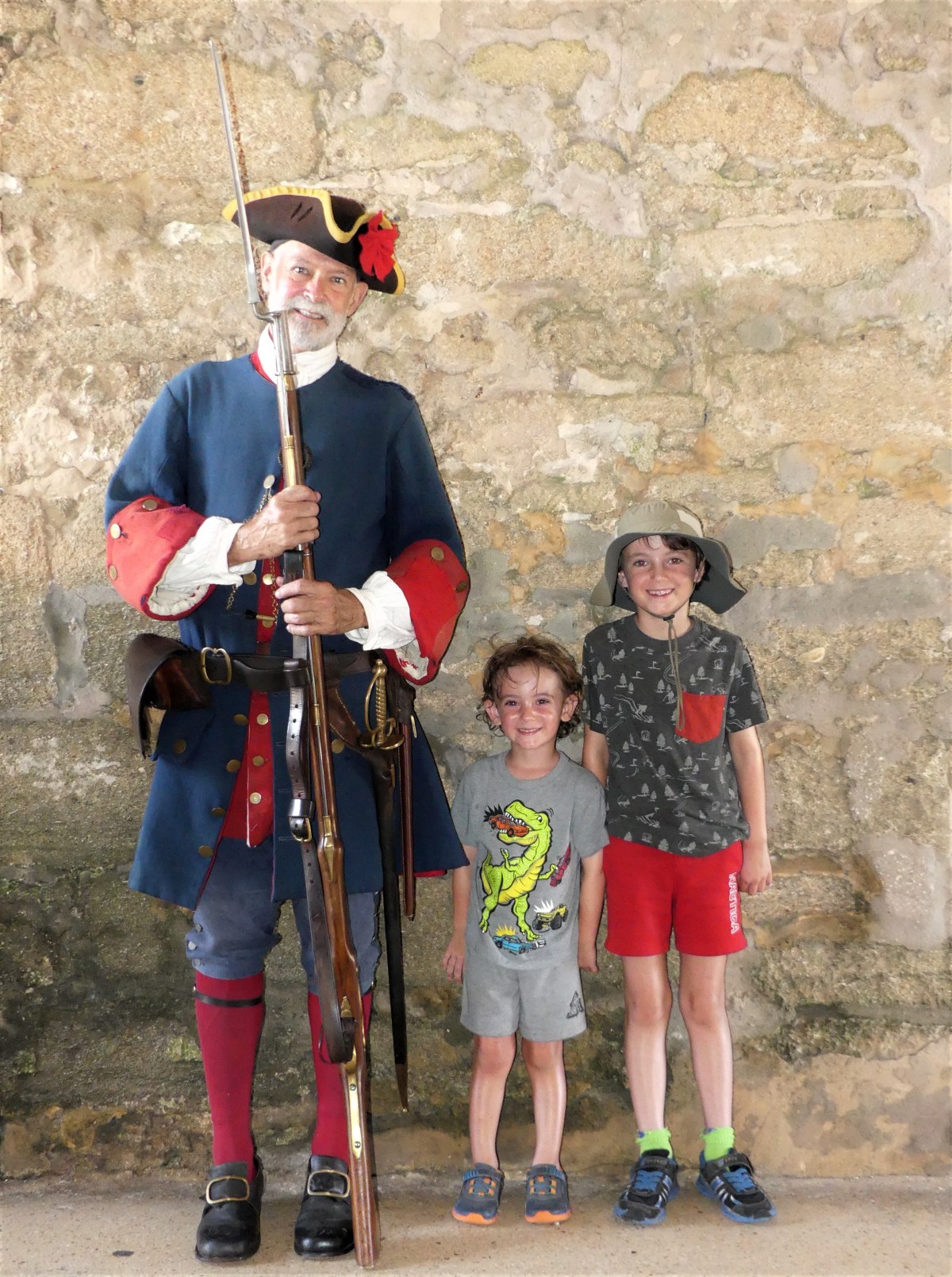
The Castillo de San Marcos gunnery platoon…

soldier and kids.jpg

castillo model

provides a cannon blast from the past very close to high noon.

cannon blast

And Anastasia Beach State Park’s estuarine channel

egret on the shore1.jpg

offers a vigorous workout with a kayak paddle.

Carrie, Devin, Dan and bird

The Aikens, Grammy, and Kayak

Or how ’bout a free ferry crossing Matanzas Bay…

ferry crossing.jpg

to inspect Fort Matanzas,

inside out

and its cannon array.

Fort Matanzas gun station.jpg

Then again, not withstanding the two-hour drive to Kennedy Space Center,

Kennedy wall.jpg

there’s a universe of exhibits to explore,

a walk on the moon

ISS.jpg

and The World’s Largest Space Shop to enter.

spaceman and kids

But when summer’s heat and humidity just…won’t…allow…another…step,

and when it’s subsequently rainy–as most afternoons are likely to get–

the chosen activity must absolutely meet

the standards of two curious kids, and satisfy their sweet teeth.

hairnet family

Happily, such a happening exists for the young and the grown,

and can be found at the artisan chocolatier, Whetstone.

Whetstone greeting.jpg

The tour informs you of its elaborate process and technique…

chocolate process

But realistically, we came for the chocolate samples we could eat.

Yet unlike the follies of Lucy and Ethel…

our guide served five tastings,

and each one was special.


For seven days our family wandered throughout St. Augustine town,

with plenty leftover to experience for the next time around.

Rock of Aged

“Let’s get this shuttle moving!” shouts a middle-aged surfer dude in an orange muscle shirt at the volunteer driver of the tram parked curbside at the farthest reaches of Anastasia State Park’s parking lot by the beach.

“First of all, I’ve got plenty of empty seats to fill, with plenty of people still on their way. And secondly, you should have thought about getting here earlier pal, ’cause I been here since 5:30 transporting people to the concert. So stop complaining that I’m the one who’s making you late!” the driver retorts.

“Well asshole, I have no intention of missing the opening number because of you,” he bellows.

“You’re welcome to get off my ride anytime and call an Uber if you want, but otherwise, I suggest you shut the fuck up, and sit the fuck down, and wait patiently like the rest of these folks,” the driver threatens.

According to Joe and Jenny, who had come from Gainesville in celebration of their 10th wedding anniversary, the passengers on the tram were stunned into silence after this fiery exchange. The moment Leah and I took our seats on the tram, the mood seemed unusually somber for a group of mostly baby boomers who were on their way to attend a sold-out performance of Steve Miller Band with Peter Frampton at St. Augustine Amphitheater.

This was to be our maiden concert at the amphitheater–having purchased tickets over three months ago–knowing that we were taking a chance with the rainy summer weather, but choosing to risk it all for just a few hours of iconic rock and roll nostalgia.

At last the day had come, and despite the iffy forecast through late afternoon, the overcast sky had held firm, and it wasn’t long before we were on our way, barreling along the service roads…

shuttle (2).jpg

to the back door entrance of the amphitheater.

It was 7:05pm and the opening power chords of Something’s Happening were already resonating through the thick air. We bypassed the crowded concessions…

beer beer bar bar

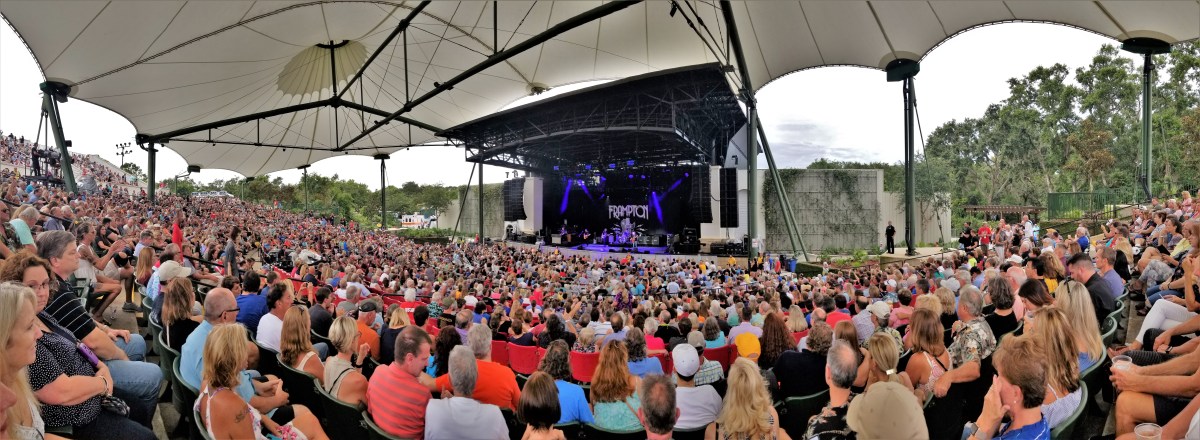
and settled into our seats…

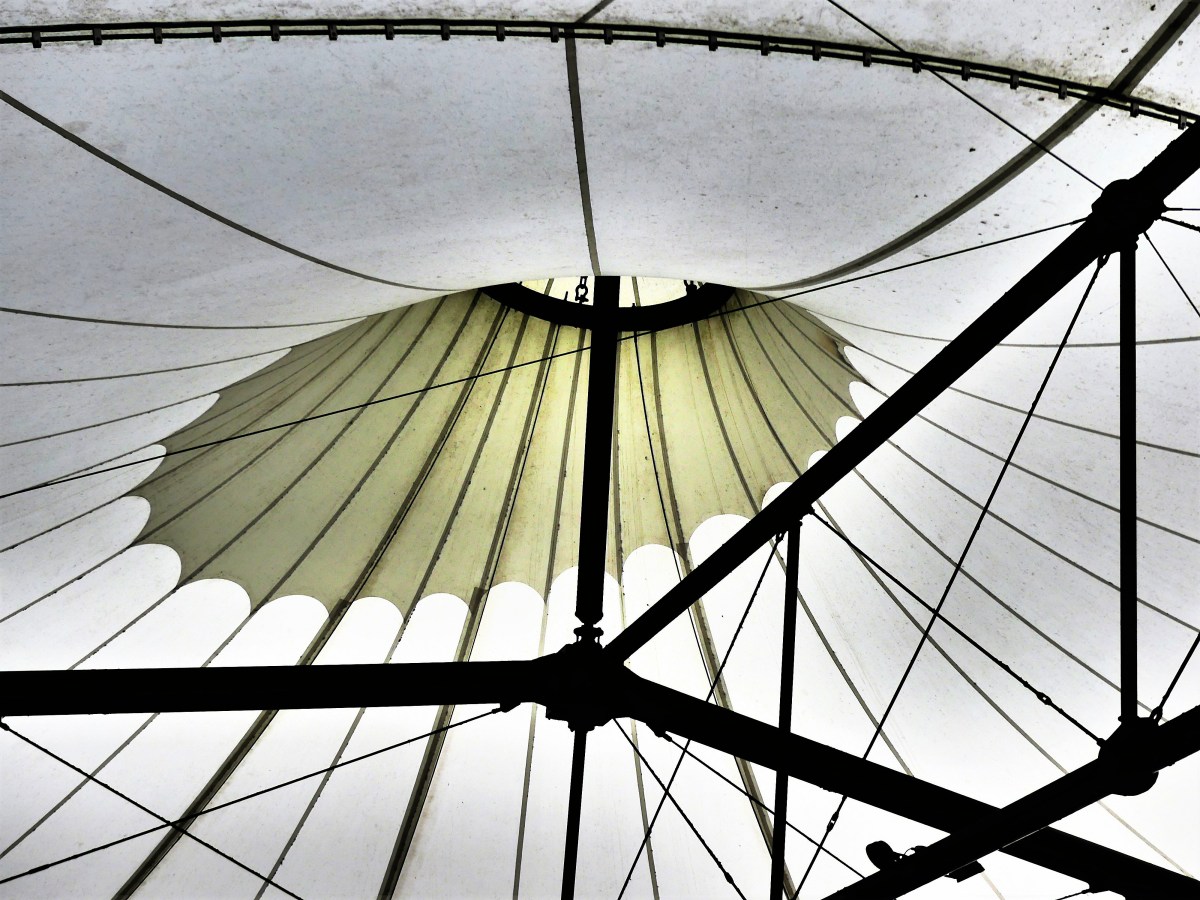
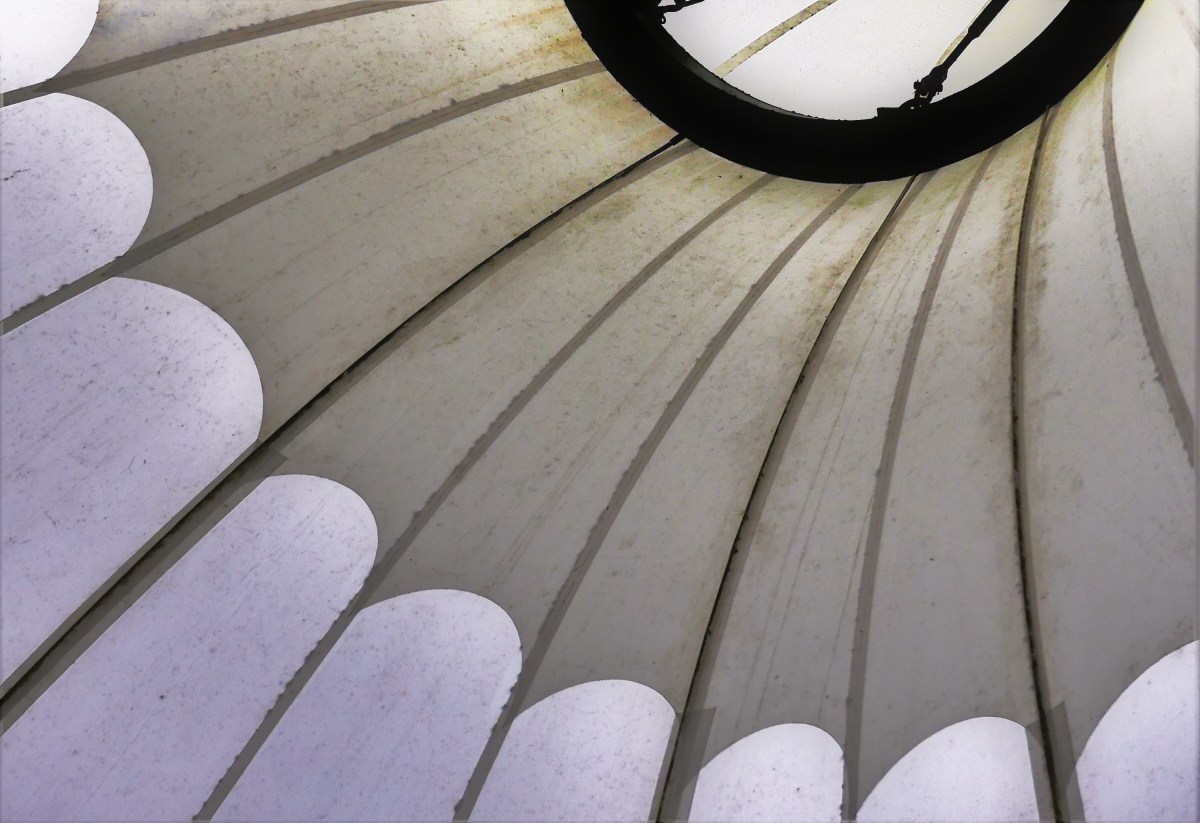
tent and stage.jpg

under the big top…

tent2

tent canopy

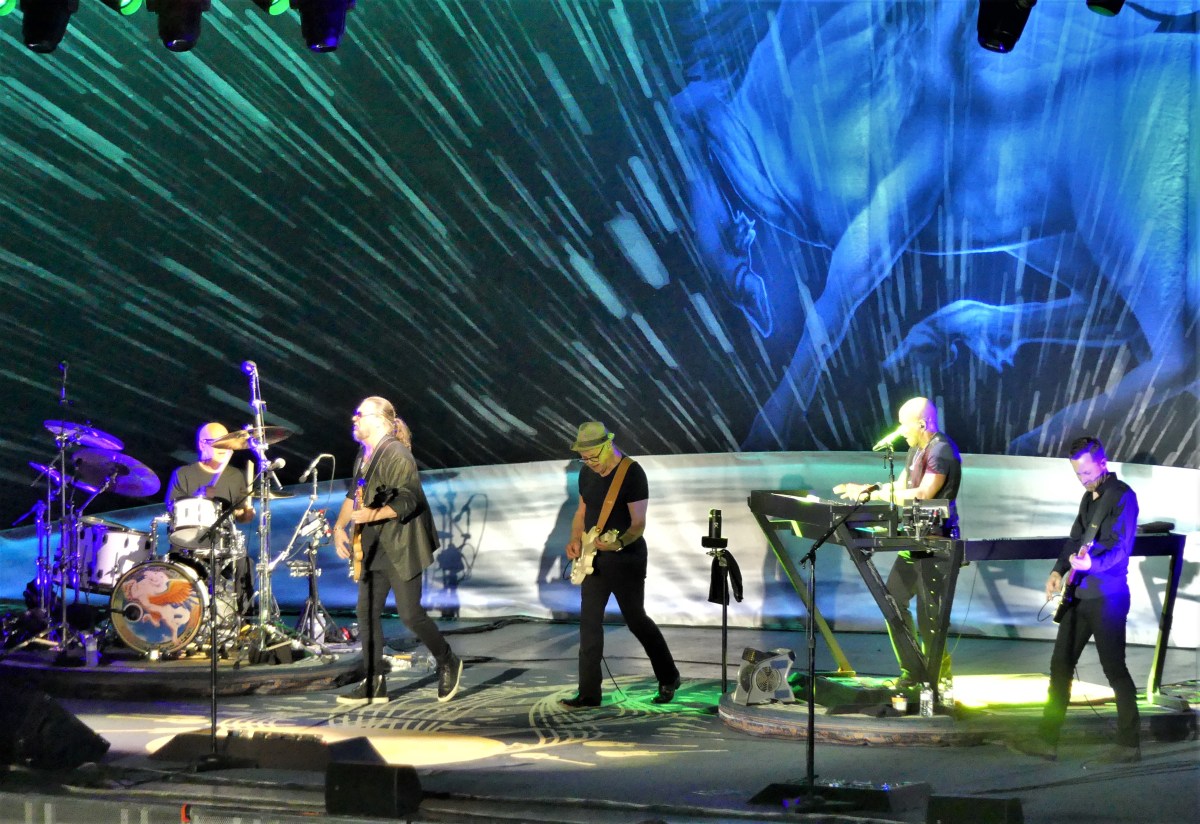
to lose ourselves in Frampton’s guitar licks.

amphiteater panorama.jpg

From the start of the evening, Frampton established a smooth repartee with his exuberant audience–thankful for the fans who’ve stuck with him through thick and thin.

At 72, Frampton has seen his share of sunsets in your eyes and lines on [his] face, affably referencing his musical longevity during the interludes between songs, and reflecting on the passage of time through his career–from his chart dominance to his subsequent free fall to his eventual resurrection.

The devotees in attendance who may have missed the ’70s, seized this downtime as the perfect opportunity for a bathroom break, but not without escaping playful ridicule from Peter..

“I wish I could pee. I really do,” quipped Frampton. Now I can only pee on Monday, Wednesday, and Friday… with the help of Flomax.

He’s willingly traded his teen-idol, cascading hair locks and bare-chested pop star status for a musician’s bald/bold appreciation of his instrument, and aptly demonstrated his guitar prowess throughout his set list:

  • Something’s Happening
  • Lying
  • Lines on My Face
  • Show Me the Way
  • Black Hole Sun
  • (I’ll Give You) Money
  • Baby, I Love Your Way
  • I Want You To Love Me
  • Do You Feel Like We Do

But the literal centerpiece was Black Hole Sun–“the best song [he’s] never written”–performed as an instrumental from the 2007 release of his Fingerprints album that garnered Grammy acclaim.

As if channeling Chris Cornell on the anniversary of his birth, July 20,

Black Hole Sun

Frampton commanded the stage with a mindful intent of demonstrating his guitar virtuosity,

Frampton makes a face.jpg

and he deftly acquitted himself in the eyes and ears of his audience.

And when the last shred had been wrung from his beloved Gibson, the crowd let him know how much they were with him and how much they cared.


After a half-hour intermission to reset the stage, the evening continued with Steve Miller and his band.

Steve Miller Band1

With a few exceptions, Steve Miller’s set list mimicked his multi-platinum Greatest Hits album, spanning the mid to late 70’s, and nobody in the crowd was disappointed, because they had come to sing along and Dance, Dance, Dance.

Set list

  • The Stake
  • True Fine Love
  • Abracadabra
  • Living in the U.S.A.
  • Space Cowboy
  • Take the Money and Run
  • Jackson-Kent Blues
  • Stranger Blues
  • I Want to Make the World Turn Around
  • Wild Mountain Honey
  • Dance, Dance, Dance
  • Serenade
  • Space Intro
  • Fly Like an Eagle
  • Swingtown
  • Rock’n Me

bass drum.jpg

From his early overture into blues-infused rock, to experiments in psychedelia, to a catchy collection of counter-culture anthems with mainstream melodies, Miller captured the songbook for a new generation of America in flux.

Steve Miller vocals.jpg

Midway through his set, Miller evoked a memory from 1965 that took him from San Francisco to New York for a performance of The Mother Song on NBC’s Hullabaloo with The Four Tops and The Supremes.


As Miller recounts, the $250 he earned from the gig gave him the confidence to shop for a new guitar at Manny’s Music, a cherished, legendary music instrument store located in mid-town Manhattan. Unfortunately, he discovered there was nothing he could afford. Rejected and dejected, he headed for the door, whereupon he discovered a cluttered barrel of buried guitars standing neck up with a posted sign: “Your Pick–$125.”

One guitar called to him–a 19-string sitar-guitar that he had to have. Along the way, Miller explained some of its unusual features: spool-like knobs, 3 pick-ups, and a mirror on the backside.

sitar guitar mirror.jpg

Of course, after 53 years it’s still in his possession, despite an offer of $125,000 from a bigwig music producer. This tale has been repeated at similar events for years and years–with fluctuating asking prices–but the audience was hooked on every word and ate it up.

sitar guitar

“Whadaya think? Should I consider selling it?” he petitioned the crowd.

Naturally, the crowd answered back with a resounding, “HELL NO!”

Miller put the instrument to good use in a soulful rendition of Wild Mountain Honey.

Thereafter, with each new tune, the audience responded with greater enthusiasm and a deeper appreciation of his classic hits.

The band returned with a raucous 4-song encore (if you consider Threshold to be a song rather than an intro)…

I'm a Joker

  • The Joker
  • Jungle Love
  • Threshold
  • Jet Airliner

And in an instant, the show was over. We were transported back to the here and now–no longer celebrating the soundtrack of our salad days from high school or college, but always reminded that “time keeps on slippin’, slippin’, slippin’ into the future.”

Ironically, I spotted the belligerent surfer dude from before, who had embarrassed himself aboard our tram. Folks were filing past him to the exits, yet he seemed frozen in place–as if locked in a trance–holding onto a past that he was so impatient to embrace.

Doot-doot-doo-doo, tick-tock-tick…

Doot-doot-doo-doo, tick-tock-tick.

Wise Guys

It’s been one year since our visit to Mt. Rushmore, and what could be more American than re-posting this episode on Independence Day…

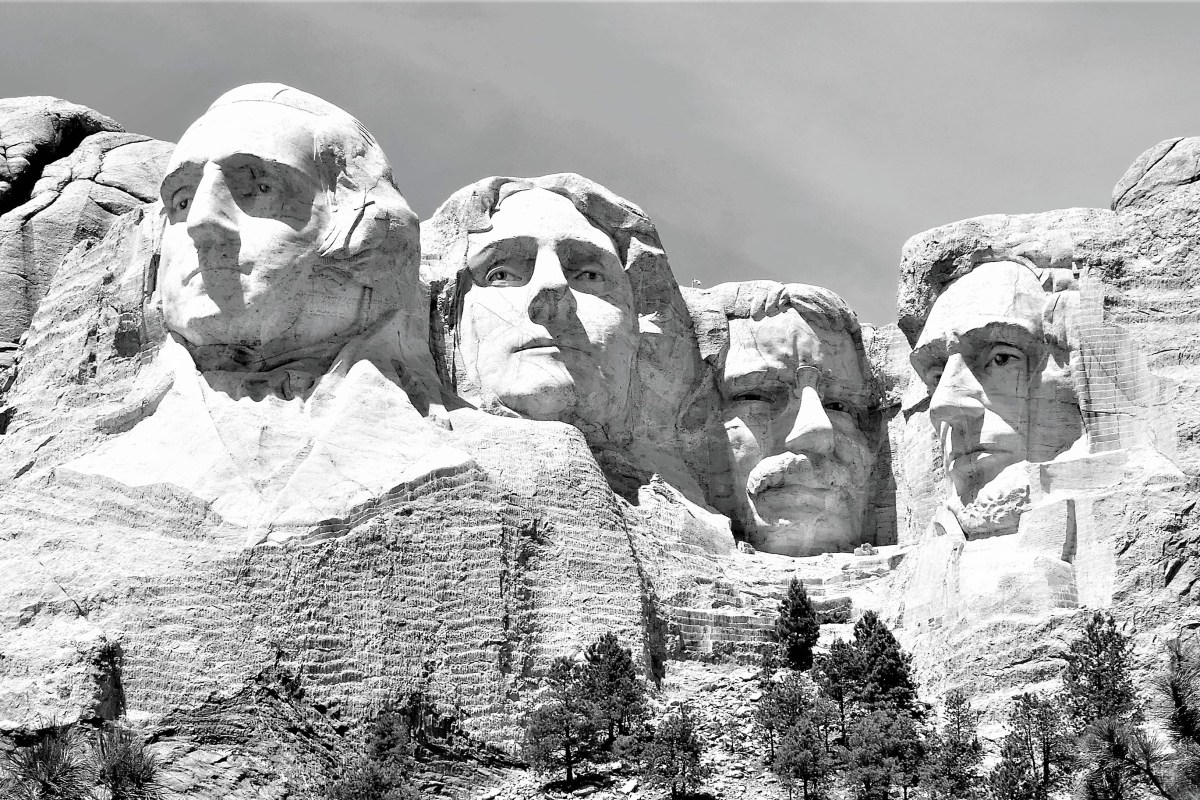
There’s no better way to celebrate the 4th of July, than a trip to Mount Rushmore and the Crazy Horse Memorial. Sure, the crowds were large; that was to be expected. But once the cars were garaged, the pedestrian traffic was easy to negotiate. And with everyone looking up at the mountain, the Presidents’ faces and intentions were never obstructed.

GW

Jefferson

Roosevelt

Lincoln

It was also a time to celebrate family. There were plenty of kids riding in strollers, hanging from moms in carriers, or balancing on dads’ shoulders. Generations of families–many of them immigrants–had gathered to pay homage to the principles of freedom that make our country a beacon for the oppressed and downtrodden.

Seniors were being escorted through the Avenue of Flags by their grandchildren. Extended families organized group pictures at the Grand View Terrace, unified by their love of democracy and their reunion T-shirts.

All expressed awe at Gutzon Borglum’s grand vision and remarkable achievement–the transformation of a mountain into a national symbol visited by approximately 3 million people every year.

long shot

The 14-year process of carving the rock began with dimensionalizing the Presidents’ portraits through Plaster of Paris masks, on view at the sculptor’s studio-turned-museum.

Sculptor's Studio

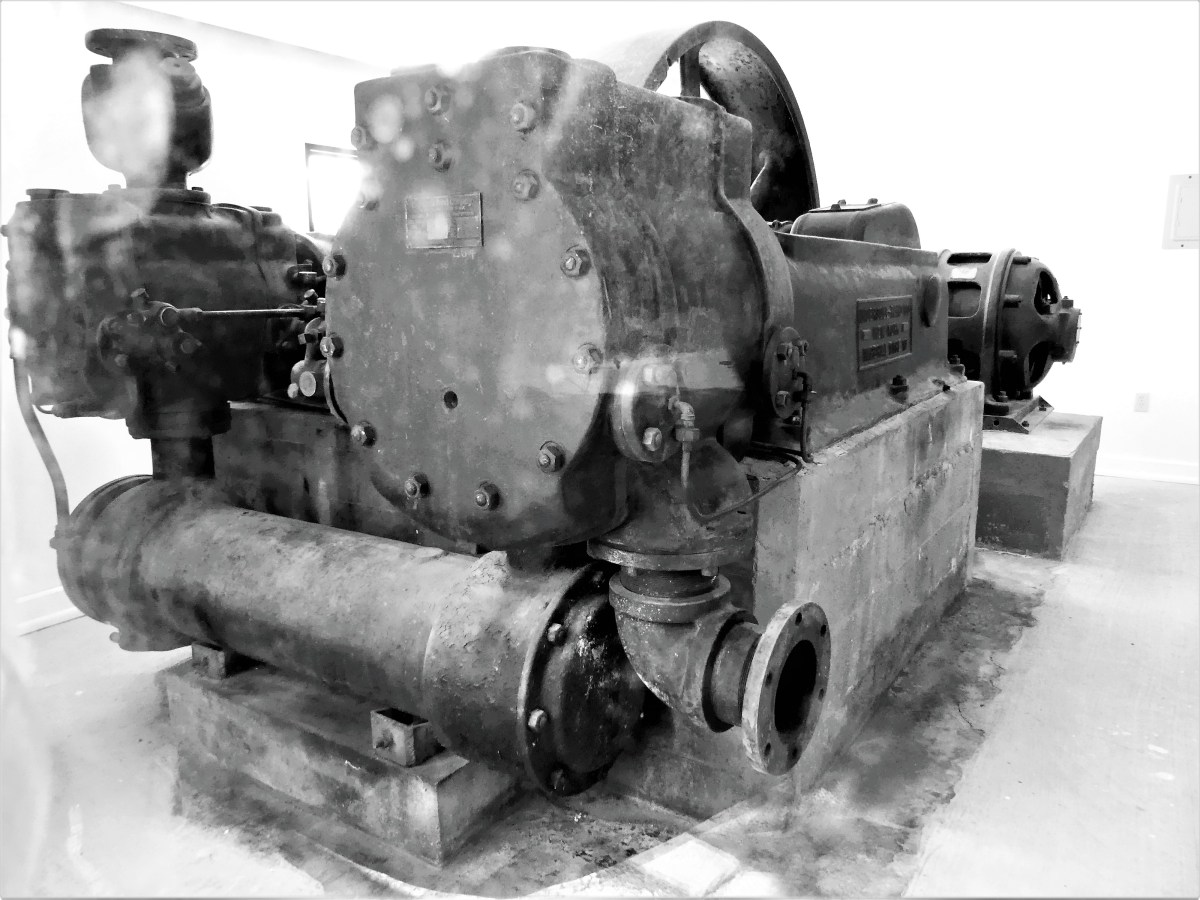
Additional exhibits detail the construction of the memorial, and the tools used by workers, like the original Rand & Waring compressor, which powered the jackhammers for all the finishing work.

compressor

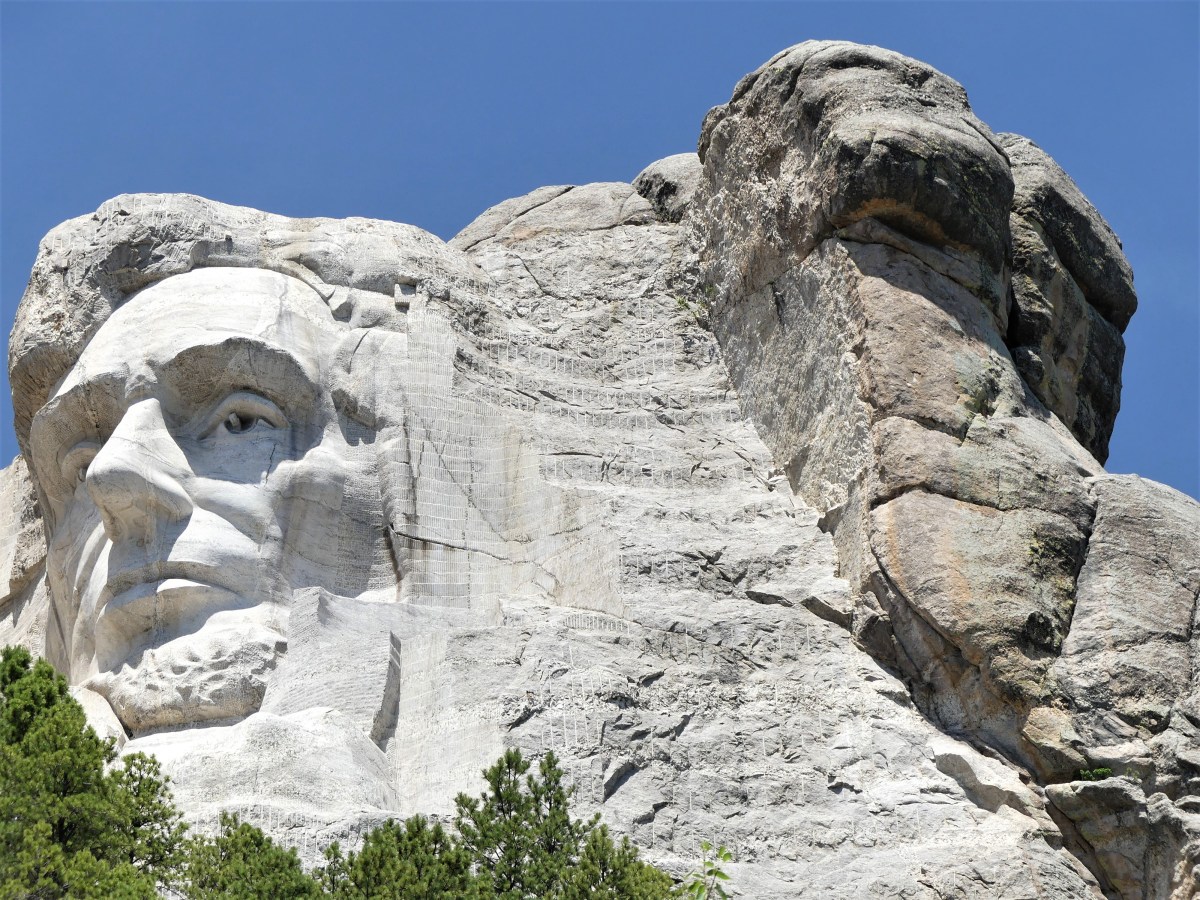
A little known fact is that Mt. Rushmore was once intended to be a tribute to the “Five Faces of Freedom,” but funding ran short when the Congressional appropriation approached $1 million during the Great Depression. Hence, the unfinished carving of the Great Ape to the right of Lincoln serves as a reminder that we are never far from our true ancestors.¹

Planet of the Apes

No less ambitious, and equally as impressive, the Crazy Horse Memorial is a work-in-progress located 16 miles away in the heart of the Black Hills–considered sacred land by the Lakota people.

Crazy Horse LS

Conceived by Korczak Ziolkowski in early 1940s,

crazy horse model (2)

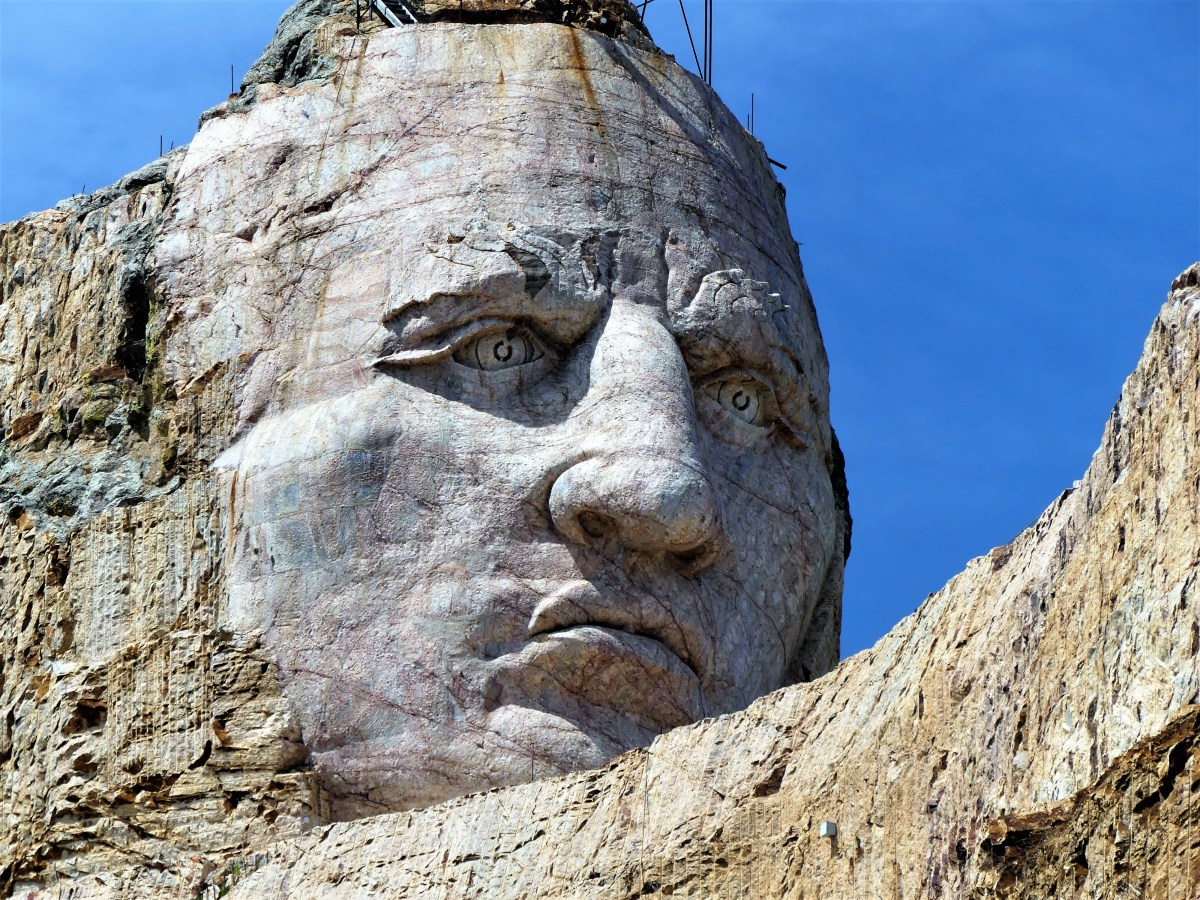
the memorial, when completed will stand 563 ft. by 641 ft. across, and is expected to be the largest sculpture in the world. Already, the completed head of Crazy Horse measures 60 feet tall…

Crazy Horse CU

…twice the size of any of the presidents at Mt. Rushmore. While the first blast was conducted on the mountain in 1947, the current prospects for the memorial are to complete the outstretched arm during the next twelve years. There is no completion date available for the finished carving, which has been financed entirely by private funding since its inception.

Mt. Rushmore was created by a Danish American. Crazy Horse was created by a Polish American. And visitors to both destinations manifest the melting pot that has brought us all together as Americans. It’s our diversity that makes us strong, our ambition and determination that makes us great, and our compassion and sacrifice that make us whole.

These are the values reflected from the faces we’ve immortalized in stone. Yet, we would honor them more by living according to these principles.

Happy Birthday, America!

fireworks1

¹ Just kidding, but the photograph is real and has not been retouched.

Mount Airy, NC

When I was eight, it was thrilling to be able to watch television. It was 1960, and as America’s new favorite past-time, television had quickly taken over as the modern recipe for family togetherness.

Early television programming came from only three channels (NBC, CBS, ABC), so the networks’ scheduling had to appeal to as many home viewers as possible to attract sponsors’ advertising  dollars needed to fund the show.  Usually that meant finding a personality with versatility and broad appeal, and crafting a show around their persona.

Aside from notable comedians (Sid Caesar, Milton Berle, George Burns, Jack Benny, Groucho Marks), variety stars (Ed Sullivan, Arthur Godfrey), and singers (Perry Como, Dean Martin, Frank Sinatra, Judy Garland), movie actors were also drawn to television with an opportunity to increase their audience. Yet few would cross over with the success enjoyed by Andy Griffith.

entrance window

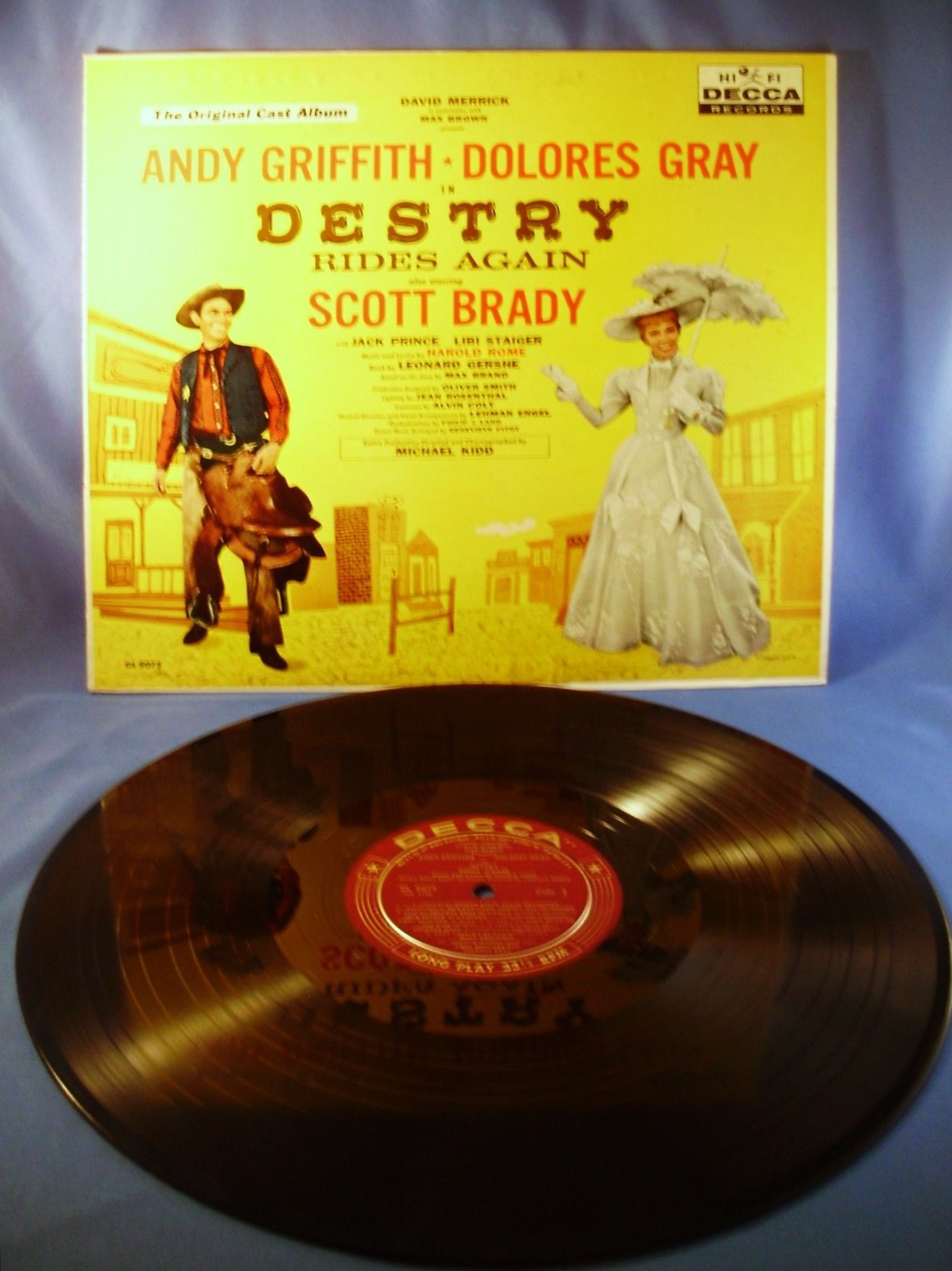
Already a star of stage…

destry Rides Again.jpg

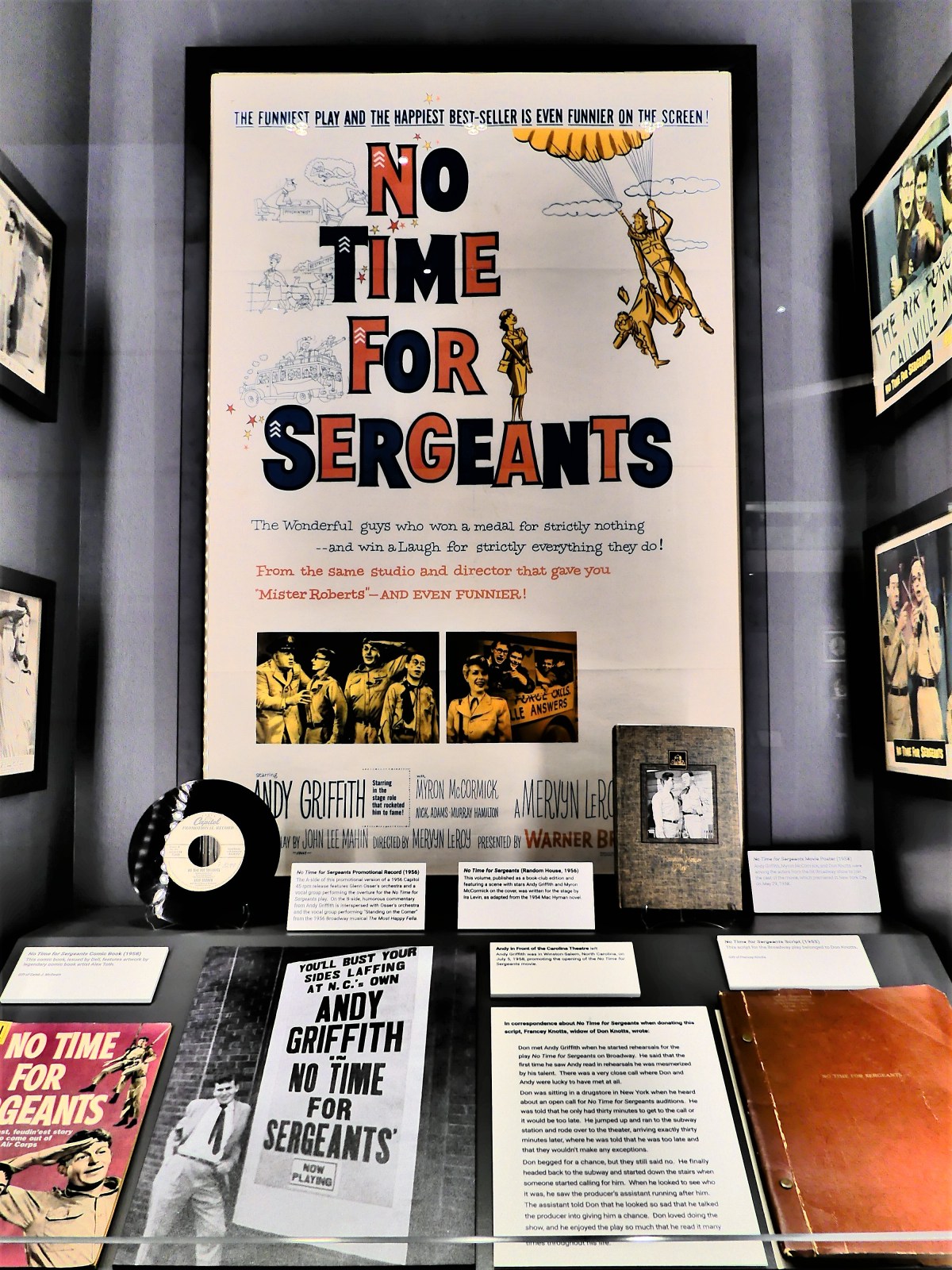
and screen…

No Time for Sargeants swag

A Face in the Crowd poster

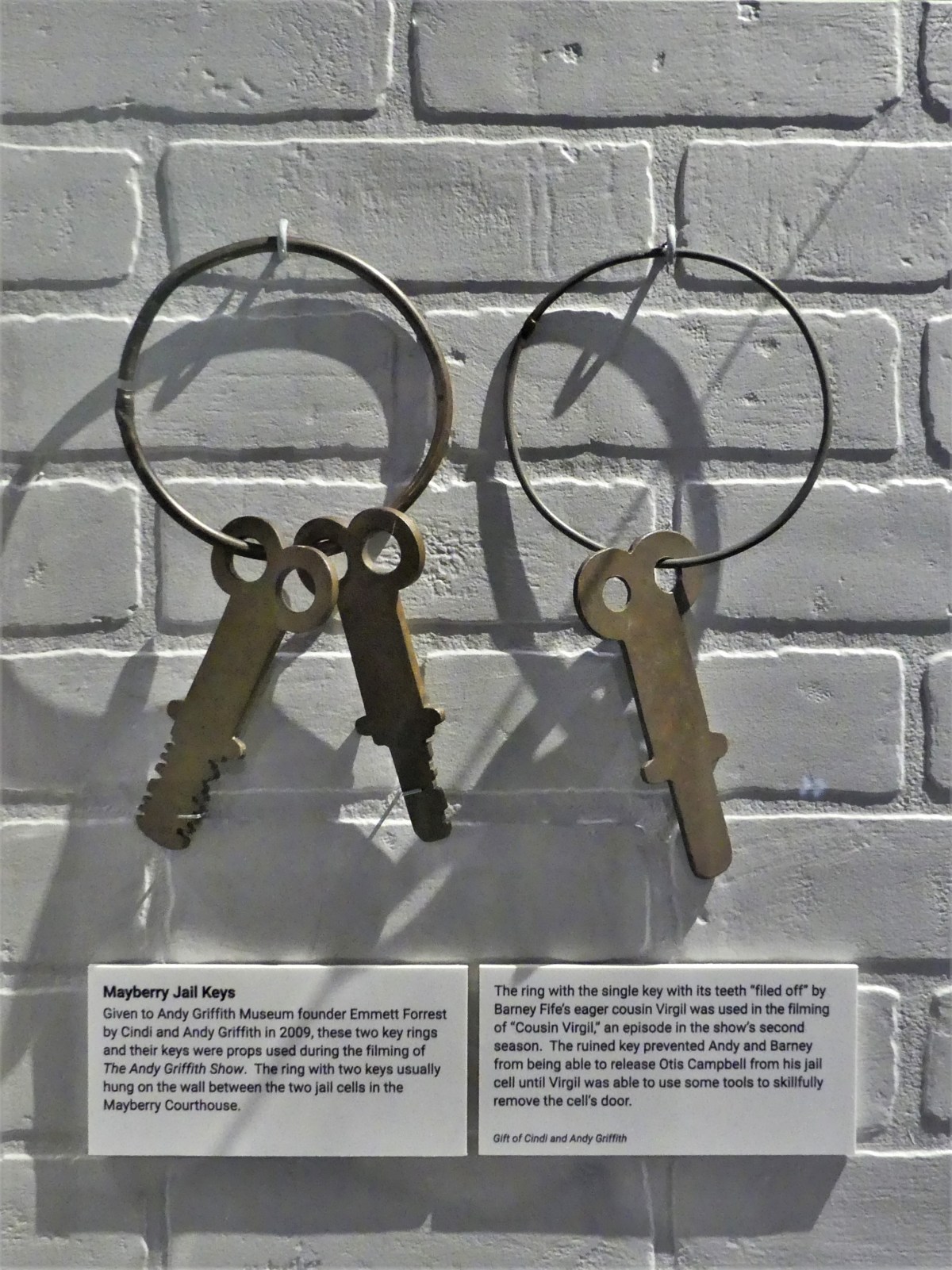
Andy Griffith easily transitioned to sitcom television as a guest star on an episode of The Danny Thomas Show, playing a country bumpkin sheriff who arrests Danny Thomas for running a stop sign in Mayberry.

Mayberry Courthouse

jail keys

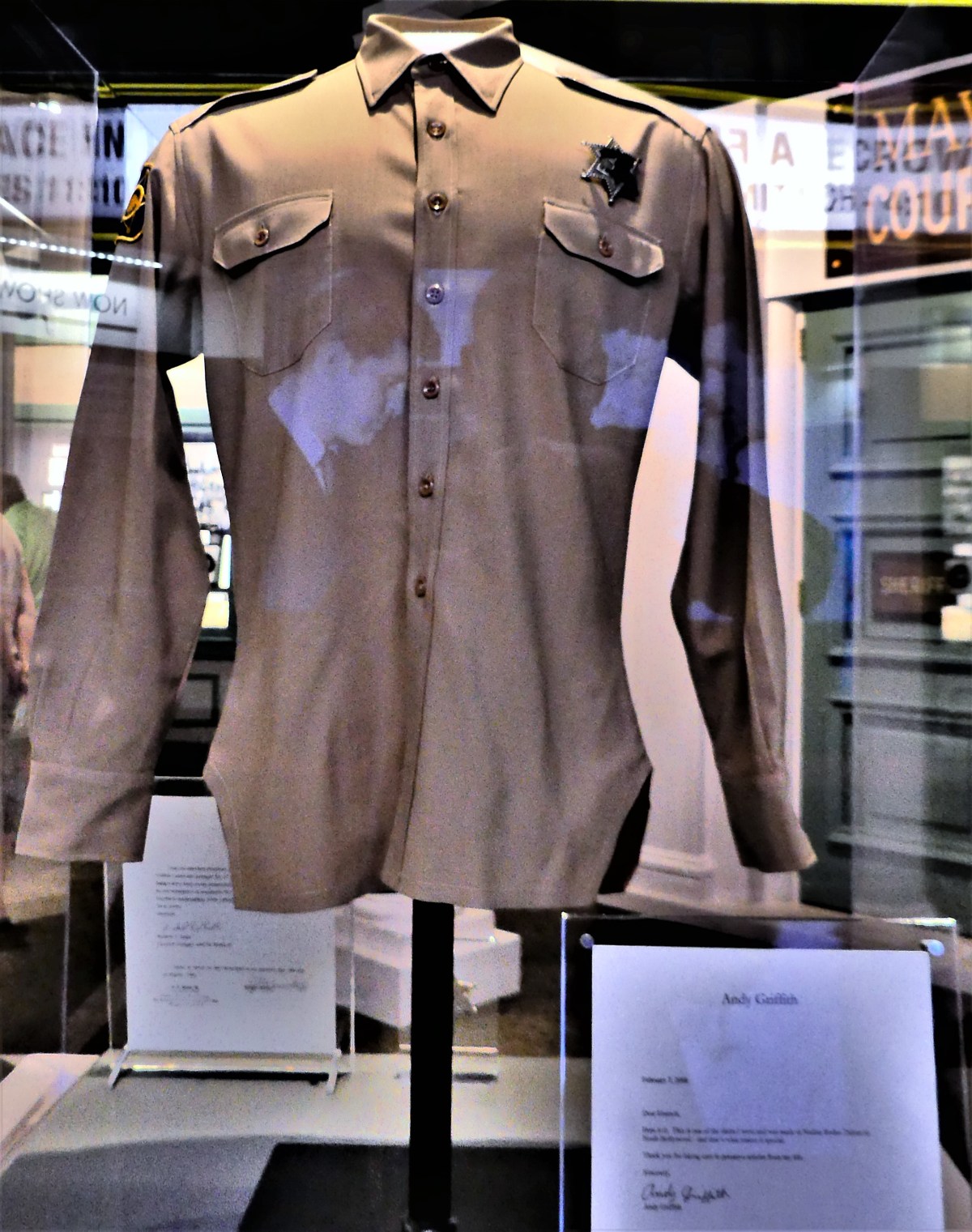
The Andy Griffith Show pilot ran on CBS later in the same year, where Andy reprised his role of sheriff,

Sheriff shirt

often playing straight man to a host of characters…

Mayberry cast (2)

Goober hat

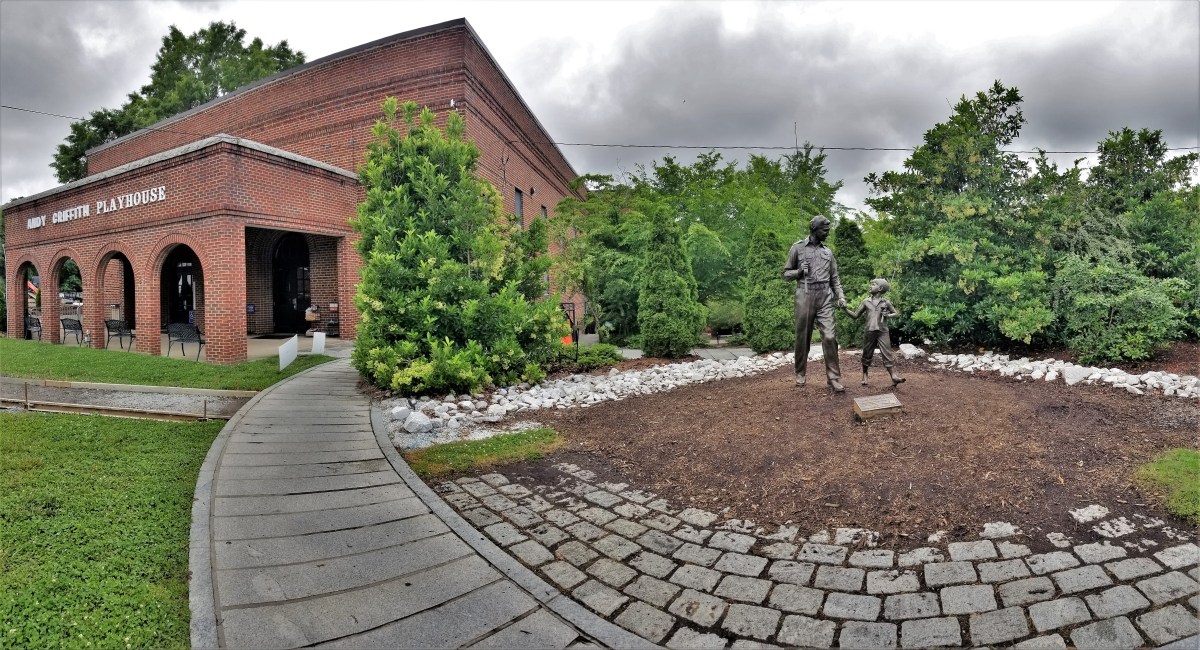
who worked and lived in a fictionalized town patterned after Andy’s beloved hometown, Mount Airy, North Carolina, where today, the Andy Griffith Museum shares space with the Andy Griffith Playhouse,

museum and playhouse

bringing fans from across the nation…

the odd couple

to follow the career of Mt. Airy’s favorite son, and enjoy a collection of memorabilia,

Take a Stroll with Andy

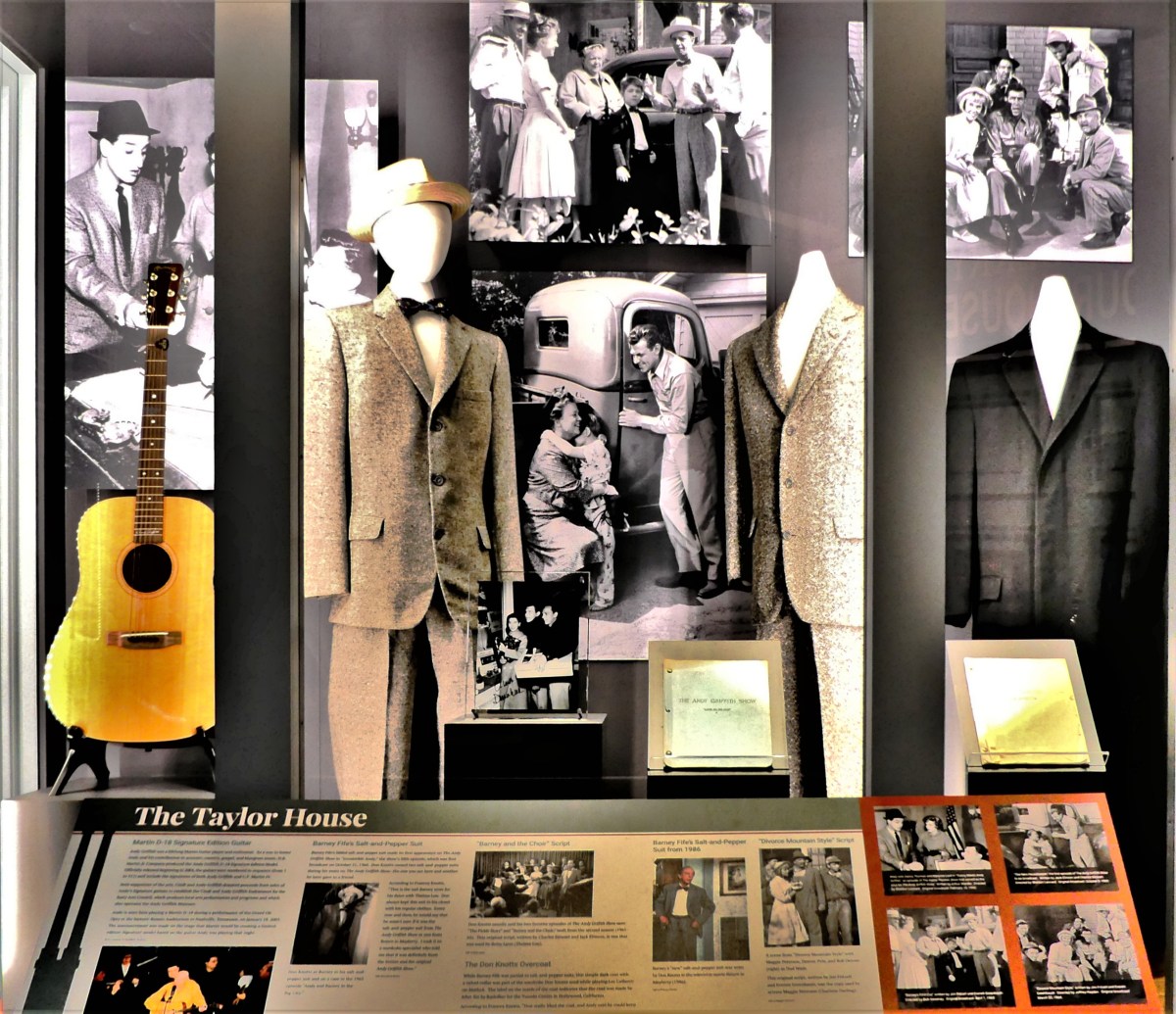
The Taylor House

Matlock

dedicated to a cultural icon.

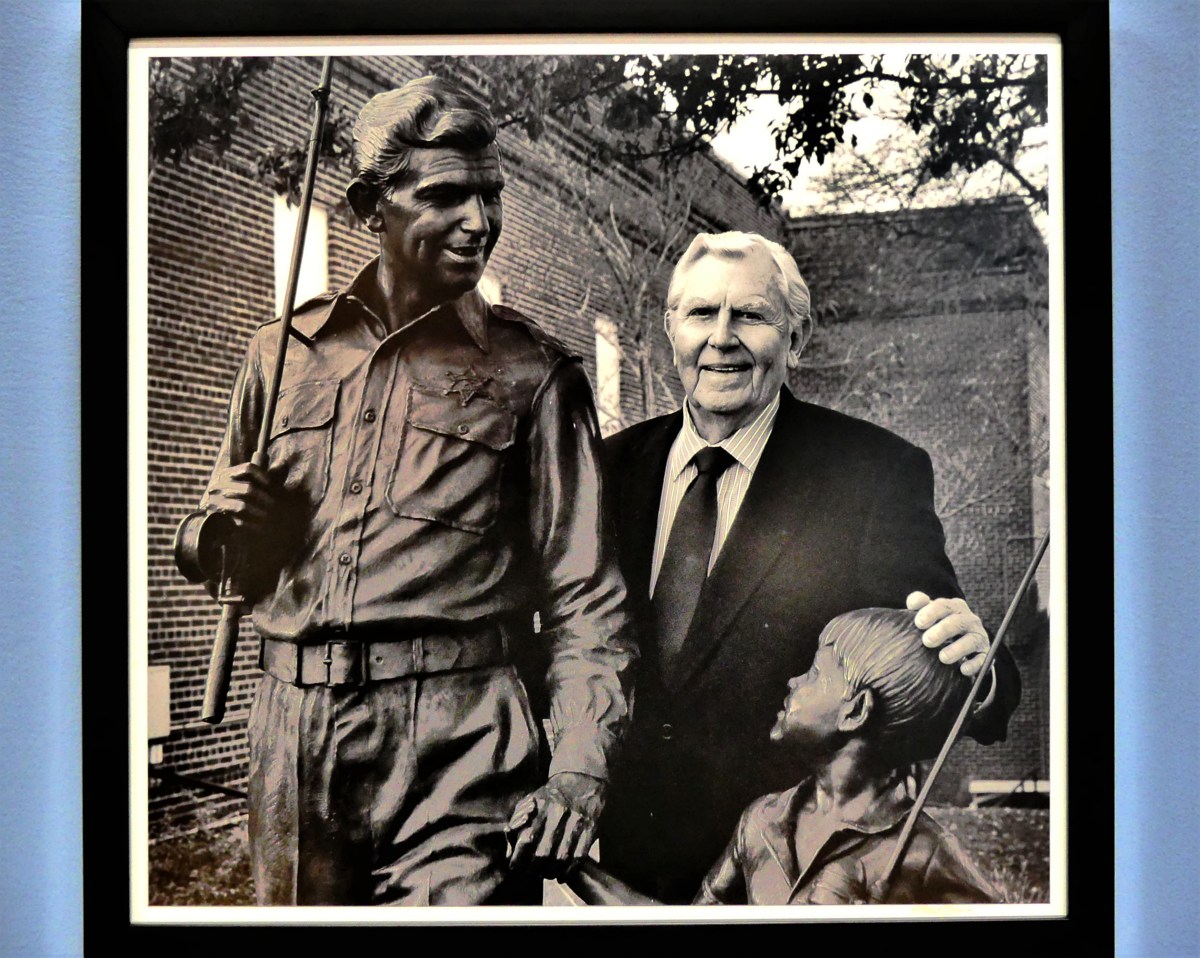
Andy at sculpture dedication

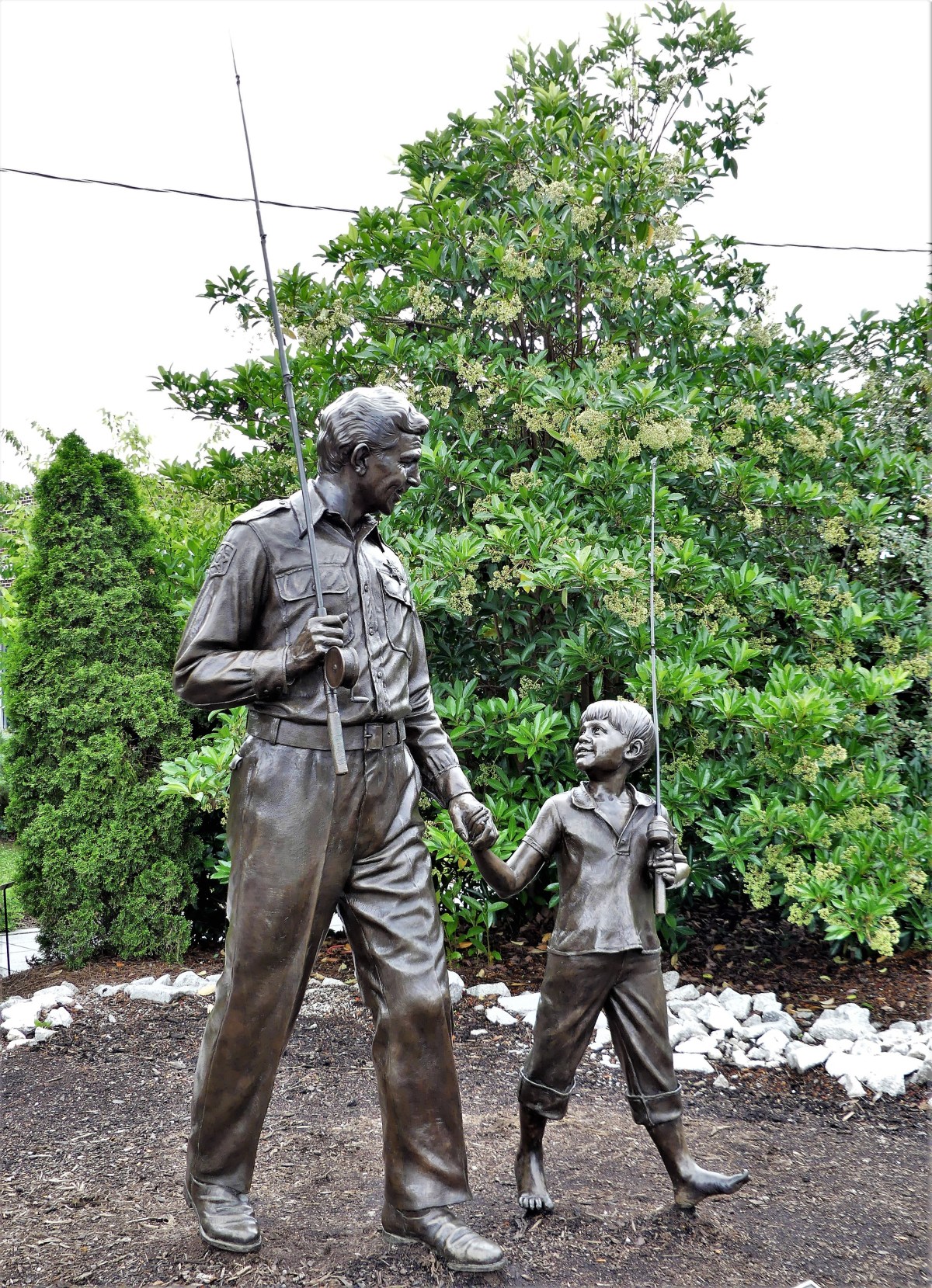
Whenever I watched The Andy Griffith Show, I’d pretend being Opie Taylor (Ron Howard), Andy’s son,

The Taylors

walking hand in hand with Pa, down to the Fishin’ Hole,

Andy and Opie going fishing sculpture

while whistling the show’s familiar theme song:

sheet music

There would be lunch at Snappy’s…

Snappy Lunch

and a haircut at Floyd’s…

Floyd's Barber Shop

before heading back home, where Aunt Bee would be frying up the catch of the day for dinner.

comic book cover

Without sounding too utopian, life seemed simpler in 1960. Looking back, our role models were wholesome, our families were intact, and civility was practiced in earnest.

How many of us Baby Boomers yearn for the nostalgia we remember from classic TV, before the innocence was shattered by the assassination of JFK, and television brought us closer to the horror and tragedy that’s so commonplace today?

Favoritism

When I was growing up, I often accused my mother of favoritism–feeling as if she was more devoted to one of my two sisters or other brother than me. Yet today, I can’t recollect a certain situation that gave me the chutzpah to suggest to her that one sibling got preferential treatment over another.

Of course, whenever I raised the indictment, my mother always answered the same way, “How could you say that? I love all my children the same.”

I don’t know. Maybe what she said was true for her. But I was always suspicious of her definition of equality. None of us was the same in our looks, our likes, our talents and abilities. Each of us had something that made us special. So I was never really certain how our individuality and distinctiveness measured against Mom’s distribution of love. To me, she adopted “separate but equal” as a legal family doctrine in order to avoid conflict, but conflict always had a way of showing up.

Later, as a parent, I wrestled with whether one son was better than another. I came to the conclusion that I didn’t love them equally–I loved them differently.

Many years and careers later, when I was in a classroom setting teaching emotionally and learning disabled students, the notion of picking a favorite became a source of reflection. Of course, I was more inclined to curry favor upon students who were better prepared, less of a discipline problem, and willing to try. These were my “go-to” kids who were eager to respond to open academic questions whether they knew the answer or not, and it was hard not to treat them differently.

And so, it’s much the same with determining which is a favorite of the tens of thousands of photographs I’ve snapped since becoming a “serious” photographer. After scanning through archives of images that still thrill me, I’ve decided that I cannot pick one over another, since each “favorite” has a different integrity, or power, or message.

So I’ve come to the conclusion that my favorite photograph is the one I’ve taken last, because it’s in that moment that I’ve given it the most attention, and therefore overshadowing all the other images that have preceded it.

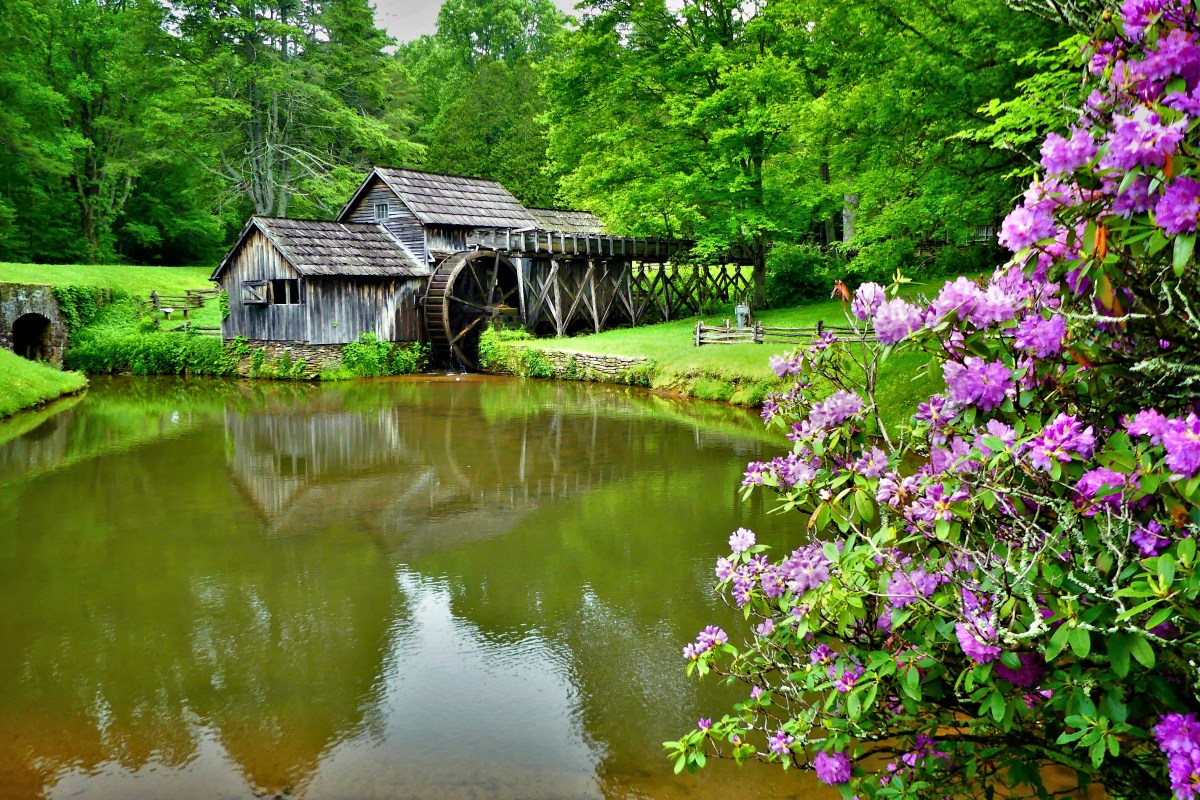
Currently, as I travel south with Leah to meet my new destiny in St. Augustine, I am following a ribbon of asphalt that curls through the ridgeline of the Blue Ridge Mountains between Virginia and North Carolina. And while I’m certain that it’s picturesque, given the large number of overlooks that the 1930’s Conservation Corps has carved out on both sides of the Parkway, the ongoing fog and rain clouds have obscured all sitelines, making this a dissapointing journey.

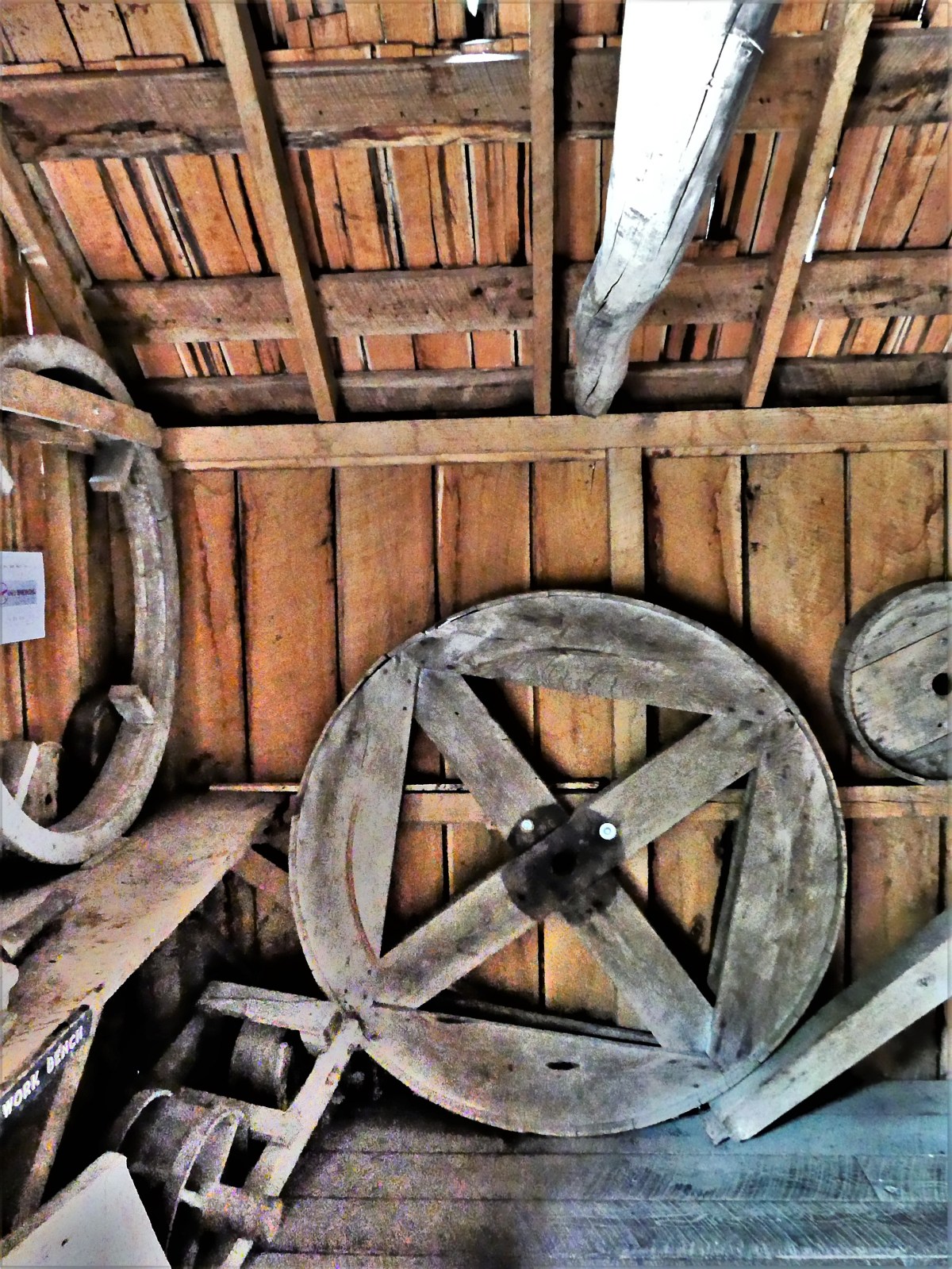
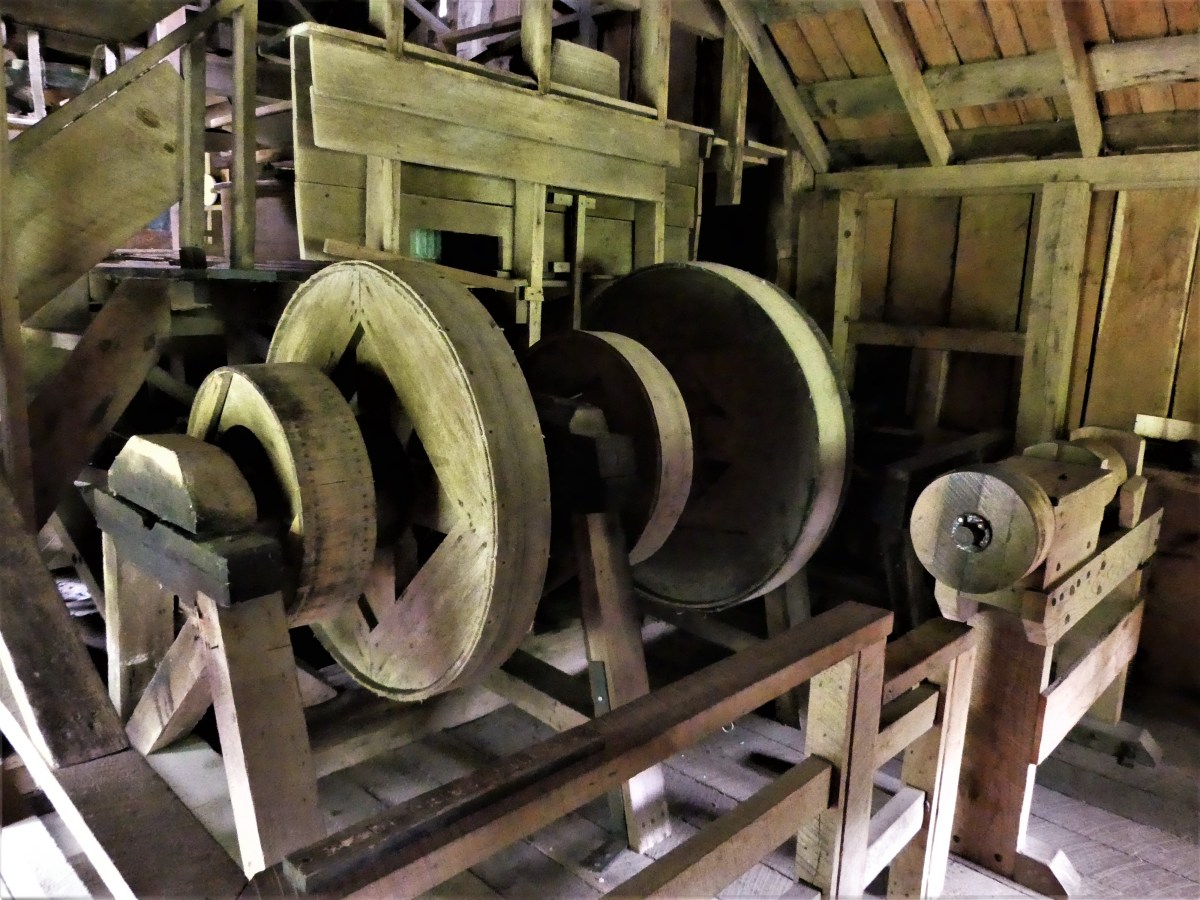
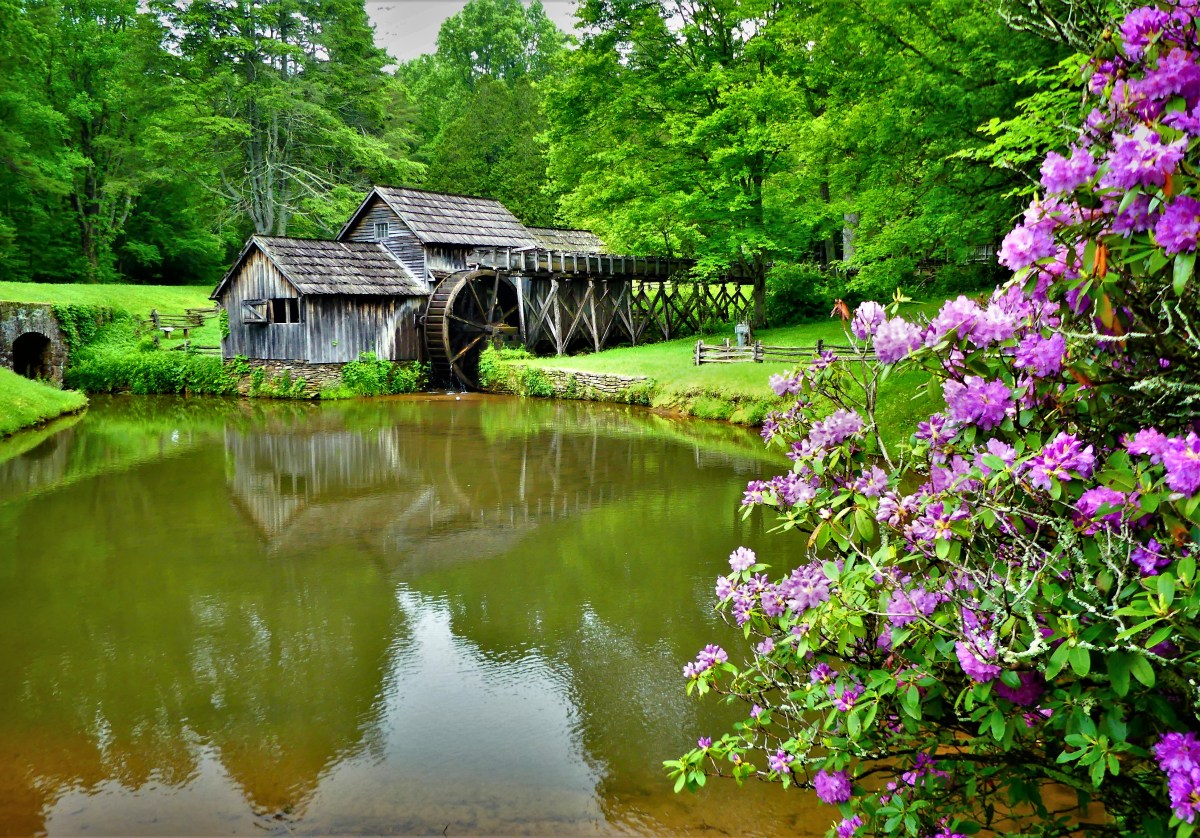
However, a short break in the weather while passing milepost 176 of Blue Ridge Parkway in Floyd County, Virginia gave us a chance to stretch our legs and take a self-guided tour of the mill by the water…

mill in the mill of the mill

built by E.B. Mabry in 1903. Originally, a blacksmith and wheelwright operation,

wheels

drive pulleys

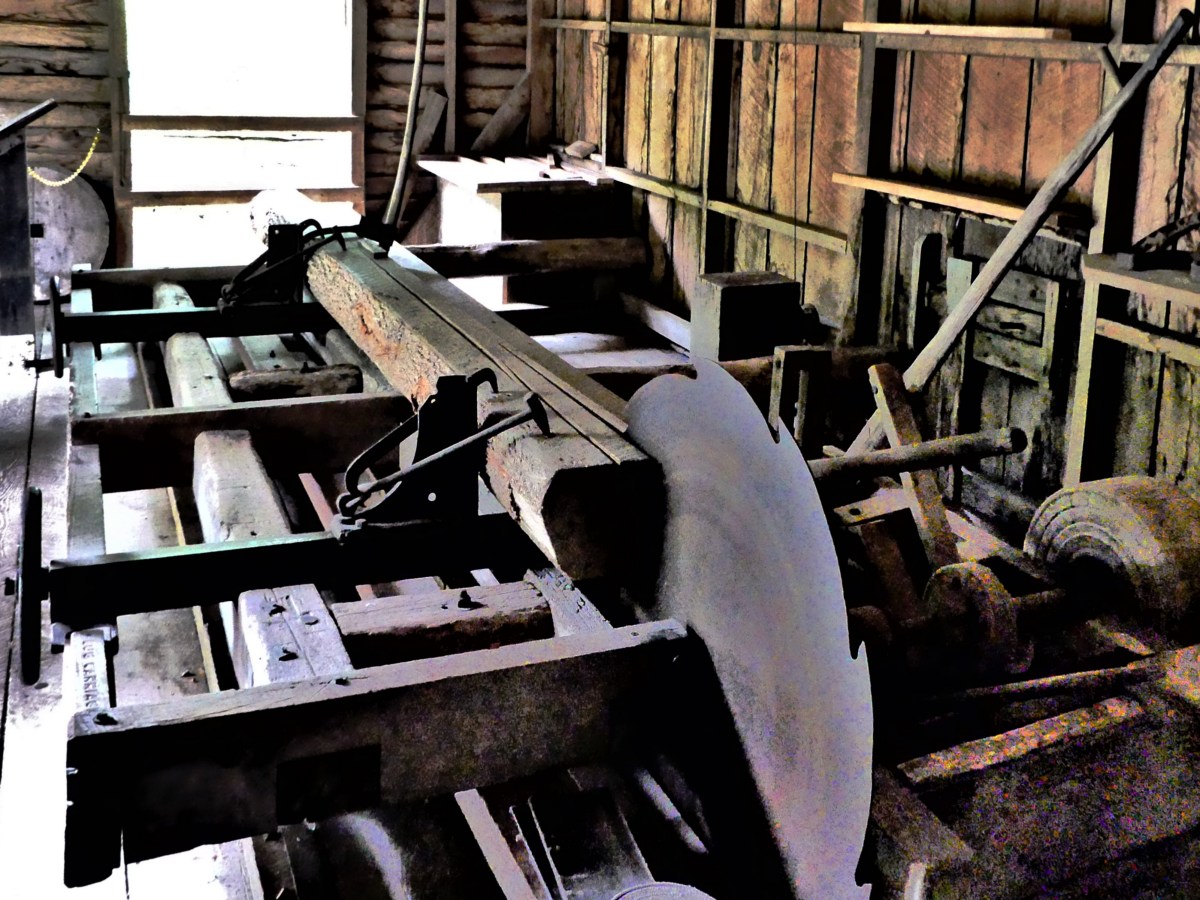
Mabry later added a sawmill,

sawmill1

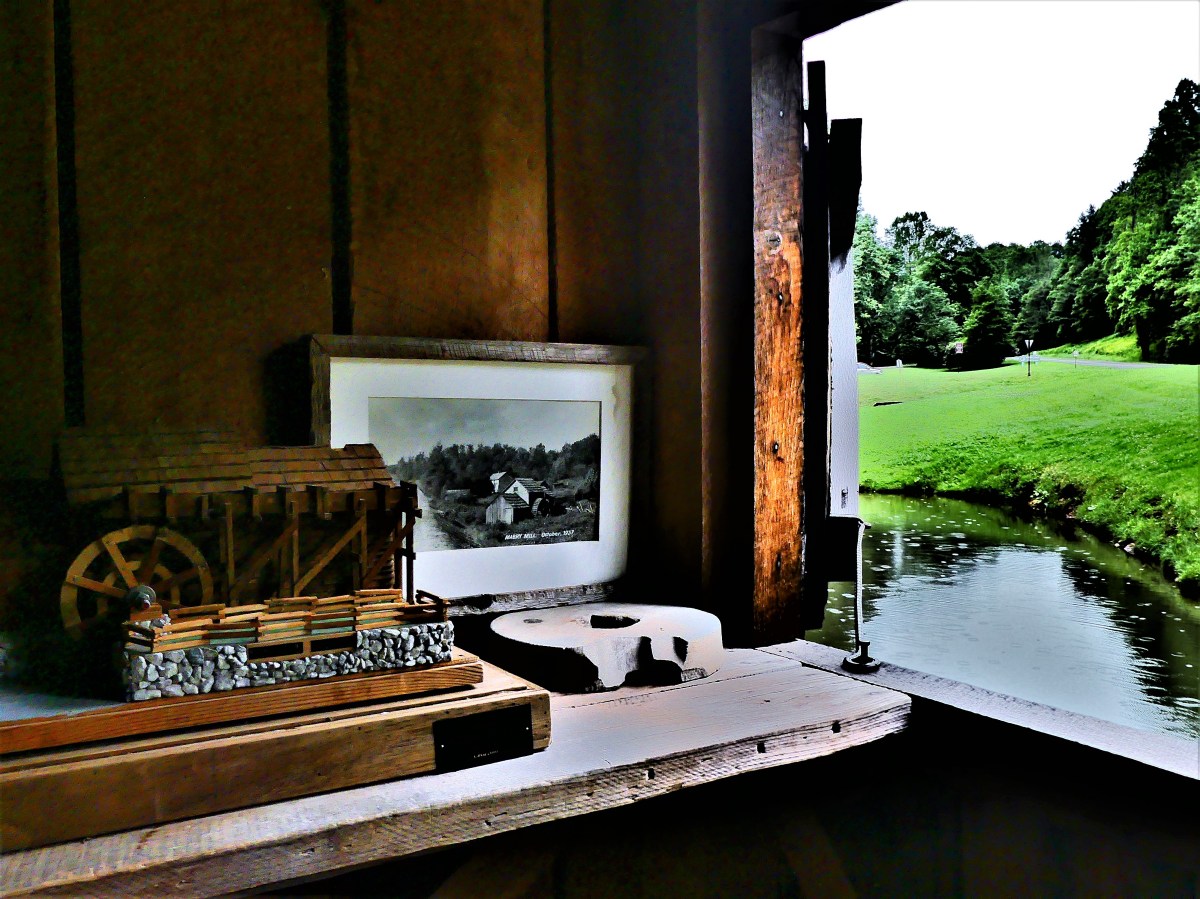
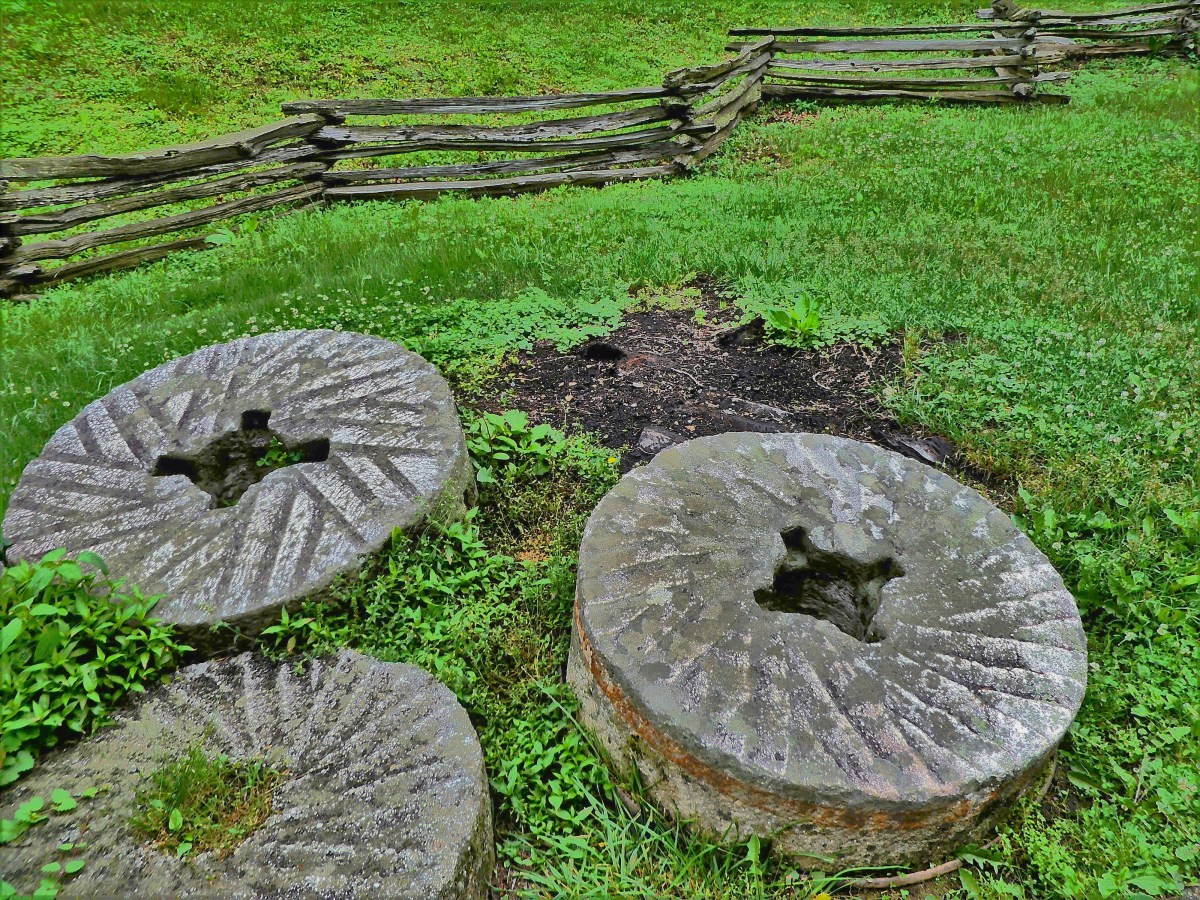
and seeing the need, added a gristmill as an additional service.

millstones and fences

From all the rain, the scene was eerily green…

aquaduct

water delivery channels

shed and wagon

and serene.

farmhouse with hemlock

And for one precious moment, it became my favorite place to photograph…

The Mill

until the next assignment!


Anatomy of an Email

I’ve been getting lots of political email lately. In large part, it’s been requests for donations coming from Trump’s 2020 Campaign for President, with rally words added to hype an emotional response, and misinformation intended to misguide the nation. It amuses me and terrorizes me at the same time.

It all started when my curiosity compelled me to participate in a Republican National Committee (RNC) survey at Donald Trump’s email behest:

https://action.donaldjtrump.com/listening-to-america/?utm_medium=email&utm_source=ET_16&utm_campaign=20180417_2585_listen-survey-welseries-2_donaldjtrump_jfc&utm_content=gop_surveys_button_take_bottom_other_all

I was game. I swallowed the bait and jumped down the RNC rabbit hole for a deeper look at the Mad Hatter’s tactics. Confronted by leading questions, I answered in a way that left no doubt about my disapproval of Trump’s policies, his absence of ethics, and his lack of leadership.
For instance, when asked at the end of the survey, “What else do you think the President needs to know about the real America? We’re listening.” I responded in chapter and verse about his controversial WALL:
Humpty Trumpty

Humpty Trumpty wanted a wall
And Mexican pesos to pay for it all
But all the Trump bankers
And all the deplorables
Couldn’t find ways to make it affordable.


I presumed that my straightforward responses would immediately disqualify me from any future Trumpian communication, but I was wrong. I received an immediate response:
Wow! I couldn’t believe I had just earned the right to take $6 off the purchase price of a MAGA cap as a reward for my participation and apparent support! Is this a great country, or what?
However, controversy continues to surround the manufacturer’s claim that the president’s swag is 100% proudly made in America. According to factory employees (who stitch the hat in Los Angeles) and an independent laboratory conducting microscopic fabric analysis, the hat components have been sourced and imported from overseas.
I decided to pass on the hat for two reasons: First of all, I disapprove of the messaging, feeling that America, despite its flaws, has always been great, and doesn’t need to be reinvented by a game show host who panders to white supremacists; and secondly, the hat doesn’t come in blue–only hot pink, yellow, camouflage, and red.
Again, I thought this was the end of things, until I received another blast from Donald J. Trump, forewarning me about my negligent membership status:

membership renewal

Imagine! The President of the United States, a self-professed billionaire–whose estimated wealth is dubious because of withheld tax returns–now counting on me…for a single dollar contribution to his campaign, and pressing me with a renewal deadline!

What a dilemma! Of course, I still wanted to track the Trump Big Top. But what if I didn’t come up with the money in time? Would I no longer be welcome inside the circus tent? I decided to wait.

The next day Eric came calling under the guise of FAKE NEWS:

Eric's email

Eric makes quite an argument for my dollar–defending Daddy from a CRUSH of criticism, and a chance to be on the right side of America. This was good stuff.

And then this arrived the day before the FEC deadline:

Are you still with me

…with another declaration of war against the media.

No doubt, being President of the United States is a demanding job that requires intense concentration and extensive hours studying the problems of the country and the world, followed by intense debate and policy development to secure America’s safety and enable continuing prosperity.

Yet, as of April 28, Trump has managed to spend 111 days of his presidency (or 22% of his time in office) at one of his organization’s golf resorts swinging a club, and costing taxpayers tens of millions of dollars in the process. In fact, there’s a Facebook page (https://www.facebook.com/trumpgolfcount) that’s devoted to Trump’s rising count. And this coming from a man who chided Obama, who spent a “tiny, tiny little fraction” of his time on the links compared to Trump.

We’ve also learned–from Trump’s own admission–that Trump’s day officially begins at 11am, after Executive Time, which essentially translates to TV and Twitter time.

So given Trump’s extreme schedule, I couldn’t help but wonder, “How on earth did Trump have the time to notice that “[my] name is no longer on [his] list of official Sustaining members?”

I passed on paying the dollar, rationalizing that there was no reason to contribute to Donald’s green fees.

March passed into April, and with a new month, it was time again to feed the political war chest, this time in the interest of national security–by parlaying an immigration crisis into a $25B resolution: building THE WALL.

Build the Wall

Considering I had raised my objection to building THE WALL the month before, receiving my financial support was unlikely. In fact, I returned the survey with a comment, petitioning the president to consider an idea more fiscally responsible and in keeping with his laissez-faire principles: privatization. I proposed that he reach out to the Walton family, a fine upstanding bastion of Republican sensibility, and convince them to build THE WAL-MART, a very long and skinny store along our southern border. By day, the Mexicans could buy American, and by night our border would be protected by Wal-Mart security teams. Imagine the savings!

Trump never responded to my idea. Instead I got this:

Real News Now

…an appeal to subscribe to Real News Updates, a weekly webcast hosted by Donald’s daughter-in-law, Lara Trump, wife of Eric Trump. Interestingly, no one was asking for money, just a commitment of my time to shower me with the real truth on Trump TV. However, after watching ten minutes of noise disguised as news, I found I didn’t have a nose for nonsense, as it reeked of propaganda.

Shortly after, I received another exchange from Donald recruiting me for another purpose: defeating LIBERAL OBSTRUCTION…

liberal-obstruction.jpg

Here was Trump blaming the Democrats for his inability to get America’s work done. By the numbers, there are 1,212 presidential appointments requiring U.S. Senate confirmation, and 353 presidential appointments which do not require confirmation. As of April 27, 2018, 315 of Trump’s nominees have been confirmed for 640 key positions, and 129 are awaiting confirmation.

On what he called Trump’s “glacial pace in selecting nominees,” Senate Minority Leader Chuck Schumer posited, “If the President is looking for someone to blame on the slow pace of confirmations, he needs only to look in the mirror,” and suggests that the President should “roll up his sleeves and get to work rather than pointing false fingers of blame.”

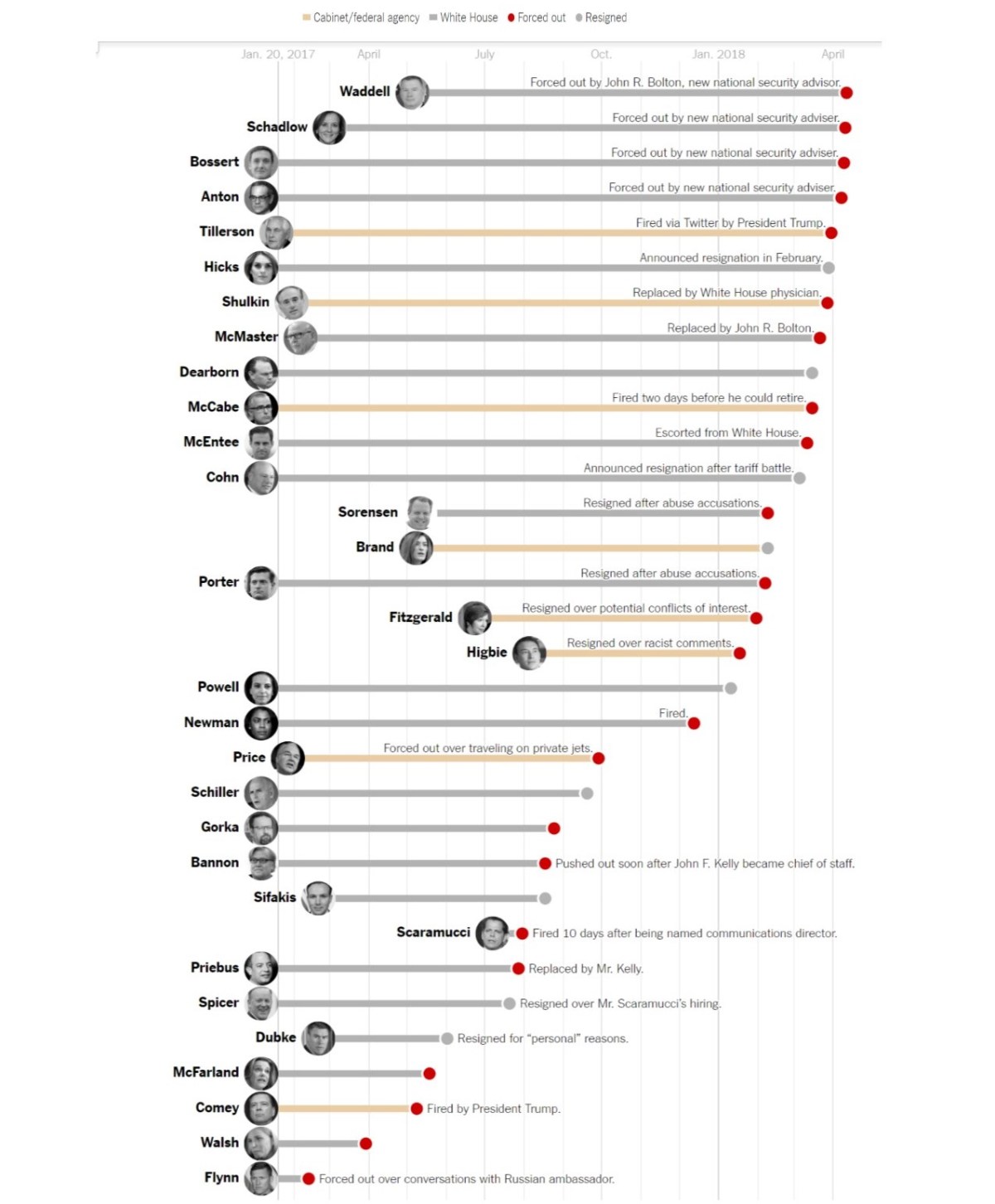
Equally as astounding, was Trump’s White House personnel turmoil as diagrammed by The New York Times:

Trump tumult (2)

Even today, in the wake of Trump’s impending historic summit with North Korea’s Kim Jong Un, there is no nominee in place to head the South Korean embassy, and that’s on Trump.

After a week’s time, I received multiple invitations to renew my 2018 Sustaining Membership and I ignored them all, but then an email arrived from Mike Pence that was impossible to overlook. He was offering me a chance to win dinner and a picture with him in North Carolina.

dinner-with-pence-e1525464357395.jpg

I checked my calendar to make sure I was available. I dreamed of the possibility of gnawing on BBQ ribs with Mike while listening to his sanctimonious defense of zygote life, his hypocritical defense of Trump as an adulterer, and his evangelical discourse of hysterical homophobia, as if he had been touched by St. Paul. I entered the contest…without a contribution…by discovering extremely fine print on the submission page that hyperlinked me to a free entry form, thereby sidestepping the requisite donation.

While I applauded my cleverness, no one called to tell me I’d won. I think I had Chinese take-out that Friday evening, and watched Real Time with Bill Maher instead.

A couple of days later, Donald reminded me that Melania’s birthday was approaching:

Melania

I have to admit, I was taken by surprise that Donald would turn up the spotlight on Melania when the world was wondering out loud about his sordid affairs with porn star Stephanie Clifford (aka Stormy Daniels), and Karen McDougal, Playboy’s 1998 Playmate of the Year, only months after the birth of Melania’s son Barron.

It’s now undeniable that Michael Cohen, Trump’s consigliere paid $130,000 in hush money to Stormy Daniels twelve days before the presidential election. Campaign election law violation? We’ll see.

I was happy to sign Melania’s card, hoping that it might represent even the smallest distraction from her otherwise burdensome existence, and perhaps put a smile on her forlorn-locked face.

Oh, how she shrinks from Donald’s touch as he ceremoniously attempts to lock hands during so many pomp and circumstance moments when cameras are rolling, and oh, how she spurns his pussy-grabbing fingers, sending a silent #MeToo message to her coterie:


And then instantly, the news cycle abruptly turned to former FBI giraffe, James Comey’s imminent release of A Higher Loyalty: Truth, Lies, and Leadership. Naturally, Trump launched a preemptive strike that landed in my inbox :

Comey's book

…even going so far as to transmit a less than scientific survey to his ardent supporters one day later:

James Comey poll

Comey made the rounds of many a talk show, eager to tell his story, clear his name, restore honor to his bleeding Bureau, and peddle some books. But unlike Trump’s failed attempt to blunt free speech by trying to prevent publication of Michael Wolff’s Fire and Fury, all he could muster this time around was a weak attempt to disparage, discredit and dismiss Comey as a liar and a leak.

Yet, for Trump to accuse James Comey as lying is no different from a cesspool telling a septic tank that it’s full of shit!

With Trump’s ascension to the White House,

Home of the Whopper

perhaps, the President’s residence should temporarily be renamed, Home of the Whopper.

Jimmy Kimmel put it best in his classic “mockumentary”, Trump’s 2,000 Lies:


Finally, Devin Nunes, chairman of the House Intelligence Committee and TrumPuppet released a final partisan report that the President had been expecting, and considered long overdue:

House Intelligence

Of course, Donald had a shiny new object to distract his core, but the real crime was the damage done to a one-time prestigious watchdog panel once charged with rooting out intel abuses, but now acting as the President’s personal pit bull. By shutting down the investigation and claiming no evidence of collusion by refusing to interview anybody who might have had evidence of collusion was like pulling the ripcord while still inside the plane.

Over the past two months, I’ve received dozens of email communications from Trump and team–all designed to collect a dollar and a steal a soul–while observing a Republican Congress willing to embrace Trump at any cost. And although I was never interested in contributing a dollar, I was more than willing to offer my two cents.

That’s when I received this email:

0 = 0

I clicked on CONTRIBUTE OTHER AMOUNT, and was whisked to the secure Authorized Website of Trump Headquarters:

triple matched

By selecting Other, my blinking cursor filled the empty box in anticipation of a big round number. I entered $0.02 and pressed CONTINUE.

enter an amount (2)

Rejected! The campaign wouldn’t accept anything less than two bits. So here it is, Mr. President…two bits of advice: Stop lying to the American people, and resign before the real truth comes out!

Front End Smiles

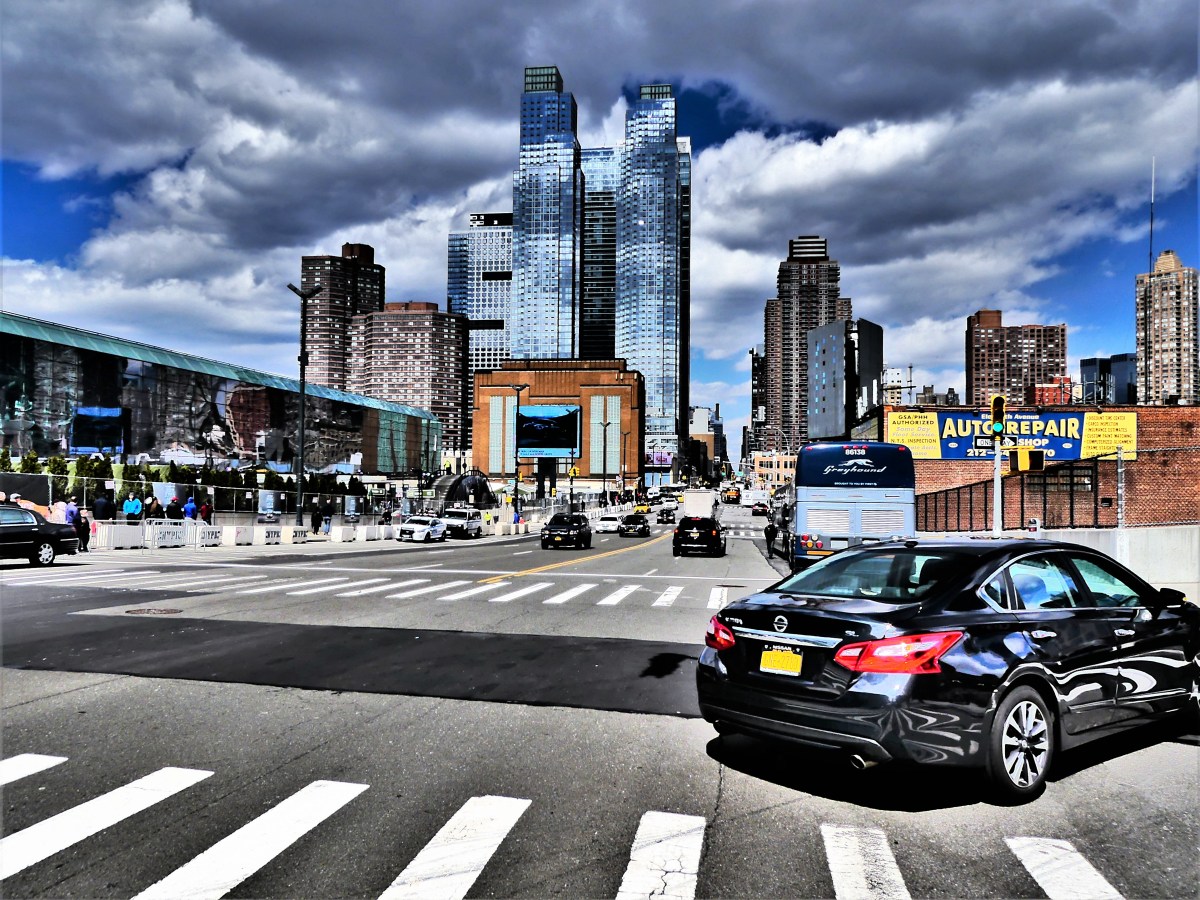
The automotive industry has a lot to grin about, and they put it on display for all to see at the 118th edition of the New York International Auto Show, showcasing over 1000 cars and trucks from around the world at the Jacob Javits Convention Center in New York City.

Javits Center

Conventional wisdom affirms that mid-week crowds are typically thinner than weekend crowds, but judging from the sea of people milling through manufacturers’ exhibits, the blustery New York weather seems to have driven most tourists indoors to gawk at gleaming metal and polished plastic.

Online ticketing expedited entry access, however, there was a brief hold-up at our security clearance gate when a customer refused to surrender his pen knife to a yellow-shirted official.

“But it’s just a penknife,” he asserted. “Do you really think I’m a mass murderer carrying a blade that’s smaller than your pinkie?”

Like his knife, he had a point! But the security supervisor poured acid rain on his parade and confiscated it anyway, overruling his protests.

Eventually, we safely entered the cavernous space…

welcome

only to overdose on a melange of oversized banners and advertorials covering all makes and models, with curtains of graphics and gargantuan walls of hypnotic lights coalescing into dizzying displays of one-upmanship.

Once we got our bearings, we targeted the pedestrian brands, for as much as this was an opportunity to regale in the glory of all the shapely models present (as well as the cars they were pitching), Leah and I were on the hunt for a new car. It was time to say goodbye to our Honda Civic Hybrid–who was showing her ten-year tenure after 130,000 miles–and “kick the tires” at a one-stop shopping venue like the car show with the notion that we might meet her worthy successor.

While navigating through the different brands, it became very clear that the array of chiseled lines and sculpted edges of each steel-coated body acts as a magnetic lure to onlookers, in the hopes that physical attraction follows the initial subliminal or emotional response.

Hence, each brand had its own legion of followers. Many were merely window-shopping. However, there were hundreds with more serious inclinations, who were infected with a seat-adjusting, knob-twisting, radio-tuning, steering wheel-gripping, and backseat legroom-testing fever that left long queues by the sides of the cars and trucks, as make-believe owners feature-fucked their way through the vehicle.

Of course, there was also a corps of car counselors available to cover all questions asked of them: “What’s the fuel economy? What’s the warranty? What’s the availability? What’s the cost? What’s the show discount?”

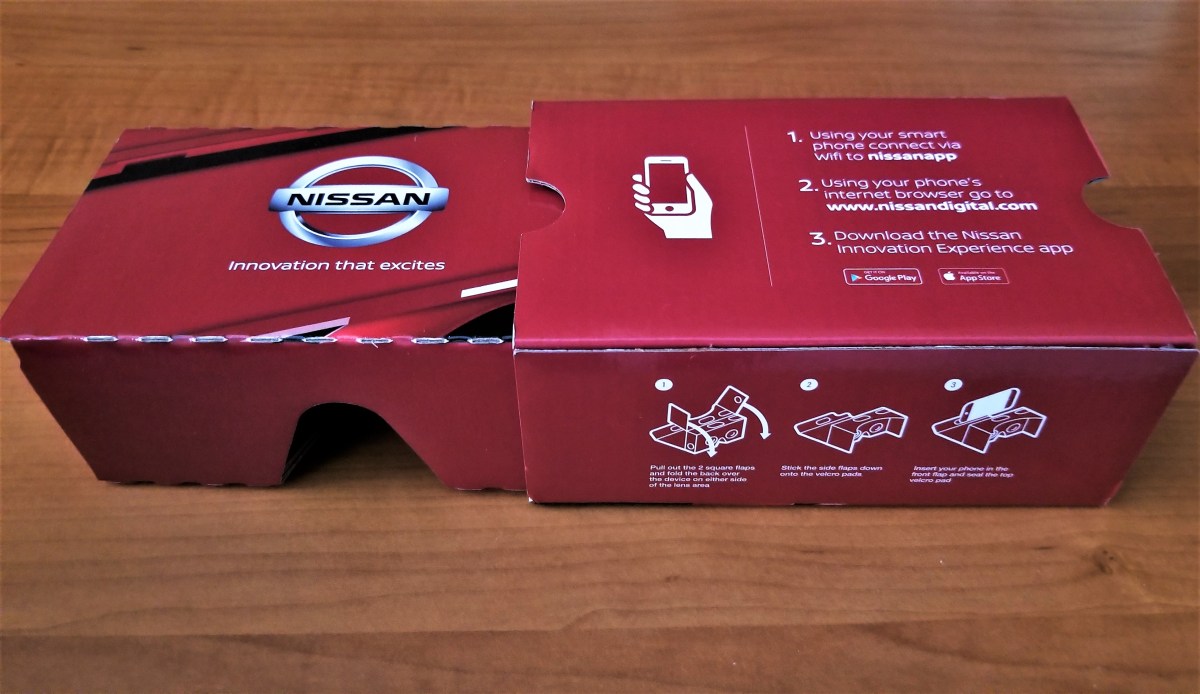
Virtual and augmented reality’s fingerprint was all over the show. Ford offered high-tech headgear tethered to microprocessing for a flight over an imaginary landscape of tomorrow’s transportation network. Dodge staged a roadster drag race challenge through a simulation windshield, complete with whiplash acceleration vibes synchronized and transmitted through the seat and steering wheel. Chevrolet incorporated dynamic movement and 360° engagement by throwing VR drivers up and down and around a test track with the wind in their faces. And Nissan employed a smartphone app and cardboard origami to build a viewer that thrusts the user through the internal combustion of their VC-turbo engine.

glasses.jpg

In keeping with the technology theme, auto companies were eager to email brochures, but almost always had oodles of glossy brochures for the taking, which made sponsor-driven shopping bags a hot commodity. Hyundai and Toyota were the giveaway gurus, providing popular blue and red totes for the asking…until there were none.

Such was our luck after accruing an armful of stuff that could no longer fit our coat pockets. After visiting a number of surrounding company information counters, Toyota reassured us of a mid-afternoon delivery. Fortunately, our good timing was rewarded with a couple of red handbags before they quickly disappeared. Yet we couldn’t help but covet State Farm’s flattering, complementary shoulder bags worn by many hands-free car insurance enthusiasts.

As we moved through two levels of automotive mania, and contemplated the contours of carchitecture, it was reassuring to watch the happiness on people’s faces–their smile an irrational testament to the prospect of owning a new dream car–as they engage the navigation software to plot a course to the poorhouse.

Likewise, it seemed that the cars were grinning, laughing, howling and roaring back at them too. Gotcha!…

…with miles and miles of beguiling smiles!

Duty, Honor, Country

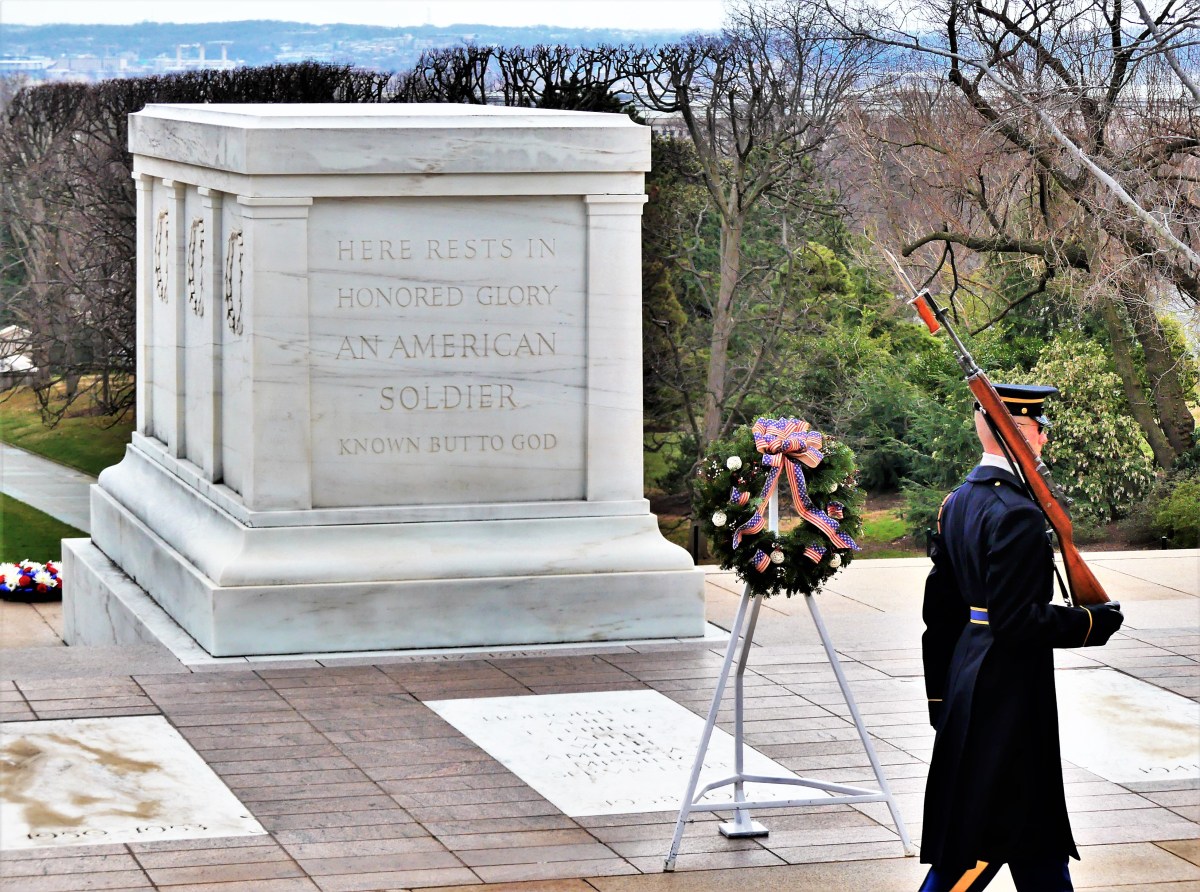
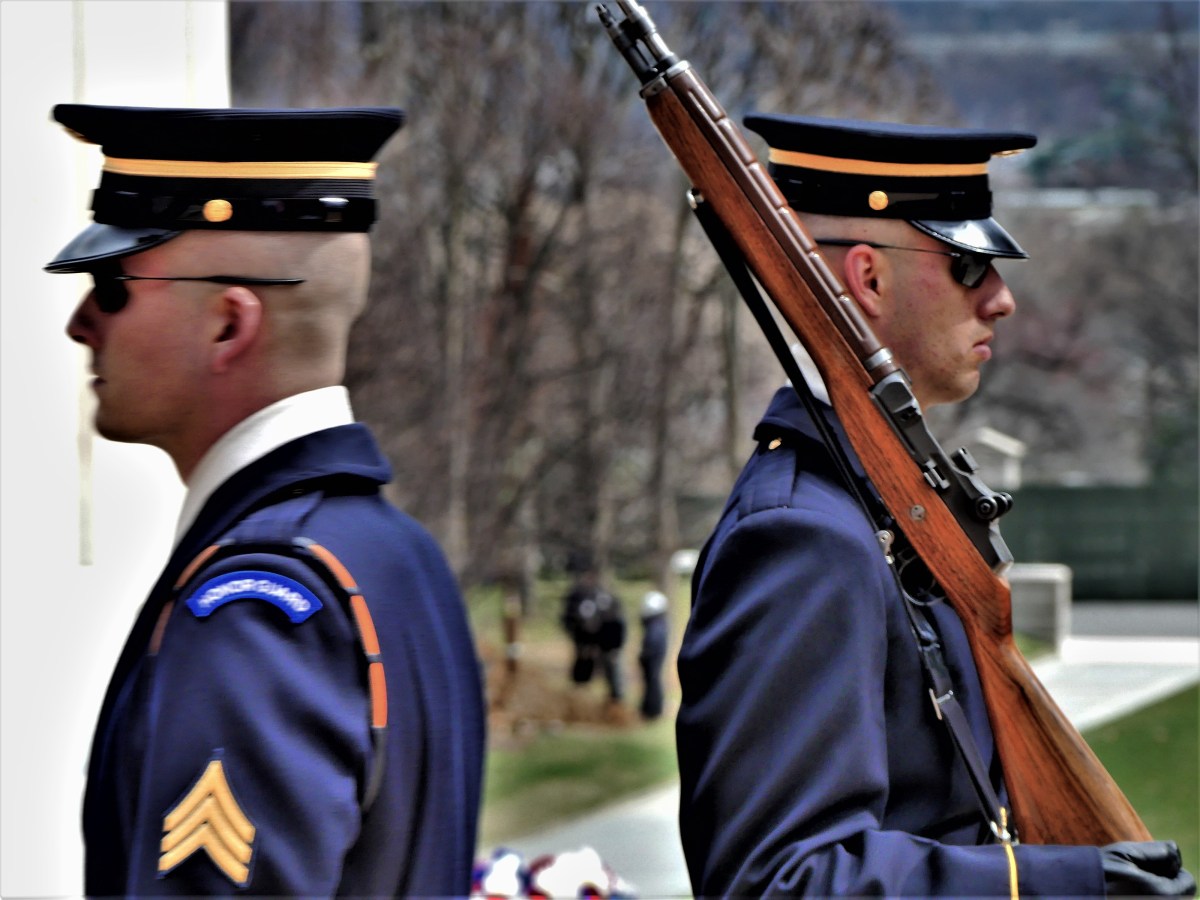
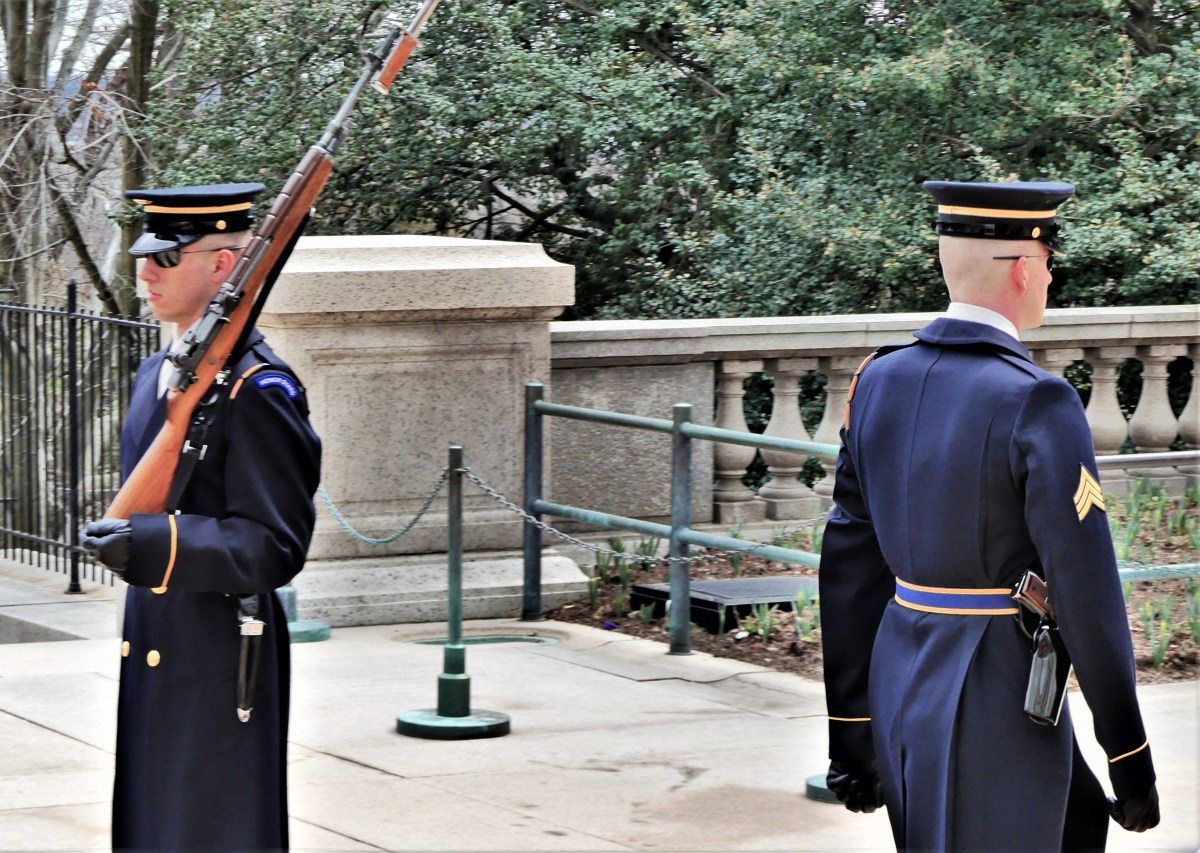
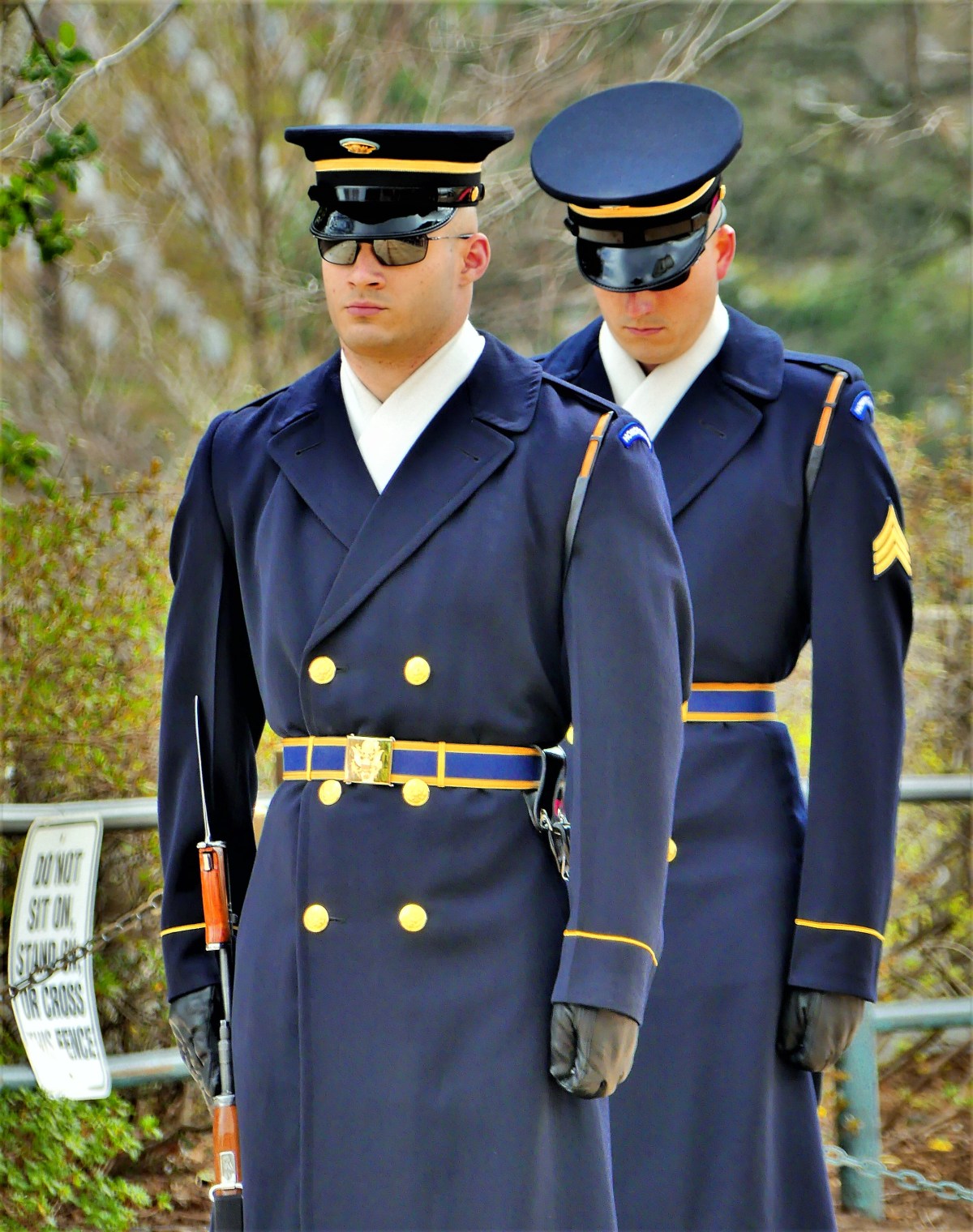
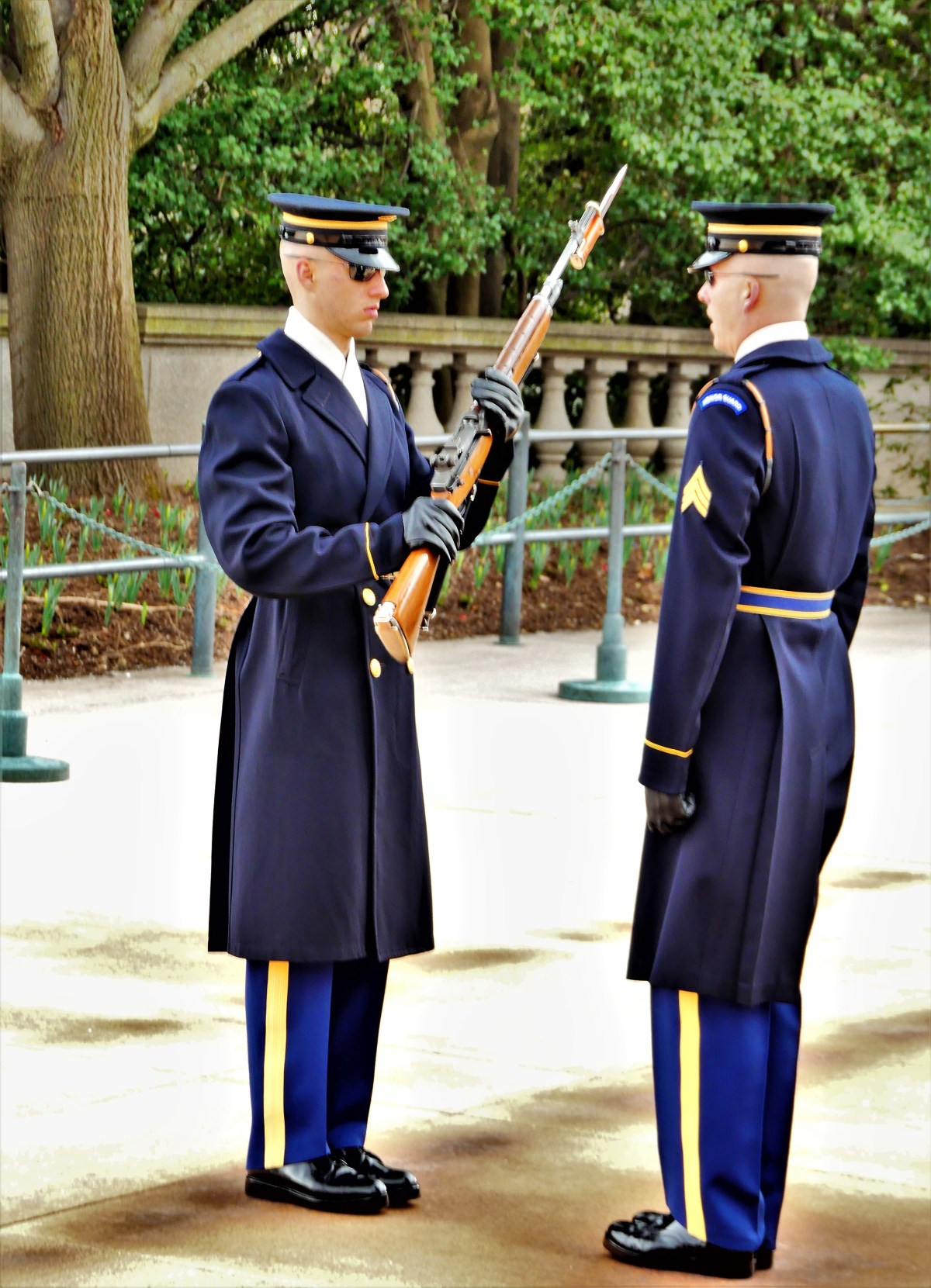
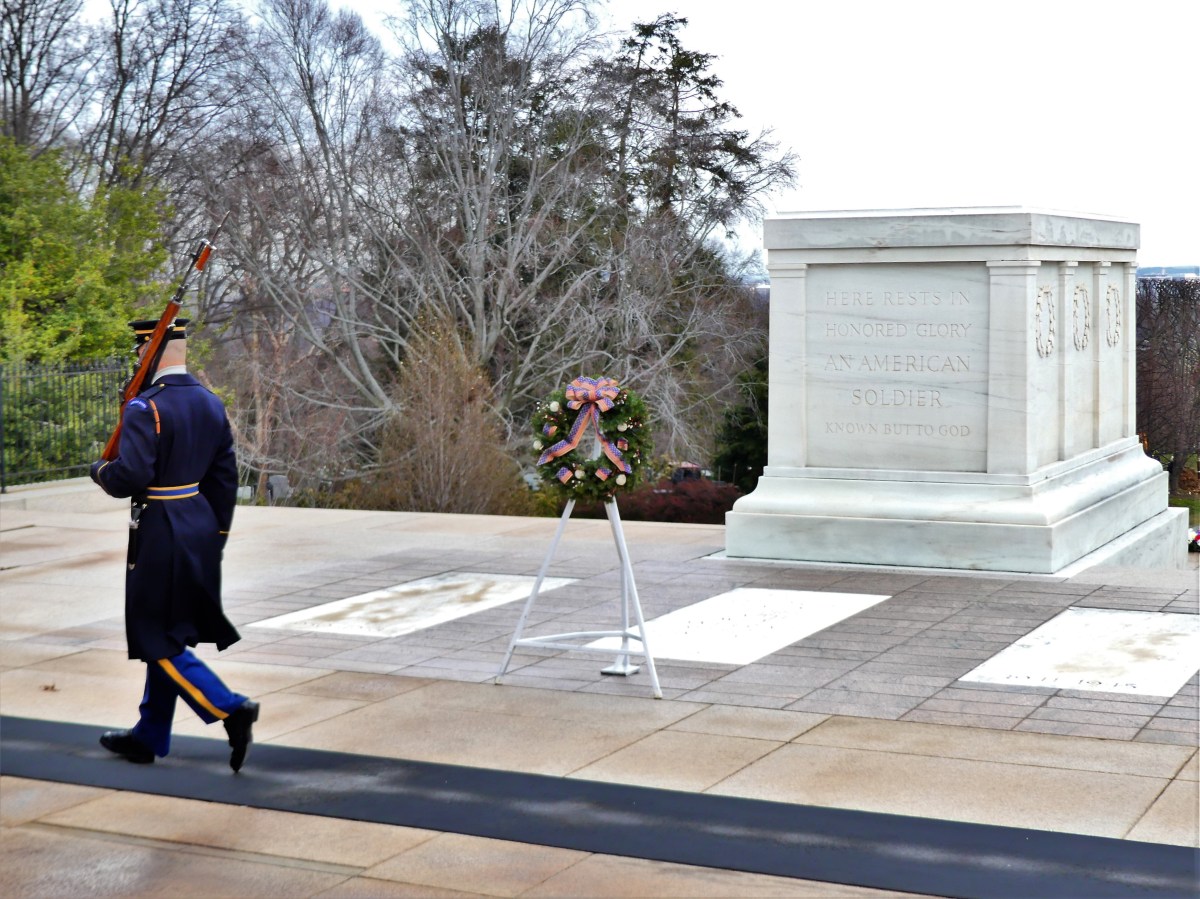
It’s a solemn ceremony choreographed with the precision of an atomic clock, executed by a regiment of warm-blooded machines, and directed with the authority of a no-nonsense commander who only knows perfection. It’s a six-minute pas de trois that happens every hour on the hour during fall, winter, and night, and every half-hour during spring and summer–regardless of the weather or challenging conditions. And it’s a sacrament that’s never stopped since 1937.

The changing of the guard in front of the Tomb of the Unknown Soldier at Arlington National Cemetery is carried out with the pomp and circumstance of a Shakespearean ceremony, yet with the reverence of a canonization.

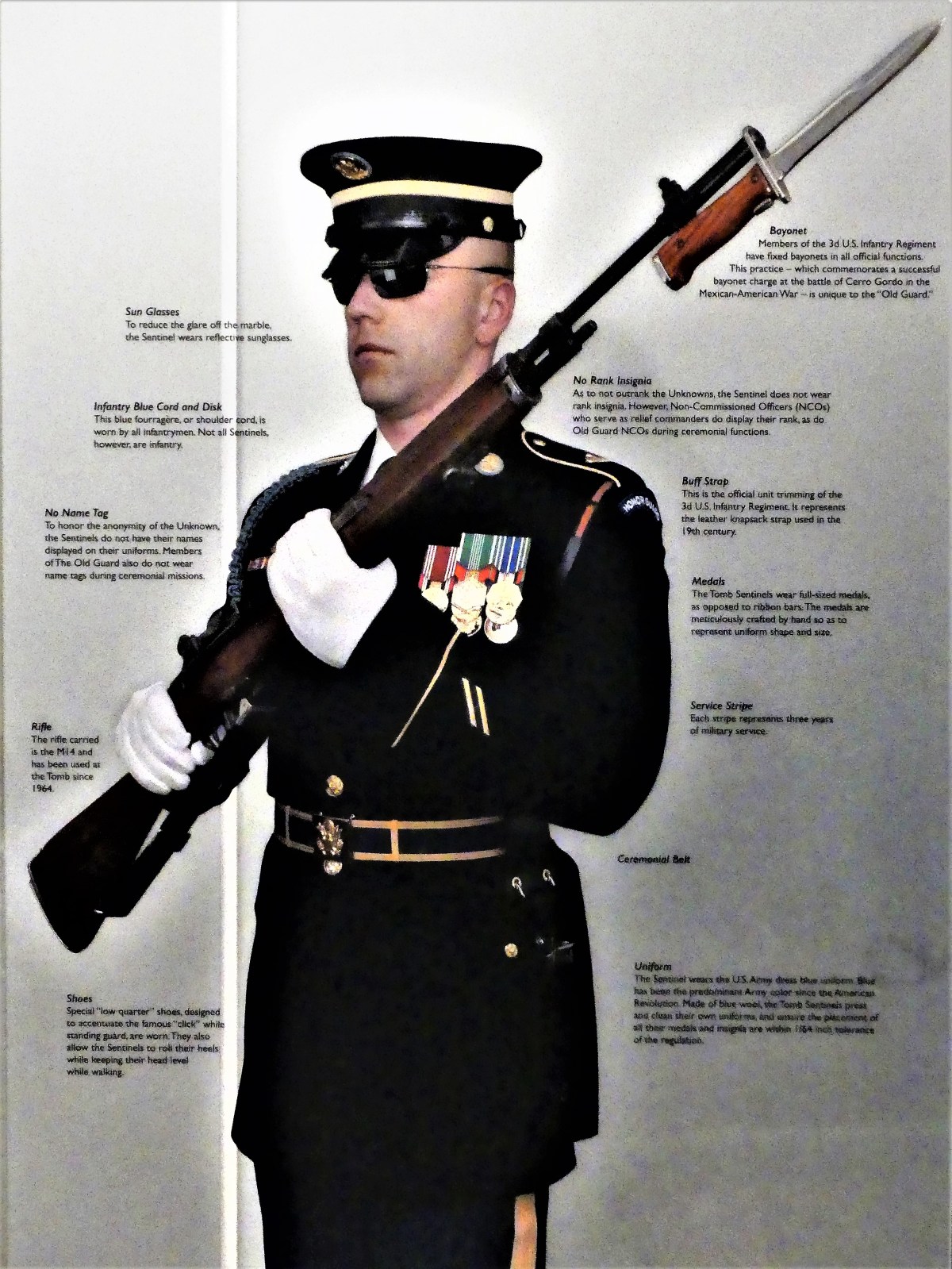
The rigorous training and commitment of the corps serving the monument is legendary. They are the best of an elite color guard from the 3rd Infantry Regiment, also known as The Old Guard, the nation’s oldest fighting force, serving since 1764.

The highly-selective unit is composed of impeccably dressed volunteers of similar stature, in peak physical condition, and with unblemished military records.

Sentinel (2)

As if marching to a metronome that only he can hear, the sentinel paces to the south, rolling his feet effortlessly along a catwalk of worn rubber,

guarding the tomb

His gait and silent cadence is measured and precise…19…20…and 21 steps, a broad leg sweep, and CLACK, his heels lock with the force of two magnets attracted to each other. He quarter-turns sharply to the east, and whip-snap, CLACK, his heels lock again.

facing east

One Mississippi, two Mississippi…until he reaches 21, and his feet quarter-turn north, and CLACK, his shoes revealing the effort from hours of spit-polishing only achieved through tubs of Kiwi and micro-sanding.

Spit and Polish

He executes a sharp shoulder-arms, repositioning his sparkling M-14 from his right shoulder to his left, as if popping with his prop–his weapon always closest to the visitors to signify that the sentinel always stands between the Tomb and any possible threat.

After another 21 seconds of silence, the sentinel returns 21 steps north…

marching north (3)

and CLACK, quarter-turn, CLACK, quarter-turn, CLACK. Shoulder-arms, one Mississippi, two Mississippi…always counting, always focused, no matter the distraction.

The significance of number 21 corresponds to a 21-gun salute, the highest military honor posthumously bestowed upon any service personnel.

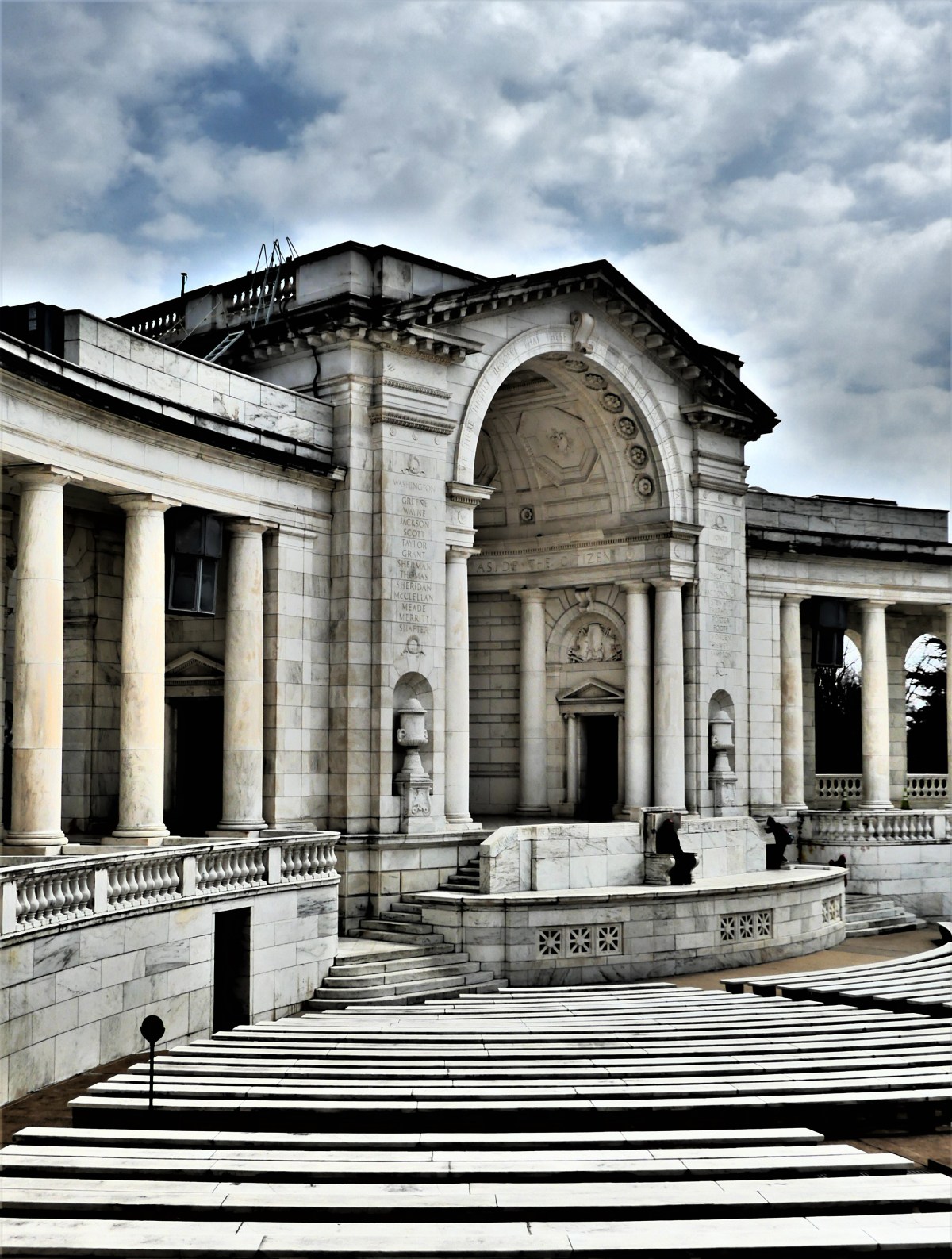
A crowd of spectators has lined the marble steps outside the Memorial Amphitheater in eager anticipation of the one-o’clock ritual.

Memorial Amphiteater

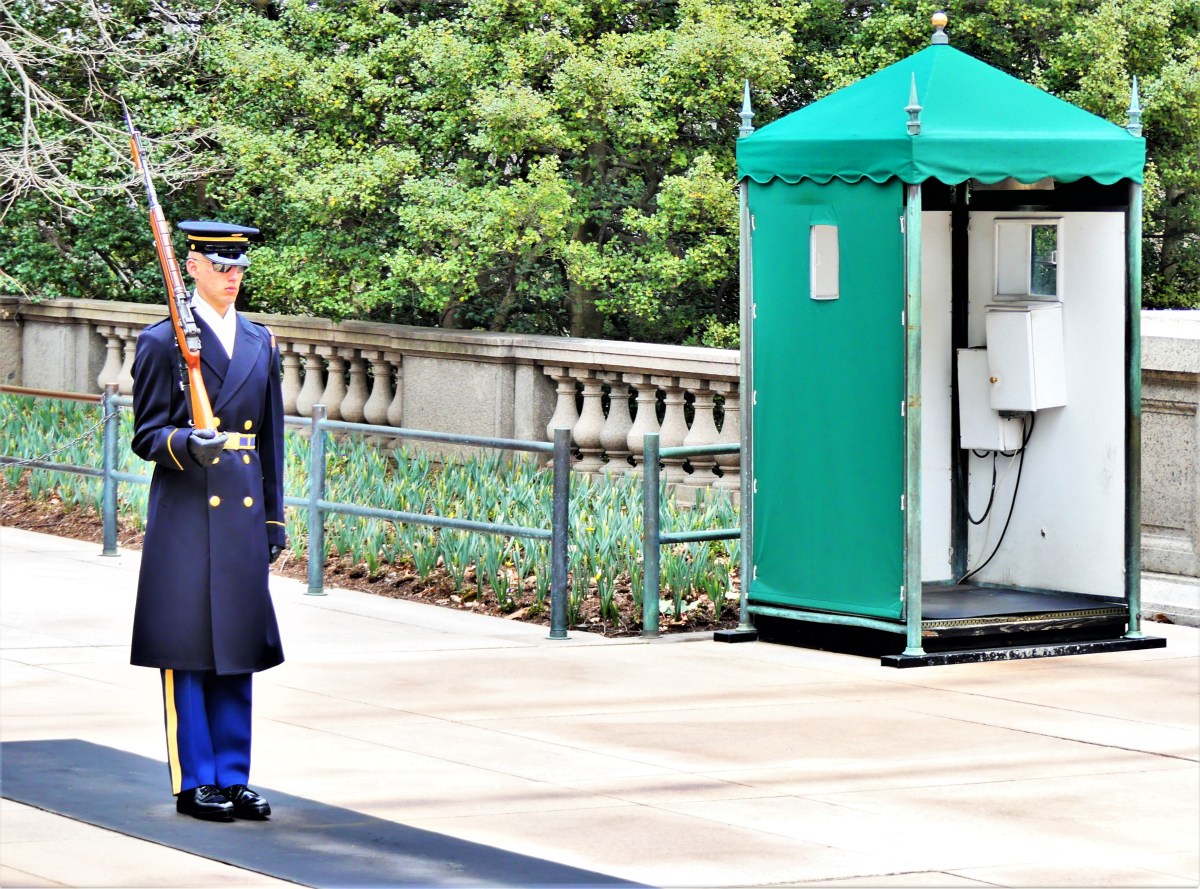
The hour tolls, and the sentinel on duty stands motionless, but at the ready.

sentinel awaiting replacement

From the opposite end of the plaza, the regiment commander appears beside the runway, and CLACK. In this ritual variation, the count-up to 21 continues, and marching resumes until the two honor guards pass.

passing (2)

Upon the commander’s return, he pivots to face the crowd of visitors:

Commander announcement

Ladies and Gentlemen, may I have your attention, please. I am Sgt. Davenport of the 3rd Infantry Regiment, United States Army, Guard of Honor, Tomb of the Unknown Soldier. This ceremony which you are about to witness is The Changing of the Guard. In keeping with the dignity of this ceremony, it is requested of everyone to remain silent and standing. Thank you.

Meanwhile, on the south side of the plaza, the relief-sentinel stands at attention and awaits formal inspection from the commander–now marching past the on-duty sentinel.

2nd pass

After a graceful, yet deliberate weapons and uniform check from head to toe…

head down inspection

undertaken with the scrutiny of a dermatologist examining for basal cells…the relief-sentinel is deemed mission-ready.

They parade across the plaza in lock-step…

parading

where they take up new positions in front of the shrine…

the ordered exchange

commander salutes

When the on-duty sentinel is officially relieved…

dismissing

the new sentinel’s patrol resumes for the remaining hour.

new patrol

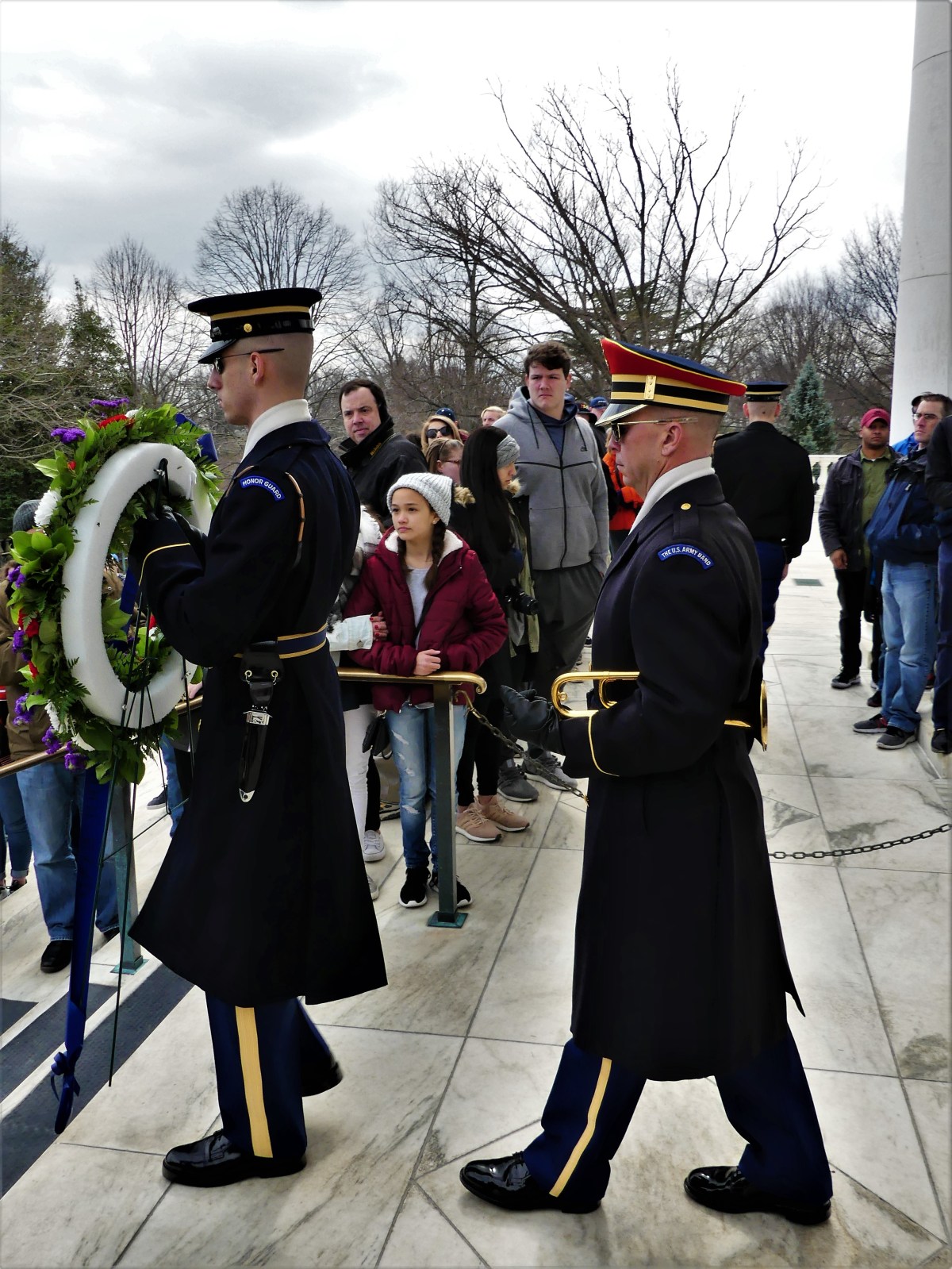
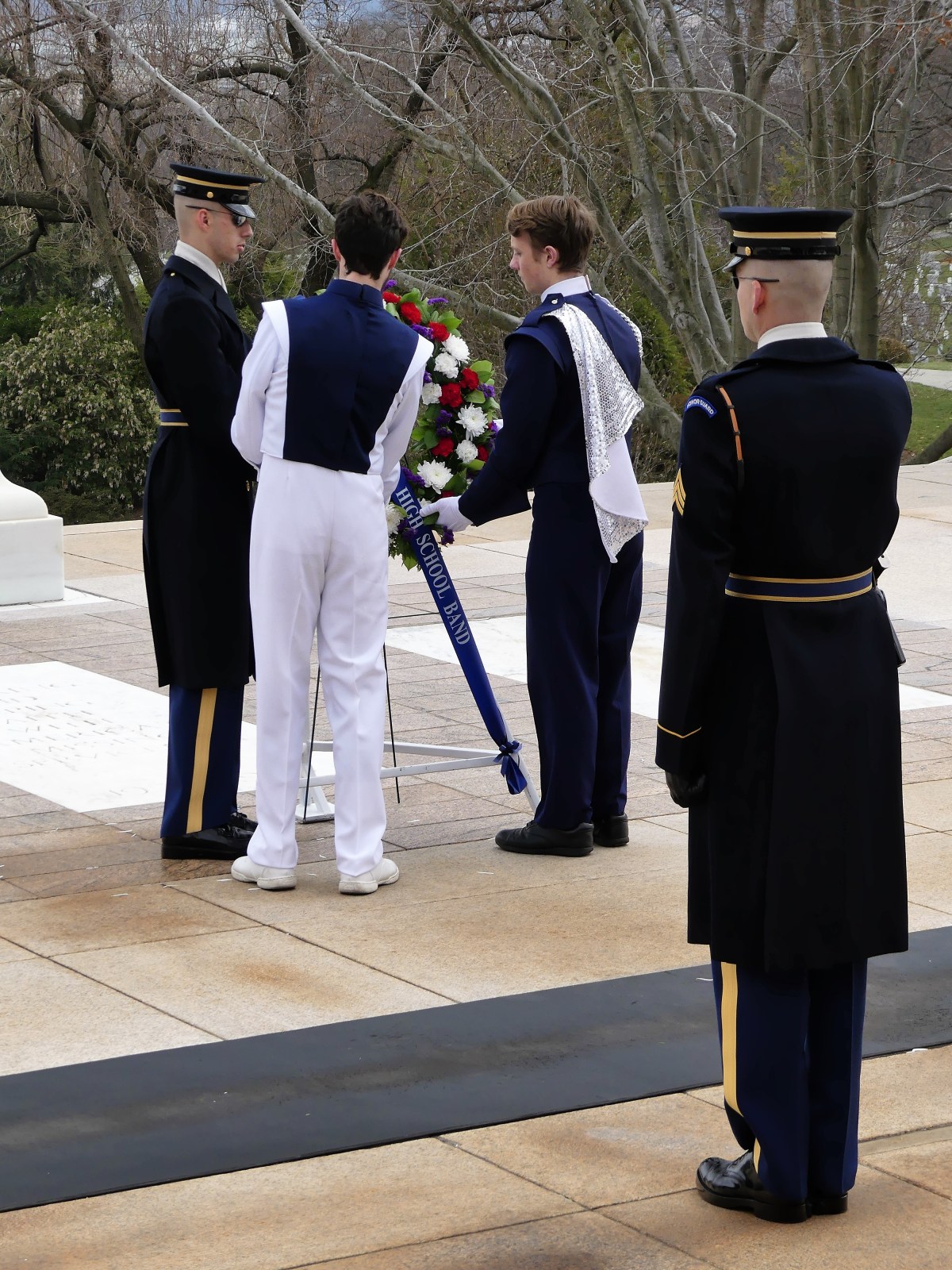
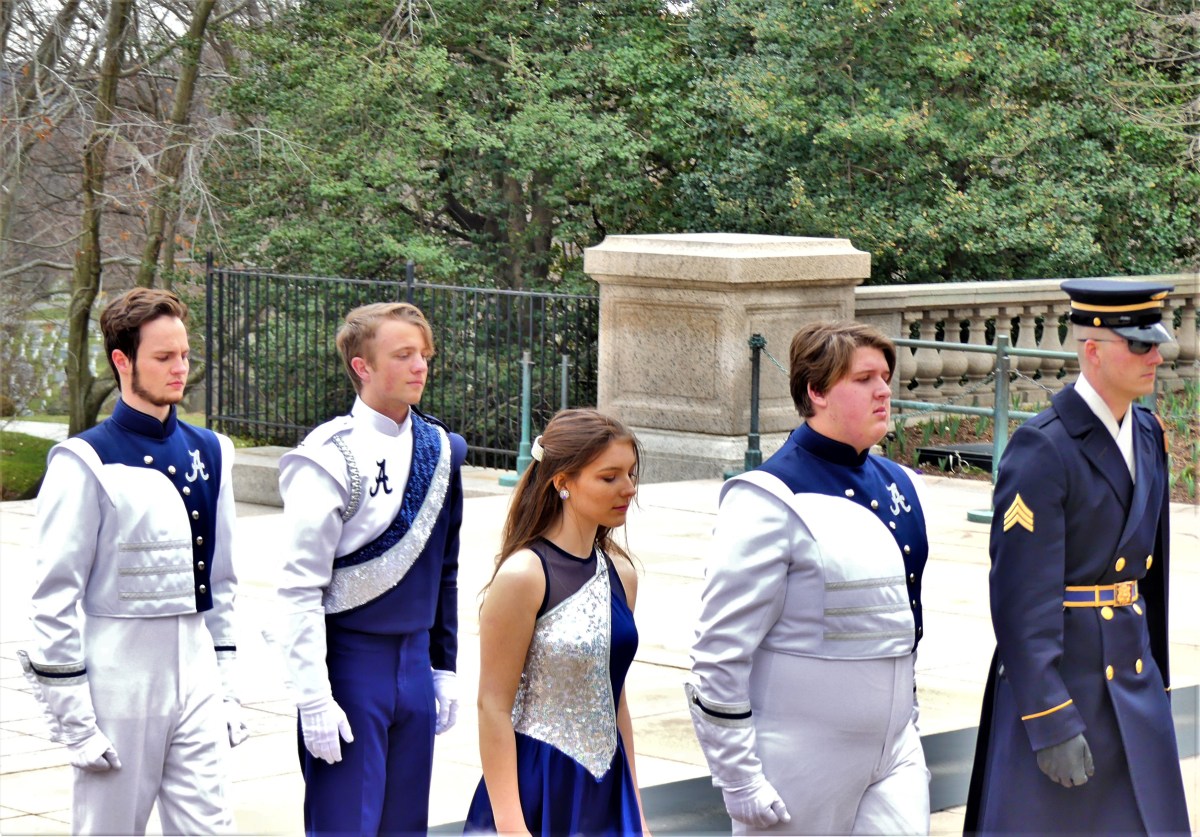
However, on this particular day, at this particular hour, we were also witness to a wreath dedication ceremony from a local high school marching band…

carrying the wreath

placing the wreath

bugle

playing Taps

marching band honor

which only added to an already moving tribute and ceremony.

But there was one last vital piece of business remaining before our day was done: an obligatory visit to the gravesite of JFK to pay my respects.

JFK viewers

When John F. Kennedy was assassinated on Friday, November 22, 1963–the day before my 11th birthday–the announcement by Principal Simon came over the PA system, interrupting my Happy Birthday-song tribute. Immediately, the class went from cheers to tears in an instant, like a bipolar meltdown.

The pervasive sadness swept my home that evening, and I can’t remember when the sadness lifted. There was nothing any of us could do to keep from crying.

JFK quote
In the long history of the world, only a few generations have been granted the role of defending freedom in its hour of maximum danger. I do not shrink from this responsibility. I welcome it.

My 11th birthday was a turning point in my life–one of those moments where it’s impossible to forget where you were or what you were doing when you learned of something so profound, or horrific, or cataclysmic that you knew right then and there that your life had changed forever.

JFK grave

And while there’s no going back to a wrinkle in time, processing the tragedy is always hard to reconcile, even after all these years, as is wondering about the wonder that might have been.

The Sentinel’s Creed

My dedication to this sacred duty is total and wholehearted.
In the responsibility bestowed on me, never will I falter.
And with dignity and perseverance.
My standard will remain
Through the years of diligence
And the discomfort of the elements,
I will walk my tour in humble reverence to the best of my ability.
It is he who commands the respect I protect,
his bravery that made us so proud.
Surrounded by well-meaning crowds by day,
alone in the thoughtful peace of night,
this Soldier in honored glory rest under my eternal vigilance.

PBS has produced the following video which masterfully demonstrates the precision of the pageantry, and reflects the awe of the ceremony.

My Word!

It’s always a pleasure returning to DC’s National Mall…

mall (5)

where I like to keep an eye on my tax dollars by walking through the Smithsonian museums…

Smithson remains

to inspect the work being done by museum curators on my behalf.

nave (2)
Smithsonian Castle Commons

Aside from being a great depository of great aeronautical history at the National Air and Space Museum…

Spirit of St. Louis
donated by Charles Lindbergh

or interpretive history at National Museum of American History…

WE BUILD
Horatio Greenough

I’m always inspired when browsing through the Hirshhorn.

dry fountain
Gordon Bunshaft–Hirshhorn Fountain
rockface and car
Jimmie Durham–Still Life With Spirit and Xitle

where I get a chance to meander beside the curvy gallery walls, as I contemplate Mark Bradford’s updated Civil War cyclorama detailing Pickett’s Charge

Pickett's Charge panels (2)

or introspect on a retrospective of the 80’s, where everything is rele-vent again…

ON VEND DU VENT
Haim Steinbach–ON VEND DU VENT
SILENCE=DEATH (2).jpg
Gran Fury–SILENCE=DEATH
stripes
Jenny Holzer–Inflammatory Essays

or think deeply in the basement, where I’m reminded by Barbara Kruger’s BELIEF+DOUBT installation that words matter…

Belief

Bad Day

FORGET

Men's Room1

Women's Room

…and can make a difference…something I’d rather be doing.

First Flight

In the distance,

Kill Devil Hill

on a grassy sloped hill,

Looking down Kill Devil Hill

there stands a monument,

Wrights Monument

built of grit,

Brothers (3)

and will.

Brothers1 (2)

On a wing…

wing assembly

and a prayer…

Pea Island

The brothers moved

to Outer Banks

to dance

on open air.

Cape Hattaras

With gusting winds

kites on dunes

and dunes so tall,

dune patterns

the rail in place

to guide her,

following the rail

Orville readied

at the stick,

Orville at the stick

while Wilbur ran

beside her.

Sculpture1

Propellers spun,

the engine roared–

Original photo

the plane was

swept aloft.

The rescue crew

would cheer them on…

Rescuing Service

no matter

what the cost.

The Brothers Wright

achieved success–

Commemoration

a boulder

marks the sight.

granite and plaque

They passed the test,

and lit the way,

Bodie Island Light House

for they were

first in flight.

Monument and Family

*filed under picture story

L’Chaim

A second pass through historic Savannah on our way north left us with a day to cover a small part of the city left unseen from our last visit. Previously, Leah and I had budgeted two days in Savannah–between Thanksgiving and Christmas–as we ever-so-slowly slipped into our winter’s hibernation in Florida. Additionally, our obligation to celebrate Dad’s 93rd birthday in West Palm Beach (Happy Birthday, Dad!) on December 11th didn’t leave us much wriggle room for extra time.

Nevertheless, our first visit was rewarding, with memorable stops to: Bonaventure Cemetery, a fabled 18-century burial ground;

Bacon (2)

the revival of River Street, along the Savannah River;

Georgia Queen (3)

neighboring City Market, an 18th-century open-air marketplace;

unintended consequences (2)

Forsyth Park, with its famous oak-lined pathway…

Forsyth Park

leading to legendary Forsyth Park Fountain;

Forsyth Park Fountain

and finishing at the landmark Gothic-Revival Cathedral of Saint John the Baptist, the centerpiece of the historic district.

St. John exterior

But Savannah’s geo-positioning (part of the I-95 corridor) made it an easy transition point for routing our return home, and a welcoming destination for a second helping of Southern hospitality…and of course, we were not disappointed.

“So, we have another day here,” announced Leah. “How would you like to spend it?”

“You’re probably gonna laugh,” I stated seriously, “but just like Charlotte, there’s lots of Jewish heritage in Savannah, and there’s a historic congregation in the historic district we could check out.”

“But it’s Saturday, so there’s no way we’re getting in during the Sabbath,” she forewarned, so the best you could expect is an outside picture of the building.”

“Unless we attend services.” I added. “C’mon, it’ll be spiritually enlightening, and you can pray we made the right choice by relocating to St. Augustine.”

We arrived at Congregation Mikve Israel, walked past a uniformed police officer, and through the anointed doors…

doors

where we were met by welcoming ushers who immediately apologized for the temple’s appearance, and offered us a program outlining Catherine’s Bat Mitzvah. We were twice surprised.

Ordinarily, we would have taken a seat at the back of the temple making it easy to leave at our earliest convenience, but it seems that God had other plans for us.

We crossed a chuppah of scaffolding shrouding one-half of the sanctuary’s neo-Gothic architecture, and placing the back rows of the pews off-limits.

scaffolding

Instead, we took a seat closer to the altar among other congregants, while feeling somewhat out of place.

Bimah and Ark

We opened our siddurim to the selected text announced by Rabbi Haas, and subsequently followed the service to its conclusion, as it was meticulously led from the bimah by Catherine.

Catherine at the ark

While chanting familiar prayers with familiar melodies, I reflected on the original forty-two Sephardim and Ashkenazim who disembarked from the William and Sarah in 1733–having sailed aboard a London vessel bound for Oglethorpe’s fledgling colony in Georgia with their precious Sefer Torah in tow–

1733 Torah (3)
1733 Torah

in search of religious freedom and a fresh start.

1737 Torah
1737 Torah

As we prepared to exit after the last refrain of Adon Olam had echoed through the hall, we were approached by an elder of the congregation who encouraged us to stay behind and enjoy lunch with the other members in celebration of Catherine’s mitzvah.

There was no way of turning down Jack’s invitation. He wasn’t taking “no” for an answer. We feasted on lemon chicken, orzo with roasted vegetables, artisan lettuce with dressing, mixed fruit salad, and challah. The company at our table was as delightful and fulfilling as the meal.

During dessert…

cake

we lamented over a missed opportunity to learn more about Mikve Israel’s storied history, given that tours only occur on weekdays. However, a temple docent–conveniently seated at our table–volunteered to escort us to the second floor for a personal inspection of museum exhibits…


Wall of Presidents

GW decree
“… May the same wonder-working Deity, who long since delivering the Hebrews from their Egyptian Oppressors planted them in the promised land – whose providential agency has lately been conspicuous in establishing these United States as an independent nation – still continue to water them with the dews of heaven and to make the inhabitants of every denomination participate in the temporal and spiritual blessings of that people whose God is Jehovah.”

Ford's visit

A Colonial Congregation (2)

Historic Preservation (2)

Building for a Congregation (2)

and museum artifacts…

artifacts1

artifacts2

artifacts3

As serendipitous as this adventure was, I knew as I descended the stairs…

window and stairs

that I was meant to tell the story of Mikve Israel’s descendants: about their unwavering regard for their American Revolutionary roots, their continuing crusade for community; and their unconditional code of acceptance and inclusion.

Leah and I were invited to return and sample real Southern Jewish hospitality the next time we pass through Savannah, and I think that’s an invitation that I can easily accept, regardless of the obstacles.

scaffolding1 (2)

Fortuitous

The Spanish crown was ambitious in its exploration of the New World, establishing the first permanent European settlement at St. Augustine in 1565, and equally as keen on protecting its investment from marauding pirates, subversive Native American neighbors, and the French and British Empires by establishing a trio of forts along New Florida’s northern Atlantic coastline.

Spanish Defensive Network

Aside Fort Mose to the north and Fort Matanzas to the south, Castillo de San Marcos was the first and largest of the three, standing 33 feet high, with 14 feet thick walls of coquina blocks–

outside the walls (3)

–a bonded composite of crushed seashells quarried from nearby Anastasia Island–and able to withstand a cannon shot from an enemy vessel.

Lions Bridge passage

Completed 323 years ago, Castillo de San Marcos still stands as the oldest masonry and best preserved fortress in the continental United States, and a symbol of the colonial struggles that shaped the history of a nation.

cannon casting (3)

Protecting St. Augustine was an interwoven fabric of fort design,

moat

view from above

soldier readiness,

reenactor

and black powder weaponry.

interior (2)

The Castillo’s advanced architecture showcases the bastion system, named for the diamond-shaped spears jutting from the four corners of the fort walls–

fort exterior

each point armed with an array of cross-firing guns intended to sweep across a wide swath of defensible coverage.

guns and turret

Additionally, the coquina stone offered fortunate benefits to fortress defenses if fired upon, as soldiers quickly realized that the porous properties of its shell walls could absorb the impact of cannon balls, rather than the walls shattering into shards if built with brick or granite.

A soldier’s life of active duty at the fortress usually consisted of drills, repair, and sentry watch,

sentry turret

with little time ever devoted to battles. Otherwise, their time was spent protecting the larder…

provisions locker

practicing their faith, which guided all aspects of colonial life…

First mass

and working second jobs as carpenters, cobblers, and coopers to support their families when away from the barracks.

soldier bunk

Officer barricks

But when confronted by the enemy, cannon crews were so effective at discharging projectiles from a variety of guns when repelling an attack or seige,

Artillery and Amusettes

cannon defenses

cannon crest

Shot Locker loaded

that Castillo de San Marcos was never breached in its history.

ramparts (3)

The fort has been the centerpiece of a historic city that has changed flags six times, but always by treaty–never surrender or defeat.

Spanish flag.jpg

Legions of soldiers through the ages have passed through its chambers leaving behind their marks…

ship grafitti (2)

grafitti1

graffiti (2)

But the treachery of Renaissance politics that sparked an amazing race of New World discovery, launched a new nation forged in conflict, and a new world order that defies all labels.


Basket Case

They came off slave ships in Charleston,

Slave Ships to Charleston, SC1

clad in chains,

The buyer.jpg

and stripped naked of everything except the courage they needed to accept their new fate.

As families in West Africa, they relied on each other, but far from home on distant shores those bonds were broken. Husbands and wives, sons and daughters, brothers and sisters were separated and independently prepped for sale, bringing new meaning to groomed for success.

preparing slaves for sale1

The slave mart in Charleston, was the go-to destination…

Old Slave Mart Museum entrance

for traders to wrangle the best price,

The Price of a Human Being1

as human beings resigned themselves to their new owners and an unfathomable situation.

Imagine the shock and despair they must have felt, rolling down the Avenue of Oaks at Boone Hall Plantation for the first time in slave carts,

Oak Avenue

wondering about the cluster of buildings by the side of the road…

Slave quarters

Slave quarters1

that would become their future shelter…

quarters

as they approached the paddock…

paddock

and the manor house.

manor (2)

Boone Hall Plantation of Mount Pleasant, SC continues today as one of America’s oldest working farms, still producing crops after nearly 340 years of activity.

Also noteworthy, Gullah-Geechee heritage continues with sweetgrass basket-coiling skills that have sustained through five generations of descendants of slaves.

sweetgrass baskets

Original roadside stands from the “hayday” of basket production still dot the Route 17 landscape, luring everyday customers and tourists to inspect the wares.

roadside stand (3)

However, the trend has traveled to the Charleston City Market,

Charleston market

where the demonstration of sweetwater basket-making is routine…

sorting sweetgrass

selecting sweetgrass

and sales are brisk,

weaving

with up to 300 weavers who remain dedicated to the craft.

basket maker

At this time, dwindling supplies of lowcountry sweetgrass are protected, and can only be harvested by bonafide ancestors…

Charleston coastline

guaranteeing a steady stream of basketry to remind us how sweet the courage of a people can be, and how crooked their path to freedom.

marsh grasses

museum attendee