Eureka!

A stopover in Eureka Springs, AR along the way to Branson, MO produced some Eureka! moments and other assorted revelations.

For one, there are seventeen registered churches in Eureka Springs, ministering to two thousand healing hearts and souls around town, plus a Tibetan Buddhist temple and an integrated monastery of celibate brothers and sisters.

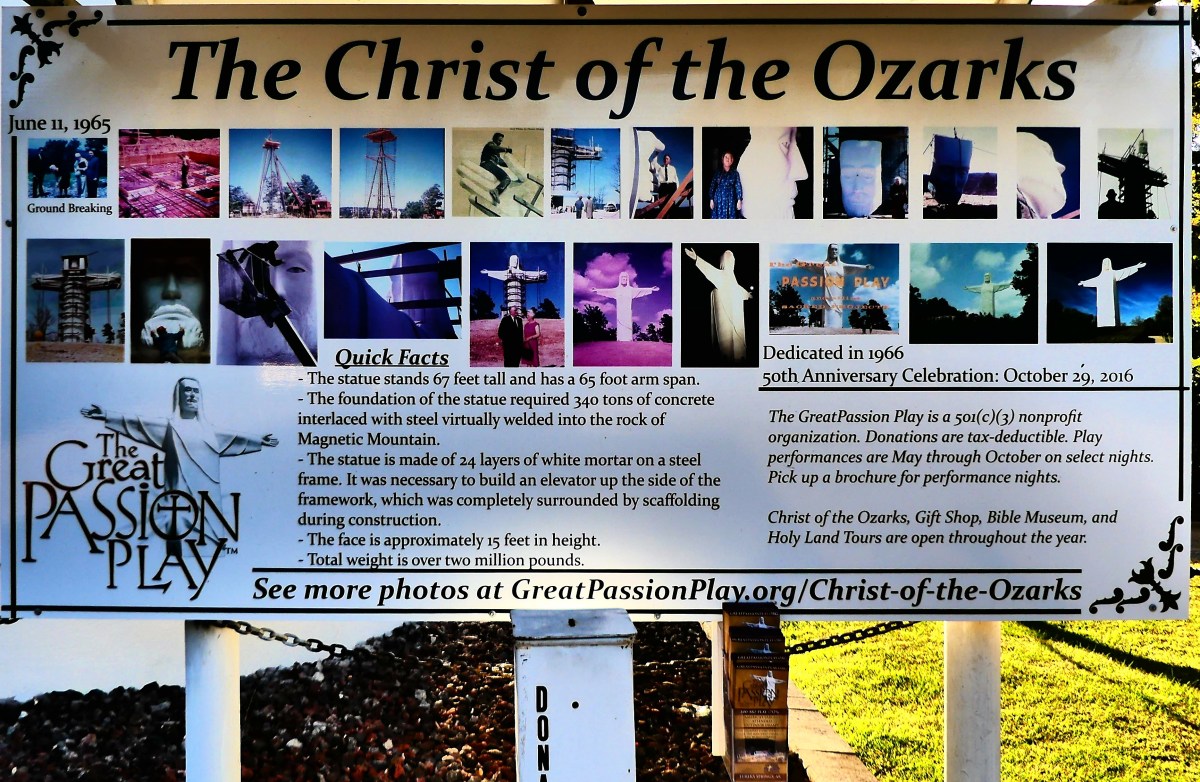
Religious overtones are also pervasive throughout town. Our Airstream was parked along Passion Play Rd., above the hallowed hollow where The Great Passion Play’s dramatic reenactment of the last week of Jesus Christ is the #1 tourist attraction in the area, and The Christ of the Ozarks rises nearby, hovering above the dense woods of Magnetic Mountain.

Jesus of the Ozarks

Christ sign

Big Jesus side view

Also looking down from town, the Crescent Hotel–recently added to the National Register of Historic Places–delivers luxurious living and salon services, in what’s billed as America’s Most Haunted Hotel.

Historic Crescent Hotel

Crescent Hotel

A fourth-floor lookout…

P1100279

provides familiar views in the distance,

Jesus over sunset

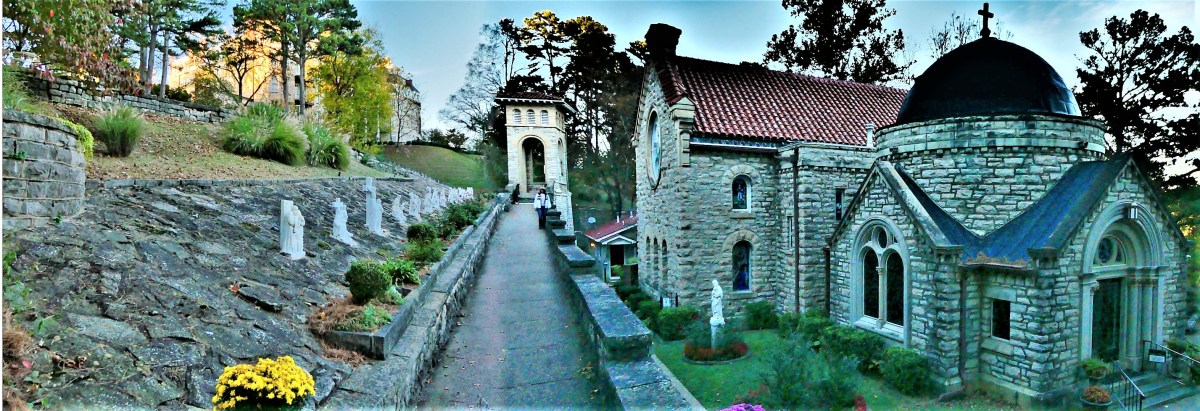
and an overlook of St. Elizabeth Catholic Church of Hungary–listed in Ripley’s Believe It or Not as the only church in America with entry through the bell tower.

St. Elizabeth Church1 (2)

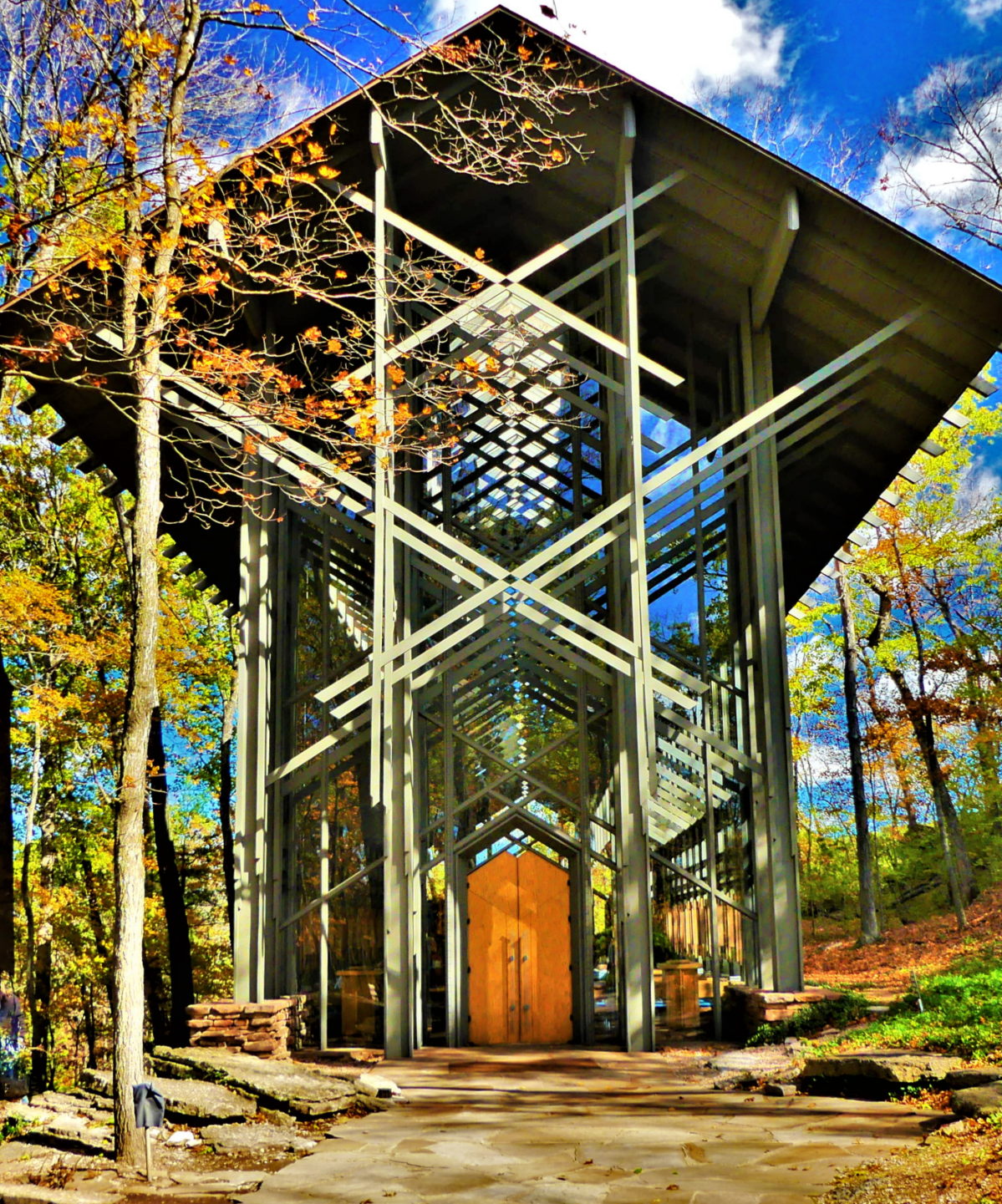
Stunning religious “art-chitecture” can also be found at the Thorncrown Chapel, a jewel of glass and wood tucked into the hillside atop a ledge of flagstone.

Thorncrown Chapel1 (2)

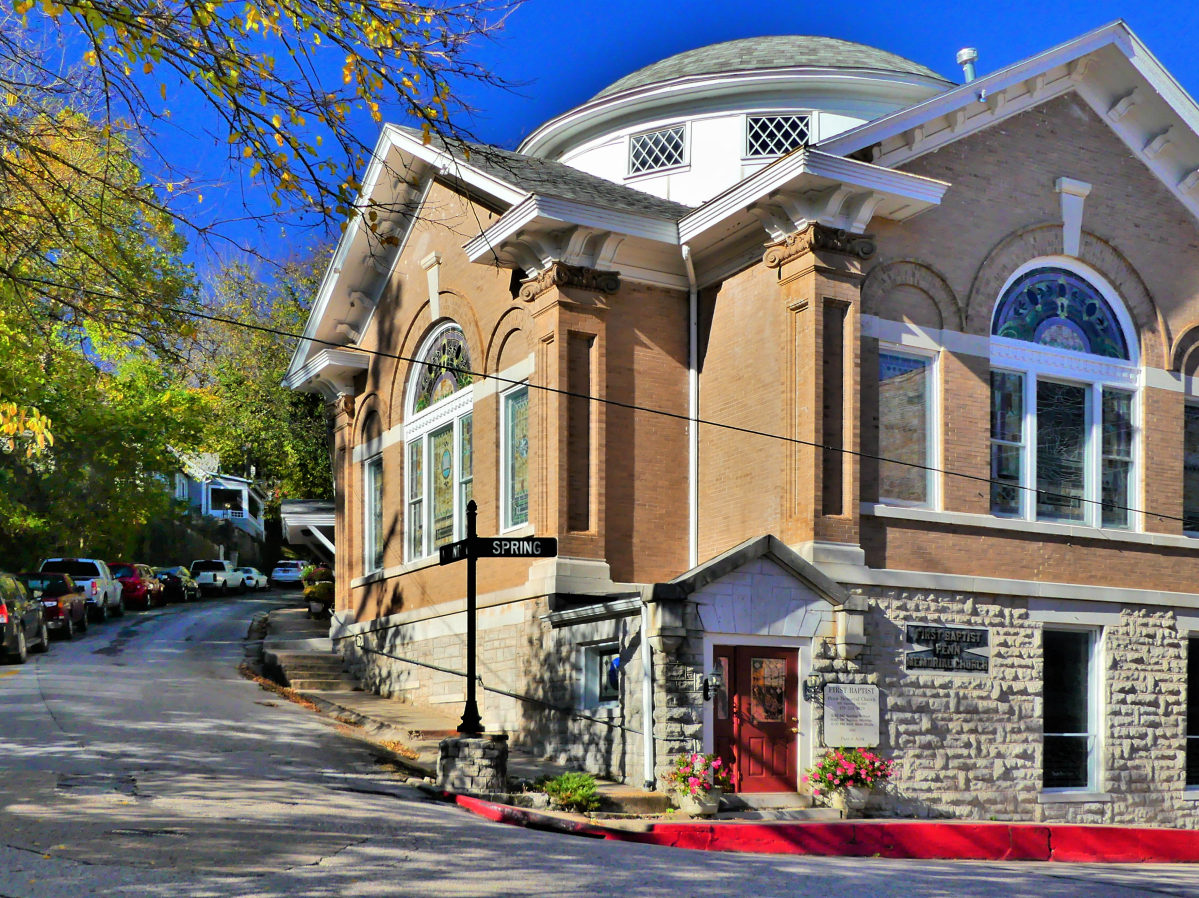
Inside Eureka Springs’ Victorian historical district, the Byzantine-styled First Baptist Church stands at the corner of three intersecting streets with entrances at each of its four levels, giving it four distinct addresses and cause for another Ripley’s entry.

First Baptist Church

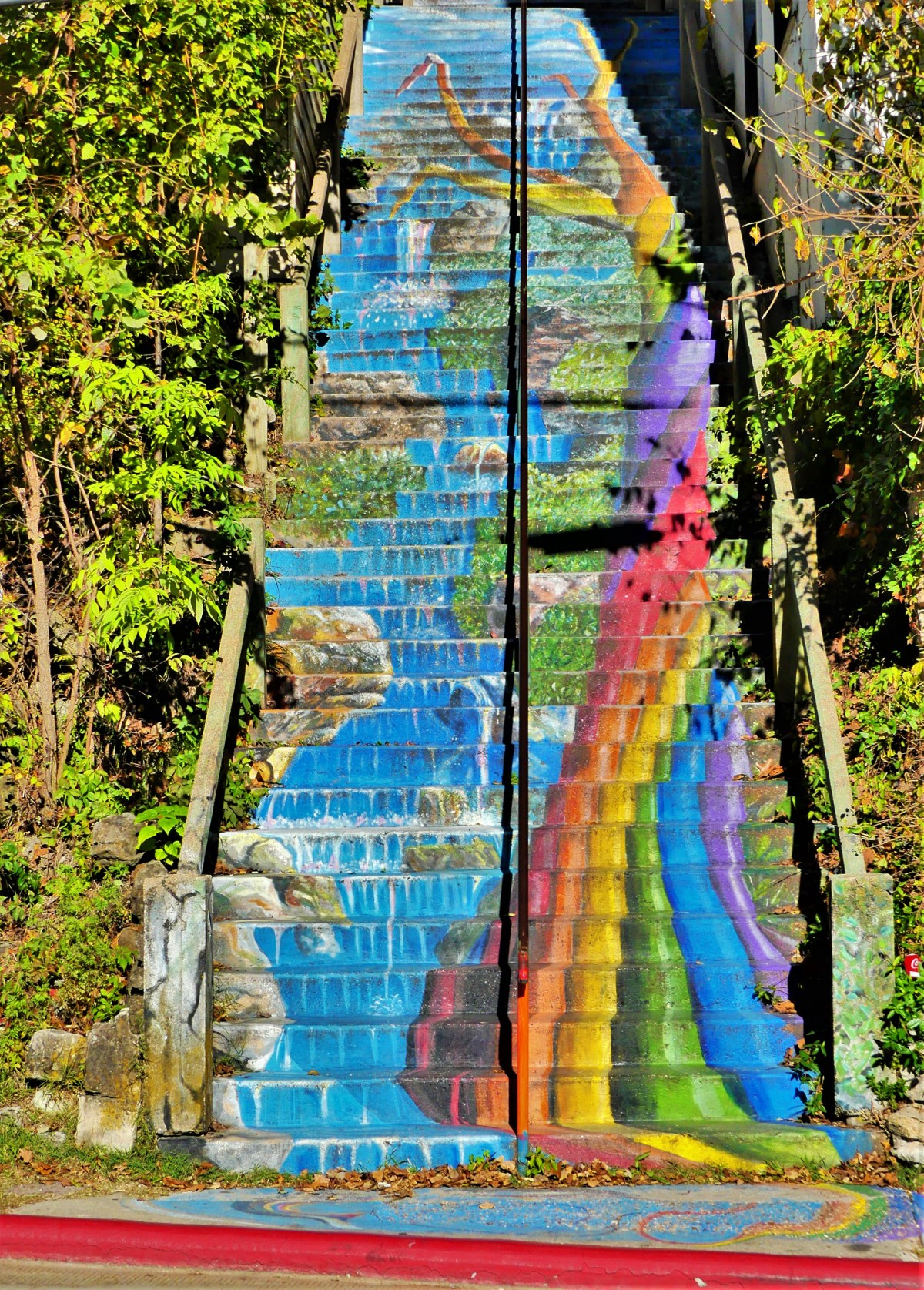
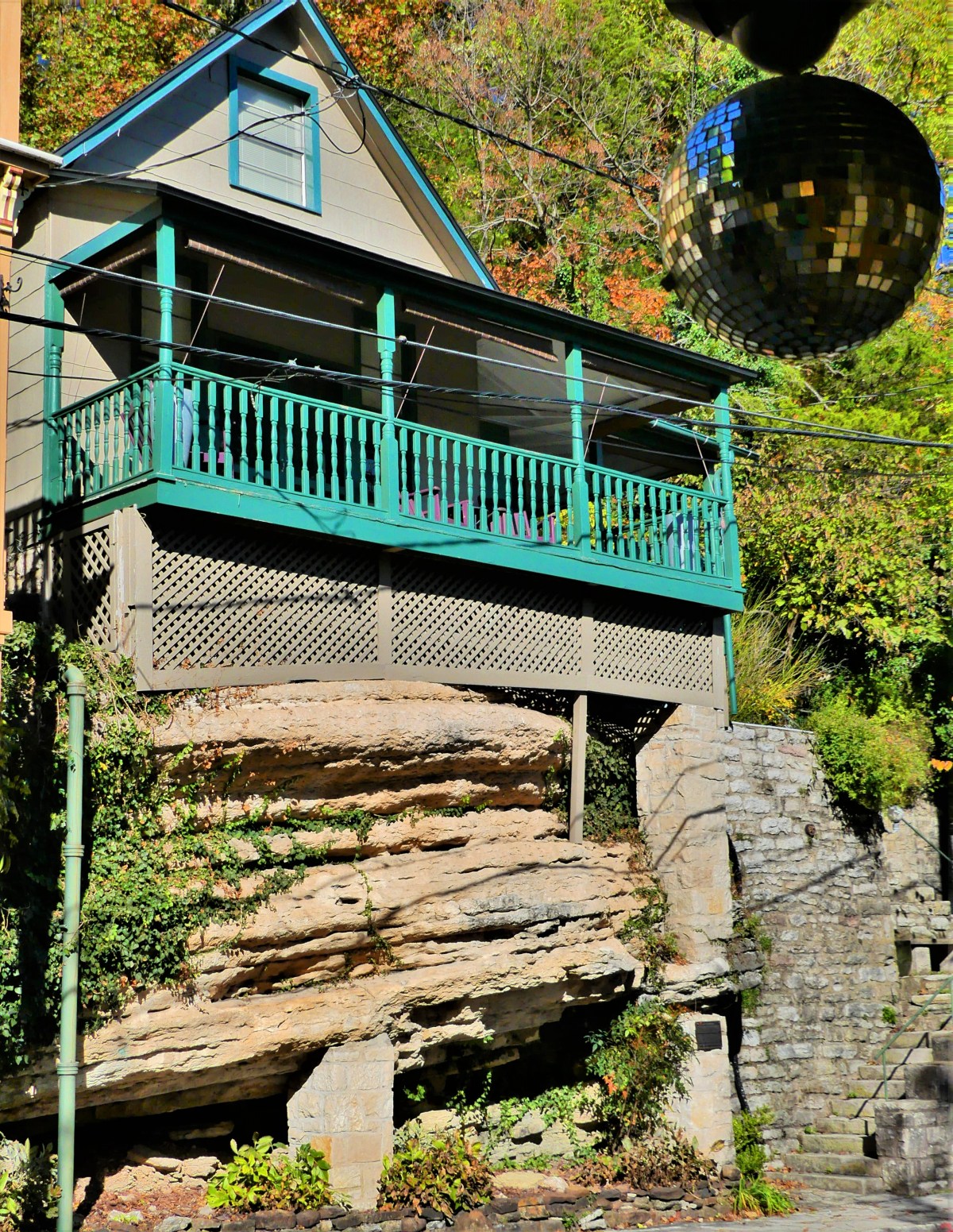
The charm of downtown carries through its narrow winding streets, acute corners, and graded roads of 30% or greater, routinely decorated with accents of fine art…

down the street

Steps to Spring St.

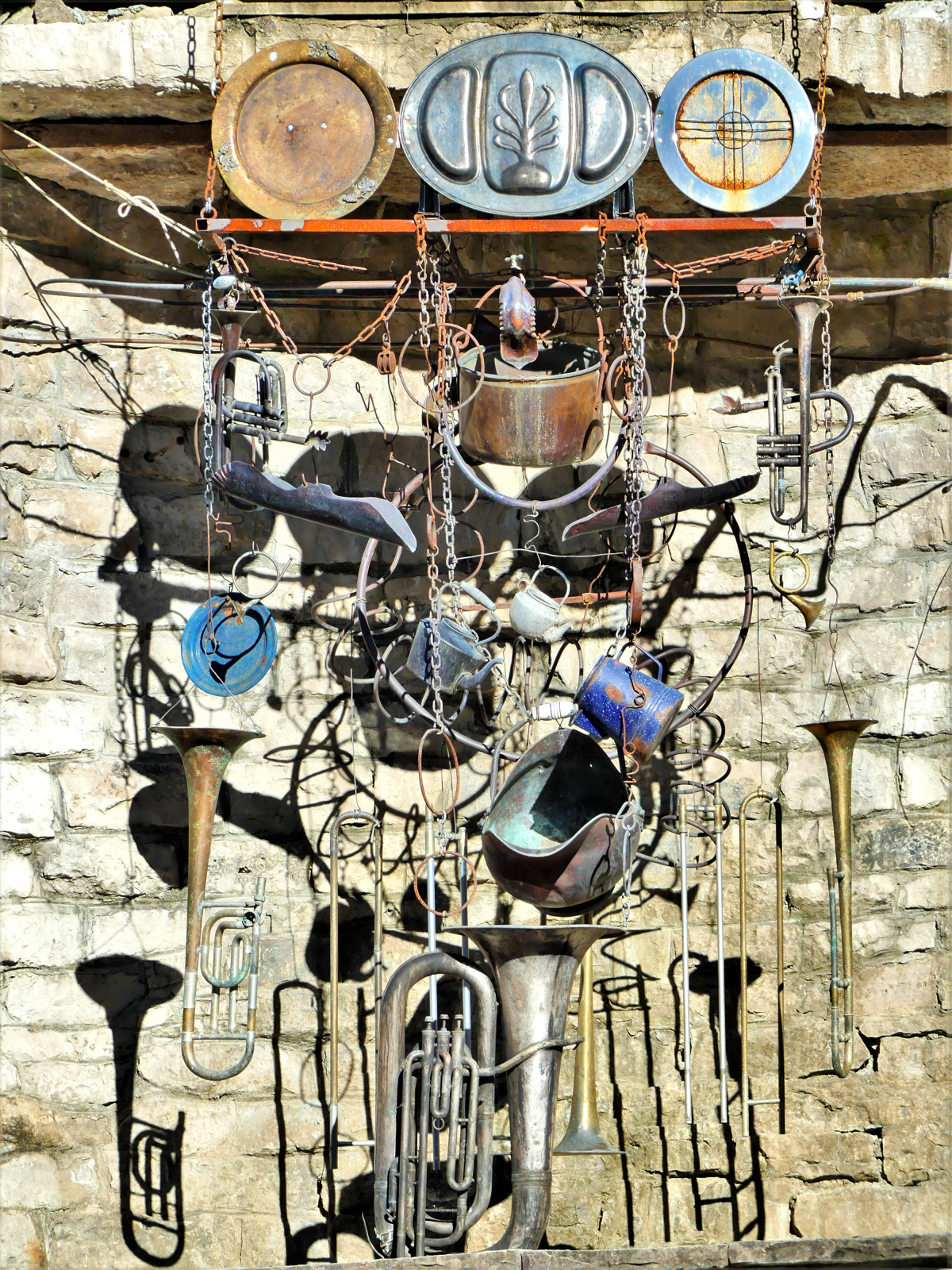
…and frivolity.

Humpty Dumpty gnome

horn orchestra (2)

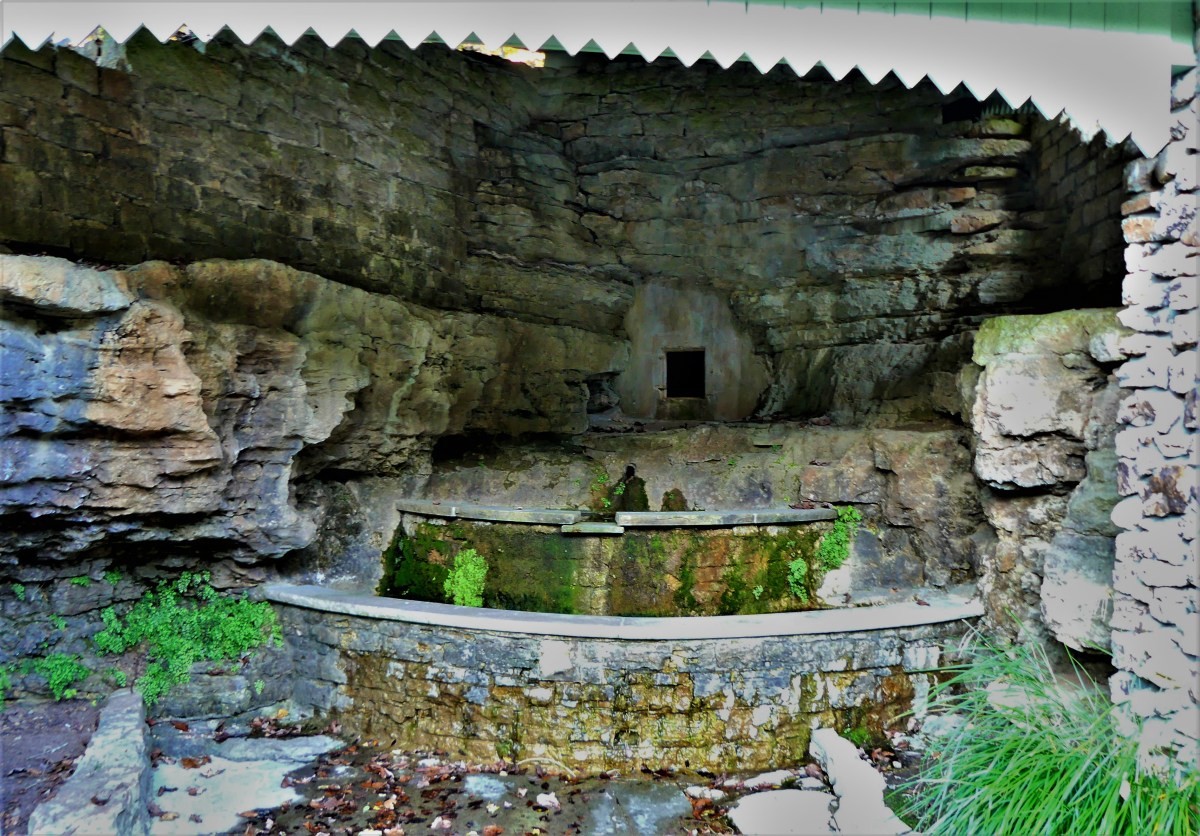
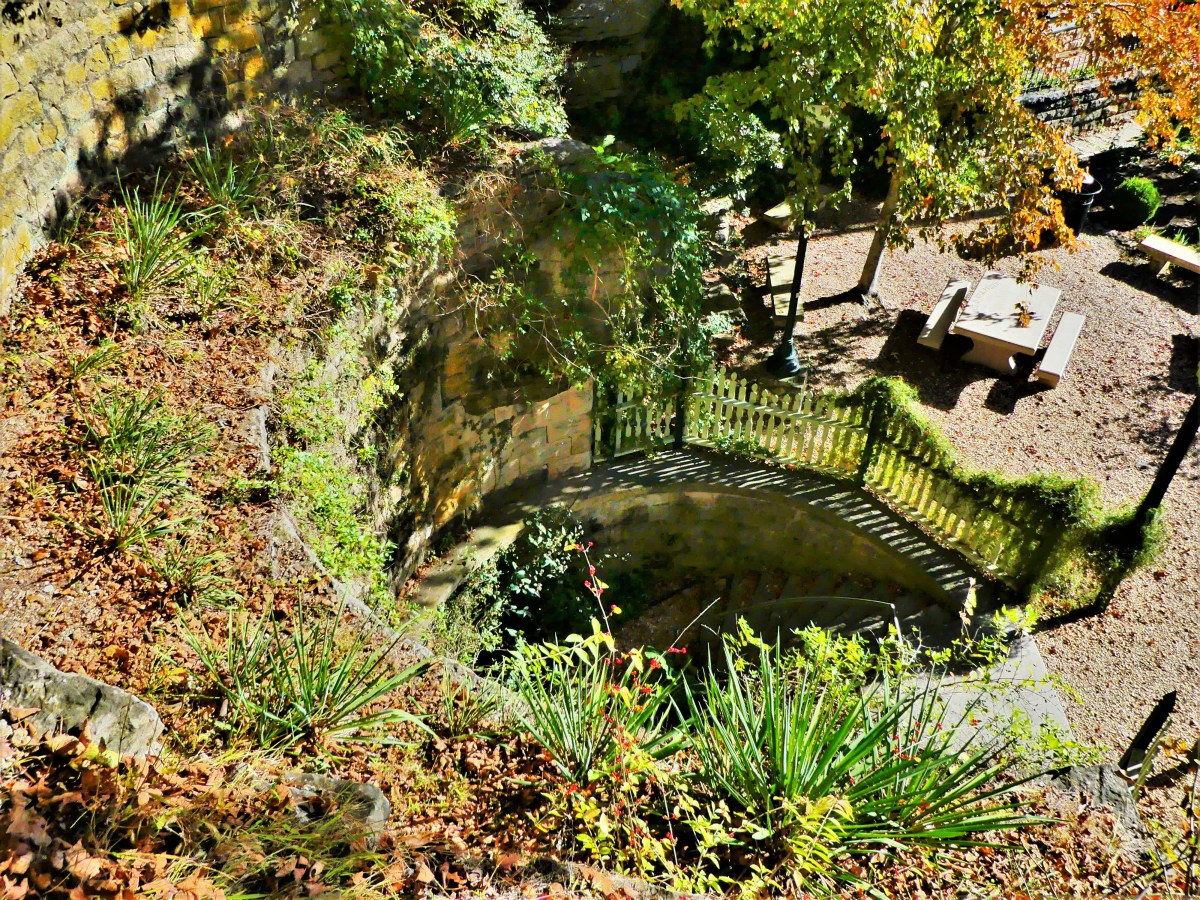
Eureka Springs came by its name naturally, manifesting no less than sixty-two springs that gushed from the mountainside with so-called healing properties. Its establishment as a resort community during the 1870’s prompted visitors from near and far to “take the waters” by drinking up and soaking in its therapeutic juices.

civil war healing

90% cure rate

Today, over a dozen springs have been restored to former glory.

Magnetic Spring plaque

Magnetic Spring

And while the water is no longer potable, the park habitats have given the springs a new lease on life,

Harding Spring

Basin Spring

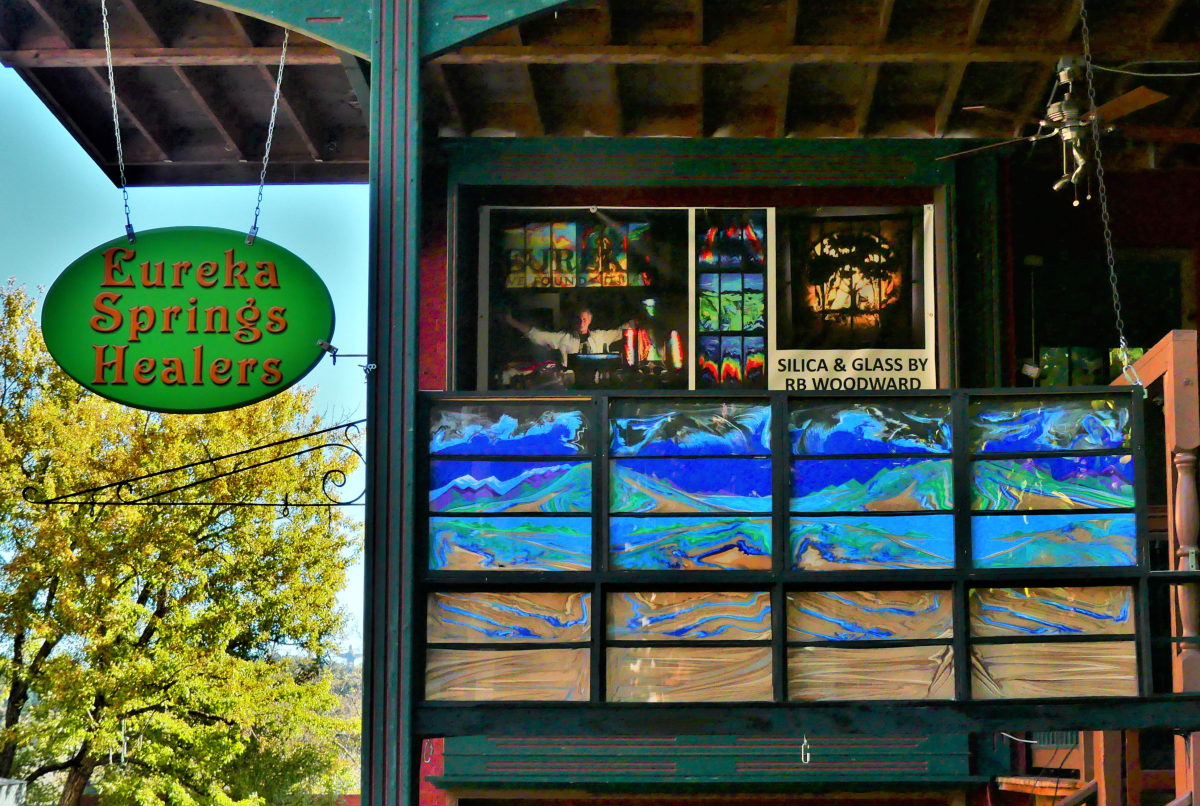
and have renewed the town’s reputation as a popular healing destination,

Eureka Healing (2)

with an emphasis on preserved charm.

County Courthouse

top floor (2)

ball and house

facade

facades.png

Palace Hotel gazebo

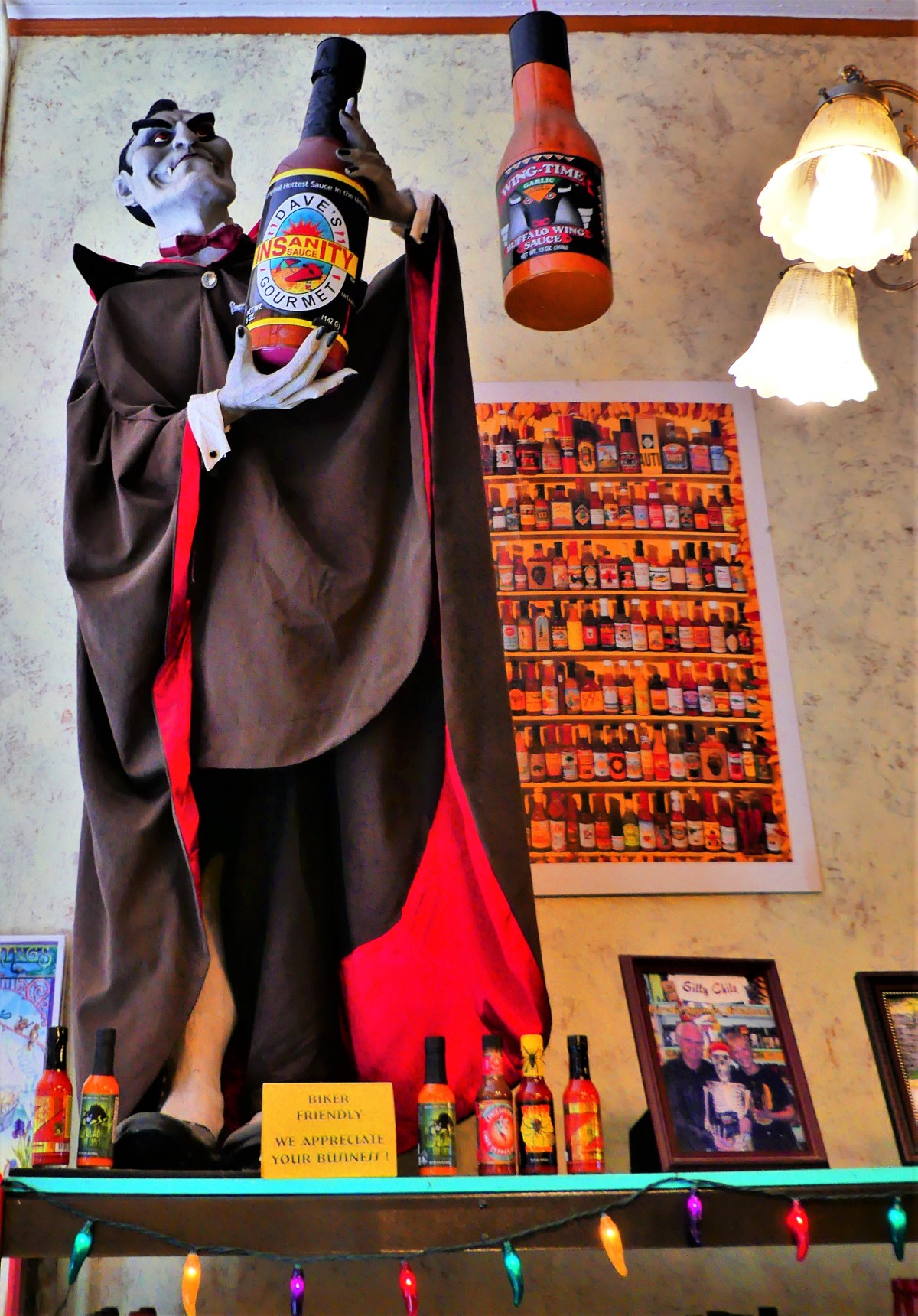
Perhaps the biggest paradox of Eureka Springs would have to be the town’s united commitment to all things ghosts and Halloween, given its adherence and roots in Christiandom, while billing itself as “the place” for the best Halloween party in America…

Grand Central Hotel

Chile Lily

…breathing spiritual relevance into Euripides’ quote: Money is the wise man’s religion.

Sanctuary

Sanctuary comes in many different forms: as a retreat–a place one goes for guidance and inspiration; as a house of worship–a place to seek spiritual healing and nourishment; and as a refuge–a place to escape misuse or abuse. Within 24 hours, Leah and I managed to come across all three in a small corner of mid-western America.

For those searching for faith-based education, Oral Roberts University in Tulsa, OK has a campus fingerprint: Make No Little Plans Here

Make No Little Plans Here

The university’s holistic approach feeds the spirit, mind, and body.

hands1

The university’s futuristic and mid-century modern architecture attributed to Frank Wallace is best appreciated from the flying saucer,

prayer tower

that also passes for an observation deck,

ORU observation deck

and reflection gallery.

OR advice

It’s gold-tinted, anti-glare windows colorize the outward views in a peculiar warm bath of Genesis green.

classroom tower

classroom building

auditorium

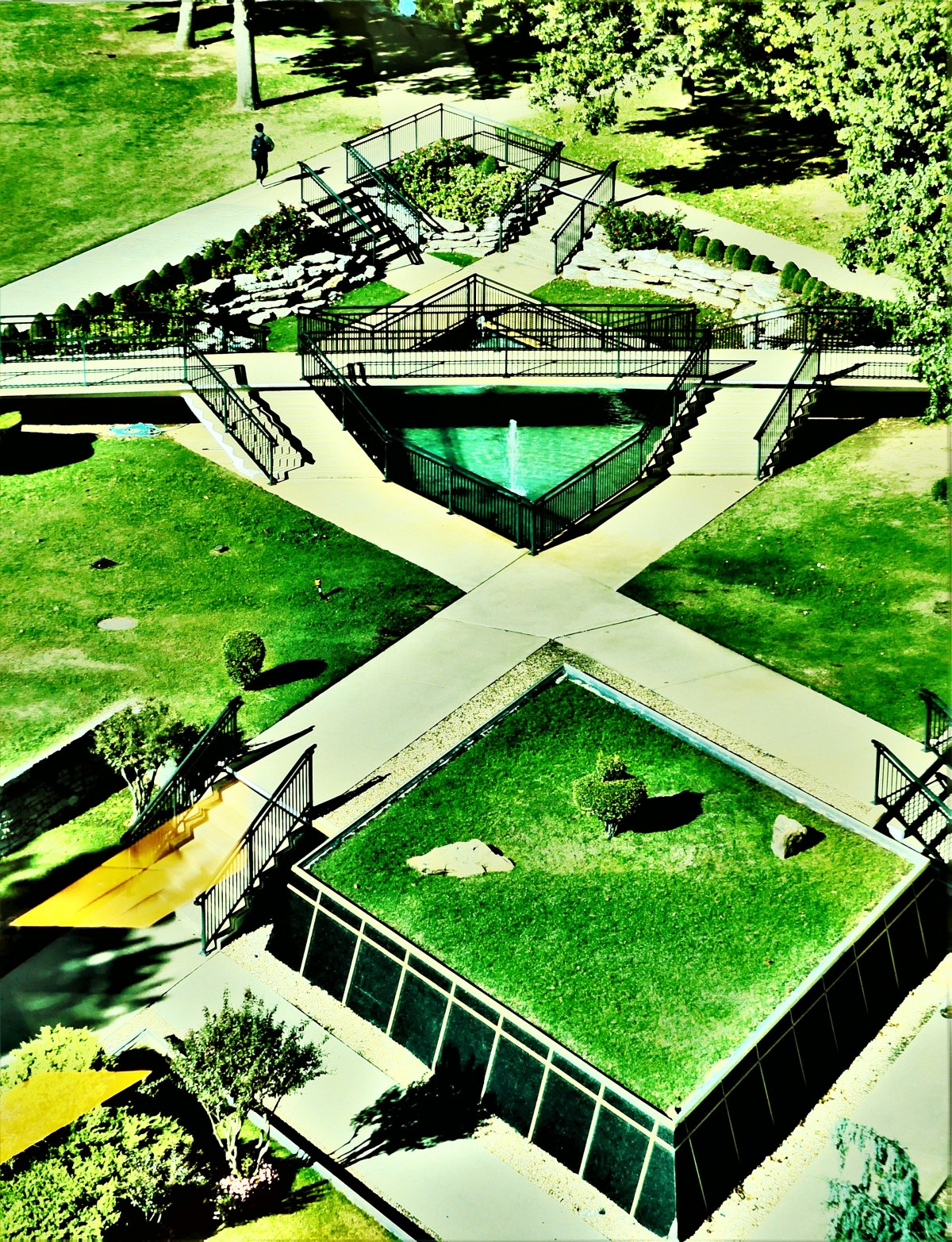
campus green

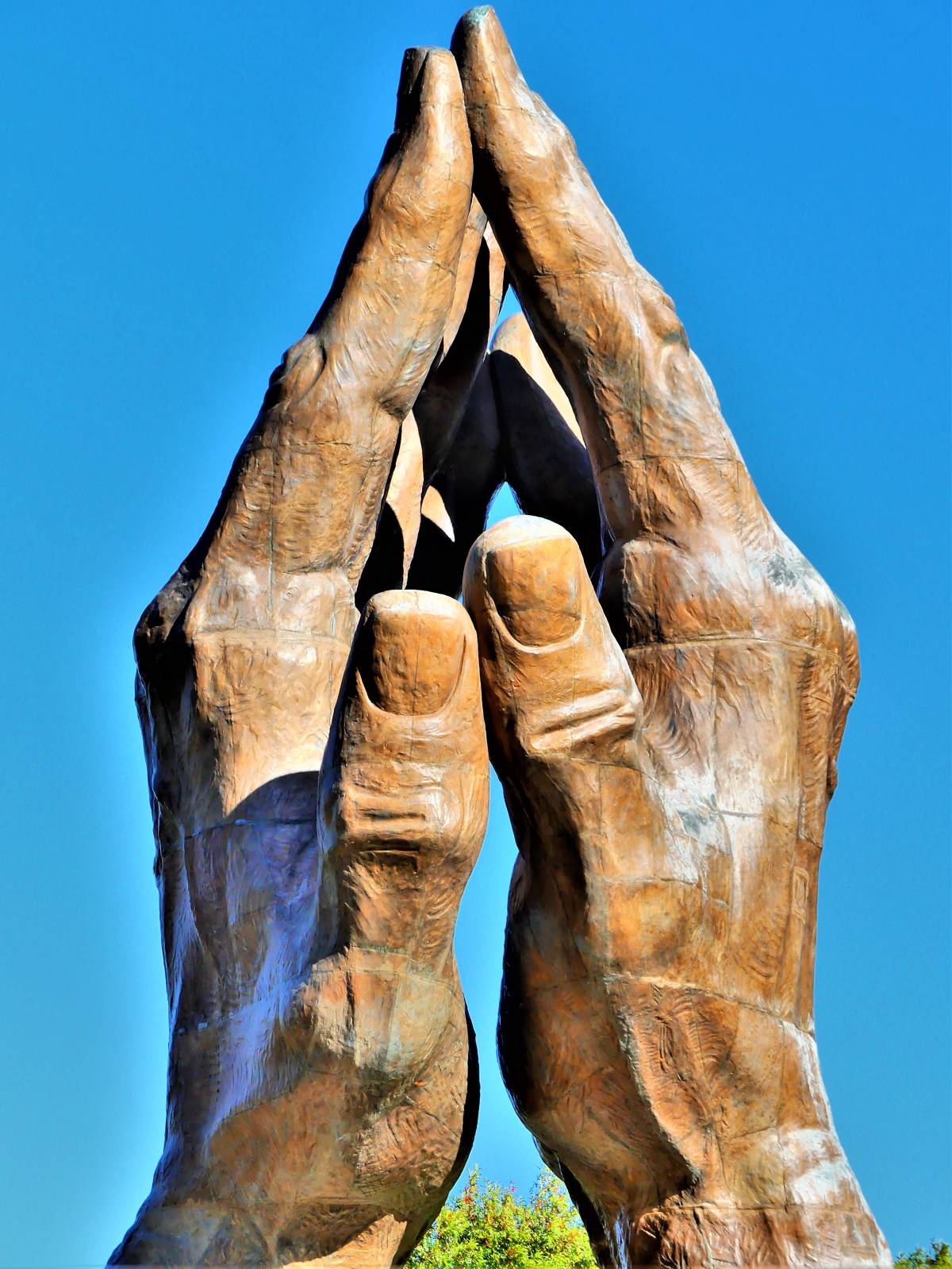
And while folded hands may symbolize a deep connection between God and Christianity,

hands of God

…any university coed would easily characterize the statue as a student praying to pass.


Architecture on a higher plane/plain can be found nearby, in the hills of the Ozarks. While no less spiritual in nature, the Thorncrown Chapel is rooted in nature.

entry

An elaborate composition of wooden trusses embracing 425 windows gives an ethereal nod to a scripture and proverb mash-up of not casting the first stone in glass houses.

From the hillside, the chapel seemingly disappears among the flora,

camouflage

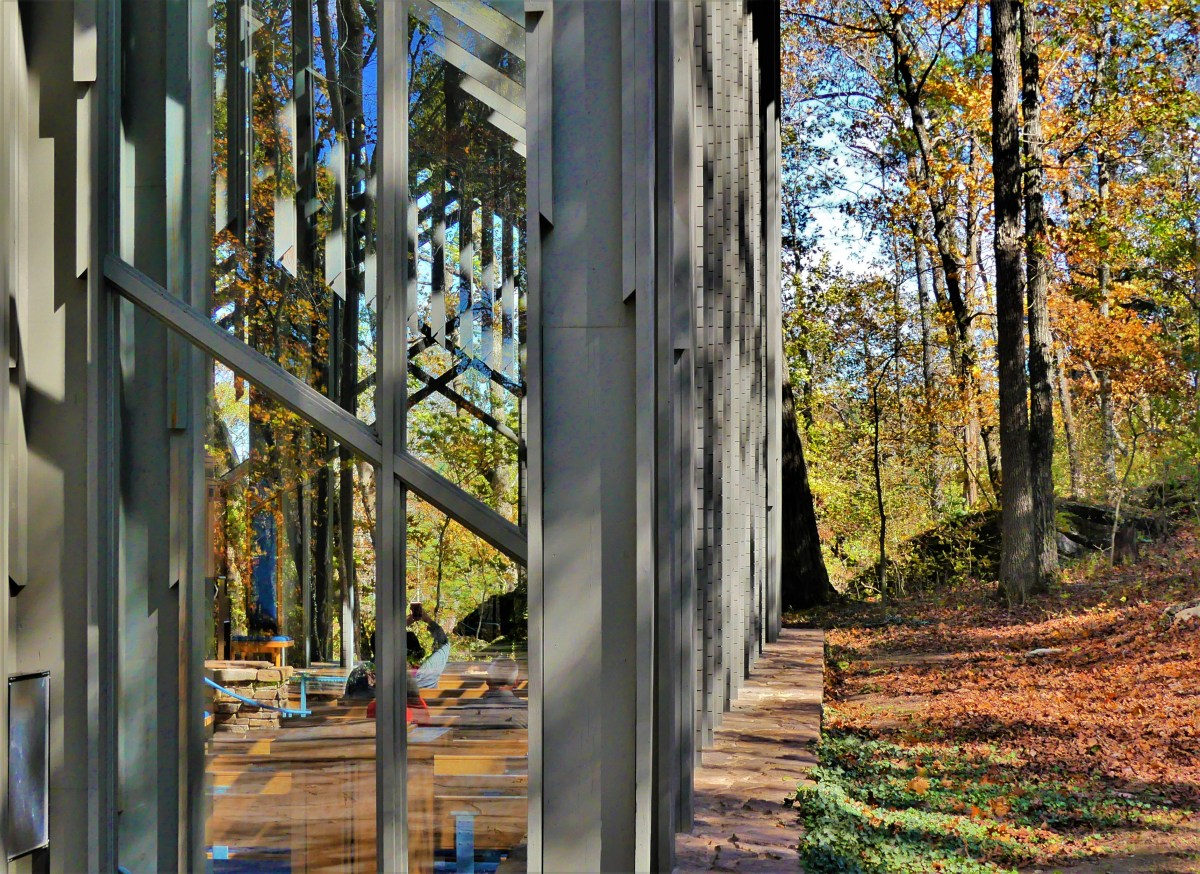
and when juxtaposed to the outdoors, the chapel’s transparency is flaunted by its six thousand square feet of glass.

looking outside in

However, the chapel’s connection to nature shines brighter from within the polished maplewood doors,

interior

where an arboretum of beams reaching forty-eight feet to the clouds…

inside out1

can be contemplated and photographed from a distant pew. (Photography is allowed, but only from a sitting position.)

pews and lights

But Thorncrown Chapel is more than a beautiful building. It’s a celebration of Jim Reed’s spirit and vision, and a noble tribute to the glory of his resignation to a higher power.


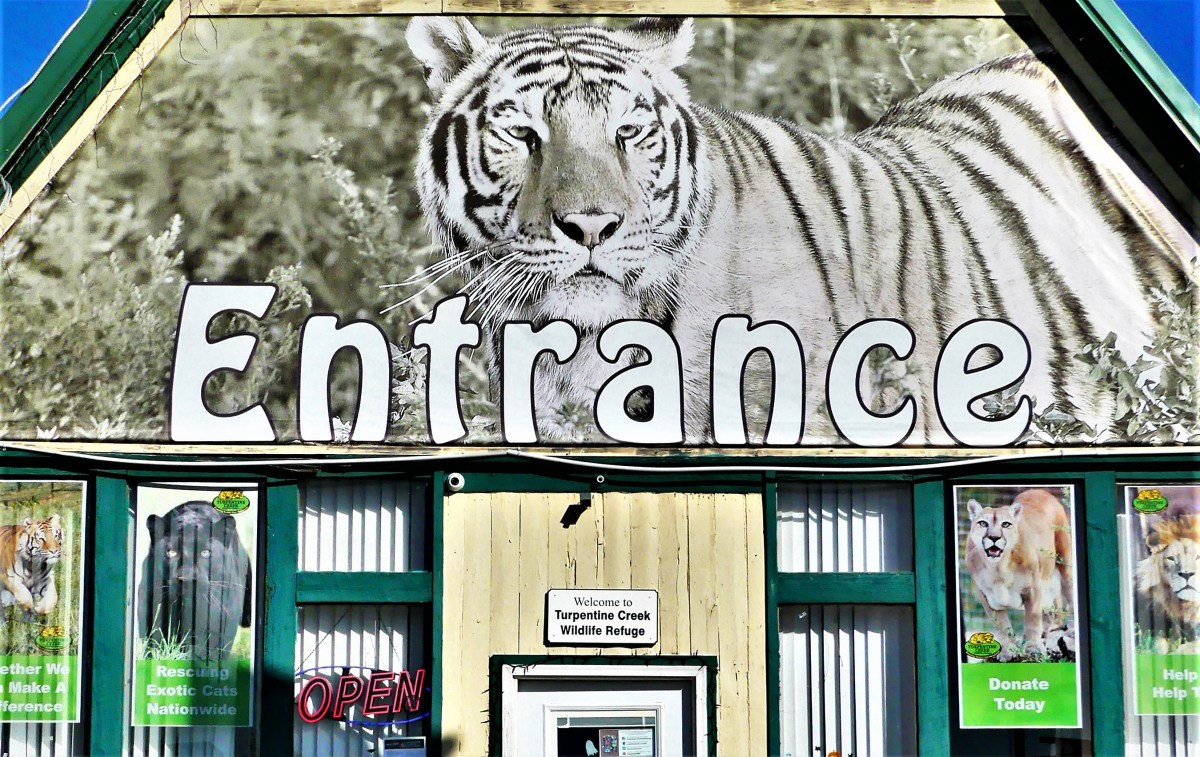
Lastly, eleven miles south, on the edge of Eureka Springs, AK, Turpentine Creek Wildlife Refuge provides shelter and care to abandoned, abused, and neglected wildcats, whose owners have miscalculated the cost and trouble of raising and breeding them in captivity.

entrance1

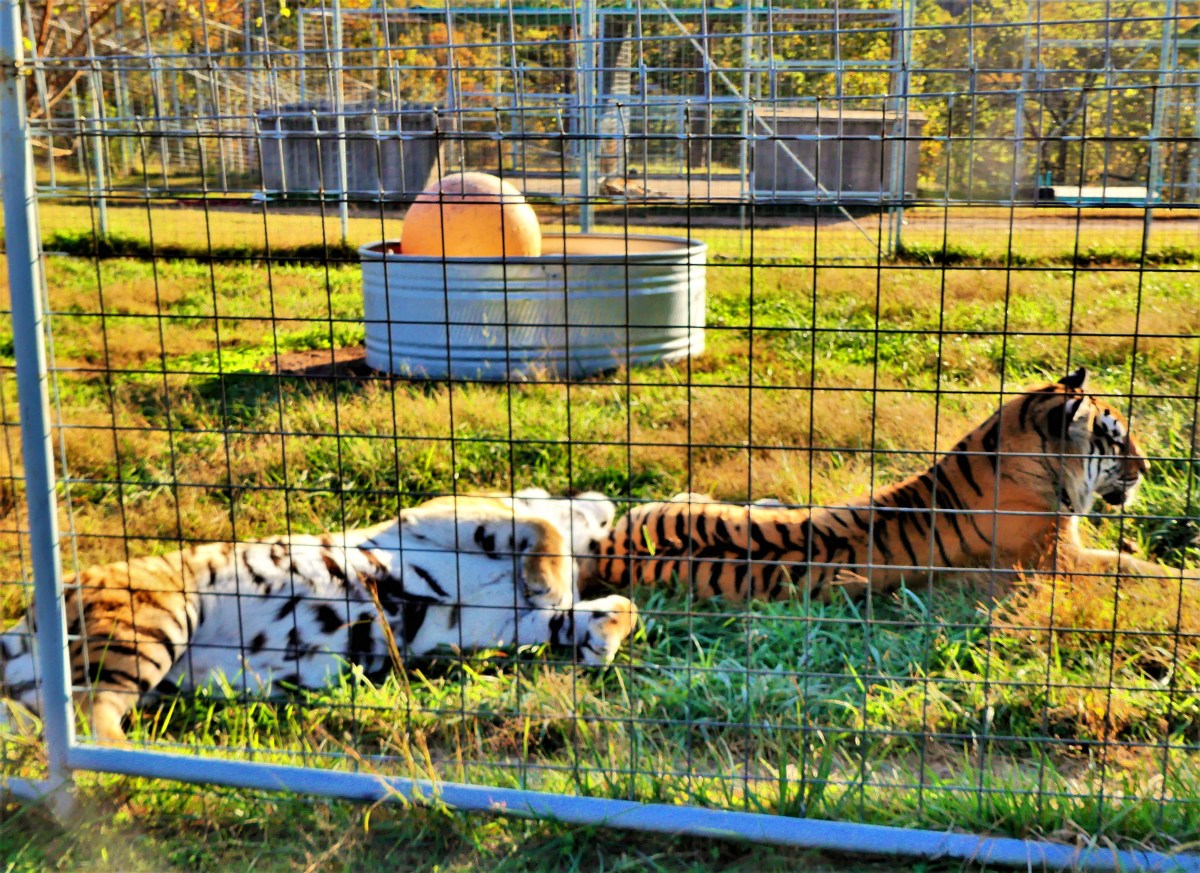
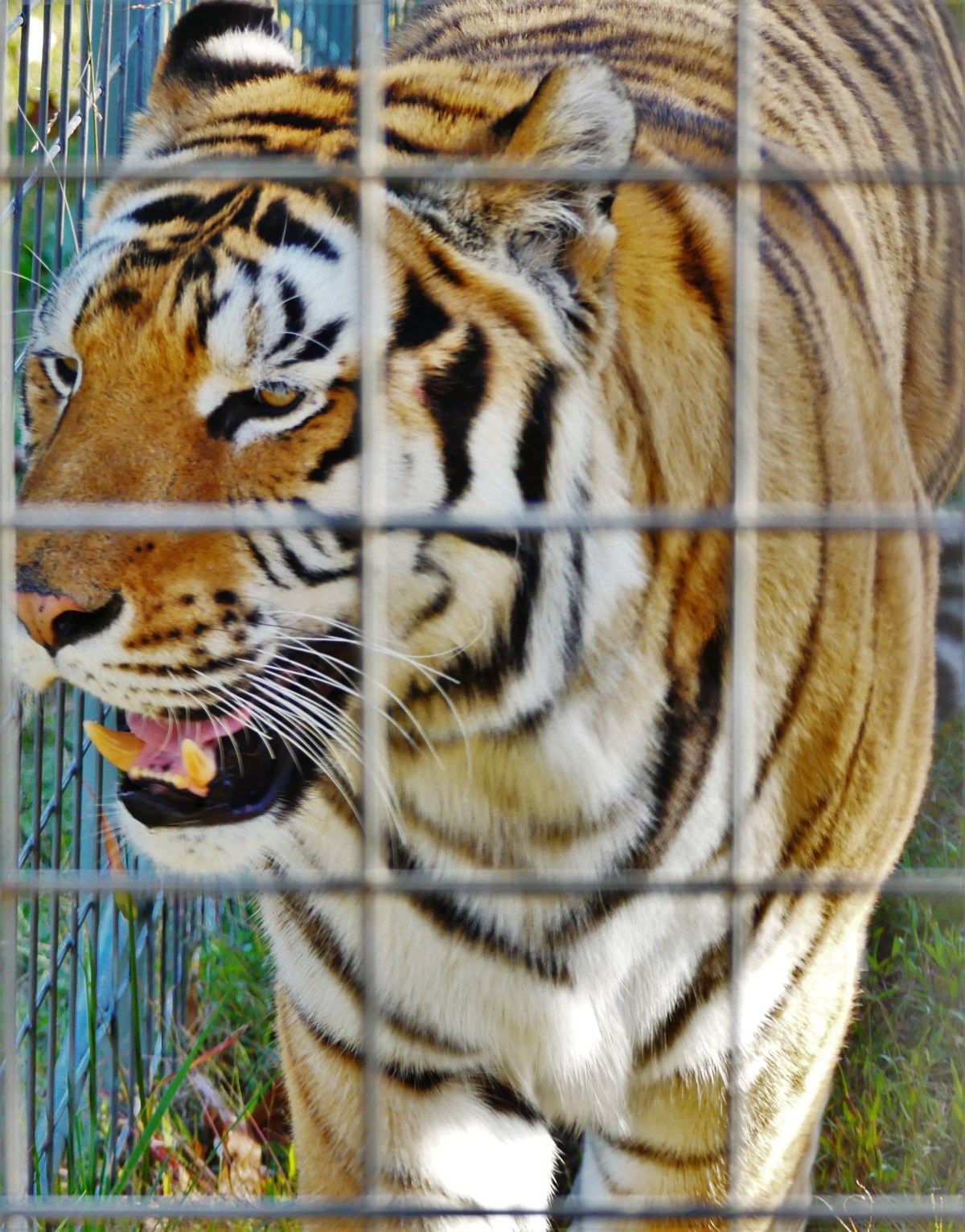
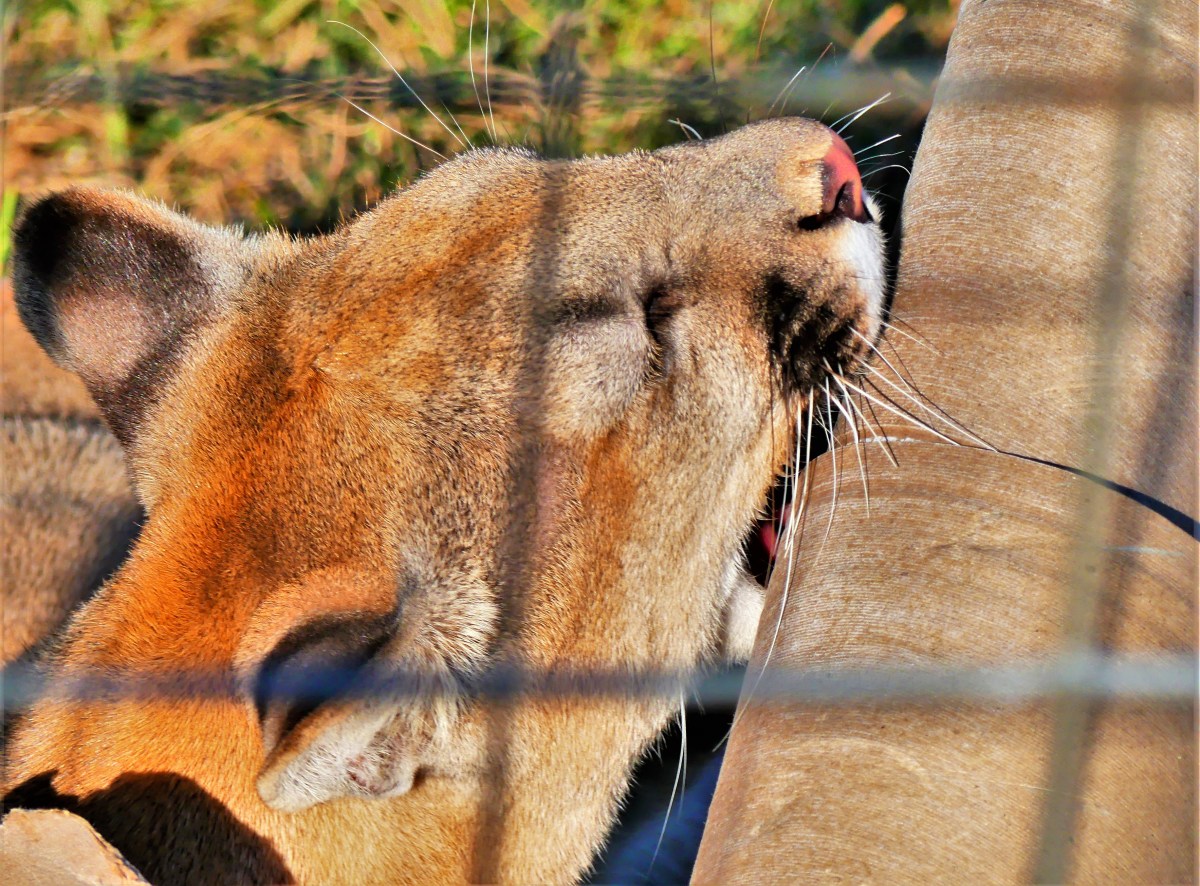
Currently, Turpentine Creek has become a haven to 100 lions, tigers, ligers, and cougars like Nala and Brody.

Natural habitats built with benefactor dollars provide asylum to big cats,

2 tiger habitat

who are now free to live out their lives in a protected environment,

2 tigers

while being offered preventative and emergency medical treatment.

tiger repose

These cats cannot be released into the wild,

tiger habitat

as they’ve lost their ability to fend and defend after being declawed by their owners,

cougar gnawing on cardboard tubing

who in their ignorance and arrogance wished to make them less dangerous to handle as one-time pets.

white tiger

Nevertheless, a cadre of volunteers assists a small staff in feeding, cleaning, examining, and behavior-modifying these beasts. Thus, providing each big cat with a humane existence.

Day-to-day operations are assisted through visitor admissions, gift shop sales, and donations by large corporations like Tyson, who feeds the herd 300,000 lbs. of chicken every year.


Sanctuaries of thought, redemption, and protection offer safe places to learn, to reflect, and retire to. Remove anyone of them, and society faces a danger of turning in on itself, further sewing the sleeves of divisiveness.

Better still, offering asylum to the millions of struggling homeless across the country, and persecuted refugees around the world would improve their safety and dignity, and allow more of humanity to participate in their own recovery.

Nature Under Glass

Exploring Tucson, AZ provided two very different opportunities to experience nature–Saguaro National Park and Biosphere 2–with one generating more interest than the other.

We reserved a site at Catalina State Park’s campground…

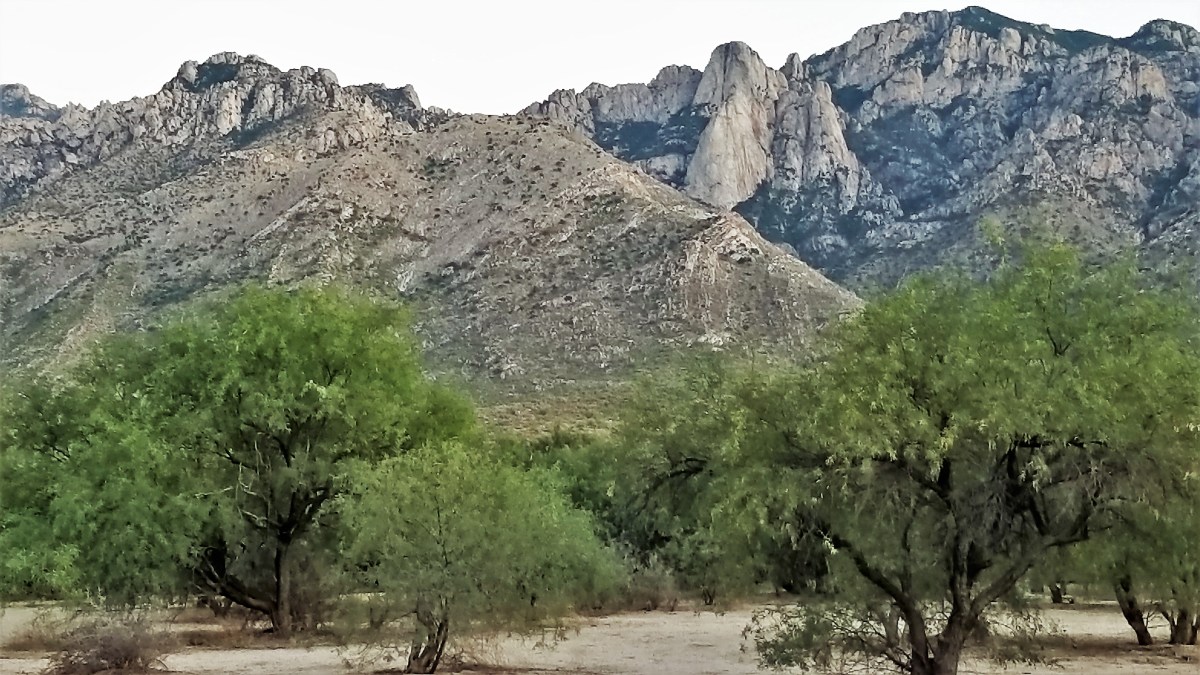
Catalina Mtns

to be equidistant between the two National Park districts: Rincon Mountain (RMD-east) and Tucson Mountain (TMD-west). Why two districts? In the 1960’s, concern over RMD’s cactus forest showing a decline in new growth, prompted conservationists to acquire a stand of ancient saguaros to the west of Tucson, separating the two districts by an hour’s drive.

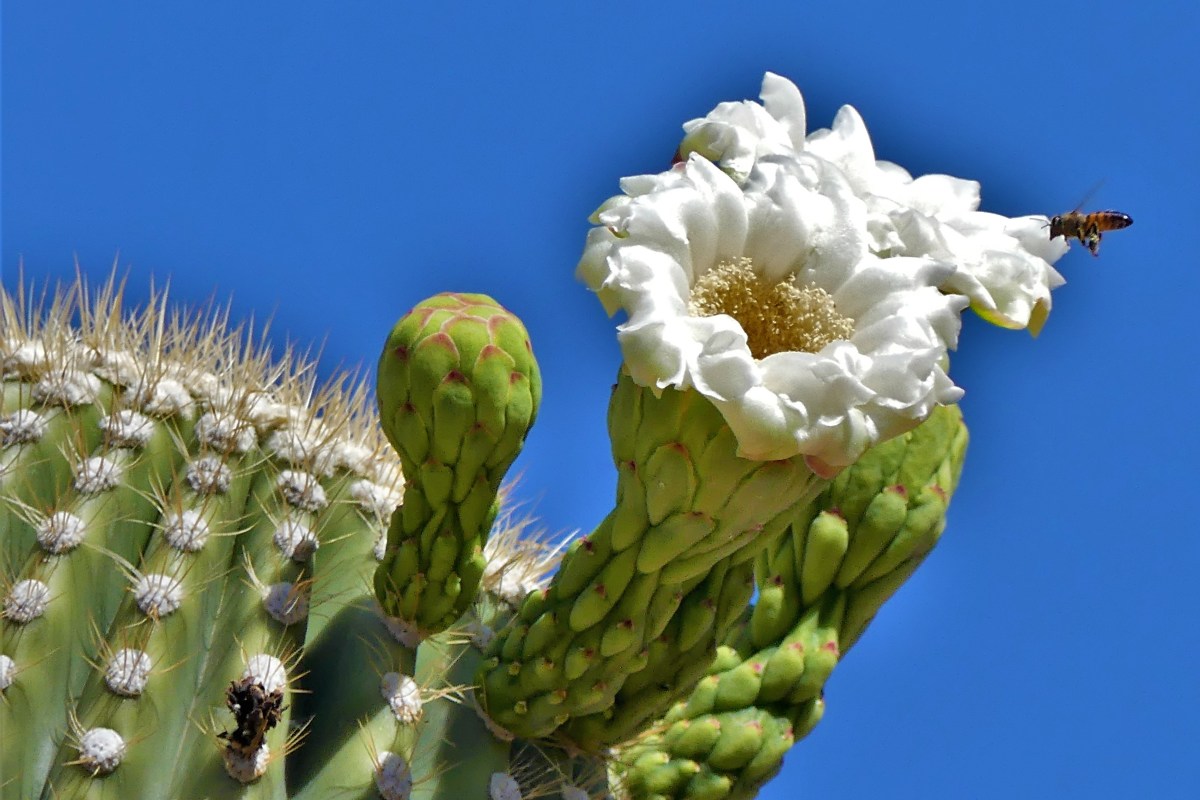
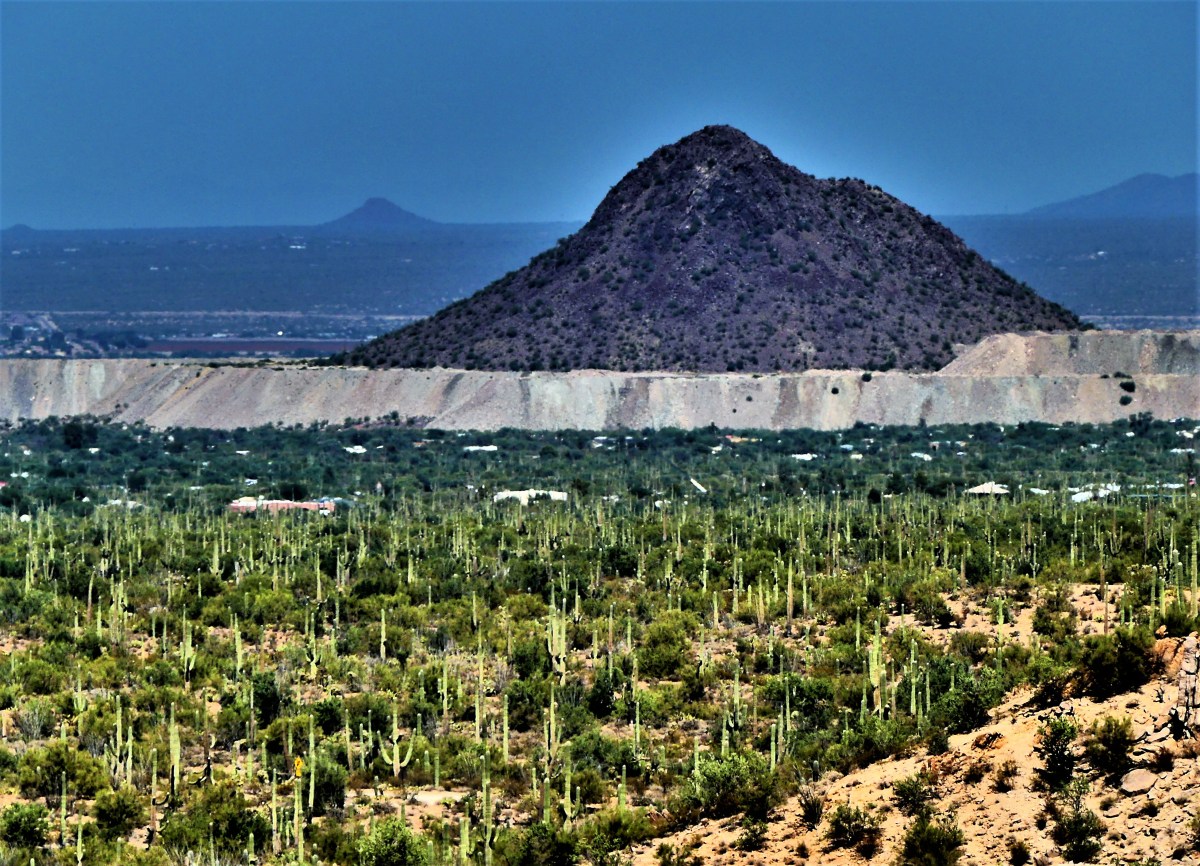
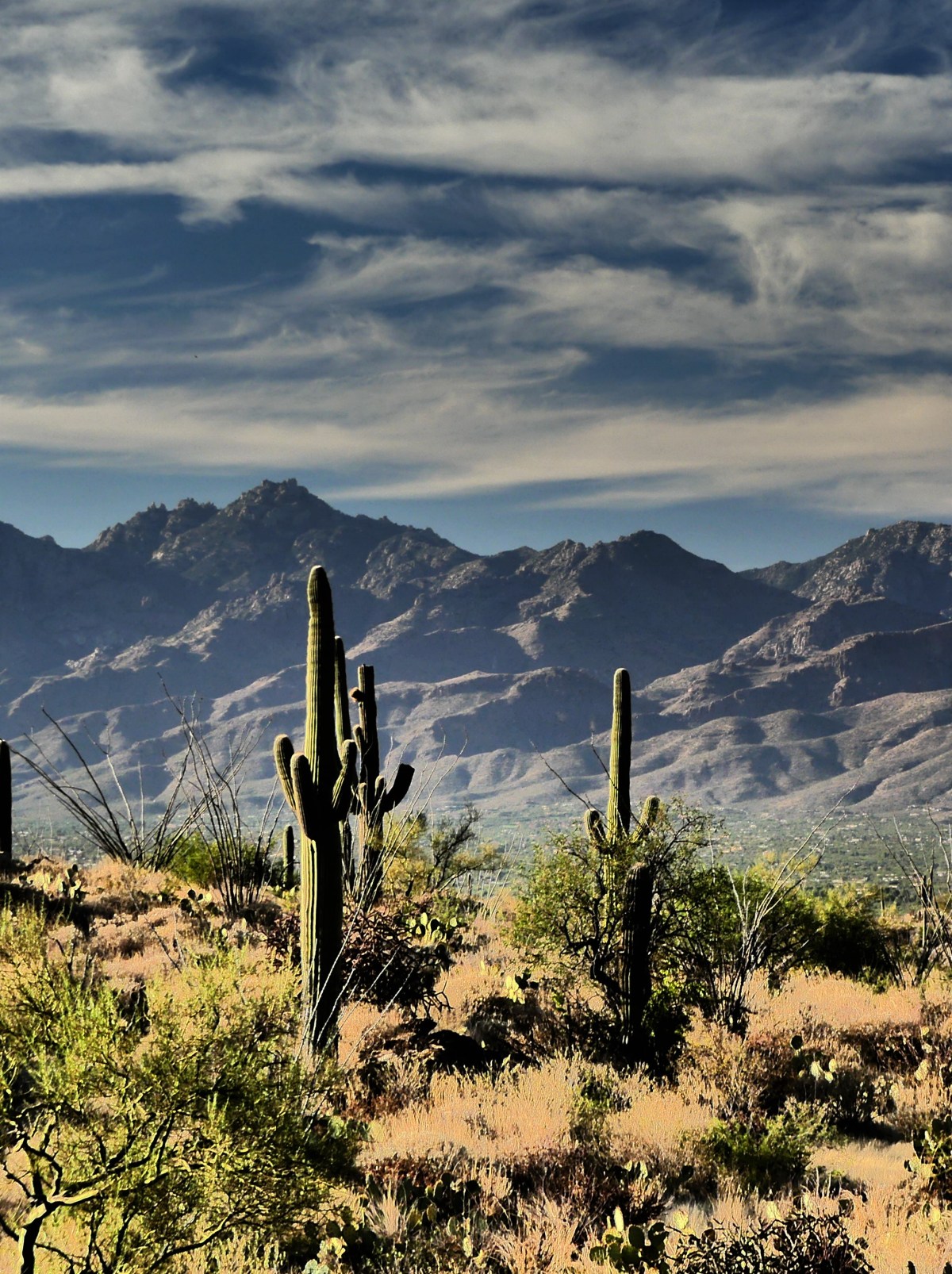
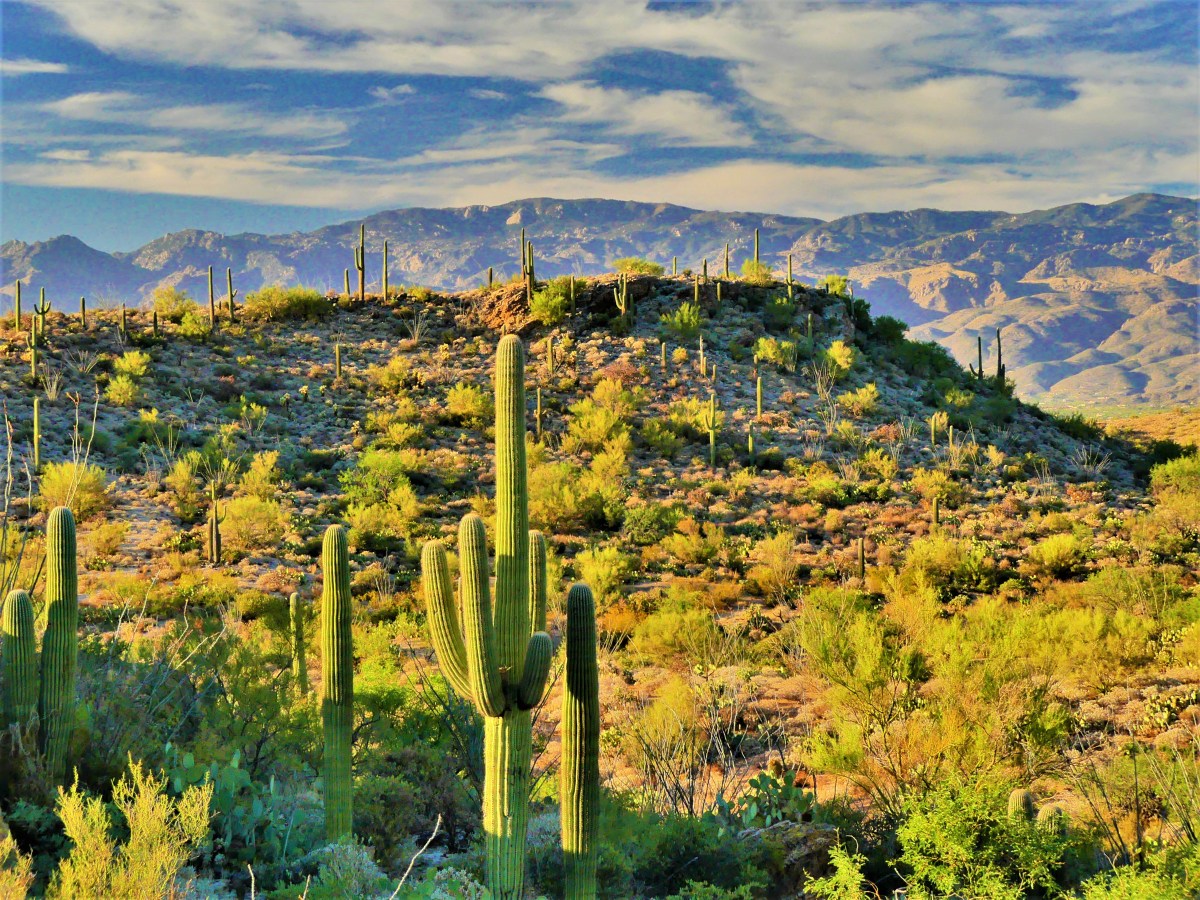
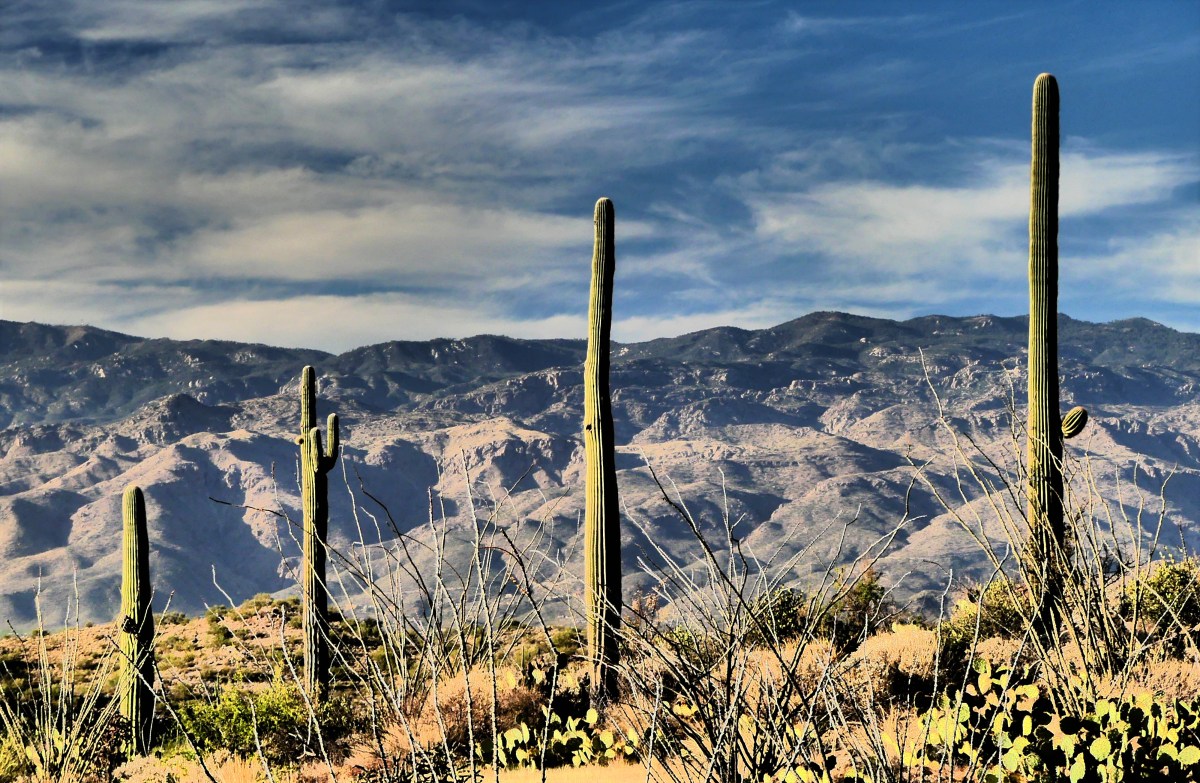
Leah and I began our journey at TMD, at first, through a meandering exurban road that eventually led to an unpaved, rutted, and narrow scenic Bajada loop drive covering five miles of Tuscon Mountain foothills. A stop at the Desert Discovery Trail brought us within no touching distance of magnificent saguaro cacti measuring over thirty feet tall.

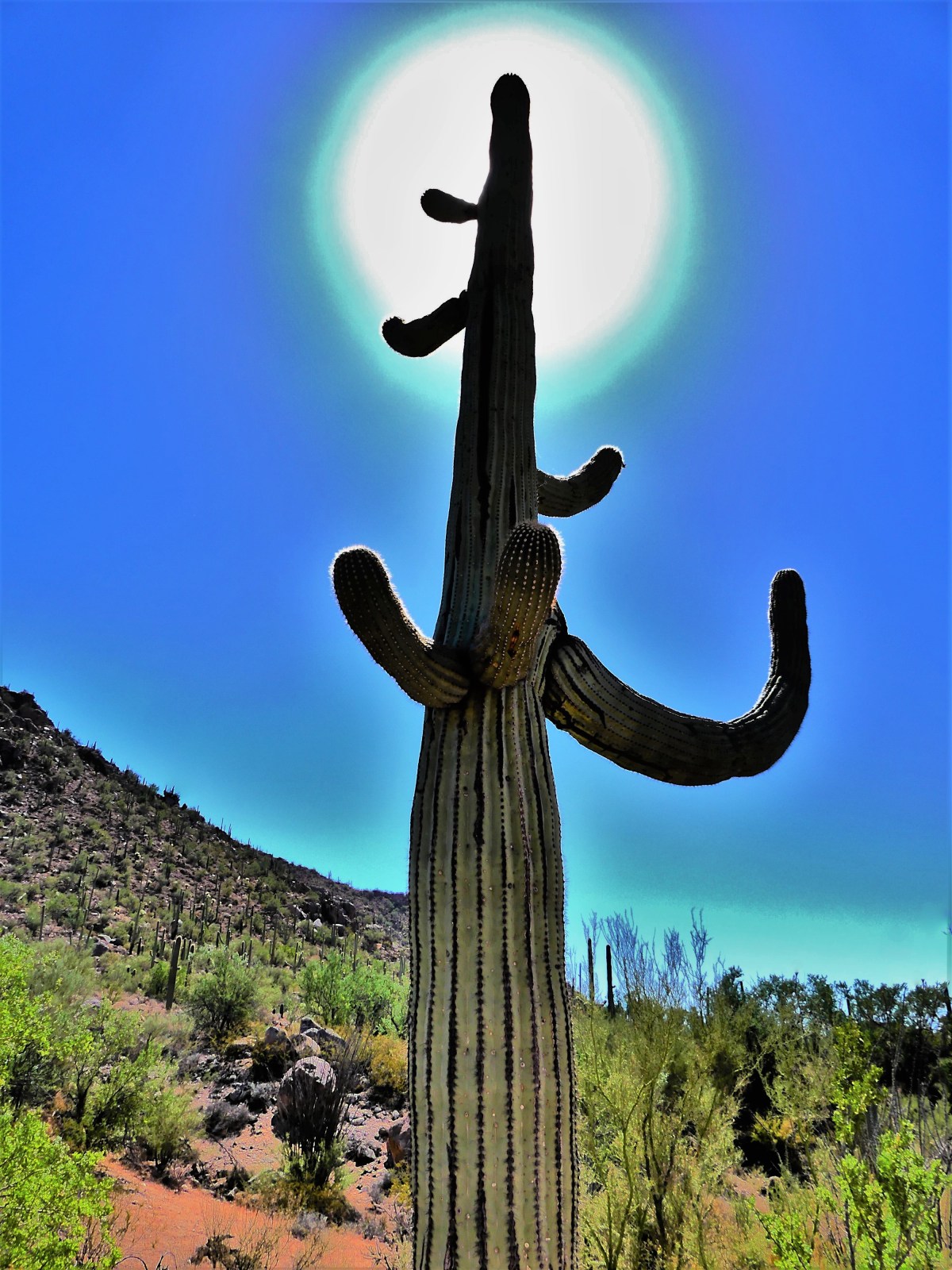
key light saguaro (2)

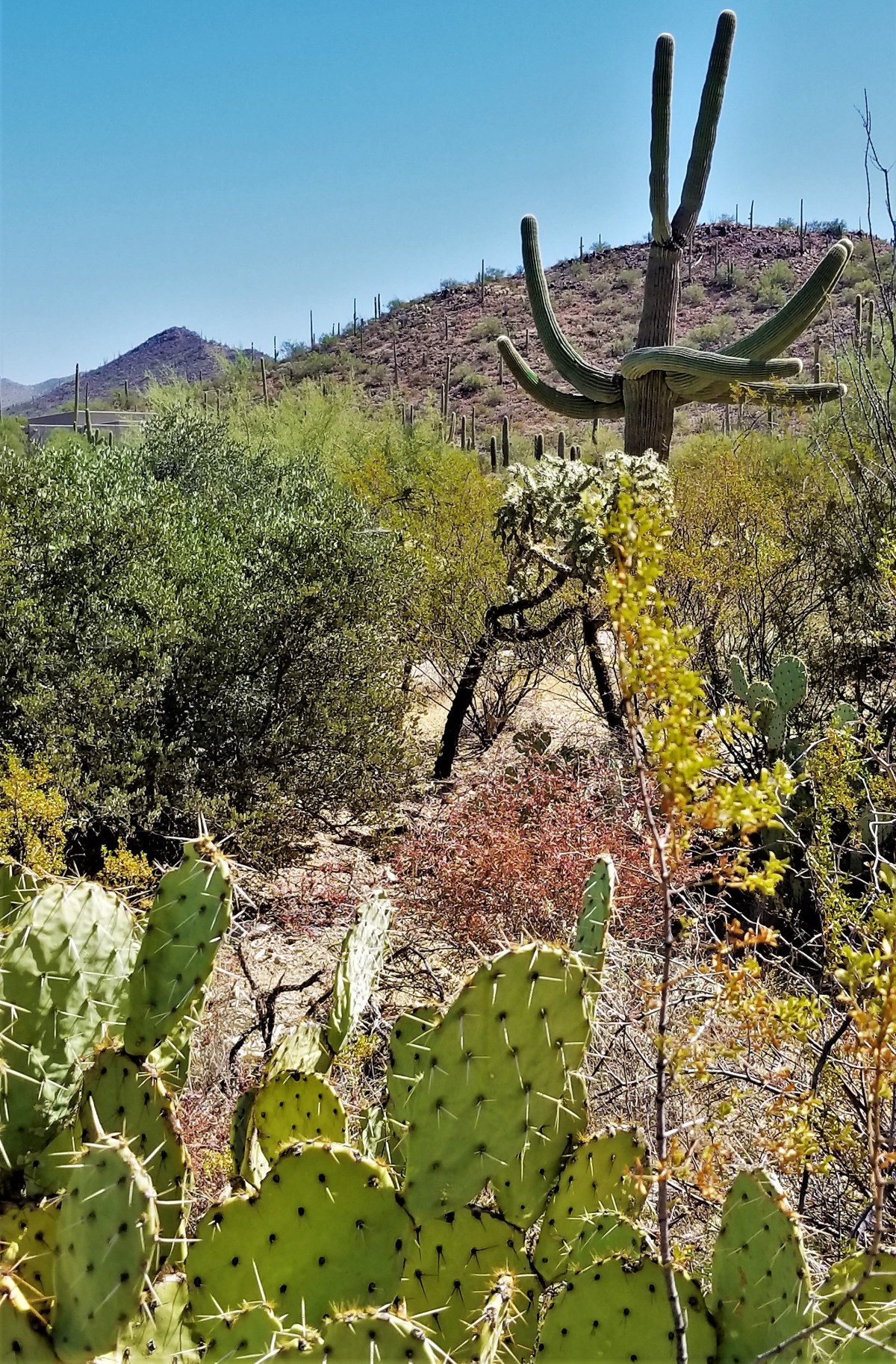
Each specimen appears unique, sprouting limbs in different places, and contorting in all directions,

desertscape (2)

giving relevance to Native American claims that these are people standing among the sand and rocks.

Desert Trail

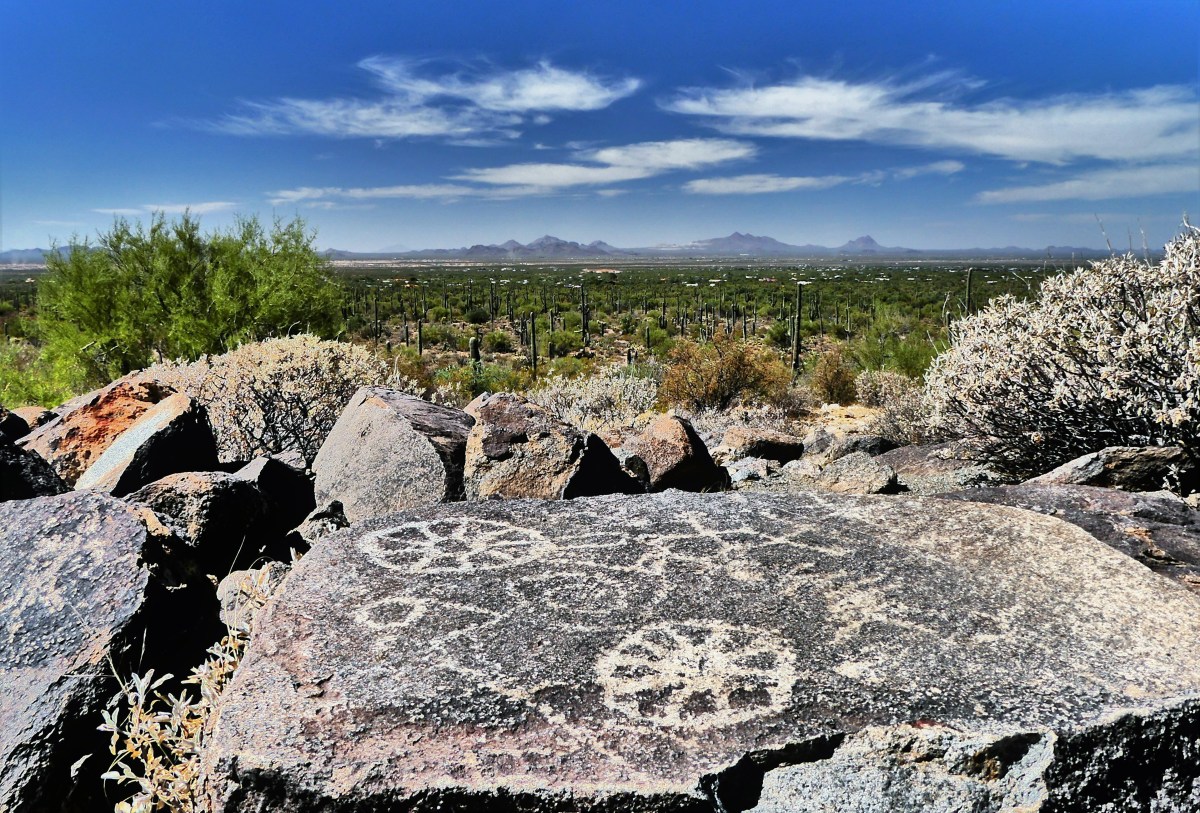
Their petroglyphs across Signal Hill are a testament to their long-standing occupation of the territory more than one thousand years ago.

petroglyph and mountain1

signal hill petroglyphs

A memorable hike along the Valley View Trail slowly ascends a ridge, offering dramatic views of Avra Valley’s saguaro-sprawl, with Picachu Peak in the distance.

Avra Valley and Picacho Peak

With temperatures reaching into the high 90’s, we avoided all other trails–requiring a minimum of three to four hours of dedicated strain–in favor of cross-town traffic delays that minimized our allotted time to visit RMD.

Once at the eastern park gate, we roamed the paved eight-mile Cactus Forest Drive, switch-backing into higher elevations, with warm western sun casting a golden hue across the desert, turning a forbidding vista…


mtn garden and sky

into an inviting playground,

western sun across the desert

protected by a standing legion of cactus totems.

rincon mtns


The following day, we turned our attention to an experiment in the remote reaches of the Sonoran Desert,

setting

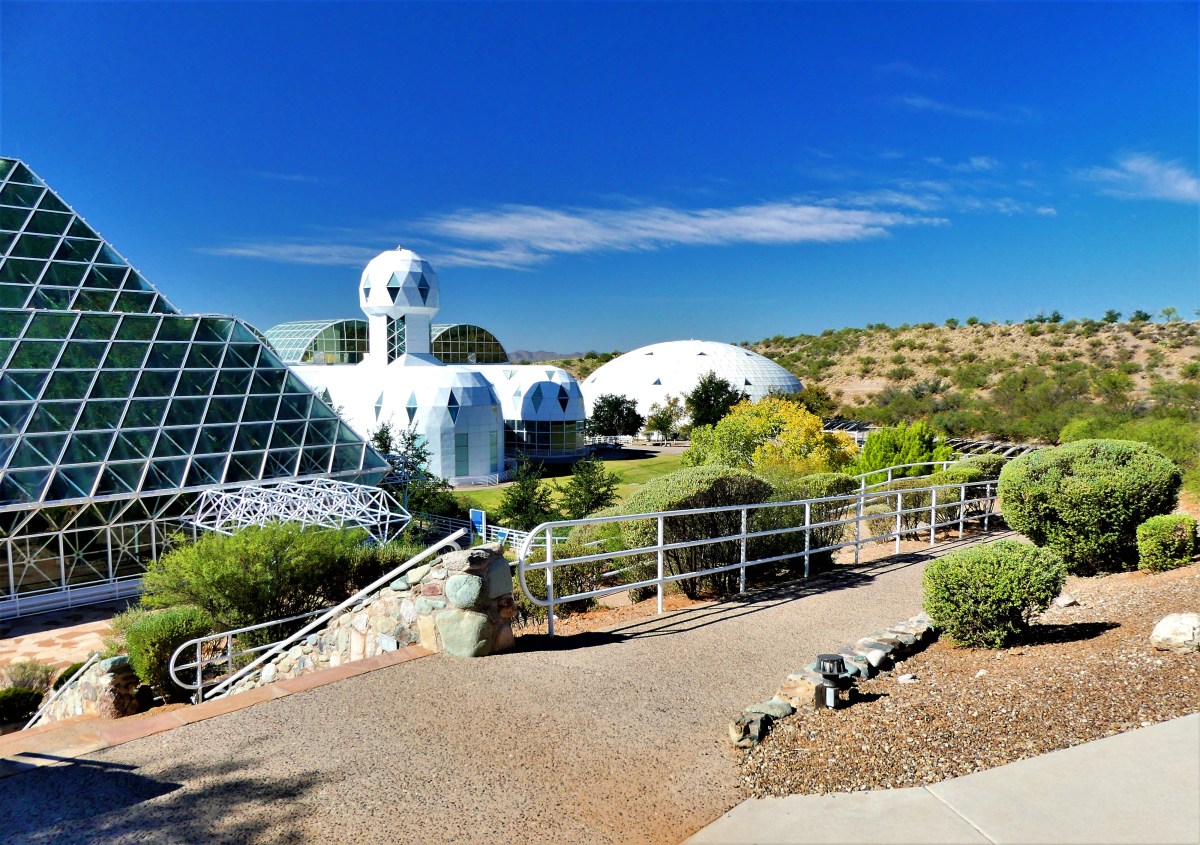
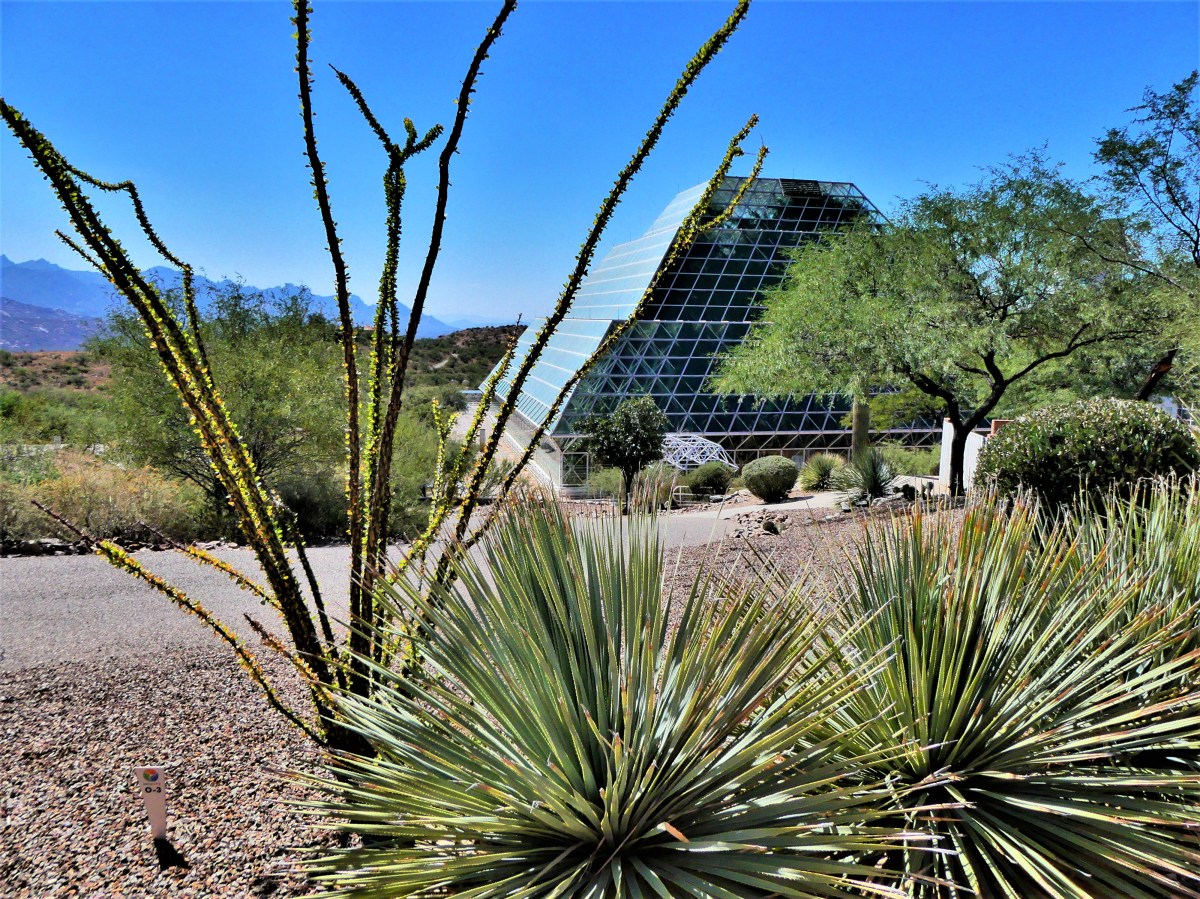
originally conceived in 1984 to “research and develop self-sustaining space-colonization technology,” and leading to two highly publicized missions between 1991 and 1994–where teams of eight were sealed into a self-sustaining environment for two-year terms and monitored for their “survivability”. Scientists named it Biosphere 2.

establishing

bioscape

rincon range

landscaping

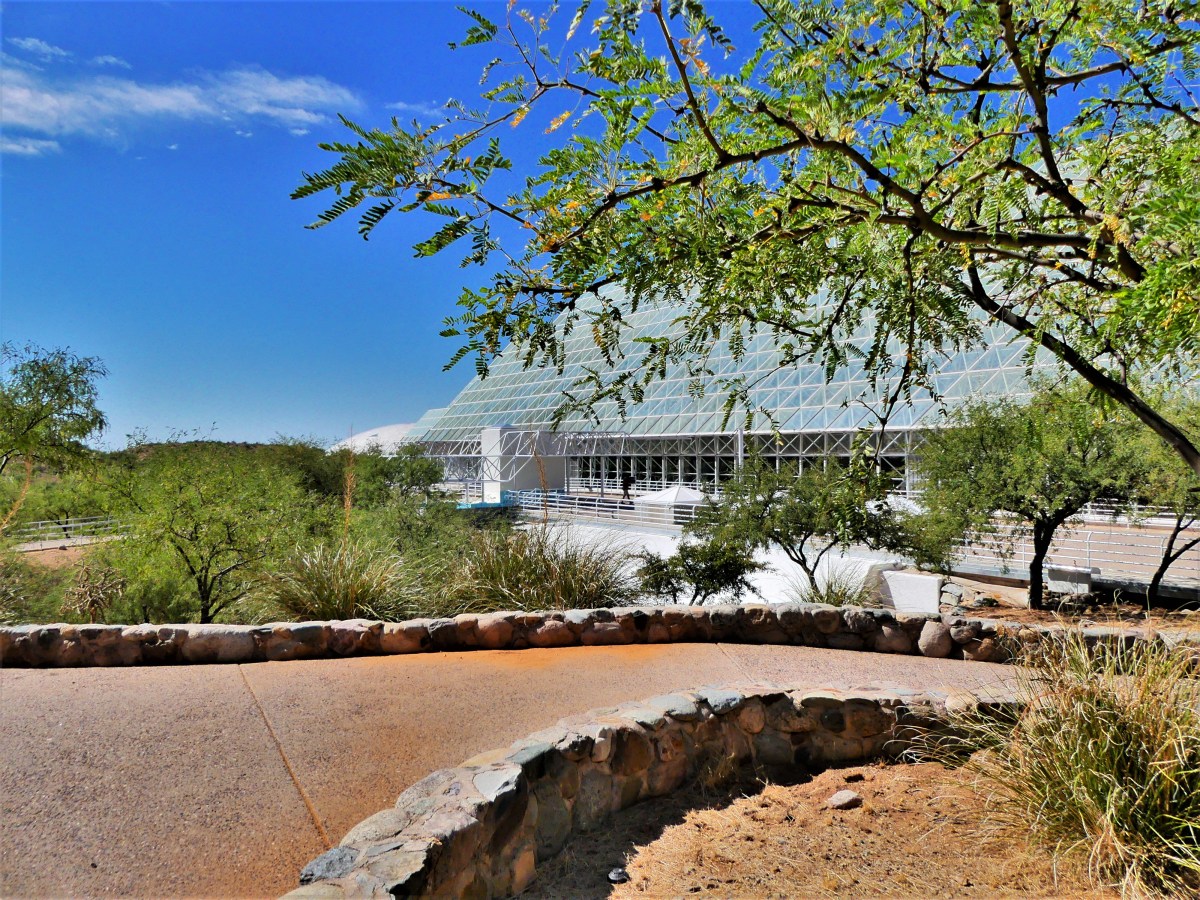
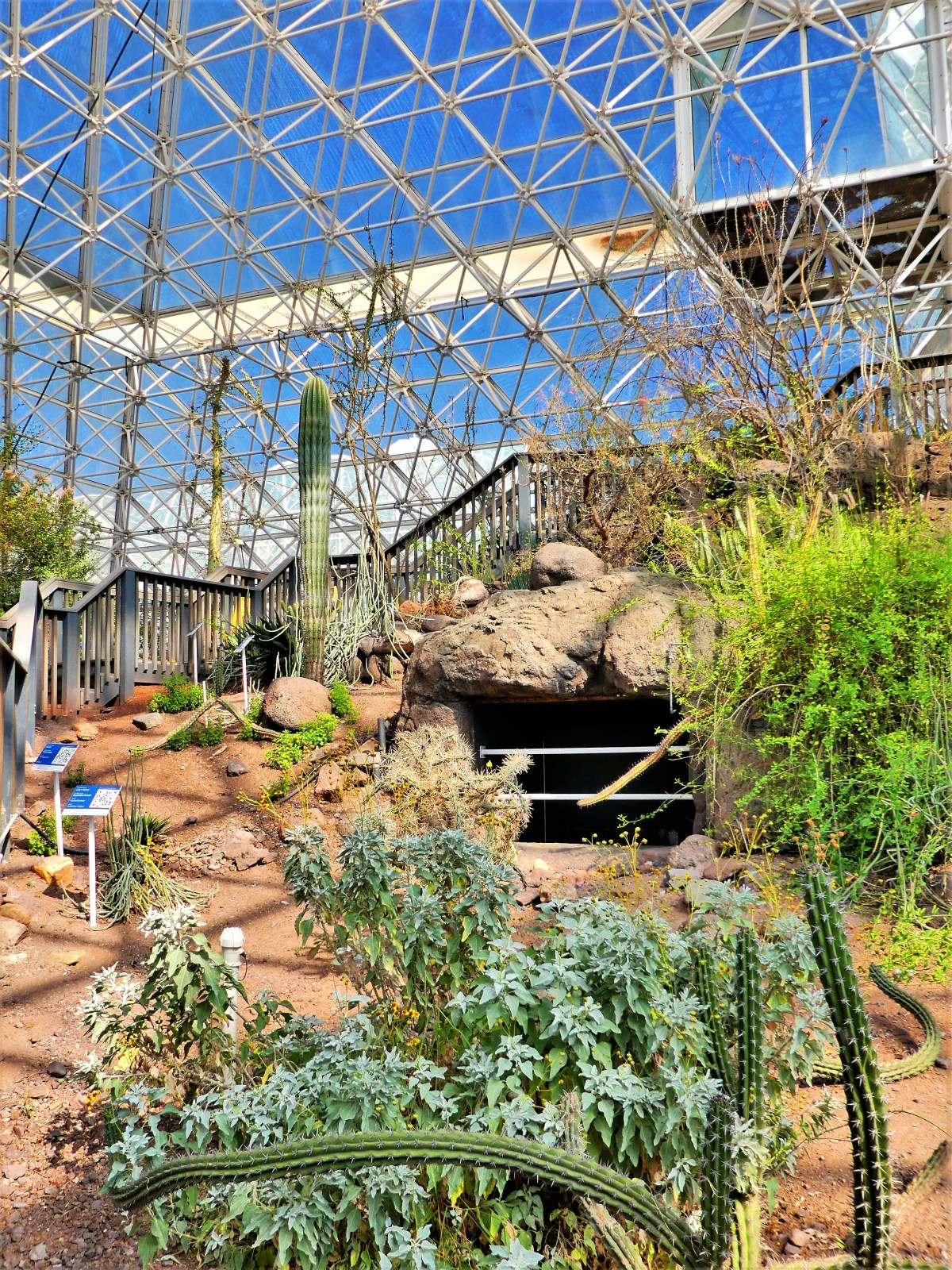
Presently, the University of Arizona has assumed stewardship of the facility, turning its focus toward research on climate change–mimicking diverse ecosystems, such as the ocean,

ocean habitat

the rainforest,

rain forest

and coastal fog desert,

desert habitat

all managed under controlled conditions.

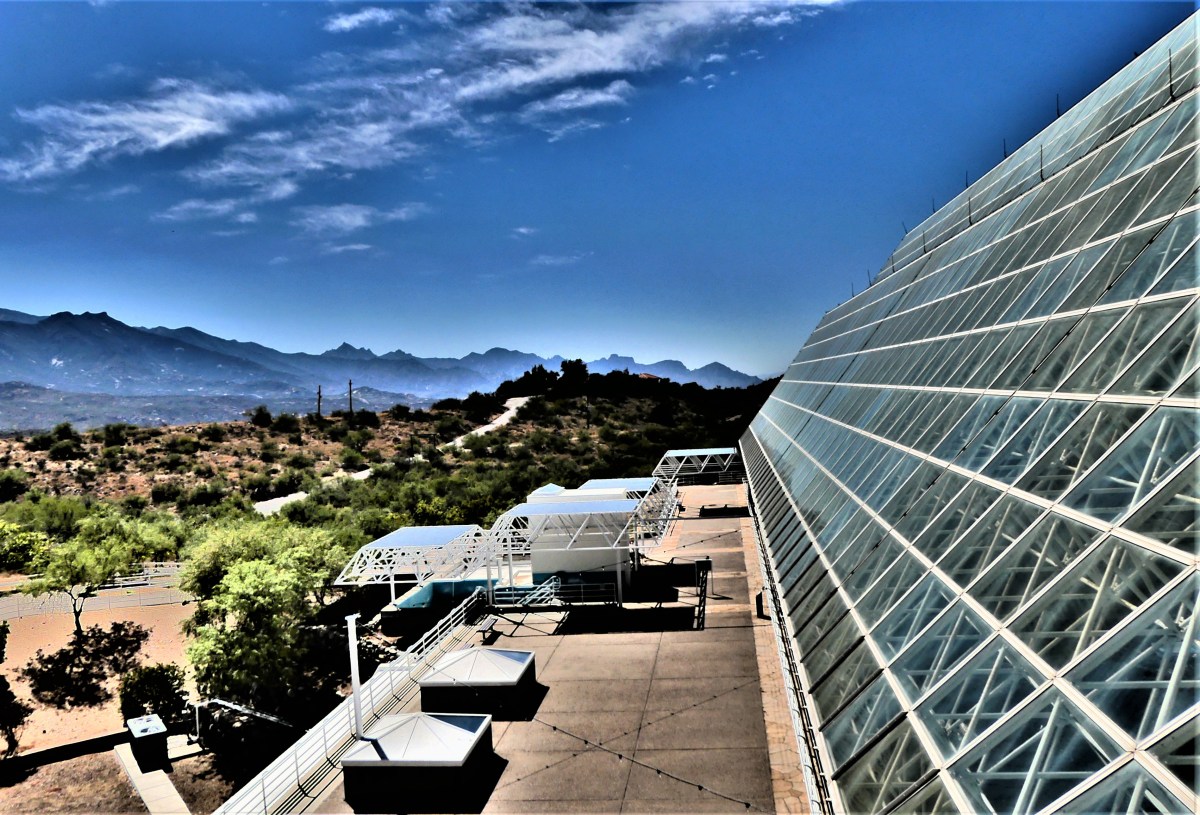
Beneath nature’s museum lies the technosphere, a myriad of pipes and wiring,

recycled air conditioning

channels and ducts, tubes and cables, and other facilities necessary for vital operation.

An ingenious dome-shaped lung…

lung

connected to the glass enclosure by tunnels…

tunnel

allows for air expansion caused by ever-changing pressures within the sealed structure.

The scope of the facility is a marvel, boasting double redundancy for all power and life support systems.

power supplies

A common question on the tour, “Why is it called Biosphere 2? Was there another Biosphere before this one?”

The docent is keen to respond, “Yes. Another Biosphere exists, where random, haphazard and uncontrolled experiments called living are carried out on a daily basis, but we commonly refer to it as Earth.”


Back in the Day

Taming the Canadian Wild West required spirit, courage and resolve. Throw in the railroad, the missionaries, and the Mounted Police, and Calgary soon took shape along the banks of the Bow River.

A visit to Heritage Park in Calgary…

heritage park signage (2)

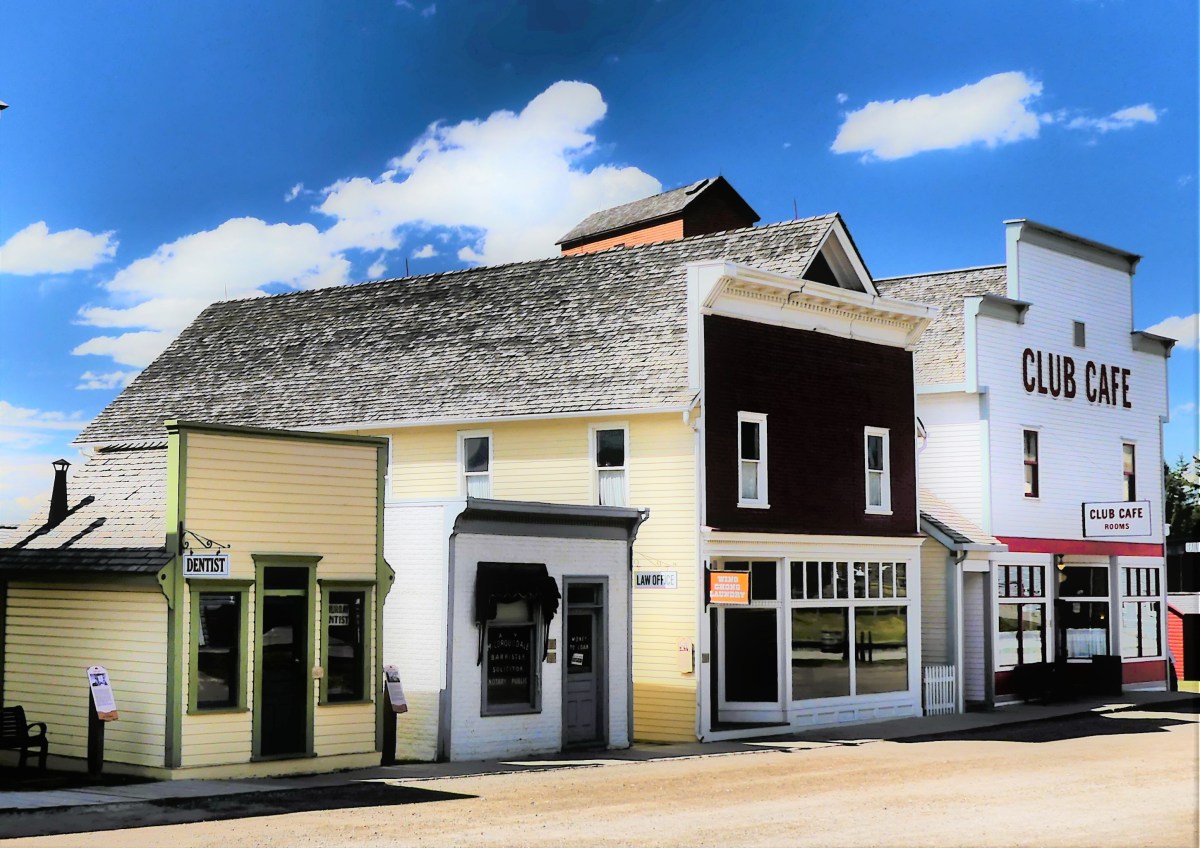
retells the history through a fully recreated settlement of restored buildings occupied by staff members dressed in period costumes,

day is done

with each attendant recounting a personal story of a life ruled by harsh weather and frontier justice, but a life that nonetheless fueled the promise of freedom for so many.

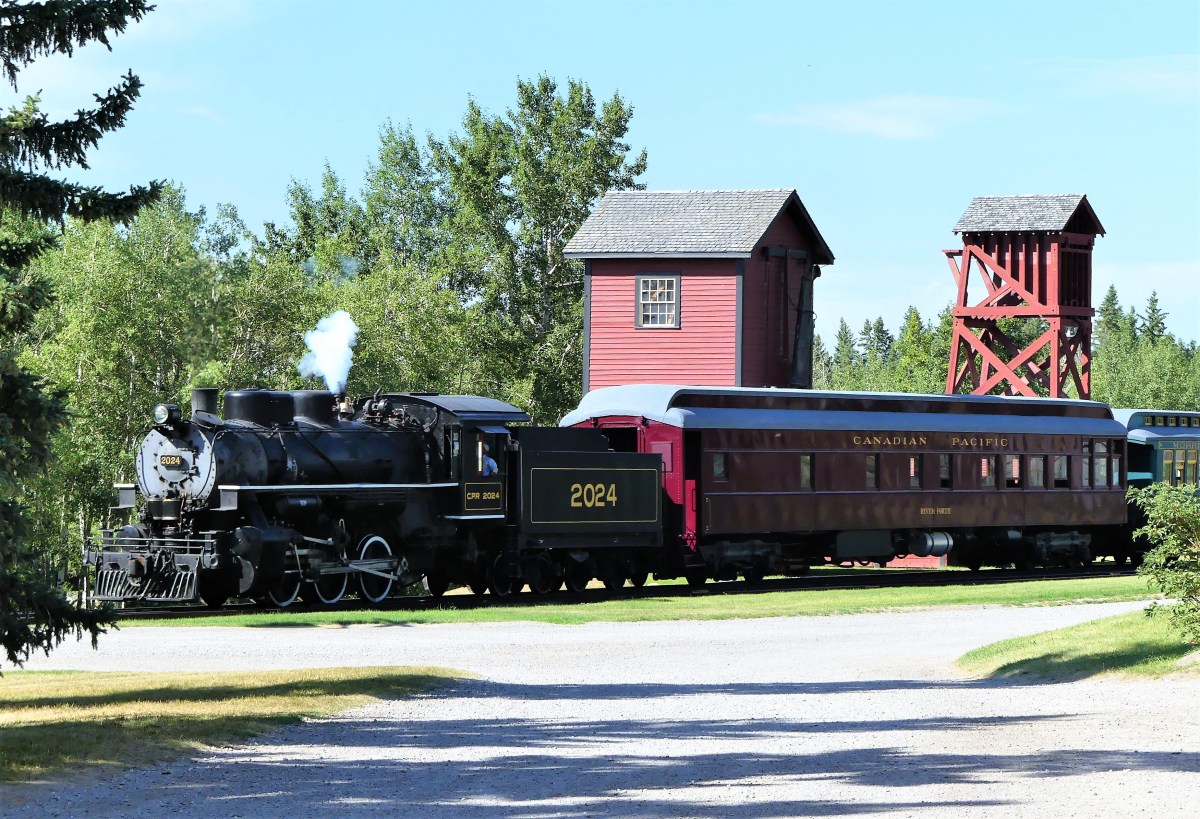
Locomotive 2024 chugged around the park, pulling cars of passengers toward a variety of thematic destinations throughout the village.

train ride

We passed the grain elevator,

pass the grain elevator

where we disembarked for a “taste” of ranch living.

hay is for horses

mom and twins

pink pig

dairy and boxes

Next stop…

skytrain

engineers

…Main Street,

Main Street

for a game of snooker, and a shave…

barbershop

…so I could look my best for Leah and the ladies who lived over Drew’s Saloon.

Drew's Saloon

Another station away…

steam engine

and we were reminded how fragile society was, with the First Nations’ Encampment looming outside the walls of the Hudson Bay Trading Fort,

encampment

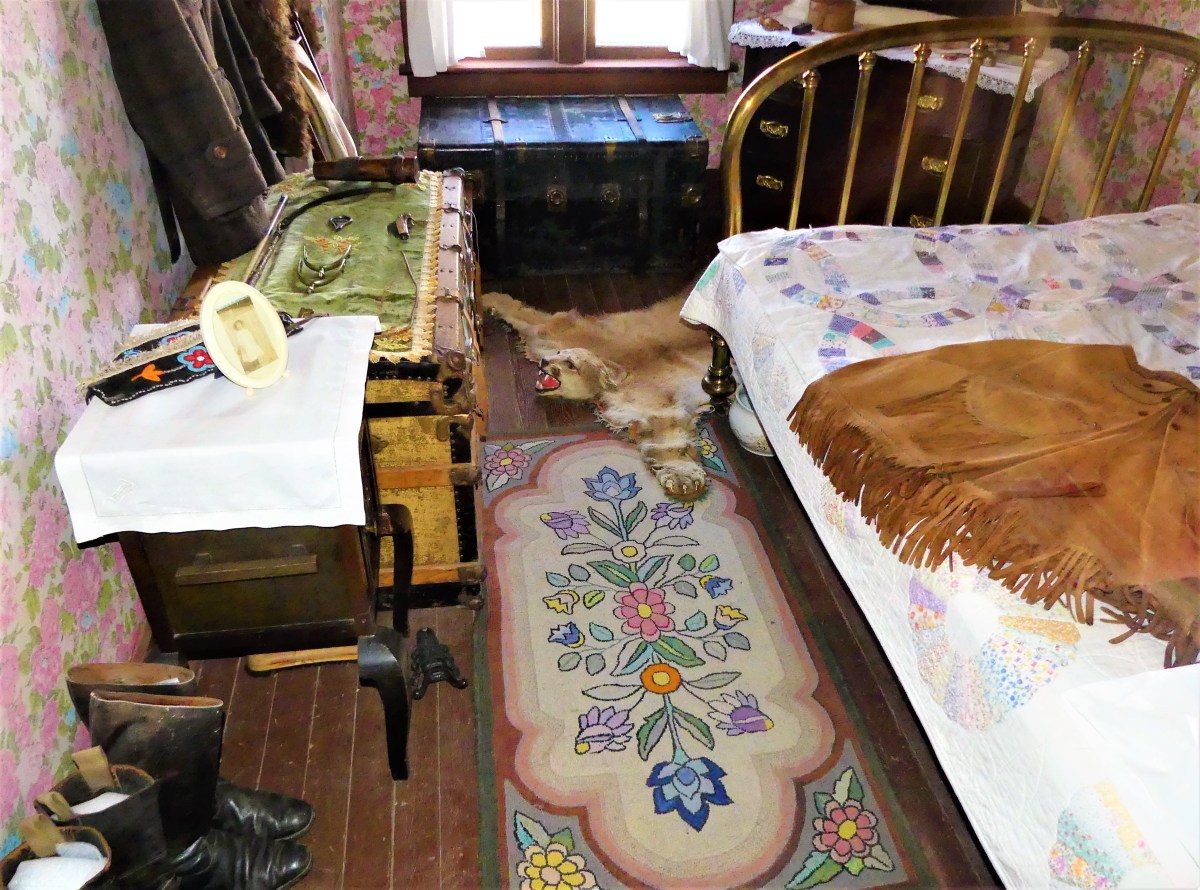
while the decision-makers enjoyed the creature comforts of luxury living in what seemed to be another world away.

luxury living

moose dining

bedroom comfort

white sidewalls

Famous Five

It was easy to “escape” to another time, but not-so-subtle clues kept pulling us back to the present,

general store

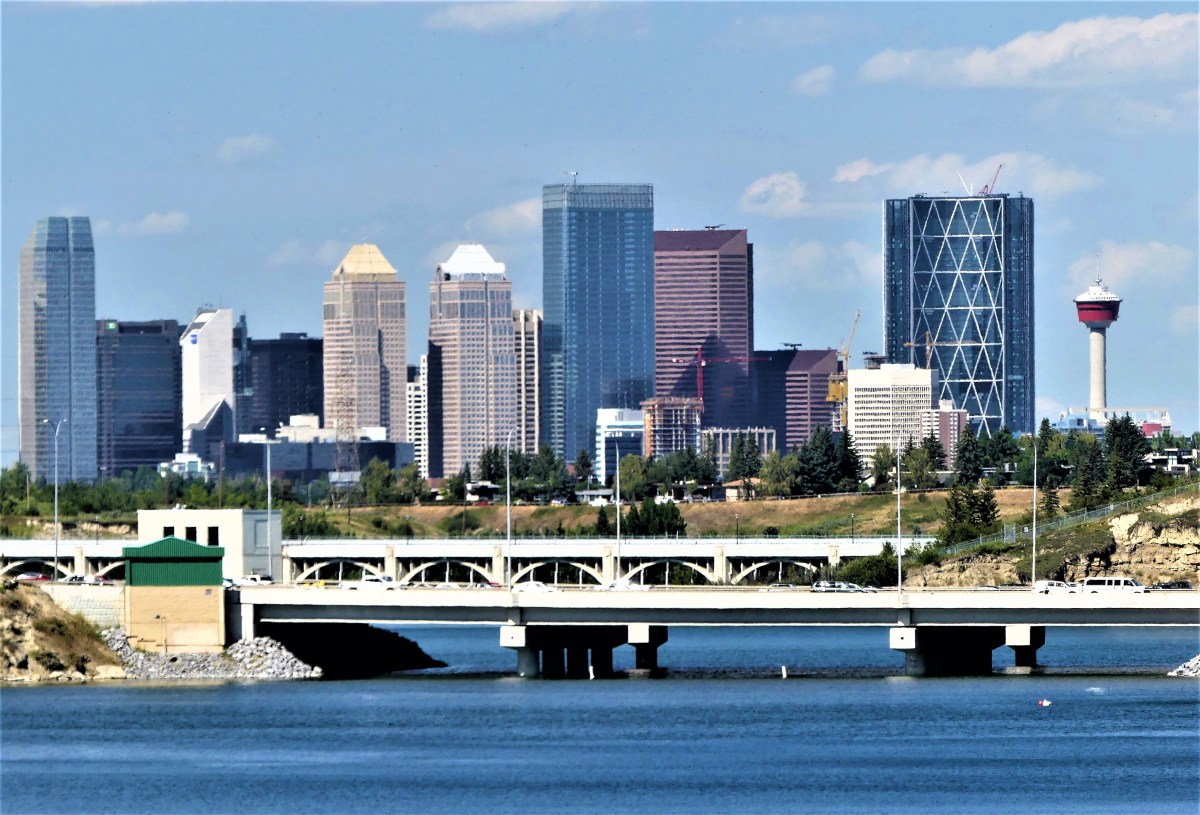
where a modern city beckoned in the distance,

downtown

and pulled us closer to familiar ground…

Calgary Tower

tower top

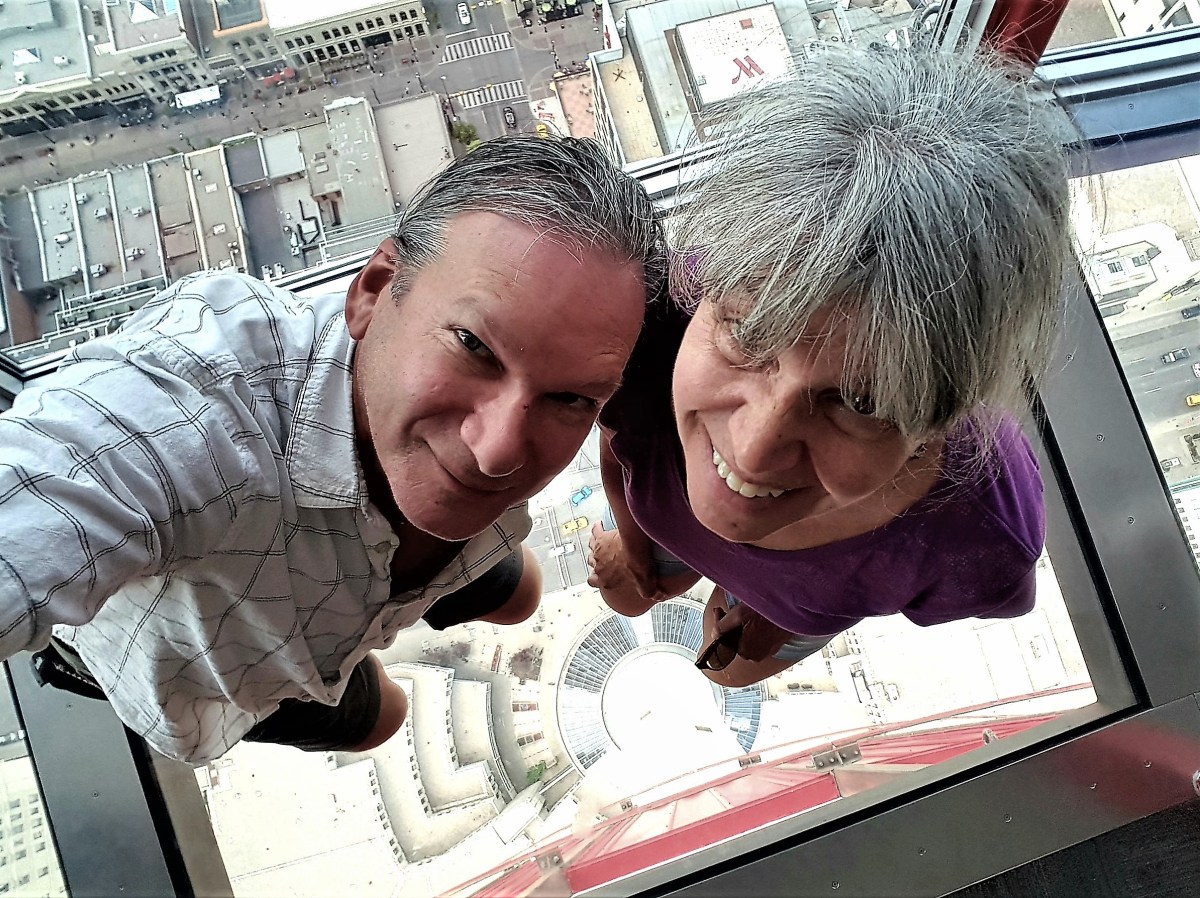
until the ground gave way beneath our feet.

bottom

and we were floating!

don't look down

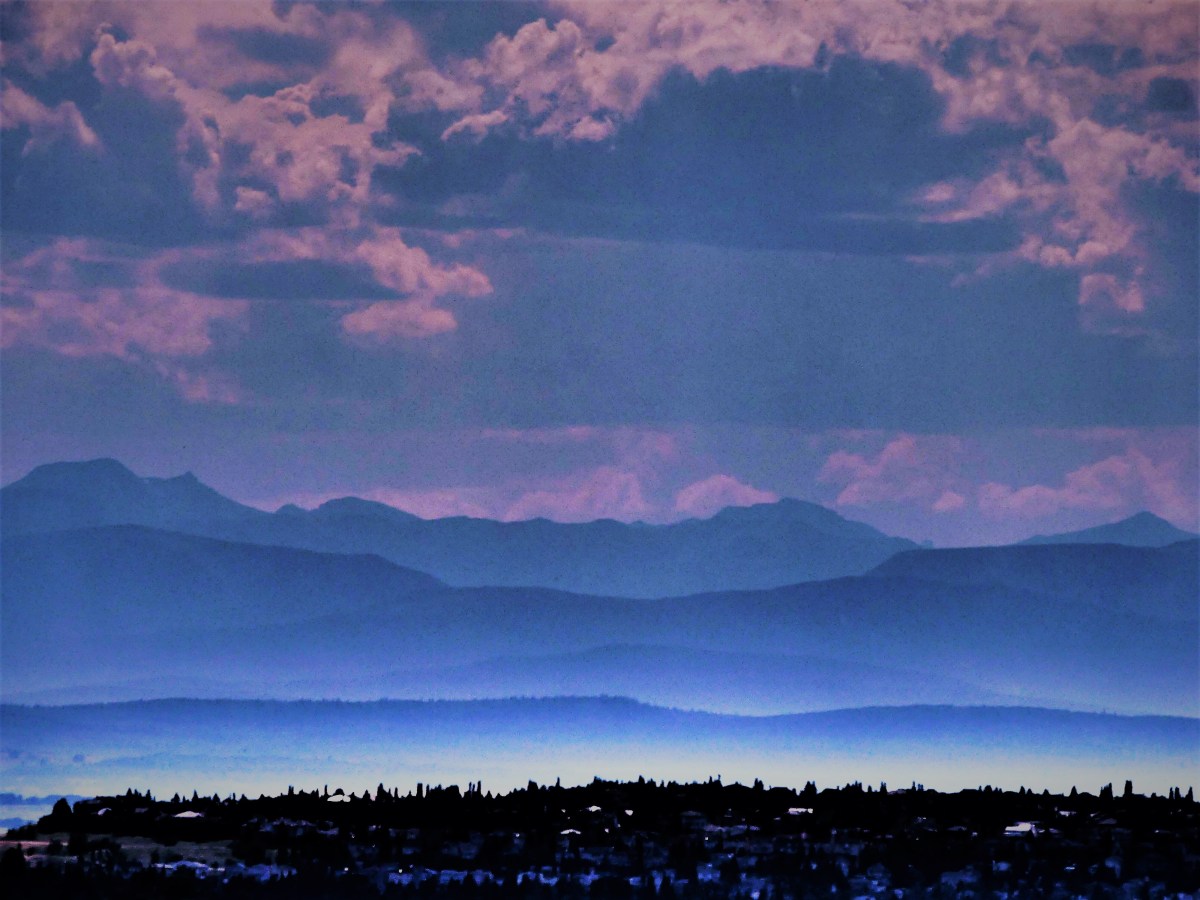
Pioneers of Alberta had to be equally uncertain of their footing after colonizing in a hostile and (at times) unforgiving land. Yet they were ambitious with lofty goals, which paid off handsomely, when Calgary, Alberta hosted the 1988 Winter Olympics, and brought the distant mountains within reach.

mountains (2)

A Park Where Nothing Happens

Riding Mountain threw us off our game from the very start. We were eager to visit our first Canadian National Park–as the whole country and its visitors from outside are celebrating Canada 150 with free admission to Parks Canada–but we really didn’t know what to expect. Our experience with National Parks in America allows us to anticipate the awe inspired by iconic landmarks. For instance: Arches has Delicate Arch; Bryce has the Amphitheater; Yellowstone has Prismatic Lake and Old Faithful; and Grand Canyon has, well, a grand canyon. How would Canada’s parks hold up by comparison?

I knew we were in trouble the moment we arrived at Sportsman Park in Onanole, Manitoba, a self-proclaimed RV Park located minutes from the Riding Mountain entrance. We were looking for a spacious and grassy pull-through to match the website picture that lured me into making a reservation. What we found was a cramped and worn neighborhood of crusty campers settled onto dirt patches where a blade of grass struggles to be green. It reminded me of an internment camp for refugee trailers.

A misfit on a motorcross cycle guided us to a site that challenged the laws of physics. To start with, making a wide turn onto the designated lane required a full-timer to deconstruct a portable basketball hoop struggling to stand on the corner lot. Once clear, we continued to Row B/Site 14, where our ambassador coached me around a parked car and a sprawling tree, through a raised curb, and beyond a floating wood deck that prevented the Airstream door steps from fully extending. Somehow, I managed to inch between two trailers with extended slide-outs.

Ian, my new next-door-neighbor, commented, “Didn’t think you were gonna make it, eh?”

“How do people usually manage to get into this spot?” I wondered.

“Nobody ever does,” Ian responded. “This spot’s gone vacant for more than a year.”

“You been here that long?” I doubted.

“Goin’ on five years, now that I have a son an’ all,” Ian beamed.

Ian was gracious and full of information. “Be careful at night, eh” he warned. “There’s a bear been pokin’ around here last couple nights, ever since the guy across the way spilled some grease. So it’s a good idea to always have a flashlight handy, eh.”

Note to self, “Stay inside the Airstream after dark.”

The following day, we headed for the Interpretive Center for a customary face-to-face with a ranger. He explained that Riding Mountain is at the confluence of three distinct ecosystems: prairie, boreal forest and hardwood forest. It’s divided into Front Country and Back Country with over 400 km of trails, and home to elk, moose, coyotes, wolves, lynx, beaver, bison, and the largest black bear population in North America.

“You know what to do if you encounter a bear, don’t-cha?” asked Ranger Scott.

“What do you recommend?” Leah asked.

Ranger Scott explained, “When you go into the woods, you need to smell like a human. That means you skip deodorant for the day! And make sure your clothes don’t smell like what you had for dinner. Don’t carry unwrapped food with you, and don’t forget to make some noise on the trail while you’re moving. Should you meet a bear, DON’T RUN! Just step back, never looking directly at the bear.

“What about bear spray?” I was curious.

“Never use the stuff,” Scott boasted. “But I always wear an extra shirt when I’m hiking, no matter how hot it is. So if necessary, I spread open the shirt with my arms out like this [demonstrating], and right away that bear is now lookin’ at someone who’s doubled in size. Saved my bacon on a couple occasions using that technique.”

We left Scott with a decent idea of how we’d spend the next couple of days. For starters, we took a perimeter trail around Clear Lake in the village of Wasagaming, with the lake to our left,

Clear Lake

and an array of charming cottages and cabins on our right. In a unique arrangement with Park Canada, home owners lease their property in perpetuity from the government. When title to a home is transferred to another family member, or is sold outright to a buyer, the lease always becomes a part of the deal. But if government regulations are ever broken, the tenant can be evicted and dispossessed.

Curious about the value of  Wasagaming lakefront property, we did a little digging…

and found a newly remodeled 3 bedroom/2 bath 1700 sq. ft. bungalow listed for $800,000 CAD, but we weren’t ready to move to Canada just yet.

We continued our day with an off-road ride to the top of the Manitoba Escarpment, with hazy views from the overlook,
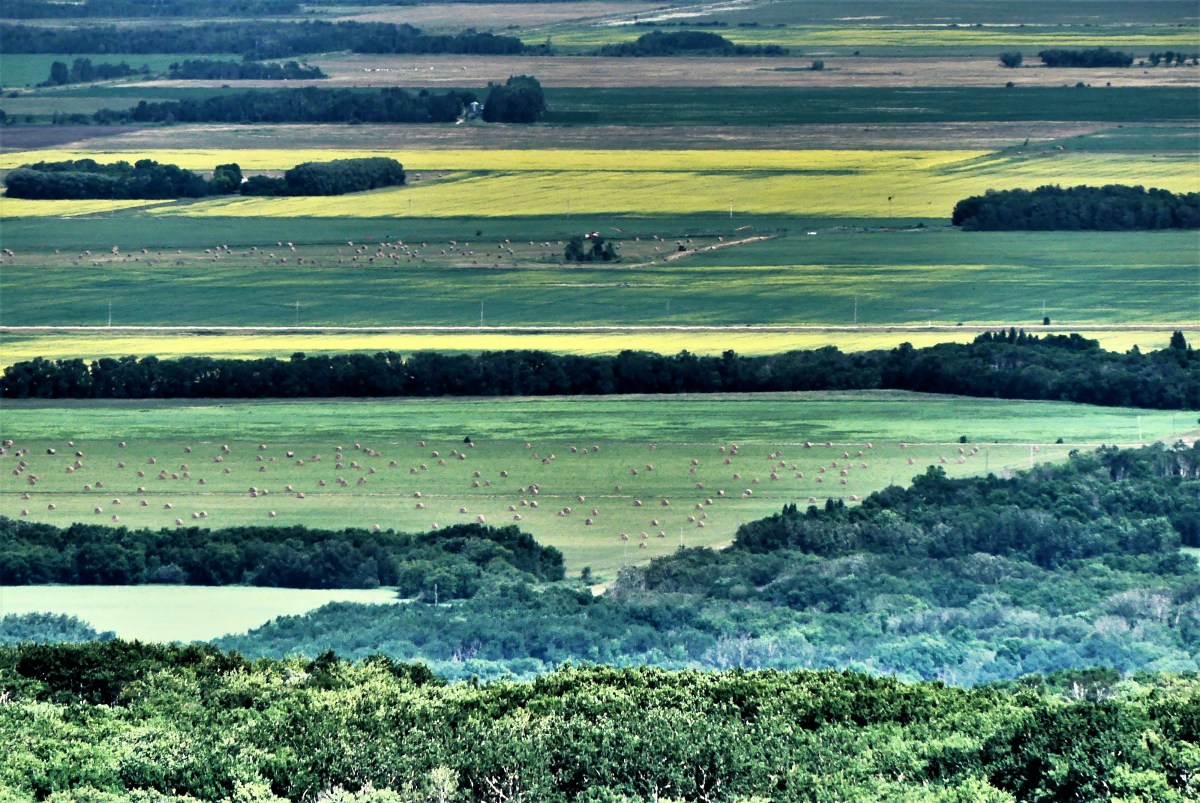
Manitoba Escarpment view

and followed the road to the park’s east boundary, where the distinctive East Gate Entrance Building (the only surviving gate structure at Riding Mountain) gave us a glimpse of traditional 1930’s “parchitecture”, and reminded us of a time when motorcars were first gaining in popularity.
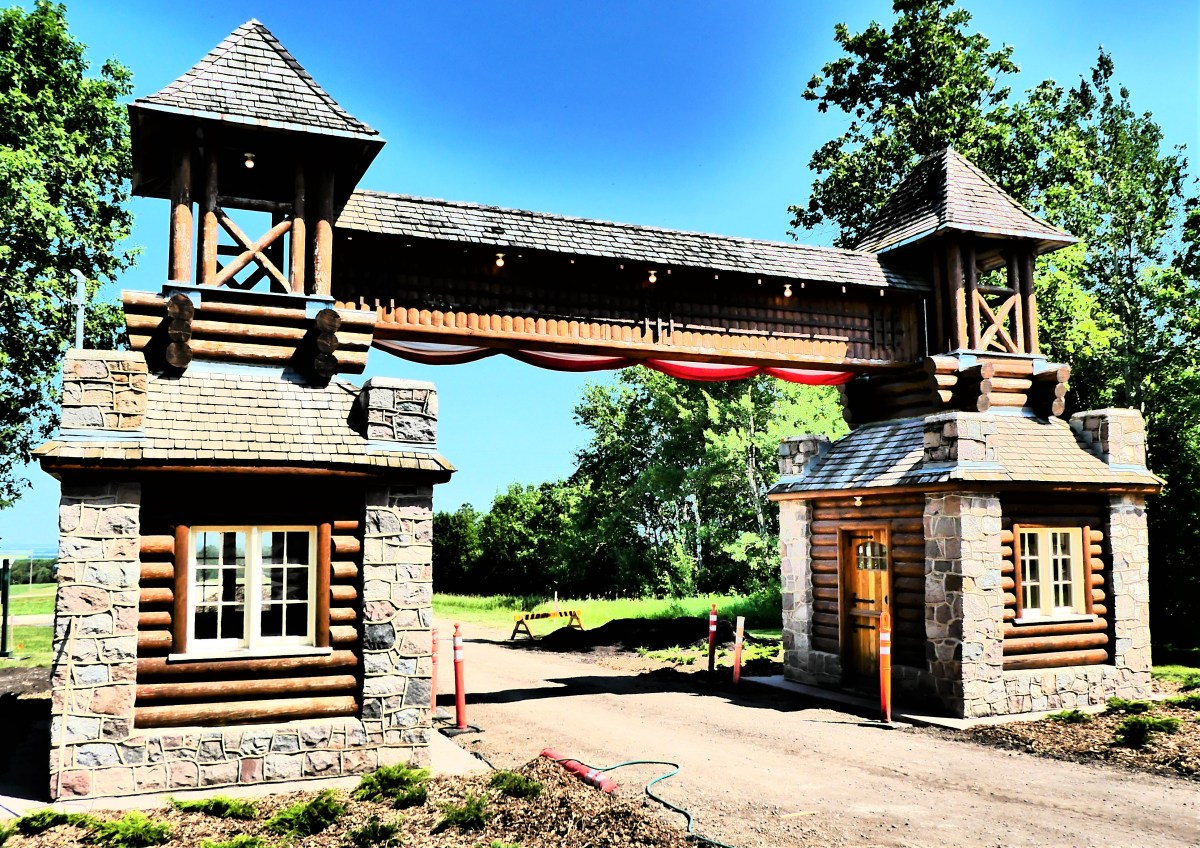
East Gate West Sun

That evening we took a sunset walk on the Onanole Trail beside the RV Park. The trail began at the gnomes’ house…

Troll House

continued through a pine forest, and opened onto an expansive field of prairie grass, taking us around to a wooded opening on the other side of the field.
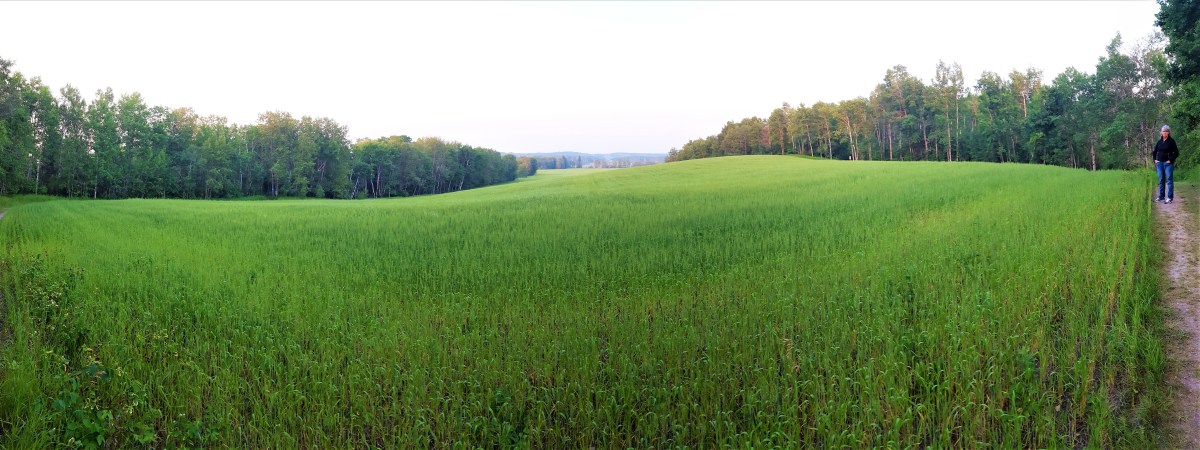
Prairie grass and Leah

We would have continued along had it not been for the volume of bear scat littering the trail.

That night, Ian’s campfire went well beyond the midnight quiet-time curfew, causing Leah to lose sleep while I stayed up to write.

“Isn’t there something you can do?” she complained.

But before I could offer my ugly American alibi, one of the party people yelled out, “BEAR!”

The commotion was over in a flash and so was the party. “Well, that was effective,” I mused.

The next day, we elected to hike around Moon Lake,

Moon Lake

taking a 9 km loop trail through high, hearty shrubs and poison ivy. It was not what we expected; the lake had disappeared from view. The trail was heavily overgrown and still wet from a flash thunderstorm the night before, making the moose prints more imposing.
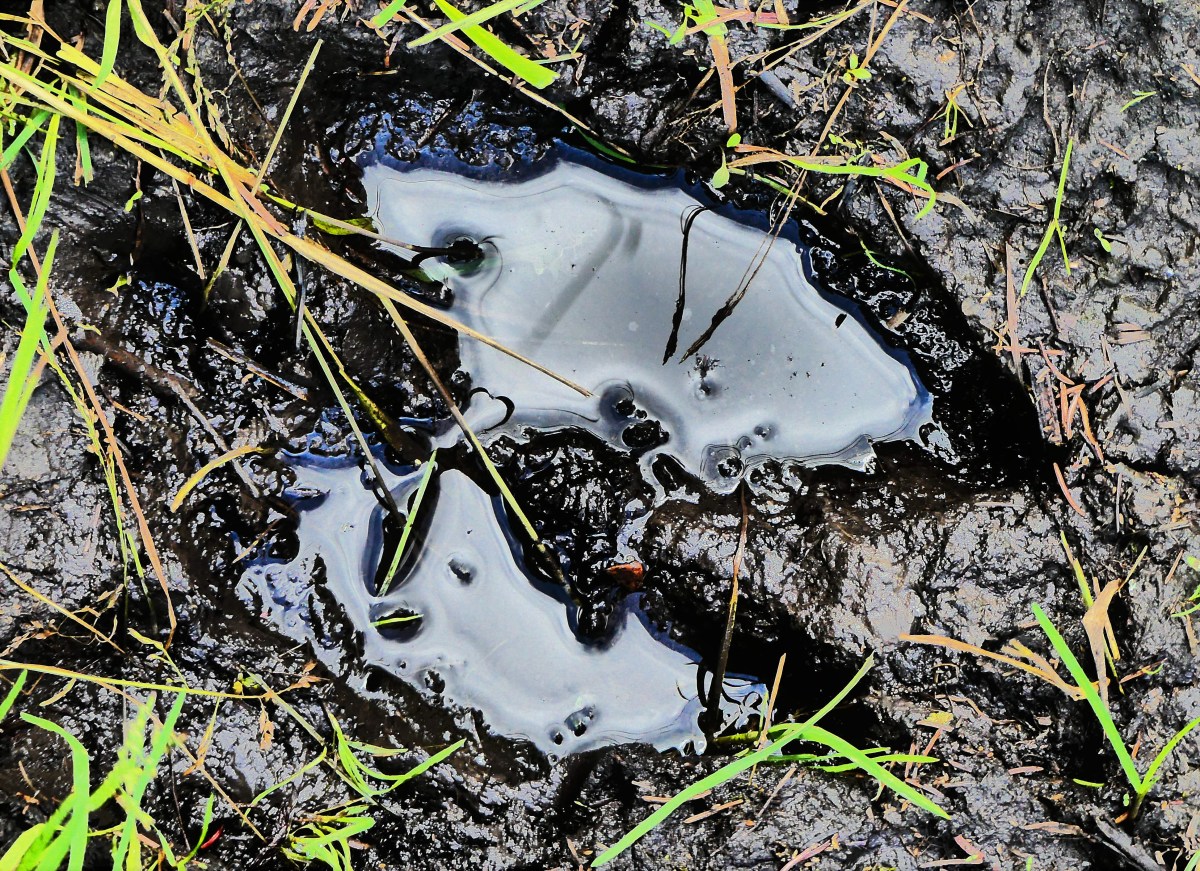
moose track

With Leah in front, calling off bears and moose, and me in the rear, swatting away voracious mosquitoes, we wondered if this hike would ever end. Midway through the hike we encountered another couple taking the loop from the other direction.

“See any bears or moose?” Leah questioned.

“Lots of tracks, but no animals,” he answered. “Yet I sense we’re being watched.” she volunteered. “Anyway,” she continued, “there’s a lovely clearing ahead. Enjoy.” And they were gone.

The flat trail turned steep as we climbed into a grove of firs, and we caught our first glimpse of the lake we were circling.
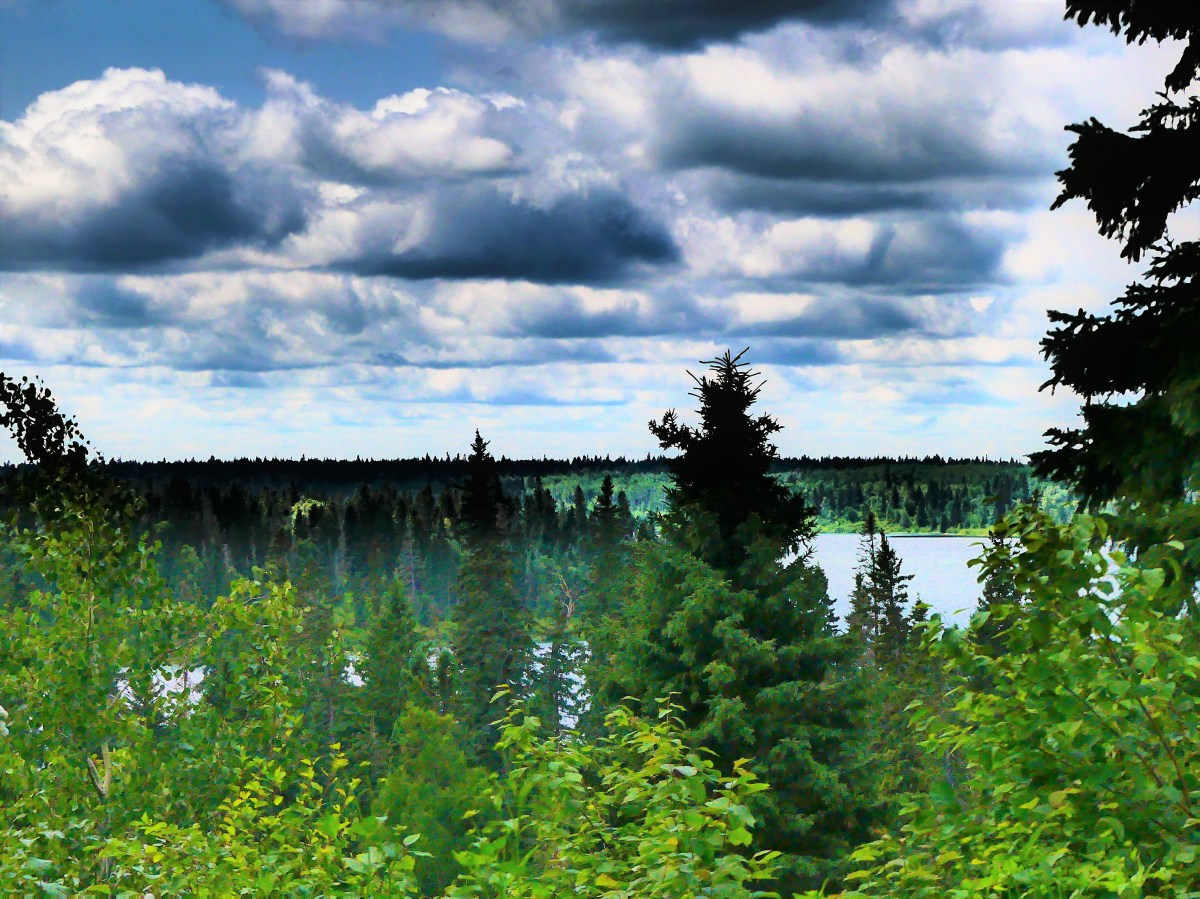
Moon Lake Overlook

Soon we were bordering the banks, stepping over freshly broken plant stalks that only a moose could manage. Suddenly, Leah stepped into an uncertain spot that swallowed her boot whole, and caused her to lose balance, plunging the other foot into even deeper mud. I might have taken her picture, if I wasn’t so busy pulling her free, and I was certain that she’d forgive me later.

We emerged tired, muddy and grateful to have put this hike behind us, but still curious about the bison enclosure at Lake Audy one hour away. We’d made it our mission to see at least one wild animal in this park–even if it meant watching a small herd of bison roaming through the prairie…again.

But there were no bison grazing, or roaming, or rolling in the dust, anywhere. The viewing deck that overlooks the grasslands held no surprises, and was devoid of beasts of any kind.

Yet, it was hard to ignore the swooping passes of several starlings that darted in and out of the gallery. A closer look around the rafters, gave us the gratification we were searching for.

Heads and tail

Feed me (2)

Yum

Half a million visitors arrive each year to Riding Mountain to enjoy the crystalline water of Clear Lake, or stroll through the charming town of Wasagaming, or angle for trout and walleye in the streams and lakes, or hike and bike through biodiverse ecosystems, but mostly people come to witness the wide assortment of wildlife.

Unfortunately, Leah and I found no animals present, although we’re certain they were around us–which is why we believe that Riding Mountain National Park is for the birds.

Facing the Future of Awareness

The van in front finally pulled away, making it my turn to methodically approach the gatehouse window with the Airstream in tow. But nobody was home. Leah noticed an outstretched arm extended from a raised window a dozen feet forward, and it was waving me closer. I inched parallel to the higher window, and awkwardly offered our documents.

“You realize you’re in the wrong line?” he criticized.

“There was no sign,” I responded sheepishly.

“Take off your sunglasses,” he ordered. “Where are you going and what’s your purpose?”

“We’re on our way to Winnipeg to celebrate Bastille Day,” I announced.

“Bastille Day, huh! So you’re up for a couple of days?” he barked.

“Actually longer, about four weeks,” I offered. “We’re here to tour your beautiful country… drive across to Calgary and visit Banff and Jasper before returning to the States.”

“You carrying any drugs, alcohol, guns, ammunition?”

“No.”

“You ever visit Canada before?”

“Yes.”

“When last?”

“We were in Alaska last summer and crossed over to Yukon.”

“How much money you carrying?”

“About a thousand dollars.”

“Enjoy your stay,” he stated dryly, handing back our passports.

We were immediately reminded of driving in a foreign country when the road signs posted maximum speed limits in km, and the bi-lingual billboards promoted it products in French.

“How do you know how fast you’re going,” Leah posed?

“I have a button on the steering wheel,” I bragged, pushing the button. “And it automatically makes the adjustment on the display. Voila!”

“So cool,” Leah deadpanned.

The Bastille Day ritual was being held au petit jardin de sculptures beside the old City Hall-turned tourism center/art gallery in the Franco-friendly Winnipeg ward of St. Boniface. Children with painted faces played with balloons, while parents drank wine and ate smelly cheese poured over stale-crusted bread. A trio played behind a chanteuse doing an Edith Piaf impression, and the mood was festive. We left early, thinking the celebration was anti-climactic.

The ride home took us across the Red River, where we previewed a hulking structure that is Canada’s newest national museum, and Winnipeg’s newest tourist attraction and controversy.

bdlg rear

The Canadian Museum for Human Rights, completed in 2014, sits atop the Forks–long considered sacred ancestral soil by the Aboriginals, and part of Treaty One Territory. Instantly, the site selection sparked passionate criticism from Aboriginal elders, who argued for more time after 400,000-plus artifacts were discovered during initial ground-breaking and subsequent archaeological excavation.

Protests continued throughout construction by advocacy groups who perceived that inadequate exhibition space would never address the scope of one group’s suffering, while other advocates claimed that another group whose misery was elevated to a higher status was granted more square footage than deserved.

And to complete the spectrum, there were activists who were bitter that some atrocities were being ignored, and consequently delegitimized. One group felt disrespected after learning that their group’s exhibition space was adjacent to the rest rooms.

Then there were critics who had ideologically opposed the architecture design, likening it to a modern Tower of Babel. But veteran planner Antoine Predock defended the symbolism behind his vision:

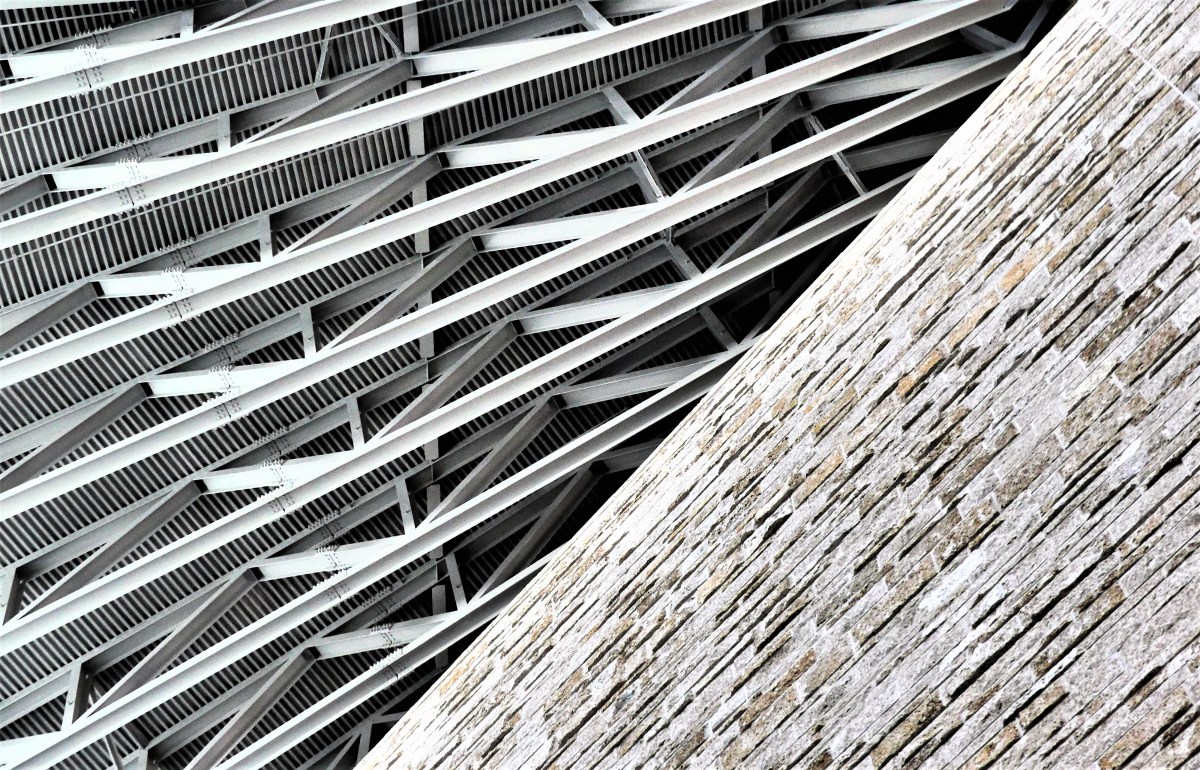
The Canadian Museum for Human Rights is rooted in humanity, making visible in the architecture the fundamental commonality of humankind-a symbolic apparition of ice, clouds and stone set in a field of sweet grass. Carved into the earth and dissolving into the sky on the Winnipeg horizon, the abstract ephemeral wings of a white dove embrace a mythic stone mountain of 450 million year old Tyndall limestone in the creation of a unifying and timeless landmark for all nations and cultures of the world.

museum entrance

A dozen galleries stretch between alabaster ramps acting as spears of light connecting the void of black-washed canyon walls.

ramps and roads

The alabaster bridges provide needed tranquility time to survive the intensity of the previous gallery and avoid potential human-condition overload.

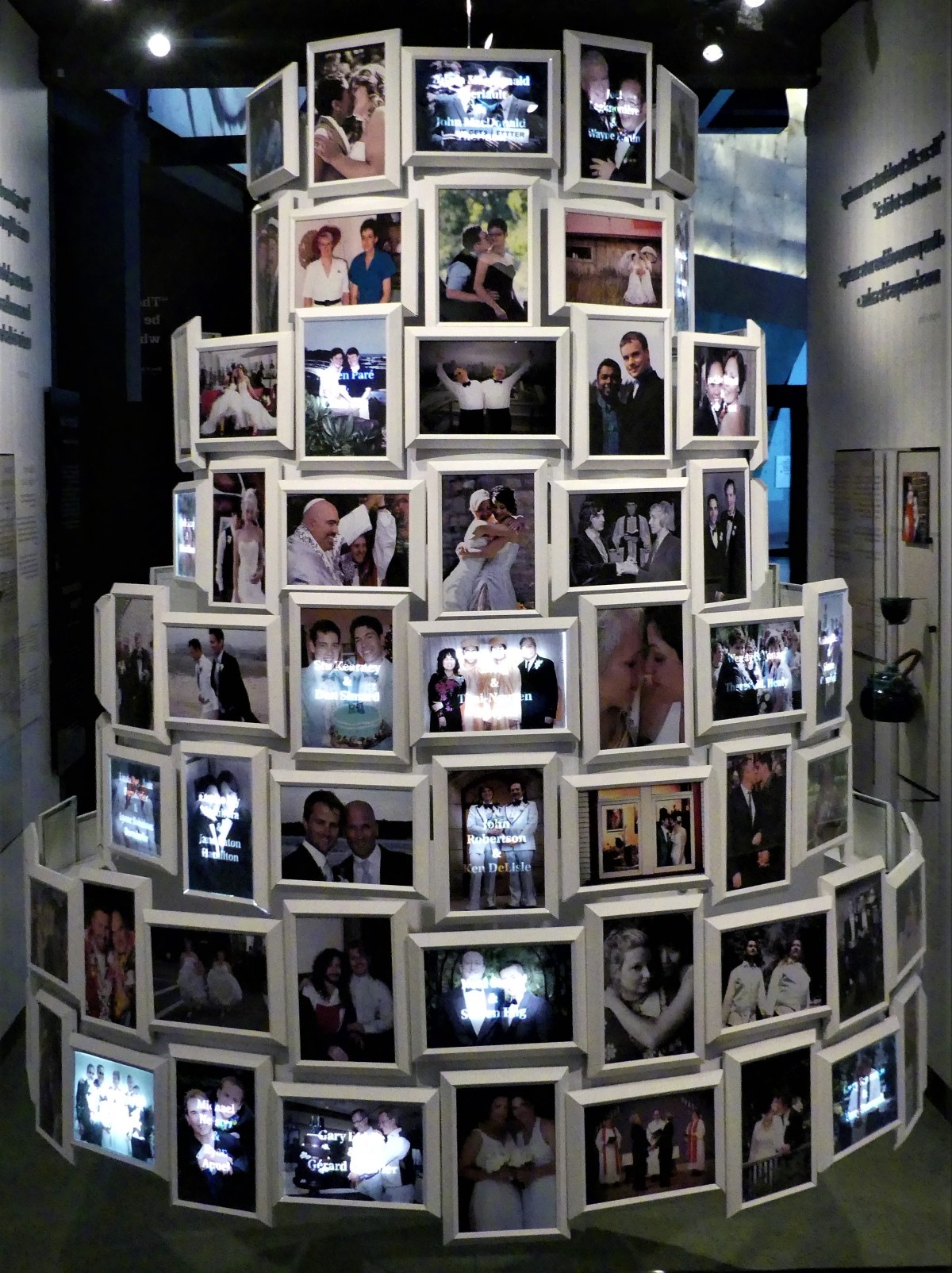
The galleries are immense shadow boxes for interpretive technology…

1st nation basket

meaningful art installations…

ceramic tapestry Bistro sculpture

red dresses

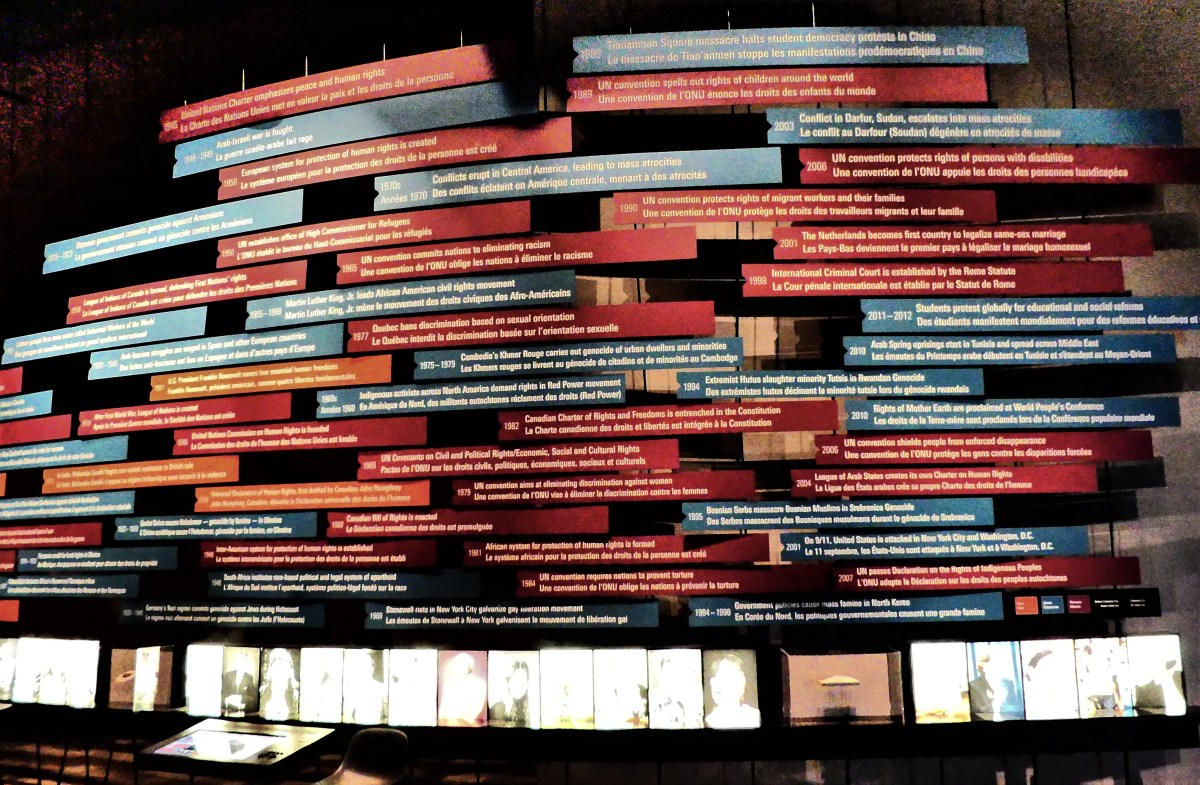
animated graphics…

queer wedding cake

Human rights time line

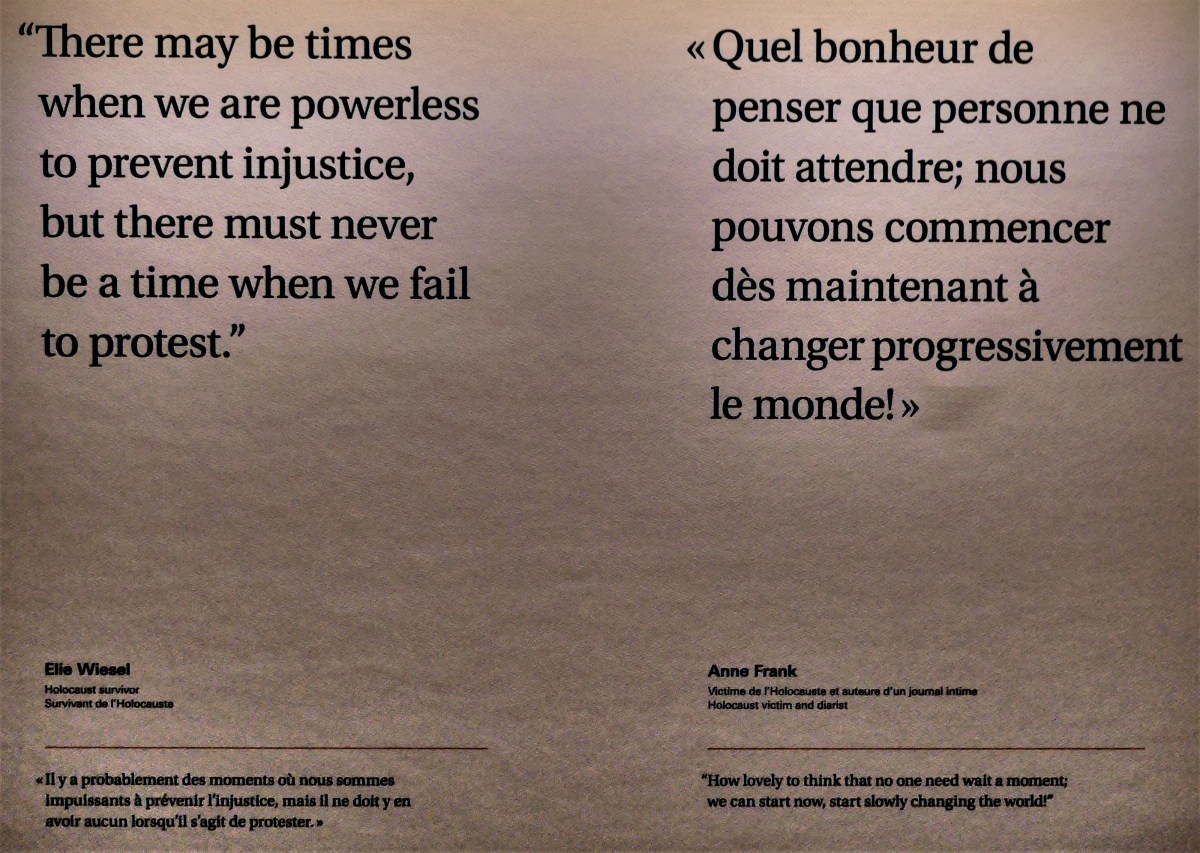
and traditional prose…

Quotes from Weisel and Frank

Primo Levi

All human beings are...

In hindsight, I would start the “trek of travesty” at the top, and wind my way down the “ramps of reflection”–much like the Guggenheim Museum in NYC…

ramp

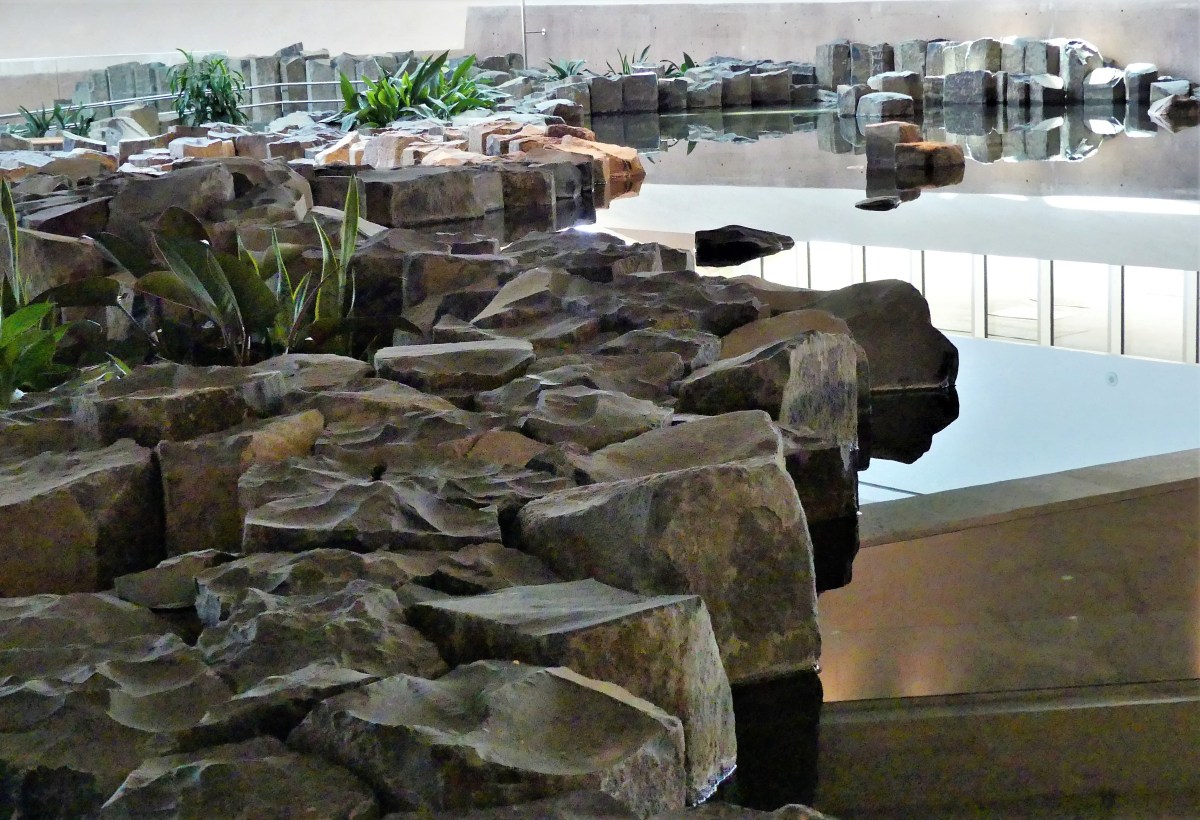
until reaching the Garden of Contemplation on level 3, where hexagonal rocks of basalt buttress placid pools of water,

Garden

catching surreal reflections,

Garden of Contemplation

under a towering canopy of limestone, steel, and glass.

roof structure

elevator towers

On the other hand, by cruising the museum “upside down”, visitors may lose sight of the painful journey endured by the many who struggled for acceptance and equality. And skipping the Tower of Hope is a missed opportunity to circle the observation deck, with its expansive view of Riel Esplanade and more.

Riel Esplanade

Winnipeg is a city in transition seeking to compete on a national stage, while coming to terms with disaffected Aboriginal people who represent 10% of the local population. Fortunately, the Canadian Museum for Human Rights can be called upon to remind us of the importance of awareness, critical thinking, and reconciliation.

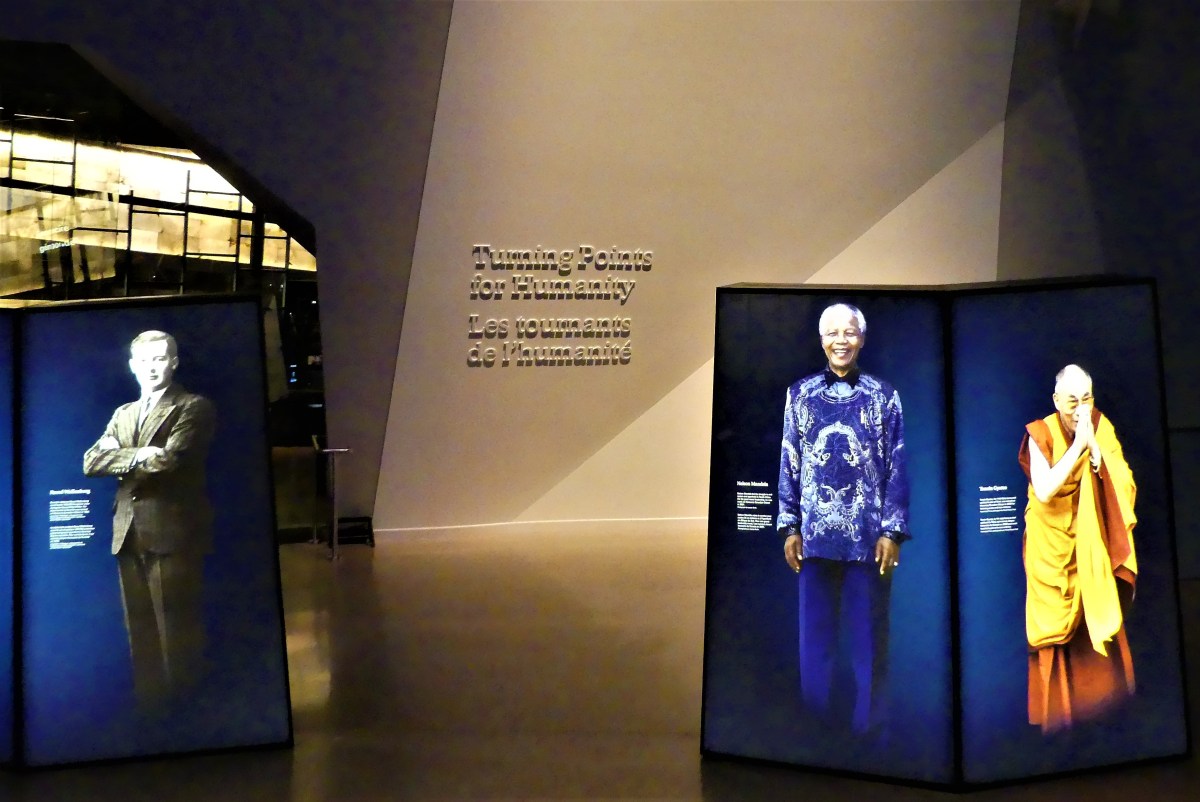
Turning Points for Humanity


A Day of Beauty

With so many spectacular parks checked off our bucket list thus far, Leah and I needed a time out for reflection. Seemingly, the constant shifts of locations, coupled with maximizing our time at each stop has blended our experiences and threatened our recall.

We have been so immersed in the natural beauty that soothes the soul, that we’ve neglected the urban essence that nourishes the spirit. So we came to Minneapolis for a culture fix.

The pulse of Minneapolis is defined by its abundant museums and galleries, its renown theater district, its avant garde food scene, and celebrated sports franchises. There’s a lot to cheer about in Minneapolis… at least, during three seasons of the year.

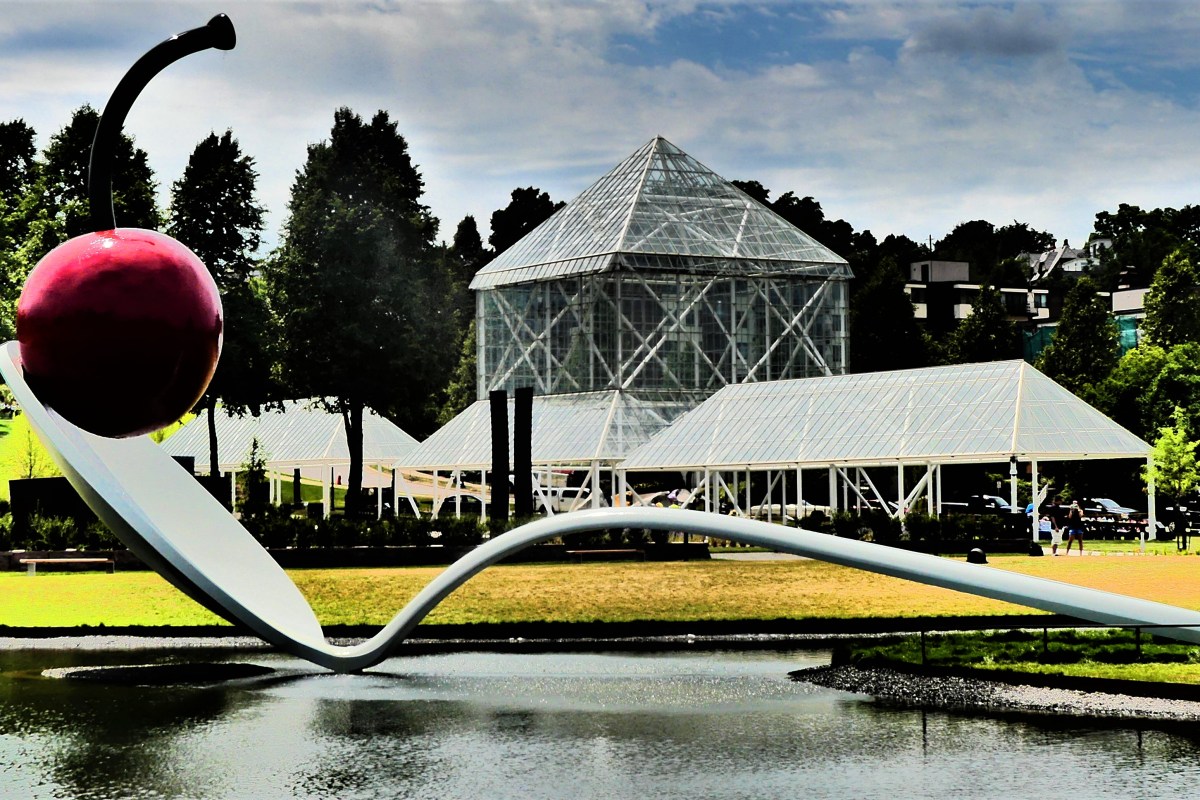
We only had three days to explore, so it required a binge-worthy effort. We exchanged our hiking boots for walking shoes, and set a course for the newly reopened Sculpture Garden to swoon over the Spoonbridge and Cherry, and tap into the energy of the Walker Art Center.

My photographic impressions are interpretive at best, drawing from the power of the work, and serving as an inspirational palette and easel.

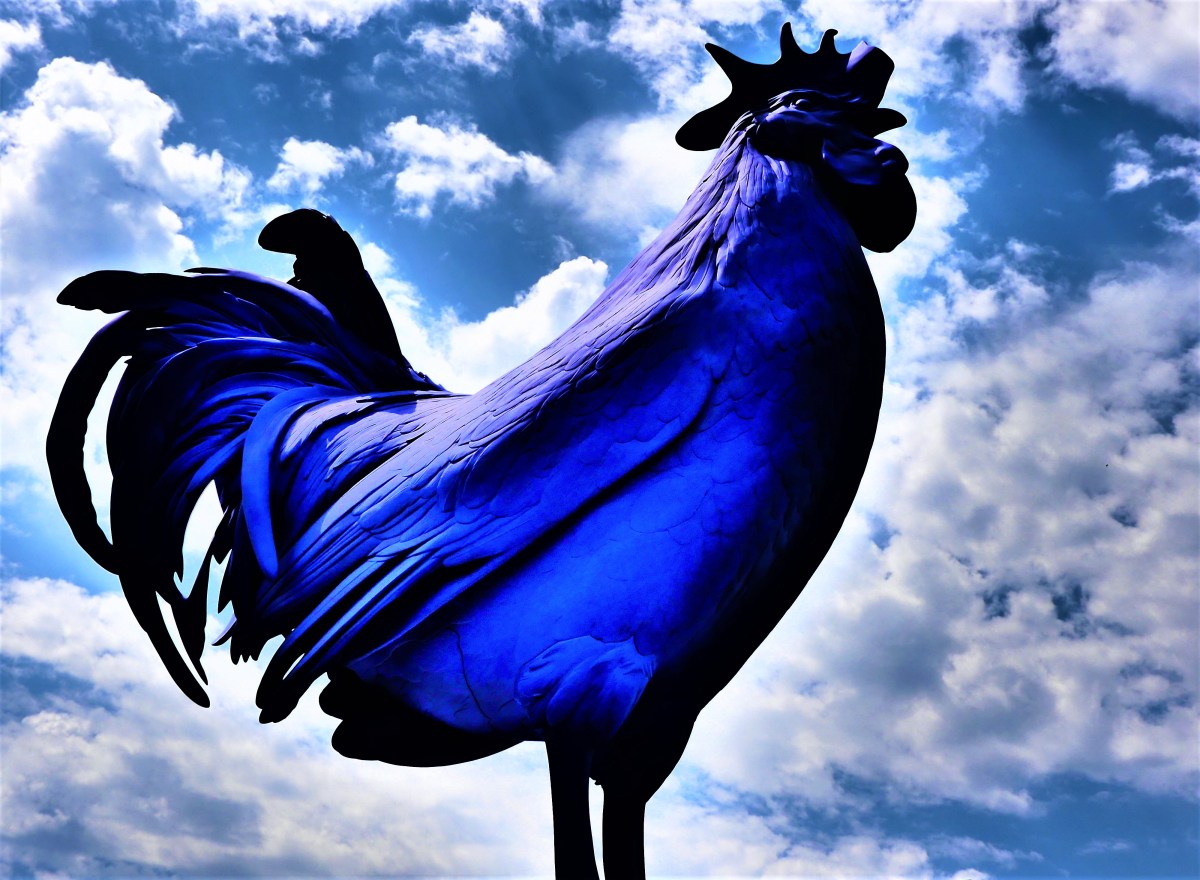
Blue Rooster

bell bunny

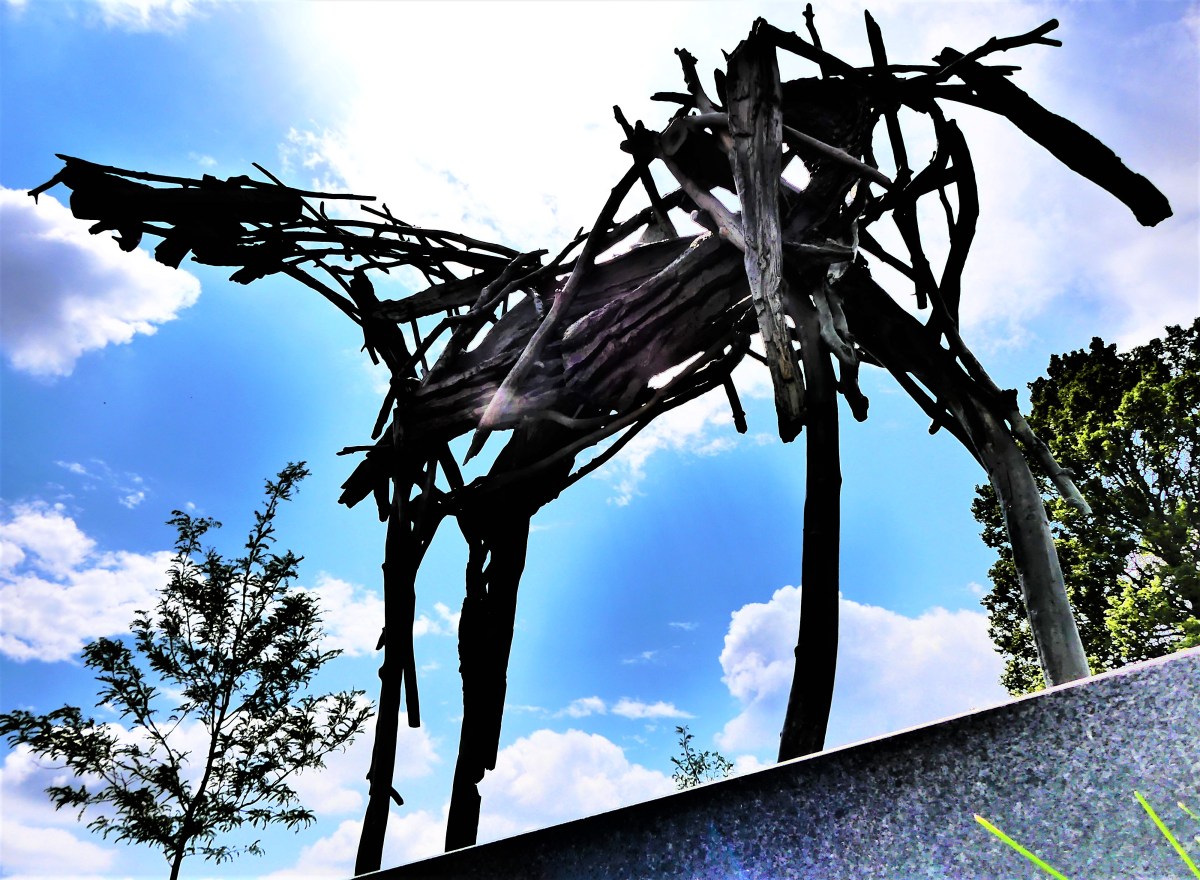
wooden horse

Mark di Suvero

windows

metal on rock

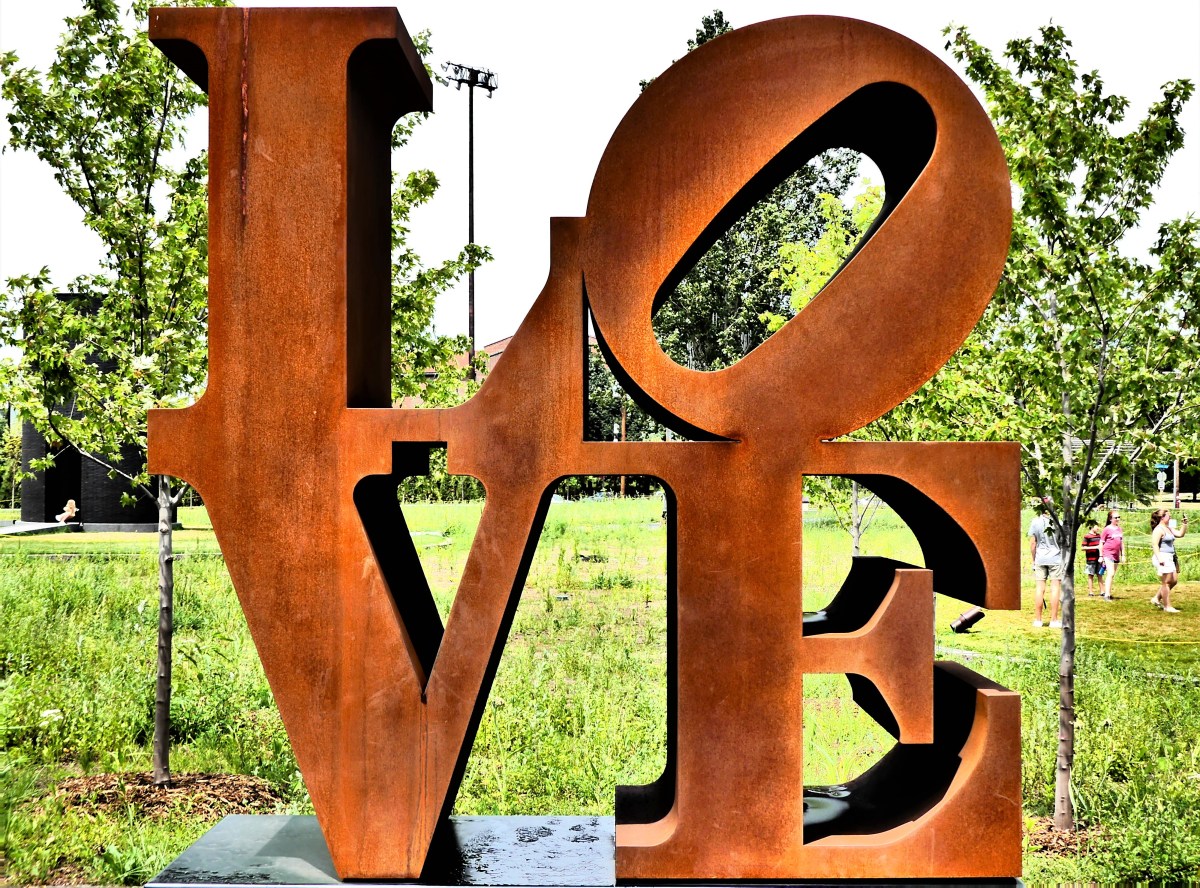
love

sisters

gospel (2)

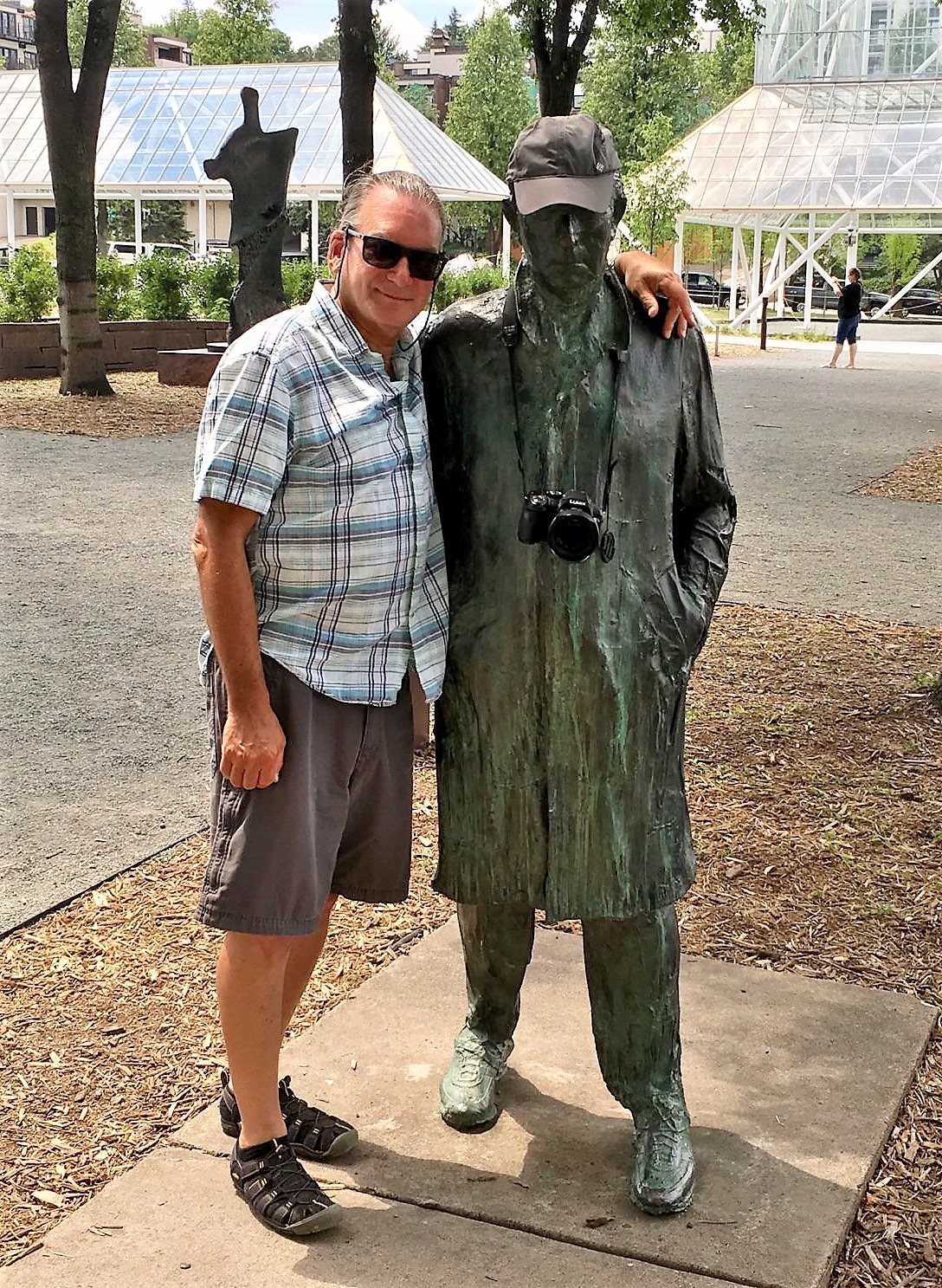
George Segal and me

We marveled at the magic motion produced by Merce Cunnningham against a backdrop of post-modernist sensibility.

mylar reflection

mylar pillows

Leah's passage

costumes

lights

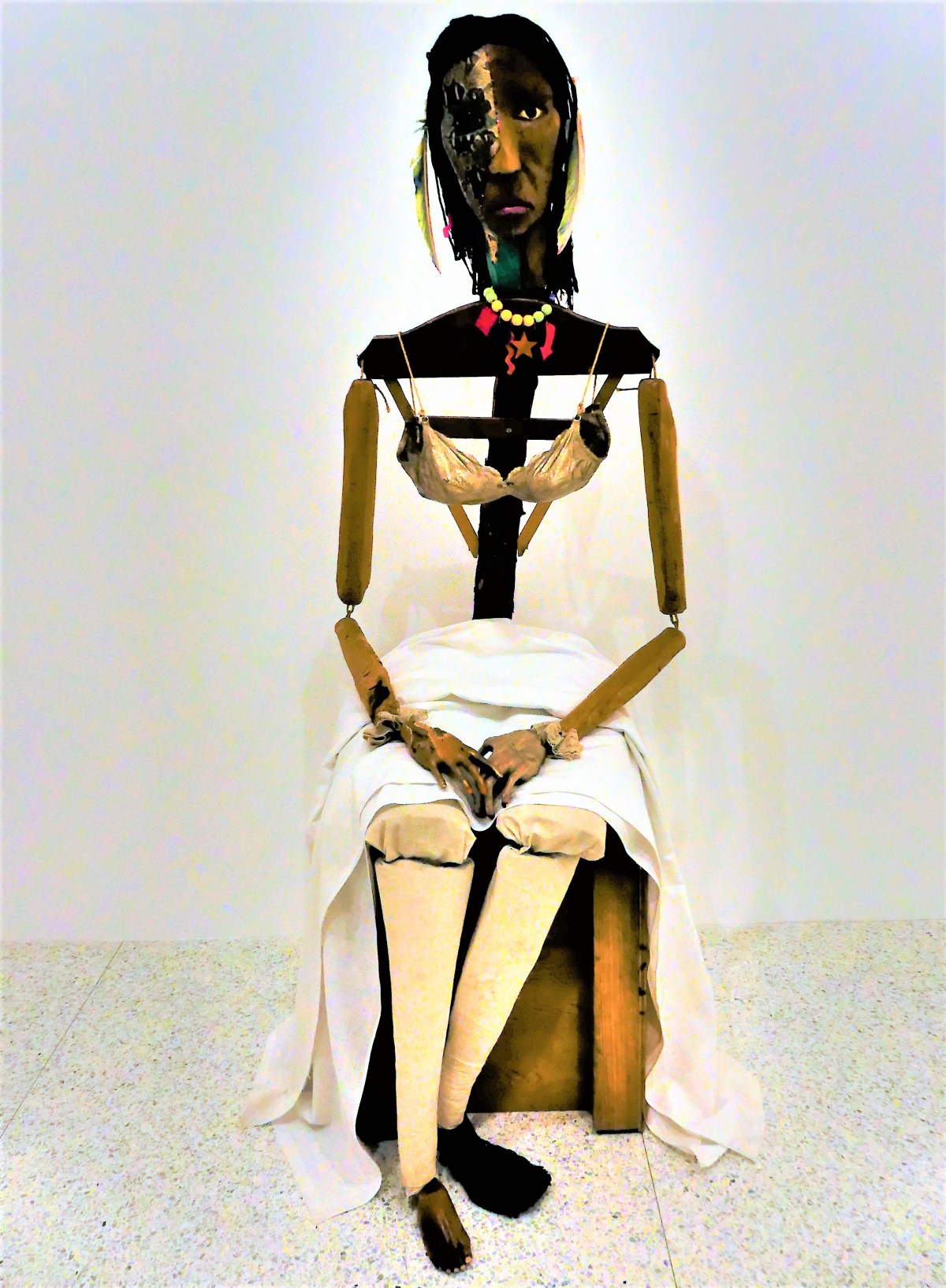
And we were amused by Jimmie Durham’s life-size assemblage sculptures.

sittting figure (2)

artist and Leah

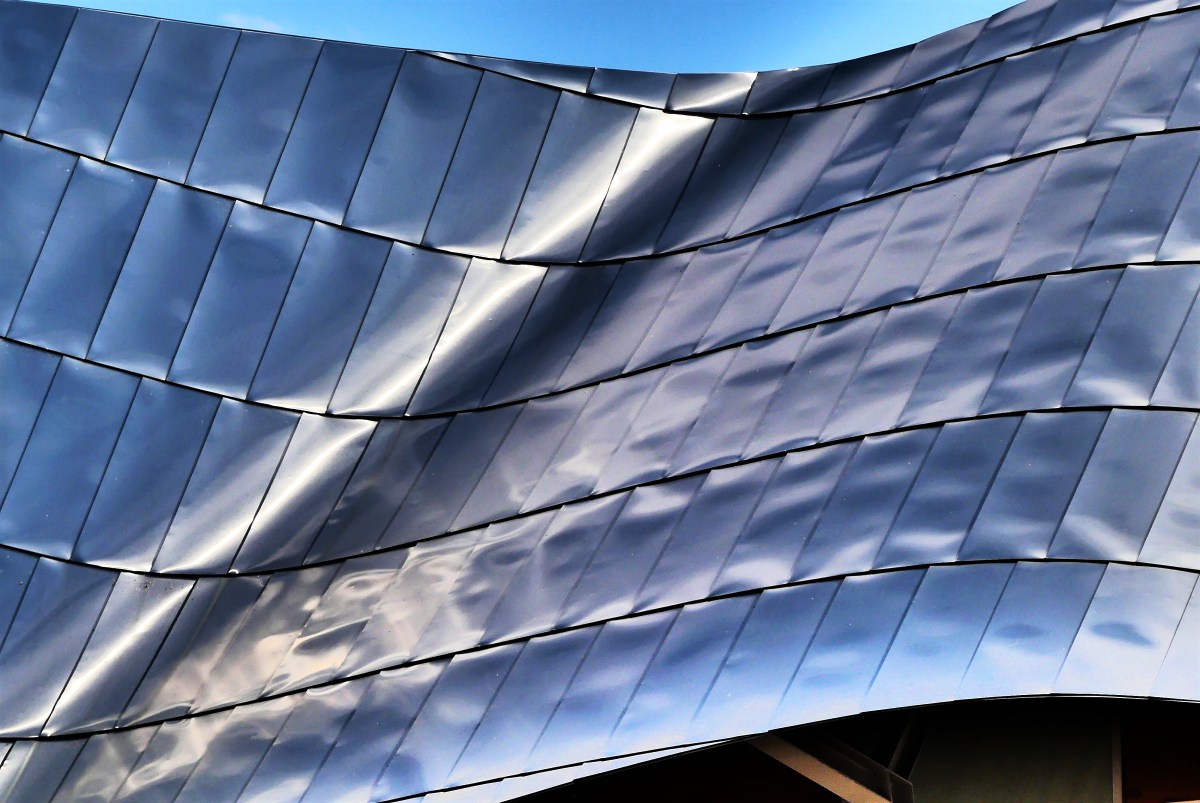
We sped across town in time to catch the shimmer emanating from the convoluted skin of Frank Gehry’s Weisman Museum of Art at the University of Minnesota, but we were too late to tour the galleries.

Weisman Museum aluminum skin

However, we finished the day with a stunning performance of Sunday in the Park with George at the Guthrie Theater.

Sunday in the Park with George

How appropriate that we should celebrate art celebrating art. We left the theater revitalized by the message, and enlightened by the notion that we are ready to take our next walk in the woods.
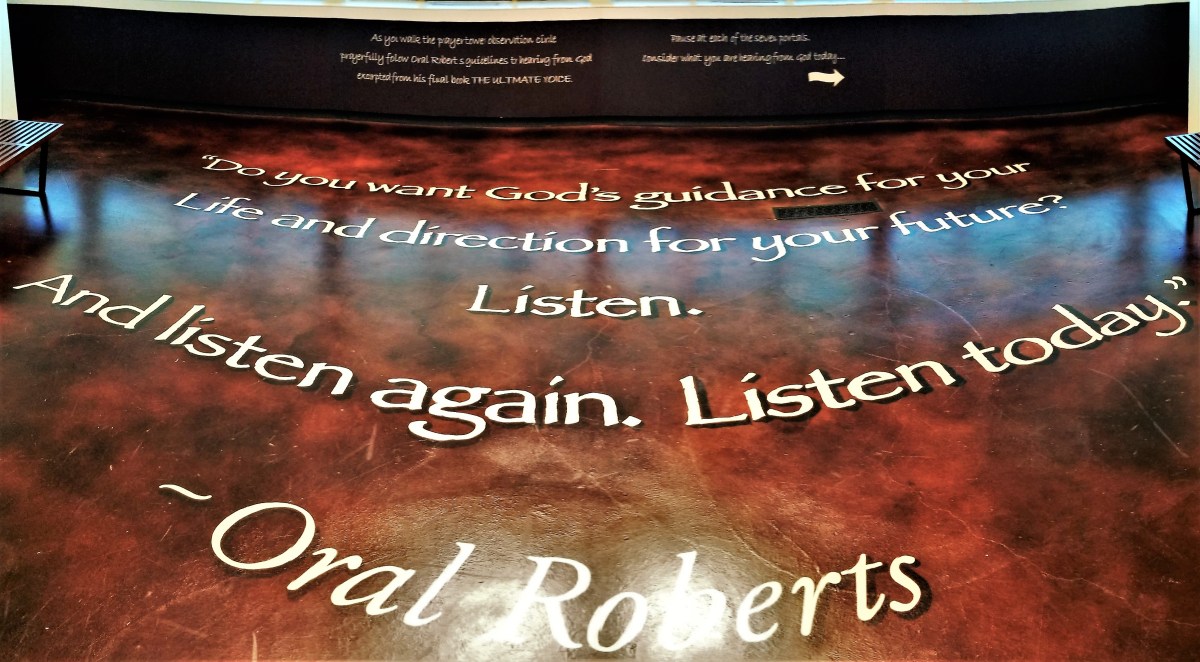
 

The Temple of Conspicuous Consumption

A photo essay…

In honor of the 25th birthday of Mall of America®, here are 25 incredible facts + figures about the nation’s largest retail and entertainment destination (as reported by Mall of America).

  • 1.15 MILES: Walking distance around one level of Mall of America
  • 8 ACRES OF SKYLIGHTS: What allows about 70% of the natural light to enter the Mall
  • 4 OUT OF 10: Visitors to Mall of America who are tourists
  • 9: Yankee Stadiums that can fit inside the Mall
  • 27: Rides and attractions in Nickelodeon Universe®
  • 43: Boeing 747s that could fit inside the Mall
  • 65: How many semi-trucks were needed to transport trees to the theme park to create the outdoor feel of an indoor park
  • 70 DEGREES: Temperature inside Mall of America whether its spring, summer, winter or fall
  • 100+ POUNDS: Amount of food fed daily to animals at SEA LIFE® Minnesota Aquarium — plus 90 extra pounds on the days the sharks are fed
  • 347: Statues of Liberty that could lie inside the Mall
  • 400+: Events held at Mall of America each year
  • 520+: Stores located in Mall of America
  • 8,700+: Weddings that have been performed at Mall of America
  • 11,000: Year-round employees at Mall of America (13,000 during peak periods)
  • 12,750: On-site parking spaces at Mall of America in two ramps
  • 30,000+: Live plants in Nickelodeon Universe® — plus 400 live trees climbing as high as 35 feet tall
  • 32,000+: Tons of trash recycled each year
  • 170,000+: Legos that have been lost in the LEGO® play area
  • 1.3 MILLION-GALLONS: Size of the aquarium at SEA LIFE Minnesota Aquarium
  • 5.6 MILLION: Square feet of gross building area
  • 40 MILLION: Visitors annually which is more than the combined populations of North Dakota, South Dakota, Iowa…and Canada
  • 174+ MILLION: Number of rides ridden in the park since opening
  • $650+ MILLION: Cost to build Mall of America
  • NEARLY $2 BILLION: How much Mall of America generates in economic activity annually for the state of Minnesota
  • 0: Sales tax on clothing in Minnesota

amusement park

rides

Dora

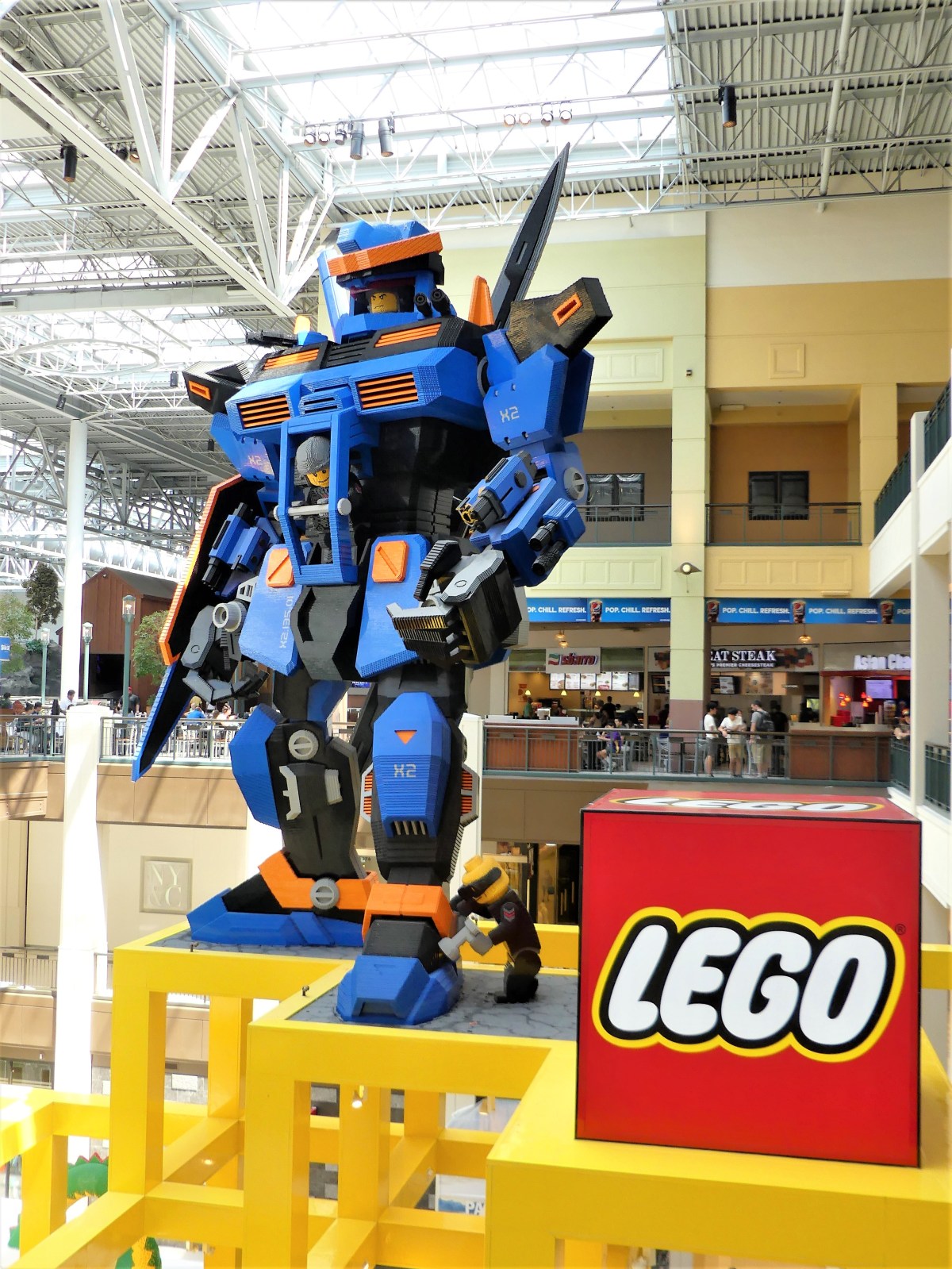
legos

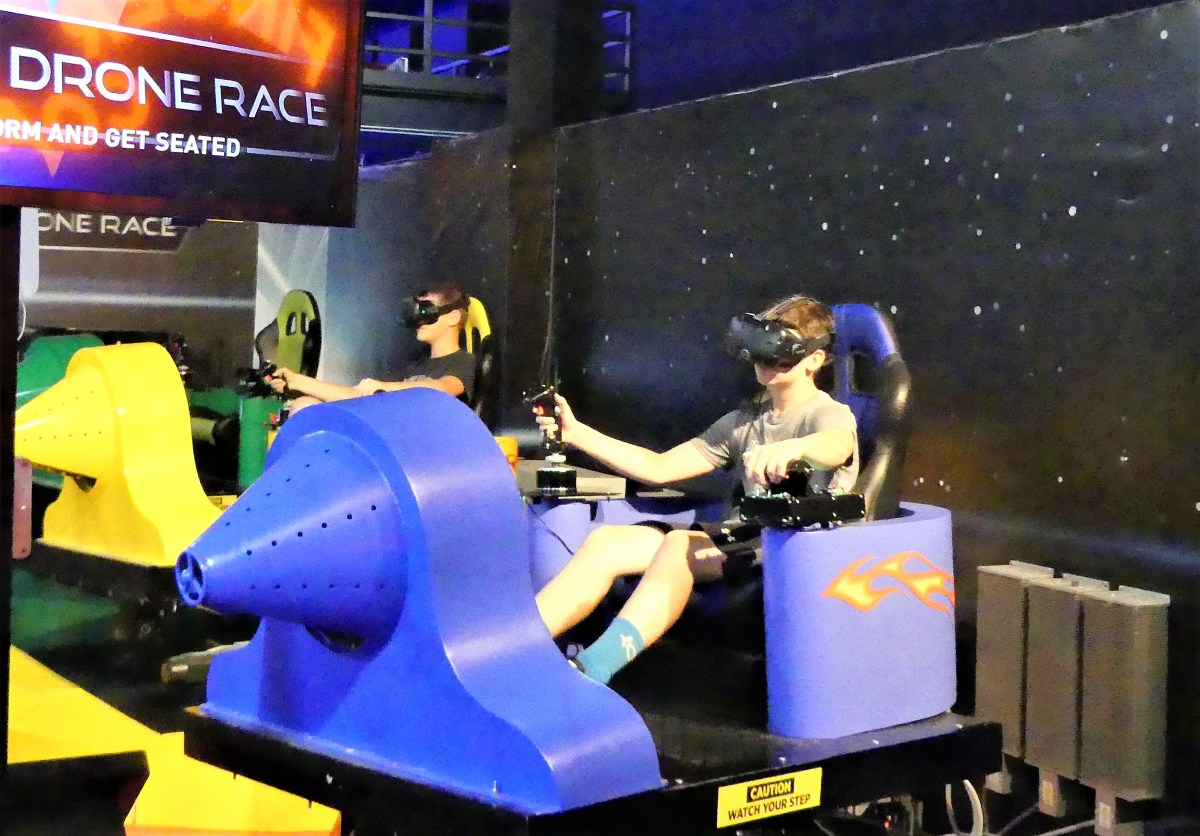
drone race

flying

towards Nordstroms1towards Macysskylightskylight cloudfashionshoppers


Going to the Chapel of Love

via Daily Prompt: Taper

Two weddings were scheduled today, and we weren’t invited to either one of them. To be fair, we didn’t know the brides and grooms or their families, but for now, to view the main sanctuary of the cadet chapel of the United States Air Force Academy, we would need invitations to their weddings.

All we could do was watch the guests file past us to witness a marriage between academy graduates,

wedding guestswhile the rest of us–visitors and tax payers alike–stood outside, trying to imagine a ceremony staged under the soaring lines of this ethereal cathedral.

Time and again, the misinformed and uninvited would climb the stairs to the cathedral entrance, only to be turned away by Ret. Captain Richard Mosbach, class of 1964. “But we came all the way from New Jersey to see this chapel,” Leah implored. “I guess today wasn’t the best day to visit.”

Capt. Mosbach tried redirecting. “Probably not. I was surprised about the day’s schedule when I arrived. I was expecting one wedding today, but not two. So for that reason, the Protestant chapel is closed to the public. However, there are other beautiful chapels on the lower level that are available for viewing.”

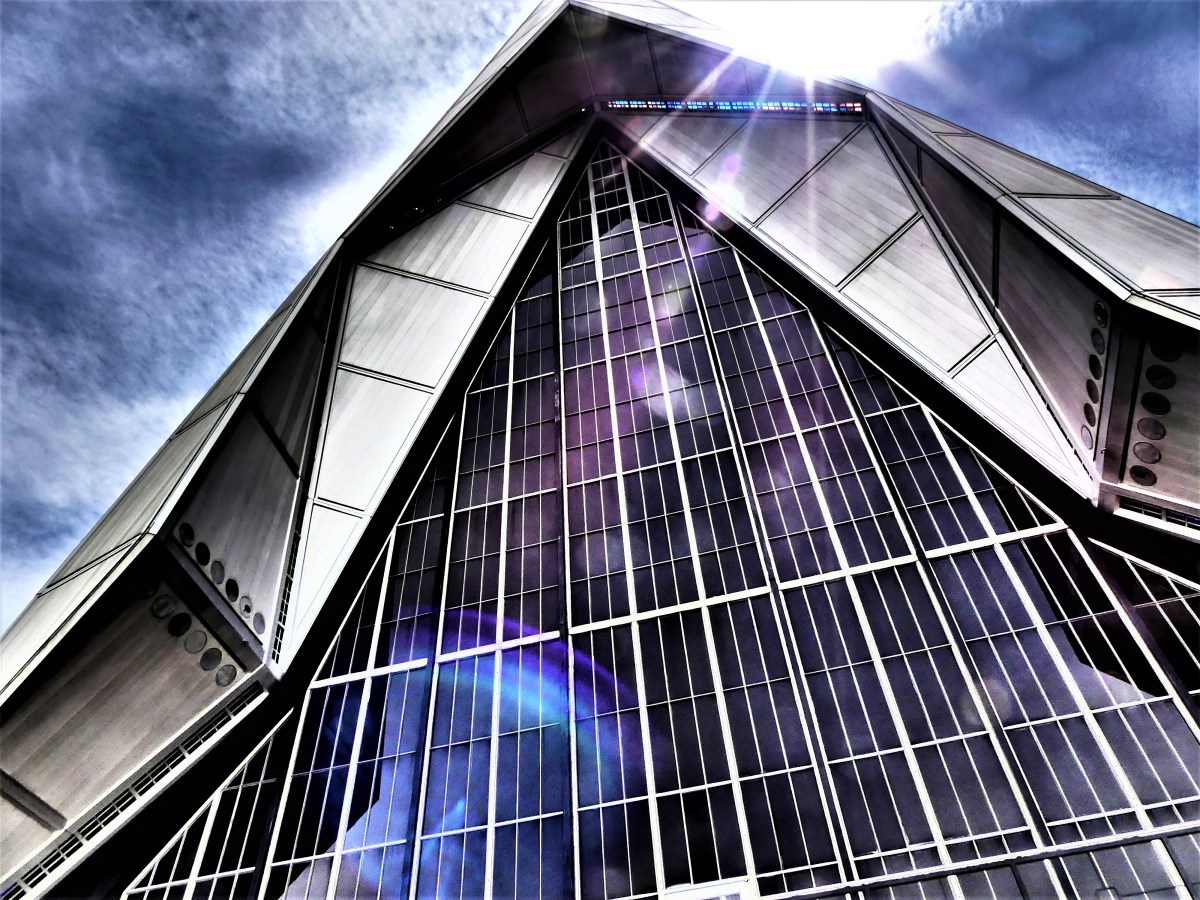
It was disappointing. While the chapel’s presence is so dominant and dramatic across the campus landscape, it’s really the interior that sets it apart from being a vertical stack of seventeen tapered arrowheads…chapel ext 2 pointing to the heavens.

chapel 2xt

Reluctantly, we followed signs to the ancillary chapels beneath the looming aluminum panels. Ground level is home to a Catholic chapel, a synagogue, and a recently dedicated Buddhist temple. Additionally, a Muslim reading room occupies the chapel basement. Square footage has been appropriated according to academy demographics: 400 Catholic parishioners, 100 observant Jews, and 25 chanting Buddhists.


We happened upon an impromptu lecture/sermon delivered by the Academy’s Jewish chaplain emeritus, and foremost authority on the nine priceless Shlomo Katz paintings of biblical depictions that line the temple’s circular hall.

Katz

All of it was special, but still, it was the Protestant Chapel we came to see. Leah and I ventured around the perimeter of this revered and Historic Landmark,

side viewand surprised Beth and Ivy–two of the bride’s cousins hanging out by the handicap access–sharing a cigarette and some giggles.

“Don’t worry. You’re secret’s safe with me,” I reassured. “All I ask in return are invitations for us, so we can see the inside.”

Leah continued, “We came all the way from New Jersey to see the chapel, and I guess today wasn’t the best day.”

Beth commiserated, “That’s a bummer.”

“Do you want me to take a picture for you?” offered Ivy.

I’d never met this girl before, and I couldn’t tell you if she was a reliable and responsible person, but on the spur of the moment, I shed my Lumix from around my neck, and handed it to Ivy without hesitation. I preset the camera to auto-focus and auto-exposure, and showed her very basic operation functions, before sending her off to document the chapel interior.

That’s when Capt. Musbach approached us for the second time. “I see you’re still here, and you’ve made a connection with the wedding party. Follow me!” he ordered.

He took the inside stairway to the back entrance behind the altar, and led us out to the edge of the chapel’s first arch. Beth and Ivy met us behind the wall to return my camera.

“I think I got some really cool shots for you. Do you wanna see?” she gushed.

“That’s okay. I’m certain whatever you shot has to be better than anything I was unable to shoot,” I confessed. “Thank you so much,” I intoned while replacing the camera around my neck, “And your secret’s safe with me.”

We stood in awe, bowed by the beauty of the chapel’s simplicity within the context of it’s complex geometry. We chatted with Capt. Mosbach for twenty minutes under the cool glow of sky-lit stained glass. As one of five volunteer docents who “works” every Tuesday and Saturday, he fed us factoid after factoid about the cadet chapel, making it abundantly apparent about this allegiance to the Academy, his fondness of the campus, and his affinity for sharing personal and academy history with strangers like Leah and me.

Just asking a simple question about the pipe organ housed in the choir lift at the top of the nave begets a five minute discourse about the 83 ranks and 67 stops, controlling 4,334 pipes.

pipe organHowever, more than 200 pipes don’t work due to continuing water damage caused by stained glass tiles that have leaked since the dedication in 1963.

stained glass ceilingJust as Capt. Mosbach was expounding on the the controversy surrounding Walter Netsch’s modernist design–when first unveiled by Skidmore, Owings, and Merrill in 1958–a couple of tourists arrived at our location with the intention of looking around.

Capt. Mosbach immediately switched over to door security protocol, and stated emphatically, “This area is closed to all public traffic while a wedding is in progress. So you’re going to have to leave, please.” Then he returned to his story, never missing a beat.

After fifty-five years of hosting weddings and ceremonies, the cadet chapel is to be shuttered at the end of 2018 for a complete interior overhaul. However, the chapel’s exterior will continue to remind us that man-made monuments are no less inspiring than the mountains that surround us, and can be a great catalyst for kindness.

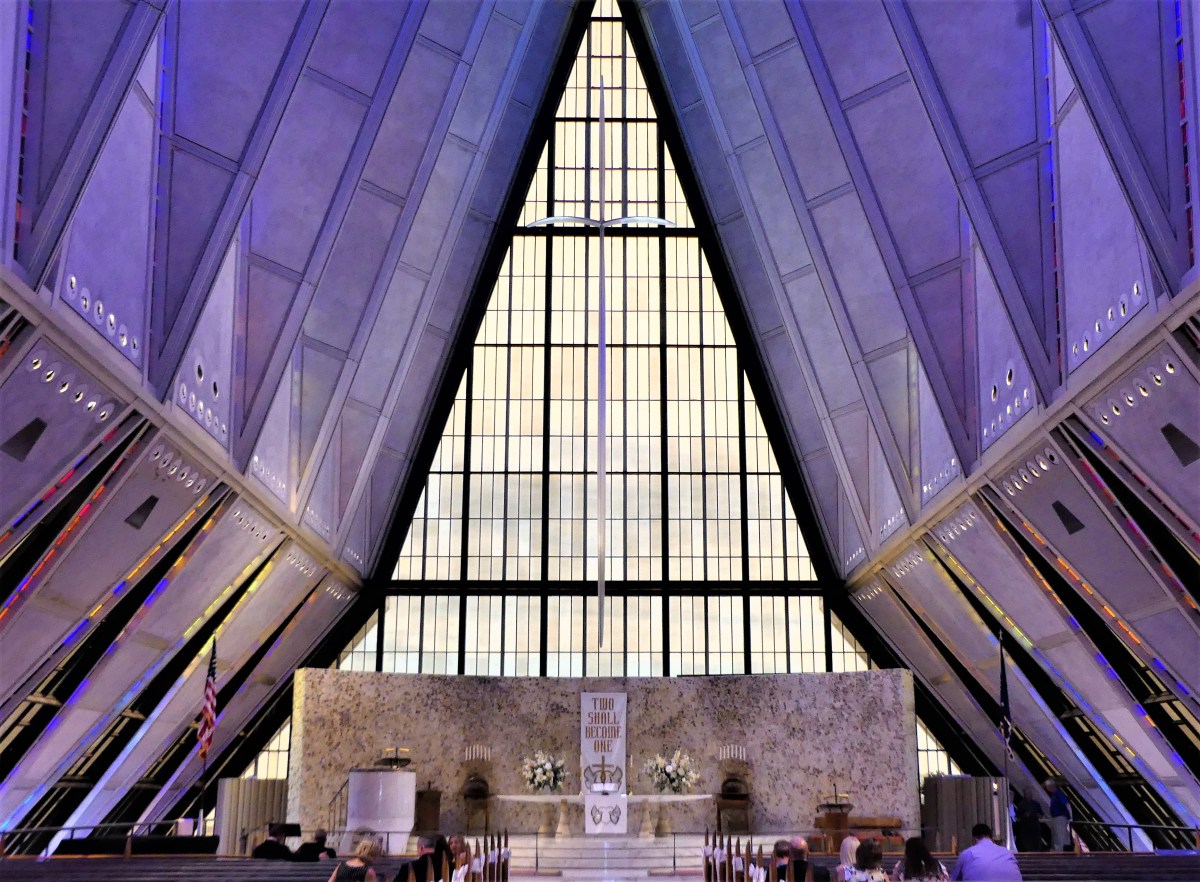
Our thanks to Beth and her cousin Ivy who provided the photography below, and to Ret. Capt. Robert Mosbach who brought the pictures to life.

chapel int organ2chapel alter


Ouch! and Ahhh!–Part Two

*For those who are reading postaday blogs, please see Part One first to follow the narrative. Sorry for the inconvenience.

Previously on Streaming thru America… (see Ouch! and Ahhh!–Part One, previously published)

Neal and Leah were both feeling the effects of the heat–both inside and outside the F-150. Temperatures had climbed to 103º on the trail, while the mood had turned icy in the truck. Additionally, Neal had aggravated an old knee injury, and Leah was feeling tired and dehydrated.

And now, Streaming thru America is pleased to present…

Part Two: Ahhh

After the hike, it became necessary to regroup at the Airstream. It was our last day in Big Bend and it was only 4 pm. Both of us agreed that we weren’t yet finished for the day. If we could rally after our siesta, then we could pull off one more hike.

But we needed a rejuvenation tonic—a game-changing elixir that would fuel our core and boost our disposition. And given the state of our limited supplies, it had to help us clear our head, yet give us the false sense of security we needed to fool ourselves into thinking that we could endure another adventure. Bottom line—we made frozen strawberry margaritas. Who knew they could be so energizing?

Timing was everything. With the sun expecting to set at 8:30 pm, a light dinner got us out the door and back on the road towards Hot Springs Trail, part of our Big Bend bucket list. Thankfully, not a long drive, it was only ten minutes to the turnoff from Rio Grande Village, and another four miles in to the trail head, but what a drive!

Halfway through the white gypsum track, the road split into two extremely narrow one-way hairpin switchbacks that hugged a striated canyon wall for the balance of the journey.

rock strata

It was a race against time. With the sky expecting to produce a saturated sunset, and the time it would take to traverse this obstacle course, I folded my mirrors in toward the truck, and held my breath as I cautiously moved forward.

It was harrowing yet exciting. The view out my window was nothing but air, while Leah, if so inclined, could reach out her window and file her nails against the cliff. But to her credit, she never said a word about my driving, as she braced herself against the armrest, in anticipation of a catastrophe. Or maybe her silence was driven by my encouraging words as we approached the switchbacks:

“Don’t say another word,” I loosely suggested, not trying to control her.

I successfully negotiated the F-150 into a parking lot occupied by other three cars. Wanting alone time with Leah, it was a bit of a letdown seeing company, but my new objective was to catch the sunset. I sprinted up a small hill with my camera swinging, to gain enough of an advantage over low rising trees just as the sky exploded into colors. I took in the view and my knee didn’t hurt a bit.


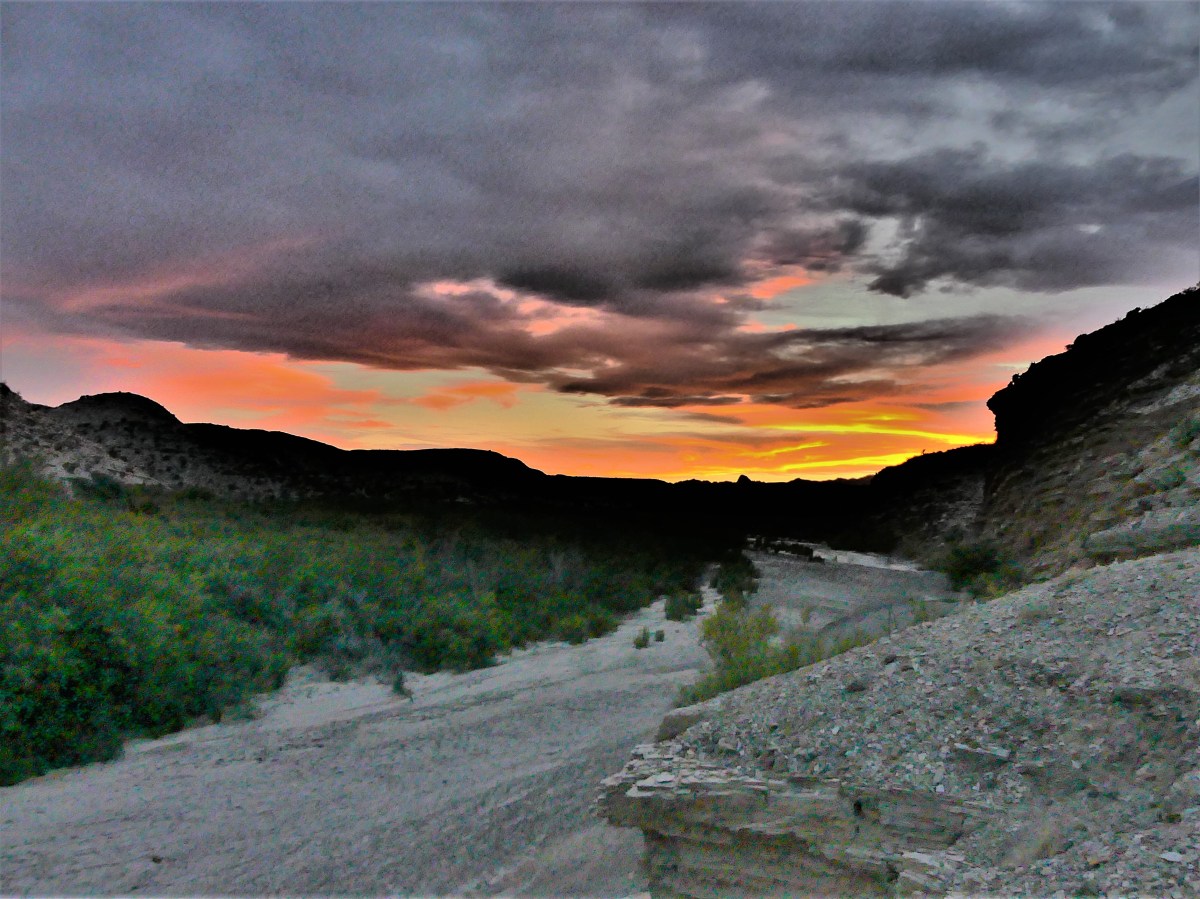
sunset

I also had time to capture the ruins of a limestone block cabin, that once served overnight visitors who had come to benefit from the healing properties of the mineral waters that Leah and I were about to experience.

Langford House

“Now the trail to the water will be dark,” Leah lamented, “because you had to take so long taking pictures.”

“I have a remedy for that,” I declared. I switched on the flashlight and lit our way down a lush reed-lined path, half a mile along the river, until we stood at the fallen foundation of a bathhouse spa built by J.O. Langston in 1912.

We eased ourselves into the 105º water currently shared by four other visitors. Everyone present had finished a hike in the blistering sun earlier in the day, and was eager to soak their aches and pains away in a hot oasis of salts and minerals.

Langford Hot Springs1

Langston had reported in his autobiography, “A Homesteader’s Story”, that by bathing in the spring water, and drinking it as prescribed by local Indians, he had completely regained the strength he lost from several debilitating bouts of childhood malaria. Claiming deed to the spring, he eventually moved his family from Alpine, TX and developed the property into a successful health attraction and trading post.

The remains of the bathhouse only adds to the character and allure of the location. While the Rio Grande flows on one side of the foundation wall, a floor vent on the other side is releasing over 200,000 gallons of geothermal water a day, pushing the overflow into the river–perhaps, an early rendition of now-popular infinity pools. Strategically sitting in the cool river while leaning against the hot spillover produces the strangest sensations and the best “Ahhh” results.

A break in the trees along the trail to the parking lot revealed a quarter moon and a black sky accented by millions of stars. Our fellow hot-tubbers neglected to bring a flashlight, so they followed our flashlight beam as we all walked back together. A college coed from the pack identified herself as a Langford, and thought she might be somehow related to the spa patriarch, thinking she could claim the spring for herself.

“But it’s a National Park, dear,” I reminded her. “It belongs to all of us.”

It was a perfect finish to a long day, and I had to admit that my knee never felt better.

*For those who are reading postaday blogs, please see Part One first to follow the narrative. Sorry for the inconvenience.


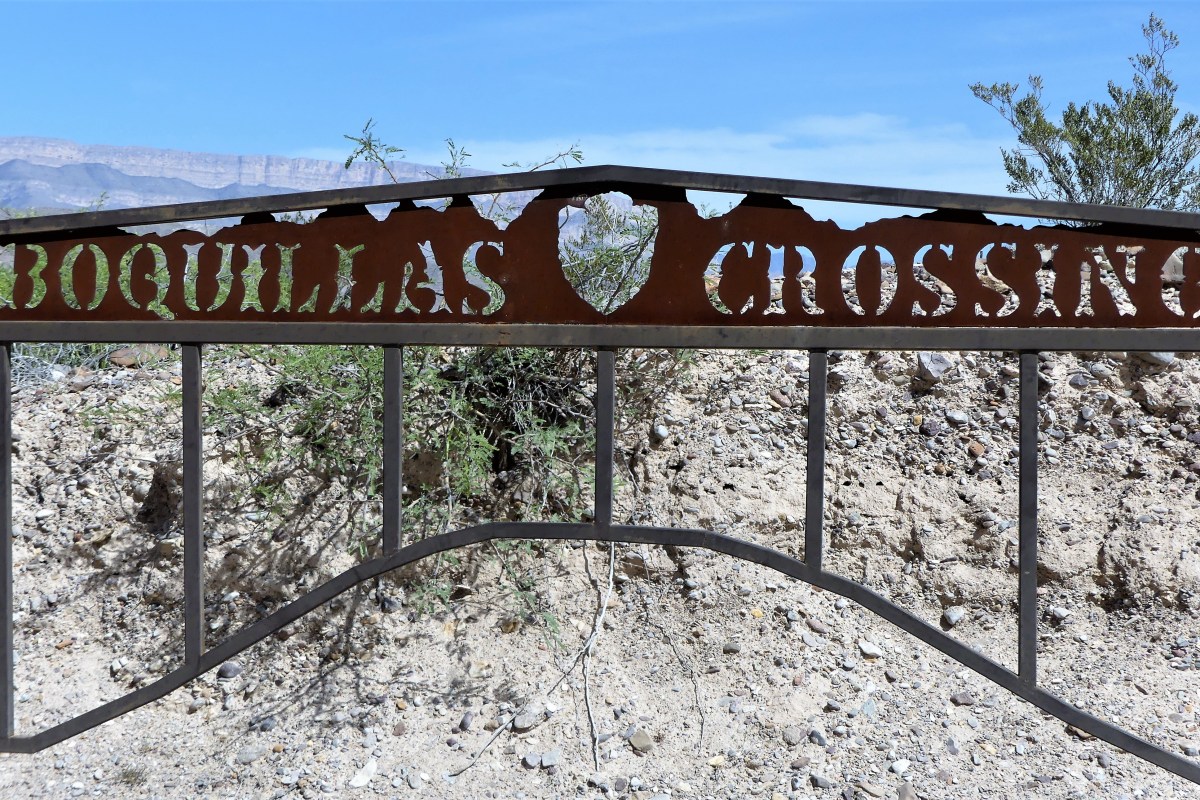
Boquillas Crossing

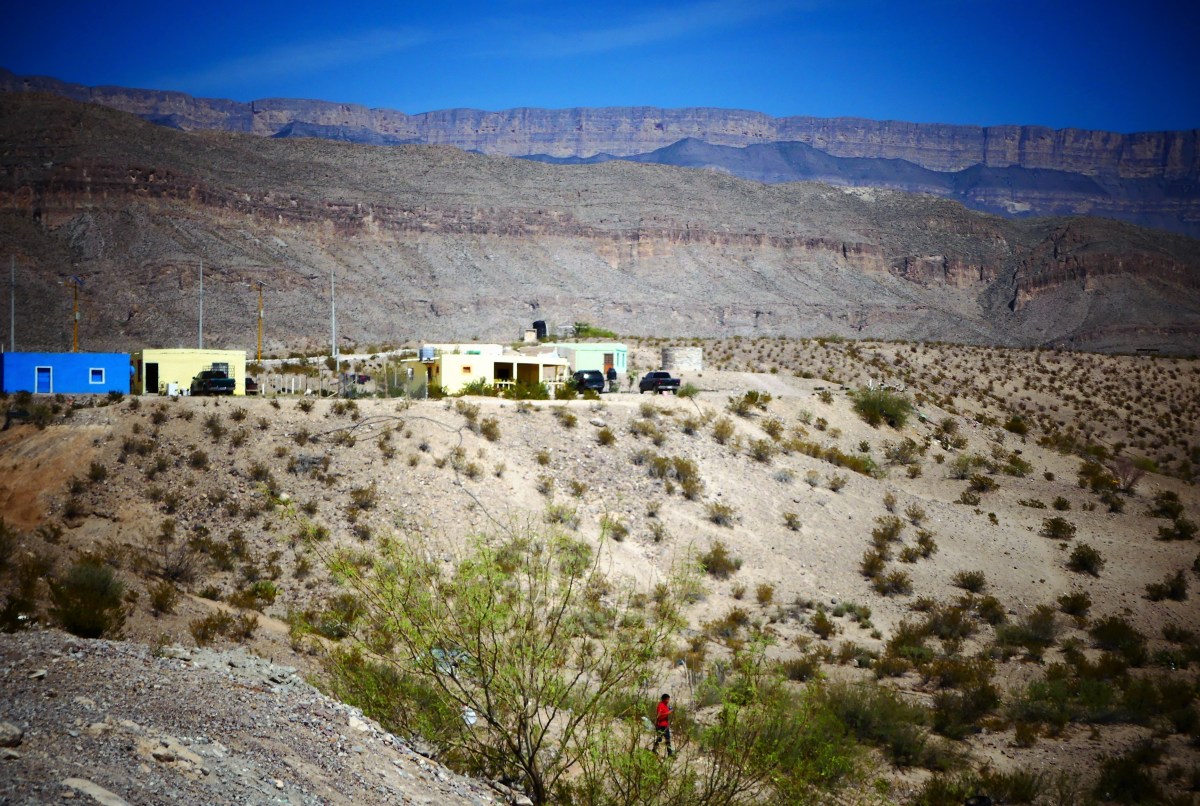
Today I met a national park service ranger by the name of A.L. Weimer who wore a bulletproof vest and carried a police-issue sidearm. While there are daily sightings of mountain lions and black bears throughout Big Bend National Park, I think his handgun has less to do with keeping the animals in line, and is more intended as a show of force in case any renegade Mexicans or Islamic terrorists get any big ideas about invading the U.S. through Mexico.

If so, Ranger Weimer, who manages the Boquillas Crossing, then becomes our first line of defense. Of course, thanks to our 2nd Amendment, I’m certain that many park visitors would rally in defense of our great nation, and arm themselves with the requisite arsenal of spatulas and Swiss army knives, or whatever else they could muster from their tents and RVs to hold off a foreign attack on American soil.

regulation sign

Leah and I decided that a reconnaissance mission was in order. To get to the other side, documents are first presented to Ranger Weimer, a dour-faced, no-nonsense bulldog, who makes sure there is no misunderstanding about the prohibition of alcohol or tobacco from abroad.

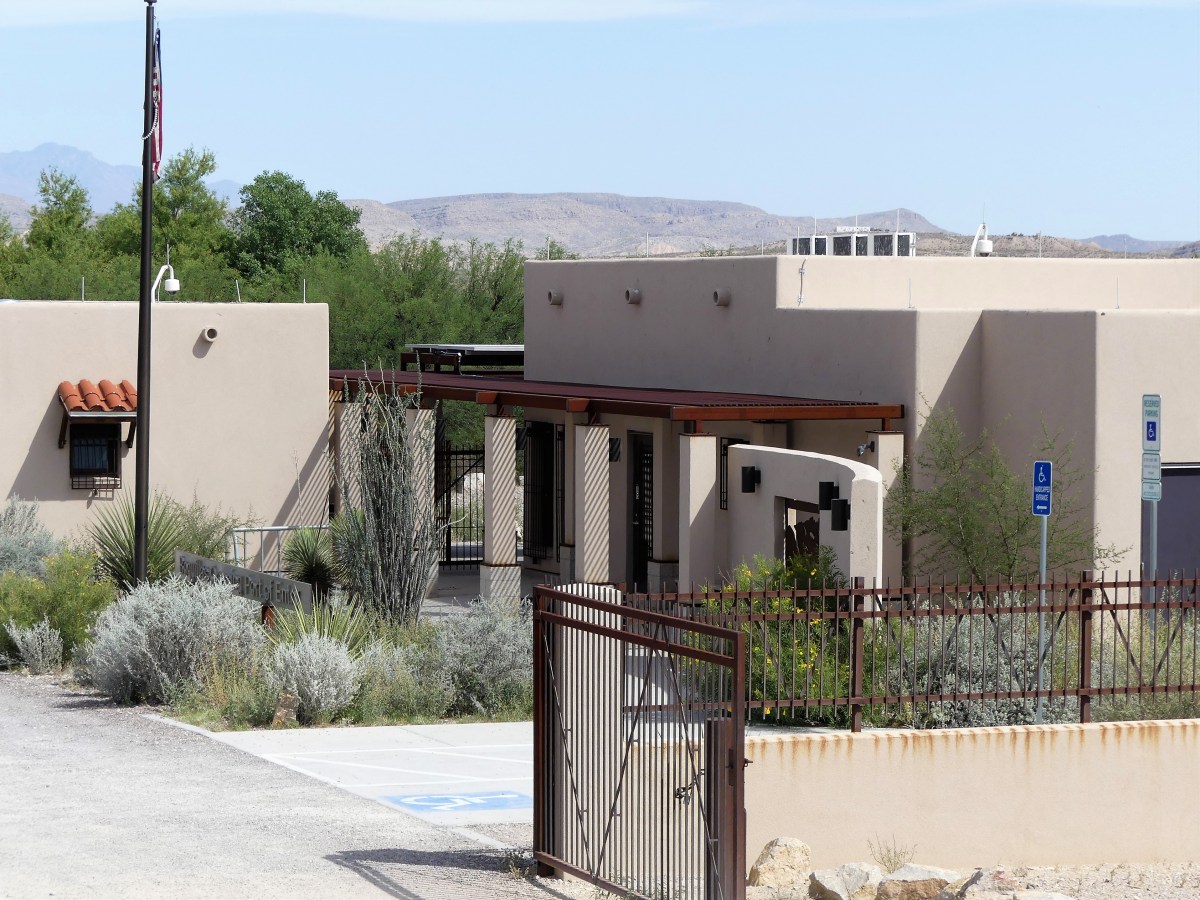
Walking through the customs house gate to the waterfront along a garden trail takes only five minutes.

Custom houseThe trail ends at a sandbar where eager Mexicans negotiate with Gringos to ferry them across the river by rowboat. Five dollars is generally the agreed upon price.

ferryHowever, with the Rio Grande water levels so low, Leah and I found it cheaper to wade across fifty feet of knee-deep water to the other side.

Leah crossingLand transportation comes from Uber burros, charging five dollar fares to cover the dusty and shit-laden ¾-mile trip…

burro ride…to a white trailer check-point surrounded by cyclone fencing on the edge of the village. It was a treat to sit in Boquillas’s only air conditioning for a few minutes to escape the 100◦ heat, while our identities were checked against a drug cartel database.

Once Leah and I were cleared as respectable American citizens, we opted to lunch at the Original José Falcone’s Restaurant and Bar, the largest of two eateries in town…

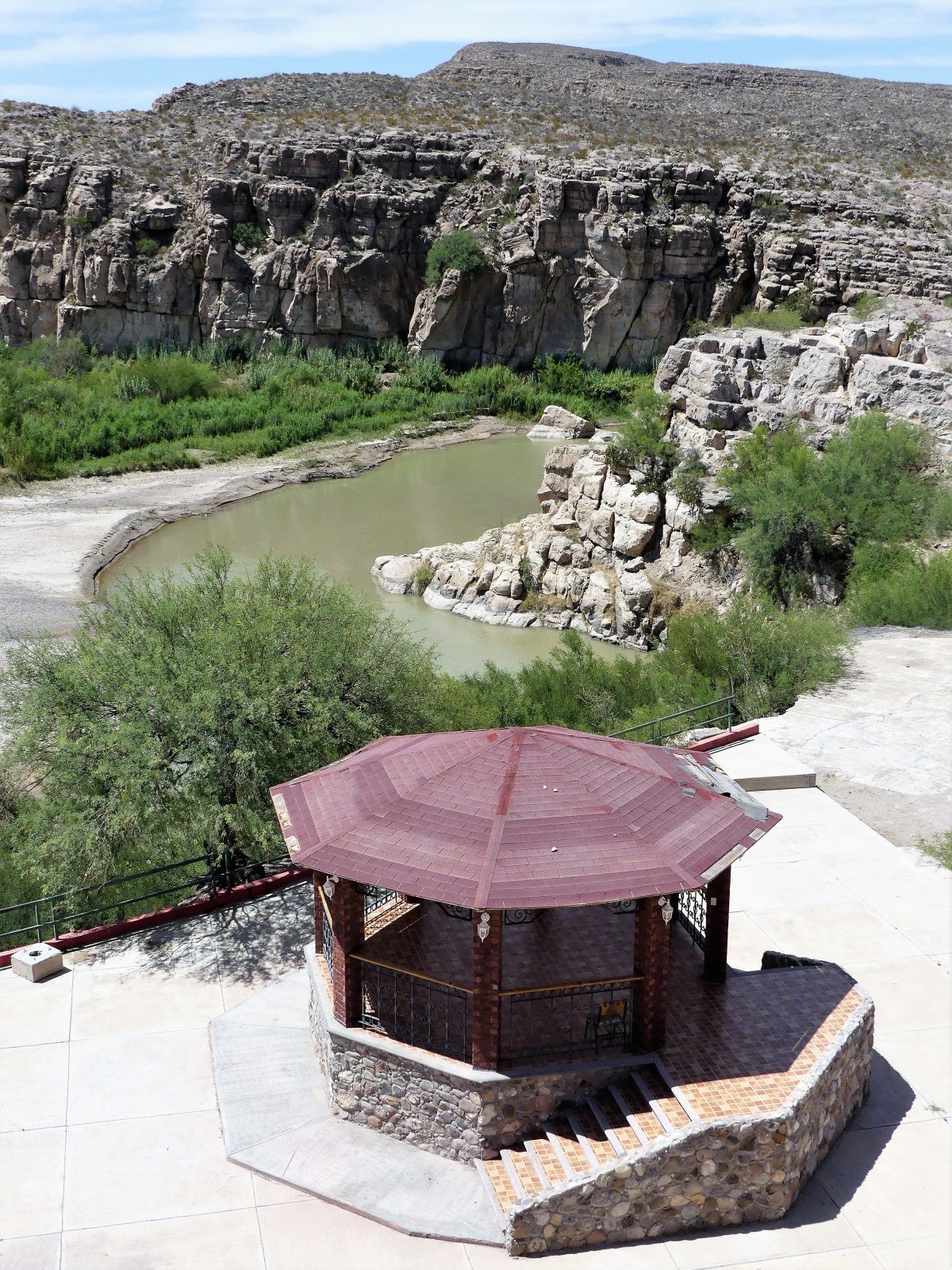
Jose Falcon's…with an overlook of the Boquillas Canyon.

Bouquillas canyonMama Falcone was sitting on the patio in her kitchen apron working on a future needlepoint tapestry that would soon display in the family curio shop next door, while her nephew Renaldo brought us menus and took our order—chicken quesadilla for Leah, and beef burrito for me. Meanwhile, a family of three from South Carolina sat at a nearby table chatting it up with Mama’s daughter, Lillia.

Lillia was explaining that her father opened the restaurant in 1973 after a pickup truck accident put him in a wheelchair for the rest of his life. The restaurant was a big hit among locals and tourists, with Mama serving bean tacos and burritos, and Papa schmoozing the guests. Thanks to the unofficial crossing, villagers were accustomed to serving up to 200 Big Bend visitors a day—mostly tourists looking to enhance their park experience by buying food and souvenirs.

After Papa died in 2000, Mama and Lillia continued the business until the U.S. closed the border in May, 2002 in response to 9-11. Consequently, the town’s tourist trade dried up, and businesses failed without customers.

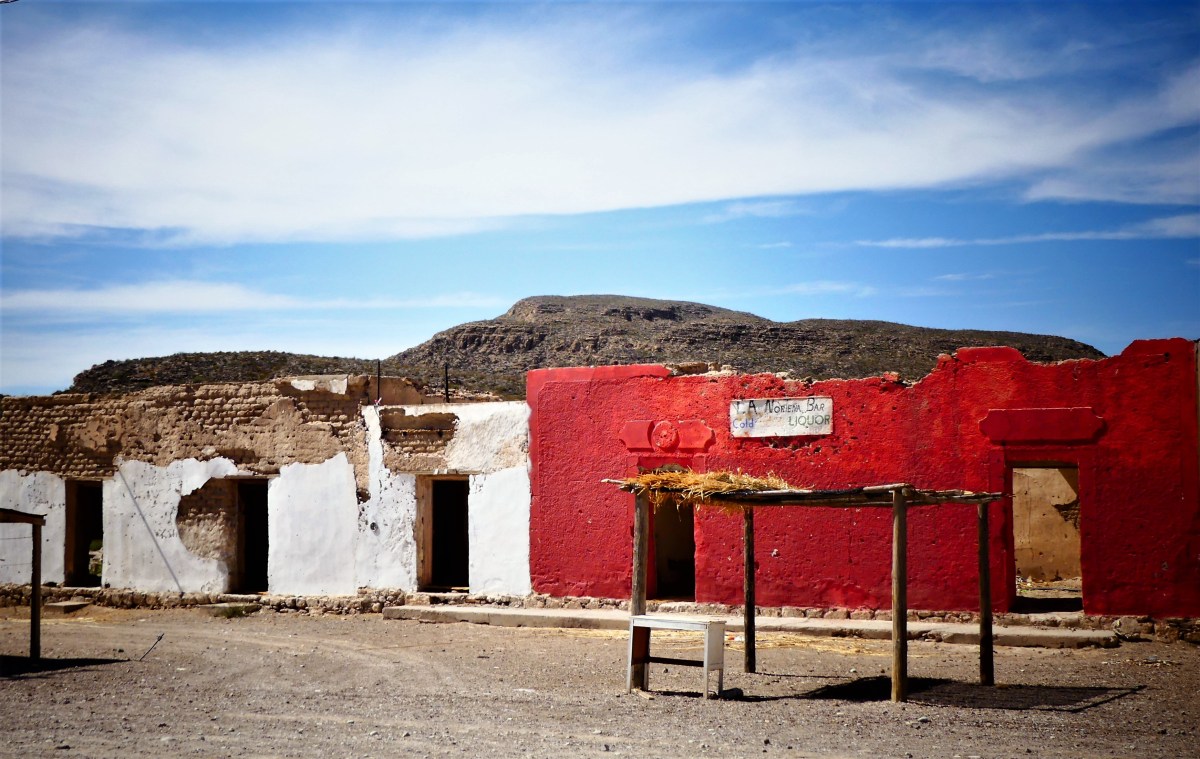
red barThe town population shrank from three hundred to one hundred adults and children, with many leaving for Muzquiz—the nearest Mexican city, and a seven-hour bus ride away. Eventually, Mama and Lillia found work in the States, but returned home to the restaurant after the crossing officially reopened in April 2013.

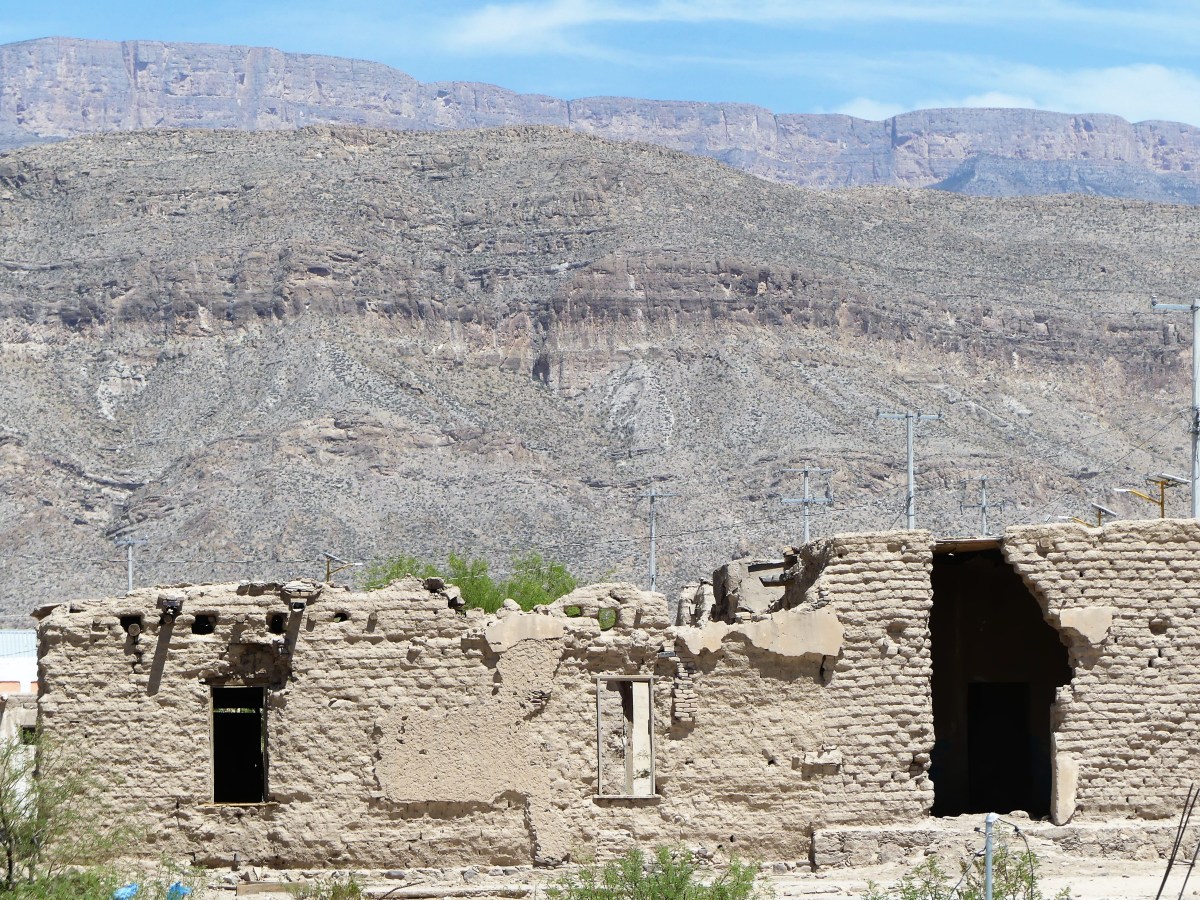
townThey are hopeful for an economic recovery, but the town is in shambles, and it will take many more Americans to salvage Boquillas’s economy.

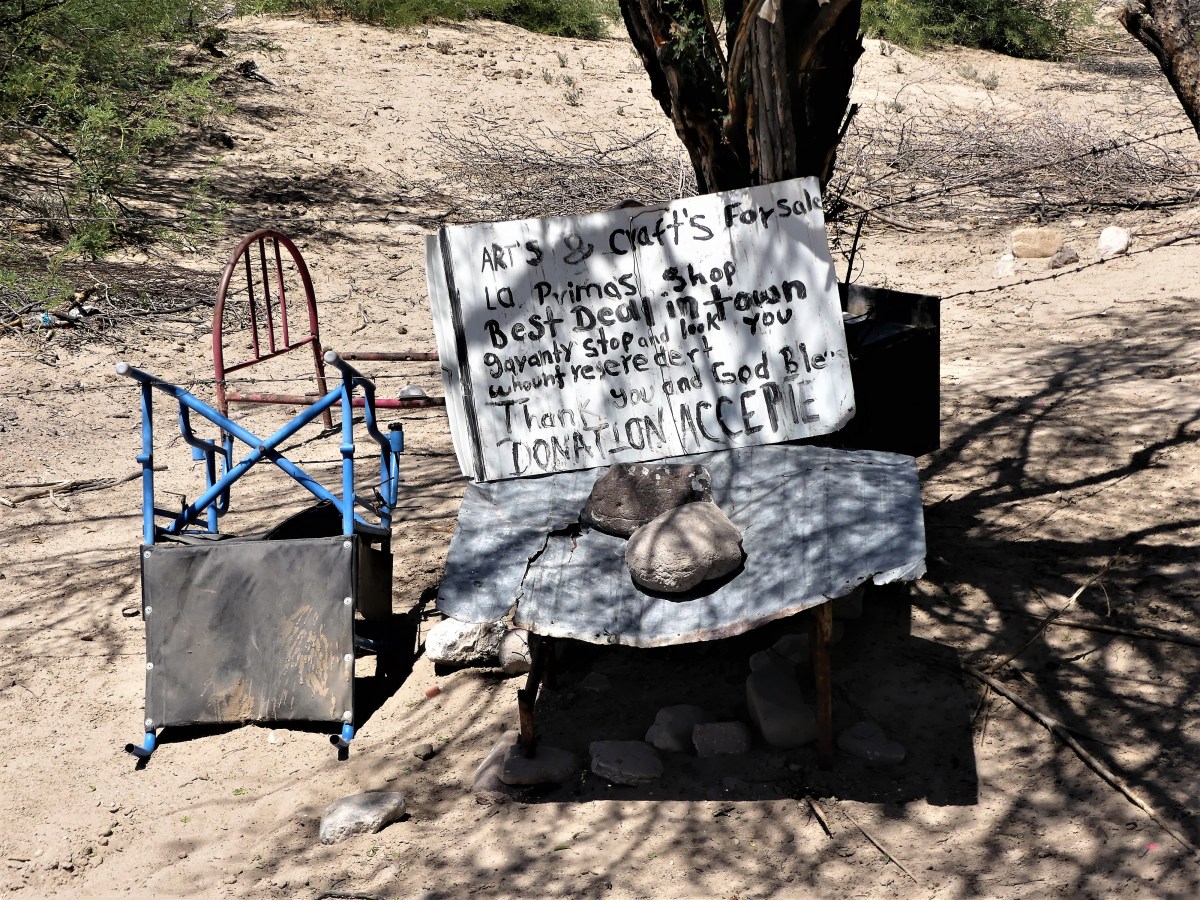
gift stand

burned out hut


After lunch, Lillia volunteered Chico to drive us back to the landing in his beat-up Chevy Silverado. Chico was born and raised in Boquillas, and although his two brothers have moved on, he has never left.

“I like it here,” he admits. “It’s very quiet.”

When Chico isn’t shuttling visitors between the restaurant and the water, he bartends for the only bar in town, usually serving up beer to the locals. “Cervezza is cheap, but gas,” he explains, “is very expensive and hard to come by since Boquillas has no gas station. However, American friends are willing to fill five gallon containers from the park store, and send it over by boat.”

It occurred to me that Chico was giving us good intelligence about his situation, which would be useful should tensions ever flare between the U.S. and Mexico. And I believe that given the chance, Carrie Masterson and I could turn Chico into a valued asset. We tipped Chico five dollars for the ride and the invaluable information.

Leah and I crossed back the way we came—by wading through the Rio Grande. We acknowledged Ranger Weimer upon our return, who ushered us to a virtual customs station, where we submitted our credentials electronically and spoke by phone to an invisible agent who scanned us by remote camera.

“Take off your hat, remove your sunglasses, and stand behind the yellow line,” barked the long-distance voice.

After answering a few routine questions, like “Are you bringing any raw fruits or vegetables into the country?”, we were safely readmitted to America.

Turning to Ranger Weimer, I asked casually, “So how do you feel about Trump building a Wall down here?

He looked at me sternly, and answered in a stoic voice, “Sir, we’re not allowed to express an opinion about that matter.”

But I wasn’t done yet. “But do you think these people are dangerous?”

He was becoming annoyed, answering more emphatically, “Like I said, sir; I have no opinion on the matter!”

I left Boquillas Crossing completely satisfied by our cultural exchange, and reassured that we would be safe from bad hombres from the other side. Fortunately for us, the citizens of Boquillas del Carmen are hard-working people. They are a small and subdued militia of struggling entrepreneurs who depend on us, and are more interested in fighting for their livelihood than picking a fight with their neighbor.

museumI have met the enemy face to face and I do not fear them. Their rowboats and mules would be no match against our ships and tanks.


Tightening My Bible Belt

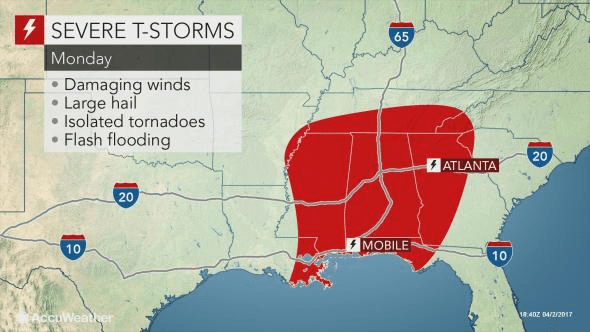
If the idiom “raining cats and dogs” refers to heavy rain, then we drove through a storm front this morning on our way to Montgomery, AL that must qualify as “cougars and dingoes”.

So violent was the weather–bringing bouts of apocalyptic lightening and cataclysmic road floods–that I celebrated the opportunity to pull into a rest stop for 10 minutes just to catch my breath and clear my head. Texted news reports of tornadoes across Alabama border states kept us on high alert. Continuing south, the punishing winds played havoc with the Airstream, despite its aerodynamics. Keeping it centered between the lane lines had to be as challenging as today’s Supreme Court confirmation of Neil Gorsuch.

This is not the game plan we had prepared for yesterday. The Airstream was all hooked up and ready to roll from the night before. Our easy and early departure from Talladega was intended to give us a head start in advance of the storm, so that our arrival at Gunter Hill Park would coincide with the worst of the weather. But as my late Grandma Straws was so fond of saying in her heavy Slavic accent, “You kenen nit makhn a contract miten de veter.”¹

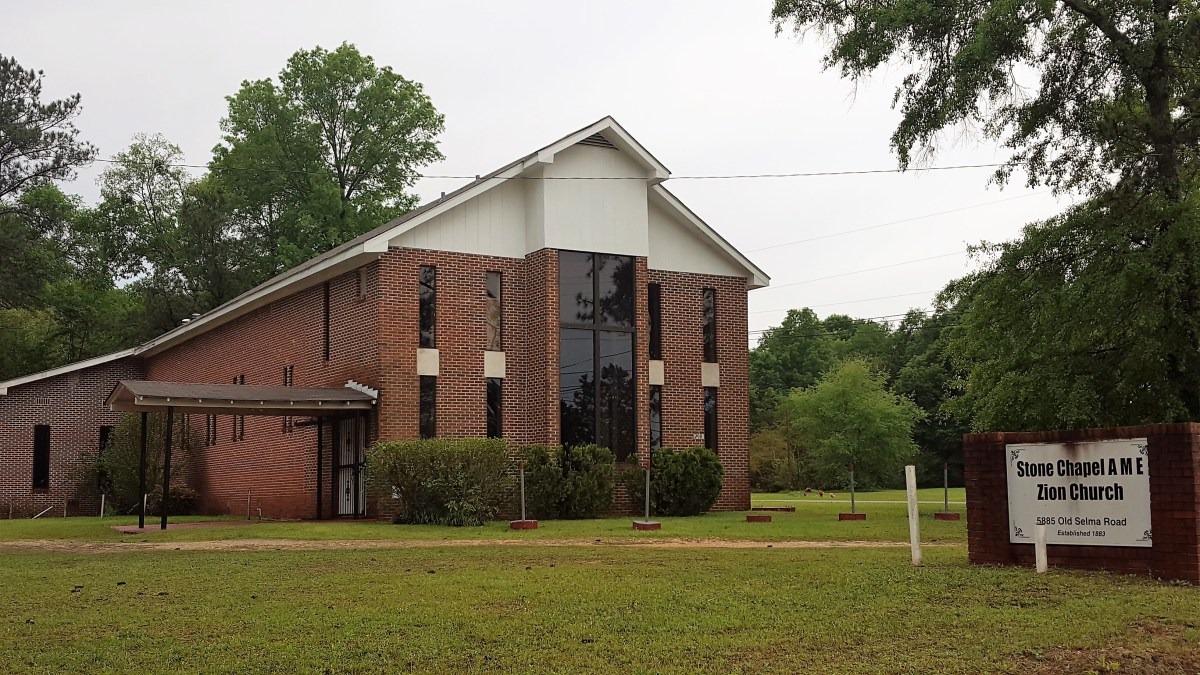
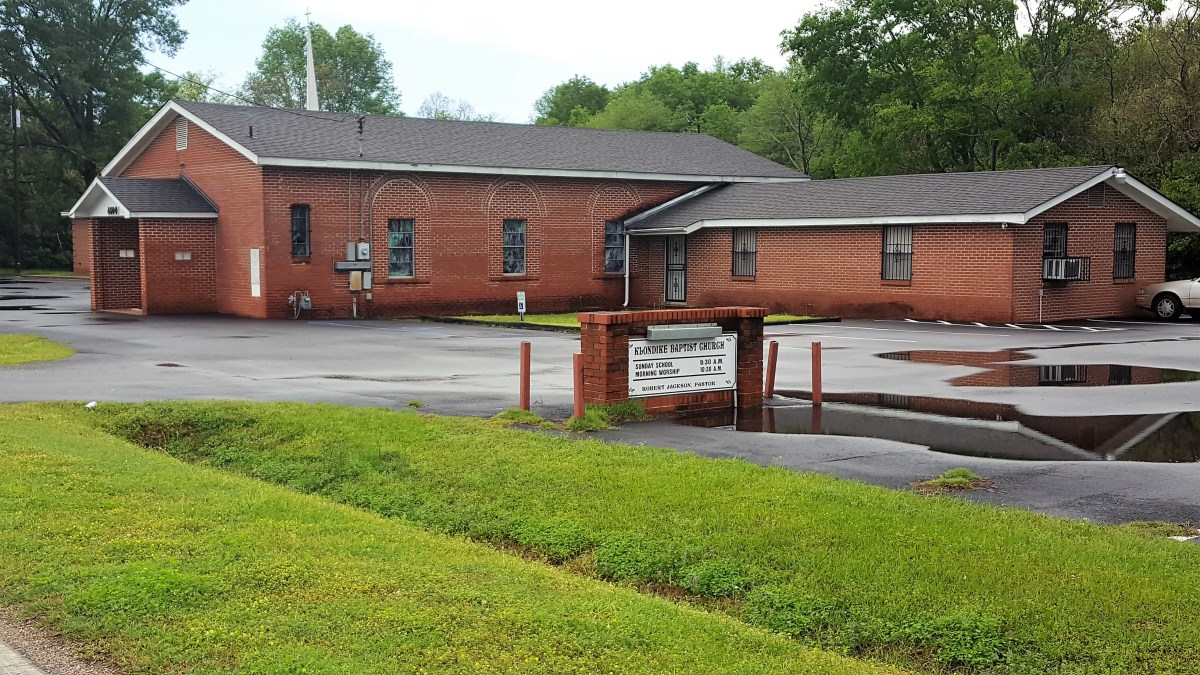
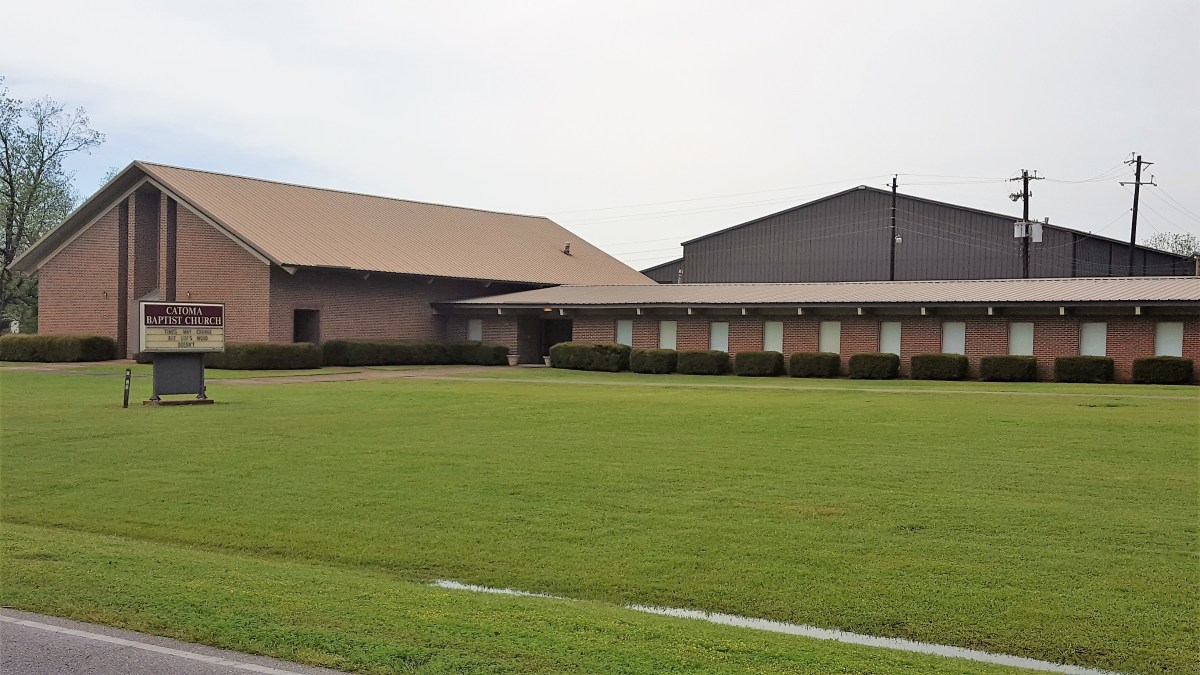
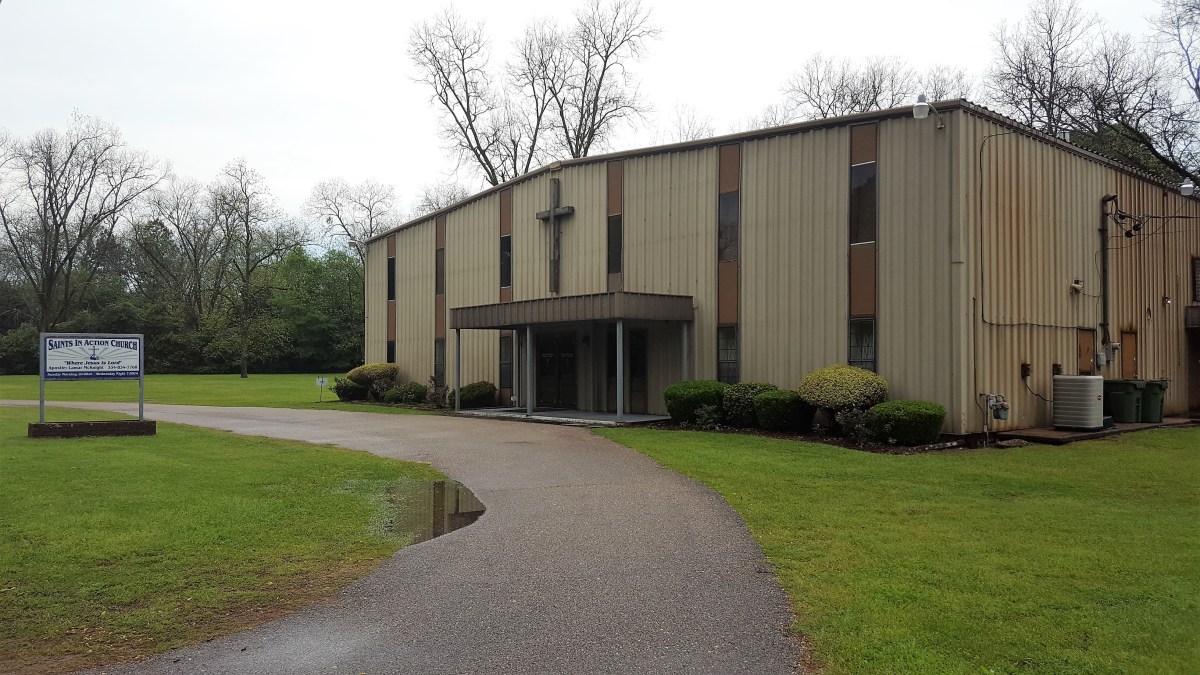
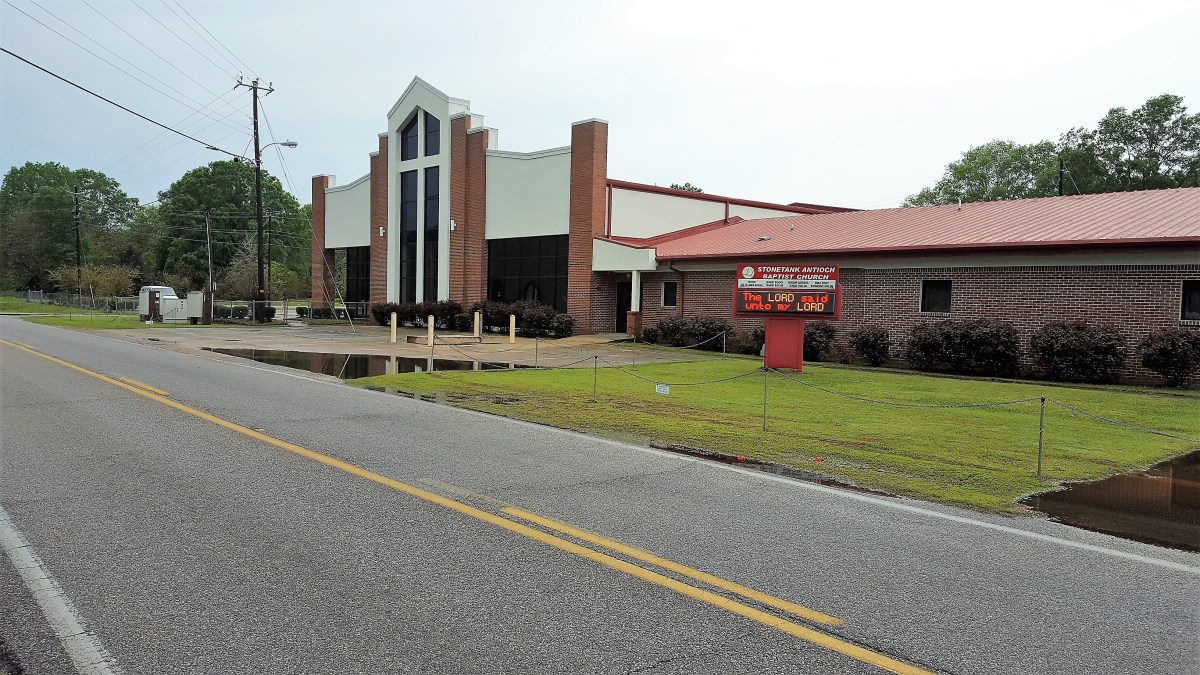
What a relief it was when the squall finally weakened as we exited the highway and turned onto Old Selma Rd. in search of our campground that I may have muttered a “Hallelujah”. If we were grateful to God for arriving without incident, there was no shortage of venues to Praise the Lord. It turns out that eight different churches lined the five-mile route–all of them captured below.Church2.jpgchurch3.jpgchurch4.jpgchurch5.jpgchurch6.jpgchurch7.jpgchurch8.jpgchurch1.jpgIf salvation is part of your endgame, it seems that Old Selma Rd. is one of the most God-fearing stretches of asphalt in all of Montgomery, and the place I know where you should go, to save lives lost at any cost.

Or at the very least, buy a bag of boiled peanuts and shelled pecans from the roadside vender who looks as old as Moses.

¹Translation: “You can’t make a contract with the weather.”

Sweet Home Alabama

Leaving Memphis at 9:30 am for a 285 mile jaunt to Coleman Lake in Talladega National Forest, AL was expected to take 5 1/2 hrs. That was the only thing certain about this leg of our trip. Where we would set up residence for the next three days was the biggest question mark.

Our design was to camp at the lake, and take advantage of the Department of Agriculture’s generous $10 site fee with electric and water hook-up provided. We monitored the vacancy prospects from the road, since there is no reservation system, unlike the Park Service, which operates through the Interior Department.

From the time we started out, we knew from Louise, a central office clerk that we were competing for seven coveted slices of real estate. Midway through our trip, a phone call confirmed that only five sites remained. And by the time we reached Birmingham–which was one hour away from our piece of Eden–the odds started working against us, when we learned that only 3 spots remained. It was time to consider contigency plans.

A quick scan of the internet was less than promising, considering we were looking to escape to an area that was off the grid with limited availability. Fortunately, we wandered across an obscure RV park with decent reviews just outside the forest within Heflin city limits that according to Lawrence still had three sites available for $30 a night.

We proceeded as planned, moving closer to staking our claim as we pulled into a Shell station off Exit 199 on I-20. A phone call to Louise produced a small panic attack; there was only one site left, and we were within striking distance. Could we, would we make it there in time? Gassing up the truck would put us behind by 15 minutes, but with 12 miles to empty, there was no doubt that this was time we needed to allow.

Once we started rolling again we were committed to the bitter end, now that cell service was interrupted by the beautiful forest scenery. The trees were filling in with seasonal green, and the switchbacks and narrow roads were becoming more challenging. We held our breath (not literally) during the last 10 miles of our journey up the mountain. We exhaled (literally) turning the corner into the campground; we had arrived to uncertain news. The campground steward met us at the truck.

“Are we in time?,” Leah blurted out.

“Are you the one’s been callin’?,” he wondered, “Cause last time I checked, I got one space left, B-37 I think, and you’re welcome to follow the road around ’til you come to it, and we’ll settle up after you get settled.”

Leah and I exchanged “we-just-won-the-lottery” grins, and chugged out in search of B-37. The site was almost a full circle around the ring road, up a steep embankment on the left with enough room to hold two trucks, a trailer, a pop-up tent, three bicycles, and seven interlopers. Gramps was busy hand-cranking the camper to a level position, while Granny was herding the kids.

“Are you shitting me?,” I asked nobody in particular.

We immediately resorted to Plan B, driving back down the mountain road while struggling with inputting a new GPS address. We got Lawrence on the phone when we were free and clear of our traitorous natural surroundings, and returned to 3-bar civilization.
“I got three spaces left,” he offered.

“We’ll take it,” Leah yelled. “We’ll be there in half an hour.”

An hour later, after setting up and rewarding myself with a cold beer while sitting in my burnt orange-colored travel chair atop a woven Navajo-patterned polyester mat, two massive 5th wheels with slide-outs pull in close on both sides of our Airstream, threatening to swallow us. While setting up on my right, Mr. Proximity turns to me.

“Hey, didn’t I see you at Tom Sawyer’s earlier today?”

As a matter of fact he did. We spent the last three nights trailering at Tom Sawyer’s Mississippi River RV Park in West Memphis, AR. But the only people we spoke to were a retired couple from Ringwood who saw my truck plates, and that led us to playing Jersey geography. It turns out their son, Jeff and Leah’s daughter, Carrie are Facebook friends who graduated from Lakeland Regional High School together. Other than that, I had no connection to the people moving in beside me.

“Wow, I’m impressed you remembered my Airstream. I hope you’re not stalking us,” I kidded. “We were on our way to Coleman Lake, but got turned away last minute, so now we’re here.”

“Us too,” he said. “Can’t beat the $10 fee up there. We was passin’ through Talladega last Monday. Pretty sites an’ all, but between the highway traffic an’ the train whistles, I’d just as soon stay here where it’s quiet. Besides, we’ll be gone by morning.”

I liked the sound of that.

Hail Lisa Marie, Full of Graceland

The Graceland mansion tour allows visitors to gawk at garish furnishings that are fit for a king throughout the year except on Thanksgiving and Christmas.

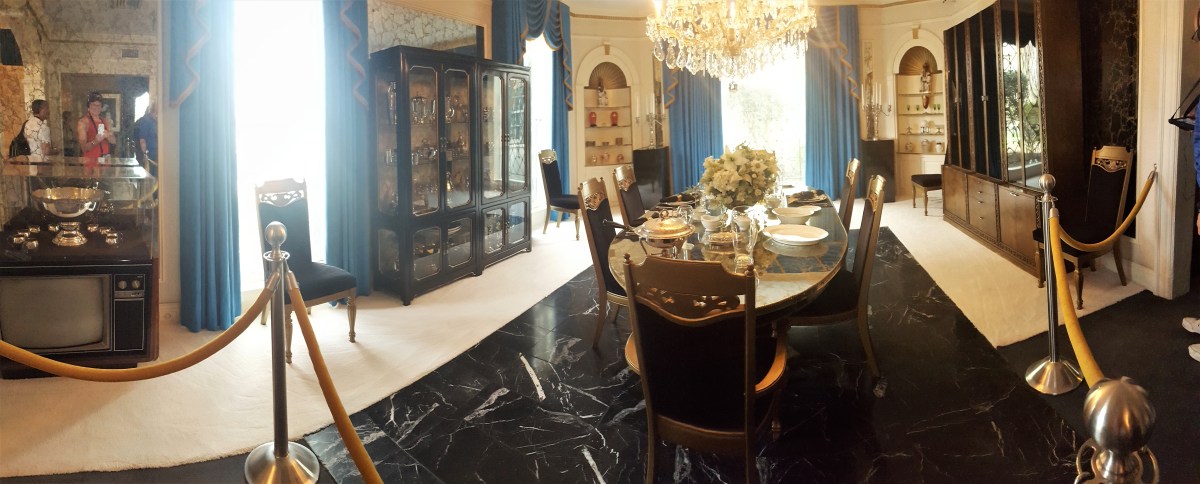
On those two days and afterhours, Lisa Marie (as sole heir) and her family are certain to emerge from their second floor retreat (which is strictly off limits to everybody else) and romp about the downstairs–perhaps to enjoy dinner in the dining room without the roped stanchions,

Graceland dining room.jpg

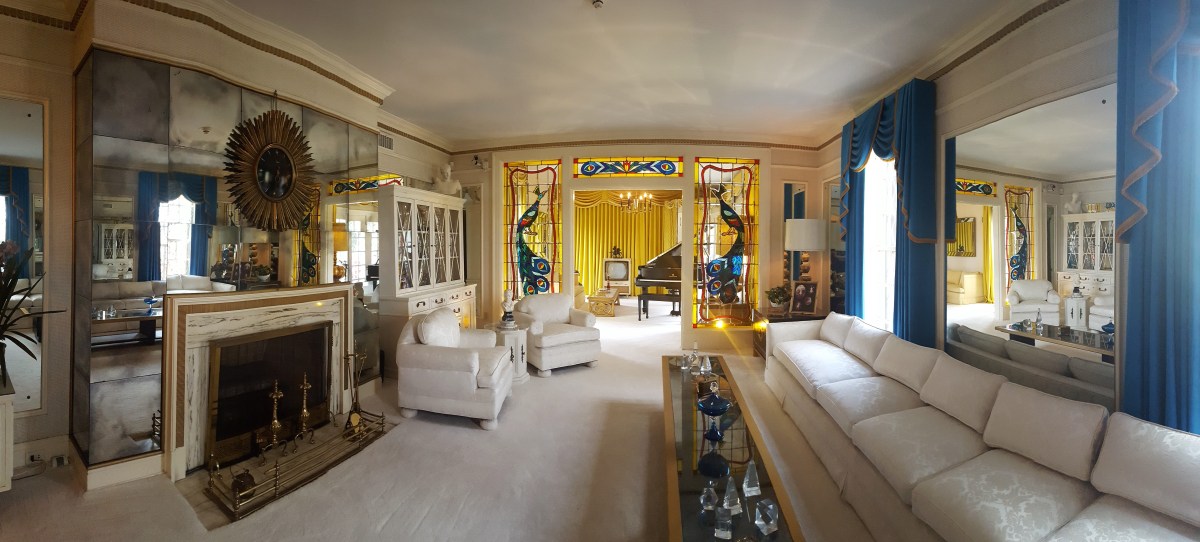
or take coffee in the living room.

Graceland living room.jpg

A private tour guide was overheard discussing Lisa Marie’s comings and goings, which have become more frequent now that she resides in Nashville. So it’s not uncommon that she’ll visit with her 8-year-old twin girls.

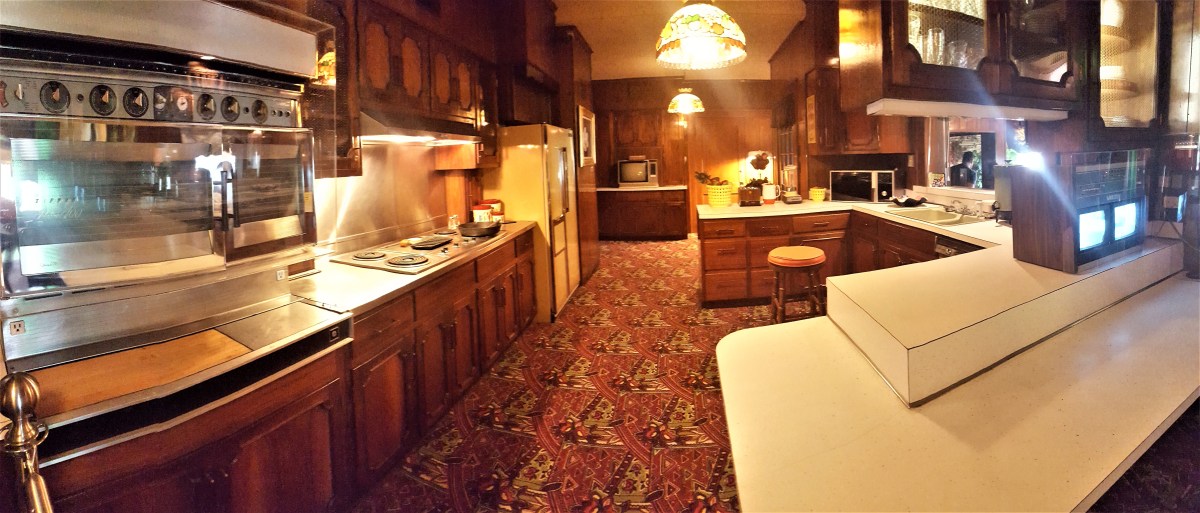
Since the kitchen is surrounded with display glass to preserve the $750 microwave oven Elvis bought in 1972, I asked if a kitchen existed on the second floor for family use during the day.

Graceland kitchen.jpg

Sources have confirmed that only a refrigerator exists in the living quarters, but if anybody is hungry–for instance when the twins requested McDonalds the other day–the Graceland staff was more than willing to bring it back, helping Lisa Marie avoid the paparazzi, and maintain anonymity.

“She could be upstairs right now,” said the VIP guide, “lookin’ down at you through that window, and you wouldn’t even know it.” That sounded creepy to me.

Lisa Marie fondly recalls the childhood years she spent in the Jungle Room while growing up in Graceland–feeling the green shag carpet under her feet, and snuggling in the plush barrel chair by the waterfall, usually while she watched TV (one of 16 on the property).

Graceland Jungle room.jpg

In fact, her father, Elvis so adored TV, that like LBJ at the time, he maintained a media room in the basement so he might watch 3 side-by-side TVs at once.

Graceland media room.jpg

And while the house is a triumphant tribute to gaudiness, like the pool room,

Graceland pool room.jpg

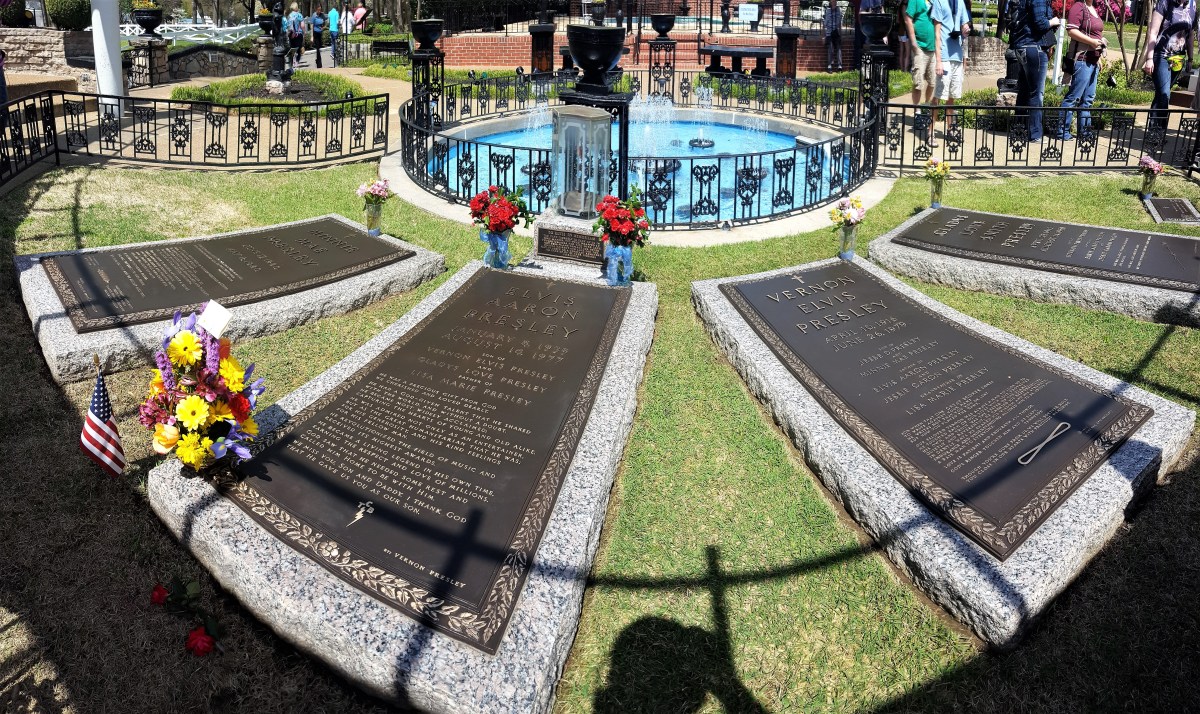
it pales in comparison to the on-site gift shop, where the public can take home an endless supply of in memoriam memorabilia.

Graceland graves.jpg

Because, Elvis by design, according to Lisa Marie, is all about taking care of business (TCB).

Elvis socks.jpg

Elvis wear.jpg

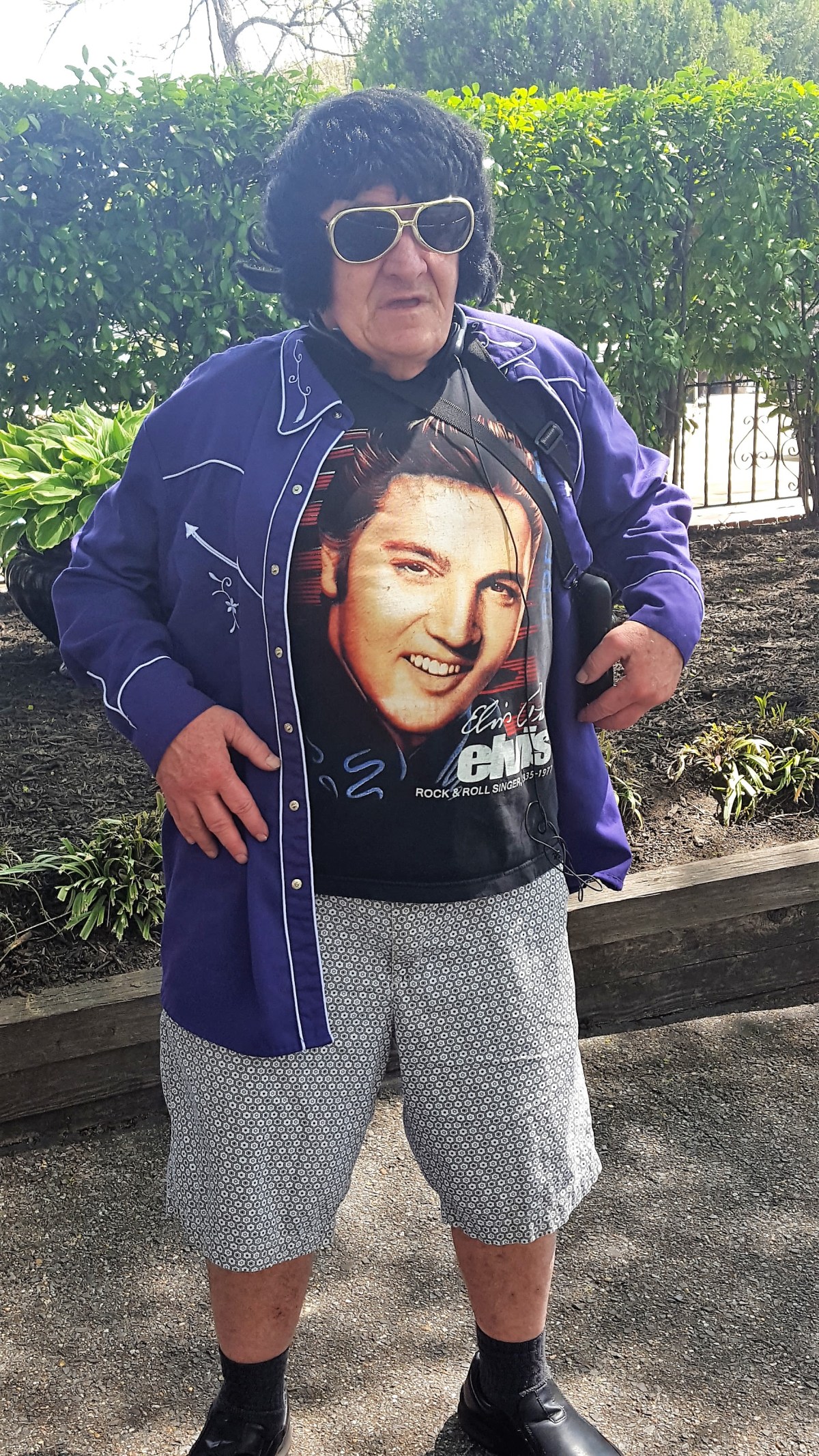
And at the end of the tour, long after the last pre-recorded note has been sung, and the last of the 2,000 guests per day has been bussed away, there can be little doubt, regardless of what you’ve heard, that Elvis is definitely still in the building.

Elvis impersonator.jpg

There’s a Bunker in the Hill, and It’s Revolutionary!

Dave was our guide for the 90-minute bunker tour below The Greenbrier in White Sulphur Springs, WV.

Hallway (3)

It was Dave’s 532nd tour in the two and one-half years since he retired from selling Chevys in town. His wife had begged him to go out and do something that will keep him away from her while keeping him fit. Always a fan of history and meeting people, Dave now claims he’s found the perfect job since it requires walking just over I mile per tour while he lets us in on a secret withheld from the public for thirty years.

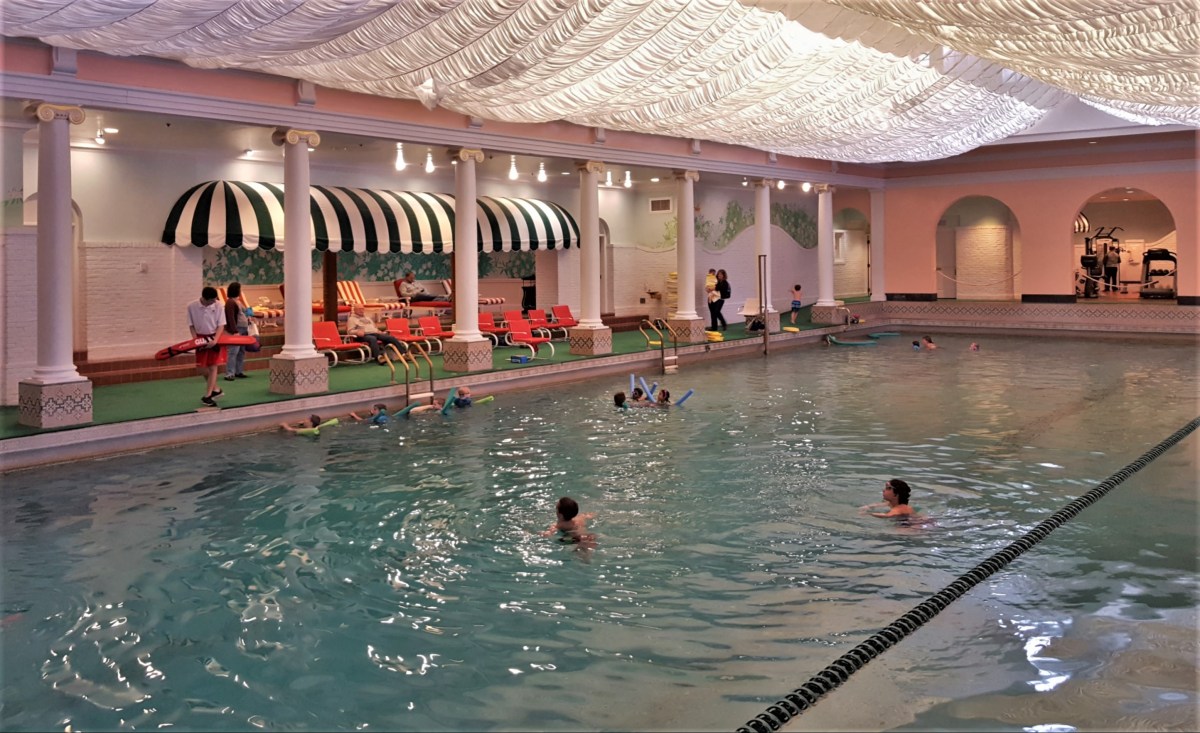
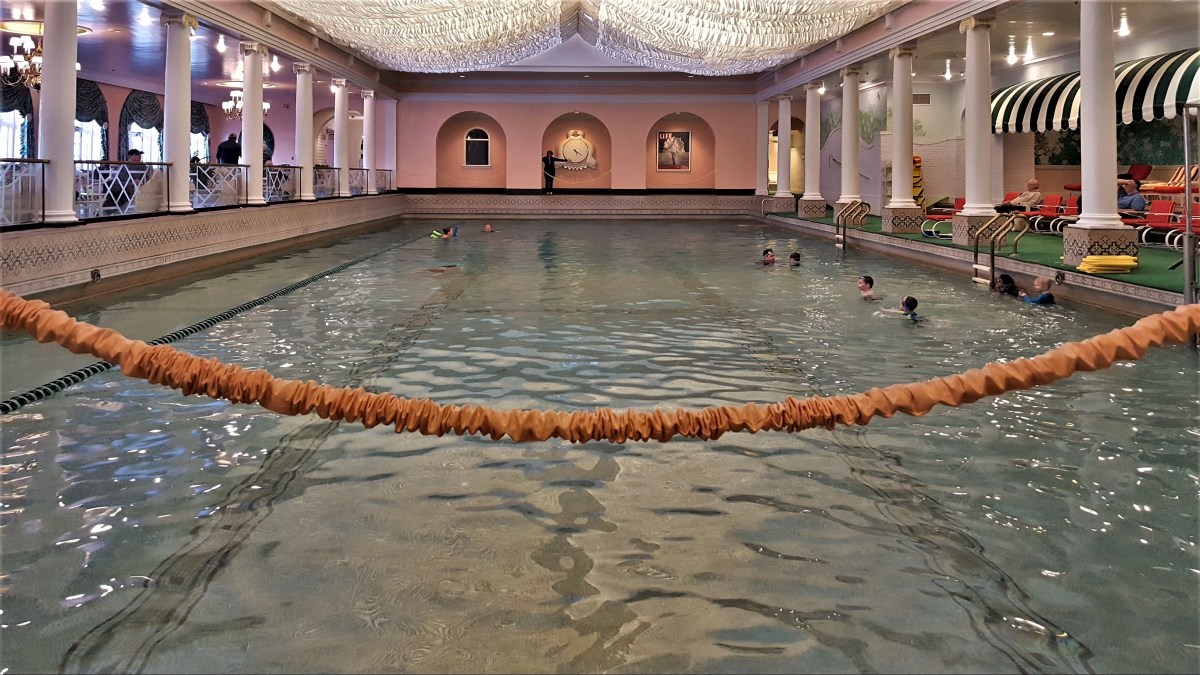
Dave led us past the hotel indoor swimming pool, built in 1914,

pool.jpg

and considered the largest of its kind, built at the turn of the century.

pool end

Dave revels in the trivia.

“Do you know,” he asserts us, “that this pools has exactly 961,000 individual tiles set into the pool walls and floor, and I challenge you to tell me otherwise.”

“Exactly 961,000?” I contest.

“Exactly!” Dave reaffirms. “Don’t believe me?…Then count them yourself!”

Dave leads us through the ballroom,

ballroom.jpg

and towards the newer wing.

Dave explains that Ike commissioned the clandestine bunker during the height of the Cold War so Congress could be sequestered in the event of a nuclear attack on DC. While it would not withstand a direct hit since it was only 60 ft. below ground, it could seal and protect against radioactive fall-out. The 2-level 112,00 sq. ft. bunker was built between 1958 and 1961, 720 ft. into the mountainside beneath the newly conceived West Virginia wing of the opulent hotel, so as not to attract public attention.

The bunker was readied daily–just in case–by attendants who masqueraded as TV repairmen, and remained secret until the Washington Post broke the story in 1992, calling a halt to Project Greek Island.

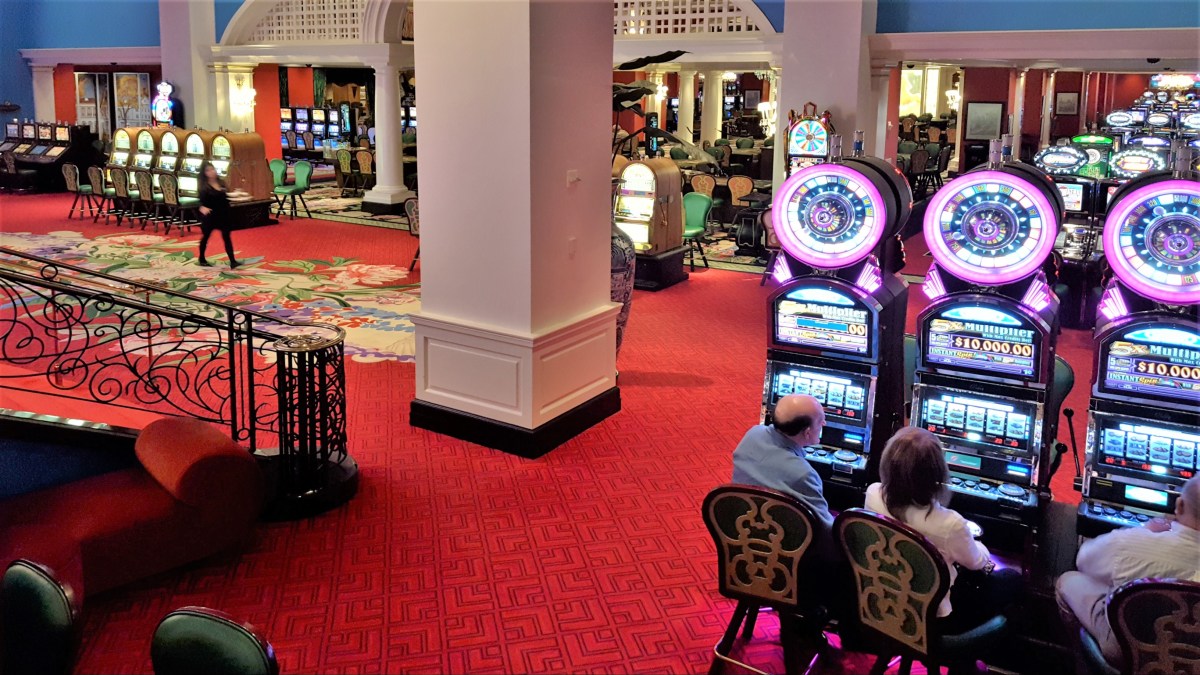
Dave also speaks highly of white knight, billionaire Jim Justice, who owns the hotel and also occupies the governor’s mansion in Charleston. Despite being a Democrat, Justice was elected last November with 49% of the vote in a self-funded campaign, despite Trump carrying the state by nearly 70%. Justice rescued the Greenbrier from insolvency in 2009, and spent $100s of millions on refurbishing, including a casino that required a county referendum to pass.

casino.jpg

A final thought: While I understand the principle behind building and supplying the bunker back then to preserve and protect Congress for the continuity of our democracy, there’s no way that I could justify a safe refuge for today’s elected Representatives and Senators. There’s no way they deserve to survive us all.

Notes:

The breaking story that put an end to the bunker that was hiding in plain sight:
http://www.washingtonpost.com/wp-srv/local/daily/july/25/brier1.htm

The Greenbrier boasts about itself: