Start Your Engines

Motor sports awaits its biggest day on May 30, when 135,000 spectators will gather at the Brickyard for the start of the 105th running of the Indy 500. It will be the largest assembly of people anywhere for a single event since the coronavirus pandemic overwhelmed the country and the world.

Last year, the race was held without fans, but this year the Indianapolis Motor Speedway will accommodate 135,000 of 257,325 available seats, or 40% capacity. The number is staggering until the onlooker realizes that the curved rectangle is 2.5 miles long and occupies 559 acres,

with tiered grandstands reaching 7 stories on both sides of the track.

Having checked in at the Indiana State Fairgrounds for overnight accomodations,

we couldn’t help but notice the overwhelming noise coming from the nearby critter pavilions…
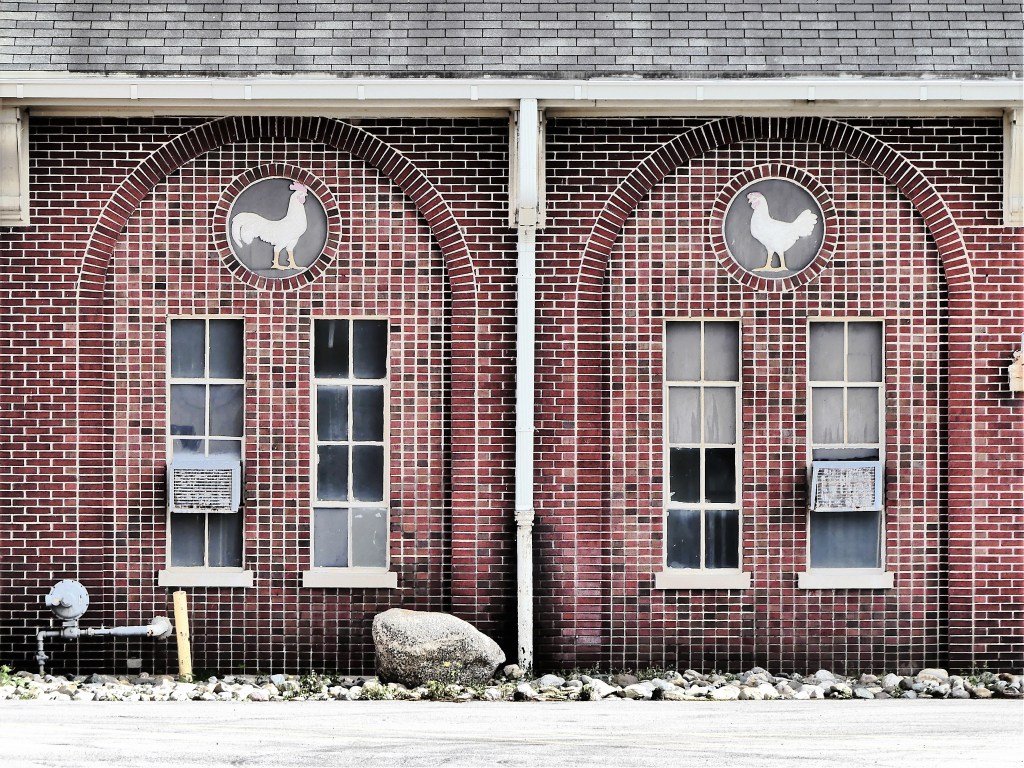
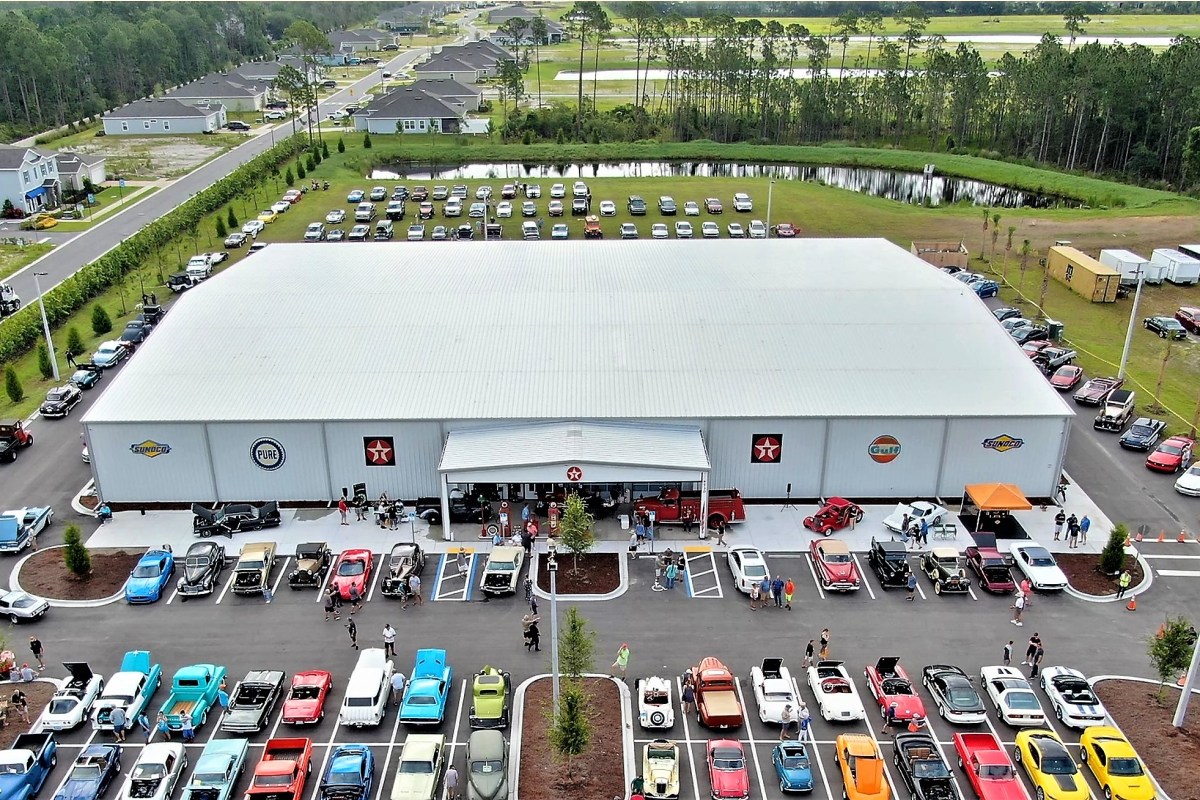
so off we went to follow the commotion, and found the source. Apparently, it was a tire spin-off to Mecum’s 2021 Indy Auction:

The Dodge Challenge

…an annual event that brings out the best and most coveted collector cars for bidding:

But Leah and I were in Indianapolis during the Indy 500 Practice to watch drivers rocket down the straightaways in their IndyCars at 240 mph,
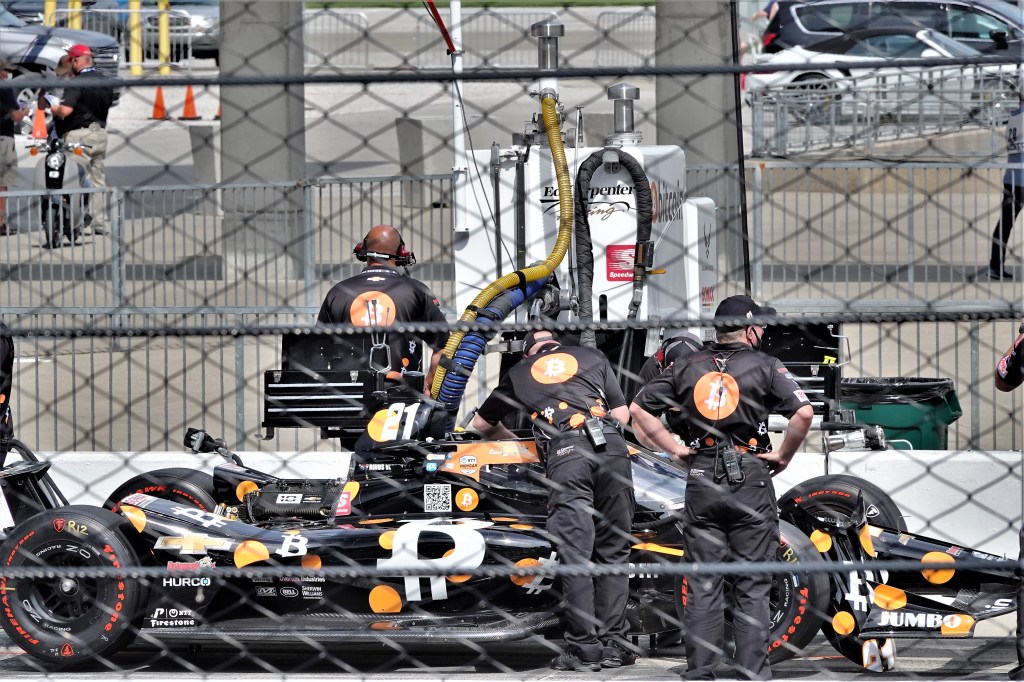
in anticipation of bringing home the trophy and chugging a bottle of milk.
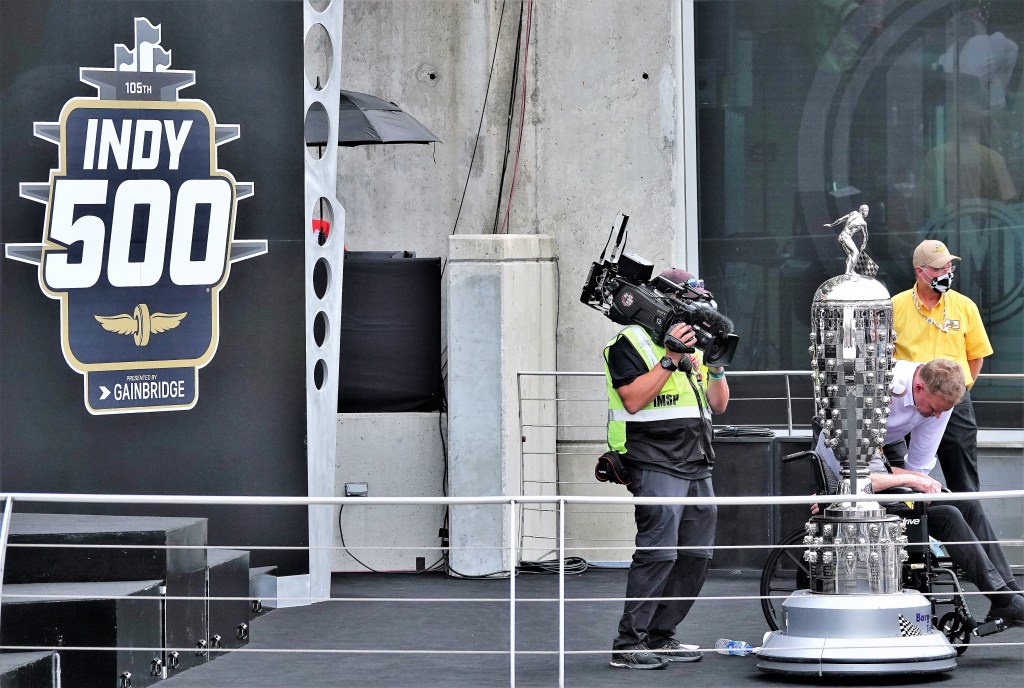
So off we went to the fabled racetrack, built in 1909 and mostly unchanged, until the addition of the Pagoda, completed in 2000.

Trying to track the cars as they went screaming by in a blur

would have certainly resulted in whiplash if we continued watching with each passing lap, but thankfully, the video screen provided necessary neck relief.
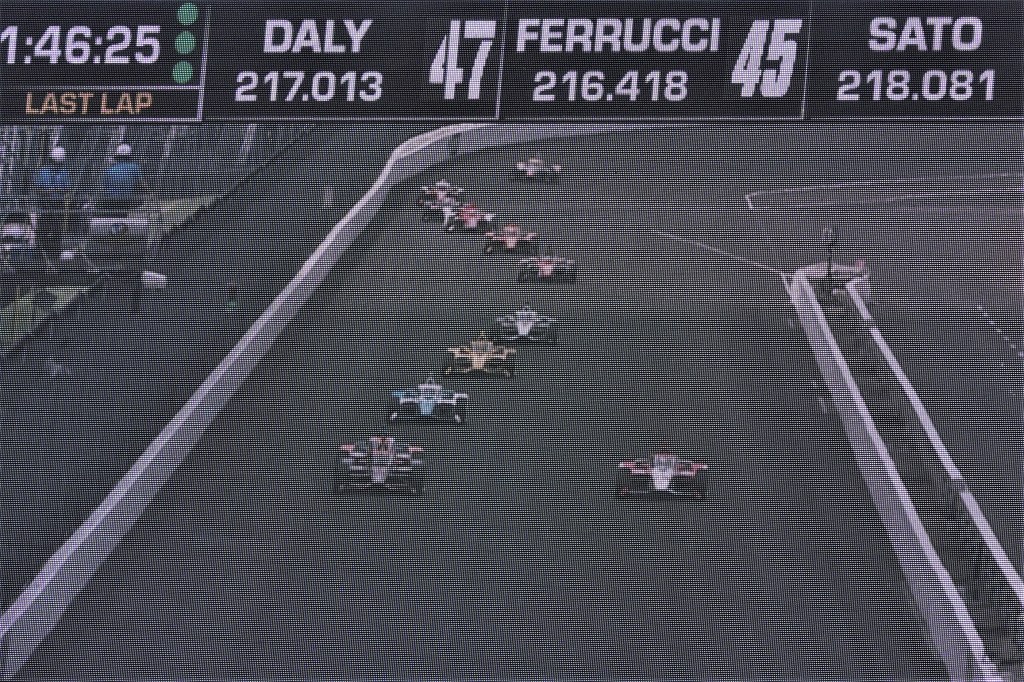
And then the unexpected happened…

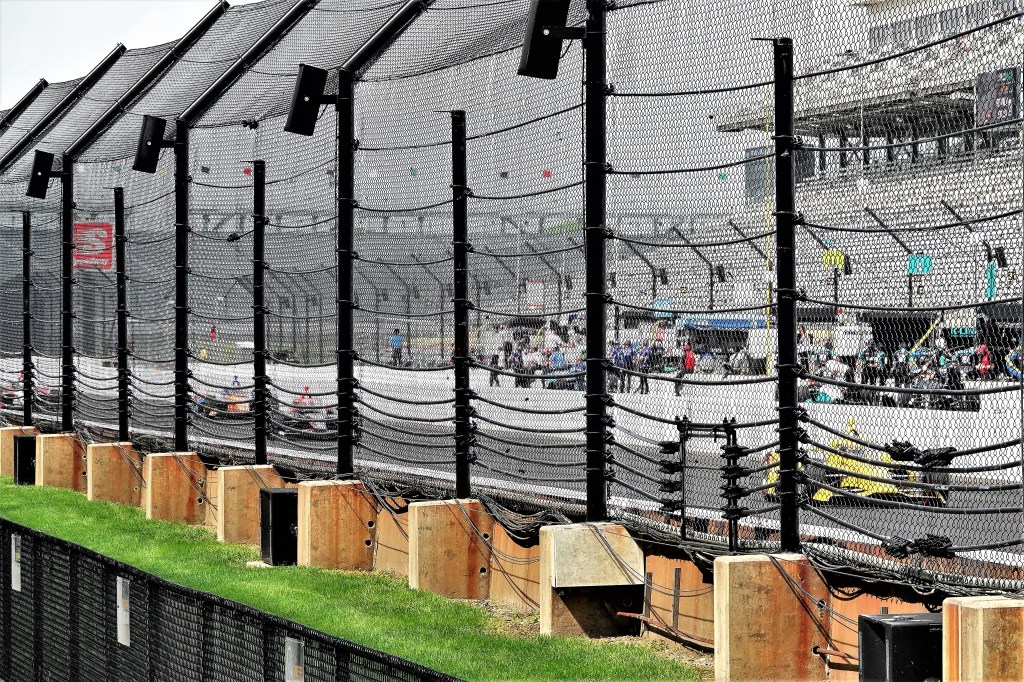
With 1hr 44min left in the practice session, #45 Santino Ferrucci turning too early into the #2 corner careened into the wall,

collapsing the front end of his racer.
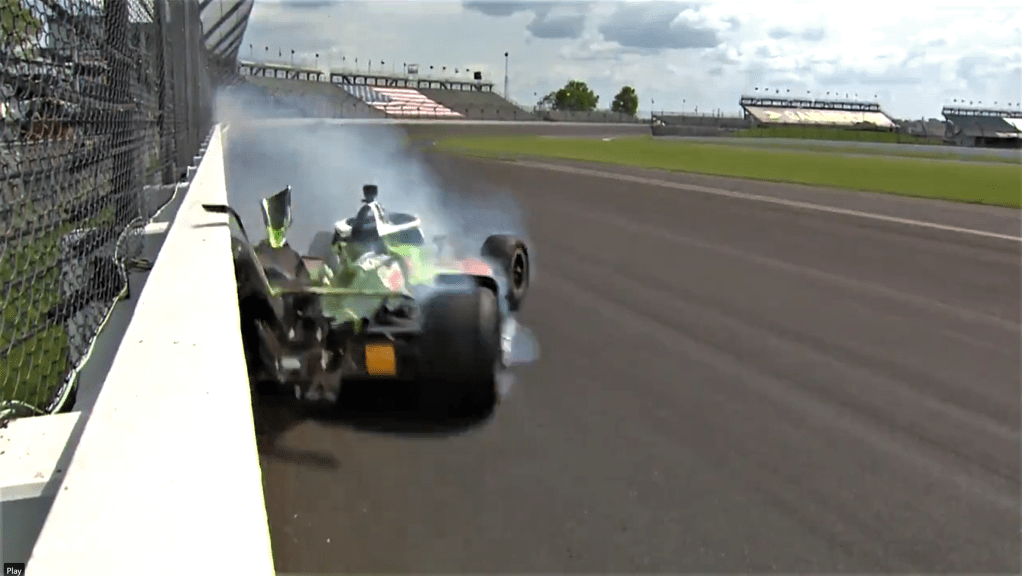
https://twitter.com/i/status/1395482600823791620

Out came the yellow flag…

and it was time for us to call it a day at the track.

Fortunately, Ferrucci escaped serious injury, and was taken to the hospital for observation.

He has subsequently been cleared to race on Sunday, qualifying for the 25th position in a field of 33 cars, with Scott Dixon enjoying the pole position at the start of the race.

I hope the winner likes milk!

UPDATE:

Helio Castroneves wins the Indy 500 for a record-tying 4th time, finishing ahead of Alex Palou by half a second.

Top qualifier, Scott Dixon finished 17th in the field after his car ran out of gas before his first pit stop, and Santino Ferrucci finished sixth.

Castroneves celebrated with a chilled bottle of 2% milk, but swapped that bottle out for some strawberry milk, which perfectly matched his hot pink and white fire suit and No. 6 Honda.

Road Warriors

Living out of our newly acquired Airstream for the past few weeks has taught us a few things about durability and reliability when streaming through America across Eisenhower’s Interstate. Years of nasty weather and million-mile road wear (with subsequent band-aid repairs) have left our highways in tatters and our bridges at risk (more on this at a later date), which has a pronounced impact on any home on wheels, considering that bumps and ruts on the outside often translate to shakes and rattles on the inside.

It’s always surprising to see what’s on the cabin floor after a stint of driving between locations. Potholders frequently jump from their hooks, and occasionally, I’ll discover a rogue screw from who knows where, or an A/C vent that’s fallen. However, it’s more disconcerting to find a drawer on the floor or a cabinet door ajar because the locking mechanism has failed.

There was a time when a glass jar of spaghetti sauce was tossed out of the pantry during a rough ride and smashed to bits across the carpet runner that connects our living space to the sleeping space. Leah and I were finding spatter specks years later, stuck to walls, bedding, and curtains. We learned our lesson; today, we look for plastic containers.

One of our more notable challenges as we prepared for this trip was finding an appropriate bedspread that had gone missing since the last owner. Because the queen-size mattress is rounded and shorter than usual–to accommodate the bedroom dimensions—Airstream charges $534 through their design store to replace it. Fuhgeddaboudit! There is no way any bedspread is worth that much. Yet, an exhausting internet search found nothing close to what we needed.

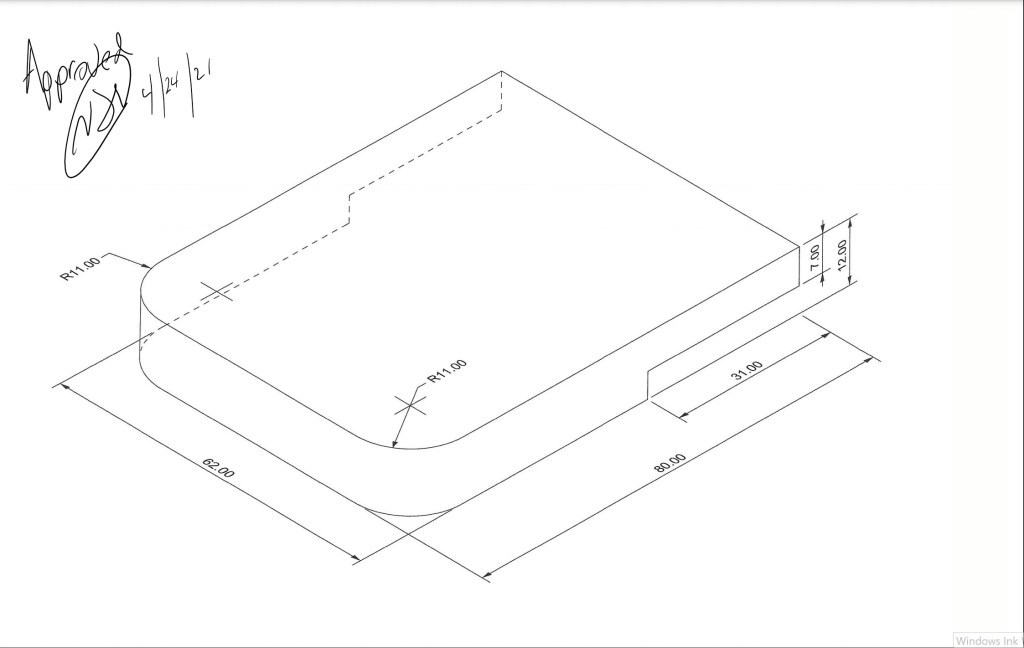
After continued research, I discovered Top Stitch, an old Airstream supplier, who promised to customize our bedspread for $199. Their first effort was a flat cover and a total flop, completely discounting the unique mattress design. However, after checking and double-checking measurements, and eventually signing off on a scaled drawing…

the project was successfully completed for a fraction of the cost. Hats off to Top Stitch!

Additionally, a stack of drawers under the galley sink—that should have been better secured—needs to be realigned to fit better and roll more smoothly; the left channel of the Polk audio system needs to reconnected; and a missing freezer door lock needs to be located and installed.

We were hopeful that a one-day stopover at Airstream’s Factory Service Center in Jackson Center, OH would satisfy our fix-it list, but only if we were willing to stay through September for the next available appointment.

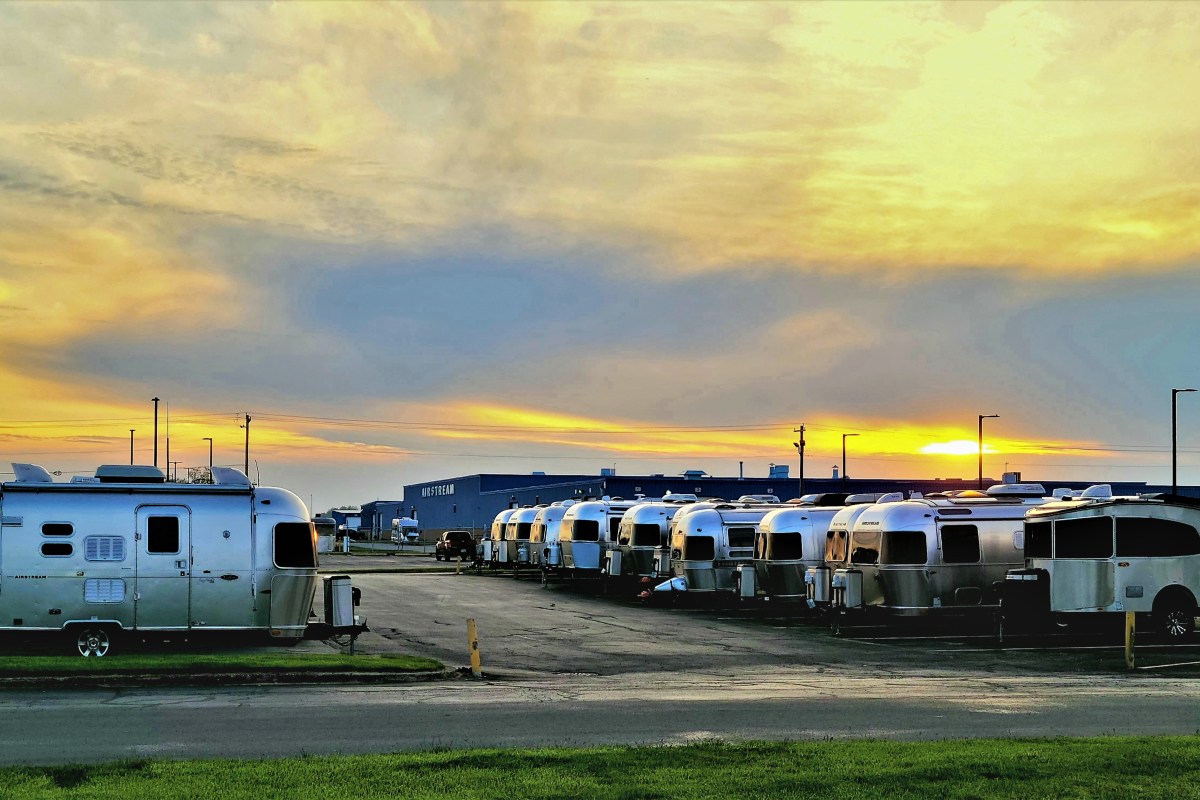
Airstreams waiting for service

Uh…no! But we did stay through the night with full-service hook-up for $10.

The next morning, we were off to Indianapolis with Painter Tape across the drawers and freezer door to limit the number of surprises at our next stop.

It may not be pretty, but it works.

Coasting thru COVID–East Coast Edition

Leah and I have been eager to weave family and friends throughout our Great American Road Trip–Part IV. This summer tour is more than escaping Florida’s summer heat, or seeing the sights and exploring the great outdoors; it’s about personally reconnecting with the world after a year of COVID-19 constraints. For all the good that Zoom has given us to put us in touch with each other across the internet, there can be no substitute for face-to-face.

And in this moment of recalibrated norms, we are craving the sensation of normalcy.

From Virginia, we continued north to New Jersey, where it was previously arranged by Leah and her daughter Danielle, that we would occupy her driveway, and safely distance inside the trailer.

While Danielle and her husband Matt have been vaccinated for some time, Lucy, at age fourteen has not–although CDC officials are now in agreement that all teenagers will be eligible for the shot. So as an extra precaution, Leah and I agreed to a rapid test.

Honestly, I thought the PCR test was overkill, as Leah and I have been fully vaccinated since January, but half an hour later, all was forgotten after getting hugs from Lucy.

Other couples in New Jersey have been less fortunate. Phil and Cheryl both tested positive in November, but Phil required a hospital stay while Cheryl remained asymptomatic. To this day, Phil still suffers long-haul effects of COVID-19, so his reluctance to host our visit was understandable. Certainly, our negative test results must have eased his mind, and it was good to see him feeling more relaxed.

Whenever we return to New Jersey, we always turn to our hiking buddies, Doug and Arlene, who remained healthy throughout the pandemic. We reprised one of our favorite hikes at Pyramid Mountain during the height of pollen season,

sneezing our way to the ridge for electrifying views of New York City.

Next, we were on to Philadelphia with a lunch detour in Vineland to visit Leah’s brother, Harvey who’s lived in a group home with four other adult men for the past 20 years. It’s been three years since our last visit (considering our move to St. Augustine, and de facto quarantine protocols), and relaxed New Jersey state restrictions now gave us an opportunity to take Harvey out for the day.

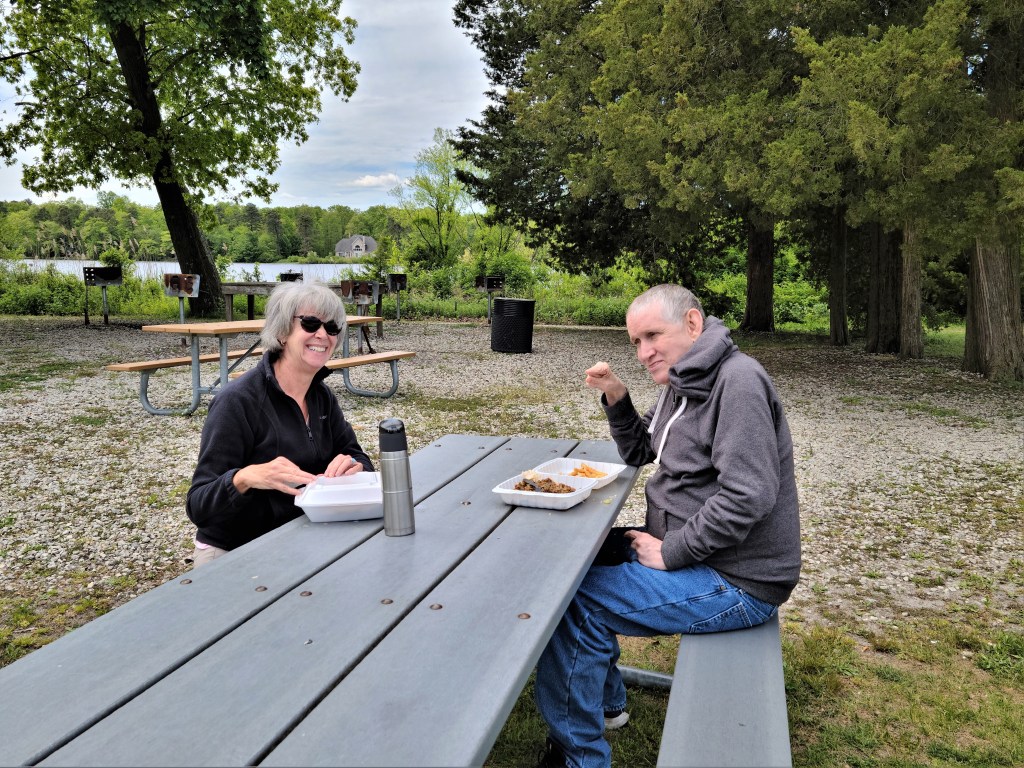
Ordinarily, we’d plan lunch at a nearby diner, but group house rules precluded indoor dining, so a take-out meal, although less than ideal…

followed by a very brief walk through a minefield of goose poop, gave us some much needed time together.

Next day, while camping in Hatfield, PA, we coordinated a day trip to Lambertville, NJ…

to reunite with my oldest son Noah,

who most recently had been tasked with rolling out two dozen mobile testing labs for COVID-19 across metro Philadelphia–making Philly safe “one test at a time”–and ironically testing positive two days after his first vaccine shot. His recovery was rapid, no doubt because of the vaccine.

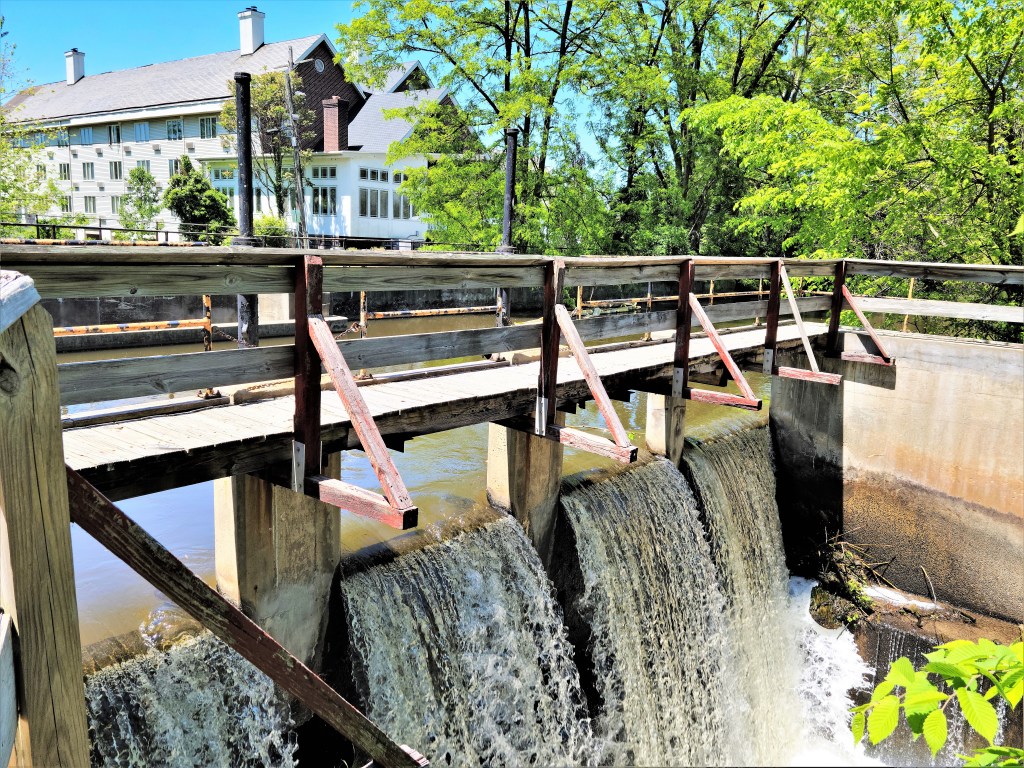
We cycled the Delaware & Raritan Canal Towpath together…

until we reached Washington Crossing State Park, 8 miles north.

Leah and I wrapped up our Philly reunion with a hike along Wissahickon Creek…

with long-time friends Alan and Andrea, who diligently practiced social distancing for the better part of a year.

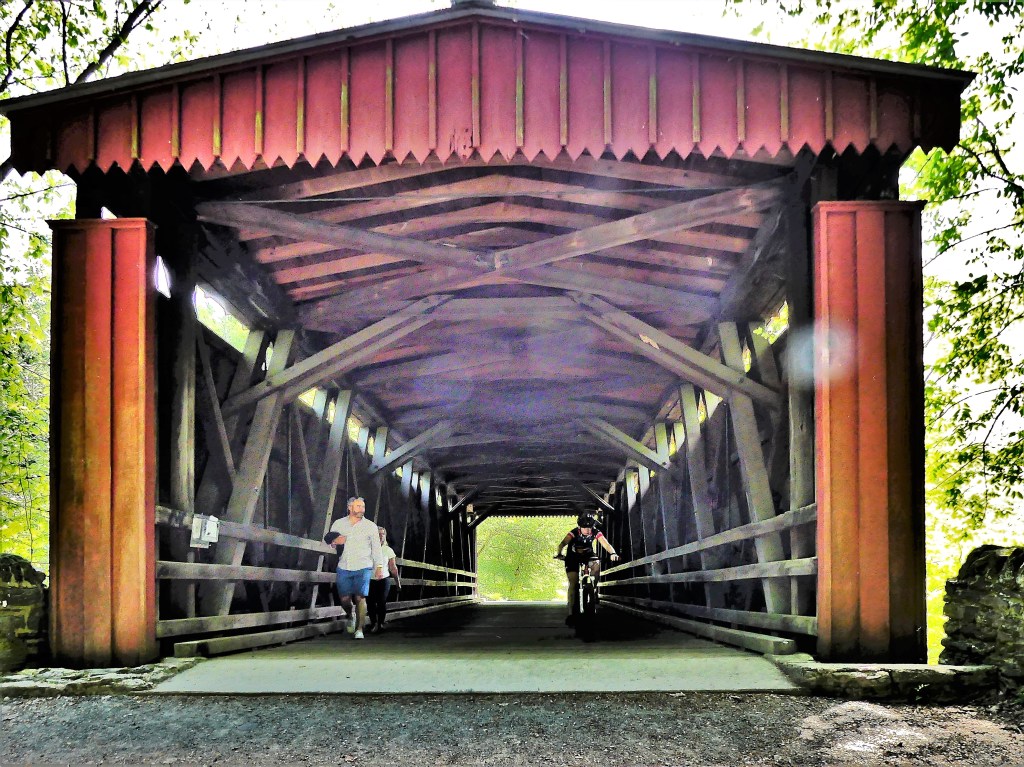
On our way to the Valley Green Inn for lunch, I spotted a garter snake enjoying a meal…

by the covered bridge.

Lastly, Leah and I made our way across the state to Pittsburgh, my hometown and my heartbeat.

Leah and I thoroughly enjoyed the hospitality of my first cousin, Sandy and his wife, Barbara, who allowed us to park our rig in front of their house. Our intention was to sleep inside the safety of our Airstream, but after learning that all of us were dosed by the Moderna vaccine, we were easily persuaded to accept Barbara’s invitation to chill at her 6,700 sq. ft., 100-yr. old resort with Sandy operating as executive chef.

To shed our extra calories, we pedal pushed through the hills of Pittsburgh on our manual bikes

while our hosts cruised along on their e-bikes, assuring us that they were working just as hard as we were.

I don’t think so! From Point Breeze to Point State Park Fountain and back,

we reeled off 26 miles, and worked off some of the food and beer from the cousins’ reunion the day before.

Bottom Line: Leah and I have discovered that COVID-19 may have temporarily disrupted our families, but it’s also brought us closer together.

Natural Bridge Has Caverns Too!

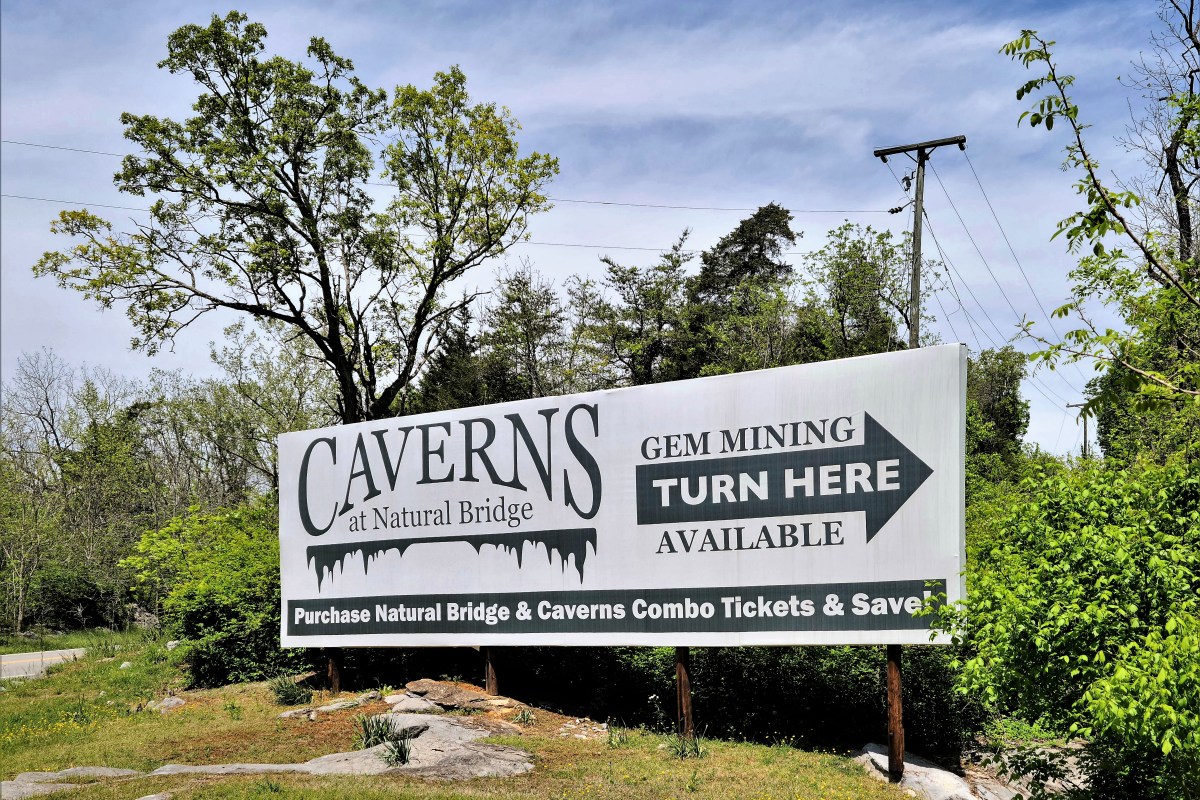
The Caverns of Natural Bridge can’t be more than a 15-minute walk from the Natural Bridge State Park parking lot. Along the way, it’s impossible to miss the Natural Bridge Hotel poised on it’s perch across the road…

where very little has changed as a popular destination for tourists since its rebuilding in 1964 after a doomsday fire.

Continuing up the road and around the corner, stands a rustic cabin set back from the parking lot that’s been open for business since 1977.

The attendant tells us that this is a quiet time for tourists–middle of the week, before Memorial Day–and that’s fine with us. In fact, so far, we are the only spelunkers to have signed up for the 2 o’clock tour. As the hour draws near, only two other women have joined us. But as a party of four, Brian, our guide assures us that we can linger longer at each attraction, since our group is so small.

We are descending into a wet cave (as opposed to a dry cave),

34 stories below the earth’s surface…

where an underwater spring still feeds the formation of speleothems (e.g. stalactites and stalagmites).

The temperature is a humid 54o F, and with masks on

my glasses can’t help but fog with each breath I take. It’s never been so frustrating looking through a viewfinder to frame a photograph.

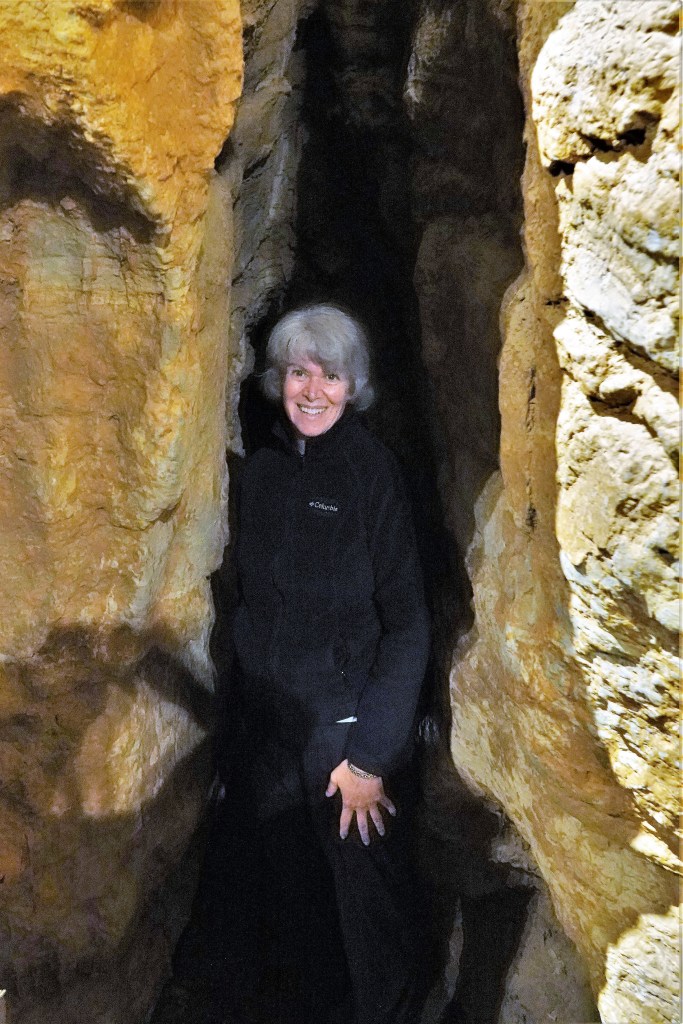
But as we snake our way through low overheads…

we are surprised to see boxwork, an uncommon, venous formation of calcite residue…

which forms when calcium carbonate dissolves within the cracks, resulting in unusual honeycomb patterns.

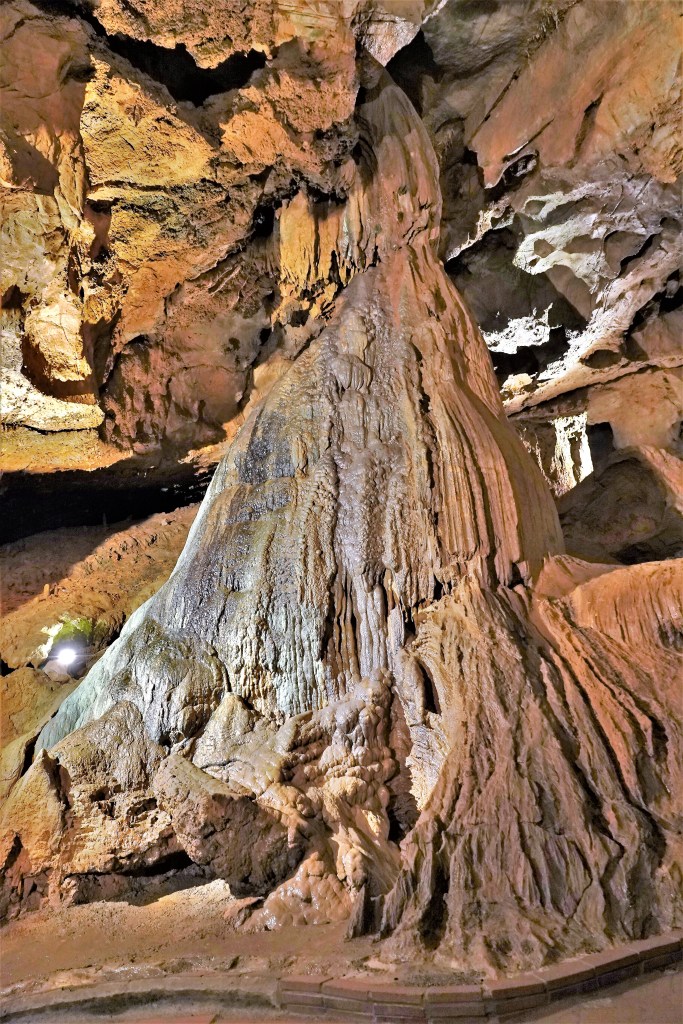
While not the biggest cave system (that belongs to Mammoth Cave), or the most ornate (that belongs to Carlsbad Cavern), Natural Bridge has a pleasant complement of columns…

and detailed domes,

and no shortage of surprises between the cracks and crevices.

The Remains of ESP

Eastern State Penitentiary (ESP), designated a National Historic Landmark in 1965, returns to life each day as a Philadelphia museum that’s open to the public year-round.

Completed in 1836, the imposing, neo-Gothic-styled architecture by John Haviland was intended to strike fear in all who might consider committing a crime. At the time, it was the most expensive public construction project ever built in the country. Famous inmates included Al Capone and Willie Sutton.

Decommissioned in 1971, ESP now lays in ruin, but awaits all who are fascinated by its unique radial design, towering castle walls and folklore.

Photographer, Tiffani Burchett Nieusma first visited ESP in 2016 and was awed by the unexpected beauty of the decay. Her recorded images eventually paved the way for a future gallery show during September, 2021 with a companion monograph of her work to be published on the subject.

Tiffani is currently seeking written word submissions to complement her photography for exhibition and publication. The deadline is May 31, 2021.

Click on the link to learn more about the submission guidelines.

Having reviewed Tiffani’s album of images, I’ve composed a trilogy of poems that were inspired by three haunting photographs:

L-1001*
Well-worn cells
yell hells of desperation,
as fallen walls recall
a marginal foundation.

L-1011*
Forgotten cots
and thoughts of isolation,
house black-hole souls
with goals of rehabilitation.

P-1013*
Pane glass collapse
with passing generations,
enshrines fine design
defined by desolation.

*All images courtesy of Tiffani Nieusma

Natural Bridge

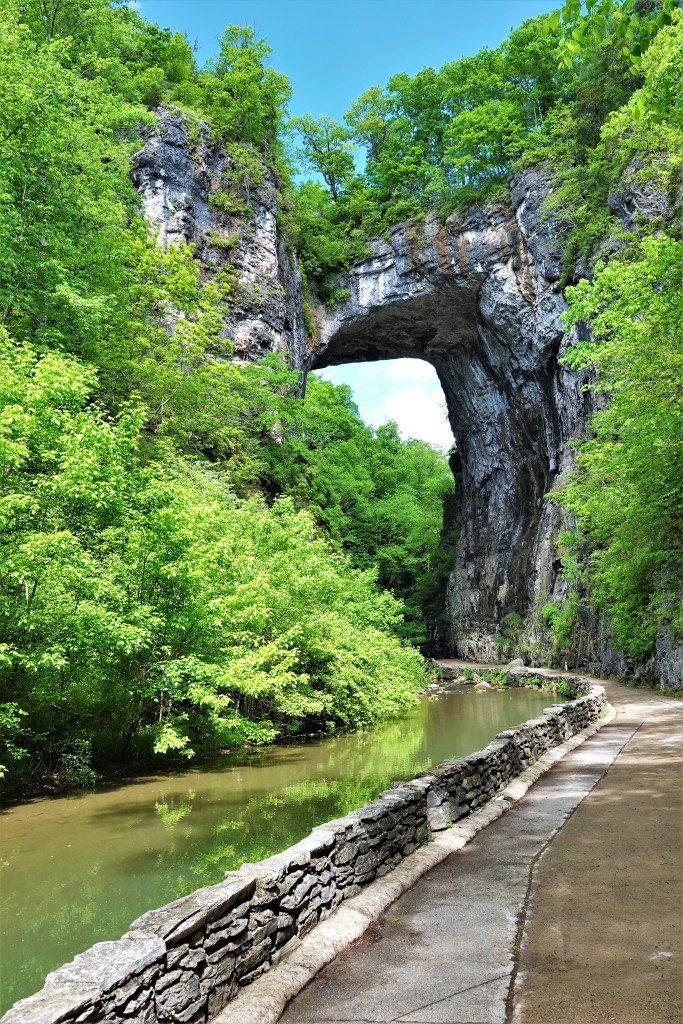
If you’re searching for a town that’s so proud of their community attraction that their town is named after it, look no further than Natural Bridge, Virginia. It’s an unincorporated town tucked within the Shenandoah Valley…

that unsurprisingly features a rock bridge of limestone located in Rockbridge County.

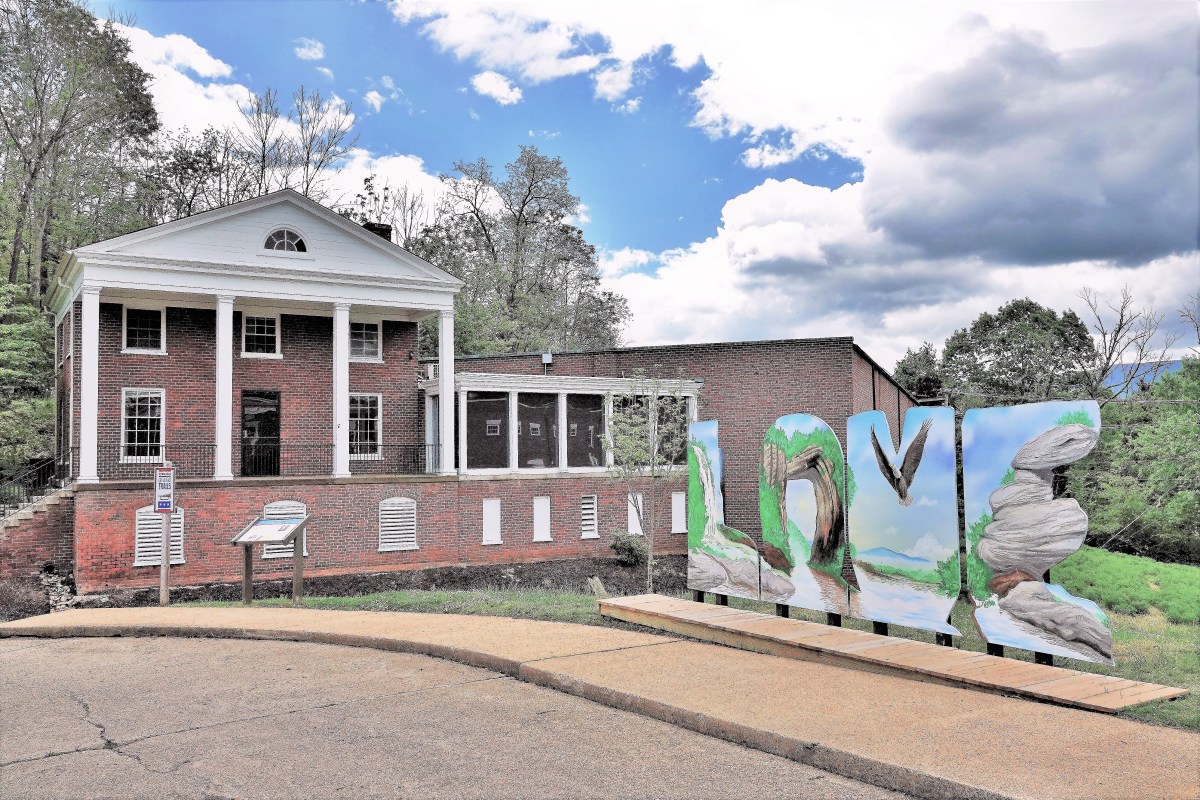
Leah and I masked up, and approached the Georgian-styled Visitor Center to surrender $18 to view this natural wonder.

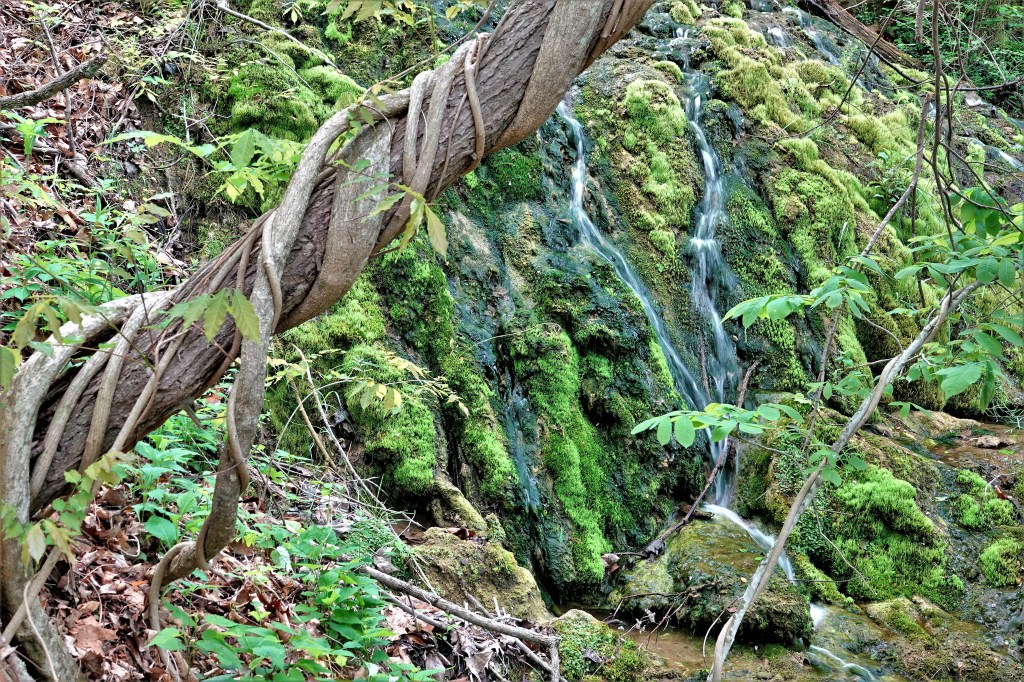
Our downward trail followed a moss-laden terrace of twisted roots and vines laced with wisps of water…

descending into enchanted dripping pools falling on flat rocks…

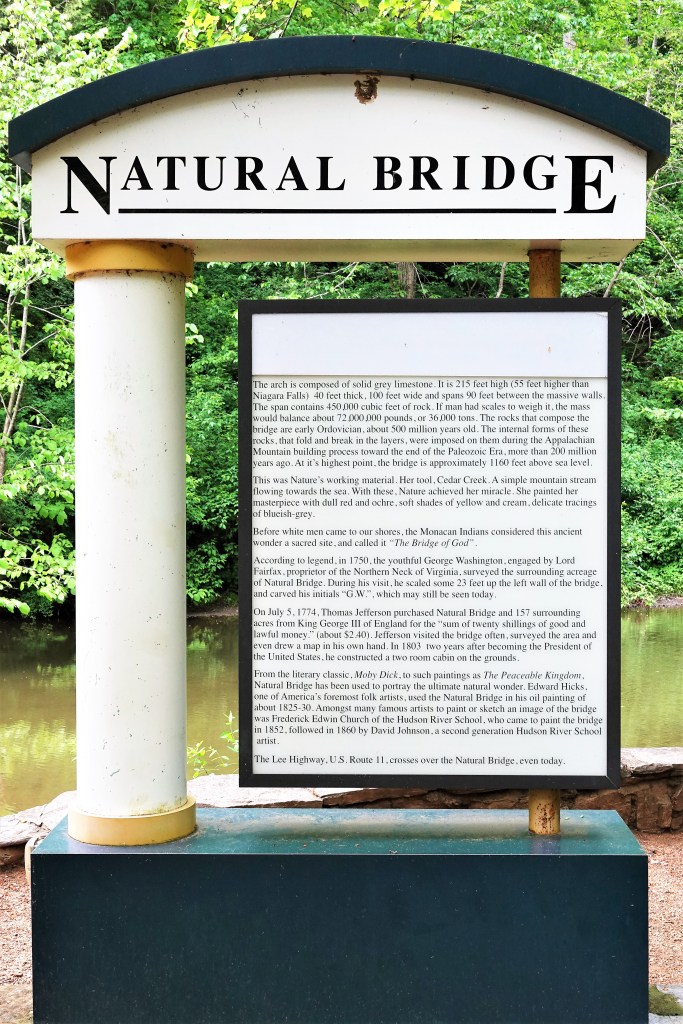
until we reached a T-shirt concession at rock bottom and an imposing graphic…

that tells the story of Natural Bridge:

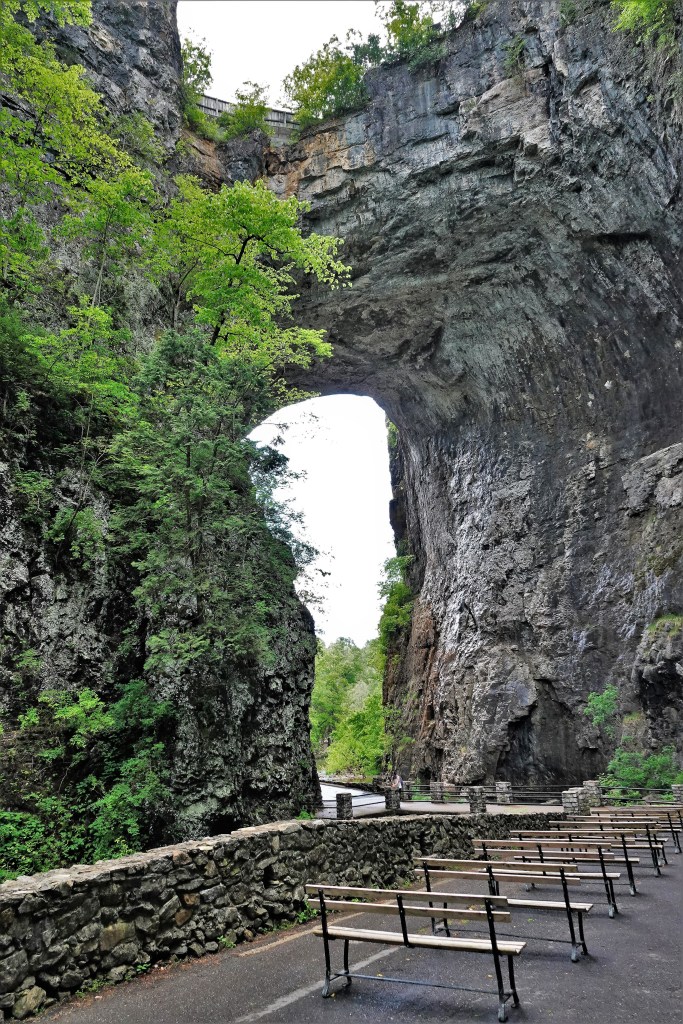
The arch is composed of solid grey limestone. It is 215 feet high (55 feet wider than Niagara Falls) 40 feet thick, 100 feet wide and spans 90 feet between the massive walls.

Looking up at Natural Bridge

The span contains 450,000 cubic feet of rock. If man had scales to weigh it, the mass would balance about 72,000,000 pounds, or 36,000 tons. The rocks that compose the bridge are early Ordovician, about 500 million years old. The internal forms of these rocks that break and fold in the layers were imposed on them during the Appalachian Mountain building process toward the end of the Paleozoic Era, more than 200 million years ago. At its highest point, the bridge is approximately 1160 feet above sea level.

This was Nature’s working material. Her tool, Cedar Creek–a simple mountain stream flowing toward the sea. With these, Nature achieved her miracle. She painted her masterpiece with dull red and ochre, soft shades of yellow and cream, delicate tracings of blueish-grey.

Before white men came to our shores, the Monacan Indians considered this ancient wonder a sacred site, and called it “The Bridge of God.”

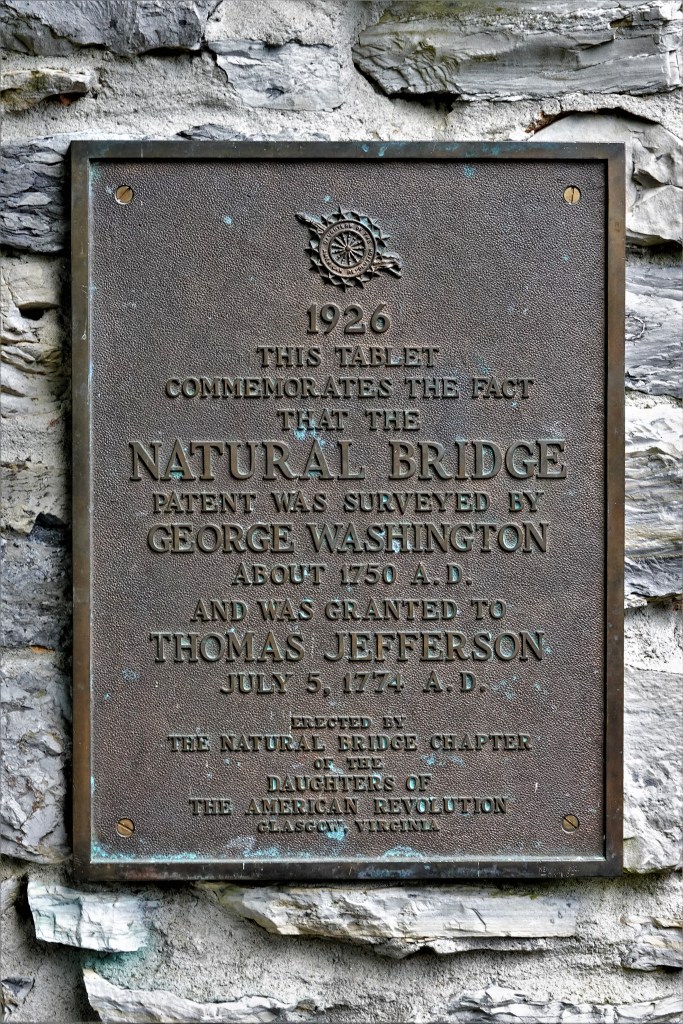
According to legend, in 1750 the youthful George Washington, engaged by Lord Fairfax, proprietor of the Northern Neck of Virginia, surveyed the surrounding acreage of Natural Bridge. During his visit, he scaled some 23 feet upon the left wall of the bridge and carved his initials, which may still be seen today.

On July 5, 1774, Thomas Jefferson purchased Natural Bridge and 157 surrounding acres from King George III of England for the “sum of twenty shillings of good lawful money” (about $2.40). Jefferson visited the bridge often, surveyed the area, and even drew a map in his own hand. In 1803, two years before becoming the President of the United States, he constructed a two-room cabin on the grounds.

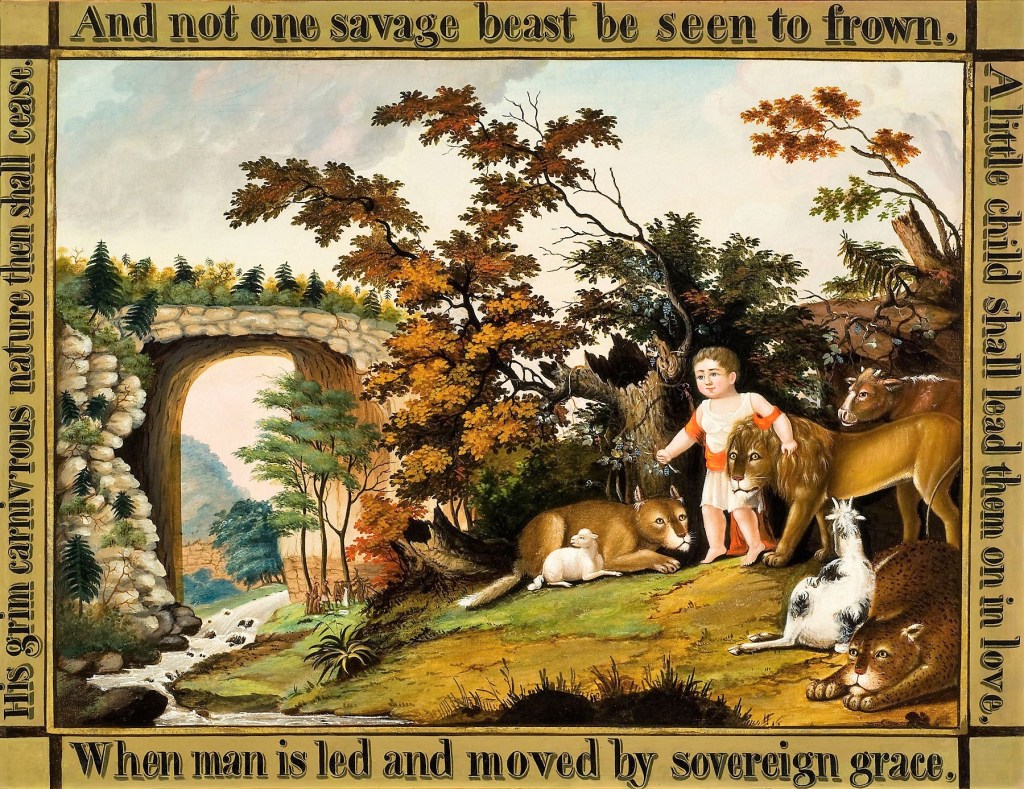
From the literary classic Moby Dick, to such paintings as The Peaceable Kingdom, Natural Bridge has been used to portray the ultimate wonder. Edward Hicks, one of America’s foremost folk artists, used the Natural Bridge in his oil painting of about 1825-30.

Amongst many artists to paint or sketch an image of the bridge was Frederic Edwin Church, followed in 1860 by Davis Johnson, a second generation Hudson River School artist.

In later years, Natural Bridge became a merchandising magnet.

Personally, I was equally as intrigued with Cedar Creek as I was impressed by the monolithic bridge…

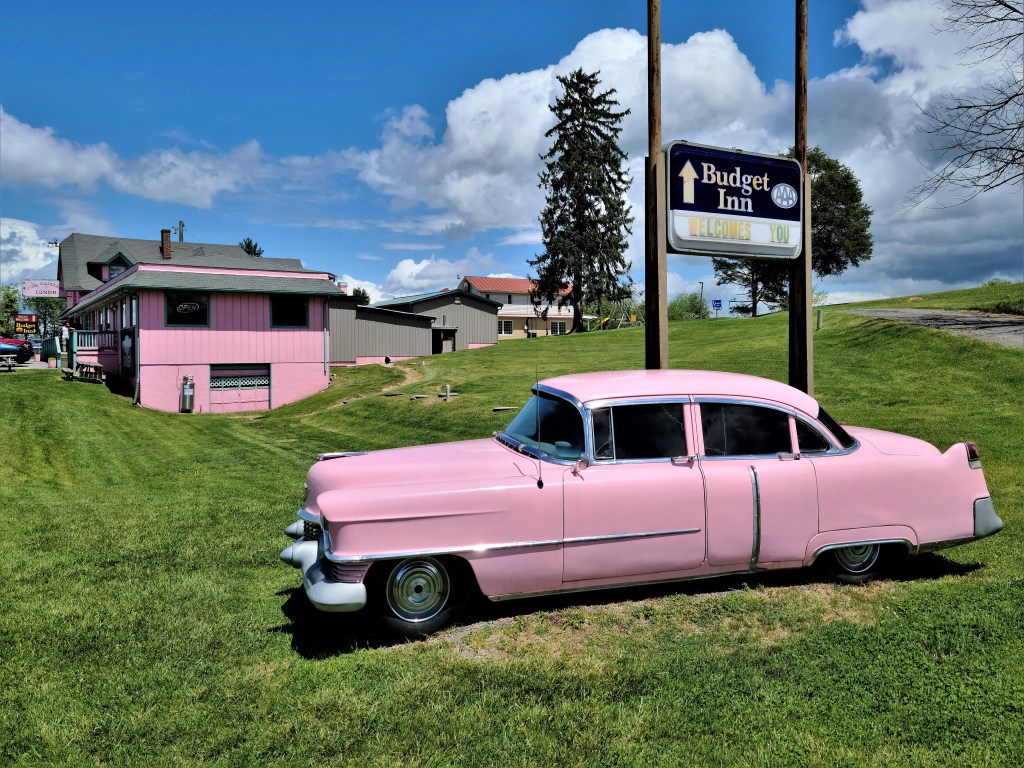
Even today, Lee Highway (U.S. Route 11) runs across the Natural Bridge, and that’s a very good thing, because we crossed many times to access our KOA campground down the road, and more importantly to visit Elvis at the Pink Cadillac Diner.

And We’re Off…

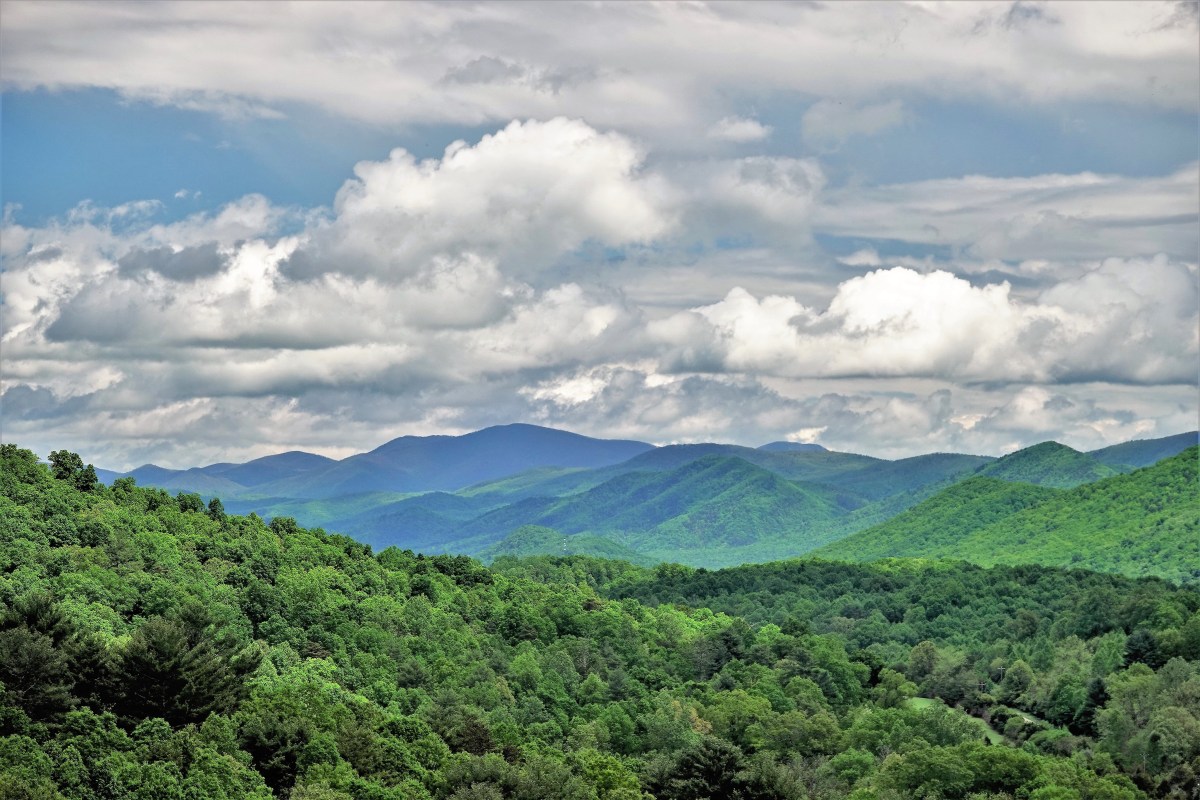
After driving hours upon hours of sameness along I-95 to I-26, Leah and I crossed the border into North Carolina, and rejoiced at our first sight at mountains in the past 9 months–the Blue Ridge. It was a sign that we were entering Pisgah National Forest and approaching Asheville, our first destination of the Great American Road Trip–Part 4.

Although the weather could have been more welcoming, we managed an urban bike ride through Carrier Park and by the River Arts District…

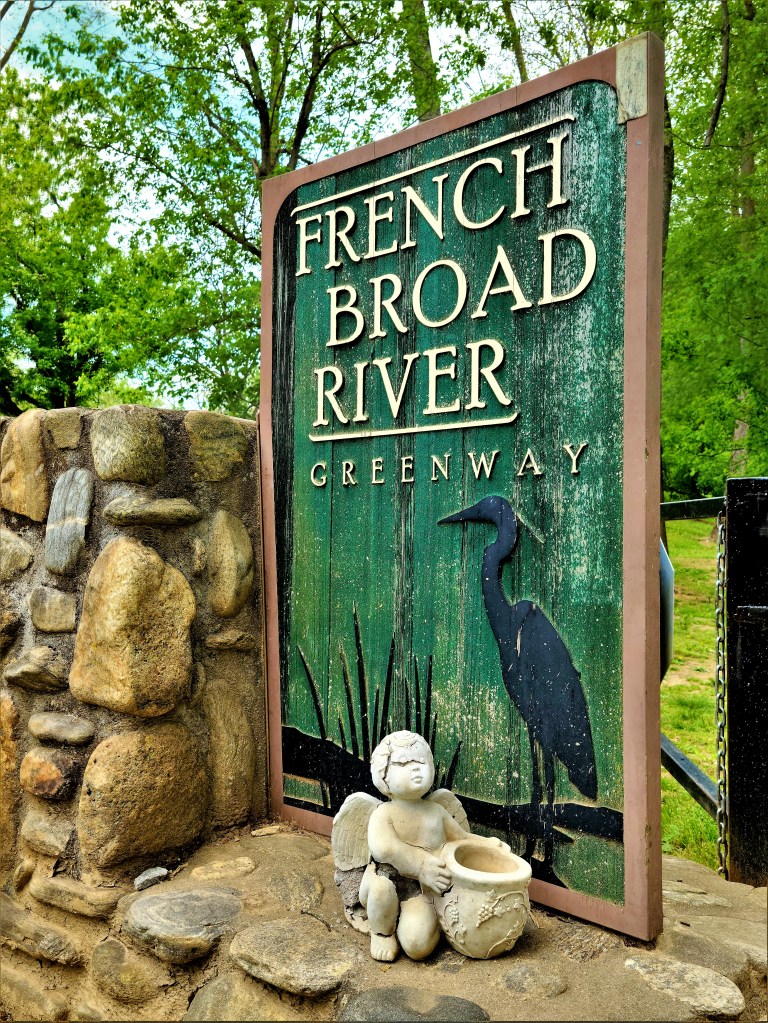
before doubling back along the French Broad River Greenway.

to admire the serenity of the lazy river.

Thank goodness for video downloads, because the incessant rain throughout the evening and into the following day kept us indoors–giving Smokey a much needed fire-watch break–

but preventing us from exploring our Lake Powhatan campground surroundings. Fortunately, by mid-afternoon, a partial clearing at the lakefront…

gave us an opportunity to loop around the water through mountain laurel archways…

past flora,

falls…

and flume.

All of which brought a smile to our faces.

Happy Campers

Leah and I are on the road again, continuing our Great American Road Trip–part 4, with some significant changes and improvements.

Last year, during the summer of Trumpandemic, we took an abbreviated trip to upstate New York in search of open outdoor vistas with blue skies and limited exposure to crowds, which we found at Letchworth State Park.

Soon after, we rounded the top of New England to enjoy a requisite Maine lobster dinner…

to dip a toe in the Atlantic on Hampton Beach…

and to gawk at the wealthy from Newport’s Cliff Walk.

We hugged the coastline until we reached Chincoteague, Virginia…

in search of precious ponies…

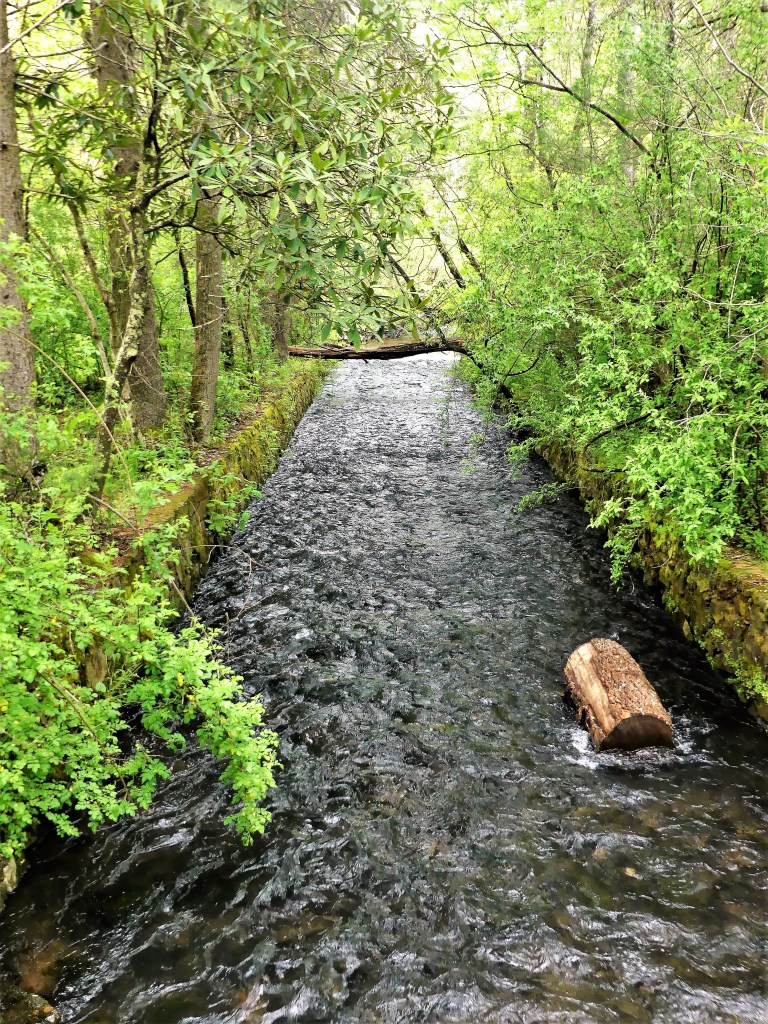
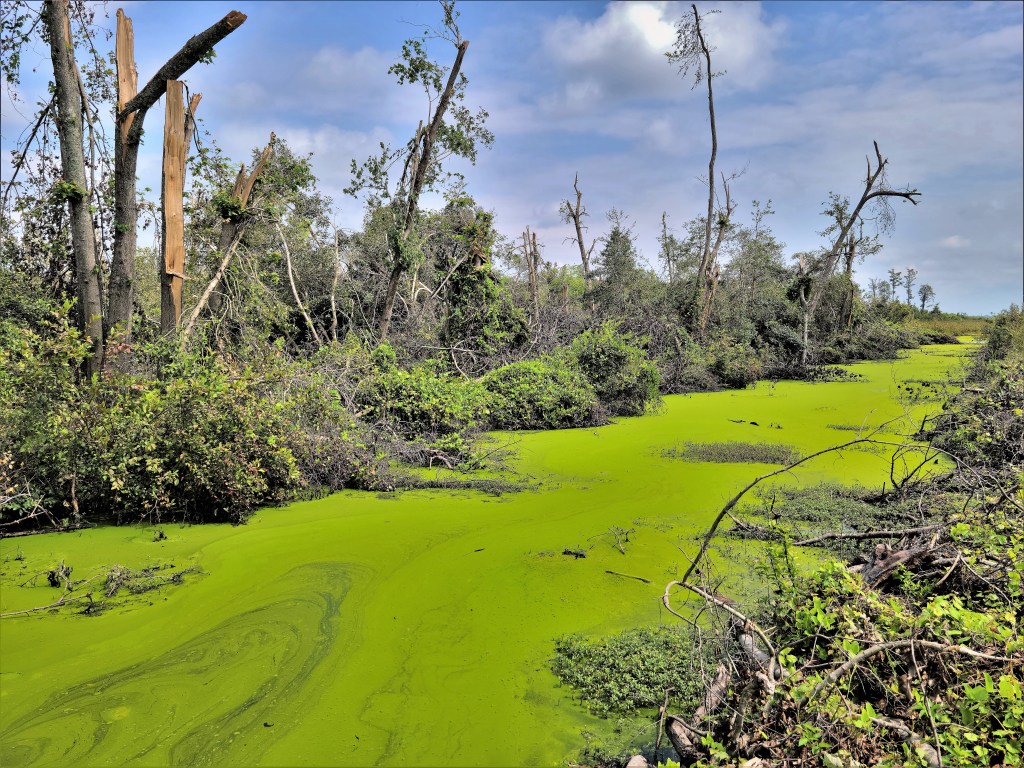
and to listen to the silence at the Great Dismal Swamp in Suffolk, VA.

The trip was short (only 5 weeks and far from our ambitious itineraries of past years) yet refreshing, and daring (for all the anticipated COVID closures) yet unremarkable with one notable exception…I wrecked the Airstream in Tarboro, North Carolina.

Halfway to Tignall, Georgia (our final destination) and needing a lunch break and a leg stretch, we stopped at a charming town boasting a historic district of 18th century and antebellum landmark homes recognized by the National Park Service. I parked the Airstream inches from the curb on a narrow residential road across from Blount-Bridgers House, an 1808 Federal-style mansion-cum-museum,

and returned an hour later to continue our journey.

I casually pulled out, unaware that a protruding power pole ID tag had snagged the rear awning support and ripped all the cleats out from the aluminum skin, taking down the entire awning assembly and crushing the end caps to the tune of $17,000.

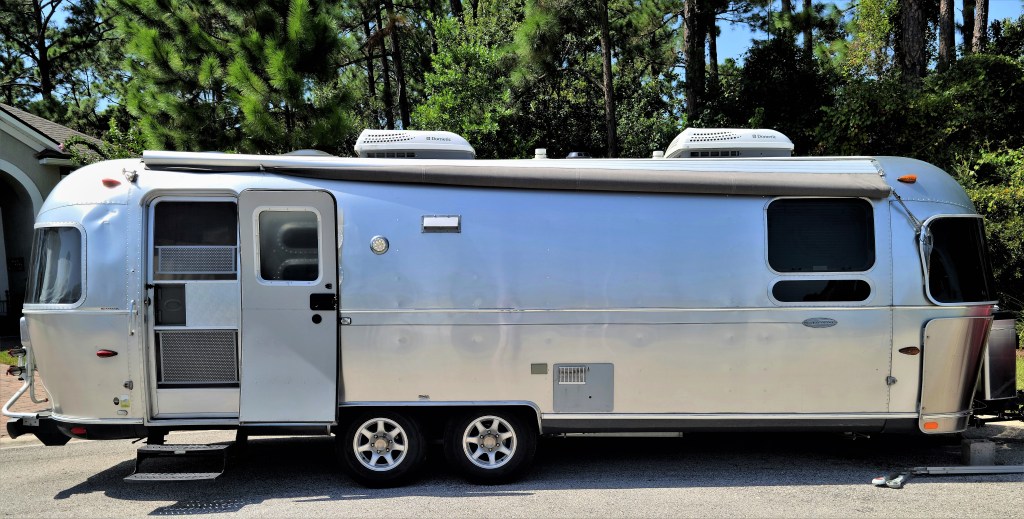
Thankfully, our insurance completely covered the damage. As we drove our beloved, but bandaged 27FB Flying Cloud to the Tampa Airstream dealer for repair, we considered the possibility of an upgrade should one be available. As luck would have it, a Florida family was trading a 2018 Globetrotter 27FB at the time, pending delivery of their new Airstream by February 2021.

We felt as if we had won the lottery. A deposit was offered on the spot, considering a total lack of previously owned inventory throughout the country.

The deal was sealed in April, when Leah and I picked up our reconditioned summer rig and took it for a dry run in Ruskin, FL in preparation for our summer adventure. We enjoyed the whisper-quiet, ducted AC; the ease of deploying the power stabilizer jacks; the convenience of rolling out the power awning; and the notion that our roof-mounted solar panels could provide us with increased boondocking possibilities.

Join us on the road as we explore 44 destinations (mostly new, sprinkled with some favorites) for the next 20 weeks:

  • May 1: Lake Powhatan/ Asheville, NC
  • May 4: Natural Bridge, VA
  • May 7: Vineland, NJ/ Northern NJ
  • May 12: Philadelphia, PA
  • May 15: Pittsburgh, PA
  • May 18: Jackson Center Airstream Factory/ Dayton, OH
  • May 19: Indianapolis, IN
  • May 21: Nashville, TN
  • May 24: Memphis, TN
  • May 27: Hot Springs/Little Rock AR
  • May 29: Eureka Springs, AR
  • June 1: Oklahoma City, OK
  • June 4: Amarillo, TX
  • June 6: Albuquerque, NM
  • June 10: Taos, NM
  • .June 13: Great Sand Dunes NP, CO
  • June 16: Rocky Mountain NP, CO
  • June 20: Cheyenne, WY
  • June 22: Flaming Gorge, UT
  • .June 25: Bear Lake State Park, UT
  • June 28: Craters of the Moon NP, ID
  • July 1: Morley Nelson Snake River Birds of Prey, UT
    • changed to Bruneau Sand Dunes State Park
  • .July 3: Crystal Crane Hot Springs/ Burn, OR
  • July 4: Bend, OR
  • .July 9: Crater Lake NP, OR
  • .July 12: South Beach State Park, OR
  • July 15: Seaside, OR
  • .July 18: Olympic NP, WA
  • .July 21: Port Angeles, WA
  • July 25: Mount Rainier NP, WA
  • July 28: Bothell, WA
  • Aug 2: North Cascades NP, WA
  • Aug 5: Spokane, WA
  • Aug 8: Glacier NP, MT
  • Aug 12: Great Falls, MT
  • Aug 14: Billings, MT
  • Aug 16: Deadwood, SD
  • Aug 19: Badlands NP, SD
  • Aug 22: Sioux Falls, SD
  • Aug 25: Baraboo, WI
  • Aug 29: Clinton Lake State Rec Area/ Dewitt, IL
  • Sept 1: Land Between Lakes National Rec Area, TN
  • Sept 5: Top of GA Airstream Park
  • Sept. 9: Skidaway Island State Park, GA
  • Sept 15: Home

Yes, we are happy campers!

Inhu•manatee

Florida manatees are in trouble and it’s troubling. Today, wildlife conservationists put their current census at around 6500 individuals–up from a few hundred in the 1970’s–

and have reclassified these docile creatures as “threatened.” However, the tide may be returning to “endangered,” given the increasing number of manatees at risk from boat strikes (averaging 100 every year), and the consensus that manatees are dying in unexpected numbers this year from extreme weather. Simply put, they are starving to death.

There’s a chill in the air, and the West Indian manatees of northern Florida have been scrambling to find warmer waters during winter months, where they usually huddle in large numbers, which assists in the yearly count.

Many coastal manatees migrate to Manatee Lagoon…

to bask in the warm-water discharges of FPL’s Next Generation Clean Energy Center at West Palm Beach,

while hundreds flee to Blue Springs State Park, in Orange City, Florida, where they find safe haven at a wellspring releasing 72° water year-round.

Others migrate to Silver Springs State Park,

where clear, calm, and temperate waters provide an abundance of sea grass for grazing.

But that’s not the case in many other places where manatees congregate. In recent years, massive toxic algae blooms accelerated by increased extreme weather have eliminated several hundred “sea cows” every year.

The Indian River Lagoon on the Atlantic side of the state accounts for the majority of manatee losses.

According to Indian River Lagoon guide Billy Rotne:

The raw truth of the matter is due to negligence of our storm water. We’ve had continual algal blooms over the past 10 years, which blocks out seagrass and kills it…so the manatees are starving to death.

And Patrick Rose, executive director of the Save the Manatee Club further connects the dots:

I believe that seagrass loss is making manatees travel farther to get food, often going into man-made canals where they are more exposed to boat traffic.

Manatees have no natural predators. Sharks, whales and alligators usually swim in different waters and pose no threat to them.

Only humans have the capacity to put manatees at risk, with at least 432 having already perished in the first two months of 2021, accounting for 5 times the number of deaths in recent years.

Even more disturbing, a boat charter captain trolling the Homosassa River in the western part of Florida observed a manatee with “TRUMP” etched along its back.

Perhaps we need to do a better job of protecting them, if they are going to survive our abuses.

Just Wondering…

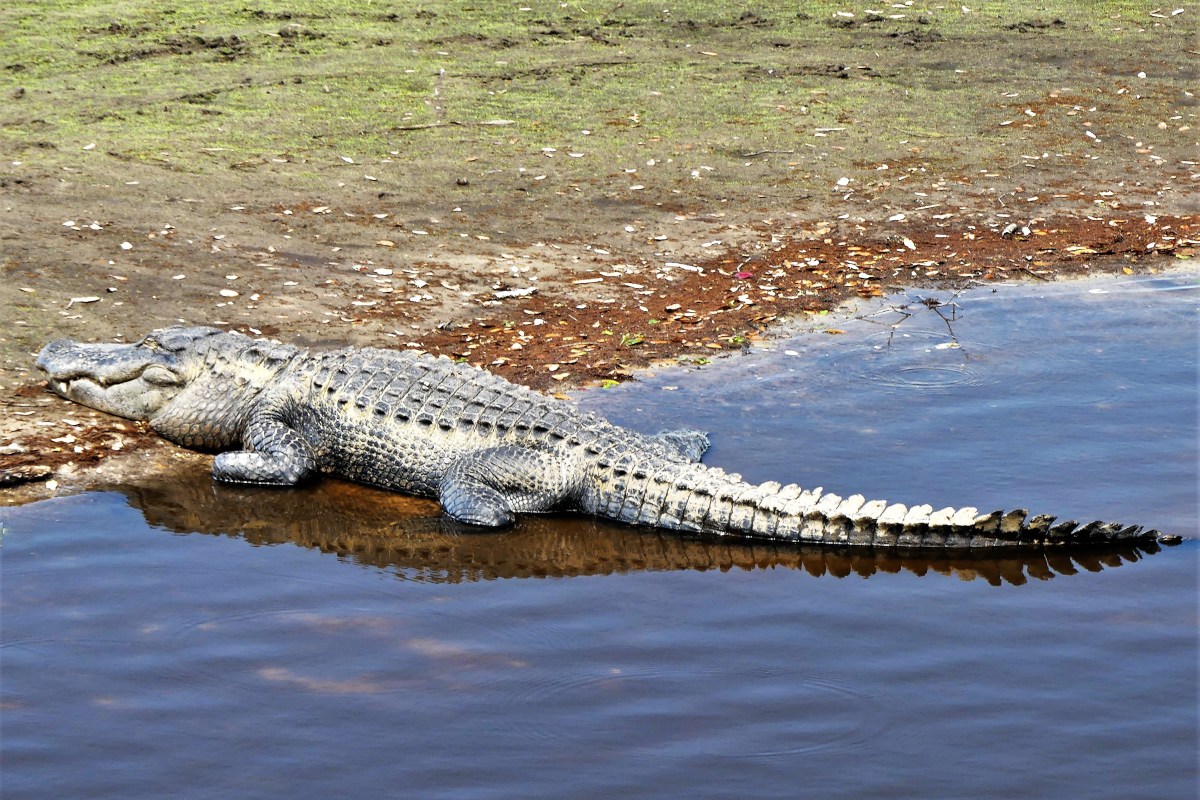
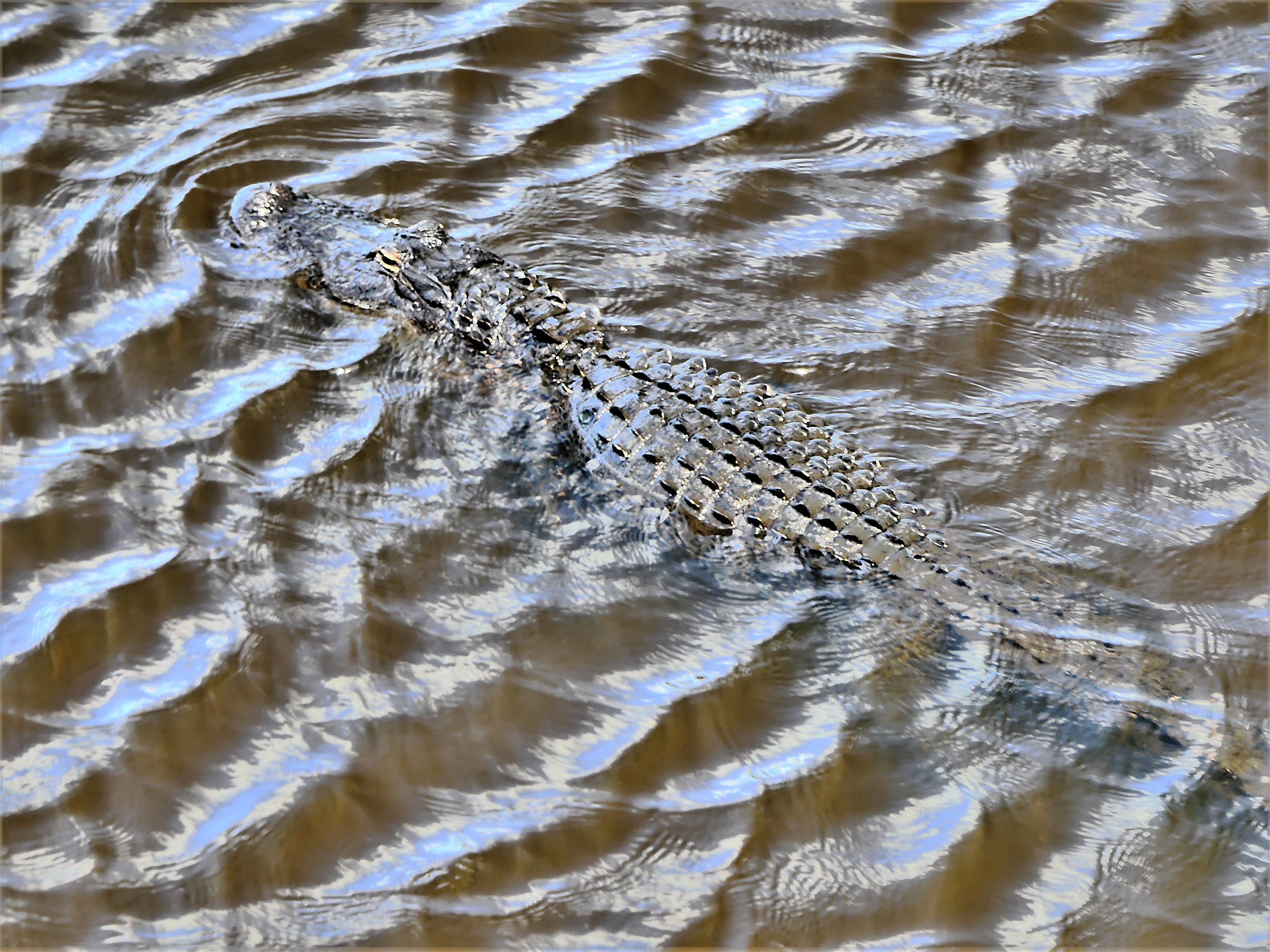
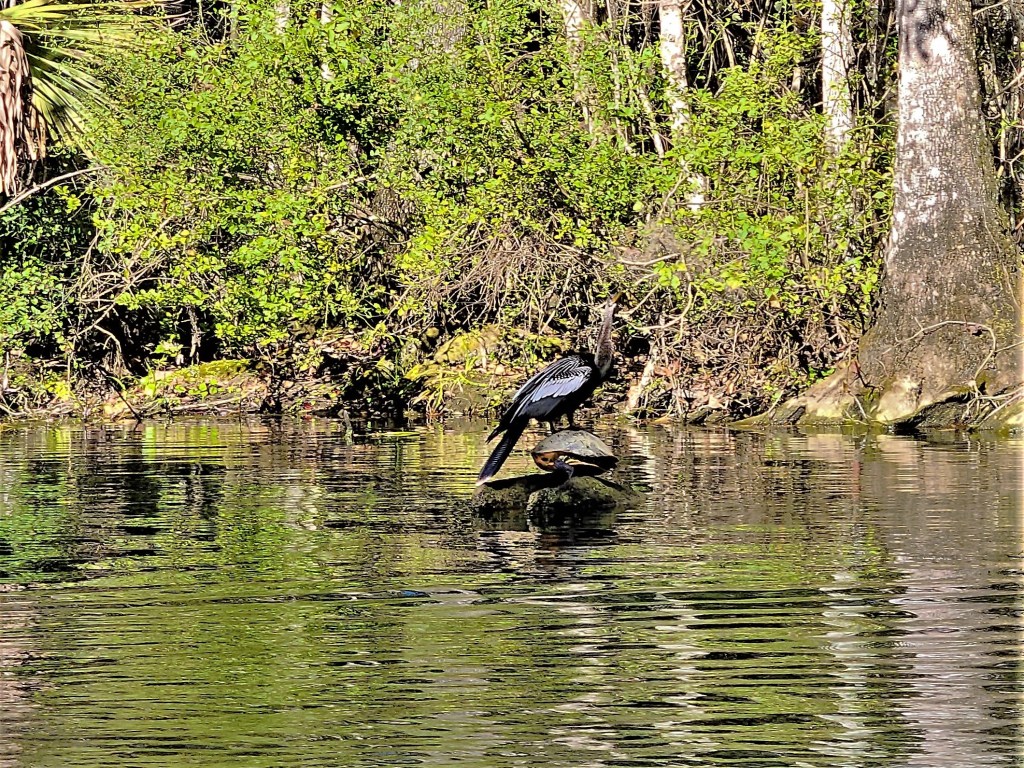
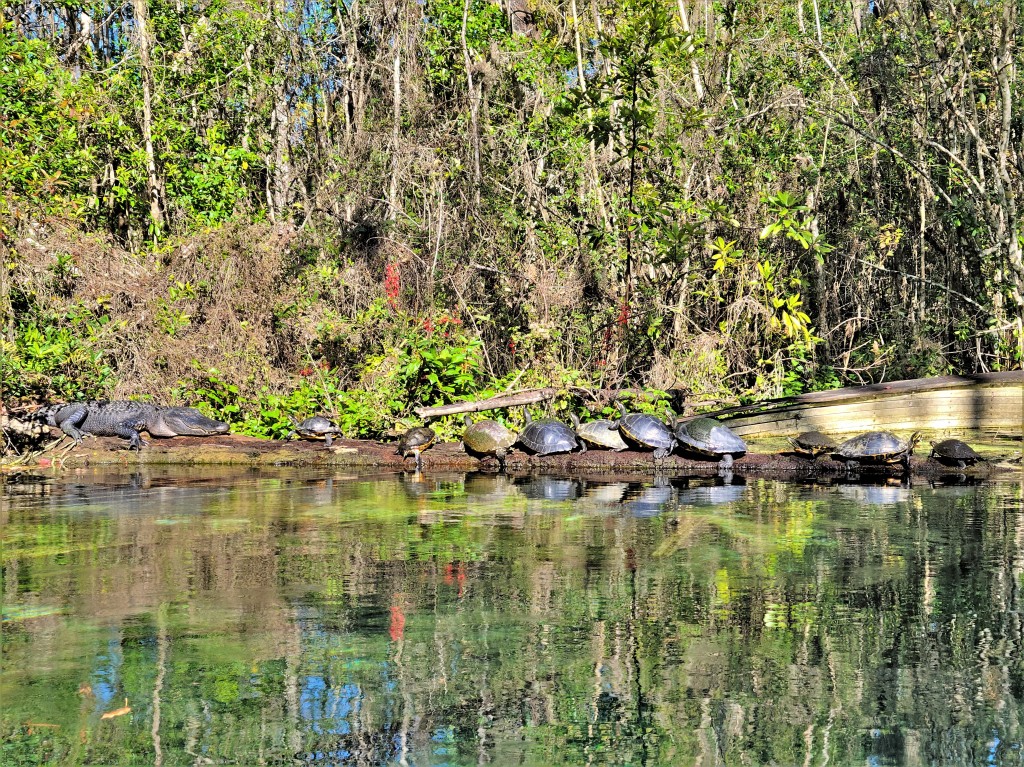
If gators…

and birds…

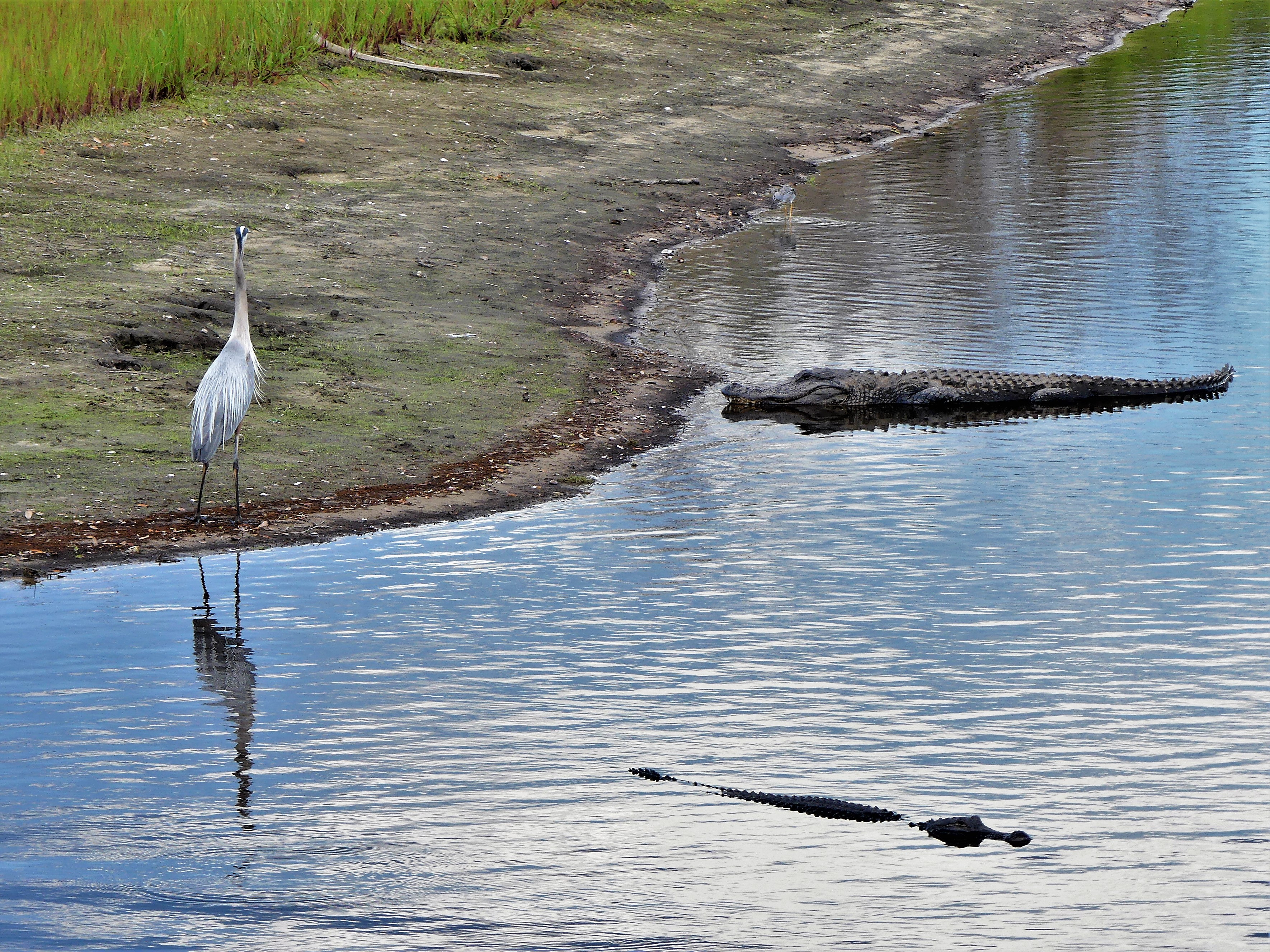
can coexist side by side,

why can’t we abide.


The above-mentioned poem and pics were motivated by a day-trip to Myakka River State Park, outside Sarasota, Florida.

Originally, my early inclination was to post this as a stand-alone, abstract reaction to all the hate that’s been circulating around the country of late, but as luck would have it–at Leah’s urging–I walked along Sarasota’s Bayfront…

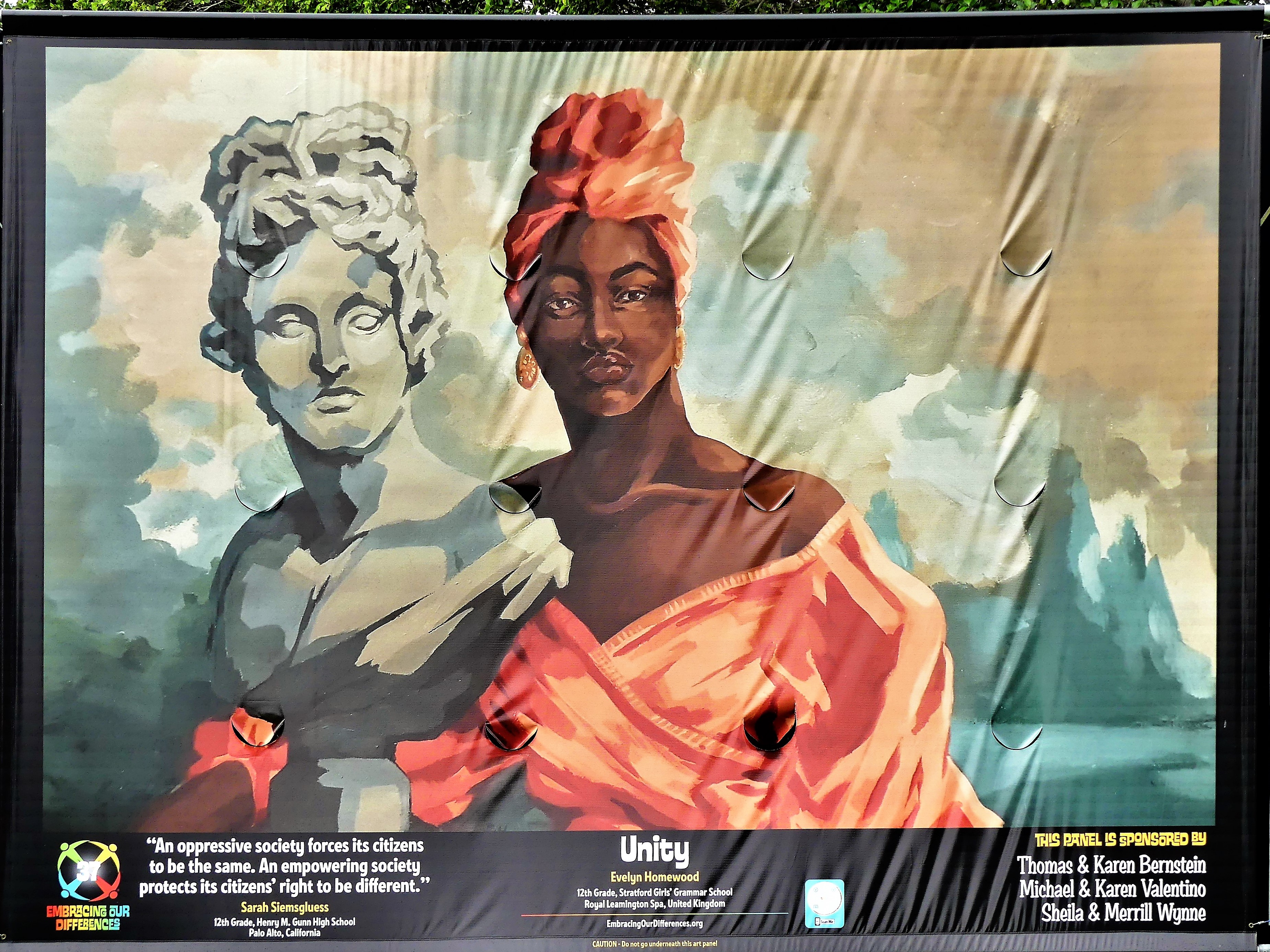
and discovered the 18th Annual Art Exhibit Celebrating Diversity and Inclusion.
Almost immediately, after walking through the exhibition, I realized that showcasing birds and preying reptiles was too esoteric in getting my message across.

And I knew I had to include a sampling of the thoughtful, amazing talent from local and international students…

who have found a way to express themselves both poetically and graphically in ways that astound me, and give me hope for the future of our planet.

50 panels are spread throughout a marine park setting frequented by families, dog-walkers, tourists, and boaters, etc.,

interacting among billboard-sized art.

Indeed, a captive audience for a captivating display of enlightenment that’s too good to ignore.

High Octave Convenience

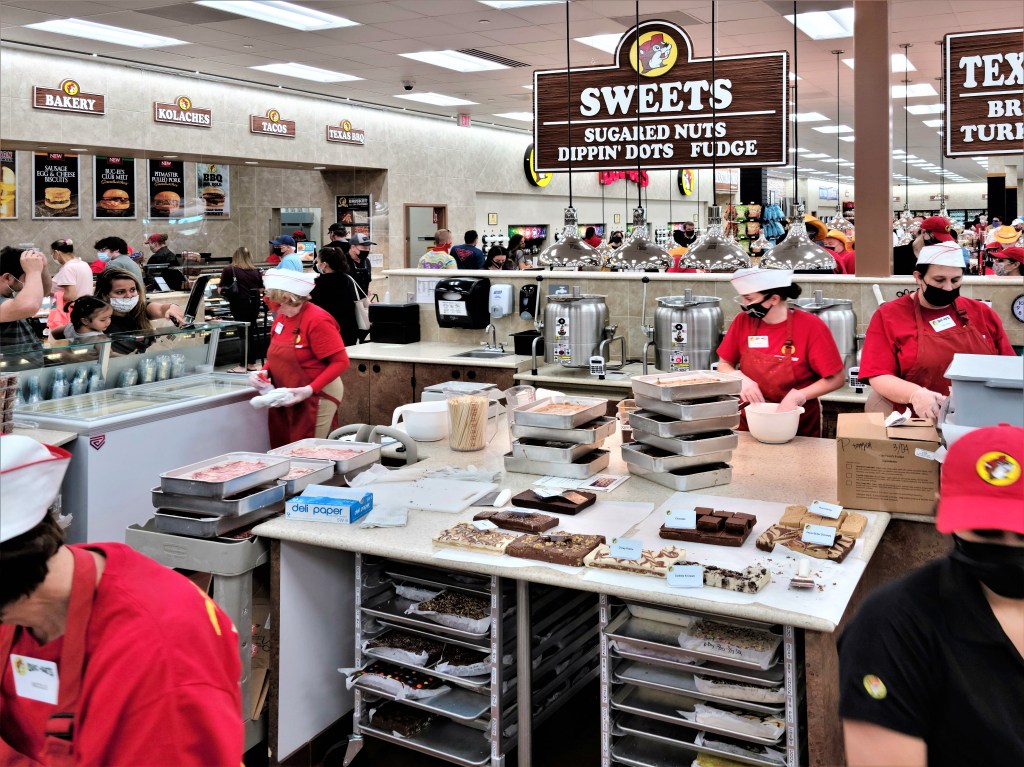
There was a time in St. Augustine–not too long ago–when we’d stop at a roadside gas station to “fill-er-up” and use the restroom. Perhaps, we’d pick up a scratch-off card, or a sweet or salty snack and a beverage before getting on the road. But what about all those times when we needed gas and a bikini, or a lawn chair and barbeque, or a pound of Texas brisket, a box of fudge or a jar of pickled quail eggs? What were we to do?

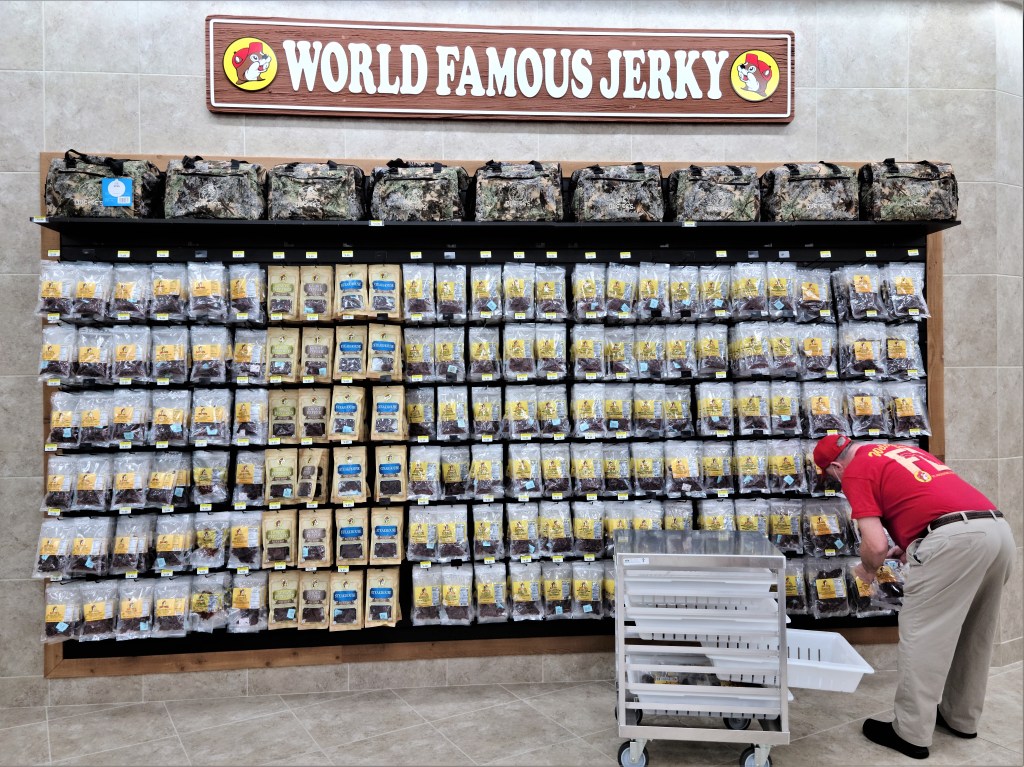
Well, now there’s Buc-ee’s!

Newly opened along I-95 by World Golf Village, Buc-ee’s, a Texas import now lays claim as the largest filling station in Florida with 104 pumps…

and 53,000 sq. ft. of convenience store space.

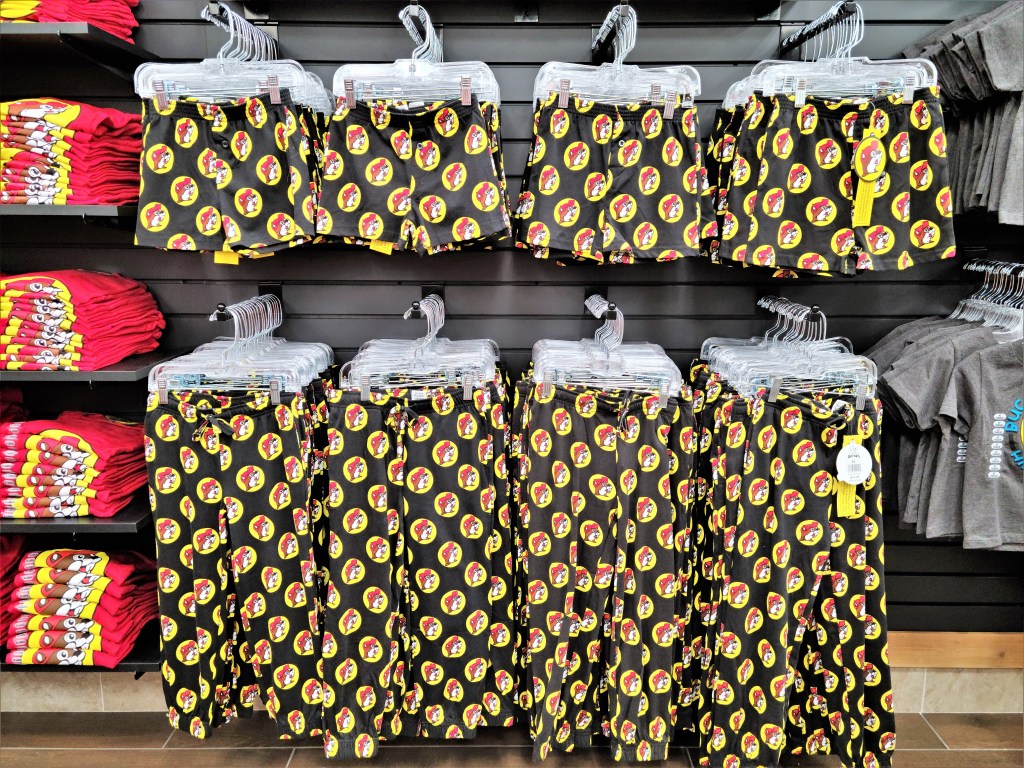
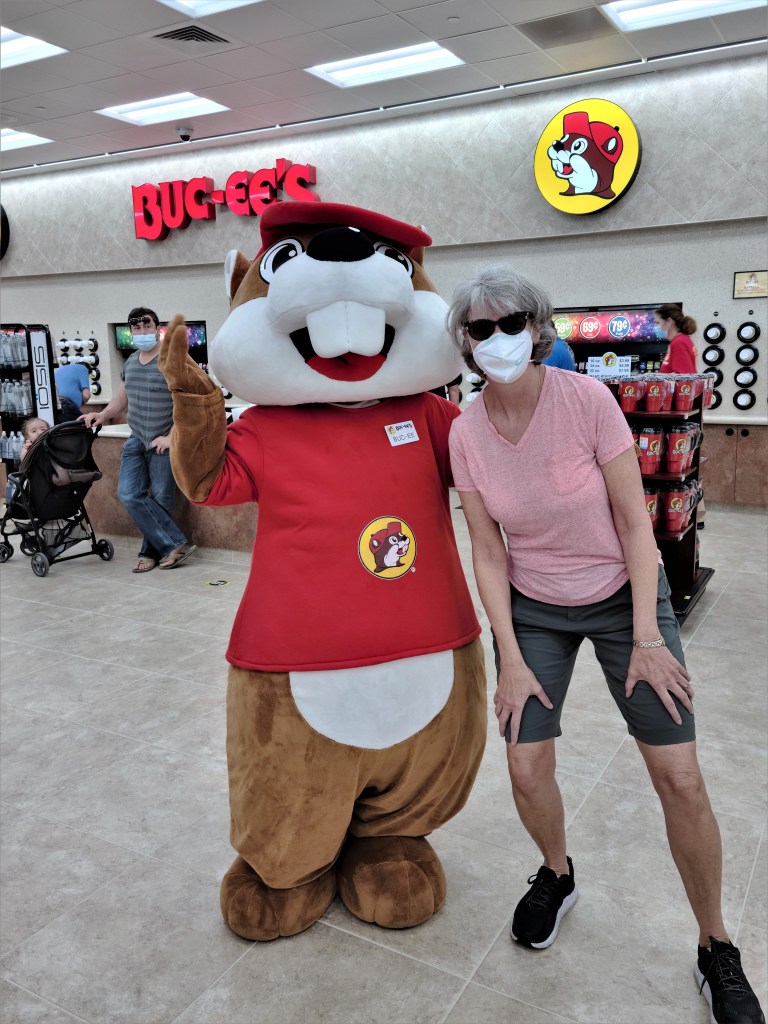
Pandemic aside, after a St. Johns County ribbon-cutting on Feb. 21, patrons were idling their engines at 4 am the next day, anxiously waiting for a taste,

an outfit…

and a hug.

But this eager beaver is not resting on its laurels. In one month’s time, Buc-ee’s will be opening in Daytona Beach with 110 pumps, damming St. Augustine’s bragging rights as Florida’s newest largest gas station.

Vaccination Blues

Ever since Ron DeSantis, Trump’s toady and Florida’s Republican governor decided to ignore CDC guidelines for rolling out the COVID-19 vaccine, it’s been a confusing patchwork of inefficiency for Florida’s 67 counties. Of course, first-responders, front-line healthcare workers and long-term facility residents were early targets. However, rather than vaccinate the area’s essential workers–in an effort to stem the tide of infection–DeSantis determined that Phase 1 inoculations should also be delivered to a more vulnerable and deserving population of seniors 65 and older. Rightfully, critics have accused DeSantis of politicizing the vaccine priority as a bow to those who supported his election 2 years ago.

This week, county health department officials throughout Florida received nearly 94,000 doses of the Moderna vaccine, with 3,000 doses slated for St. Johns, my home county. Leah and I have been actively following the announcements through state and local websites, and wondered how this would trickle down to us. We were determined to bob and weave through the bureaucracy for a chance that whatever news we learned would lead us in a useful direction.

Yesterday, we latched onto a hotline phone number that promised to connect us to a human who’d be scheduling appointments, but no matter when we called, the line was either busy, never connected, or went to voice mail. An after-hour answering service eventually took our information, but failed to return our call.

“Hurry up!” Leah shouted, running into the bedroom. The weight of 365 days of 2020 had worn me out, and I was comfortably lounging in bed. I glanced at the night table clock. It was 8:30am.

“Let’s go!” she commanded. “The Health Department is giving out the vaccine, and cars are already lining up across the street.” Leah had been on her morning walk, when she received a call from a neighbor–who on a whim, woke early, and was now first in line since 8am.

By 8:45am, I was behind the wheel, and behind a long string of sedans and SUVs, waiting to turn the corner from US-1 onto San Sebastian View, approaching the St. John’s County Administration building.

Leah and I slowly crept forward for the next hour until we turned the corner. We were making progress.

Eventually, we arrived at the first checkpoint…

where a healthcare worker offered us a sanitized clipboard with a validation form listing cautionary medical conditions, and alerting us to potential medical risks and complications for this unapproved, albeit emergency-authorized vaccine. We were instructed to tell our vaccination provider about:

  • any allergies
  • a lapsed fever
  • a bleeding disorder
  • blood thinner usage
  • any immunocompromises
  • a current or planned pregnancy
  • any breastfeeding activity
  • or if we have received any other COVID-19 vaccine.

We inched closer to the next checkpoint…

where Private Johnson, 1st Class of the U.S. Army entertained us while we waited further still. I had nothing but questions for him.

“How many shots have been given out so far, today?” I asked.

“I heard someone say 58 seniors over the past 2 hours, since opening at 9am,” he informed.

“So what happened to ‘appointments only’?” I asked.

“I really can’t answer that.” he asserted.

“But how did everyone even know about this vaccination site?” I queried.

“Beats me! Social media, most likely.” he posited. “All I know is that after 100,000 inquiries yesterday, the phones crashed, and people started showing up.”

“You mean, the Health Department was giving shots here yesterday, and there was no promotion or notification?” I couldn’t believe what I was hearing. So much for organization.

Our conversation was cut short when I was directed to move closer to the RN station. After two hours, Leah and I relaxed our arms, and we finally received our experimental pokes.

We were directed to a 15-minute waiting zone where EMT would monitor us for:

  • difficulty breathing
  • swelling of face or throat
  • a rapid heartbeat
  • a nasty rash all over our body
  • dizziness
  • weakness

While waiting, I couldn’t help but ponder the many conspiracies spewed by Alex Jones and QAnon advocates surrounding the vaccine: No, I don’t believe that Bill Gates implanted a 5G-enabled microchip to surveil me; I don’t believe I was injected with Satan’s blood. I don’t believe my DNA was altered to turn me into a cannibal or a pedophile; and I don’t believe my immune system has now been compromised, leaving me open to greater infection.

Thankfully, after 15 minutes, Leah and I remained symptom-free.

The entire process took 2 1/2 hours, door to door. At home, I pealed the Band-aid off my left upper arm–not even a speck of blood showing.

Four weeks from now, we’ll repeat the process, as we anticipate the second dose. Perhaps by then, the roll-out will be more predictable.

But more importantly, new leadership will be moving our nation forward in a different direction, and there will be much less to fear besides COVID-19.

Good riddance 2020, and all that you brought us!…

And HAPPY NEW YEAR!

Car Parts

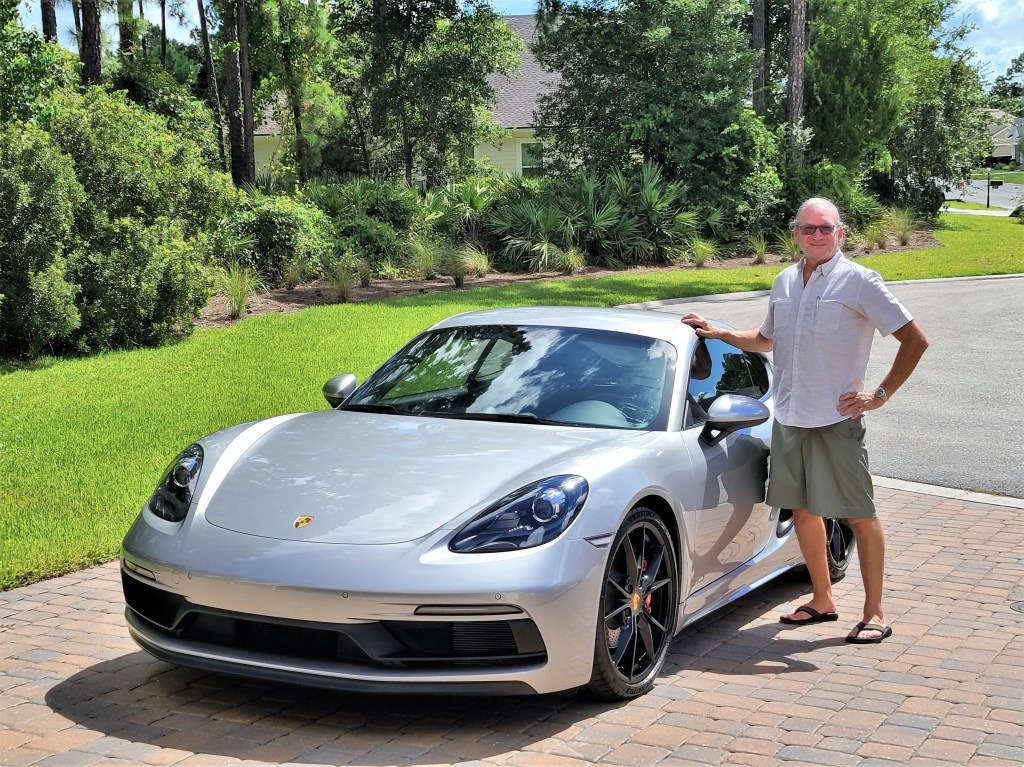
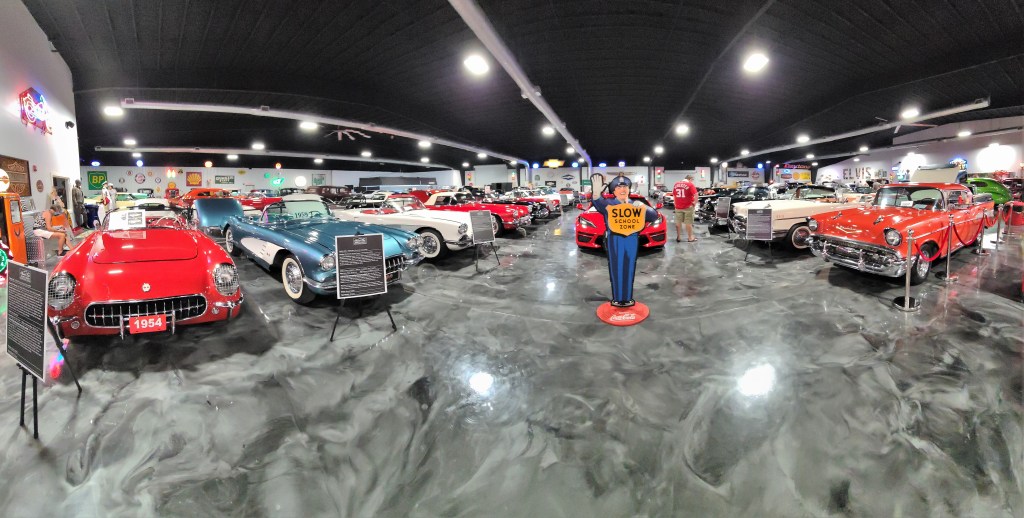
As an automobile enthusiast, I had occasion to visit the recently opened Classic Car Museum of St. Augustine on a drab weather day. It was a fitting opportunity to take my newly acquired Porsche 718 Cayman out for a drive before the expected rain.

The 30,000 sq. ft. garage displays 80 cars from Sidney Hobbs’ collection,

showcasing every decade through the 20th and 21st century,

with a miscellany of antique and classic cars from private collectors consigned for sale.

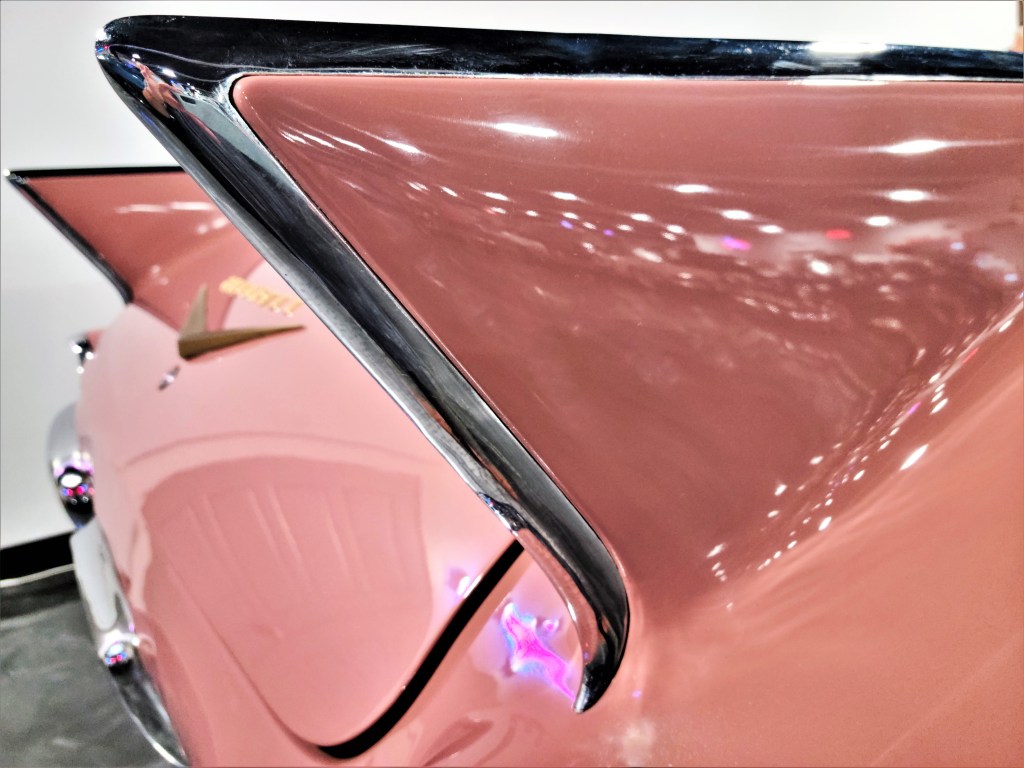
While I appreciate the automobile in its entirety, it’s the design nuances that steer me to it–the features of the vehicle that typically connote high style–always balancing the form and function:

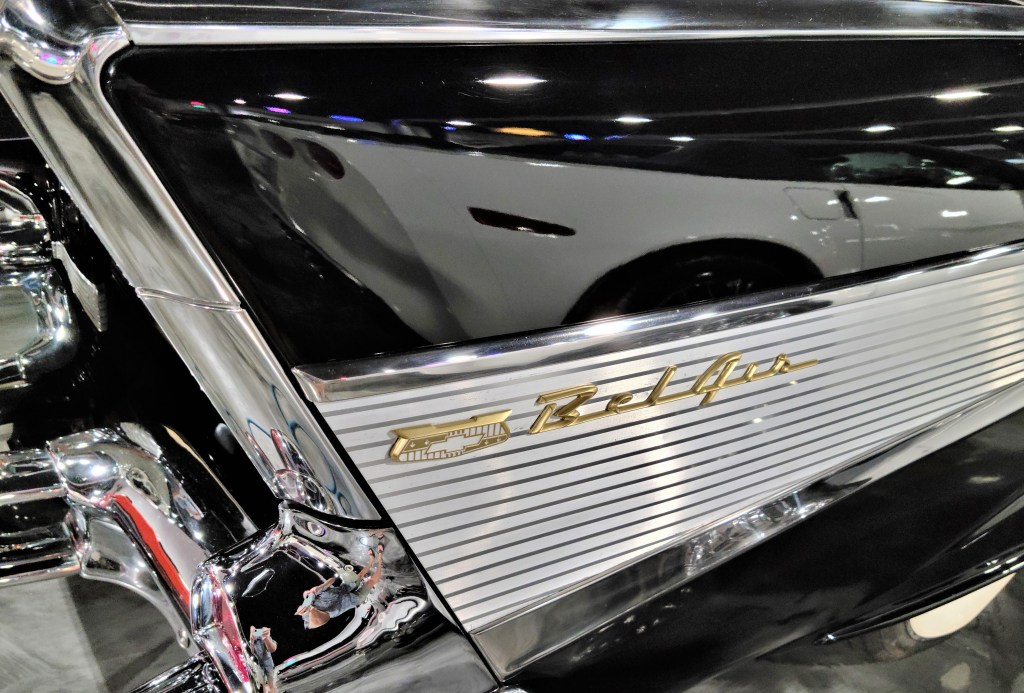
like fins from the 50’s;

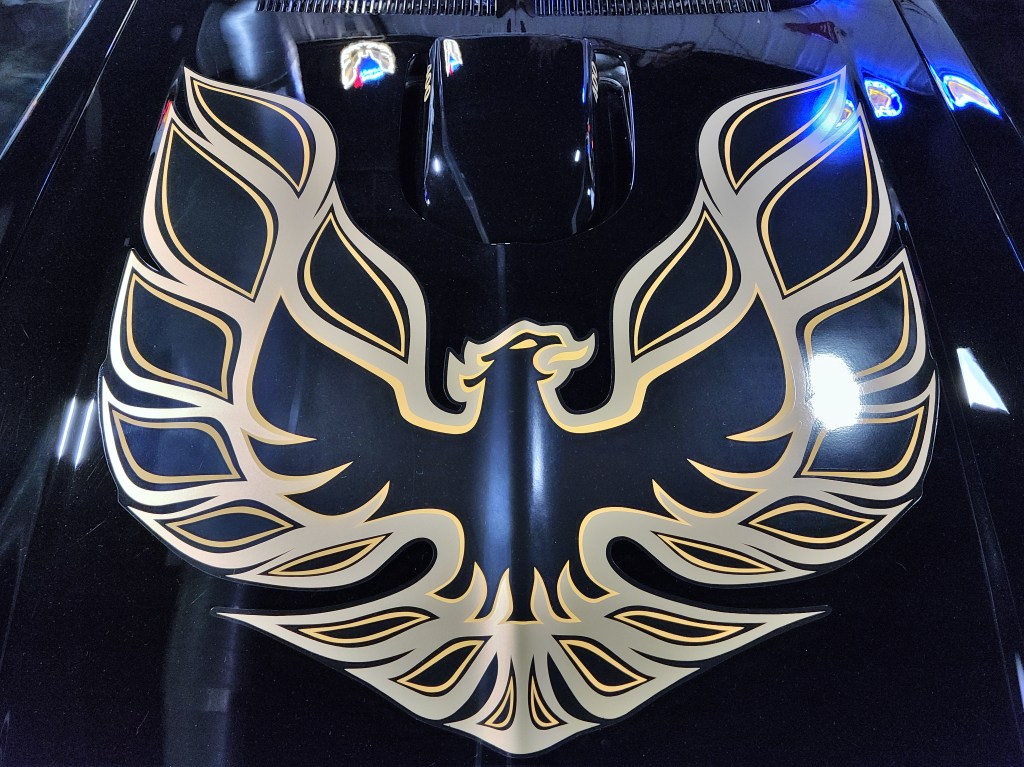
or hood ornaments;

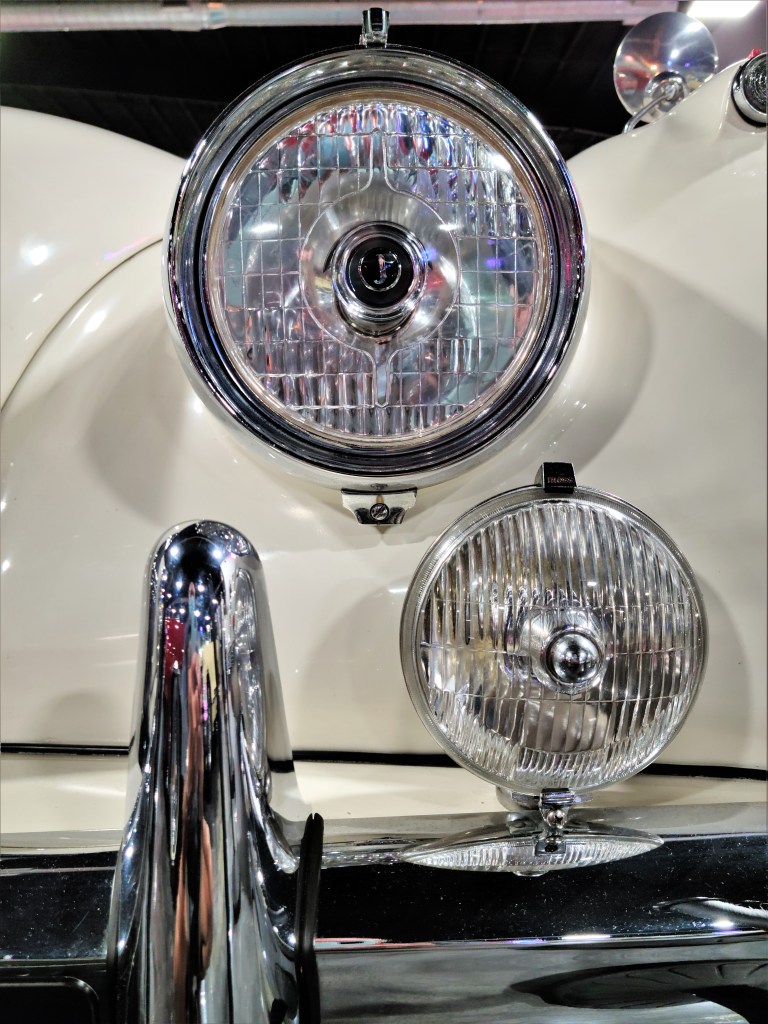
or lights;

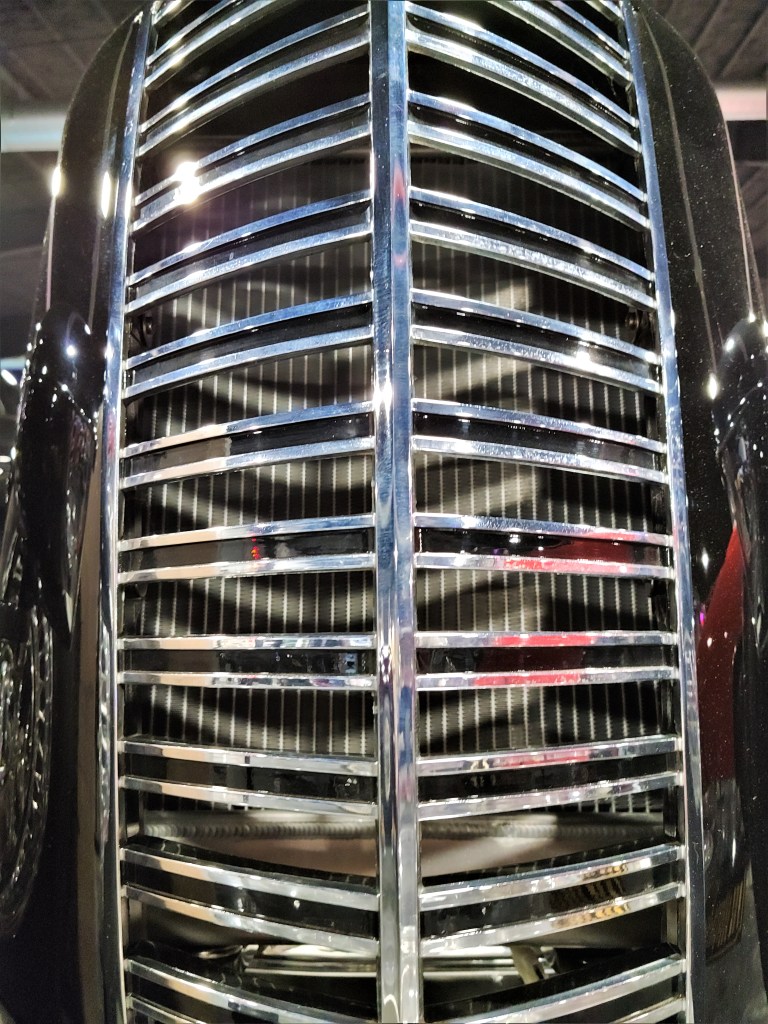
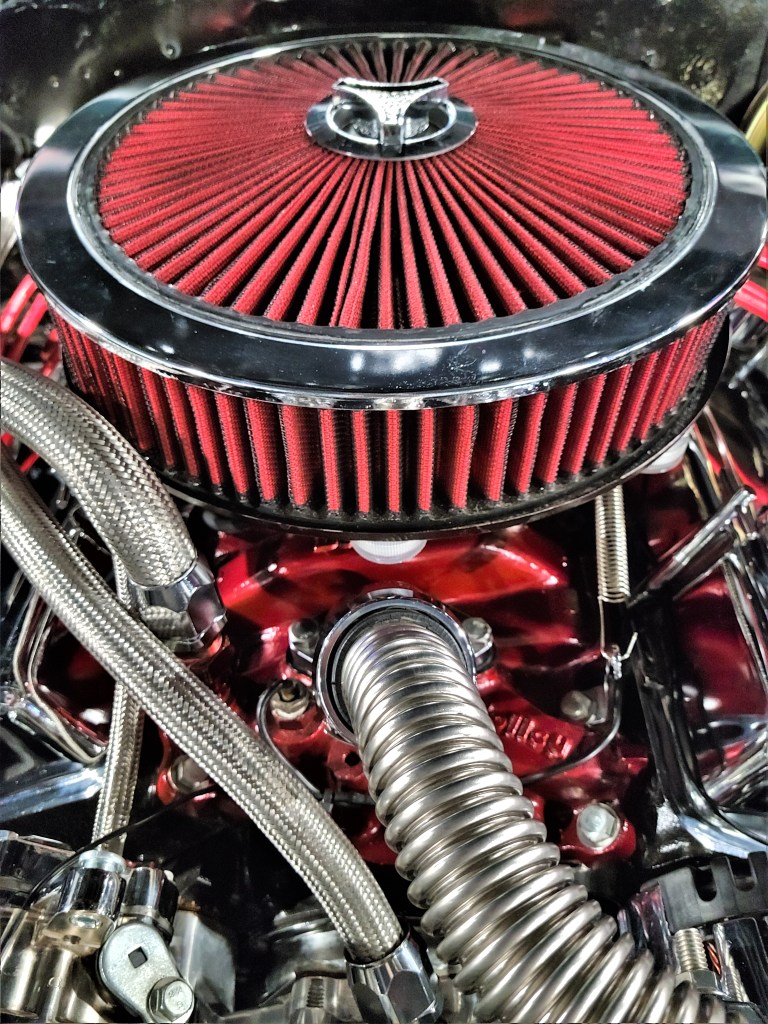
or radiators.

Sometimes the accents serve little purpose…

and sometimes they do.

And sometimes it nothing more than a bunch of hot air.

But the unspoken truth is, none of it really matters unless the car is driven.

Cliffhangers

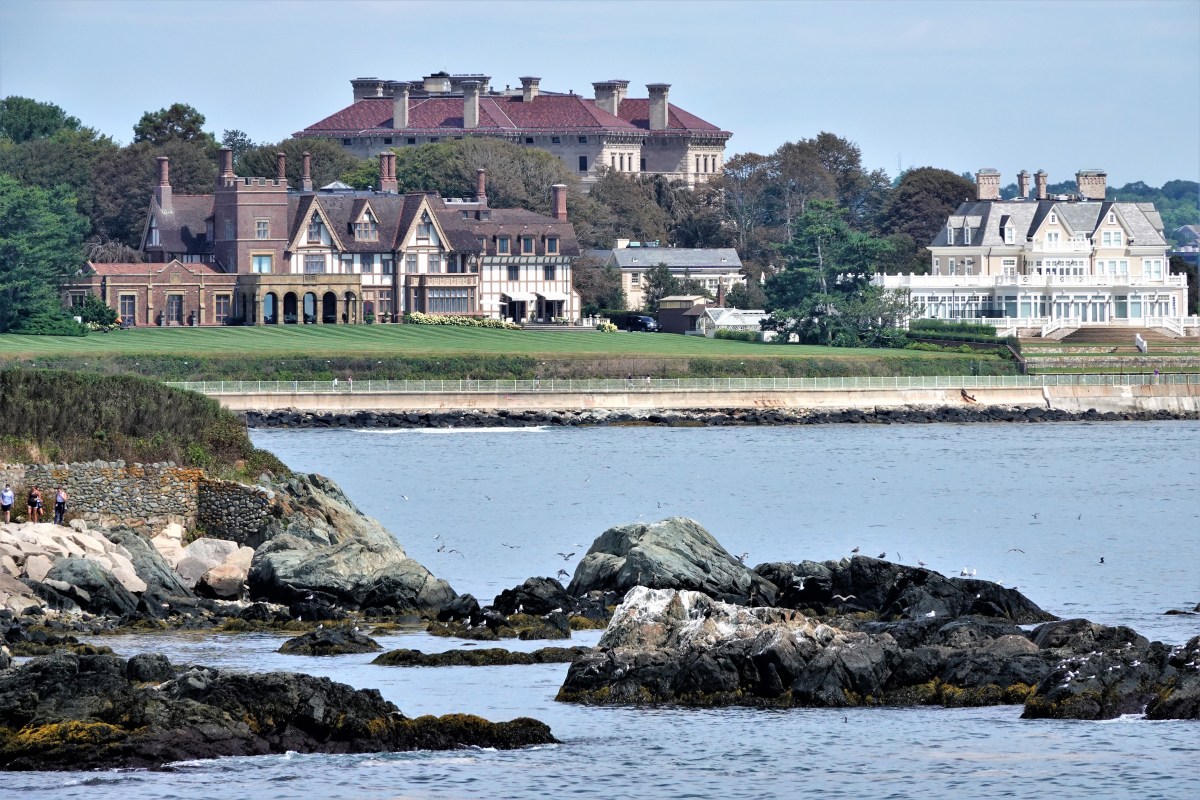
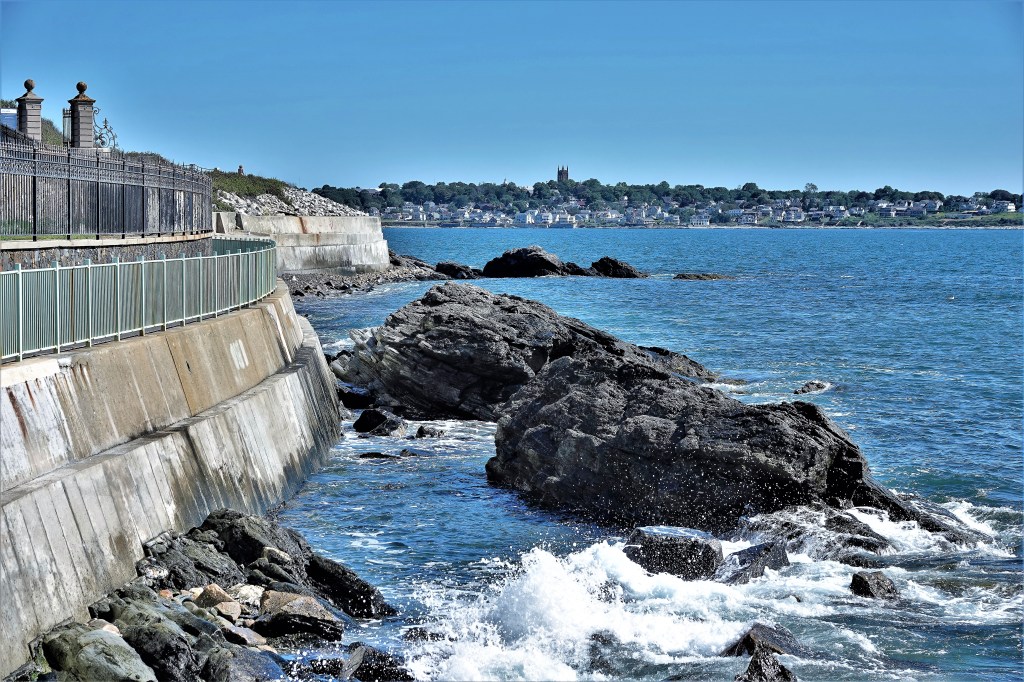
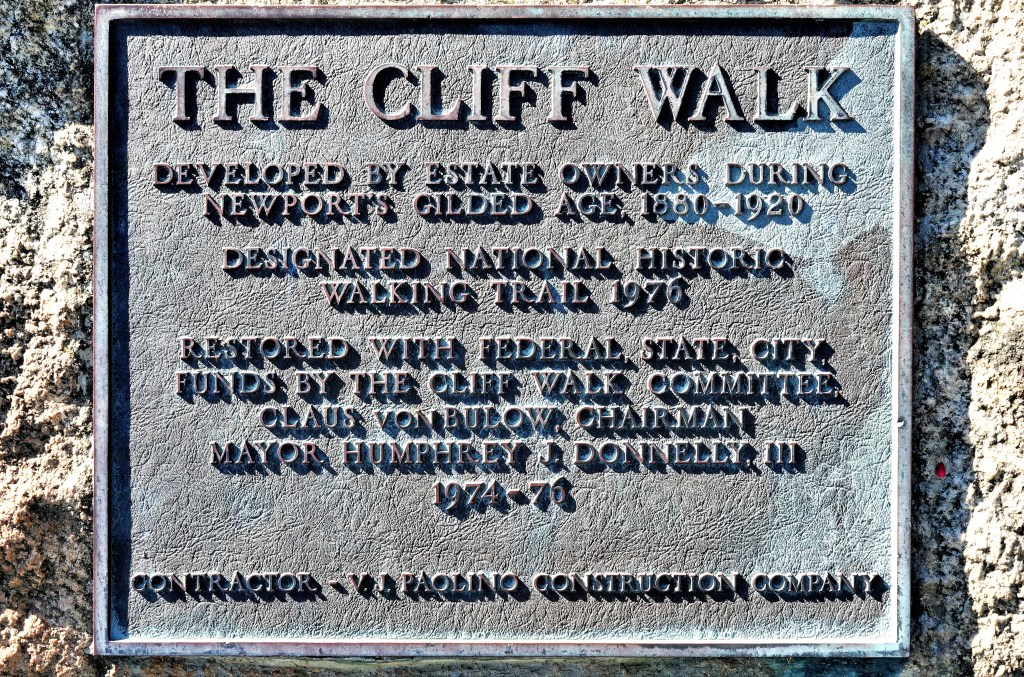
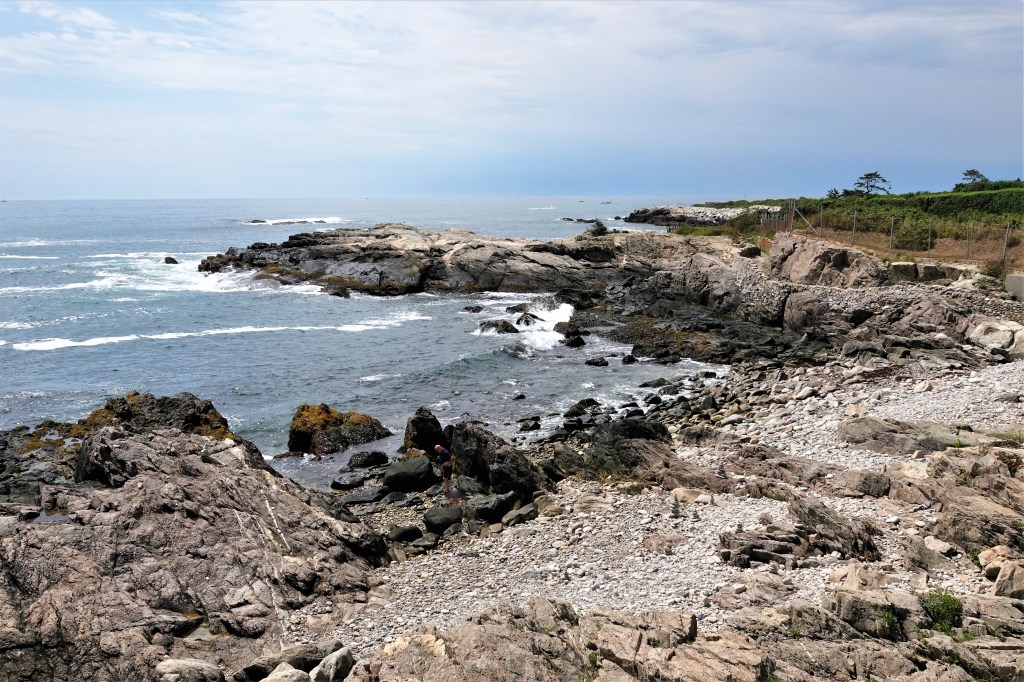
No tour of Newport, Rhode Island is complete without appreciating the summer “cottages” along the Cliff Walk. The walkway runs 3.5 miles along the Atlantic, offering panoramic views of crashing waves against a craggy seawall…

adorned with massive mansions belonging to America’s 19th-century titans of industry.

Leah and I parked at Easton’s Beach…

and followed clearly marked directions to the trail head,

for a walk through time to reflect on the splendor sponsored by owners during Newport’s Gilded Age.

Designed by a cadre of elite architects of the time, these summer homes represent the stylistic diversity of 200 years of architectural history in Newport, and offer a window into the world of its illustrious owners.

To date, many mansions like Rosecliff have been rescued by Newport Restoration Foundation after having been neglected for dozens of years, and threatened with demolition. Boasting the largest ballroom among its neighbors, Rosecliff has become a popular wedding venue.

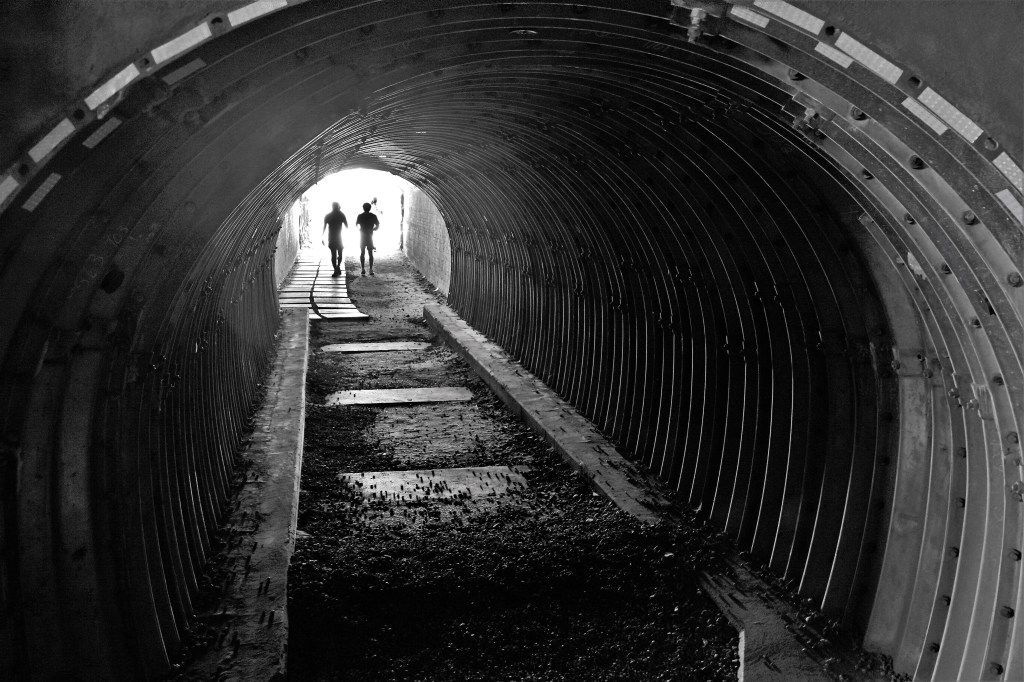
The Cliff walk is essentially a pedestrian hike, but can be challenging in places,

with rocky outcroppings…

and unlikely obstacles that require reasonable footwear other than flip flops.

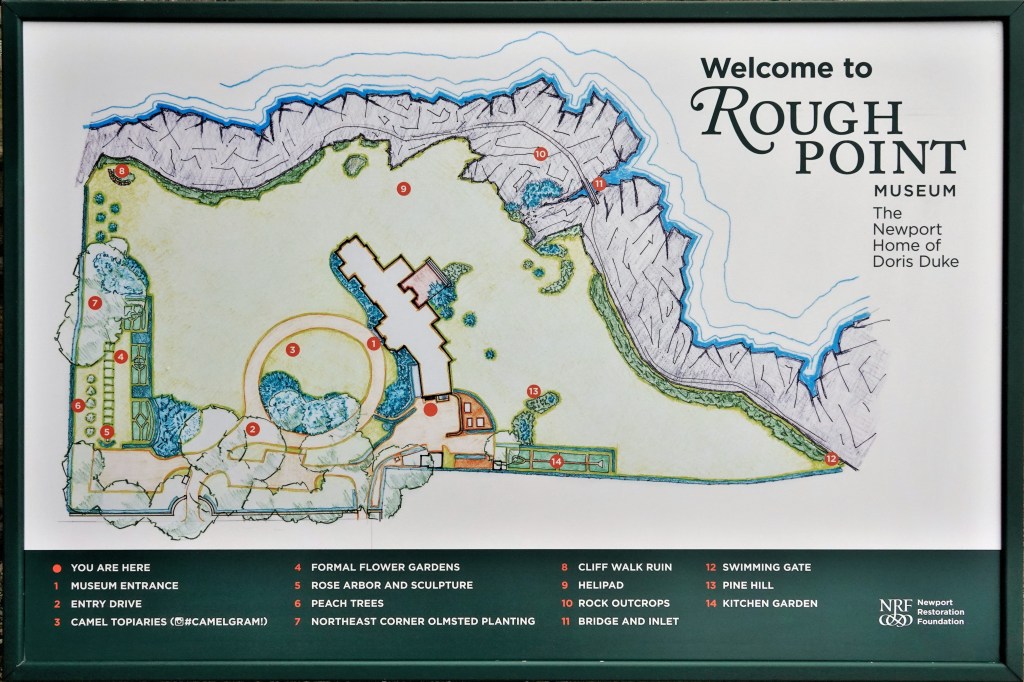
Of course, there are plenty of houses to ogle along 3.5 miles–some that have become museums, like Rough Point…

or repurposed as a Salve Regina University administration building, like Ochre Court…

or converted to condos, like The Waves…

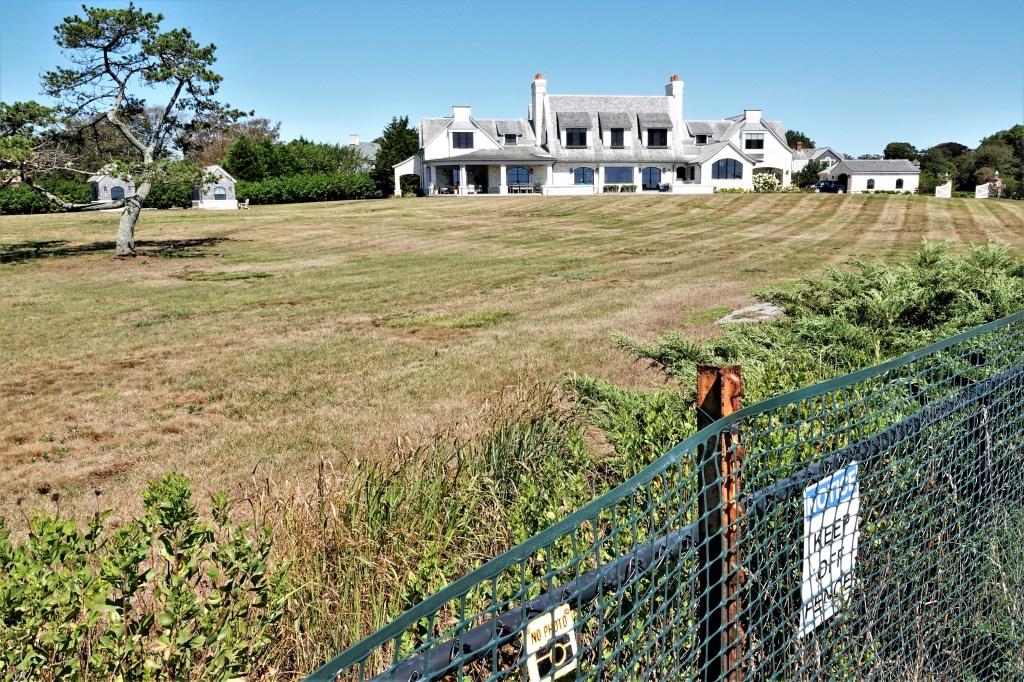
while newer home owners along the walk eschew the notoriety.

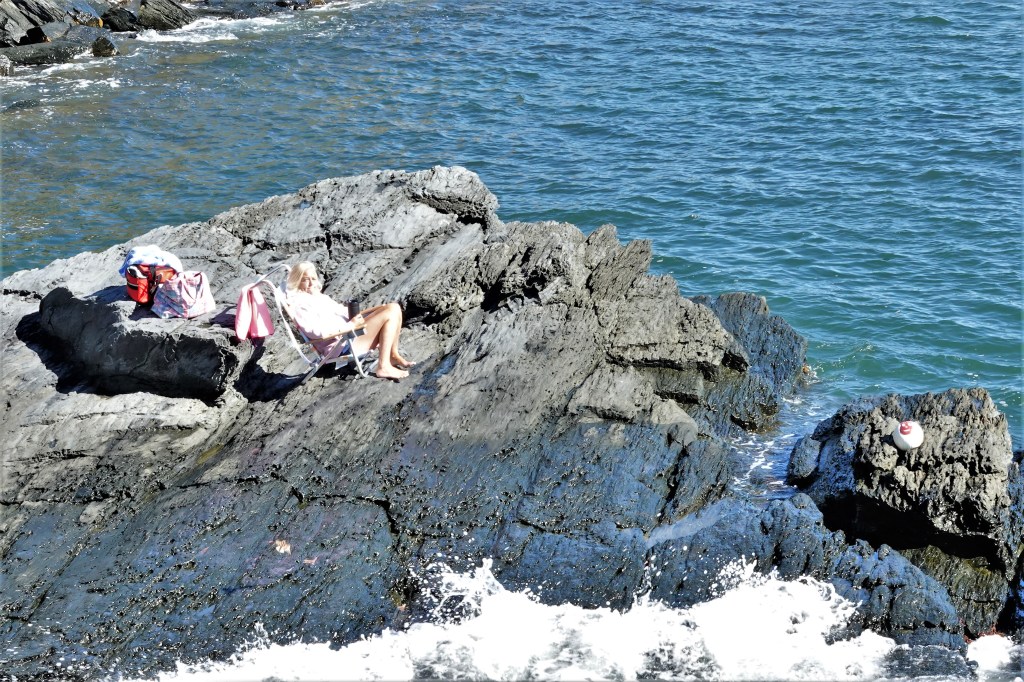
But the real entertainment comes from people met along the way–for instance, a sunbathing cliffhanger getting in touch with her inner mountain goat just beyond the 40 Steps marker.

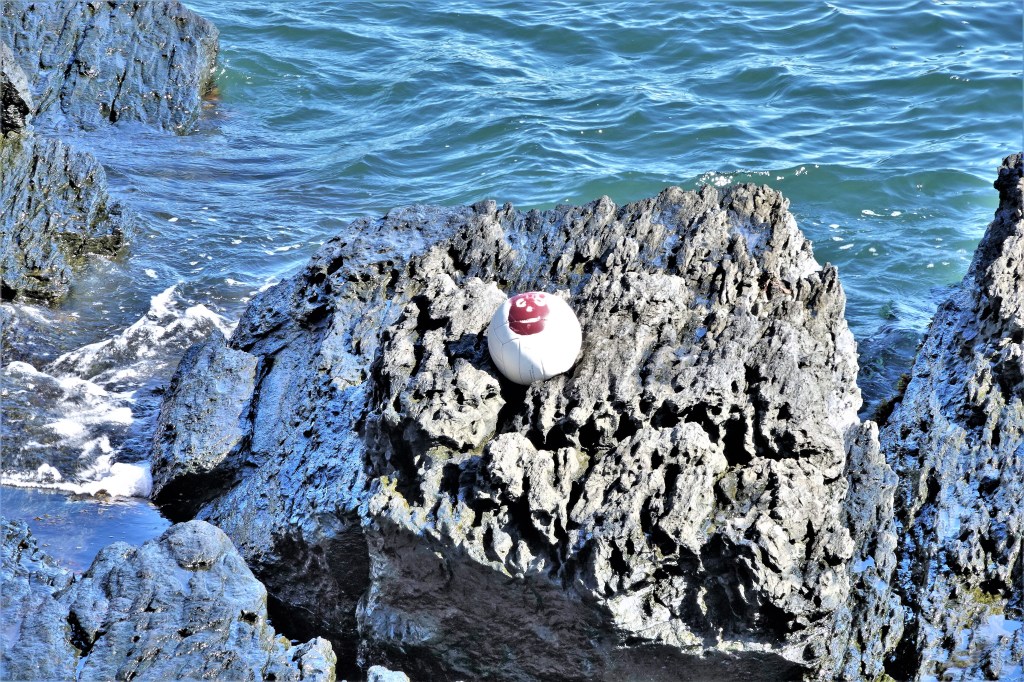
But she was not alone, as Wilson was seen lounging nearby.

Losing My Religion

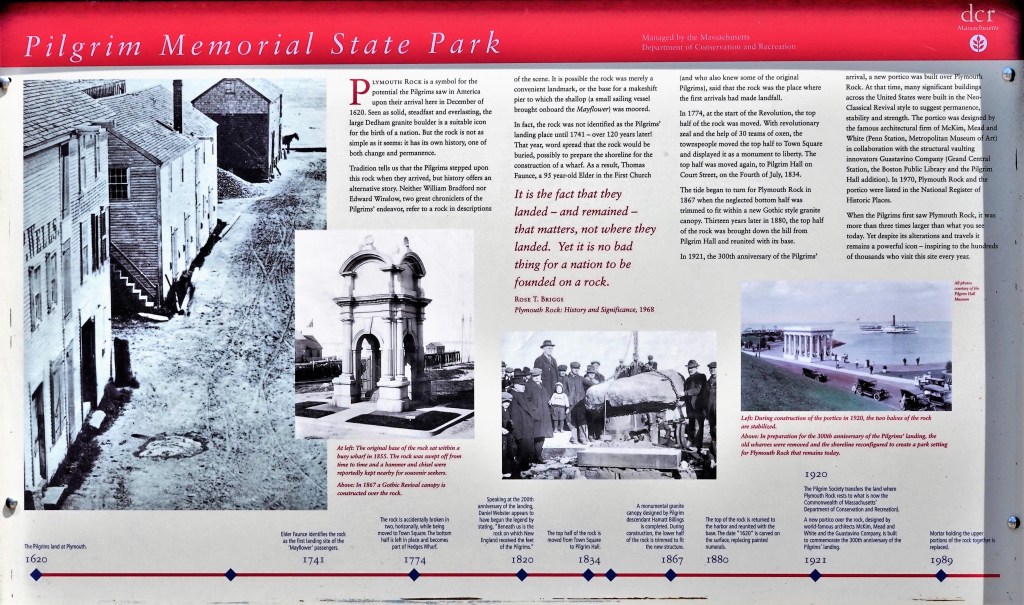
It’s easy to forget, considering today’s smoldering political climate, that America was the best last hope for Separatists fleeing England in 1620. They were so determined to stand up for their Christian beliefs that they were willing to risk a perilous voyage and an uncertain future in the New World.

102 Puritans boarded the Mayflower in Plymouth, Devon…

and 102 landed in “Paradise” (one passenger had died and a baby was born at sea during the harsh 65-day passage across the Atlantic) on November 11, 1620,

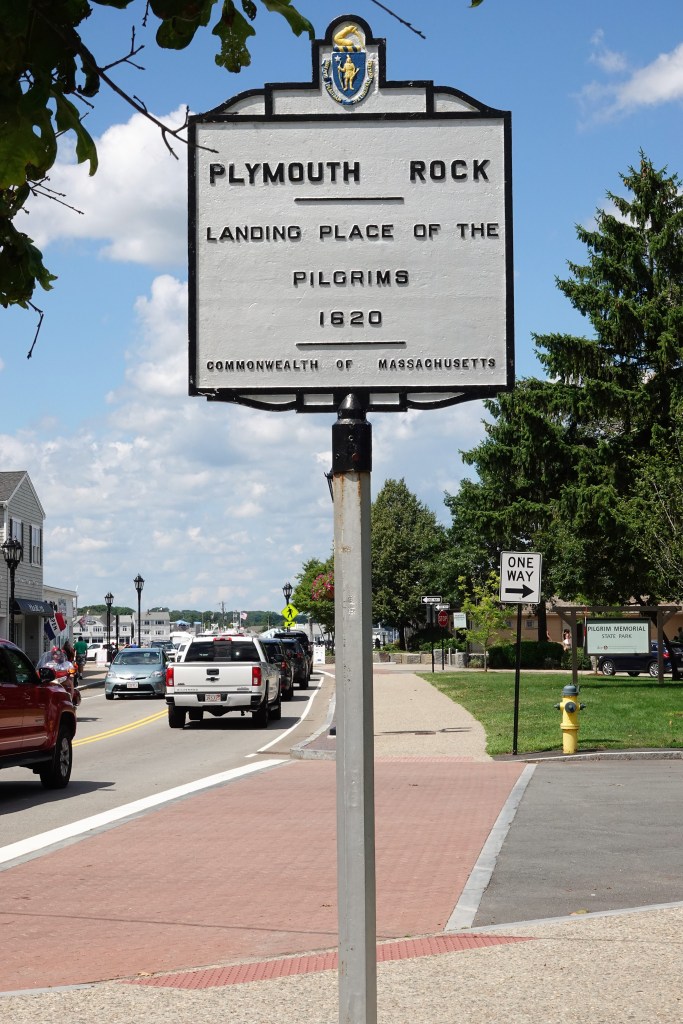
commemorated by “a great rock”…

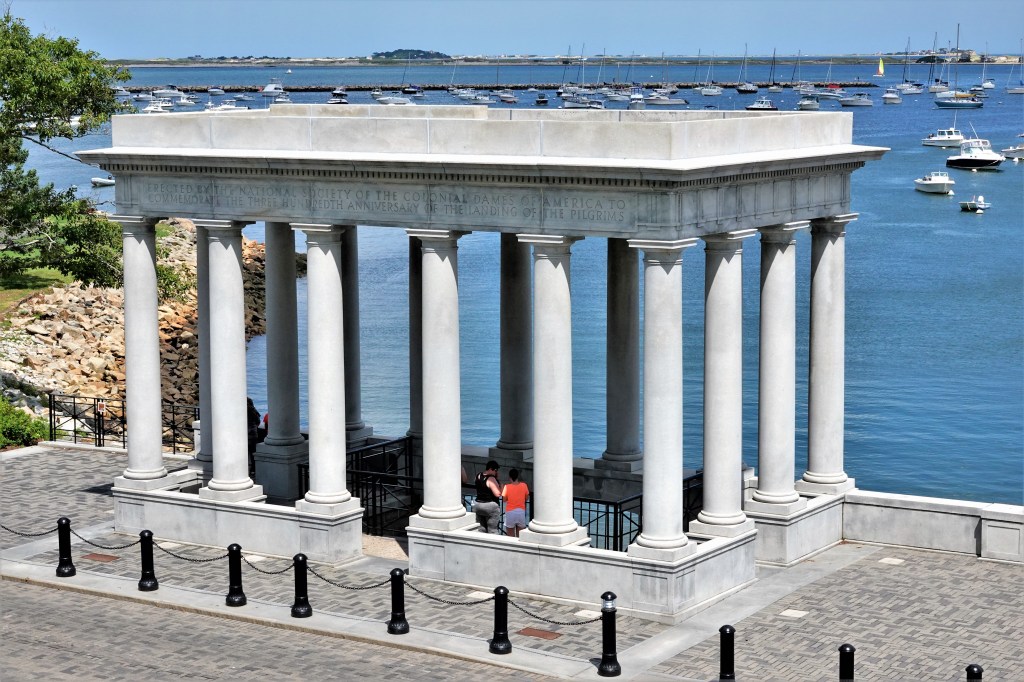
that’s protected by a granite canopy overlooking Plymouth Harbor,

at what is now Pilgrim Memorial State Park.

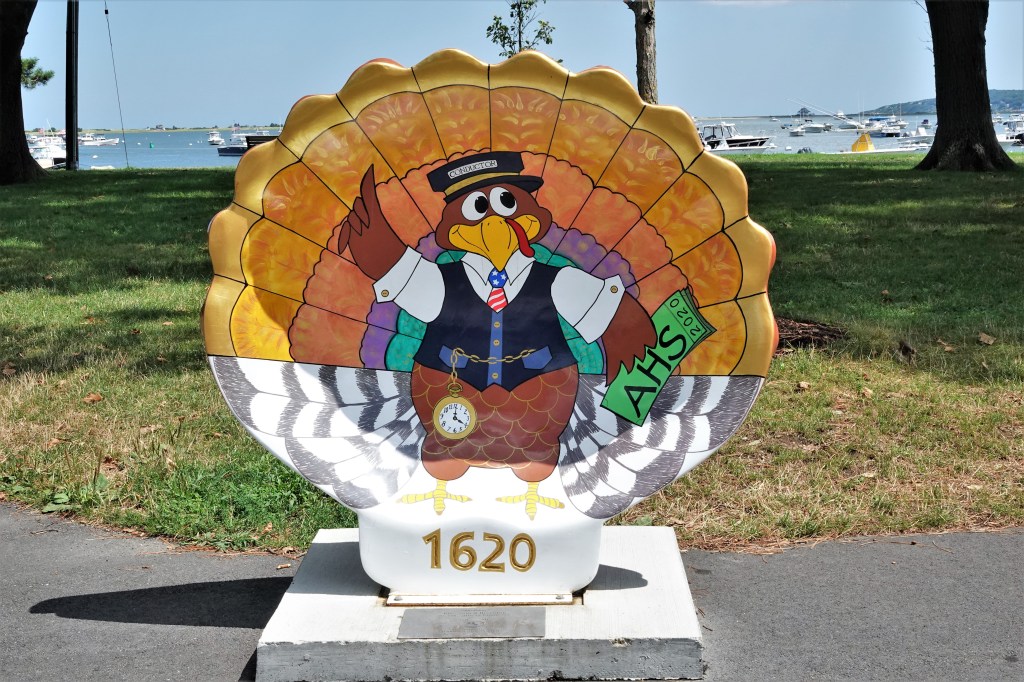
Thanks to Massasoit, leader of the Wampanoag tribe who forged an alliance with the Pilgrims,

the colonists survived famine and disease aboard the Mayflower–losing half their numbers–before they eventually settled ashore to form the Massachusetts Bay Colony the following year, and celebrate their first Thanksgiving with the Wampanoags.

Roger Williams, a long-time friend of Massasoit was less fortunate in the coming years. He was exiled from the Massachusetts Bay Colony in 1635 for sedition and heresy after questioning the legitimacy of the Kings’s charter which provided no payment for land confiscated from the Wampanoags.

Smith went on to settle in Narragansett Bay, and established Providence, Rhode Island, which became a safe haven for all the like-minded dissenters who believed in true religious freedom, and separation between church and state.

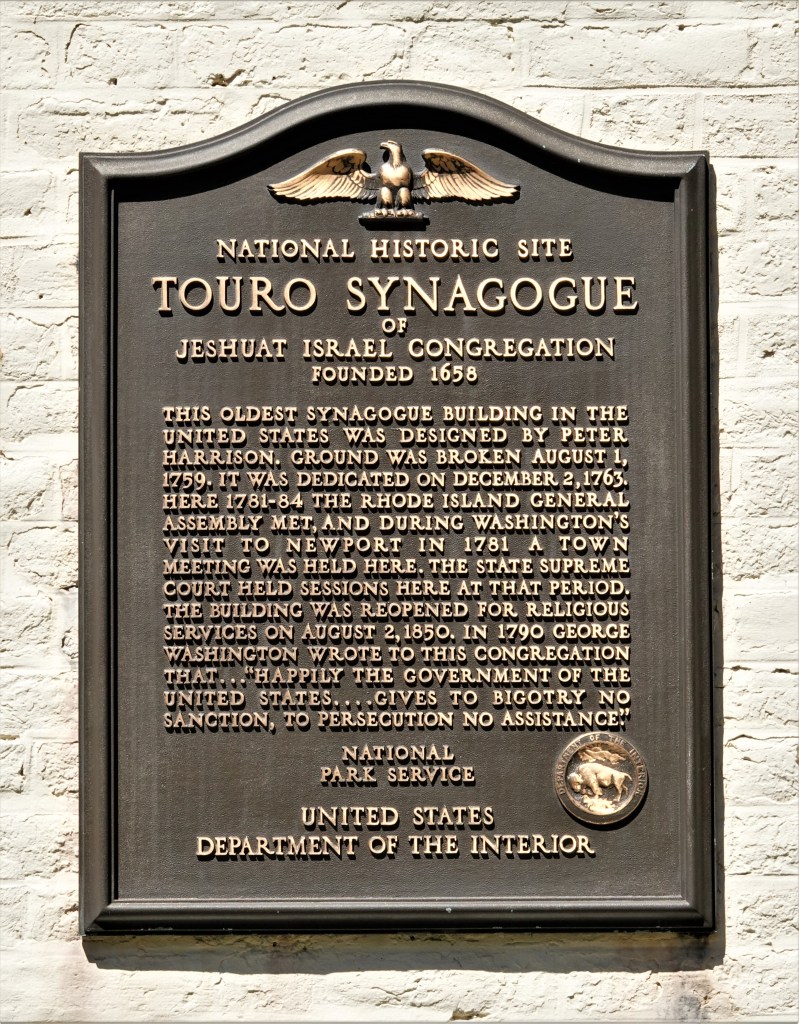
This principle was later put to the test by Jewish settlers who migrated to Newport, RI from Portugal via Barbados as early as c. 1658 to form Jeshuat Israel, the second oldest congregation in America (Congregation Shearith Israel in New Amsterdam was first in 1654).

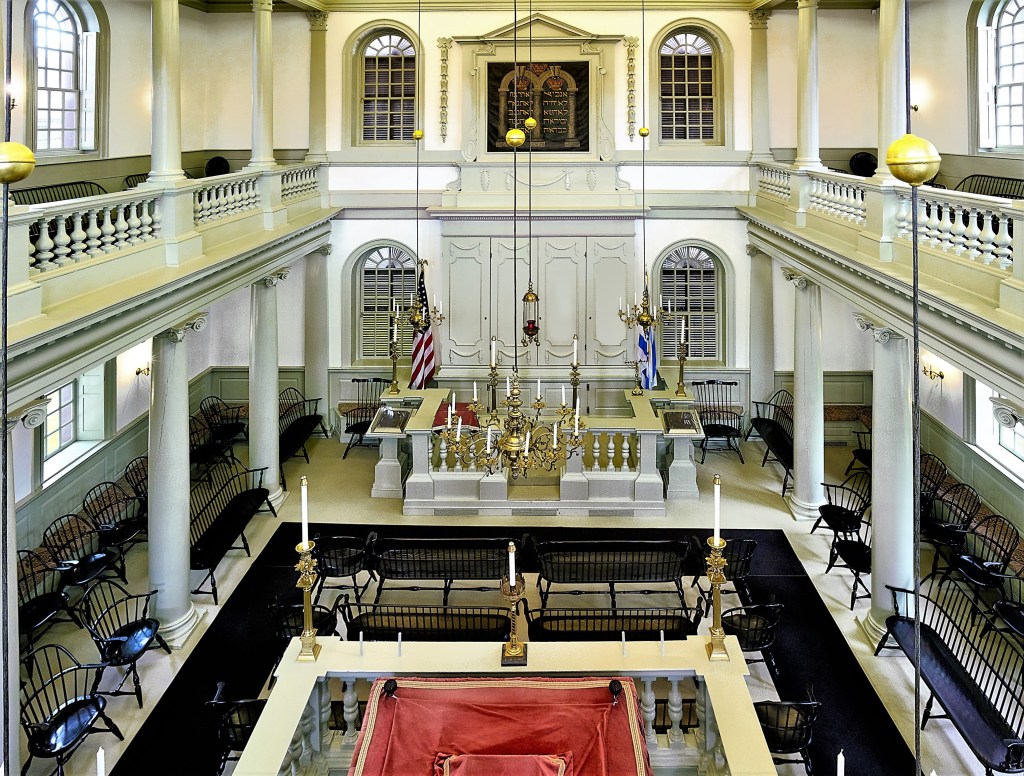
By 1758, consideration was given to design and build New England’s first temple. Peter Harrison, a sea captain and amateur architect drafted plans for what would become Touro Synagogue, dedicated in time for Hanukkah in 1763.

The interior design was drawn from references from Isaac Touro, the congregation’s spiritual leader and others,

whose religious upbringing called for separation of men and women between floors.

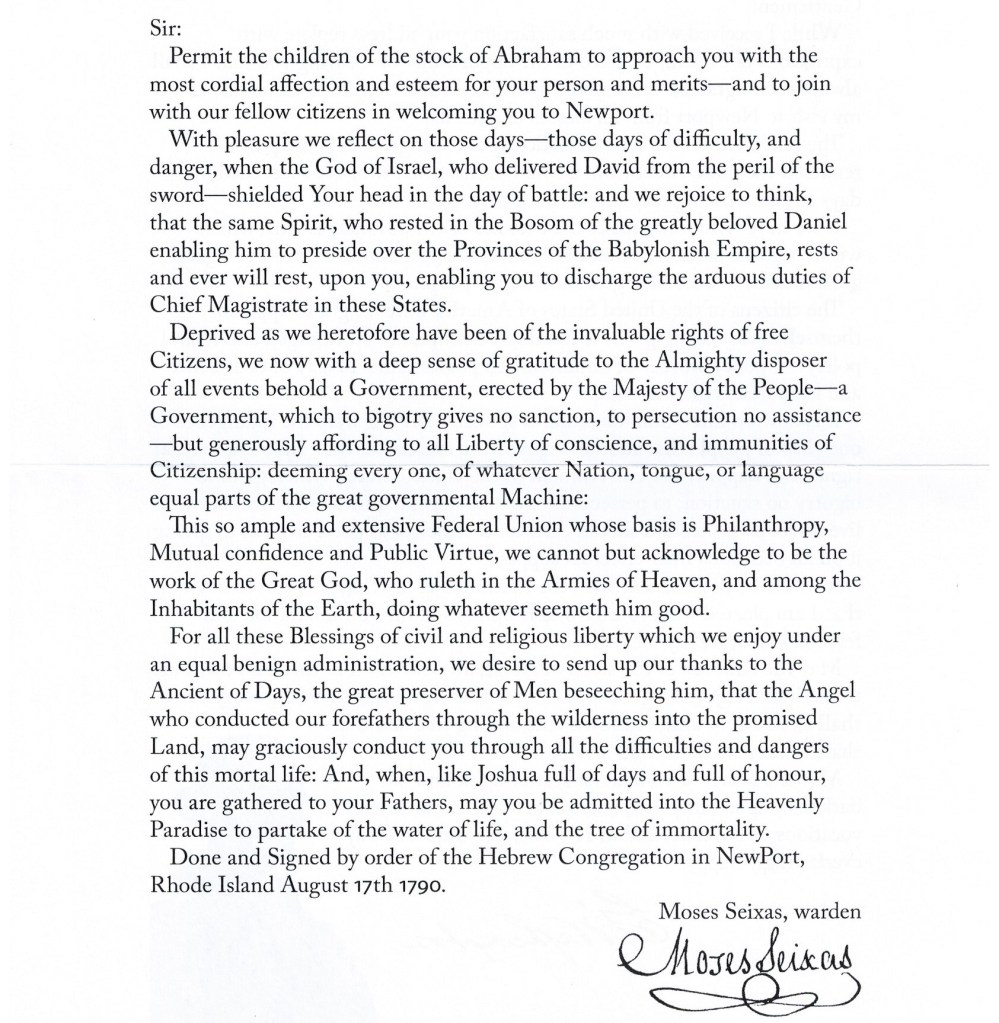
Religious freedom was tested once again, when Moses Mendes Seixas, then president of Congregation Yeshuat Israel greeted George Washington in August 1790 with a letter…

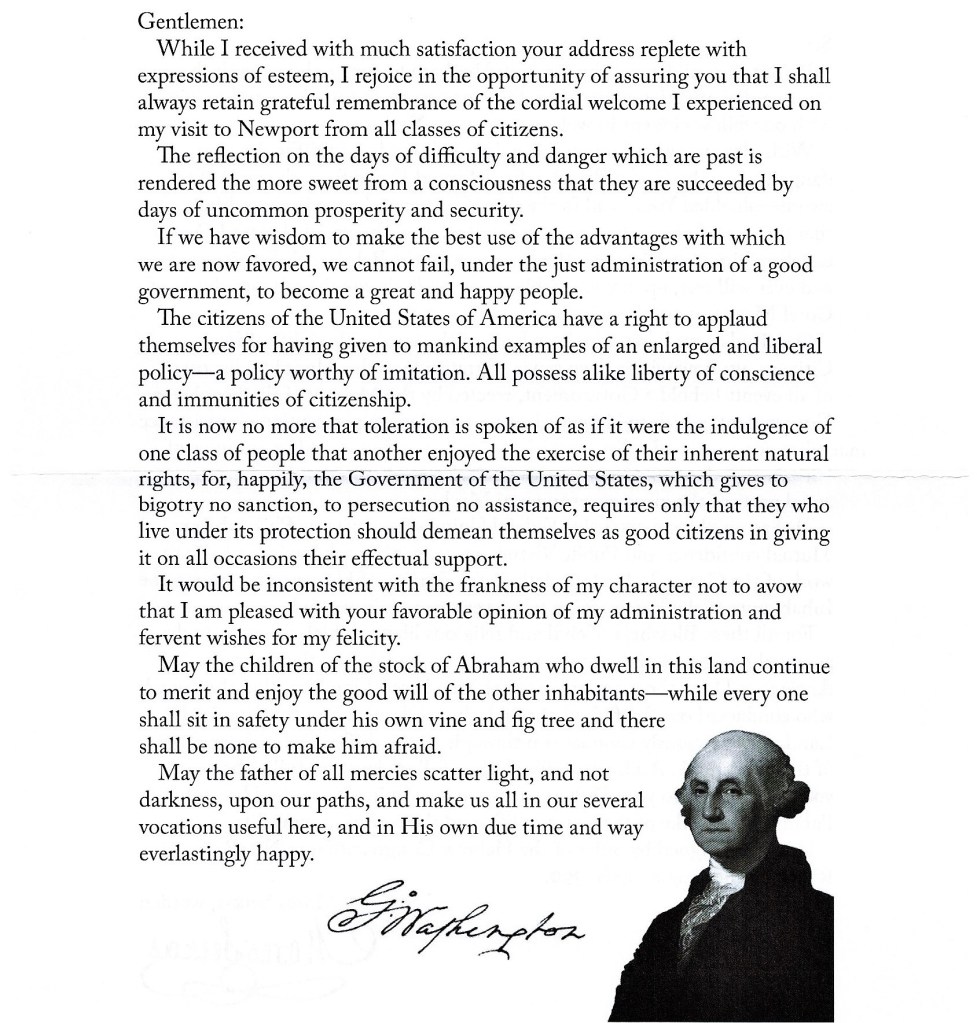
President Washington responded in kind…

…thus reasserting to the congregants that they enjoyed full liberty of conscience, regardless of their religious belief.

As a young Nation, the United States was a guiding light for the oppressed around the world. Folks from all walks of life risked everything to make pilgrimage to these shores in search of religious freedom. It was an idea that’s survived two World Wars, yet today stands perilously close to extinction, but only if we allow it to happen.

Letchworth State Park

Without question, the feature attraction of Letchworth State Park…

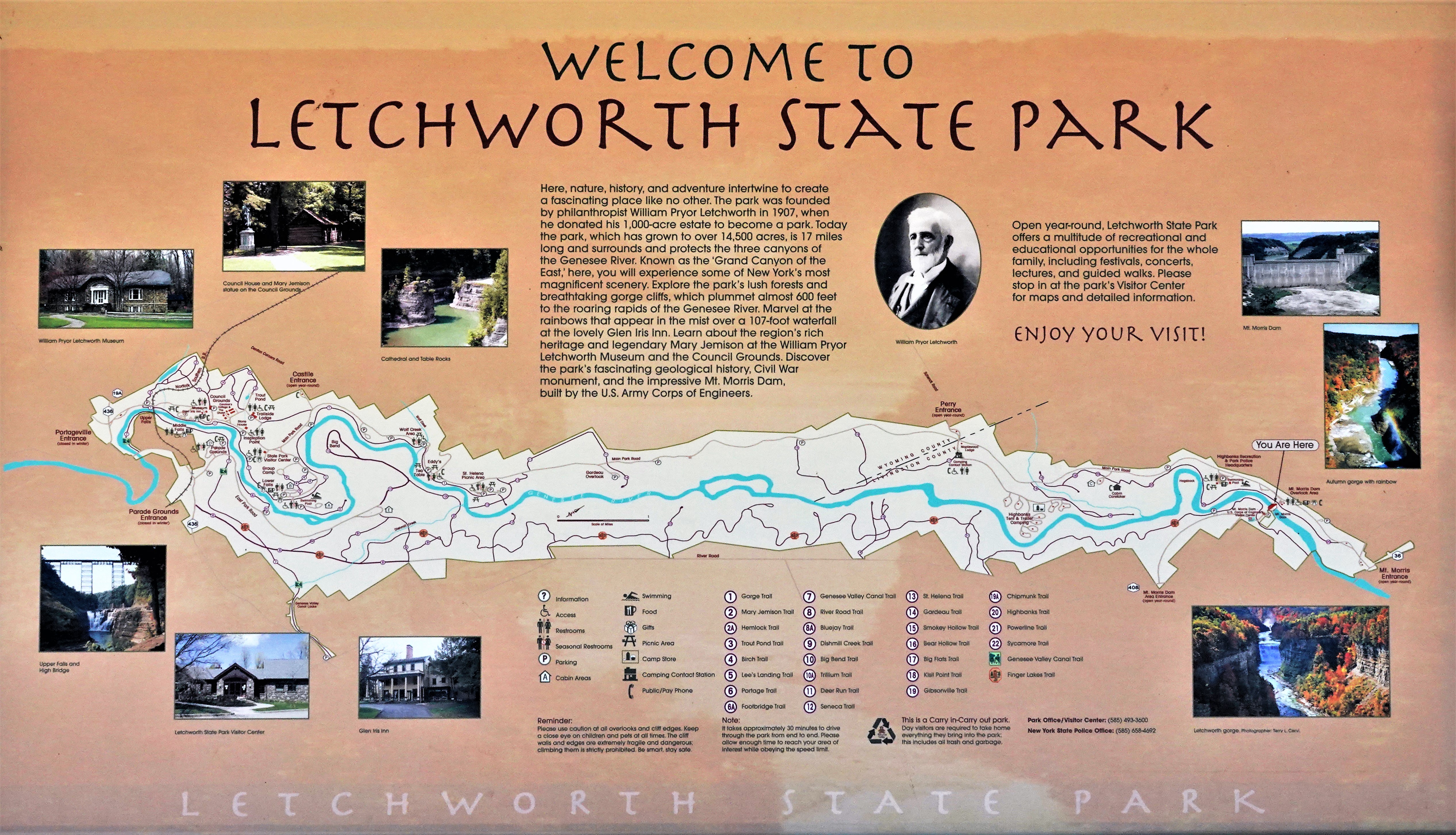
LSP signage

has to be the trinity of waterfalls in the southern corridor of America’s favorite State Park (USA TODAY, 2015 Reader’s Choice), that stretches from the newly-replaced railroad trestle crossing the Portageville Entrance…

Upper falls and bridge

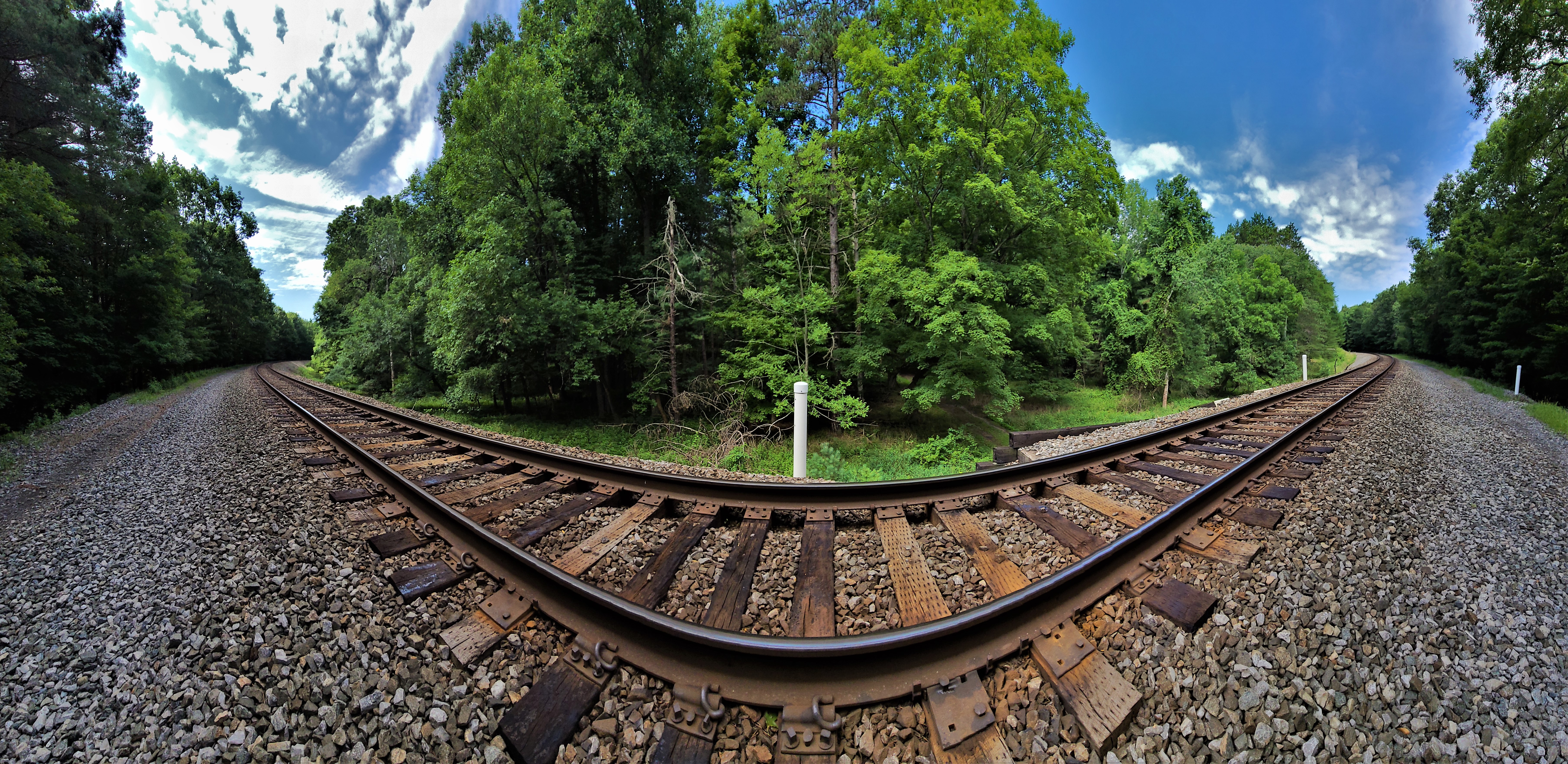
RR smile

RR span girders

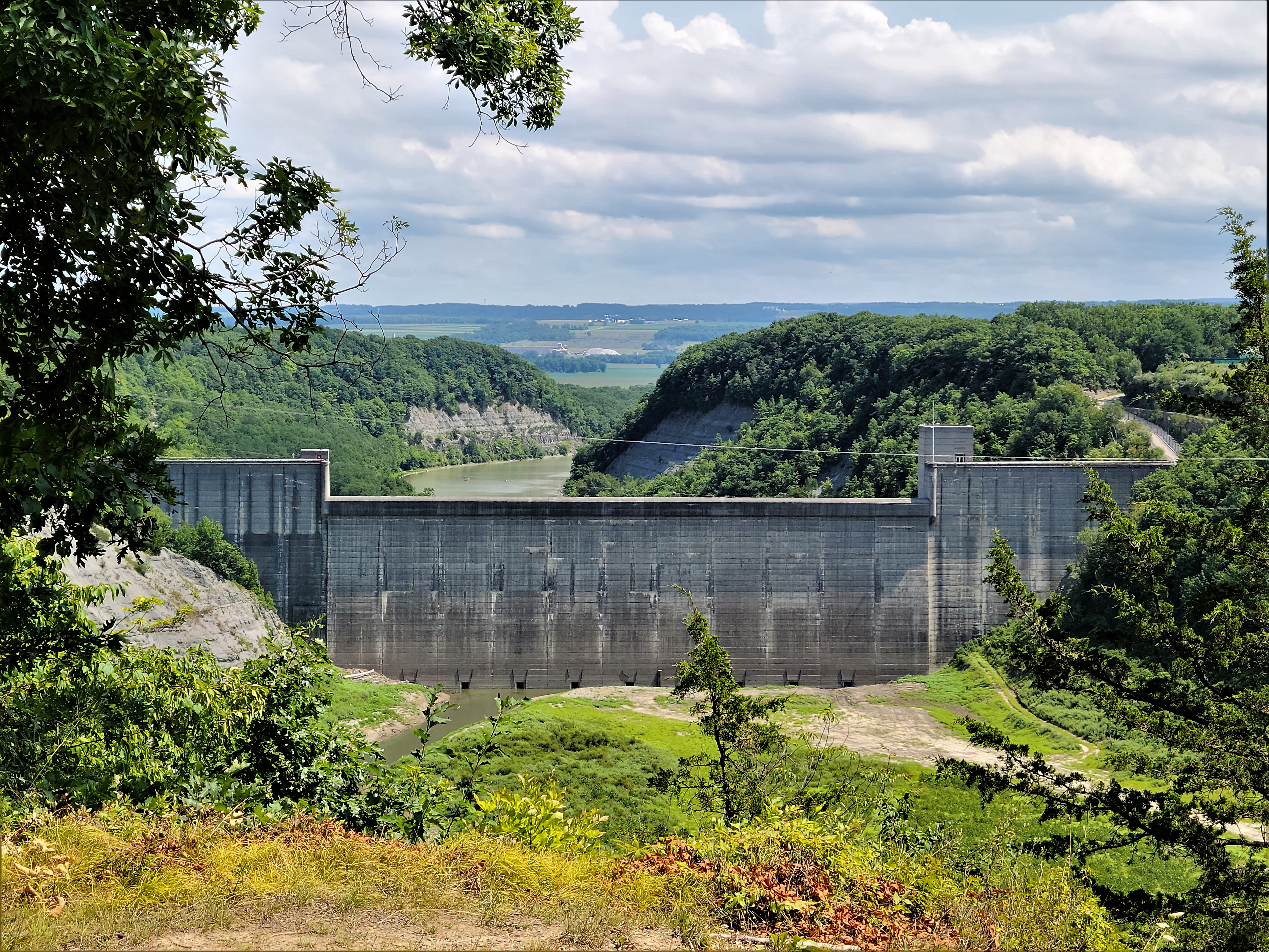
to the Mt. Morris Dam, 17 miles to the north.

Morris Dam

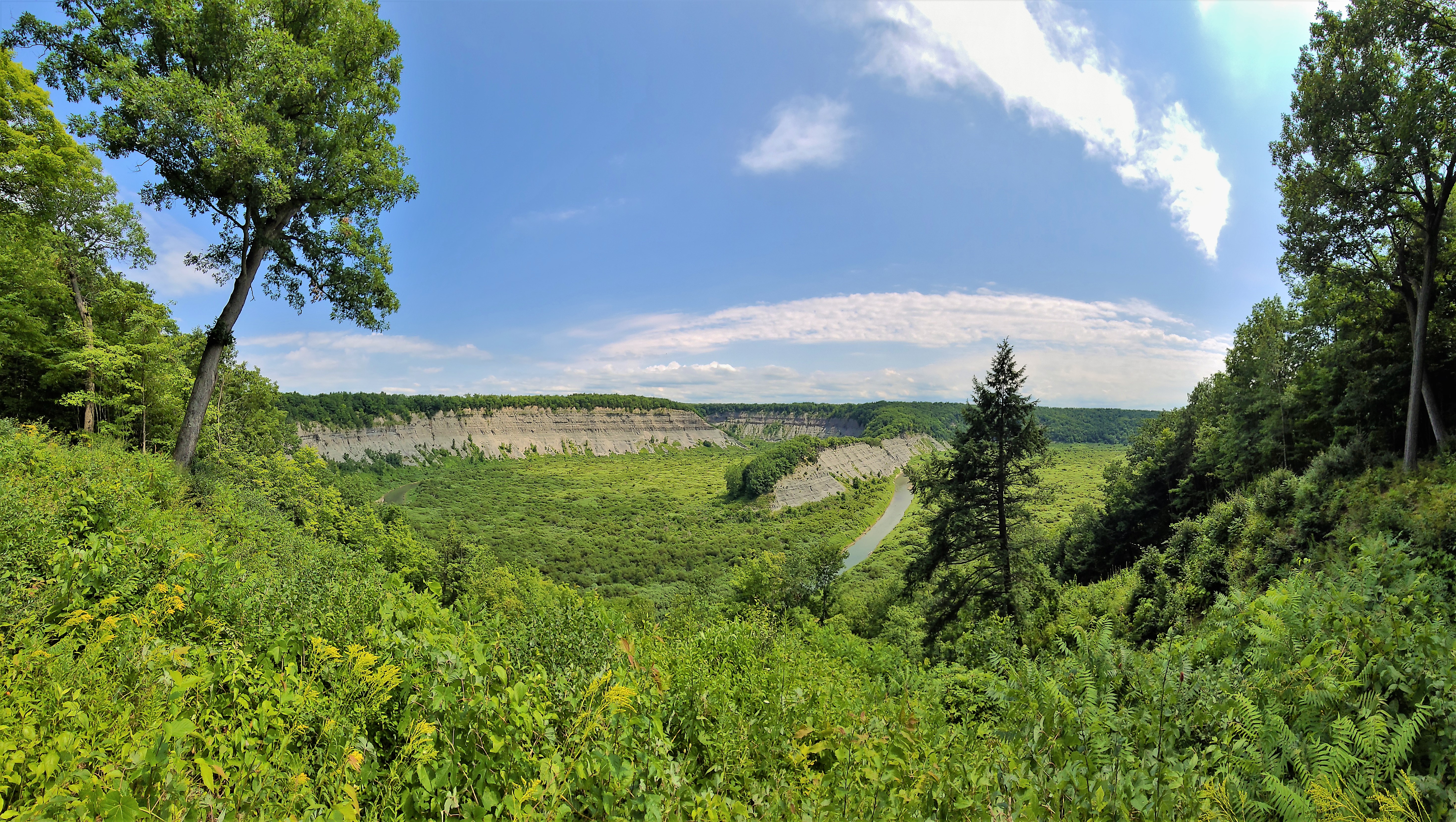
And it’s the mighty Genesee River that flows between both boundaries–

Hogsback Overlook pano


continuing to carve out a bedrock gorge of mostly shale,

Genesee S curve

with exposed cliffs that rise 600 feet into the air,

Hogsback Overlook

earning Letchworth the distinction of being known as the “Grand Canyon of the East.” 

keyhole

But it’s the waterfalls that most visitors come to see…

curtain falls (3)

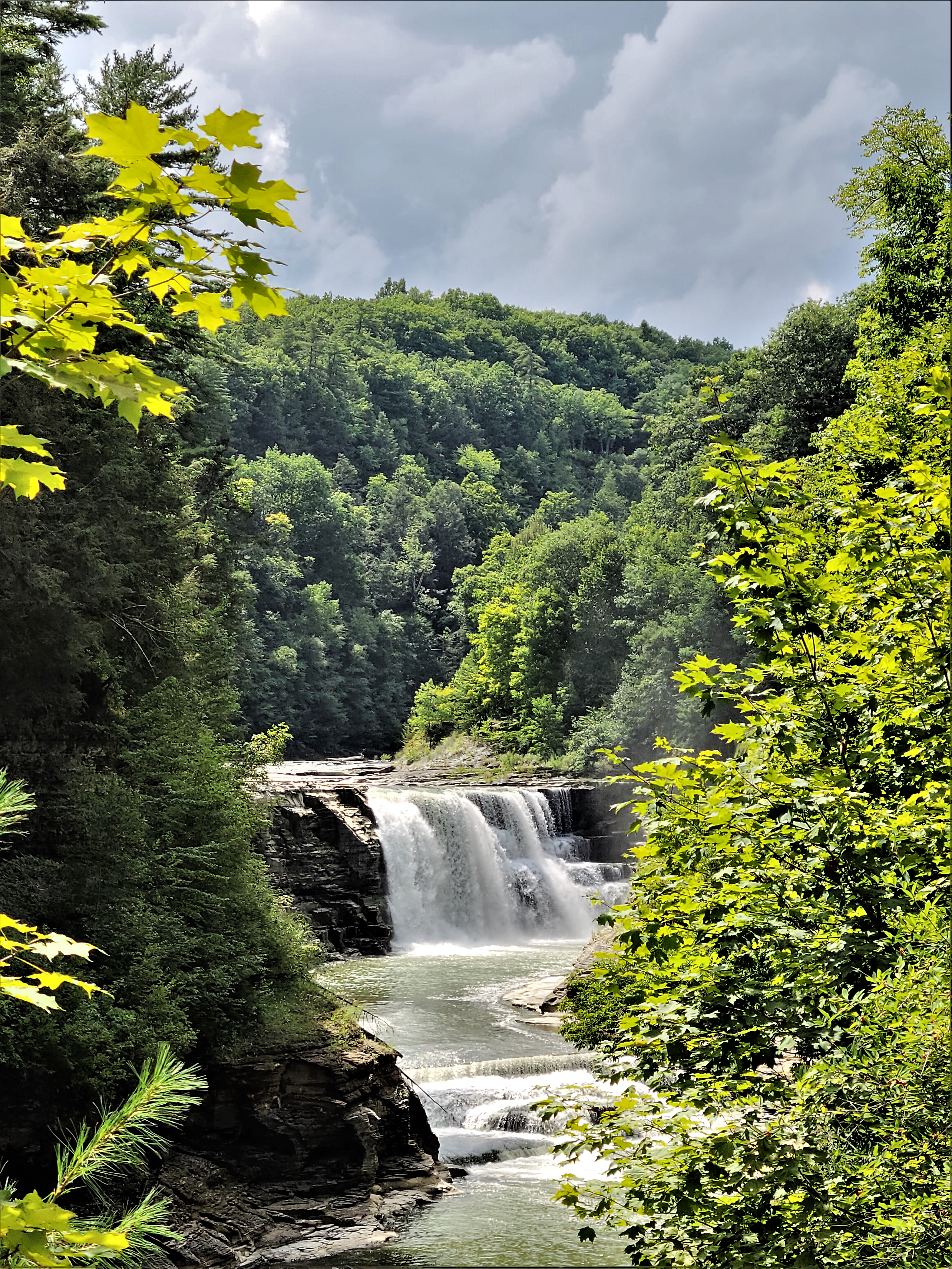
Well almost, because there are as many as 50 smaller waterfalls throughout the park that flow into the Genesee. But none are as impressive as Middle Falls, which cascades over a 107 ft drop.

middle falls day

As the name suggests, Middle Falls falls directly in the middle,

middle and upper falls

between Upper Falls…

pool of rocks

and Lower Falls.

20200807_144857 (2)

While the names of the waterfalls seem conventional, it was an unconventional man, William Pryer Letchworth, who had the foresight to buy the property surrounding Upper and Middle Falls to thwart the installation of a hydro-electric turbine, and save the falls from ruin.

trail

Letchworth also transformed an existing building atop the cliff overlooking Middle Falls into his estate, and named it Glen Iris.

Glen Iris B&B (2)

Today, it operates as a shabby-chic Bed and Breakfast, offering meals in the garden on the lawn, on the porch under the veranda, or in any one of several indoor dining rooms.

Leah and I sat outside, dining on spicy pizza and Parmesan-garlic chicken wings. We kept our eye on the New York sky, and we were eager for dusk to arrive.

At the appointed time–when daylight surrenders–the floodlights flashed on and burned onto the water spill.

Bar tab and entrees came to $60 bucks, but the view of the falls from the top of the cliff was priceless.

middle falls lit