Remembering the à la Mode

April 20 represented a milestone in my life. It was officially the first day of my retirement. It also coincided with a counter-culture connection to cannabis consumption (known in hippie parlance as “420”), and it was the carnival kick-off for Fiesta San Antonio. Of course, it wouldn’t have been a celebration without participation in both events, all topped off by fireworks.

I have worked at many jobs spanning many different careers and found all of them gratifying in one way or another. Each job seemed to prepare me for the next one, even though the steps in-between were uneven and varied, or complete leaps of faith. I suppose I attribute my jack-of-all-trades mentality to a restlessness that overcame me by travelling throughout Europe the summer after my sophomore year in college.

When I returned to school, I abruptly changed my major from political science to sociology and photography, hoping that an understanding of people and pictures would carry me to different places.

My last job/career as a special education teacher in New York City’s high schools for the past eleven years came close to realizing that dream, as I taught inner city teenagers about the world around them through words and images. But the time was right to put it all behind me, and resume my quest for some kind of redemption by reducing my footprint and refining my senses. It was time to travel again… although this time, in style.

At precisely 4:20 pm, the ceremonial lighting of a glazed metallic iguana pipe set the mood for what was to become an epic evening in downtown San Antonio, made easy via a VIA bus shelter conveniently located directly across the street from Traveler’s World RV Resort. (The bus runs every half-hour, and costs just $1.30 a piece to carry us to the party zone.)

Once there and navigating through the thick stew of resident revelers, it becomes apparent that three things matter most to fiesta folk: medals, eggs and hats. Sashes, vests and tallis-like scarves provide opportunities for collecting even more medals and pins on an already crowded chest. Bragging rights belong to the San Antonians who would collapse under the weight if wasn’t for the support of others to hold them up.

royalty.jpg
King Antonio and his Court

Equally as important are confetti-filled eggs (drained and decorated cascarones) available by the dozen for the sole purpose of smashing them over the heads of adoring neighbors, and showering them with good luck. Even the cops showed signs of confetti dandruff, making police assault okay for the day.

egg smash.jpg

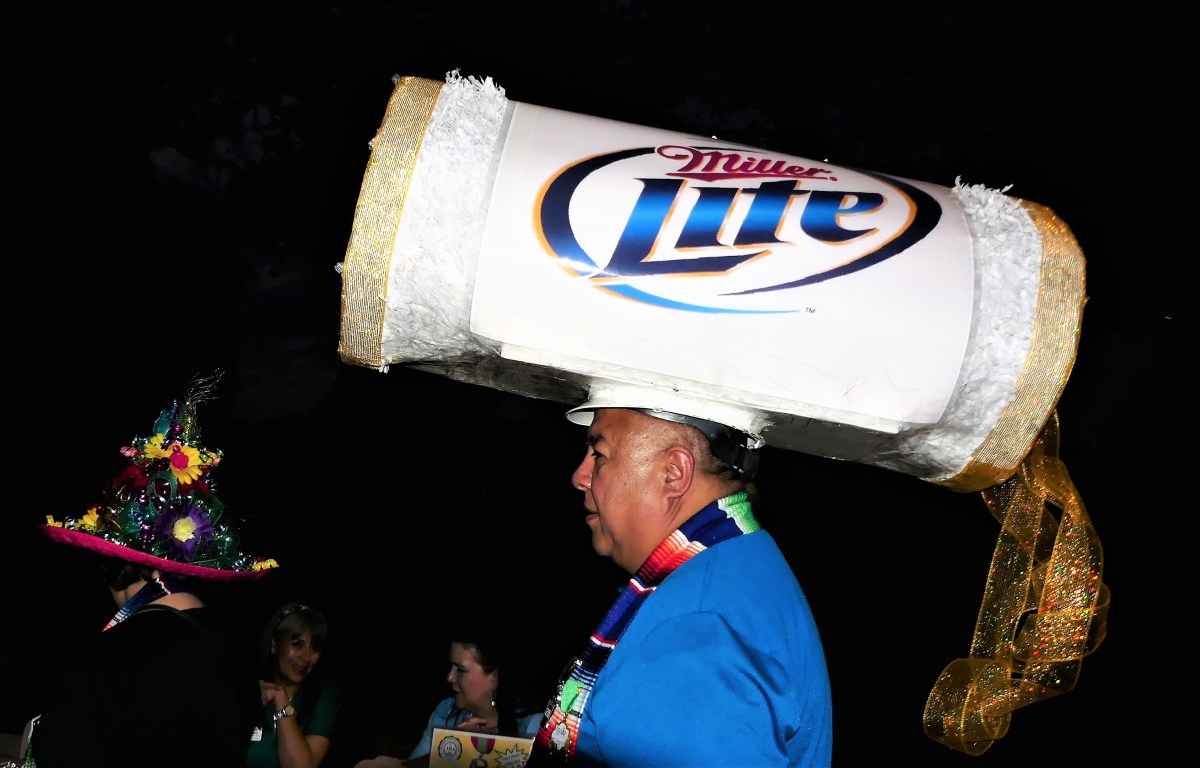
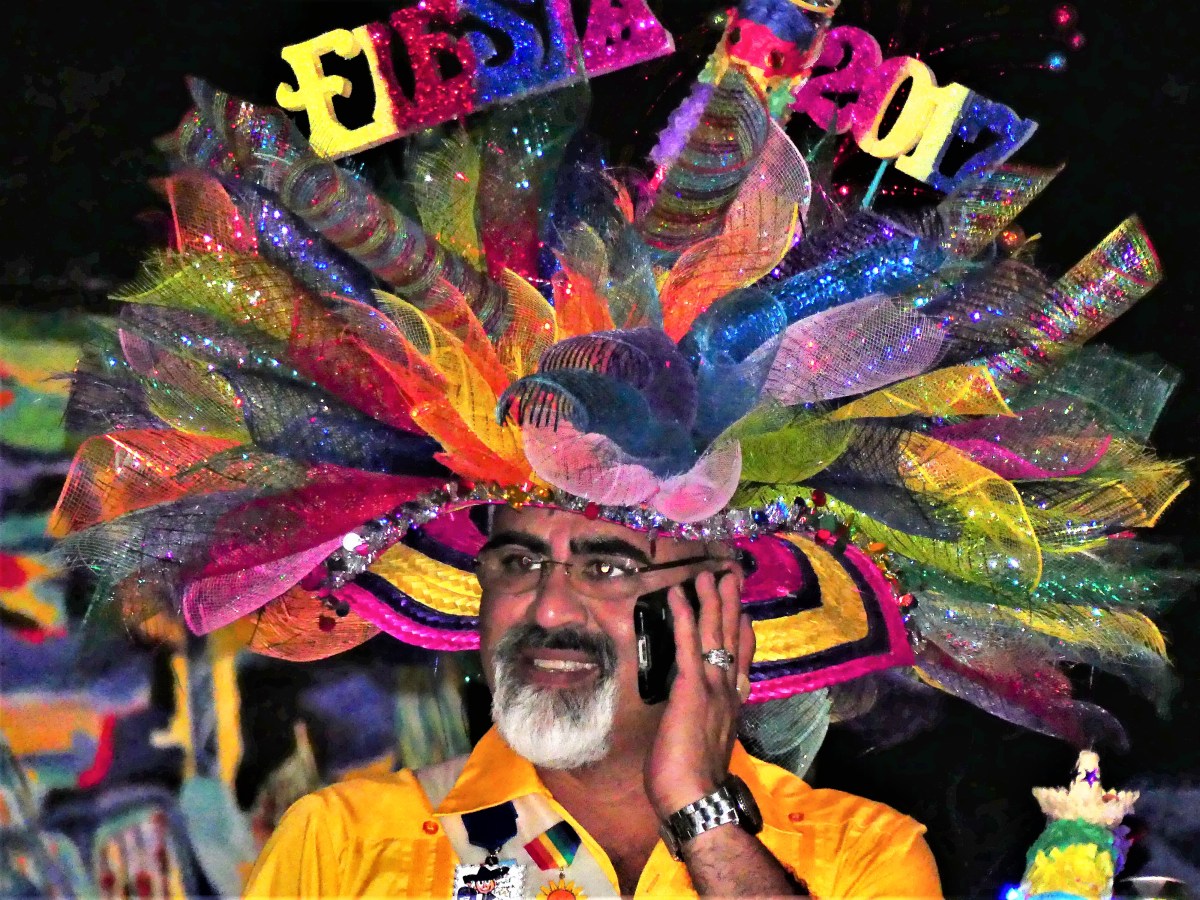
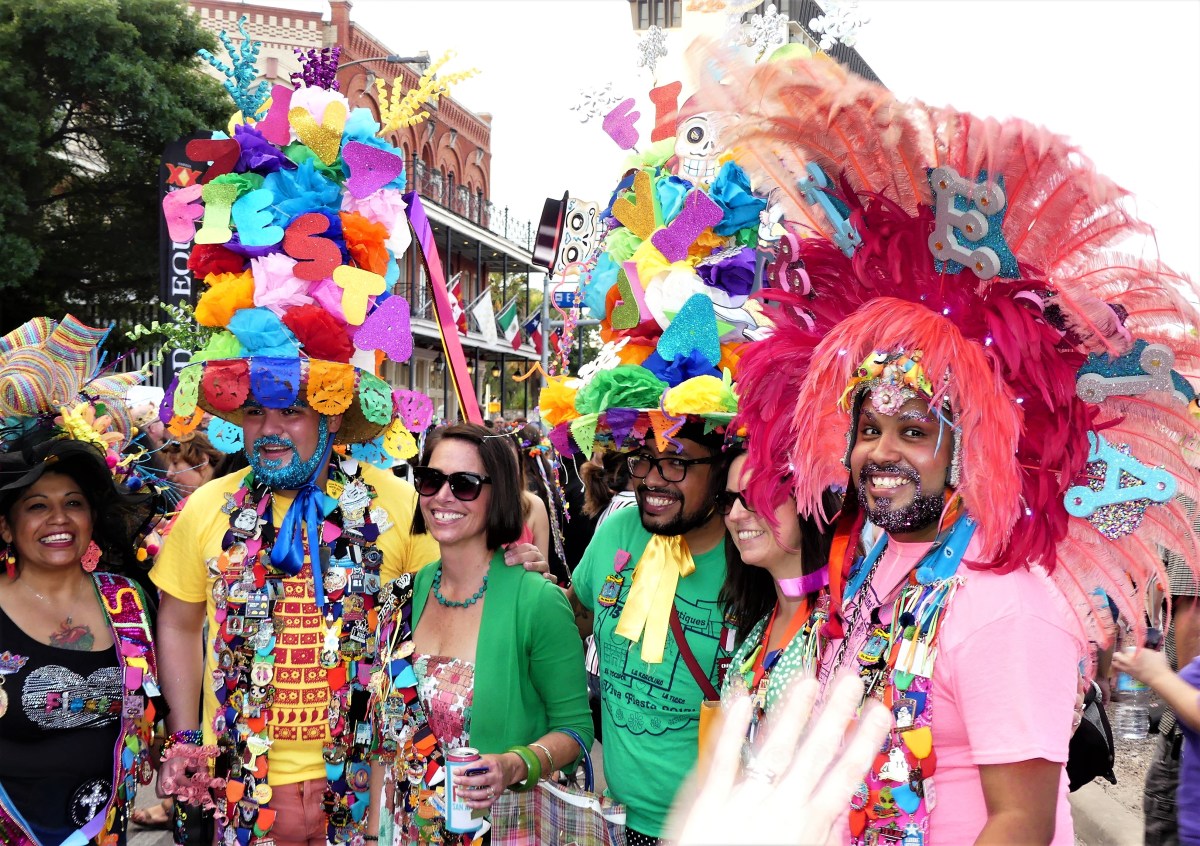
Lastly, thematic hats of all shapes and colors are easily the most conspicuous sign of extroverted behavior at the Fiesta with a special nod to “size matters”. This is a post-Easter parade gone sideways, where the most ridiculous rule. Carmen Miranda awards for the day go to the following:
3 some hat.jpg

butterfly hat.jpg

flower hat.jpg

potato head hat.jpg

spurs hat.jpg

beer hat.jpg

phone man .jpg

Food is also an important part of any fair. Vendors with tents and trucks tempted the hungry with long lines for tacos, tamales and turkey legs.
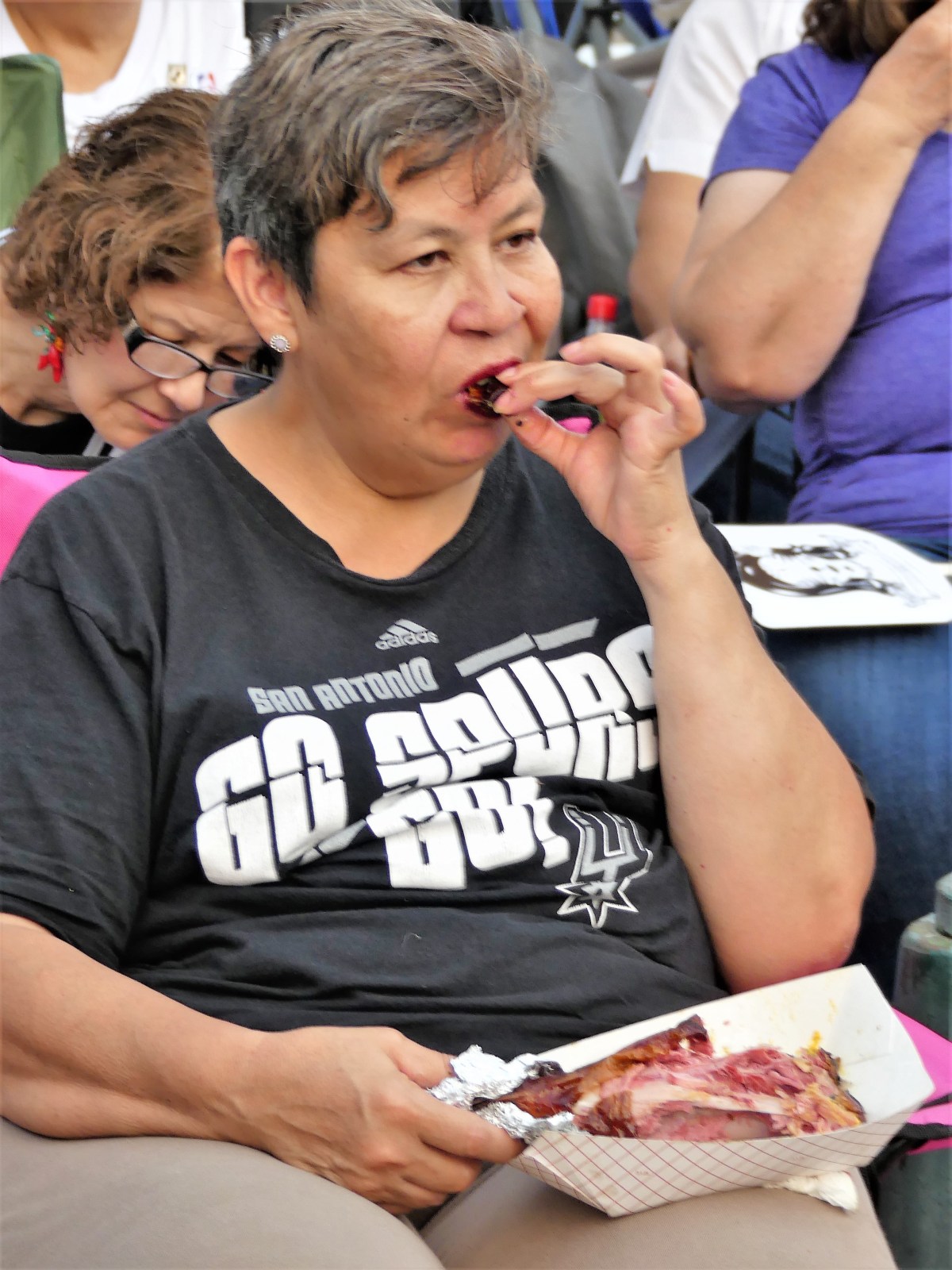
turkey lady.jpg

taco man.jpg

Yet somehow, Leah and I managed to circumvent the lines by inadvertently crashing the Taste of Texas, a VIP event for those willing to shell out $100 per ticket for tasty tapas.
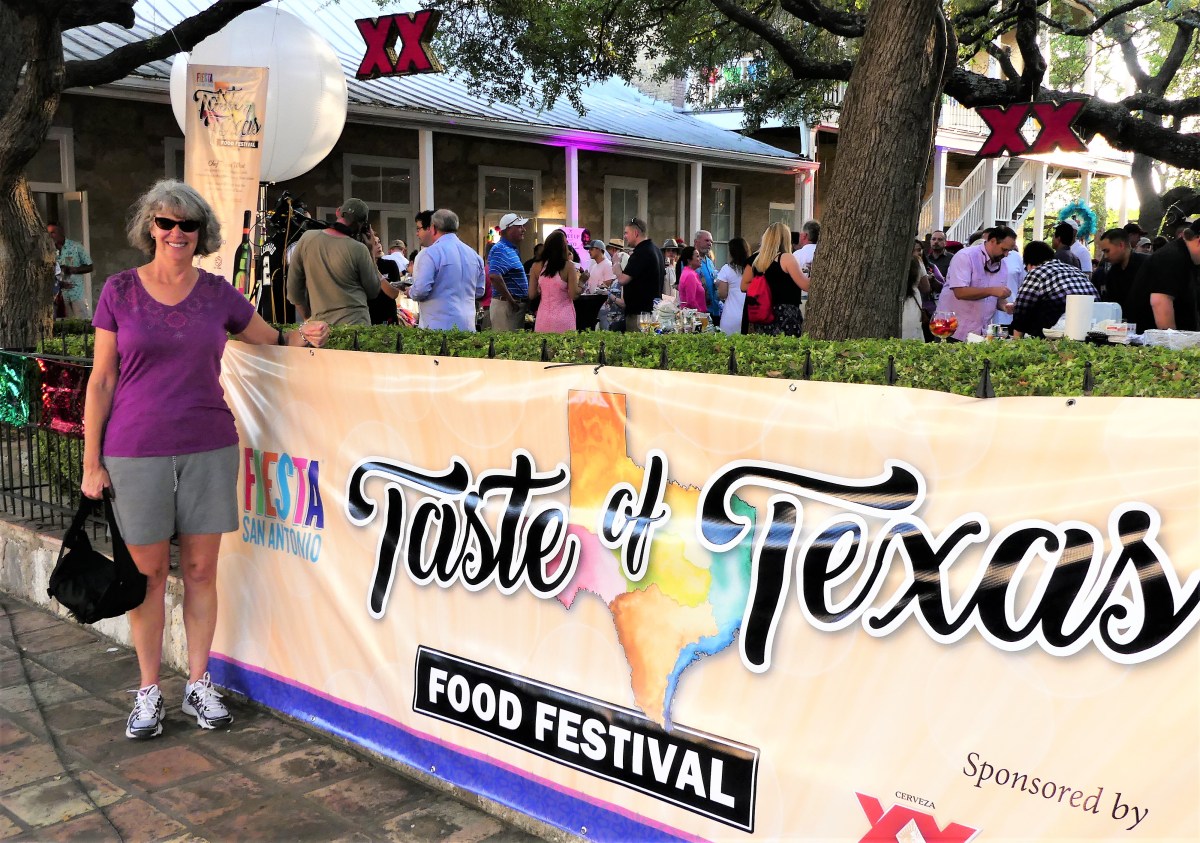
taste of texas.jpg

We noticed a sophisticated crowd of people in a courtyard behind a hedge who were enjoying themselves, and thought to check it out, unaware–until we crossed over an ivy walkway–that wristband entry was required. It was easy pretending that we belonged with our hands in our pockets.
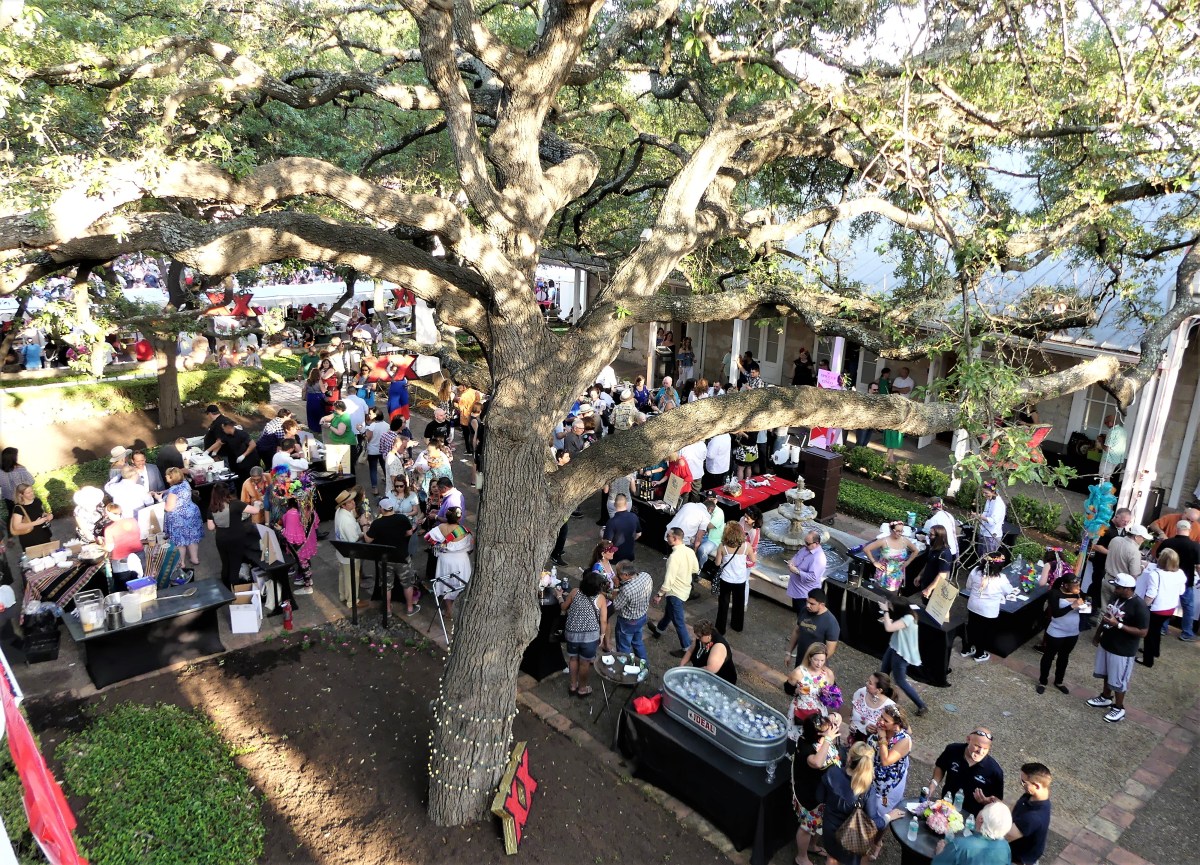
T of T ariel.jpg

We even got the chance to mingle with Fiesta royalty.

king.jpg

The evening ended with a fireworks display in the presence of the Tower of Americas, San Antonio’s tallest lookout, which dates back to the 1968 World’s Fair. It was definitely the icing on the cake, and the cherry on the sundae.
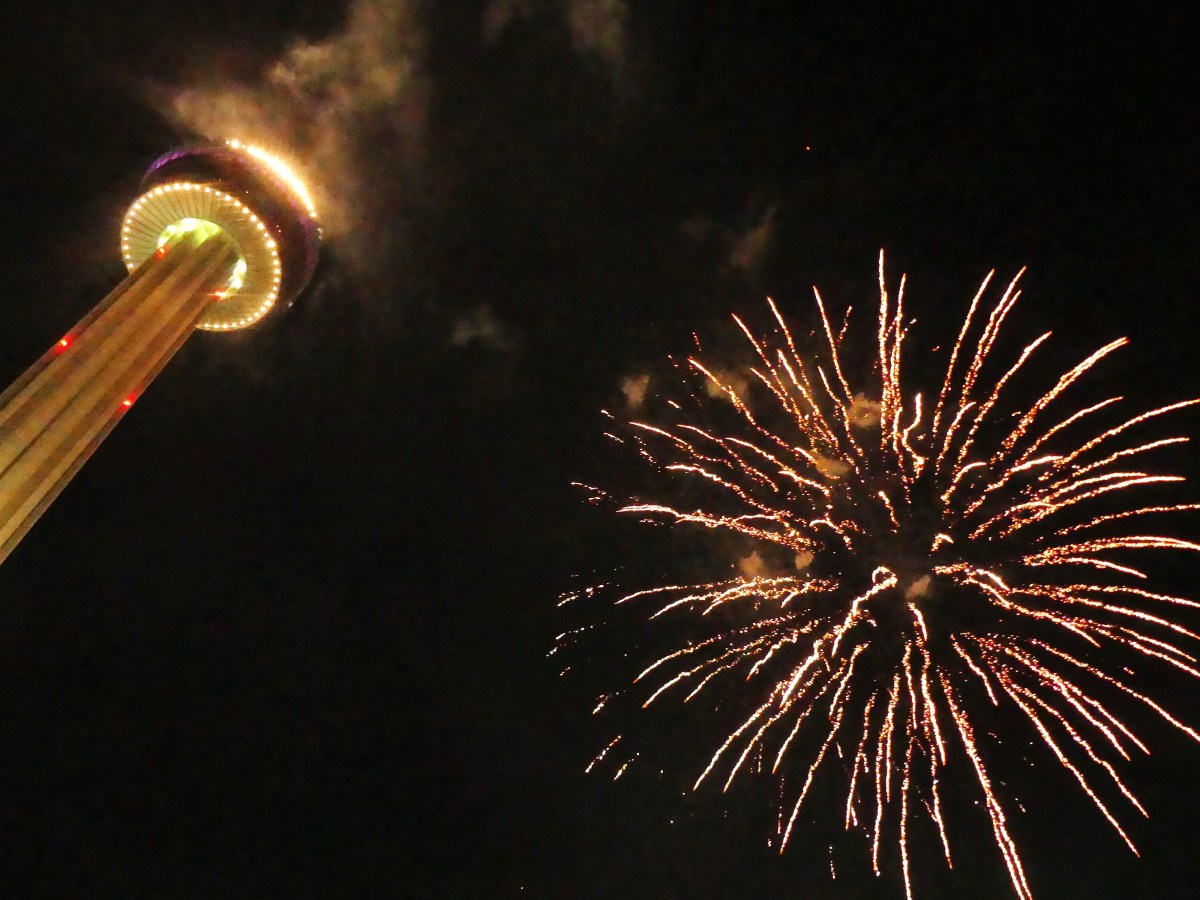
FW 1.jpg

FW2.jpg

FW3.jpg

It was Alamo à la mode!

Lady Bird! Lady Bird! Fly Away Home

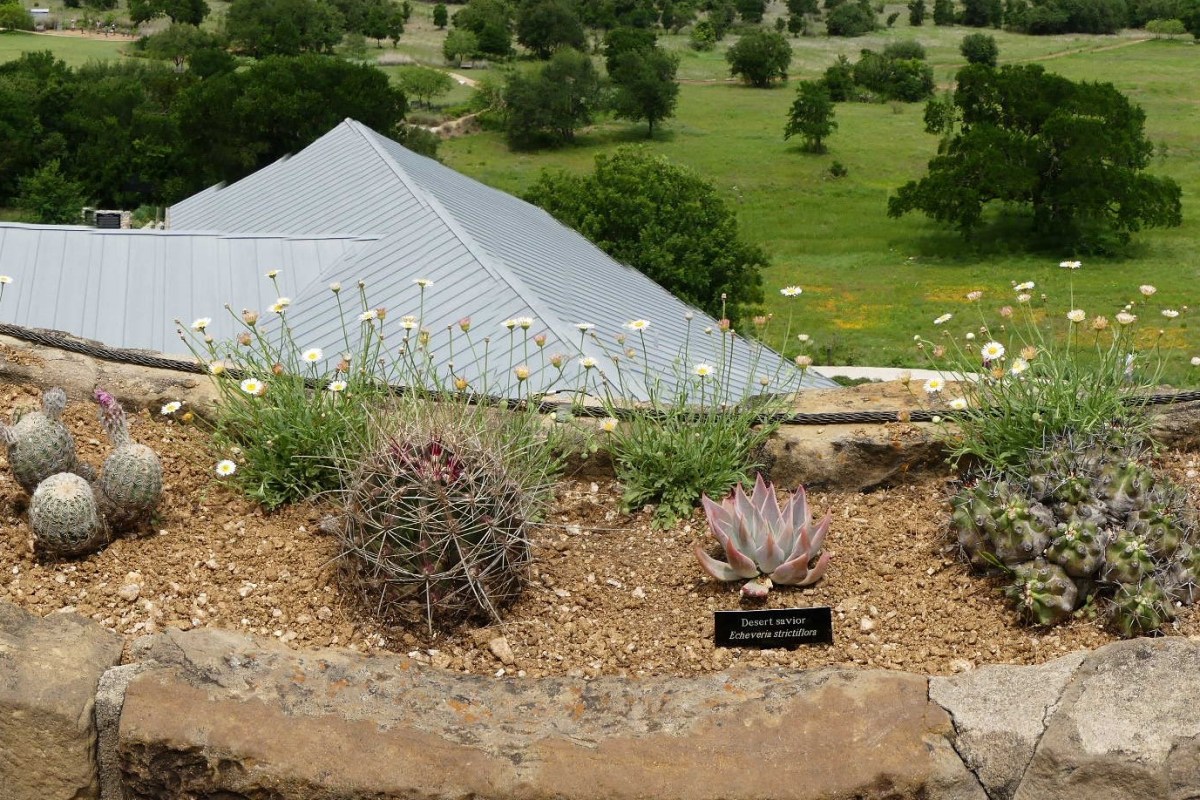
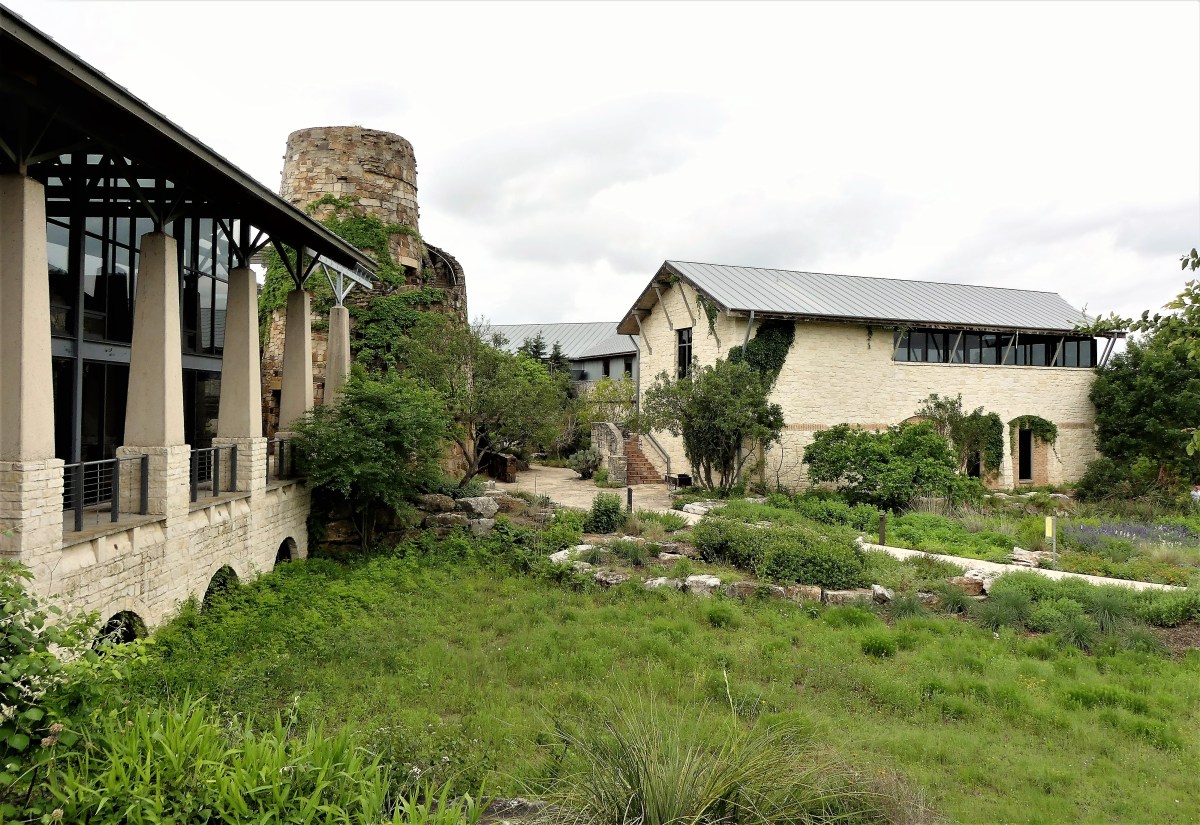
A photo essay with pops of colors under gray skies at Lady Bird Johnson Wildflower Center…

bdlg exterior.jpg
Observation tower
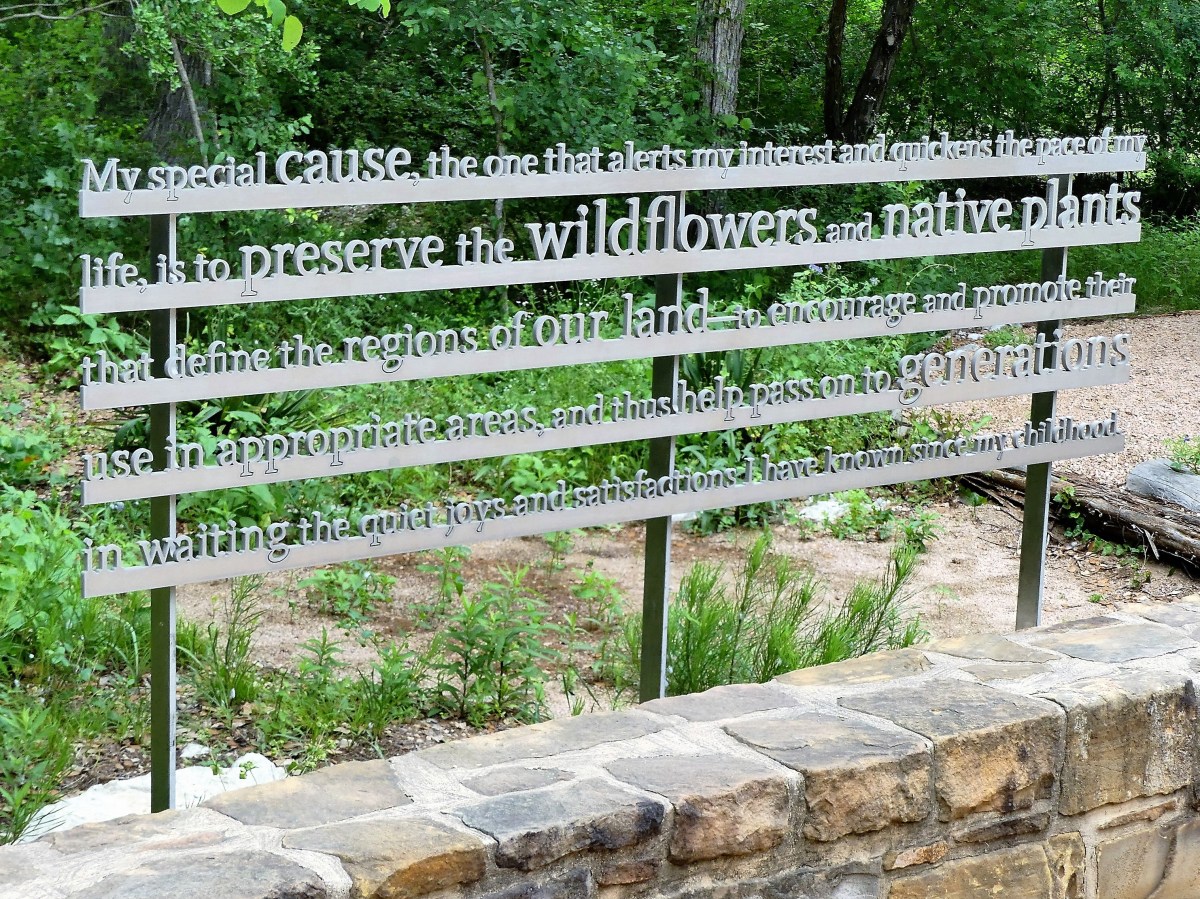
Mission statement
LBJ mission statement
fountain.jpg
Serenity Fountain
Bluebonnet.jpg
Purple Bluebonnet
Antelope horns
Antelope horns
lace cactus.jpg
Lace cacti
winecups.jpg
Winecups with African daisy
butterfly.jpg
Gregg’s mistflower
cactus flower.jpg
Prickly pear
cactus bee.jpg
Prickly pear blossom and honey bee
Texas bluebell.jpg
Texas bluebell

Here Today, Guano Tomorrow

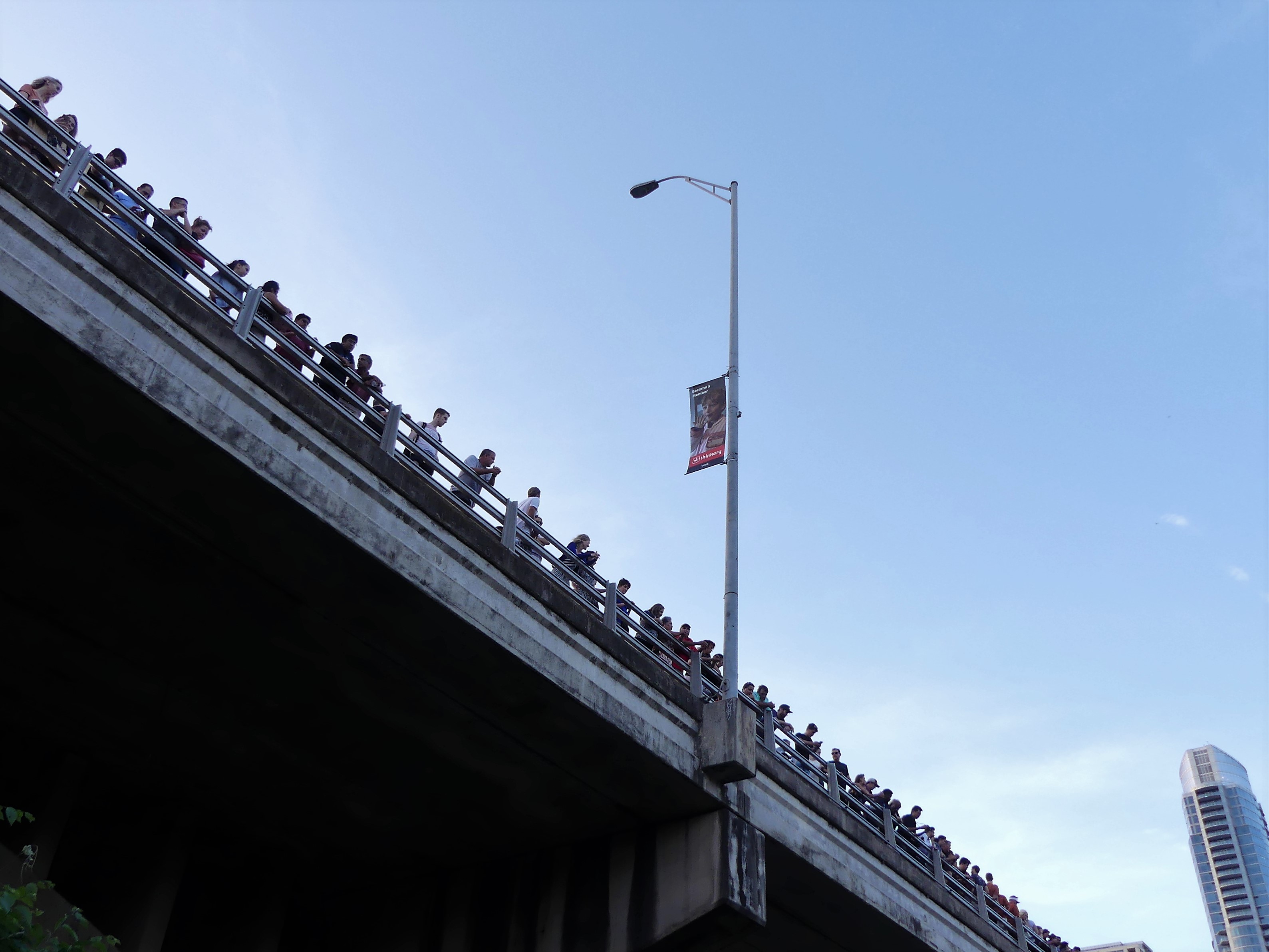
Hundreds of people are standing on or below the South Congress Bridge in Austin, TX and waiting for sunset, which is expected at 8:20pm tonight. Most are tourists with cell phones or bulky cameras, eagerly anticipating the torrent of bats soon to emerge from their roost under the bridge.

The atmosphere is circus-like. Everyone is talking excitedly about the upcoming attraction. Young and old stand shoulder to shoulder;

people on bridge.jpgor find a blanket-sized parcel of grass to relax and watch the sun go down;

Lawn for bats (3).jpgor pull up in a boat to wait for showtime.

kayak.jpgOne fellow standing behind me seems to be mystified by the whole experience. “Are they gonna fly outta that sewer hole over there?” he wonders out loud.

P1010402.JPGHis misconception is immediately corrected by a 10-year old standing nearby. “Hey mister, this isn’t Batman, y’know! They come out from under the bridge where they live,” says Einstein boy.
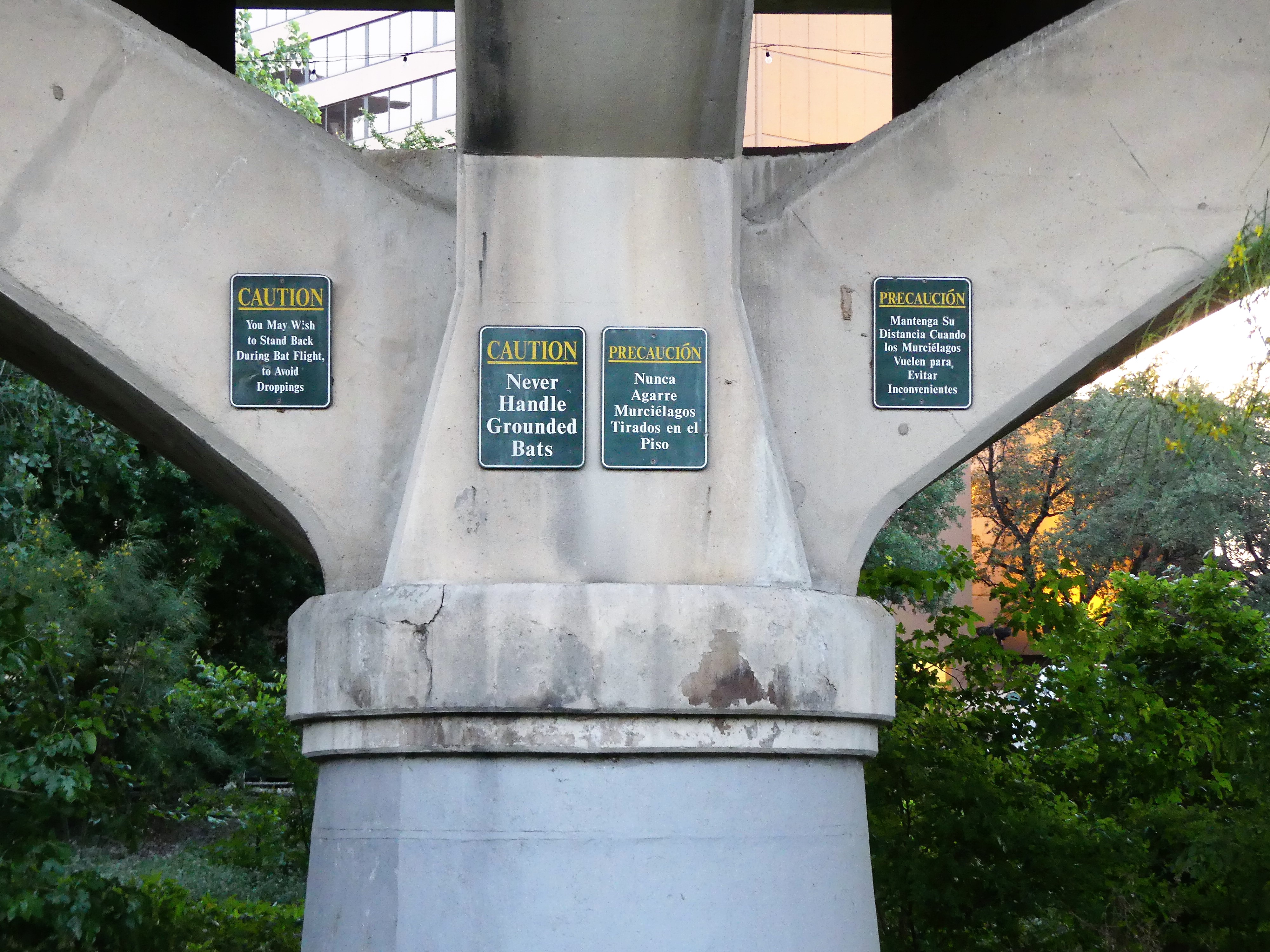
“I hope they don’t come around me…that shit is poison,” says sewer man.

bat warnings.jpgI too am excited to catch the bats in flight, but I’m also interested in doing something different with my Lumix, which I’m still learning to use. I’m determined to capture the bats in motion!

As twilight approaches, the throng fills the empty spaces of lawn and becomes more animated.throng.jpgThe moment arrives when the first bats emerge, and the crowd gets giddy.

bat flight1.jpgAnd moments later, the floodgates open, and the bats streak across the night sky by the thousands–

bat flight2.jpga migration wave of epic proportions that approaches a feeding frenzy.
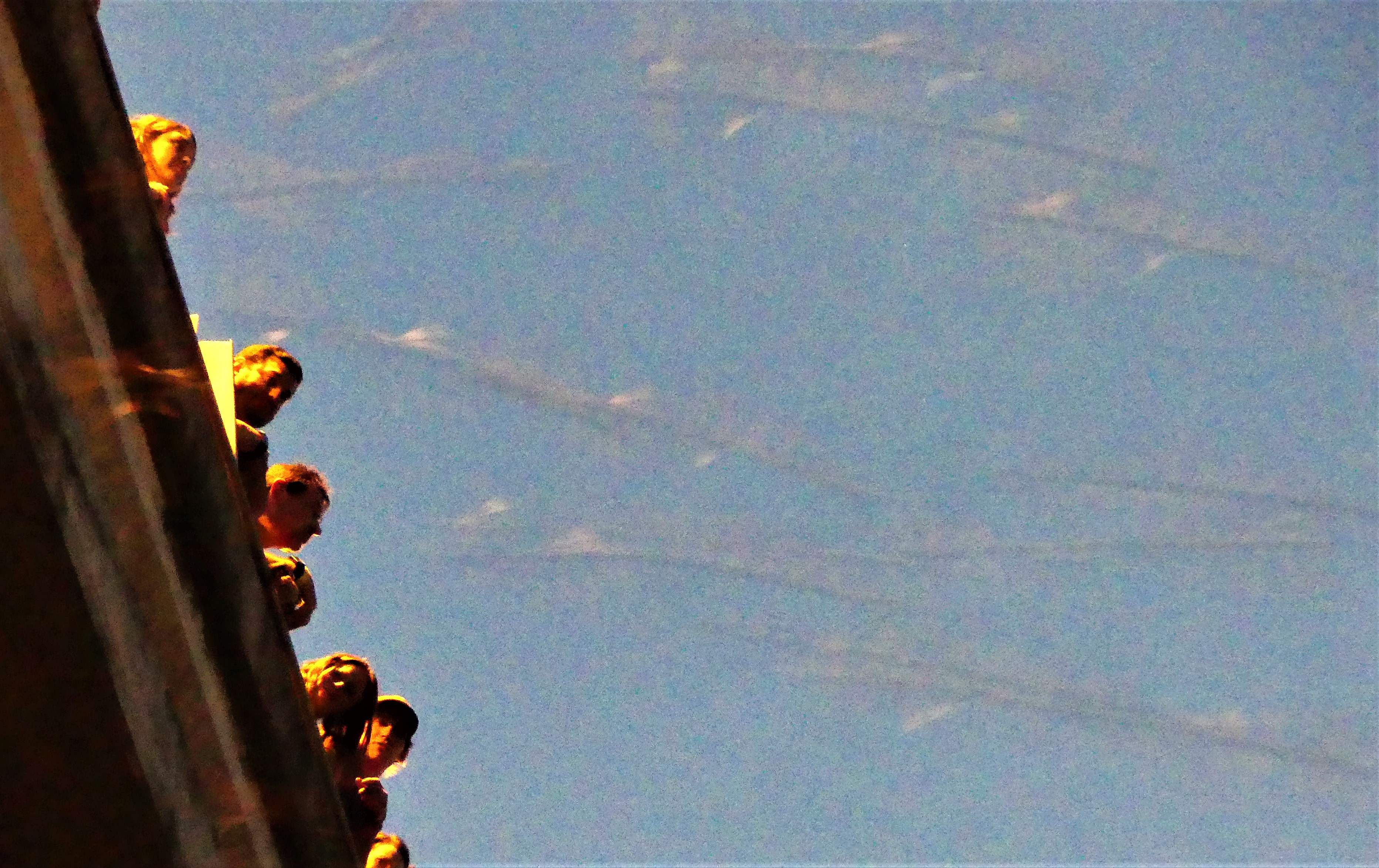
bat flight3.jpgI confess that the photos are experimental. However, I understand that there are traditionalists who need to see things as they are, versus my interpretation of the event. So, in fairness to those whose vision is less oblique than mine, I’ve increased the camera’s shutter speed to give a more accurate representation of the bats’ flight path…

Blue Angels.jpgsuch that even Meat Loaf would be impressed.

Where Have all the Gators Gone? (Long Time Passing…)

Traveling the Gulf coastline across Alabama, Mississippi, and Louisiana during the past week has brought us closer to Creole and Cajun cuisine, crawfish, casinos and country music, but alas, no crocodilia. Having driven nearly five hundred miles of state and county highways, and cruising endless back roads and bayou causeways, we have yet to see an alligator, which begs the question: Where have all the gators gone?

Not that we haven’t come close to spotting one. Mind you, there have been several vicarious sightings so far. For instance, yesterday we were driving/walking through Jungle Gardens, a 170-acre habitat on Avery Island with exotic palms, sculpted lagoons,

algae.jpg

scores of majestic oaks with gnarled and expansive limbs draped in Spanish moss,

Leah pose.jpg

a 10th century Buddha housed in a glass-walled pagoda,

Buddha.jpg

a bird sanctuary that hosts thousands of snowy egrets,

egret.jpg

and purportedly a family of alligators that have bred on the property since Ned McIlhenny introduced them almost 100 years ago. By the time Leah and I reached Bird City on the tour, we were lucky to meet a woman who had already come across six alligators in two separate locations. It warmed our hearts to be basking in her reptilian aura.

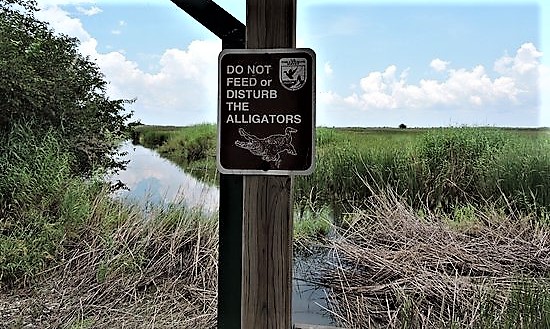
Then there was the time we stayed at Davis Bayou National Seashore in Ocean Spring, MS. We walked a half-mile-long nature trail that meanders around a leg of swamp fed by the Mississippi Bayou. Posted at the trail head is an easy-to-read sign that prohibits all alligator snacks.

no feeding gators (2).jpgSurely, there must be gators here. Why else would they post a sign, we wondered. Yet we saw no alligators. However, another hiker told us that she was told by a park ranger who had heard from another ranger that a resident gator was spotted earlier in the day crossing the road in front of our campground–the very same road where we towed our Airstream, so that should count, right?

The next day, we pedaled to the boat launch where the same warning signs were posted, and Leah claimed to have seen a stick in the water that when hit by the sun at a certain angle during a specific time of the day closely resembled an alligator’s head.

We wondered if there was an art or a science to attracting alligators, so we created an alligator call just in case they were listening. It went something like, “Heeere, gator gator gator; heeere, gator!” Once, our calling was overheard by an older couple who gave us a strange look, but that’s because they probably didn’t understand English. Regardless, the gators never came; either they weren’t listening, or they were avoiding us.

We joked about going to an alligator petting zoo. It wouldn’t be too far out of our way, since we could easily see it from the road. But then we realized that it would be a waste of our time, surmising that it would be hard to decide who has fewer teeth–the alligator or the proprietor.

I know that alligators exist because I’ve seen them on TV and in zoos. And I can still recall that little boy who tragically lost his life near a Disneyworld lagoon while his father looked on in horror.

Yet the anecdotal evidence is overwhelming and doesn’t lie: there seems to be a serious shortage of alligators interested in meeting us–making it painfully obvious to any amateur herpetologist–that gators are playing hard-to-get… or maybe they’re just shopping around for a better agent.


Some Like It Hot

Down on Avery Island–in the thick of Cajun country, just up some from the Atchafalaya Delta–is a place where mosquitoes explode if they bite you. At least, that’s what they tell you on the company tour.

tabasco museum.jpg

It’s where the McIlhenney family has been making Tabasco Sauce the same way since 1868.

early years.jpg

It’s an interesting process that has much in common with fine wine or Kentucky bourbon, but doesn’t require an ID to buy it or try it. Although, some common sense should dictate how much you pour to invigorate your étouffée or gumbo.

The sauce begins with a special strain of tabasco pepper seed that sprouts in a greenhouse nursery before it’s transplanted into rich and fertile alluvial soil.

pepper plant.jpg

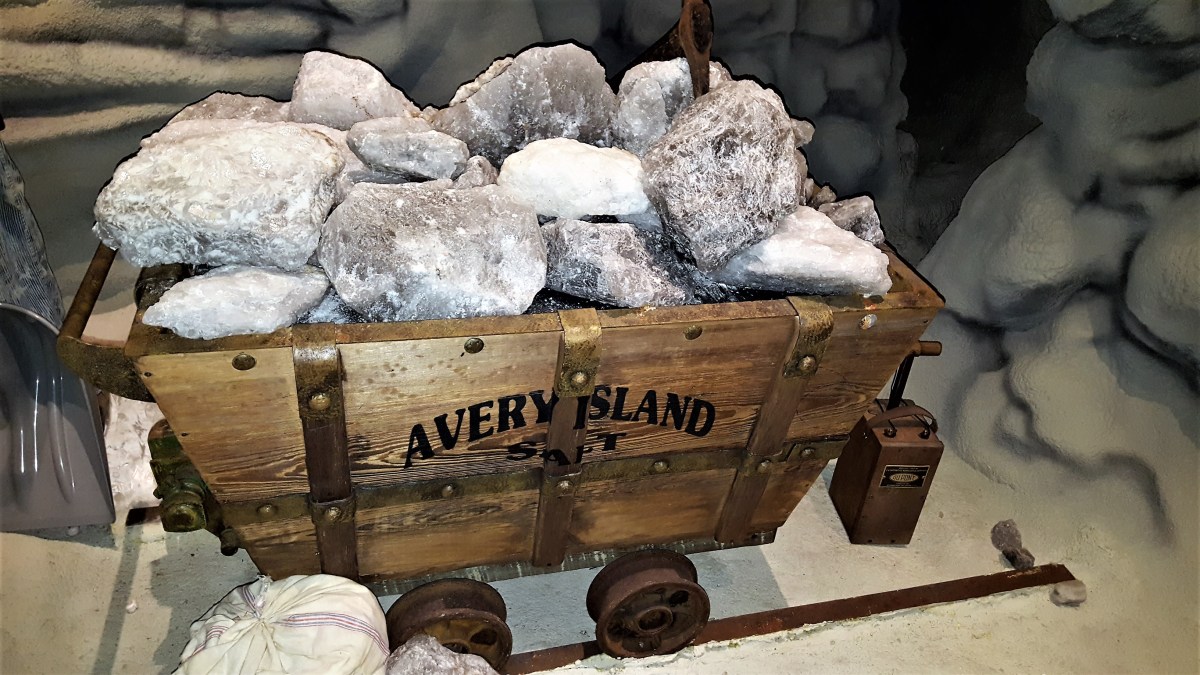
A graduated color stick determines the precise shade of the ripened red pepper before it’s properly picked by Peter, and crushed into a mash mixed with salt mined from the family property.

salt mine.jpg

Company coopers prepare and sanitize 60-gallon white oak barrels reinforced with forged iron bands…

barrels.jpg

where the mash is stored and sealed with crusted salt, and left to age for up to three years for the traditional heat, and between eight and ten years for the “reserve” collection. It was dizzying, just standing by the storage shed to take a photograph and inhaling the pungent aroma of fermenting peppers.

wall to wall barrels.jpg

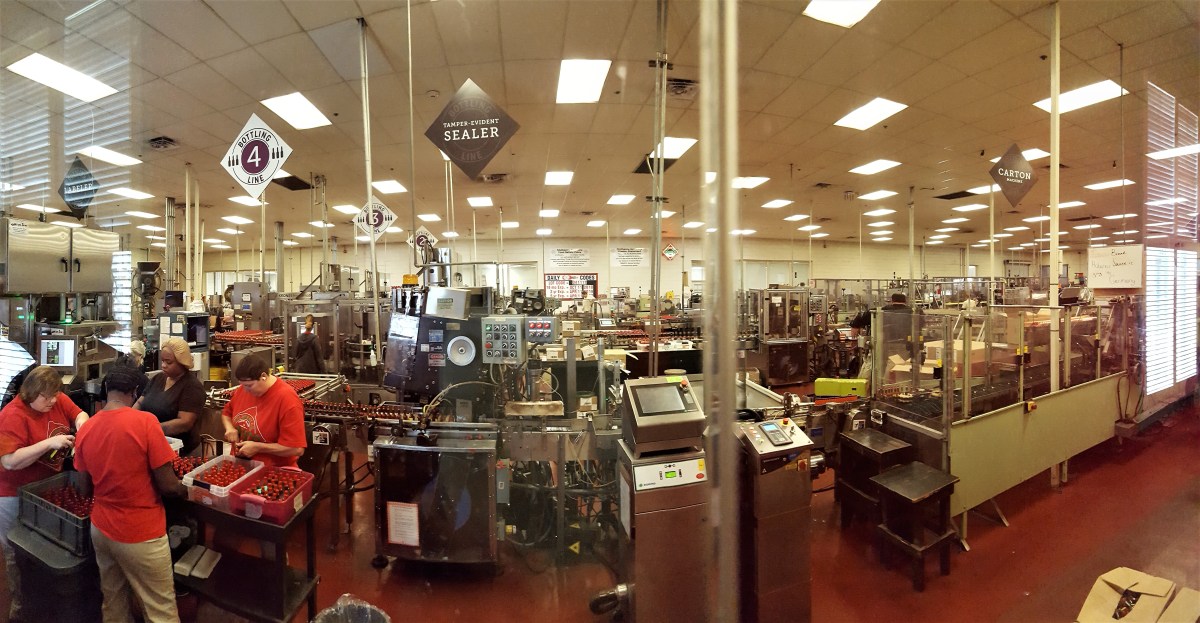
When the mash is “ready”, it’s sent to the production floor free of peel and seeds. then combined with pure white vinegar, and monitored for three weeks before quality control personnel determine that it’s ready for the bottling plant.

add vinegar.jpg

Automation will carry out the packaging under watchful eyes at a rate of approximately 220,000 bottles per day to keep up with world-wide demand,

bottling1.jpg

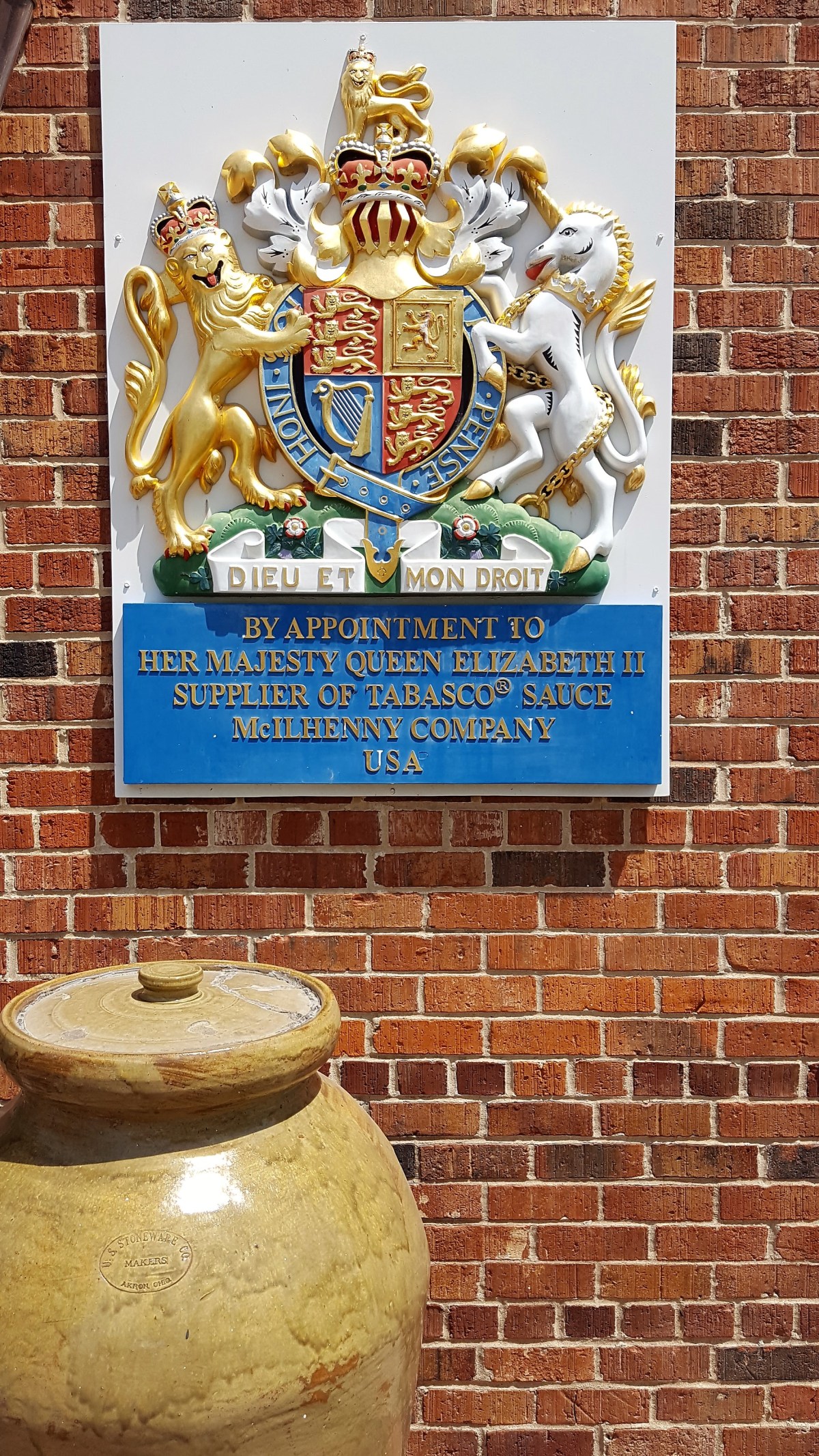
and a very demanding clientele.

queen crest.jpg

It’s been 150 years since Edmund McIlhenny poured his potent pepper sauce into recycled cologne bottles, but the five generations that followed have been loyal to the original recipe, and have grown accustomed to the savory taste of success.

Mad Mad Money

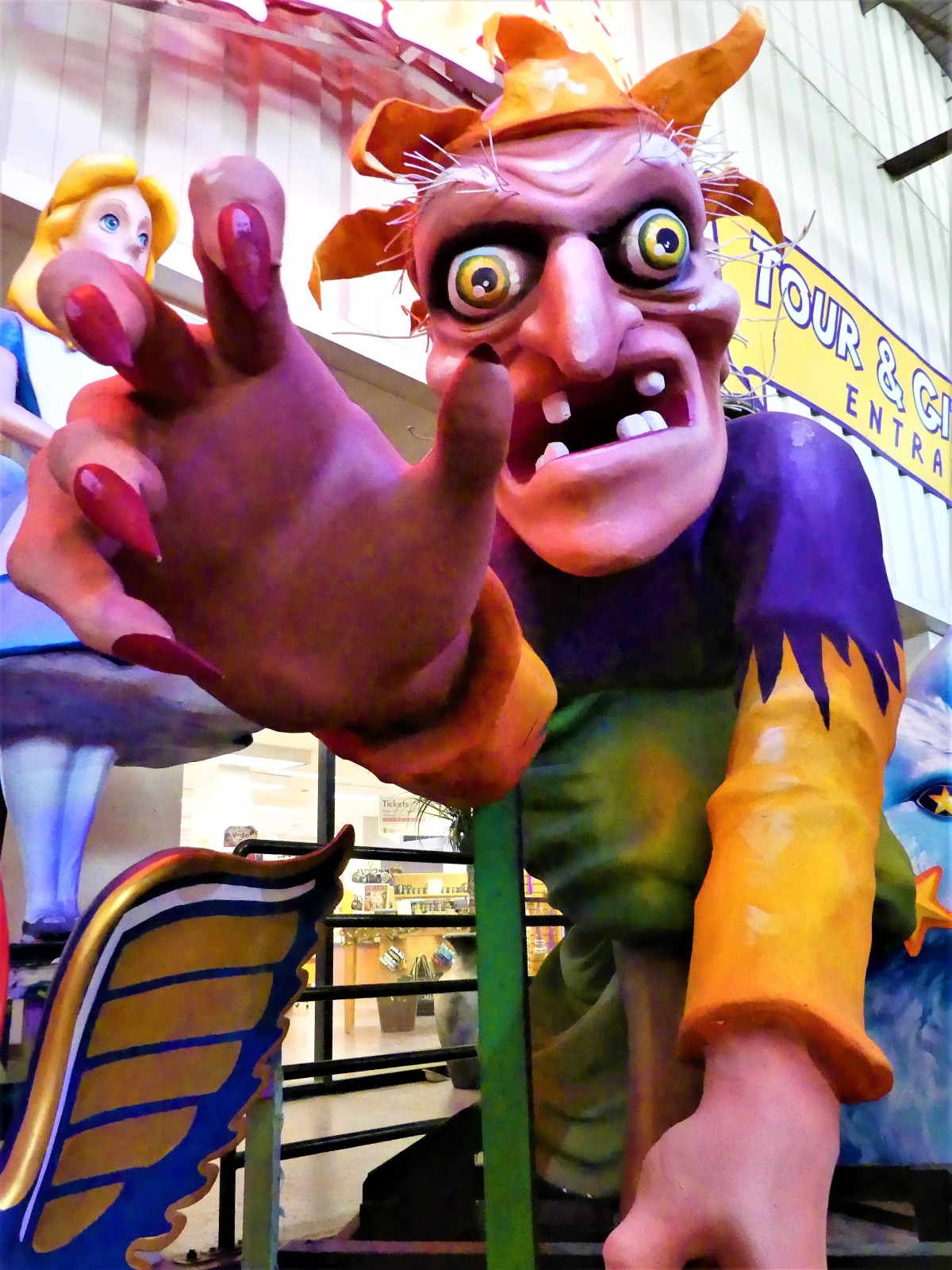
Stepping through the warehouse doors of Blaine Kern’s Mardi Gras World is like stepping into a “Roger Rabbit” movie, where out-of-towners are dwarfed by larger-than-life “Toons” sculpted from layers upon layers of paper machéd Styrofoam, and painted in comic book colors.Bart.jpg

With 400,000 square feet of working and storage space on the port side of the Mississippi,

MGW exterior.jpg

a treasure trove of floats waits to be recycled in preparation for next year’s Mardi Gras parade just moments after masked marauders have tossed the last strand of beads.

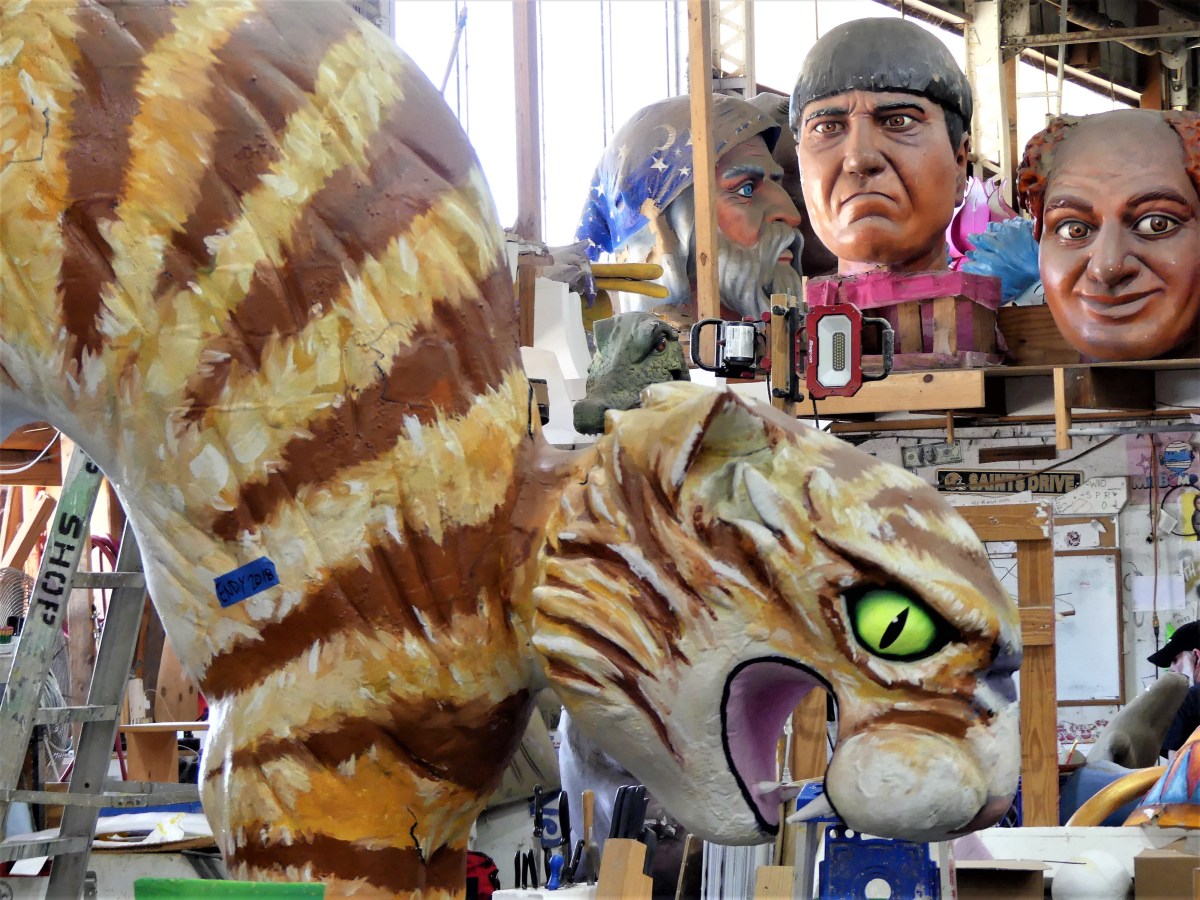
Cat and heads.jpgSince 1934, four generations of Kerns have been perfecting the art and business of celebrating Carnival, always managing year after year to surprise the public with fresh ideas infused with craftsmanship and technology.

Kiss.jpgKern Studios works with dozens of carnival organizations (known as krewes) who finance their own parades through member dues and fund-raising to offset expenses for:

Chicken and man.jpgfloat warehousing, designing, sculpting, construction, decorating, tractor pulling, audio, lighting, and parade route security–all routinely costing $100,000 or more for each 28 foot display on wheels.

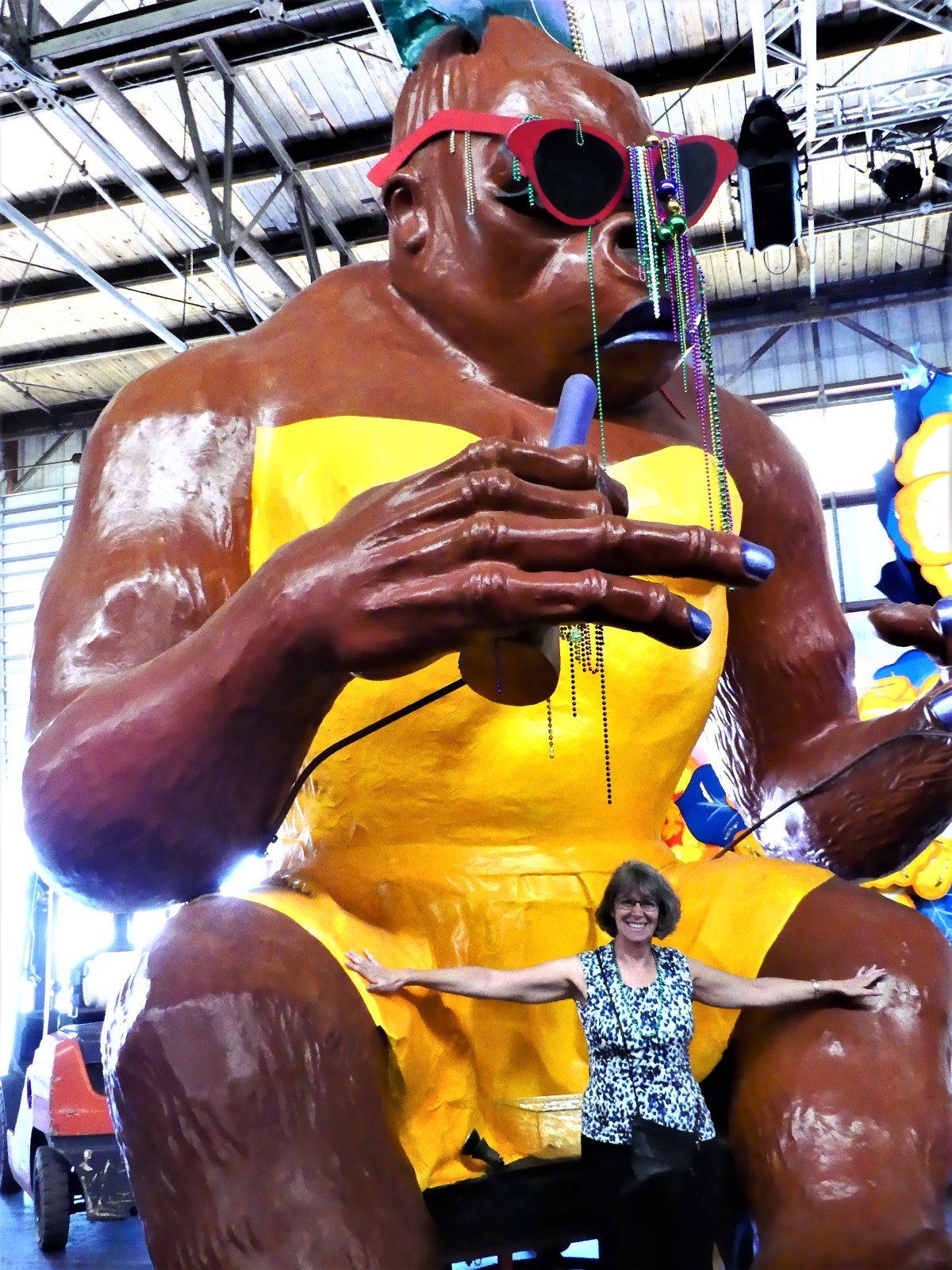
Queen.jpgBut what’s a krewe to do if they eschew the usual bayou reissue? The Krewe of Bacchus commissioned Blaire to produce extravagant figures and floats on a more grandiose scale. He obliged them with 18 feet replicas of King Kong in 1972, and Queen Kong in 1973.
King Kong.jpg

Mrs Kong.jpg

In later years, a Bacchus signature float extended to 105 feet, accommodating 86 riders.

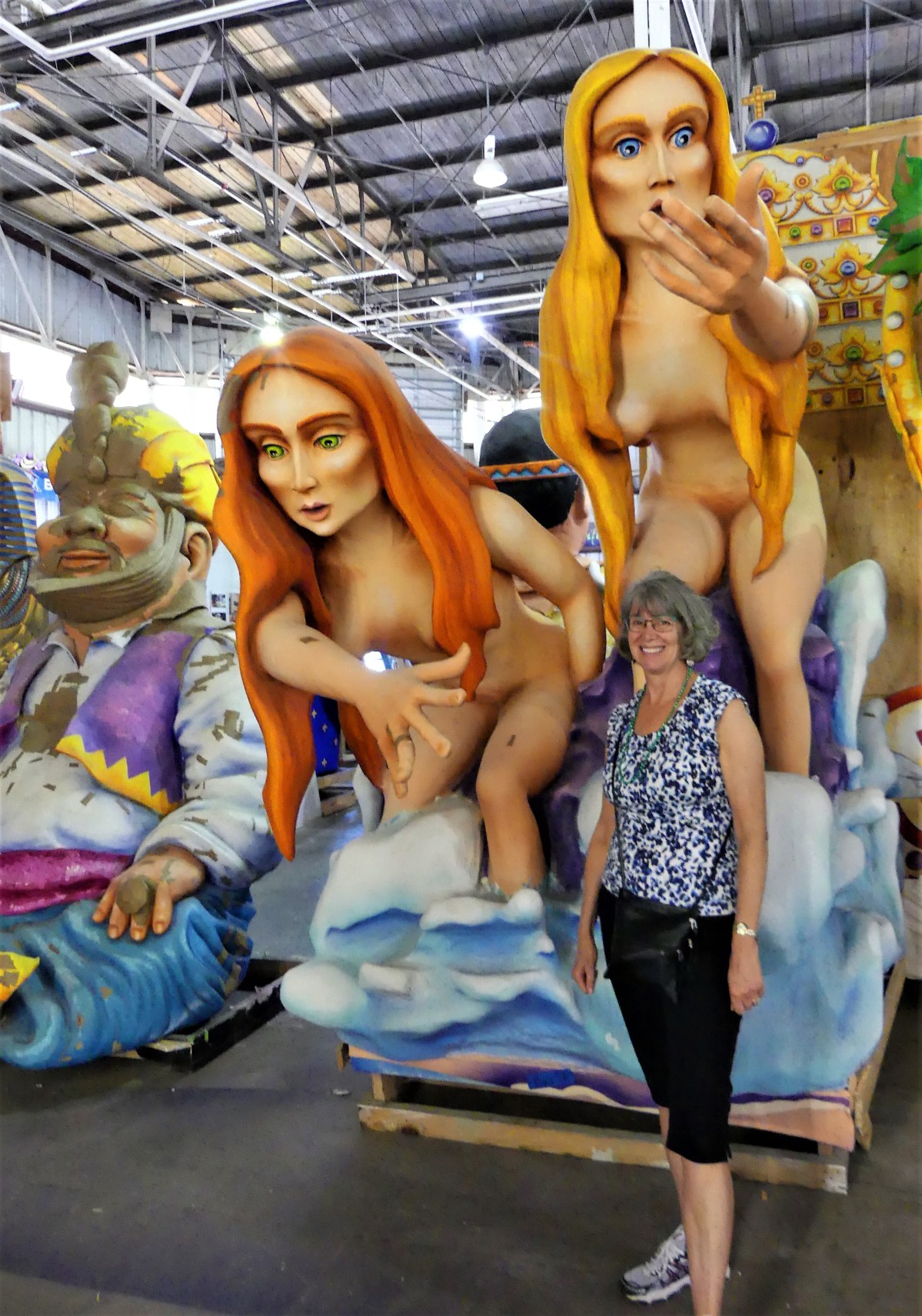
Muses and Leah.jpg

This year, the Krewe of Rex, Mardi Gras’ longest-standing parade organization (since 1872) launched 27 floats for their 134th parade. And with 70 different parades running this season, Kern produced over 450 floats for them and others…

witch.jpg…which makes it (big) easy to see why Mardi Gras is such a cash cow for New Orleans, and Blaire Kern,

General Budha.jpgunless you’re a Buddhist.

Biloxi Bounty

“It will be forty minutes before I can seat you,” announced the hostess.

“So what was the point of making a 7 pm reservation?” I protested.

An entitled-looking woman strode up to the seating station, interrupting my conversation.

“Any idea how much longer?” she fumed. Residual cigarette smoke left a trail after her words.

The hostess was poised and ready with an answer. “I promise to text you as soon as your party’s table opens up.”

Emphatically, “Nevermind. We’re going to the Hard Rock location across the street,” she huffed, and strode away.

The hostess, not missing a beat, returned to me. “So your wait time has now been cut to thirty minutes. If I could just have your phone number?”

“Is it always this busy?” I asked, already anticipating the answer.

“Everyday and all the time,” she shrugged.

Leah and I are waiting to be seated at the Half Shell Oyster House in Biloxi, MS, the second of seven locations spread throughout the Gulf coast, and everyone says it’s well worth the wait. The shucker at the raw bar claims that on average, he will prepare eight sacks of a dozen dozen oysters for weekday diners.

When I briefly taught English at the New York Harbor School, I learned about the Billion Oyster Project launched on Governors Island, whose 20-year mission is to reclaim the New York Harbor habitat by seeding new oyster beds around the island in hopes of restoring a vibrant aquaculture to the area–a dream only made possible after passage of the Clean Water Act of 1972, which prohibited dumping raw sewage and toxic waste into the Harbor.

Since many Project volunteers are high school interns from the Harbor School on Governors Island, faculty staged an end-of-semester celebration where hundreds of oysters were opened for hundreds of curious inner city students, many who have never seen, touched, or smelled, let alone tasted an oyster. Watching the kids’ faces was priceless. For those who dared to try one, it was a warm and naked oyster. If they only knew there was a better way to enjoy a bivalve.

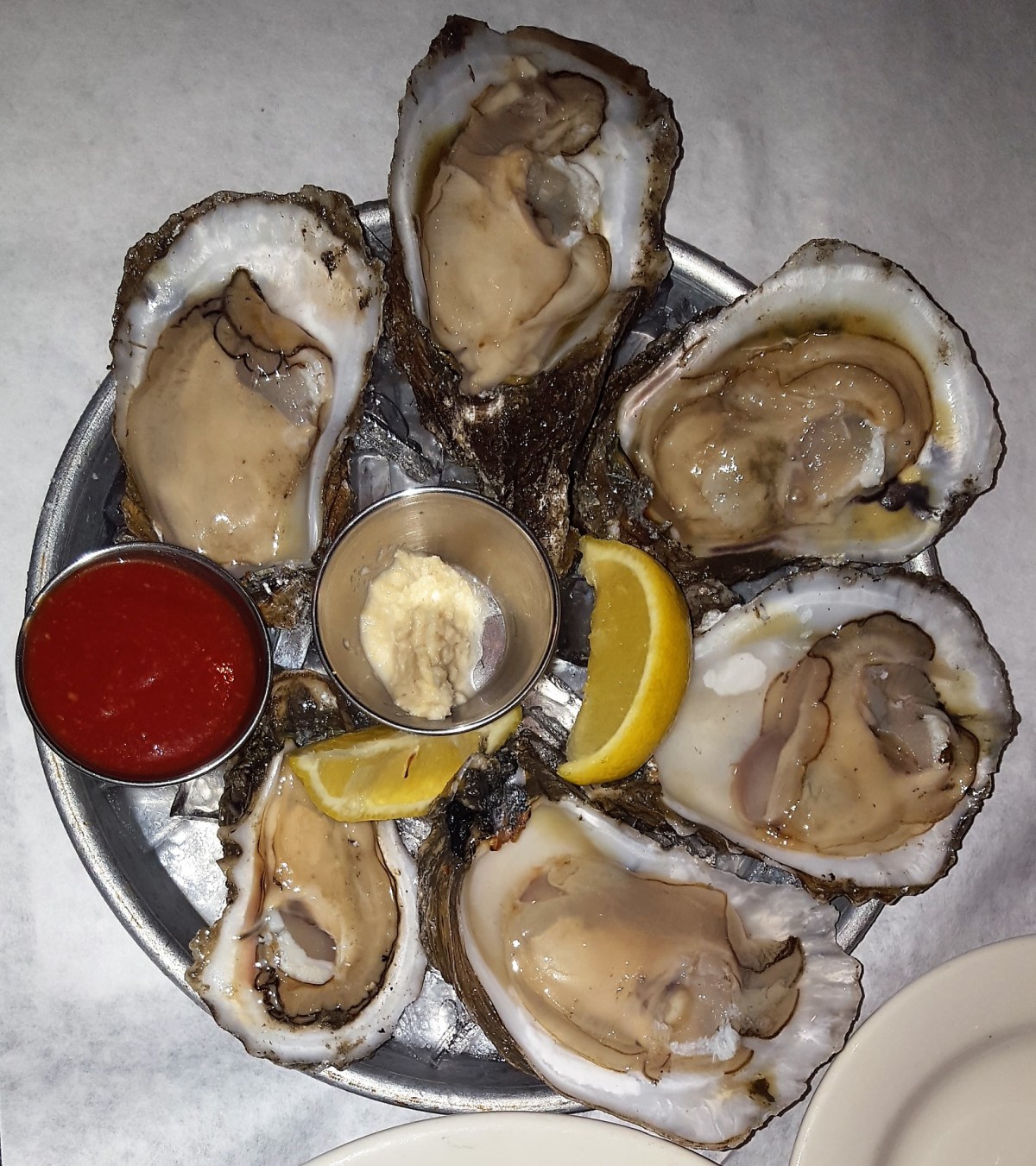
On the other hand, the Oyster House does it with culinary correctness. The half dozen half shells that arrived to the table were so plump, they were pushing each other off the icy plate. Each one was swimming in its briny soup, and glistening with freshness.

oysters.jpg

“C’mon, Leah,” I advertised, “you’ve got to try this. These are amazing,”

Neal and oyster.jpgLeah was horrified. “Eww, no! I don’t know how you can eat that,” she objected. “It looks like it’s still living.”

“And that’s why it tastes so good,” I slurped.

The entrees were equally as tasty. We both had royal red shrimp different ways; Leah enjoyed a 1/2 lb. of peel and eat shrimp…

peel shrimp.jpg

while my shrimp were prepared Orleans style–in a hot Cajun butter sauce–with jalapeno hush puppies on the side. The beverage du jour was iced cold vodka and ginger beer. Wow!!

Shrimp Orleans.jpg

Afterwards, we walked across the road to the Hard Rock Casino,

Hard Rock.jpgbut that’s another story.

For the whole enchilada on half shell info, check out:

http://www.inahalfshell.com/bivalve-curious/

and for more on the Billion Oyster Project, see:

https://www.billionoysterproject.org/


Two Tales of One City

As the cradle of the confederacy and the birthplace of the civil rights movement, Montgomery, Alabama has embraced its nascent roots, and is ready to exploit its role in two historic struggles: one, a political secession that was hastily formed to preserve the rights of whites; and the other, a social revolution to protect the rights of blacks. Both have come up short, which makes Montgomery, arguably, a municipal work in progress.

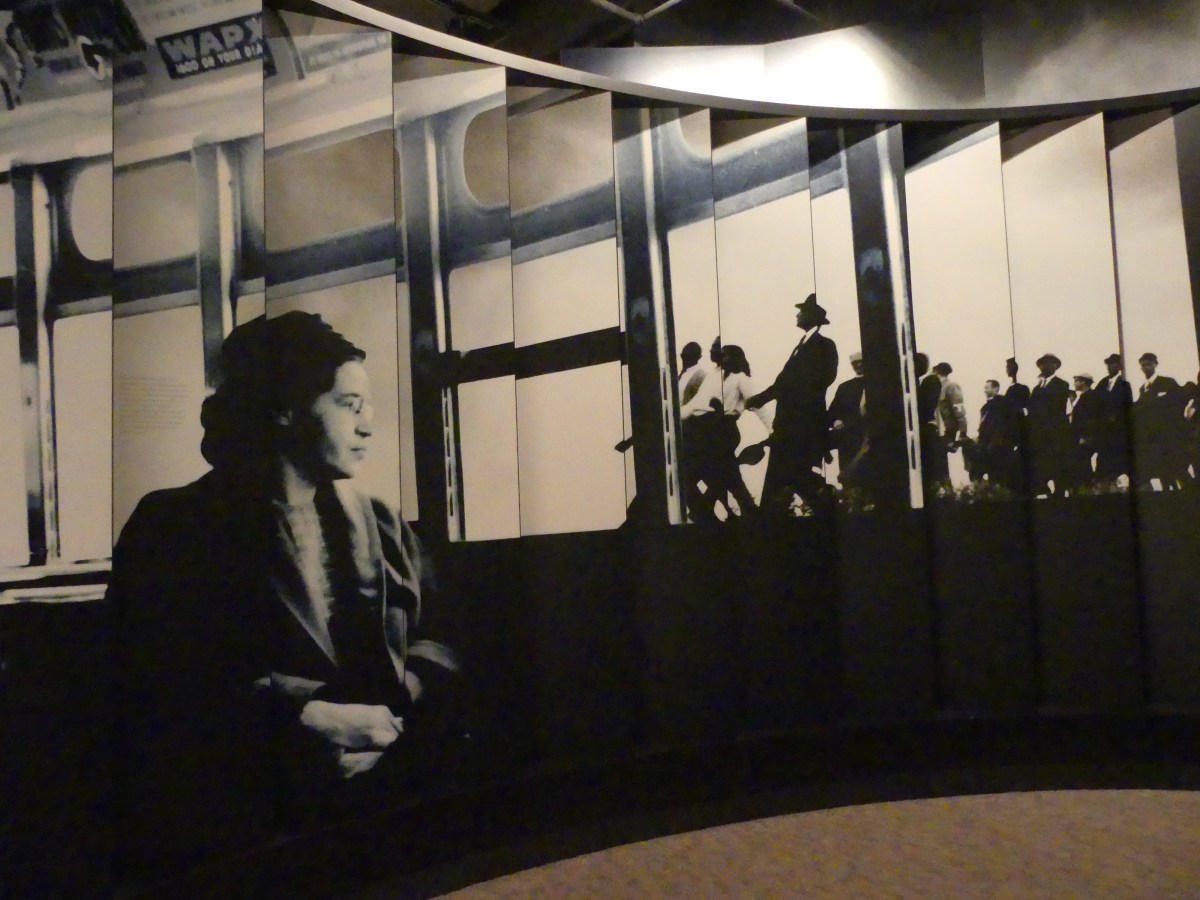
A visit to the Rosa Parks Museum, integrated into a corner wing of Troy University’s urban campus, takes the visitor through an interactive display of film, story-telling, life-size dioramas, documents and artifacts that frame the Montgomery Bus Boycott and its aftermath as ground zero for racial equality.

P1010276.JPG

P1010277.JPG

P1010280.JPG

P1010281.JPG

P1010282.JPG
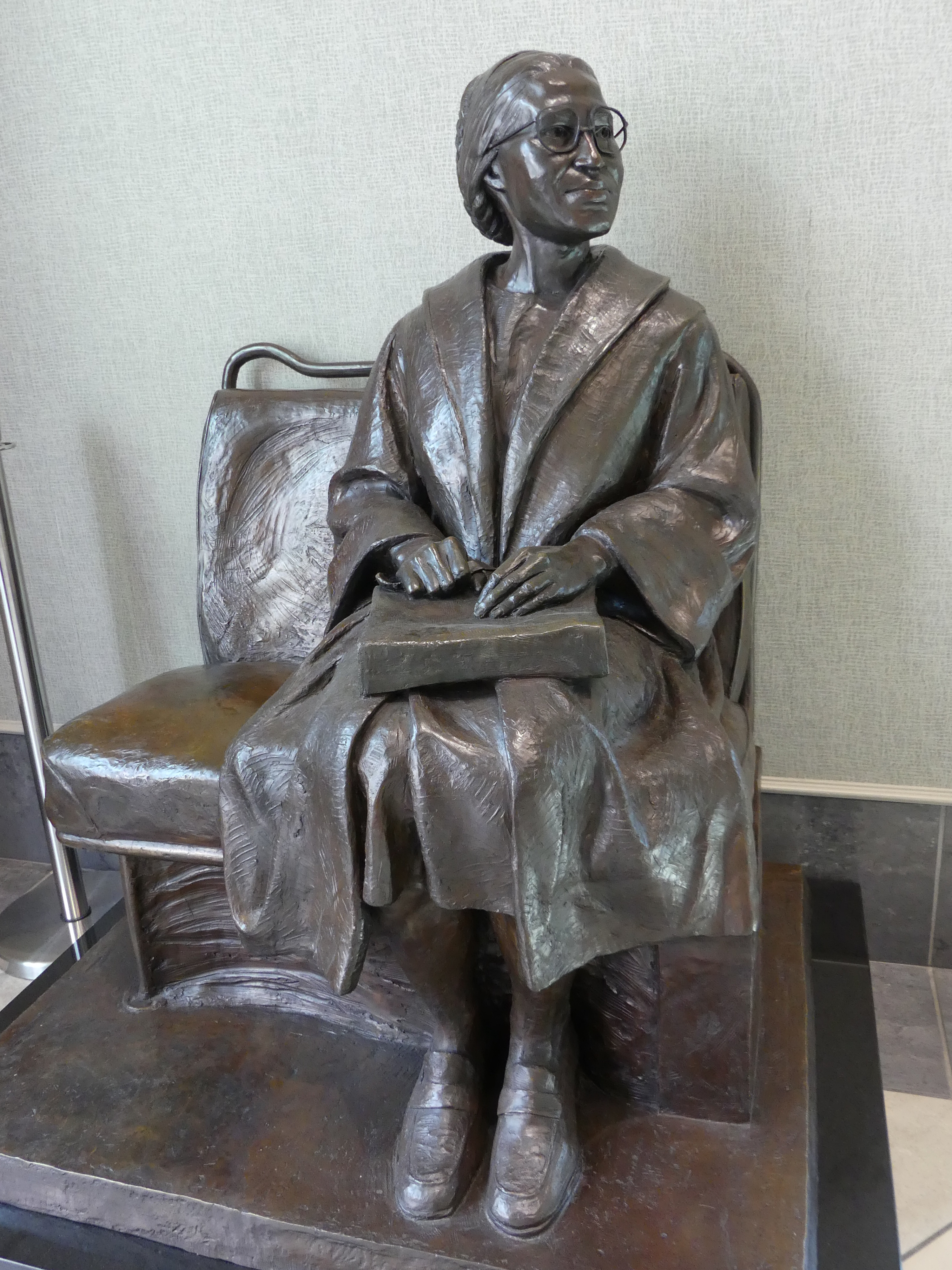
Rosa Parks has been embraced as a national hero, the face of moral courage, and Mother of the modern Civil Rights Movement.

For her troubles and heroics, Rosa Parks received the Presidential Medal of Freedom in 1996, and the Congressional Gold Medal in 1999.

File:RosaParks-BillClinton.jpg

A 10-minute walk along Washington Ave. to the Civil Rights Memorial Center, across the street from the Southern Poverty Law Center was eerily reminiscent of the calm before the storm. As the second largest city in Alabama, it seemed unusually quiet. The breezy and balmy climate had uncharacteristically produced few cars, and even fewer pedestrians. Shops were closed, and construction areas were still–as if the city was under lock-down or quarantine.

The entrance to the memorial behind Maya Lin’s sculptural tribute was roped off.

P1010284.JPG

We caught the attention of an armed guard patrolling the area who asked if he could help.

“Isn’t this the entrance to the memorial center? Shouldn’t it be open?” I asked, pointing to the hours of operation.

Visitors to the Civil Rights Memorial Center have the opportunity to take the pledge and add their names to the Wall of Tolerance during their visit, and I had come to take the pledge:

By placing my name on the Wall of Tolerance, I pledge to take a stand against hate, injustice and intolerance. I will work in my daily life for justice, equality and human rights – the ideals for which the Civil Rights martyrs died.”

The guard shrugged. “Everything is shut down today, sir, because of the weather. Yes sir, they closed the schools an’ all, in anticipation of the storm that come through here early this morn’. So the memorial is closed as well, sir.”

“But it’s gorgeous outside,” Leah offered.

The guard nodded, “I know ma’am, but the storm is suppose to loop aroun’, an’ this kinda weather is completely unpredictable. Best you come by tomorrow for another look, okay? In the meantime, have you seen the state capital and the White House, just up the road?”

“Sounds like a plan,” I acknowledged.

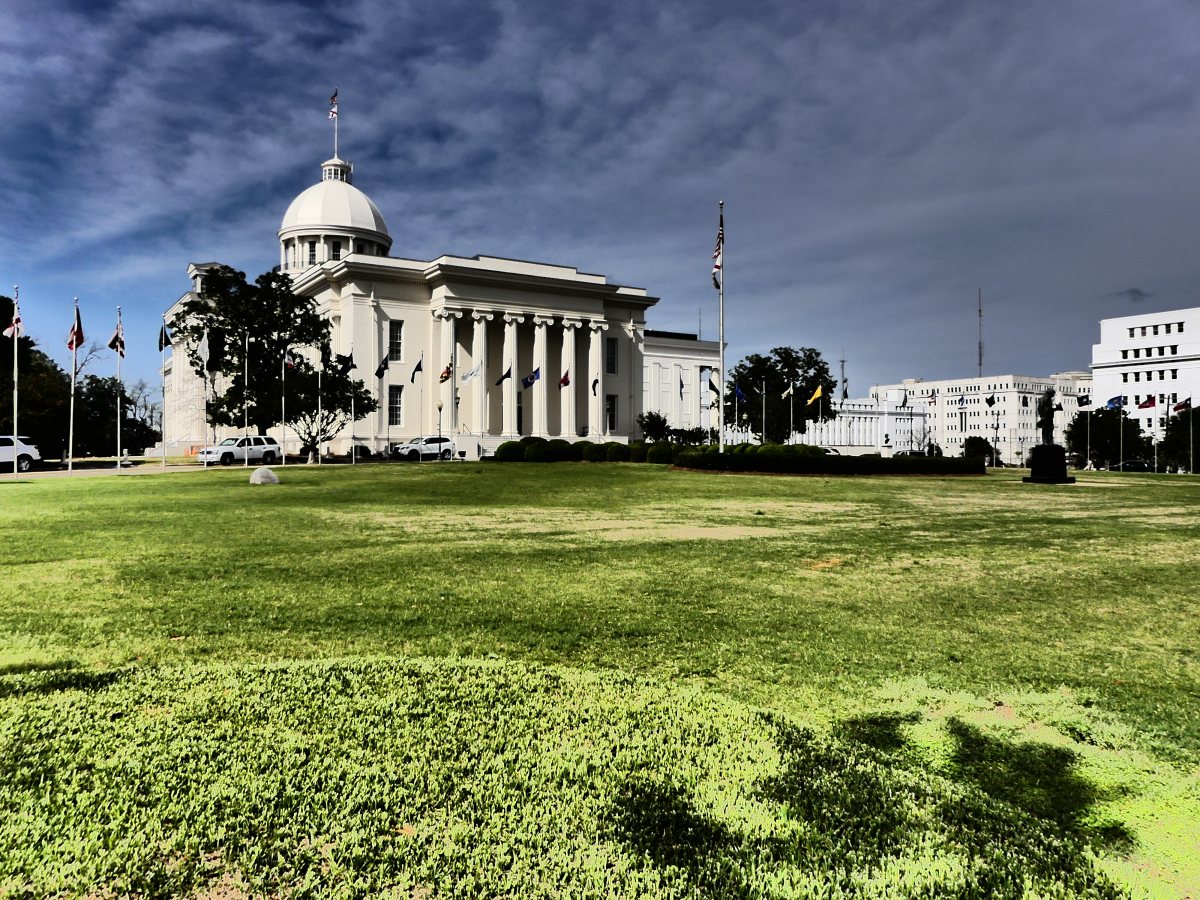
The stately-looking capital sits alone on a green and projected a ghost house allure, devoid of any activity. I imagined Alabama governor Robert Bentley hiding under his desk–weathering his own personal storm of sexual misconduct, awaiting word from the State Ethics Committee who holds his legal fate in their sweaty fingers.

P1010287.JPG

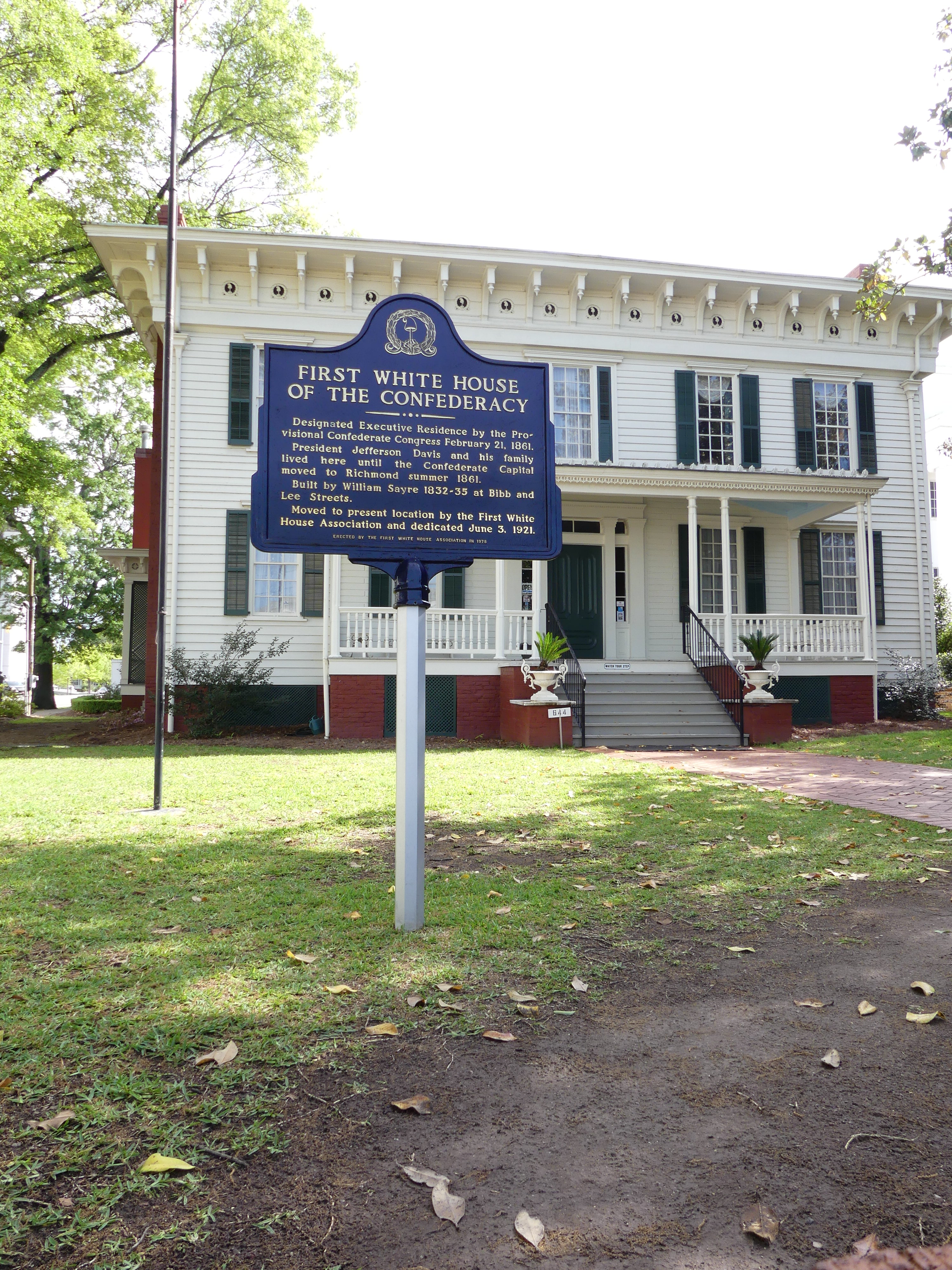
Directly across the street is the transplanted Confederate White House, home of Jefferson Davis, the first and only President of eleven southern breakaway states, whose doctrine upheld slavery as a states’ right along with political liberty for whites. Inside the house, an affable guide exchanged greetings and historical trivia in down-home Southern hospitality fashion.

“Make sure you buy plenty of cotton clothes before you leave town,” he drawled, alluding to the area’s cash crop, “an’ help our local farmers.”

P1010288.JPG

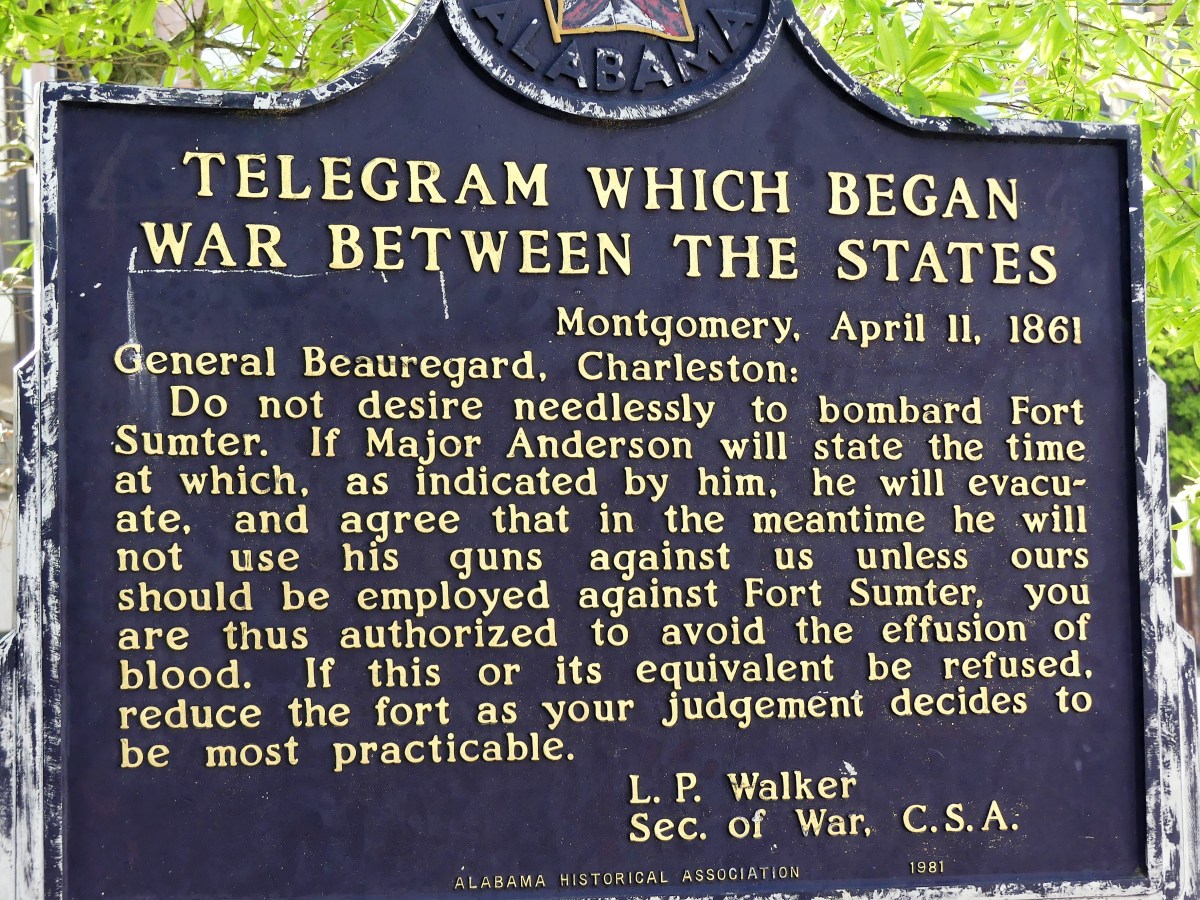
Civil War telegram sign.jpg

Montgomery capital view.jpg

The town could use some help as well. About a quarter of the population lives close to the poverty line, and it shows in large chunks of the business community, where abandoned storefronts are less the exception than the rule. Nevertheless, there are pockets of revitalization, such as the Riverfront,

which features a minor league baseball park and amphitheater,

and the novelty of an old-fashioned steamboat cruise down the Alabama River.

Montgomery is not hiding from its past. It chooses to become a relevant city that tells it’s story from colliding perspectives, while dealing with hate and tempering with tolerance.

P.S. Four days after publishing this post, Governor Bentley is now an admitted felon who resigned to avoid prosecution–all because of chasing tail. Perhaps, the blog title be changed to “Three Tales/Tails of One City”?

Tightening My Bible Belt

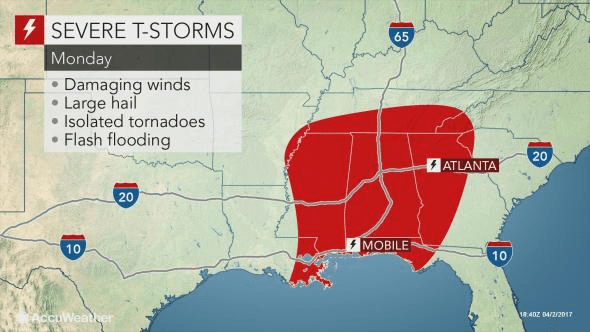
If the idiom “raining cats and dogs” refers to heavy rain, then we drove through a storm front this morning on our way to Montgomery, AL that must qualify as “cougars and dingoes”.

So violent was the weather–bringing bouts of apocalyptic lightening and cataclysmic road floods–that I celebrated the opportunity to pull into a rest stop for 10 minutes just to catch my breath and clear my head. Texted news reports of tornadoes across Alabama border states kept us on high alert. Continuing south, the punishing winds played havoc with the Airstream, despite its aerodynamics. Keeping it centered between the lane lines had to be as challenging as today’s Supreme Court confirmation of Neil Gorsuch.

This is not the game plan we had prepared for yesterday. The Airstream was all hooked up and ready to roll from the night before. Our easy and early departure from Talladega was intended to give us a head start in advance of the storm, so that our arrival at Gunter Hill Park would coincide with the worst of the weather. But as my late Grandma Straws was so fond of saying in her heavy Slavic accent, “You kenen nit makhn a contract miten de veter.”¹

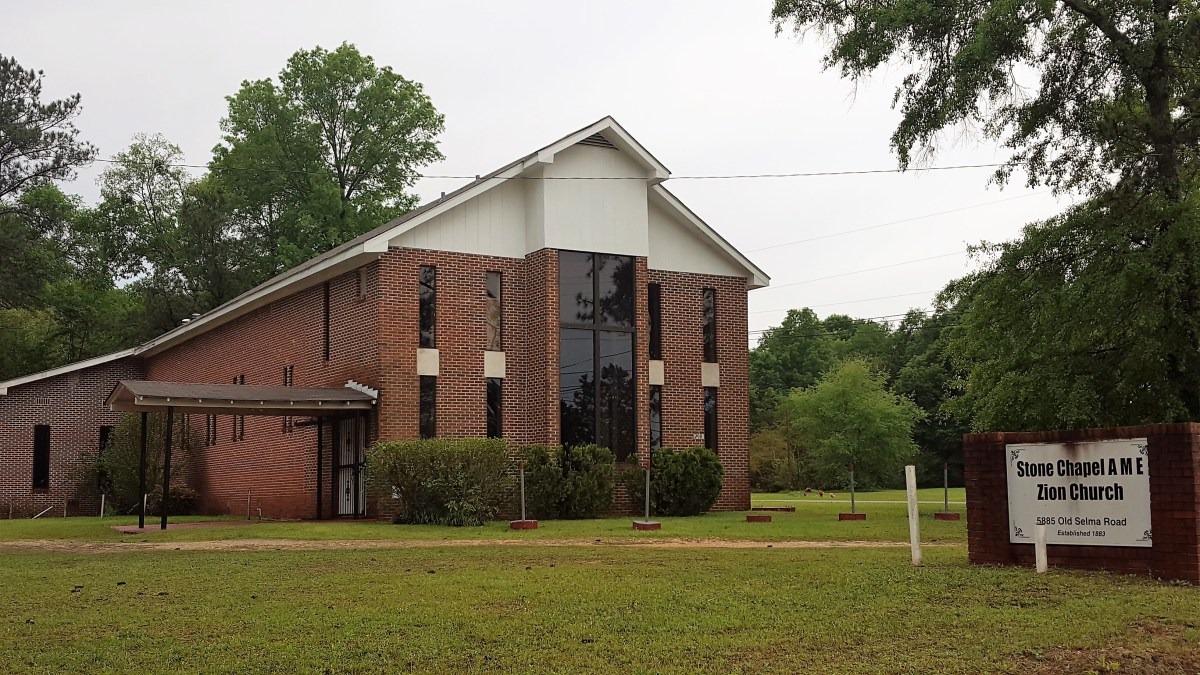
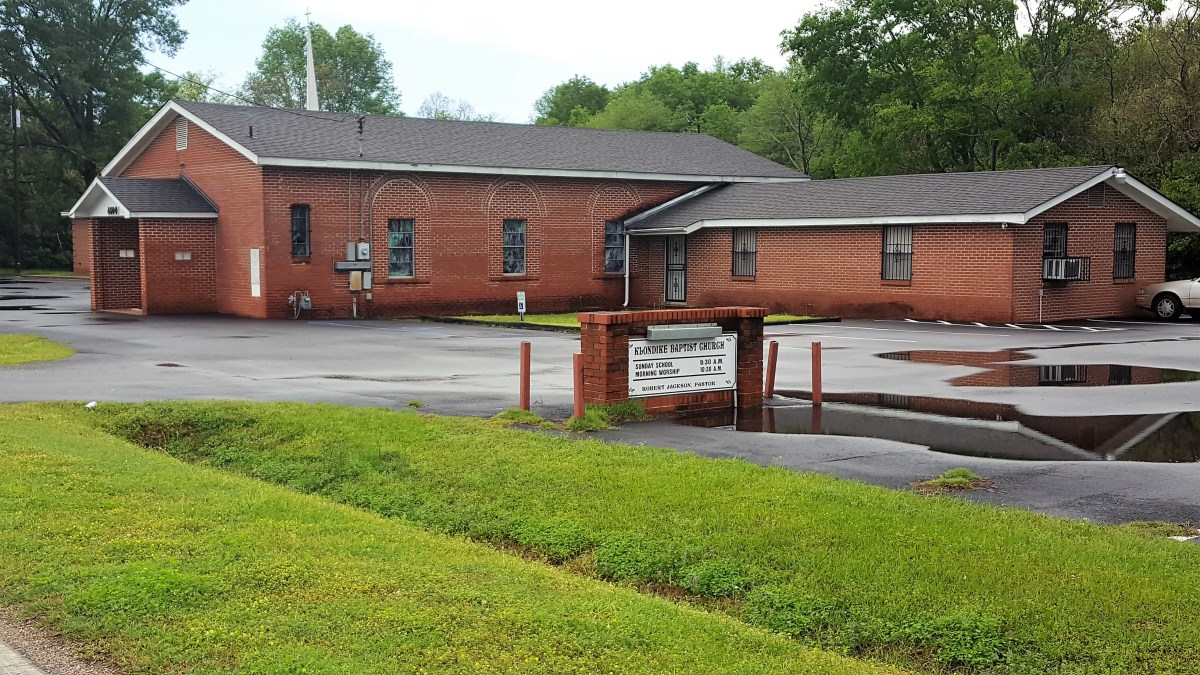
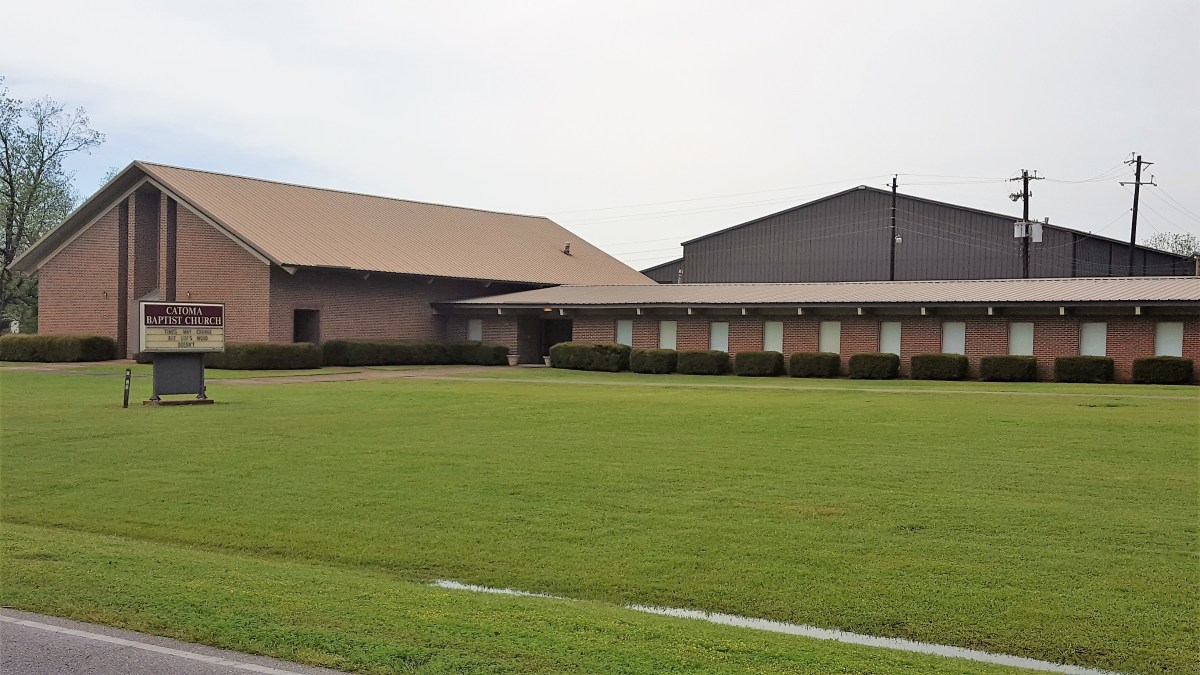
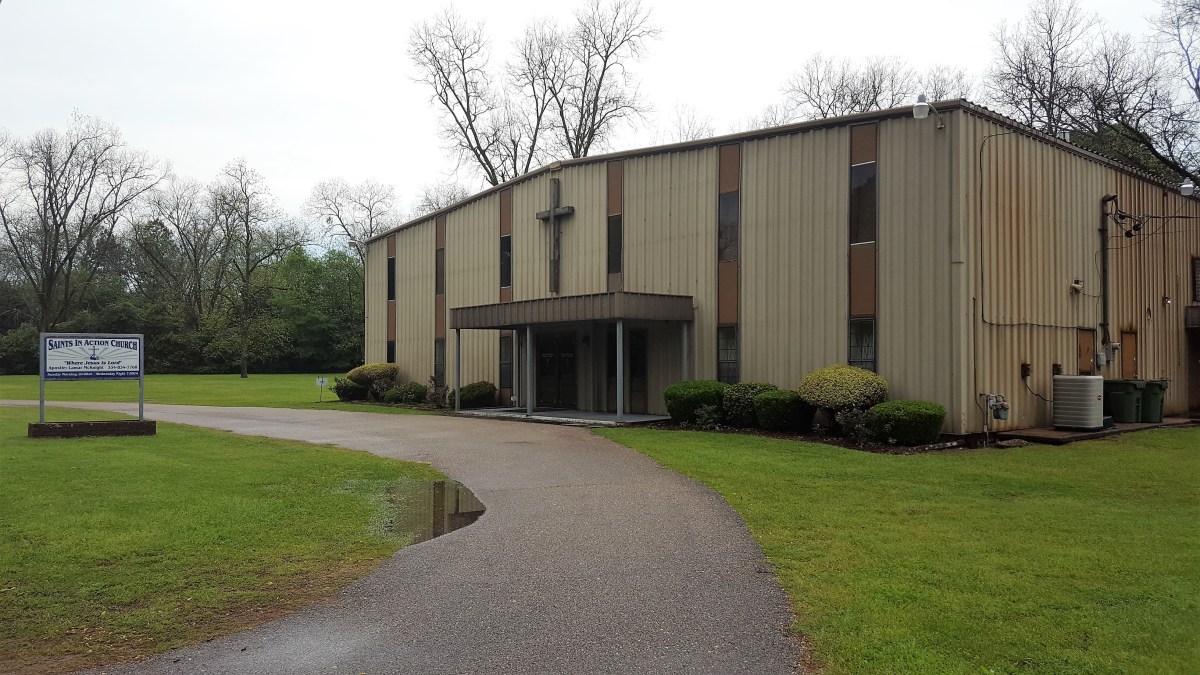
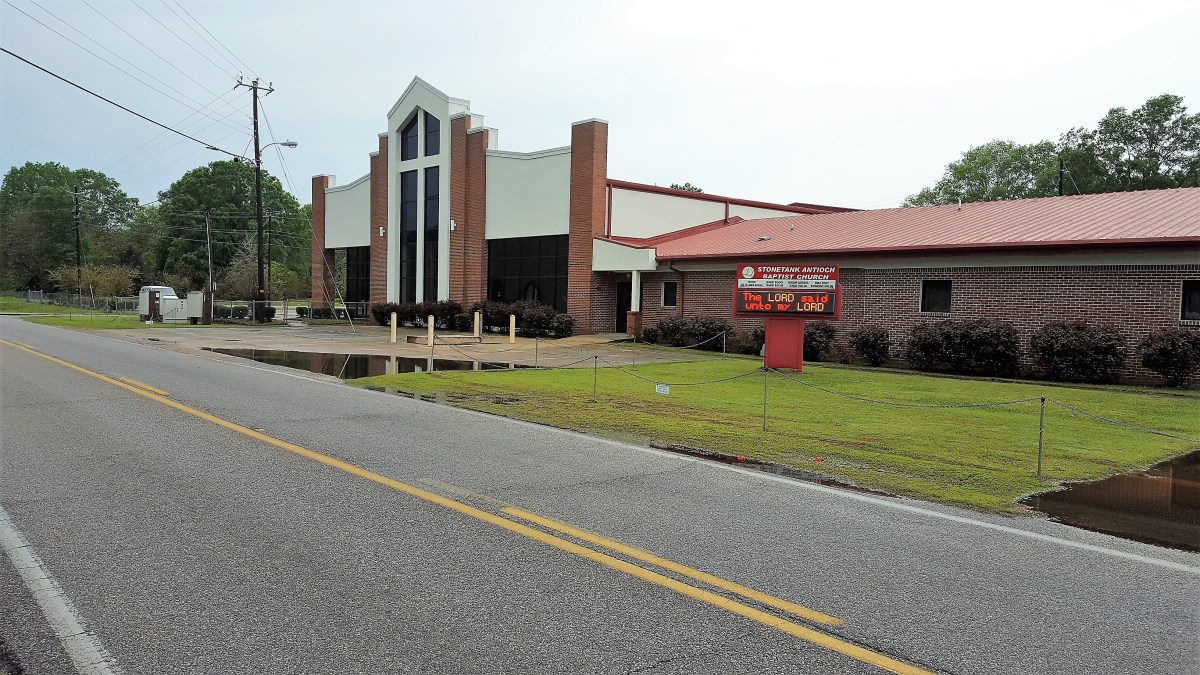
What a relief it was when the squall finally weakened as we exited the highway and turned onto Old Selma Rd. in search of our campground that I may have muttered a “Hallelujah”. If we were grateful to God for arriving without incident, there was no shortage of venues to Praise the Lord. It turns out that eight different churches lined the five-mile route–all of them captured below.Church2.jpgchurch3.jpgchurch4.jpgchurch5.jpgchurch6.jpgchurch7.jpgchurch8.jpgchurch1.jpgIf salvation is part of your endgame, it seems that Old Selma Rd. is one of the most God-fearing stretches of asphalt in all of Montgomery, and the place I know where you should go, to save lives lost at any cost.
Or at the very least, buy a bag of boiled peanuts and shelled pecans from the roadside vender who looks as old as Moses.

¹Translation: “You can’t make a contract with the weather.”

Redneck Nation

Today I washed my truck. What worries me most is that tomorrow’s forecast calls for rain. Not that I’m worried about it raining–it’s that I knew it might rain tomorrow, and I washed my truck anyway.

And then there was Leah reminding me, “Why would you wash your truck when it’s only going to rain tomorrow?”

“I’m aware,” I confessed, “but it really needs cleaning. Y’know, I think I might be turning into a redneck.”

Just earlier in the day, my newest neighbor, a pipe welder from Checotah, OK and I had a serious conversation about truck engines and air brakes. I mean, I would never have had a conversation about truck engines and air brakes ever with anyone in my past life, and yet it seemed so natural today.

From the looks of things, I had a valued opinion on the benefit of driving a V-8 with a greater payload capacity, versus Ford’s highly touted twin turbo-charged V-6 that promises 10% more torque–a specification I was willing to sacrifice in favor of schlepping more junk in the trunk. And the pipe welder listened with interest, giving me that “I-know-whatcha-mean” nod.

It’s true that the truck was filthy. Yesterday, we were off-roading on a ridiculously narrow ridge road along Cheaha Mountain, Alabama’s highest peak at 2411 ft., and it was dirty fun.

“SLOW DOWN!!,” Leah reiterated a dozen times, gesturing wildly.

In my defense, I was only doing 25 mph, but maybe it felt faster to her given the road was badly rutted and had no guardrails to protect against the hairpin switchbacks. Each turn was met with “Oh, God!” by Leah.

When we returned to the Airstream, I noticed that a fine silt had infiltrated the closed bed of the truck through its weep holes, and coated everything with an asthma-inducing dust.

So today, everything had to come out of the back of the truck and be wiped down. Then, I took a hose to the sandy-colored Alabama particulate that coated the floor, and washed it all away. That’s when I got the itch to finish the job, and wash the exterior too. The weather couldn’t have been better–cloudless blue skies and 82 degrees, and it was refreshing working in a tank top and shorts. Surprisingly, Leah got swept up in the activity, and the two of us made short work of the task.

The pipe welder looked out from across the lawn. He was studying for a 100-question re-certification exam on April 20 between occasional tobacco chew spits.

“She sure looks purdy when she’s clean,” he gushed.

I realized I was becoming the person who I referenced in an earlier post (Rig or Mortis), and I was showing off my truck’s shine.

After writing this post, I stopped inside to freshen up, and I couldn’t help but notice my reflection in the overhead vanity mirror. Sho’nuff, my shoulders and neck had gotten plenty of color.

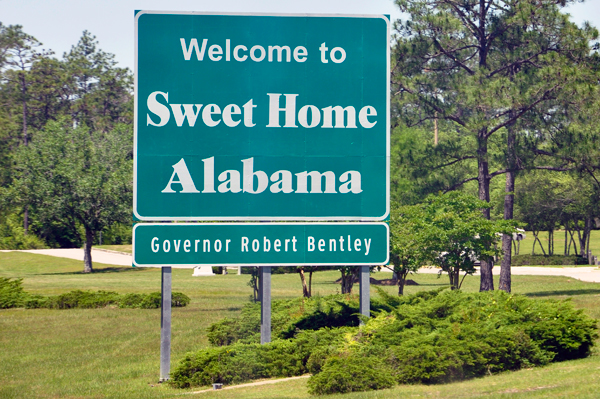
Sweet Home Alabama

Leaving Memphis at 9:30 am for a 285 mile jaunt to Coleman Lake in Talladega National Forest, AL was expected to take 5 1/2 hrs. That was the only thing certain about this leg of our trip. Where we would set up residence for the next three days was the biggest question mark.

Our design was to camp at the lake, and take advantage of the Department of Agriculture’s generous $10 site fee with electric and water hook-up provided. We monitored the vacancy prospects from the road, since there is no reservation system, unlike the Park Service, which operates through the Interior Department.

From the time we started out, we knew from Louise, a central office clerk that we were competing for seven coveted slices of real estate. Midway through our trip, a phone call confirmed that only five sites remained. And by the time we reached Birmingham–which was one hour away from our piece of Eden–the odds started working against us, when we learned that only 3 spots remained. It was time to consider contigency plans.

A quick scan of the internet was less than promising, considering we were looking to escape to an area that was off the grid with limited availability. Fortunately, we wandered across an obscure RV park with decent reviews just outside the forest within Heflin city limits that according to Lawrence still had three sites available for $30 a night.

We proceeded as planned, moving closer to staking our claim as we pulled into a Shell station off Exit 199 on I-20. A phone call to Louise produced a small panic attack; there was only one site left, and we were within striking distance. Could we, would we make it there in time? Gassing up the truck would put us behind by 15 minutes, but with 12 miles to empty, there was no doubt that this was time we needed to allow.

Once we started rolling again we were committed to the bitter end, now that cell service was interrupted by the beautiful forest scenery. The trees were filling in with seasonal green, and the switchbacks and narrow roads were becoming more challenging. We held our breath (not literally) during the last 10 miles of our journey up the mountain. We exhaled (literally) turning the corner into the campground; we had arrived to uncertain news. The campground steward met us at the truck.

“Are we in time?,” Leah blurted out.

“Are you the one’s been callin’?,” he wondered, “Cause last time I checked, I got one space left, B-37 I think, and you’re welcome to follow the road around ’til you come to it, and we’ll settle up after you get settled.”

Leah and I exchanged “we-just-won-the-lottery” grins, and chugged out in search of B-37. The site was almost a full circle around the ring road, up a steep embankment on the left with enough room to hold two trucks, a trailer, a pop-up tent, three bicycles, and seven interlopers. Gramps was busy hand-cranking the camper to a level position, while Granny was herding the kids.

“Are you shitting me?,” I asked nobody in particular.

We immediately resorted to Plan B, driving back down the mountain road while struggling with inputting a new GPS address. We got Lawrence on the phone when we were free and clear of our traitorous natural surroundings, and returned to 3-bar civilization.

“I got three spaces left,” he offered.

“We’ll take it,” Leah yelled. “We’ll be there in half an hour.”

An hour later, after setting up and rewarding myself with a cold beer while sitting in my burnt orange-colored travel chair atop a woven Navajo-patterned polyester mat, two massive 5th wheels with slide-outs pull in close on both sides of our Airstream, threatening to swallow us. While setting up on my right, Mr. Proximity turns to me.

“Hey, didn’t I see you at Tom Sawyer’s earlier today?”

As a matter of fact he did. We spent the last three nights trailering at Tom Sawyer’s Mississippi River RV Park in West Memphis, AR. But the only people we spoke to were a retired couple from Ringwood who saw my truck plates, and that led us to playing Jersey geography. It turns out their son, Jeff and Leah’s daughter, Carrie are Facebook friends who graduated from Lakeland Regional High School together. Other than that, I had no connection to the people moving in beside me.

“Wow, I’m impressed you remembered my Airstream. I hope you’re not stalking us,” I kidded. “We were on our way to Coleman Lake, but got turned away last minute, so now we’re here.”

“Us too,” he said. “Can’t beat the $10 fee up there. We was passin’ through Talladega last Monday. Pretty sites an’ all, but between the highway traffic an’ the train whistles, I’d just as soon stay here where it’s quiet. Besides, we’ll be gone by morning.”

I liked the sound of that.

Hail Lisa Marie, Full of Graceland

The Graceland mansion tour allows visitors to gawk at garish furnishings that are fit for a king throughout the year except on Thanksgiving and Christmas.

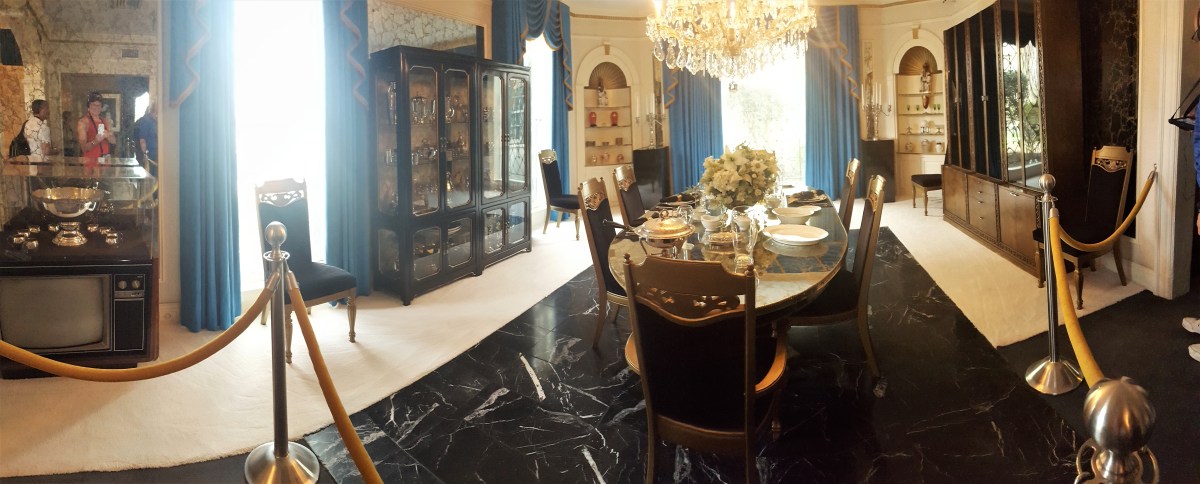
On those two days and afterhours, Lisa Marie (as sole heir) and her family are certain to emerge from their second floor retreat (which is strictly off limits to everybody else) and romp about the downstairs–perhaps to enjoy dinner in the dining room without the roped stanchions,

Graceland dining room.jpg

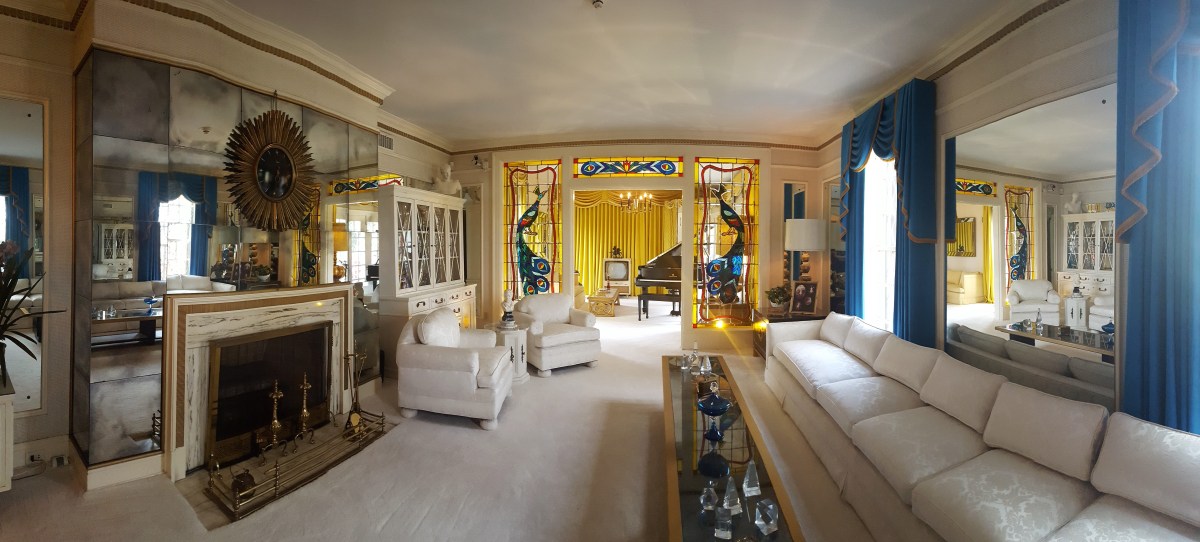
or take coffee in the living room.

Graceland living room.jpg

A private tour guide was overheard discussing Lisa Marie’s comings and goings, which have become more frequent now that she resides in Nashville. So it’s not uncommon that she’ll visit with her 8-year-old twin girls.

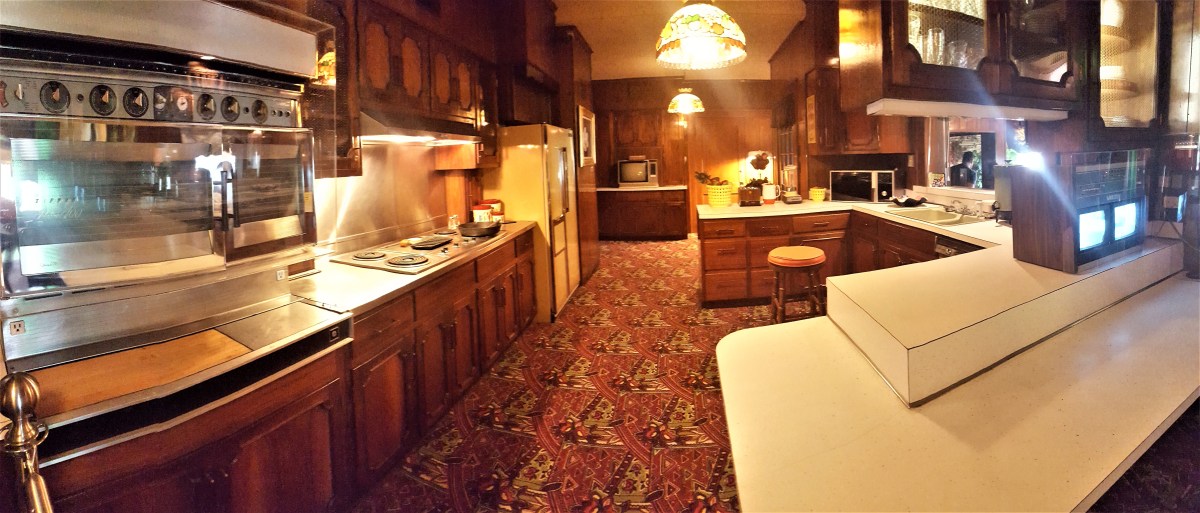
Since the kitchen is surrounded with display glass to preserve the $750 microwave oven Elvis bought in 1972, I asked if a kitchen existed on the second floor for family use during the day.

Graceland kitchen.jpg

Sources have confirmed that only a refrigerator exists in the living quarters, but if anybody is hungry–for instance when the twins requested McDonalds the other day–the Graceland staff was more than willing to bring it back, helping Lisa Marie avoid the paparazzi, and maintain anonymity.

“She could be upstairs right now,” said the VIP guide, “lookin’ down at you through that window, and you wouldn’t even know it.” That sounded creepy to me.

Lisa Marie fondly recalls the childhood years she spent in the Jungle Room while growing up in Graceland–feeling the green shag carpet under her feet, and snuggling in the plush barrel chair by the waterfall, usually while she watched TV (one of 16 on the property).

Graceland Jungle room.jpg

In fact, her father, Elvis so adored TV, that like LBJ at the time, he maintained a media room in the basement so he might watch 3 side-by-side TVs at once.

Graceland media room.jpg

And while the house is a triumphant tribute to gaudiness, like the pool room,

Graceland pool room.jpg

it pales in comparison to the on-site gift shop, where the public can take home an endless supply of in memoriam memorabilia.

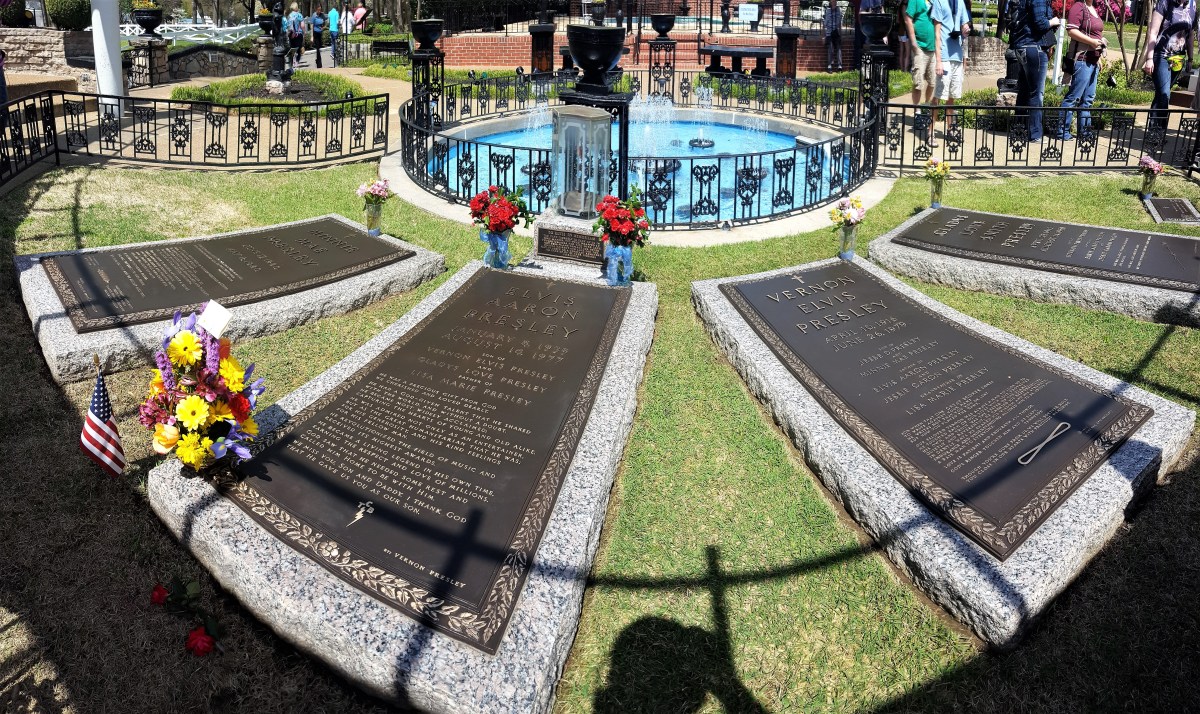
Graceland graves.jpg

Because, Elvis by design, according to Lisa Marie, is all about taking care of business (TCB).

Elvis socks.jpg

Elvis wear.jpg

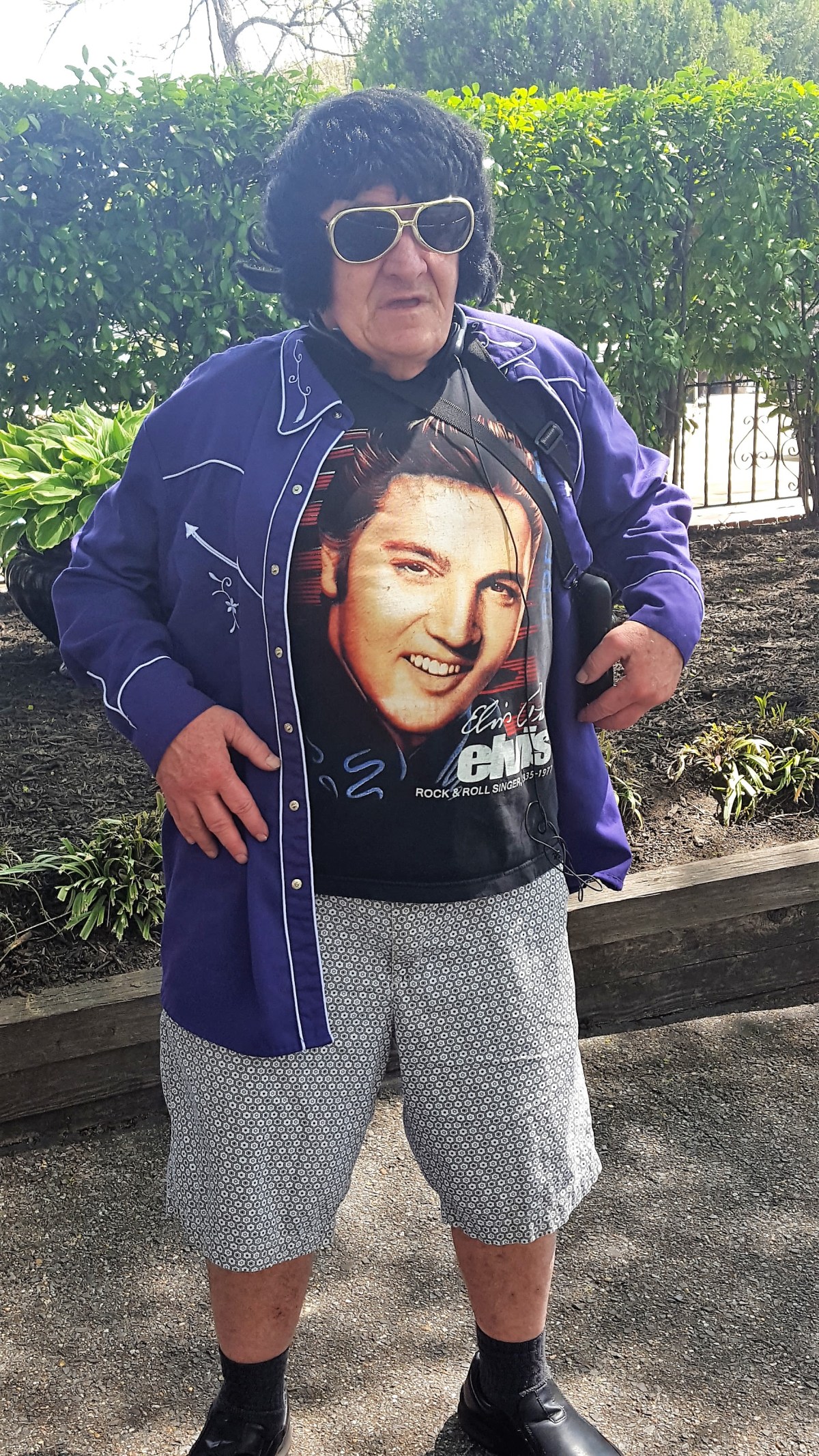
And at the end of the tour, long after the last pre-recorded note has been sung, and the last of the 2,000 guests per day has been bussed away, there can be little doubt, regardless of what you’ve heard, that Elvis is definitely still in the building.

Elvis impersonator.jpg

Smoked Meats

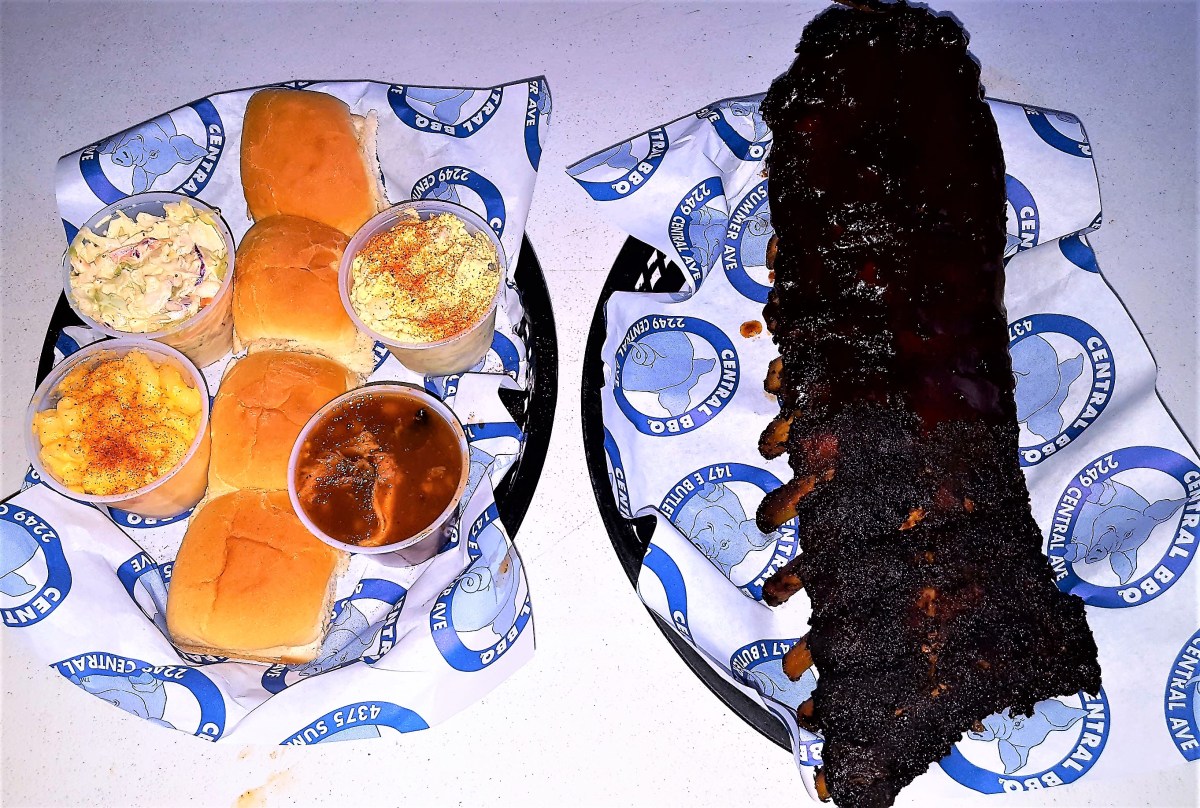
Memphis is the best thing to happen to ribs since Adam’s grand gesture to Eve. As one of the four great BBQ pilgrimages (including Carolina, Texas, and Kansas City) Memphis stands out among all the others given its sheer volume of first class BBQ eateries scattered throughout the city. Whether it’s a joint, shack, restaurant or food truck, the holy trinity of meats–pork, beef and chicken–are all represented here in Memphis and consumed in biblical proportion.

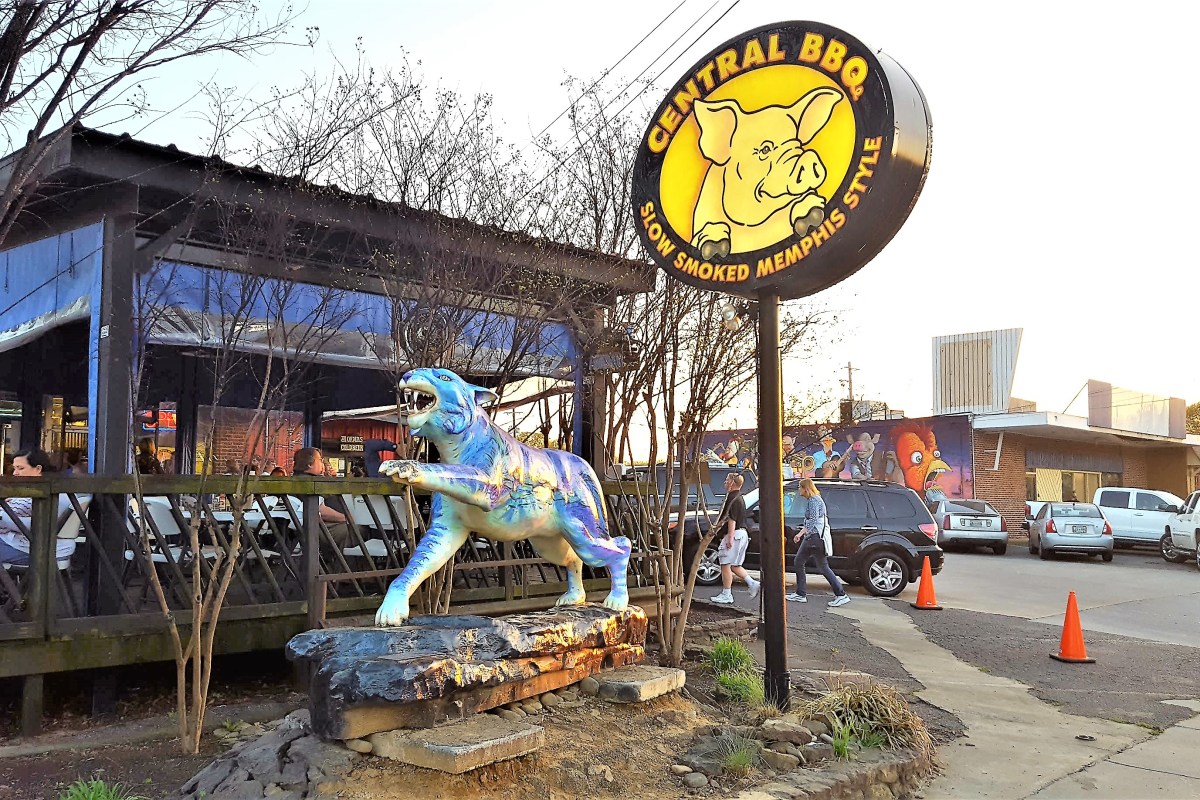
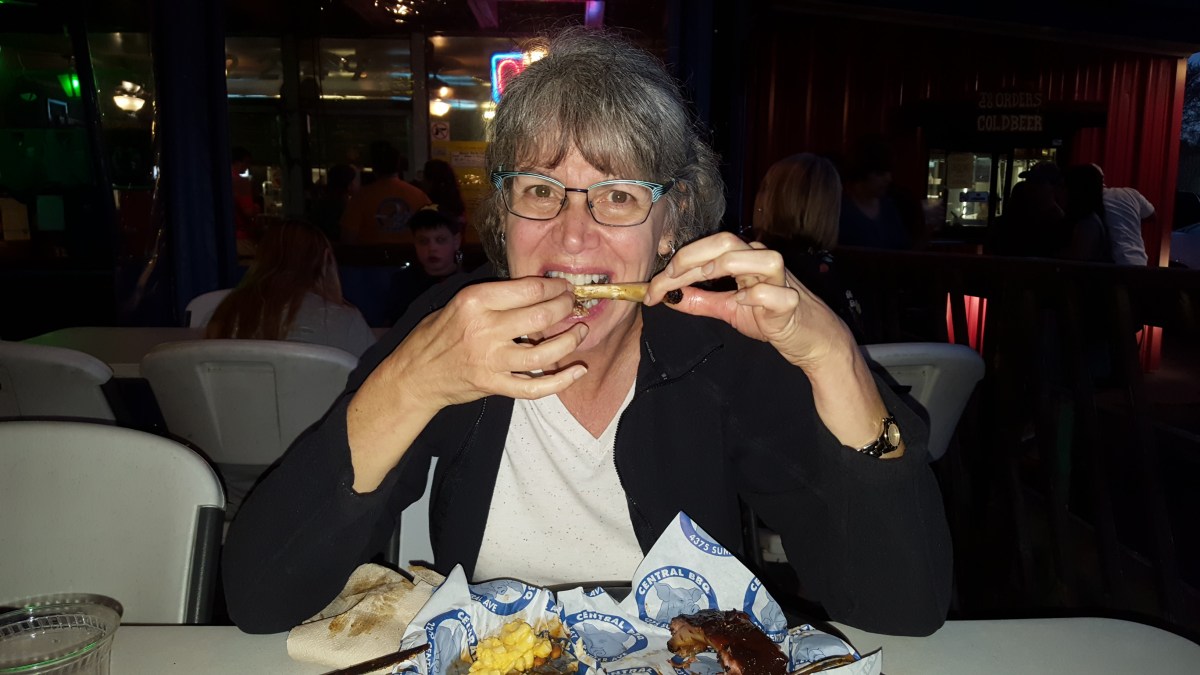
With so much to choose from, we went to the internet to narrow our options. Realizing our propensity for gnawing on bones, and weighing the opinions of the millions who came before us, we settled on a full slab with 4 sides from Central BBQ, a relative new-comer who has already expanded to 3 locations in its 15-year history, and a perennial favorite at the Memphis in May World Championship Barbecue Cooking Contest.

We arrived at 7 pm to overflow parking and a lengthy line out the door. A covered outdoor dining room with family-style seating bustled with a blend of first-timers, students, families, and business types. Eventually, we approached a counter to place our order. We exchanged money for card #23 and sat ourselves, waiting for our food to be delivered 10 minutes later.

20170328_192658.jpgOur rack-for-two was prepared as 1/2 “wet” and 1/2 “dry”. The wet half was basted periodically with a rich tomato, molasses, and vinegar sauce laced with heat, while the dry half was rubbed in brown sugar and spices, rendering a caramelized crust during it’s 12 hour slow cook.
20170328_193637.jpg

Leah and I debated which half we liked better, and unanimously elected the dry rub as our favorite, which also gave us the value-added option of dipping our ribs in: Mild, Hot, Mustard, Vinegar, Hot Vinegar or Sweet Heat barbecue sauce.

Our sides included tasty mac ‘n cheese, coleslaw, baked beans, and potato salad with 4 rolls, all washed down with a pint of Ghost River Grindhouse, a highly regarded local Memphis brew.

20170328_191659.jpg

By 8:30 pm, the dining-in crowd had thinned, but the take-out window was still cranking out orders. It seems the local population knows exactly where to go for its smoked meat fix.

A Hole in the Head

What’s so special about a 379 ft. hole in the ground?

Well, it matters to a lot of folks near the bottom of Kentucky, where the National Park Service legitimized Mammoth Cave as the 26th National Park in 1941. And it matters to lots of Black Americans whose slave ancestors have recently gained recognition as some of the earliest cave explorers before the Civil War. Of course, the biggest irony is that the most qualified cave guides couldn’t get work at the cave once the U.S. government took over the concession.

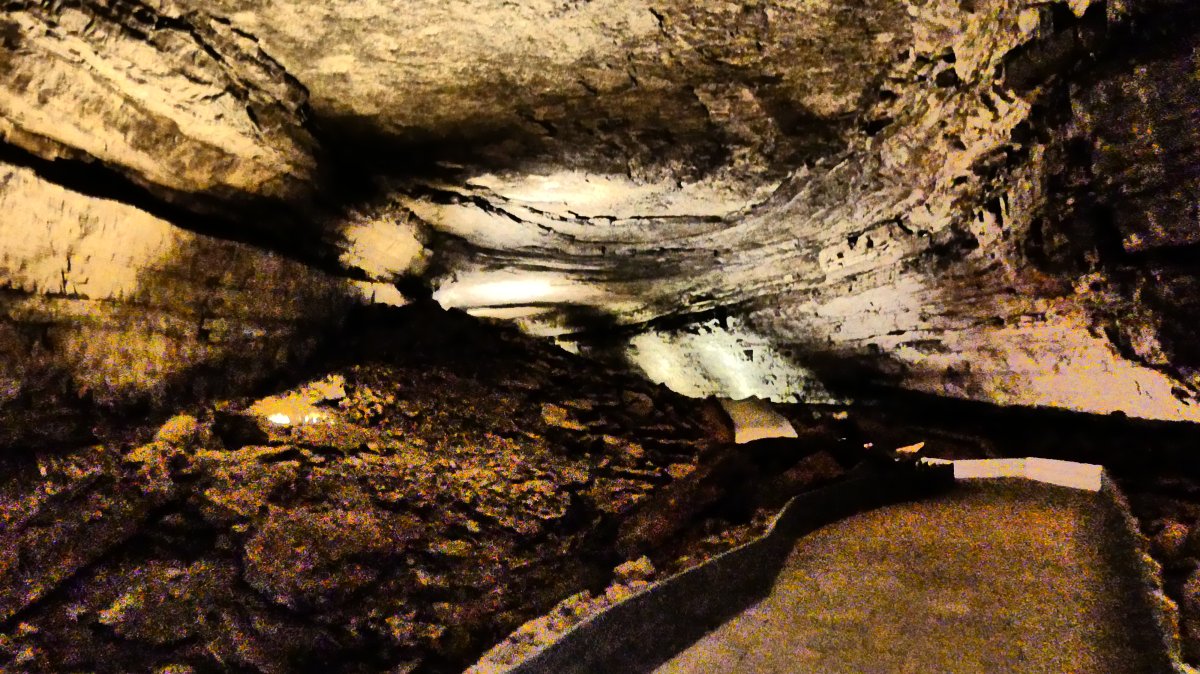
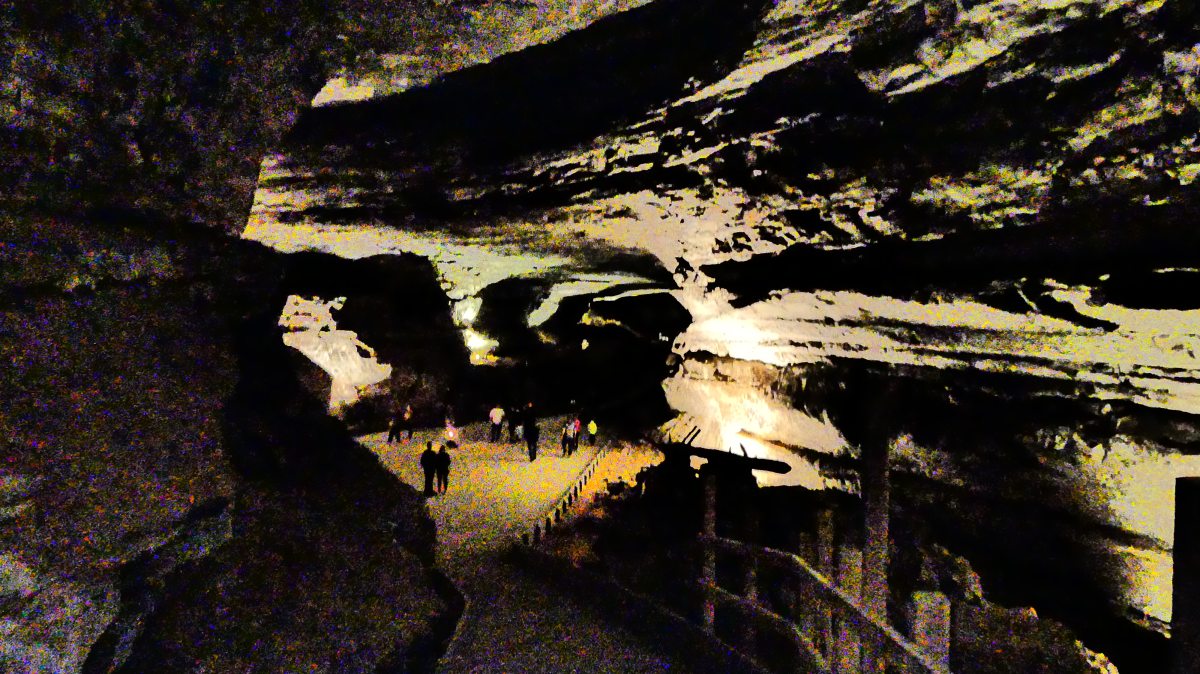
Stretching more than 400 miles in all directions, Mammoth Cave is the largest subterranean cave network in the world, with geologists speculating that another 600 miles of caves have yet to be discovered. But what cave explorers have mapped thus far, has brought international tourism to this area, and turned spelunking into a regional phenomenon. Hardhats with headlights are de rigueur in Edmonson County. And children nag their parents for facsimiles in the park and hotel gift shops.

Reservations during peak season are strongly recommended by the Park Service as tickets are needed for cave access, and group sizes are limited. Upon arrival, we were disappointed to learn that spring-breakers had overwhelmed the demand, and we’d be shut out during our stay in the park. We reluctantly accepted a self-guided tour that was underwhelming, albeit we learned that the cave had once been a mine for sluicing saltpeter (an essential component of gunpowder) during the War of 1812.

P1010177 (1).JPG

P1010201 (2).JPG

P1010194.JPG

P1010193.JPG

P1010178.JPG

We later discovered that the park offers 16 tickets for the Frozen Niagara tour to the lucky few who are willing to wake up early and stand in line the following day when the ticket office re-opens at 8:00 am. Leah arrived at 7:45 am to find a lengthy line which didn’t bode well. With a little misdirection, she managed to cut the line, and snagged two tickets.

We boarded the bus at 9:45 am after a brief safety introduction by Ranger Jerry Bransford.

The ride to the cave gave Ranger Jerry a chance to tell the story about his great-great grandfather Materson Bransford, who along with Nicholas Bransford and Stephen Bishop became the first to guide the curious through the darkness holding candles.

His kin welcomed royalty and celebrities from around the world, including Jules Verne, Ralph Waldo Emerson, and Gen. George Custer. What a scene it must have been for the rich and famous to heed the commands of slaves while underground, only to be castigated as slaves when they resurfaced.

It was after a 30-year career in manufacturing, and a 55-year interruption of Bransford know-how, that Ranger Jerry accepted an invitation from the park service to continue the legacy that started four generations ago, and return as a Mammoth Cave tour guide.

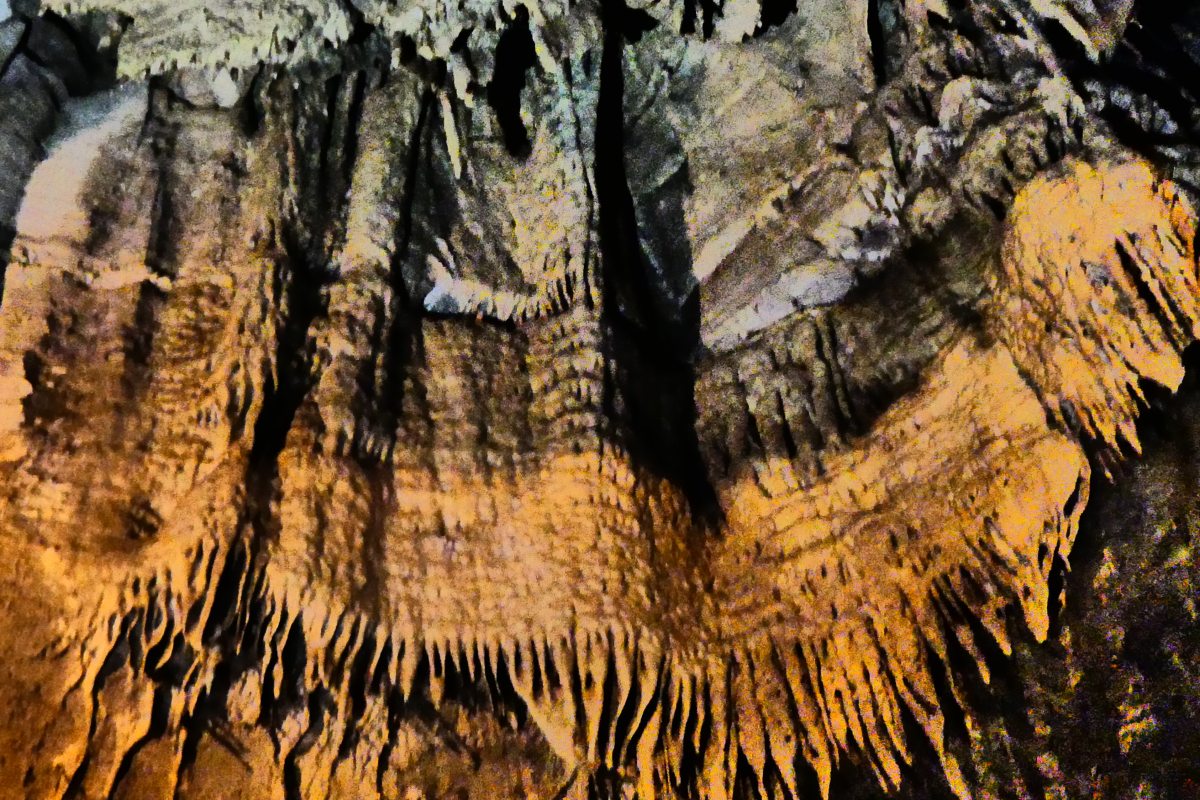
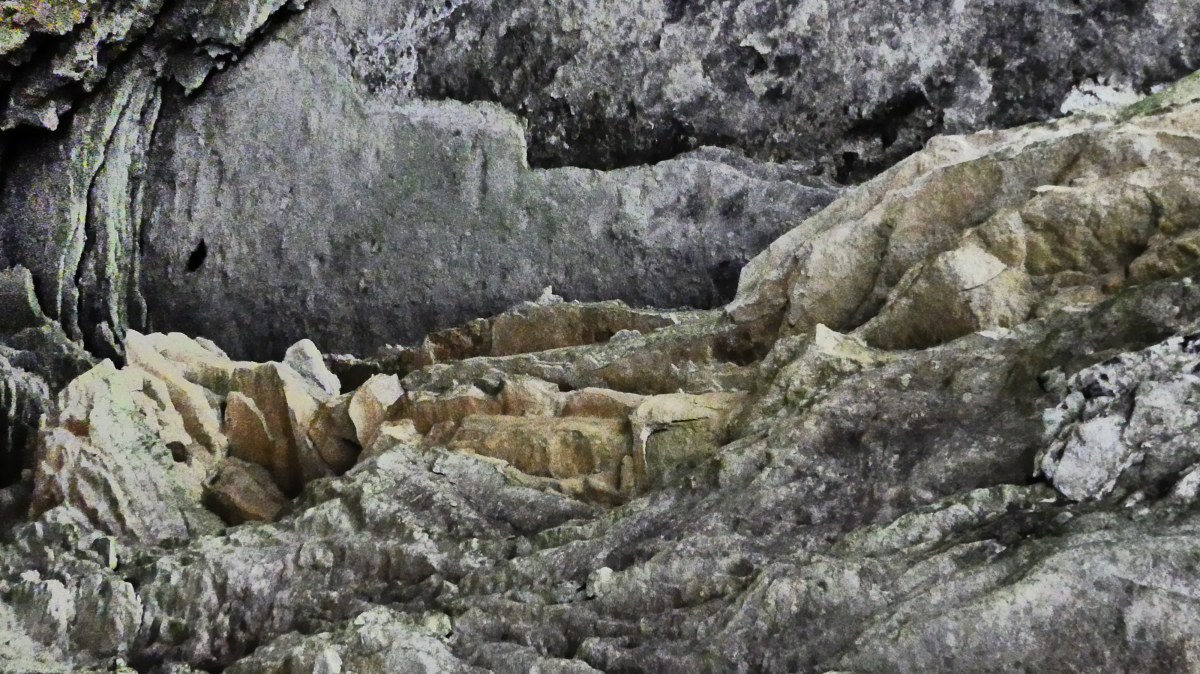
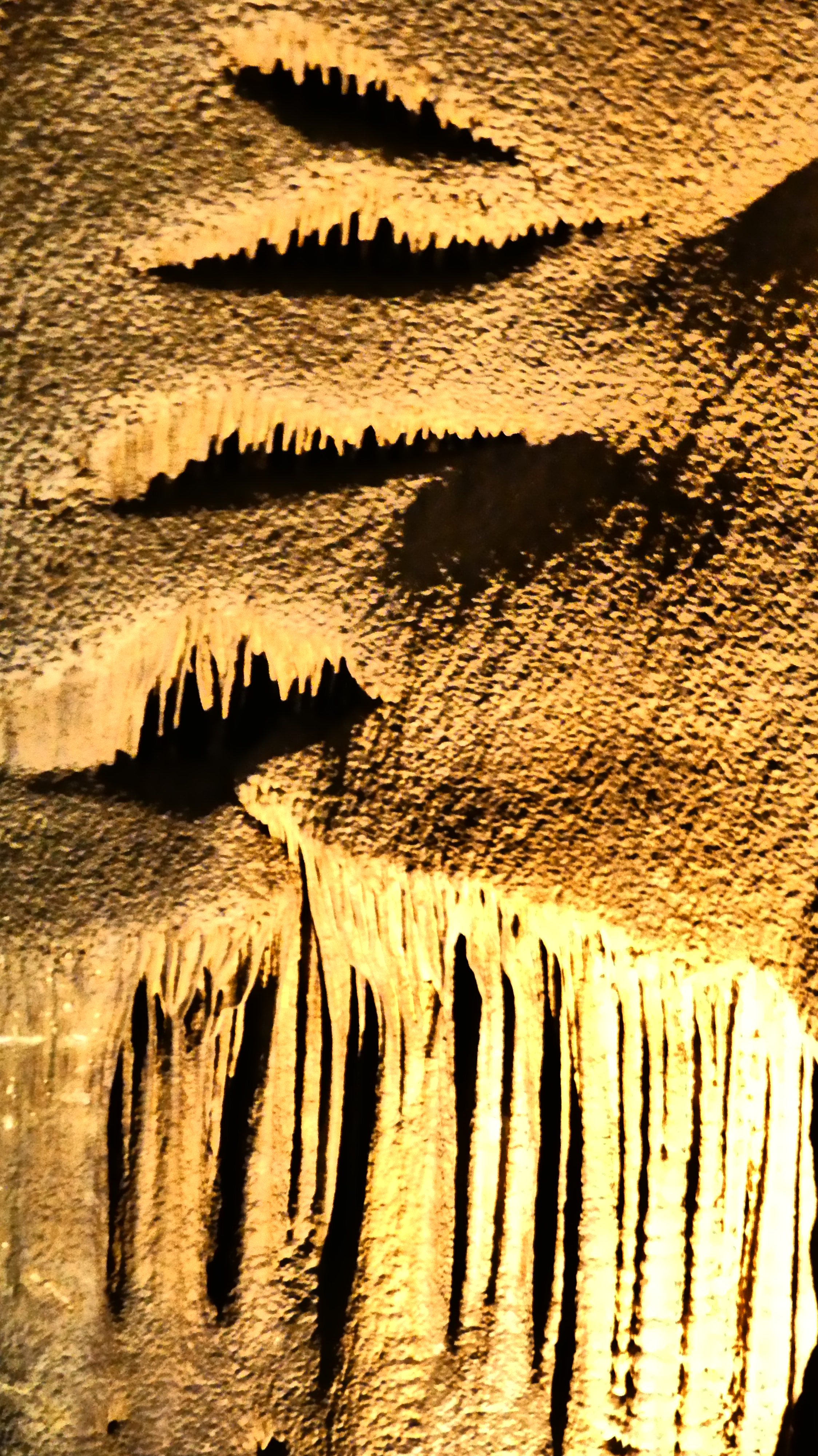
Since Mammoth Cave is known to be a dry cave, there is insufficient dripping water to mix with limestone to form stalactites from the ceiling and stalagmites from the floor. However, Frozen Niagara is a rare exception for having a subterranean river that flows overhead, producing spectacular formations that continue to drip and grow, as they have for the past 250 million years.

Uncharacteristically, the bunker-like entrance to the cave yielded to a revolving door. The last one in had to volunteer to lock the door from the inside. On the way down into the tunnel through a narrow passage with low ceilings is when I yelled at Leah to “DUCK!” while she was looking for her feet in the darkness and heading towards a ceiling with no clearance.

“Owww, FUCK!” she yelled, her head bouncing off a knob of stone. It was only minutes ago that Ranger Jerry forewarned that “someone on this bus is gonna get ‘brainrock’ goin’ through the passage, so BE CAREFUL!”

I saw it happening in slow-motion, and I was powerless to stop her. I reached over to massage a knot beginning above her hairline that was fast-turning into a knob—almost a mirror-image of the stone she crashed into.

A woman yelled behind me, “Hey, thanks for the warning.”

“Look Mommy, I’m getting down on my hands and knees,” her daughter said.

“Get up, Cindy. The nice man said you can’t touch the rocks.”

The tour continued to a 200 ft. shaft of carved and decorated rock that plunged into a pool. We got to stand somewhere in the middle between top and bottom of this opening which made it hard to decide whether to look up or look down. Either way, it was breathtaking. I was delighted to learn that stainless steel railings would lead us to the bottom, providing another remarkable perspective.P1010209.JPG

P1010212.JPG

P1010208.JPG

P1010220.JPGP1010226.JPG

At the conclusion of the tour, the passengers were directed to a gangplank lined with spongy mats soaked with Wool-Lite and water to decontaminate the soles of our shoes from possible exposure to “white nose”, an invasive fungus that has claimed more than 6 million bats in the past 5 years, and has appeared in 29 states to date. The original carrier was known to be an amateur English spelunker who brought the fungus across the ocean on his caving equipment. As a child, Ranger Jerry’s kin would tell him stories about ceilings so thick with bats, that you could feel the room quivering. But not anymore.

Ranger Jerry shook my hand at the end, and gave me his card. He wanted me to share his story. I would have liked to record Jerry’s story during our bus trip. Unfortunately, the idea occurred to me halfway through his spiel. But redemption came when I approached the exhibit area and discovered a video of Jerry’s interview playing on a small kiosk monitor. The audio portion was captured and may become available at a later date if I choose to upgrade my subscription for an additional expense.

In the meantime, the New York Times carried the following travel feature about the historic Bransford connection to Mammoth Cave:

Eat and Get Gas

Towing a silver behemoth is welcome news for the oil industry. With an average 10 mpg, I have become gasoline’s new best friend. With an extended range fuel tank capacity of 36 gallons, Leah and I have agreed to limit our truck trips to one fill-up per day when moving from one location to another. It keeps down the daily expense, and caps our driving time to approximately 6 hours.

After a day of unfulfilled scenery following the plumes of coal exhaust along the highway to White Sulphur Springs, WV, we stopped at a Shell station that was refreshing its reservoirs by a fellow who operated a Reliant Oil tanker. Given that it takes a while for both of us to fill empty tanks, we had a chance to chat. He greeted me and shook my hand.
“I just want to thank you for helping me help keep my job by you helping to buy gas here, and I really do appreciate it.”
With his Santa-esque appearance, he would make a welcome addition to the C & O Train Depot-turned-Christmas Store operated by the Greenbrier Resort down the road.

His day was almost over, with one more stop to make at an Exxon station.
“You mean to say that Shell and Exxon share the same gas?” I asked.
“That’s about right, since it’s cheaper to hire me than have both companies service their own pumps.”
“But look at the signs,” I protest. “Shell claims they sell nitrogen-enriched gas while Exxon, across the street claims they sell Synergy gas. How can that be if it comes from the same truck?”
He looked at me as if the answer was obvious. “You ever eat your grandma’s cake, an’ it’s so good. An’ then you eat your mom’s cake, an’ it tastes just as good? Well, cake is cake an’ gas is gas.”
“By the way, you’re not allowed to call us hillbillies anymore,” he continued. He lived local, about 50 miles from Lewisburg—named “The Coolest City in America” in 2011—and advised me that his kind preferred to be called “Appalachian proud”.
I asked him about the area’s high unemployment and the many unfriendly reports of poverty-level living with so many coal mines shut down.
“Don’t let these people fool ya. All them shacks with mud floors along the road without heat and electricity? They live that way ‘cause they want to. This way they ain’t beholden to no government.”
“I’ll bet the still behind the house helps to make them forget,” I added.
“Shhh…,” he whispered, pulling a grease-stained finger to his lips. “That’ll be our little secret.”

Form vs. Function

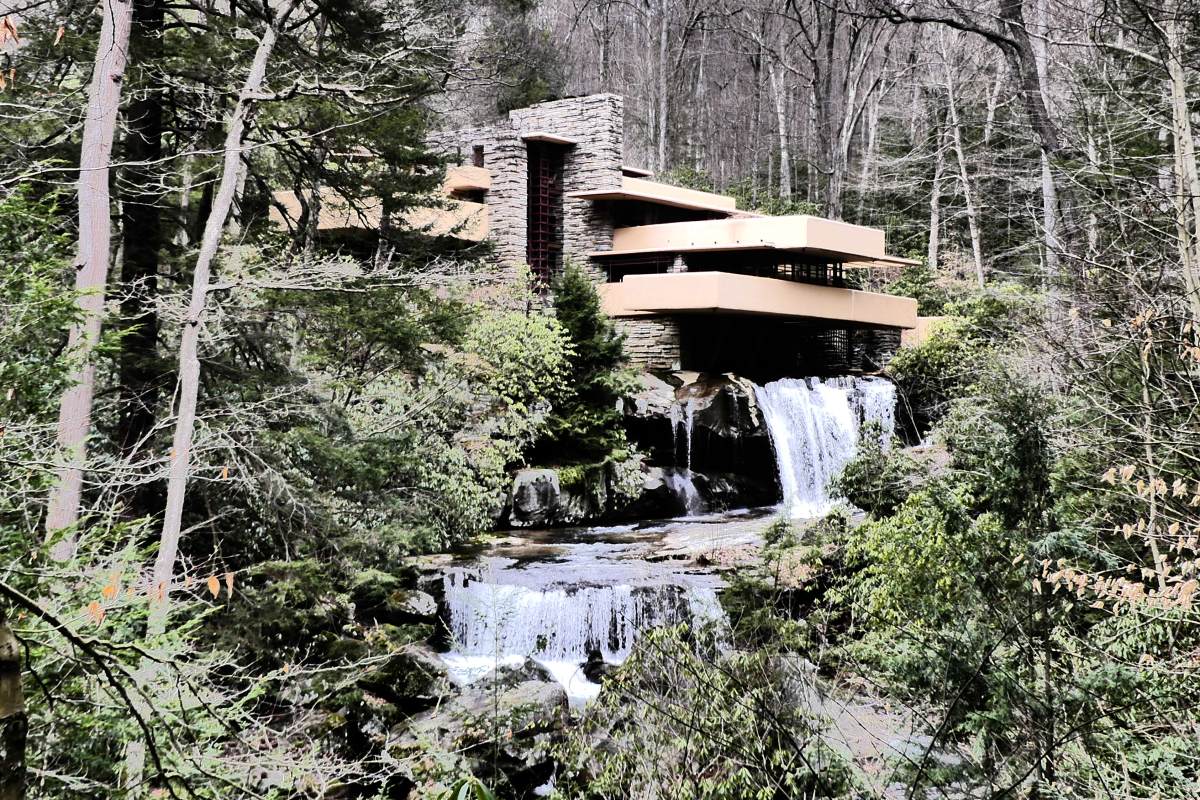
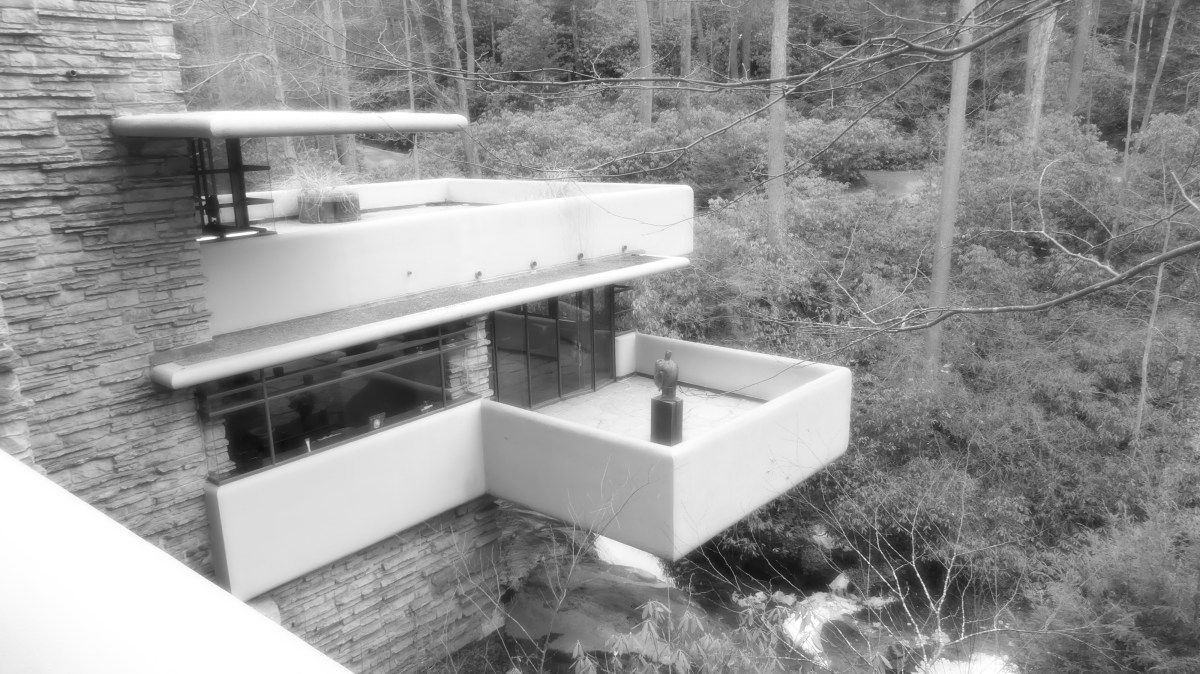
Just in case you’ve been living under a rock, there is no better rock to be living under than Fallingwater, located in the Laurel Highlands of southwestern Pennsylvania along Bear Run. Where else could you retract a glass floor to walk down a set a stairs from your living room, and soak your tired feet in running water spilling over rolling rocks? With stone quarried on site, and repeated themes of cascading concrete terraces that cantilever throughout the structure to resemble nearby rock formations, I can’t imagine another residence anywhere that is so bound by its natural habitat.

P1010122.JPGP1010127.JPGFallingwater is considered the finest piece of mid-century architecture anywhere, and it’s a treat to tour the house from the perspective of the Kaufmann family, who commissioned Frank Lloyd Wright to design the retreat at the age of 70 in 1935. Completed in 1937 for $155,000, Wright frequently battled with Edgar Sr.–a Pittsburgh department store magnate–to preserve his purist design.

While the family respected Wright’s vision and artistic integrity, moreover, they wanted a house that would work for them–a house that they could live in. And so, Wright, who was at the nadir of his career, and famous for his unwillingness to compromise, held his breath and took on a client who had an equally strong idea of how his house should function. That they would survive such a contentious relationship for the sake of art and design is a testament to patron/artist symbiosis.

The sound and smell of water is omnipresent from room to room. There are no blinds or drapes that would rob the senses of scenic vistas–only walls of glass that seam at the corners, or more miraculously, windows that hinge without a trace of interruption.

Much of the furniture is built-in, and would seem uncomfortable, as if to suggest to the tenant that it’s motivation is to drive you outside, where nature is always the winner. But there are touches of warmth as well, including a massive fireplace with a swinging cauldron that could easily provide gallons of hot toddies when pulled into the fire, and bathroom walls and floors lined in cork.

The steel beams that buttress the building are colored to respect the outcroppings.

P1010129.JPG

And other beams are playfully conversational and conservational.

The notion of unifying form with function is always contentious. The language of one easily dominates the other, leading to certain confusion and discord. But if both sides listen at the same time, and hear the quiet between the noise of overlapping voices, then something wonderful happens, and it’s called Fallingwater.

There’s a Bunker in the Hill, and It’s Revolutionary!

Dave was our guide for the 90-minute bunker tour below The Greenbrier in White Sulphur Springs, WV.

Hallway (3)

It was Dave’s 532nd tour in the two and one-half years since he retired from selling Chevys in town. His wife had begged him to go out and do something that will keep him away from her while keeping him fit. Always a fan of history and meeting people, Dave now claims he’s found the perfect job since it requires walking just over I mile per tour while he lets us in on a secret withheld from the public for thirty years.

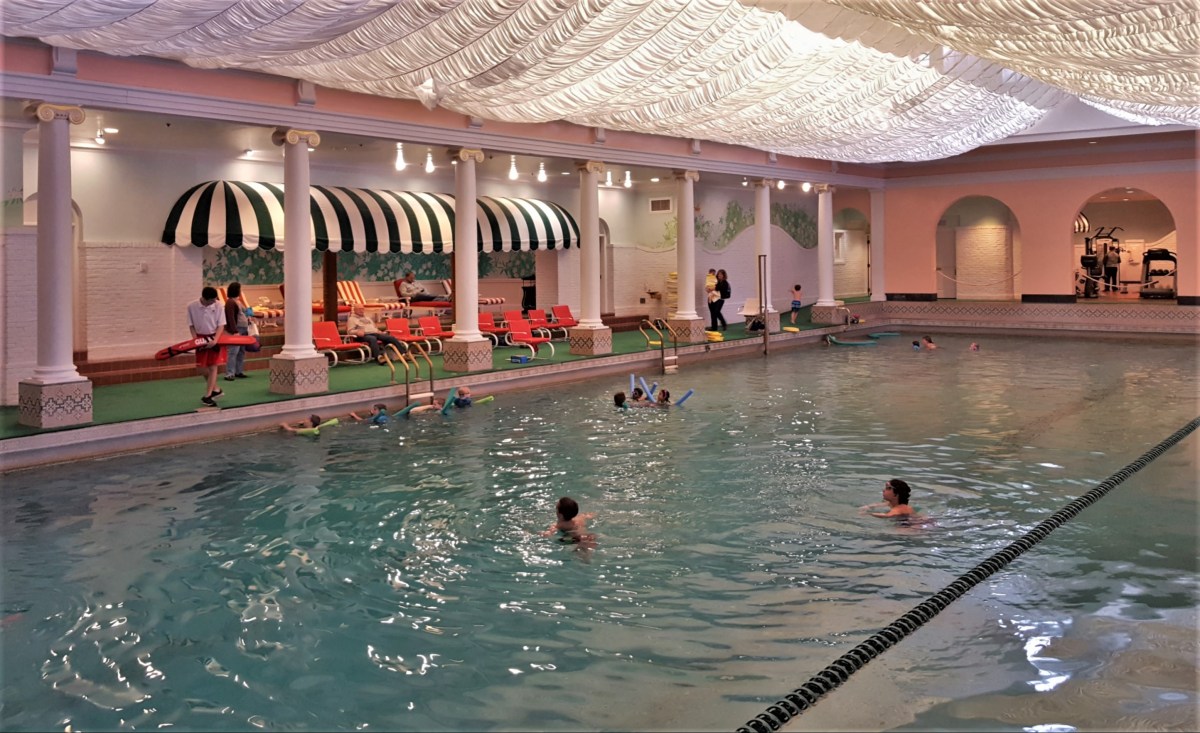
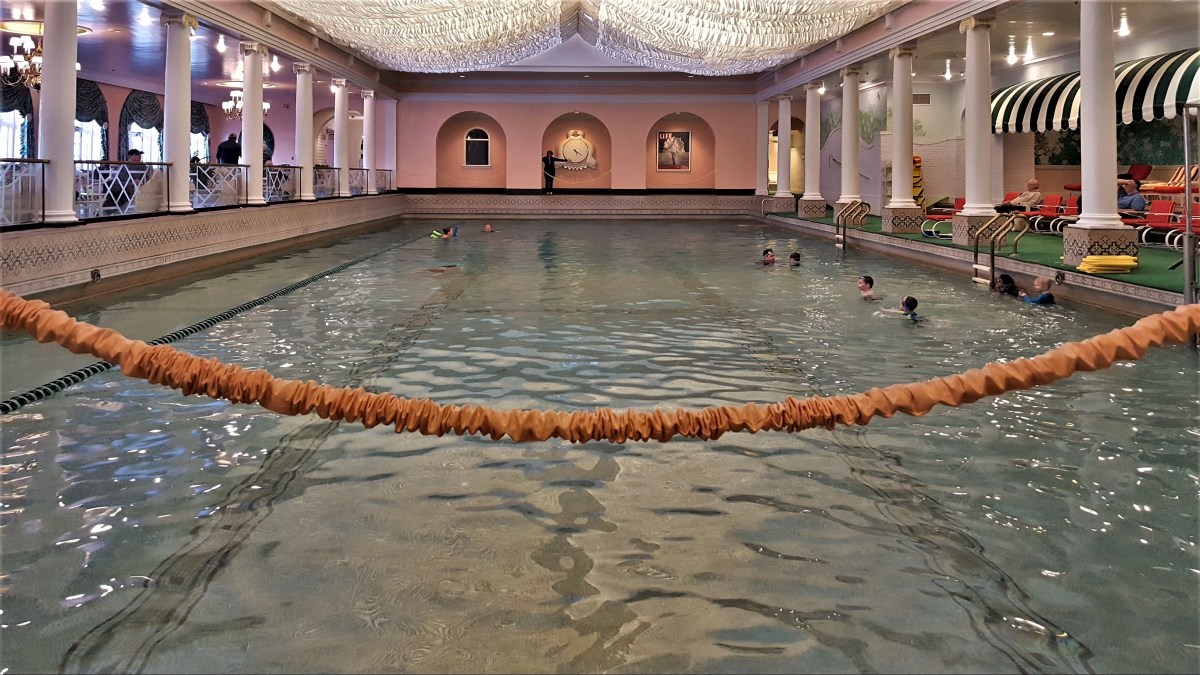
Dave led us past the hotel indoor swimming pool, built in 1914,

pool.jpg

and considered the largest of its kind, built at the turn of the century.

pool end

Dave revels in the trivia.

“Do you know,” he asserts us, “that this pools has exactly 961,000 individual tiles set into the pool walls and floor, and I challenge you to tell me otherwise.”

“Exactly 961,000?” I contest.

“Exactly!” Dave reaffirms. “Don’t believe me?…Then count them yourself!”

Dave leads us through the ballroom,

ballroom.jpg

and towards the newer wing.

Dave explains that Ike commissioned the clandestine bunker during the height of the Cold War so Congress could be sequestered in the event of a nuclear attack on DC. While it would not withstand a direct hit since it was only 60 ft. below ground, it could seal and protect against radioactive fall-out. The 2-level 112,00 sq. ft. bunker was built between 1958 and 1961, 720 ft. into the mountainside beneath the newly conceived West Virginia wing of the opulent hotel, so as not to attract public attention.

The bunker was readied daily–just in case–by attendants who masqueraded as TV repairmen, and remained secret until the Washington Post broke the story in 1992, calling a halt to Project Greek Island.

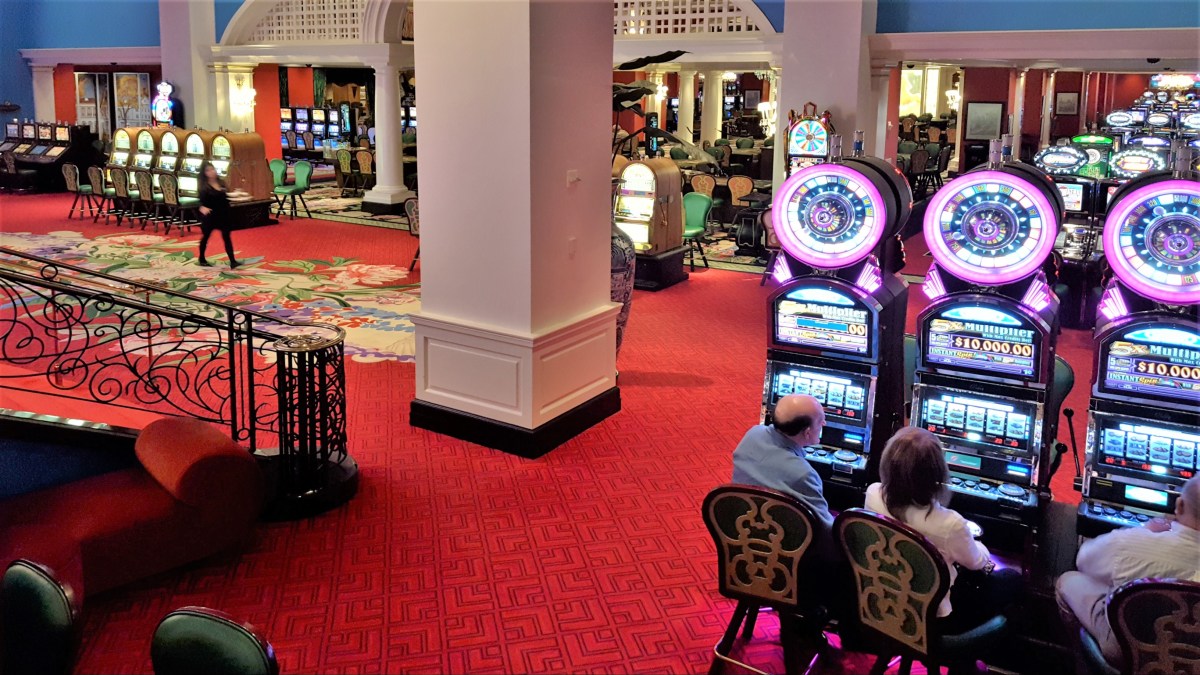
Dave also speaks highly of white knight, billionaire Jim Justice, who owns the hotel and also occupies the governor’s mansion in Charleston. Despite being a Democrat, Justice was elected last November with 49% of the vote in a self-funded campaign, despite Trump carrying the state by nearly 70%. Justice rescued the Greenbrier from insolvency in 2009, and spent $100s of millions on refurbishing, including a casino that required a county referendum to pass.

casino.jpg

A final thought: While I understand the principle behind building and supplying the bunker back then to preserve and protect Congress for the continuity of our democracy, there’s no way that I could justify a safe refuge for today’s elected Representatives and Senators. There’s no way they deserve to survive us all.

Notes:

The breaking story that put an end to the bunker that was hiding in plain sight:
http://www.washingtonpost.com/wp-srv/local/daily/july/25/brier1.htm

The Greenbrier boasts about itself:


Blogger’s Preamble

This trip has been in the planning stages for the better part of two years, but it’s been a vision of mine for over 30 years. Two things I realized early on: I’d have to wait until I retired, and I’d have to find someone compatible enough to join me on this wacky adventure. I’m happy to report that both conditions have been met.

Most importantly, Leah and I have been together for nearly 12 years because we forgive each other’s most embarrassing moments and tolerate each other’s most defining idiosyncrasies. We have become formidable collaborators regardless of our separate opinions and talents. Our curiosity knows no boundaries, and our appreciation of the “great outdoors” is a driving force to explore the outer limits.

We spent four weeks together last summer romping through Alaska and Yukon in preparation for this trip. Our objective was simple: to still be talking to each other by the time we returned home. While there were some tense moments along the way, it was always the laughter that eased every crisis. By passing this test, it allowed us to set our sights on bigger goals.

Of course, all of this became possible by my retiring from the NYC Department of Education after eleven years of teaching high school to students with special needs. Teaching Special Education was not a calling; it was an assignment. By enrolling and being selected into the 2006 cohort of the Teaching Fellowship, I was introduced to an urban population of teenagers that collectively knew the struggles of academic failure, the isolation of being different, the limits of parental/guardian support, and the epic challenge to be better than everyone’s expectations.

It wasn’t easy. There were a few victories along the way, but way too many disappointments made more disappointing by a system that lost its way. Too often, colleagues of mine were reminded by administrators that “It’s all about the kids,” yet the rhetoric always exceeded the reality. I’ve seen my share of budget misappropriations, bully pulpit principals, invisible discipline accountability, and city denial. I’m sure it wasn’t always this way, because I’ve met so many great teachers during my tenure who would do anything for their students, and leverage their students’ successes in order to continue teaching. Yet, it was enough to make me weary and yearn for more.

This trip is all about yearning for more. It’s about discovery, reflection and purpose.