Wining in Woodinville

According to the latest business census, there are over 150 places / reasons to enjoy an adult grape beverage in Woodinville, be it a wine bar, a wine cellar, a tasting room or a winery. So many choices and so little time…what a dilemma!

So Leah and I relied on our friend Hali, who used to pour for DeLille Cellars when she lived in the vicinity, and she offered some helpful recommendations, which prompted us to make reservations long before our arrival, because time slots at popular locations can fill quickly.

Woodinville has become a popular weigh station for Seattle folks and world travelers to sample Columbia Valley varietals and blends without having to travel east of the Cascades to taste the fruit off the vine.

Much like Napa and Sonoma, hot, dry summers and cold winters make Columbia Valley’s climate perfect for cultivating fine grapes. Then the harvest is shipped west, where Woodinville vintners can perform their magic.

With wines now scoring in the mid-90s, Woodinville is stepping out of the cool vibe shadow of California’s Wine Country, and making a play for some of the best Syrah’s, Merlots, and Chardonnays in America, while serving in casual and laid-back surroundings.

Leah and I scheduled our tastings over three afternoons, with my son Nathan joining us on the last day.

Notable for its country charm, Chateau Ste. Michelle always earns a visit.
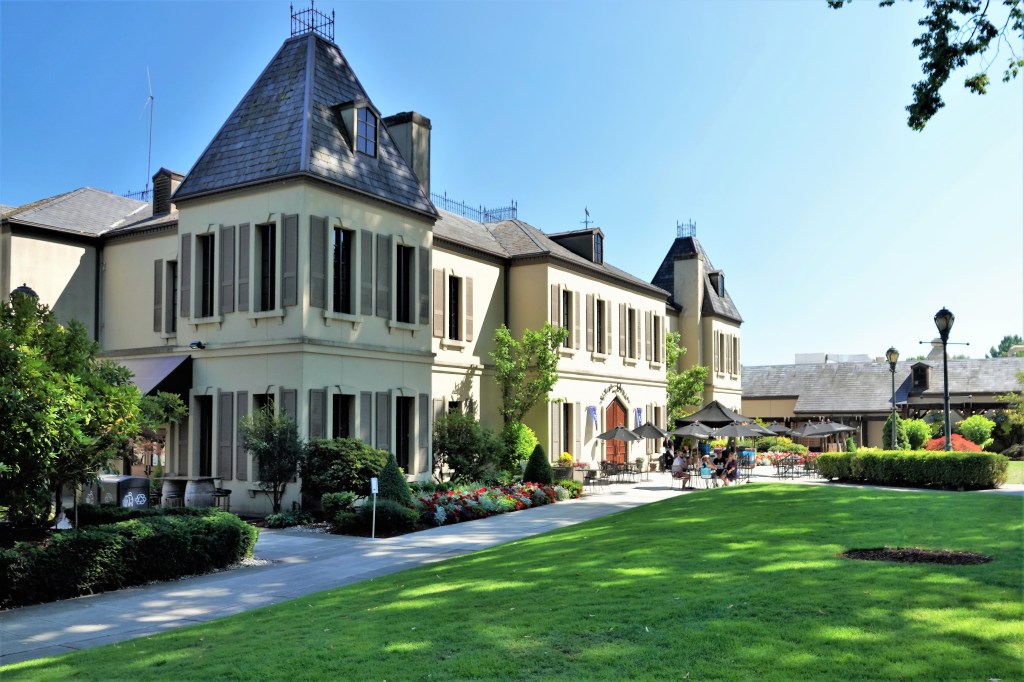
As Washington’s founding winery, and Wine Spectator’s 2004 American Winery of the Year, Chateau Ste. Michelle has become Columbia Valley’s global ambassador for its award-winning regional wines, which made it a good place to start our tasting.

We were seated outdoors and served a pitcher of water, a wine glass, and a placemat holding four mini carafes of our flight selections for $25 each. Because of COVID-19, our cheese plate came pre-packaged from a catering clerk for $17.

We had high expectations.

While all four wines were worthy of showcasing, none of them was especially worthy of purchasing a bottle. However, we did secure concert tickets for the Summer Night Music Series, featuring Kara Hesse at Chateau Ste. Michelle’s Amphitheatre.

Our next stop the following day was to DeLille Cellars,

where we enjoyed a flight of terrific Bordeaux-inspired blends…
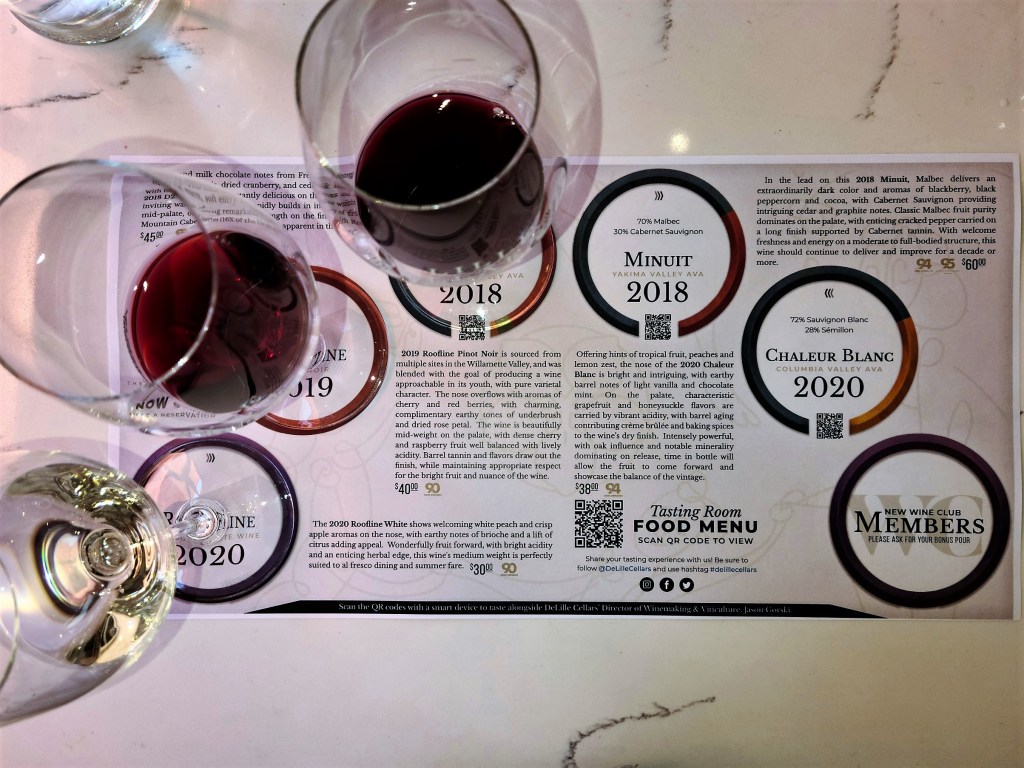
in their newly, appointed tasting loft, repurposed from Redhook Brewery.

To our surprise, our wine tasting and cheese board was comped by Wine Club personnel in deference to Hali, which compelled us to ship home a 6-pack of their glorious 2018 D2.

On the third day of Wino Appreciation Week, Leah and I walked a stretch of the Sammamish River Trail–

all the while puckering our lips, jiggling our wrists and cleansing our palates–in anticipation of tasting wine from three new winemakers–but this time with Nate in tow for his first official pouring.

After lunching on flatbread pizza at Woodinville Wine Country, we sat around al fresco at a pouring counter representing Pepper Bridge and Amavi Cellars. Nathan gave each menu a thorough reading, but he was illiterate in wine-speak, uncertain of grape varietals, and unsure how wine might taste like cured meat and figs, so he followed my lead. I drank from the right menu and Leah from the left menu, although she shared her pours with me.

Leah and I walked away with a bottle of Sémillon from Amavi, and Nate walked away with a new appreciation of bourgeois culture, conceding that wine tasting could make an interesting first date.

We continued our wine crawl across the road at Guardian Cellars. We were seated under an awning and presented with a tasting menu. We had a chuckle over the names of wines before realizing that Guardian owners, Jerry Riener is a cop by day and a winemaker when he’s not a cop, and his wife Jennifer Sullivan is a reporter by trade and pours wine on the weekends.

Thanks again to Hali, who arranged to transfer her Guardian club membership to us for the day, so our tasting was gratis. But alas, we left the scene of the crime, empty-handed, only to be remembered by our finger prints and DNA residue on the glassware.

That evening, our last in Woodinville, we attended singer/songwriter, Kara Hesse’s concert at Chateau Ste. Michelle Amphitheatre–our first concert since the COVID-19 outbreak–and we came ready to party, but house rules clearly stated: Wine is welcome, but only if the Chateau Ste. Michelle label is affixed to the bottle. So we stuck with water.

The lawn was dotted with couples, friends and families enjoying picnics from lawn blankets and stadium chairs, and the atmosphere was festive.

Kara and her band had just taken the stage to cheers from the crowd when a hot air balloon sailed across the sky.

balloon visible in upper right frame

What? A balloon?

It was a small distraction, and one that was easily forgotten once Kara warmed up to give us her impression of what Stevie Nicks, Bonnie Raitt and Cheryl Crow might sound like if all three voices were put in a blender.

Two things I learned that day:

I would have enjoyed the concert more if I was drinking wine instead of water;

and Nate should stick to beer.

The Mountain Is Out Today

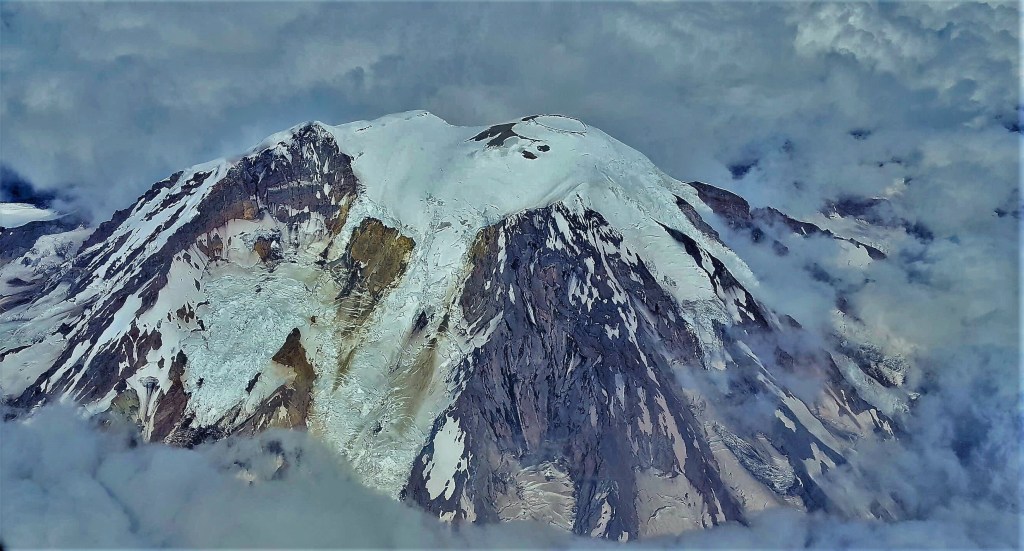
Mount Rainier is so imposing that it makes its own weather, and on most days the mountain disappears under its thorny crown of rain clouds.

In fact, weather analysts calculate the odds of “seeing” Mount Rainier likely hovers between once or twice a week, considering the 189 rain-days per year, producing 126 inches of precipitation annually.

On the other hand, July is Mount Rainier’s driest month, with an average of 7 days of rainfall, amounting to 2 inches on average, which improves the odds tremendously for the millions who live and travel the I-5 corridor between Tacoma and Seattle. They invoke a familiar colloquialism that captures the moments when Mount Rainier reveals itself. They say, “The mountain is out today.”

My youngest son Nathan, who lives in nearby Bellevue had arranged long ago to glamp with Leah and me for a summer weekend at the National Park so he could experience Paradise, up close and personal, for the first time.

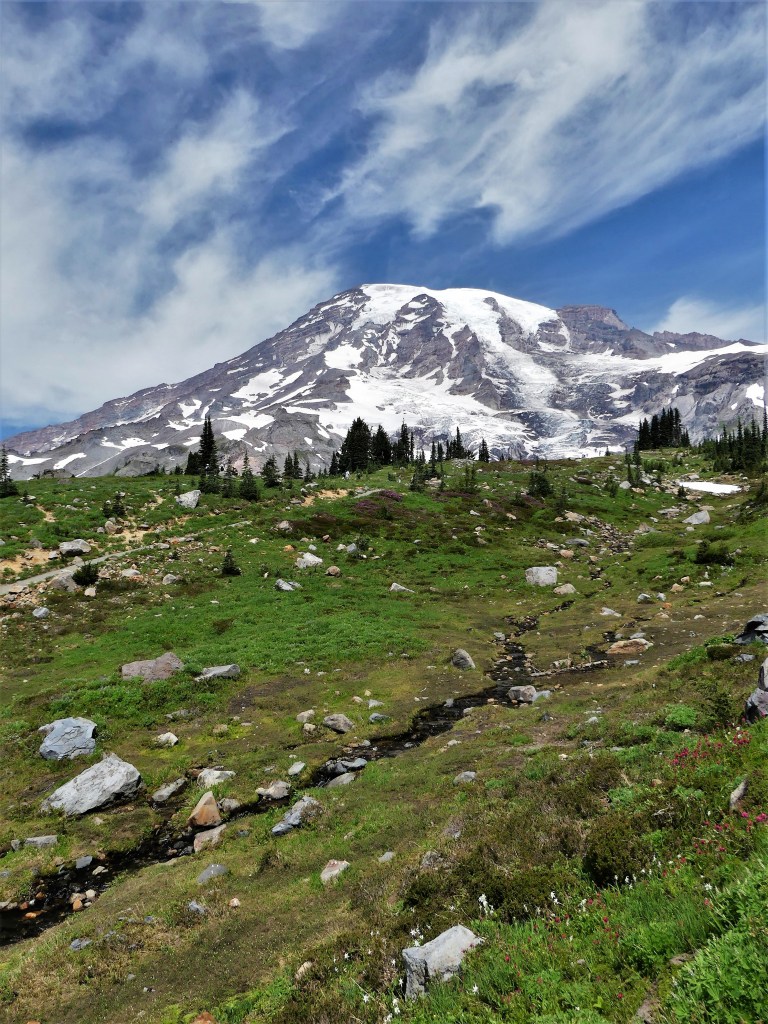
Happily, during our visit, “the mountain was out,” and it was magnificent!

On our first day together, we sought out a few of the requisite park sites as part of Nate’s Rainier orientation, including:

a wobbly walk across a suspension bridge…

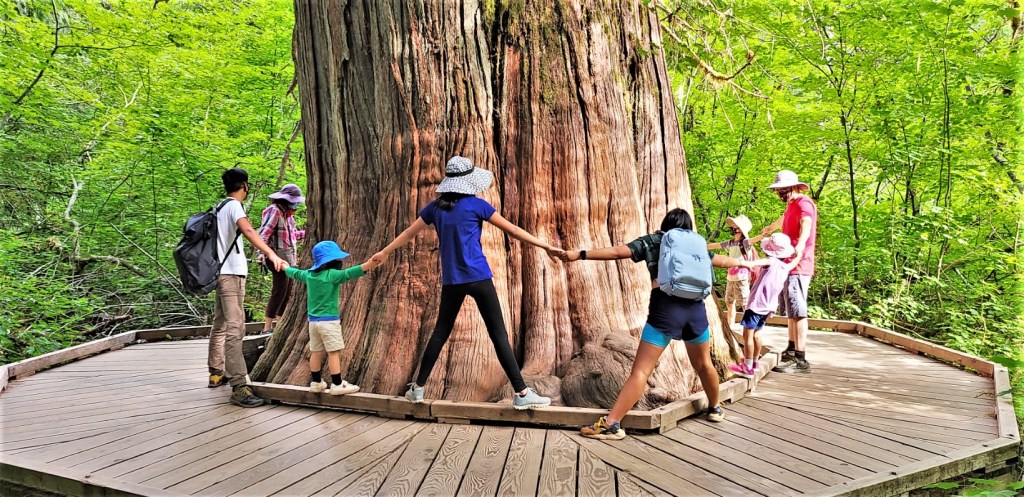
to gaze at ancient trees…

in the Grove of the Patriarchs;

a hike to Myrtle Falls, cascading 72 feet into a rocky gorge;

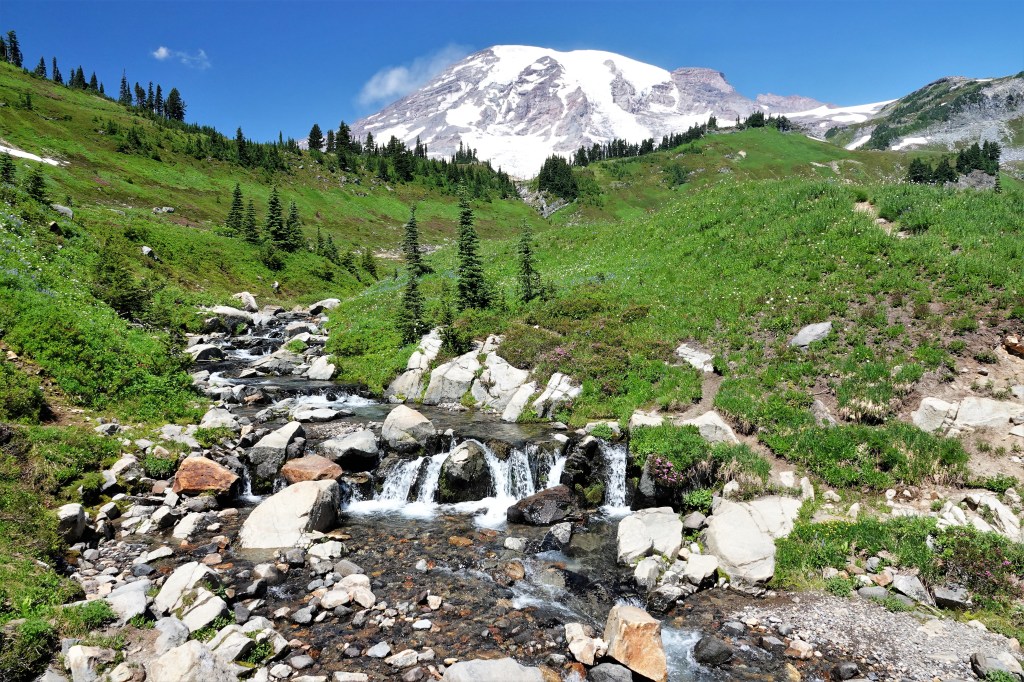
a gambol across Sunbeam Creek on the Wonderland Trail before it rolls into Stevens Canyon;

tracking iconic, Narada Falls,

as it plunges 168 feet into a canyon of split rocks;

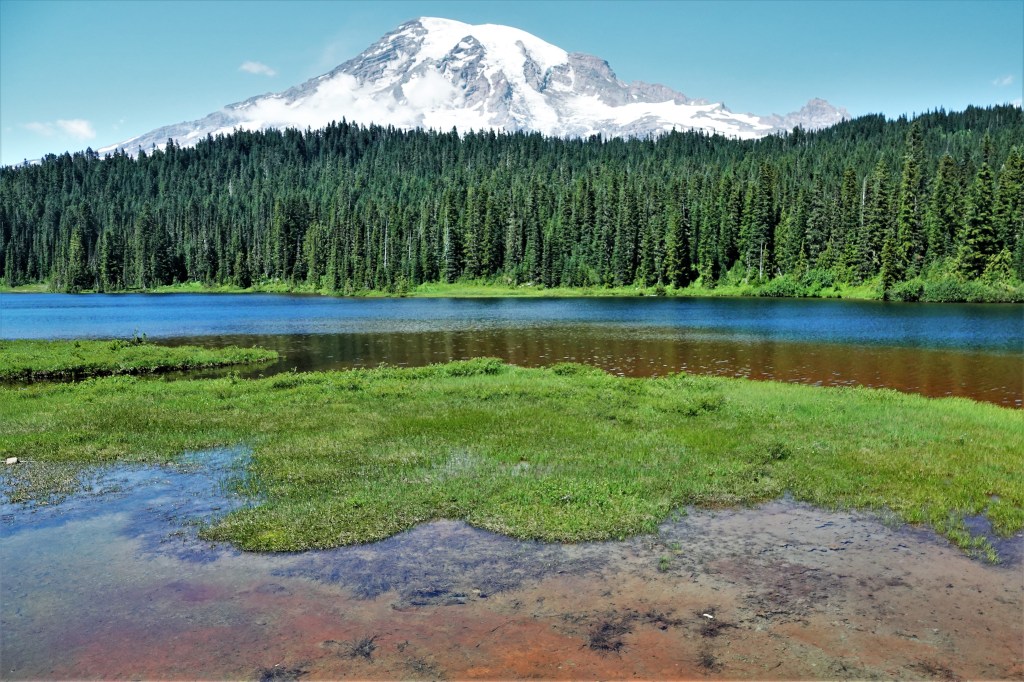
admiring Reflection Lakes, sans the reflection (ruined by wind-swept ripples);

and relishing the trove of jaw-dropping, mountain vistas that seem to vanish into thin air–

which we reflected on while enjoying a soft-serve swirl at the historic Paradise Inn.

The next day, the mountain was still out, and it was a picture perfect day for hiking the Skyline Trail to Panorama Point.

Of all the trails I’ve trekked, I can say with cautious certainty that the Skyline Trail may be among the most magnificent of them. With the sun out, and blooming wildflowers dotting the landscape, there are few hikes that can compare.

We started on a paved path from the Paradise Inn at 5,420 feet elevation, and continued to climb through flower-carpeted meadows for a mile…

until we reached the Deadhorse Creek Trail spur, and looked back in wonderment.

We were now traipsing through packed snow and rocky terrain as we reached the tree line. We paused for a break where other hikers were keenly aware of something or someone through binoculars and long camera lenses. I scanned the mountain for movement through my viewfinder, and discovered the attraction–a team trekking across the glacier on their way to the summit.

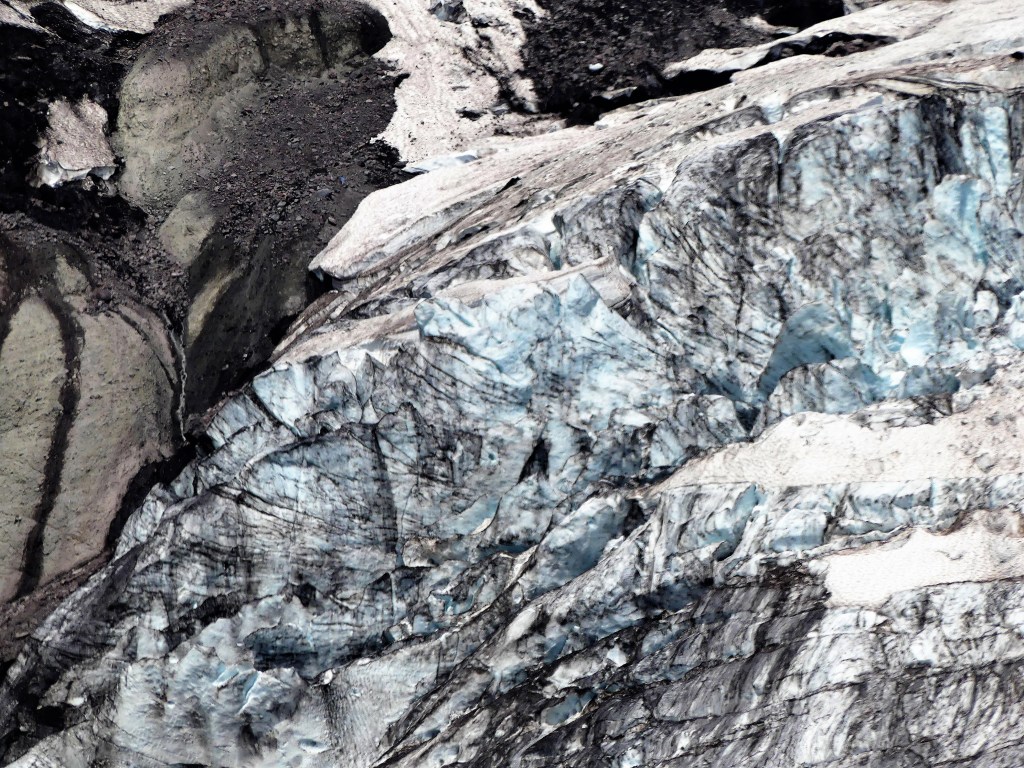
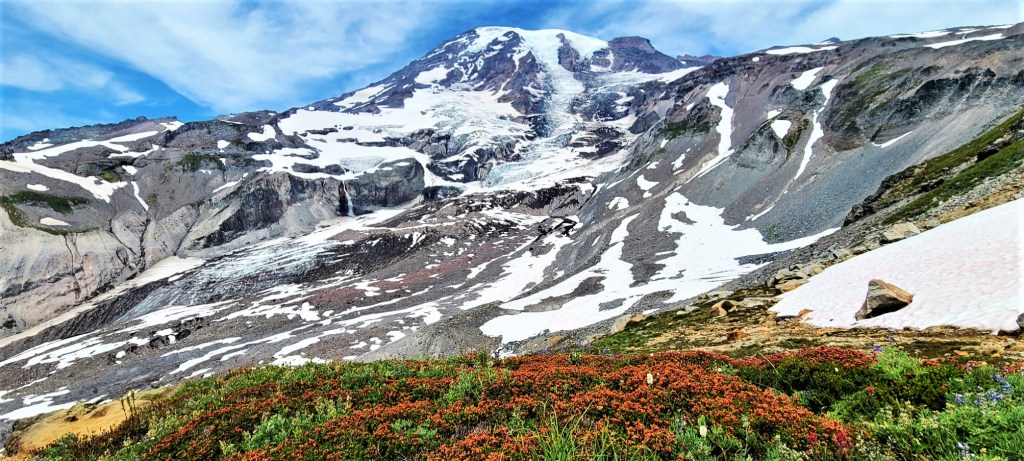
Nisqually Glacier was now looming large in our sights.

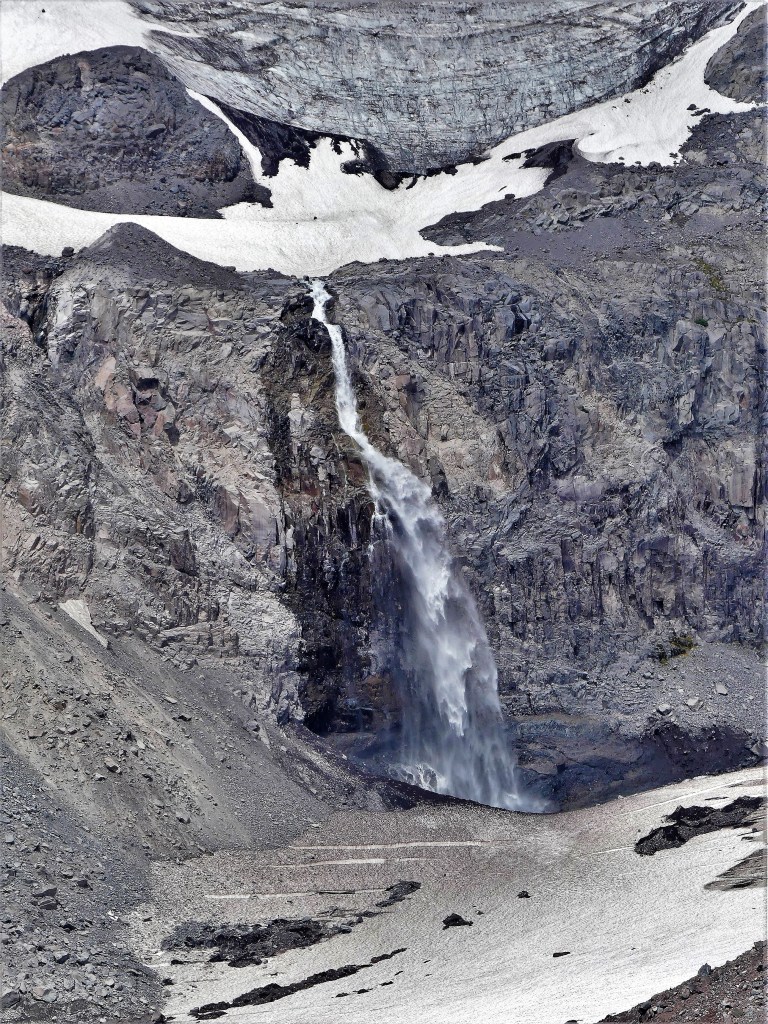
The spectacle of watching the snowmelt pummeling the moraine below was thrilling.

It seemed to us that Rainier was so close, we could almost touch it.

With one last push, we arrived at Panorama Point, having climbed 1400 feet in 2 hours. I should have felt drained, but I was giddy with excitement with views from the overlook,

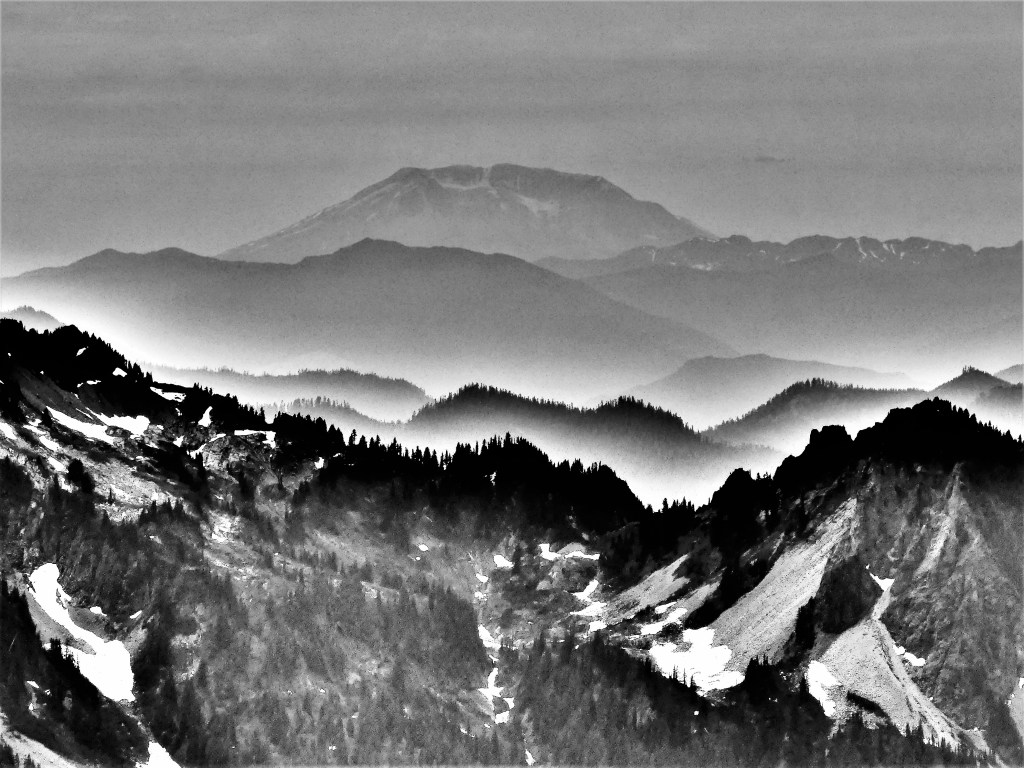
while also spotting Mount St. Helens far in the distance,

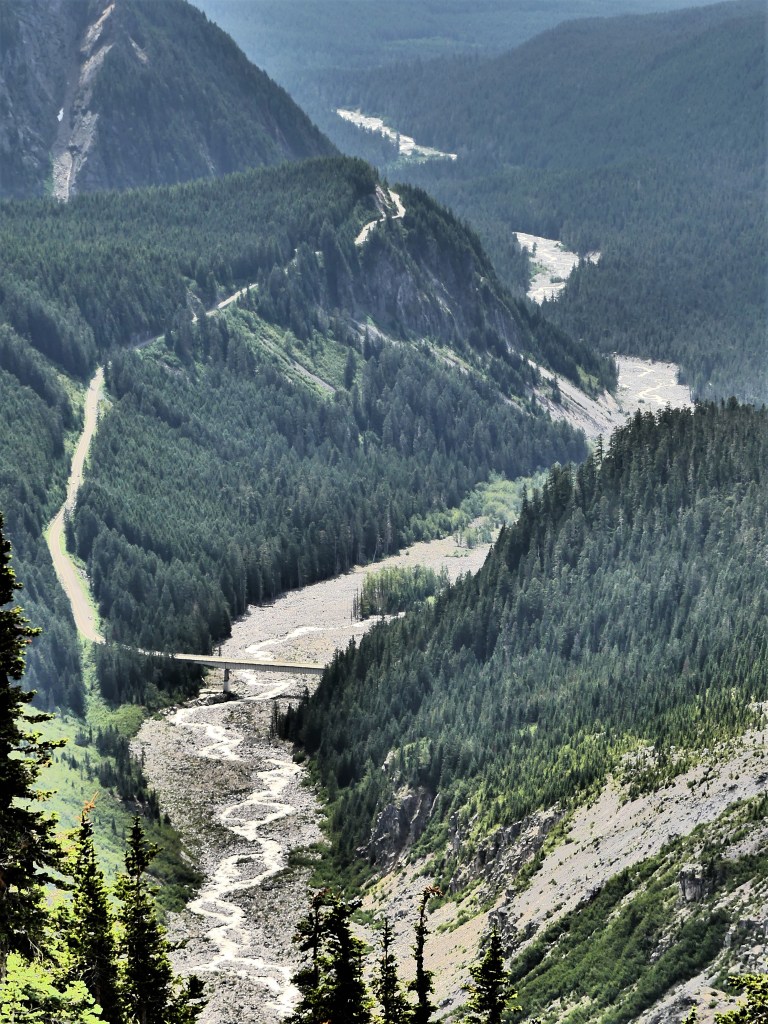
and capturing the Nisqually River as it meanders through the Rampart Ridge gorge.

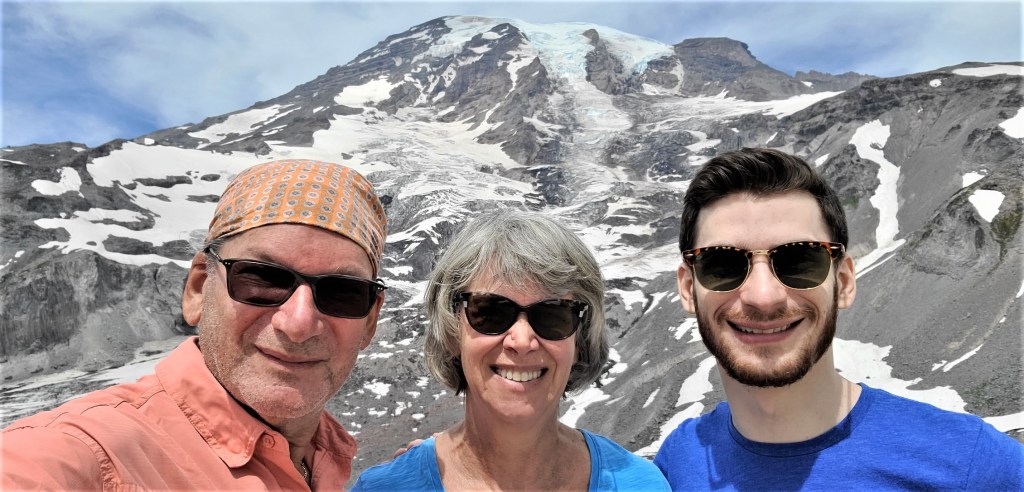
On our return trip, we opted to take the Glacier Vista spur for a beauty shot of the mountain,

and ourselves.

Returning via the Alta Vista Trail gave us a very different impression of the valley below,

but also prompted us to occasionally glance back to admire the source of all the magic.

An Olympic Reunion

Dear Olympic National Park,

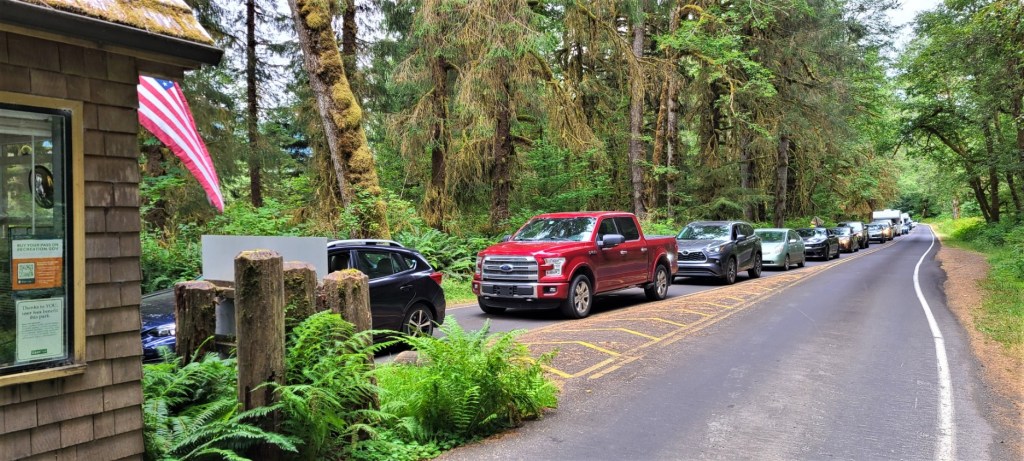
I missed you, and that’s the truth. It’s why I wanted to see you again. But you sure don’t make it easy–playing hard-to-get with me. You had me waiting over 40 minutes outside your gates before you finally greeted me.

After the way things ended between us four years ago, I expected better, but I guess I was wrong about us. I realize that we got off on the wrong foot during my last hike, but that’s because I woke up on the wrong side of your park. If only I had paid more attention to your signs, then maybe I wouldn’t have driven myself crazy driving through your forest like a maniac in the first place (see An Olympian Apology).

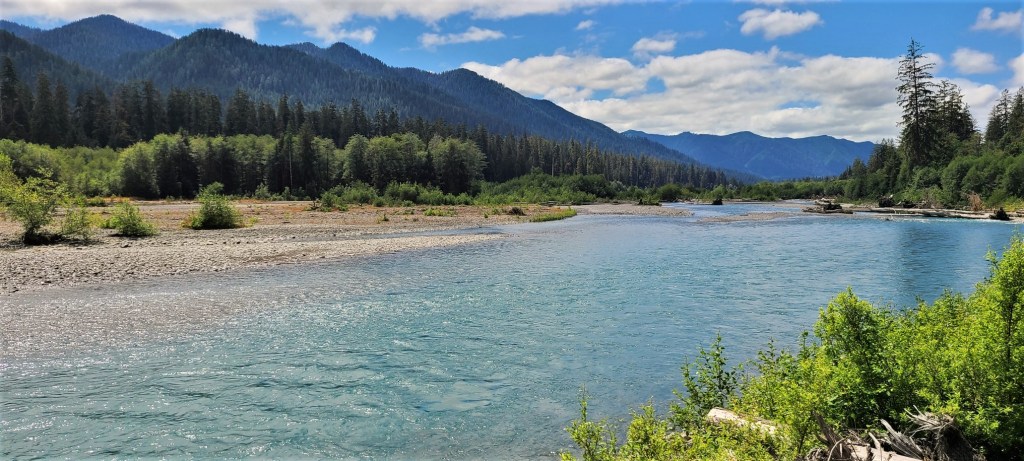
While I’m grateful for all the photogenic landscapes that you provided in the past…

I’m here to make amends and some new memories…with your cooperation, of course.

You might think I’m asking a lot of you, but it would go a long way towards rebuilding our partnership if you could spare me a blue sky and high clouds during my stay.

In return, I promise to leave no stone unturned…

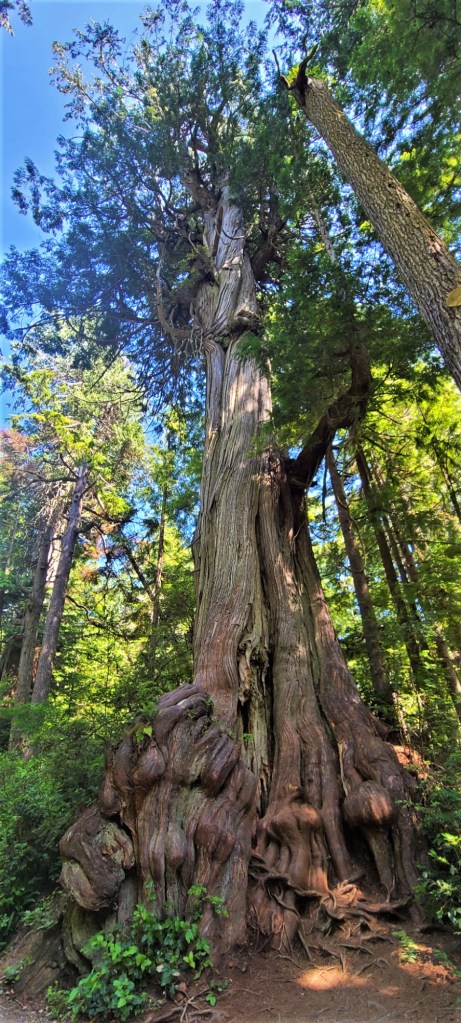
While in your presence, I will pay respects to your ancient trees and forests;

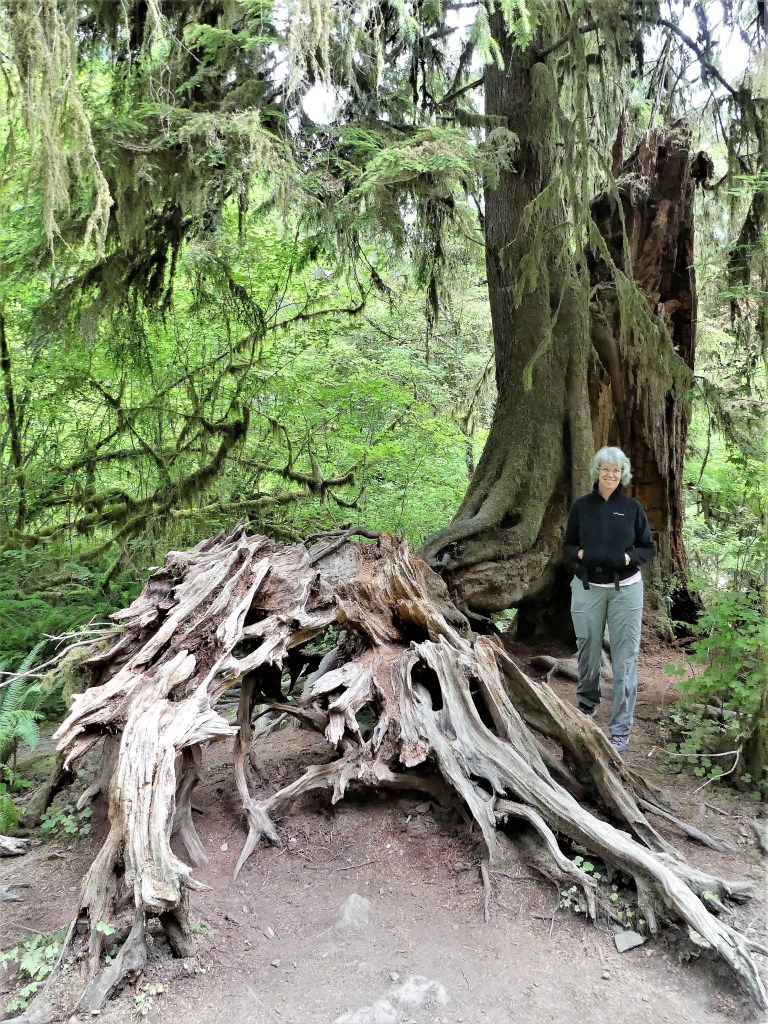
I will tread lightly through your Hoh Rain Forest;

I will resist the Sirens of your noble beaches;

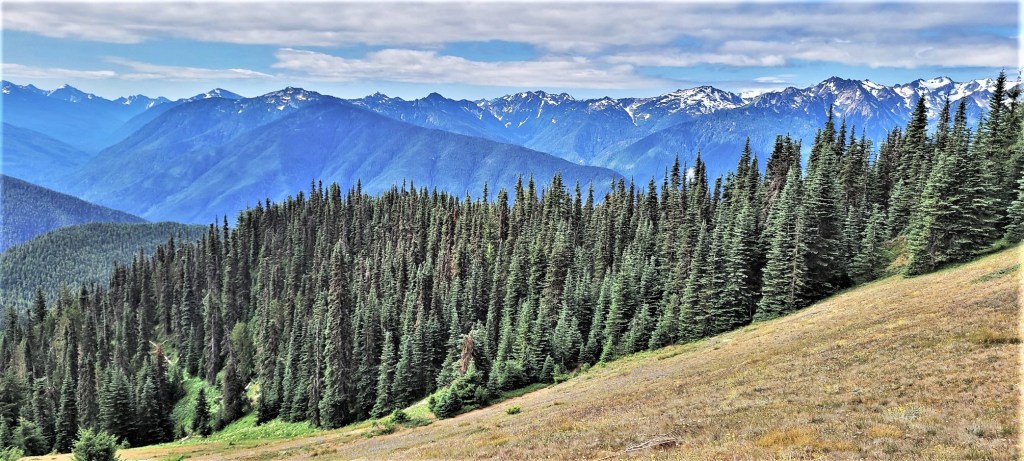
I will appreciate the beauty of your mountains views;

I will treasure the pristine waters of your alpine lakes;

and I will appropriately distance myself from your wildlife, as you have requested.

My one-week stay with you was delightful, thanks to your moderate temperatures, and your smokeless, blue skies. I sensed you enjoyed it too, because I caught you basking in your own sunlight.

I hope that we can remain friends, because I find you so intriguing. I’m amazed that you have so many different ecosystems to juggle, and you manage them all so effortlessly.

I’m a fan.

All the best,

Neal and Leah

Oregon Potpourri

Leah and I had a lot of ground to cover during our brief visit to the Oregon Coast. With so much to see and do before we moved on, there was little time to waste. We immersed ourselves in seaside activities until we were Ore-goners.

We set up our first camp site at South Beach State Park, and made a beeline to the beach. After 10 weeks and 9,000 miles on the road, we were finally celebrating “sea to shining sea.”

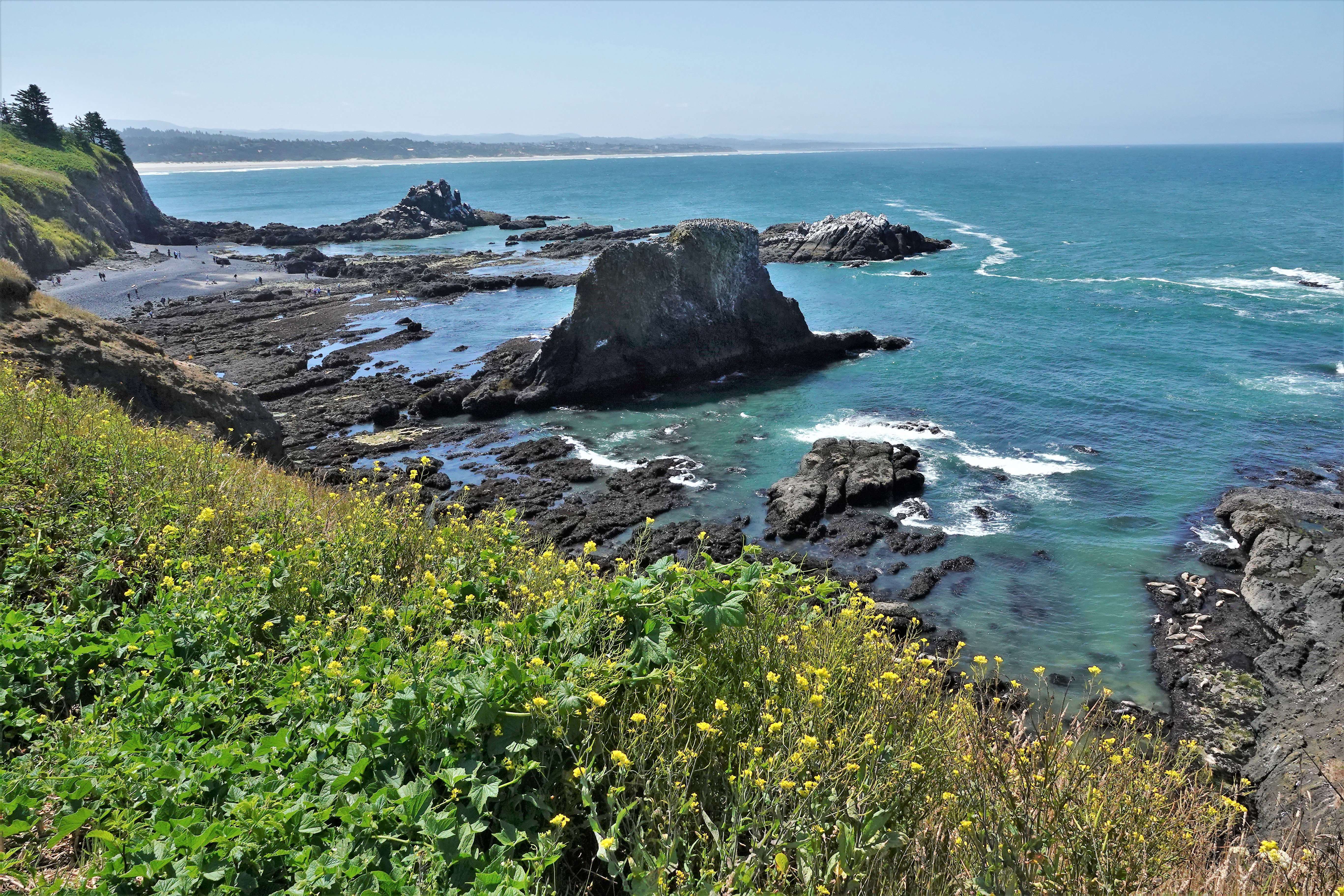
The following morning, we visited Yaquina Head to play in the tidepools;

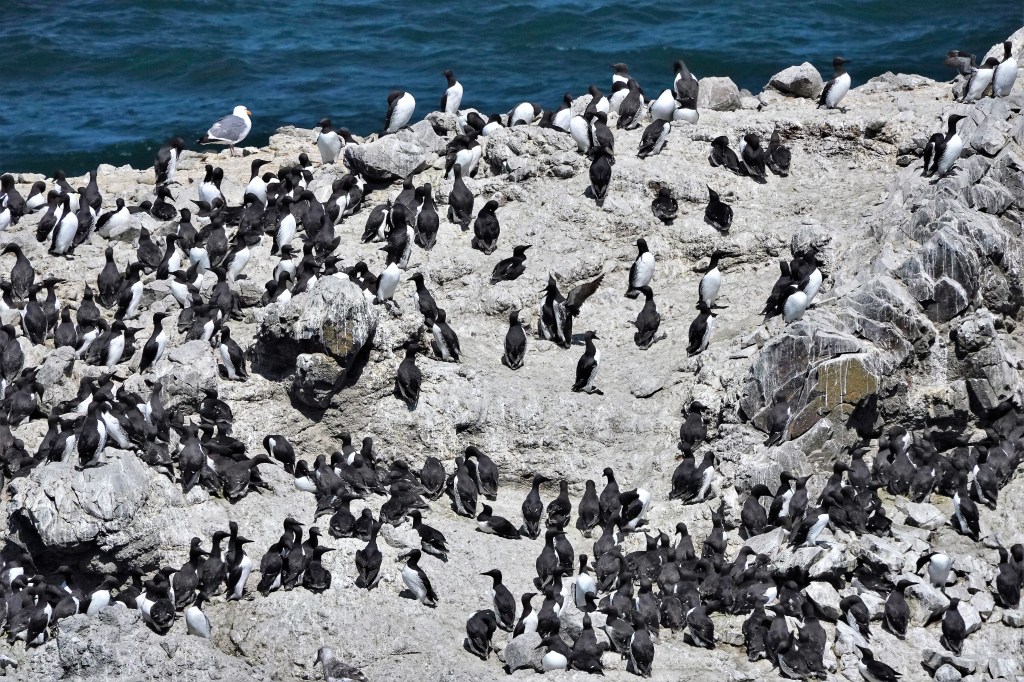
observe the seabirds,

study the sealions;

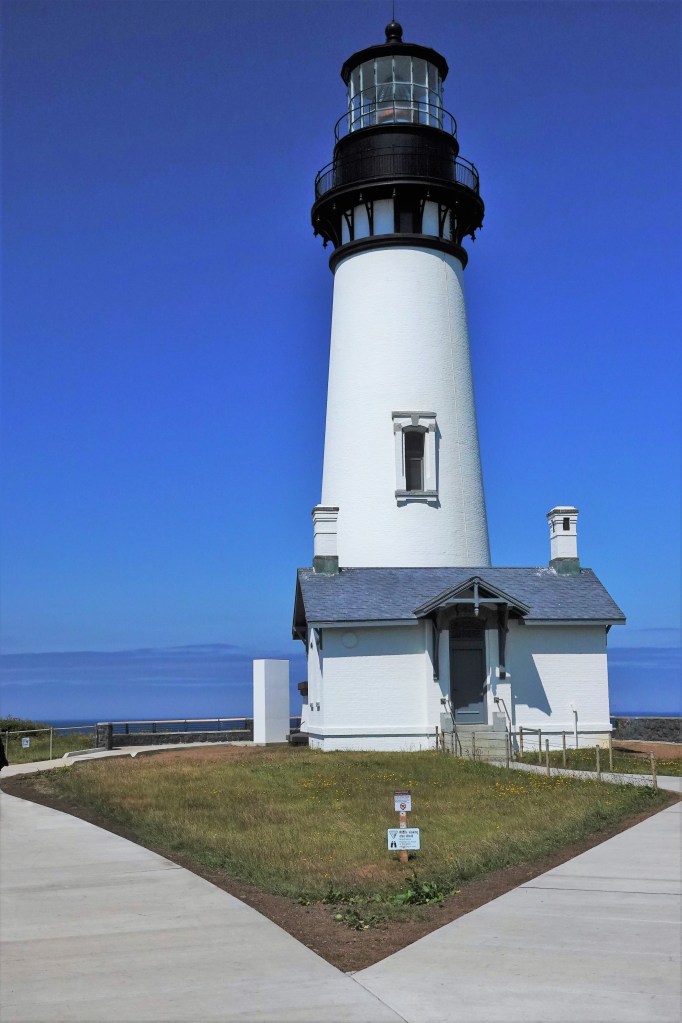
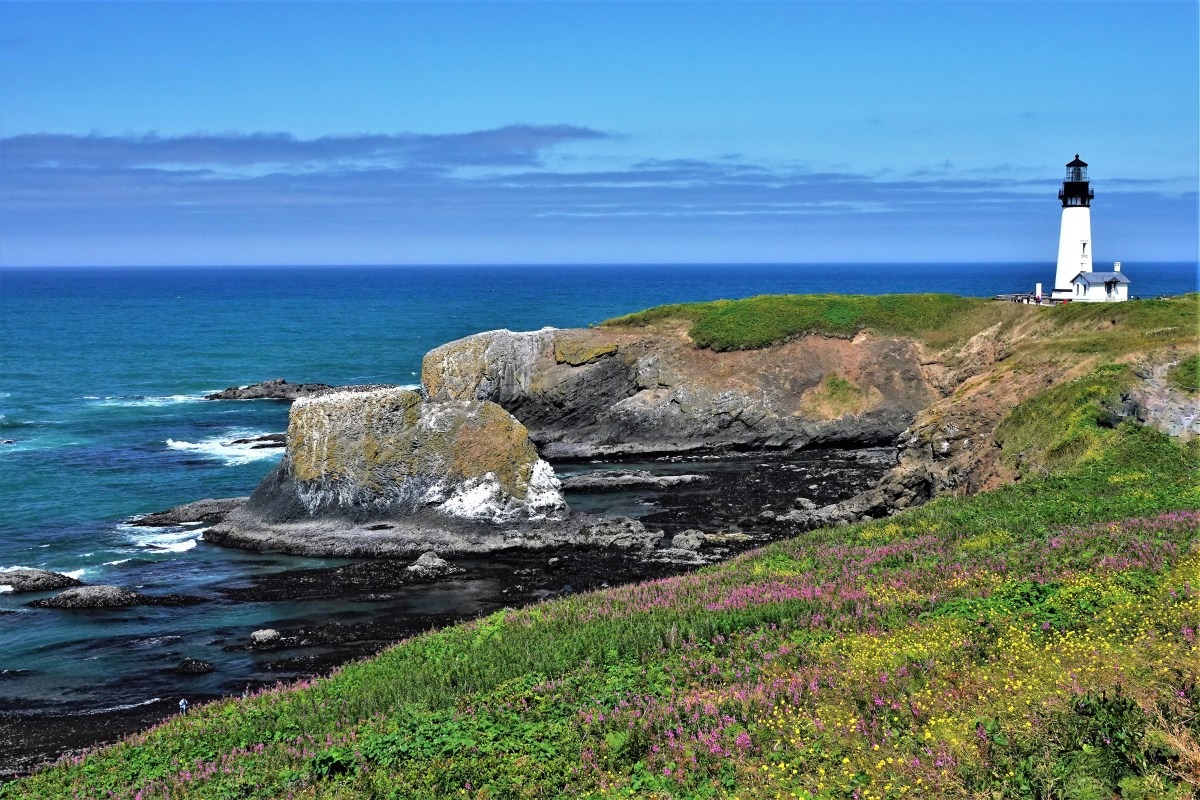
and visit Oregon’s tallest lighthouse (93 feet), projecting its light beam 19 miles out to sea since 1873.

And then we were off to Newport’s Historic Bayfront,

where we lunched with our safari buddies Brenda and Michael, who drove from Portland to join us for the afternoon.

On our last full day at South Beach, we played nature tourist. We gawked at Devil’s Punchbowl;

the Seal Rock;

and Cook’s Chasm.

We combed the black sand beaches, searching for sea glass gems;

and we were entertained by surfers braving frigid waters along Beverly Beach to round out our day.

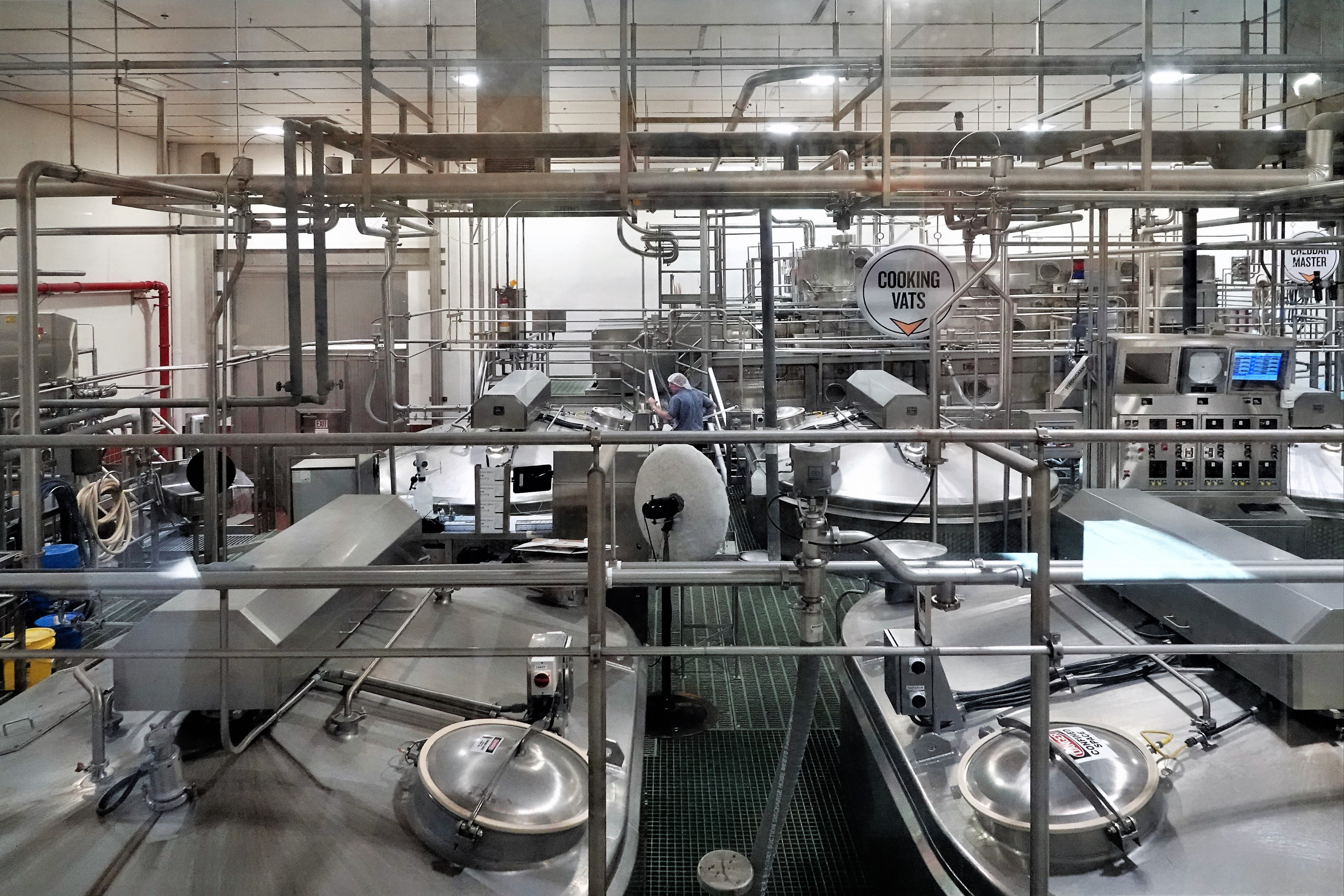
Typically on moving day, it’s clean-up, hitch-up and safety check before moving on to our next destination. Once in a while we’ll break up the drive by stopping for lunch at a roadside dive, but mostly we’ll snack in the pickup. However on this particular day, on our way up the Oregon Coast Highway to Cannon Beach, we were eager to stop at Tillamook Creamery.

And we were not alone. Hundreds were passing through the overhead exhibition windows with us…

before earning a taste of Oregon’s finest ice cream.

Once situated at camp site #2, we were free to roam the shore to explore a different kind of scoop, but still a rocky road…

along Ecola State Park.

Our evening was reserved for clam chowder at Dooger’s in Seaside, and then a walk along their lively beach at dusk.

The area is also filled with history. Leah and I spent the next day time climbing through the gunnery emplacements at Fort Stevens,

intended to protect the mouth of the Columbia River.

We also discovered the Peter Iredale, or what was left of the four-masted steel barque sailing vessel that ran aground in 1906 en route to the Columbia River.
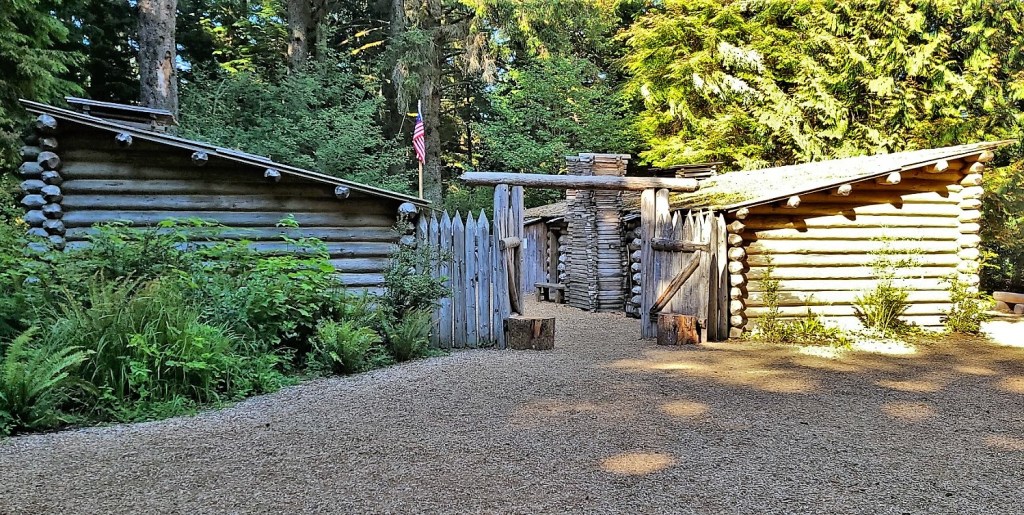
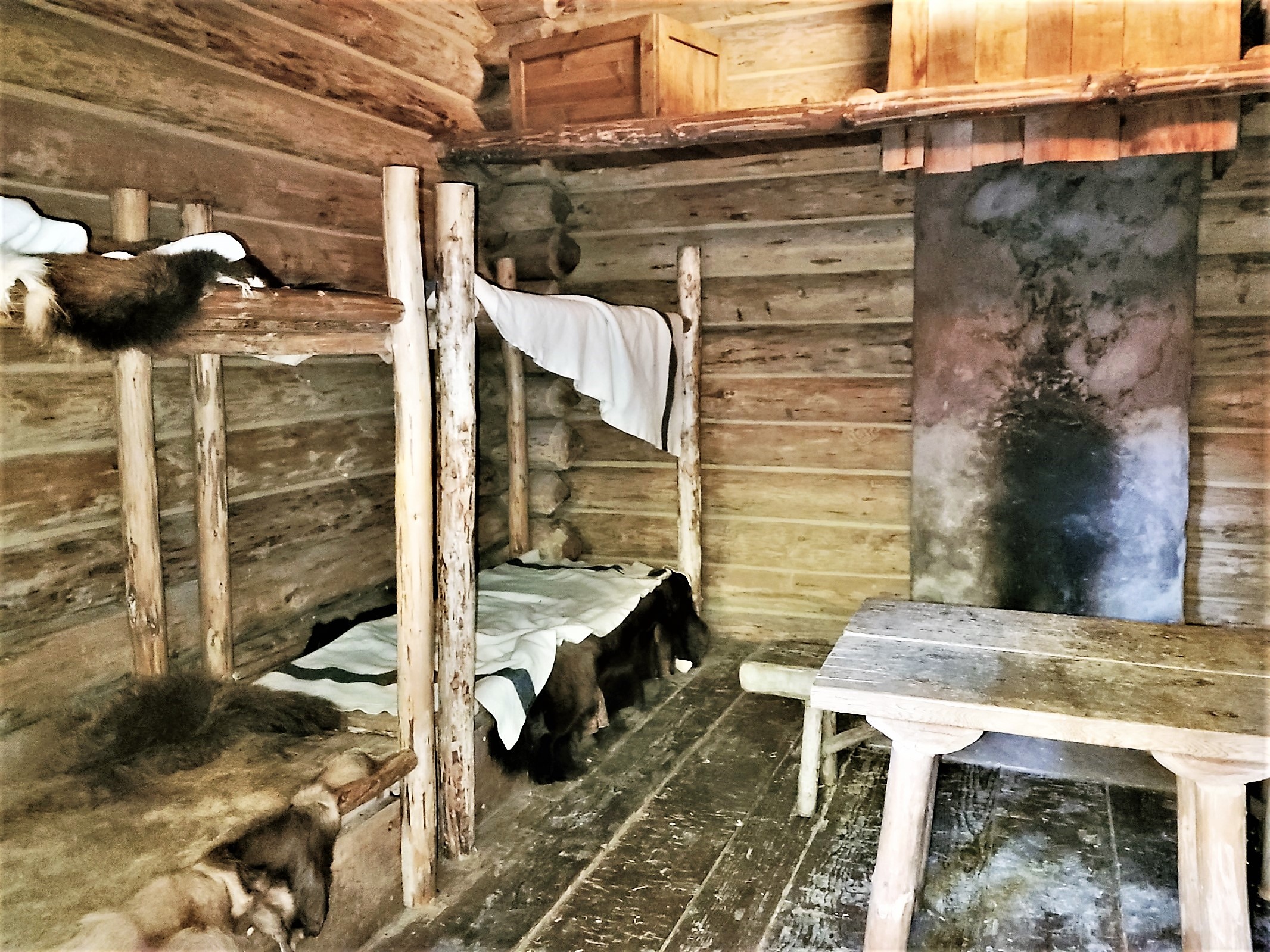
Nearby, the Lewis and Clark Historical Park offered a replica of Fort Clatsup,

and a glimpse of early 19th century housing for Capt. Meriwether Lewis and Lieut. William Clark,

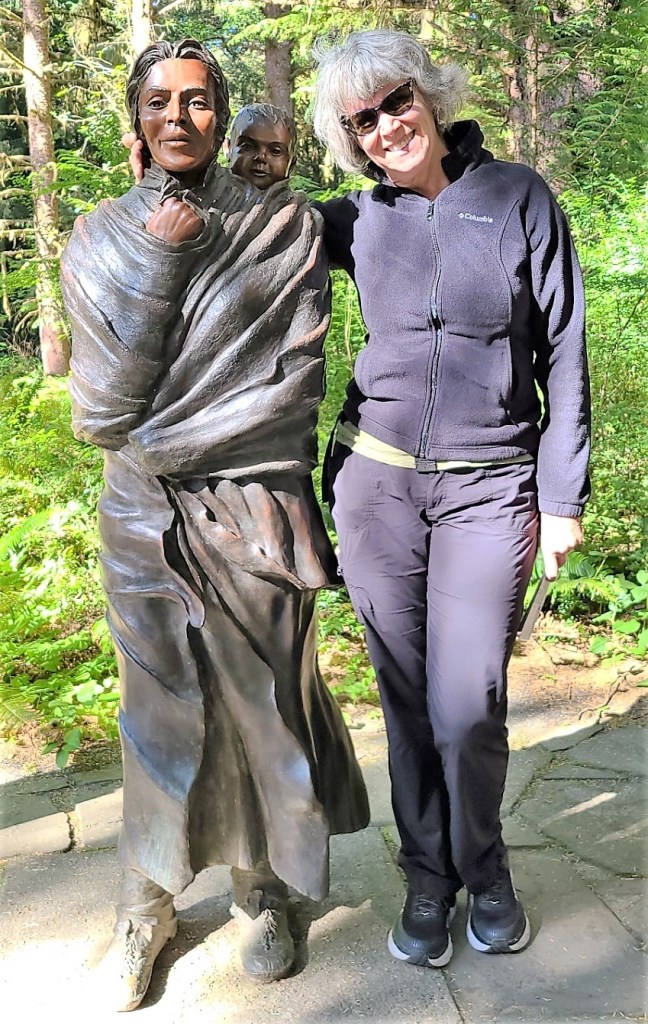
and their guide Sacagawea and son, Baptiste.

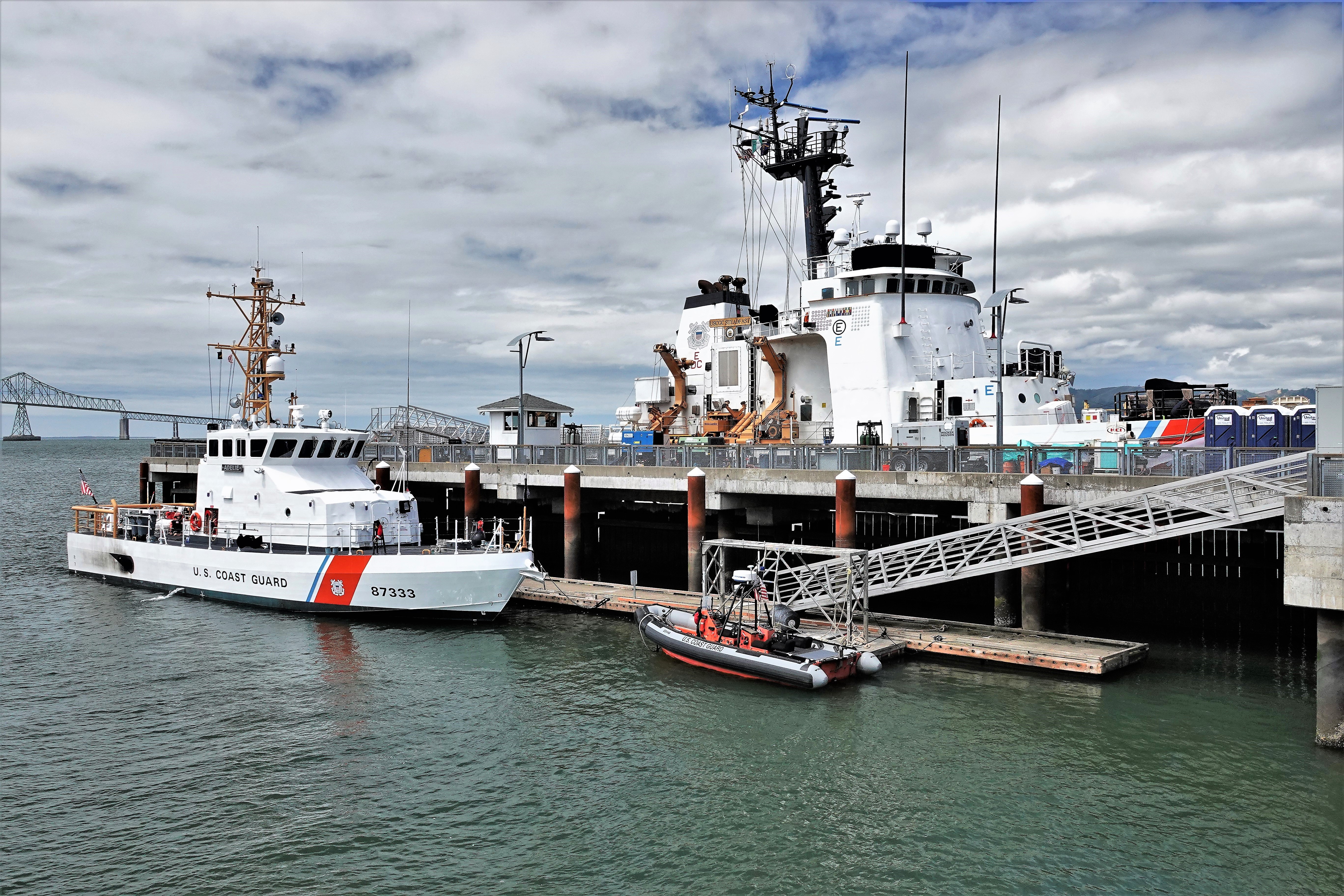
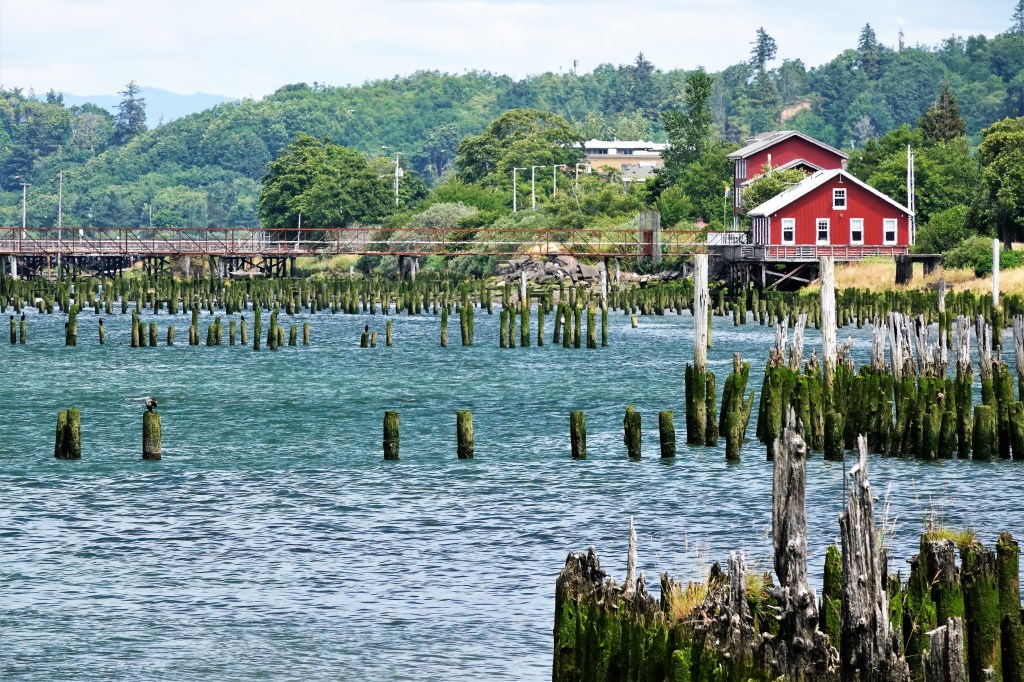
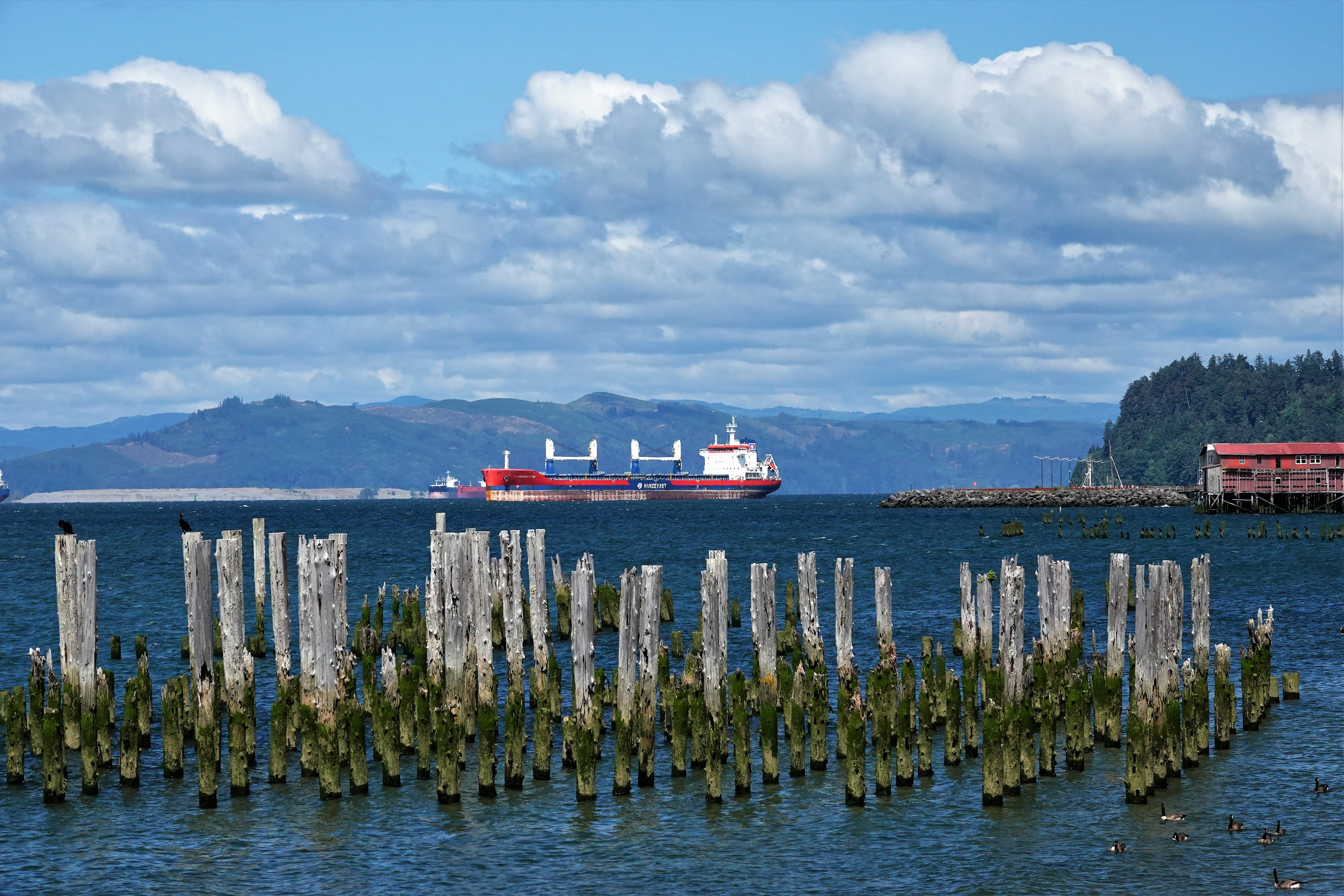
Finally, a day of walking through Astoria gave us wonderful examples of coastal living…

and coastal culture,

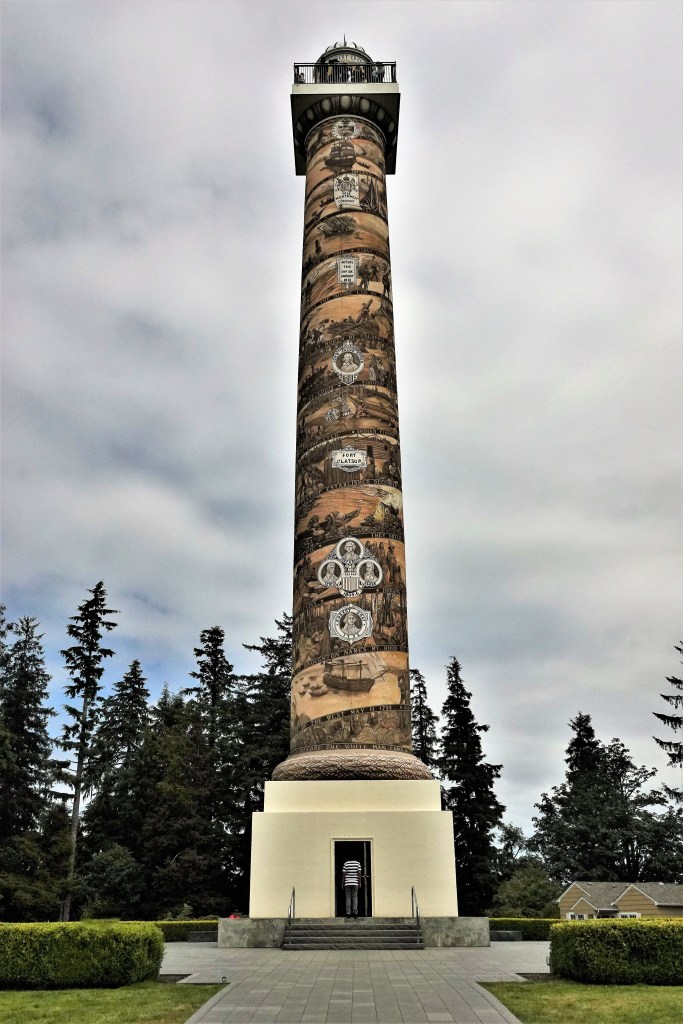
But a hike up 164 steps to the tower of the hand-painted Astoria Column…

offered us a scenic perspective…

that prepared us…

for our crossing to Washington’s Olympic National Park.

to be continued…

Oregon’s Rugged Coastline

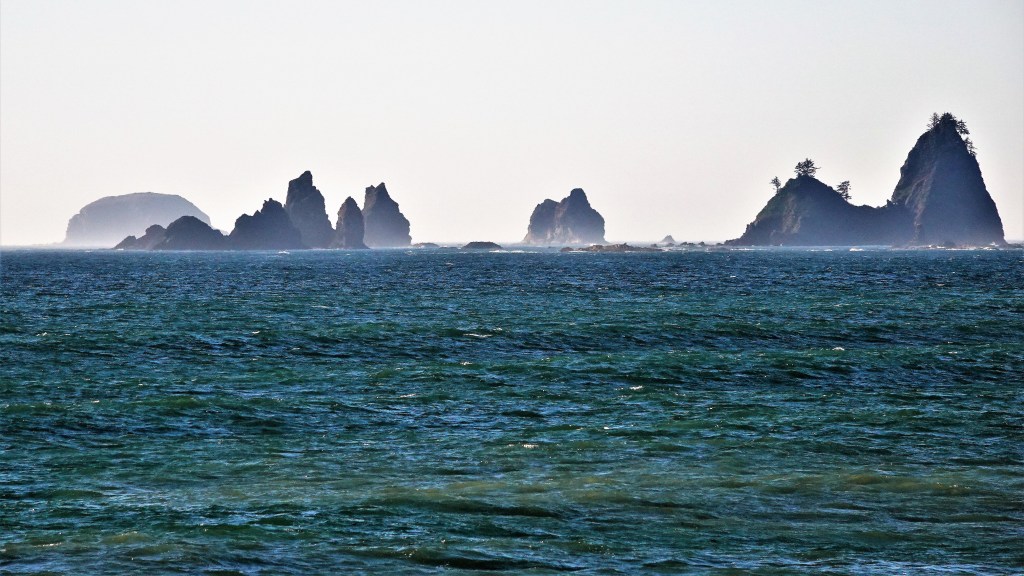
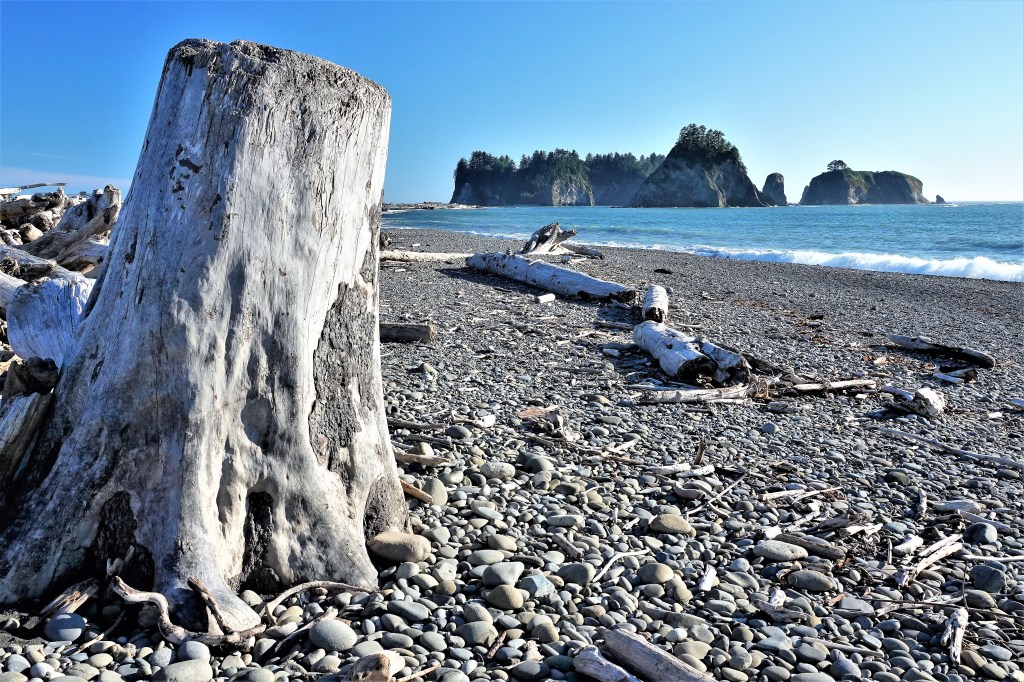
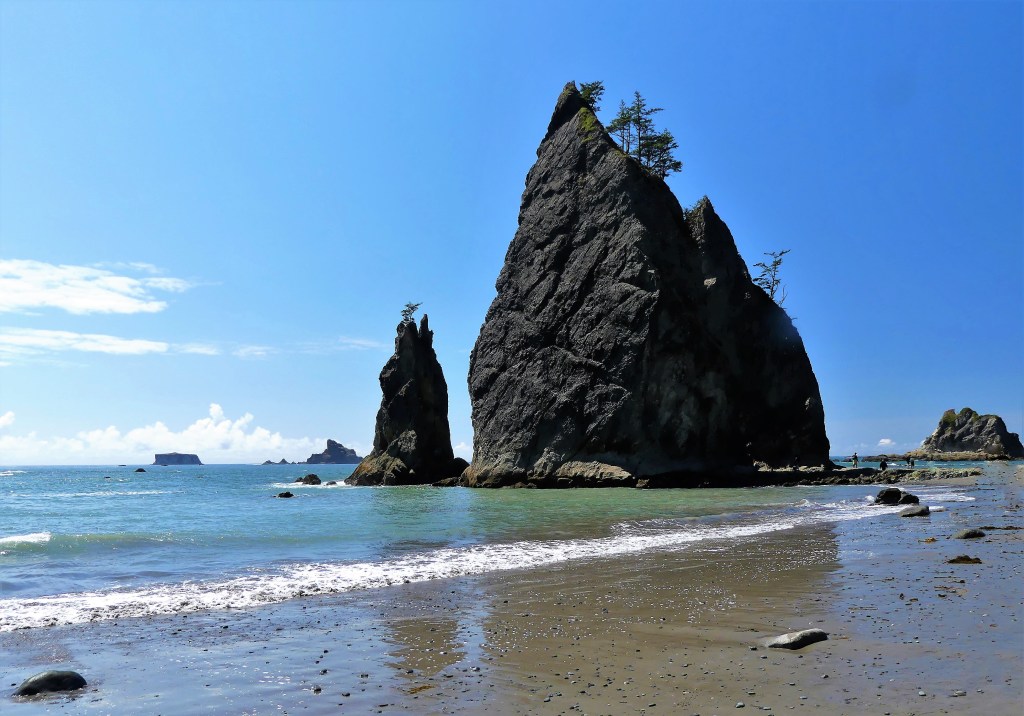
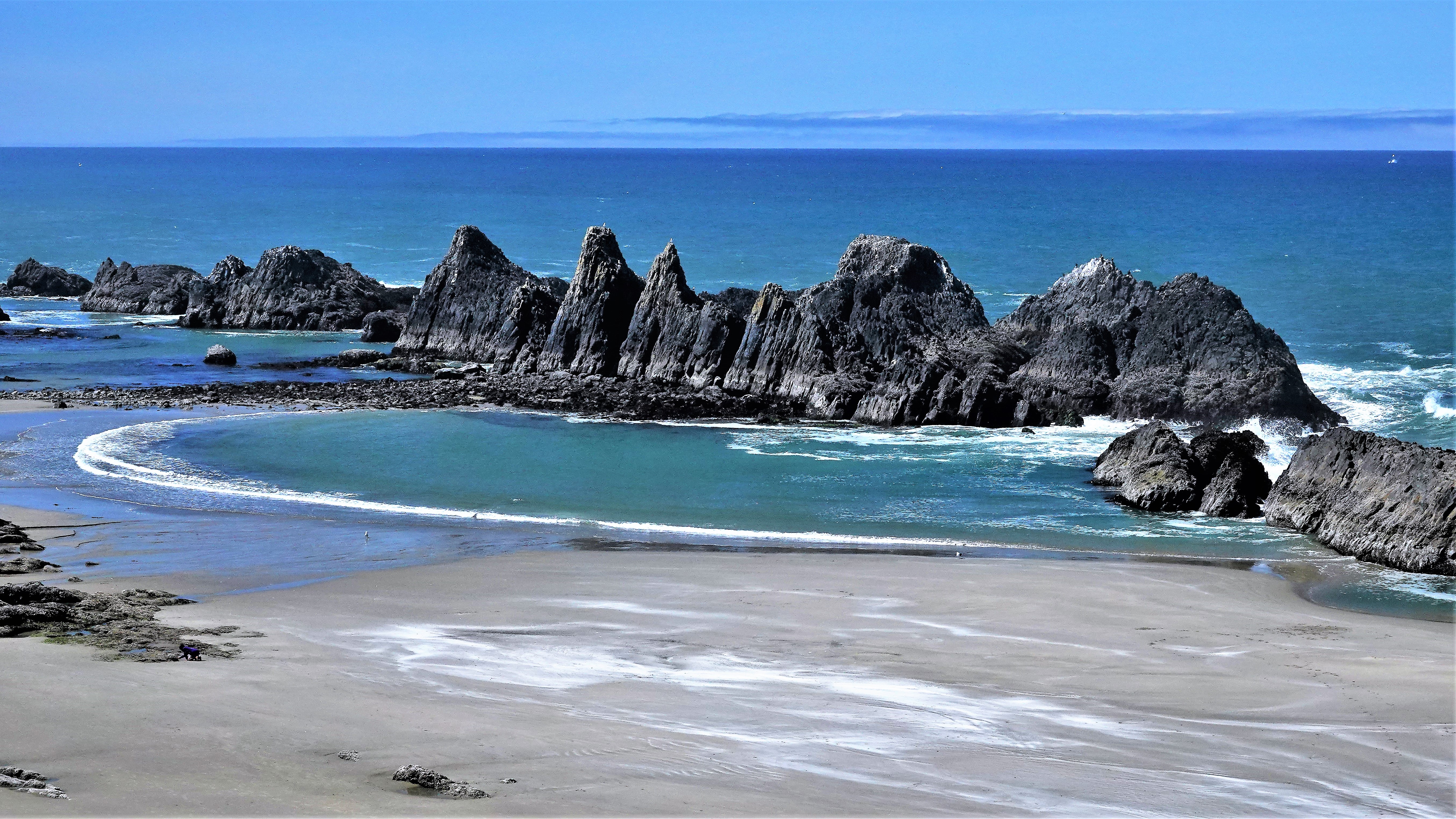
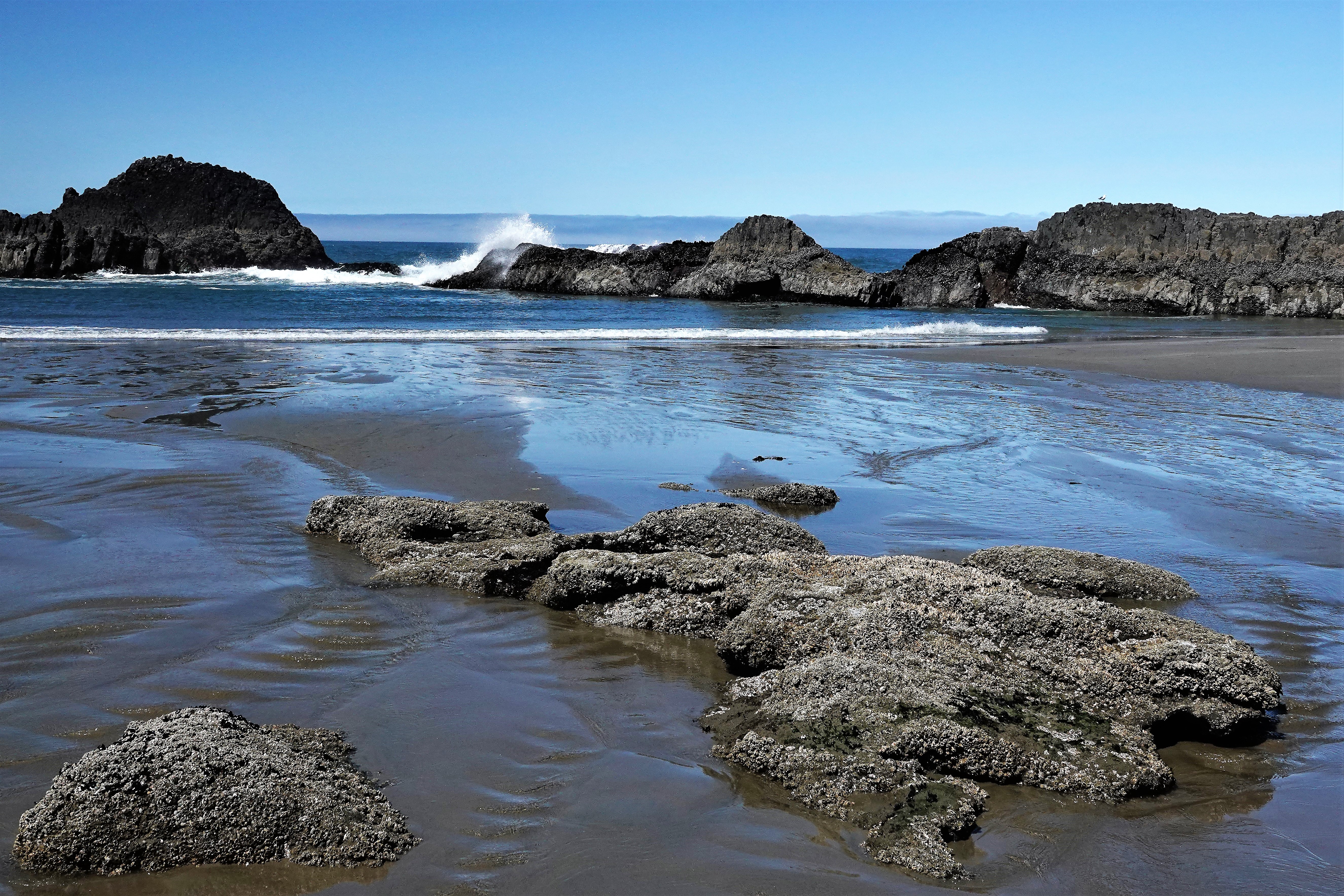
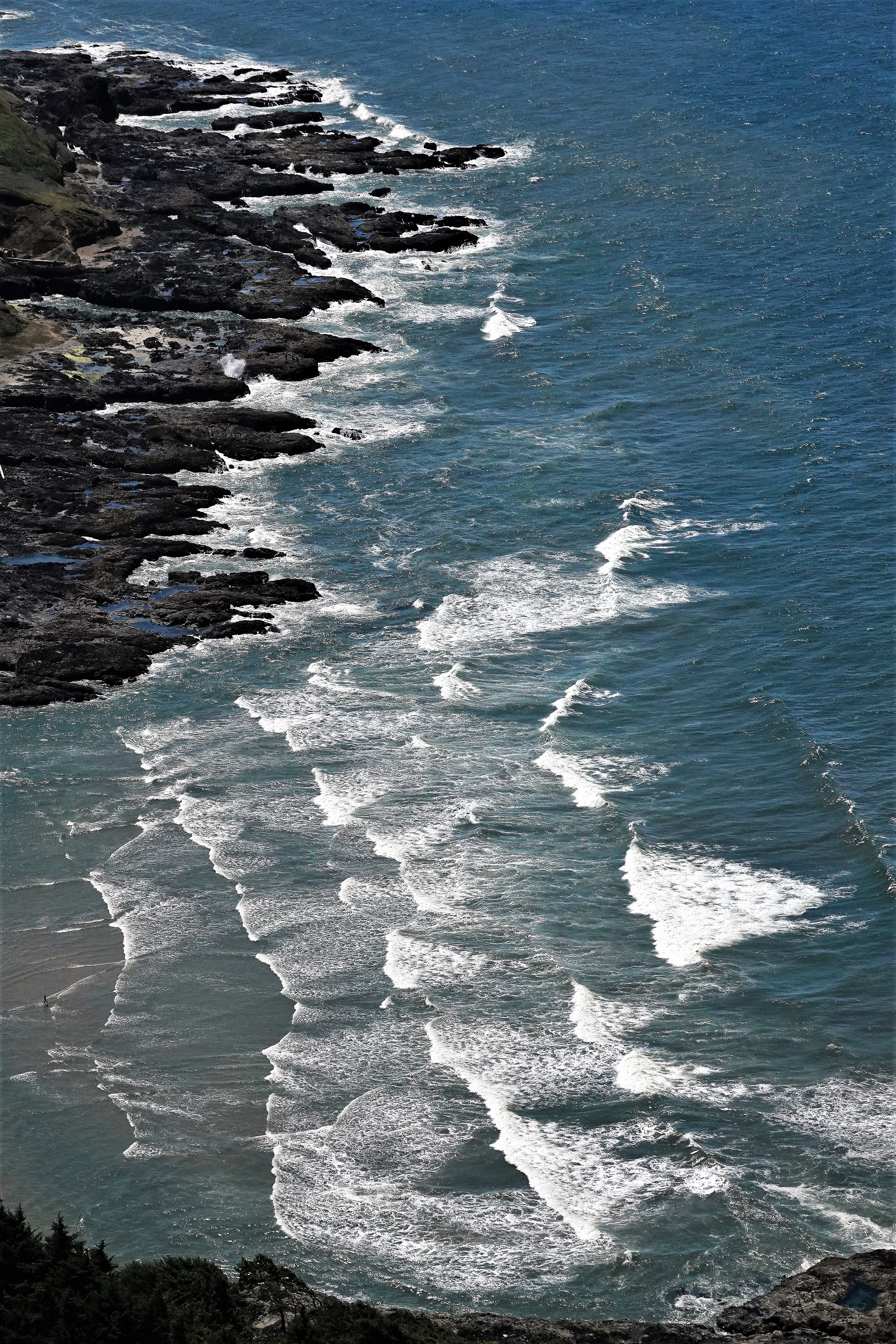
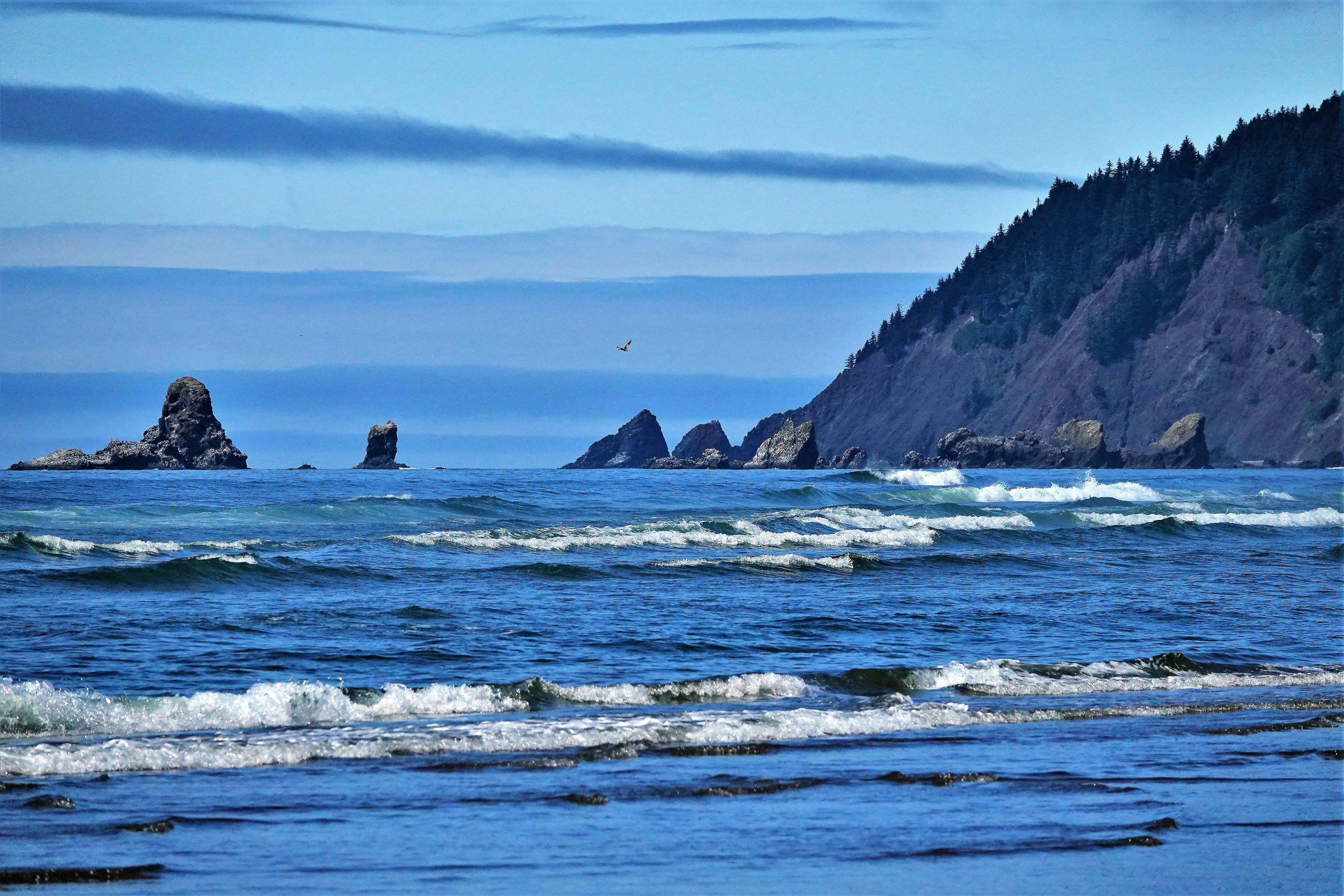
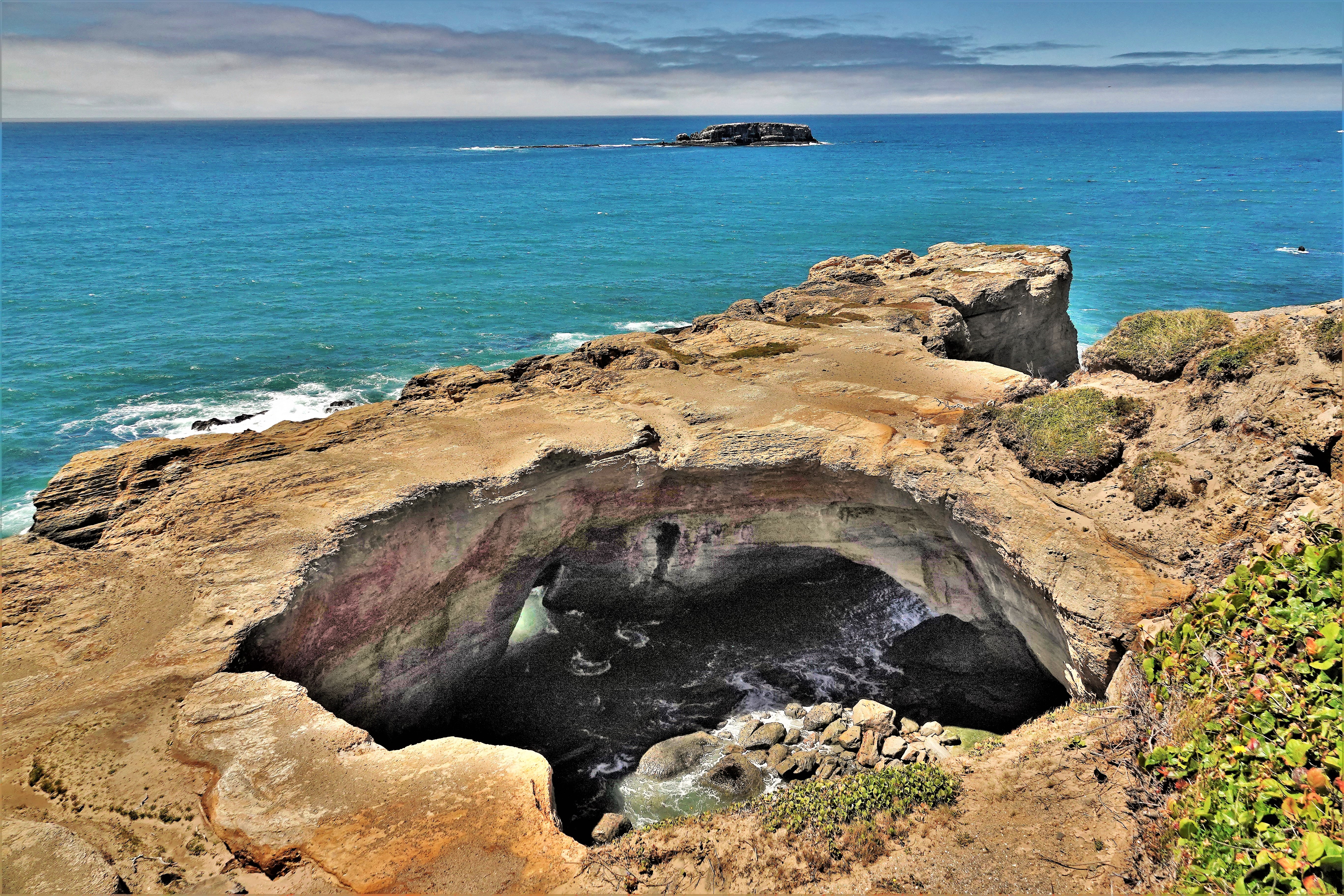
I’ve longed to experience Oregon’s rugged coastline in person ever since the 4th grade, when I was assigned to write an essay on Pacific Ocean sea stacks by my social studies teacher. I can remember dutifully tracing the shapes of coastal rock formations from an atlas I discovered at my community library in preparation for the accompanying poster that counted for 50% of my grade.

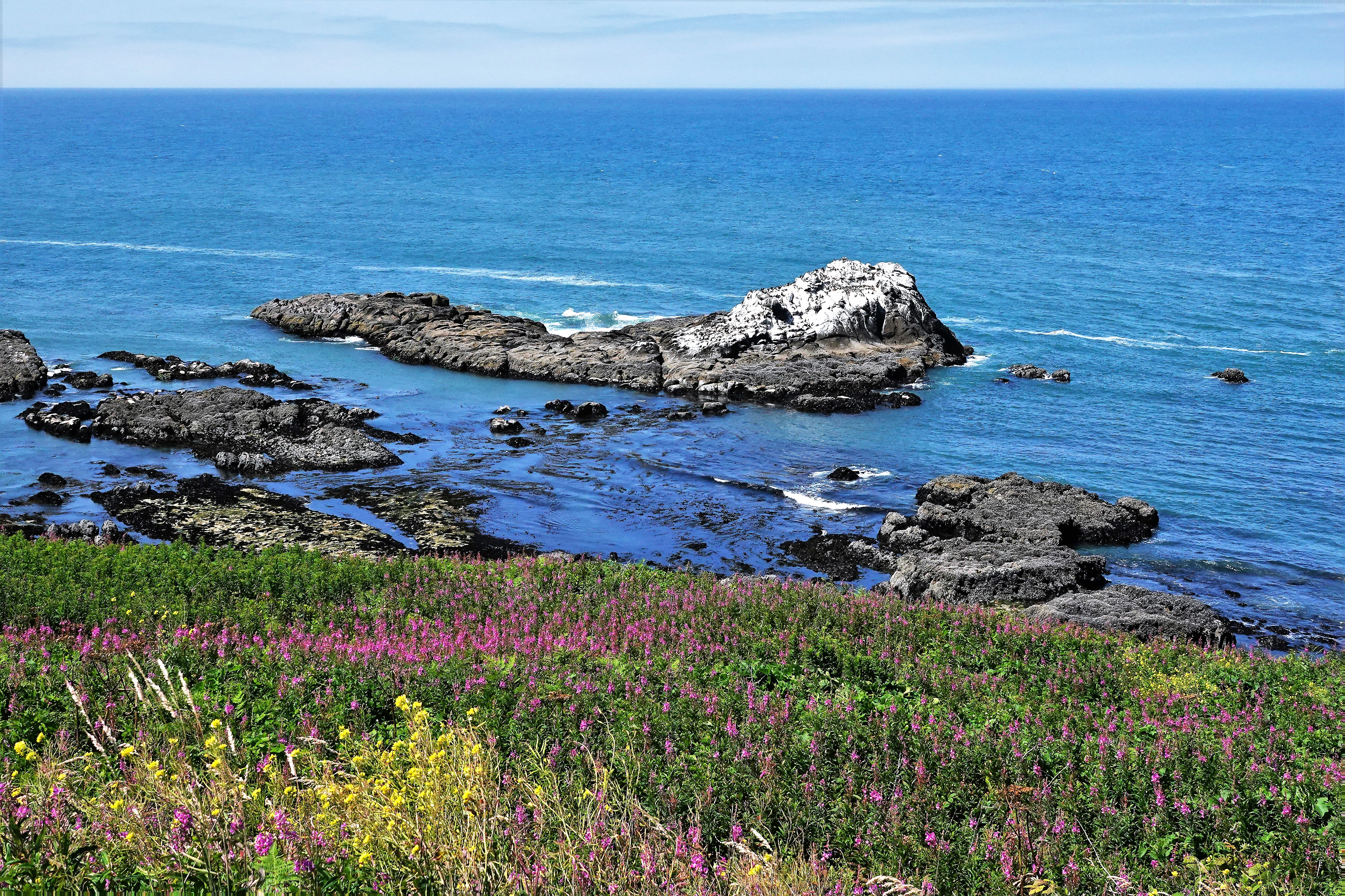
60 years later, I finally got to see this exquisite landscape with my own eyes, and it was worth the wait. So much so, that I decided to reenact the assignment and create a new poster of my own images.

(Click on any of the images for a full-frame slide show)

No other words are necessary.

Caldera Lake, aka Crater Lake

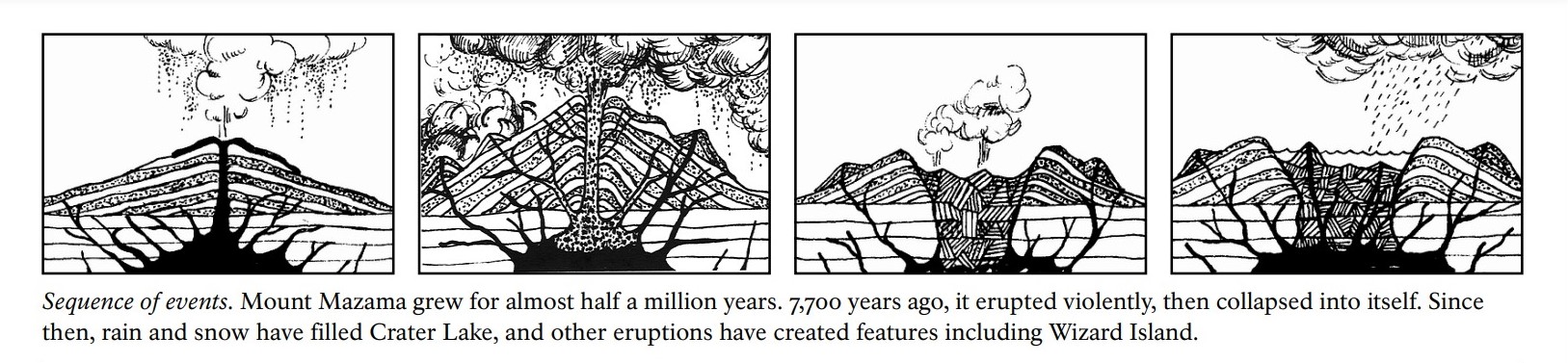
When Mount Mazama, a 12,000-foot volcano exploded approximately 7,700 years ago, the mountain collapsed into itself and created a caldera–not a crater.
Subsequently, the caldera–not the crater–filled with rain and snowfall, giving birth to Crater Lake–despite not being a crater.
Craters, on the other hand are formed by the outward explosion of rocks and other materials from a volcano.

Given the current r/age of woke, caldera supporters from around the world have voiced their concern that calderas run the risk of becoming extinct because they’re misunderstood and so often mistaken for craters.

Yet this caldera is not giving up so easily. It may be dormant today, but that doesn’t mean it won’t blow its top in another thousand years if provoked.

And the caldera experts say they have solid, supporting evidence that science is on their side,

convincing them to champion a campaign that calls attention to the ‘Calderas Matter‘ cause.

There are also plans to petition the Department of Interior for a Caldera Lake name change to assure accuracy in earth science, eliminate caldera bias, and restore caldera dignity.

Eventually, a hearing conducted by the National Park Service will help to decide the matter, and weigh the importance of the Mount McKinley/Denali precedent as part of the woke defense.

The strategy may seem twisted to many skeptics,

and naturally, the Caldera Committee members acknowledge the uphill struggle–

considering that Crater Lake (aka Caldera Lake) was declared a national park by Teddy Roosevelt in 1902, which amounts to overcoming 120 years of fake news.

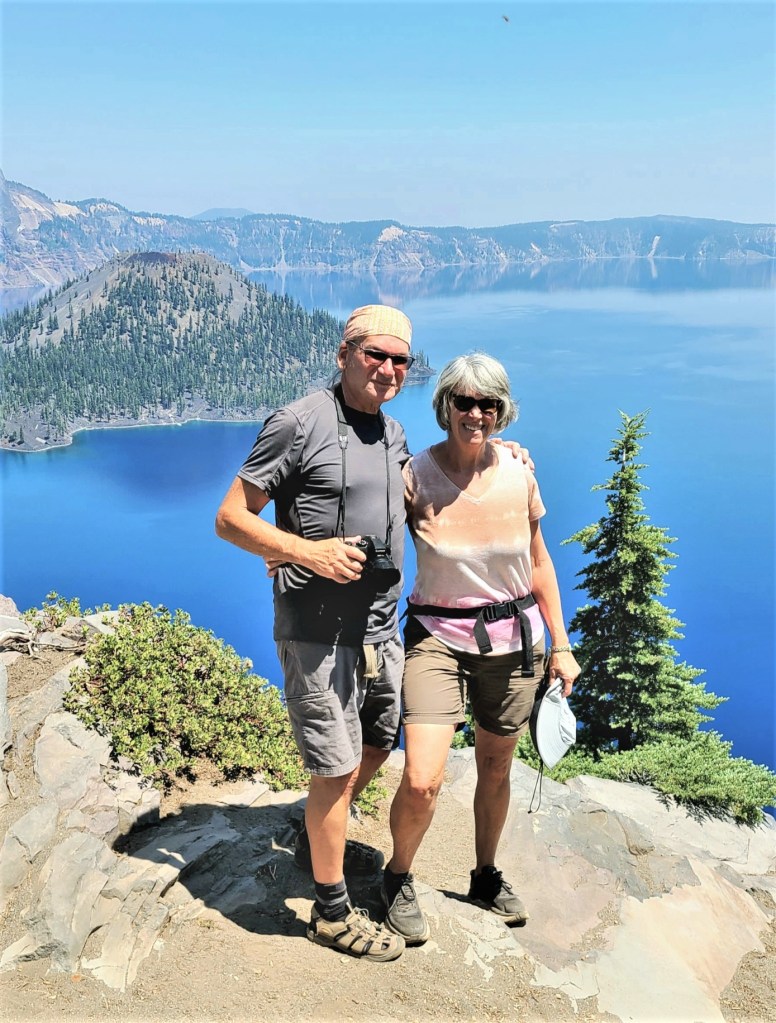
Nevertheless, Leah and I were immediately dispatched by the Caldera Committee to Crater/Caldera Lake for a routine site inspection,

but what we observed was anything but routine.

The day after our arrival, an ill wind blew in from the east bringing smoke from the Bootleg Fire,

which settled over the caldera like a blanket of blur, and interfered with our investigation.

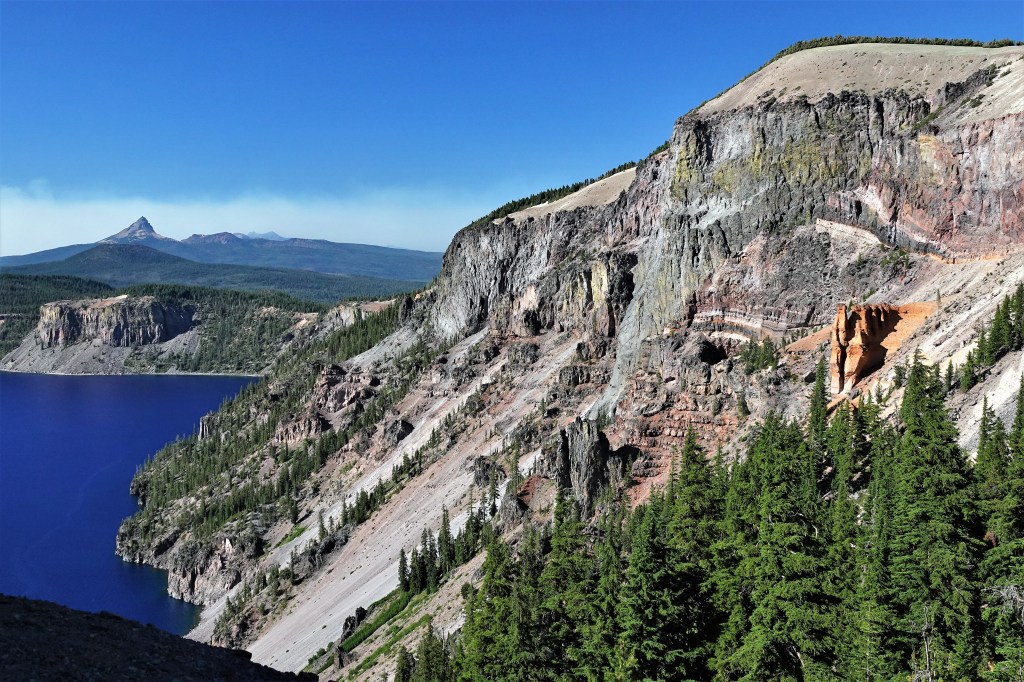
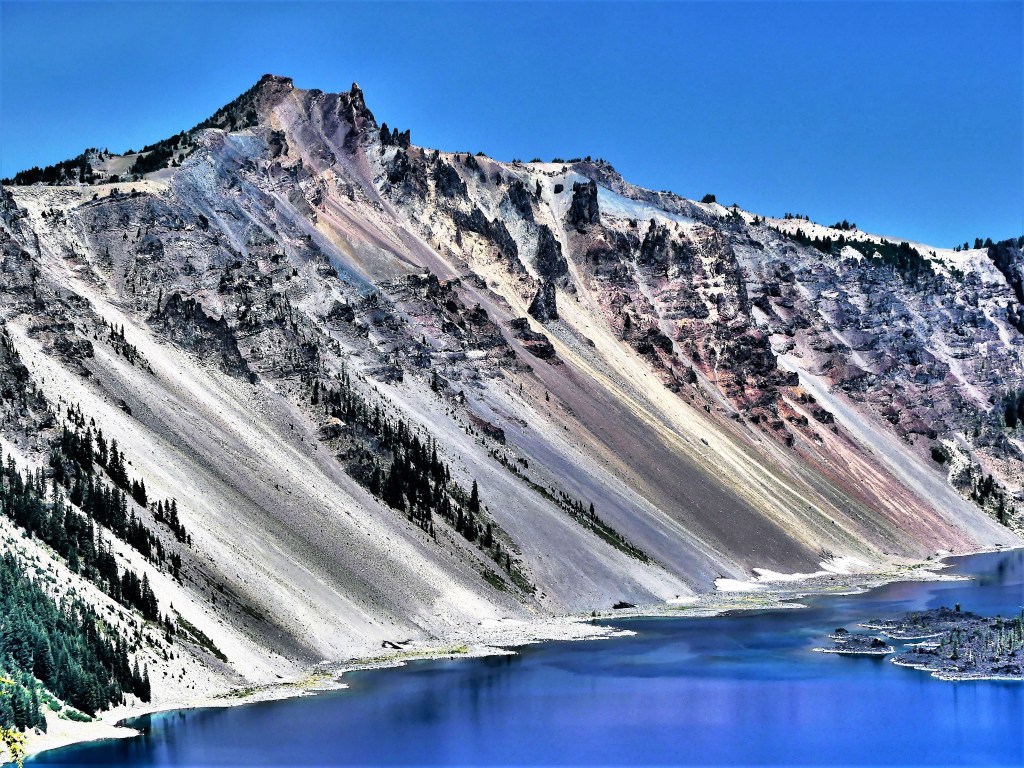
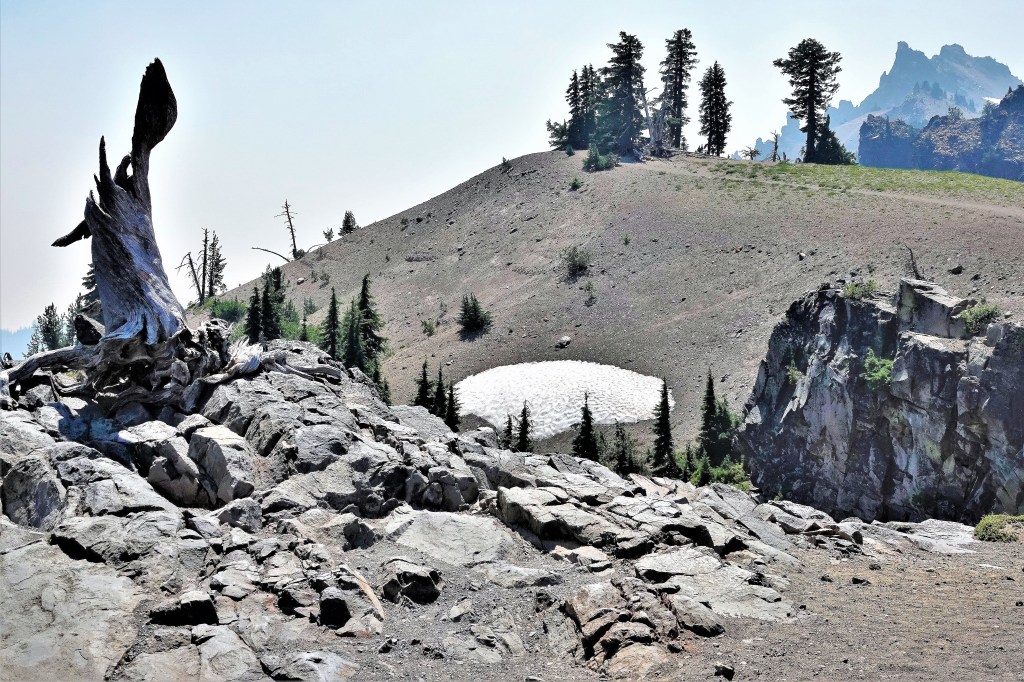
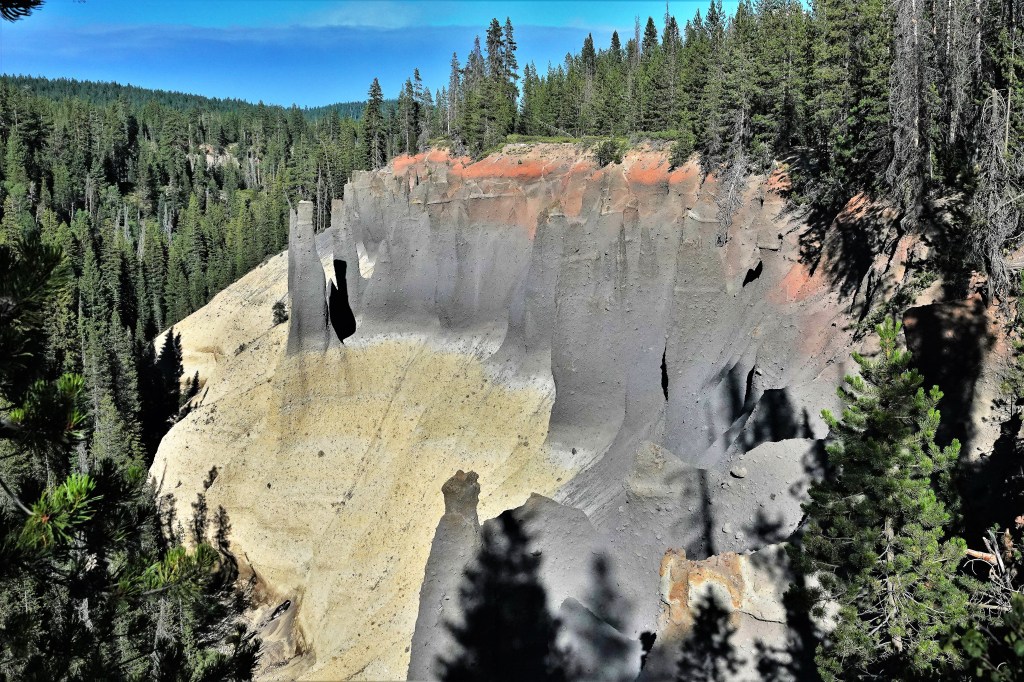
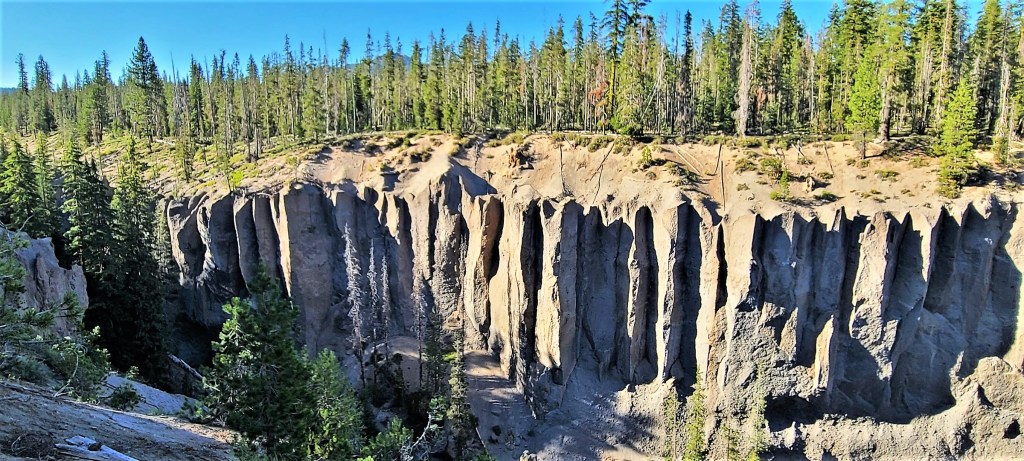
We had little choice but to comb the mountain in search of alternate evidence, and found it on the backside of the caldera in the shape of giant pinnacles that rose up from the ashes to vent the volcanic gases.

Additionally, we followed the Pinnacles Trail to inspect Plaikni Falls,

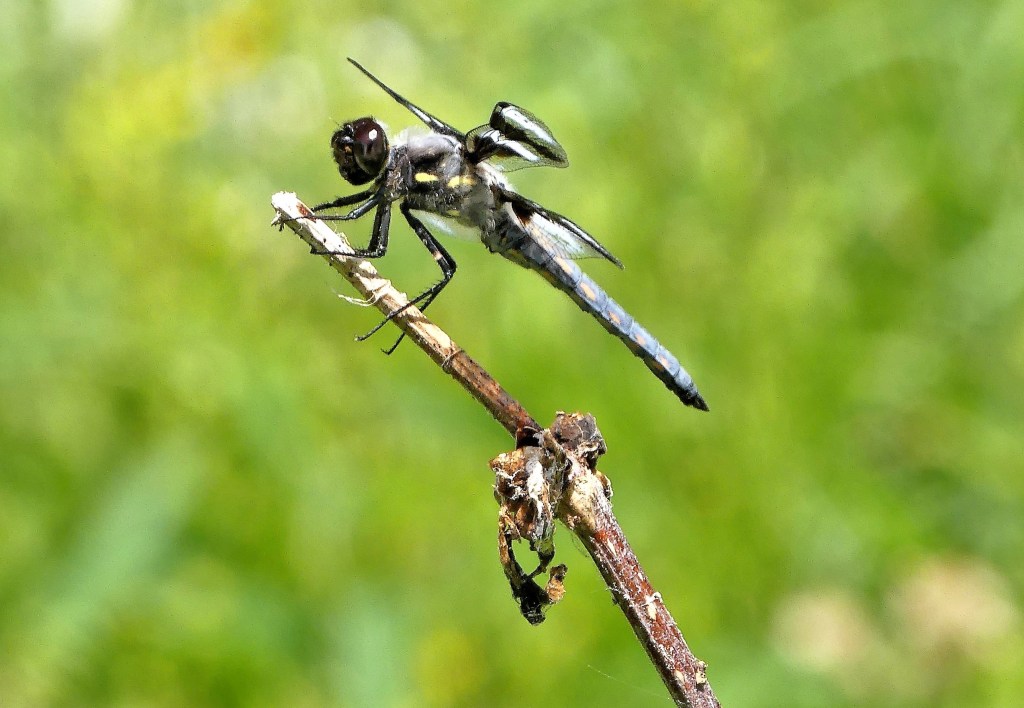
and observe the habits of local insects.

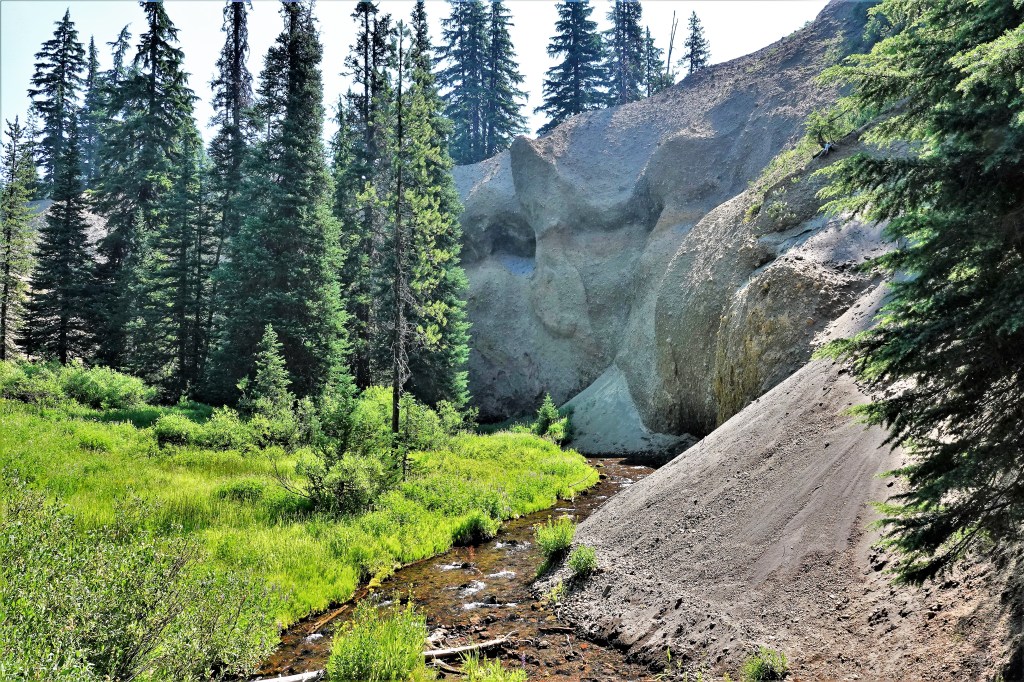
We also trekked to Annie Creek to judge the wildflower growth…

against the ash canyon.

Ultimately, there will be a public forum on the issue, but the final decision will always come from those in high places.

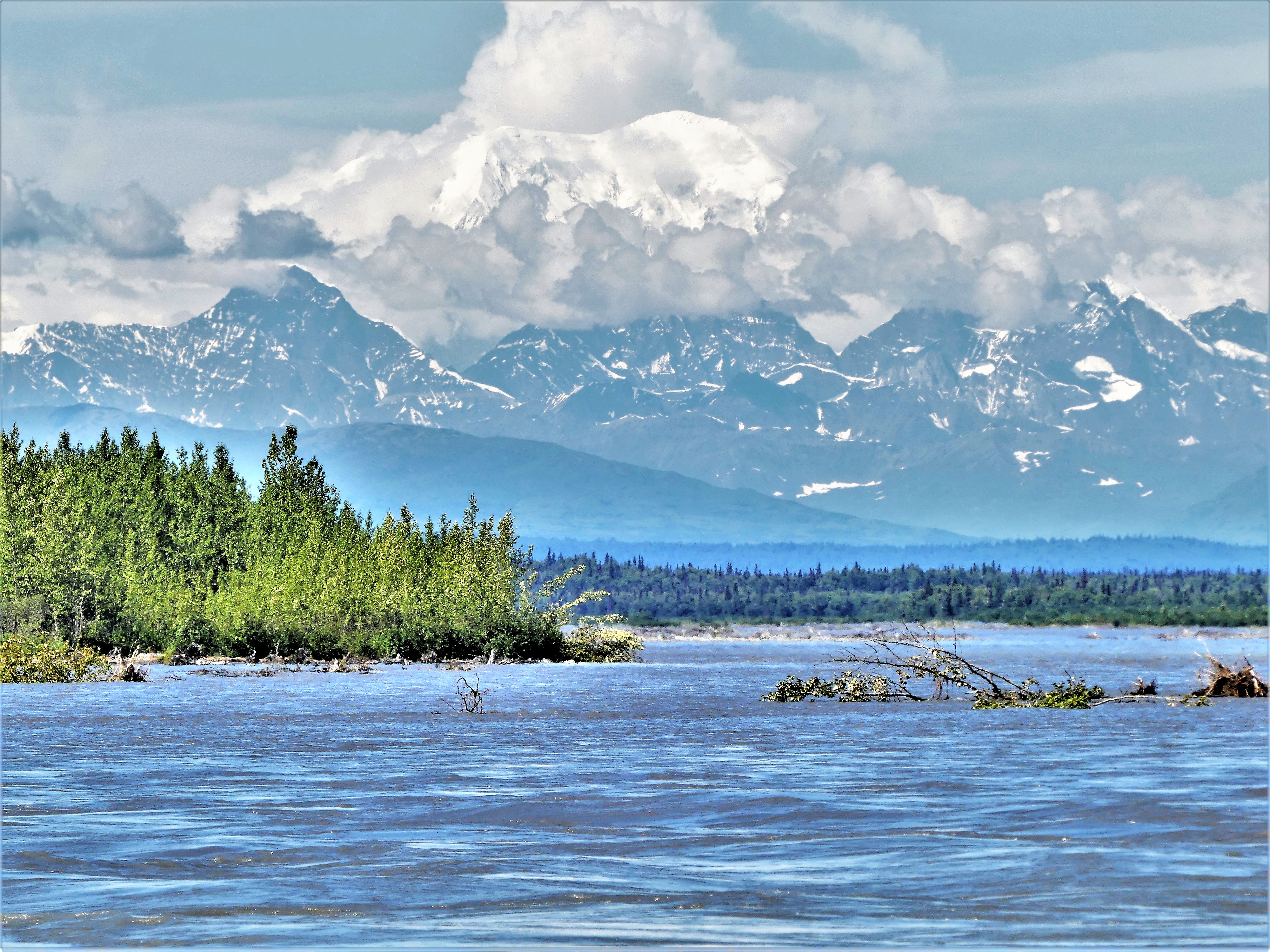
Mount Denali

Newberry National Volcanic Monument

If it wasn’t for Mount Mazama’s collapse from a major eruption approximately 7,700 yeas ago–which ultimately formed Crater Lake in Oregon’s Cascade Range–

then surely the Lava Lands surrounding Newberry Caldera would have become Oregon’s sacred National Park.

There actually was a fierce debate at the start of the 1900s on which natural wonder deserved this special status. Ultimately, Crater Lake was established as a National Park in 1902, and the Newberry Volcanic arc within Deschutes National Forest was eventually protected through Congressional legislation in 1990, and has been managed by the U.S. Forest Service.

That’s good news for any visitor who may be interested in the widest array of volcanic features of any U.S. National Park or National Monument.

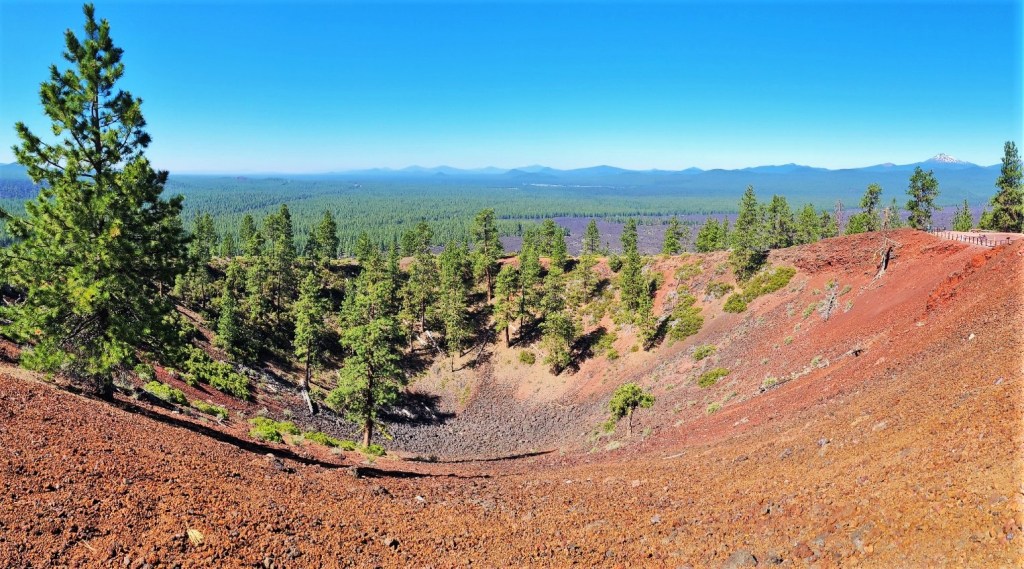
Especially striking is the perimeter trail around Lava Butte–one of over 400 volcano cones and vents scattered over a 1,200 square mile area that’s equal to the size of Rhode Island…

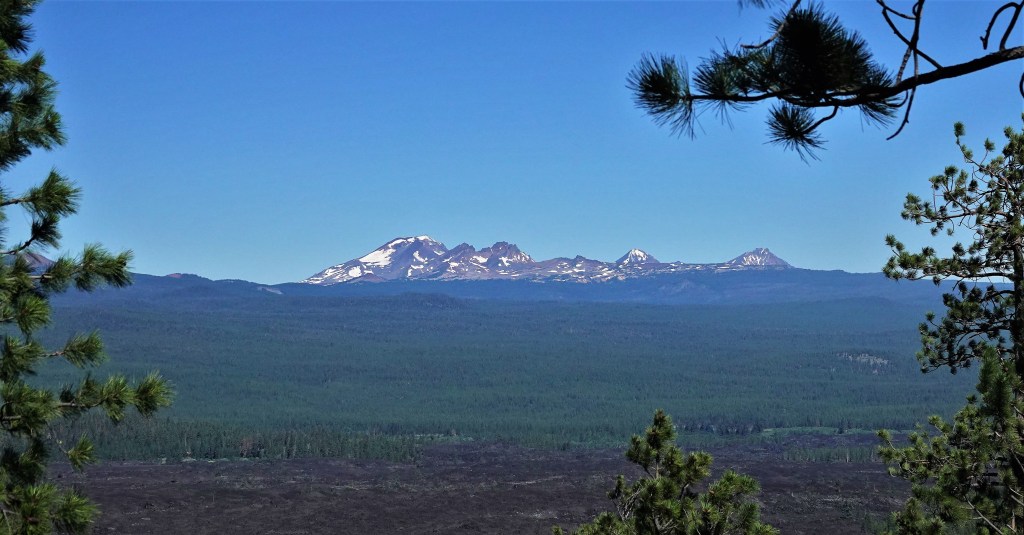
and offering panoramic views of Oregon’s High Cascades,

and the surrounding lava fields and forest.

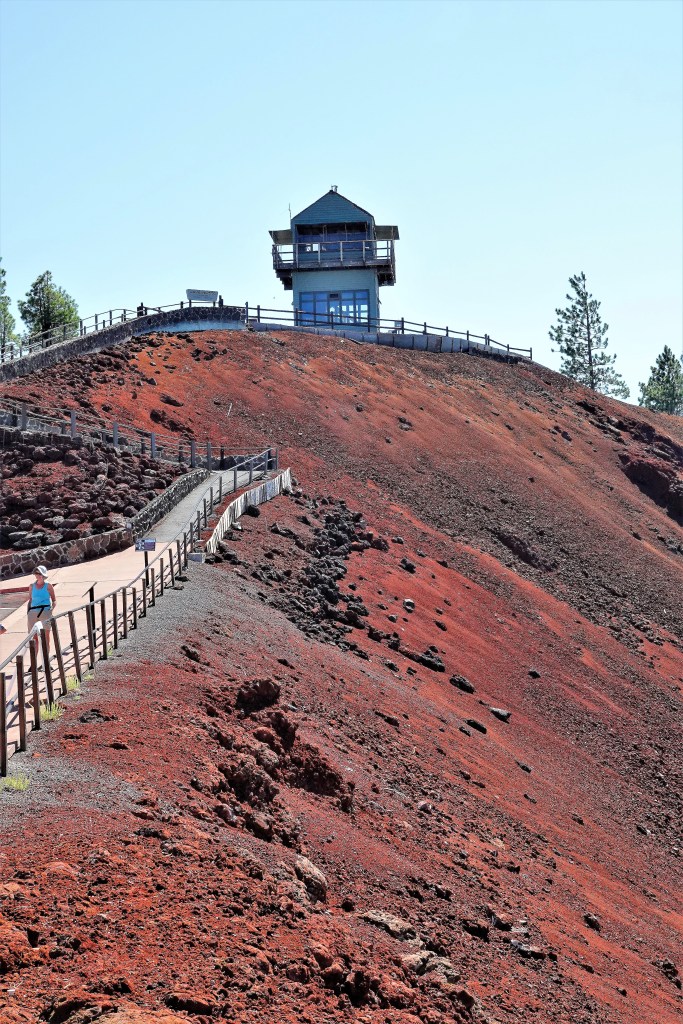
The current observation tower that rises atop the cinder cone’s rim is an active fire lookout that’s been staffed by the Forest Service since the original structure was constructed in 1913.

Aside from staring endlessly at Paulina Creek Falls as it cascades 80 feet…

from the lip of Paulina Lake,

no other park experience can compete with visiting the Lava River Cave, and taking a plunge into total darkness.

But first, there’s a mandatory briefing...

After listening to Ranger Dan’s orientation on white-nose syndrome and bat health awareness, he lectured us on what to expect inside the cave and cave etiquette.

For instance, Ranger Dan highly recommended that we pee before entering the cave.

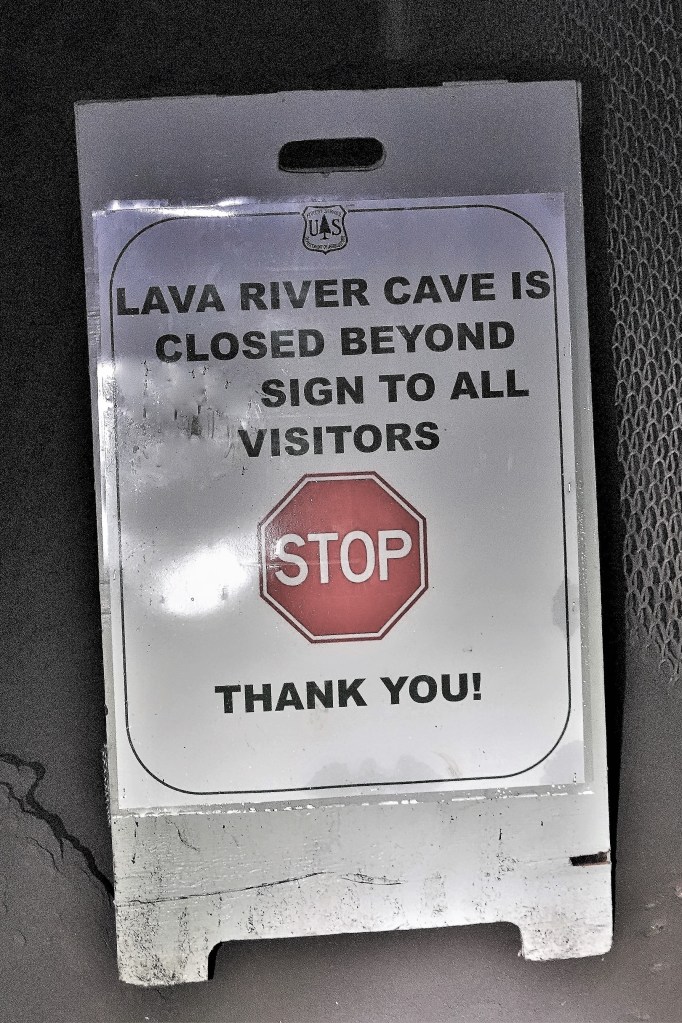
“There are no facilities in the cave, nor is the cave to be used as a facility,” he announced. “It will be one-mile in and one-mile out. You’ll know when to turn around because you’ll come to a stop sign. Expect the hike to take two hours. The temperature inside the cave is 42o, so dress appropriately. Also, there is no electricity inside the cave, so take a reliable and appropriate light source with you that is NOT a cell phone. Watch how you step, because you will be walking on uneven surfaces, so I recommend footwear that are NOT flip flops. And remember to duck in low places, because you will come to a low ceiling halfway into the cave called Low Bridge Lane. Lanterns are available to rent at the gatehouse. Any questions before I let you go?”

A young voice from one of the 20 attendees seated behind asks, “Has anyone ever died inside the cave?”

“No human remains have ever been discovered inside the cave, and today is no exception,” predicts Ranger Dan. “So enjoy yourselves as you walk through something special that happened 80,000 years ago.”

First, we peed.

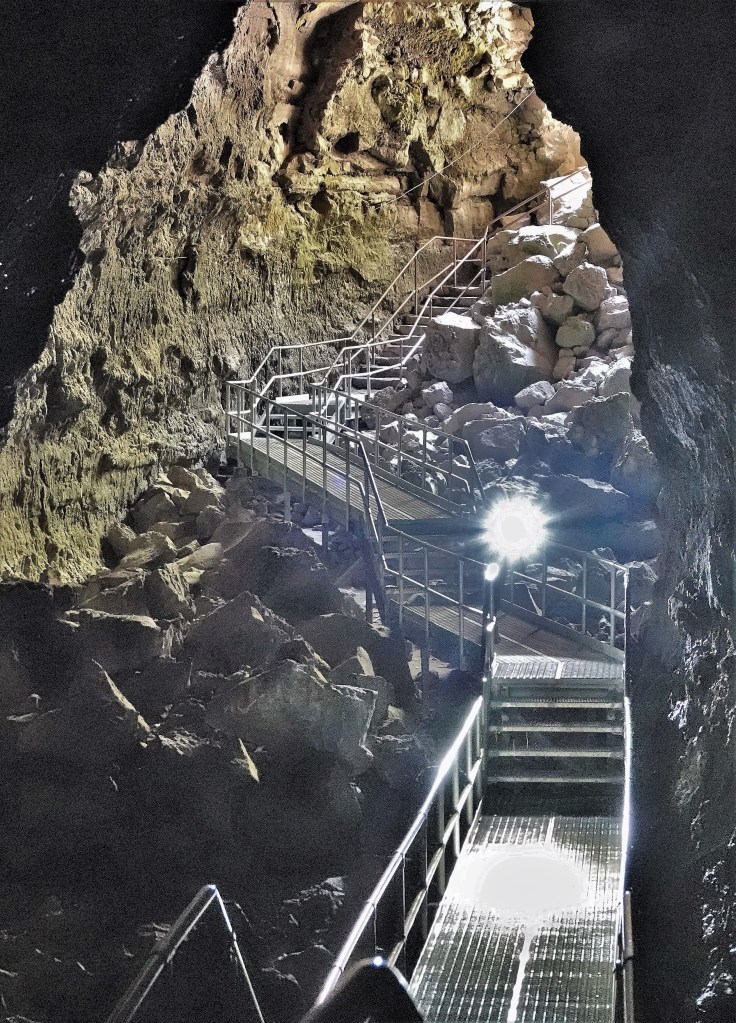
I returned with my flashlight, and Leah took my hand as we started down the first 50…

of 150 steps into darkness,

descending deeper and deeper into the abyss.

That’s when I realized that sharing a flashlight was an obvious mistake. It was a daunting challenge, trying to take photos in total darkness…

while navigating the terrain and guiding Leah simultaneously.

So I enlisted her as my key grip–coaching her to direct my flashlight beam where I needed it most–while I composed the shot, and prayed she wouldn’t run off, leaving me stranded with my cell phone.

Eventually, we reached the end…together,

where I stopped to reflect on our tandem accomplishment before u-turning…

Inevitably when hiking together, Leah walks ahead, as I’m more inclined to go at my own pace, taking photos. It drives her crazy that I’m deliberately slow at times: either waiting for the light to improve; or I’m busy framing an image; or I’m manipulating settings on my camera. However, Leah has come to accept my pokey photography habits. She realizes that she can explore ahead of me instead of waiting for me. Besides, I always catch up to her.

But this hike was different. With only one light source between us, we were forced to stick closely together and work as a team. And that made all the difference getting back to start.

Clear Lake Mistake

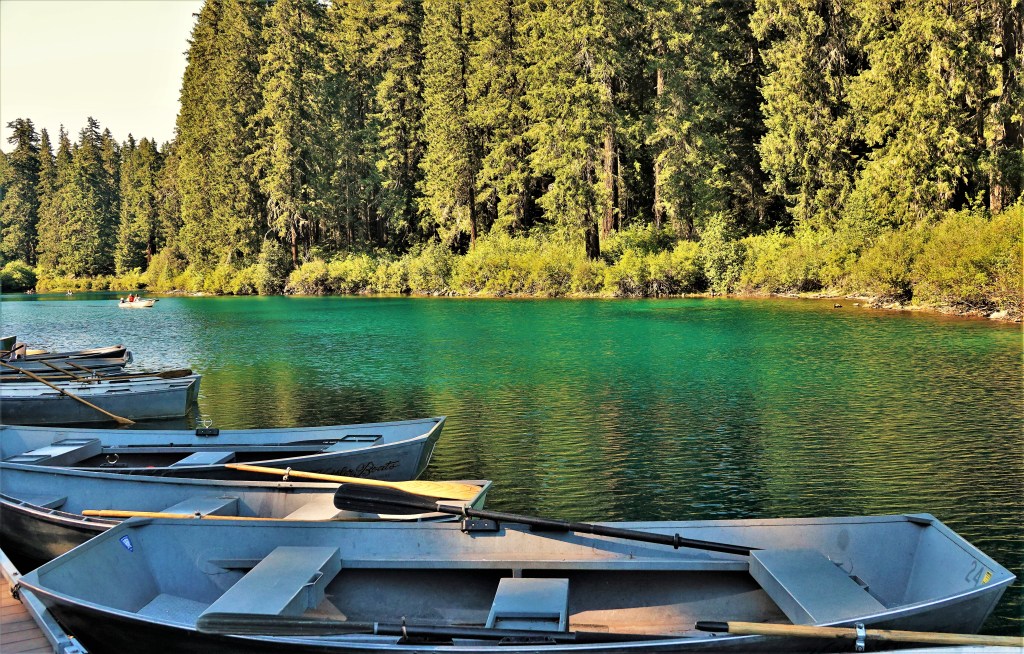
There is a lake in Oregon’s high Cascade Lakes region that was created 3,000 years ago by a lava flow that burned and dammed a forested valley. Then it filled with fresh spring water from Mt. Washington snowmelt and the McKenzie River springhead that percolated up through pumice and lava rock. The water is so pure and cold enough throughout the year that algae has no chance of growing, allowing remarkable visibility–up to 100 feet below the water’s surface. Hence, the name Clear Lake.

But even more remarkable is the standing forest of sunken petrified trees that time and alpine freshwater has preserved in pockets of the lake.

We arrived at Coldwater Cove to survey the scene with the option of launching our origami kayaks to explore the depths for its underwater secrets.

But Leah preferred to hike the 5-mile trail around Clear Lake, thinking that the water would be too cold.

So we set about on foot, through the lava fields on the eastern shore, and walked around the south side of the lake, crossing the McKenzie River…

to an inlet where the water was mirror still.

At this point, I was perfectly happy to backtrack to the pickup to reconsider our kayaking option, but Leah wanted to finish the loop and talked me out of it.

The trail hugged the western shoreline, providing amazing views of the water…

until we reached the resort area, where a boat concession reminded me of my missed opportunity

to be paddling on the open water with the others.

We pit-stopped at the resort store and filled our water bottles before pushing on, past the lakeside cabins to complete the second half of the hike…with the light beginning to fade.

Just as I was wondering out loud that we’d lost sight of the lake, we came to a bridge over a creek that directed us to the McKenzie River.

“I really think we should take the bridge and follow the water, because the trail we’re on is taking us away from the water,” I advised.

“But there was never any indication that we ever wandered off-trail,” Leah countered, walking past the bridge, “and besides, if that was the way back, it would be marked that way.”

“Okay, but if this trail is supposed to be a lake loop, then where’s the lake?” I followed up, as I was following her footsteps.

“How should I know? I’ve never hiked this trail before. Besides, you’re just bitter,” she said.

“Fine! Have it your way! But for the record, I think we should have taken the bridge,” I reiterated.

We continued to walk for a mile or so until we noticed changes to the forest. The trees grew thicker and taller, and light was struggling to penetrate a dense canopy of spruce. The mosquitoes must have sensed my uneasiness; they were feasting on the backs of my legs.

According to Leah’s iPhone, we had already exceeded what was to be a 5-mile loop.

“I think we’re lost, and if I only had a spark of phone service, I could prove it!” I said.

This is the map I could have downloaded if only I had a signal.

“Do you want to go back and take the bridge?” Leah offered.

“Are you serious or seriously joking?” I asked, wondering if Leah was really surrendering.

“In fact, we could also walk back to the resort, and bum a ride somehow,” she suggested.

“Who in the world is gonna pick us up and drive us back to our truck?” I sighed.

“You never know,” Leah snapped, “I can lure them with my wily ways.”

That’s when I heard the sound of traffic. There was a whoosh and it was gone. Then another whoosh, and another. The road had to be close by, but now the trail was leading us to the right, away from the road noise, but onto a single-lane gravel road with marker NR-2676. We followed the road north and around the bend, which brought us to a McKenzie Hwy turnout.

“Do you know which direction to go?” Leah asked.

“We have to cross to the other side to go back to the resort,” I advised. “Maybe you’ll have a chance to charm a ride from someone who’s rented a kayak for an hour or two.”

There wasn’t much traffic in either direction, which meant the park at 7PM was past its peak busy period. We walked along the roadside, occasionally stopping to flag down oncoming traffic but no one had any interest in slowing down.

“You realize it will be dark by the time we reach the truck,” I figured.

“What if I fake a limp, and maybe someone will feel sorry for us and stop.” she said, badly imitating someone with a bad knee.

“I’m not sure I want a ride from someone who pretends to feel sorry for us,” I mused.

That’s when a gray Toyota Avalon sedan slowed and pulled off the road, fifty feet ahead of us.

“I told you it would work,” she declared.

Leah didn’t know whether to run, or limp, or limp-run.

A burly middle-aged man with thinning gray hair exited his car, and opened the rear door.

“I’m gonna make some room in the back for you. Don’t mind the dog on the floor. He’s old and harmless,” he assured.

Leah took the middle seat beside his sullen son, and I wedged myself behind the driver’s slouching seat. A mangy terrier sat between our legs while our driver drove us to Clearwater Cove where our truck was parked.

His mother was animated in the front seat during the ride. She explained to us how special it was to “see the sights of nature” with her family.

We were so relieved to get back to the truck, and so was their dog, because It followed Leah out the door and refused to listen to its owner, our driver. Leah and I spent the next 10 minutes chasing, corralling, and eventually luring the dog back to the car while everyone watched from inside the car.

Nevertheless, Leah and I are immensely grateful to you and your family for stopping to help us in our moment of need. You saved us the time and trouble of walking an extra 3.5 miles.

We certainly need more moments like this in our lives, if only to prove to ourselves that humanity is about community, and mistakes make us more human.

P.S. I regret that I never learned your name during our brief exchange, but I remember giving you my card. If by chance, or design you happen to be reading this, I hope you’ll post a comment so I can thank you by name.

Land of Landscapes and Landmarks

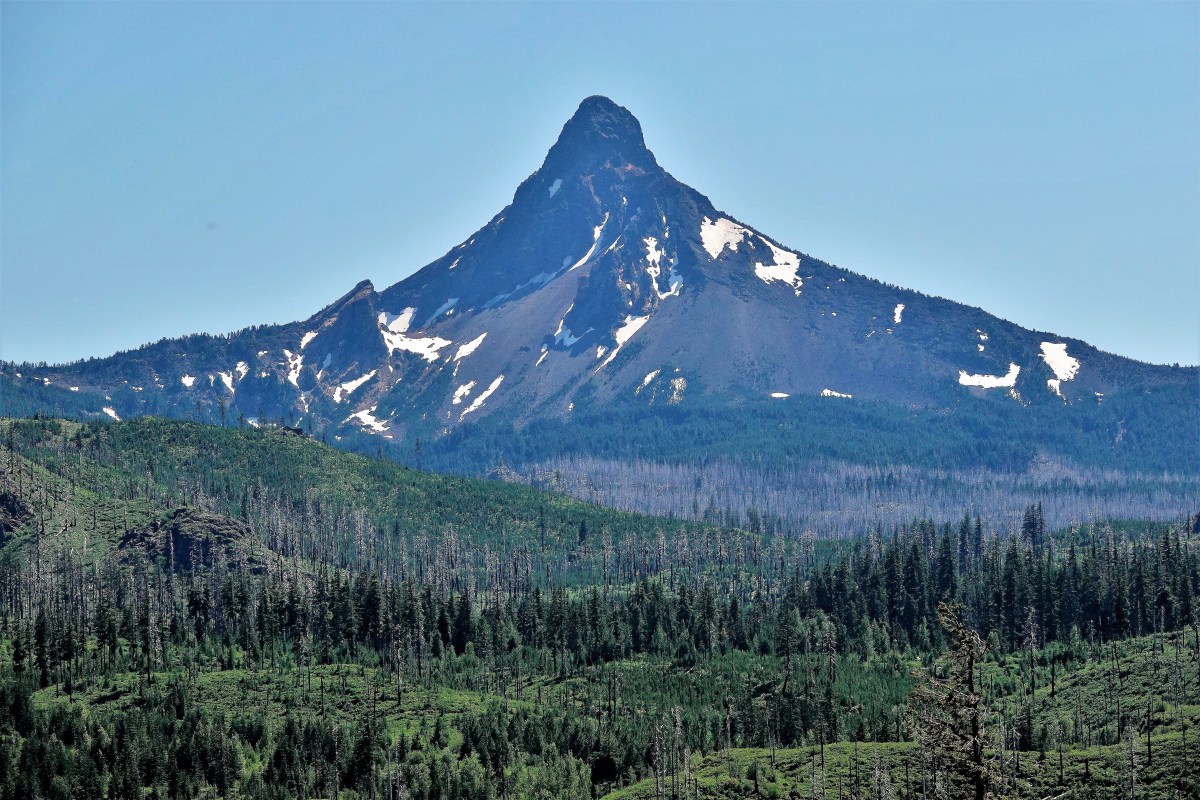
If the Three Sisters are the most dominant feature of central Oregon’s landscape, then we must be in Bend. In fact, these three volcanic peaks comprise the centerpiece of the Oregon Cascades.

Leah and I stopped at a roadside turnoff to capture their beauty while on our way to Broken Top–a damaged volcano who forever defends his spinster Sisters from the 6-inches-per-day glacial advances of Mt. Bachelor.

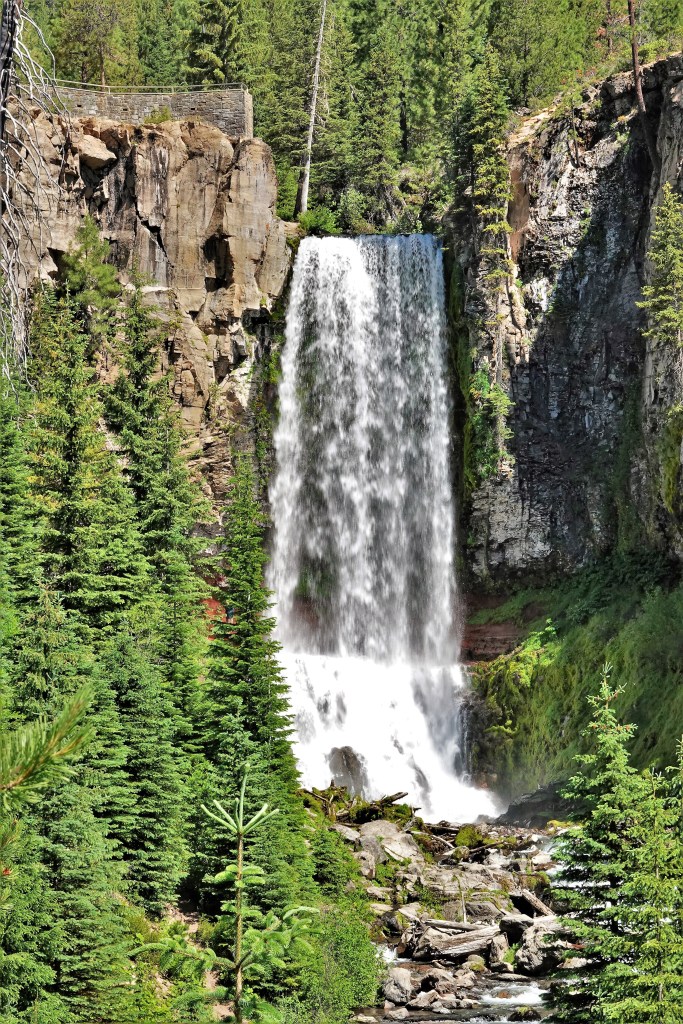
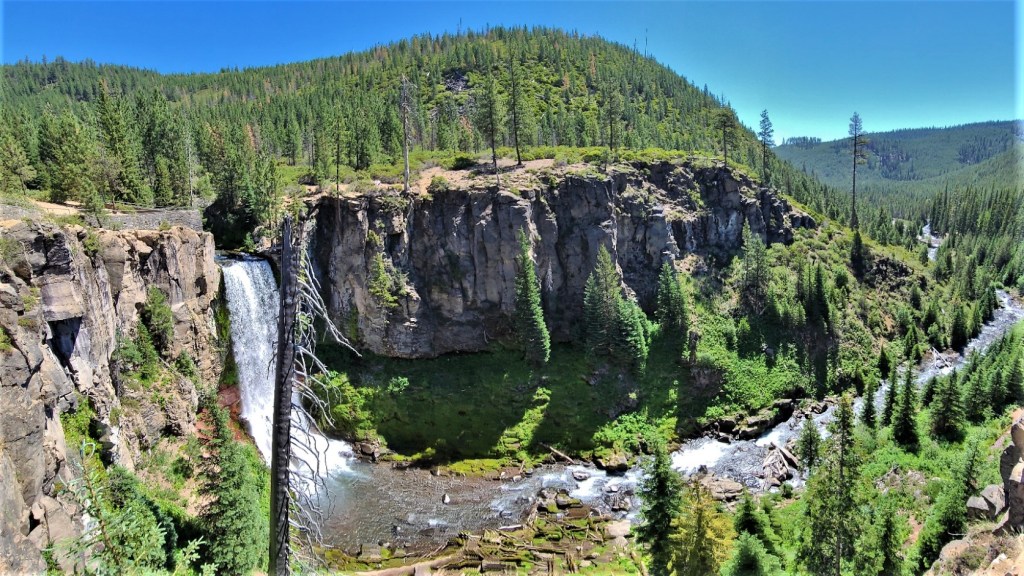
Our mission was to drive and hike our way to Tumalo Falls to admire a waterfall plunging 97 feet…

over a channeled canyon wall…

that was shaped by ice 20,000 years ago,

and to our benefit.

Leah and I followed the 6.5-mile Tumalo Creek Trail upstream for a short distance before turning back.

Nearby, under the watchful gaze of Mt. Bachelor sits Little Lava Lake–created by its ancient lava flow,

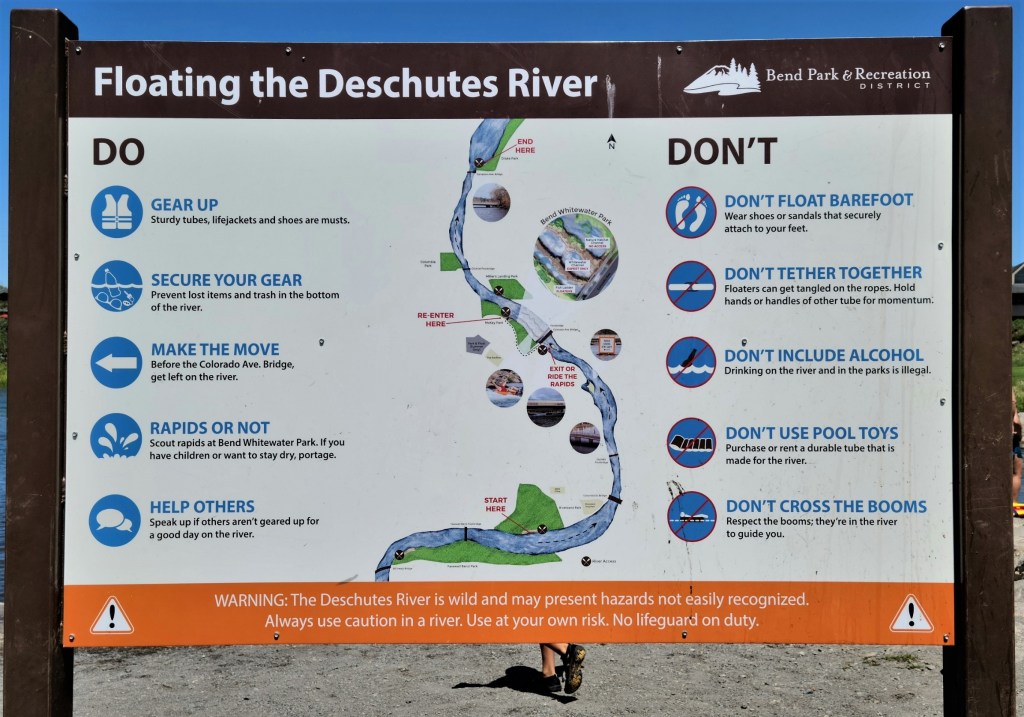
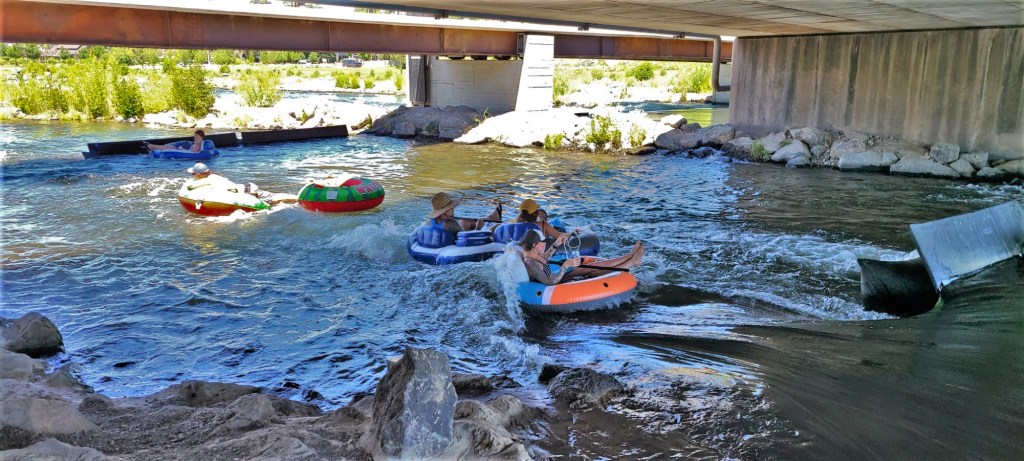
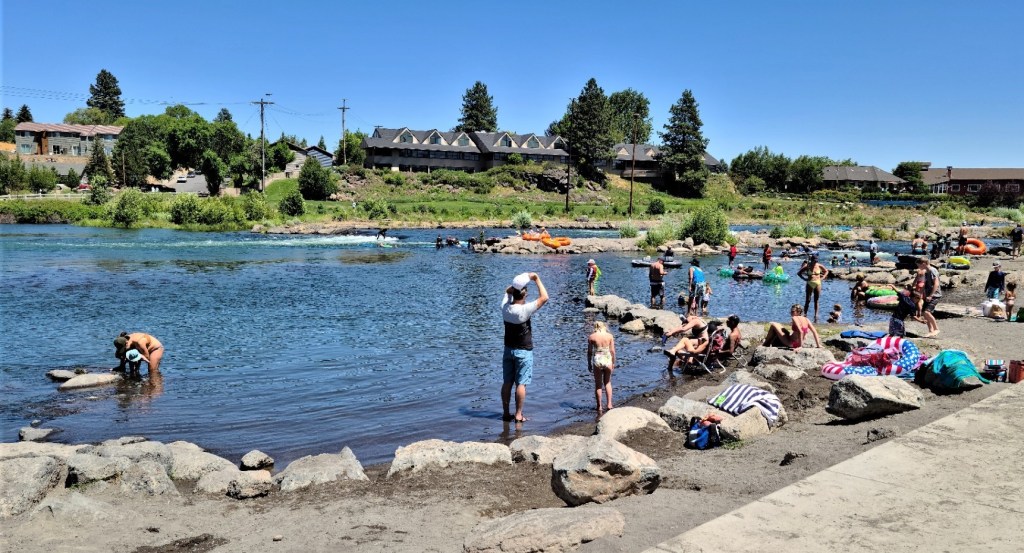
and the origin of the Deschutes River, which runs through the city of Bend–providing its residents of all ages with a familiar recreational pastime.

Which begs the question,

“How does anything get done in Bend, if everyone’s out on the river?”

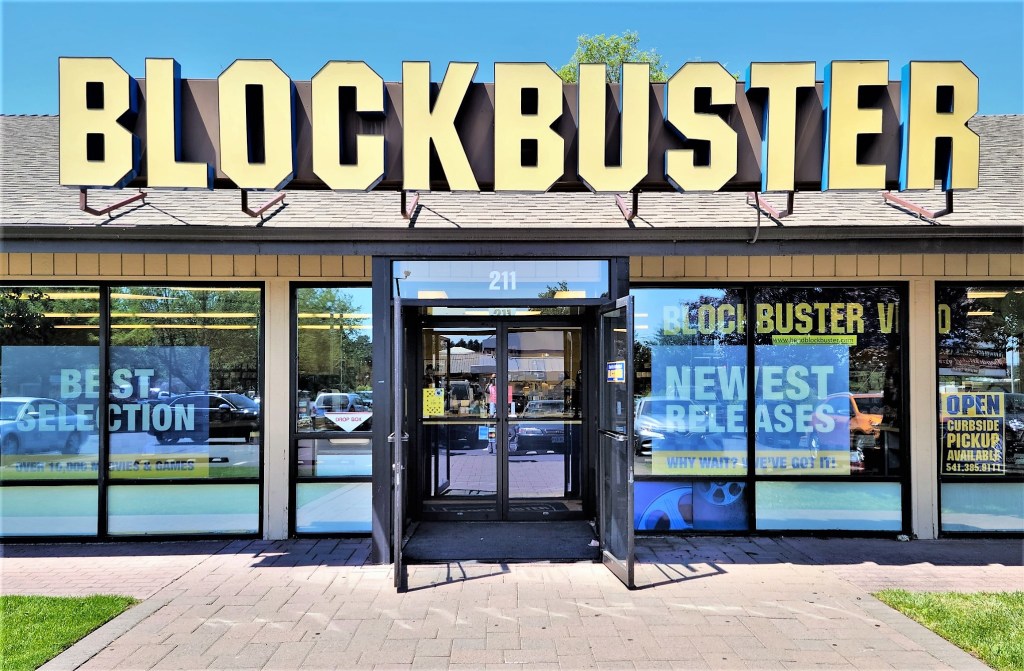
Equally as telling that we’re in Bend is our visit to the last Blockbuster on the planet,

where hundreds of DVD-heads, curiosity seekers, and nostalgia collectors drop by daily…

to pay homage to a cultural icon by capturing a selfie at the entrance…

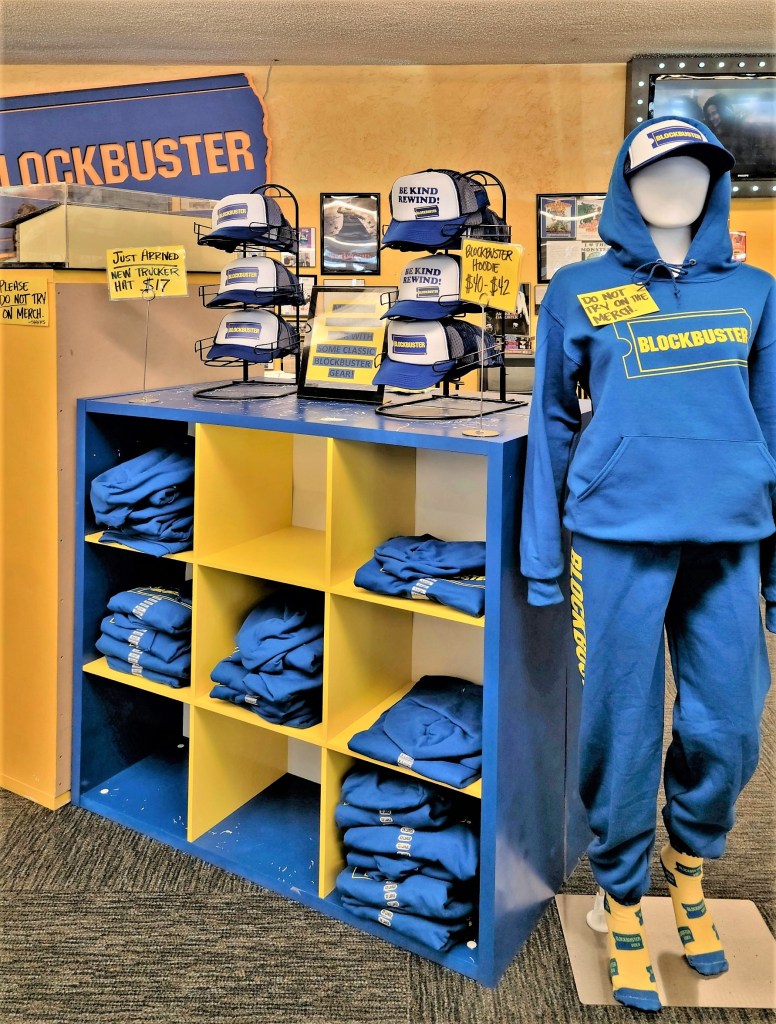
or participating in the next 80’s fashion redux.

It all adds up to good times, and a good reason to Bend over backwards to visit this outdoor wonderland.

Crystal Blue Persuasion

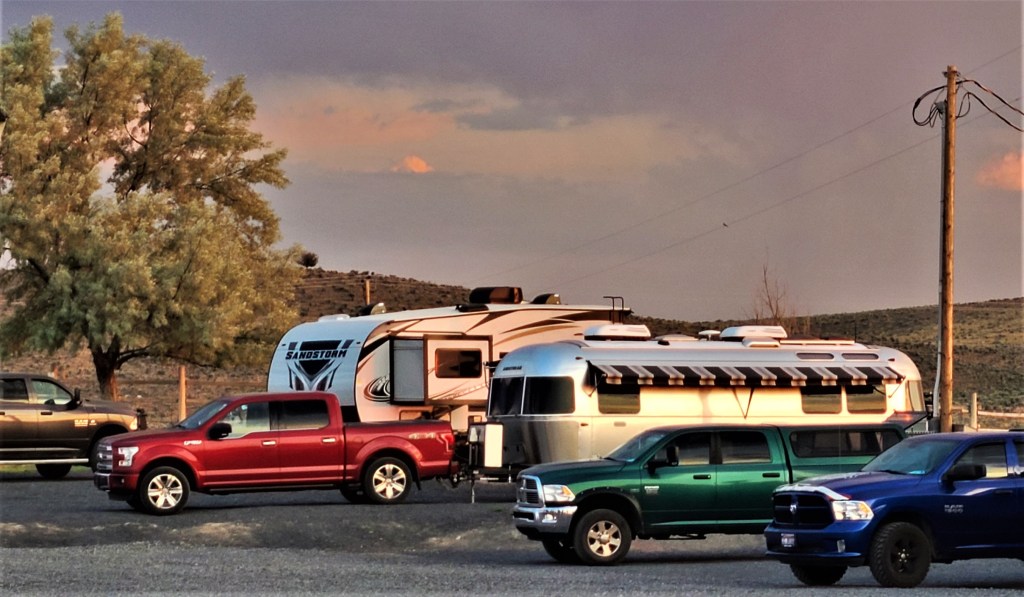
Leah and I needed a useful midpoint between Bruneau Dunes and Bend to divide the drive if we were heeding my tank-of-gas rule. And because I draw the line at driving no further than a full tank of gas will carry us, we were limited to a 350-mile range. In many ways, Crystal Crane Hot Springs offered the perfect locale: it was geographically convenient; it provided full hook-up; and it was also therapeutic.

We arrived at 1:30 PM and Leah entered the office to check-in.

“I’m afraid you’re too early,” said the clerk. “Check-in isn’t until 3:00.”

“But we reserved site #6 and it’s empty now. Why not allow us to pull into the space?” Leah asked.

The clerk was unmoved. “Our policy is that check-in is 3:00—no sooner—so, no, I can’t let you into your space at 1:30. However, you’re welcome to buy a guest pass for $10 if you want to use the facilities while you’re waiting.”

Leah returned to the truck with the news. “Are you kidding me!?” I exclaimed. “I’m cooking out here, already. Why in the world would I want to marinate in a 98° hot spring when it’s 102° outside? All I want to do is hook-up the electric to the Airstream and sit under the air-conditioning.”

“I tried,” said Leah, “but we need to wait another 90 minutes.”

“Ridiculous!” I remarked.

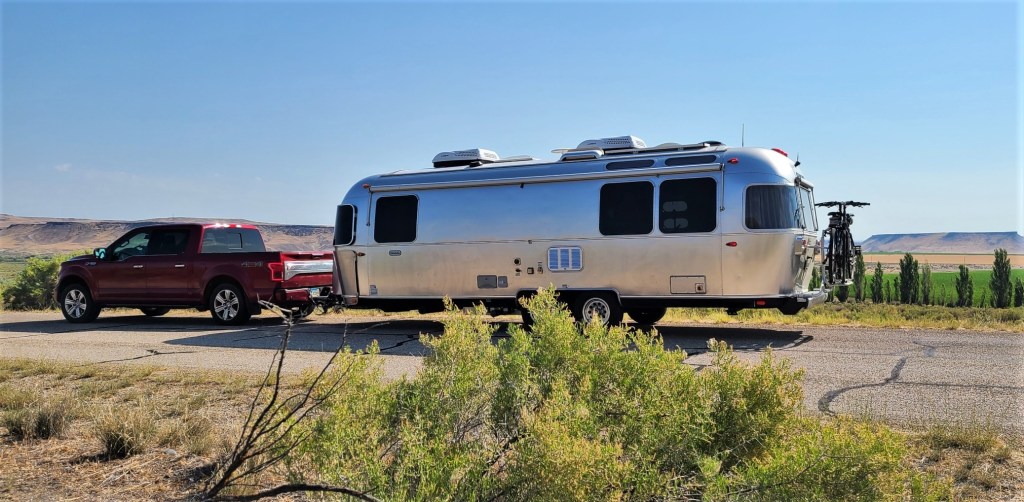
This stop was always intended as an overnighter, so there was never a need to unhitch—just plug and play. Meanwhile, the Airstream doors and windows were opened wide to circulate fresh hot air into a cabin that had already reached the outside temperature and cooling the space would take hours.

At 2:30 PM, I entered the climate-controlled office and approached the counter where a large, buxom woman with a mole inside her dimple was standing behind a plexiglass barricade. Rather than argue my case, I flattered her to the point where she conceded, and gave us access to the space a half-hour early.

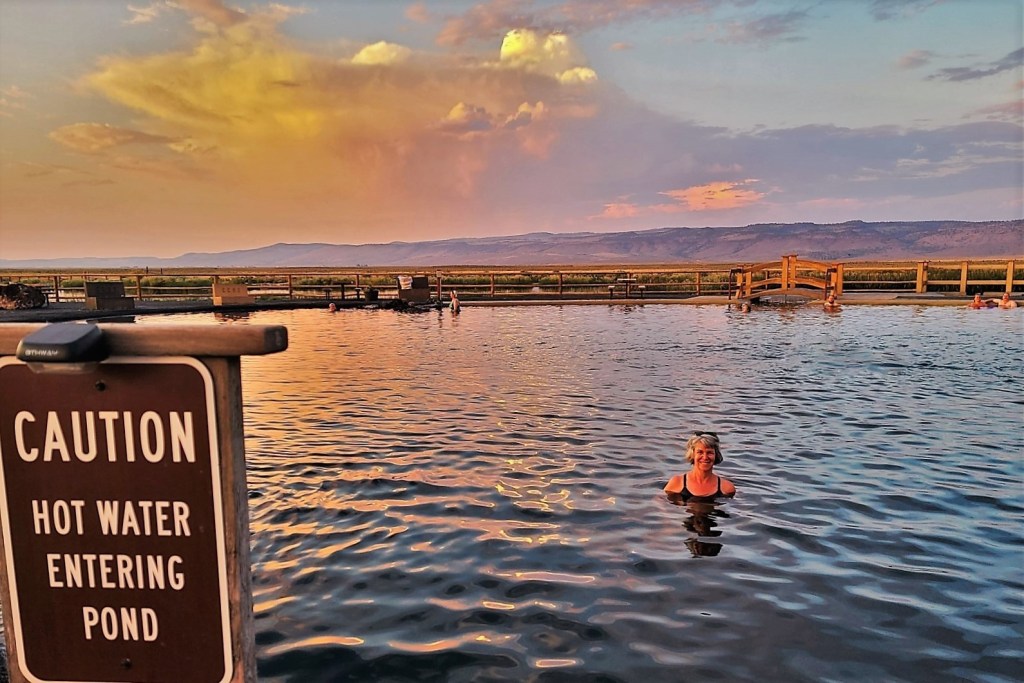
With the sun setting and the day’s heat dissipating, the spring had become a hive of activity. It was finally time for us to ceremonially cleanse ourselves of all the dust and grime and sand that followed us through 5,000 miles of travel between New Mexico, Colorado, Utah, Wyoming, and Nebraska.

Hot, Hot, Hot

Extreme heat is baking the northwestern states in July, and historic highs are being set with every new day. Murphy, Idaho is no exception. Triple-digit heat has become the new normal, and we were about to cross that threshold, as we continued our journey across the Snake River Plains to Morley Nelson Snake River Birds of Prey, where temperatures reached 104° the other day with no foreseeable break in the heatwave.

Originally, the plan was a sound one–we would travel across Idaho, from Craters of the Moon to visit a raptor sanctuary. But at the time, we never considered that booking a Bureau of Land Management campsite (the only campground in the vicinity) would expose us to unbearable heat inside the Airstream, as most all BLM campsites are primitive–meaning NO services.

Leah and I needed to adjust our plans accordingly and without delay if we were to remain on course and on schedule, but we had to find a worthy substitute for the next couple of days. We thought about staying in Boise (it was nearby), but we had little interest in visiting Idaho’s largest city (pop. 230,000); we were looking for something more adventurous and outdoorsy.

After checking area state parks, I discovered that Bruneau Sand Dunes State Park was close by (1.5 hours away) and available with water/electric hook-ups. There would be no sightings of prairie falcons or golden eagles at Bruneau Sand Dunes, but if we closed our eyes, we could imagine them in air-conditioned comfort. …and lots of sand…again (see Great Sand Dunes National Park).

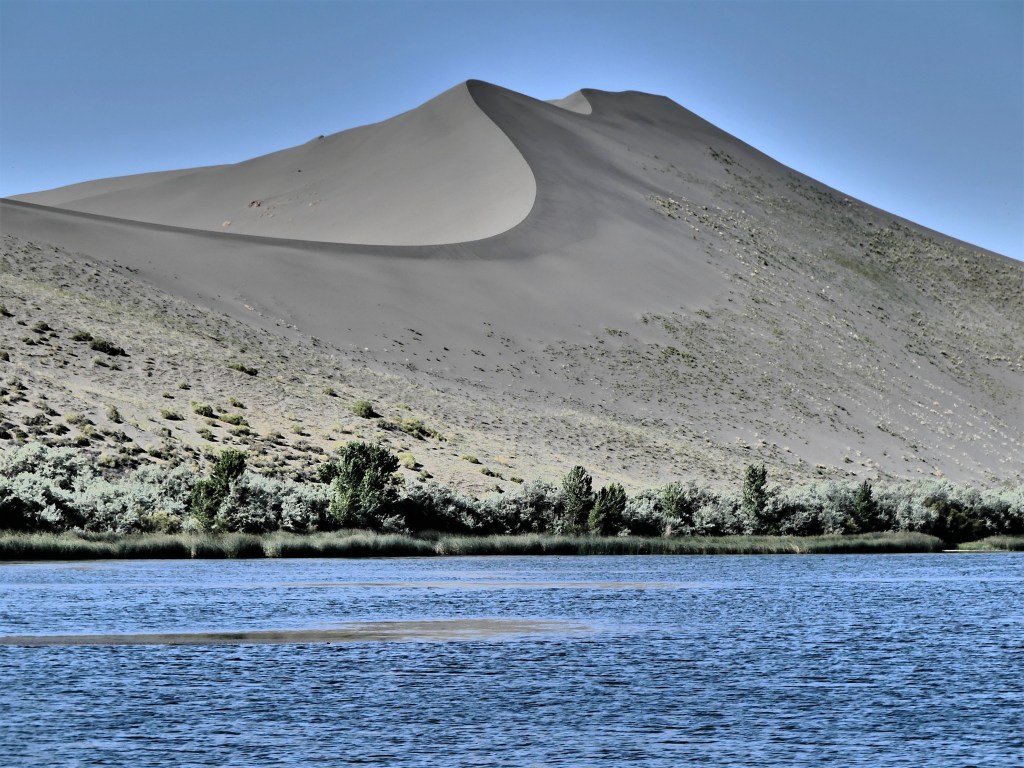
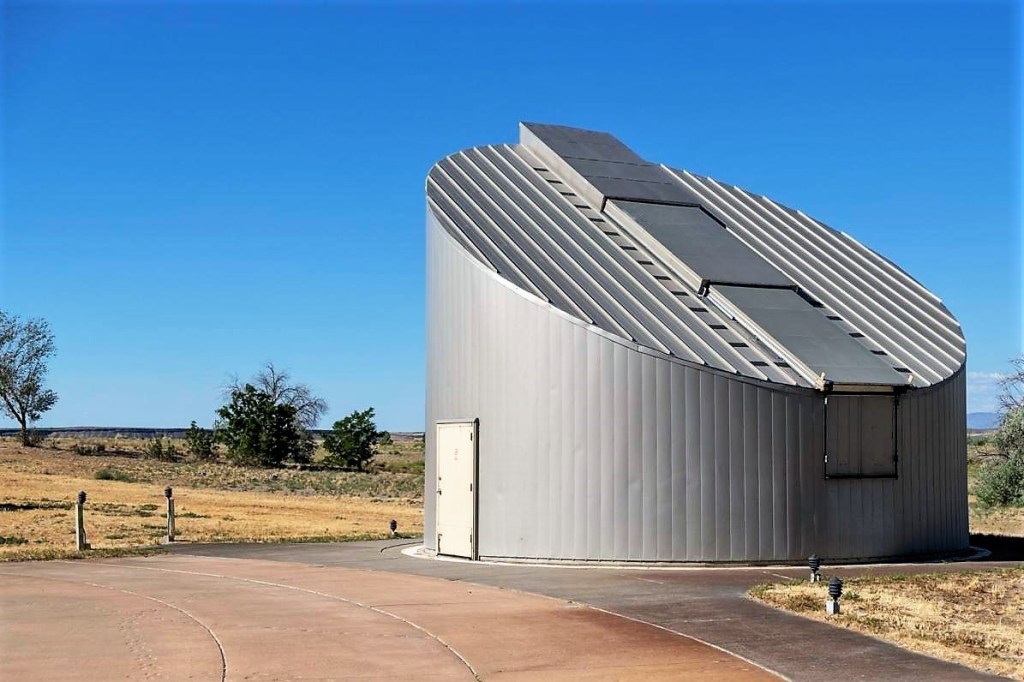
We arrived to a nearly empty campground on the edge of the “tallest ‘single-structured’ sand dune in North America,” with a peak rising 470 feet above the surrounding desert floor. The park also touts its own observatory within a Dark Sky Place, searching the sky with Idaho’s largest telescope (25 inch diameter) for public viewing.

My first inclination was to compare it to Great Sand Dunes National Park, but I was determined to curb my skepticism and see what surprises awaited us inside our new backyard/playground…for the meantime.

The following day, we went exploring. Unlike a couple of coeds and a dog, we immediately dismissed the notion of climbing the dunes in extreme heat.

We were looking for a more sedate hike that required less elevation. Rather than follow the 6-mile self-guided hiking trail step-by-step, we improvised, skipping the Big Dune ascent, and followed the trail around the dune base,

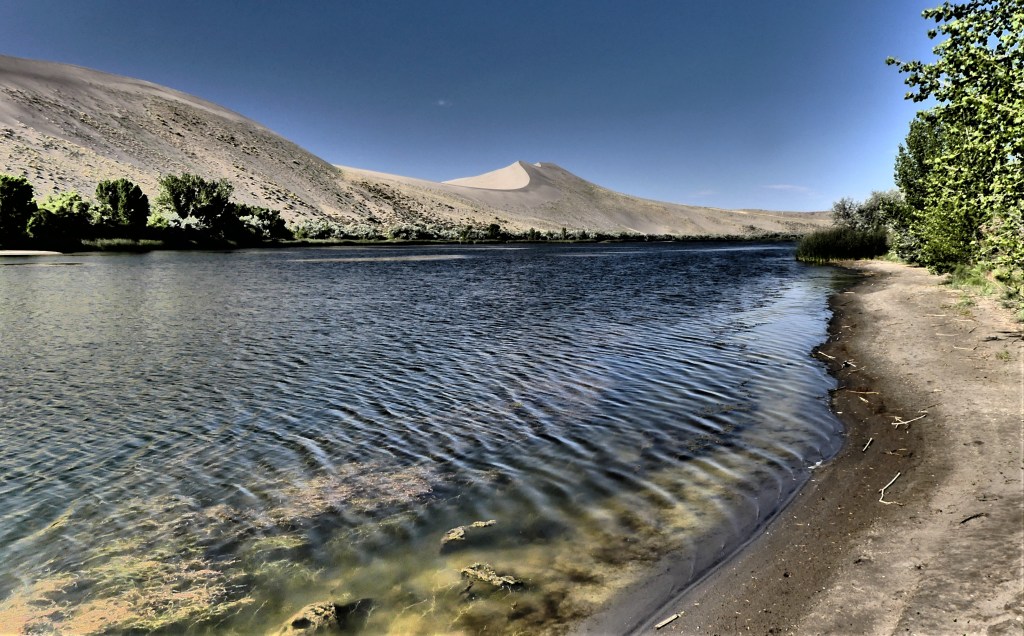
where we discovered water, and that made all the difference.

We circled the lake…

and dunes…

and crossed over a few of the lesser dunes,

until we reached the observatory.

I was eager to stargaze that evening, but the observatory was closed until further notice due to COVID-19. Unfortunately, the only celestial offering on-site was a human sundial created by Girl Scout Troop 140 in 2015.

I was curious about the design, but I required a human to test its accuracy.

Leah stood on the current month (July), for the sun to cast her shadow on the current time of day. Checking my watch, I recorded 10:24 AM, which from the looks of her shadow, validates her as human and punctual.

The rest of the day, we played by the water, and enjoyed the air-conditioned comfort of our Airstream, never giving Morley Nelson Snake River Birds of Prey a second thought.

Craters of the Moon

Craters of the Moon is a deceptive name for a National Monument and Preserve. After all, the craters of Idaho don’t resemble the surface of the moon.

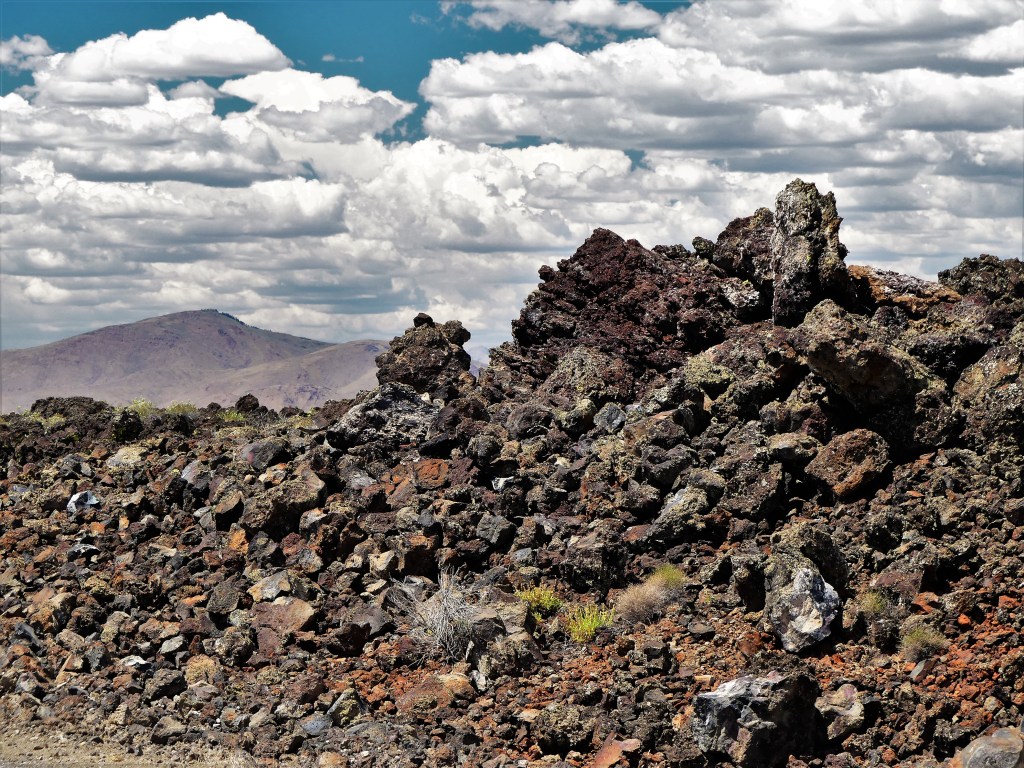
On the contrary, the upheaval of 600 square miles of basaltic lava as recently as 2,000 years ago was caused when the Great Rift fissure reawakened. Nevertheless, it was NASA’s preferred location to train Apollo astronauts to search for rock specimens because its harsh terrain is akin to a lunar landscape.

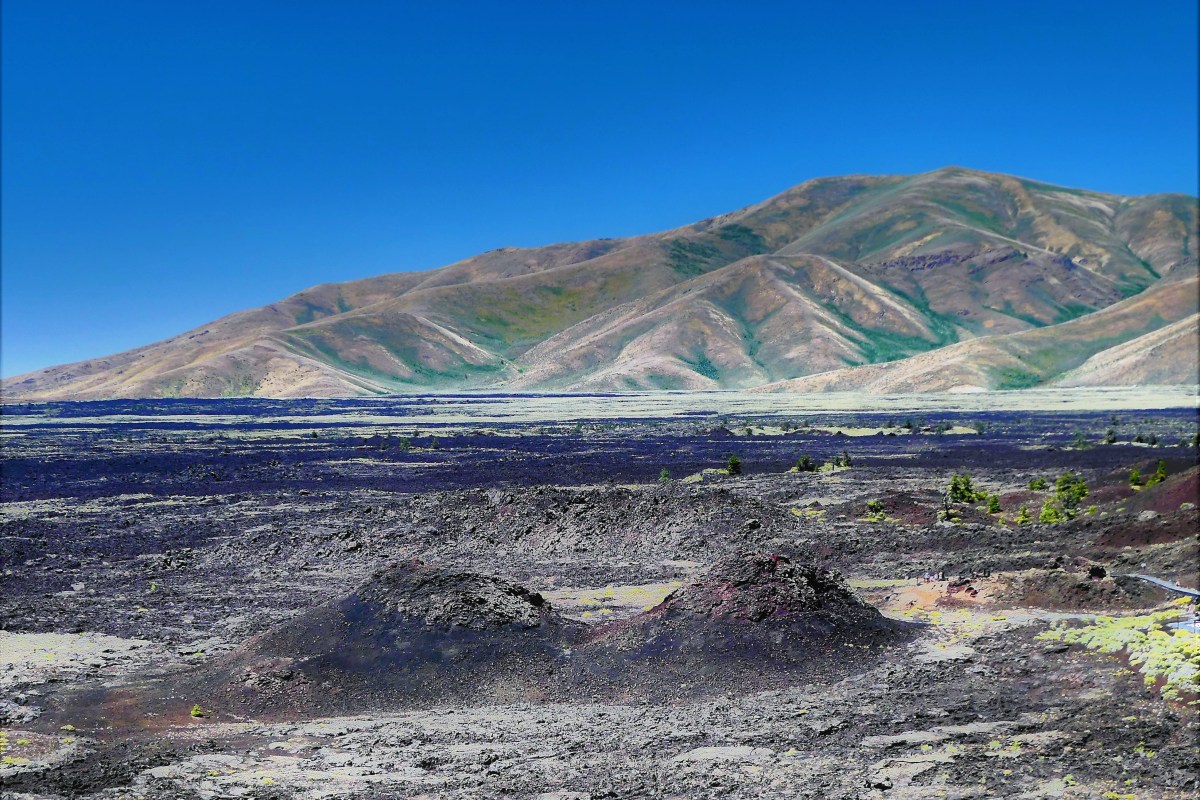
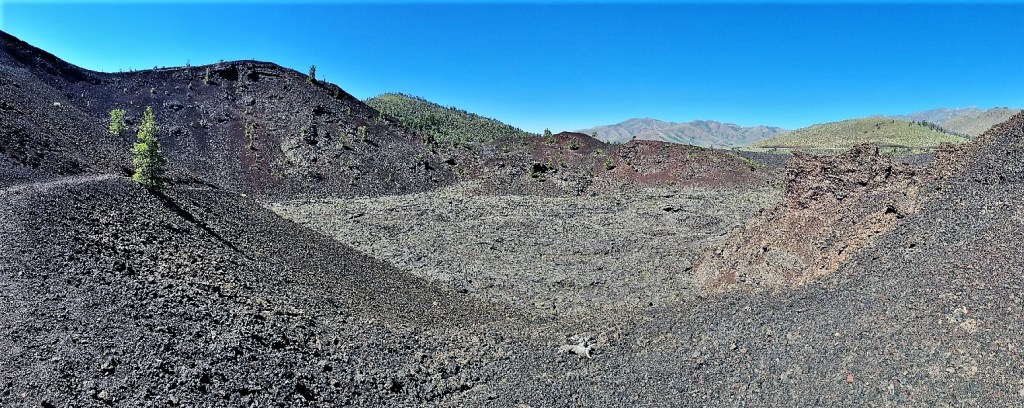
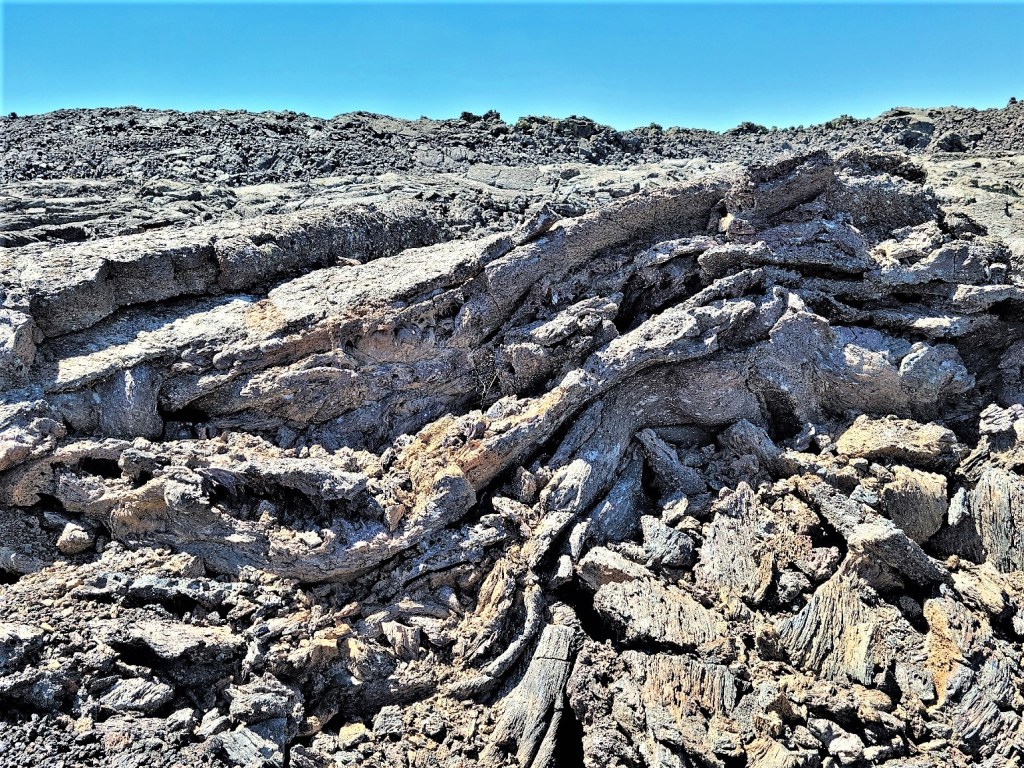
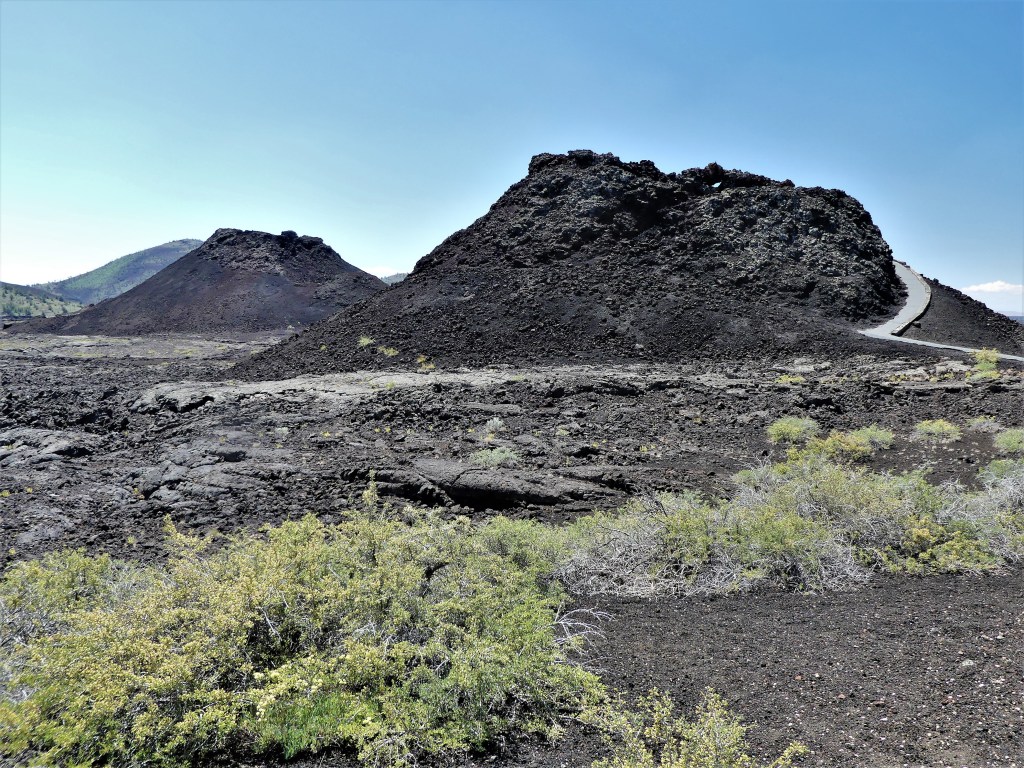
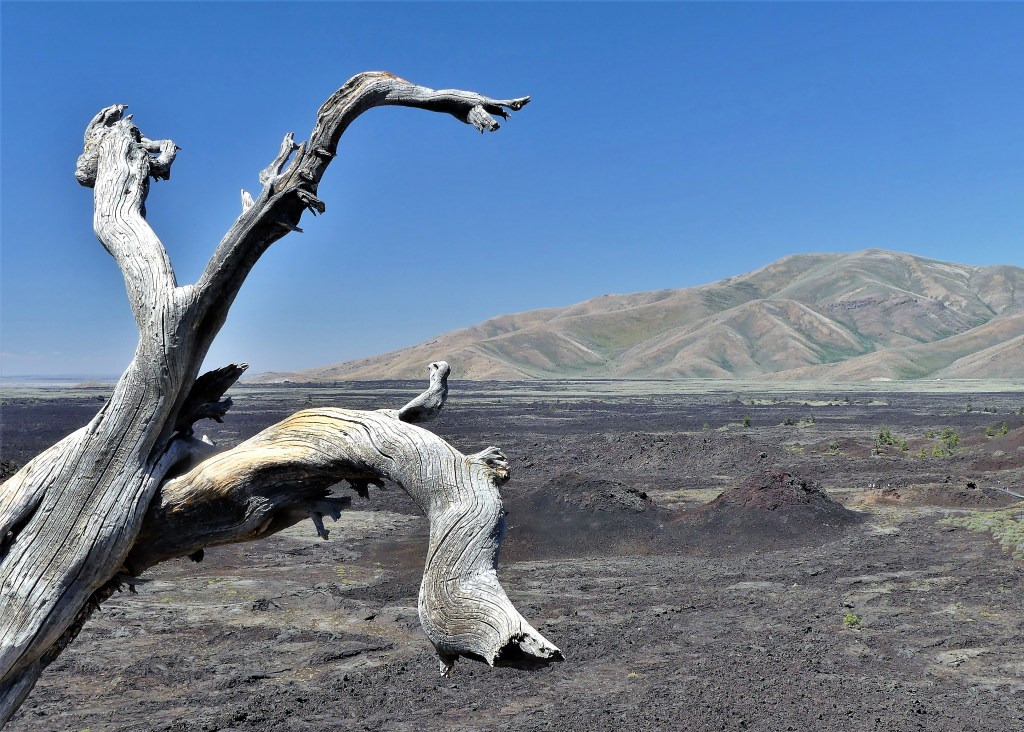
This patch of scorched earth along the Snake River Plains is still considered active, although unlikely to erupt in the next hundred years or more–which gives all of us plenty of time to explore the lava fields…

for stellar examples of lava craters,

lava tubes,

(that’s Leah, standing top left)

lava cascades,

spatter cones,

and cinder cones.

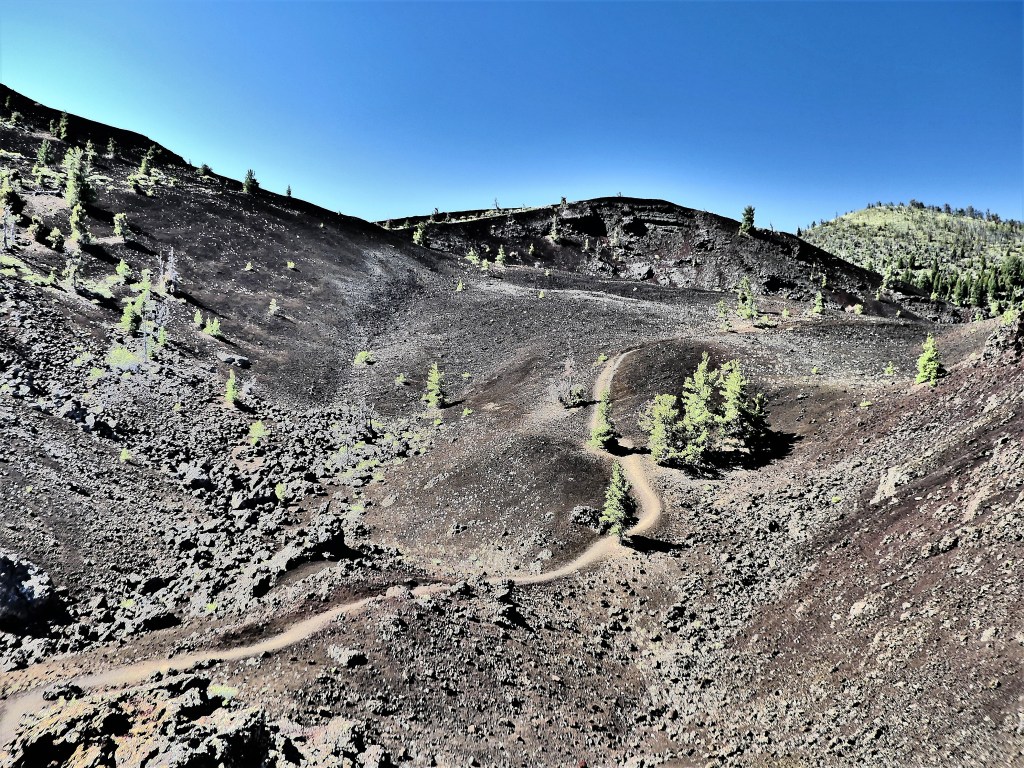
Trudging up the steep gravel pile to the summit of Inferno Cone gave us sweeping views of the Snake River Plains,

an overview of the volcanic basin,

and a distant impression of the Pioneer Mountains.

Next attraction to explore on the 7-mile Loop Road was the Indian Tunnel and neighbor caves, stitched into an underground network of collapsed lava tubes.

Before arriving at Indian Tunnel, Leah and I consulted a ranger at the Visitor Center who helped to plan our day. She also permitted us to enter Indian Tunnel (stamping our park map), but not before allaying her suspicion that our clothing, shoes, and all personal accessories were carriers for spreading white-nose syndrome to a vulnerable bat population.

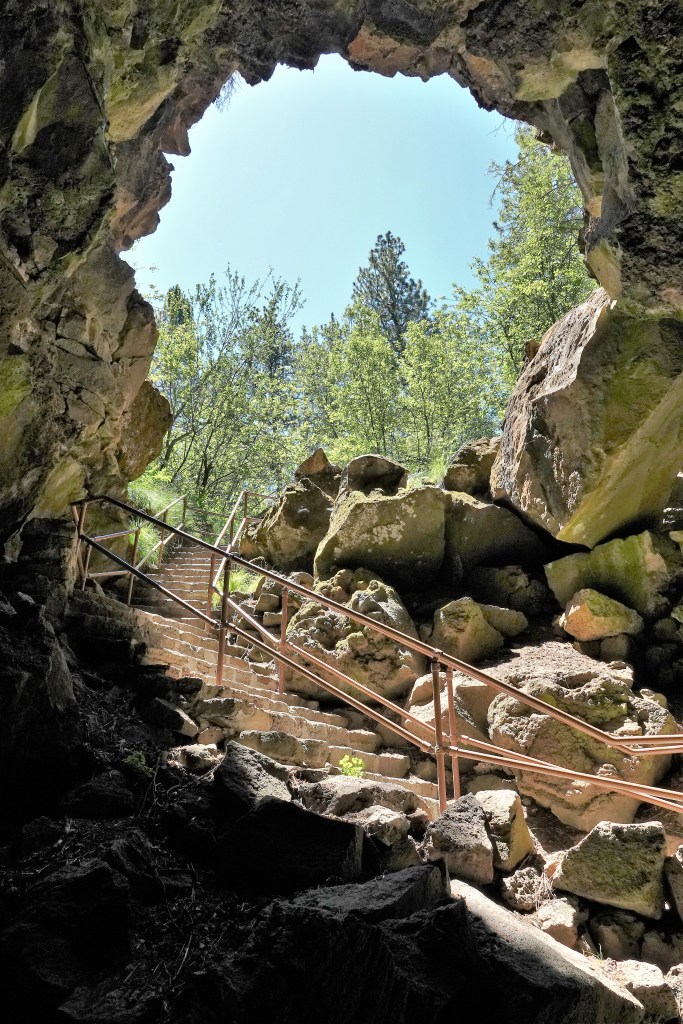
Traditional stairs and railings led us to the brink of the cave, but we were soon on our own–finding our footing over and around immense basalt boulders–as we descended deeper into a pit surrounded by colorful walls.

Available light came from a open dome whose ceiling had crumbled hundreds of years ago.

We scrambled through rock piles, feeling our way through the tunnel, until we reached another lit opening, signaling our exit.

We rounded out the day’s visit with a stop at Devil’s Orchard, a nature loop trail winding through cinder beds and hearty vegetation,

although, flourishing flora was more the exception than the rule.

The following day, Leah and I drove through the Craters of the Moon Wilderness,

taking a dusty, rutted, gravel road to the edge of civilization.

We were completely isolated in a desolate wasteland. Only the livestock had a half-hearted interest in our visit.

We were eager to find something significant on the drive, but we quickly reconsidered after discovering Piss Ant Butte in the distance.

At last we reached our objective: the end of the road, and Snowdrift Crater, a landmark detail on our map.

Back at Arco, I captured the edge of town beneath a cloudless sky, and I had low expectations for any kind of a sunset.

And then the winds pick up…

They’re gusting at 40, 50, mph…

and baby pinecones are peppering the aluminum rooftop…

and a storm cloud passes directly overhead, shooting crazy lightening…

and Leah is tracking the storm on her phone…

and the TV announcer is cautioning viewers to prepare for tornadic thunderstorms…

and I’m standing outside with my camera, wondering if the lava fields have come alive, after all.

Flaming Gorge

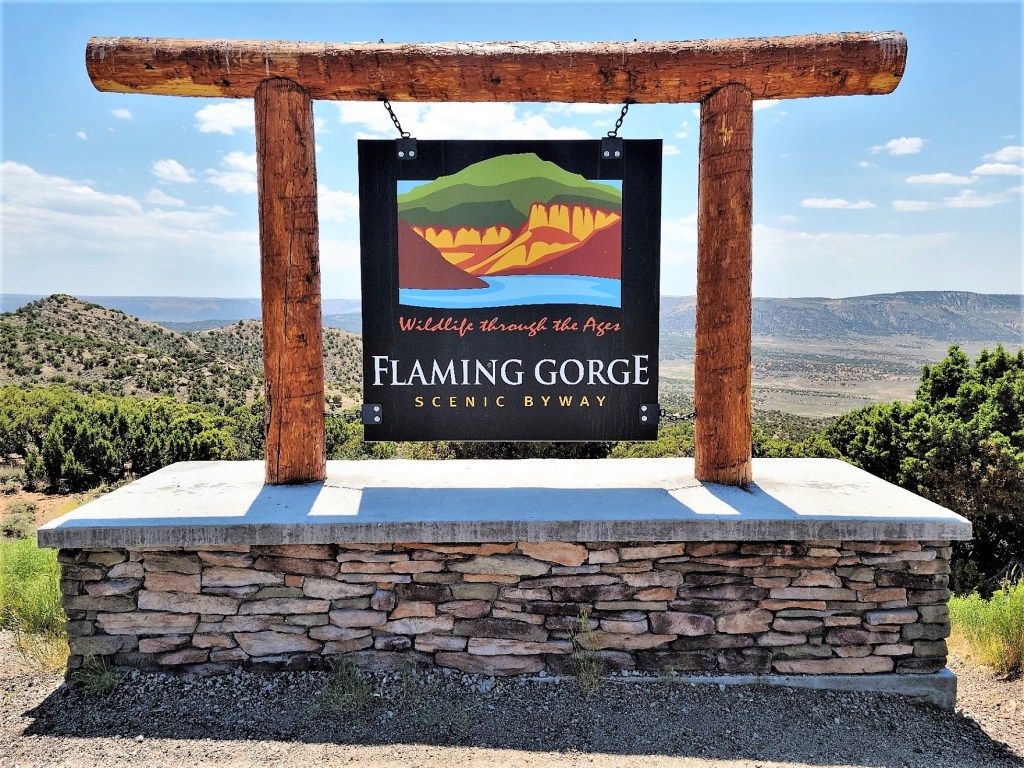
Kissing the edge of the Ashley National Forest at the intersection of Wyoming and Utah lies Flaming Gorge.

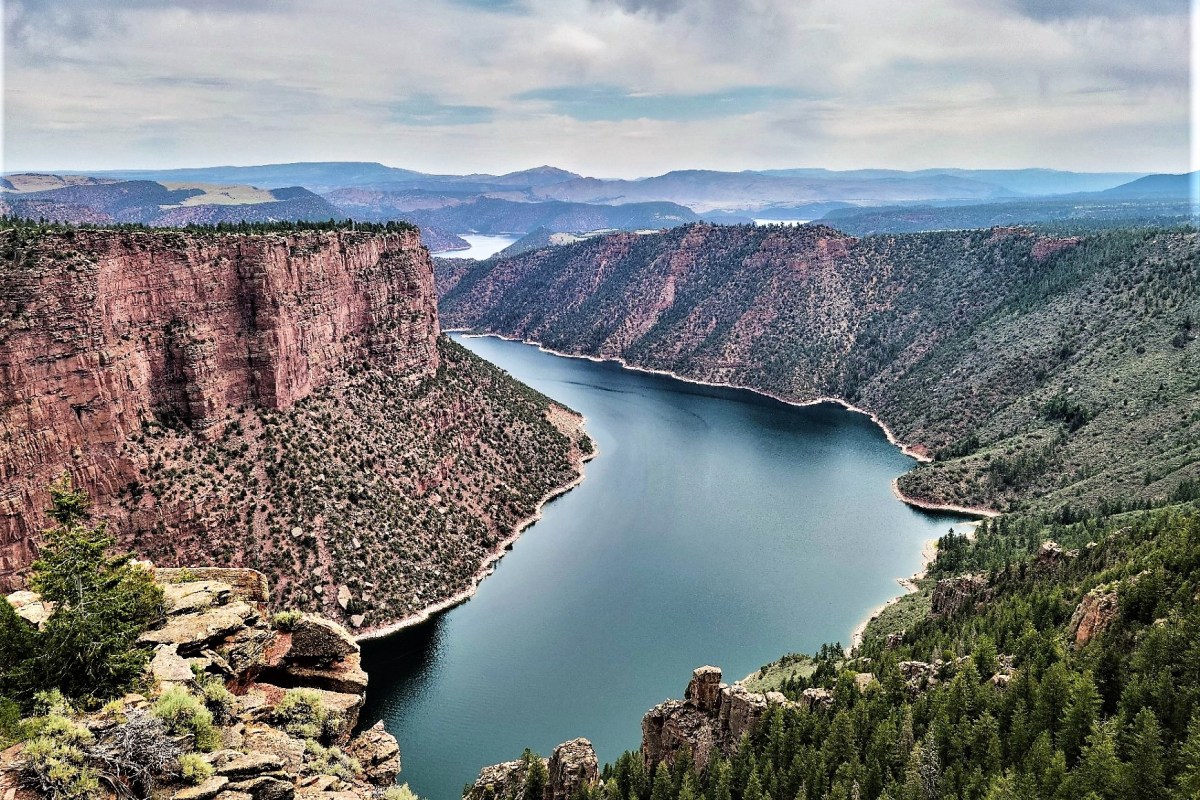
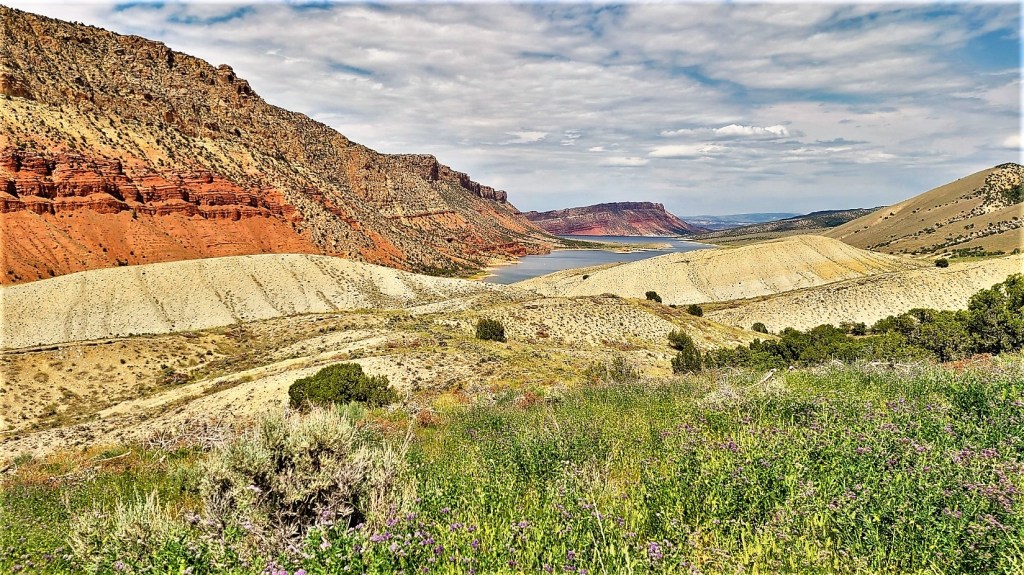
Once underwater and formed over a billion years ago, the Precambrian Uinta Mountains showcase the dazzling red cliffs of a glacial gorge cut from a river system that also carved the Grand Canyon, courtesy of the Green River.

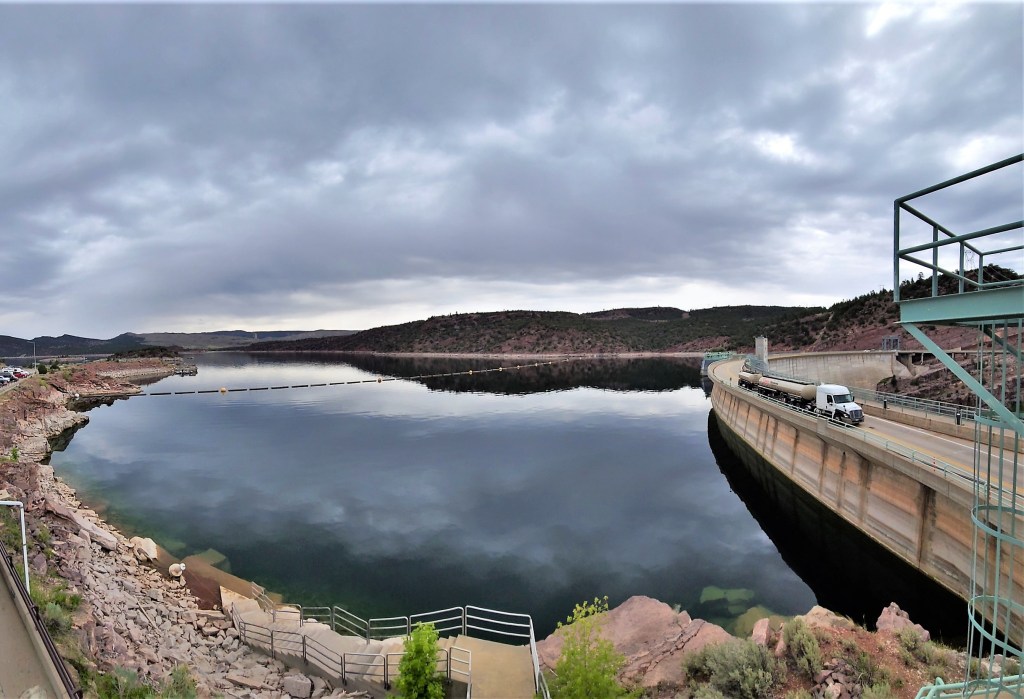
The Green River ends at the dam wall constructed in 1958,

and completed in 1964 as one of four storage units for the Colorado River Storage Project.

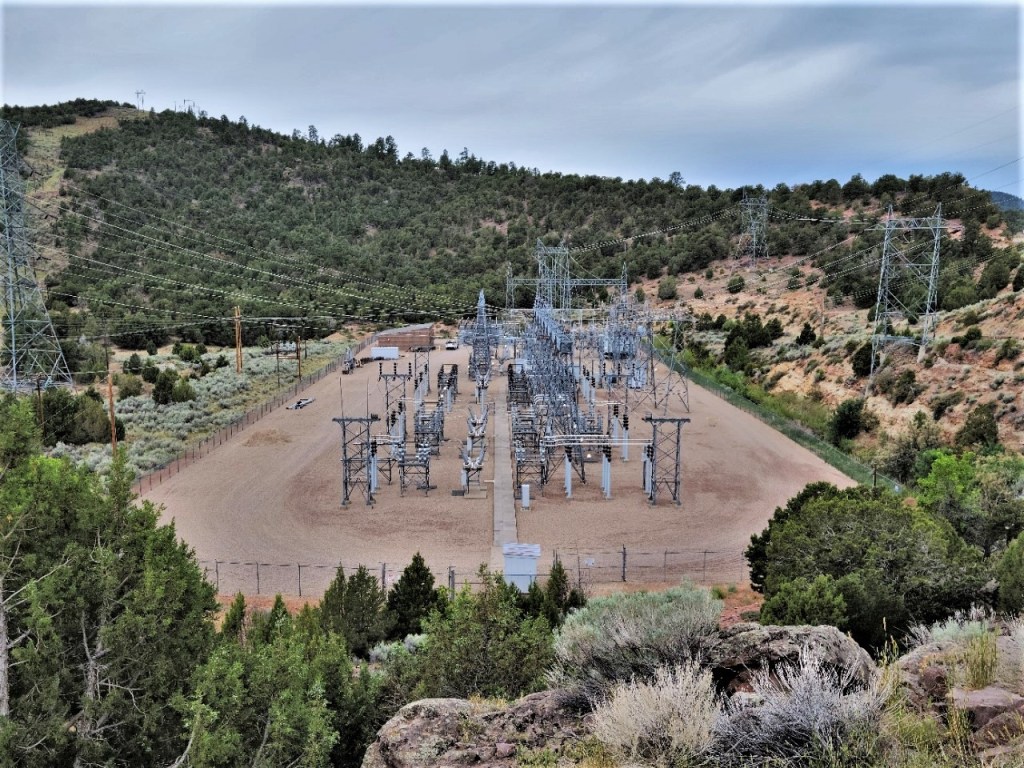
The dam impounds Wyoming’s largest reservoir,

providing water storage and hydropower generation to seven states,

and offers 91 miles of water recreation bliss behind its wall.

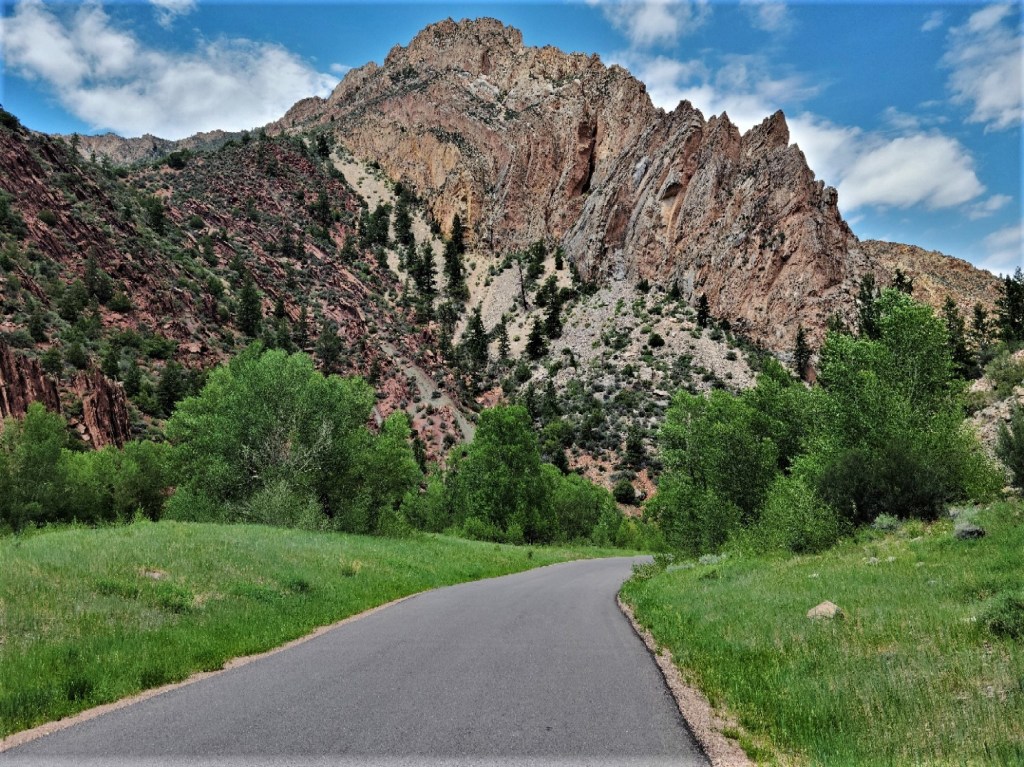
But scenically, the clear cool water is the perfect foil for a mesmerizing landscape of vivid colors and mountain formations.

Following the footsteps of Major John Wesley Powell and company, who explored the Green and Colorado Rivers in 1869, Leah and I set off on our own geologic survey

for a closer inspection of castle rock…

folded rock…

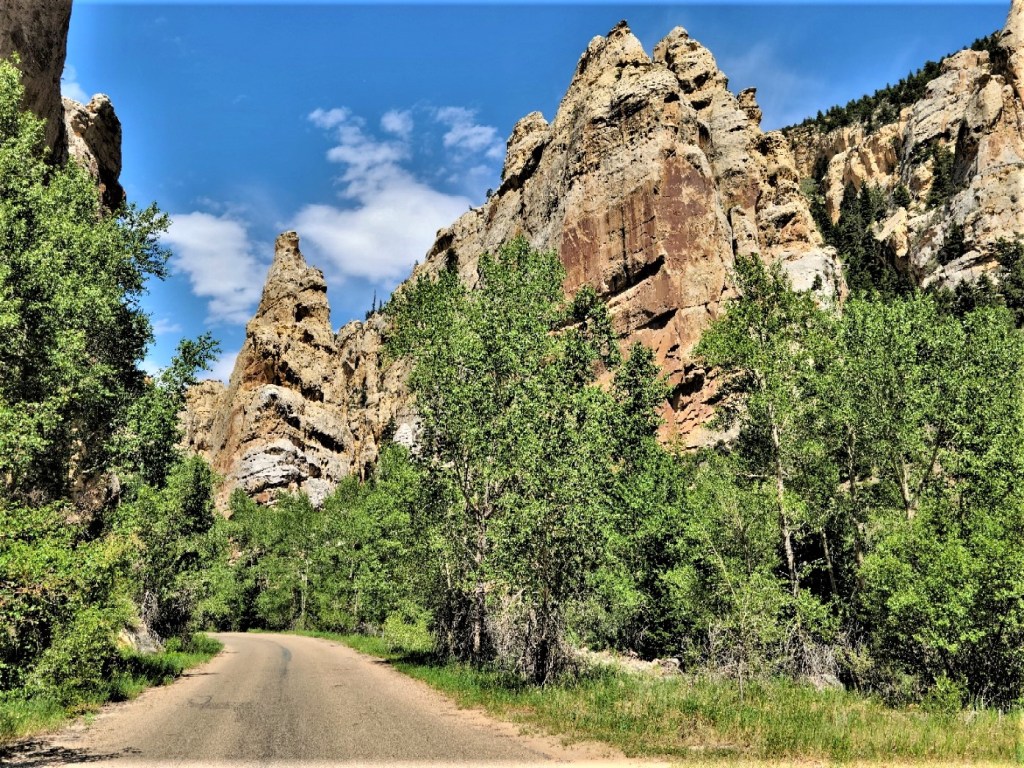
limestone towers…

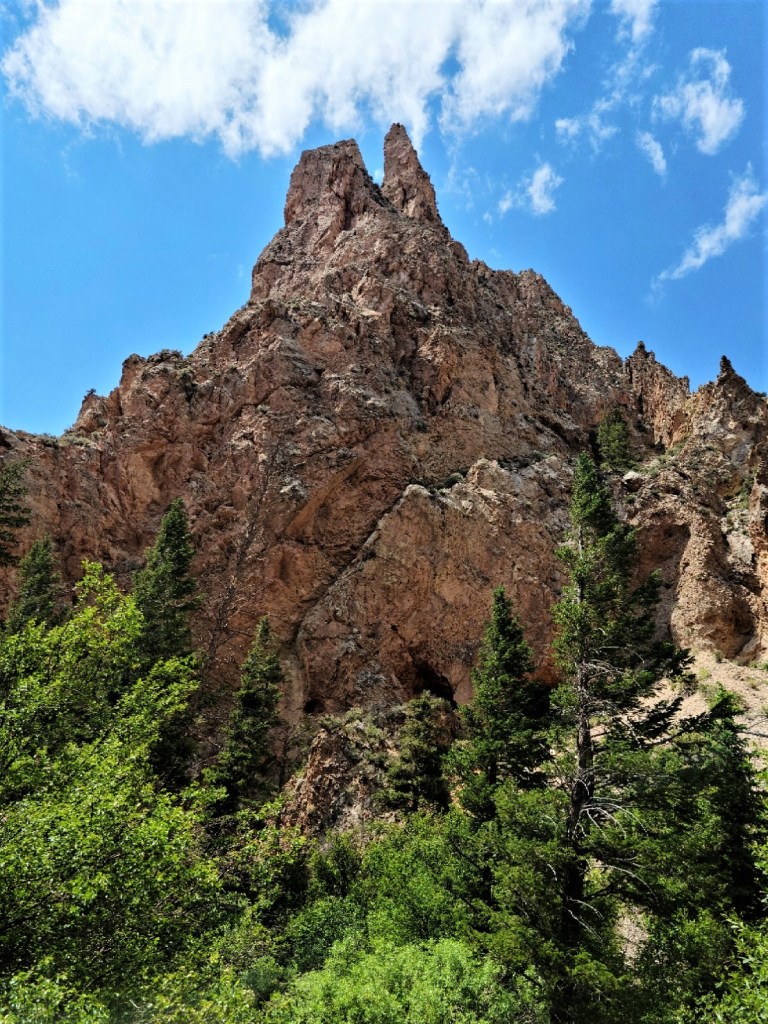
and notched peaks…

which is more than enough to inspire future geologists.

Bear Lake Blues

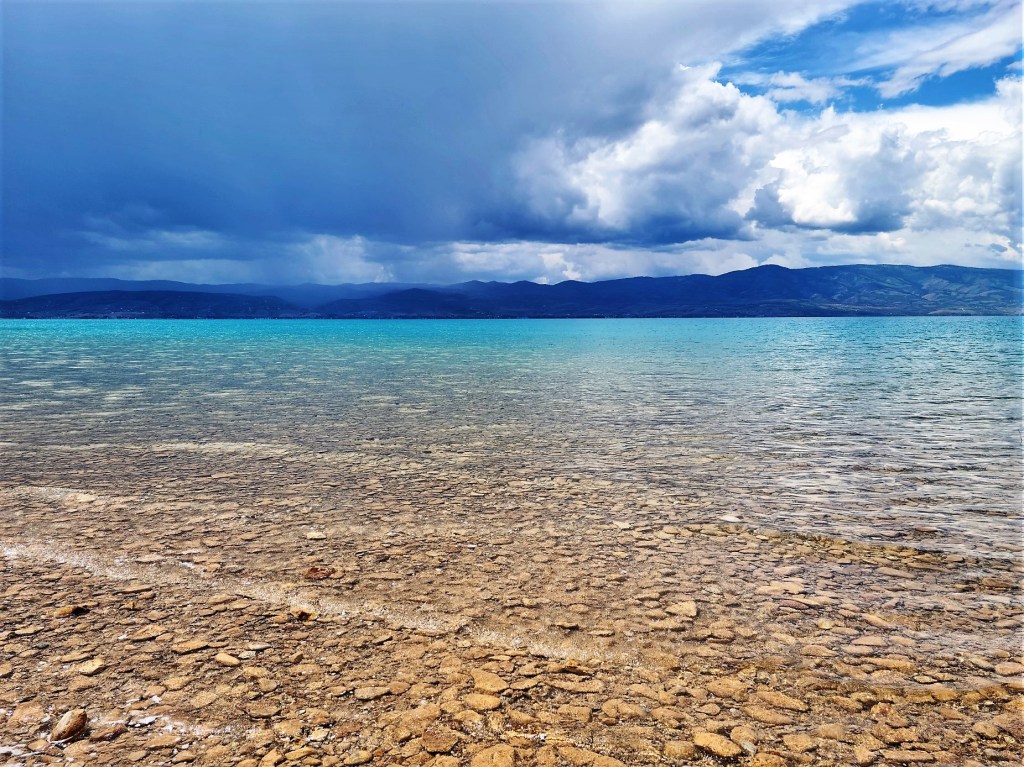
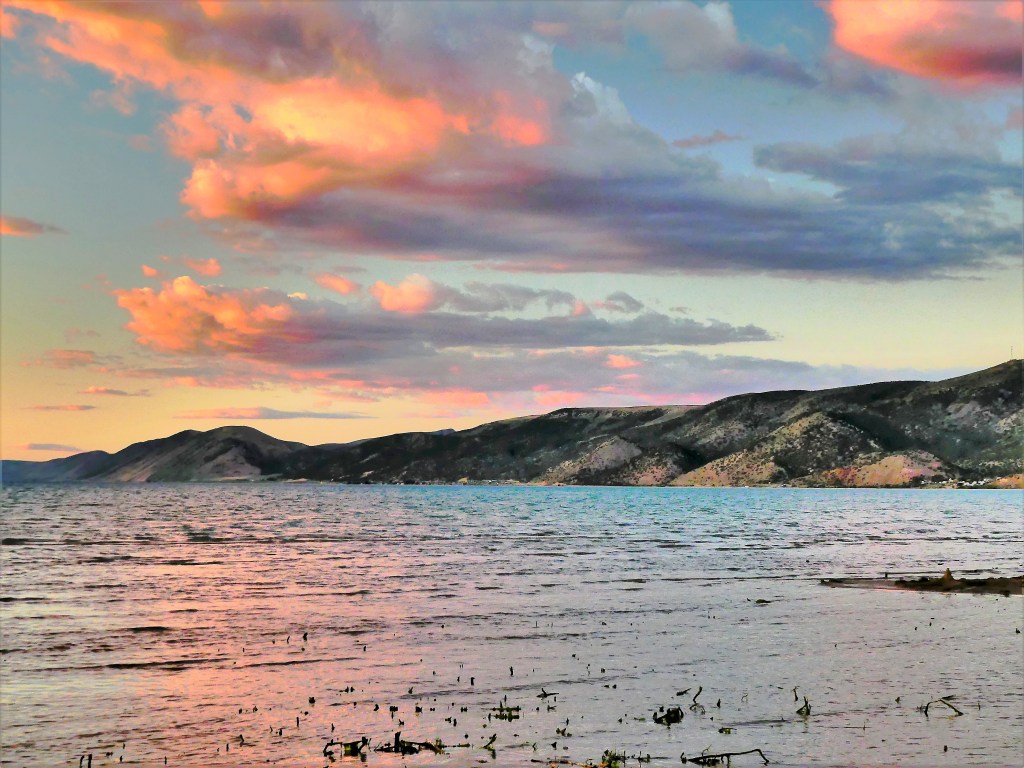
There’s a lake that straddles northern Utah and Idaho that boasts a turquoise-blue color that rivals any Caribbean beach, and it’s all due to the refraction of calcium carbonate (limestone) deposits suspended in the lake. The intensity of the color also shifts with the sun’s position, the wind direction and the current, to where it becomes dizzying, trying to frame and capture patterns of varying shades of blue through a camera viewfinder.

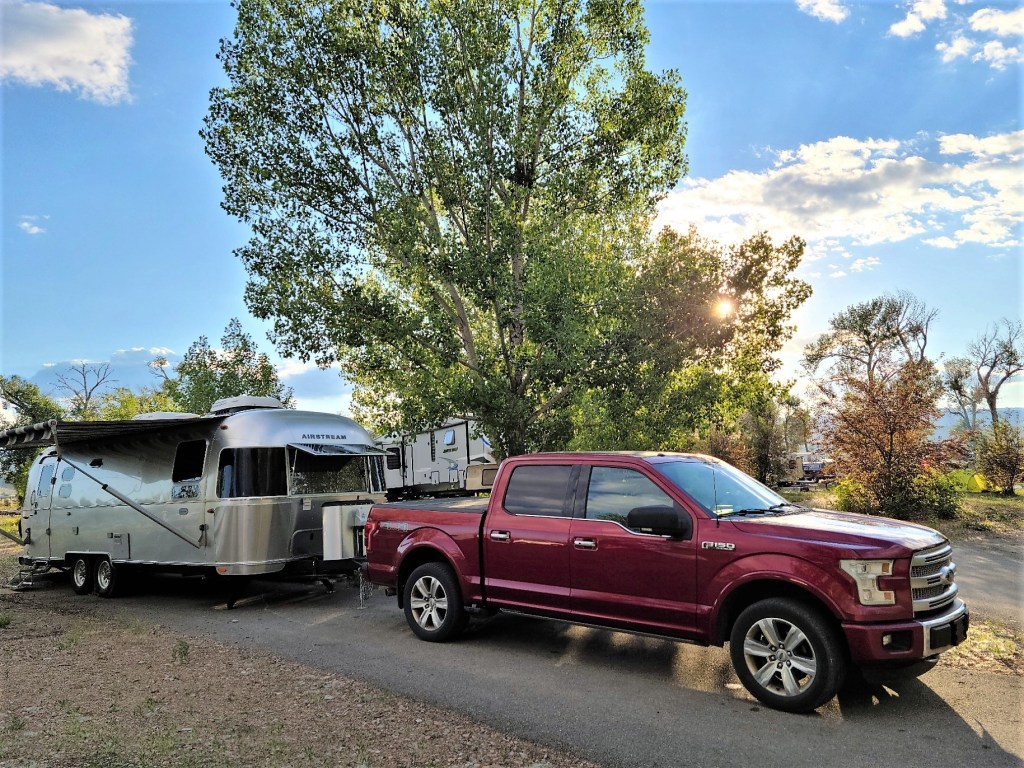
Leah and I camped in two of several neighboring Utah State Park campgrounds to round out our visit. When initially making reservations, the Rendezvous Campground only had openings for the last two of our three nights, so we took up residence at South Eden Campground on the east side for the first night, with an understanding that it was a primitive site.

To our surprise, the facility had been upgraded with water and electric service over the past year. Of course, we would have preferred to stay for the duration of our visit, but that’s not how reservations work at a busy summer resort.

Moving to a new site after one day was not a relaxing proposition, but with so much running around over the past two months, we owed ourselves some down time from traveling, and Bear Lake seemed like a good fit, despite the campground fuss.

Aside from the splendid color of the water, our beach was far from beach towel-friendly, with broken shards of shale, shell, and limestone liniing the shoreline

and beyond, making hard-sole, water-shoes essential footwear.

But what mattered most to me at the moment were the clouds that were moving in and out of view.

Would there be enough cloud cover to support a world class sunset?

Armed with a camera and a silent prayer, I waited anxiously on the beach as the sun kissed the sky goodbye.

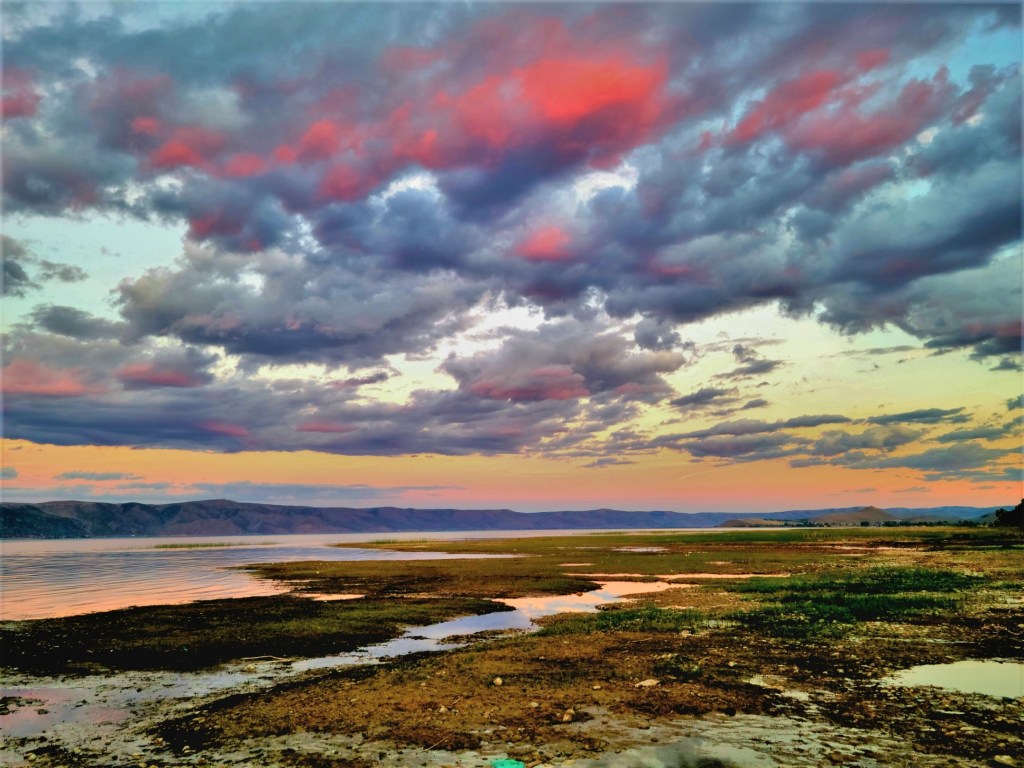
And then came the explosion I’ve come to expect. I would have my sunset, after all!

The following day, we moved to Rendezvous Beach on the west side of the lake, where the accommodations were as advertised: modern facilities and tighter sites,

followed by uncrowded sandy beaches? Where were all the people?

I later learned that all the “missing” were running their boats up the lake from the Bear Lake State Park Marina. And I’d like to personally thank each of them for the onslaught of wake that made for an average time kayaking in open water.

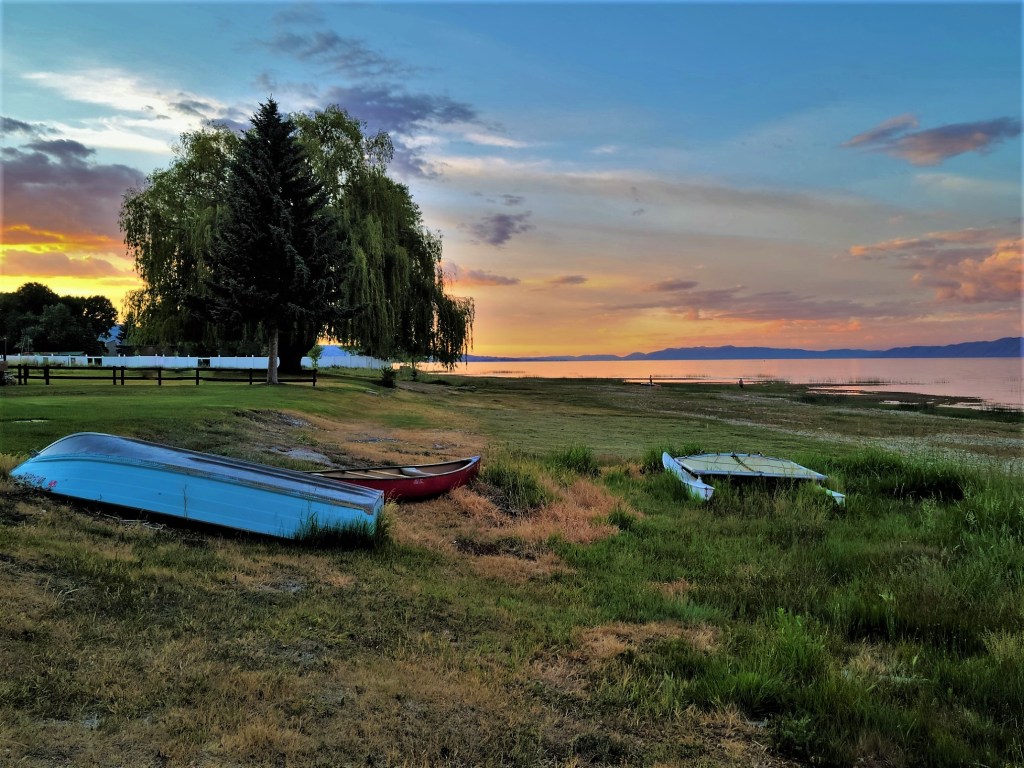
The final evening of our stay, we drove into Laketown for ice cream and a sunset. We found a quiet side street that dead-ended at the waters edge, and we waited…

“Not as brilliant as the other night, but not terrible,” Leah assessed. “C’mon, we need to go before the town shuts down and we miss our chance at ice cream.”

“Don’t be in such a hurry. Wait for it. Otherwise, you’re gonna miss the best part. The sky is still developing,” I predicted.

I got the sunset I wanted, but not the ice cream, as most of the town had shut down by 9 PM. With only one late spot open, we opted for flavored milk shakes and called it a night.

The moral of the story: A Saturday Night Sunset beats an Ice Cream Sundae!

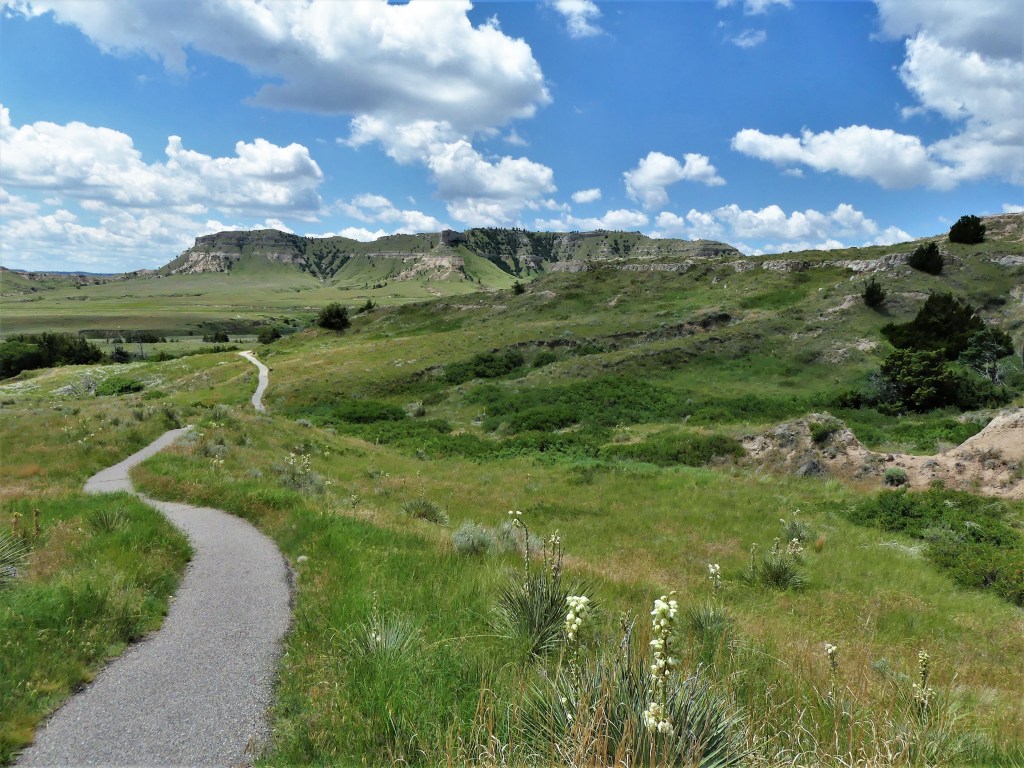
Ode to Scotts Bluff

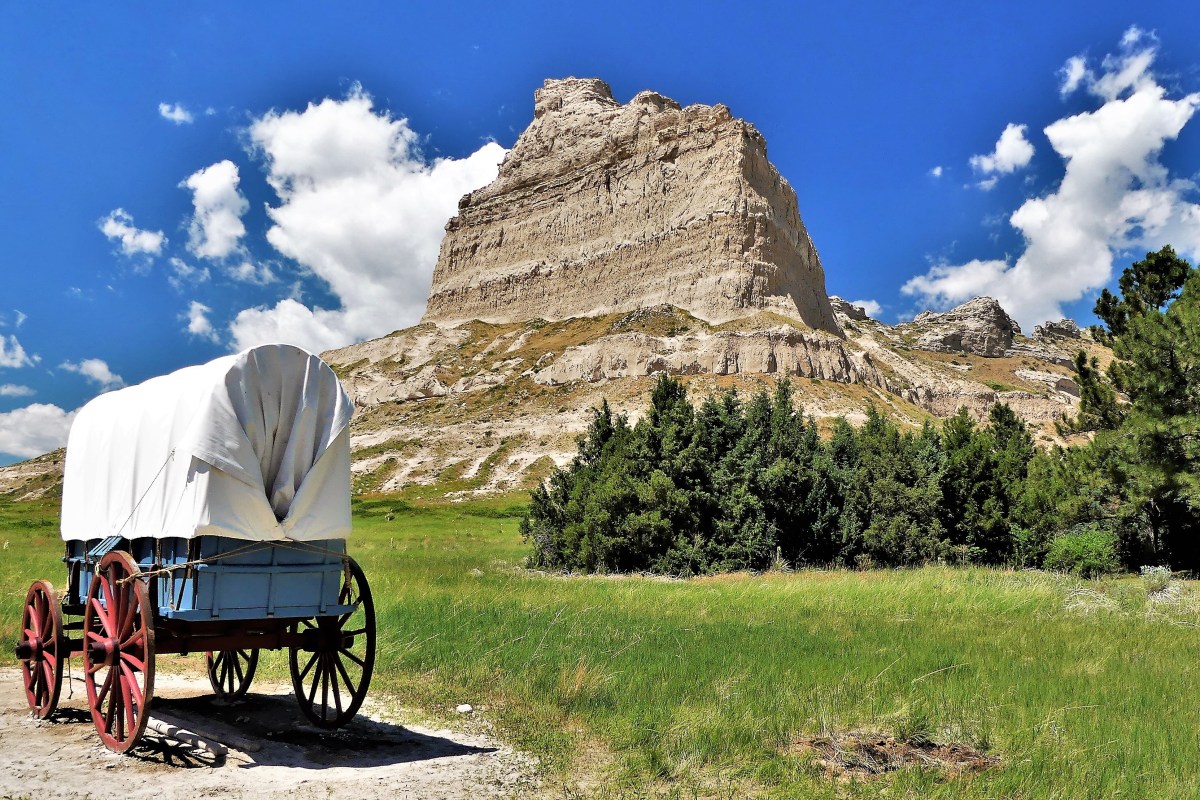
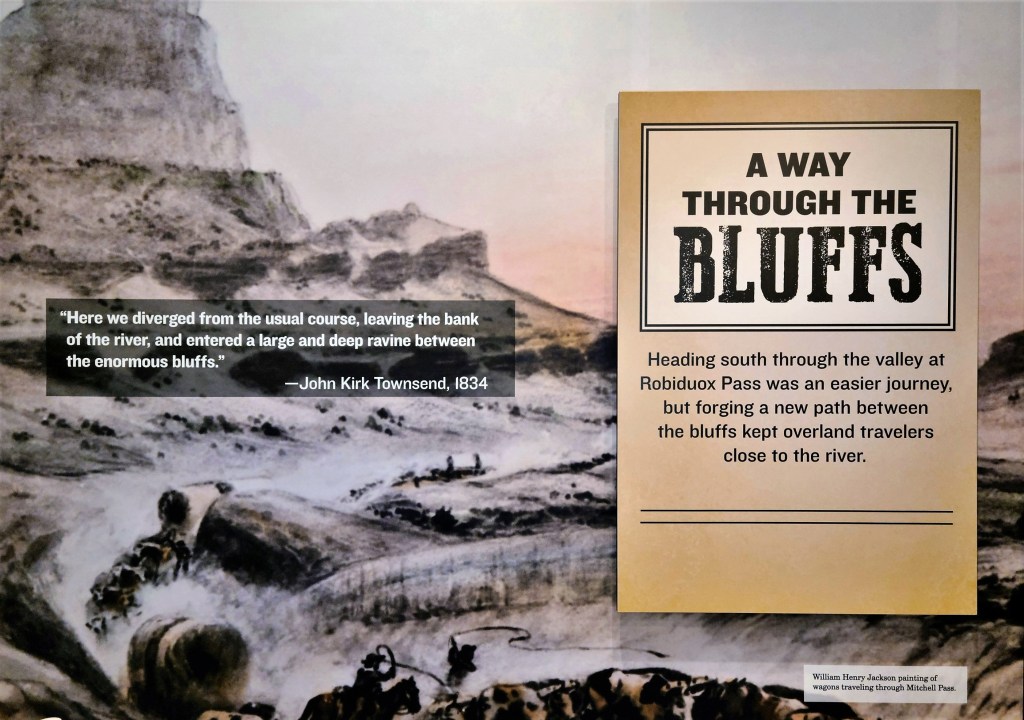
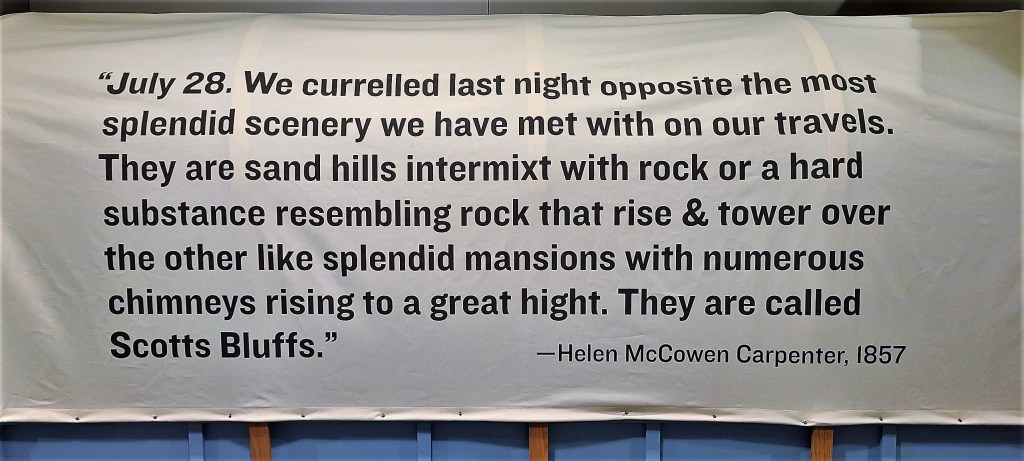
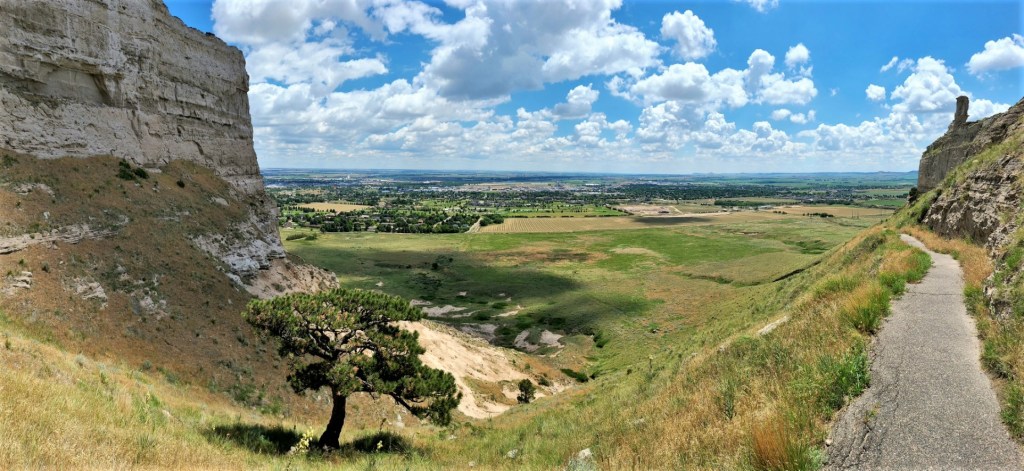
While spending time with friends in Cheyenne WY, Leah and I scheduled a side trip across the state line to visit Scotts Bluff in Gering, NE. Nebraska was not originally part of our travel plan, nor did we consider Nebraska when we set out to explore America four years ago, but we caved to public opinion and we are now happy to endorse Nebraska as a state with a meaningful attraction.

This Bluff is a Butte,
or this Butte is a Bluff?
It don't amount to a hill of beans
.
A wide range of arrangements 
are only future cliff-hangers
for cave-dwellers.
Making mountains out of molehills
or taking the high road,
We all plateau on the summit or the plain.
Monumental achievement
can only be measured at the

peak of a towering task.

Rocky Reservations

Leah and I have been planning our current trip since January–looking at various routes, places of interest, and RV park availability. At times it seemed like a logistical nightmare–having to shift dates and locations to accommodate timing, anticipated weather and RV park amenities (service hook-ups).

By April, most all of our mapped destinations (44 in all over 20 weeks) were booked. That’s about the same time the National Park Service (NPS) announced that two of our anticipated stops (Rocky Mountain and Glacier) now require timed-entry permits to be eligible to visit.

Because NPS is grappling with record attendance and overrun facilities at many locations, this additional measure is intended to relieve congestion at the park gates at best, and eliminate park closures due to limited parking and staffing woes.

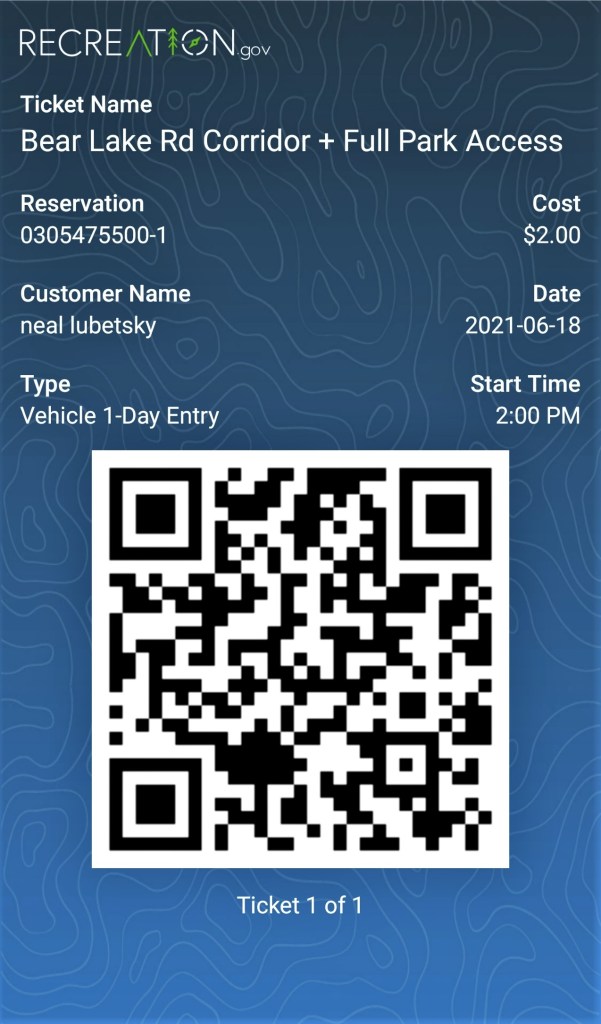
At Rocky Mountain National Park, two reservation options were available for visitors between May 28 and October 11: Bear Lake Road Corridor plus full park access, which includes Wild Basin, Long’s Peak, Trail Ridge Road, and Fall River Area from 5:00 AM – 6:00 PM; and all park roads except Bear Lake Road Corridor, with a reservation period from 9:00 AM – 3:00 PM.

When the reservations window opened on May 1 at 8 AM (MDT), passes became available on a first-come basis—up to 60 days in advance–with approximately 25% of day passes held for guests planning to arrive within 2 days. I logged on to recreation.gov bright and early, and was eager to claim my permit, but apparently the rest of the world had the same idea.

When the online dust settled, I had my coveted entry pass, albeit with a 2:00 PM start time. While it wasn’t the most ideal situation–losing half the day–it was better than making the trip, only to be turned away. Yes, it’s happening.

On the day of our permit, Leah and I meandered through Estes Park for a few hours, breezing through art, jewelry, sporting goods, and general stores, where Leah found an eyeglass lanyard for a buck. We passed a dress-up cowboy spieling in front of Bob and Tony’s Pizza on Elkhorn Ave. and laughed it off, but we returned for some of the worst pizza we’ve ever tasted, although comparable to spreading Ketchup over a cardboard circle, which I did as a child.

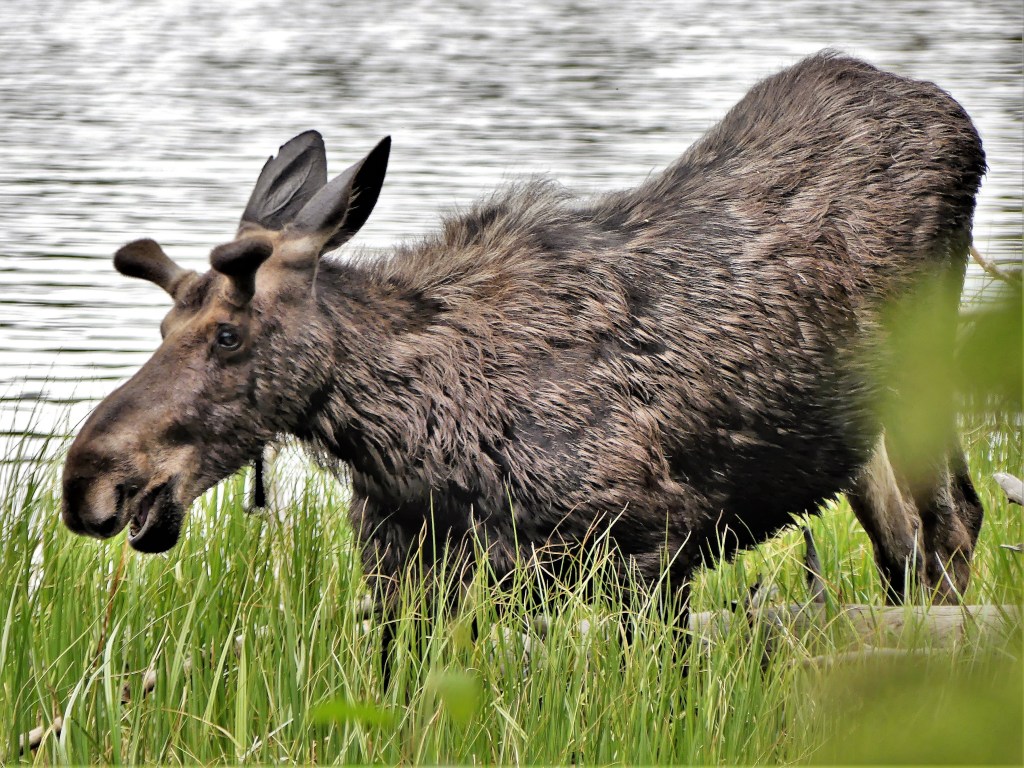
Once we passed through the Bear Lake ranger checkpoint, we stretched our legs with a walk around Sprague Lake, the site of a one-time mountain resort, and immediately, we were greeted by a curious teenager,

who looks as if he had a bad reaction from a slice of pizza from Bob and Tony’s…

and is returning to a healthier diet of tall grass.

Half way around Sprague Lake, we encountered his girlfriend romping through the water, courtesy of Leah’s iPhone…

Completing the lake loop, we stood in awe at the doorstep of the Continental Divide and admired the view…but not for as long as I would have liked, since we only had a narrow window of time to explore our immense surroundings.

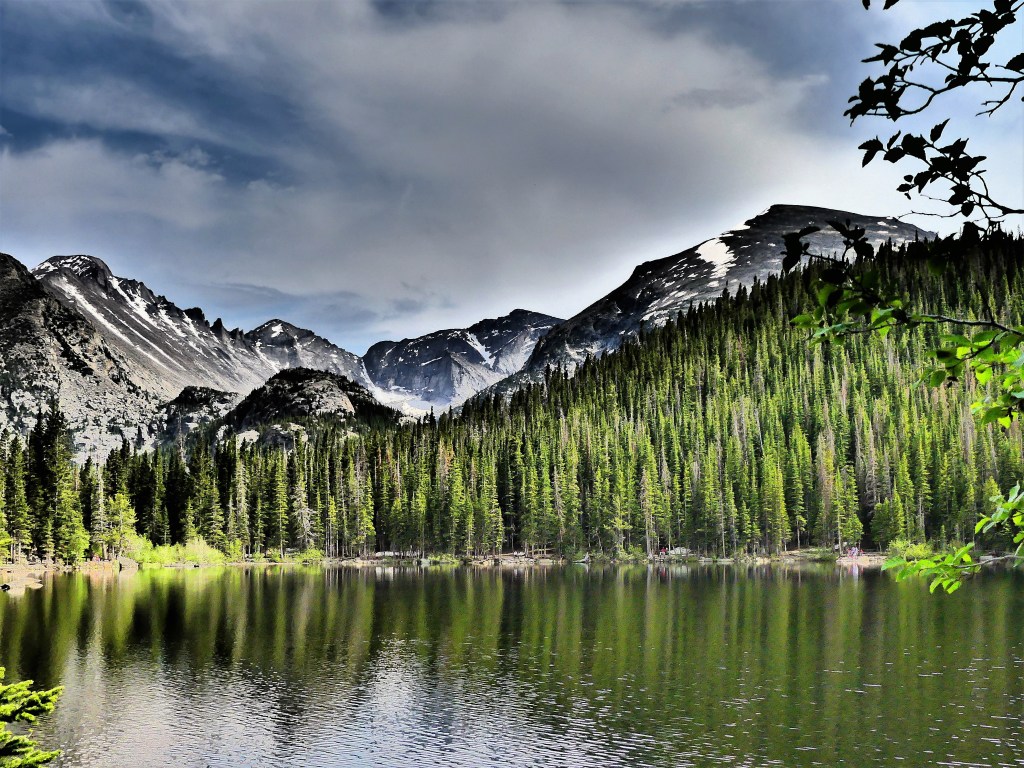
Naturally, being inside the Bear Lake Corridor gave us an opportunity to circle Bear Lake,

and its neighbor, Nymph Lake.

But running short on time, I abandoned my goal of hiking the rest of the trail to Emerald Lake,

and opted for time in the higher elevations. Our drive took us through Moraine Park,

till we reached Horseshoe Park at the junction of Trail Ridge Road.

Once we rounded the bend from Hidden Valley…

it was one spectacular lookout…

after another…

and another…

and another…

until we reached the Gore Range, the highest elevation on the park road at 12,183 feet.

We drove as far as Medicine Bow Curve, when a herd of elk happened to wander across the tundra to graze, as if to remind us that we were approaching dinner-time. It was our cue to U-turn.

As we doubled back, our conversation turned to the timed-entry, reservation system. The time we were allotted was just a teaser, considering the 355 miles of hiking trails throughout the park.

While I would have preferred a whole day or two or three to satisfy my craving for mountains, I support more people having a chance to appreciate this country’s beauty without annoying crowds, and to capture a lasting memory…

Rio Grande del Norte

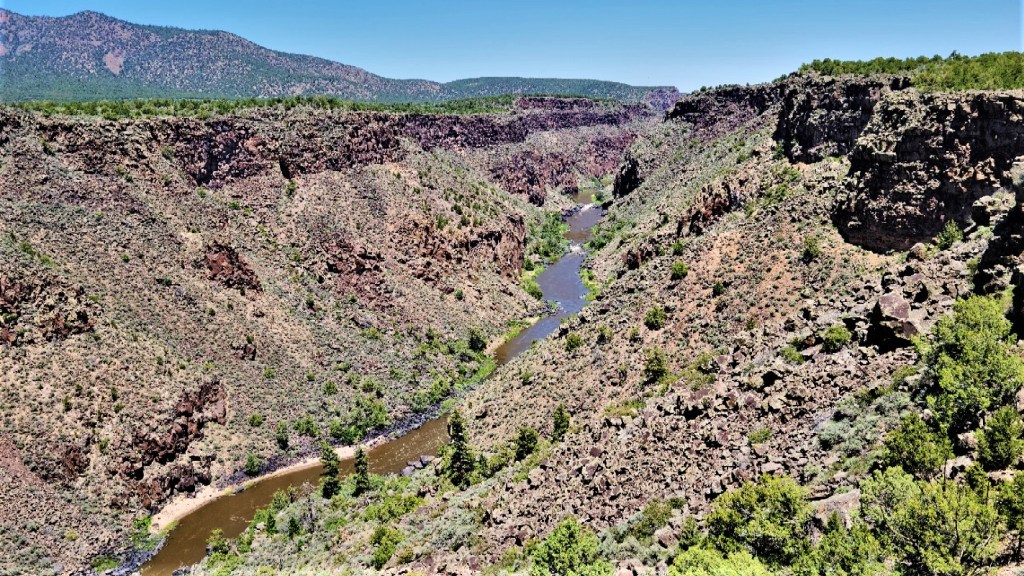
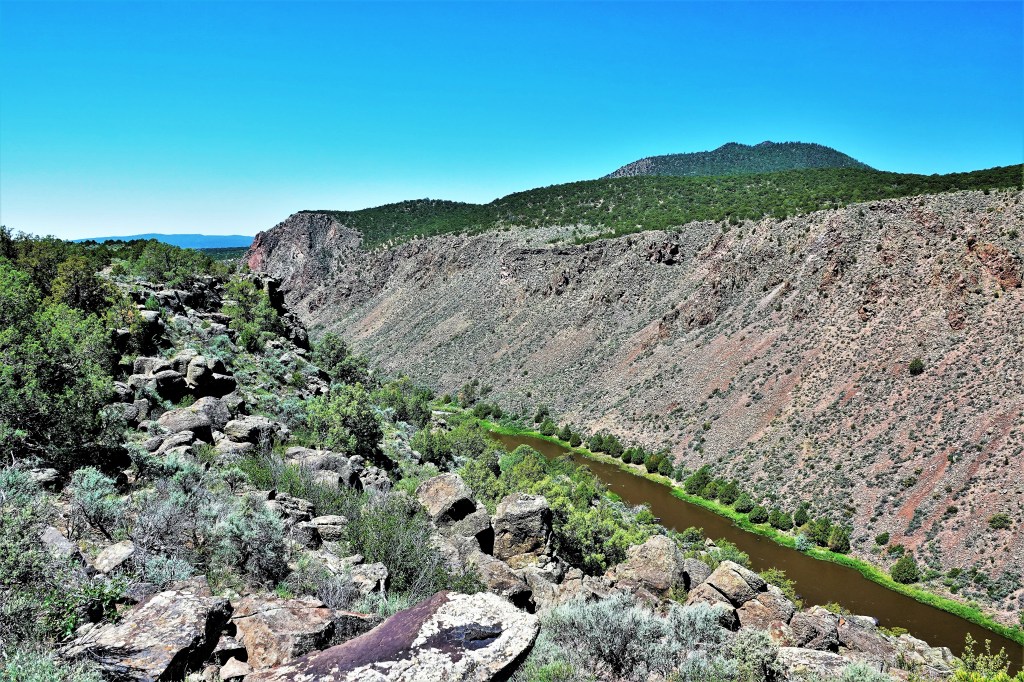
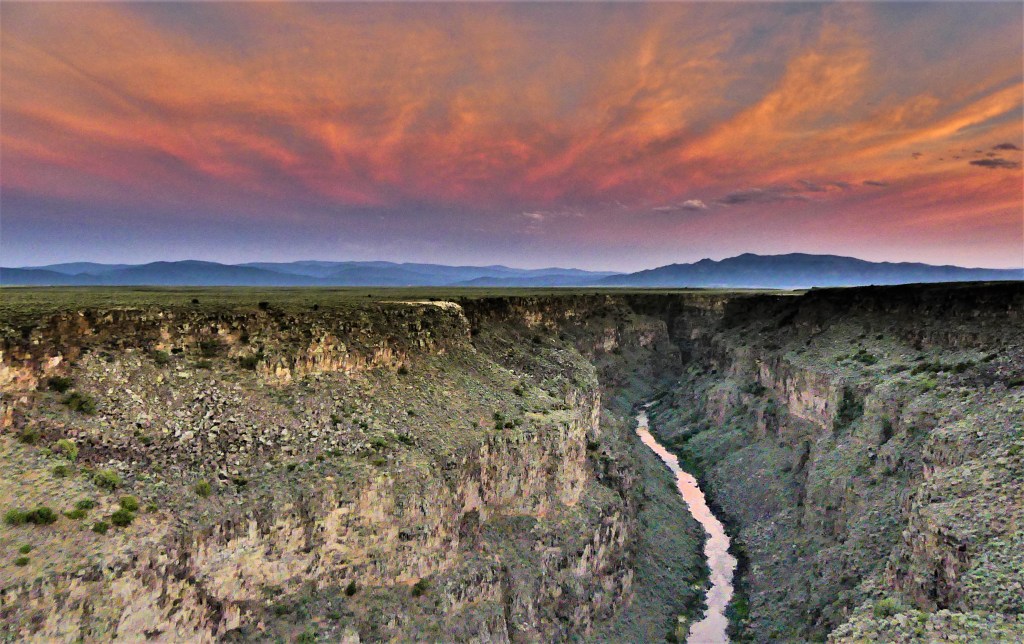
Just north of New Mexico, in the San Juan Range of the Colorado Rockies, Canby Mountain snowmelt and multiple mountain base streams join forces to form the Rio Grande. On its 1900-mile journey to the U.S. southern border, the Rio Grande passes through the Rio Grande Gorge near Taos, having carved out the 800 foot canyon over the past several million years.

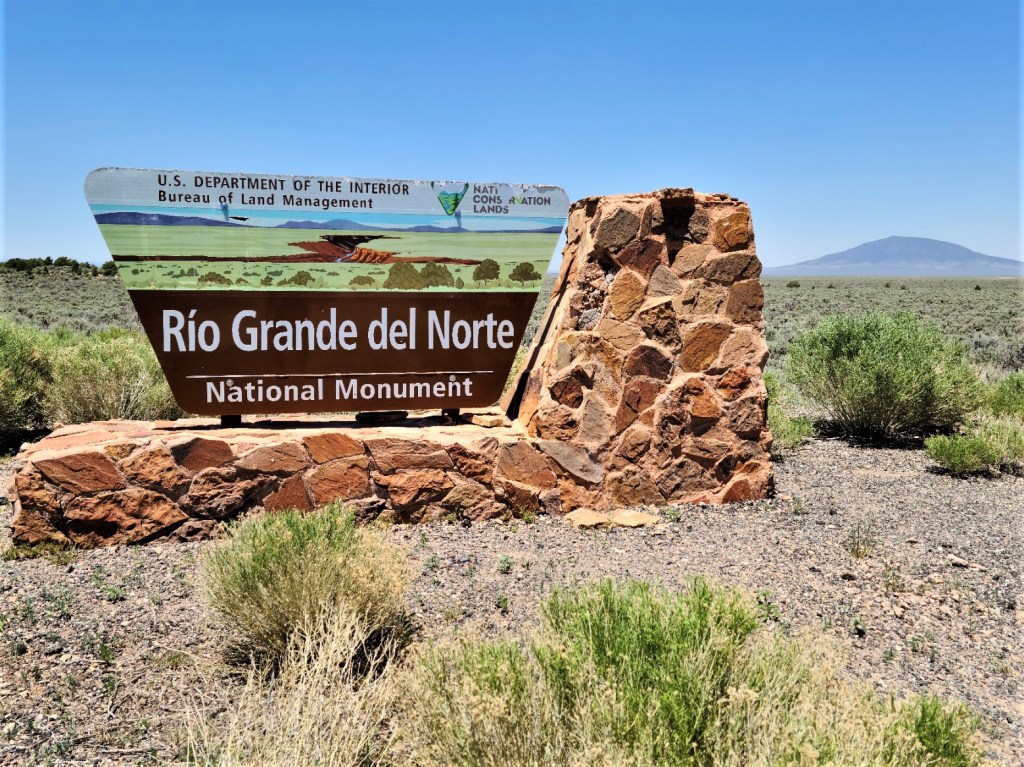
Beyond Questa, NM, a dirt road bordered by sagebrush scrub distinguishes the gateway to the National Park.

It’s high desert all the way, as the road winds through 10 miles of overlooks, campgrounds and trailheads…

until its terminus at La Junta Trail–currently closed for maintenance.

While hiking into the canyon wasn’t possible due to trail closure,

the overlook provided a closeup of native flora,

local fauna,

and a distant glimpse of the confluence of Red River and Rio Grande.

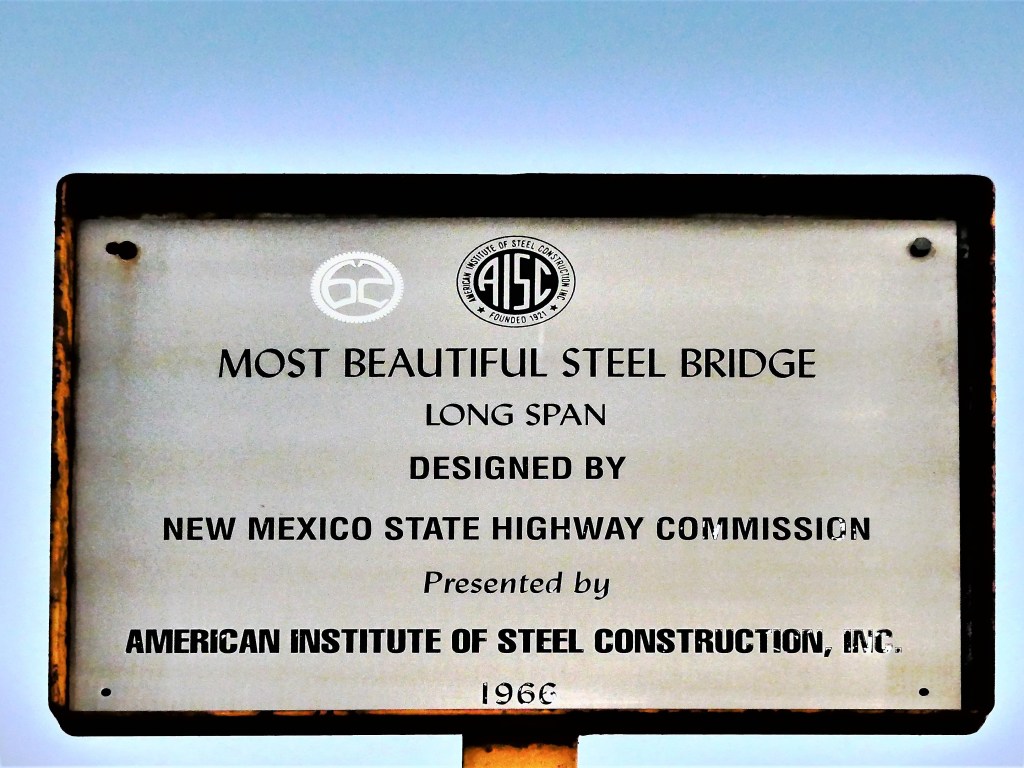
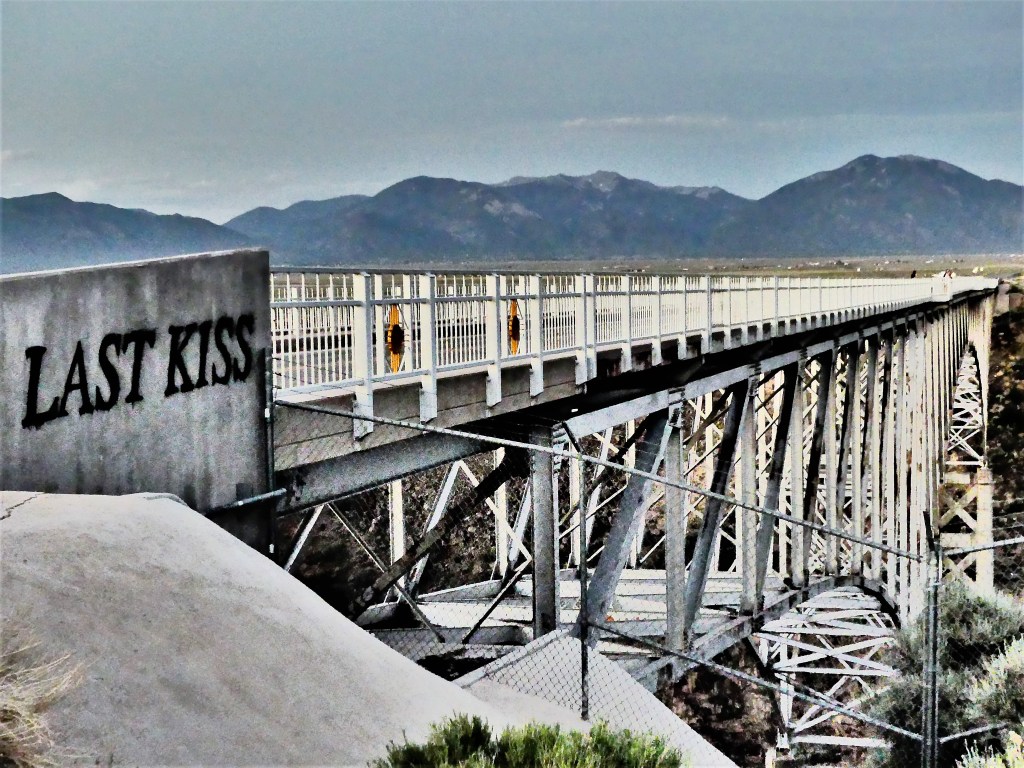
But like so many others, we were not settling for amazing…we were looking for spectacular. So we drove a few miles north of our campground on US-64, and waited patiently for sunset on the Rio Grande Gorge Bridge, an engineering masterpiece.

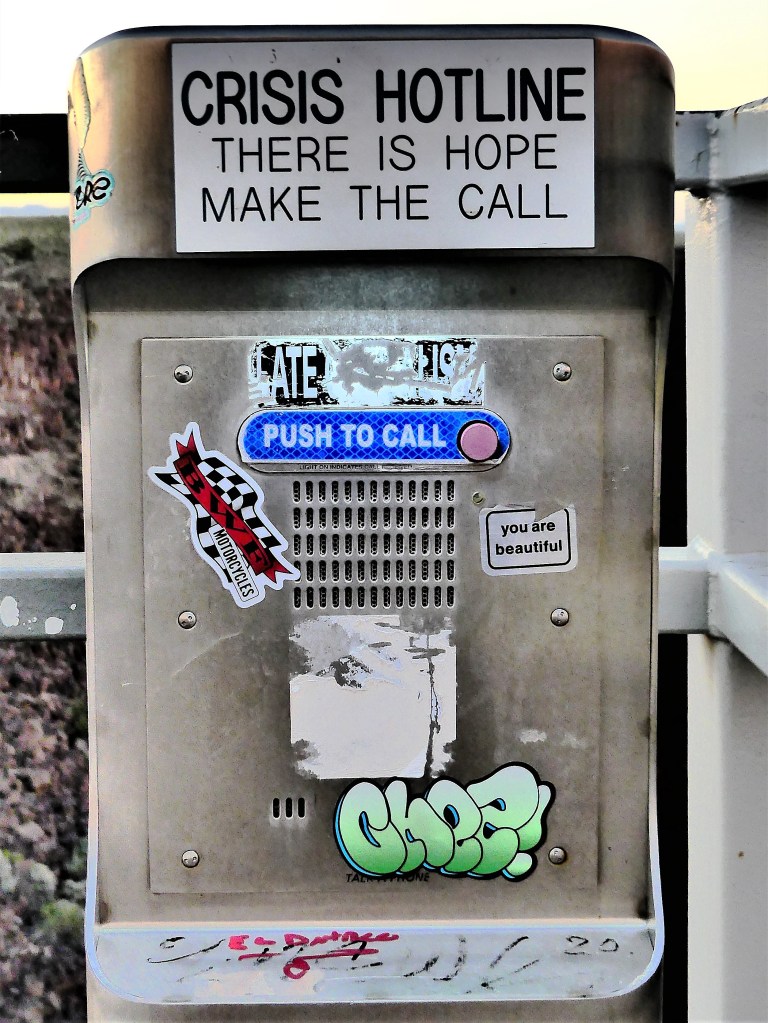
For the many who contemplate diving from the bridge,

there are strong warnings…yet sadly, two or three a year will never make the call.

With the sun fading, the sidewalks on the bridge begin to populate

each of us patiently waiting for Mother Nature’s final curtain before we resume our sacred lives.

Hiking Williams Lake

Our house in St. Augustine stands 11 feet above sea level. It may not seem like much, but it’s proven high enough to keep coastal flooding from our front door. But at what cost? Leah and I wondered if marinating at sea level throughout the pandemic may have also made the two of us soft.

While we routinely took beach walks, cycled marathon distances and paddled local creeks and lakes during a year-long quarantine, we had some doubts about whether we were fully prepared for our first alpine hiking challenge of the summer.

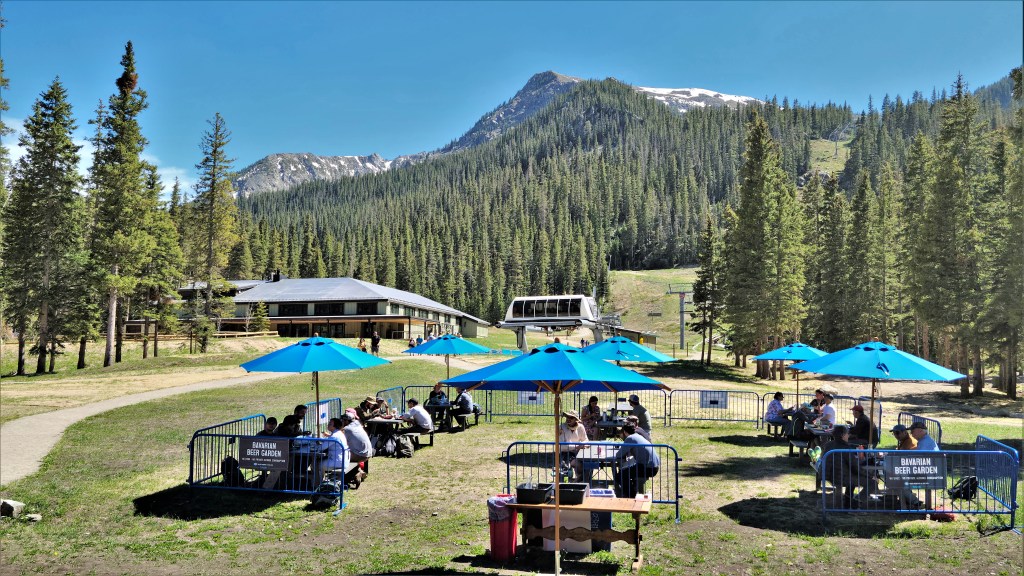
From Taos Ski Village, we drove up a winding dirt road past residences and restaurants to Kachina Village (elev. 10,350 ft.), and found overflow parking behind Bavarian Restaurant. We thought our arrival was timely, but there were so many other vehicles parked at 10 am that we wondered if we were late starting out.

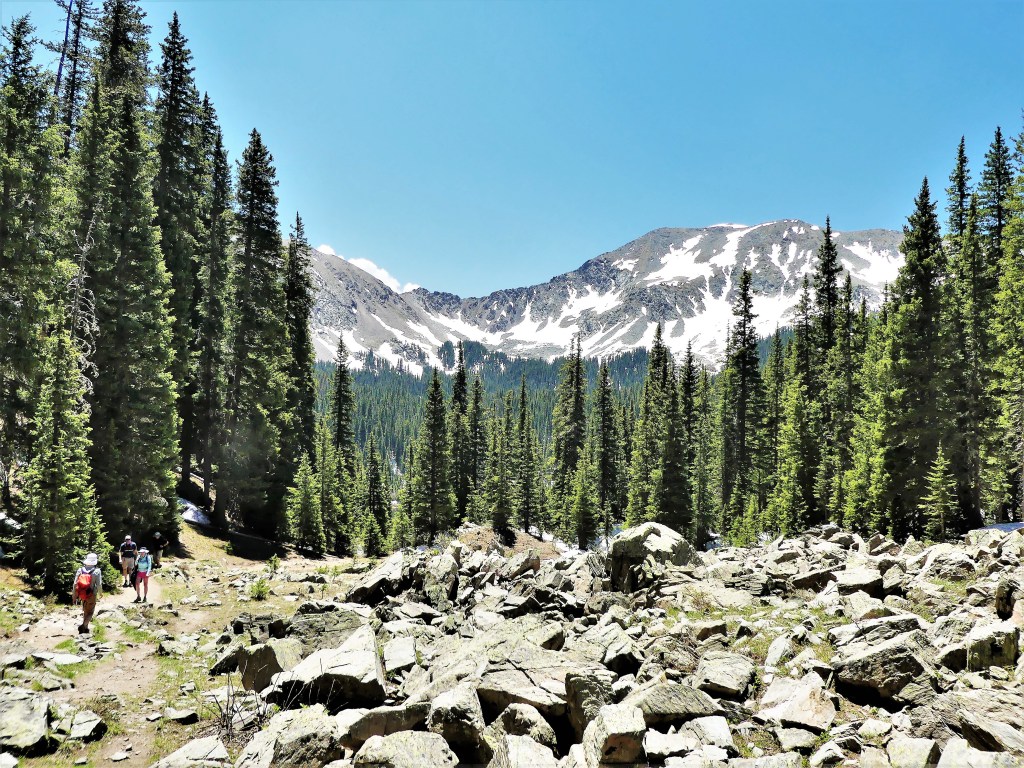
It was a brief hike to the the trailhead,

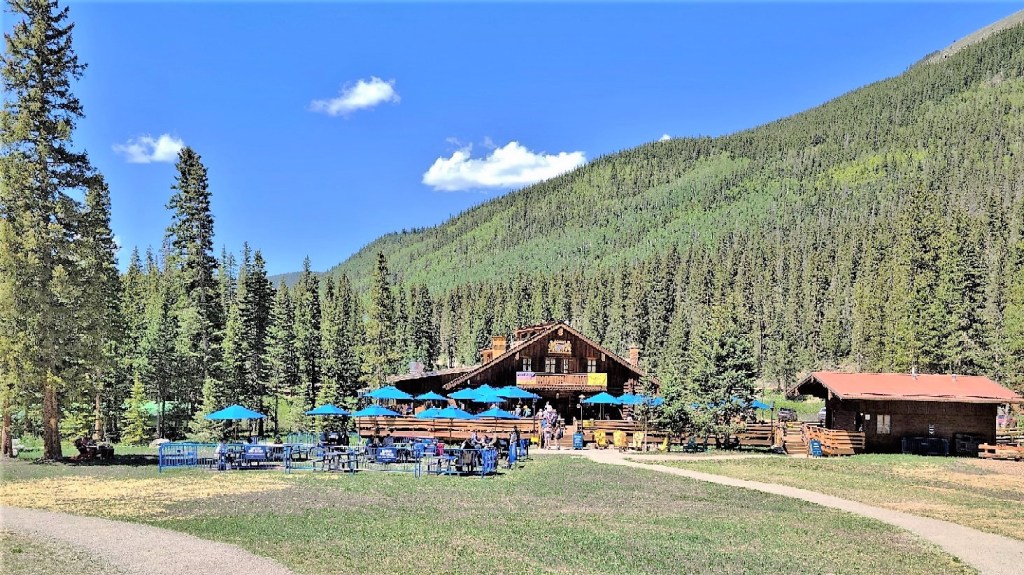
which we found just beyond the ski lift wheelhouse. I locked the scene in my mind for future reference. I believed this hike was clearly beer-credit worthy.

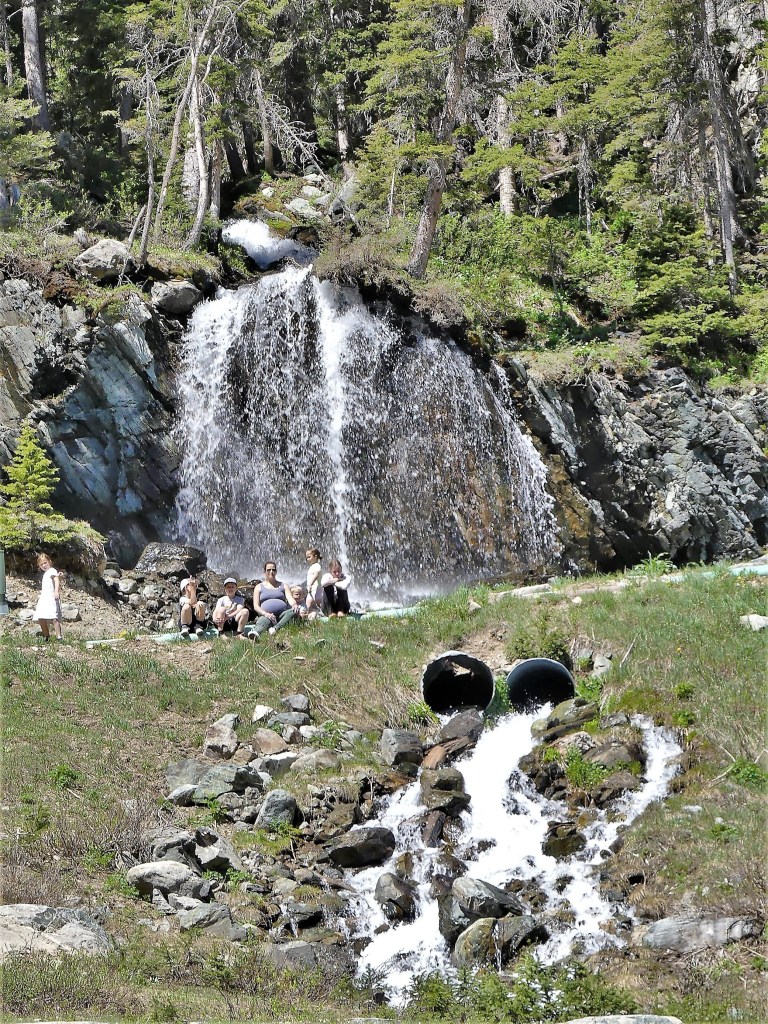
Already, a family had flocked to the snowmelt runoff to cool down from the heat.

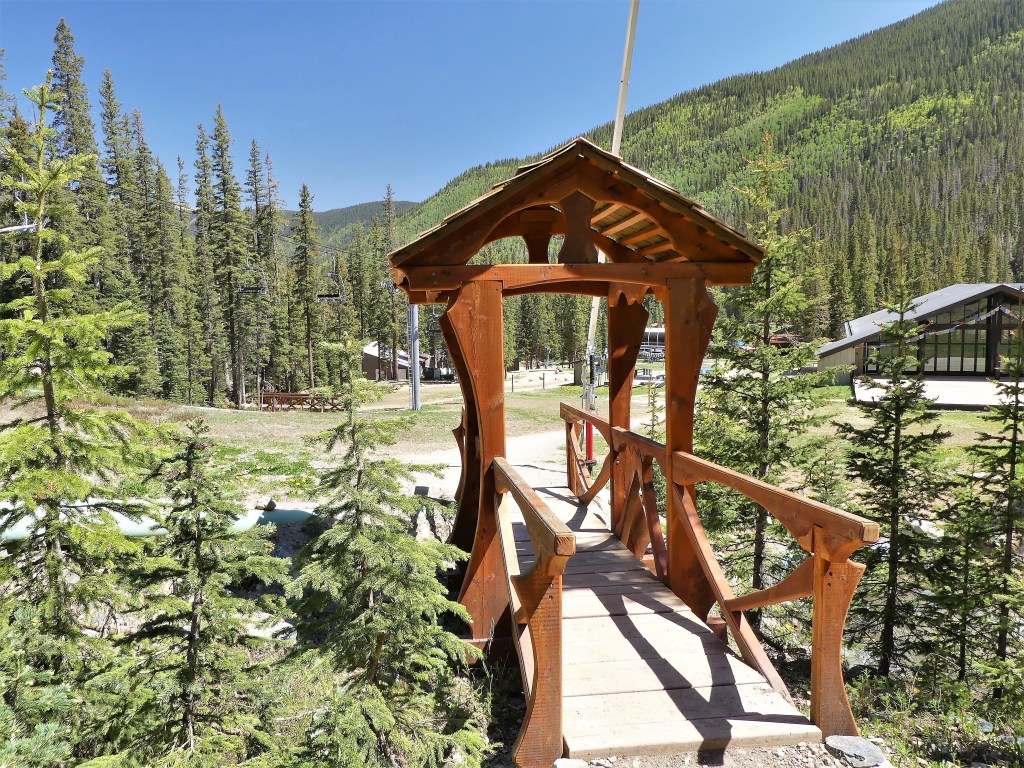
Once we crossed the Bavarian bridge, we were on the trail.

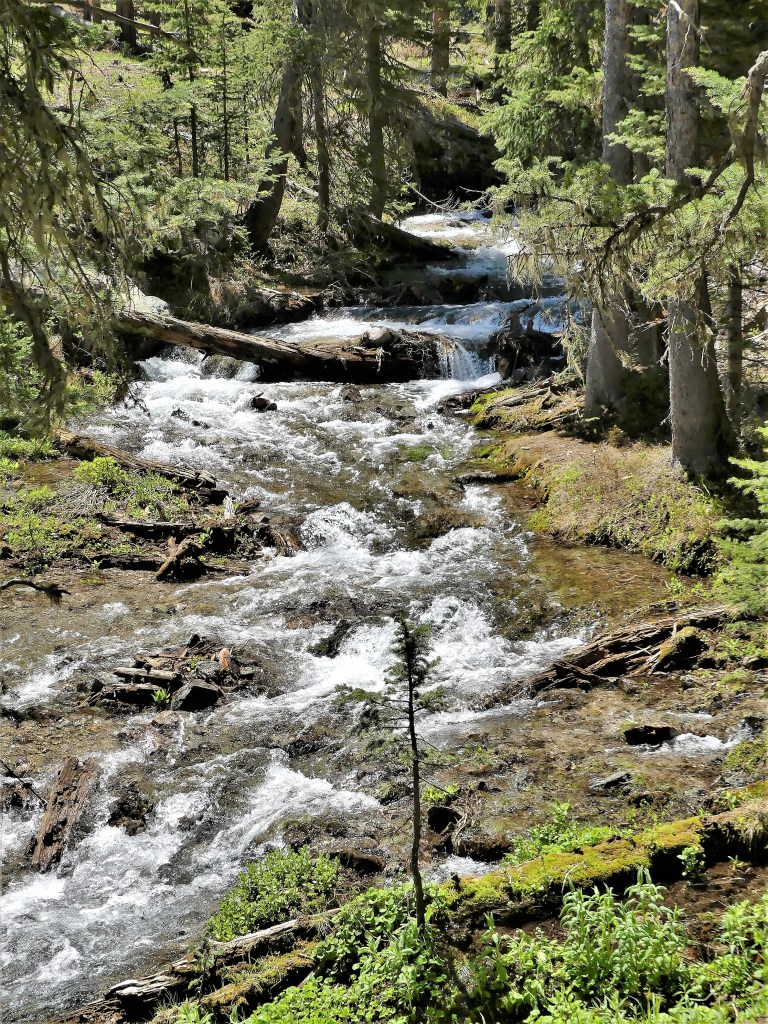
It was a steady climb past rushing water…

until we reached the snowline, halfway through our trek.

We were mindful of taking plenty of breaks along the way to hydrate, catch our breaths, and snap some photos.

The second half of the hike was a bit steeper and more slippery, as snowmelt made the trail slushy and unavoidably muddy in places.

But we were almost there…

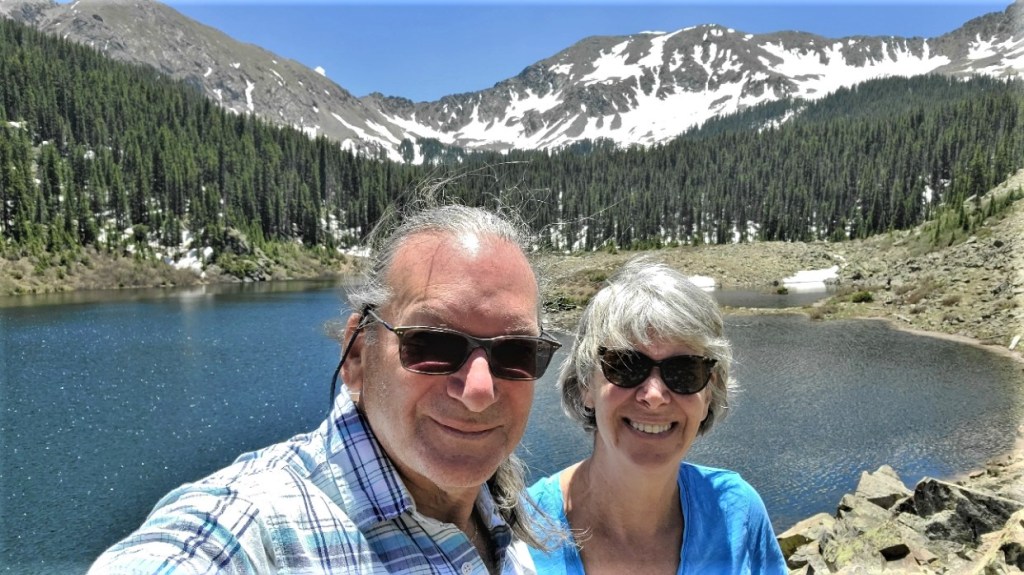
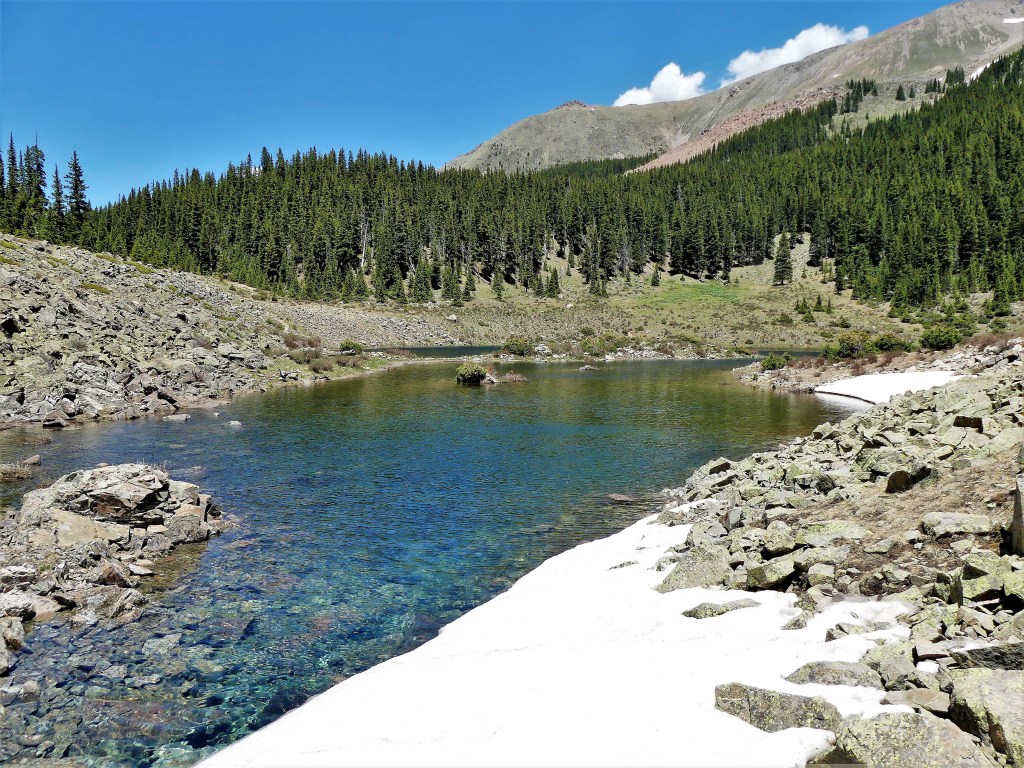
Finally, after climbing 700 feet over the course of 2 miles, we made it to our destination: Williams Lake (elev. 11,040 ft.)

“Any interest in hiking the rest of the way to Wheeler Peak?” I teased. “It’s only another 2 miles to the summit from here.”

“Not a chance!” Leah asserted. “Besides, it’s time for lunch and time to enjoy the view.”

We didn’t spot much wildlife at the lake–just a variety of unidentified birds and a hungry chipmunk who stole a Lance cracker when I was looking the other way.

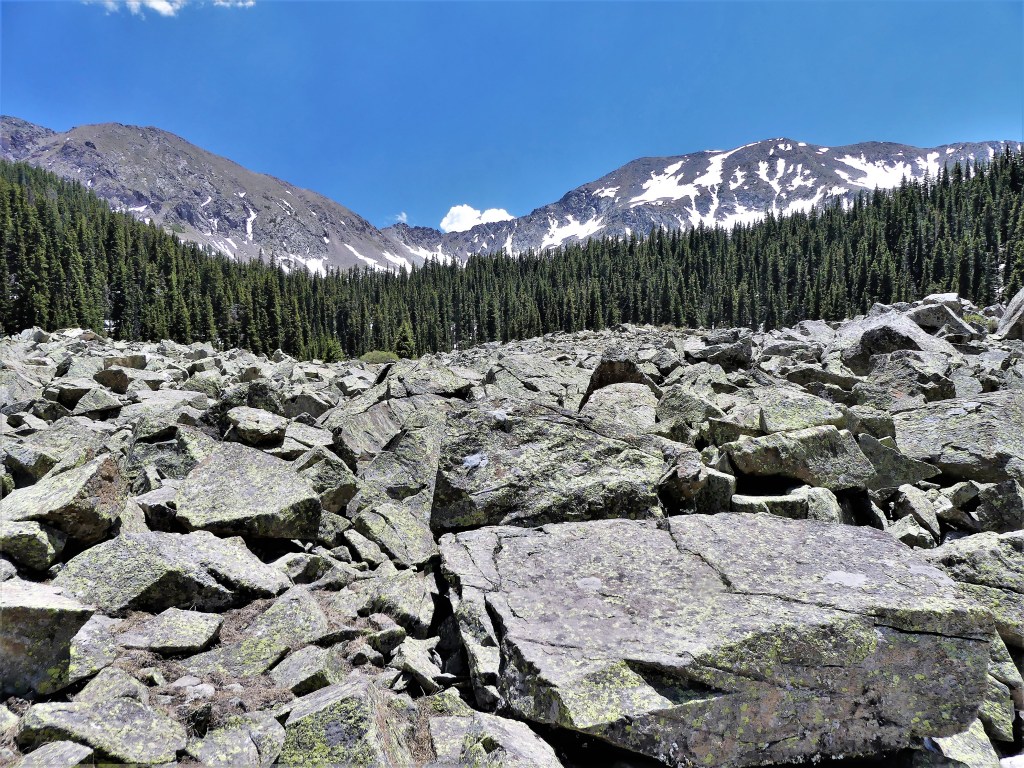
A hiker told us of a hidden pond behind the lake, which piqued my interest, but it required a fair amount of rock scrambling to get there.

“Not for me,” sighed Leah, “but I think you should do it.”

That’s the only invitation I needed. Once outside the rock debris zone, I traipsed through knee deep snow, until I rounded the bend…

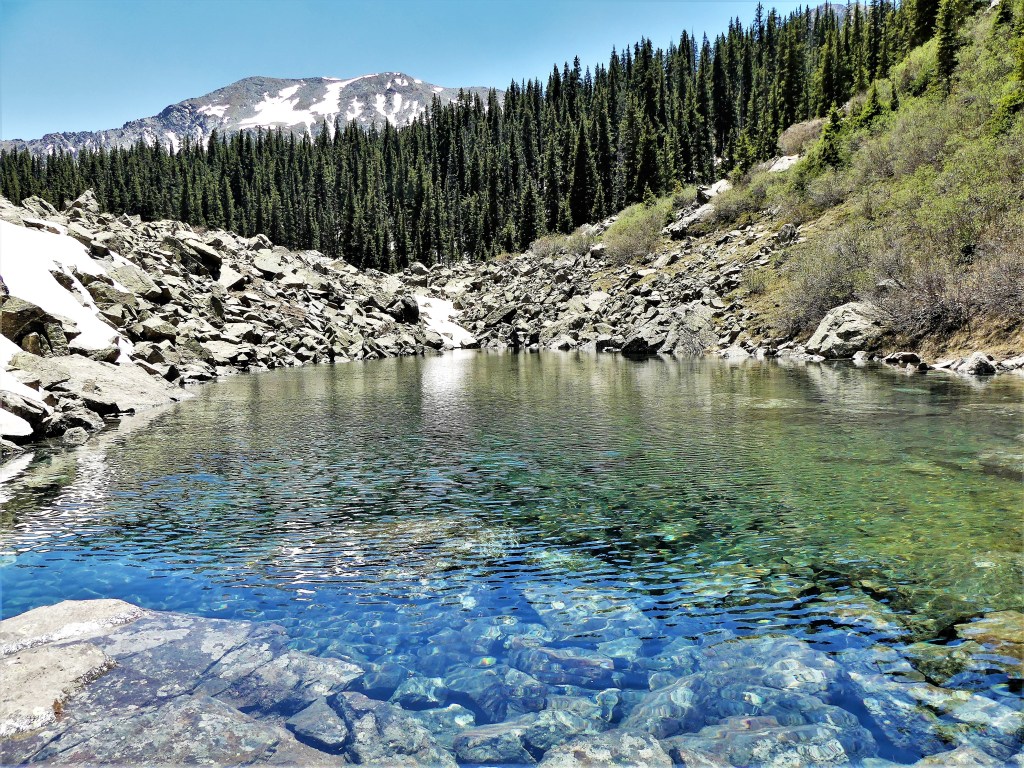
for a view of a crystal clear and frigid pond fed by distant peaks of the Sangre de Cristo. It was breathtaking, but this time it was not elevation-related.

Surprisingly, there were many hikers on their way up the mountain, as we were on our way out. When we emerged from the forest, I was hot and thirsty,

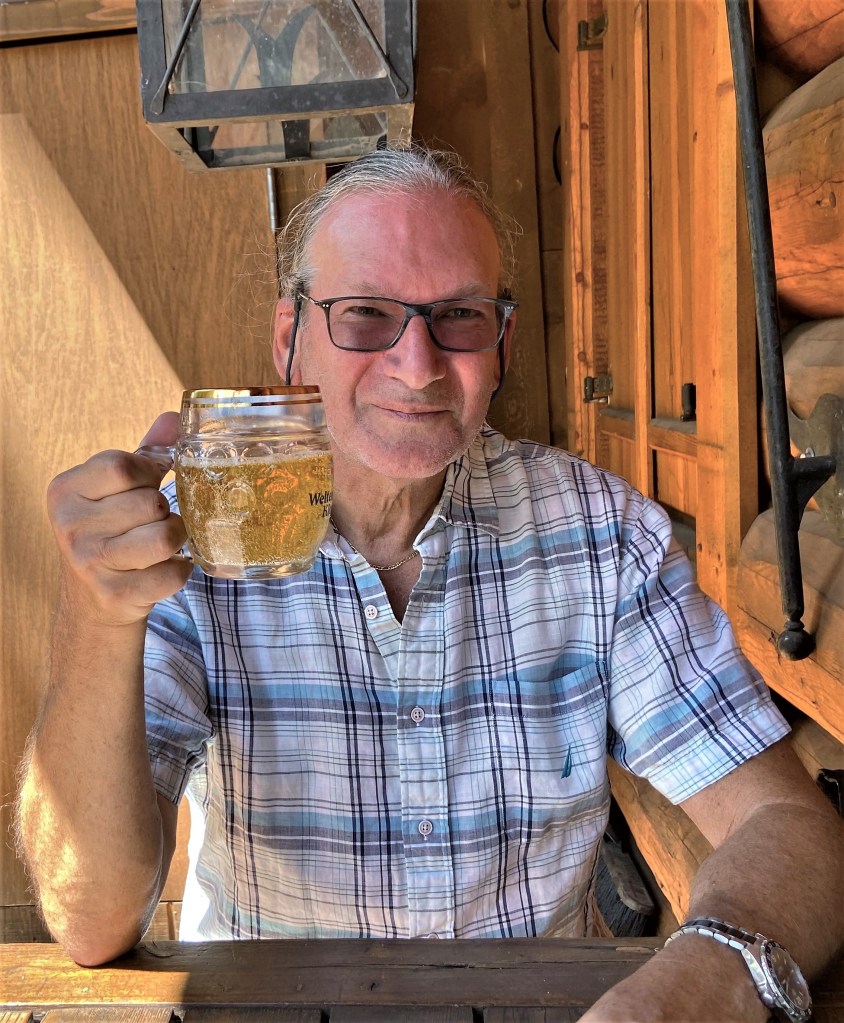
and ready to claim my reward.

Bandelier Delivers

Leah and I were en route from Albuquerque to Taos when I noticed an early road sign for Bandelier National Monument. As we got closer to our destination and signs for Bandelier became more frequent, I proposed that we make it a stop–not for overnighting, but a daytrip to break up the travel monotony–considering it wasn’t more than an hour out of our way.

While there wasn’t hardcore support for the idea, there wasn’t serious objection either, which meant I still had a chance to sell the idea.

“I think it’s been 46 years since I was there–probably some side-trip while visiting Santa Fe during my first cross-country honeymoon trip,” I started.

“I think I was there sooner than that,” Leah commented, “like in the past 10 years.”

“Really? It couldn’t have been with me,” I asserted. “Do you not have an interest in going?”

“I don’t know,” she maintained. “I mean, is there anything there that we haven’t seen before?

I thought, “Are you kidding me?! Would you pass up Niagara Falls because you saw Victoria Falls?”

I said, “It’s the site of an ancient pueblo village. It’s similar to Mesa Verde, and I think you may be mistaking one for the other, because we last visited Mesa Verde when we flew to Santa Fe for Carrie’s wedding 12 years ago.”

“Are you sure?” asked Leah.

“As certain as I was about Blue Hole,” I replied.

“What do you propose we do with the Airstream, ’cause we certainly can’t pull it around the canyon,” Leah asked and answered.

“We can work that out when we get there,” I proposed.

Sometime that answer gets me in trouble…but not this day!

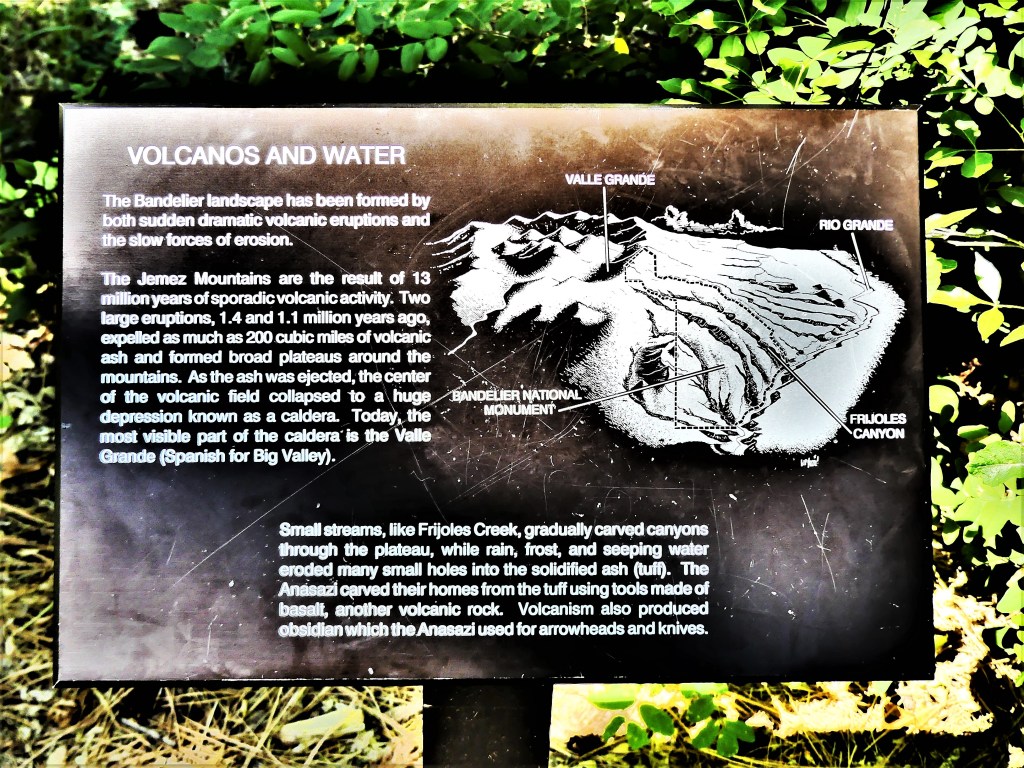
We first passed through Los Alamos (with maybe more nuclear physicists per square mile than anywhere else on earth), and climbed a ridgeline of the Jemez Mountains,

overlooking the Frijoles Canyon.

“Any of this look familiar,” I teased.

We followed a serpentine road that wound around the mountain, carrying us deeper into the canyon. A park ranger stopped us at the park entrance station.

“Sorry folks, but your trailer–nice as it is–doesn’t fit on our mountain roads. To get to our Visitor Center and trails, you’re gonna have to drive to the Juniper Campground parking lot and unhitch there,” he advised.

“Sounds reasonable,” I confirmed.

“You’re prepared to do all this work just to drive the park?” Leah asked.

“You’ll see. It’ll be worth it!” I said.

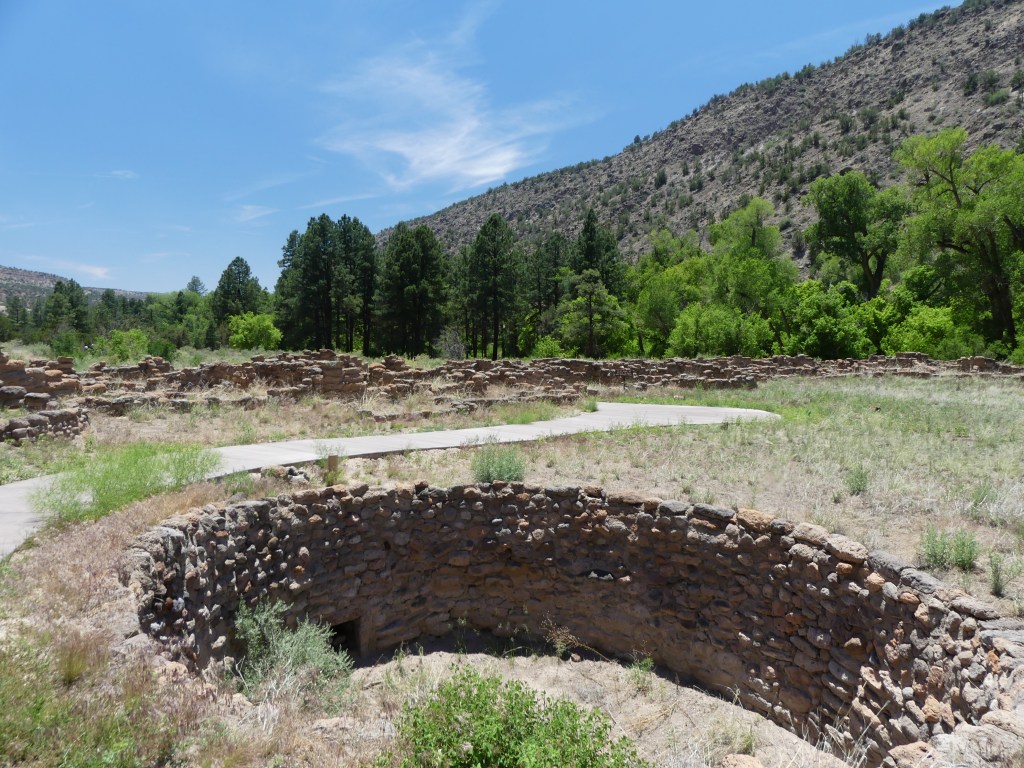
We walked the Pueblo Loop Trail, passing Big Kiva (a ceremonial underground chamber)…

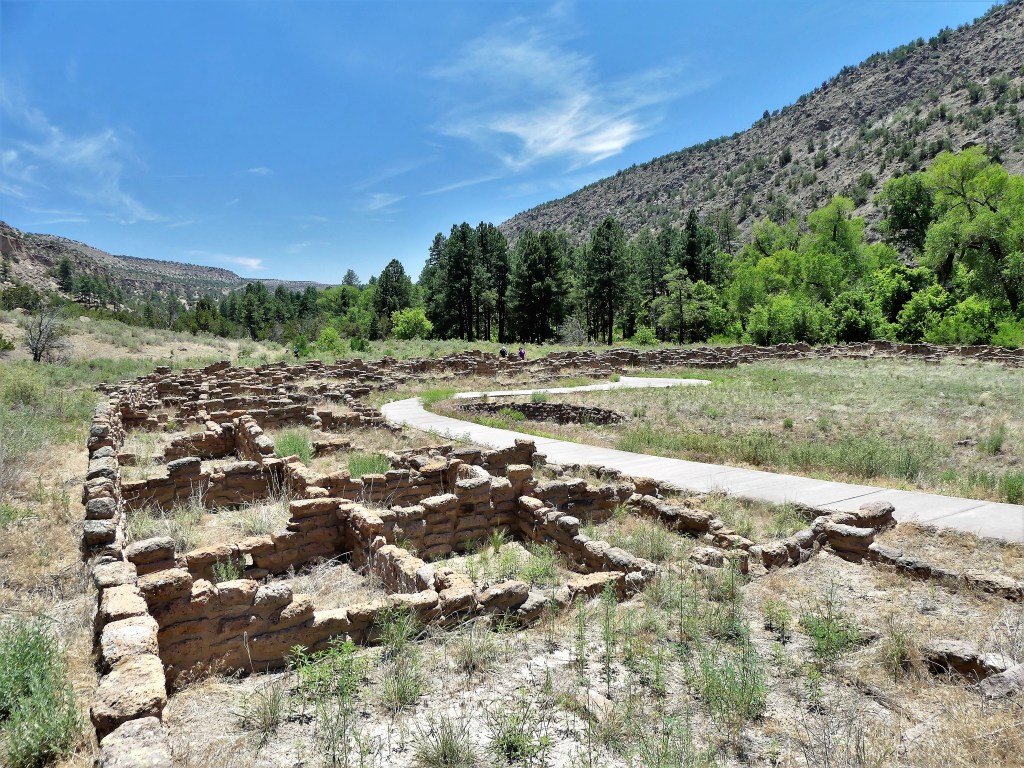
and the 700-year ruins of Tyuonyi (QU-weh-nee) village

originally a 3-story ring of sandstone rock debris exceeding 400 rooms.

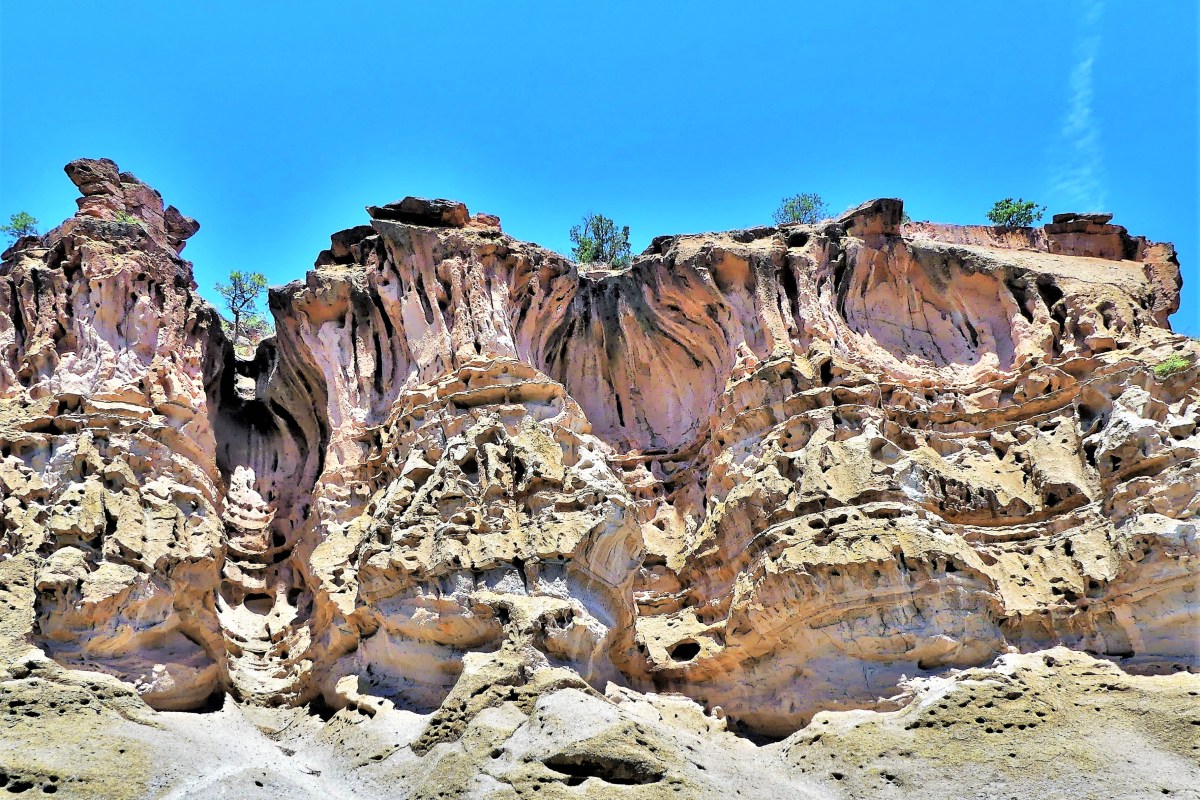
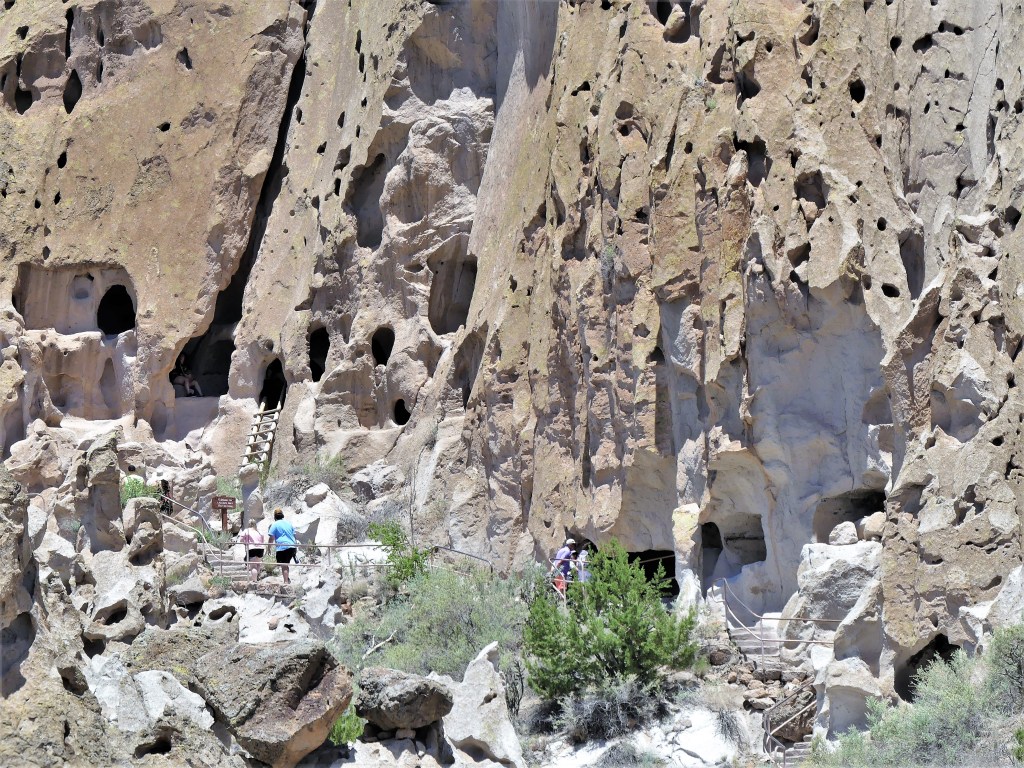
From a distance we saw several families poking through the cavates, chipped out of porous rock.

We soldiered on, beyond the remnants of the Long House…

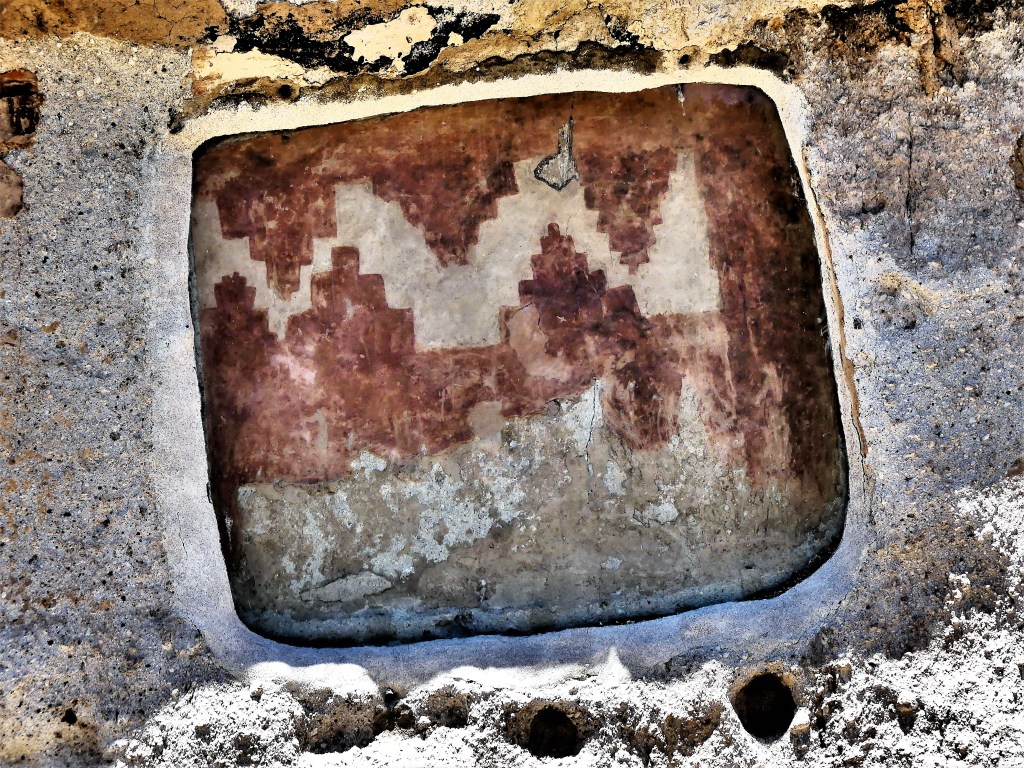
lined with protected petroglyphs,

and imagined what it once looked like…

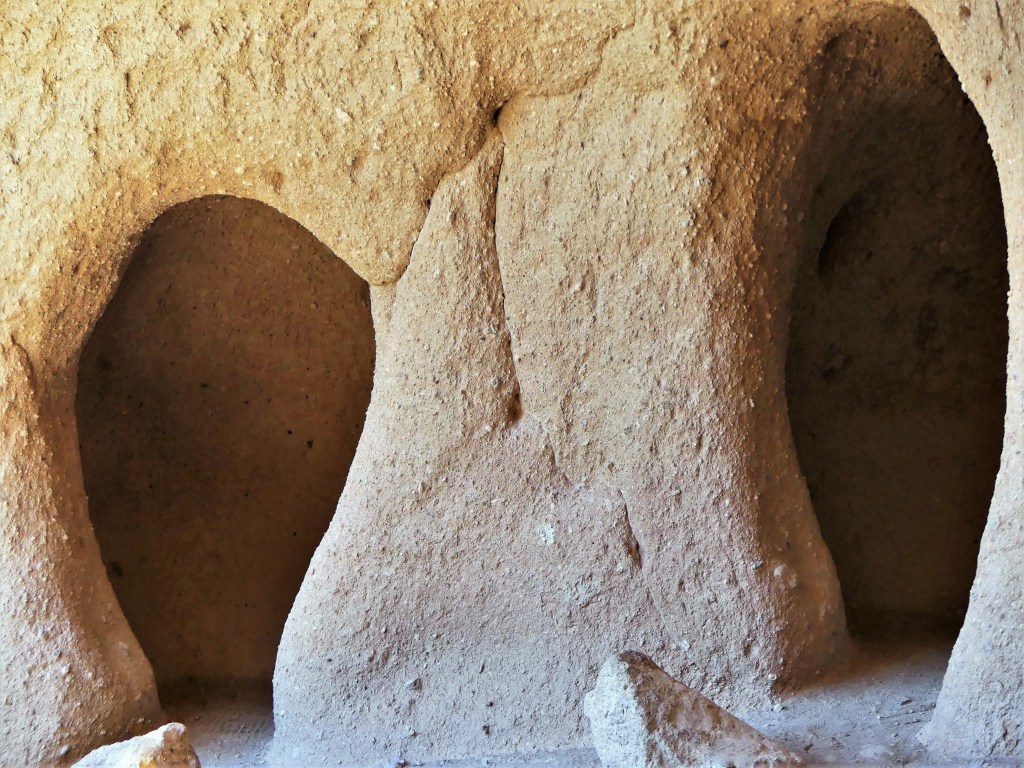
when all that remains are chiseled-out rooms,

once hidden behind adobe walls.

We took the trail extension in anticipation of climbing to the Alcove House…

but Leah chose to sit this one out.

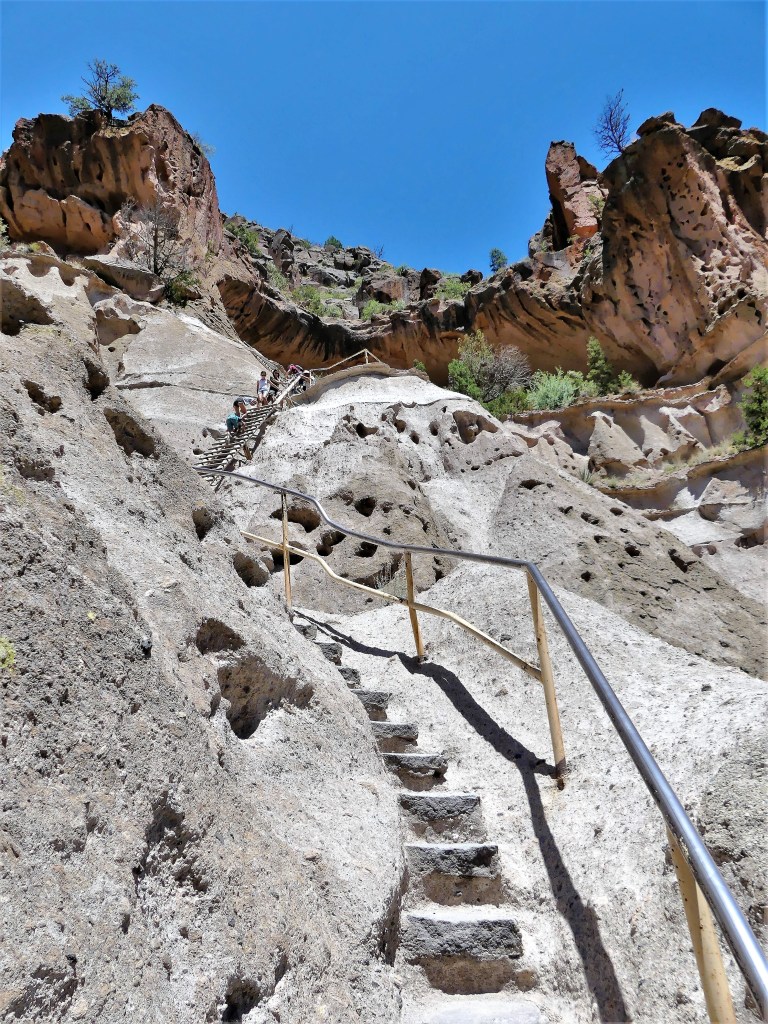
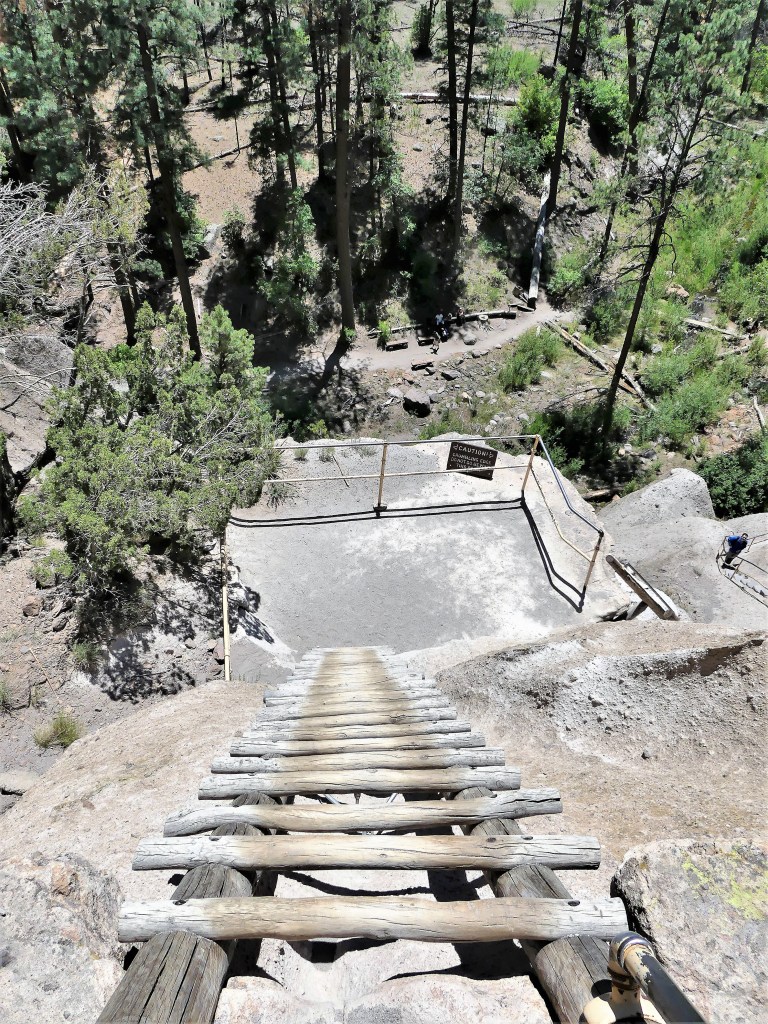
The climb was steep and narrow, and the ladder rungs were on fire from baking in the sun all day.

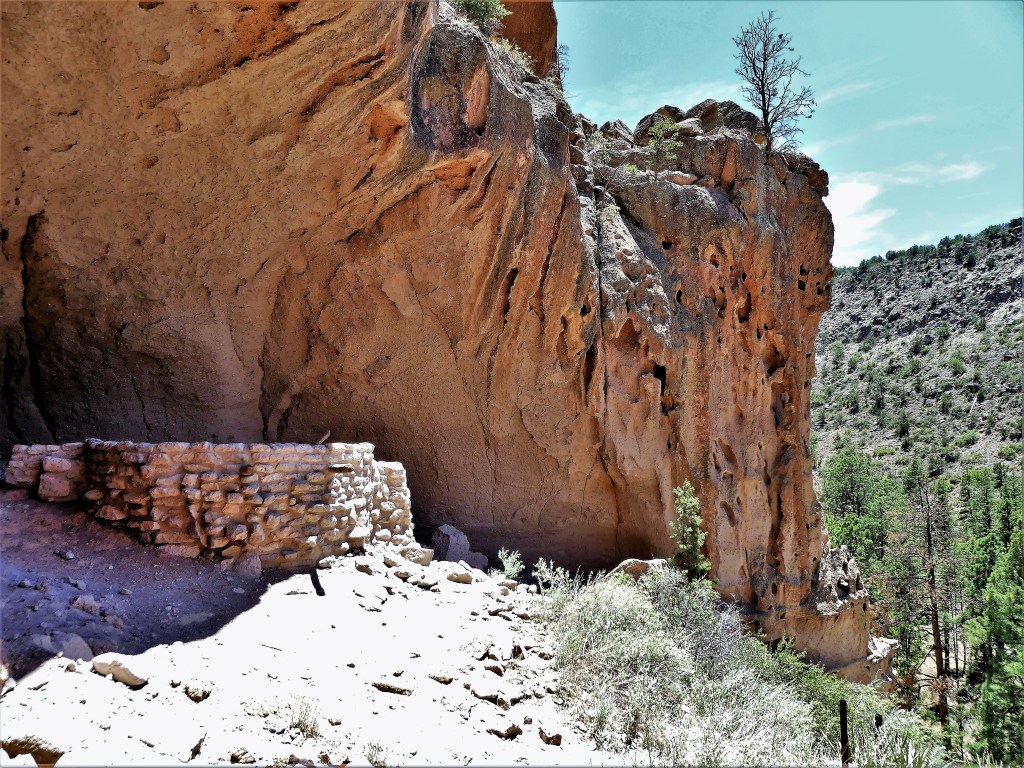
While Leah enjoyed the shade beside Frijoles Creek, I had an aerie to myself with a nestled kiva,

and sculpted rooms for meditation.

Which may have prompted me to say a prayer or two before my looong climb down.