Fortuitous

The Spanish crown was ambitious in its exploration of the New World, establishing the first permanent European settlement at St. Augustine in 1565, and equally as keen on protecting its investment from marauding pirates, subversive Native American neighbors, and the French and British Empires by establishing a trio of forts along New Florida’s northern Atlantic coastline.

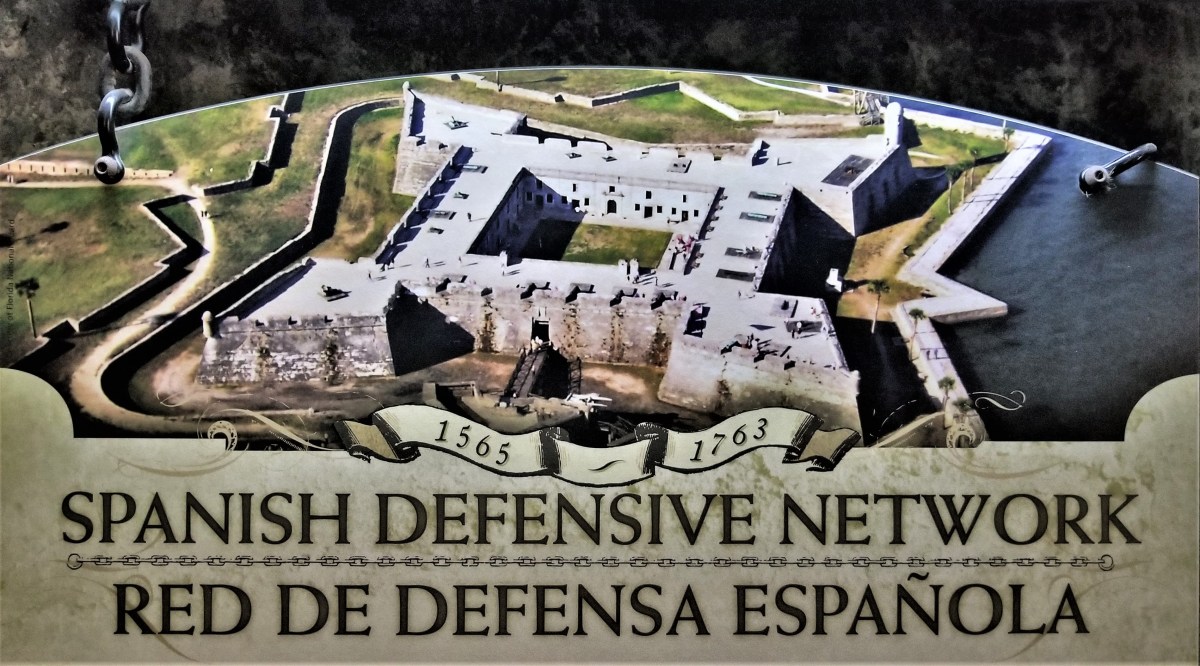
Spanish Defensive Network

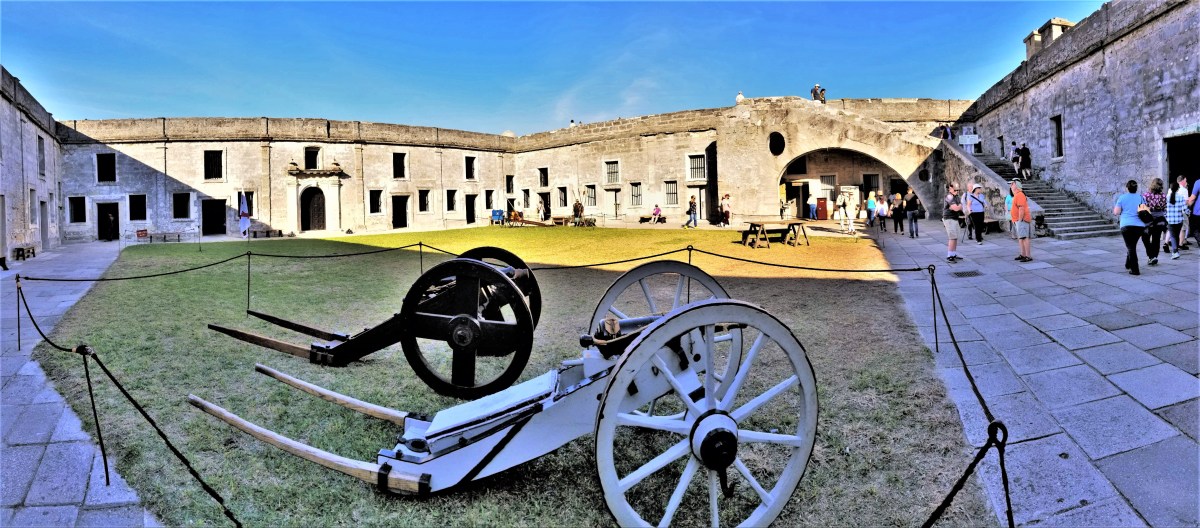
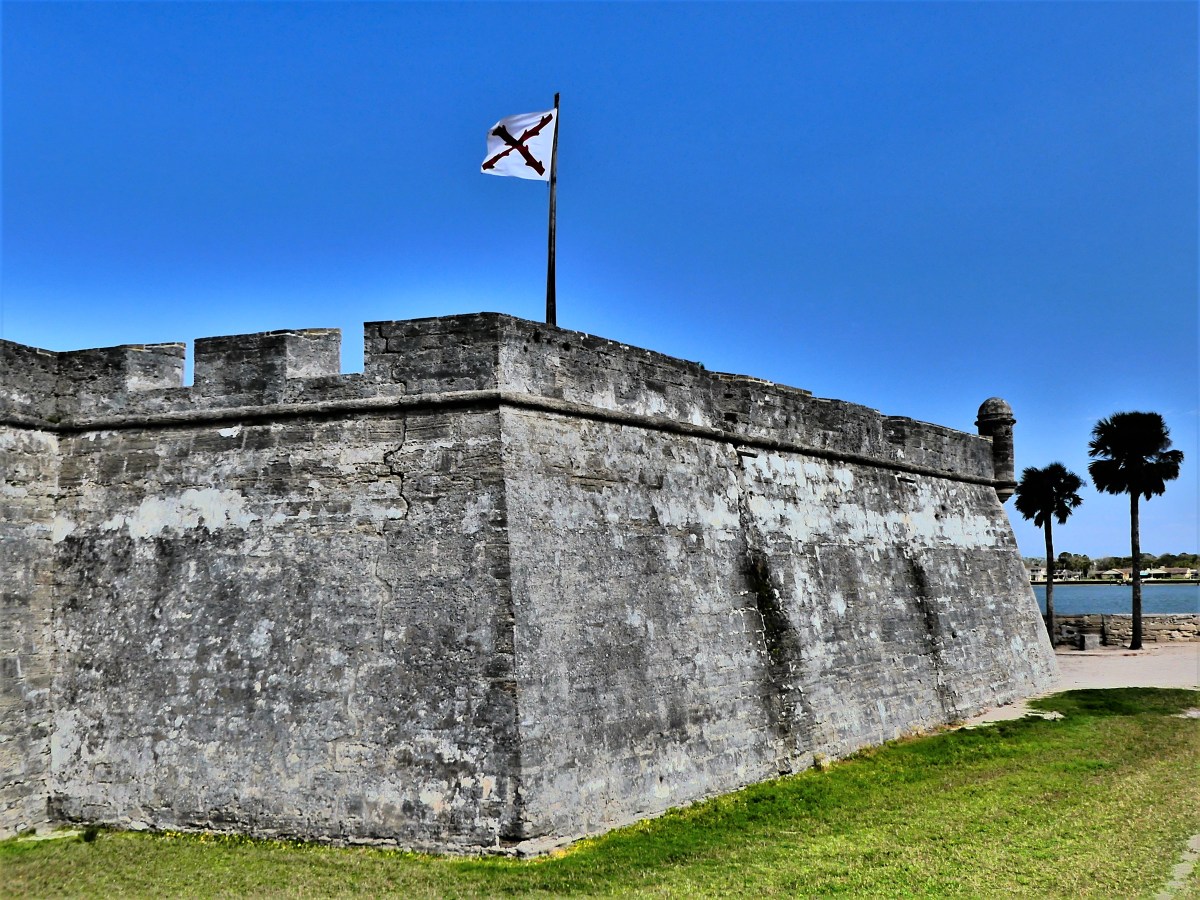
Aside Fort Mose to the north and Fort Matanzas to the south, Castillo de San Marcos was the first and largest of the three, standing 33 feet high, with 14 feet thick walls of coquina blocks–

outside the walls (3)

–a bonded composite of crushed seashells quarried from nearby Anastasia Island–and able to withstand a cannon shot from an enemy vessel.

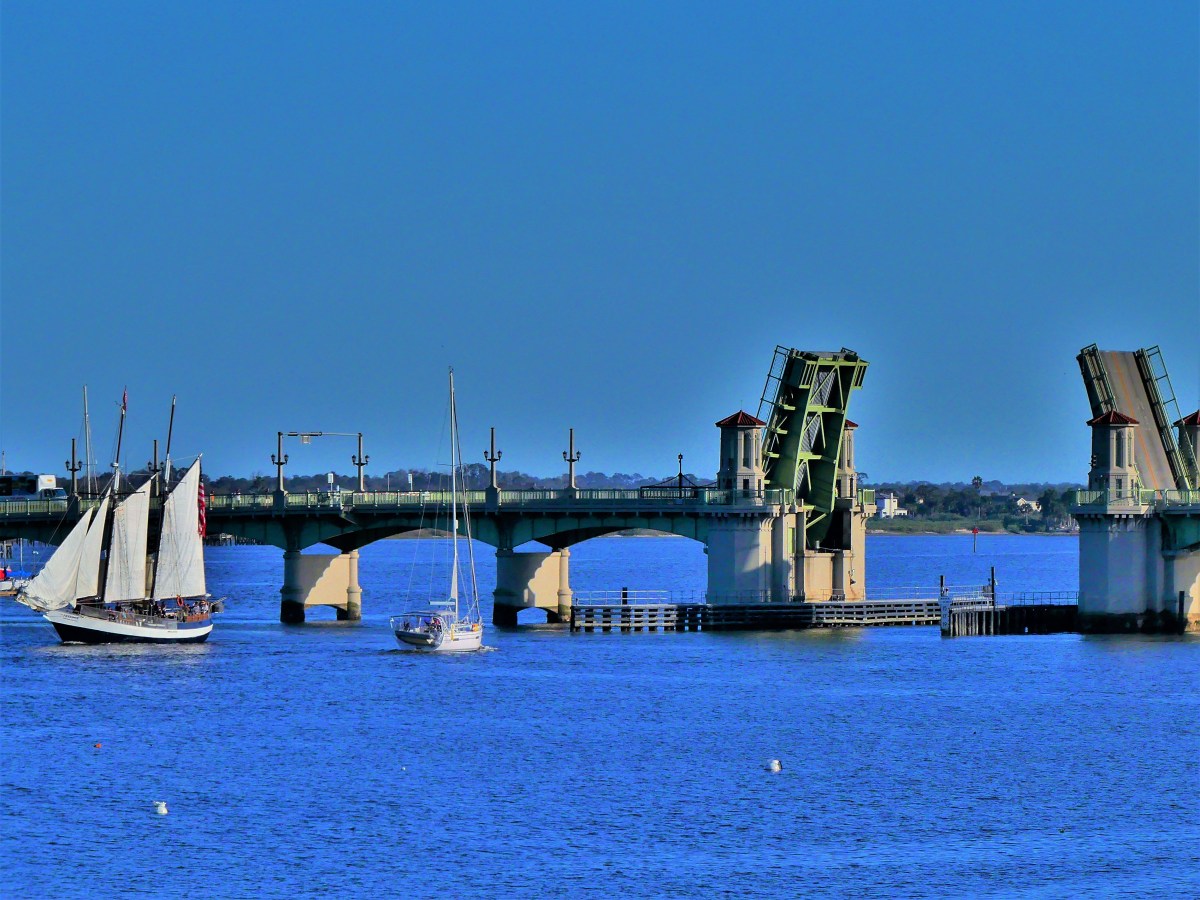
Lions Bridge passage

Completed 323 years ago, Castillo de San Marcos still stands as the oldest masonry and best preserved fortress in the continental United States, and a symbol of the colonial struggles that shaped the history of a nation.

cannon casting (3)

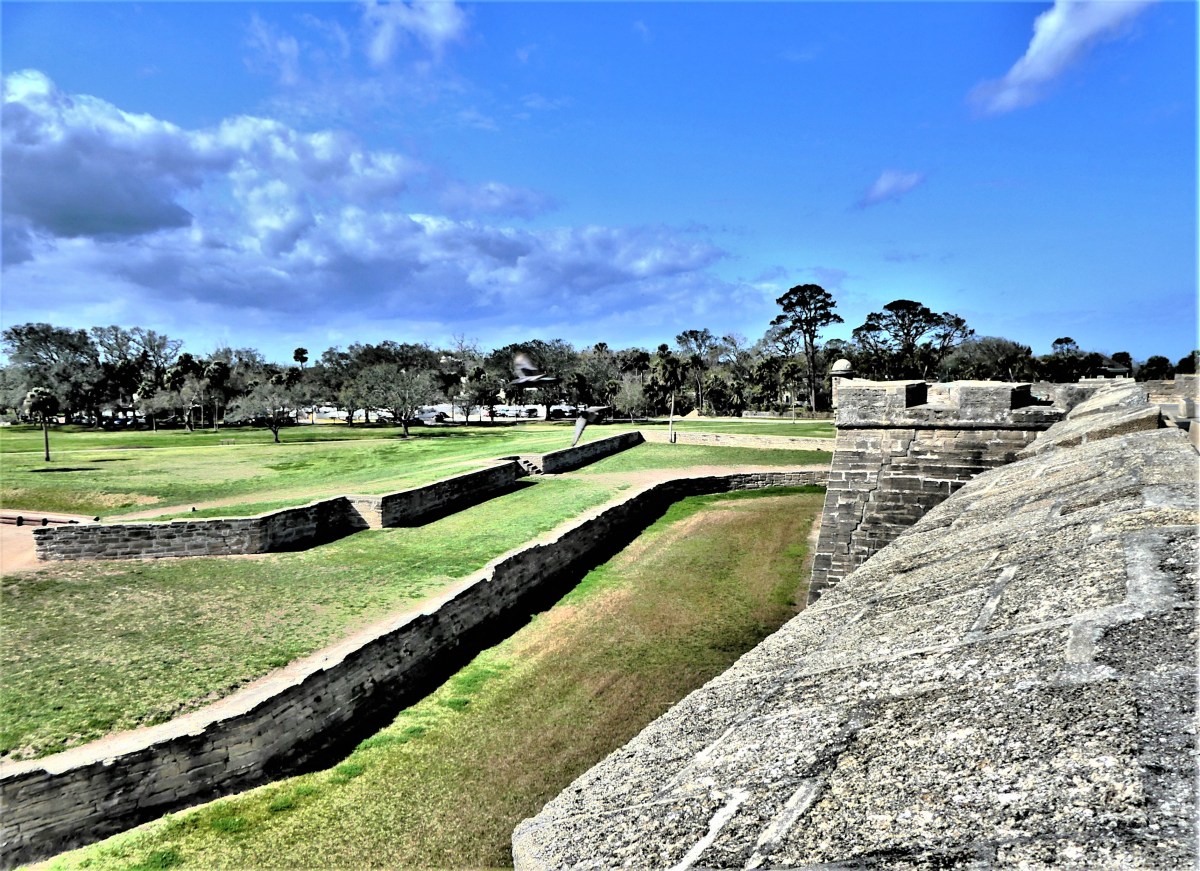
Protecting St. Augustine was an interwoven fabric of fort design,

moat

view from above

soldier readiness,

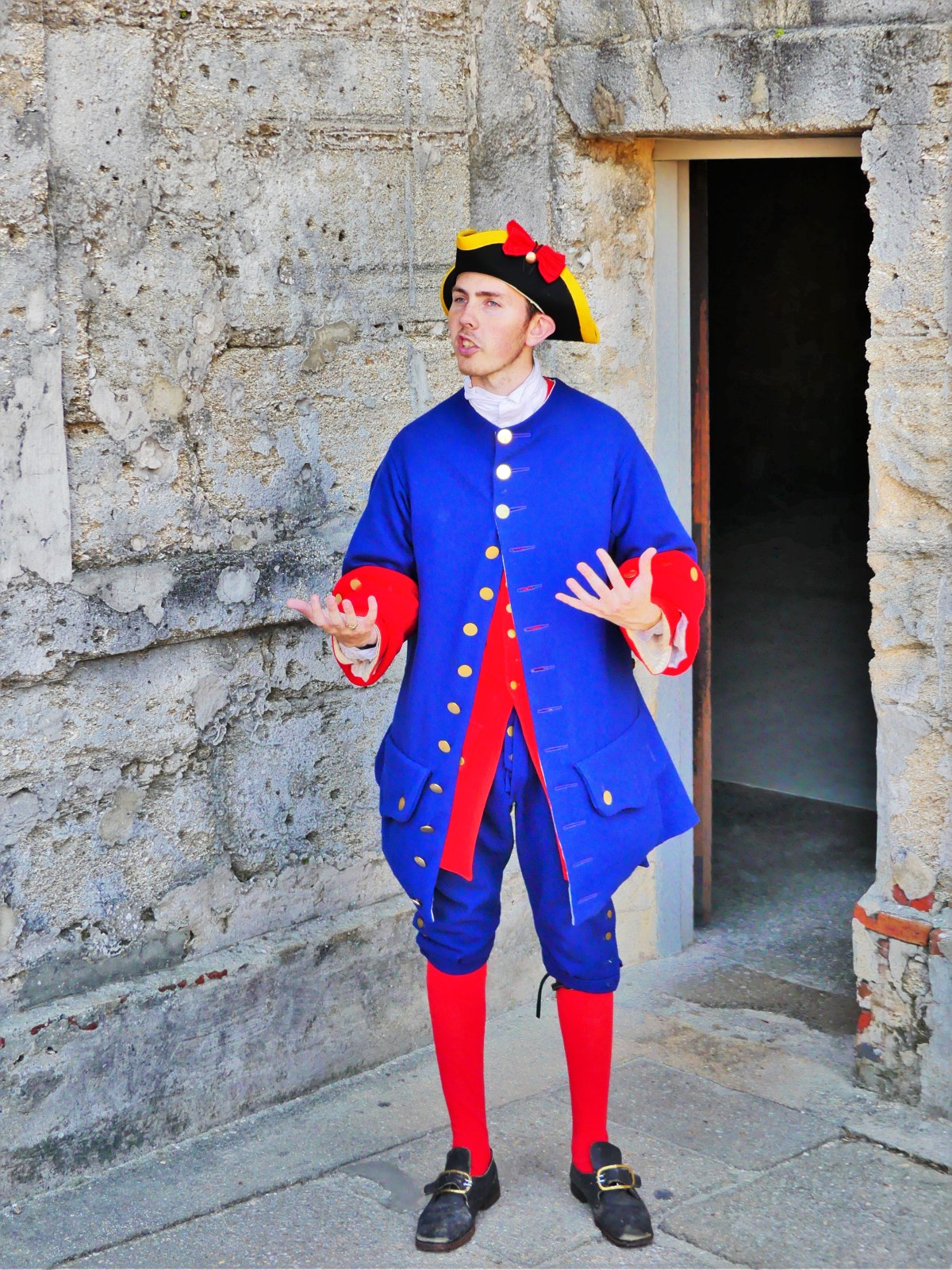
reenactor

and black powder weaponry.

interior (2)

The Castillo’s advanced architecture showcases the bastion system, named for the diamond-shaped spears jutting from the four corners of the fort walls–

fort exterior

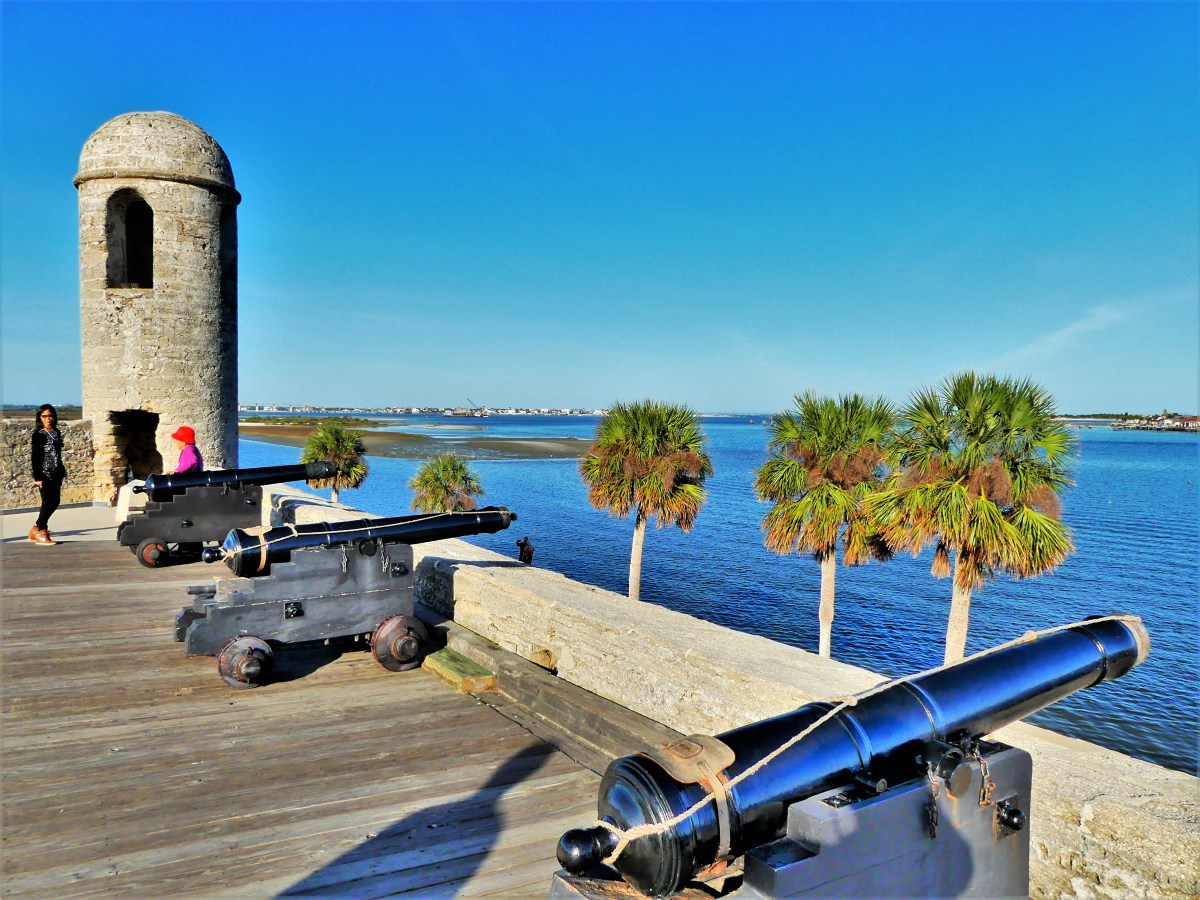
each point armed with an array of cross-firing guns intended to sweep across a wide swath of defensible coverage.

guns and turret

Additionally, the coquina stone offered fortunate benefits to fortress defenses if fired upon, as soldiers quickly realized that the porous properties of its shell walls could absorb the impact of cannon balls, rather than the walls shattering into shards if built with brick or granite.

A soldier’s life of active duty at the fortress usually consisted of drills, repair, and sentry watch,

sentry turret

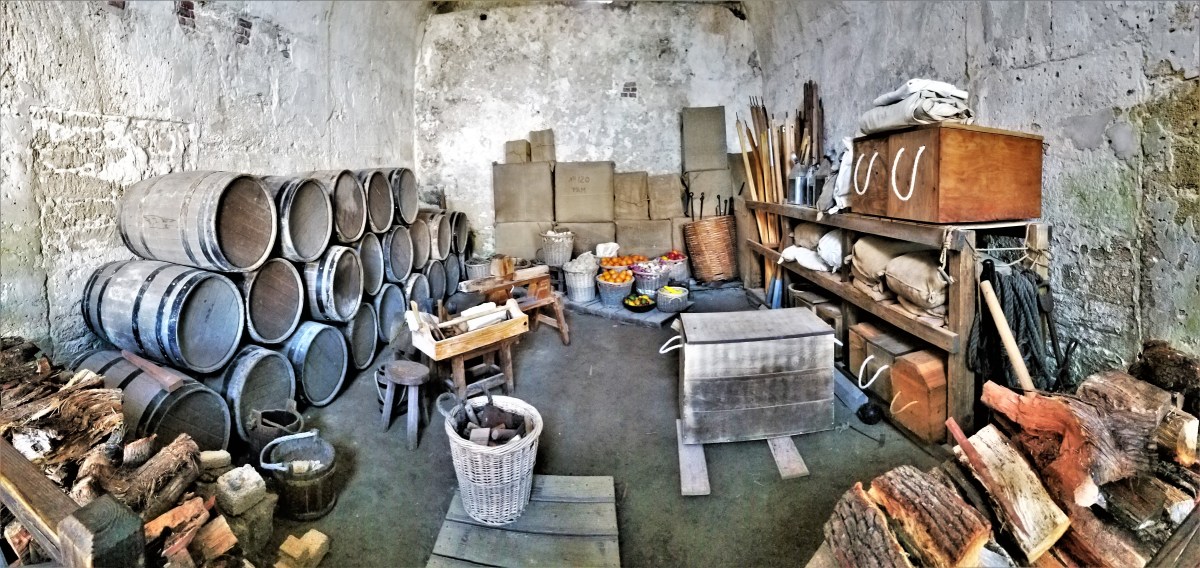
with little time ever devoted to battles. Otherwise, their time was spent protecting the larder…

provisions locker

practicing their faith, which guided all aspects of colonial life…

First mass

and working second jobs as carpenters, cobblers, and coopers to support their families when away from the barracks.

soldier bunk

Officer barricks

But when confronted by the enemy, cannon crews were so effective at discharging projectiles from a variety of guns when repelling an attack or seige,

Artillery and Amusettes

cannon defenses

cannon crest

Shot Locker loaded

that Castillo de San Marcos was never breached in its history.

ramparts (3)

The fort has been the centerpiece of a historic city that has changed flags six times, but always by treaty–never surrender or defeat.

Spanish flag.jpg

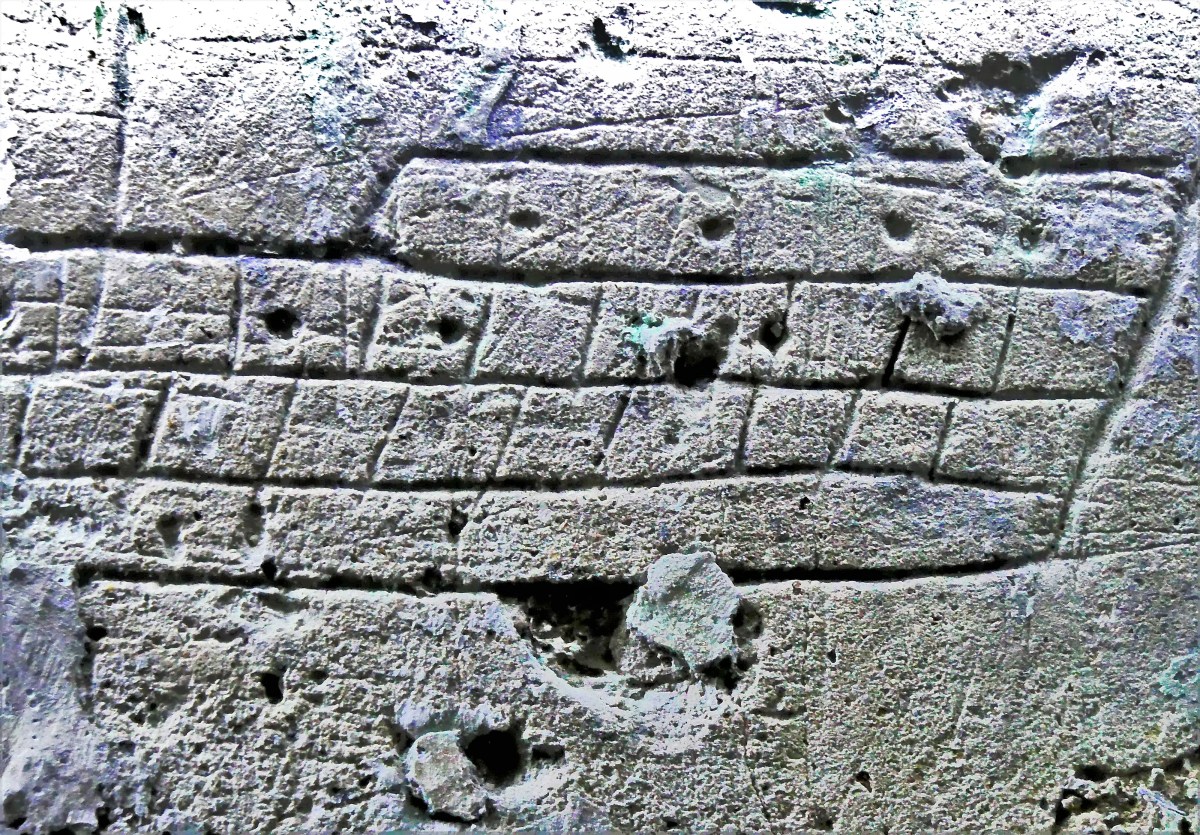
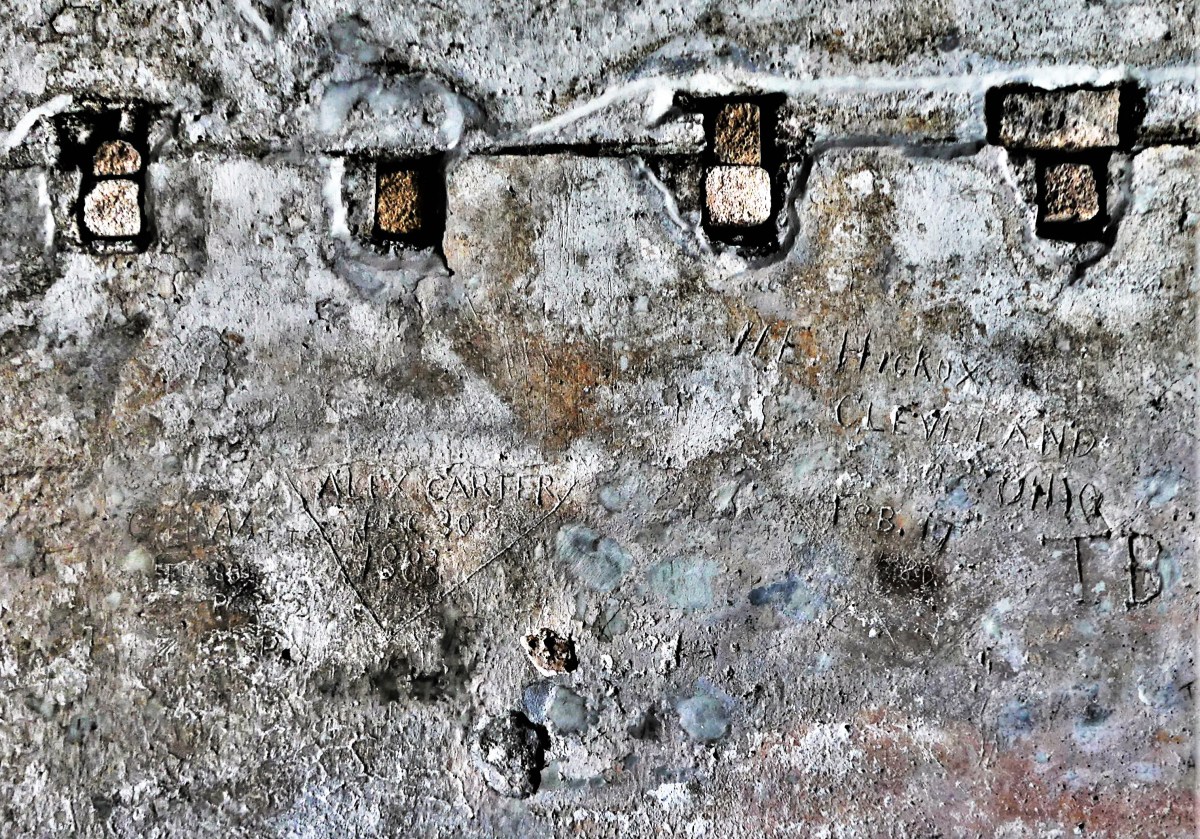
Legions of soldiers through the ages have passed through its chambers leaving behind their marks…

ship grafitti (2)

grafitti1

graffiti (2)

But the treachery of Renaissance politics that sparked an amazing race of New World discovery, launched a new nation forged in conflict, and a new world order that defies all labels.


It Takes a Village of the Arts

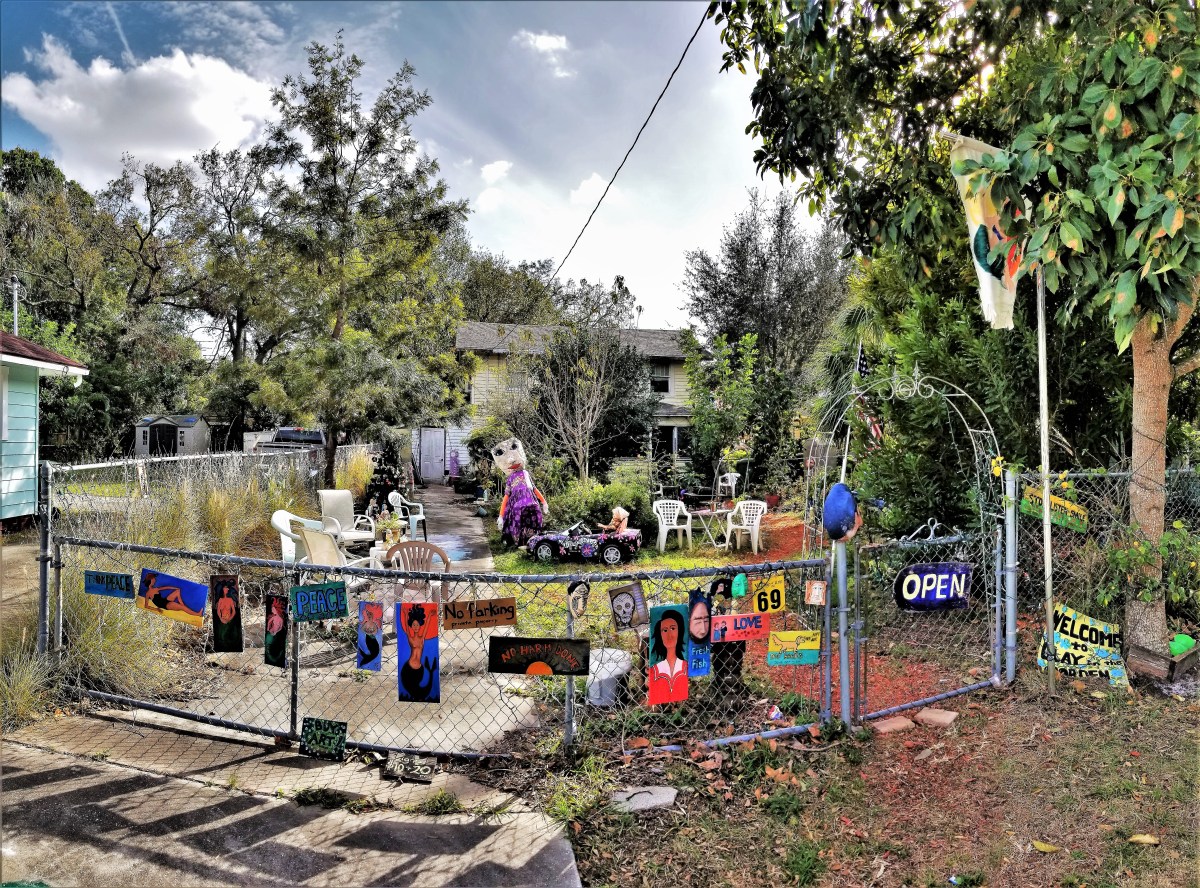
A neighborhood of kaleidoscopic colors awaits the visitor who ventures from Sarasota to back-yard Bradenton for some down-home art…

Vota sign

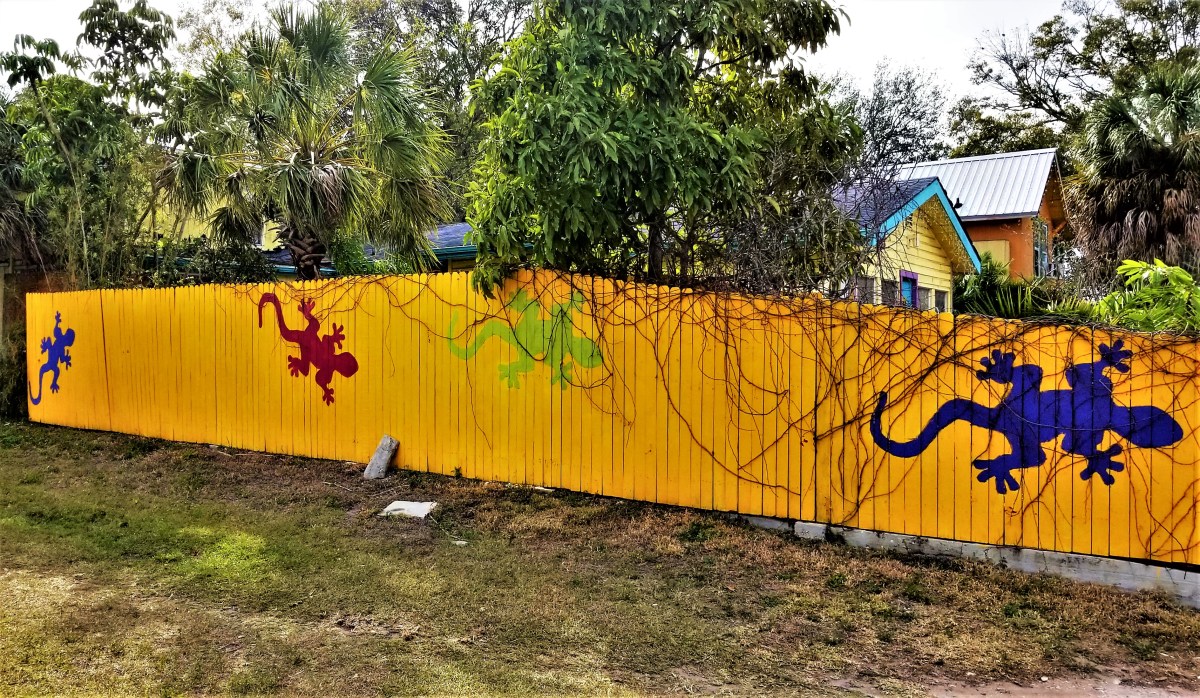
on the other side of the fence.

Gecko fence

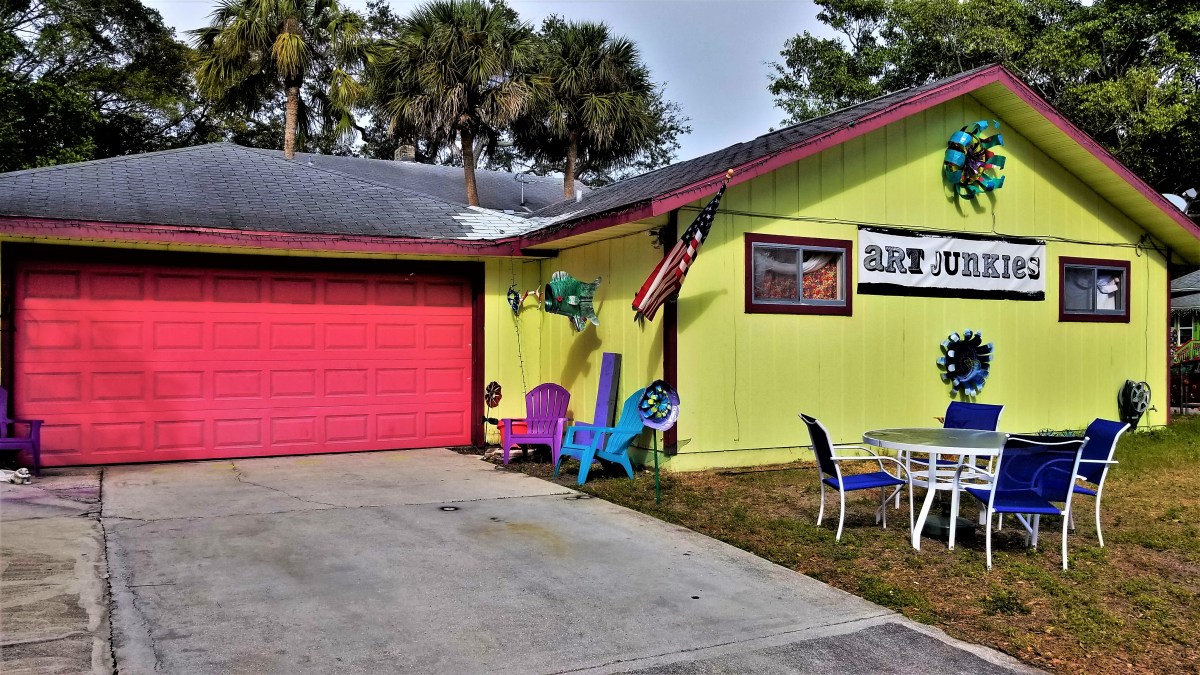
A cluster of artists-in-residence studios and workshops…

Art Junkies

SLOW

closed Gallery

located within early 20th century cottages and bungalows…

painted house

share the narrow city streets…

street art

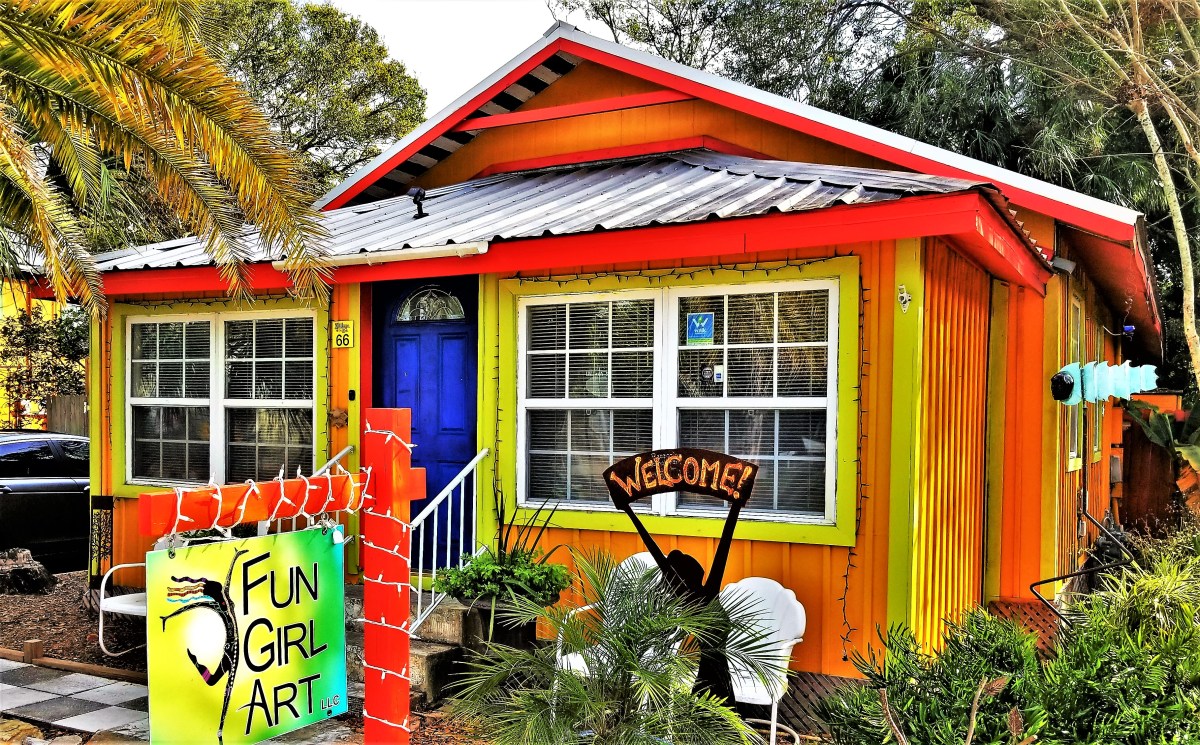
with colorful galleries…

Fun Girl Art

Village mystic

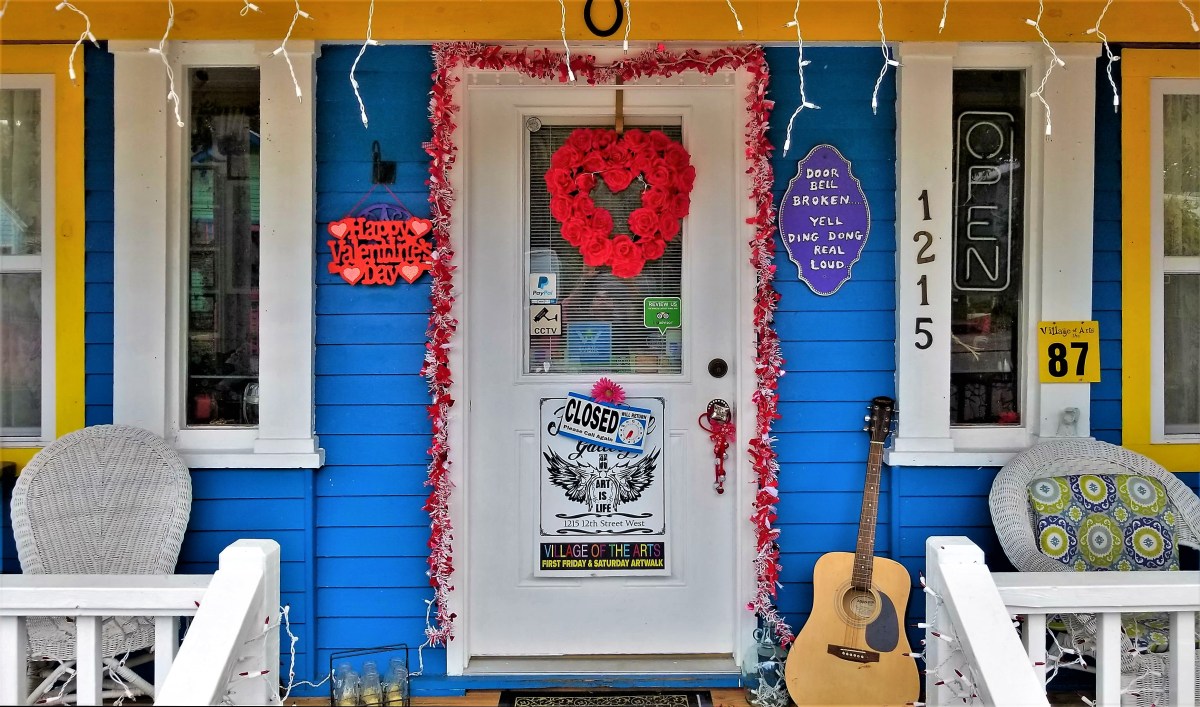
Happy Valentines Day

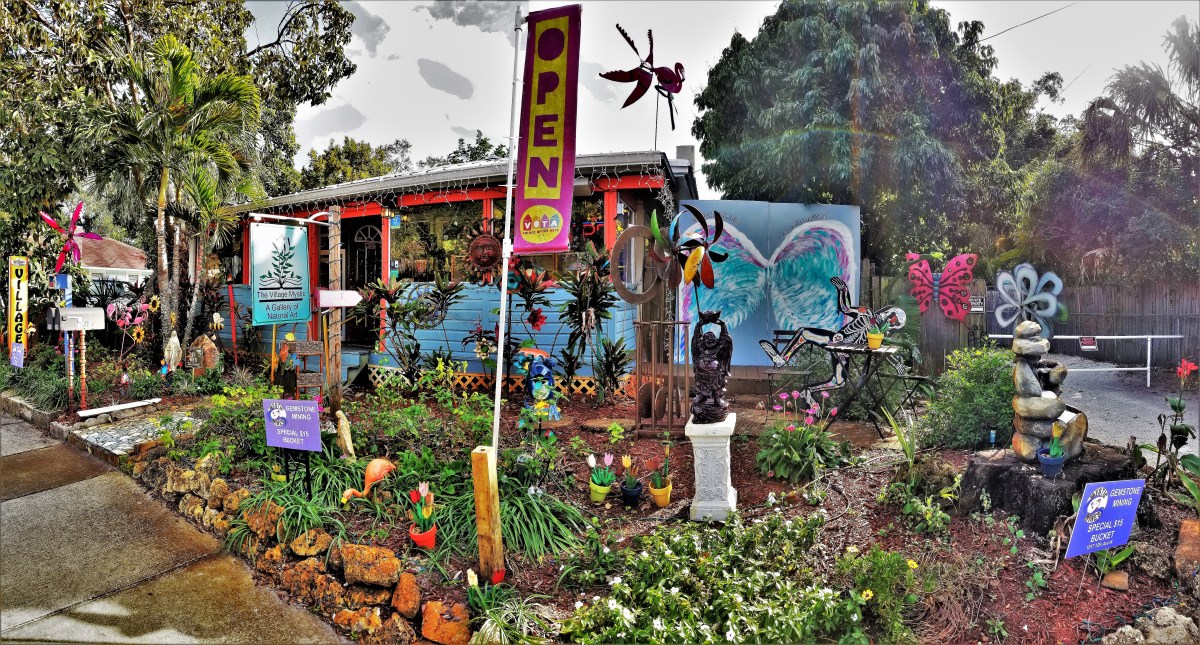
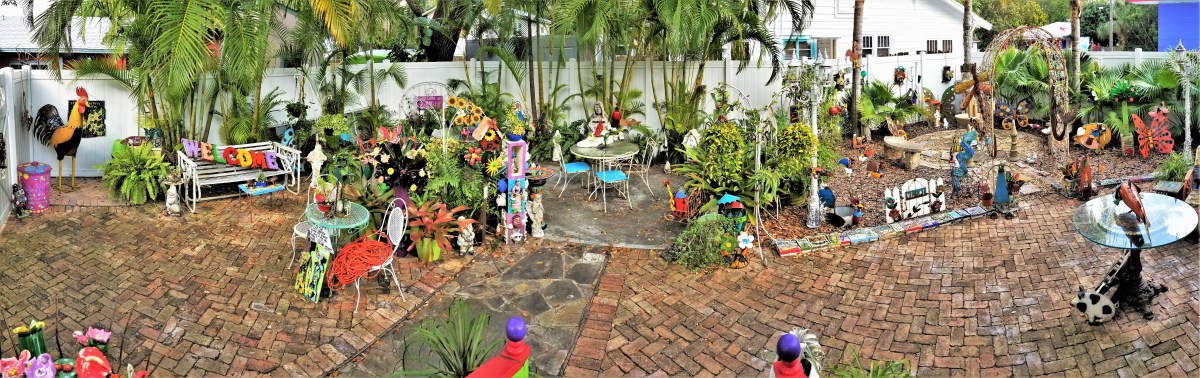
amusing gardens…

garden panorama

odd garden

imaginative beasties…

Alien seat

Bits and Pieces

Stego beads

and popular eateries…

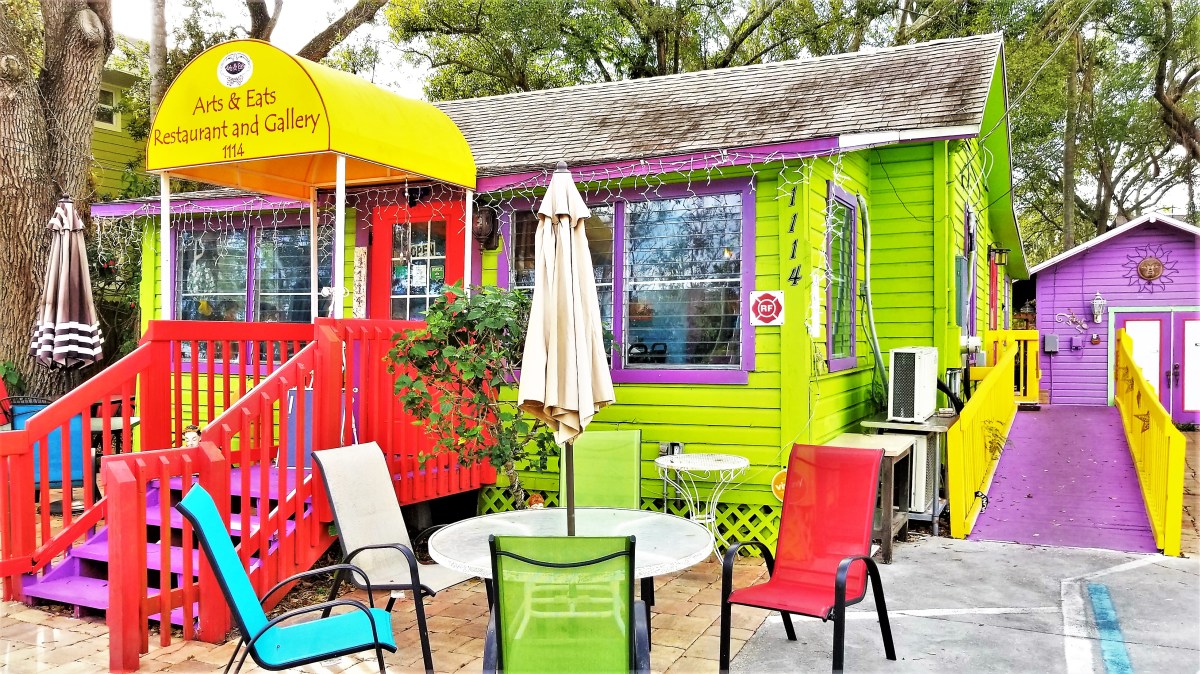
Arts and Eats

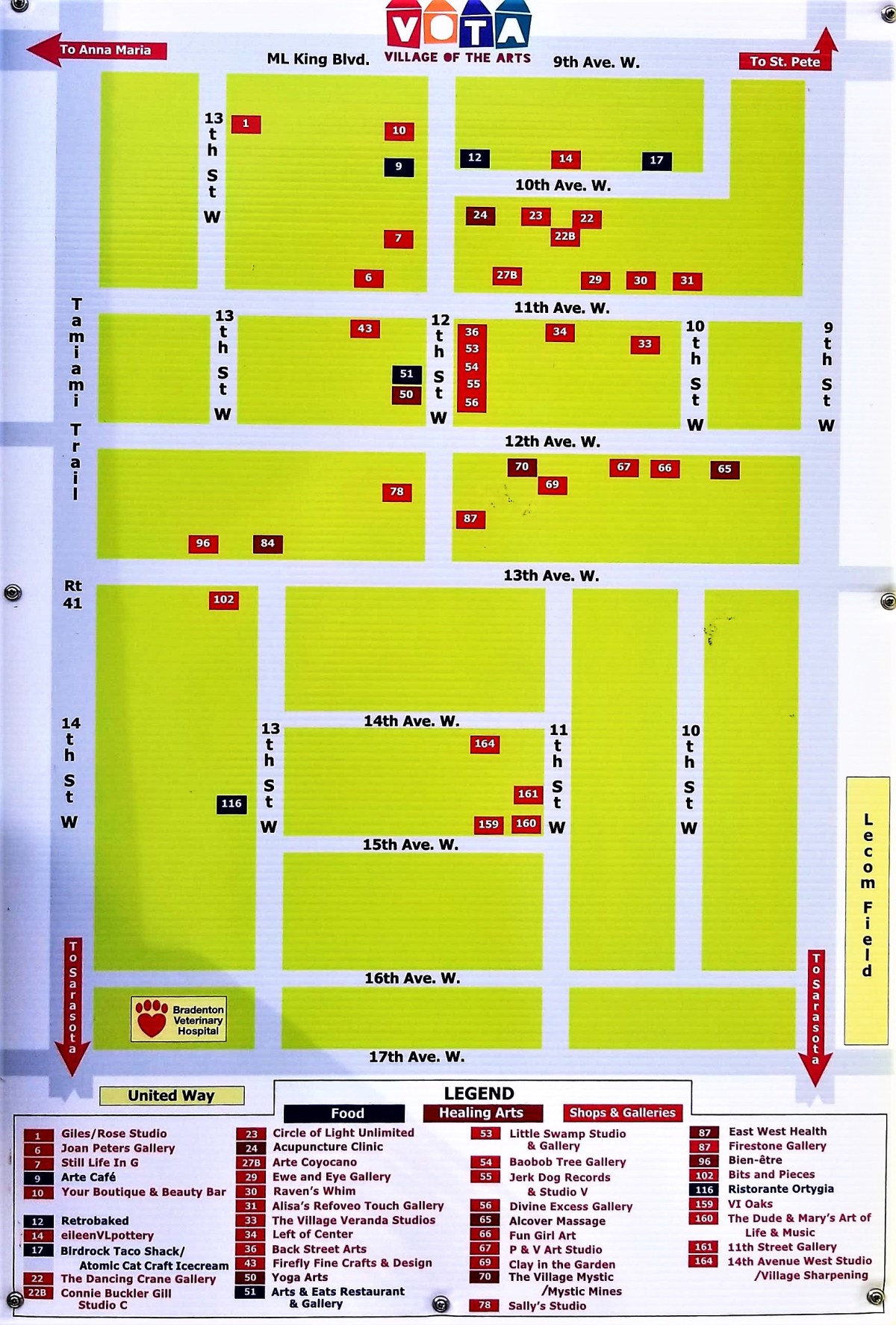
covering thirty-six acres of mixed-use development,

map

and creating the largest artists’ haven amidst the palms of sunny Florida.

metal palm (2)

Originating in 1999 as a non-profit guild representing local Manatee County artists, theirs is a mission to build a community where artists live and work while enhancing quality of life and creating a harmonious environment.

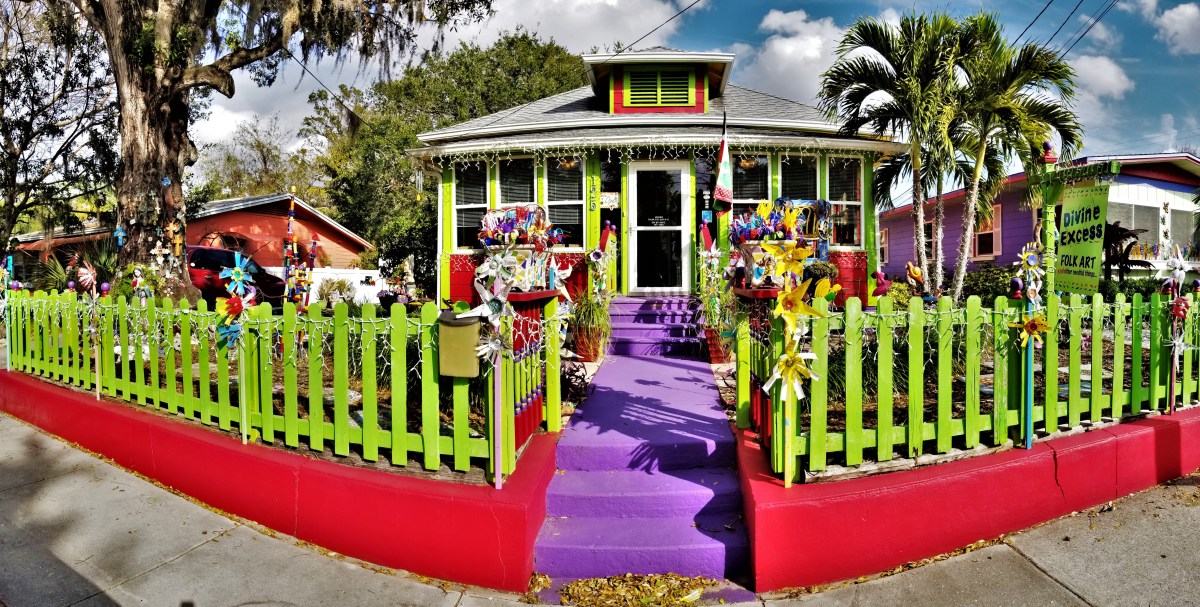
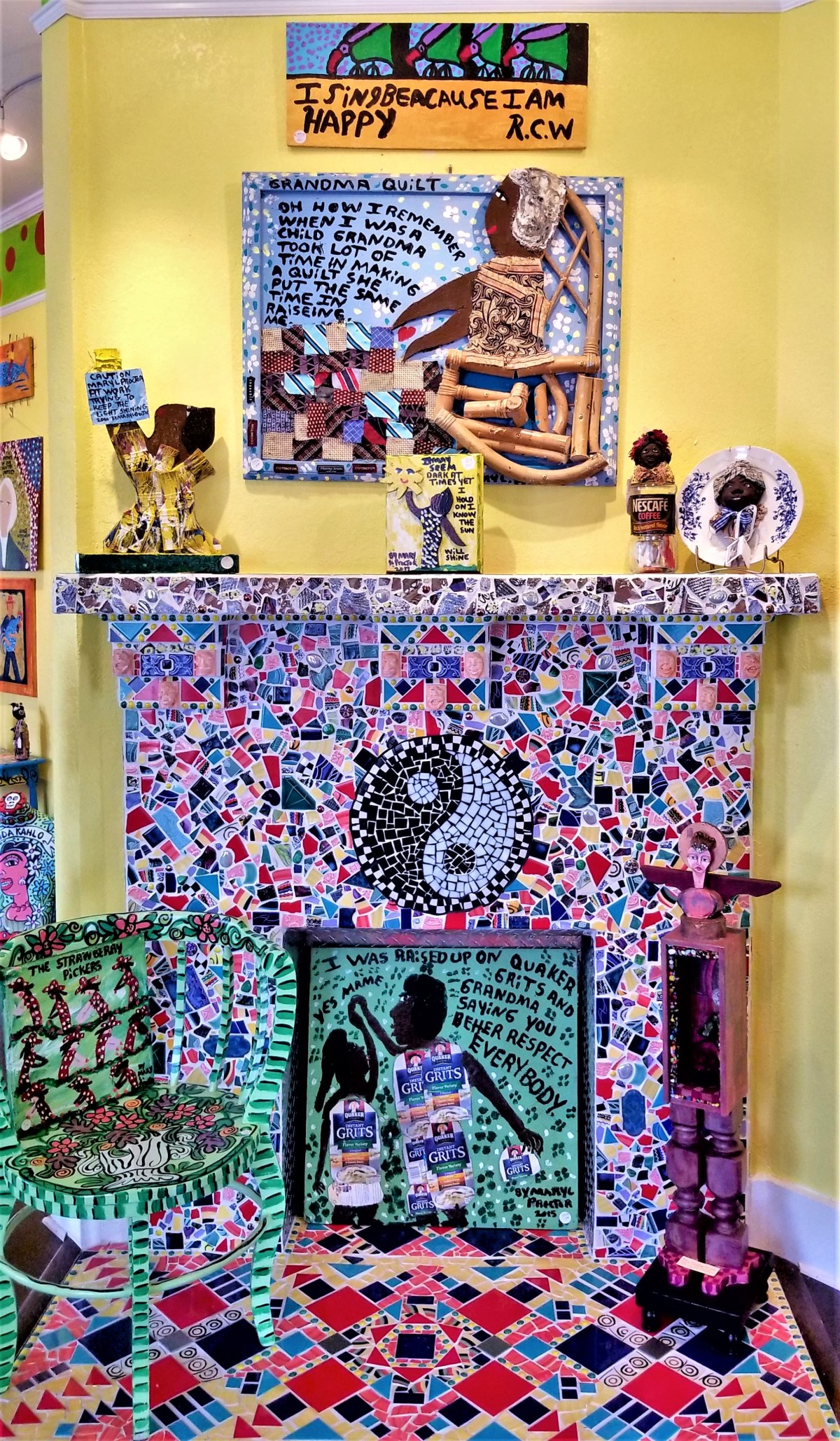
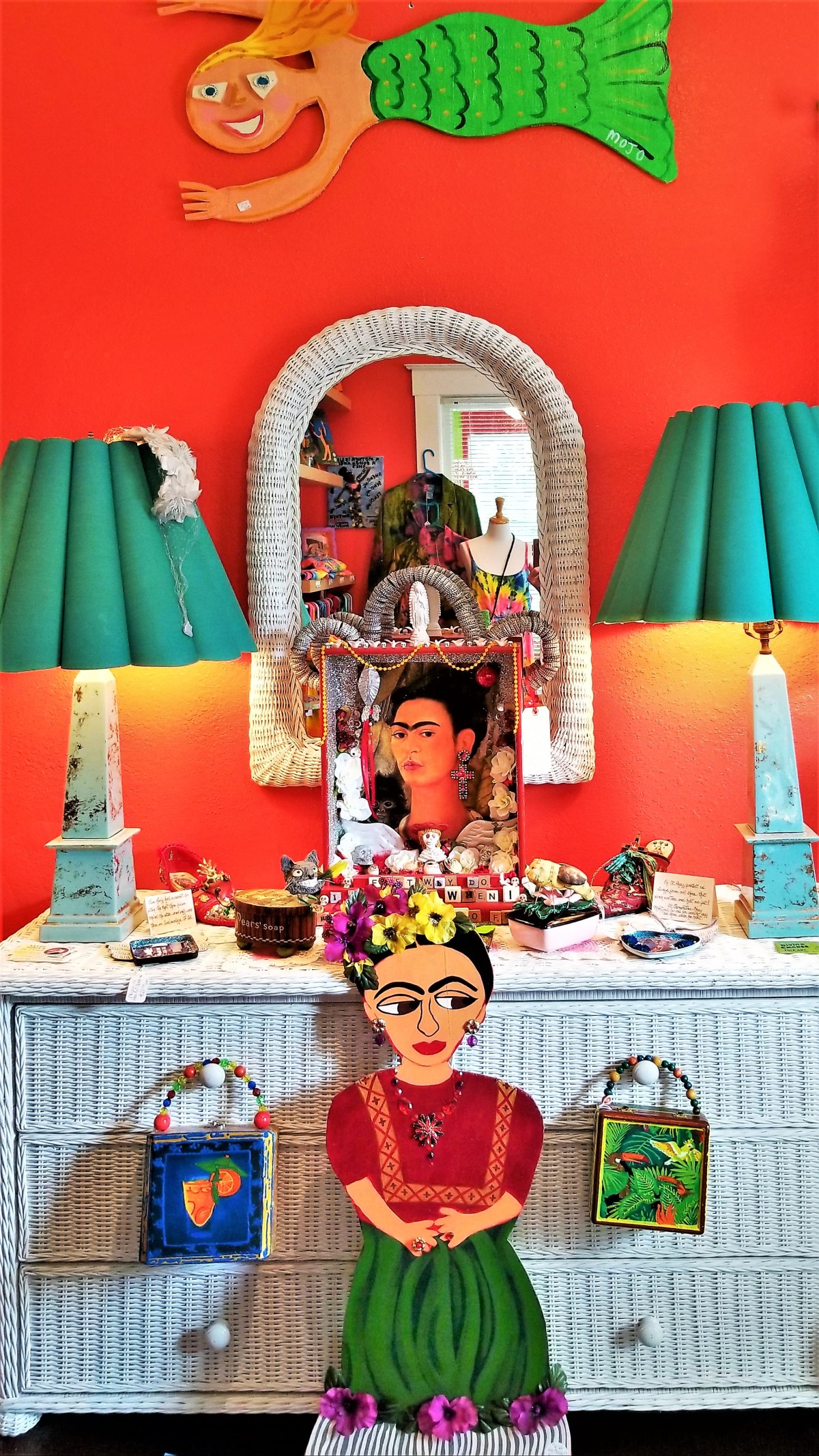
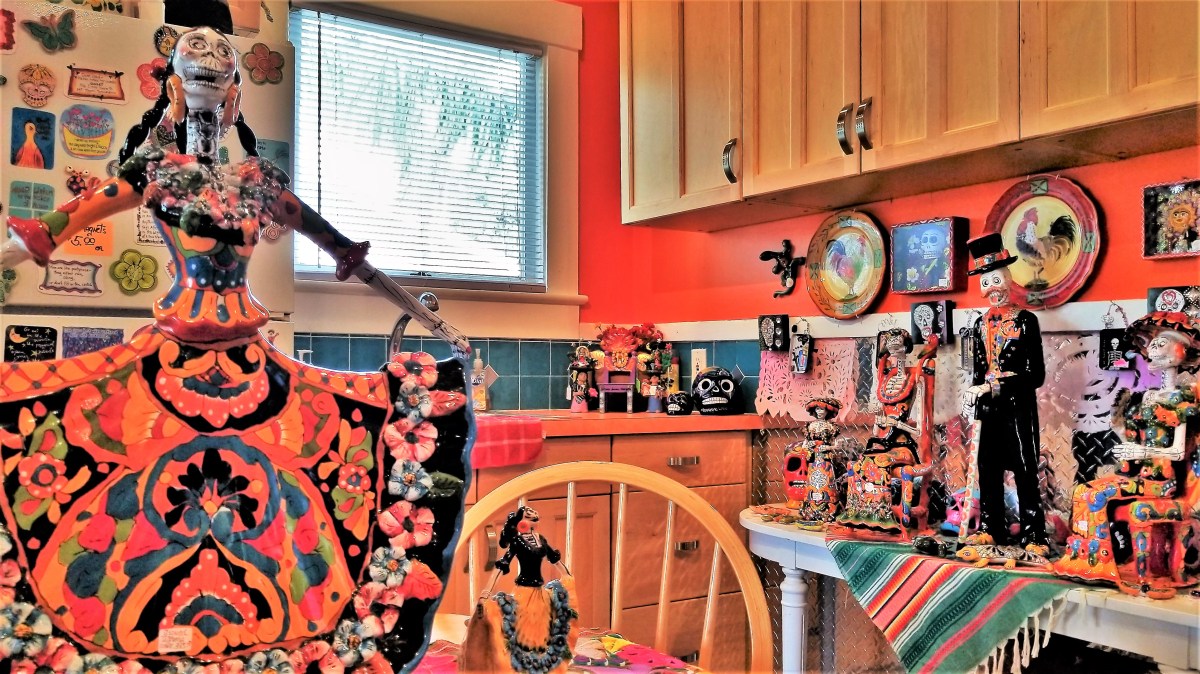
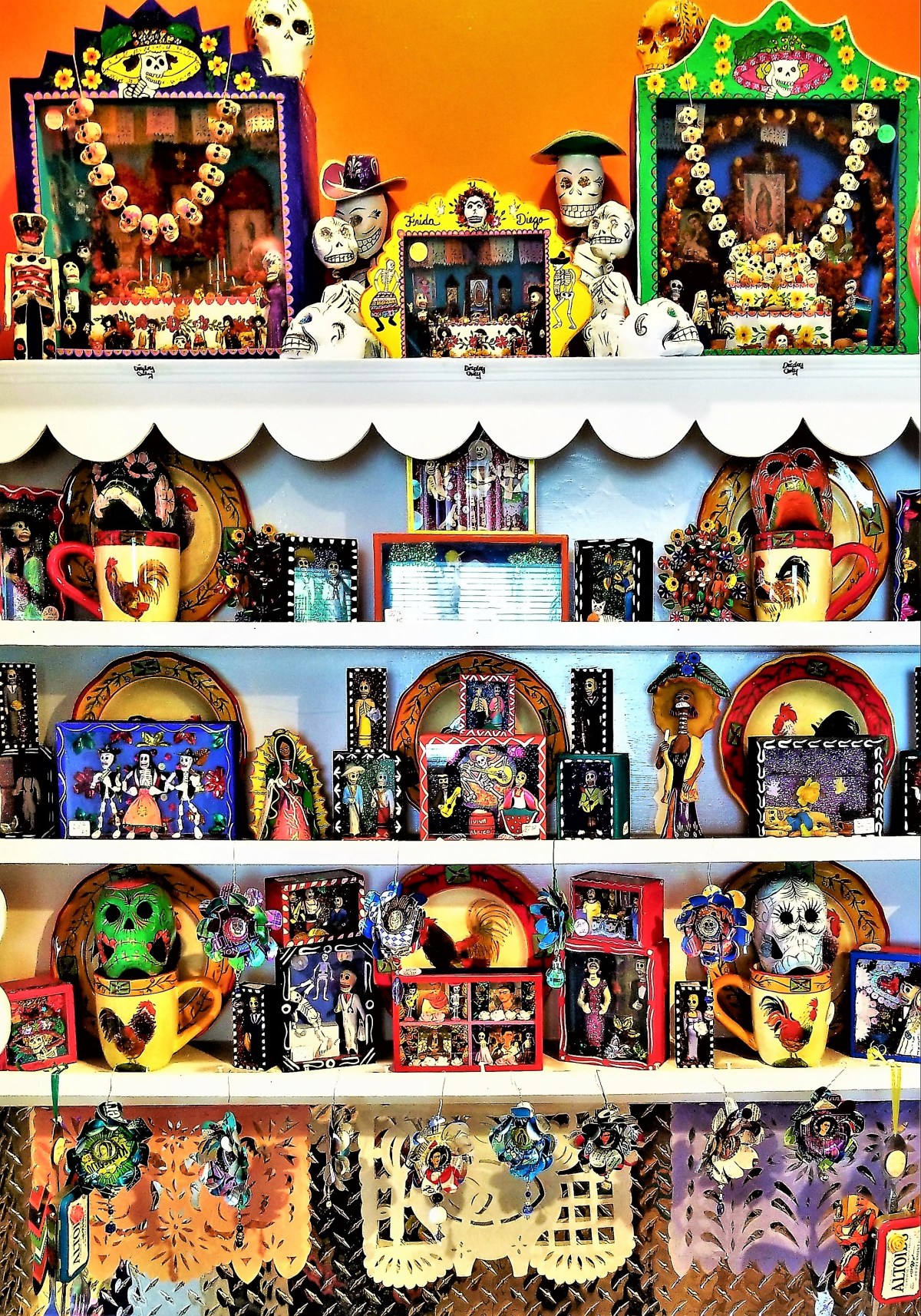
Notably refreshing, Divine Access Gallery specializes in contemporary folk art,

Divine Excess1

filling each room of the house with whimsy, kitsch, and funky artwork…

Ying Yang mantle

Freida shrine

voodoo kitchen

wall art

Bathroom

that captures an aesthetic worthy of eclectic and uncustomary collections.

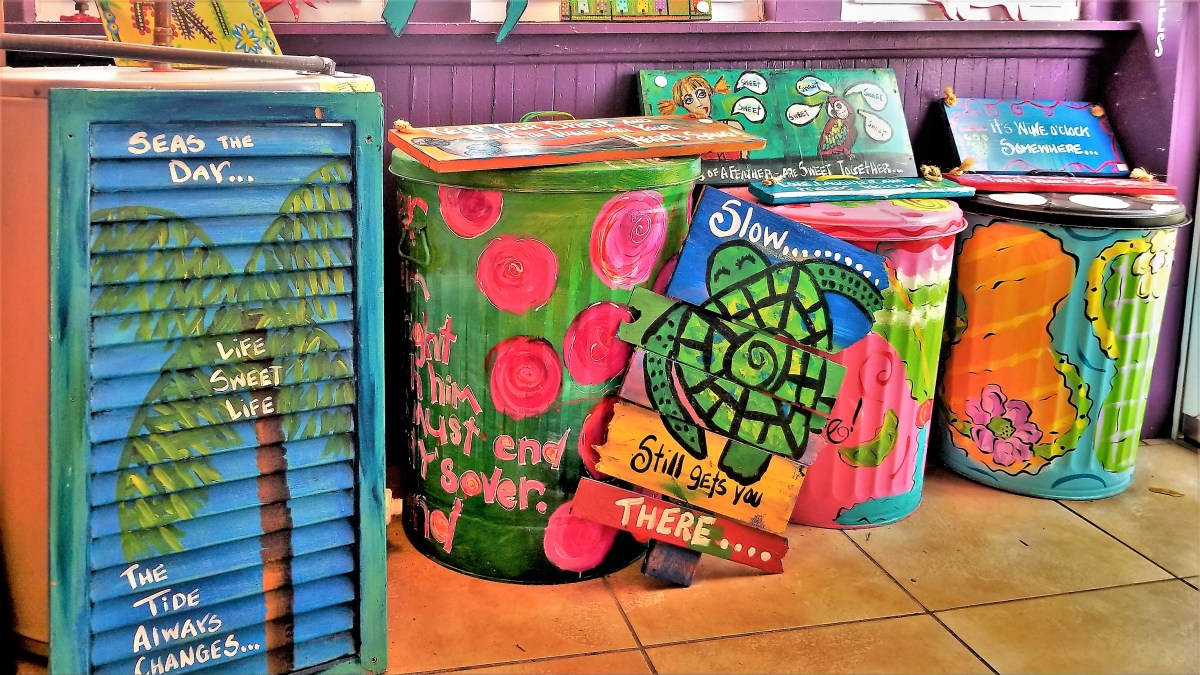
trash cans

Centrally located, it’s a short stroll from the Riverwalk, the ballpark, and downtown Bradenton.

VOTA map

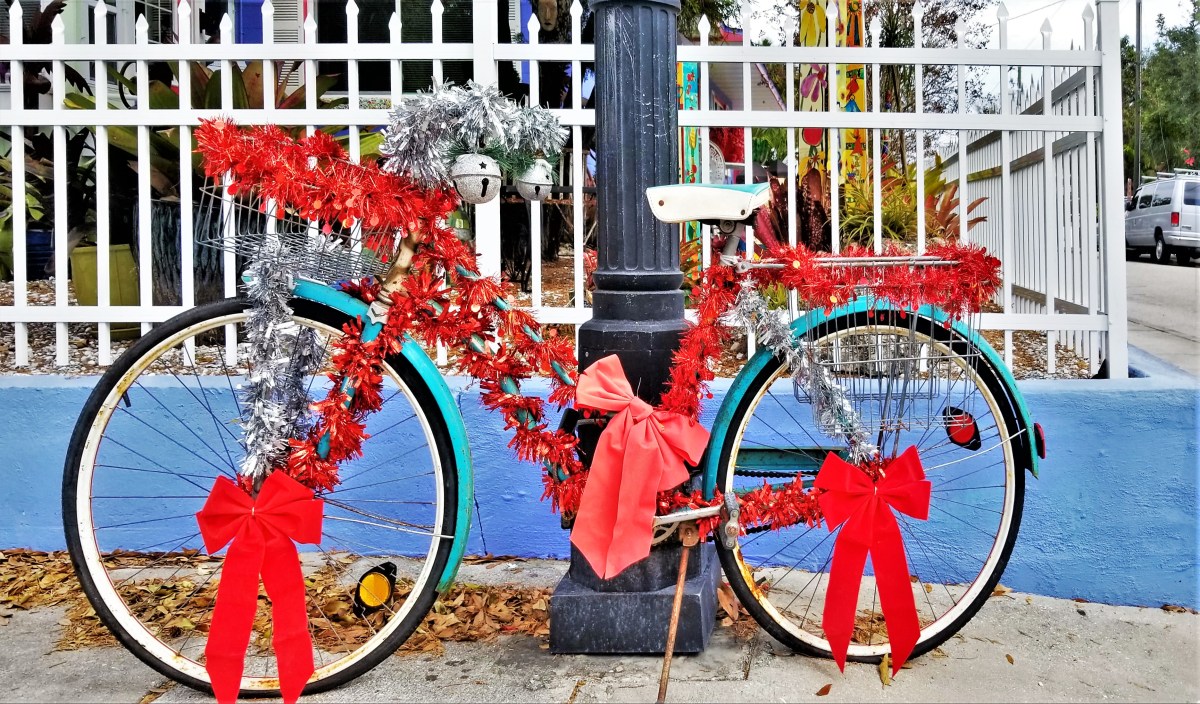
Get there by bike…

adorned bicycle

or by car.

Art car

But by all means, just get there.

Basket Case

They came off slave ships in Charleston,

Slave Ships to Charleston, SC1

clad in chains,

The buyer.jpg

and stripped naked of everything except the courage they needed to accept their new fate.

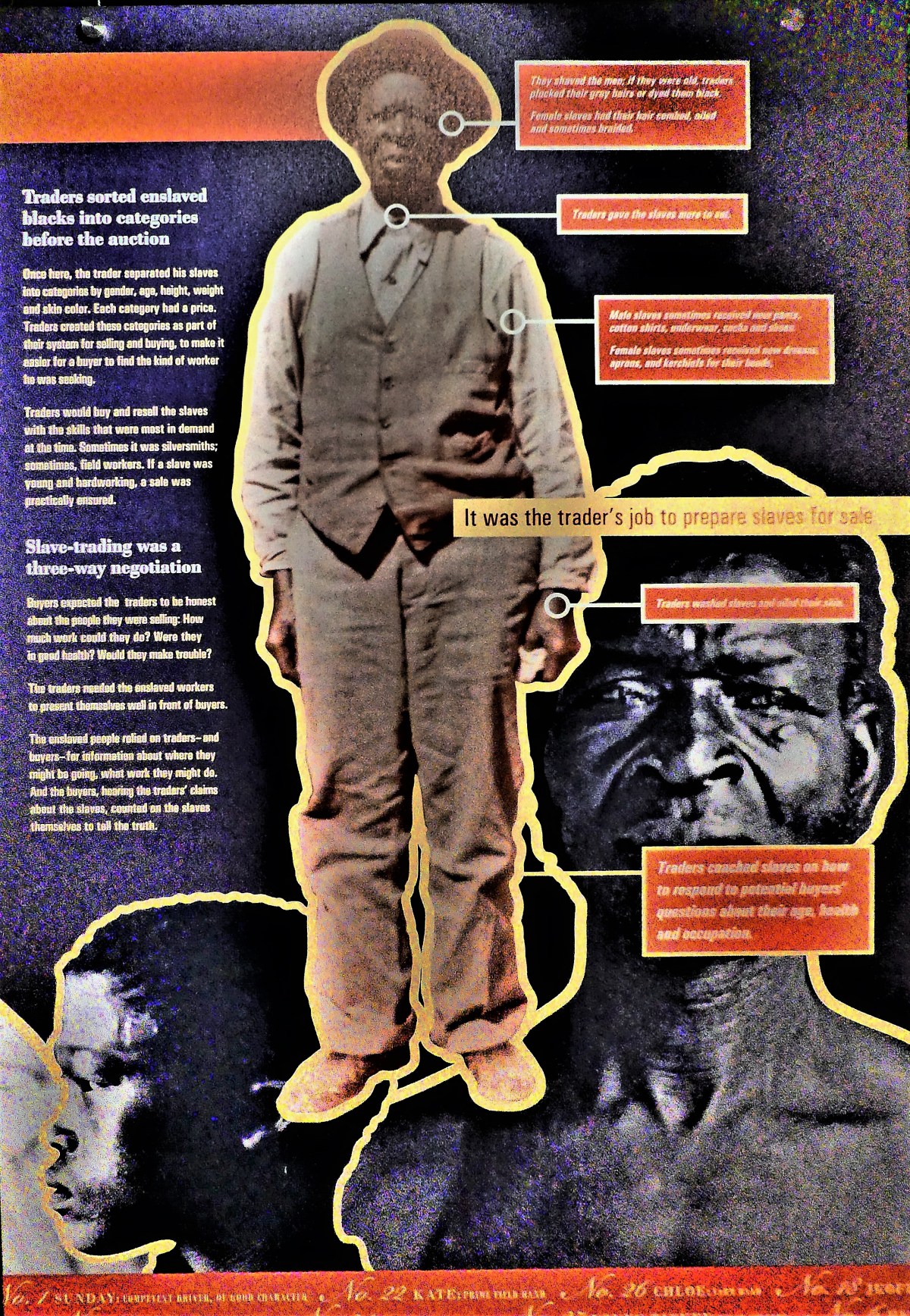
As families in West Africa, they relied on each other, but far from home on distant shores those bonds were broken. Husbands and wives, sons and daughters, brothers and sisters were separated and independently prepped for sale, bringing new meaning to groomed for success.

preparing slaves for sale1

The slave mart in Charleston, was the go-to destination…

Old Slave Mart Museum entrance

for traders to wrangle the best price,

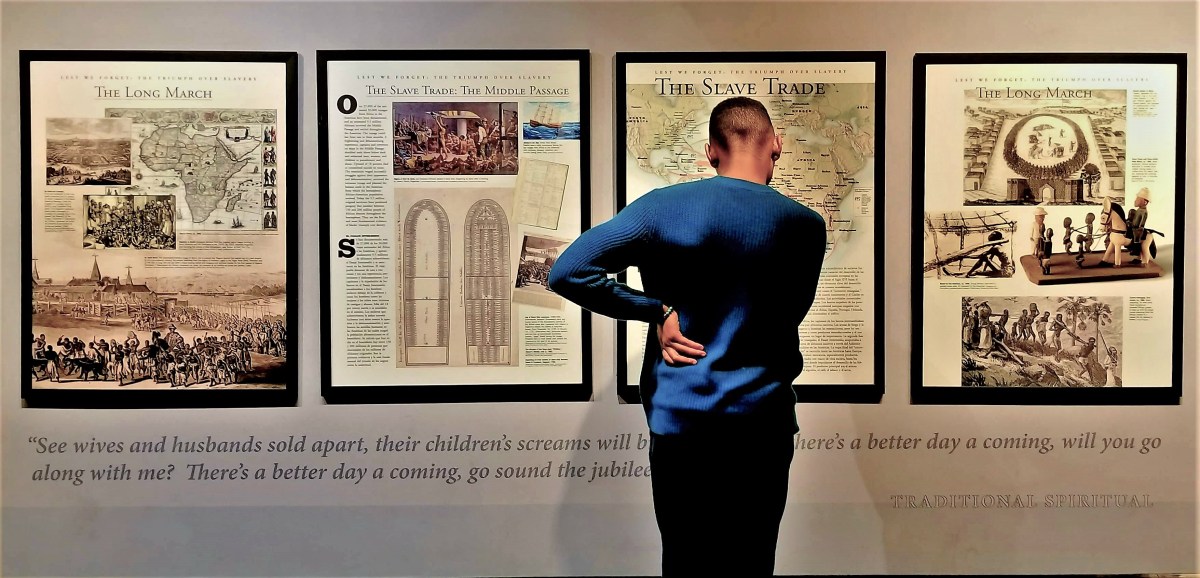
The Price of a Human Being1

as human beings resigned themselves to their new owners and an unfathomable situation.

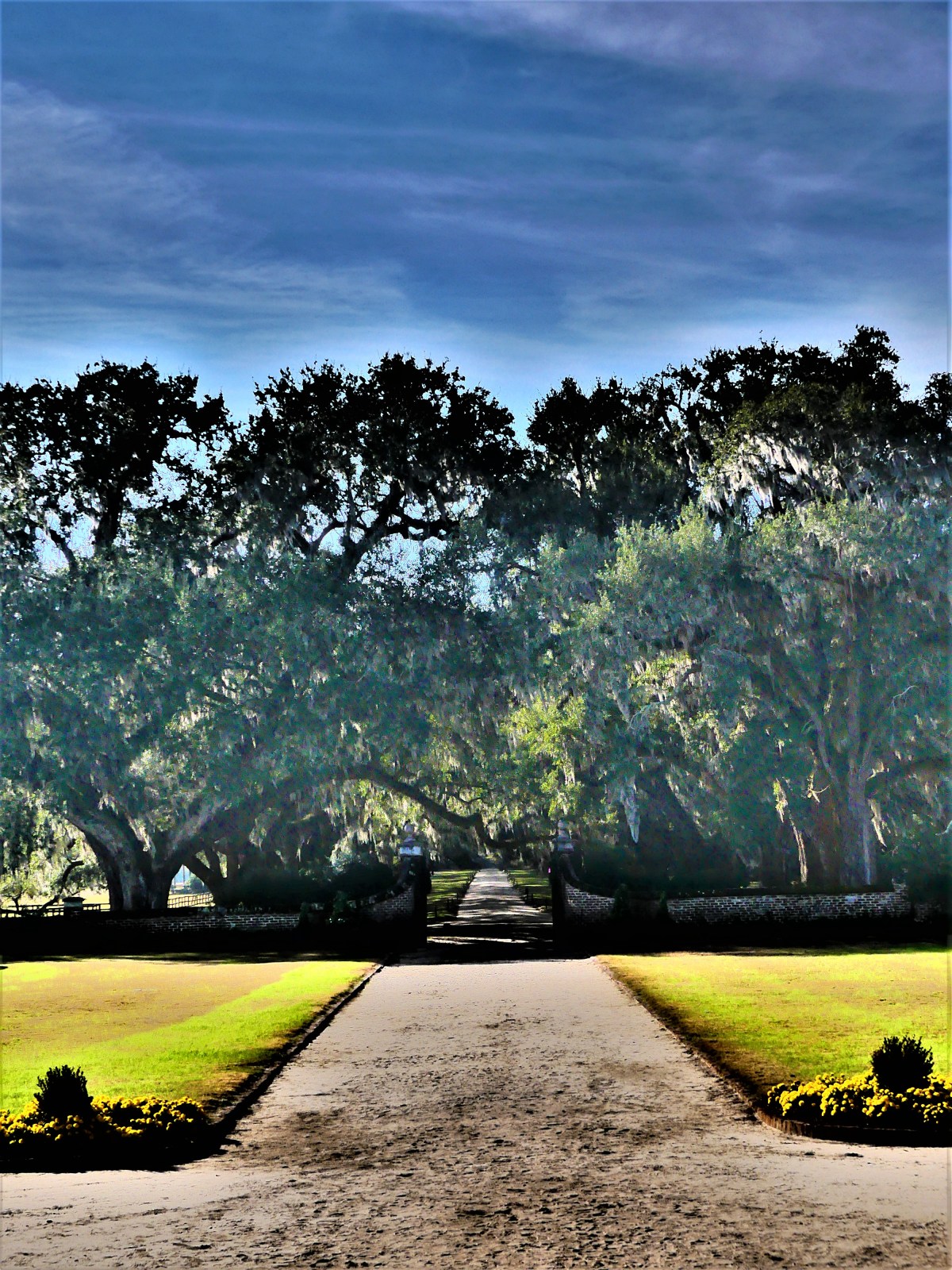
Imagine the shock and despair they must have felt, rolling down the Avenue of Oaks at Boone Hall Plantation for the first time in slave carts,

Oak Avenue

wondering about the cluster of buildings by the side of the road…

Slave quarters

Slave quarters1

that would become their future shelter…

quarters

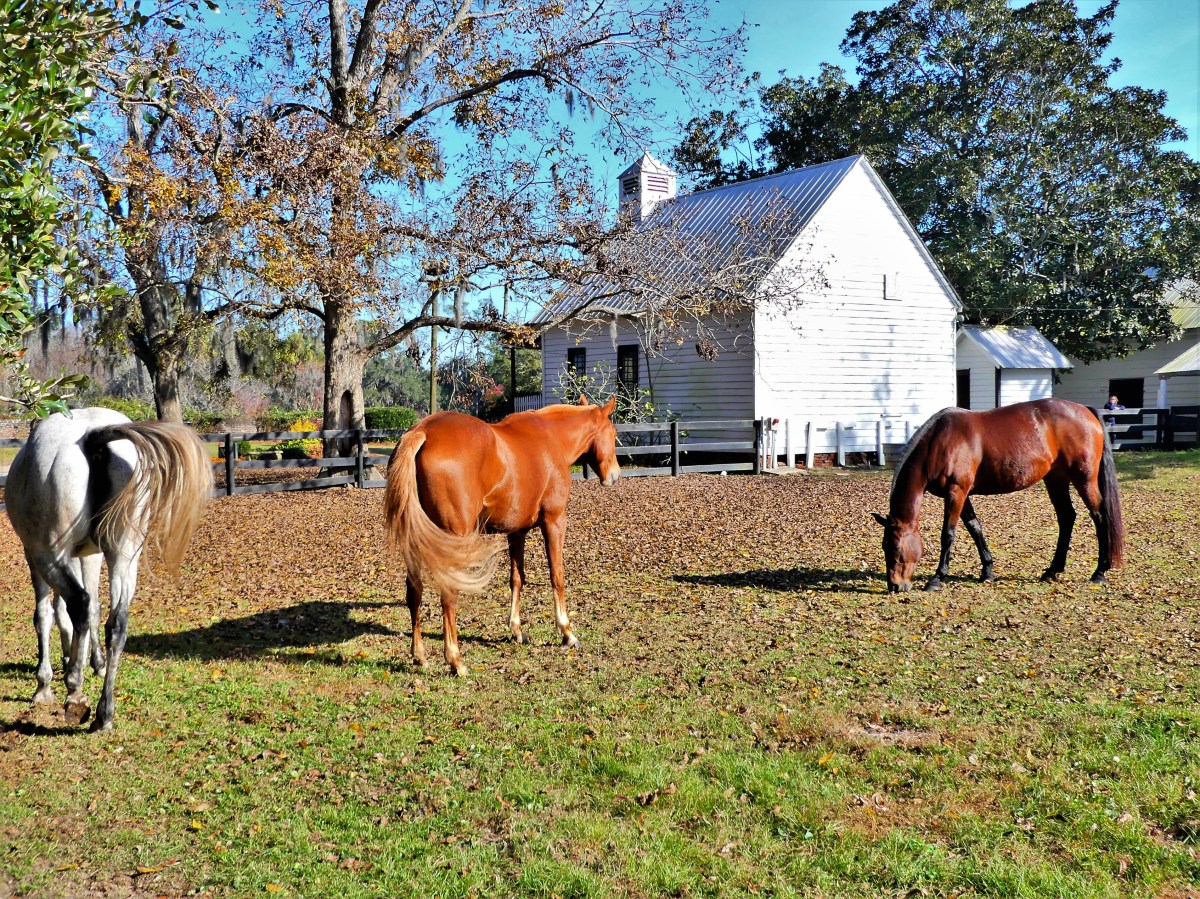
as they approached the paddock…

paddock

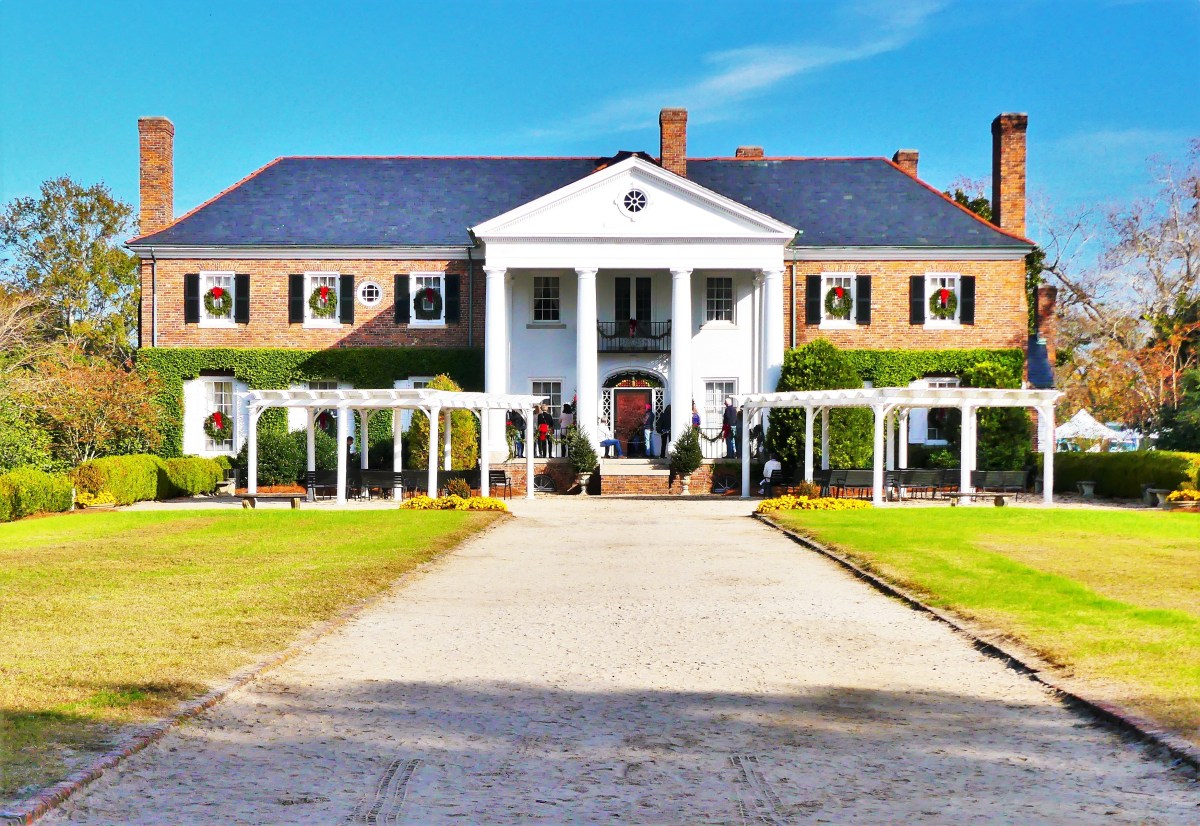
and the manor house.

manor (2)

Boone Hall Plantation of Mount Pleasant, SC continues today as one of America’s oldest working farms, still producing crops after nearly 340 years of activity.

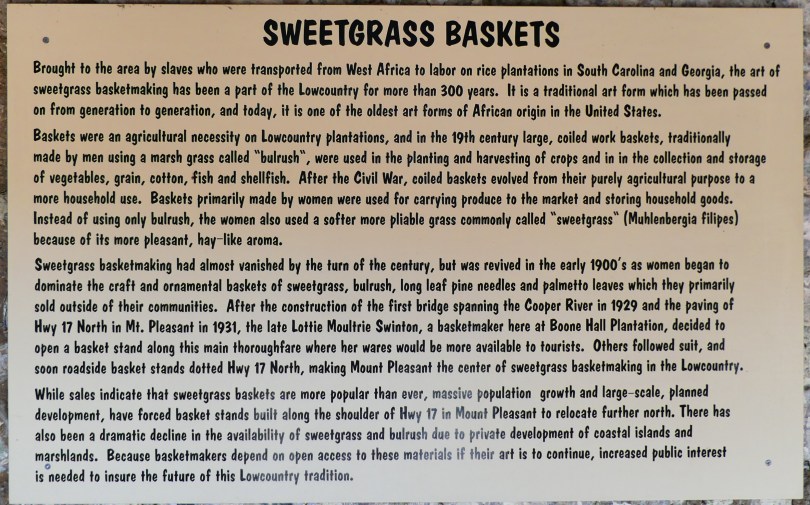
Also noteworthy, Gullah-Geechee heritage continues with sweetgrass basket-coiling skills that have sustained through five generations of descendants of slaves.

sweetgrass baskets

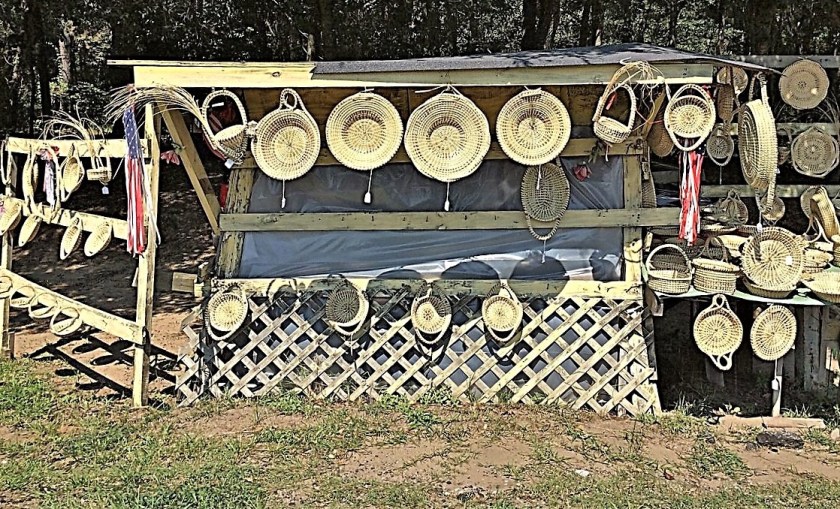
Original roadside stands from the “hayday” of basket production still dot the Route 17 landscape, luring everyday customers and tourists to inspect the wares.

roadside stand (3)

However, the trend has traveled to the Charleston City Market,

Charleston market

where the demonstration of sweetwater basket-making is routine…

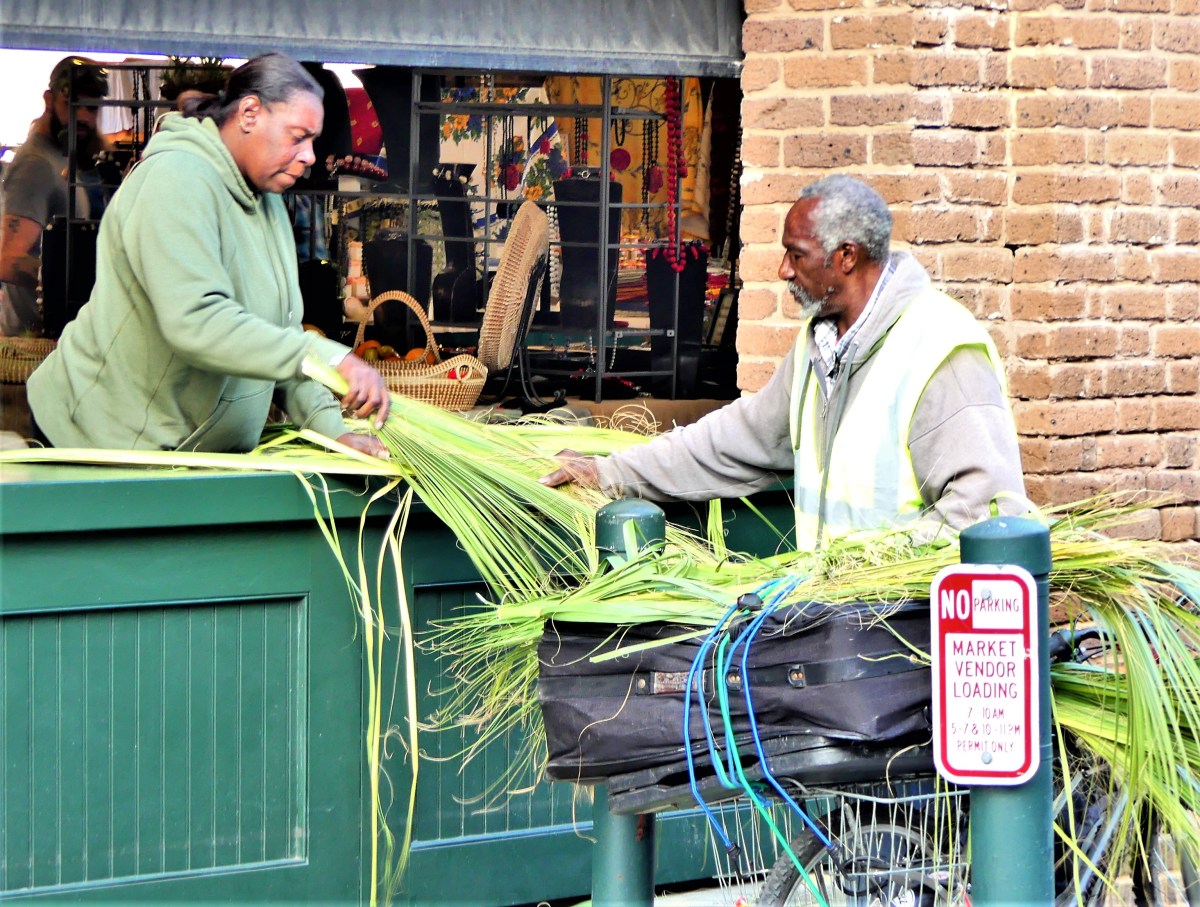
sorting sweetgrass

selecting sweetgrass

and sales are brisk,

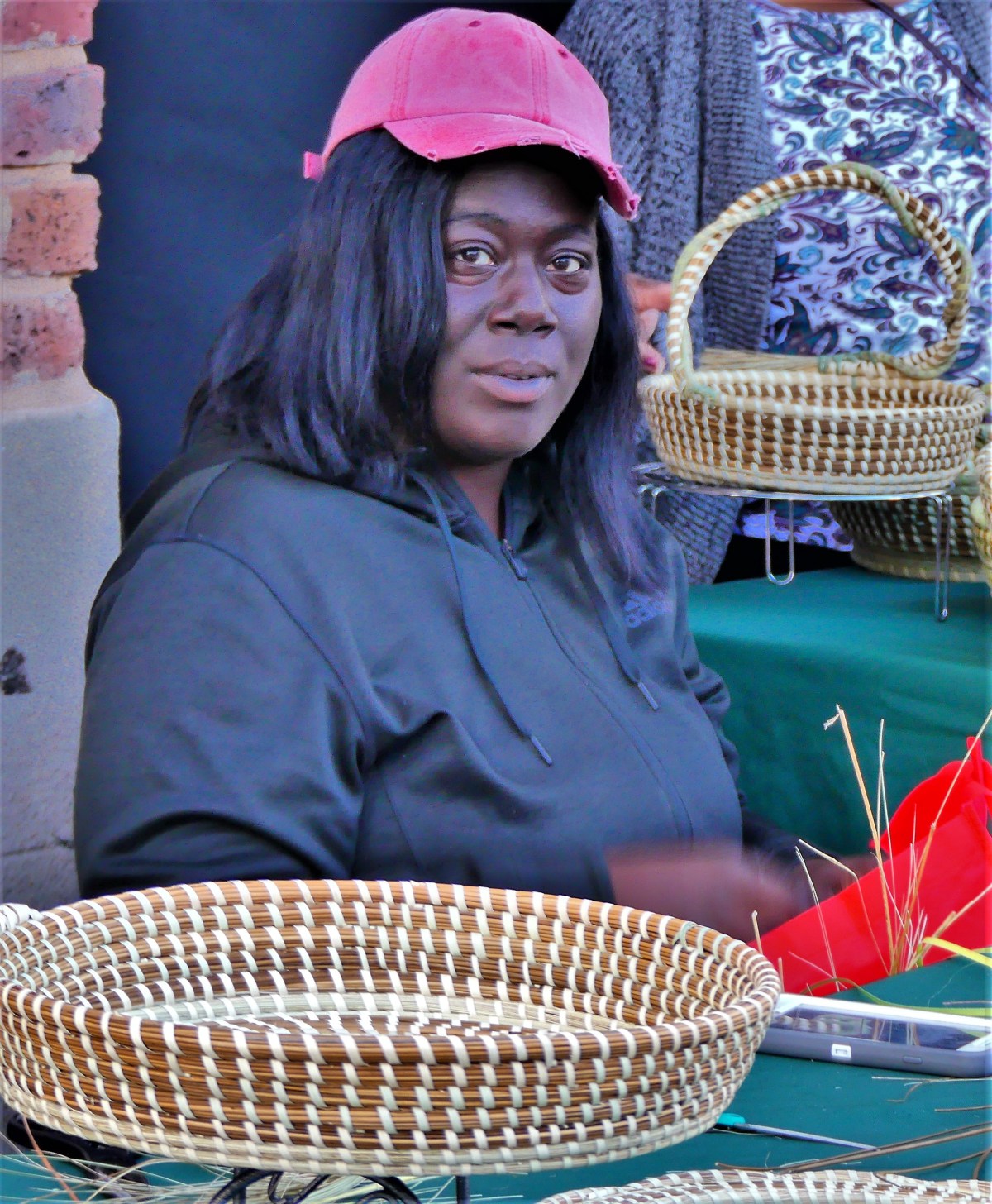
weaving

with up to 300 weavers who remain dedicated to the craft.

basket maker

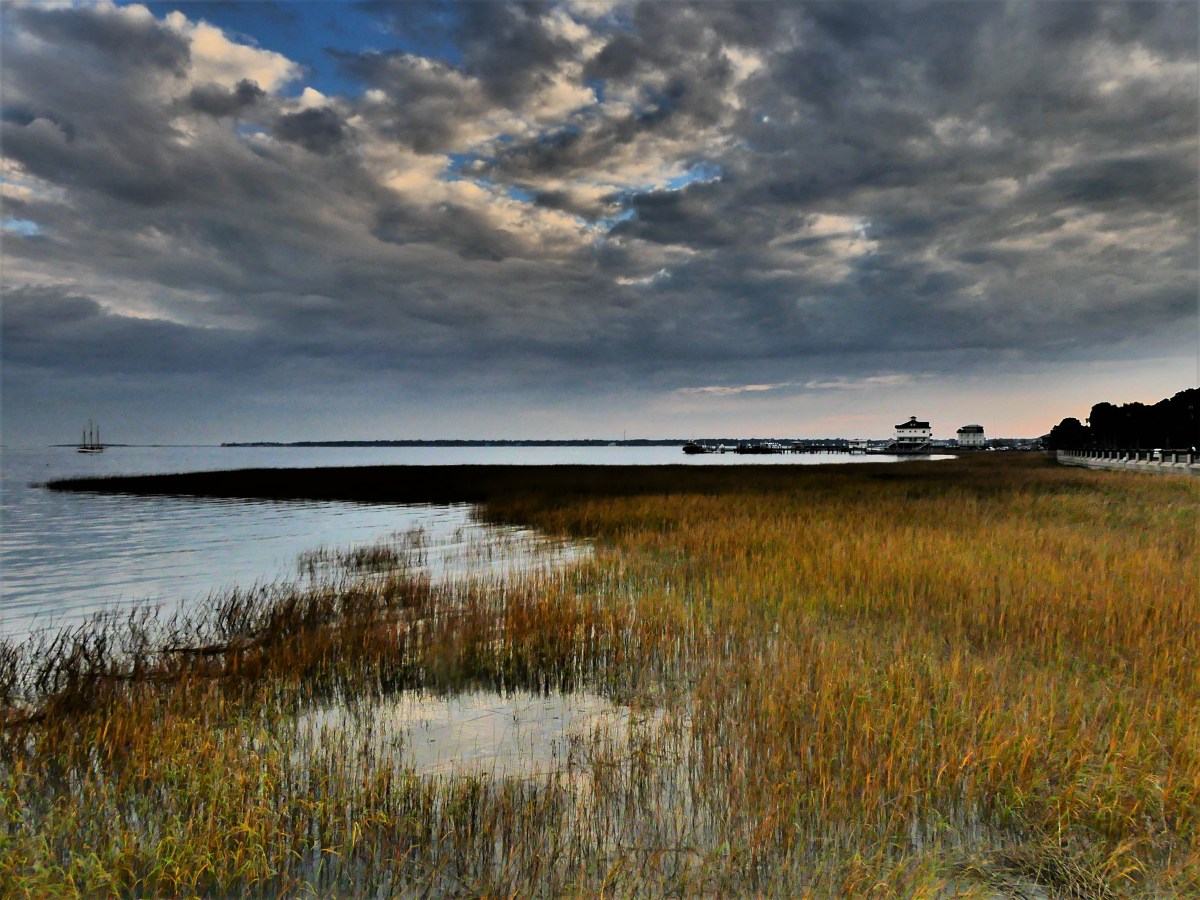
At this time, dwindling supplies of lowcountry sweetgrass are protected, and can only be harvested by bonafide ancestors…

Charleston coastline

guaranteeing a steady stream of basketry to remind us how sweet the courage of a people can be, and how crooked their path to freedom.

marsh grasses

museum attendee

Titans of Industry

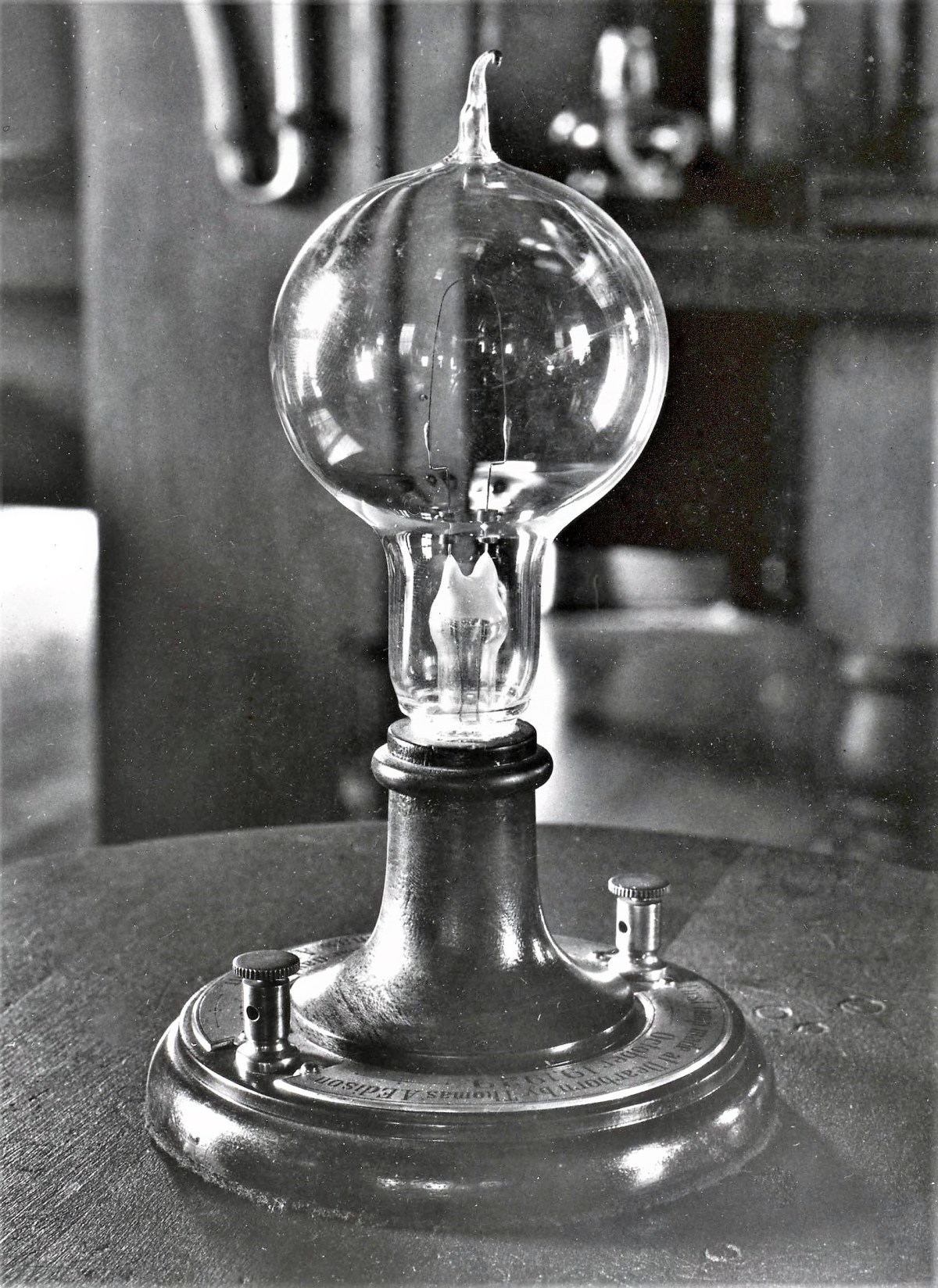
Every student of science, history and commerce knows the importance of Thomas Edison’s contributions (2332 worldwide patents),

Early-Light-Bulb (3)

and how through his imagination and industry…

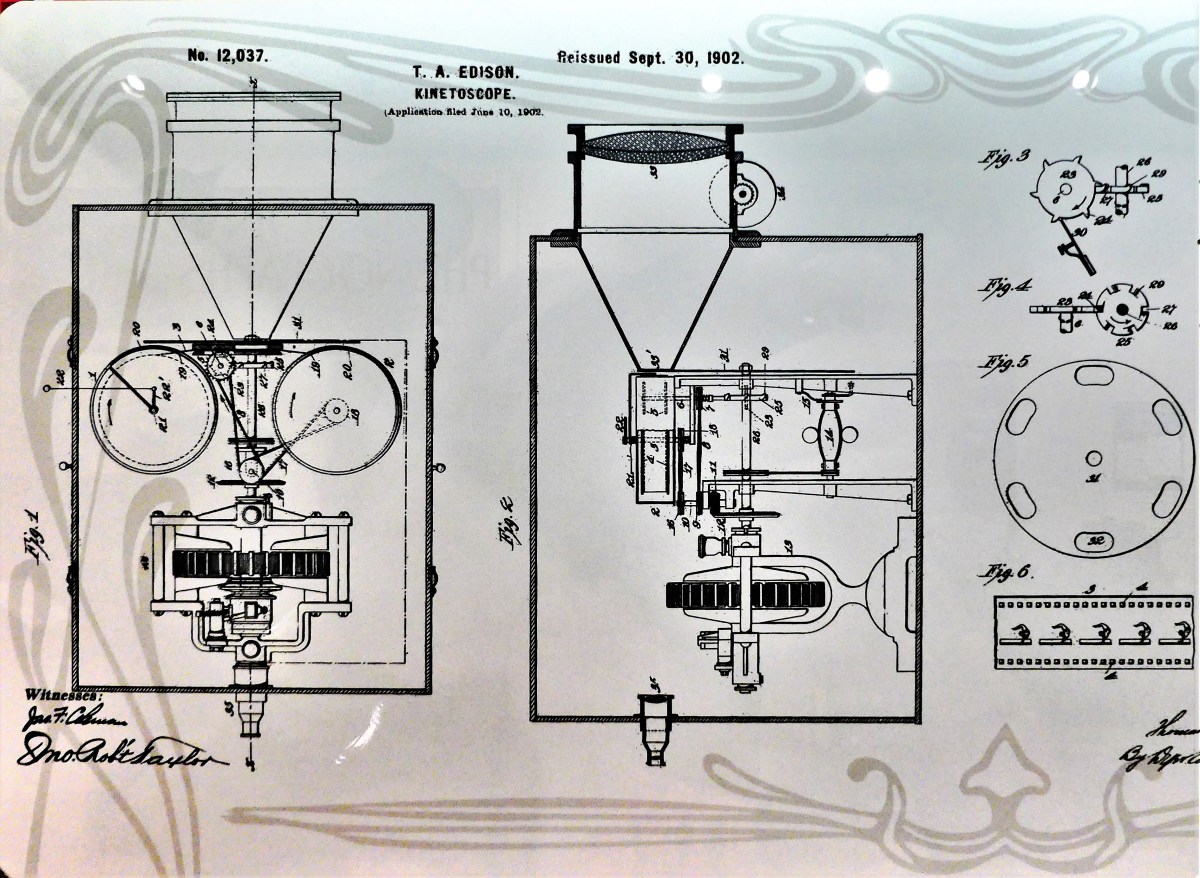
patent schematic for kinetescope

kinetescope projector
Kinetoscope Projector

inside the phonograph

he single-handedly reshaped the 20th century.

No less famous and equally as successful, Henry Ford’s lifetime commitment to automotive innovation was without peer.

Edison's Ford

V-8 engine (2)

Now put the two titans together…

Historic Friendship

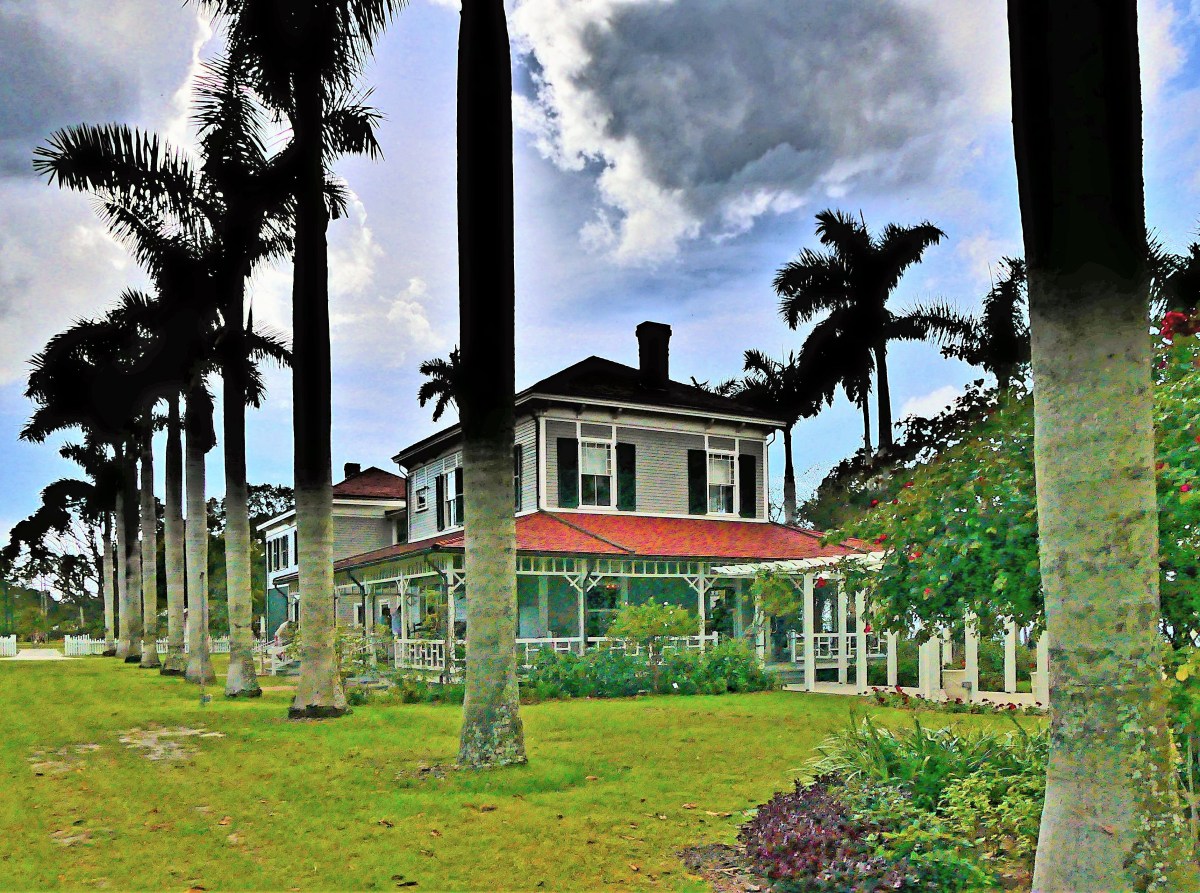
as next-door neighbors within their Ft. Myers, FL winter compound…

Eden

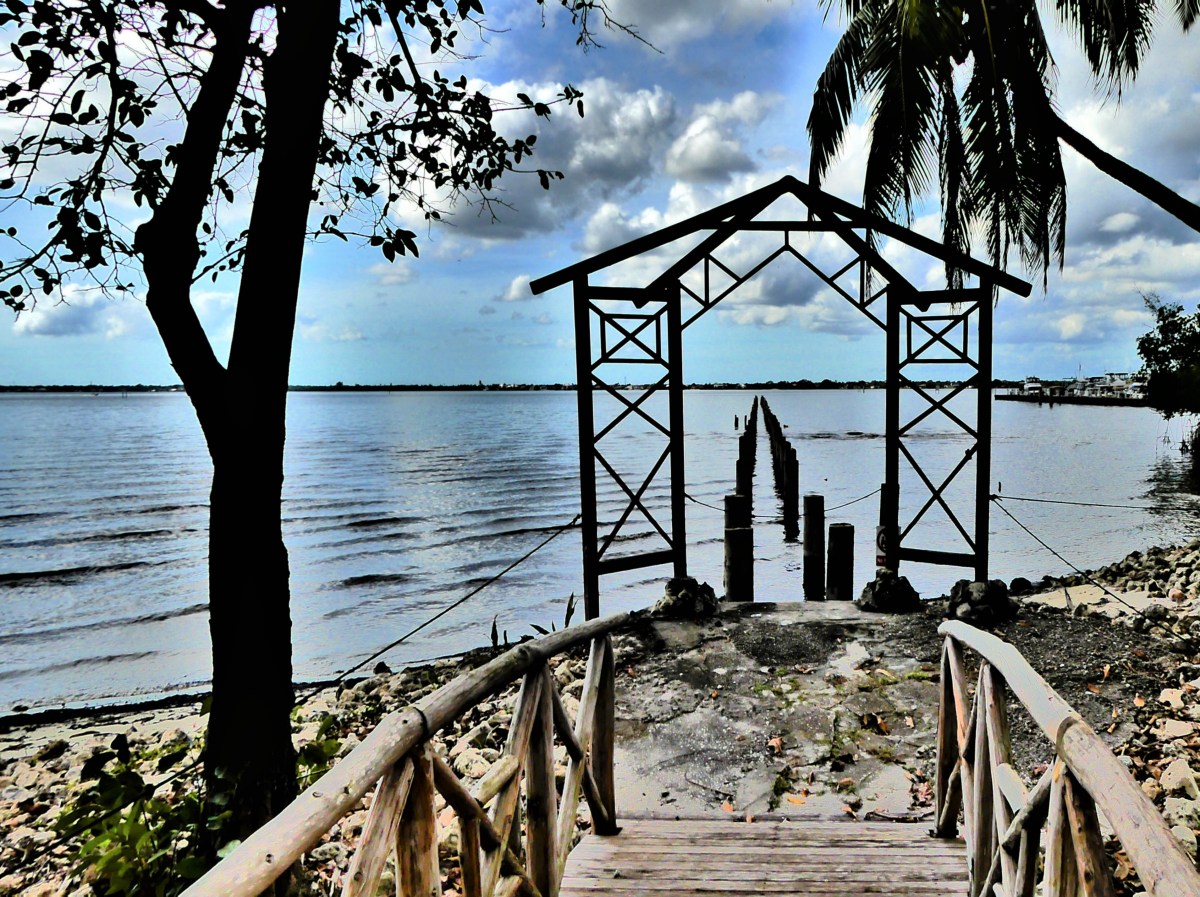
beside the Caloosahatchee River…

dock1

and the sum exceeds the parts. Adding John Burroughs, the nation’s leading naturalist and conservationist of his time to the party,

Edison_Burroughs_Ford (2)
Edison, Burroughs, Ford

resulted in the birth of the car-camping movement in America as we know it today: motoring across the country in search of fulfilling outdoor recreation and adventure.

camping caravan

Better known as The Vagabonds, the caravan later included tire magnate, Harvey Firestone, who would travel with the pack across America for the next ten years, taking vacations in an elaborate Packer and Ford motorcade that always included Edison’s battery of batteries to light the campsite,

batteries

a Ford chuckwagon attended by Firestone’s personal chef,

chuckwagon (2).jpg

and a pack of newspapermen and paparazzi who would record The Vagabond’s every step and conversation.

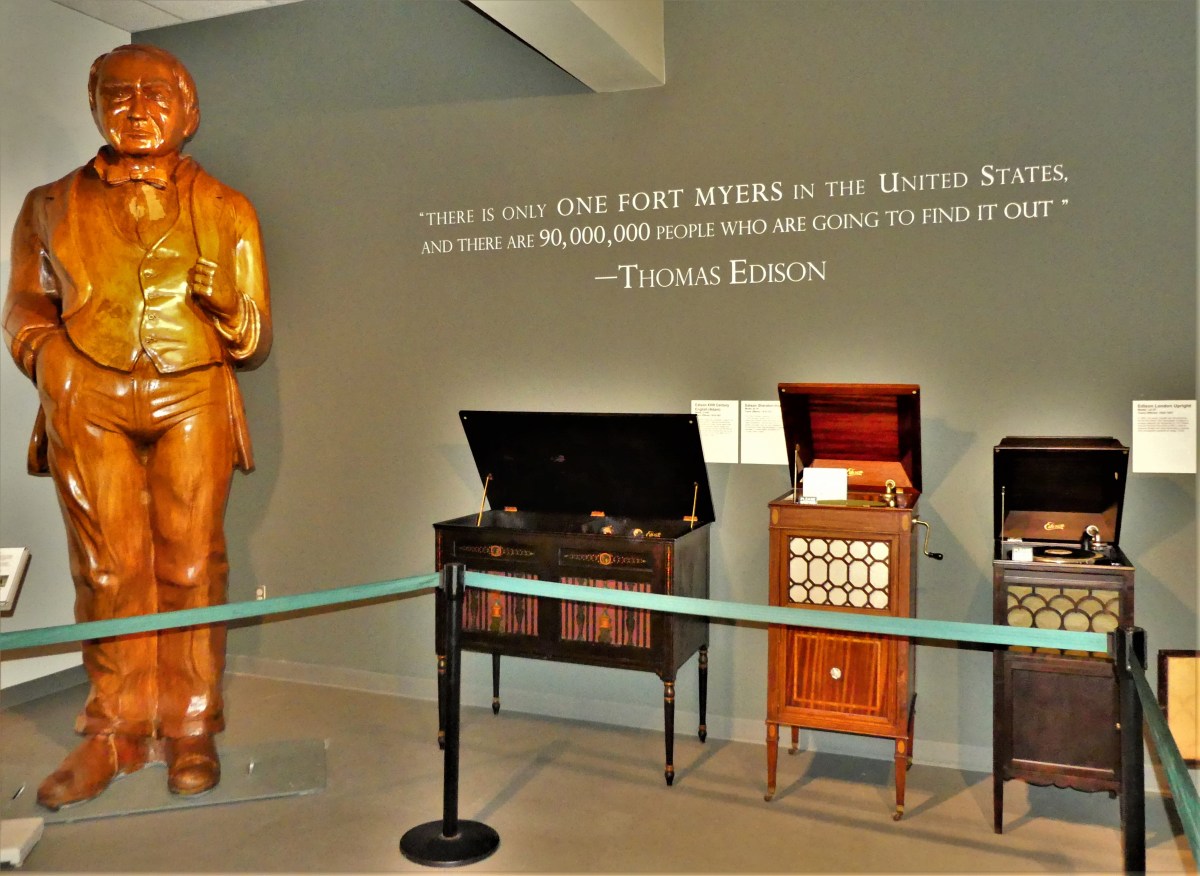
Edison’s inventions are presented in historical perspective in a comprehensive on-site museum space that credits Ft. Myers as an inspirational Eden for Edison’s genius.

There Is Only One Ft Myers

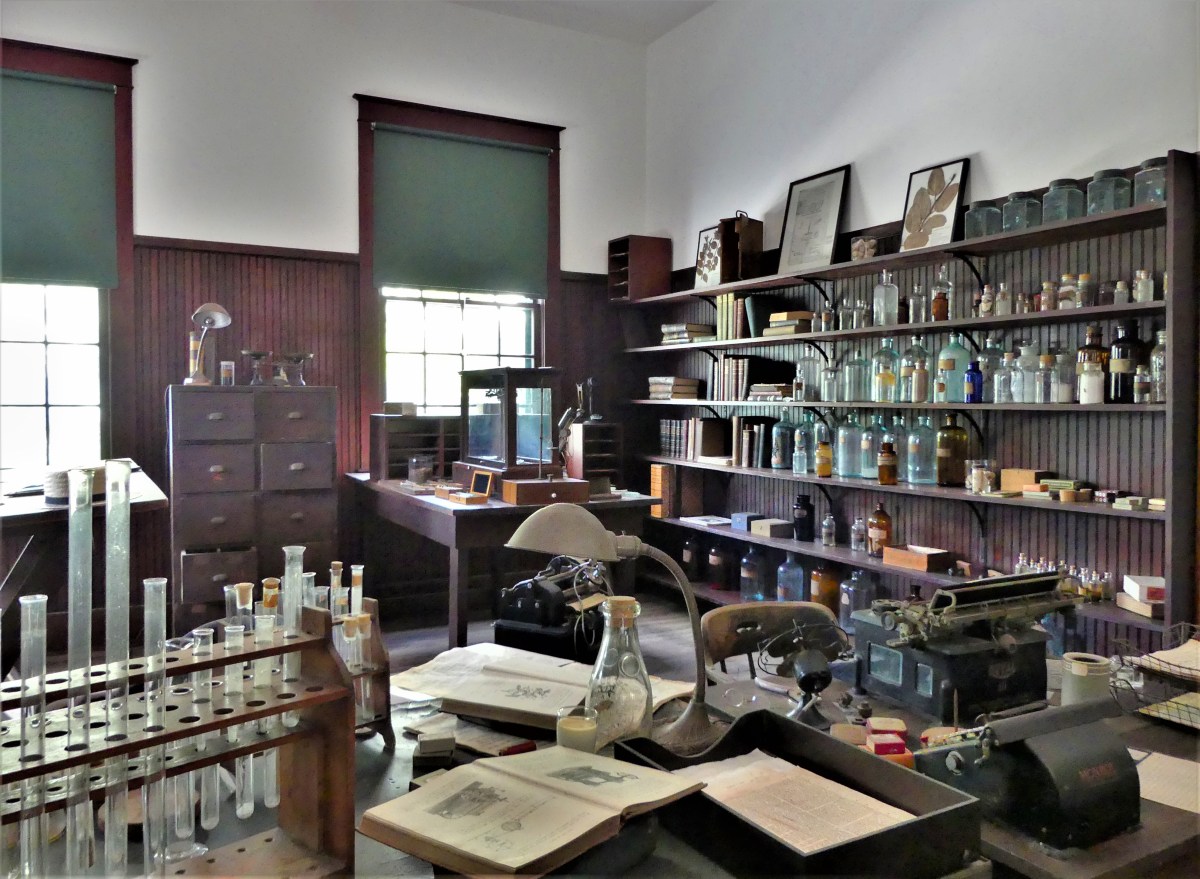
Additionally, by recreating his West Orange, NJ laboratory in Ft. Myers,

In the Lab

Edison's Lab

Lab2

office

Edison could work uninterrupted throughout the year, never missing an opportunity to tinker or embellish on an idea, while enjoying the comforts of a home…

Living Room

dining room.jpg

Pantry

bedroom

and grounds…

Edison home

Caretaker cottage

pool

the tree

that he designed in 1886,

Designing a Retreat

and Mina attended until his death in 1931.

Mina and Leah

Henry Ford acquired the neighboring bungalow known as The Mangoes in 1916,

Henry Ford and cottage

and the two titans drove each other to continuing heights of excellence in achievement.

But of all their noticeable accomplishments, their mutual love of country living coupled with the enormous publicity generated by their expeditions most certainly inspired an army of auto owners and outdoor enthusiasts to follow their example.

Thus, The Vagabonds paved the way for the popularity of motor camping, and gave rise to a recreational industry that advances the dream of this sojourner’s lifestyle: where the highway is my lifeline and my Airstream is my cradle.

Note: Historic photos courtesy of Edison and Ford Winter Estates collection.


For the Love of Money

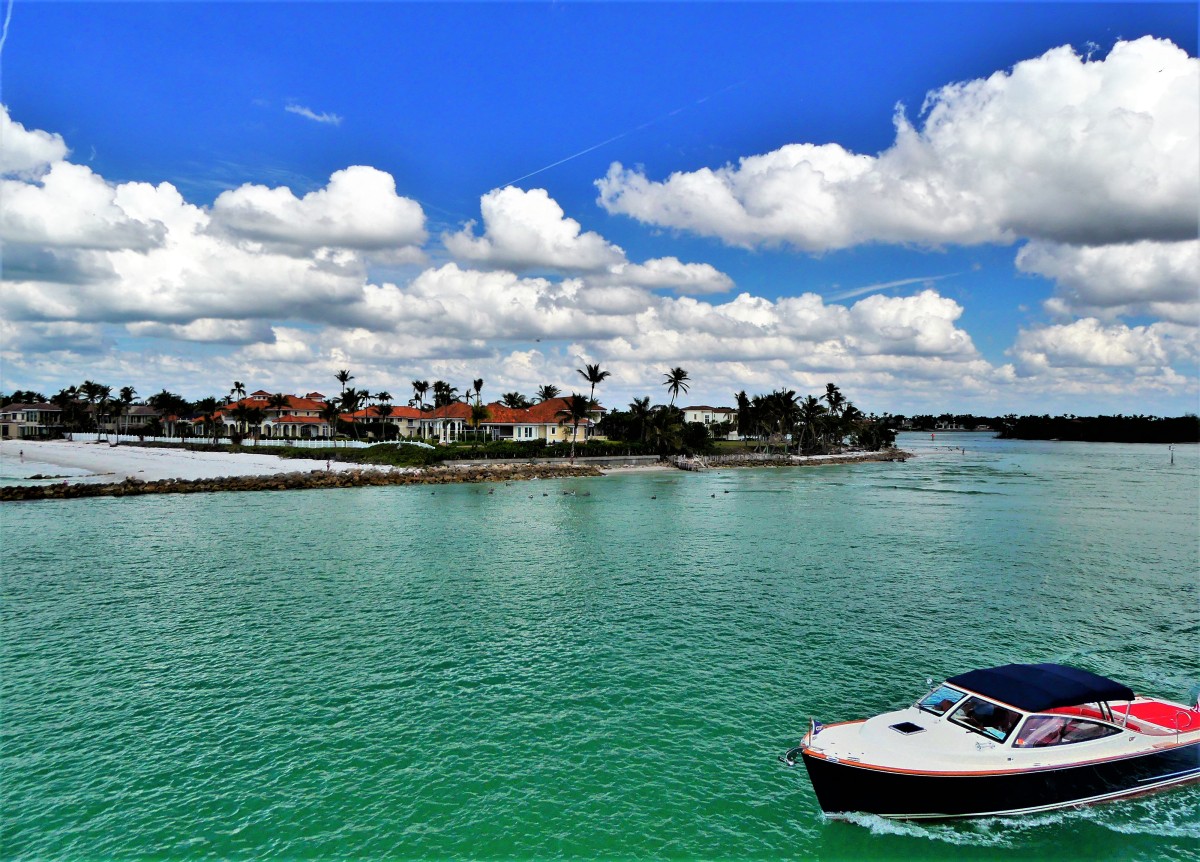
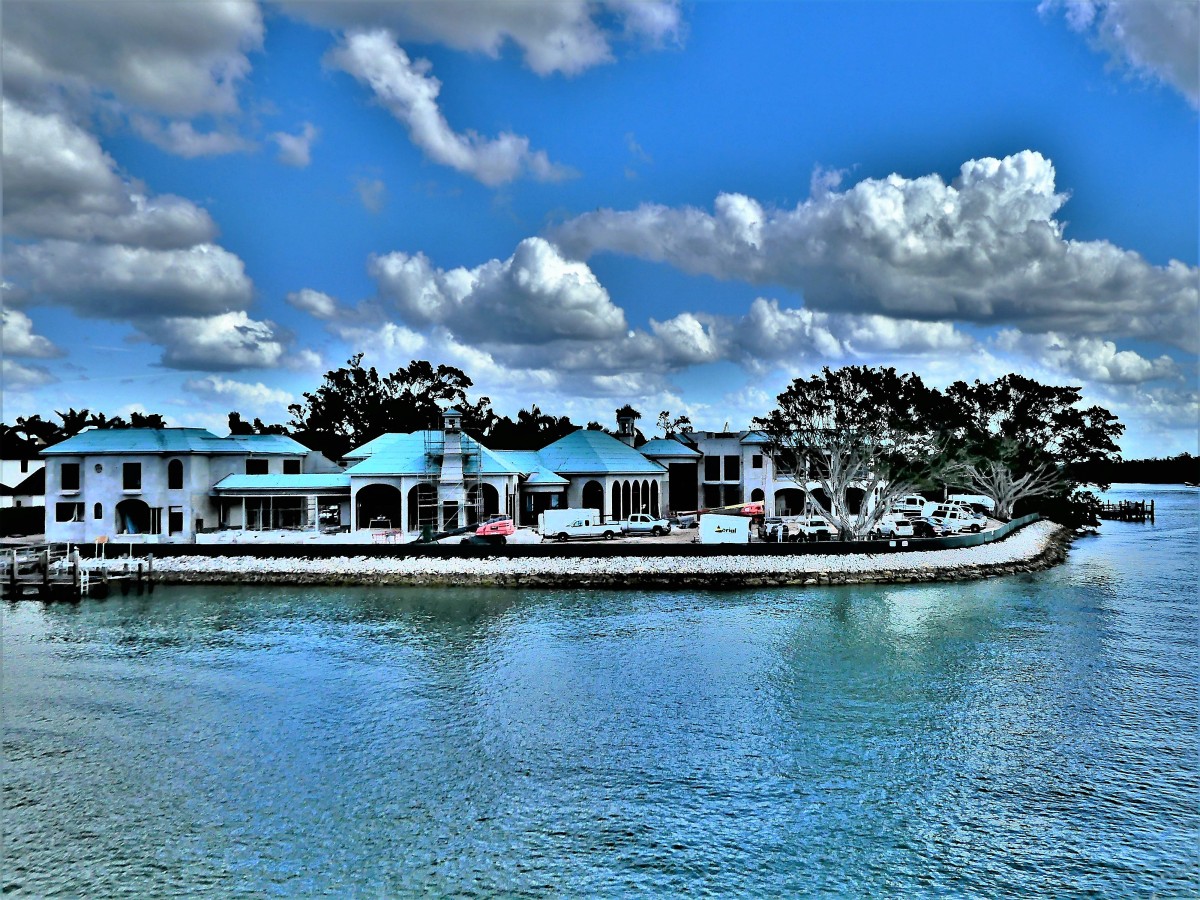
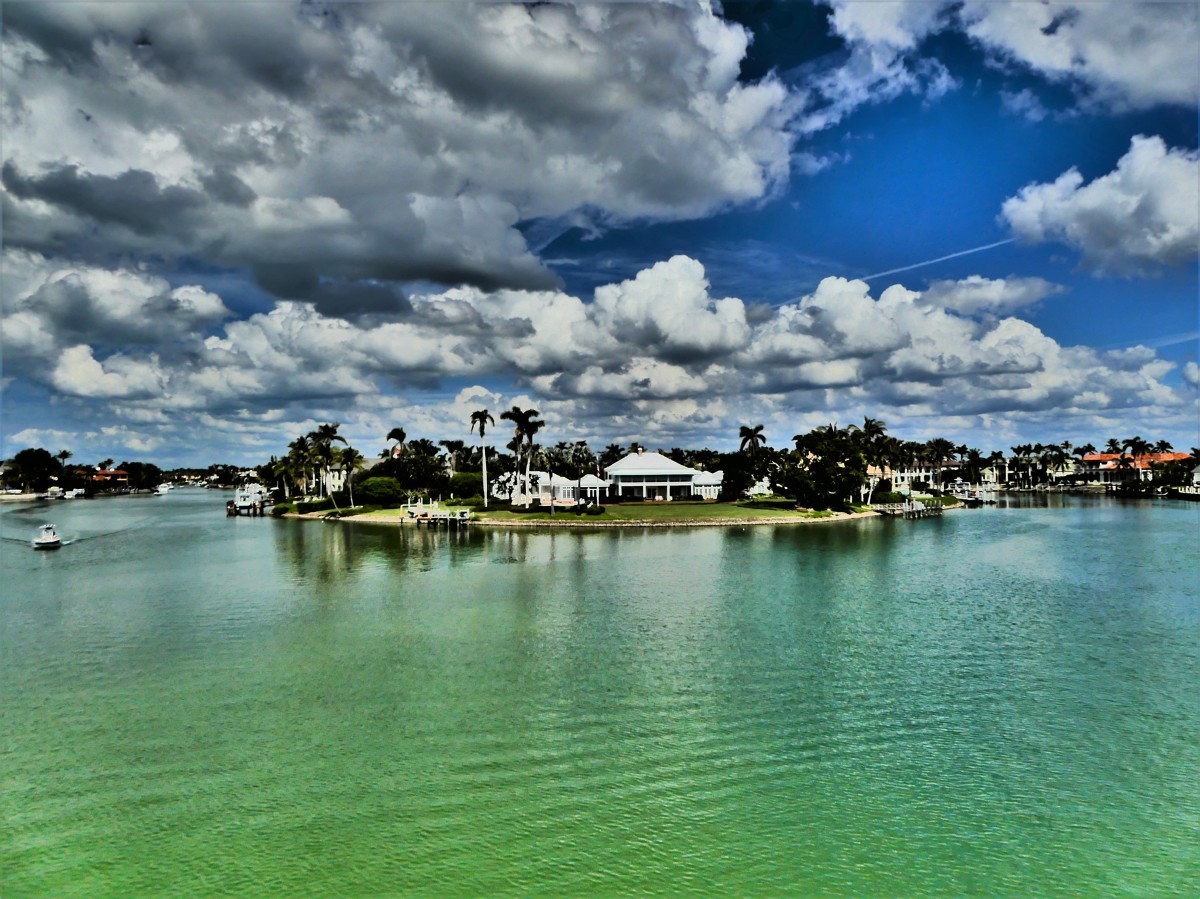
Apparently, the citizens of Naples, FL have the deepest pockets of any town in America thanks to the highest concentration of billionaires who own part-time residences along the deep water coastline of Port Royal.

floatilla

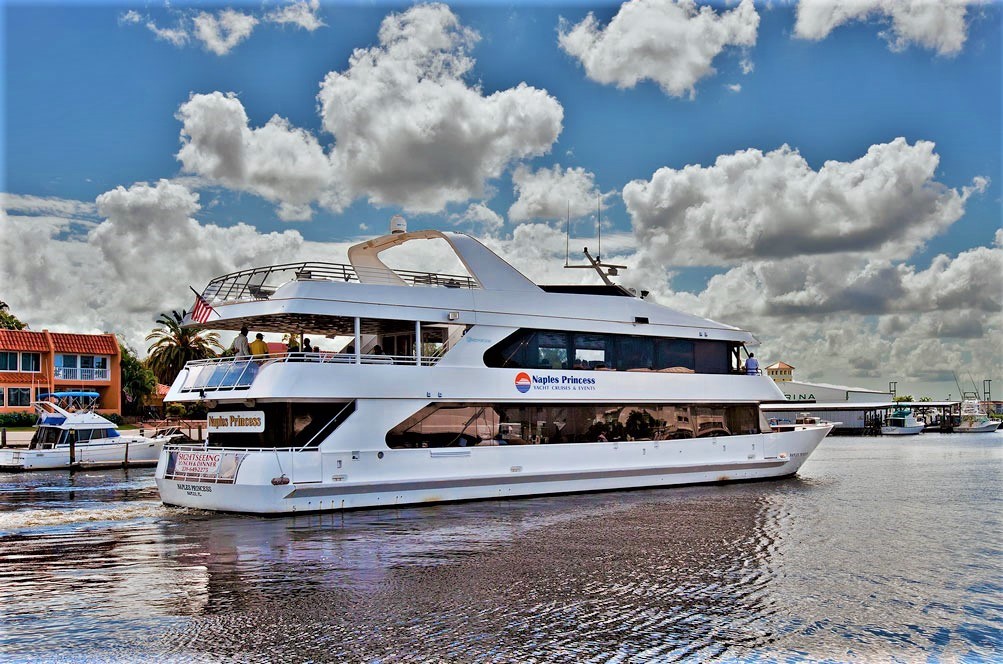
Such was the claim of First Officer Owen, who was overheard aboard the top deck of the Naples Princess…

Naples Princess (2)

during a two-hour pleasure cruise from the top of Naples Bay, past Bayview Park,

Naples Beach1

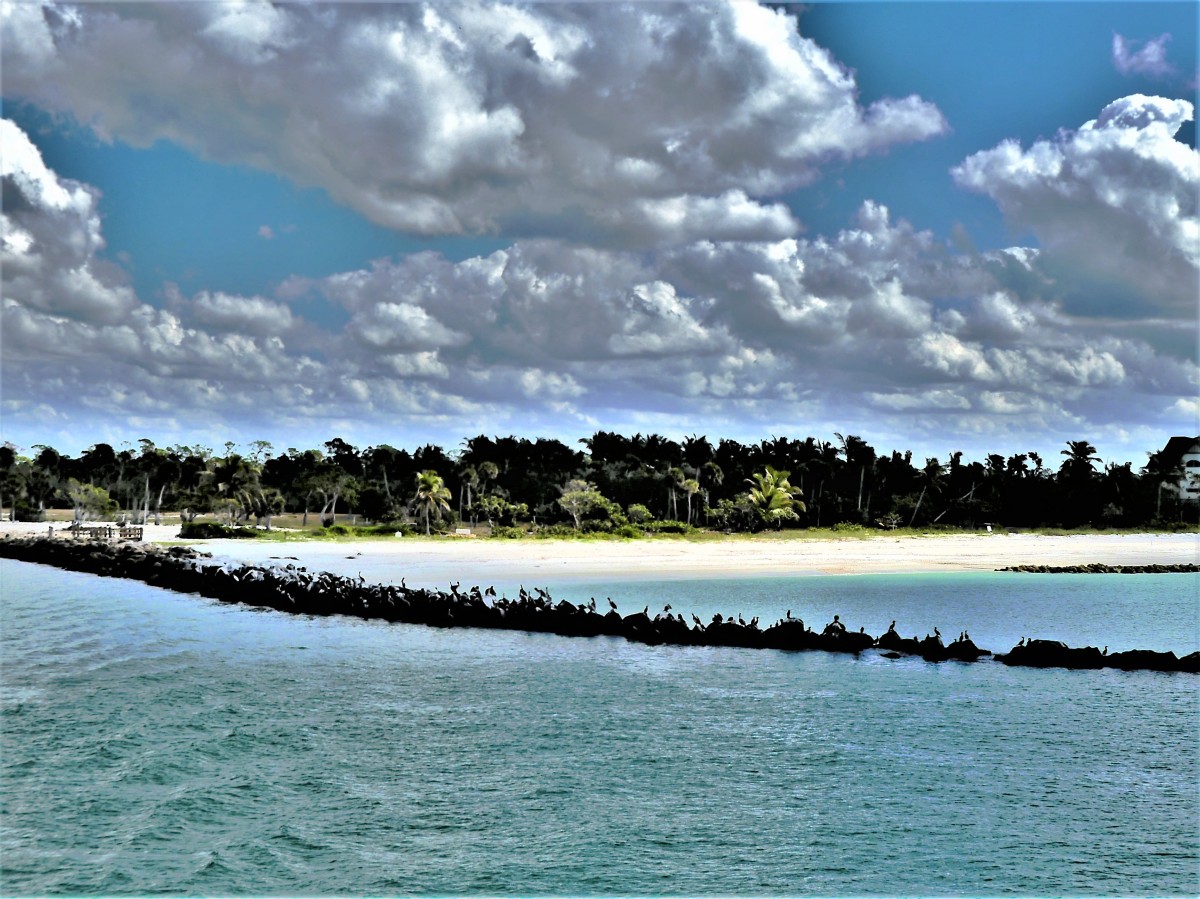
and through the channels of decadence bound by the beach on the Gulf of Mexico…

beach.jpg

Keewaydon

and Keewaydin Island.

Keewaydon1 (2)

John Glenn Sample came to Naples in 1938 with a vision that would compete with Henry Flagler’s development of Palm Beach during the early 1900’s. Unimpressed by the titans of industry who would flock to the East Coast of Florida to sip fine whiskey and smoke Cuban cigars against a backdrop of crashing waves, Sample determined that the tranquil surf and serene surroundings of the Gulf Coast was better suited for peace and relaxation.

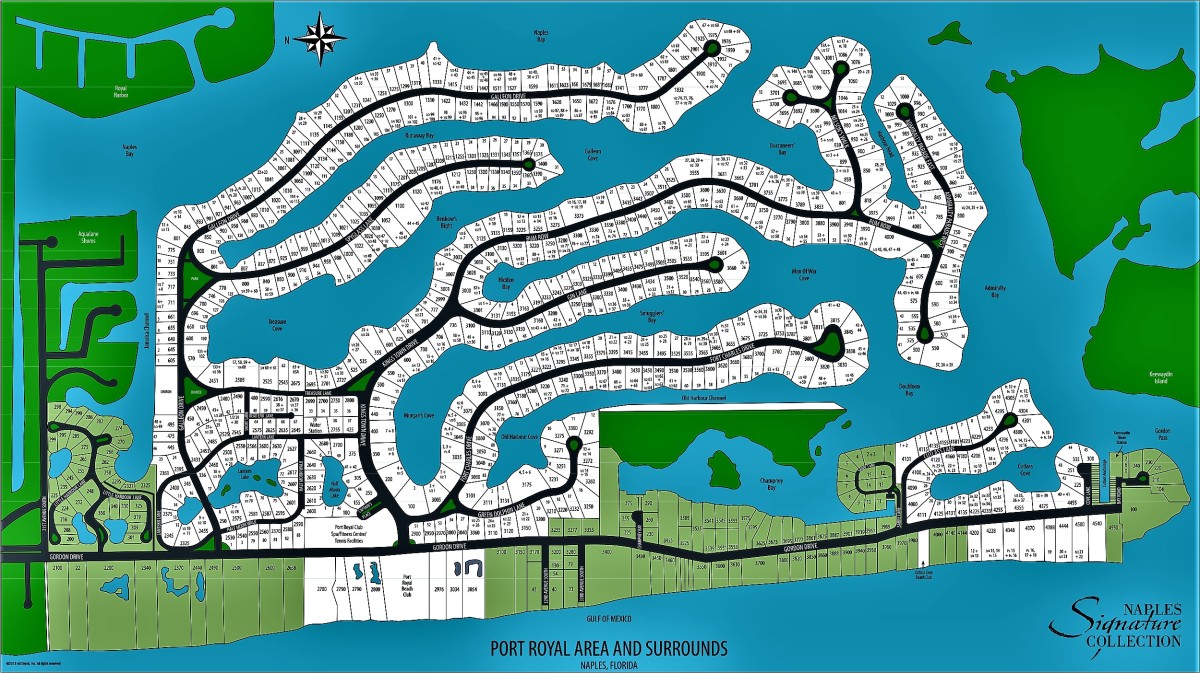
Not to be outdone by the co-founder of Standard Oil, Sample gobbled and cobbled two square miles of mangroves and marsh along Naples Bay for $13,700. During the 1950’s, Sample exhausted the $3.5 million he earned from the sale of his Chicago advertising agency by bringing heavy earth-moving equipment and dredging machinery to town, and subsequently rearranged his property into fingers reaching out to deep water access amid the warm currents of the Gulf of Mexico.

PORT-ROYAL map (2)

Early on, Sample priced his Port Royal lots between $7,500 and $12,000, and spec homes were priced between $22,000 and $25,000. By the 1960’s, Port Royal lot prices had ballooned to $30,000 and Port Royal homes were selling for $60,000.

Yet despite premium prices, Sample was holding out on hawking his holdings; the litmus test to buy property from Glenn Sample was that he must like you, because selling to a buyer was much more than “show me the money!” A prospective homeowner/neighbor had to supply letters of recommendation, and pass the like-mindedness quotient.

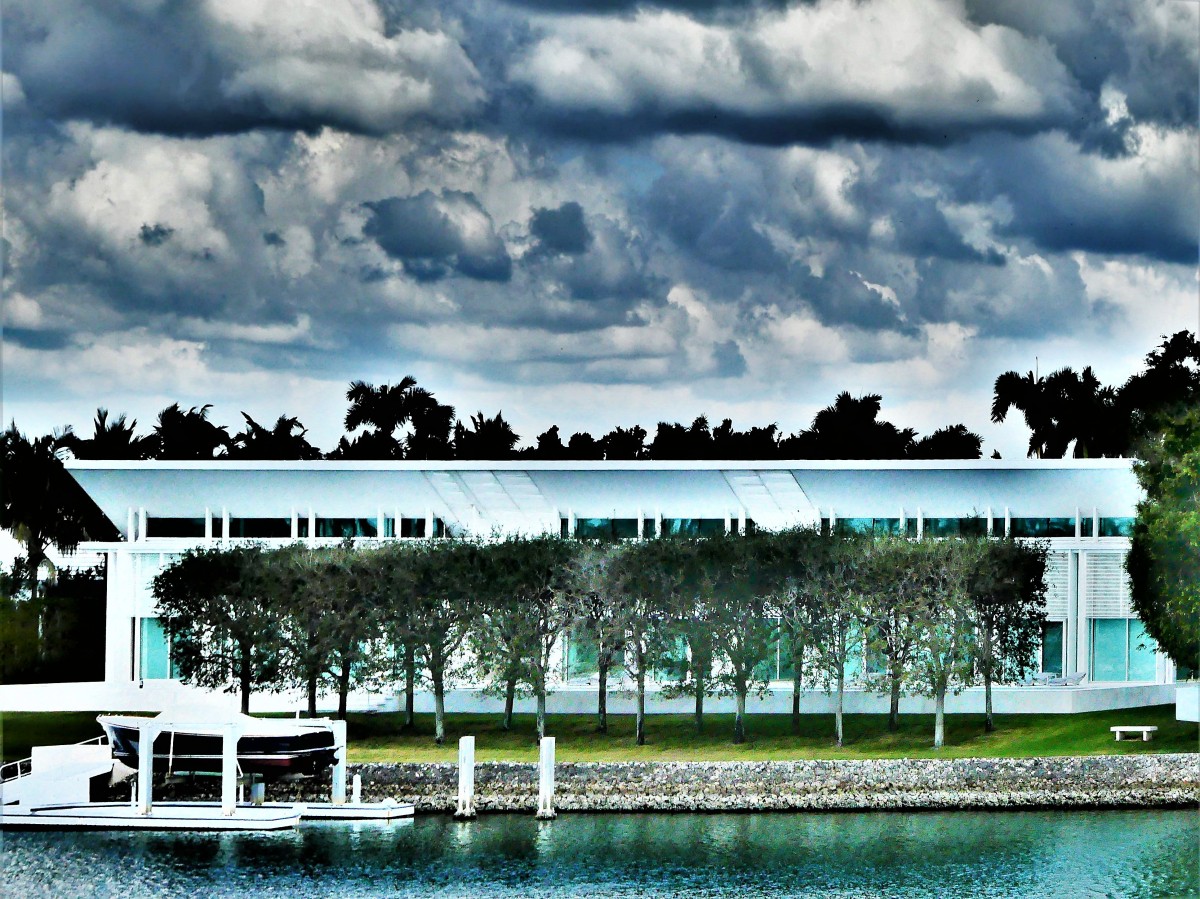
Today, only a few of the original 3,000 square foot homes remain, having been replaced by maximum-sized mansions of shimmering glass and steel.

Hugo Boss

And of those still standing and available as teardowns for $4M, they are being replaced by new construction that defies understanding–exceeding unimaginable dimensions, and approaching $100M to complete.

new construction1

Port Royal royalty includes celebrities from sports fame, media, and entertainment. Generational offspring of corporate giants who colonized the enclave (Briggs-Stratton, Kodak, Collier Publishing, etc.) continue to live a life of quiet luxury, as does the former treasurer of Estonia who proudly flies his country’s flag.

Estonia's treasurer

But of all known Port Royal billionaires (there are many property owners who cloak their identities behind holding companies), none is more deserving than Dick Portillo, better known as Chicago’s King of Hot Dogs.

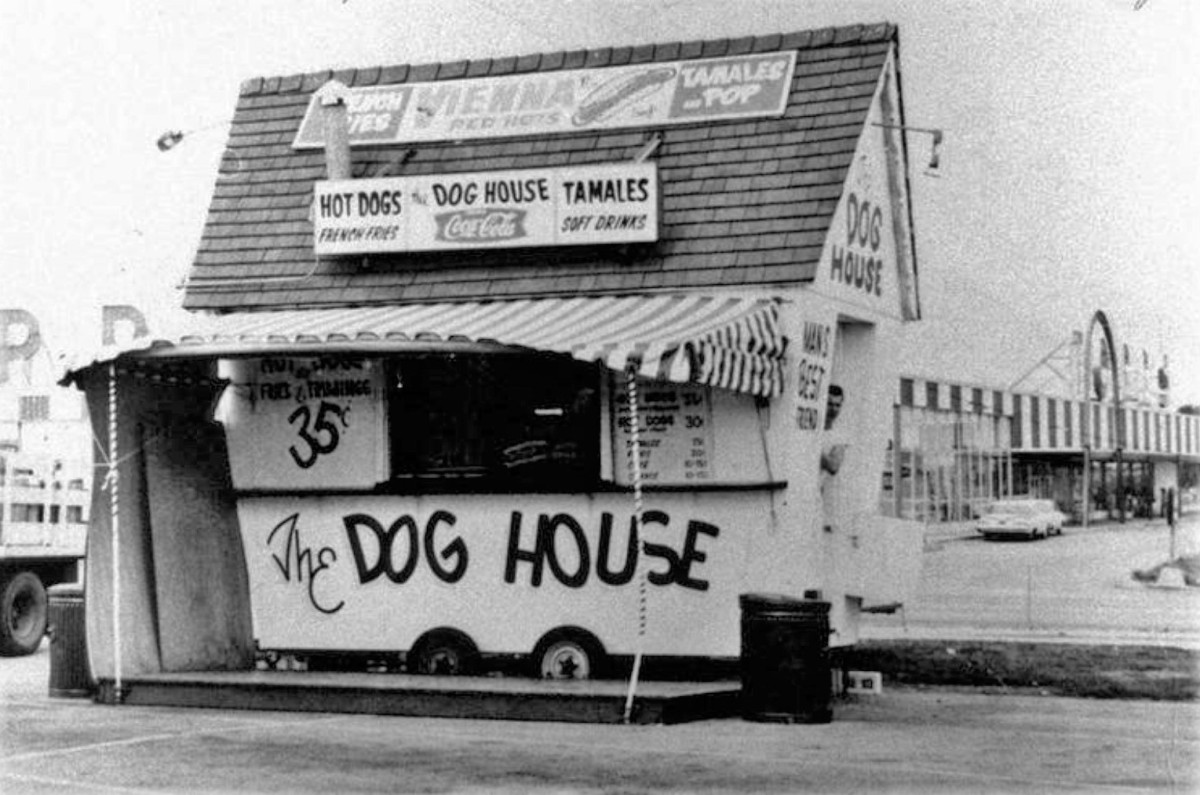
Starting out in 1963 with $1100 in savings intended as a down payment for a house, Portillo convinced his wife to invest in a small trailer called The Dog House on North Avenue in Villa Park. Running water came from a garden hose attached to another building.

Hot dog hut (2)

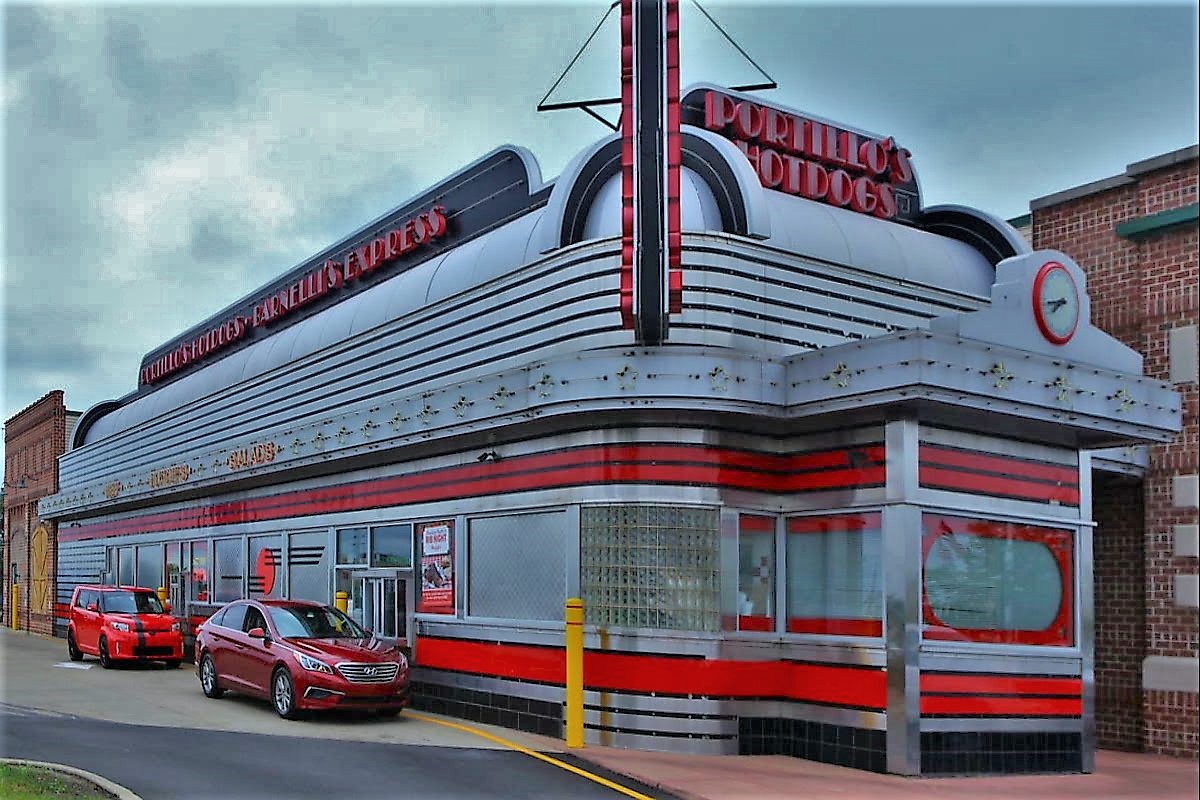
Not knowing how to cook, Portillo learned the business by visiting competing restaurants with his two young children in tow and asking questions until he perfected his technique and grew the business: to his first drive-thru in 1983; to offering nationwide shipping to all 50 states; to 38 locations in Illinois, Indiana, Arizona and California;

Portillo's1

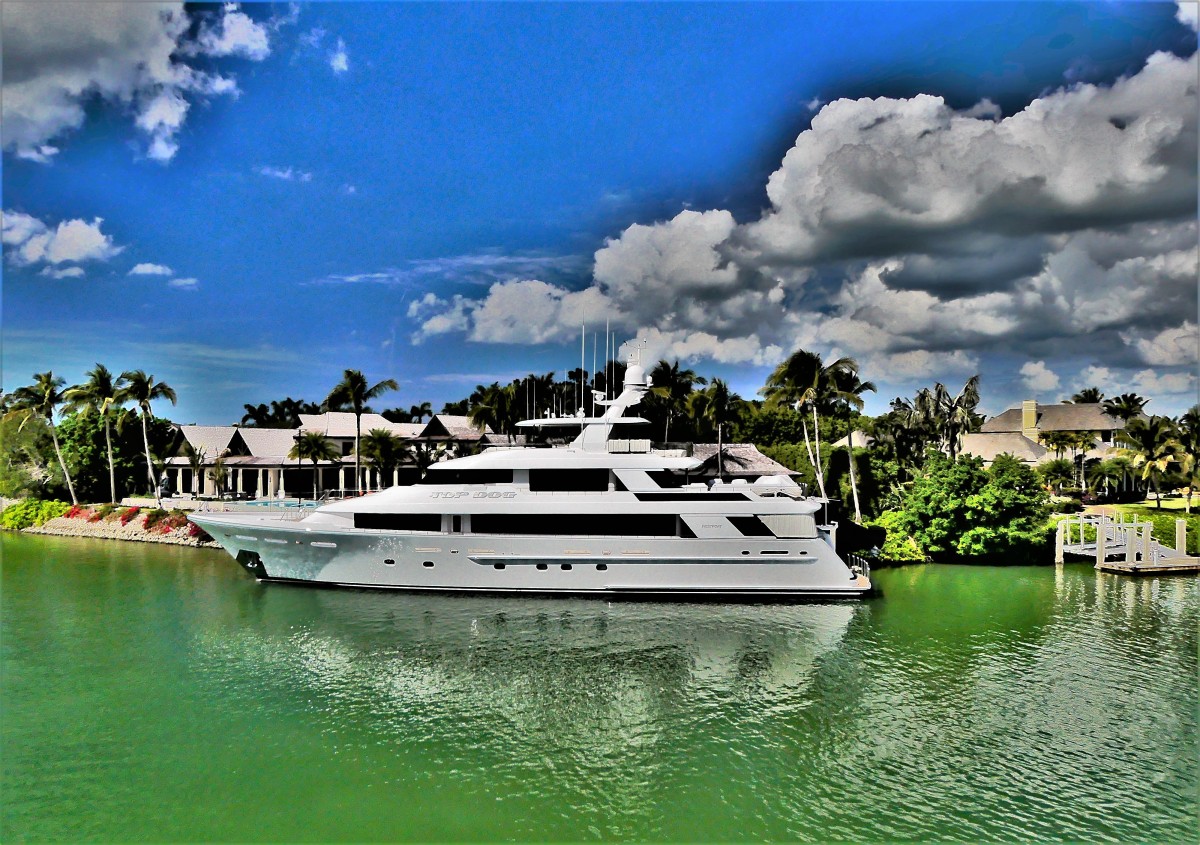
to eventually selling to Boston-based Berkshire Partners in 2014 for $1B, and acquiring an anchor for his $10,500,000 Westport yacht.

Top Dog (2)

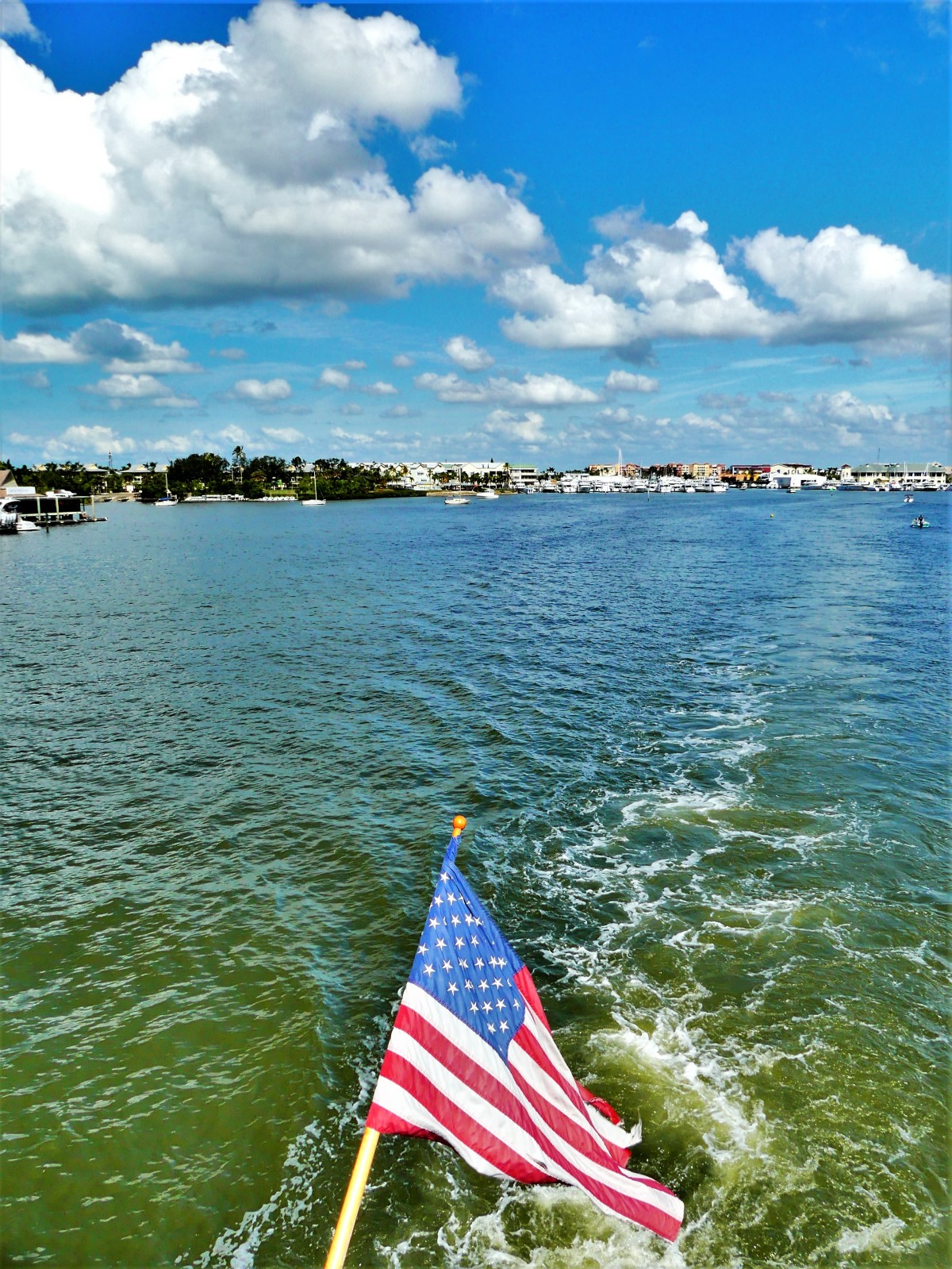
Only in America!

no wake


The Ringling Museum of Art

John Ringling was one of the early 20th century’s most prolific collectors of art, and his Museum of Art, opened in 1931 has become his true legacy. Soon after marrying Mable in 1905, the Ringlings became avid collectors, acquiring paintings, furniture and tapestries from the estates of other established patrons of art. In 1924, the Ringlings met Julius Böhler, a prominent Munich art dealer, and developed a long-standing relationship that would ignite the Ringlings’ growing interest in collecting art.

The Ringlings had been traveling through Europe for years and had fallen in love with Baroque art. In 1925 John hired architect John H. Phillips to design and build a museum on his Sarasota property to house his ever-growing collection.

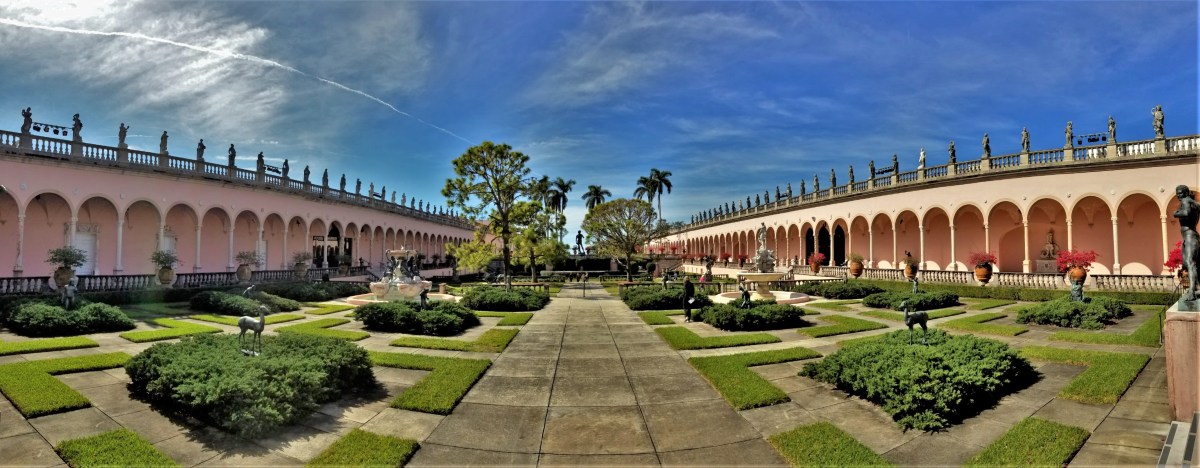
What Phillips designed was a U-shaped pink palace with 21 galleries to house Ringling’s treasure trove of paintings and art objects, highlighted by a collection of masters that would eventually include Velazquez, El Greco, Van Dyke, Veronese, Tiepolo, Gainsborough and Rubens.

Paired perfectly with the Renaissance-style of the Museum, the Museum of Art’s Courtyard embodied the ideals of the Renaissance garden.

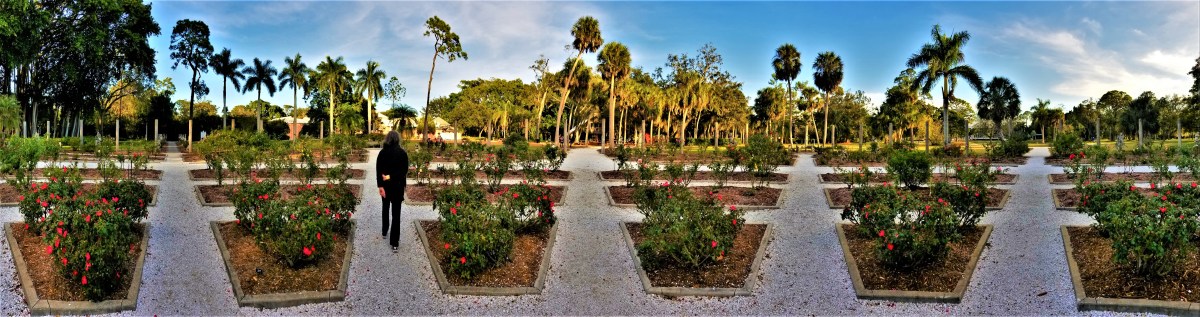
museum gardens

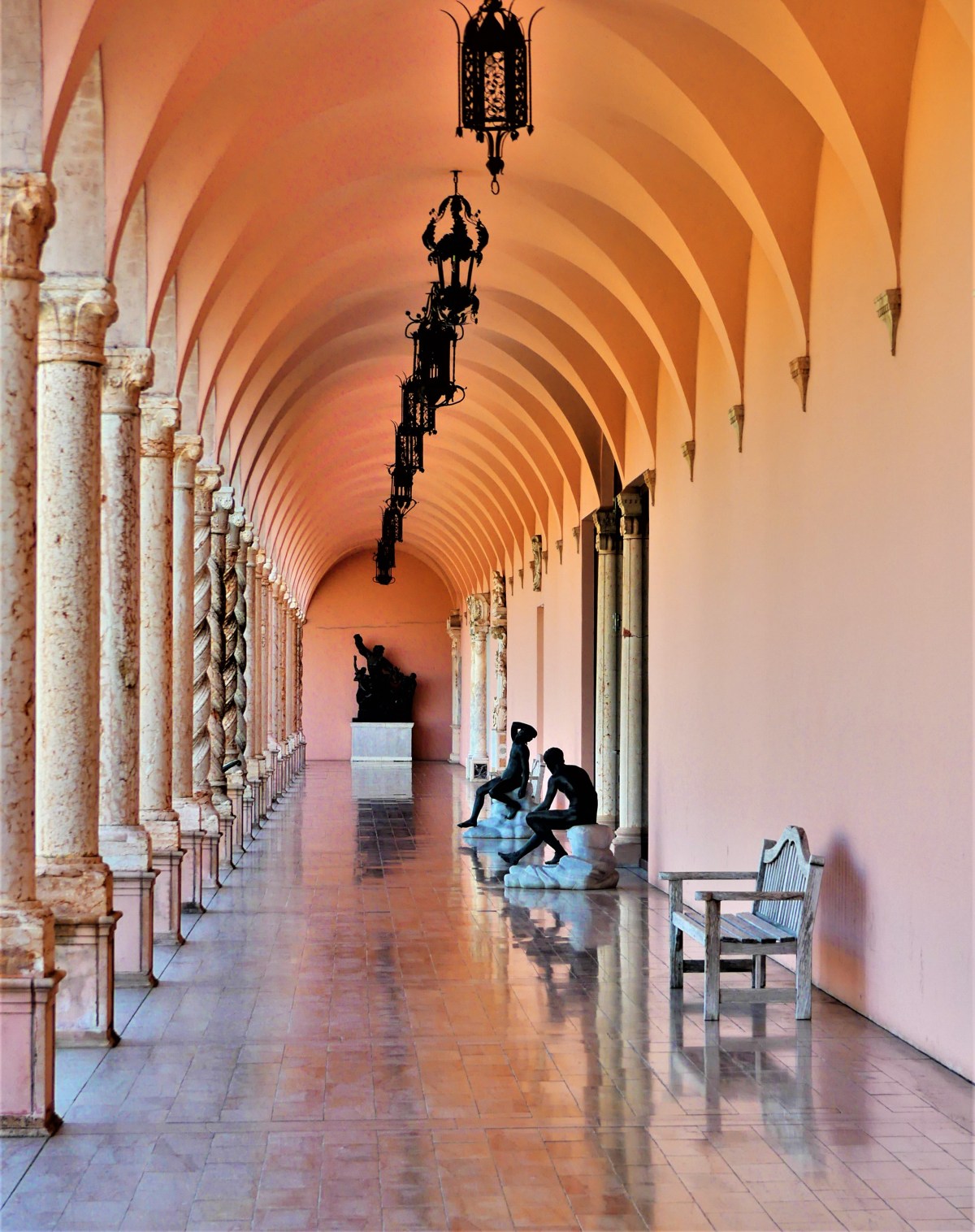
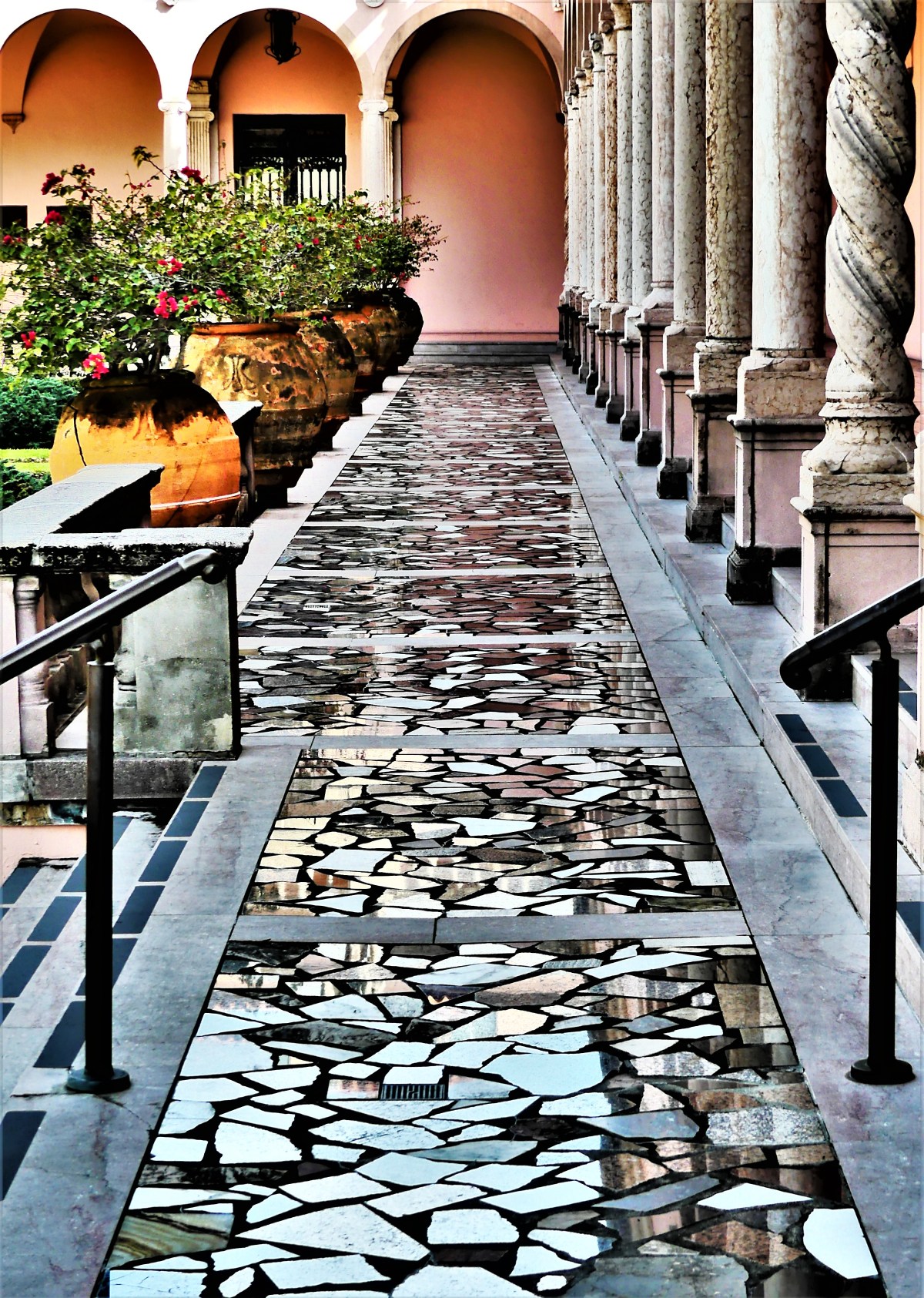
Its long loggias…

garden arches

shimmering walkway

marble reflections

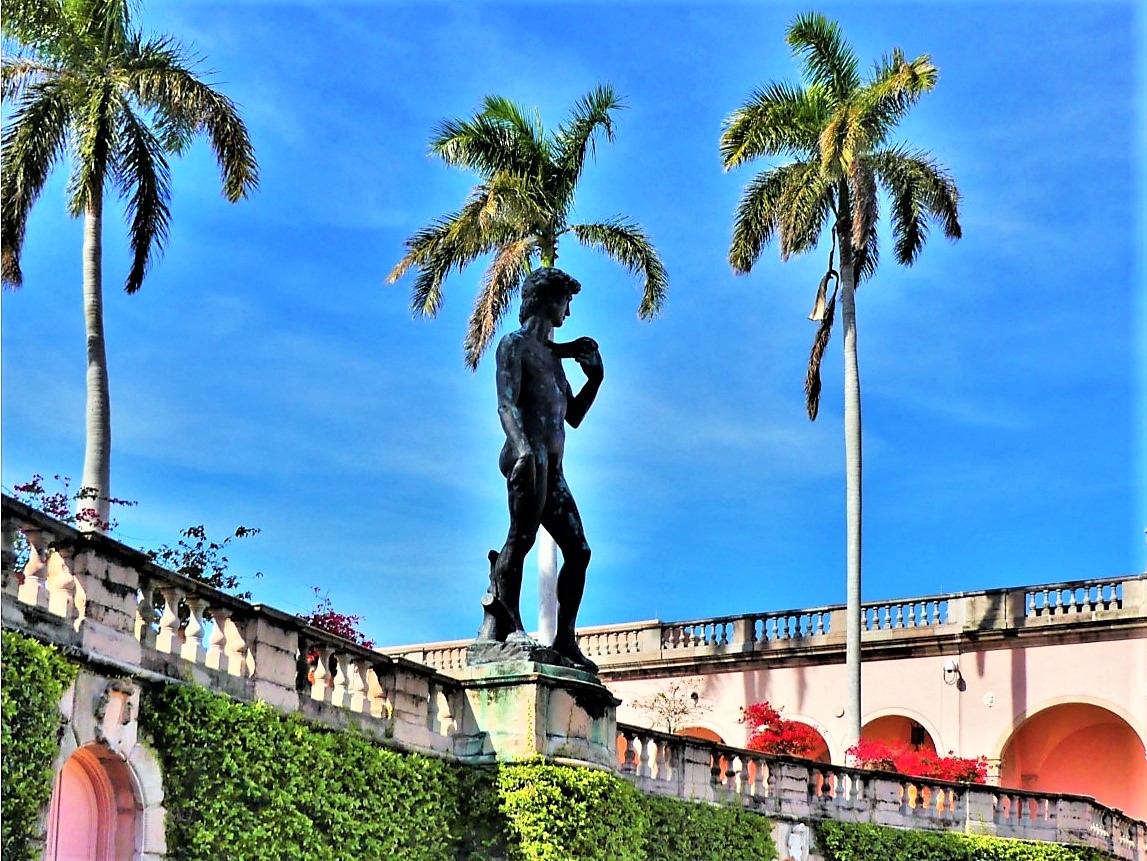
…flank a central courtyard that features an impressive group of early twentieth-century bronze and stone casts of famous Classical, Renaissance, and Baroque sculptures, among them, at its heart, Michelangelo’s David from Palazzo Vecchio in Florence.

David

Ringling hoped that by building the Museum he would make Sarasota a cultural and educational center. To achieve his vision he began buying comprehensive collections with prestigious provenances, beginning with the purchase of three rooms complete with furnishing, paintings and architectural finishes from the Astor Mansion and a villa in the Tuscan countryside.

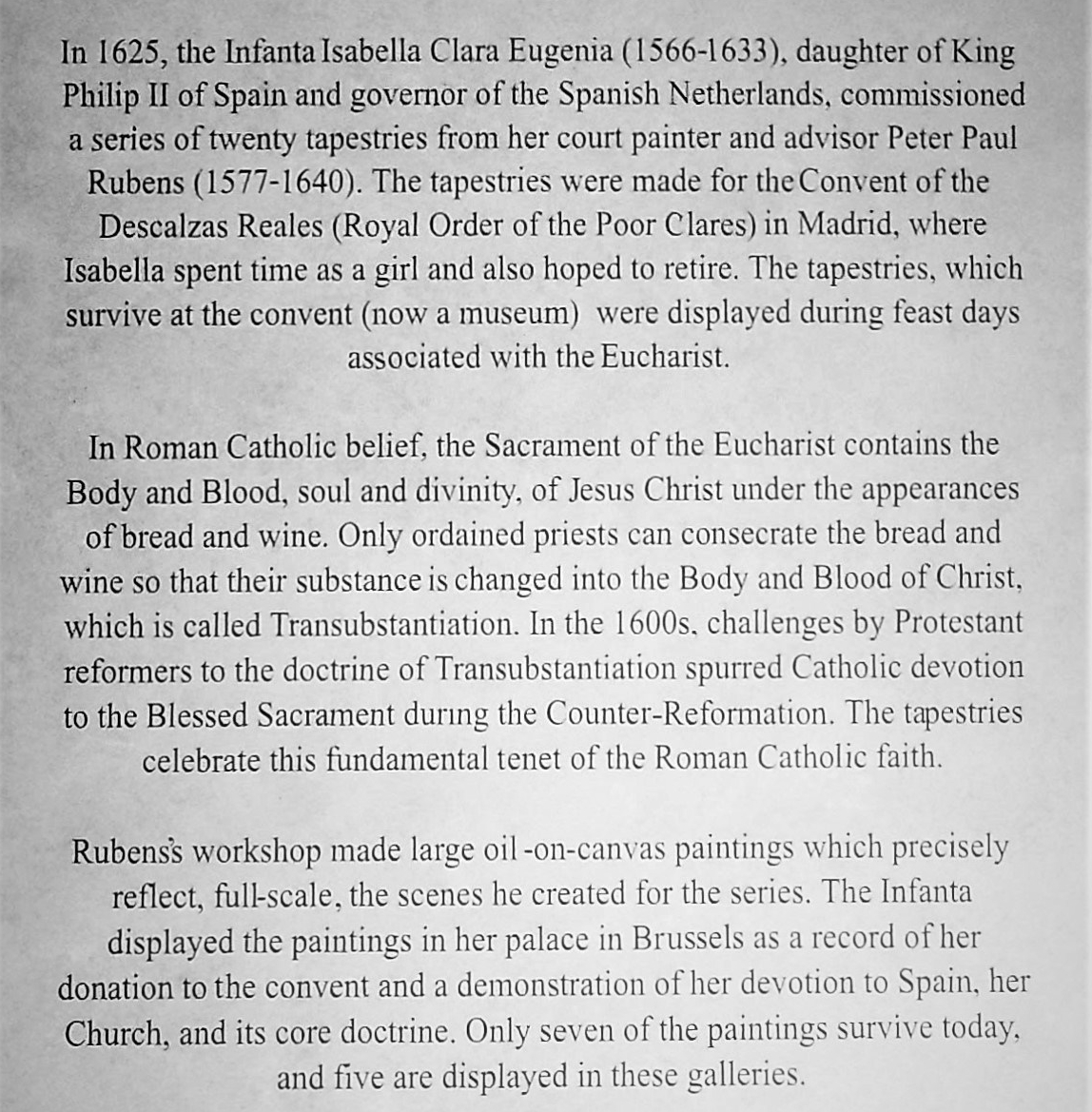
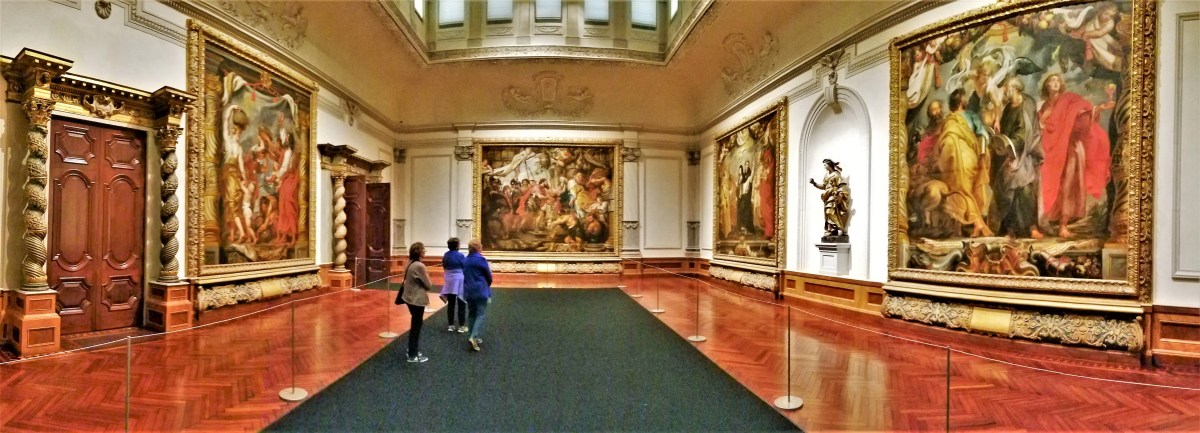
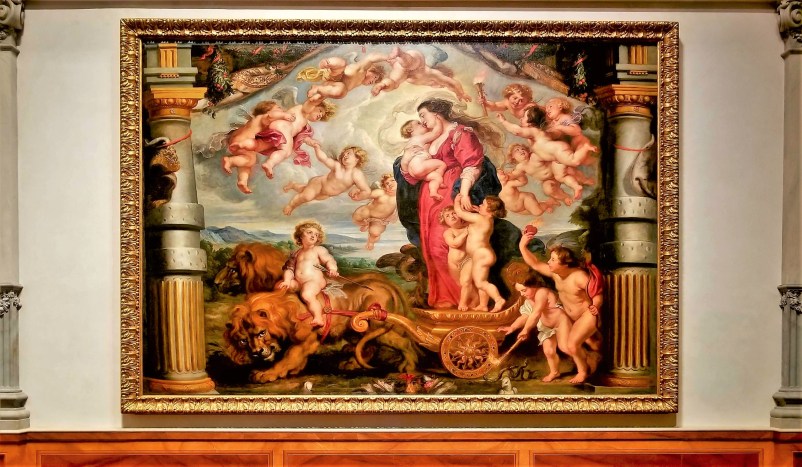
He also purchased four tapestry paintings, oil on canvas, by the Flemish master Peter Paul Rubens from the Duke of Westminster. Today these magnificent paintings welcome you as you enter the Museum’s gallery, and are the foundation of the Museum’s extraordinary Baroque collection.

Rubens info

Paul Rubens Hall

Rubens paintaing

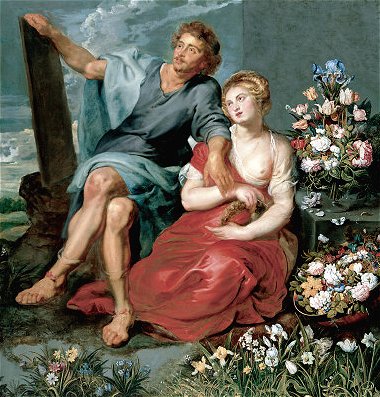
Between 1925 and 1931, Ringling acquired more than 600 Old Master paintings from the Late Medieval thorough the 19th century. His purchase of Rubens’ Pausias and Glycera was considered so significant that Art Digest reported on it.

Pausias and Glycera

In 1928, Ringling made another significant acquisition that was to form the core of his classical antiquities collection: 2800 objects of Greek, Roman, and Cypriot antiquities from the Metropolitan Museum of Art in New York. Excitement about his collection was growing in art circles; the New York Times did a full-page article about the purchase, praising not only the collection, but the Museum and its surroundings as well.

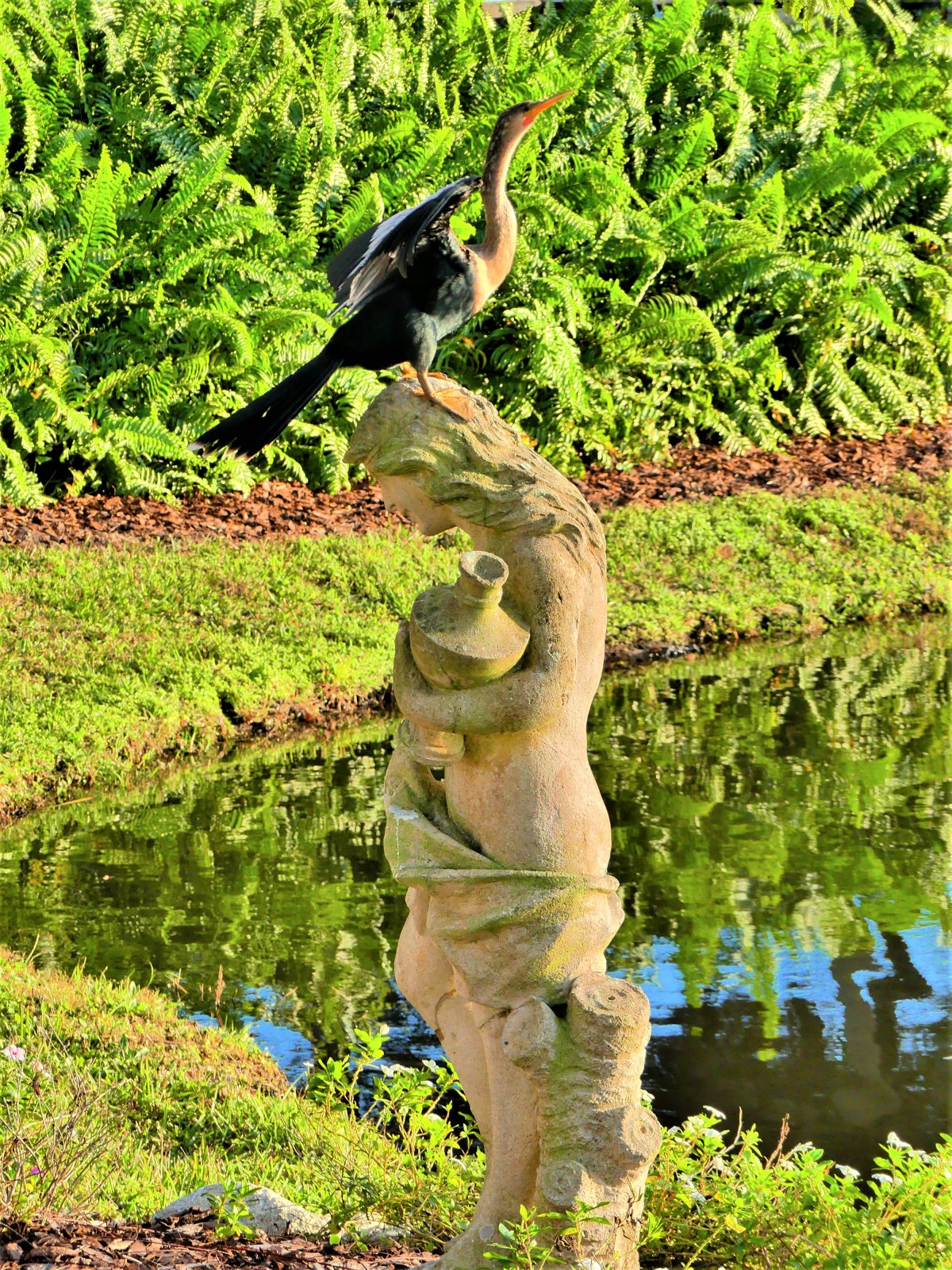
heron pedastol1.jpg

cypress and moss

The Depression and local real estate market collapse contributed greatly toward Ringling’s financial demise. It’s been reported that Ringling died in 1936 with only $311 in the bank. Although Ringling bequeathed his museum to the people of Florida–hoping to establish Sarasota as a cultural beacon–his creditors and legal wrangling would delay the settling of his estate for a decade.

Funds were poorly managed and the endowment Ringling left languished and barely grew. The Museum was only occasionally opened between 1936 and 1946 and not properly maintained. Gradually, the care that the buildings required were either put off or handled piecemeal.

But while the Museum struggled with a lack of finances, a series of Directors continued to foster its artistic growth, most notably A. Everett (Chick) Austin, Jr. the charismatic former Director of The Wadsworth Atheneum in Hartford, Connecticut who became the Museum’s first Director and Curator in 1946 and served until his death in 1957.

Today, thanks to continuing community support, the Museum has increased its gallery exhibition space. And under visionary leadership, the Museum has increased its artistic relevance, and national prominence by showcasing emerging talents in the international arts community.

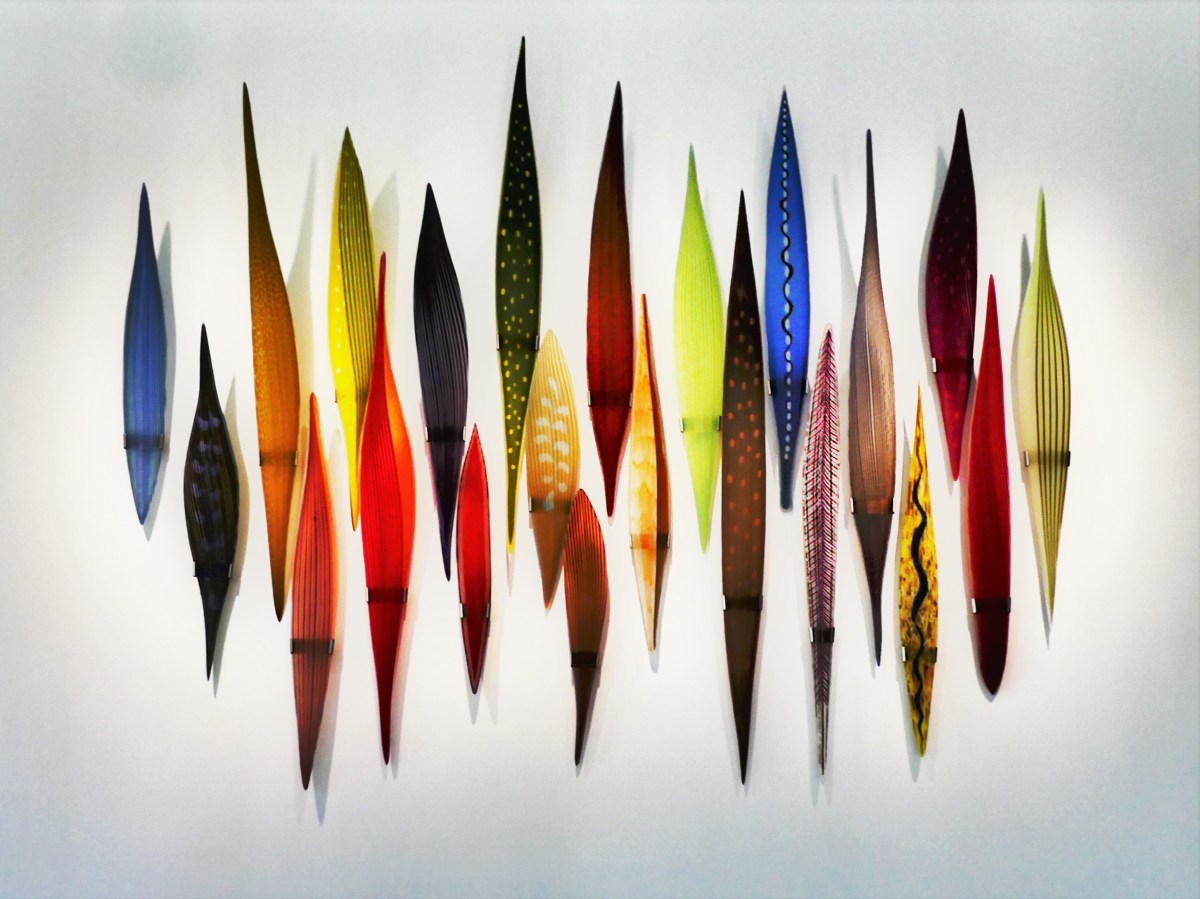
glass form

credenza

sculpture (3)

Under Florida State University’s stewardship, the Museum of Art has exciting plans for new acquisitions and exciting exhibitions and programs, finally fulfilling John Ringling’s dream of delivering a great cultural center to Sarasota citizens.

Note:

Quotes are courtesy of Ringling Museum of Art

The House of John by Mable

Charles Thompson, manager of Buffalo Bill’s Wild West Show (later acquired by the Ringlings) had built Palms Elysian along Sarasota Bay by 1893…Palms Elysian (2)
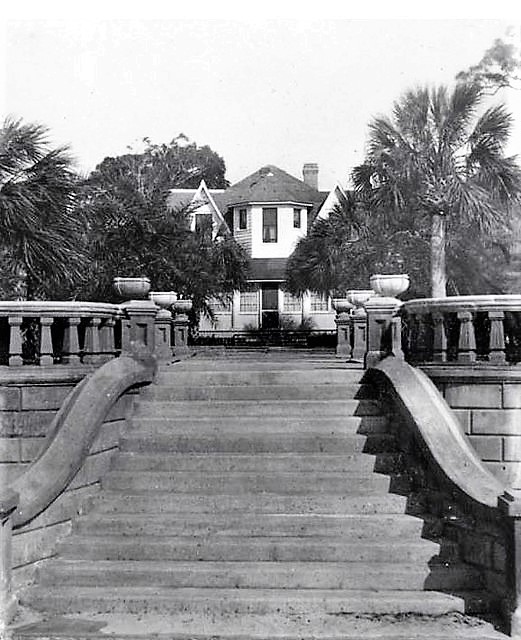
to bolster his initial purchase of 154 acres for $1650. Thinking that Sarasota could be a great destination for the winter circus season, and a worthy land development opportunity, Thompson persuaded John and Charles Ringling to explore the area in 1911, and convinced John to purchase the home and 20 acres of waterfront property from mutual friend and General Agent of New York Railroad, Ralph Caples, who only three months earlier had acquired the estate from Thompson. By then, Palms Elysian had become a showplace of a home in an area surrounded by log cabins and fishing huts.

John and Mable continued to winter at Palms Elysian through the 1920s, with John and Charles becoming more involved in Sarasota real estate speculation and development, scooping up Bird Key, St. Armands Key and Longboat Key, and owning as much as 25% of the entire Sarasota area.

It was time to replace Palms Elysian with a home befitting the thirteenth wealthiest man in America.

John and Mable’s extensive travels throughout Italy provided her with plenty of inspiration for their proposed palazzo on the bay. Gleaning architectural details from Doge’s Palace and the Bauer-Grünwald Hotel in Venice, Mable turned her drawings and notes over to leading New York architect Dwight James Baum for a cohesive design, and commissioned Owen Burns to build Cà d’Zan (House of John, in Venizzi dialect), a 36,000 square foot Venetian Gothic-styled residence where Palms Elysian once stood.

Construction began in 1924. Every aspect of the building, inside and out, was painstakingly overseen by Mable–from the terra cotta mix and the tile glaze, to the decorative furnishings and flourishes of modern living during the Roaring Twenties.

All the while, John Ringling’s investments (entertainment, real estate, railroads, oil, and cattle) had amassed a fortune of $200 million, and landed him on the cover of Time Magazine.

Time Magazine cover (2)

Cà d’Zan was completed and fully furnished before Christmas 1926 at an astonishing cost of $1.5 million ($21 million today). With 41 rooms and 15 bathrooms, the Ringling’s new home featured a crystal chandelier from the original Waldorf-Astoria Hotel, Florida’s first residential elevator by Otis, an Aeolian organ with 2,289 pipes built into a wall rising two stories,
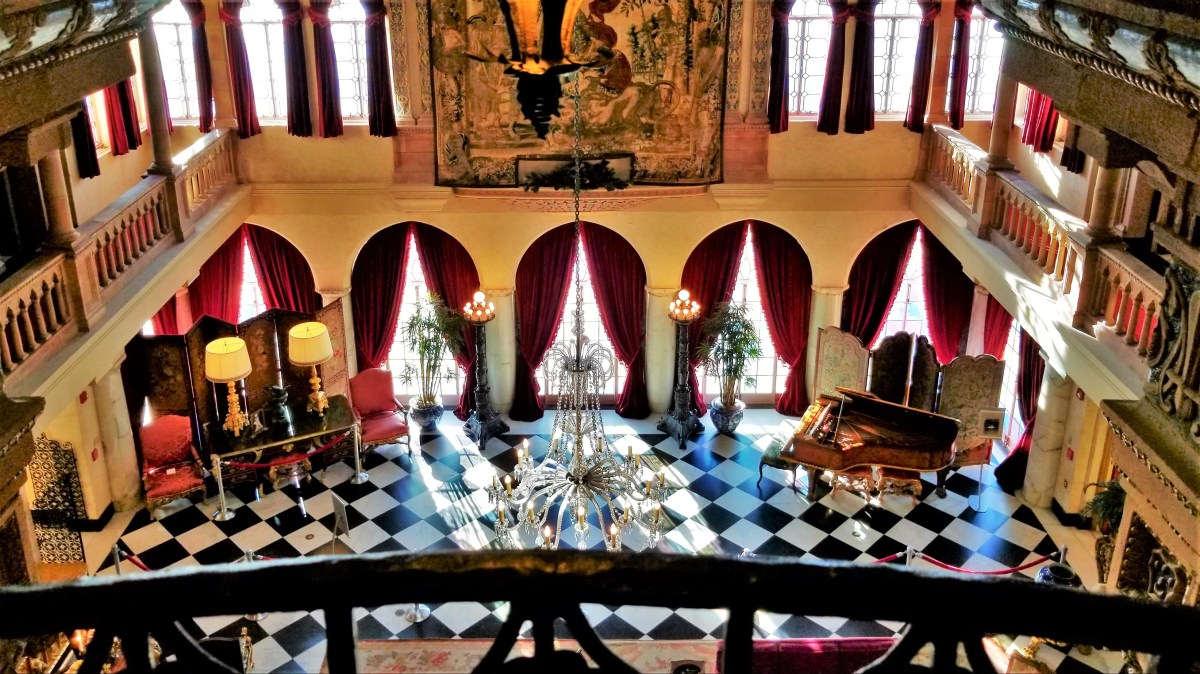
covered courtyard

and an 82-foot-high tower with an open-air landing and a high-domed ceiling.

terra cotta frieze

A similarly-styled gate marked the official entrance to the opulence of Cà d’Zan and The Ringling estate,
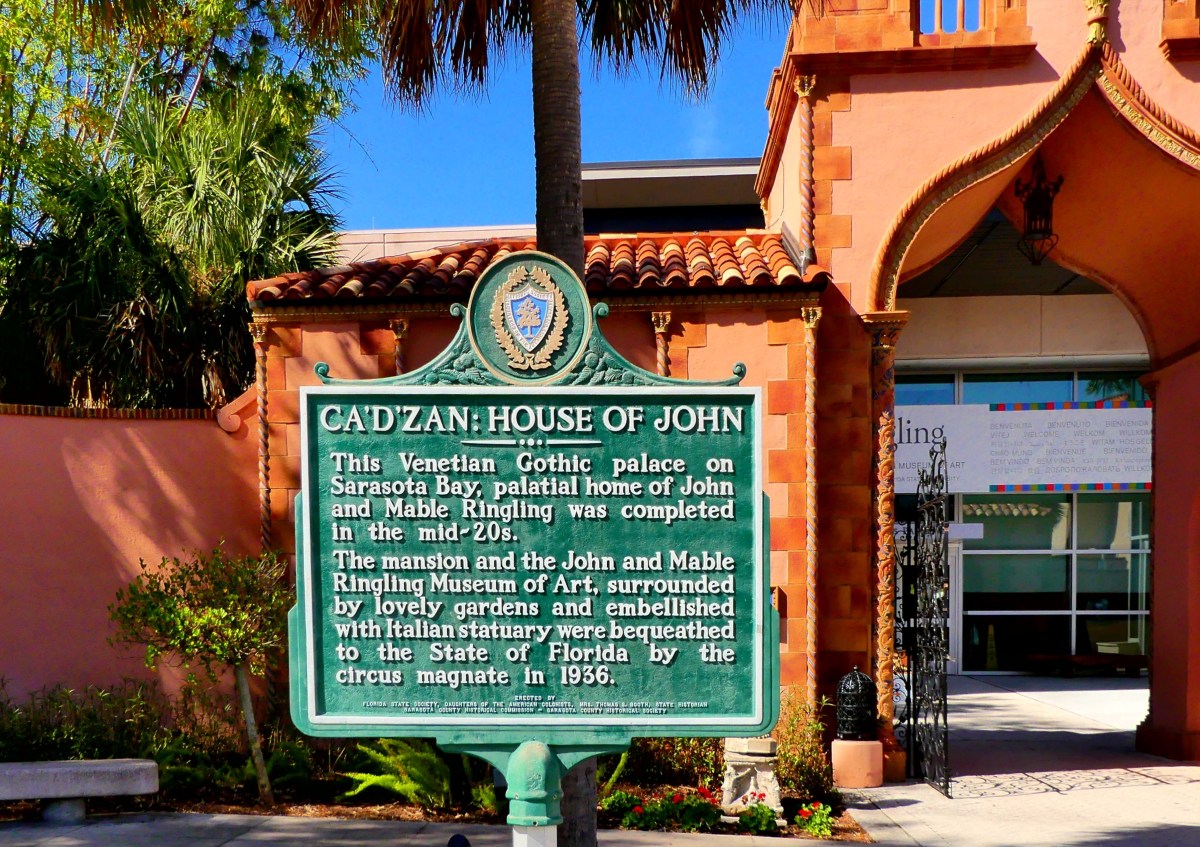
Ca'D'Zan signpost

where Mable would greet her celebrity guests–the likes of Will Rogers, Jimmy Walker, Flo Ziegfeld, and Billie Burke.
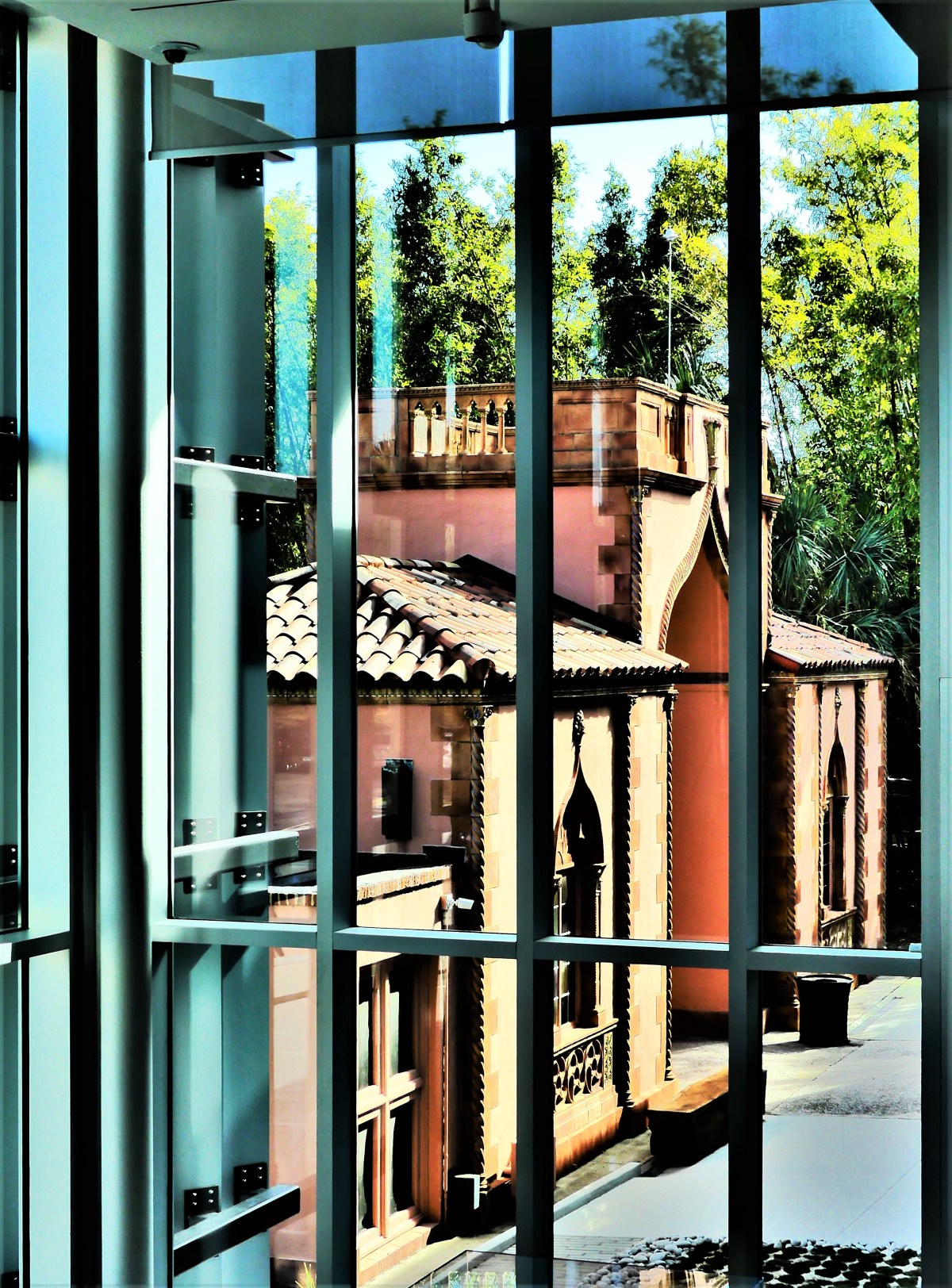
gate thru glass pavilion

Their stroll continued through lush gardens punctuated by Italian statuary,
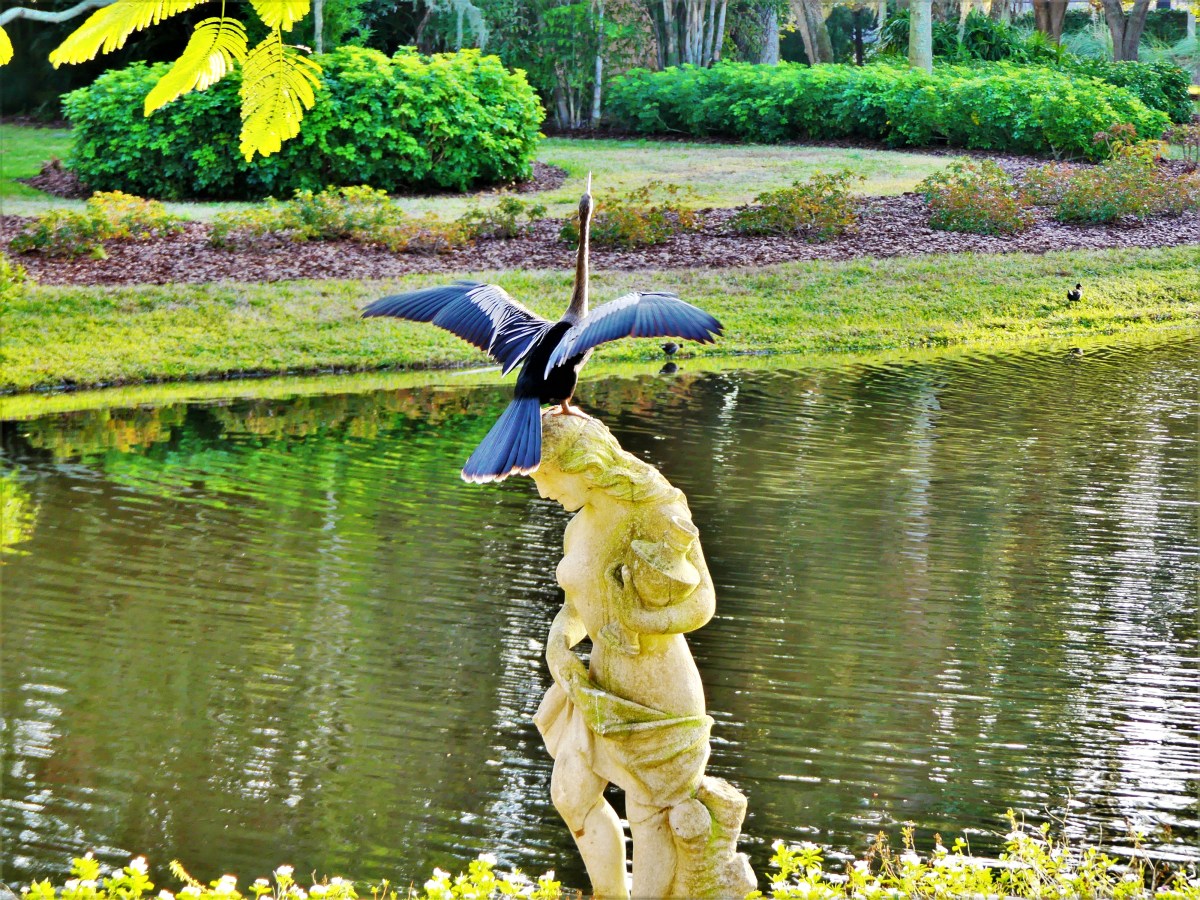
heron pedastal

past Mable’s rose garden,

rose garden and banyans.jpg

Mable's Rose Garden

and down the pathway marked by a zodiac compass mosaic,

compass mosaic

until they reached the jewel on the bay.
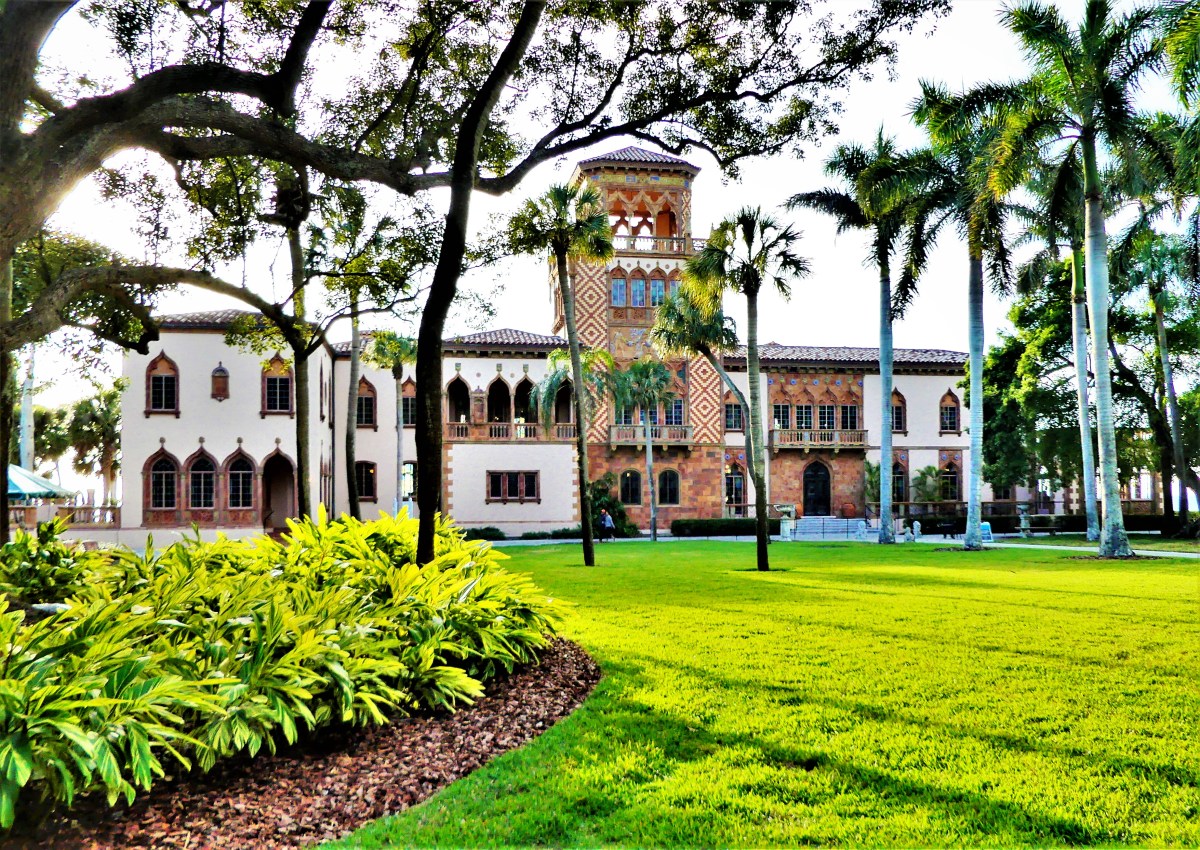
estate view

Leah and I elected to tour the mansion in two parts, with a small group guided by docents who led us through four floors of fresco art, enormous Italian Renaissance paintings and tapestries, French Baroque furniture, and the Belvedere tower.

However, interior photography was not allowed. I felt like my hands had been tied.

I would have liked to photograph the deep tub in Mr. Ringling’s bathroom–with both freshwater and saltwater taps–carved out a single slab of Sienna marble to accommodate his 6′ 2″ frame.

Consequently, I have no image of the equally impressive 16-foot long German Silver sink installed in the kitchen pantry as a measure of protection for Mable’s oversized collection of Lenox bone china and hand-painted pottery displayed in the many pantry cabinets.

I was also miffed that I couldn’t capture the coffered ceiling of smartly painted Florida pecky cypress in the solarium amid the jeweled tones of the Venetian black glass skylights.

And it was disappointing being unable to record the light flooding through the windows that wrap around the 4th-floor guest bedroom once preferred by Will Rogers, which set the paneled walnut ceiling aglow.

However, with a climb to Belvedere Tower and the photo ban lifted, the lens cap came off, and I was free to enjoy the expansive 360° views…

Belvedere Tower

across Mable’s lush gardens,

gardens with pool (2).jpg

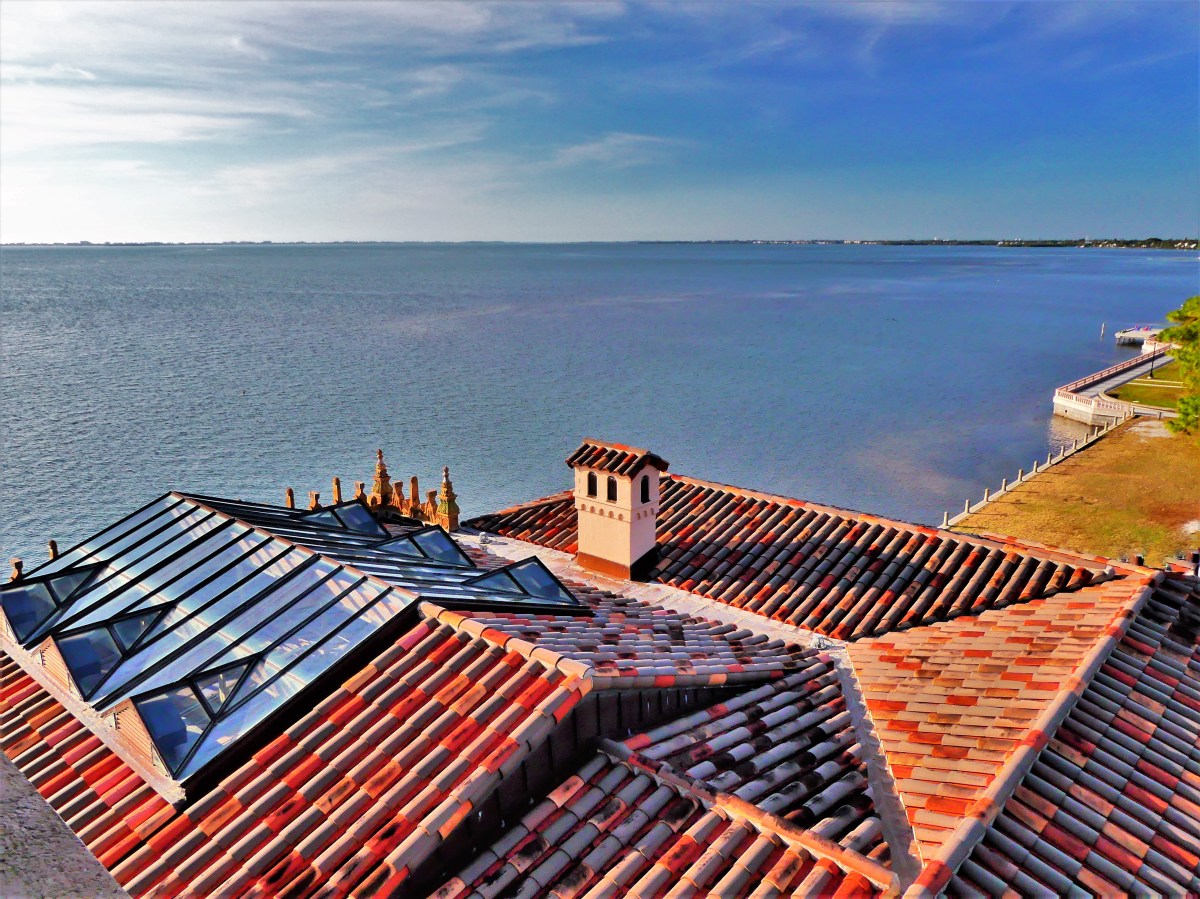
and over a rooftop clad in antique Spanish barrel tile from Barcelona buildings personally salvaged by John Ringling and cargo-shipped to Miami.

rooftop (2).jpg

Legend has it that John Ringling would walk his guests to the top of the tower to show off his Longboat Key land holdings as far as the eye could see.
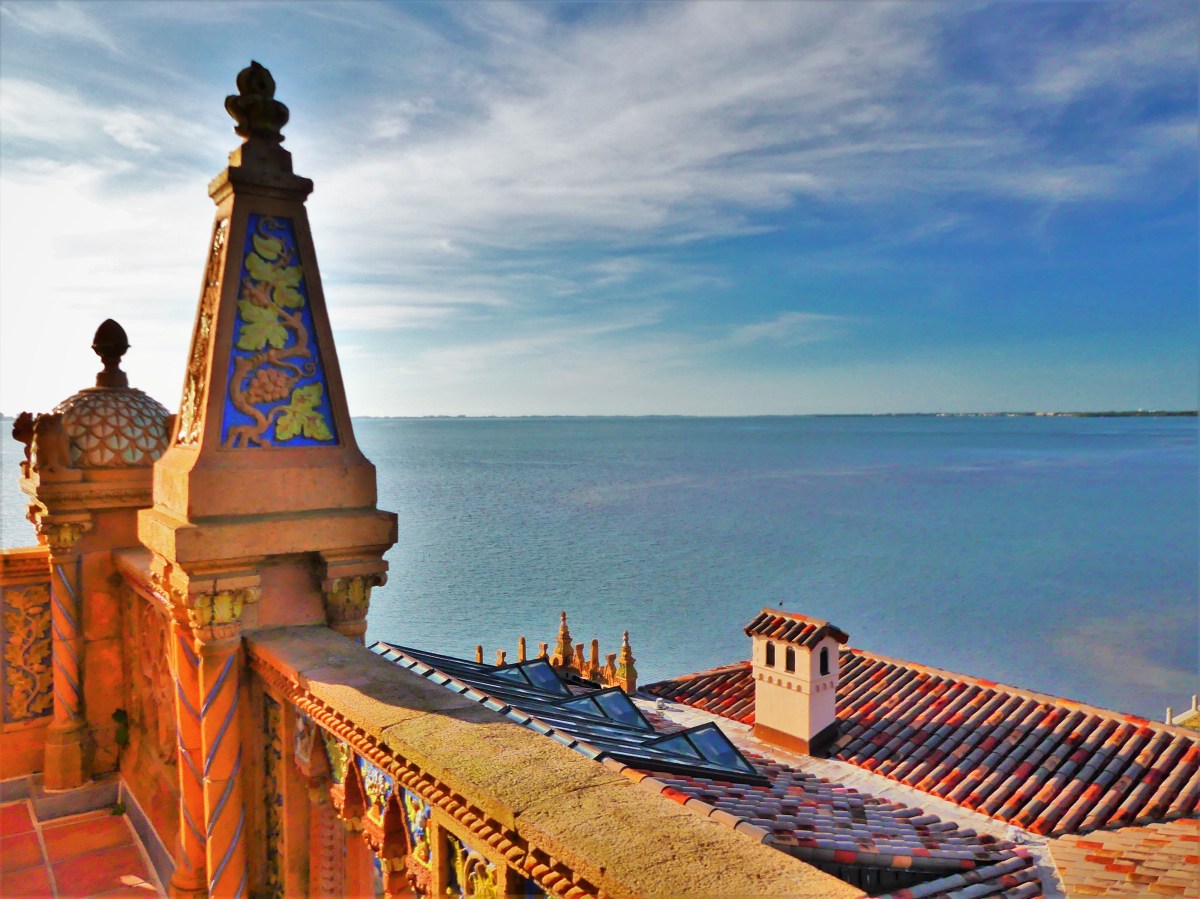
bay view from Belvedere Tower

I must have lost all track of time while shooting to my heart’s content, because when I finally put my camera down, I noticed that I was standing alone, and the tour had moved on without me.

Down the spiral stairs I ambled,

Spiral stairs and water.jpg

only to discover the tower door locked from the inside. I pounded on the iron-clad door in vain, eventually realizing that nobody could hear me. I considered my limited options: I could look out over east side of the tower, hoping that I could be discovered from below…
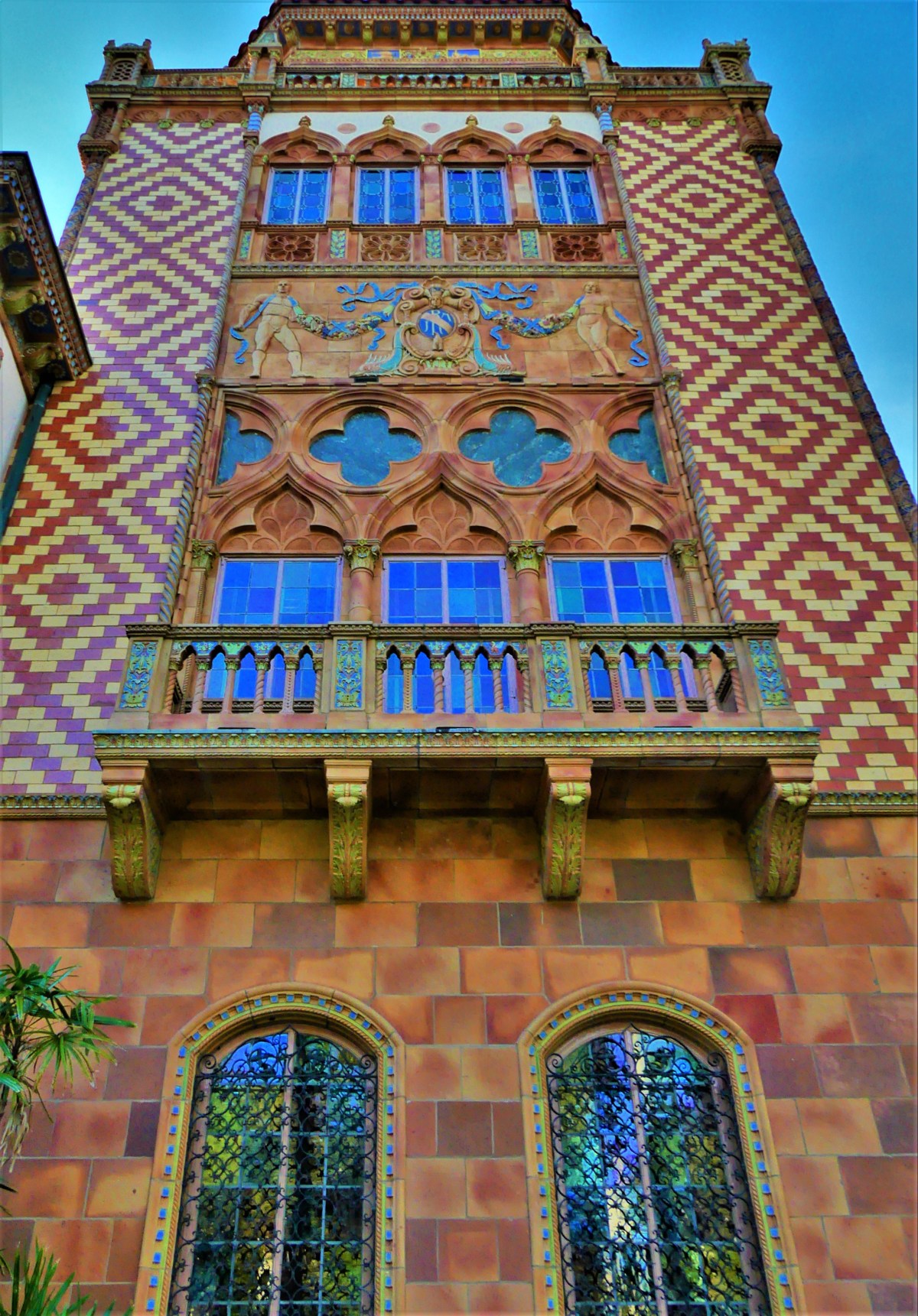
front with tower.jpg

…nah…or I could try Leah’s cell phone, and hope that she’d taken it off vibrate. It rang and rang and rang…

9-1-1 was another consideration, but quickly discounted when Leah finally answered on the fifth ring.

“Hello? Why are you calling me?” was all she wanted to know.

“Take a look around you. Do you see me anywhere?” I started.

“No, but I figured you’re off taking pictures somewhere ’cause that’s what you do,” she intoned.

“Well not this time,” I revealed. “This time I’m stuck at the top of the tower with the door locked, and no way of getting down. So do you think you could manage to alert the docent or security, and maybe they could find their way up here to rescue me,” I mentioned calmly.

“I’ll see what I can do. Bye.” and she was gone.

An extra five minutes on the tower landing, and I was still enjoying the view. But when five minutes turned to ten, I called Leah again to make sure I wasn’t being punished or forgotten. This time she answered right away.

“Hi. Remember me?” I was 100% sarcastic.

“I don’t know what to tell you. They said they were on their way,” she quasi-sympathized.

Moments later, I heard the door unlatch. The door swung open, and there was our security escort together with the guide–both looking relieved and embarrassed.

“I’m so sorry,” stated the docent. “I don’t know how something like this could have happened. In all my years of running tours through this house, this has never happened before. Thank goodness, you’re alright,” she gushed.

I followed her down four flights of stairs, with security only steps behind me, probably watching closely to guarantee I didn’t get lost. The tour was officially over.

I rejoined Leah at the back of the palazzo, where we sat for a few minutes on the inlaid marble terrace looking out across the water,

marble terrace

and imagined Mable being rowed around the bay in her authentic Venetian gondola, while contemplating her next trip to Italy.

But her time at Cà d’Zan was brief and bittersweet. She would only have three years at her beloved retreat before succumbing to Addison’s disease with complications from diabetes in 1929.

Although she lived to be 54, for Mable it was la dolce vita.


The Greatest Show on Earth

For anyone who ever wanted to run away and join the circus, ground zero is located in Sarasota, FL, where a legacy built by John and Mable Ringling continues to simmer in a culturally rich pot that still stirs the imagination.

It’s hard to believe that Sarasota, once a sleepy fishing village on the Gulf Coast of Florida at the turn of the 20th century, has become a shining example of shimmering glass towers and manicured mansions on the bay,

bay view.jpg

and a cultural capital of fine and performing arts in America–

Van Wezel

born from a prophecy envisioned by circus impresario John Ringling, and fueled by The Greatest Show on Earth.

train poster

However, after 146 years of touring across America, the curtain has come down on the entertainment extravaganza, and the big top has folded forever after its last show on May 21, 2017.

According to Kenneth Feld, chairman and CEO of Feld Entertainment, the circus could no longer compete as the spectacle that had endured for so many generations. Plagued by prolonged battles with animal rights activists, rising operating costs, and children more enamored by super heroes, the circus had lost its lustre and cultural relevance.

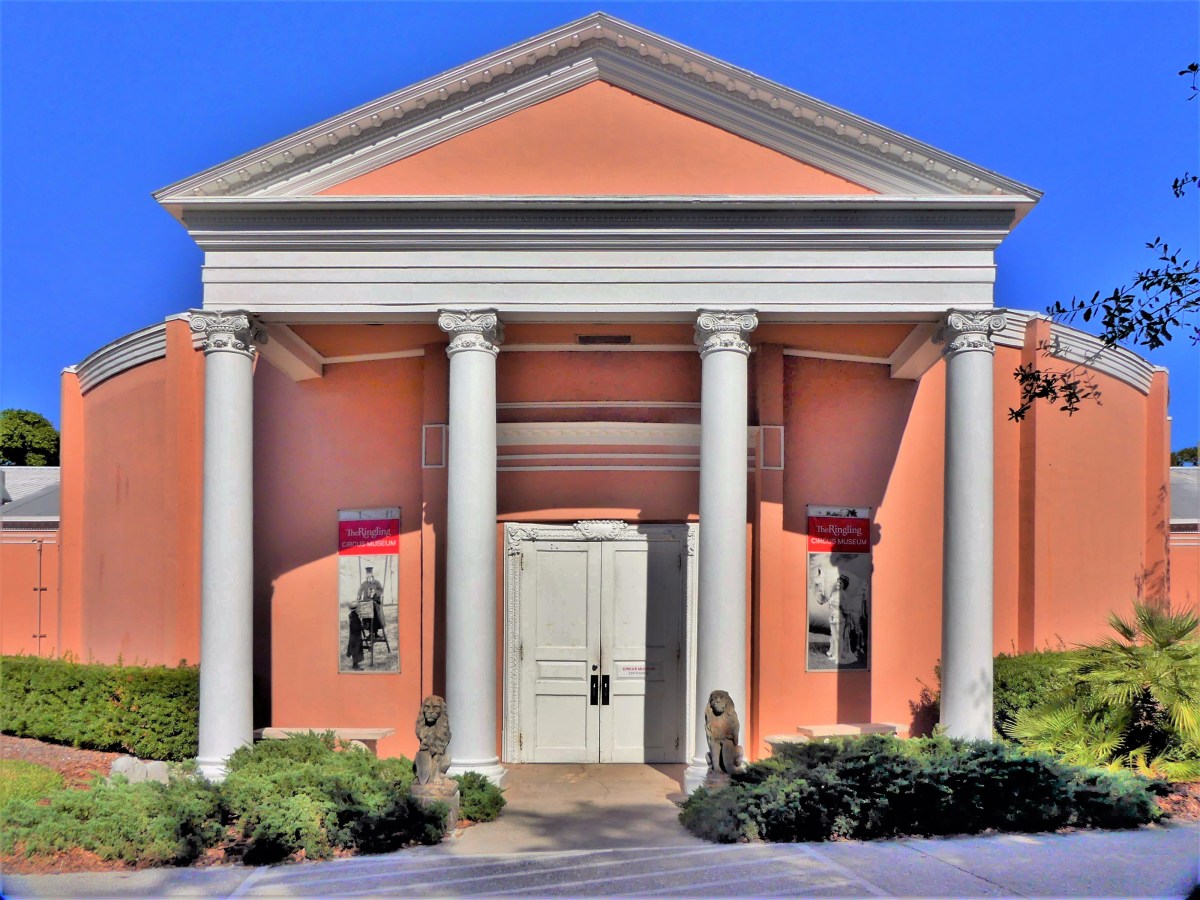
Fortunately, for those of us who still remember the taste of roasted peanuts, and the sweet smell of cotton candy wafting in the air, a visit to Ringling Museum of the American Circus…

building entrance (3)

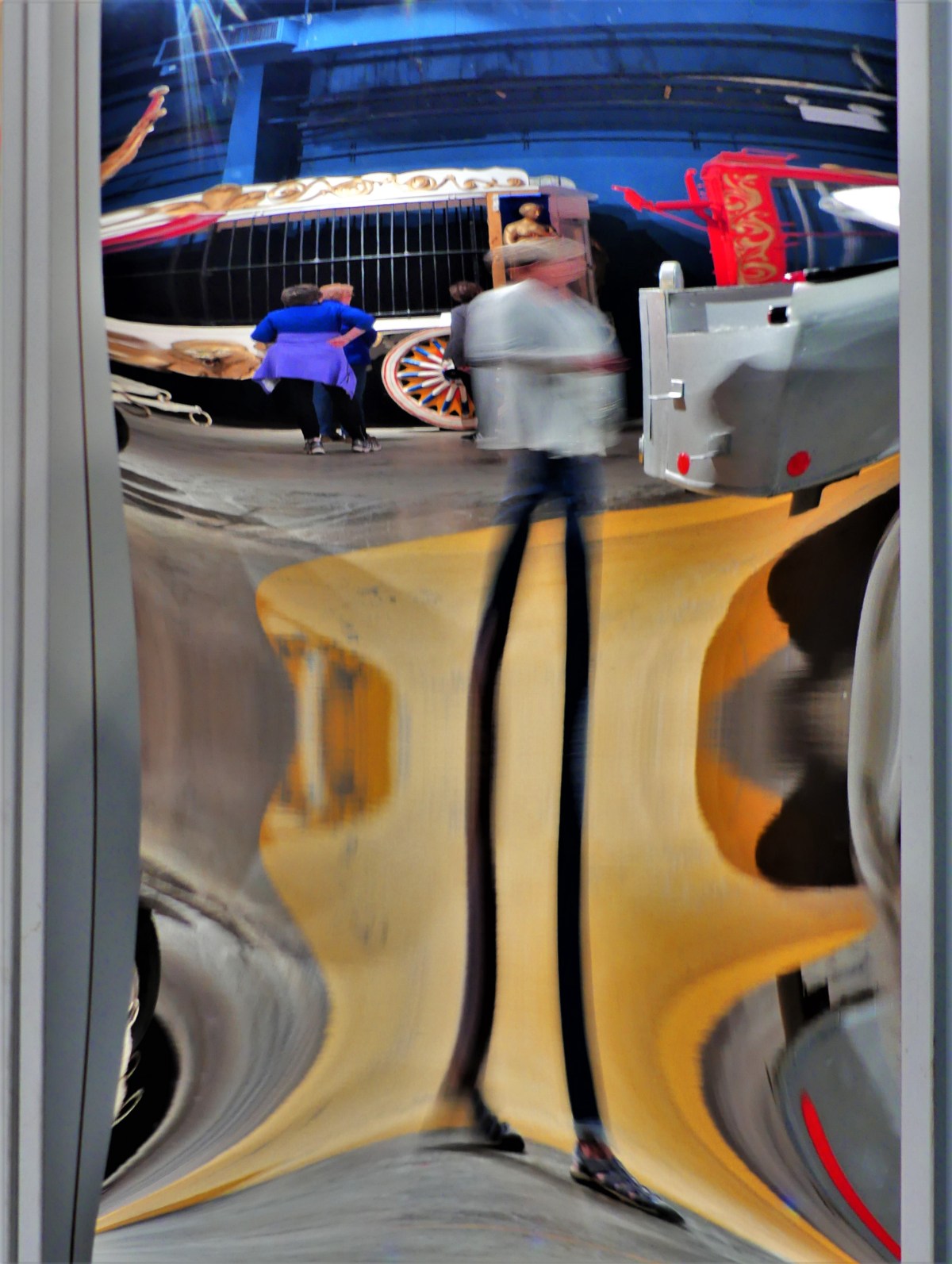
provides a venue to a bygone era, when the thrill of the circus parade would send spirits soaring, and unrelenting children reigning havoc on parents, until they were promised tickets to the latest and greatest show.

fun mirror

Established in 1948 by Chick Austin, Jr., Ringling’s first museum director, the circus museum displays Ringling memorabilia from the time the Ringling brothers purchased the Barnum and Bailey act in 1907.

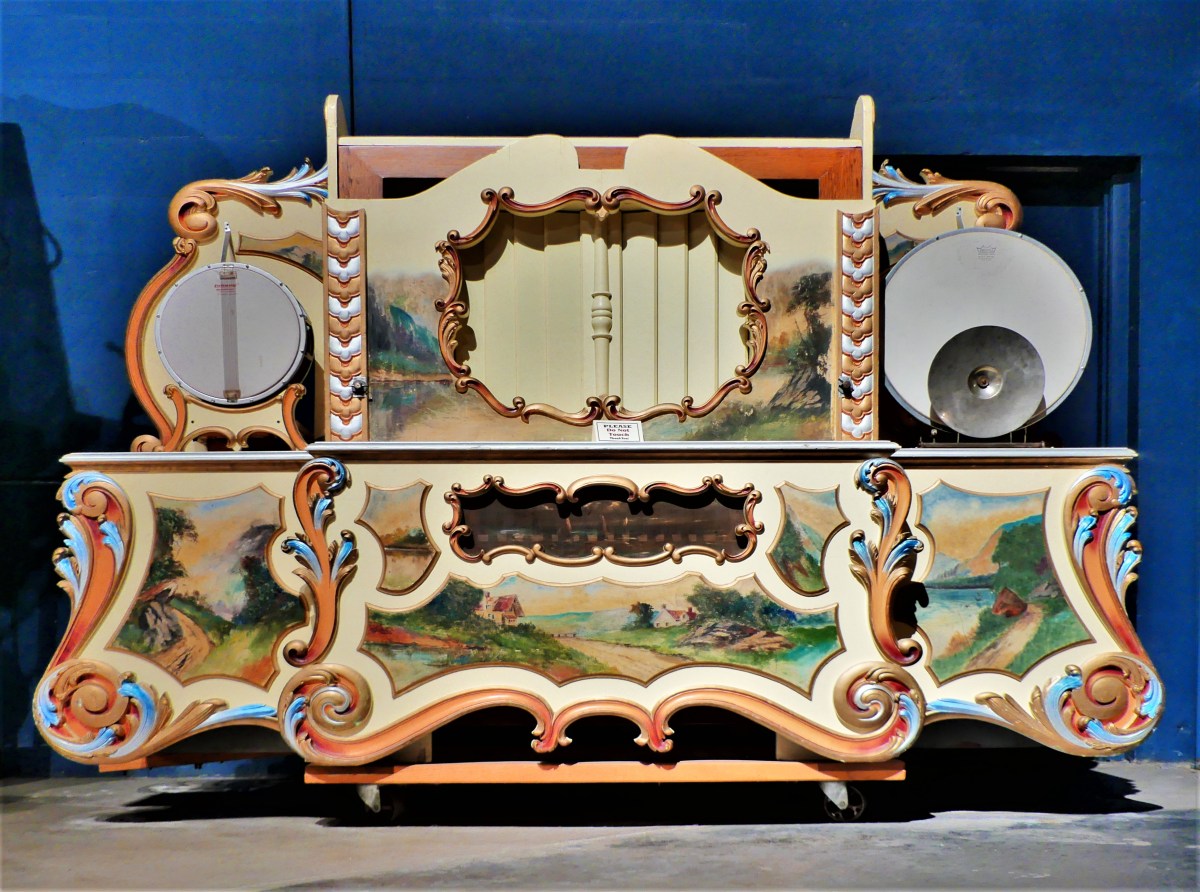
The collection features beautifully carved circus wagons,

music wagon1
Harp and Jesters Calliope Wagon, circa 1915
music wagon
Griffin and Venetian Bandwagon, circa 1907
lion wagon
Hagenbeck and Wallace Lion Tableau Bandwagon, circa 1904-1905
elephant wagon
Elephant Bandwagon, circa 1906
music wagon2
Italian Percussion Bandwagon, circa 1915

props…

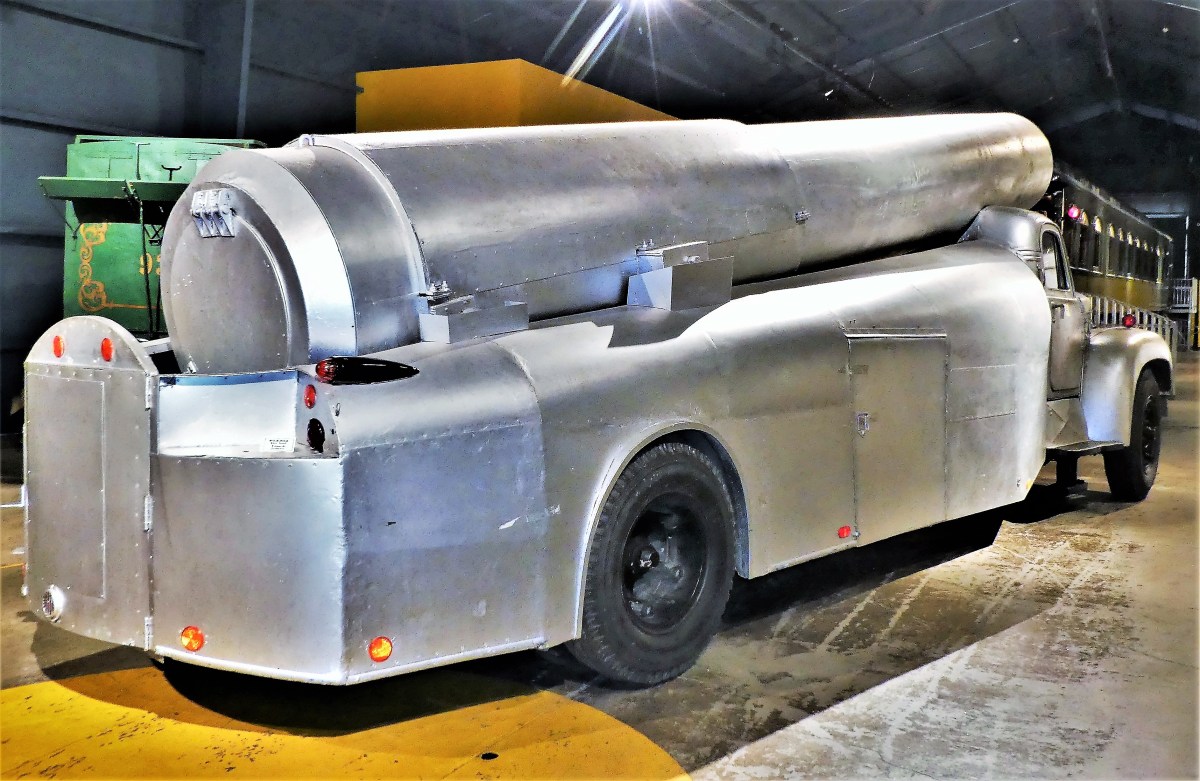
cannon truck1a
Zacchini Repeating Firing Cannon, circa 1960s

posters…

sideshow stage

and costumes…

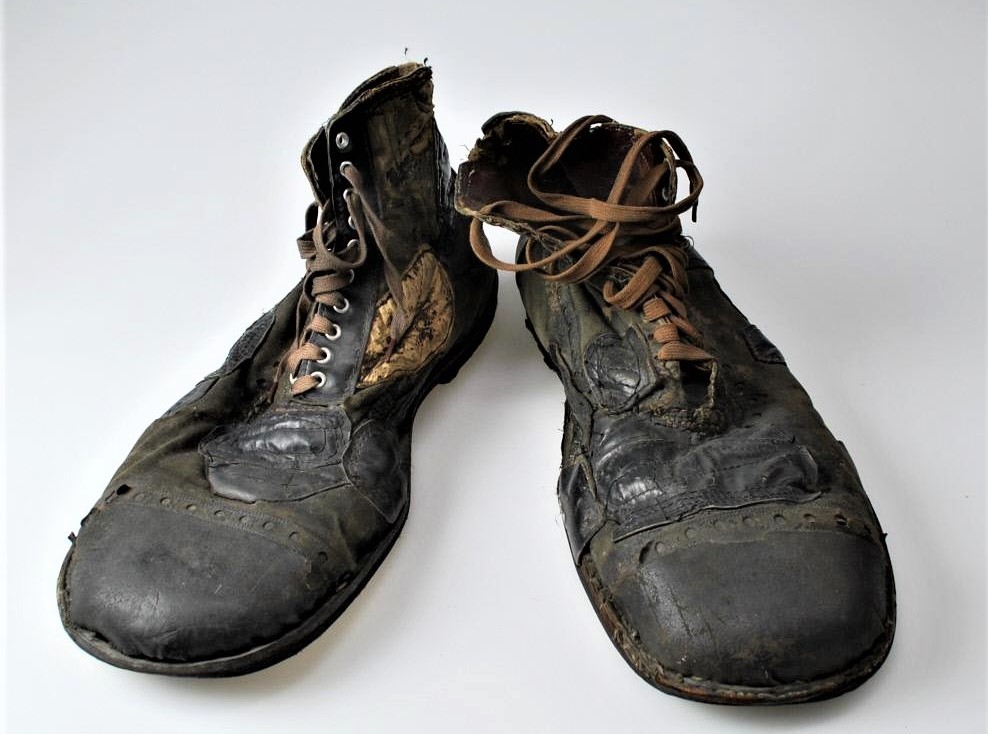
Emmett Kelly's Weary Willie clown shoes (3)
Emmett Kelley’s Weary Willie clown shoes, circa 1942

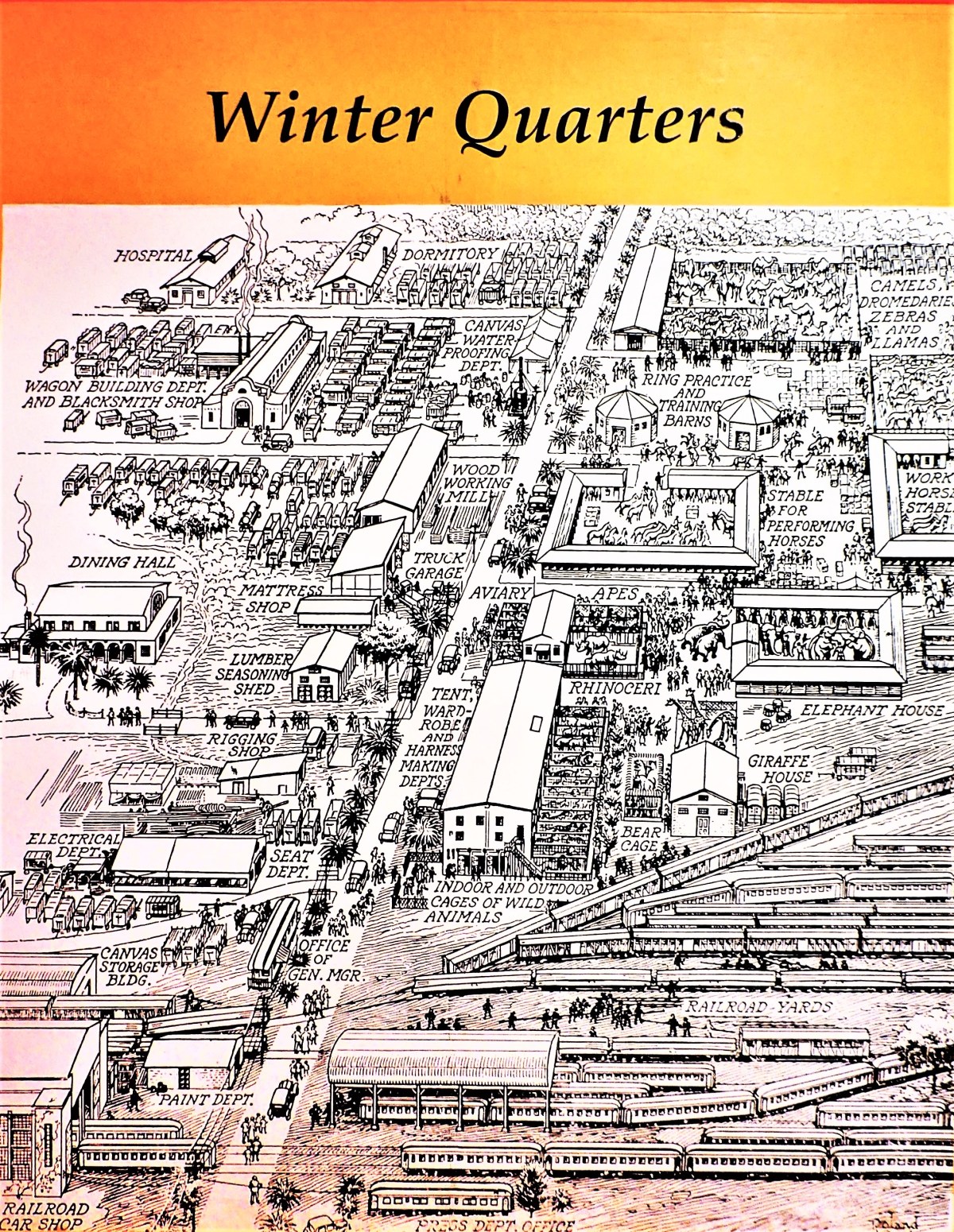
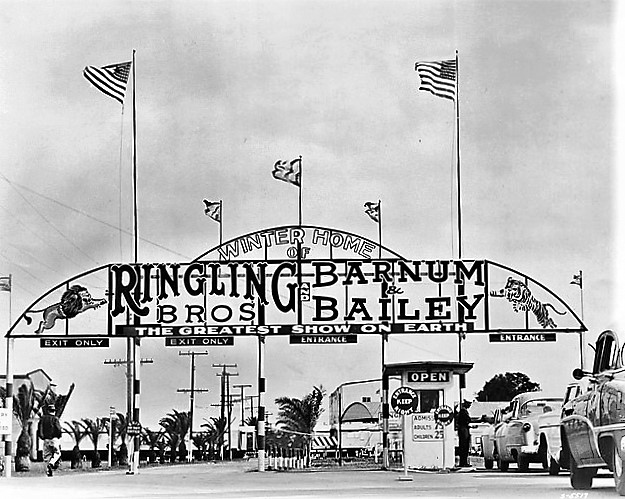
donated from local circus families, who eventually resettled in Sarasota after John Ringling moved the Circus Winter Quarters to town in 1927.

Winter Quarters (3)

Winter Quarters1 (2)

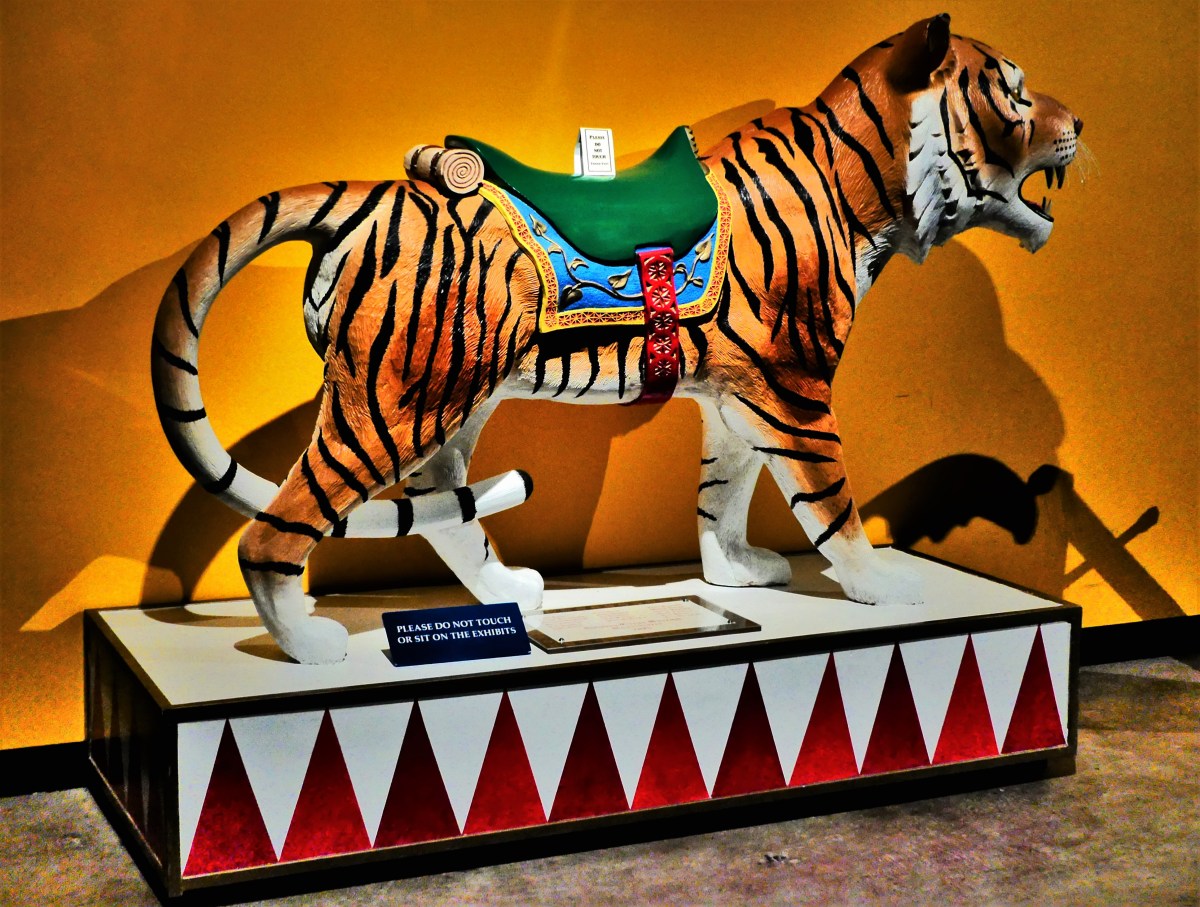
The museum features elaborate animal carvings, past…

tiger sculpture

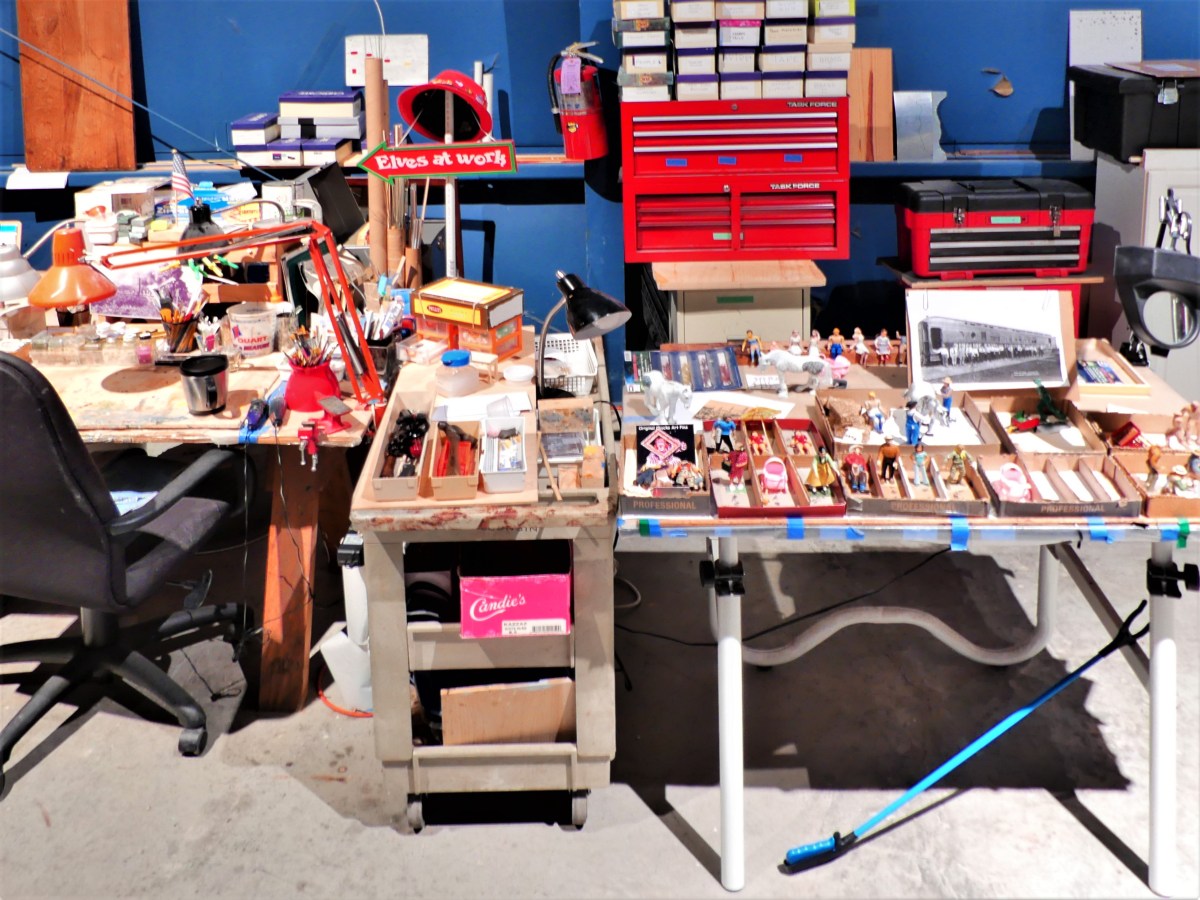
and present, with active carving studios onsite for miniatures…

workbench

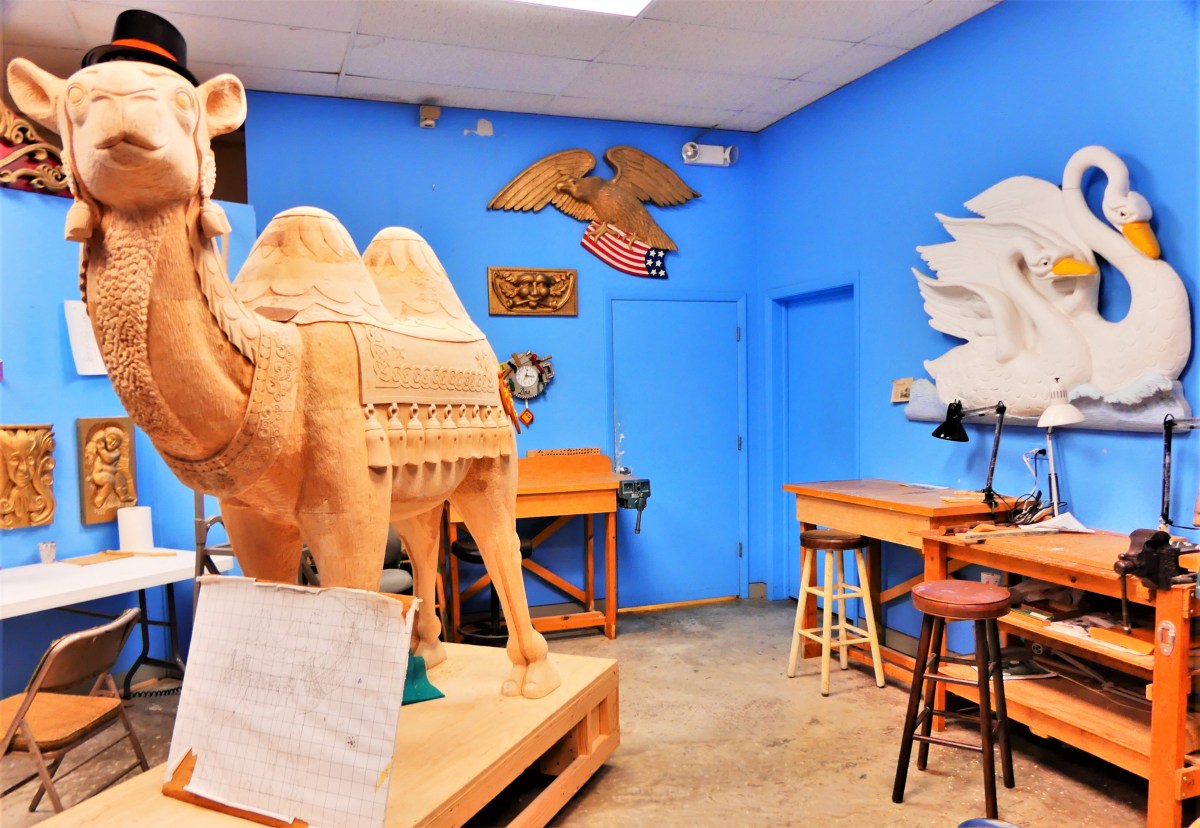
and life-size creations.

carving studio

But the shining star of the show has to be the newly refurbished train carriage, named Wisconsin

John Ringling's Pullman business office

a customized rolling office and home of grand design and furnishings built by Pullman,

Pullman banner

which allowed John and Mable Ringling to criss-cross the nation, always in search of fresh talent and new acts for the big top.

The Ringling Museum of the American Circus features a rich folklore that honors the performers of a Golden Age, and celebrates an iconic American institution once hailed as the Mecca of family entertainment.


The museum is also a testament to five hard-working brothers born in Iowa to German immigrants, who rose from the ranks of penny actors to build a circus empire that lasted long after John Ringling’s death in 1936 until its recent demise…

and sadly, has become just another blip in the timeline of American amusement.


Finally!

We bought a house! It wasn’t supposed to happen this fast, but it did, and it’s still a pinch-me moment.

Always a part of our plan while circling the country, it was our mission to scope out a place to settle at the end of our epic trip. We figured that there was a definitive advantage to traveling through all parts of America for an up close and personal look at what could be next for us, making it easier to sort out all the fodder, and focus on the merits of communities that caught our attention. But we never counted on finding a new residence this quickly. And we never counted on settling in Florida!

We knew starting out, that our days in New Jersey were numbered. After growing up and growing old in the Northeast–with sixty-four winters of low temperatures and high taxes–it didn’t take much figuring to realize that retirement was anywhere but New Jersey and the surrounding snowbelt. Yes, it meant saying goodbye to friends and family, but the notion of trading the comfort and familiarity of an old sweater for a tank top and flip flops was too profound to ignore.

As we streamed thru America, we carried a quiet list of must-haves and desires that we would superimpose from time to time over different destinations in order to analyze the community credentials, although it seemed that our list was so exhaustive and exclusive that we wondered if there was a place for us at all.

We wanted a beach and the mountains; we wanted a quaint yet vital town or city–not too big, but not too small–that would still have a cultural identity reflected by its diversity of good restaurants, music venues, art galleries and local merchants, all within reasonable proximity; we wanted affordable tax-friendly living to stretch our dollars into our late nineties; we wanted space around us to protect our sacred privacy, just in case we wanted to run around naked; we wanted newer construction to ease ourselves of homeowner headaches; we wanted a climate that would allow us generous outdoor time, and while the passage of seasons wasn’t a high priority, it would certainly break the monotony of spring, summer, spring, summer, etc.

Immediately, we ruled out the Northwest because of the rain, the cold and fires. We rejected the Southwest for it’s dryness and heat (although Sedona was in the running). California was too expensive, and Texas was too Republican (except for Austin, ahh, thank goodness for Austin). After disqualifying the Midwest for its lack of mountains or beaches, we knew we were running out of possibilities.

We concentrated on our search in earnest after returning from our New Jersey Thanksgiving with family, and reboarded the Airstream temporarily stored in Charlotte. We resumed our country tour in Charleston, which seemed to me like a perfect location. It had everything that we were looking for, except plantation living proved too costly. The closer we got to the historic city, the further removed we got from affordable real estate. And the closer we got to affordable housing, the city inevitably slipped further away from sight and touch. Unfortunately, Savannah was no different. Sadly, we crossed South Carolina and Georgia off our personal prospectus.

I had mentioned to Leah from the beginning that I never considered myself Florida material, yet here we were in Jacksonville, considering the likelihood of St. Augustine. Interestingly, America’s most historic city (founded September 1565) ticked all of our boxes (other than mountains, eight hours away). All that remained was finding a house that we could make our home.

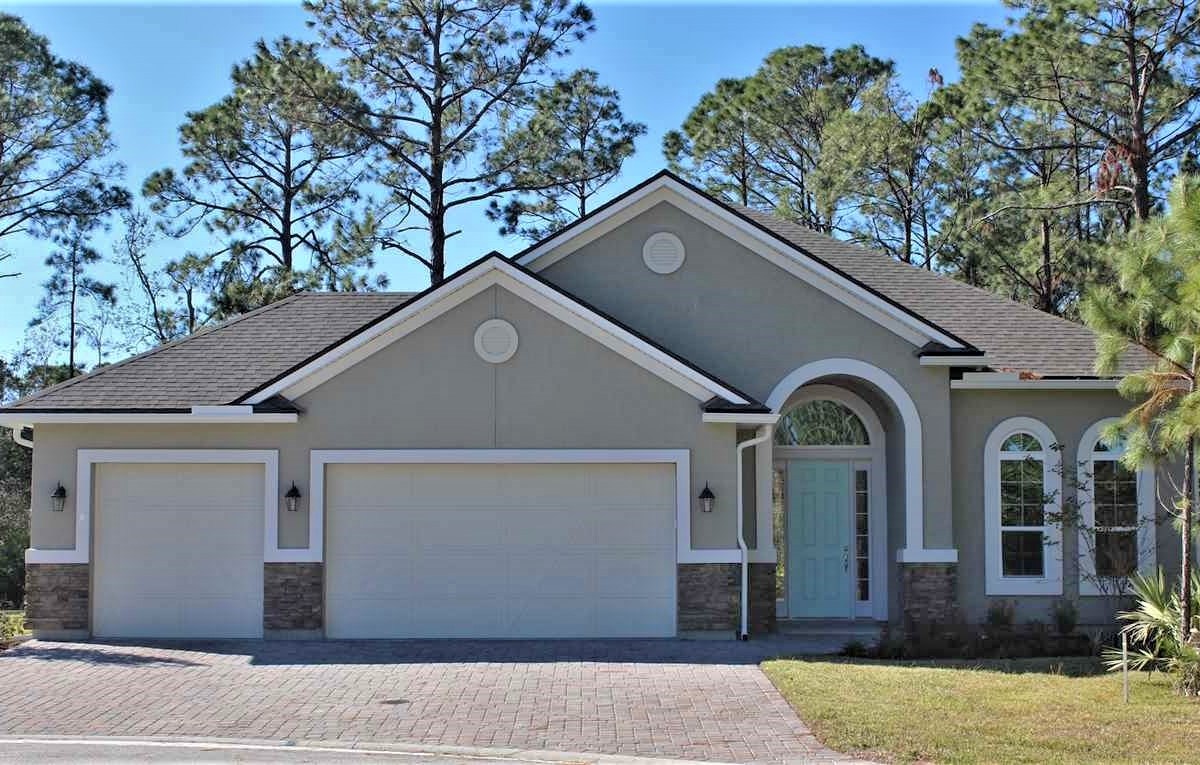
Local friends recommended an agent friend of theirs who picked us up from a nearby Walmart parking lot (where we drycamped the night before), and patiently chauffeured us from one development to another. But everything Bob had shown us was underwhelming until we walked through a custom-built house on a cul-de-sac bordering a preserve on two sides–originally built for a client who’d lost her financing and had to walk away from the sale–and offered at a price that Leah and I could afford, with a floorplan that suited our needs: open-concept, single floor living with 12-foot ceilings, a gourmet kitchen with natural gas, a screened-in lanai, and a 3-car garage.

Concord Floor Plan-2258-Madeira

We didn’t commit right away. Leah had her doubts about community amenities, but a 10-minute bicycle ride to historic downtown, and 6 miles from Vilano Beach proved to be a winning combination, even though the association pool was unheated. We deliberated for a week before coming to the conclusion that we might regret passing on an amazing opportunity.

We called Bob and the builder’s agent to find out if the house was still available. It was.

After negotiating the details, the extras, and the price, the house now belongs to us and the bank, contingent upon closing.

We still have three months of traveling ahead of us, but we are finally free to explore the balance of our road trip without the pressure or burden of where we’ll relocate.

All that remains is the when and the how.

Cross Beams

Life on the road can be unsettling to the soul, so from time to time–when passing through towns and cities–we’ll randomly take our time to wander through a variety of houses of worship for a healthy dose of salvation and inner peace.

As we’ve wound our way across America, several sanctuaries have stood out for their historical significance, stunning architecture, and their integration into the communities they serve.

The chapel of the Mission San Antonio de Valero, better known as the Alamo, was founded in the early 18th century as a Roman Catholic mission along the San Antonio River,

exterior choir

and distinguished itself as the Shrine of Texas Liberty, commemorating the Battle of the Alamo on March 6, 1836, when a 13-day siege ended in the Mexican army’s victory over 189 Texian soldiers.

lone star flag

Originally, the compound was intended as an education center for America’s Indians who converted to Christianity,

compound.jpg

but, ultimately the Alamo became a fortress of New Spain militiamen after the Franciscan missionaries abandoned it in 1793.

interior1

In 2015, the Alamo was designated as a UNESCO World Heritage site.

profile


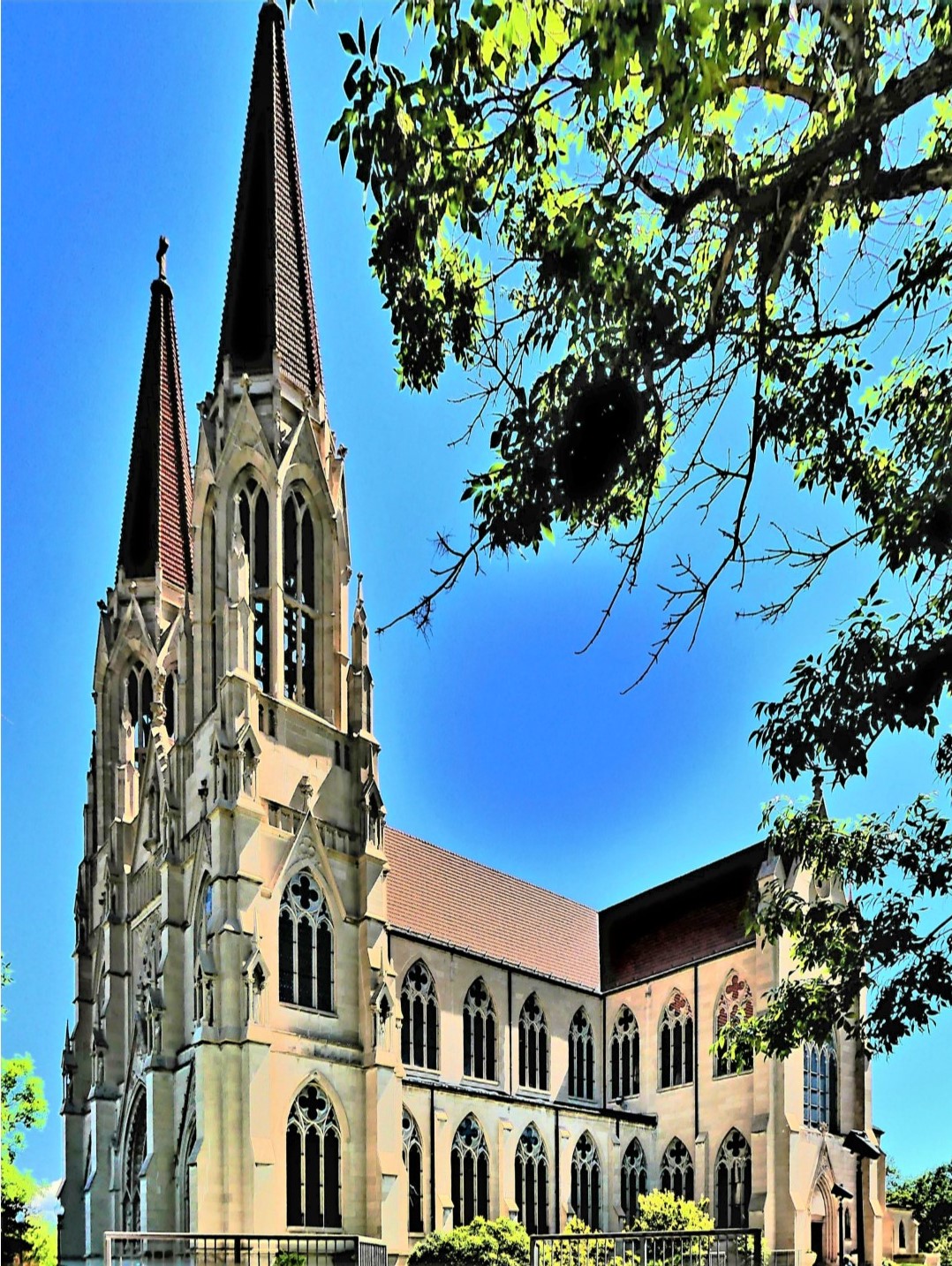
While exploring Big Sky country around Helena, Montana, Leah and I visited the Cathedral of St. Helena,

cathedral exterior

a Roman Catholic parish patterned after the Gothic form of Votive Church in Vienna, Austria,

buttress (2)

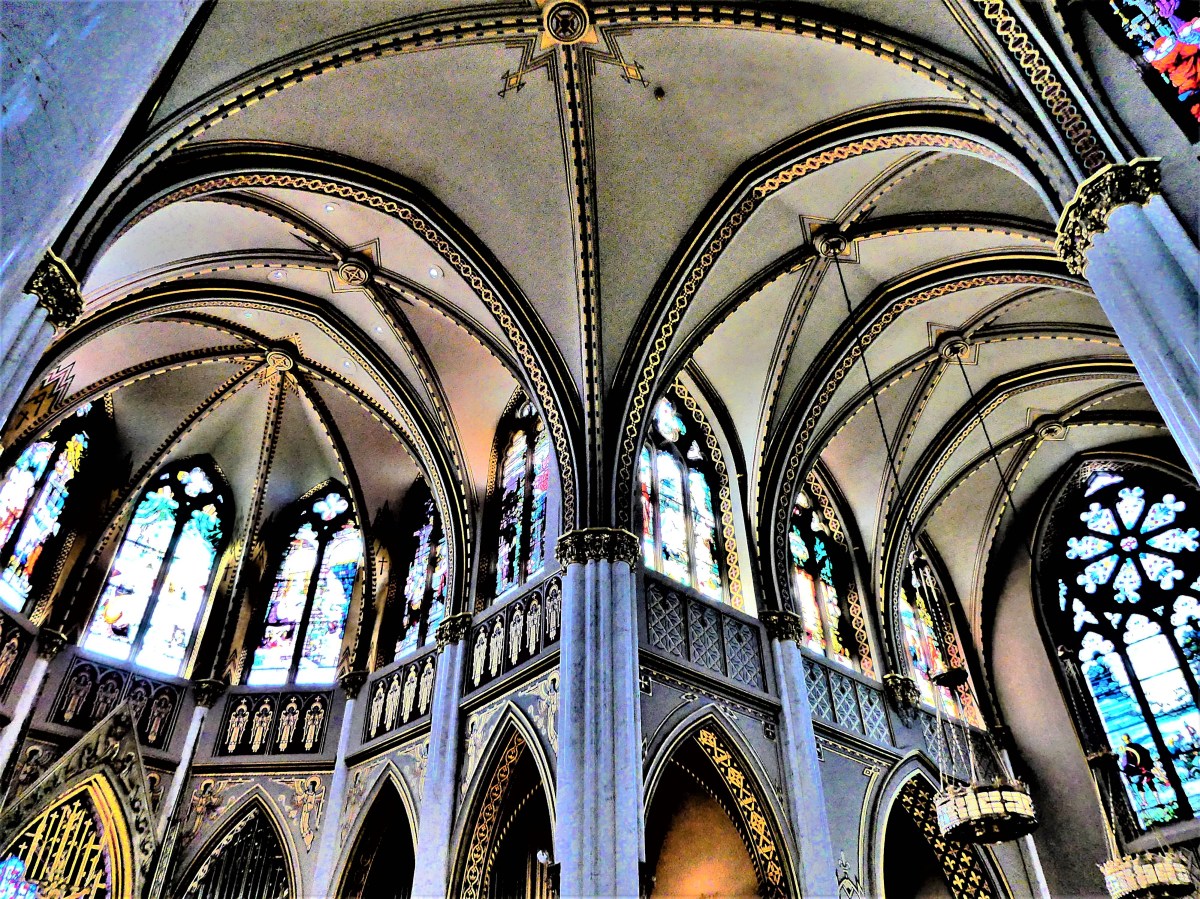
and distinctive for its 59 stained glass windows depicting scenes from the Old and New Testaments.

nave

Nearly destroyed by an earthquake in 1935, the cathedral was restored to its original design after three years of reconstruction.

rose window

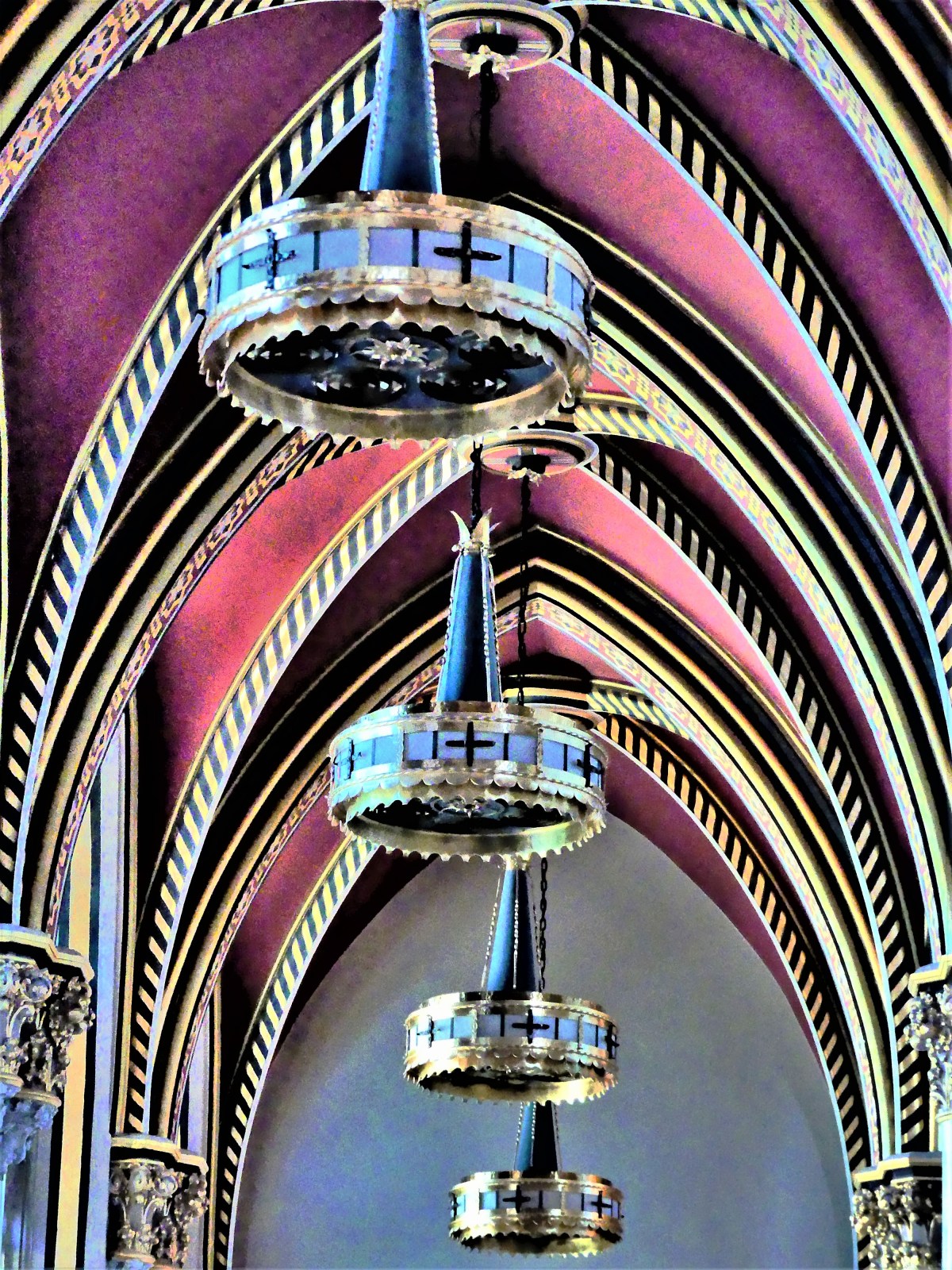
The interior was gilded in time for the Cathedral’s Golden Jubilee in 1959,

lights

and included in National Register of Historic Places in 1980–giving the residents of Helena something to crow about.

rose window perch


Romanesque architecture defines the exterior of the Cathedral Basilica of Saint Louis, completed in 1914,

cathedral ext

and attributed to patron Saint Louis IX, King of France.

ceiling of the Narthex (2)

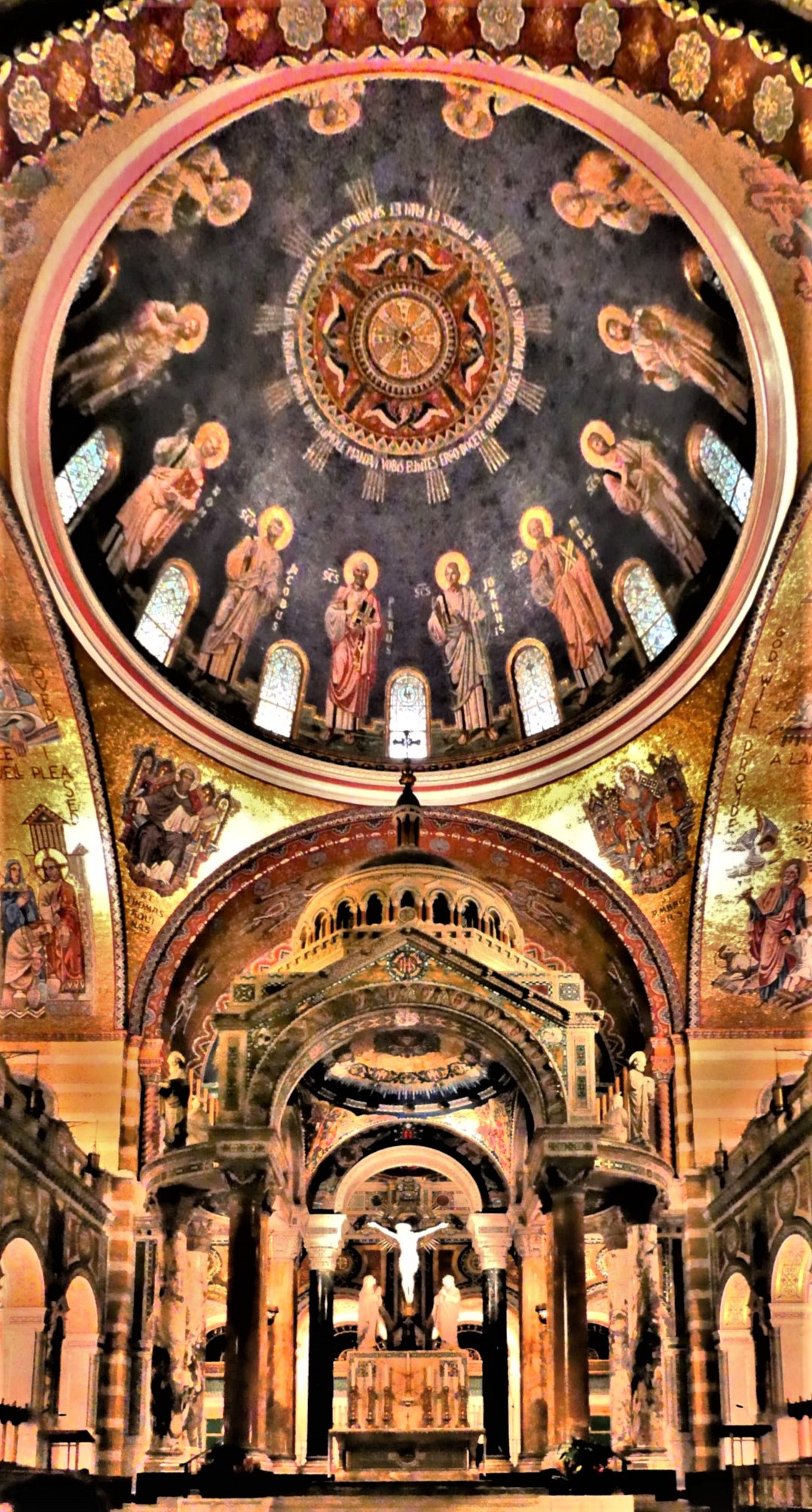
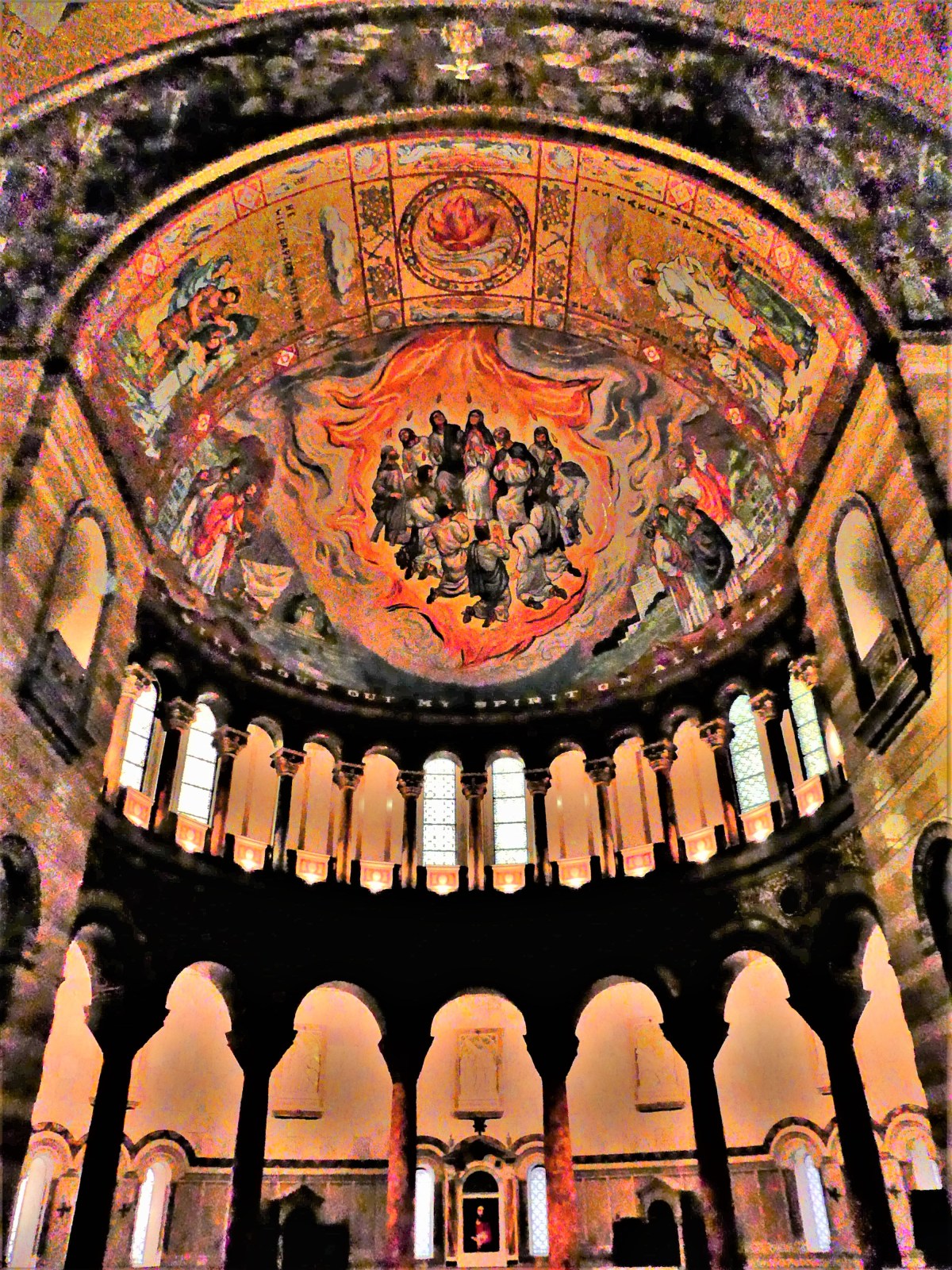
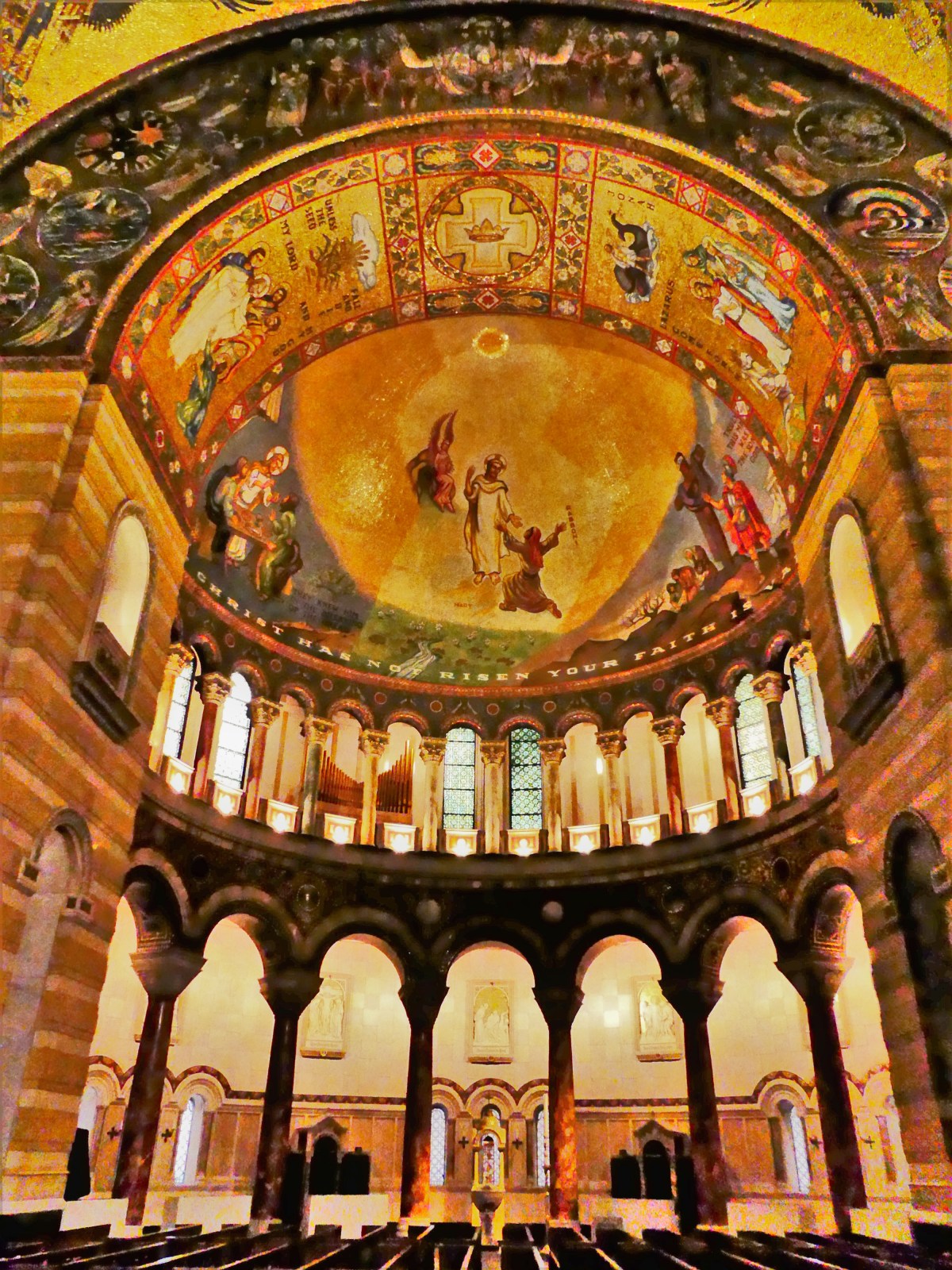
However, the interior reflects from a Byzantine style rooted in soaring domes and mosaic art.

apse

Installation of the Cathedral’s mosaics–which adorn almost every decorative surface of wall, ceiling and dome–began in 1912 and was completed in 1988.

depiction of Pentacost

Twenty different artists collectively inlaid 41.5 million tessarae tiles of 7,000 colors, covering 83,000 square feet, making it the largest mosaic collection in the world.

depiction of Easter

Pope John Paul II designated the Cathedral a basilica in 1997, where it acts as the mother church for the Archdiocese, and seat of its archbishop.

Historic Bay


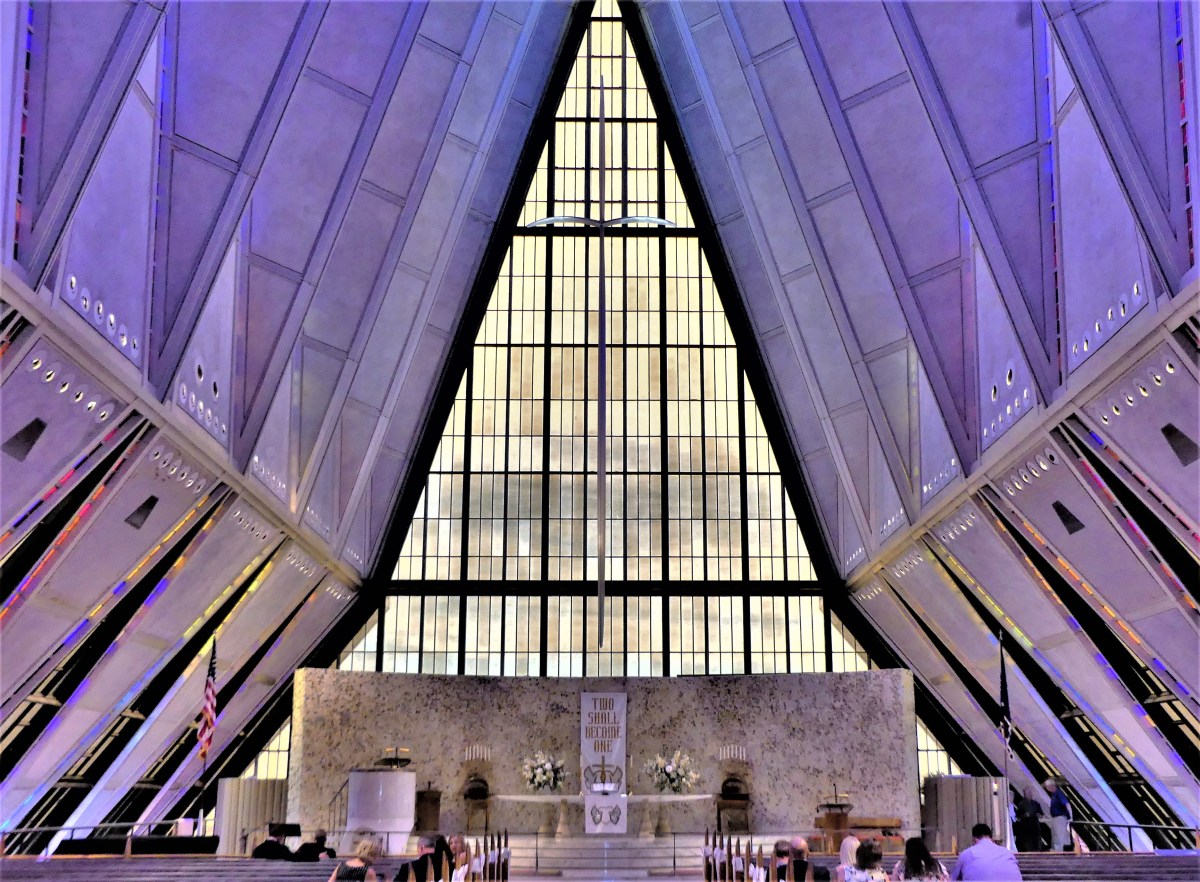
In stark contrast, the Cadet Chapel–a multi-faith house of worship–soars heaven-bound at the Air Force Academy campus located in Colorado Springs, Colorado.

chapel exterior

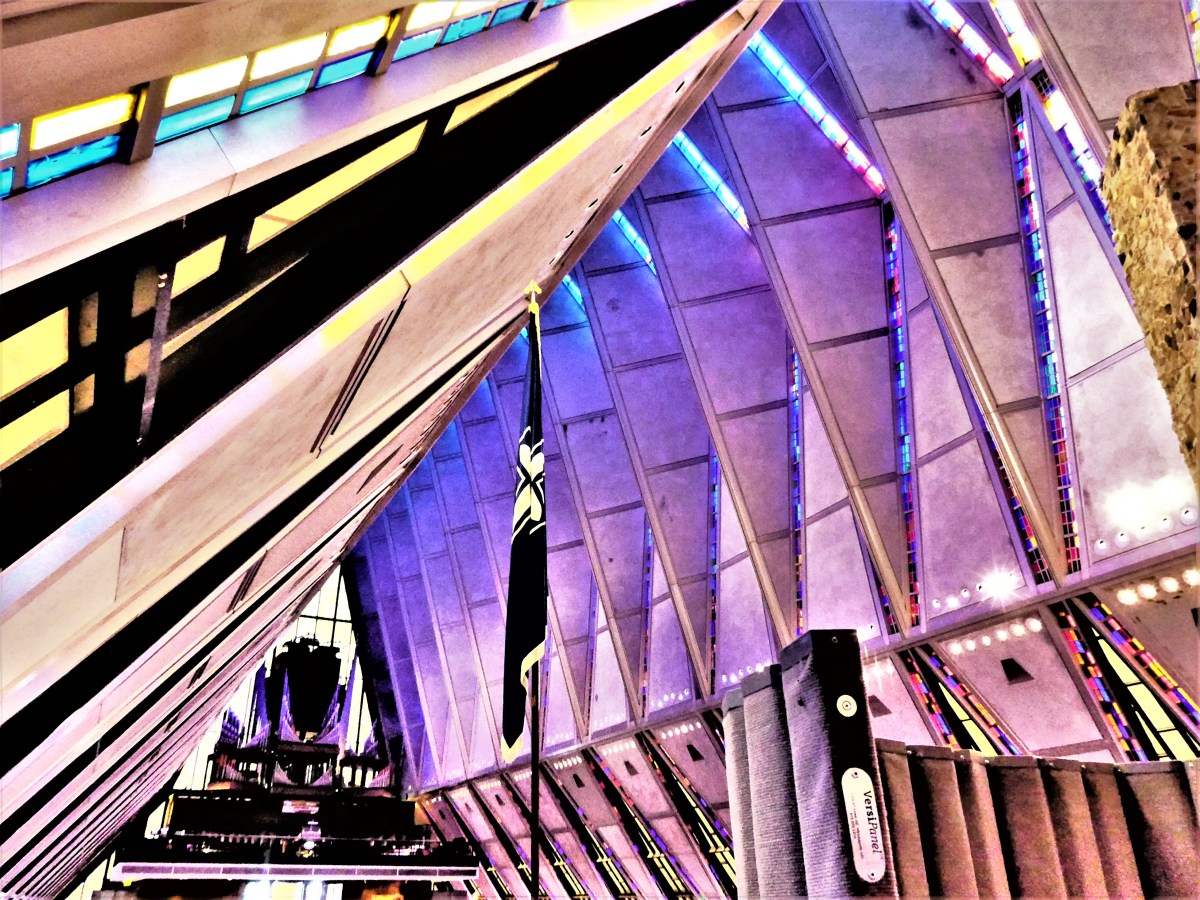
With 17 upright wings on edge, and piercing the sky at 150 feet, the Cadet Chapel is a stirring example of modern American Architecture.

chapel 2xt (2)

Constructed mostly of aluminum, glass, and steel,

chapel alter (2)

the main sanctuary is home to an Air Force Academy demographic that is primarily Protestant.

chapel int (2)

However, the lower level of the structure houses chapels and prayer rooms for Catholics, Jews, Muslims, Buddhists, and Orthodox Christians.

lower level chapels.jpg

The Cadet Chapel was awarded the American Institute of Architects’ Twenty-five Year Award in 1996, and was named a U.S. National Historic Landmark in 2004.

stained glass ceiling


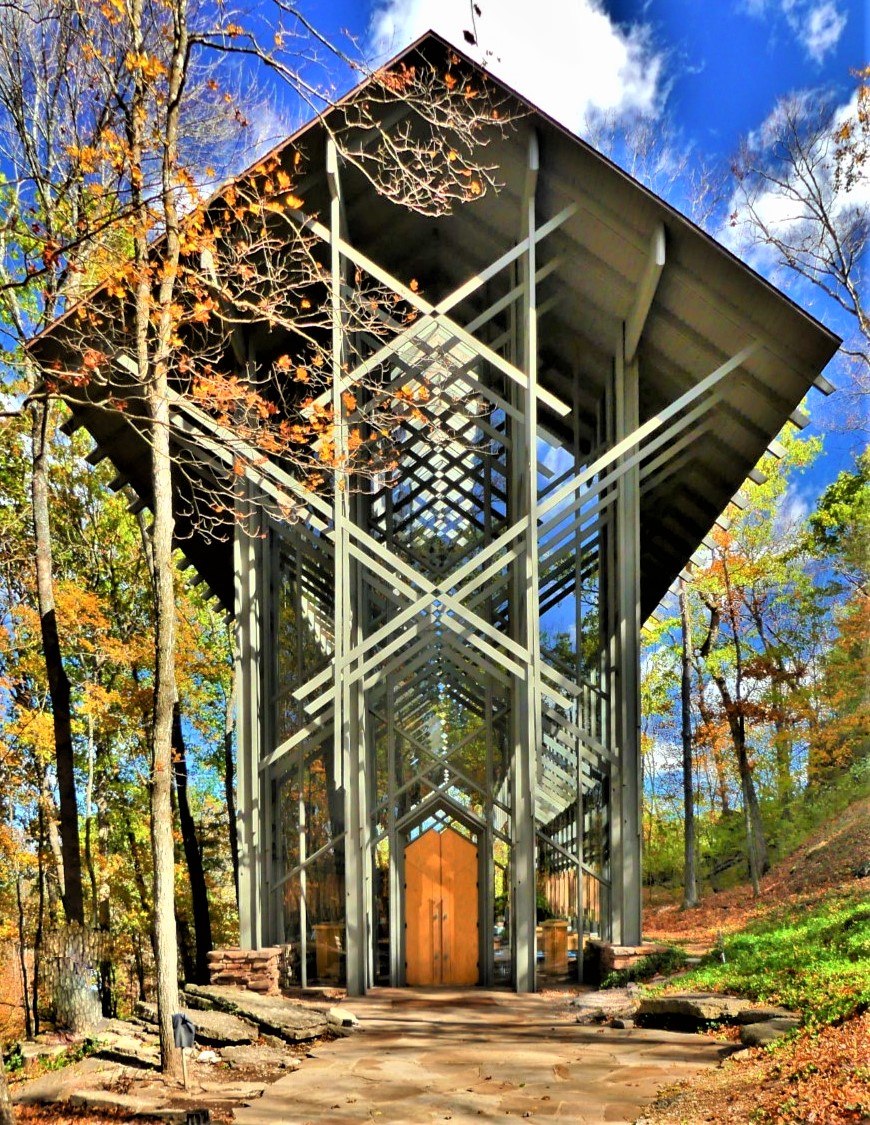
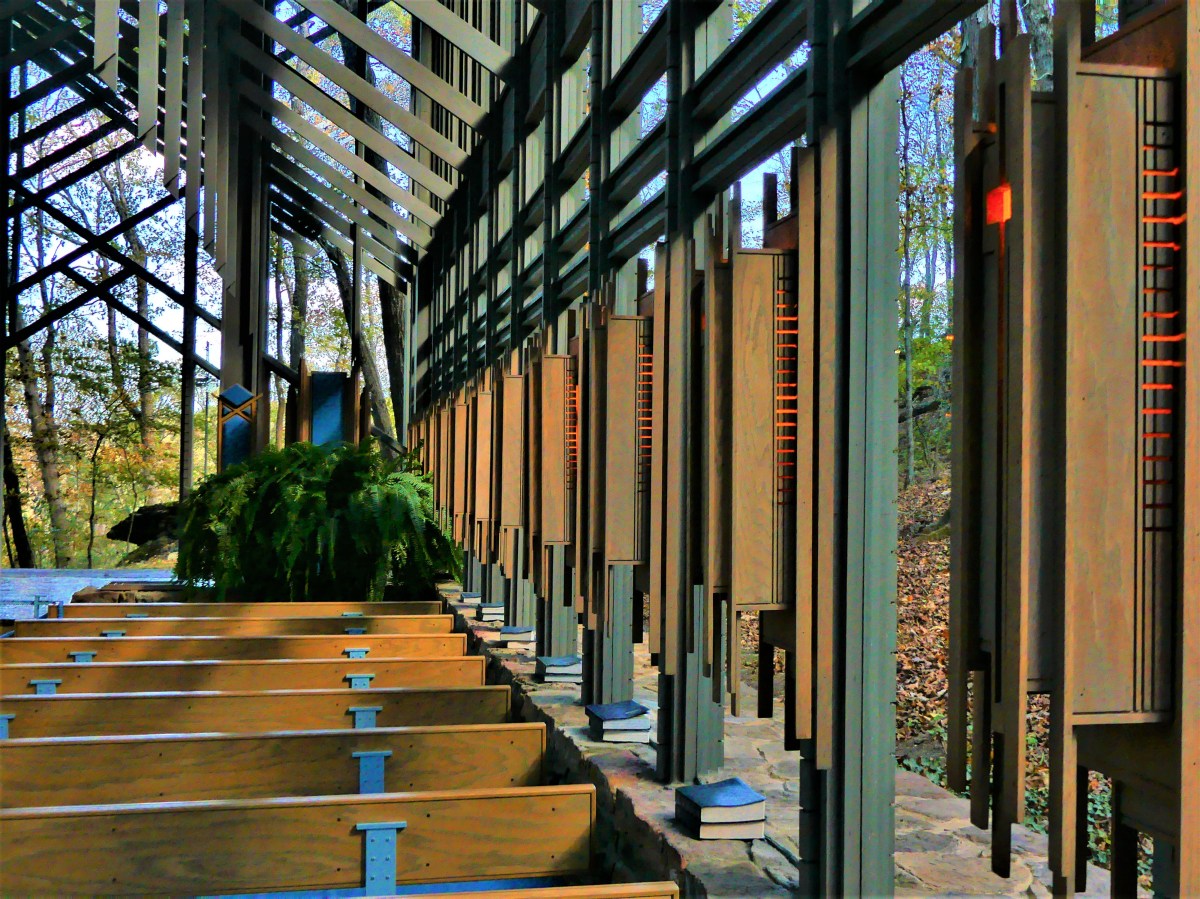
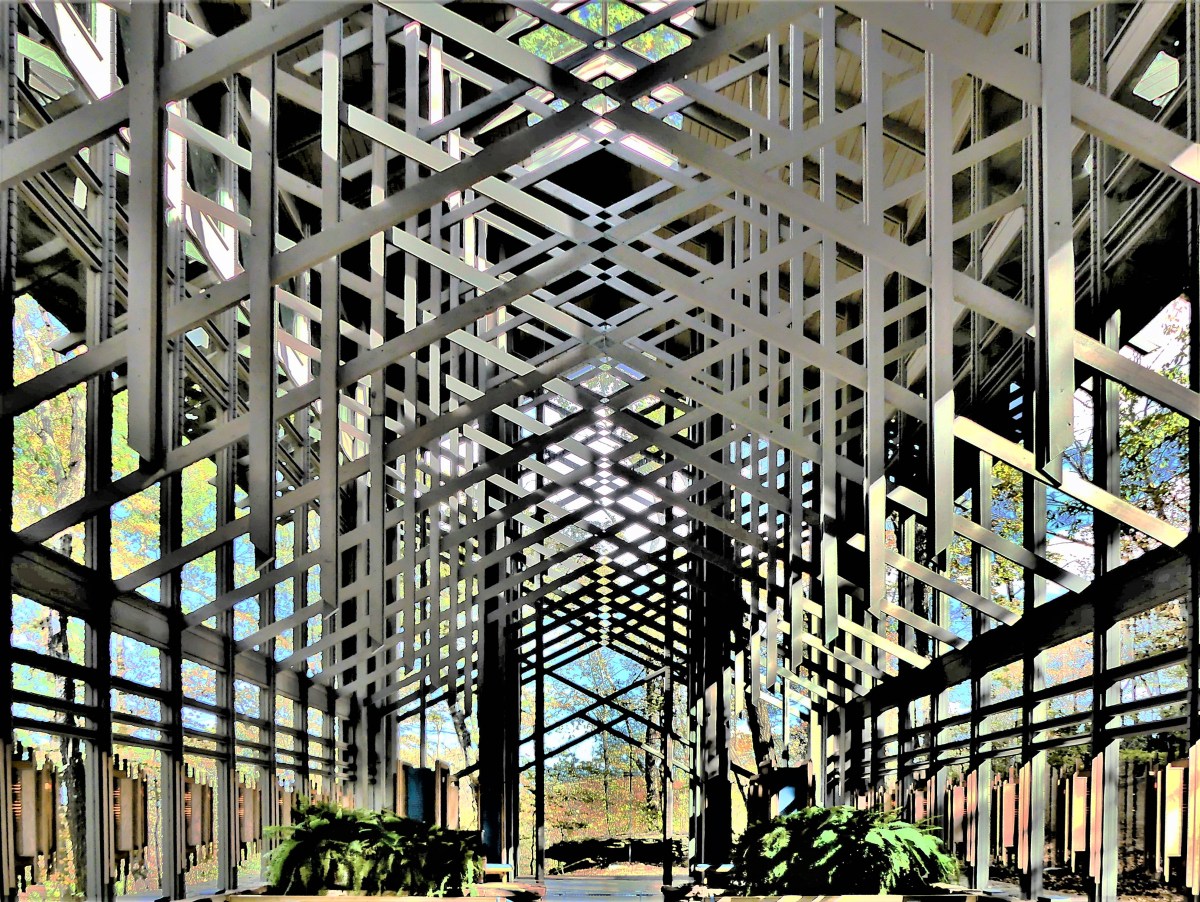
Also reflective of modern American architecture, and an homage to nature in its purest form is Thorncrown Chapel, nestled in the Ozarks of Arkansas, on the edge of Eureka Springs.

Exterior

Constructed from the same Southern pine indigenous to the site, the chapel is so integrated into the landscape that it stealthily stands camouflaged by its surroundings,

camouflage

and represents an inside/outside sensibility, with Arts and Crafts flourishes.

pews and lights

Thorncrown Chapel was named a National Historic Place in 2000, and received the Twenty-five Year Award by the American Institute of Architects in 2006 for design of enduring significance.

crossbeams


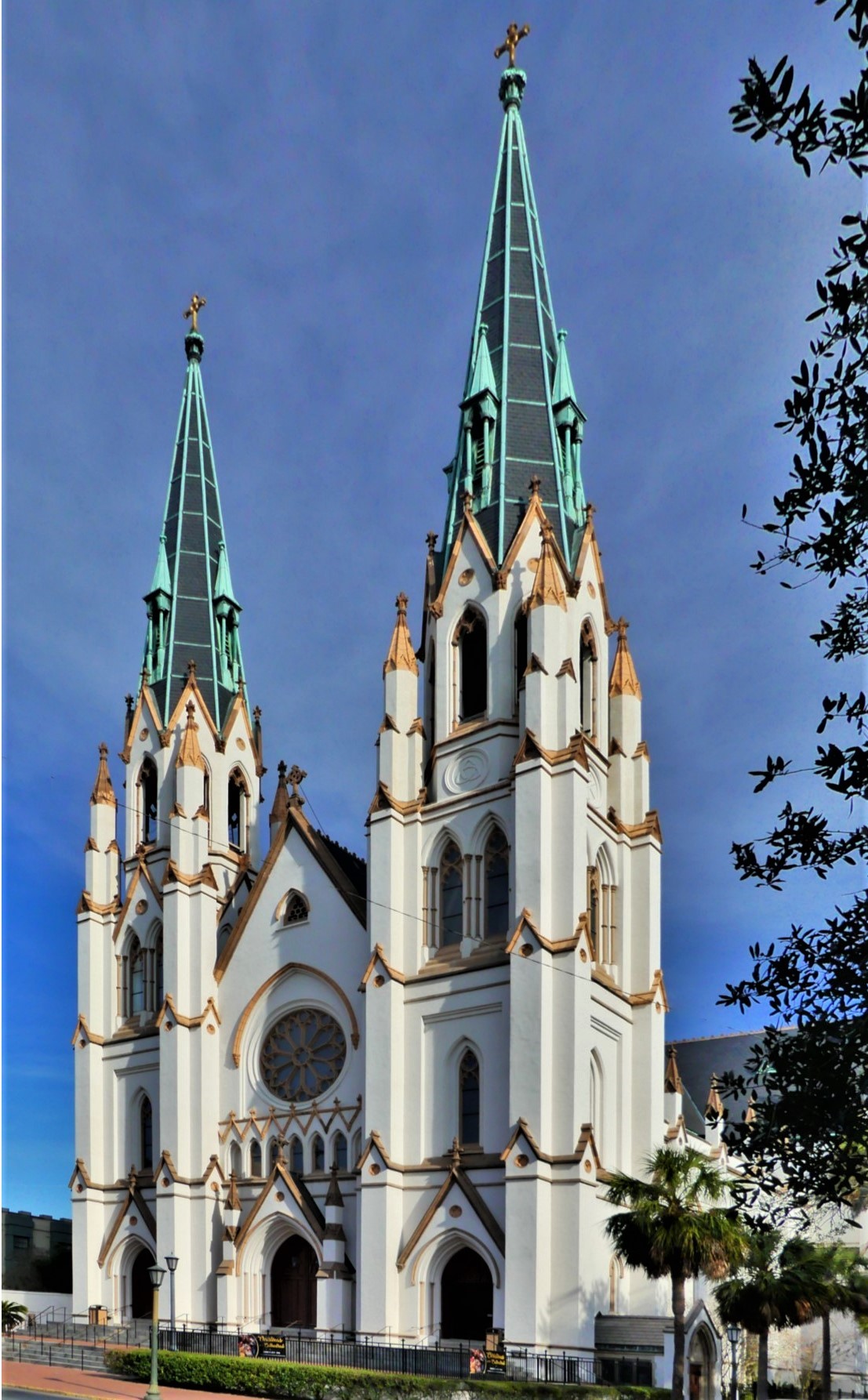
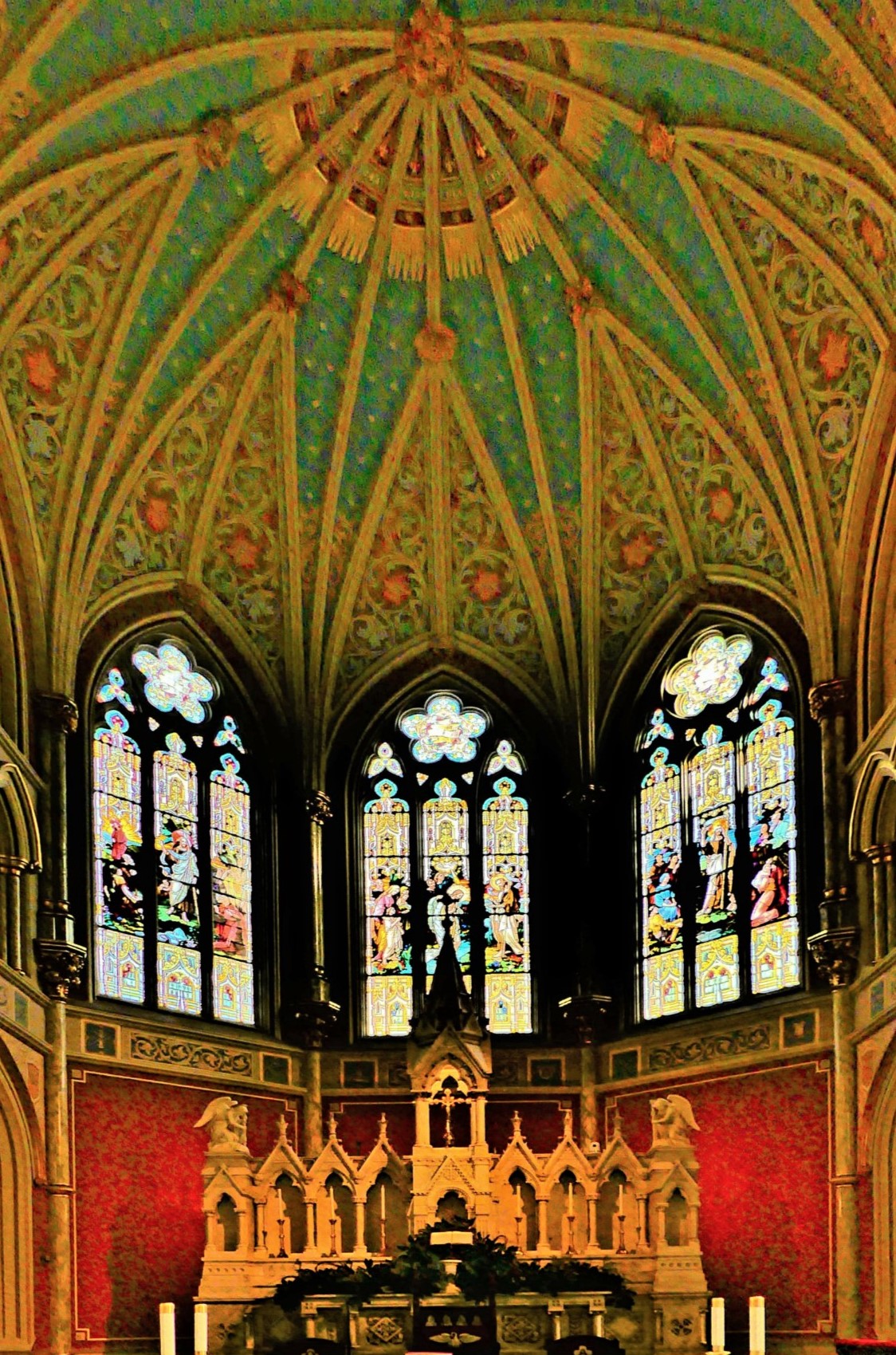
The Cathedral of St. John the Baptist in Savannah, Georgia is a Roman Catholic sanctuary built in the French Gothic style, and was dedicated in 1876.

St. John exterior

Twelve years later, fire gutted the interior, leaving behind only the walls and towers.

reference sign

Overcoming adversity, the church community quickly rebuilt much of what was destroyed, and resumed inside services in 1900,

alter

while interior decoration continued for an additional 13 years,

pews

to restore the stained glass and organ loft to its original splendor.

pipe organ

Embedded in Savannah’s Historic District, the Cathedral of St. John the Baptist was awarded landmark status by the National Park Service in 1966.

apse.jpg


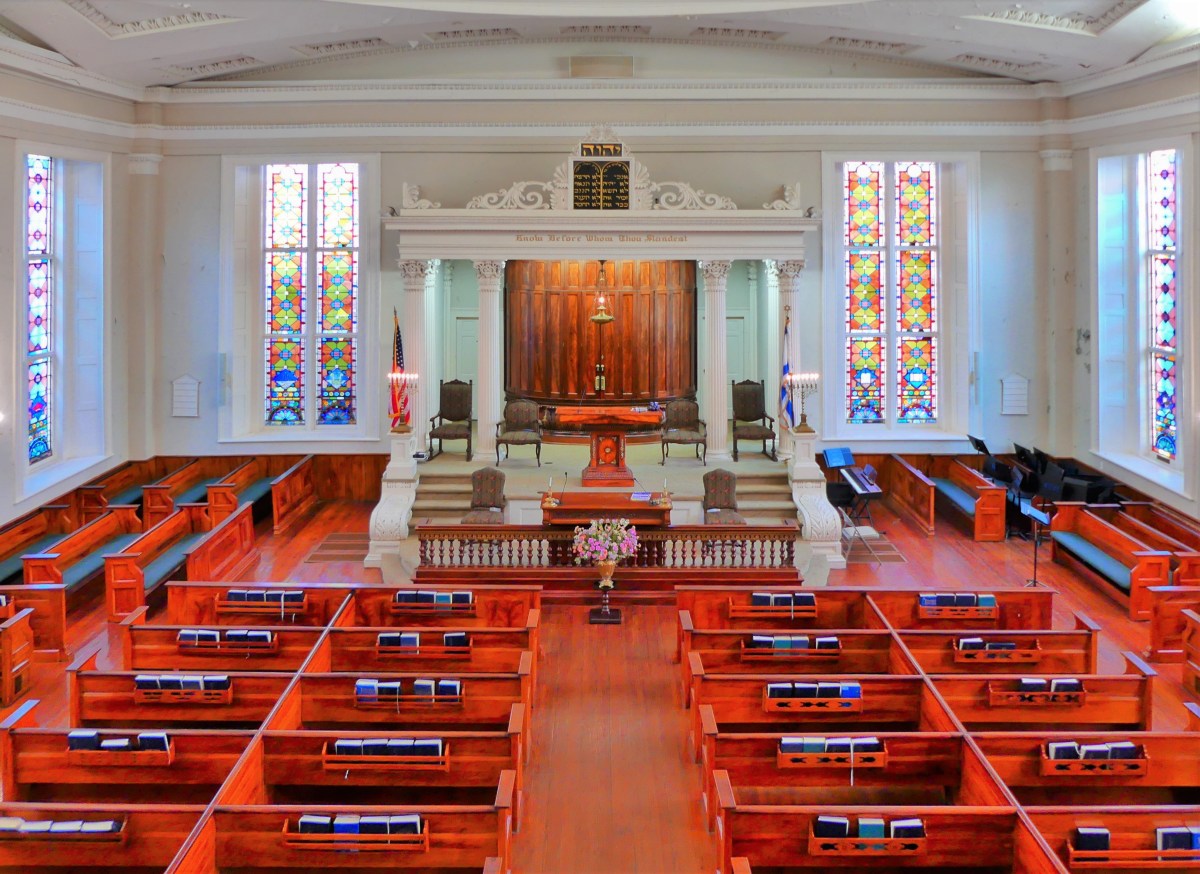
Lastly, in our effort to somehow balance the preponderance of churches and chapels we’ve toured, we visited Kahal Kadosh Beth Elohim Synagogue in the Historic District of Charleston, South Carolina.
exterior

Kahal Kadosh is notable as the country’s second oldest synagogue, and the oldest in continuous use. Established in 1749, Kahal Kadosh grew into America’s largest and wealthiest Jewish community by the end of the 18th century.
historic landmark

A new vision of American Reform Judaism originated at this site in 1824 after parting ways from its conservative Sephardic origins.

1st temple (3)

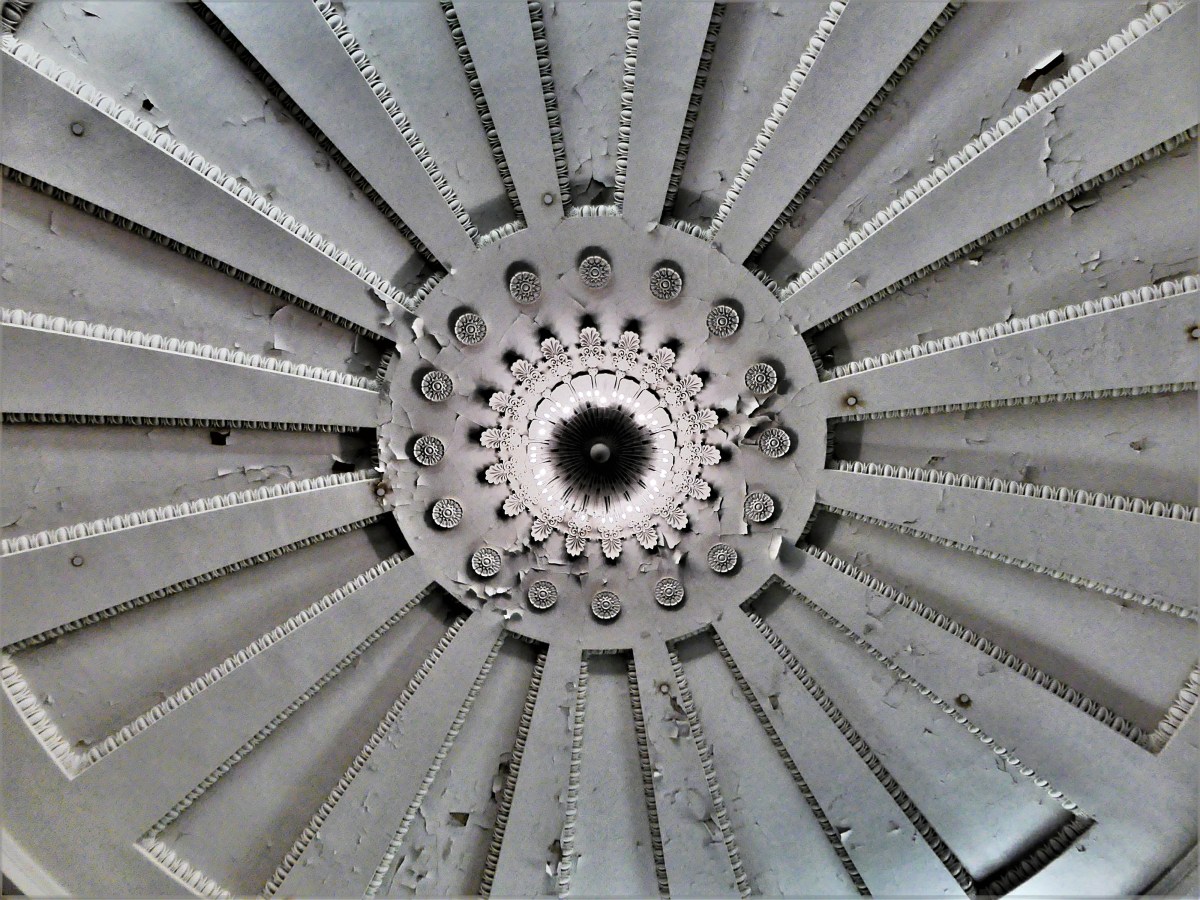
After Charleston’s fire of 1838 ravaged the city and destroyed the synagogue, a new Greek revival style was adopted for the new structure, with rich interior ornamentation,

Greek Revival

reminiscent of Greek temples.

peeling ceiling

Jewish services, according to reformist rituals and practices, were now conducted in English, with a new emphasis on organ music, and women were encouraged to participate with men on the main floor, breaking with a long-standing tradition of separation and isolation in the sanctuary balconies.

pipe organ (2)


The rich history and diversity of religion and protected religious freedoms in America cannot be overlooked as increased debate centers around self-centered interpretations of our Constitution’s First Amendment.

Moral outrage and hubris abound as politicians and public figures drape themselves in stars and stripes, while preaching to their flock from behind protective glass with handfuls of stones at the ready.

A reckoning of biblical proportion awaits us if we cannot ascend beyond our intolerance, and let each other live as we would have others let us live–in peace and without judgement.

Amen.

Mercer’s Swan Song

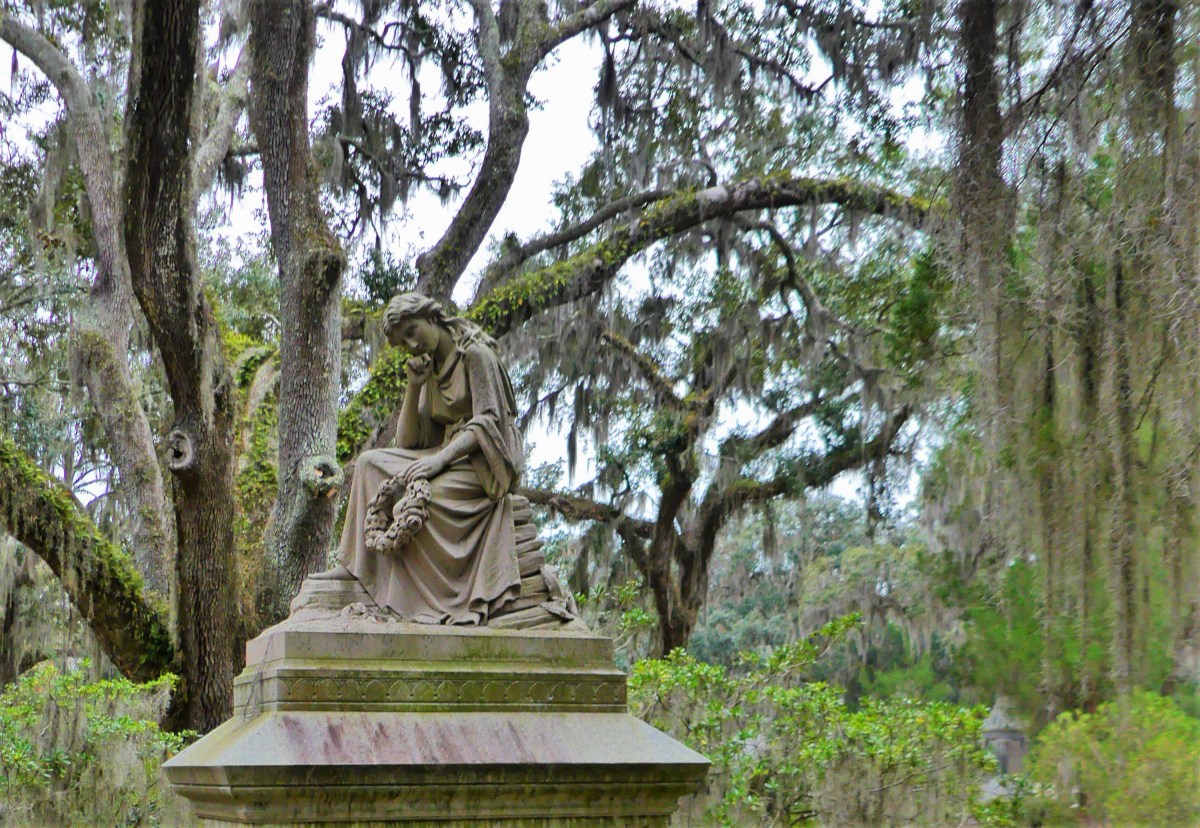
High on a bluff, overlooking the Wilmington River, sits Bonaventure Cemetery, 160 acres of inspired Southern Gothic funerary art and monuments worthy of any fabled ghost story setting, and one of the most hauntingly beautiful resting places found in America.
Named Bonadventure–good fortune in Italian–and conceived as a 9,920-acre plantation stretching from Ebenezer to Sunbury, Georgia, the land owners, Tattnall Sr. and Mullryne (son and father-in-law) mistakenly sided with King George III during the Revolutionary War, and were immediately denounced as traitors and stripped of their holdings by a Georgia council.

Tattnall Jr. returned from England soon after the war and reacquired a 750-acre tract of the property, where he settled with his Savannah-bred wife and family, before selling to Peter Wiltberger in 1846, who converted the land to a cemetery.

The day of our visit was dreary and wet, and it seemed fitting that the Spanish moss draped over 300 year-old oak trees would be weeping from the occasional drizzle.

Theuslandscape

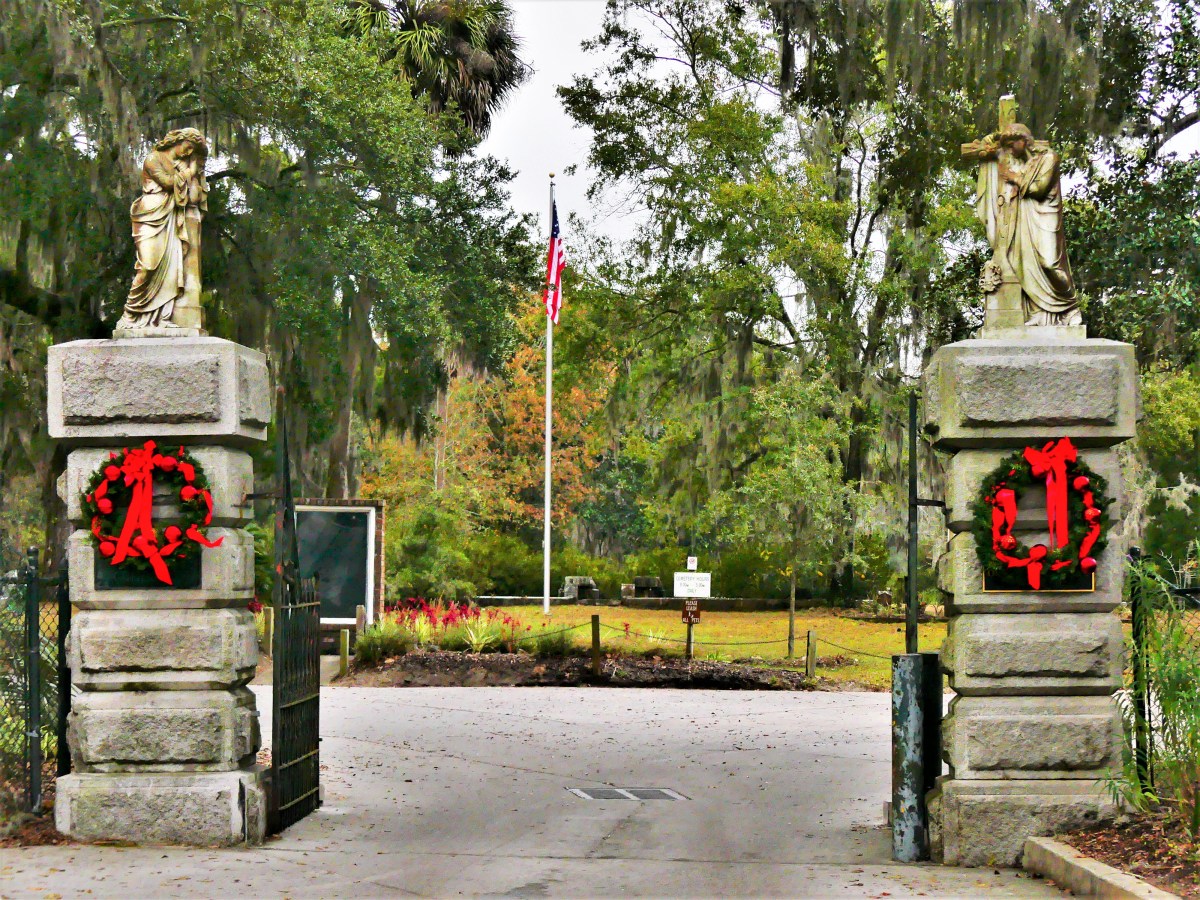
Oddly, two sets of gates provide access to the graveyard: a Christian wing to left…

Christian entrance

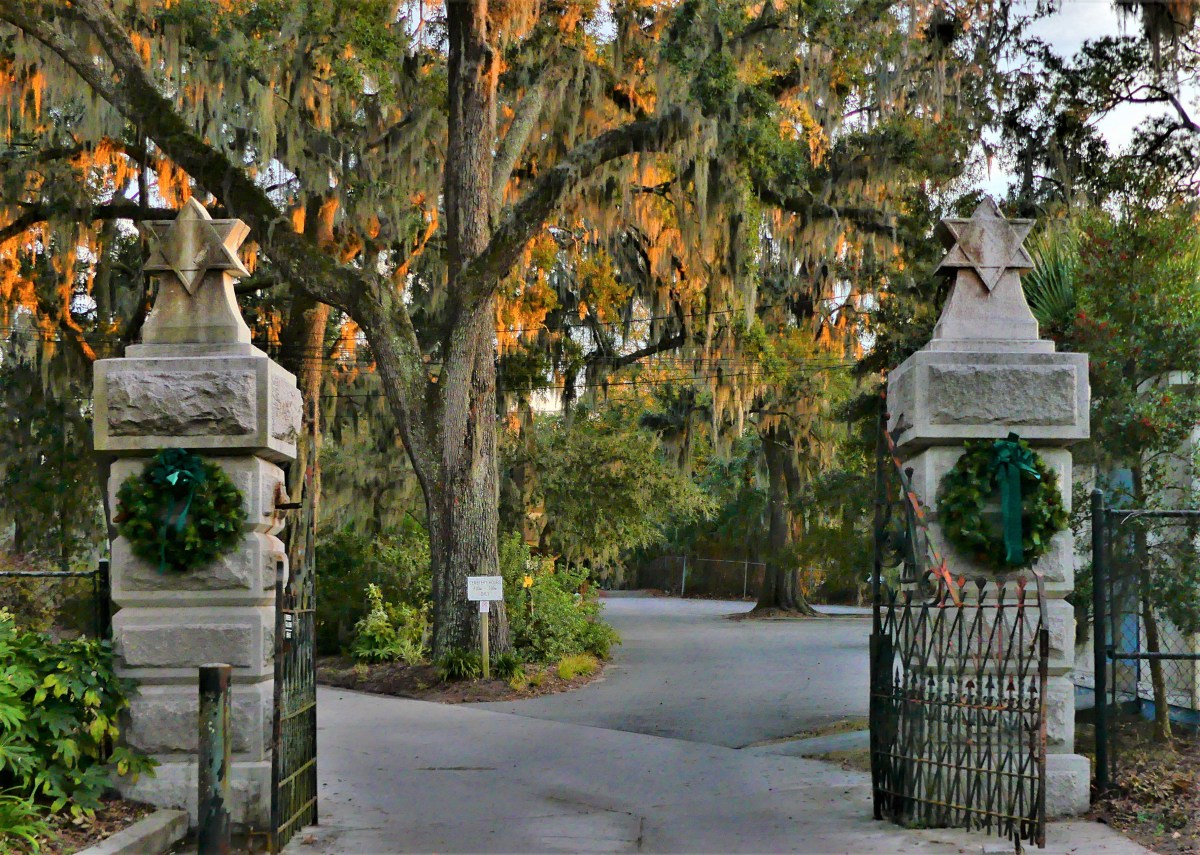
and a Jewish gate to the right.

Bonaventure gate for Jews

We approached a gravedigger who was stepping out of his pick-up.

“I couldn’t help but notice the Jewish stars on top of the gate posts,” observed Leah.

“Yes, ma’am,” responded Doug, “This here’s a public cemetery.”

So Christians and Jews are buried together?” I questioned.

“Yes, sir,” agreed Doug. “Each religion’s got their own separate sections, and…”

“And there’s still room inside?” Leah interrupted.

“Yes, ma’am. I dug two fresh graves today. But you can’t buy your way in anymore, cuz everything’s all sold out long ago. But people keep askin’. I guess they’s dyin’ to get in,” joked Doug.

Fascinating!

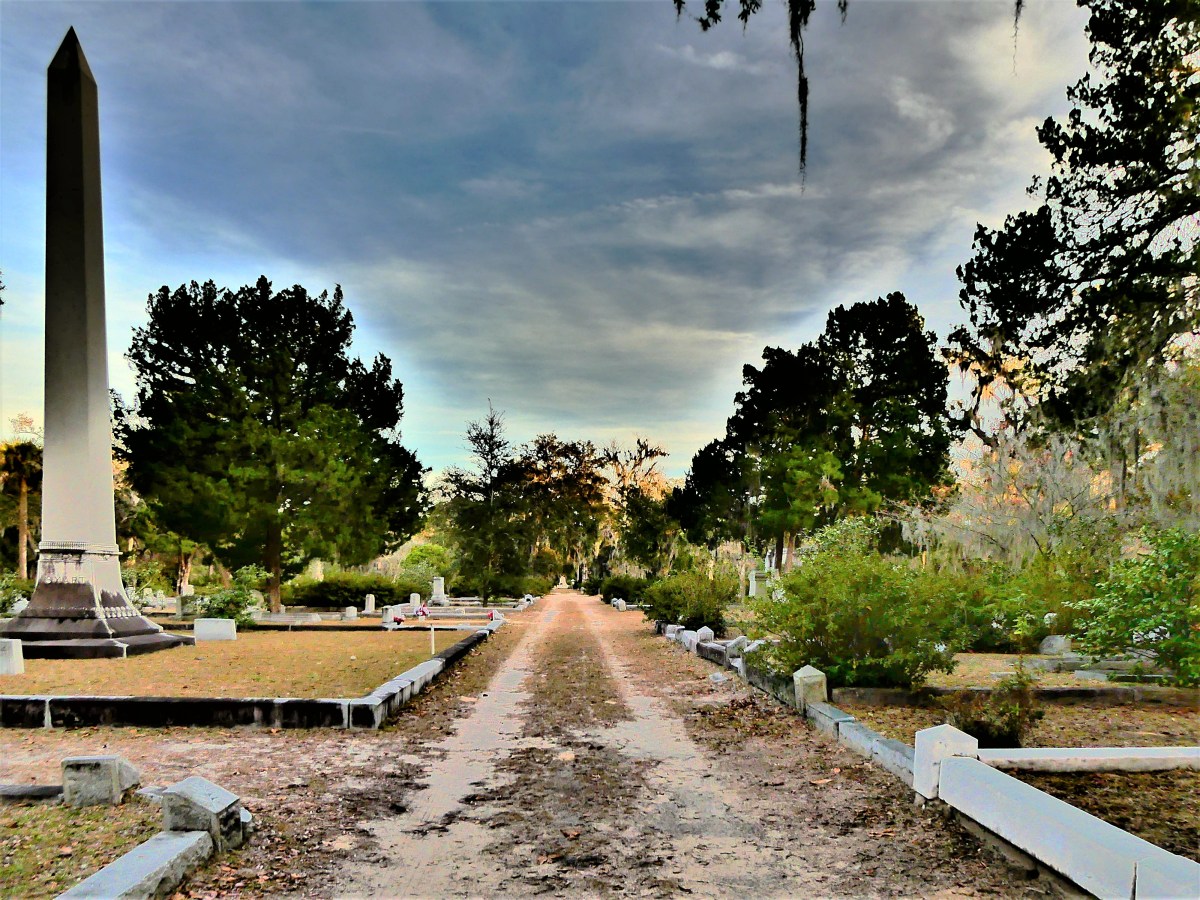
We set off to explore. The cemetery was unexpectedly quiet for being a top attraction for curiosity seekers, and the bereaved.

Bonaventure Lane

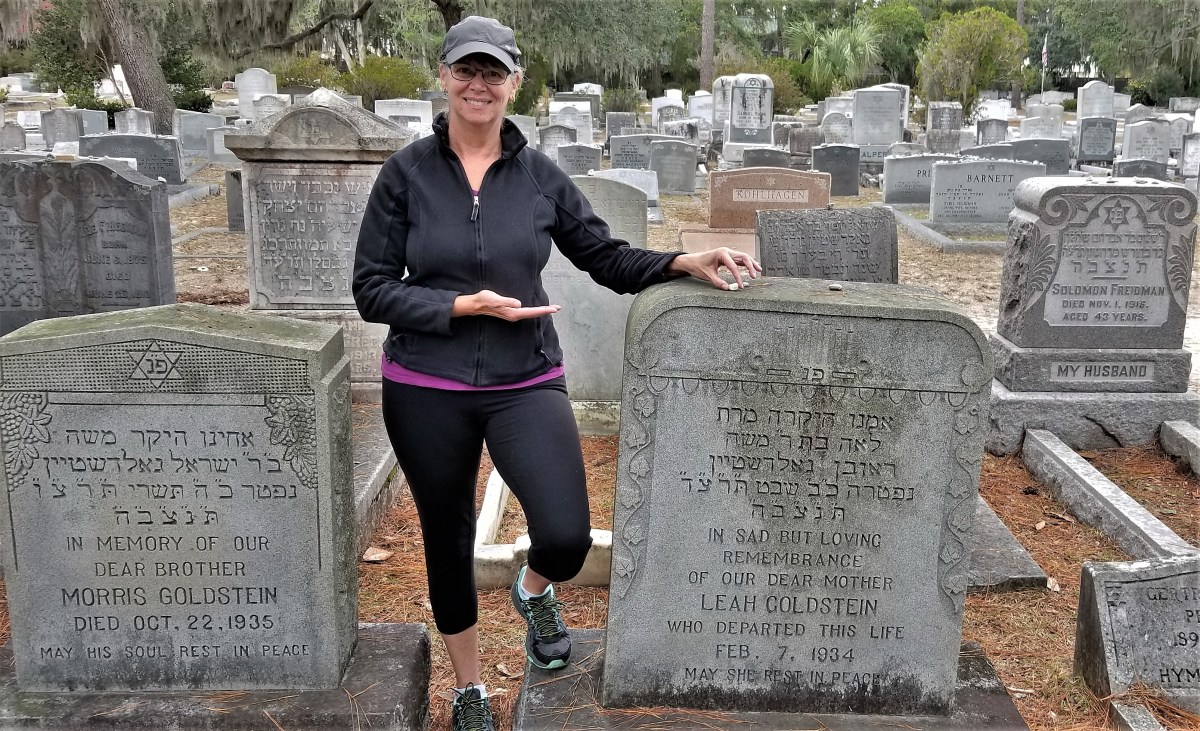
We were on separate missions. Leah went in search of her namesake, and found her in a short matter of time.

Leah Goldstein

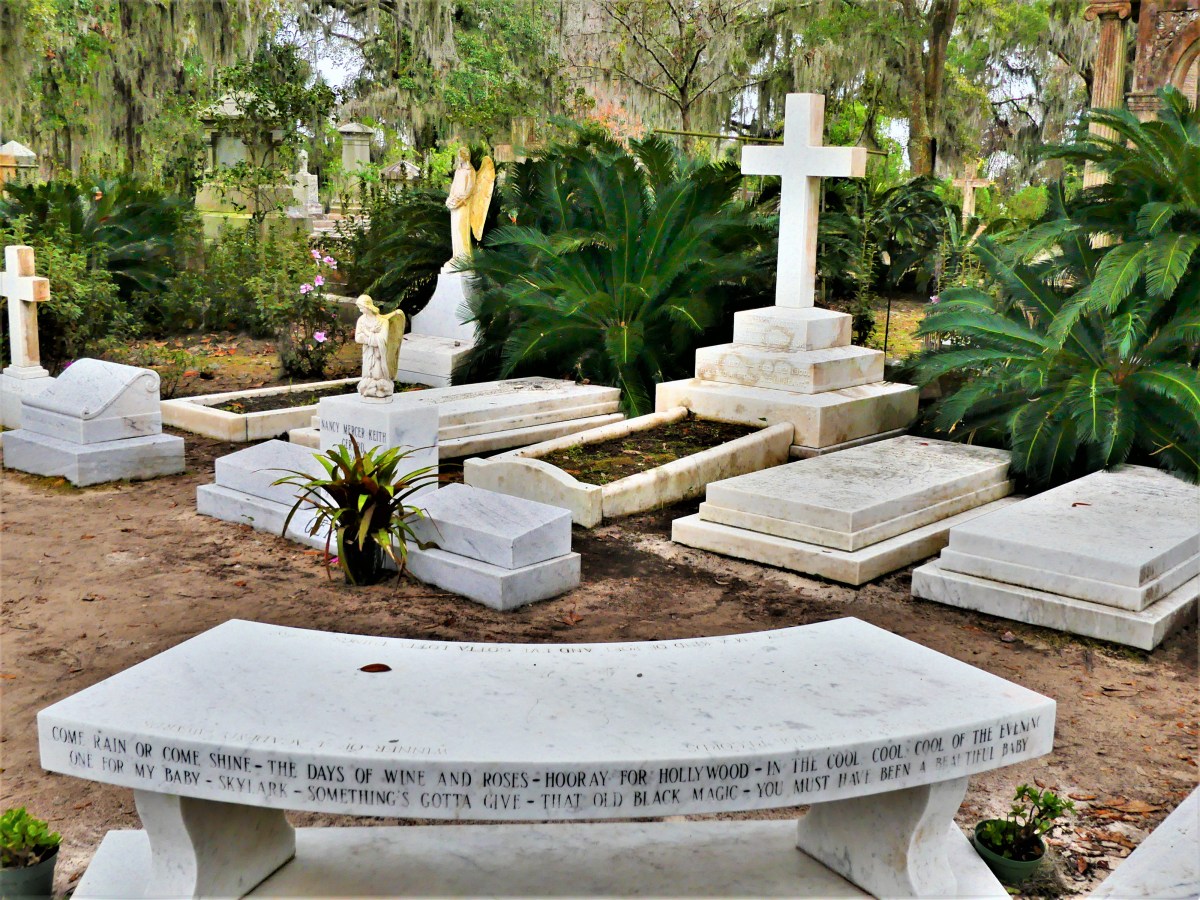
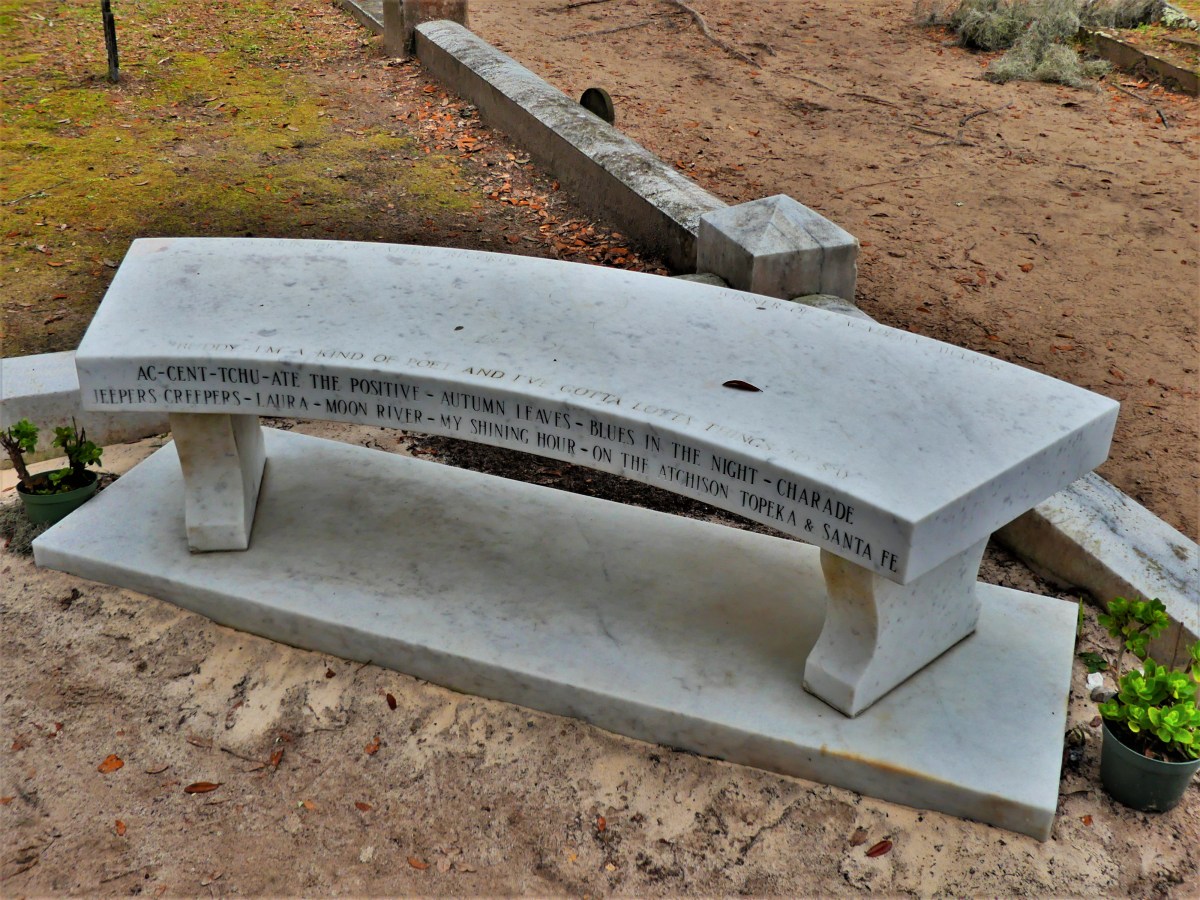
Whereas, I was in search of Johnny Mercer’s memorial–the legendary lyricist who penned over 1500 songs, was nominated for 14 Academy Award nominations, won Oscars for The Days of Wine and Roses, Moon River, In the Cool, Cool, Cool, of the Evening, and On the Atchison, Topeka and Santa Fe, and co-founded Capitol records–which turned into more of a scavenger hunt.

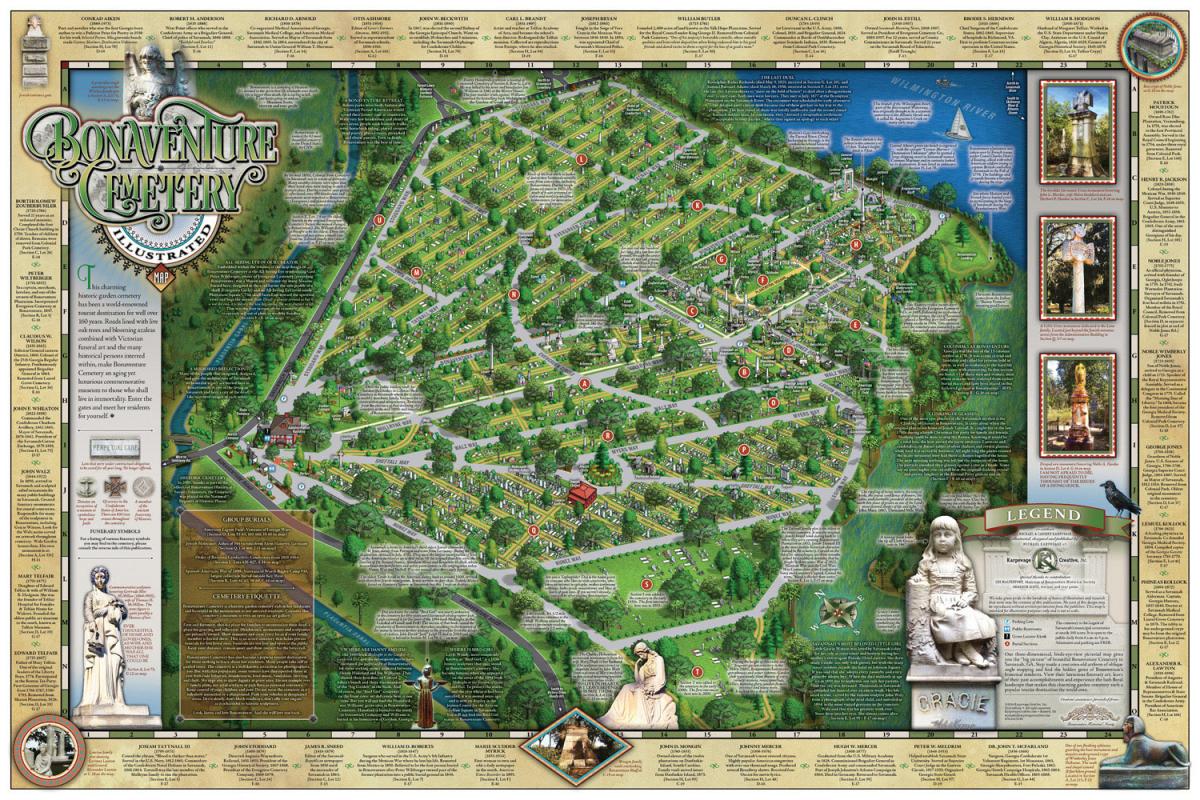
Resorting to the internet, I discovered the section and plot (H-48), but finding it was another matter, since the layout is unlike any grid, with over 31,000 burial records to date.

map.jpg

Leah went one way, and I went another. We wandered aimlessly through rows and rows of plots till we plotzed. I quickly understood why guided tours through Bonadventure Cemetery are so popular.

Eventually, I got some help from a pair of caretakers who were blowing damp leaves across the dirt and gravel roads. They were eager to help, but my inability to translate Malaysian, turned my request into a game of Charades.

Using broken English and hand gestures, they redirected us to the general vicinity, where we crossed paths…

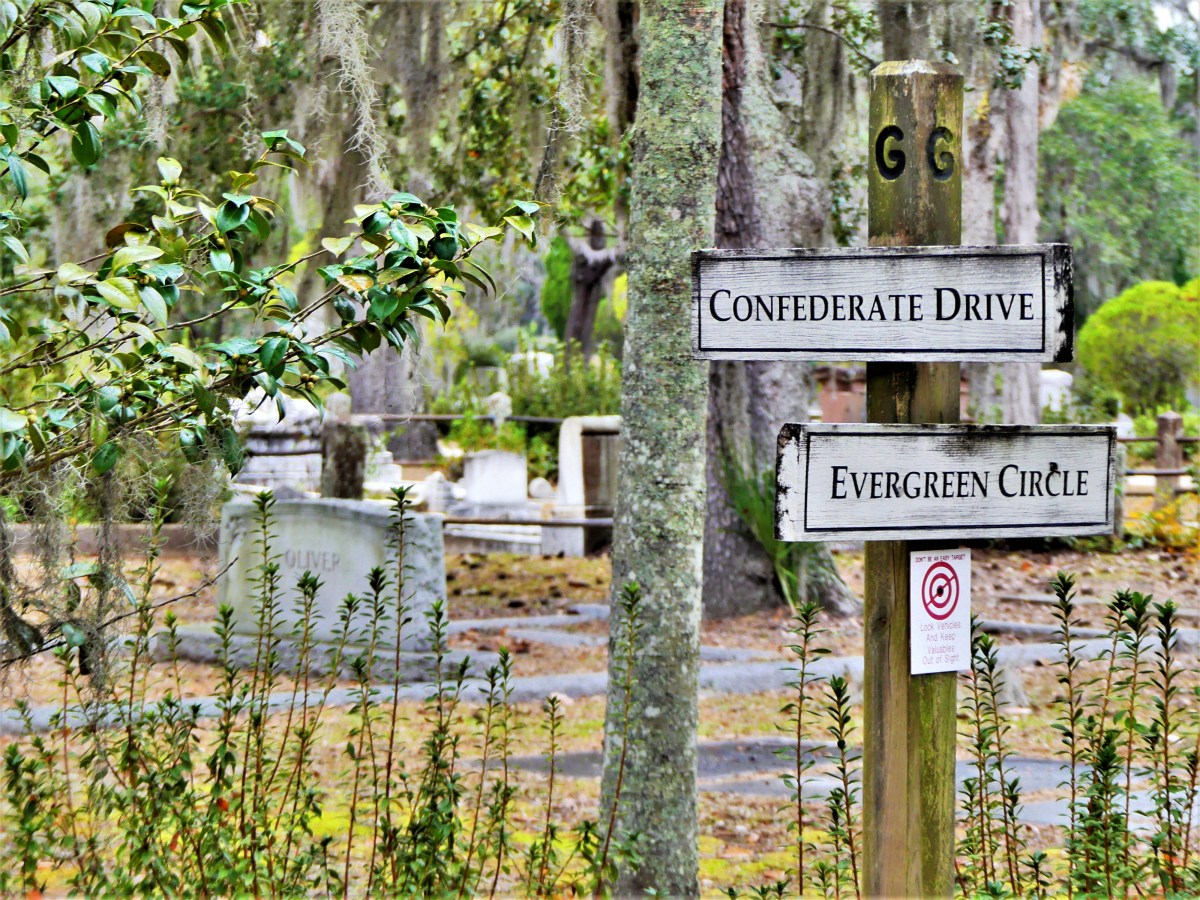
intersection

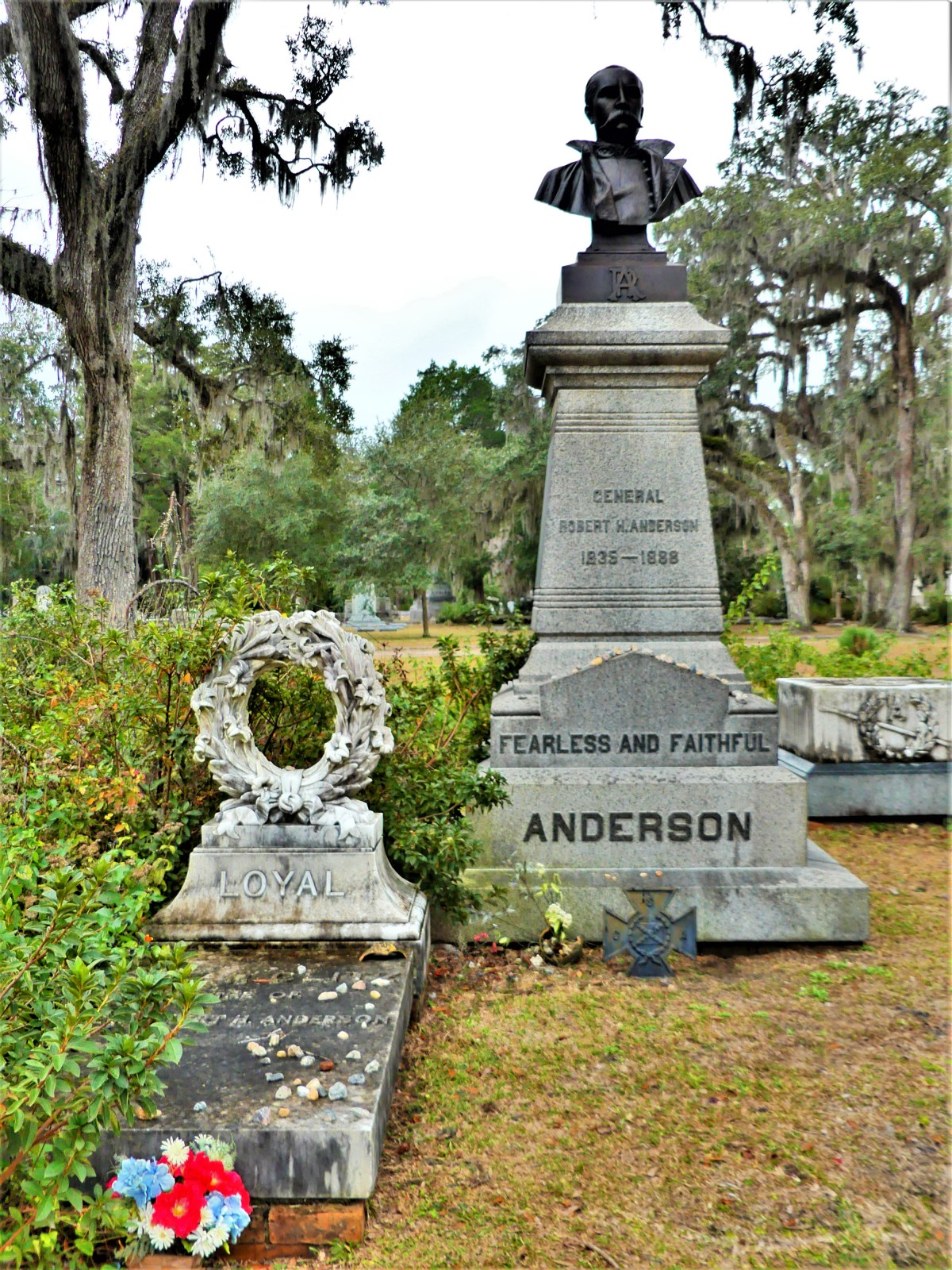
with officers…

General Anderson

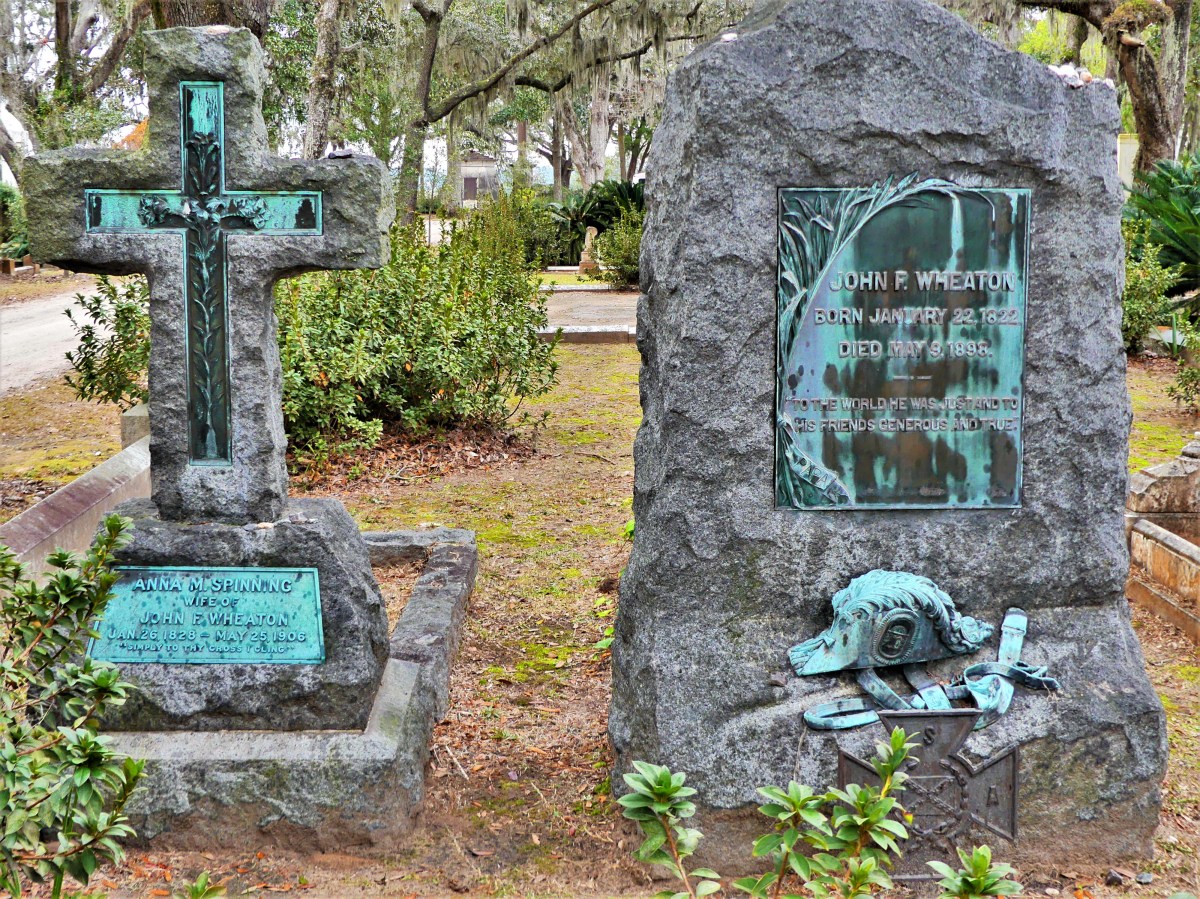
Wheaton and wife

and gentlemen…

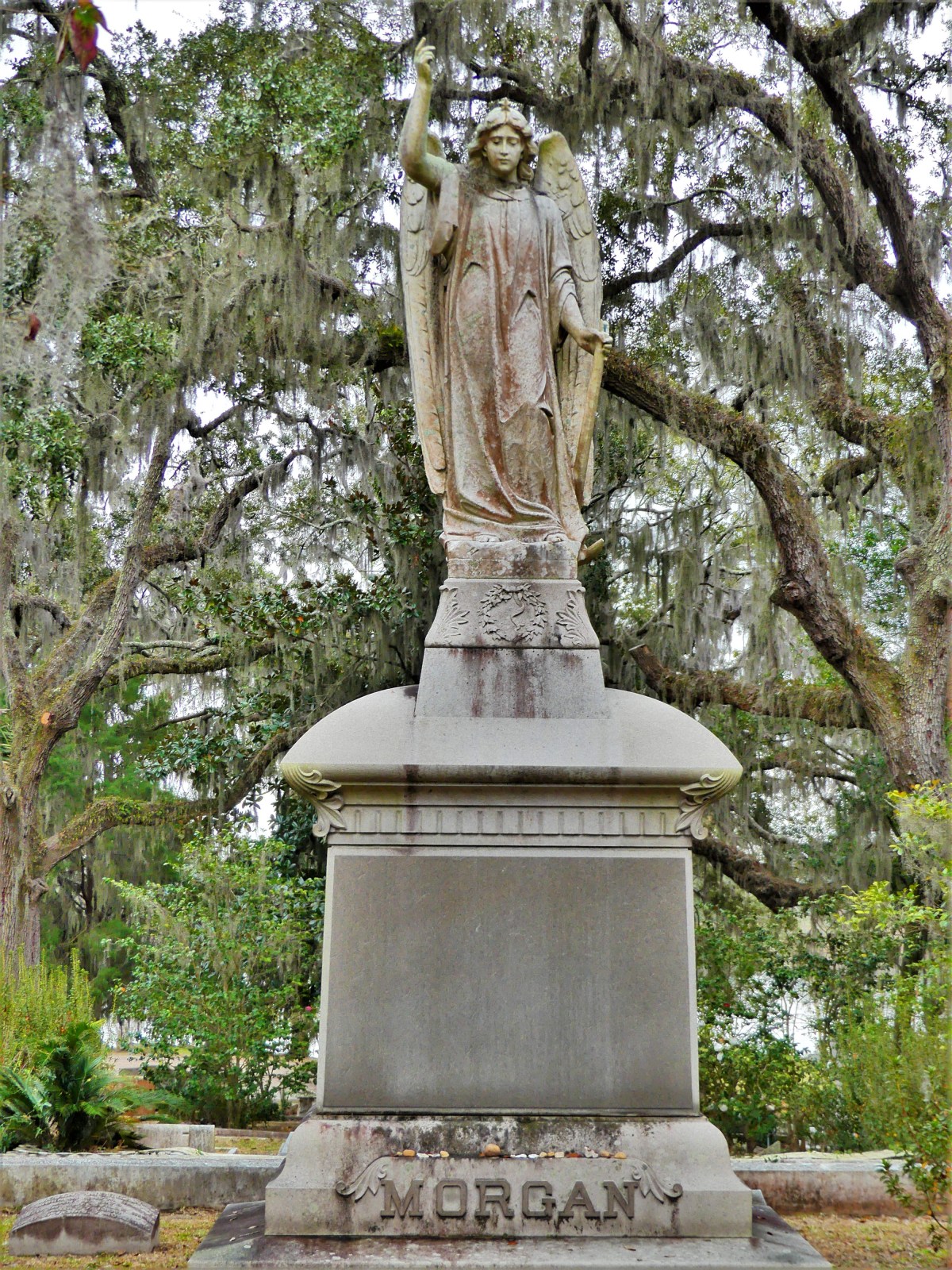
Morgan

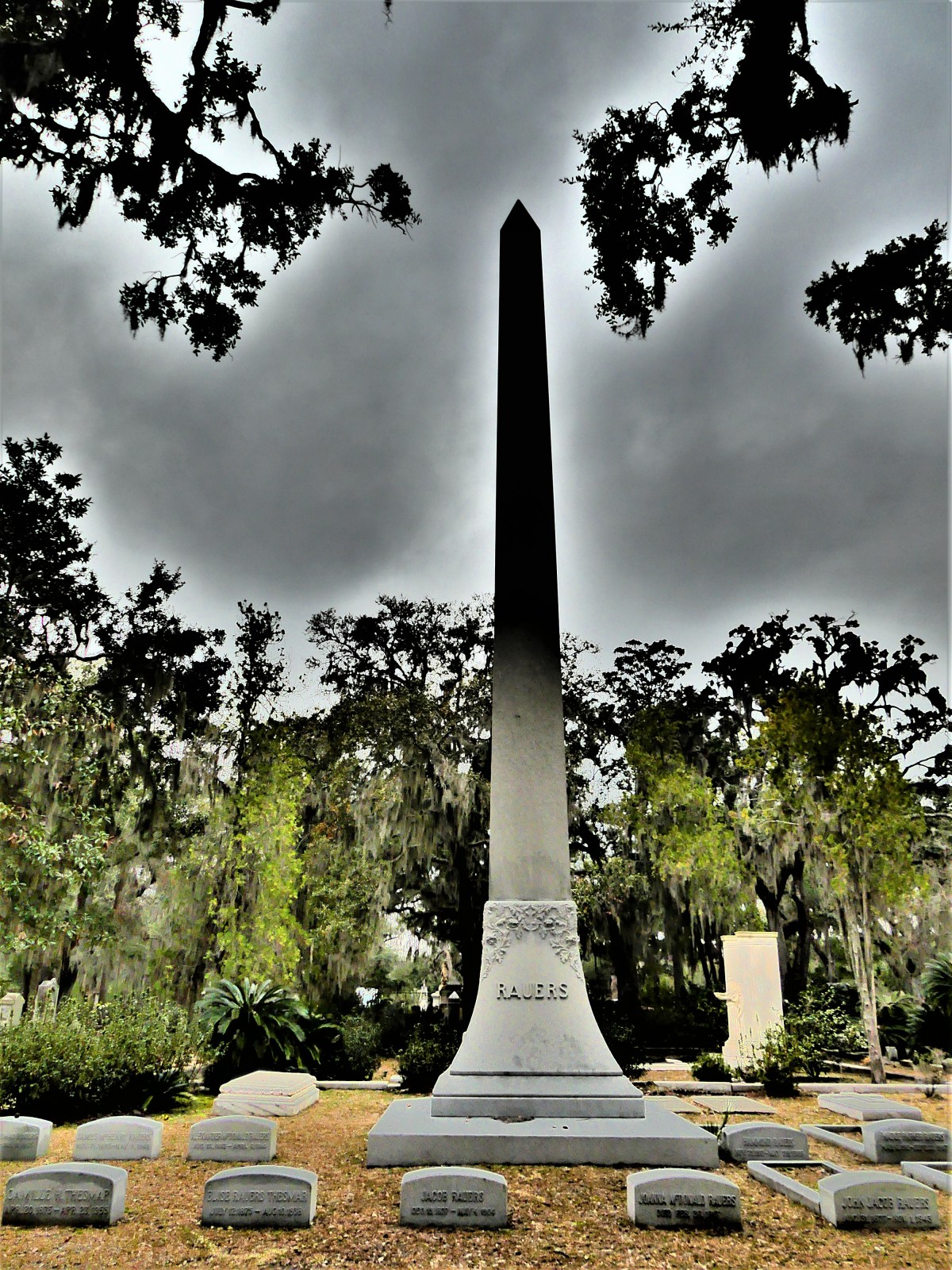
Rauers

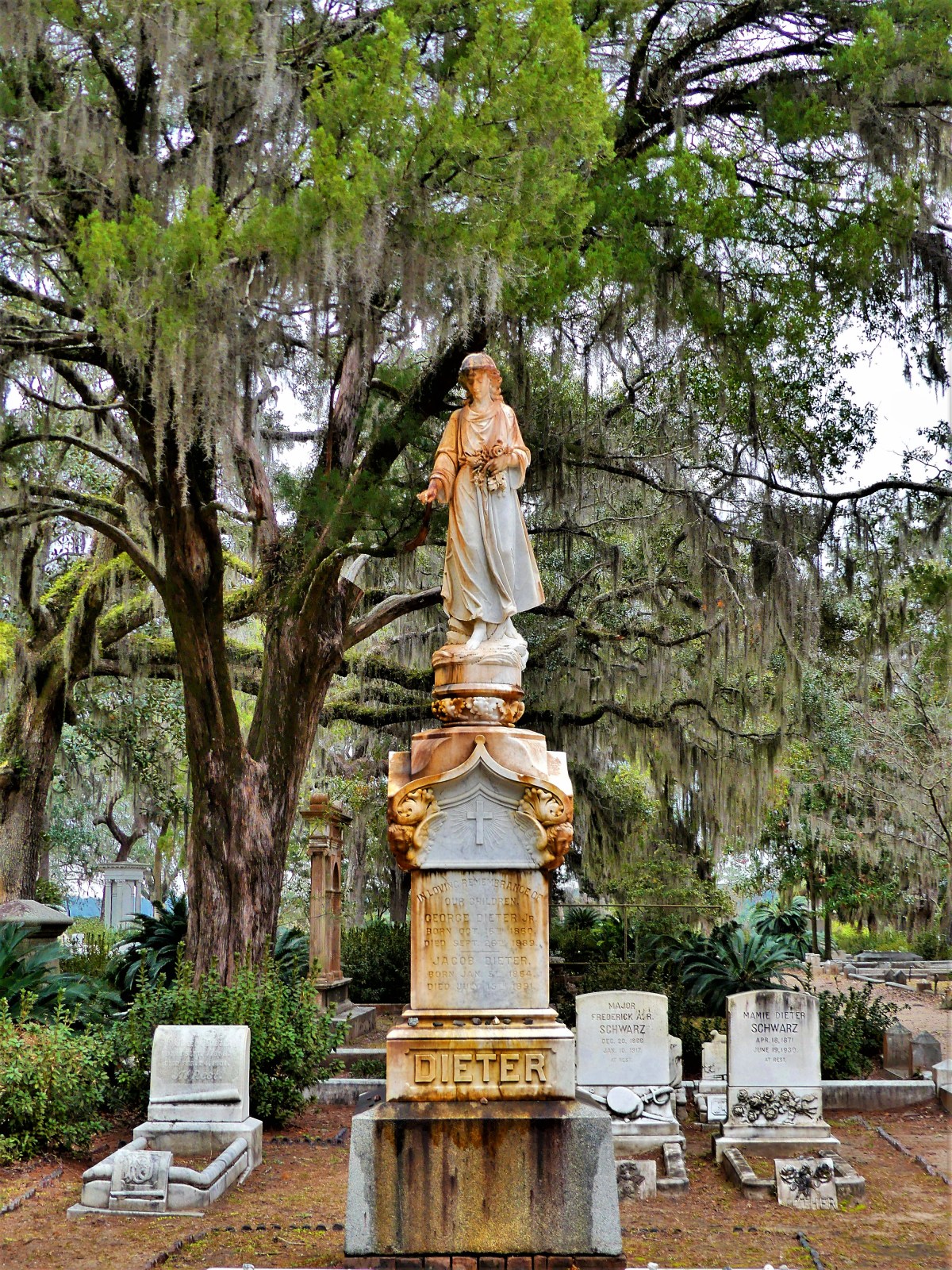
Dieter

ladies…

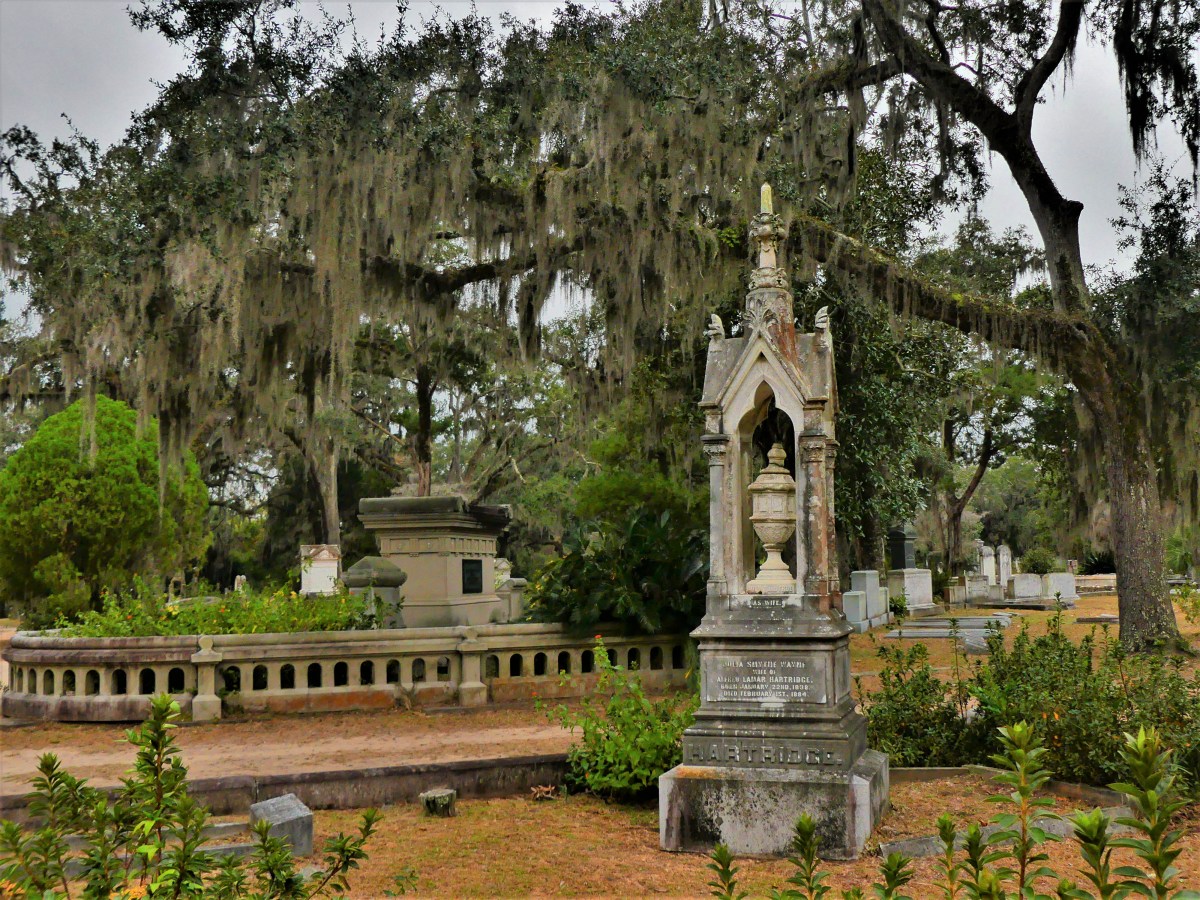
Hartridge

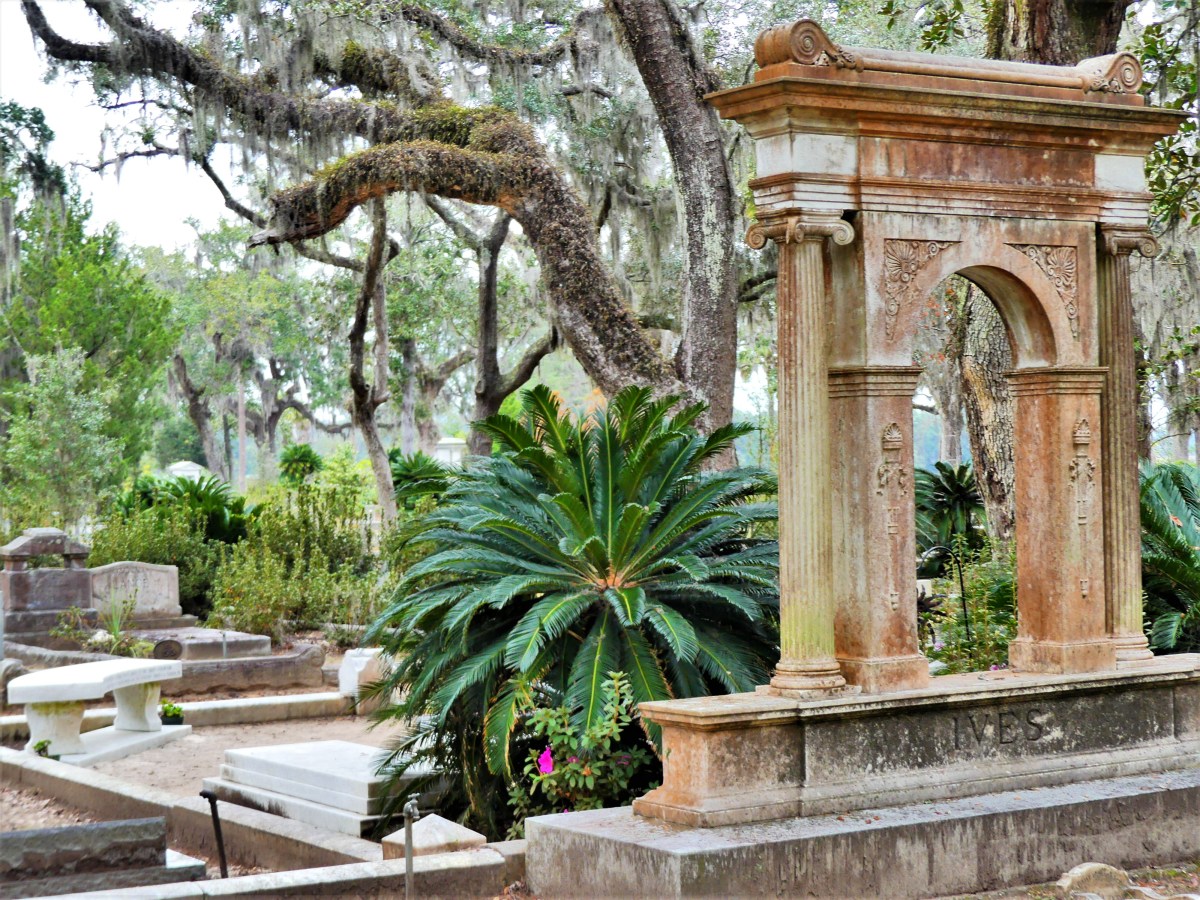
Ives

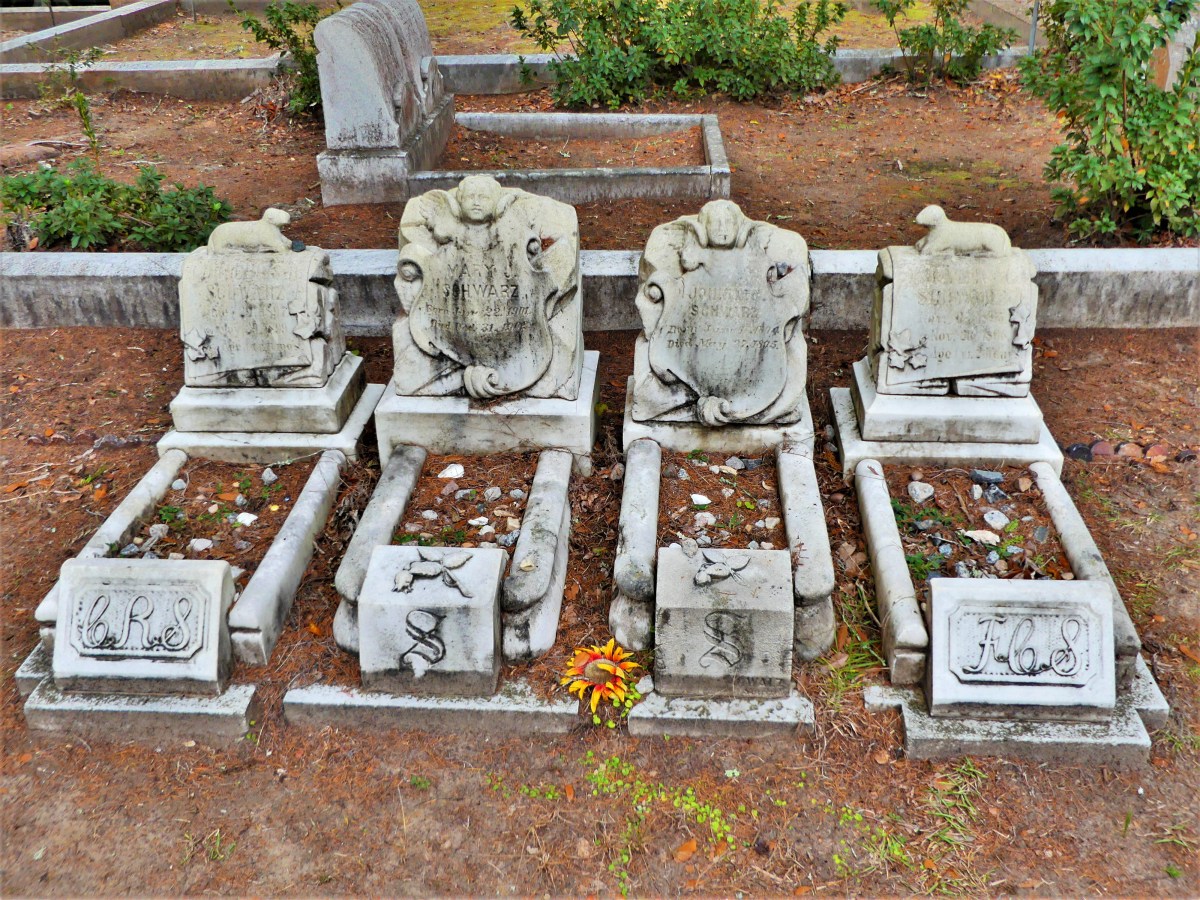
…and children.

4 babies

We wound our way through Section H until signs pointed to Johnny Mercer’s shrine of hits.

Johnny Mercer site

JM bench

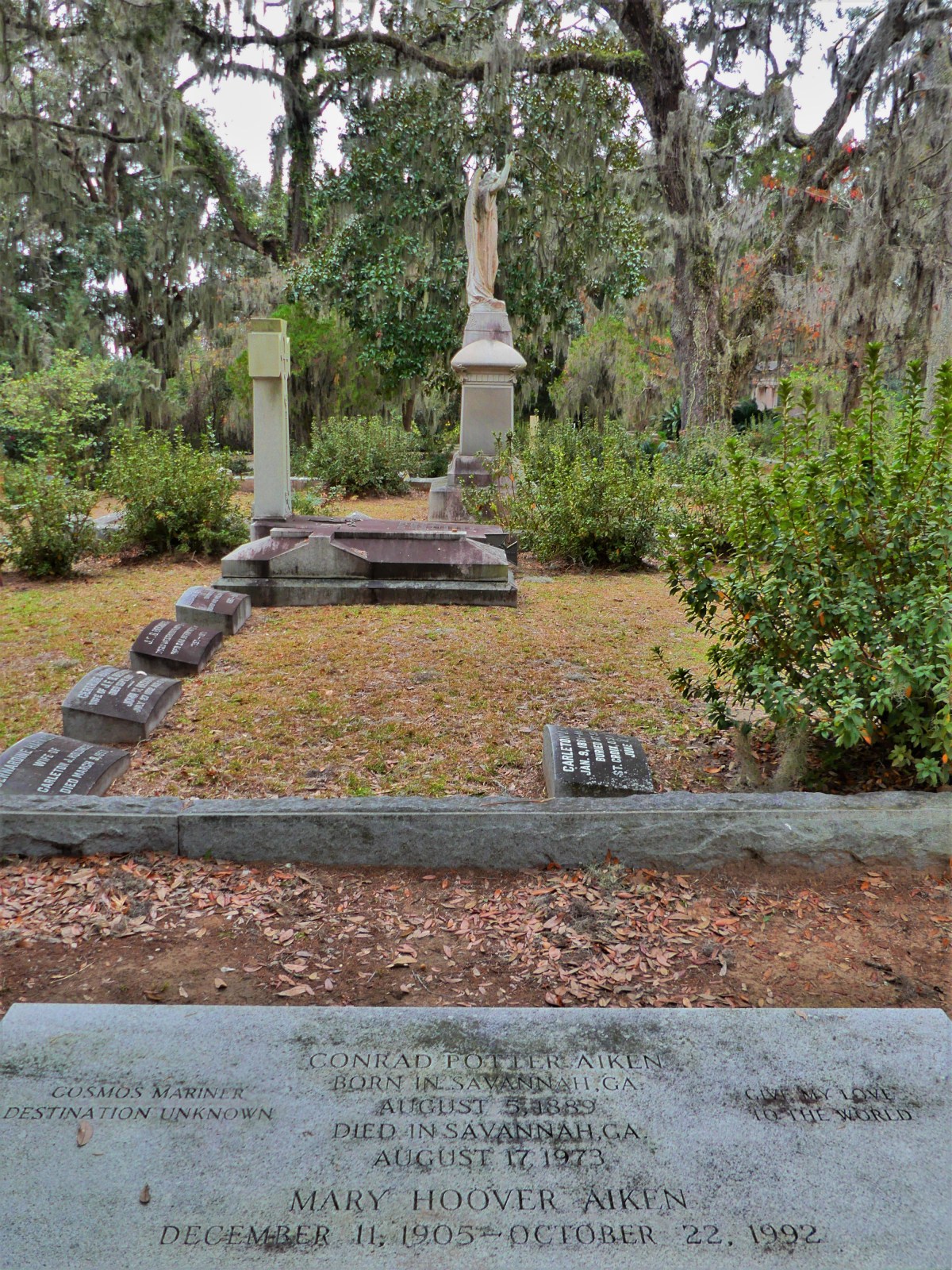
Also in the vicinity, lies Georgia’s poet laureate and tragic orphan, Conrad Aiken,

Conrad Aiken

who is buried beside his father who murdered his mother, before turning the gun on himself when Conrad was 11-years old. Conrad went on to study at Harvard, where he was mentored by T.S. Eliot, and won the Pulitzer Prize for Selected Poems in 1930.

Another literary thread woven through the Bonaventure fabric includes New York Time’s longest-standing (216 weeks) bestseller, Midnight in the Garden of Good and Evil, a true tale written by John Berendt.

midnight-in-the-garden-of-good-and-evil

The book cover featured Sylvia Shaw Judson’s Bird Girl, who graced the graveyard in relative obscurity for decades, until fans of the book sought out the statue’s location at Bonaventure, and began chipping away at its base for souvenirs. Eventually, Bird Girl was rescued and resettled in Savannah’s Telfair Museum of Art, where she can rest in one piece.

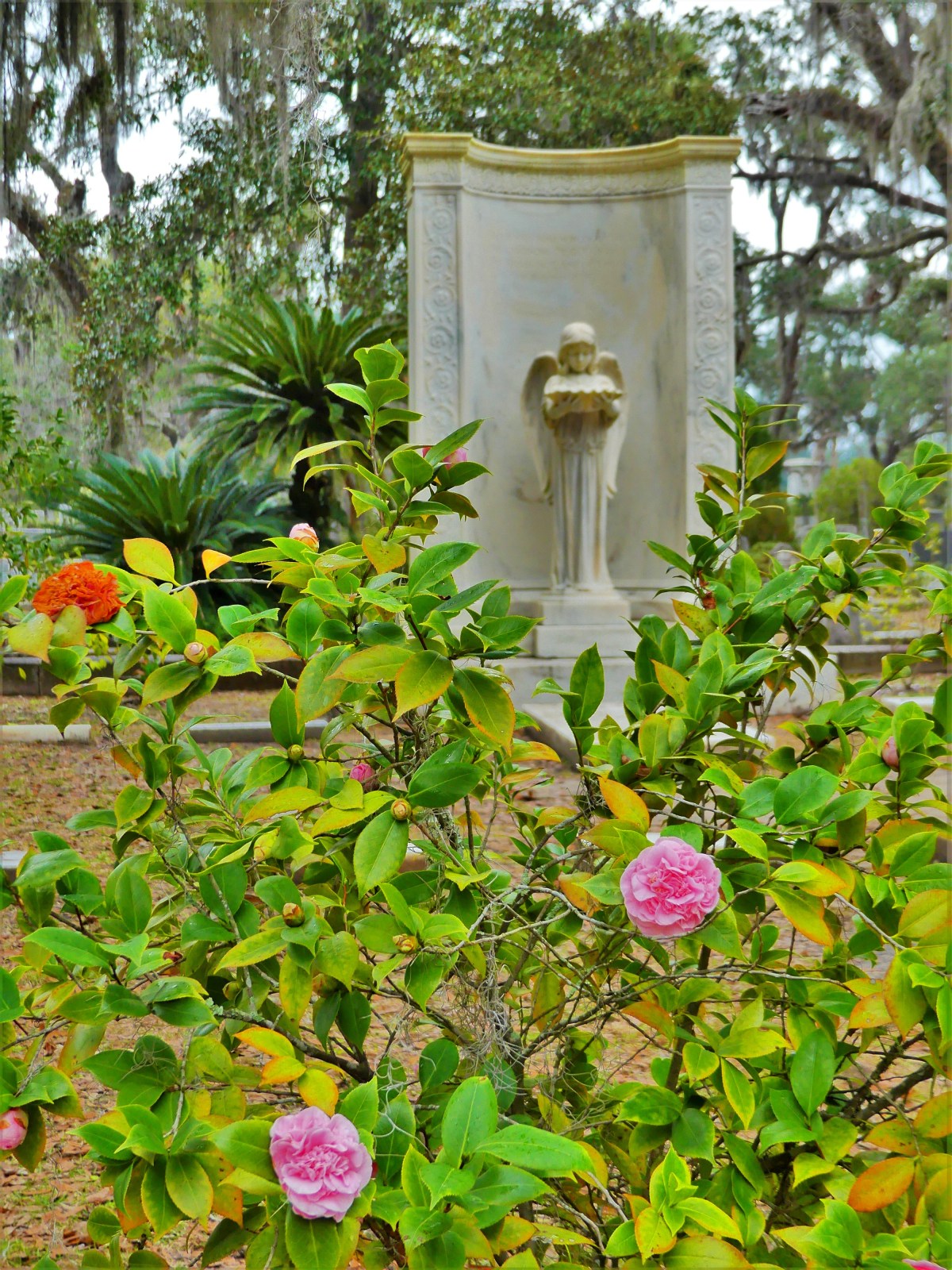
Bonaventure Cemetery under overcast skies during late autumn appears mostly monochromatic and presents a solemn and sombre mood. There are occasional pops of color from late blooms, to liven up a lifeless location,

angel and roses

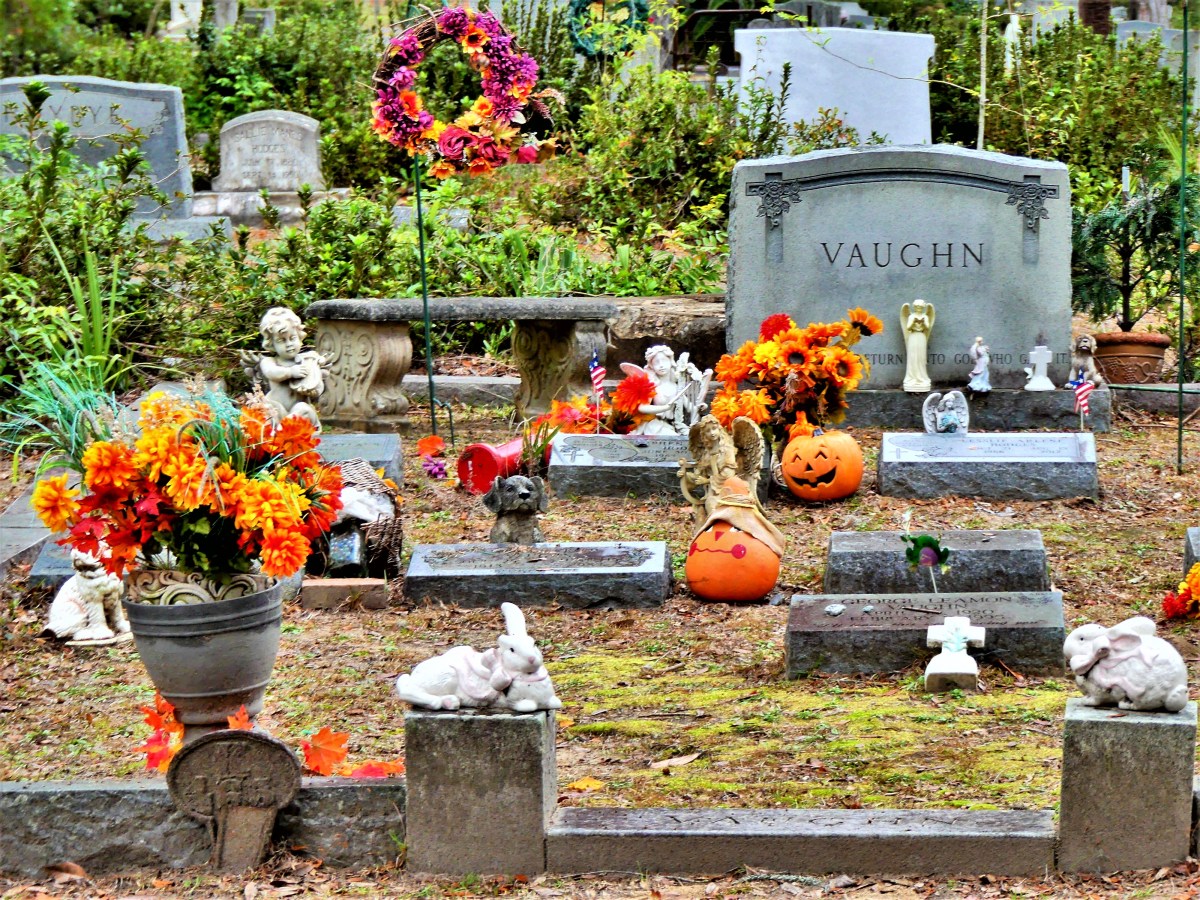
but I was unprepared for the cheeky display I discovered on my way out.

cheeky Vaughn

For me, this represents a bonafide celebration of a life once lived, versus a death soon forgotten.

Southern (C)Harm

Charleston, South Carolina has a picture postcard personality with an imperfect and unpleasant past–mostly because Charleston was built on the backs of slaves for nearly 200 years, with nearly 1.5 million slaves passing through Charleston Harbor until the 13th Amendment to the Constitution abolished slavery in 1865–yet the appeal and beauty of Charleston cannot be denied.

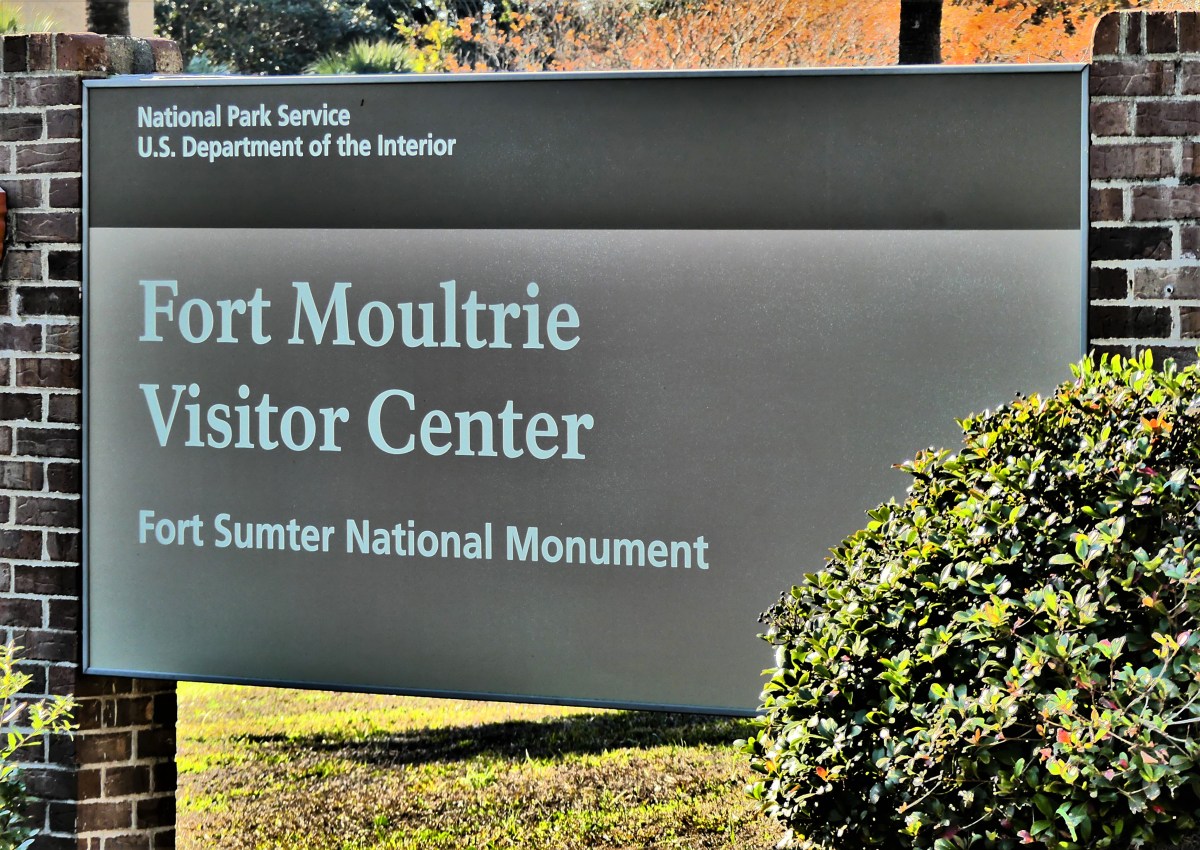
A tour of Fort Moultrie on Sullivan’s Island offers a historical narrative that addresses the highs and lows of the Low Country from a military perspective.

Fort Moultrie sign

The earliest protection of Charleston’s harbor came from its outlying shoals, forcing ship traffic from the south, and across Sullivan’s Fort.

regional map_LI

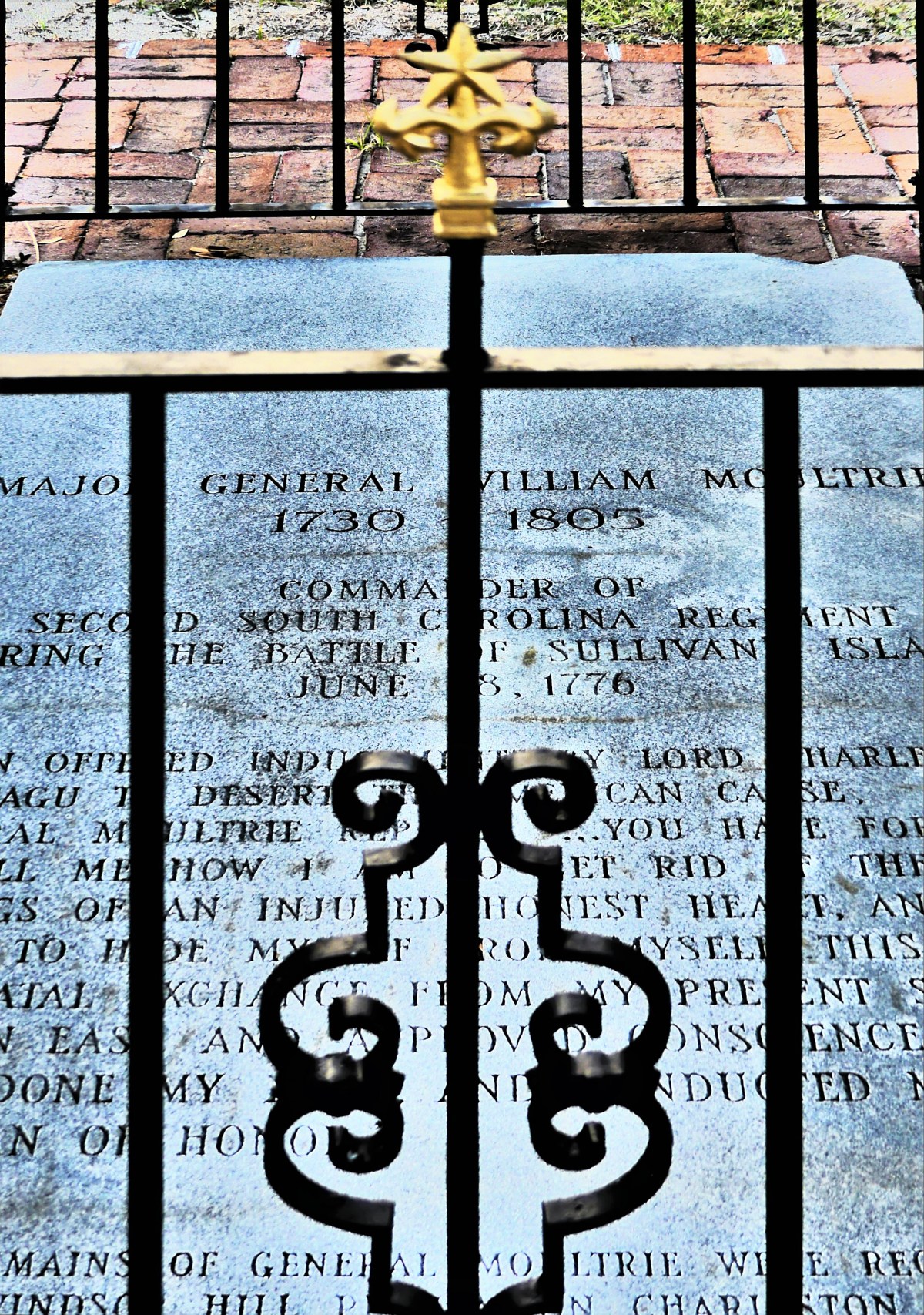
Early defense of the harbor relied on a sixteen-foot thick sandwich between two slices of palmetto log-walls that British bombardments found impossible to penetrate. In June 1776, nine British warships were driven off under a hail of smooth-bore cannon fire during the Revolutionary War.

Consequently, Charleston was saved and the fort was renamed in honor of its commander, William Moultrie (1730-1805).

Moultrie grave

In 1794, with the addition of Vermont and Kentucky to the Union, a new 15 star/15 stripe flag flew beyond the sally port…

15 stars (2)

over a newly-styled defense system, with walls of earth and timber rising 17 feet above the shoreline.

ramparts

vista

In 1804, a hurricane destroyed the fort, calling for Congress to appropriate funds for a Second American System of coastal fortifications, including an 1809 rebuild of Fort Moultrie fortified with brick,

Ordinance building

and the addition of Fort Sumter to its south.

Fort Sumter1

South Carolina’s secession from the Union in 1860 provoked the Civil War. Moultrie was quickly abandoned in favor of Sumter’s stronger defense system. However, the Confederates bombed Sumter into submission three months later, gaining control of the harbor–and successfully defended against a Federal fleet of Ironclads with a string of 32-pounders lined across its battlements–until Charleston surrendered in 1865.

Fort Sumter

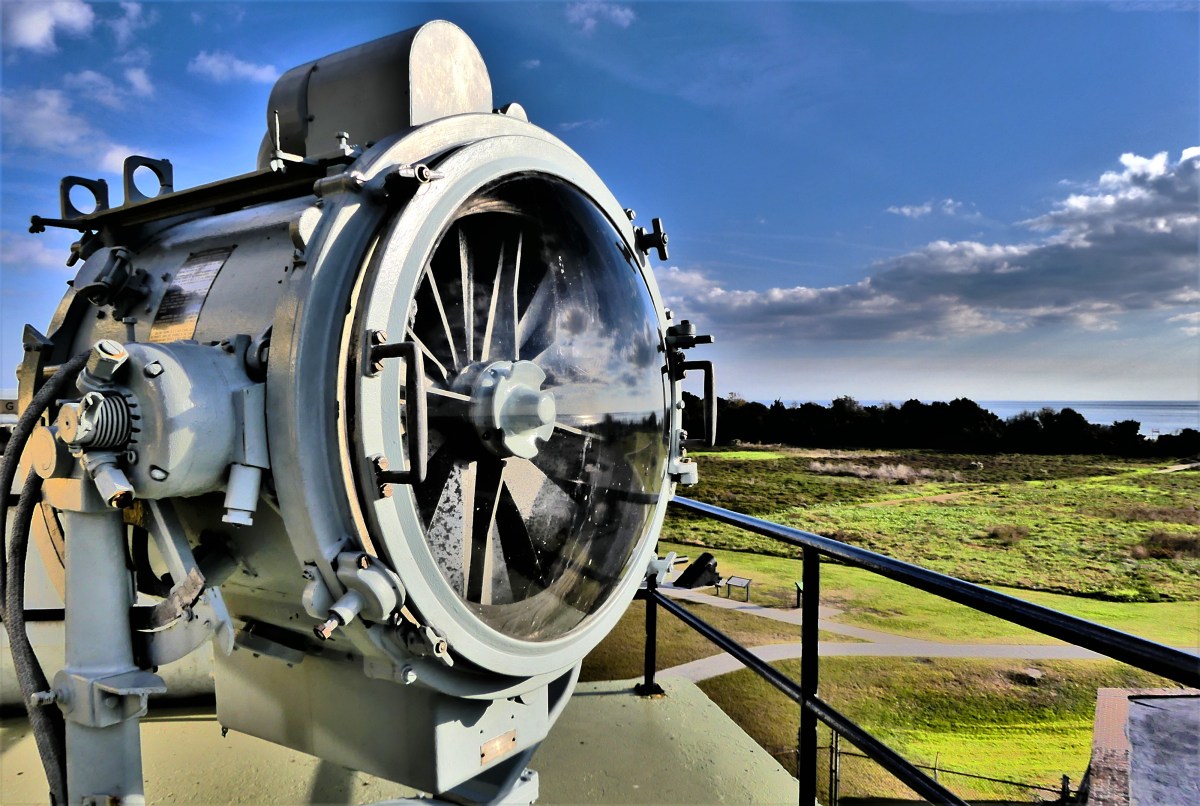
Fort Moultrie continued to modernize, and sustained to protect the southern coastline through both World Wars…

searchlight

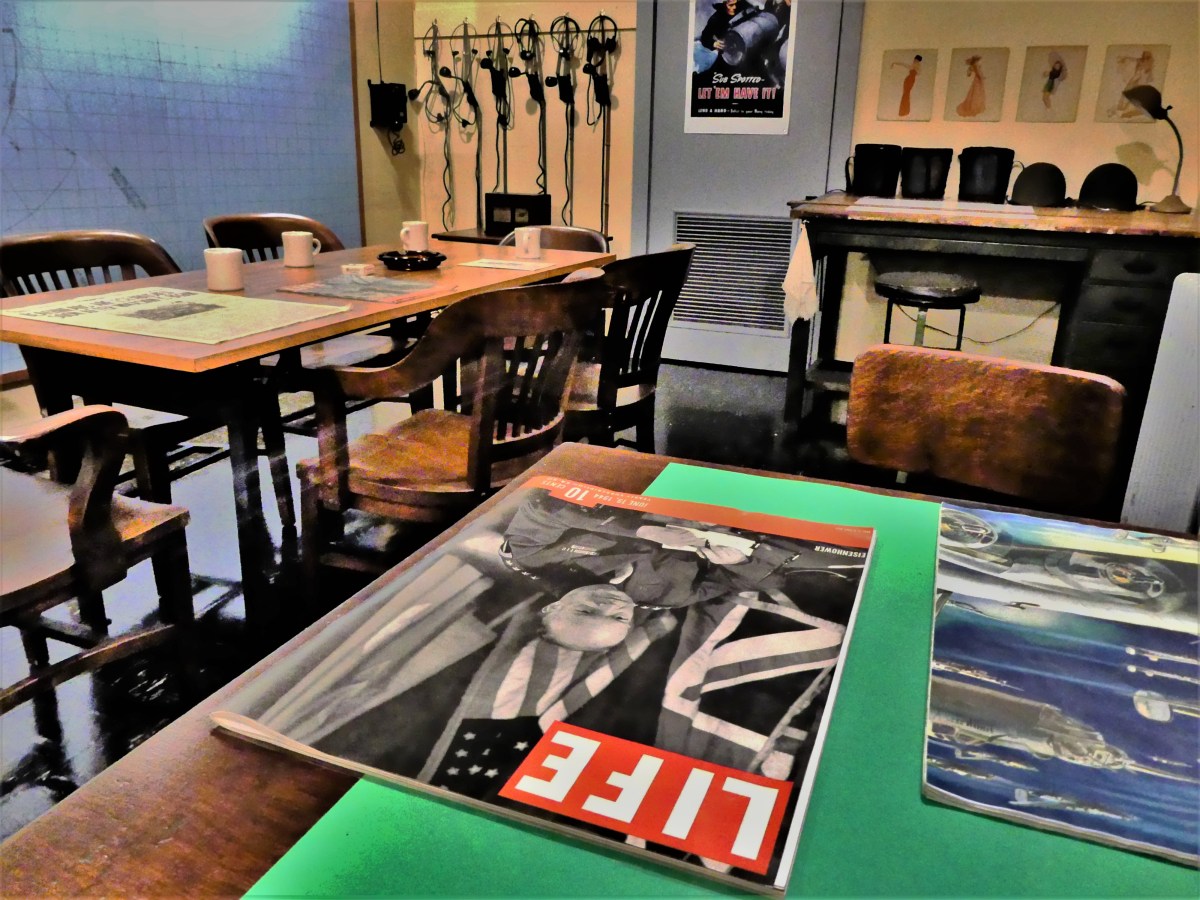
…by coordinating all harbor defenses through its Harbor Entrance Control post,

control room

until its decommission in 1947.

Communications room

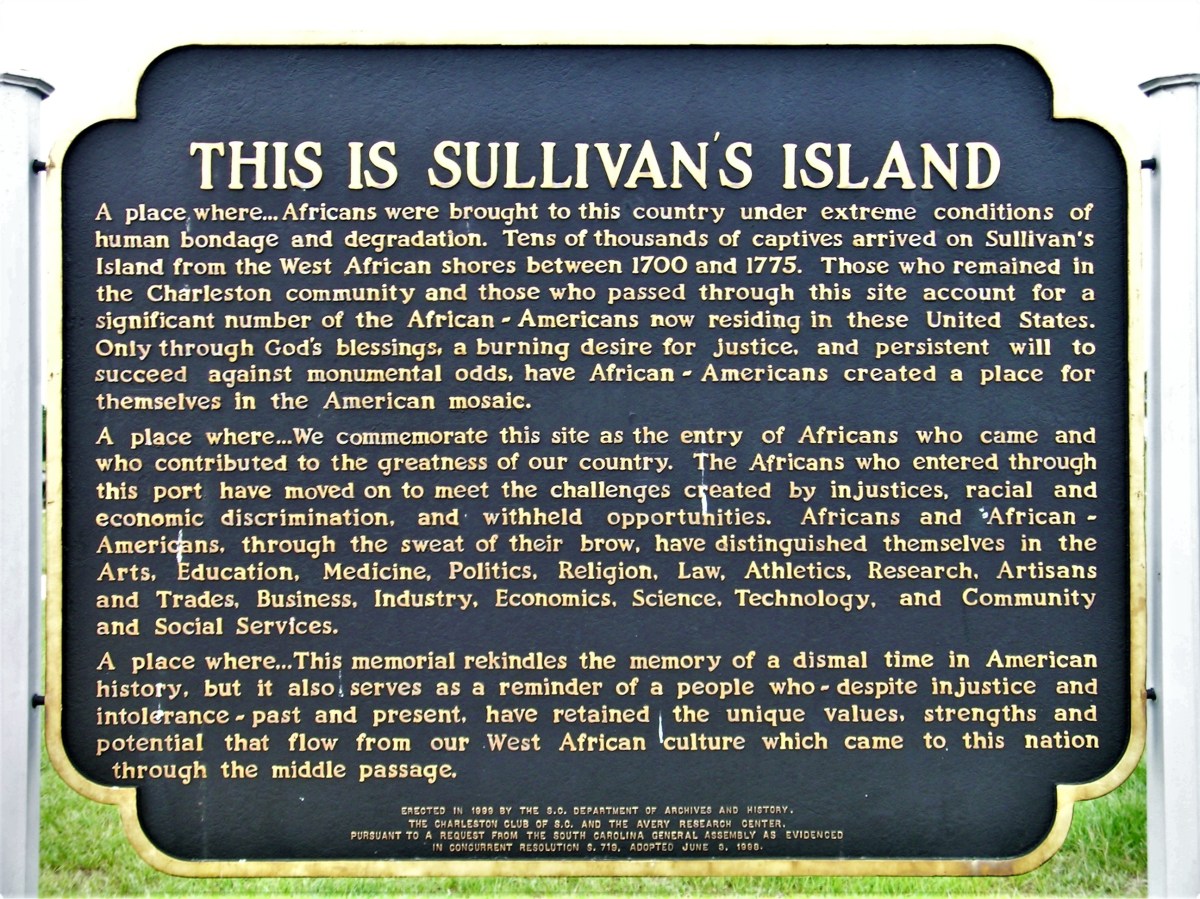
Sullivan’s Island was also the first line of defense against virulent disease, providing “pest houses” for in-transit African slaves between 1700 and 1775. who were processed and quarantined prior to dispatch to the Slave Mart in Charleston,

Old Slave Mart Museum entrance

suggesting a crude and culpable counterpart to white immigration at Ellis Island.

The Old Slave Mart–now converted to a museum–tells the painful story of America’s darkest days in a straightforward way…

Selling a Slave

offering a self-guided tour through an unimaginable time when freedom was confiscated for a price,

The Price of a Human Being

and families were ripped apart,

museum attendee

so America could prosper.

The buyer

Yet, such a beautiful city has been wrought in the wake of such misery.

Fort Citadel (3)

long piers and bridge

2nd Presbytarian Church

Ravenal Bridge (2)

rainbow row

rainbow row sign

river walk

Waterfront Park

Moultrie Square

waterfront park and fountain (3)

But lest we forget:

This is sign (2)


Serenity Now

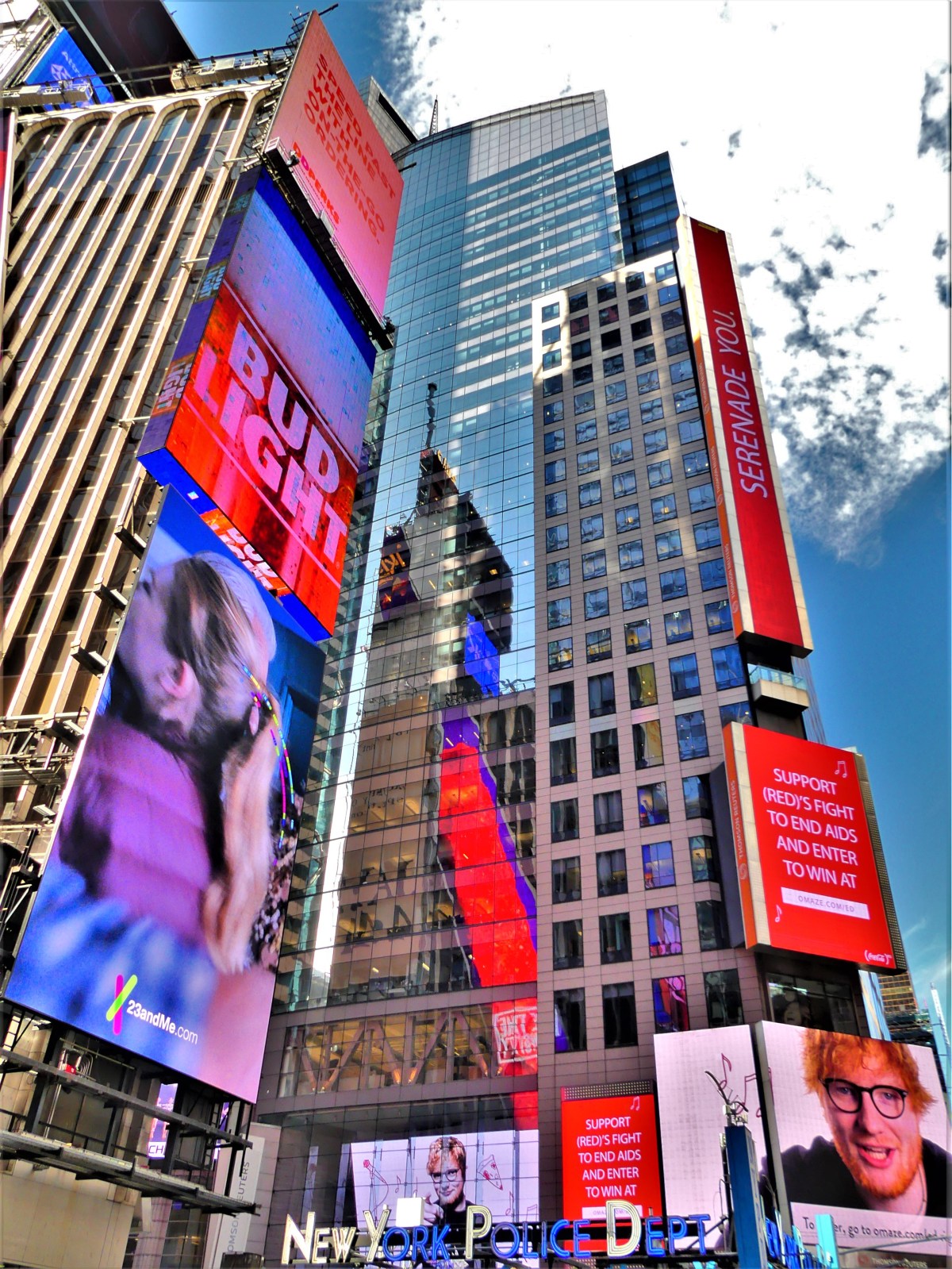
New York City is an acquired taste.

To many who live and work in haste,

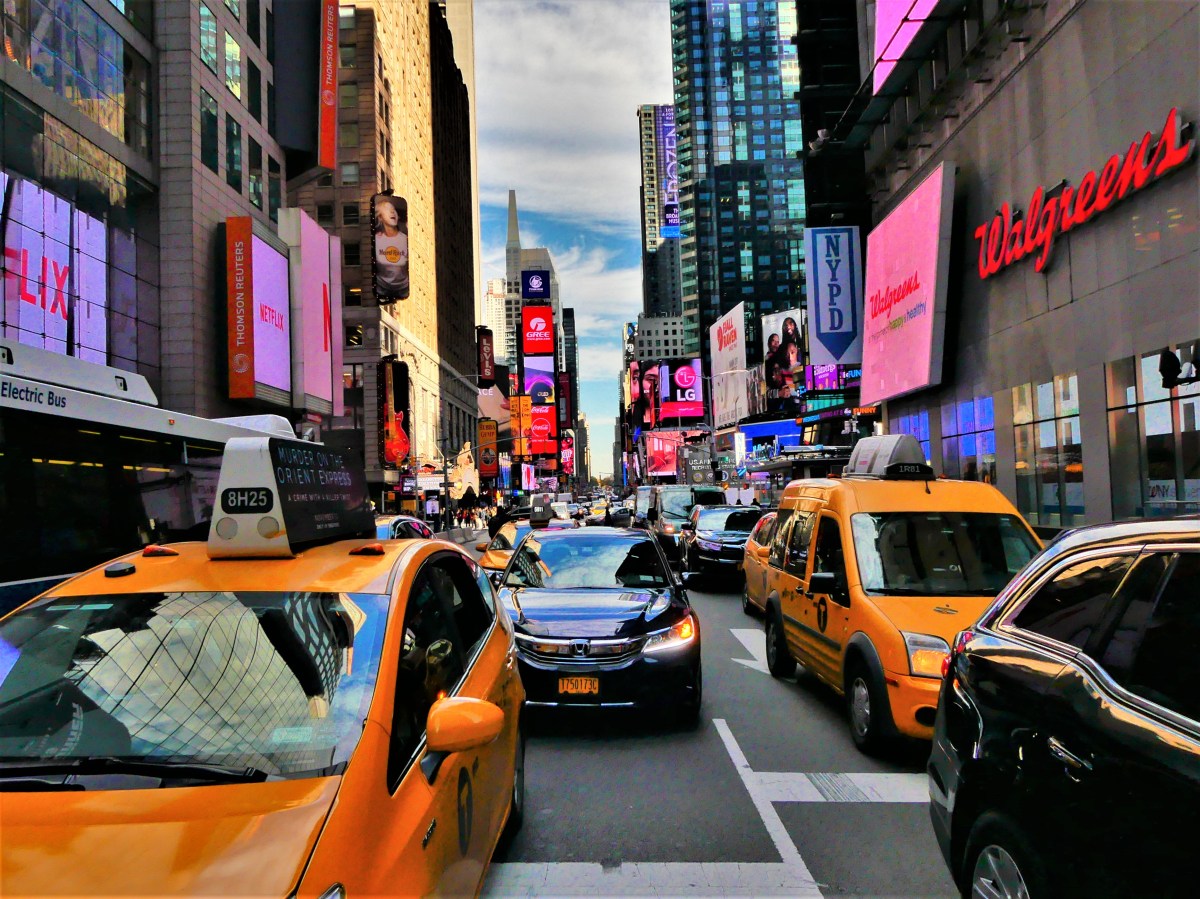
the din of Manhattan traffic is the soundtrack of modern mayhem.

TSQ traffic

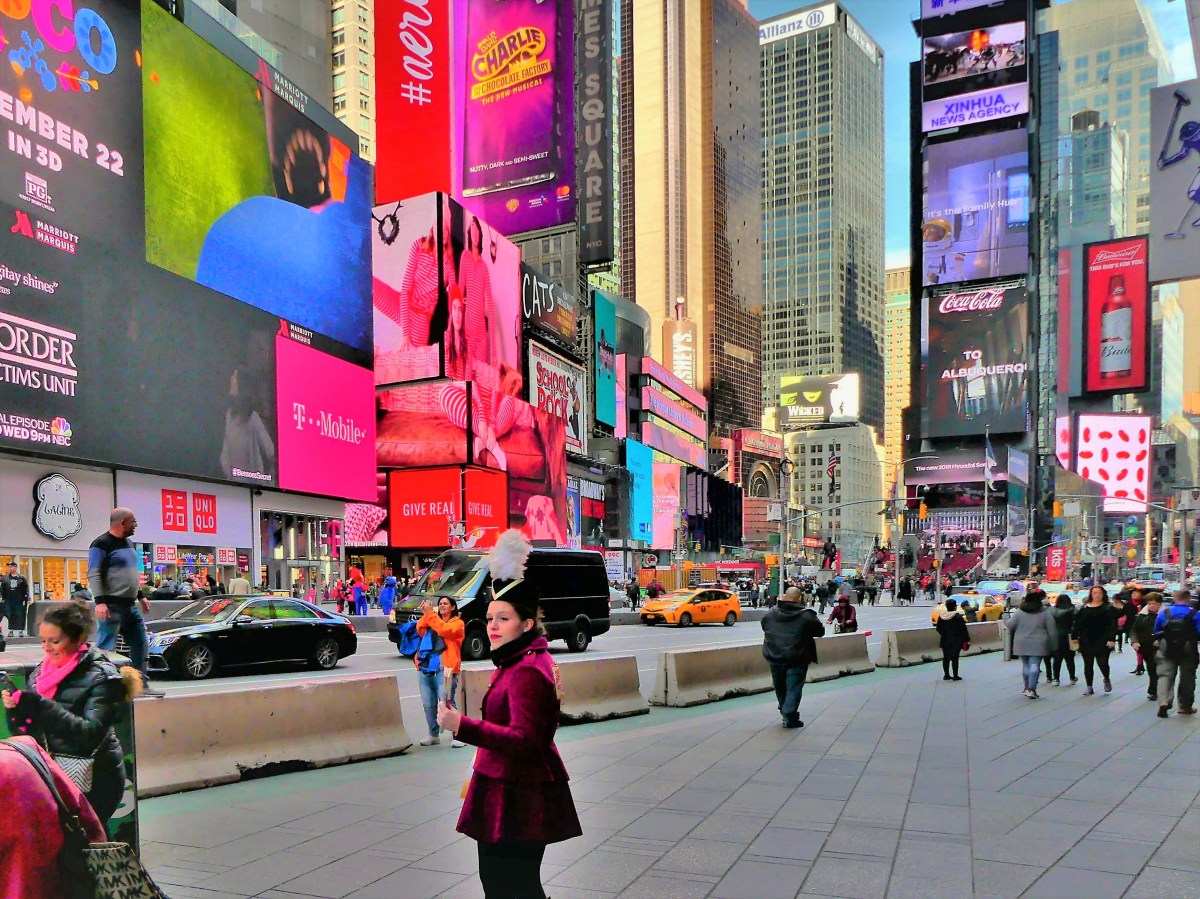
And the synthetic daylight of Times Square practically requires sunglasses,

regardless of the weather or time of day.

Times Square1

While many visitors may revel in the tumult,

equal numbers endure the assault,

induced by constant hustle and bustle.

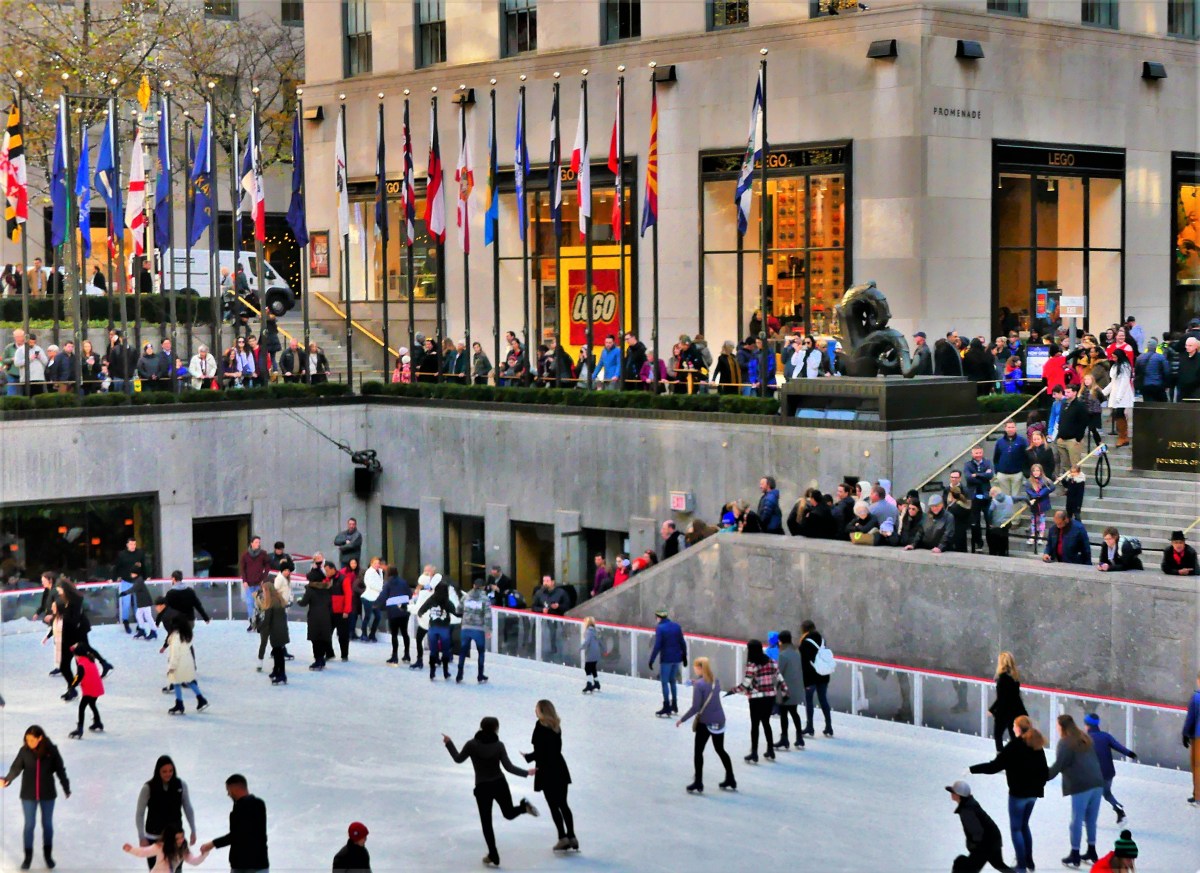
skating.jpg

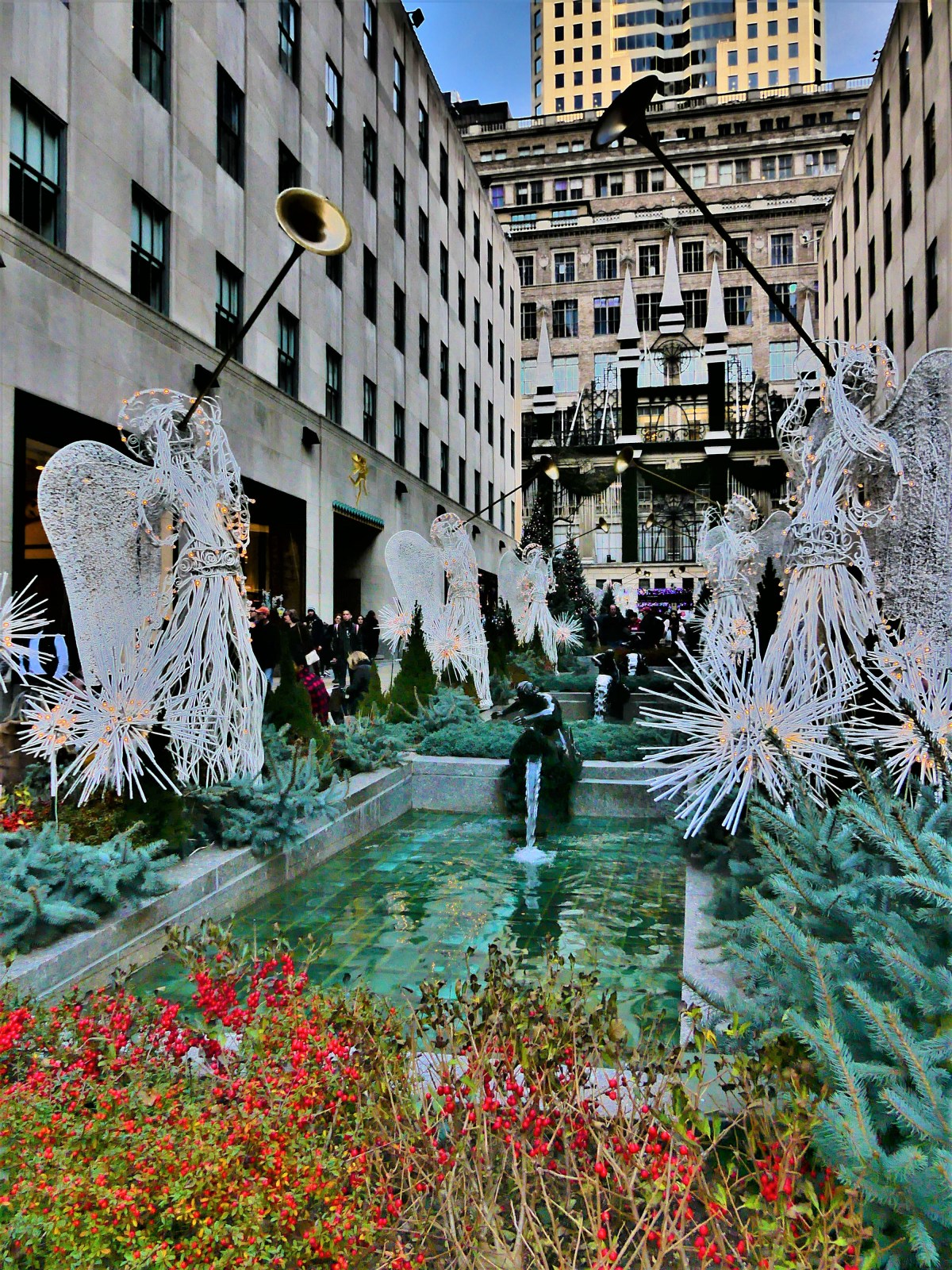
But the Herald Square Angels

have a secret to share:

promenade

“Step back to infinity,

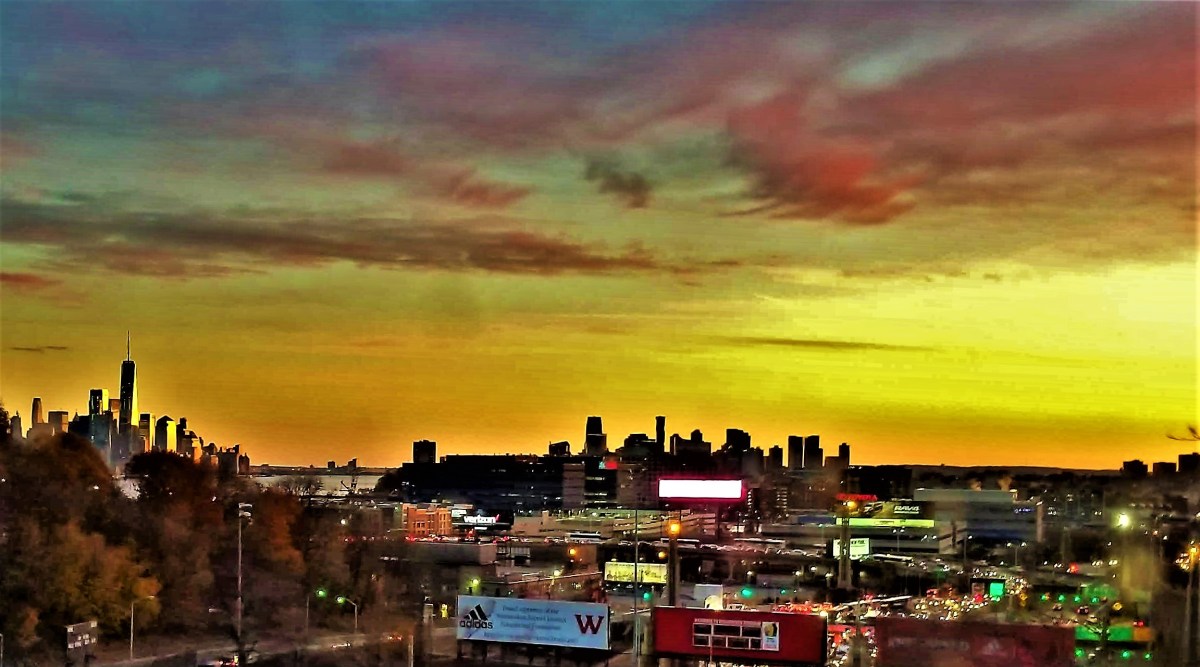
wait for twilight to set the city zest aglow,

and bask in the serenity.”

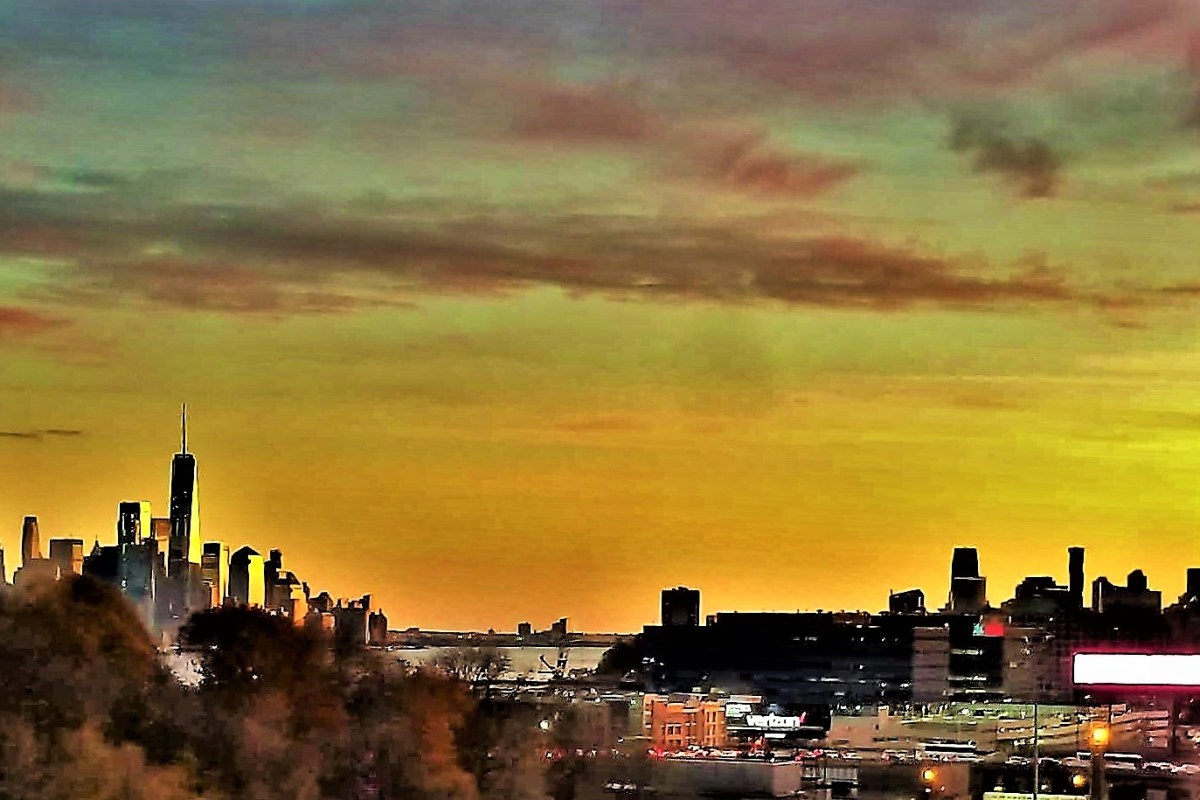
skyline (6)

Stomping Grounds

After eight months of highways and high country, I took a deep breath and returned to the nest. Leah and I had already flown to Philadelphia from Charlotte–where the Airstream was idling in storage until our travels resumed–and continued by car to Northern New Jersey where we planned to reunite with our families for Thanksgiving dinner and my 65th birthday celebration.

While commuting to New York City to attend a union-sponsored luncheon of like-minded teachers and retirees was never part of my original plan, it seemed difficult turning down a free lunch after receiving the invitation a month earlier, and realizing that the event would be a pleasant diversion from all the doctor visits Leah had scheduled months ago.

Although the trip by bus from Willowbrook Park and Ride to Port Authority was uneventful, memories of tidal traffic flooded my mind as the bus crept at a snail’s pace until we entered the Lincoln Tunnel.

Port Authority was as grimy as ever. No one dared to linger longer than necessary, so travelers were quick about their business, and goodbye exchanges tended to be short and sweet before people parted ways for different places. Only the homeless and drunks cared to share the surroundings, as they dutifully sifted through trash cans in search of redeemable bottles and discarded deli.

Walking out onto 8th Avenue and looking beyond 42nd Street, a familiar game of human pinball was playing out across over-crowded sidewalks, with pedestrians weaving through imaginary obstacle courses, unable to avoid each other.

Times Square1

Also familiar were the cacophonous sirens of emergency vehicles frozen in gridlock, and the scent of the big city.

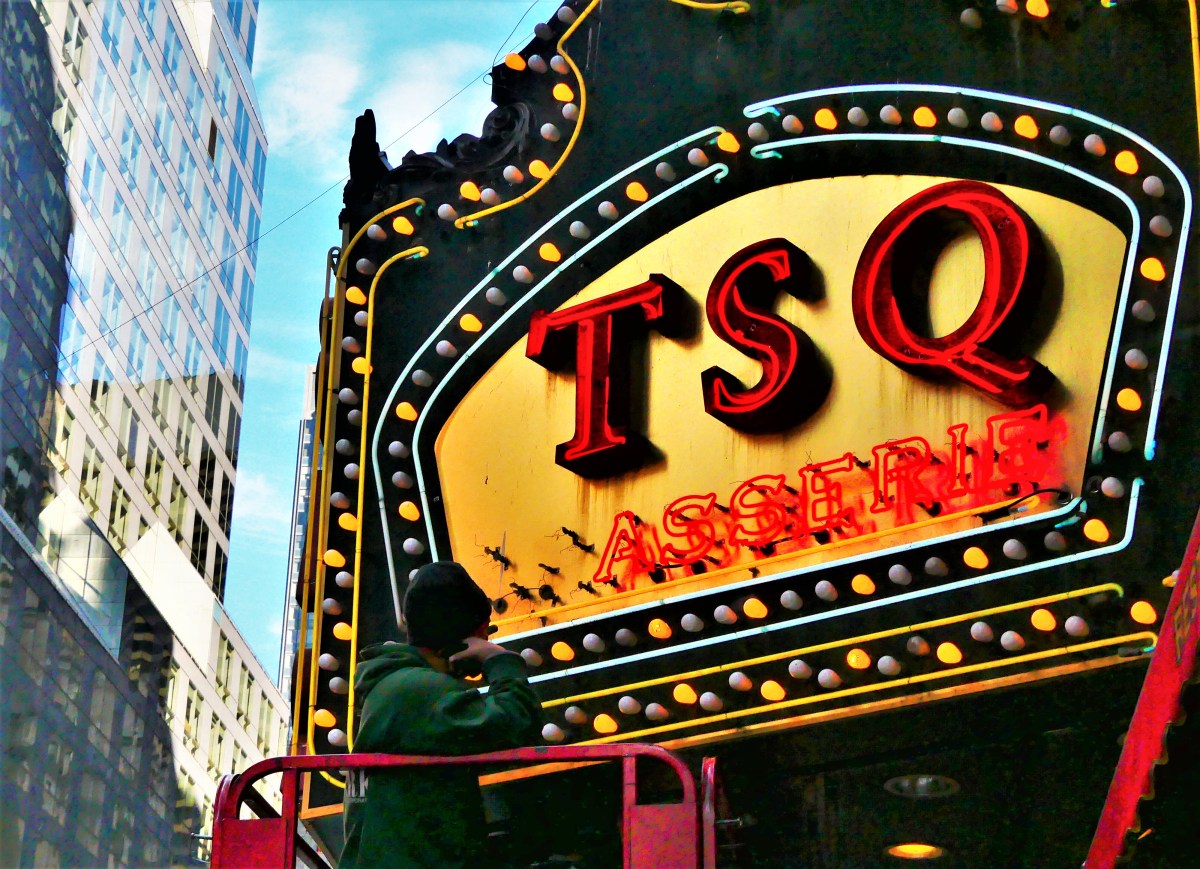
TSQ Asserie

I routed through Times Square for an essential rush of nostalgia,

TSQ traffic

as this was my traditional walk to work for the better part of a school year when I taught World History and Chemistry at JKO (Jacqueline Kennedy Onassis) High School, renown for once housing the school characterized in the movie Fame.

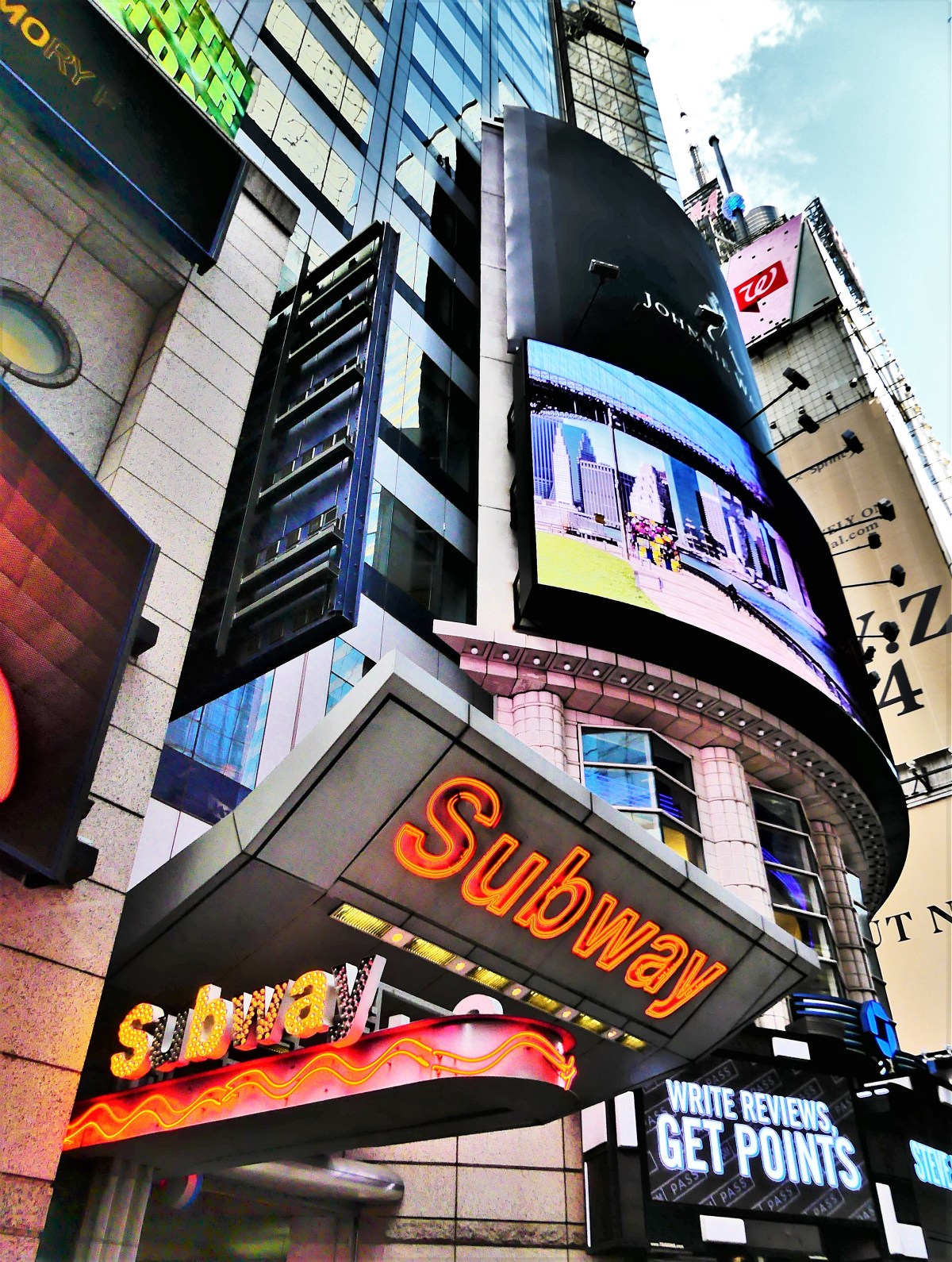
Subway

Times Square2

SWAT

Winding my way to 6th Avenue,

Torsos

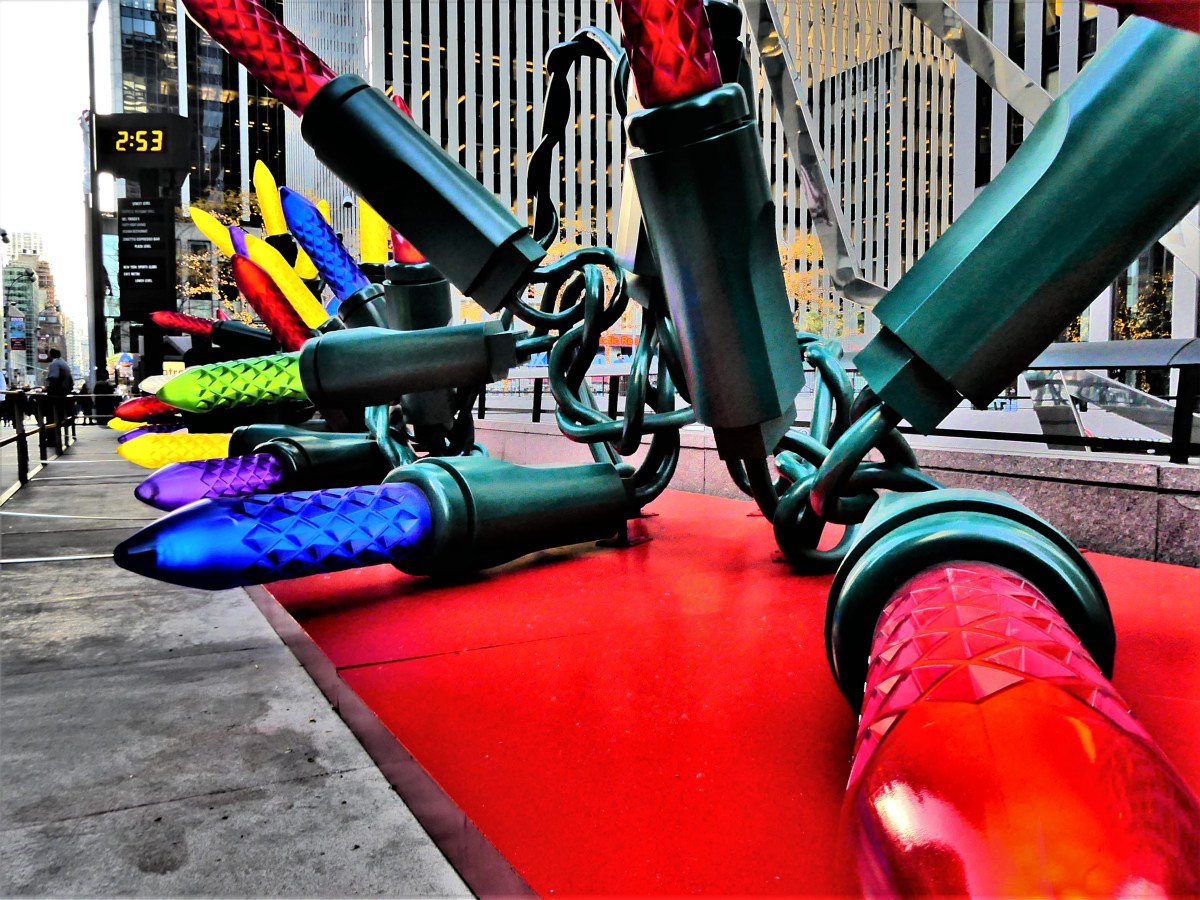
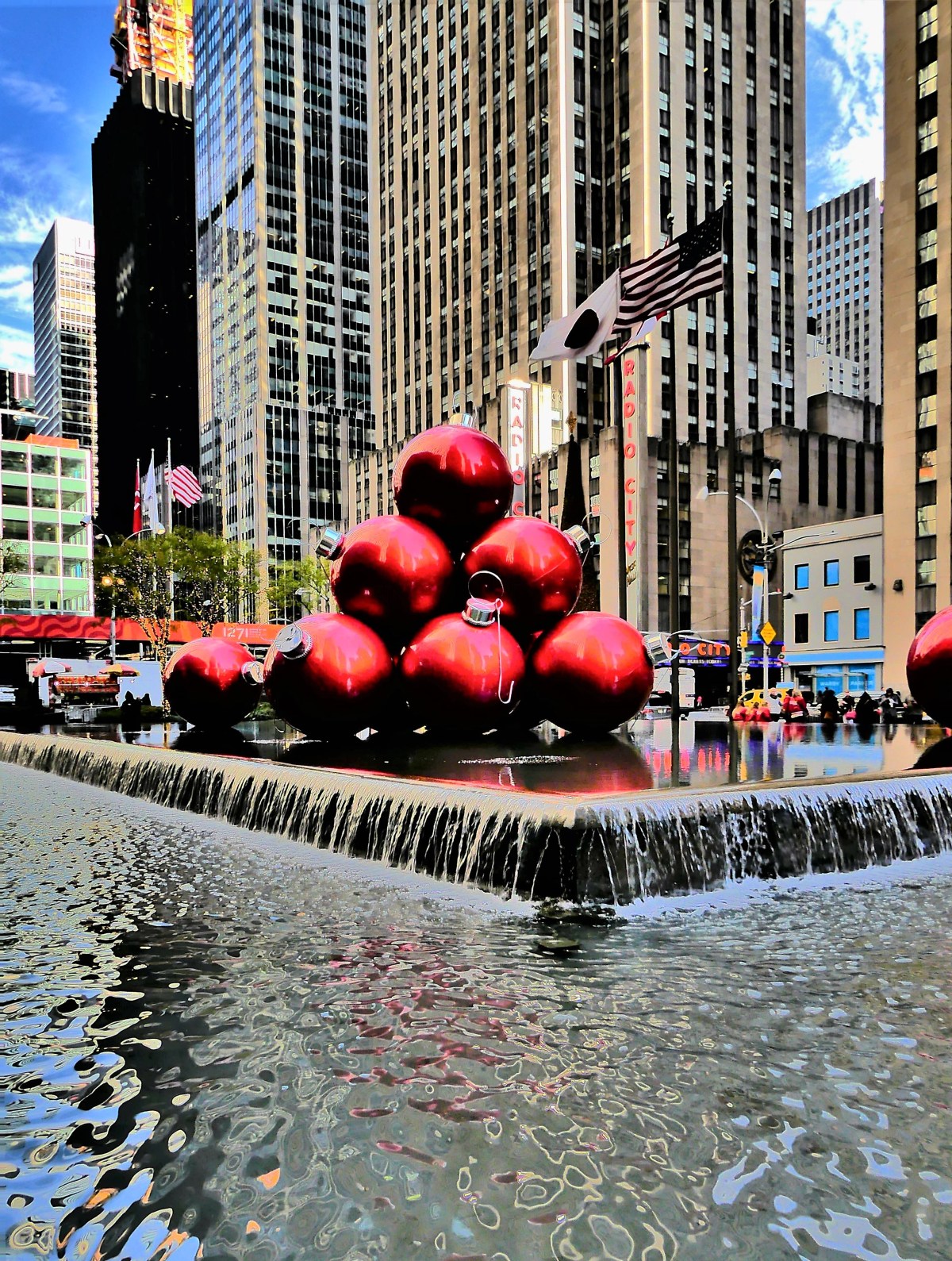
camera towers were rising between decorated office buildings in preparation for Thursday’s Thanksgiving Parade.

Xmas lights

Ornaments

Arriving at my destination, I joined a reception in the ballroom lobby of the New York Hilton that soon transitioned to an open call for lunch, as the doors to the ballroom parted and 800 attendees scrambled to locate their seating assignments.

After customary introductions and rousing speeches from union officials,

Ballroom luncheon

we settled on servings of institutional indigestion masked as fish or fowl, while catching up with complete strangers around our table.

Table 60

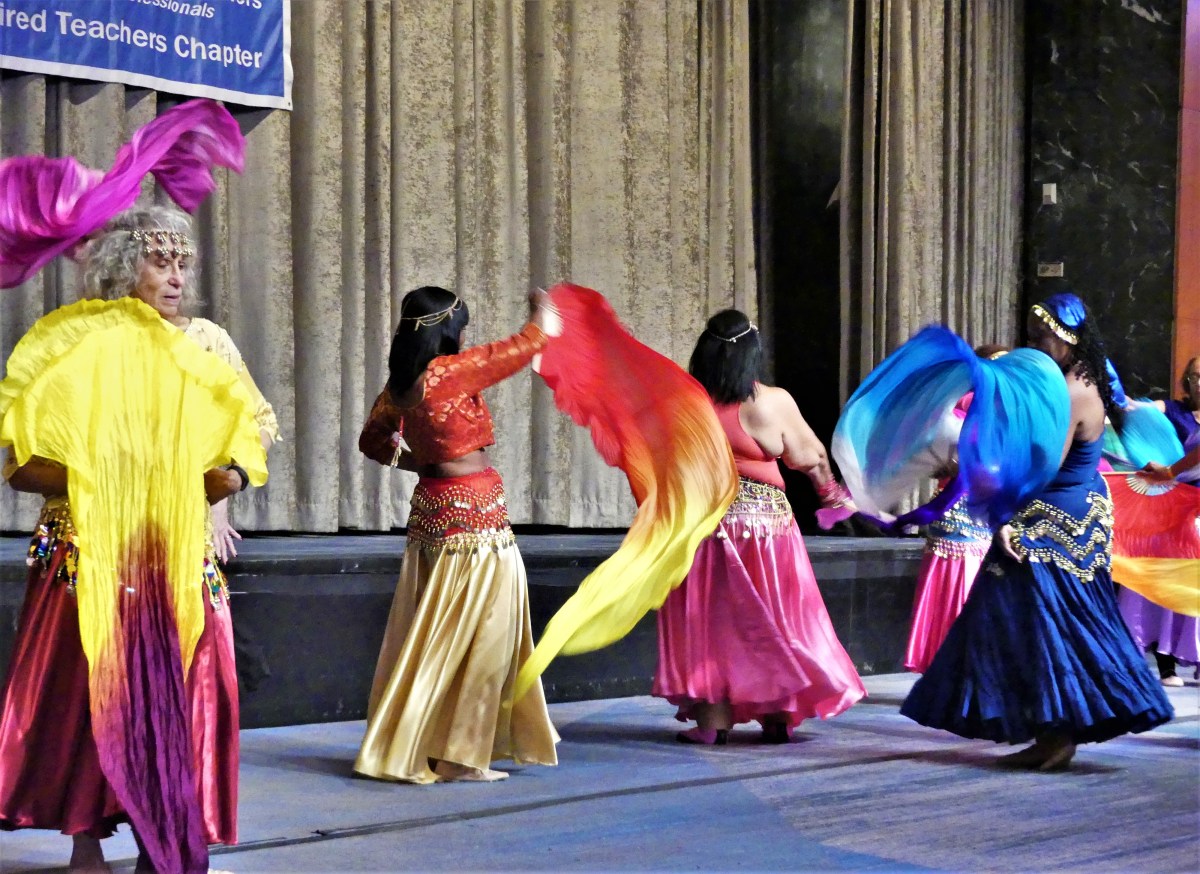
Entertainment was provided by retirees with a passion for colorful clothes and random gyrating.

tiny dancers

Belly dancers

fan dance

By two o’clock, it was all an afterthought, and the crowd slowly dissembled…in search of what’s next after retirement.

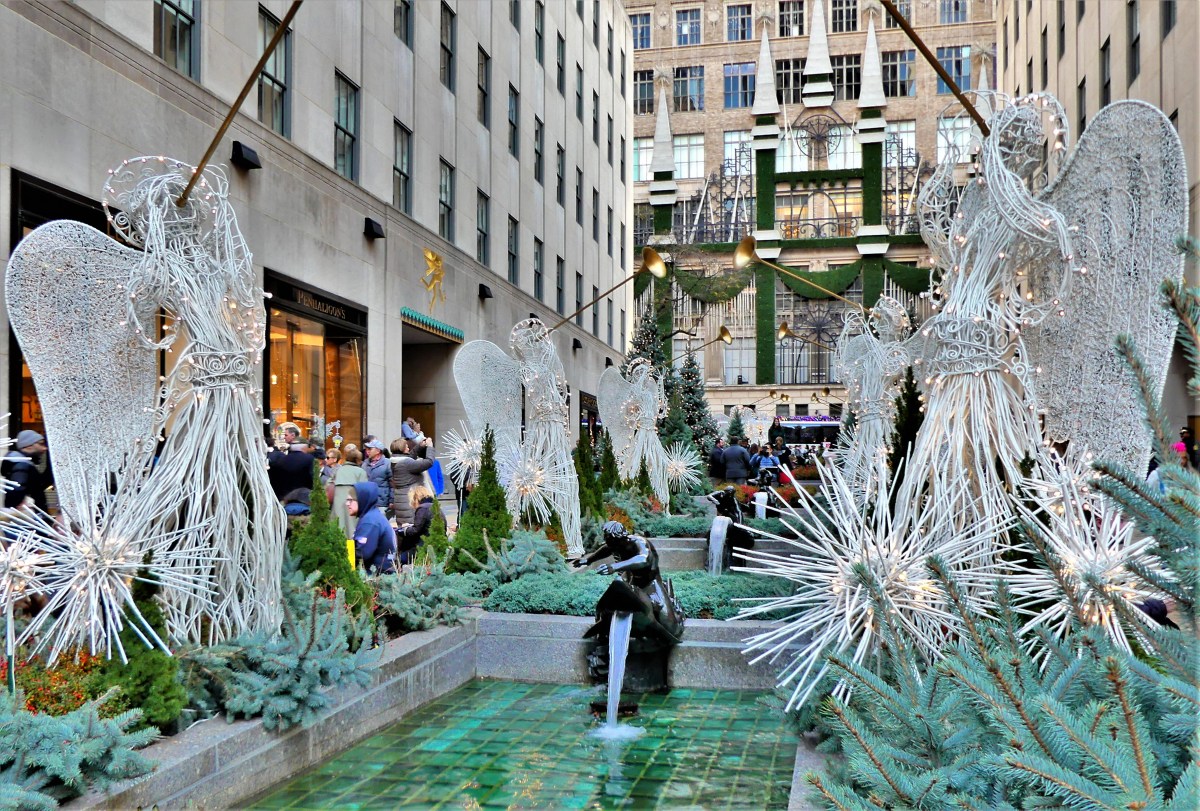
Upon my return to Port Authority, I re-routed through Rockefeller Center–ahead of Thursday’s masses–to sneak a peak at Christmas future…

Rockefellar Center Promenade

Angels with Trumpets

…but alas, the Northern Spruce–like so much of New York City–was still a work in progress.

Scaffolded tree

Ironically, I felt myself immediately transported back to the classroom for one brief moment, reflecting on one of my earliest teaching revelations: that instruction, much like construction, is best achieved with proper scaffolding. For without it, most students would be skating on thin ice.

Eco-Beer

It seems odd to consider that drinking beer can also be good for the environment, but after touring the Sierra-Nevada brewery in Mills River, North Carolina, I’m convinced that raising a pint of porter is a sacrifice that I am more than willing to make for the sake of our planet.

John was our tour host for the afternoon, and he was aleing to tell us the hoppy story of Sierra-Nevada’s humble beginnings in Chico, California while we sipped a sample of pale ale, and listened to his silly puns.  He narrated a slide show detailing how homebrewers Ken Grossman and Paul Camusi rented a tiny warehouse in 1979,

warehouse
First brewhouse. Photo courtesy of Sierra Nevada archives

and barley cobbled together a 10-barrel Frankenbrewer made of discarded dairy equipment and scrapyard plumbing with $65,000 seed money borrowed from family and friends in order to produce their first American Stout in 1980, followed by a hop-forward Pale Ale. Surprisingly, first year sales reached 950 barrels, and doubled the second year.

By 2012, world-wide thirst for Sierra Nevada’s craft beer had exceeded their manufacturing footprint in Chico–which was capable of producing one million barrels a year after expansions in 1988 and 1997–and eventually led to construction of the North Carolina brewery that now offer tours with John.

Brew vessels

Ground-breaking began on 90 acres of oak and hickory forest in Henderson County, adjacent to Asheville’s Regional Airport. In line with Grossman’s ecological sensability, fallen trees from the property had been milled to provide lumber for the brewhouse and the rainwater cisterns that presently irrigate the landscaping and flush the facility’s toilets.

Additionally,

  • on-site solar panels and microturbines fulfill 32% of the brewery’s energy requirements;
  • surplus COemitted during the brewing process is recaptured to pump beer to the taproom;
  • used cooking oil from its restaurant is processed into bio-diesel for its delivery trucks;
  • discarded yeast is converted into high-grade ethanol fuel;
  • spent grain is fed to company livestock;
  • spent water is recycled to the brewery’s own water treatment plant, where it is used as drip irrigation for its estate gardens;
  • culminating in 99.8% of the brewery plant’s solid waste being diverted from landfill.

Because of Sierra Nevada’s commitment to sustainability, the Mills River facility has been certified Platinum in 2016 by Leadership in Energy and Environmental Design (LEED)–its highest award, and first-ever bestowed upon a production brewery.

But none of it would matter unless the final product tasted good. With that in mind, John took us on a walking tour, identifying the four main ingredients, and how they all come together to produce an award-winning beer.

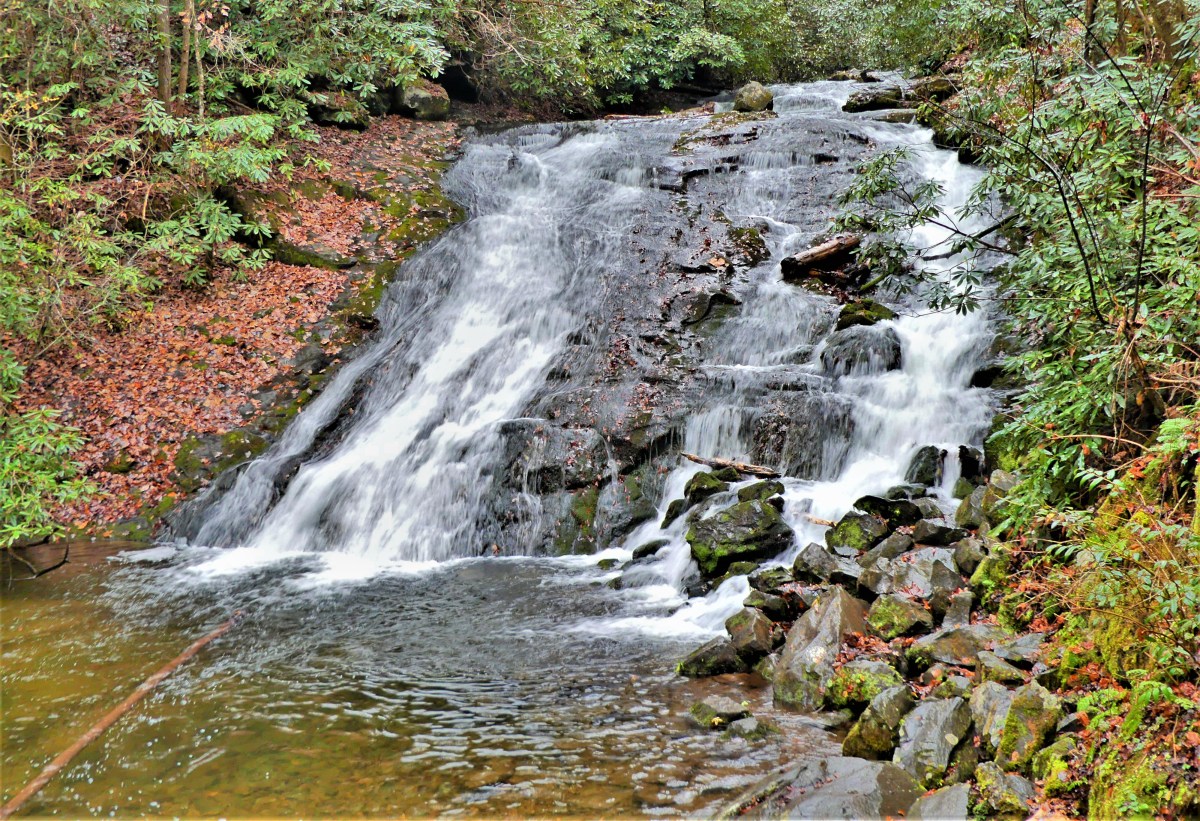
The purest water drawn from North Carolina’s mountains is filtered until rendered chemically inert.

Indian Creek Falls

The finest barley is milled on site.

malt silo

malt mill

to produce the finest wort.

lautering tun

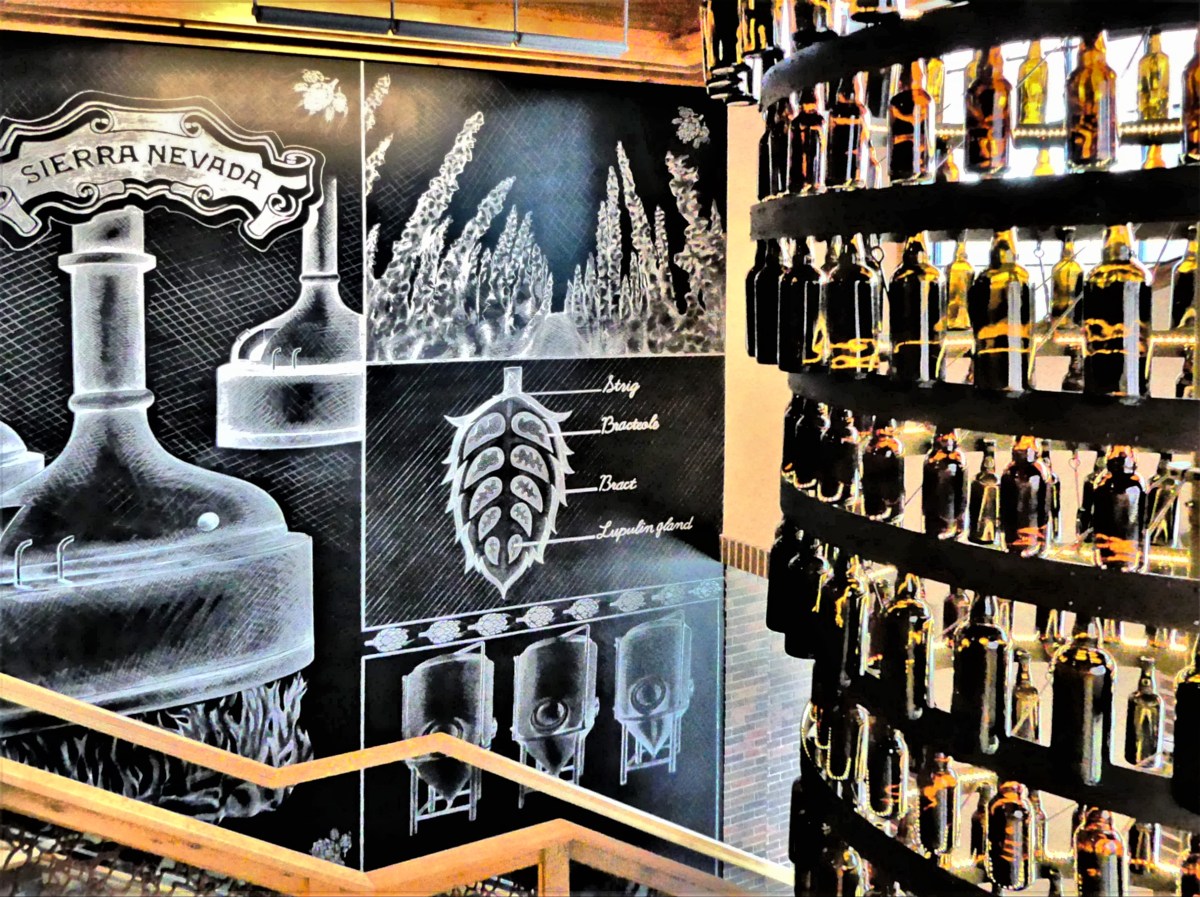
Several varieties of whole cone hops are harvested with the flowers intact,

hops room

and added into the brew kettles in different combinations to produce complex tastes and flavor profiles–

fermenters

–under strictly regulated temperatures according to specific beer style.

temp guage

Whereupon, the finest yeast is added…

mash tank

to initiate the fermentation process.

fermentation room

Quality control oversight guarantees a safe and consistent product throughout each production cycle.

quality control

After testing, the beer is chilled and bottled…

bottling

…and ready for packaging.

packaging

Or in our case, it’s ready to be poured and tasted in beautiful surroundings.

tasting room

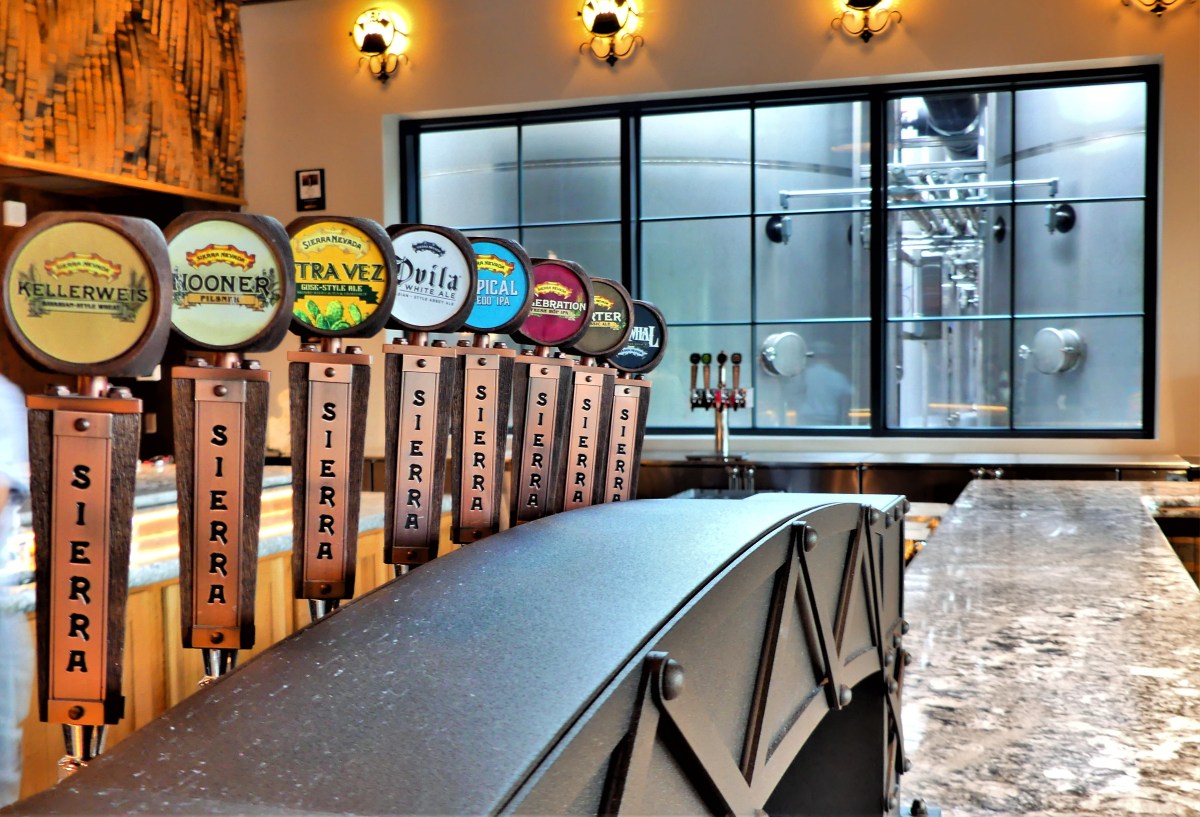
We sampled eight different beers–

beer tap samples

–each one served in its own style of glass to enhance the tasting experience–

glass display

and the experience leaves little stout why craft beer, at the very yeast, deserves a bitter place at the table with the beer conglomerates.

Ken Grossman’s brewing philosophy of using pure and fresh ingredients…

beer chandelier1

…coupled with his unwavering attention to detail at Mill River, will surely tripel Sierra Nevada’s output and sales, securing its place as the nation’s lagerest private craft brewer, which gose without saying.


Music City, USA

We refused to leave Nashville without attending a concert.

Of course, it’s impossible to ignore the live music screaming from scores of Broadway juke joints and honky tonks, combining to create a three chord din, and it’s all for free.

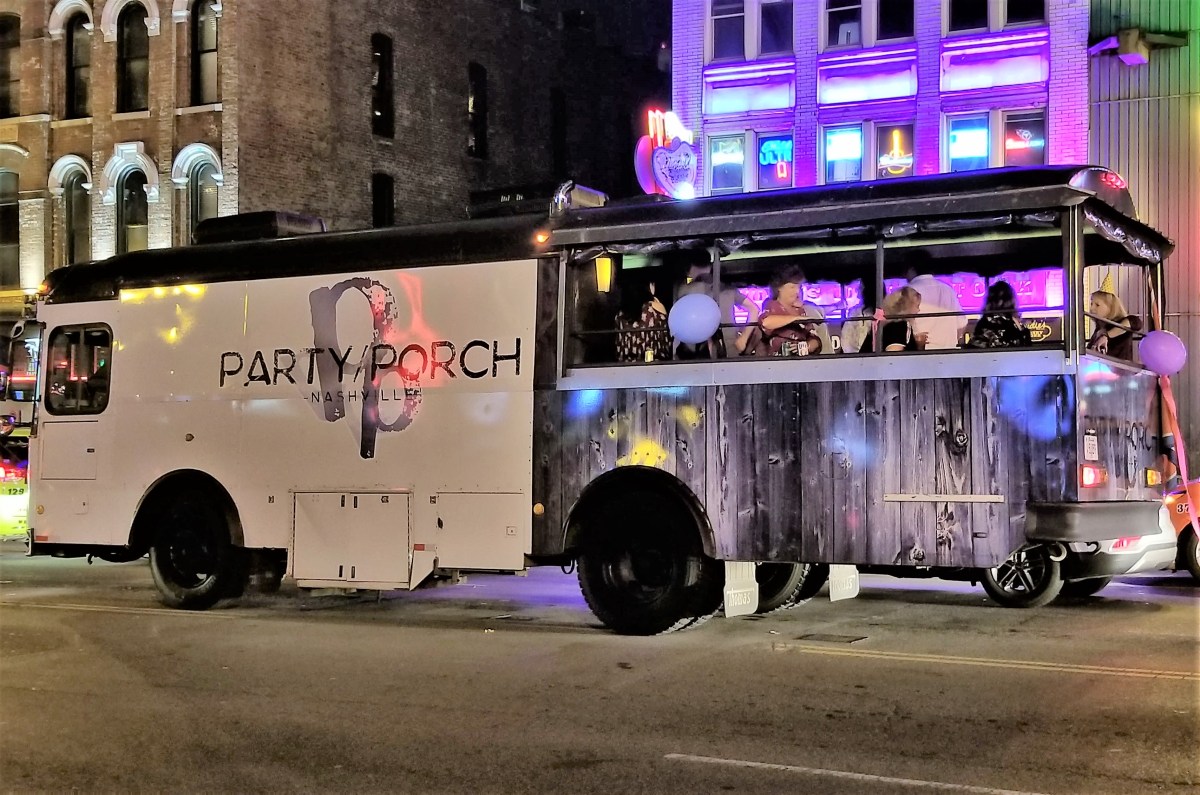
But getting past the burly bouncers requires mastery of a special skill set, namely: zigzagging through hordes of bridal parties and lady’s-night-outers;

party porch

sidestepping the street people and the homeless; and dodging the drunks and the soon-to-become-drunks who walk a crooked line.

Broadway

Instead, Leah and I were in the mood for more of a formal venue. However, Grand Ole Opry’s Ryman Auditorium–featuring The Charlie Daniel Band–had sold out weeks ago, including standing room.

Undeterred, we scoured the internet and stumbled across an offering that showcased the quieter side of Nashville.

marquis

I was definitely up for the concert, but Leah was hesitant.

“I think we should do it,” I stated. “Besides, there’s nothing else out there that compares to this.”

“I don’t know,” said Leah, unconvinced. “For starters, I don’t know anything about John Hiatt. And second of all, I don’t think I can spend two hours looking at Lyle Lovett. I mean, how in the world he was married to Julia Roberts has to be one of life’s great mysteries!”

“I don’t think she fell in love with his looks, and I’m certain he feels the same way after two years together with her… Look, why don’t we find out if tickets are even available?” I argued.

“Okay,” Leah relented.

Unfortunately, online shopping established that only single seats scattered through the orchestra and balconies still remained, and that was not an option. However, a direct call to the box office revealed that a cache of tiered seats directly behind the stage could be ours if we were willing to forgo direct eye contact.

“What about the sound quality?” Leah asked the agent.

“It’s a symphony hall! You’ll hear it the same as everybody else, and it’s amazing!” the agent proclaimed.

“That’s perfect!” I declared, openly displaying my enthusiasm. “We get to hear two time-honored performers with deep songbooks, and you don’t have to look at either one of them.”

“Okay,” Leah surrendered.

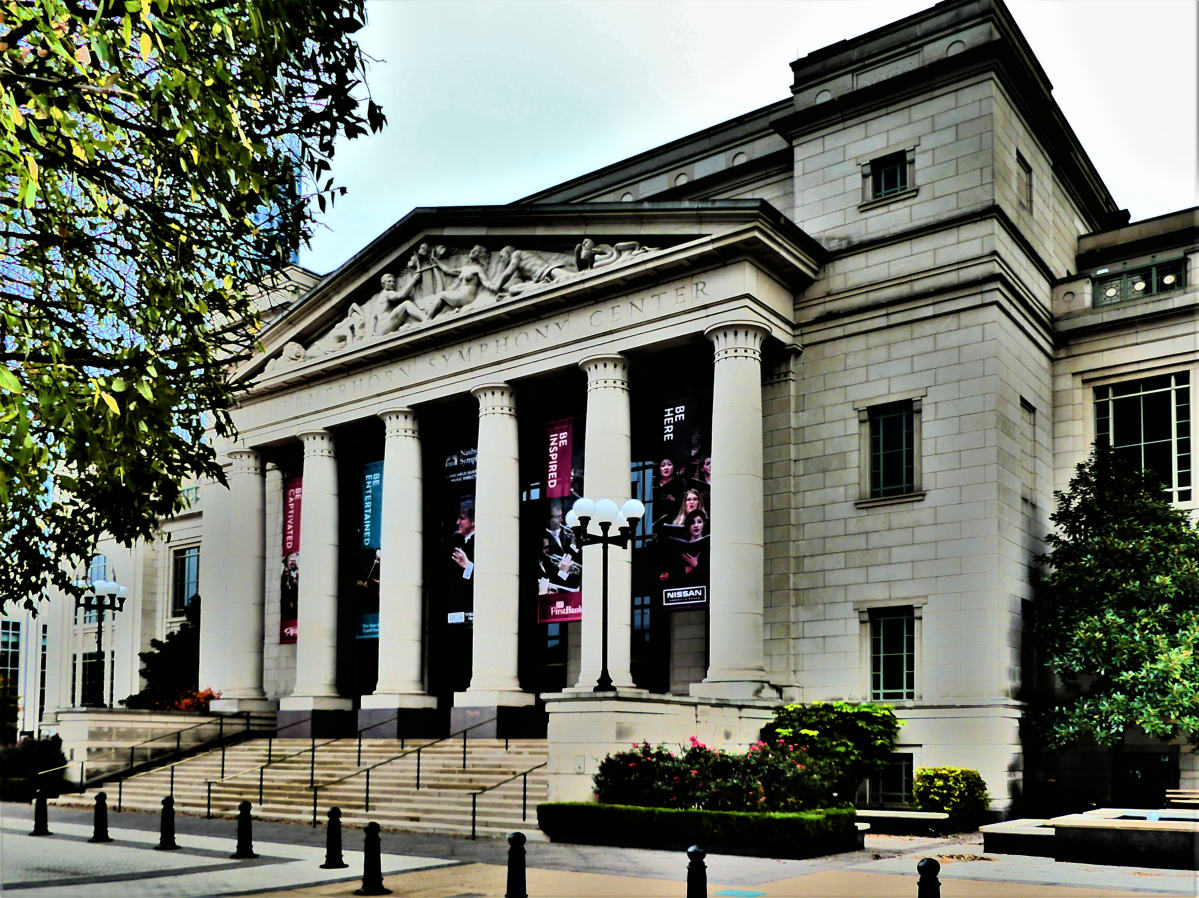
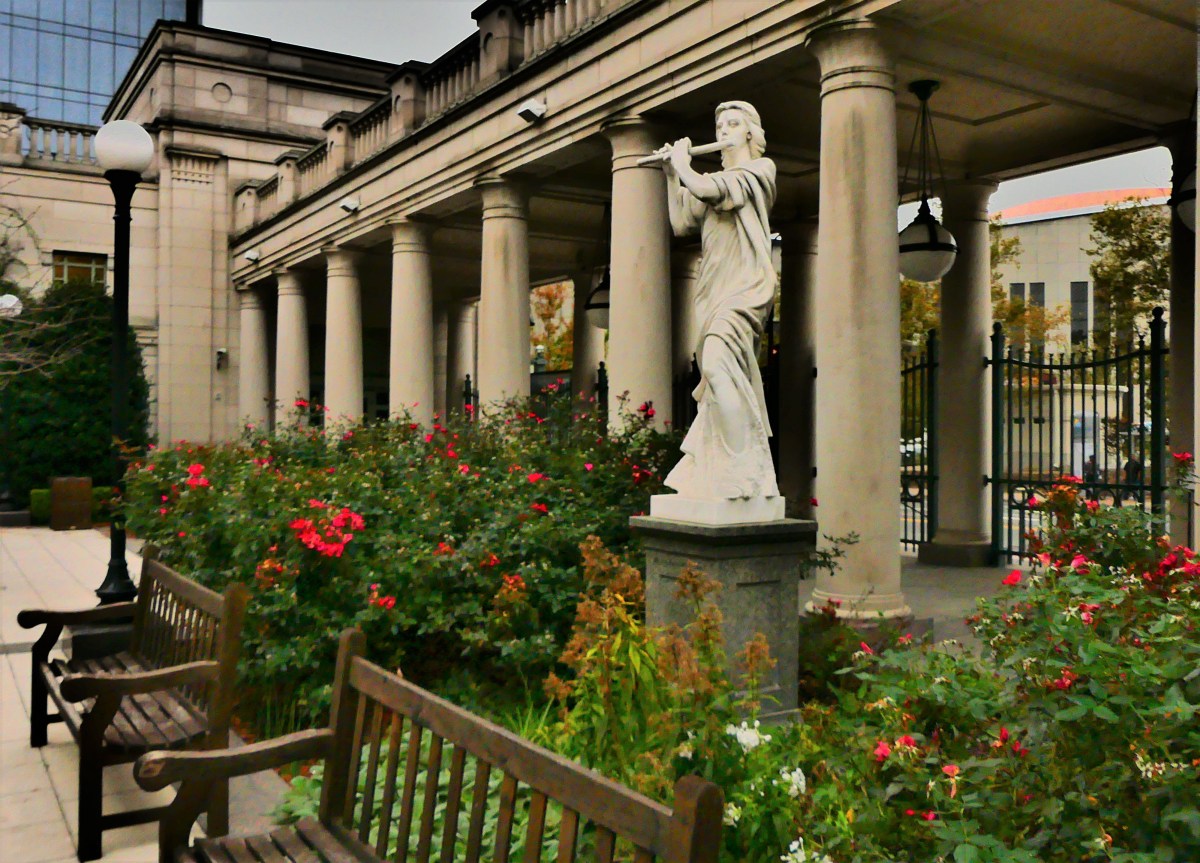
Schermerhorn Symphony Center was designed with neo-classical underpinnings,

Schermerhorn Hall

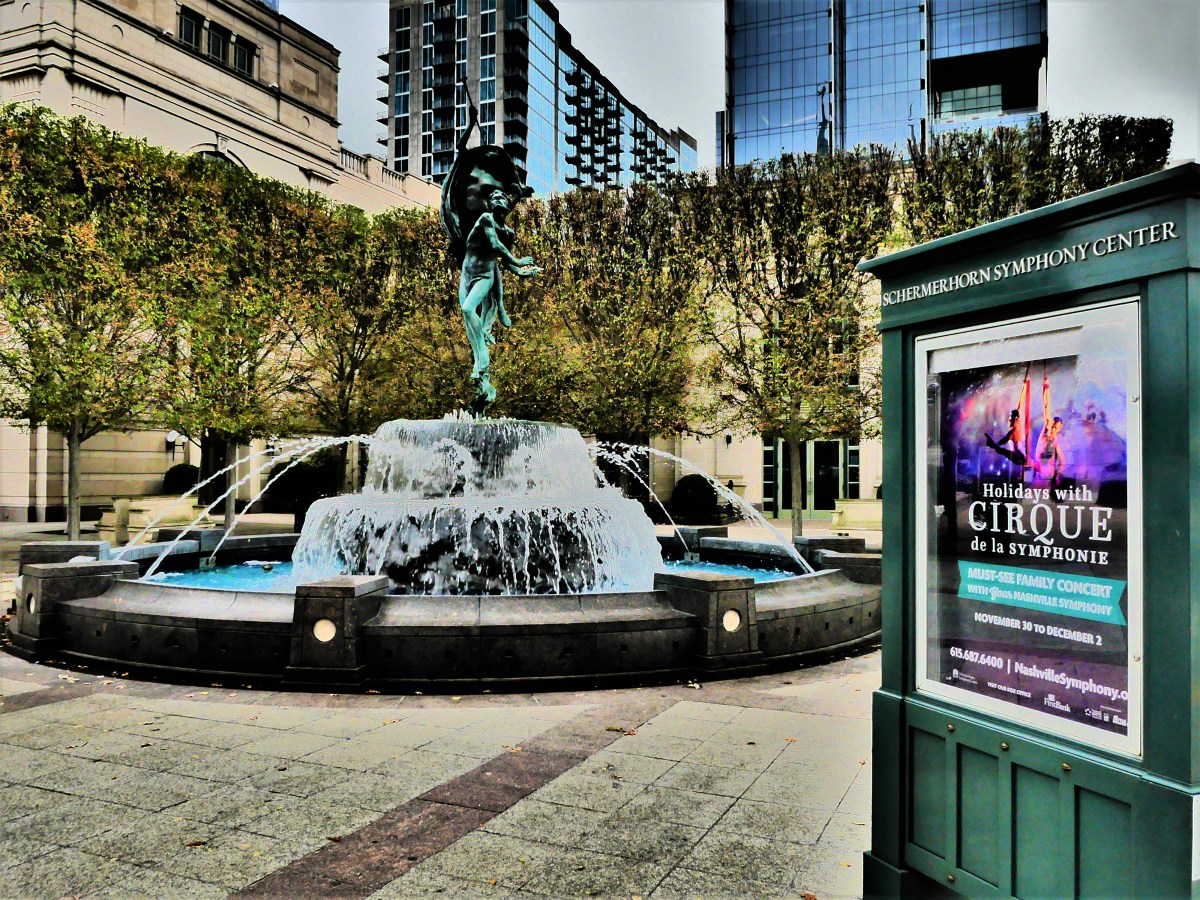
which seems characteristically out of place,

statue and hall

fountain

symphony hall garden

given Nashville’s lowbrow sensibility, and glass tower affinity.

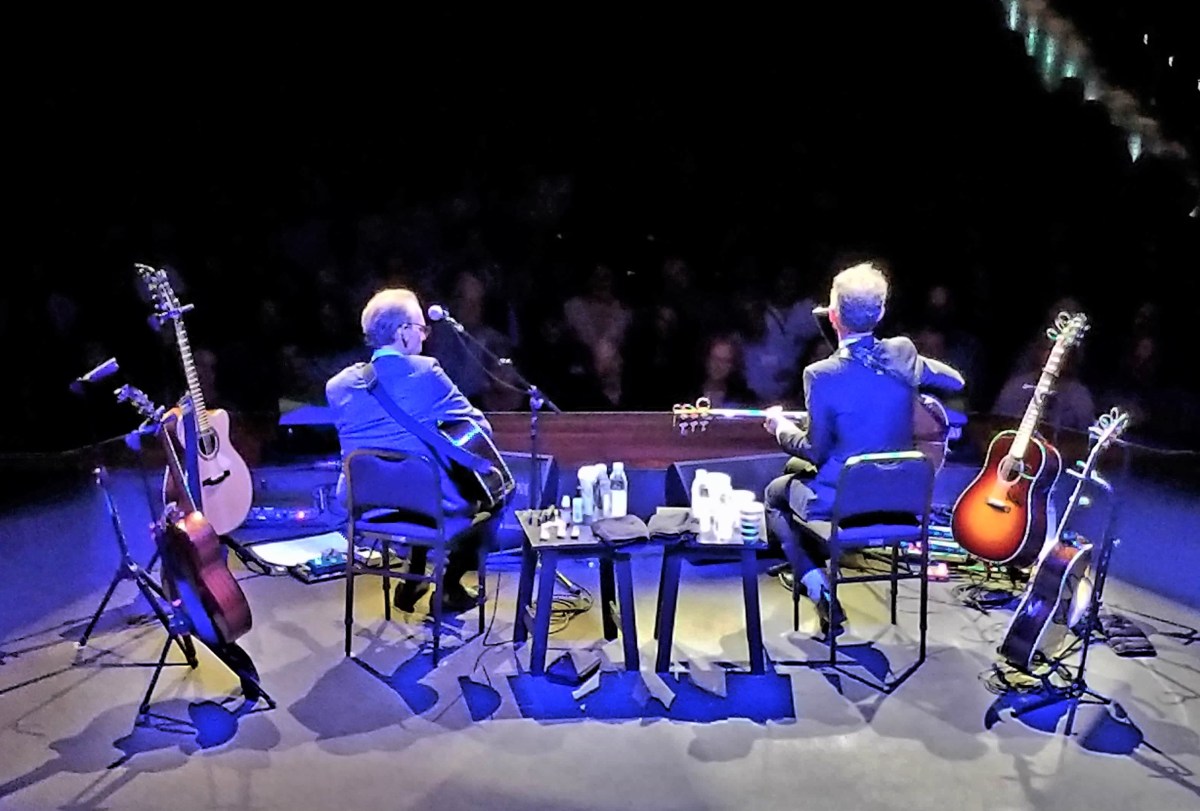
We stepped into a stripped-down, blue-lit stage–just guitars and voices, and an occasional harmonica–as Lovett and Hiatt traded songs and repartee,

performance (2)

providing 2½ hours of mutual admiration,

it's him (2)

and audience participation.

taking a bow

An evening of watching the backs of Lovett and Hiatt, while listening to their tone poems and anthems about America sounded wonderful.

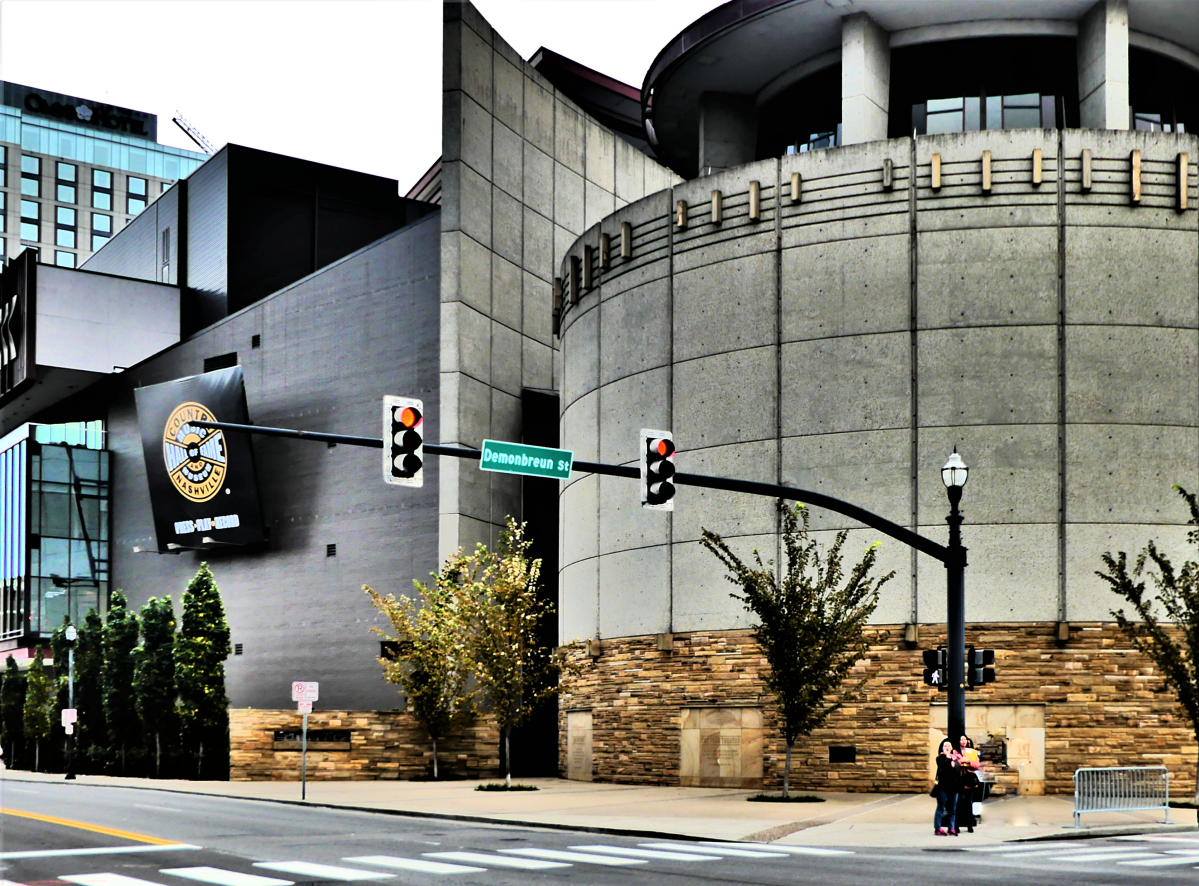
The following day, the hit parade continued with a pilgrimage to Country Music nirvana,

museum sign

Hall of Fame (2)

where a million fans come every year to pay tribute to Country Western legends who’ve turned an American music genre into an international juggernaut.

quotes3

Currently, museum exhibits follow the careers of music royalty, honoring the Queen of Country,

Loretta Lynn

and the King of Folk–

Dylan and Cash

–with multi-media memories, and enough testimonial trivia to solidify their golden reputations.

gold record wall

This is our second time through Nashville during our year-long odyssey; we’ve passed this way over seven months ago (Rig or Mortis) traveling southbound, and it’s become our way station once again as we move to warmer weather for the winter season.

We’ll surely pass through Nashville after we’ve emerged from our Florida hibernation, but next time around, we’ll have reserved tickets to the Grand Ole Opry in our hands before we get there.

Museum of Mirth, Mystery, and Mayhem

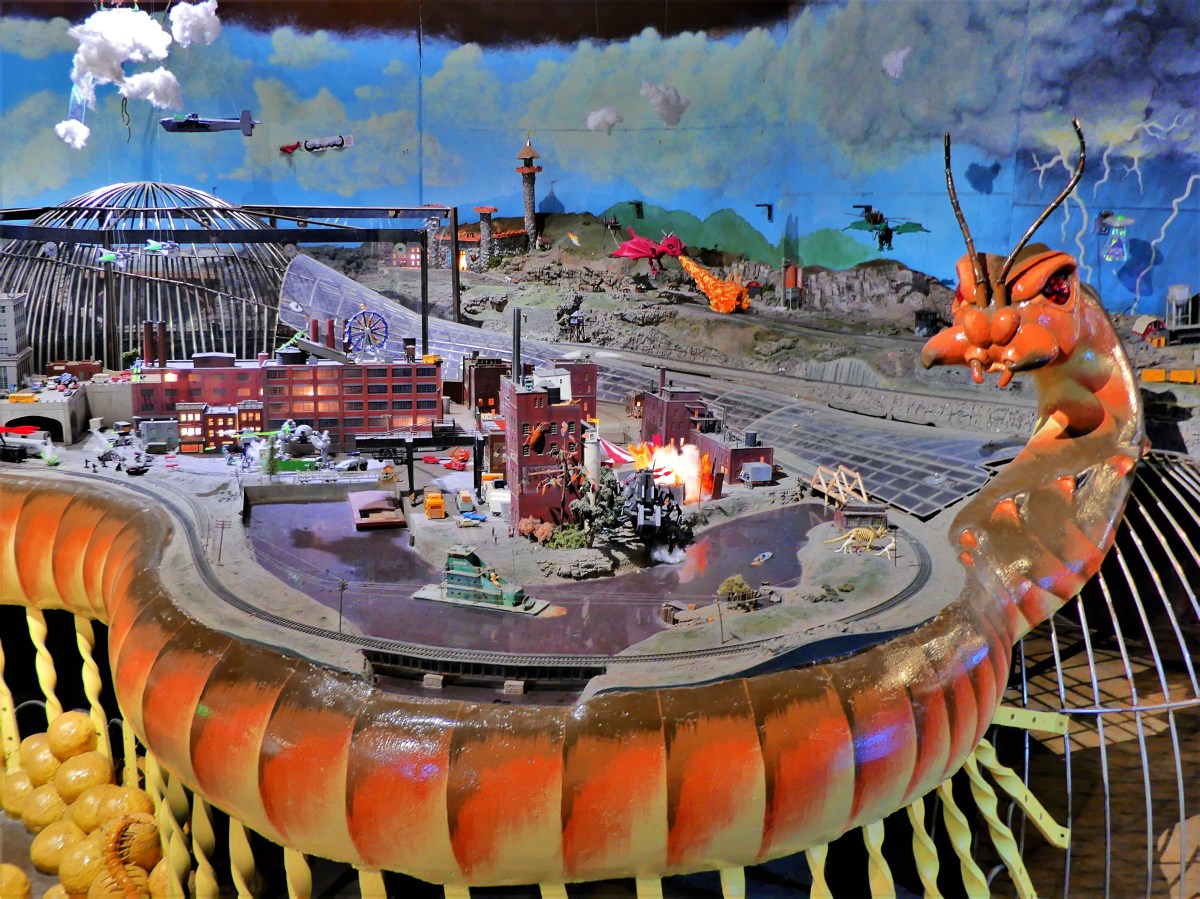
Looking for something different to do on a rainy day in St. Louis? Any list of indoor activities should include a trip to the City Museum,

City Museum

the brainchild of Bob Cassilly started 20 years ago in an abandoned shoe factory and warehouse, that’s since been converted into a nail-biting, four-story jungle gym and rooftop amusement park created from repurposed mechanical and architectural relics.

During our visit, parents were either on the sidelines watching their kids wear themselves out, or trying to keep pace with them, as they maneuvered through a zany, life-size Chutes and Ladders game board, extending through multiple levels.

slide

what's upstairs

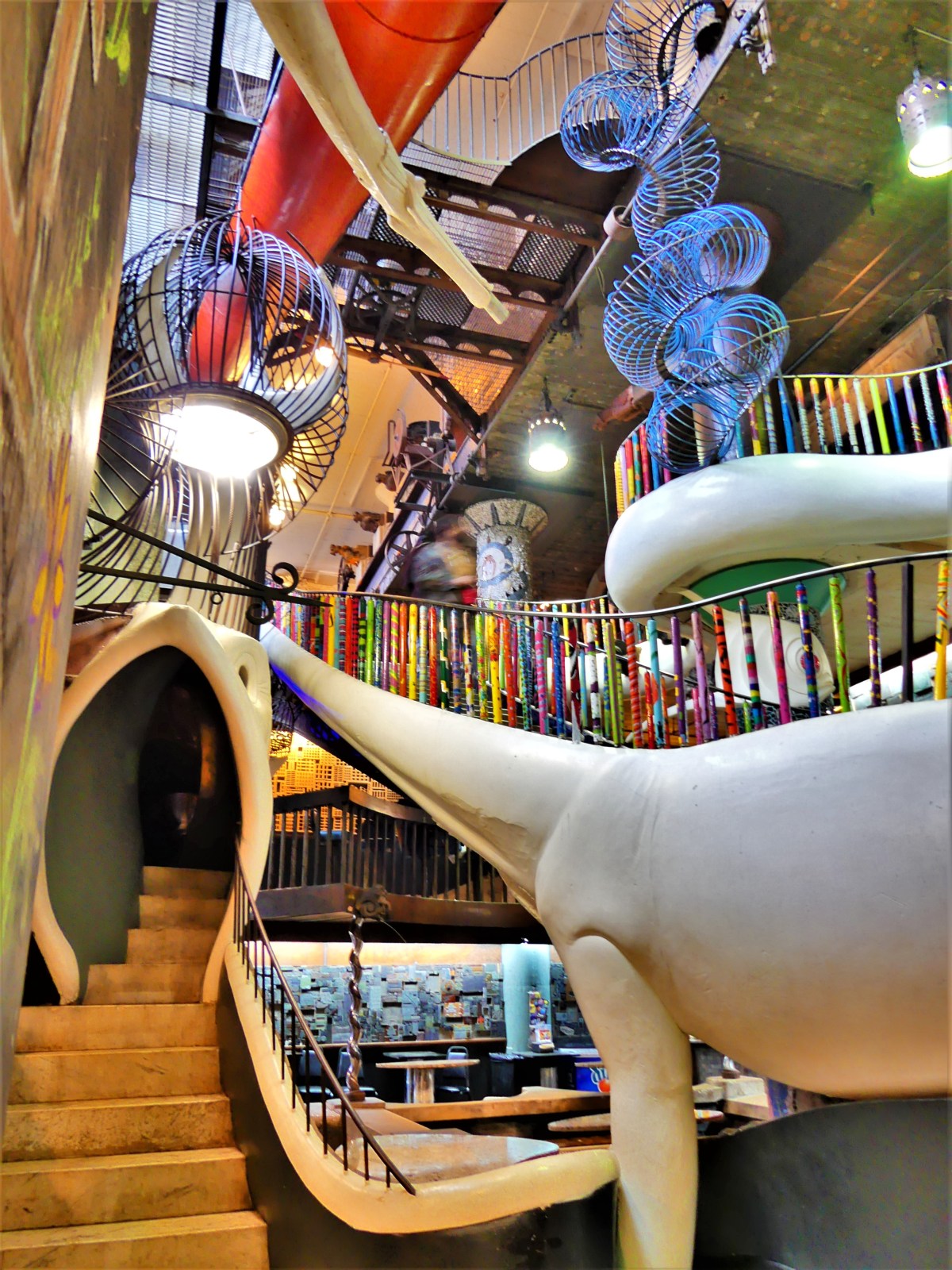
The bottom floor hosts a nautical and woodlands theme of crawl spaces…

water world

beluga

with several points of access to a mezzanine food court,

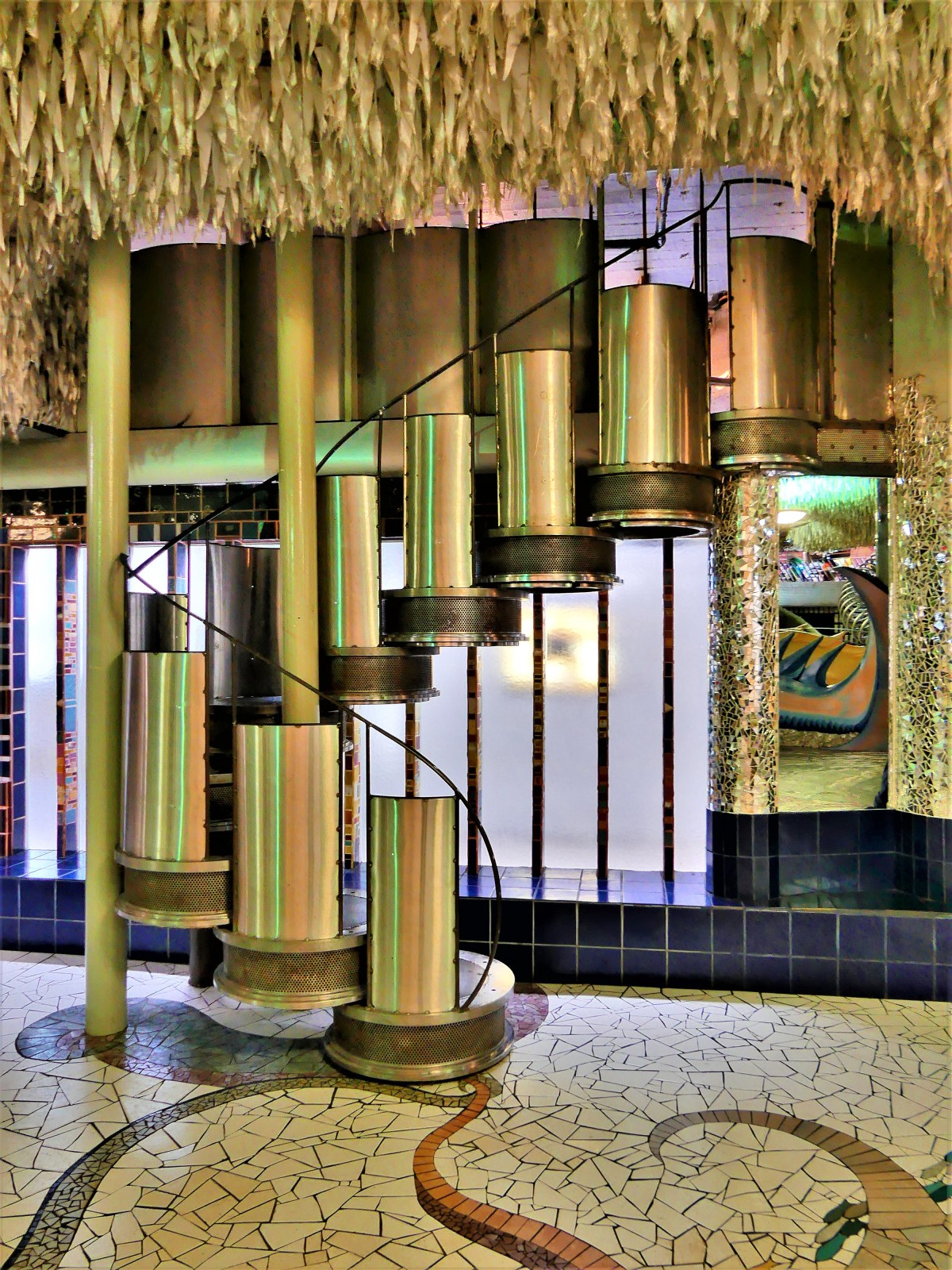
staircase

while higher floors highlight an intricate cave system, ramps with rope swings, and warped walls to exploit one’s inner American Ninja Warrior.

sharp pencil

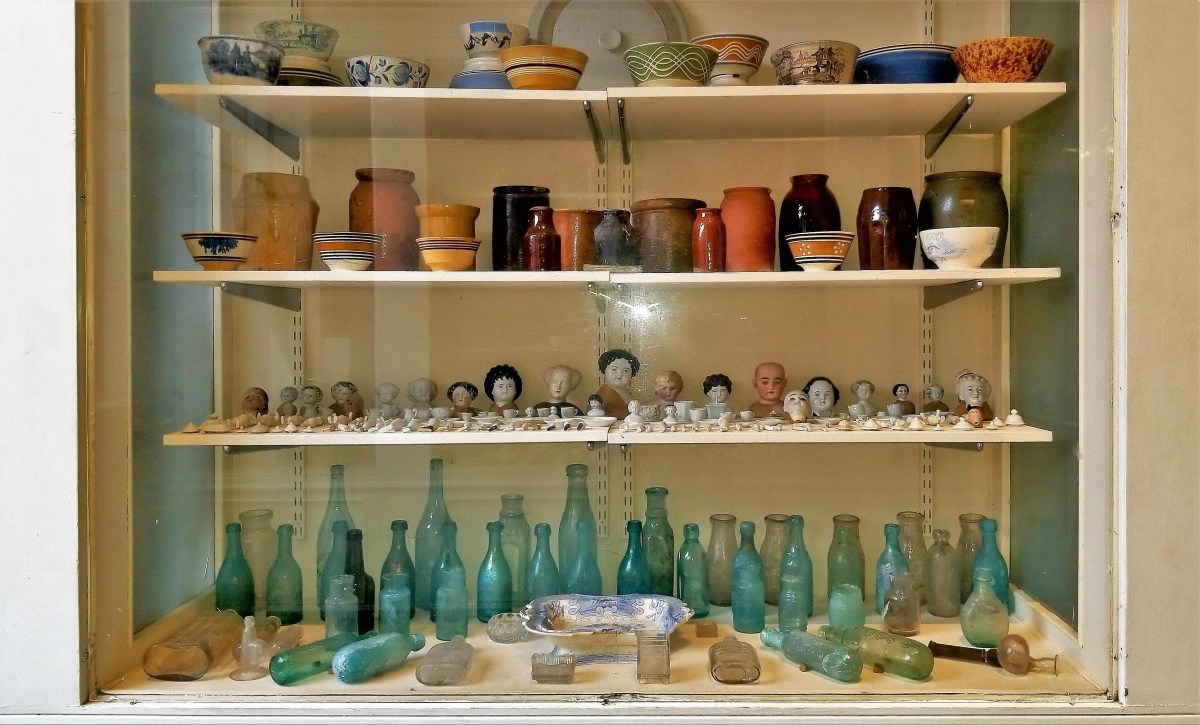
Collections abound, with floor to ceiling showcases of pinned insects, and walls of archaeological finds;

collection

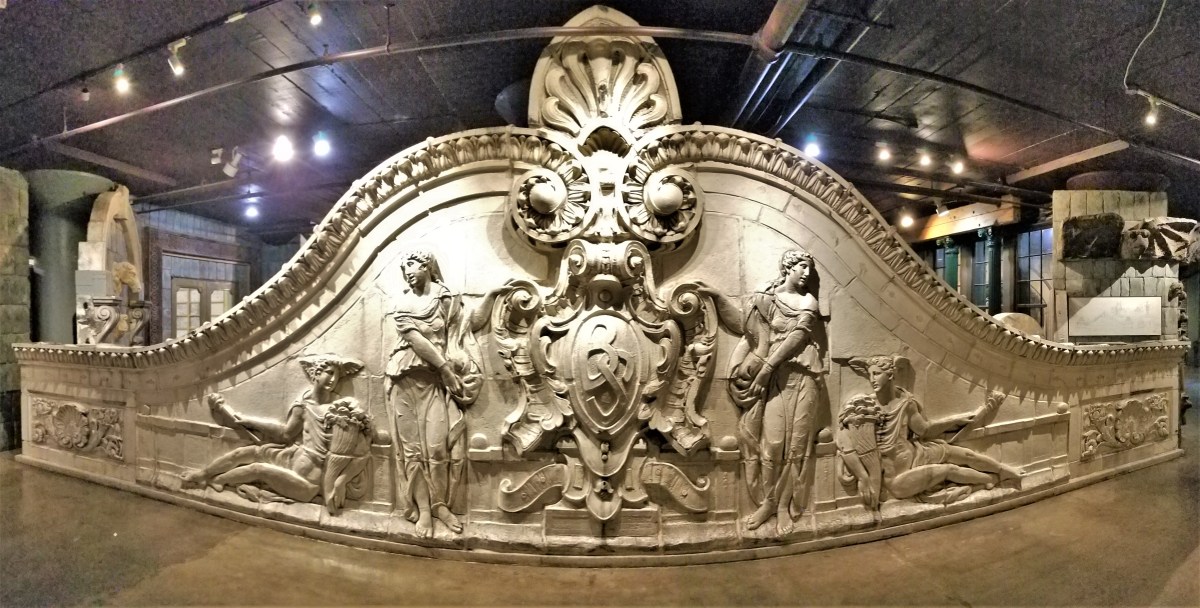
architectural assemblages of friezes, cornices, and gargoyles;

faces in the wall

gargoyle

edifice crown

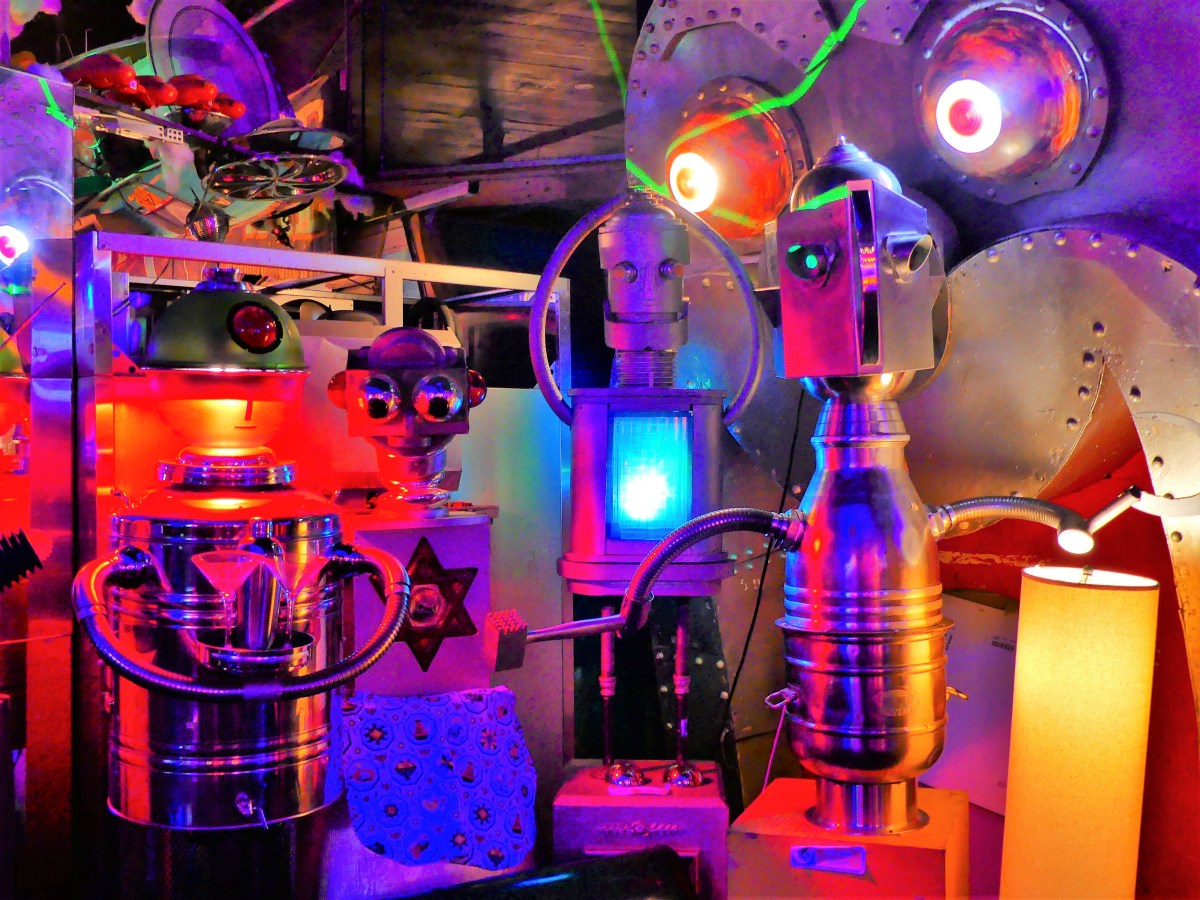
Otto’s Robotorium of whimsical futurama;

robotorium

silly robots

and assorted oddities and eccentricities that defy classification…

bizarro train set

electric chair

big underpants

Despite its 20-year run, the City Museum is a work-in-progress, with new and imaginative play environments under construction.

creating a castle

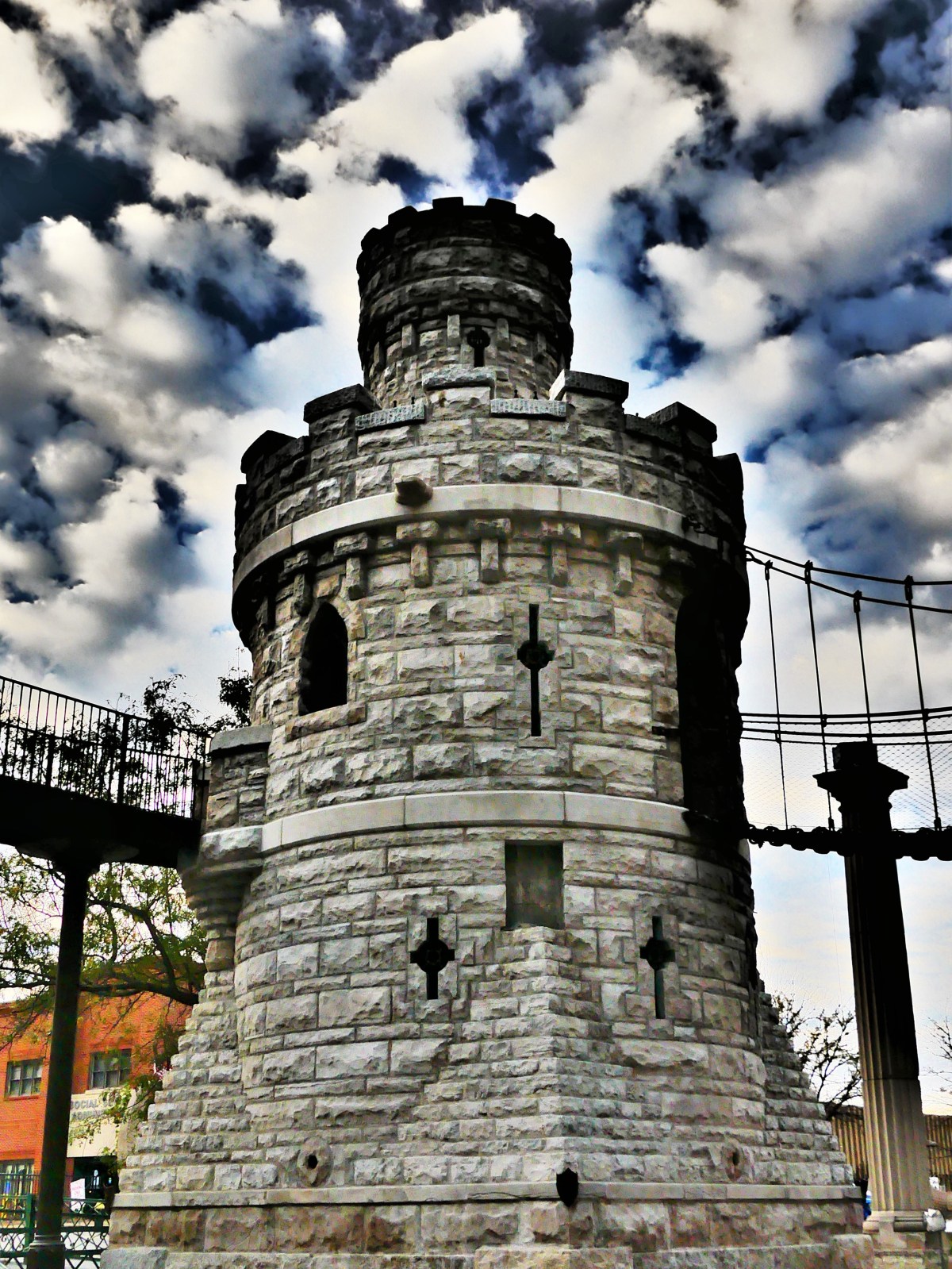
Protected by a Serpentine Wall outside the museum space,

snake perimeter

the MonstroCity rises into a winding array of caged ladders and walkways that meanders through a jet fuselage,

plane tube

a castle turret,

turret (2)

and so much more, before leading to a pit of dodgeballs.

ball pit

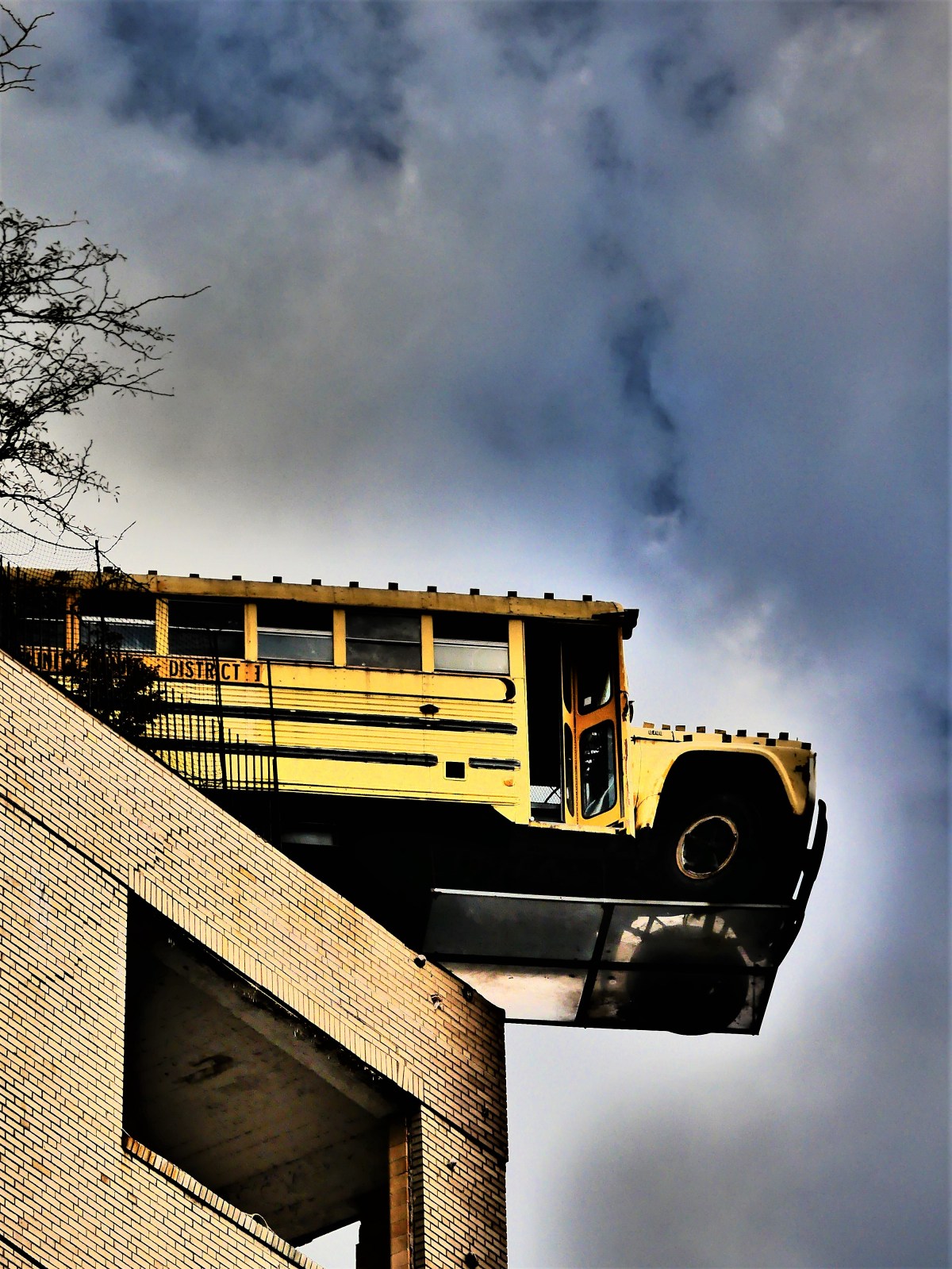
Unfortunately, the rooftop, replete with a Ferris wheel, an enormous praying mantis, a domed rope swing, a pond and a dangling yellow school bus was closed due to inclement weather.

bus off the building

There is so much to explore at City Museum (including a flying circus), that it’s impossible to be bored. In fact, the interactive experience is so profound, that critics might consider it overload.

As a retired special educator who’s embraced the Vark model, I salute the City Museum for challenging children of all ages through a rich diversity of visual, auditory, and kinesthetic stimuli. However, nervous parents may wish to protect their kids with knee pads, elbow pads, and a helmet.

For more information, go to City Museum


Arch ‘n Bunker

“Please don’t let it rain,” I beseeched the angry sky.

After savoring four months of dry weather from Oregon to Arkansas, we arrived in St. Louis at the same moment a cold gray funk had arrived for Halloween. Leah and I had put off our visit to the Gateway Arch in our hope that conditions would clear, but our window of opportunity had narrowed with a rainy forecast predicted for the following day. Running out of options, we bit the bullet and pulled the trigger.

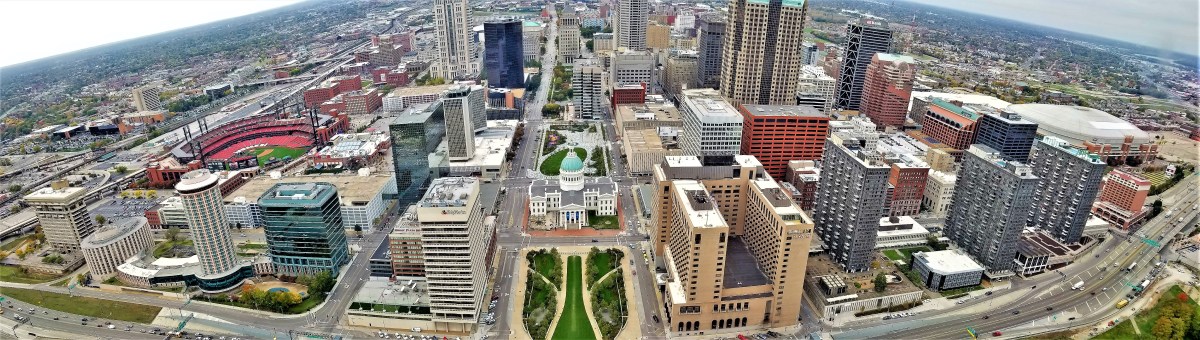
Tickets to the monument are available at the Old Courthouse–headquarters for the Jefferson National Expansion Memorial,

Old Courthouse

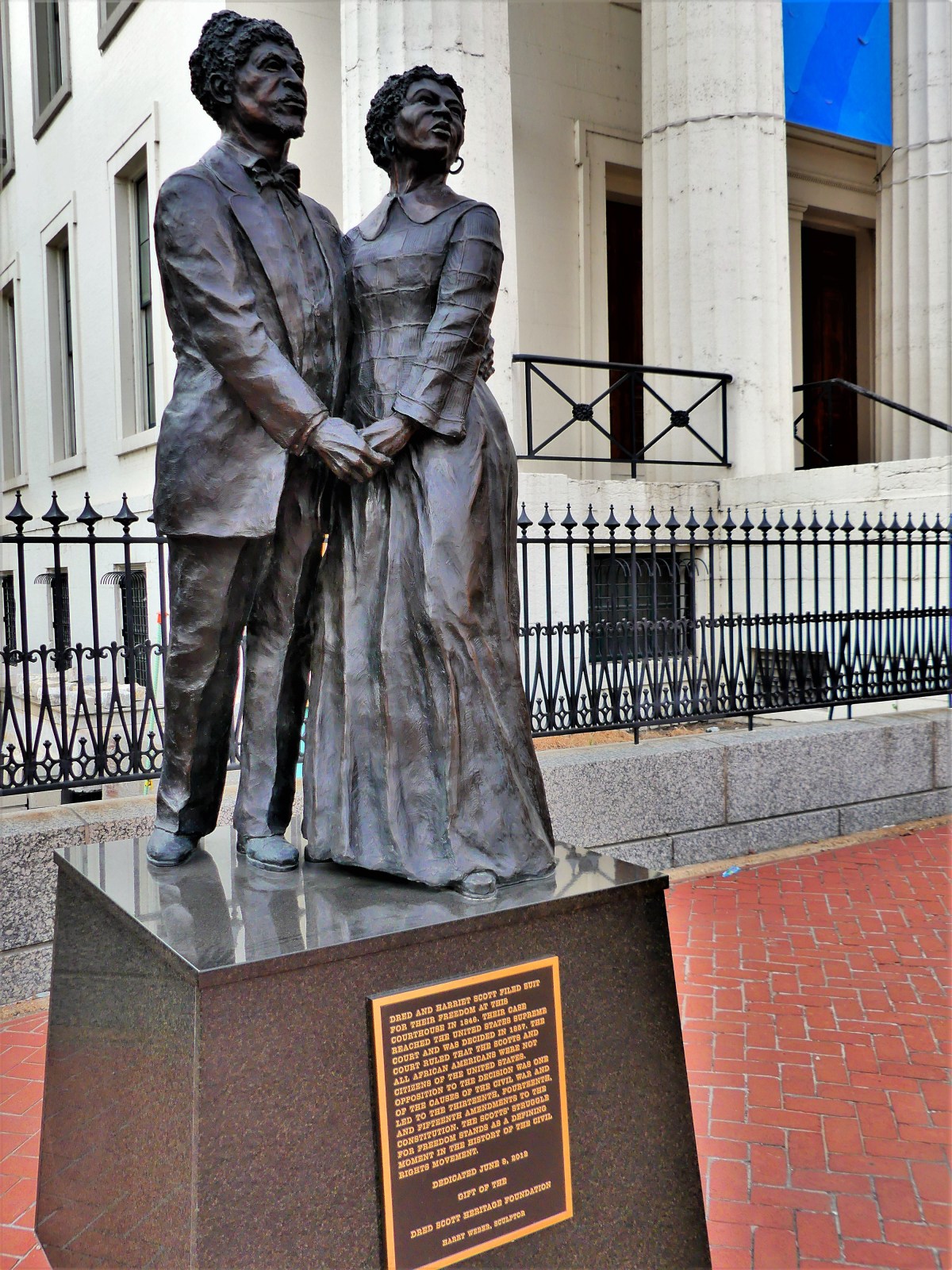
and historic location of the landmark Dred Scott trials–where an ordinary man took extraordinary measures to free his family from the indignities of slavery, by bringing suit against the United States of America.

Dred Scott

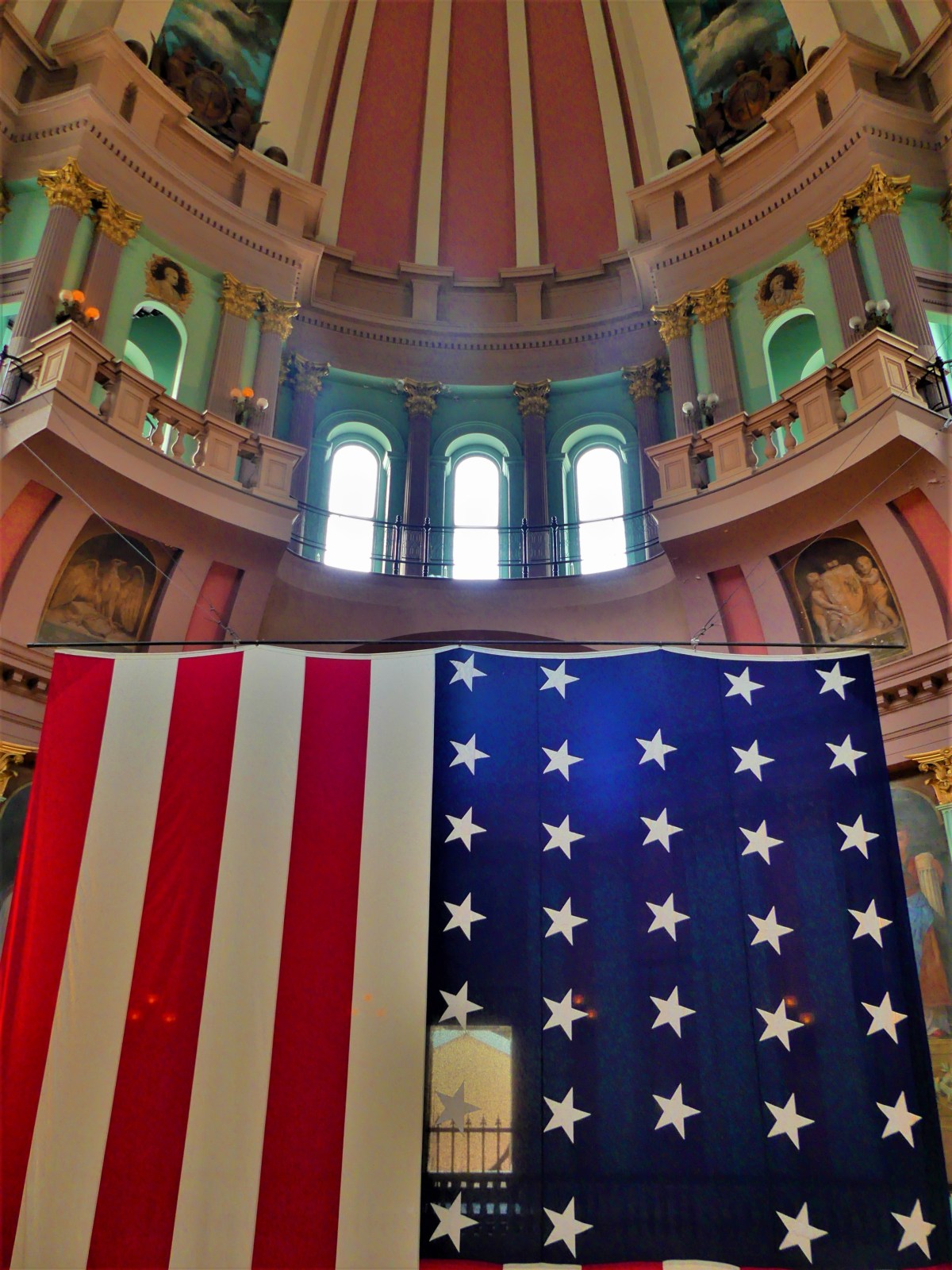
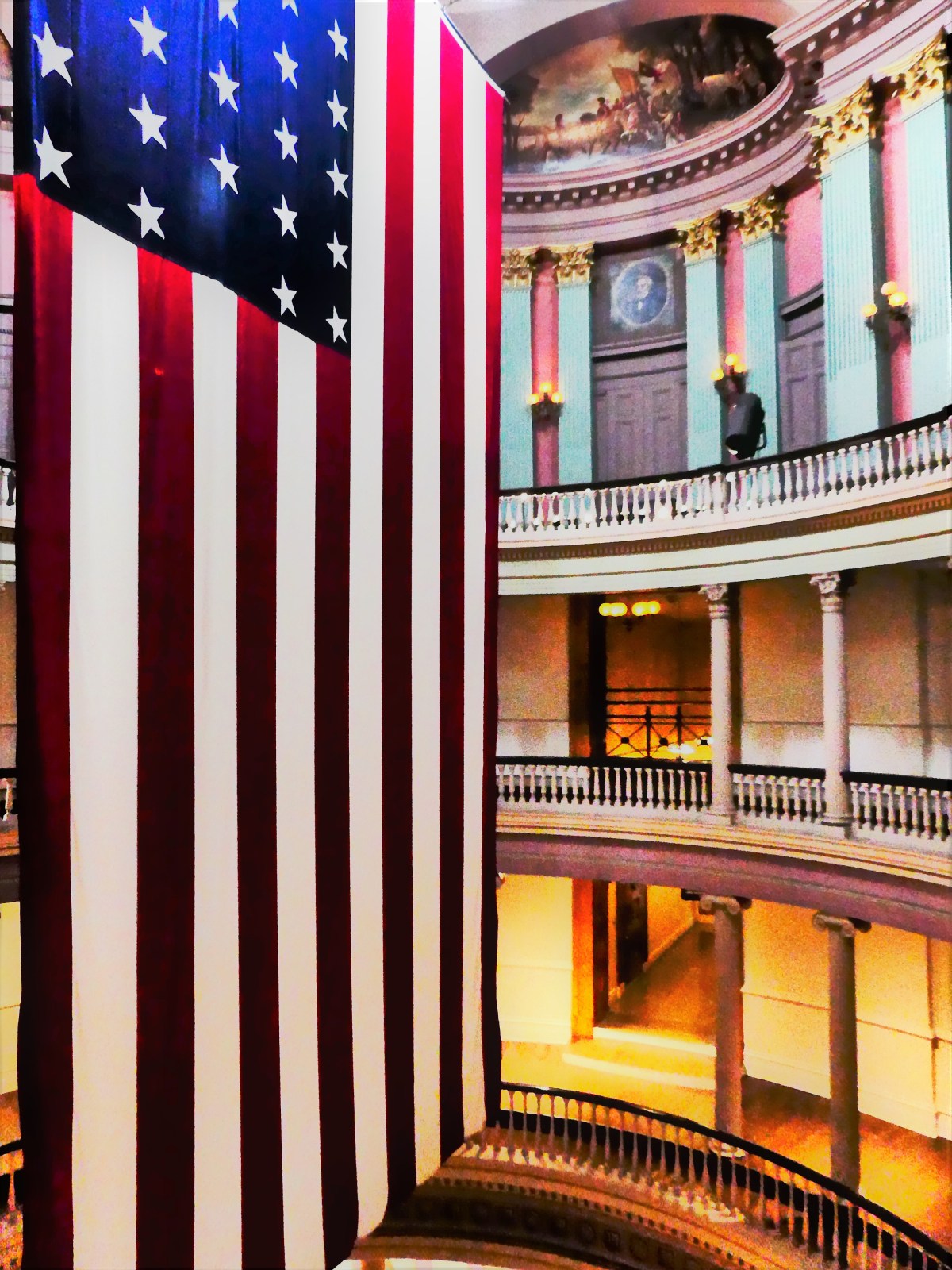
A walk inside reflects two hundred years of history. Directly beneath the dome and the 33-star flag (dating back to July 4, 1859)…

Old Courthouse rotunda

…rests a 3-foot diameter flagstone amid the pavers–the acoustic sweet spot of the courthouse–where orators would stand to speak and be heard from top to bottom,

2nd flr view

and throughout the wings.

flag and columns

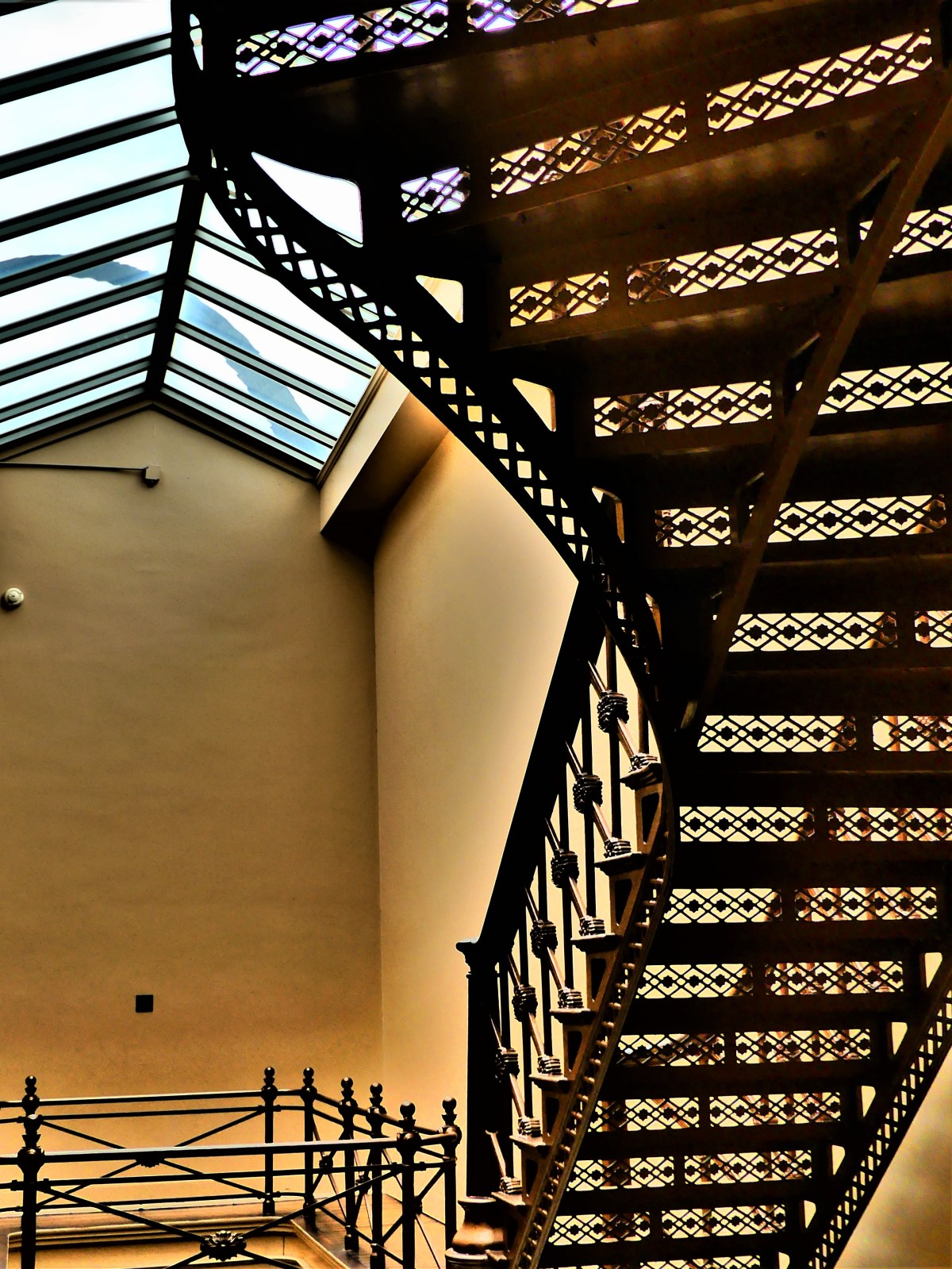
Stairwells lit by skylight…

stairs

stairs thru the door

carried us to higher floors, providing a peek of the nearby Arch,

stairs and arch

Arch thru courthouse skylight

and a recreation of the courtroom that memorializes where Louis D. Brandeis was admitted to the Missouri bar on November 21, 1878.

Brandeis courtroom

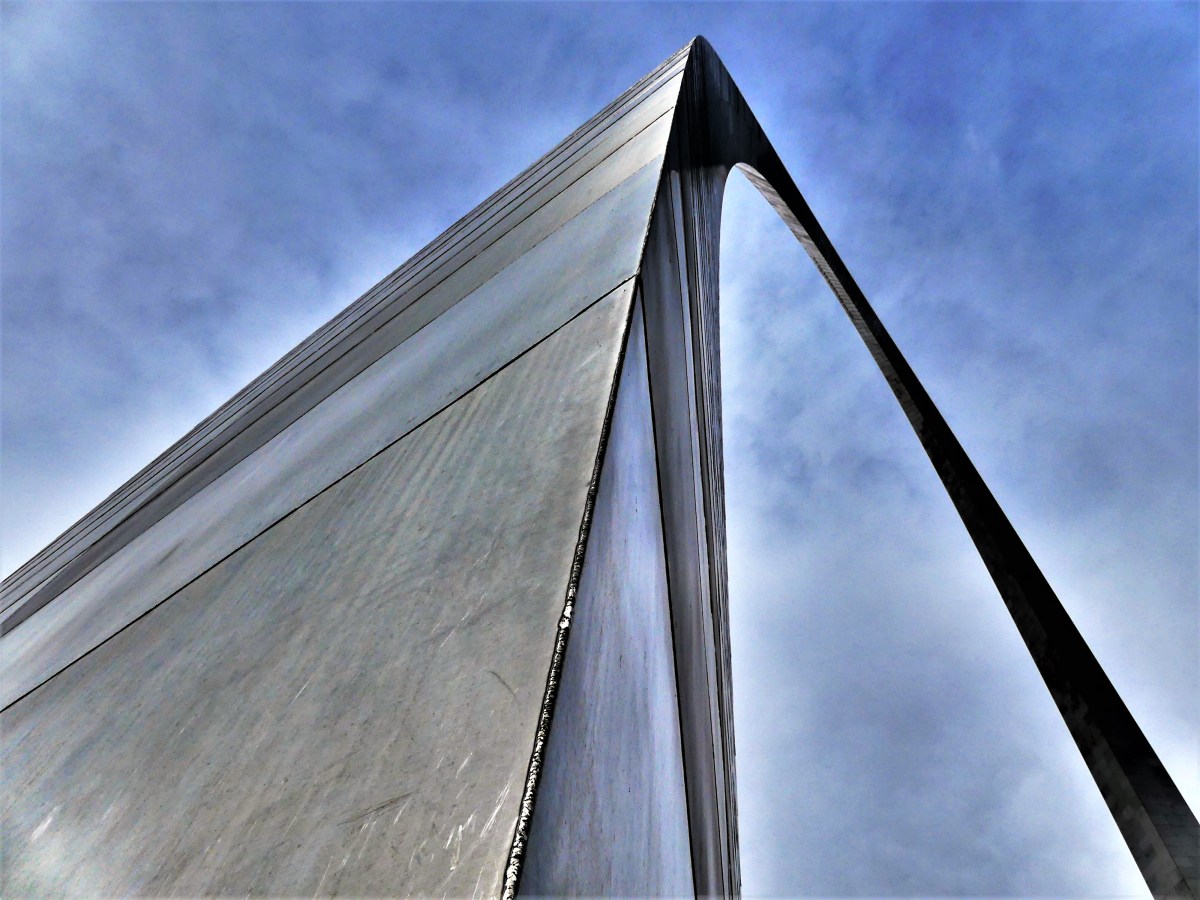
After a brief detour around a barricaded green space currently under construction, we arrived at the south bunker beneath the arch…

Arch against the sky

Arch curvature

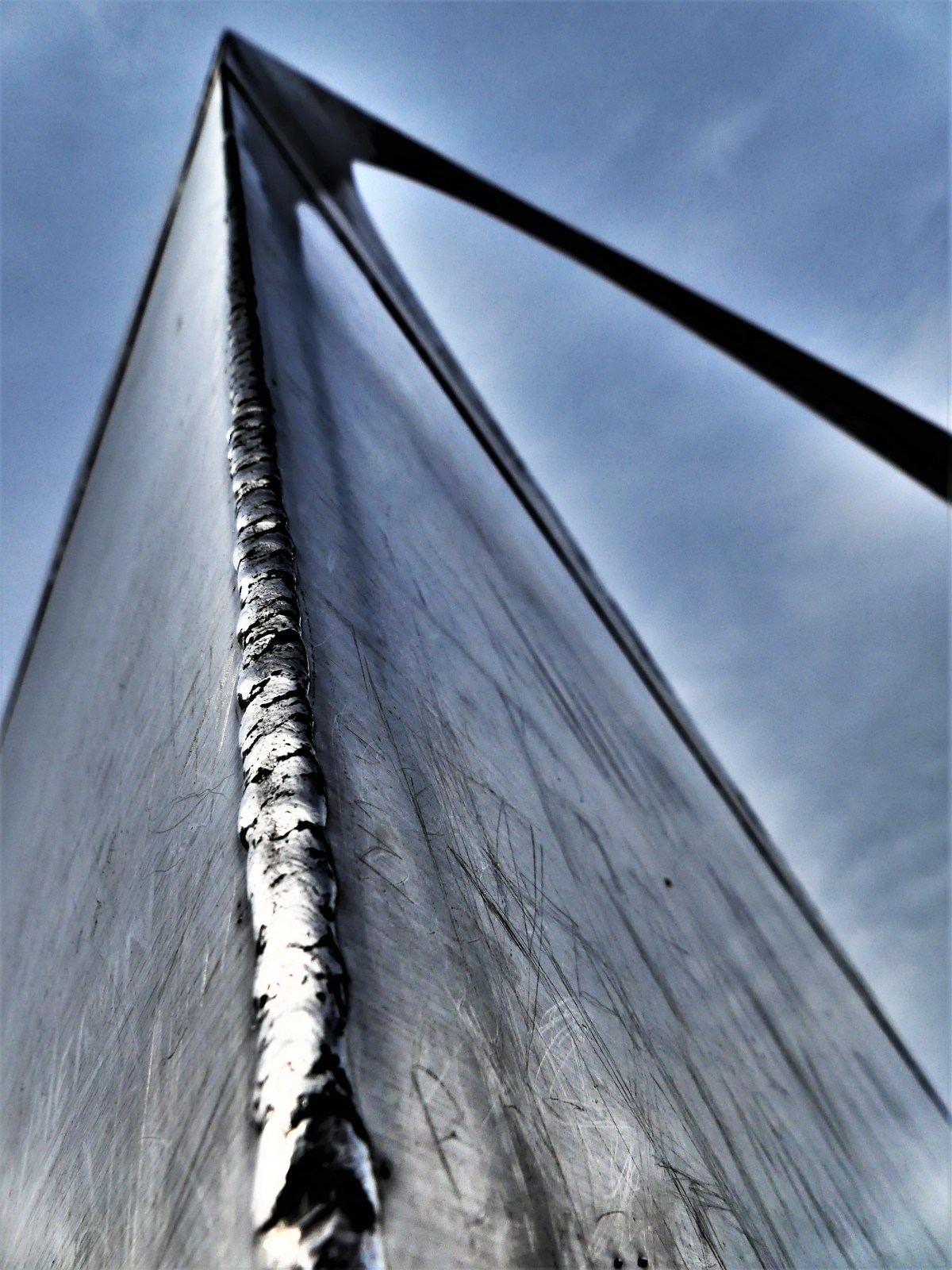
scratches and weld

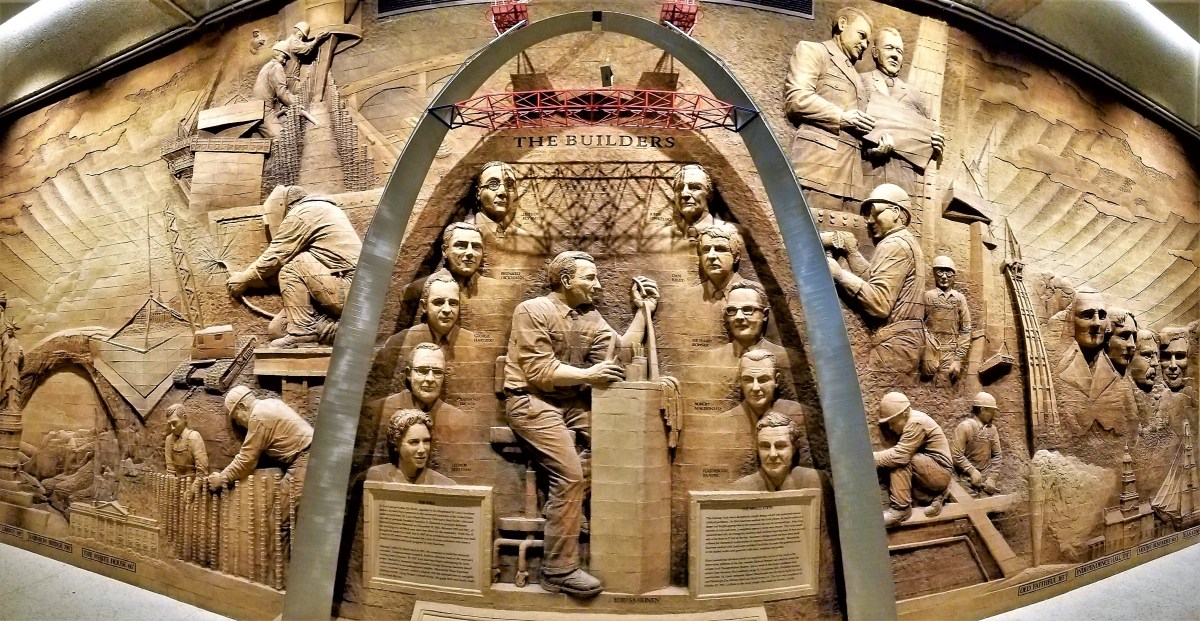
that houses walls of exhibits documenting construction from 1963 to 1965,

ediface sculpture

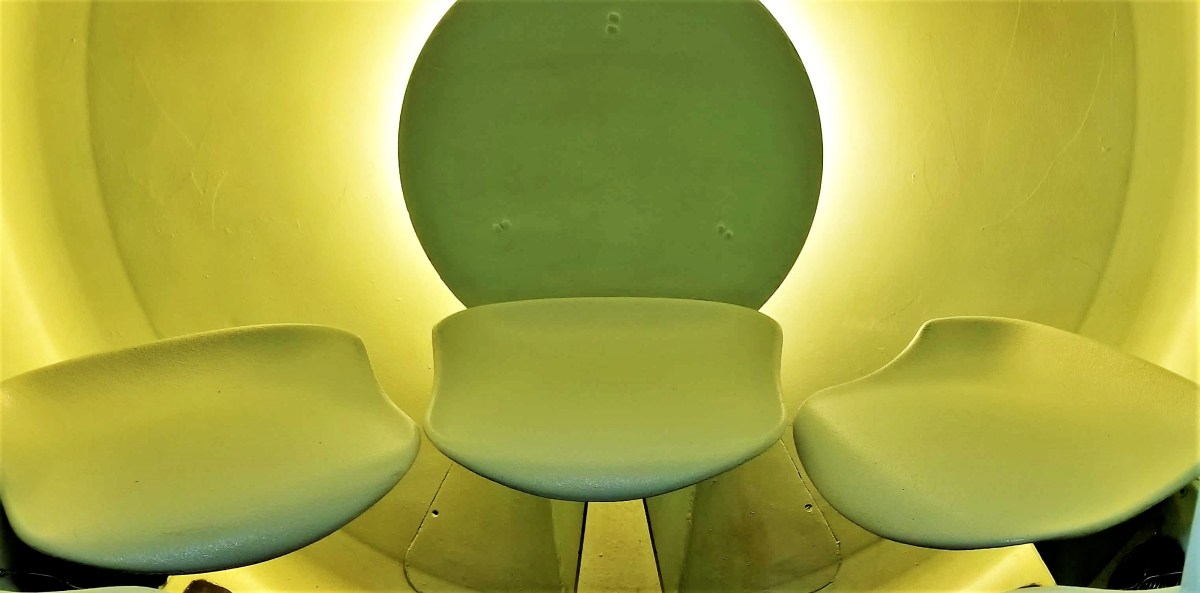
and more importantly, access to the carriage cars that carry visitors to a viewing gallery 630 feet above the city.

pod control

After a four minute ride, we emerged from our pod,

cable pod2

into an enclosed ramp with multiple portholes overlooking east of the Mississippi,

Mississippi Riverboats

and unobstructed views westward, beyond St. Louis.

St. Louis panorama

As we drove through St. Louis drizzle the following day, we were never far from occasional glimpses of the Arch shrouded in rain clouds.

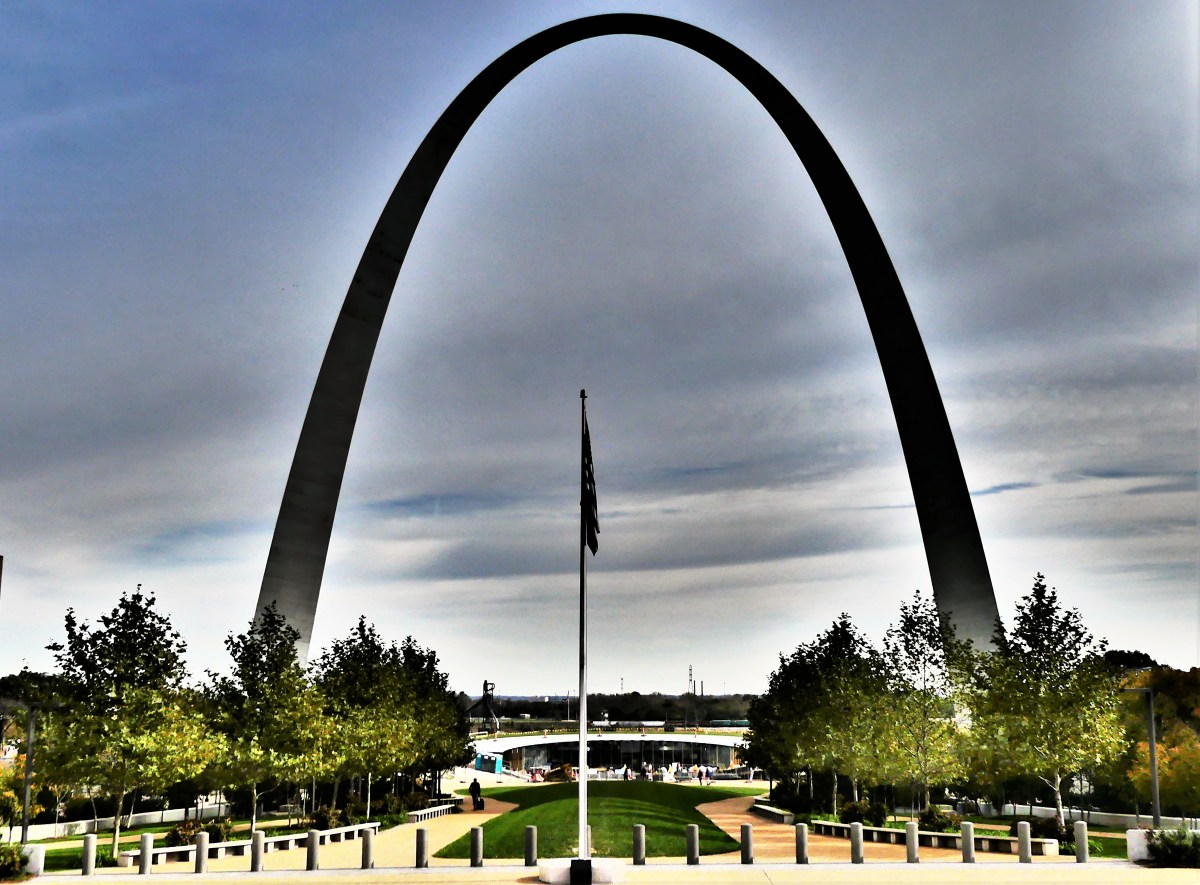
While I never had a sunny day to capture the full beauty of the simple architecture created by Eero Saarinen, I could still bask in the warm glow of an iconic structure that celebrates the spirit of American exploration.

Gateway Arch


Supreme Ruler of Beers

Growing up, I was never much of a beer drinker. But on the odd occasion that my underaged friends and I would sneak a beer in the woods by our homes, it was always an Iron City beer, ’cause that’s what Pirate fans drank in Pittsburgh. Besides, it was high treason to drink anything other than Iron City, and still be part of the cool kids’ club.

Had I been born in St. Louis, I’m certain that things would have gone differently. I’d be a Cardinals fan, and my “go-to” beverage would be Budweiser from the beginning, because Budweiser beer, introduced in 1876 by Aldolphus Busch dominated the St. Louis market, on its way to becoming the first national brand in America, thanks to pasteurization and a fleet of refrigerated rail cars.

In 2008, Anheuser-Busch (A-B) succumbed to a $52 billion hostile takeover by Belgium-Brazillian company InBev to become the world’s largest brewer, and cemented its global stronghold by merging with its rival, London-based SABMiller one year ago for $100 billion.

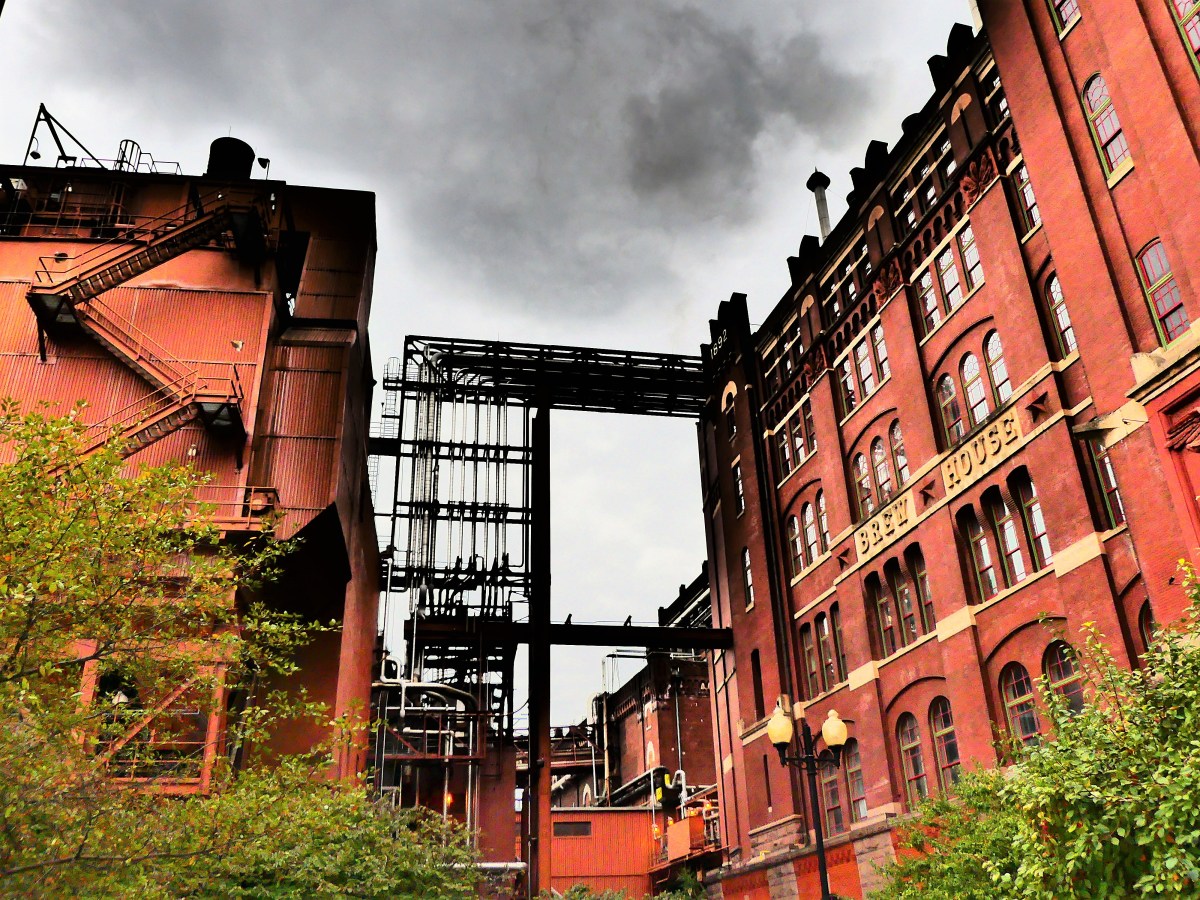
North American operations remain headquartered in St. Louis, where tours are  conducted regularly for beer aficionados interested in A-B’s time-honored brewing process, and for history buffs who appreciate the architecture and design that’s been selected by the National Register as Historic Landmarks.

stained glass

Leah and I arrived at Lynch St. for the 45-minute tour beginning at 3:10 pm. Upon entering the corporate complex, we were surrounded by tall Romanesque red brick buildings with elaborate flourishes and embellishments.

Beer House1

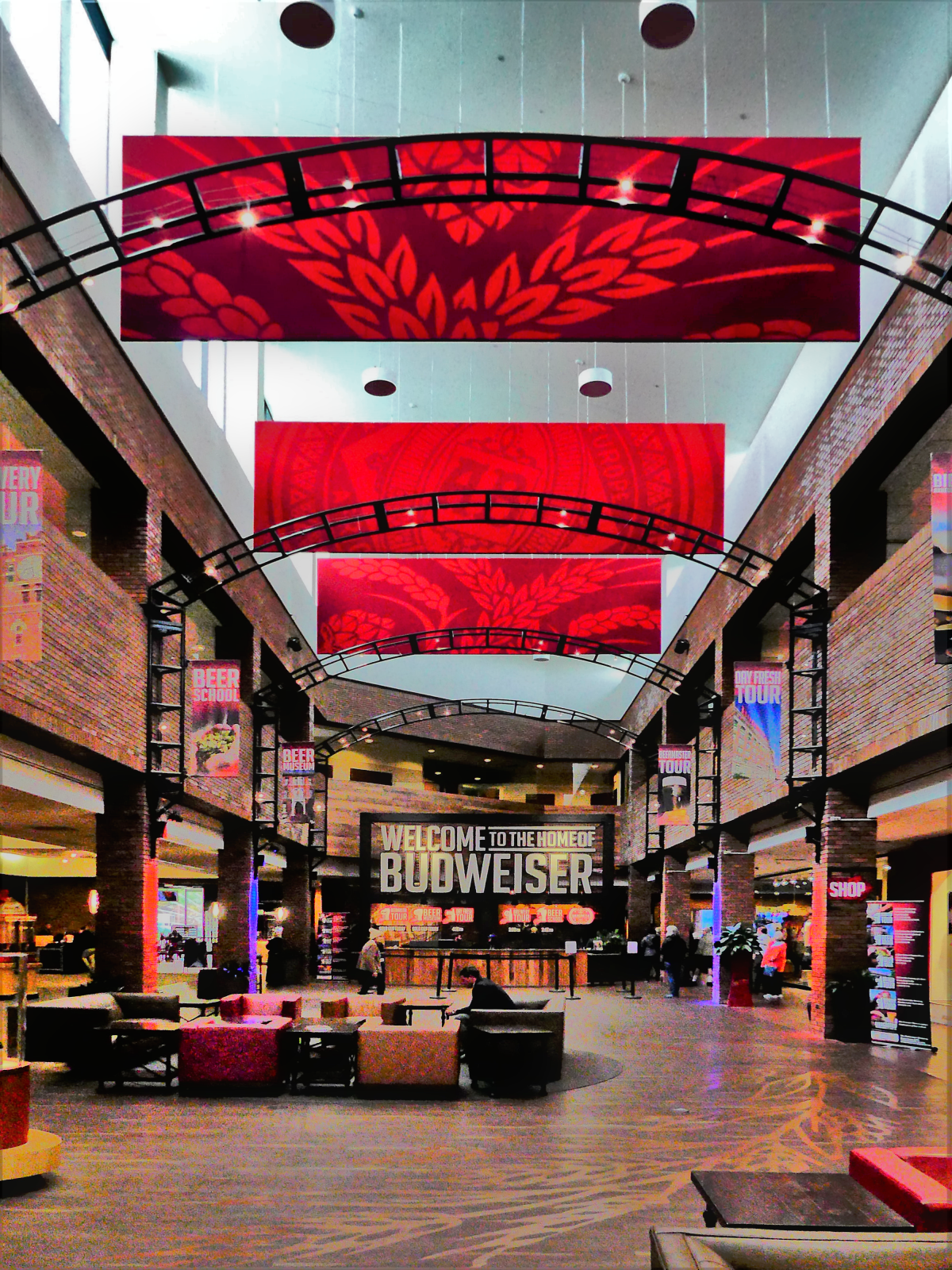
We entered the Welcome Center,

welcome center

designed to house its branded gift store, pub space, and exhibits.

A-B story

Soon after, we were introduced to our assigned tour guides, Tim and Andrew who spoke about sticking together amid the tight security surrounding the campus, before ushering our group of fifty outdoors to gawk at the Clydesdales in the exercise yard.

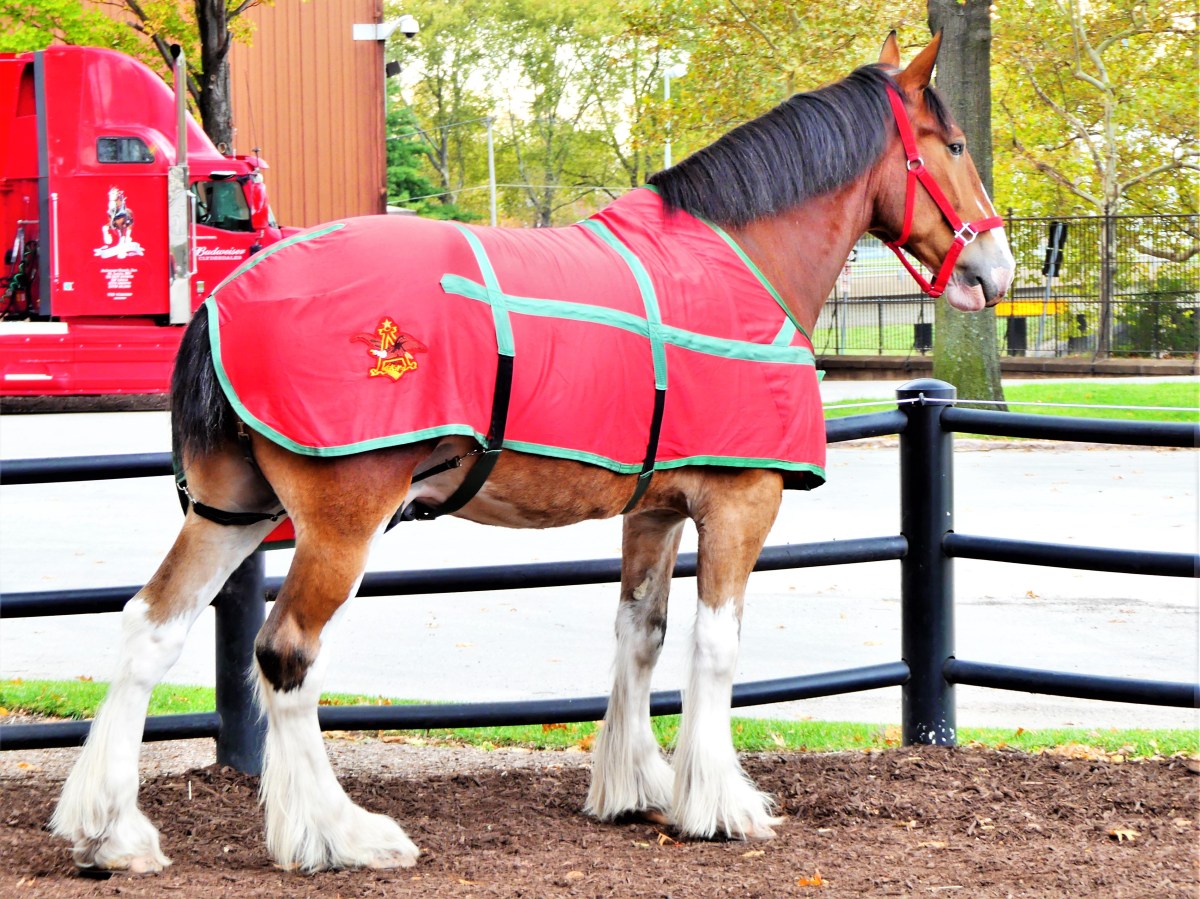
Clydesdale posing

These massive draught horses stand at 18 hands, and have been carefully bred by the brewery to retain their chestnut coloring and markings, making them the most identifiable mascot in beer branding and advertising.

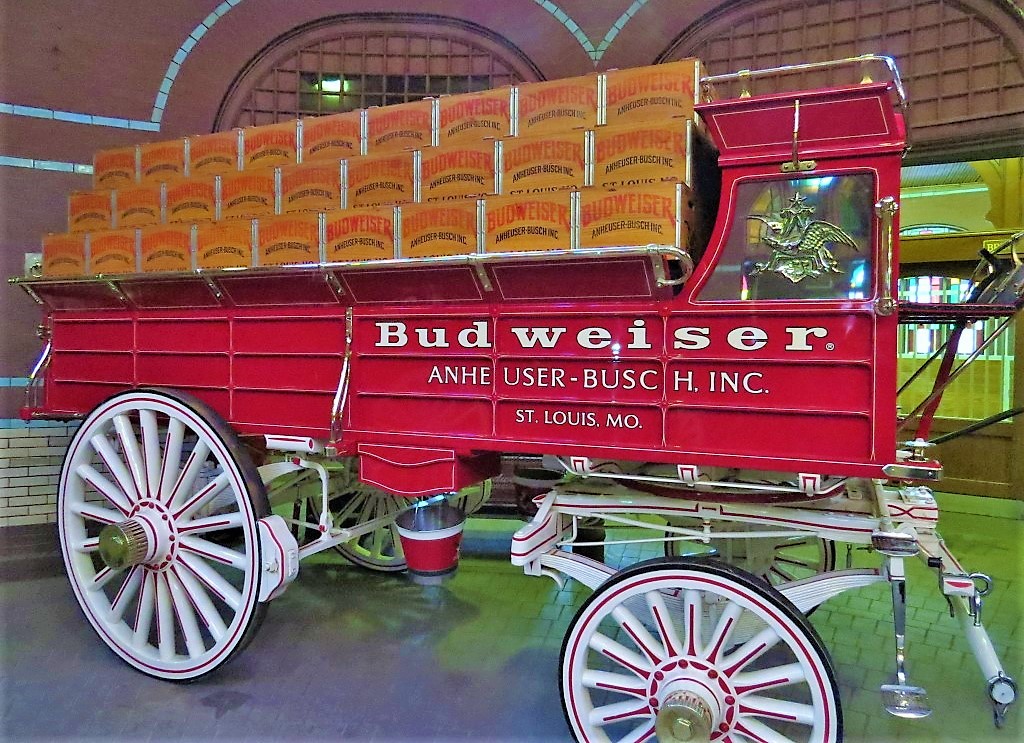
From there, it was a short stroll to the Carriage House where we were split into two groups: those on a steamboat cruise stuck with Andrew, while the rest of us walk-ins aligned with Tim, a self-professed expert on all things beer, who dared to be challenged with any questions on Anheuser Busch.

After moving to Washington, DC to attend college, my beer drinking habits matured. Staying true to my roots, Iron City was quickly replaced by Rolling Rock, a more “premium” beer with a smoother taste in a green bottle imported from Latrobe, PA.

Once inside the Carriage House, we were introduced to Murry, who was being braided for the 3:30 pm parade.

grooming (2)

ready for parade

A peek inside the paddock, showed it to be far cleaner and neater than many major hotel chains across the country.

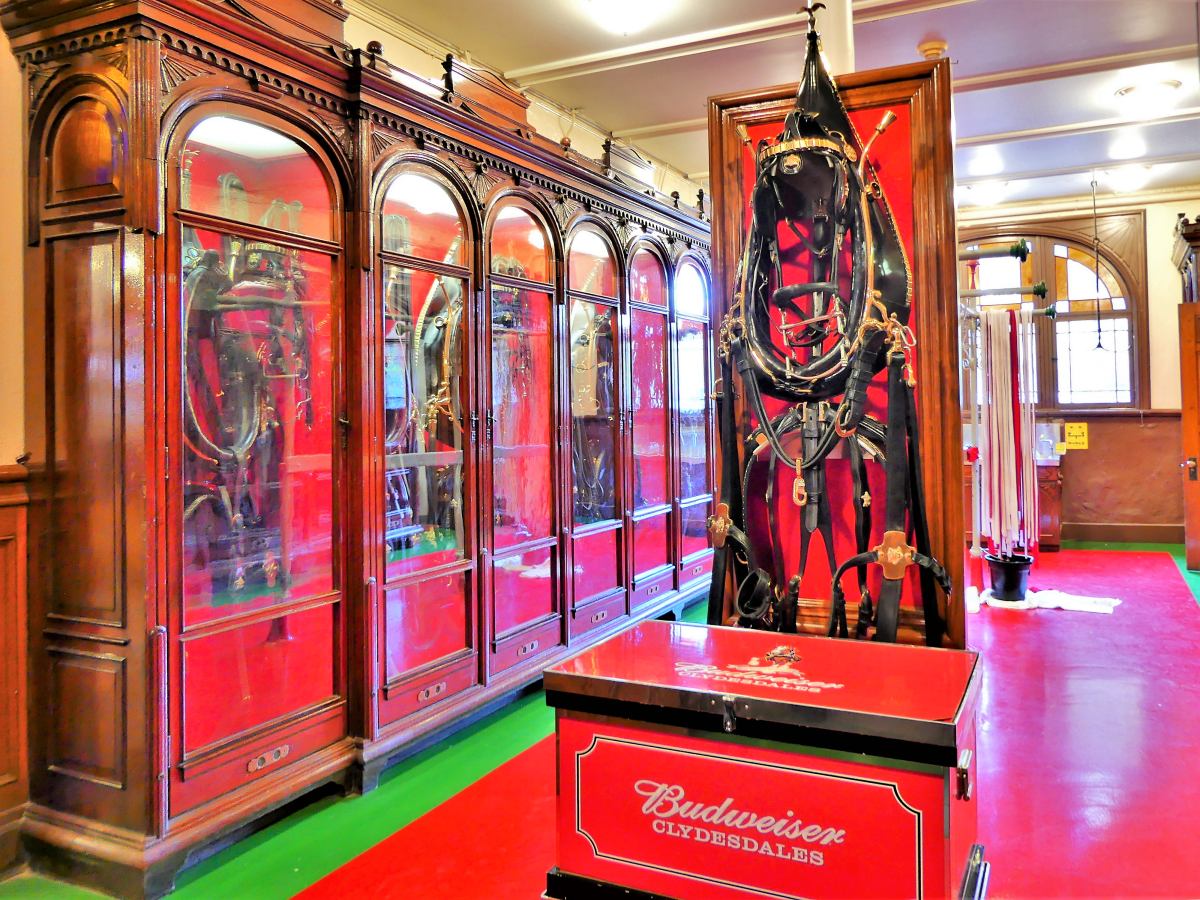
Harness room

In fact, the art-deco structure gleamed from ceiling…

carriage house ceiling

…to floor with nary a strand of straw out of place.

paddock

And that’s when things went awry. Returning to the carriage room, I noticed that everyone had left the building.

carriage room (3)

Running through the exit doors, I caught a glimpse of Leah up ahead and hurried to her side, only to realize once we returned to the Welcome Center, that she had followed the wrong group. We scrambled around outside to find Tim’s tour, but after pulling on a few secured doors, and with no one in sight, we were hopelessly lost.

Back at the Welcome Center, we approached a tour concierge to confess our situation.

“Not a problem!” she addressed. “Follow me!”

We backtracked to our last stop, before she led us into a building showcasing immense tankards–each one capable of Beechwood aging 3600 barrels of beer at a time.

Beechwood aging tanks

We continued our personal tour until we eventually rejoined Tim in an elaborate Tasting Room…

Tasting Room art

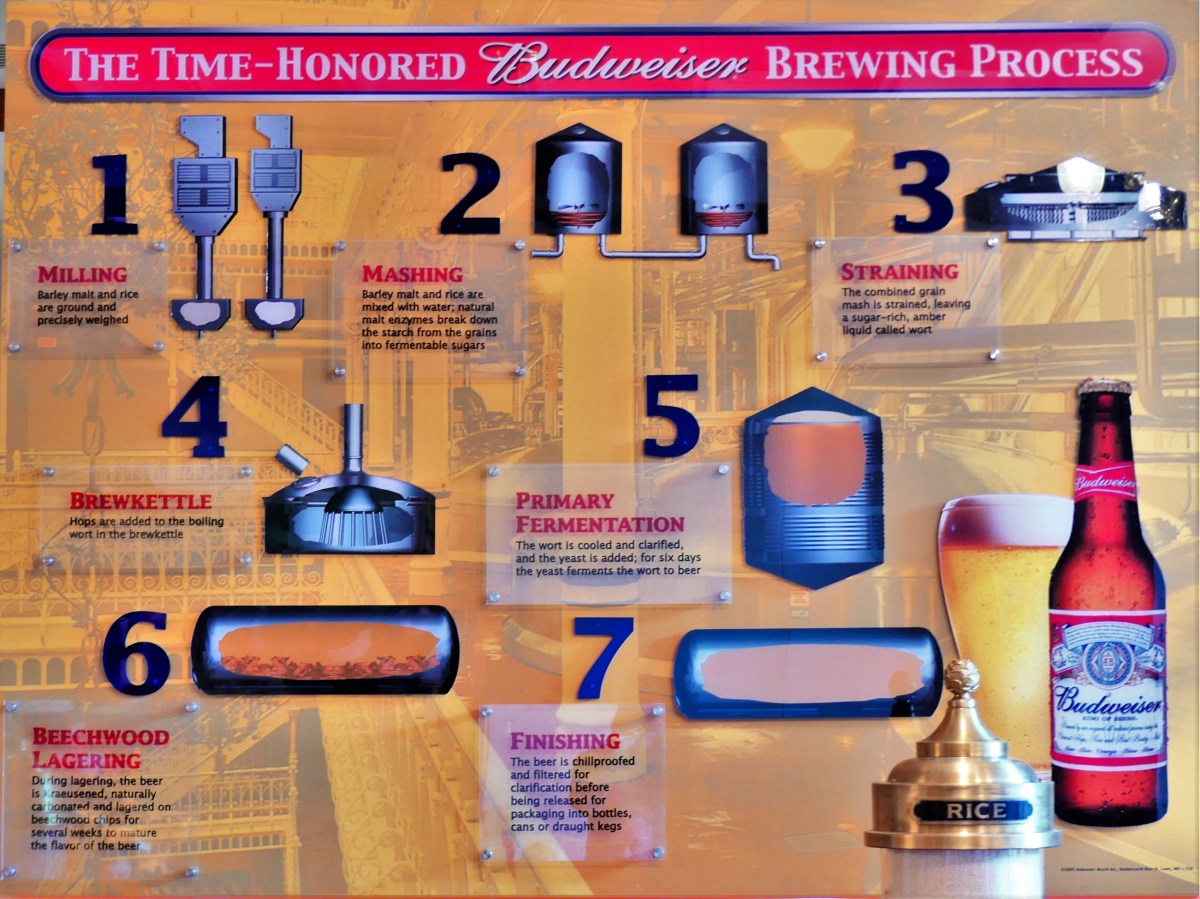
…during his lecture on the ingredients and the brewing process,

brewing process

while everyone sipped on a 6 oz. portion of chilled Budweiser.

A wacky summer abroad between my sophomore and junior year enlightened and refined my taste in beer, having sampled Grolsch in Enschede, Kronenbourg in Strasbourg, Carlsbad in Copenhagen, and Hafbrau in Bavaria. I loved them all.

But I must admit, that after finding our way back to the tour, my little cup of Bud tasted mighty refreshing.

The twenty-five of us rode the elevator up to the Mash House. The moment the doors closed the Bud jingle sounded.

“Do you know the composer’s name,” I inquired.

Without even thinking, Tim responded as the elevator doors reopened, “Steve Karmen, who also wrote the ‘I Love New York’ jingle.”

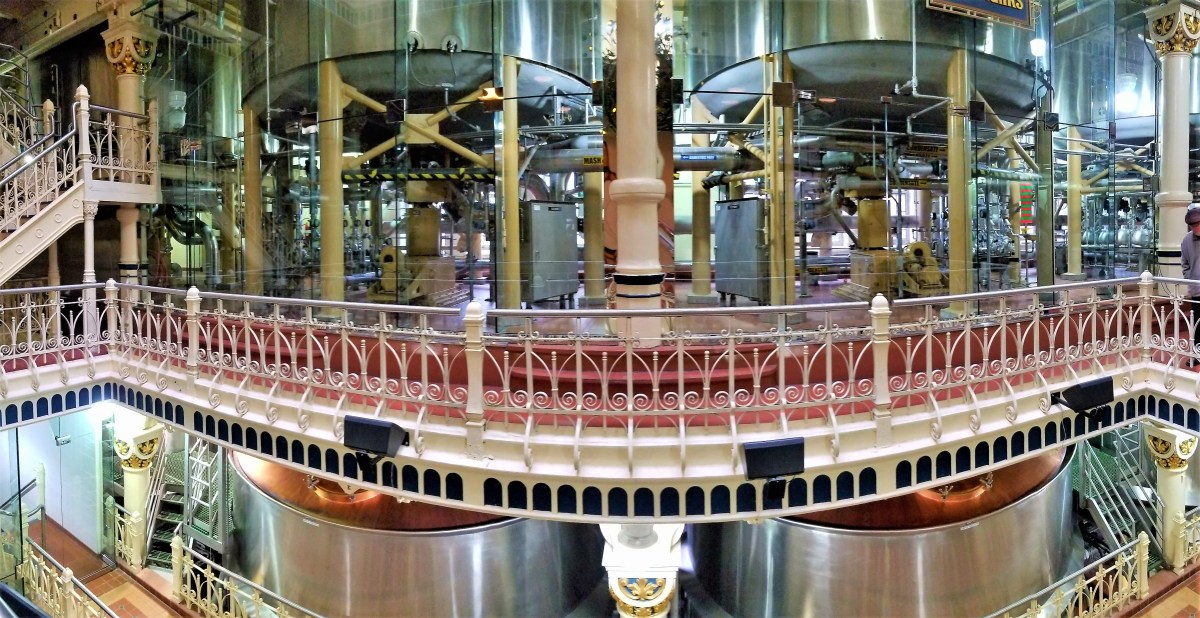
We spread out across the ornate wrought iron railing to take in the scene. No doubt, the Mash Tanks were impressive.

Mash House

And three hop vine chandeliers from the 1904 Worlds Fair were dangling from the five-story ceiling.

hops lite

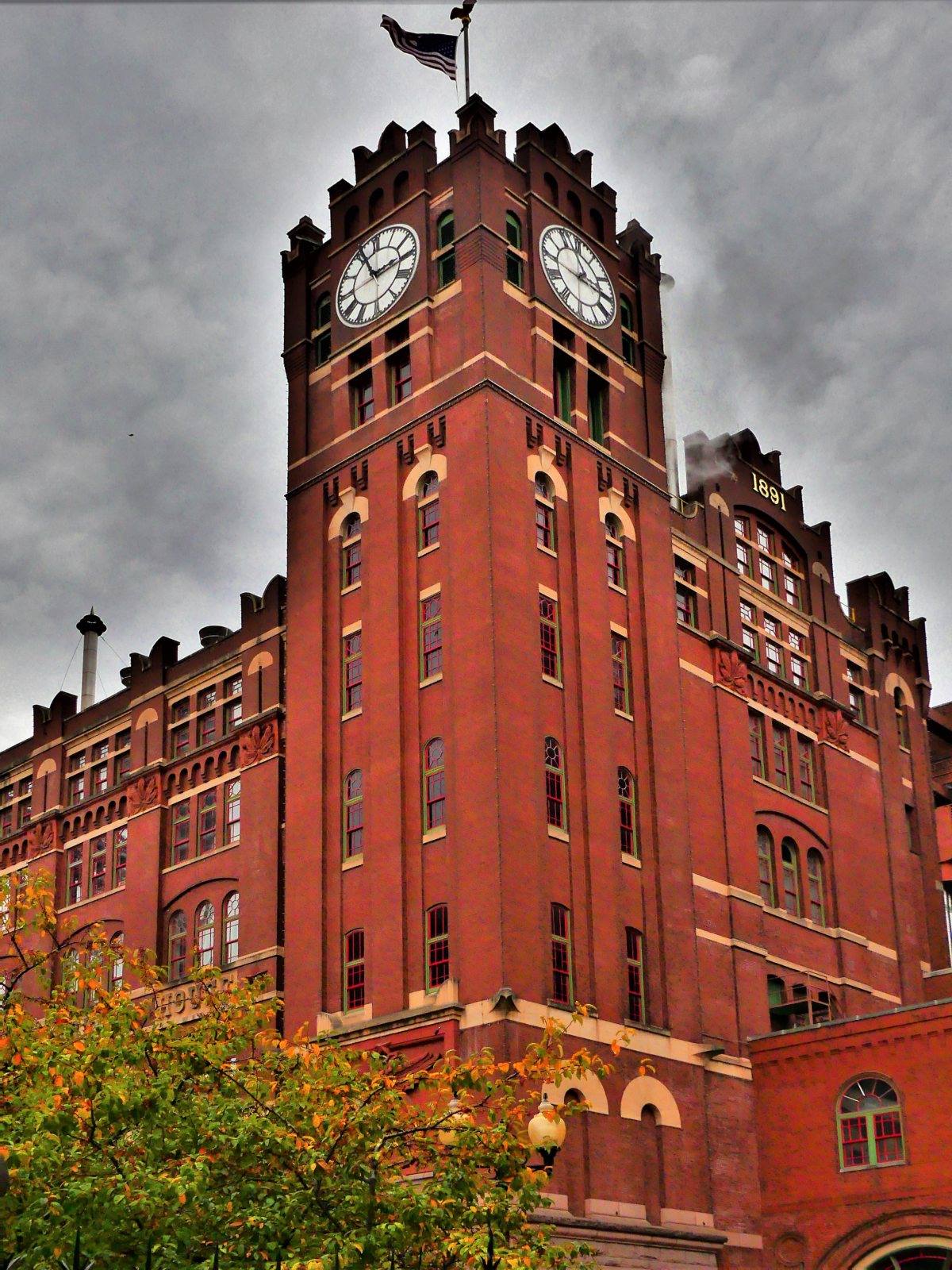
Then it was outdoors again, this time near the clock tower–the second most photographed structure in St. Louis–

clock tower

where Tim revealed that business as usual during Prohibition years depended on the sale of Brewers yeast and a non-alcoholic malt beverage concoction.

“Any last questions?” intoned Tim.

I glanced at my watch, and true to form, it was 3:55 pm. We were precisely at the 45-minute mark, but something wasn’t right. I pointed to the tower, and got Tim’s attention. Here was my last chance to stump Tim.

“Hey Tim, did I miss daylight savings time, or did the clock master just get ahead of himself?” I surmised.

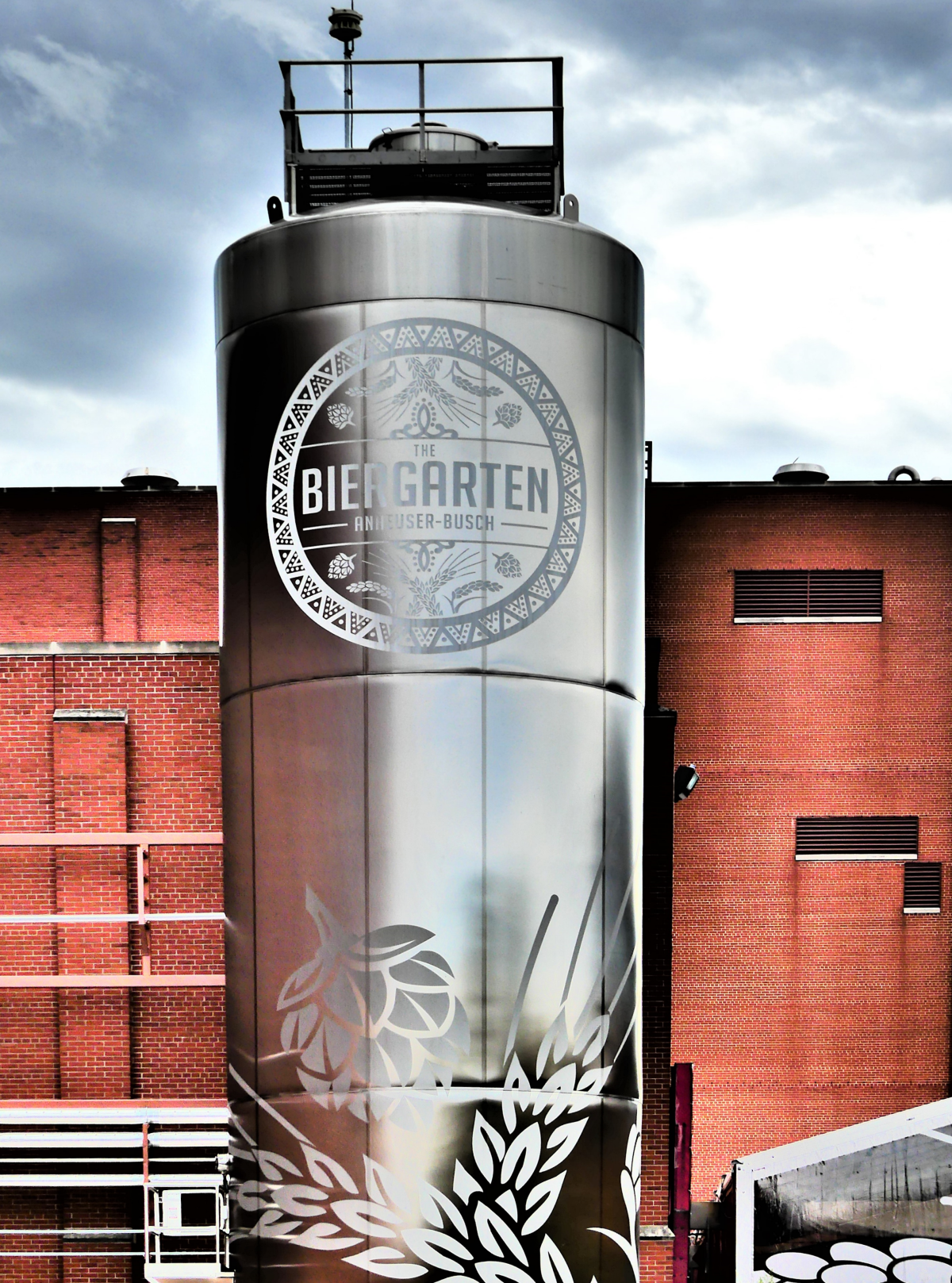
Tim looked at the tower clock and hesitated. “Well let’s see a minute. The clocks get turned back this weekend, so I’m pretty sure it’s been set in anticipation of the event… Well, that concludes our tour today. However, the best is yet to come, since we’ll now return to the Biergarten where you can redeem your wood token for a ‘cold one’.”

Biergarten

I lingered behind. I wanted another shot of the clock tower.

tower and eagle1 (2)

I finally caught up to Leah inside the Welcome Center, where deep lines had already formed in front of the bar. But another station beyond the crowd had fewer people standing, so that’s where we went. To my surprise, the bartender was drawing Stella into familiar chalices from the tap–my newest favorite, and one of A-B’s newest brands since last year’s merger.

I ran into Tim on my way to an available high-top.

“Quick question, Tim! What’s the significance of the ’33’ on the Rolling Rock bottle?”

“I get that question a lot,” he began, and rattled off, “Rolling Rock – from the glass lined tanks of Old Latrobe, we tender this premium beer for your enjoyment as a tribute to your good taste. It comes from the mountain springs to you.”

Tim was the real deal, and so was my Stella.

P.S. When editing photographs for this post, I compared the meta-data between the clock tower shots. Even though the two were taken 5 minutes apart, the times on the clock were exactly the same. Final analysis: THE CLOCK IS BROKEN!


American Kitsch

Years ago, Dennis Miller–when he was funny–referred to Branson, Missouri as Las Vegas for people without teeth. Twenty years later, Miller’s revelation still hits the mark, despite the advent of implants and veneers.

While attending a sold-out concert featuring the Oak Ridge Boys at the Mansion Theater,

Oak Ridge Boys1 (2)

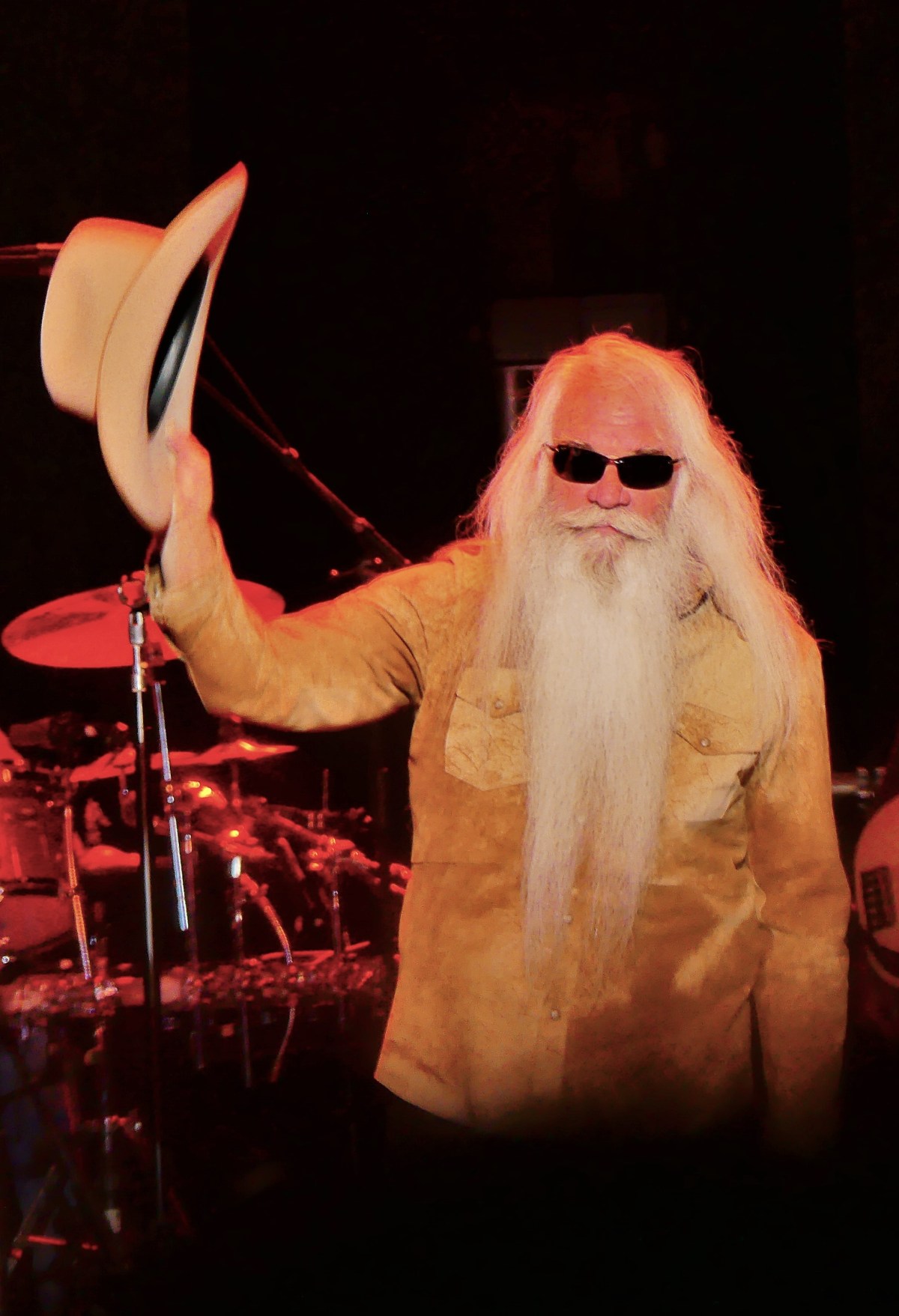
it was hard not to notice the adoration of a graying audience. Women wearing shades of autumn-colored hair to complement their leopard print outfits seemed to swoon through an earnest and sincere set of gospel-laced ballads and patriotic country-swing tunes, while their stoic significant others, coiffed in their stiff anywhere/anytime cowboy hats, eventually removed them, perhaps taking a cue from William Lee Golden during his performance.

‎ORB William Lee Golden

Upon returning to the parking lot after the show, we noticed how haphazardly most vehicles were parked, with little regard for lane assignments. It could have been a freeze frame from a demolition derby. Few could recall where they parked their trucks or SUVs, so collectively pressing the alarm buttons on their keys produced a cacophony of blaring horns and flashing headlights that continued to frustrate a clueless crowd.

Of course, things are no better on the roads. The yellow, blue and red routes always appear to be congested, because drivers can’t get out of their own way, and nobody knows where they’re going. Unfortunately, turn signals are no more than car decoration.

Or maybe the sites on the edge of the road are so compelling that traffic snarls are to be expected.

What follows is a sampling of some of the roadside attractions that caught my attention.

ferris wheel

fork and meatball

King Kong

plane

Titanic

Ripley's

chicken dinner

P.S. We found our truck in the Mansion lot, and found our way back to the Airstream, but it took forty minutes to travel four miles.