Stomping Grounds

After eight months of highways and high country, I took a deep breath and returned to the nest. Leah and I had already flown to Philadelphia from Charlotte–where the Airstream was idling in storage until our travels resumed–and continued by car to Northern New Jersey where we planned to reunite with our families for Thanksgiving dinner and my 65th birthday celebration.

While commuting to New York City to attend a union-sponsored luncheon of like-minded teachers and retirees was never part of my original plan, it seemed difficult turning down a free lunch after receiving the invitation a month earlier, and realizing that the event would be a pleasant diversion from all the doctor visits Leah had scheduled months ago.

Although the trip by bus from Willowbrook Park and Ride to Port Authority was uneventful, memories of tidal traffic flooded my mind as the bus crept at a snail’s pace until we entered the Lincoln Tunnel.

Port Authority was as grimy as ever. No one dared to linger longer than necessary, so travelers were quick about their business, and goodbye exchanges tended to be short and sweet before people parted ways for different places. Only the homeless and drunks cared to share the surroundings, as they dutifully sifted through trash cans in search of redeemable bottles and discarded deli.

Walking out onto 8th Avenue and looking beyond 42nd Street, a familiar game of human pinball was playing out across over-crowded sidewalks, with pedestrians weaving through imaginary obstacle courses, unable to avoid each other.

Times Square1

Also familiar were the cacophonous sirens of emergency vehicles frozen in gridlock, and the scent of the big city.

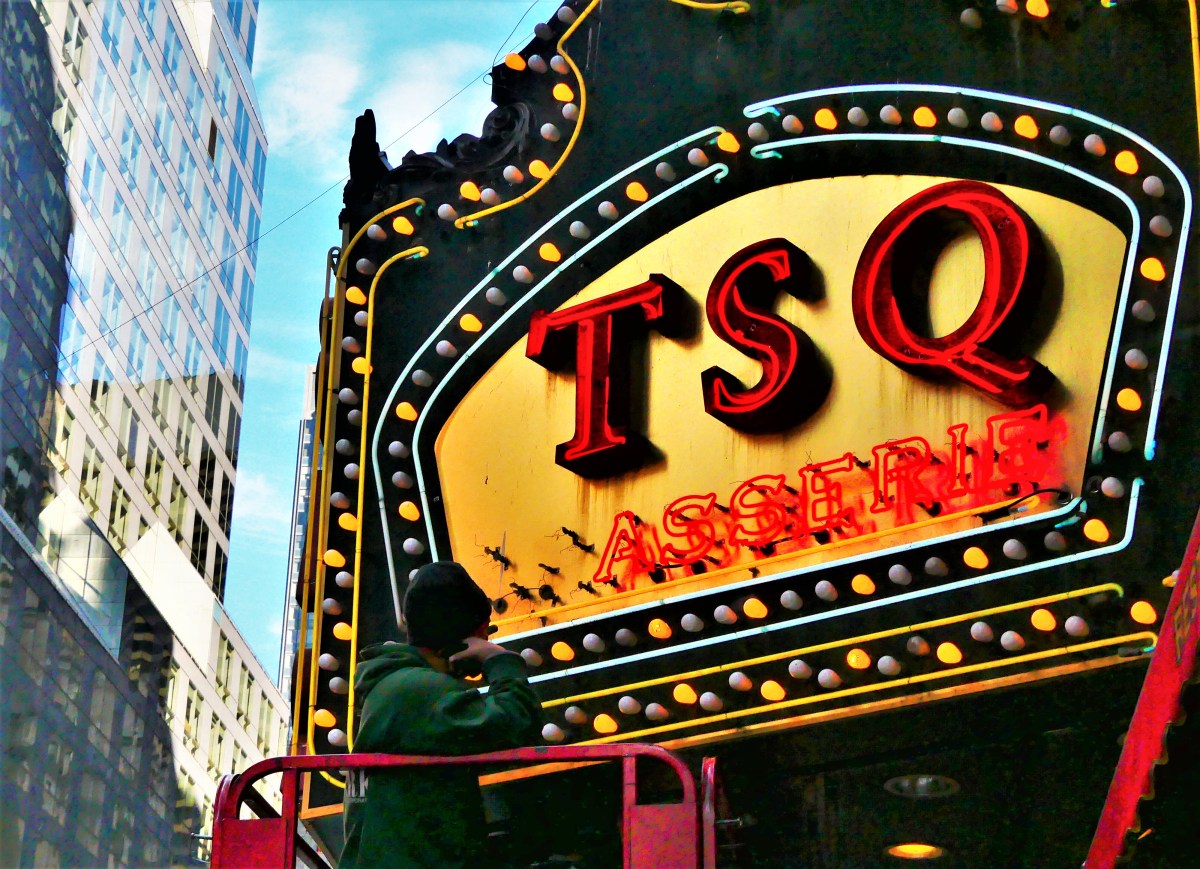
TSQ Asserie

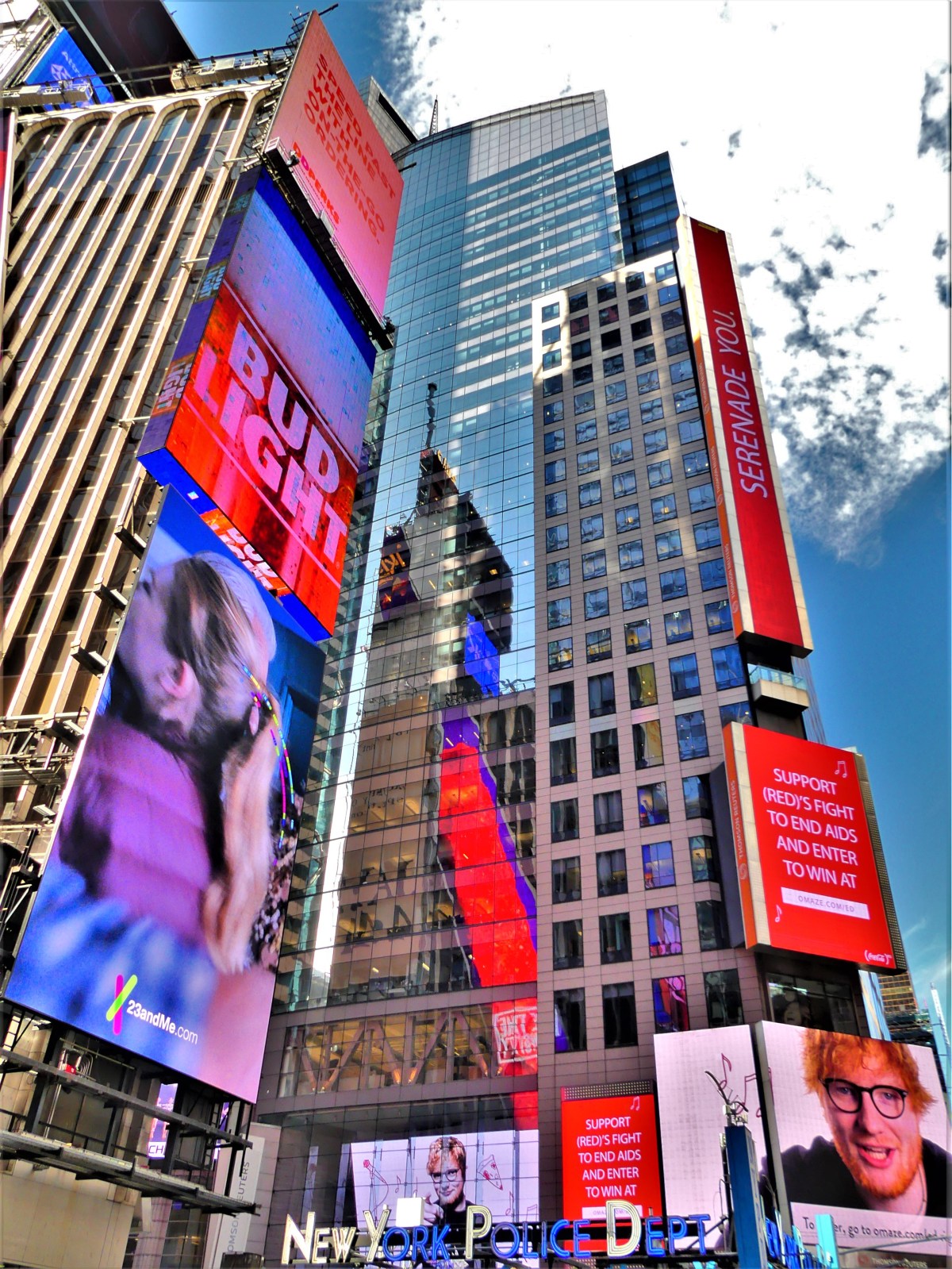
I routed through Times Square for an essential rush of nostalgia,

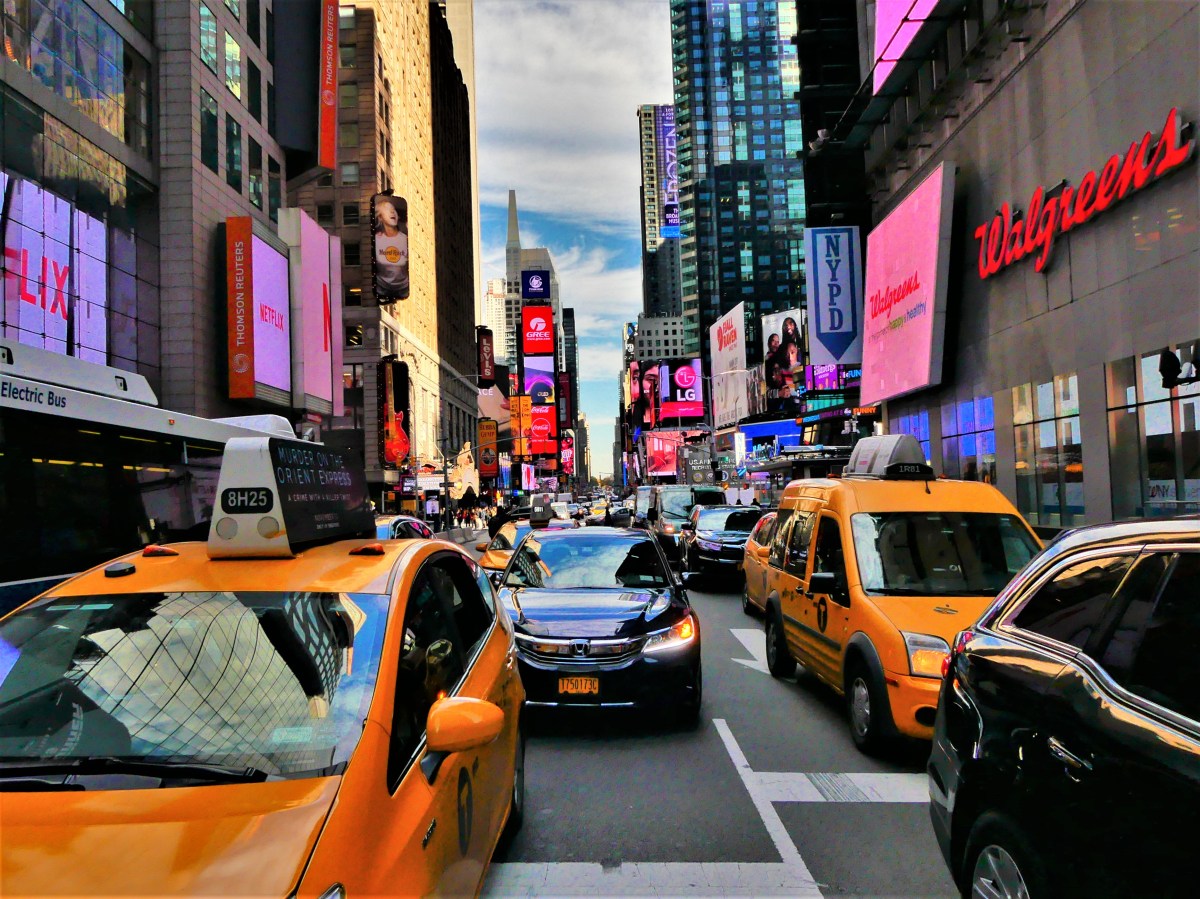
TSQ traffic

as this was my traditional walk to work for the better part of a school year when I taught World History and Chemistry at JKO (Jacqueline Kennedy Onassis) High School, renown for once housing the school characterized in the movie Fame.

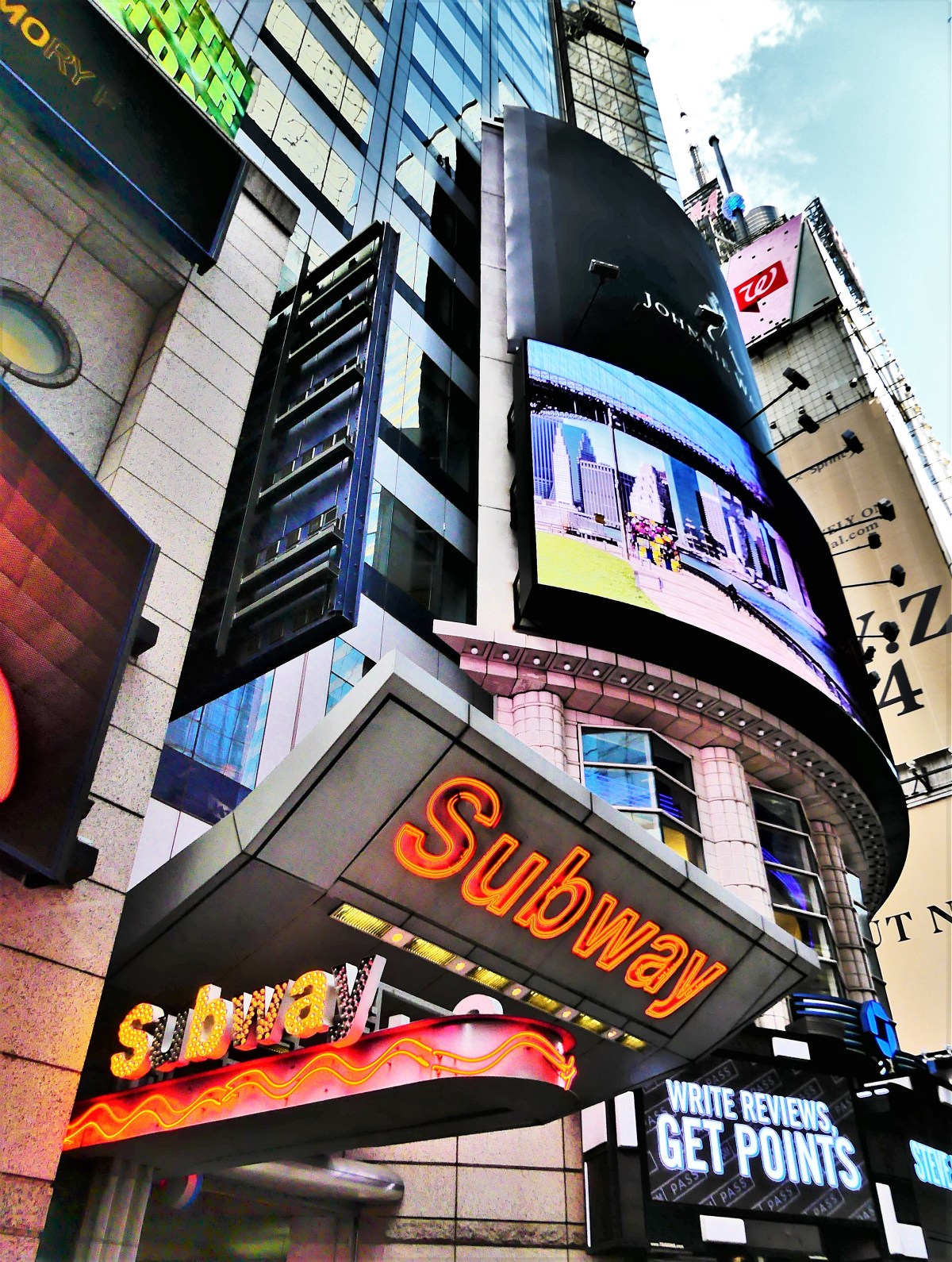
Subway

Times Square2

SWAT

Winding my way to 6th Avenue,

Torsos

camera towers were rising between decorated office buildings in preparation for Thursday’s Thanksgiving Parade.

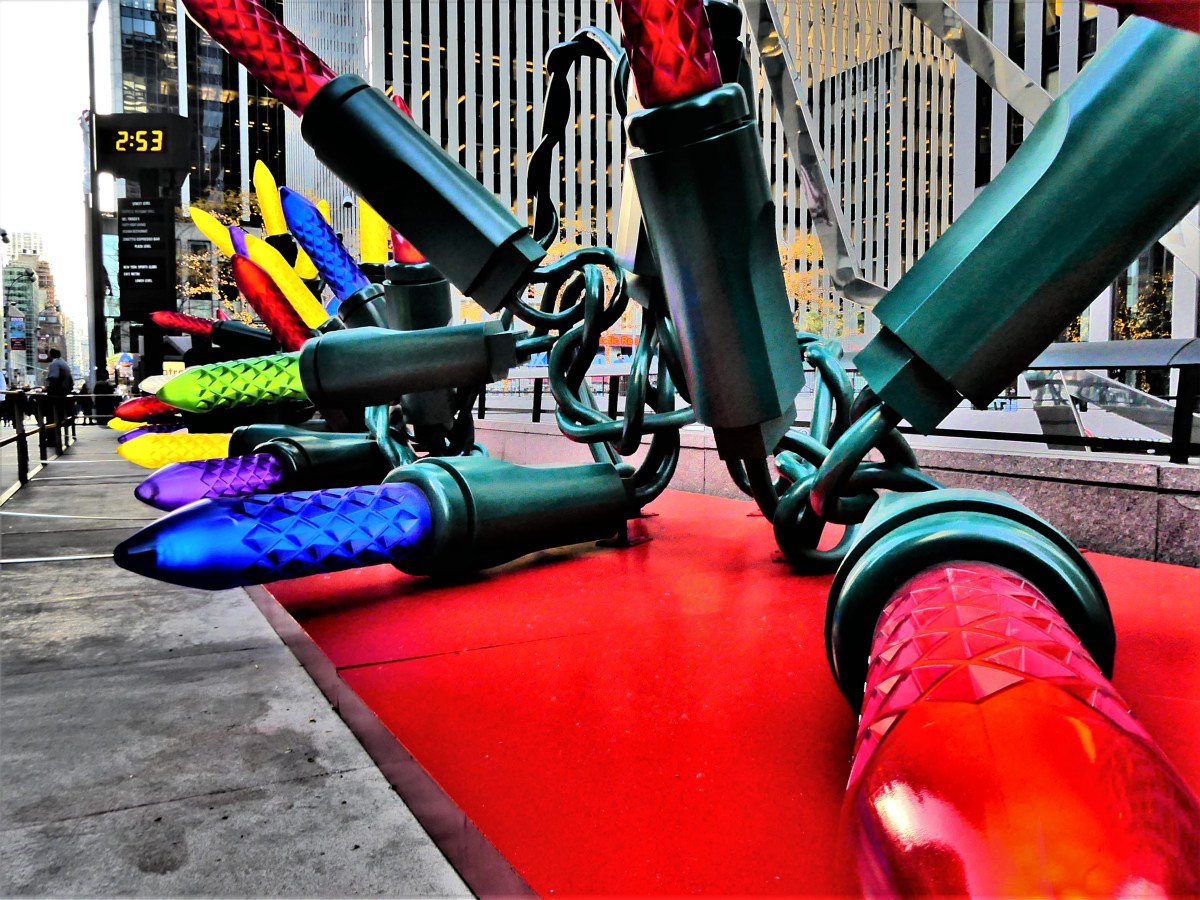
Xmas lights

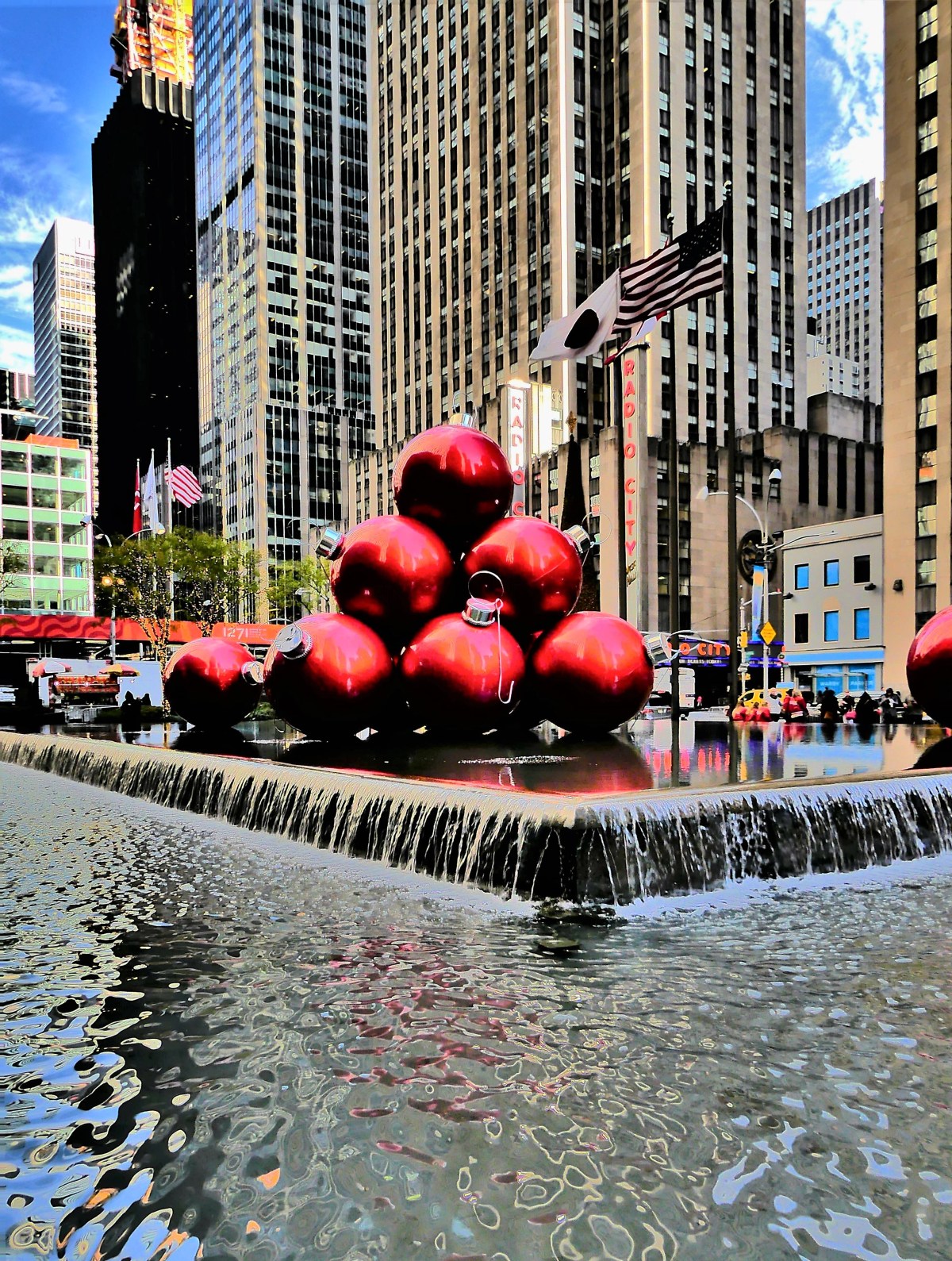
Ornaments

Arriving at my destination, I joined a reception in the ballroom lobby of the New York Hilton that soon transitioned to an open call for lunch, as the doors to the ballroom parted and 800 attendees scrambled to locate their seating assignments.

After customary introductions and rousing speeches from union officials,

Ballroom luncheon

we settled on servings of institutional indigestion masked as fish or fowl, while catching up with complete strangers around our table.

Table 60

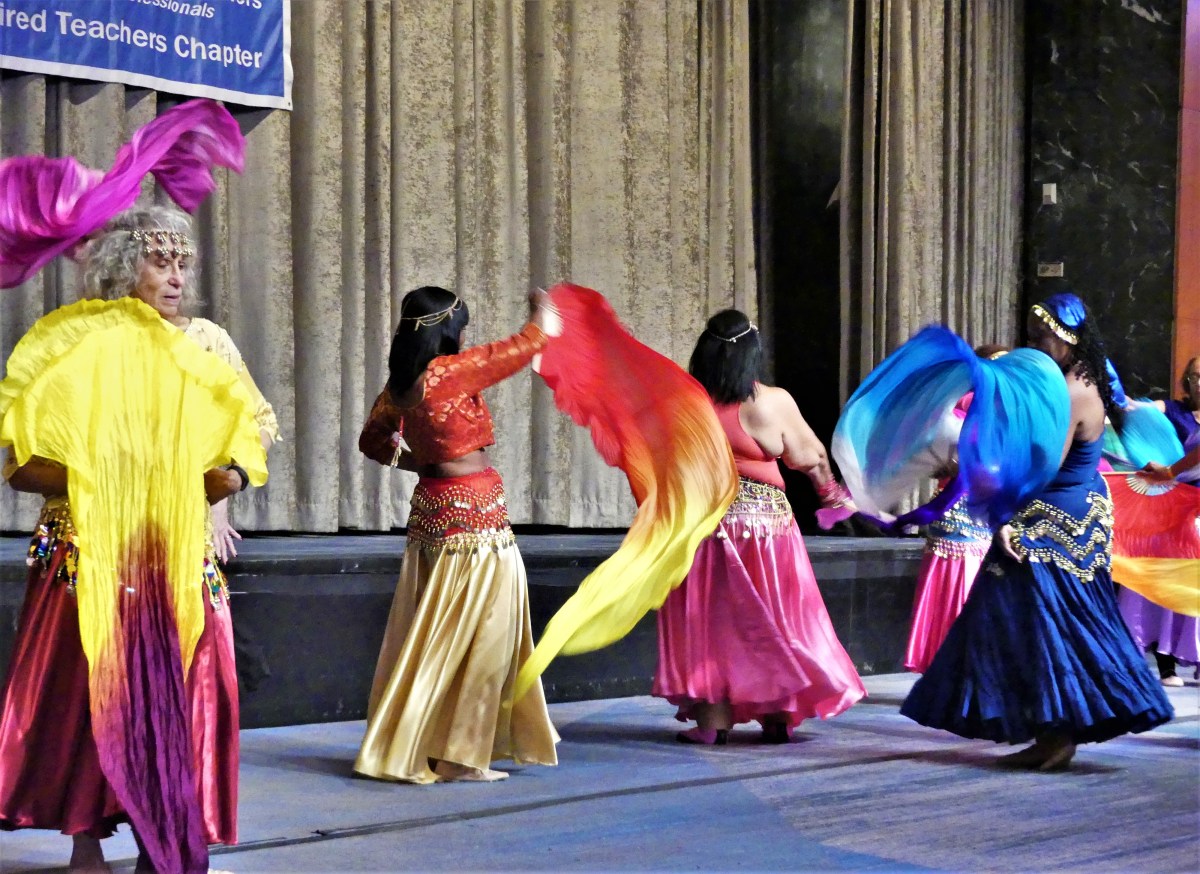
Entertainment was provided by retirees with a passion for colorful clothes and random gyrating.

tiny dancers

Belly dancers

fan dance

By two o’clock, it was all an afterthought, and the crowd slowly dissembled…in search of what’s next after retirement.

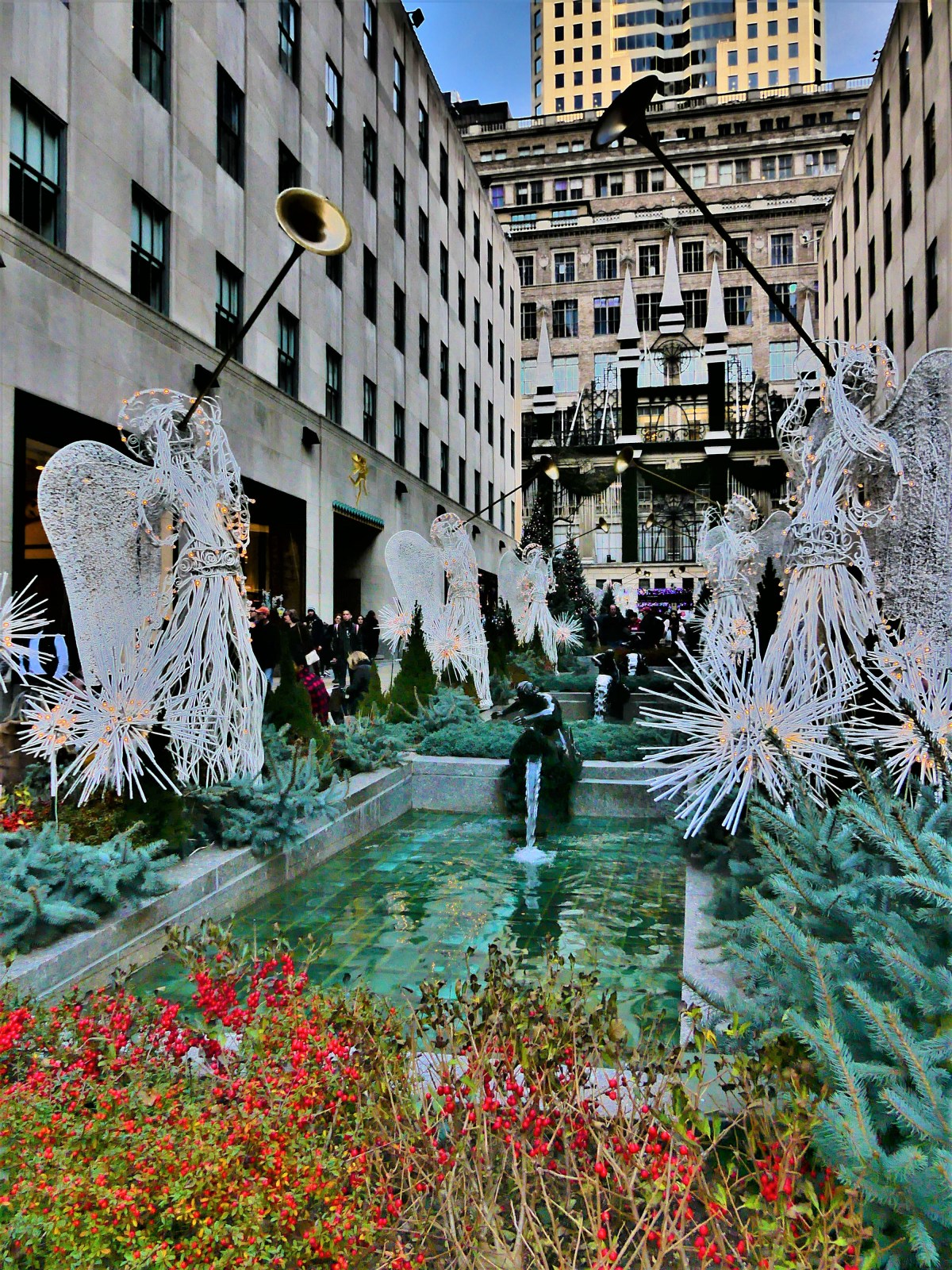
Upon my return to Port Authority, I re-routed through Rockefeller Center–ahead of Thursday’s masses–to sneak a peak at Christmas future…

Rockefellar Center Promenade

Angels with Trumpets

…but alas, the Northern Spruce–like so much of New York City–was still a work in progress.

Scaffolded tree

Ironically, I felt myself immediately transported back to the classroom for one brief moment, reflecting on one of my earliest teaching revelations: that instruction, much like construction, is best achieved with proper scaffolding. For without it, most students would be skating on thin ice.

Eco-Beer

It seems odd to consider that drinking beer can also be good for the environment, but after touring the Sierra-Nevada brewery in Mills River, North Carolina, I’m convinced that raising a pint of porter is a sacrifice that I am more than willing to make for the sake of our planet.

John was our tour host for the afternoon, and he was aleing to tell us the hoppy story of Sierra-Nevada’s humble beginnings in Chico, California while we sipped a sample of pale ale, and listened to his silly puns.  He narrated a slide show detailing how homebrewers Ken Grossman and Paul Camusi rented a tiny warehouse in 1979,

warehouse
First brewhouse. Photo courtesy of Sierra Nevada archives

and barley cobbled together a 10-barrel Frankenbrewer made of discarded dairy equipment and scrapyard plumbing with $65,000 seed money borrowed from family and friends in order to produce their first American Stout in 1980, followed by a hop-forward Pale Ale. Surprisingly, first year sales reached 950 barrels, and doubled the second year.

By 2012, world-wide thirst for Sierra Nevada’s craft beer had exceeded their manufacturing footprint in Chico–which was capable of producing one million barrels a year after expansions in 1988 and 1997–and eventually led to construction of the North Carolina brewery that now offer tours with John.

Brew vessels

Ground-breaking began on 90 acres of oak and hickory forest in Henderson County, adjacent to Asheville’s Regional Airport. In line with Grossman’s ecological sensability, fallen trees from the property had been milled to provide lumber for the brewhouse and the rainwater cisterns that presently irrigate the landscaping and flush the facility’s toilets.

Additionally,

  • on-site solar panels and microturbines fulfill 32% of the brewery’s energy requirements;
  • surplus COemitted during the brewing process is recaptured to pump beer to the taproom;
  • used cooking oil from its restaurant is processed into bio-diesel for its delivery trucks;
  • discarded yeast is converted into high-grade ethanol fuel;
  • spent grain is fed to company livestock;
  • spent water is recycled to the brewery’s own water treatment plant, where it is used as drip irrigation for its estate gardens;
  • culminating in 99.8% of the brewery plant’s solid waste being diverted from landfill.

Because of Sierra Nevada’s commitment to sustainability, the Mills River facility has been certified Platinum in 2016 by Leadership in Energy and Environmental Design (LEED)–its highest award, and first-ever bestowed upon a production brewery.

But none of it would matter unless the final product tasted good. With that in mind, John took us on a walking tour, identifying the four main ingredients, and how they all come together to produce an award-winning beer.

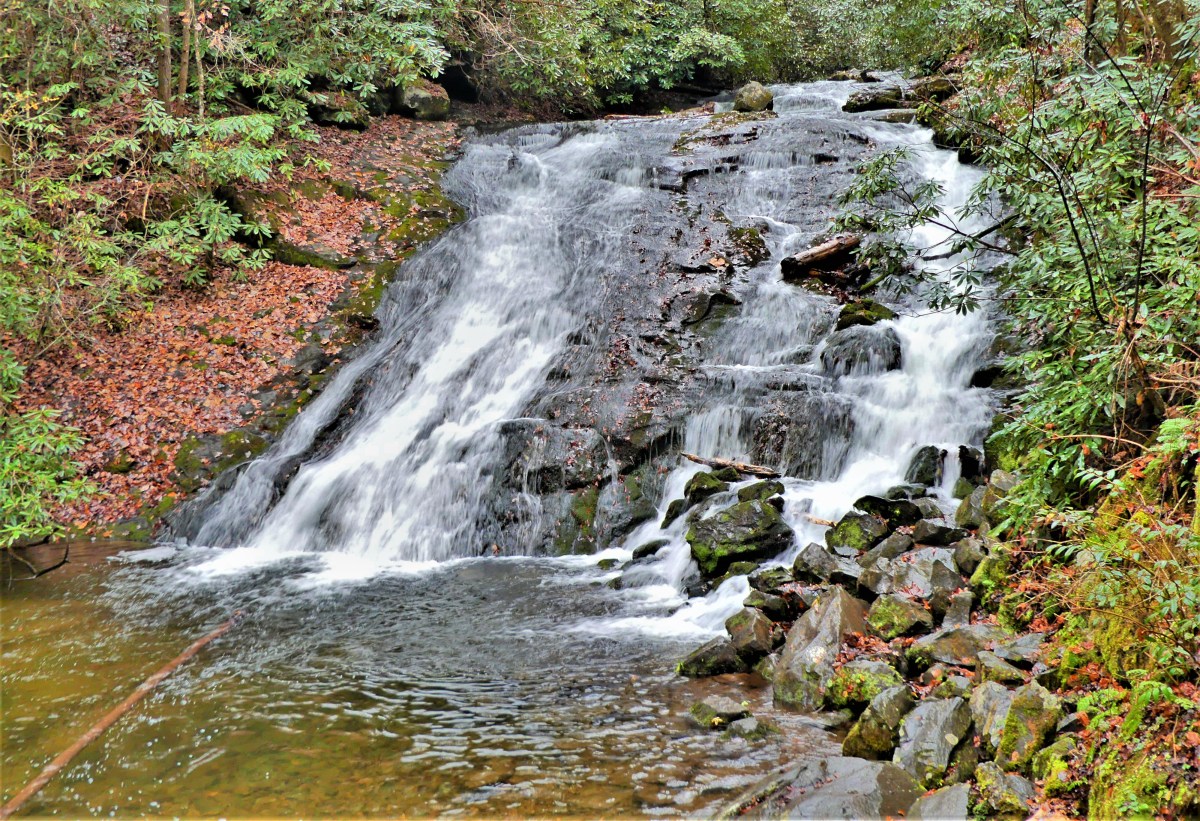
The purest water drawn from North Carolina’s mountains is filtered until rendered chemically inert.

Indian Creek Falls

The finest barley is milled on site.

malt silo

malt mill

to produce the finest wort.

lautering tun

Several varieties of whole cone hops are harvested with the flowers intact,

hops room

and added into the brew kettles in different combinations to produce complex tastes and flavor profiles–

fermenters

–under strictly regulated temperatures according to specific beer style.

temp guage

Whereupon, the finest yeast is added…

mash tank

to initiate the fermentation process.

fermentation room

Quality control oversight guarantees a safe and consistent product throughout each production cycle.

quality control

After testing, the beer is chilled and bottled…

bottling

…and ready for packaging.

packaging

Or in our case, it’s ready to be poured and tasted in beautiful surroundings.

tasting room

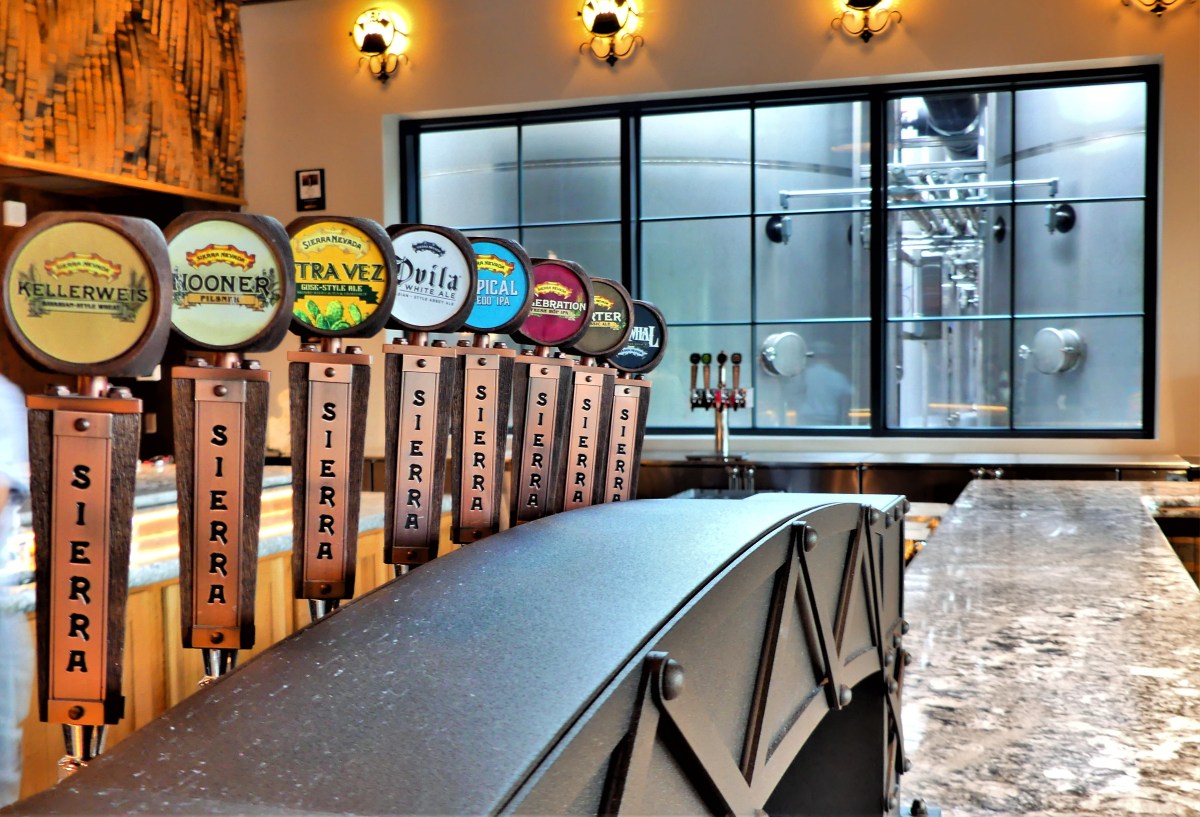
We sampled eight different beers–

beer tap samples

–each one served in its own style of glass to enhance the tasting experience–

glass display

and the experience leaves little stout why craft beer, at the very yeast, deserves a bitter place at the table with the beer conglomerates.

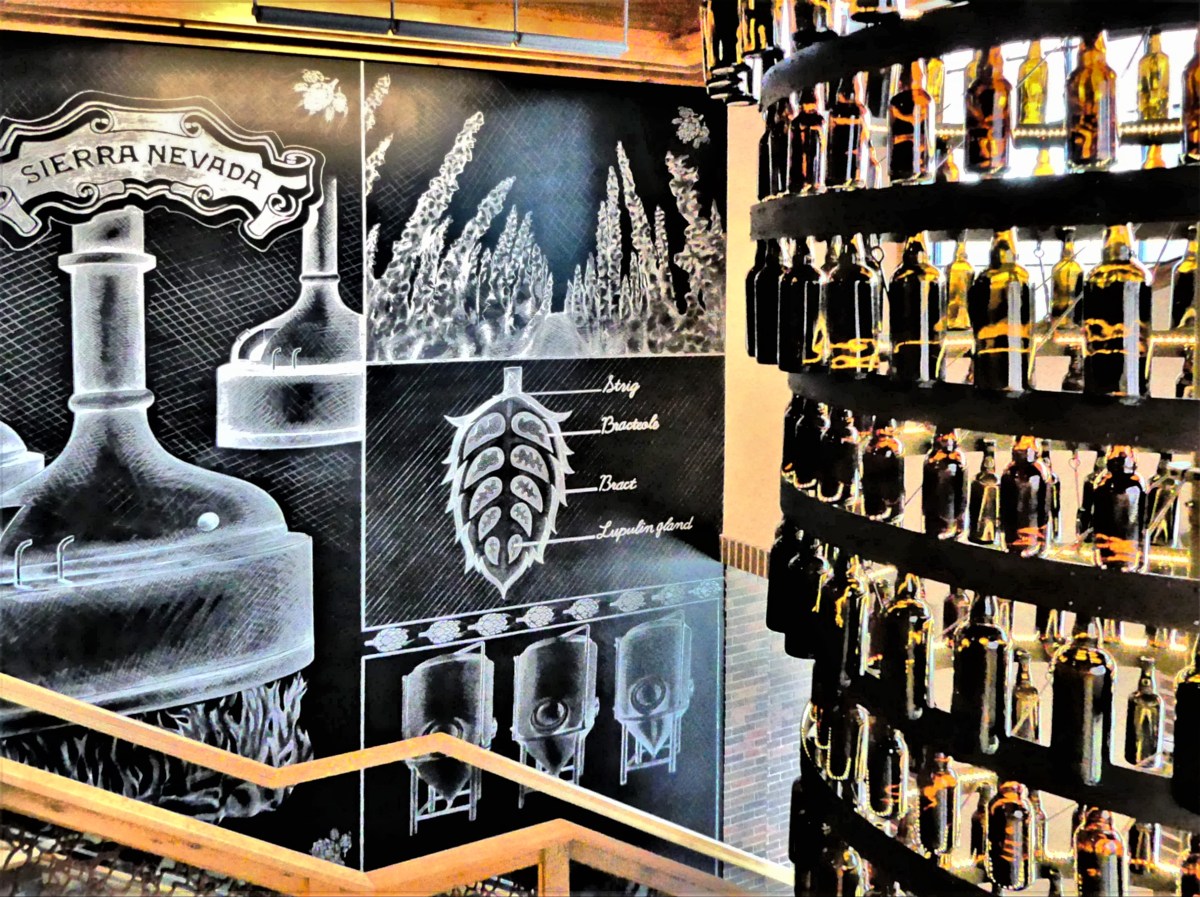
Ken Grossman’s brewing philosophy of using pure and fresh ingredients…

beer chandelier1

…coupled with his unwavering attention to detail at Mill River, will surely tripel Sierra Nevada’s output and sales, securing its place as the nation’s lagerest private craft brewer, which gose without saying.


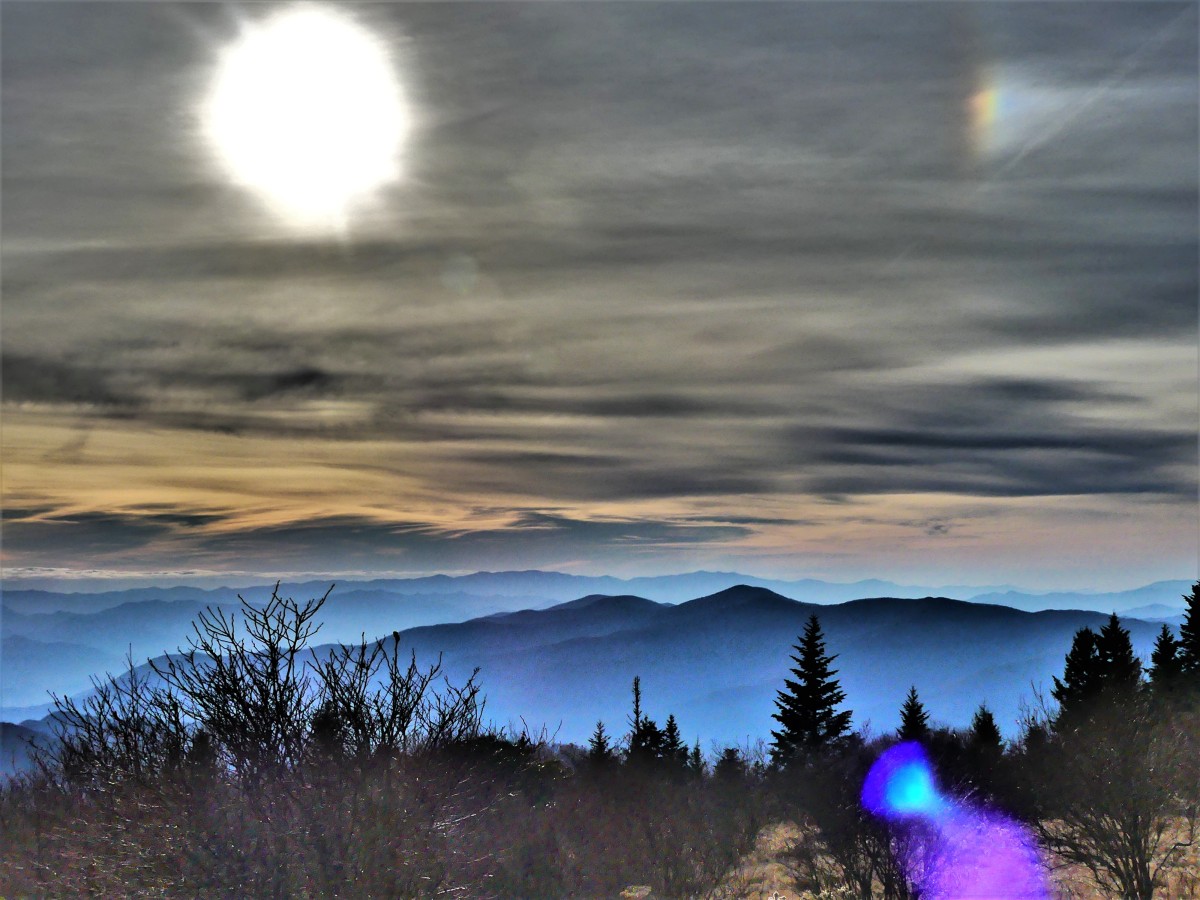
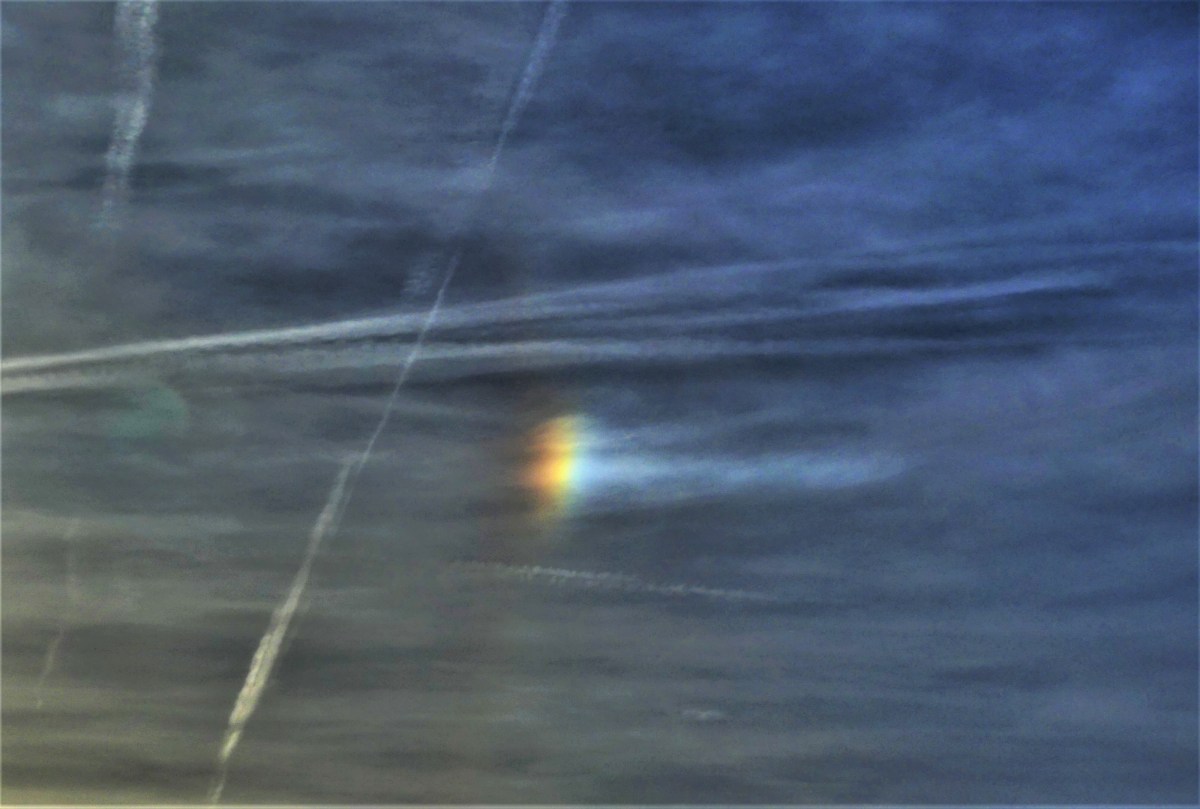
Parhelic Circle with Sundogs

While enjoying the exhilarating views of the Great Smoky Mountains from the vantage of Andrew Bald’s grassy slopes, a narrow ribbon of color caught my eye just as the clouds were parting on the right side of the sun. I knew I didn’t have much time, so I refocused my attention on capturing my discovery through the lens of my camera, while trying not to blow-out the exposure by shooting into the sun.

right side

“Ooh, a rainbow,” I thought, “That’s cool.” I turned to the few hikers present, now relaxing after the trek down from Clingmans Dome.

“Did anyone else see the rainbow?” I asked around to no one in particular.

Their casual shrugs spoke volumes. Glancing back to the sky, I understood their ambivalence; the rainbow had already vanished.

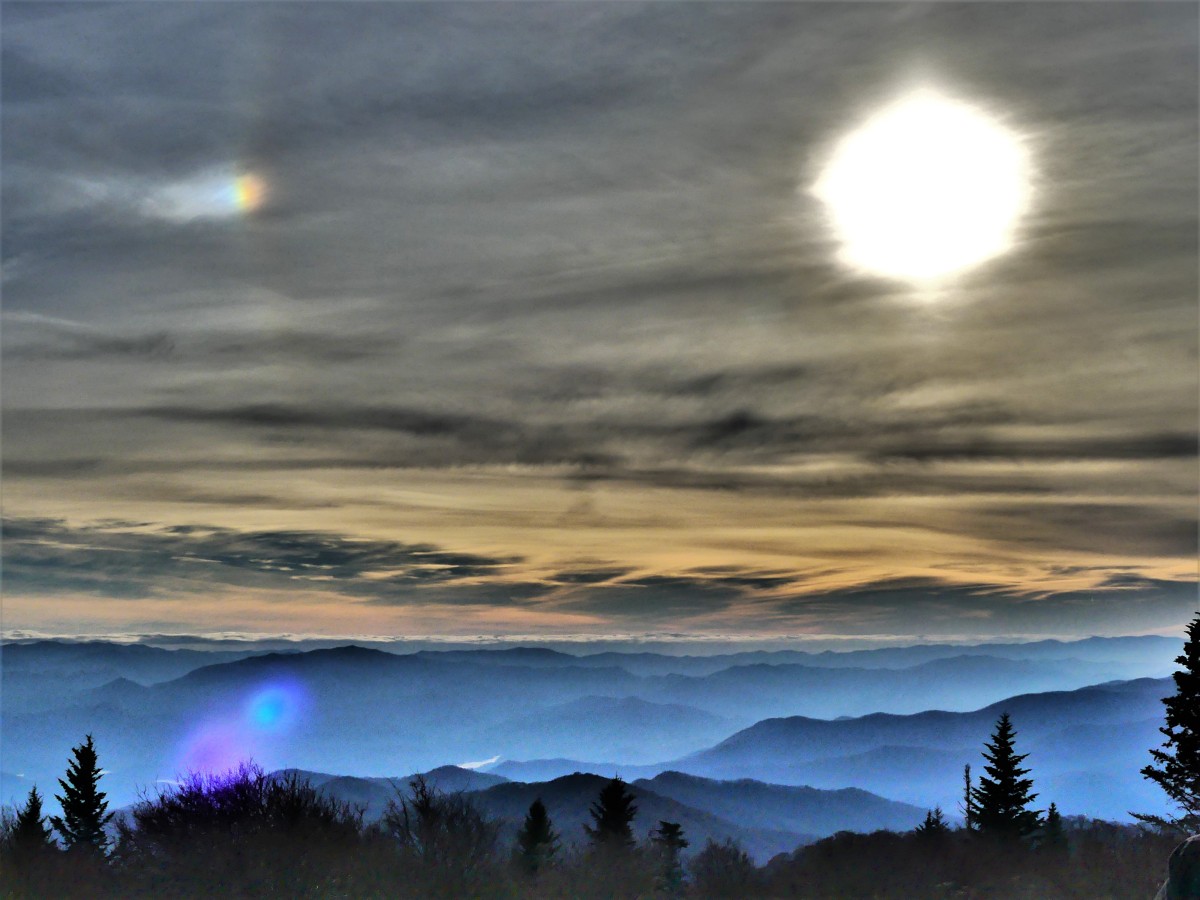
After a snack and a brief respite, it was time to start up the mountain before darkness descended, but not without one last look as I was leaving the clearing. That’s when I noticed–if only for an instant–a reciprocal slice of color on the left side of the sun…

left side

…and then it was gone. Leah and I ascended the trail in sufficient time for photographing a glorious sunset over Clingmans Dome, and nothing more was considered, until it was time to construct the post, On Top of Old Smokey.

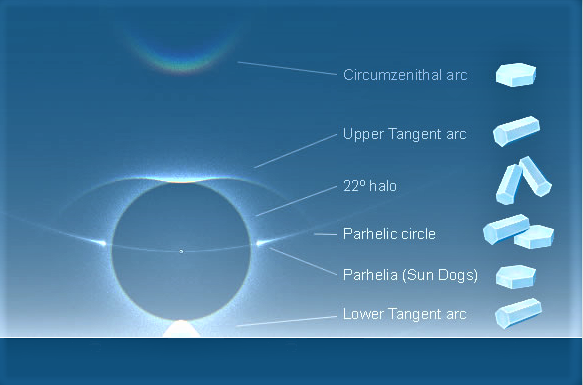
While putting my thoughts together with the TV running in the background, I became distracted by a local meteorologist from Charlotte, who was standing in front of a projected image submitted by a viewer that looked very similar to photographs I had recorded on Andrew Bald.

And then he replaced the image with this graphic:

parhelic graphic (2)

while giving a brief explanation of the earth science behind the phenomenon of a parhelic circle with flanking sundogs.

That’s when I realized I had captured something special…caused by sunlight refracting off tiny ice crystals in the atmosphere, and creating a larger halo around the sun.

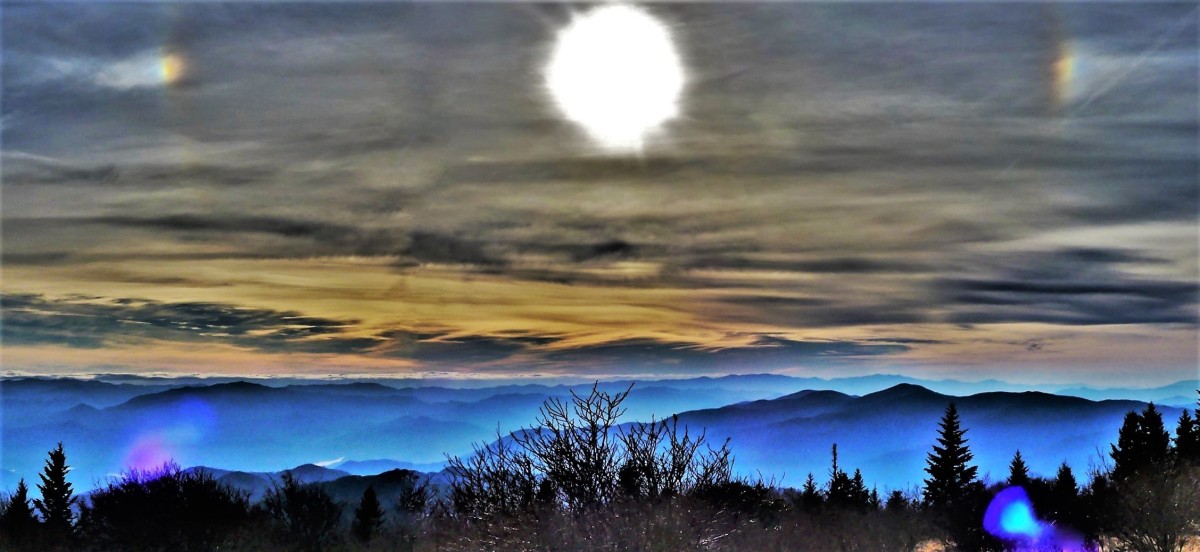
I returned to the file to re-examine the photographs, and wondered–by chance, and given limited resources–if I could stitch the two views together using Windows Publisher to reproduce the full effect, even though the photographs of both sides of the sun were taken minutes apart from two different viewpoints and parallax.

While the technique is purely experimental, I believe the result comes very close to interpreting “what could have been” had the clouds not interfered with my “rainbows”…

parhelic circle with sundogs

…all of which makes for a more remarkable discovery, given the Great Smoky Mountain smoke.

On Top of Old Smokey

A side trip to Great Smoky Mountains National Park from Asheville takes only an hour, but the payoff is timeless. Admission is free, but the views are priceless.

The National Park straddles North Carolina and Tennessee, with Clingmans Dome, the highest peak in Tennessee, and a natural boundary between both states. The park is situated within a day’s drive for 60% of the nation’s population, making it the most popular of all National Parks, with over 9 million visitors per year.

The park can be accessed through a dozen different gateways, with Sugarlands Visitors Center being the prevailing entry point from the north side through Gatlinburg, TN. But Leah and I approached the Great Smokys from the south, and entered via Oconaluftee Visitors Center, the heart of Cherokee Nation.

Once there, we took our time strolling through the Mountain Farm Museum on the banks of the Oconaluftee River…

farmhouse

farm garden

elk field fences

corral

…before driving north on Newfound Gap Road–stopping frequently at the many overlooks–to gaze across Carolina’s side of the Blue Ridge Mountains,

overlook

overlook1

and preview our next destination, Clingmans Dome, at 6,643 feet elevation.

Clingmans Tower LS.jpg

A dogleg turn onto Clingmans Mountain Road took us through short winding turns as we climbed the Appalachian Trail ridgeline, eventually leveling off at an over-sized parking area with trails radiating from the top of the bald, and views extending a hundred miles.

Clingmans Dome view

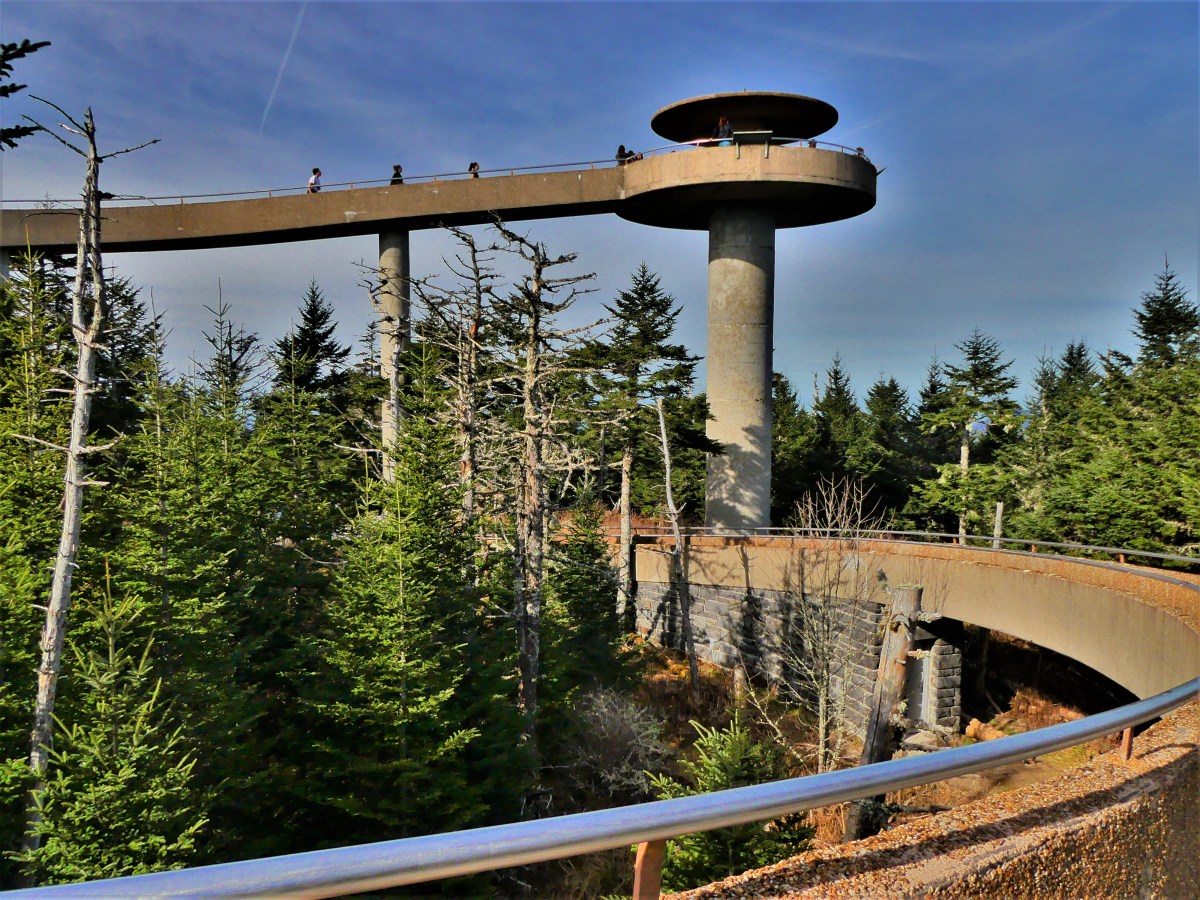
Thinking that views might be even better at the very top–allowing us to see over Mount LeConte–we trekked half a mile up a very steep asphalt path to Clingmans Observation Tower, albeit knowing it was closed for repair until next year.

To our surprise, families were scaling the spiraling ramp to the tower.

Clingmans Tower

Looking around, there were no views to be had at the base. We were surrounded by a dense growth of evergreens without breaks. Sacks of concrete were stacked under the column with flimsy, yellow, KEEP OUT tape tied across the tower entrance.

Scores of visitors-turned-violators stood around the column base, determining their next move. Should they make the ascent or not? Yes, the tower was officially closed to the public while undergoing repair. But was it too risky to breach the ribbon barricade? There weren’t any park rangers present, but maybe there were cameras? What a moral dilemma!

“I’m not going up there,” exclaimed Leah. “There’s a reason that tower is closed.”

“But look around us! Where are the views?! We hiked up here expecting to see something, yet there’s nothing to look at, unless you want a closer look at this fir stump,” I argued. “And what about everyone already up there? If they really wanted to keep us out, then why didn’t they secure the entrance better? Why didn’t they use fencing instead of tape?”

Leah was adamant. “I’m still not going up there, and I don’t care about everybody else! It’s not the right thing to do.”

I offered Leah my Roy Moore rationale: “But it ain’t illegal if ya don’t get caught!”

I deliberated carefully…

…and ducked under the tape. I couldn’t help myself. I wouldn’t deny myself the views I had come all this way to capture.

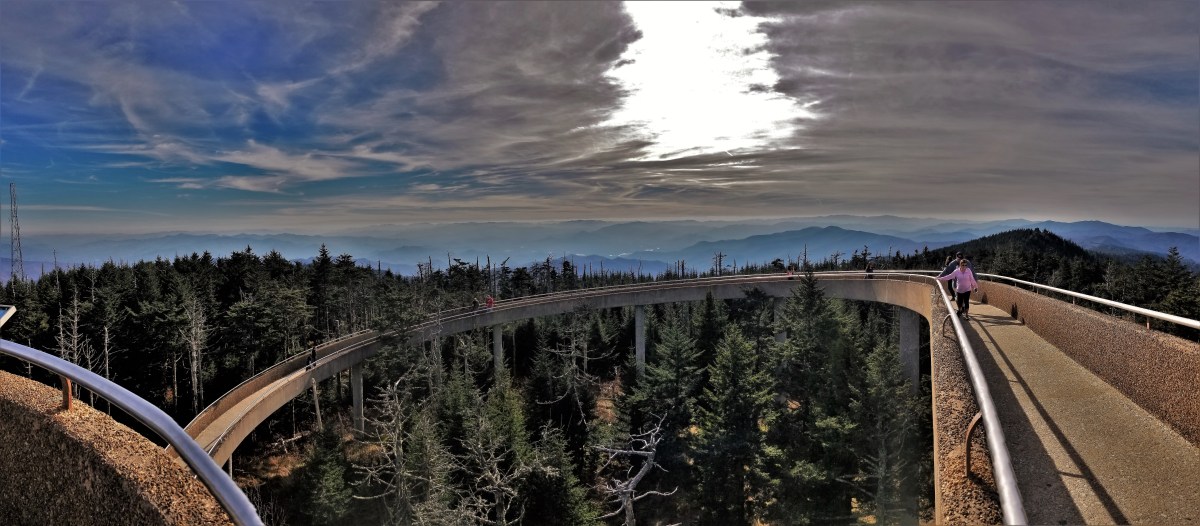
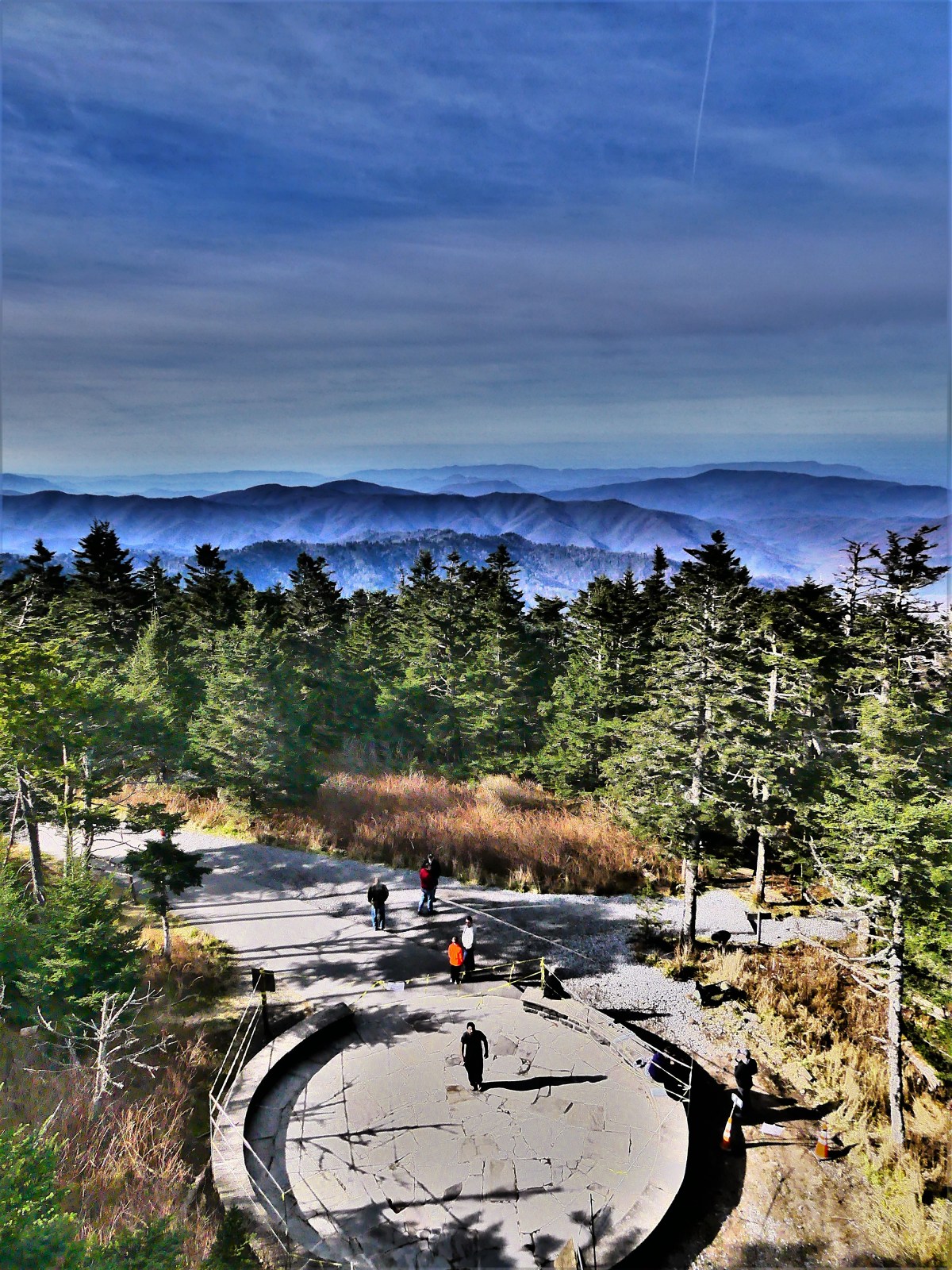
The 45-foot tower was completed in 1959 to give unobstructed 360° views of the surrounding mountains and valleys, and it was showing its age. The concrete pathway was separating from the wall in places, and patches of rebar were visible along the way. But did it warrant closing while in the midst of being repaired?

tower panorama

Probably, but not until I had the chance to document the landscape. I scurried up the ramp with the intention of quickly getting my shots, and hurrying back down, just in case I should be noticed.

Tower base

Tower ramp

On our way back down the trail, several families on their way up the trail, paused to catch their breath and ask, “Is it worth it? Is there anything to see up there?”

“It all depends on how good you are at following orders,” I’d answer cryptically.

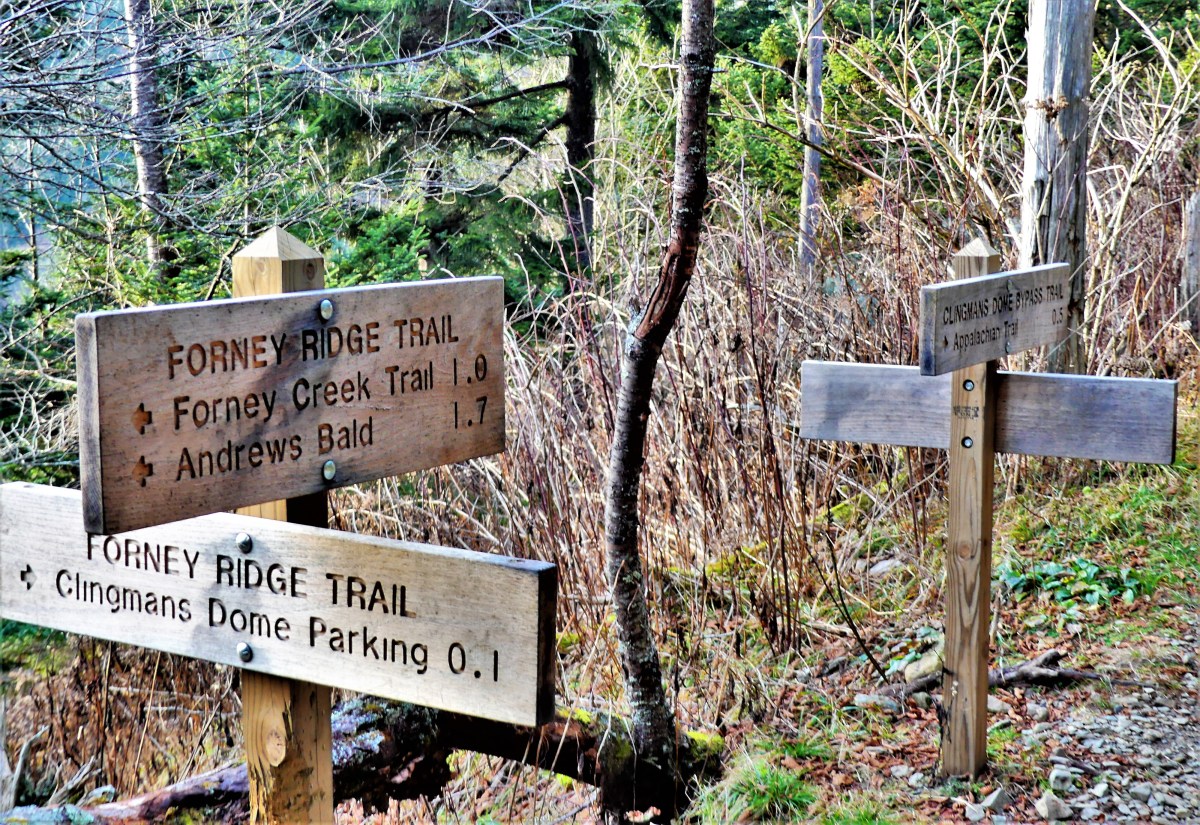
But our day wasn’t done yet. It was only three o’clock, and we hadn’t hiked more than an easy mile. We’d been told by a park volunteer at the Visitor Center that the two-mile trail to Andrews Bald–which intersects with the Appalachian Trail–was a worthwhile hike with amazing views at the end.

trail sign

So, we took her advice, and set out down a narrow, terraced ridge capped by embedded logs as steps–to keep the erosion to a minimum–until it turned to saw-toothed rocks and twisted roots, and occasional mud in low lying places.

boardwalk

“You realize that it’s now getting dark around five, so we’re not gonna have much time before we have to turn around,” Leah warned. “And climbing back up this hill is gonna be a bear!”

“Sunset’s at 5:30, but as long as we’re out by five, we should be fine,” I replied. “Besides, there’s no way I’m gonna miss the sun going down from up top!”

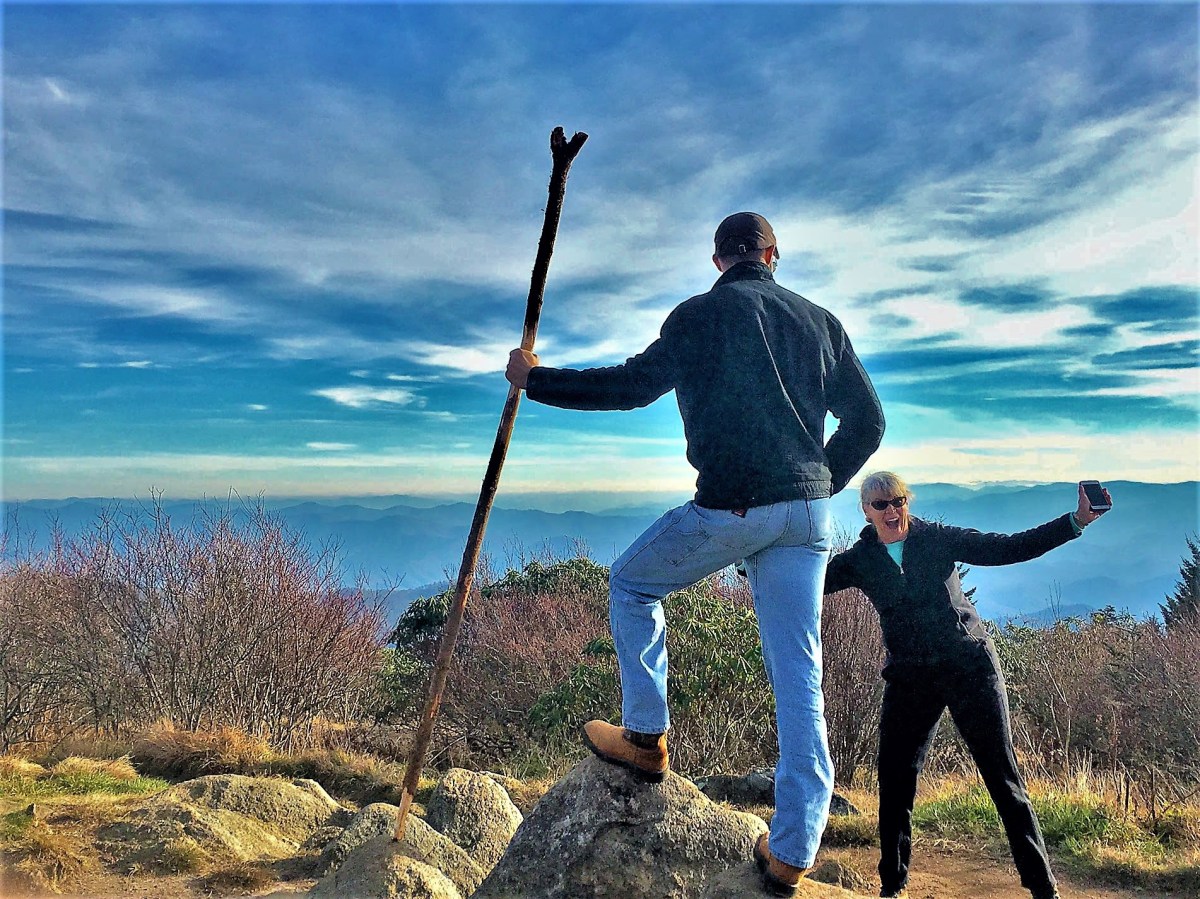
We made excellent time down the mountainside, and crossed onto Andrew Bald, a grassy clearing with breathtaking views. While Leah was making new friends, and photobombing their picture,

photobomb

I was focused on the sky, and that’s when I realized that the sun had created something remarkable.

Andrews Bald

That slivered arch of a rainbow crisscrossed by contrails was an elusive sundog, a small portion of an optical phenomenon caused by sunlight refracting off tiny ice crystals in the atmosphere, and creating a larger halo around the sun.

sundog

The excitement of capturing this meteorological moment was enough to propel me up the mountain and back to the parking lot with plenty of time to prepare for sunset. But the look on Leah’s face after emerging from the hike told a different story; her feet were achy and her knee was throbbing.

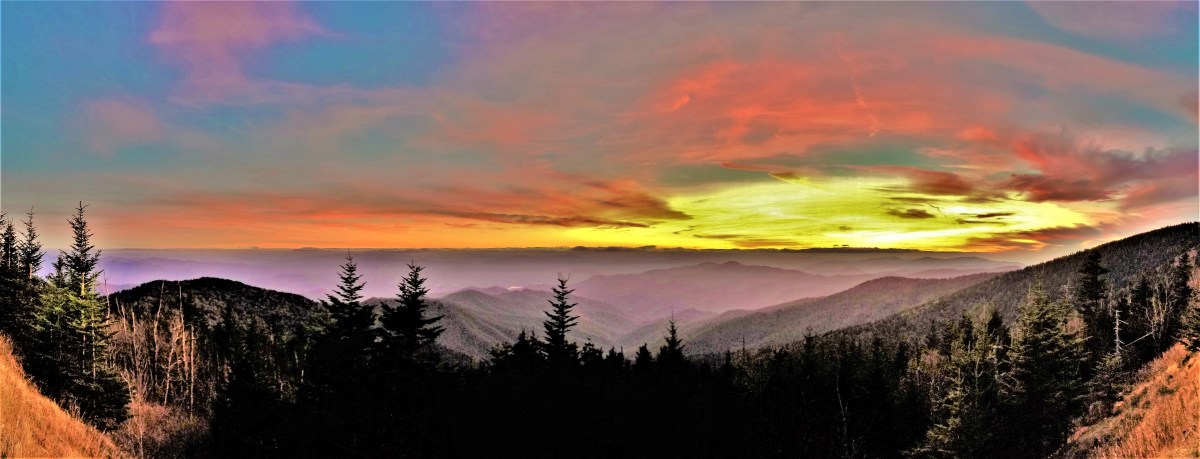
 While she retired to the truck to relax and seek shelter from the bite of cold air moving across Clingmans Dome, I stood steadfast on the edge of the mountain, camera in hand, taking a front row seat to nature’s second act.

Going…

almost sundown1

going…

sundown panorama (2)

gone.

sunset sky

Almost immediately, all the visitors who stood shoulder to shoulder, drifted back to their cars and trucks to wind their way down to the bottom of the mountain road in the faint tinted light of dusk.

If only they had stuck around long enough for nature’s curtain call…

Sky on Fire


A VanderBiltmore Christmas

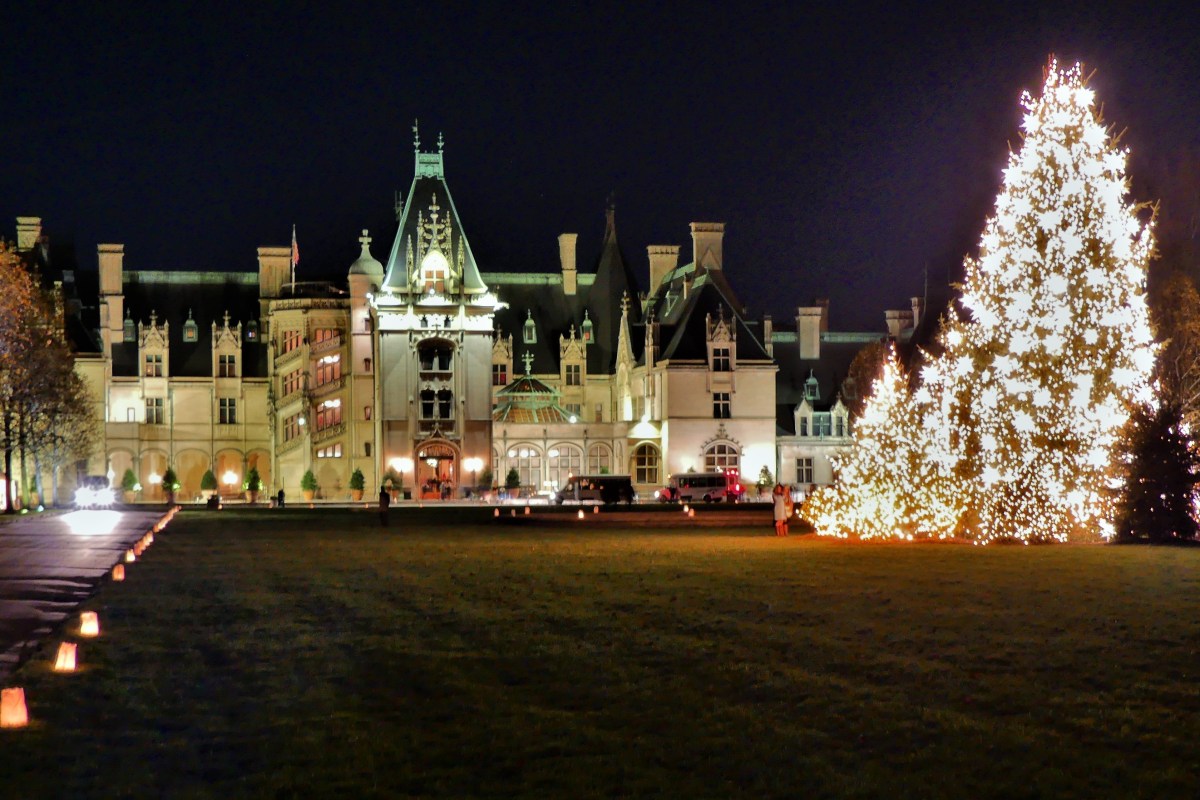
Completed in 1895 as a collaboration between owner George Vanderbilt, architect Richard Morris Hunt, and landscape architect Frederic Law Olmsted, the Biltmore House opened on Christmas Eve after six years of intensive construction,

construction

and remains the largest private residence in America, with 250 rooms covering 175,000 square feet.

The fourth and fifth generation of Vanderbilt descendants continue to operate the estate as a tourism mecca, welcoming the general public since the Great Depression, and generating needed income to preserve this Versailles-inspired masterpiece.

A variety of tours around the property are available, including: insight into the design, technology, and construction; biographical nuances about the owners and guests; historical notes on the rare artifacts and art collection; and upstairs-downstairs living comparisons.

We started our day by cycling through miles and miles of groomed gardens and grounds,

cornfield

lake gazebo view

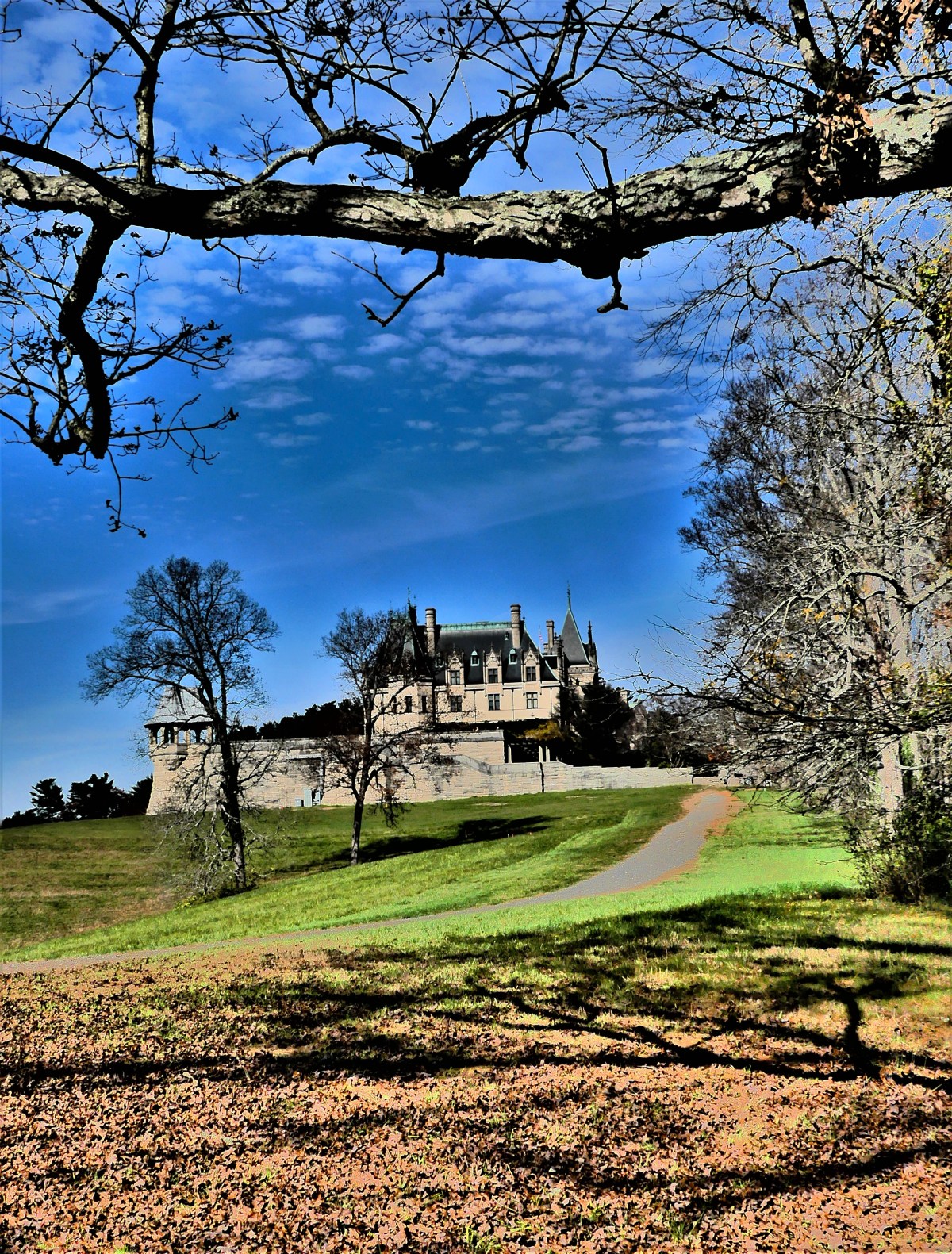
to gain a better perspective of the castle on the hill,

rowboat

estate wall

while surviving the first wave of Asheville’s brisk winter air.

By late afternoon, we’d had our fill of chill, and eagerly sought the warmth of the Biltmore House. We opted for a self-guided house tour of selected rooms that allowed us to visit at our leisure. The programmed route was matched to an accompanying booklet that provided brief reflections and information highlights that has assisted me in captioning the many photographs taken as we moved from room to room.

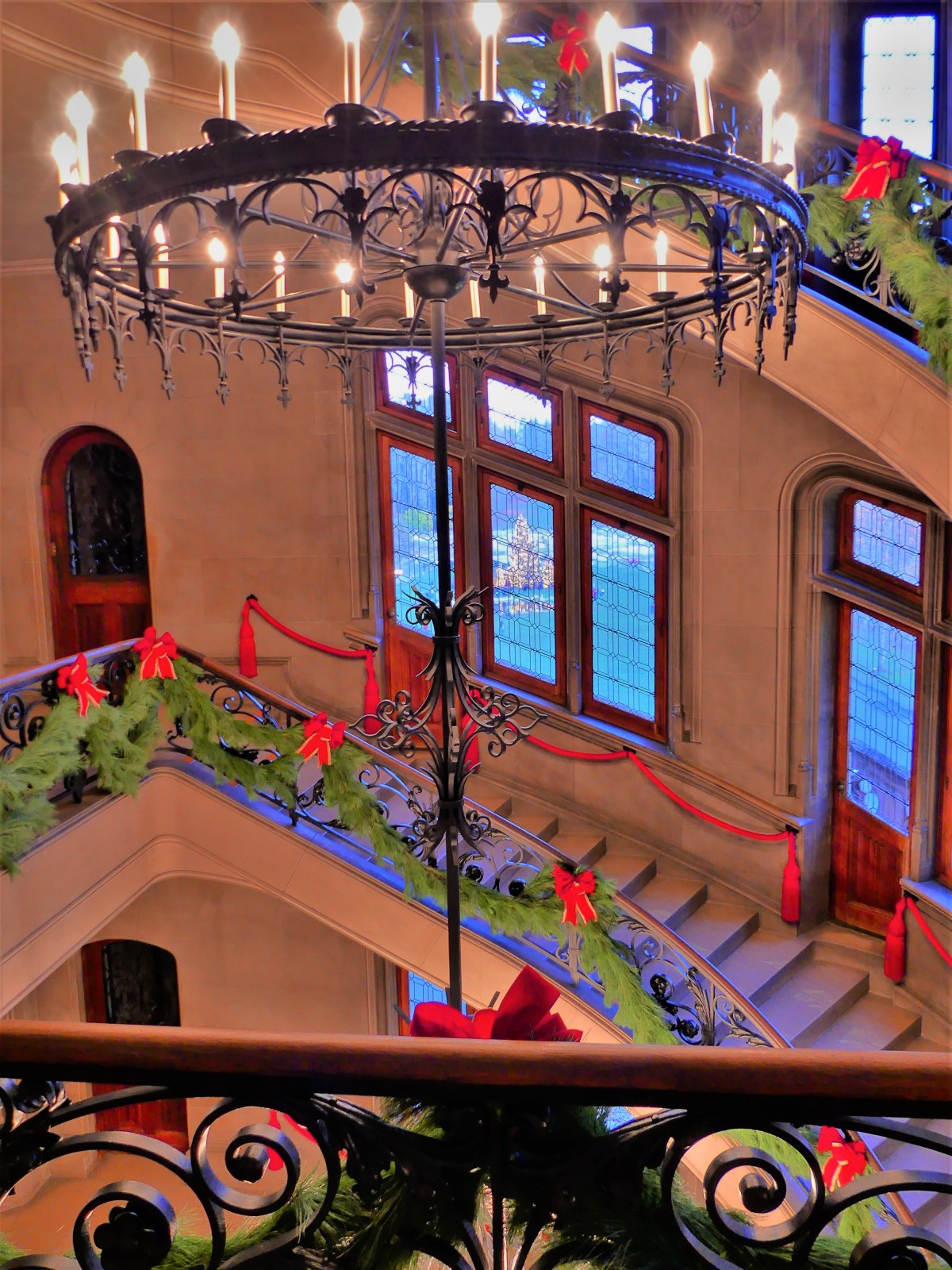
Our first impression of the residence upon entering the Entrance Hall was sheer wonder and amazement. Looking skyward through the spiraling staircase, was the perfect foreshadow of the immensity and grandiosity of what was to come.

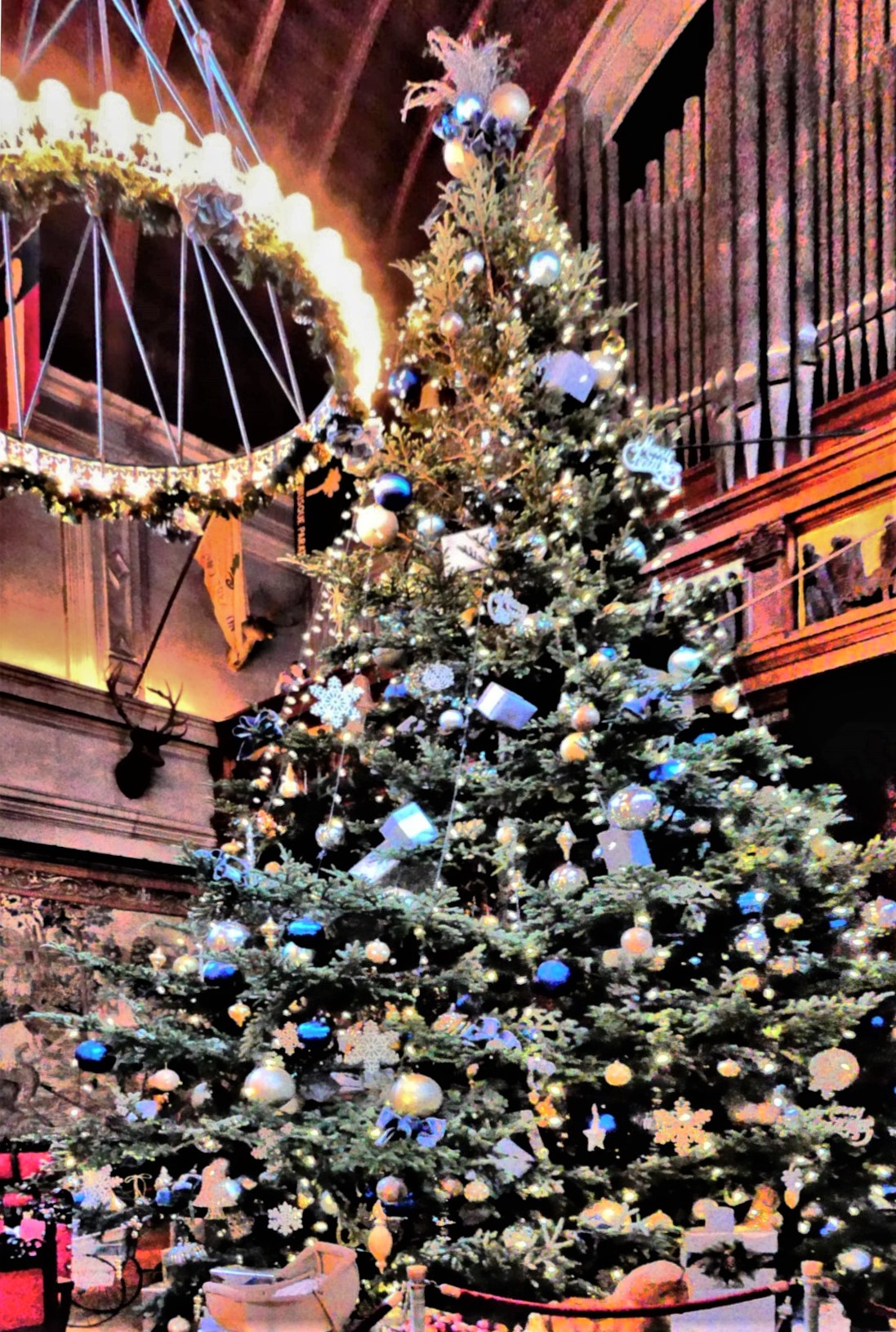
chandeliers

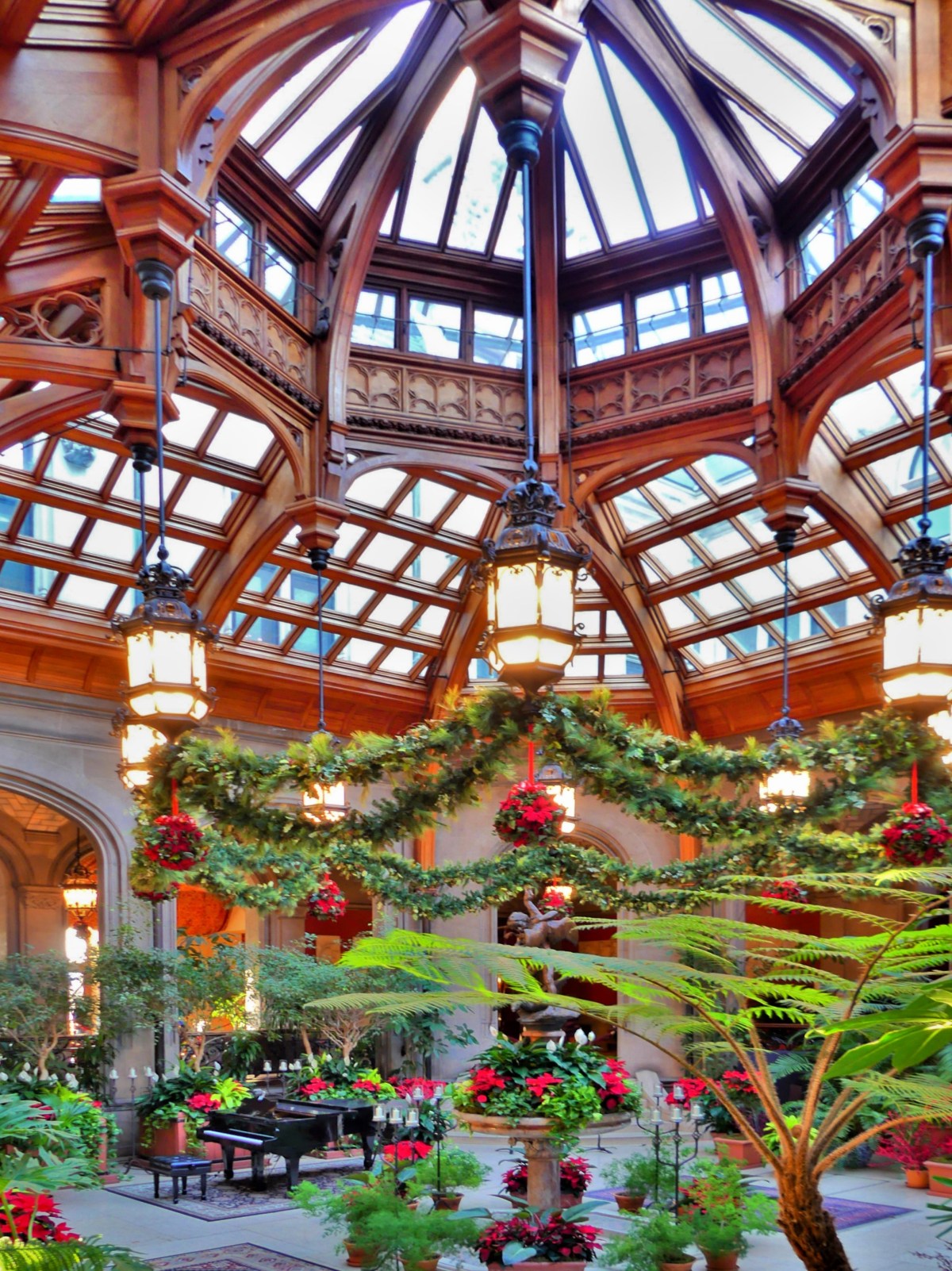
Just beyond the center hall stands the Winter Garden,

Winter Garden
The glass roof illuminates the center fountain sculpture Boy Stealing Geese by Karl Bitter.

an acoustic marvel for instrument and voice.

caroling

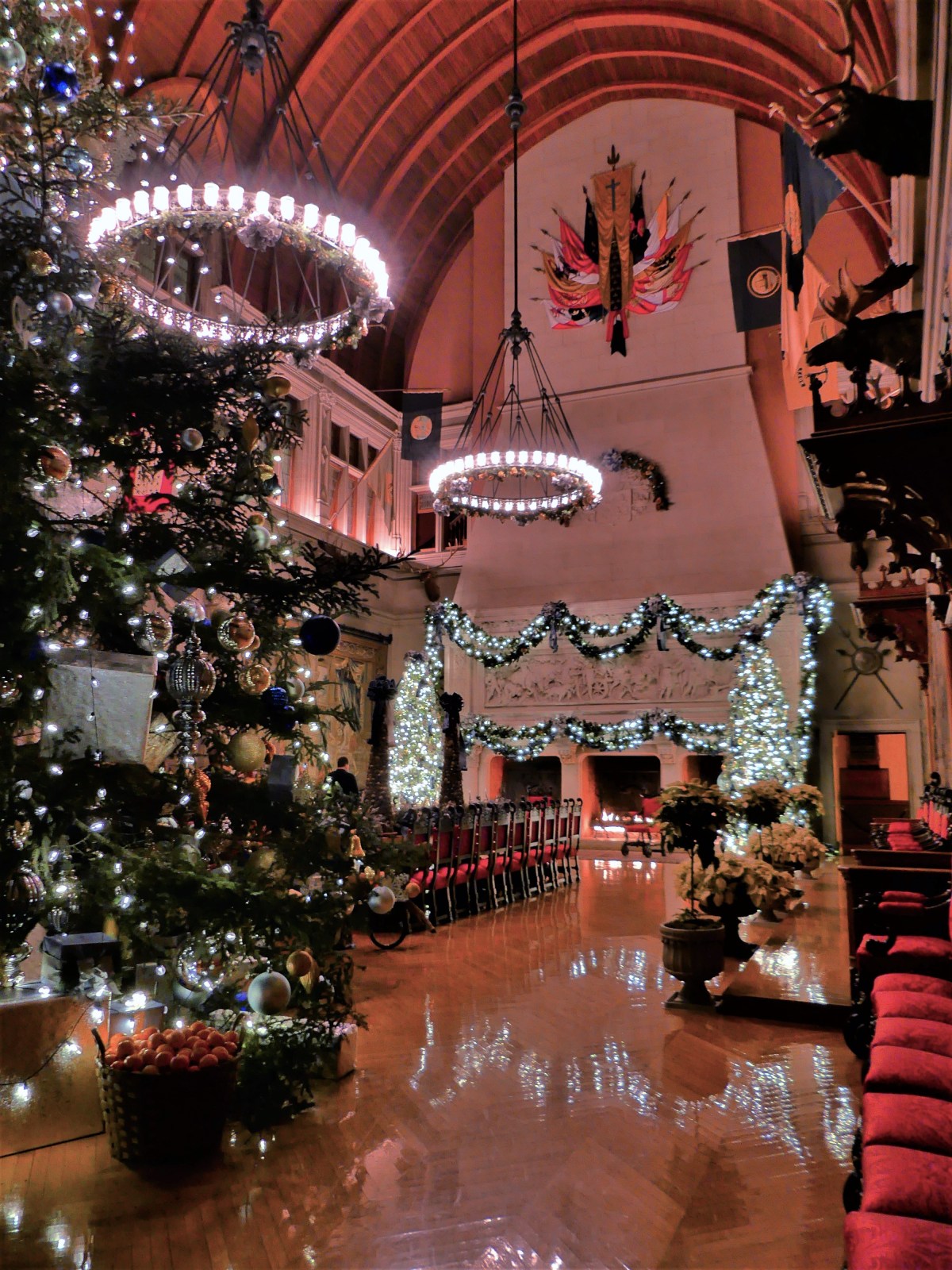
We followed signs to the Banquet Hall.

Banquet Hall
This impressive room with a seven-story high ceiling and Flemish tapestries from the mid 1500s was the scene of dinner parties and celebrations.
Organ Loft
Organ Loft houses a 1916 Skinner pipe organ powered by an electric blower below the floor.

Moving on, we entered the Breakfast Room.

breakfast room
Both breakfast and lunch were served in this room. Portraits displayed include Cornelius “Commodore” Vanderbilt, George’s grandfather, and founder of the family fortune.

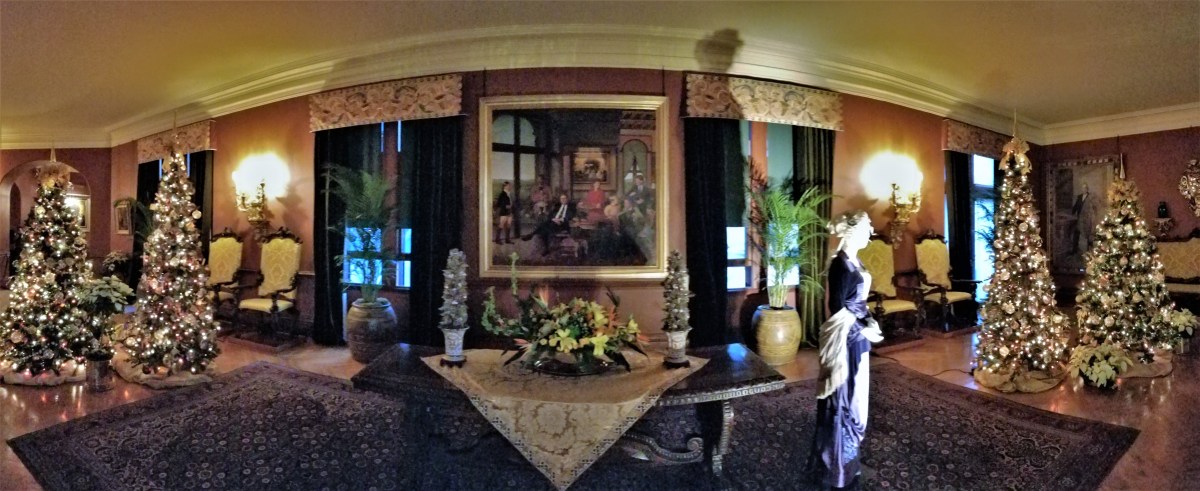
Exiting left, leads into the Salon,

Salon
Once unfinished, this formal sitting area, decorated in the French style was completed by Vanderbilt’s descendants in the 1970s with selections from the original collection.

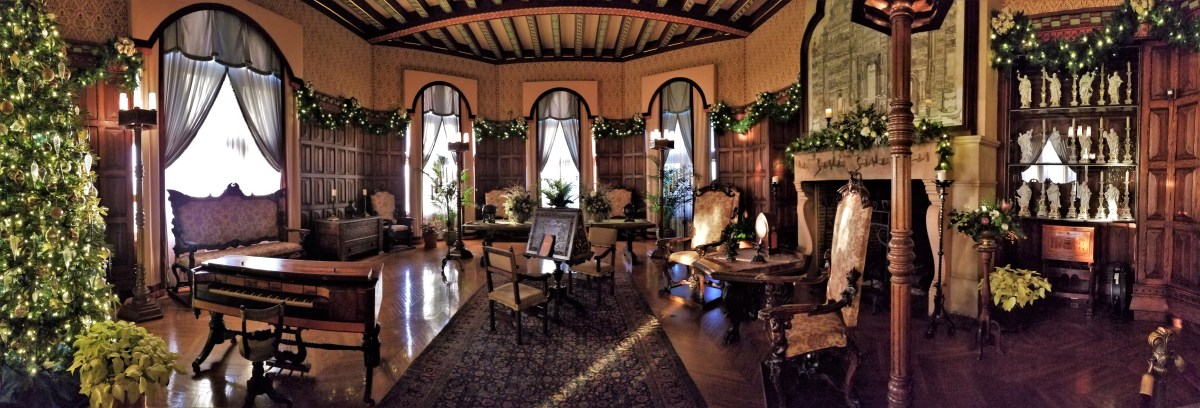
and continues through the Music Room.

music room
Also left unfinished during George Vanderbilt’s time, the current owners completed the room in 1976. The cabinet to the right of the fireplace features a rare collection of 12 Meissen porcelain apostle figures and 12 candlesticks from the 1730s and 1740s made for the Austrian Hapsburgs.

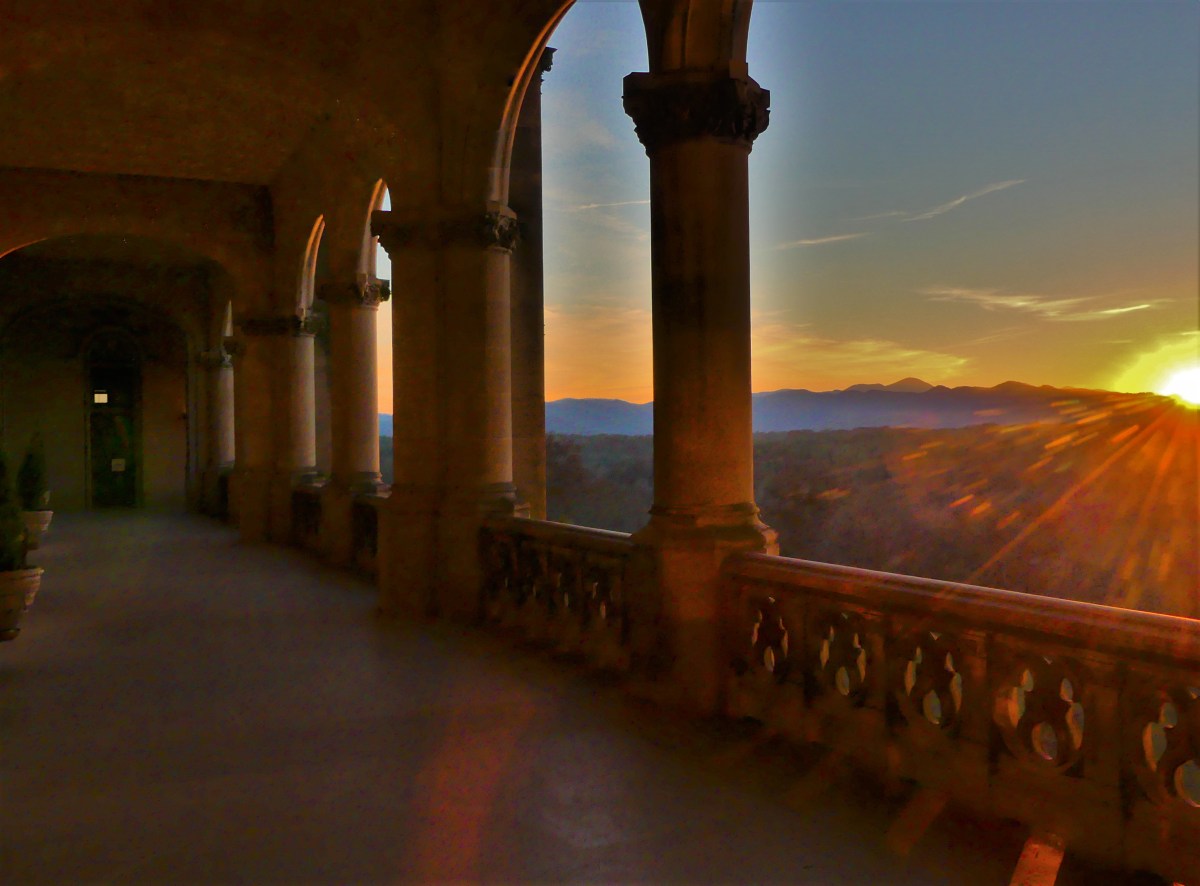
On the other side, stands the Loggia,

Loggia
This covered room offers views of Deer Park and the Blue Ridge Mountains in the distance.

which is an extension of the adjoining Tapestry Gallery.

Tapestry Gallery
This 90-foot-long room was used for entertaining guests with refreshments and music. The three Flemish tapestries on the wall are from the 1530s, and represent Charity, Faith, and Prudence from the set known as The Triumph of the Seven Virtues.

A walk down the runner terminates at the Library.

library
The Library houses half of George’s 22,000-volume collection of subjects ranging from American and English fiction, to world history, religion, architecture, art, and philosophy.

Above the vaulted ceiling is a valued fresco.

library ceiling fresco
The Chariot of Aurora, painted in the 1720s by Giovanni Pellegrini, once adorned the Pisani Palace in Venice.

Returning to the Entrance Hall, a climb of the Grand Staircase, reveals the Second Floor Living Hall.

Second Floor Living Hall
This room, intended as a picture gallery and formal hallway was restored in 2013, with John Singer Sargent’s portraits of architects Hunt and Olmsted hanging in their original locations.

Turning left and down the hall is the approach to George Vanderbilt’s Bedroom.

George Vanderbilt's Bedroom
The furnishings in his bedroom include 17th-century Portuguese turned and carved furniture, and feature a canopied walnut bed. George would dress between four to six times a day, according to activity and time of day.

The neighboring Oak Sitting Room…

Oak Sitting Room
The Vanderbilts shared breakfast here while planning their day with the Head of Housekeeping. As hostess of Biltmore, it was Edith’s responsibility to manage the social calendar and anticipate the needs of their arriving guests.

…was a buffer between George’s and Edith’s Bedroom.

Edith Vanderbilt's Bedroom
Edith, upon her marriage to George at age 25, retired to this oval room with purple and gold silk fabrics and furnishings in the style of Louis XV.

The stairs to the Third Floor, left of Mrs. Vanderbilt’s Bedroom lead to the Guest Quarters, connected by the Third Floor Living Hall.

Third Floor Living Hall
Guests in nearby rooms congregated here to relax, listen to music, and unwind after dinner.

However, access to grandest guest rooms are located behind the Vanderbilt’s bedrooms on the Second Floor. A walk down the hallway, and a gaze out the window offers incredible details of the limestone-clad exterior of Biltmore, with its statuary and gargoyles hanging from the decorative edifice.

twilight and tree

Spiraling down to the Second Floor via the Grand Staircase…

staircase and tree

garland staircase

…is the entrance to the Damask Room,

Damask Room
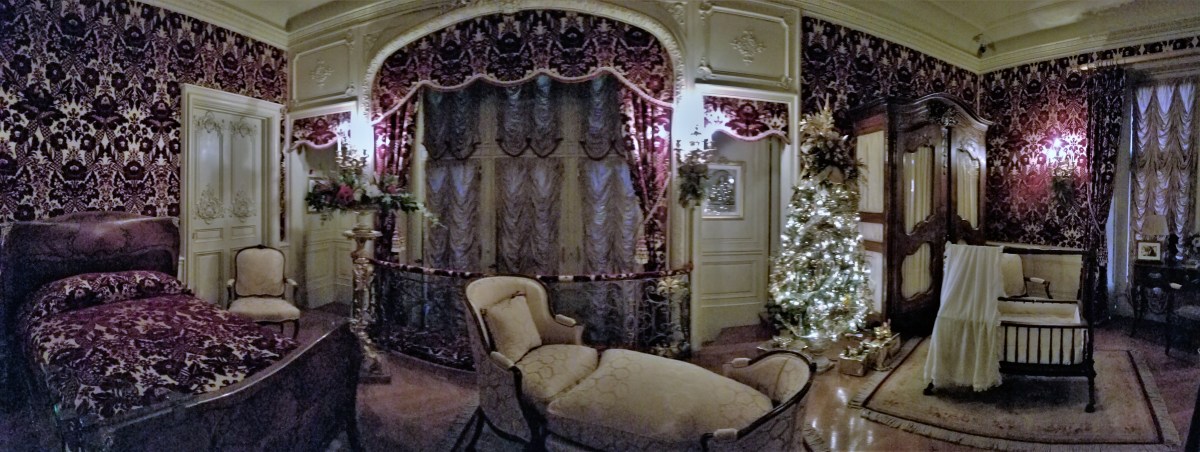
The name of this room was inspired by the silk damask draperies and style of the wallpaper.

followed by the Tyrolean Chimney Room,

Tyrolean Chimney Room
This room is named for its hand-painted 18th-century Swiss porcelain tiled overmantel.

and the Louis XV Room, where Edith gave birth to Cornelia, and spent several weeks of convalescing, as was the custom of the time.

Louis XV Room
This room was named for the French king who inspired a style of ornate furnishings. Following in the footsteps of her mother, Cornelia also birthed her two sons in this room during the 1920s.

After taking breakfast in their rooms, guests of the Vanderbilts could enjoy a variety of indoor activities located on the Basement level, accessible by descending the Grand Staircase, and passing through the Stone Hallway, with foundation footings extending 29 feet into hillside.

Stone Hallway

The hallway passage winds into the Halloween Room,

Halloween Room wall art

so-named after friends and family of Cornelia and her newlywed husband, John Cecil spent several weeks painting whimsical wall scenes for a New Year’s Eve party to welcome the year 1926.

A Recreation Lounge along the hallway…

Recreation Lounge

…transitions to the one of the nation’s first bowling alleys built for a private residence.

bowling alley
Since there was no automatic pinsetters at the time, servants would reset the pins and roll the ball back to the bowler.

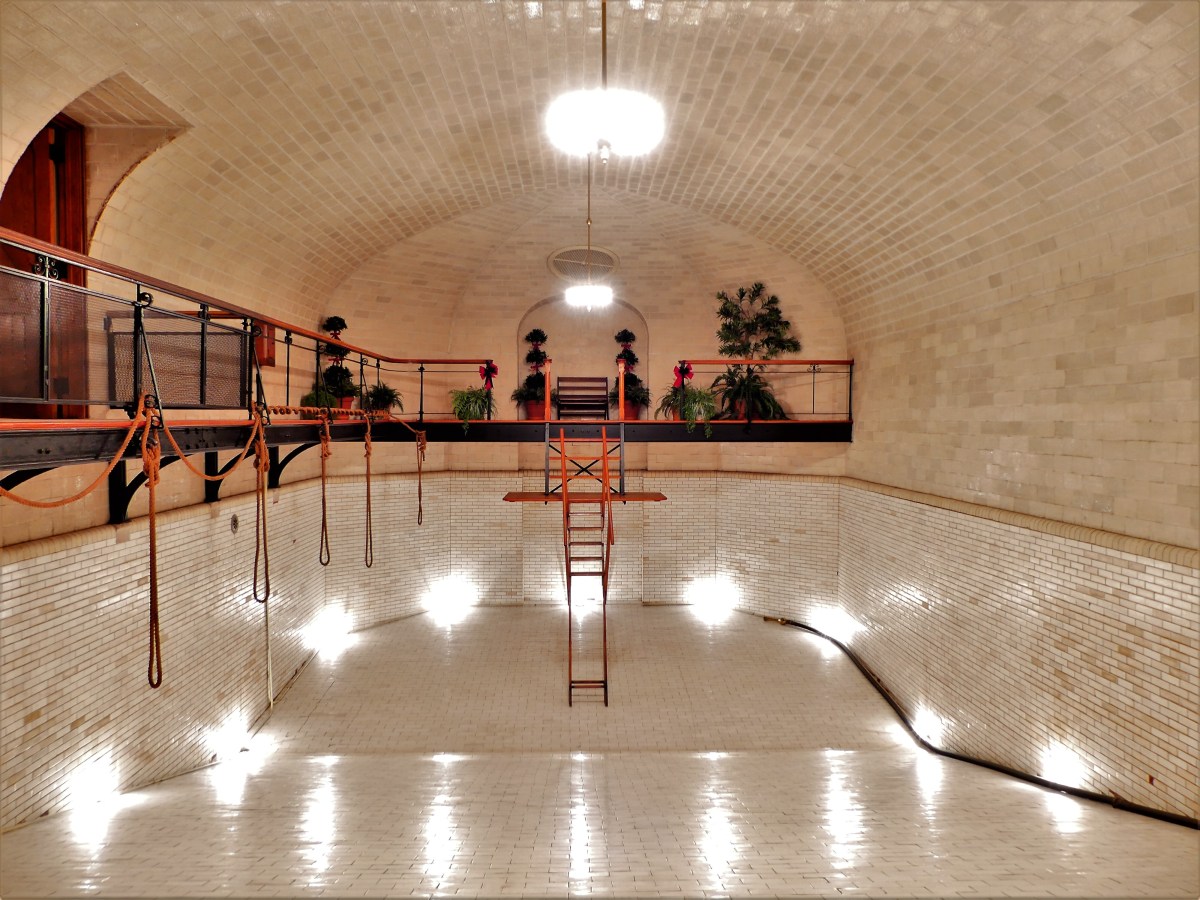
the hallway continues down a long narrow row separating two sides of dressing rooms–one for men, the other for ladies–where guests could change to use the 70,000 gallon indoor Swimming Pool,

swimming pool

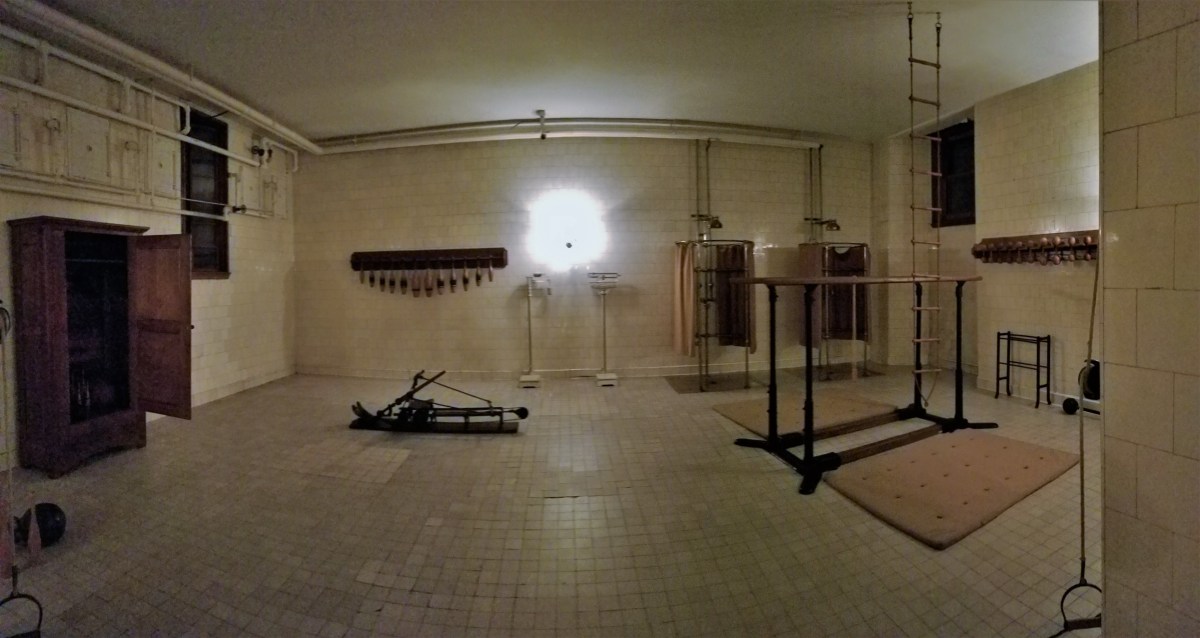
or the fully-equipped Gymnasium, where guests kept fit by rowing, swinging Indian clubs, tossing medicine balls, and practicing on the parallel bars.

gymnasium
Needle Baths along the back wall offered stimulating “massage” showers.

Just beyond the Gymnasium is the Servants Wing, containing the servants’ quarters and work stations.

servant's quarters
Female housemaids, laundresses, cooks and kitchen maids lived in the house, while male employees like groomsmen and stable boys lived above the Stable. Each servant had a comfortably furnished, heated, private room–most uncommon for the period. Most servants were entitled to two hours off daily, but still remained on call. They received one afternoon and one evening off per week, and a half day every other Sunday.
Main Kitchen
This kitchen was used to make elaborate deserts by the pastry chef.
servants' dining room
This dining room could feed up to 30 servants, three meals a day.
laundry
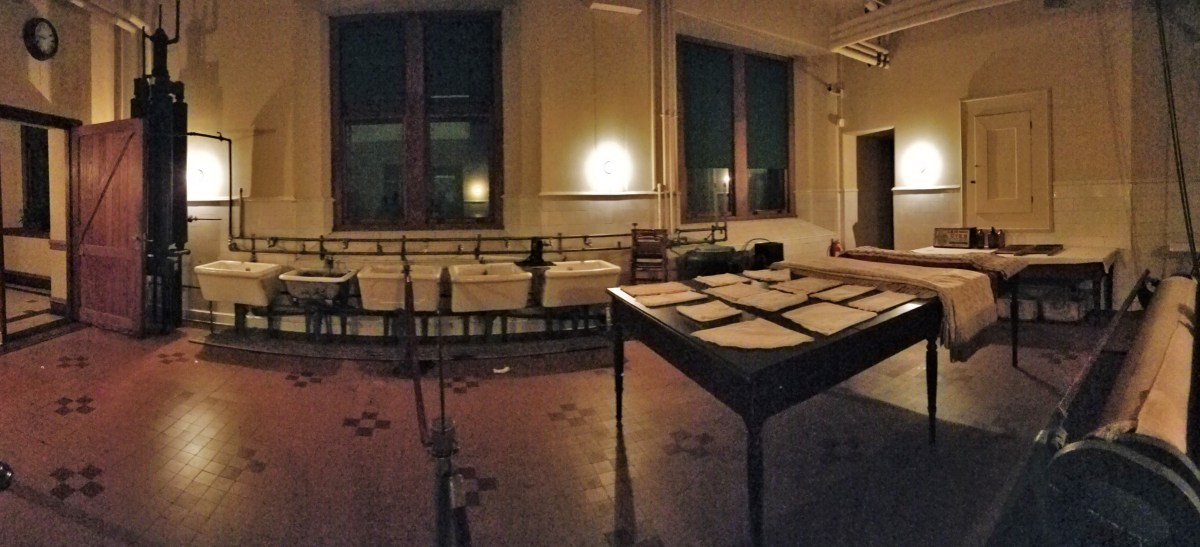
The Main Laundry was as large and well-equipped as any stately hotel of the day.
laundry finishing
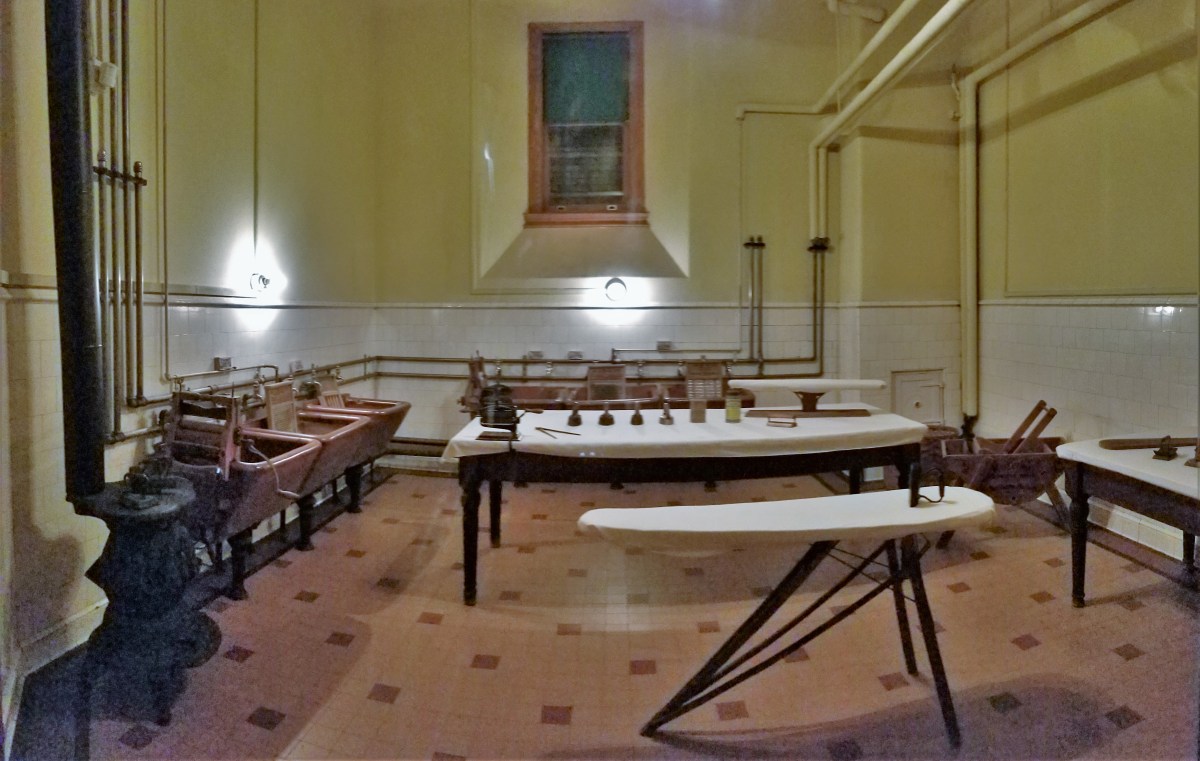
Laundry finishing and detail work was completed here.

Servants’ Stairs climbing to the Main Floor of the Bachelors’ Wing…

servant staircase

provided access to the Billiard Room.

billiard room
Female and male guests gathered here to play dominoes and billiards, while enjoying evening refreshments in this richly paneled room.


This house tour represents one of many we’ve taken since hitting the road. For example, we have walked through plantation houses outside New Orleans, Andrew Jackson’s Hermitage, the Kaufman House at Fallingwater, Elvis Presley’s Graceland, and Hearst’s Castle during another trip.

But nothing, and I mean NOTHING compares in scope or elaborateness, and attention to restorative detail as the Biltmore estate… especially when it’s decorated for Christmas.


A VanderBiltmore Christmas

Completed in 1895 as a collaboration between owner George Vanderbilt, architect Richard Morris Hunt, and landscape architect Frederic Law Olmsted, the Biltmore House opened on Christmas Eve after six years of intensive construction,

construction

and remains the largest private residence in America, with 250 rooms covering 175,000 square feet.

The fourth and fifth generation of Vanderbilt descendants continue to operate the estate as a tourism mecca, welcoming the general public since the Great Depression, and generating needed income to preserve this Versailles-inspired masterpiece.

A variety of tours around the property are available, including: insight into the design, technology, and construction; biographical nuances about the owners and guests; historical notes on the rare artifacts and art collection; and upstairs-downstairs living comparisons.

We started our day by cycling through miles and miles of groomed gardens and grounds,

cornfield

lake gazebo view

to gain a better perspective of the castle on the hill,

rowboat

estate wall

while surviving the first wave of Asheville’s brisk winter air.

By late afternoon, we’d had our fill of chill, and eagerly sought the warmth of the Biltmore House. We opted for a self-guided house tour of selected rooms that allowed us to visit at our leisure. The programmed route was matched to an accompanying booklet that provided brief reflections and information highlights that has assisted me in captioning the many photographs taken as we moved from room to room.

Our first impression of the residence upon entering the Entrance Hall was sheer wonder and amazement. Looking skyward through the spiraling staircase, was the perfect foreshadow of the immensity and grandiosity of what was to come.

chandeliers

Just beyond the center hall stands the Winter Garden,

Winter Garden
The glass roof illuminates the center fountain sculpture Boy Stealing Geese by Karl Bitter.

an acoustic marvel for instrument and voice.

caroling

We followed signs to the Banquet Hall.

Banquet Hall
This impressive room with a seven-story high ceiling and Flemish tapestries from the mid 1500s was the scene of dinner parties and celebrations.
Organ Loft
Organ Loft houses a 1916 Skinner pipe organ powered by an electric blower below the floor.

Moving on, we entered the Breakfast Room.

breakfast room
Both breakfast and lunch were served in this room. Portraits displayed include Cornelius “Commodore” Vanderbilt, George’s grandfather, and founder of the family fortune.

Exiting left, leads into the Salon,

Salon
Once unfinished, this formal sitting area, decorated in the French style was completed by Vanderbilt’s descendants in the 1970s with selections from the original collection.

and continues through the Music Room.

music room
Also left unfinished during George Vanderbilt’s time, the current owners completed the room in 1976. The cabinet to the right of the fireplace features a rare collection of 12 Meissen porcelain apostle figures and 12 candlesticks from the 1730s and 1740s made for the Austrian Hapsburgs.

On the other side, stands the Loggia,

Loggia
This covered room offers views of Deer Park and the Blue Ridge Mountains in the distance.

which is an extension of the adjoining Tapestry Gallery.

Tapestry Gallery
This 90-foot-long room was used for entertaining guests with refreshments and music. The three Flemish tapestries on the wall are from the 1530s, and represent Charity, Faith, and Prudence from the set known as The Triumph of the Seven Virtues.

A walk down the runner terminates at the Library.

library
The Library houses half of George’s 22,000-volume collection of subjects ranging from American and English fiction, to world history, religion, architecture, art, and philosophy.

Above the vaulted ceiling is a valued fresco.

library ceiling fresco
The Chariot of Aurora, painted in the 1720s by Giovanni Pellegrini, once adorned the Pisani Palace in Venice.

Returning to the Entrance Hall, a climb of the Grand Staircase, reveals the Second Floor Living Hall.

Second Floor Living Hall
This room, intended as a picture gallery and formal hallway was restored in 2013, with John Singer Sargent’s portraits of architects Hunt and Olmsted hanging in their original locations.

Turning left and down the hall is the approach to George Vanderbilt’s Bedroom.

George Vanderbilt's Bedroom
The furnishings in his bedroom include 17th-century Portuguese turned and carved furniture, and feature a canopied walnut bed. George would dress between four to six times a day, according to activity and time of day.

The neighboring Oak Sitting Room…

Oak Sitting Room
The Vanderbilts shared breakfast here while planning their day with the Head of Housekeeping. As hostess of Biltmore, it was Edith’s responsibility to manage the social calendar and anticipate the needs of their arriving guests.

…was a buffer between George’s and Edith’s Bedroom.

Edith Vanderbilt's Bedroom
Edith, upon her marriage to George at age 25, retired to this oval room with purple and gold silk fabrics and furnishings in the style of Louis XV.

The stairs to the Third Floor, left of Mrs. Vanderbilt’s Bedroom lead to the Guest Quarters, connected by the Third Floor Living Hall.

Third Floor Living Hall
Guests in nearby rooms congregated here to relax, listen to music, and unwind after dinner.

However, access to grandest guest rooms are located behind the Vanderbilt’s bedrooms on the Second Floor. A walk down the hallway, and a gaze out the window offers incredible details of the limestone-clad exterior of Biltmore, with its statuary and gargoyles hanging from the decorative edifice.

twilight and tree

Spiraling down to the Second Floor via the Grand Staircase…

staircase and tree

garland staircase

…is the entrance to the Damask Room,

Damask Room
The name of this room was inspired by the silk damask draperies and style of the wallpaper.

followed by the Tyrolean Chimney Room,

Tyrolean Chimney Room
This room is named for its hand-painted 18th-century Swiss porcelain tiled overmantel.

and the Louis XV Room, where Edith gave birth to Cornelia, and spent several weeks of convalescing, as was the custom of the time.

Louis XV Room
This room was named for the French king who inspired a style of ornate furnishings. Following in the footsteps of her mother, Cornelia also birthed her two sons in this room during the 1920s.

After taking breakfast in their rooms, guests of the Vanderbilts could enjoy a variety of indoor activities located on the Basement level, accessible by descending the Grand Staircase, and passing through the Stone Hallway, with foundation footings extending 29 feet into hillside.

Stone Hallway

The hallway passage winds into the Halloween Room,

Halloween Room wall art

so-named after friends and family of Cornelia and her newlywed husband, John Cecil spent several weeks painting whimsical wall scenes for a New Year’s Eve party to welcome the year 1926.

A Recreation Lounge along the hallway…

Recreation Lounge

…transitions to the one of the nation’s first bowling alleys built for a private residence.

bowling alley
Since there was no automatic pinsetters at the time, servants would reset the pins and roll the ball back to the bowler.

the hallway continues down a long narrow row separating two sides of dressing rooms–one for men, the other for ladies–where guests could change to use the 70,000 gallon indoor Swimming Pool,

swimming pool

or the fully-equipped Gymnasium, where guests kept fit by rowing, swinging Indian clubs, tossing medicine balls, and practicing on the parallel bars.

gymnasium
Needle Baths along the back wall offered stimulating “massage” showers.

Just beyond the Gymnasium is the Servants Wing, containing the servants’ quarters and work stations.

servant's quarters
Female housemaids, laundresses, cooks and kitchen maids lived in the house, while male employees like groomsmen and stable boys lived above the Stable. Each servant had a comfortably furnished, heated, private room–most uncommon for the period. Most servants were entitled to two hours off daily, but still remained on call. They received one afternoon and one evening off per week, and a half day every other Sunday.
Main Kitchen
This kitchen was used to make elaborate deserts by the pastry chef.
servants' dining room
This dining room could feed up to 30 servants, three meals a day.
laundry
The Main Laundry was as large and well-equipped as any stately hotel of the day.
laundry finishing
Laundry finishing and detail work was completed here.

Servants’ Stairs climbing to the Main Floor of the Bachelors’ Wing…

servant staircase

provided access to the Billiard Room.

billiard room
Female and male guests gathered here to play dominoes and billiards, while enjoying evening refreshments in this richly paneled room.


This house tour represents one of many we’ve taken since hitting the road. For example, we have walked through plantation houses outside New Orleans, Andrew Jackson’s Hermitage, the Kaufman House at Fallingwater, Elvis Presley’s Graceland, and Hearst’s Castle during another trip.

But nothing, and I mean NOTHING compares in scope or elaborateness, and attention to restorative detail as the Biltmore estate… especially when it’s decorated for Christmas.


Tempus Fugit

When I reflect over the past eight months on the road, it’s a focused blur. Like the miles that melt behind us as we’re cruising on the Interstates, our side-view mirrors only serve to remind us what we once observed before it’s gone in an instant.

“Did you see that?!” has been a common cue while driving, that could come at any time. It could be a natural phenomena like a double rainbow, or a dramatic change to an underwhelming landscape, or a man with no teeth whose nose touches his chin passing us in his hot-rod Mustang convertible.

Whatever the case may be, we usually have just a moment to react and make a meaningful connection before we’re on to the next moment in time. Our experience may be filed into memory, but memories can be sketchy, ambiguous and subjective.

“What’s your favorite place so far?” is a question that unquestionably comes up when meeting friends or strangers who hear about the progress we’ve made on our year-long odyssey. It’s also the hardest question to answer, considering the nearly 30,000 miles we’ve covered en route to 90 different destinations.

Leah and I often joke and reflect about our day at its conclusion, just to gauge if our recollections match.

“Was it a top 10 day for you today?” I’m likely to ask.

Certainly more than 30 times to date, she’ll respond with, “I don’t know if it was ‘top 10’, but definitely among the top 20.”

Looking back–with help from impressions of places from past posts–I’m now ready to answer the question, and reveal my top five favorites thus far, in chronological order.

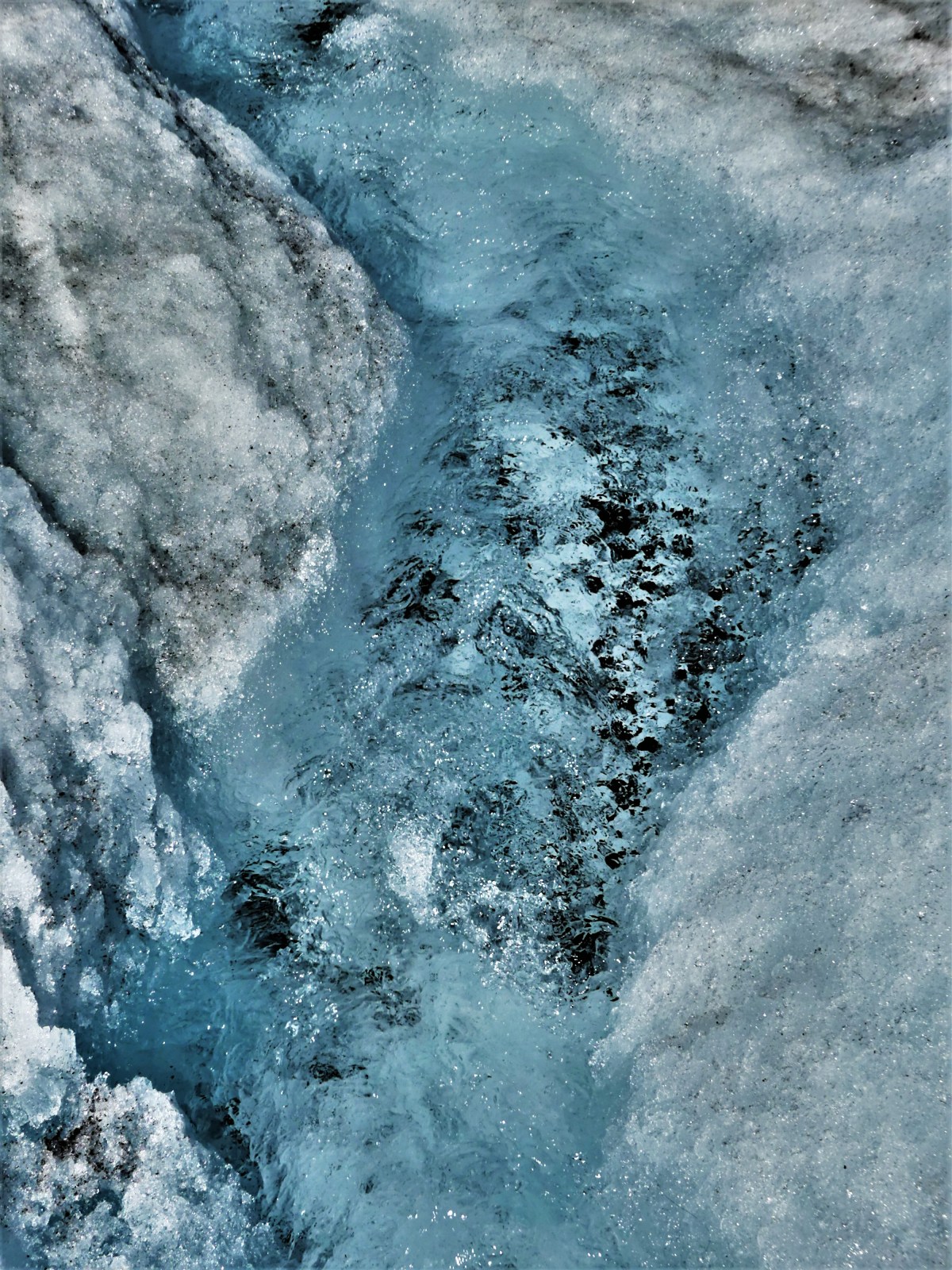
1) August 2, 2017: Jasper National Park, Alberta Canada–Athabasca Glacier

Herbert detail (2)

Athabasca Glacier currently recedes at 16 ft. per year, and has lost over half its volume over the past 125 years.

Glacier water

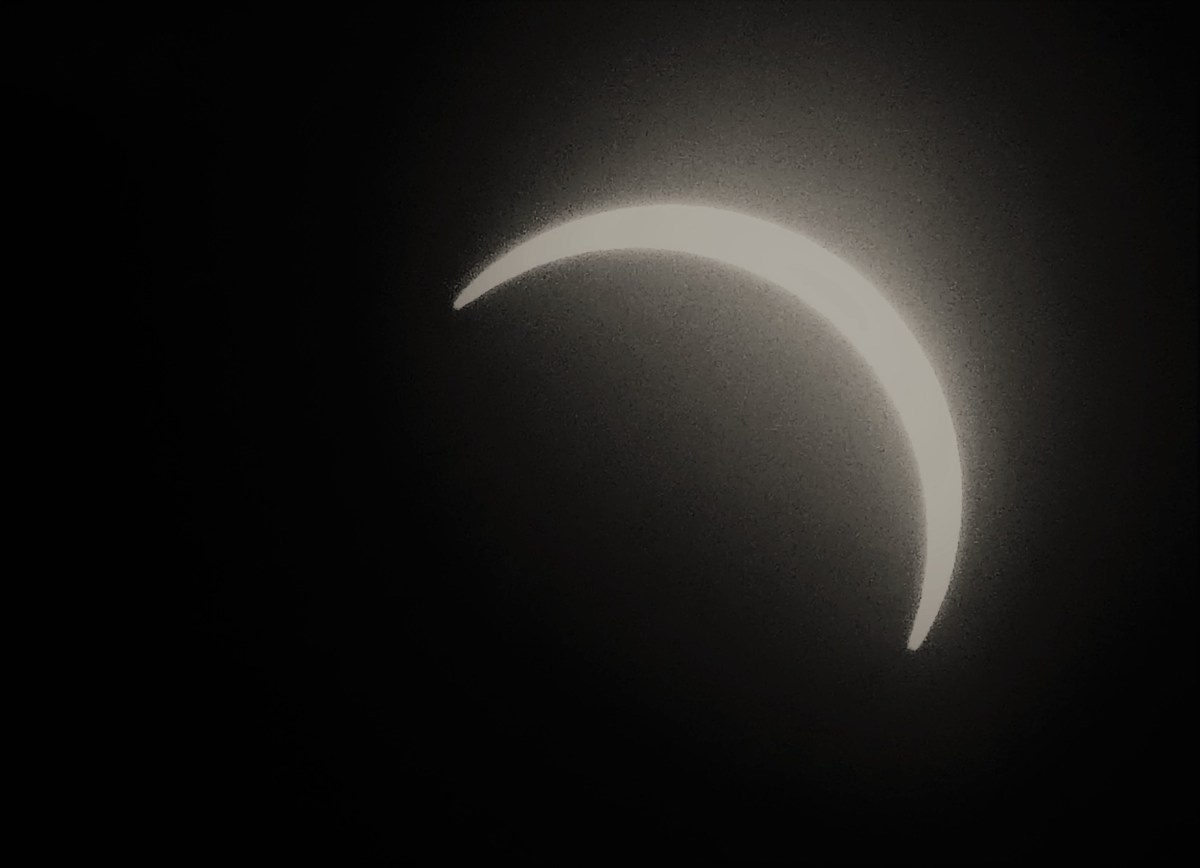
2) August 21, 2017: Corvallis, Oregon–Total Solar Eclipse

totality

Totality of the eclipse lasted one minute, 40 seconds.

partial eclipse (3)

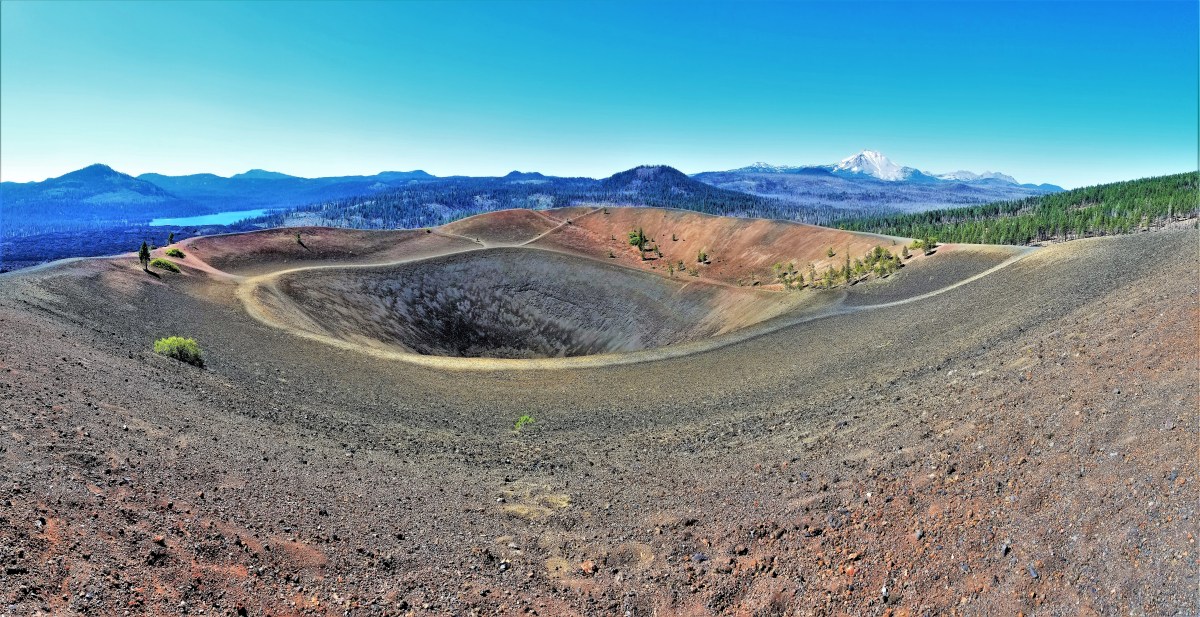
4) August 29, 2017: Lassen Volcanic National Park, California

cinder cone1

The 750 foot ascent up the 35% grade of loose gravel to the rim of the Cinder Cone took 35 minutes.

cone crater panorama (2)

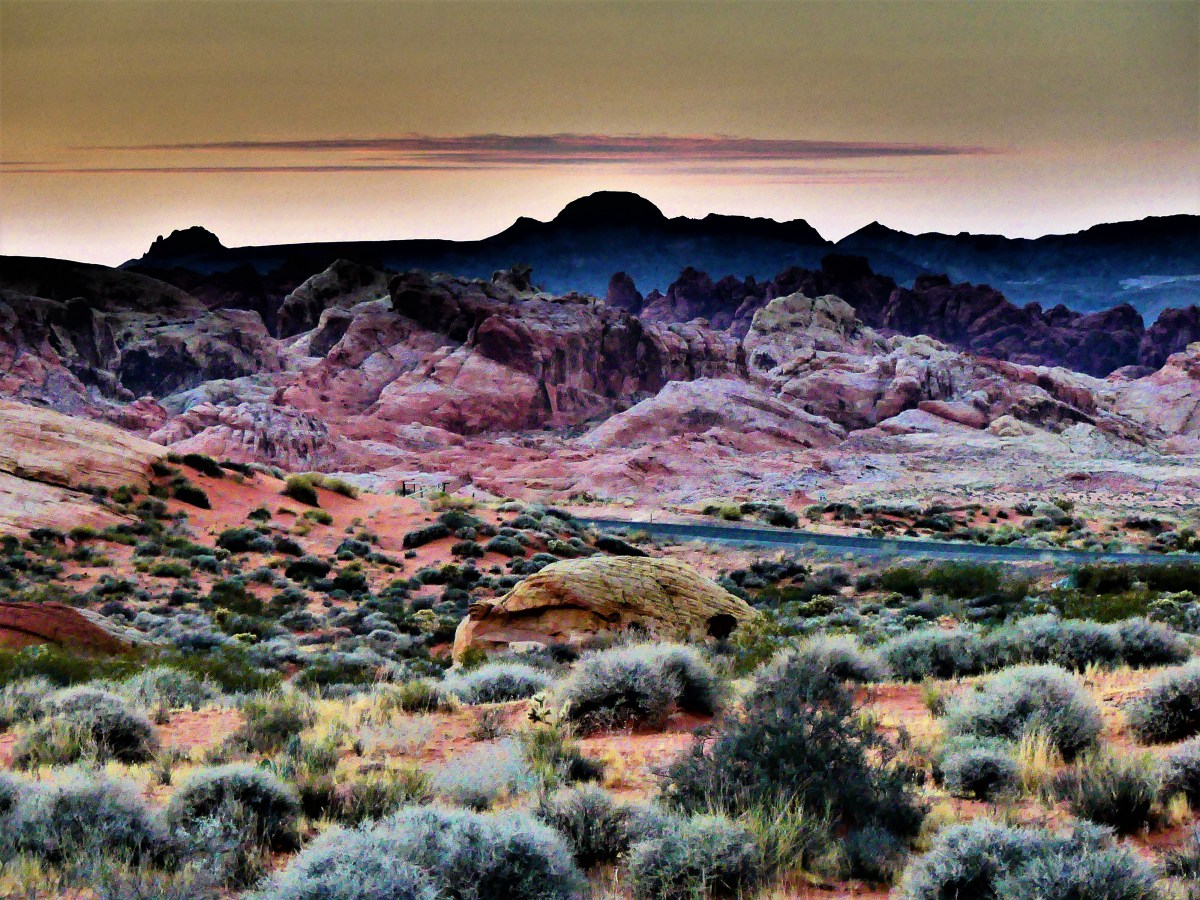
4) October 4, 2017: Valley of Fire State Park, Nevada

Sunset over Rainbow trail

7 minutes lapsed between the sun setting behind the Muddy Mountains to the moon rising over the Valley of Fire.

sheep and moon (4)

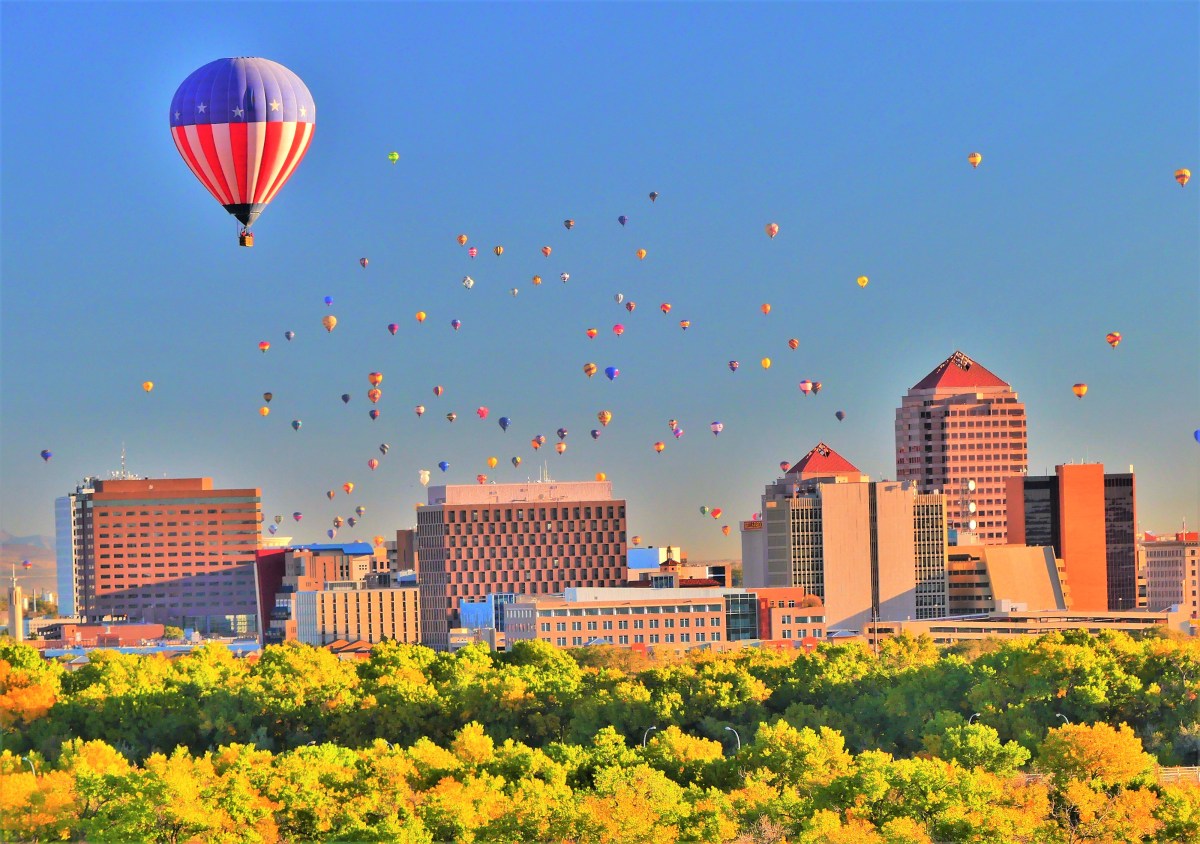
5) October 14, 2017: Albuquerque, New Mexico–Balloon Fiesta

lighting it up

The hot air balloon was aloft over Albuquerque after 13 minutes of inflation.

Balloons over Albuquerque (2)


Although each adventure is fundamentally different from the others, collectively, they represent before and after transitions.

The ephemeral existence of each event is temporary in its own special way, with its own time-stamp carved in soap. Fortunately, the moment can be captured and preserved in words and pictures, lest there be any doubt that something significant happened in our lifetime.


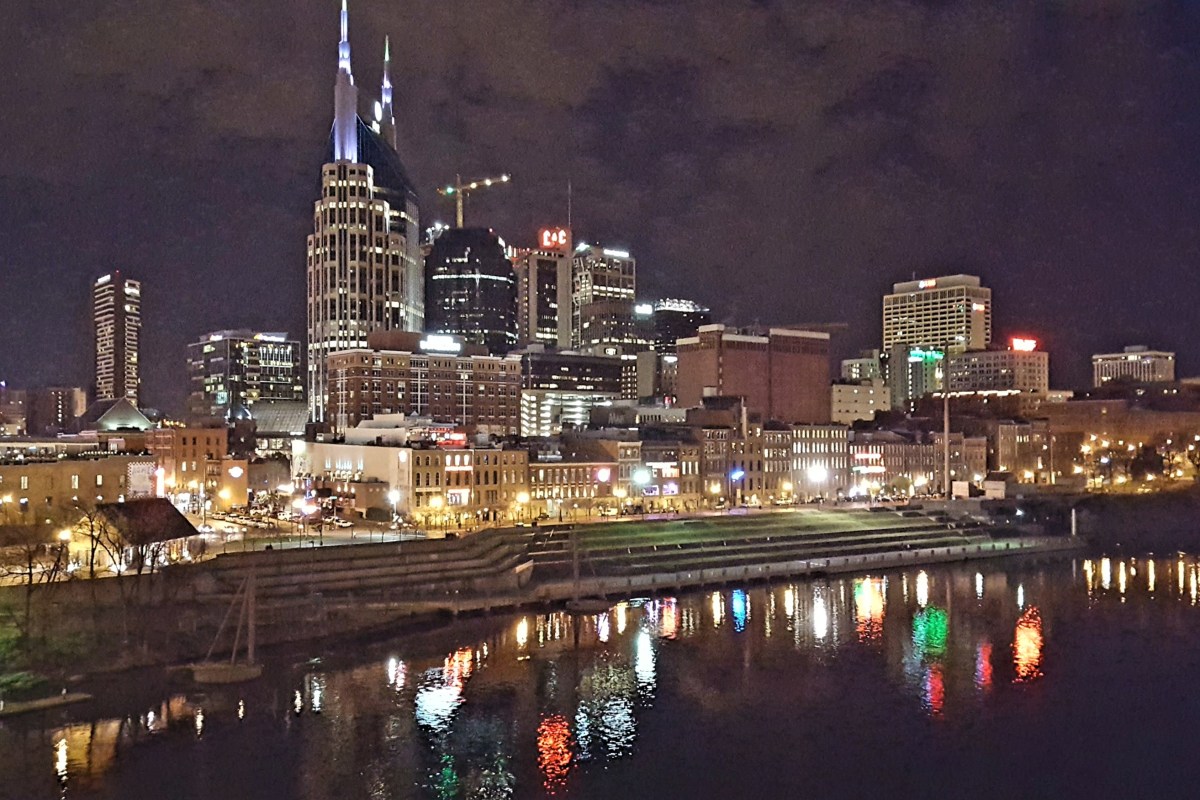
Music City, USA

We refused to leave Nashville without attending a concert.

Of course, it’s impossible to ignore the live music screaming from scores of Broadway juke joints and honky tonks, combining to create a three chord din, and it’s all for free.

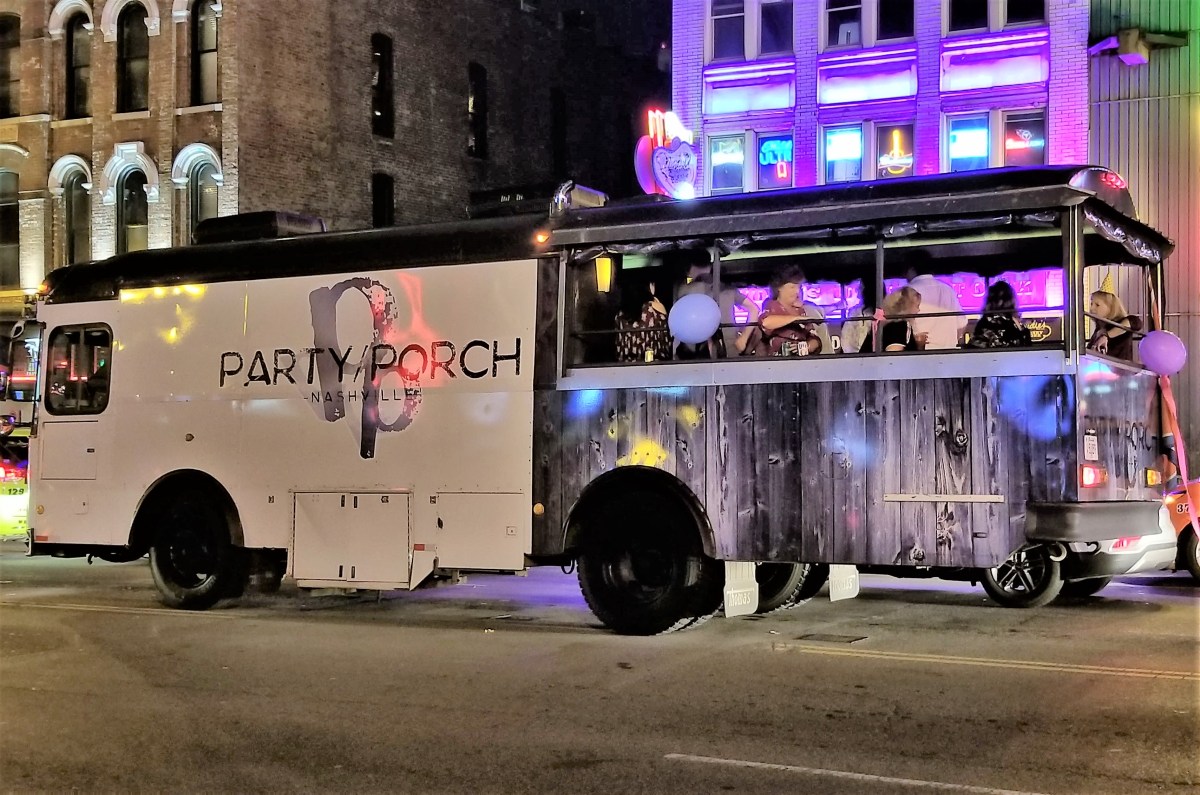
But getting past the burly bouncers requires mastery of a special skill set, namely: zigzagging through hordes of bridal parties and lady’s-night-outers;

party porch

sidestepping the street people and the homeless; and dodging the drunks and the soon-to-become-drunks who walk a crooked line.

Broadway

Instead, Leah and I were in the mood for more of a formal venue. However, Grand Ole Opry’s Ryman Auditorium–featuring The Charlie Daniel Band–had sold out weeks ago, including standing room.

Undeterred, we scoured the internet and stumbled across an offering that showcased the quieter side of Nashville.

marquis

I was definitely up for the concert, but Leah was hesitant.

“I think we should do it,” I stated. “Besides, there’s nothing else out there that compares to this.”

“I don’t know,” said Leah, unconvinced. “For starters, I don’t know anything about John Hiatt. And second of all, I don’t think I can spend two hours looking at Lyle Lovett. I mean, how in the world he was married to Julia Roberts has to be one of life’s great mysteries!”

“I don’t think she fell in love with his looks, and I’m certain he feels the same way after two years together with her… Look, why don’t we find out if tickets are even available?” I argued.

“Okay,” Leah relented.

Unfortunately, online shopping established that only single seats scattered through the orchestra and balconies still remained, and that was not an option. However, a direct call to the box office revealed that a cache of tiered seats directly behind the stage could be ours if we were willing to forgo direct eye contact.

“What about the sound quality?” Leah asked the agent.

“It’s a symphony hall! You’ll hear it the same as everybody else, and it’s amazing!” the agent proclaimed.

“That’s perfect!” I declared, openly displaying my enthusiasm. “We get to hear two time-honored performers with deep songbooks, and you don’t have to look at either one of them.”

“Okay,” Leah surrendered.

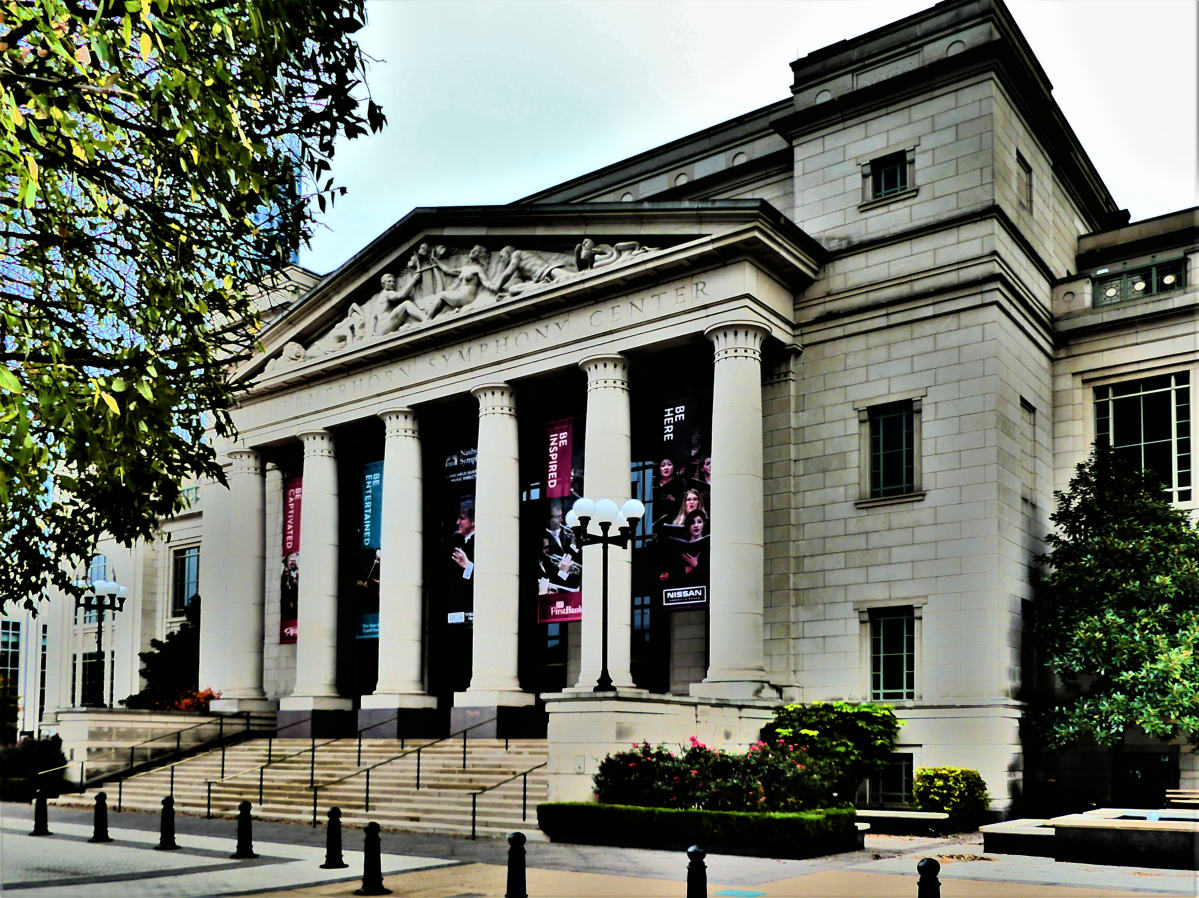
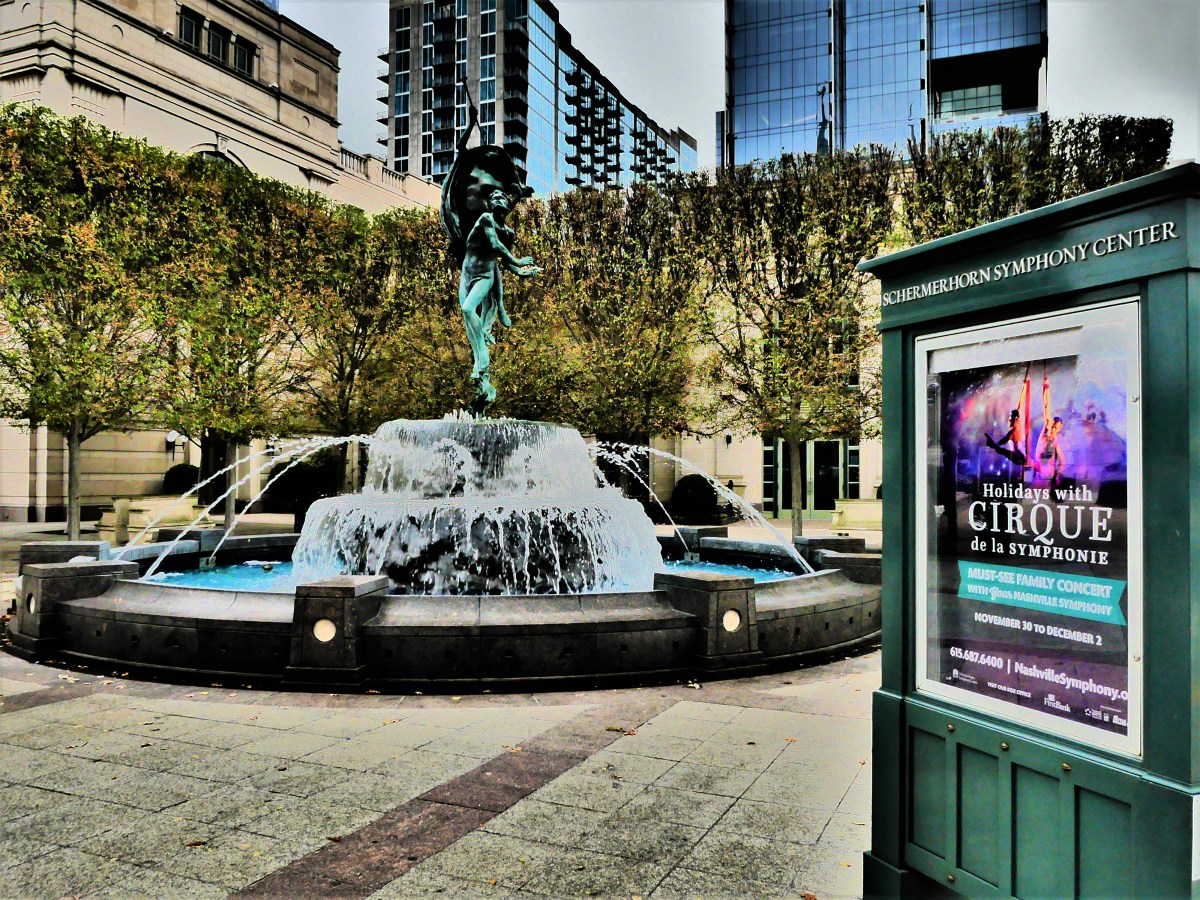
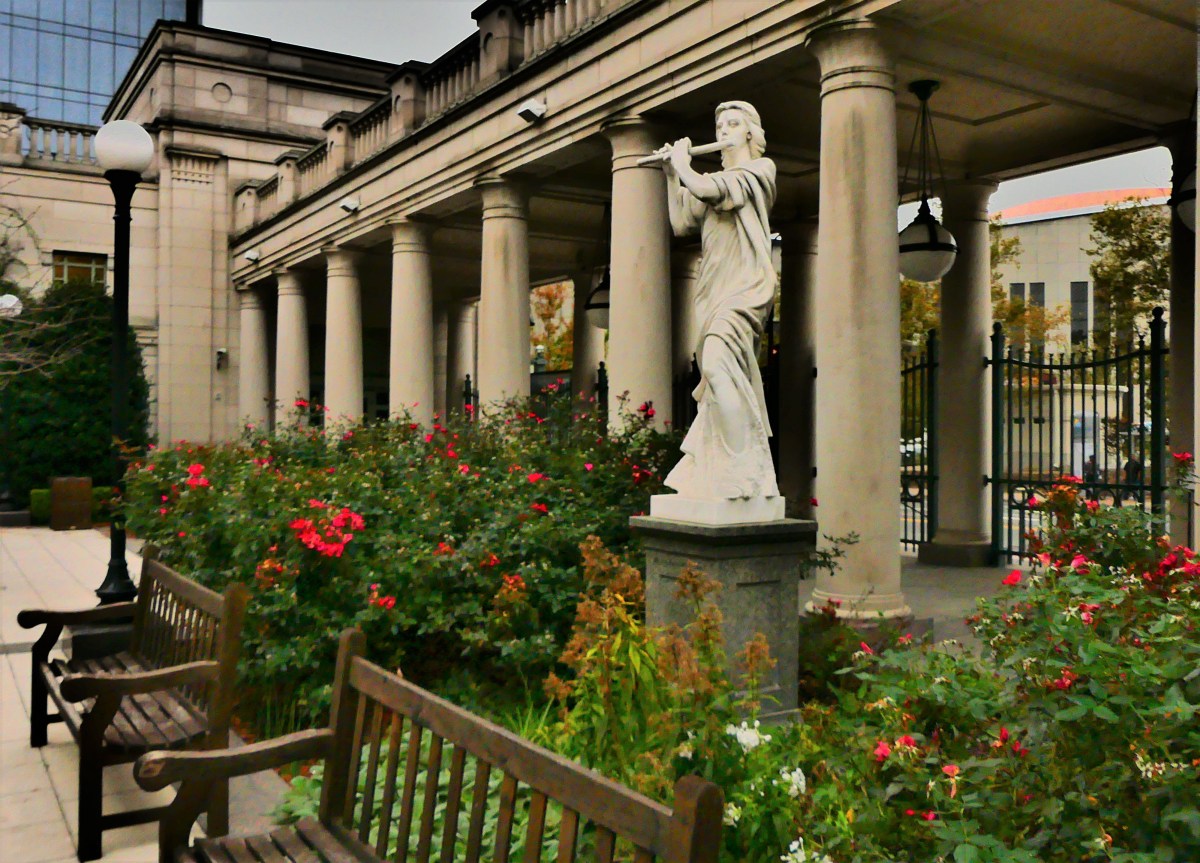
Schermerhorn Symphony Center was designed with neo-classical underpinnings,

Schermerhorn Hall

which seems characteristically out of place,

statue and hall

fountain

symphony hall garden

given Nashville’s lowbrow sensibility, and glass tower affinity.

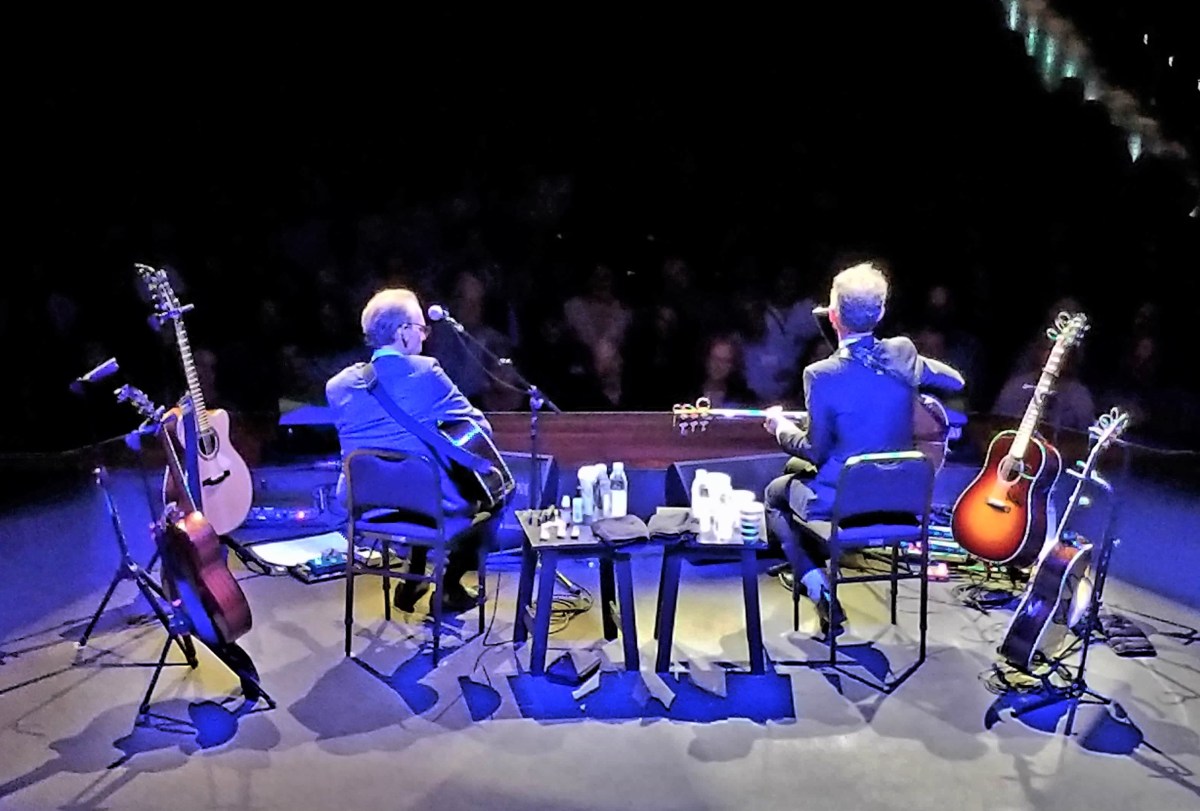
We stepped into a stripped-down, blue-lit stage–just guitars and voices, and an occasional harmonica–as Lovett and Hiatt traded songs and repartee,

performance (2)

providing 2½ hours of mutual admiration,

it's him (2)

and audience participation.

taking a bow

An evening of watching the backs of Lovett and Hiatt, while listening to their tone poems and anthems about America sounded wonderful.

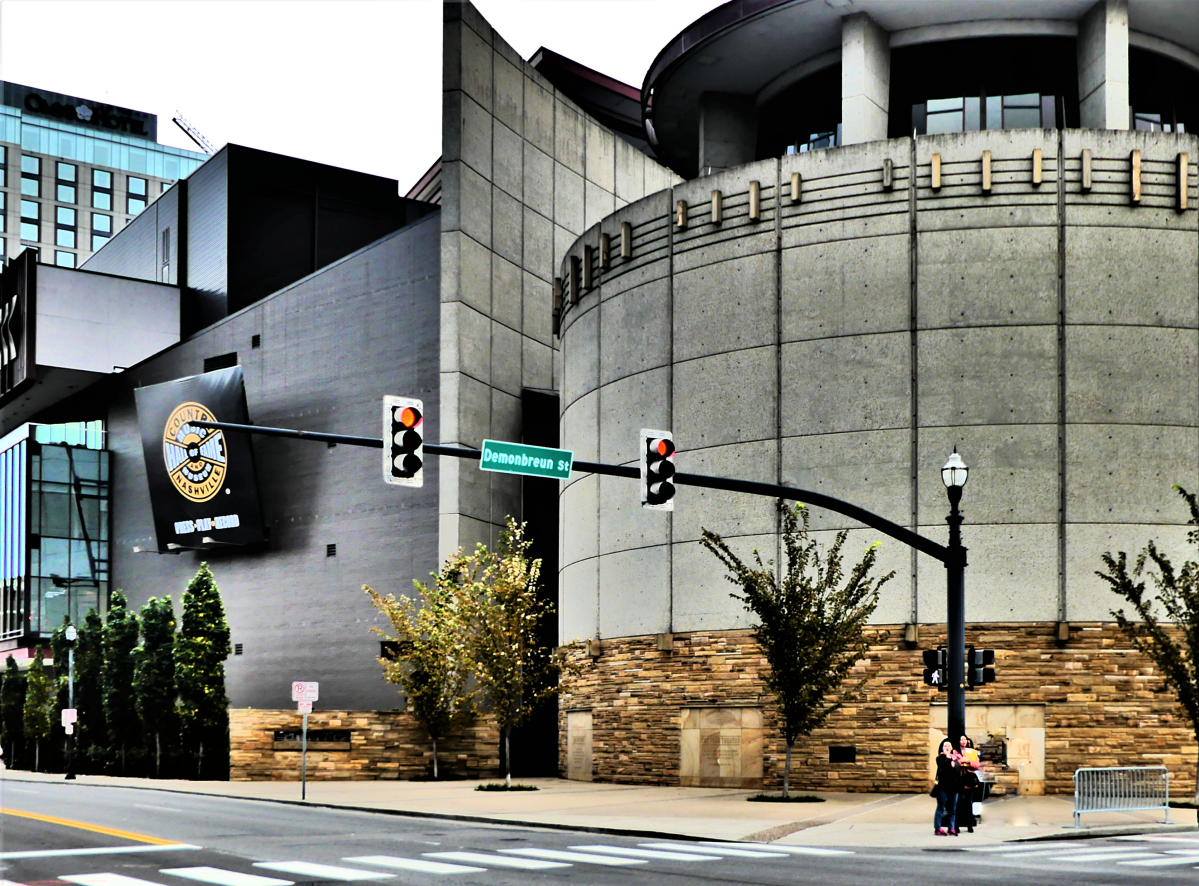
The following day, the hit parade continued with a pilgrimage to Country Music nirvana,

museum sign

Hall of Fame (2)

where a million fans come every year to pay tribute to Country Western legends who’ve turned an American music genre into an international juggernaut.

quotes3

Currently, museum exhibits follow the careers of music royalty, honoring the Queen of Country,

Loretta Lynn

and the King of Folk–

Dylan and Cash

–with multi-media memories, and enough testimonial trivia to solidify their golden reputations.

gold record wall

This is our second time through Nashville during our year-long odyssey; we’ve passed this way over seven months ago (Rig or Mortis) traveling southbound, and it’s become our way station once again as we move to warmer weather for the winter season.

We’ll surely pass through Nashville after we’ve emerged from our Florida hibernation, but next time around, we’ll have reserved tickets to the Grand Ole Opry in our hands before we get there.

Rebel Yell

The Civil War has gotten a lot of attention lately.

Politicians, generals, and TV apostates have sought to revise history.

Glory seekers and glory hounds have wrapped themselves in the Confederate flag as a cause célèbre.

White supremacists have co-opted the Black Lives Matters movement to launch a new low in elevating hatred and racism.

Relitigating the reasons behind the Civil War, and embracing the symbols that have inevitably blurred the battle lines continue to divide a nation 150 years later, where civility and social progress seem all but forgotten.

And what of the 620,000 who gave their lives to protect their way of life–to defend the practice of slavery or the belief that freedom belongs to everyone?

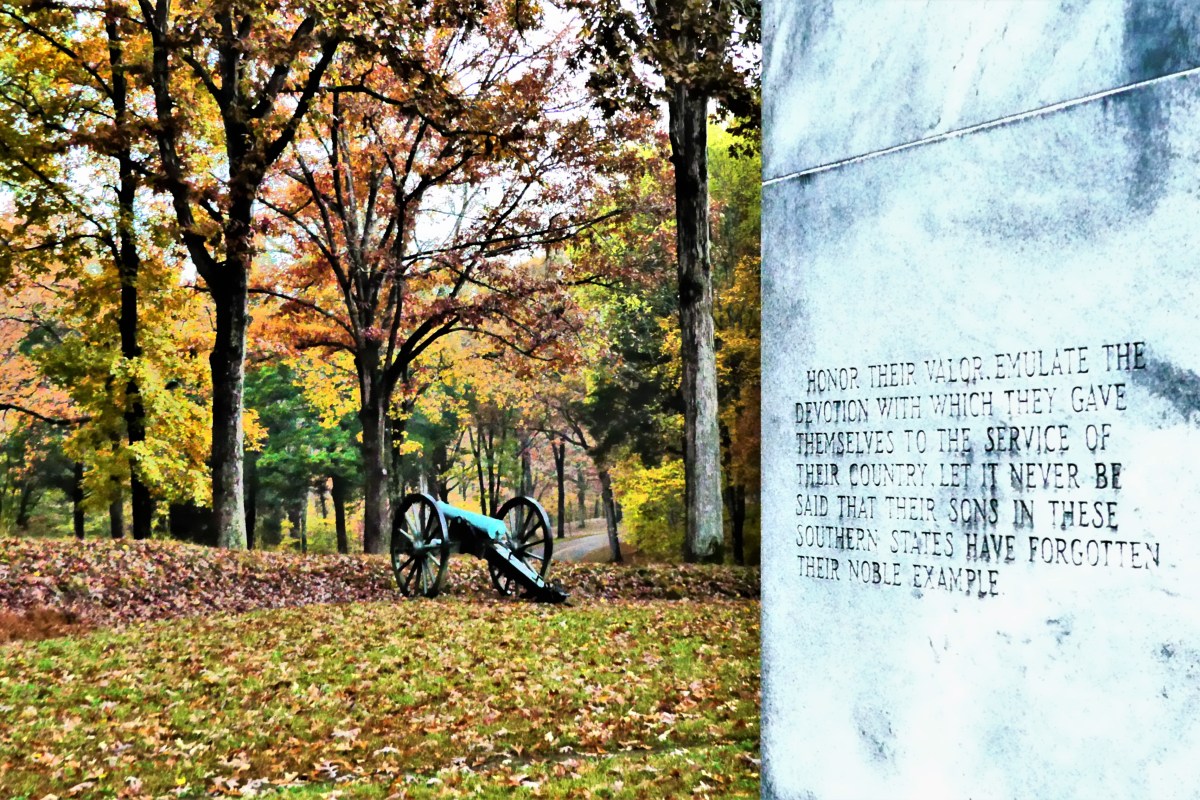
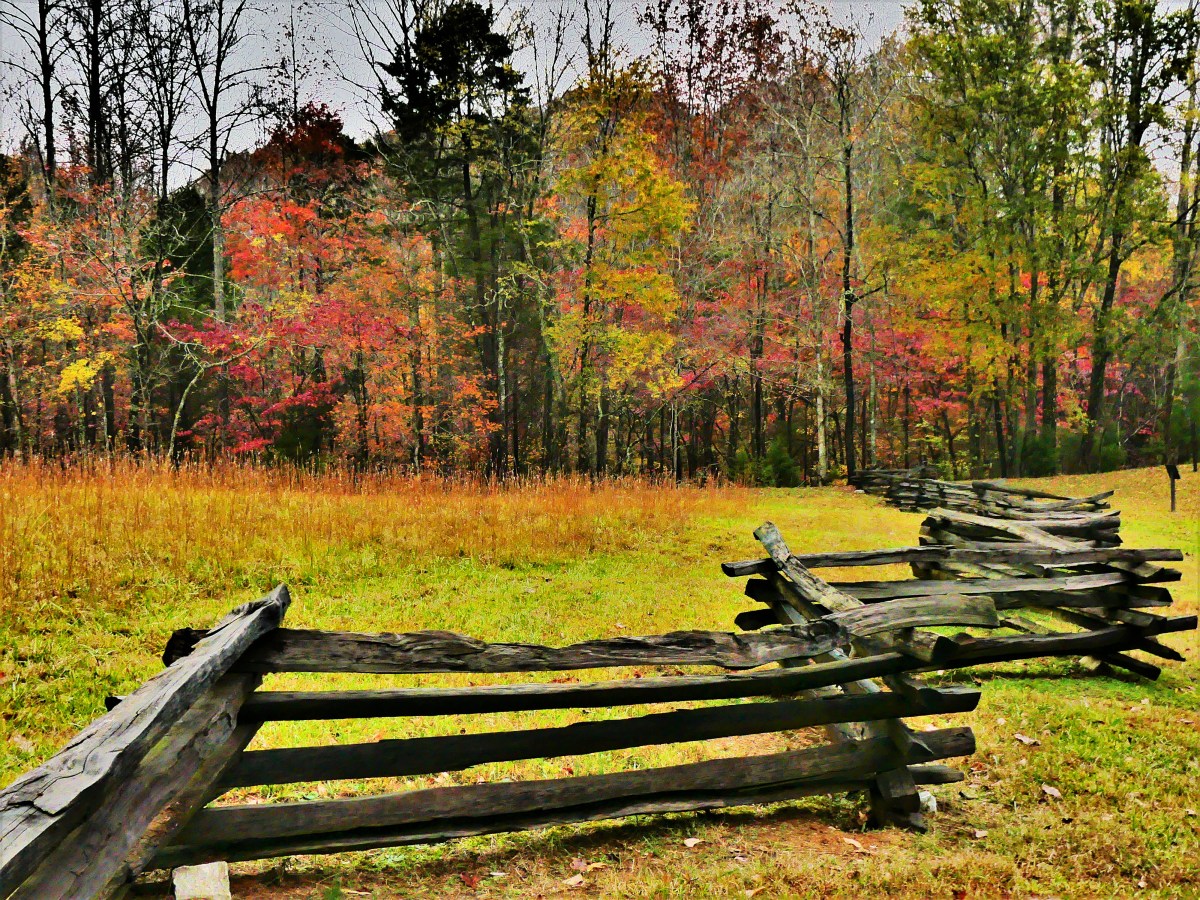
Many remain lost yet honored beneath the trenches and earthwork fortifications throughout Dover, Tennessee.

fall leaves

battlefield

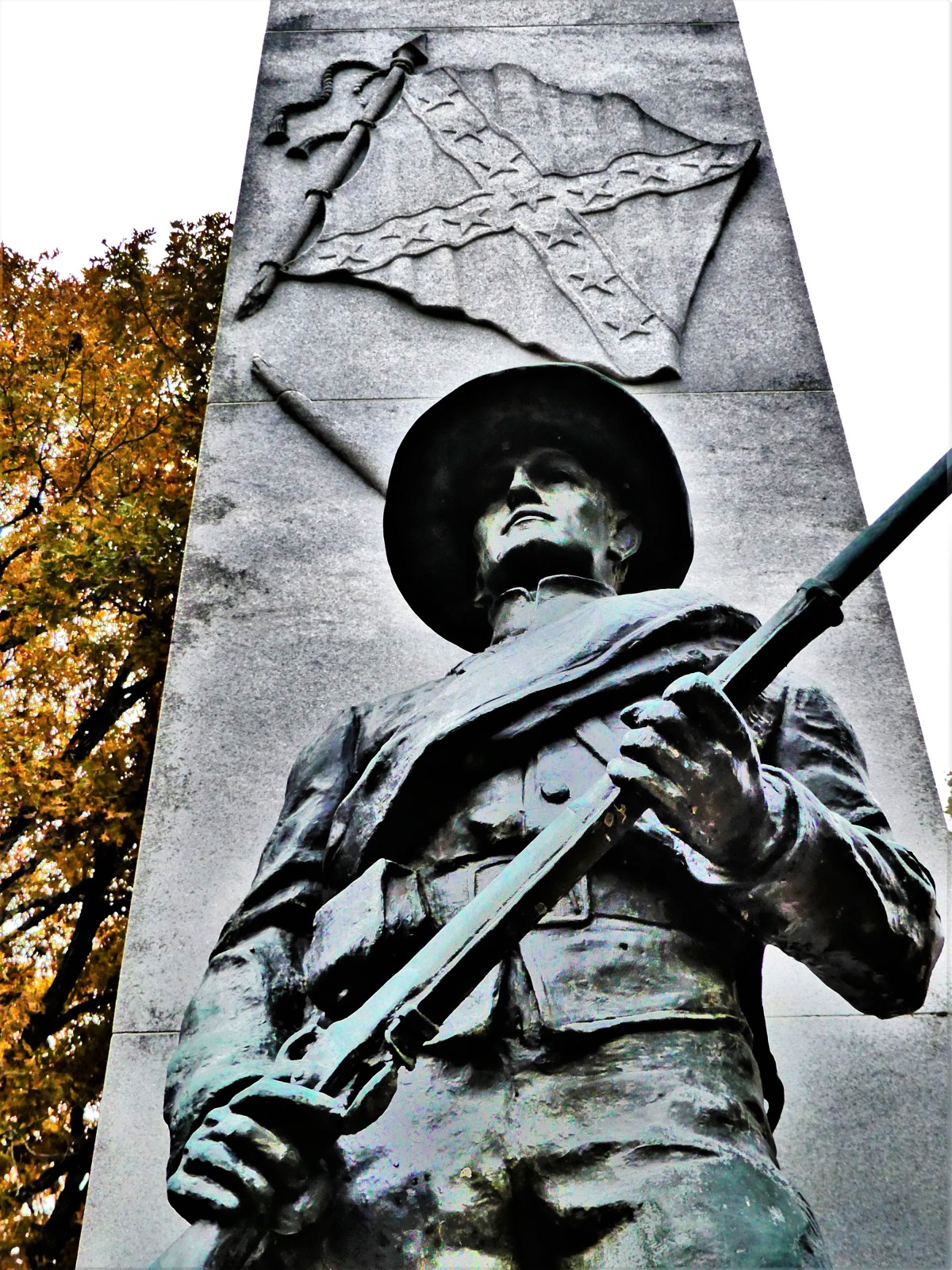
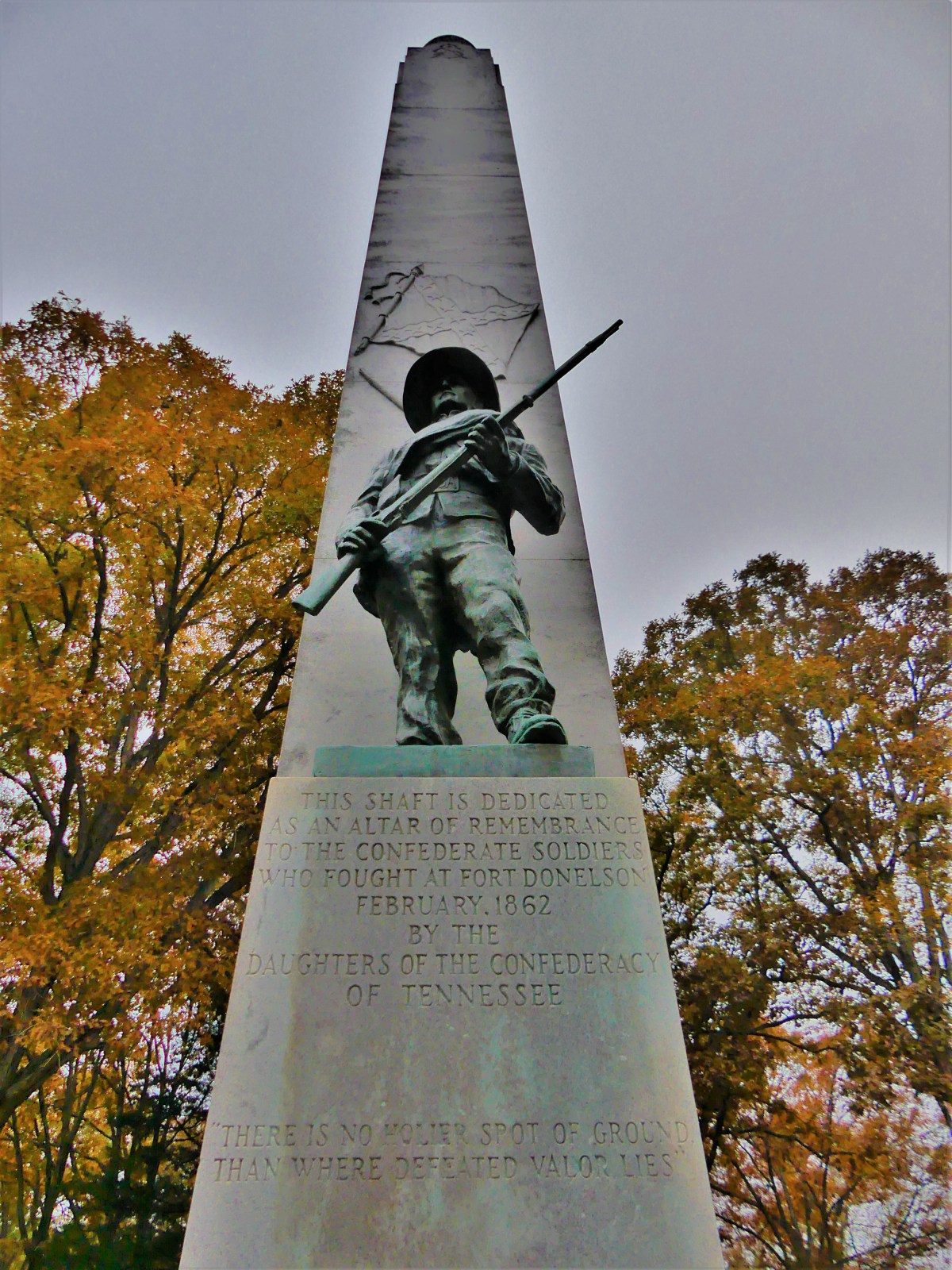
Their sacrifice is memorialized at the Fort Donelson National Battlefield: in its monument to fallen soldiers;

Confederate

Conferate memorial

in its ramparts overlooking the Cumberland River;

cannon defense

rampart cannon

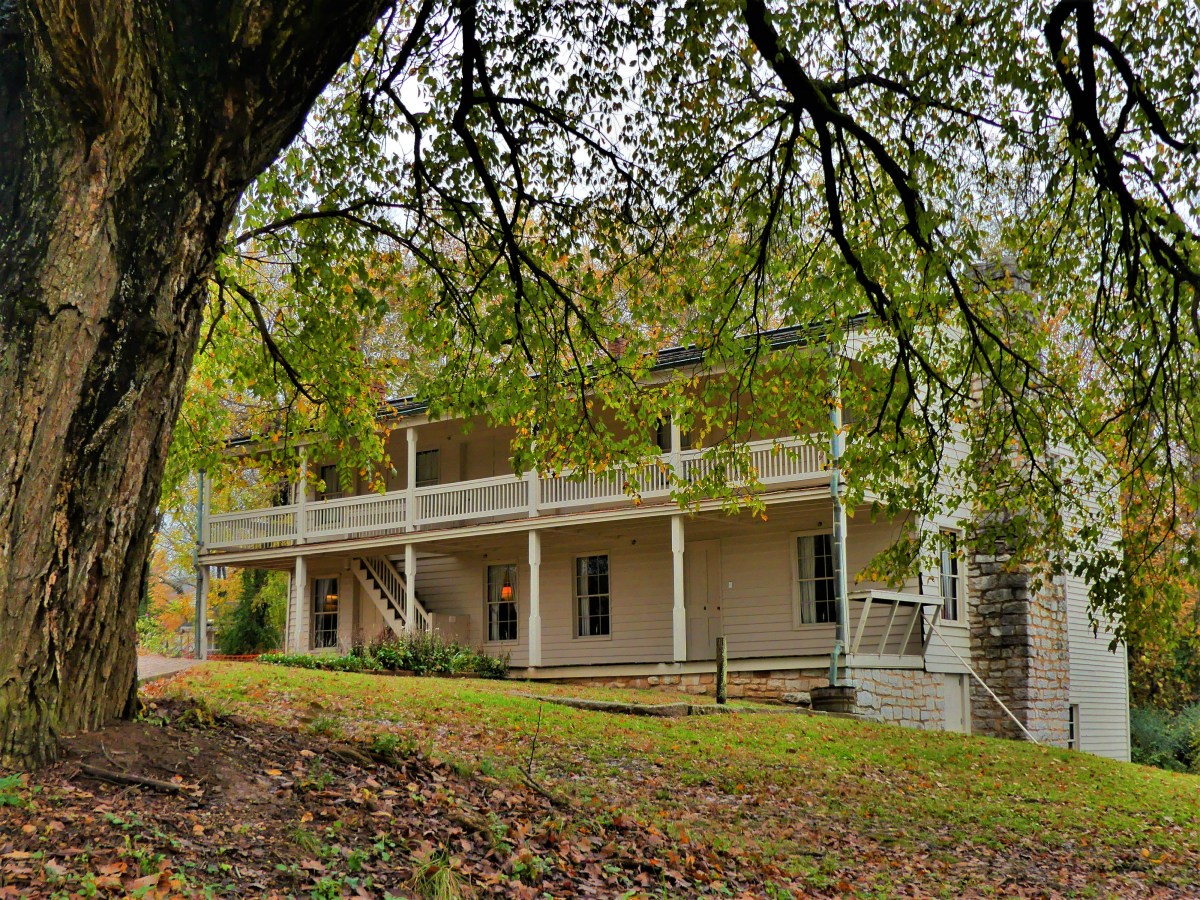
and at the Dover Hotel surrender–which was an important turning point for the Union Army, and the advancing popularity of Brigadier General U.S.S. Grant.

Dover Hotel

History sheds light on the past to give us a direction toward the future. Otherwise, as Winston Churchill has stated,

“If we open a quarrel between the past and the present we shall find that we have lost the future.”

Museum of Mirth, Mystery, and Mayhem

Looking for something different to do on a rainy day in St. Louis? Any list of indoor activities should include a trip to the City Museum,

City Museum

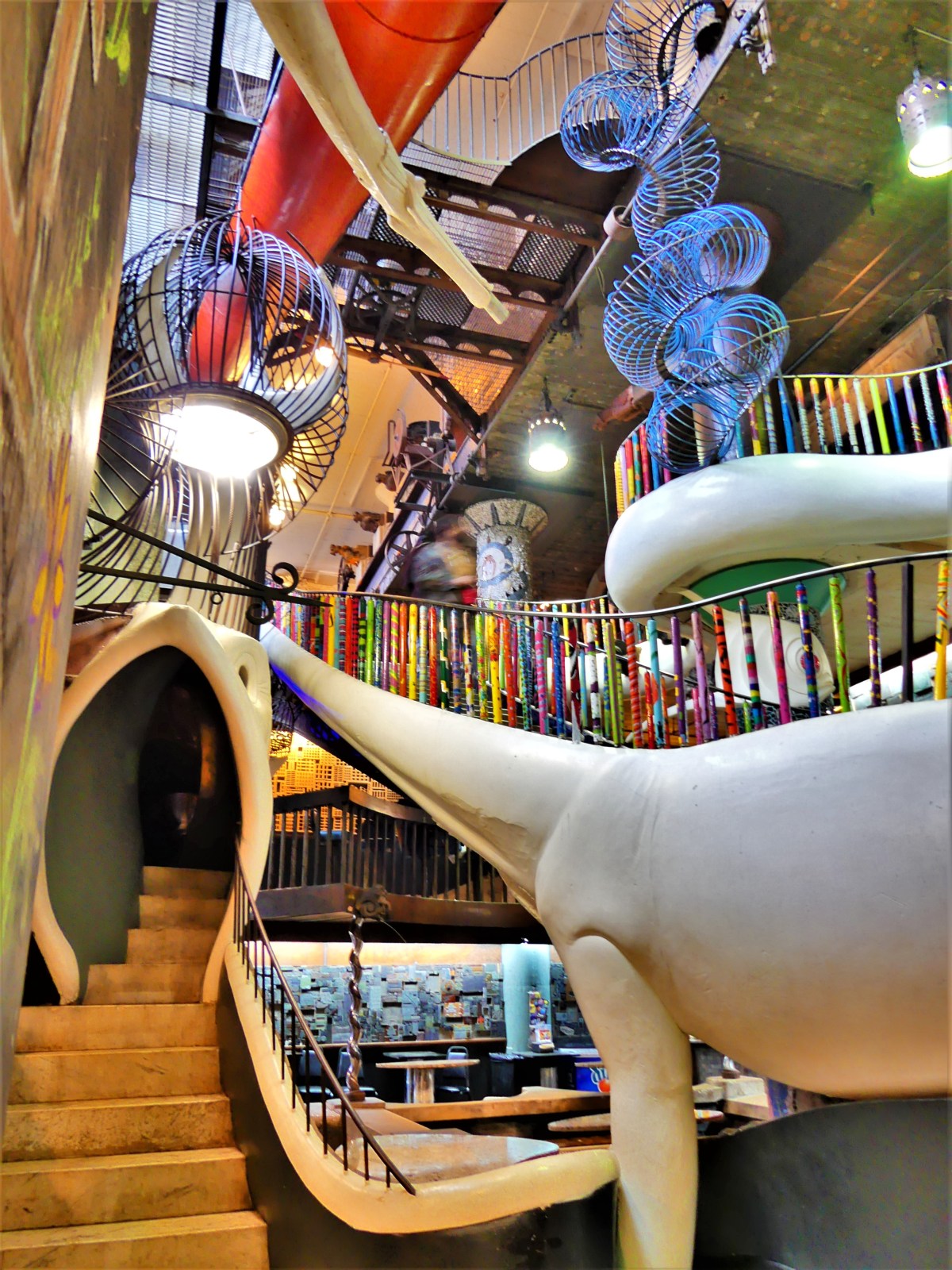
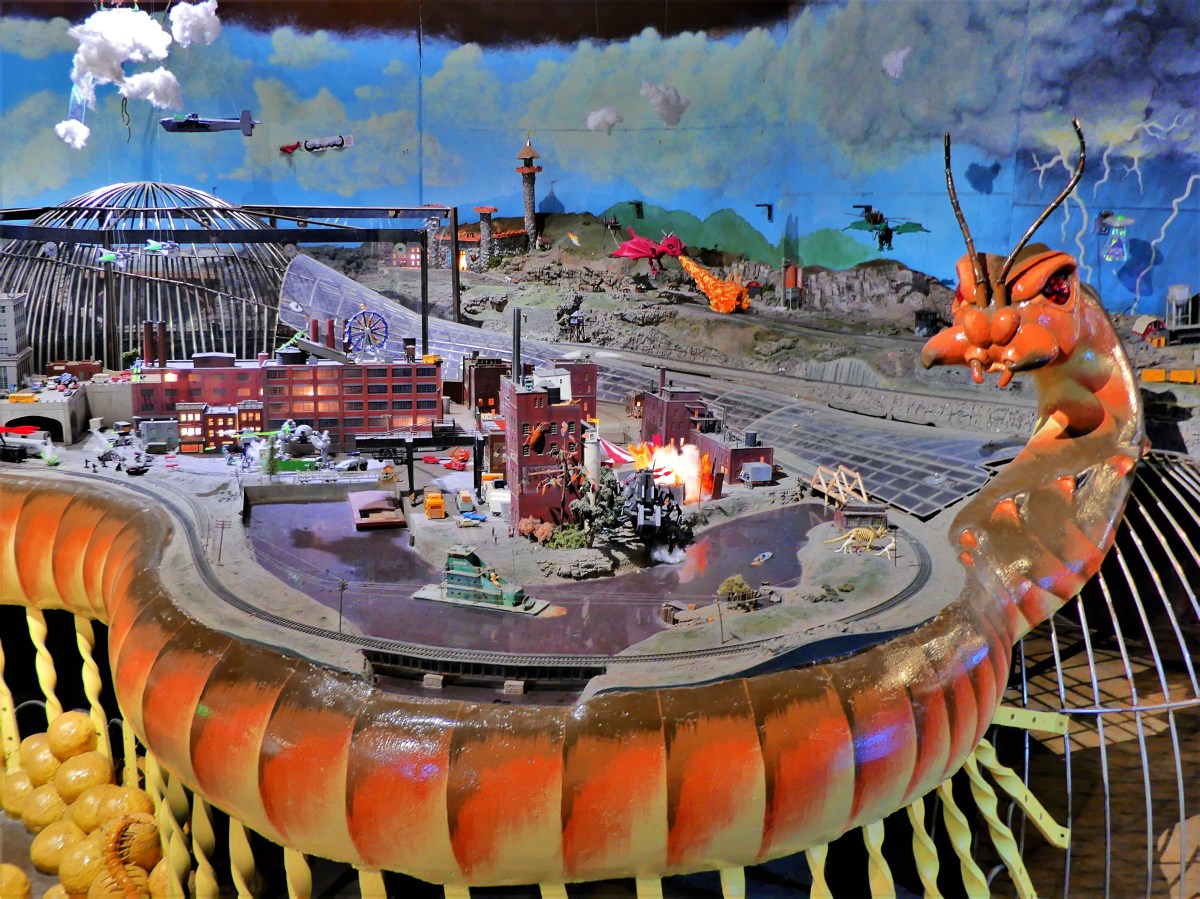
the brainchild of Bob Cassilly started 20 years ago in an abandoned shoe factory and warehouse, that’s since been converted into a nail-biting, four-story jungle gym and rooftop amusement park created from repurposed mechanical and architectural relics.

During our visit, parents were either on the sidelines watching their kids wear themselves out, or trying to keep pace with them, as they maneuvered through a zany, life-size Chutes and Ladders game board, extending through multiple levels.

slide

what's upstairs

The bottom floor hosts a nautical and woodlands theme of crawl spaces…

water world

beluga

with several points of access to a mezzanine food court,

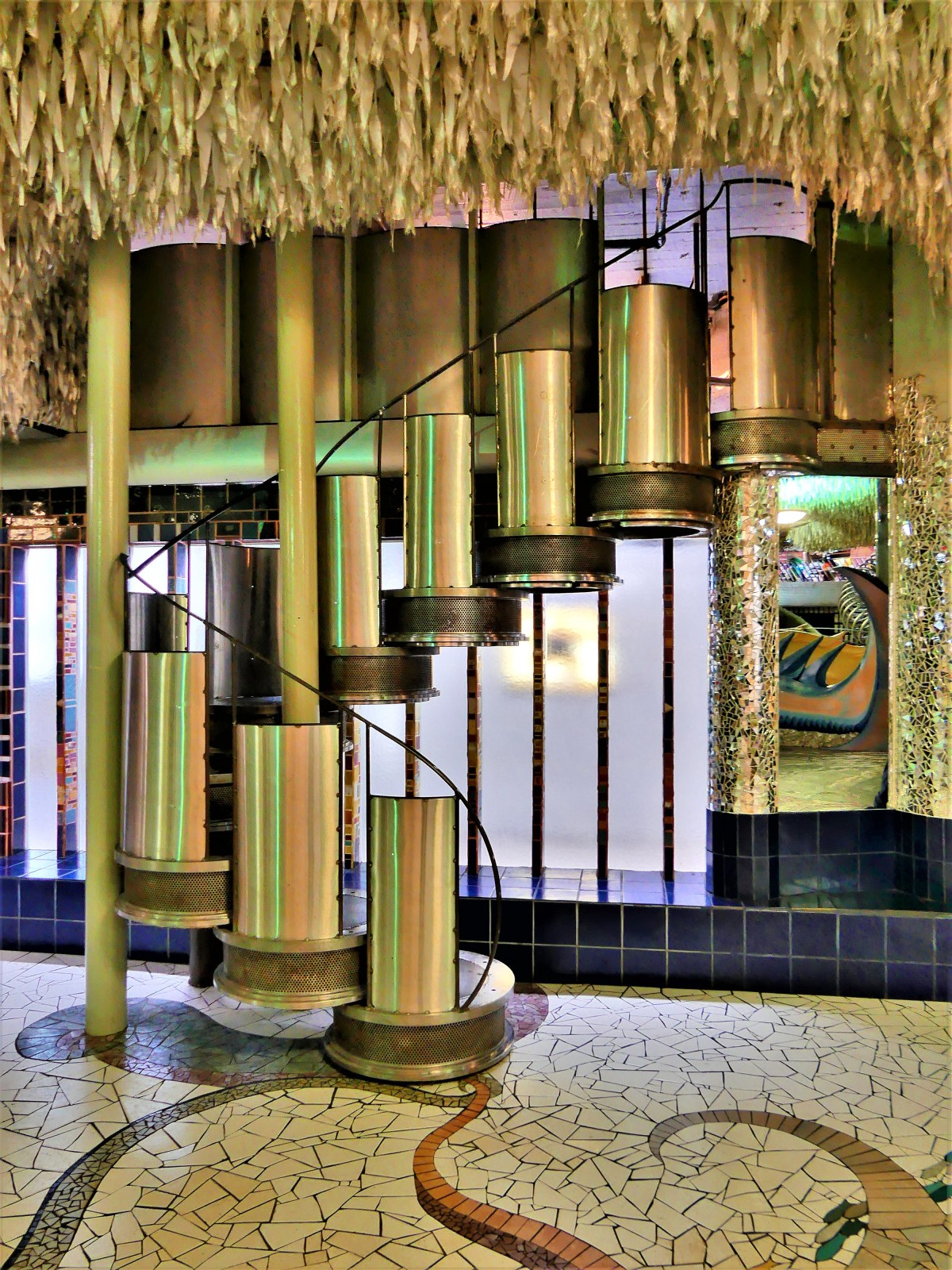
staircase

while higher floors highlight an intricate cave system, ramps with rope swings, and warped walls to exploit one’s inner American Ninja Warrior.

sharp pencil

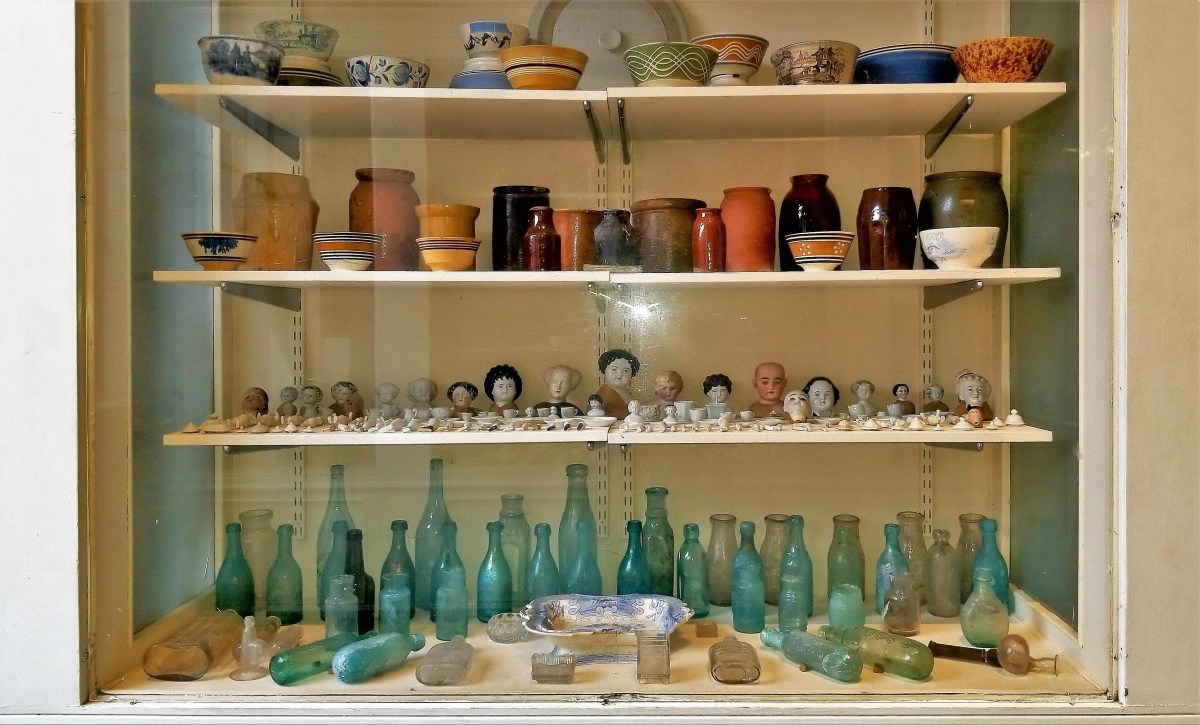
Collections abound, with floor to ceiling showcases of pinned insects, and walls of archaeological finds;

collection

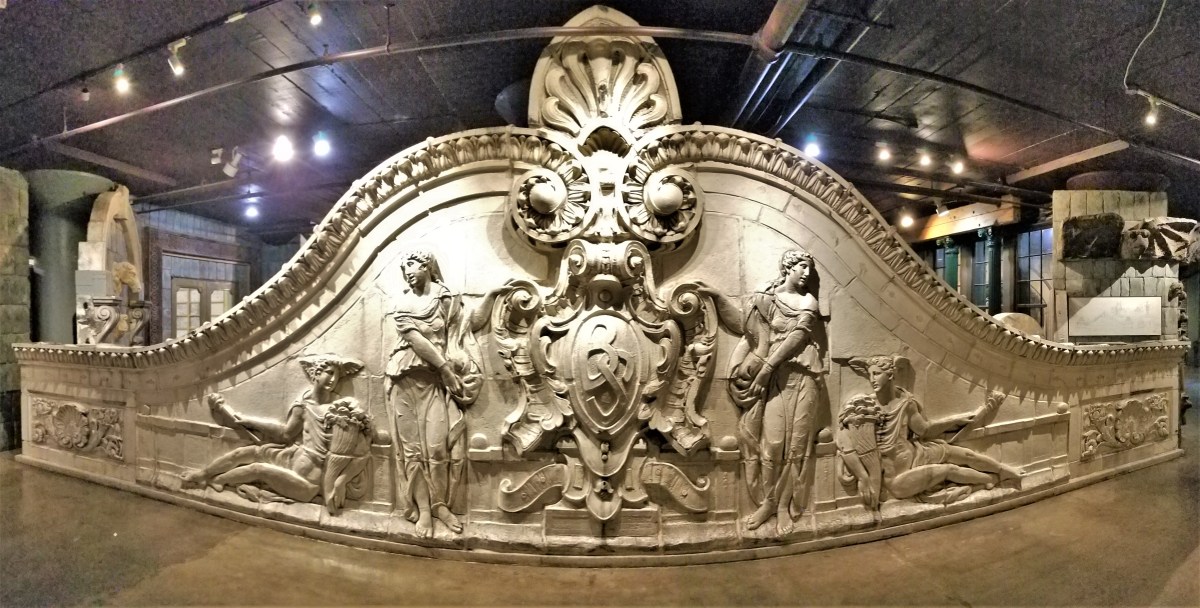
architectural assemblages of friezes, cornices, and gargoyles;

faces in the wall

gargoyle

edifice crown

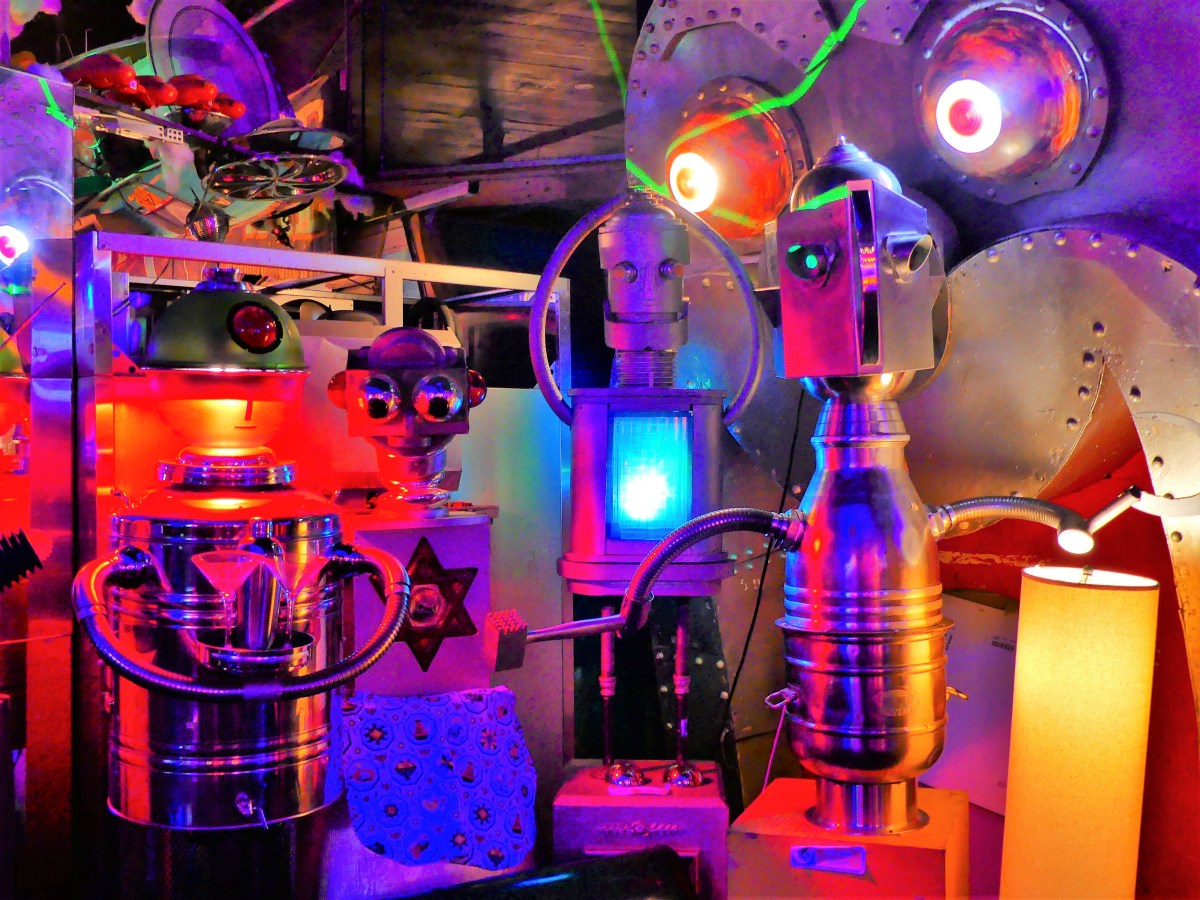
Otto’s Robotorium of whimsical futurama;

robotorium

silly robots

and assorted oddities and eccentricities that defy classification…

bizarro train set

electric chair

big underpants

Despite its 20-year run, the City Museum is a work-in-progress, with new and imaginative play environments under construction.

creating a castle

Protected by a Serpentine Wall outside the museum space,

snake perimeter

the MonstroCity rises into a winding array of caged ladders and walkways that meanders through a jet fuselage,

plane tube

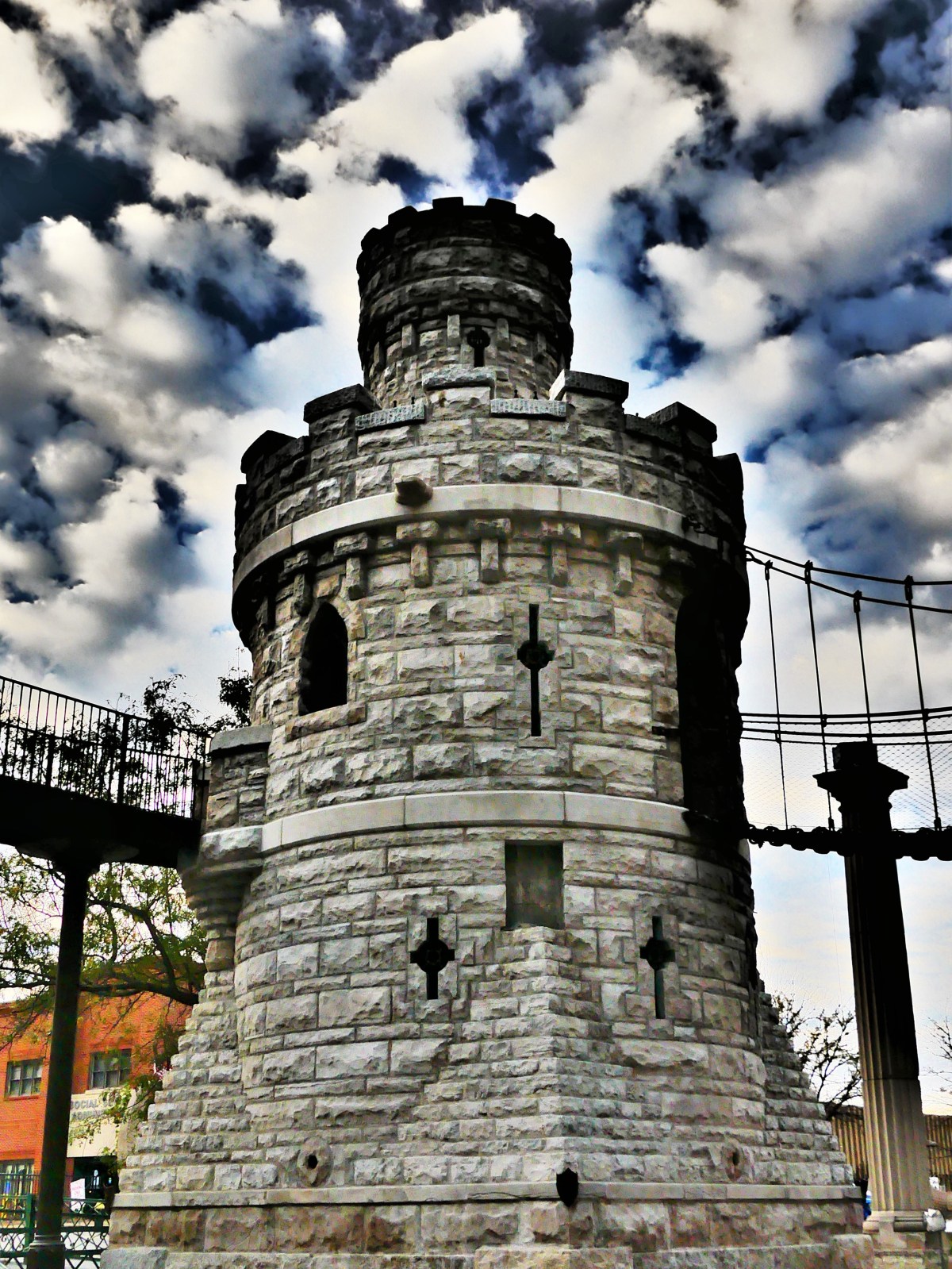
a castle turret,

turret (2)

and so much more, before leading to a pit of dodgeballs.

ball pit

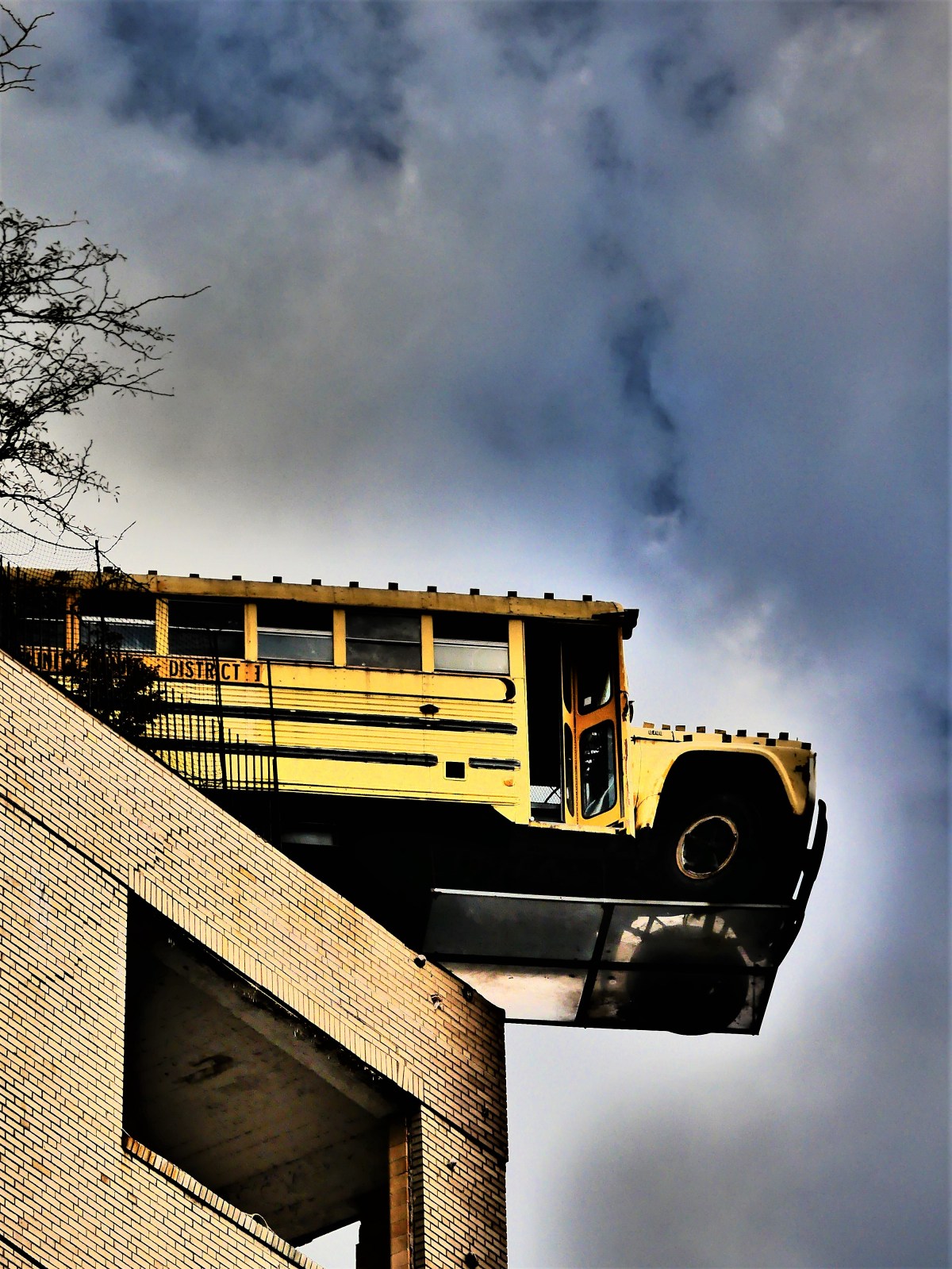
Unfortunately, the rooftop, replete with a Ferris wheel, an enormous praying mantis, a domed rope swing, a pond and a dangling yellow school bus was closed due to inclement weather.

bus off the building

There is so much to explore at City Museum (including a flying circus), that it’s impossible to be bored. In fact, the interactive experience is so profound, that critics might consider it overload.

As a retired special educator who’s embraced the Vark model, I salute the City Museum for challenging children of all ages through a rich diversity of visual, auditory, and kinesthetic stimuli. However, nervous parents may wish to protect their kids with knee pads, elbow pads, and a helmet.

For more information, go to City Museum


Arch ‘n Bunker

“Please don’t let it rain,” I beseeched the angry sky.

After savoring four months of dry weather from Oregon to Arkansas, we arrived in St. Louis at the same moment a cold gray funk had arrived for Halloween. Leah and I had put off our visit to the Gateway Arch in our hope that conditions would clear, but our window of opportunity had narrowed with a rainy forecast predicted for the following day. Running out of options, we bit the bullet and pulled the trigger.

Tickets to the monument are available at the Old Courthouse–headquarters for the Jefferson National Expansion Memorial,

Old Courthouse

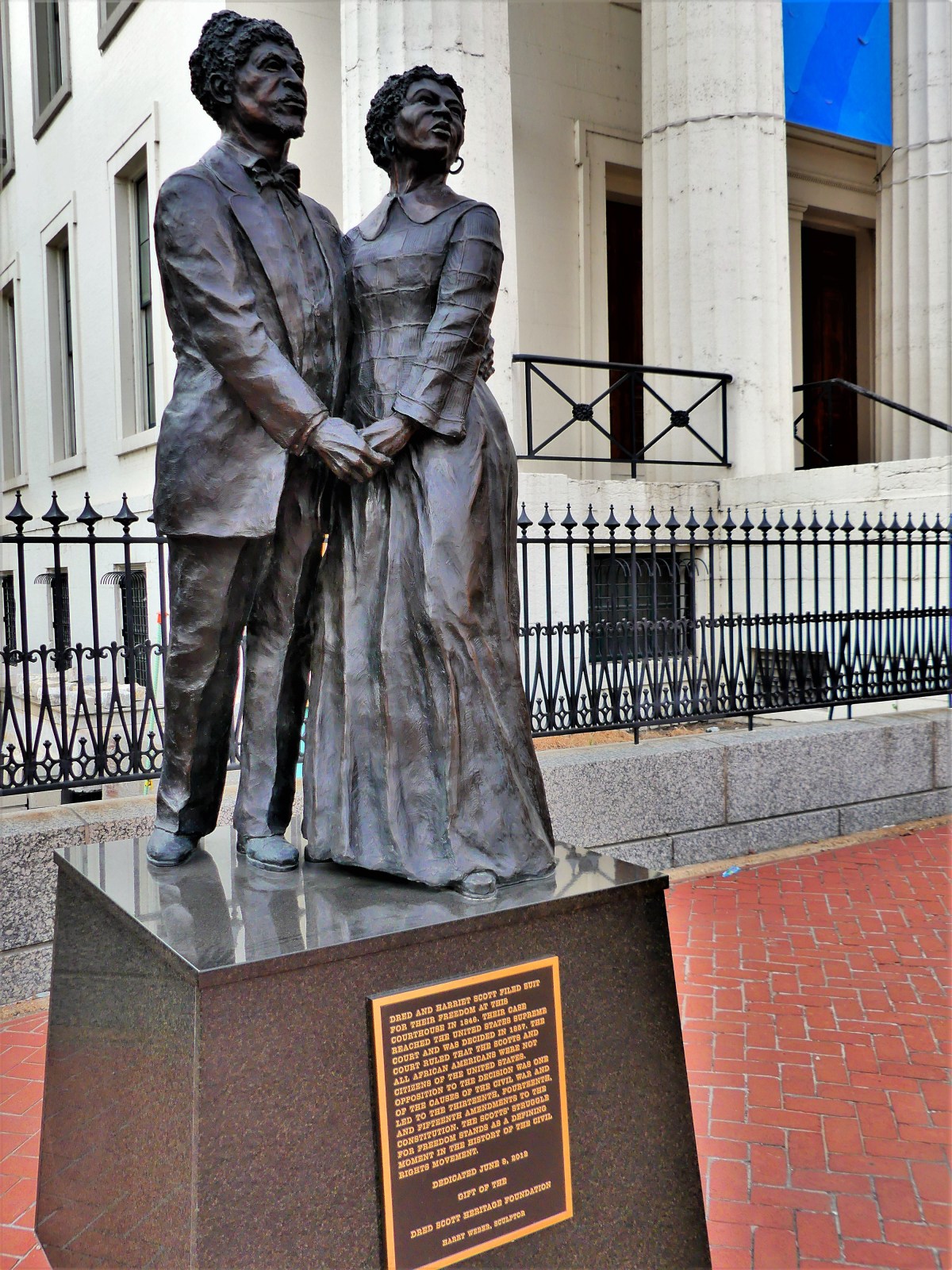
and historic location of the landmark Dred Scott trials–where an ordinary man took extraordinary measures to free his family from the indignities of slavery, by bringing suit against the United States of America.

Dred Scott

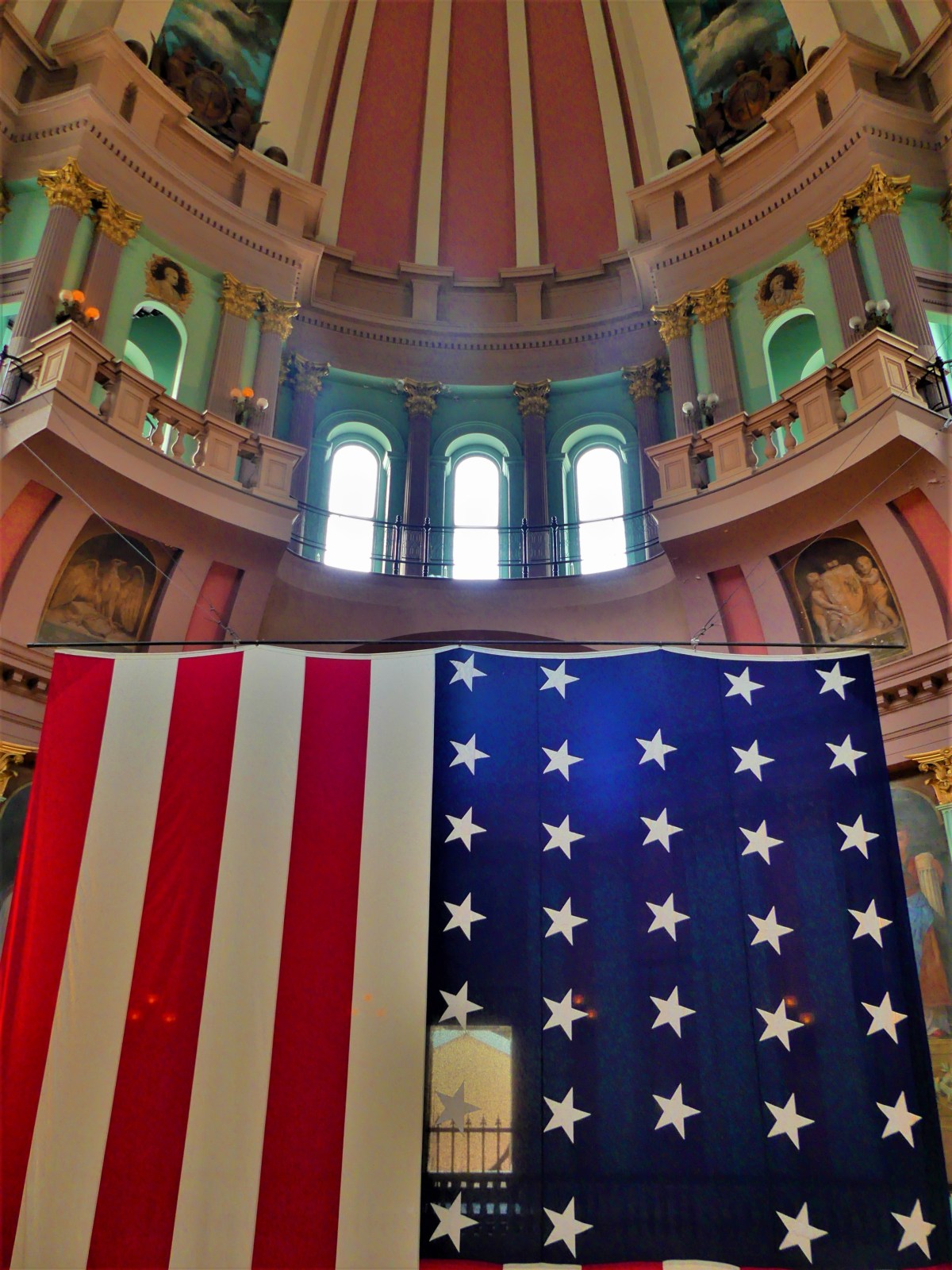
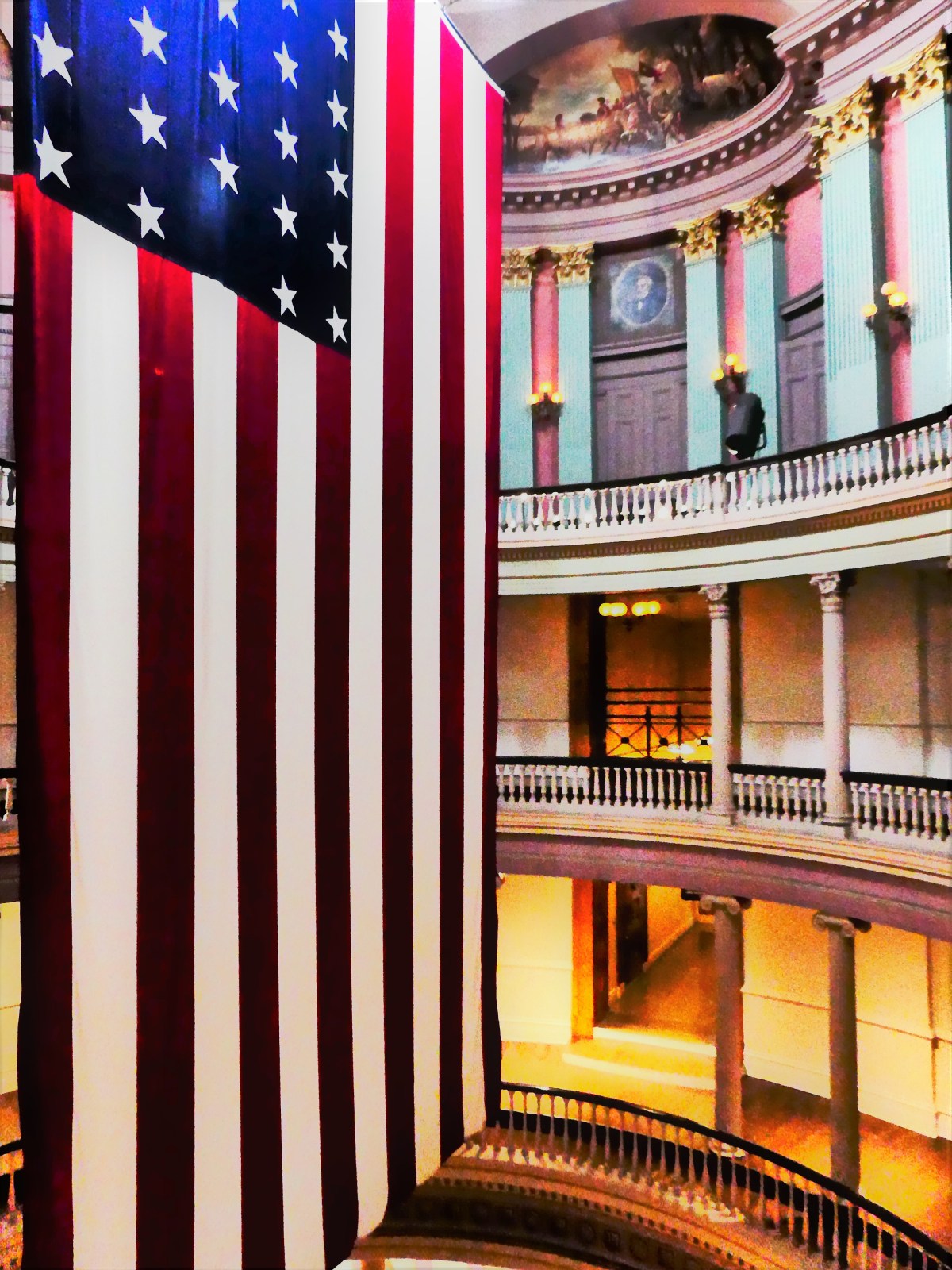
A walk inside reflects two hundred years of history. Directly beneath the dome and the 33-star flag (dating back to July 4, 1859)…

Old Courthouse rotunda

…rests a 3-foot diameter flagstone amid the pavers–the acoustic sweet spot of the courthouse–where orators would stand to speak and be heard from top to bottom,

2nd flr view

and throughout the wings.

flag and columns

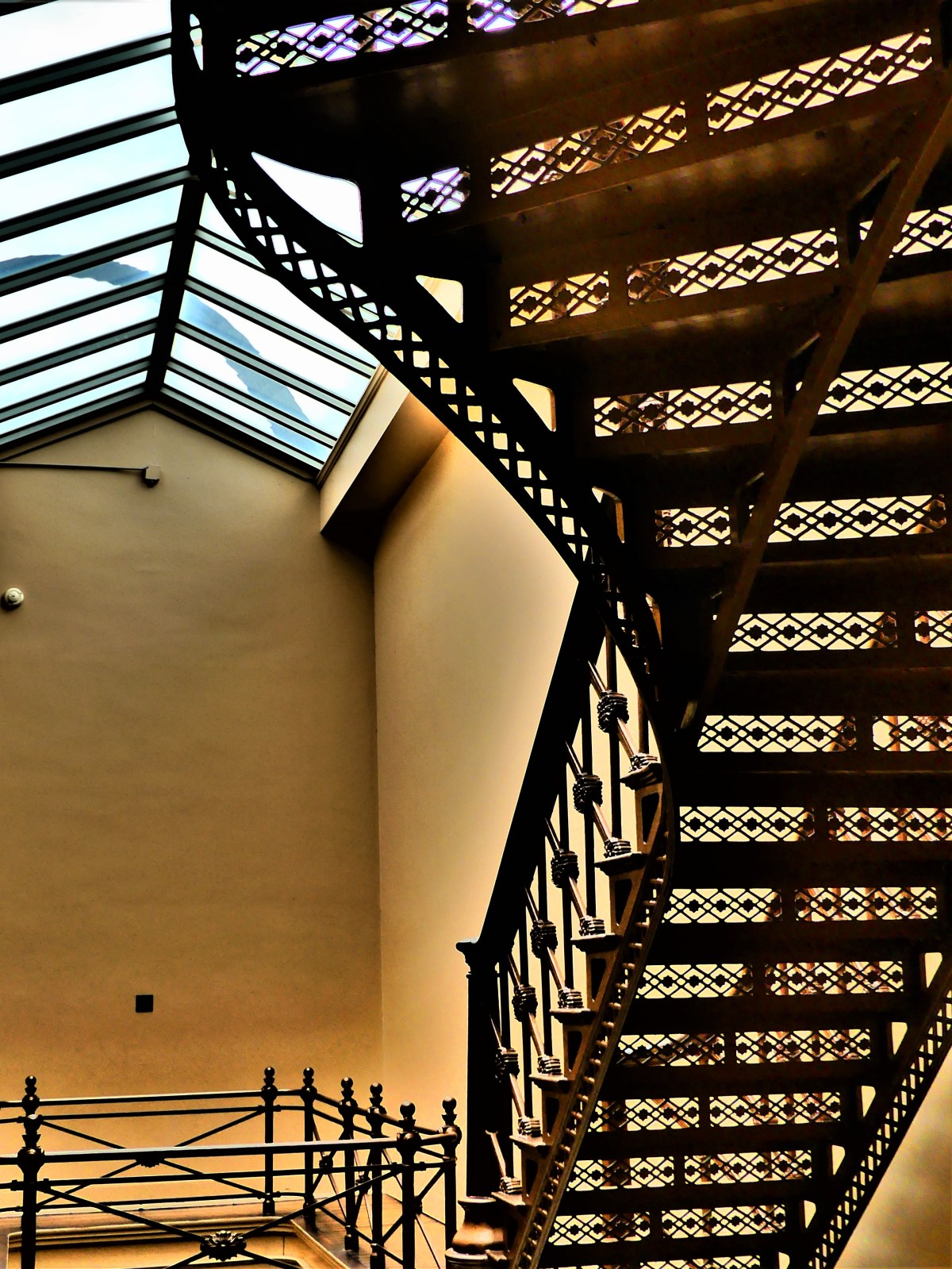
Stairwells lit by skylight…

stairs

stairs thru the door

carried us to higher floors, providing a peek of the nearby Arch,

stairs and arch

Arch thru courthouse skylight

and a recreation of the courtroom that memorializes where Louis D. Brandeis was admitted to the Missouri bar on November 21, 1878.

Brandeis courtroom

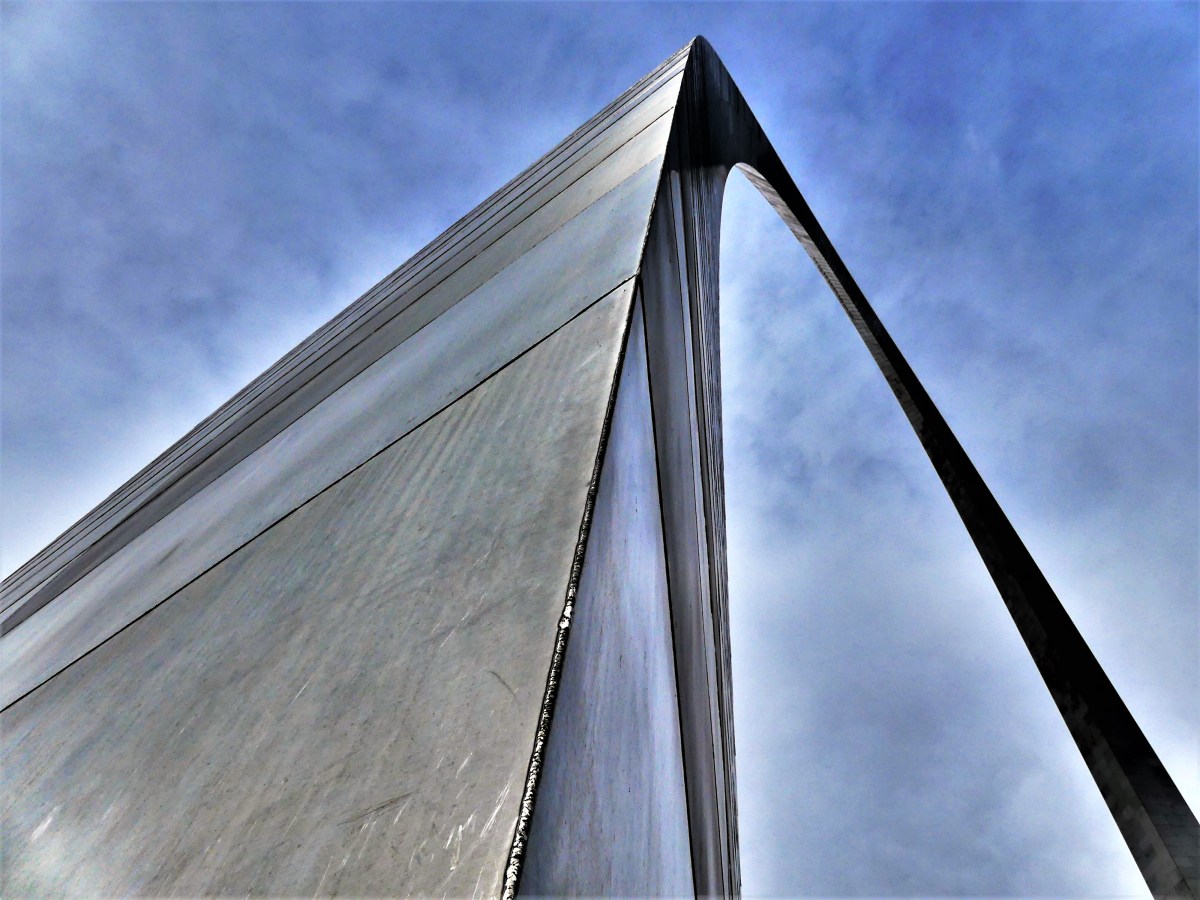
After a brief detour around a barricaded green space currently under construction, we arrived at the south bunker beneath the arch…

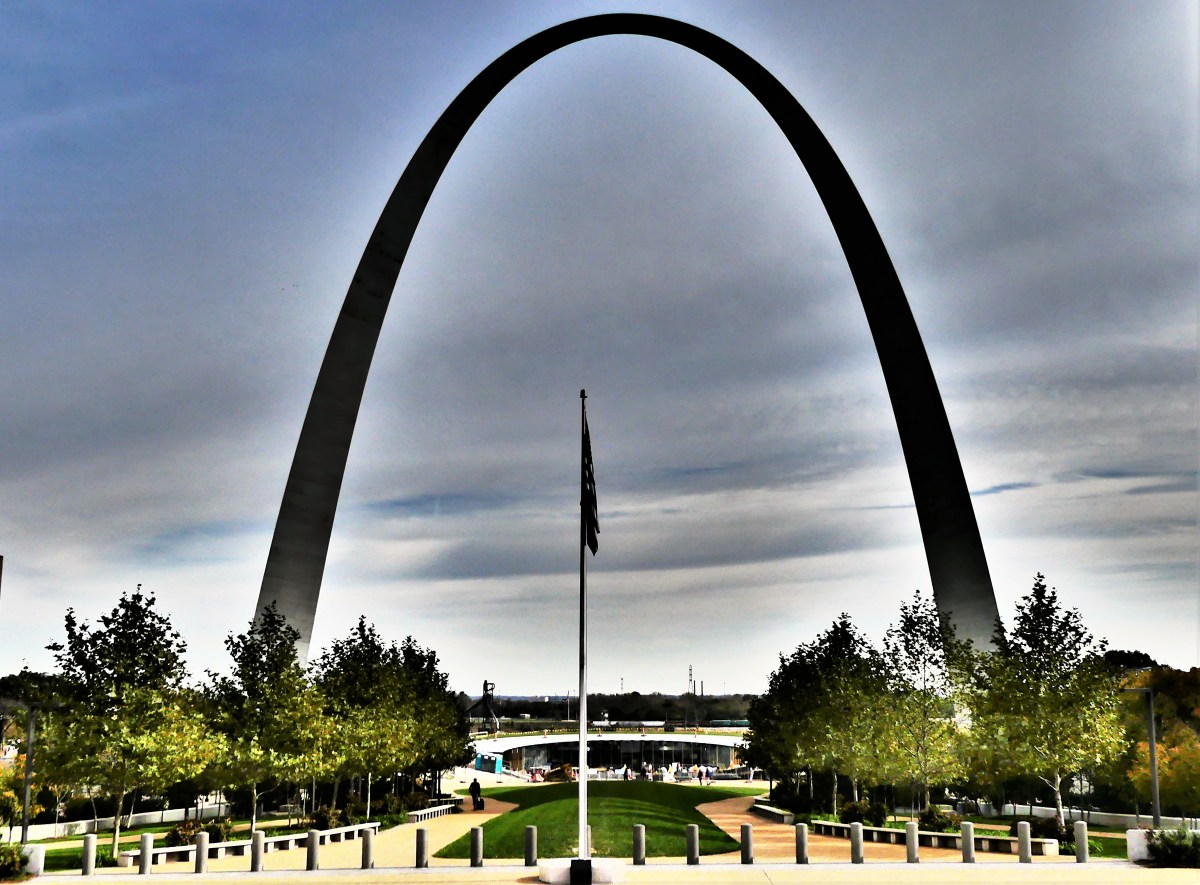
Arch against the sky

Arch curvature

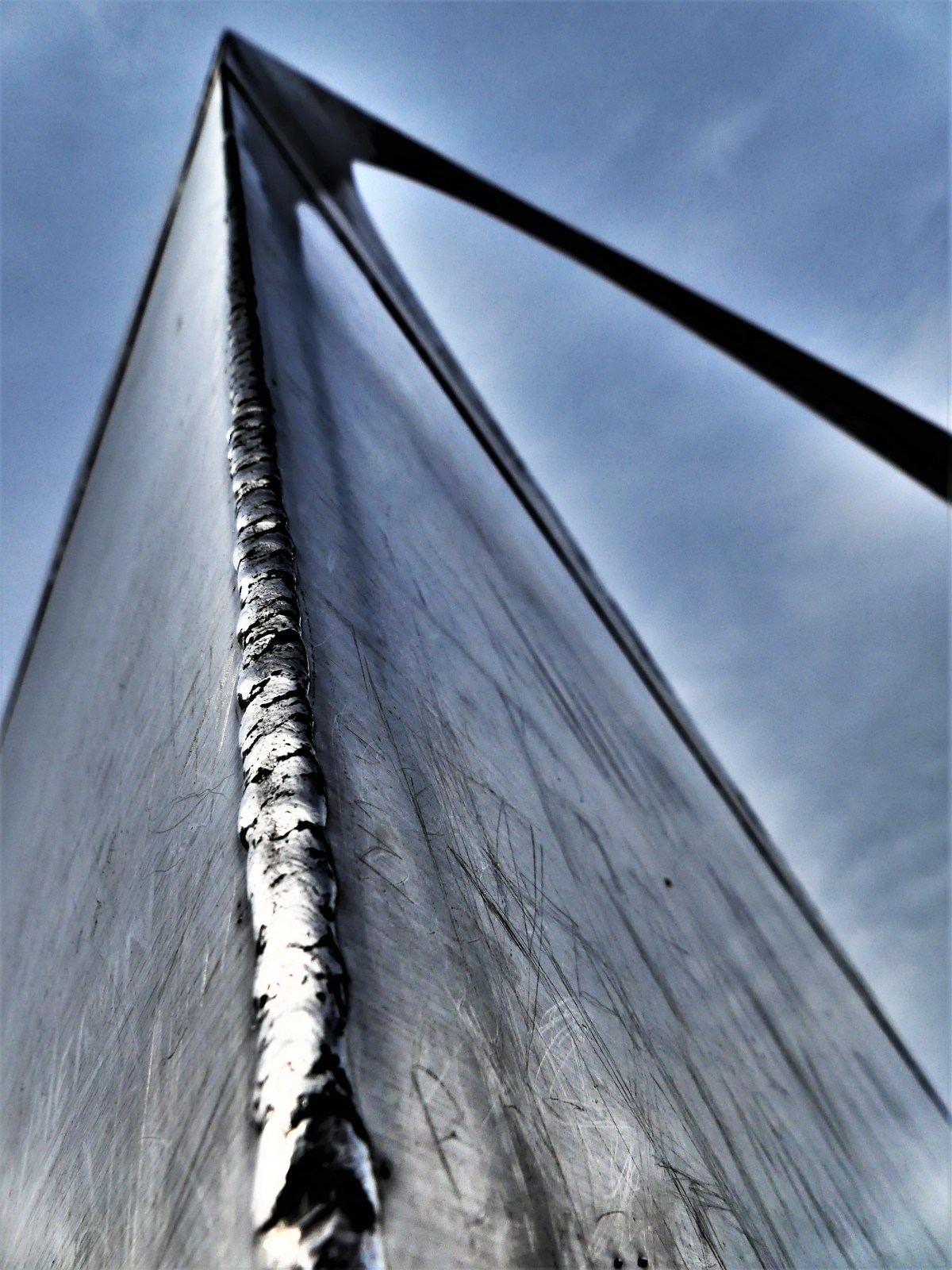
scratches and weld

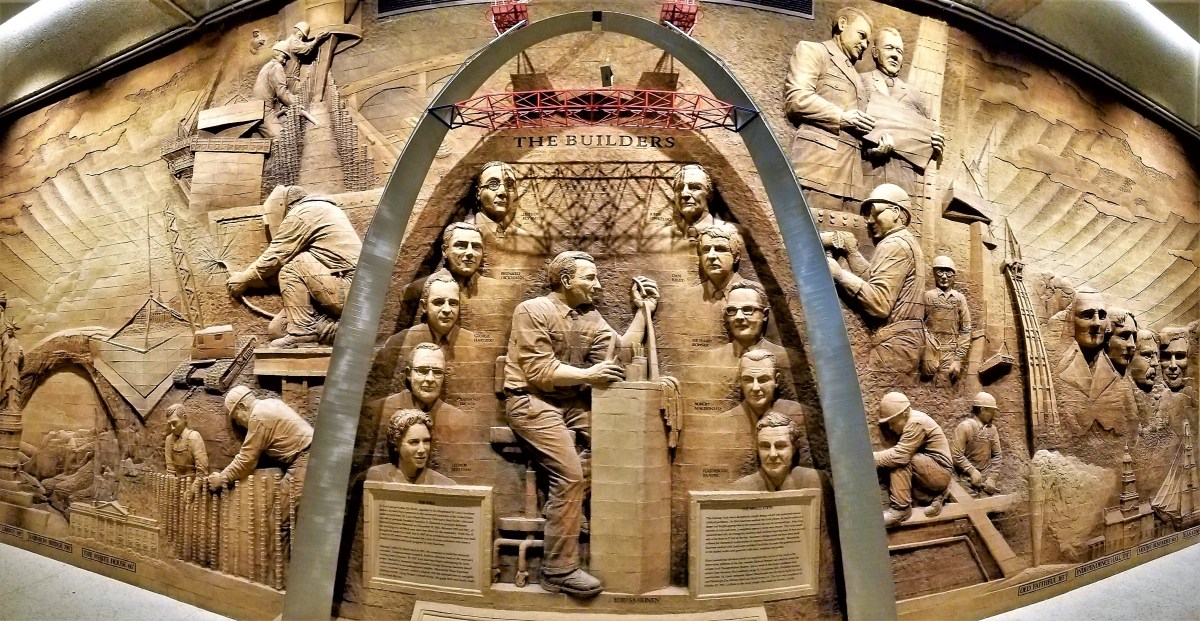
that houses walls of exhibits documenting construction from 1963 to 1965,

ediface sculpture

and more importantly, access to the carriage cars that carry visitors to a viewing gallery 630 feet above the city.

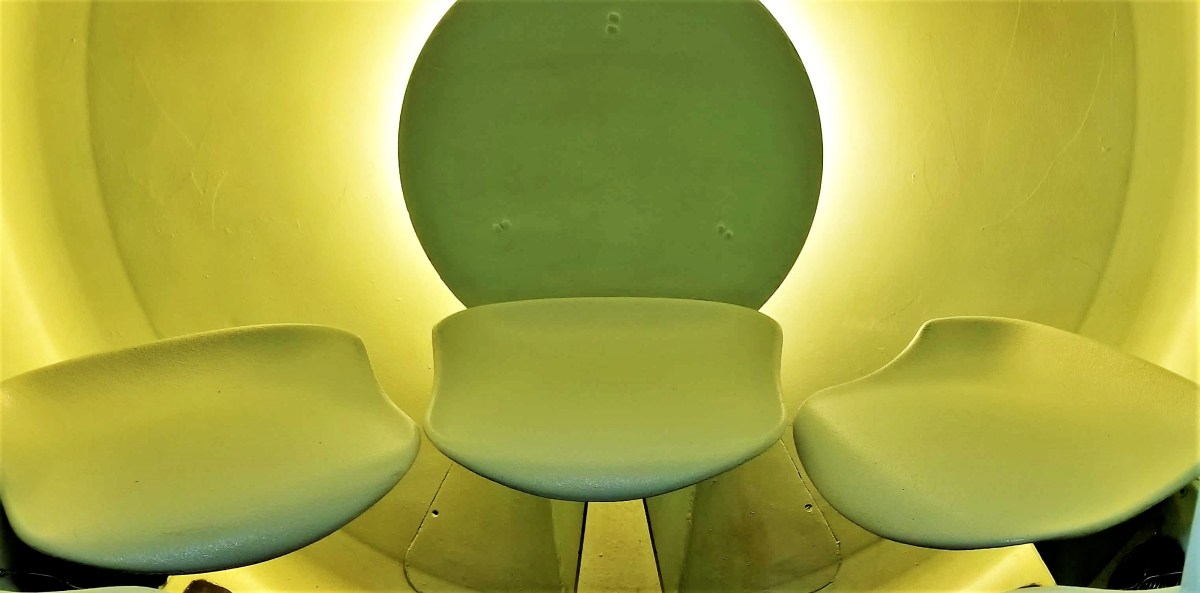
pod control

After a four minute ride, we emerged from our pod,

cable pod2

into an enclosed ramp with multiple portholes overlooking east of the Mississippi,

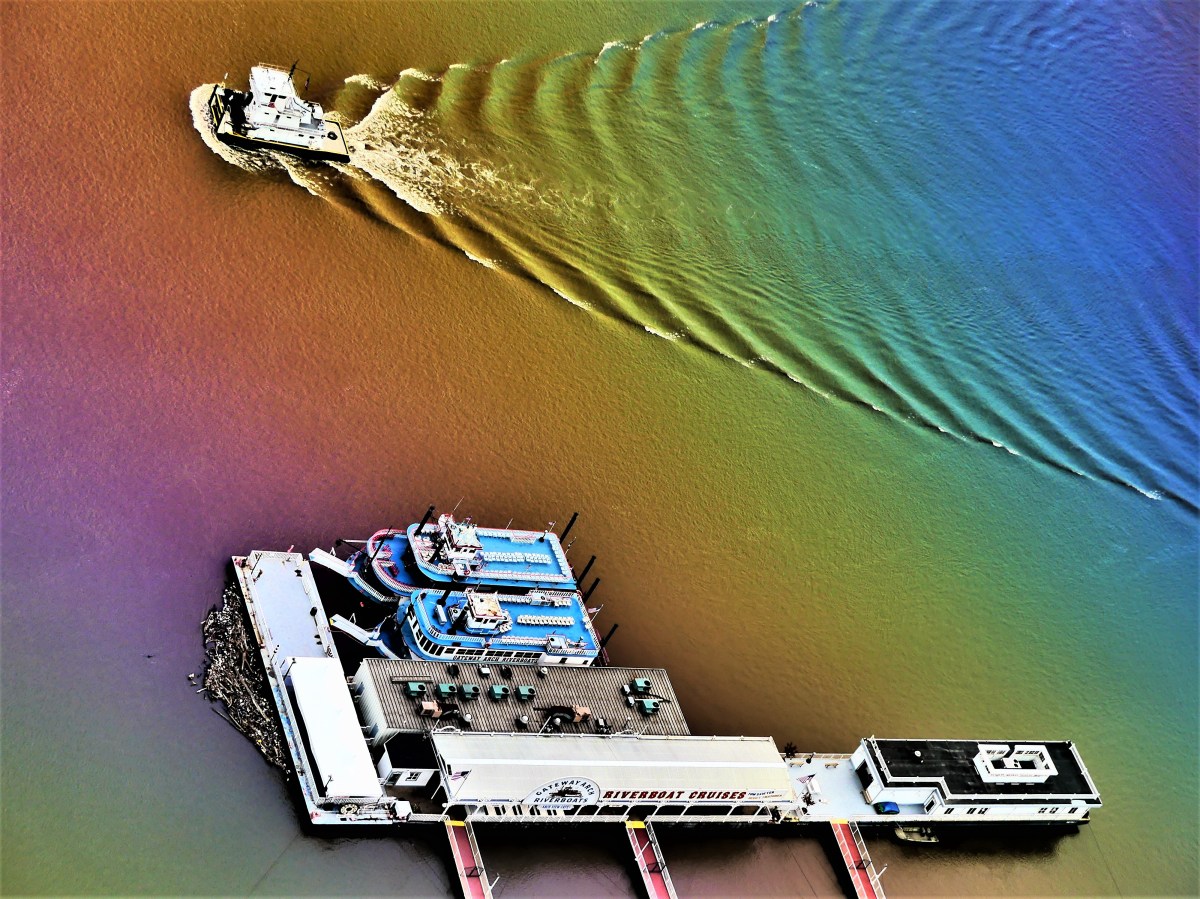
Mississippi Riverboats

and unobstructed views westward, beyond St. Louis.

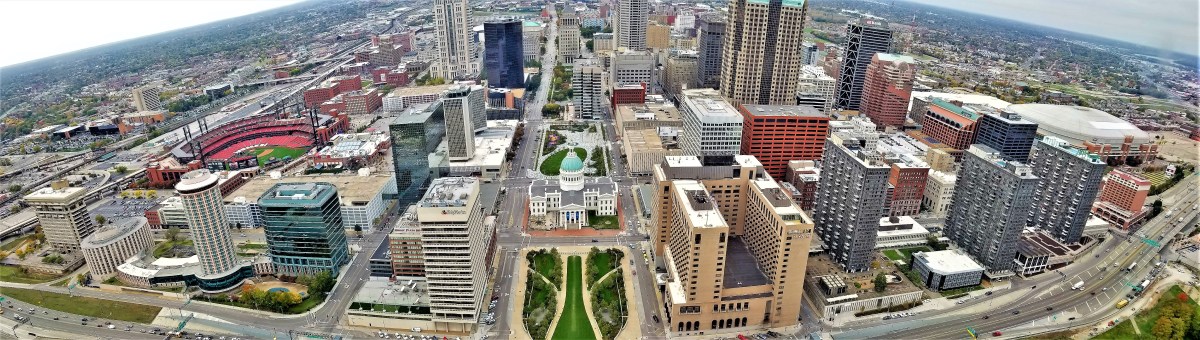
St. Louis panorama

As we drove through St. Louis drizzle the following day, we were never far from occasional glimpses of the Arch shrouded in rain clouds.

While I never had a sunny day to capture the full beauty of the simple architecture created by Eero Saarinen, I could still bask in the warm glow of an iconic structure that celebrates the spirit of American exploration.

Gateway Arch


Supreme Ruler of Beers

Growing up, I was never much of a beer drinker. But on the odd occasion that my underaged friends and I would sneak a beer in the woods by our homes, it was always an Iron City beer, ’cause that’s what Pirate fans drank in Pittsburgh. Besides, it was high treason to drink anything other than Iron City, and still be part of the cool kids’ club.

Had I been born in St. Louis, I’m certain that things would have gone differently. I’d be a Cardinals fan, and my “go-to” beverage would be Budweiser from the beginning, because Budweiser beer, introduced in 1876 by Aldolphus Busch dominated the St. Louis market, on its way to becoming the first national brand in America, thanks to pasteurization and a fleet of refrigerated rail cars.

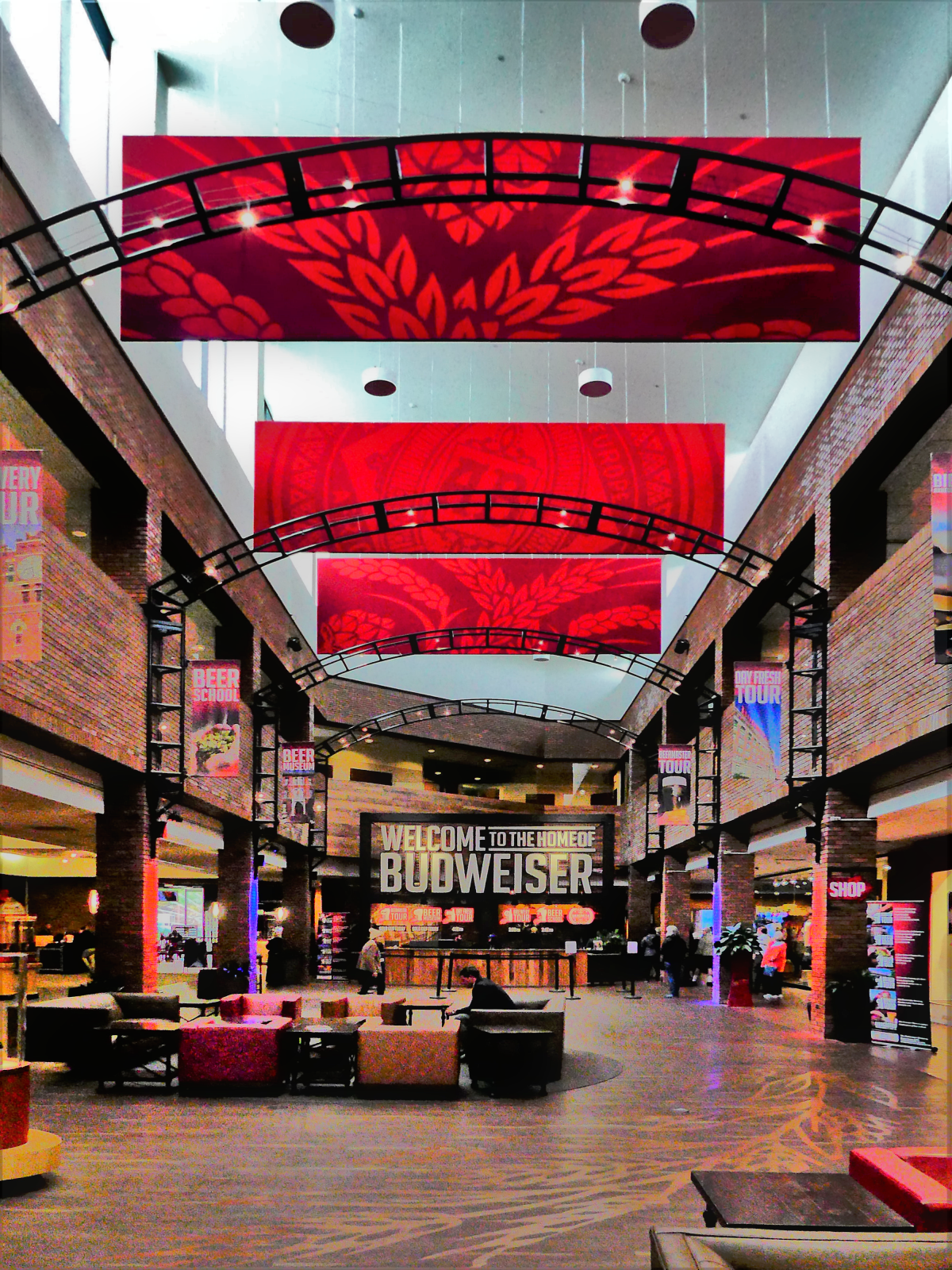
In 2008, Anheuser-Busch (A-B) succumbed to a $52 billion hostile takeover by Belgium-Brazillian company InBev to become the world’s largest brewer, and cemented its global stronghold by merging with its rival, London-based SABMiller one year ago for $100 billion.

North American operations remain headquartered in St. Louis, where tours are  conducted regularly for beer aficionados interested in A-B’s time-honored brewing process, and for history buffs who appreciate the architecture and design that’s been selected by the National Register as Historic Landmarks.

stained glass

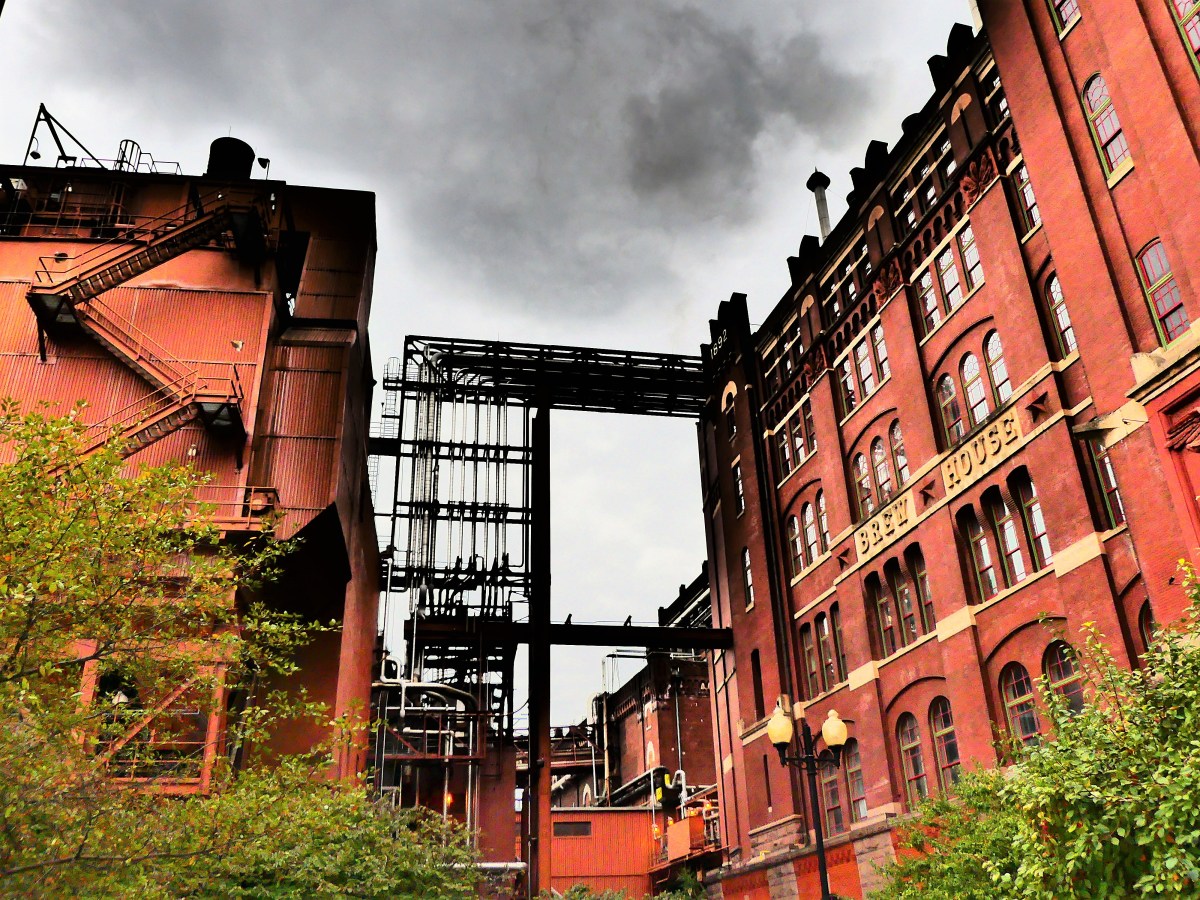
Leah and I arrived at Lynch St. for the 45-minute tour beginning at 3:10 pm. Upon entering the corporate complex, we were surrounded by tall Romanesque red brick buildings with elaborate flourishes and embellishments.
Beer House1

We entered the Welcome Center,

welcome center

designed to house its branded gift store, pub space, and exhibits.

A-B story

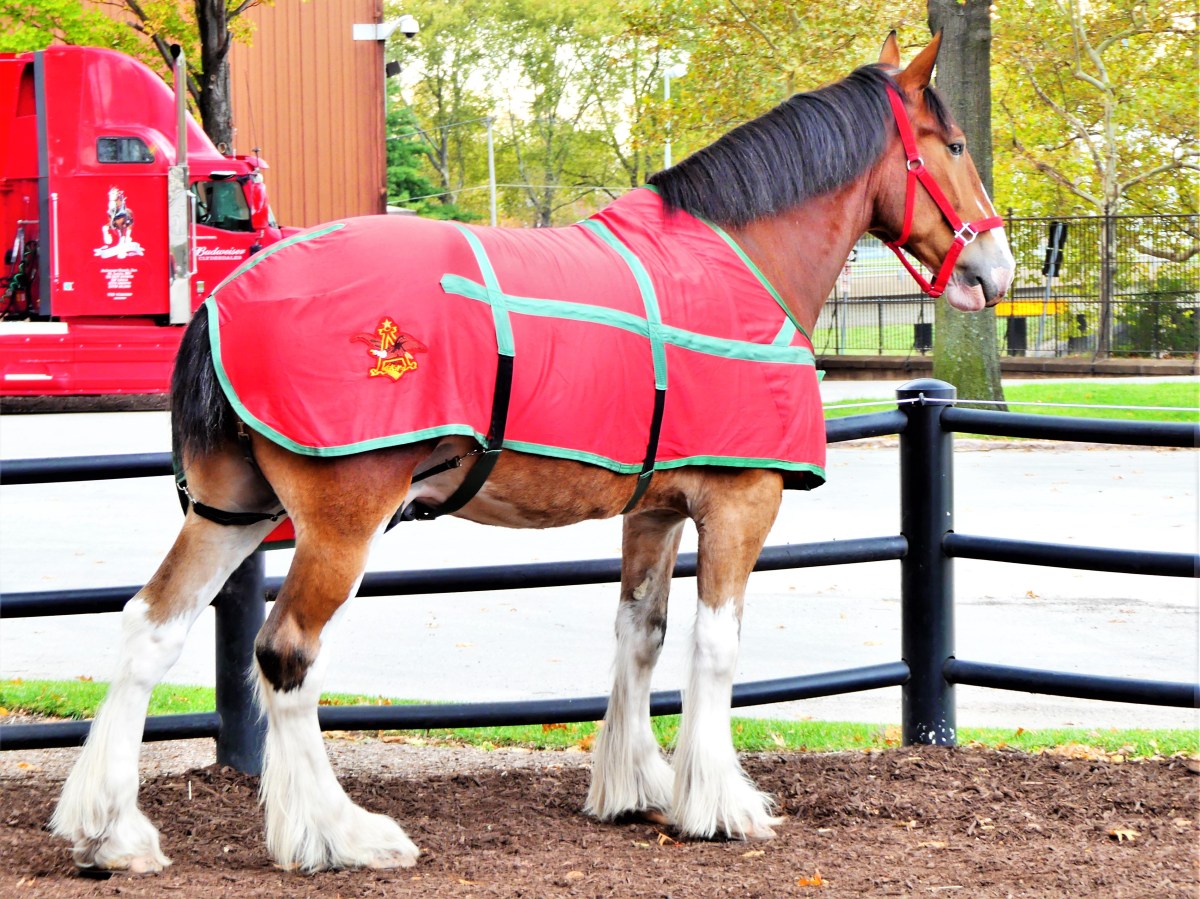
Soon after, we were introduced to our assigned tour guides, Tim and Andrew who spoke about sticking together amid the tight security surrounding the campus, before ushering our group of fifty outdoors to gawk at the Clydesdales in the exercise yard.
Clydesdale posing

These massive draught horses stand at 18 hands, and have been carefully bred by the brewery to retain their chestnut coloring and markings, making them the most identifiable mascot in beer branding and advertising.

From there, it was a short stroll to the Carriage House where we were split into two groups: those on a steamboat cruise stuck with Andrew, while the rest of us walk-ins aligned with Tim, a self-professed expert on all things beer, who dared to be challenged with any questions on Anheuser Busch.

After moving to Washington, DC to attend college, my beer drinking habits matured. Staying true to my roots, Iron City was quickly replaced by Rolling Rock, a more “premium” beer with a smoother taste in a green bottle imported from Latrobe, PA.

Once inside the Carriage House, we were introduced to Murry, who was being braided for the 3:30 pm parade.

grooming (2)

ready for parade

A peek inside the paddock, showed it to be far cleaner and neater than many major hotel chains across the country.
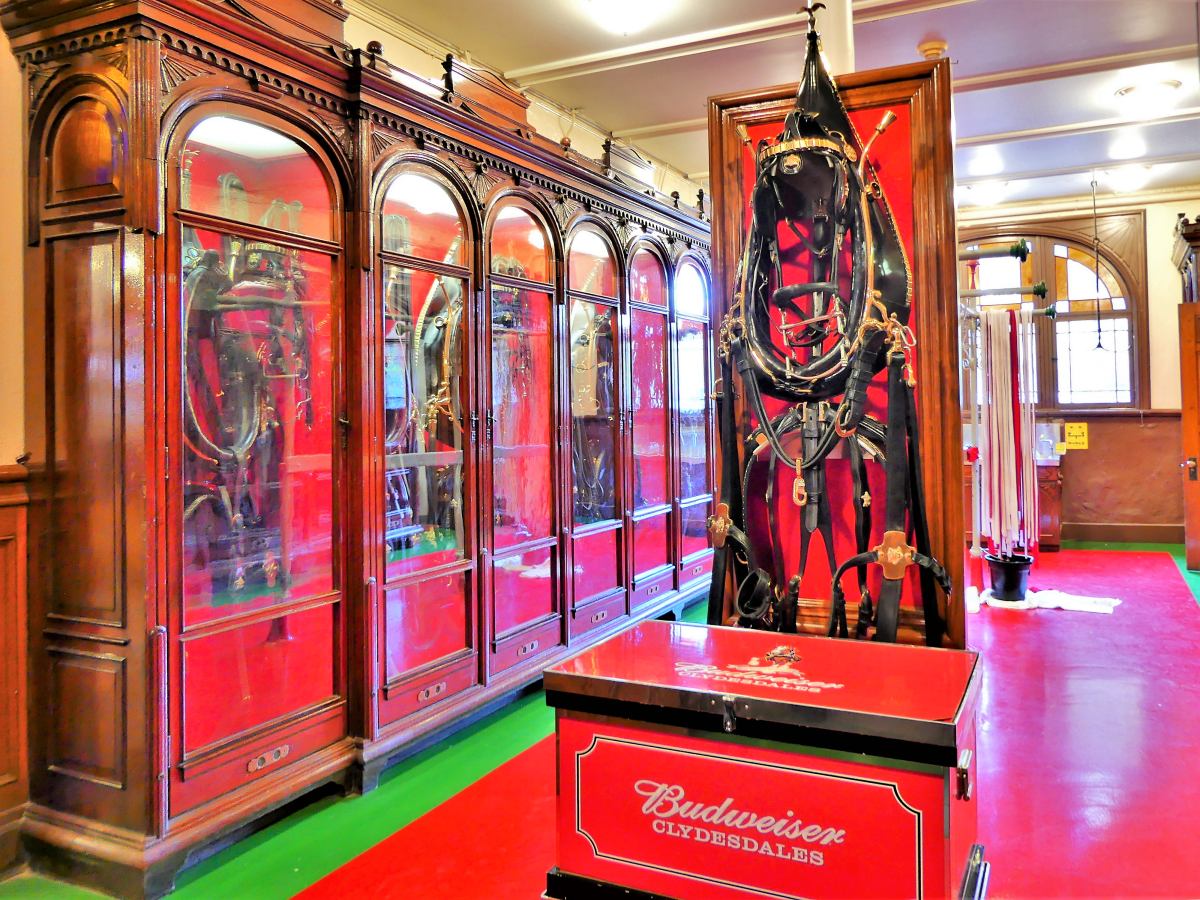
Harness room

In fact, the art-deco structure gleamed from ceiling…

carriage house ceiling

…to floor with nary a strand of straw out of place.

paddock

And that’s when things went awry. Returning to the carriage room, I noticed that everyone had left the building.
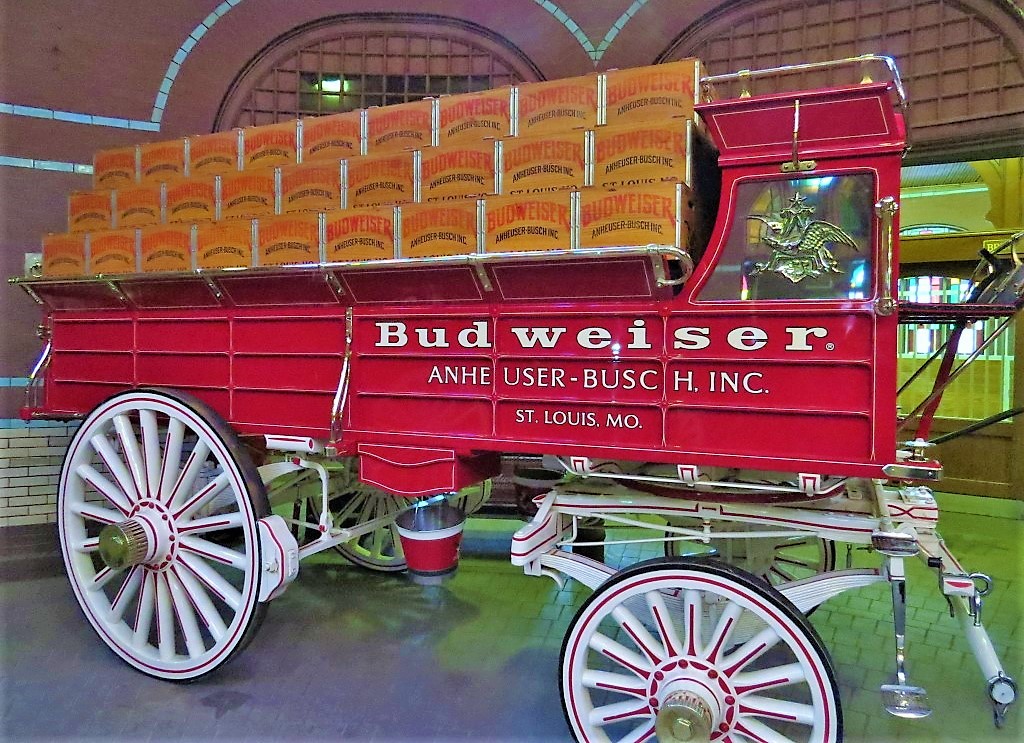
carriage room (3)

Running through the exit doors, I caught a glimpse of Leah up ahead and hurried to her side, only to realize once we returned to the Welcome Center, that she had followed the wrong group. We scrambled around outside to find Tim’s tour, but after pulling on a few secured doors, and with no one in sight, we were hopelessly lost.

Back at the Welcome Center, we approached a tour concierge to confess our situation.

“Not a problem!” she addressed. “Follow me!”

We backtracked to our last stop, before she led us into a building showcasing immense tankards–each one capable of Beechwood aging 3600 barrels of beer at a time.

Beechwood aging tanks

We continued our personal tour until we eventually rejoined Tim in an elaborate Tasting Room…

Tasting Room art

…during his lecture on the ingredients and the brewing process,
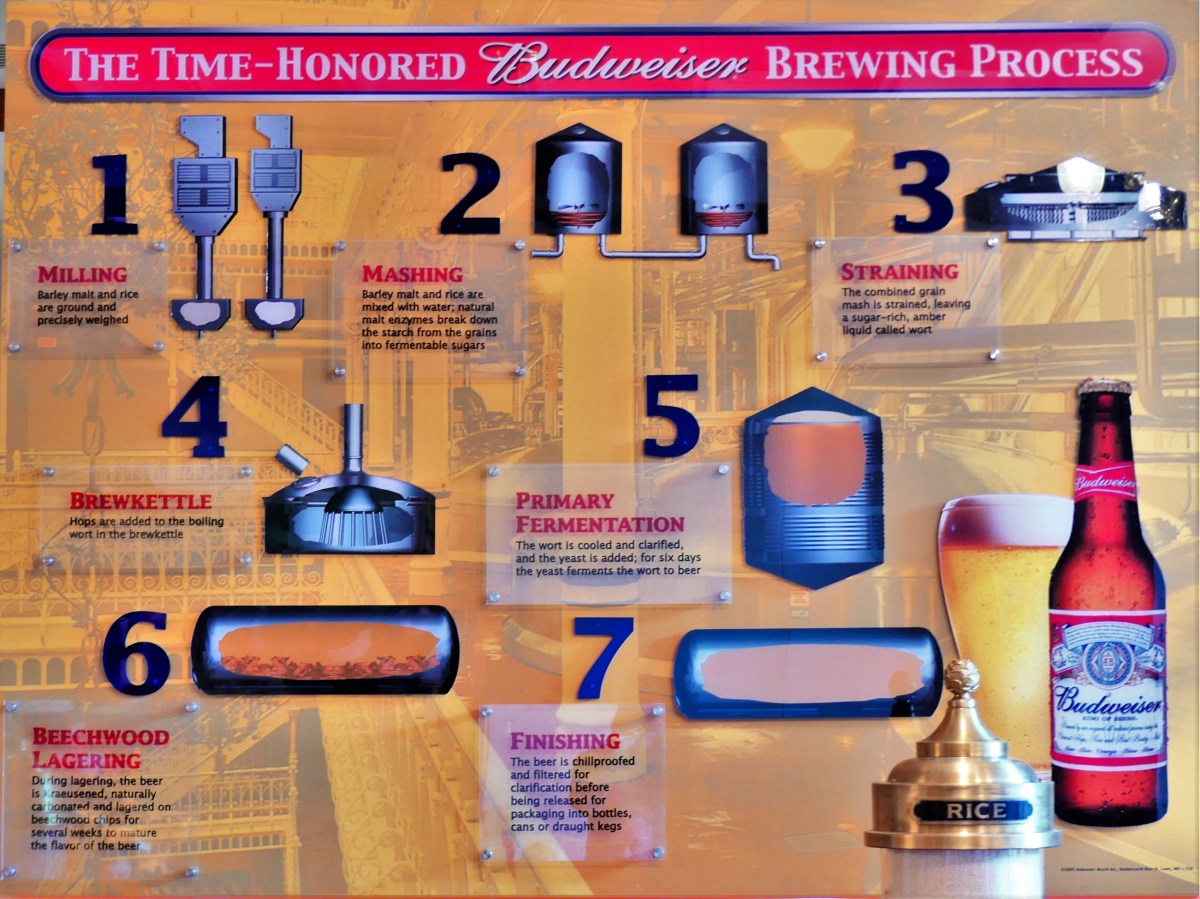
brewing process

while everyone sipped on a 6 oz. portion of chilled Budweiser.

A wacky summer abroad between my sophomore and junior year enlightened and refined my taste in beer, having sampled Grolsch in Enschede, Kronenbourg in Strasbourg, Carlsbad in Copenhagen, and Hafbrau in Bavaria. I loved them all.

But I must admit, that after finding our way back to the tour, my little cup of Bud tasted mighty refreshing.

The twenty-five of us rode the elevator up to the Mash House. The moment the doors closed the Bud jingle sounded.

“Do you know the composer’s name,” I inquired.

Without even thinking, Tim responded as the elevator doors reopened, “Steve Karmen, who also wrote the ‘I Love New York’ jingle.”

We spread out across the ornate wrought iron railing to take in the scene. No doubt, the Mash Tanks were impressive.
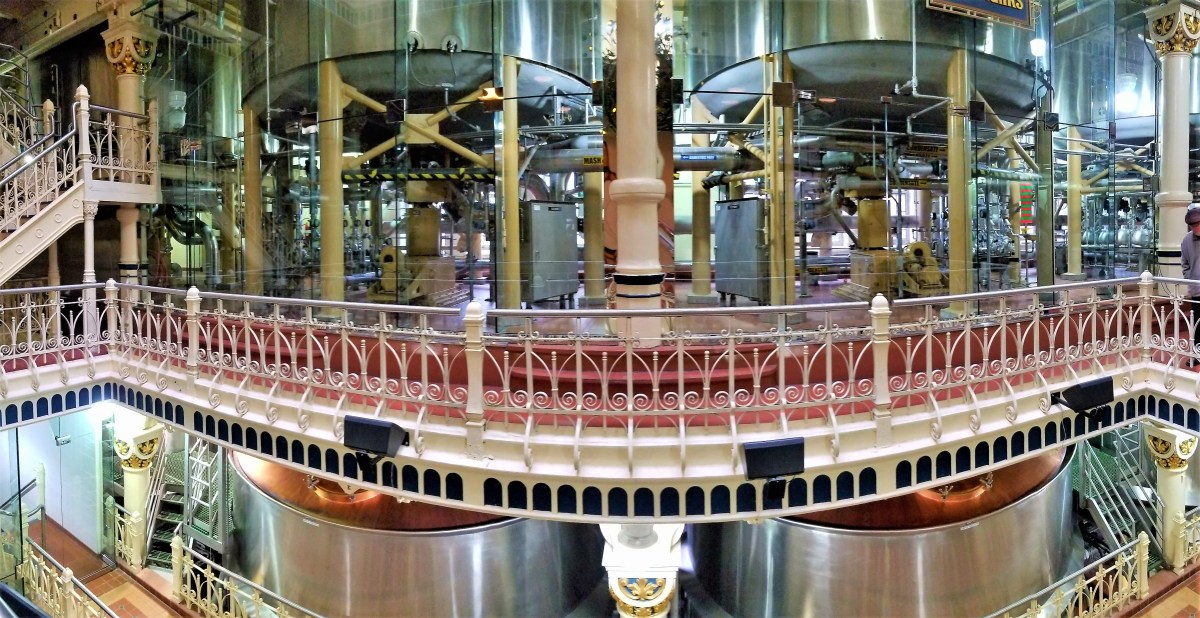
Mash House

And three hop vine chandeliers from the 1904 Worlds Fair were dangling from the five-story ceiling.

hops lite

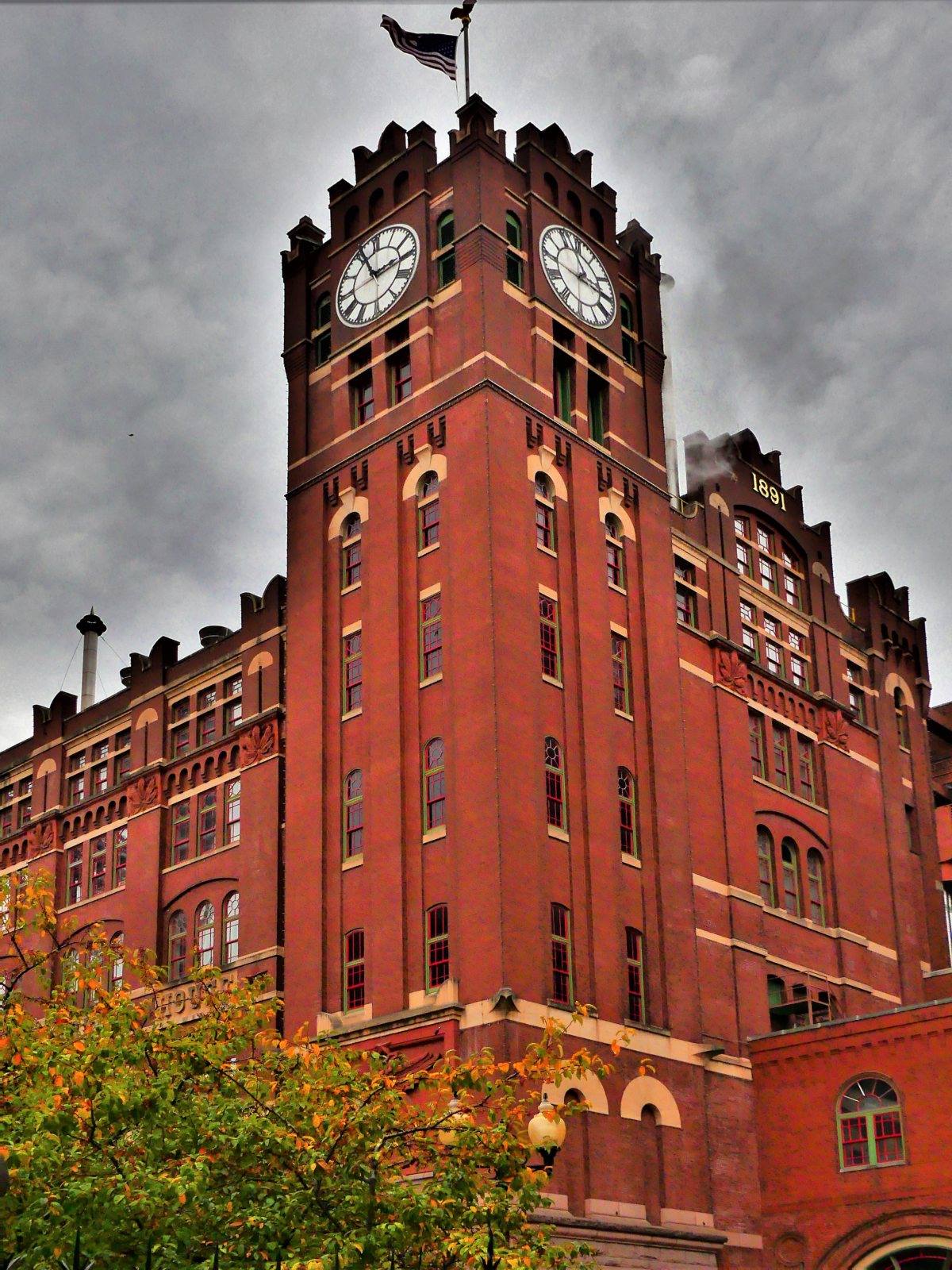
Then it was outdoors again, this time near the clock tower–the second most photographed structure in St. Louis–
clock tower

where Tim revealed that business as usual during Prohibition years depended on the sale of Brewers yeast and a non-alcoholic malt beverage concoction.

“Any last questions?” intoned Tim.

I glanced at my watch, and true to form, it was 3:55 pm. We were precisely at the 45-minute mark, but something wasn’t right. I pointed to the tower, and got Tim’s attention. Here was my last chance to stump Tim.

“Hey Tim, did I miss daylight savings time, or did the clock master just get ahead of himself?” I surmised.

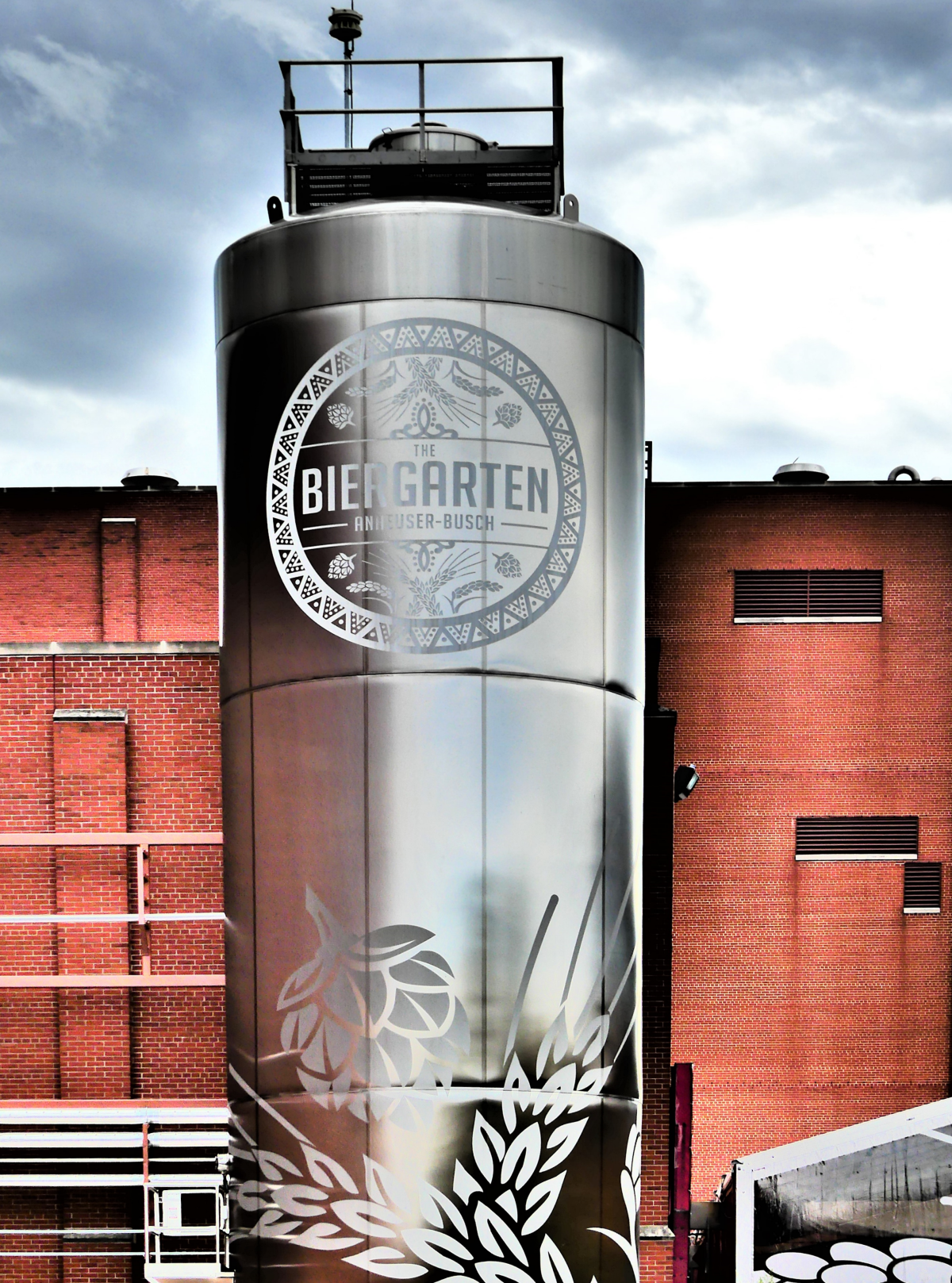
Tim looked at the tower clock and hesitated. “Well let’s see a minute. The clocks get turned back this weekend, so I’m pretty sure it’s been set in anticipation of the event… Well, that concludes our tour today. However, the best is yet to come, since we’ll now return to the Biergarten where you can redeem your wood token for a ‘cold one’.”
Biergarten

I lingered behind. I wanted another shot of the clock tower.

tower and eagle1 (2)

I finally caught up to Leah inside the Welcome Center, where deep lines had already formed in front of the bar. But another station beyond the crowd had fewer people standing, so that’s where we went. To my surprise, the bartender was drawing Stella into familiar chalices from the tap–my newest favorite, and one of A-B’s newest brands since last year’s merger.

I ran into Tim on my way to an available high-top.

“Quick question, Tim! What’s the significance of the ’33’ on the Rolling Rock bottle?”

“I get that question a lot,” he began, and rattled off, “Rolling Rock – from the glass lined tanks of Old Latrobe, we tender this premium beer for your enjoyment as a tribute to your good taste. It comes from the mountain springs to you.”

Tim was the real deal, and so was my Stella.

P.S. When editing photographs for this post, I compared the meta-data between the clock tower shots. Even though the two were taken 5 minutes apart, the times on the clock were exactly the same. Final analysis: THE CLOCK IS BROKEN!


American Kitsch

Years ago, Dennis Miller–when he was funny–referred to Branson, Missouri as Las Vegas for people without teeth. Twenty years later, Miller’s revelation still hits the mark, despite the advent of implants and veneers.

While attending a sold-out concert featuring the Oak Ridge Boys at the Mansion Theater,

Oak Ridge Boys1 (2)

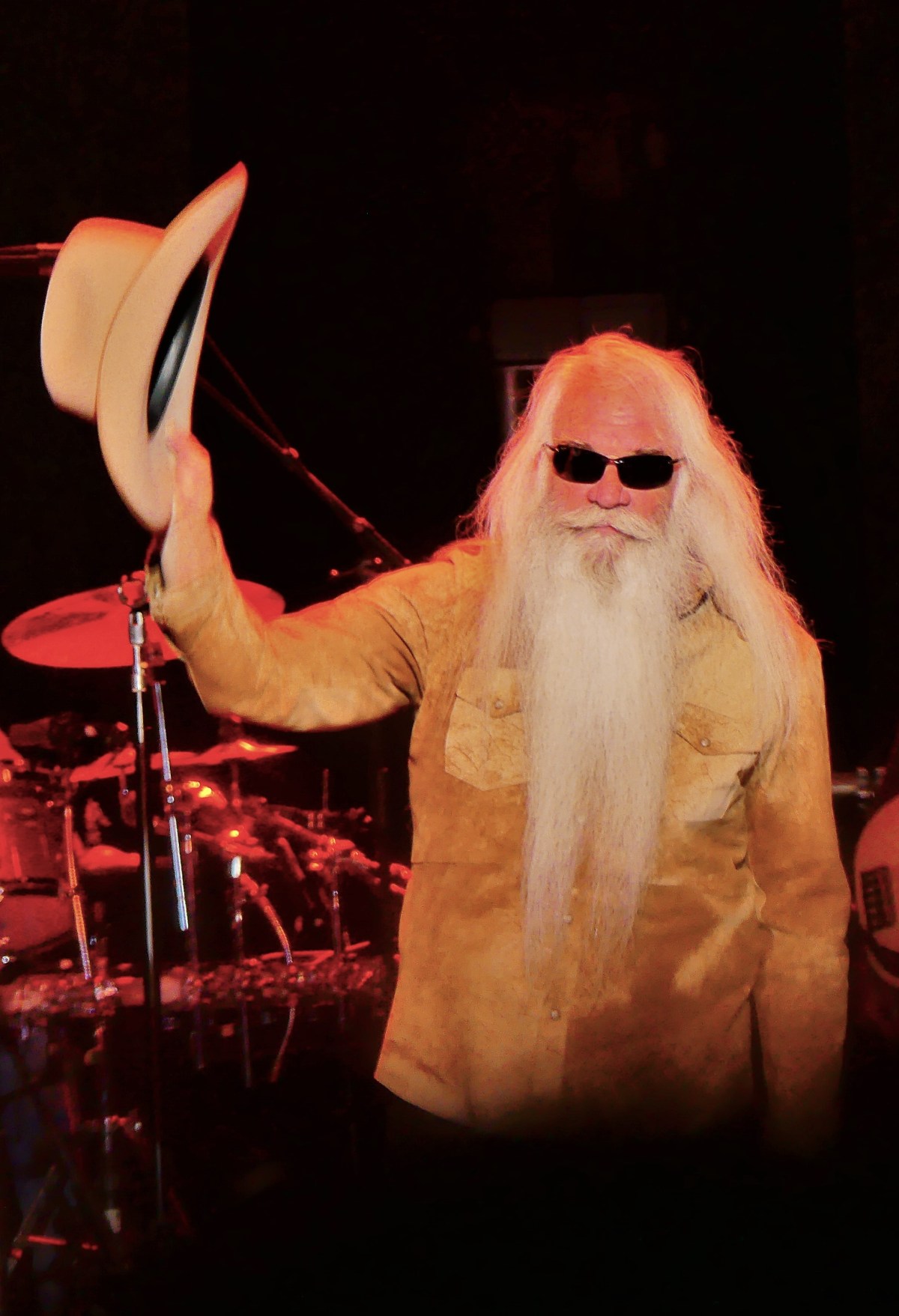
it was hard not to notice the adoration of a graying audience. Women wearing shades of autumn-colored hair to complement their leopard print outfits seemed to swoon through an earnest and sincere set of gospel-laced ballads and patriotic country-swing tunes, while their stoic significant others, coiffed in their stiff anywhere/anytime cowboy hats, eventually removed them, perhaps taking a cue from William Lee Golden during his performance.

‎ORB William Lee Golden

Upon returning to the parking lot after the show, we noticed how haphazardly most vehicles were parked, with little regard for lane assignments. It could have been a freeze frame from a demolition derby. Few could recall where they parked their trucks or SUVs, so collectively pressing the alarm buttons on their keys produced a cacophony of blaring horns and flashing headlights that continued to frustrate a clueless crowd.

Of course, things are no better on the roads. The yellow, blue and red routes always appear to be congested, because drivers can’t get out of their own way, and nobody knows where they’re going. Unfortunately, turn signals are no more than car decoration.

Or maybe the sites on the edge of the road are so compelling that traffic snarls are to be expected.

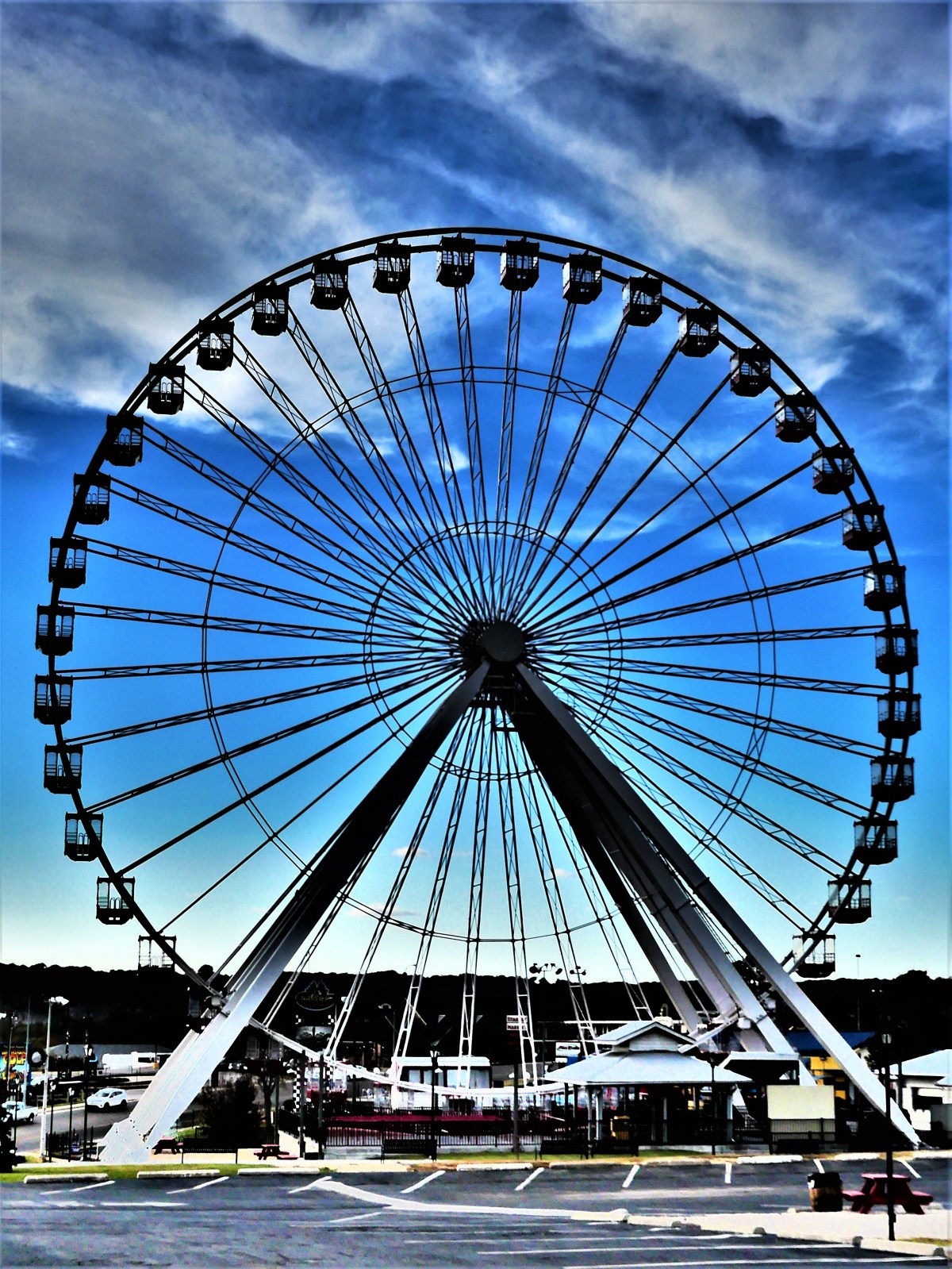
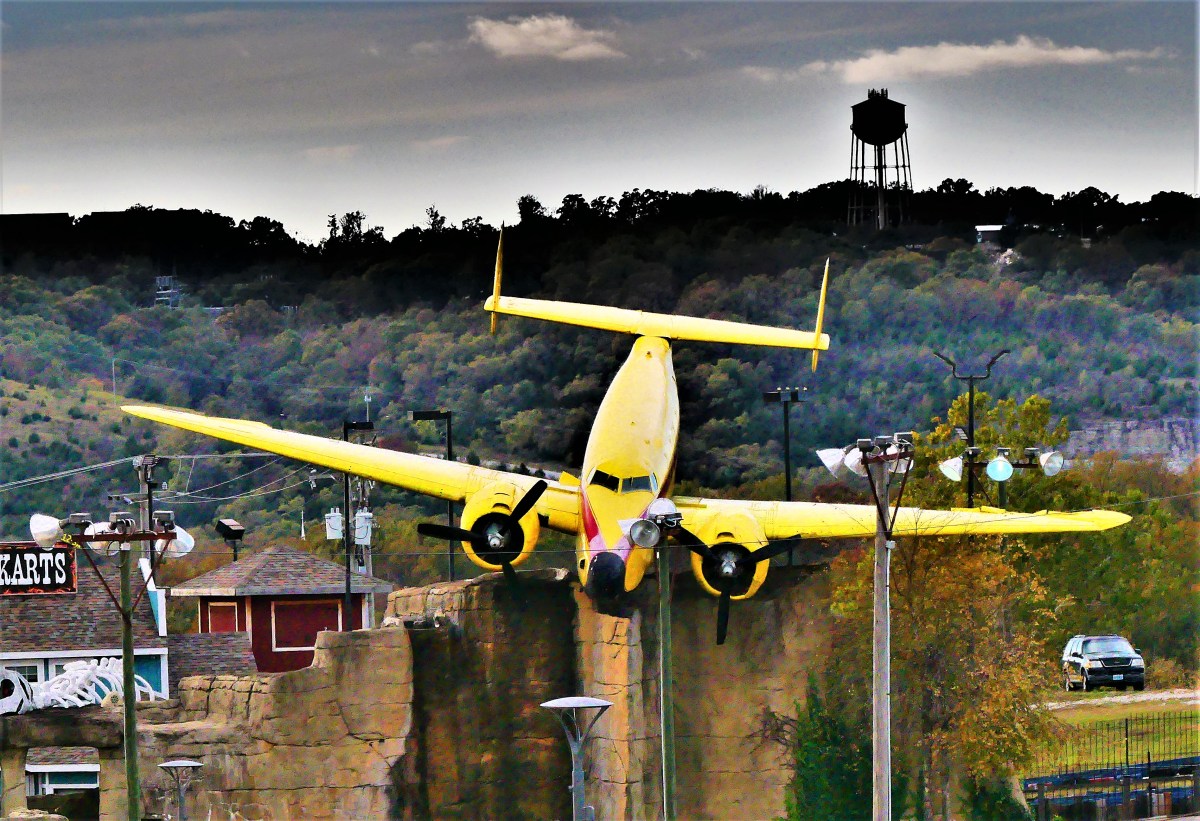
What follows is a sampling of some of the roadside attractions that caught my attention.

ferris wheel

fork and meatball

King Kong

plane

Titanic

Ripley's

chicken dinner

P.S. We found our truck in the Mansion lot, and found our way back to the Airstream, but it took forty minutes to travel four miles.


Eureka!

A stopover in Eureka Springs, AR along the way to Branson, MO produced some Eureka! moments and other assorted revelations.

For one, there are seventeen registered churches in Eureka Springs, ministering to two thousand healing hearts and souls around town, plus a Tibetan Buddhist temple and an integrated monastery of celibate brothers and sisters.

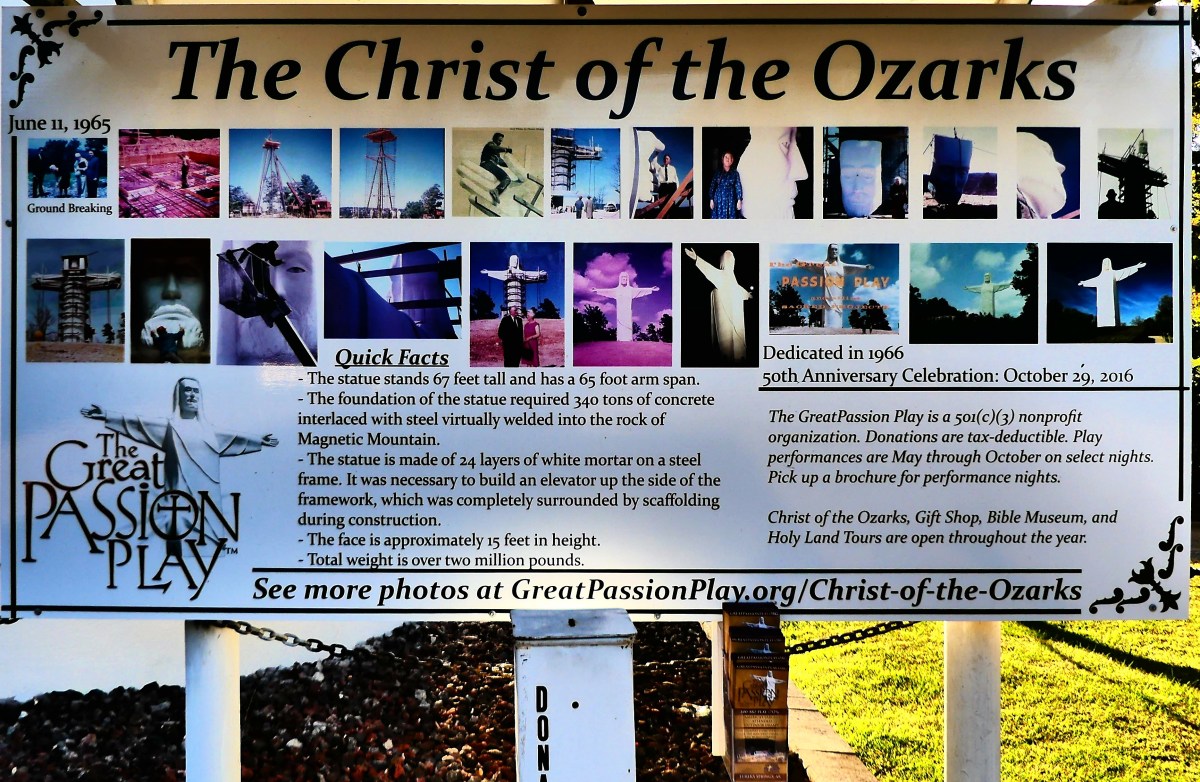
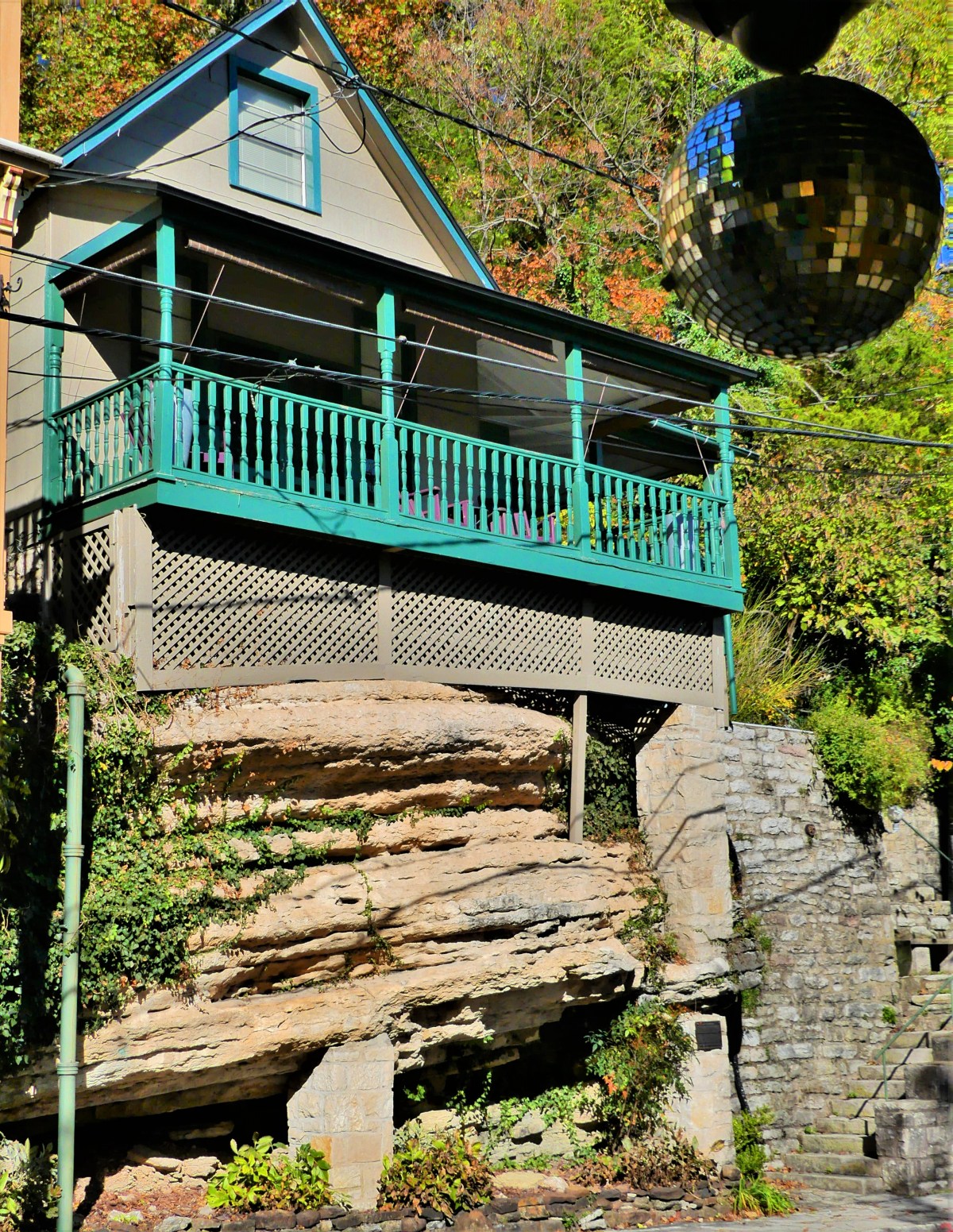
Religious overtones are also pervasive throughout town. Our Airstream was parked along Passion Play Rd., above the hallowed hollow where The Great Passion Play’s dramatic reenactment of the last week of Jesus Christ is the #1 tourist attraction in the area, and The Christ of the Ozarks rises nearby, hovering above the dense woods of Magnetic Mountain.

Jesus of the Ozarks

Christ sign

Big Jesus side view

Also looking down from town, the Crescent Hotel–recently added to the National Register of Historic Places–delivers luxurious living and salon services, in what’s billed as America’s Most Haunted Hotel.

Historic Crescent Hotel

Crescent Hotel

A fourth-floor lookout…

P1100279

provides familiar views in the distance,

Jesus over sunset

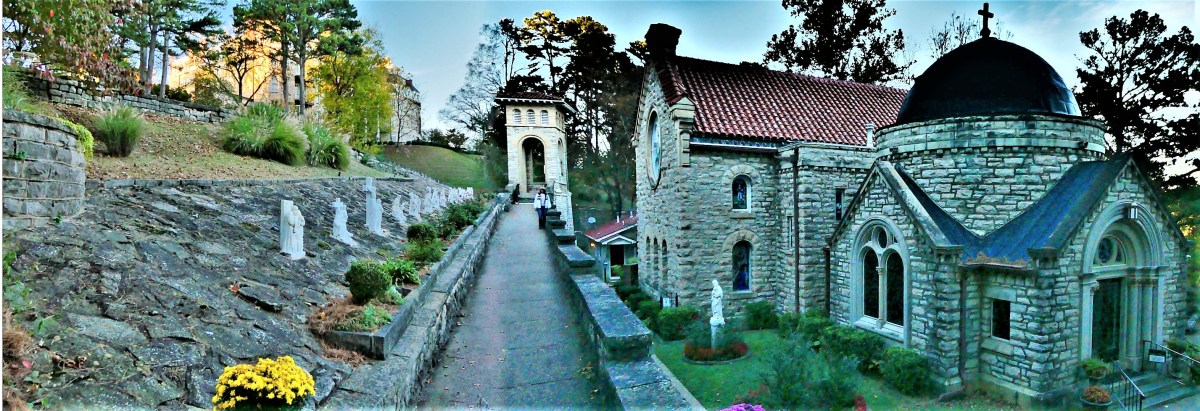
and an overlook of St. Elizabeth Catholic Church of Hungary–listed in Ripley’s Believe It or Not as the only church in America with entry through the bell tower.

St. Elizabeth Church1 (2)

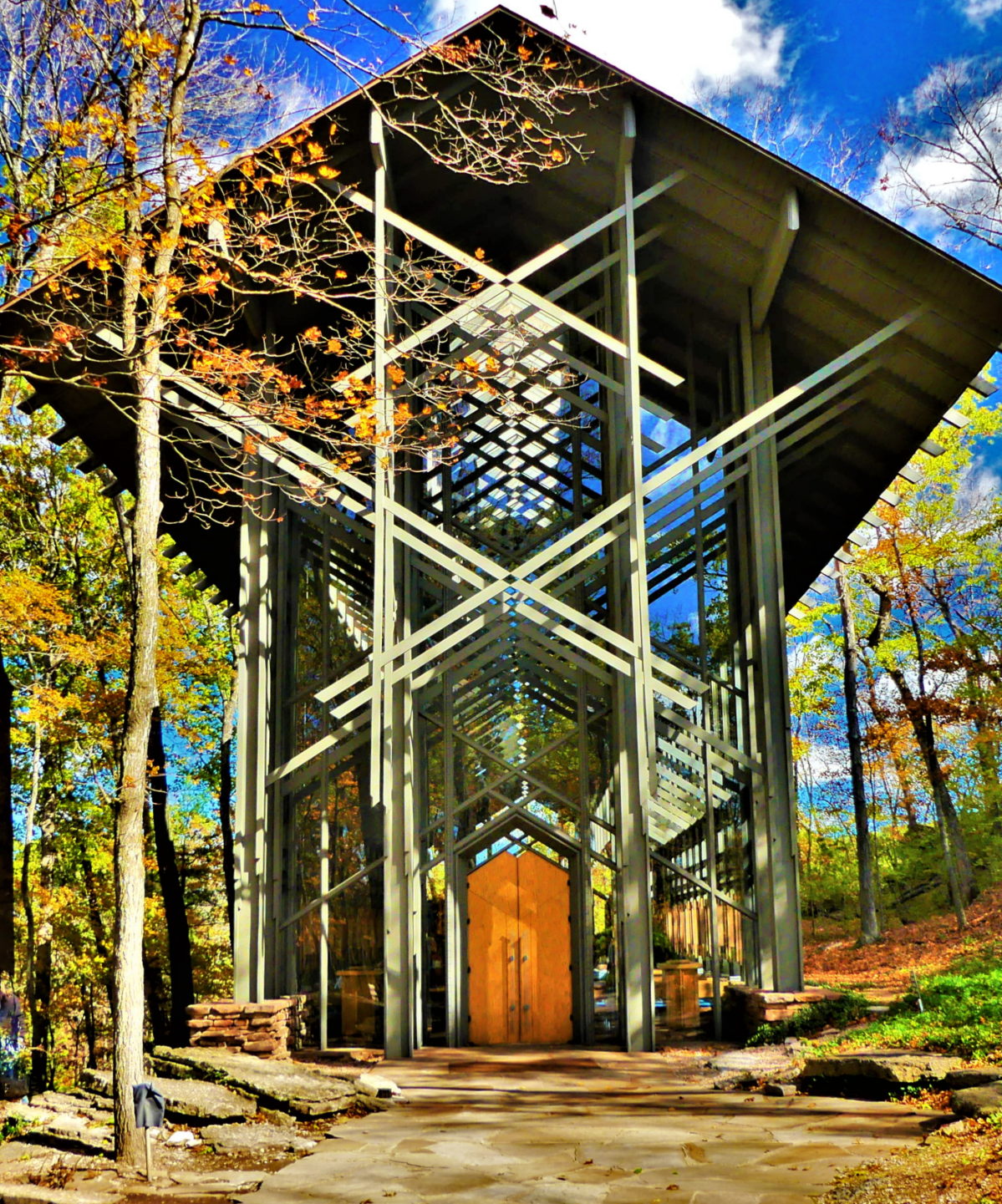
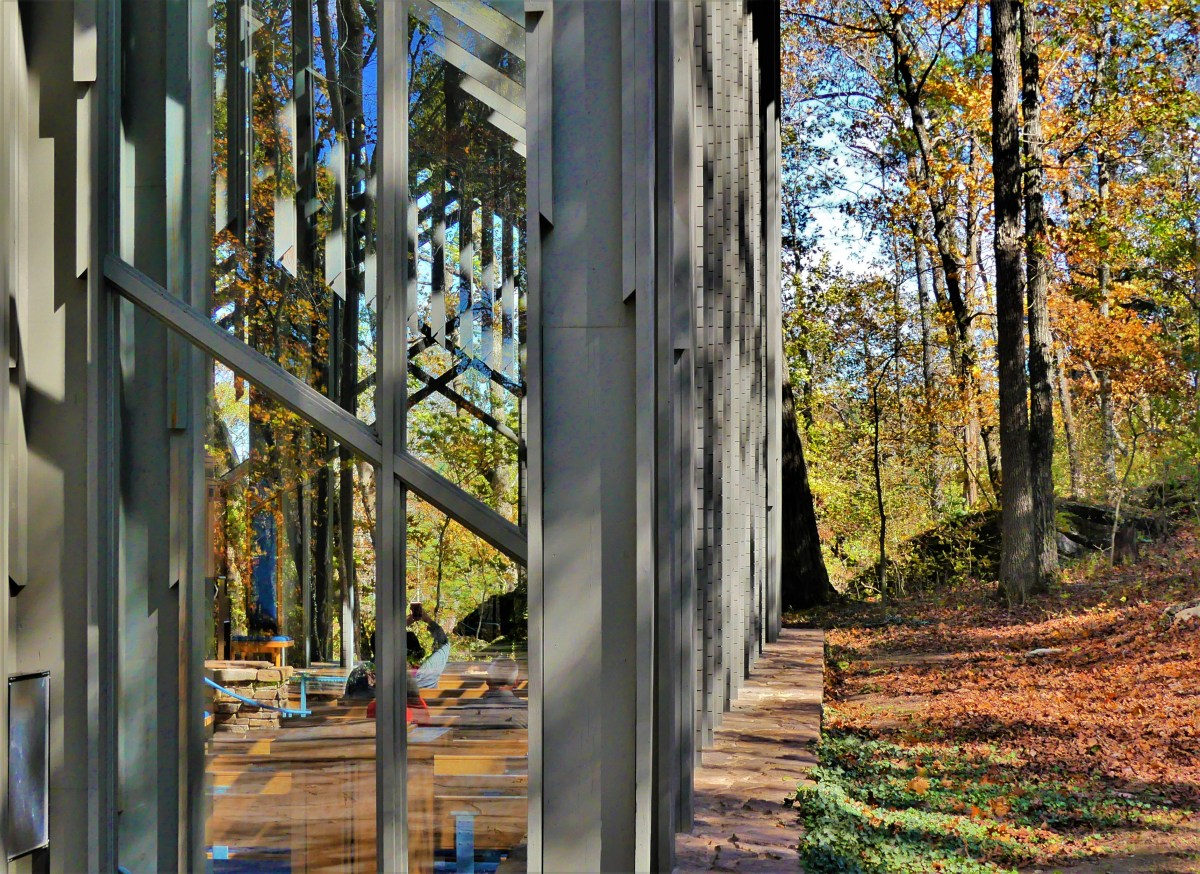
Stunning religious “art-chitecture” can also be found at the Thorncrown Chapel, a jewel of glass and wood tucked into the hillside atop a ledge of flagstone.

Thorncrown Chapel1 (2)

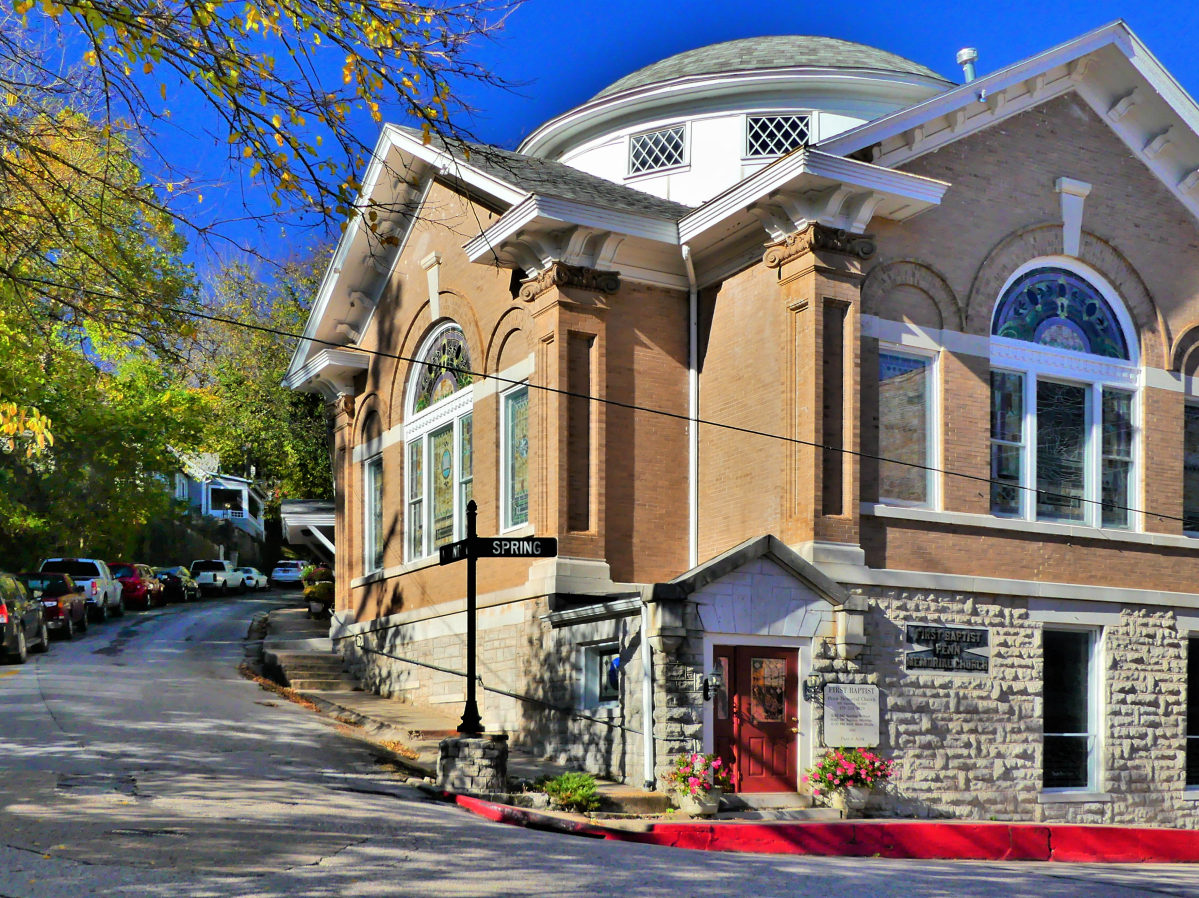
Inside Eureka Springs’ Victorian historical district, the Byzantine-styled First Baptist Church stands at the corner of three intersecting streets with entrances at each of its four levels, giving it four distinct addresses and cause for another Ripley’s entry.

First Baptist Church

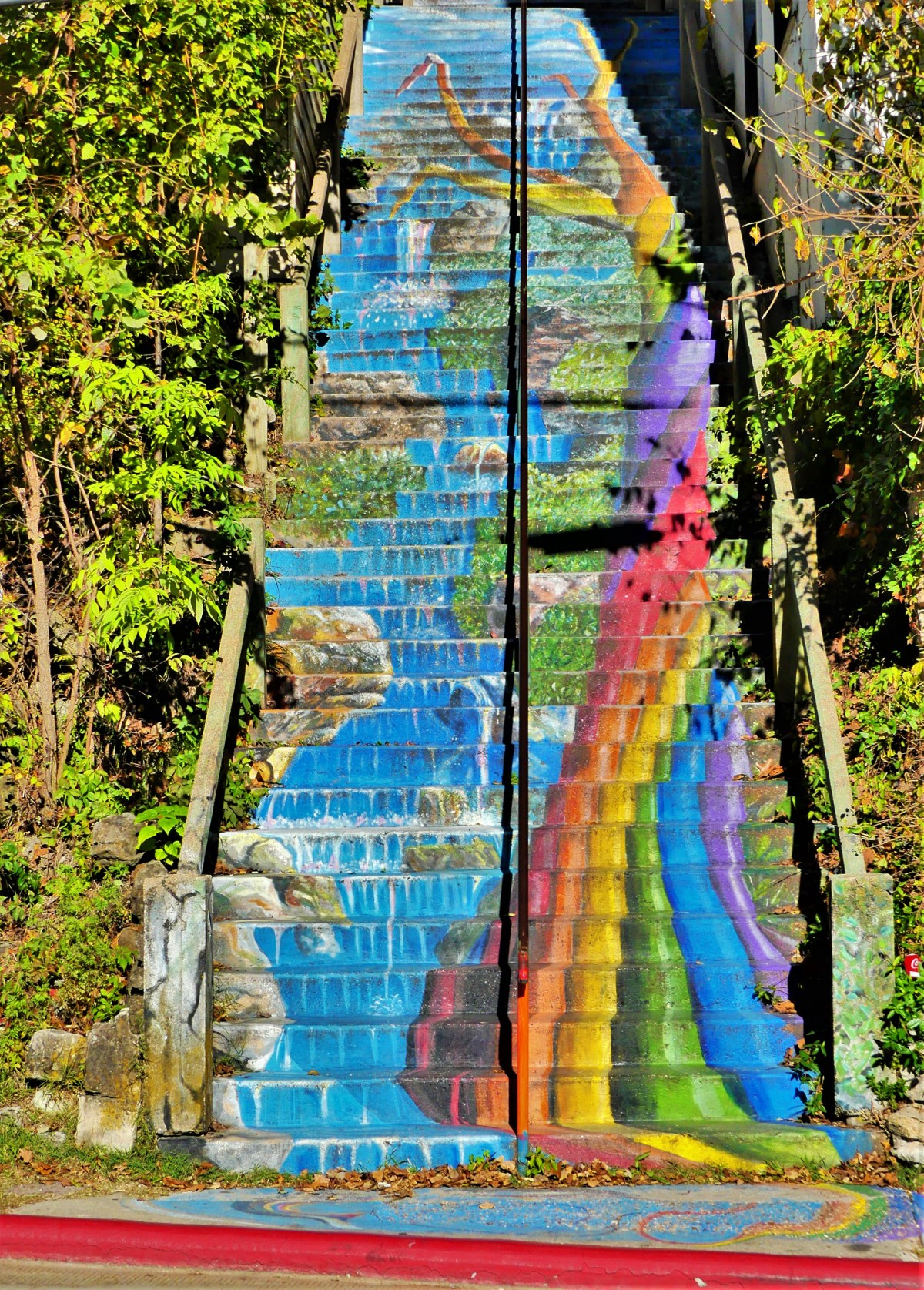
The charm of downtown carries through its narrow winding streets, acute corners, and graded roads of 30% or greater, routinely decorated with accents of fine art…

down the street

Steps to Spring St.

…and frivolity.

Humpty Dumpty gnome

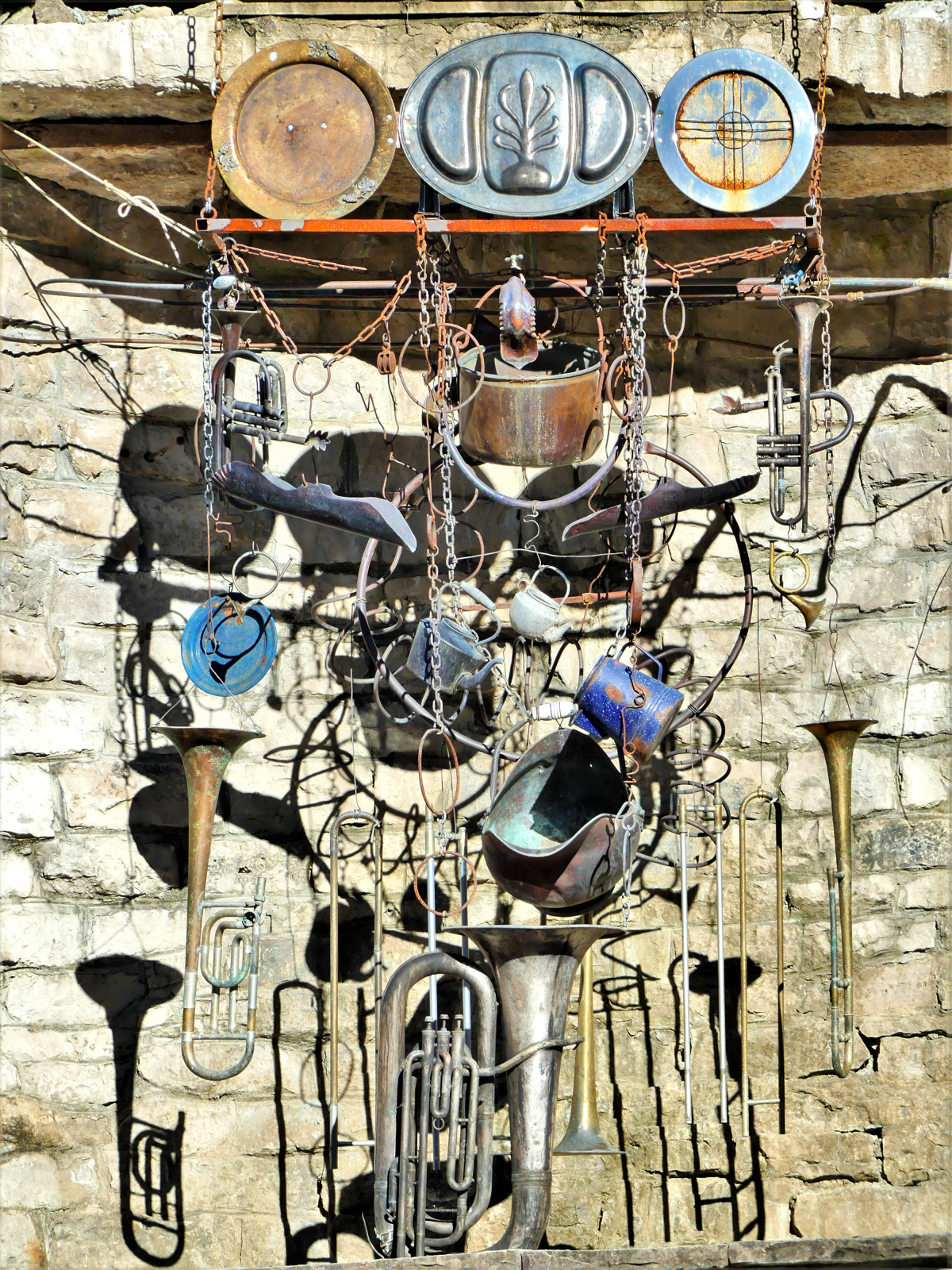
horn orchestra (2)

Eureka Springs came by its name naturally, manifesting no less than sixty-two springs that gushed from the mountainside with so-called healing properties. Its establishment as a resort community during the 1870’s prompted visitors from near and far to “take the waters” by drinking up and soaking in its therapeutic juices.

civil war healing

90% cure rate

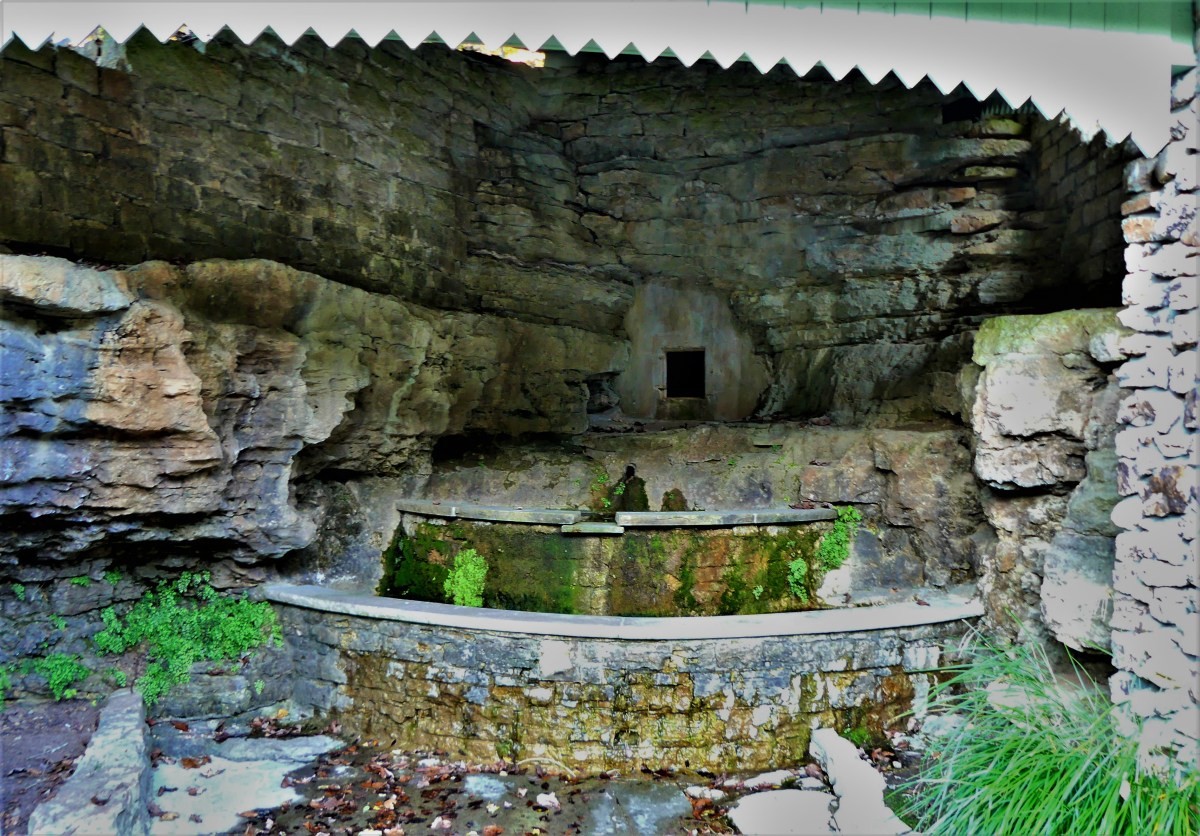
Today, over a dozen springs have been restored to former glory.

Magnetic Spring plaque

Magnetic Spring

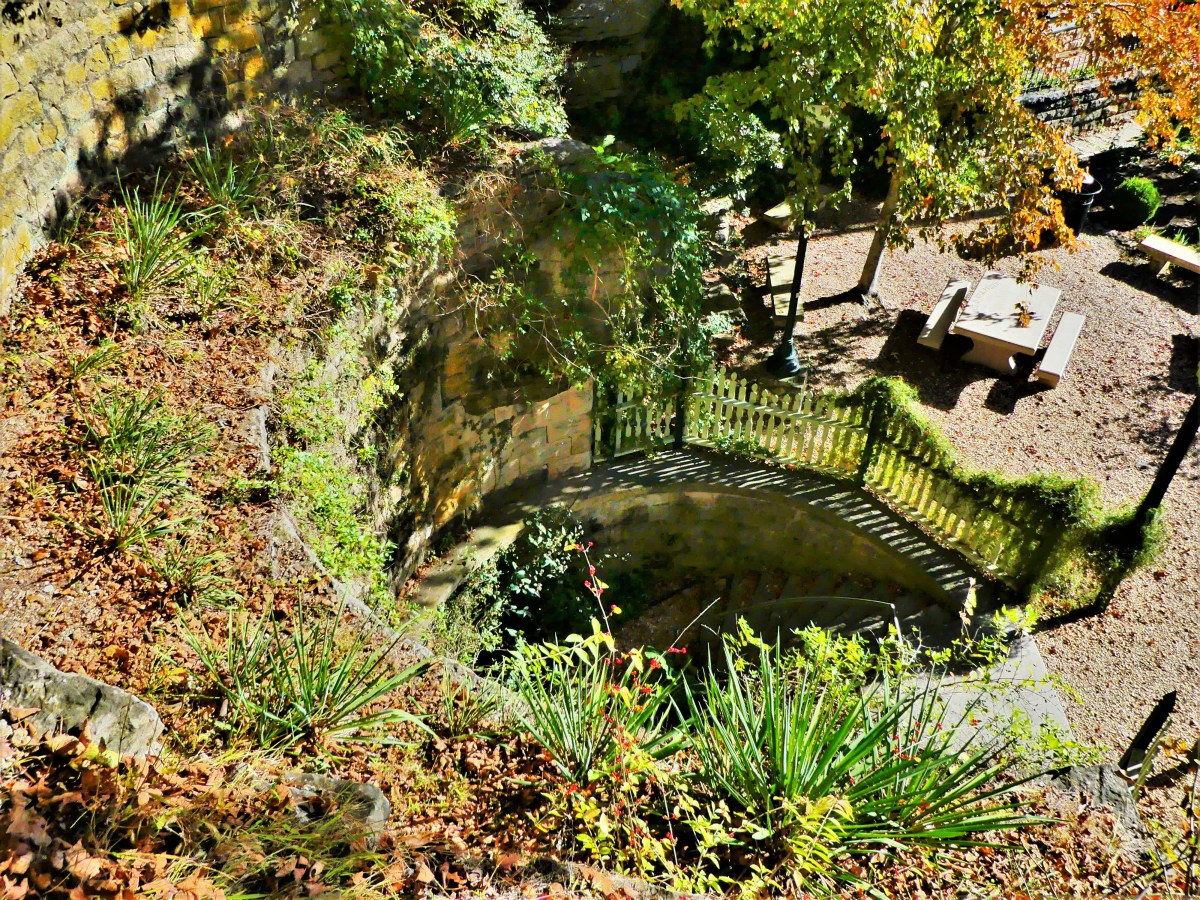
And while the water is no longer potable, the park habitats have given the springs a new lease on life,

Harding Spring

Basin Spring

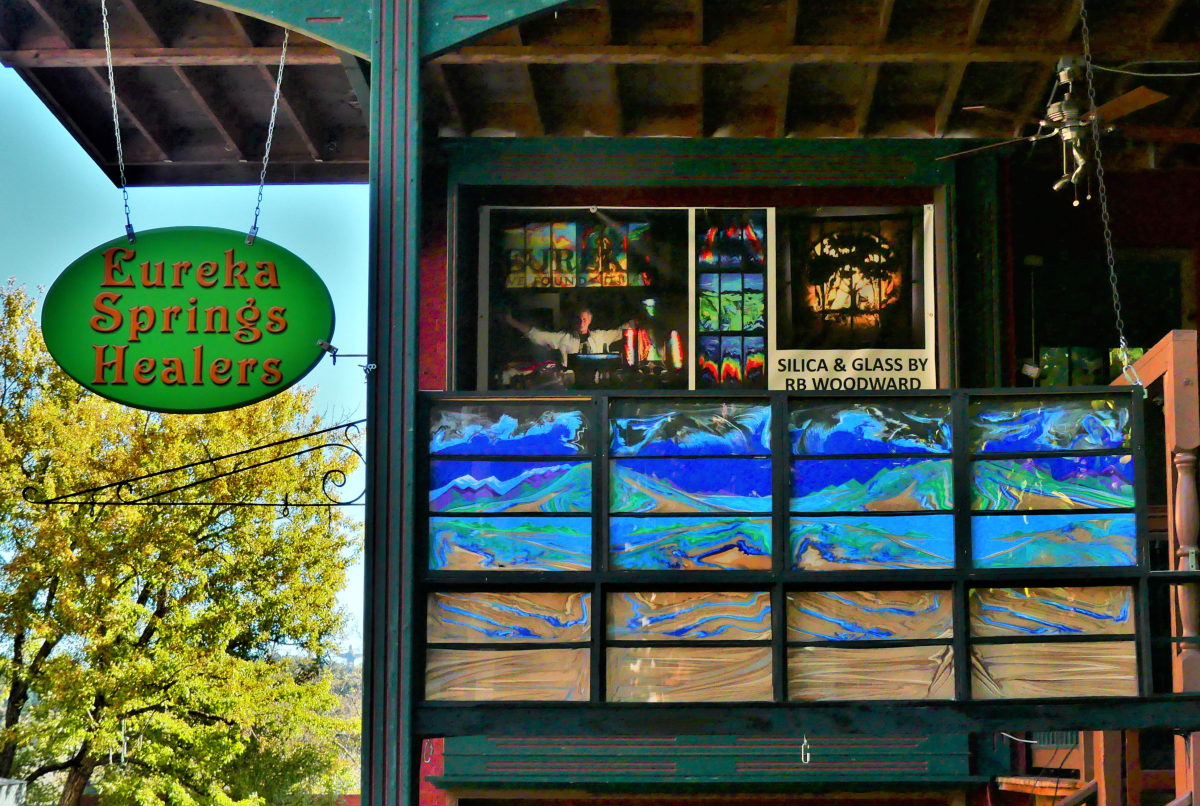
and have renewed the town’s reputation as a popular healing destination,

Eureka Healing (2)

with an emphasis on preserved charm.

County Courthouse

top floor (2)

ball and house

facade

facades.png

Palace Hotel gazebo

Perhaps the biggest paradox of Eureka Springs would have to be the town’s united commitment to all things ghosts and Halloween, given its adherence and roots in Christiandom, while billing itself as “the place” for the best Halloween party in America…

Grand Central Hotel

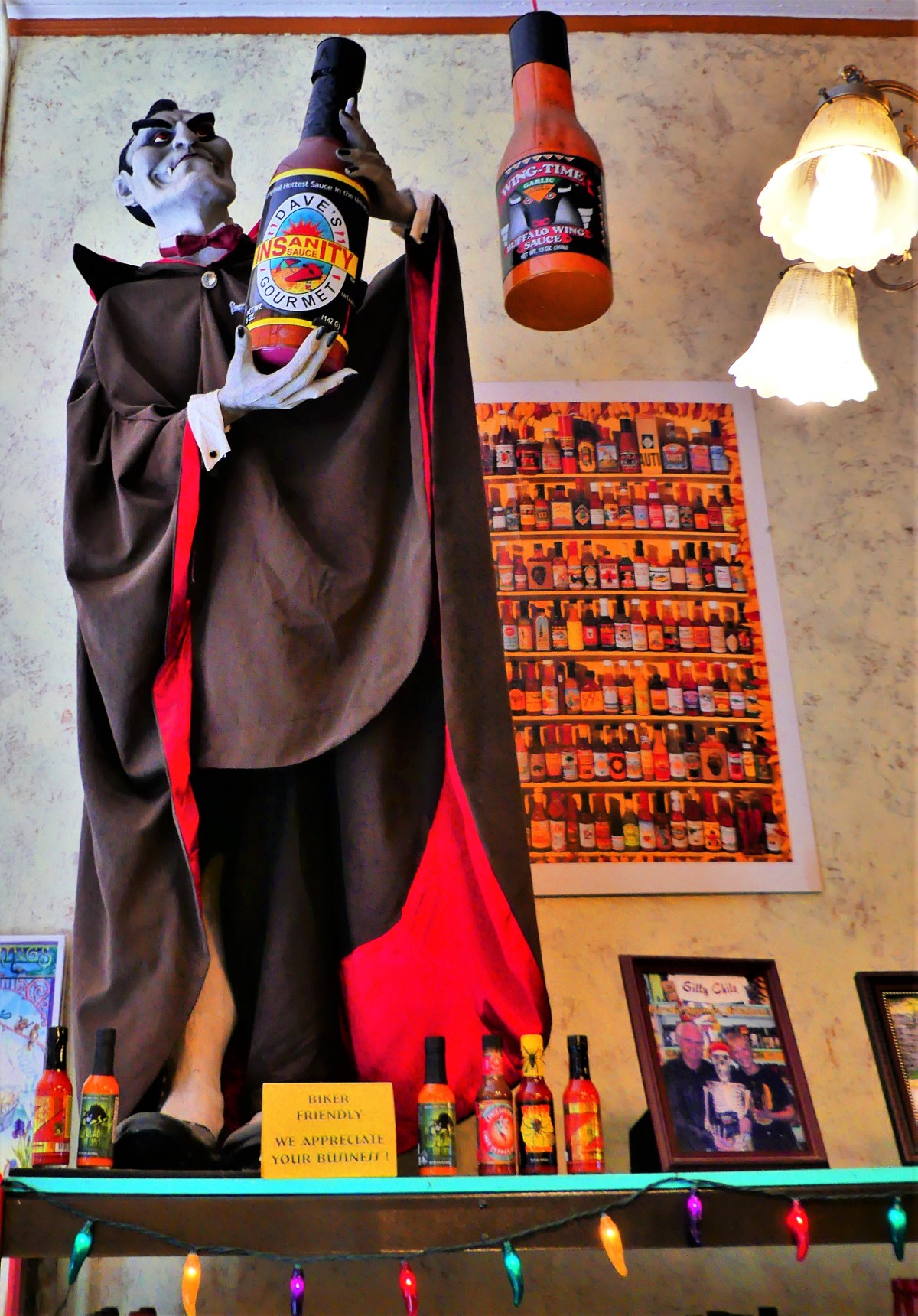
Chile Lily

…breathing spiritual relevance into Euripides’ quote: Money is the wise man’s religion.

Sanctuary

Sanctuary comes in many different forms: as a retreat–a place one goes for guidance and inspiration; as a house of worship–a place to seek spiritual healing and nourishment; and as a refuge–a place to escape misuse or abuse. Within 24 hours, Leah and I managed to come across all three in a small corner of mid-western America.

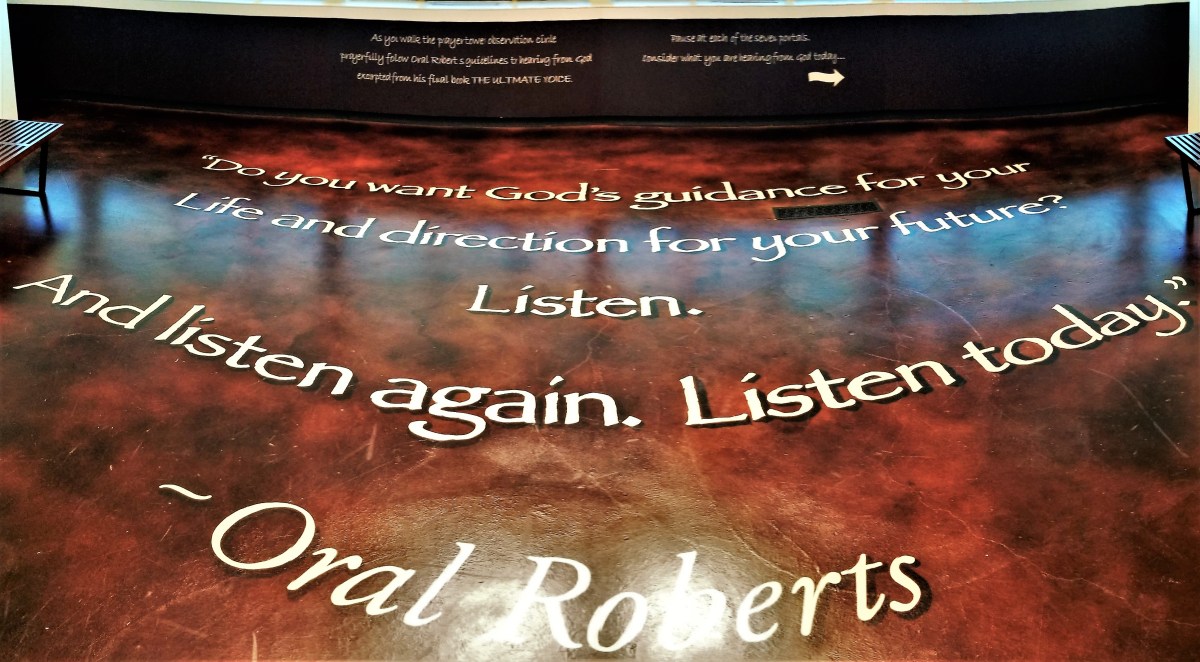
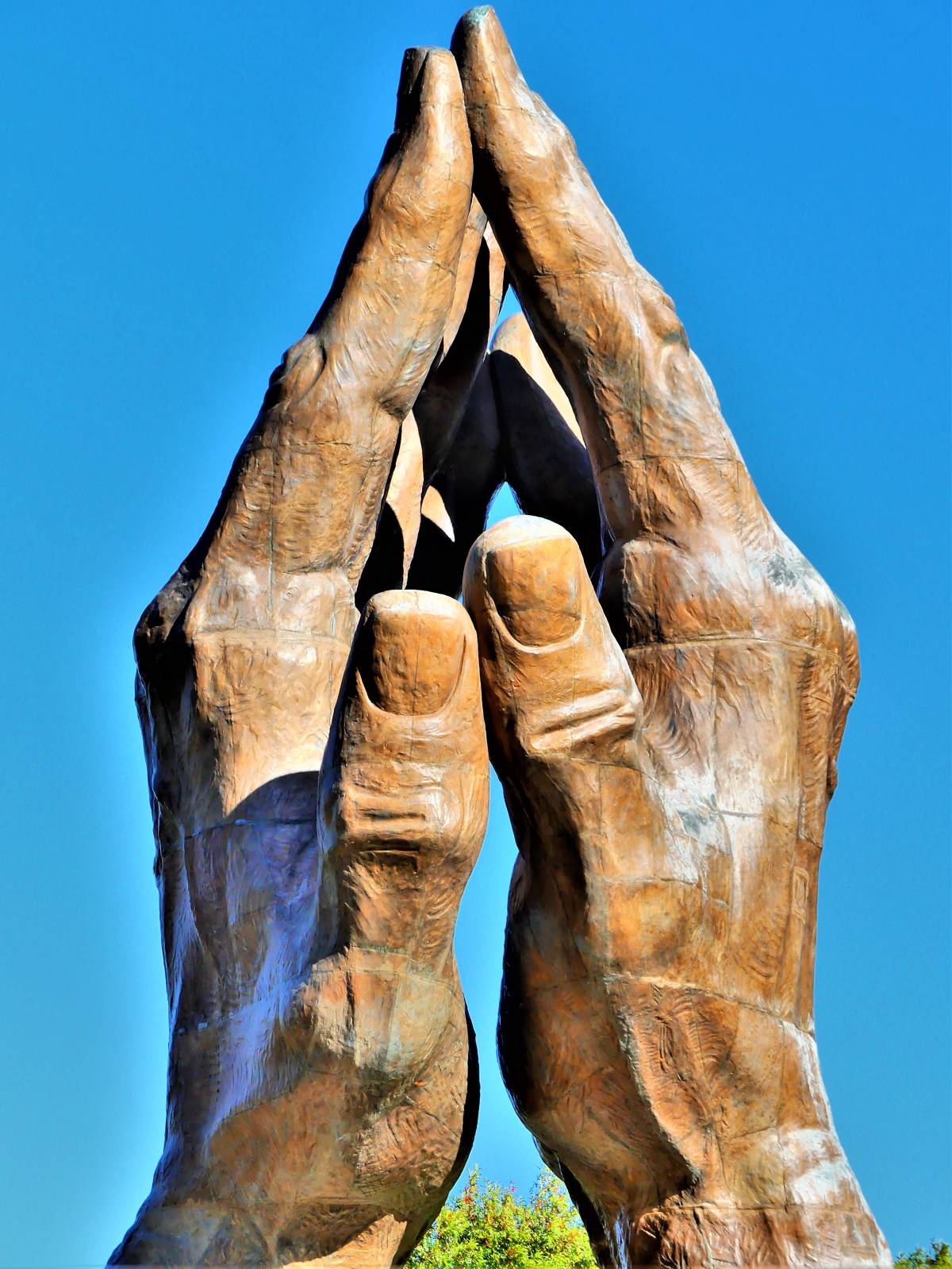
For those searching for faith-based education, Oral Roberts University in Tulsa, OK has a campus fingerprint: Make No Little Plans Here

Make No Little Plans Here

The university’s holistic approach feeds the spirit, mind, and body.

hands1

The university’s futuristic and mid-century modern architecture attributed to Frank Wallace is best appreciated from the flying saucer,

prayer tower

that also passes for an observation deck,

ORU observation deck

and reflection gallery.

OR advice

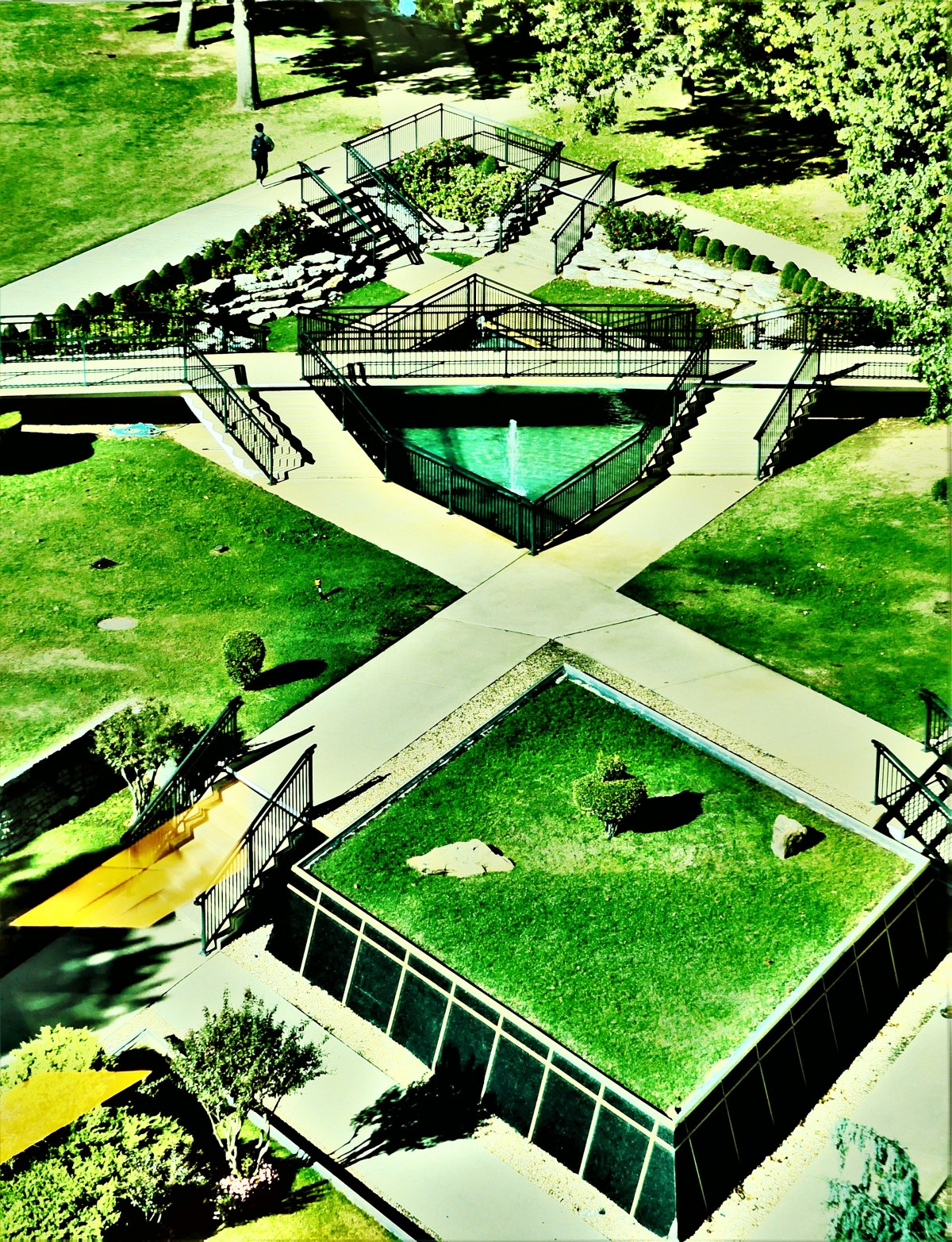
It’s gold-tinted, anti-glare windows colorize the outward views in a peculiar warm bath of Genesis green.

classroom tower

classroom building

auditorium

campus green

And while folded hands may symbolize a deep connection between God and Christianity,

hands of God

…any university coed would easily characterize the statue as a student praying to pass.


Architecture on a higher plane/plain can be found nearby, in the hills of the Ozarks. While no less spiritual in nature, the Thorncrown Chapel is rooted in nature.

entry

An elaborate composition of wooden trusses embracing 425 windows gives an ethereal nod to a scripture and proverb mash-up of not casting the first stone in glass houses.

From the hillside, the chapel seemingly disappears among the flora,

camouflage

and when juxtaposed to the outdoors, the chapel’s transparency is flaunted by its six thousand square feet of glass.

looking outside in

However, the chapel’s connection to nature shines brighter from within the polished maplewood doors,

interior

where an arboretum of beams reaching forty-eight feet to the clouds…

inside out1

can be contemplated and photographed from a distant pew. (Photography is allowed, but only from a sitting position.)

pews and lights

But Thorncrown Chapel is more than a beautiful building. It’s a celebration of Jim Reed’s spirit and vision, and a noble tribute to the glory of his resignation to a higher power.


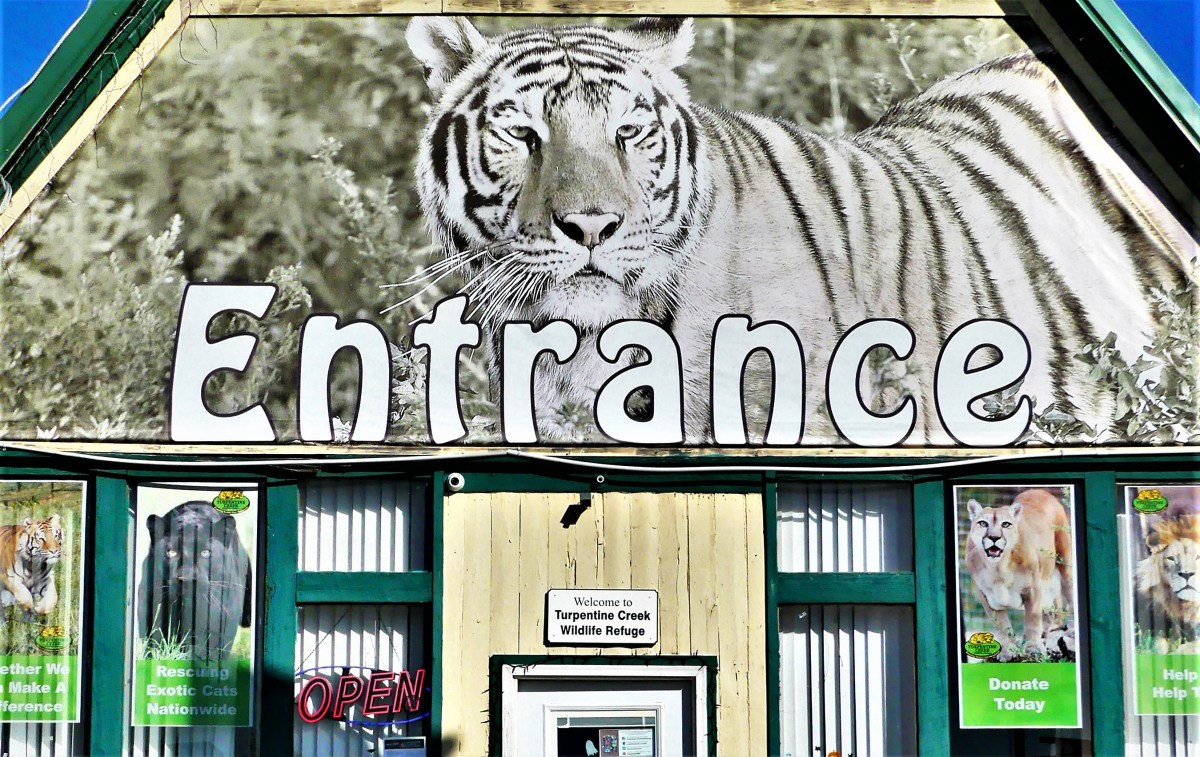
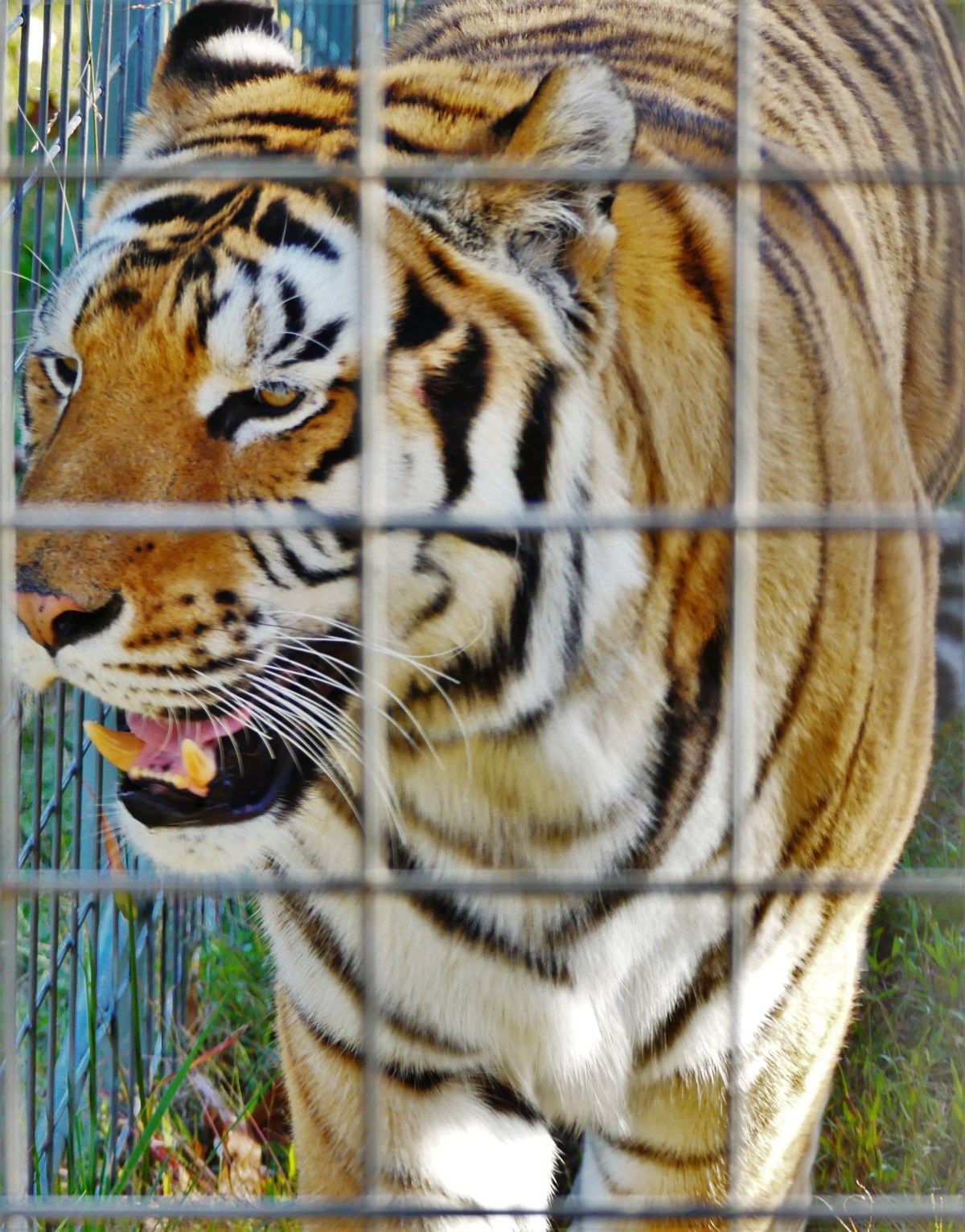
Lastly, eleven miles south, on the edge of Eureka Springs, AK, Turpentine Creek Wildlife Refuge provides shelter and care to abandoned, abused, and neglected wildcats, whose owners have miscalculated the cost and trouble of raising and breeding them in captivity.

entrance1

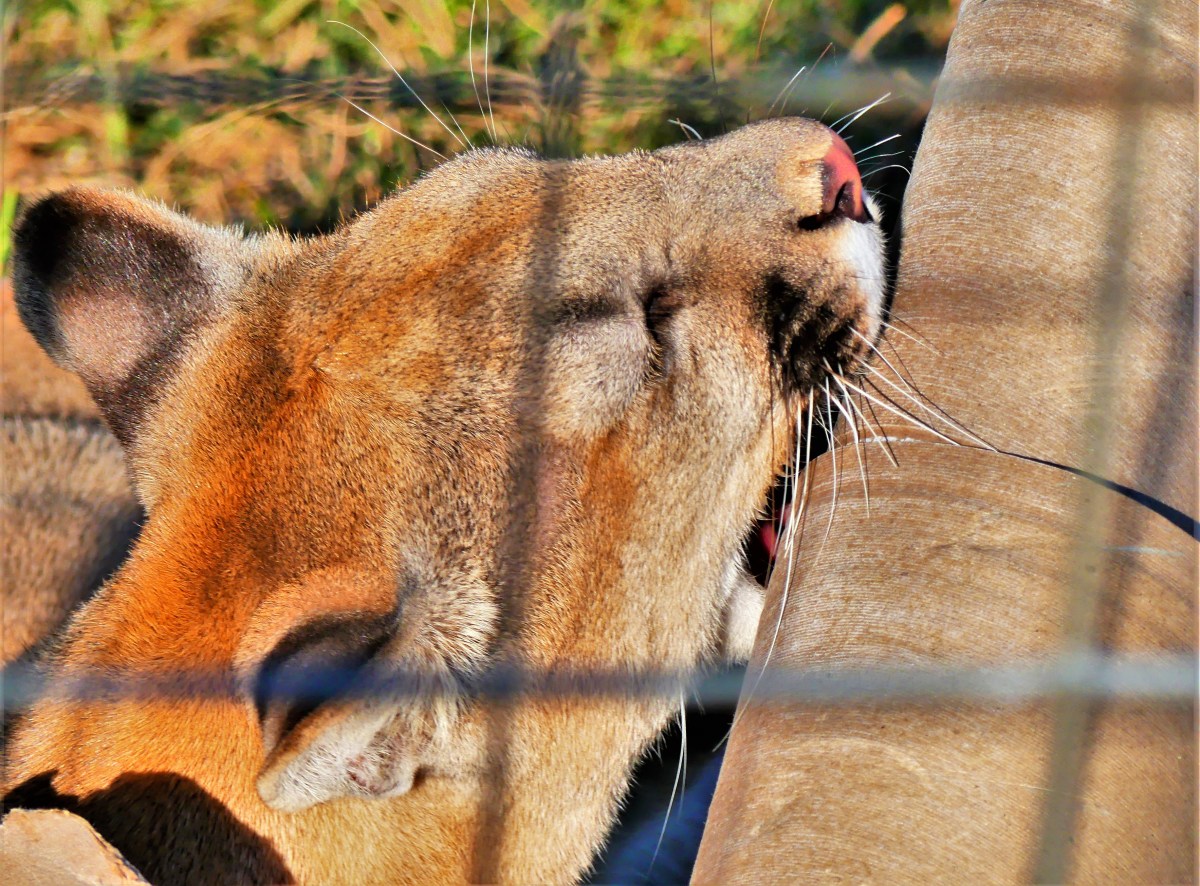
Currently, Turpentine Creek has become a haven to 100 lions, tigers, ligers, and cougars like Nala and Brody.

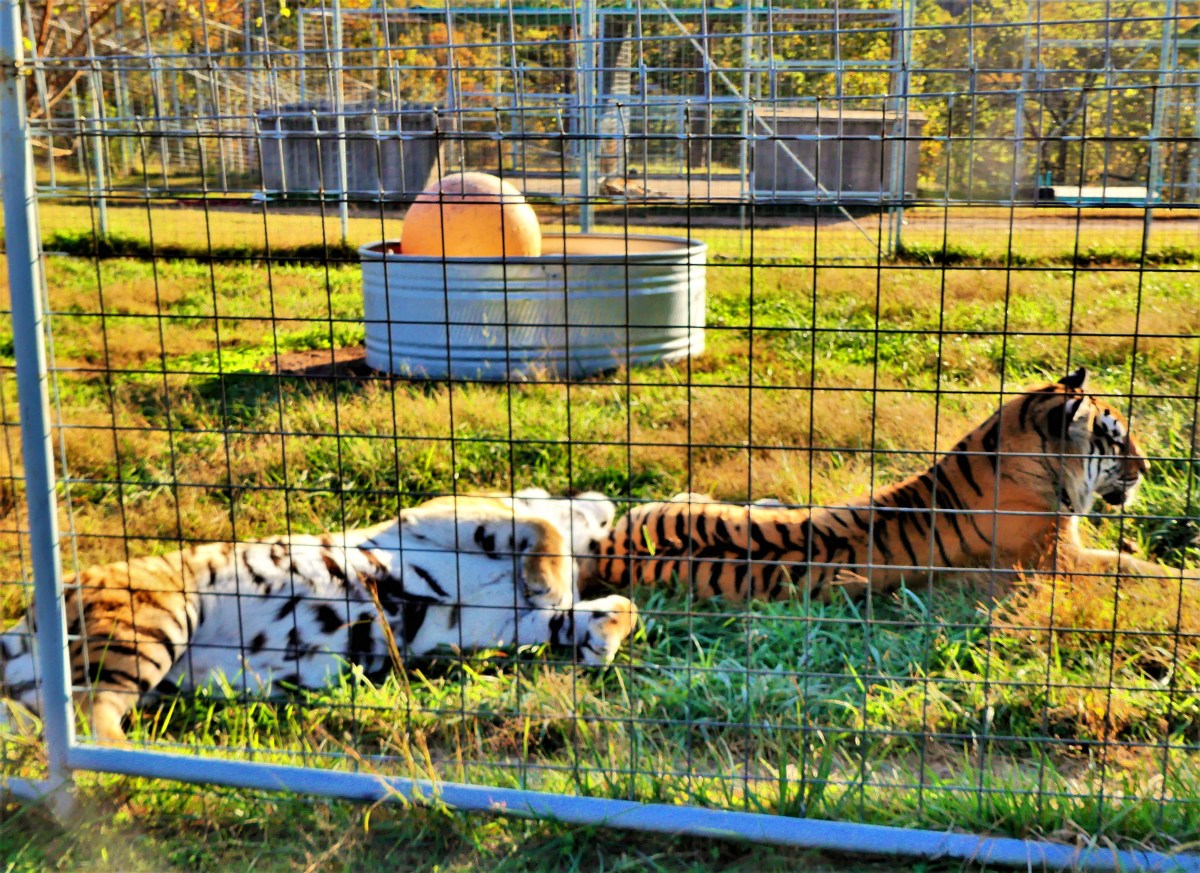
Natural habitats built with benefactor dollars provide asylum to big cats,

2 tiger habitat

who are now free to live out their lives in a protected environment,

2 tigers

while being offered preventative and emergency medical treatment.

tiger repose

These cats cannot be released into the wild,

tiger habitat

as they’ve lost their ability to fend and defend after being declawed by their owners,

cougar gnawing on cardboard tubing

who in their ignorance and arrogance wished to make them less dangerous to handle as one-time pets.

white tiger

Nevertheless, a cadre of volunteers assists a small staff in feeding, cleaning, examining, and behavior-modifying these beasts. Thus, providing each big cat with a humane existence.

Day-to-day operations are assisted through visitor admissions, gift shop sales, and donations by large corporations like Tyson, who feeds the herd 300,000 lbs. of chicken every year.


Sanctuaries of thought, redemption, and protection offer safe places to learn, to reflect, and retire to. Remove anyone of them, and society faces a danger of turning in on itself, further sewing the sleeves of divisiveness.

Better still, offering asylum to the millions of struggling homeless across the country, and persecuted refugees around the world would improve their safety and dignity, and allow more of humanity to participate in their own recovery.

Palo Duro Canyon Tailwinds

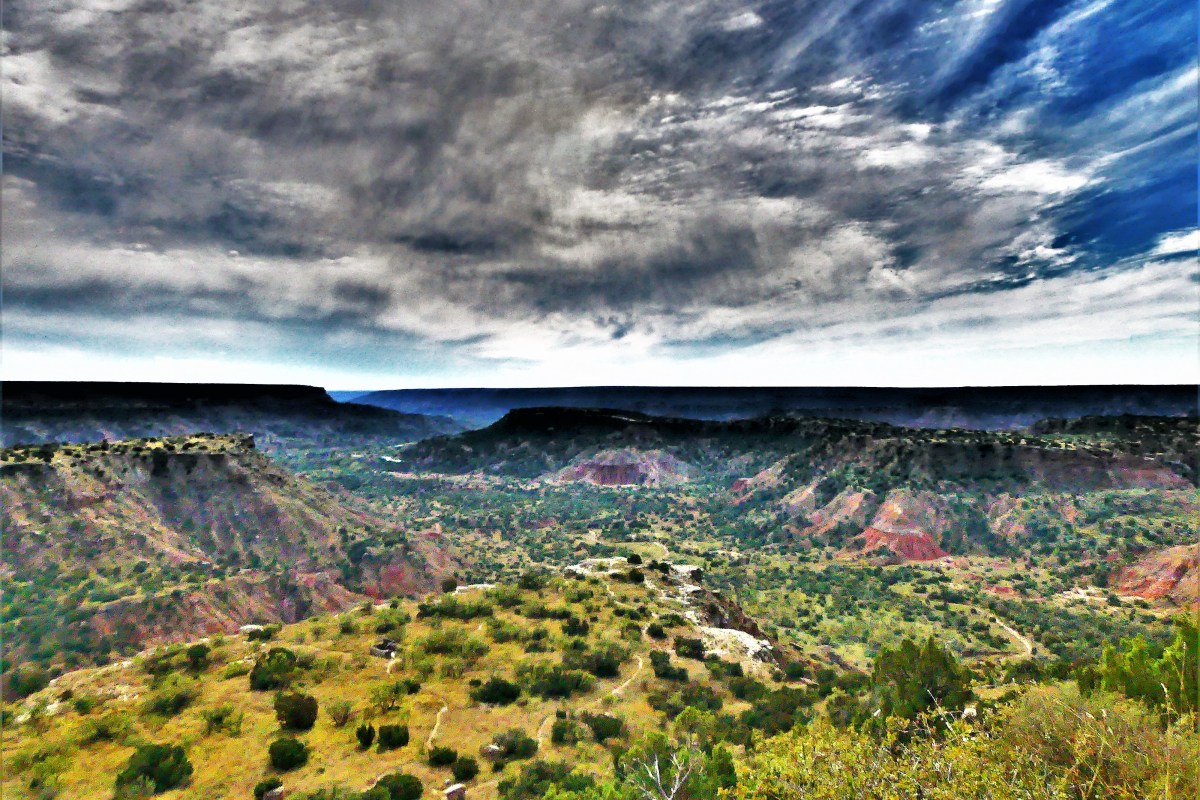
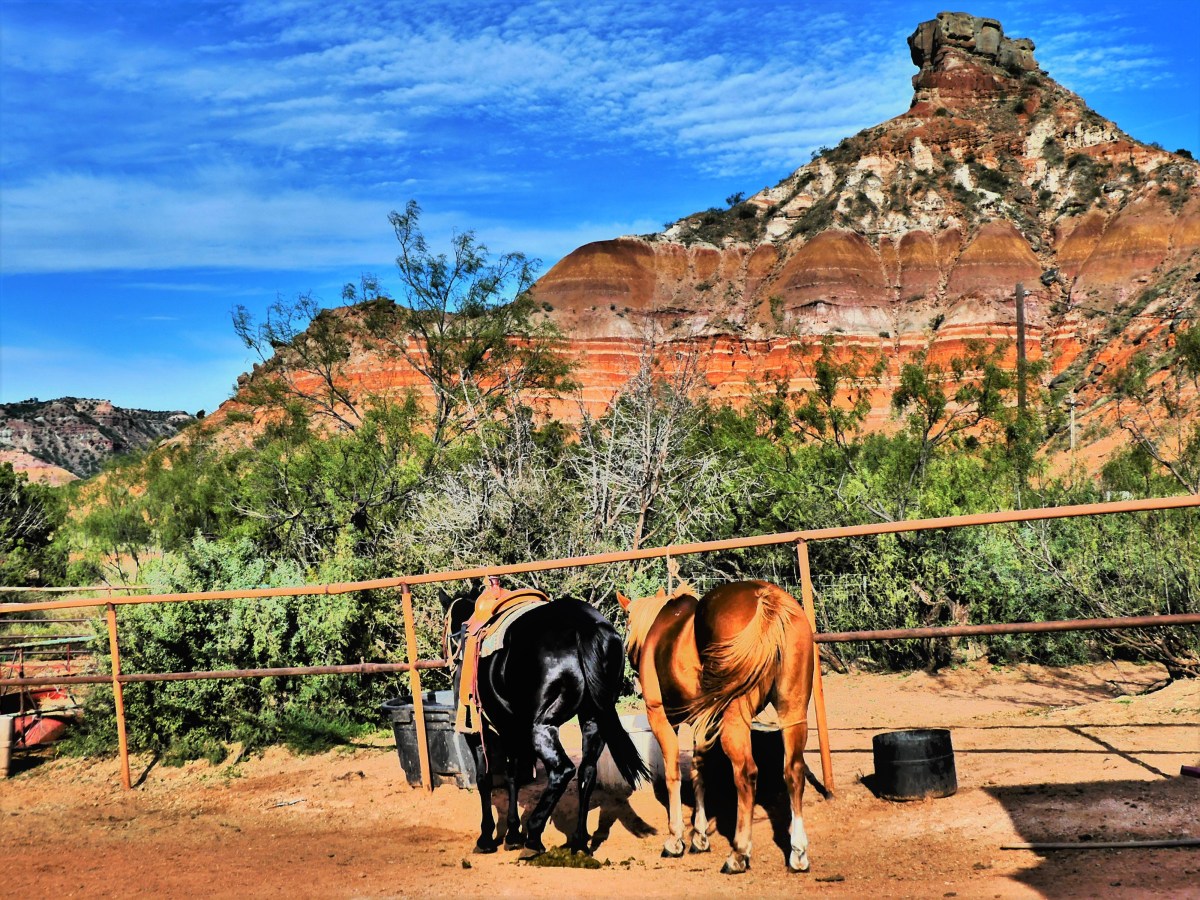
Wouldn’t you know it?! Texas has a Grand Canyon of its own in the middle of its panhandle called Palo Duro. And the best way to see it is from the saddle of a horse while riding at the bottom of the canyon floor.

We’d been wanting to go horseback riding for the past few months, but something always interfered with our plans, or time wouldn’t allow. But Leah was determined.

“If you can ride in a balloon, then I get to ride a horse,” she declared.

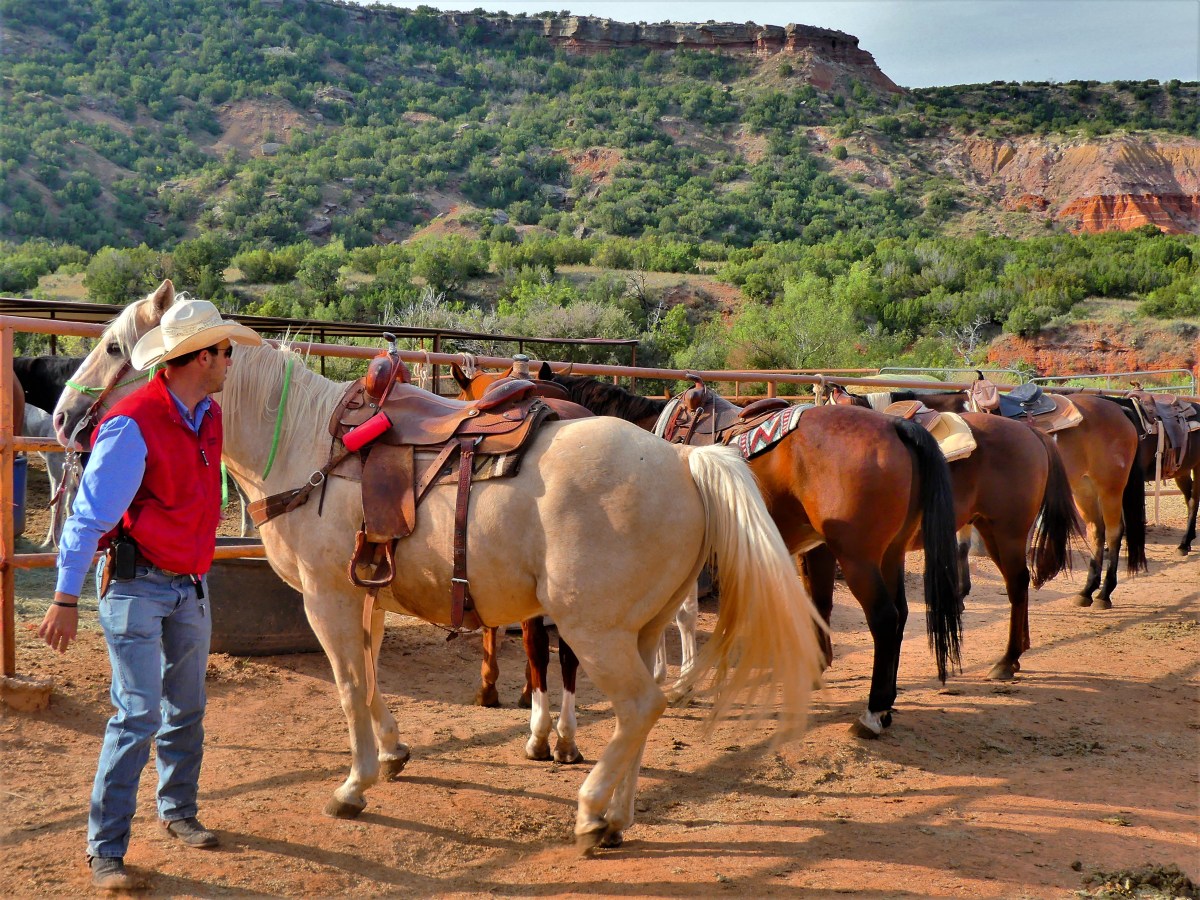
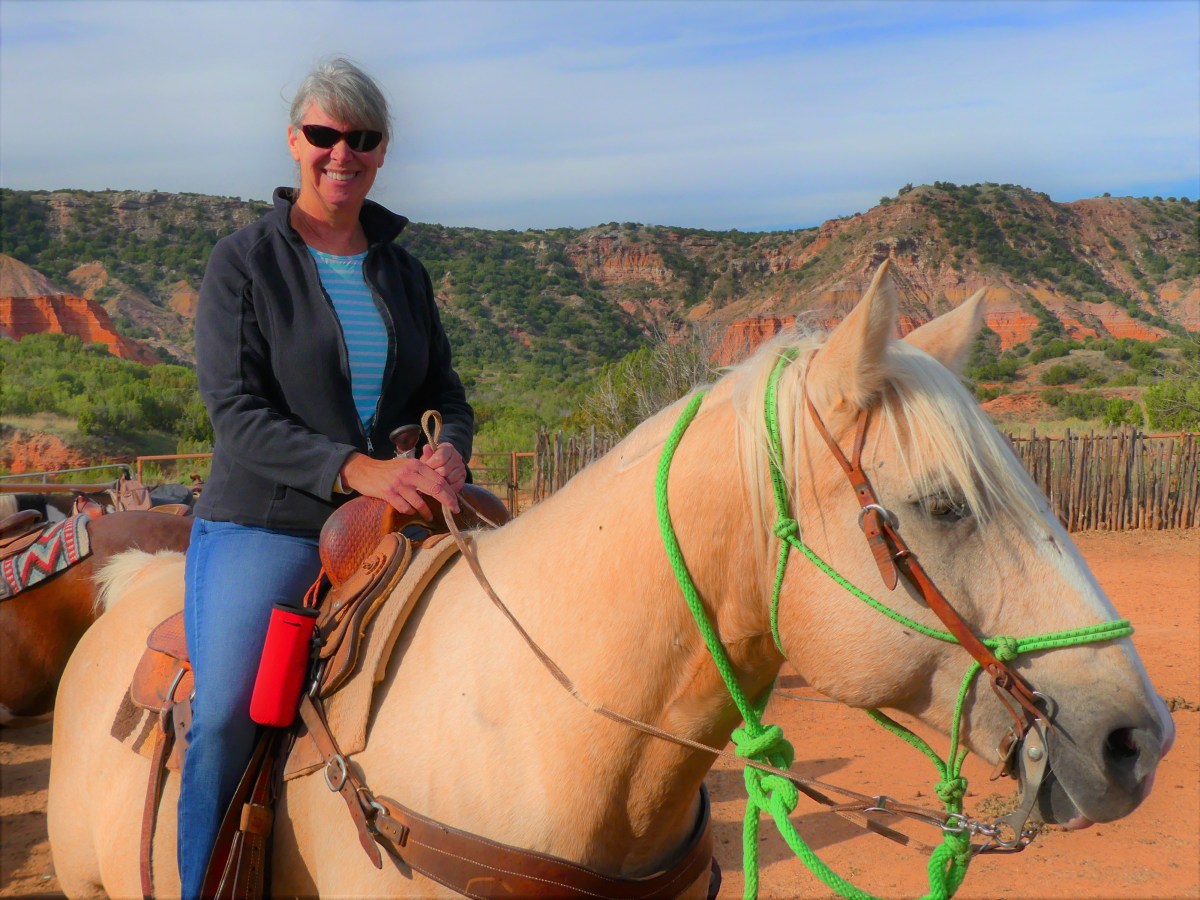
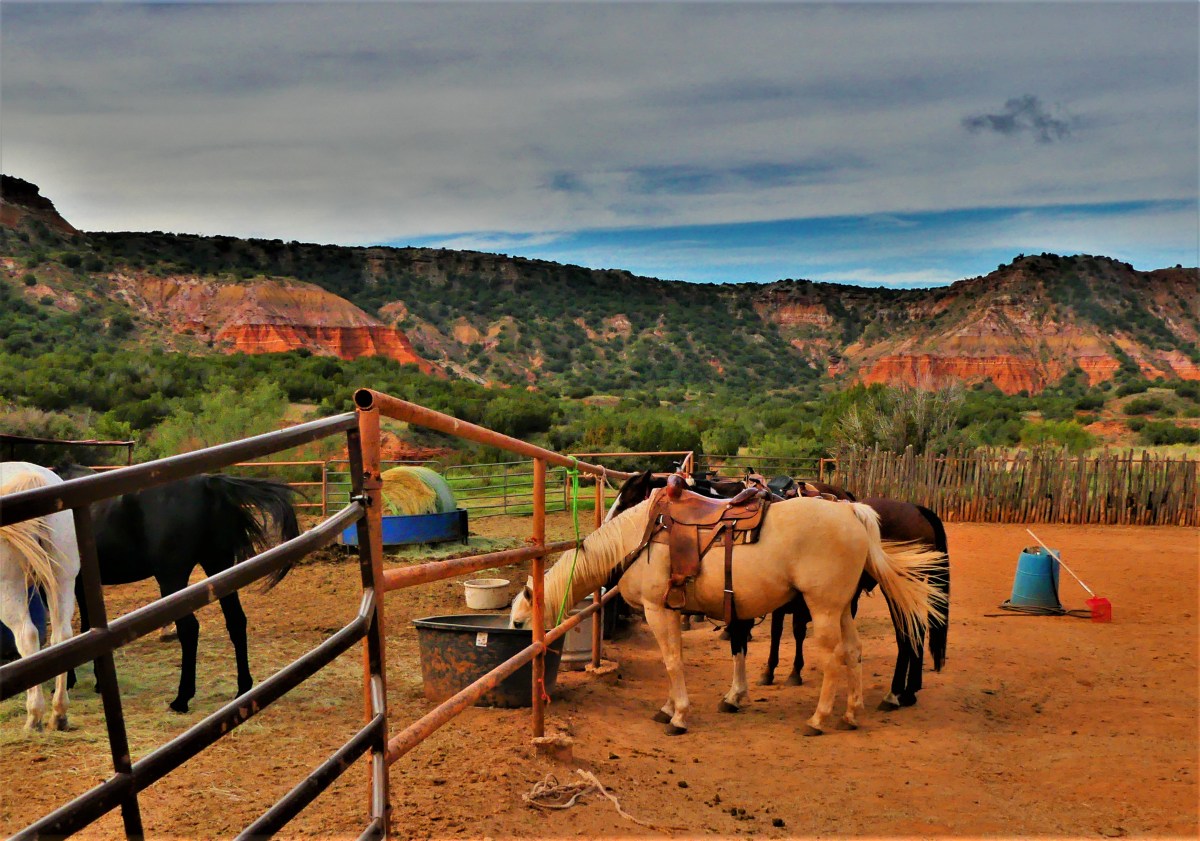
And true to her word, reservations made on Thursday got us an early ride time with Jennifer at Old West Stables inside the state park.

stables

stables1 (2)

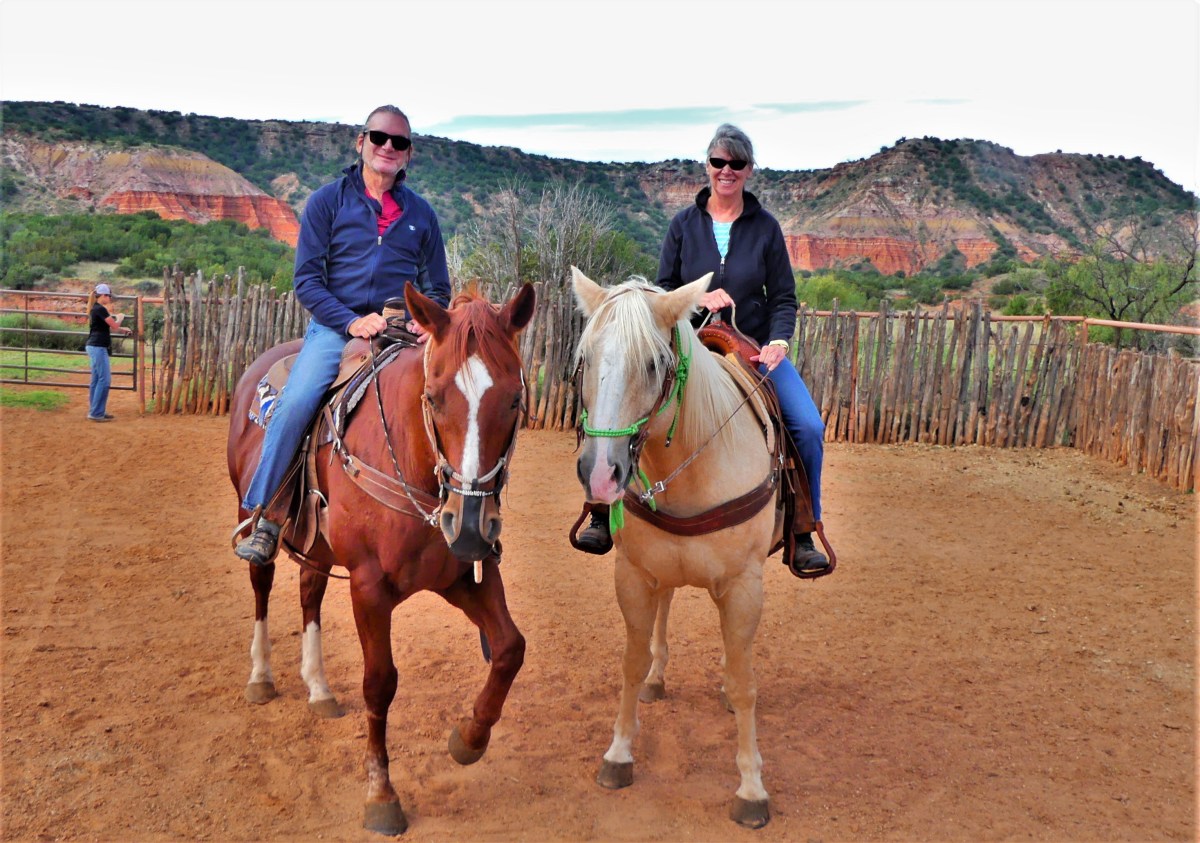
We mounted Buster and Lloyd,

our ride

and rode along an unmapped equestrian trail that took us along the foothills of the canyon walls…

on the trail2

and through the hills and ravines of a basin carved by the Prairie Dog Town Fork of the Red River over one million years ago.

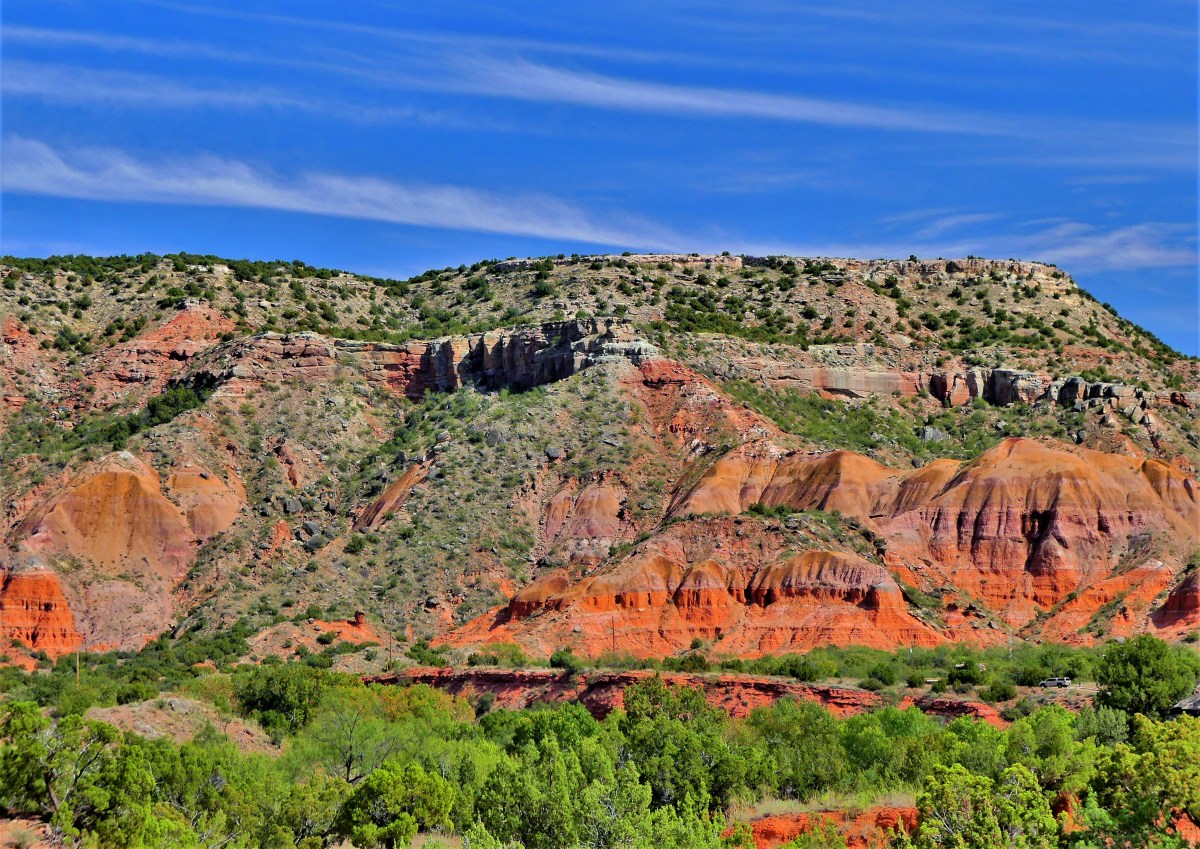
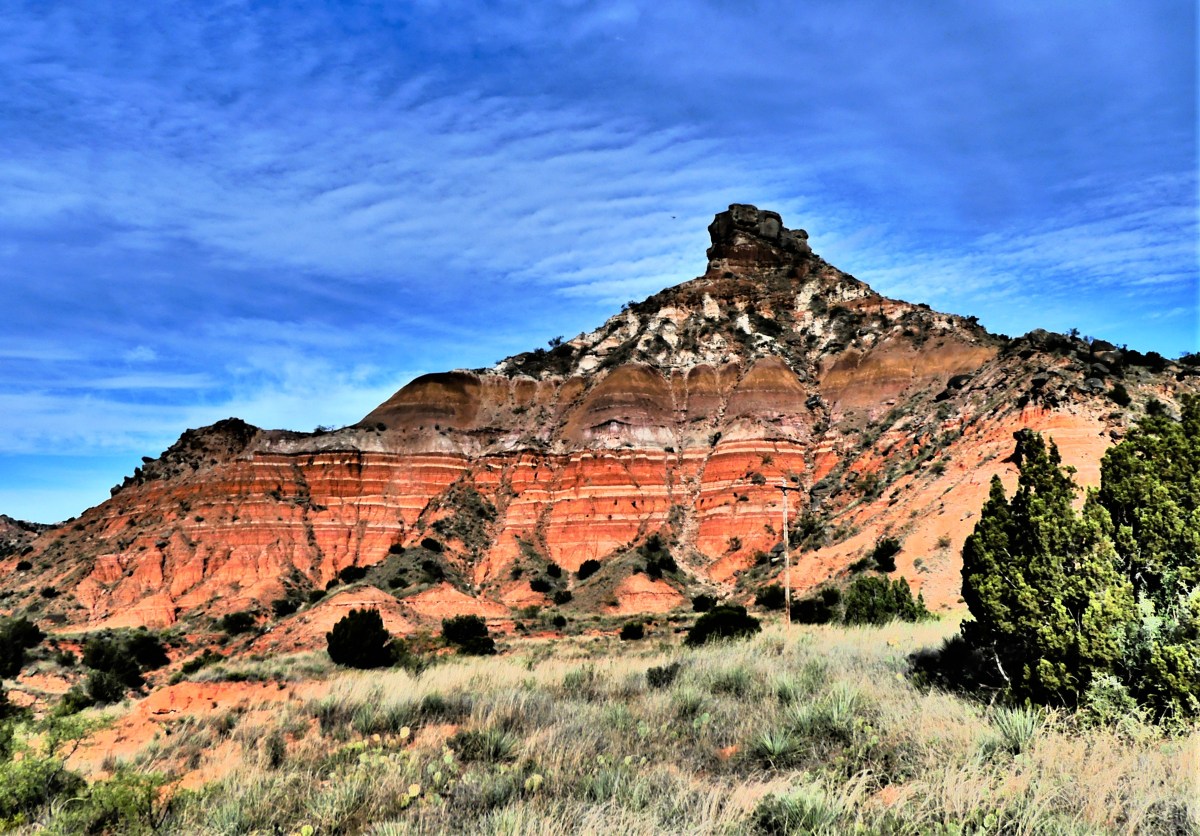
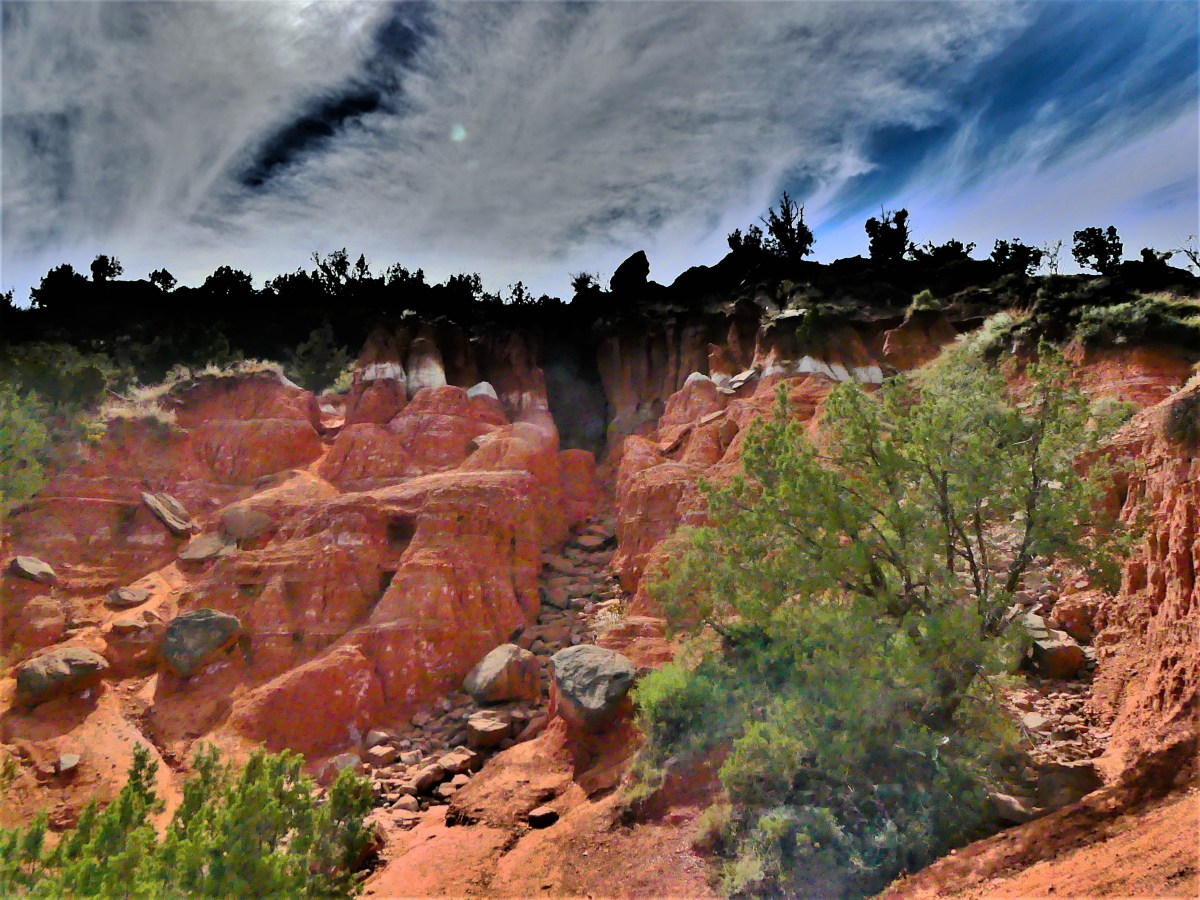
We passed colorful rock formations resulting from a geologic compression of four distinct periods layered over the course of 250 million years.

canyon wall.jpg

While I enjoyed the scenery, and the quiet of the canyon,

canyon peak

canyon strata

I had the disadvantage of riding behind Leah’s horse, Lloyd.

Leah and Lloyd

Lloyd was a farter who always positioned himself behind the lead horse.

on the trail3

And no matter how many times I tried to hold Buster back…

on the trail4

…we would always find our way back behind Lloyd’s swishing tail,

Buster follows too closely

where Buster was always greeted with a slow and steady current of foul wind, followed by an evacuation.

The hour passed as easily as Lloyd’s breakfast, and we found ourselves back at the stable, in time for Lloyd’s lunch.

back at the ranch

Once finished, we took a ride back to the lodge at the top of the canyon for a better perspective of the second largest canyon system in America,

canyon vista1

overview detail

before returning to the basin’s scenic road to explore the Big Cave,

BC trail

an opening in the red rock that’s not as big as it’s unusual.

cave entrance

cave mouth1

Big Cave inside out

cave opening (2)

The Texas panhandle is as flat as a cowpie, and wide as the open sky.

Airstream sunrise1

Thankfully, Palo Duro Canyon provides some variety to a linear landscape, and adds some color to a pale prairie palette.


Balloonatic

“$450 for a balloon ride?! You’ve got to be kidding” I exclaimed to the Rainbow Ryder rep on the phone.

“That’s the price, sir. We are the exclusive balloon ride provider for Balloon Fiesta, unless you’re willing to fly outside the ‘Albuquerque Box’,” she managed.

“What’s the ‘Albuquerque Box’? I inquired.

“It’s a weather phenomenon peculiar to Albuquerque,” she pointed out, “where the lowest winds move in one direction, while the higher winds are moving in the opposite direction. That way, our pilots can take advantage of the different air currents, by floating higher or lower, and return you close to your original launch point.

albuquerquebox
*courtesy of Drumlineramos

“Uh, Ohh-kay,” I shrugged, “and that’s worth $450?”

“That’s the rate for a balloon ride during Balloon Fiesta, sir. And I only have a few openings left for Saturday and Sunday,” she pitched.

“Your price is sky high,” I offered, “so I’m gonna have to think about it.” And this call was over.

I turned to Leah. “Looks like my balloon ride went from bucket list to “fuck-it” list.”

And that was a drag, since Balloon Fiesta is the largest gathering of hot-air balloons in the world, with more balloons lifting off together (mass ascension) than anywhere else.

Leah sensed my disappointment. “Maybe it’s cheaper if you found an outfitter outside the box. Would you still be interested?

“I think I could manage to get excited,” I lamented.

After a flurry of phoning and pricing, I secured a dawn launch on Saturday for $250 with World Balloon, albeit on the northwest side of town, miles away from the Fiesta.

Launch day bears all the markings for a picture-perfect take-off: early air temperature hovers in the mid-40’s; the wind is streaming from the north at 8 mph; and the sky is clear as shimmering water.

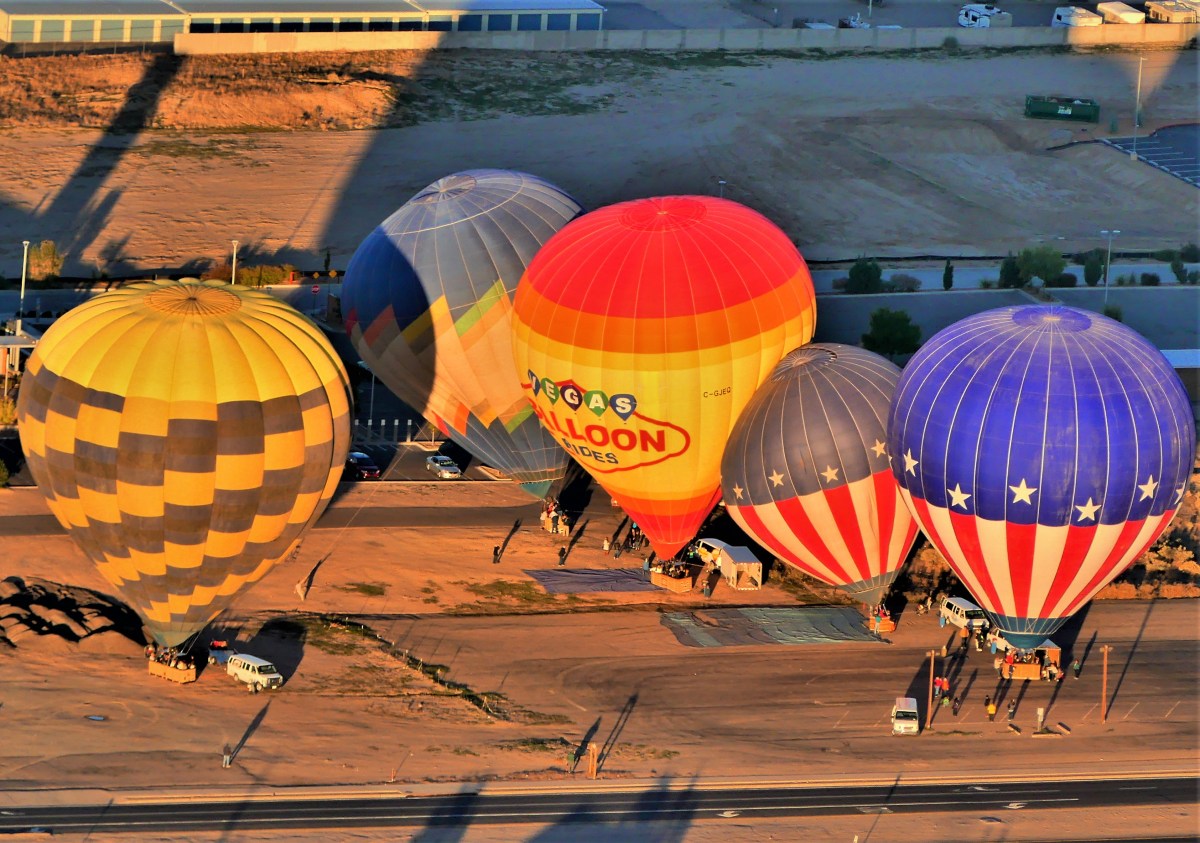
A group of fifty men, women, and children are sub-divided into five, and assigned to a pilot and his balloon crew. Each chase van carries two wranglers, ten passengers, and a trailer packed with gear. We congregate at a barren football-sized lot, and watch as five balloons are prepared for flight.

Baskets are unloaded,

unloading the basket

and assembled.

building the basket

The burners are tested.

testing the burner

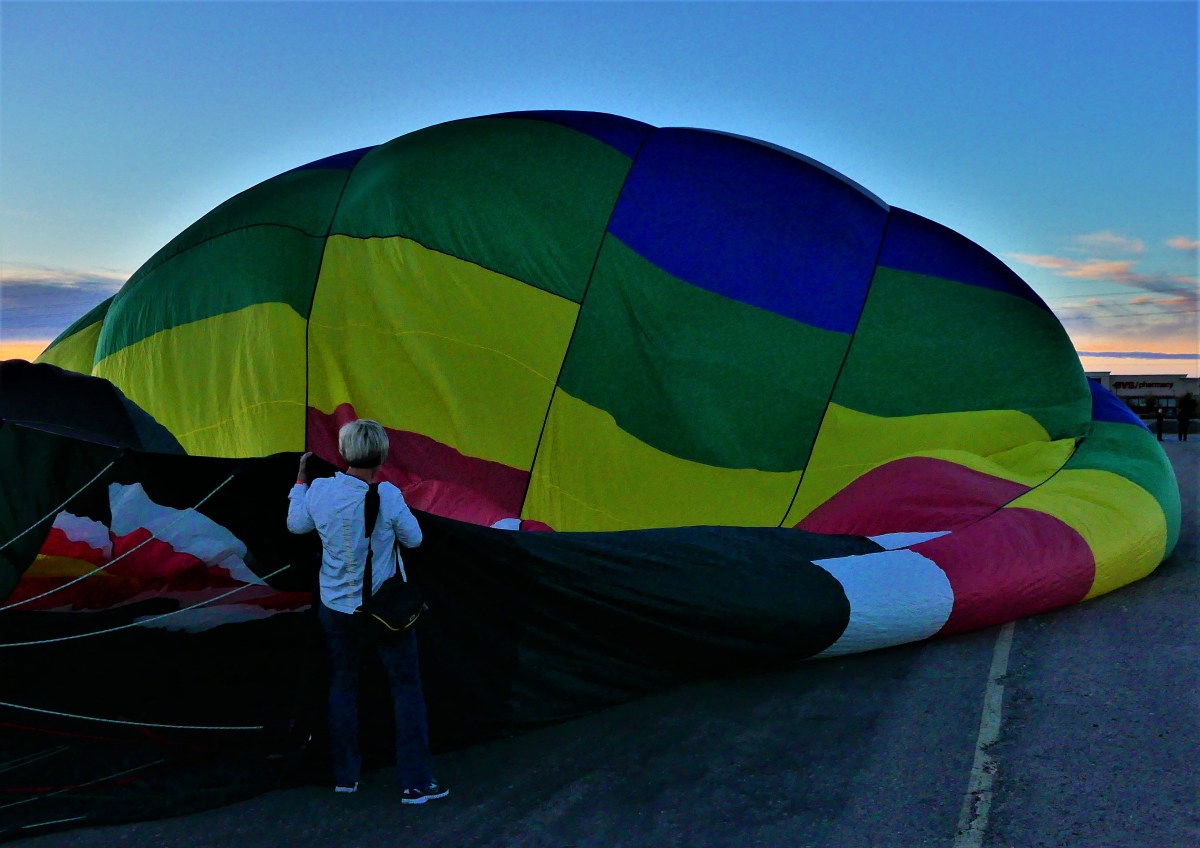
With dawn breaking over the horizon, the balloon is unfurled, and rigged to the basket.

rigging the lines

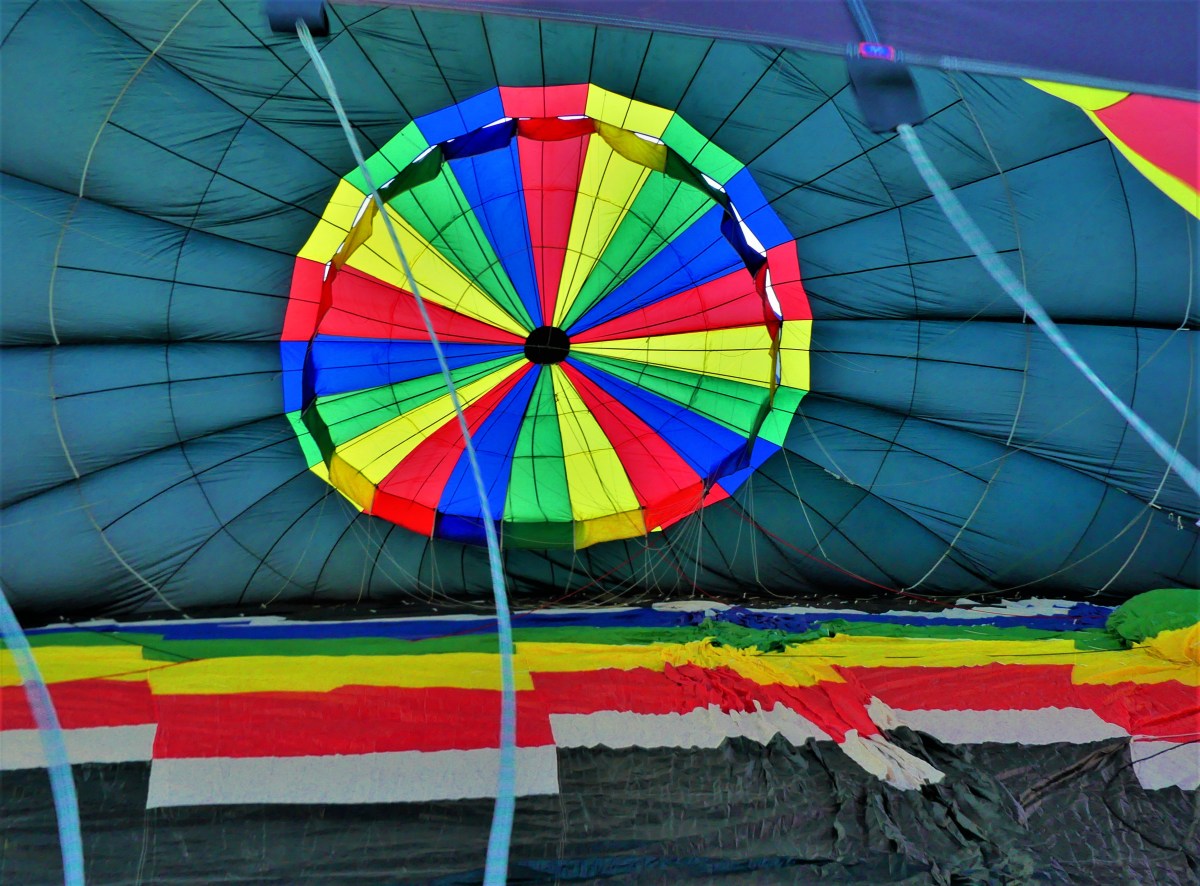
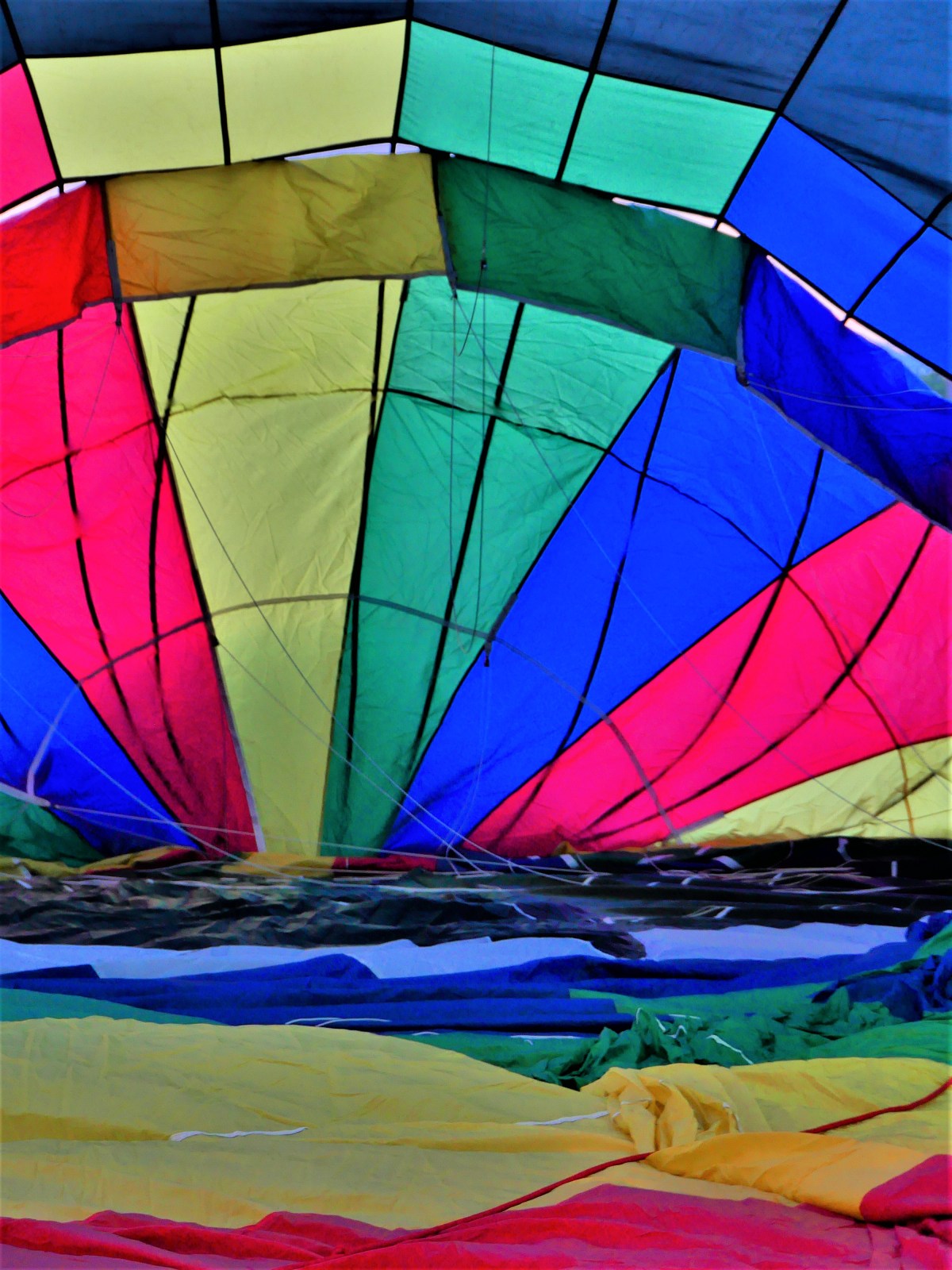
An industrial fan blows cold air into the mouth of limp polyester, and behold, the balloon takes shape.

dawn

raising the dome

filling the balloons

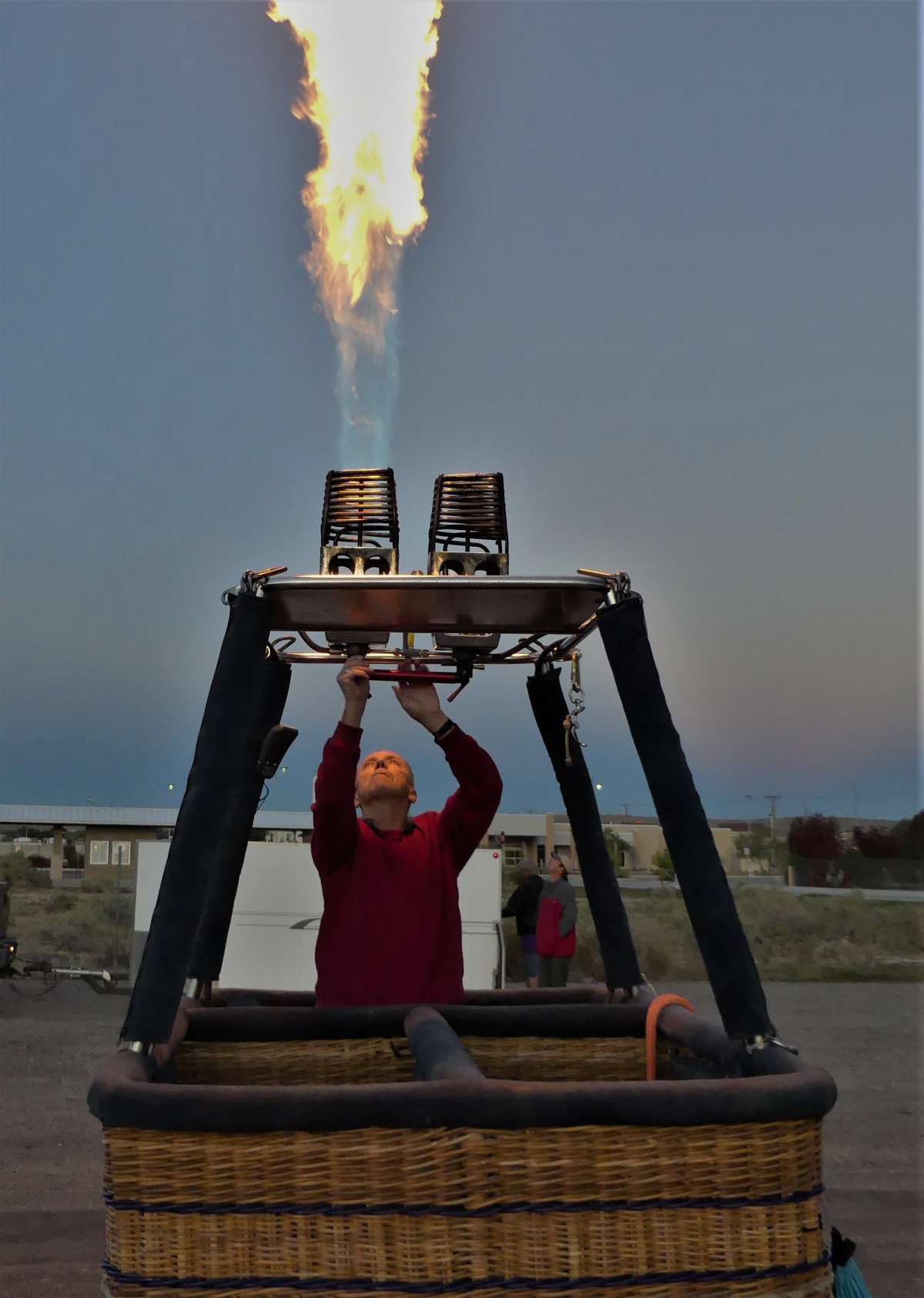
Roy aims the burner flame into the mouth to heat the air,

lighting it up

fire and rigging

and eventually expands the envelope to fullness.

inflation

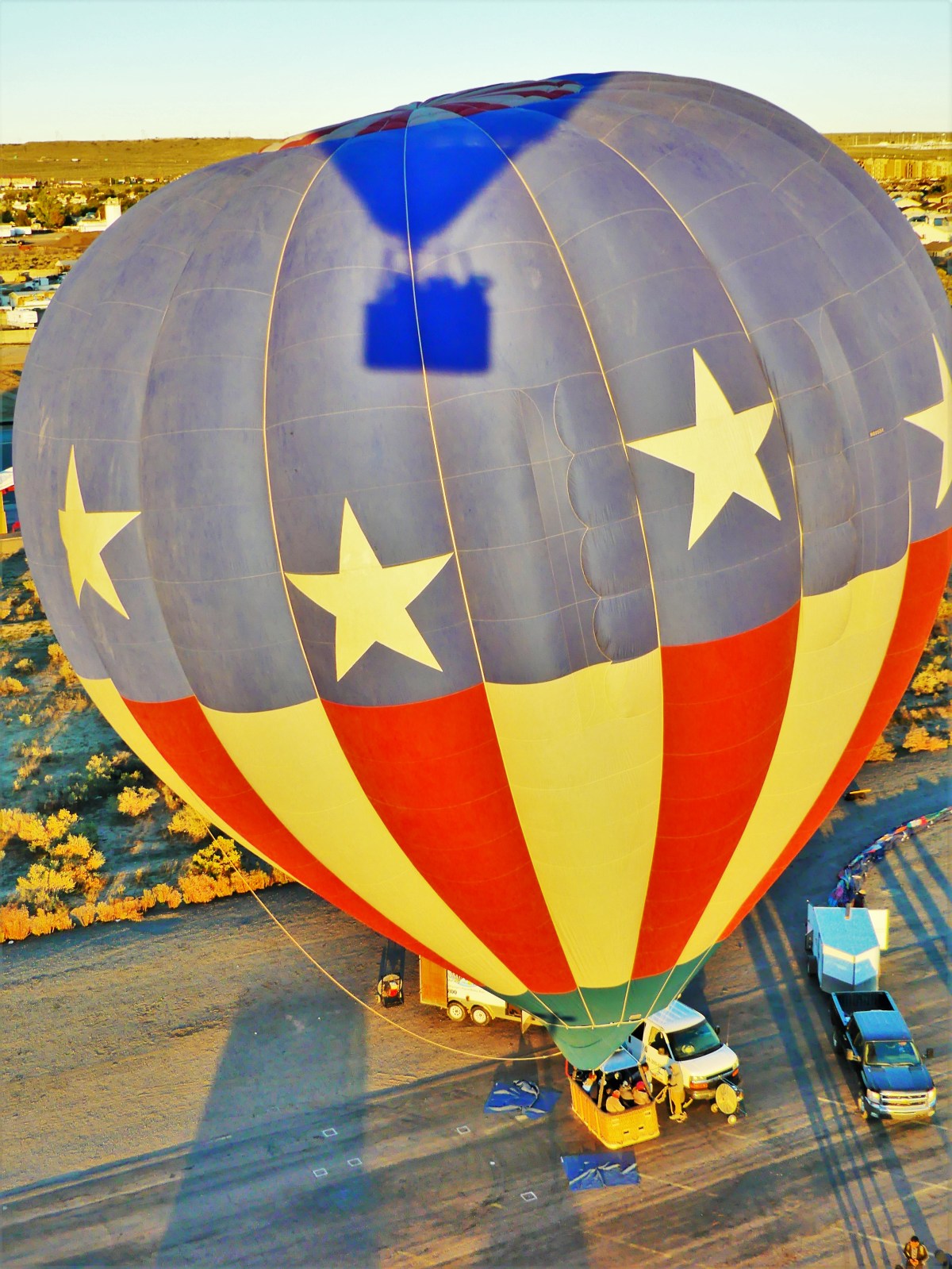
The buoyant balloon rights itself,

sunrise

and the six of us scramble inside to bid adieu to terra firma, and gently float away…

aloft

…one step ahead of a second balloon.

balloon sun glow

All the while, balloons below…

balloon party

…are preparing to follow our Airstream (wink wink, nod nod).

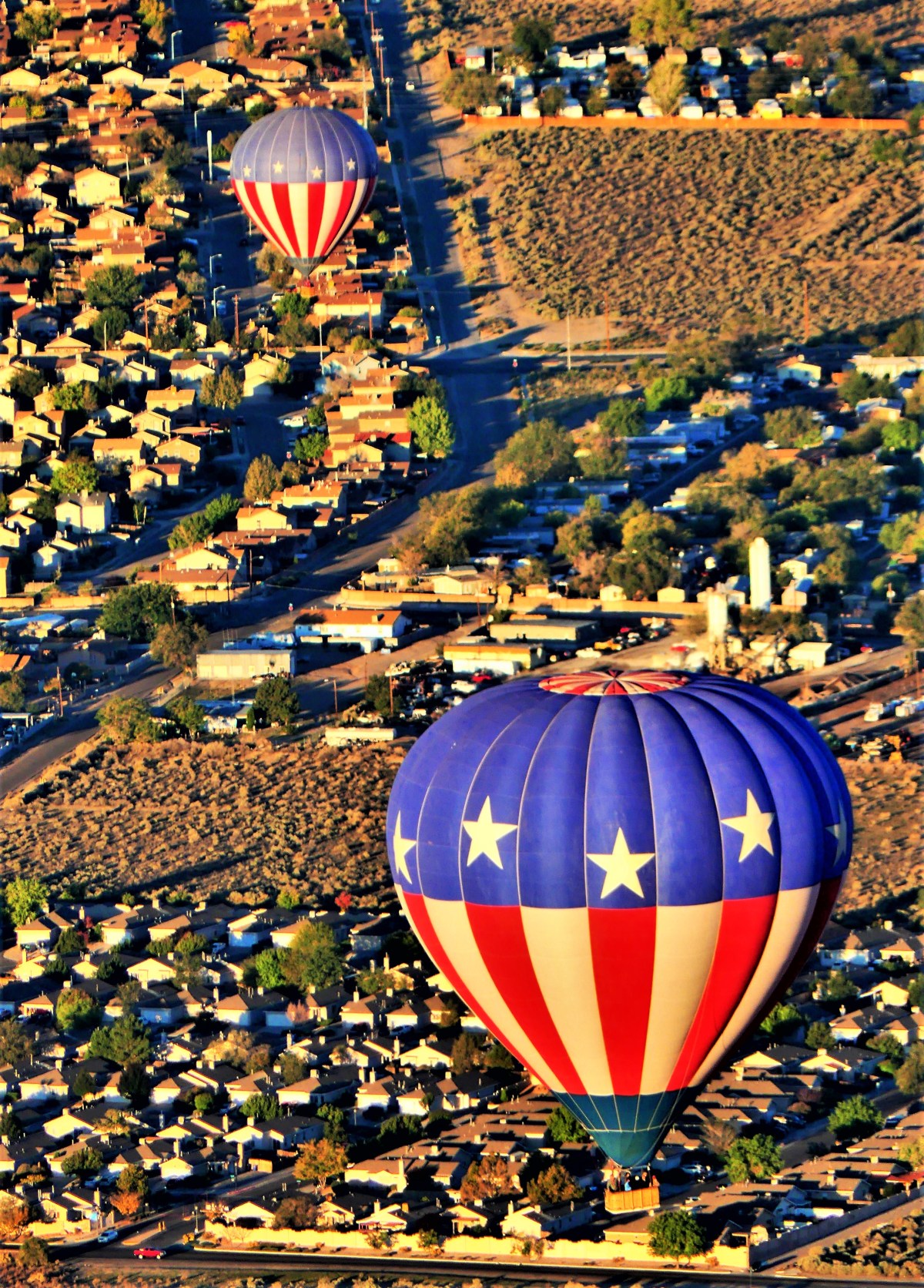
USA balloons

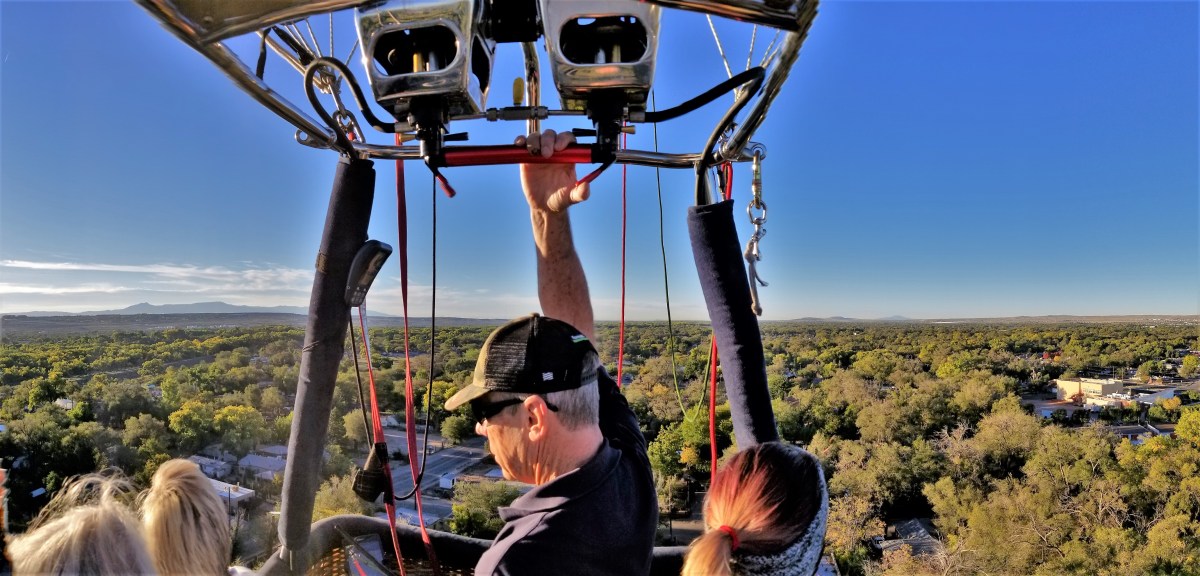
Our pilot, Roy pulls on the burners,

Roy the pilot

carrying us to 5000 ft. above the treetops,

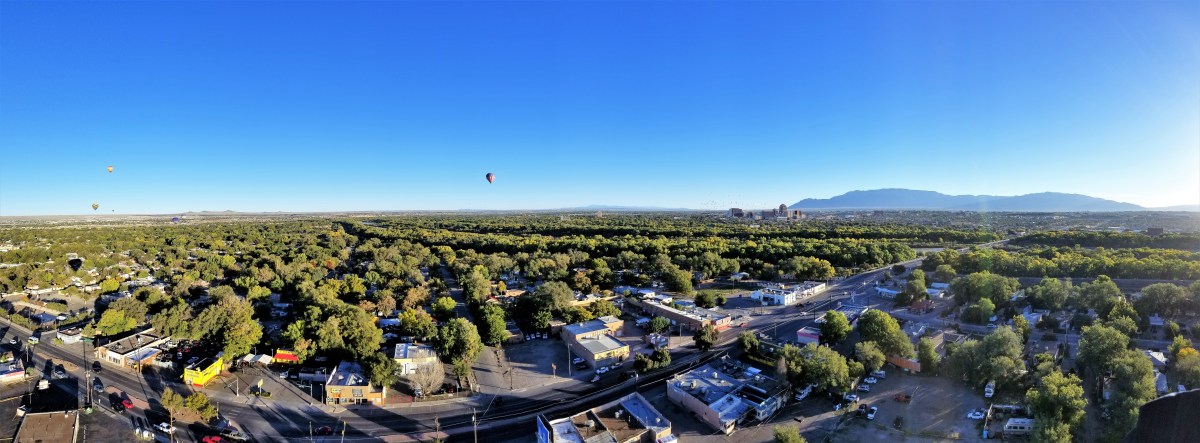
fiesta panorama

where a birds-eye view of the valley below,

self portrait.jpg

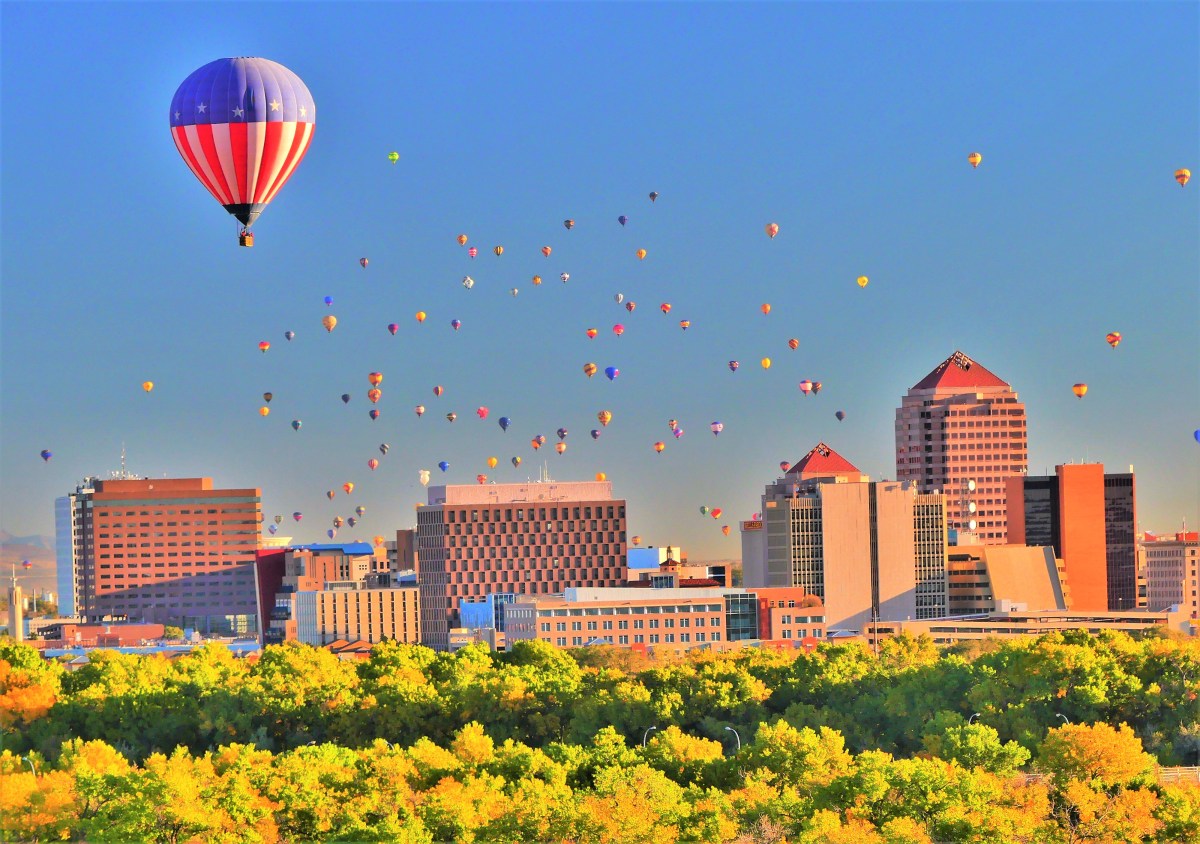
reveals a cityscape punctuated by fantastic dots of floating colors.

Balloons over Albuquerque (2)

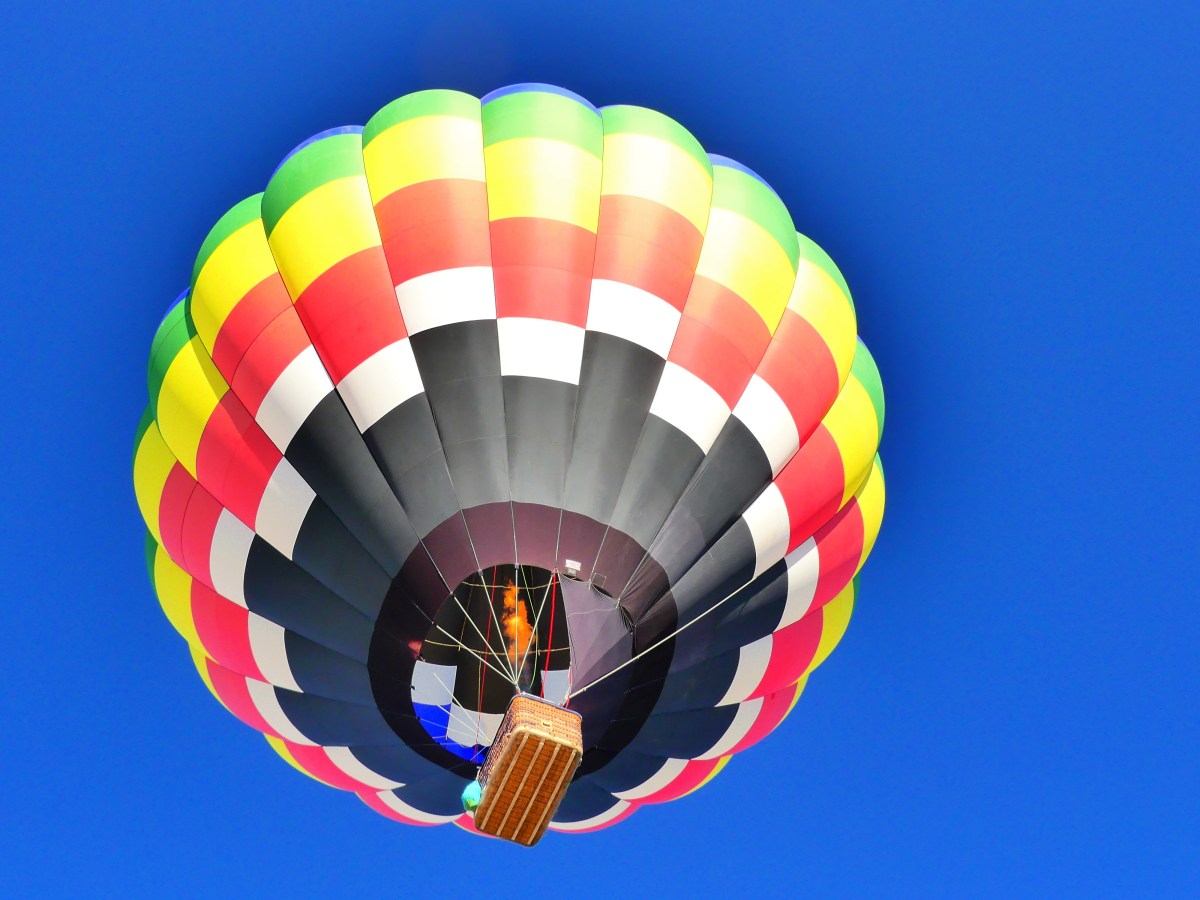
Yet closer inspection reveals the full dimension of a multi-colored mushroom gliding through an azure sky.

baloon portrait

After forty-five minutes of soaring and dipping through neighborhoods–arousing excitable dogs,

annoyed dogs

and adoring children–

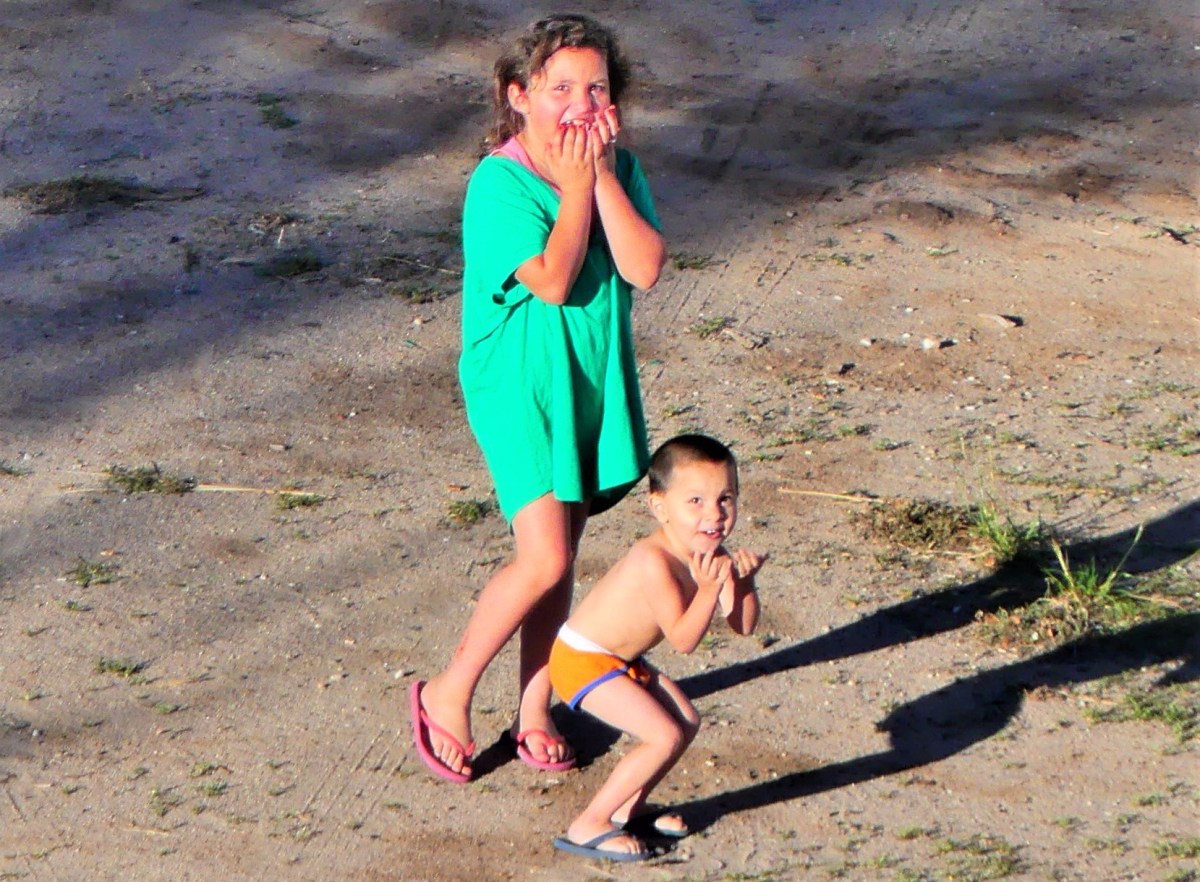
delighted-children.jpg

Roy is tasked with finding a landing site along our flight path–wide open and away from wires–and accessible to the chase team who’s been following us since our launch. After a few false starts, we locate a large house devoid of landscaping, and gently settle back to earth.

attempting to land (2)

However, a chain-link fence lines the perimeter, and a locked gate gives us no way out. A woman from Birmingham, AL vaults over the side of the basket and runs to the front door to alert the owners to unlock the gate, but nobody’s home.

So it’s back in the air, with the van in pursuit, until we mobilize at a strip mall.

landing place

crew pulling us in

After a quick exchange of passengers (six out and four in), our balloon is re-released with its second set of aeronauts,

group 2 on board

drifting higher into the blue yonder.

group 2 aloft

Fifty minutes later, the vacant parking lot beside the church provides the perfect setting for a second re-entry.

holy touchdown

Whereupon, the balloon is quickly collapsed,

gathering air

and folded,

wrangling the rigging

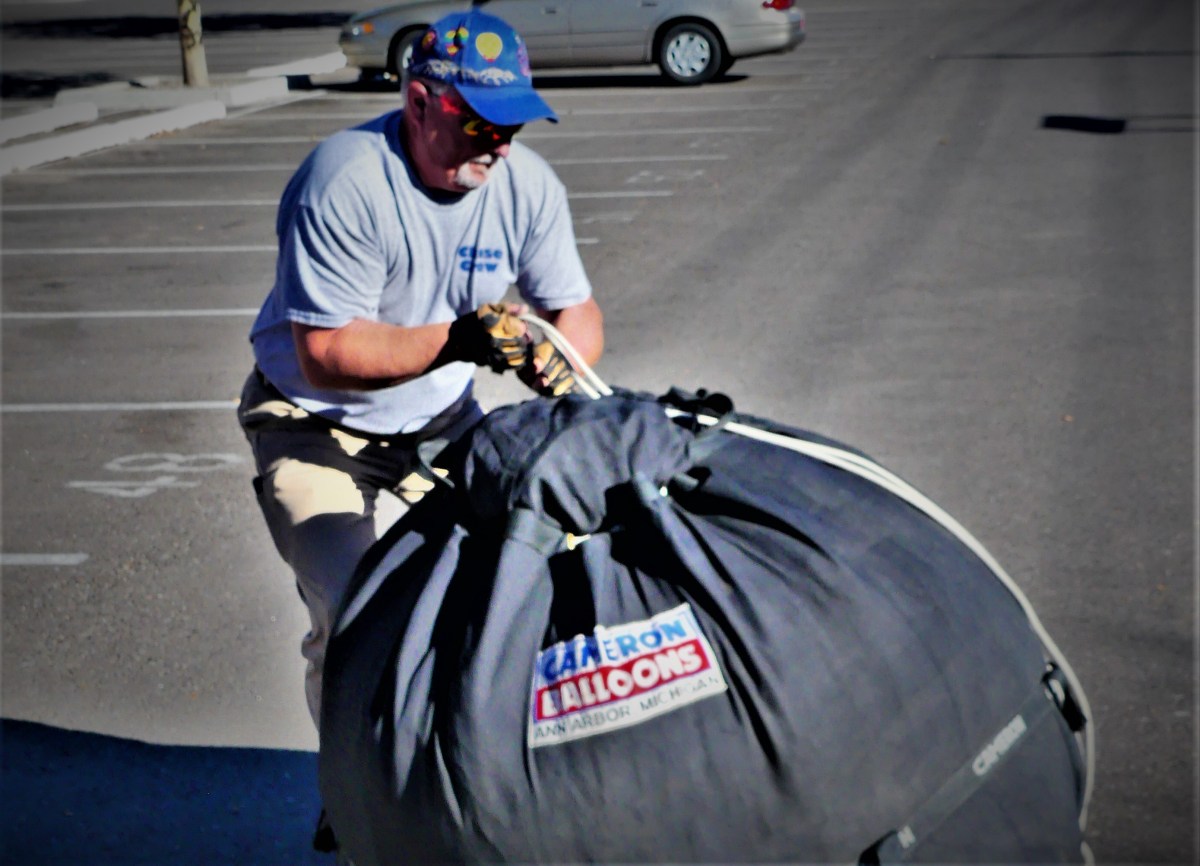
and packed away, until next time.

wrapped up

Back at base camp, it was time for a champagne toast, and a recitation of the balloonist’s prayer:

The winds…

flight certificate

I loved it, and I’d do it again. I guess that makes me a balloonatic.


Cadillac Ranch

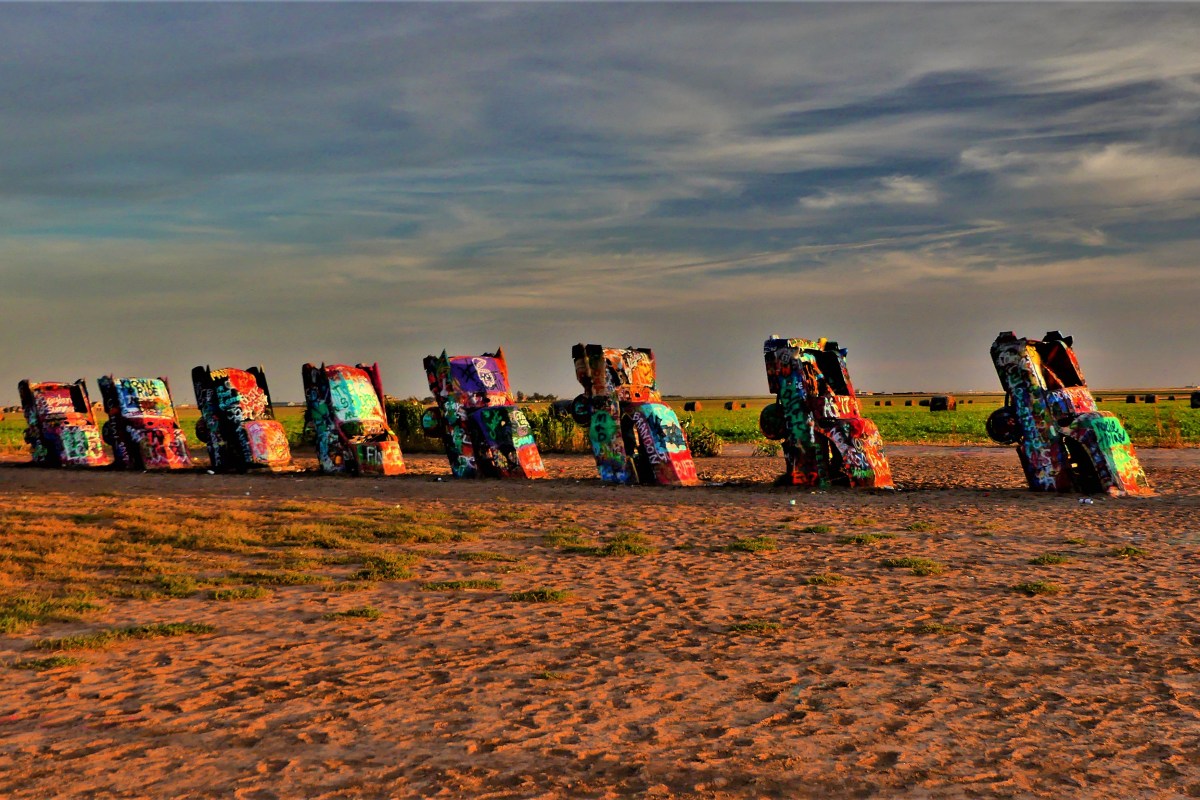
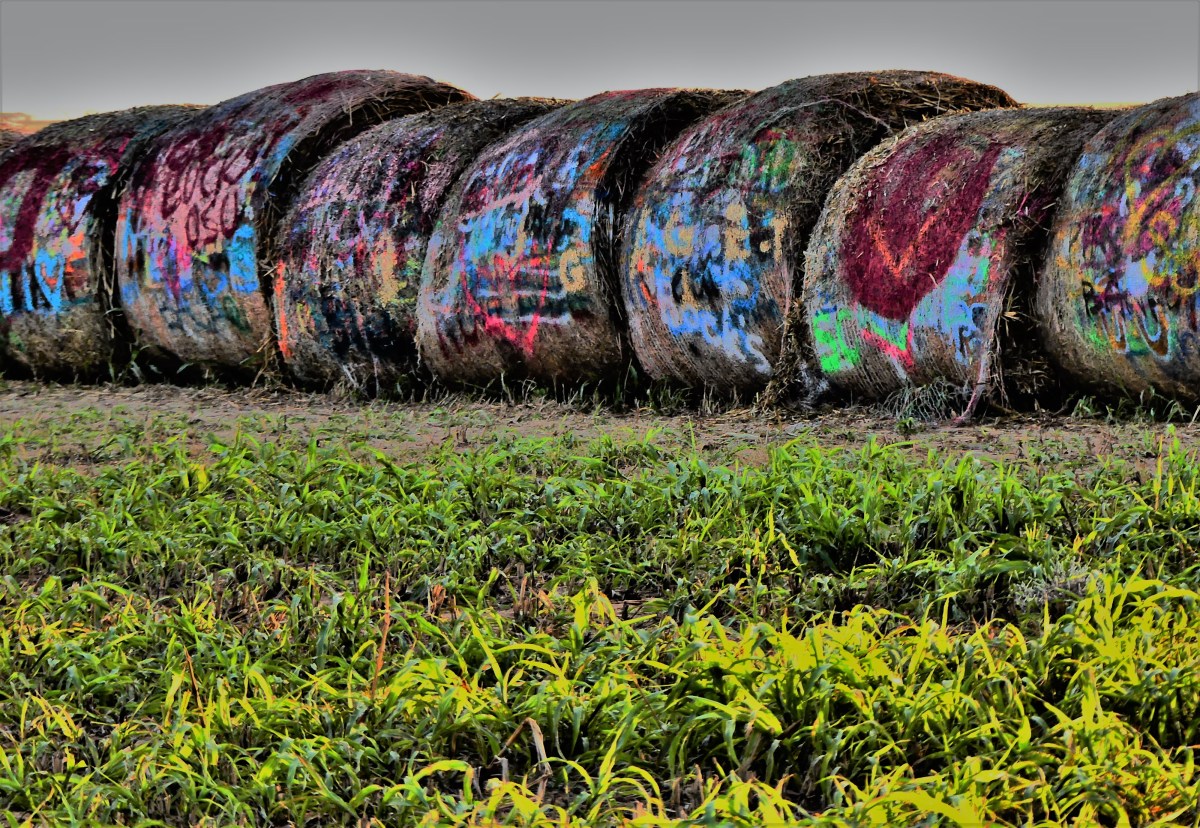
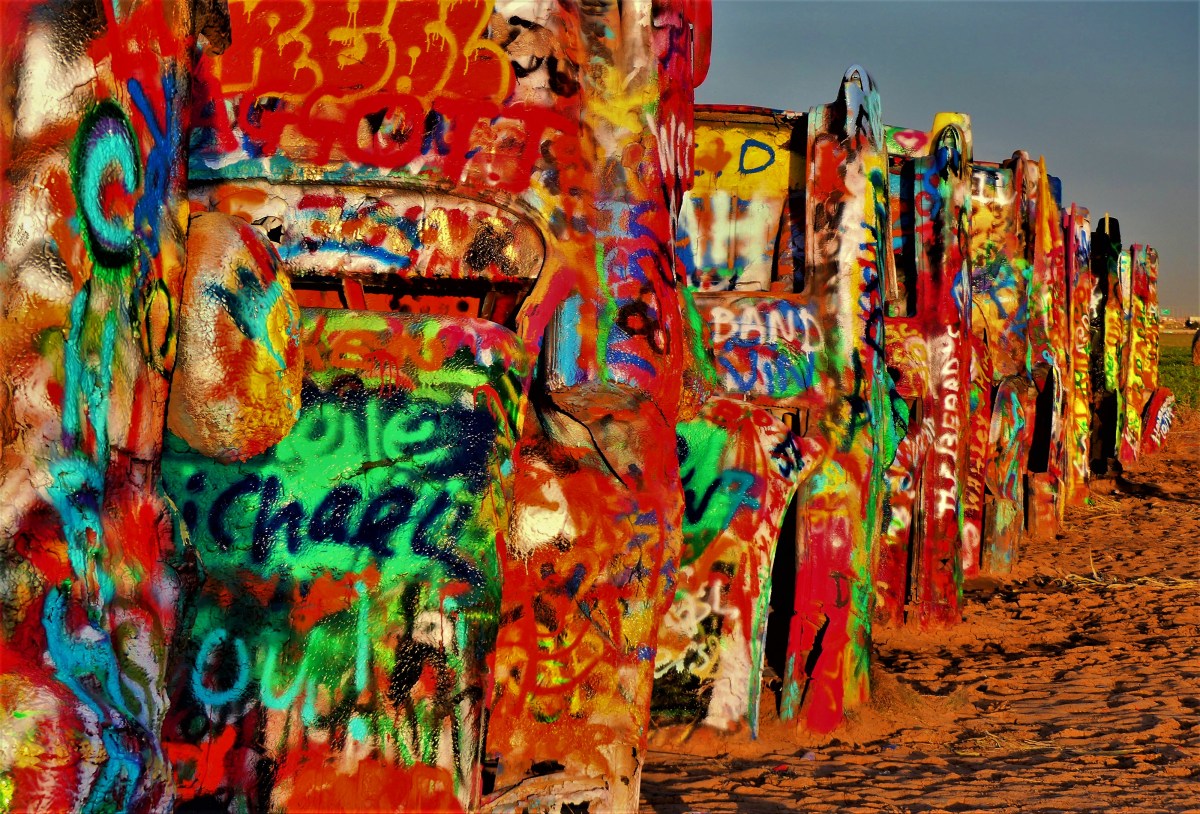
A handful of cars and trucks were pulled onto the shoulder of a road beside a cow pasture along Interstate 40 in Amarillo, TX. A barbed wire perimeter protected entry to the field, but a rainbow-colored cattle gate provided access to an infinite vista of grassland and graffitied hay rolls.

hayrolls.jpg

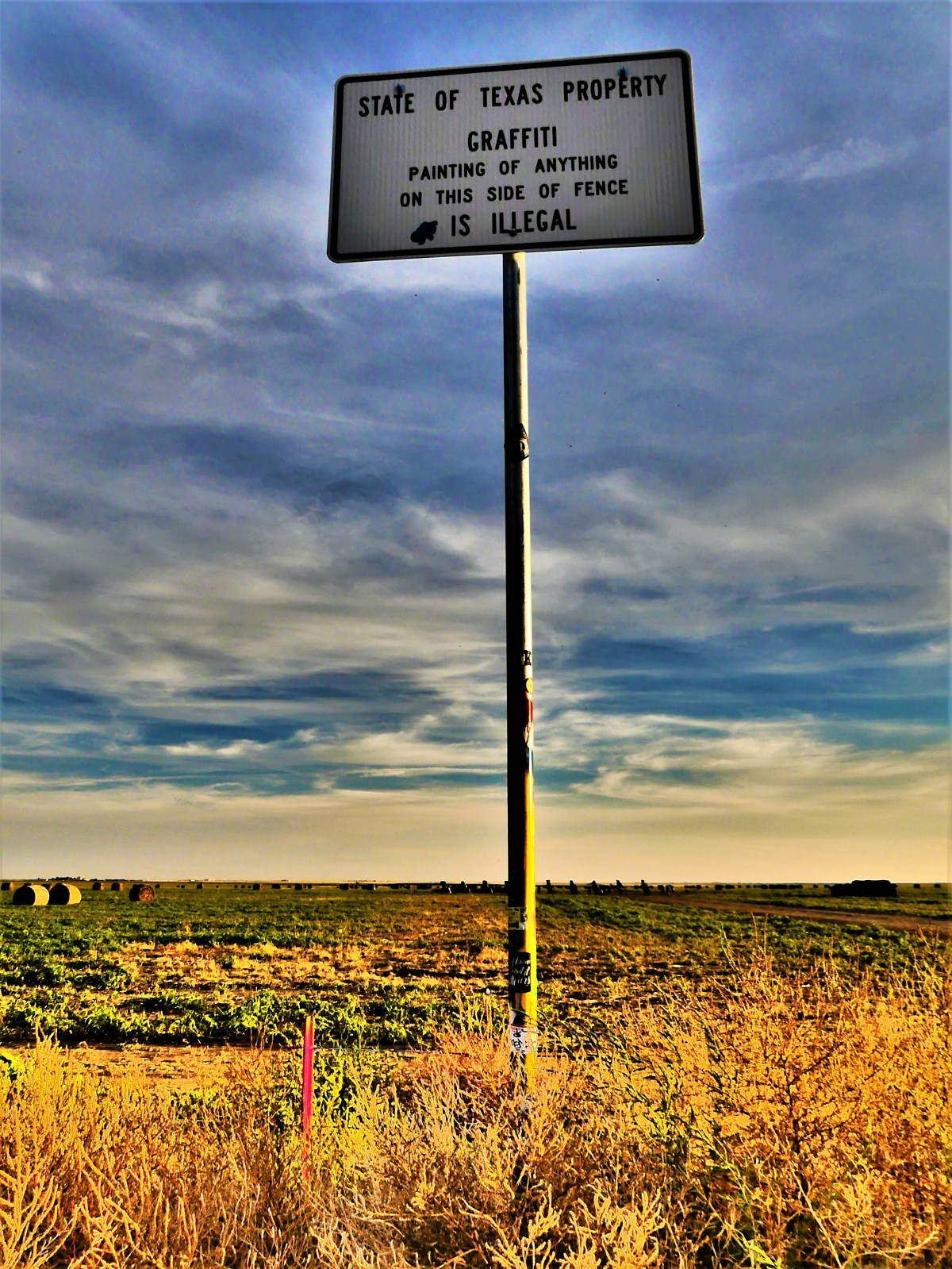
Although road signage made it very clear that all graffiti stay on the other side of the road,

Graffiti.jpg

anything on Stanley Marsh’s property was fair game for tagging and tacitly encouraged.

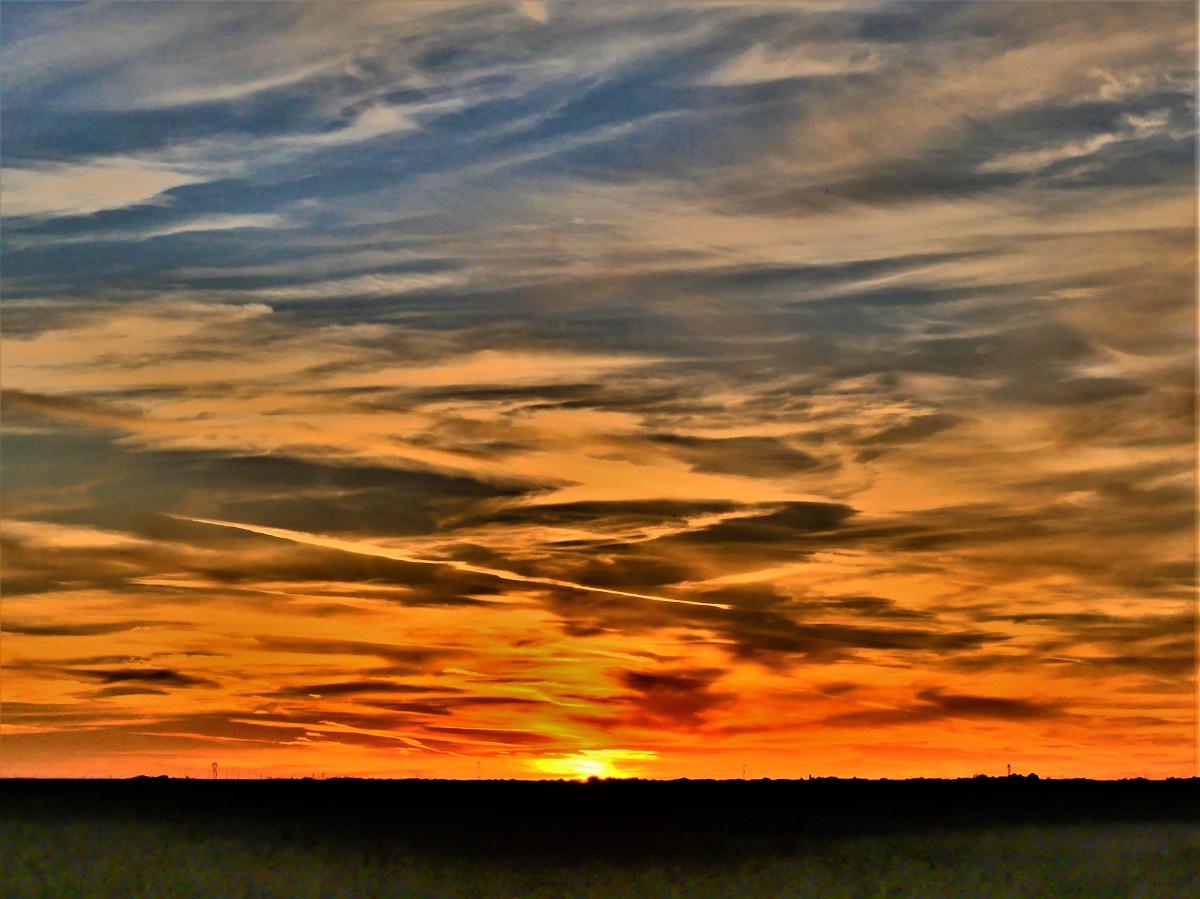
The sun was setting,

sunset

and the mosquito swarm was brutal, as if they saw it as their obligation to annoy anyone curious to walk through a field where ten Cadillacs were partly buried in the ground.

Additionally, with golden hour light fading quickly, I felt my glow time was severely limited.

Nevertheless, working around the tall shadows cast by a low-hanging sun, I managed to capture a spectrum of random and radiant colors that seemingly changes by the hour, courtesy of spray-painters who choose to be anything but anonymous.

CR1a


Western Decivilization

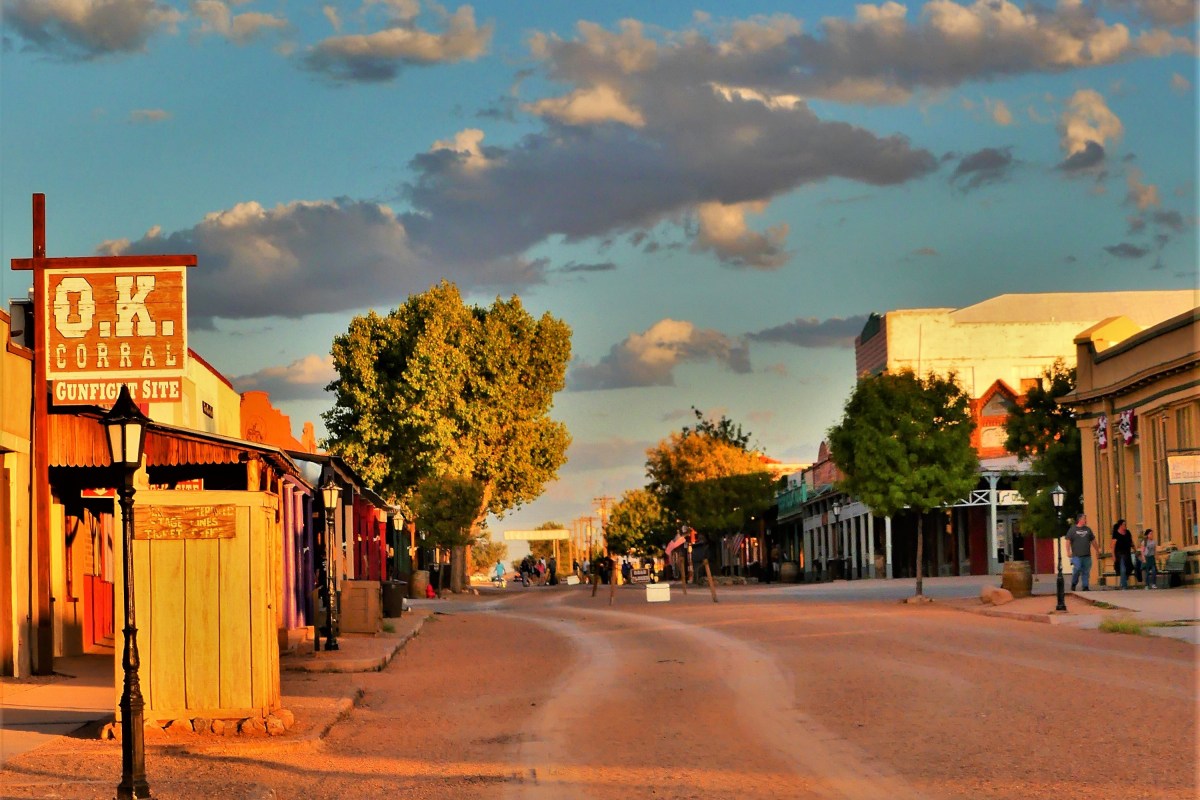
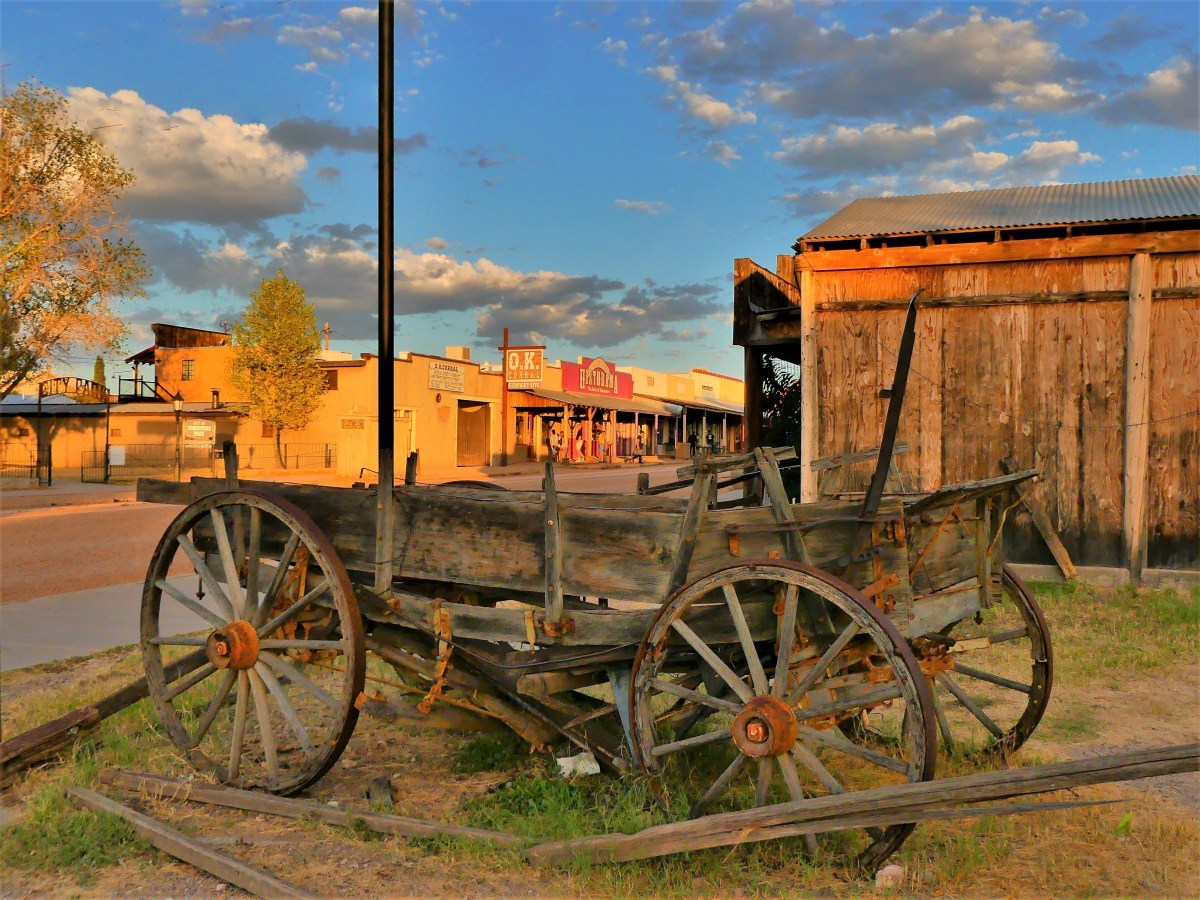
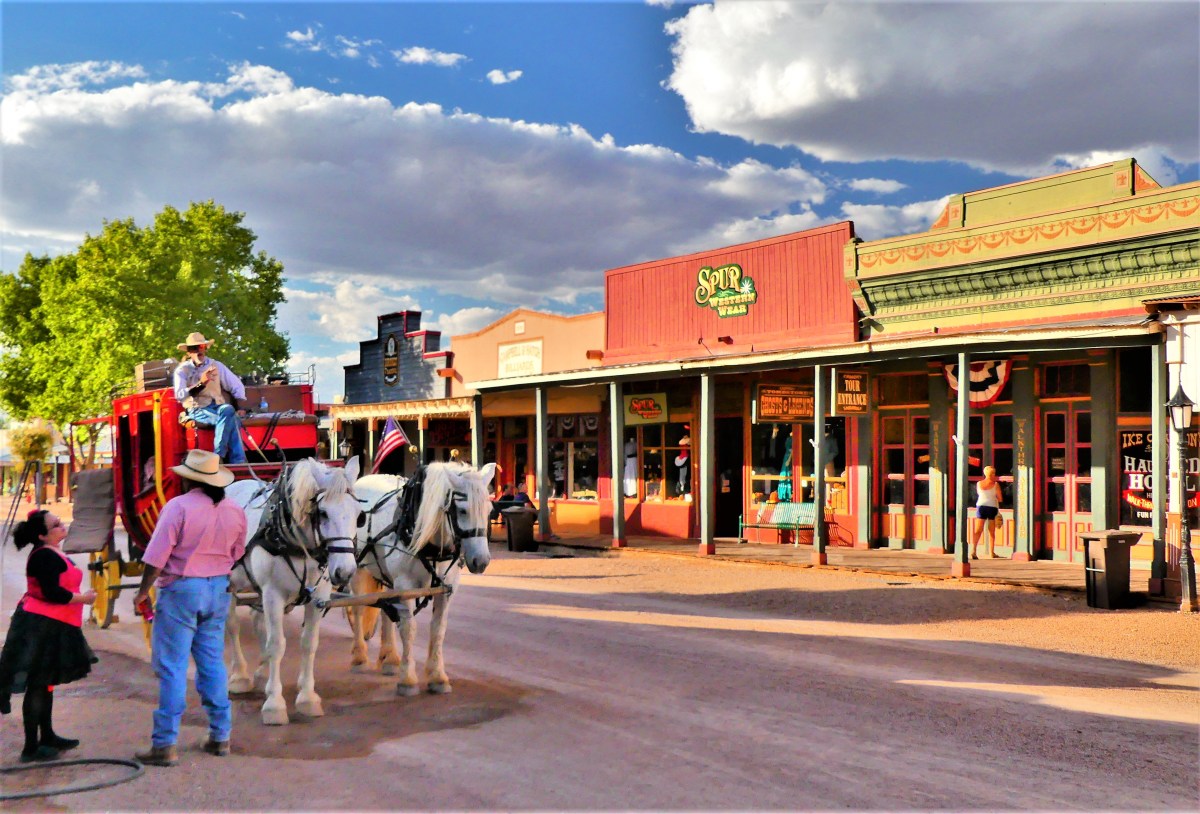
It was late afternoon, golden hour, and the town was aglow. We rolled into Tombstone, AZ with the tumbleweeds, and got out of town by morning, but not before taking a sun-soaked stroll down Allen Street past the O.K. Corral, tracing the footsteps of a by-gone time.

wagon (3).jpg

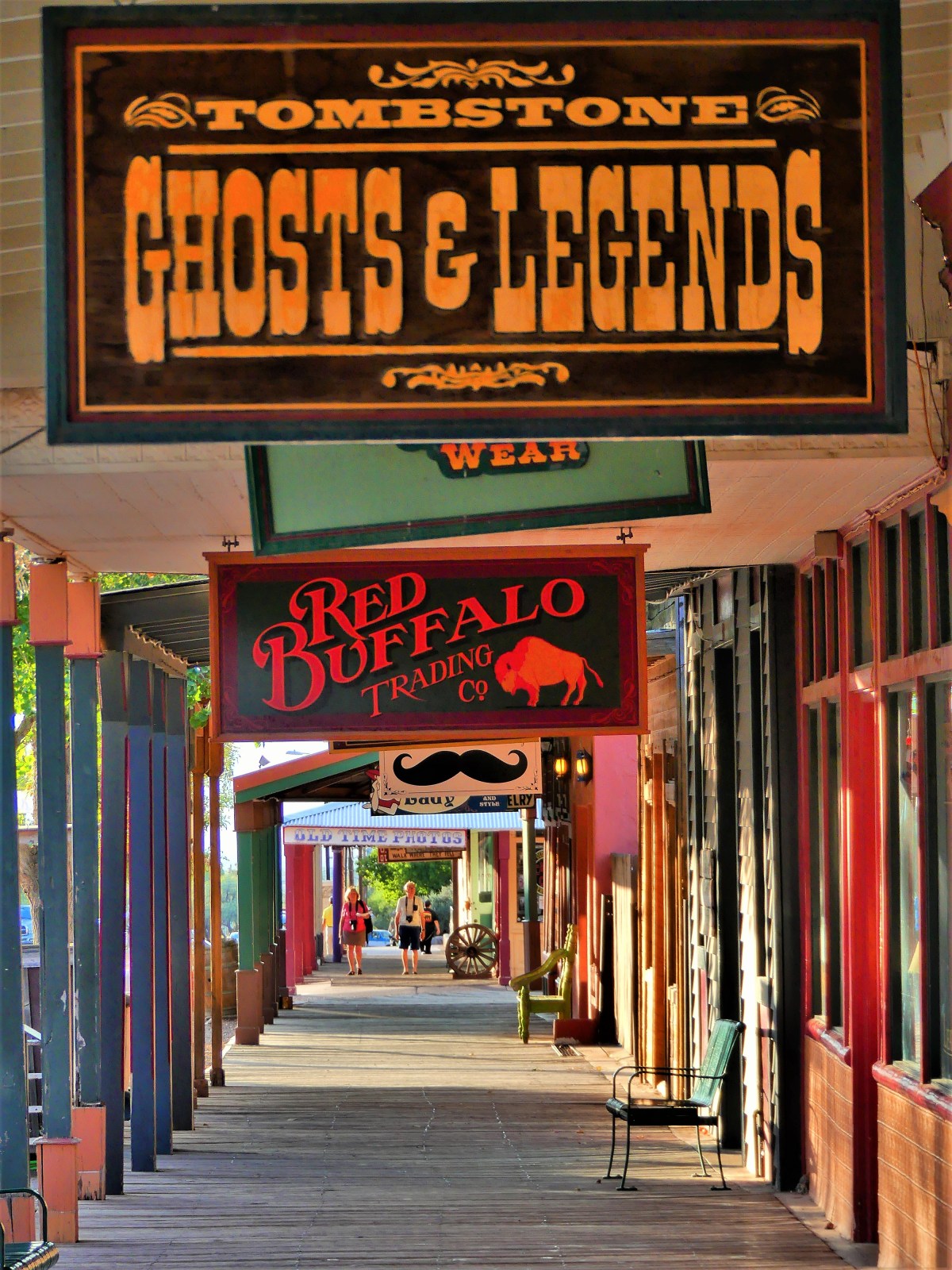
The Old West town was unusually quiet this day,

boardwalk

as if its residents were hiding out, bracing for yet another round of random violence, when claim jumpers, cattle rustlers, horse thieves, prostitutes, and gamblers challenged the moral fiber of a nascent society teetering between greatness and greed.

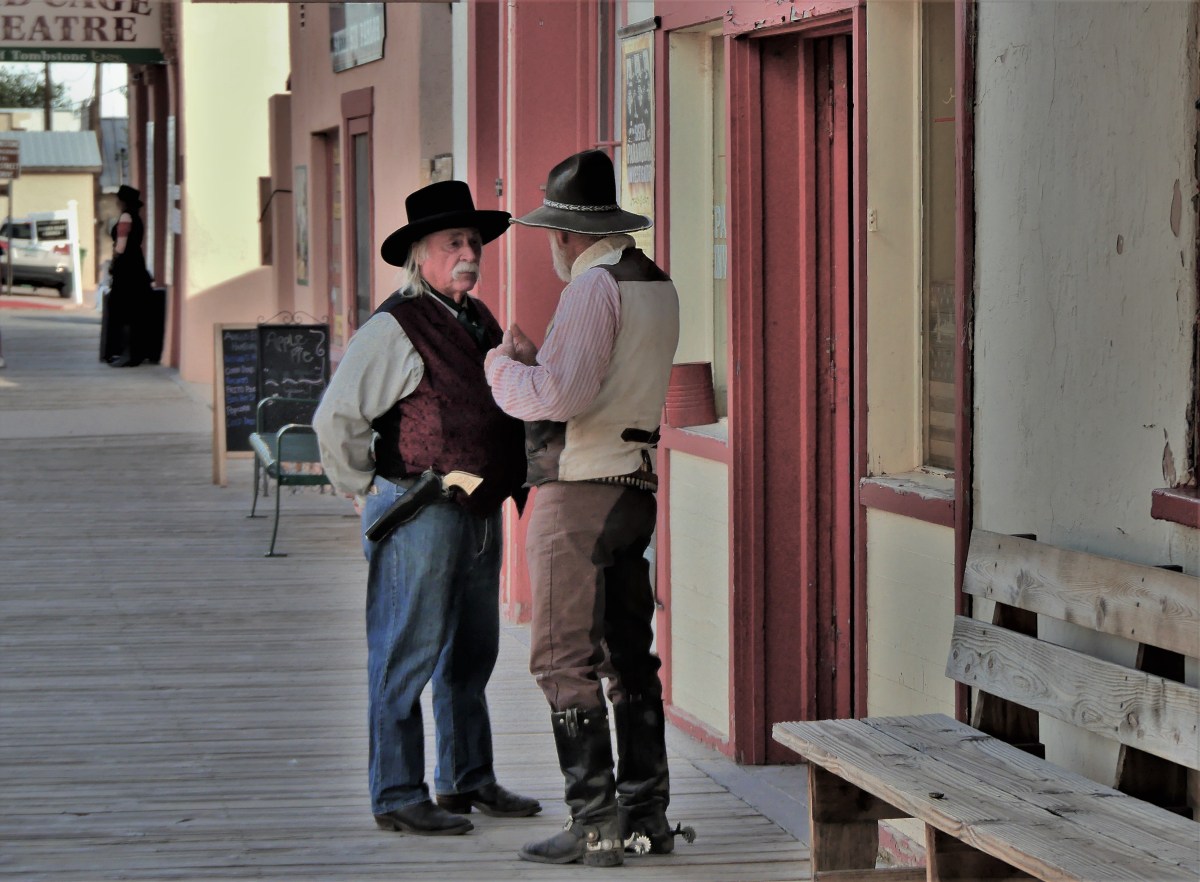
Despite the fear, there were some who dared to venture out…

Allen Street

and walk the dusty planks of a fragile peace, with their trusty sidearms at the ready.

local color (2).jpg

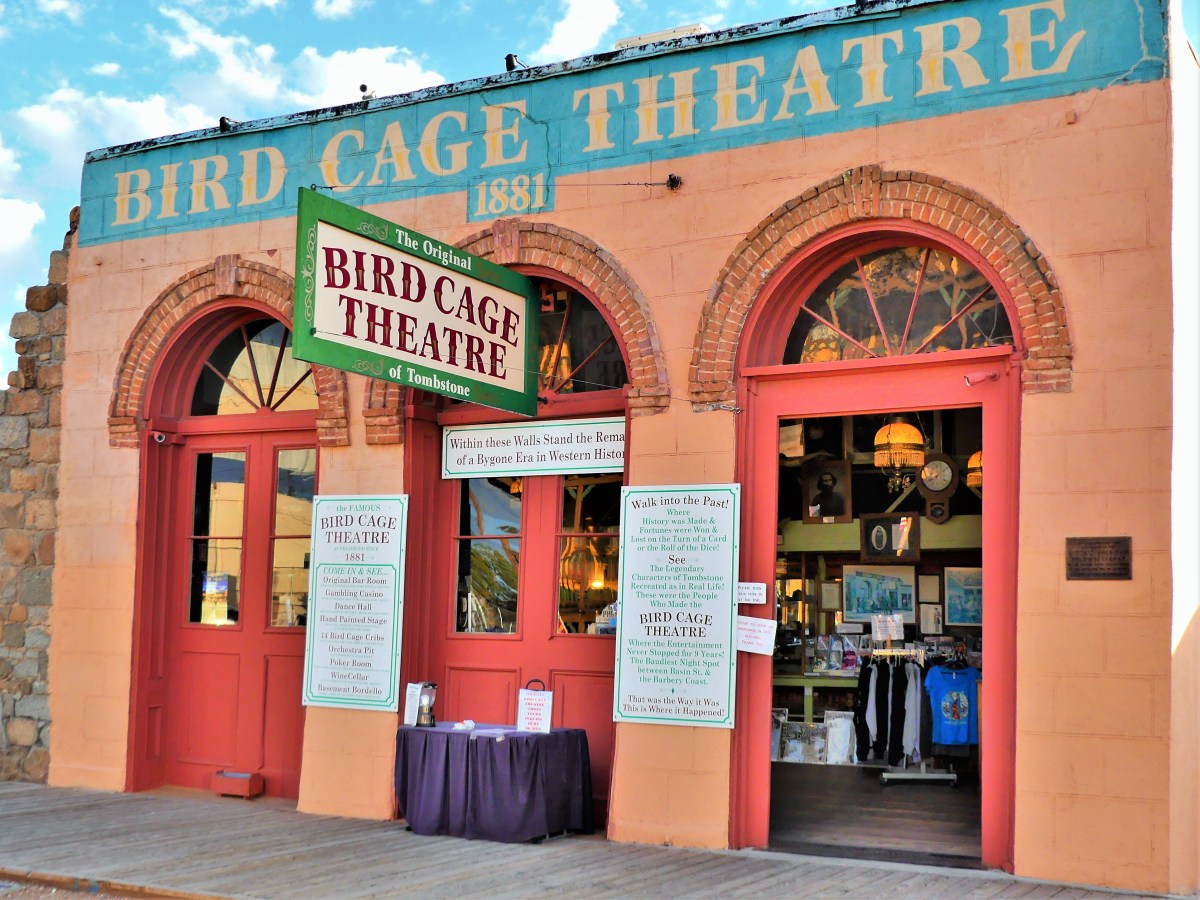
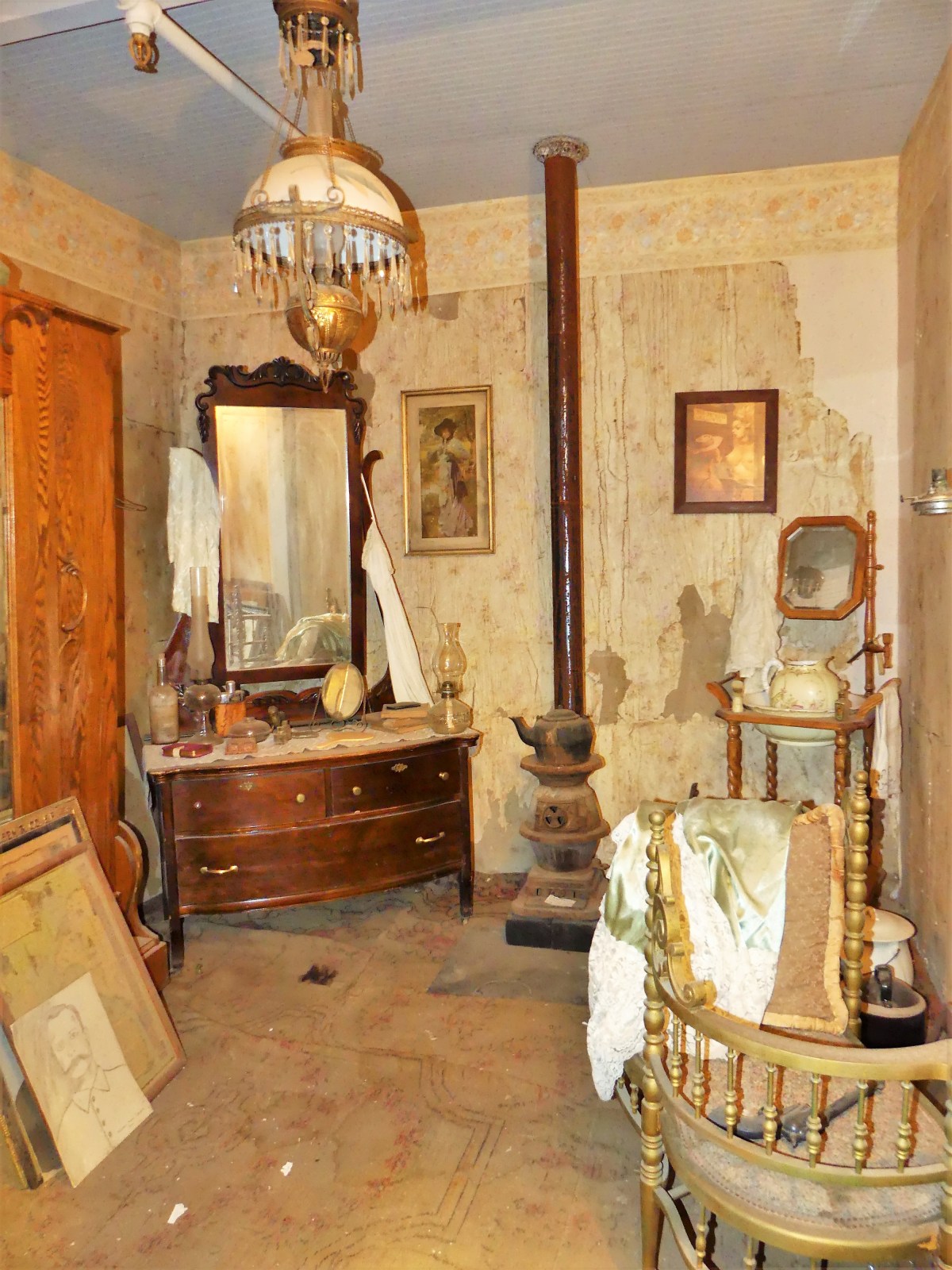
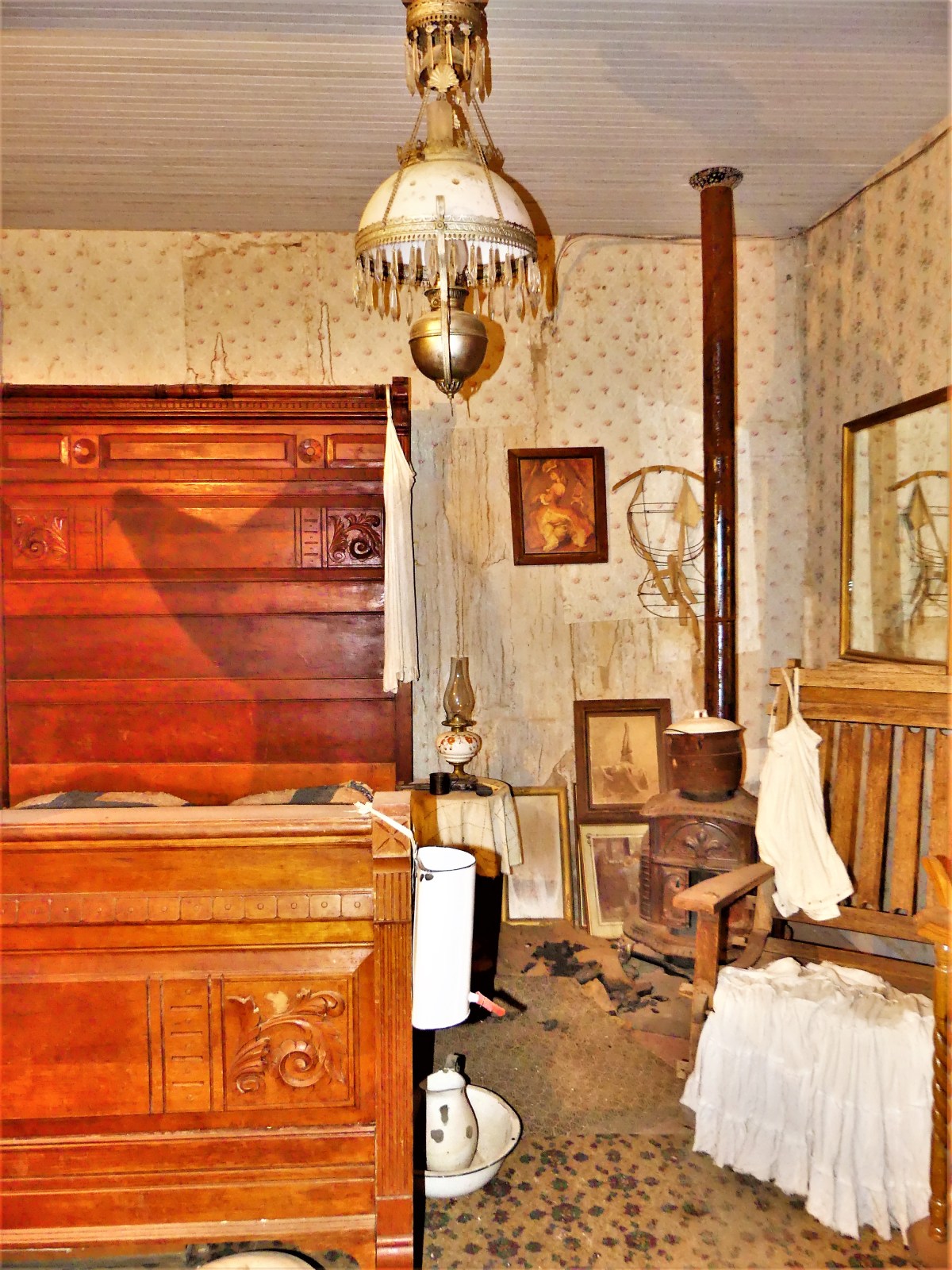
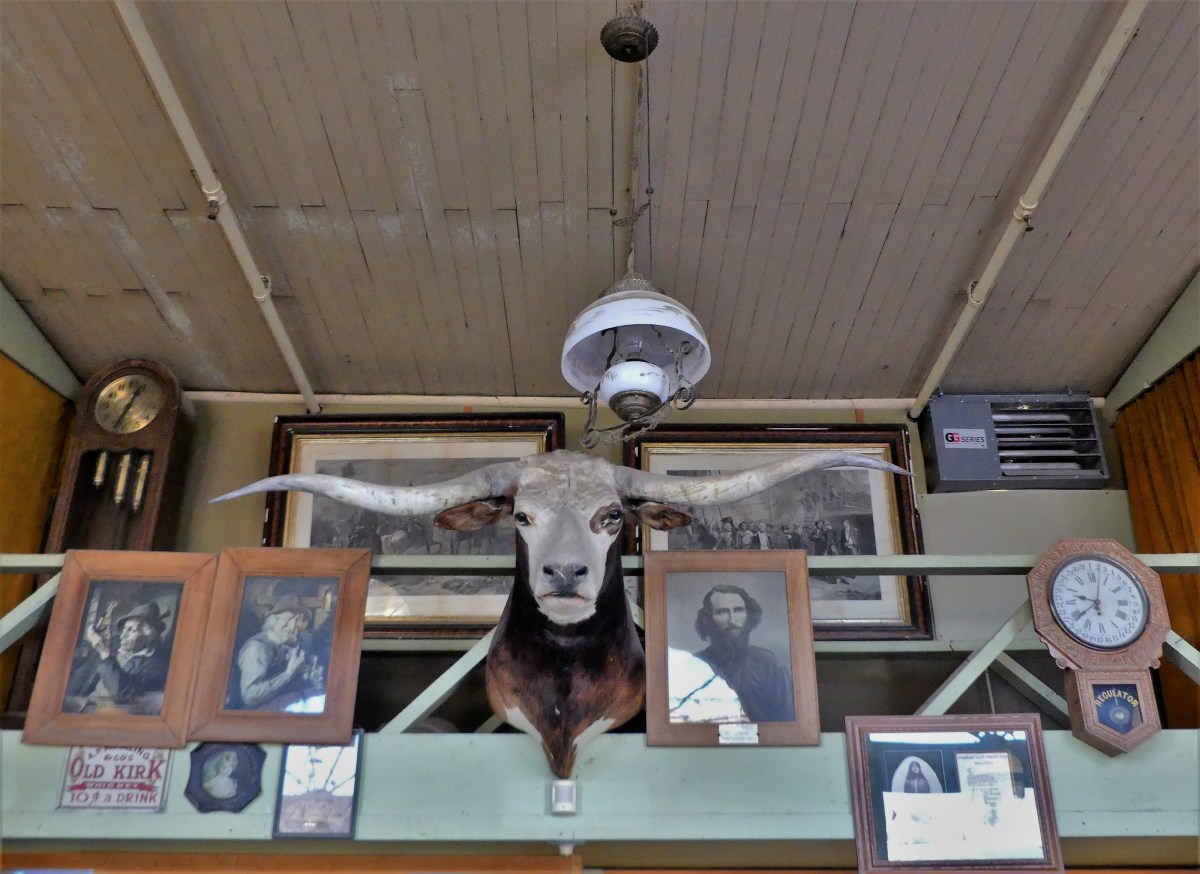
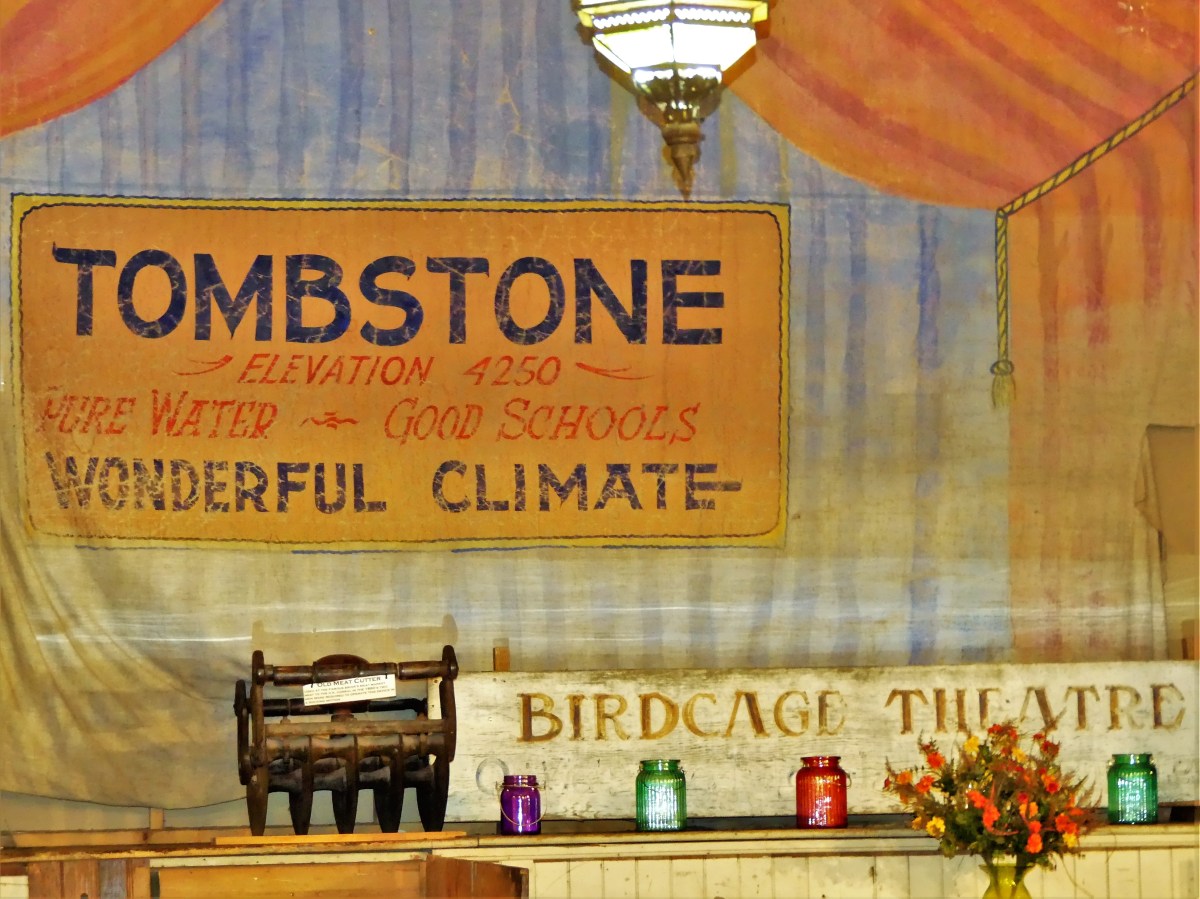
Yet it was business as usual at the Bird Cage Theatre,

birdcage theatre

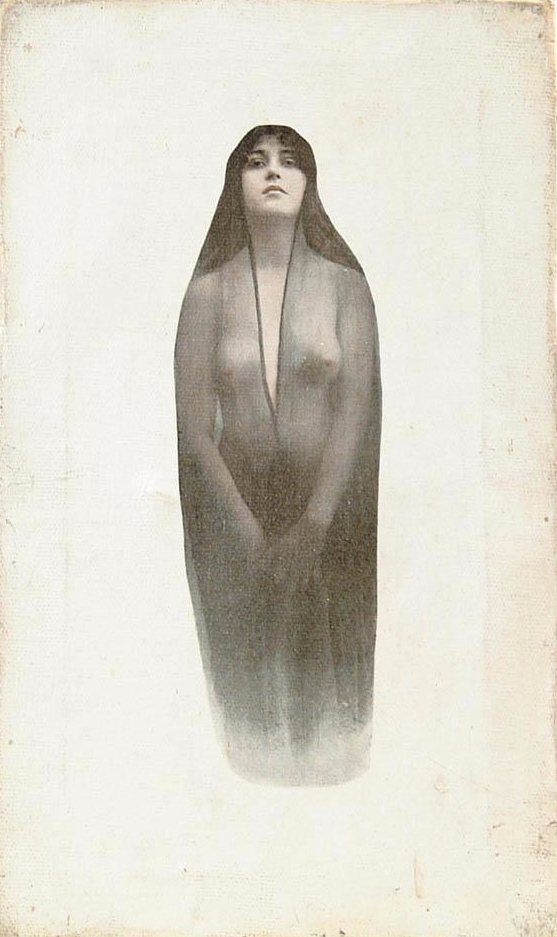
where wanton women plied their trade at twenty-three bucks a pop,

27-01.jpg

in their boudoir quarters…

dressing room

boudoir

…beyond the catwalk over the saloon,

catwalk

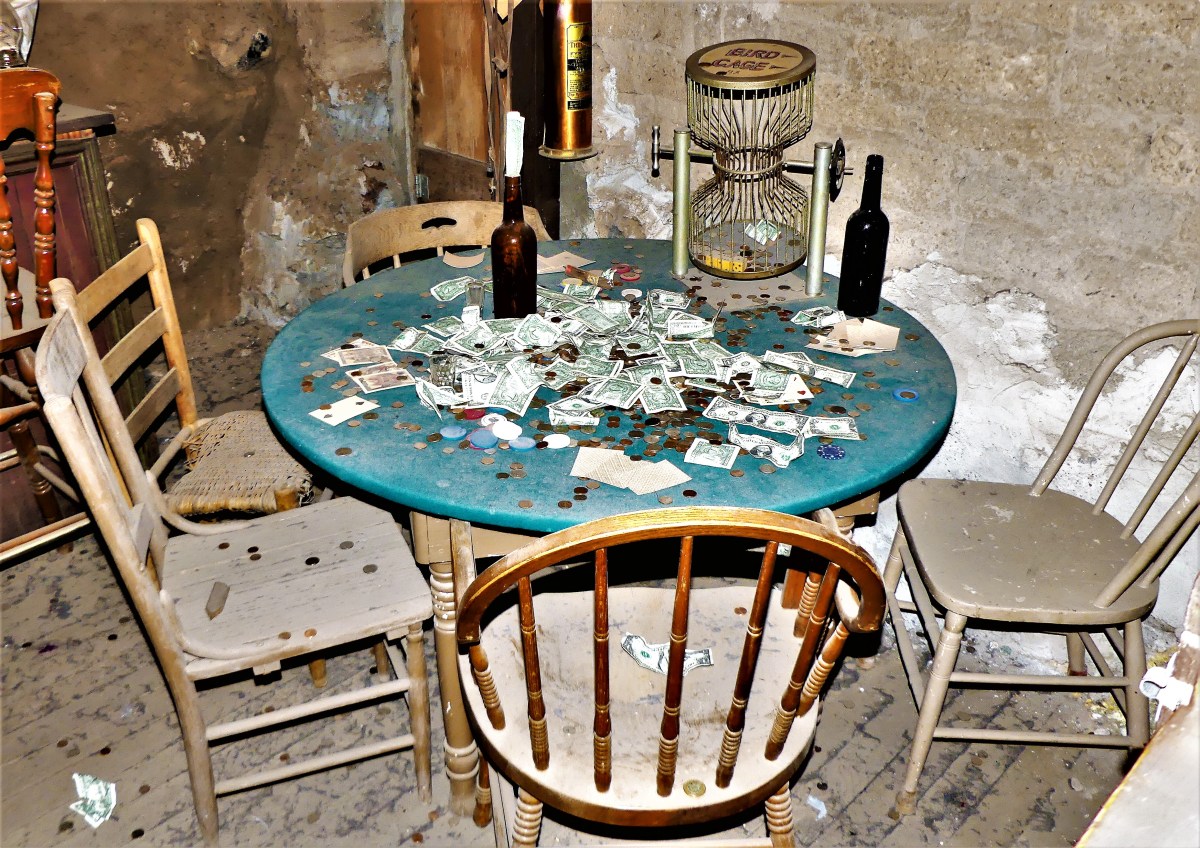
while high-stakes poker flourished under the stage,

stage curtain

with a $1000 minimum buy-in.

poker table.jpg

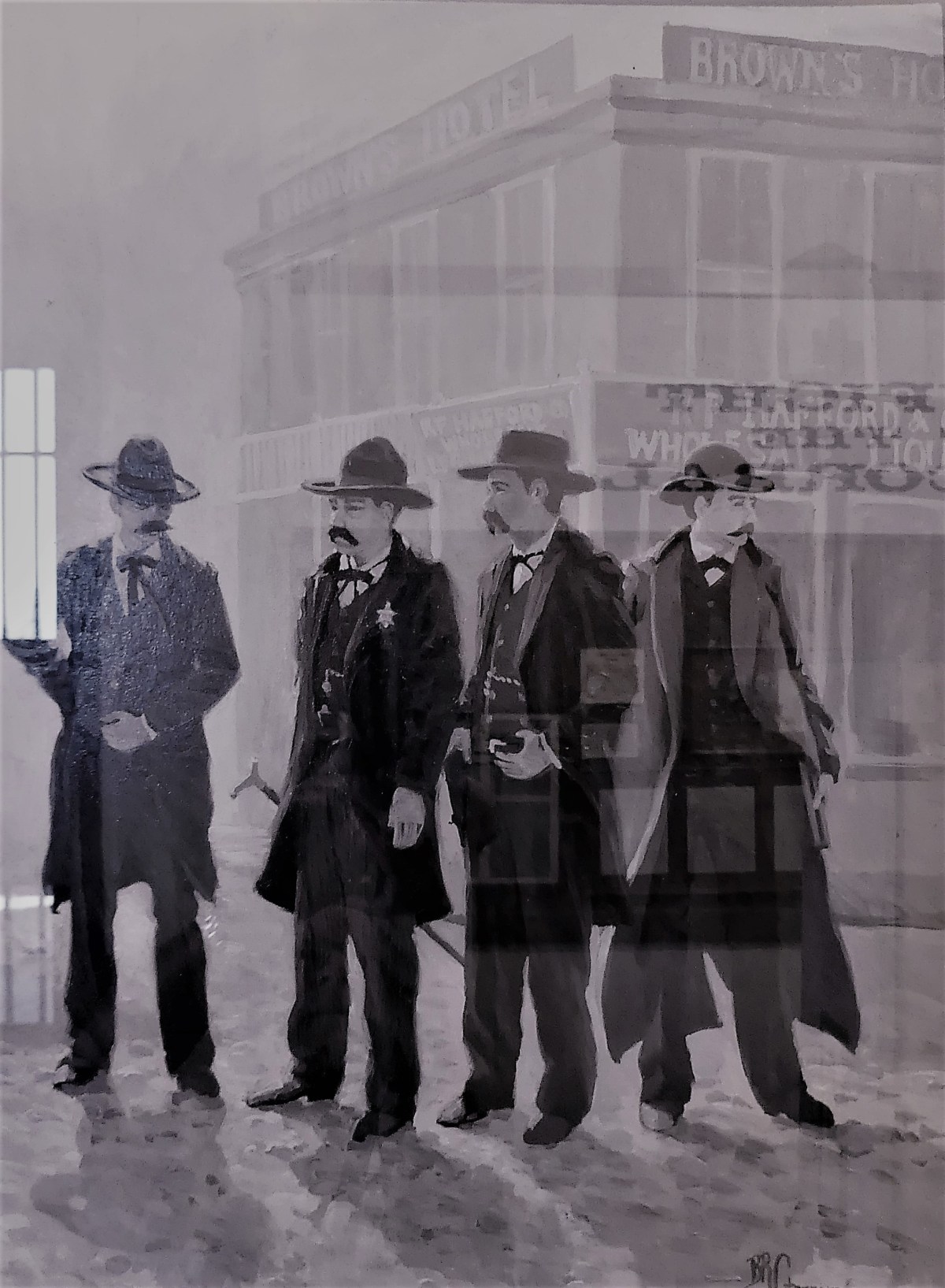
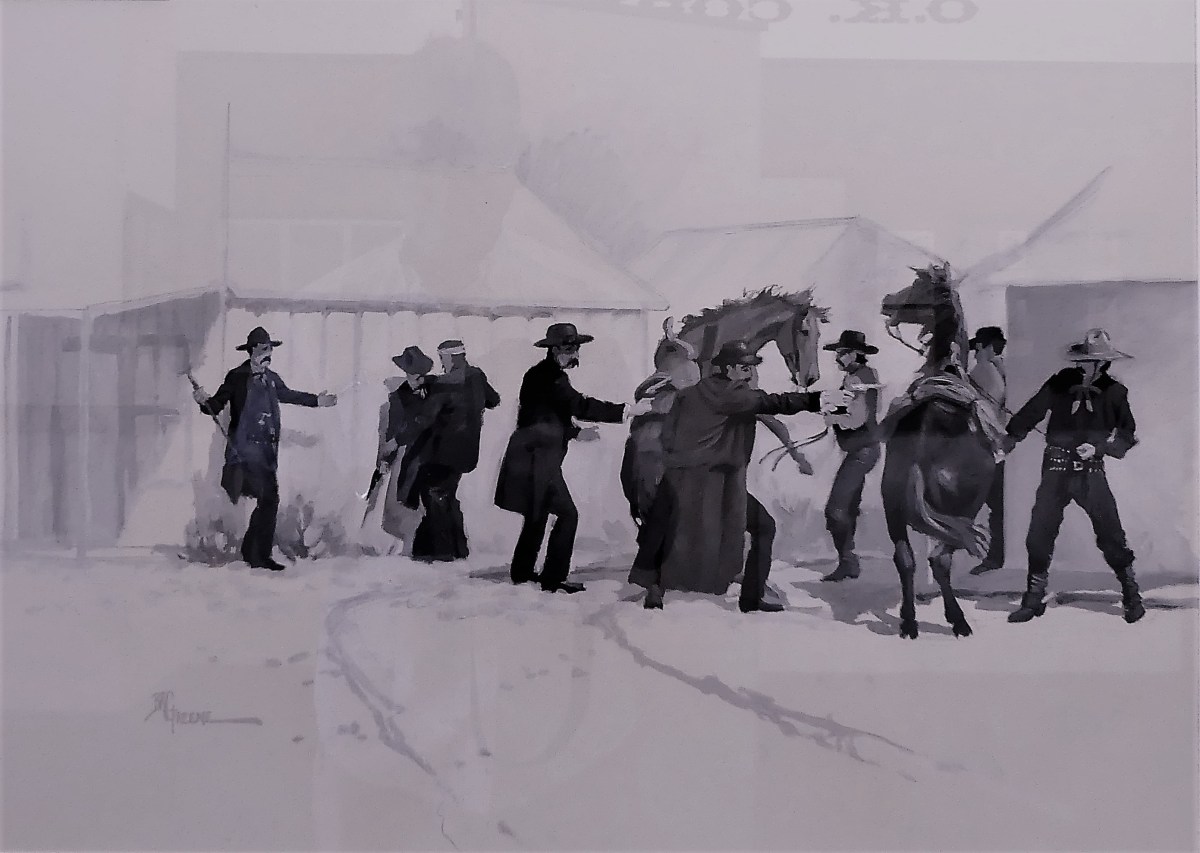
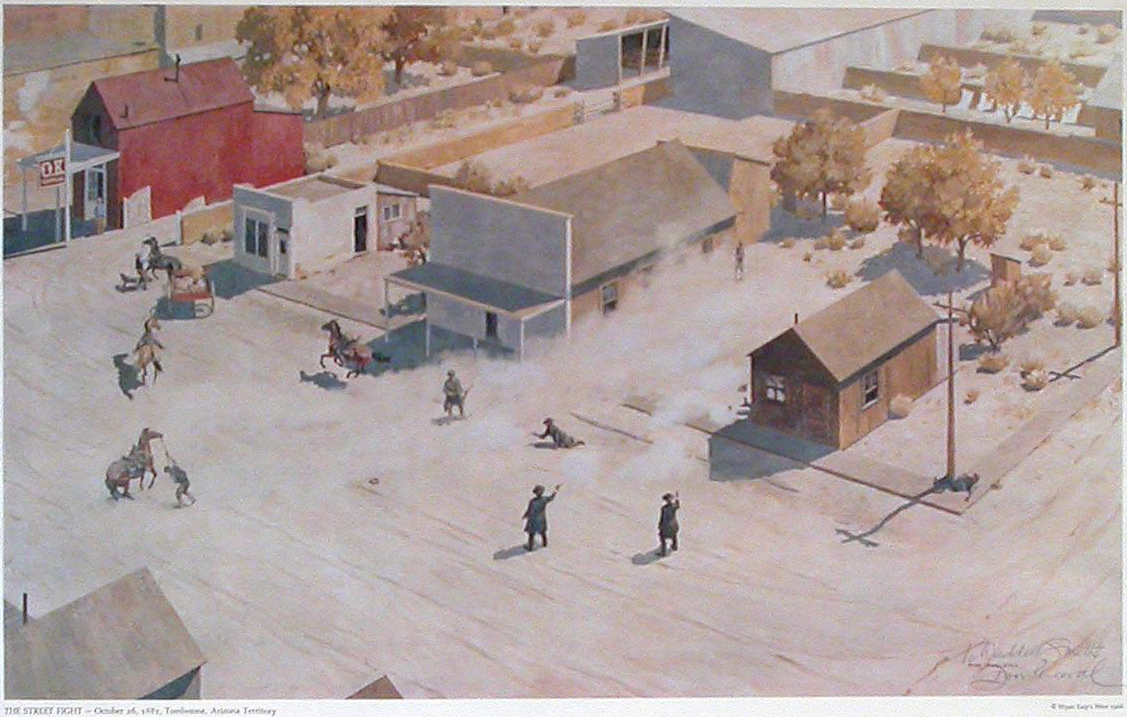
But outside on the street, trouble was brewing.

Slide 1.jpg
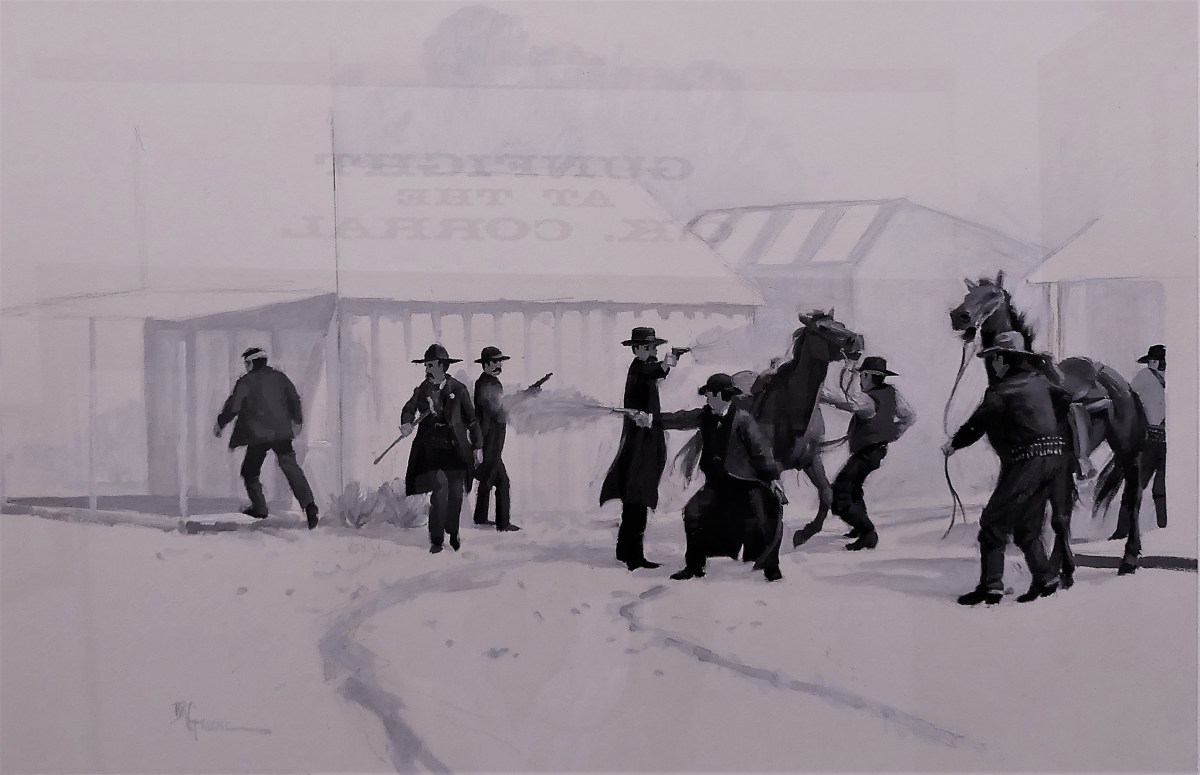
The Earps had heard that “The Cowboys” were gathering at the O.K. Corral making threats and spoiling for a fight.
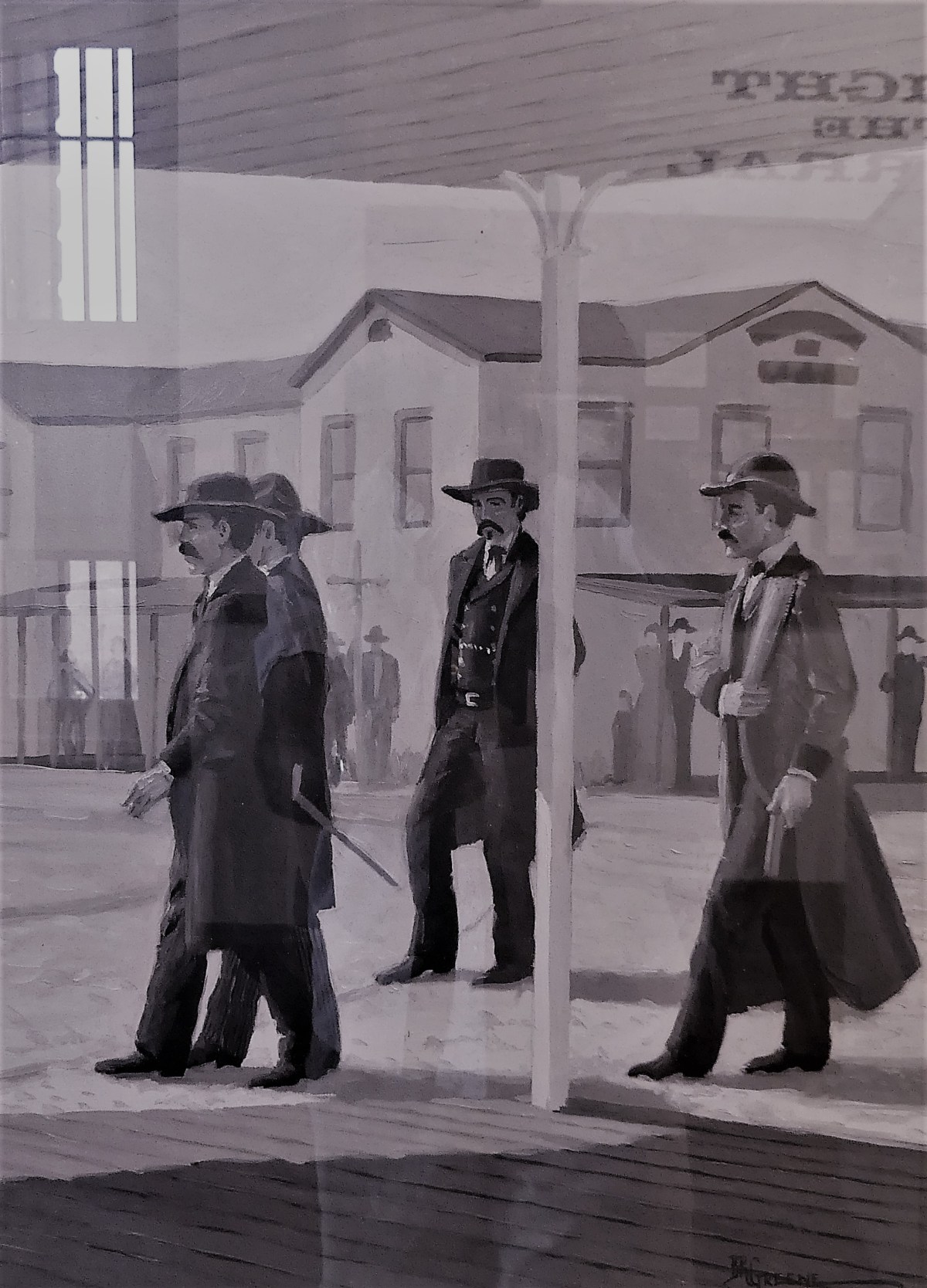
Slide 2.jpg
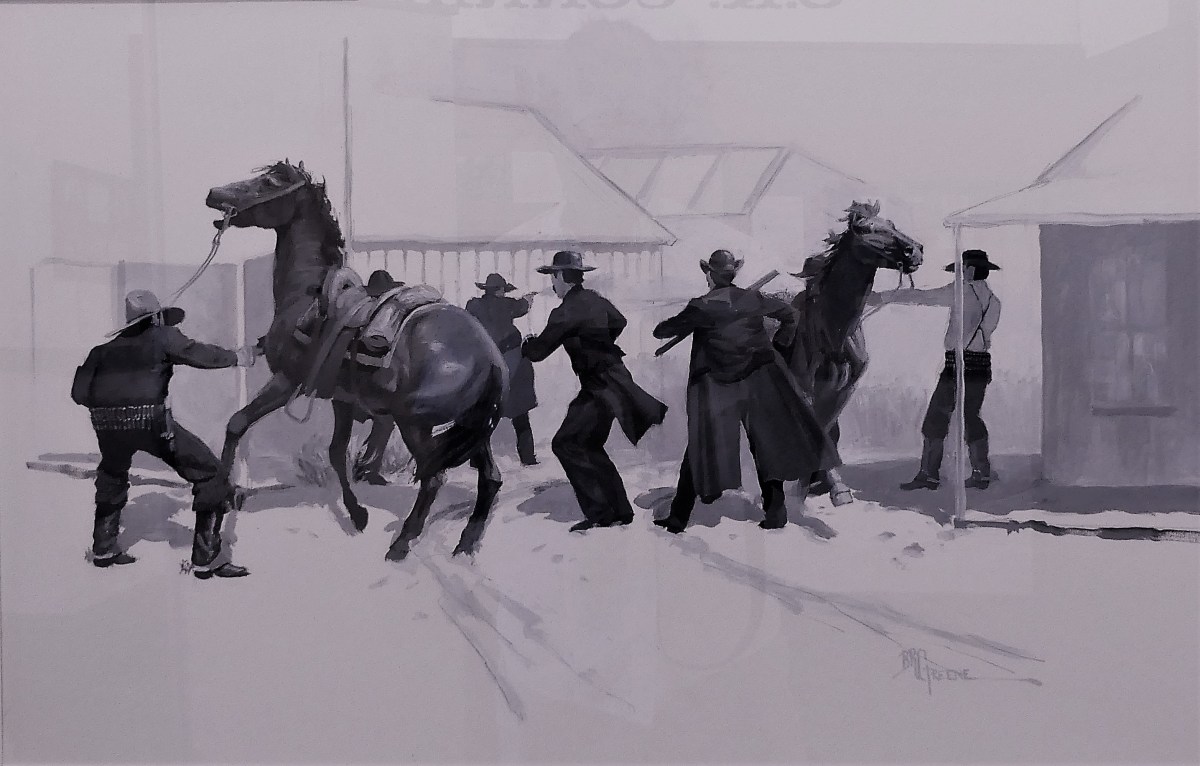
Rounding the corner of 4th and Freemont, the Earps headed west to the rear entrance of the O.K. Corral for a date with destiny.
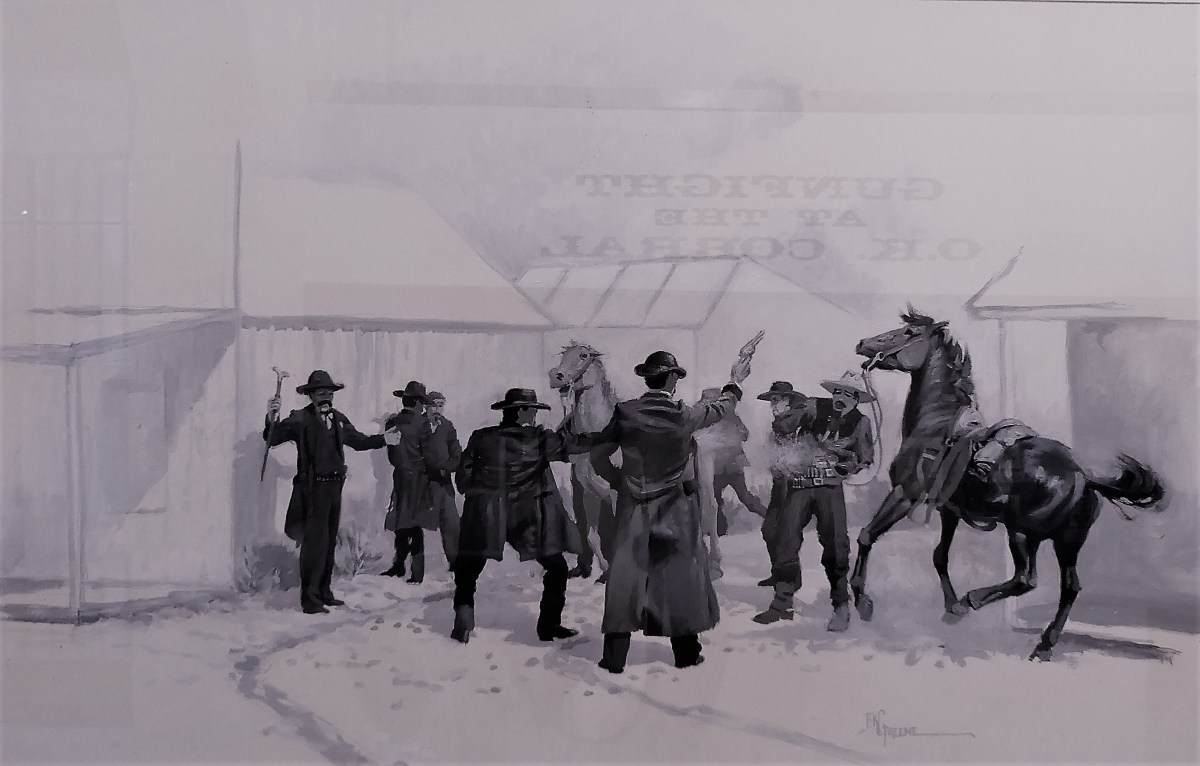
Slide 3.jpg
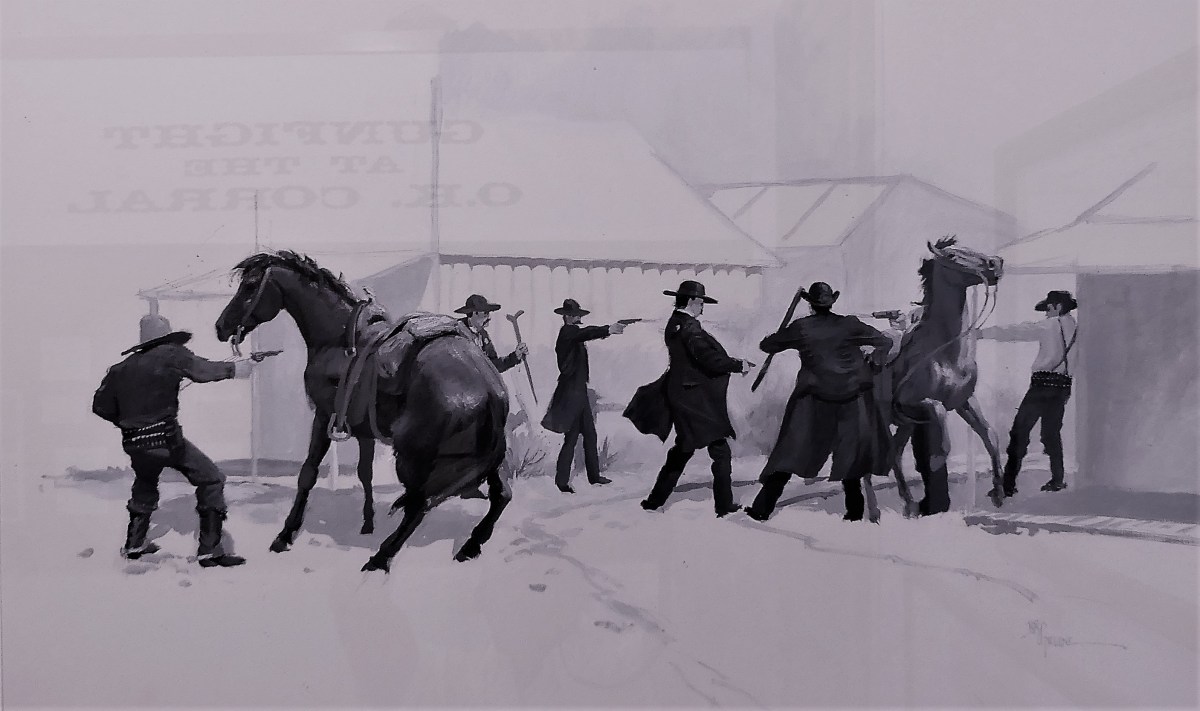
When the fight begins, Town Marshal Virgil Earp (with cane) says “Hold on, we don’t want that,” as Frank McLowery and Billy Clanton take the first bullets from Doc and Morgan.
Slide 4.jpg
Billy Clanton (2nd from right) draws his gun and begins to fire back as his brother Ike begs Wyatt Earp not to shoot him. Morgan and Doc are concentrating on Frank McLowery and the game Billy Clanton who, though mortally wounded, continues to shoot. Frank and Tom maneuver their horses as shields.
Slide 5.jpg
As Ike Clanton flees, Virgil Earp and Tom McLowery bring their guns into action. Doc Holiday turns to fire at the fleeing Ike, while Morgan continues to fire at the wounded Frank McLowery.
Slide 6.jpg
Frank McLowery maneuvers his horse into the street and fires back under the horse’s neck as Holliday pulls a sawed-off shotgun from under his coat. An anonymous shot, possibly from Billy Claiborne is fired from within the O.K. Corral, diverting the Earps’ attention.
Slide 7.jpg
Frank McLowery still manages to hang onto his horse for cover as his brother Tom, shooting over his saddle, hits Morgan Earp. Billy Clayton (nearing death) returns fire at Virgil and Wyatt. A shot from Frank hits Marshal Virgil Earp in the right leg.
103742_0.jpg
Thirty bullets are fired in a thirty second outburst. When the smoke clears, Billy Clanton and both McLaury brothers lay dead in the street. Ike Clanton, claiming that he was unarmed has run from the fight, along with Billy Claiborne. Virgil, Morgan, and Doc Holliday are wounded, but Wyatt Earp is unharmed.

Certainly, death was big business for the Tombstone Undertakers.

coffin ad (2).jpg

funeral carriage

And on occasion, death was high entertainment for the townsfolk.

invitation to a hanging

Cochise County Court House

courthouse gallows

hanging noose

standing coffin

mission bell

And as the sun sets on Tombstone…

sunset over tombstone (2)

we remember the lawlessness of the Wild, Wild West,

City Hall

but we celebrate the triumph of a Town Too Tough to Die…

old town set

…a worthy consideration while we soaked away the stress in a hot spring along the Rio Grande the following day in Truth or Consequences, NM.

morning soak by the rio grande .jpg


Milestones

What started out as an intimate blog intended for sharing our cross-country adventures with family and friends has taken on higher meaning and greater dimension. After seven months of 100 posts, 10,000 views, 4000 visitors from over 150 countries, and a new family of nearly 1000 followers, this blog has eclipsed all that I could have imagined.

It has changed how I look through a lens and how I craft a story. It has transformed my posts from informative to entertaining. The discipline has made me a more fluent writer and sharper photographer, for which I am thankful.

Your collective thoughts and comments are a driving force to improve my content, and I am grateful for the feedback and acknowledgement.

I’d like to think that this evolution and subsequent statistics are because of my new and loyal audience, and I thank you dearly.

Additionally, my apologies to Leah, who must now contend with my newest obsession.