The Road to Recovery

BREAKING NEWS

in NYC.

Exploring Angkor Wat

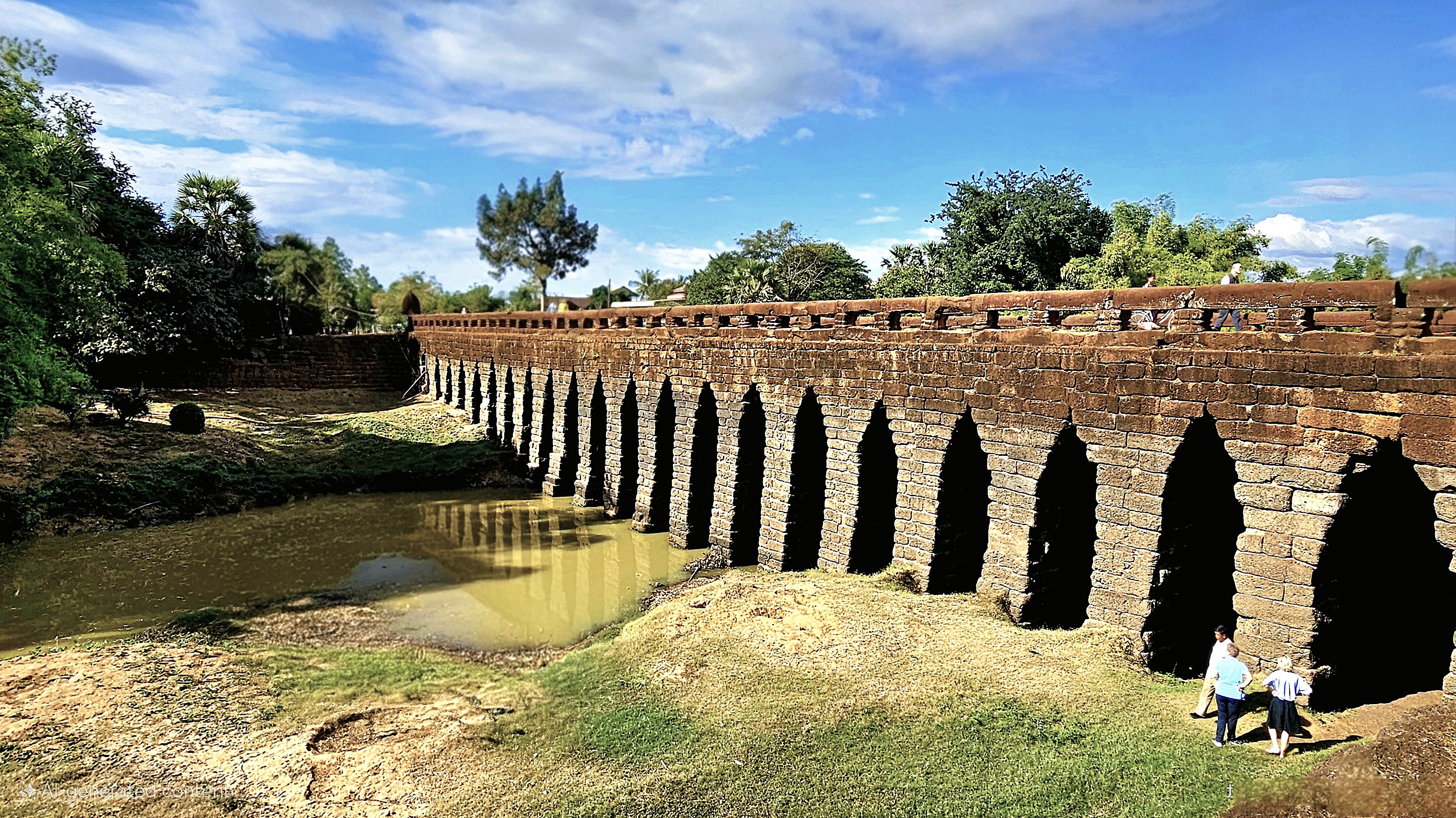
A view of the ancient Kampong Kdei Bridge, showcasing its impressive 12th-century architecture with multiple corbelled arches over a dry riverbed, set against a clear blue sky.
A detailed close-up of a stone sculpture depicting a nine-headed naga, showcasing intricate carvings and textures, set against a blue sky.
A person in a hooded jacket and face mask rides on a wooden cart pulled by two water buffalo along a rural path surrounded by greenery.
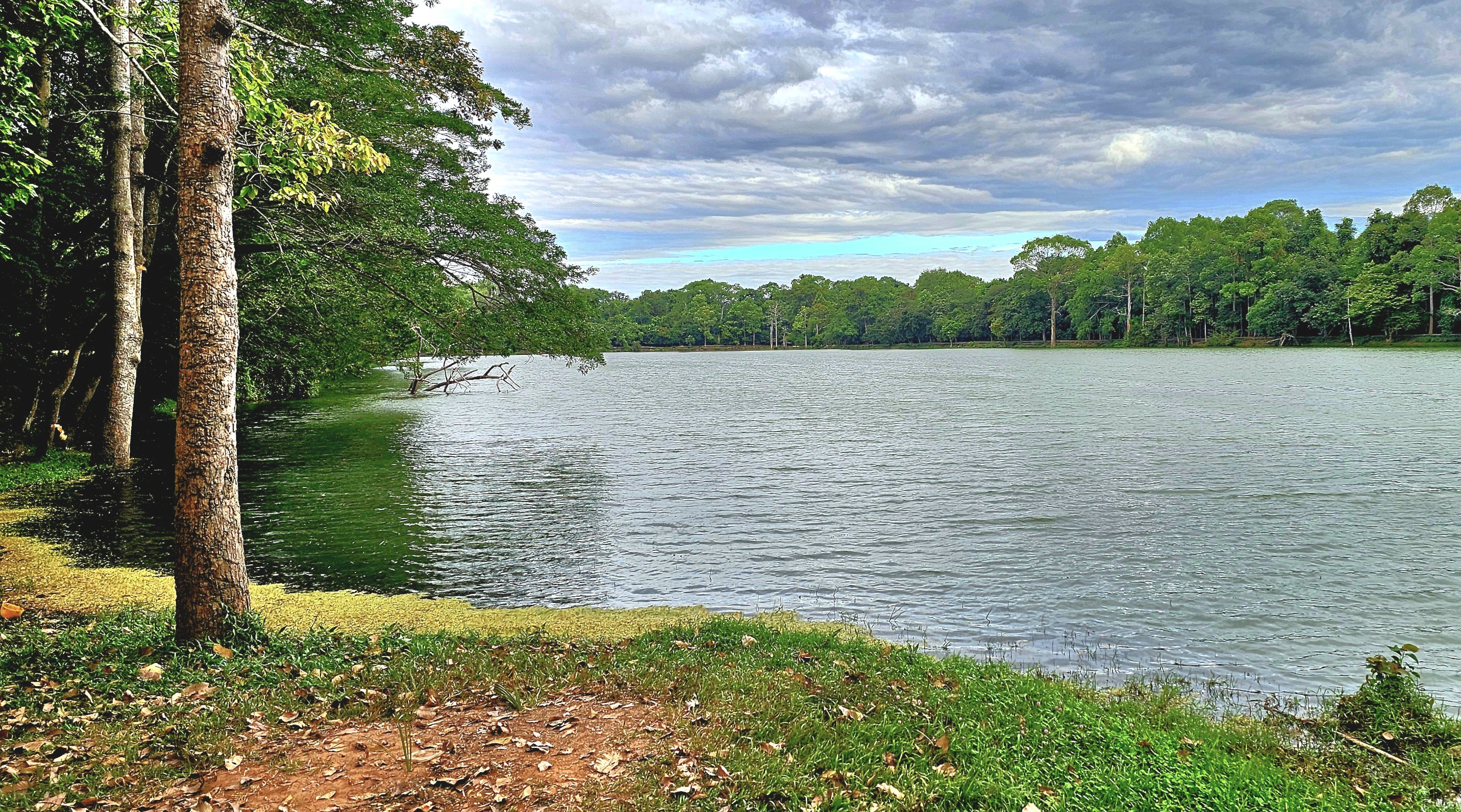
Lush greenery surrounds a tranquil lake, with trees lining the water's edge and a cloudy sky overhead.
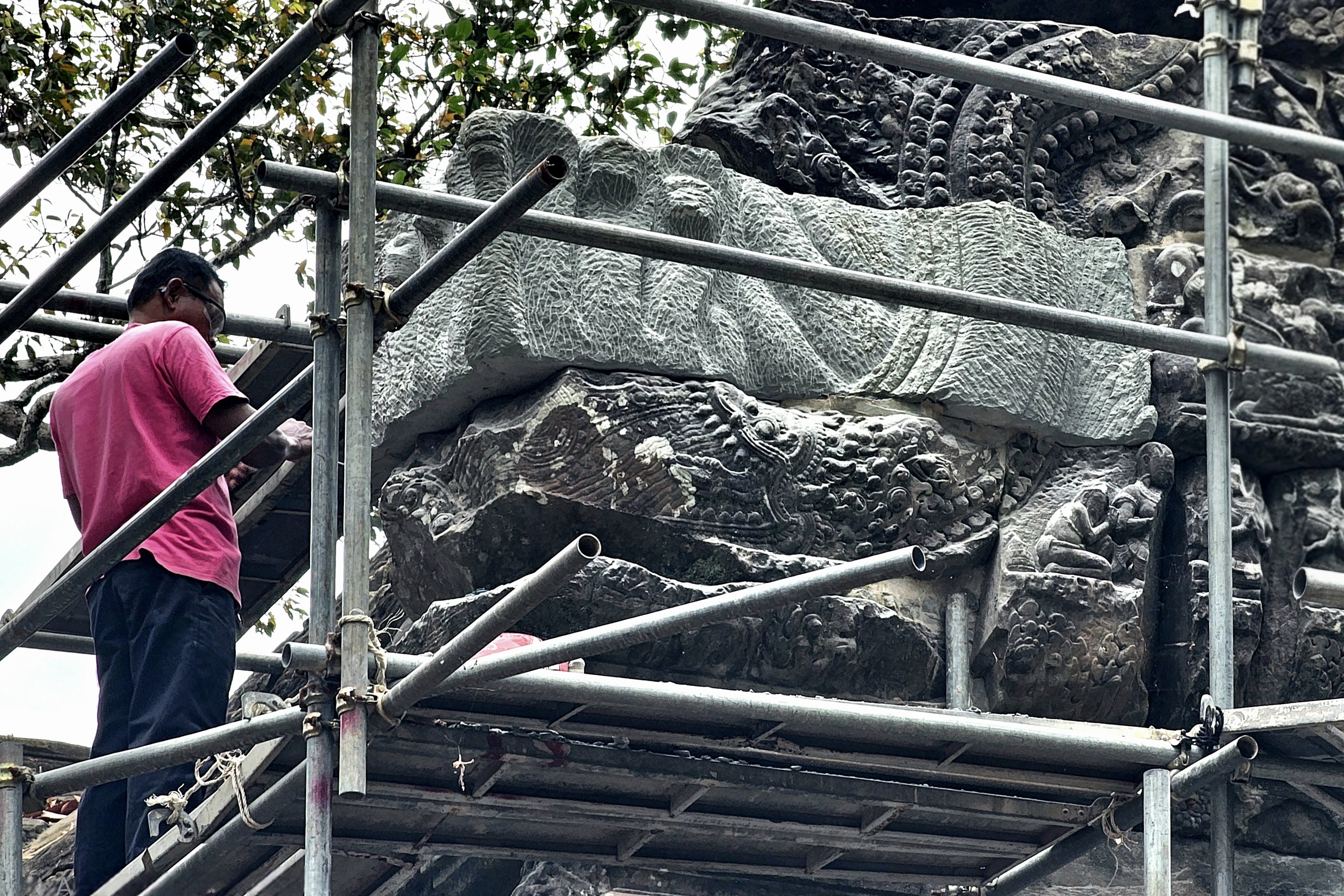
Restoration work on an ancient temple in Siem Reap, Cambodia, featuring scaffolding, surrounded by lush trees and fallen leaves on the ground.
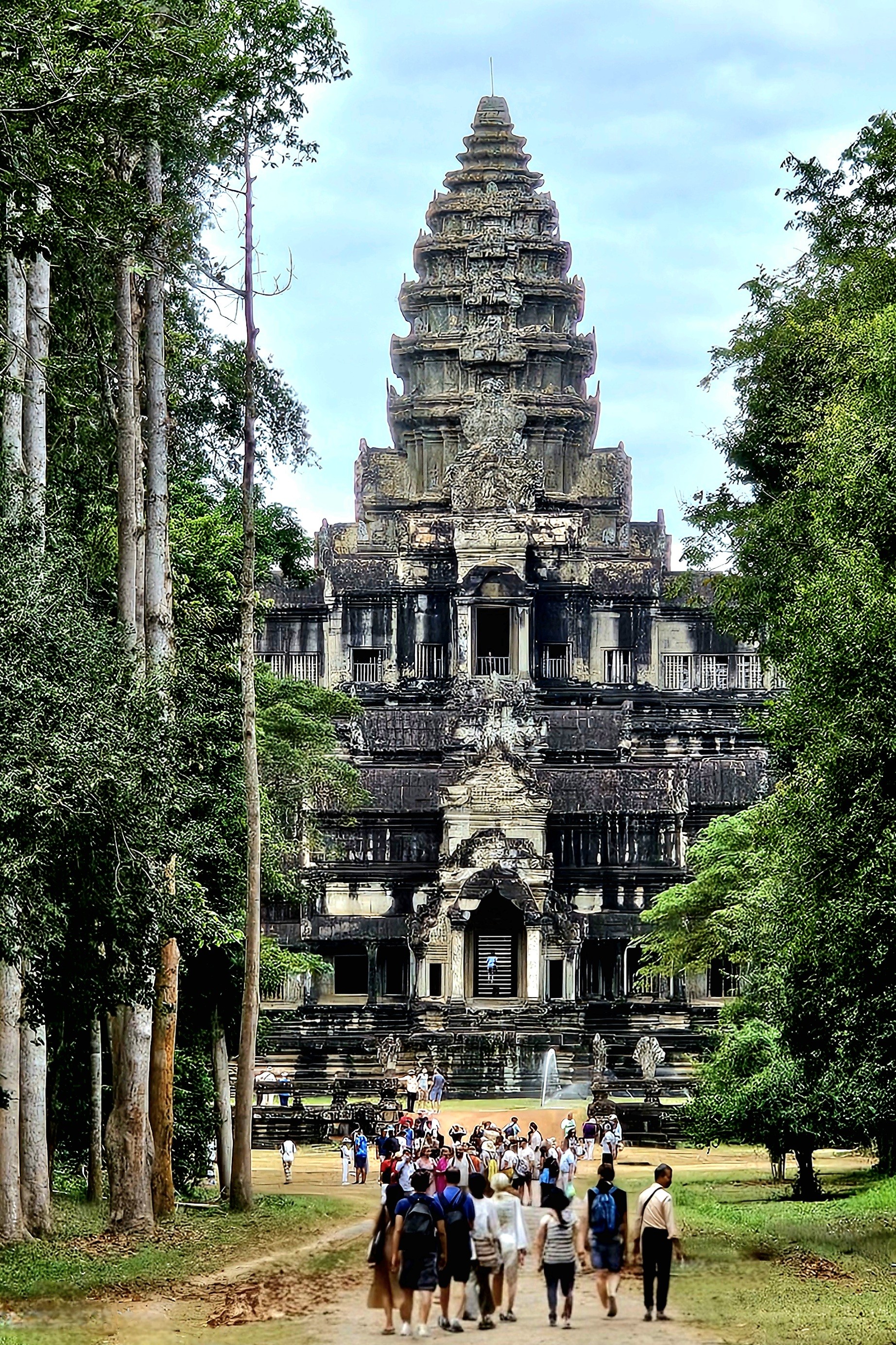
A panoramic view of Angkor Wat, with numerous visitors exploring the temple grounds, framed by trees and a cloudy sky.
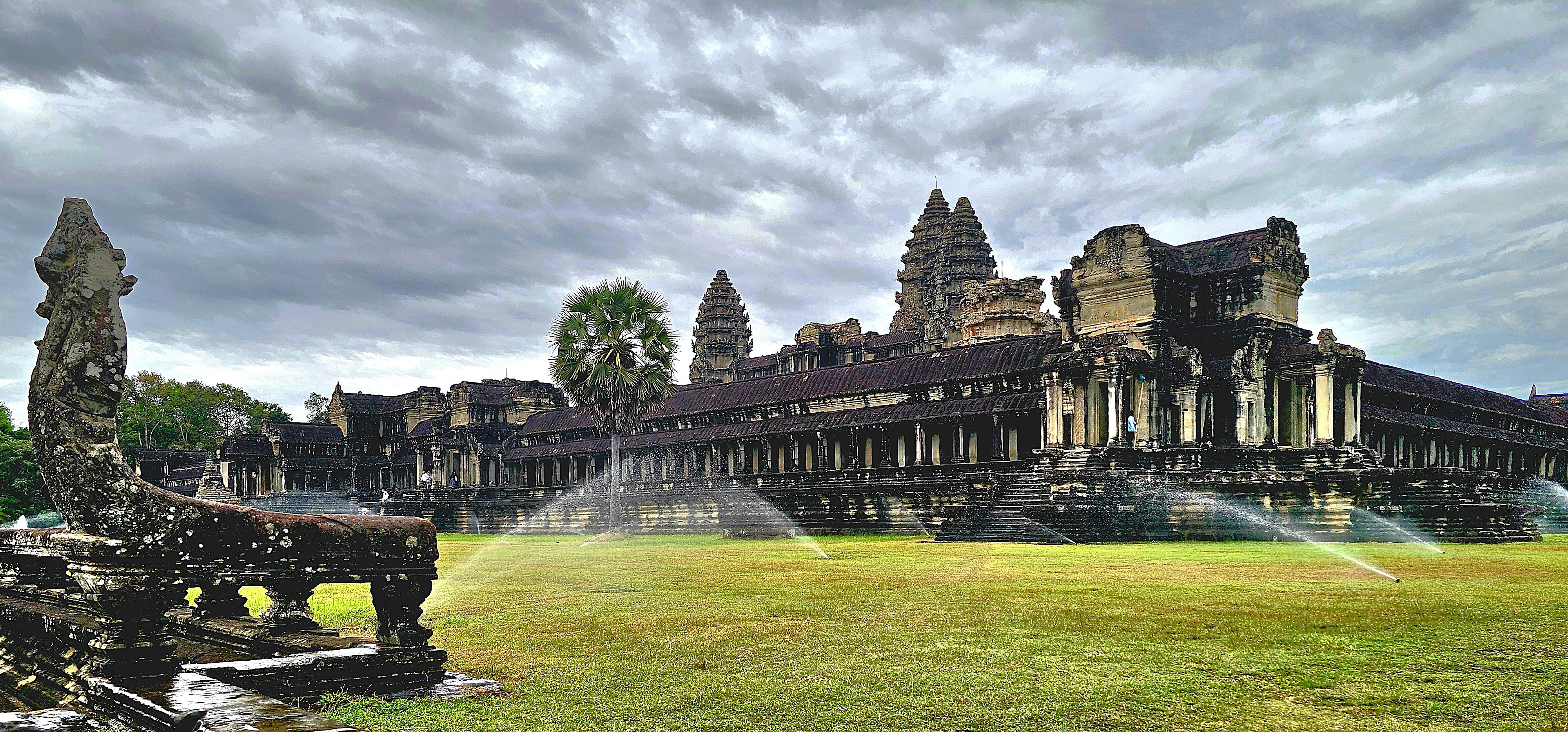
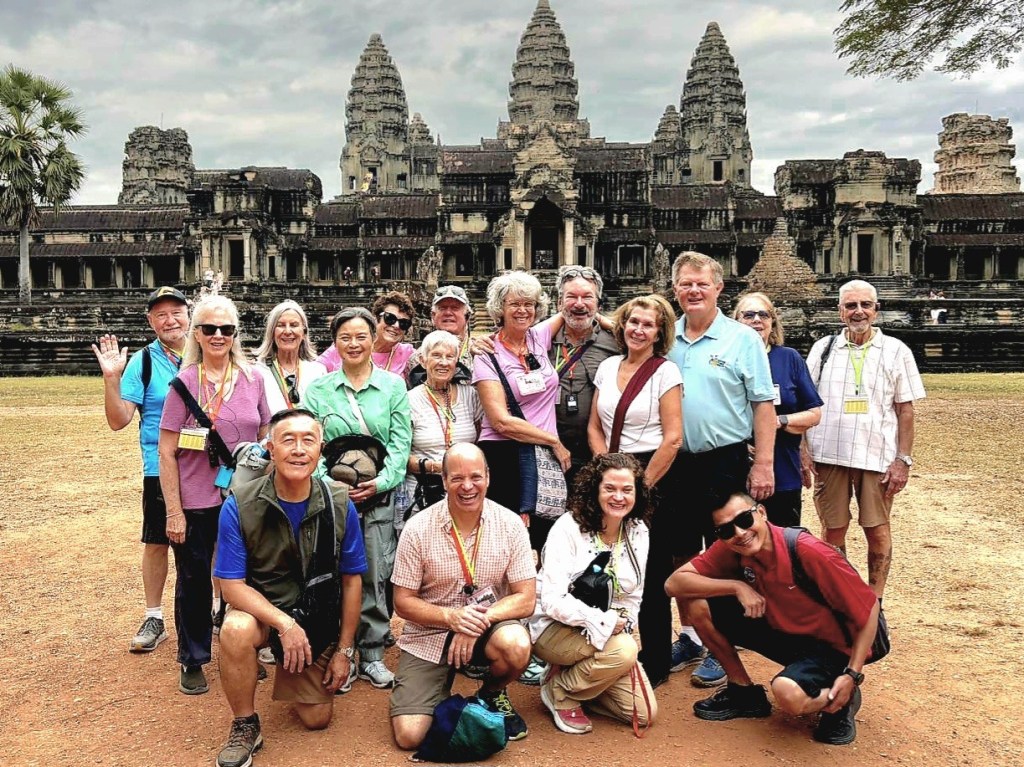
A view of Angkor Wat under cloudy skies, featuring the temple's distinct architecture with its multiple spires and a nearby stone naga statue in the foreground.
Angkor Wat, a monumental temple complex in Siem Reap, Cambodia, showcasing its intricate architecture and historic significance.
Angkor Wat temple structure showcasing intricate architecture amidst lush greenery in Siem Reap, Cambodia.
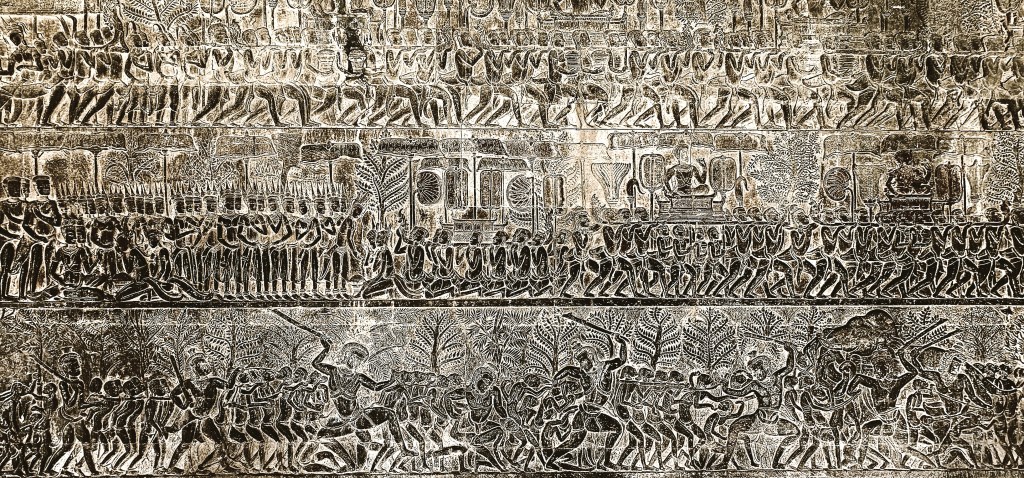
Intricate bas-relief carvings showcasing historical and mythological figures from Khmer culture on a temple wall in Angkor, Cambodia.
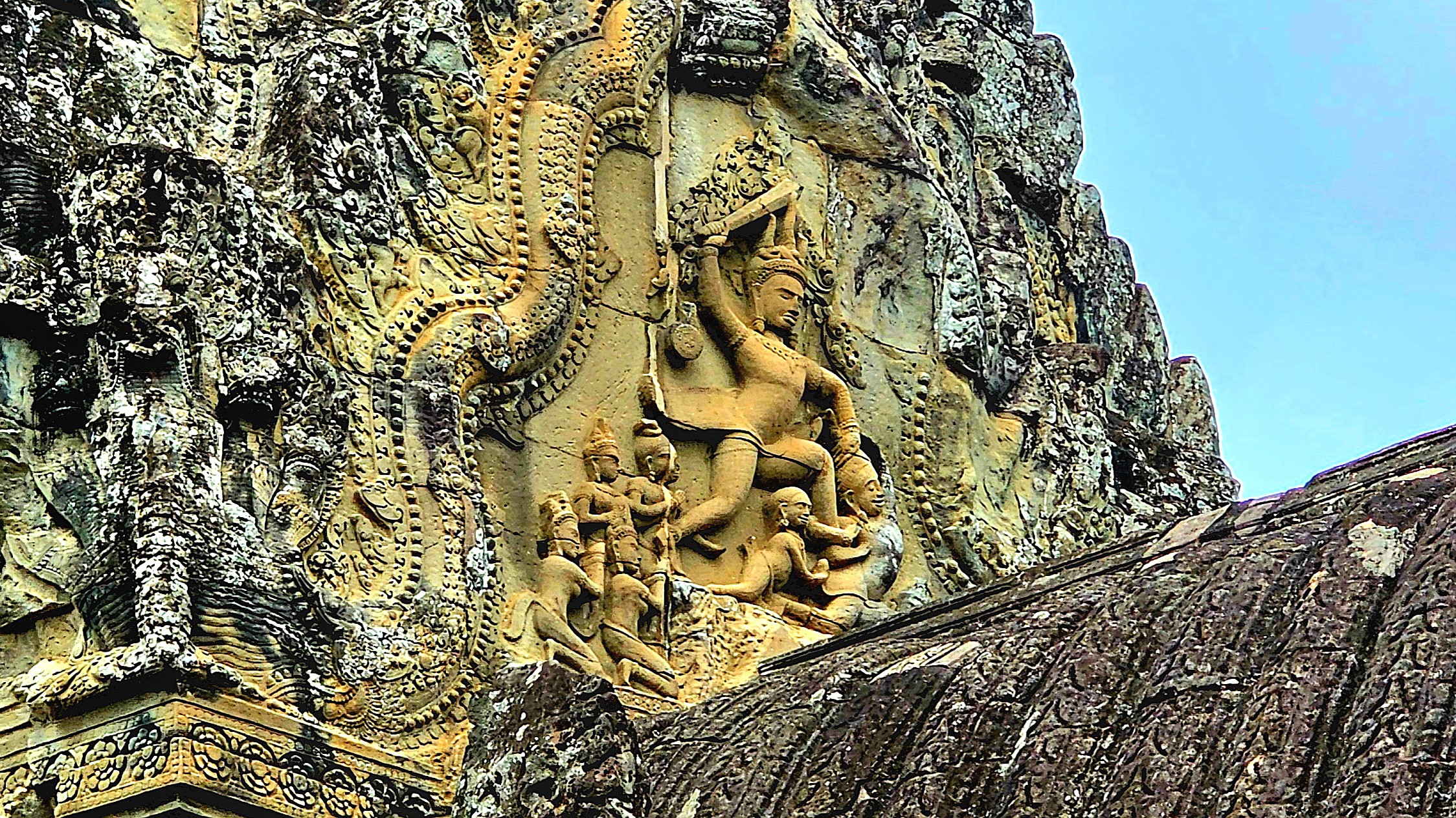
Bas-relief carving depicting a scene from Hindu mythology, featuring a figure surrounded by multiple smaller figures, illustrating the artistic significance and intricate detailing of Angkor Wat.
Churning of the Sea of Milk
Intricate bas-relief carvings depicting a historical battle scene, showcasing detailed figures and intricate designs, part of the Angkor Wat temple complex in Cambodia.
Heaven and Hell
Close-up view of a bas-relief carving depicting warriors on horseback and infantry, showcasing the intricate artistry of Khmer culture in Angkor Wat.
Military Parade of Kink Suryavarman II
A detailed scale model of Angkor Wat, showcasing its intricate architectural features and layout.
A worker is restoring intricate stone carvings on a temple in Siem Reap, Cambodia, using scaffolding for support.
Visitors climbing the steep wooden stairs of Angkor Wat, showcasing the temple's iconic structure in Cambodia.
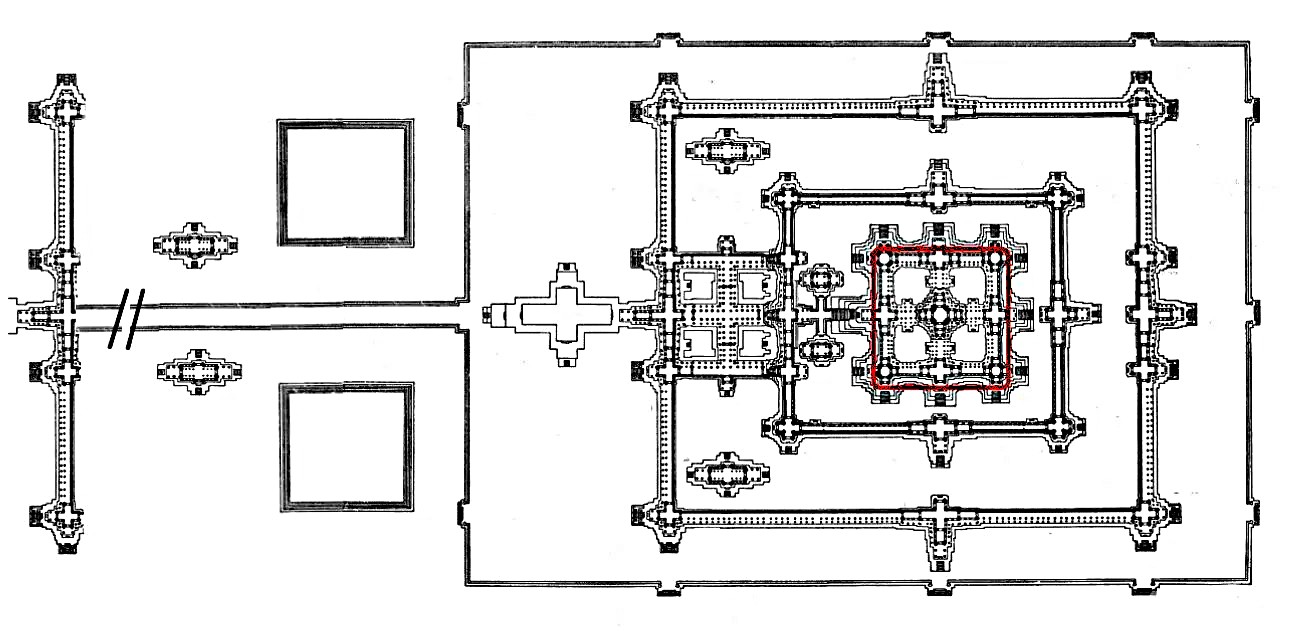
A detailed architectural plan of Angkor Wat, highlighting its complex layout and design features with marked sections in red.
Close-up view of the central tower of Angkor Wat, showcasing its intricate architectural details and carvings against a blue sky.
Aerial view of Angkor Wat temple complex in Siem Reap, Cambodia, showcasing its intricate rooftops and surrounding lush greenery with visitors walking along pathways.
A wooden Buddha statue draped in a golden robe, standing in a niche with a decorative background, symbolizing religious significance.
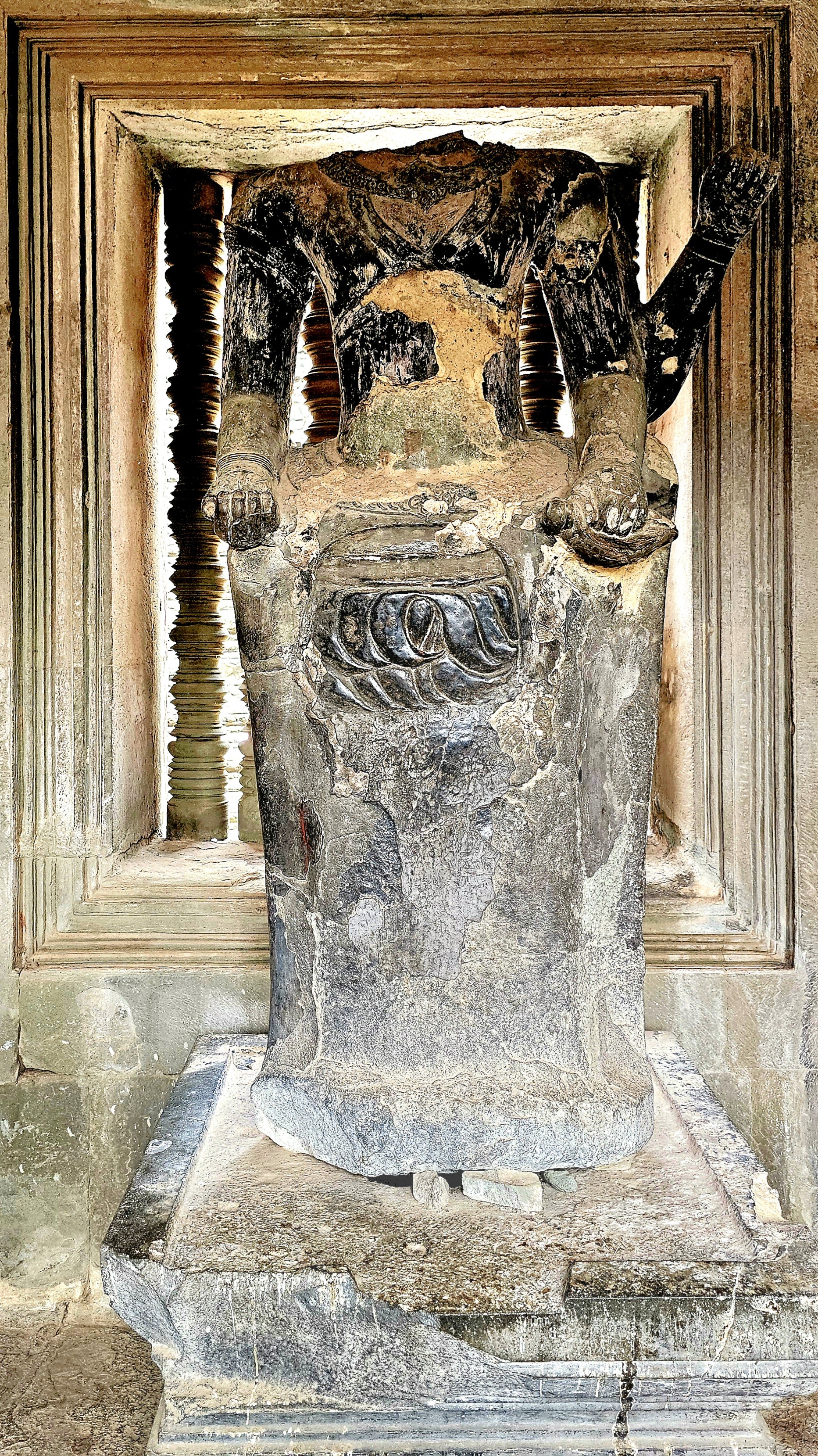
A partially eroded statue with missing head and arms, set against an ancient stone backdrop, showcasing intricate designs typical of Khmer art.
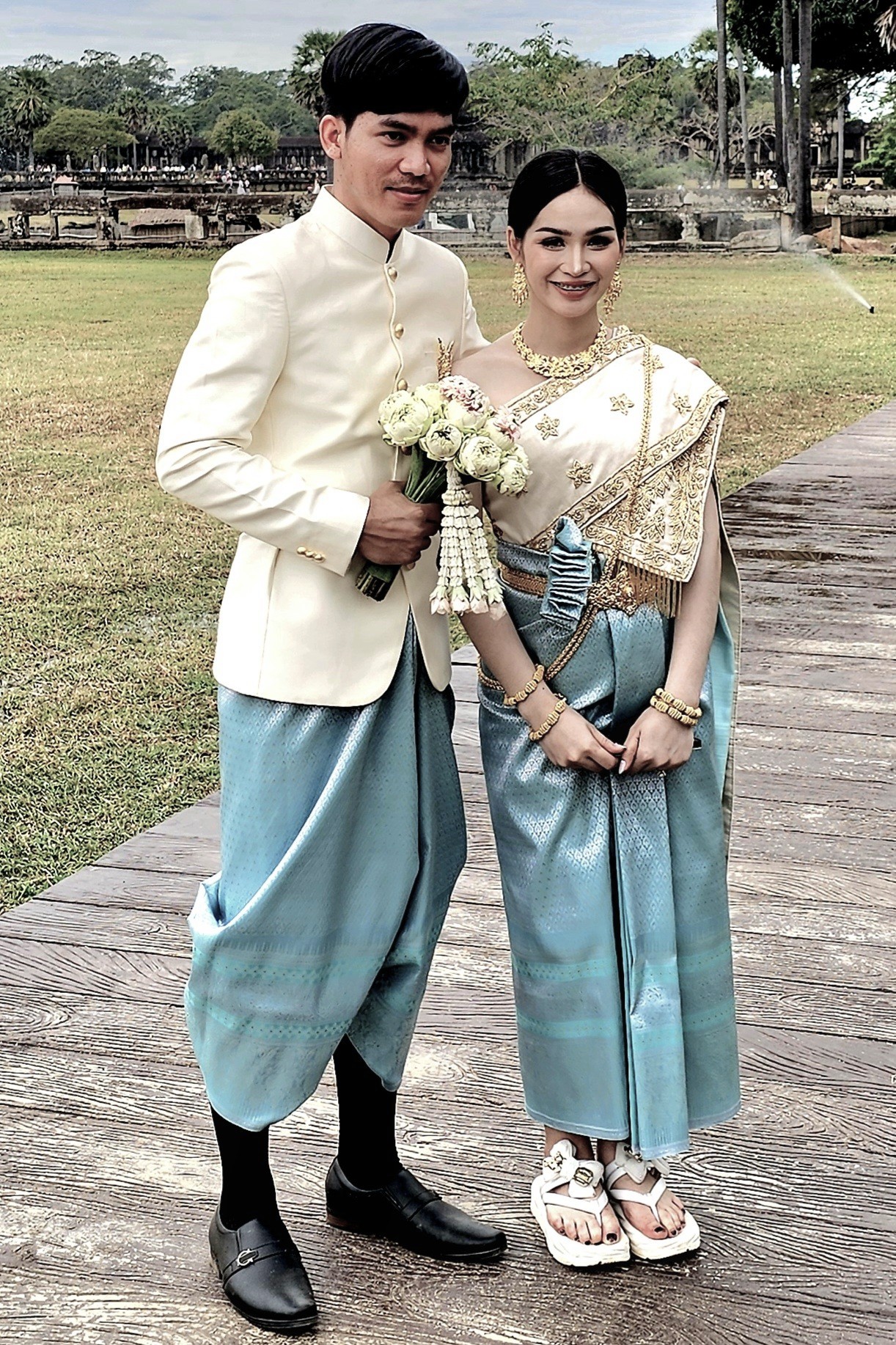
A man and a woman in traditional Cambodian attire, posing together with a bouquet of flowers, against a scenic backdrop that hints at the cultural significance of their location.
Two people in traditional Cambodian attire posing by a reflecting pool in front of Angkor Wat, with palm trees and the temple complex in the background.
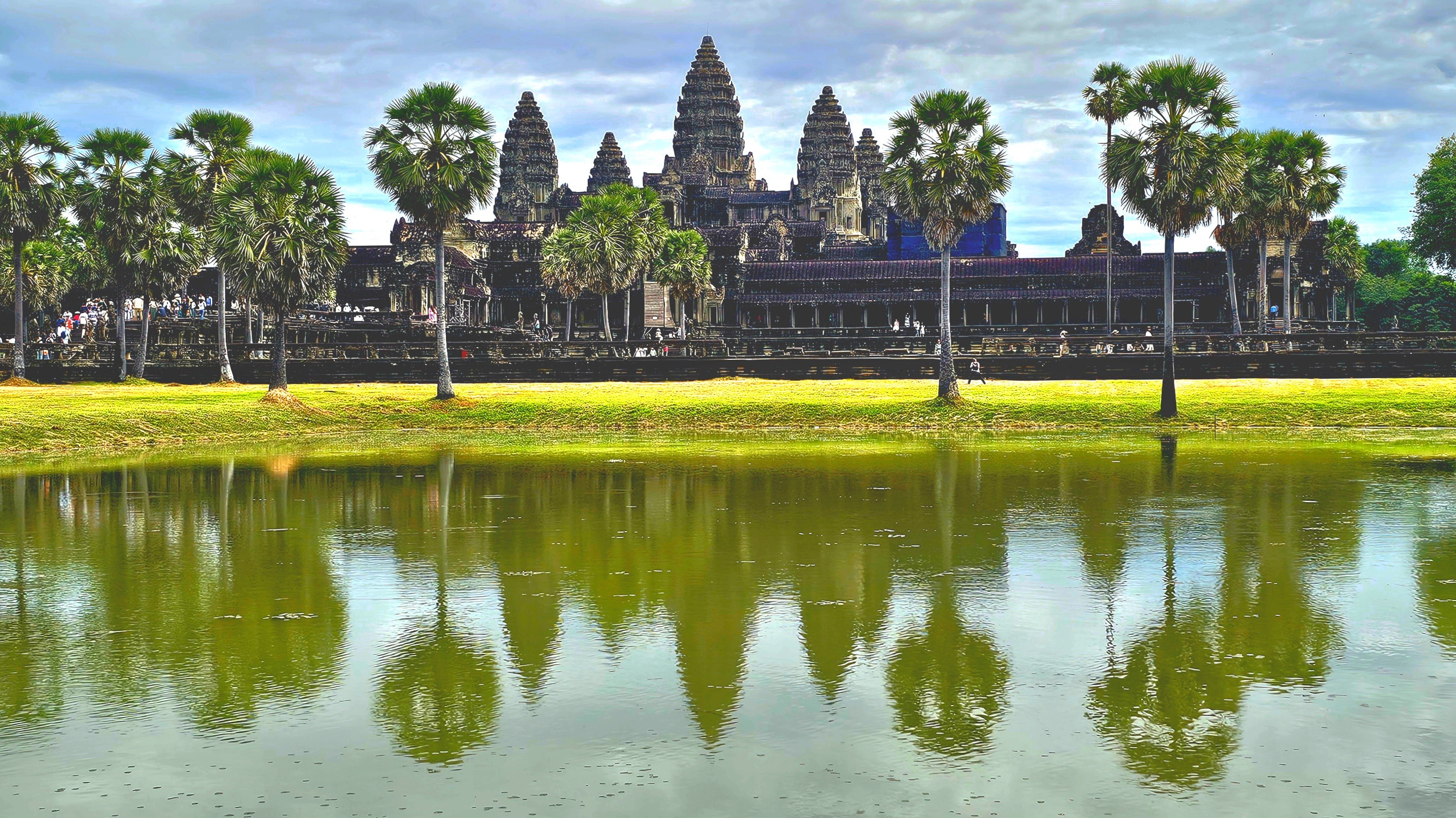
View of Angkor Wat temple, with lush greenery and palm trees reflected in the water of the surrounding moat.
A tranquil view of Angkor Wat reflecting in the moat, highlighting the iconic lotus towers and surrounding lush greenery during a serene early morning.

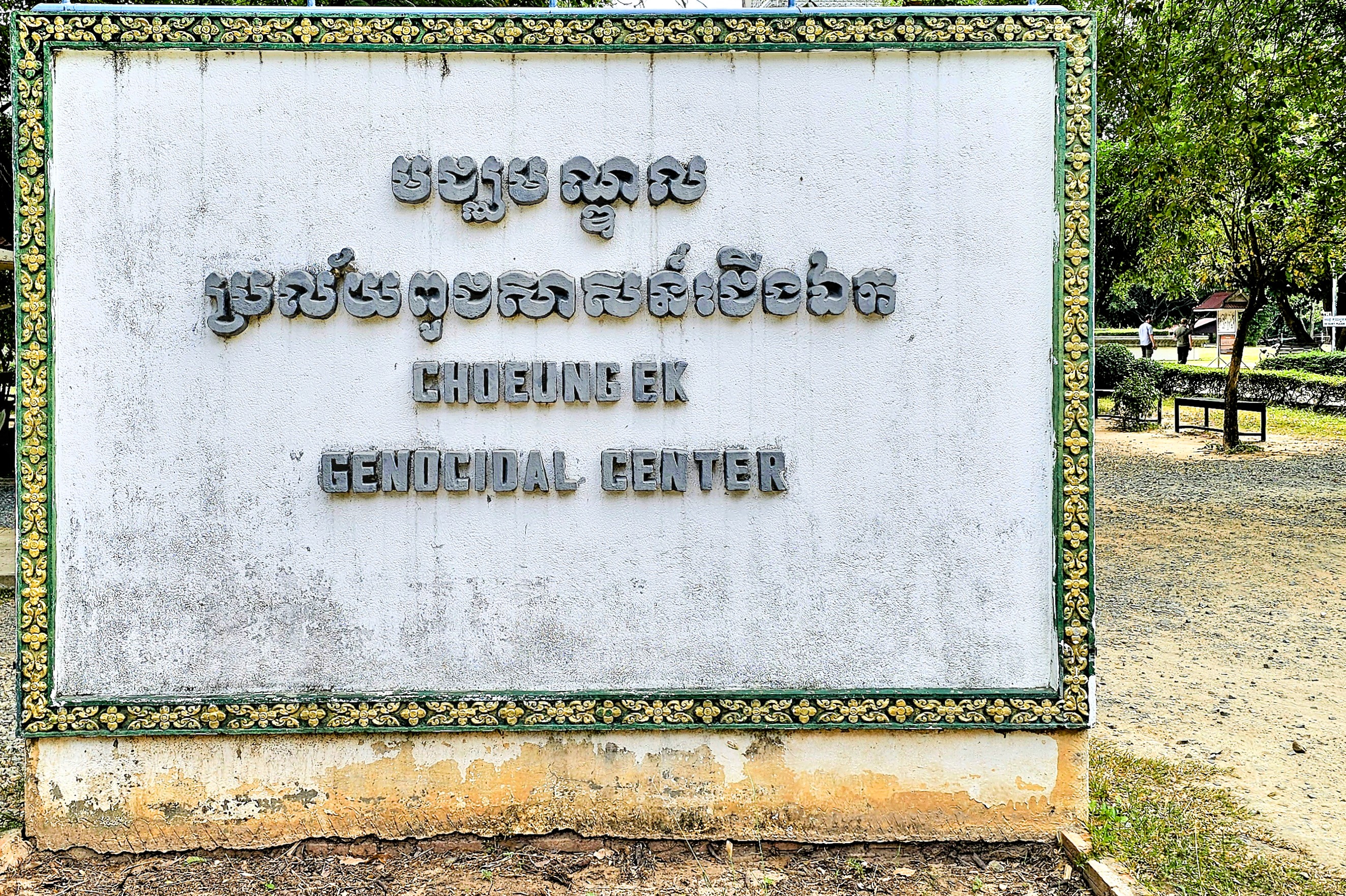
Surviving Toul Sleng

A historical photograph depicting a crowd of people on the streets of Phnom Penh during the Khmer Rouge's takeover on April 17, 1975, with an armed soldier present.
A historical black-and-white photograph depicting a large group of people, including children, celebrating on a street, displaying expressions of joy and excitement, with palm trees and buildings in the background.
A large crowd of people, many carrying belongings and wearing traditional conical hats, is depicted in a busy street scene. Smoke rises in the background, suggesting a tense or chaotic atmosphere during the Khmer Rouge takeover in Phnom Penh.
from Agence Khmere de Press archive
A sign titled 'The Gallows' stands in a courtyard surrounded by trees and greenery, with a view of a building in the background. The sign provides historical context regarding the site during the Khmer Rouge regime, including an illustration.
Black and white photograph of six men standing together outside, possibly former prisoners or survivors of the Khmer Rouge regime, with names and information printed below.
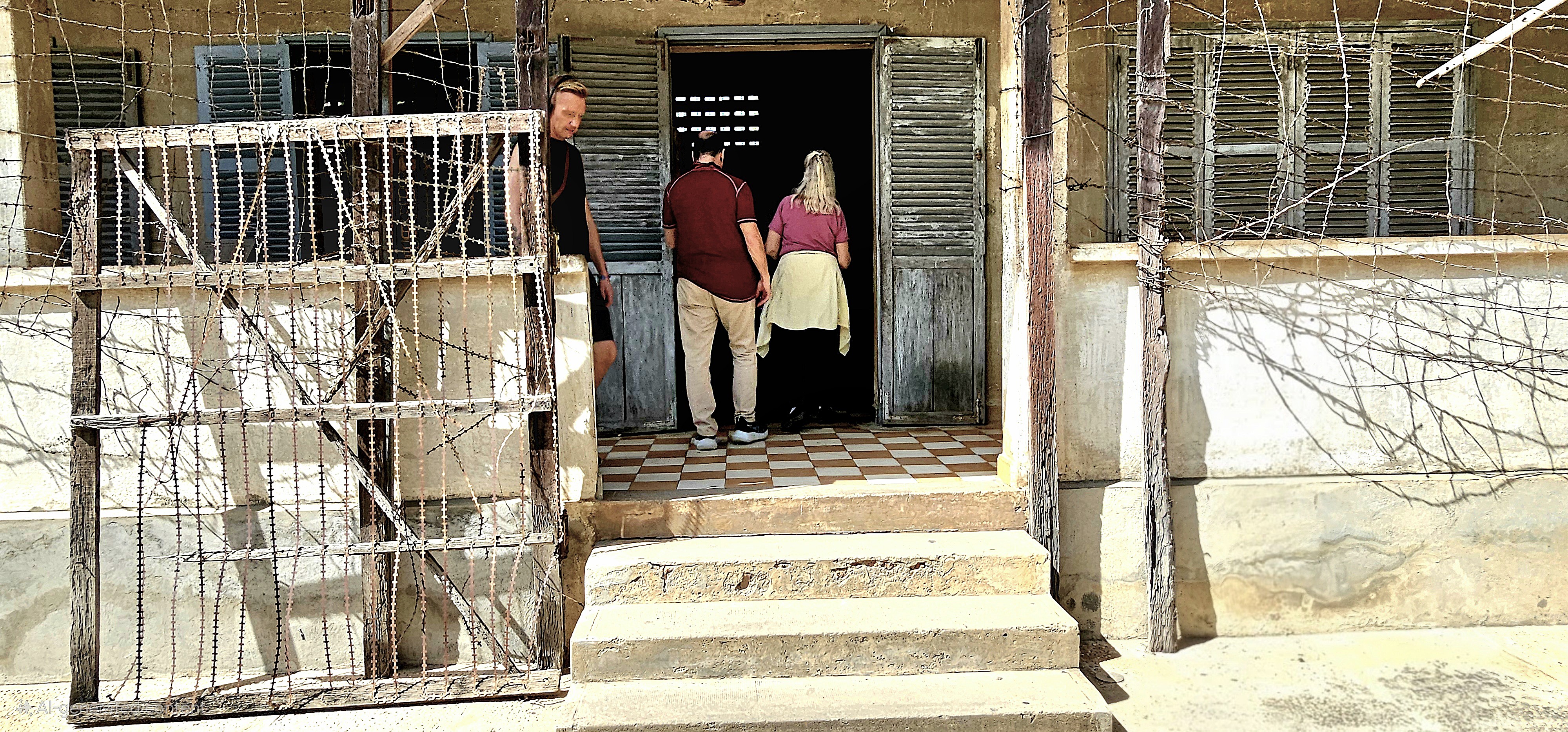
Visitors entering the Tuol Sleng Genocide Museum, formerly a school turned detention center, with barbed wire fencing visible in the foreground.
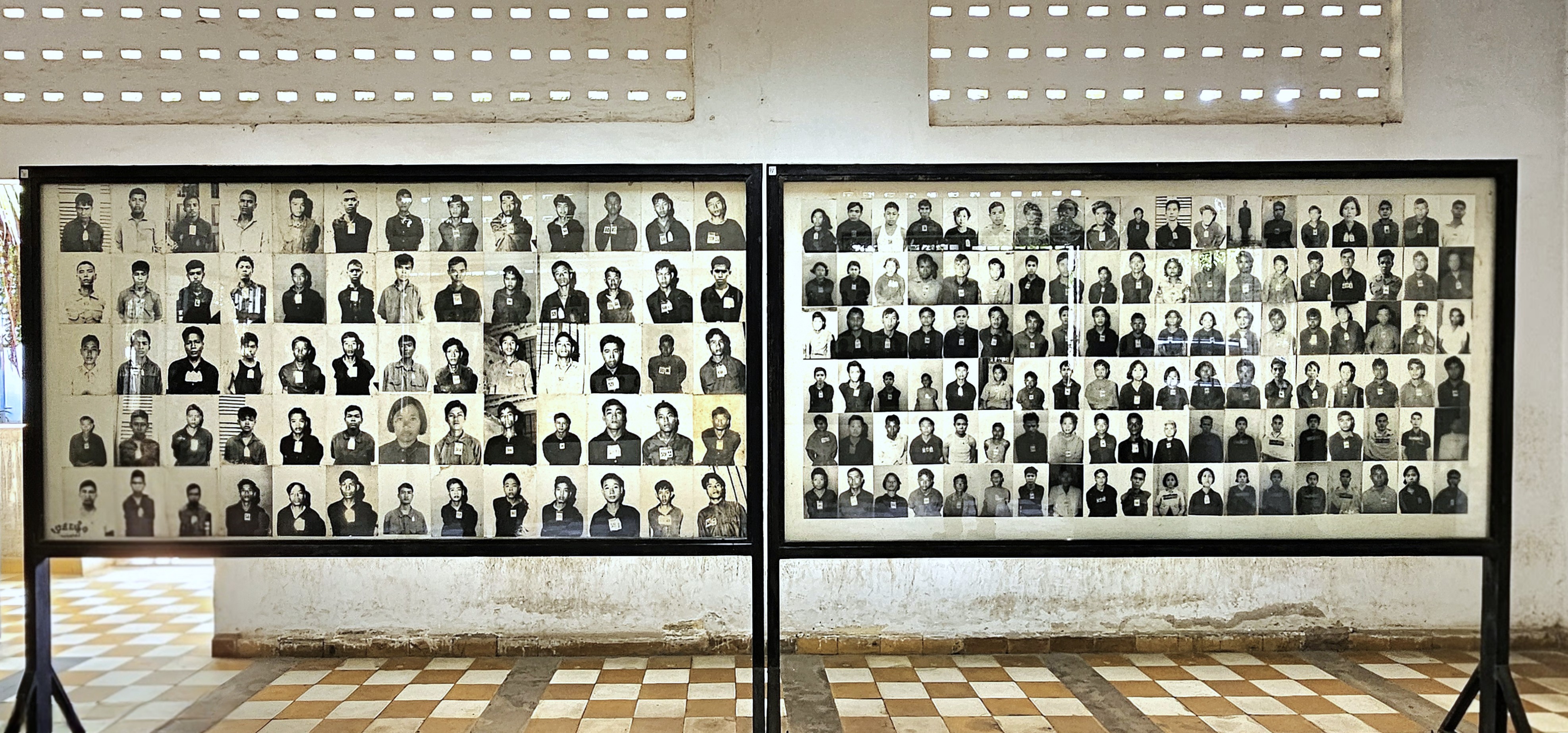
Two large display frames containing black and white photographs of individuals, each wearing identification tags. The images are arranged in a grid pattern, showcasing the faces of detainees from the Khmer Rouge era.
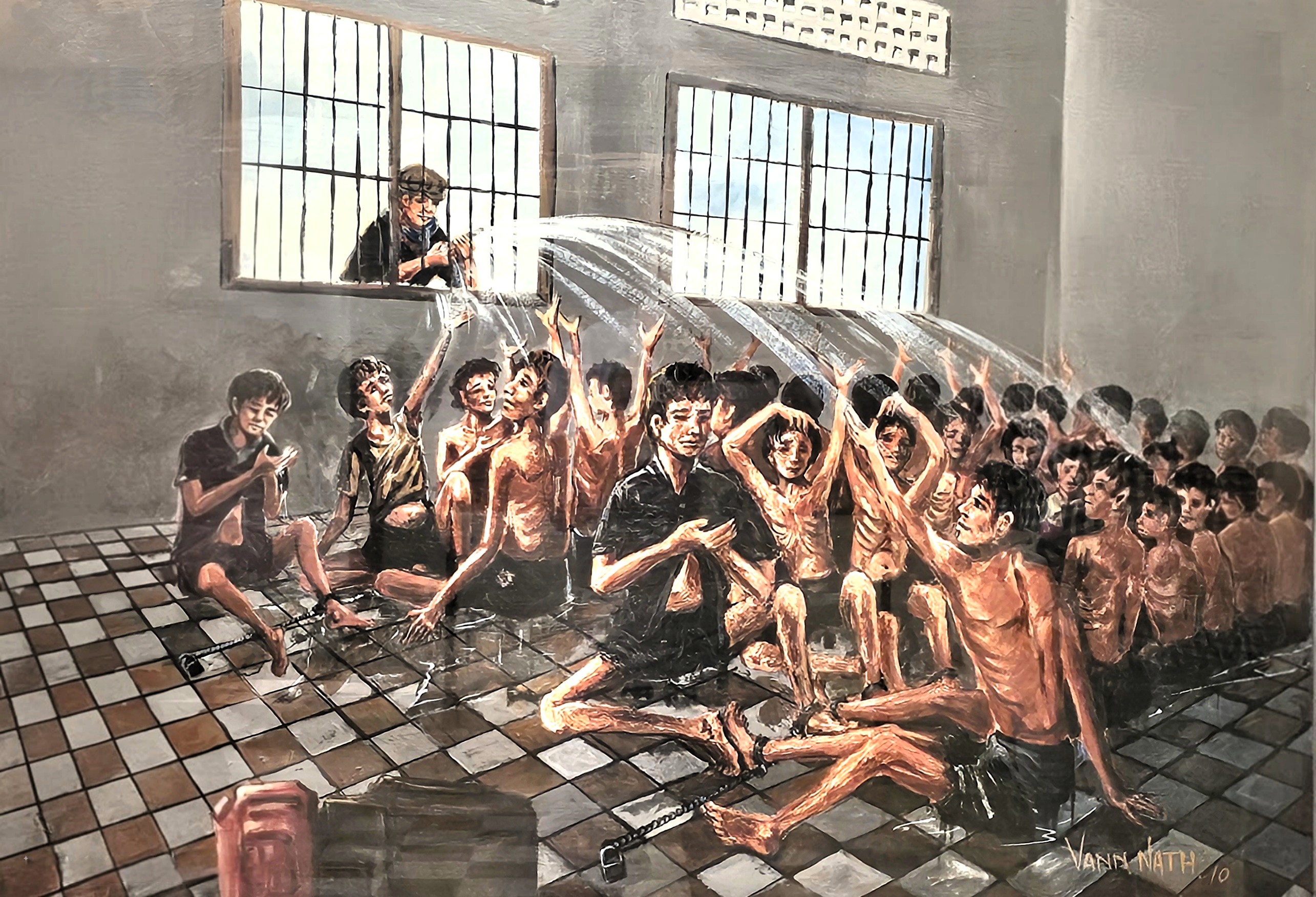
A mural depicting detainees at Tuol Sleng, illustrated by Vann Nath, showing survivors being doused with water in a grim prison setting.
An empty interrogation room at Tuol Sleng prison with a metal bed frame, a simple table and chair, and a photograph of a lifeless body on the wall.
A poignant painting of a gaunt prisoner depicted in a cell, representing the suffering endured during the Khmer Rouge era, with a visitor observing the artwork in the foreground.
An artist's depiction of a prisoner sitting in a chair, tied up, with two Khmer Rouge soldiers interrogating him at a table in a stark room.
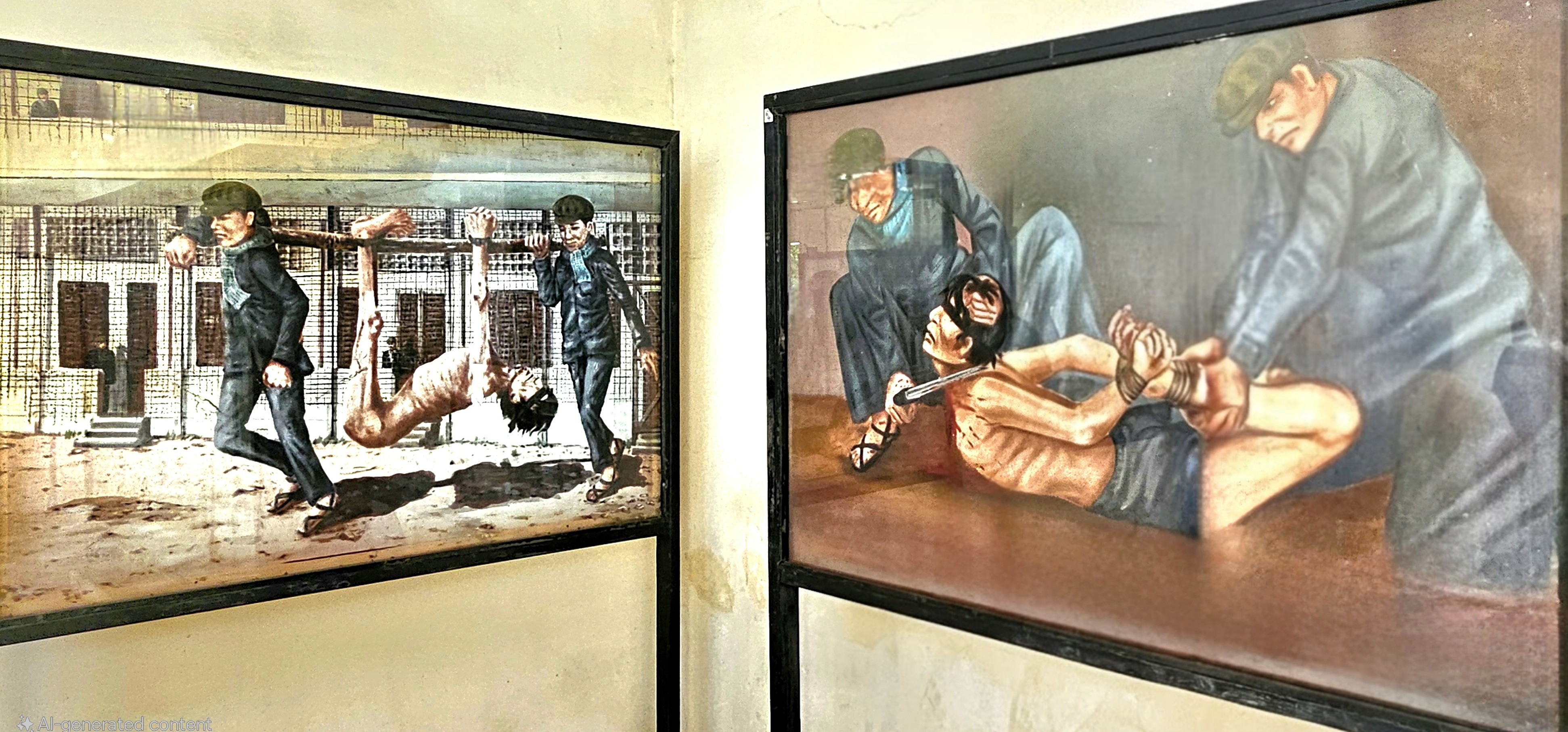
Artwork depicting scenes of torture at Tuol Sleng Prison during the Khmer Rouge regime, illustrating the brutality faced by detainees.
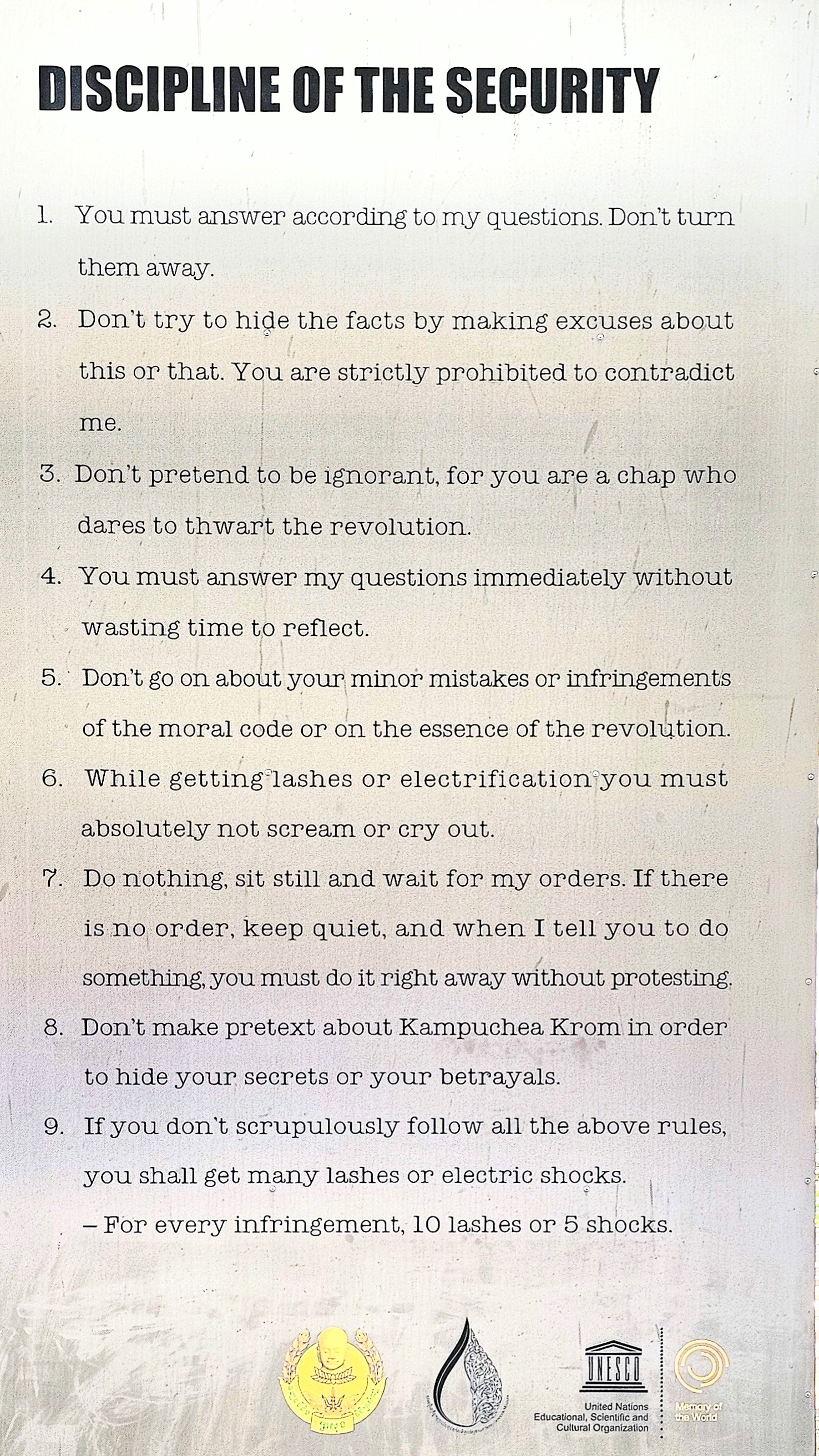
A poster detailing the rules of conduct and discipline for detainees, with numbered instructions emphasizing strict compliance and the severe consequences for disobedience.
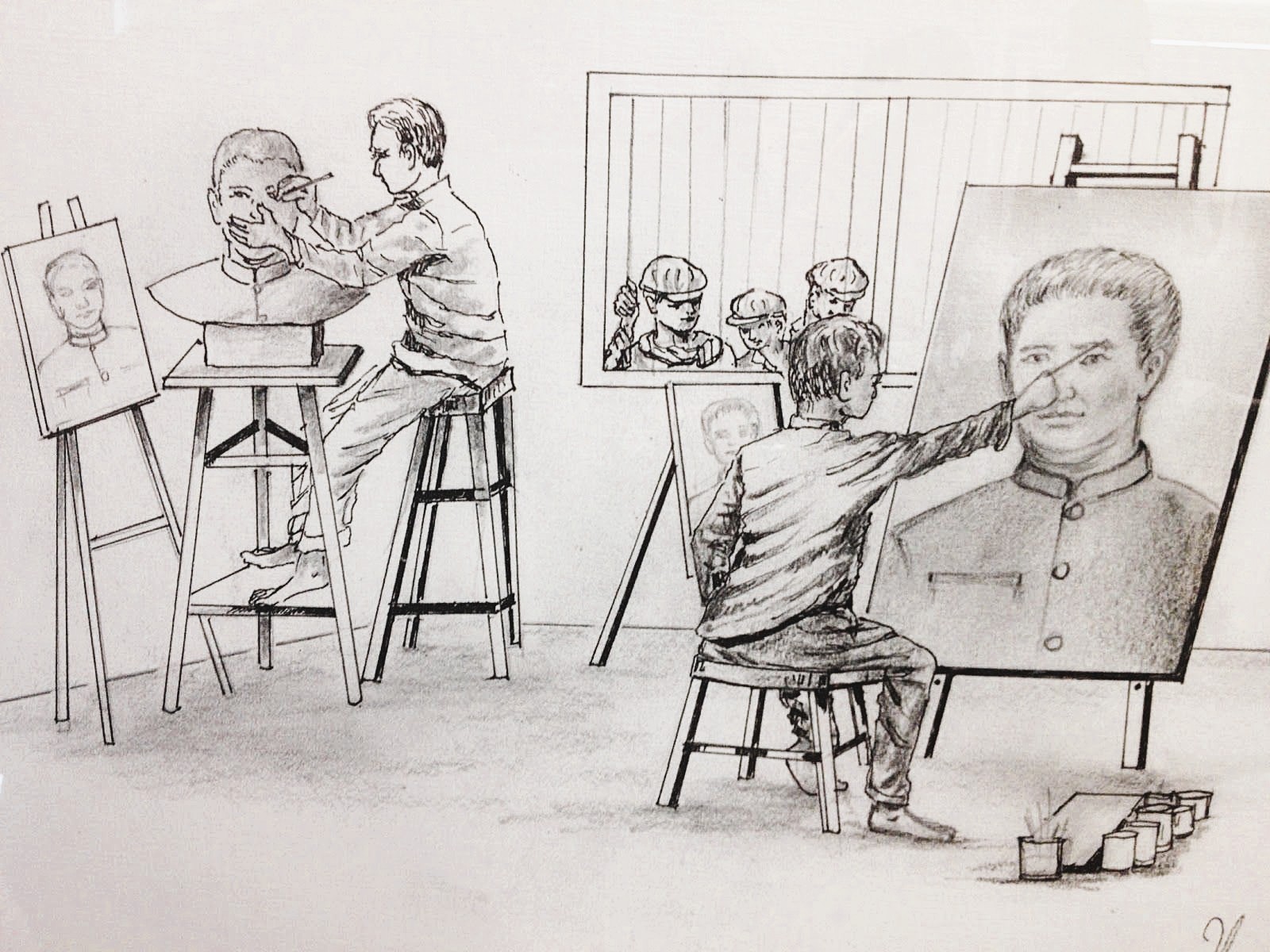
A black and white illustration depicting an artist sculpting a bust while painting a portrait of a man in a uniform, with additional sketches of other figures in the background.
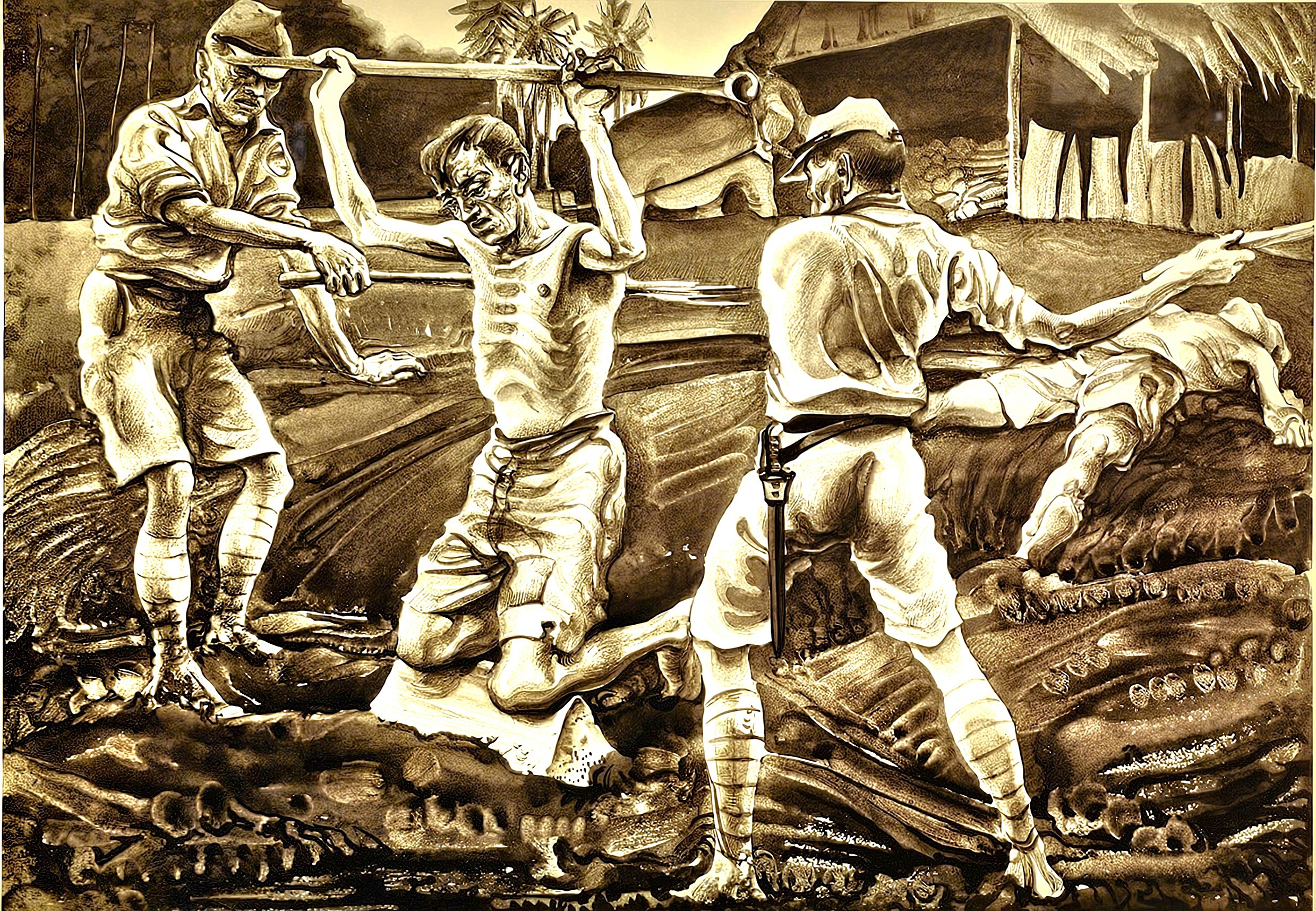
An illustration depicting the brutal torture methods used by the Khmer Rouge, showing a victim being suspended and interrogated by armed guards.
Two students in school uniforms walk through a former detention cell area at the Tuol Sleng Genocide Museum, with brick walls and a checkered floor, reflecting the somber history of the site.
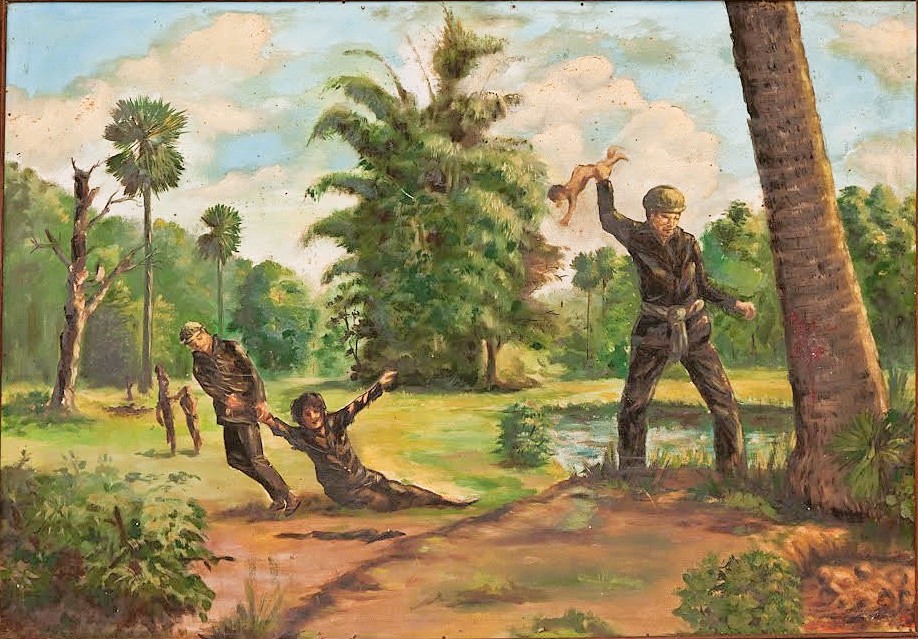
A painting depicting a scene of violence during the Khmer Rouge era, showing soldiers overpowering a person in a rural landscape.
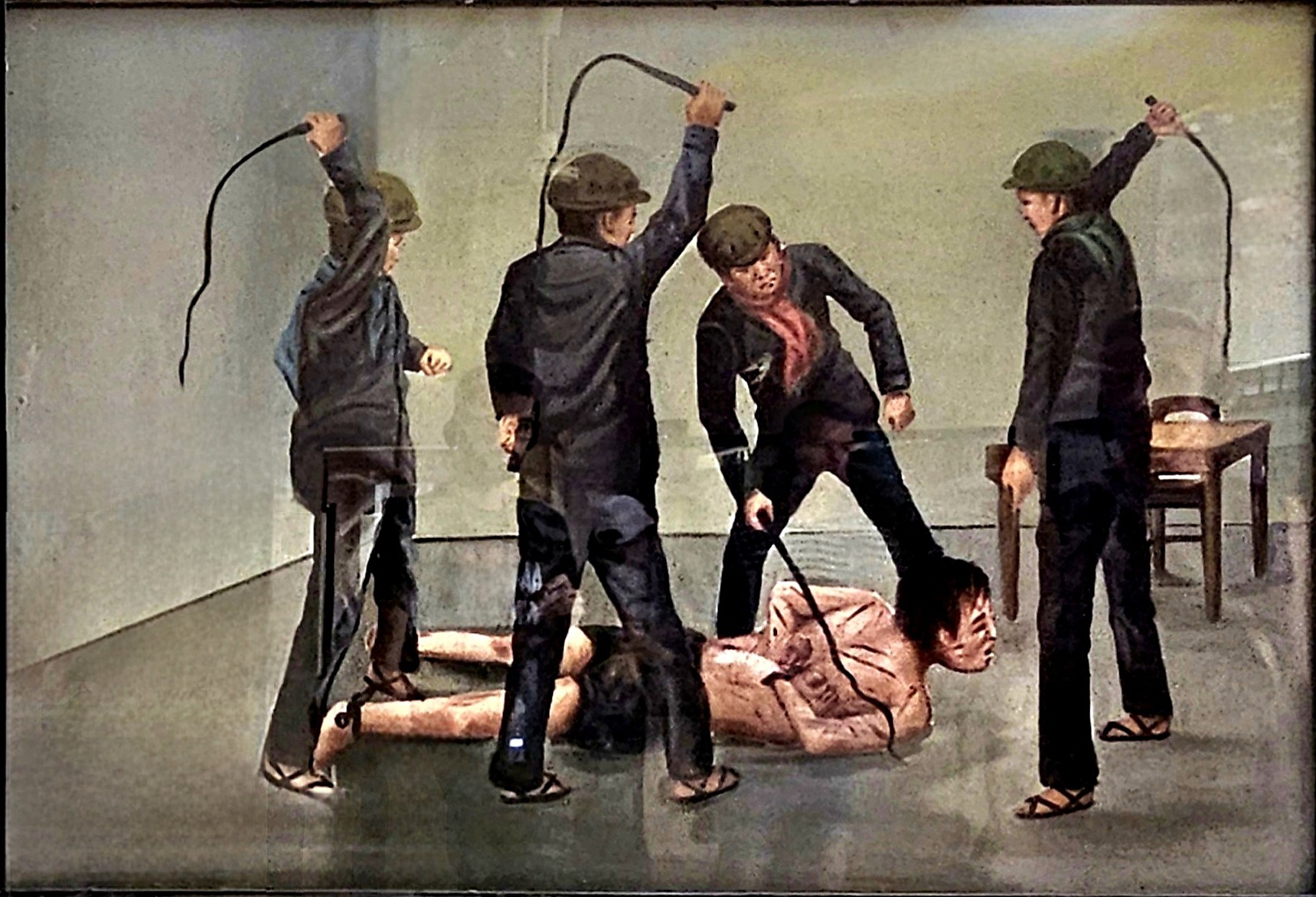
A dramatic depiction of a torture scene during the Khmer Rouge era, showing soldiers inflicting violence on a restrained individual.
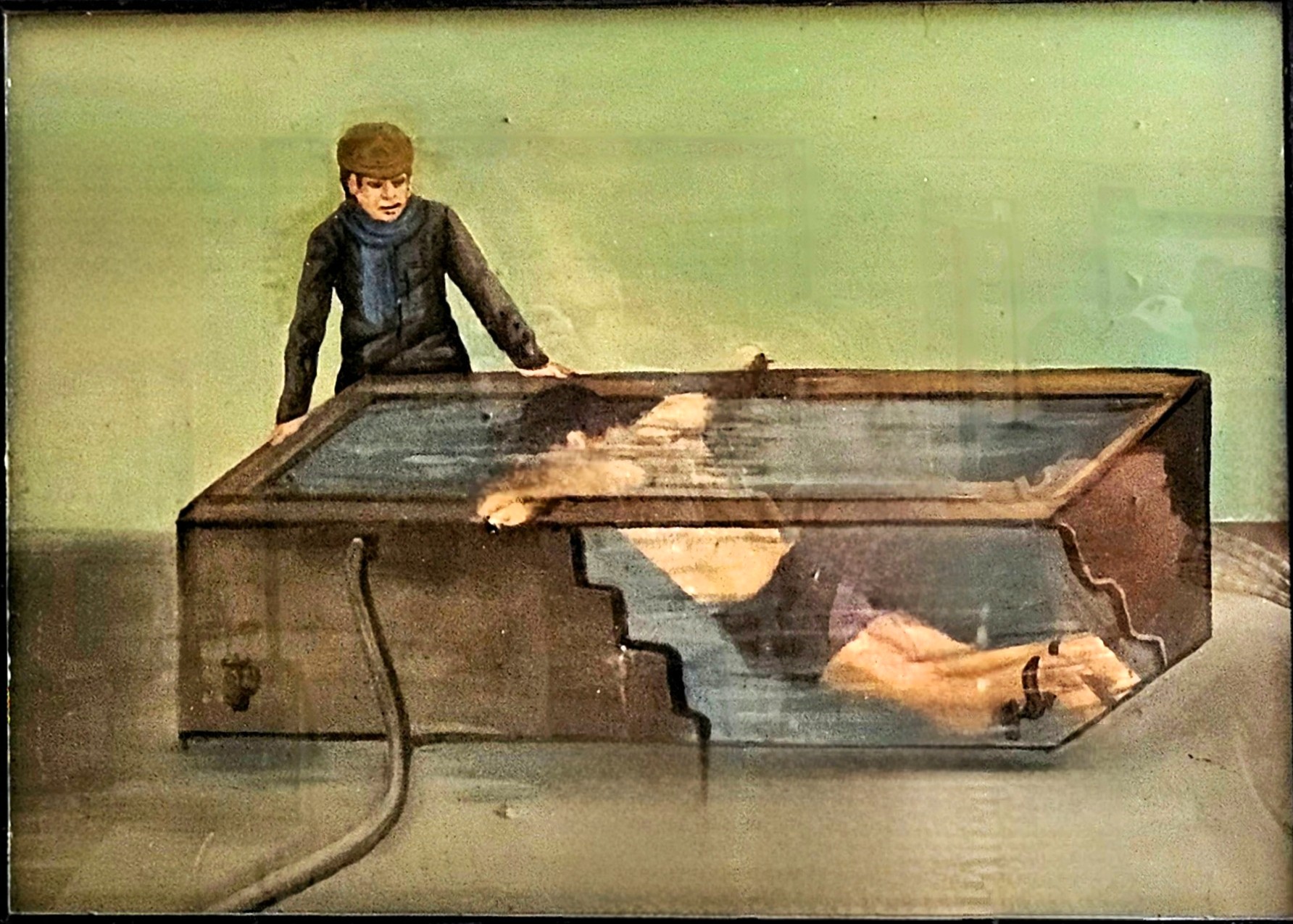
A depiction of a figure observing another person submerged in a water tank, evoking a sense of interrogation or torture associated with the Khmer Rouge regime.
An elderly man sitting in a wheelchair, performing a traditional gesture of respect, while another younger man sits nearby. A display board titled 'Survivor' detailing the testimony of Chum Mey stands beside them, featuring images and text about his experiences during the Khmer Rouge regime.
A man holding a photograph of two young boys, both appearing shirtless, against a backdrop of blue fabric.
A middle-aged man with closed eyes sits calmly, resting his hand against his face, expressing a moment of reflection or contemplation. He wears a light-colored shirt, and the background features a blue curtain.
Infographic detailing the Khmer Rouge tribunal, featuring the names and details of convicted individuals and a map highlighting execution sites and prison locations in Cambodia.
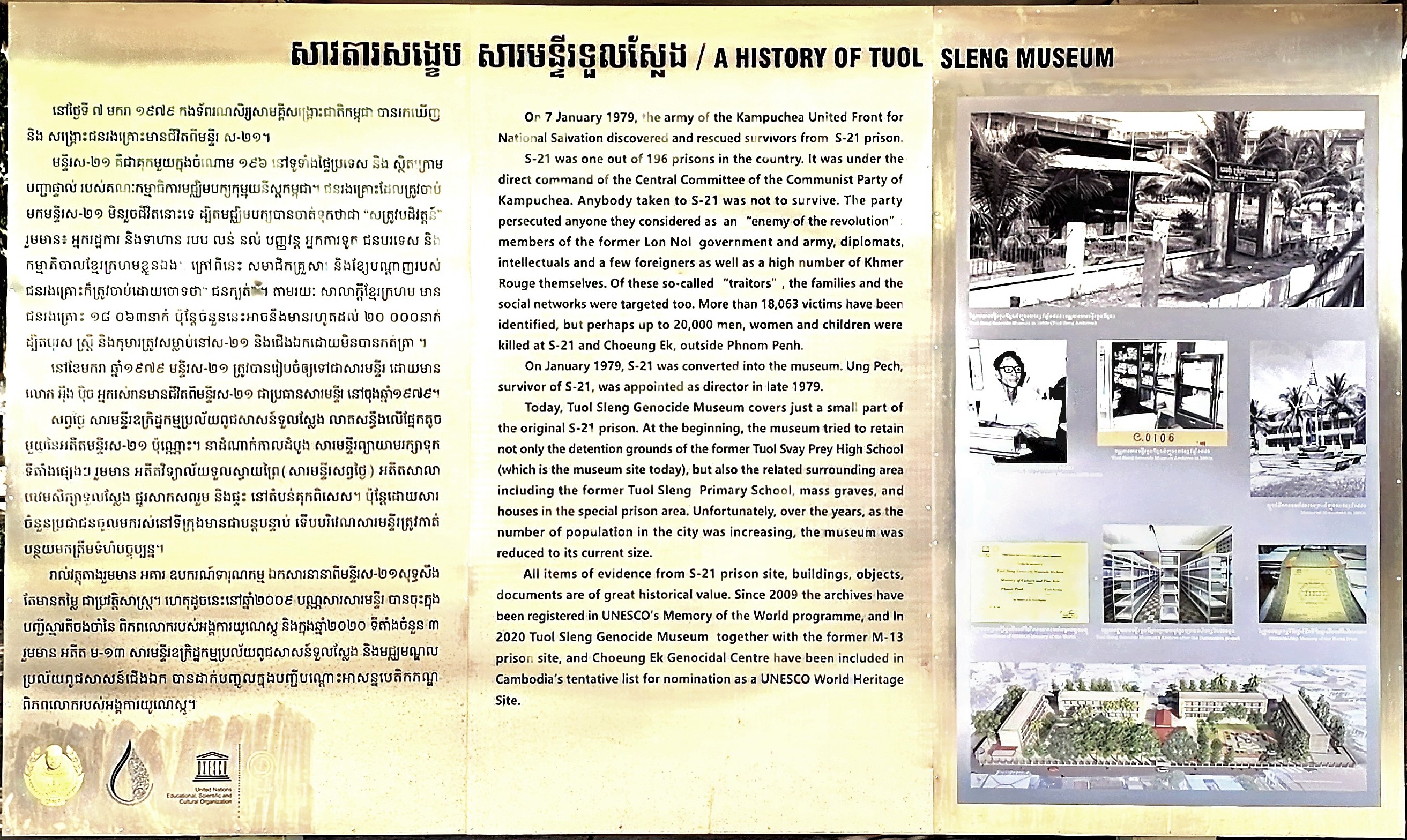
A historical information board describing the Tuol Sleng Genocide Museum, detailing its significance, history, and the events surrounding the Khmer Rouge regime.

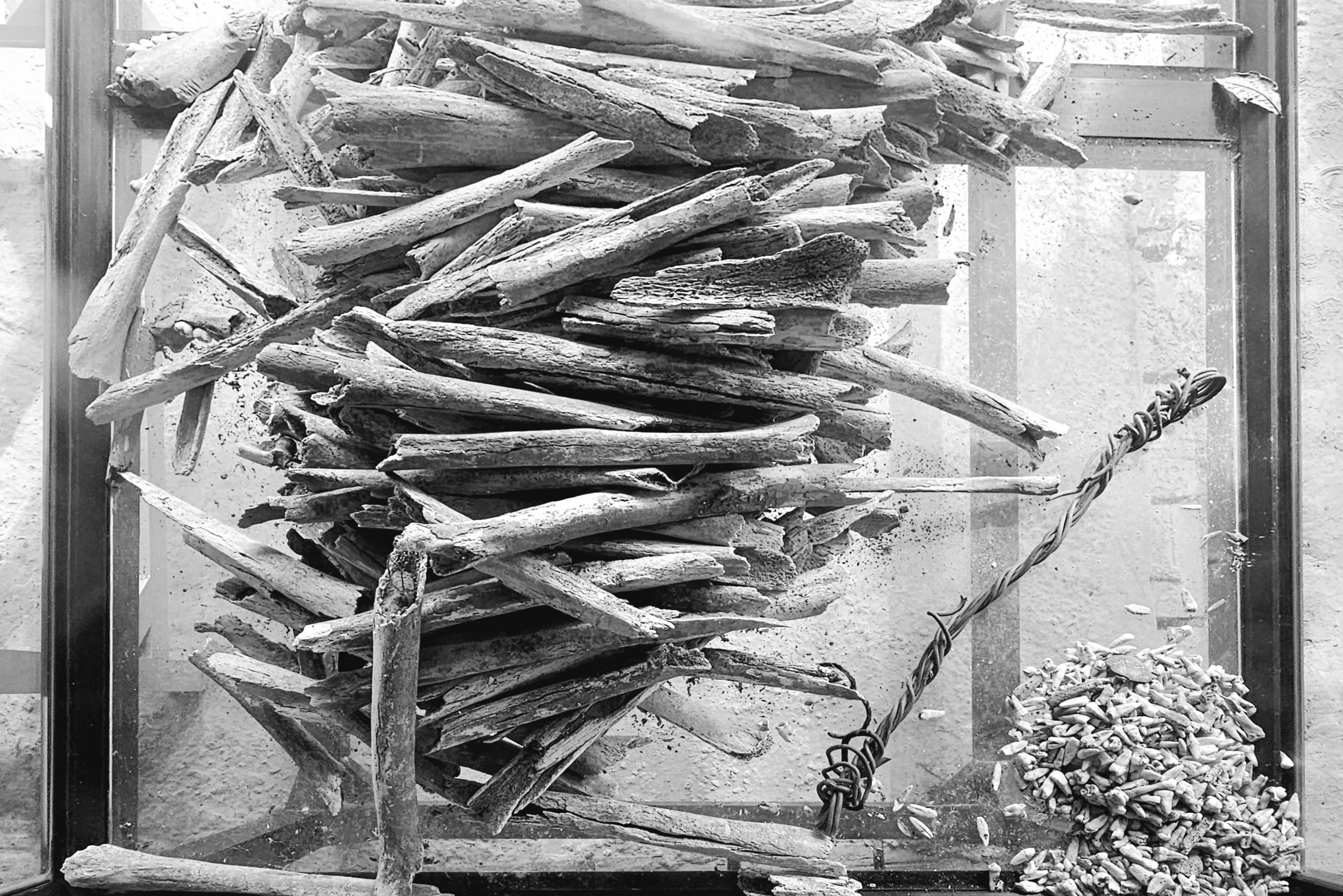
The S-21 Boneyard

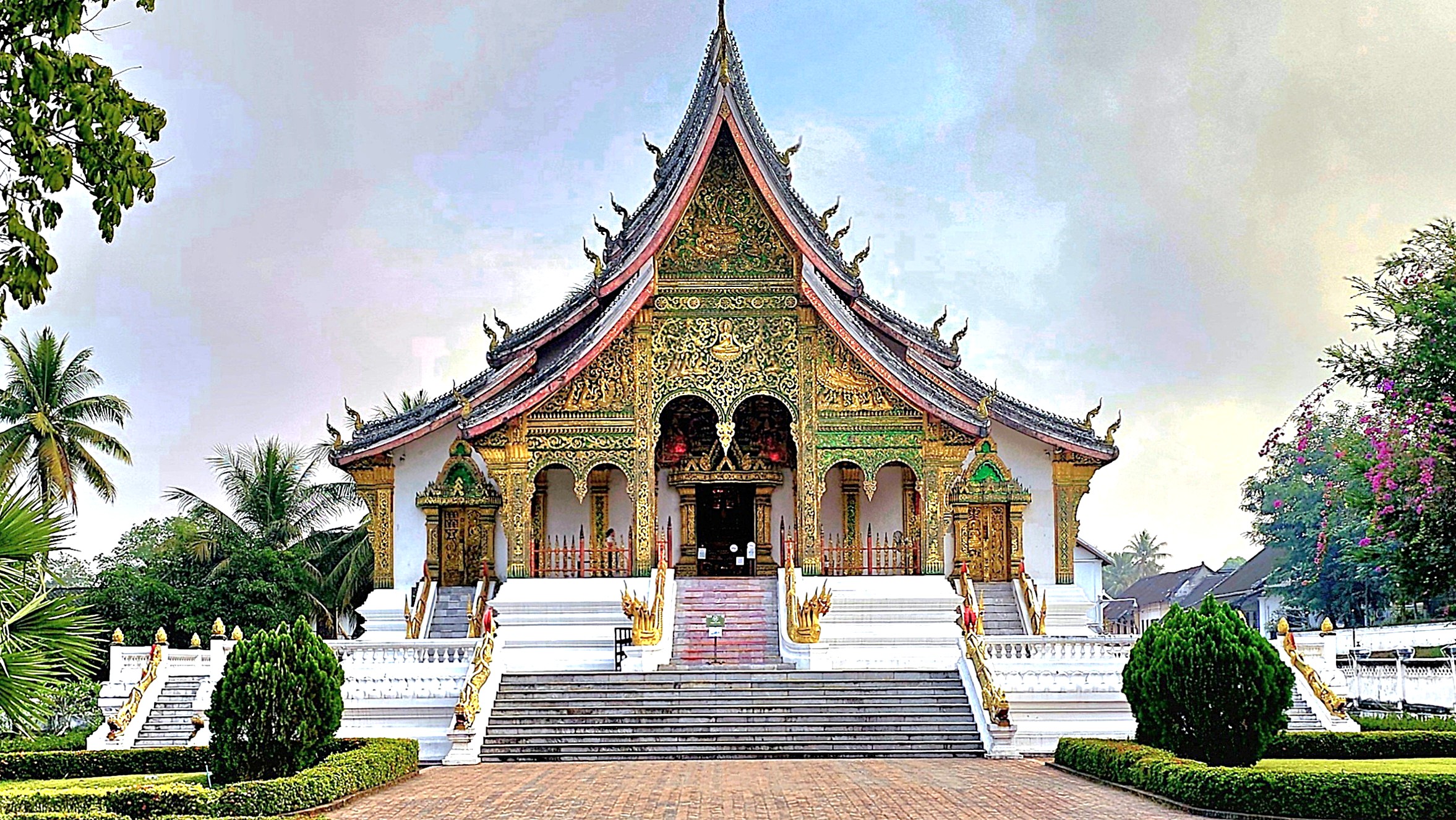
Finding Sanctuary in Luang Prabang

and energized to continue our journey to Vientiane the following day.

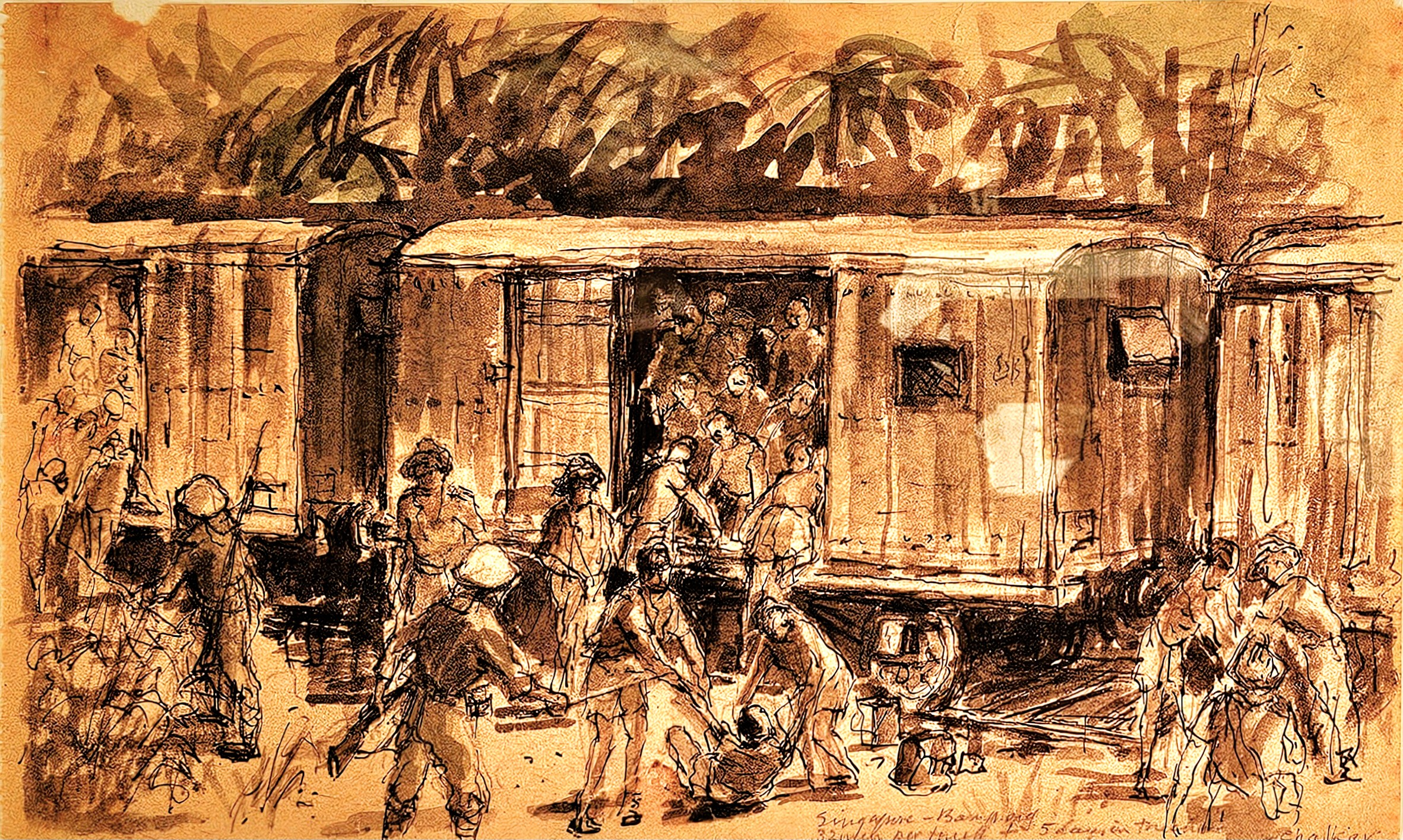
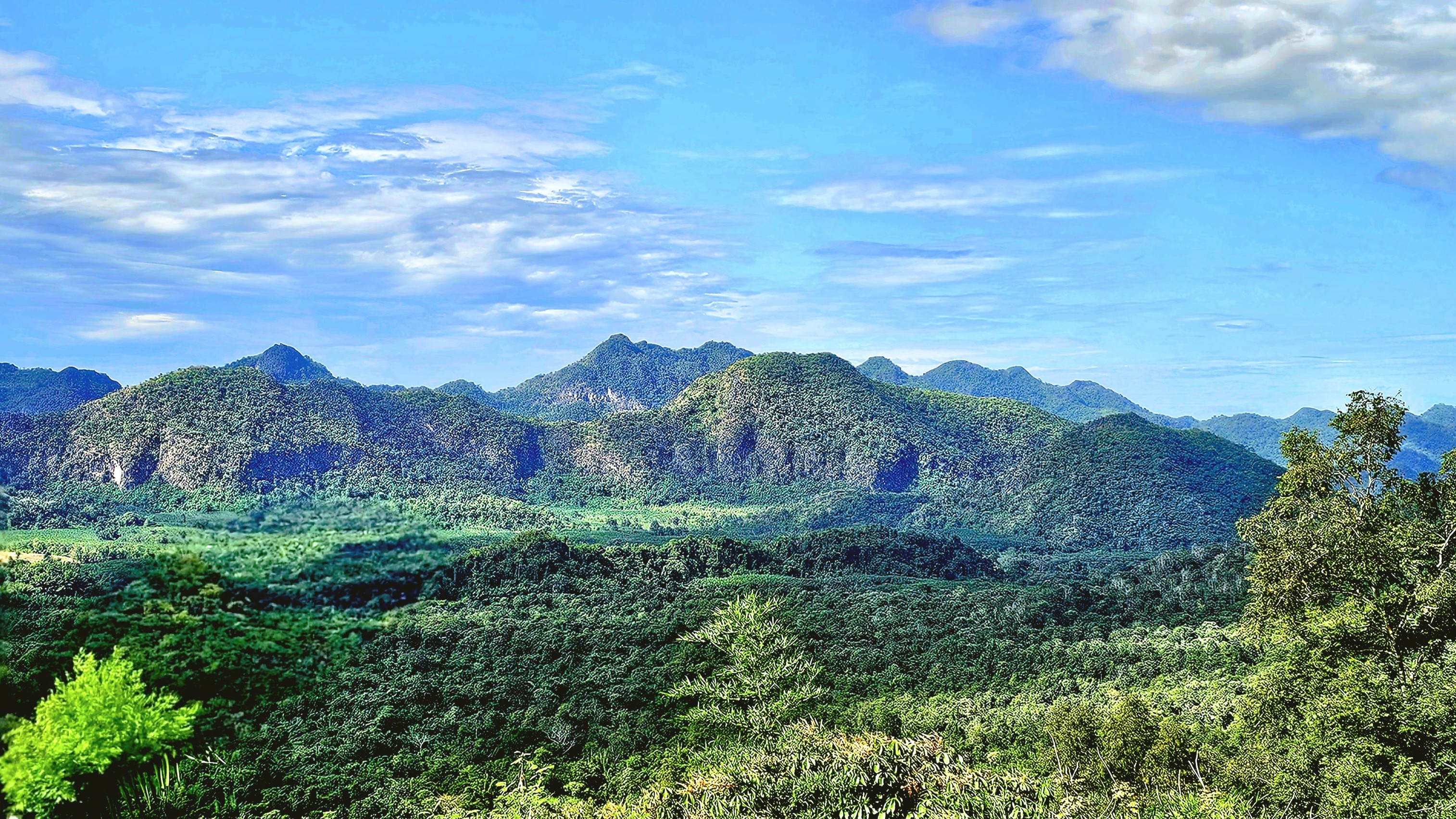
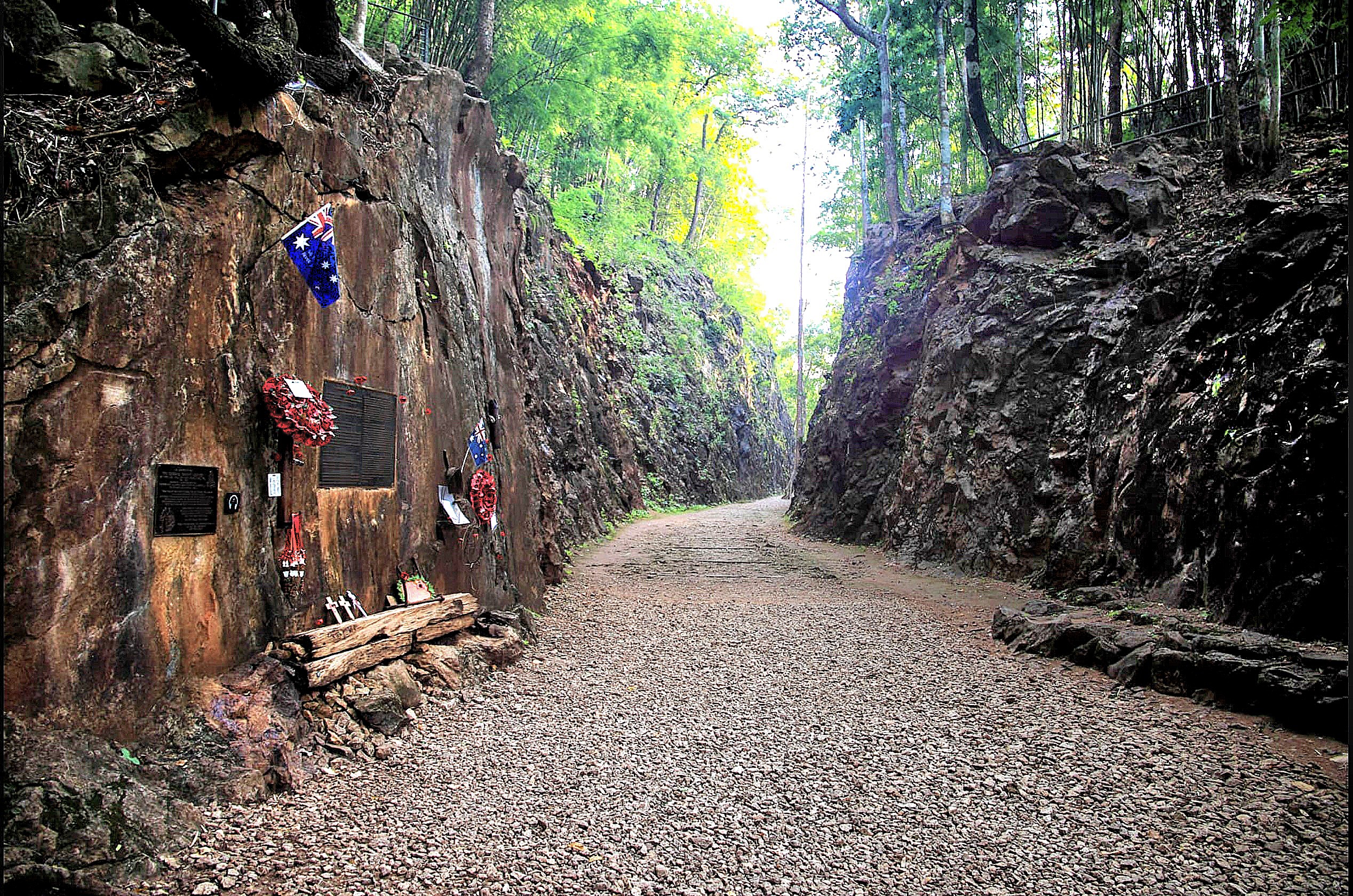
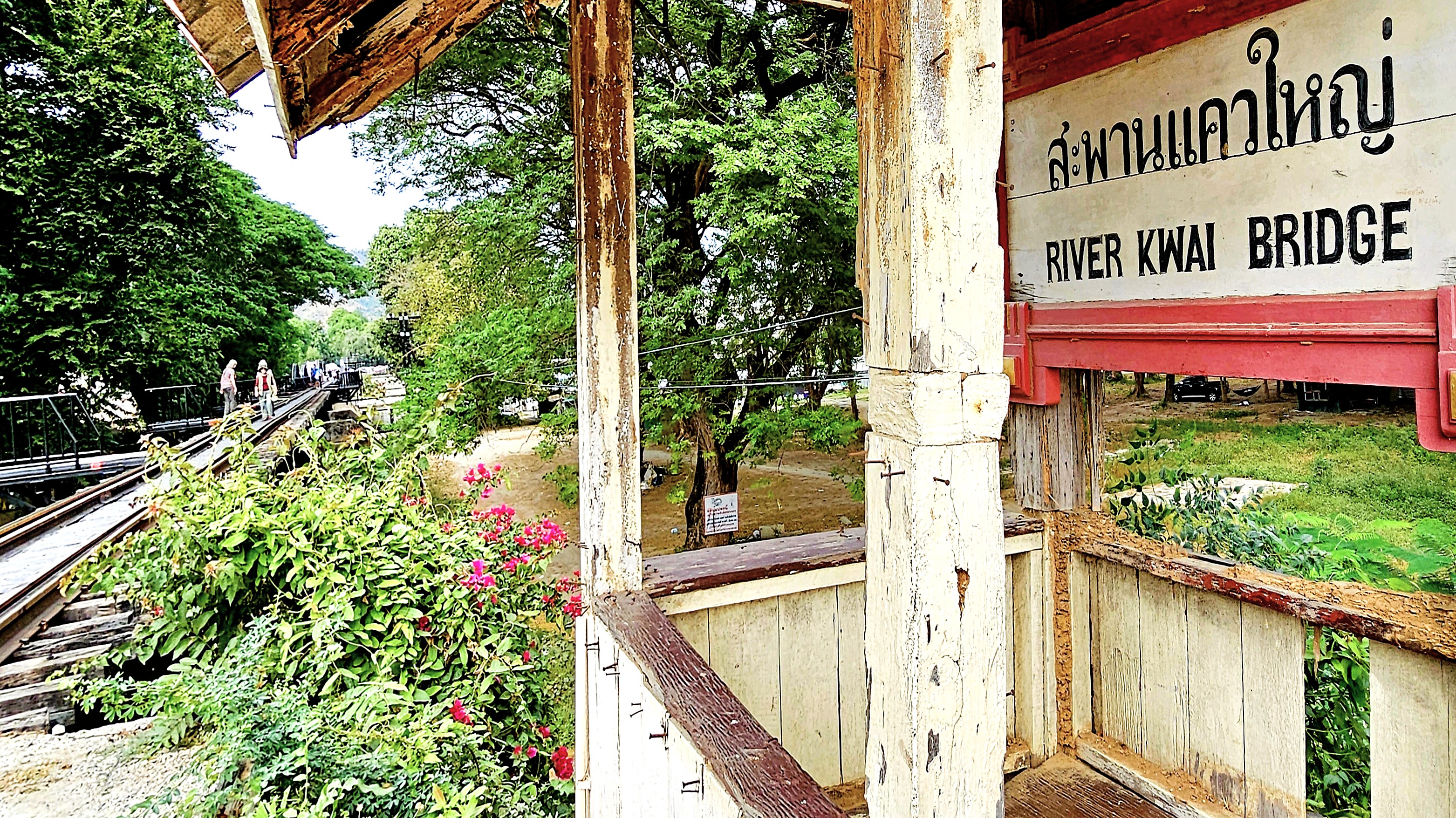
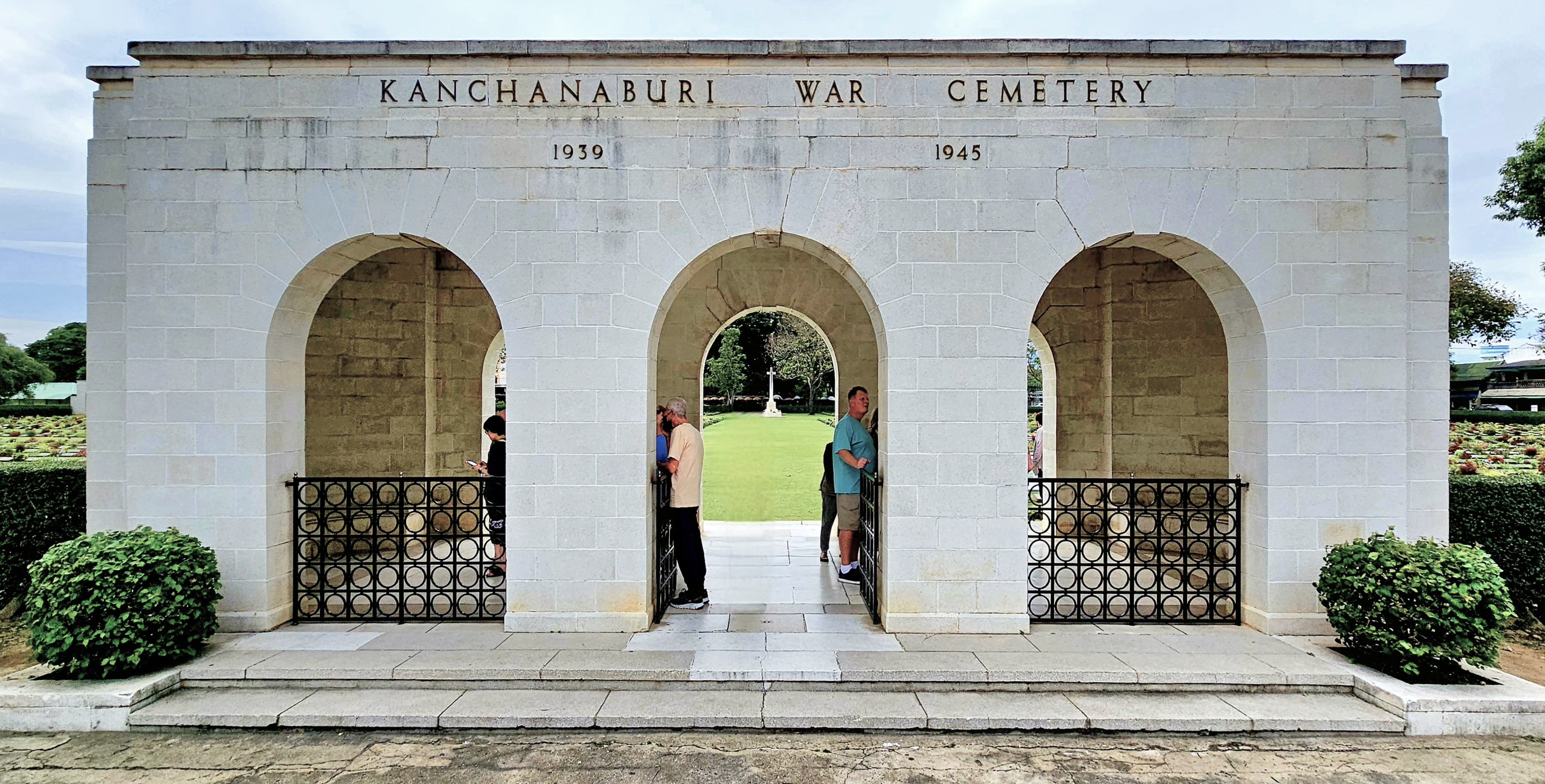
The Death Railway of WWII

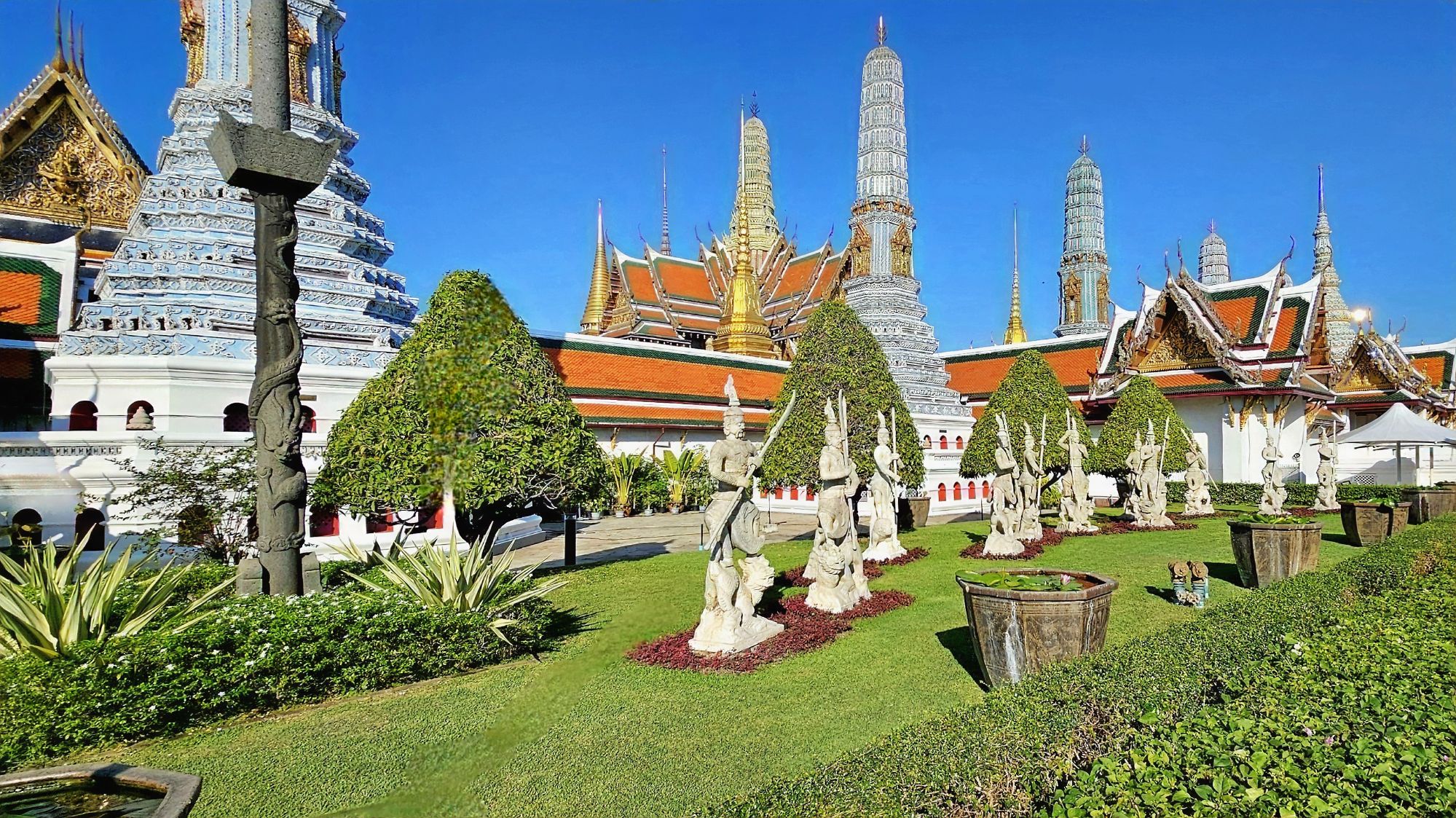
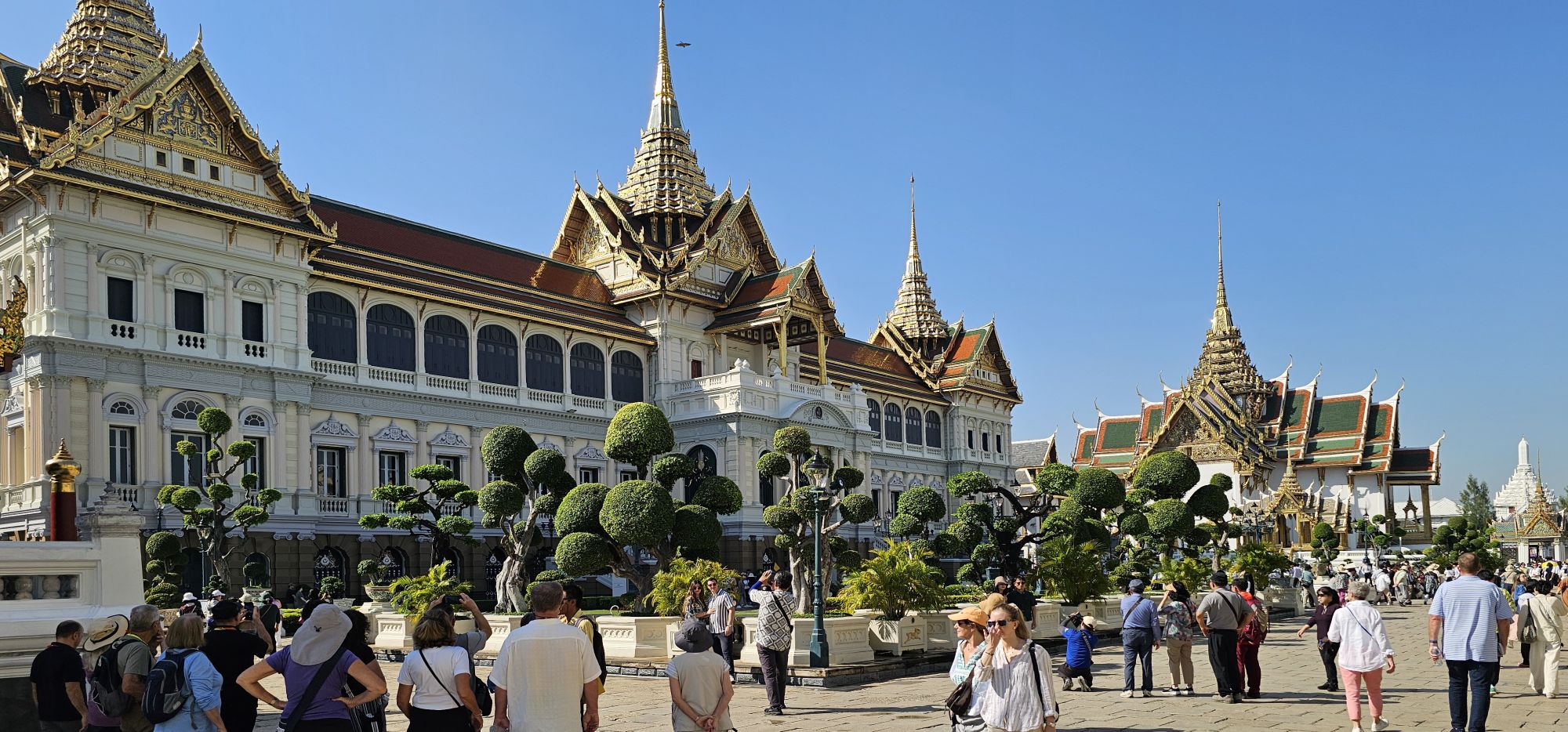
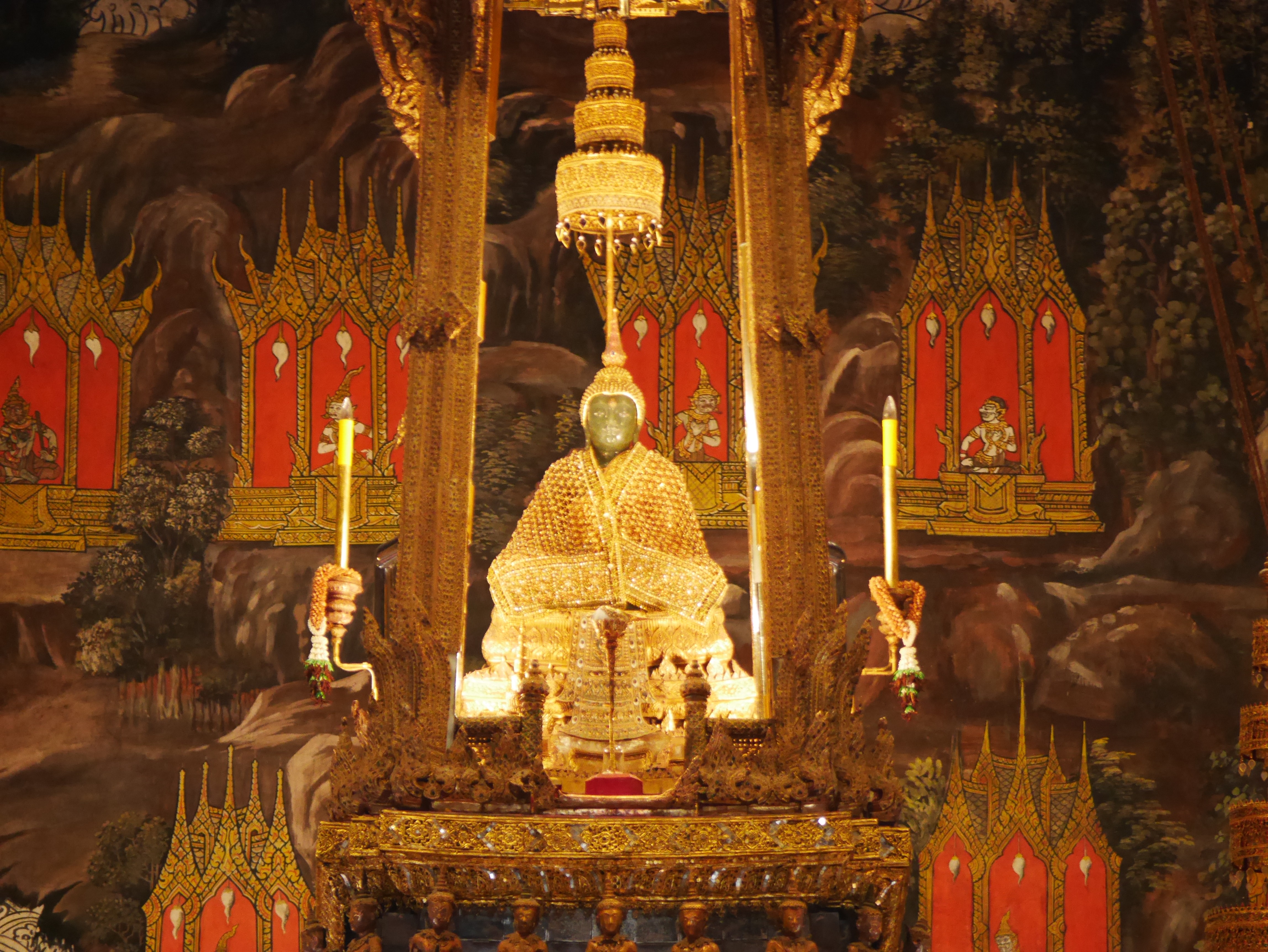
The Royal Grand Palace of Thailand

กสิณธร ราชโอรสt

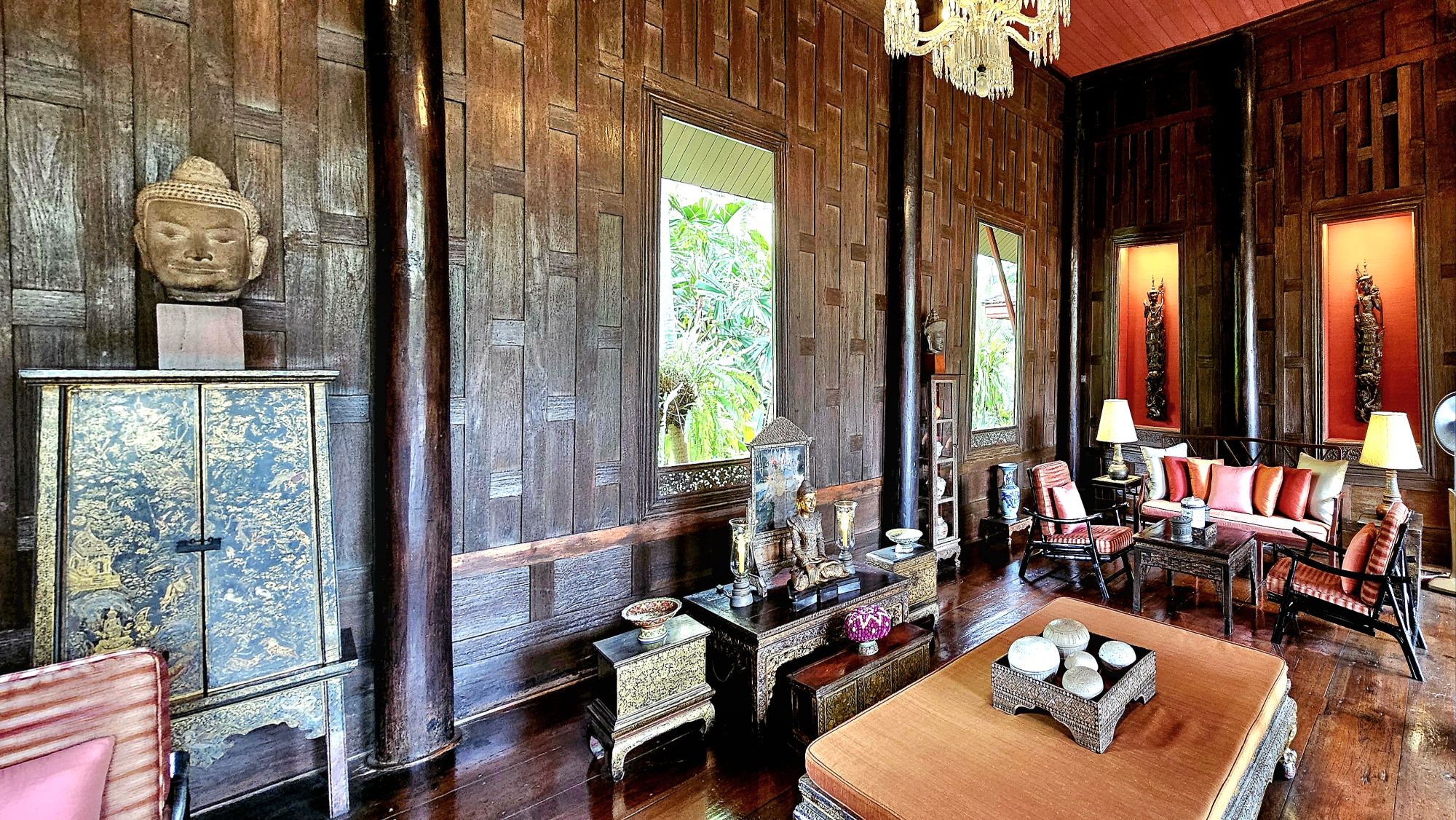
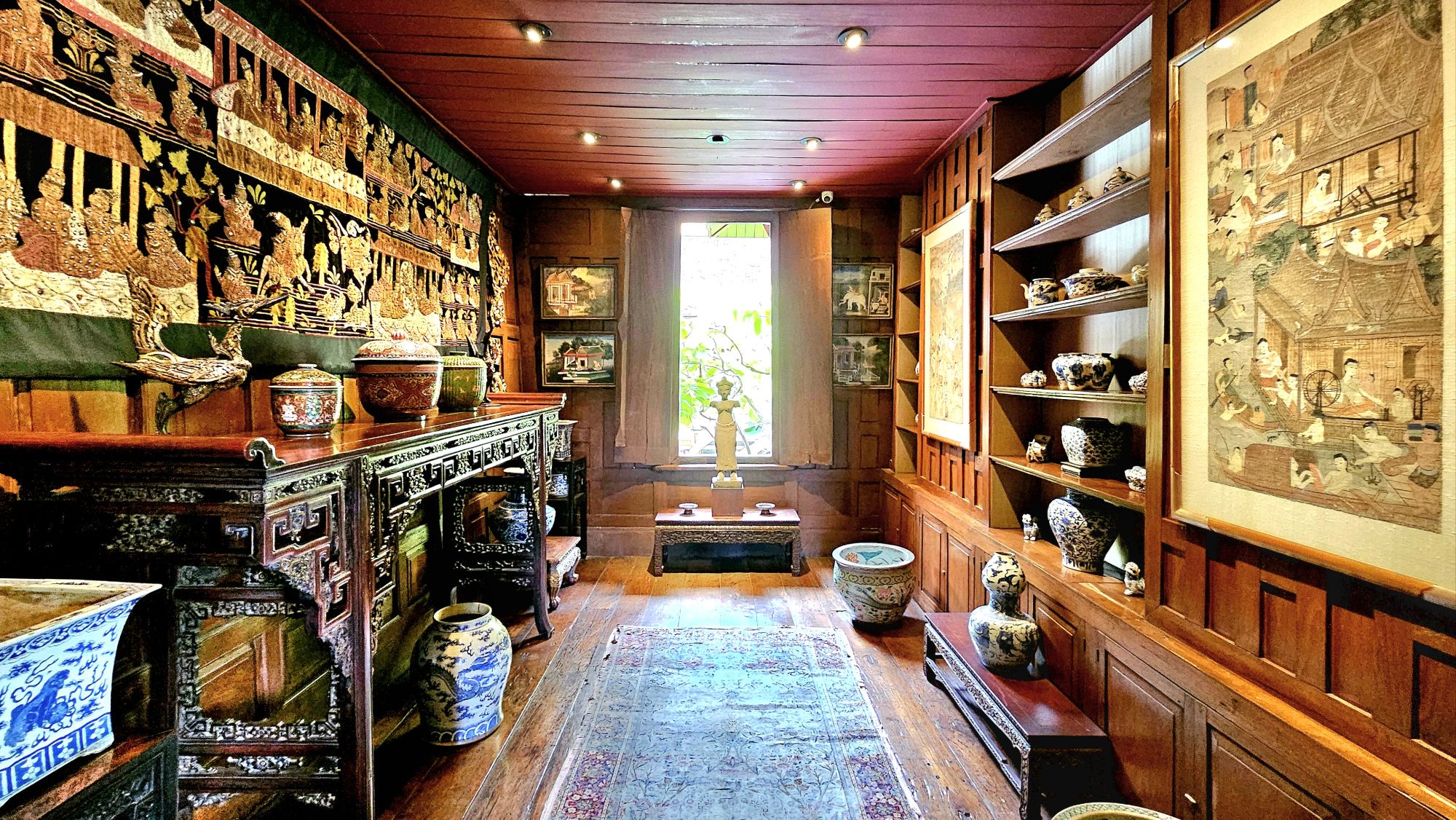
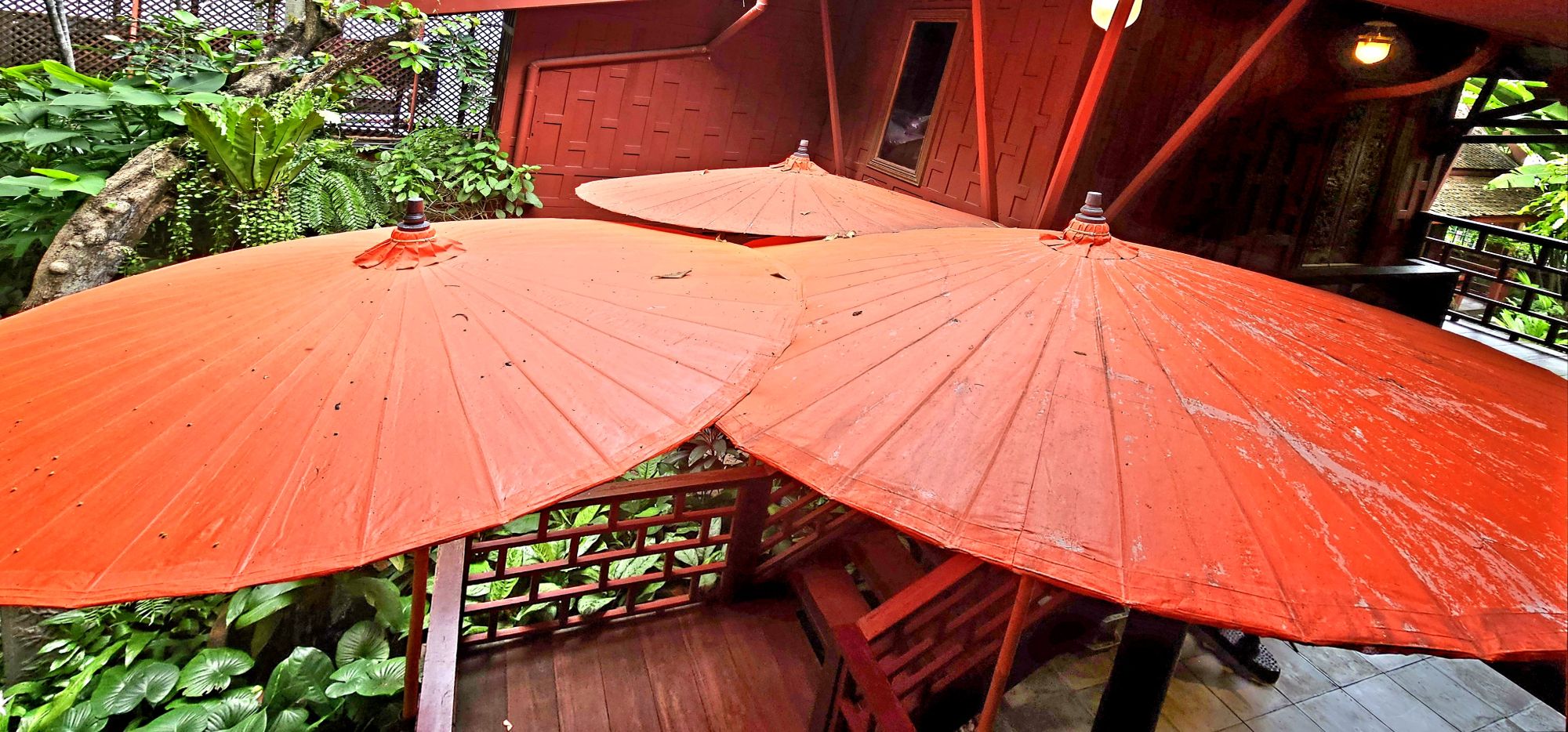
Exploring Jim Thompson’s House: A Thai Heritage Journey

20241208_1307114703568976792433338

Colorado Springs

Getting to Denver thru Topeka

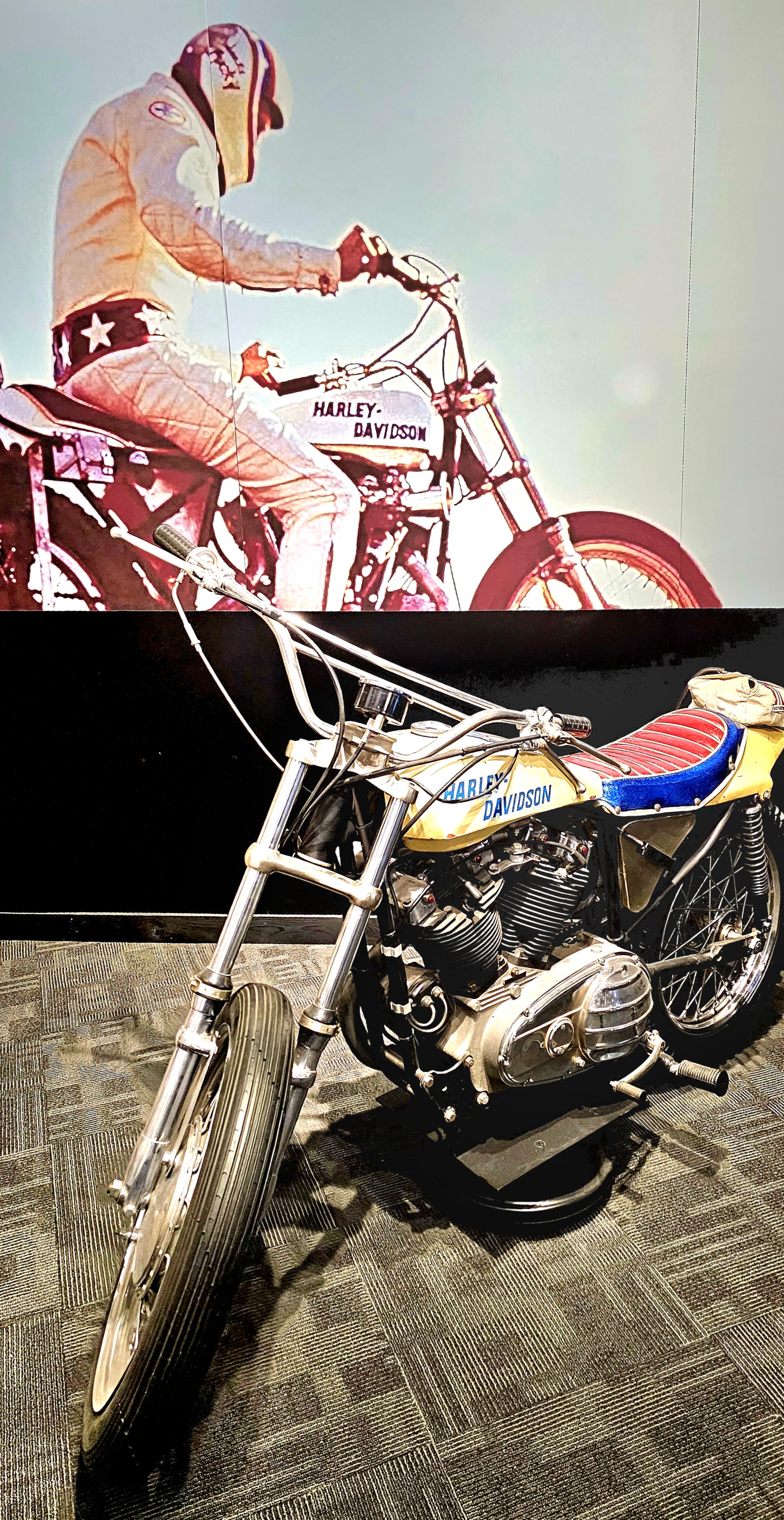
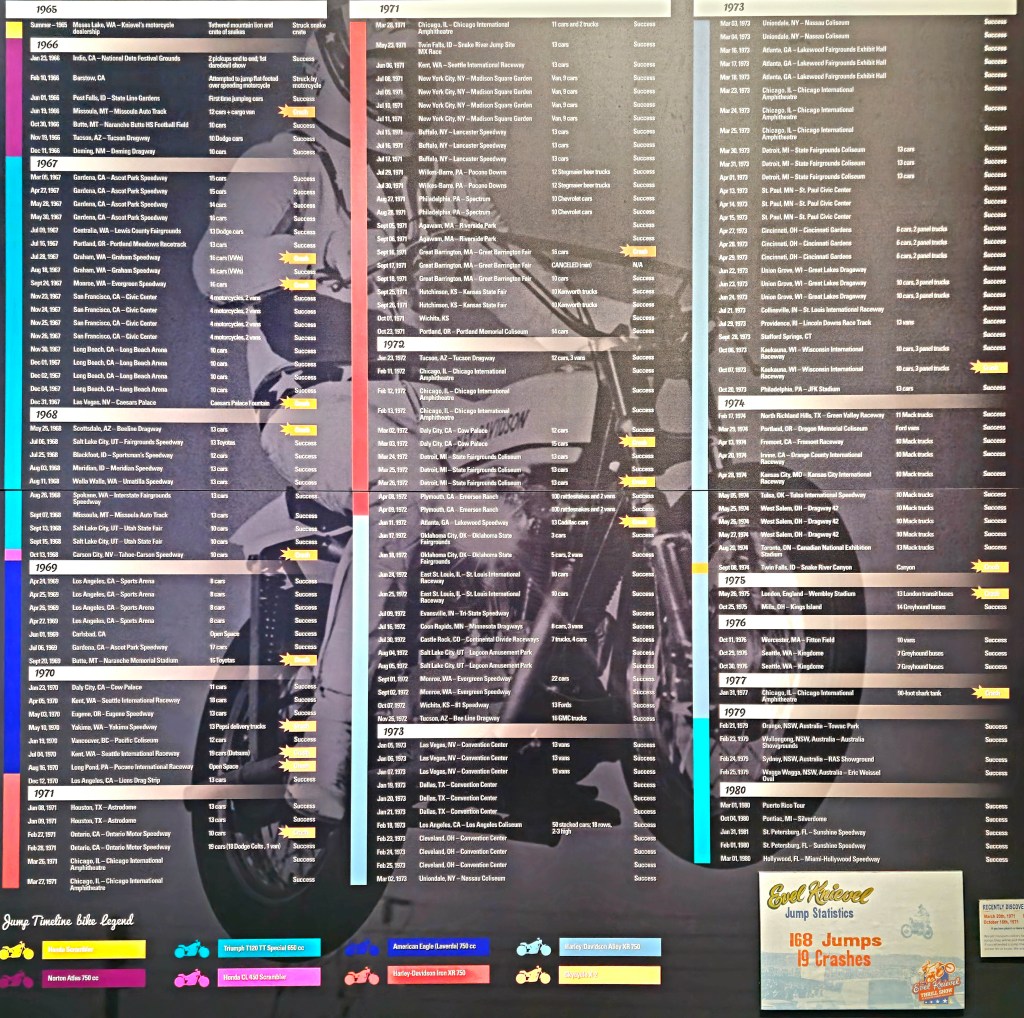
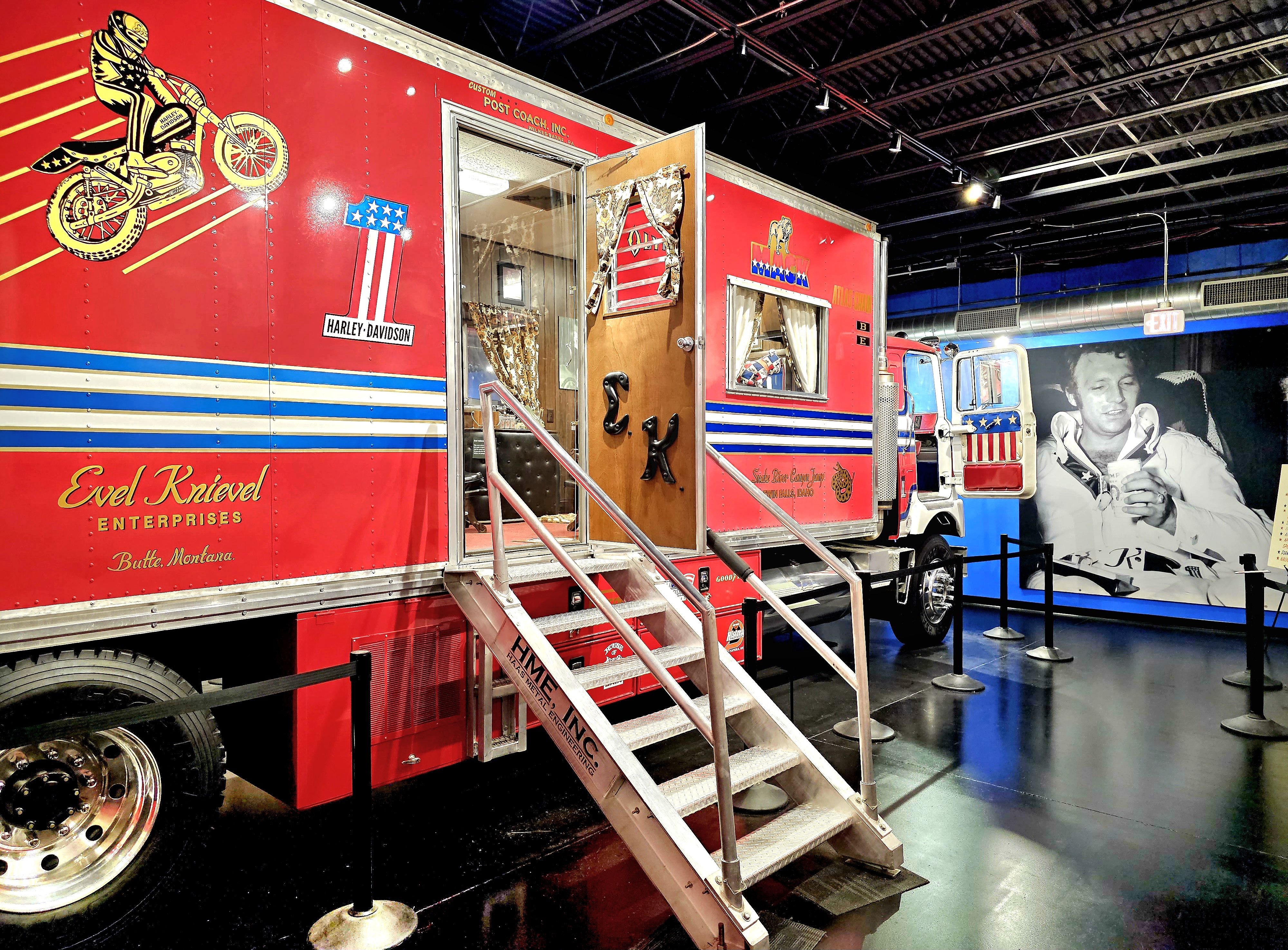
Simply put, Topeka’s Historic Harley-Davidson dealer, Mike Patterson put up the money for the 13,000 sq. ft. expansion, and funded the Mack truck restoration.

Getting to Denver–Part 1

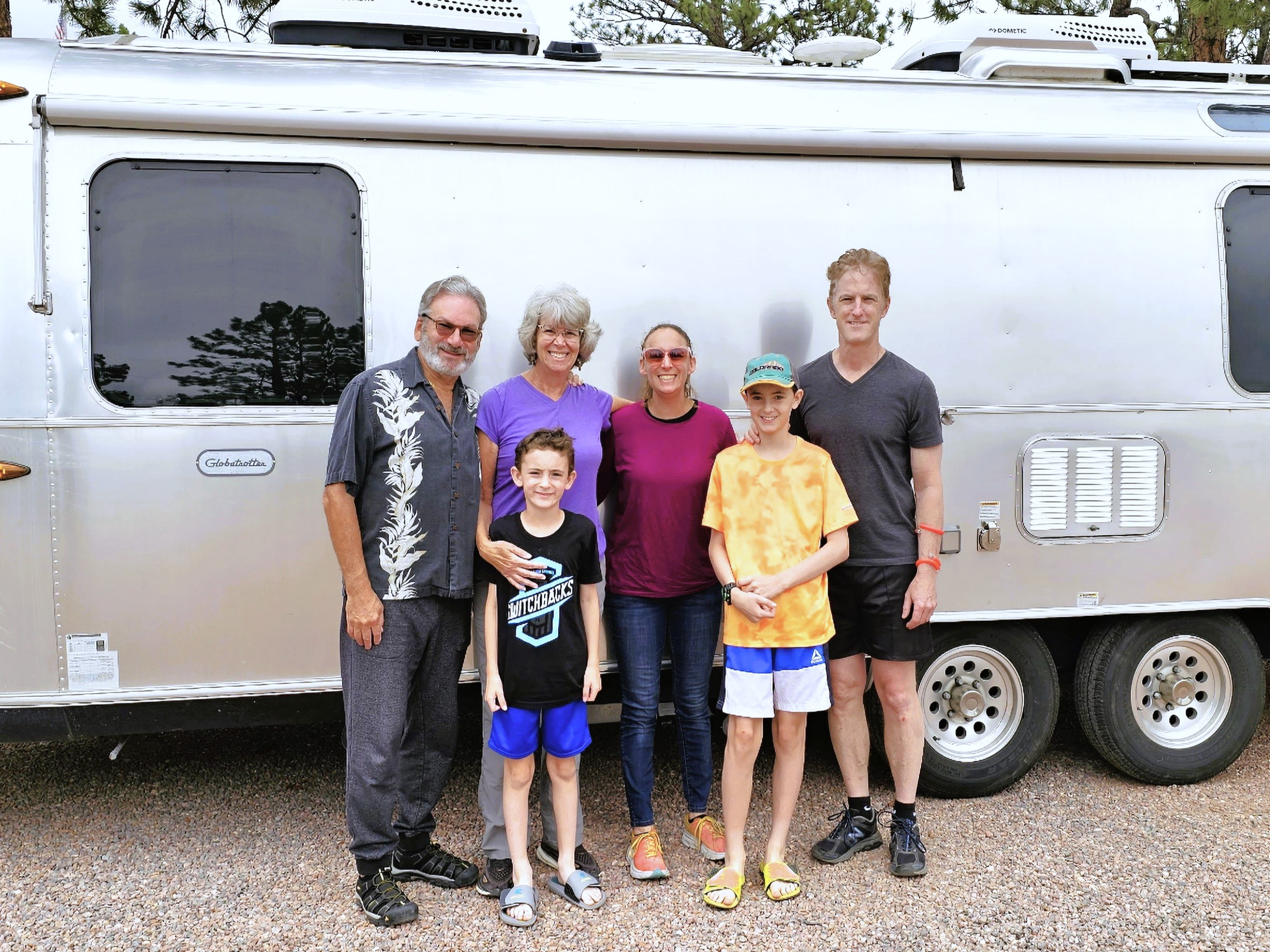
Much has happened since leaving Bonnaroo for Denver. There’s been a long-distance get-together in Rogers, Arkansas with a nursery school buddy from Pittsburgh…

and a long-overdue reunion with family from Pittsburgh, who now reside in Overland Park, Kansas.

We’ve also kept a watchful eye on the weather–always tracking the extreme conditions that have been swirling around us, the likes of tornadoes, hail, flooding, land slides, and record-setting heat streaks–yet with each destination, we’ve mostly managed to dodge a bullet.

There was also a handful of visits to some iconic sites along the way, and some less familiar, but definitely photo worthy.

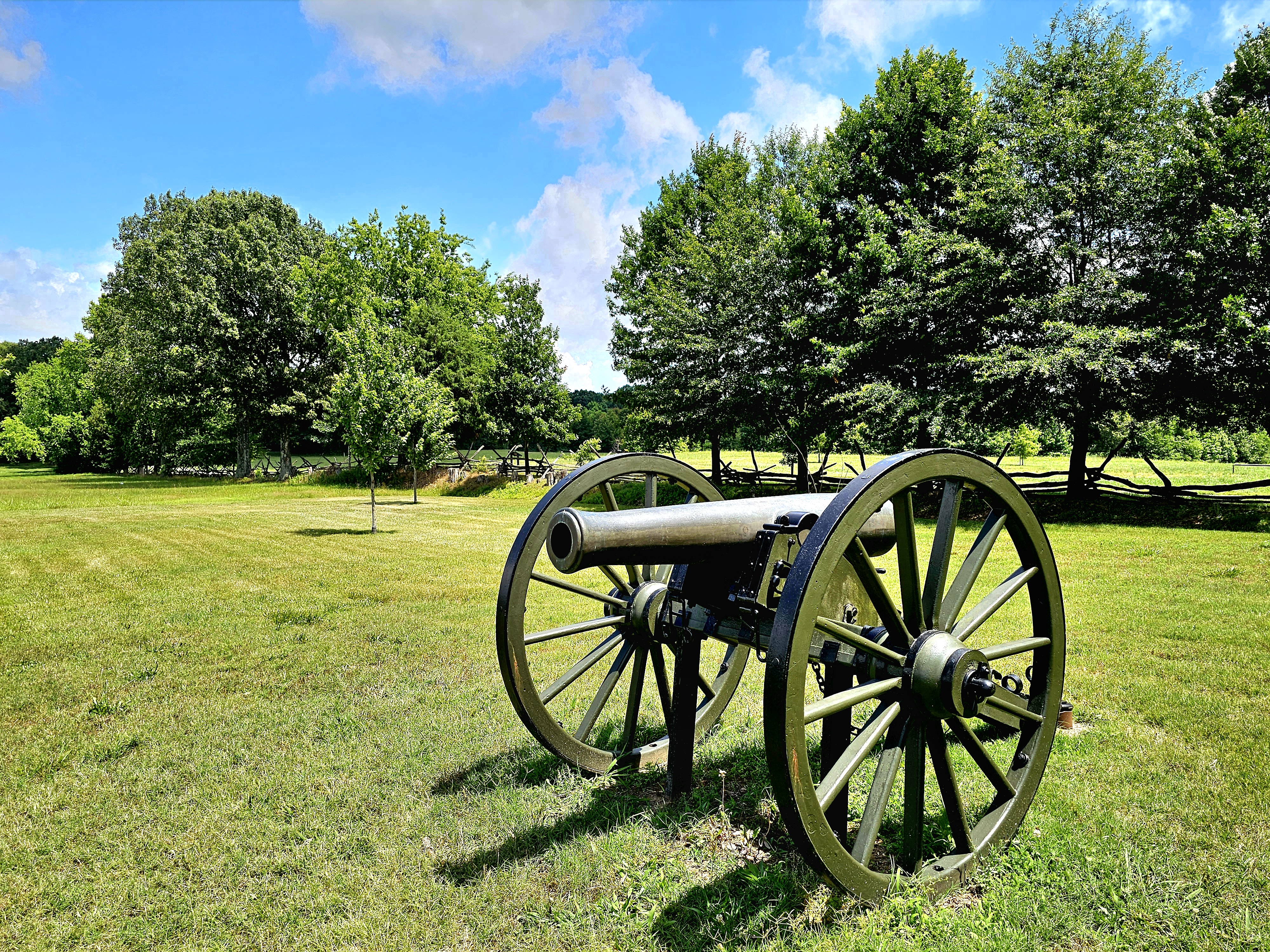
Our first stop took us to Parker’s Crossroads, halfway between Nashville and Memphis, and the site of a celebrated Civil War skirmish in West Tennessee.

It was the final battle for Confederate Brig. Gen. Nathan Bedford Forrest, who managed to outfox the Union brigades of Col. Cyrus L. Dunham and Col. John W. Fuller by escaping with his regiment across the Tennessee River and avoiding certain defeat in the face of an enemy nearly twice the size with two times the artillery.

Leah and I took the walking tour past interpretive markers depicting critical moments in the battle, and observed that Parker’s Crossroads battlefield, while a testament to the 737 fallen soldiers,

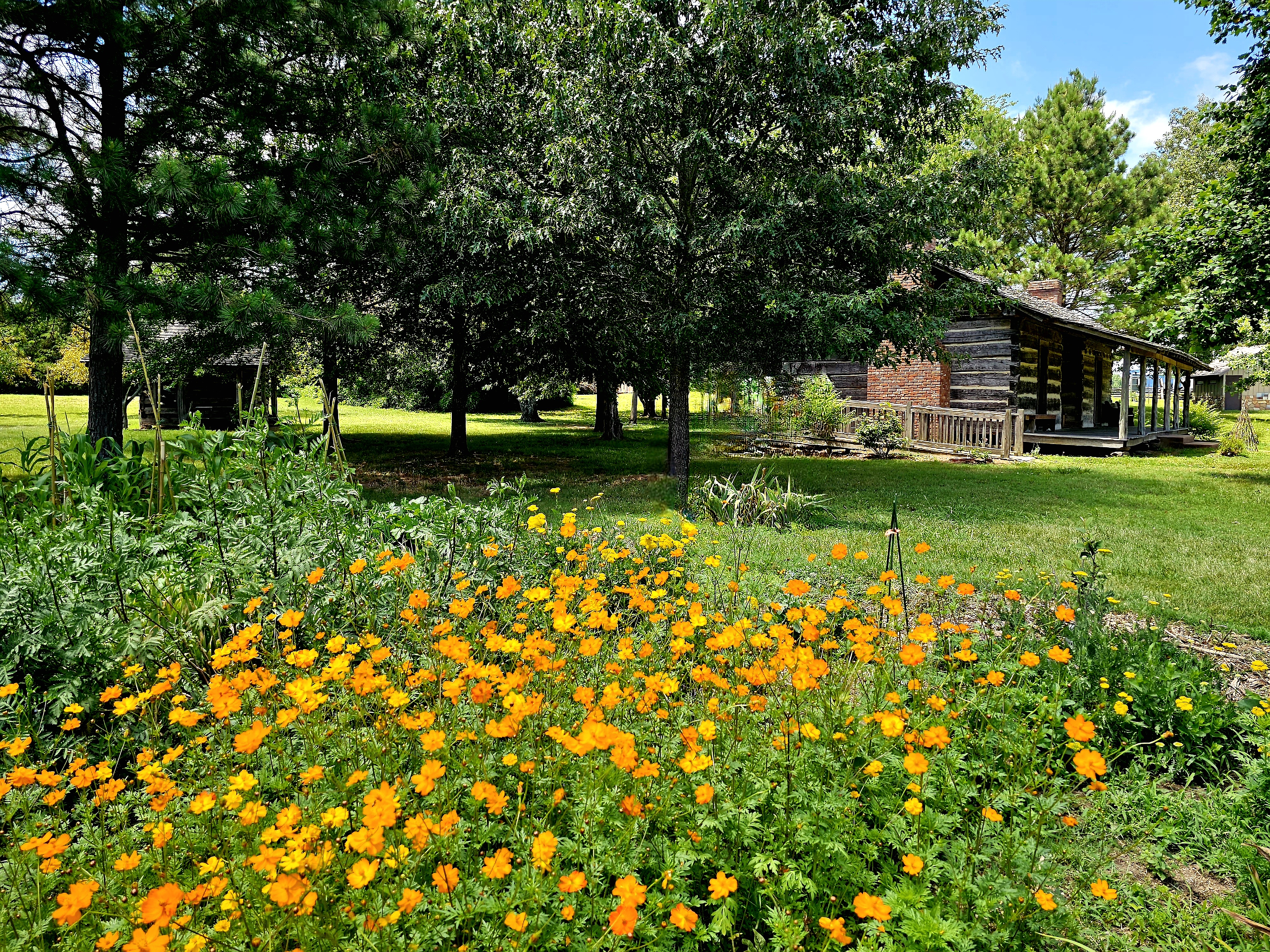
should also be appreciated for its serenity and pastoral scenes.

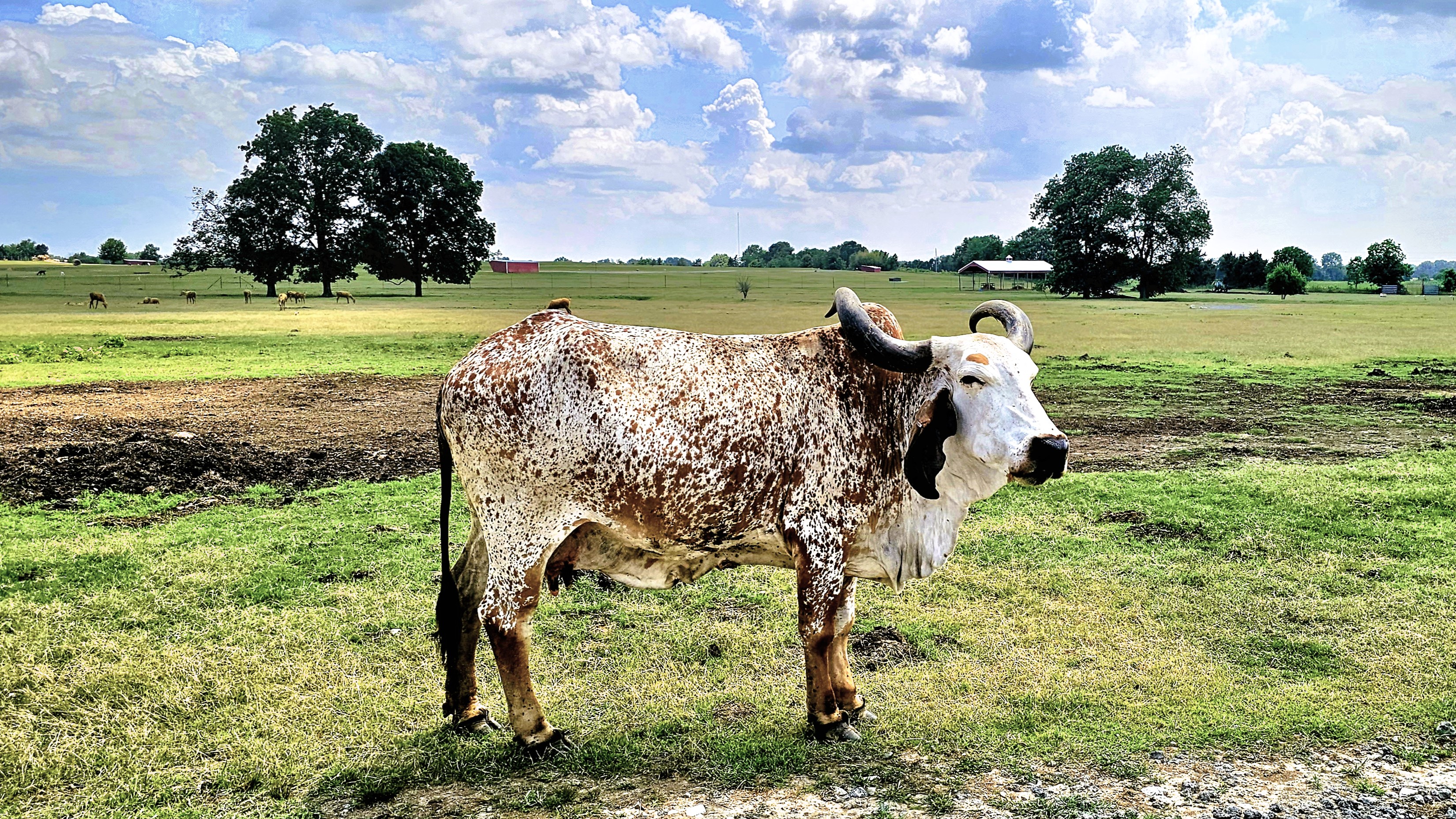
Only 45 miles west of us was Tennessee Safari Park in Alamo,

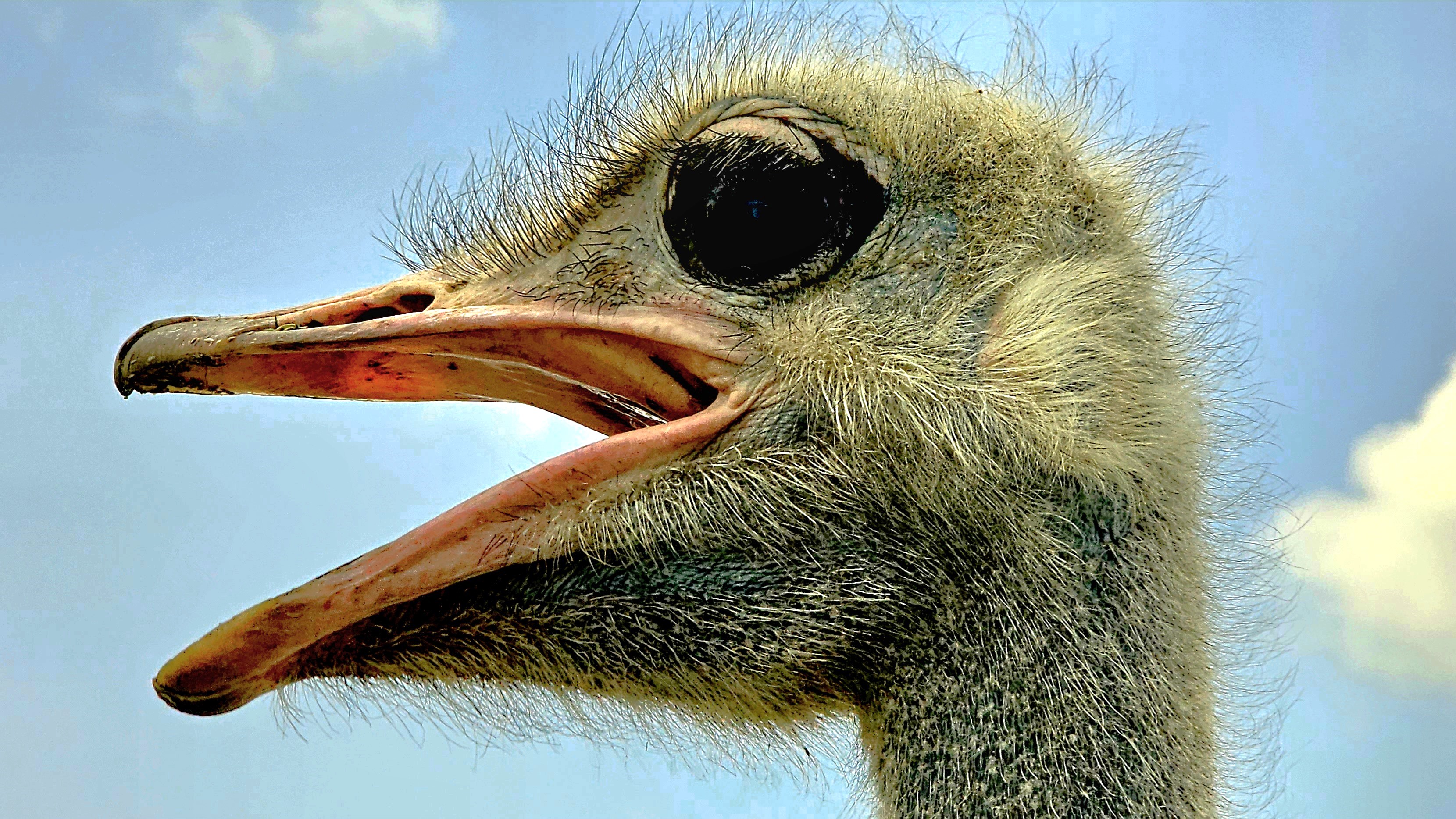
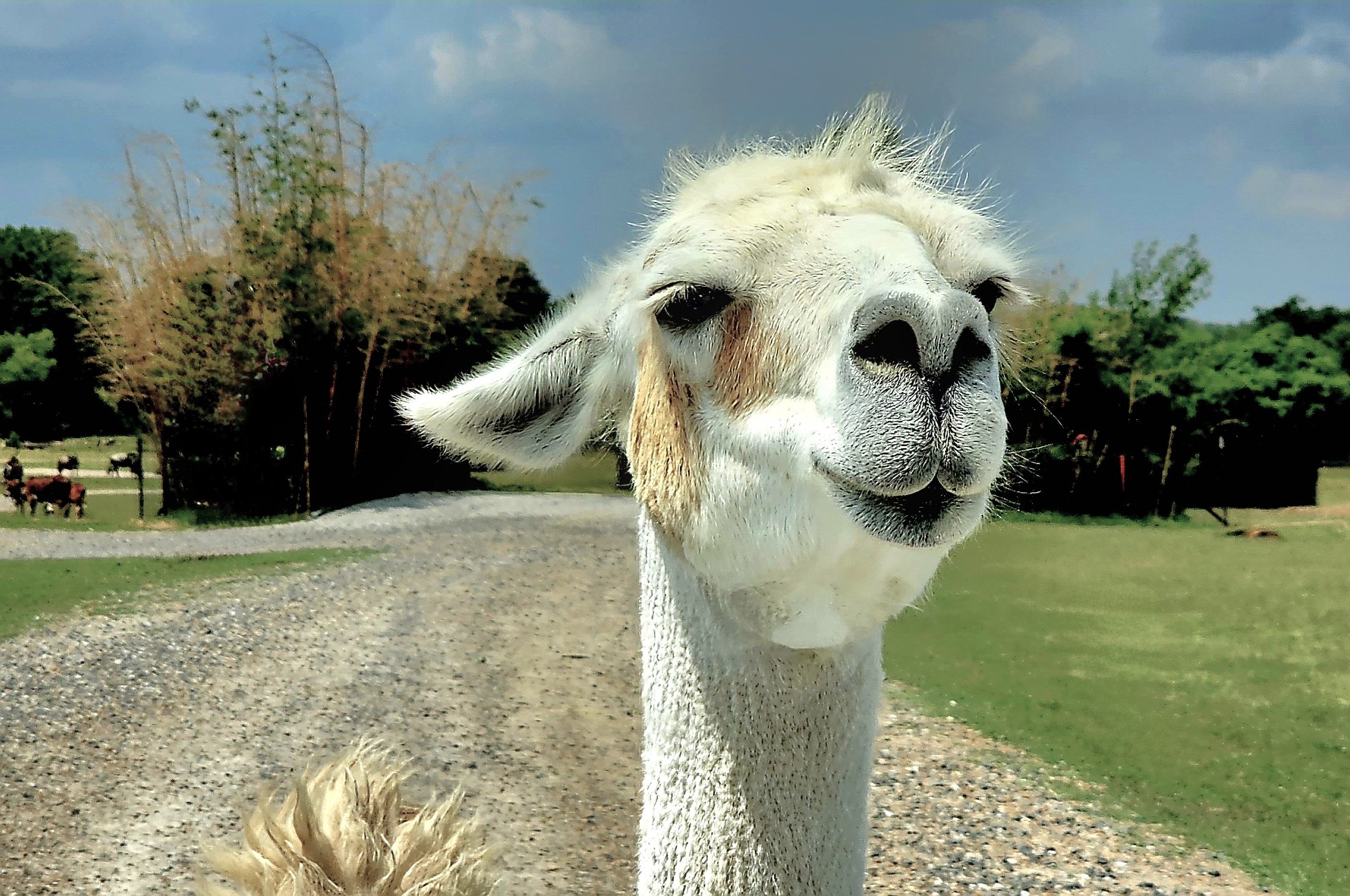
where we looped around a drive-thru zoo for an hour with 4 buckets of animal nachos for hungry wildlife roaming freely throughout the fenced prairie. We were immediately greeted by an aggressive mob of ostriches and camels that descended upon our truck sensing a meal was imminent.

With the passenger window down, Leah tentatively extended the bucket beyond the door, only to have the bucket ripped from her hand by a dromedary with no manners and fewer eating skills.

Kibble went flying everywhere–inside and outside the truck. Even today, I’m still fishing out morsels between the seats. Lesson learned.

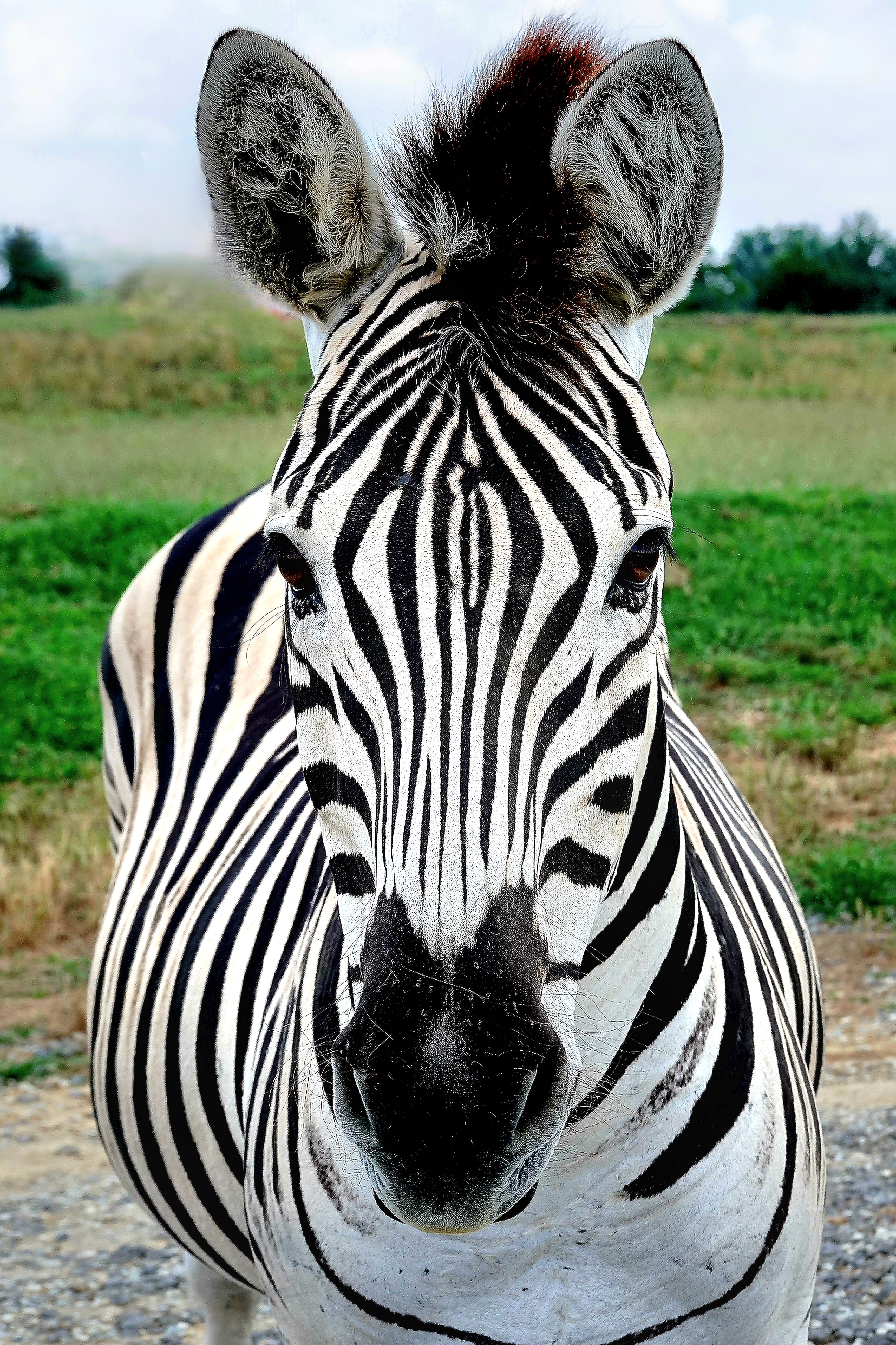
However, the lure of food was a perfect ploy for pet portraits…

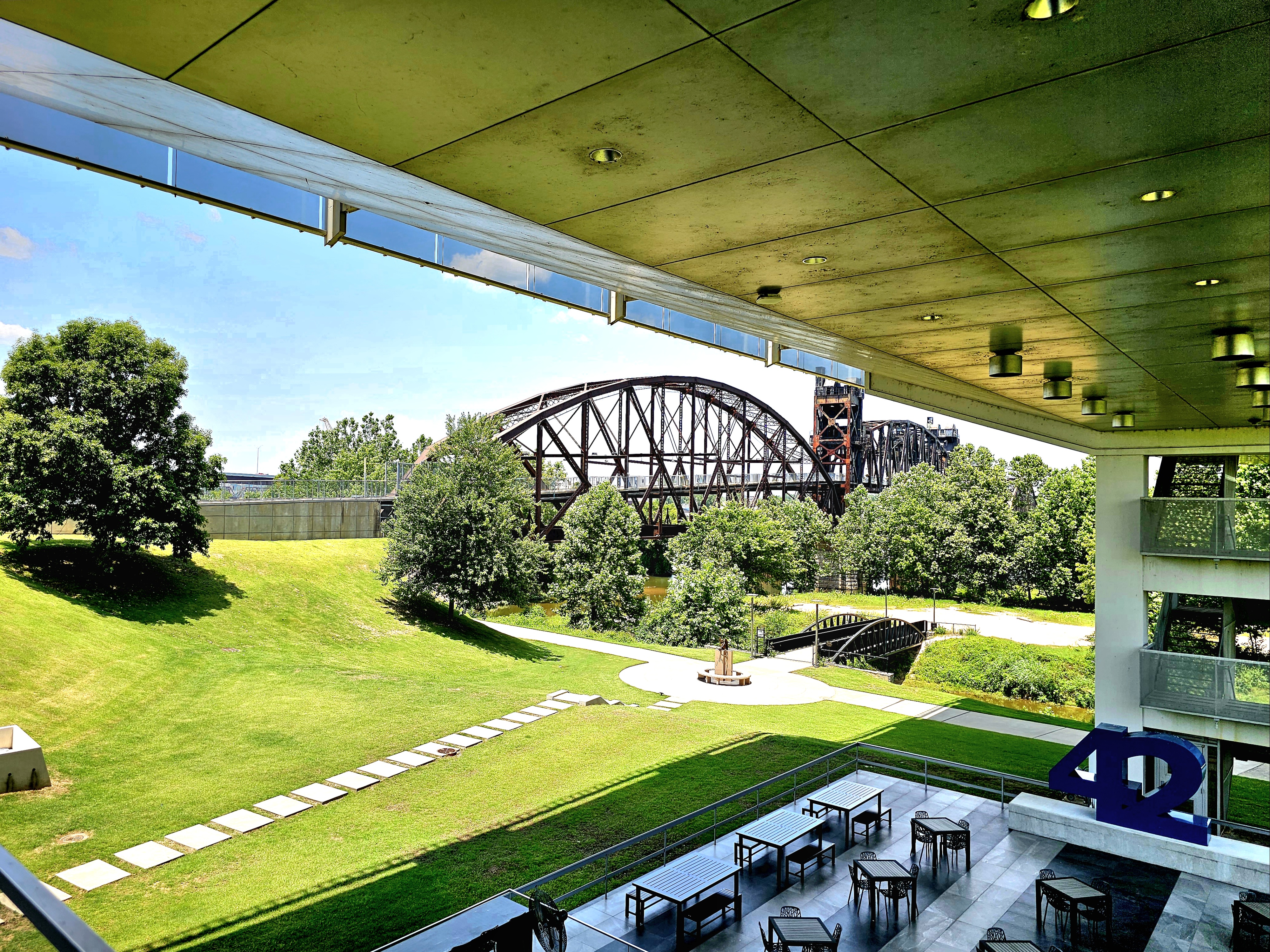
Continuing west, we traveled to Little Rock, home to the Clinton Presidential Center, dedicated on November 18, 2004.

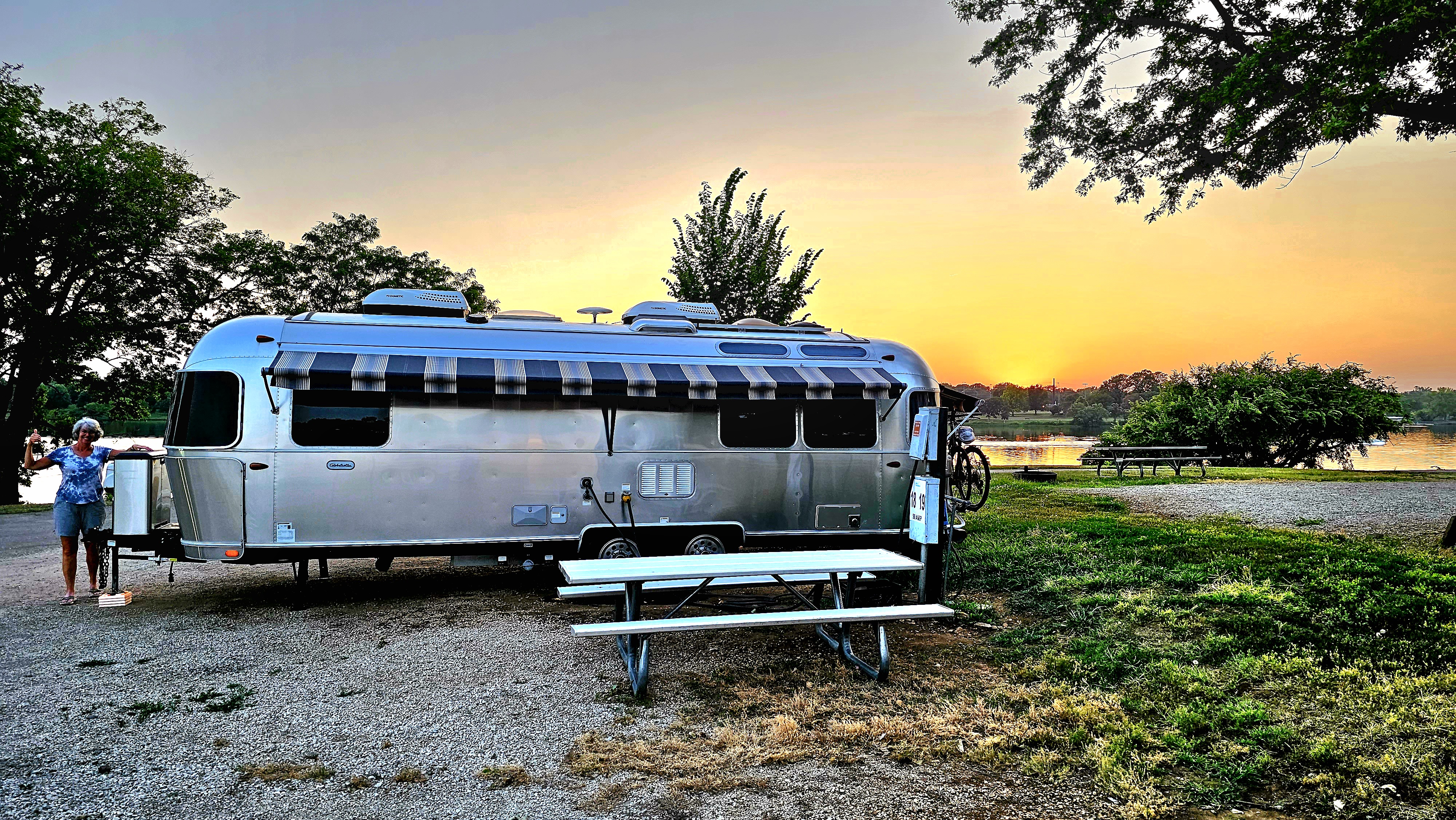
We parked the Airstream directly across the Arkansas River in North Little Rock by a decommissioned WW II tug and sub…

and cycled the long way around the riverwalk trail (some of it kinda sketchy),

past the Big Dam Bridge…

until we circled back 8 mi. to Clinton’s library–a hulking structure clad in glass screens that cantilevers over the Arkansas River as a symbol of “building a bridge to the 21st century.” And it was air conditioned!

The building that houses Clinton’s legacy is enormous enough to collect and archive 2 million photos, 80 million document pages, 21 million e-mails, and 79,000 artifacts from the Clinton years (1993-2001).

Appealing graphics break down the headlines and the issues of the time: year by year, month by month, surrounded by wings dedicated to domestic policy, diplomacy, economy, education, civil rights, and scandal. It’s all on display throughout the Main Hall, modeled after the Long Room of Trinity College in Dublin.

Exhibits feature Clinton’s campaigns;

Clinton’s security;

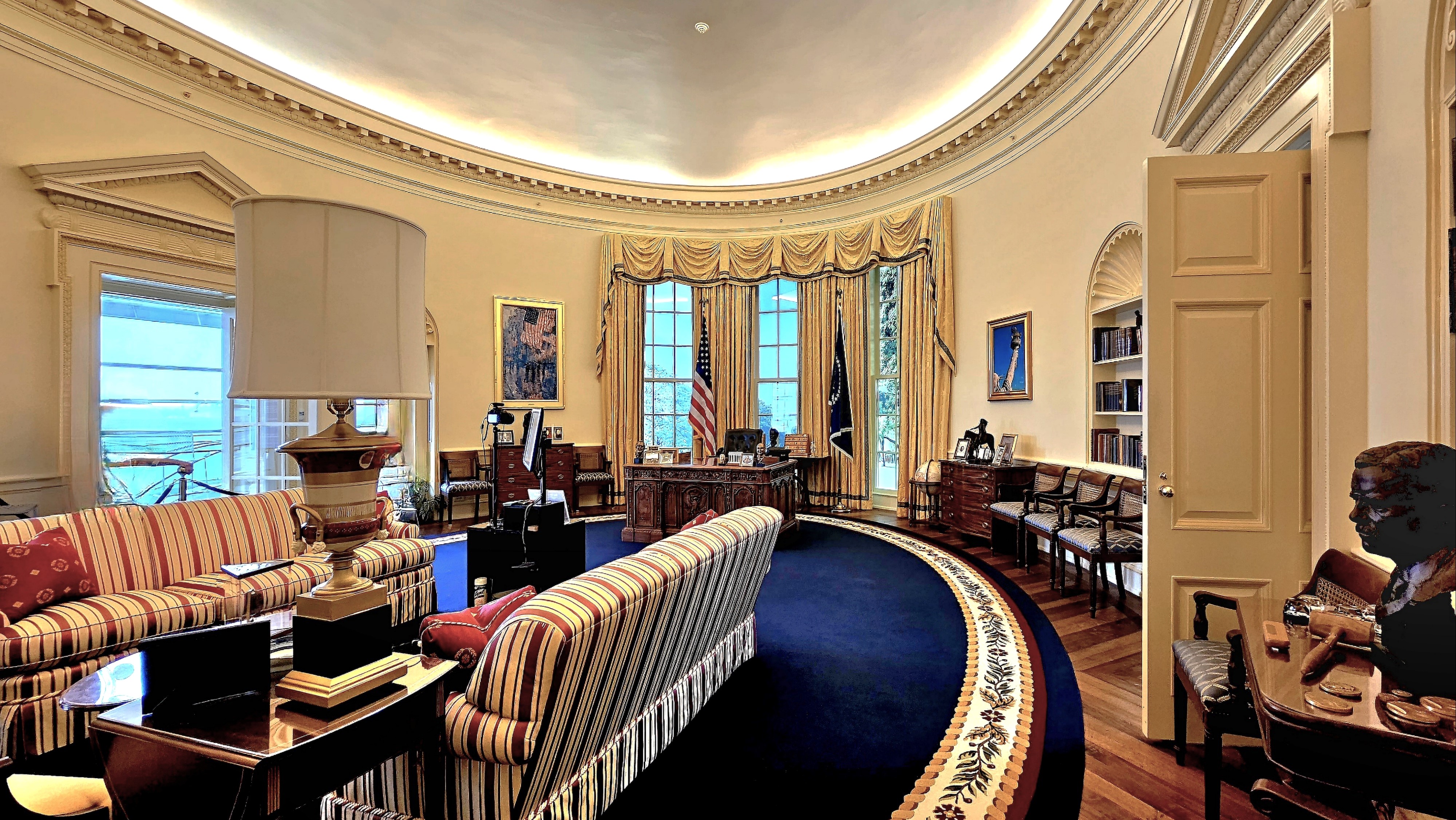
Clinton’s Oval Office;

State dinner receptions under Clinton:

and impressions of Clinton by character experts.

Our journey to Denver continues through Kansas…

Jordan Redux

We were a crew of 48 aboard the Viking Ra, divided into 2 camps of 24 travelers who identified as Bus A or Bus B.

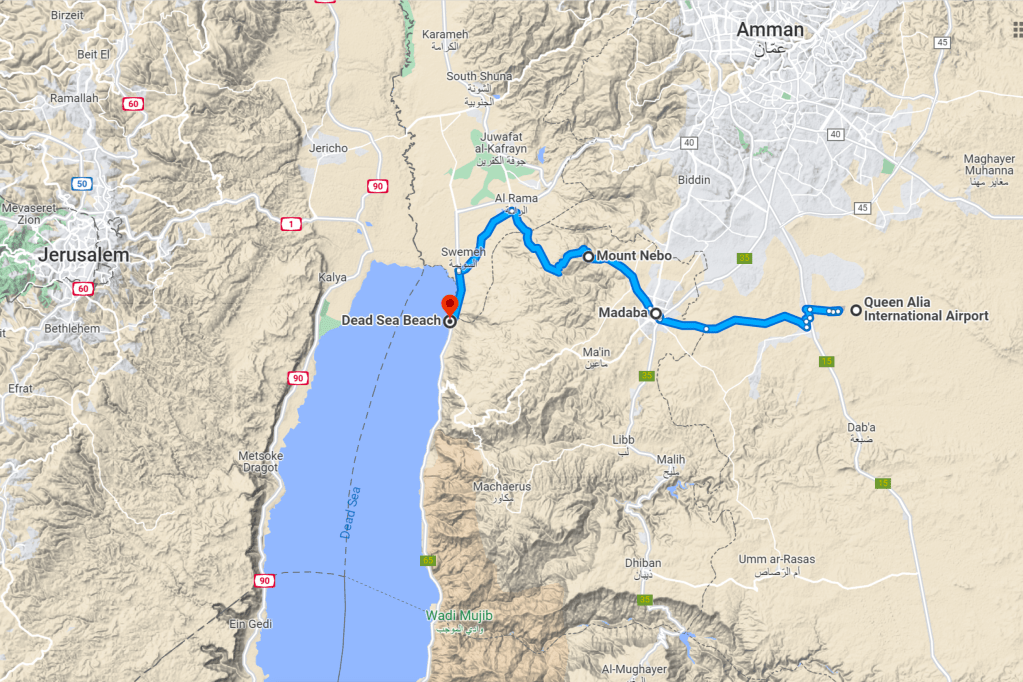
Most of the cruisers returned home at the end of our Nile excursion, but 18 intrepid globetrotters–a union of both buses–continued our journey to Jordan for four nights, where we were greeted at Queen Alia International Airport by Ahmad Al Khaldi, our tour director and self-proclaimed terrorist, who adopted the moniker after once guiding the brother of ventriloquist/comedian Jeff Dunham.

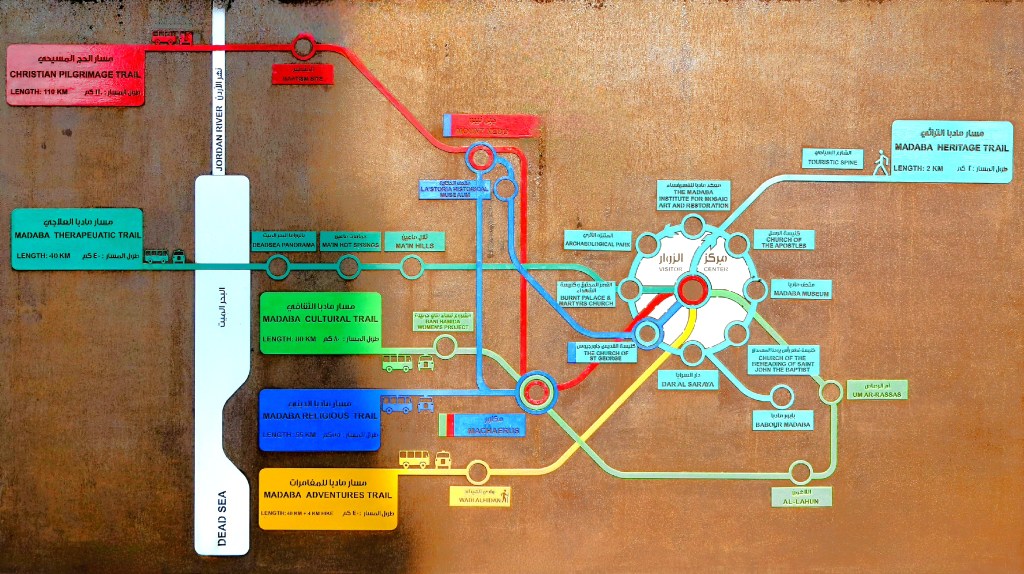
Upon arrival to Amman, we boarded a coach for a half-hour ride to Madaba. It was an ambitious itinerary with a lot of ground to cover before reaching the Dead Sea,

but we quickly knew–given the depth of Ahmad’s knowledge, wit, and organization skills–that we were in good hands.

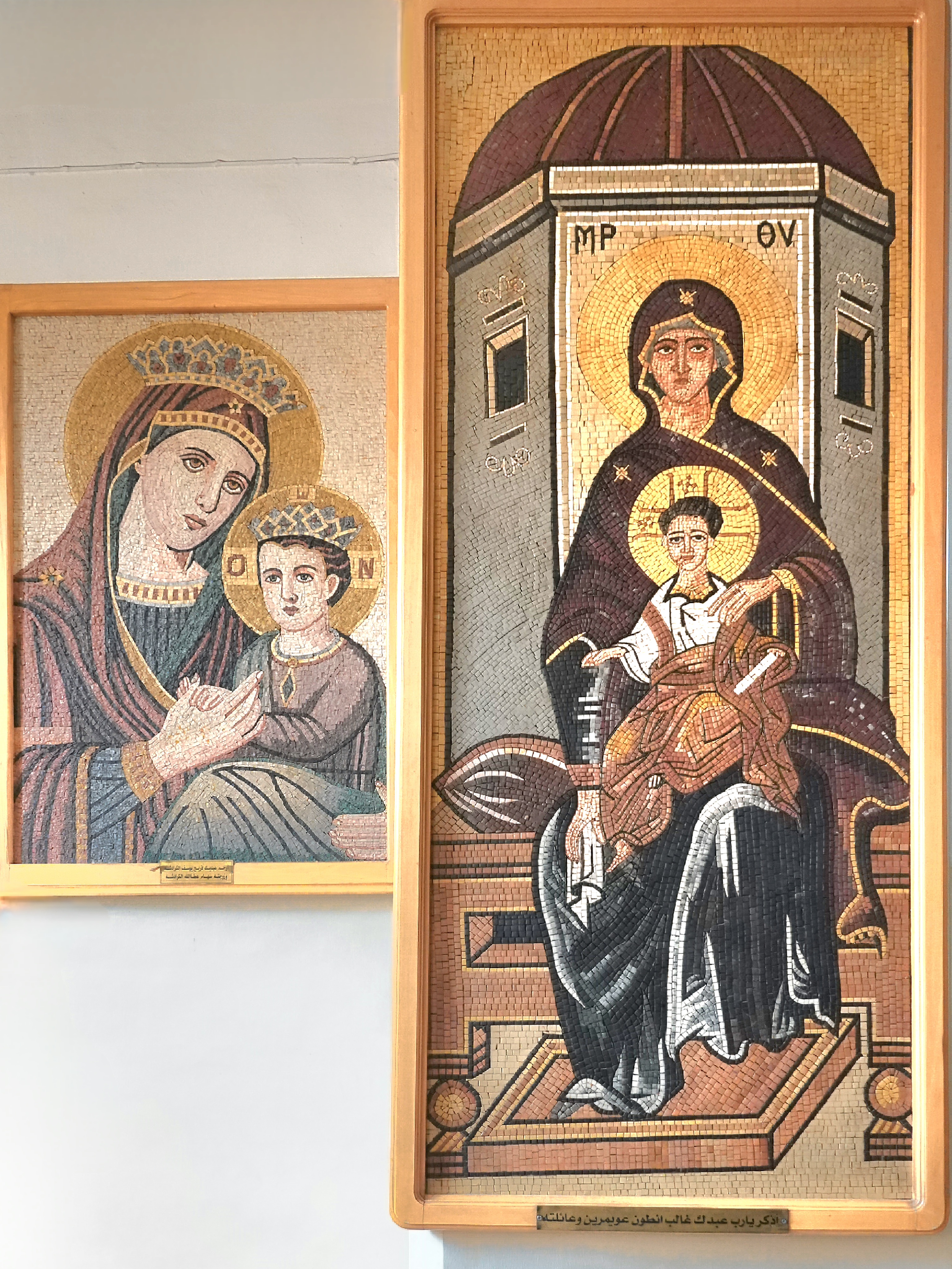
During the half-hour ride to Madaba we absorbed some background about this ancient city that’s renowned for its skilled mosaic artisans,

and its deeply religious ties to Christianity and Islam.

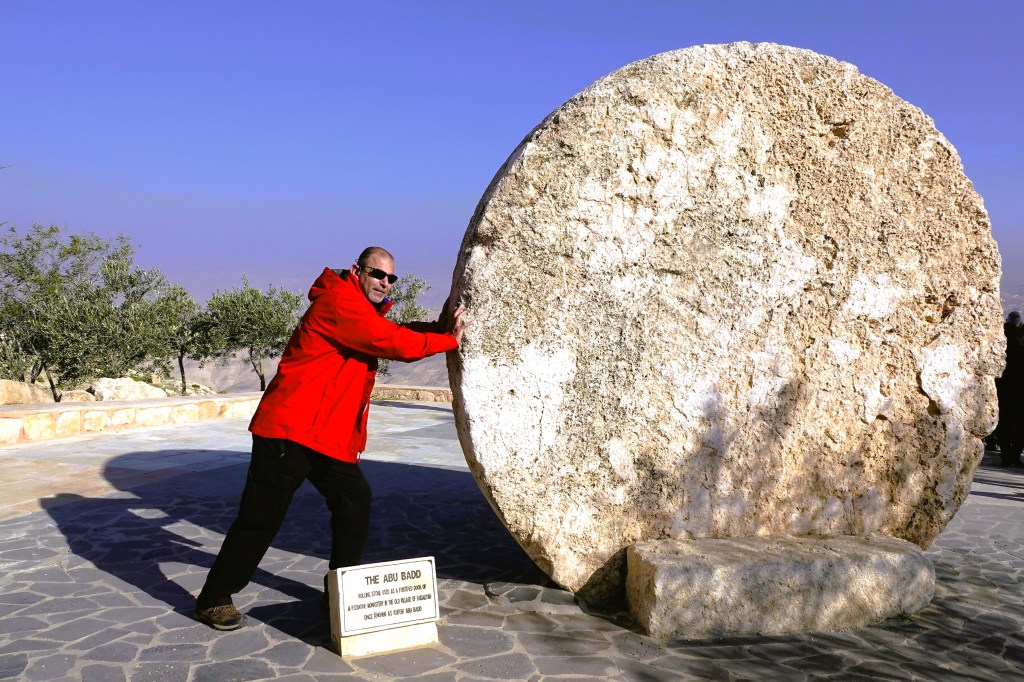
After an orientation of one ofJordan’s holiest landmarks,

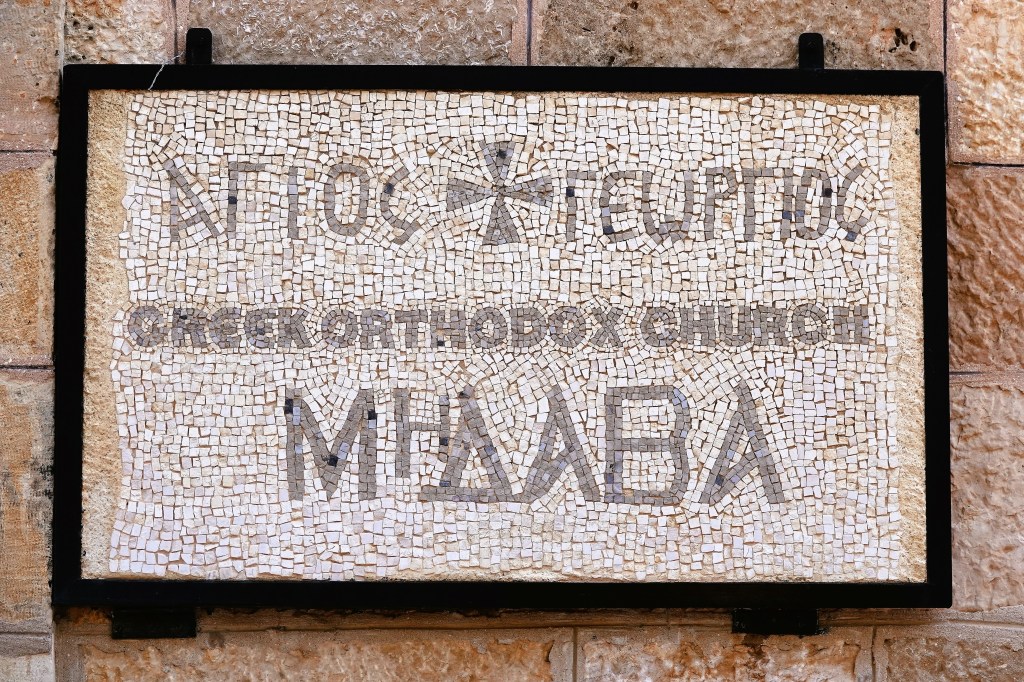
we headed to Madaba’s feature attraction… the Greek Orthodox Basilica of Saint George,

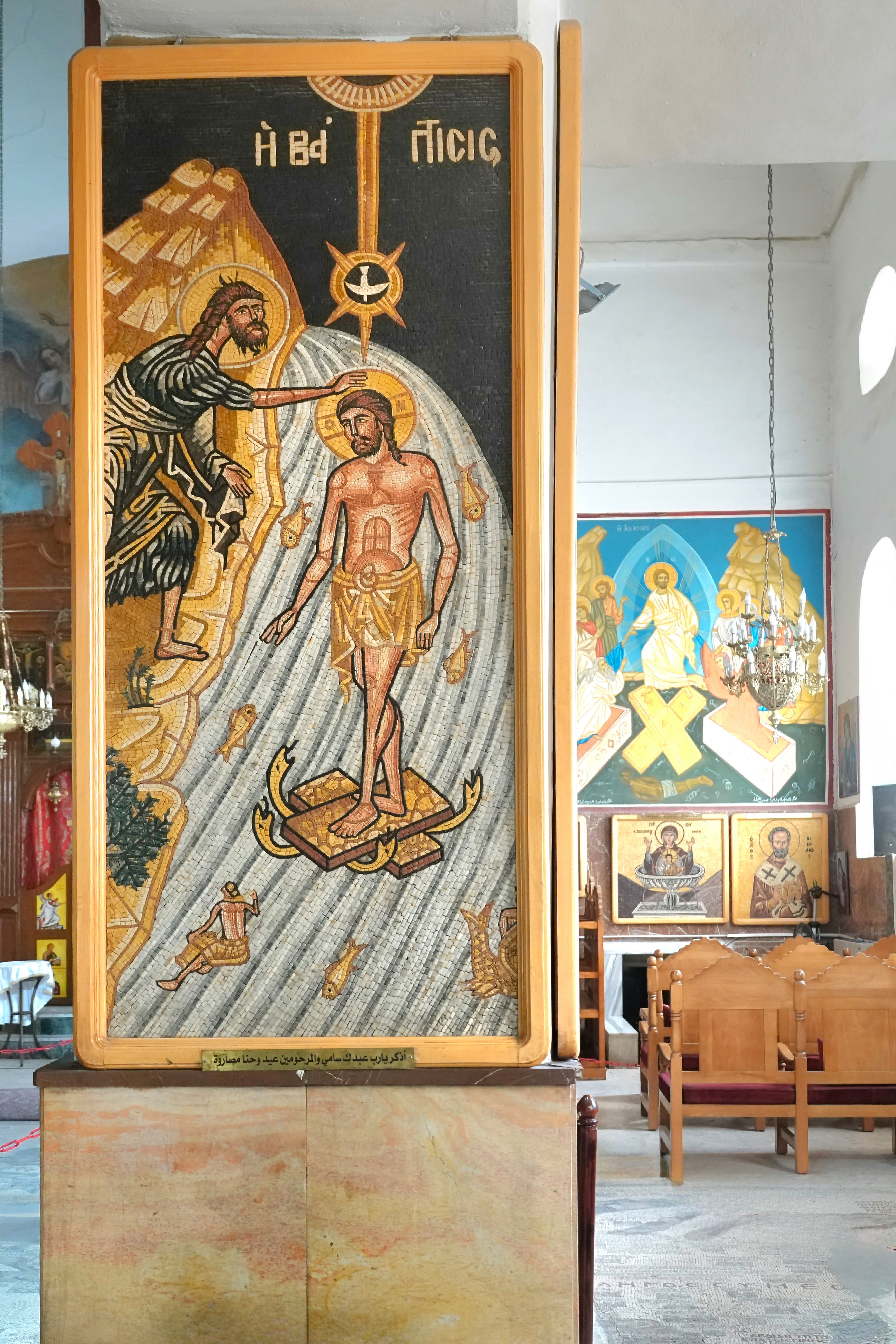
where the current structure, consecrated in 1896 is adorned by mosaic icons on every pillar…

but it’s the mosaic floor that’s the star of St. George and Madaba!

The partially restored mosaic map of the Holy Land originates from the 6th century, and was excavated in 1884 when the current church was built atop the ruins of the original Byzantine church. Over 2 million tiles comprise a detailed rendering of the Middle East with surprising detail and accuracy, making it both an artistic masterpiece, and the oldest surviving representation of familiar biblical sites.

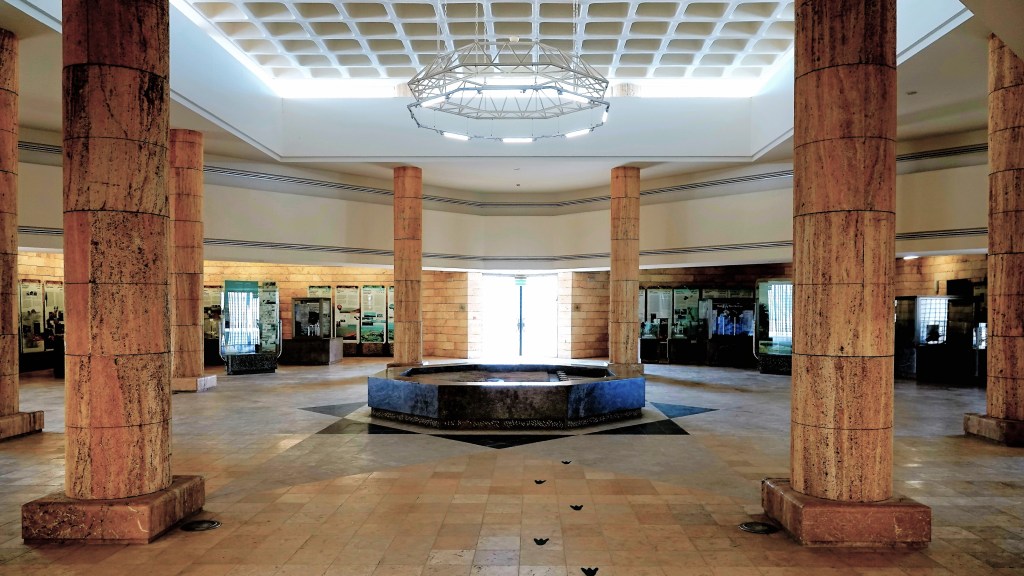
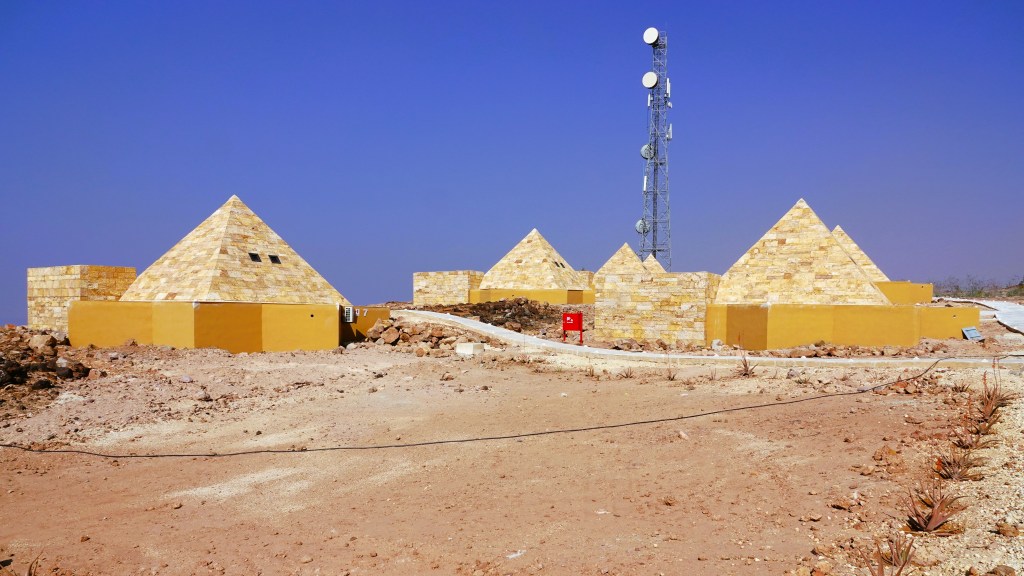
We bypassed Mt. Nebo (to be explored the following day) and continued to the Dead Sea Museum,

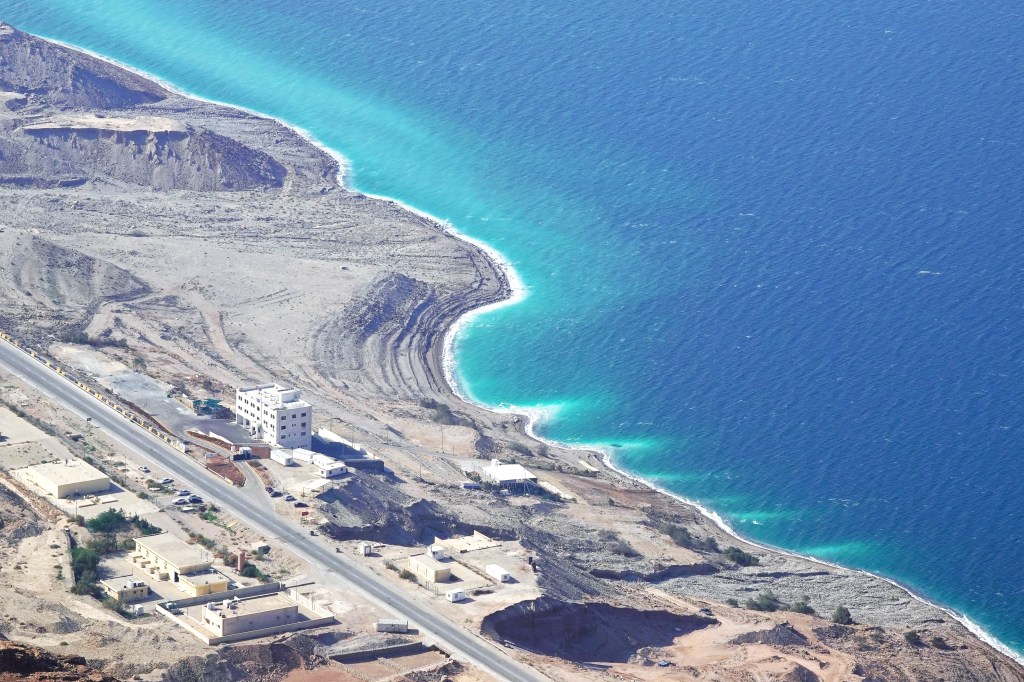
where we enjoyed an aerial panarama of the Jordan Rift Valley with the lowest elevation on earth (-1410 ft).

and a closer examination of the area’s geological and cultural significance.

Developers see tremedous potential in promoting Dead Sea tourism, touting first-class accomodations and access to its briney beaches. And they’re wasting little time in hotel construction,

because at it’s current rate of evaportion, the Dead Sea will cease to exist by 2050.

Shortly after checking into the sprawling Movenpick village…

it was time to relax with a mud treatment,

and a bouyant soak. What a feeling!

There’s been lots of internet chatter about which country, Israel or Jordan, has the best beaches. The answer is easy: it’s whichever one you’re on!

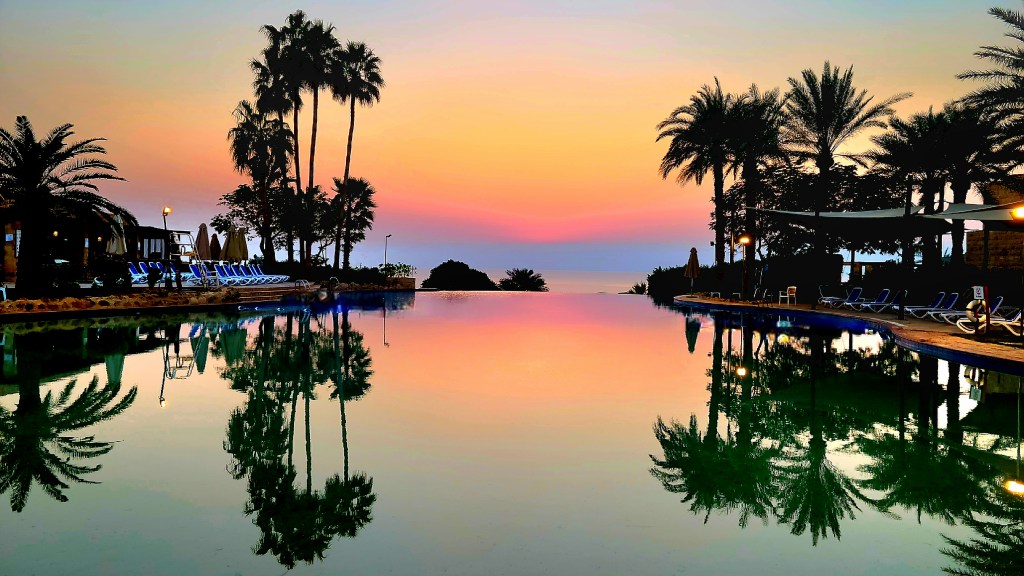
However, the east coast scores extra points for hosting the sunset over Jerusalem most nights.

Egypt: Gimme That Ol’ Time Religion

Like many ancient civilizations, Egyptians were obsessed with religion and mythology. They pledged their love and devotion to more than 700 distinct deities entrusted to protect the natural order of all things (wind, water, sun, sky, etc.) from creation to afterlife. In exchange, the devout would be rewarded with an everlasting life of prosperity, good fortune, and happiness… once they reached their final destination–the Underworld.

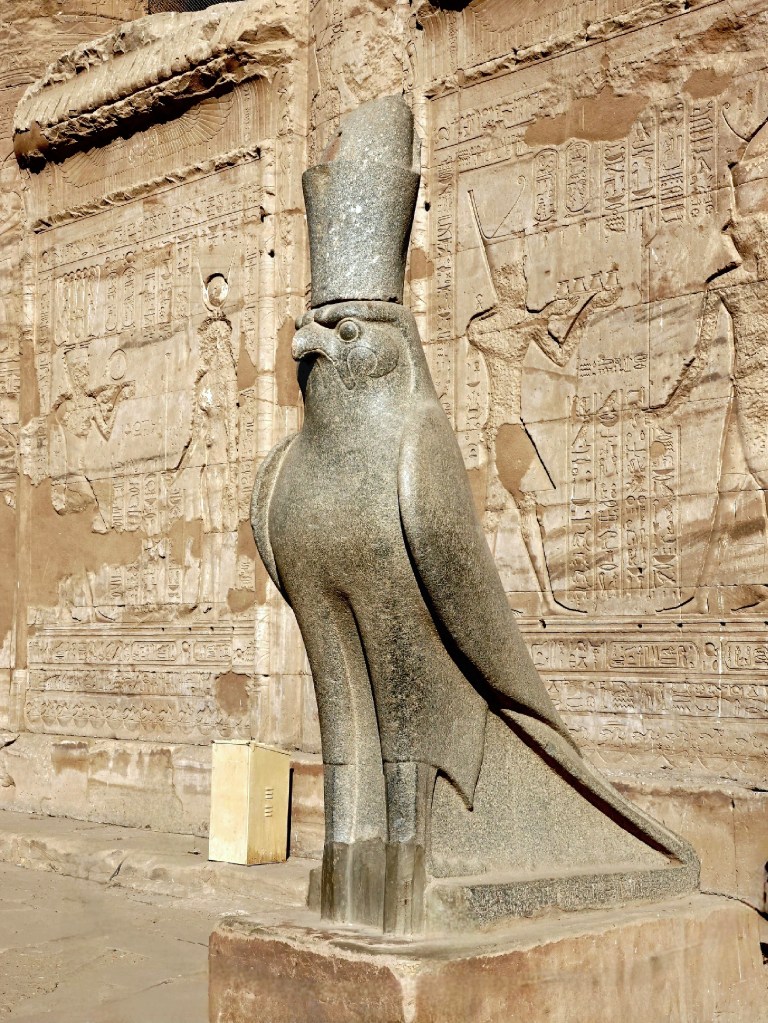
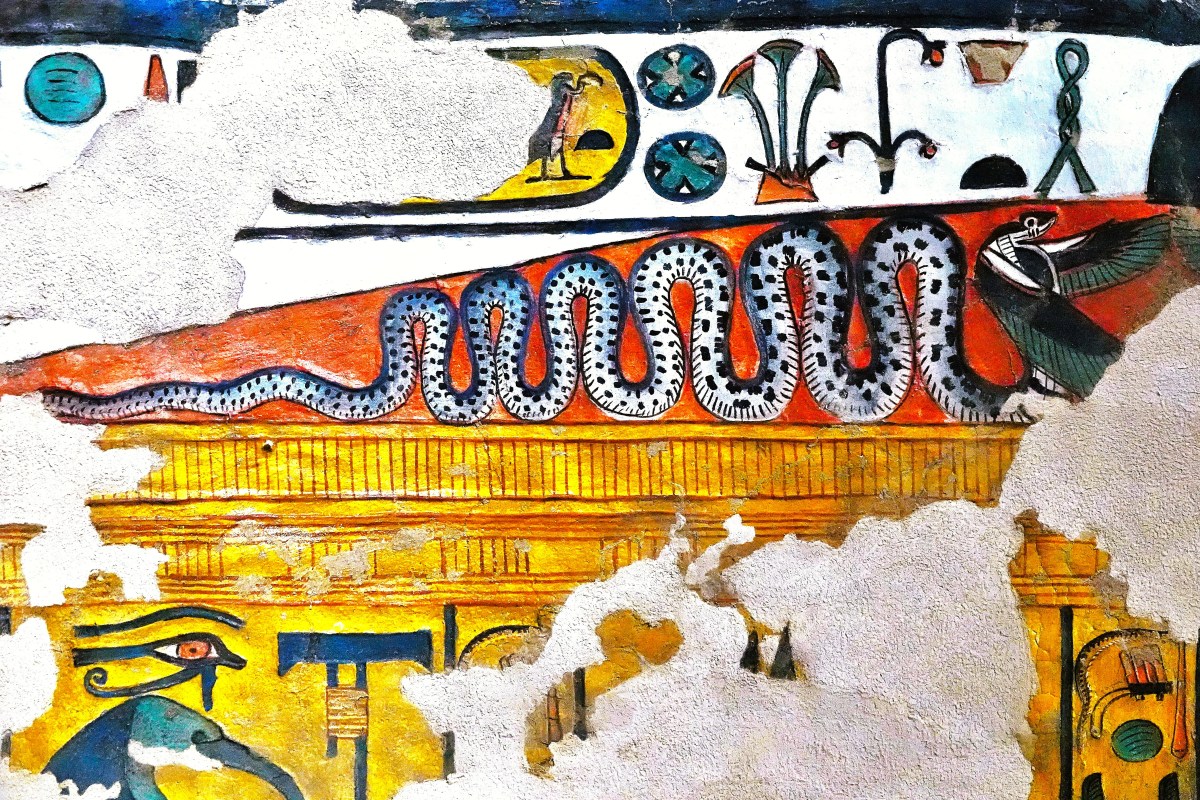
Gods and goddesses were personified as powerful creatures,

and hybridized animals,

and amalgams of animals and humans.

Egyptian paganism lasted long into the 5th century. However, with Egypt situated at the intersection of Europe, North Africa, and the Middle East, Egypt was also at the crossroads of influence when monotheism gained a foothold in the Middle East and spread throughout the continents.

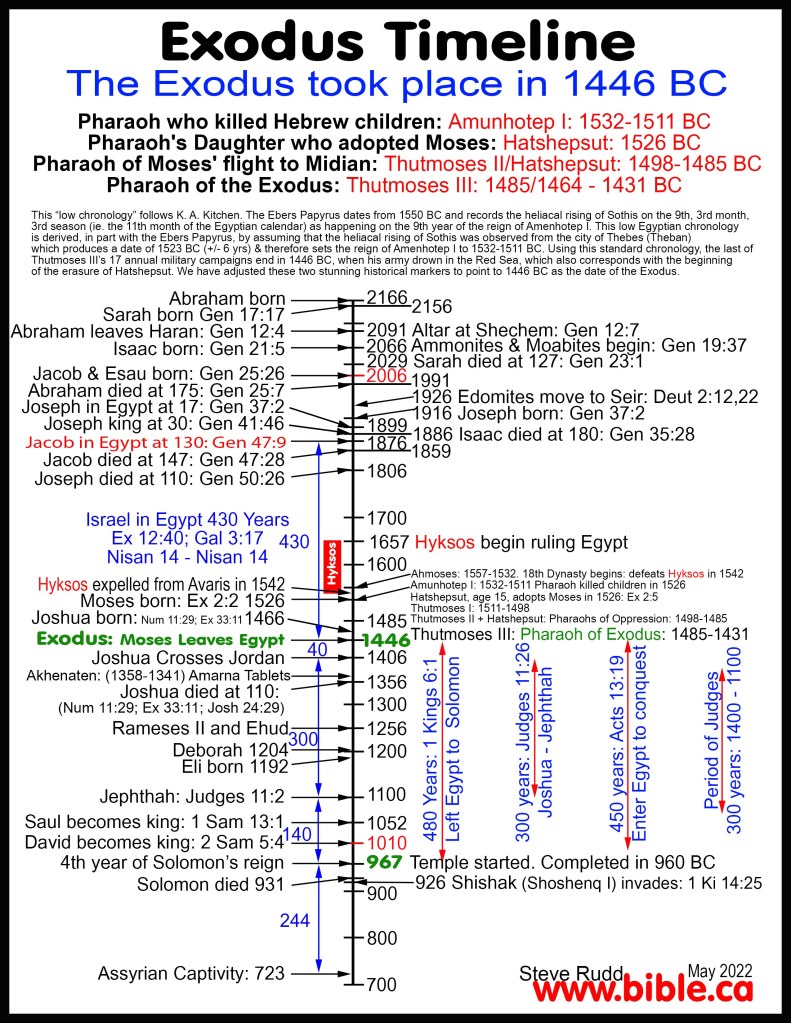
When synchronizing Egyptian chronology and Old Testament timelines, the earliest record of monotheistic worship in Ancient Egypt occurred during a time of remarkable prosperity when Joseph–in his role as Grand Vizier of Egypt–governed and fed its people, while surrounding neighbors faced famine and hardship.

This informed Jacob’s decision to relocate his clan from Canaan to Egypt in search of provisions and an unforeseen reunion with his son. Biblical scholars have speculated the date to be 1875 BC.

This led to the eventual settlement of the Israelites, whose numbers may have grown to 2,000,000 over the next 430 years, until the storied Exodus–which would have occurred in Year 18 of Thutmose III’s reign–in 1446 BC.

Interestingly, Amenemhat, Thutmose III’s first-born and heir apparent, mysteriously predeceased his father, and was inscribed on a column at the Temple of Amun at Karnak shortly after the death of Hatshepsut and the subsequent accession of his father to Pharaoh.

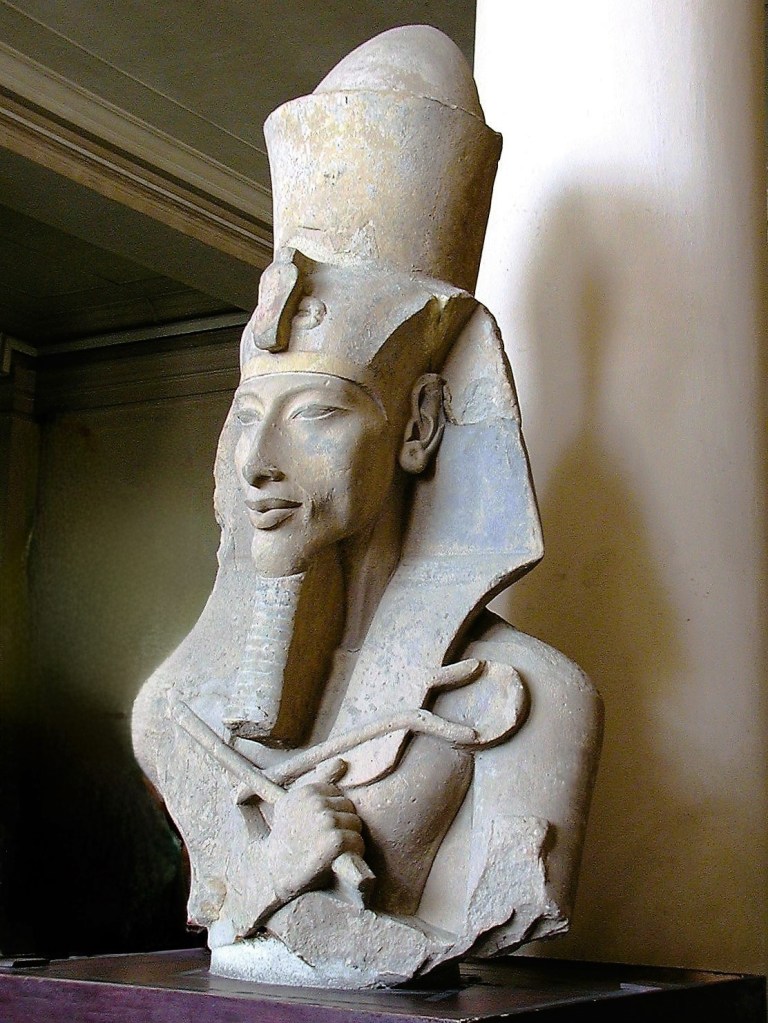
Religious reform from polytheism to pagan monotheism was momentarily embraced by Amenhotep IV during the his reign (c. 1358–1341 BC).

For some unknown reason, he changed his name to Akhenaten and elevated the cult of Aten (the sun disc) as the one and only true God.

Akhenaten went so far as to scrub all references of Amun-Ra from Karnak and build a new worship center and capital in Amarna, 170 km south of Thebes. But Atenism was short-lived; it never survived Akhenaten death, as he was so reviled by the priests that critics would often refer to Akhenaten as the Heretic King.

Subsequently, Tutankhamen–upon his ascension to the throne–reverted to worshipping Amun-Ra with his wife/half-sister, Ankhesenamun. He was 8 and she was 13 when they wed, albeit she was previously married to her father for a short time.

They had two daughters together; both were stillborn. Tut died suddenly at 18 from a fall or malaria or both, leaving Ankhe without an heir. She remarried Ay (presumedly her maternal grandfather), the next pharaoh, and soon disappeared from history.

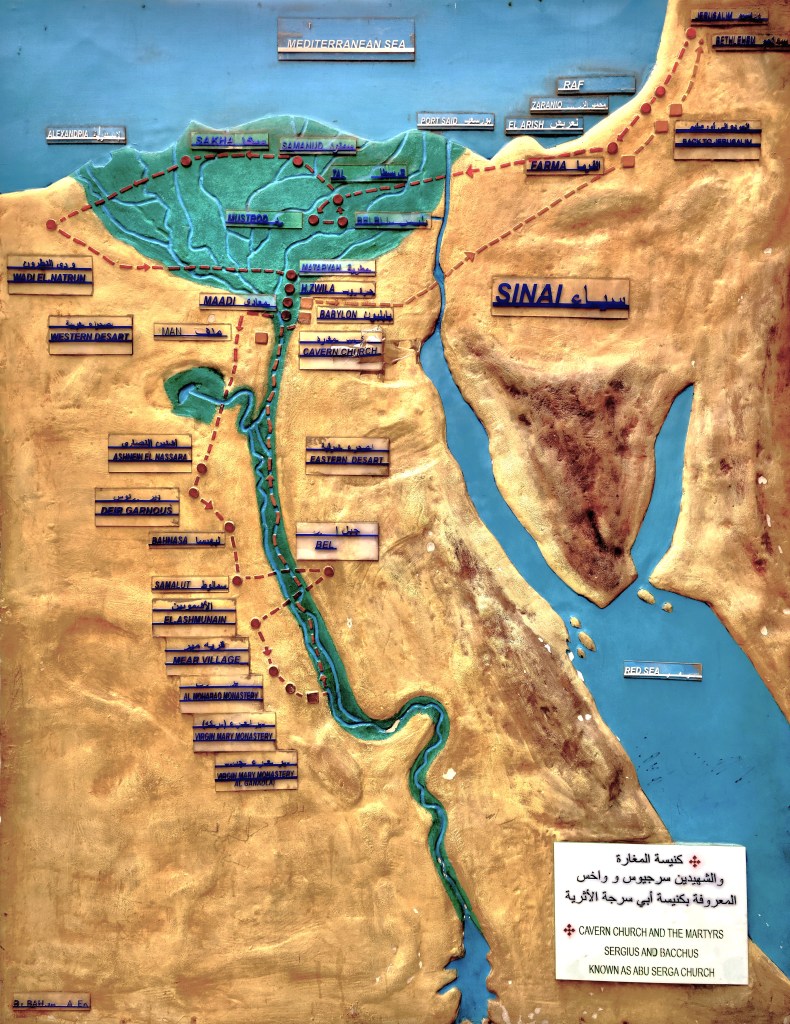
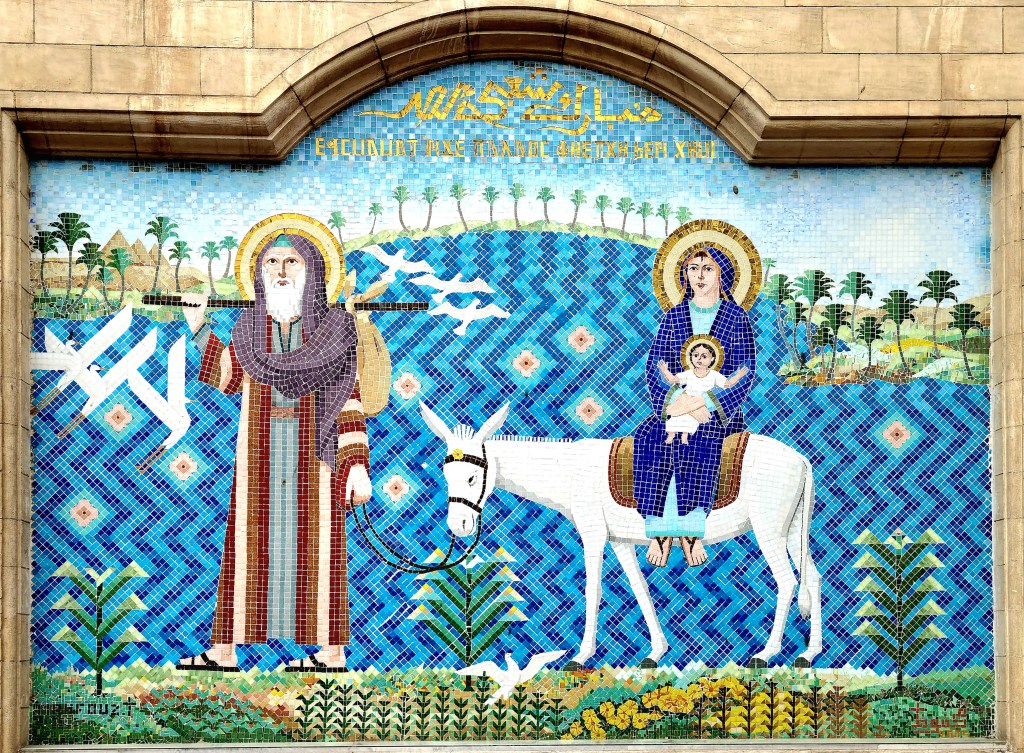
Polytheism remained the cultural norm for the following 1,400 years, until Egypt bore witness to the seeds of a new cultural revolution when the Holy Family escaped the wrath of Herod the Great’s infanticide decree c. 7 BC, and sought refuge in Egypt for the next three-and-a-half years.

Their journey through the Sinai dessert and across the Nile to Heliopolis…

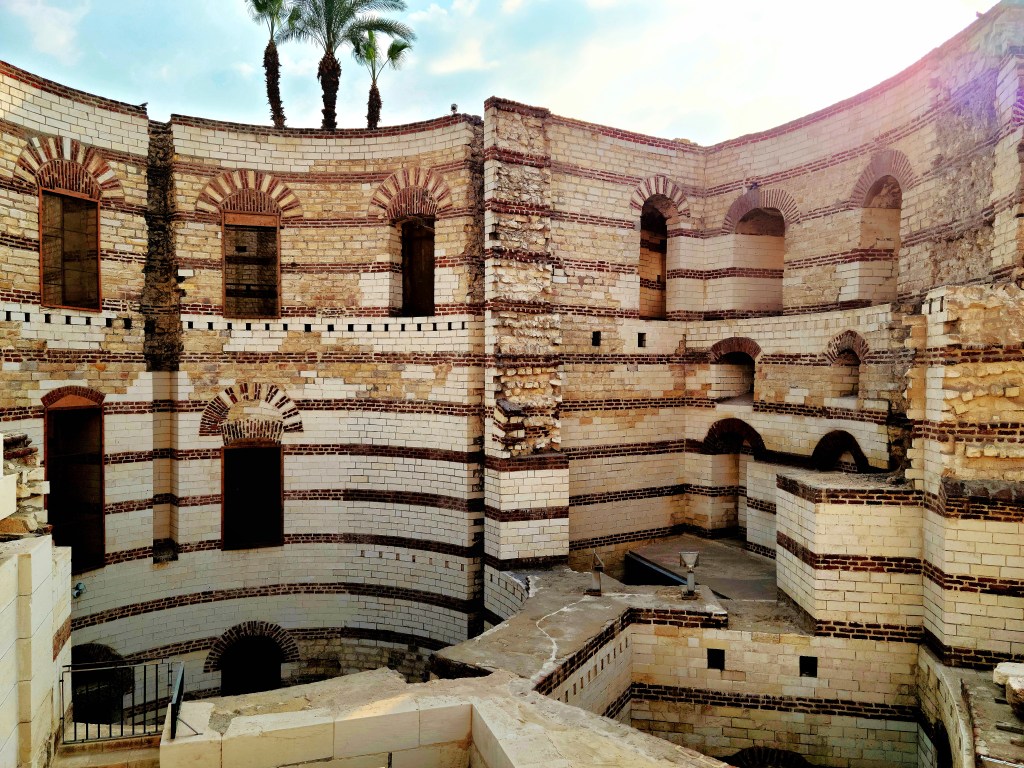
brought them to the Roman fort of Babylon in Old Cairo,

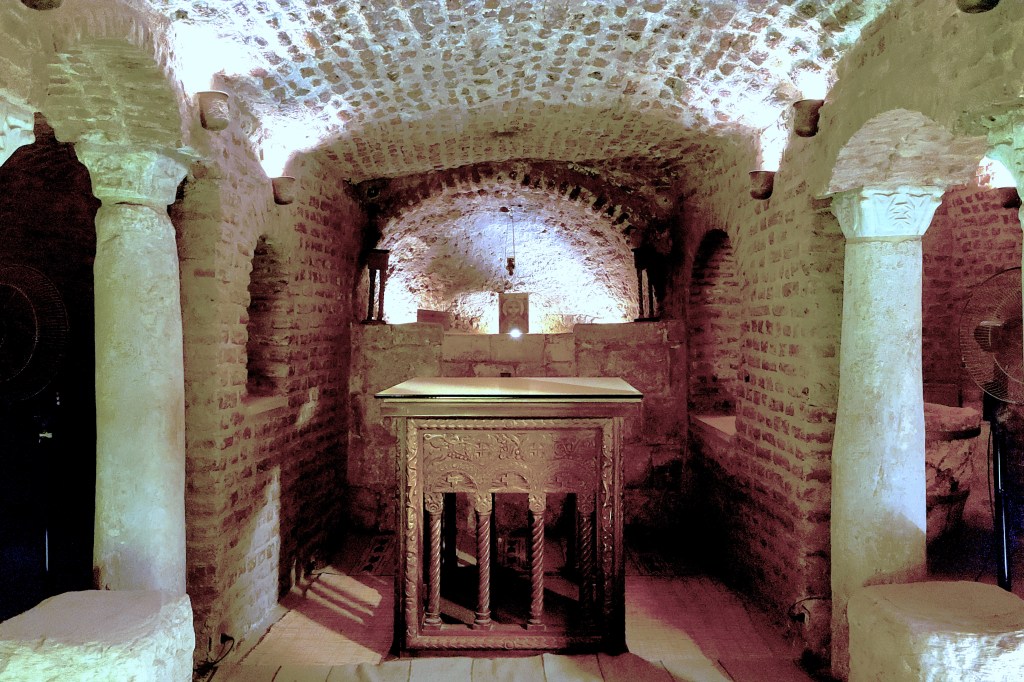
where they found shelter in a cave for the next three months,

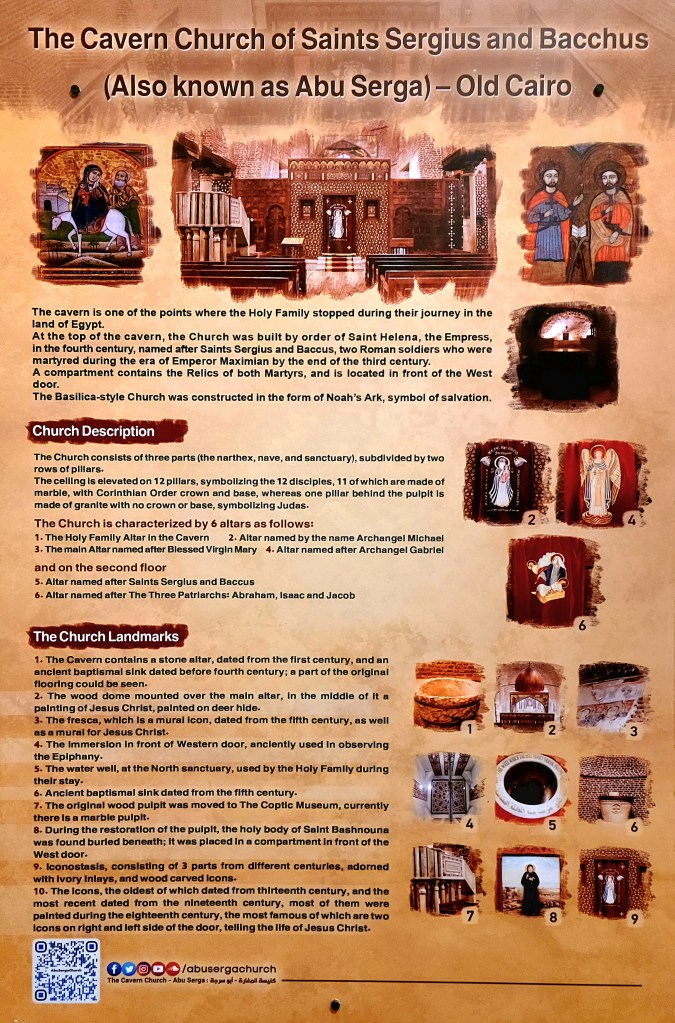
which would later become the foundation for the Church of Martyrs Sergius and Bacchus in The Cave (aka Abu Serga) built in the 4th century,

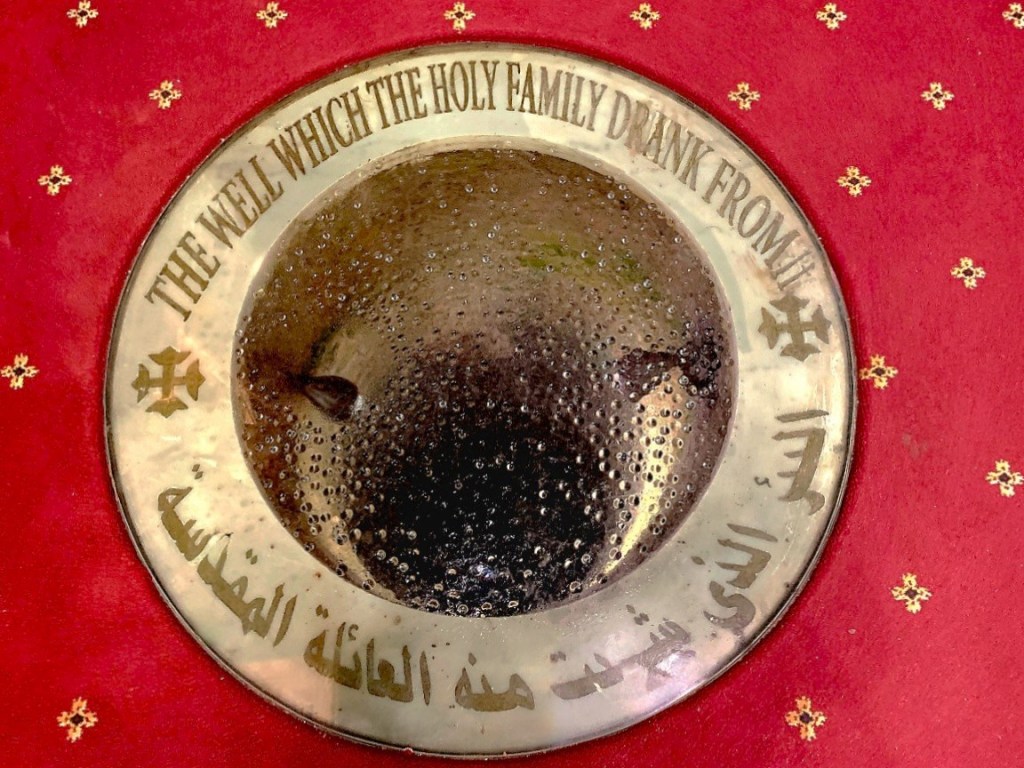
and the site of a water well which nourished Joseph, Mary and baby Jesus during their stay.

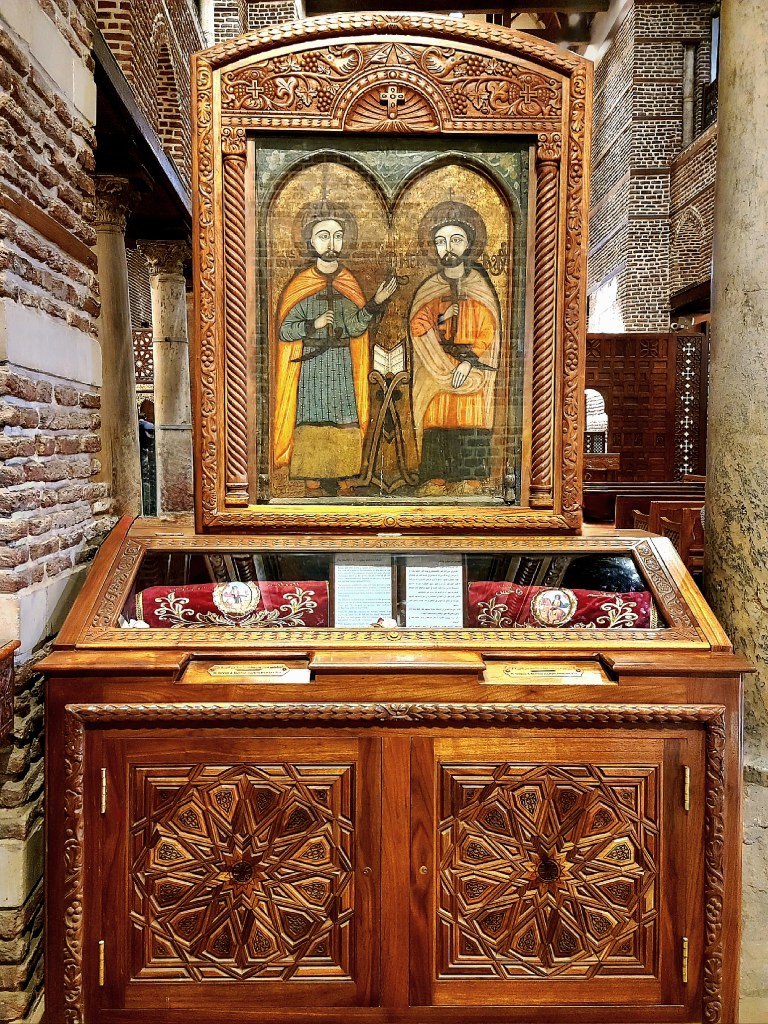
Other distinguishing features of the church include: the wall of painted icons;

and the precious relics of Saints Sergius and Baccus.

Worship of pagan deities began to wane around the late 4th and early 5th Centuries as Christianity became popular, and was finally outlawed in the 6th Century by Christian Roman Emperors. Consequently, Old Cairo became an important center of Christianity in the world, with Monasticism begetting Coptic Christianity, and extending throughout the Arab tribes.

With Coptic Christianity taking root, church worship proliferated in Byzantine Egypt, as did the number of churches in Old Cairo.

As Leah and I walked through Old Cairo, we were transported through history.

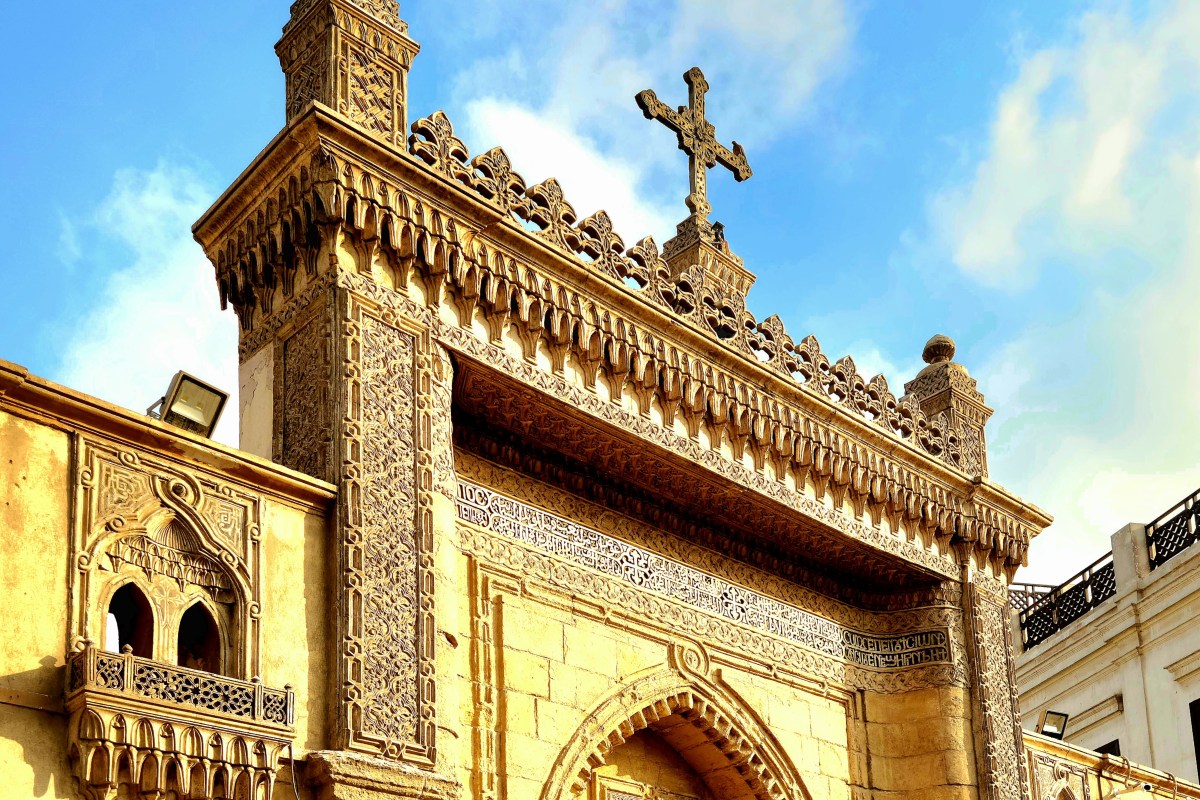
We took time to explore the Church of the Virgin (aka Hanging Church), which dates to the 3rd century.

Egypt was conquered by the Rashidun Caliphate in 646 AD, ending 7 centuries of Roman rule, but Christianity survived the war. The Arab invaders carried the Quran with them, and slowly converted the Copt population to Islam. By the end of the 12th century–which coincided with the end of the Crusades–the Christians lost their majority status thanks to intermittent persecution, destruction of Christian churches, and forced conversions by the Muslim brigade.

Today, Coptic Christianity accounts for 10% of Egypt’s population. And while they are mindful of their slim minority and occasional, bigoted backlash, the Copts are not shy about their zeal.

Nubian Coptic Church, Esna

The survival of Judaism in Egypt has been less fortunate. Only 100 Jews remain in Egypt, mostly concentrated in Alexandria. To date, only three Jews live in Cairo, and all are women. The youngest of the bunch is Magda Haroun, age 70, and the elected representative of Cairo’s Jewish community.

Ben Ezra Synagogue, 9th century AD

But Magda is living proof that all three religions can co-exist under the same roof. After all, her ex-husband is Muslim, as are their two daughters, and her current husband is Catholic.

The Valley Girls and Guys of Thebes.

In ancient times, the Nile split the imperial city of Thebes in two parts:

On the east bank, a fertile garden where 80,000 Egyptians lived and worked, called “City of the Living;”

and along the west bank, Egyptian royalty huddled with their architects and priests to select the best nest for rest in “City of the Dead.”

Occasionally, it was a family affair, with namesake mummies networking in the same vicinity–no doubt, making it easier to pay respects on Pharaohs Day.

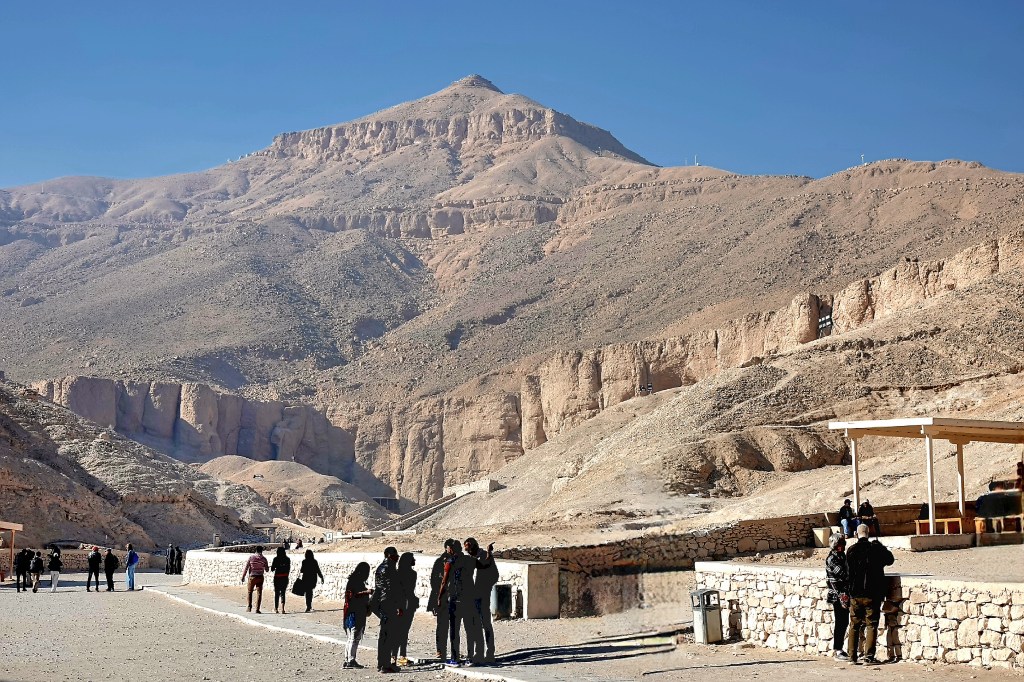
Unlike Giza, the only thing resembling a pyramid in the Valley of the Kings is Al Qurn, the highest peak in the Theban Hills at 420 meters.

Perhaps this gave the pharaohs some ancestral comfort, knowing their final journey to eternity had topographical similarities.

At last count, international expeditions have excavated 65 crypts concentrated within the Valley of the Kings and Queens, with only 11 tombs available for viewing.

But the most remarkable thing about this vast necropolis is what’s waiting to be discovered. Hardly a day goes by without hearing of a new discovery from the dozens of white “dig” tents that dot Luxor and Giza.

Easily, the most famous discovery came from British archaeologist, Howard Carter,

whose remarkable discovery of King Tutankhamen’s tomb in 1922 created a global sensation.

But seeing is believing.

Viewing the tomb requires a special ticket, and admission is limited.

While the tomb’s treasures have been removed, (see Egyptian Museum Mania),

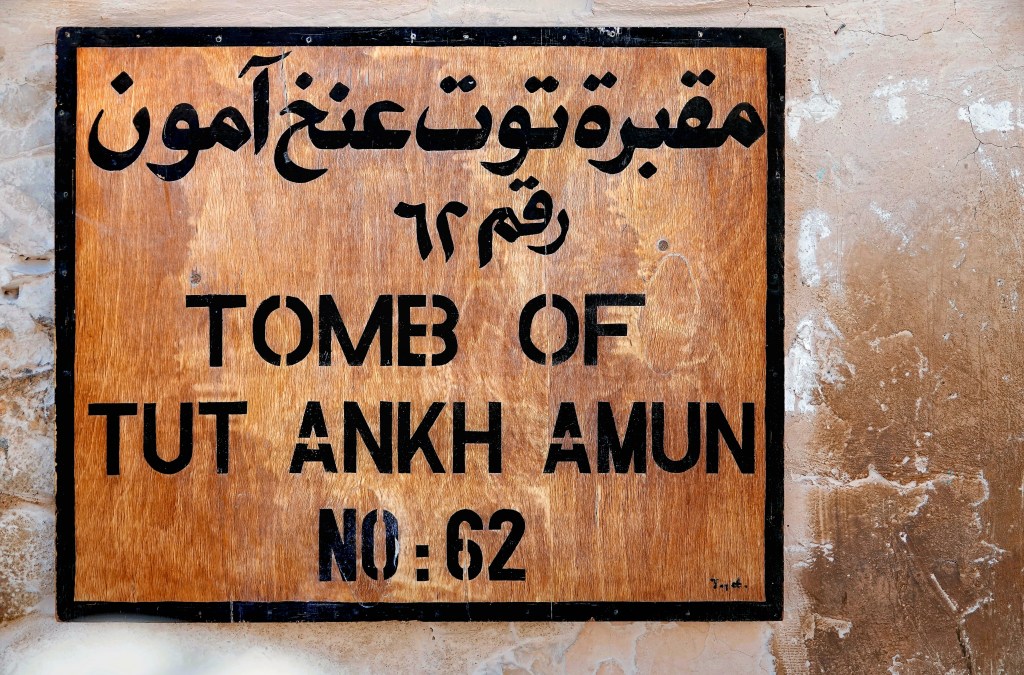
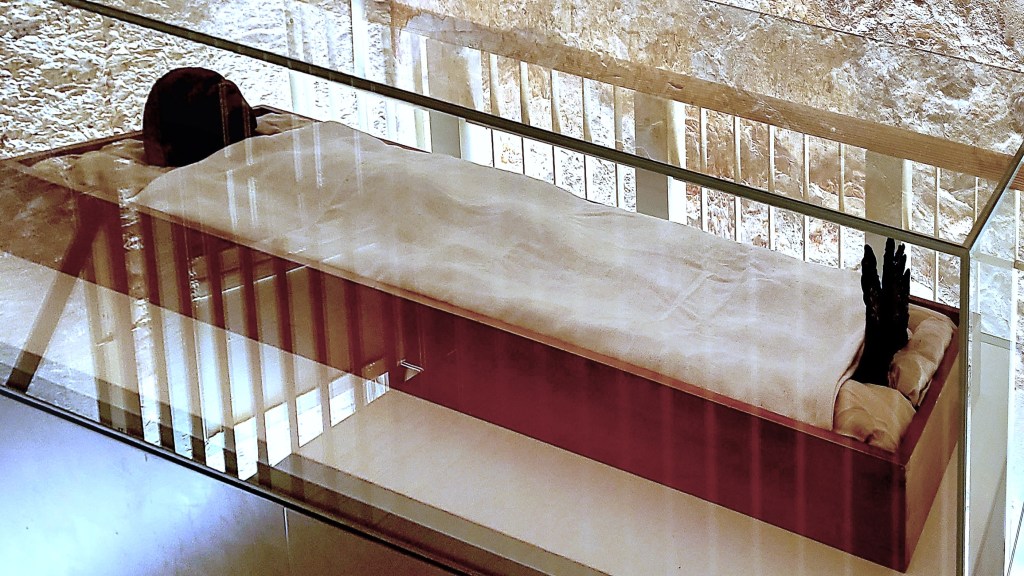
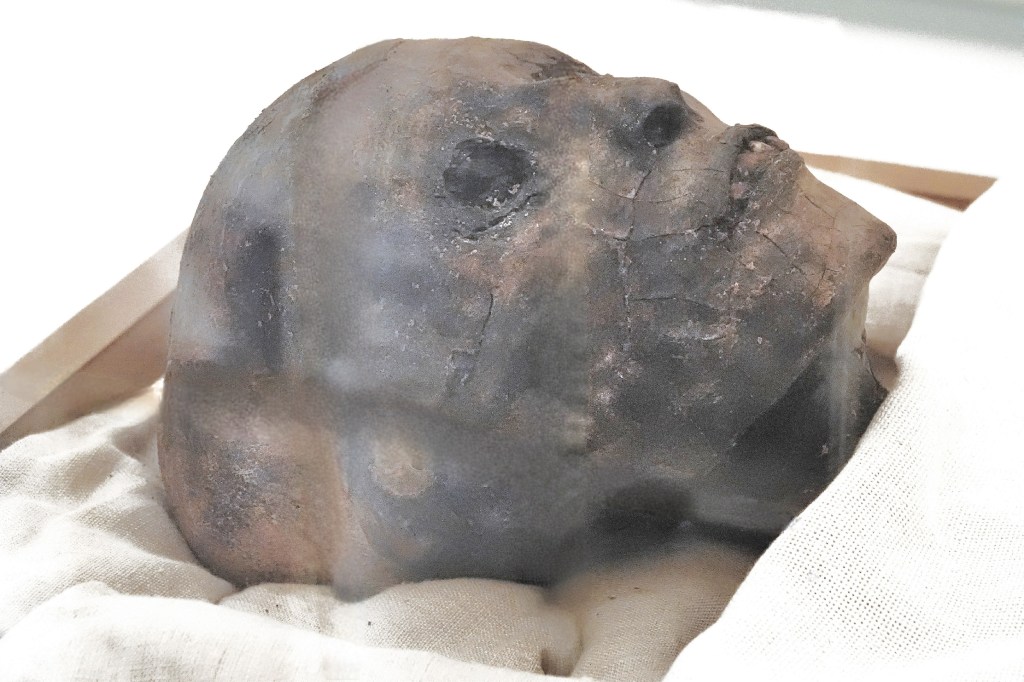
the mummy and first sarcophagus remain intact.

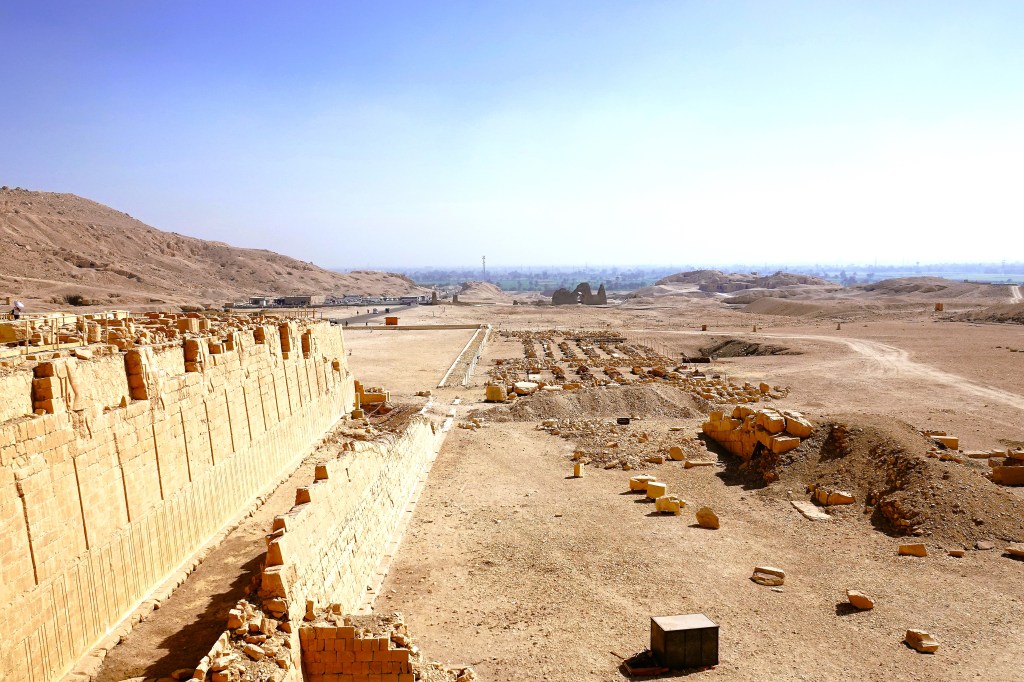
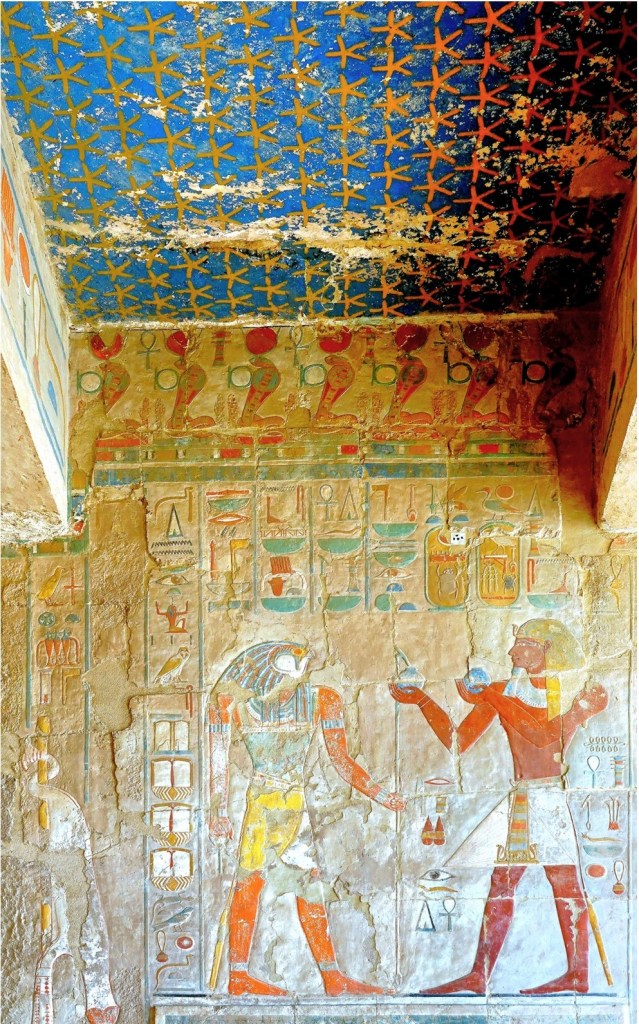
Equally impressive is the remote Temple of Deir el-Bahri (KV22), anchored to the rockface below Al Qurn.

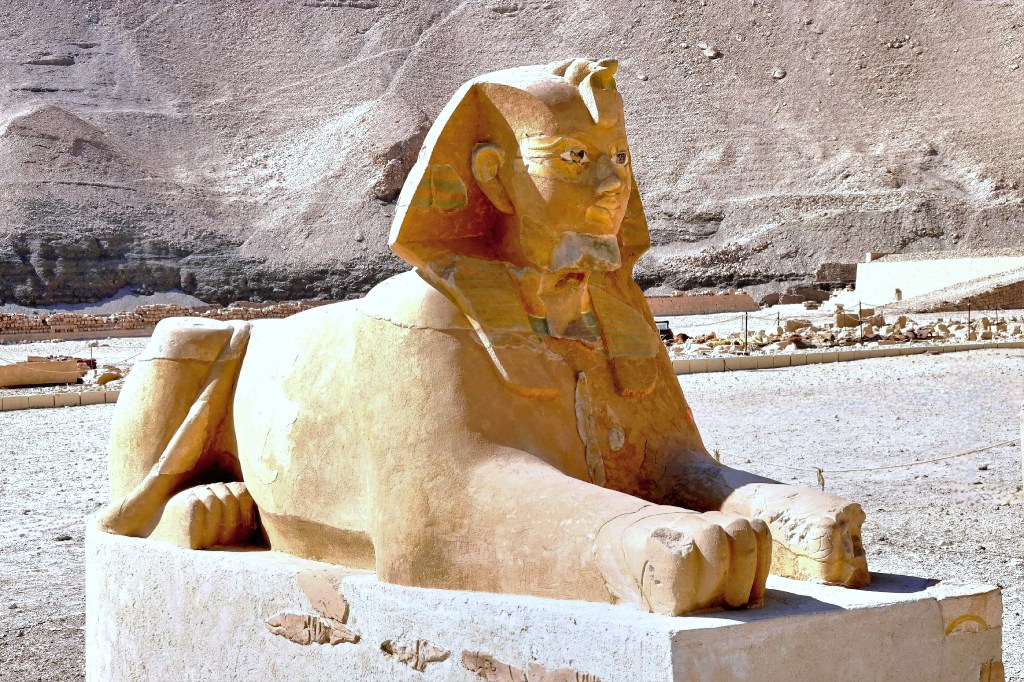
It was commissioned by Hatshepsut, who broke the aristocratic glass ceiling in 1480 BC by becoming Egypt’s first female pharaoh. Throughout her 22-year reign as king, she cross-dressed as a male, wearing a fake beard, a traditional headdress (nemes) with cobra, and a short kilt like her male predecessors.

While controversial as a female pharaoh, and all but erased by her successors, Hatshepsut’s place in history was secured as the only female interred in the Valley of Kings.

Nearby, the Valley of the Queens is only 2 km away by club cart conveyance,

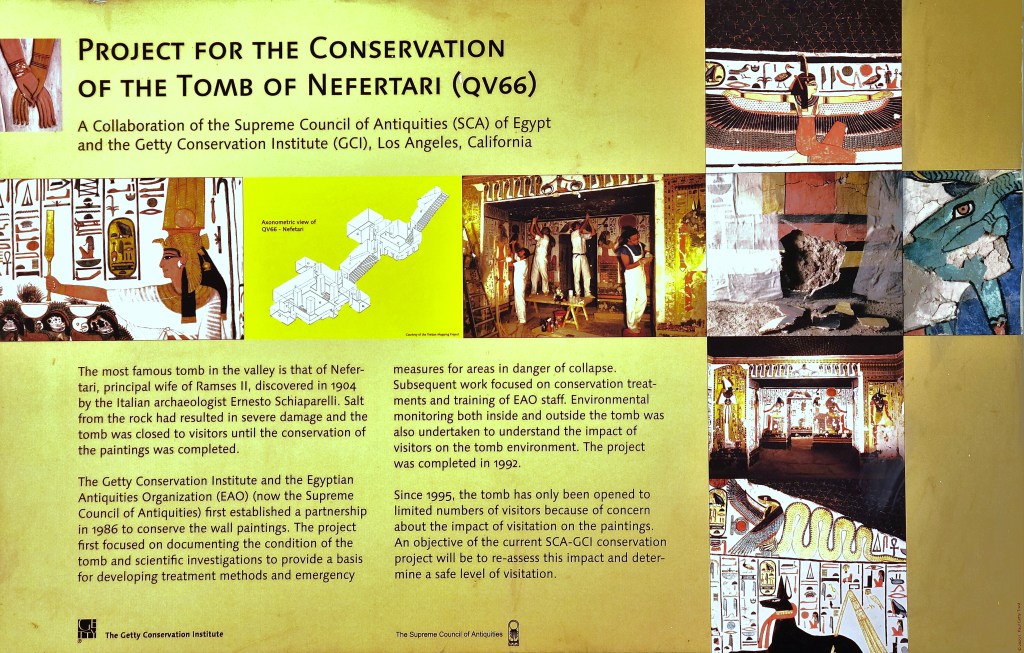
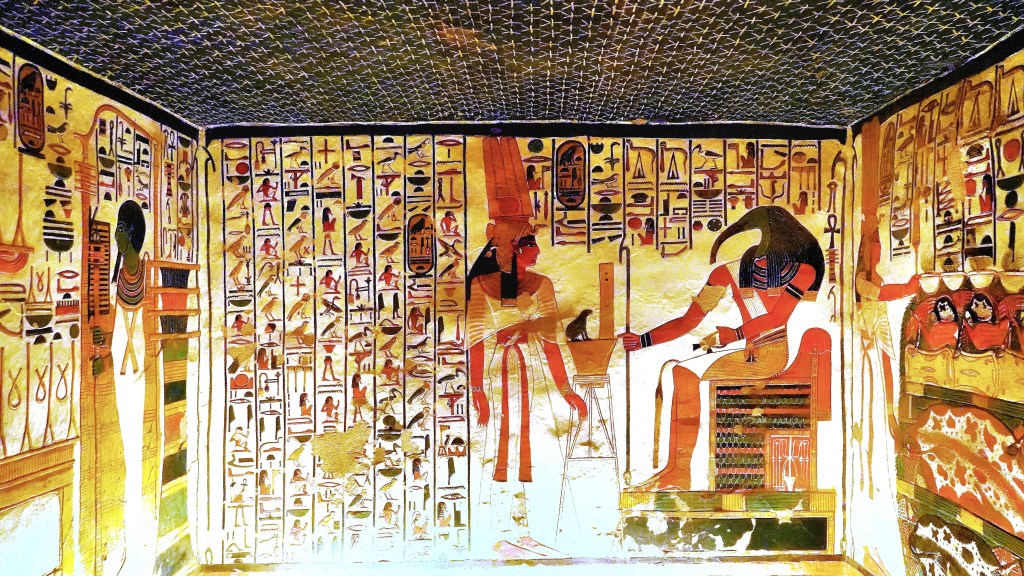
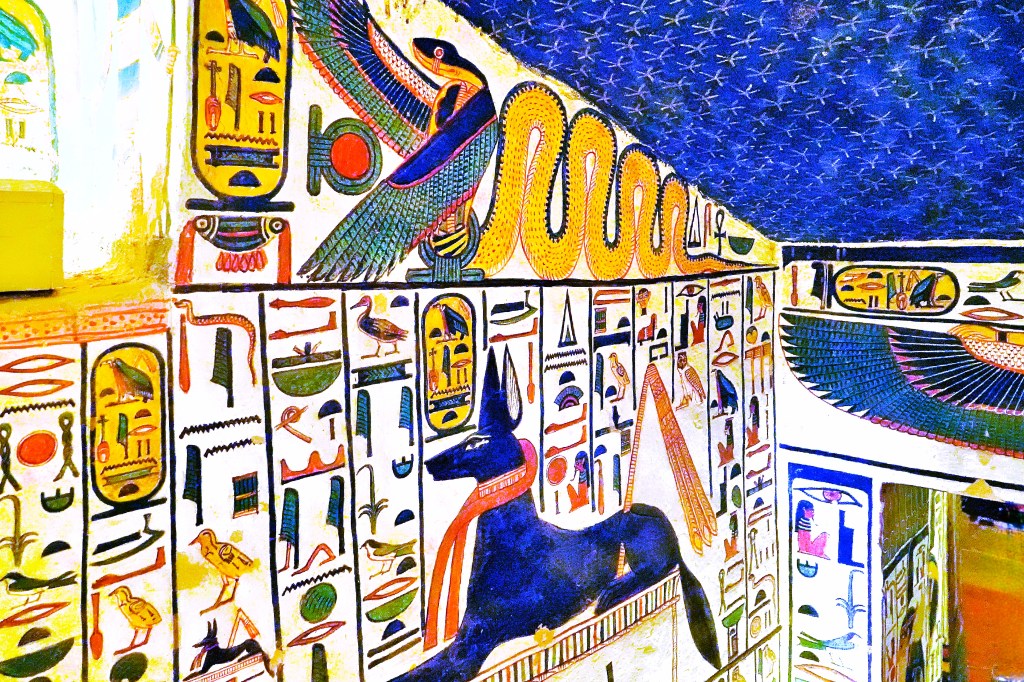
where the shining star of the valley is Nefertari’s tomb.

Officials require a special admission ticket–that only allows 10 visitors at a time to roam through the chambers for only 10 minutes–upon theorizing that reduced traffic likely reduces environmental impact.

Nefertari was the first of Ramses’ II Great Royal Wives (6 in total). In fact, he was so smitten by Nefertari’s beauty, that he built her the grandest tomb on the block, and shared his glory side-by-side at Abu Simbal.

Photo by Alberto Capparelli on Pexels.com

Besides her good looks, Nefertari earned her place at the palace table as the king’s court communicator. She was a writer, a strategist, and a skilled diplomat in support of her husband.

A long tunnel empties into an antechamber…

followed by a second staircase,

that leads to a burial chamber…

supported by elaborately painted columns,

with finely decorated funerary rooms at the wings,

featuring the sacred bull and seven celestial cows, who collectively represent the Goddess Hathor.

Given today’s global issues of gender identity, glass ceiling theory, propaganda, and branding, it might be wise to take a papyrus out of ancient Egypt’s playbook for the benefit of clarity.

Hathor’s Opus

If temples had beauty pageants, then Dendera’s Temple of Hathor would surely win. Only an hour’s float downriver from Luxor, Dendera Temple shines like a polished gemstone on the Nile for all of Hathor’s devotees.

Regarded as the “Mistress of the Vagina,” Hathor exemplified ancient Egyptian femininity as the goddess of love, beauty, music, dancing, fertility, and pleasure…and its all on display at her temple.

From a distance, it’s an unassuming temple,

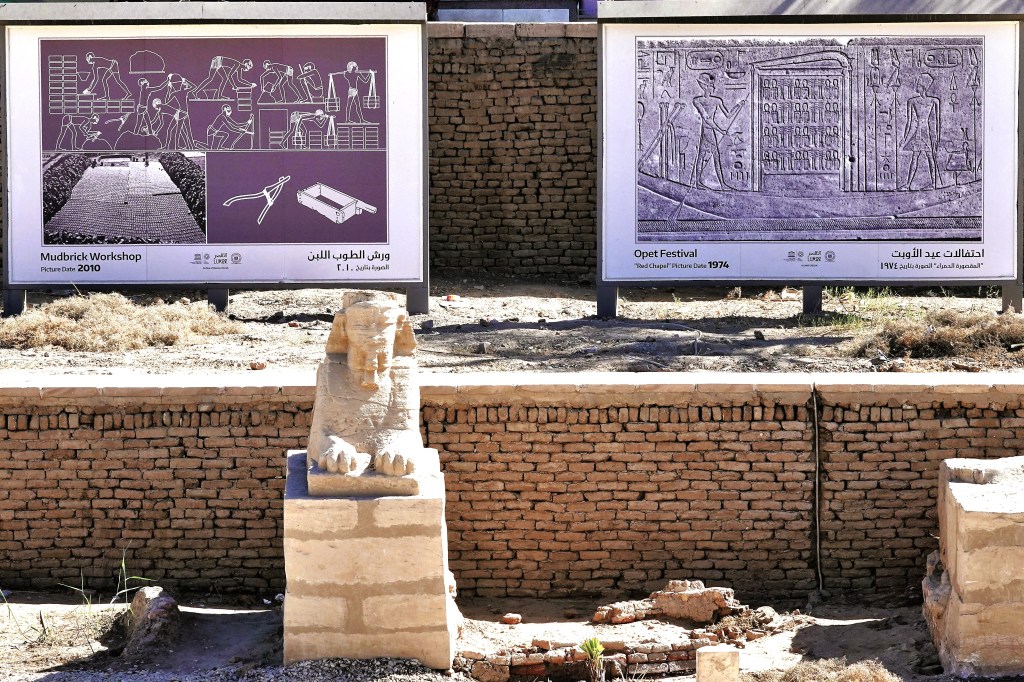
obscured by a surrounding wall of mudbrick rubble with a golden glow.

However, it stands wonderfully intact for a structure built 2000 years ago, albeit atop the remains of another sanctuary that predates its commission by 2250 years.

While Temples of Karnak and Luxor were built to worship Amun-Ra–the alpha-male of all New Kingdom deities, who brought sun, light, and daily creation to the world–their energy is very androcentric.

Whereas, the Temple of Dendera exudes a powerful yet feminine charm,

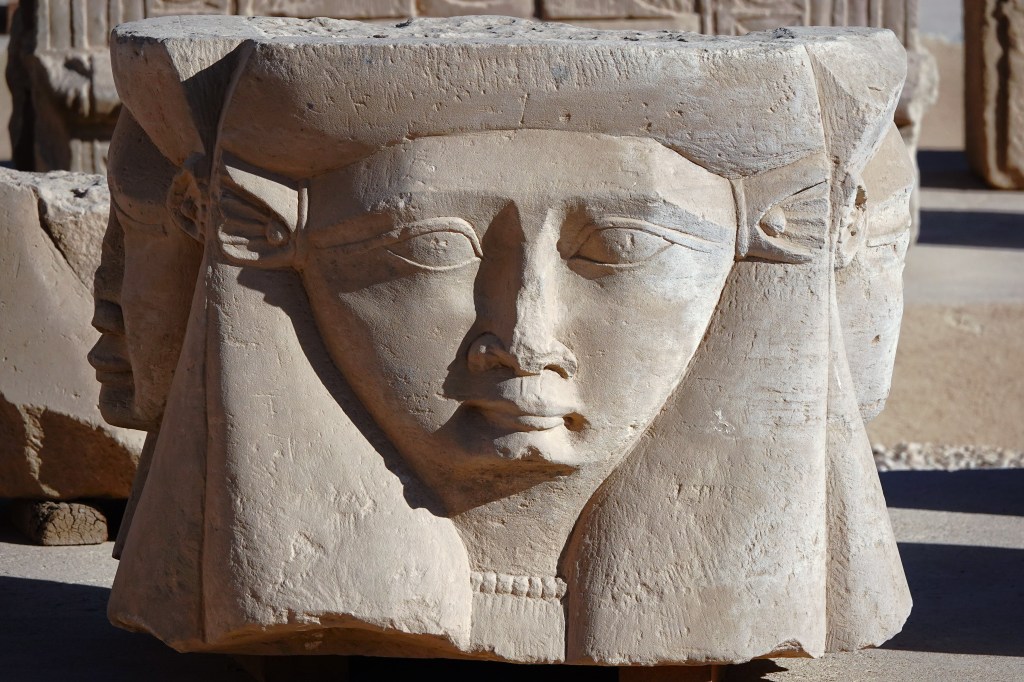
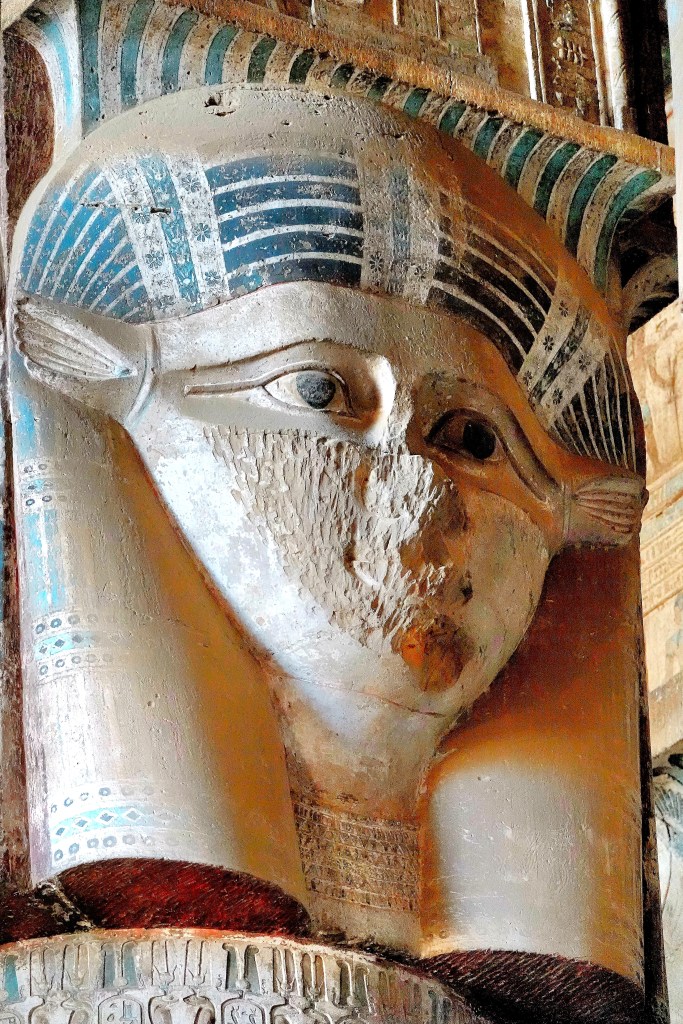
evidenced by the 18 four-sided capitals of Hathor–with her cow-eared likeness–supporting the Hypostyle Hall.

Unfortunately, all carvings of Hathor were deliberately defaced by Christian iconoclasts who sheltered within its walls.

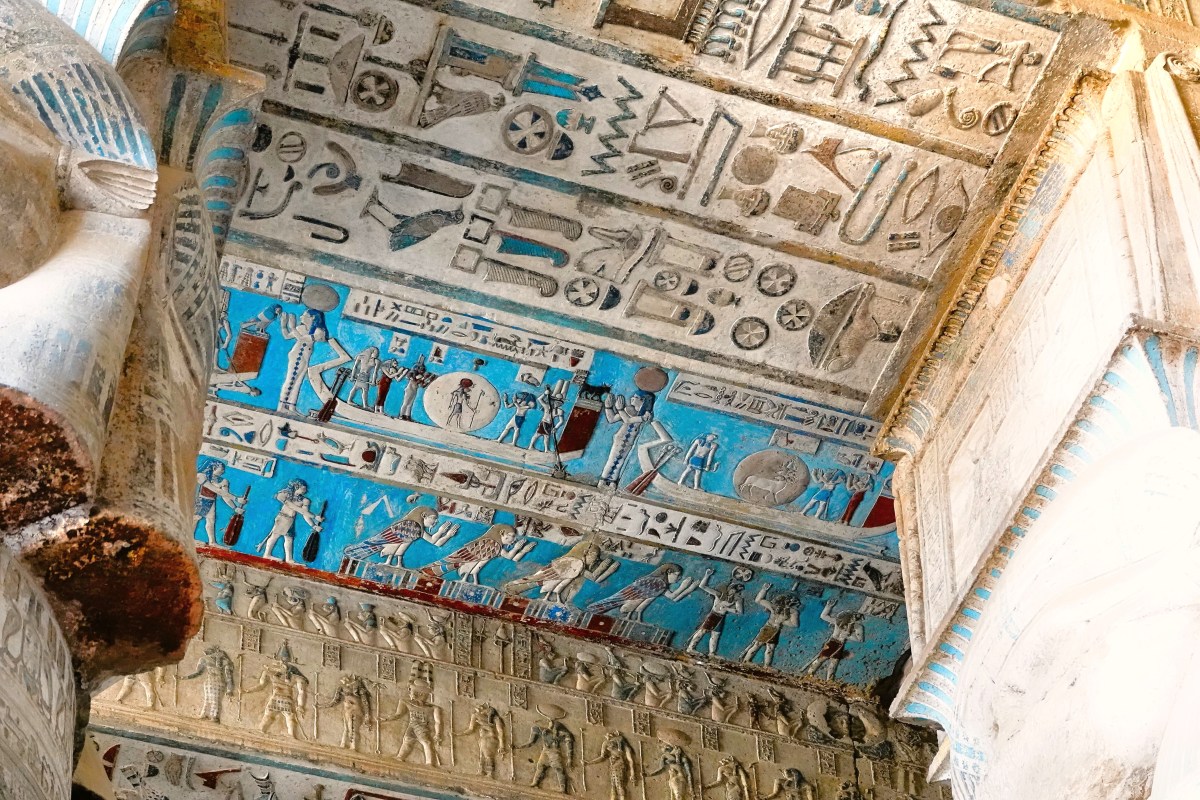
Their open fires lined the chamber surfaces with centuries of soot–obscuring the bas-relief paintings–

until a delegation of French archaeologists recently restored the artwork to its original colors.

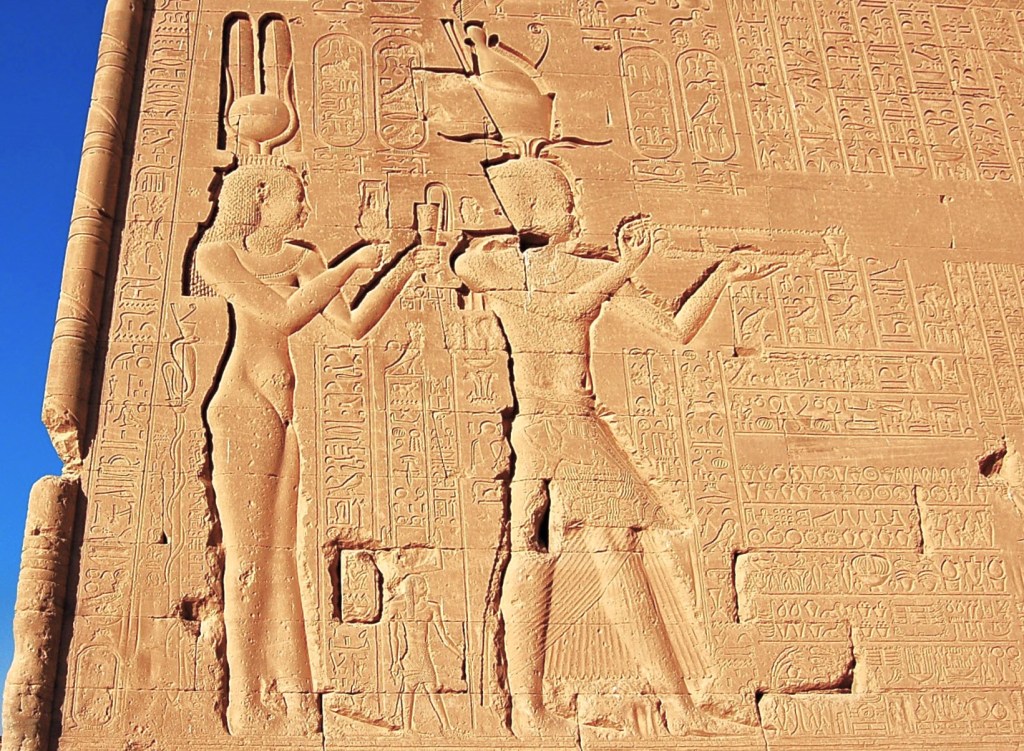
Hathor’s temple was most likely commissioned during the second rule of Ptolemy XII in 54 BC until his death in 51 BC, and overseen by his successor daughter, Queen Cleopatra VII and her son King Caesarion until her suicide in 30 BC. They are both enshrined on the temple’s outer rear wall.

Romans embellished the temple compound by constructing the Gate of Domitian and Trajan in lieu of a traditional Egyptian pylon,

but stayed true to the Greco-Egyptian design by invoking Nekhbet (vulture goddess and protector of Upper Egypt and its rulers) beneath the lintel.

and beyond the temple columns.

Emperor Trajan also completed a Roman Kiosk in the forecourt.

There’s a wealth of illustrations and hieroglyphic stories throughout Hathor’s temple…

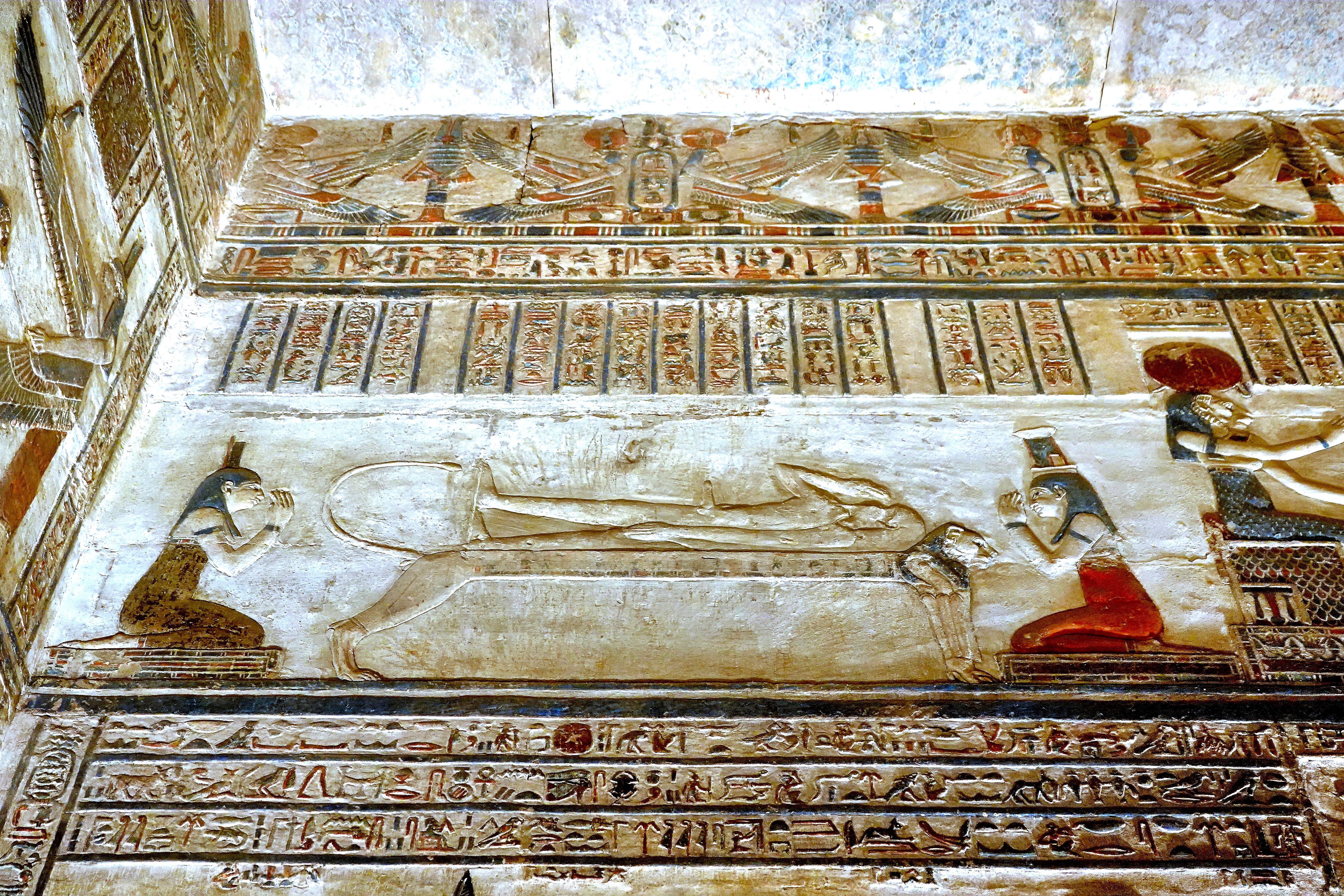
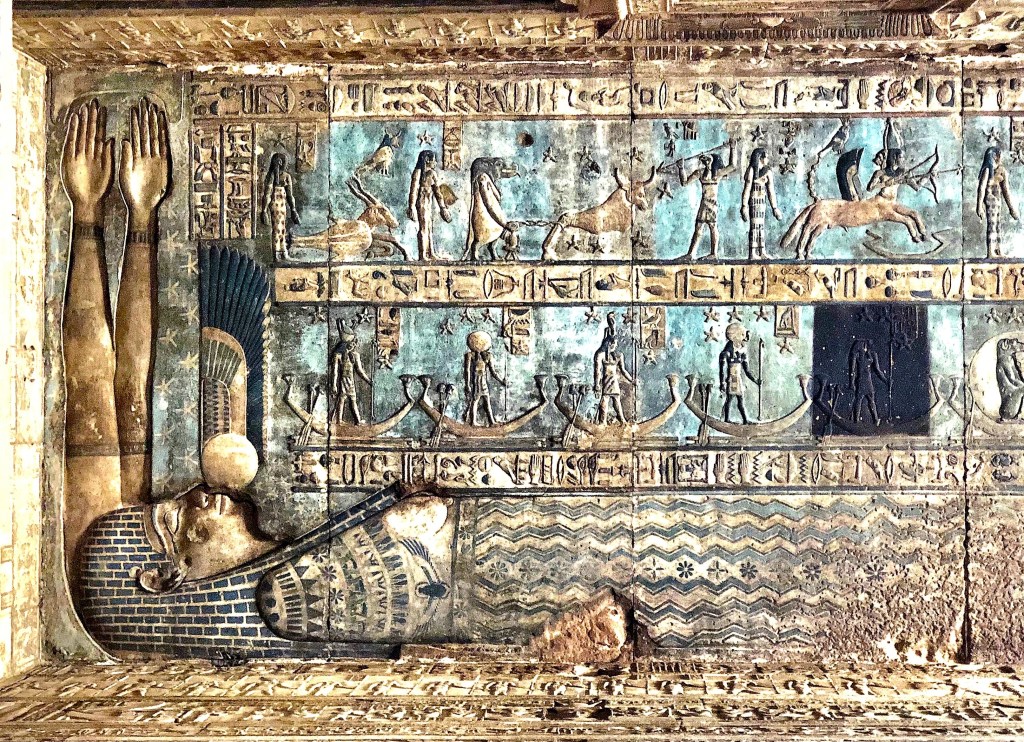
However, the real beauty can be found in the artistic renderings of astrological symbols painted across the Hypostyle Hall, where Goddess Nut ordains the passage of time in a celestial barge.

The masterpiece of the temple is surely the circular zodiac chart of the ancient sky that’s located on the ceiling at the entrance to the Chapel of Osiris–

accessed via a processional staircase that leads to the temple’s rooftop.

Amid controversy, the original engraving was blasted from the ceiling in 1821, and stolen away to France, where it currently hangs in the Louvre Museum in Paris.

Alas, a replica hangs in the chapel.

Which begs the question: Was it guilt and reparations that brought the French back to Dendera to supervise the restoration?

Luxor Temple after Dark

November, 2021 was a cause for celebration in Luxor, as the Ministry of Tourism and Antiquities marked the formal reopening of the Avenue of Sphinxes with a parade attended by Abdel Fattah Al-Sisi, president of Egypt.

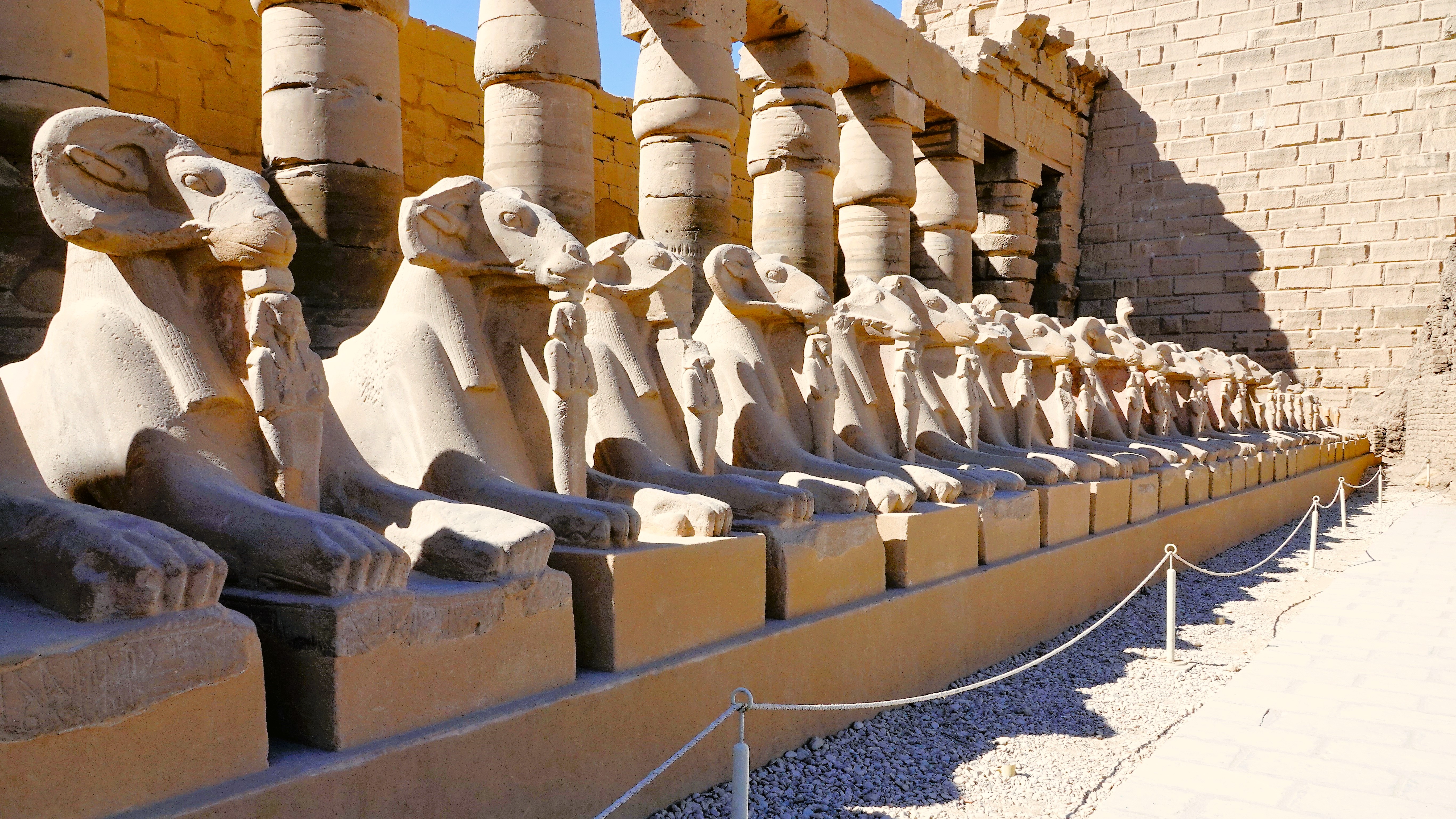
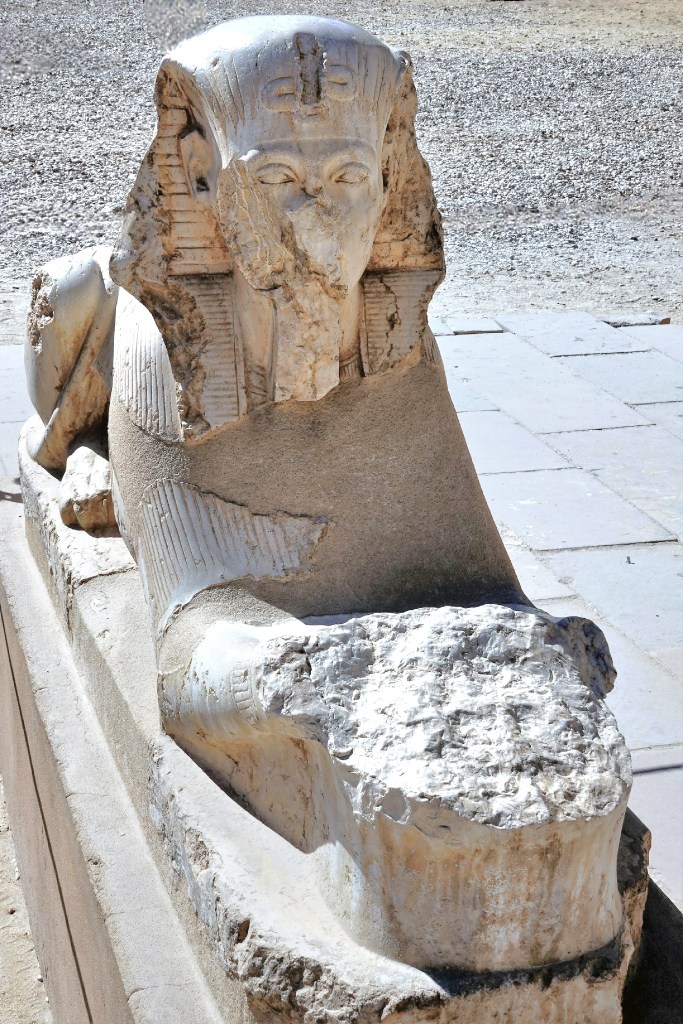
The 1.7 mile boulevard connecting the temples between Karnak and Luxor once boasted 1200 sphinxes. They were buried for centuries under several meters of sand, but are now revealed after 70 years of intermittent excavation and restoration.

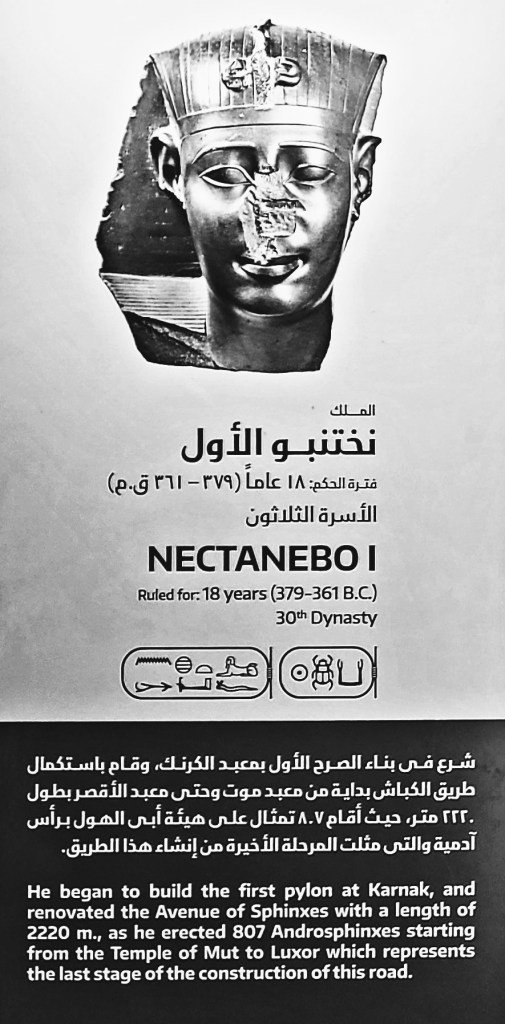
Initiated by Amenhotep III and completed during the reign of Nectanebo I around 2,400 years ago, the impressive series of unearthed statues can be categorized into two shapes:

the first being a body of a lion with a ram’s head;

and the second and most reoccurring shape portrays a lion’s body supporting a human’s head.

Our daytime excursion to Karnak Temple was followed by an evening tour of Luxor Temple.

Although the entrance to the gate was originally flanked by twin obelisks, the right obelisk was gifted to France by Muhammad Ali Pasha, Ottoman ruler of Egypt in the early 19th century (see Walking Like an Egyptian), and now adorns the Place de la Concorde in Paris.

Several rulers contributed to the Temple of Luxor over the ages.

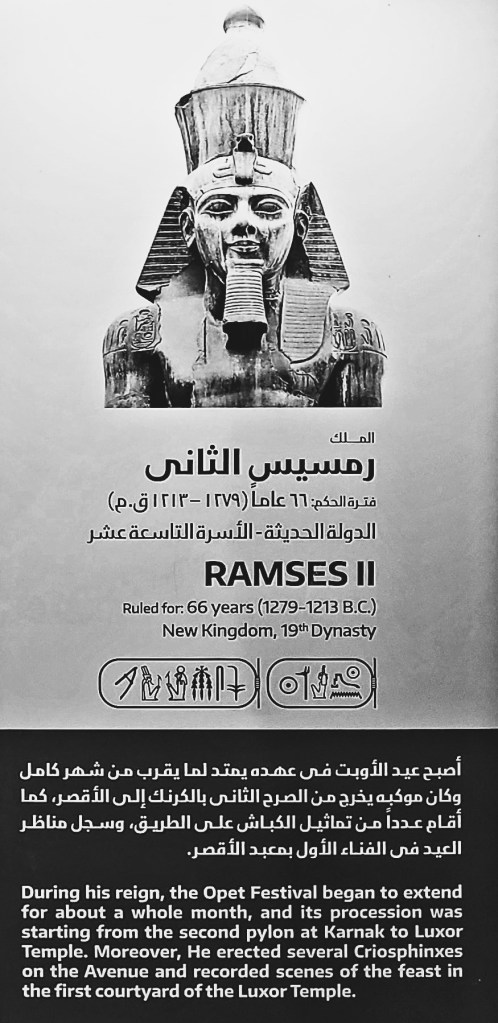
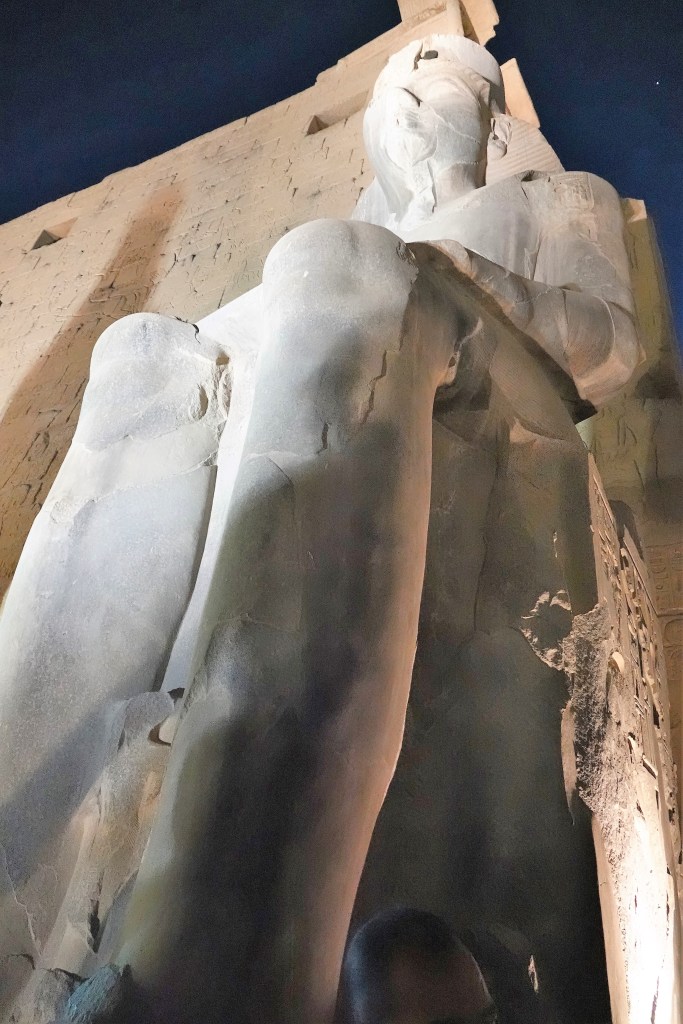
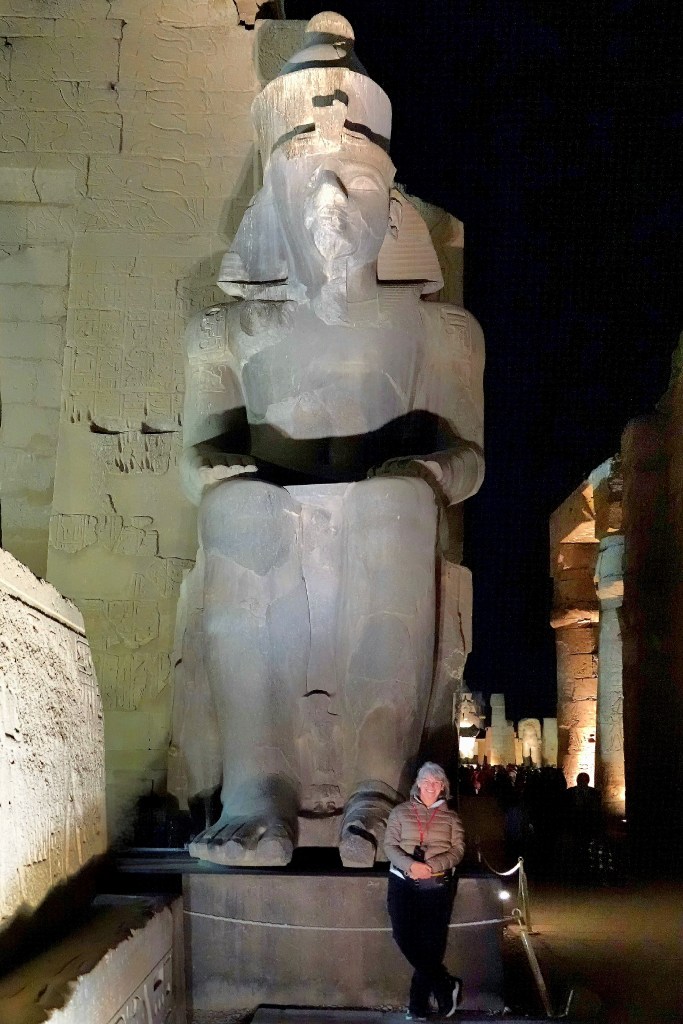
Although the temple was started by Amenhotep II in 1400 BC, Ramses II appropriated the first pylon with placement of a pair of black granite colossi of his likeness seated on a throne…

that depicted the unification of Upper and Lower Egypt.

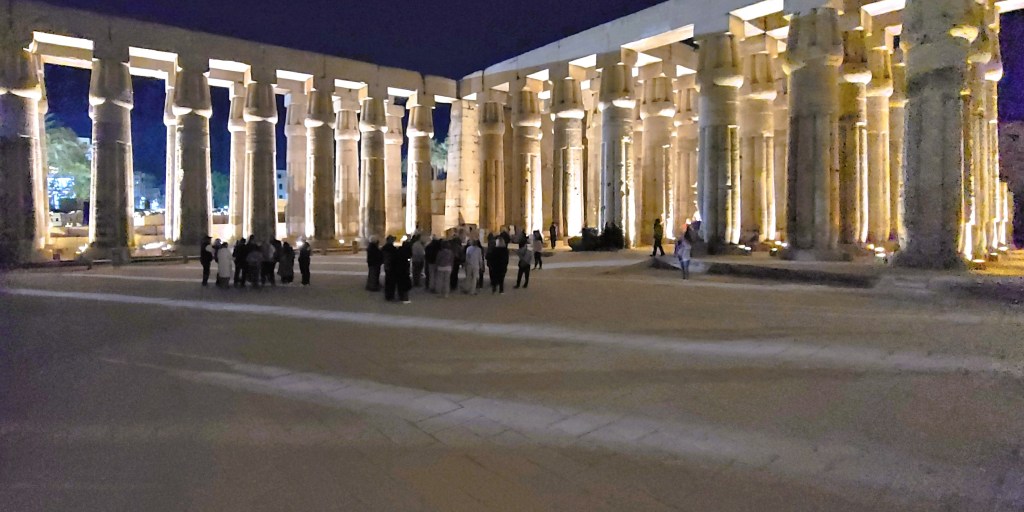
Beyond the pylon, Ramses II also chose to enshrine 17 of his sons within a courtyard surrounded by double rows of columns capped with lotus-bud capitals. He fathered a minimum of 111 sons and 67 daughters.

The Courtyard of Ramses II flows into the Colonnade of Amenhotep III, dominated by seven pairs of 52 foot (16m) open-flower papyrus columns, which still support their huge architrave blocks.

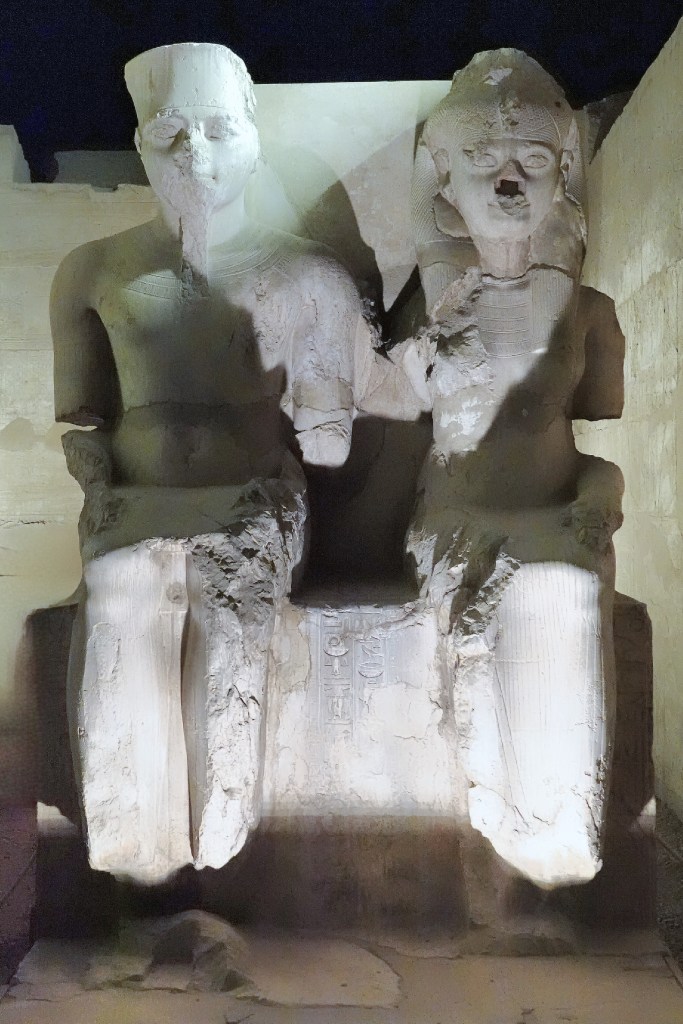
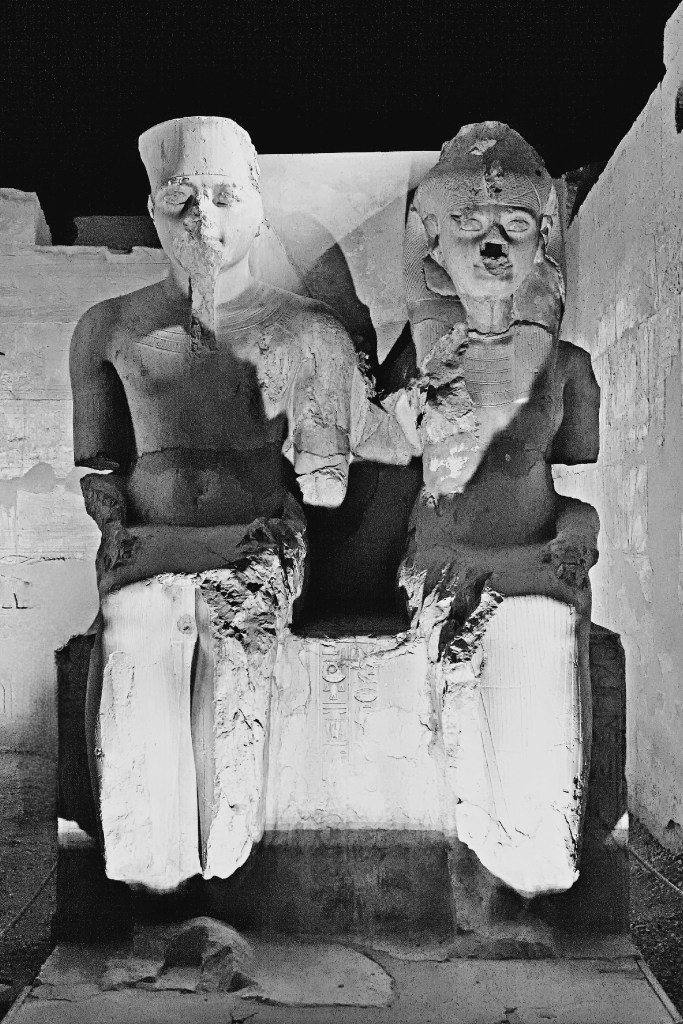
The decoration of the Colonnade of Amenhotep III was largely undertaken by Tutankhamun, who is featured beside his Great Royal Wife, Queen Ankhesenamun, daughter of King Akhenaten and Queen Nefertiti.

Beyond the Colonnade, the Great Sun Court of Amenhotep III showcases the remains of a peristyle court with a double row of sixty columns with papyrus bundle capitals on three sides. They represent the best preserved and most elegant columns in the temple.

While Luxor Temple was conceived to celebrate the Theban trinity of Amun-Ra, married to God Mut, and son, God Khonsu, the religious focus of the adjacent chapels evolved over time from polytheism to Coptic Christianity during Roman rule, until the Muslim conquest of Egypt in the 7th century.

Thus, the Fatimid Caliphate inaugurated the Mosque of Abu El Hagag in 1286 atop the temple ruins and rubble, repurposing columns and stones to create a strange amalgam of Islamic civilization and ancient Egyptian civilization.

Ironically, the Opet Festival–originating during the 18th dynasty of the New Kingdom, and celebrated to promote the fertility of Amun-Ra and the Pharaoh–has now become an annual event.

Following a 3400-year old ritual, a royal procession parades from Karnak Temple to Luxor Temple along the Avenue of Sphinxes accompanying a statue of Amun-Ra within a barque of gold that rests on the shoulders of priests.

The news is enough to make Ramses II stand up and take notice.

The Great Pyramids of Giza

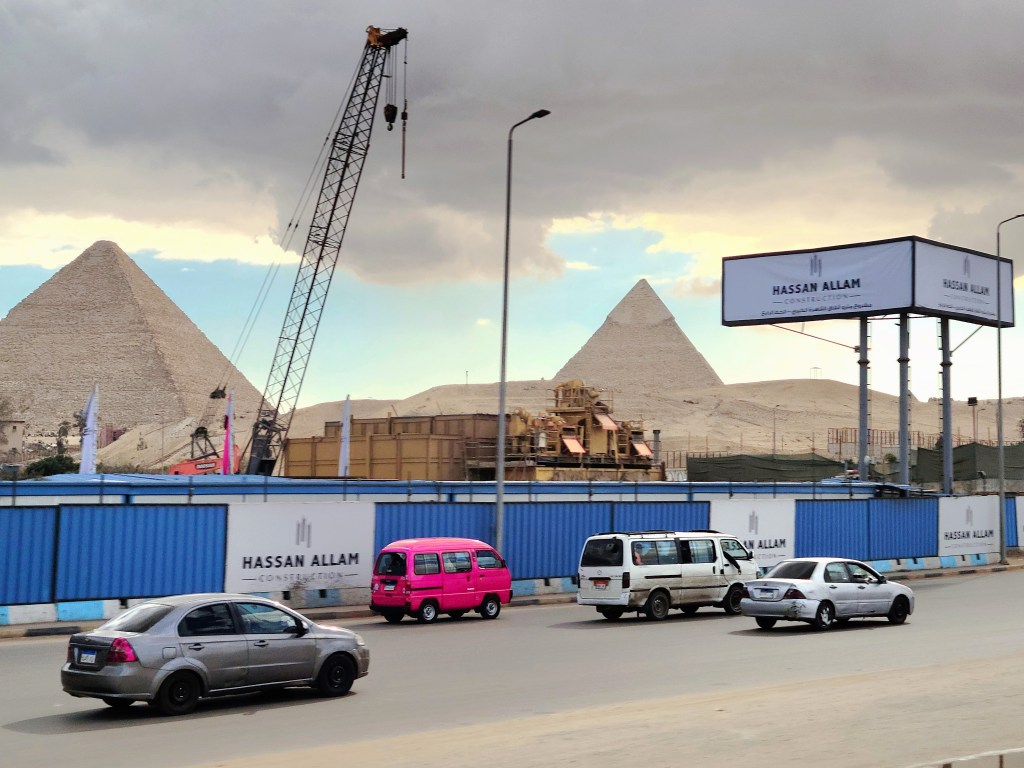
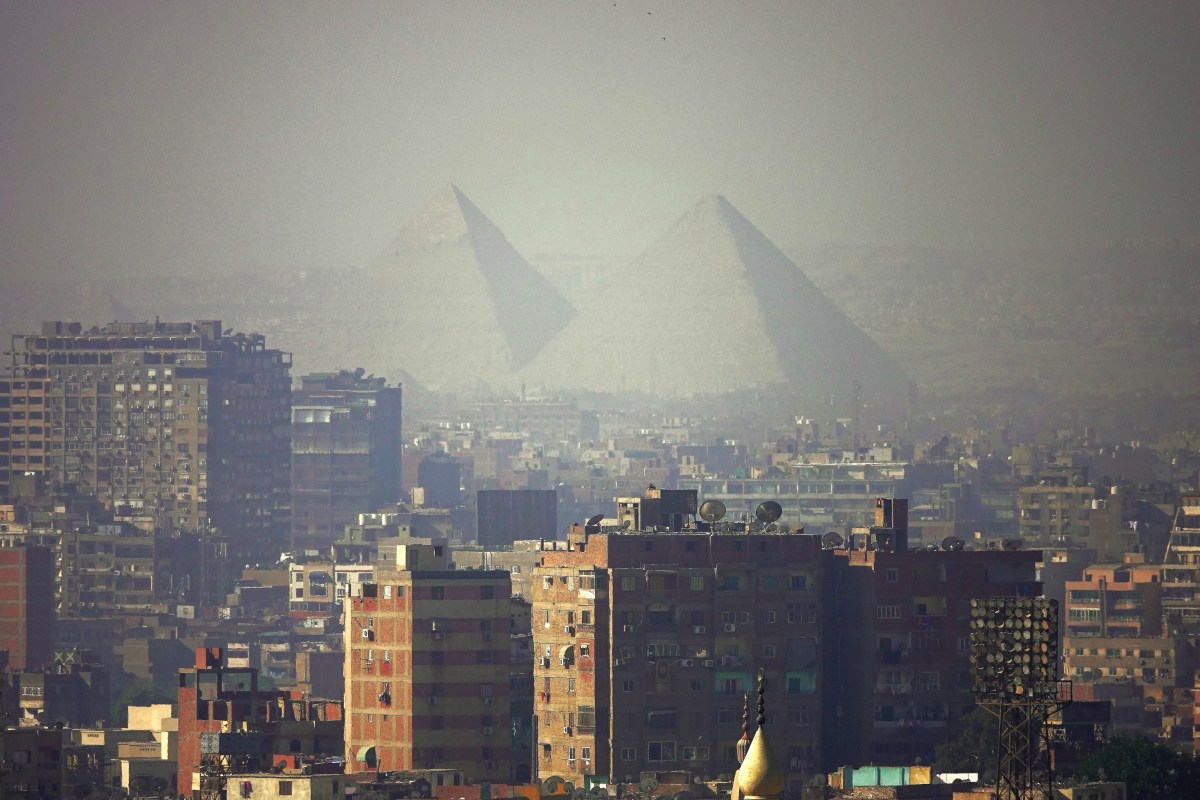
I’ve dreamt of visiting the Great Pyramids nearly all of my adult life, and now, as I gaze through the window of our Viking coach, I catch my first glimpse of these ancient wonders rising beyond a construction zone. Somehow, I can’t escape the notion that these ancient Wonders of the World are part of a half-baked theme park, given their scale and juxtaposition.

We entered the vast necropolis of Saqqara, which served as the ancient cemetery of Memphis,

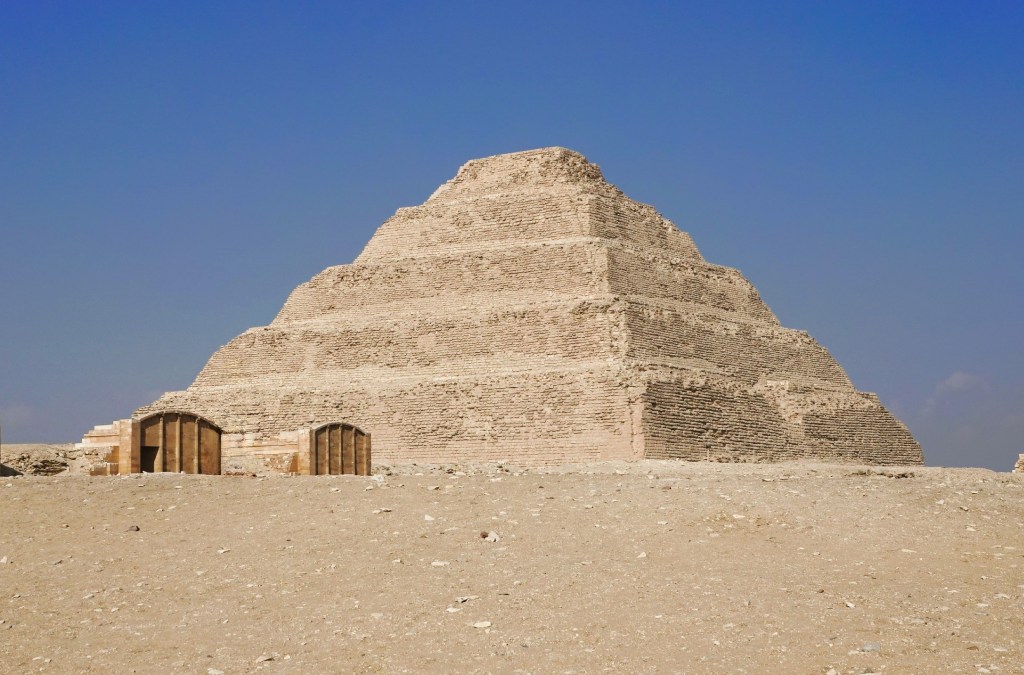
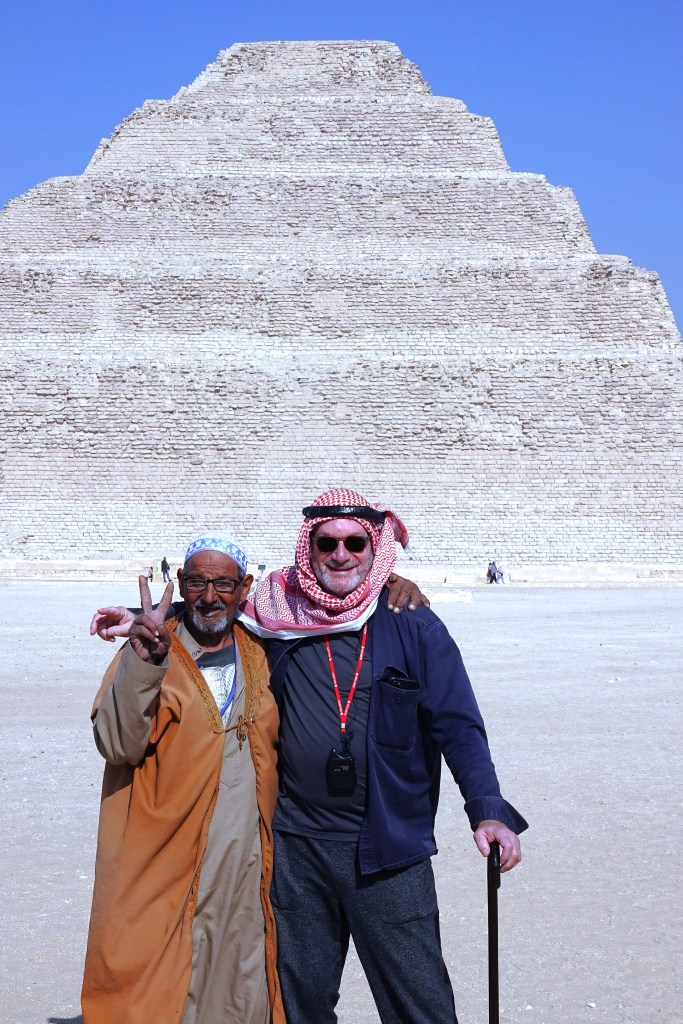
featuring the Pyramid of Djoser (frequently called the Step Pyramid), considered the world’s oldest known stone structure, constructed c. 2670–2650 BC. This 6-tier, 4-sided edifice rises 205 ft (62.5m).

That’s where I met Abdul the Bedouin, regarded by locals as the honorary mayor of Saqqara.

What luck! Seeing Abdul broadly smiling against this epic backdrop, I knew this was an irresistible photo op… and he knew it too–for he was adding instant authenticity to my visual narrative.

Not long after pressing the shutter release, Abdul eagerly approached me and offered to have Leah take our picture together, but not until I was properly costumed.

But don’t be fooled! Despite his diminutive stature, this mild-mannered goat herder with Clark Kent glasses had a secret power. Abdul the Bedouin could hypnotize me into giving him money in exchange for wearing his shemagh.

He wrapped his arm across my shoulder. “Habibi, you’re going to make me very happy,” he whispered as Leah was composing the shot of us. “After all, I have five children to feed.”

Egypt is a poor country. Wages in Giza average between $500 and $750 per month.

Yet, as a Saqqara personality, Abdul was very good at his job–equal parts ham and shmaltz. And he managed to squeeze me for 5 bucks.

Leah and I resumed our tour of the Saqqara necropolis,

at the site of King Teti’s pyramid.

We followed a dark shaft down a narrow passage…

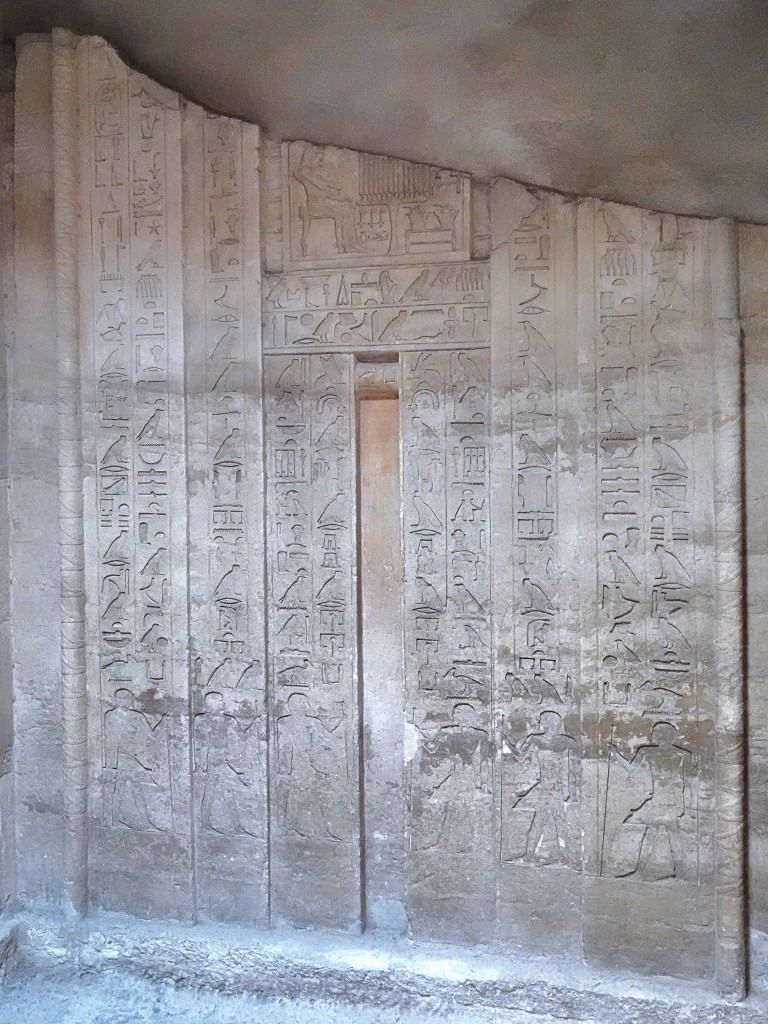
into the belly of his burial chamber, replete with impressive and very rare pyramid texts traced to c. 2300 BC.

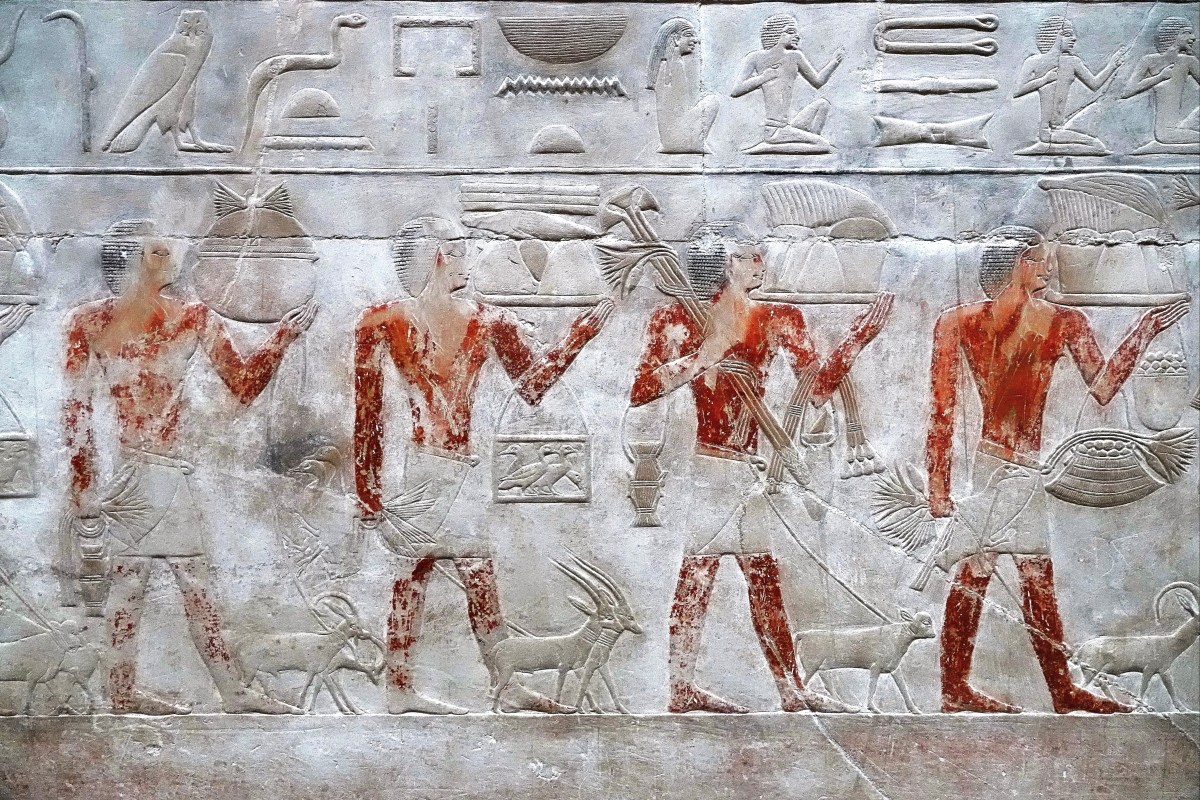
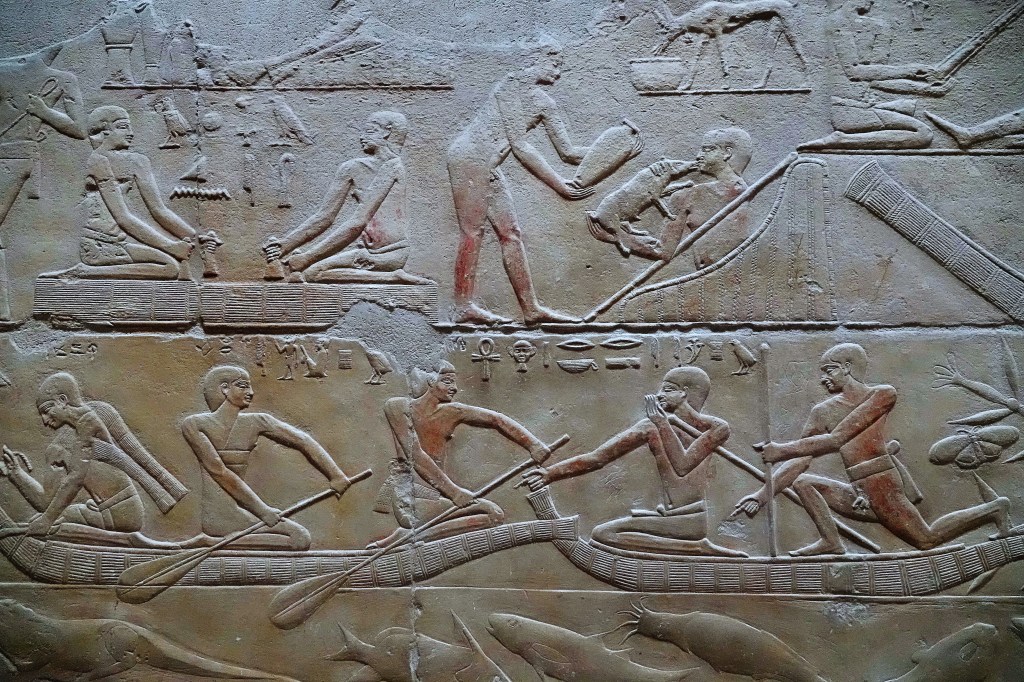
This led to an antechamber lined with relief engravings that showcased the preparations made by Teti’s royal staff in anticipation of his journey to eternity,

after having traveled beyond the alabaster alter to the kingdom of the dead.

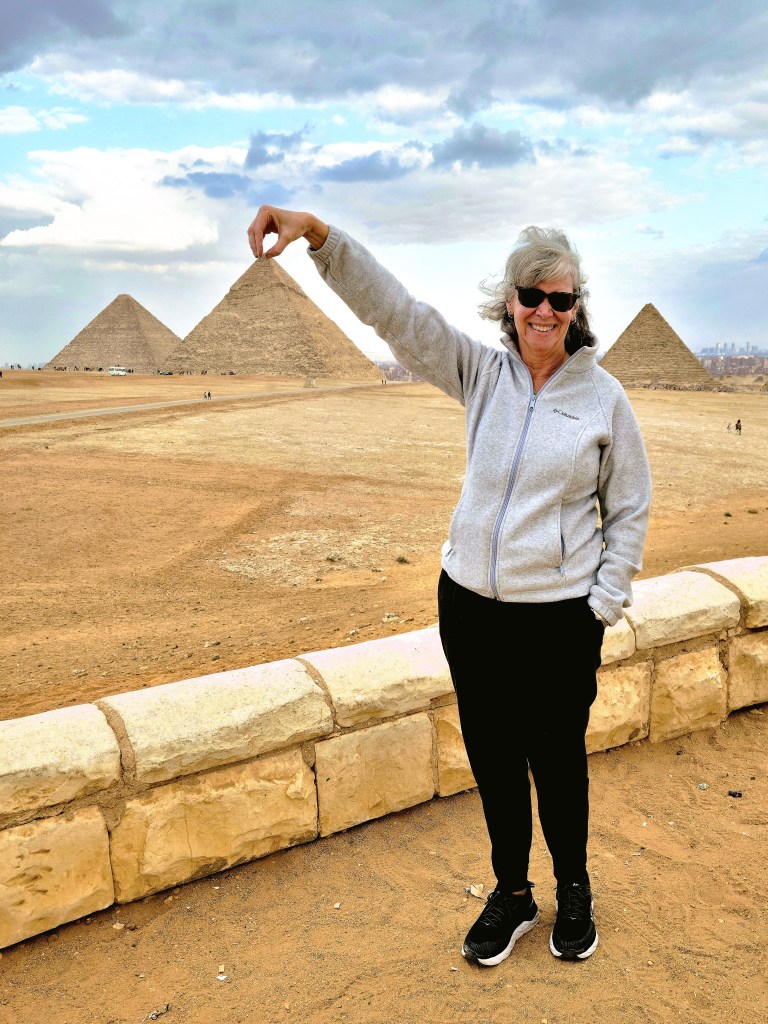
Our next stop was the Great Pyramid of Khufu, the largest of the “big three,” standing 481 ft. and constructed c. 2570 BC. And what a site to behold!

Venders were omnipresent, with pop-up stalls surrounding the pyramid’s perimeter.

That’s where we met Mohammed and his camel. While chatting us up, he snatched my cellphone and insisted on taking our picture.

I paid Mohammed a $5 ransom for my cellphone ($1 for each of his 5 children), however, he expressed his disappointment knowing there’d be no camel ride, but only because another vendor was promised Viking’s business:

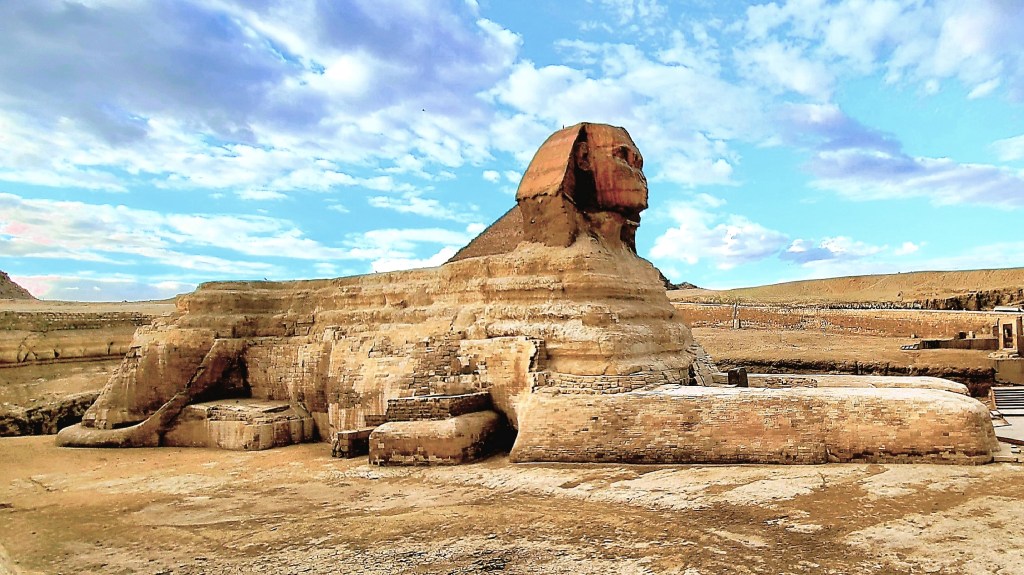
We ended our visit to Giza with a brief jaunt to the Sphinx…

with still enough time for one last parlor trick before boarding the bus.

As for Abdul and Mohammed, best $10 spent, ever!

Next stop: Luxor, Egypt…

Egyptian Museum Mania

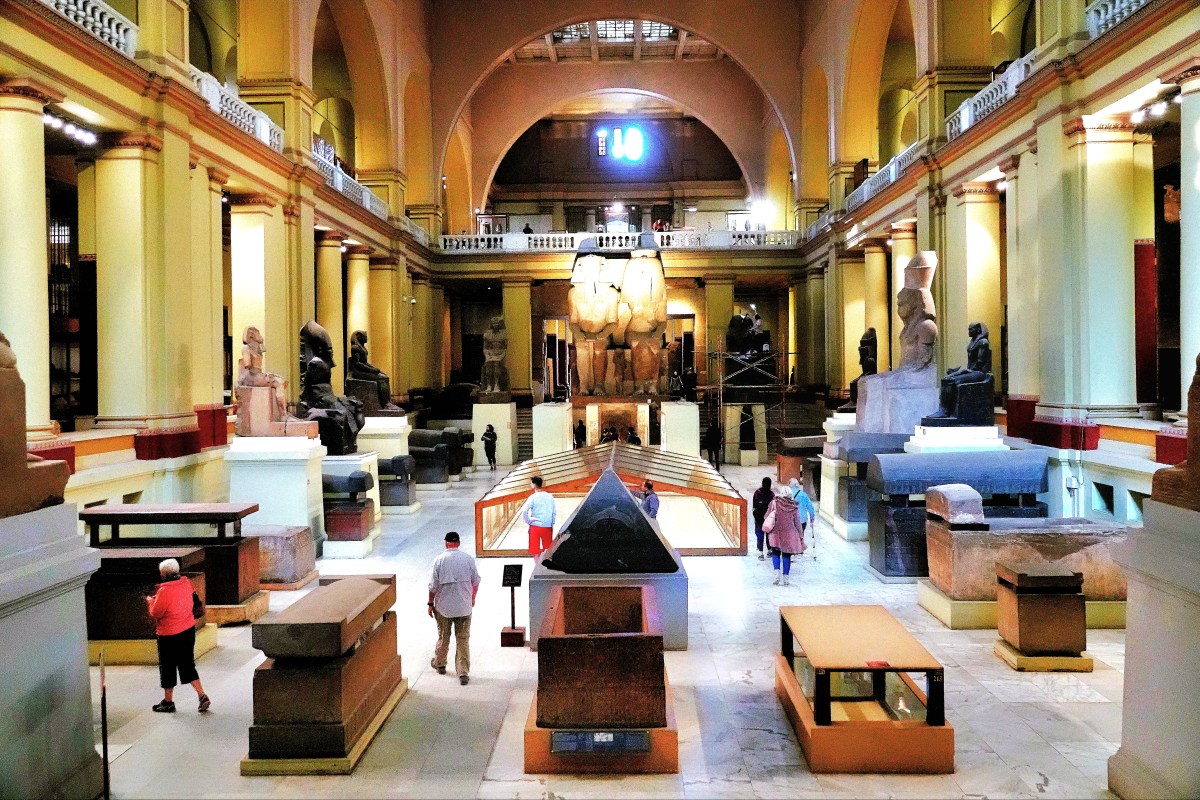
Leah and I arrived at the Egyptian Museum to dig a little deeper into some of the earliest and most significant discoveries of ancient Egypt.

Of course, we would have preferred touring the Great Egyptian Museum (G.E.M.), but the many delays since construction began (2012)–complicated by supply chain dynamics and coronavirus has pushed the official opening to sometime in 2023, optimistically.

However, when the museum eventually opens, it will be the world’s largest archaeological museum, housing 100,000 artifacts from hundreds of tombs and temples, and the entirety of the Tutankhamun collection.

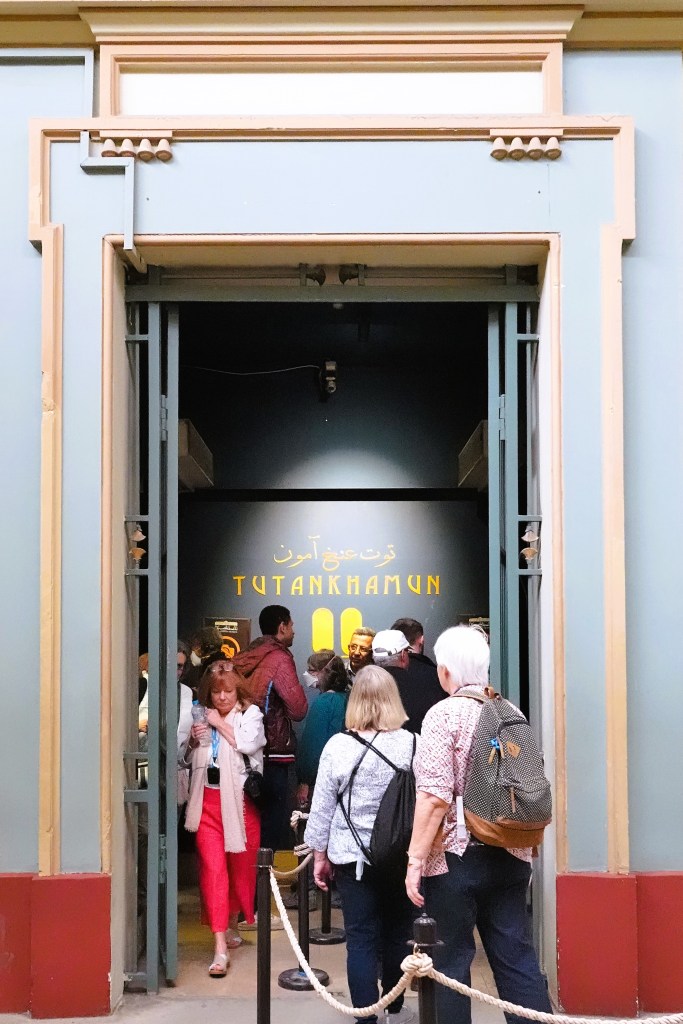
But for now, we must adjust our expectations by visiting the fabulous Egyptian Museum instead, where a smattering of the riches belonging to Tutankhamun’s tomb have been on view:

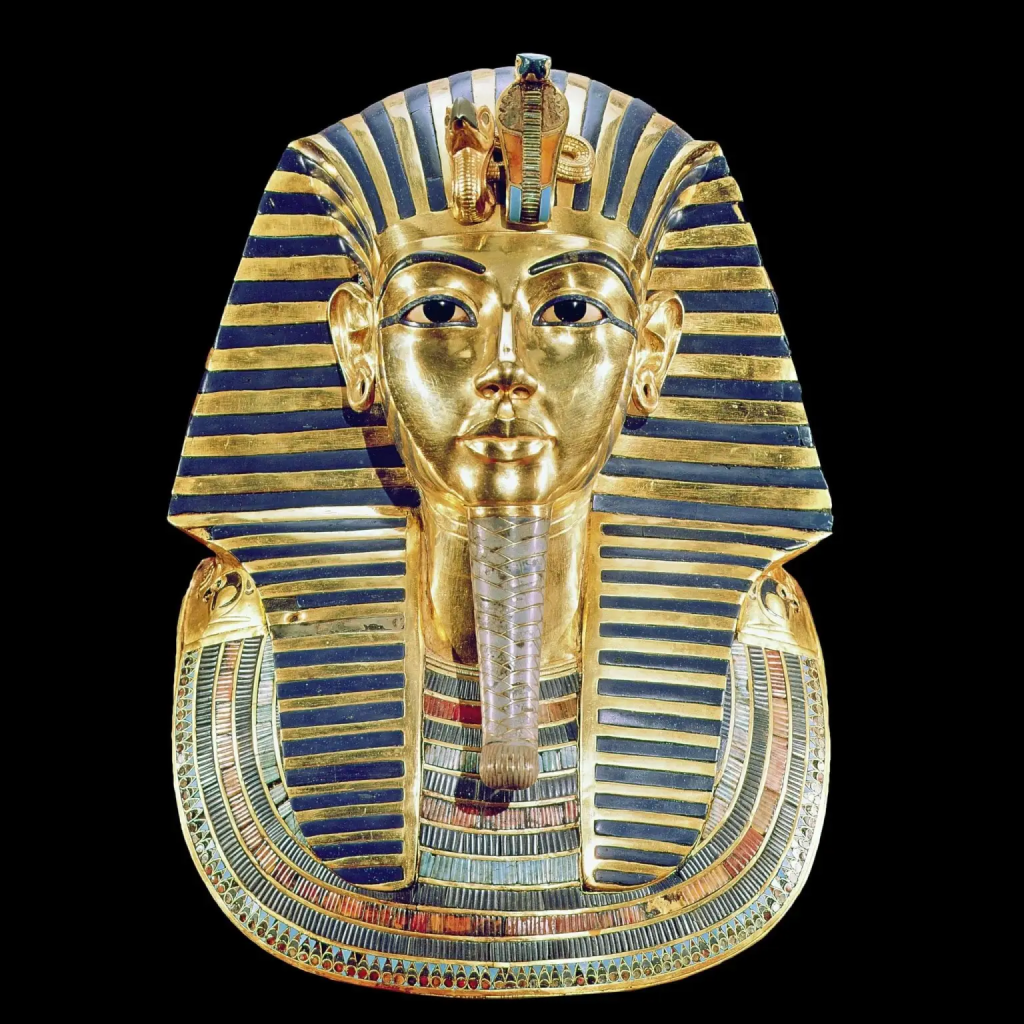
including his incomparable solid gold mask,

Photo credit, Egypt Museum

and triple coffins staged within his sarcophagus–yet unfortunately, all without the possibility of photography once we entered the special exhibition room.

There were, however a few items from Tutankhamun’s tomb displayed in the general exhibition hall that were equally as impressive, including:

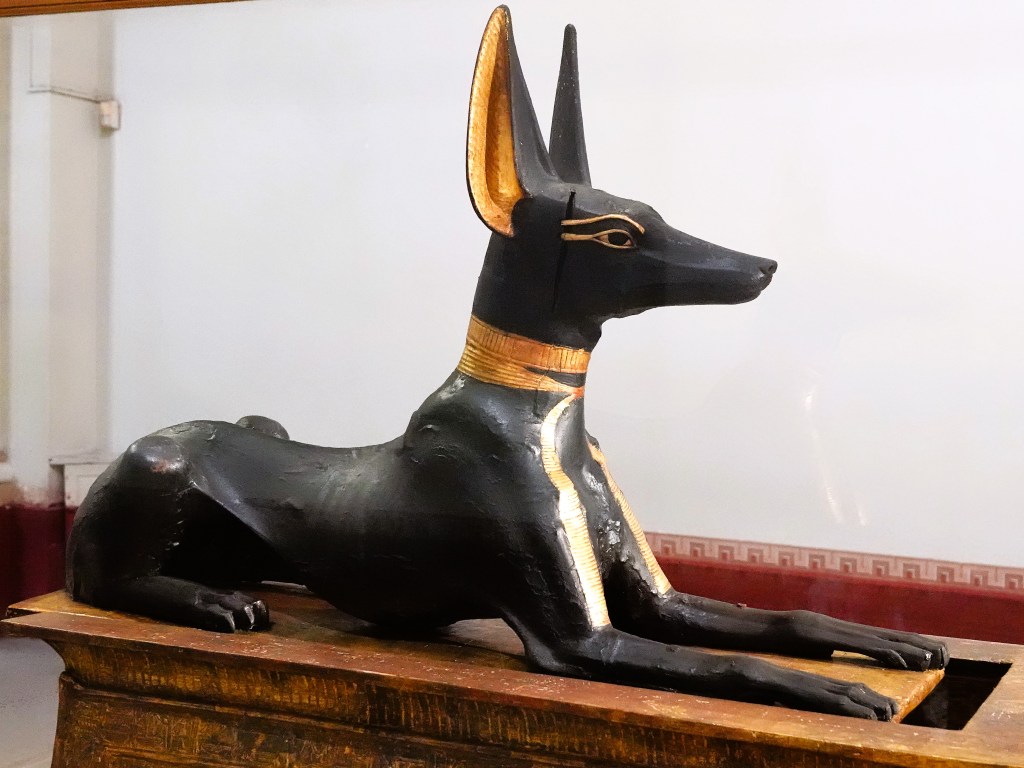
Anubis the jackal, who guards the crypt
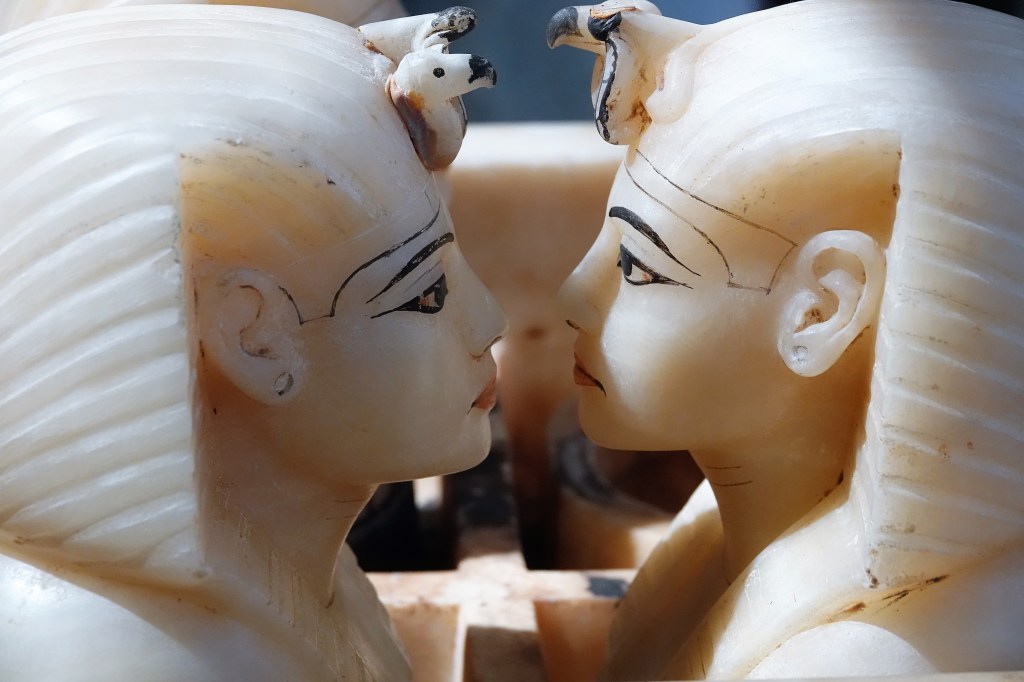
Alabaster canopic jars which held vital organs

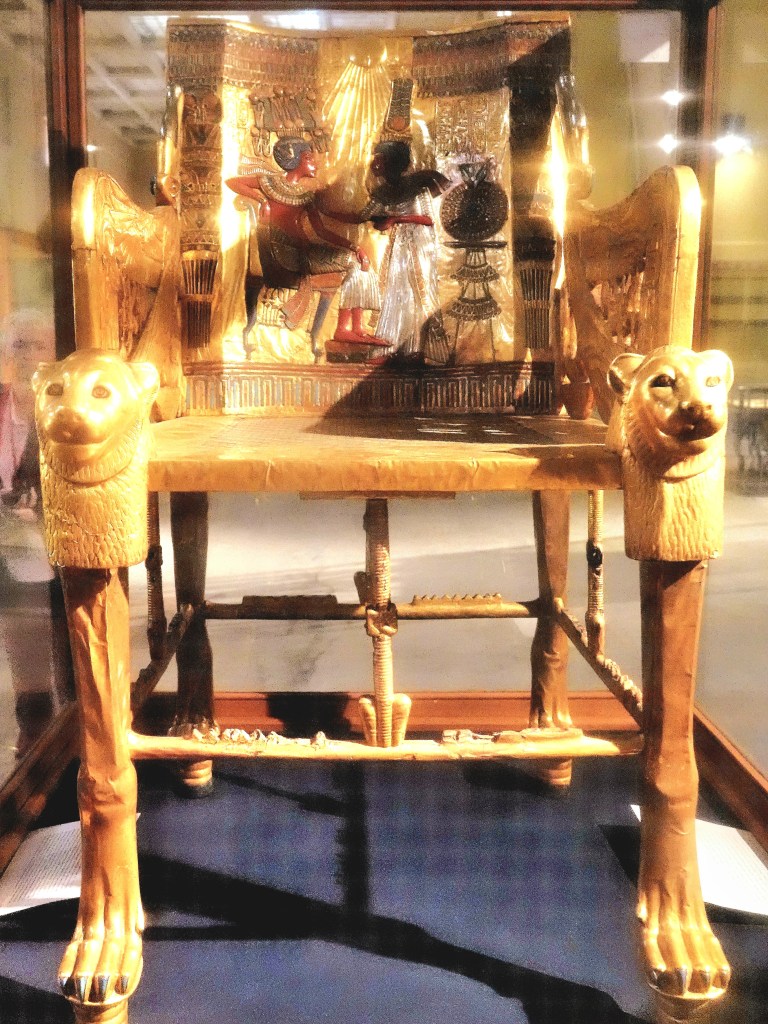
A gilded throne beside an inlaid and painted ceremonial chair.

There were so many more treasures to appreciate beyond the towering entrance and throughout the wings of the cavernous exhibition hall.

From the moment we entered the building, we were confronted by a stone Colossus of King Merneptah, successor to Ramses the Great.

Along our stroll, we stopped to appreciate a 2-foot palette of some of the earliest hieroglyphics ever found.

This palette, with reliefs on both sides, commemorates the victories of King Narmer, who came from the south of Egypt to invade the Delta in about 3000 BC. It represents the most important evidence that the first political unification in the history of mankind occurred in Egypt. The two faces of the artifact are topped by the name of Narmer inscribed inside the Serekh, or rectangular frame. In hieroglyphic signs, the chisel reads mr and the catfish reads naar.

The upper section of the back side shows the king wearing the Red Crown of Lower Egypt, followed by his sandals bearer and preceded by his vizier and four standard bearers. Next comes a scene depicting the corpses of 10 beheaded men. In the middle section, two men are holding two felines with extremely long necks representing the people of the North and South under the control of the king and his men. The lower section shows a bull, representing the king attacking the walls of a northern city.

The Serekh is flanked by two female heads having the ears and horns of a cow, which could be the first representation of the goddess Hathor. The scene on the front shows the king, followed by his sandals bearer and wearing the White Crown of Upper Egypt, smiting a helpless foe from the North. The falcon Horus of Upper Egypt stands upon a bunch of papyrus plants holding a northern prisoner. The lower register, or scene, depicts two other northern enemies running away from the king. Inscribed upon their heads are hieroglyphic signs indicating their names or those of their localities.

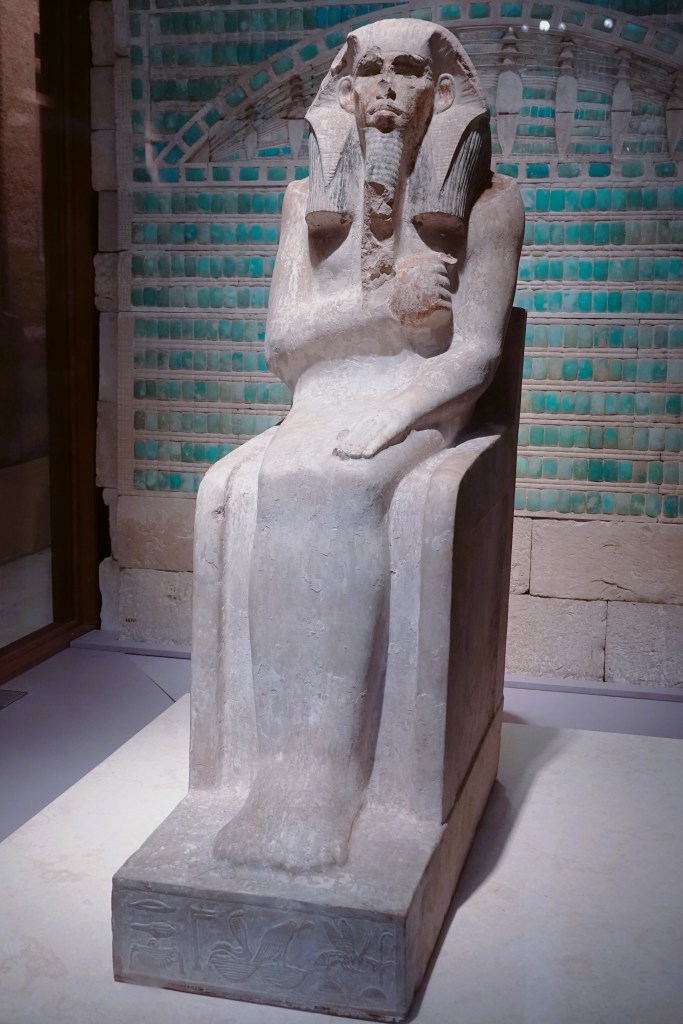
We stood in awe of the oldest known life-size statue found in Egypt.

It depicts King Djoser of the Third Dynasty seated on his throne and enveloped in a jubilee cloak. The statue was entirely coated with white plaster and painted. The deep-set eyes were once inlaid. The king has a ceremonial false beard and wears a black wig topped by the royal Nemes headdress. The front side of the pedestal is inscribed with hieroglyphic text, indicating the name and epitaphs of King Nethery-khet of Upper and Lower Egypt.

Next, we got acquainted with an exquisite 4600-year old polished, gneiss statue of King Khafra, builder of the second largest pyramid in Giza.

It was found in a pit in the antechamber of his Valley Temple in Giza. The king is seated on a throne flanked by lion heads. The two sides of the throne are decorated with the Sema-Tawy, symbol of the unity of Upper and Lower Egypt. Khafra wears the nemes headdress, surmounted by the uraeus, or royal cobra. He wears the royal pleated kilt. Attached to his chin is an artificial ceremonial sacred beard. He is protected by the god Horus, represented as a falcon, perched at the back of his neck.

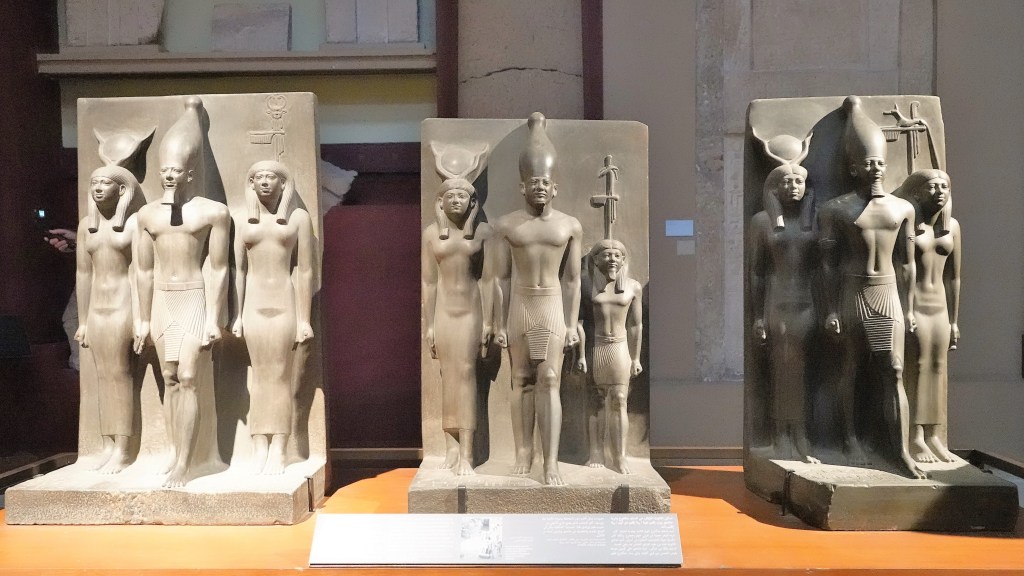
Nearby was a triptych of King Khafra’s neighbor, King Menkaure.

King Menkaure built the third and smallest of the Great Pyramids of Giza. The triad of Menkaure was intended to represent him with the personification of the nomes, in the presence of gods, especially Hathor. The king wished to enjoy resurrection and fertility from Hathor and endless offerings from the nomes. He is represented here in an idealistic form between Hathor, with her horned sun disk crown, and a figure of the personification of the nome of Diospolis Parva.

Sheikh el-Balad, Arabic title for the chief of the village, was the name given to this remarkable wooden statue discovered by the workmen of Auguste Mariette, the French archaeologist, because it resembled their own village chief.

The statue depicts Ka-aper, the chief lector priest, in charge of reciting prayers for the deceased in temples and funerary chapels. It is one of the masterpieces of the private statuary of the Old Kingdom.

The arms were separately modeled and attached to the body, a technique frequently used in wooden statuary. A wooden cane supported the left arm, made out of two pieces of wood joined together. The eyes are inlaid; the rim is made out of copper and the white is of opaque quartz, while the cornea is made out of rock crystal.

Also of interest is a small stone carving of Seneb, an Egyptian dwarf who was the chief of all the palace dwarfs, and charged with the care of the royal wardrobe.

He is seated on a rectangular seat together with his wife, Senetites, and his children stand before him. He has short black hair and wears a short white kilt. His wife rests her right hand on her husband’s shoulder and her left hand on his left arm in an affectionate pose.

Senetites, who held the titles of Priestess of Hathor and Neith, wears a black wig that reaches down to her shoulders and a long white tunic. The artist rendered her face with a smile to show the woman’s satisfaction at being depicted with her husband and children.

The son and daughter are shown standing in front of their father in the place where the legs should be. Here, the Egyptian artist succeeded in creating a balanced composition for the figures of the family.

Protected in a nearby glass box was another painted couple. Rahotep might have been a son of King Senefru and thus, a brother of King Khufu. He held the titles of High Priest of Ra at Heliopolis, General of the Army, and Chief of Constructions.

He is seen here wearing a short kilt, short hair, a fine mustache, a heart-shaped amulet around his neck, and inlaid eyes. Rahotep’s wife, Nofret, is described as “the one acquainted to the king.” She is seen wearing a shoulder-length wig, decorated with a floral diadem and a broad collar. Her natural hair can be seen under the wig.

We recognize the distinction in the skin coloring of the two statues: reddish brown for the man and cream wash for the woman. This was an artistic convention followed throughout ancient Egyptian history. The colors are well preserved and the faces have realistic expressions.

However, Queen Hatshepsut was a rare exception. She’s regarded as the most successful woman ever to rule Egypt as Pharaoh (18th Dynasty), and considered an equal among all kings. Hence, her skin color is always portrayed as reddish brown.

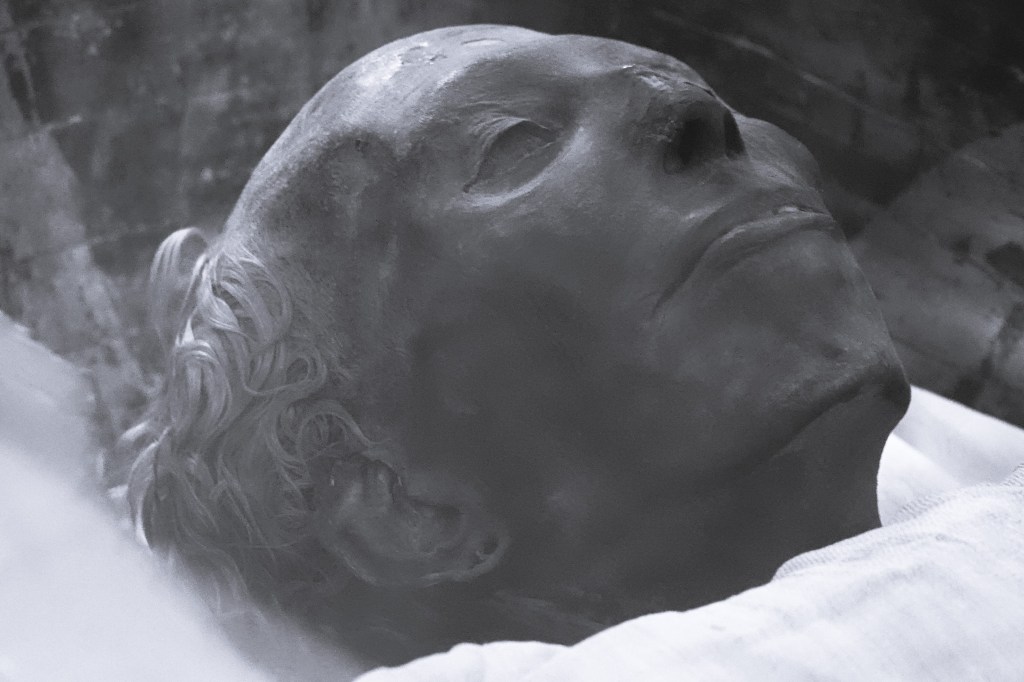
Advancing to the mummy exhibition, we were treated to the gilded plaster, funerary masks of Thuya and Yuya.

Yuya was the father of Queen Tiye, wife of King Amenhotep III, and husband of Thuya. Yuya came from the town of Akhmim, where he probably held estates, and where he was a priest of the Egyptian god Min, the chief god of the area, while Thuya held important religious titles, in addition to the title of the Royal Mother of the Great Wife of the King.

As part of the royal family, they were attributed royal burial rites and mummified, guaranteeing them an extraordinary eternity as museum masterpieces.

Leah and I later visited Yuya’s son-in-law, King Amenhotep III, and his daughter, Queen Tiye to share a moment of eternity inside his sarcophagus, under their protective gaze.

But remembering our plan for a night out at the market, we had to put our hereafter on hold.

To be continued…

Walking Like an Egyptian

When Leah and I disembarked from our Northern Lights cruise aboard the Viking Star on February 4, 2020, the entire cruise industry was sinking from the spread of COVID-19. And the travel industry was unable to forecast with any assurance whether or when it would be safe to cruise again. Nonetheless, Leah and I reserved passage on Viking’s Nile River cruise (risk free) 2 years ago, and patiently waited for the coronavirus tide to wane.

Fortunately, Egypt had been less affected than many surrounding North African countries, so we waived our cancellation guarantee 3 months ago, and finally embarked on our eagerly-anticipated journey.

After 2 airport layovers–with extended delays between 2 sunsets–we touched down in Cairo to experience what we hoped would be a trip of a lifetime. We also elected to tack on a 4-day extension to Jordan to experience the “Rose City” built into the pink sandstone cliffs of Petra. And we would finish our Middle Eastern adventure with 9 days in Israel on our own.

We also chose to travel with Viking for their immersive programming, delivered by two resident Egyptologists, Khadiga and Youmna, who offered comprehensive commentary every step of the way.

After a night of well-deserved sleep at the Sheraton Cairo Hotel and Casino, we awoke at 6 AM to the muezzin’s prerecorded call to morning prayer,

and began our tour with an excursion to Cairo’s Citadel of Saladin, the largest citadel in the Islamic world opened in 1176,

for magnificent views of the entire city–a massive sprawl sheltering nearly 22 million people within its metro borders, with what also seems as many stray cats and dogs–

and access to the Mosque of Mohammed Ali Pasha, also known as the “Alabaster Mosque” built in 1848, with twin minarets reaching a height of 84 meters, the highest in all of Egypt.

The prayer hall inside can accommodate 10,000 worshippers under a large central dome surrounded by four semi-domes,

supporting a massive crystal chandelier that has recently been repaired after a 3-year restoration project by Egypt’s Supreme Council of Antiquities.

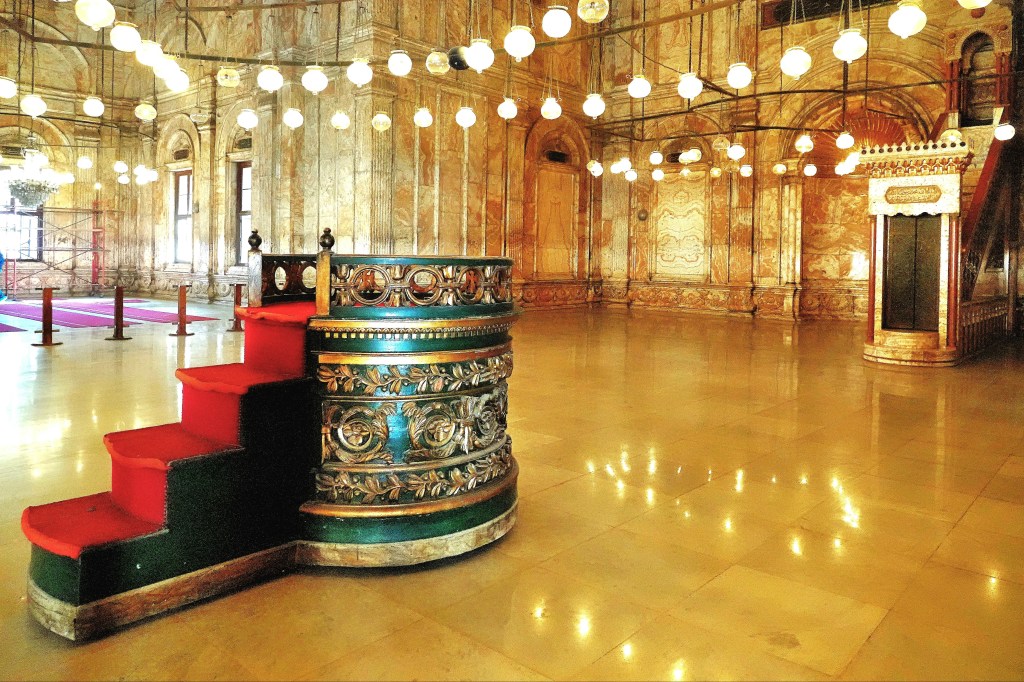
Across the marble tiles to the east is an adorned, gilded pulpit of carved wood for the chief Iman.

Within the center of the mosque’s massive courtyard of 47 arched doorways finished with 45 domes stands an elaborate alabaster fountain for requisite ablutions.

The copper-clad clock tower rising above the courtyard in the center of the south façade was a gift from Louis Philippe, the King of France in exchange for one of two ancient obelisks discovered at the Temple of Luxor that still stands in the Places de la Concorde in Paris.

Unfortunately, it was a bad trade for the Egyptians, as the mechanical clock is only accurate twice a day since never working properly after installation.

After roaming the courtyard,

it was time for our next excursion to the Egyptian Museum, where we motored by bus through the busy streets and circles of Cairo, while managing to avoid hundreds of pedestrians who habitually cross the roads in all directions, without any regard for traffic or life itself.

Truly, a miracle.

Penis Envy

Thanks to an earlier tour of The Cave Víðgelmir, Leah and I rolled into Reykjavik @ 4pm–an hour ahead of schedule–and it made all the difference. I immediately found a legit parking spot by the side of Grandi Center Hotel, and we quickly settled into our suite long enough to unzip and freshen up. Before long, we were out the door and heading for the harbor by foot.

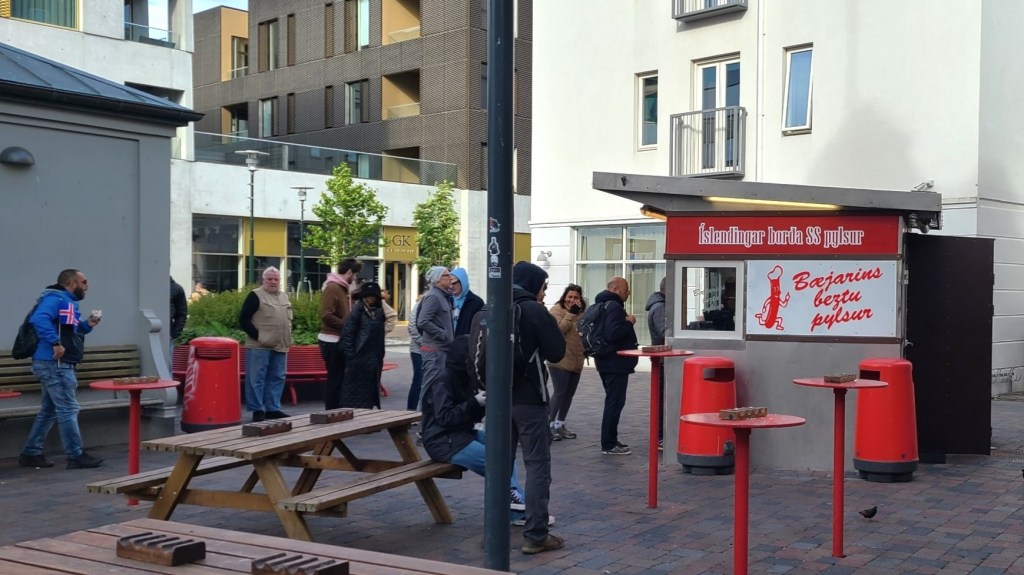
As we were in a hurry to walk the 1 km, there was no time for snacks…although, passing by Bæjarins Beztu Pylsur was tempting…

This little stand has been serving “the best hot dogs in town” since 1937, hence the name translated; although, some fast-foodies claim they’re the best in the world. In fact, hot dogs are so pervasive throughout Iceland, they are jokingly referred to as Iceland’s national dish.

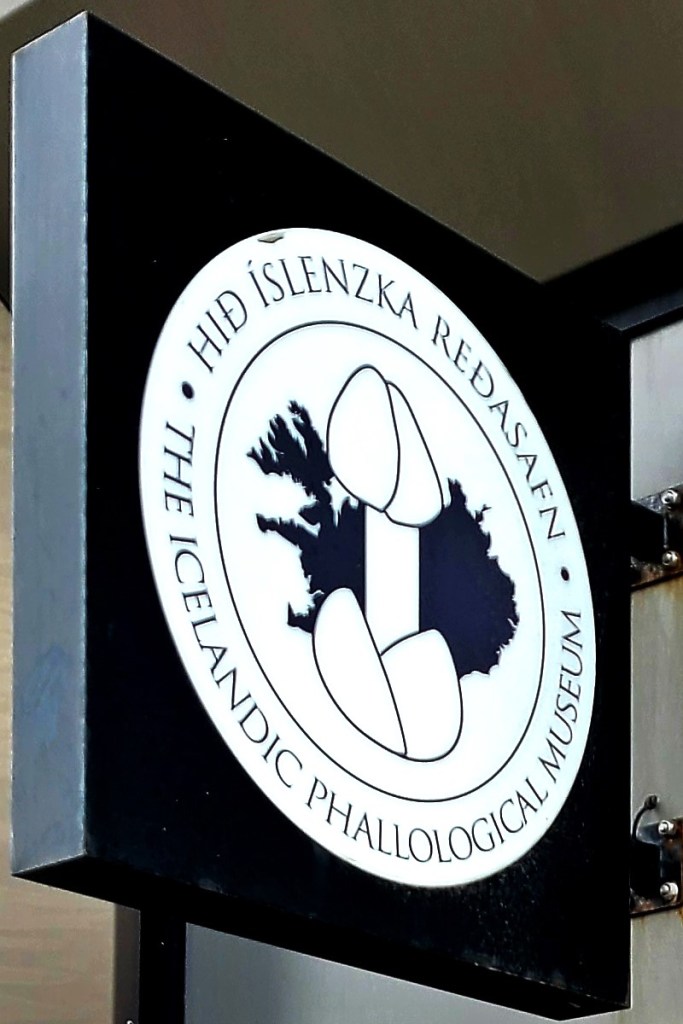
As much as I wanted a wiener, my mission to conduct hard research on “pizzles,” at the Icelandic Phallological Museum was time-sensitive; we only had an hour before closing.

The phallo-logic behind this museum is best expressed by Sigurður Hjartarson, the museum’s founder, who recently sat down with Felix Bazalgette, contributing writer for The Guardian.

In Sigurður’s words…

For most of my life I’ve been a teacher in Iceland, where I was born. In the 60s, I did a postgraduate degree in Edinburgh, but in the 70s I settled into life as a history and Spanish teacher in Akranes, a town north of Reykjavík.

One night in 1974, I was having a drink with my fellow teachers after school and playing bridge. The conversation turned to farming in Iceland – we were discussing how the industry finds a use for every part of the animal. Take lamb, for instance: the meat is eaten, the skin used for clothes, the intestines for sausages and the bones turned into toys for kids. Someone asked if there was a use for the penis, which made me recall how, as a child, I had been given a dried bull’s penis as a whip, to drive the animals out to pasture every day.

I was telling my fellow teachers about this and said that I would be interested in finding a whip like that again. “Well,” said one of my friends, “you might be lucky.” He was returning to his family’s farm that weekend and offered to find me some “pizzles” (a very old word for penis). I agreed, and the next week my friend came back with four bulls’ penises in a plastic bag. I took them to a local tannery and had them preserved. I gave three away as Christmas presents and kept the fourth. That was the start of my collection.

At first, it was a bit of a joke. It was very common then for teachers to have other jobs in the farming and animal industries, such as whaling. So to tease me, other teachers began to bring me penises from their second jobs – whale penises, sheep penises. I started learning how to preserve them. Then, gradually, the collection took on a life of its own. I thought: what if I collect the penises of all the species of Iceland? So that is what I tried to do.

I kept an eye on the news; if an interesting whale was found beached on the coast, I would try to get the penis as a specimen, or if an outlying island was infested with black rats that had escaped from a ship, I’d ask the pest control technician to send me one. (I’ve always had a rule that no animal would be killed for my collection.)

By 1997, I had amassed 63 specimens and the story of my collection had become more well known. I was invited to display it in a small space in the centre of Reykjavík, and my penis museum, or the Phallological Museum, to give it its proper name, was born. There are a lot of different ways to preserve a penis and I have tried all of them, so the collection varies between dried, stuffed and mounted penises, and also those floating in alcohol or formaldehyde.

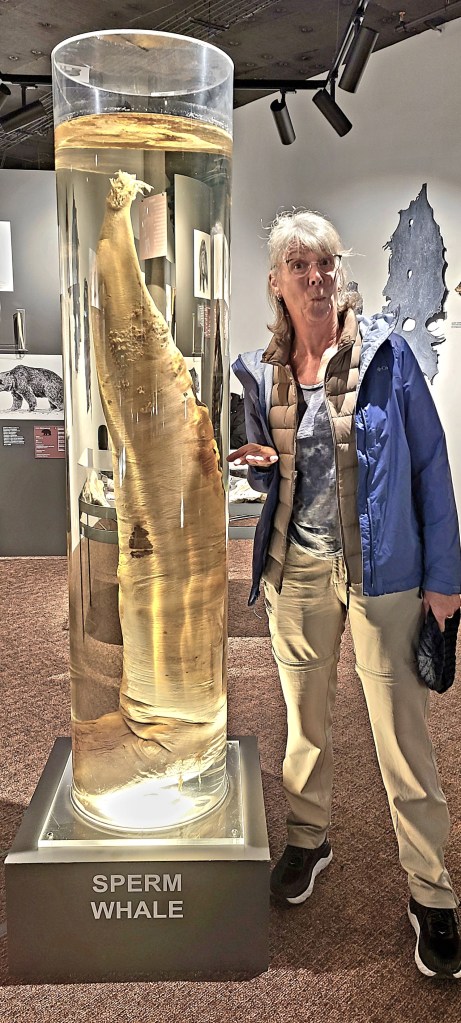
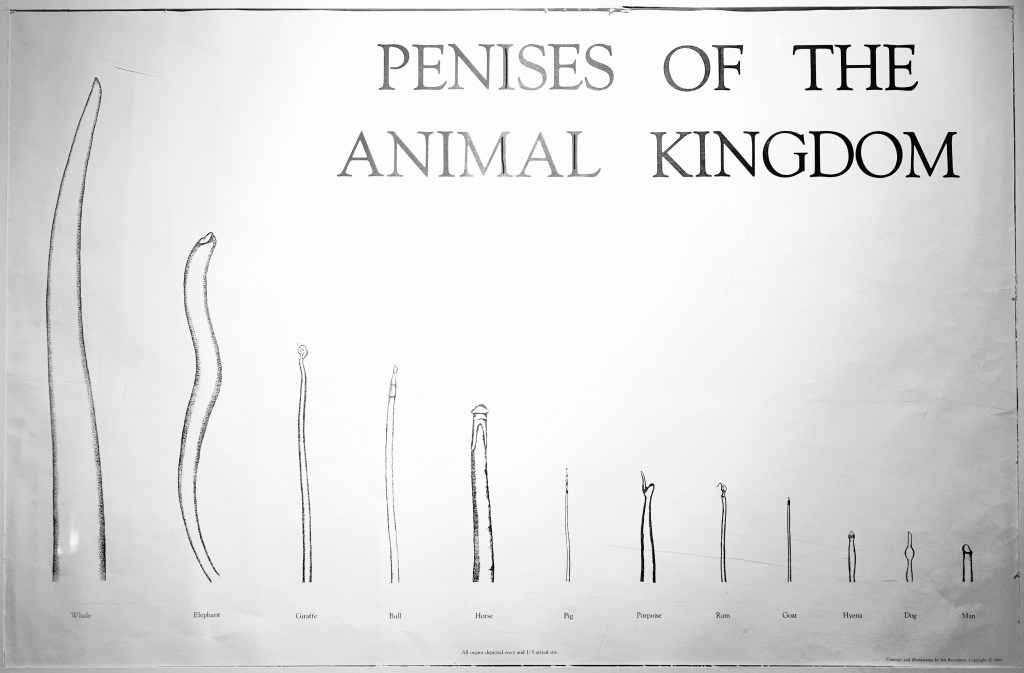
The collection is very large today, as people have sent in specimens. The largest, from a sperm whale, is about 6ft long, while the smallest, from a European mouse, is less than a millimetre and must be looked at through a magnifying glass. We have one human penis on display, from a 95-year-old man who left it to us in his will in 2011. A few well-endowed humans, one from America and one from Germany, have promised to donate theirs when they die. They are young, though, so we will have to wait a while for those.

You might call me a bit eccentric. At first people thought there was something wrong with me, but over time they saw I was a serious collector who was precise and accurate with the information I kept, and that there was nothing pornographic about the collection. I’m happy that people don’t think I’m a pervert any more.

I’m now 80 and have retired to a small town in the north. I’ve had great fun building the collection over the years and starting the world’s first penis museum; before me, there had been some small collections of penis bones – which many animals have – but not a more comprehensive collection of all these different types. Some people collect stamps or rare coins; I chose instead to collect the phallus. Someone had to do it.

In the words of Sigurður Hjartarson, Fri 22, Apr 2022–as told to Felix Bazalgette

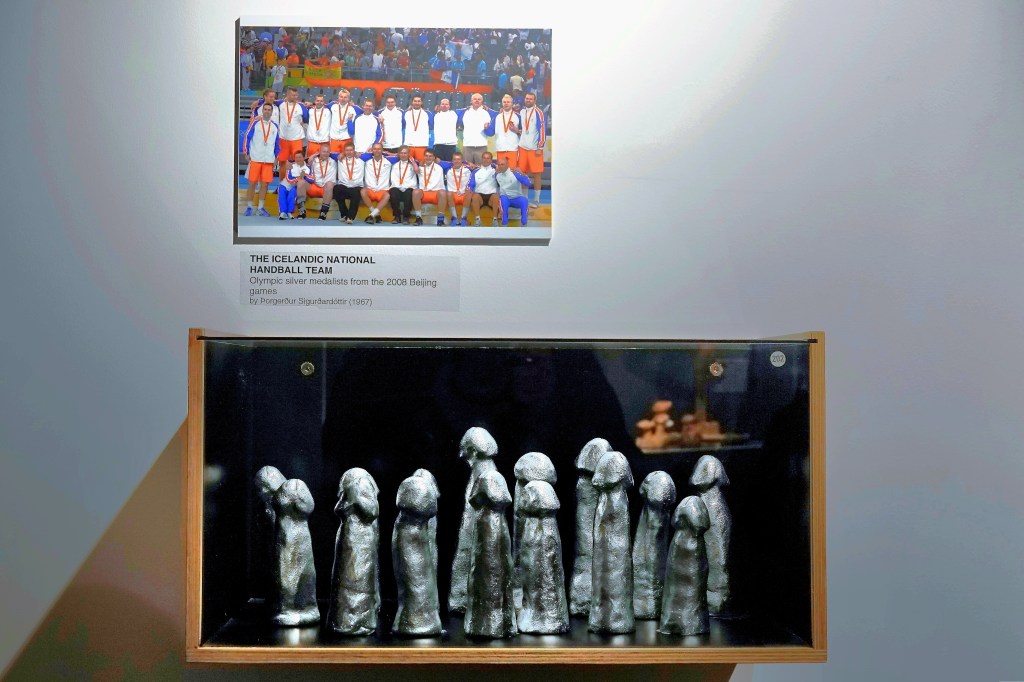
I don’t think I’ve ever been to a museum where the patrons have been so animated. Women easily outnumbered men by 2:1, and everyone seemed to be engaged. I saw no evidence of embarrassment, and selfies dominated most picture-taking opportunities.

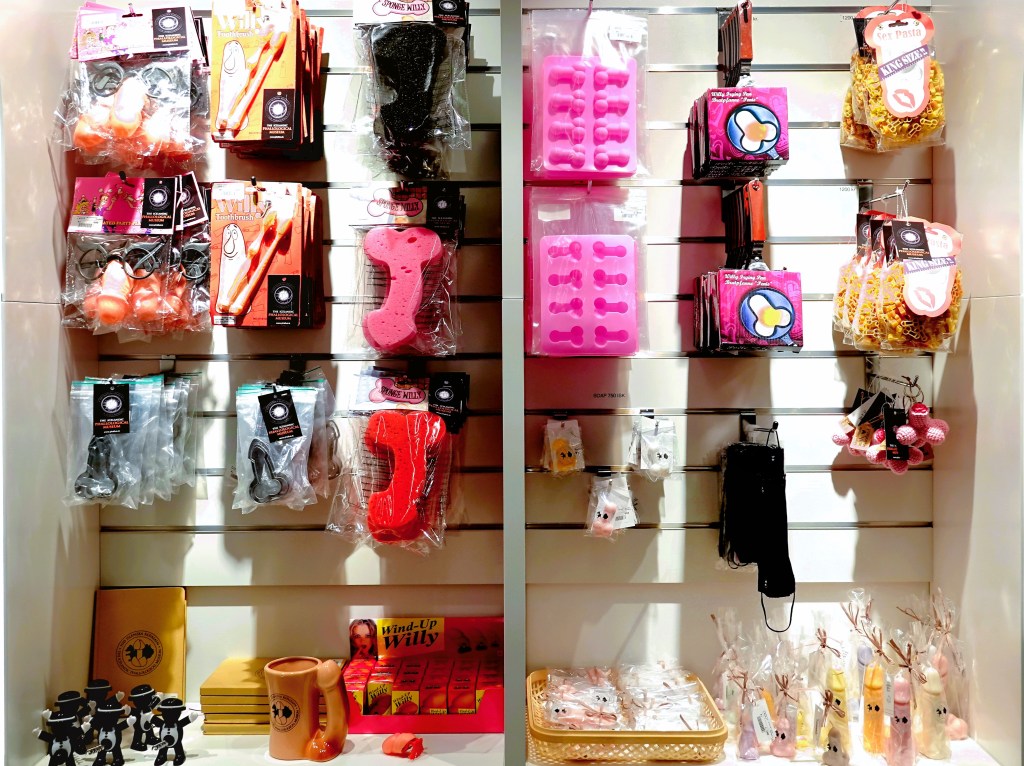
But what surprised me most were all the children running through the exhibits like they were at a petting zoo. And their small hands were very busy at the gift shop,

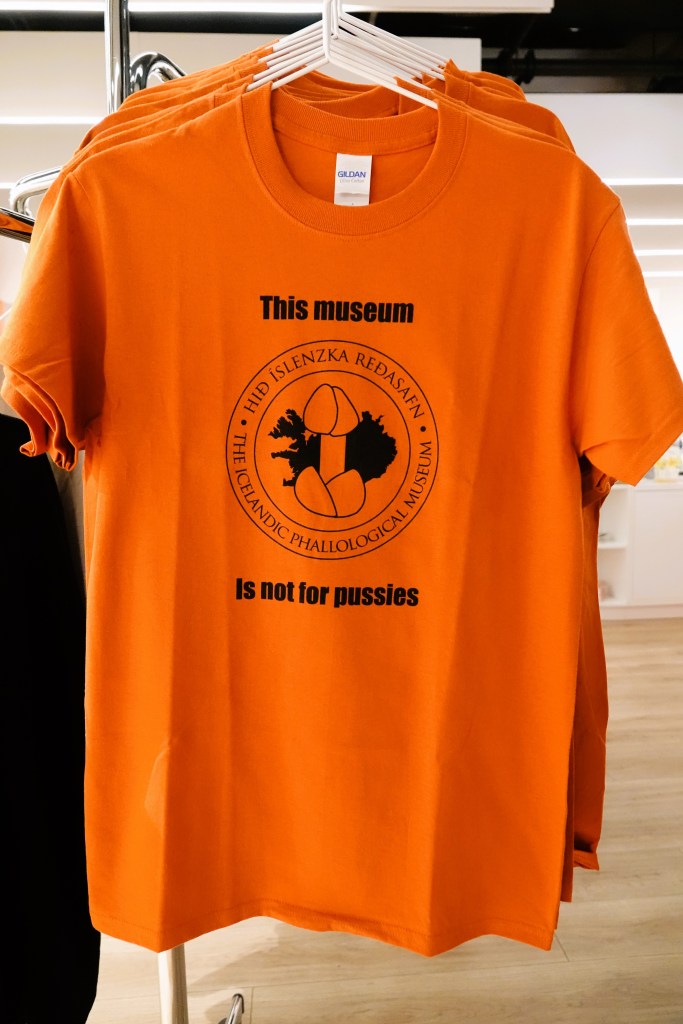
where I found a great souvenir,

and many more items…

for more sophisticated palates.

All in all, it was an uplifting hour, yet extremely humbling for human egos.