Ode to Scotts Bluff

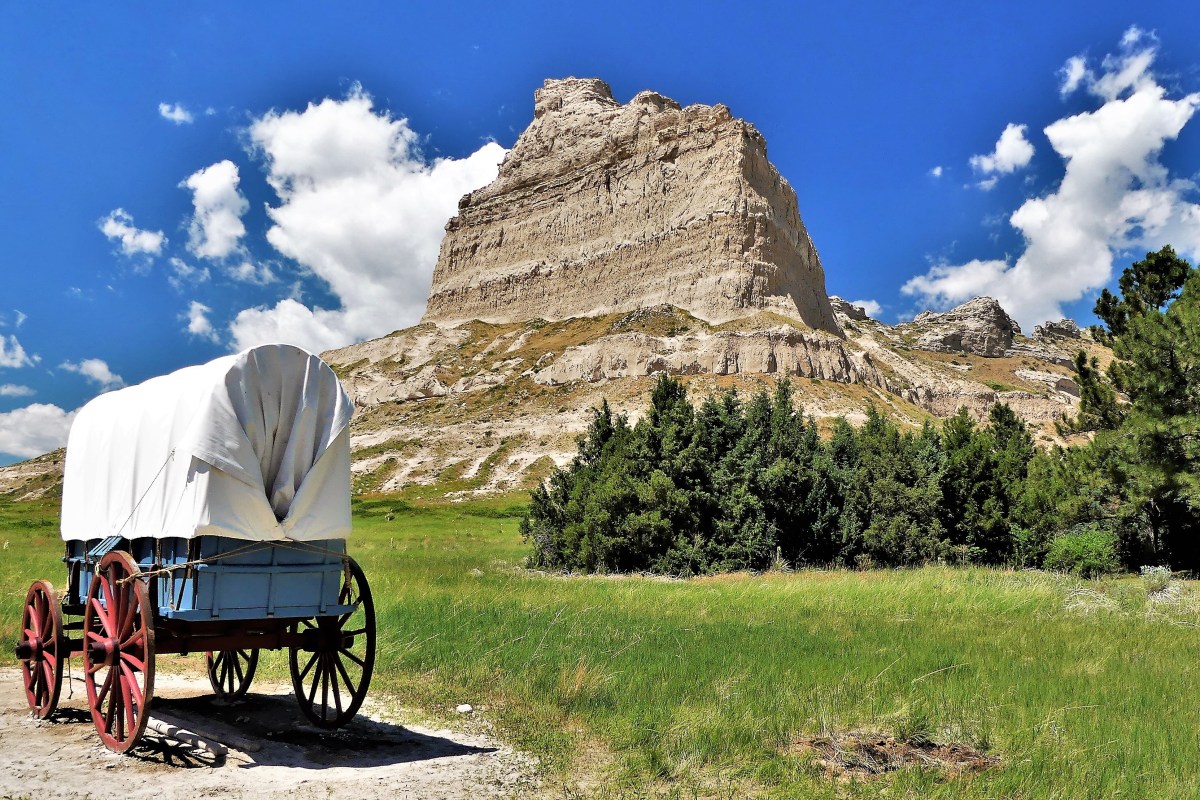
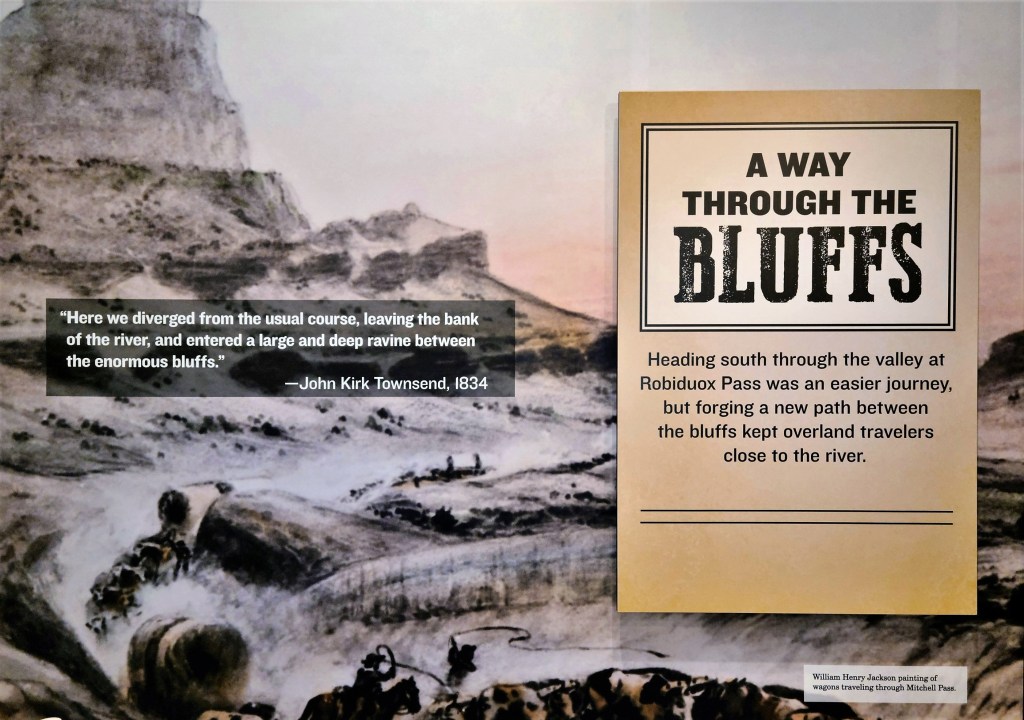
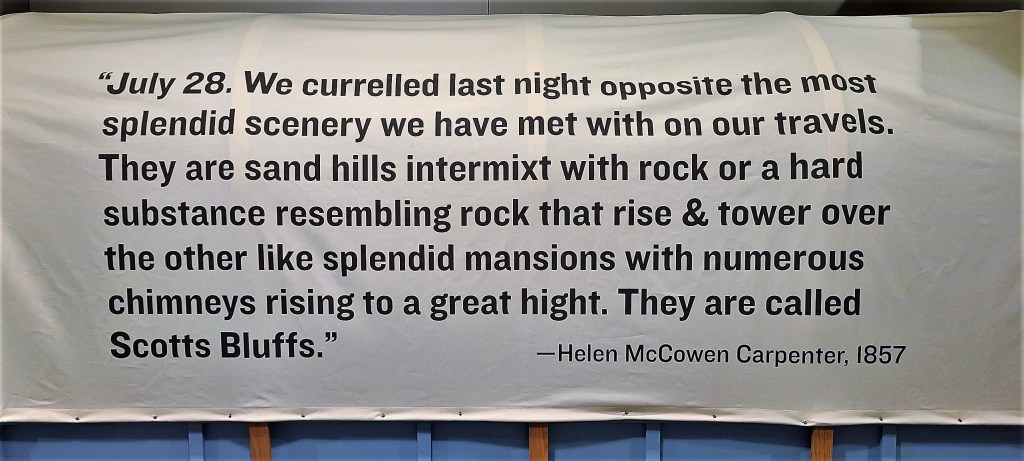
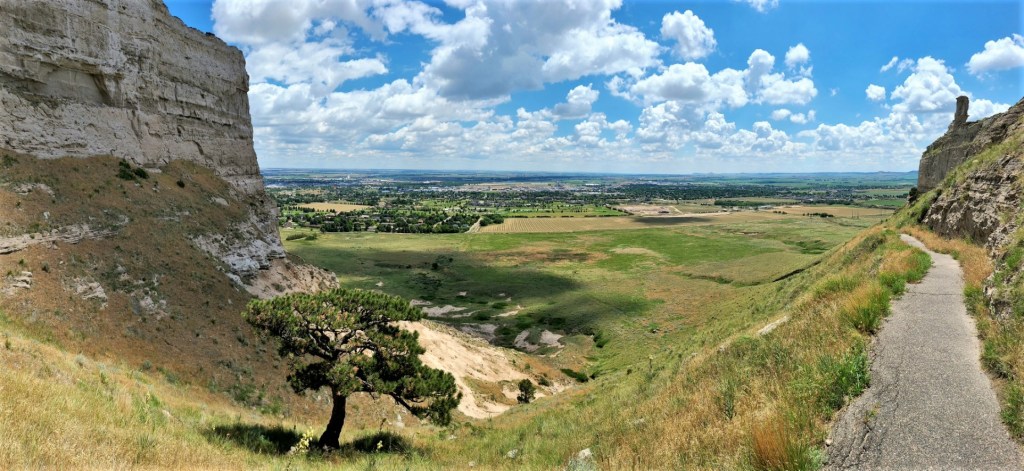
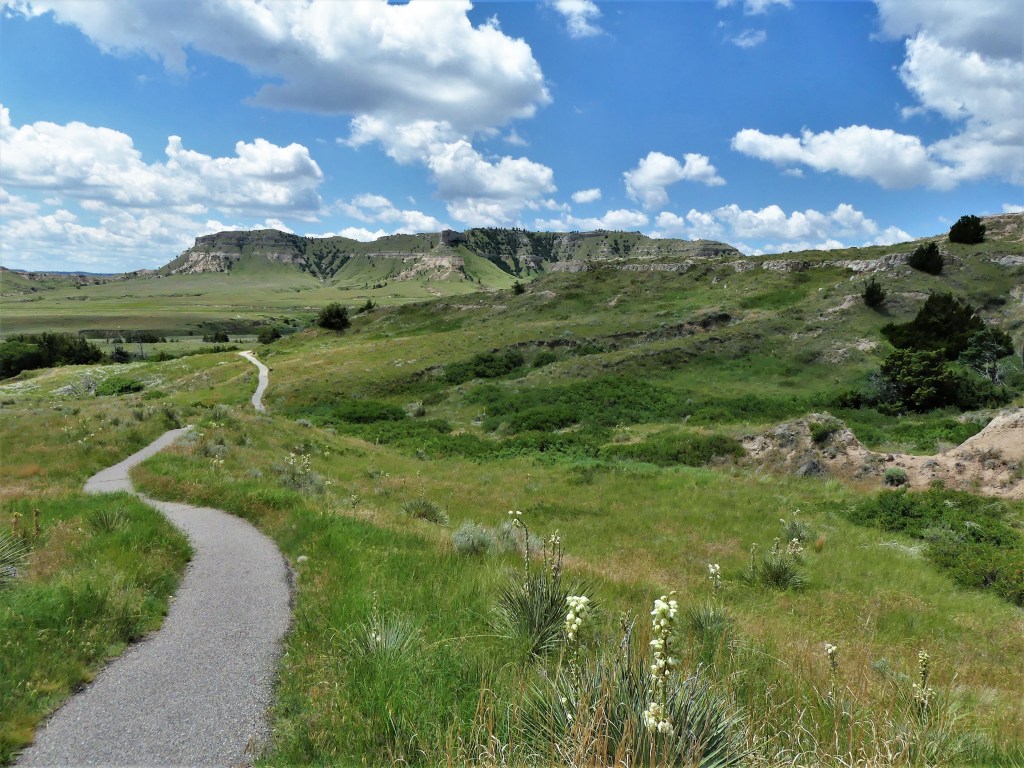
While spending time with friends in Cheyenne WY, Leah and I scheduled a side trip across the state line to visit Scotts Bluff in Gering, NE. Nebraska was not originally part of our travel plan, nor did we consider Nebraska when we set out to explore America four years ago, but we caved to public opinion and we are now happy to endorse Nebraska as a state with a meaningful attraction.

This Bluff is a Butte,
or this Butte is a Bluff?
It don't amount to a hill of beans
.
A wide range of arrangements 
are only future cliff-hangers
for cave-dwellers.
Making mountains out of molehills
or taking the high road,
We all plateau on the summit or the plain.
Monumental achievement
can only be measured at the

peak of a towering task.

Rio Grande del Norte

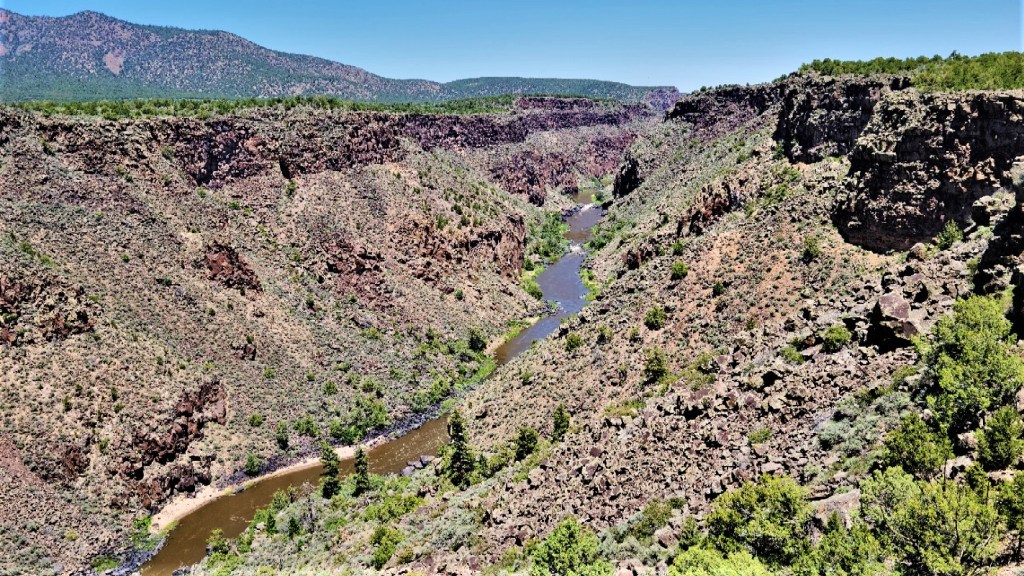
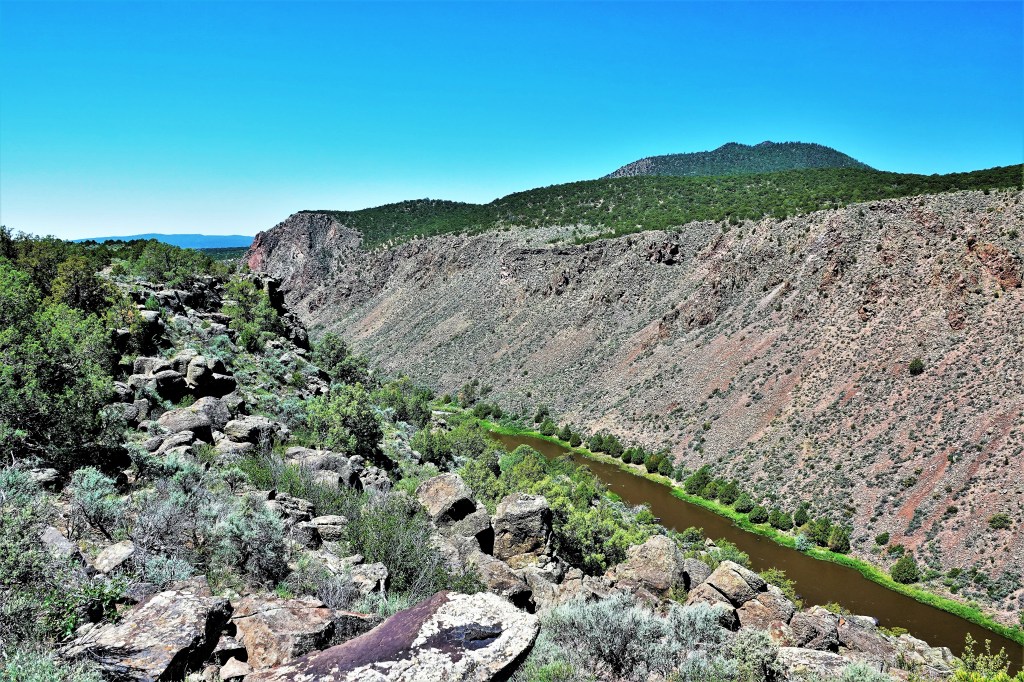
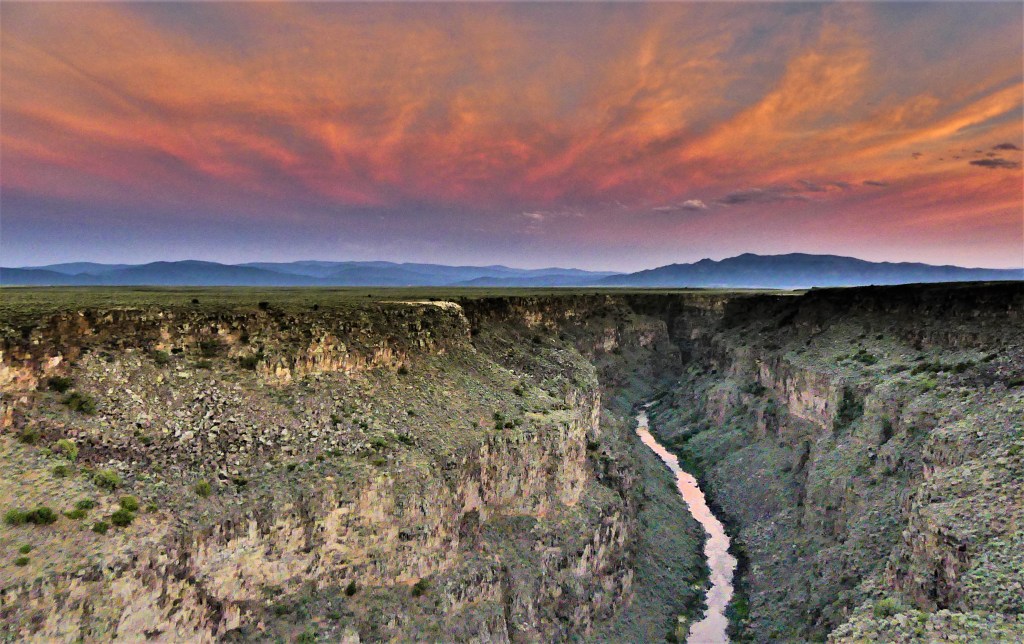
Just north of New Mexico, in the San Juan Range of the Colorado Rockies, Canby Mountain snowmelt and multiple mountain base streams join forces to form the Rio Grande. On its 1900-mile journey to the U.S. southern border, the Rio Grande passes through the Rio Grande Gorge near Taos, having carved out the 800 foot canyon over the past several million years.

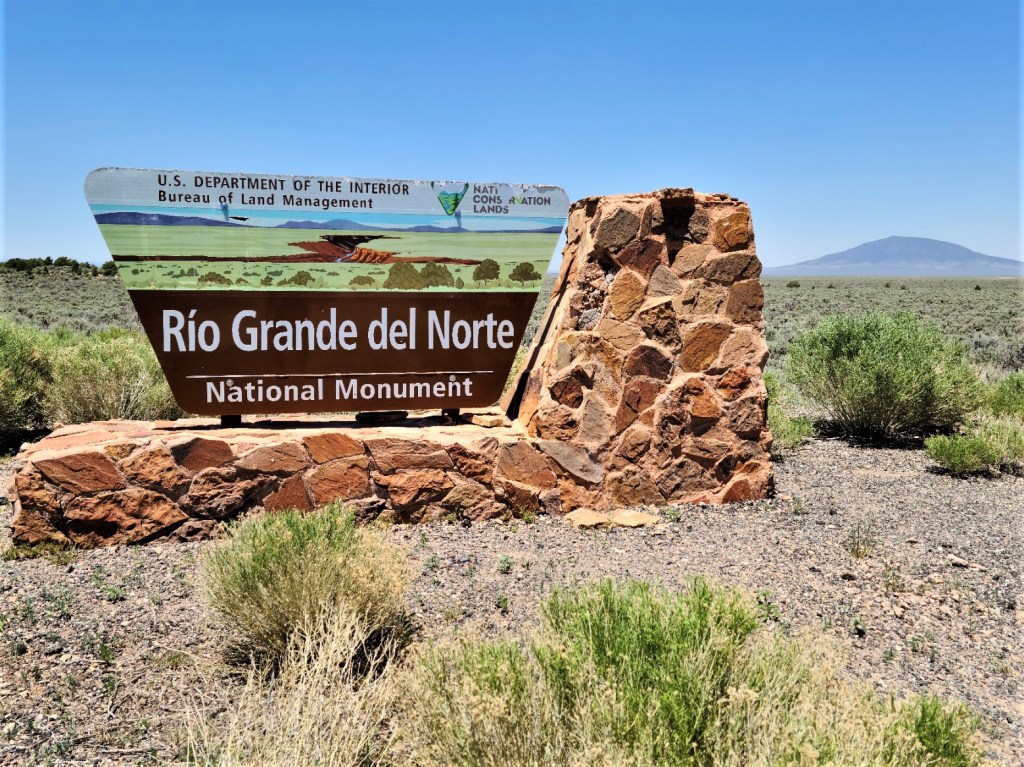
Beyond Questa, NM, a dirt road bordered by sagebrush scrub distinguishes the gateway to the National Park.

It’s high desert all the way, as the road winds through 10 miles of overlooks, campgrounds and trailheads…

until its terminus at La Junta Trail–currently closed for maintenance.

While hiking into the canyon wasn’t possible due to trail closure,

the overlook provided a closeup of native flora,

local fauna,

and a distant glimpse of the confluence of Red River and Rio Grande.

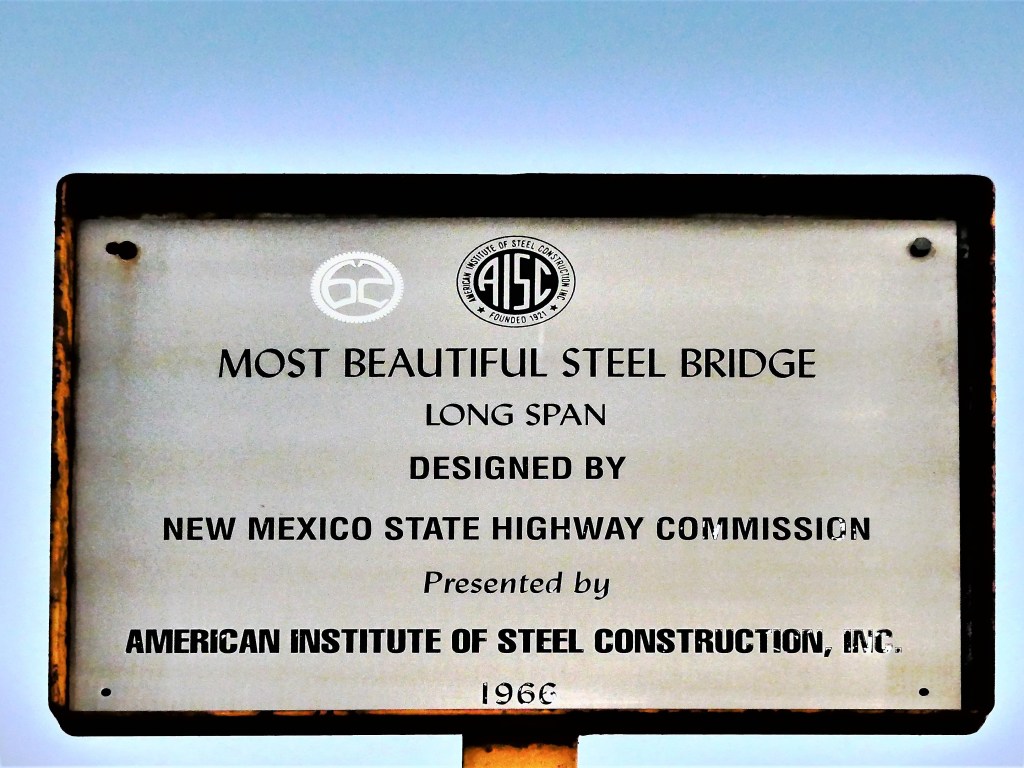
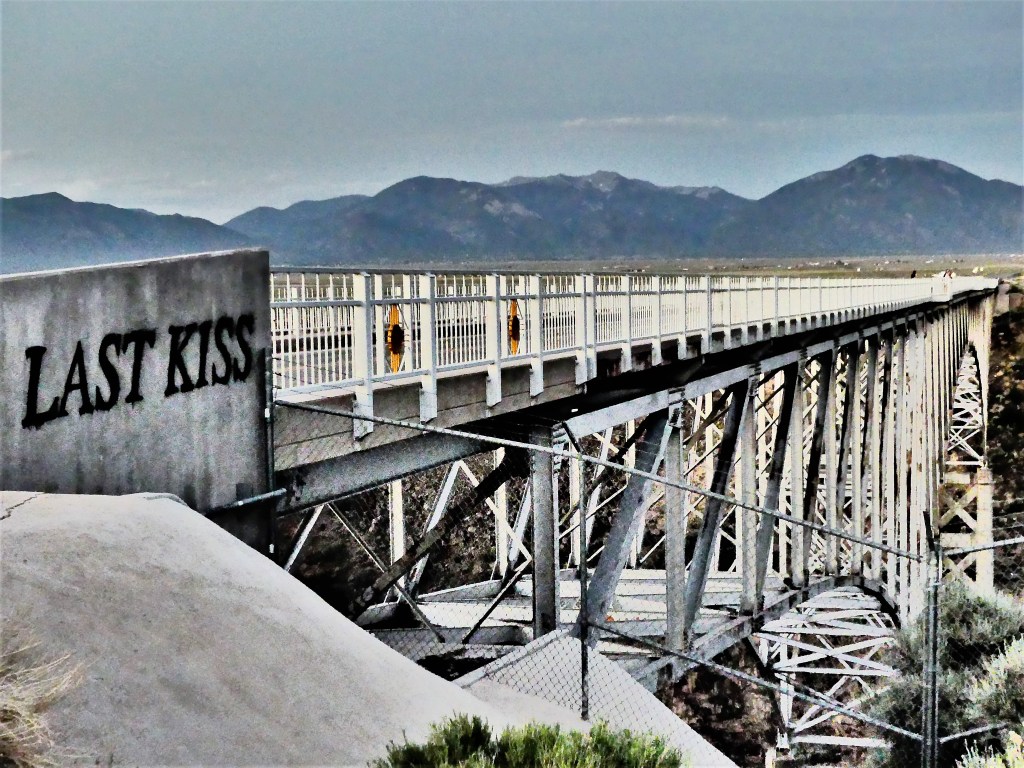
But like so many others, we were not settling for amazing…we were looking for spectacular. So we drove a few miles north of our campground on US-64, and waited patiently for sunset on the Rio Grande Gorge Bridge, an engineering masterpiece.

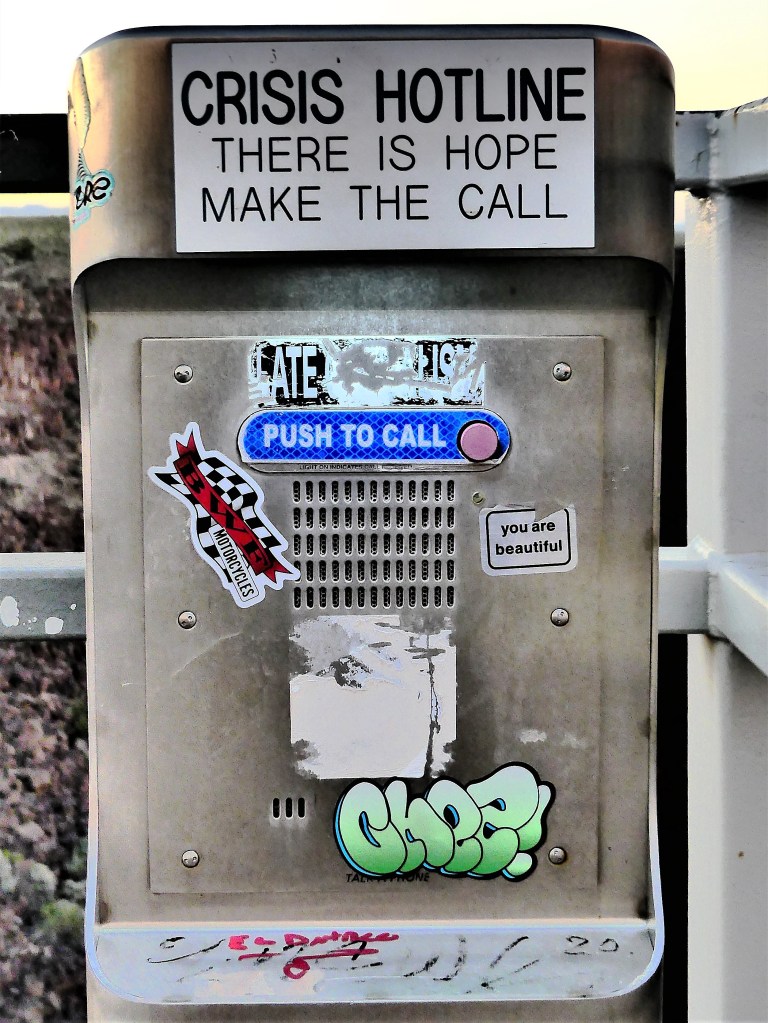
For the many who contemplate diving from the bridge,

there are strong warnings…yet sadly, two or three a year will never make the call.

With the sun fading, the sidewalks on the bridge begin to populate

each of us patiently waiting for Mother Nature’s final curtain before we resume our sacred lives.

Blue Hole

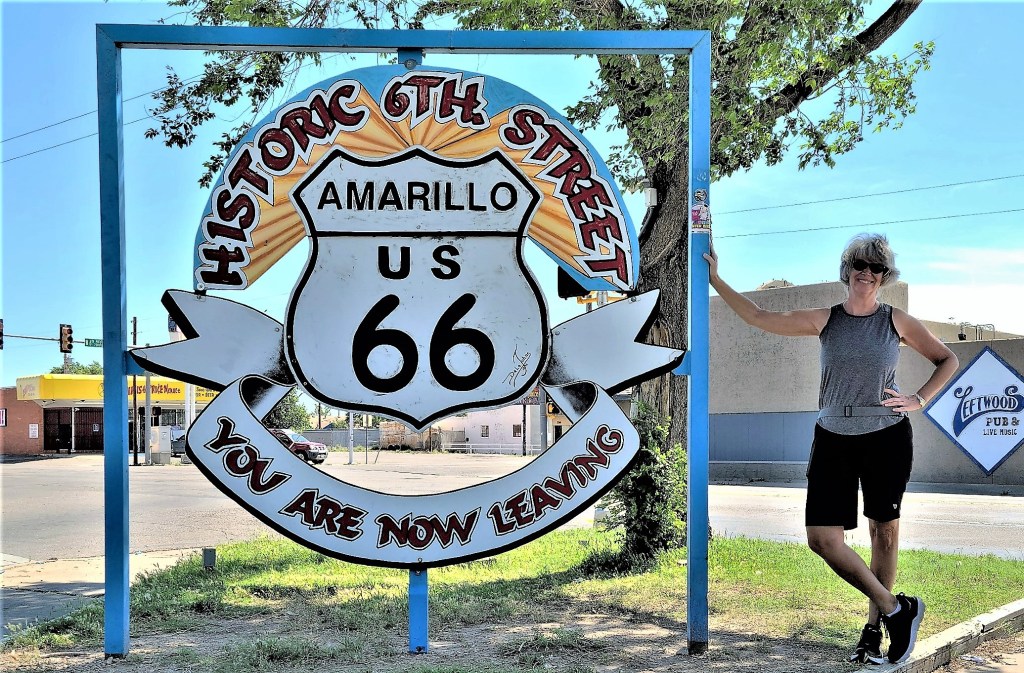
With Amarillo behind us, we were finally on our way to Albuquerque to visit Leah’s family. Earlier in the week, Leah had made preliminary plans with Carrie, her daughter to take the grandkids to Santa Rosa, NM to visit a popular water park the day after our arrival.

But not so fast!

We were driving on I-40 West with very light traffic, and had just crossed the border into New Mexico when a couple in a pickup pulled along side me and grabbed my attention. The woman in the passenger seat looked concerned. She mimed a circle with her finger while shaking her head, and pointed in the general direction of our Airstream before the pickup sped away.

“Oh, shit!” I grumbled. “There’s trouble back there.”

“What do you mean, trouble?’ Leah asked.

“I don’t think she was playing Charades…hopefully nothing serious” I answered.

I slowed to a crawl–pulling off the road to inspect our rig.

I hadn’t anticipated another blowout (see https://streamingthruamerica.com/2019/06/12/blowout/).

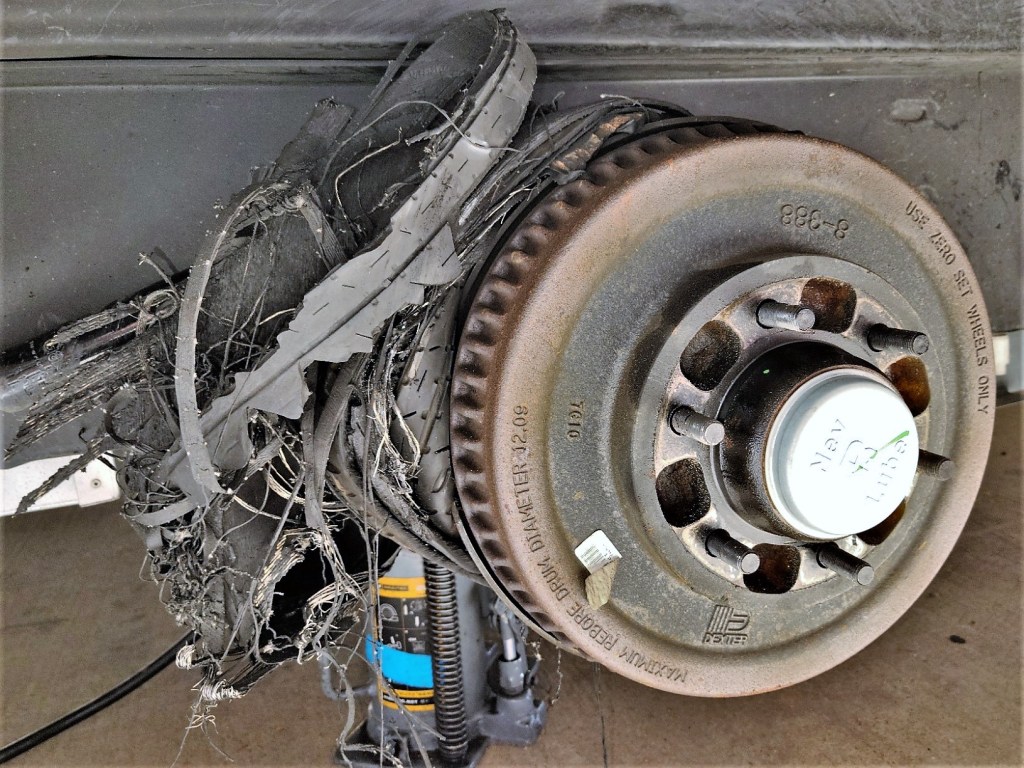
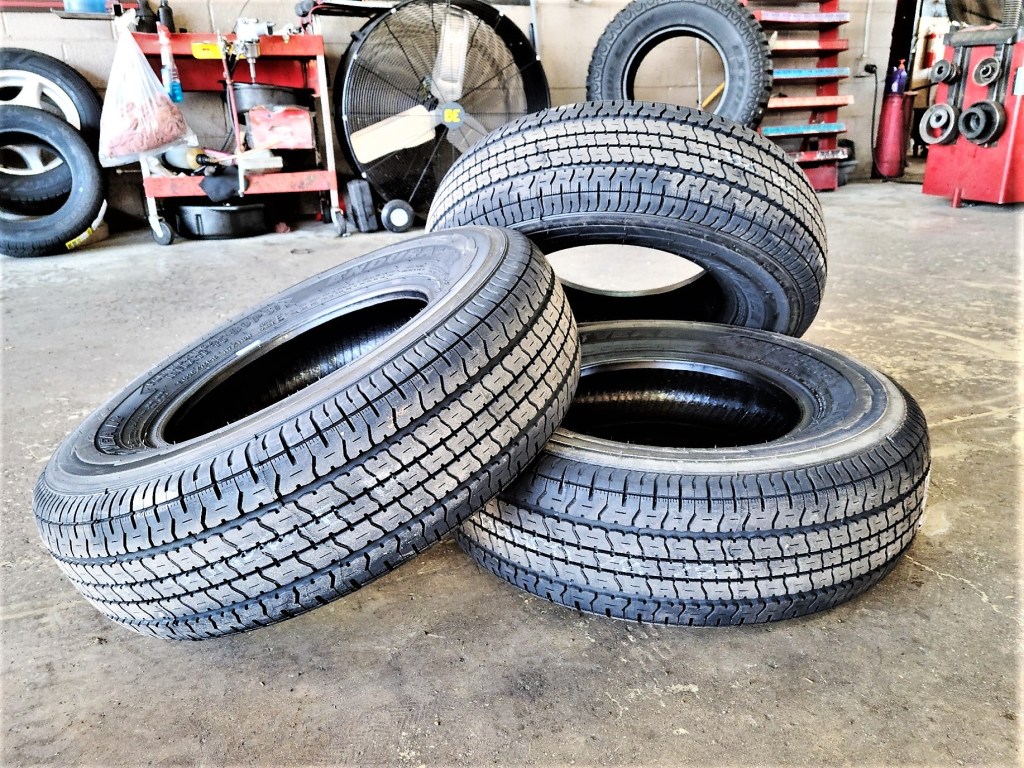
The original set of Goodyear Marathons looked nearly new upon general inspection, and I‘d only pulled the Airstream about 5,000 miles since starting out on our Great American Road Trip. Thank goodness for tandem axles. As for the blown tire, the tread was gone and the cord plies were shredded, but miraculously, the wheel and wheel well were still intact.

“We need a new tire,” I sighed. “The one that used to be there looks like spaghetti.”

“So now what? We’re in the middle of Bumfuck,” she panicked.

“Not exactly,” I tried to reassure.

“And on a Sunday to boot!” she continued.

“You’re not helping,” I advised.

Analyzing our location on GPS, I responded, “It’s showing that we passed a truck stop the moment we crossed the border.”

I called Russell’s Tire Center and learned that Cole was on-call. He agreed to meet us at the shop in half an hour. He also advised that he would be charging his travel time back to me at $95/hr. in addition to the emergency repair at $95/hr. It was a different kind of highway robbery, but I was out of options since I lacked the tools to lift a 7500 lb. trailer.

“There! It’s arranged,” I crowed. “We just need to get to the next exit and head back.”

“How are we gonna do that without a tire, genius?” she asked.

“Slowly and carefully,” I suggested.

It seemed like forever, but we limped along at 20 mph with flashers flashing until we approached the next westbound exit. Ironically, Jennifer (our GPS voice) routed our return along Route 66–parallel to I-40 West–as if she knew that slow-going was ill-suited for Interstate travel.

We got to Russell’s first and waited for nearly an hour when Cole arrived. He got straight to work. With the wheel off, I discovered what became of the tread. Luckily, no harm was done to the shock or the brake system.

Feeling insecure about using the spare under the Airstream, I opted for a new tire. When all the dust had settled, we were finally on our way to Albuquerque after a 2-hour layover and $300 in expenses. But I was feeling weary from the incident and wary behind the wheel, knowing that the other tires needed to be replaced.

90 minutes of drivetime took us to Santa Rosa, NM.

“Wait a minute! Aren’t we scheduled to drive here tomorrow with Carrie and the kids?” I asked.

“That’s right,” confirmed Leah.

“But we’re already here. Why on earth should I drive another 90 minutes to Albuquerque, only to return here the next day with your family,” I reasoned. “Why can’t they meet us here instead? They could even camp with us tonight if they want. Besides, I’m exhausted from this expensive mini-adventure.”

“Not a bad idea, Einstein,” she quipped.

Good News! Google confirmed that 2 walk-in sites with services were still available at Santa Rosa Lake State Park. Jennifer navigated us to the park campground, where we looped around twice to locate the open sites as advertised. Turns out, one site was handicap reserved; the other site was reserved for camp host.

As with most self-help campgrounds, Leah put our payment in an envelope and dropped it into a paybox at the entrance kiosk. After plugging into the host site, it was a relief to finally kick back with a cold beer and a blast of A/C to melt my stress level.

But not so fast!

Two park rangers have approached Leah, and it didn’t go well. We have been evicted, unapologetically.

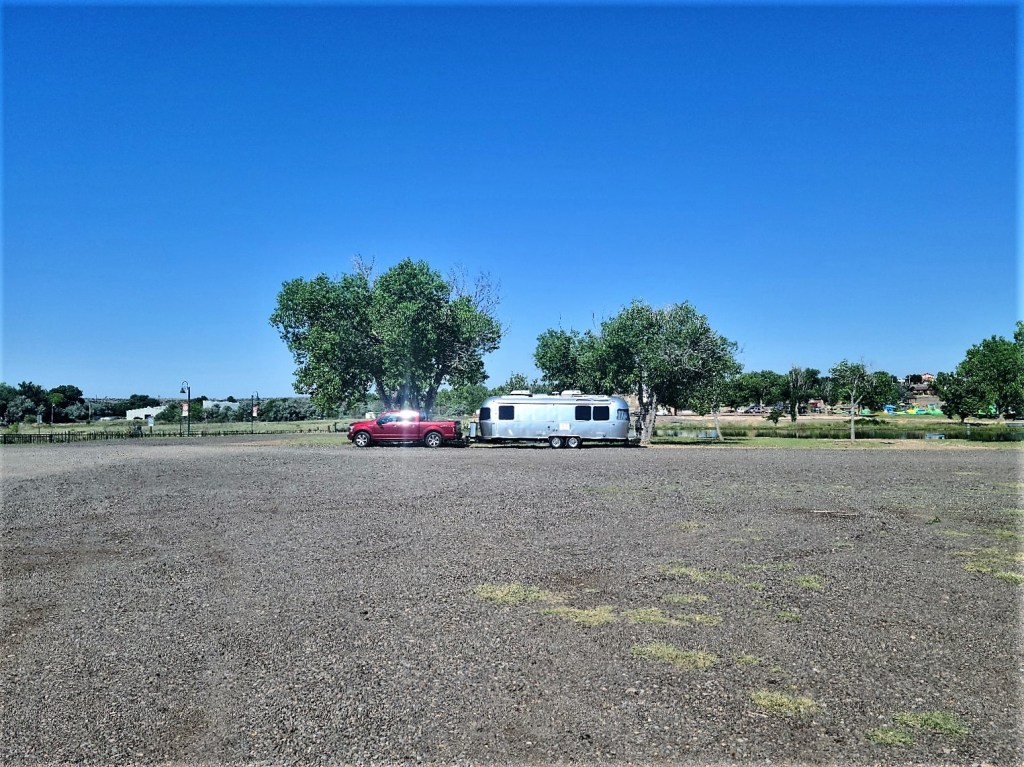
So we rolled back onto Route 66 and found an overnight spot at a local RV park. Leah made arrangements with Carrie, who eventually drove to meet us and spend the night car camping with Devin and Gabe outside our Airstream window.

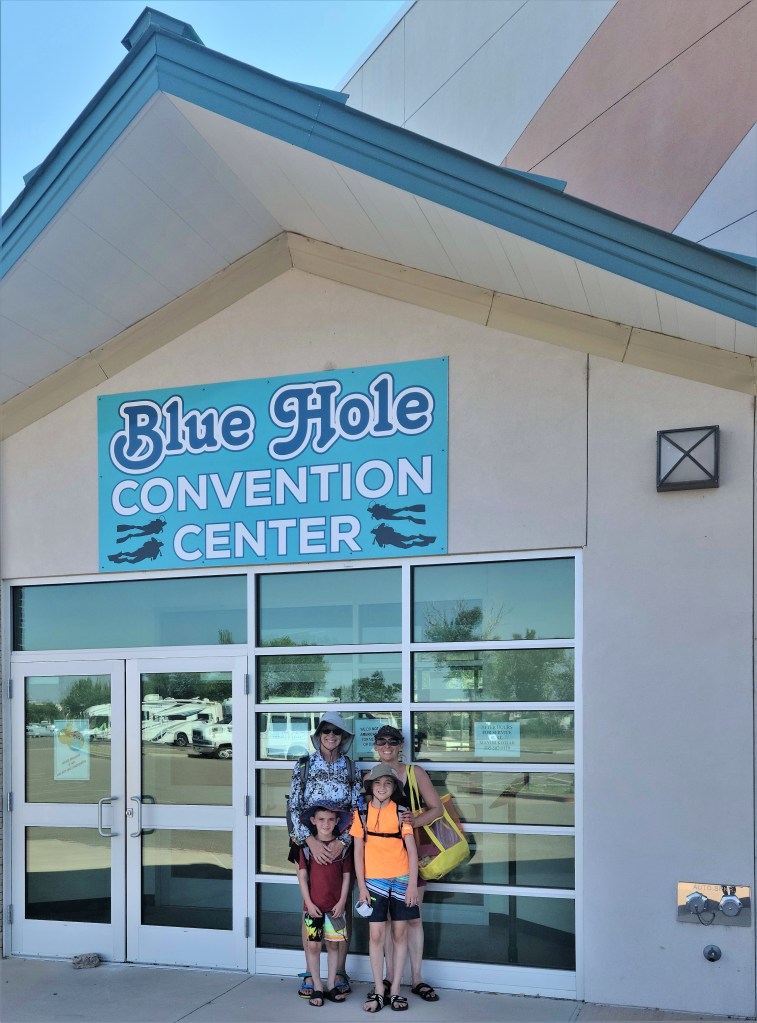
The next day, we drove to the Blue Hole

–ready for excitement.

When we arrived, I had this nagging feeling of déjà vu.

“We’ve been here before,” I mentioned to Leah.

“I would have remembered this place,” she disagreed.

“I’m telling you, this place is very familiar to me,” I insisted.

“Maybe you were here with someone else,” she theorized.

“Nope! You were with me, and I can prove it,” I stated emphatically.
I scrolled through the picture gallery on my phone, as if by chance…until…

“There it is!” I insisted. “We were here on October 18, 2017! And here’s the picture to prove it!”

“Congratulations! You’re right again, as usual,” Leah said without conviction.

“We never went in the water,” I said, “But that’s about to change today.”

It took some coaxing, but eventually everyone braved the 61o F temperature…

except me. I was going for the whole enchilada.

I watched as several youngsters scrambled to the ledge 20 feet above the Blue Hole and jumped,

which was all the preparation I needed for my jump.

The water was freezing–enough to take my breath away. But at least I left with bragging rights.

P.S. After we reached Albuquerque, our Airstream got a new set of shoes…

and they fit just fine.

Hot Springs is Hot Again

Humans have been taking baths for millennia. The practice of releasing toxins in hot springs dates back tens of thousands of years to the Neolithic Age, when nomadic tribes would soak in thermal waters they accidentally discovered when seeking relief from winter weather.

And there is archeological evidence from the 1900’s from Pakistan, where the earliest public bathhouses were discovered in the Indus River Valley around 2500 BC.

In, fact, every known culture around the world has demonstrated a special bathing ritual with roots in therapeutic cleansing of body, mind and soul.

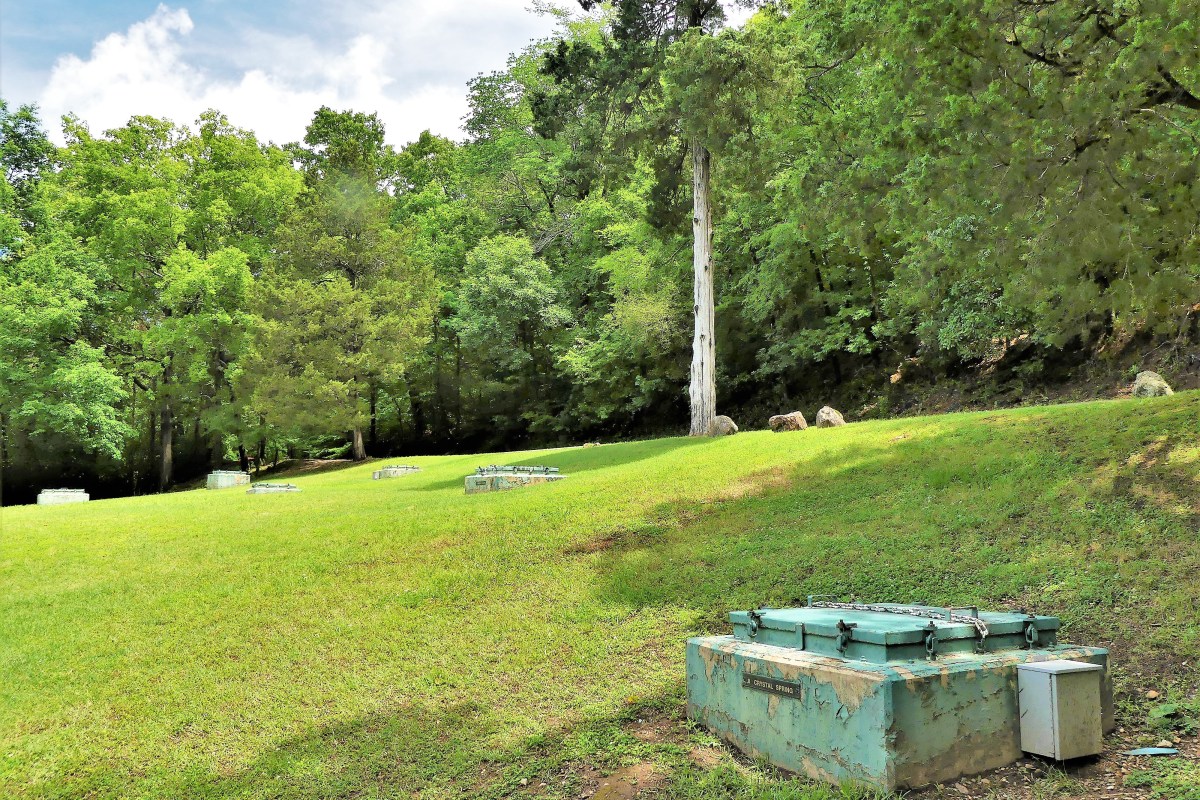
No doubt, Native Americans enjoyed the 147o F waters that flowed from the lower western slope of Hot Springs Mountain in Arkansas. This area was first occupied by the Caddo, and later the Quapaw, who eventually ceded this territory to the U.S. government in an 1818 treaty.

70 years before the National Park Service was established by Teddy Roosevelt, Andrew Jackson declared Hot Springs the first federal reservation in 1832, intending to protect this natural resource.

Scientists ran measurements and evaluated the springs’ mineral properties and flow rate. In journaling their finding, they numbered the springs and rated them according to temperature.

Immediately after, bathhouses began springing up around town to indulge the many guests who would travel to Hot Springs to avail themselves of the water’s restorative powers.

But trouble was brewing closer to the mountain. Ral City emerged as a community of indigents who had no use for fancy bathhouses, and subsequently dug pools beside the springs so they might enjoy the thermal water.

But not before the government put a stop to that and instituted policy that “preserved” and regulated the springs. Fearing contamination, the reservation superintendent ordered the pools filled in, and the transients relocated to a distant spring to appease the bathhouse owners in town.

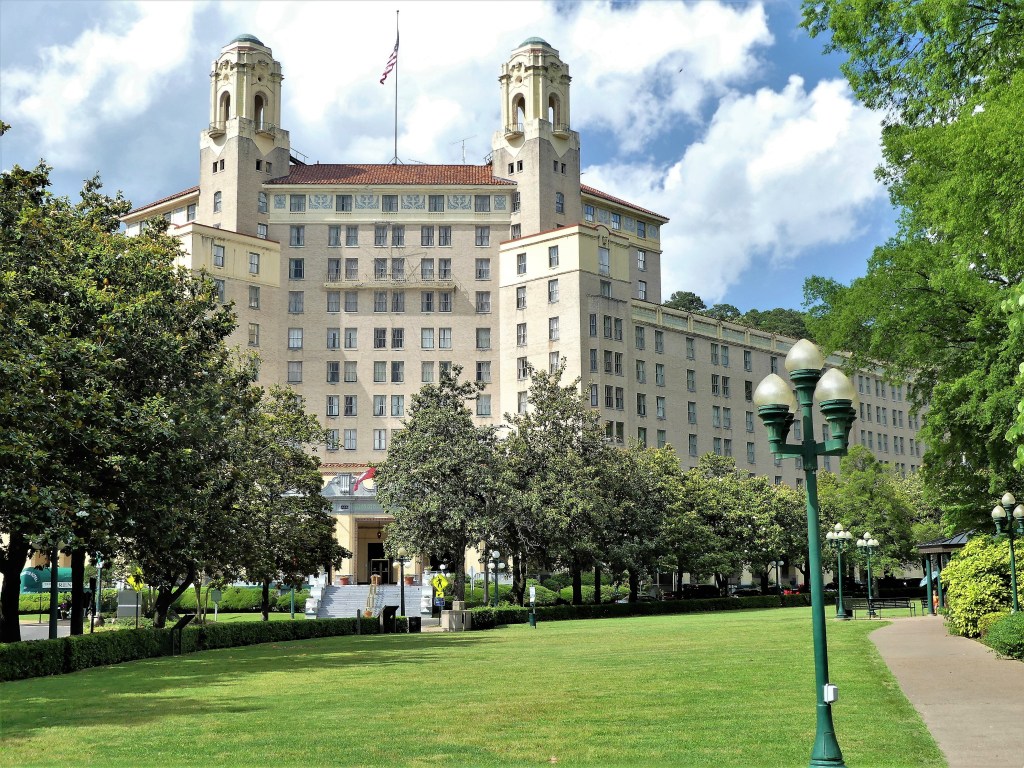
Enterprising businessmen like railroad magnate, Samuel Fordyce saw potential in Hot Springs, and invested heavily in the town’s infrastructure. He financed construction of the Arlington Hotel in 1875–the first luxury hotel in the area…

and vacation residence to every known celebrity, movie star and gangster of the era.

Fordyce also imagined an international spa resort that could rival Europe’s finest, and opened the opulent Fordyce Bathhouse in 1915.

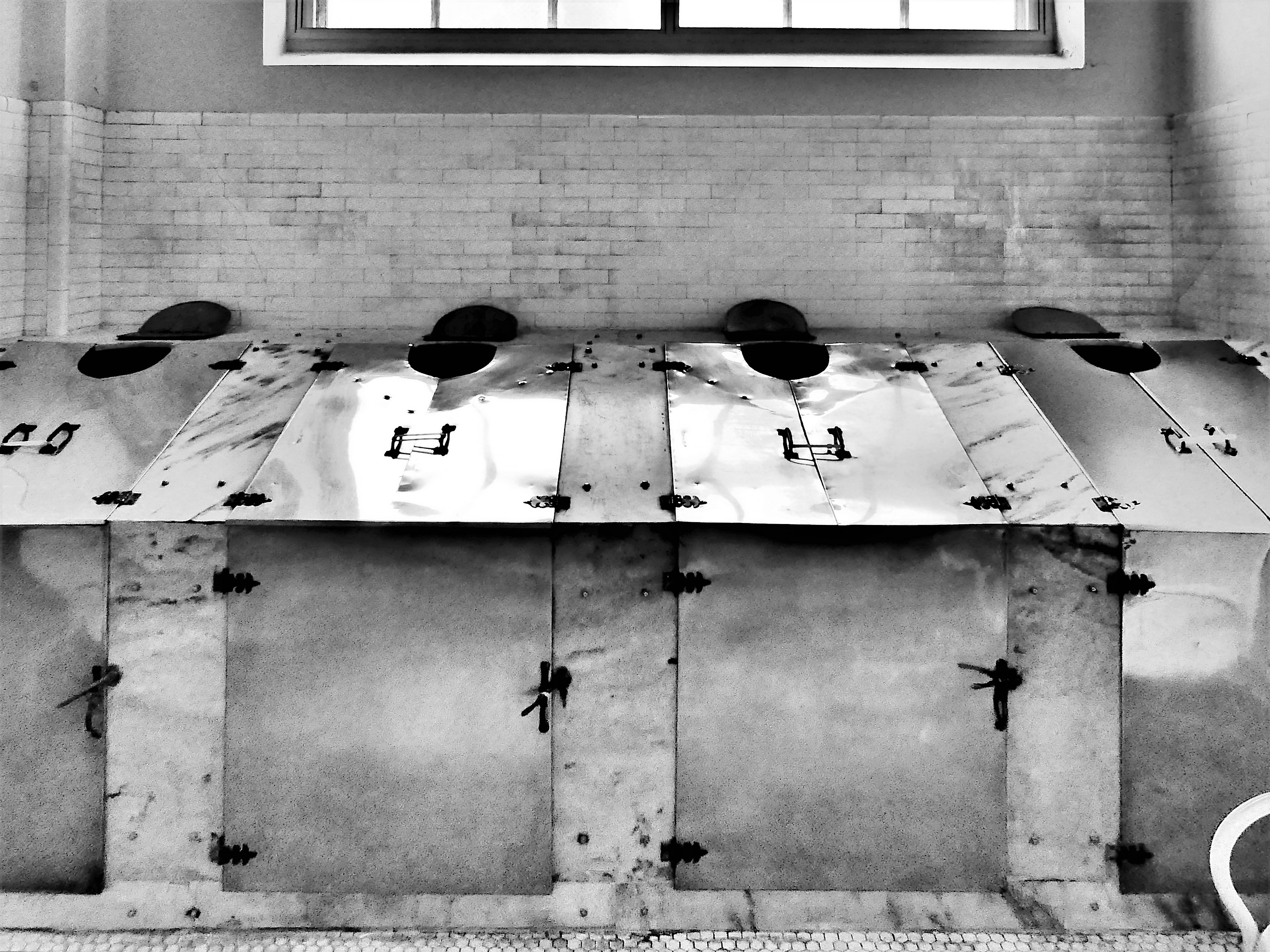
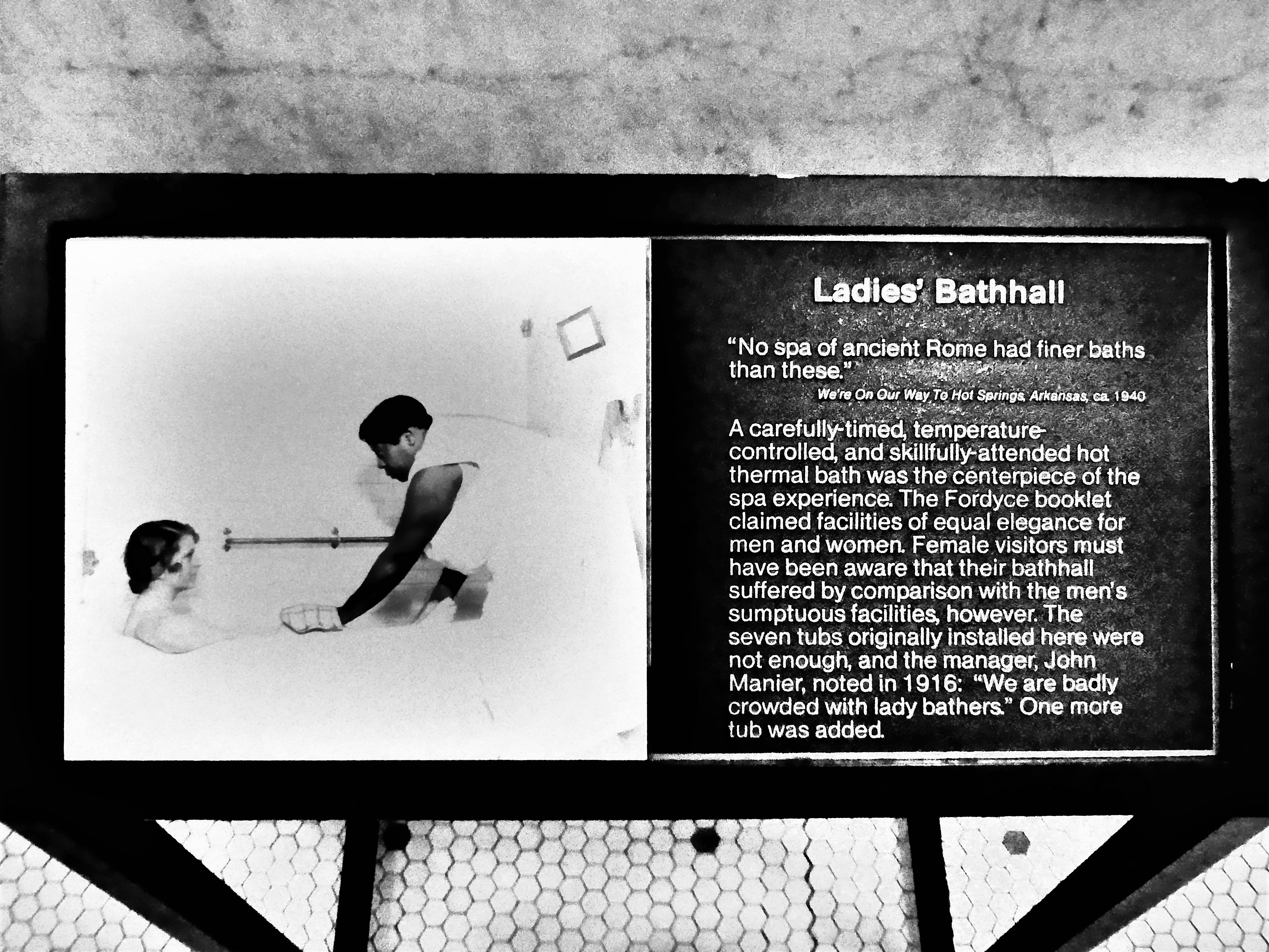
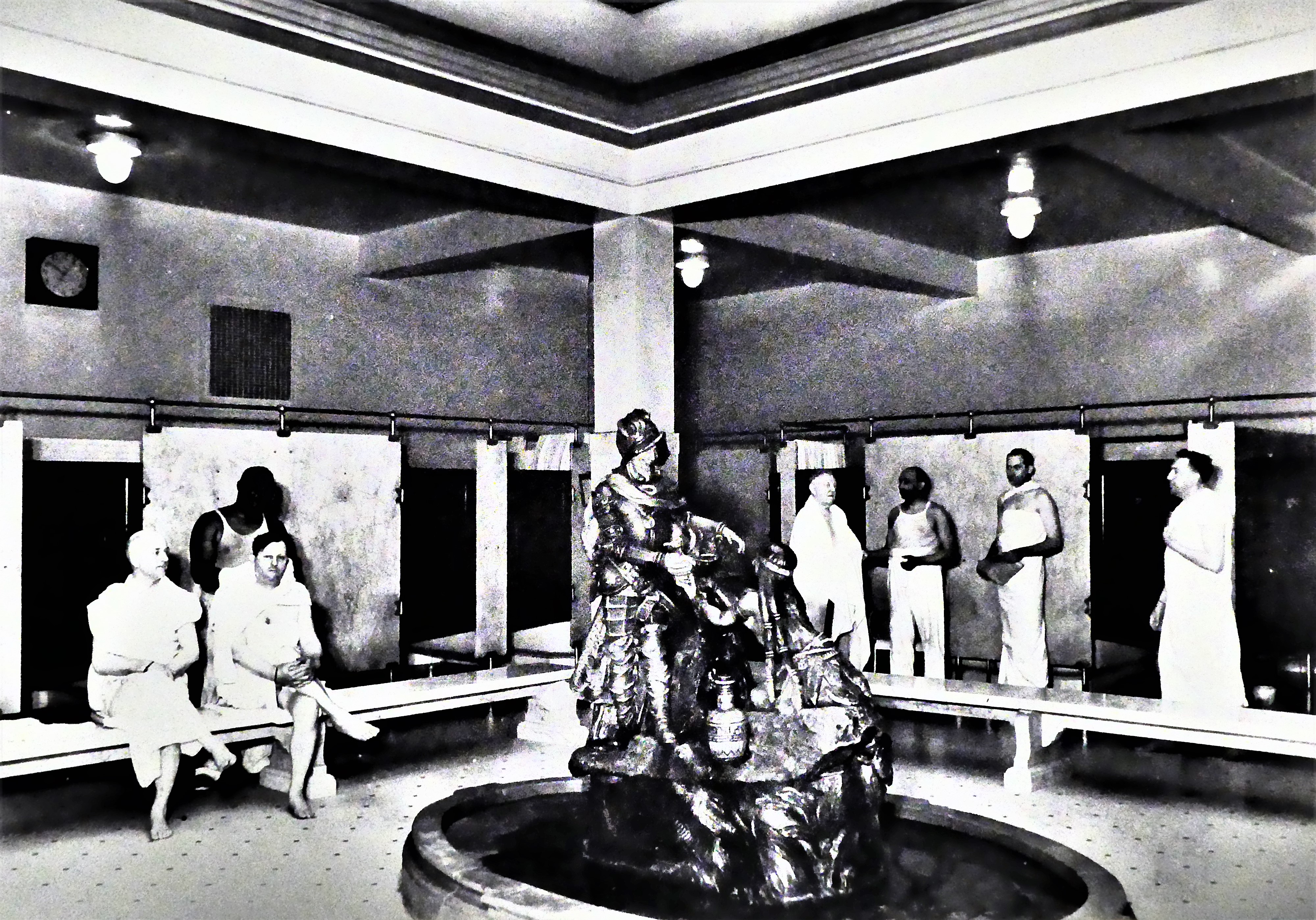
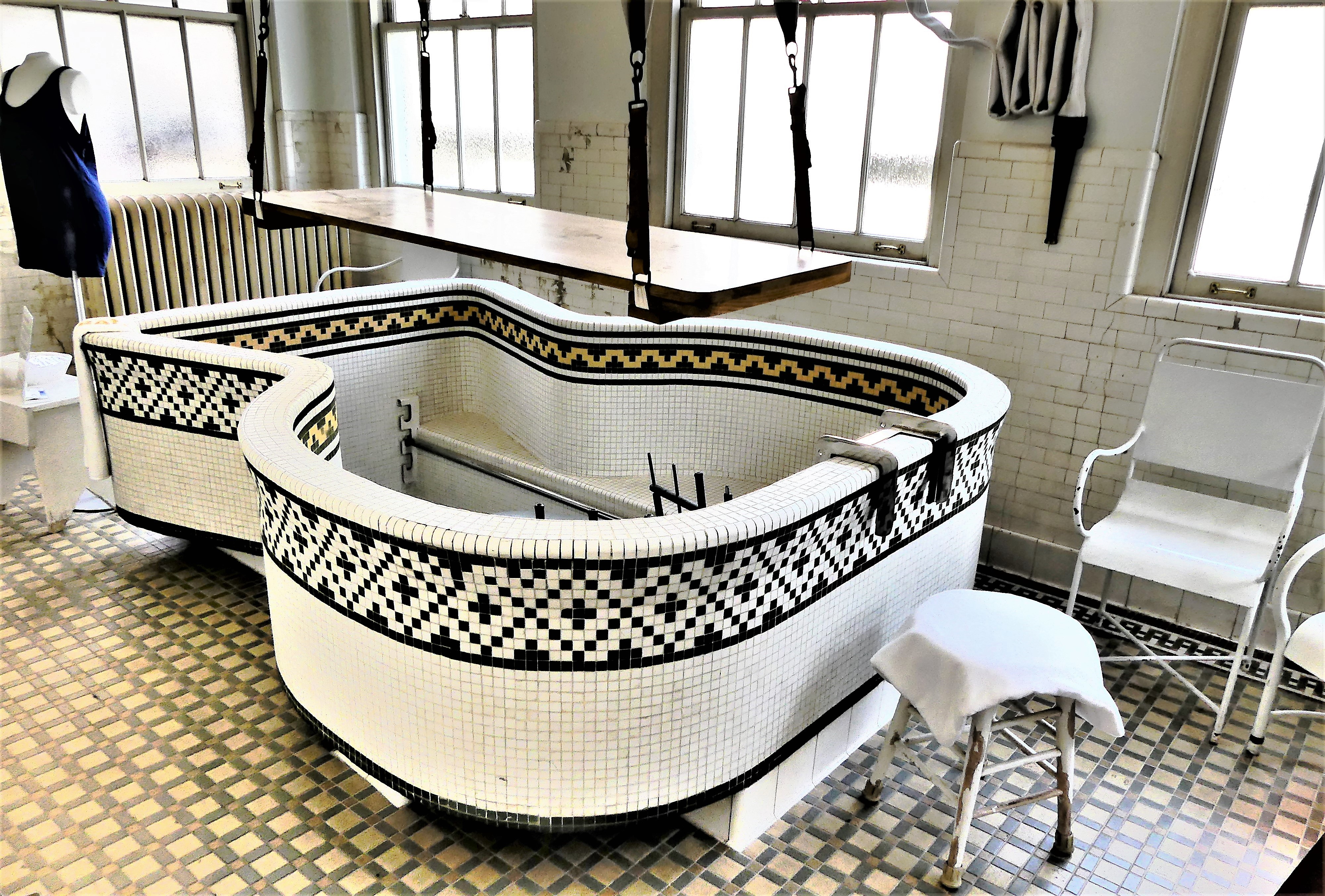
The National Park Visitor Center now occupies this bathhouse–which has been painstakingly restored to reflect the gilded age of health spas, and how turn-of the-century America tapped into Hot Springs’ healing waters to bathe in luxury and style.

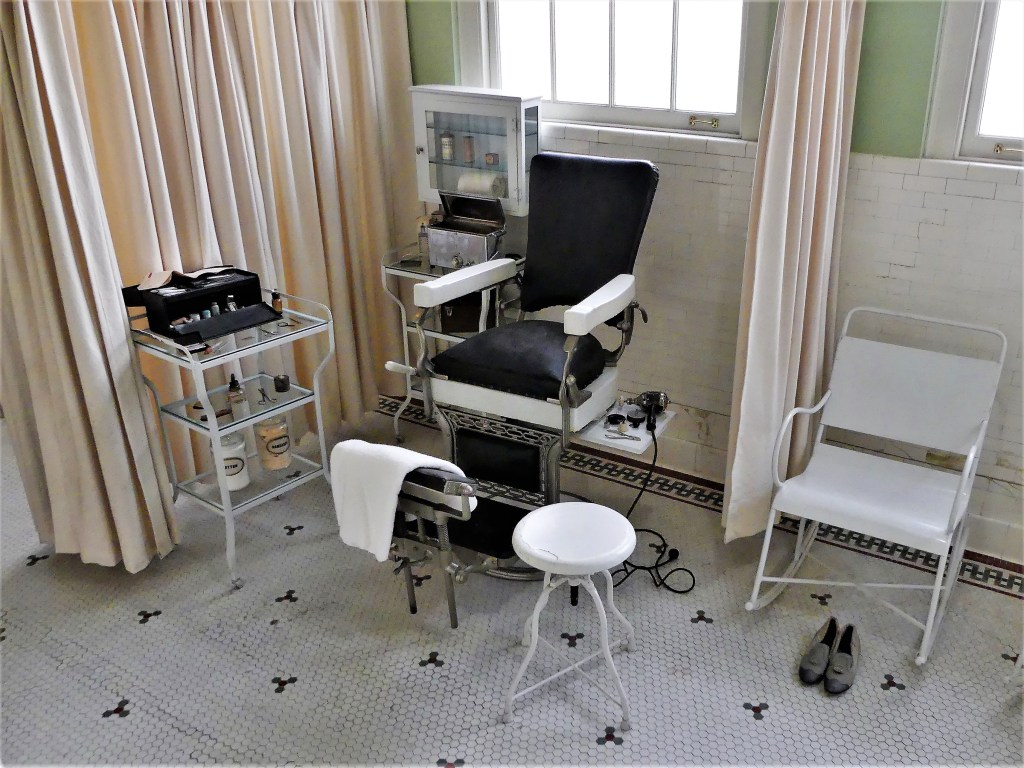
There were many different ways to indulge in water treatments…

But a menu of ancillary services was also available, such as: massage, chiropody, facials, manicure/pedicure, and exercise, etc…

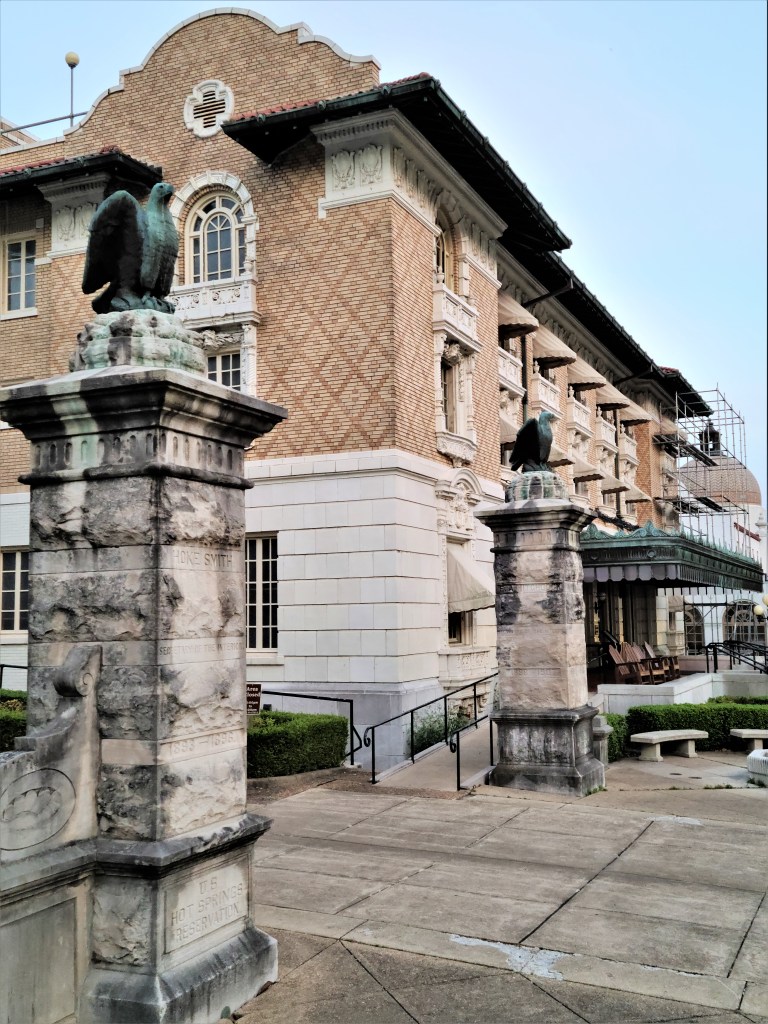
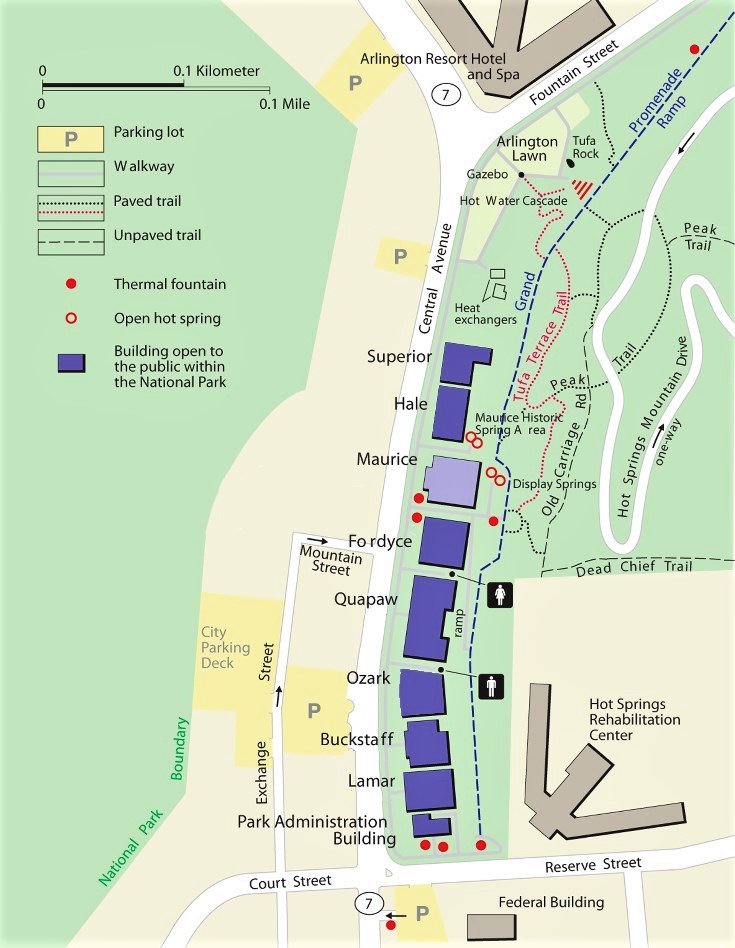
Bathhouse Row quickly filled with competition along Central Avenue,

each one designed with classic architectural details.

and anchored by Hot Springs Rehabilitation Center on the south end of the street.

Formally known as the Army-Navy Hospital, it was the site of the nation’s first general hospital for Army and Navy patients built after the Civil War–treating the sick and wounded through World War II. Subsequently, it became a residential resource center for training young adults with disabilities, but state of Arkansas shuttered the facility in 2019, and the building is now derelict and fallen into disrepair. Currently, it stands as the world’s largest raccoon hotel.

We visited Hot Springs during Memorial Day weekend, and the sidewalks were teeming with families and couples who were happy to return to the land of the living after a year of coronavirus hibernation. Businesses were enjoying record crowds, and the bath houses had finally reopened to the public.

Unfortunately, Leah and I were too late to the party; there were no spa reservations to be had. Water, water everywhere, and not a drop to drink.

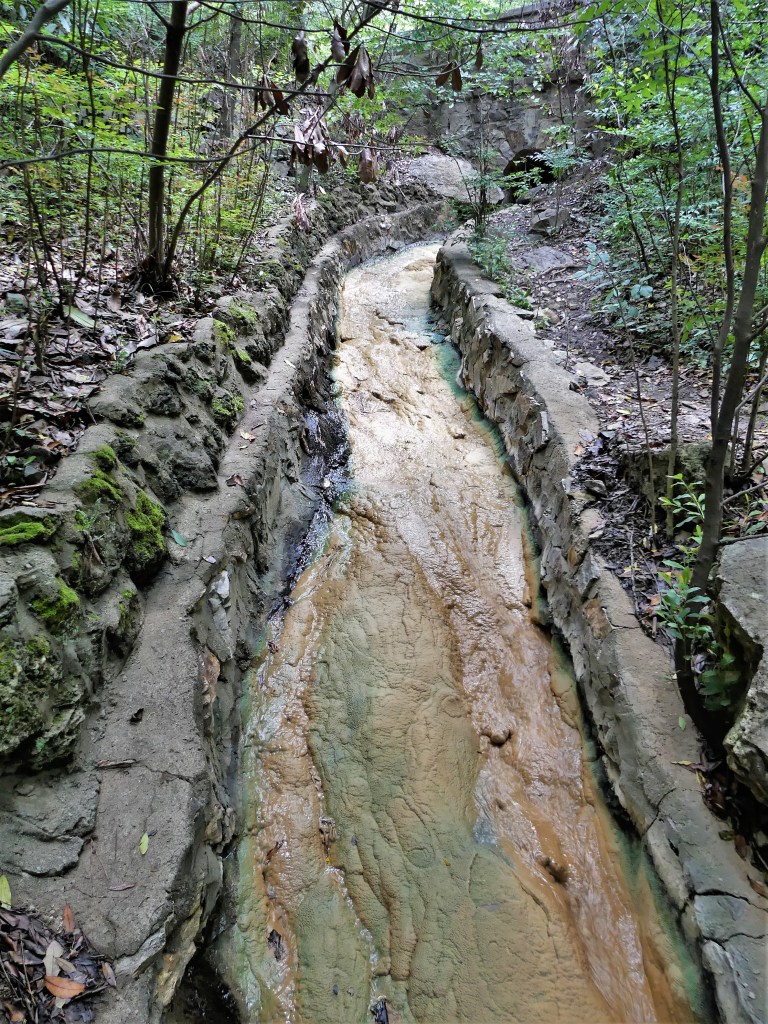
So we took a hike up the mountain, spotted a turtle in the middle of the trail,

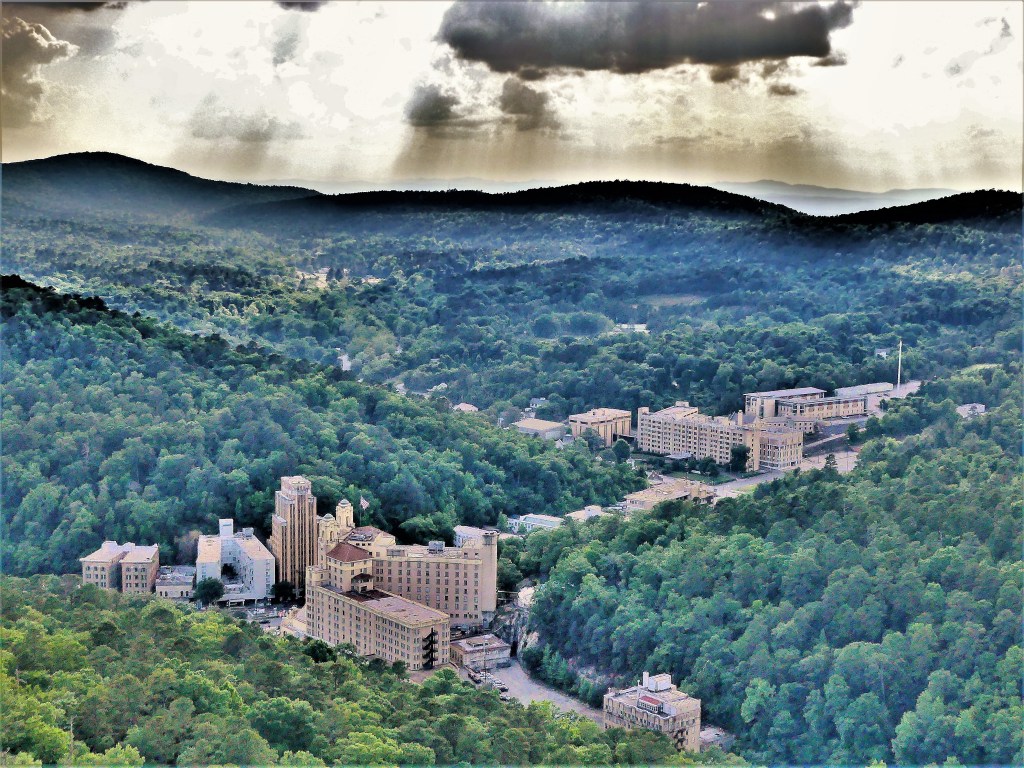
and continued to the Mountain Tower,

offering majestic, mouth-watering views of hidden springs beneath us, while we massaged each others’ neck and shoulders.

Natural Bridge Has Caverns Too!

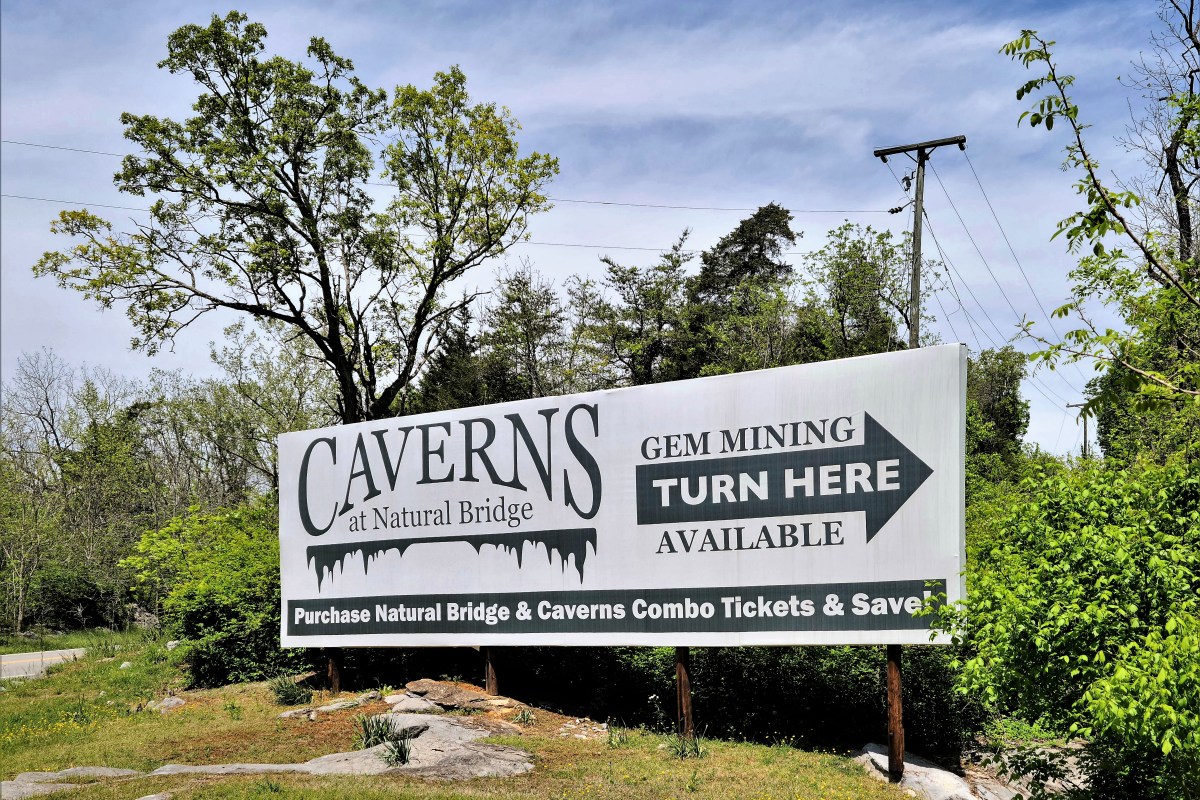
The Caverns of Natural Bridge can’t be more than a 15-minute walk from the Natural Bridge State Park parking lot. Along the way, it’s impossible to miss the Natural Bridge Hotel poised on it’s perch across the road…

where very little has changed as a popular destination for tourists since its rebuilding in 1964 after a doomsday fire.

Continuing up the road and around the corner, stands a rustic cabin set back from the parking lot that’s been open for business since 1977.

The attendant tells us that this is a quiet time for tourists–middle of the week, before Memorial Day–and that’s fine with us. In fact, so far, we are the only spelunkers to have signed up for the 2 o’clock tour. As the hour draws near, only two other women have joined us. But as a party of four, Brian, our guide assures us that we can linger longer at each attraction, since our group is so small.

We are descending into a wet cave (as opposed to a dry cave),

34 stories below the earth’s surface…

where an underwater spring still feeds the formation of speleothems (e.g. stalactites and stalagmites).

The temperature is a humid 54o F, and with masks on

my glasses can’t help but fog with each breath I take. It’s never been so frustrating looking through a viewfinder to frame a photograph.

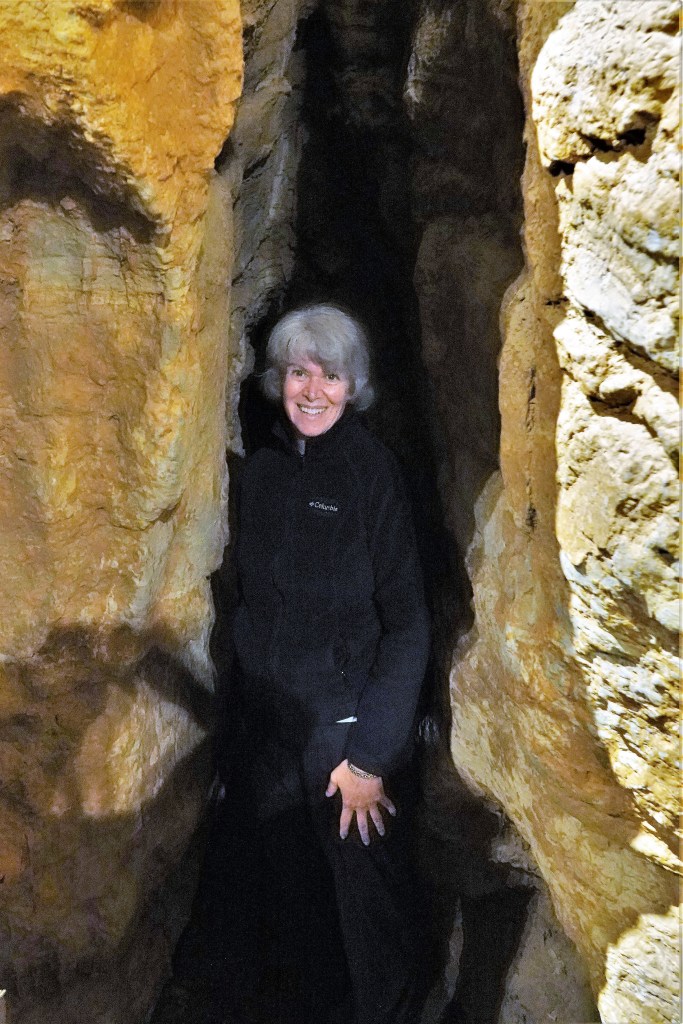
But as we snake our way through low overheads…

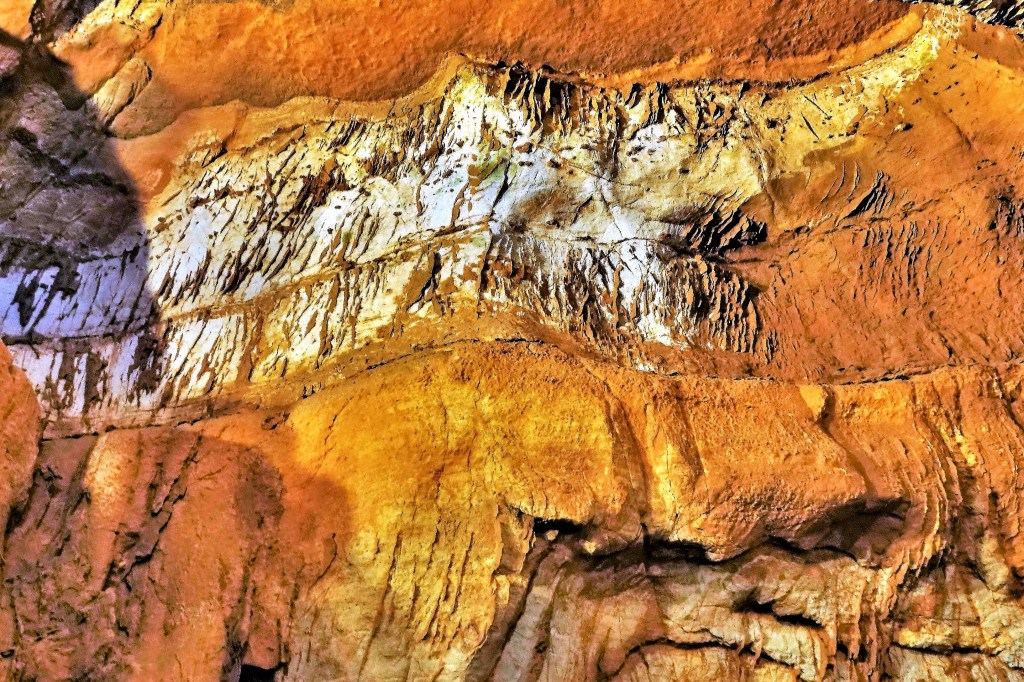
we are surprised to see boxwork, an uncommon, venous formation of calcite residue…

which forms when calcium carbonate dissolves within the cracks, resulting in unusual honeycomb patterns.

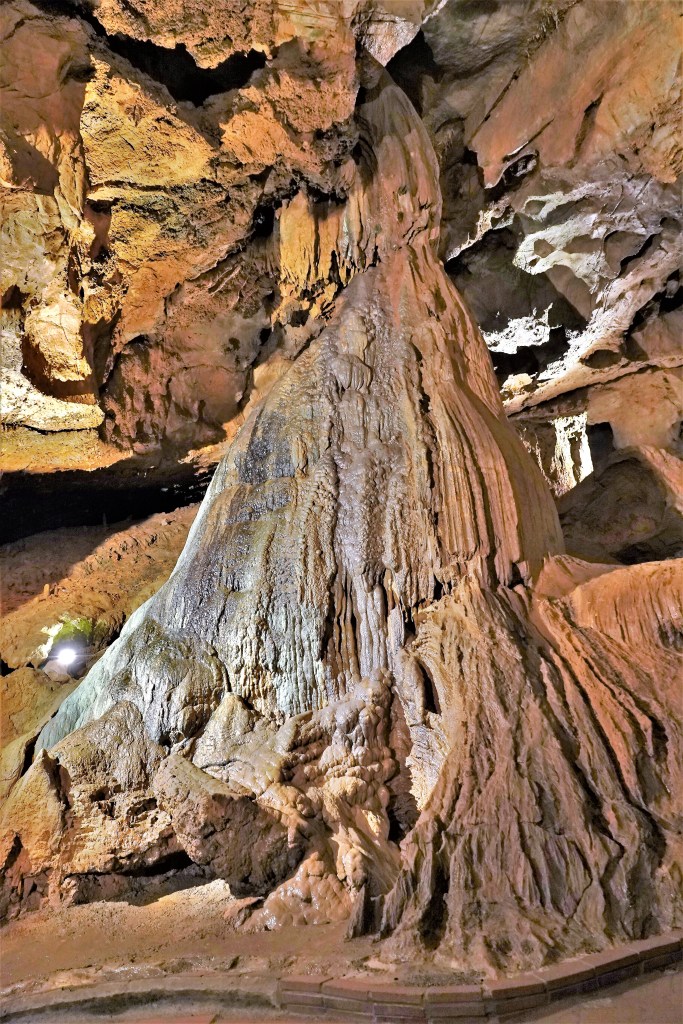
While not the biggest cave system (that belongs to Mammoth Cave), or the most ornate (that belongs to Carlsbad Cavern), Natural Bridge has a pleasant complement of columns…

and detailed domes,

and no shortage of surprises between the cracks and crevices.

Natural Bridge

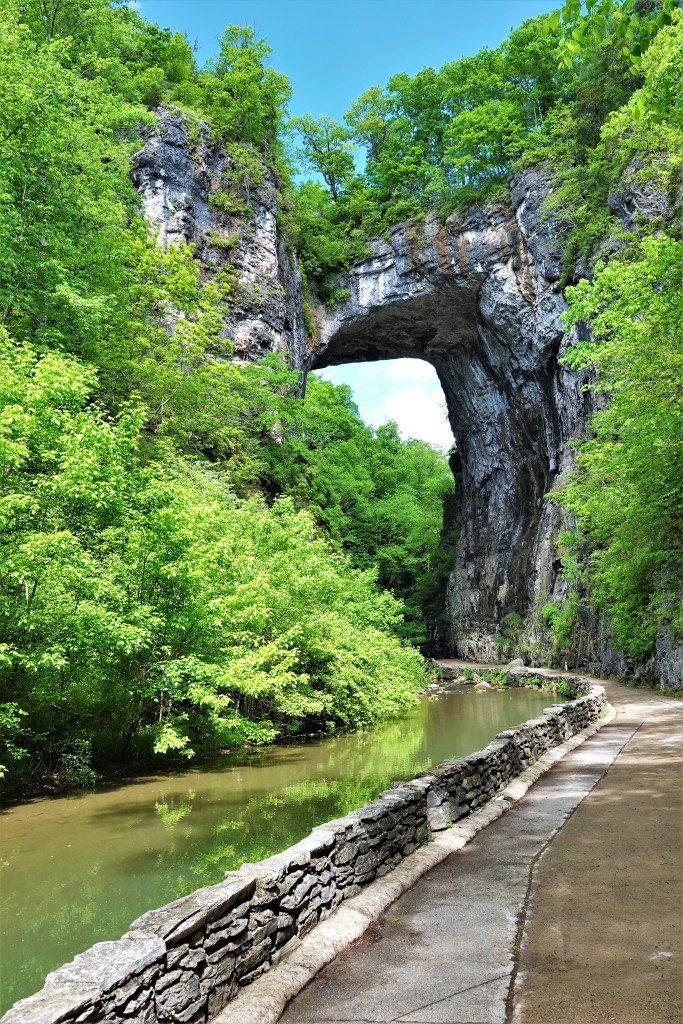
If you’re searching for a town that’s so proud of their community attraction that their town is named after it, look no further than Natural Bridge, Virginia. It’s an unincorporated town tucked within the Shenandoah Valley…

that unsurprisingly features a rock bridge of limestone located in Rockbridge County.

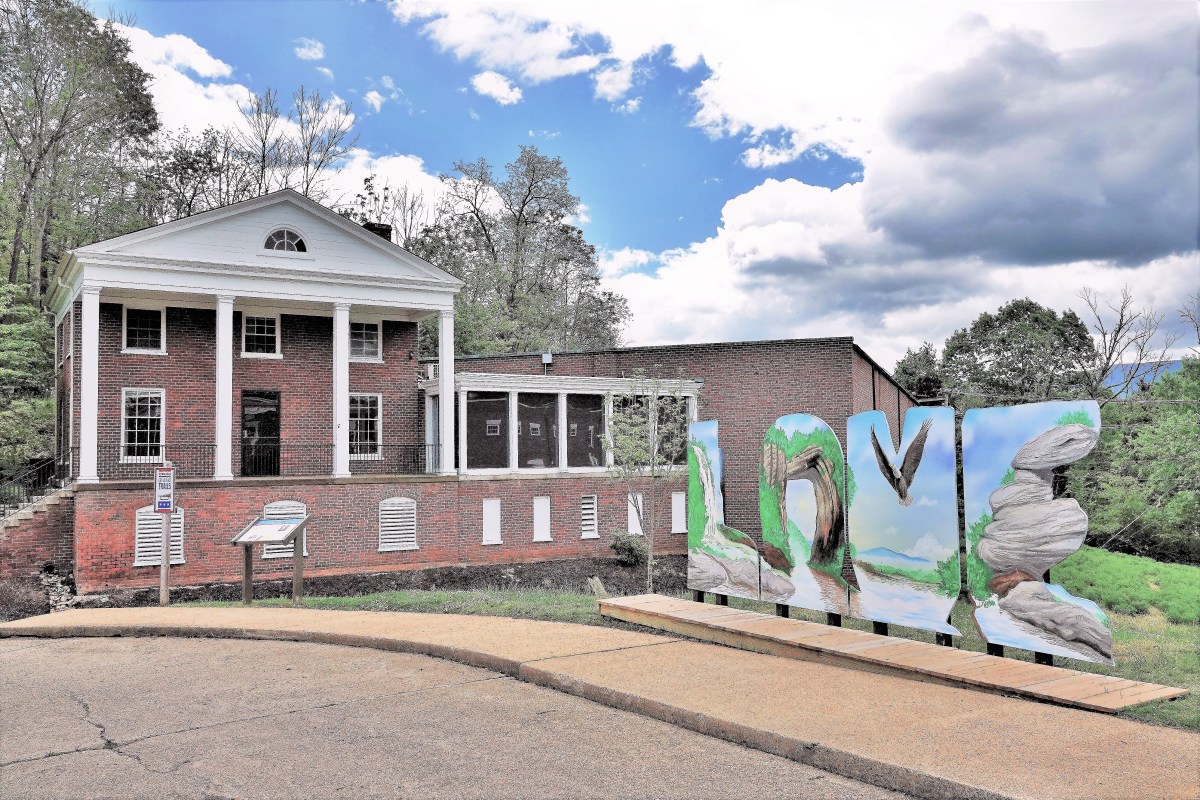
Leah and I masked up, and approached the Georgian-styled Visitor Center to surrender $18 to view this natural wonder.

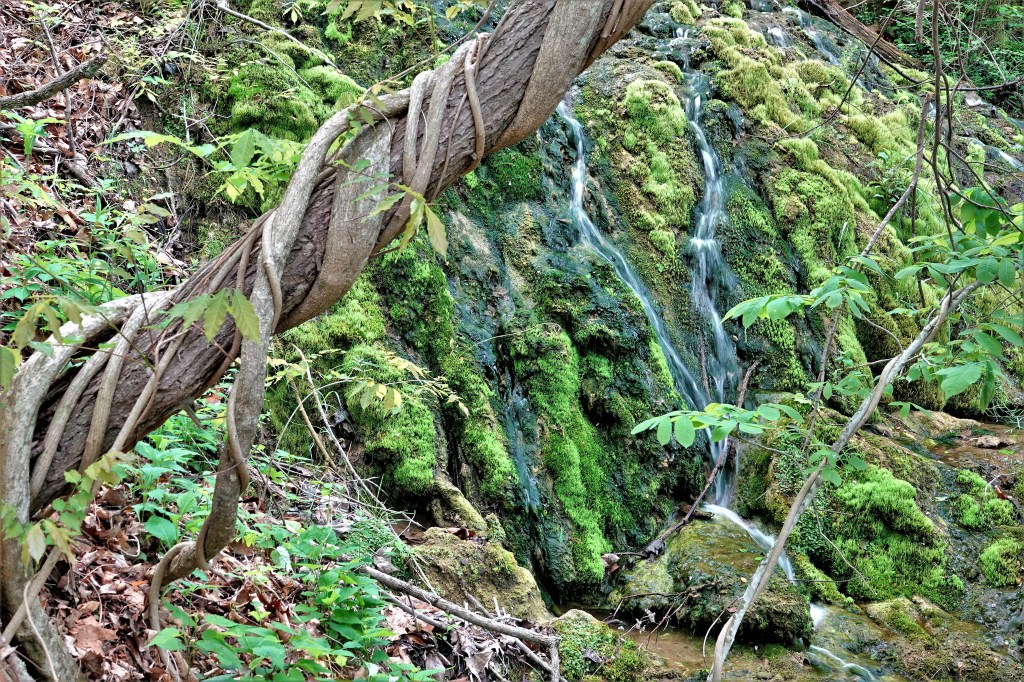
Our downward trail followed a moss-laden terrace of twisted roots and vines laced with wisps of water…

descending into enchanted dripping pools falling on flat rocks…

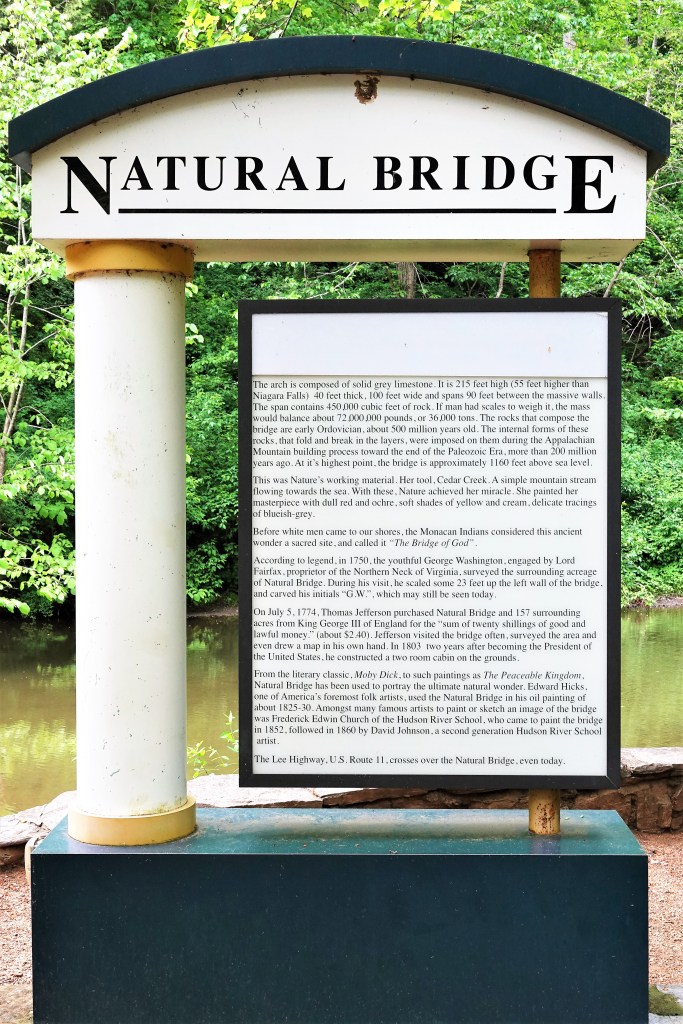
until we reached a T-shirt concession at rock bottom and an imposing graphic…

that tells the story of Natural Bridge:

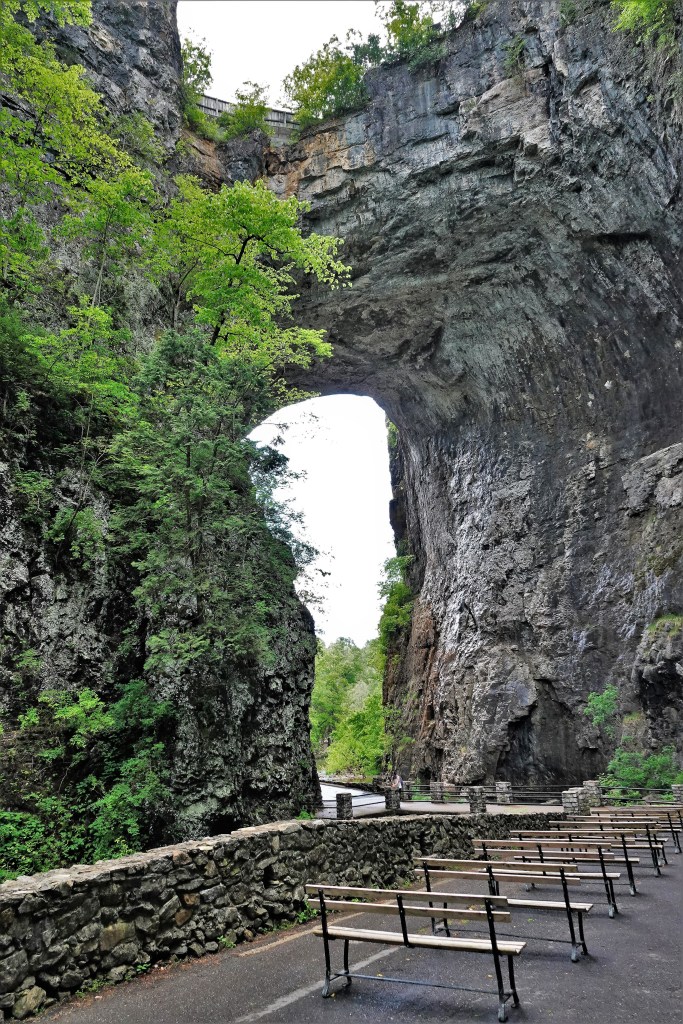
The arch is composed of solid grey limestone. It is 215 feet high (55 feet wider than Niagara Falls) 40 feet thick, 100 feet wide and spans 90 feet between the massive walls.

Looking up at Natural Bridge

The span contains 450,000 cubic feet of rock. If man had scales to weigh it, the mass would balance about 72,000,000 pounds, or 36,000 tons. The rocks that compose the bridge are early Ordovician, about 500 million years old. The internal forms of these rocks that break and fold in the layers were imposed on them during the Appalachian Mountain building process toward the end of the Paleozoic Era, more than 200 million years ago. At its highest point, the bridge is approximately 1160 feet above sea level.

This was Nature’s working material. Her tool, Cedar Creek–a simple mountain stream flowing toward the sea. With these, Nature achieved her miracle. She painted her masterpiece with dull red and ochre, soft shades of yellow and cream, delicate tracings of blueish-grey.

Before white men came to our shores, the Monacan Indians considered this ancient wonder a sacred site, and called it “The Bridge of God.”

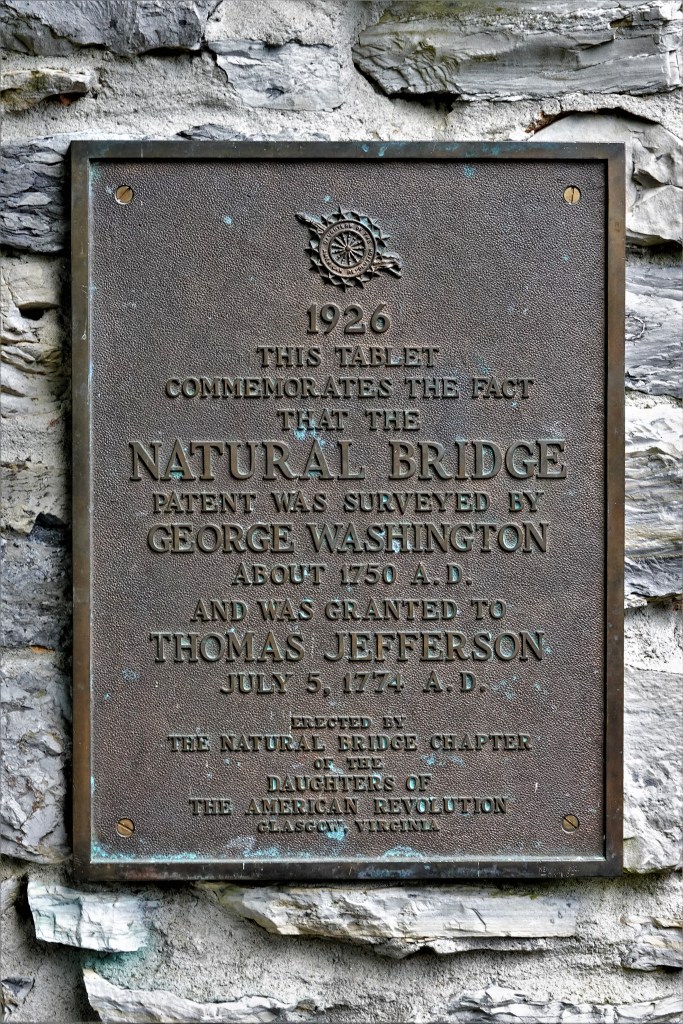
According to legend, in 1750 the youthful George Washington, engaged by Lord Fairfax, proprietor of the Northern Neck of Virginia, surveyed the surrounding acreage of Natural Bridge. During his visit, he scaled some 23 feet upon the left wall of the bridge and carved his initials, which may still be seen today.

On July 5, 1774, Thomas Jefferson purchased Natural Bridge and 157 surrounding acres from King George III of England for the “sum of twenty shillings of good lawful money” (about $2.40). Jefferson visited the bridge often, surveyed the area, and even drew a map in his own hand. In 1803, two years before becoming the President of the United States, he constructed a two-room cabin on the grounds.

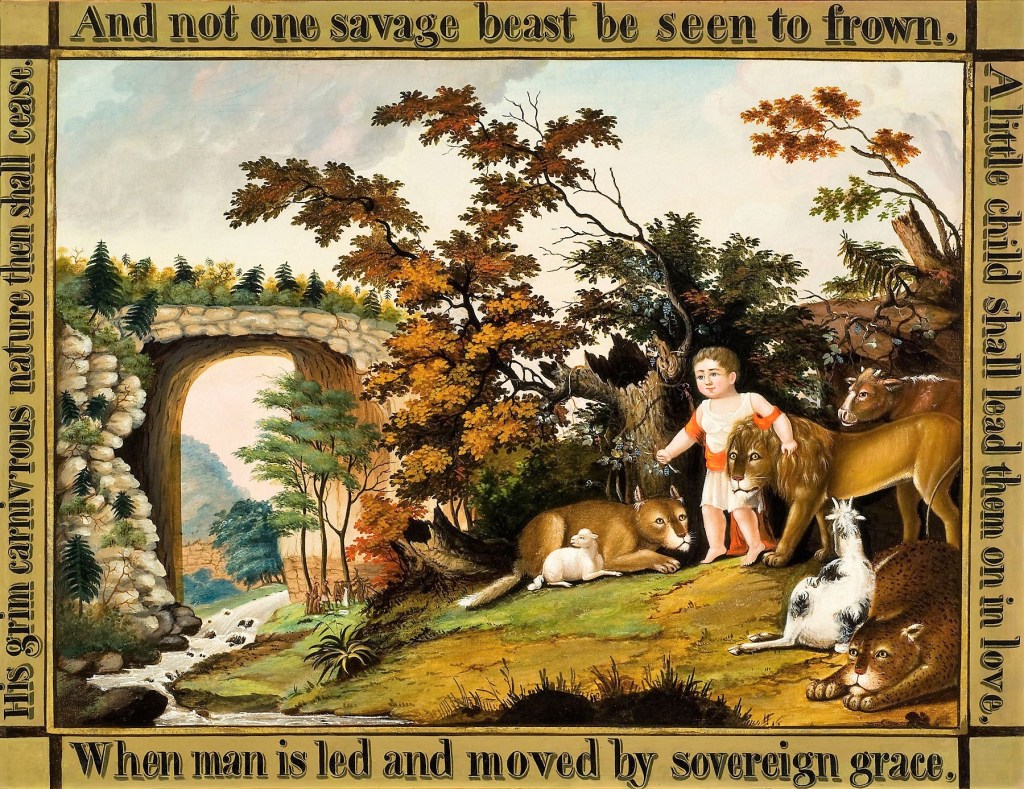
From the literary classic Moby Dick, to such paintings as The Peaceable Kingdom, Natural Bridge has been used to portray the ultimate wonder. Edward Hicks, one of America’s foremost folk artists, used the Natural Bridge in his oil painting of about 1825-30.

Amongst many artists to paint or sketch an image of the bridge was Frederic Edwin Church, followed in 1860 by Davis Johnson, a second generation Hudson River School artist.

In later years, Natural Bridge became a merchandising magnet.

Personally, I was equally as intrigued with Cedar Creek as I was impressed by the monolithic bridge…

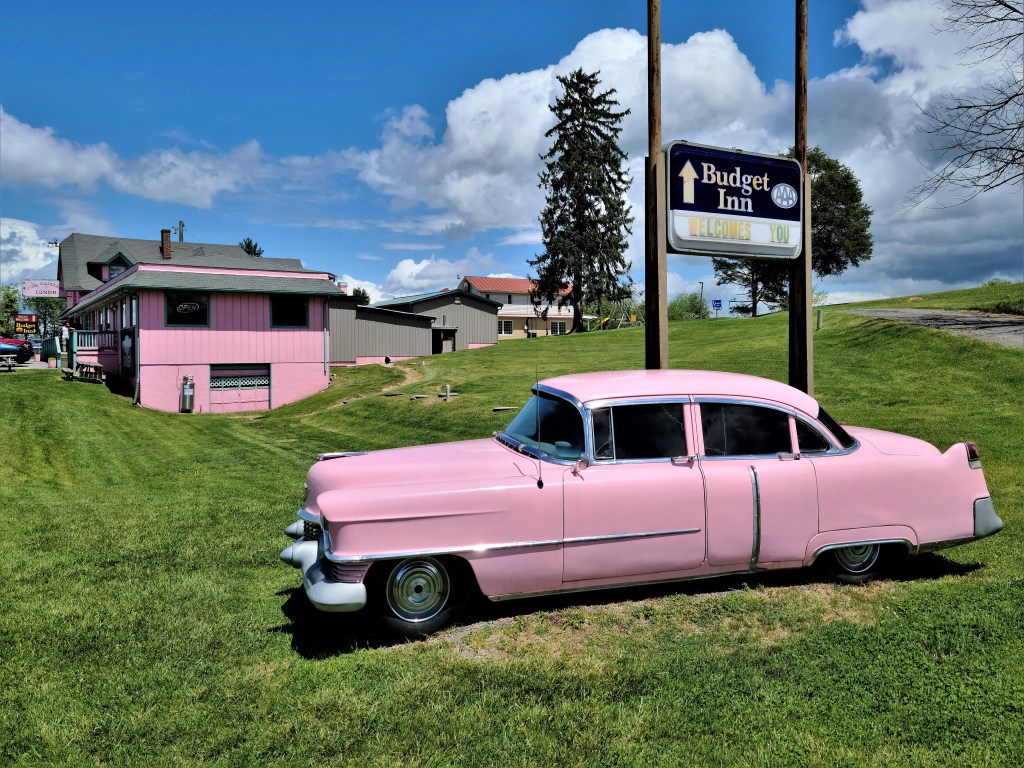
Even today, Lee Highway (U.S. Route 11) runs across the Natural Bridge, and that’s a very good thing, because we crossed many times to access our KOA campground down the road, and more importantly to visit Elvis at the Pink Cadillac Diner.