A stopover in Eureka Springs, AR along the way to Branson, MO produced some Eureka! moments and other assorted revelations.
For one, there are seventeen registered churches in Eureka Springs, ministering to two thousand healing hearts and souls around town, plus a Tibetan Buddhist temple and an integrated monastery of celibate brothers and sisters.
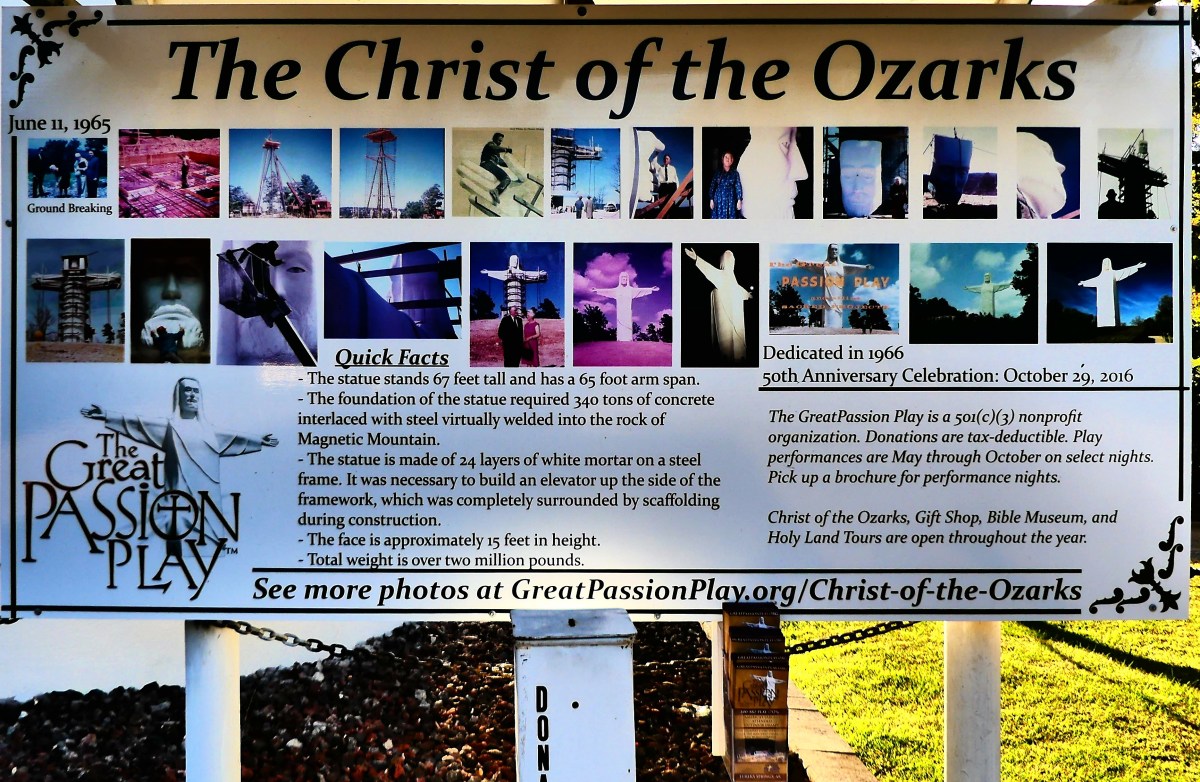
Religious overtones are also pervasive throughout town. Our Airstream was parked along Passion Play Rd., above the hallowed hollow where The Great Passion Play’s dramatic reenactment of the last week of Jesus Christ is the #1 tourist attraction in the area, and The Christ of the Ozarks rises nearby, hovering above the dense woods of Magnetic Mountain.
Also looking down from town, the Crescent Hotel–recently added to the National Register of Historic Places–delivers luxurious living and salon services, in what’s billed as America’s Most Haunted Hotel.
A fourth-floor lookout…
provides familiar views in the distance,
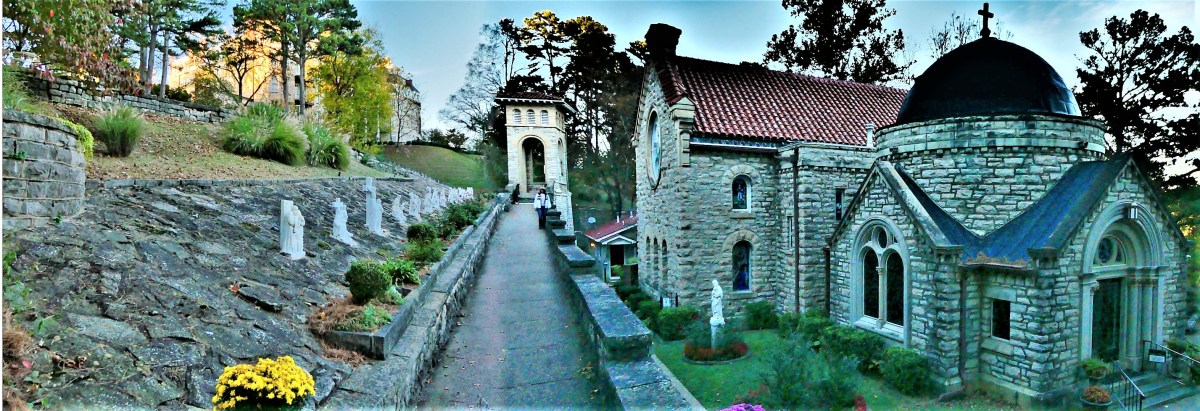
and an overlook of St. Elizabeth Catholic Church of Hungary–listed in Ripley’s Believe It or Not as the only church in America with entry through the bell tower.
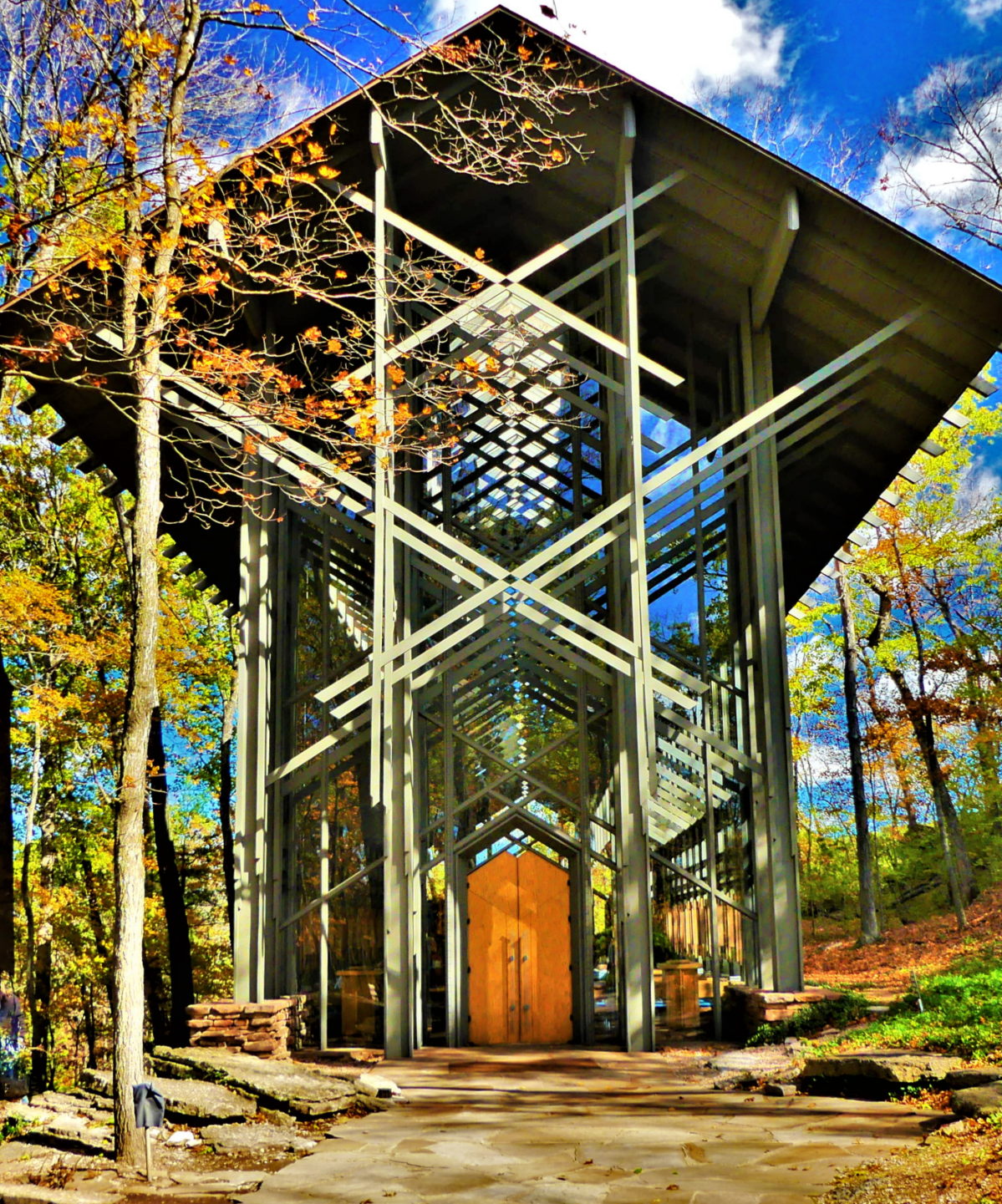
Stunning religious “art-chitecture” can also be found at the Thorncrown Chapel, a jewel of glass and wood tucked into the hillside atop a ledge of flagstone.
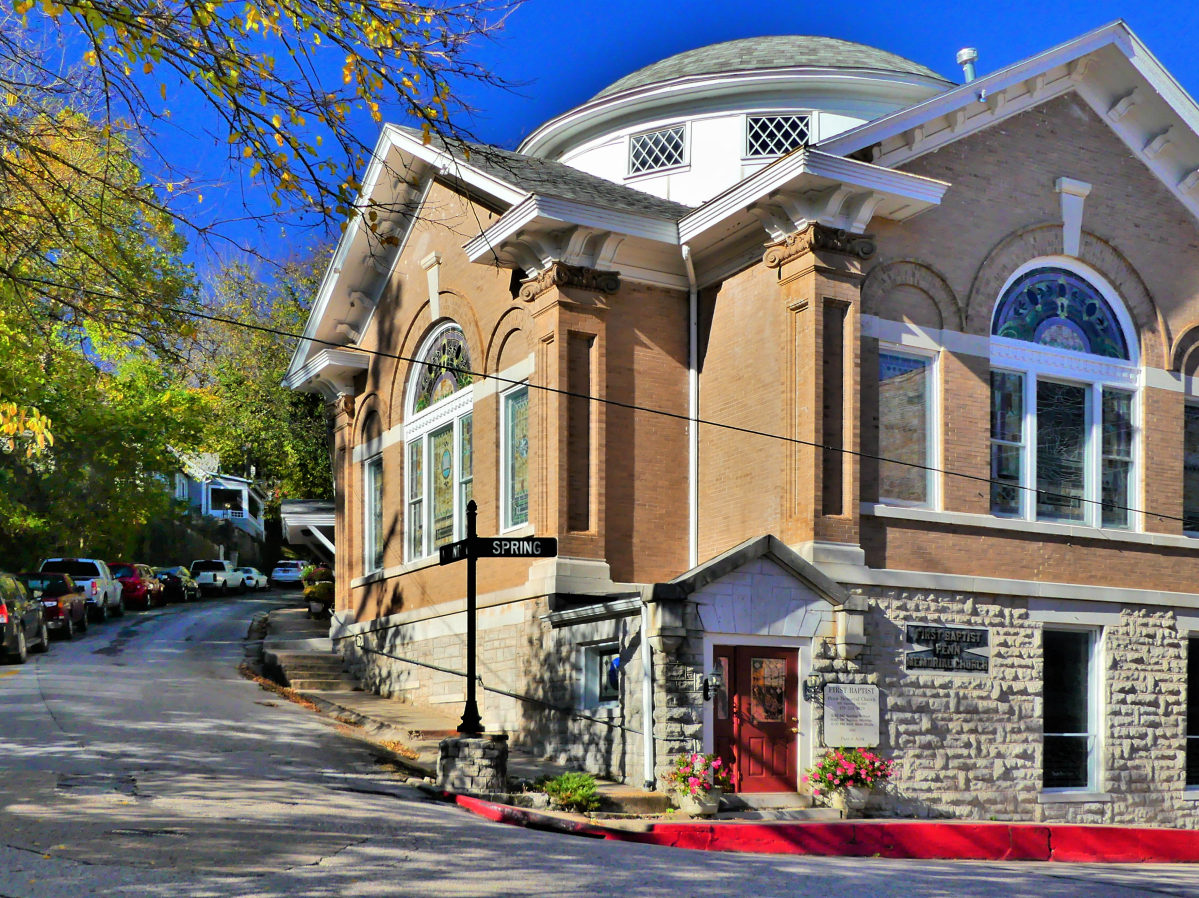
Inside Eureka Springs’ Victorian historical district, the Byzantine-styled First Baptist Church stands at the corner of three intersecting streets with entrances at each of its four levels, giving it four distinct addresses and cause for another Ripley’s entry.
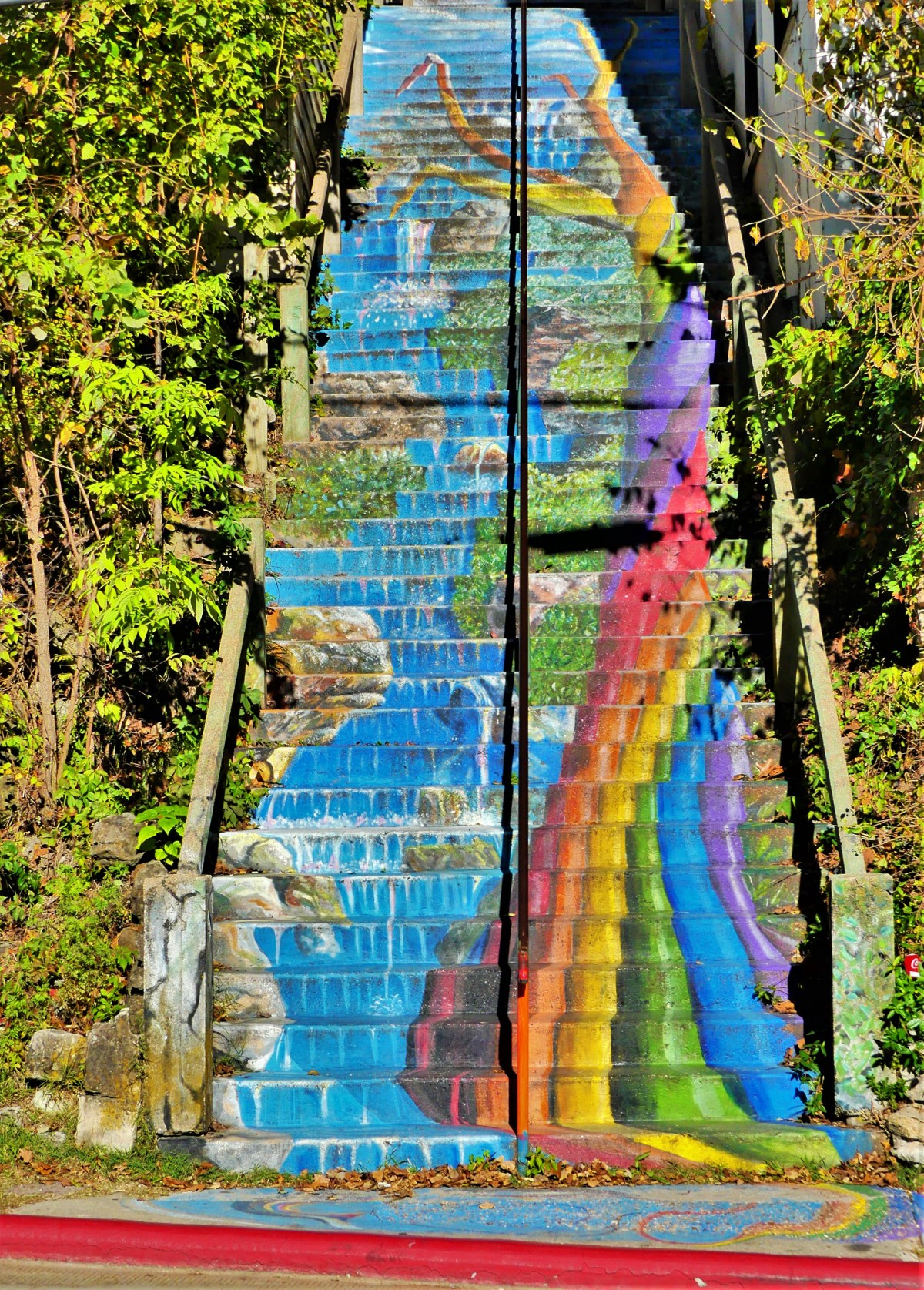
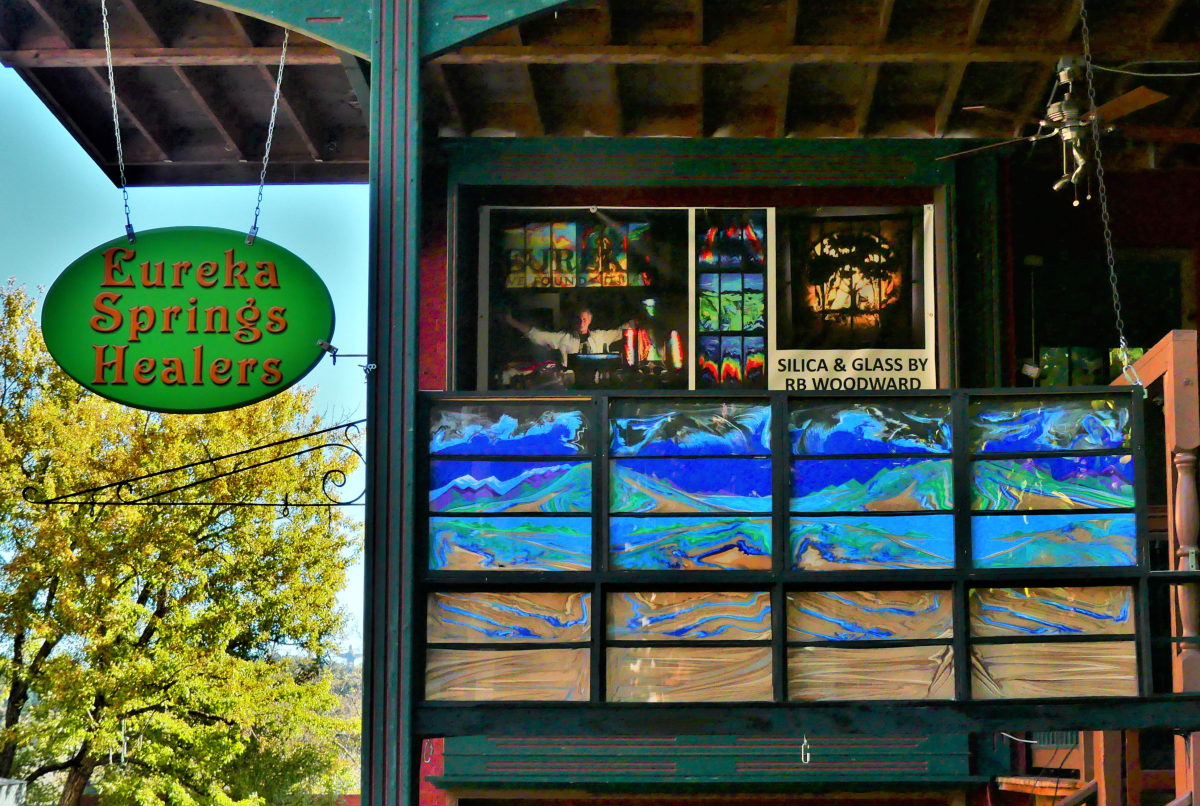
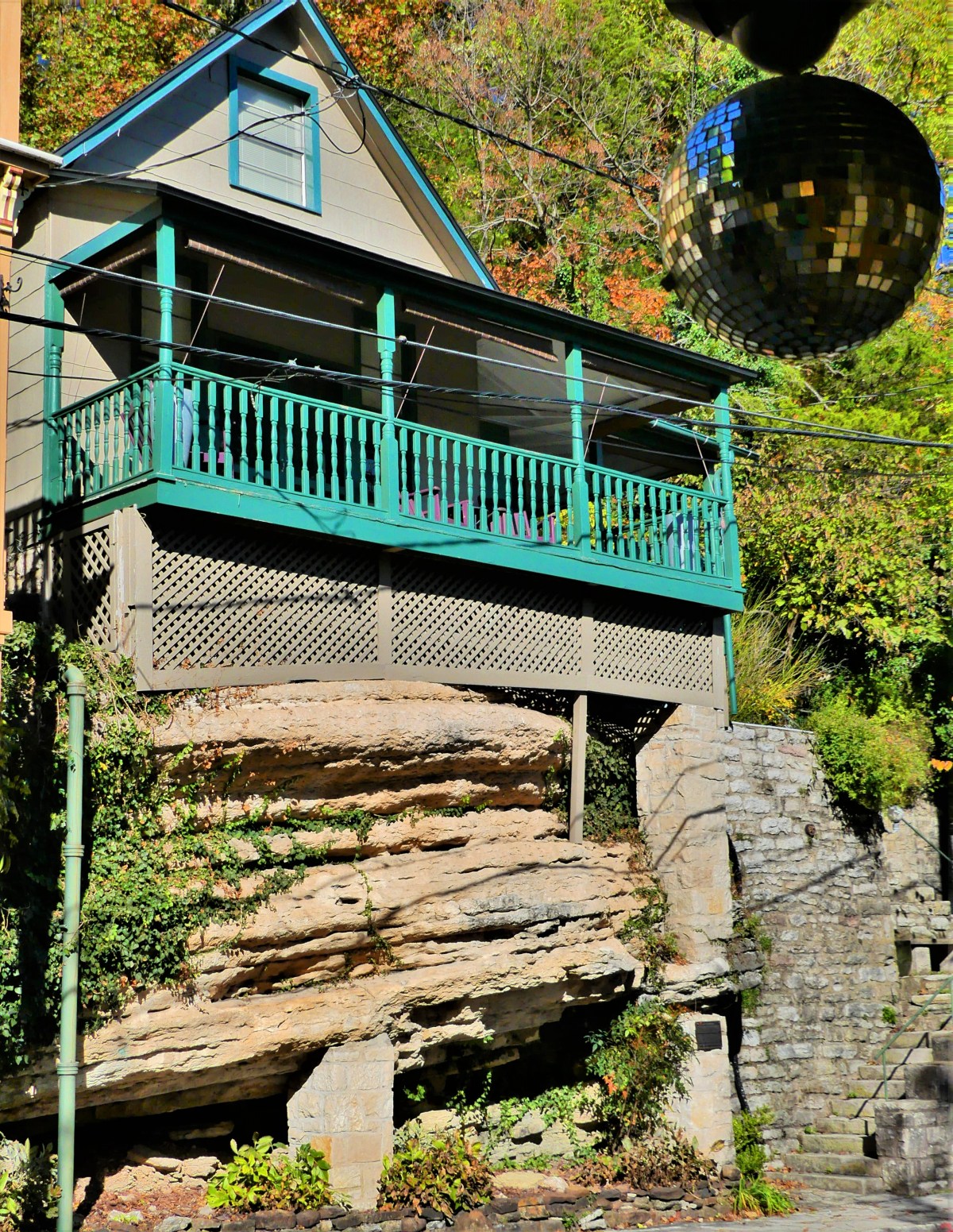
The charm of downtown carries through its narrow winding streets, acute corners, and graded roads of 30% or greater, routinely decorated with accents of fine art…
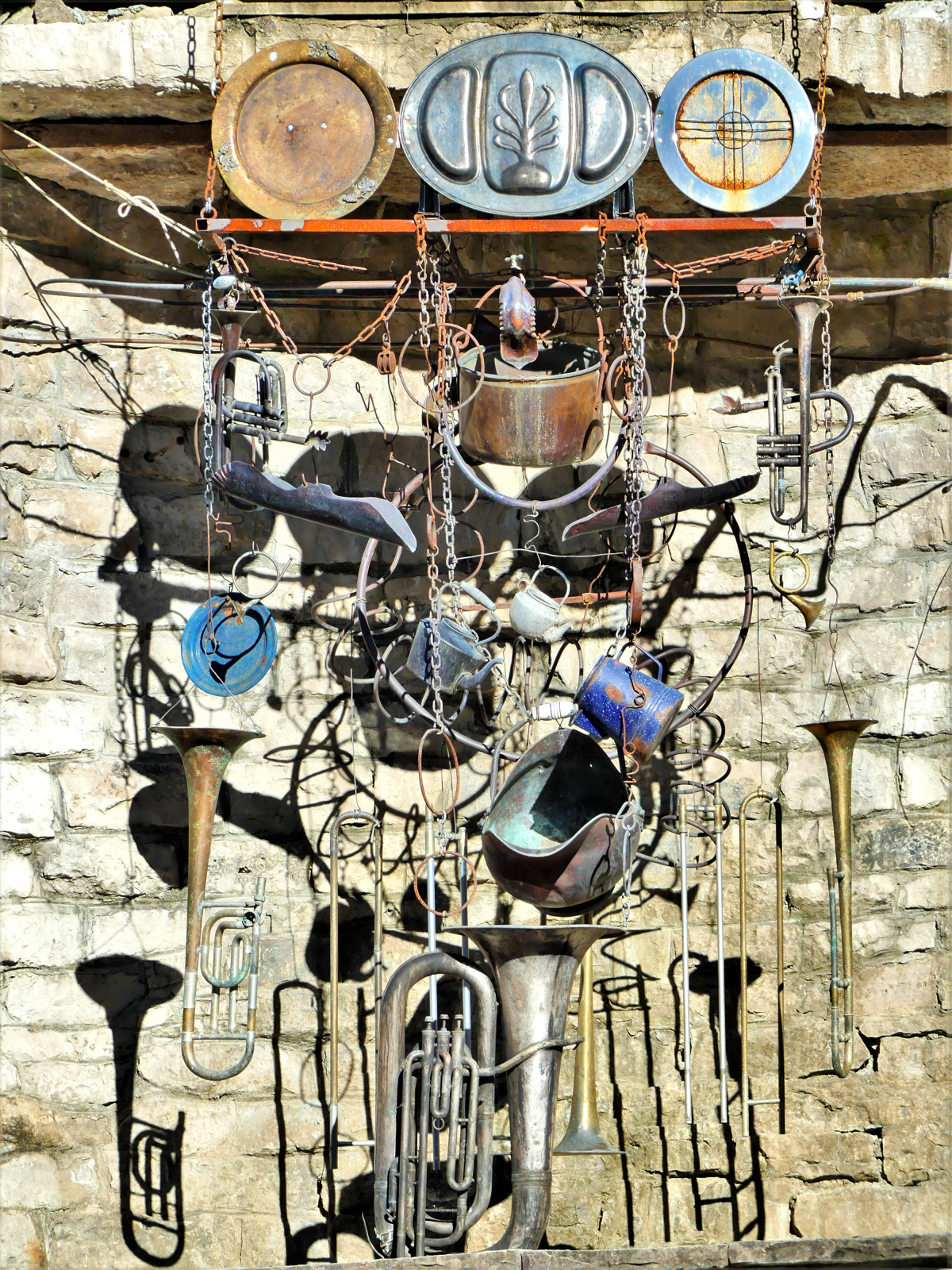
…and frivolity.
Eureka Springs came by its name naturally, manifesting no less than sixty-two springs that gushed from the mountainside with so-called healing properties. Its establishment as a resort community during the 1870’s prompted visitors from near and far to “take the waters” by drinking up and soaking in its therapeutic juices.
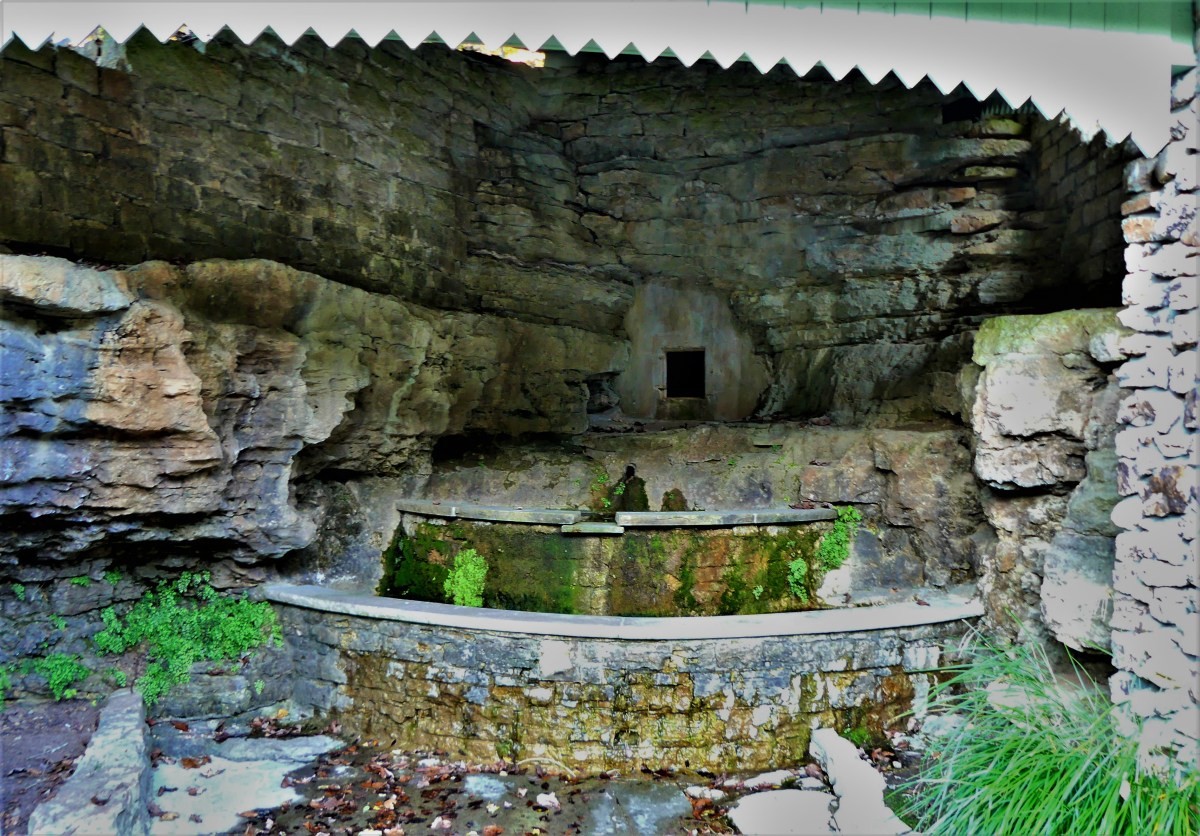
Today, over a dozen springs have been restored to former glory.
And while the water is no longer potable, the park habitats have given the springs a new lease on life,
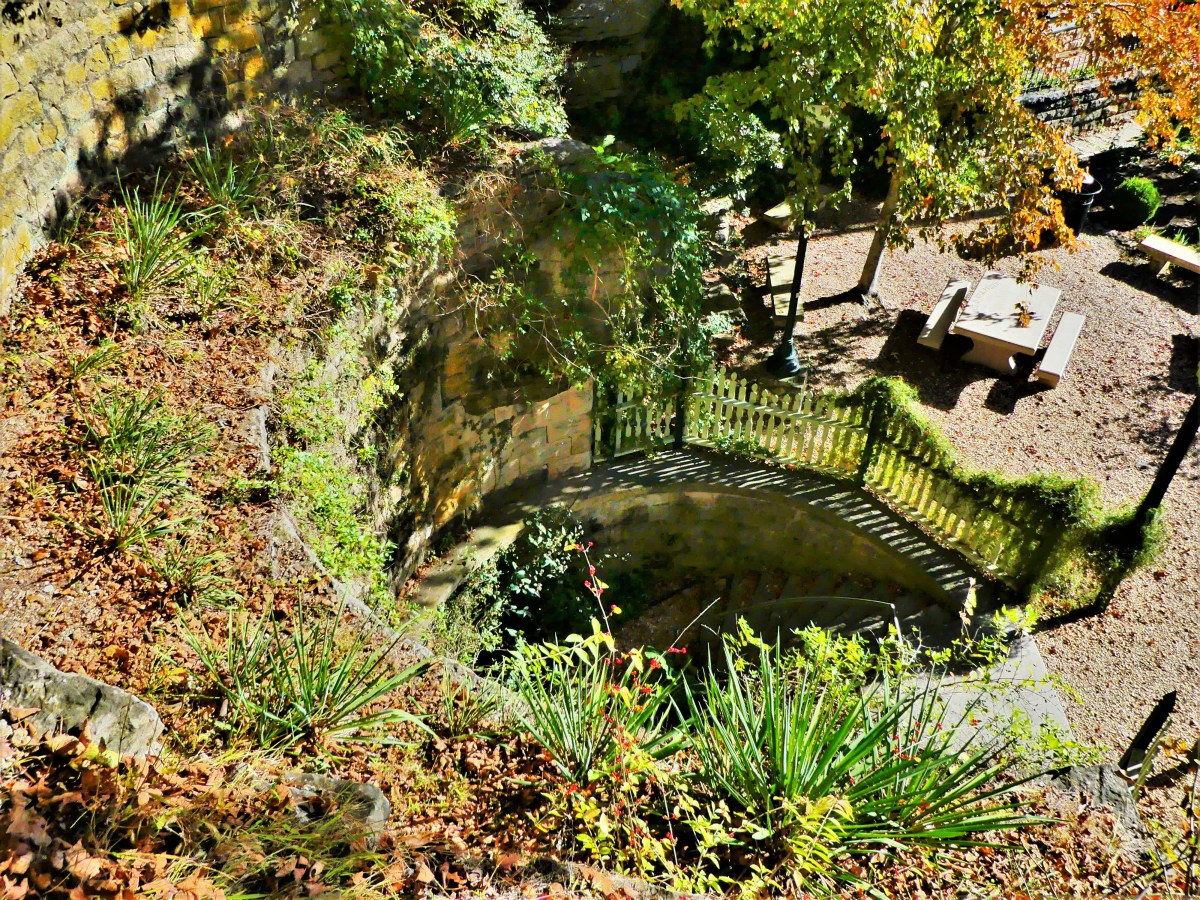
and have renewed the town’s reputation as a popular healing destination,
with an emphasis on preserved charm.
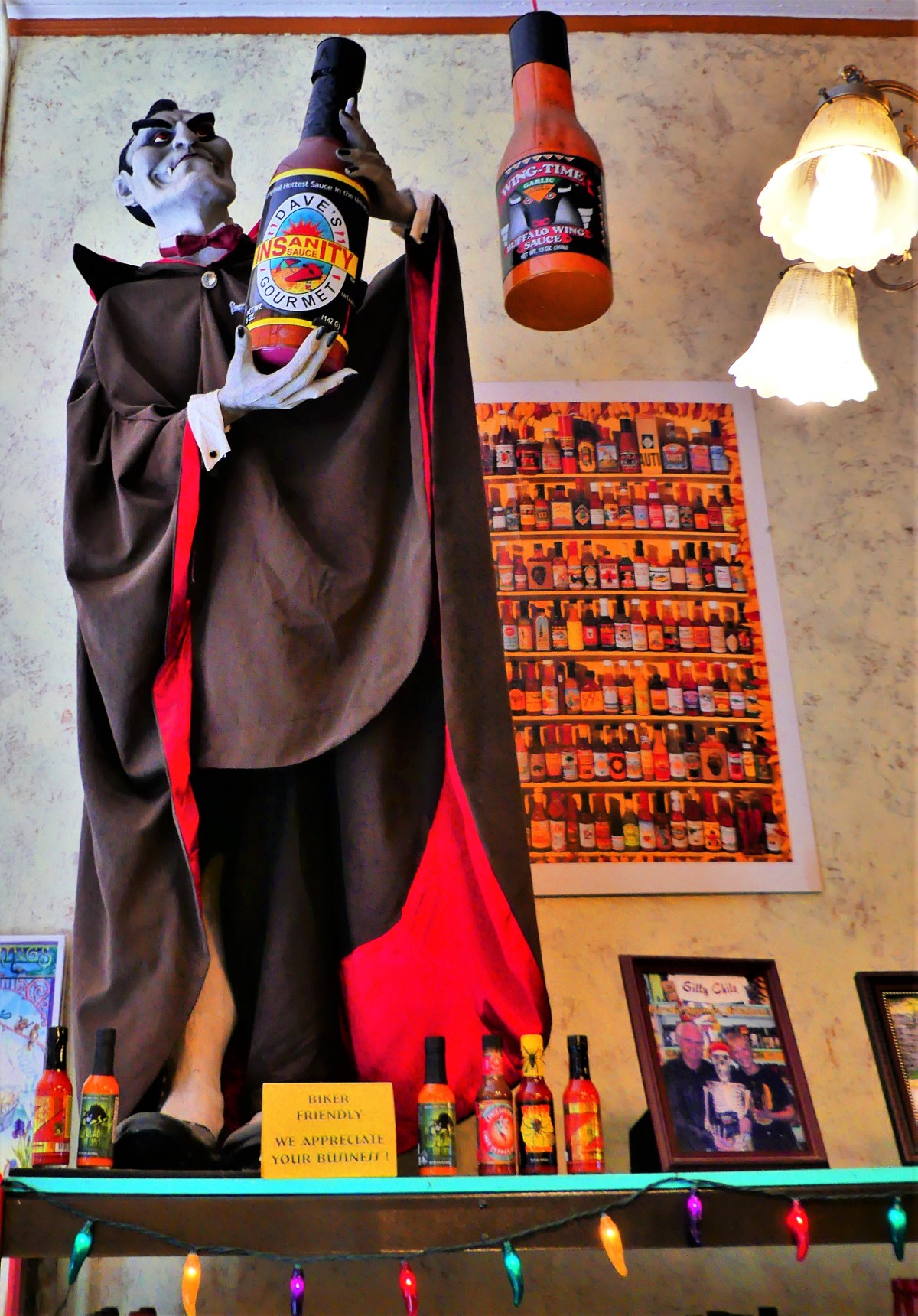
Perhaps the biggest paradox of Eureka Springs would have to be the town’s united commitment to all things ghosts and Halloween, given its adherence and roots in Christiandom, while billing itself as “the place” for the best Halloween party in America…
…breathing spiritual relevance into Euripides’ quote: Money is the wise man’s religion.
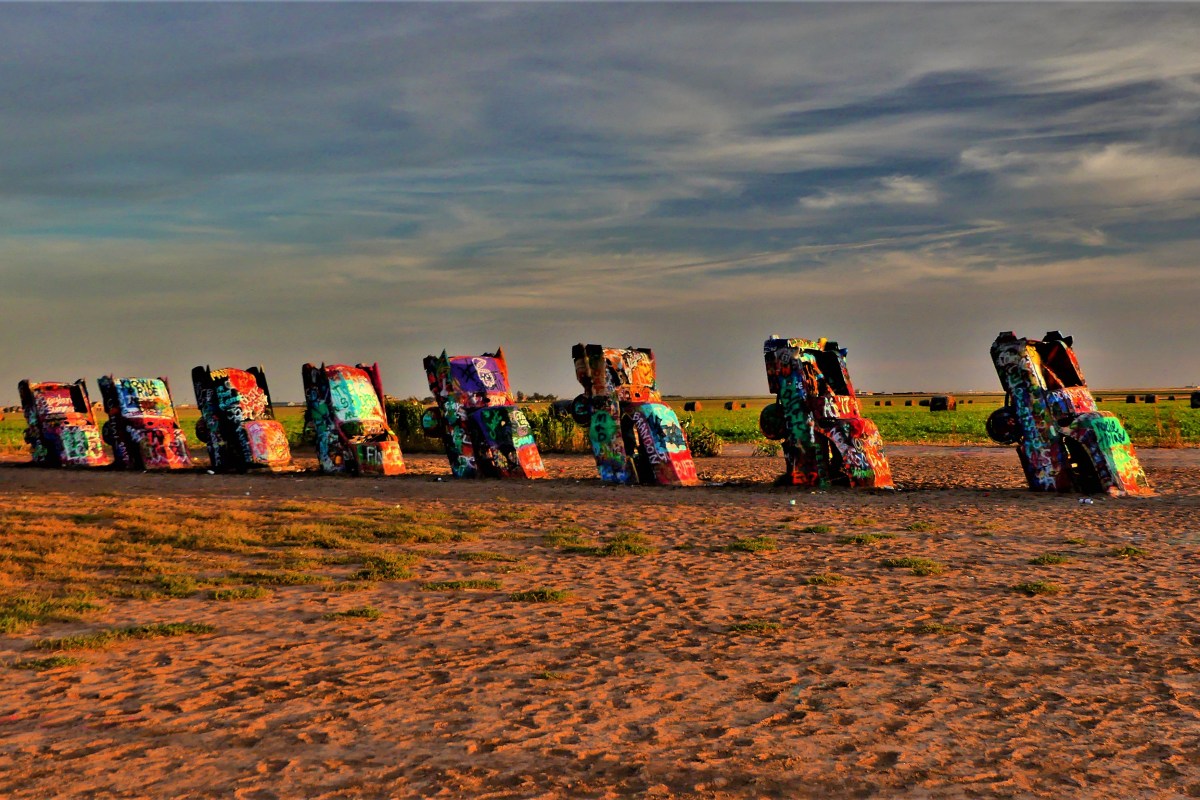
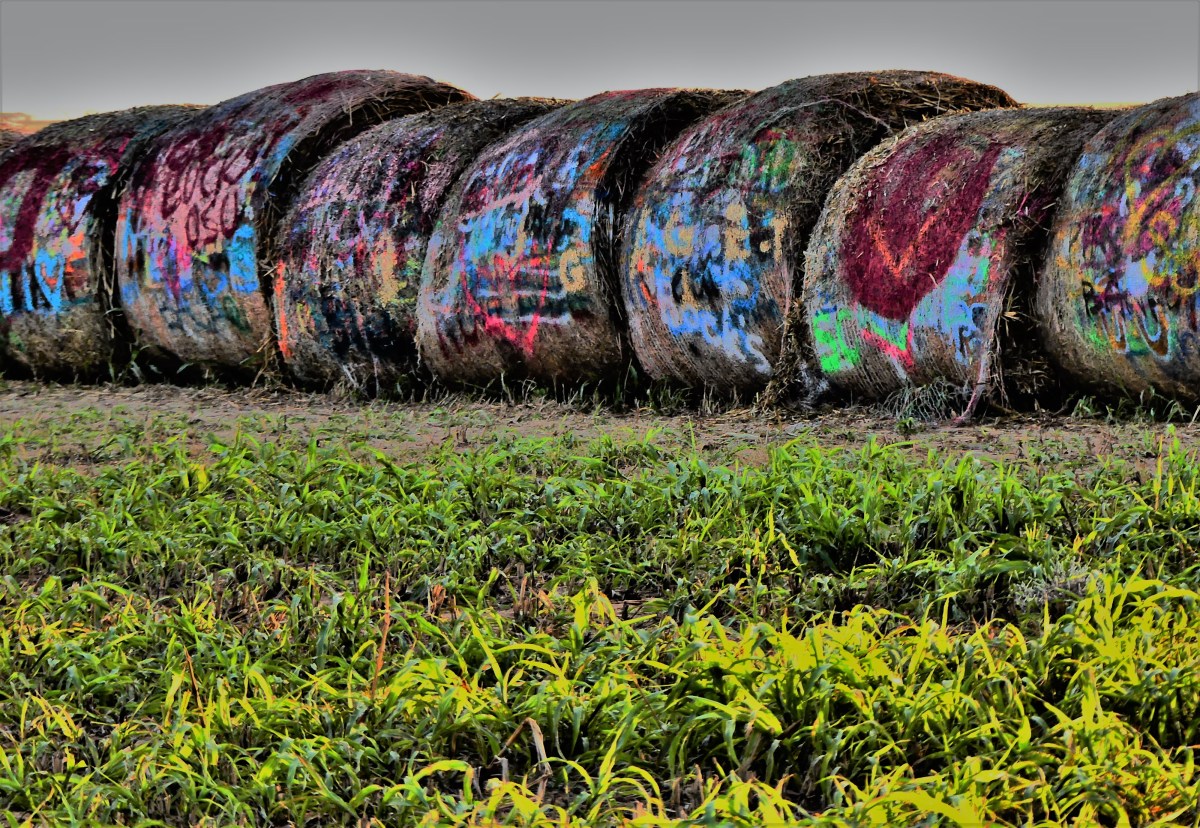
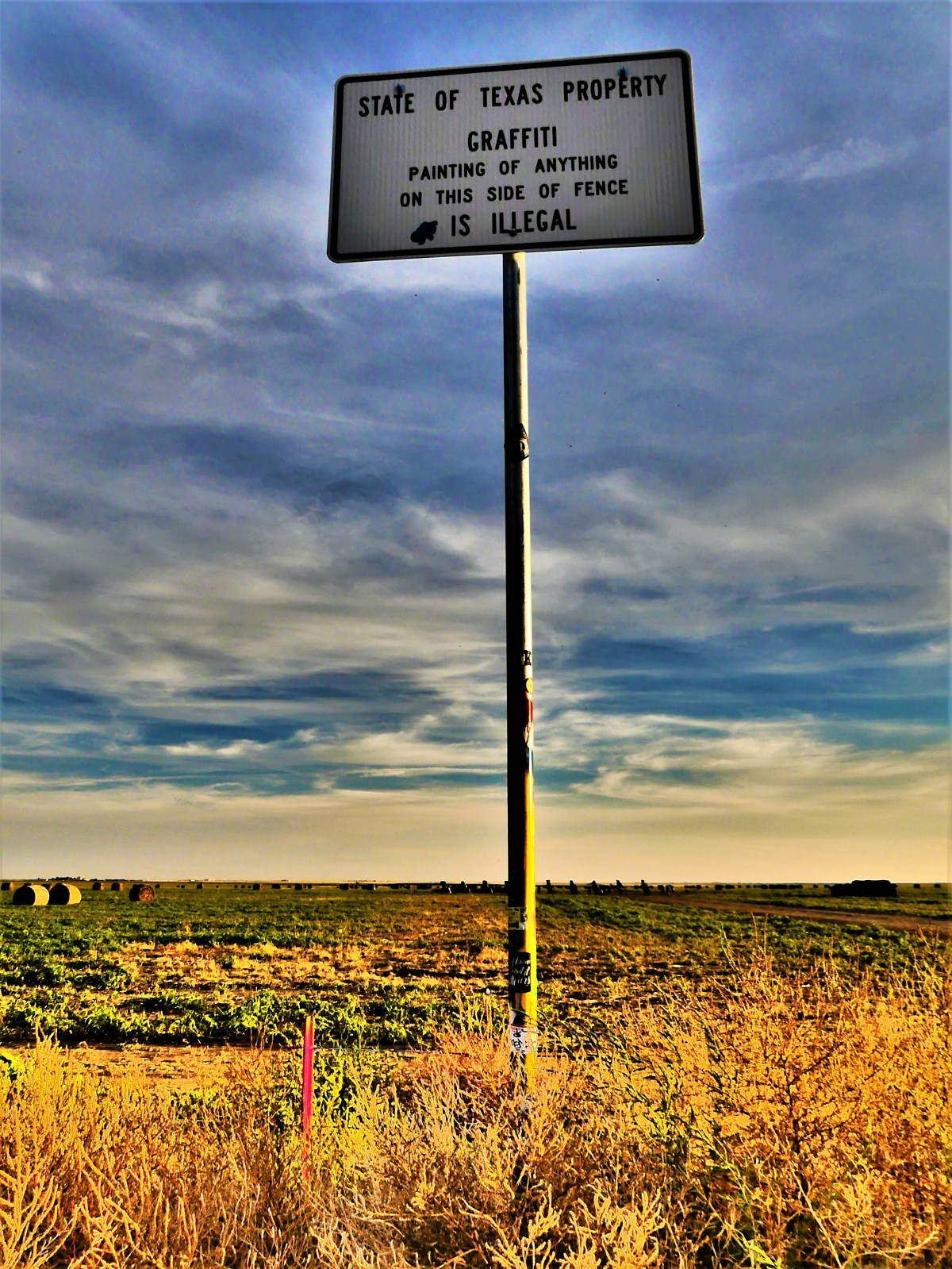
A handful of cars and trucks were pulled onto the shoulder of a road beside a cow pasture along Interstate 40 in Amarillo, TX. A barbed wire perimeter protected entry to the field, but a rainbow-colored cattle gate provided access to an infinite vista of grassland and graffitied hay rolls.
Although road signage made it very clear that all graffiti stay on the other side of the road,
anything on Stanley Marsh’s property was fair game for tagging and tacitly encouraged.
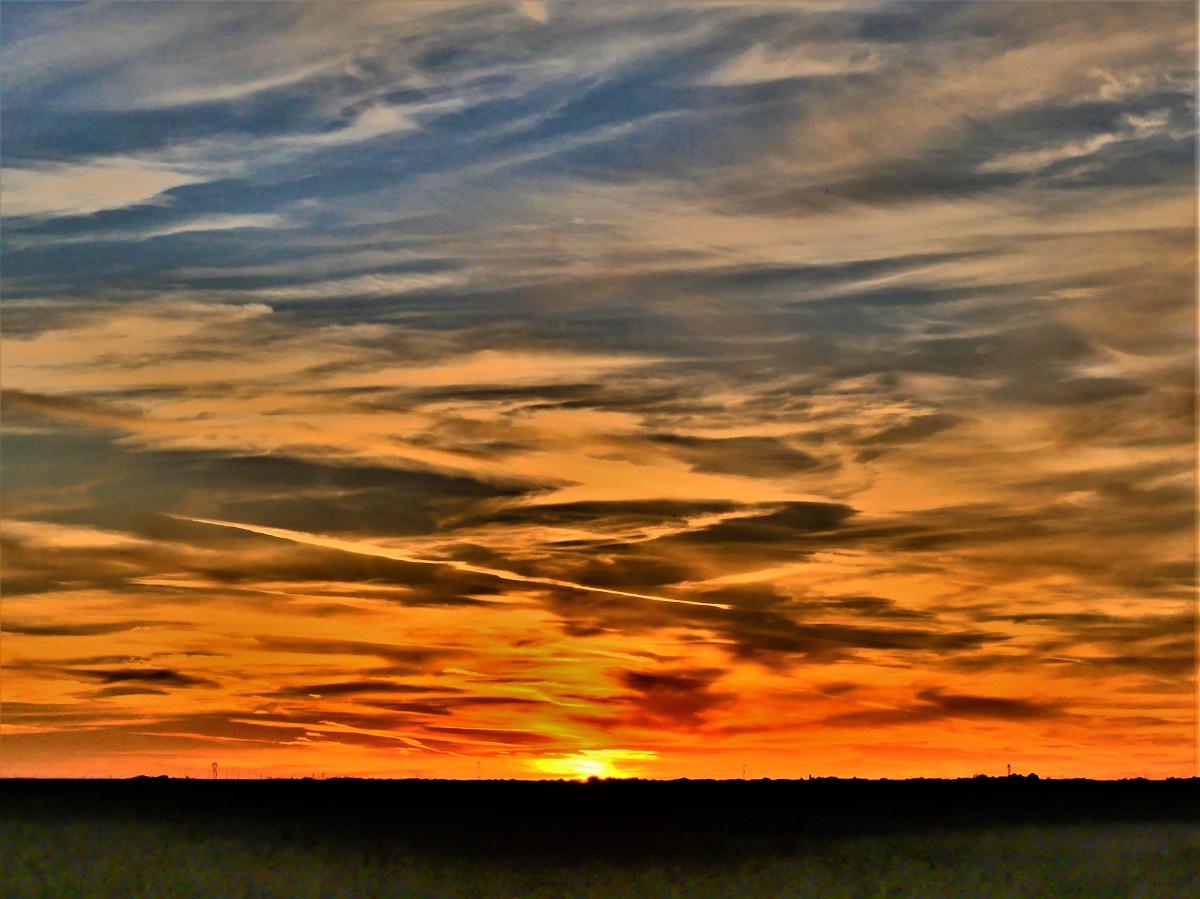
The sun was setting,
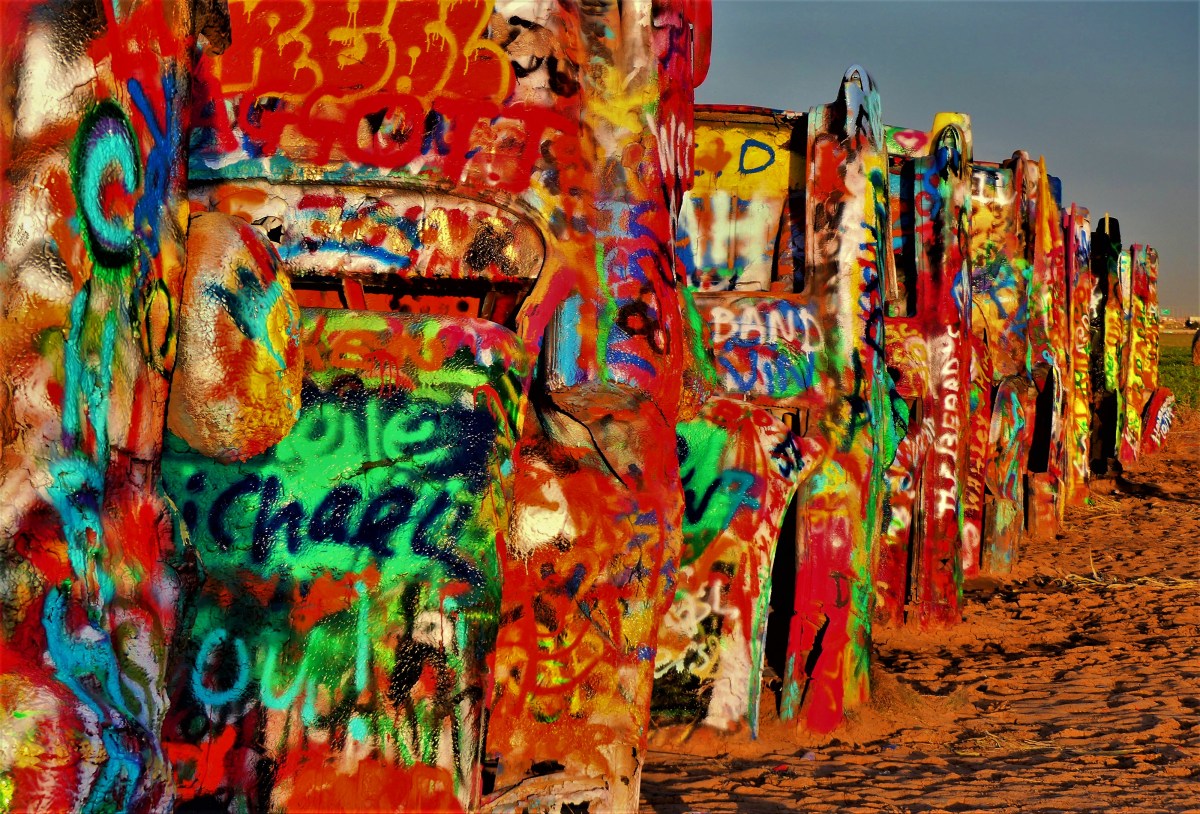
and the mosquito swarm was brutal, as if they saw it as their obligation to annoy anyone curious to walk through a field where ten Cadillacs were partly buried in the ground.
Additionally, with golden hour light fading quickly, I felt my glow time was severely limited.
Nevertheless, working around the tall shadows cast by a low-hanging sun, I managed to capture a spectrum of random and radiant colors that seemingly changes by the hour, courtesy of spray-painters who choose to be anything but anonymous.
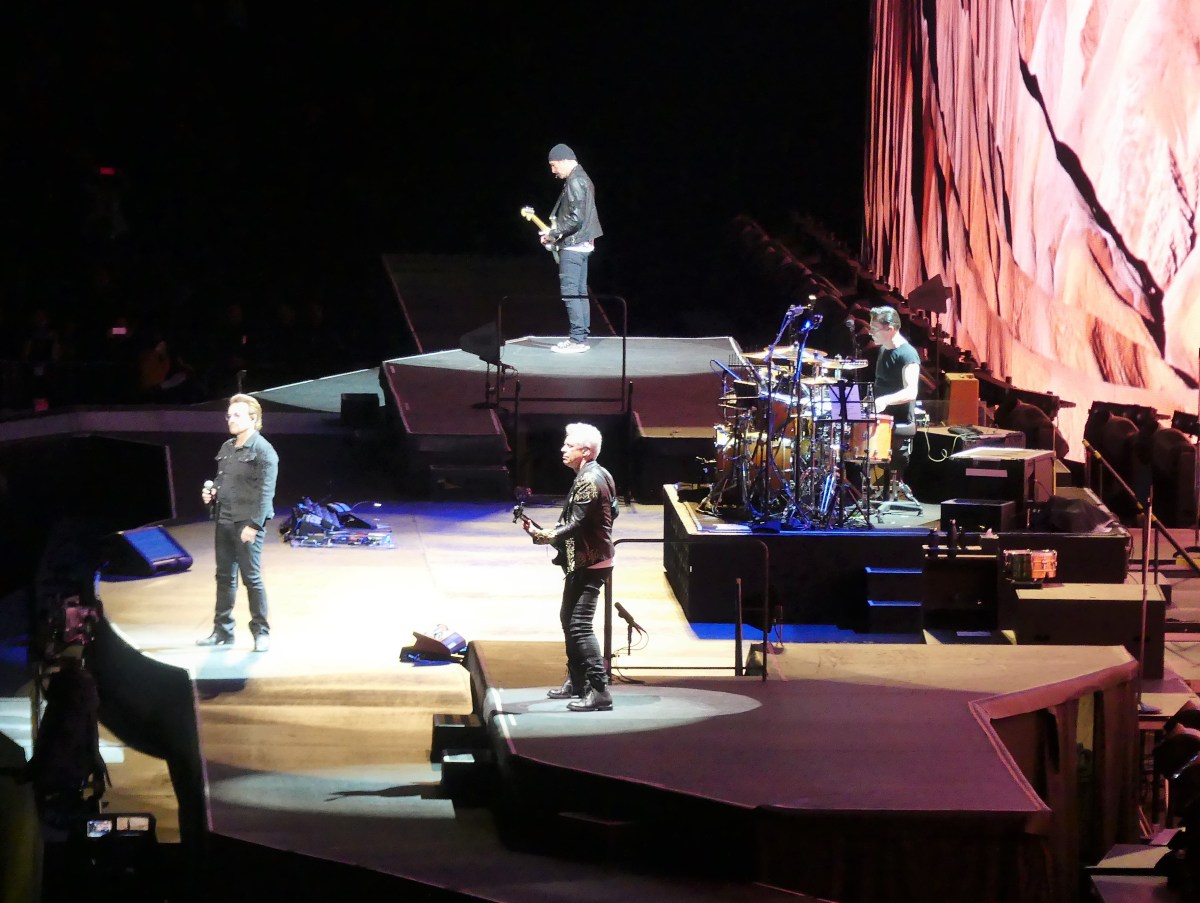
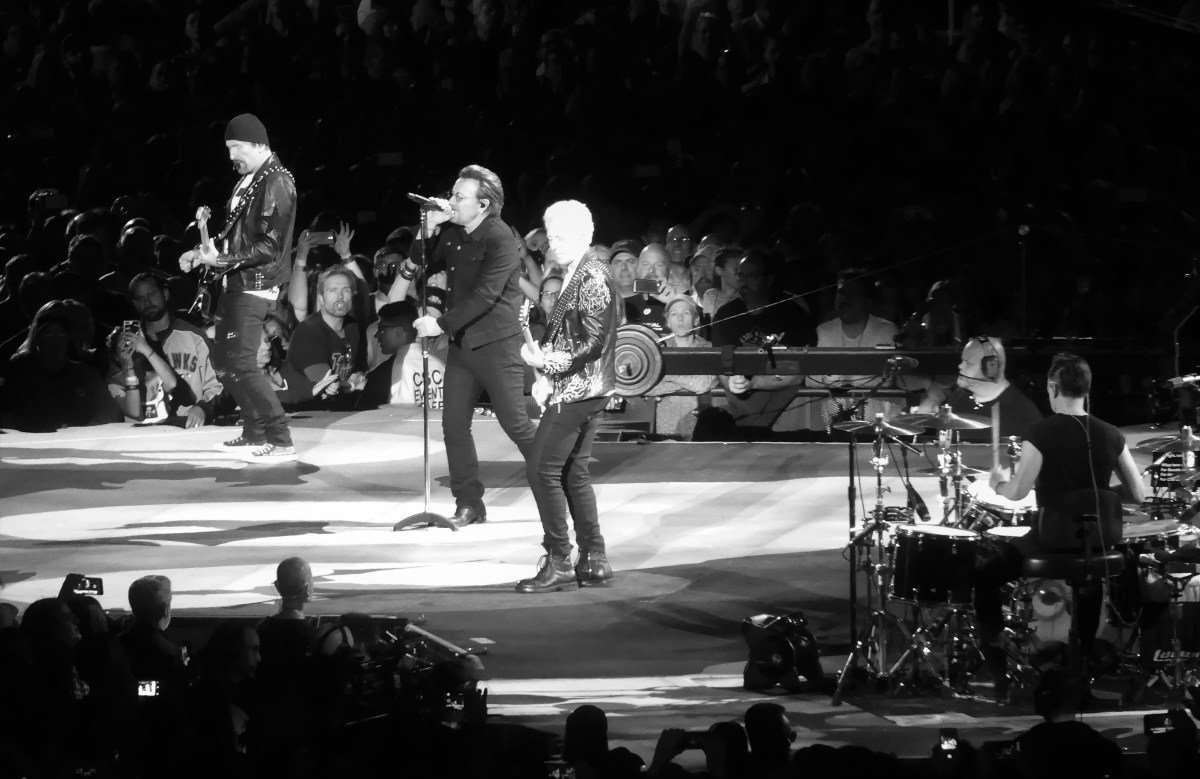
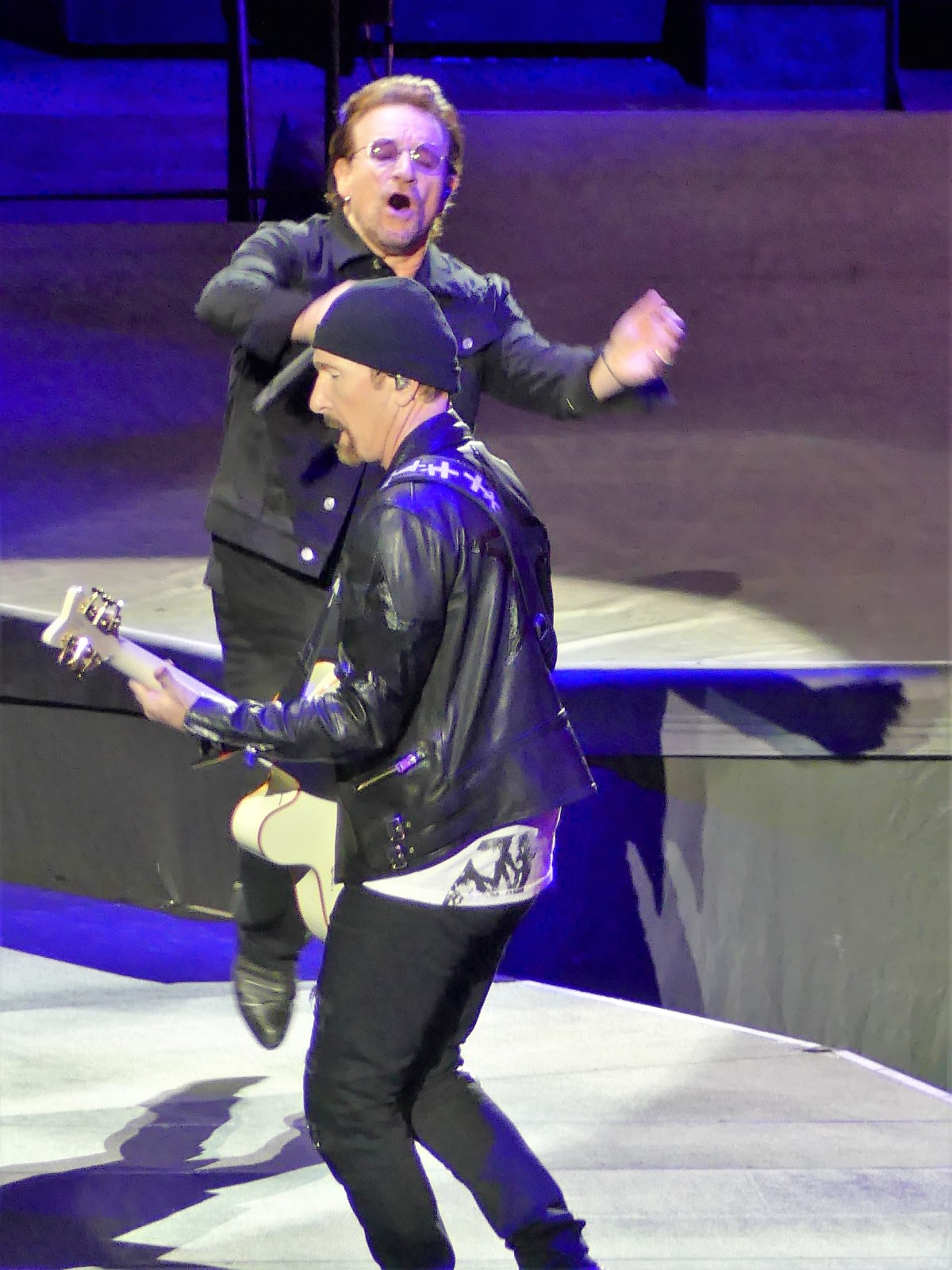
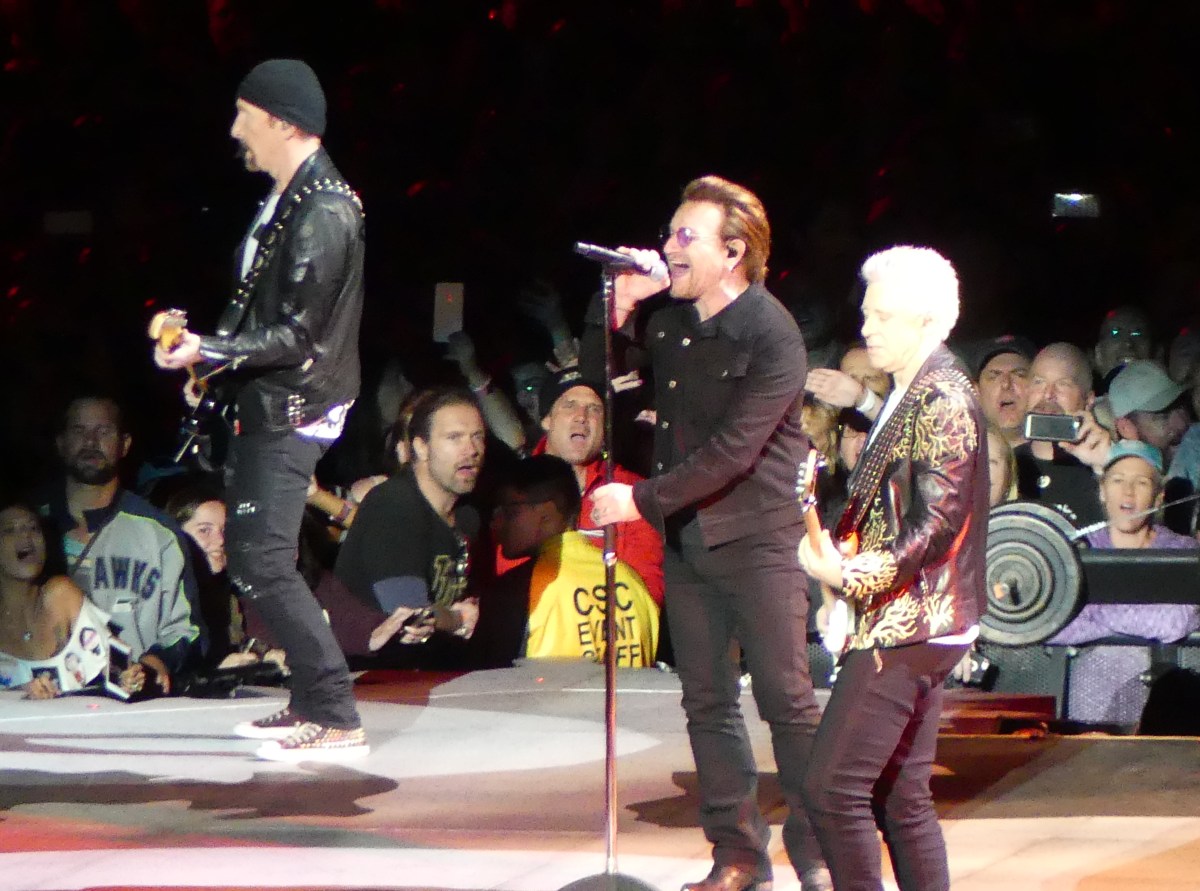
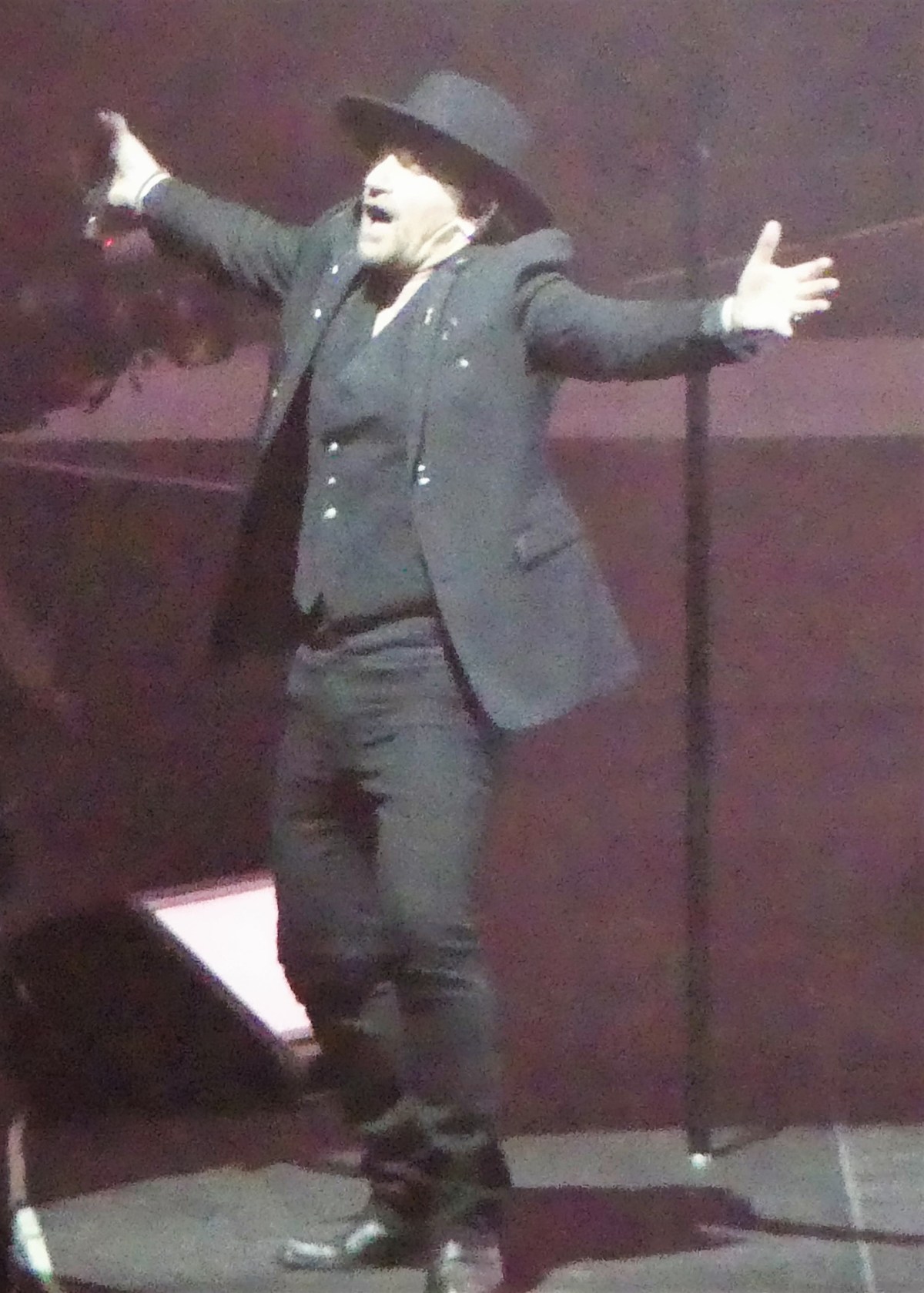
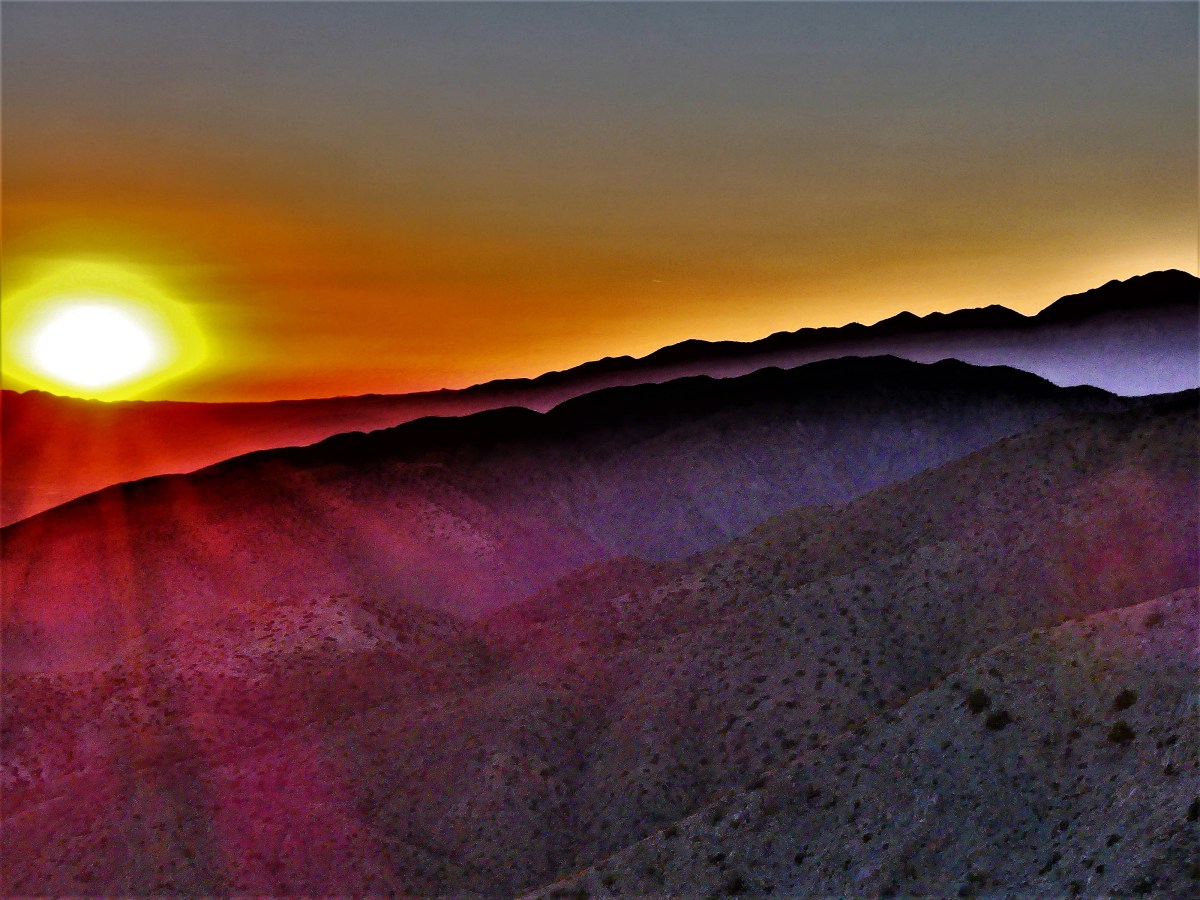
It seemed fitting that scoring tickets to U2’s final U.S. performance of their Joshua Tree tour in San Diego would be the perfect segue to our visit to Joshua Tree National Park one day later. Their iconic album, filled with haunting melodies and provocative lyrics still resonates, even thirty years after its release. That the two events would collide seemed akin to kismet, providing inspiration for a mash-up of U2 music and National Park imagery.
The Joshua Tree concert and park were magical, and lingering memories of both events continue to sustain my creative drive.
Where the Streets Have No Name
I’ll show you a place High on a desert plain Where the streets have no name
I Still Haven’t Found What I’m Looking For
I have spoke with the tongue of angels I have held the hand of a devil It was warm in the night I was cold as a stone
With or Without You
See the stone set in your eyes See the thorn twist in your side
Bullet the Blue Sky
In the locust wind Comes a rattle and hum
Running to Stand Still
I see seven towers But I only see one way out
Red Hill Mining Town
We scorch the earth Set fire to the sky
In God’s Country
Desert sky, dream beneath the desert sky The rivers run but soon run dry
Trip Through Your Wires
There’s a raincloud In the desert sky In the distance
One Tree Hill
The moon is up and over One Tree Hill We see the sun go down in your eyes
Exit
He felt the healing Healing, healing, healing hands of love
Mother of the Disappeared
In the trees our sons stand naked Through the walls our daughters cry
My thanks to Bono, The Edge, Adam, and Larry for decades of music artistry. And my apologies in advance for crossing the line with my literal and metaphoric interpretations.
The van in front finally pulled away, making it my turn to methodically approach the gatehouse window with the Airstream in tow. But nobody was home. Leah noticed an outstretched arm extended from a raised window a dozen feet forward, and it was waving me closer. I inched parallel to the higher window, and awkwardly offered our documents.
“You realize you’re in the wrong line?” he criticized.
“There was no sign,” I responded sheepishly.
“Take off your sunglasses,” he ordered. “Where are you going and what’s your purpose?”
“We’re on our way to Winnipeg to celebrate Bastille Day,” I announced.
“Bastille Day, huh! So you’re up for a couple of days?” he barked.
“Actually longer, about four weeks,” I offered. “We’re here to tour your beautiful country… drive across to Calgary and visit Banff and Jasper before returning to the States.”
“You carrying any drugs, alcohol, guns, ammunition?”
“No.”
“You ever visit Canada before?”
“Yes.”
“When last?”
“We were in Alaska last summer and crossed over to Yukon.”
“How much money you carrying?”
“About a thousand dollars.”
“Enjoy your stay,” he stated dryly, handing back our passports.
We were immediately reminded of driving in a foreign country when the road signs posted maximum speed limits in km, and the bi-lingual billboards promoted it products in French.
“How do you know how fast you’re going,” Leah posed?
“I have a button on the steering wheel,” I bragged, pushing the button. “And it automatically makes the adjustment on the display. Voila!”
“So cool,” Leah deadpanned.
The Bastille Day ritual was being held au petit jardin de sculptures beside the old City Hall-turned tourism center/art gallery in the Franco-friendly Winnipeg ward of St. Boniface. Children with painted faces played with balloons, while parents drank wine and ate smelly cheese poured over stale-crusted bread. A trio played behind a chanteuse doing an Edith Piaf impression, and the mood was festive. We left early, thinking the celebration was anti-climactic.
The ride home took us across the Red River, where we previewed a hulking structure that is Canada’s newest national museum, and Winnipeg’s newest tourist attraction and controversy.
The Canadian Museum for Human Rights, completed in 2014, sits atop the Forks–long considered sacred ancestral soil by the Aboriginals, and part of Treaty One Territory. Instantly, the site selection sparked passionate criticism from Aboriginal elders, who argued for more time after 400,000-plus artifacts were discovered during initial ground-breaking and subsequent archaeological excavation.
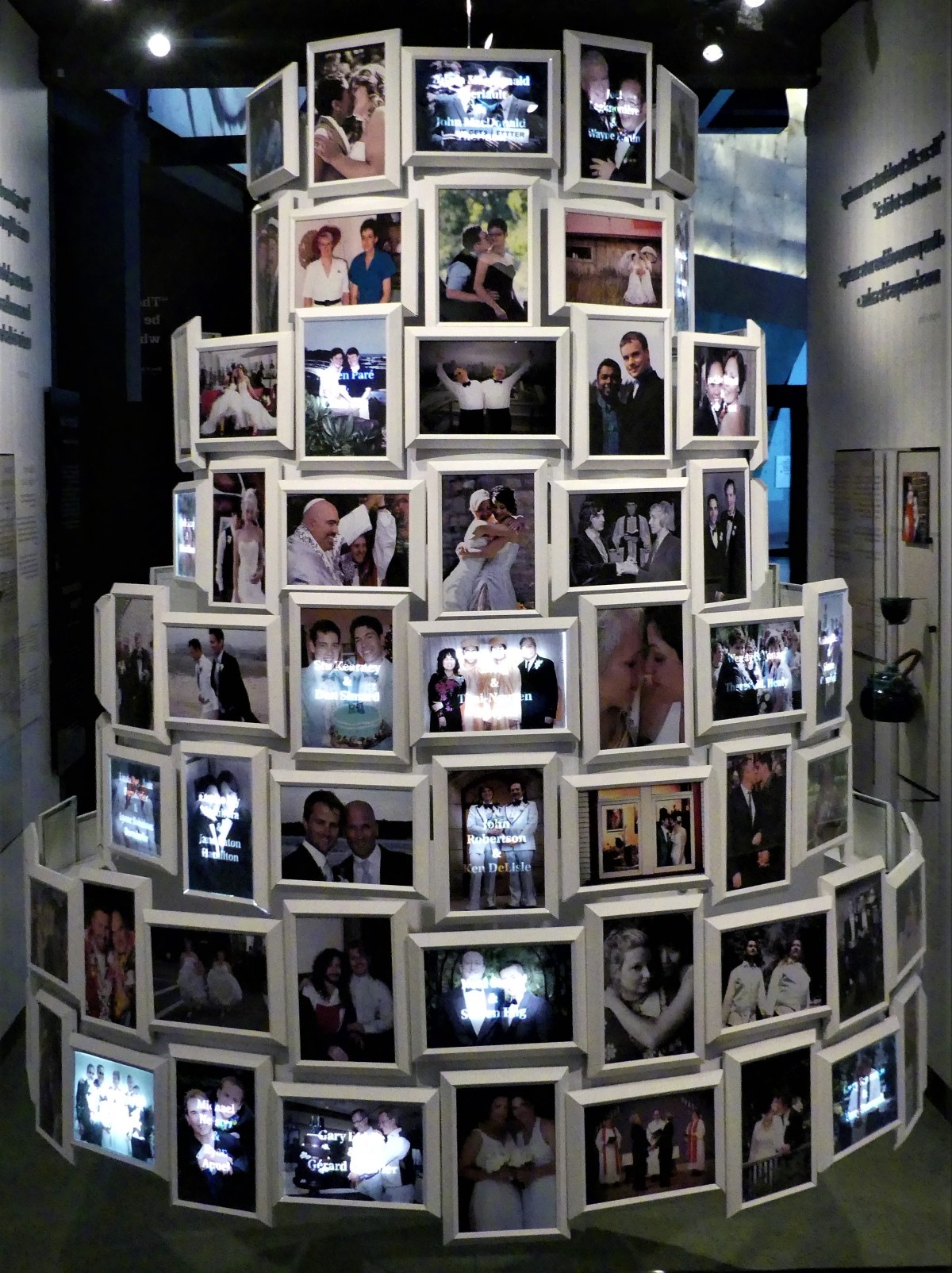
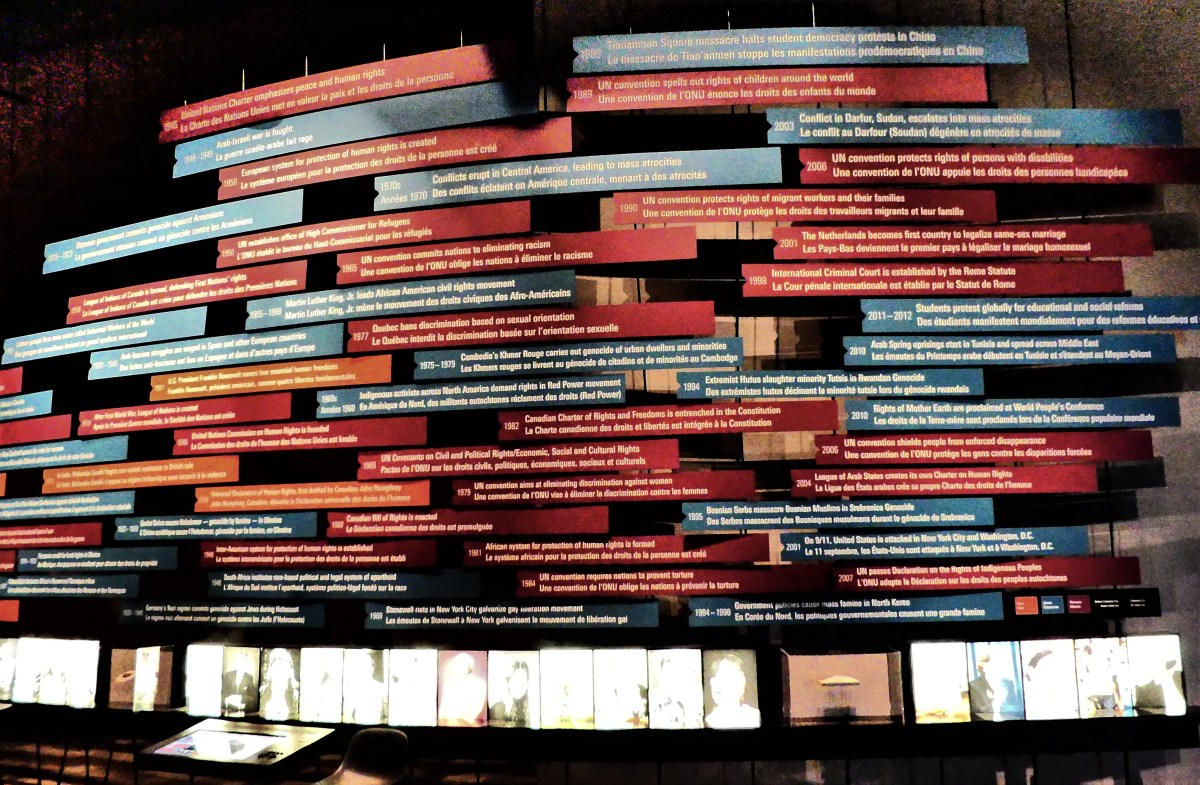
Protests continued throughout construction by advocacy groups who perceived that inadequate exhibition space would never address the scope of one group’s suffering, while other advocates claimed that another group whose misery was elevated to a higher status was granted more square footage than deserved.
And to complete the spectrum, there were activists who were bitter that some atrocities were being ignored, and consequently delegitimized. One group felt disrespected after learning that their group’s exhibition space was adjacent to the rest rooms.
Then there were critics who had ideologically opposed the architecture design, likening it to a modern Tower of Babel. But veteran planner Antoine Predock defended the symbolism behind his vision:
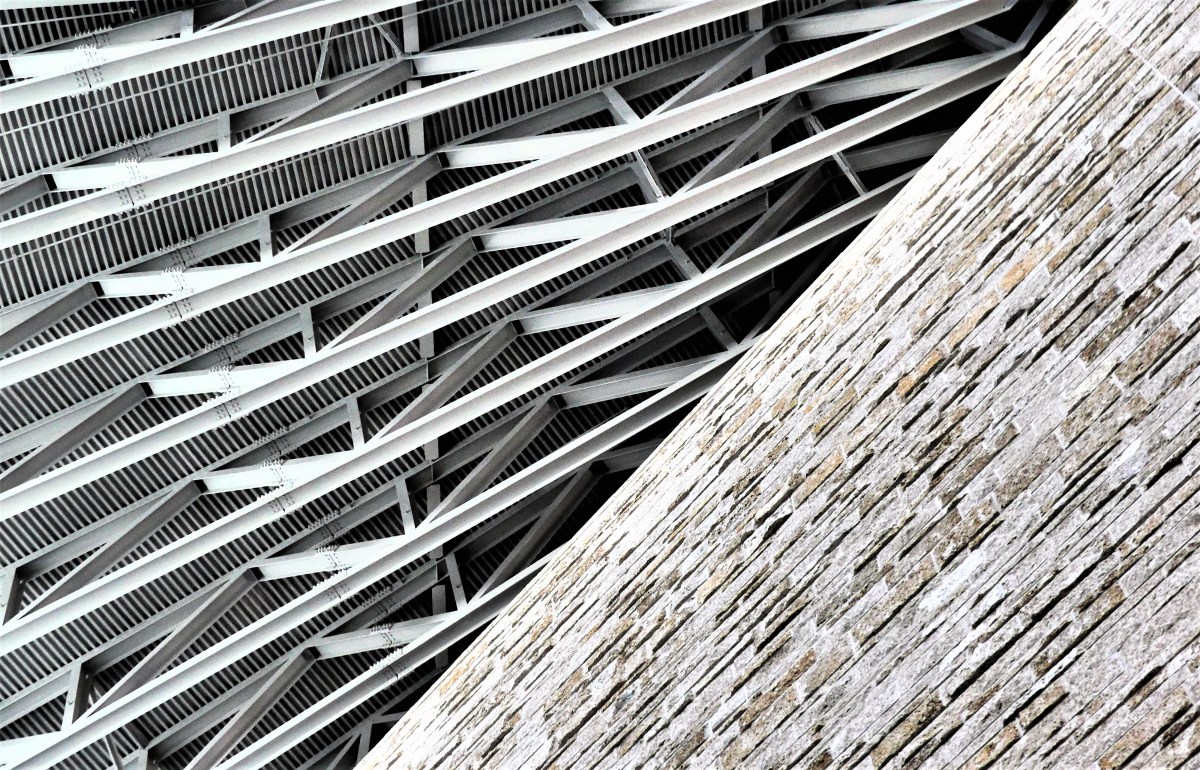
The Canadian Museum for Human Rights is rooted in humanity, making visible in the architecture the fundamental commonality of humankind-a symbolic apparition of ice, clouds and stone set in a field of sweet grass. Carved into the earth and dissolving into the sky on the Winnipeg horizon, the abstract ephemeral wings of a white dove embrace a mythic stone mountain of 450 million year old Tyndall limestone in the creation of a unifying and timeless landmark for all nations and cultures of the world.
A dozen galleries stretch between alabaster ramps acting as spears of light connecting the void of black-washed canyon walls.
The alabaster bridges provide needed tranquility time to survive the intensity of the previous gallery and avoid potential human-condition overload.
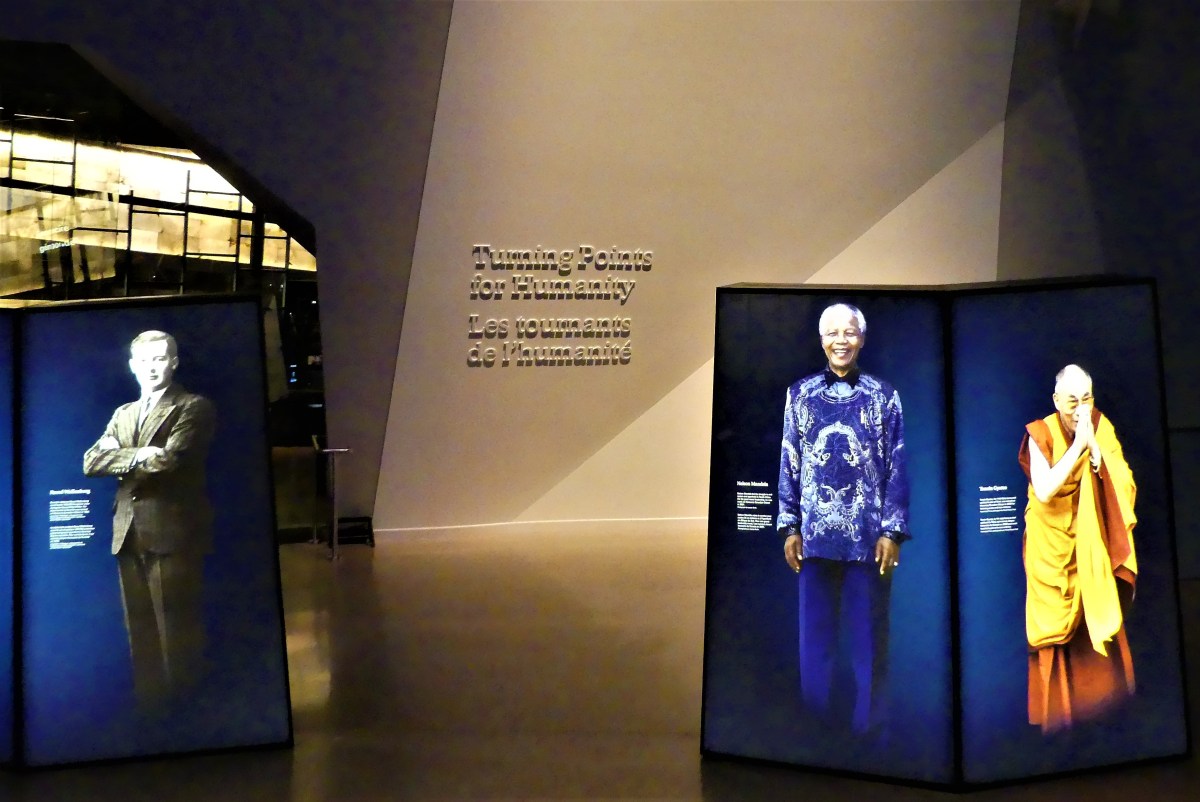
The galleries are immense shadow boxes for interpretive technology…
meaningful art installations…
animated graphics…
and traditional prose…
In hindsight, I would start the “trek of travesty” at the top, and wind my way down the “ramps of reflection”–much like the Guggenheim Museum in NYC…
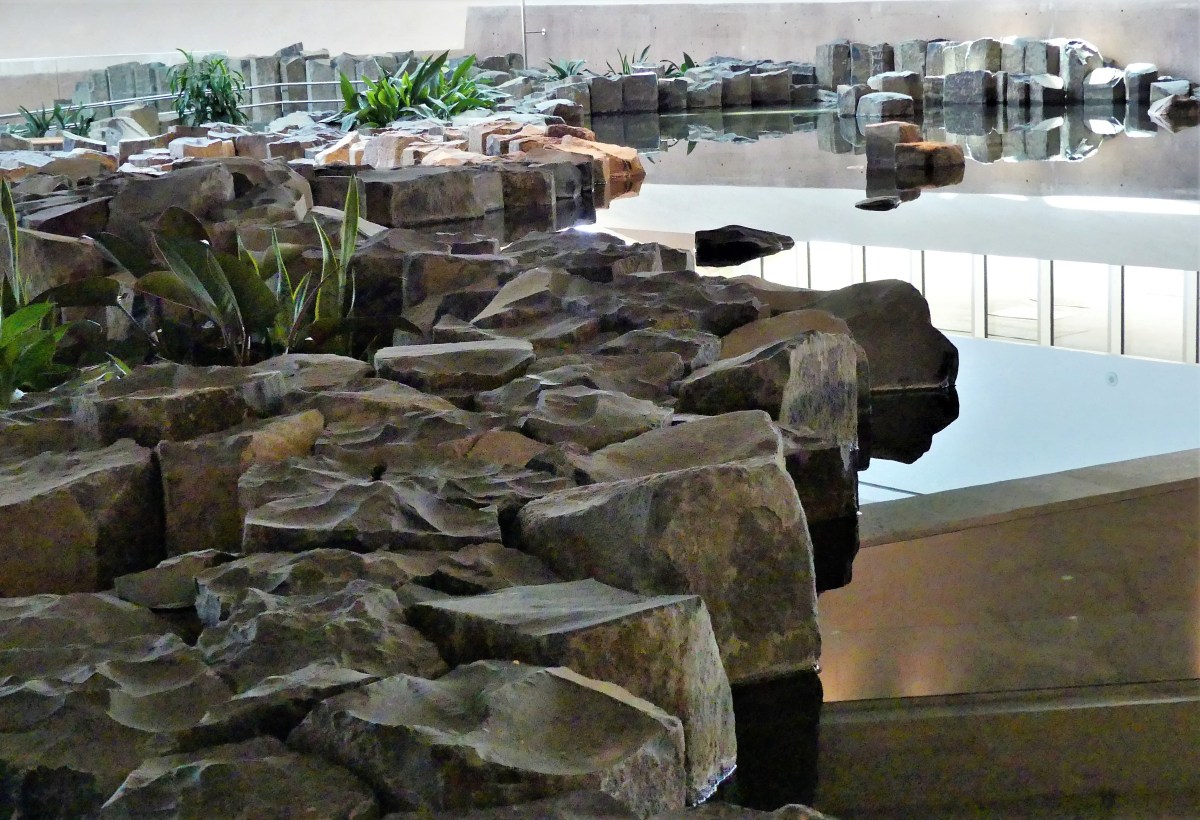
until reaching the Garden of Contemplation on level 3, where hexagonal rocks of basalt buttress placid pools of water,
catching surreal reflections,
under a towering canopy of limestone, steel, and glass.
On the other hand, by cruising the museum “upside down”, visitors may lose sight of the painful journey endured by the many who struggled for acceptance and equality. And skipping the Tower of Hope is a missed opportunity to circle the observation deck, with its expansive view of Riel Esplanade and more.
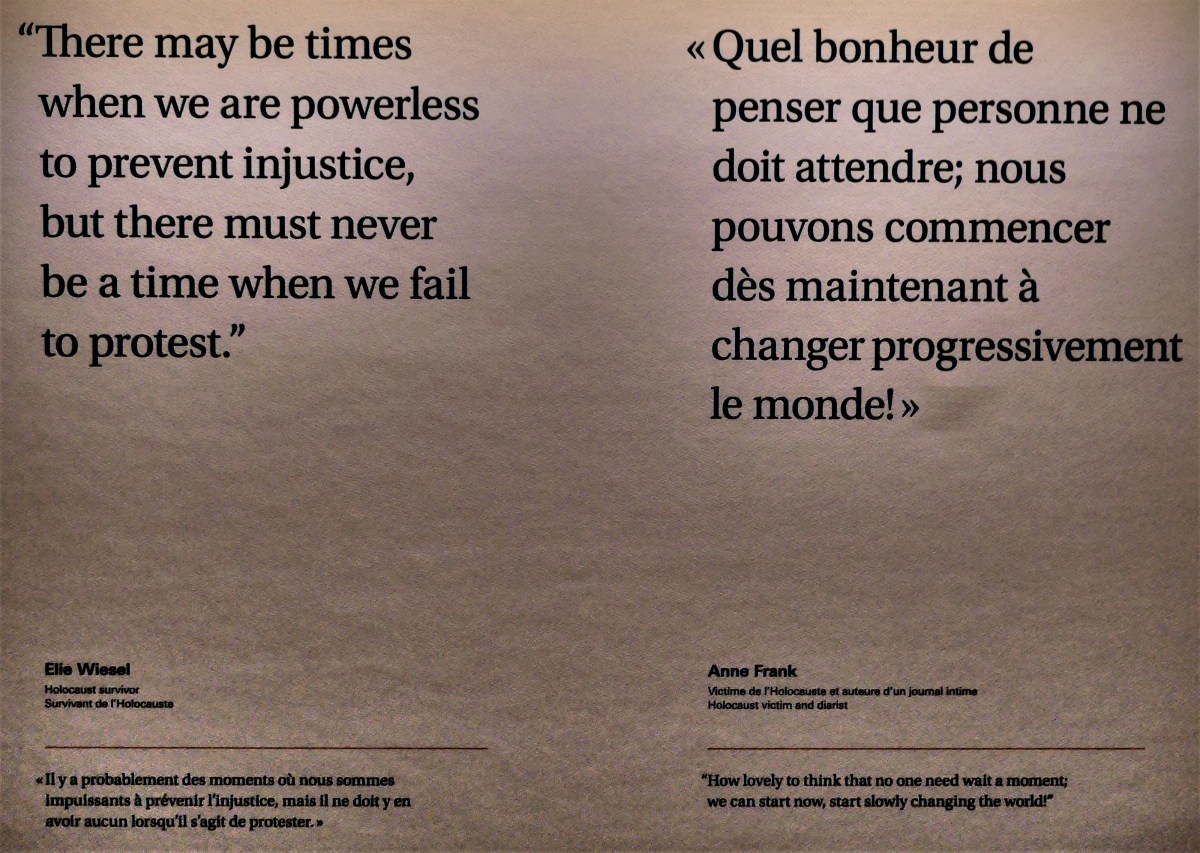
Winnipeg is a city in transition seeking to compete on a national stage, while coming to terms with disaffected Aboriginal people who represent 10% of the local population. Fortunately, the Canadian Museum for Human Rights can be called upon to remind us of the importance of awareness, critical thinking, and reconciliation.
With so many spectacular parks checked off our bucket list thus far, Leah and I needed a time out for reflection. Seemingly, the constant shifts of locations, coupled with maximizing our time at each stop has blended our experiences and threatened our recall.
We have been so immersed in the natural beauty that soothes the soul, that we’ve neglected the urban essence that nourishes the spirit. So we came to Minneapolis for a culture fix.
The pulse of Minneapolis is defined by its abundant museums and galleries, its renown theater district, its avant garde food scene, and celebrated sports franchises. There’s a lot to cheer about in Minneapolis… at least, during three seasons of the year.
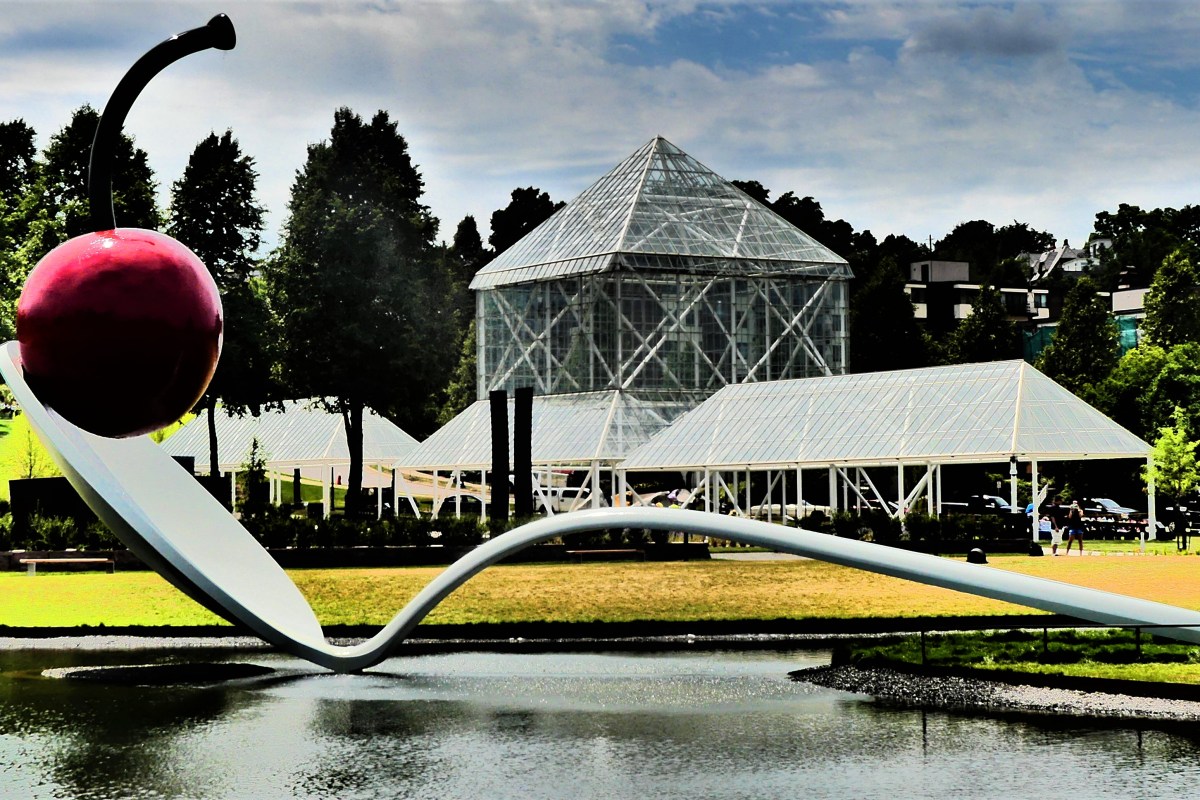
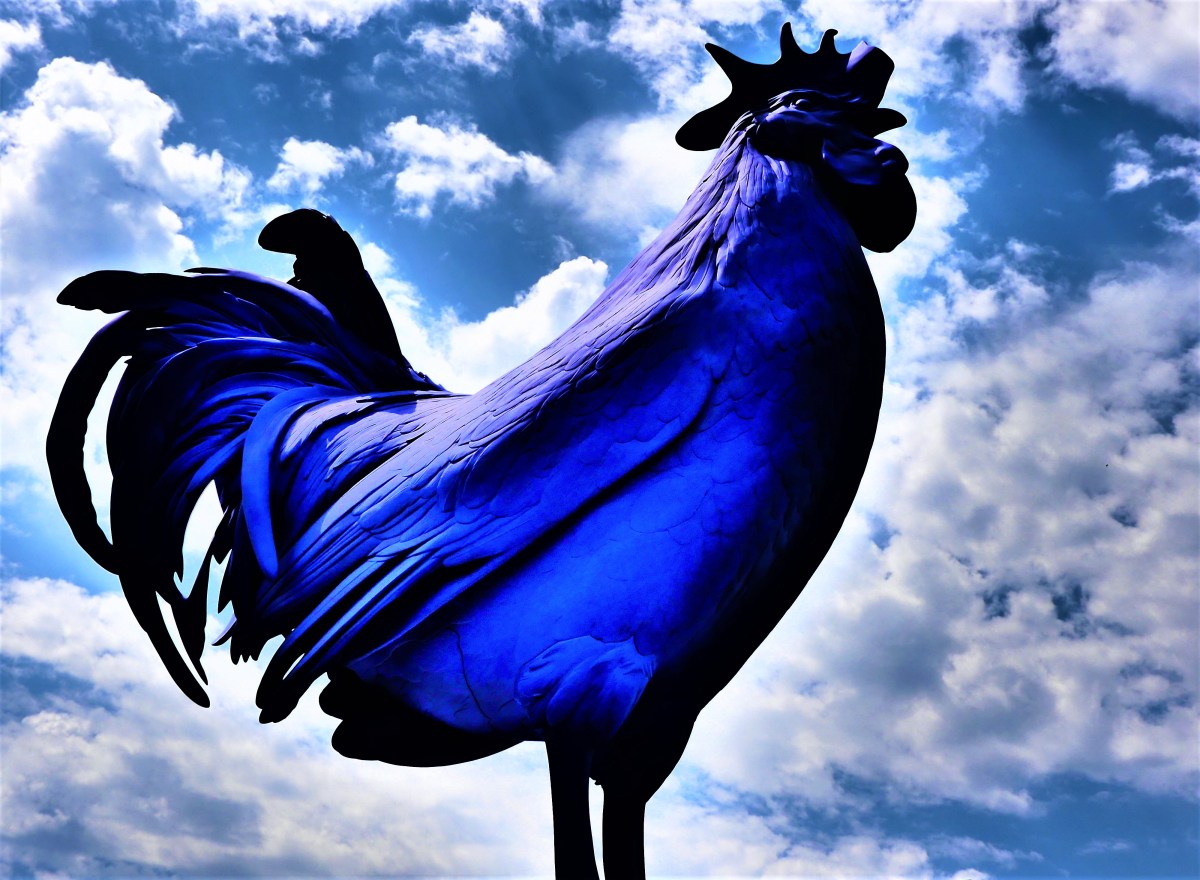
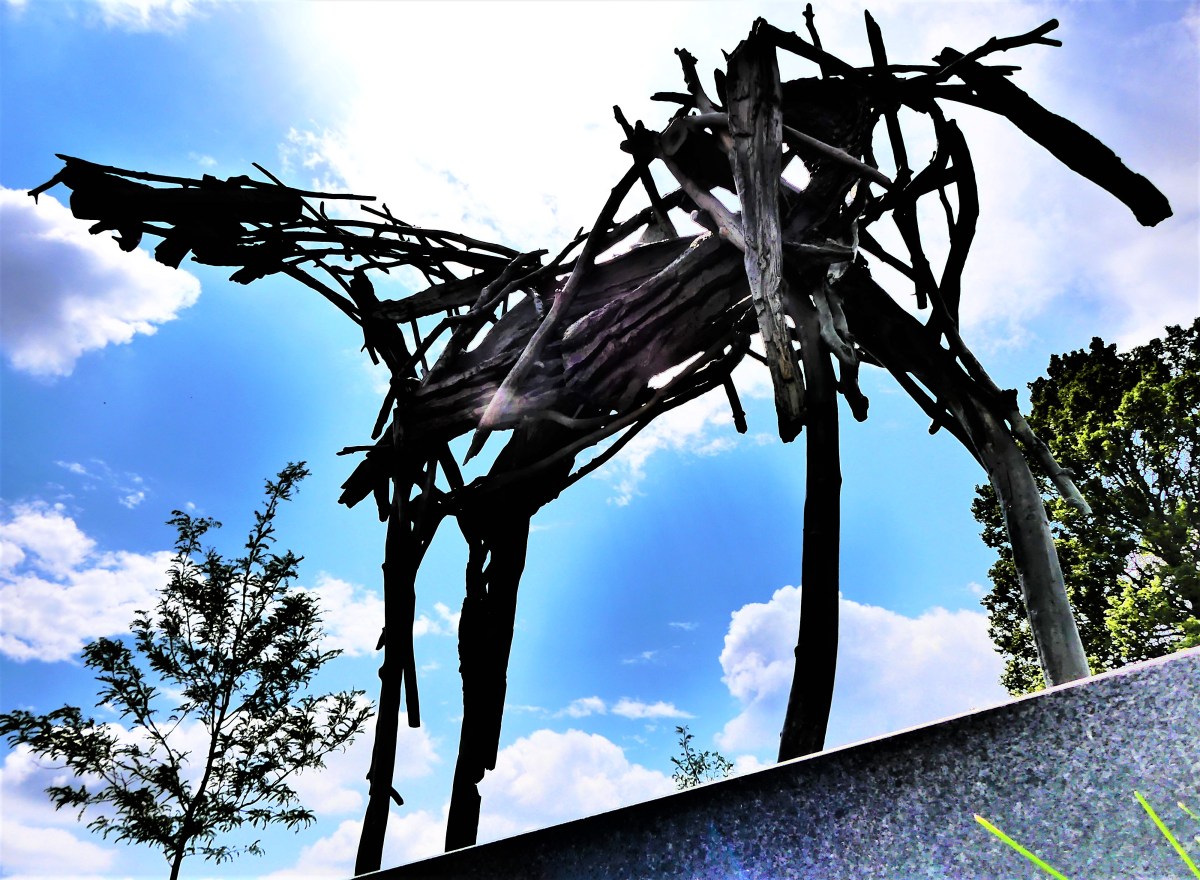
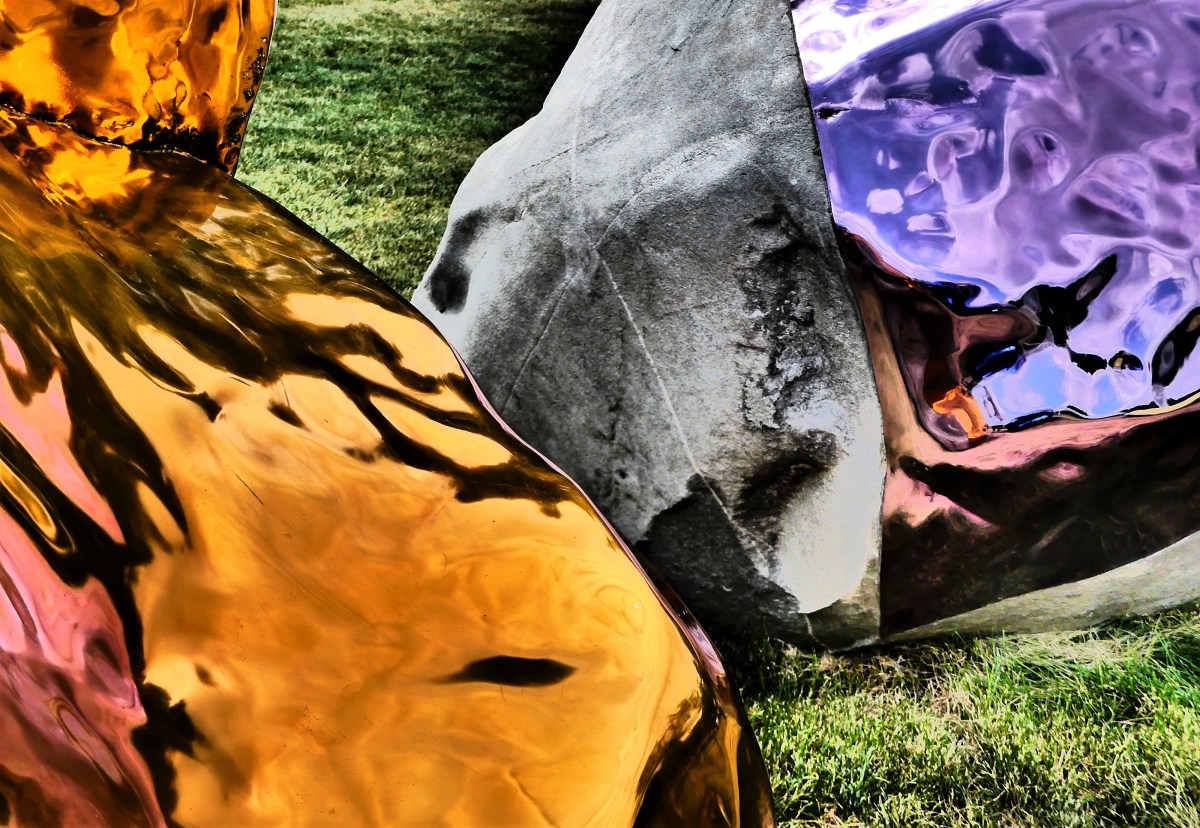
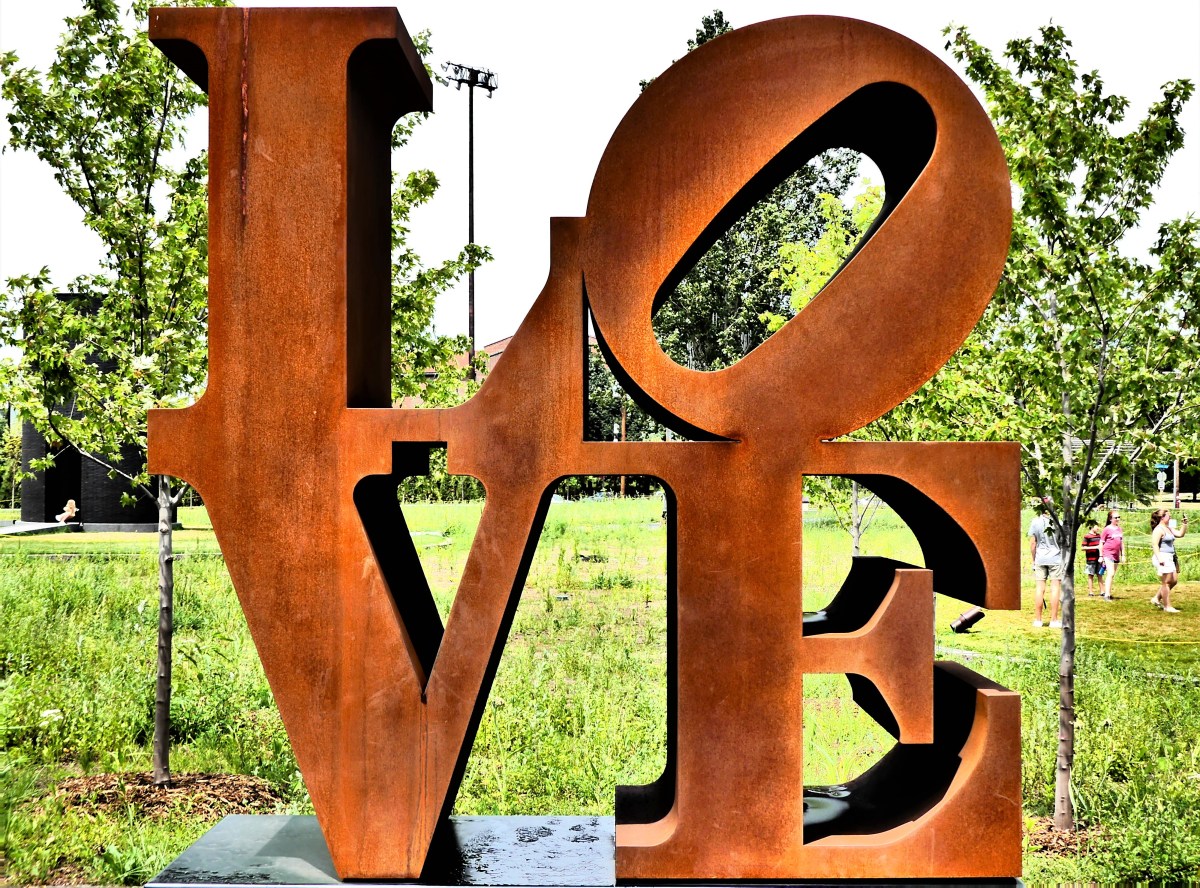
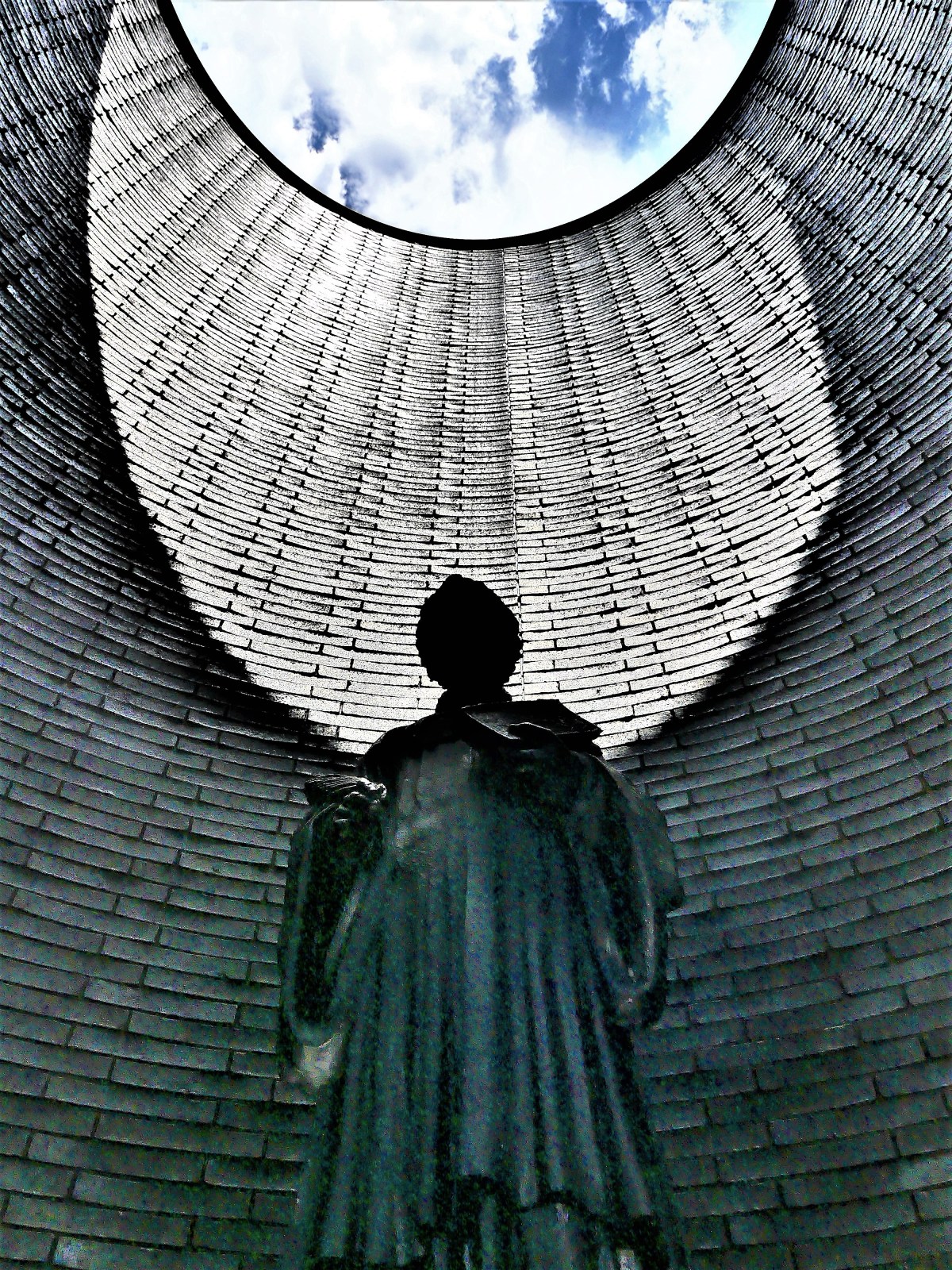
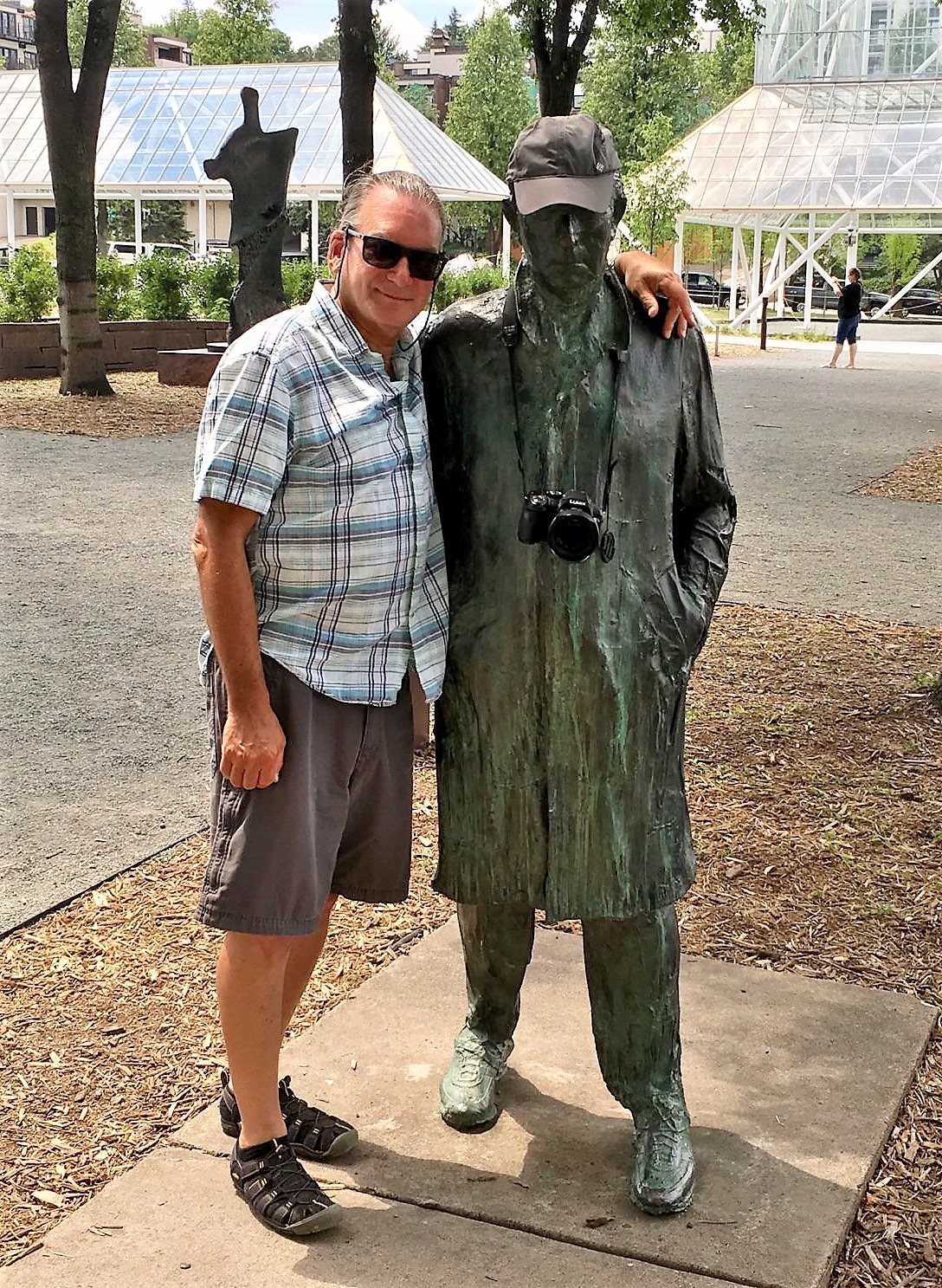
We only had three days to explore, so it required a binge-worthy effort. We exchanged our hiking boots for walking shoes, and set a course for the newly reopened Sculpture Garden to swoon over the Spoonbridge and Cherry, and tap into the energy of the Walker Art Center.
My photographic impressions are interpretive at best, drawing from the power of the work, and serving as an inspirational palette and easel.
We marveled at the magic motion produced by Merce Cunnningham against a backdrop of post-modernist sensibility.
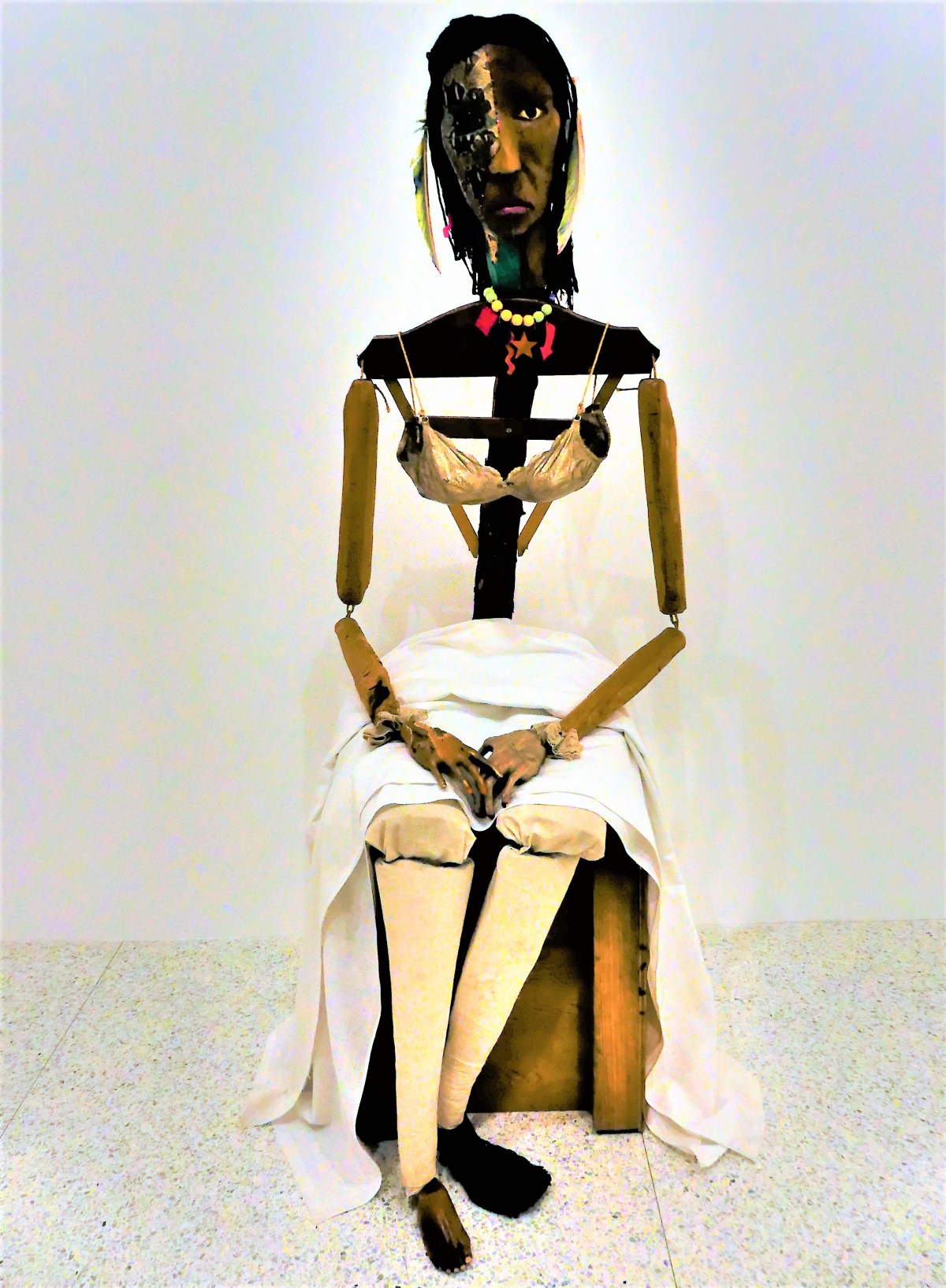
And we were amused by Jimmie Durham’s life-size assemblage sculptures.
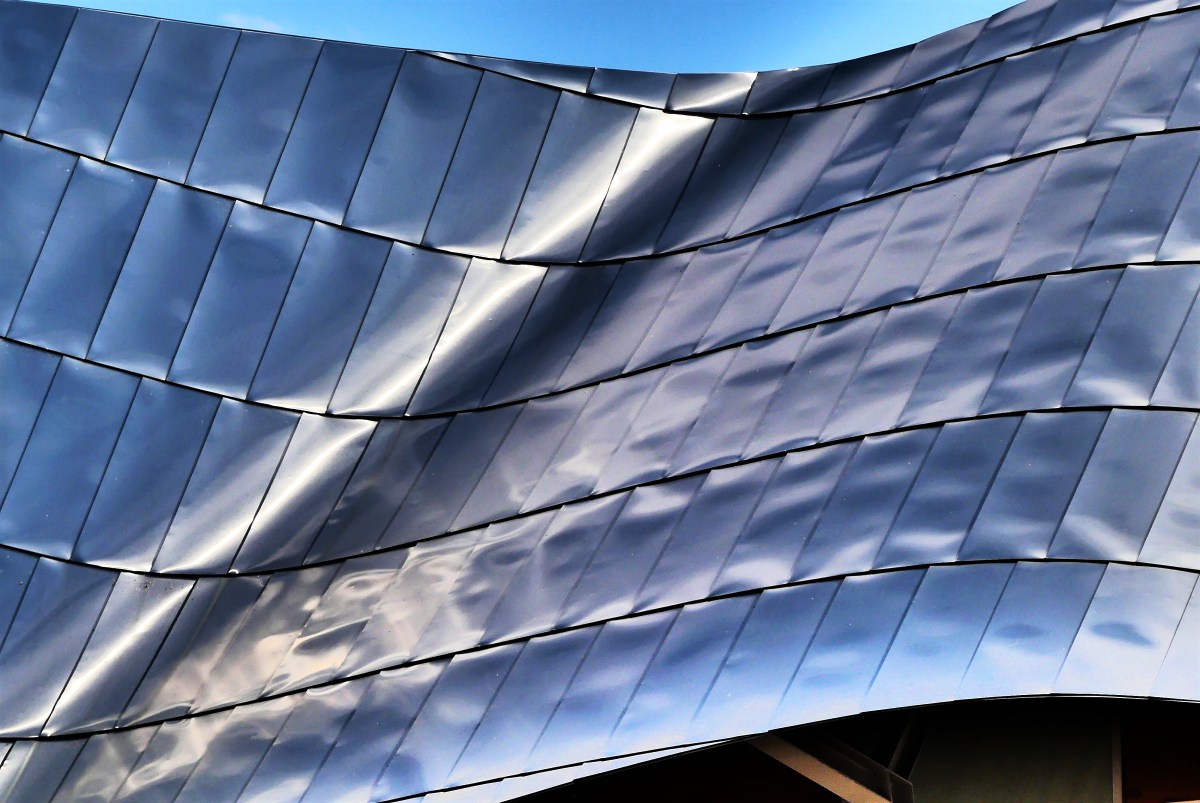
We sped across town in time to catch the shimmer emanating from the convoluted skin of Frank Gehry’s Weisman Museum of Art at the University of Minnesota, but we were too late to tour the galleries.
However, we finished the day with a stunning performance of Sunday in the Park with George at the Guthrie Theater.
How appropriate that we should celebrate art celebrating art. We left the theater revitalized by the message, and enlightened by the notion that we are ready to take our next walk in the woods.
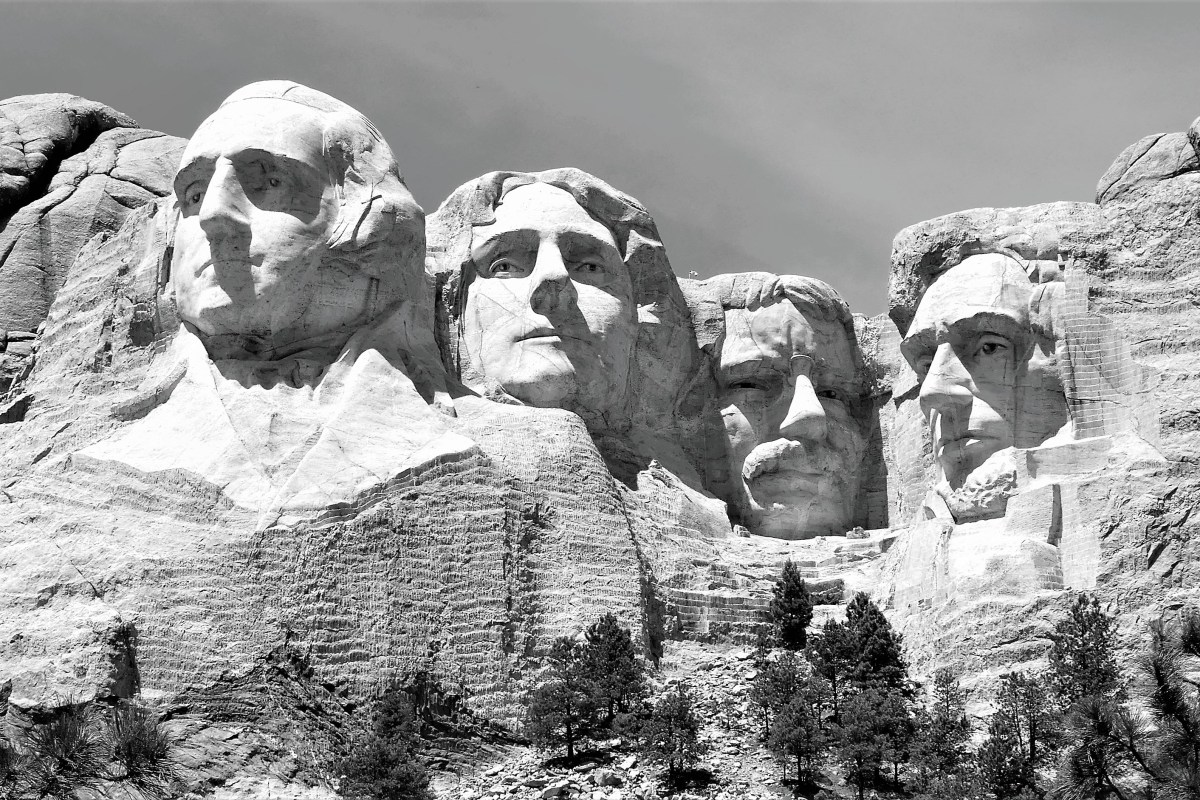
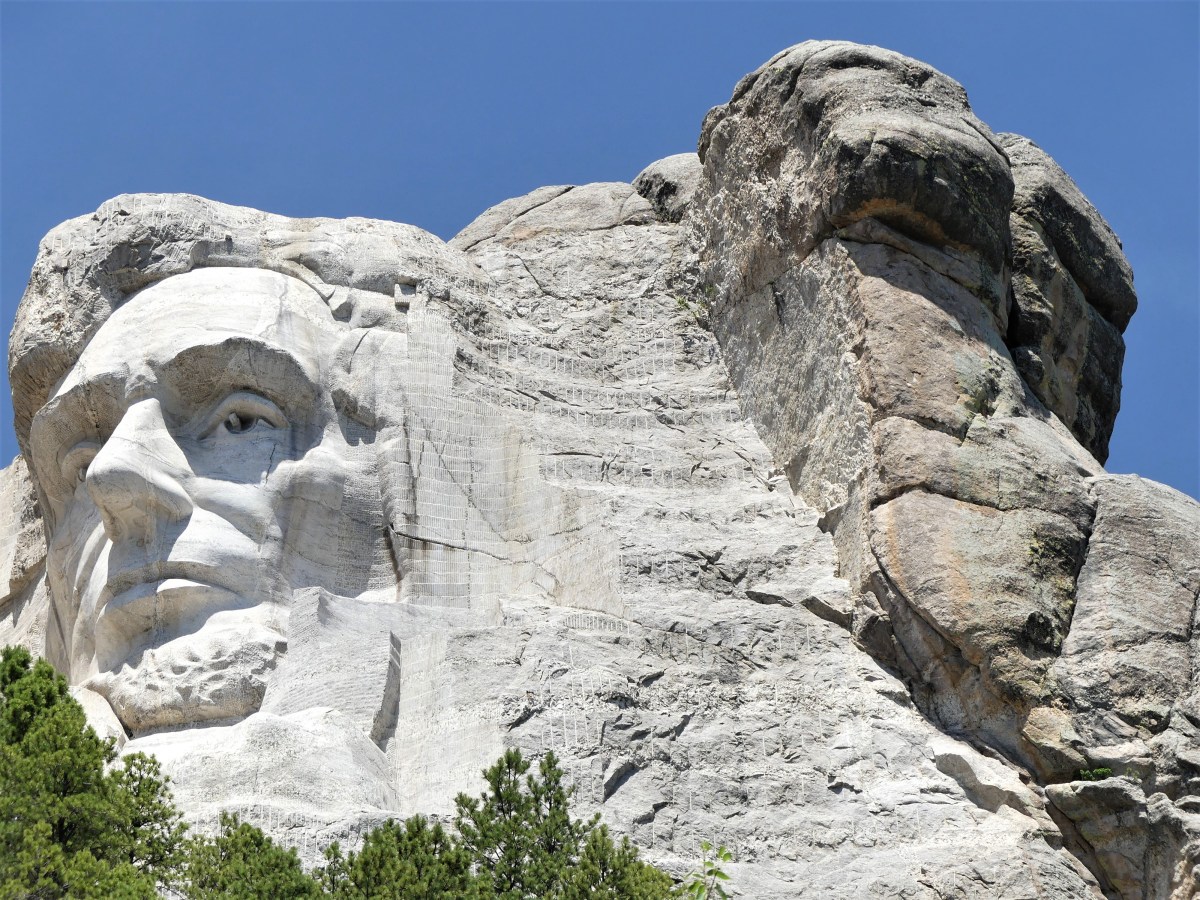
What better way to celebrate the 4th of July, than a trip to Mt. Rushmore and the Crazy Horse Memorial. Sure, the crowds were large; that was to be expected. But once the cars were garaged, the pedestrian traffic was easy to negotiate. And with everyone looking up at the mountain, the president’s faces and intentions were never obstructed.
It was also a time to celebrate family. There were plenty of kids riding in strollers, hanging from moms in carriers, or balancing on dads’ shoulders. Generations of families had gathered to pay homage to the principles of freedom. Seniors were being escorted through the Avenue of Flags by their grandchildren. Extended families organized group pictures at the Grand View Terrace, unified by their love of democracy and their reunion T-shirts.
All expressed awe at Gutzon Borglum’s grand vision and remarkable achievement–the transformation of a mountain into a national symbol visited by approximately 3 million people every year.
The 14-year process of carving the rock began with dimensionalizing the Presidents’ portraits through Plaster of Paris masks, on view at the sculptor’s studio-turned-museum.
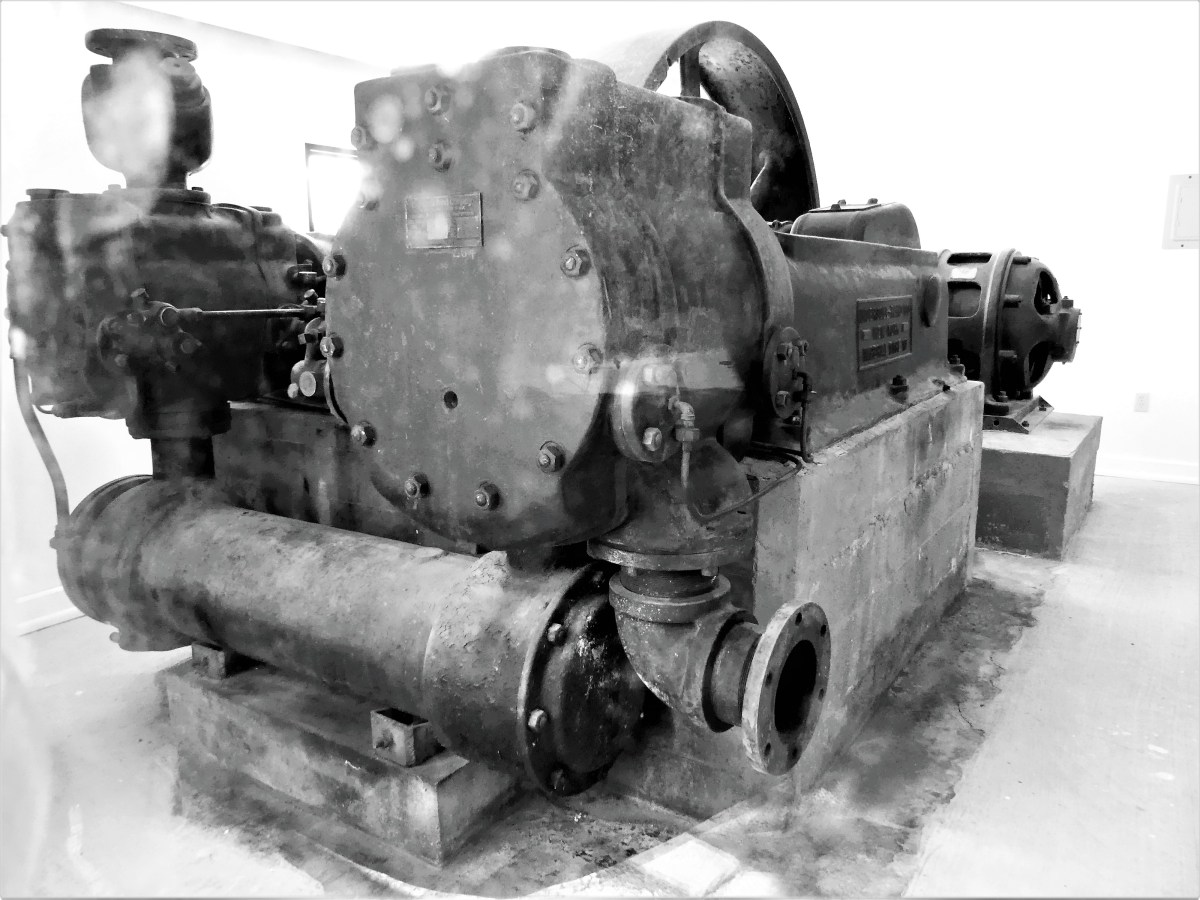
Additional exhibits detail the construction of the memorial, and the tools used by workers, like the original Rand & Waring compressor, which powered the jackhammers for all the finishing work.
A little known fact is that Mt. Rushmore was once intended to be a tribute to “Five Faces of Freedom”, but the funds ran out when the original budget approached $1 million during the Great Depression. Hence, the unfinished carving of the Great Ape to the right of Lincoln serves as a reminder that we are never far from our true ancestors.¹
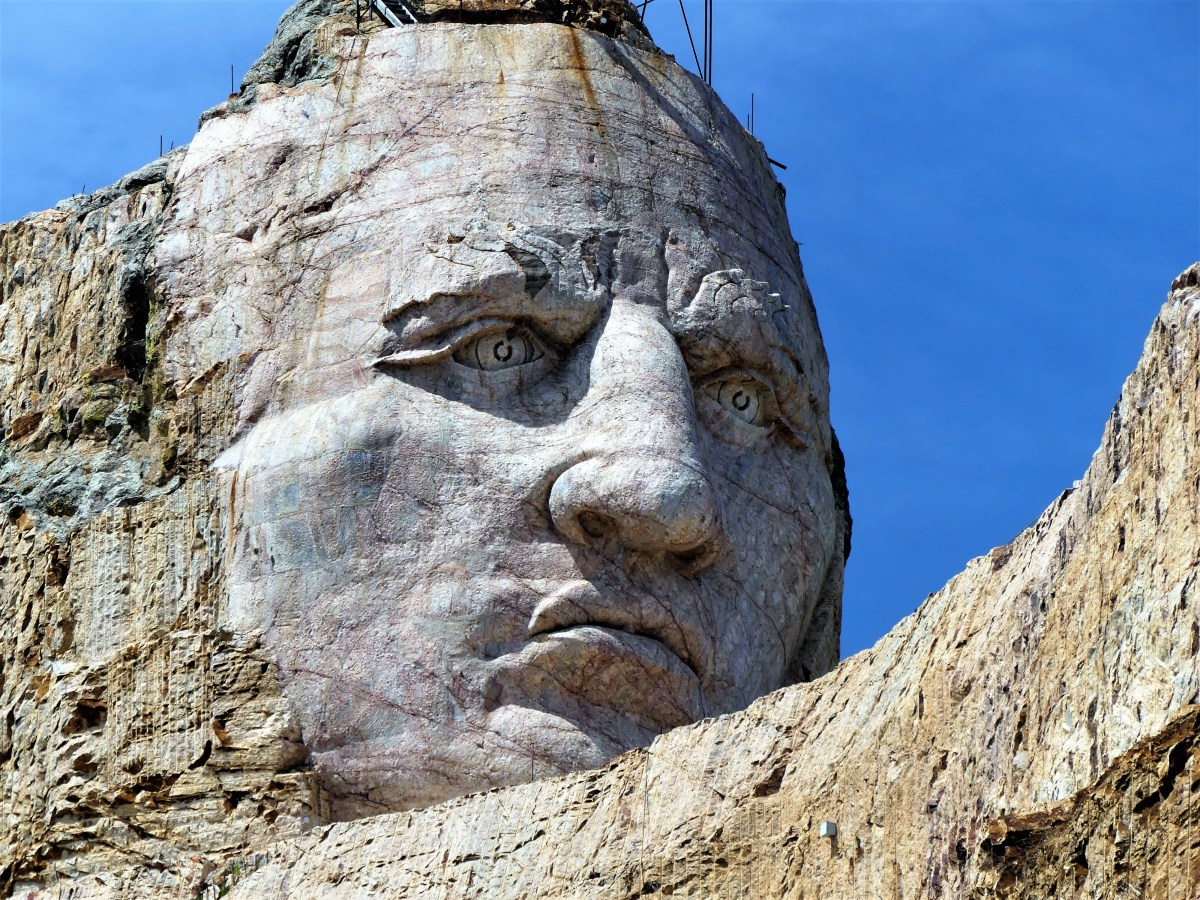
No less ambitious, and equally as impressive, the Crazy Horse Memorial is a work-in-progress located 16 miles away in the heart of the Black Hills–considered sacred land by the Lakota people.
Conceived by Korczak Ziolkowski in early 1940s,
the memorial, when completed will stand 563 ft. by 641 ft. across, and is expected to be the largest sculpture in the world. Already, the completed head of Crazy Horse measures 60 feet tall…
…twice the size of any of the Presidents at Mt. Rushmore. While the first blast was conducted on the mountain in 1947, the current prospects for the memorial are to complete the outstretched arm during the next twelve years. There is no completion date available for the finished carving, which has been financed entirely by private funding since its inception.
Mt. Rushmore was created by a Danish American. Crazy Horse was created by a Polish American. And visitors to both destinations manifest the melting pot that has brought us all together as Americans. It’s our diversity that makes us strong, our ambition and determination that makes us great, and our compassion and sacrifice that make us whole.
These are the values reflected from the faces we’ve immortalized in stone. Yet, we would honor them more by living according to these principles.
Happy Birthday, America!
¹ Just kidding, but the photograph is real and has not been retouched.
Driving past the Desert View entrance of Grand Canyon, we rode with uncertainty to our next destination, watching the last trace of Mount Humphrey’s snow cap dip behind the hilltops like a setting sun. We were driving through Page, AZ on our way to experience Utah’s quinfecta of National Parks, with a hopeful detour to Antelope Canyon.
Two days earlier, a park ranger at the South Rim recommended a drive to the North Rim. It was our first choice for camping inside the park after reading about trailer sites that back up to the canyon rim. But given its popularity and limited availability, we were shut out long before we ever started planning. Consequently, a day trip to the North Rim loomed large until the park ranger laid out a map in front of us.
“As the crow flies, the canyon is 10 miles across,” she explained while tracing the route. “However, by taking Center Road to 64 East, and following the road to 89 North, which then becomes 89A North for a while, and turning onto 67 South for the rest of the way, you should reach your destination in a little over 4 hours.
“Four hours?” questioned Leah, incredulous of the time.
“That’s right,” the ranger explained. “It’s 212 miles around to the other side.”
“And four hours back,” rebutted Leah.
“Well, it is remote,” admitted the ranger, “but it’s really worth it.”
Turning to me, “Remember,” Leah asserted. “You’re the one who’s gonna be driving eight hours. So there’s no way we’re taking that day trip. Not unless you’re willing to get up at four in the morning.”
That immediately put things into perspective. We left the visitor’s center feeling less secure about our plans.
“So, we’ll think of something else,” I suggested. “How about we stop in Page to break up the ride to Zion? Then we can explore Antelope Canyon. It’s part of the Navajo tribal park, and it’s really famous.”
“How do we get in?” Leah wondered, “and do we have to pay?”
A quick Google search brought quick answers. “Of course, we have to pay,” I affirmed. “But it says here that you can’t enter the canyon without a guide, and you definitely need reservations to guarantee a space, especially the week of Memorial Day holiday.”
“How’ya gonna manage that?” asked Leah. “It’s so last minute, and you know what the crowds are gonna be like this week.”
I was up to the challenge, and perseverance rewarded me with a early afternoon reservation with “Ken’s Tours” on our travel day… or so I thought. Unfortunately, closer inspection of the confirmation specified an 8:00 am entrance time–not the 2:00 pm time I bubbled. “No fucking way!” I yelled at the sky.
“I did nothing wrong,” I argued to Leah. “Those fucking bastards switched the time on me.” I was angry, and ready to pick a fight I knew I’d lose, but still I returned to Ken’s website to double-check. Of course, THE CALENDAR WAS FULL! I had psyched myself up for this after being turned away from the North Rim. I wanted this excursion more than anything. I had seen photographs of the canyon, and needed to witness this spectacle for myself.
“Look,” Leah explained. “We’re not gonna make eight o’clock, and you know it. So you may as well cancel our reservation, and we’ll call in the morning to sort it all out.”
The agent on the phone couldn’t get past the cancellation post from the night before. She insisted that by cancelling, we forfeited our reservation. But Leah was not giving up so easily.
“You gave us a time we didn’t order,” she lectured, “just so you could fill up your calendar. Besides, it’s already 7:30 in the morning which makes it completely unreasonable to expect us to be there in half an hour since we’re at the Grand Canyon, and we still have to drive two-and-a-half hours to reach you.
I listened in on the call, and didn’t understand the logic that was going back and forth, but Leah wore the agent down. She relented by agreeing to wait-list us, provided we show up at 2:00 pm to take the place of two no-shows.
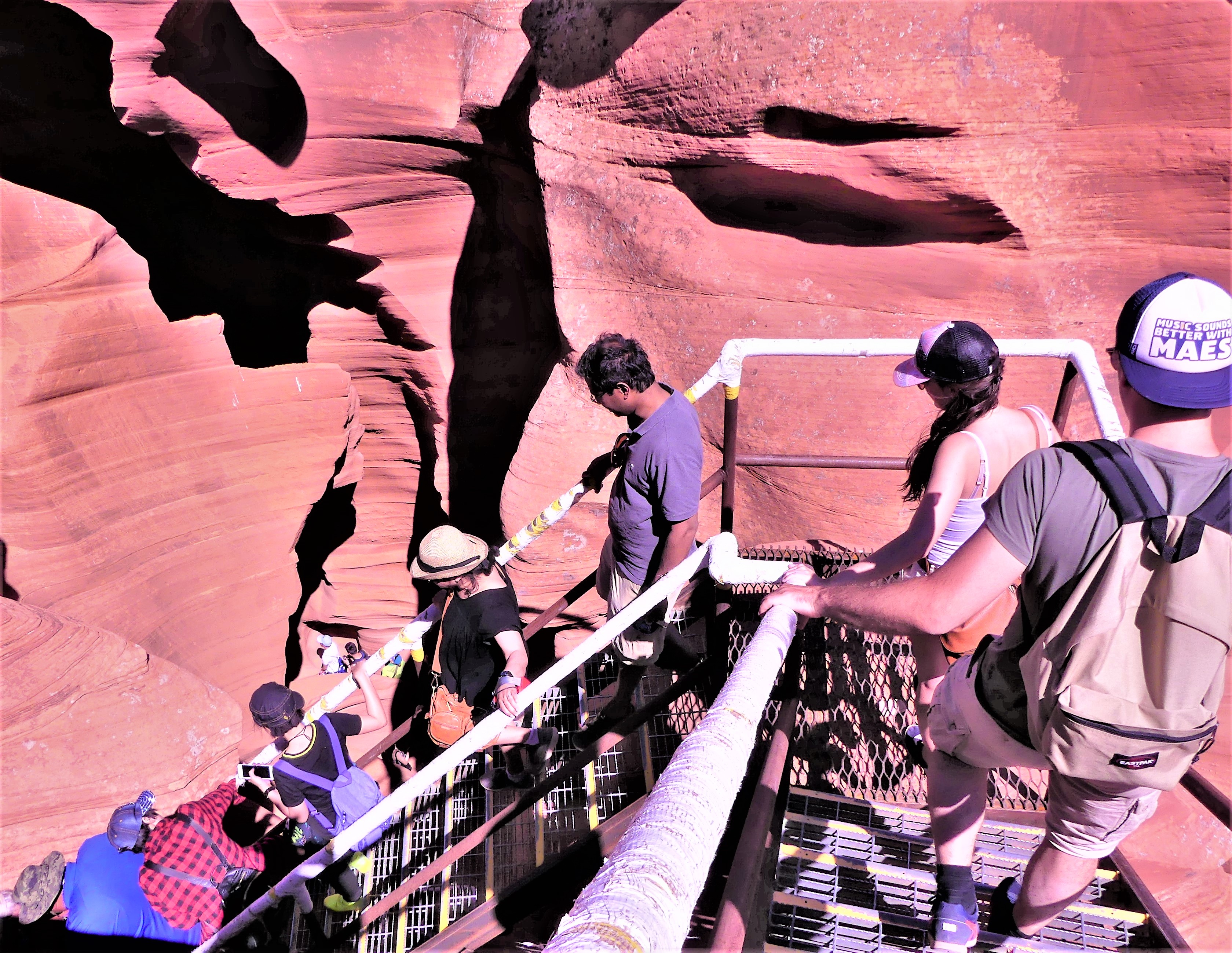
Obviously, as can be seen from the banner above the blog, we made it in time, and got to explore the lower canyon. Our guide, Broderick, a full-blooded Navajo who also spoke Hopi and Zuni, escorted us to a sloped overhang, where hundreds of canyon seekers waited patiently for their moment…
Before it would be our turn to take the stairs, Leah and I had an hour’s wait, which gave us plenty of time to get to know our group of nine others and Broderick, who’s been working as a guide for Ken’s Tours for the past six years. We introduced ourselves to a millennial couple from Belgium, a mother/daughter from Japan, a Gen-X couple from Sri Lanka, and three deaf-signing teenagers, of which one could speak.
Broderick filled much of the time feeding us background information on his life. We learned that Kenny Young (of Ken’s Tours) also breeds prize bulls for the professional rodeo circuit, and Broderick who has ridden bulls in the Kenny Young Bull Riding Classic since his late teens was an adoring mentee of Kenny’s, learning how to properly grip the bull rope around his bull-riding hand, and best position his rope handle. It was at the arena that he first met Kenny’s granddaughter, who has been his steady soul-mate ever since. And it was only after Broderick bought her a four-bedroom house as part of a customary Navajo dowry that the deal was sealed.
While they have no immediate plans to marry, Broderick willingly shares his vision of how the wedding will take place–which surprisingly does not include a ceremony within the canyon walls. Instead, he imagines a small invited assembly atop a holy mesa accessible only by helicopter.
Forever the romantic, Broderick remains deeply devoted to his guide duties and the heir of a family business who sees 1,500 plus visitors a day wind their way through Arizona’s most famous slot canyon at $25 a piece.
The waiting time moved quickly, and soon it was our turn to descend into the canyon.
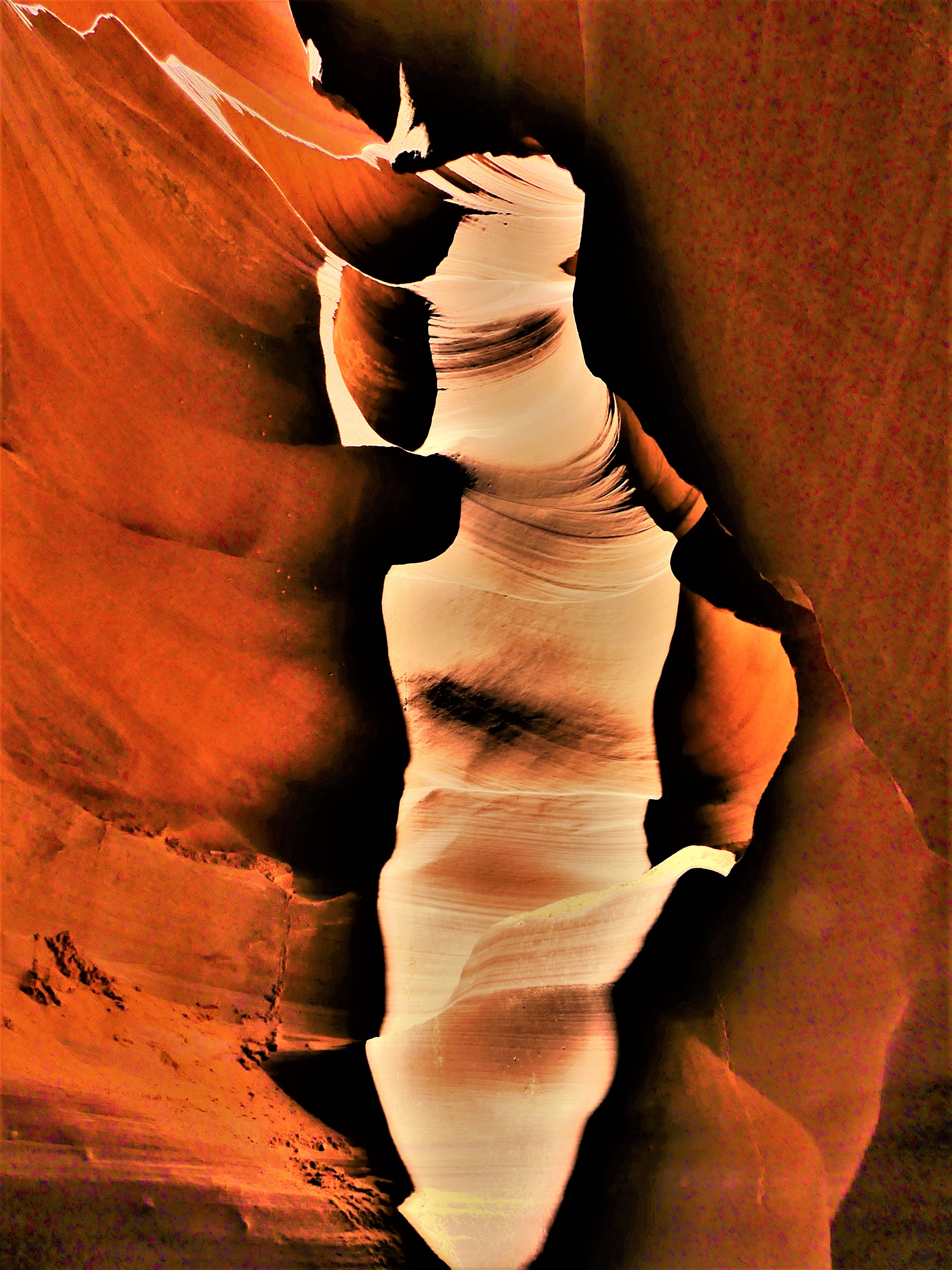
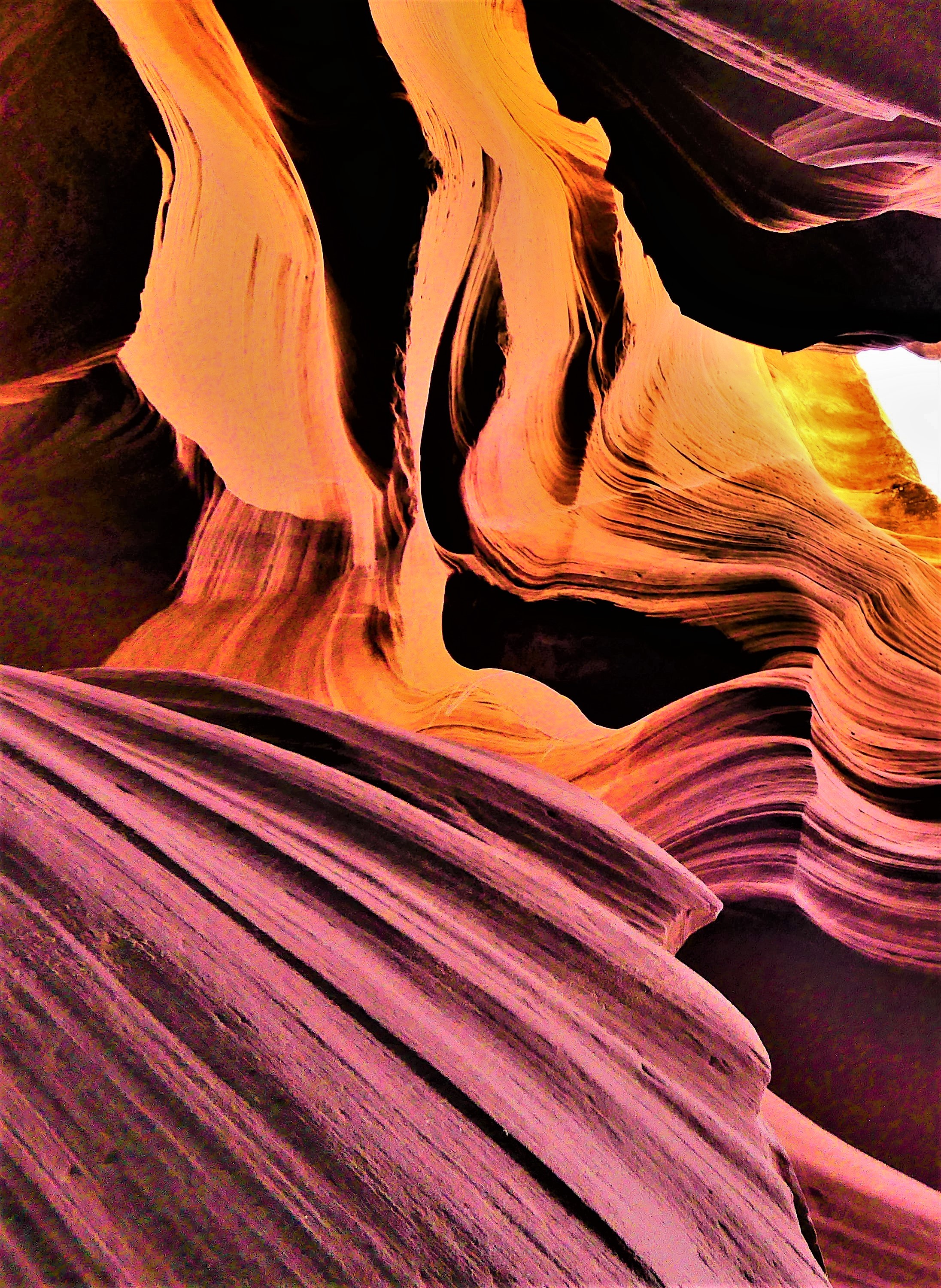
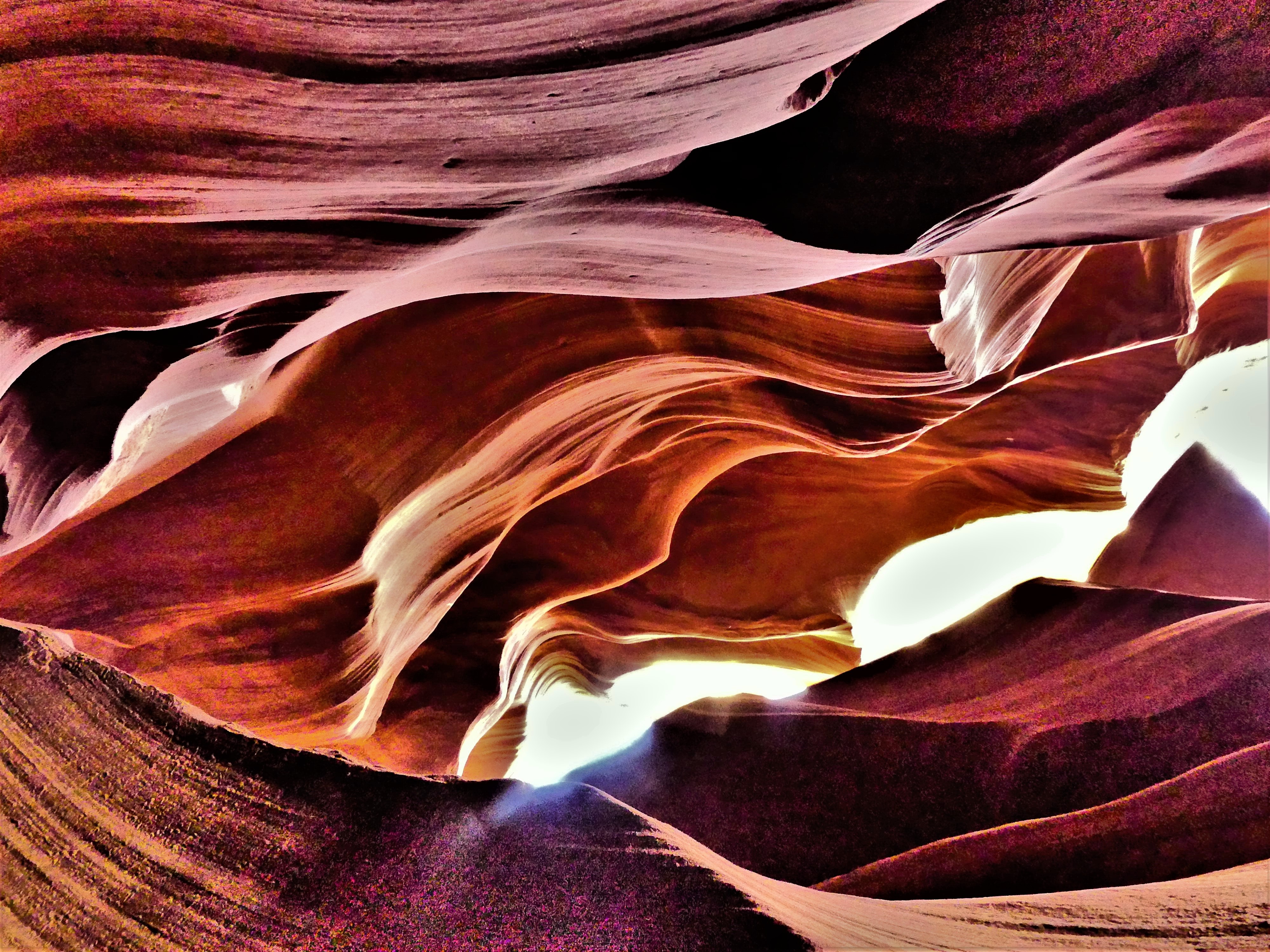
From the moment we twisted into the slot’s sandstone corkscrew, I knew I was in photo-nirvana.
And after a walk through nature’s majesty, I acknowledge that it’s the best money any would-be photographer can spend.





















































 Streaming thru America