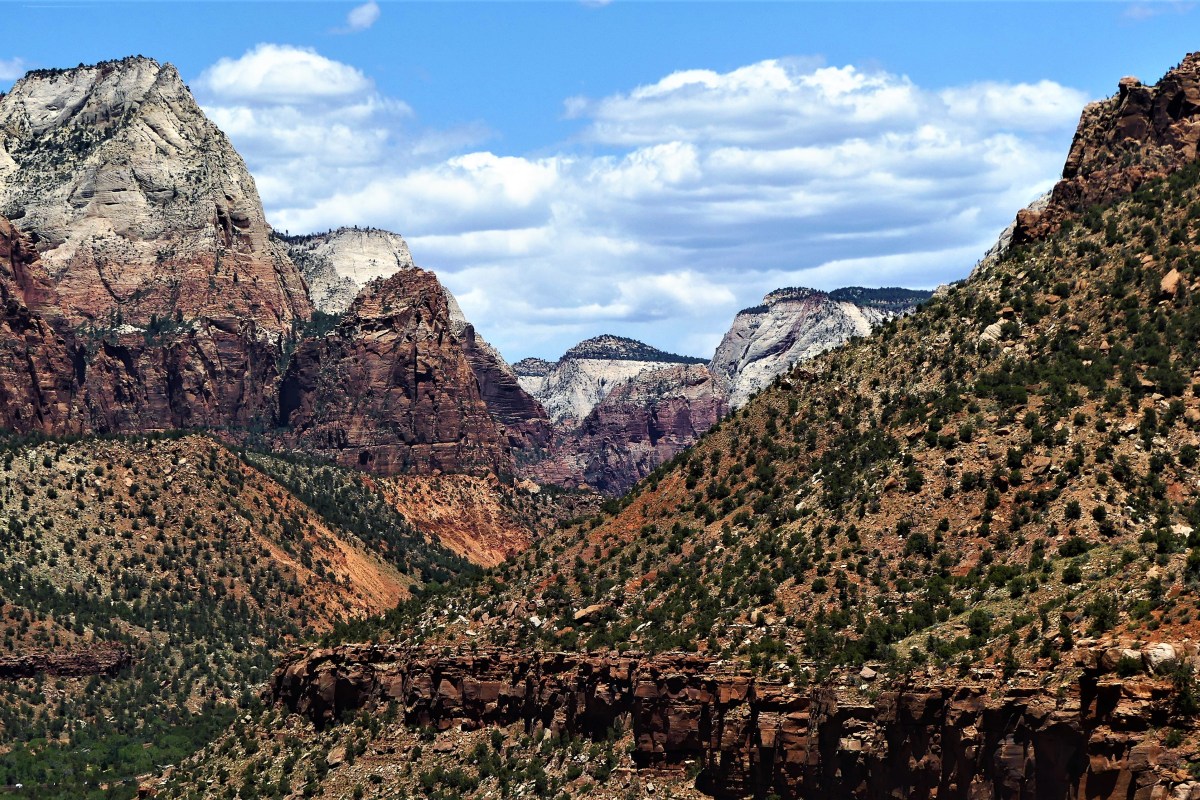
The crowds that crammed into Zion National Park over Memorial Day weekend left us frantic and bereft. As our first stop in Utah, we came to Zion to enjoy the trails and distinctive scenery of mountains and water. We planned to hike the Narrows through the Virgin River, and experience the Kolob Arch (the world’s second largest natural free-standing arch), but we never accounted for (and neither did the Park Service) the tens of thousands who would mob the park this particular weekend while we were here.
Staying over in Springdale, just outside the park, gave us easy access to the southern park entrance, only half a mile away. And the convenience of having a free shuttle bus stop outside the RV campground with transfers to trail heads available inside the park, meant we could leave the F-150 behind. Or so we thought…
The one day we had to explore, Sunday, we walked to the bus stop only to find it spilling over with more than fifty people waiting in a discordant line. According to a bus dispatching authority (a busy body) who had been waiting for over half an hour, “Buses come by every fifteen minutes, but will pass by without stopping if they are full, and so far, two buses filled with standing passengers has already passed.”
When a third bus passed without stopping, Leah and I started for the park gate on foot.
When we beat the shuttle bus to the park entrance due to traffic back-ups at the gate houses, we realized that things were not going according to plan. After checking in with a park ranger at the visitor center, we were directed to the park shuttle buses that would transport us to stop 9. Searching for the end of the line, brought us as far back as the park entrance, where the wait for boarding a shuttle bus would be over two-and-a-half hours!


When asked about the situation, a ranger confessed, “I won’t lie. This park is not equipped to handle these many people. It’s like trying to scoop five pounds of poop into a four pound bag. We’ve never seen it like this before, and I’m embarrassed to say, there’s not too much we can do about it.” Yet the park’s popularity has been steadily evolving, making it surprisingly, the fifth most visited National Park with over 4 million guests last year, just beating out Yellowstone.
The thought of waiting for a bus in direct sun during peak day seemed like a deal breaker. Our planned activities inside the park were scheduled to carry us late into the day, but with bus service being backed up, and the potential of sharing the trail with hundreds if not thousands of hikers, we wondered if the day could still be salvaged.
Another look at the park newspaper revealed a moderate four-mile hike from the visitor center along the Watchman trail with sweeping views of Springdale, and iconic Zion landmarks such as Beehives, Towers of the Virgin, West Temple and the Altar of Sacrifice, ending with a view point of the Watchman, a rocky spire rising to an elevation of 6545 feet. We shrugged and accepted out fate. While not our first choice (and ranked #19 of 49 attractions in the park by Trip Advisor), it would have to satisfy our urge to be a part of the Zion experience.
What most hiking critics reported as a quiet and thinly-populated trail was being exploited today as an overflow option for many other folks with “won’t-wait-in-line-itis”, including several families with small children, small groups of rowdy teens, and an assortment of unprepared novices wearing flip-flops, trudging up occasional steep and narrow switchbacks, and wishing they brought more than a small bottle of water.
Overall, the hike to the top of the ridge line paid off in dramatic and sweeping views from north to south.


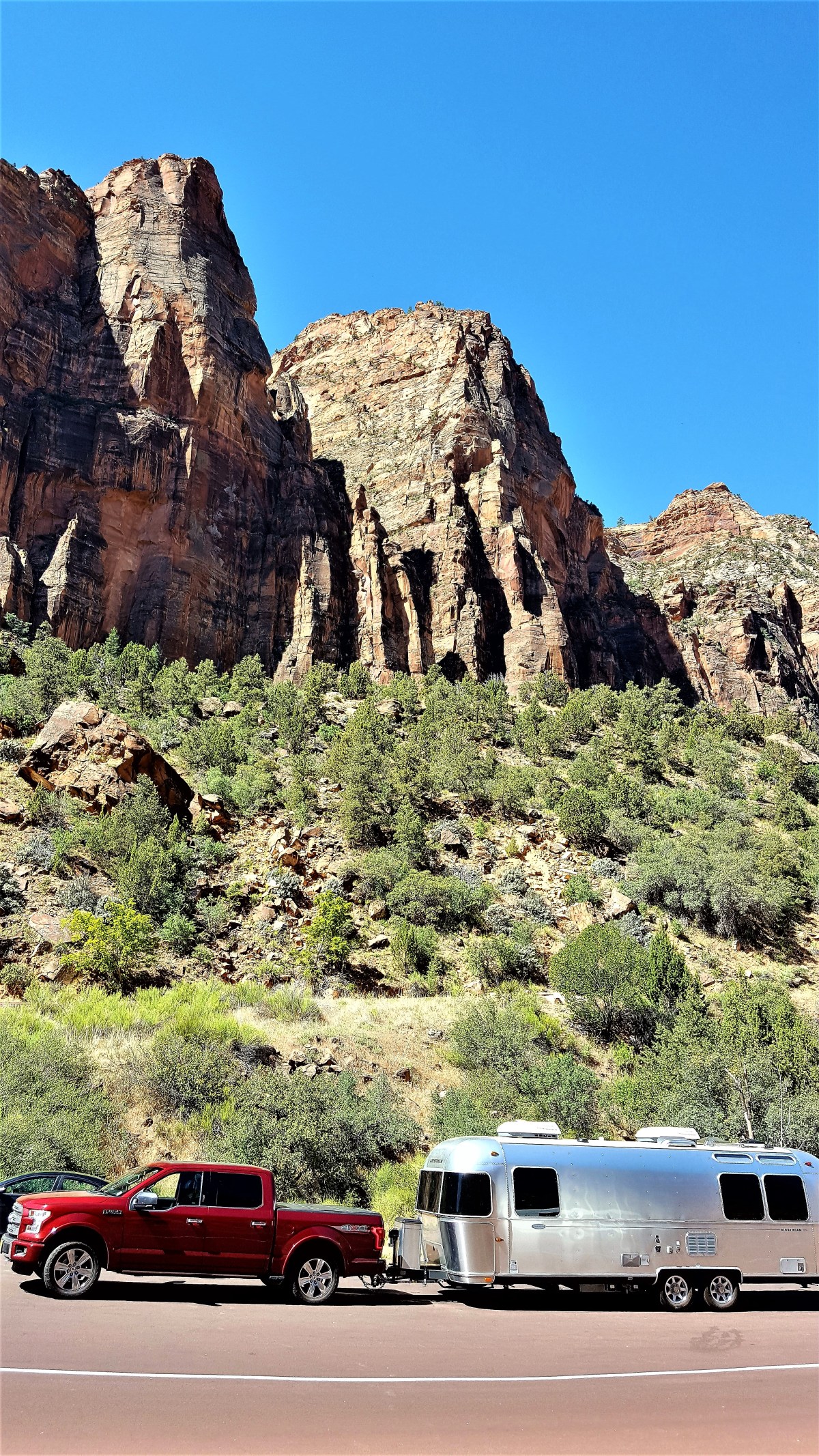
The next day we drove the Zion Canyon Parkway north through a skinny one-mile tunnel cut through Zion rock in the 1930’s, and closed to two-way traffic to accommodate wide rigs like ours. The switchbacks were hairpin and narrow, but Leah has grown confident in my driving over the past month, and allowed the radio to play with the sun-roof open, while she enjoyed taking iPhone pics of the canyon vista.
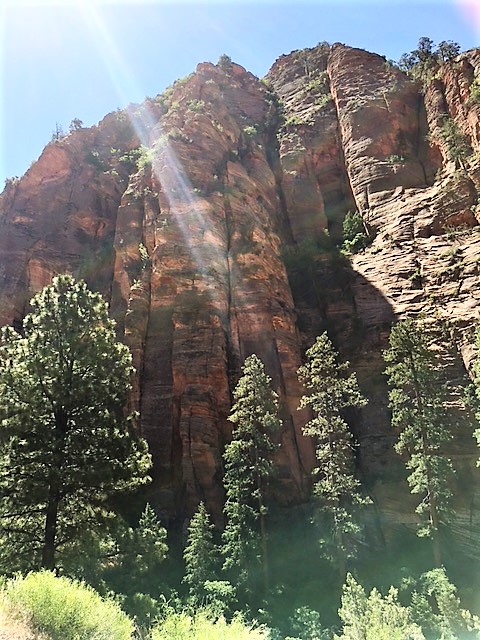
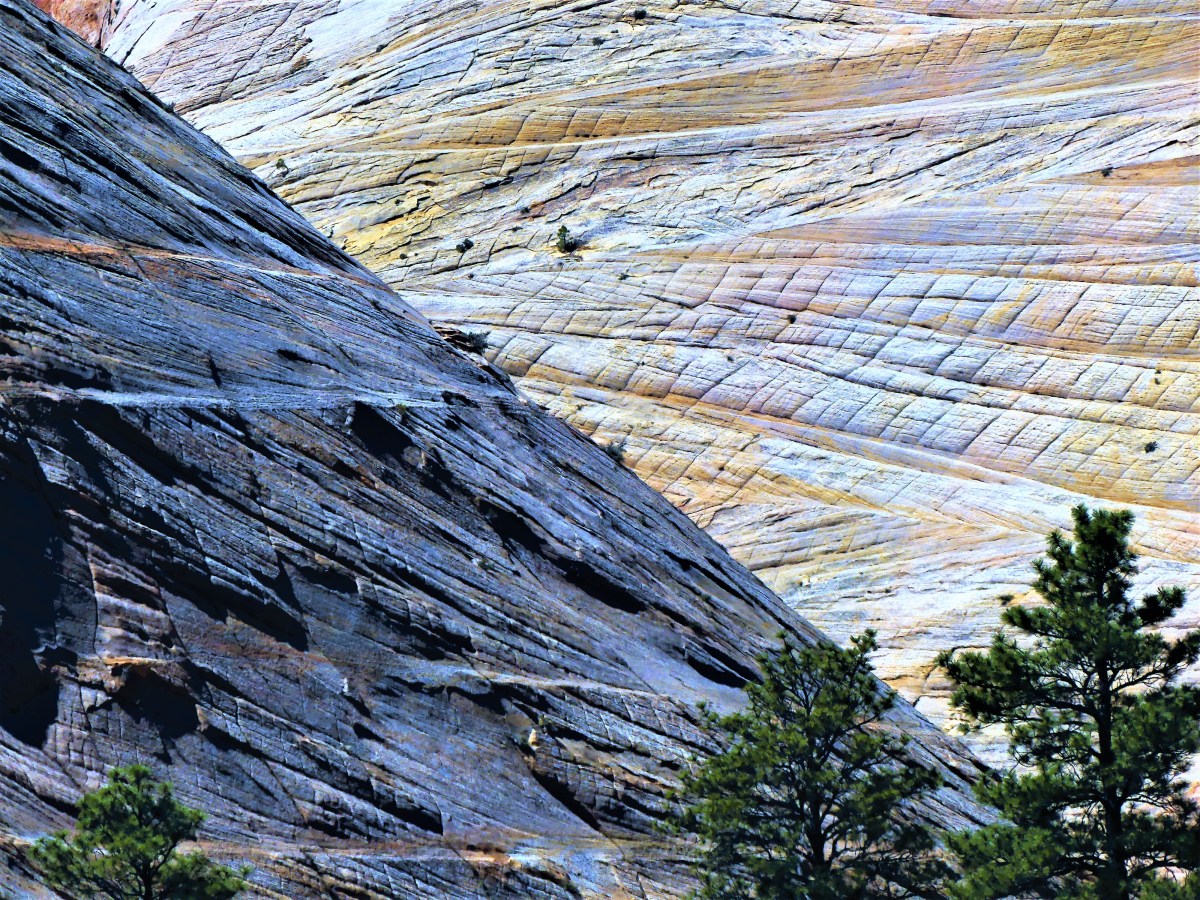
Finally, a scenic turn-out featuring Checkerboard Mesa opened along the roadside, allowing me to pull up to a yellow coach (no joke) filled with scores of yammering Chinese dressed in down jackets, white gloves, and colorful umbrellas.
While most cameras focused on the mesa, I was fascinated by the checker-boarding.


We’re on our way to Bryce Canyon National Park, where hopefully, the crowds are thinner and the air is fresher.
















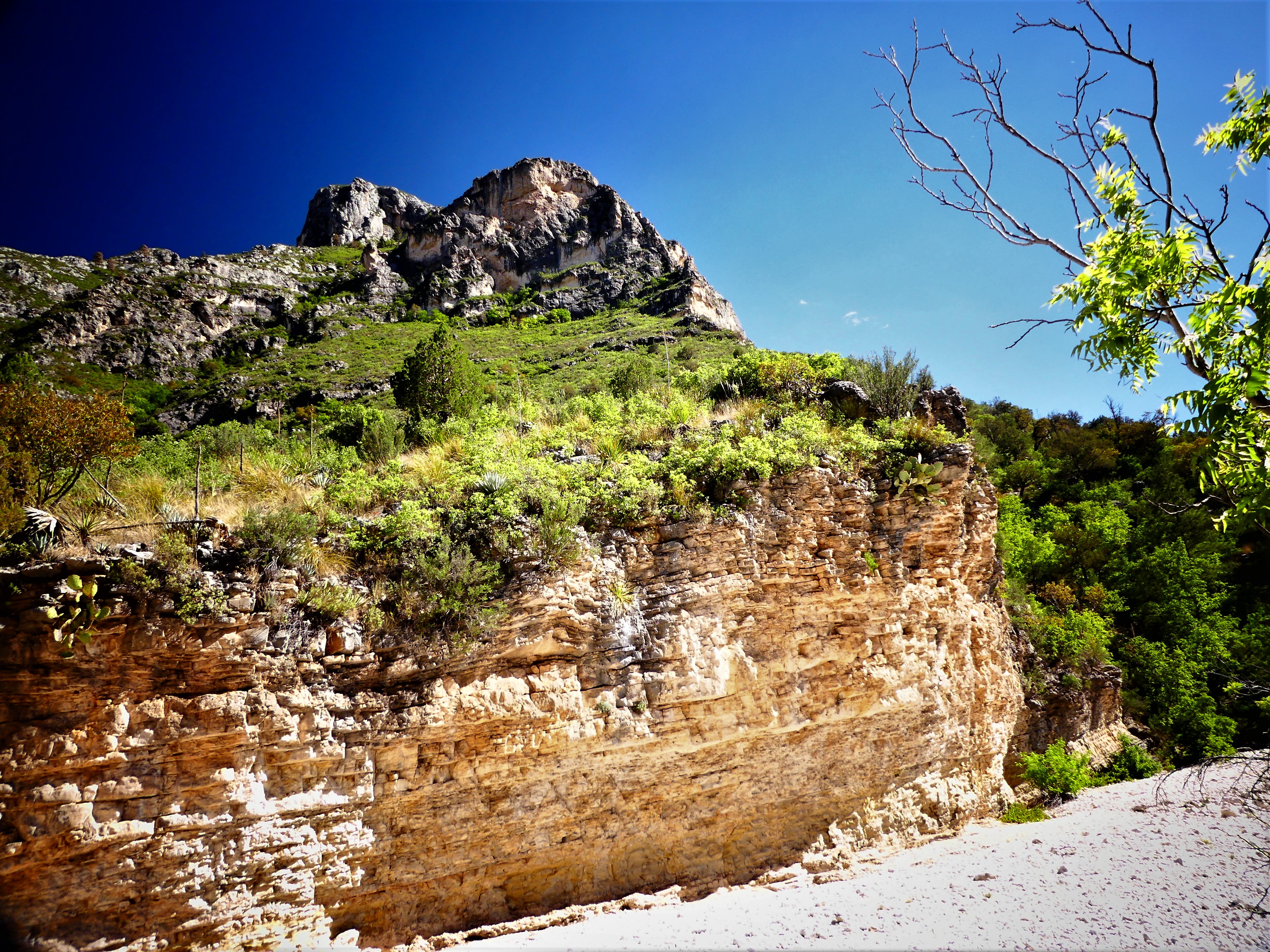
 as we cross several dry river beds…
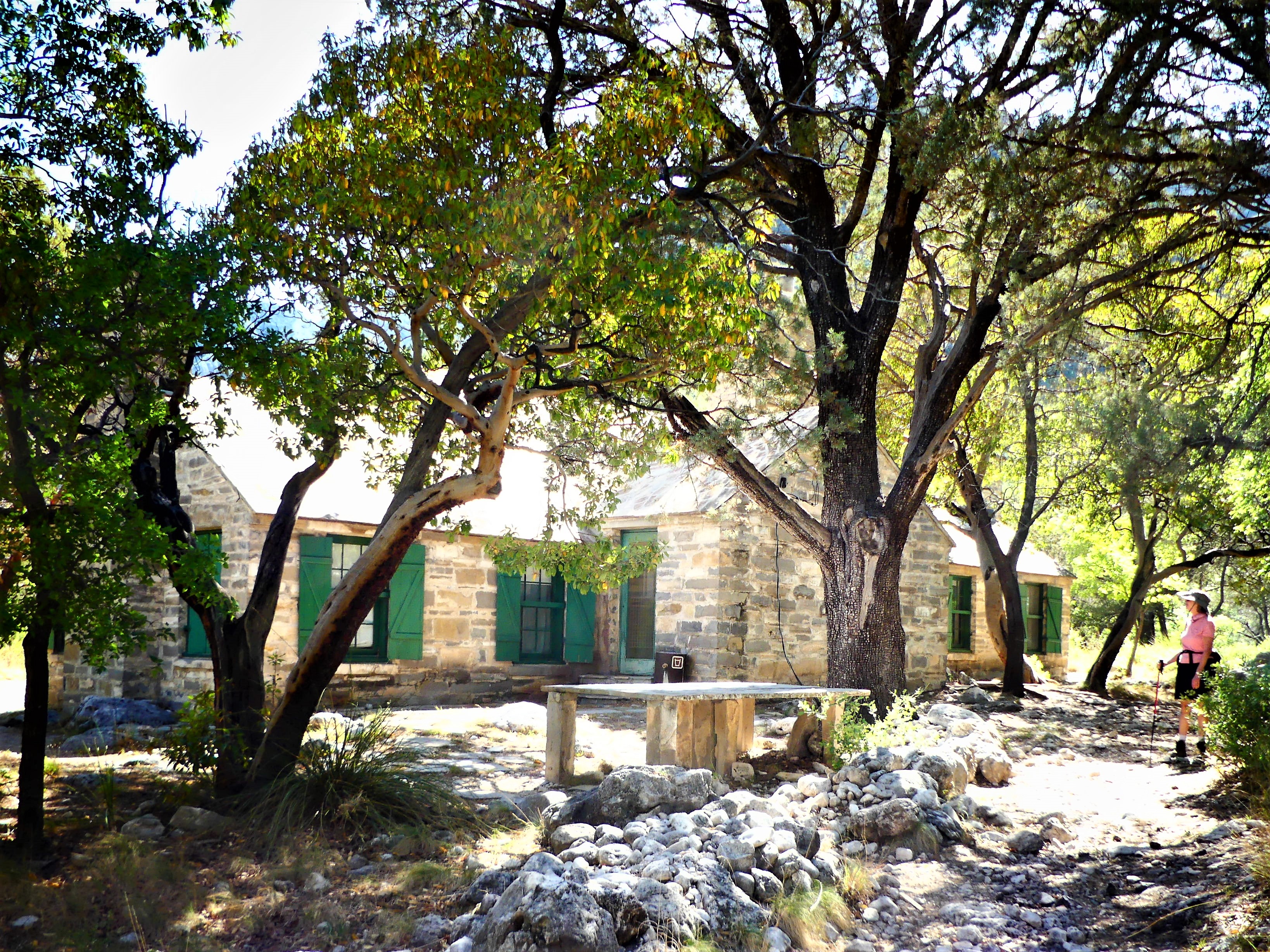
 along the arroyo to Pratt Cabin, a Depression-era structure built entirely of stone.
 Rocking chairs under a cool porch provide perfect respite from the simmering sun.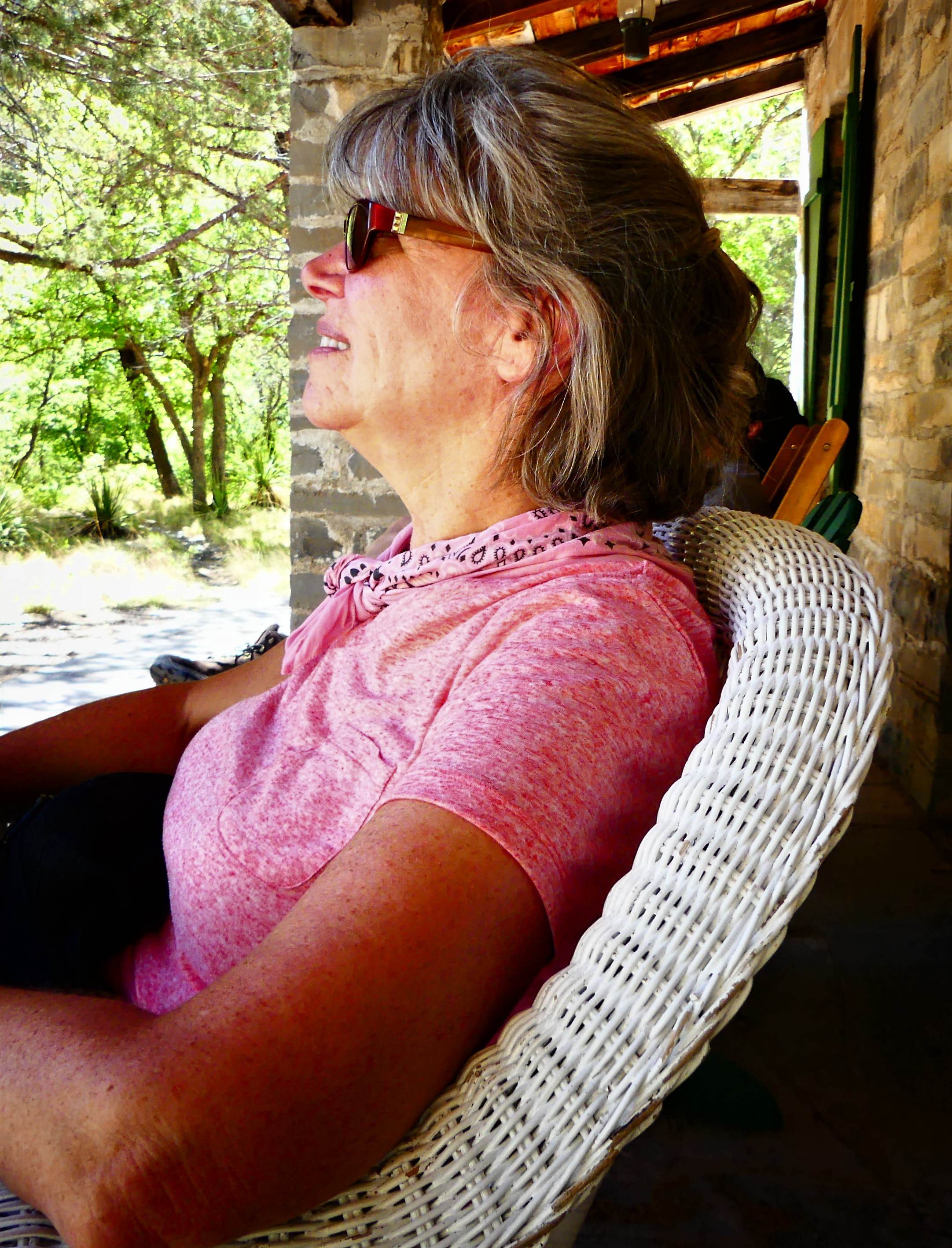













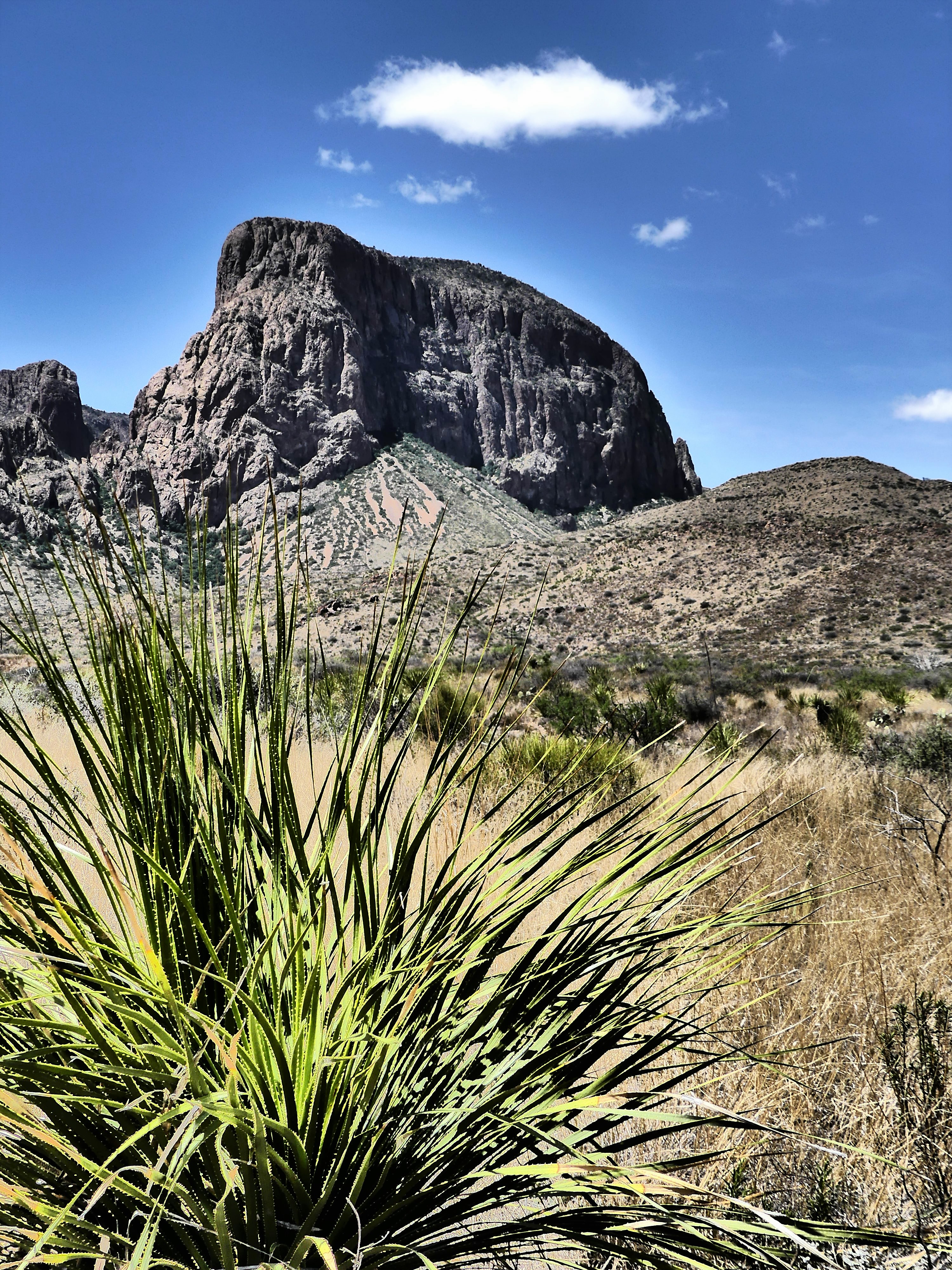


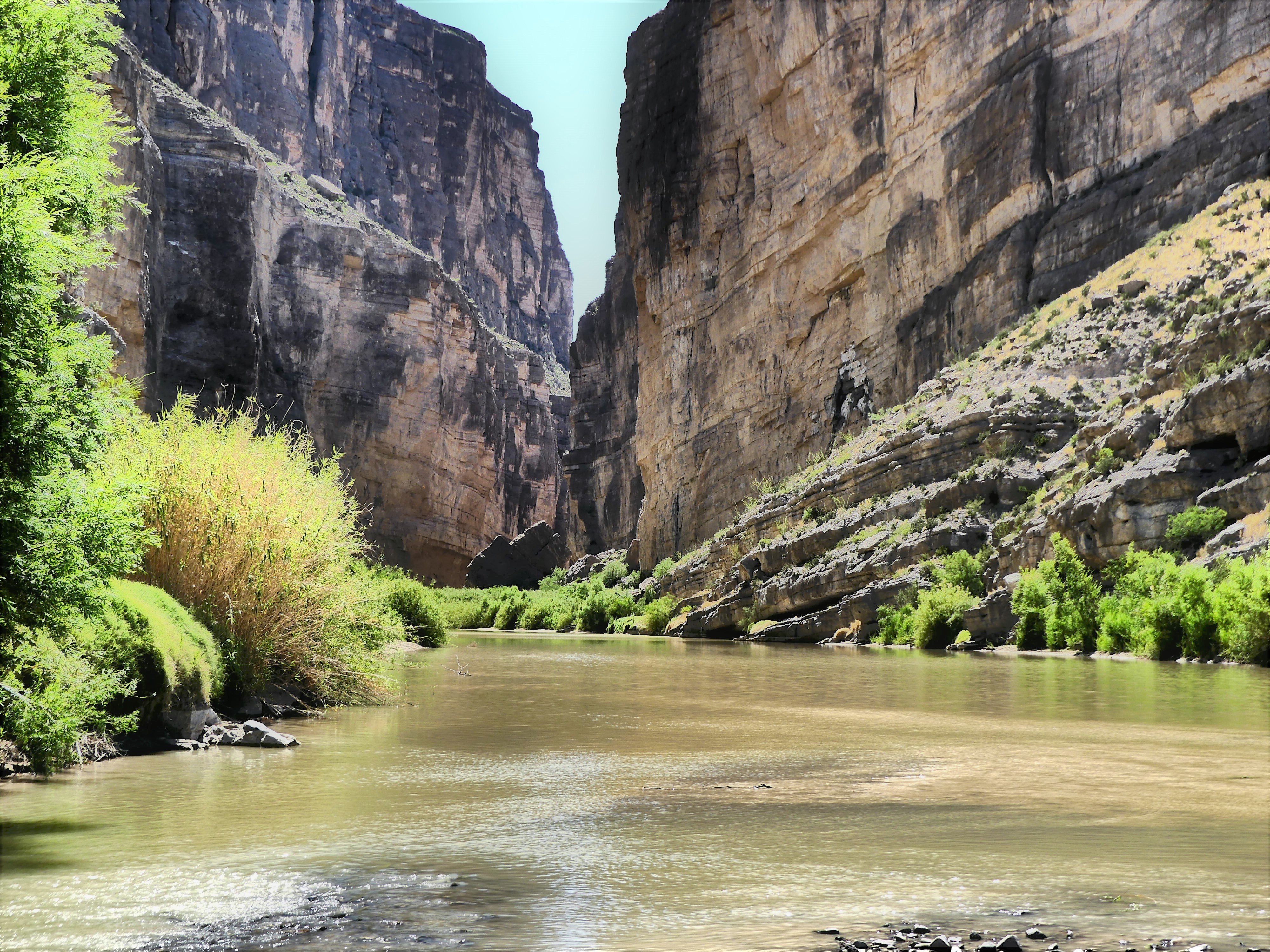
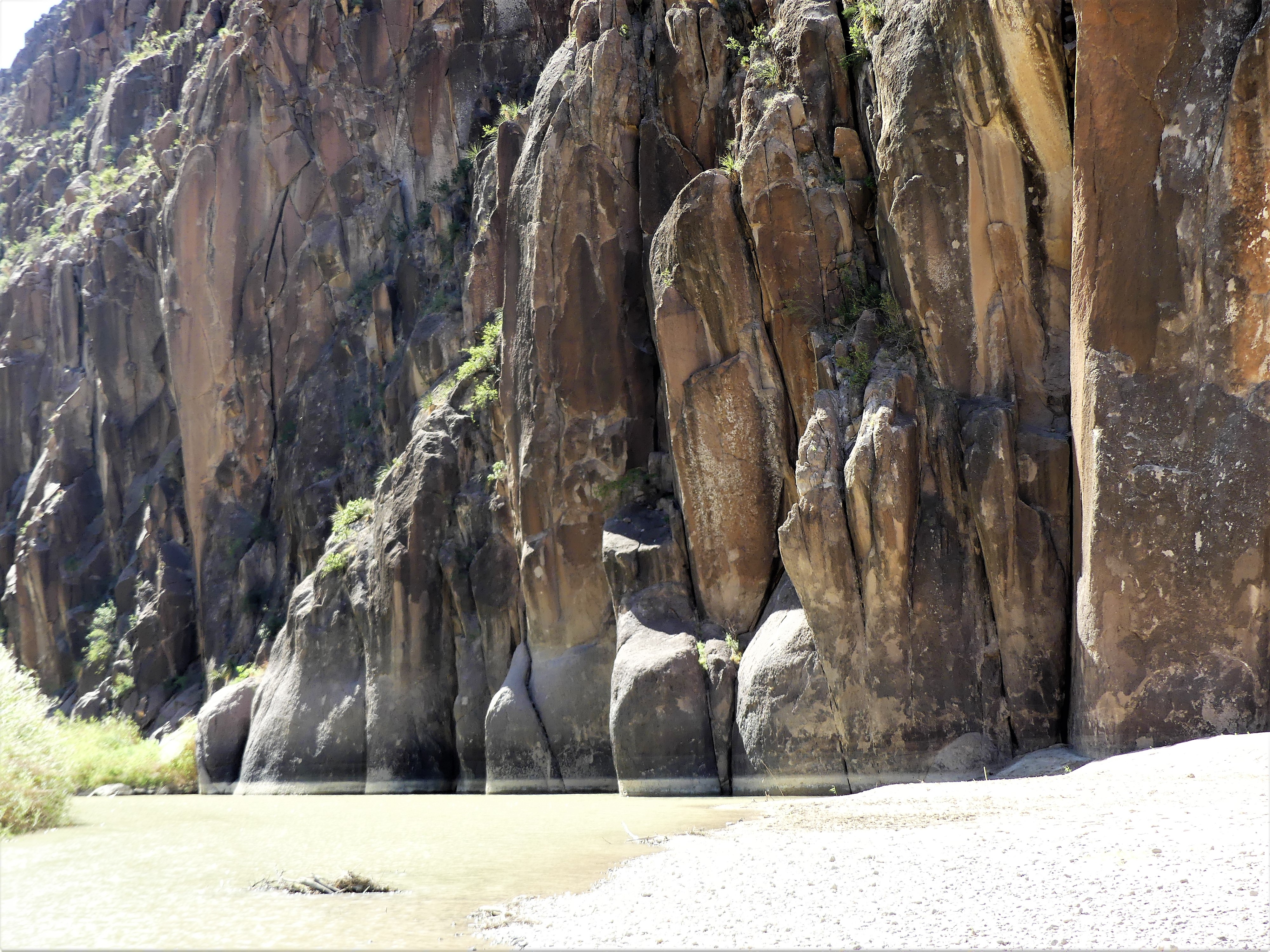
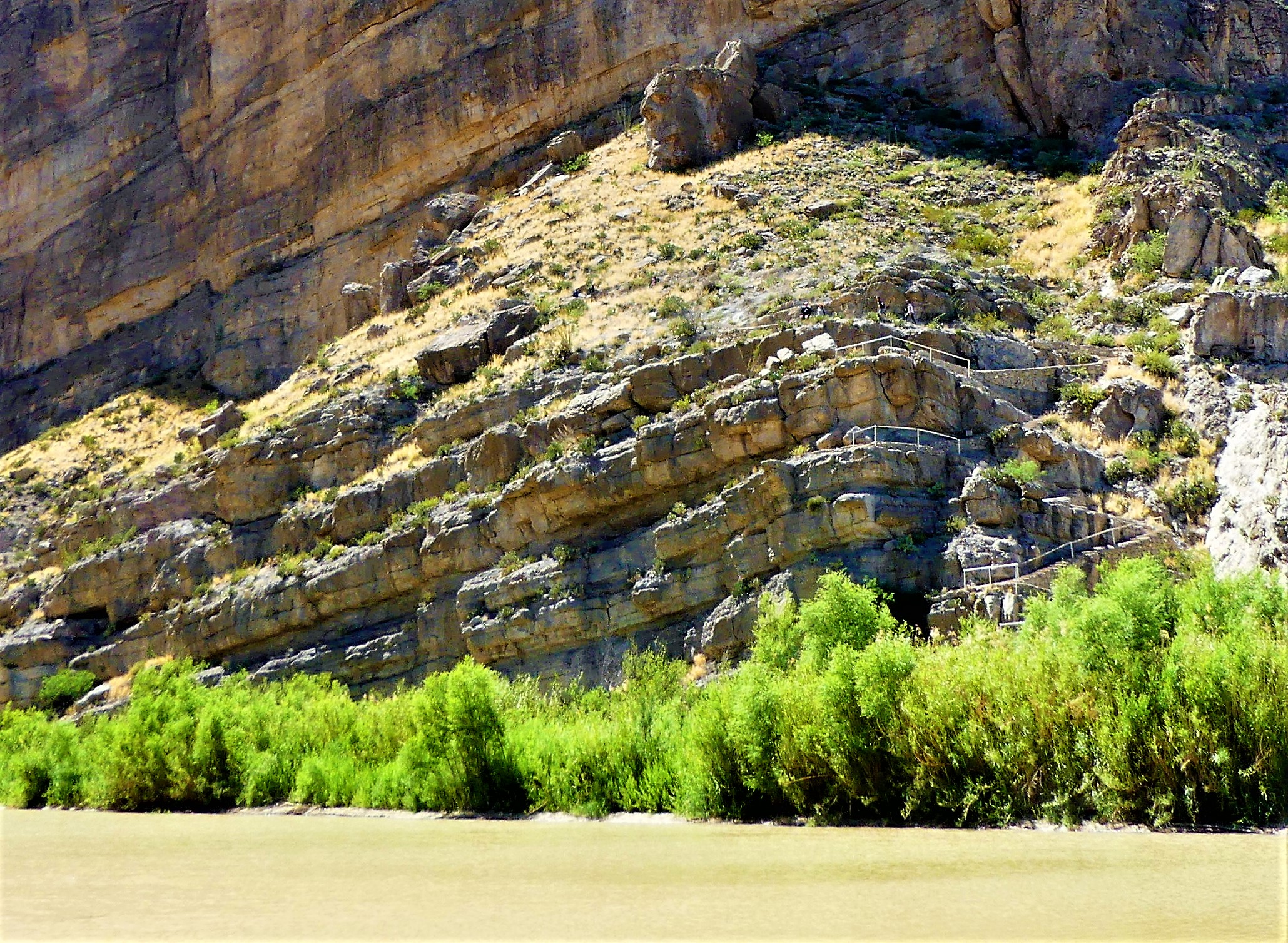
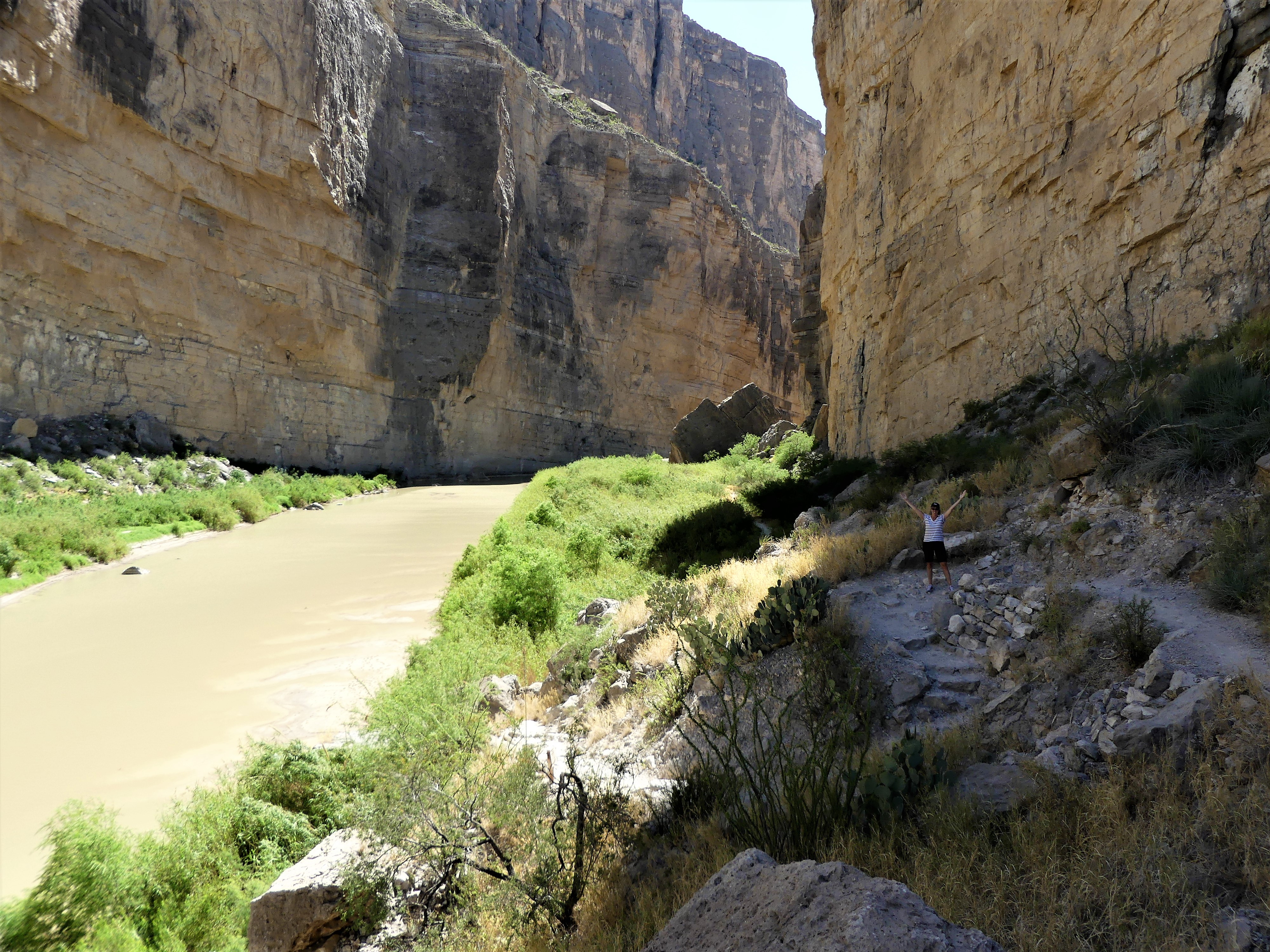
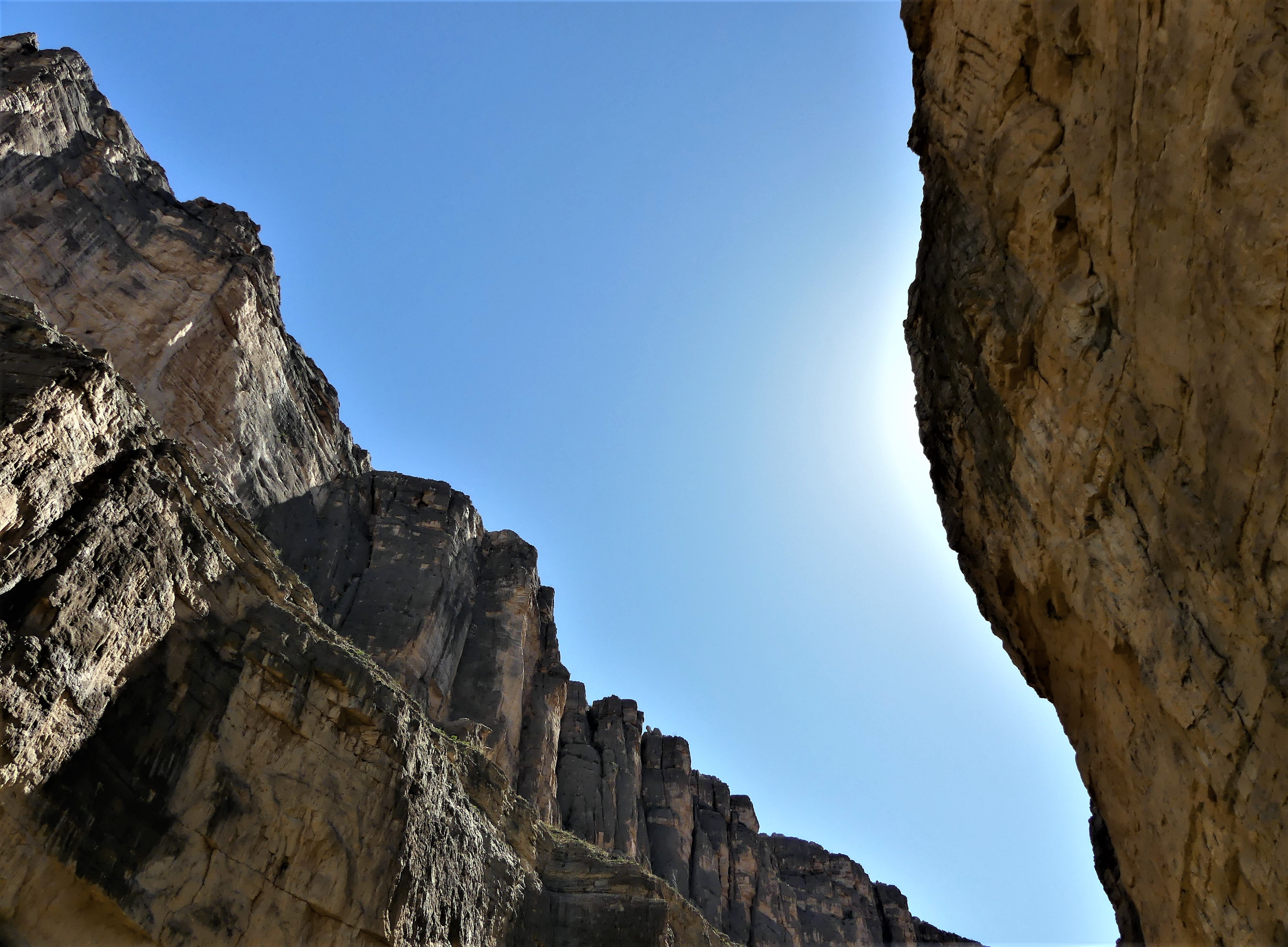
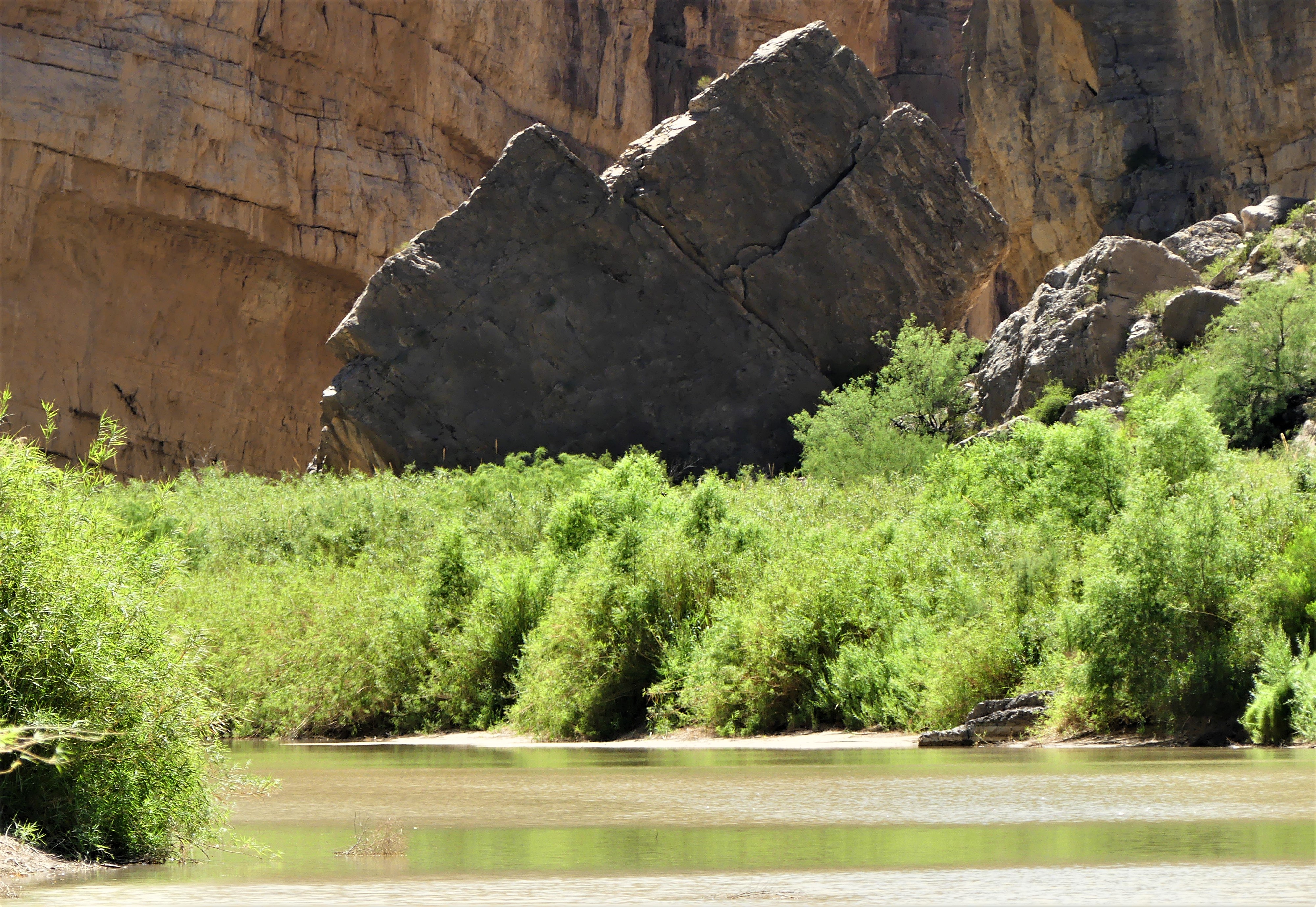


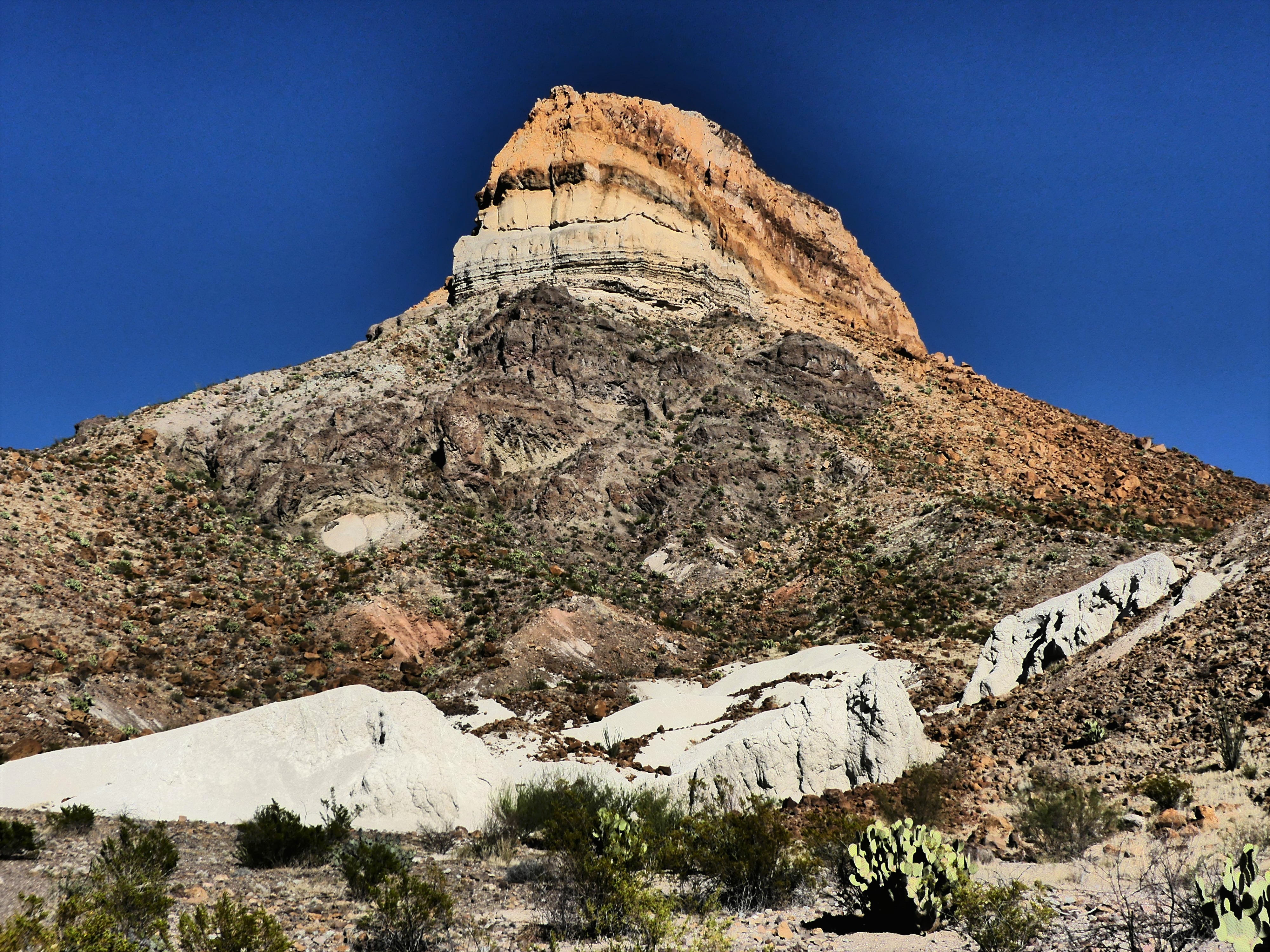


 The road continued another 7.5 miles up and down multiple grade changes, curling in and around exposed mountain walls, and mimicking the serpentine lines of the Rio Grande, making it a driver’s delight and a passenger’s revelation. It’s little wonder that El Camino del Rio has consistently ranked as a “ten-best” scenic drive in America.
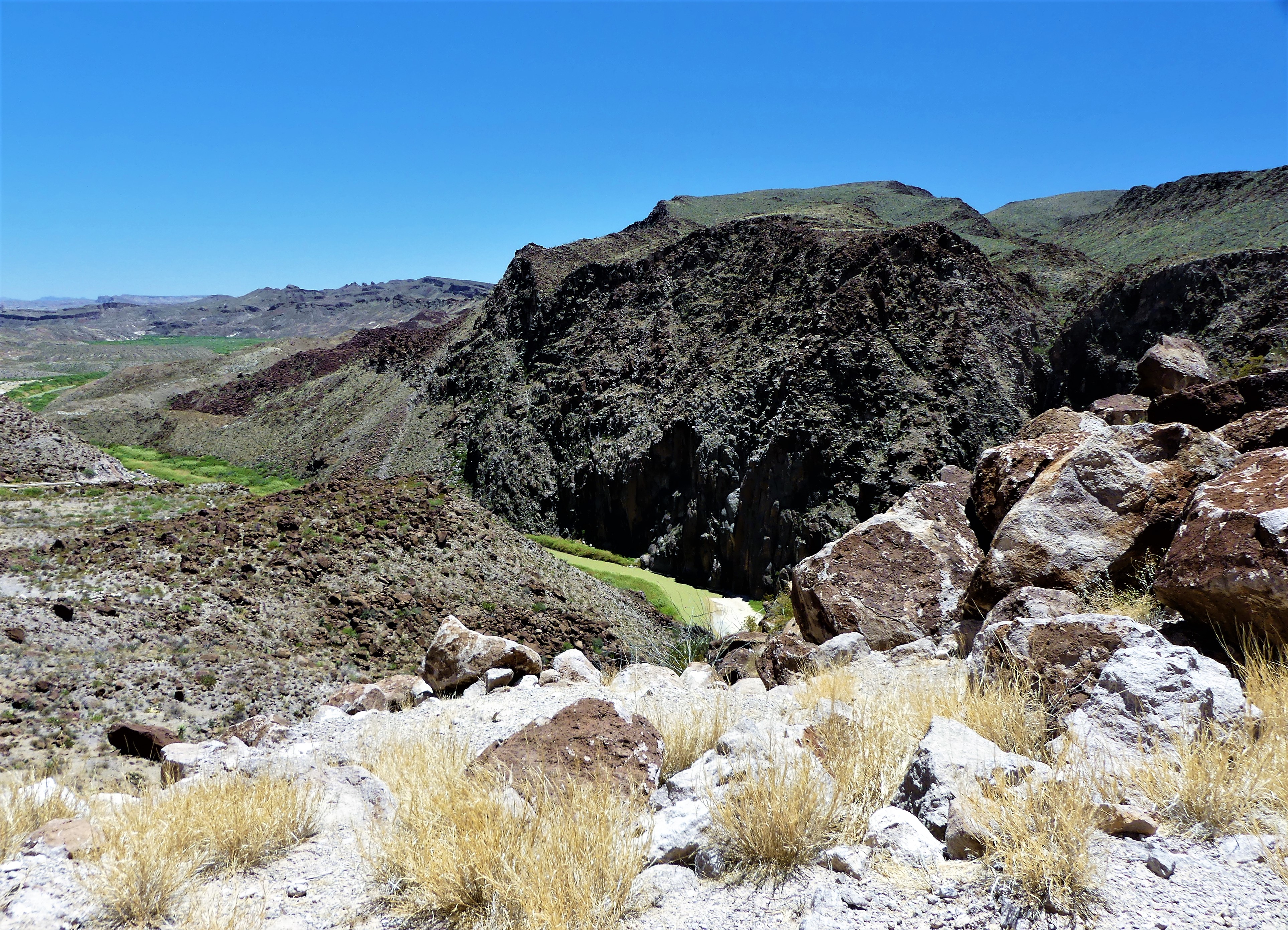 The signage throughout the State Park suffers because of its immensity (300,000 acres) and limited resources, so having Mike as lead proved advantageous, since it would have been so easy to overshoot the trail head in favor of the surrounding vistas and roadside scenery.
 “Anything we should watch for?” I asked.
 While the wildlife sighting reanimated us, Leah wasn’t sufficiently satisfied.
 Uncertain of Mike’s politics, I lobbed him an ICE-breaker. “Any chance,” I subtly inquired, “we’ll have a Mexican sighting?”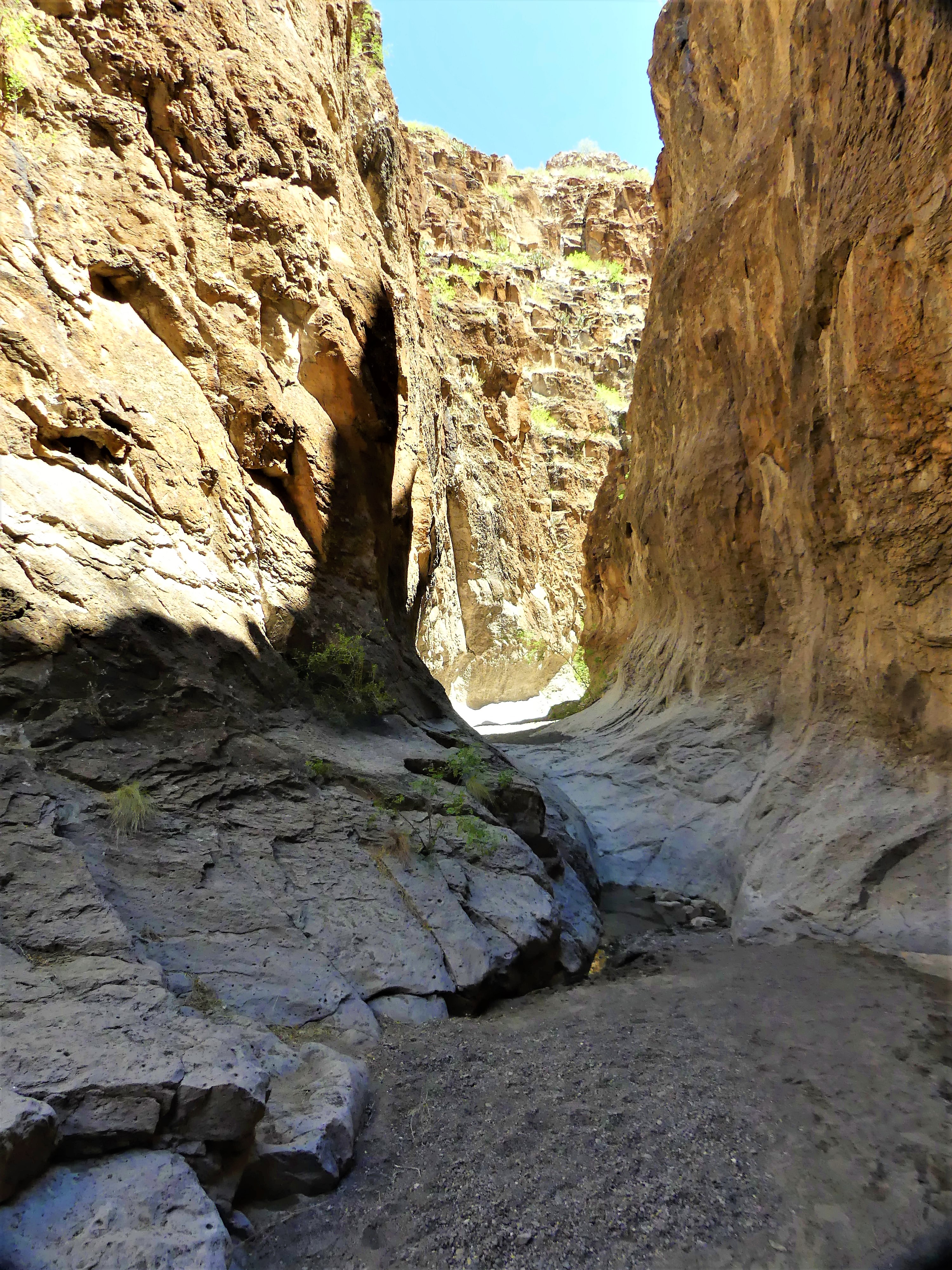
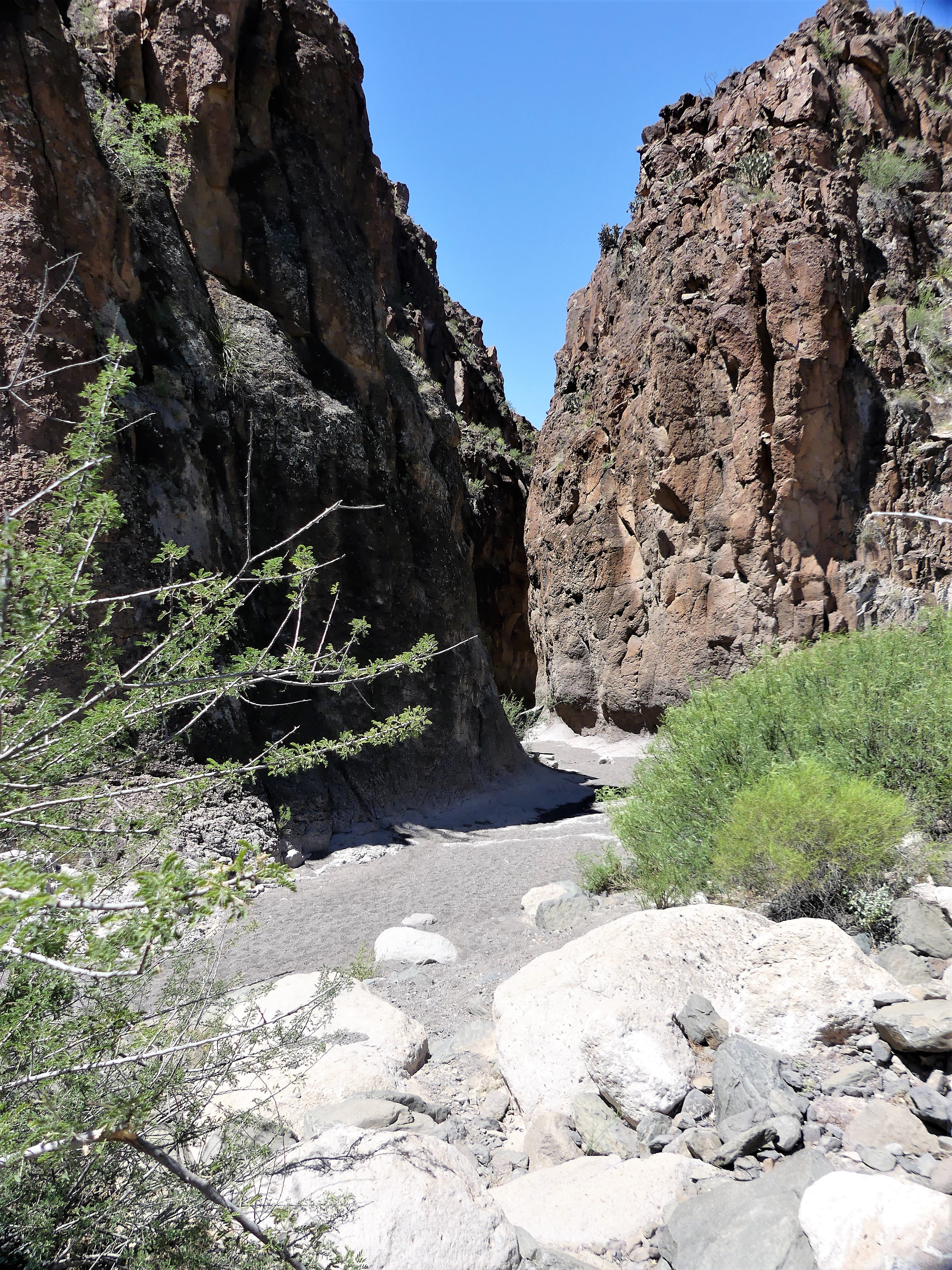
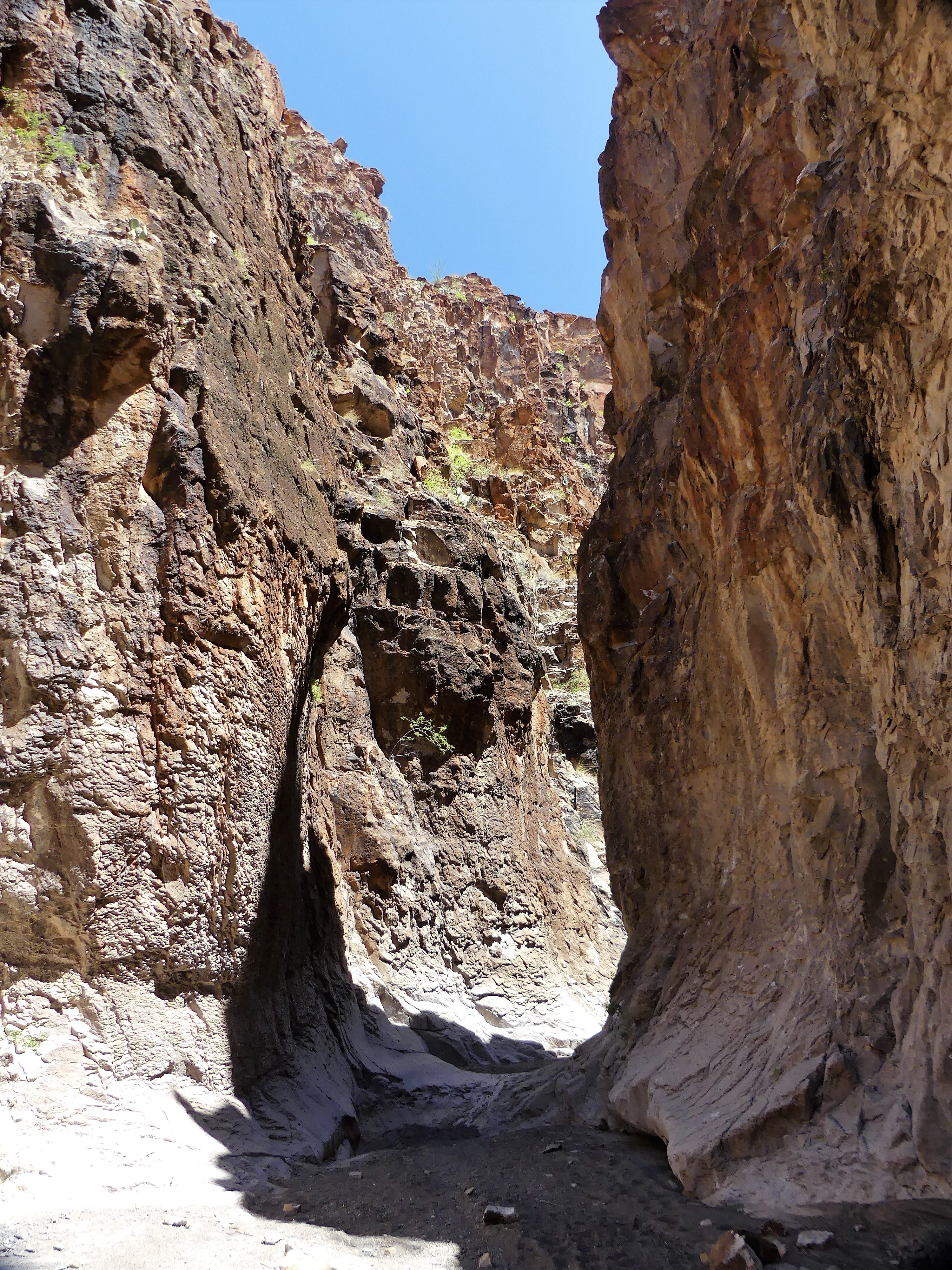 No argument from me. We worked our way further into the slot, scrambling over, around, and down water-polished rock, sometimes stopping to avoid the many tinajas–potholes of jaundiced water of undetermined depths scattered across the canyon bottom.
 After an hour on the trail we reached an impasse. At this point, the canyon walls were narrow enough to touch with both arms extended, but the tinaja before us was too deep to ford, and too wide to bypass. All we could do was turnaround and hike out.
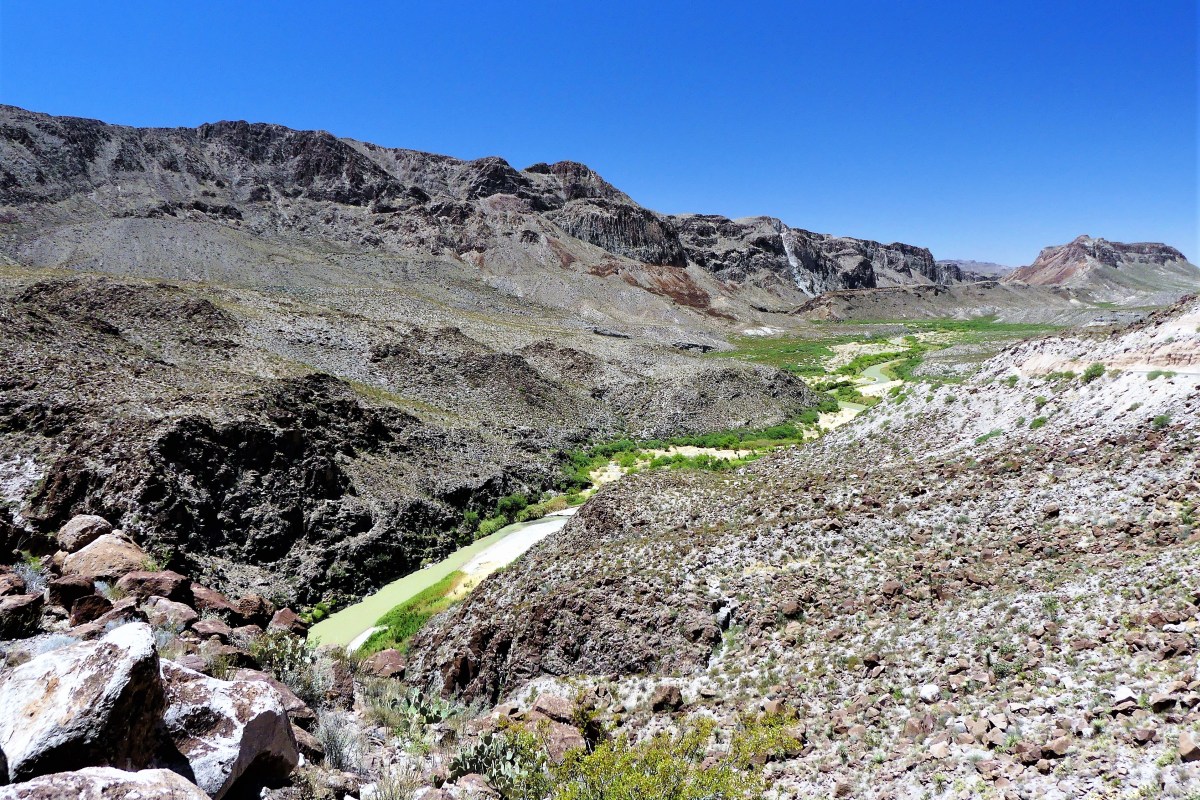

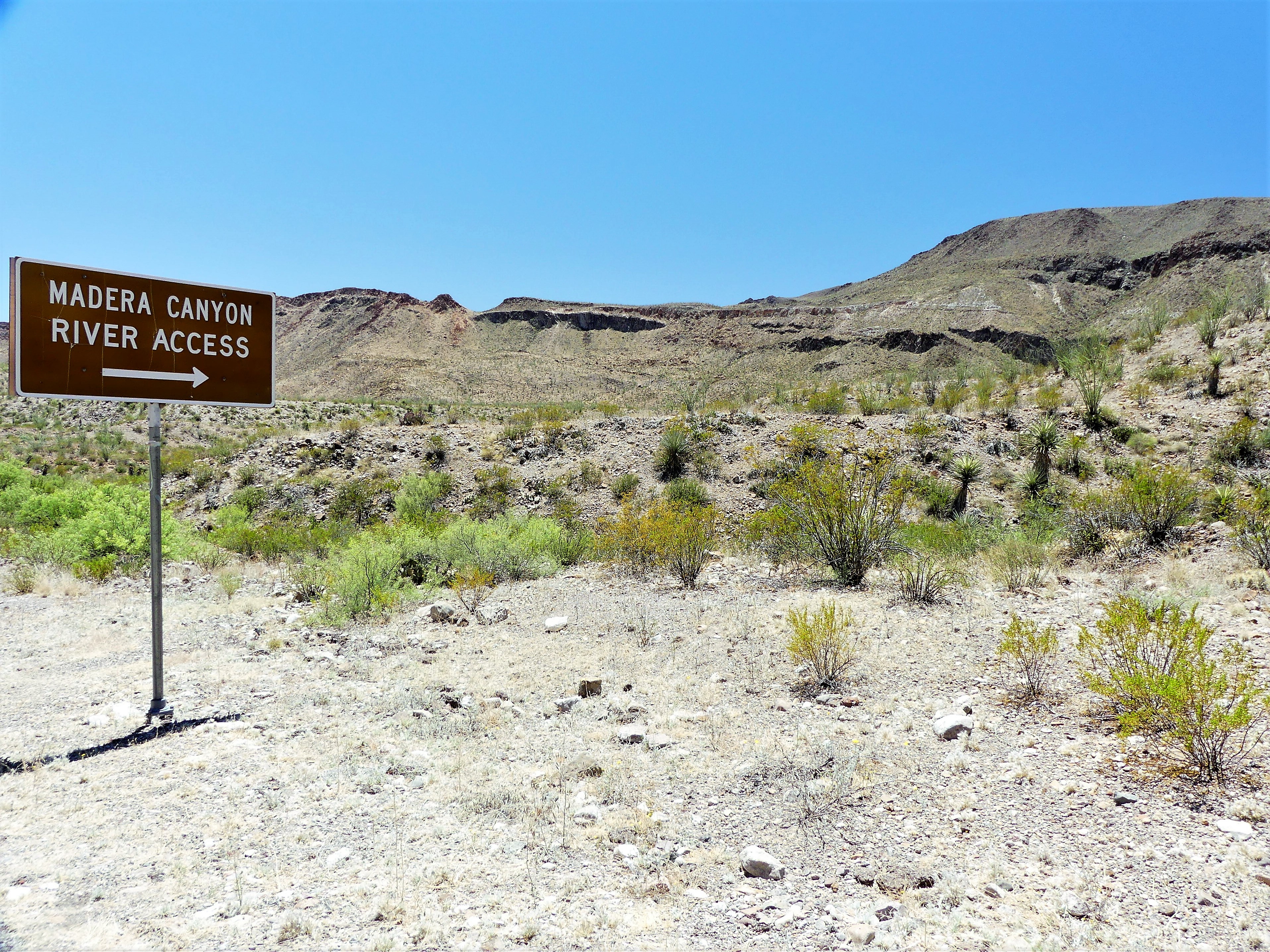
 And found we had the whole river to ourselves.
 It was Mike, our river guide in one boat and us—with Leah at the bow and me at the helm—in the other.
 The air temperature was equal to the water temperature at about 75°, and the wind was at our backs. It could not get any better, or be any easier…until we reached the first of three technical skill zones.
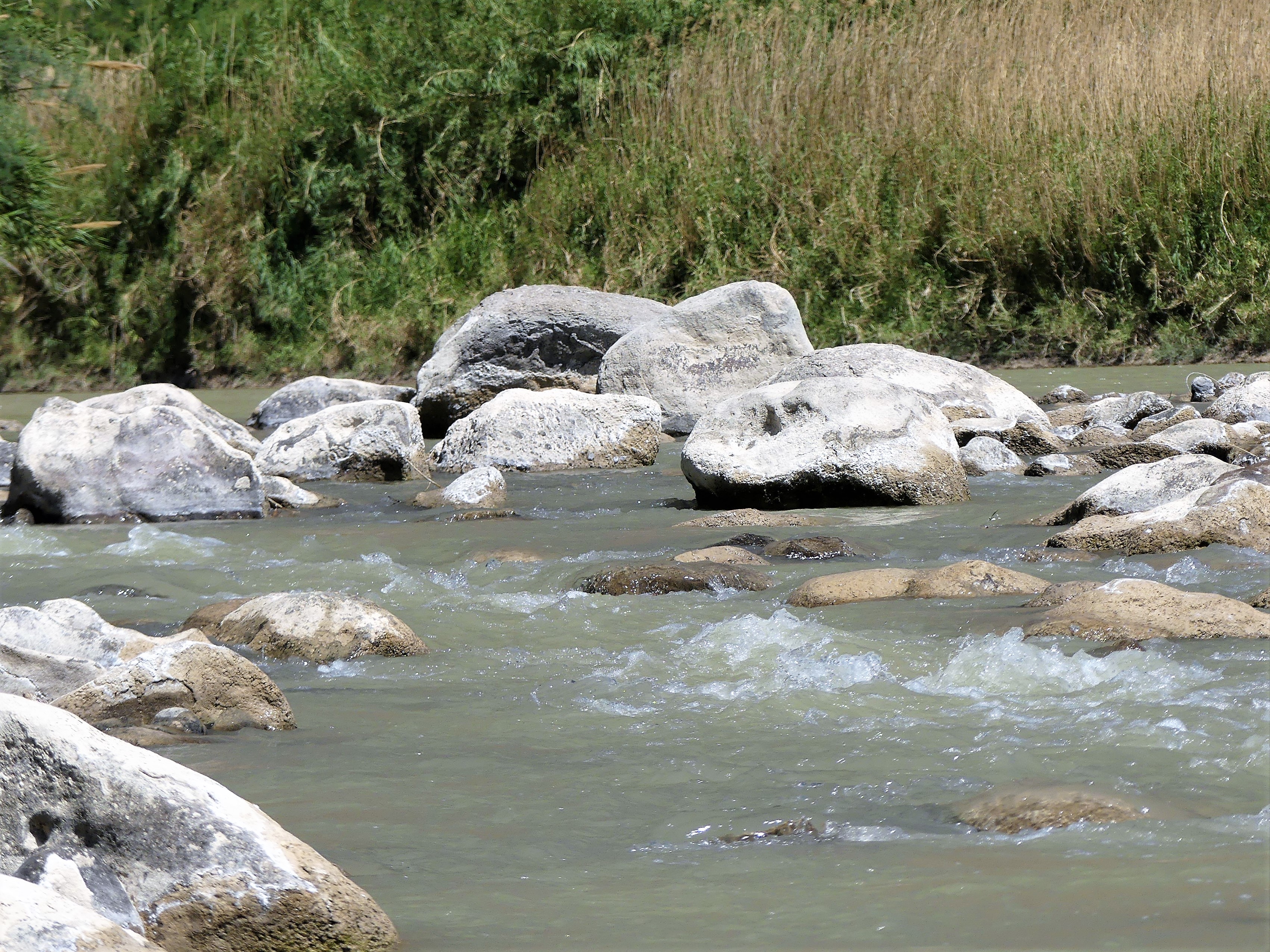 “With this one,” Mike warned, “it’s very easy to capsize, so if you feel the boat tipping, just step out onto the rocks.
 “I don’t know about this,” Leah yelled.
 I zigged when and where I was meant to zig, and zagged at the appropriate time and place, until…
 “Is that it?” asked Leah.







 Streaming thru America