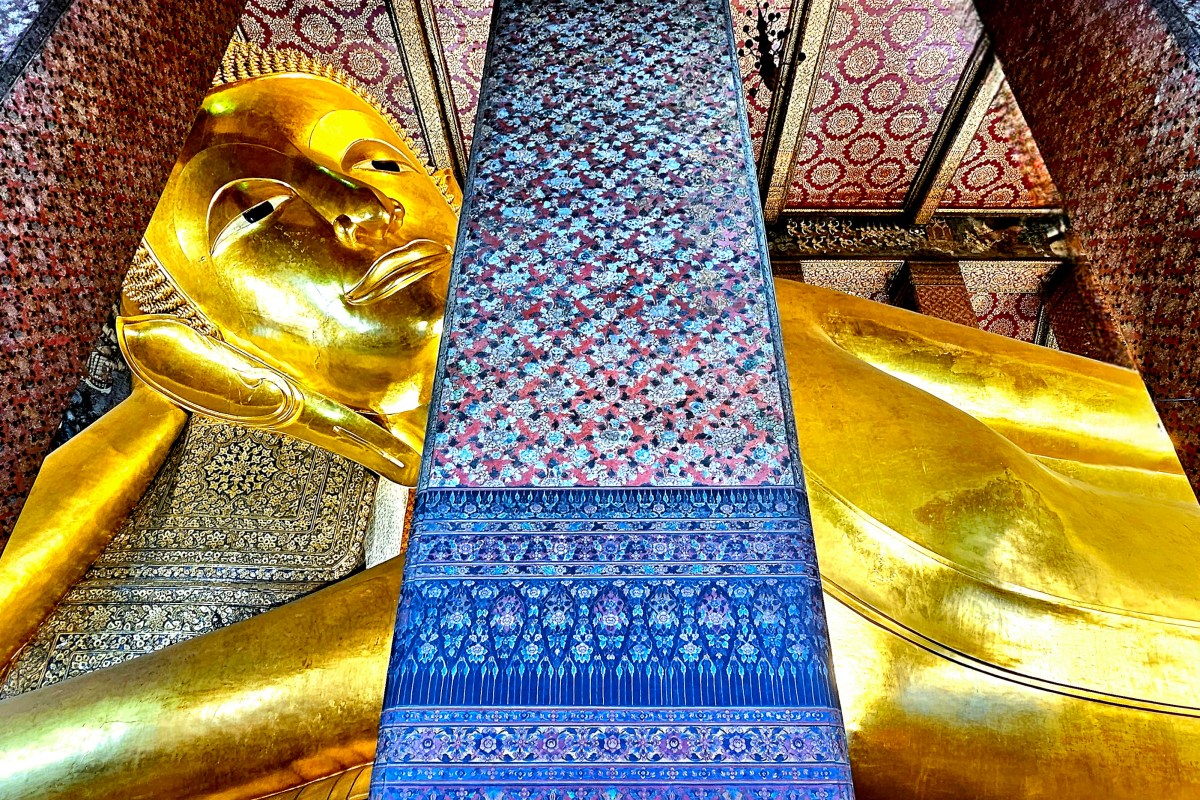
Photographing the entirety of the Reclining Buddha at Wat Pho is no small feat!
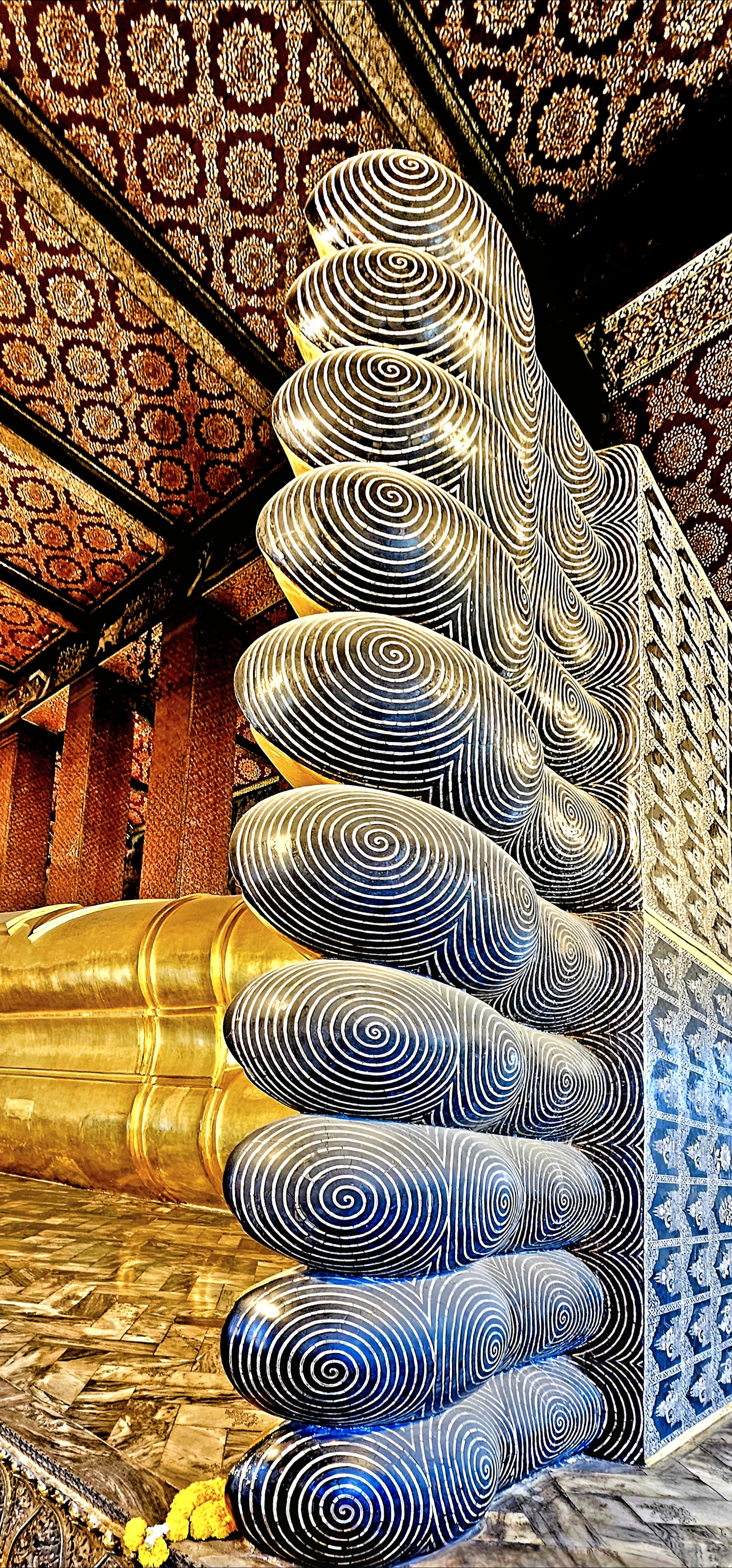
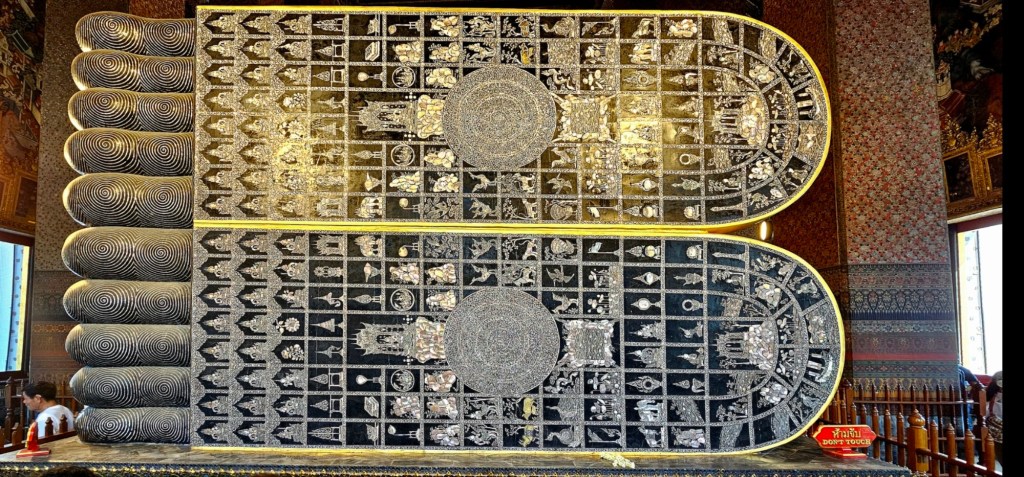
The soles of Buddha’s feet measure 3 meters high and 4.5 meters long. While Paul Simon was singing about “Diamonds on the Soles of her Shoes,” Buddha was “kickin’ it” with mother-of-pearl inlays. Each foot is distinguished by 108 panels featuring icons of flowers, dancers, white elephants, tigers, and altar symbols. A chakra (energy point) has been planted in the middle.
But back to Wat Pho for some historical perspective:
Wat Pho is a temple complex of 40 structures spanning 80,000 sq ft,
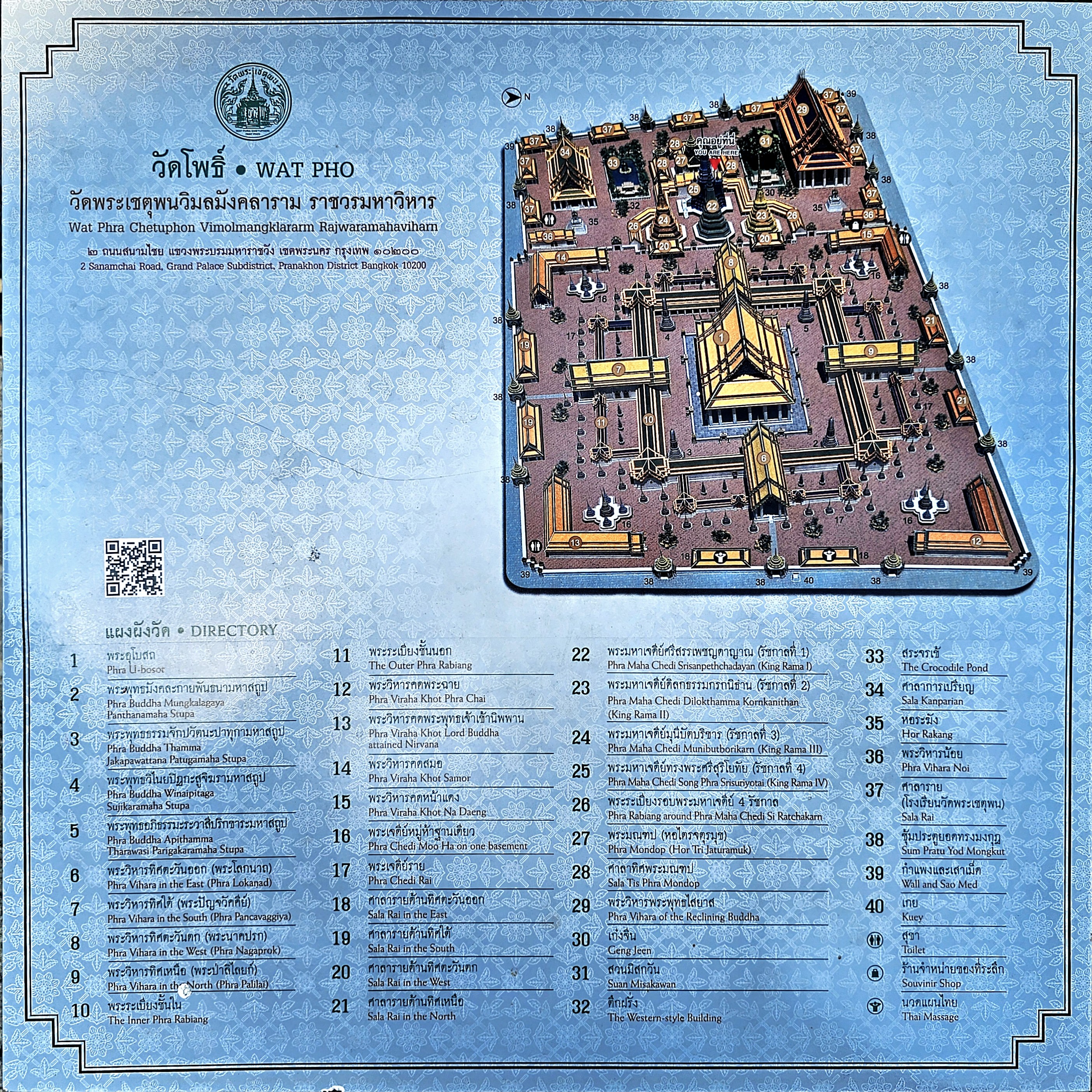
adjacent to the Royal Grand Palace.

It’s rich history dates back to the reign of King Phetracha (1688–1703), who is credited for constructing the first temple of Wat Pho, prior to the collapse of the ancient city of Ayutthaya (1351-1767).

However, it’s King Rama I (1737-1809), who moved the capital city to Bangkok after Ayutthaya fell to the Burmese in 1767, thus assuring the revival and rehabilitation of Wat Pho, and its designation as Bangkok’s most important monastic enclave. His ashes are housed within Phra Ubosot–Wat Pho’s most sacred building–beneath the Buddha, also rescued from Ayutthaya.

Of the 95 chedis scattered throughout the complex, the four tallest rise 42m and contain the ashes of Rama’s 3 successors. Chinese guardians offer protection.

The first chedi to be built by Rama I holds the remnants of the once great Buddha recovered from Ayutthaya, after the Burmese stripped it of its gold. The story goes:
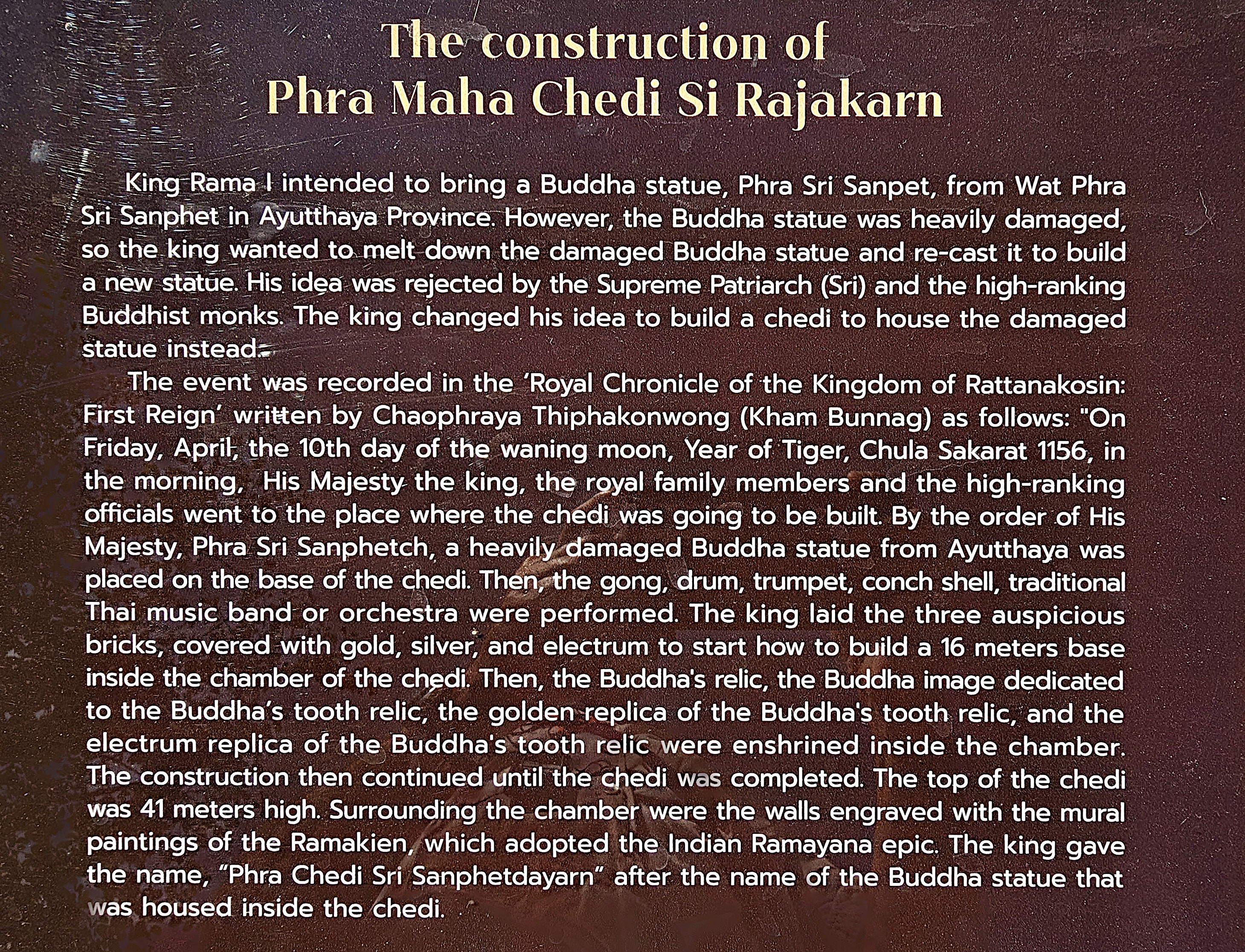
Additionally, 400 Buddha’s were salvaged from northern Thailand and aligned along the cloister walls.
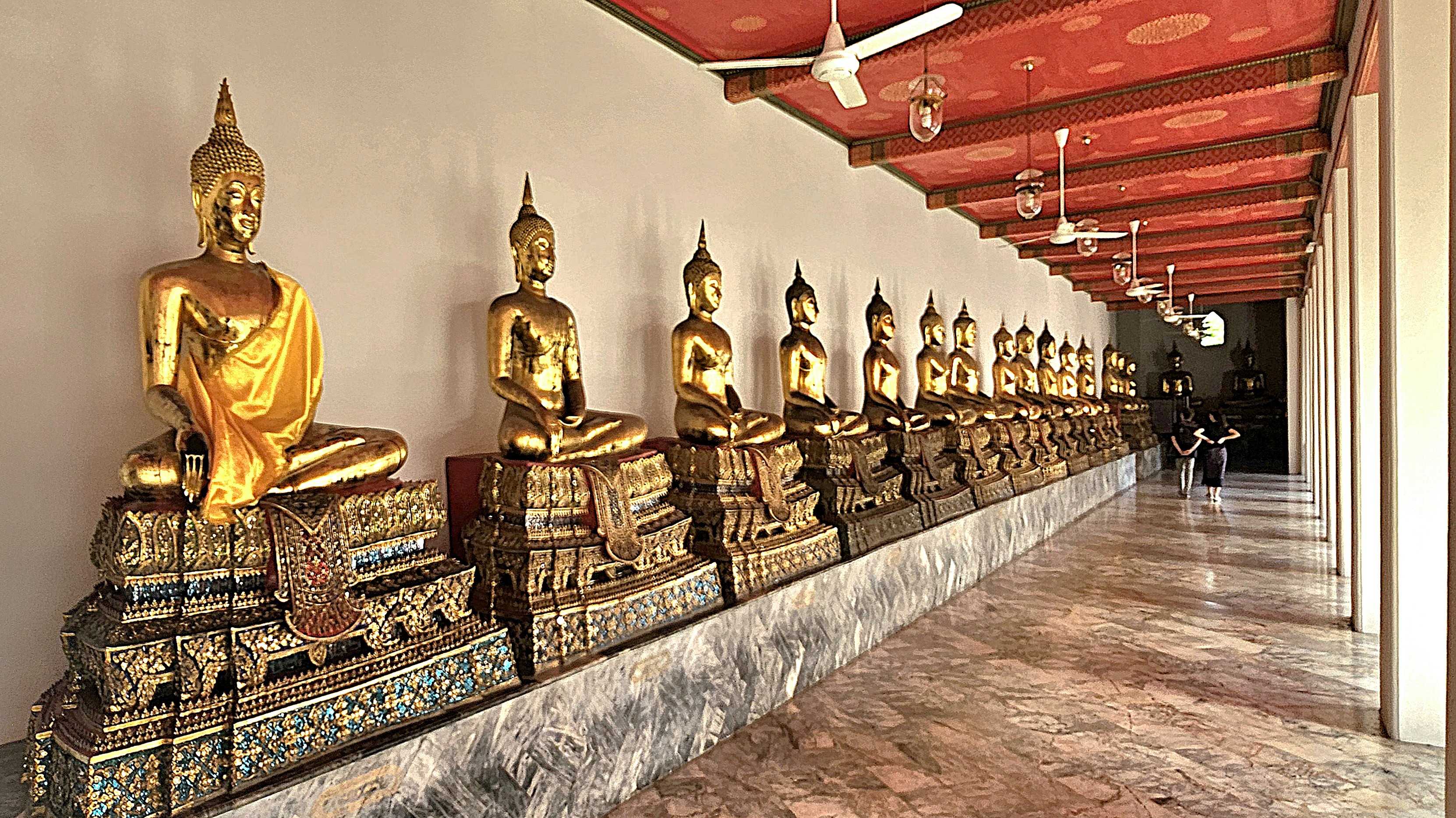
and courtyards–

while 4 other groups of 5 chedis were erected for the ashes of royal family members.

Wat Pho has long been considered a great center for higher education. Phra Mondop contains the Buddhist library, and houses preserved palm leaves inscribed with Buddha’s teaching.

Wat Pho is regarded Thailand’s first public university, training students in religion, science, and literature through its many murals and sculptures. In fact, medical scholars during the reign of Rama III (1824-1851) introduced 60 inscribed plaques to adorn its pavilions–30 each for the front and back of the human form–illustrating therapeutic points and energy pathways used in traditional Thai massage.

Several gardens and ponds also populate the grounds…
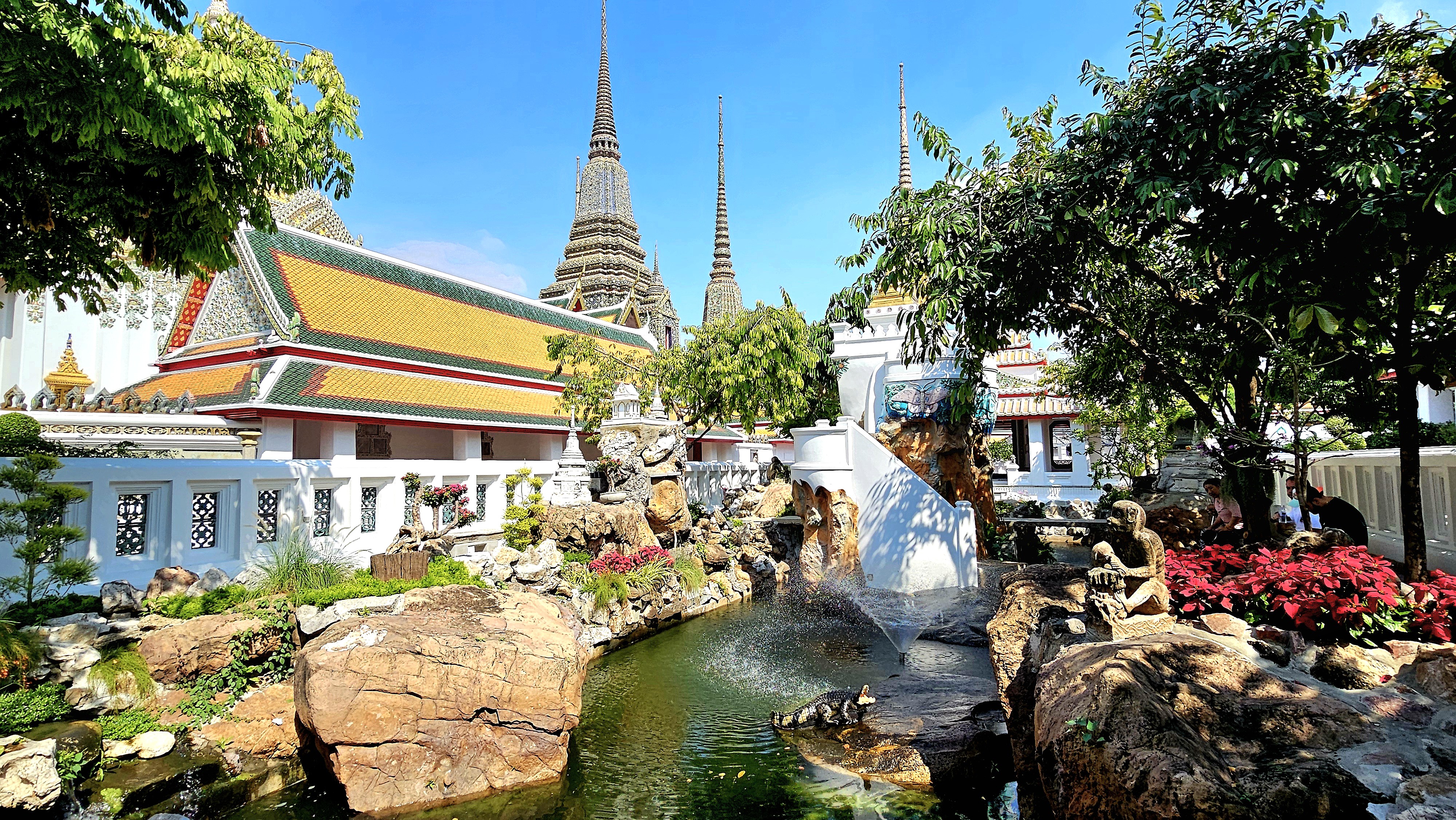
making it ideal as a backdrop for posing.

But the star of the show is the Reclining Buddha–not because it reclines (which is a familiar representation of his penultimate hours on Earth before his ascension)

–but because of its stature.
The Reclining Buddha extends 46 meters and stands/reclines 15 meters tall.
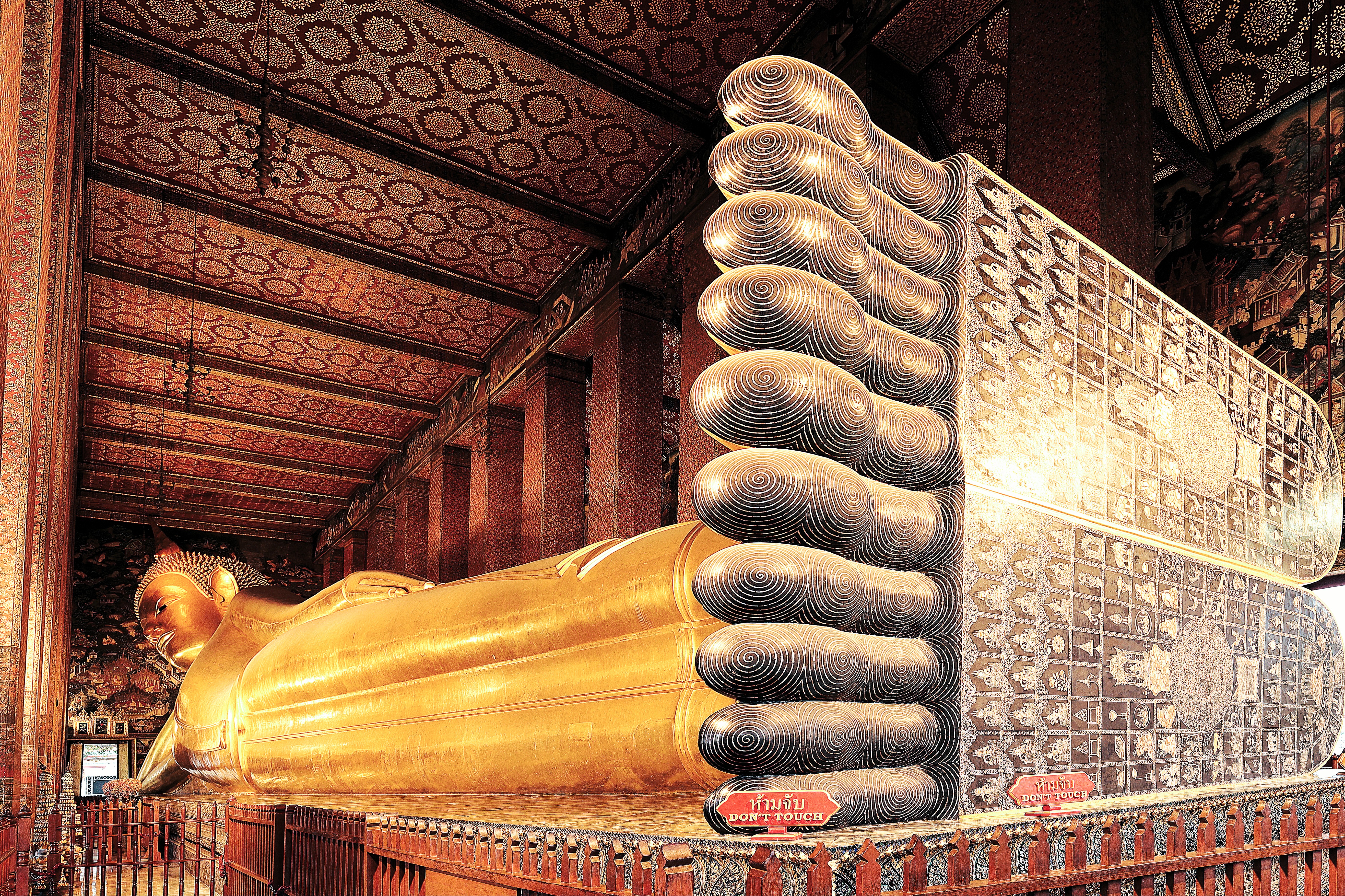
The statue and its subsequent enclosure (Building 29) were commissioned by Rama III in 1832.
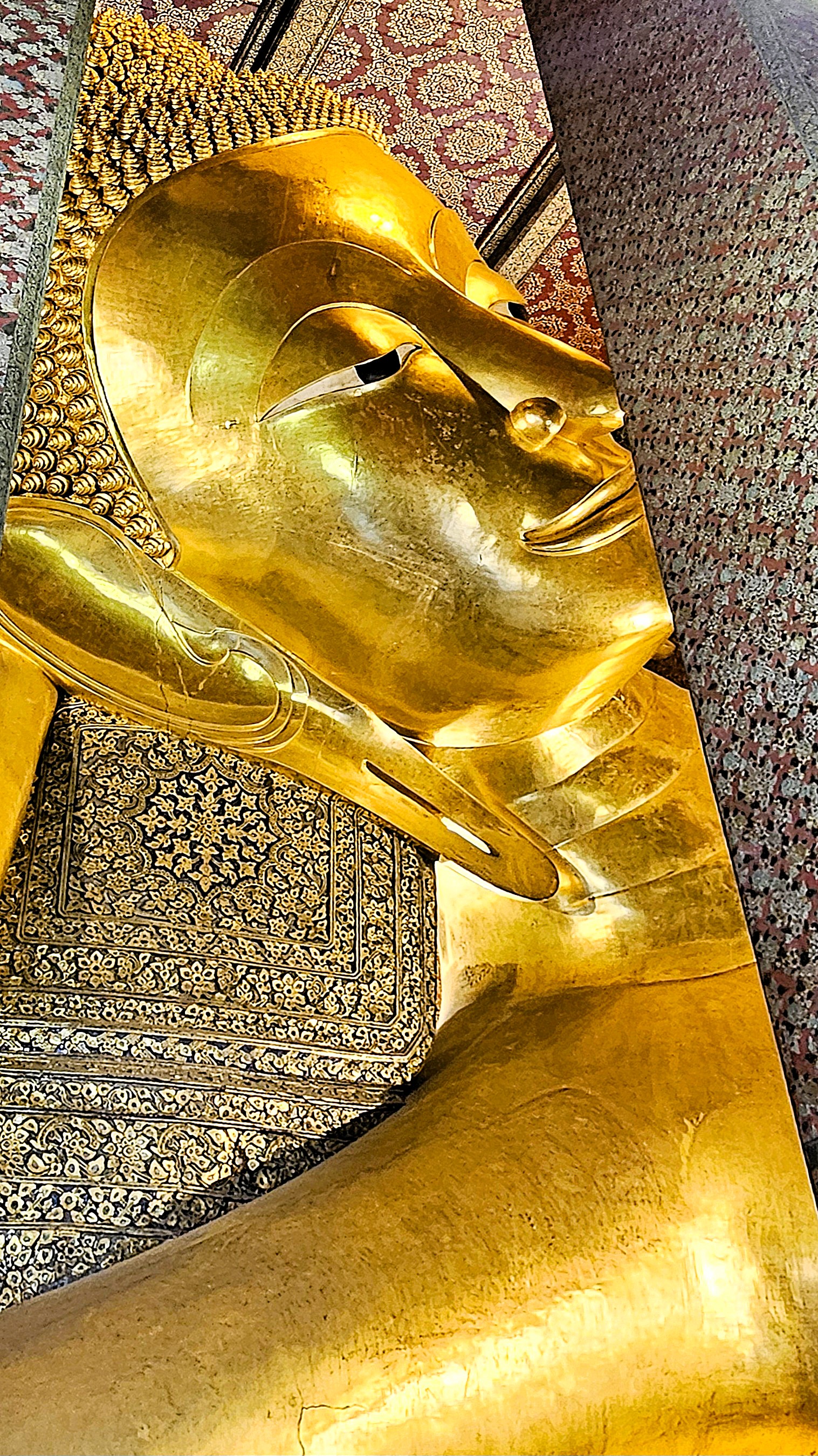
Buddha’s right arm supports a head embellished with hundreds of chedi tresses, which rests upon two box-pillows encrusted with multi-colored, glass mosaics.

We would have meditated on this marvel forever, until Marc, a fellow traveler on our journey sounded the gong…
signaling our time to move on to our next adventure!

 Streaming thru America