
Sixty-eight miles north of Medora lies the North Unit of Theodore Roosevelt National Park. Leah and I had agreed that we would visit the North Unit on our second day. Although not nearly as inconvenient as reaching the North rim of the Grand Canyon–getting to the north from the south was an easy drive.
We wondered whether the North Unit of the park could possibly compete with the equine event experienced earlier within the South Unit. Many say the North Unit is more beautiful than its southern counterpart, but that’s too subjective for my tastes. And ranger consensus says there are more animals in these parts, but that’s arguable. And typically, the North Unit sees fewer visitors because its more remote, but today nothing seemed normal. In fact, the day was filled with oddity and irregularity.
First of all, it’s odd that the two units of the park are disconnected. There’s plenty of fertile land between Medora and Watford City, ND. An infinite carpet of crops and pasture land is periodically punctuated by scattered herds of grazing cattle. But it’s what’s below the surface that really matters.
The Bakken Formation sits between the two park units, and is considered one of the most important sources of oil in the country, having already exceeded 1M barrels a day, and primarily responsible for the 2nd lowest seasonally adjusted unemployment rate across America at 2.5%. Oddly enough, oil derricks are actively pumping at the edge of the park, reaching two miles down and then across two to three miles to tap and sweep through the shale layer that holds the oil.

It’s also odd that five miles from the South Unit along I-94 East, the park service operates the Painted Canyon Visitor Center, which also doubles as an interstate rest stop with grazing bison. Weary truckers and families can stretch their legs along a log fence with protected views that will keep them from returning to their rigs.
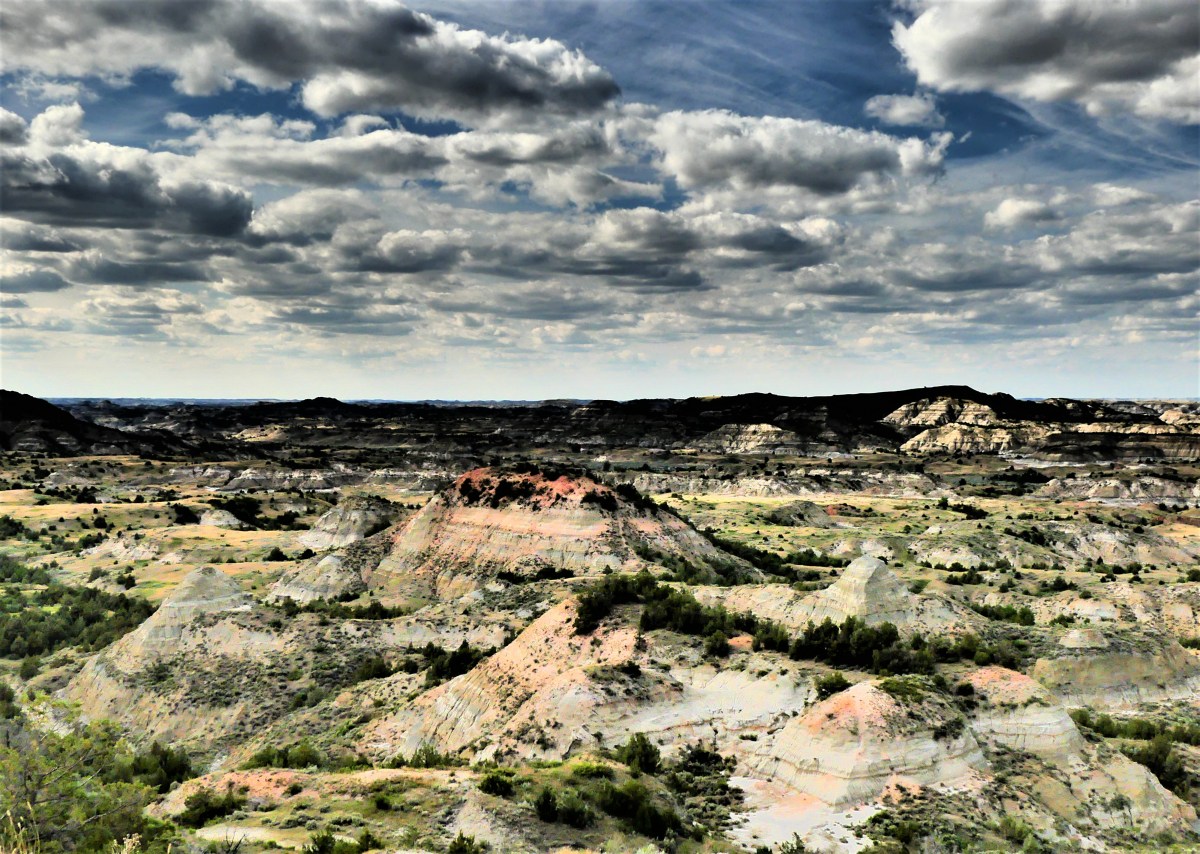
The saturated red hue atop the butte comes from bentonite clay having caught fire from a remote lightning strike. It burned for years, fueled by the coal vein within, eventually turning the clay to brick.

Another oddity: the two park units are in two different time zones! After driving north for half an hour, we lost an hour moving from Mountain time to Central time. Thanks to the transcontinental railroad, the southwest corner of North Dakota is caught in Mountain time, while the rest of the state operates one hour later. Nowhere is this more apparent (and confusing) than inside the park, and it’s weird.
Once at the North Unit, we came upon twin trailers taking the place of the regular visitor center. Ranger Jeff explained that “Badlands soil unpredictably shifted from drainage, and caused the foundation to slip and crack.” Consequently, the building was condemned and demolished in 2015, only to be replaced by a double-wide until new construction has been completed. Not exactly inspiring parkitecture.
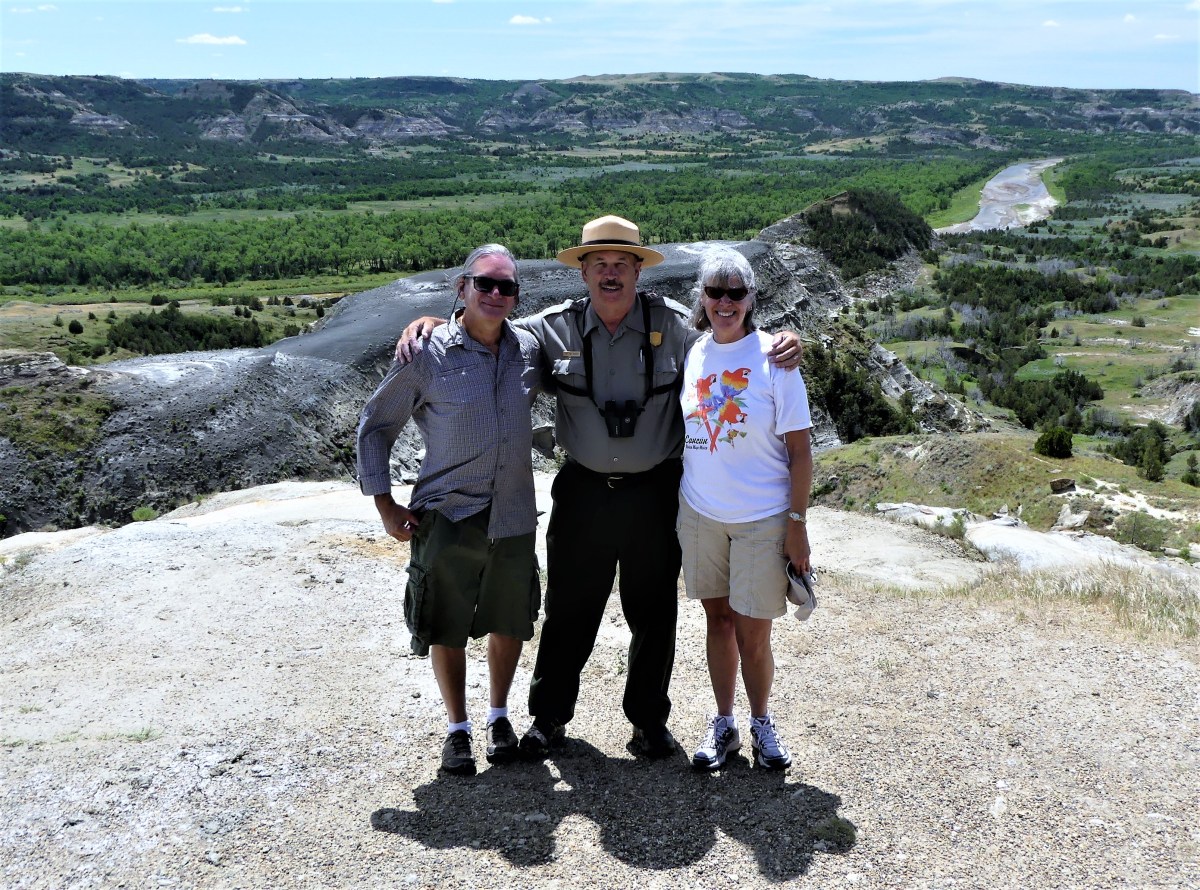
Unlike the South Unit’s scenic drive, which loops around for 36 miles, the North Unit road terminates after 14 miles with fewer turnouts. The first half of the road traces the Buckhorn Trail and intersects with Battleship Butte…
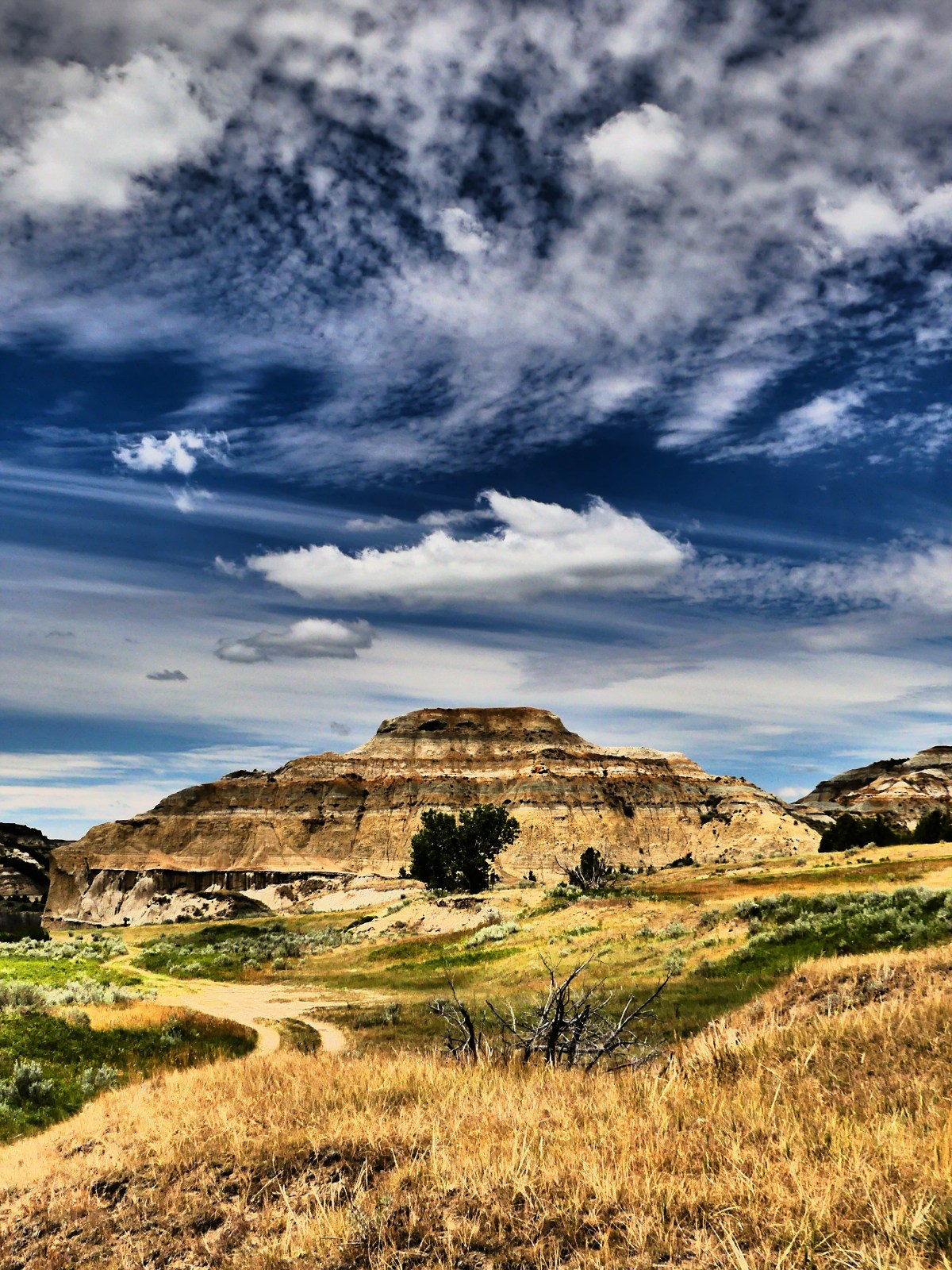
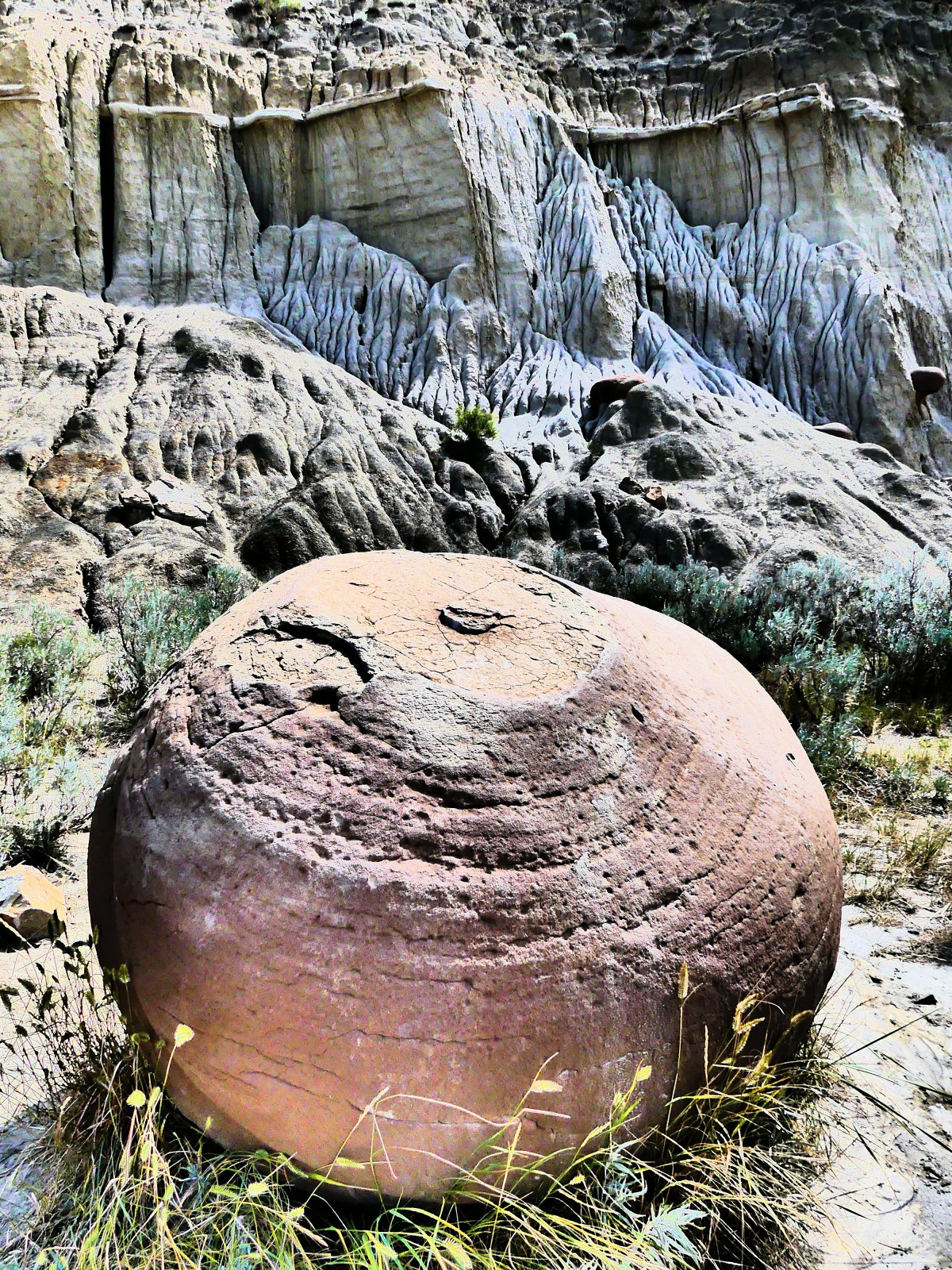
…where round concretions (compact aggregates of minerals leached from Little Missouri groundwater) called “cannonballs” have eroded out of the mountainside and accumulated at the base of the cliffs. I think they’re oddballs and wildly out of place, but nature put them there to be admired.


However, the oddest part of the journey was driving 1800 miles from home, only to run into our ex-neighbors at the River Bend Overlook.

Marjorie and Bruce, who lived just a few doors down the street from us in New Jersey had come to visit her sister Patricia and husband, who live in northeast Montana most of the year, but winter in Delray Beach, FL, around the corner from my dad’s residence–making this the smallest of small-world stories.
Upon completing the scenic drive to Oxbow Overlook…

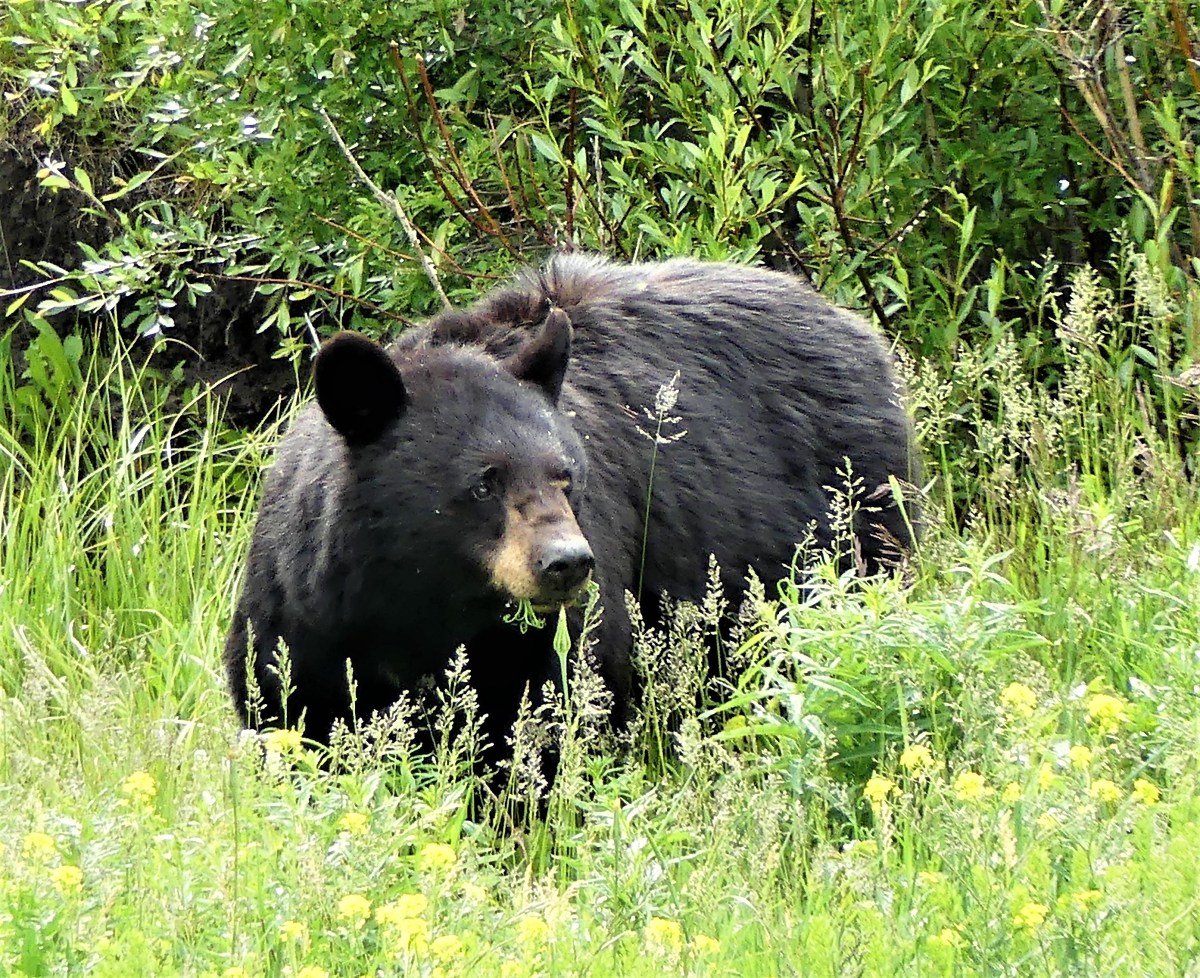
we saw no animals–only traces of what gets left behind. A demonstration herd of Longhorn steer was nowhere to be found; a band of bighorn sheep went missing; there were no elk; and not a single bison was sighted.
From Oxbow, we hiked along a very narrow trail to Sperati Point, avoiding bison poop every step of the way, yet thinking that a photo of bison on a cliff against a blue sky would make a perfect National Geographic cover. But when we arrived, it was only the distant hills before us…
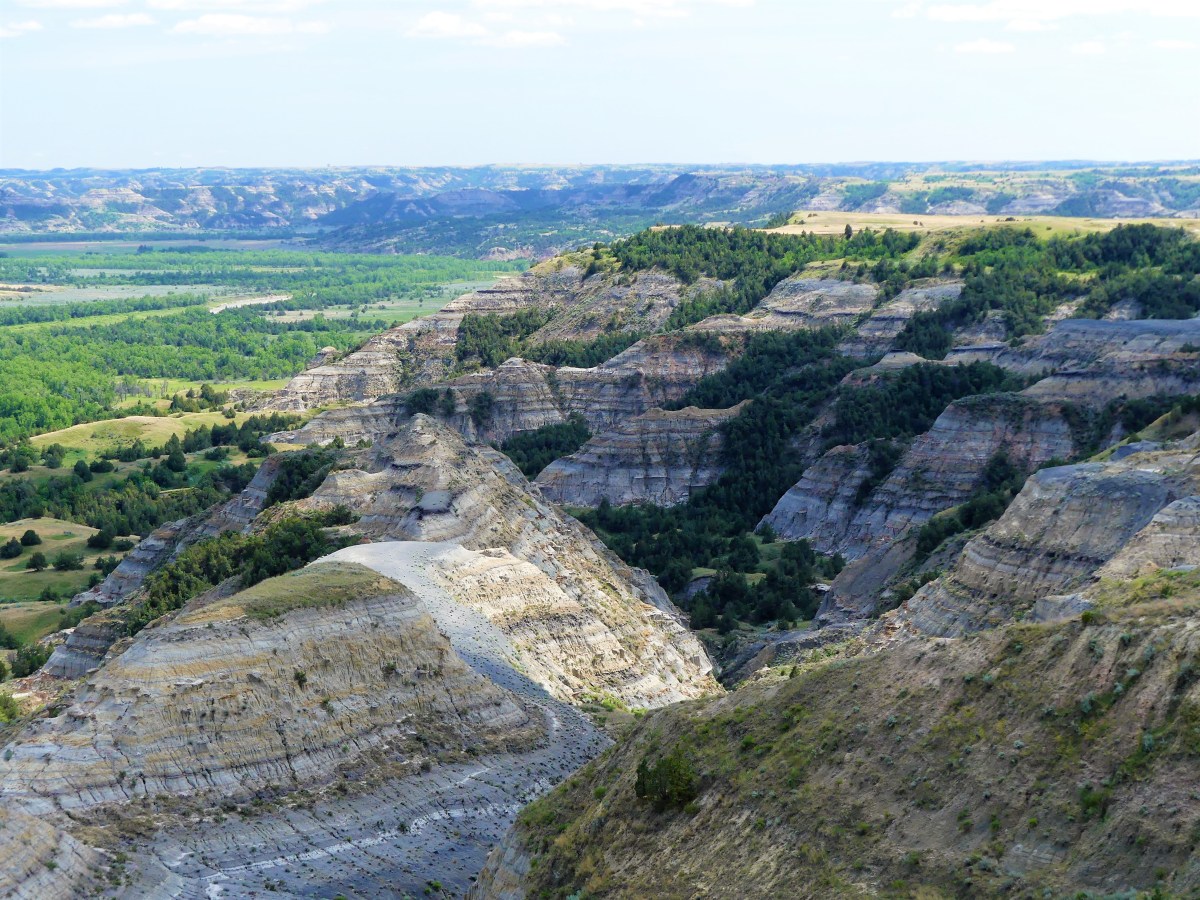
And that would have to be enough, as we contemplated what’s been normal about our trip up until now.














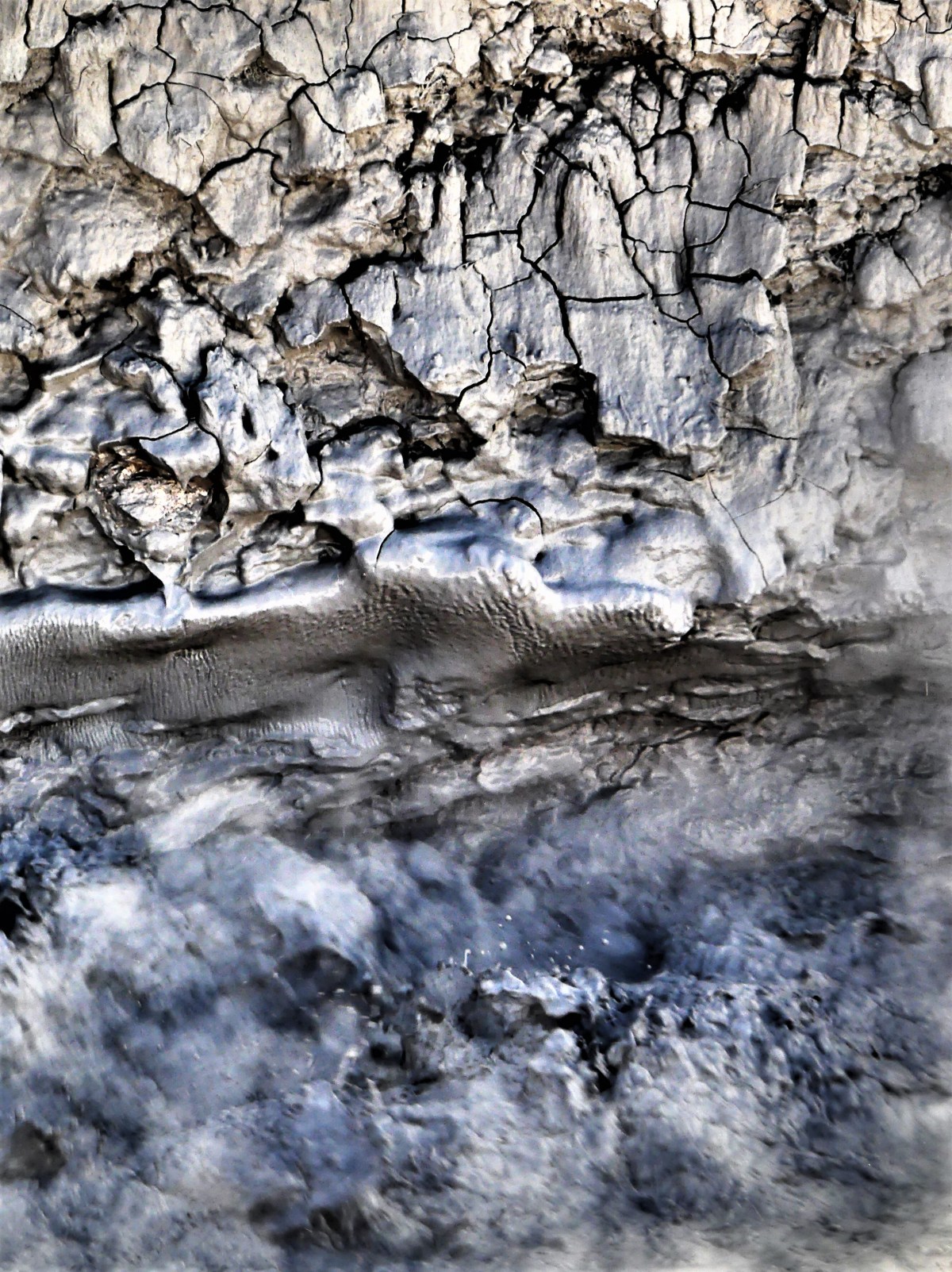


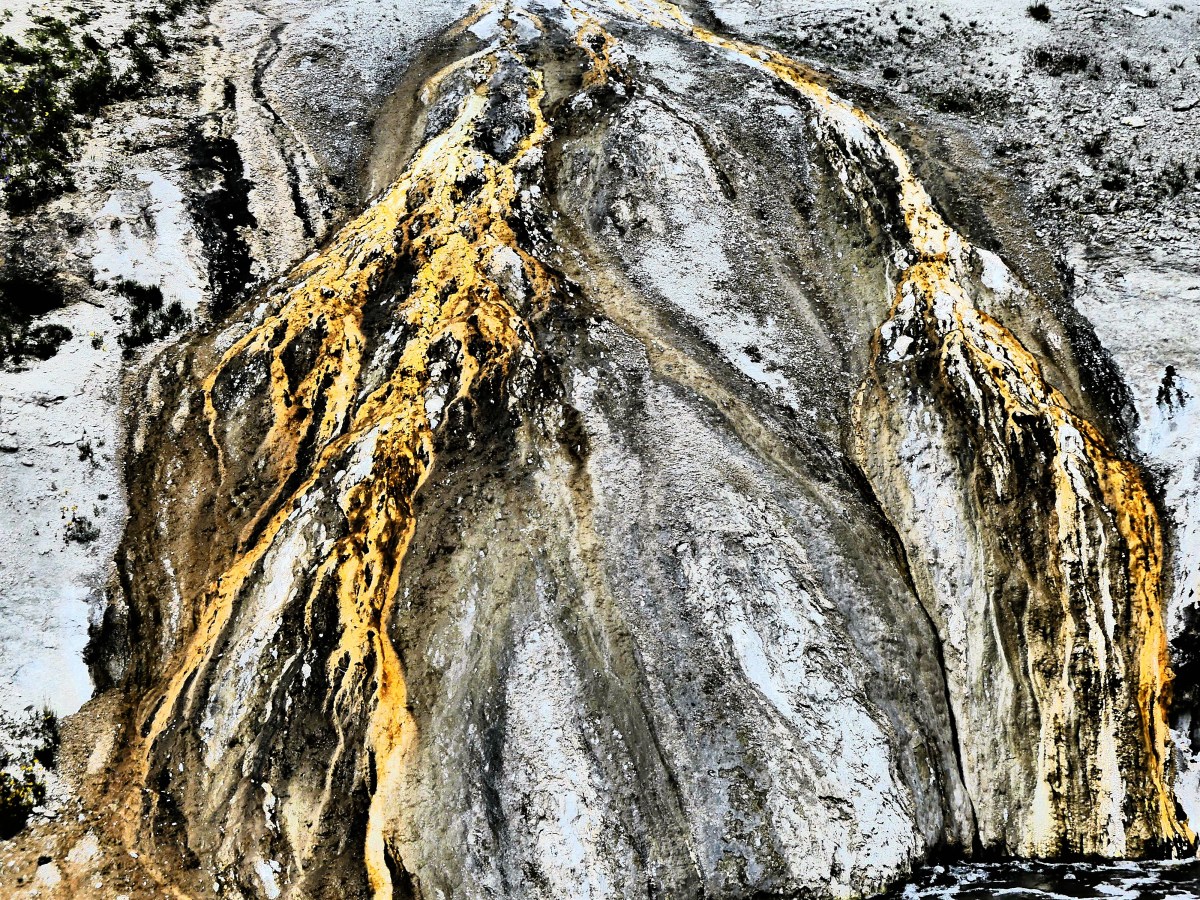
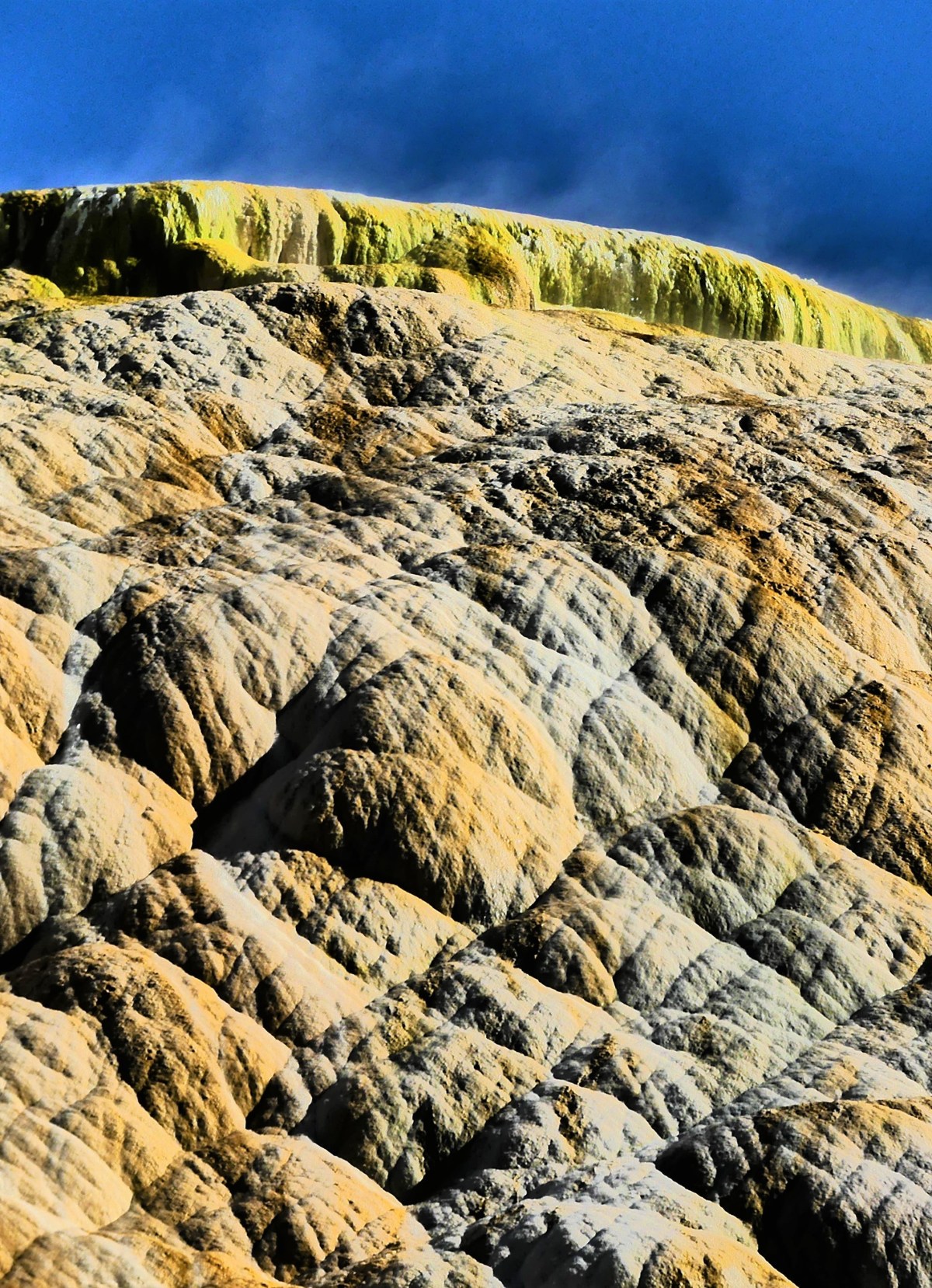
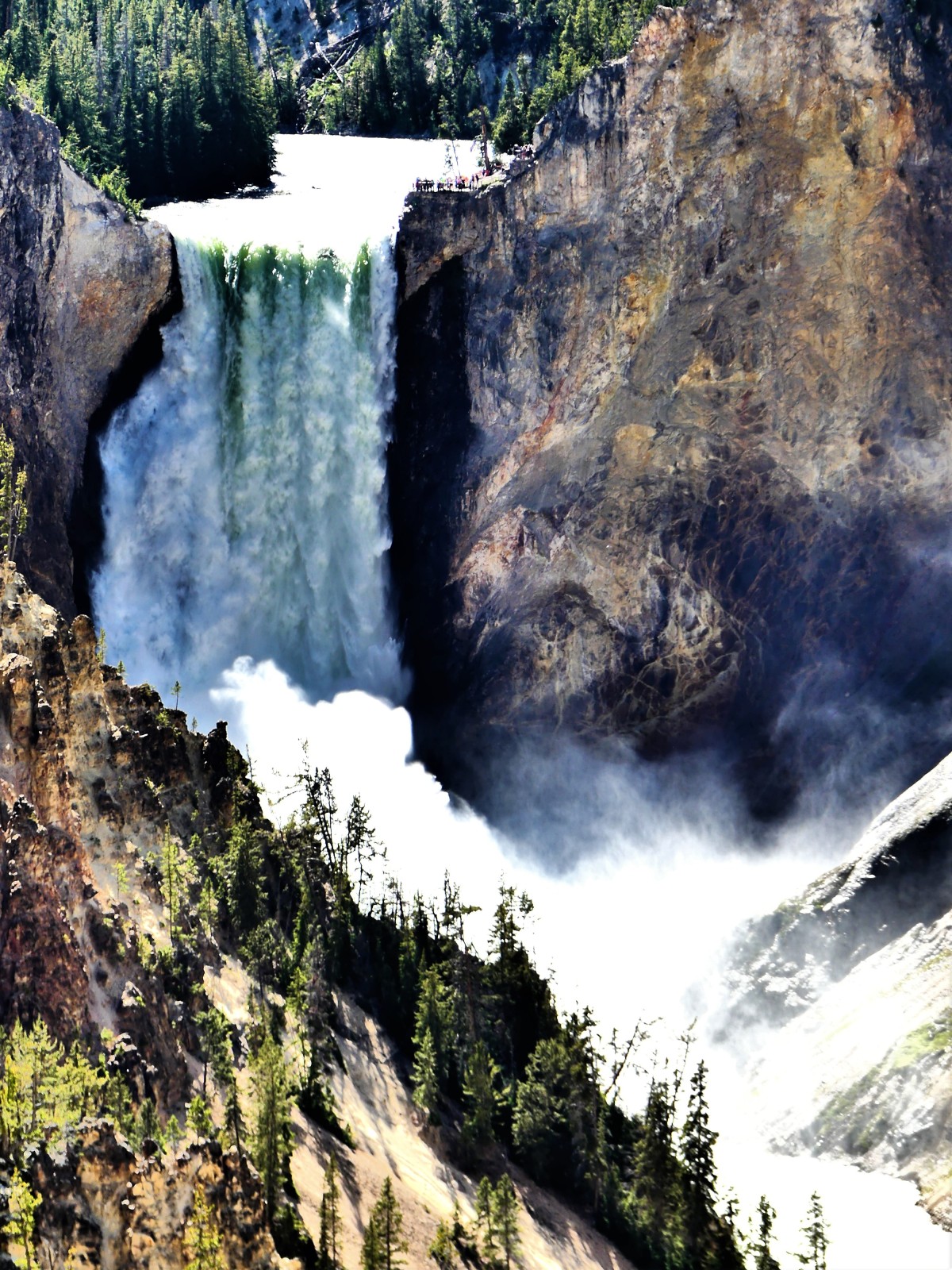 then crashing against the brush-stroked walls of Yellowstone’s Grand Canyon.


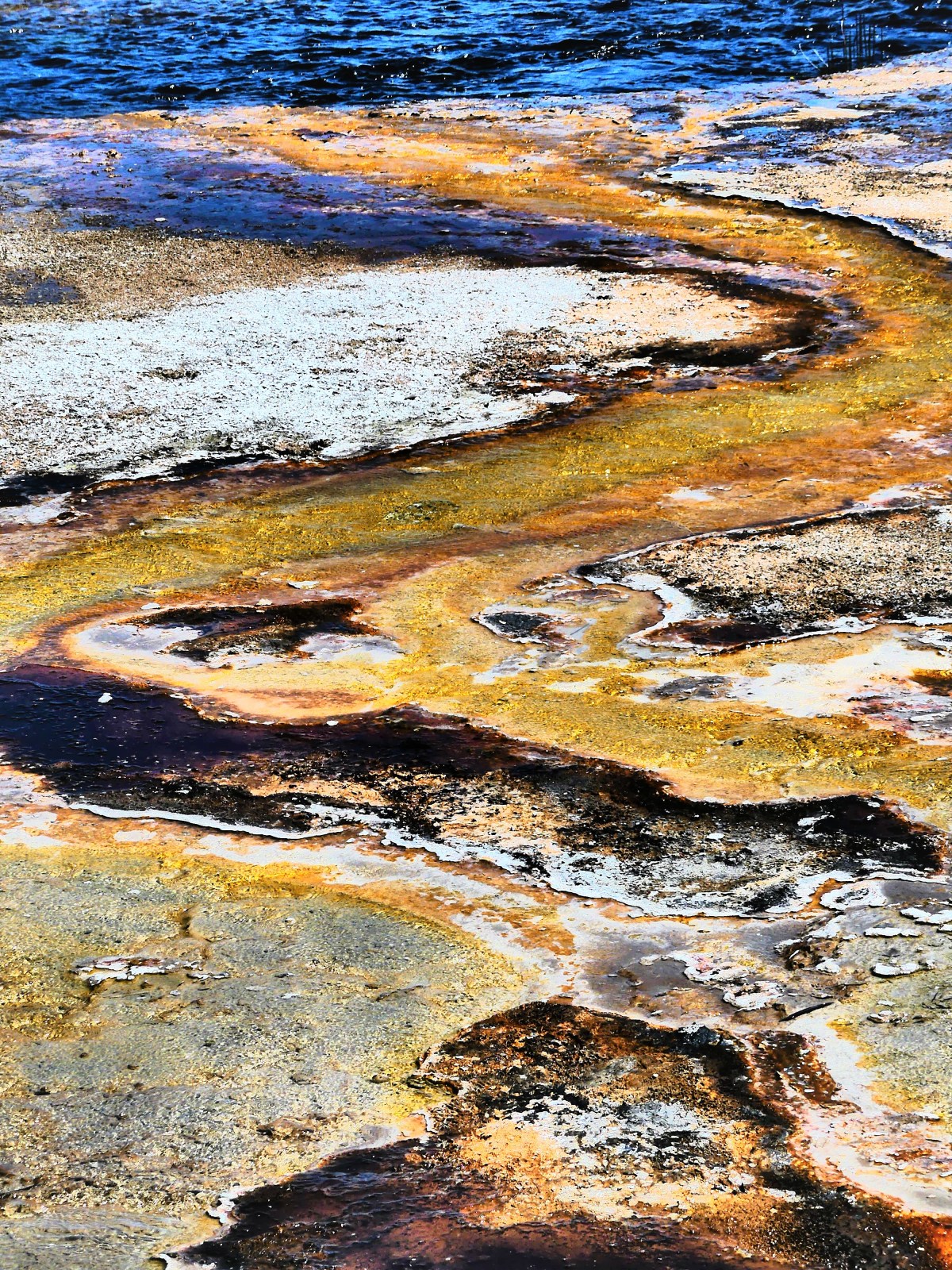






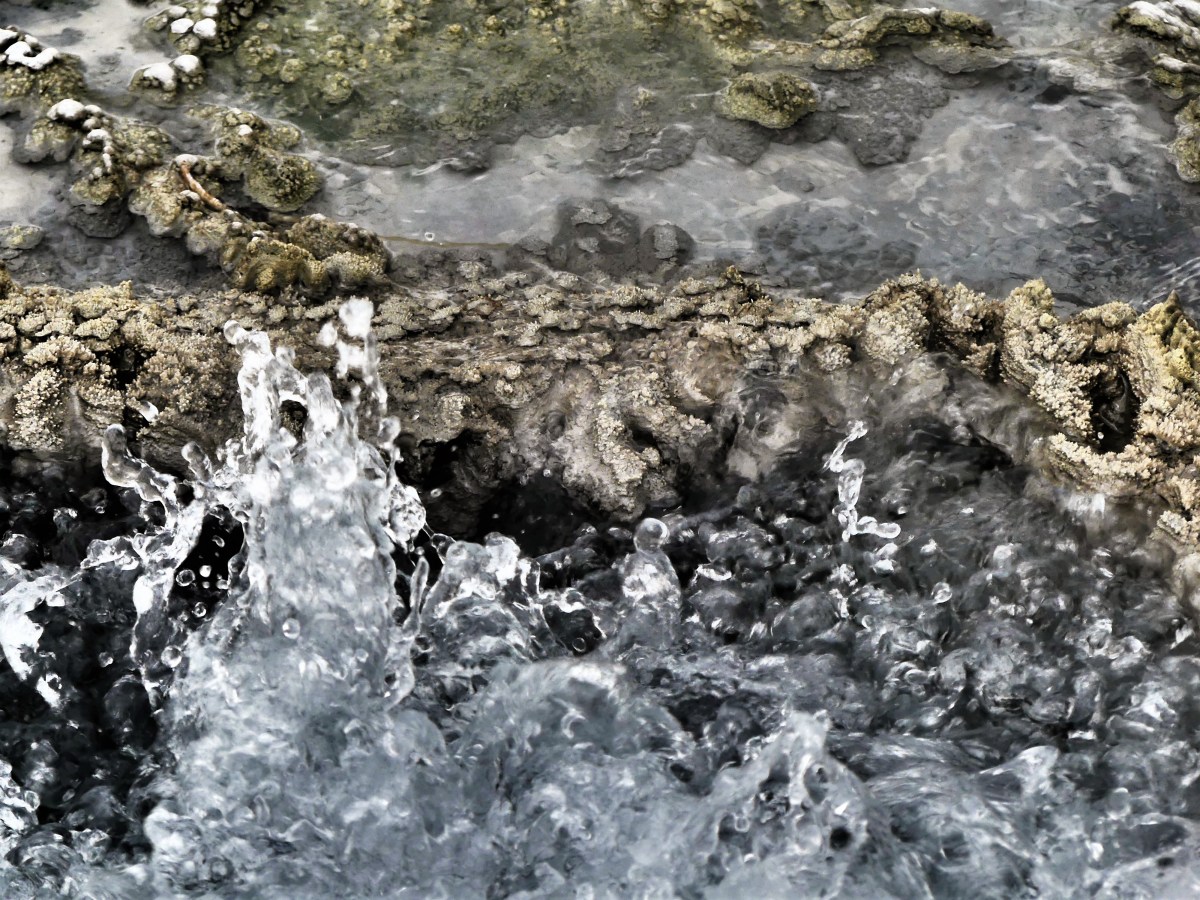

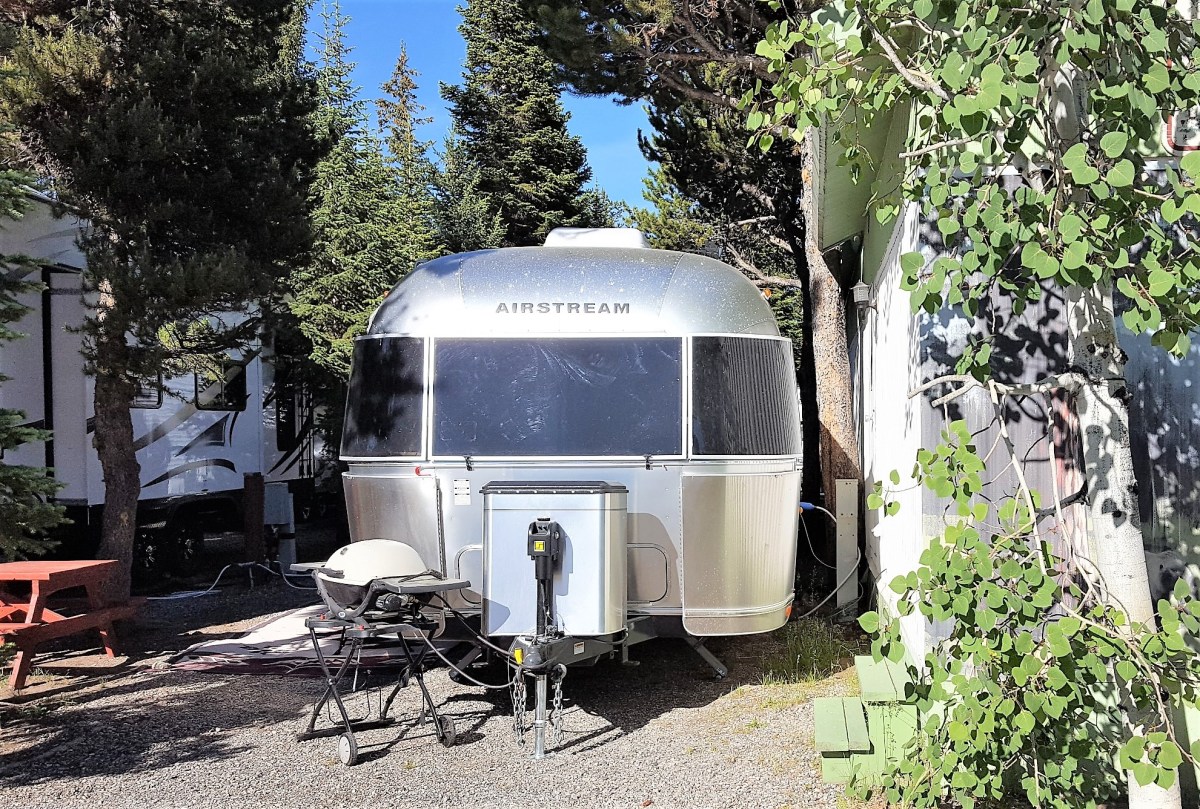
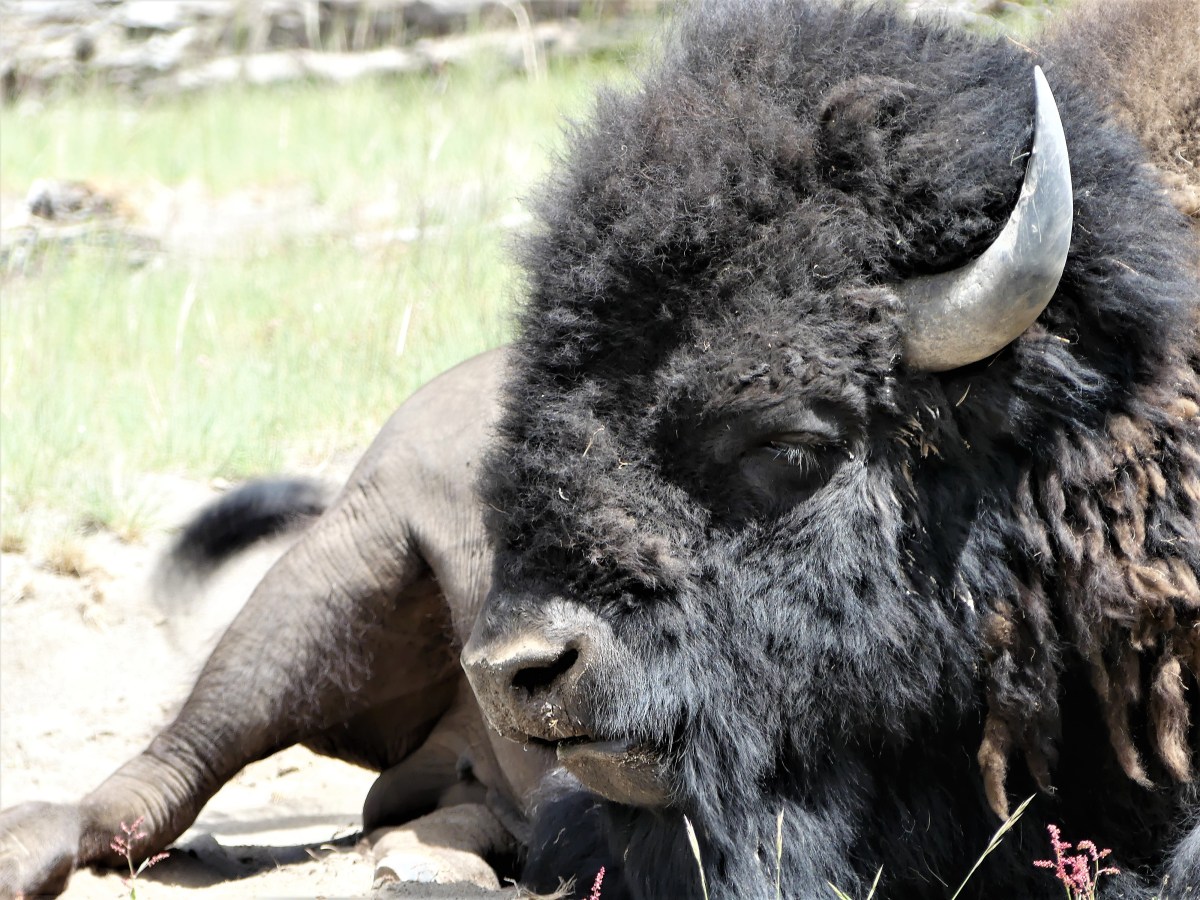


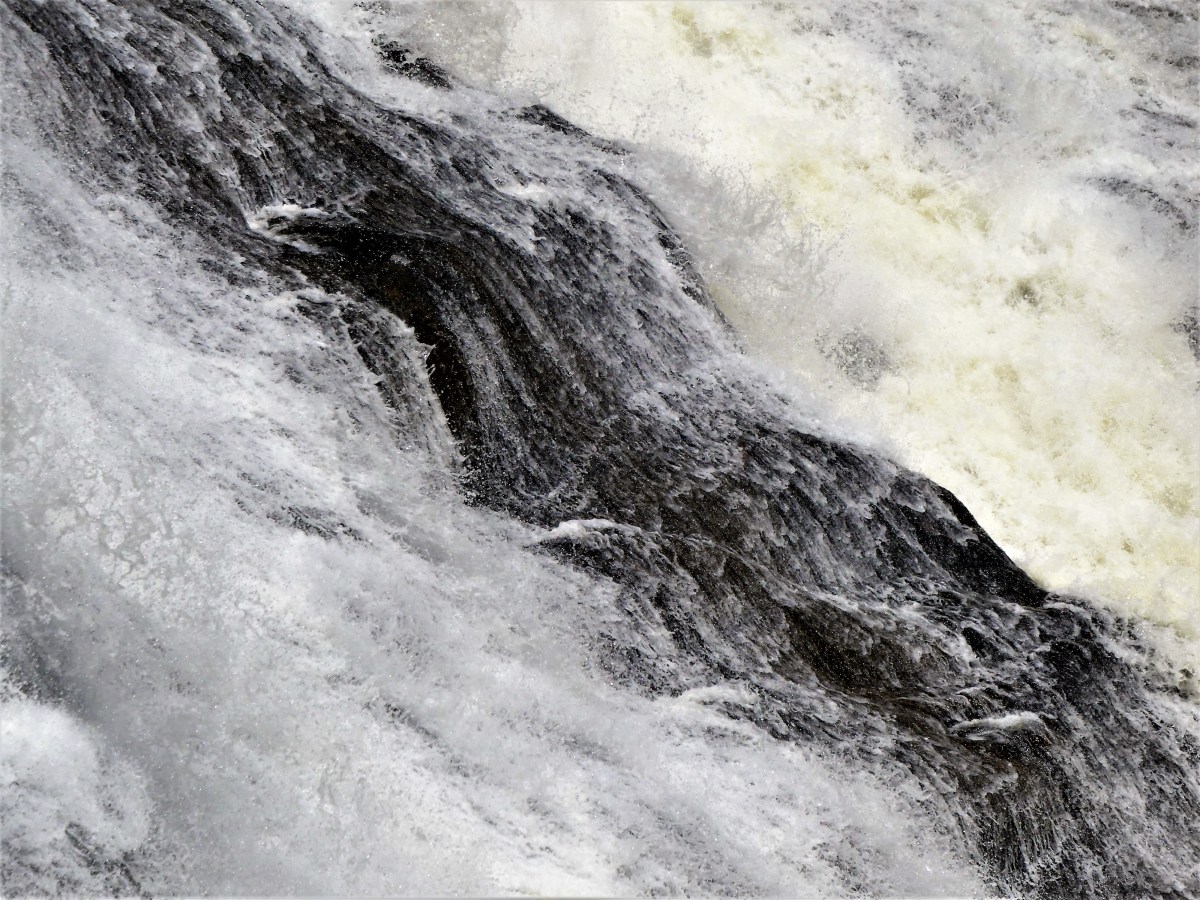
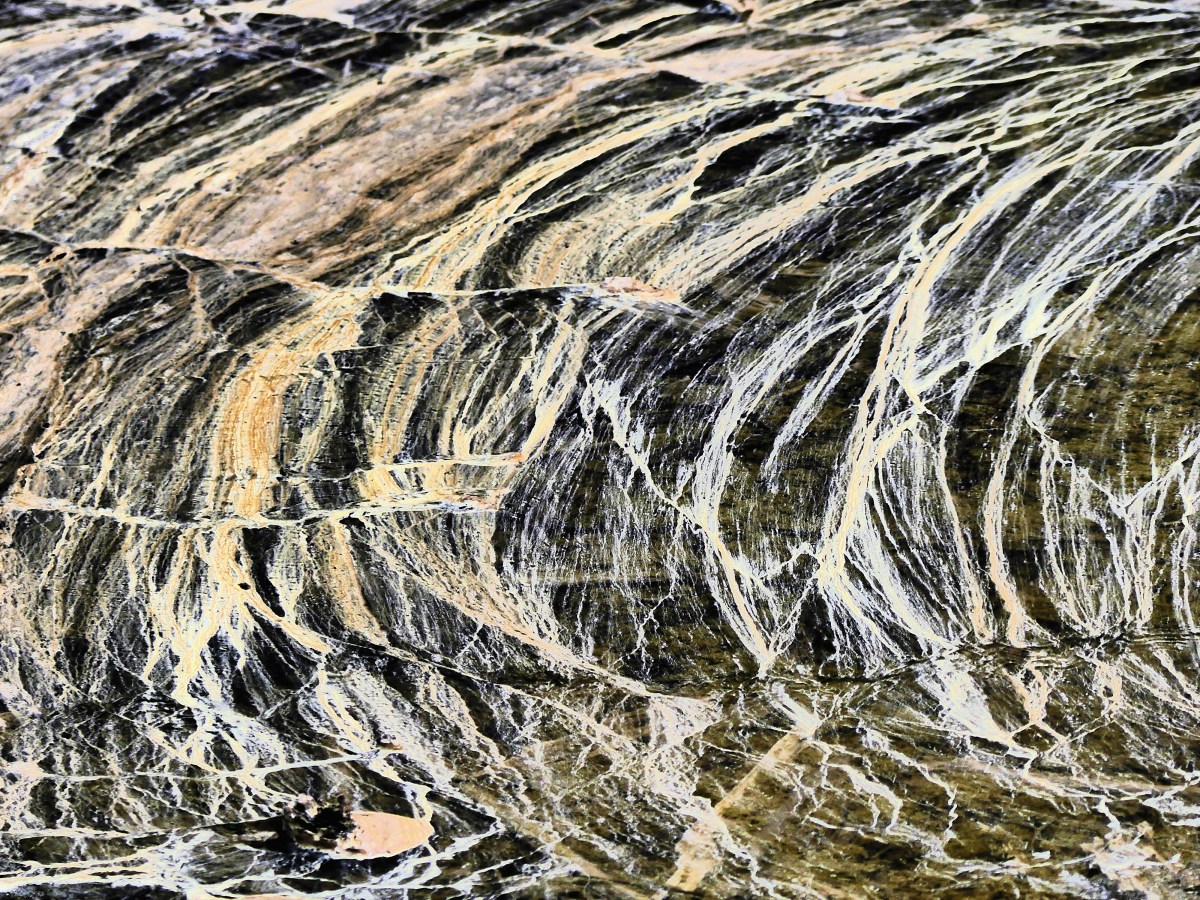
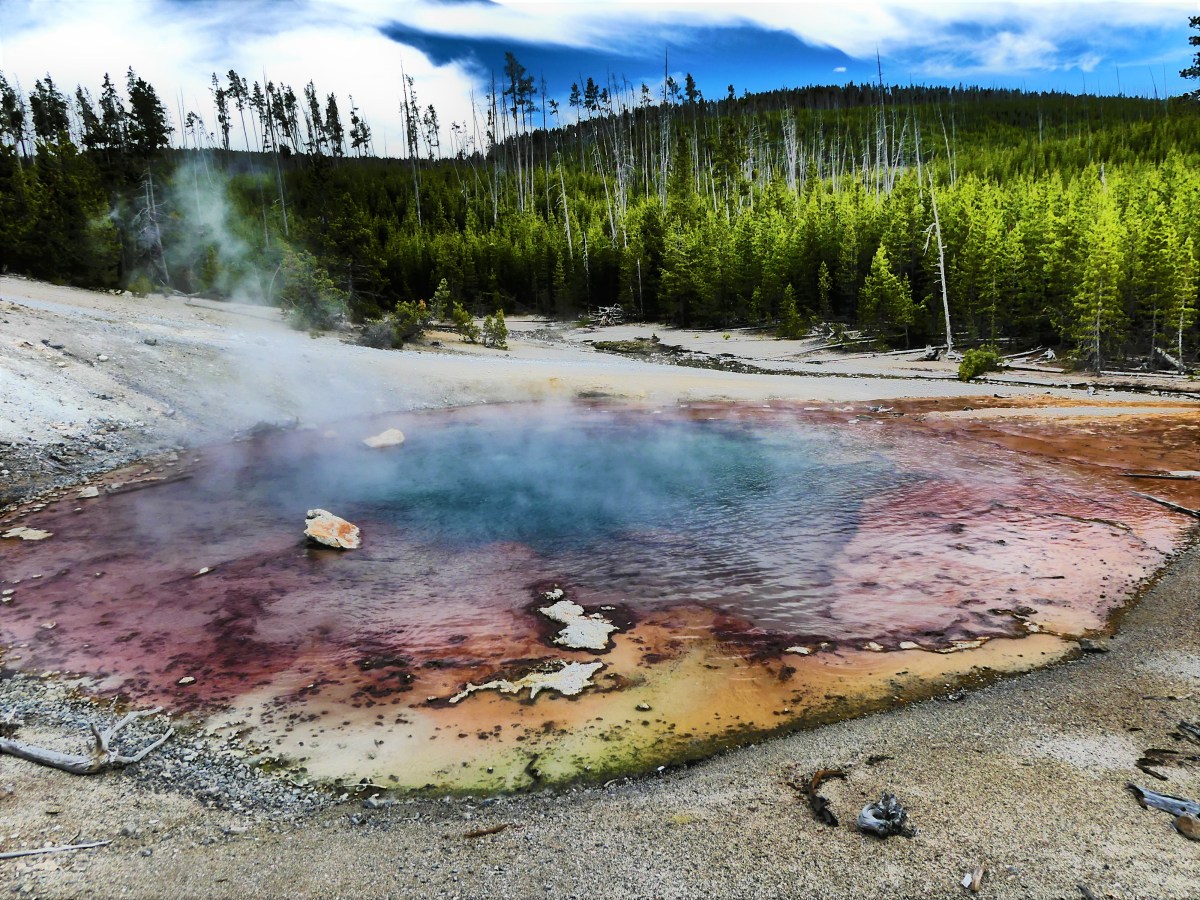


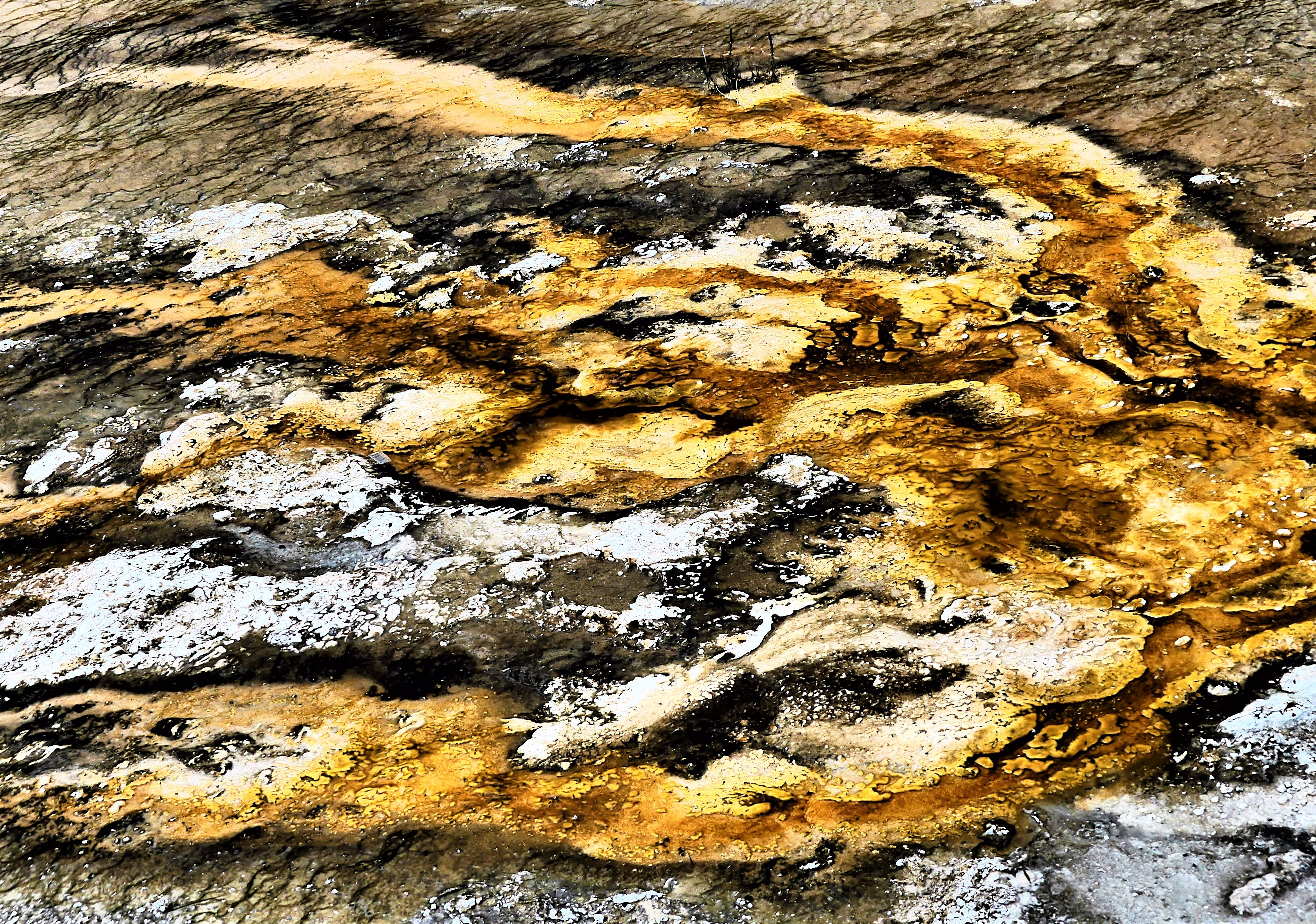








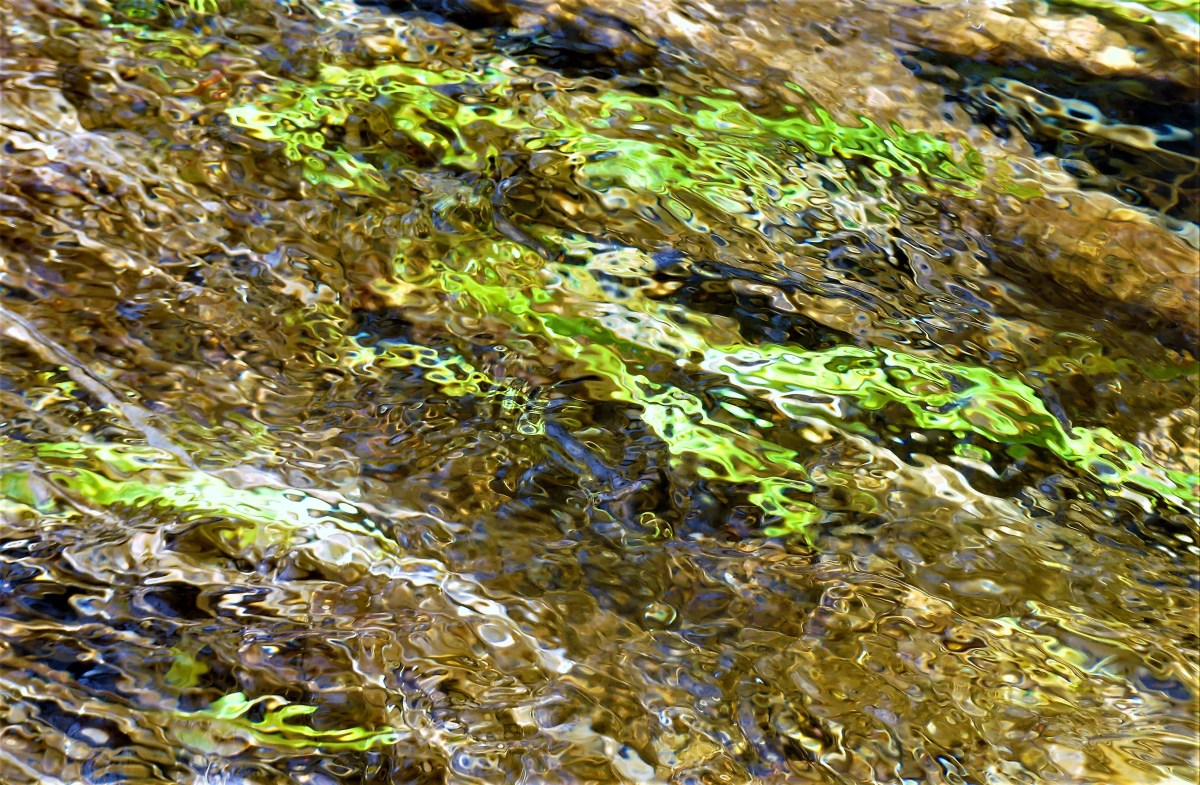
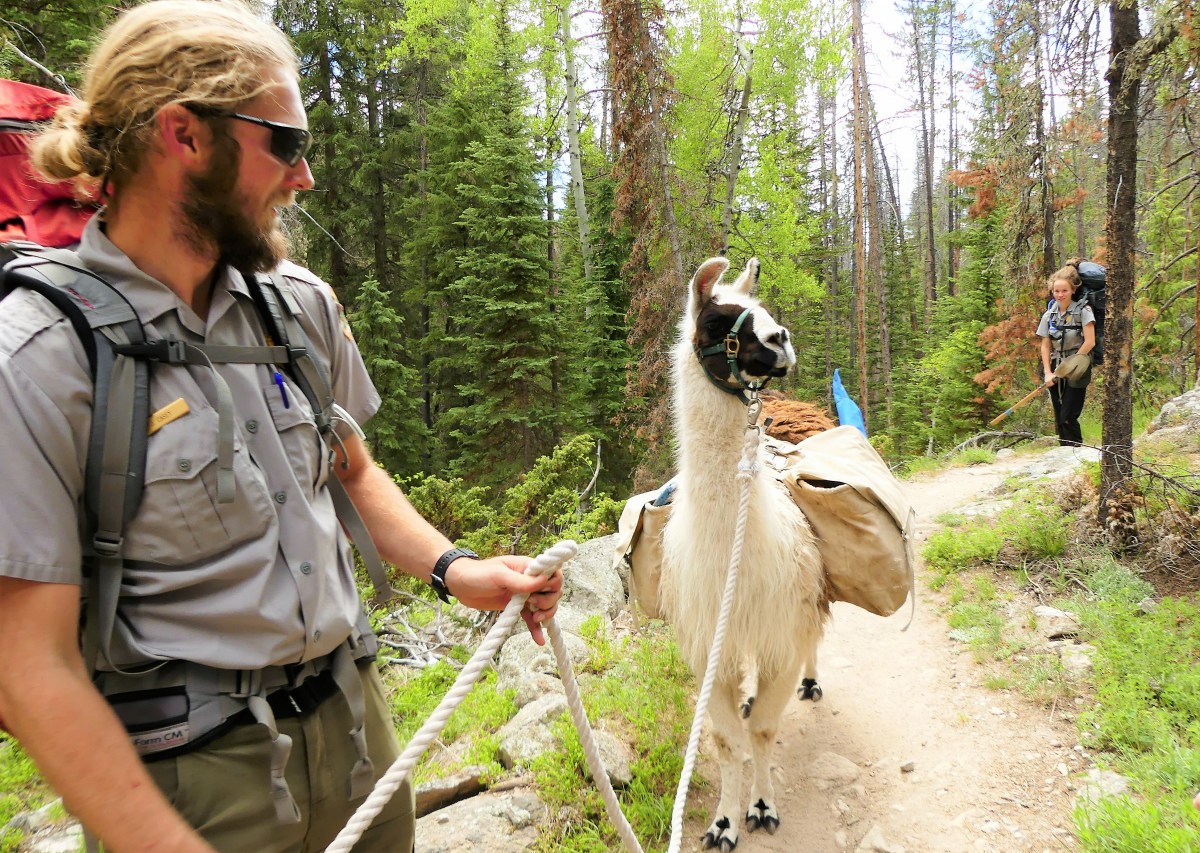
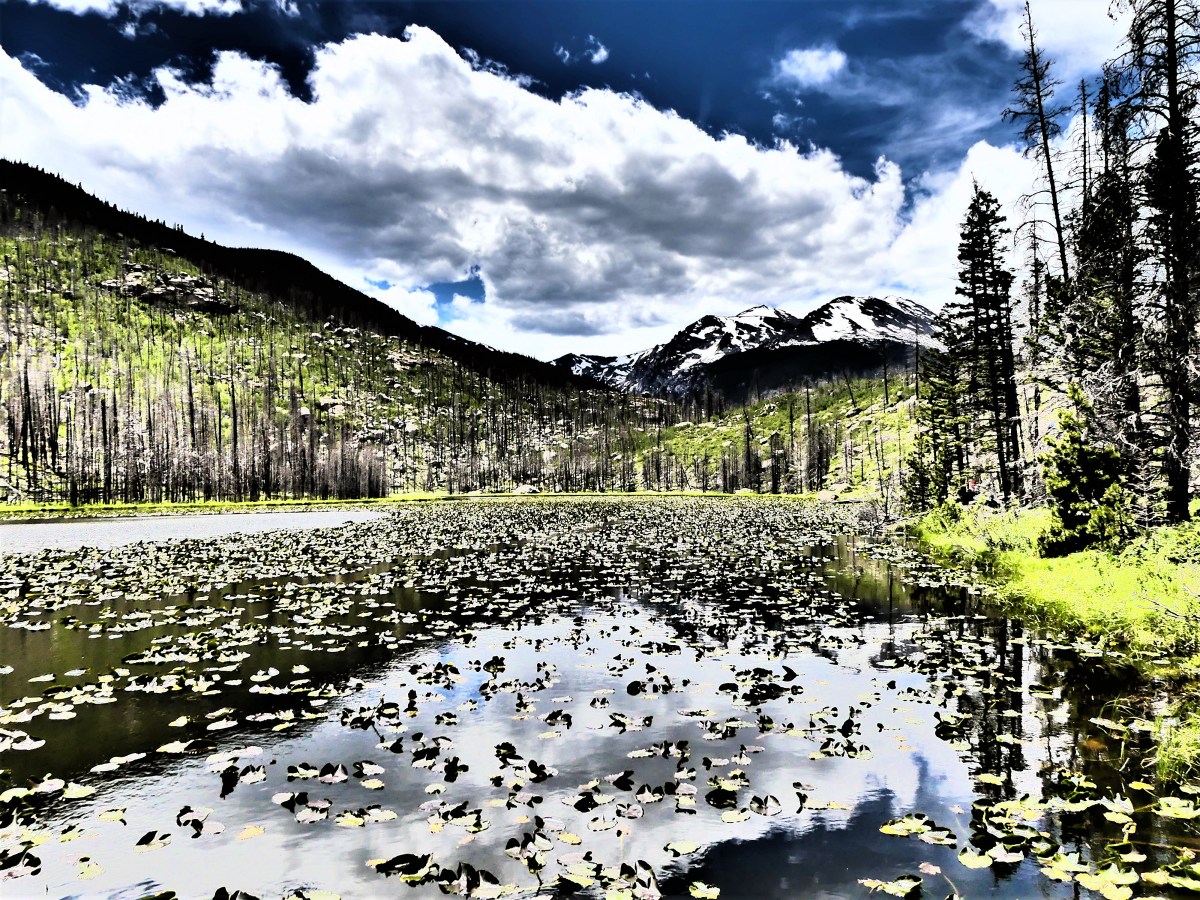

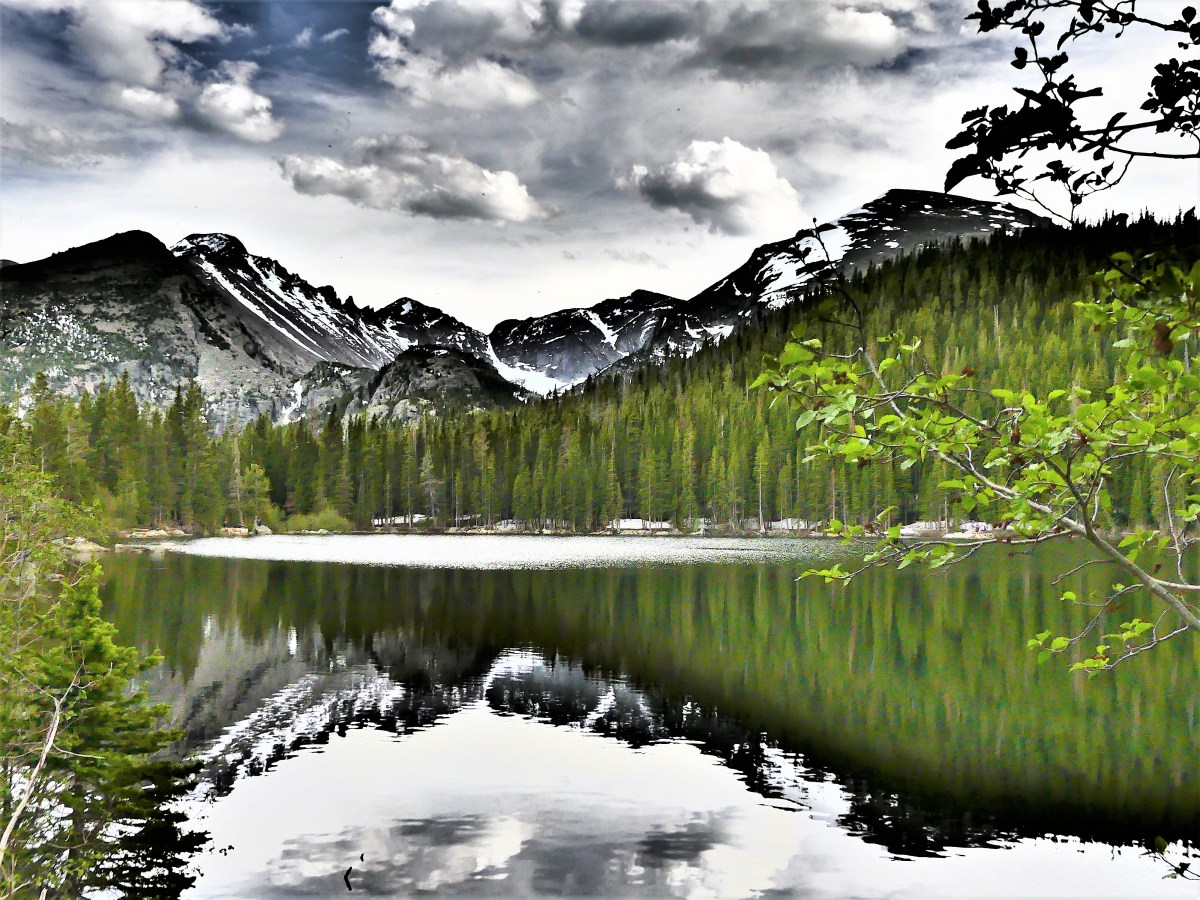




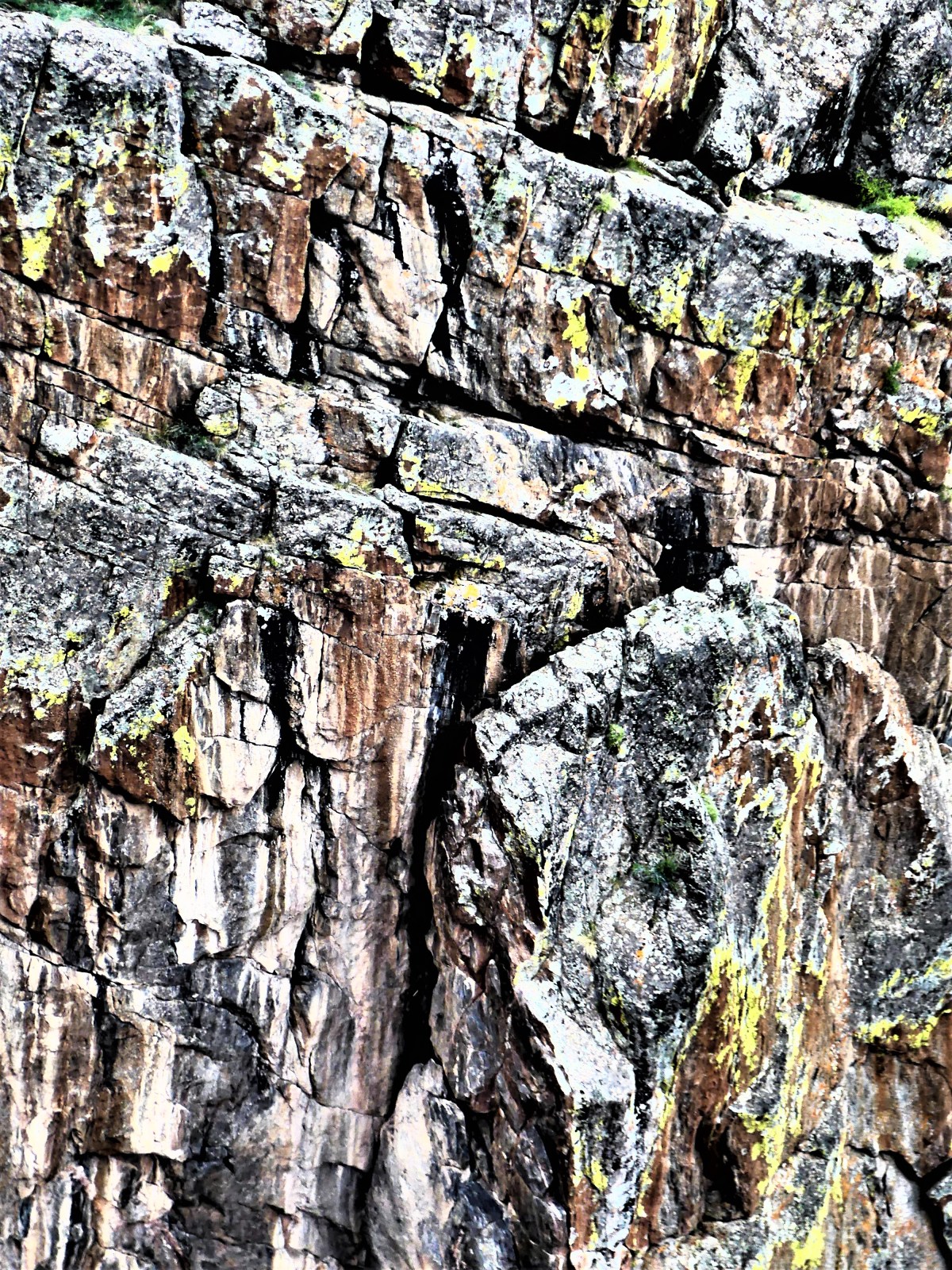
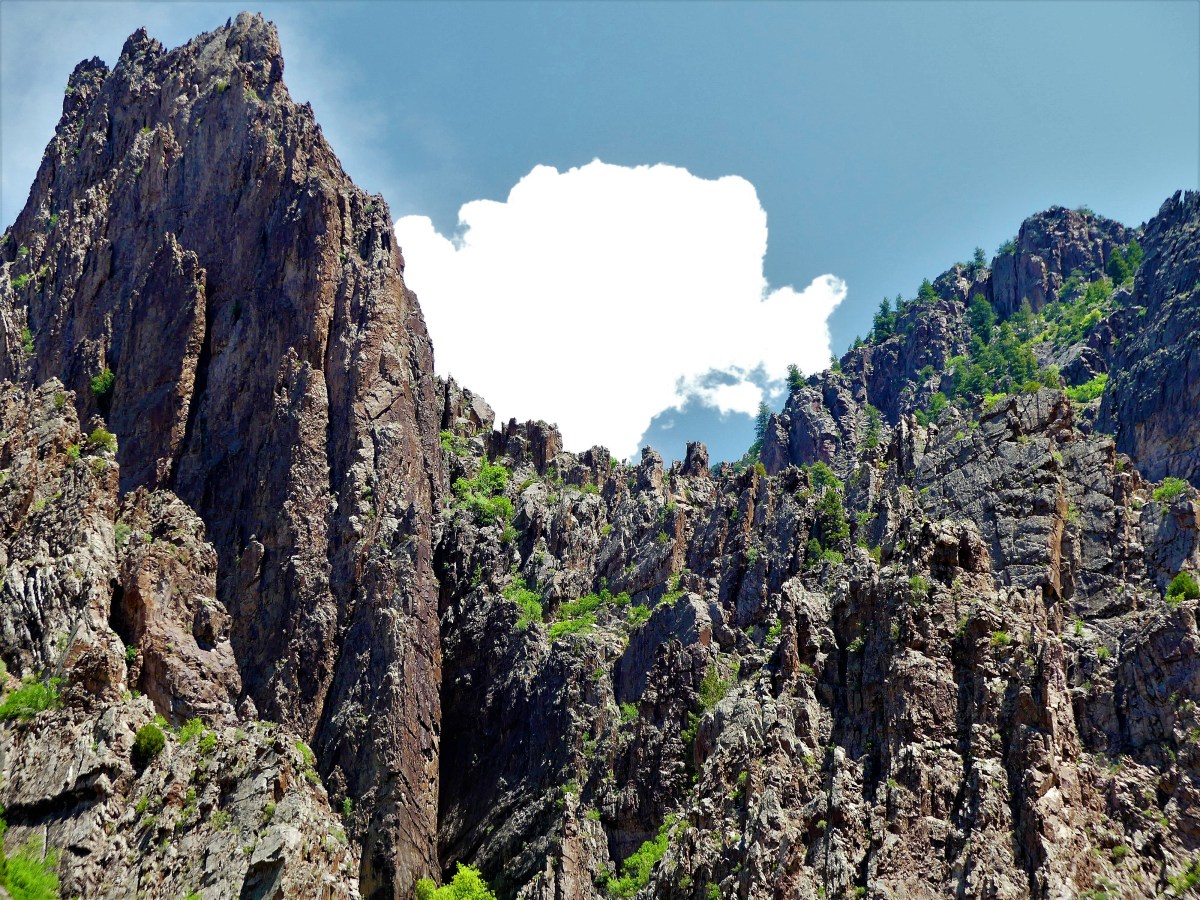
 as the roar of the Gunnison River echoes against the sheer walls of gneiss and schist.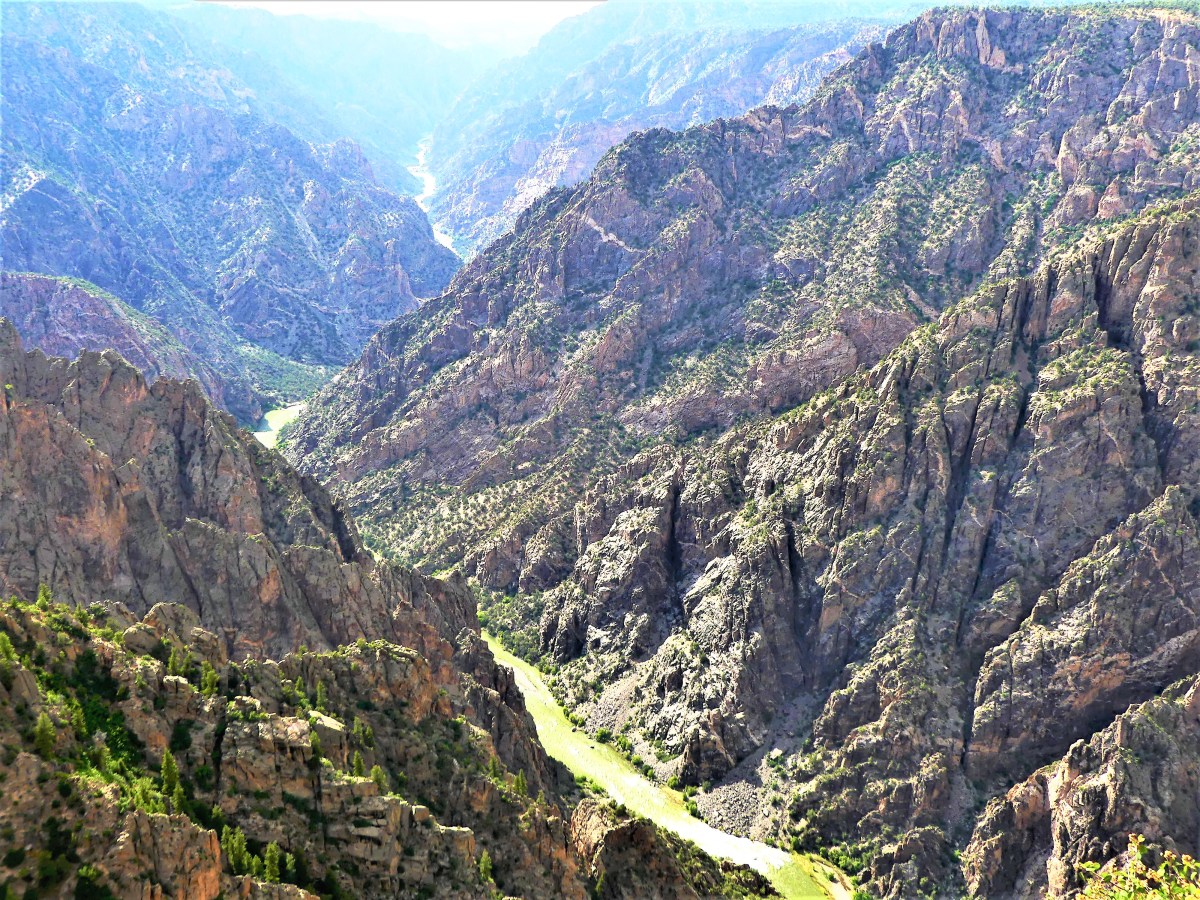


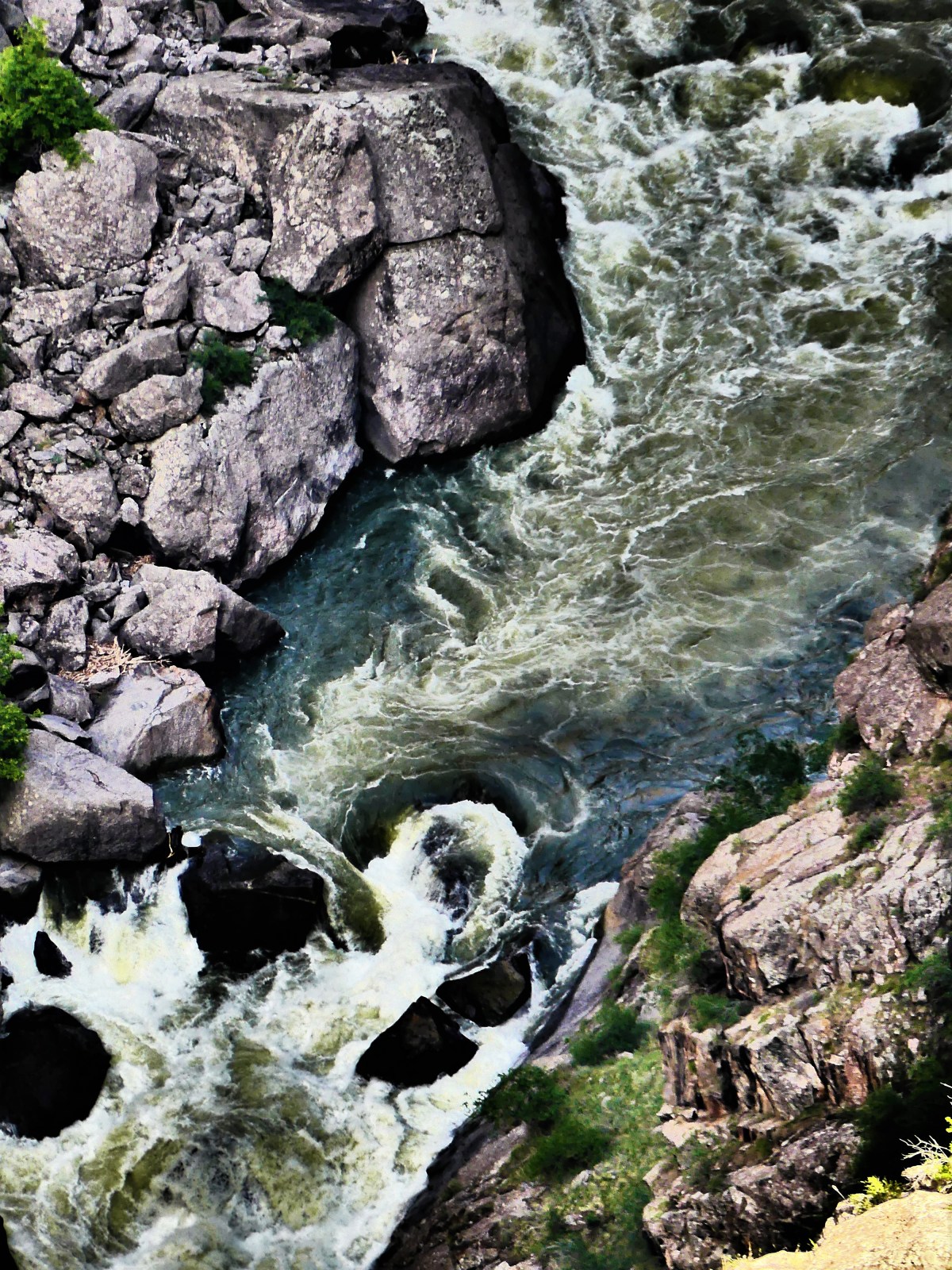
 The river’s pivotal role in carving out 2 million years of metamorphic rock has resulted in canyon walls that plunge 2700 vertigo-inducing feet at Warner Point into wild water that has been rated between Class V and unnavigable.
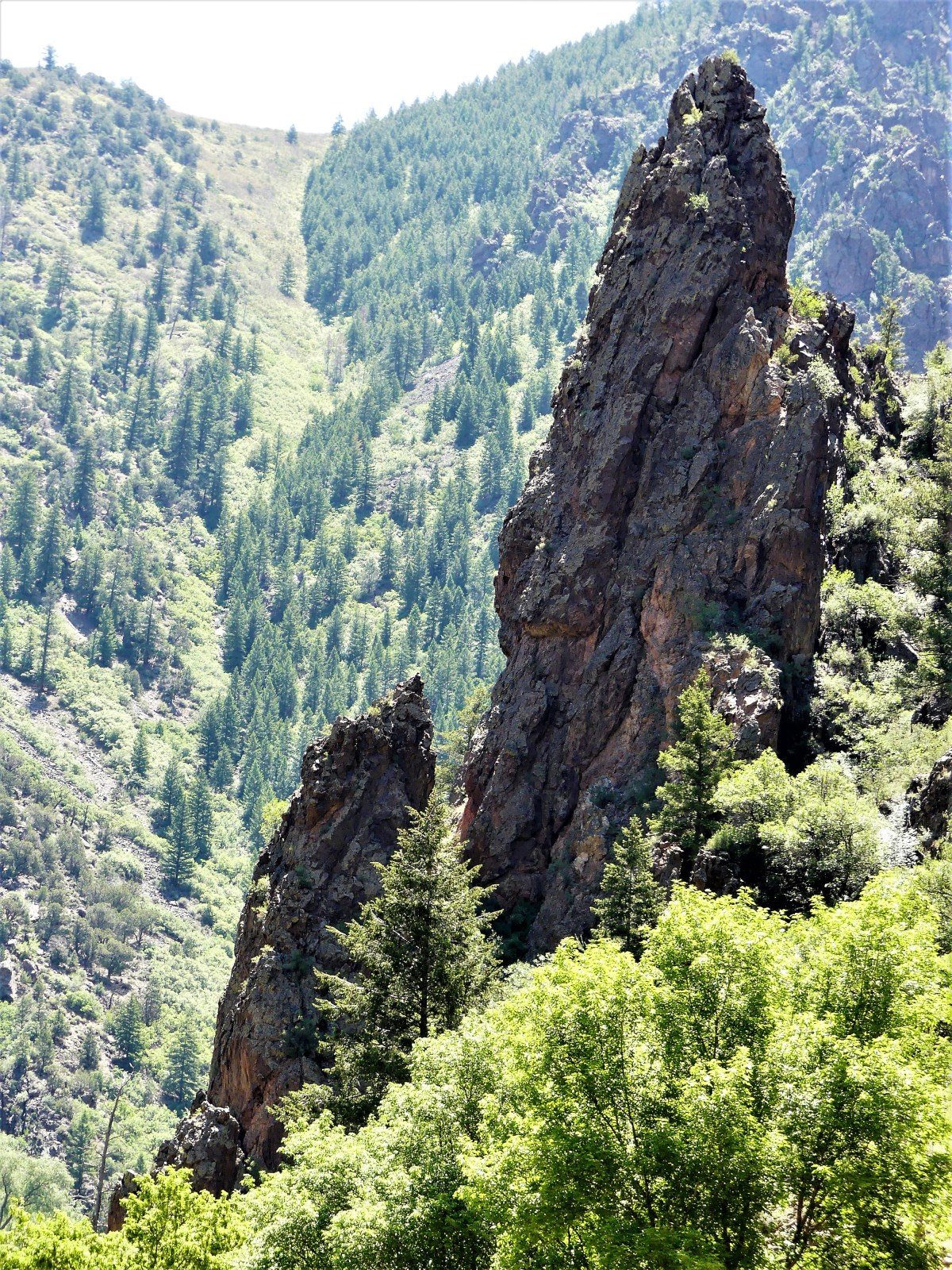
 The view at Dragon Point showcases brilliant stripes of pink and white quartz extruded into the rock face, personifying two dragons who have symbolically fused color into a somber Precambrian edifice.
 and focuses on an untamed water system that’s required three dams to slow the erosion of the canyon floor.
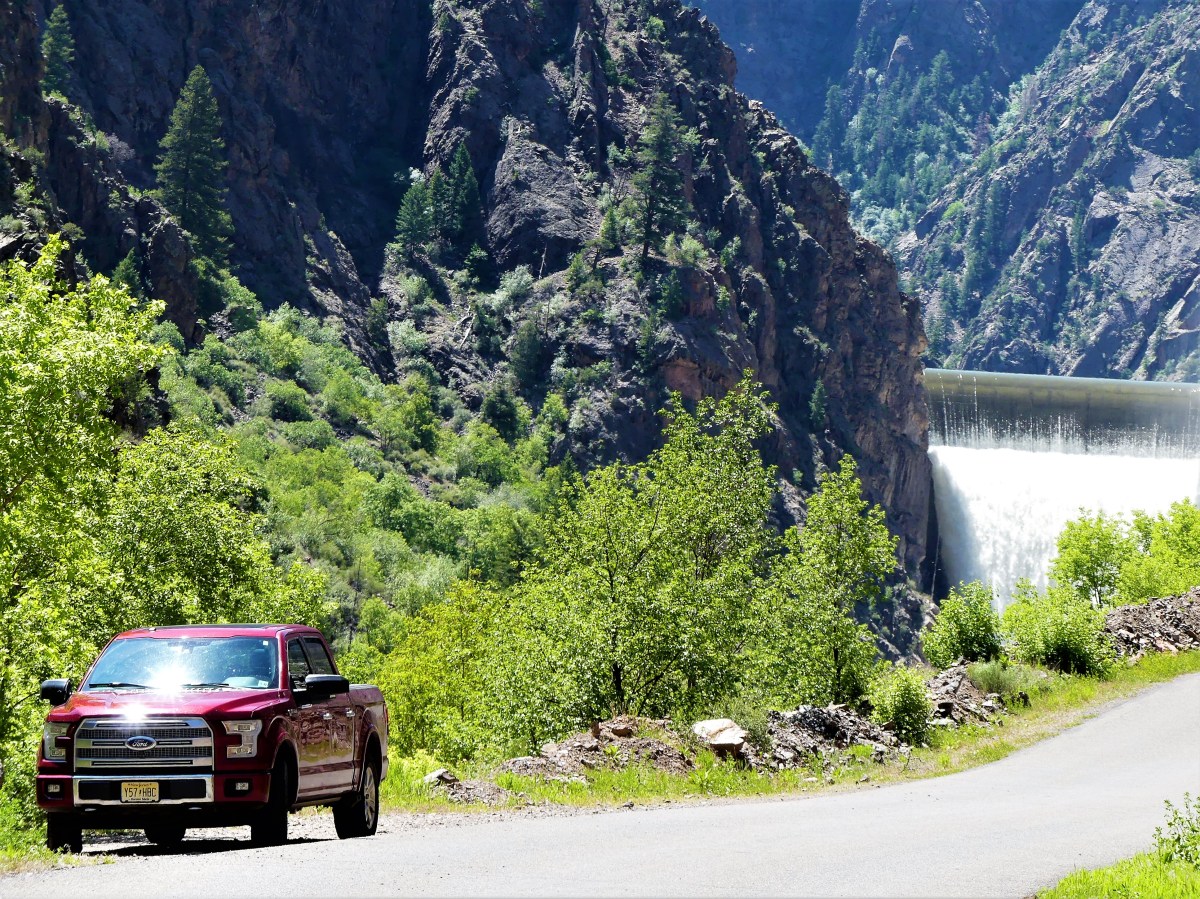 According to Park Service statistics, left unchecked, the Gunnison River at flood stage would charge through the gorge at 12,000 cubic feet per second with 2.75 million-horse power force. Dams now provide hydroelectric energy, and have created local recreation facilities for water sports, including Blue Mesa Reservoir, Colorado’s largest body of water.
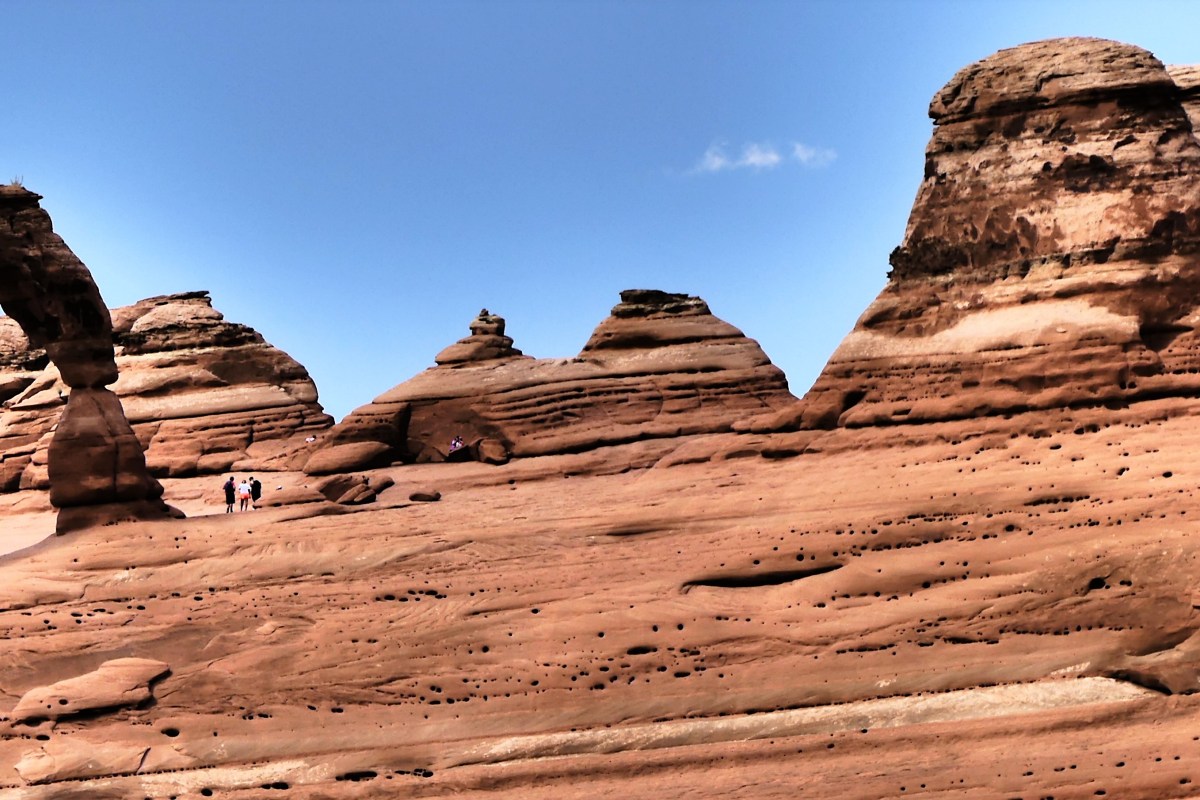


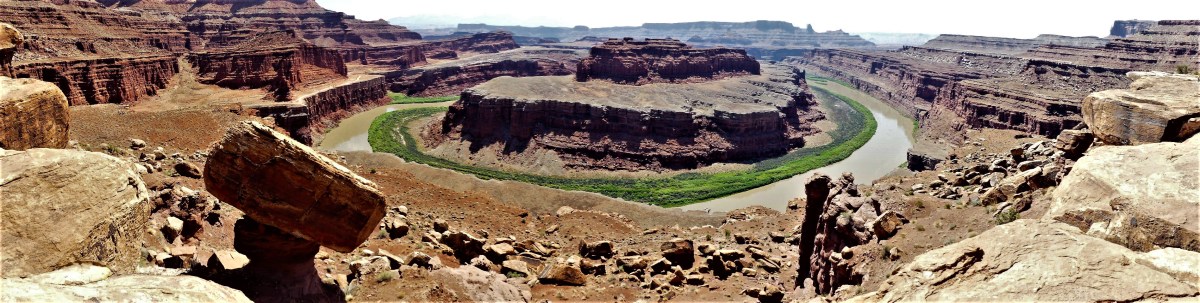

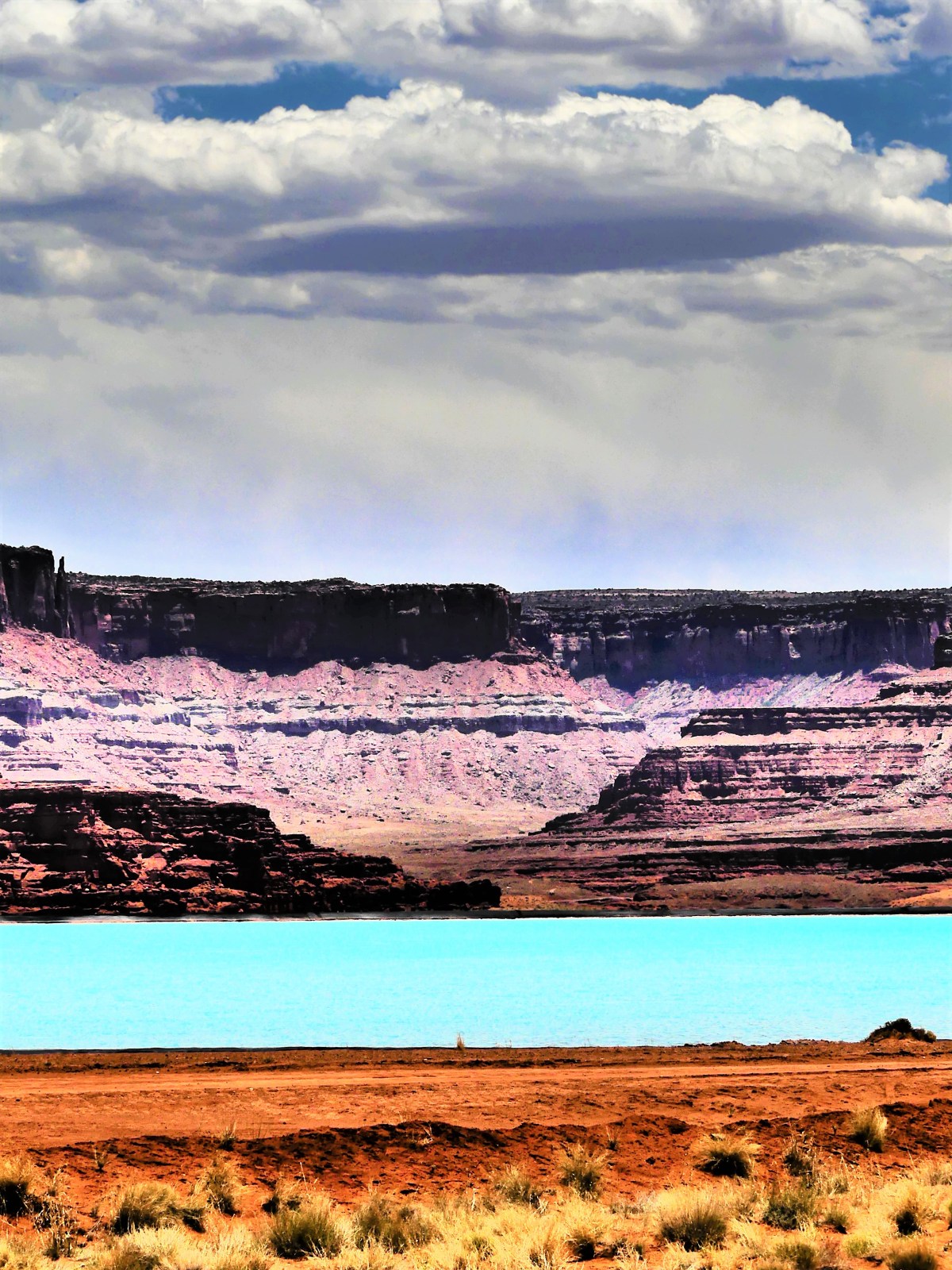


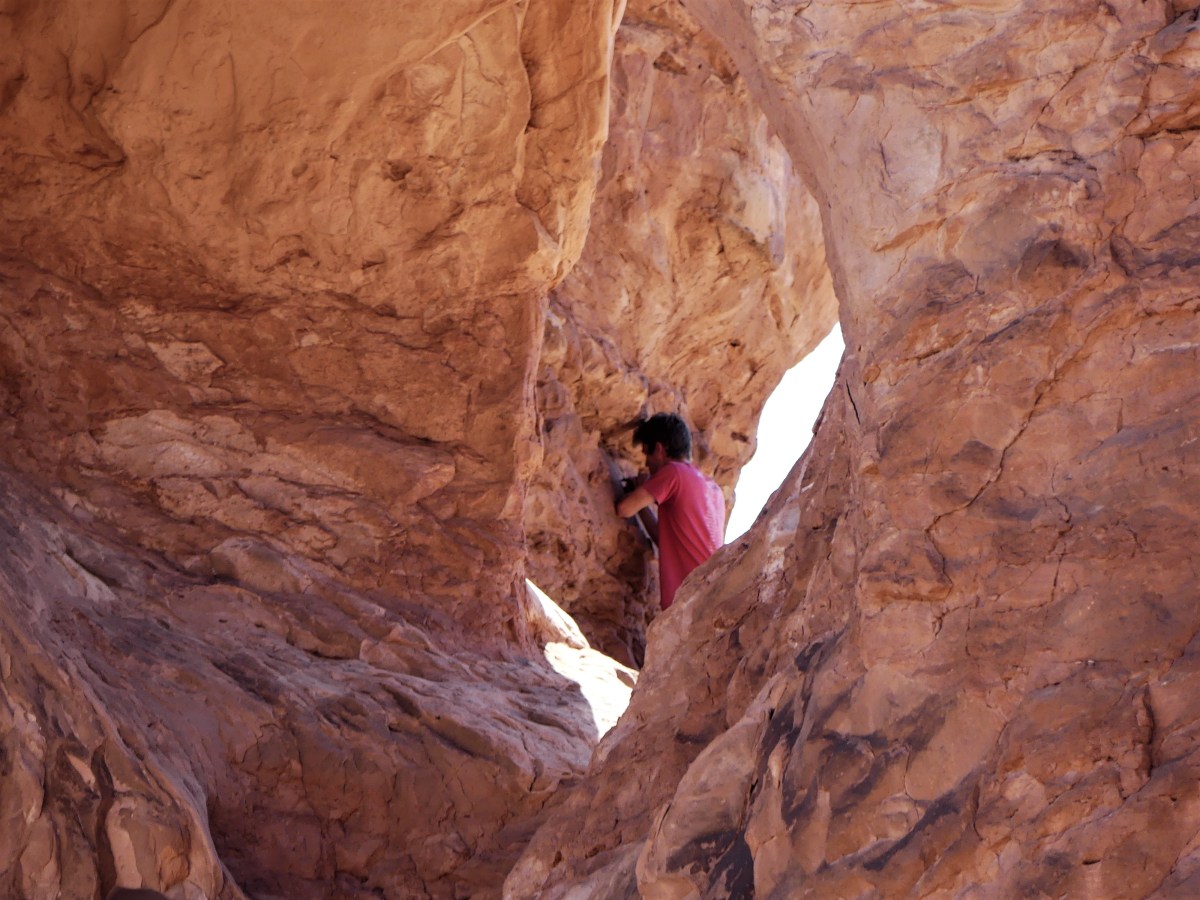


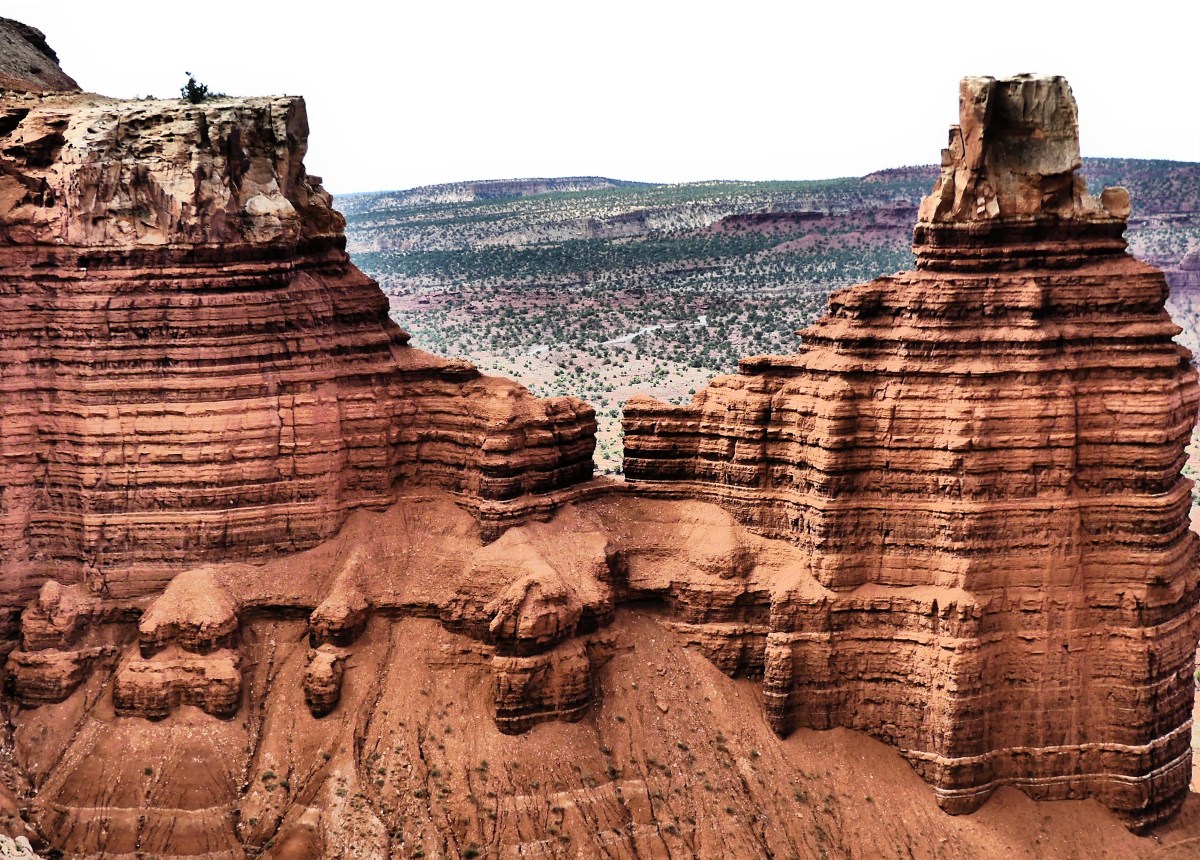

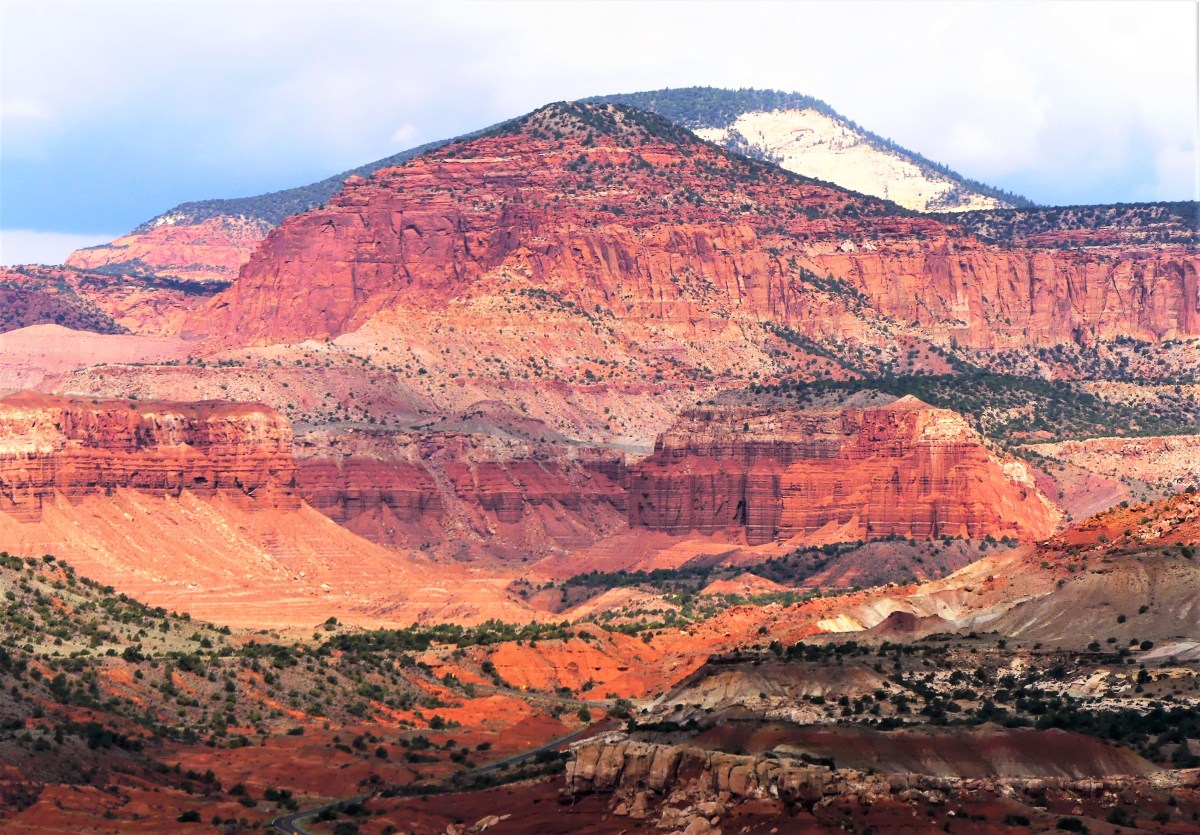


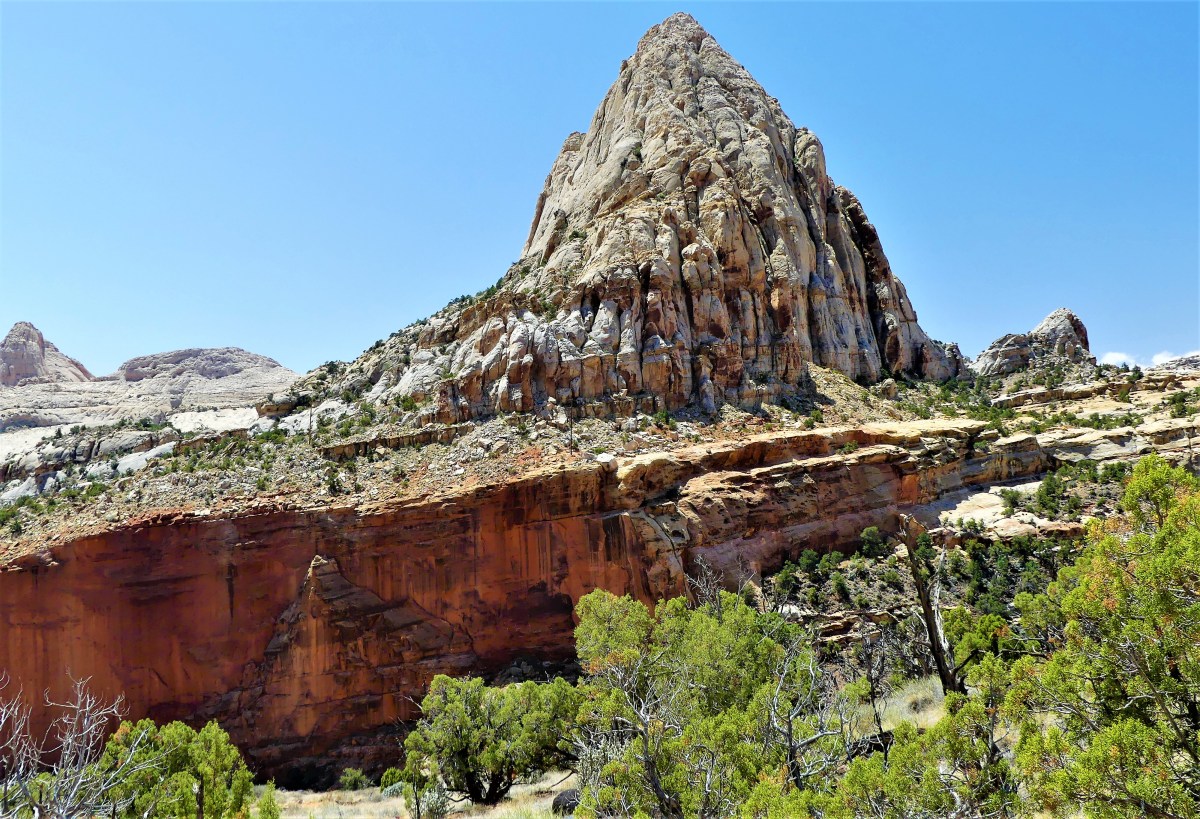
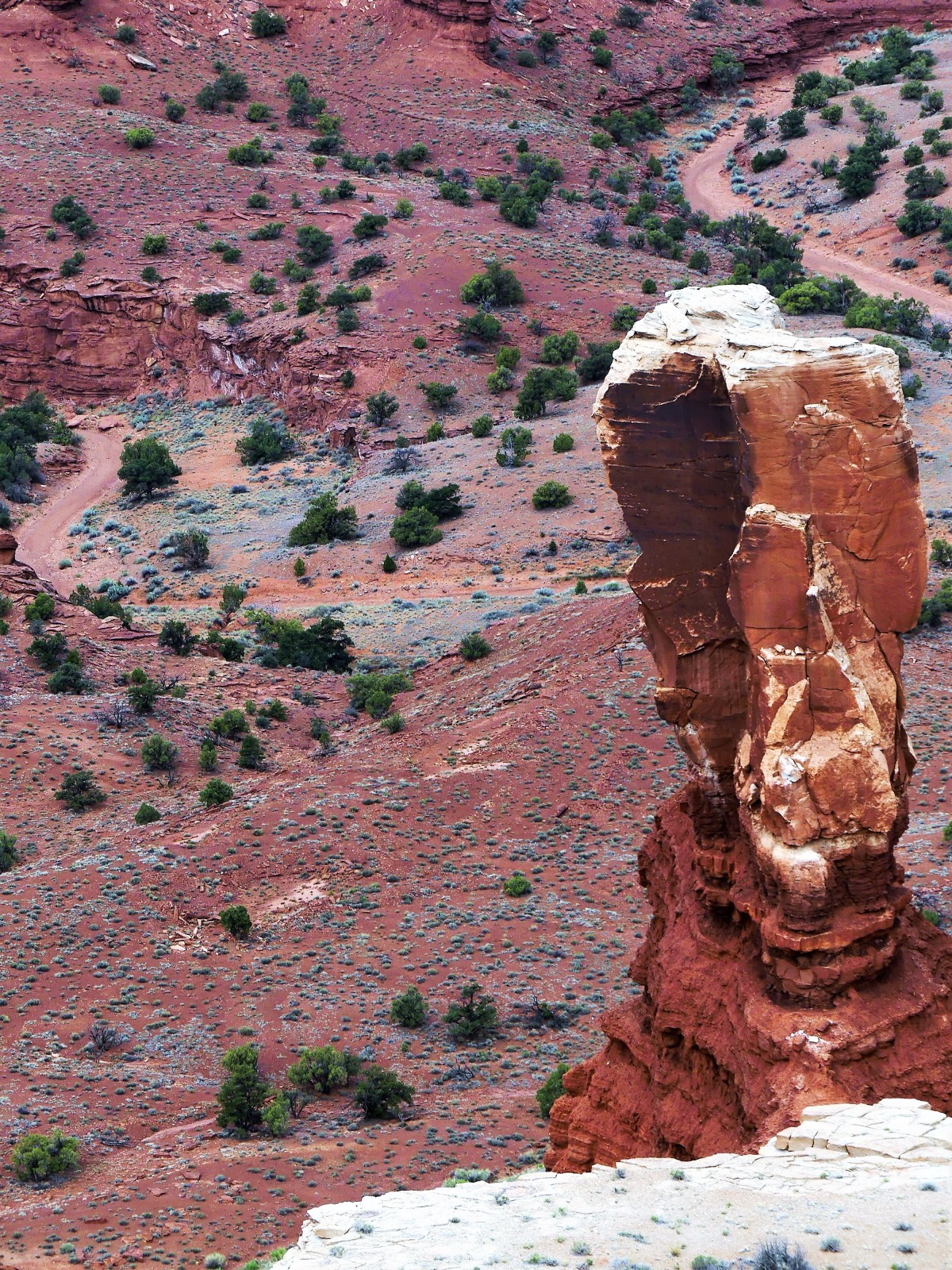
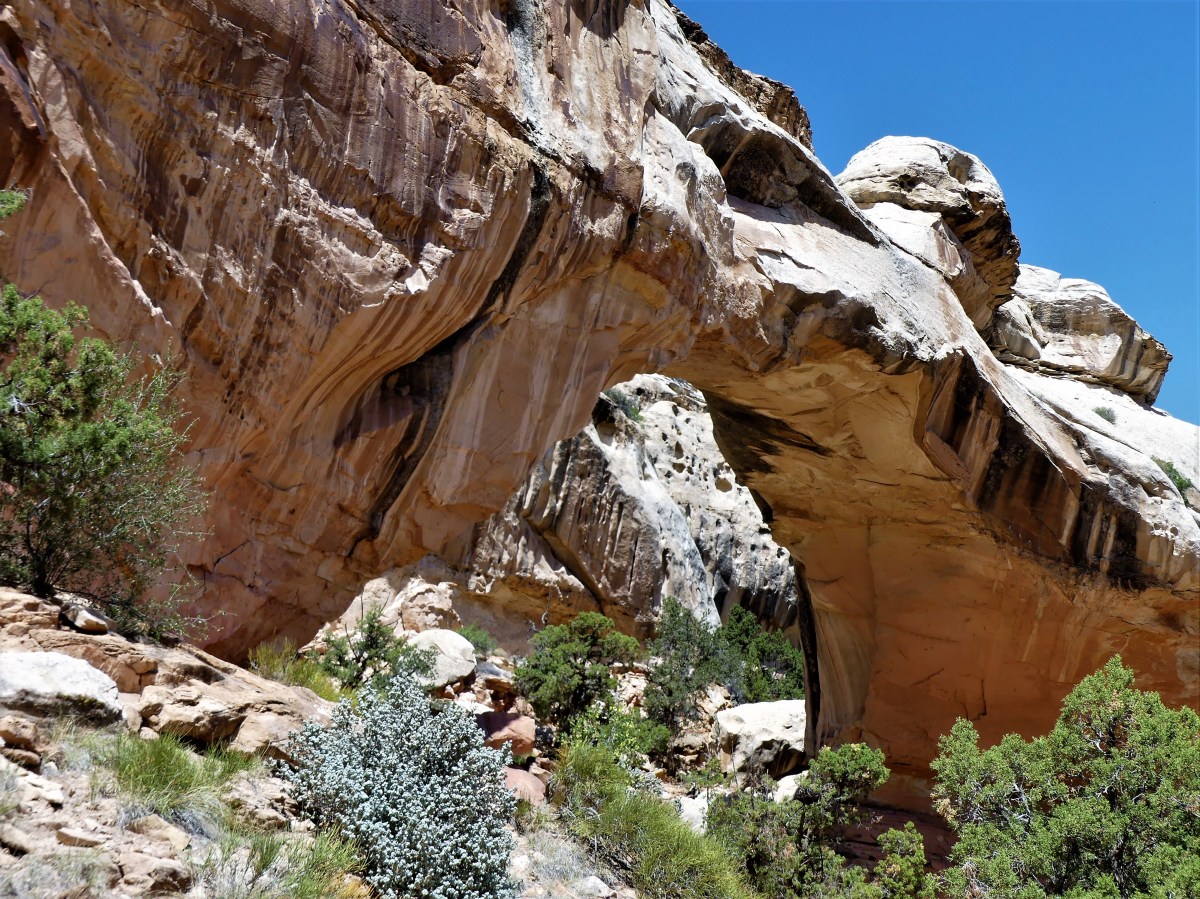


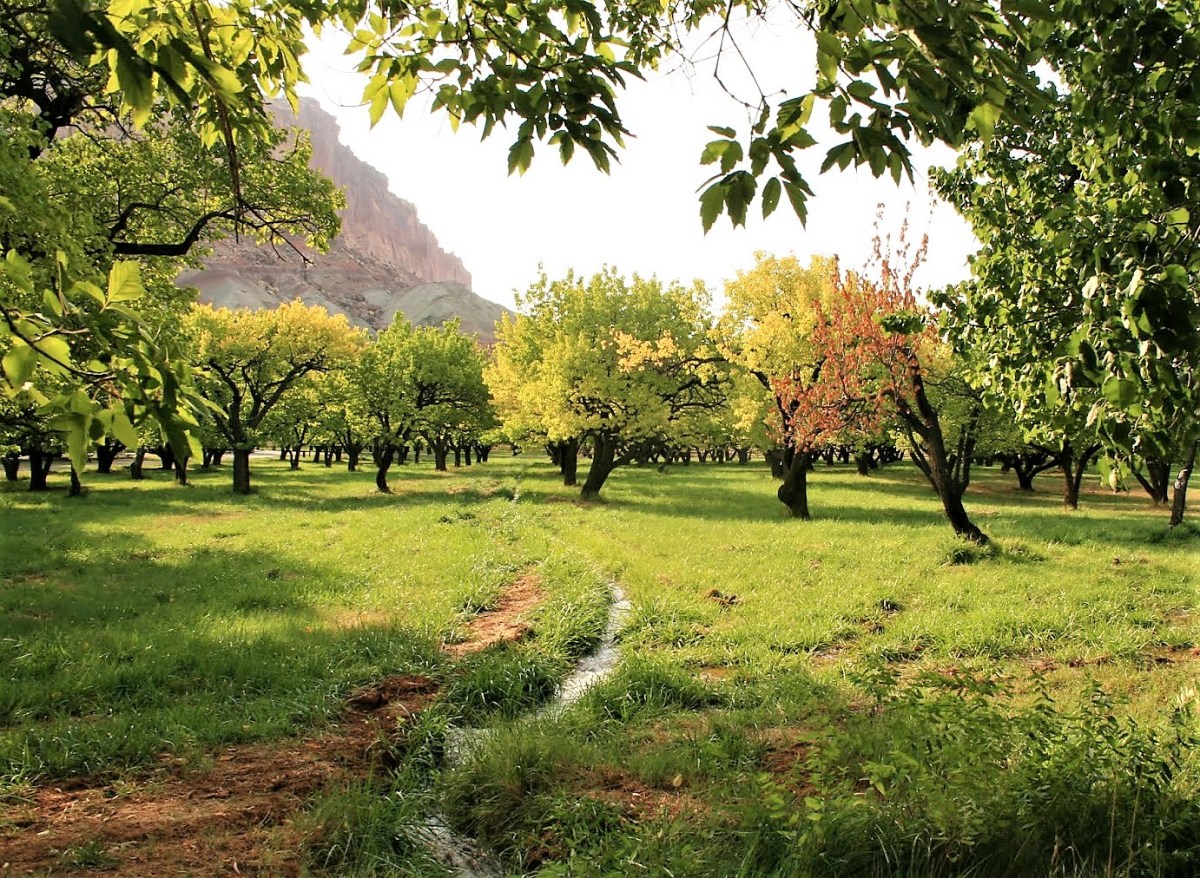 sprinkle in some petroglyphs,

 you would have a delicious National Park named Capitol Reef that few would ever taste. And that would be the greatest crime, because this is a four-course park that satisfies all the senses, and requires at least four days to consume all it has to offer.
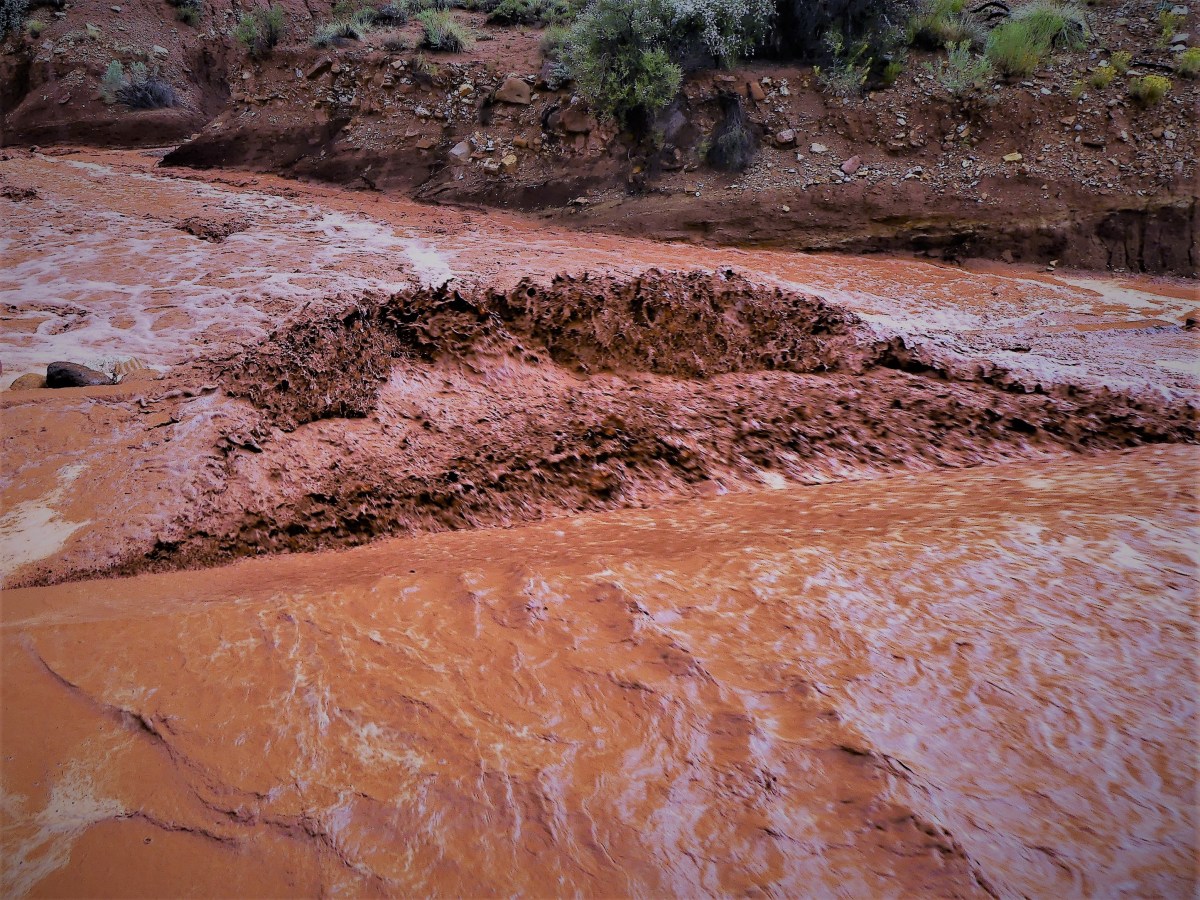 But we would not be detained. The truck’s high clearance and V-8 muscle was more than enough to plow through two feet of fast water, cutting a red swath through the wash, and a sending a bloody spray across my windshield and windows. The benefit of beating the waterfall gave us the road ahead to ourselves, as all the other cars were left behind in our wake.
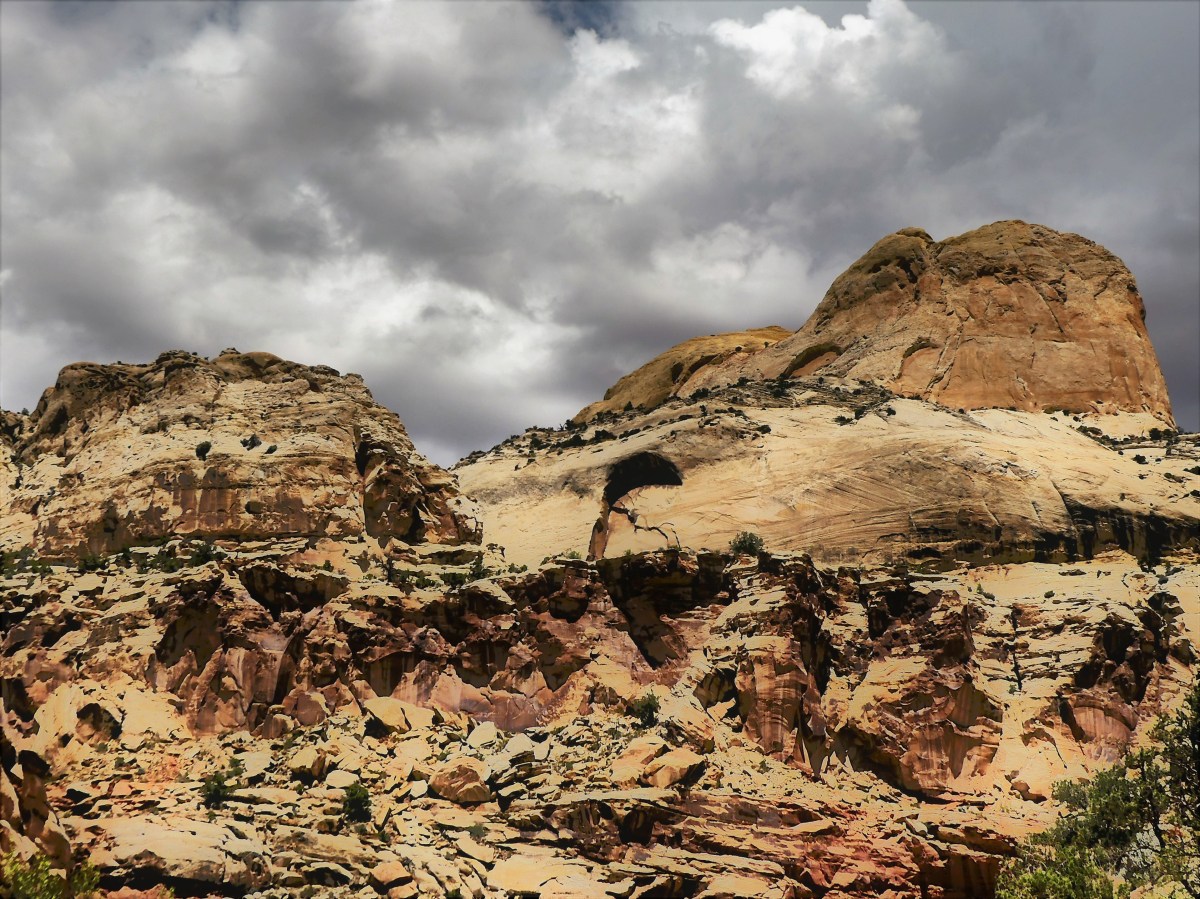 and coincidentally coincided with a Sirius-XM radio broadcast of Trump announcing the American withdrawal from the Paris Climate Accord. It’s hard to relay the irony of negotiating the winding narrow passage between the canyon walls while listening to Trump rationalize his decision under the guise of job losses in front of a partisan Rose Garden rally. With every fractured sentence and every tired hyperbole, the crowd would erupt with enthusiastic applause, acknowledged by Trump’s demure, “Thank you, thank you.”
 tracing many generations of footsteps before us.
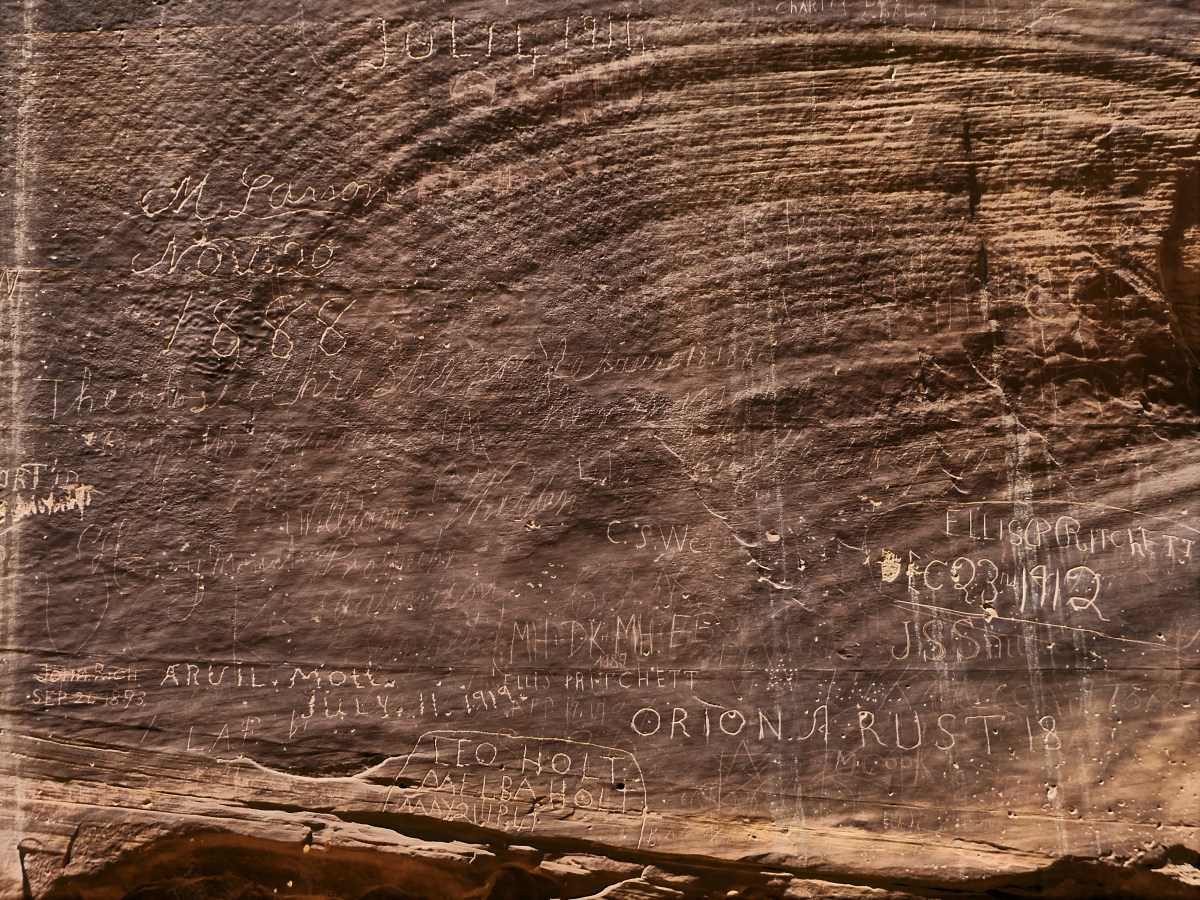 These people left us a great treasure (discounting the grafitti–more on that later) to inspire us, but also assigned us a great responsibility to preserve and protect it so that future generations may also be inspired. Our legacy as moral and ethical humans relies on it. And our future as a planet depends on it.
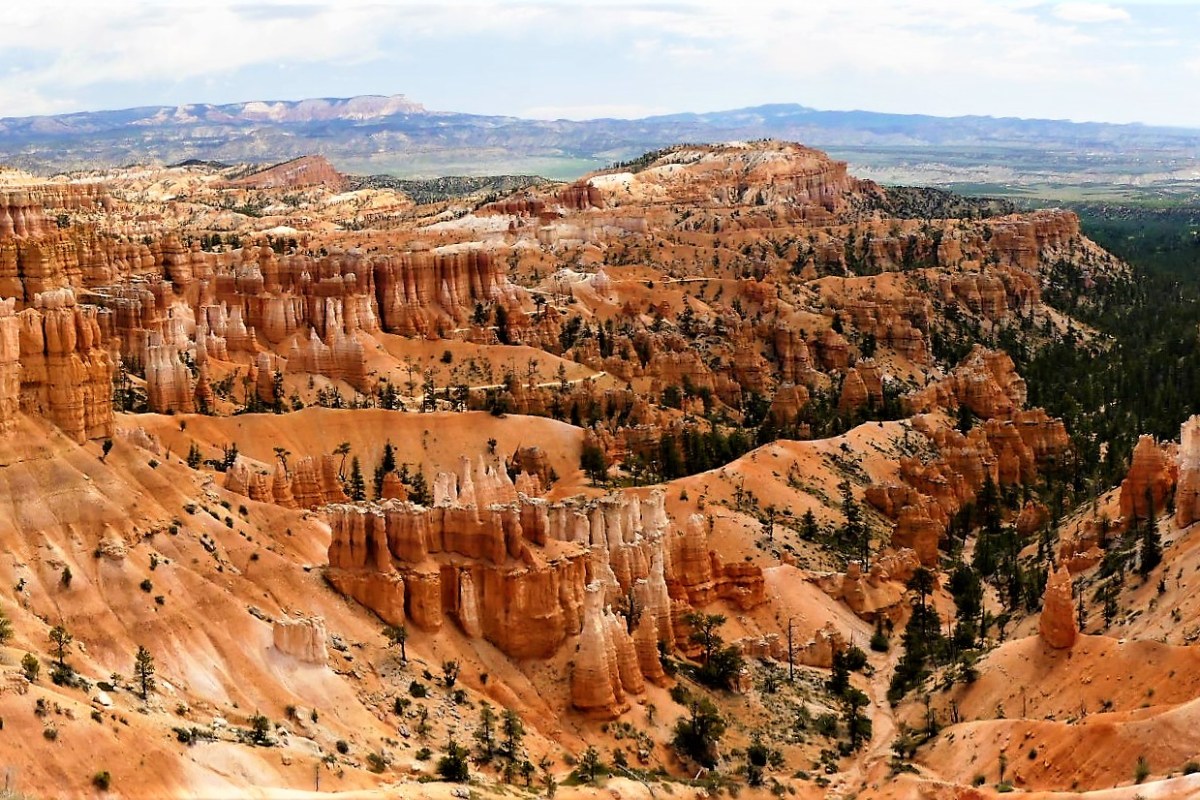
 offering panoramic views of the Colorado Plateau going as far back as the Grand Canyon’s North Rim. Clear days at Bryce can offer the longest views anywhere on the planet–beyond 100 miles away, thanks to the amazing clean air quality.

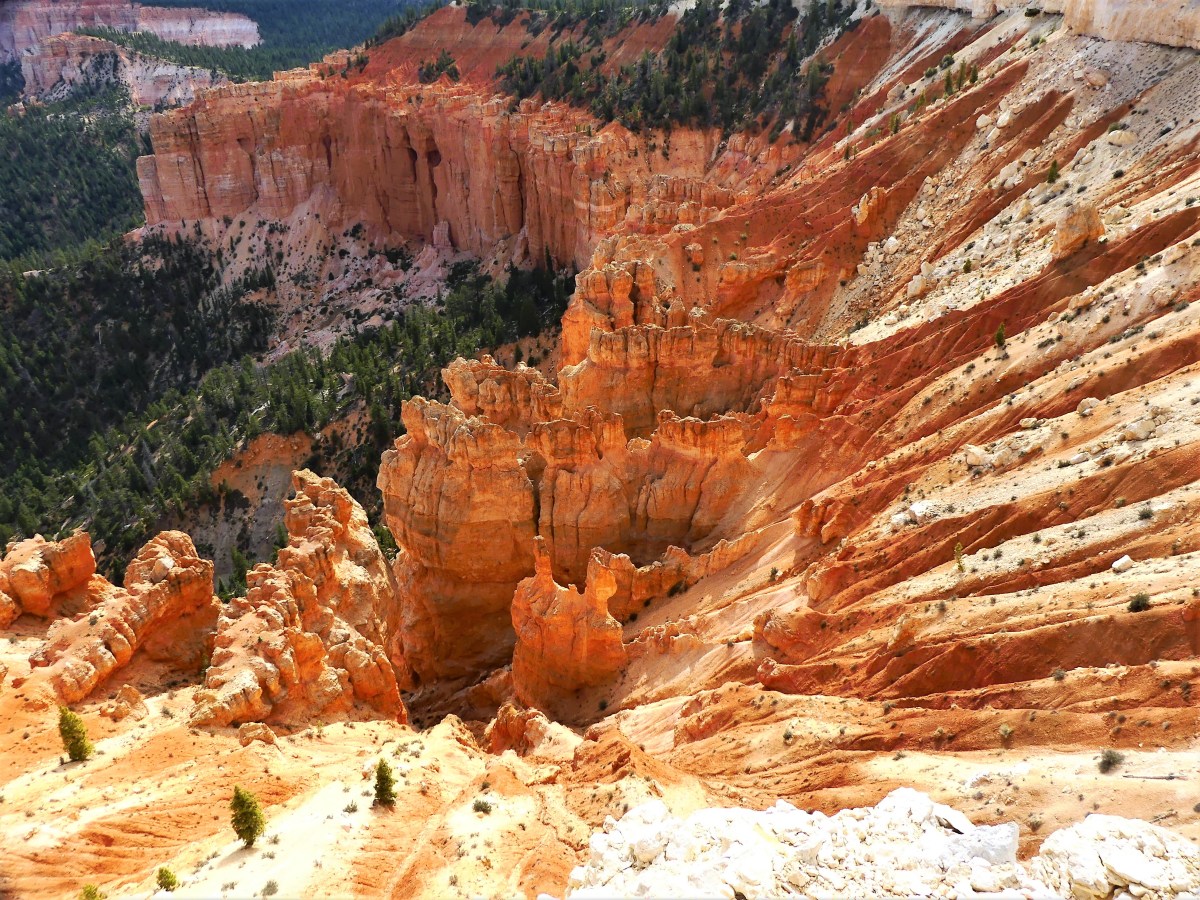


 through the Navajo Loop Trail following the steep switchbacks…
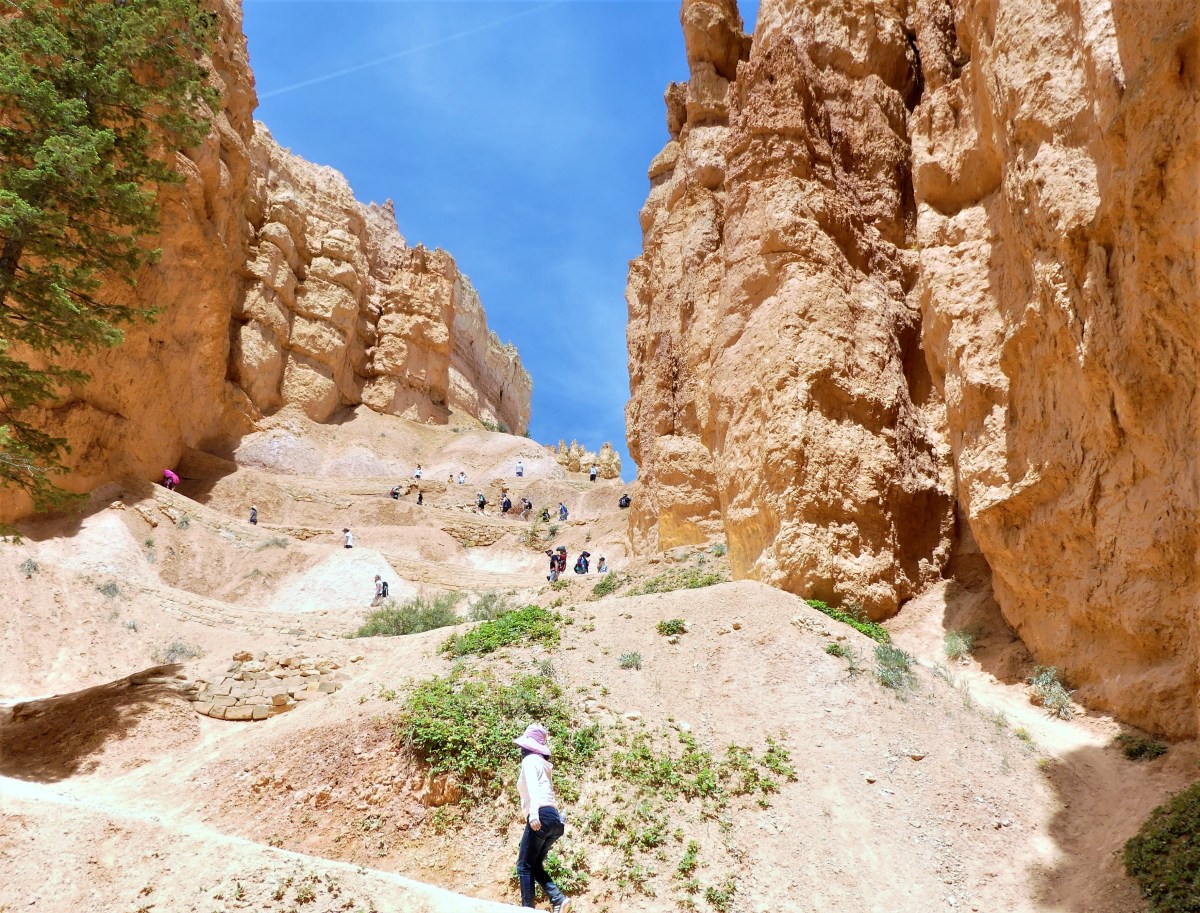 to Wall Street, where enormous Douglas firs have balanced in the rift for over 750 years, like sacred totems,
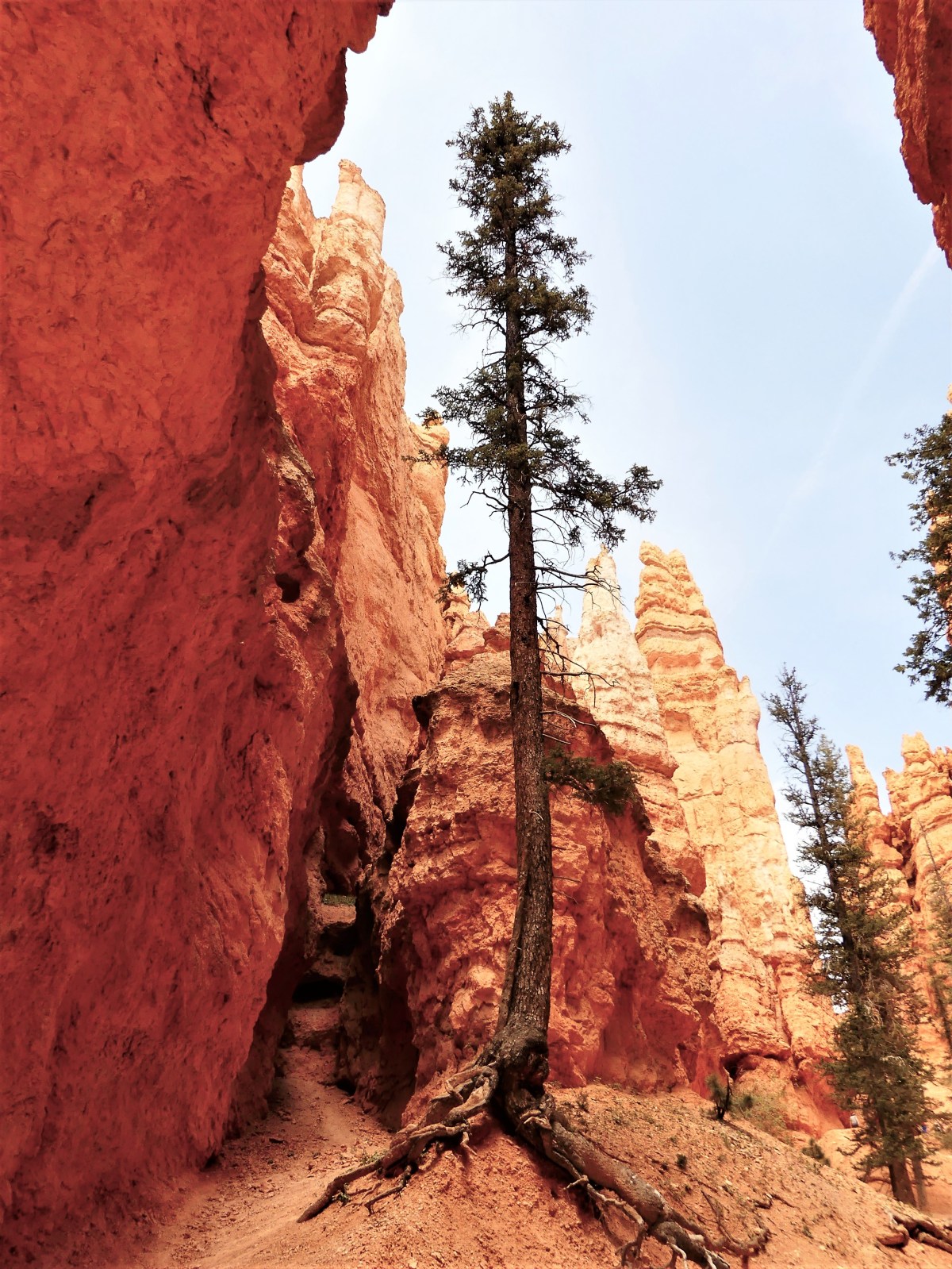 and views of Thor’s Hammer are something to “marvel”.
 Beyond Twin Bridges (another iconic hoodoo formation),
 another series of switchbacks dropped us to the Amphitheater floor. Rather than continue the loop, we opted to cross into Queens Garden, for cake and a spot of iced tea.
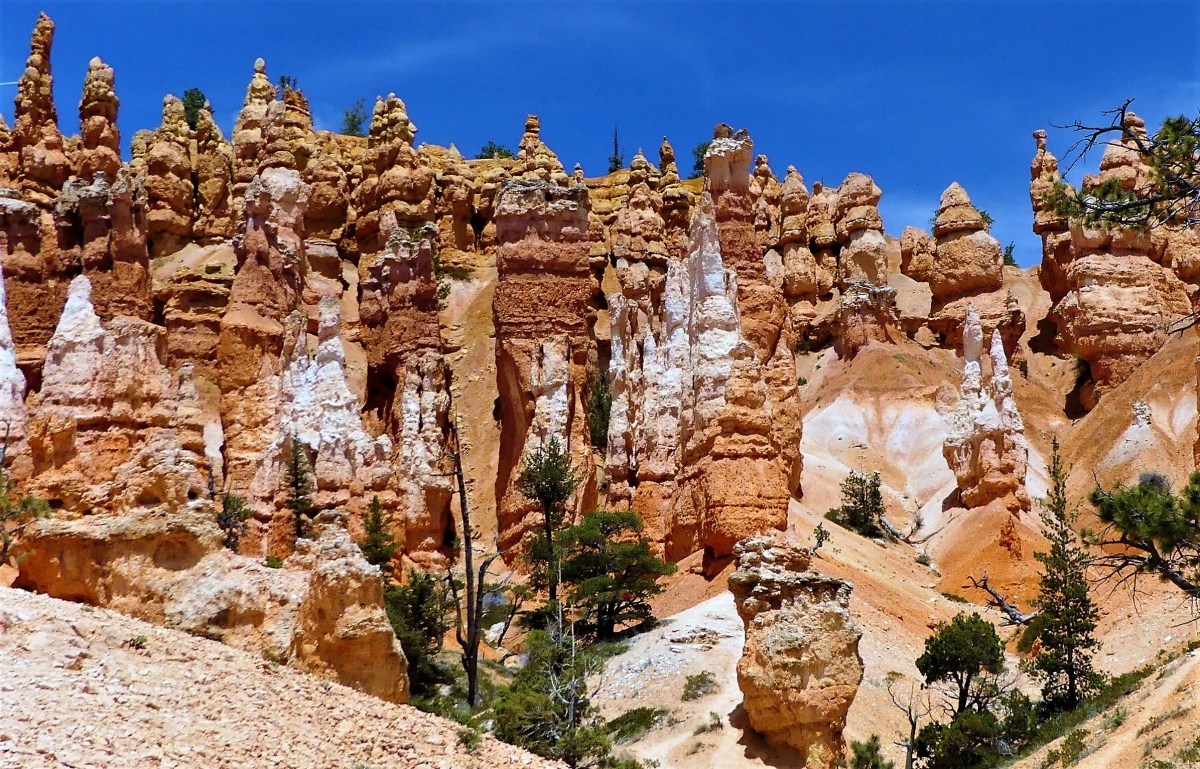 standing along side the Queen’s castle…
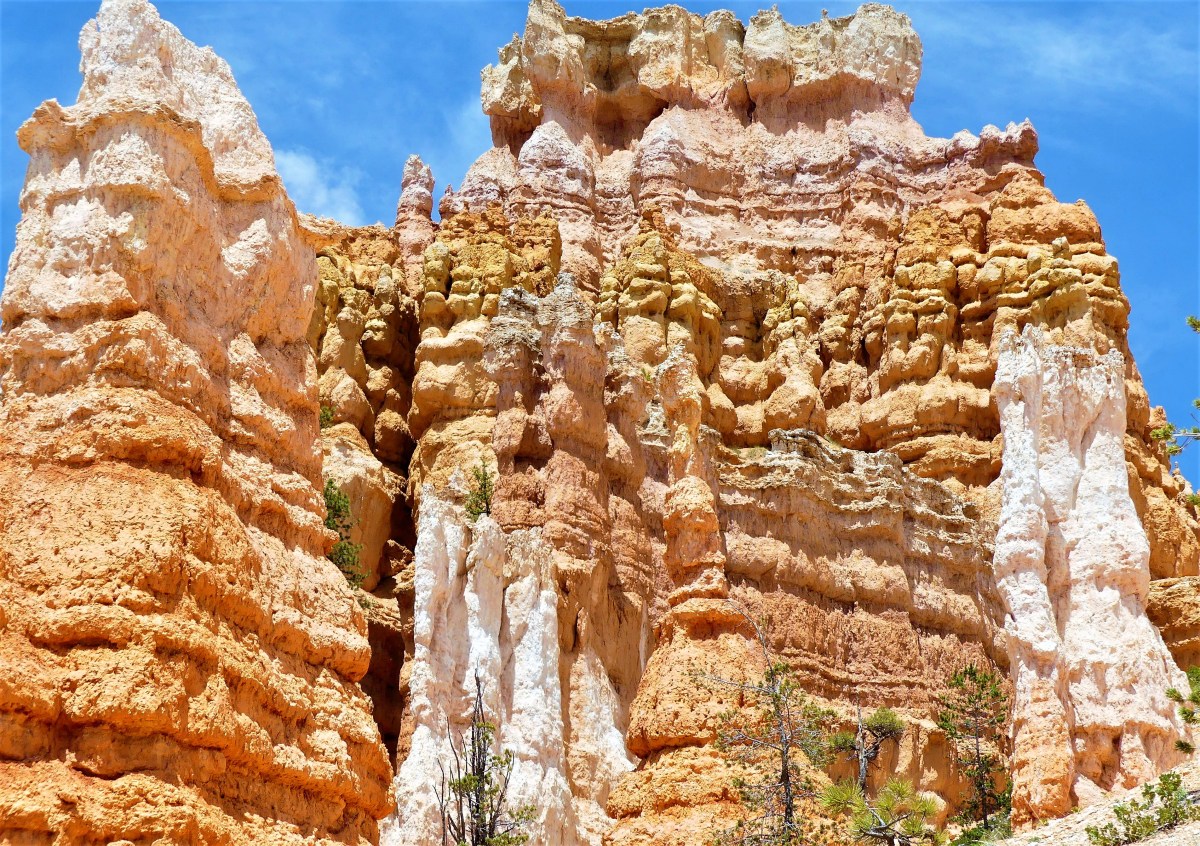 as Queen Victoria looked on high.
 It was a “monumental” hike out of the canyon that left us tired, but enthused by the energy surrounding us. Perhaps it was hoodoo voodoo?
 But one thing that we both agreed on… we were ravenous after spending time in this imaginary Fairyland world.
 Shades of
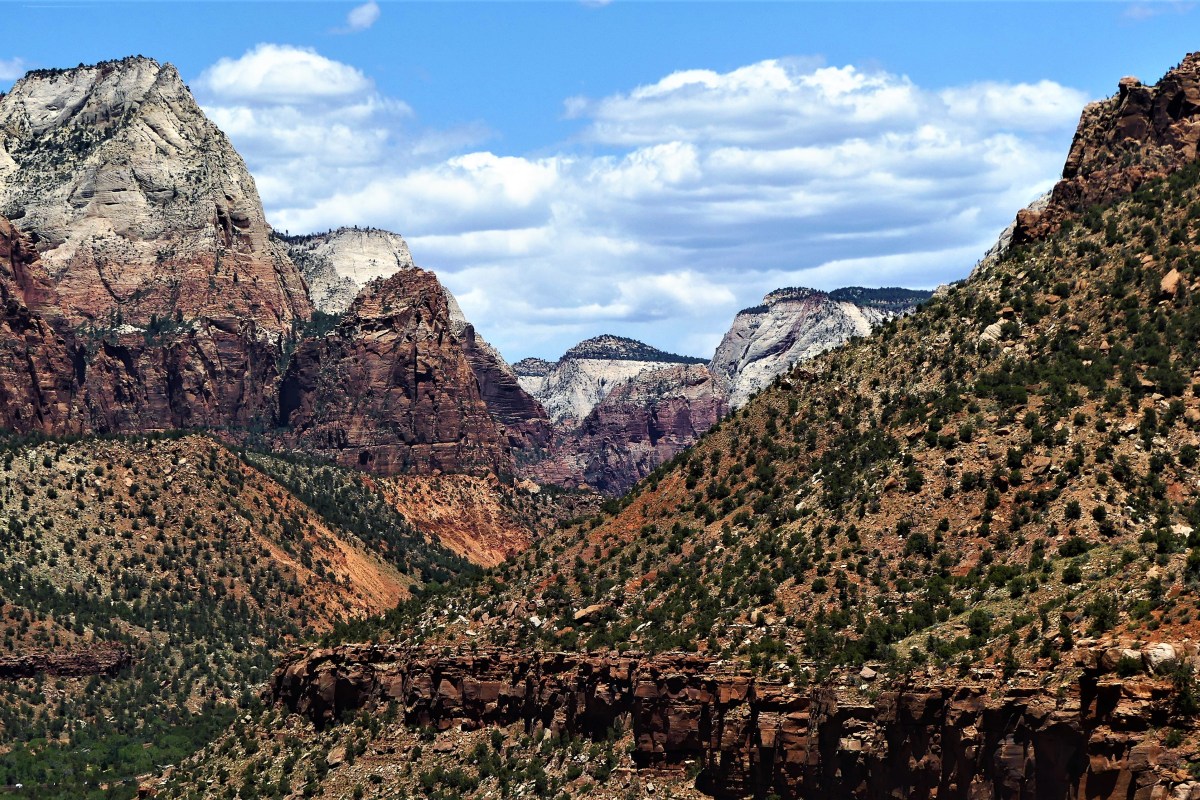











 as we cross several dry river beds…
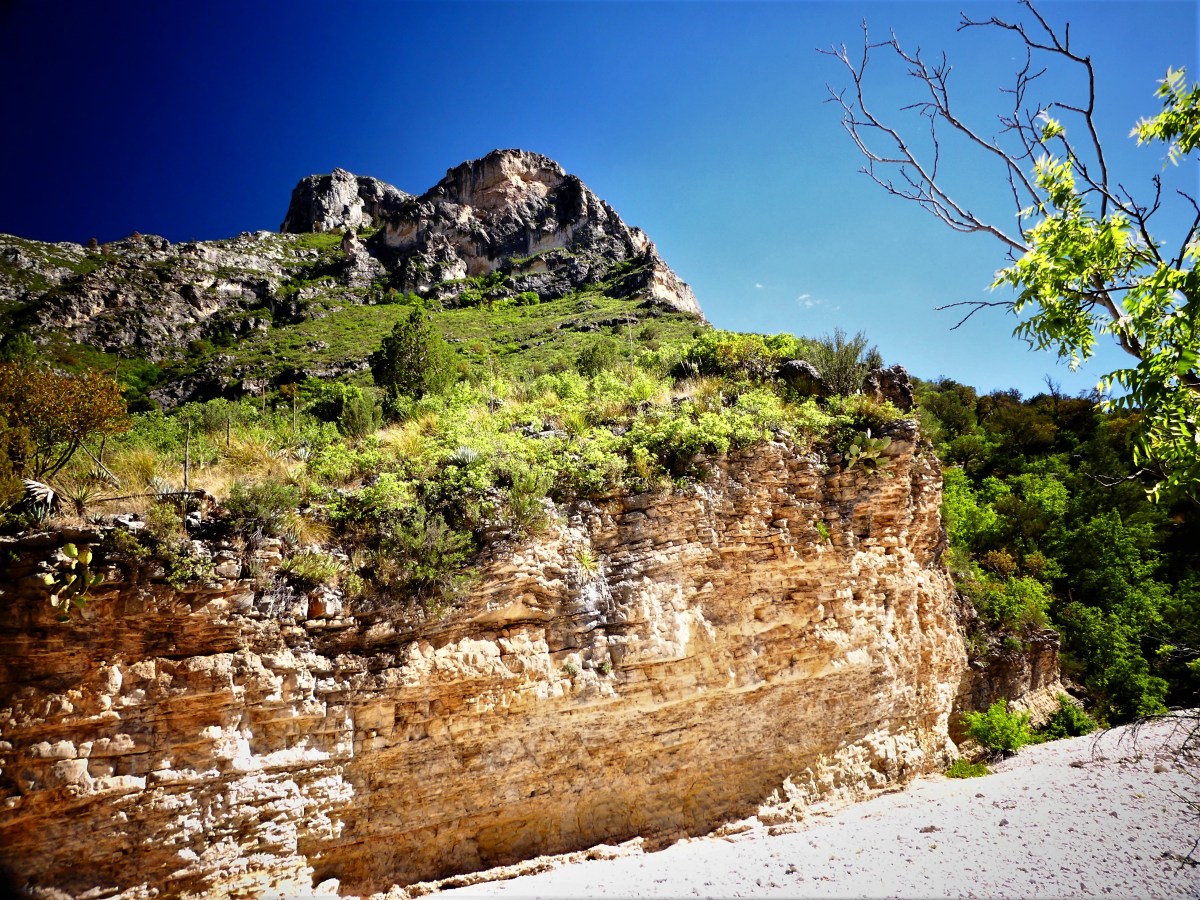 along the arroyo to Pratt Cabin, a Depression-era structure built entirely of stone.
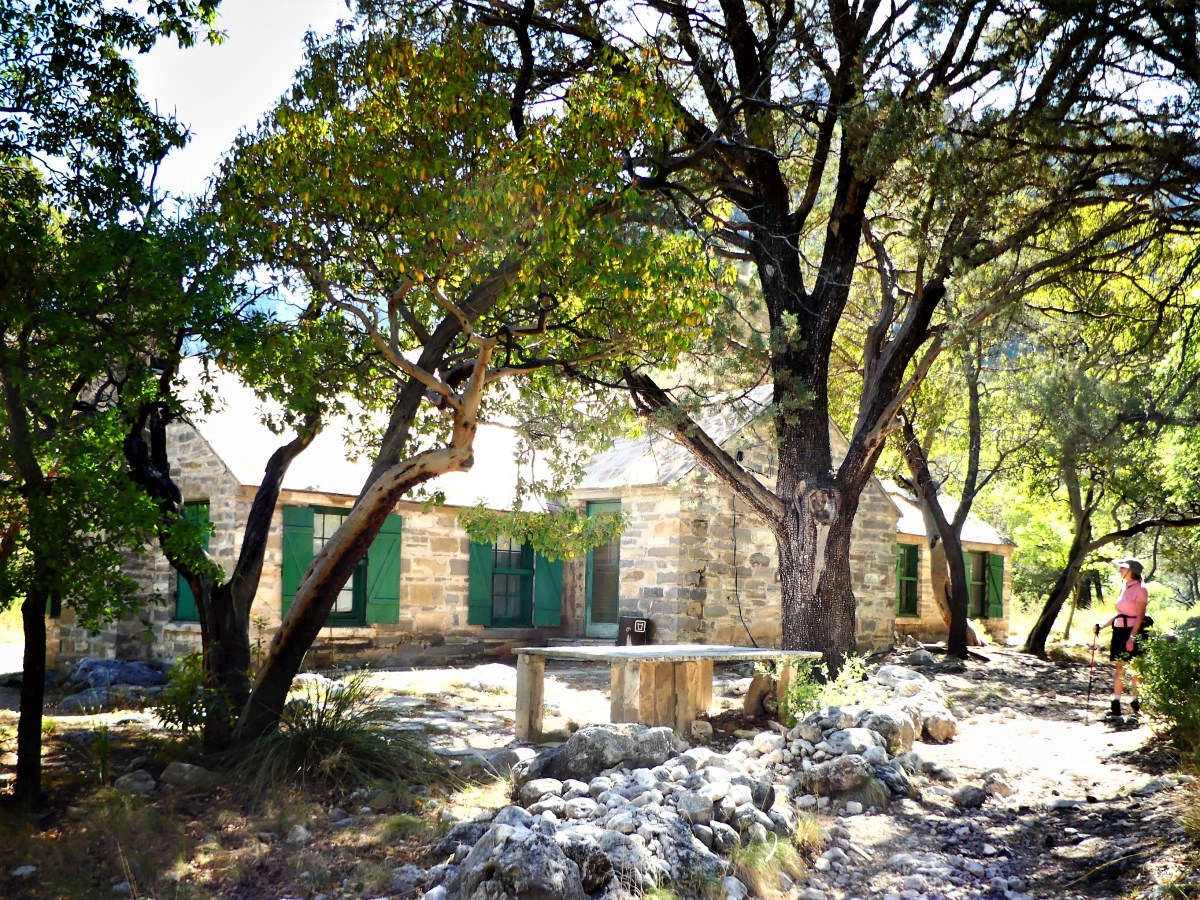 Rocking chairs under a cool porch provide perfect respite from the simmering sun.







 Streaming thru America