Three months of rigorous physical therapy during a summer of exhausting humidity, sweltering heat, and heavy downpours was a poor substitute for the summer adventure that Leah and I originally plotted together at the kitchen counter one year ago.
We imagined Airstreaming up to Quebec to play in Saguenay Fjord National Park and be entertained by French Canadians for a month or so.
Of course, nothing went as planned. My shoulder surgery and subsequent physical therapy replaced our summer trip to the North Country.
But putting in the hard work also guaranteed us a summer redo Down Under, with a chance to celebrate Hanukkah in New Zealand and Christmas Day in Melbourne.
It was also a good excuse for a new camera… system, unlike last year’s trip to Southeast Asia, where I relied exclusively on my Samsung Galaxy S23 Ultra for images and video.
But for a trip to my 7th recorded continent, I yearned to compose through a viewfinder again. Ultimately, I thought a mirrorless compact camera’s flexibility and versatility could empower me to take bigger chances and create better photographs.
So, I bought a Fujifilm X-E5.
It may have been a bit impulsive, buying before trying, but Fuji’s model was brand new, very popular and not widely available. Camera exchanges were quickly selling out limited inventory across the globe, despite the high price, plus the tariff surcharge. (Yes, the tariff/tax is passed on to consumers!) I was betting on the buzz and positive reviews, and went all-in.
Outfitted with Fuji XF 16-50mm f/2.8-4.8 and Fuji XF 70-300mm f/4-5.6., I now had a wide and long zoom for a variety of coverage.
It was also a light-weight travel kit designed to reduce the camera strap impression across my newly, reassembled rotator cuff.
It would be a glorious second-chance summer.
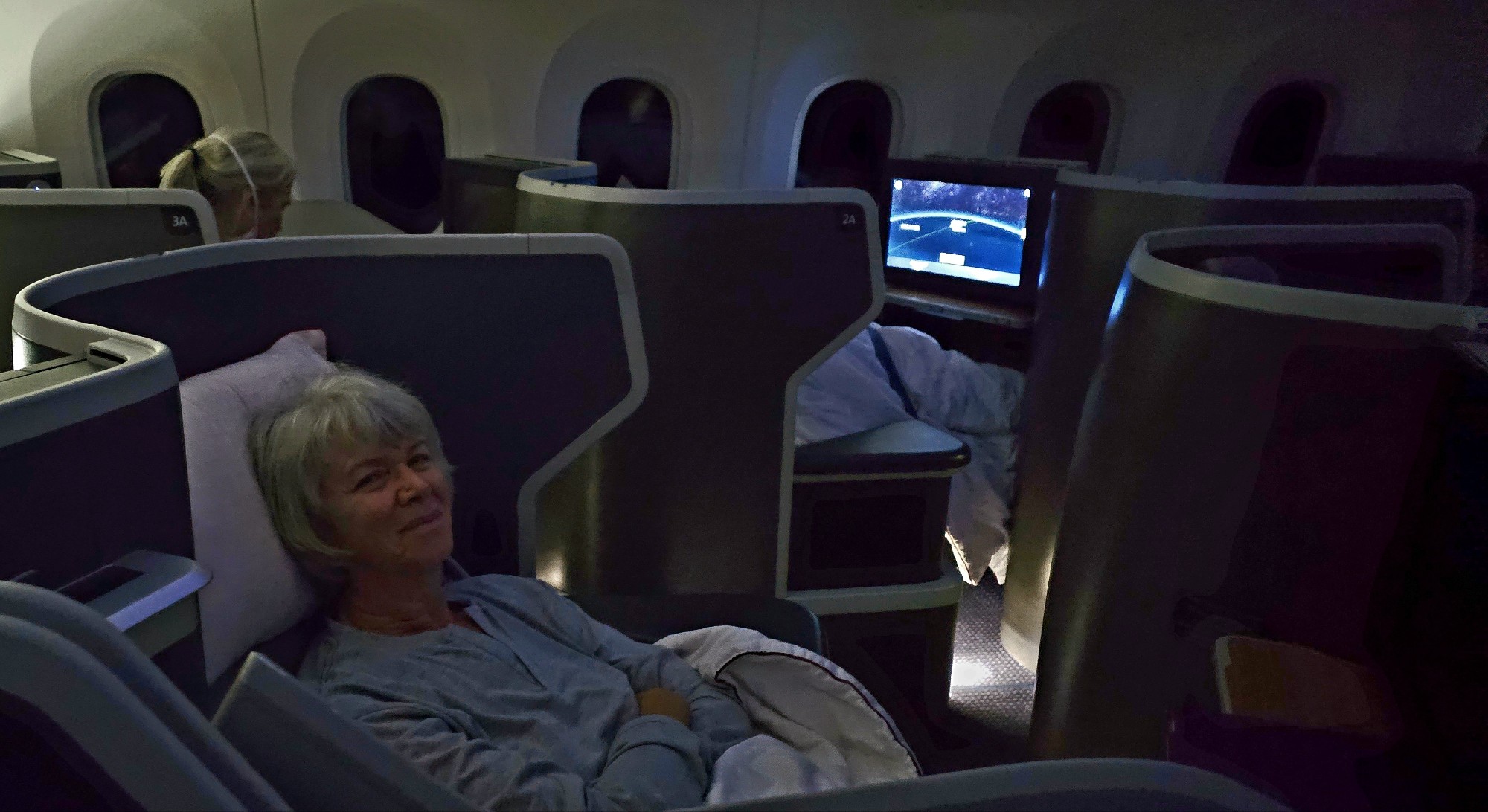
Leah and I figured on an extra day in Aukland to cover our cancellation-du-jour asses from airline exposure, and to bolster our recovery from a lost day and a 20-hour trip…
Although our business class cocoons…
offered legitimate restorative properties.
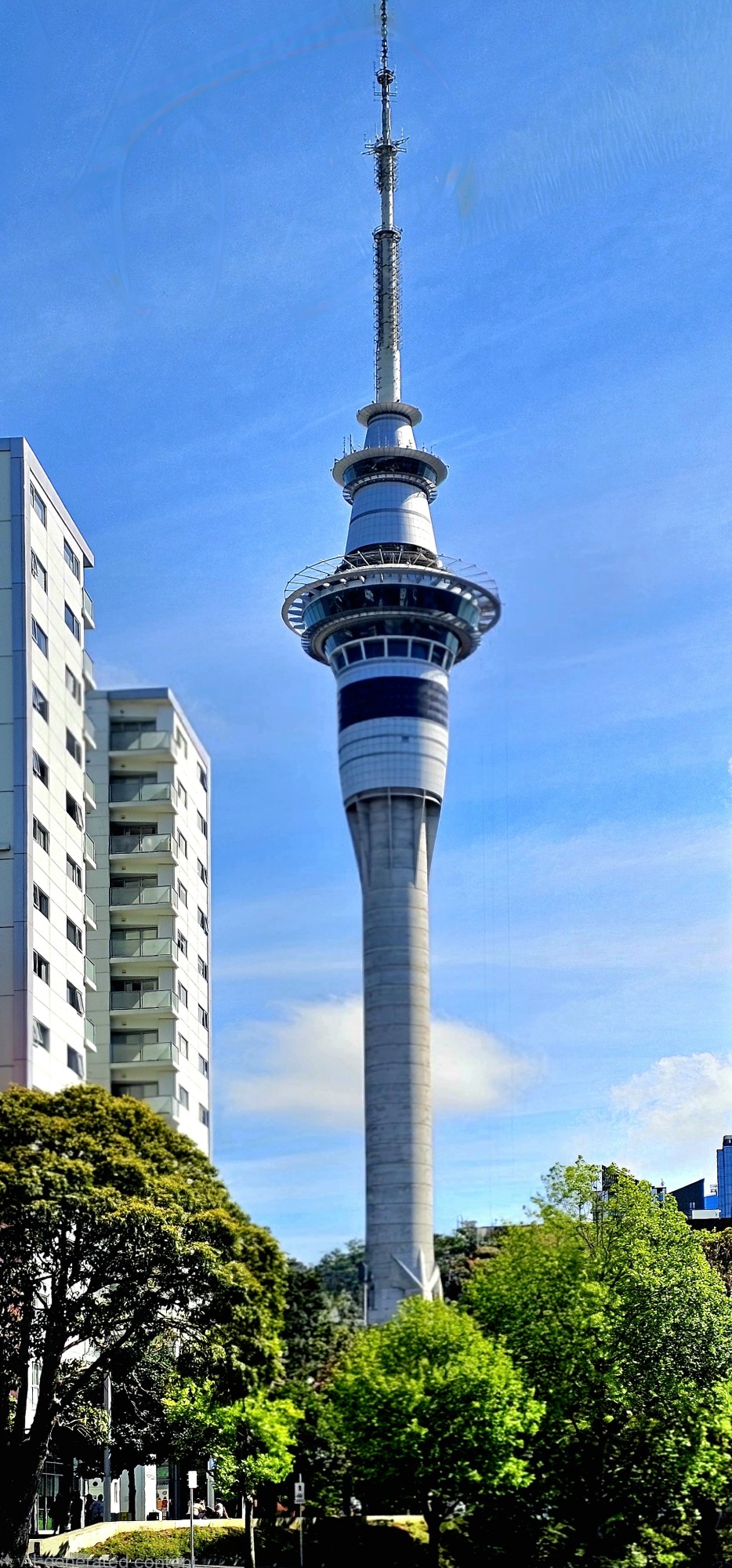
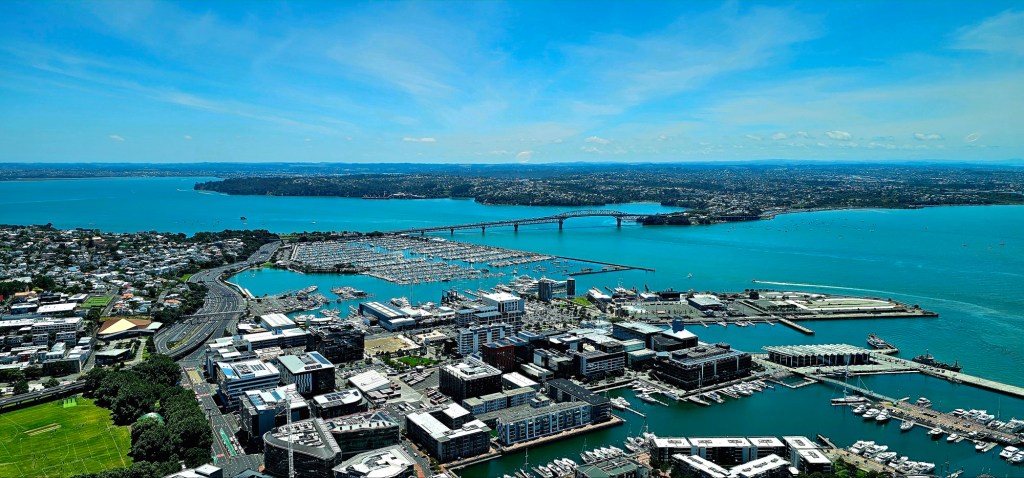
Checking into the Grand by SkyCity put us smack dab in the center of Auckland’s bustling entertainment and casino complex, where the Sky Tower’s the limit.
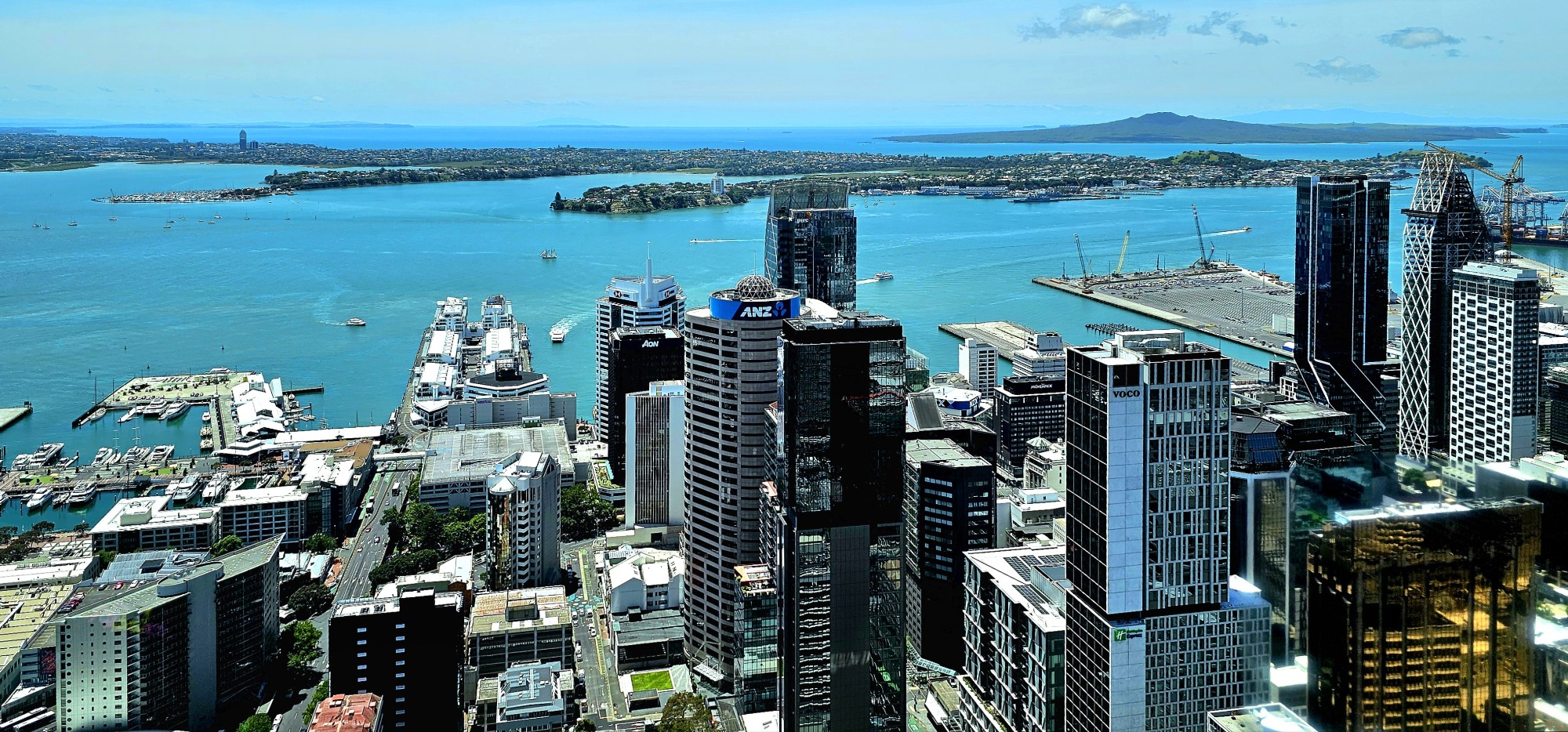
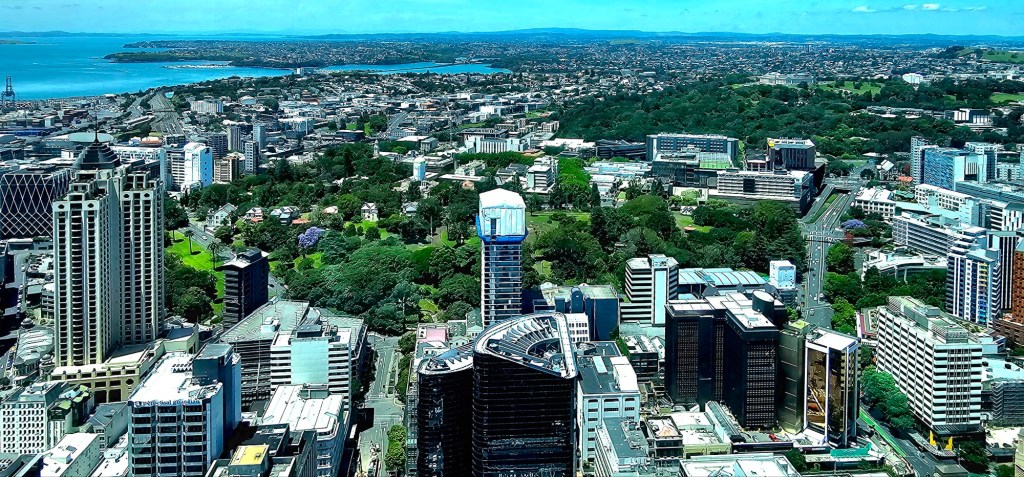
Our 220-meter ascent to the 60th floor observation deck gave us distant perspective…
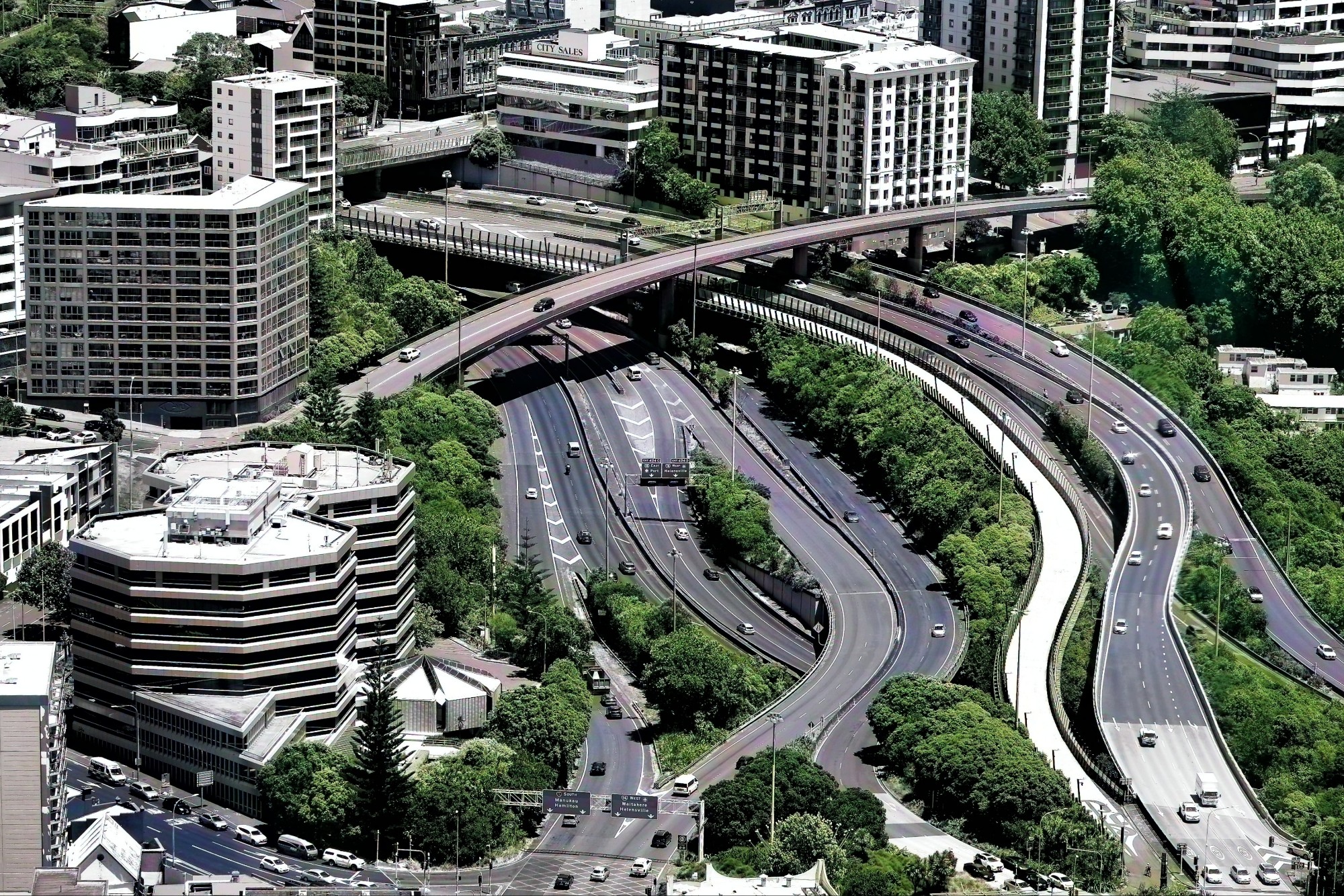
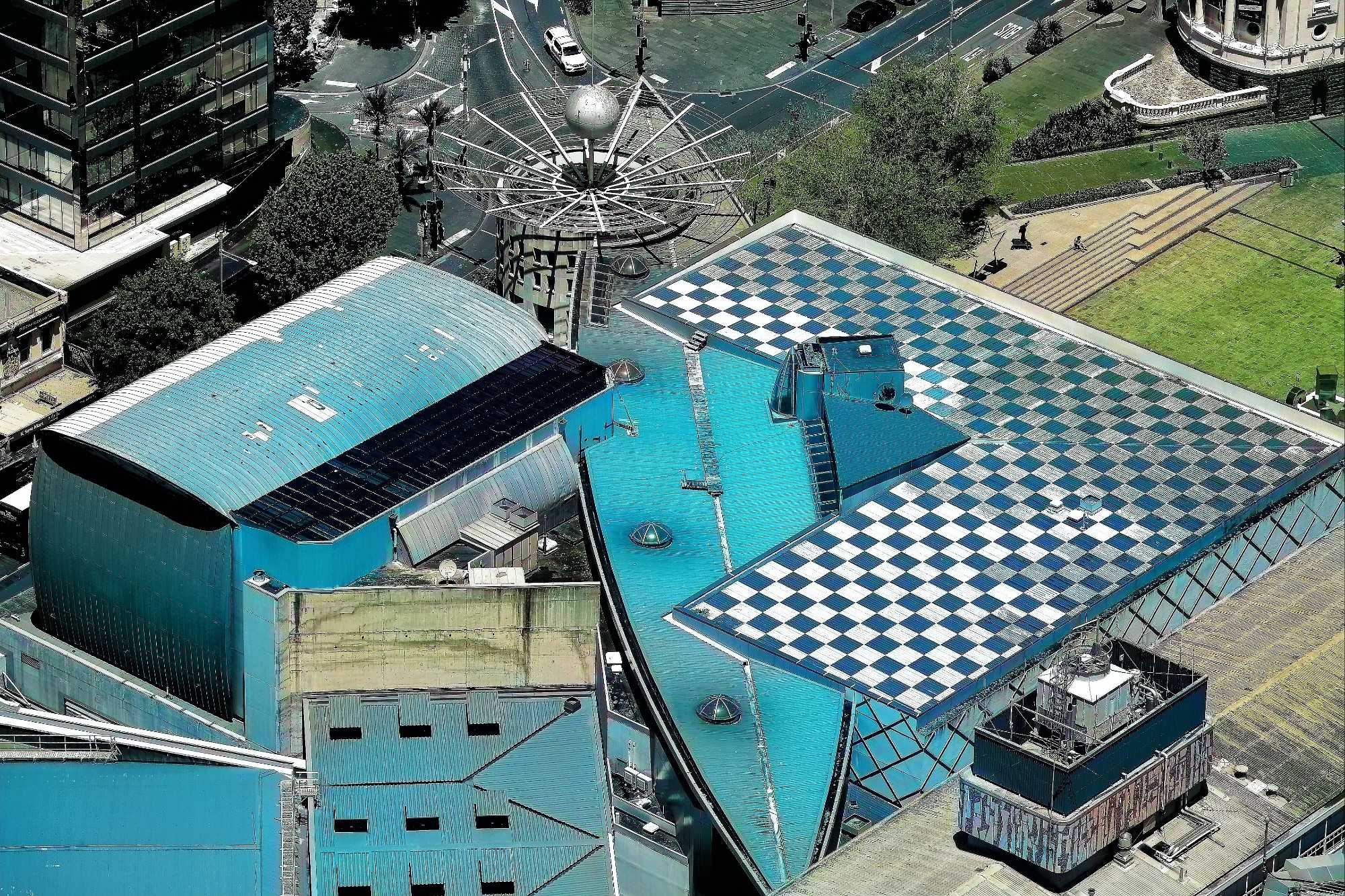
and telephoto detail with my new Fuji kit…
With time to burn, we set our sights on the quaint town of Devonport, one of 53 dormant volcanic centers surrounding Auckland.
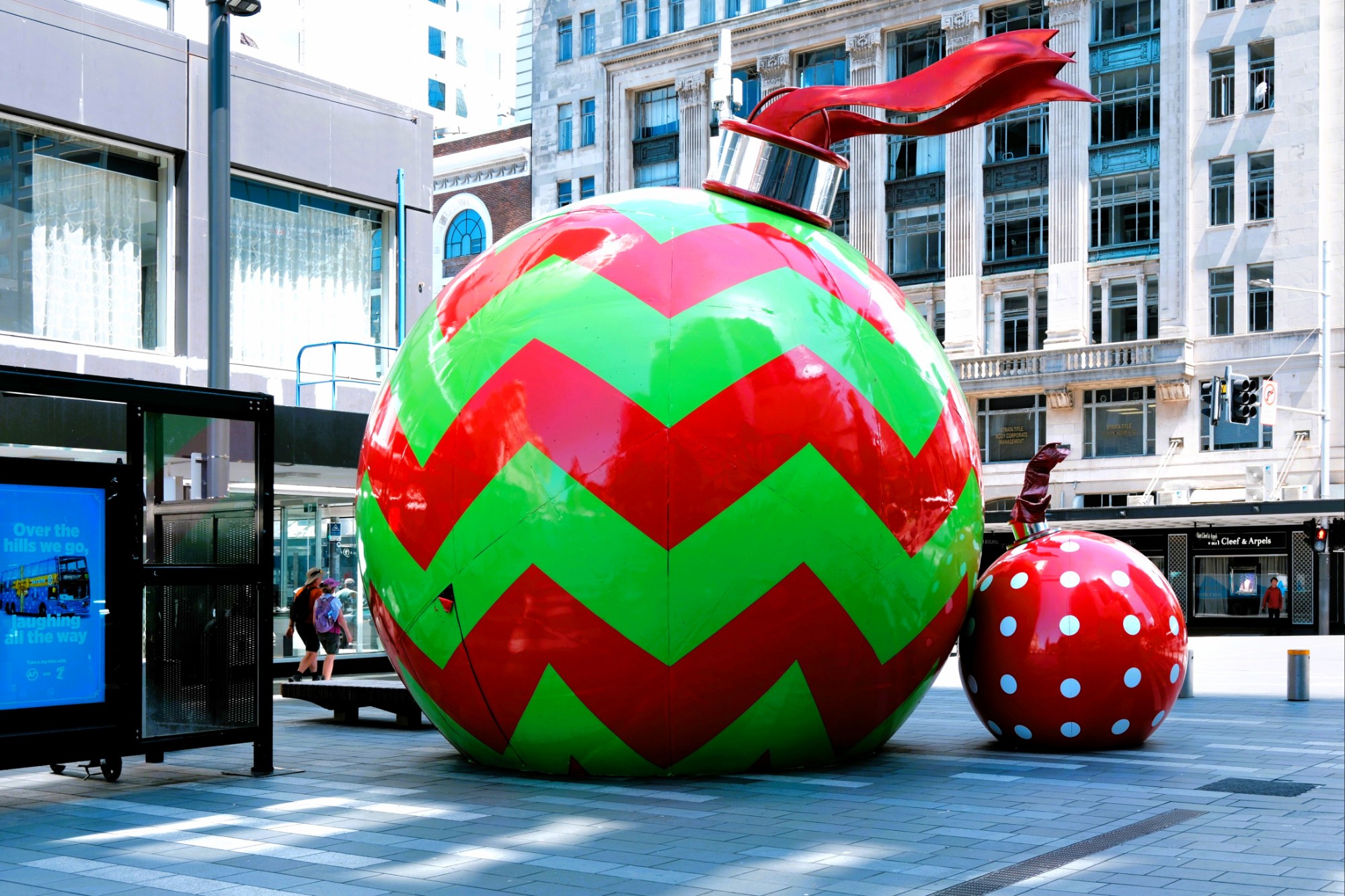
Christmas was on full display in the city plazas…
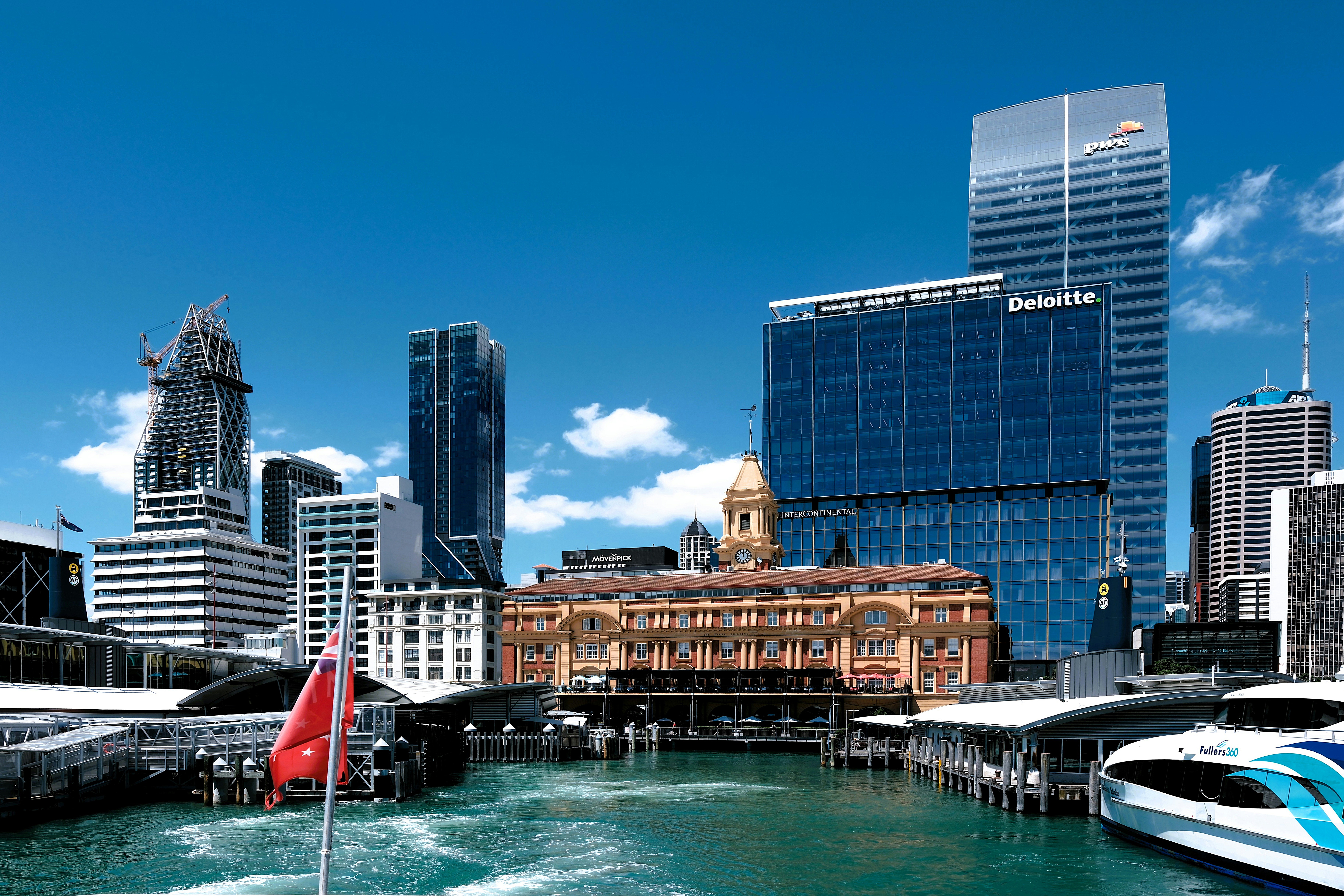
as we strolled to Queens Wharf to catch our ferry across Stanley Bay.
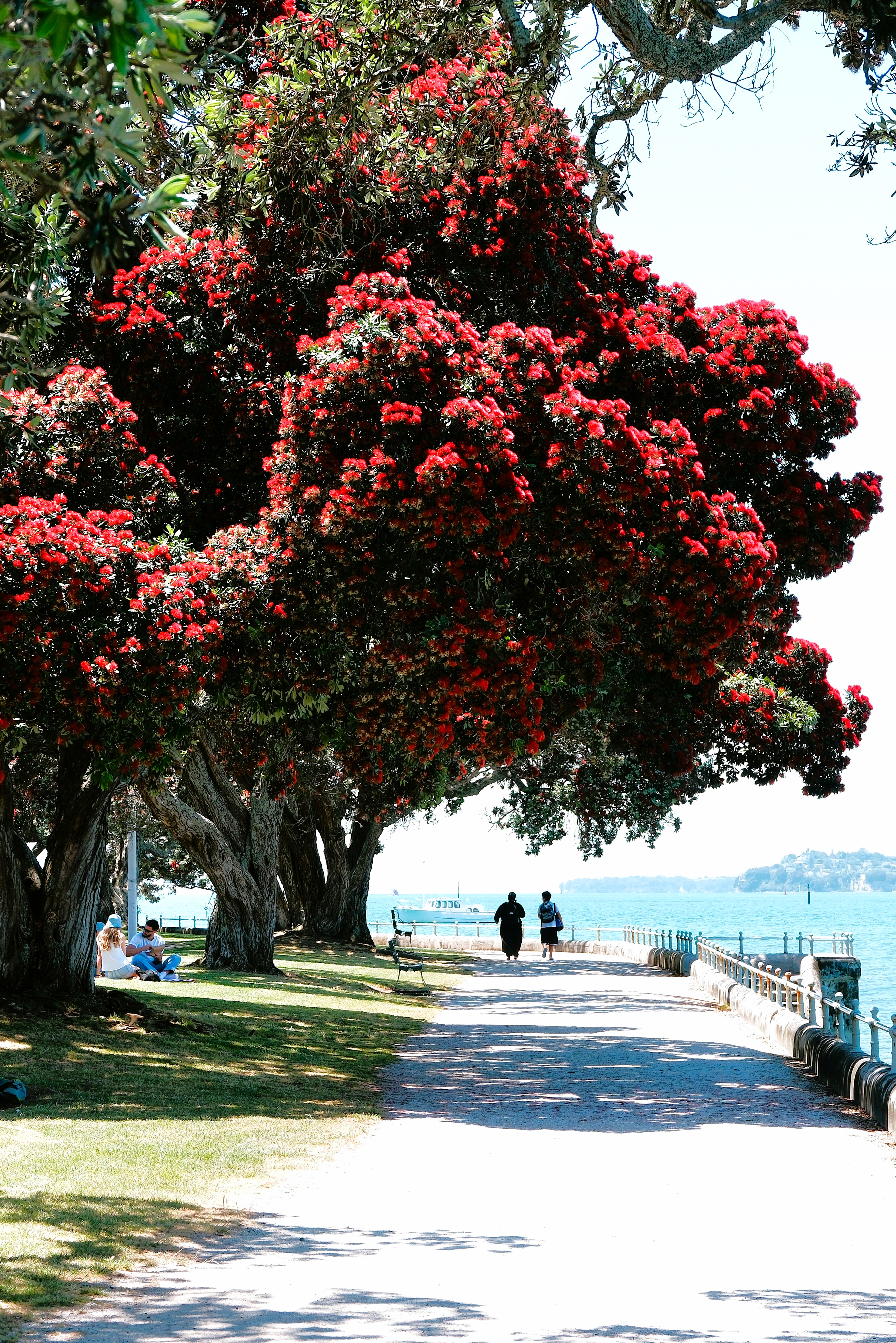
However, the crimson blossoms from the Pōhutukawa trees (aka New Zealand Christmas tree) along Devonport’s park path easily enhanced the holiday vibe.
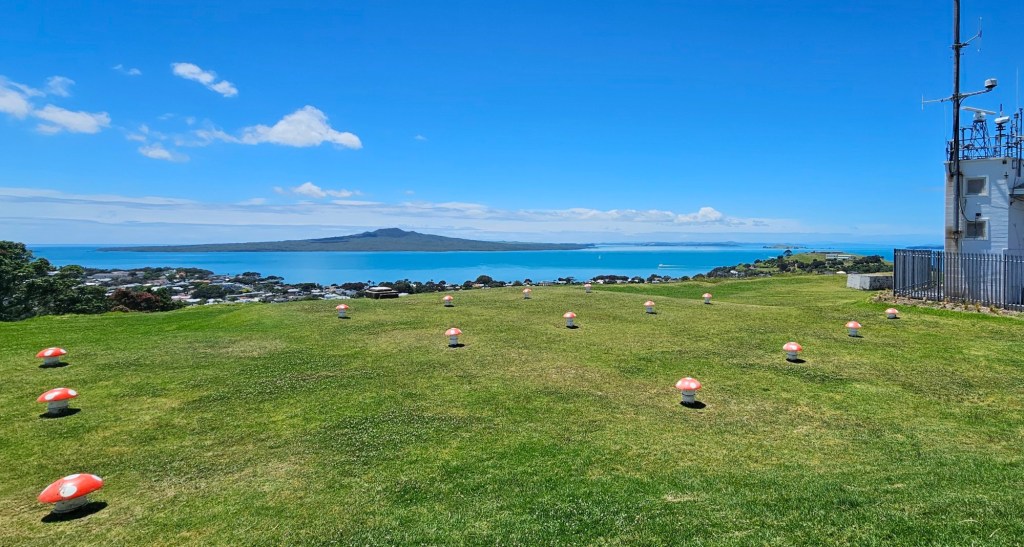
We hiked to Mount Victoria (Takarunga), Devonport’s highest point atop a WWII bunker–currently the local folk music center–that breathes through its field of mushroom ventilation caps,
where our climb was rewarded with an exquisite view of the city.
Tomorrow, our Viking cruise extension starts in earnest, with a trip to Waiheke Island.
I was dreaming deeply of my adventurous summer tour of Quebec’s picturesque National Parks and charming cobblestone cities. Cascading waterfalls and crystalline alpine lakes contrasted with town square pageantry and marketplace mayhem… that was my vision for an upcoming Nat Geo essay.
Instantly, I was transported to my studio, meticulously sorting and arranging my gear — mindful of the bulk of a tripod and a view camera supported by a case of prime lenses — and dreading the uneven hiking terrain across the Laurentian foothills.
The stream was running fast, occasionally lapping the fallen spruce log that was still the best chance for crossing to the other side. I climbed the rooted abutment and planted both feet on the trunk’s wet scaly bark. I scanned the other side and plotted a course of least resistance. I centered my pack and cinched both shoulder straps, but the right side was stuck and wouldn’t budge regardless of how hard I pulled.
With my frustration mounting, I refocused my energy on the stretch of spruce I still had to cross, only to realize that the distance to the other side had magically doubled. It had to be an illusion.
I closed my eyes, counted to 5, and woke up in a redwood forest, standing on a fallen Goliath tree with no end in sight.
Suddenly, a bolt of lightning hits the tree in the distance, launching a glowing ember that creeps closer and closer, getting brighter and brighter. I try to shield my eyes, but I can’t raise my arm no matter how hard I try; and the light is closing in and getting brighter…
That’s when the Propofol wore off and I discovered that my arm was numb and firmly strapped to my chest. The doc gushed over his handiwork in a drop-by that I have no memory of, although I have a slim recollection of “Everything went great”.
Not so great was an arm too limp to lift a camera and complicated by a summer recovery of triple-digit heat and humidity. In a drug-induced wash of anxiety, I had an unusual moment of clarity — to use my downtime as an opportunity to time-travel through 25 years of digital archives in search of hidden gems.
Photography could still be an outlet, albeit a passive one. Perhaps I would “shape” them if I couldn’t “take” them.
Photographers long for exposure. To satisfy their snap decisions, they’ve focused on a collection of photography contests to share their vision with others, and maybe even capture a prize of sorts should a jury of peers and/or experts deem their efforts worthy of recognition.
With so many shutterbugs passionate for recognition, it’s little wonder that photography contests seem to be omnipresent. Whether a beginner, hobbyist, or professional, there’s bound to be a competition that’s suitable for almost any level, style or subject. Entry requirements also vary, with prestigious contests demanding hefty fees, while other casual contests are available for a small fee or free.
I chose free! It allowed me to leverage dozens of individualized contests for free as I considered all my submission options.
Luckily, I discovered a popular photography app that offered hours of distraction. Software engineers at PULSEpx designed an elaborate platform for shutterbugs of all skill levels who climb the ranks of content-specific “Quests” by competing in a series of image duels against photographers with compatible talents and skills.
Peers decide between dueling photographs delivered by an online interface and determines whether a submission’s popularity rises or falls in the rankings over the course of the Quest. Voting is required for revealing the rankings.
When addressing the fairness of community voting, critics have expressed distrust and cited suspicions of cheating or voting manipulation. Without sounding judgmental, it was obvious to me that low-quality or irrelevant images were periodically overrated, while strong images were sometimes mistakenly underrated. While a community-driven platform can attract a variety of serious players, not everyone is committed to the same standards of excellence.
But on October 11, it all went awry after I attempted to log in to the app and discovered a surprising notification:
NOT OK! STEALING? REALLY?
I promptly penned an email to PULSEpx support team to address my “crime.”
Hi Y’all,
I woke up to the announcement of my account being permanently banned, and I demand to know why!
Your accusation has no merit, so if there is proof, then I demand to see it immediately.
Their response was nearly instantaneous:
Hi there,
We regret to inform you that your account has been banned due to multiple instances of copyright infringement. Our records indicate that several photos submitted from your account were found to be in violation of our content guidelines.
PULSEpx maintains a strict policy against copyright infringement to ensure the integrity and fairness of our community. We are committed to protecting the rights of all creators and maintaining a space where original content is respected and valued.
If you believe all photos were indeed taken by you, please provide the RAW files for verification.
Thank you for your understanding.
Best,
The PULSEpx Team
My head was spinning, and I could feel my blood beginning to boil. I was accused of being a cheat! There was no way I was going to allow them to discredit me and my work. These were my photos, and I was determined to protect my good name.
Over the past few months, I entered dozens of competitive Quests across all categories (landscapes, portraits, animals, architecture, street scenes, macro, minimalism, abstract, etc.) and enjoyed a fair measure of success pitting my photos against other seasoned photographers with similar A Class and Master rankings.
But which of my “suspicious” photos crossed the line? I inquired for clarification:
Please provide the image(s) that you deem “unworthy” and in violation, and I will respond with the appropriate files to defend ownership.
It turns out they were questioning the authorship of the following 5 images from 5 separate Quest submissions:
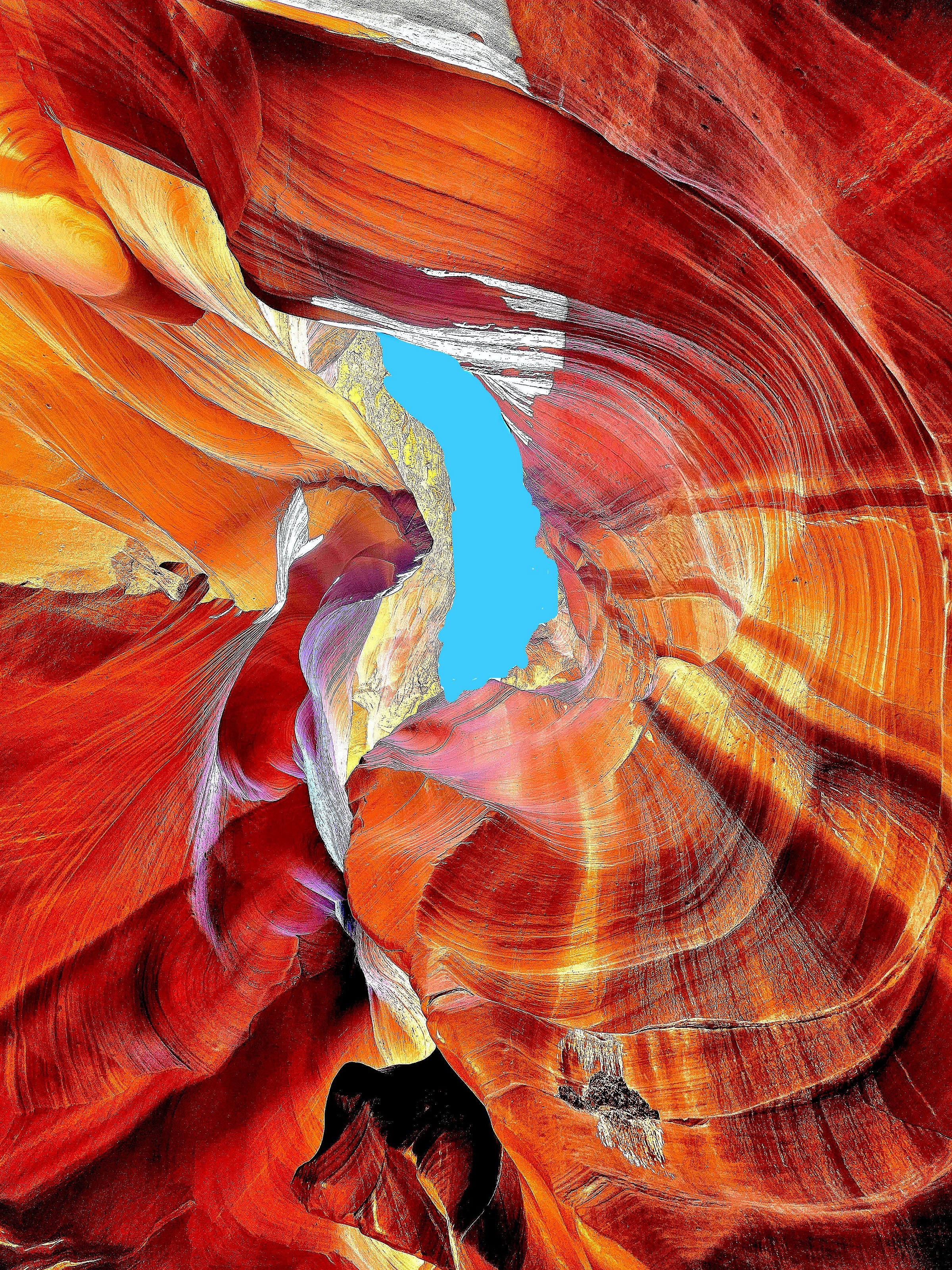
Theodore Roosevelt National Park, North DakotaSitting on Hubert Glacier, AlaskaMountain Sheep under a Full Moon, Valley of Fire State ParkUpper Antelope Canyon, ArizonaHmong Girls in Costume, Vientiane
Their selection of photos spanned the better part of a decade, with 4 of the 5 appearing in my travel blog, StreamingThruAmerica.com with appropriate copyright attribution.
To comply with PULSEpx, and hopefully expedite their investigation, I emailed StreamingThruAmerica.com hyperlinks featuring the “infringed content,” and invited their team to consider an AI check of my submissions against an internet that would certify my claim and provide useful provenance. (Often times, authenticity can be judged by the photographic reel — shots taken before and after the image in question.)
But the support team was tone deaf and unimpressed. Any notion I had of being reinstated was quickly slipping away.
Hi there,
Could you please provide the original RAW files (including full EXIF data) for the 5 images we previously requested? The links you provided are not the original files.
Thank you for your understanding and cooperation.
Best regards,
The PULSEpx Team
That got me thinking about their nagging demand for RAW files.
Photographers know that releasing raw files means risking control over how their final image is used and that it can be sold to others, which can impact future revenue. I revisited PULSEpx Terms and Conditions for clarification and the ramifications for submitting my original files.
Copyright, Submitting Content to PULSEpx & Grant of Rights
By submitting your Content and/or participating in Quests on PULSEpx, you retain all ownership and copyright in your Content (including any Content uploaded or transferred from your 500px library), but grant us a fully paid, non-exclusive, irrevocable, royalty-free, sub-licensable and transferable license:
1. to display your Content to other Users and visitors to our Services;
2. to use, distribute, reproduce, modify, adapt, publicly perform and publicly display your Content on our Services, third-party websites and social media and other applications and/or platforms for the purposes of promoting and/or providing our Services; and
3. to use your Content in a commercial manner in our sole discretion (collectively, the “User License”).
This User License allows us to use all submitted Content for promotional and other purposes at our sole discretion, without compensation.
After reading the rules more carefully, PULSEpx policy seemed more and more one-sided. While I retain full rights over my images, PULSEpx has wrung out the value of everything else. And by surrendering my original files, I’ve handed over the keys to my images with little else to gain except a demonstration of innocence.
I hesitated to send the original files. Instead, I decided to send screenshots of the original files supported by the EXIF data. Surely, their support personnel would be understanding enough to concede that these images belong to me.
The following is a representative sample of one of my submissions with an emailed intro:
Hi There;
Per your evidentiary request, I’m providing you with metadata corresponding to the alleged “stolen” files. Since these images were captured in JPEG, I hope this satisfies your inquiry:
Also, you never answered questions from my last correspondence: 1. Why did you flag these images? 2. What sets them apart from my other submissions? 3. What’s your true impression of these images?
BTW, thank you for your vigilance in protecting creative expression, and thank you for recognizing when you got the wrong guy! Apologies are always appreciated.
No apology was forthcoming — just more of the same, except for a tiny glimmer of their endgame — disguised as an inquiry — and possibly the rationale behind for request.
Hi there,
Thank you for your response.
However, the files you provided are screenshots, not original files. Screenshots cannot be used to verify the authenticity of the images. Regarding the suspicion of your work’s authenticity, this is based on our routine checks, including system and manual detection.
Additionally, please provide the original file for the image with the moon and antelope so we can continue with the review process.
Thank you for your cooperation.
Best regards,
The PULSEpx Team
We were running in circles. I became increasingly suspicious of their true motive after identifying an image of mine that they covet!
It became clear that nothing was going to interfere with their pursuit of my original files… except me!
Hey PULSEpx Support;
Your request for RAW files has been denied. After careful consideration of your exigent demands for metadata — which I supplied in my last correspondence with corresponding screenshots of the original JPEG files — I have determined that your ask for RAW files is nothing more than overreach.
Your allegations of cheating and stealing are unfounded and have been addressed by my subsequent denials and offerings of evidence, which you have deemed insufficient.
However, if verification is your true concern and motivator, then consider that each contested image has already been published within my blog, which on its own merits has already been protected by copyright law.
Also, consider that a review of your site’s Terms and Conditions details that RAW files can be requested for verification of “Quest-winning” imagery, with NO provisions for suspected infringed content short of account termination.
I have continually asked for clarification on this matter of infringed content, yet my questions have gone unanswered, which calls into question your negligent level of cooperation.
If your mission is to protect photographers’ creativity and ownership, you have failed me miserably. Your insistence on procuring my original work (with no real explanation or compensation) flies in the face of your hypocritical concern for the protection of your followers.
If sharing my RAW files is conditioned upon restoring my account, then I surrender my account under protest, knowing my work is safe from your greedy hands and predilections.
Thanks for nothing.
After emailing my correspondence, I waited a couple of days for a telling response, but I knew in my heart that nothing was coming. I weighed my disappointment against knowing that my images were safe from being poached and monetized by PULSEpx.
While I stop short of calling it a scam, perhaps PULSEpx is more about photographers authenticating their work to benefit an app’s business modeandless about a competition for prizes and bragging rights.
Update: I am now 4 months post-op, and after completing rigorous PT, full range-of-motion has returned to my right shoulder, making it possible to capture new memories with my newly purchased Fujifilm X-E5 mirrorless camera.
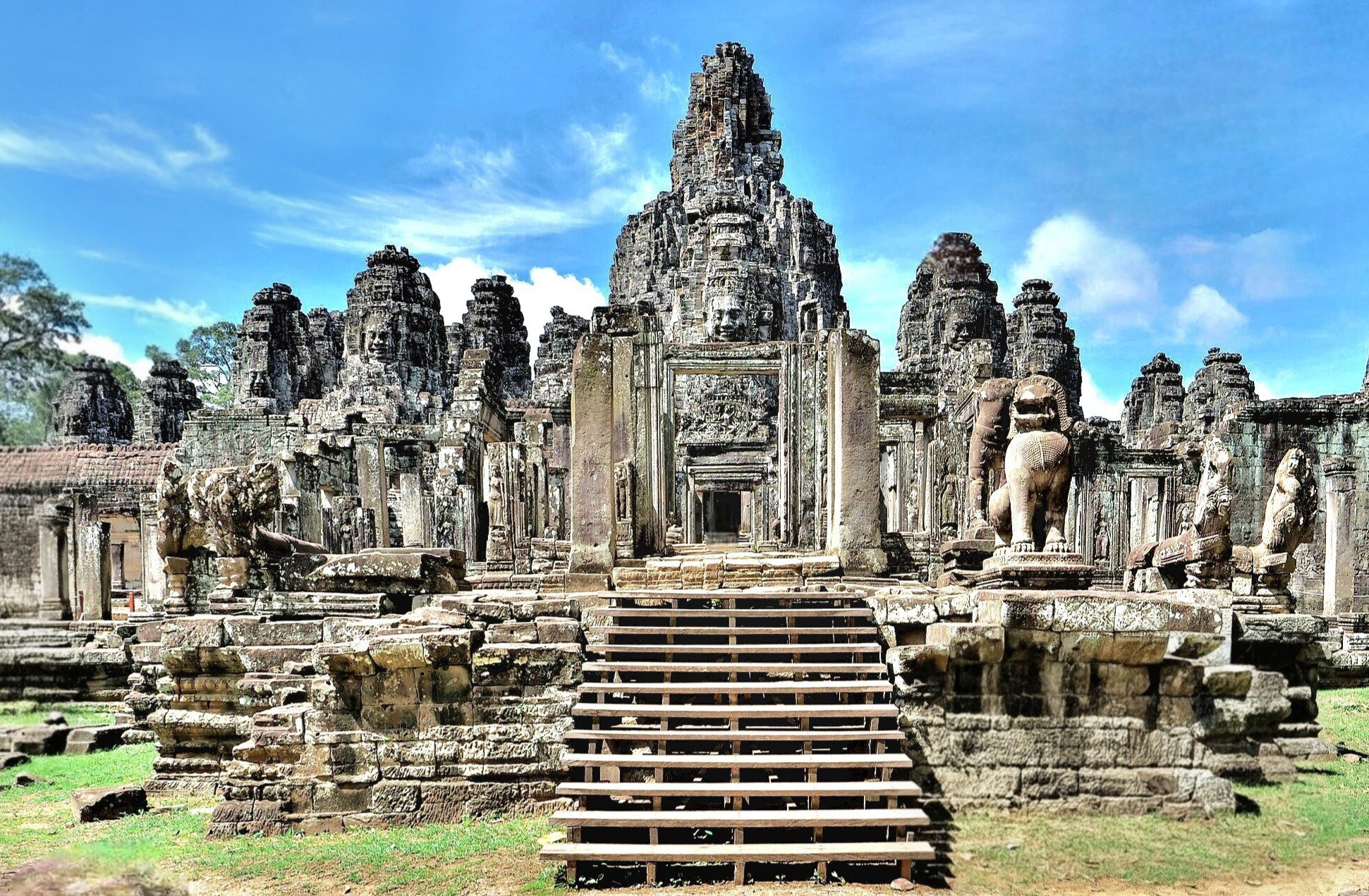
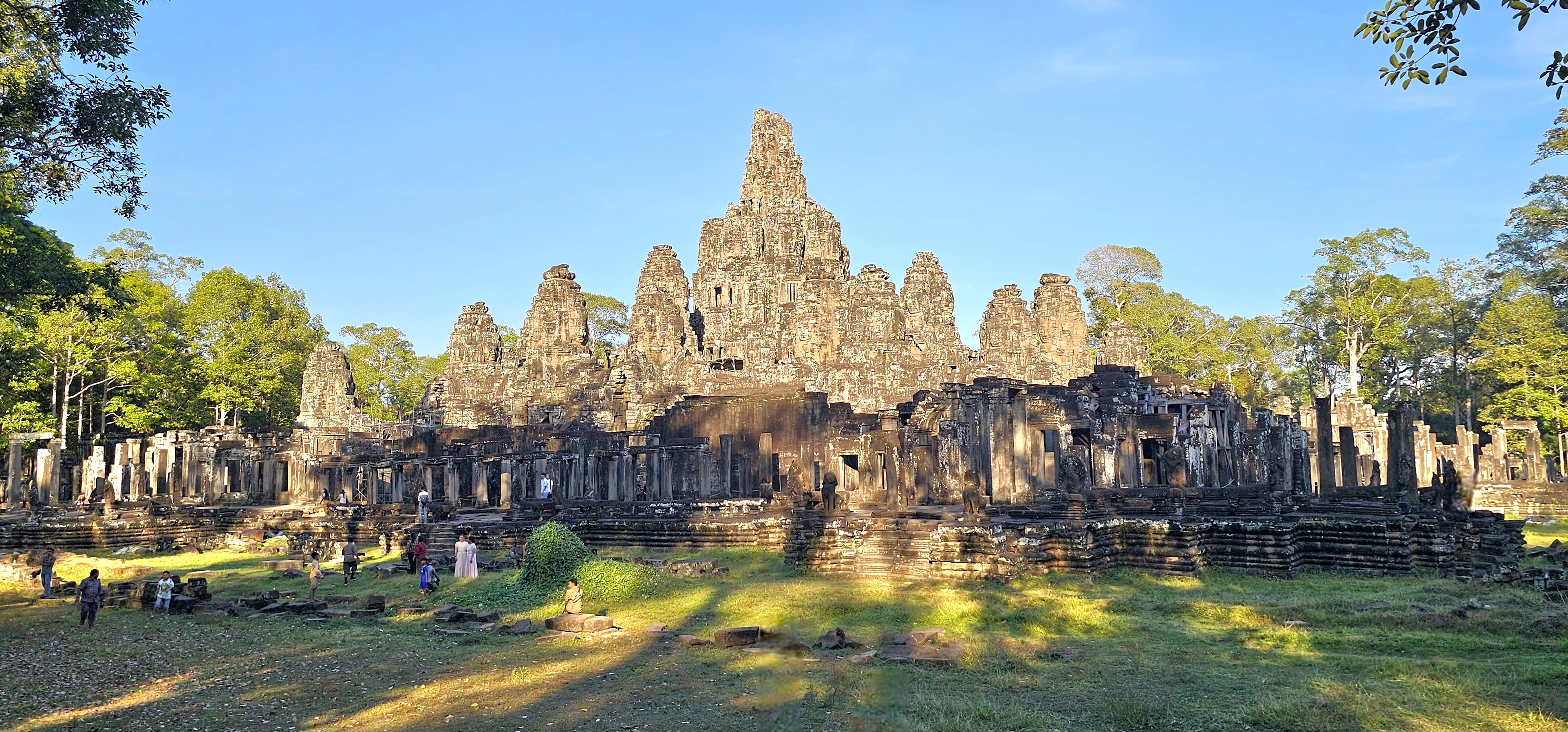
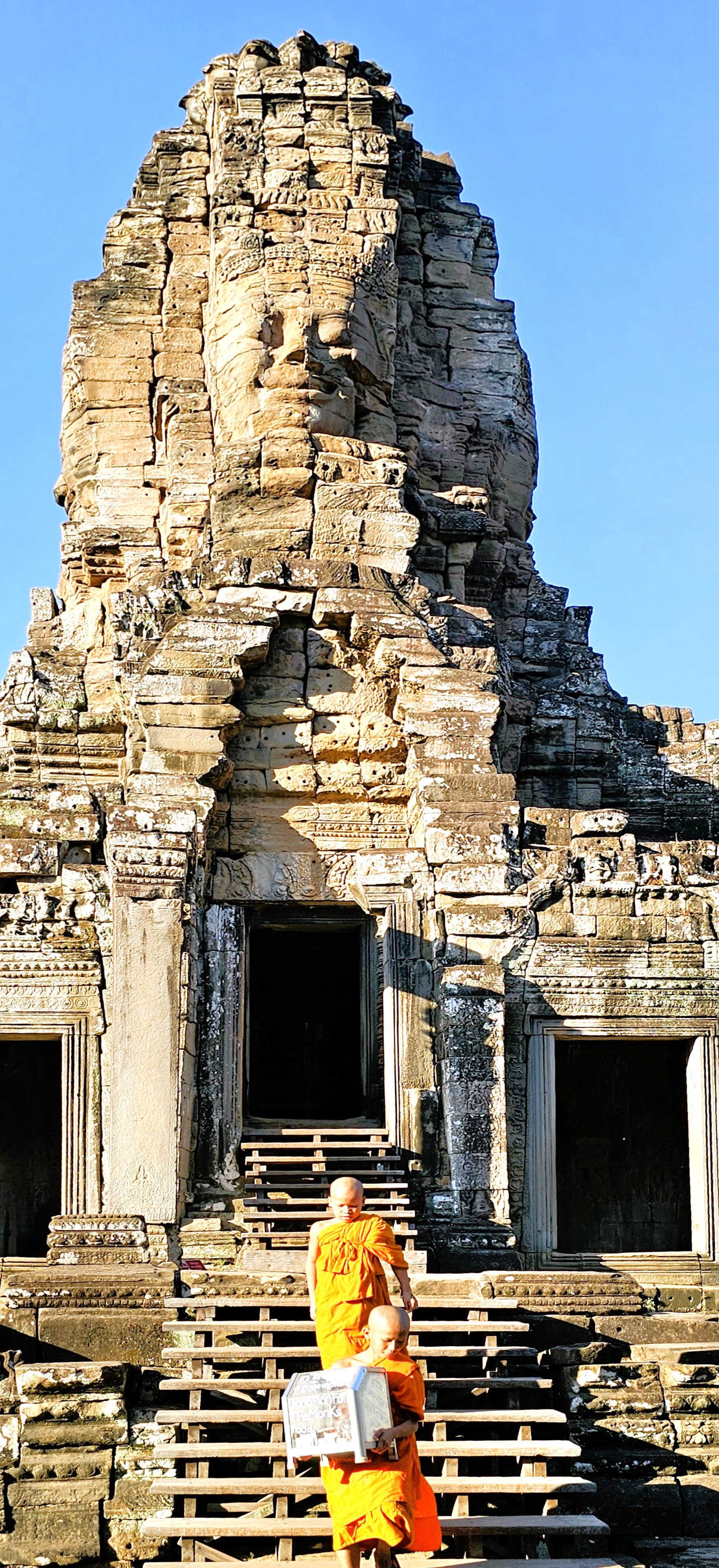
Of the 70 plus major temples within Angkor Archaeological Park, and hundreds more smaller shrines, ceremonial buildings, and symbolic ruins scattered throughout the broader Angkor region, none is more enigmatic than Bayon Temple.
It stands at the center of Angkor Thom, the Khmer capital, as Khmer Empire’s only Buddhist state temple, and last temple constructed during the reign of King Jayavarman VII.
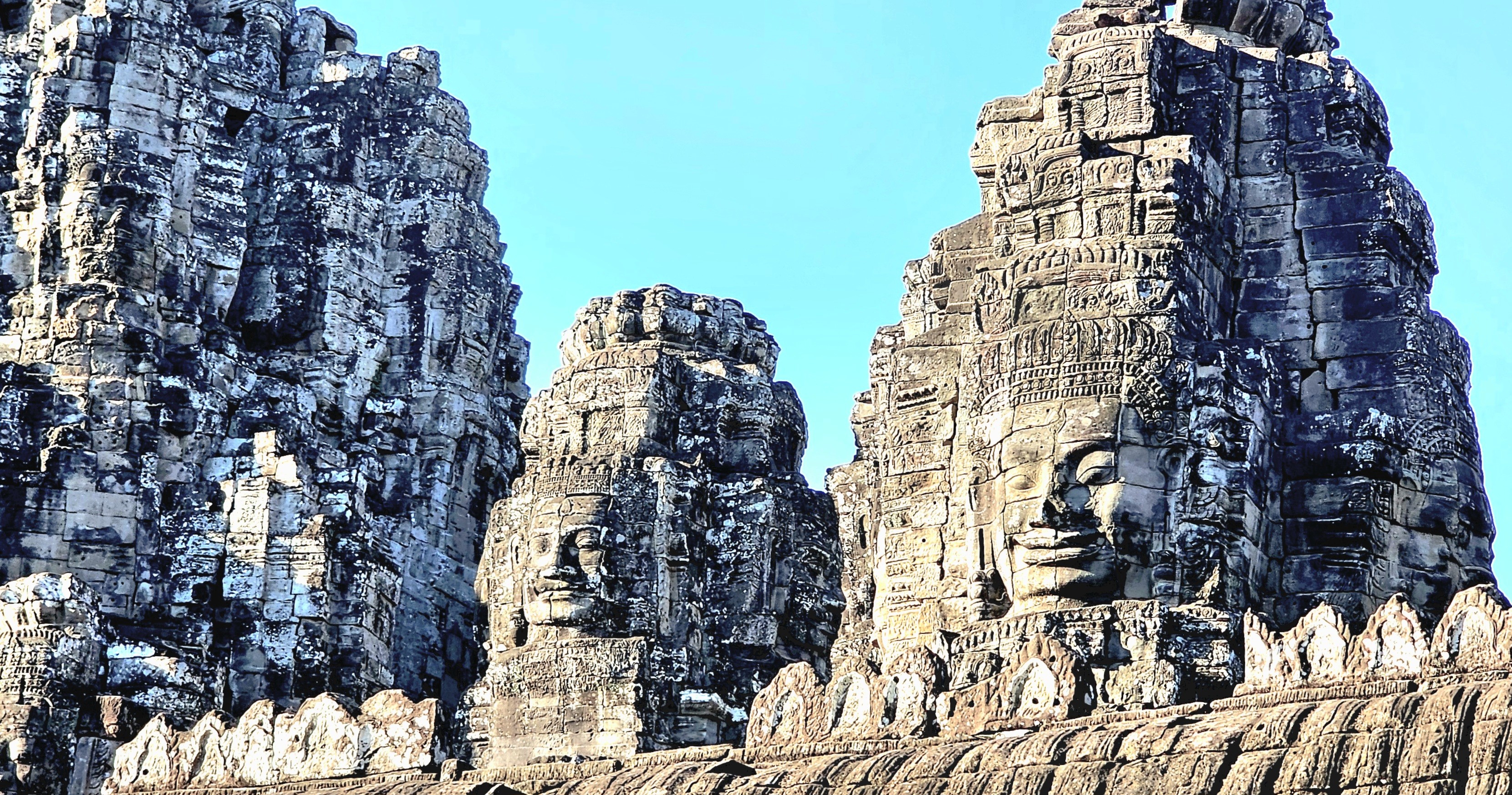
While hiking among the remaining 37 towers (originally 54) preserved throughout the temple’s 5.5 acres,
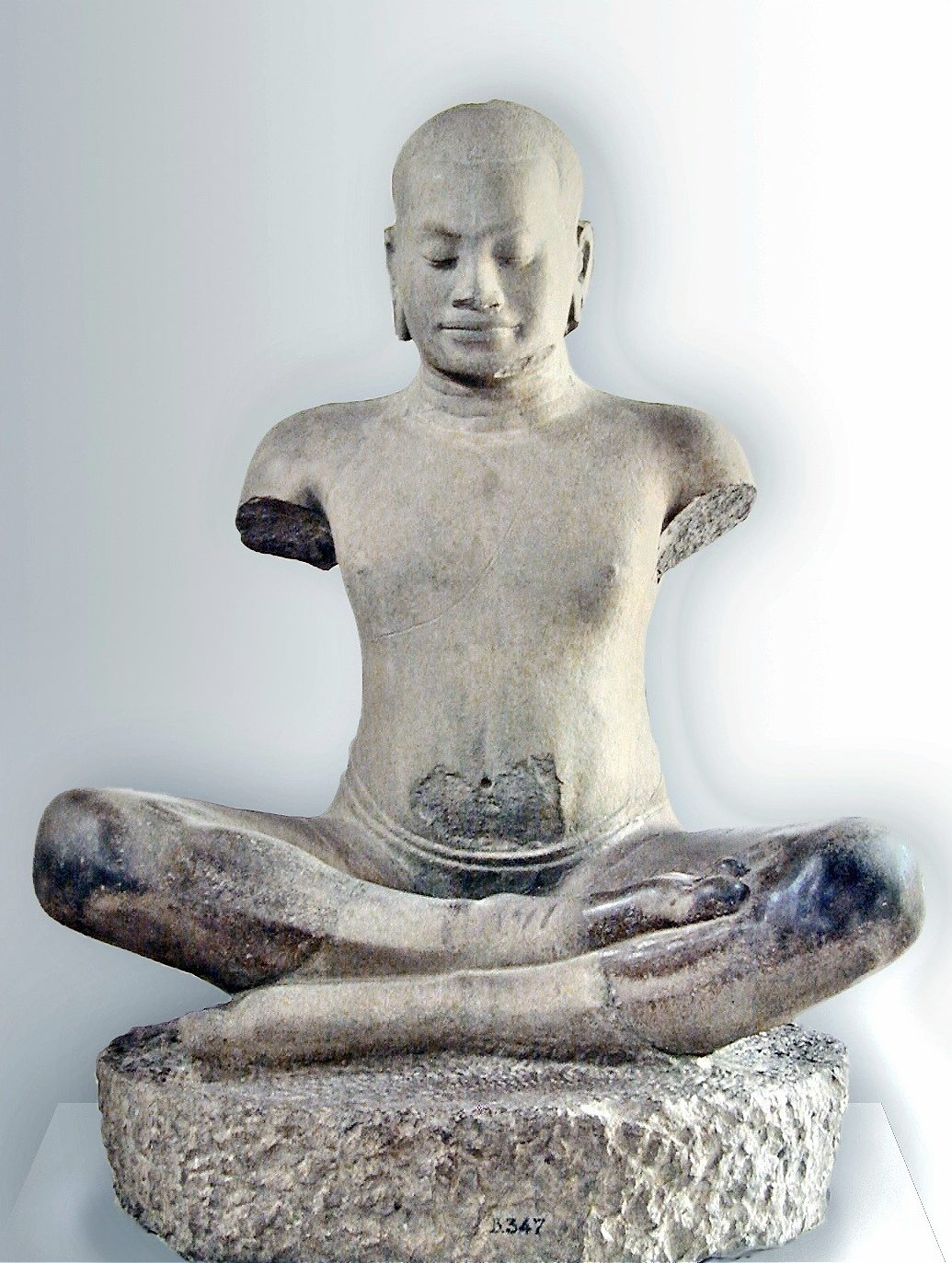
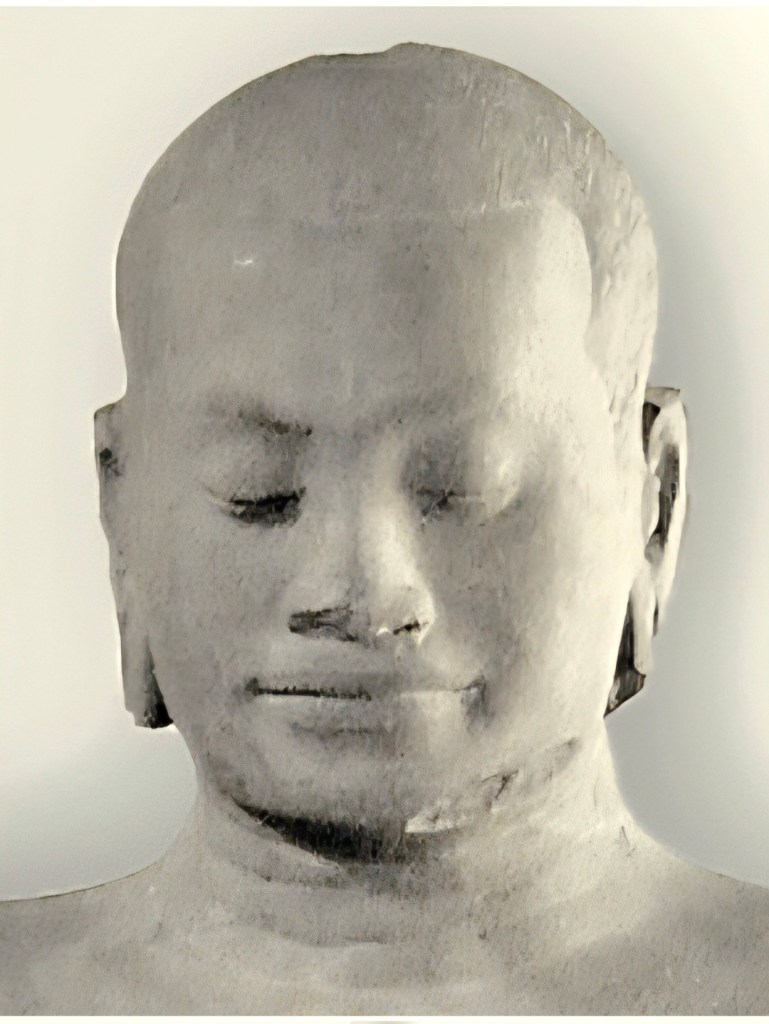
it becomes increasingly apparent that only the most talented artisans were chosen to sculpt Jayavarman’s likeness to resemble Buddha.
Or perhaps Buddha’s representation was intended to commemorate Jayavarman.
Either way, I found the serene and smiling faces profoundly impactful–creating an encouraging atmosphere to contemplate the spiritual energy infused in our surroundings,
and making us feel a part of something greater.
The enlightened expressions also served as a gentle reminder of the beauty unlocked from local sandstone and laterite stone–
inspiring us to embrace positivity and carry it with us beyond our stay.
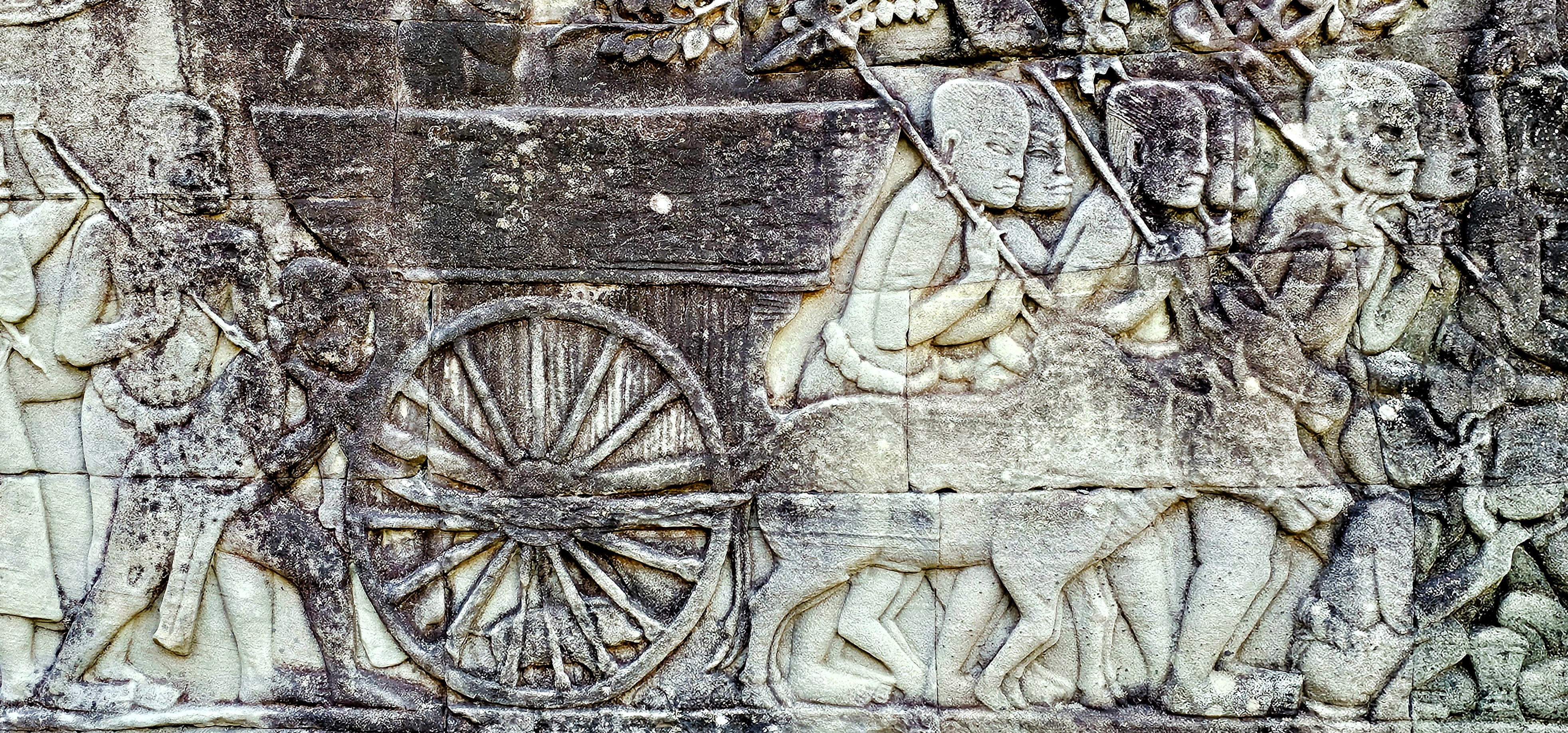
Khmer sculptors have also created a remarkable tableau of battle history, religious mythology, and random scenes from everyday life recorded on gallery walls throughout the complex.
Aside from its historical significance and its testament to architectual genius, Bayon Temple continues to serve as a vibrant center of spiritual life. Local communities gather regularly to participate in rituals and ceremonies, reflecting their enduring faith and cultural heritage.
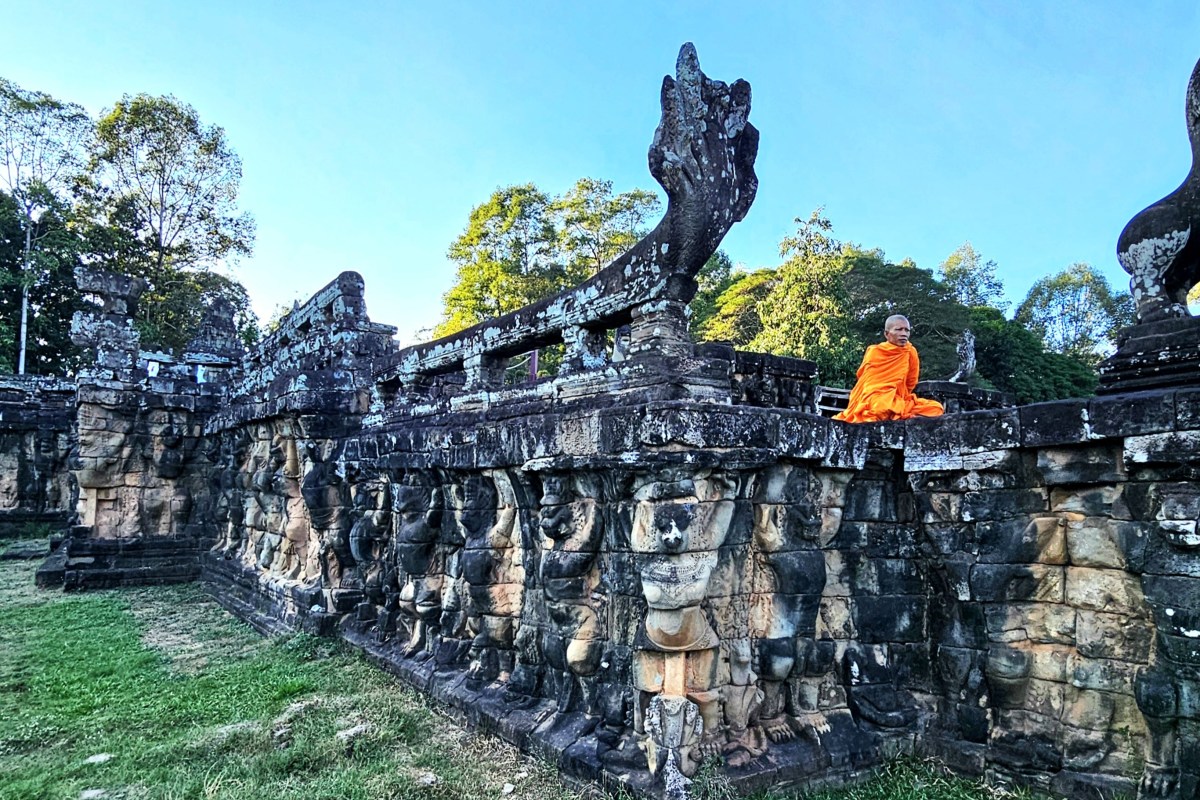
The presence of monks who play a vital role in guiding the spiritual practices of the community reinforces the temple’s significance beyond just a tourist attraction.
Their ongoing devotion helps preserve the temple’s sanctity, making it a living testament to the blend of history and contemporary spirituality in Cambodia.
Bo Sang Village, of Chiang Mai Province, has a 200-year history of producing traditional umbrellas made by and with local resources. But it took a curious and enterprising monk to bring this industry to Bo Sang.
Legend has it that local monk, Phra Intha was gifted a beautifully crafted hand-made paper umbrella by a Burmese worshipper during morning offerings while on a pilgrimage to a Burmese monastery. It was a very thoughtful gift to shield him from the sun.
Impressed by the umbrella’s detailed design and durability, Phra Intha ventured to the worshipper’s Burmese village to discover that the umbrellas were made entirely of sa (mulberry bark) paper over a bamboo frame, and suffused with oil to also help repel rain.
Realizing that the same natural resources were available at his home, the monk saw a golden opportunity for the farmers of Bo Sang to re-create similar umbrellas to enhance their incomes during the post-harvest season.
Phra Intha dedicated himself to mastering the intricate techniques and skills required for umbrella-making. Upon returning to Bo Sang with his newfound knowledge, he eagerly shared it with the local community, igniting a collaborative spirit that led to the establishment of a vibrant village co-operative, with each community creating a component and playing a vital role in the umbrella-making process.
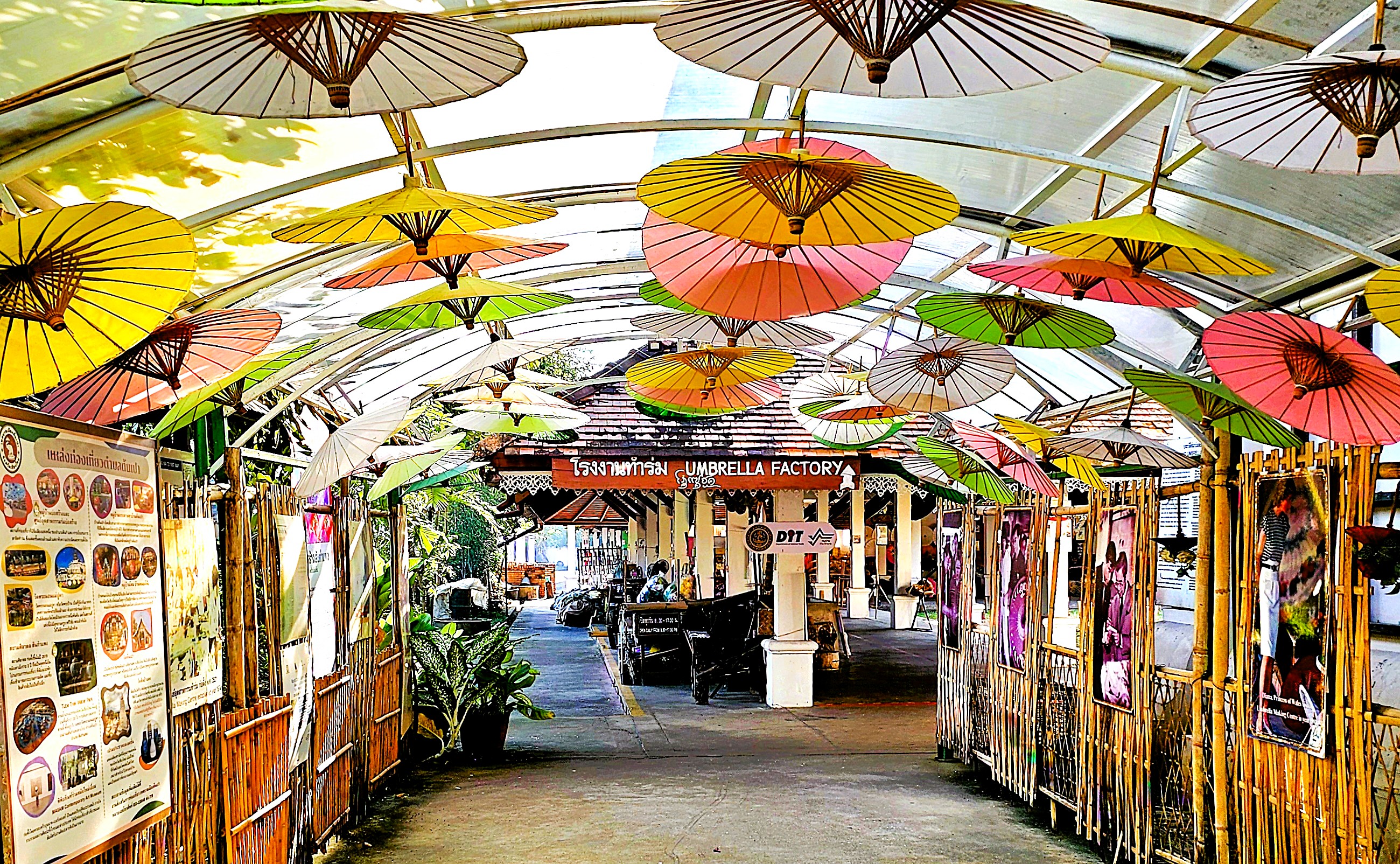
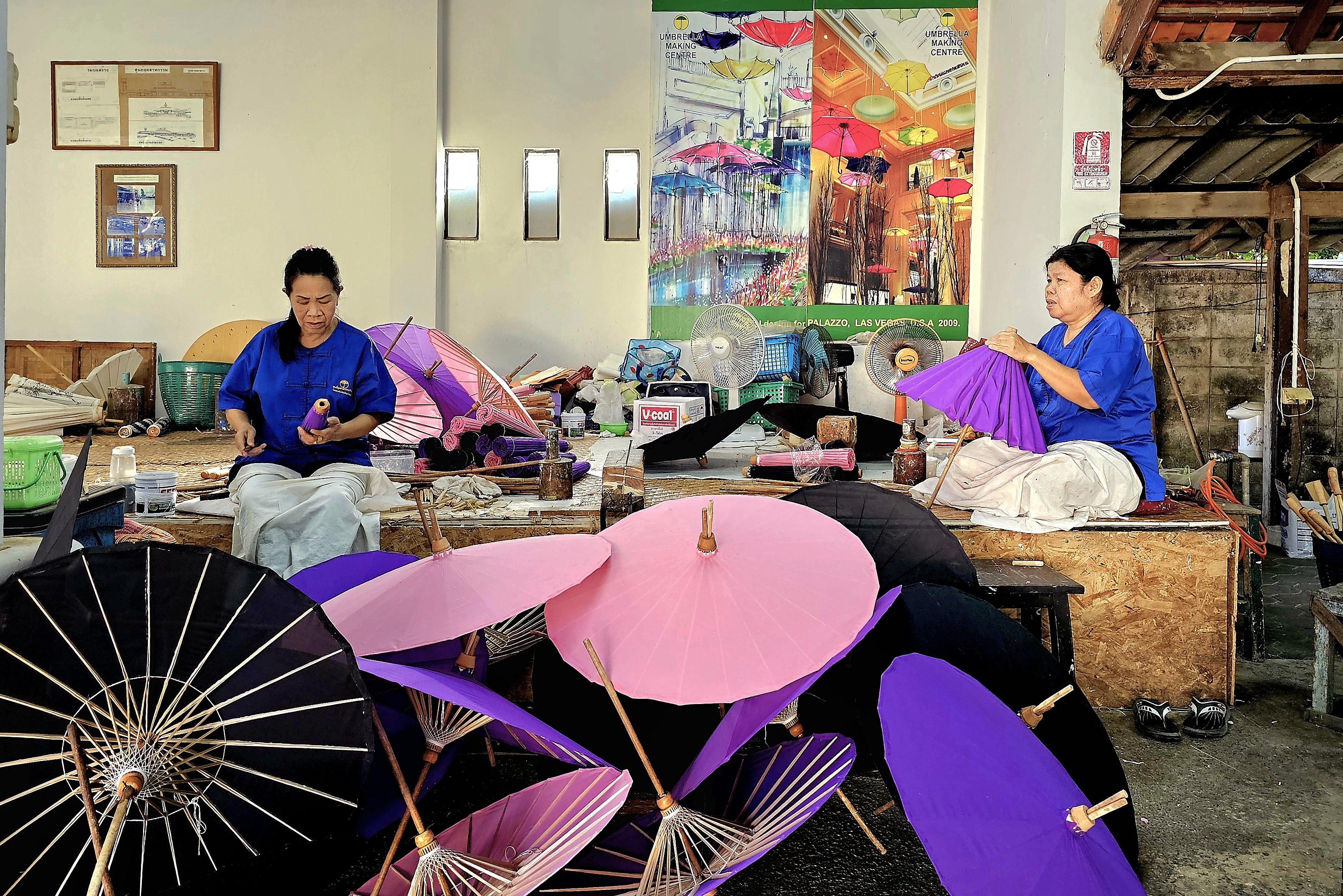
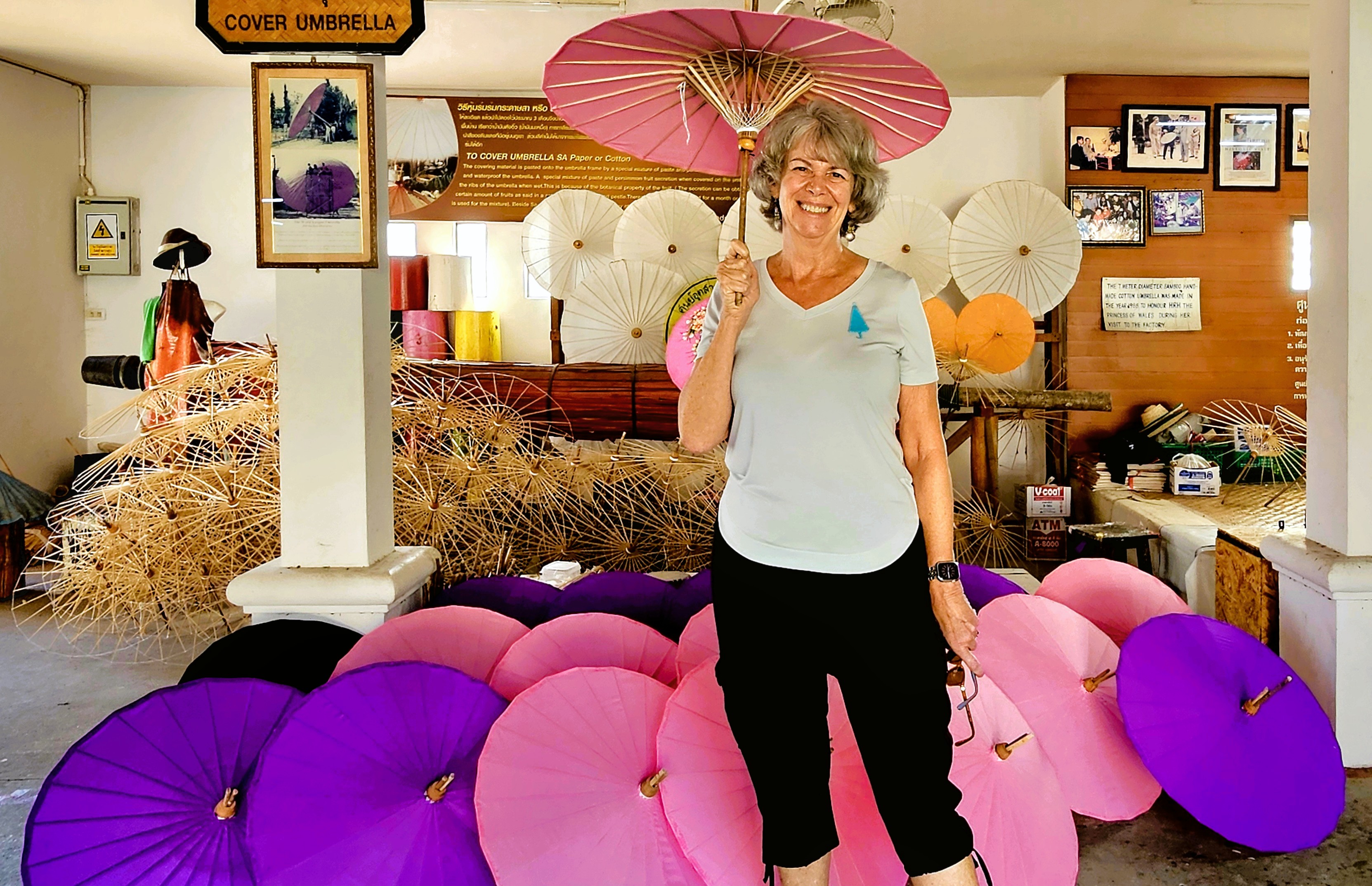
In 1978, the Umbrella Making Center was established by Thavil Buajeen, where every step of the process of hand-crafting stylish umbrellas has been consolidated under one decorative roof in Bo Sang, and where these parasols continue to draw favor from around the world.
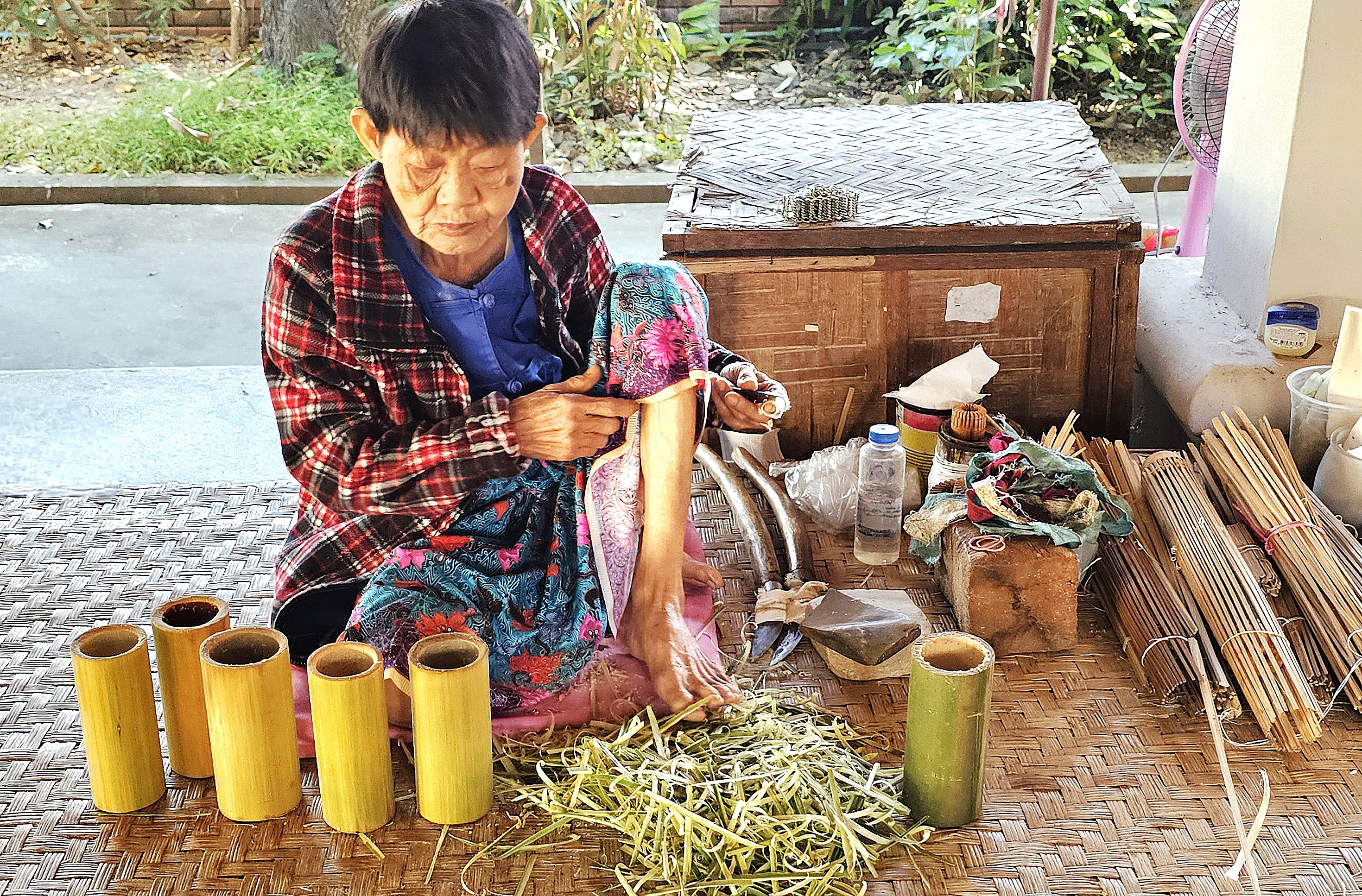
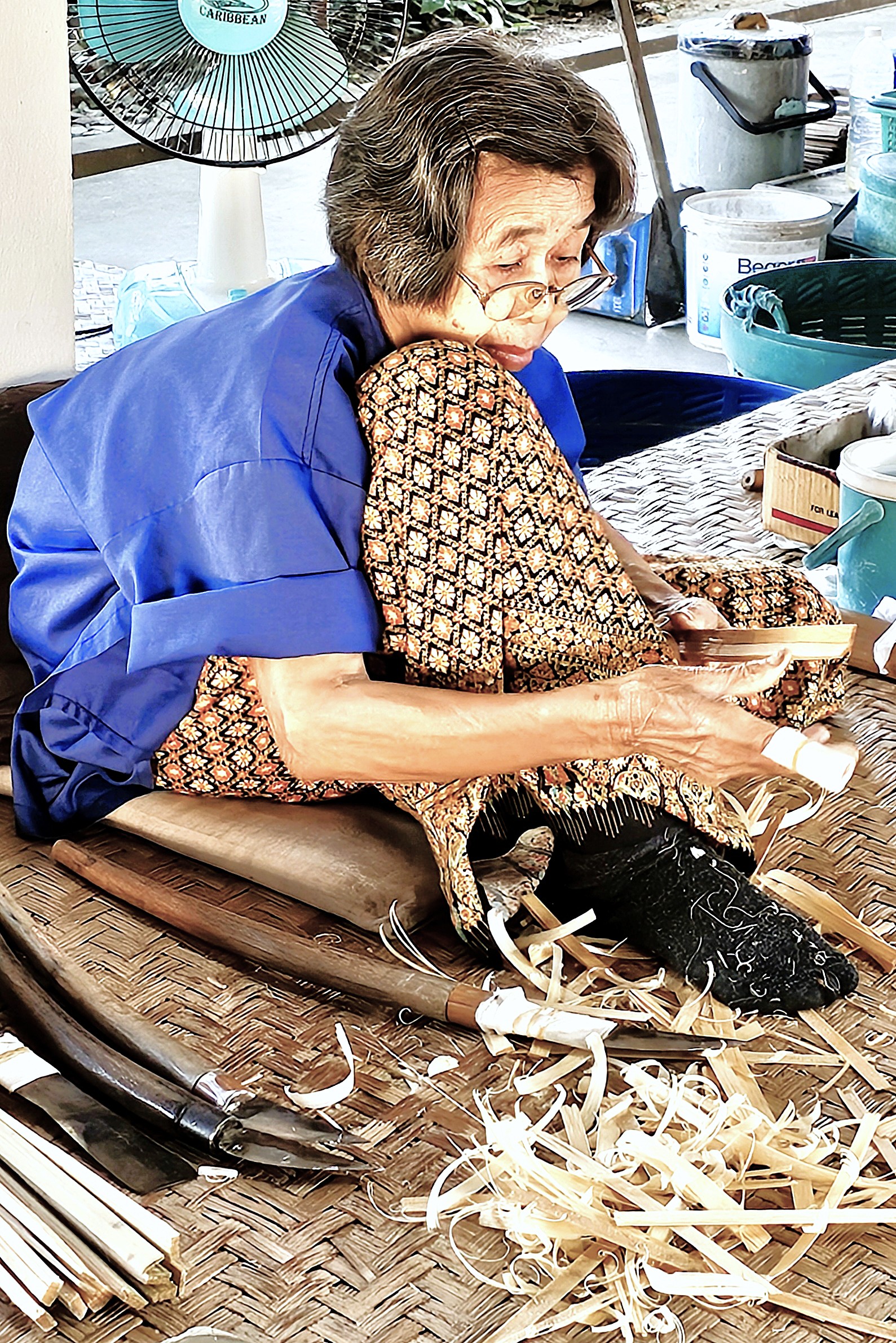
Locals from Sa Bong report daily to the Umbrella Center to demonstrate their artisanship. They are mostly elderly women, by appearance. They squat on grass mats, grasping sharp blades with gnarled fingers, but they work so nimbly, so effortlessly, almost blindly at splitting and shaving bamboo rods into precision-sized spokes for the pulley apparatus.
They perform their tasks at individual workstations atop raised platforms that wrap around an open garden which is anchored by a retail outlet. It’s like walking through a living diorama.
It all starts with papermaking. Bark is first harvested from the mulberry tree and soaked for 24 hours. Then it’s boiled with several kinds of ashes for about 3 hours and clean rinsed with water. Next, the pulp is hand-beaten with mallets until fibrous. Thereafter, the fibers are places in a water-filled tank and stirred with a paddle until the fibers are suspended in the water. The fibers are then sifted through a screen and placed in the sun for about 20 minutes, forming sheets of paper that easily peel when dry.
Bamboo framing is prepared according to the umbrella radius.
Each stem is split into 36 spokes for the lower frame,
and precision-shaved for uniformity.
An equivalent number of bamboo ribs are produced for the canopy.
The spokes are assembled and strung between the upper and lower knobs to create the open/close mechanism.
Once the skeleton has been completed,
the paper canopy is applied and trimmed.
The finished product is now ready for detailing,
or indoor use, only.
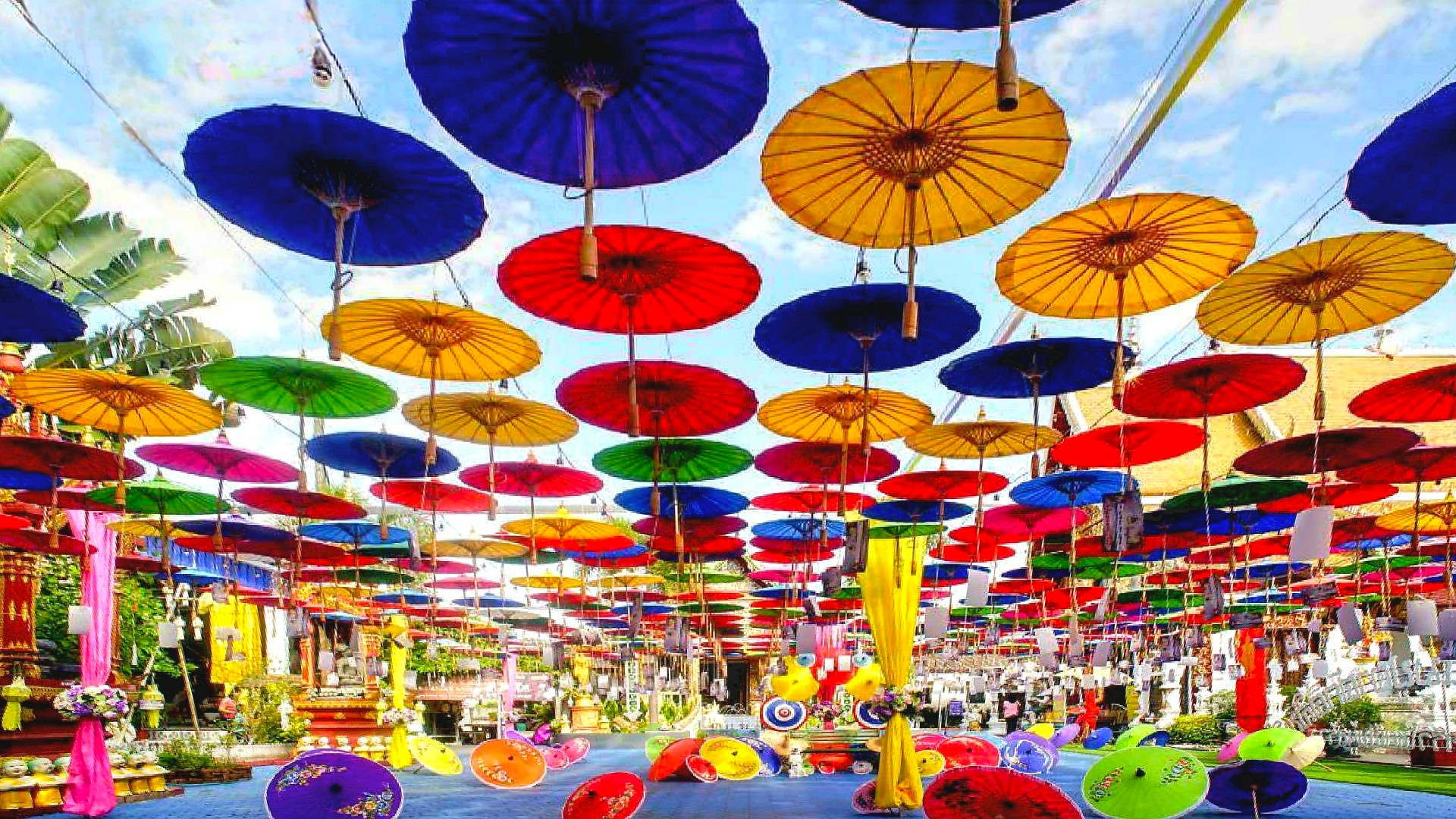
Leah’s now ready for the 3-day Bo Sang Umbrella Festival which occurs every 3rd week in January.
Walking through Bangkok can be challenging. The traffic is relentless; the pedestrians can be pushy; and the “sidewalks” are compromised. But none of this should deter the intrepid tourist.
Our excursion began at the hotel’s spirit house (within the Thanon Phaya Thai district), where we paid our respects…
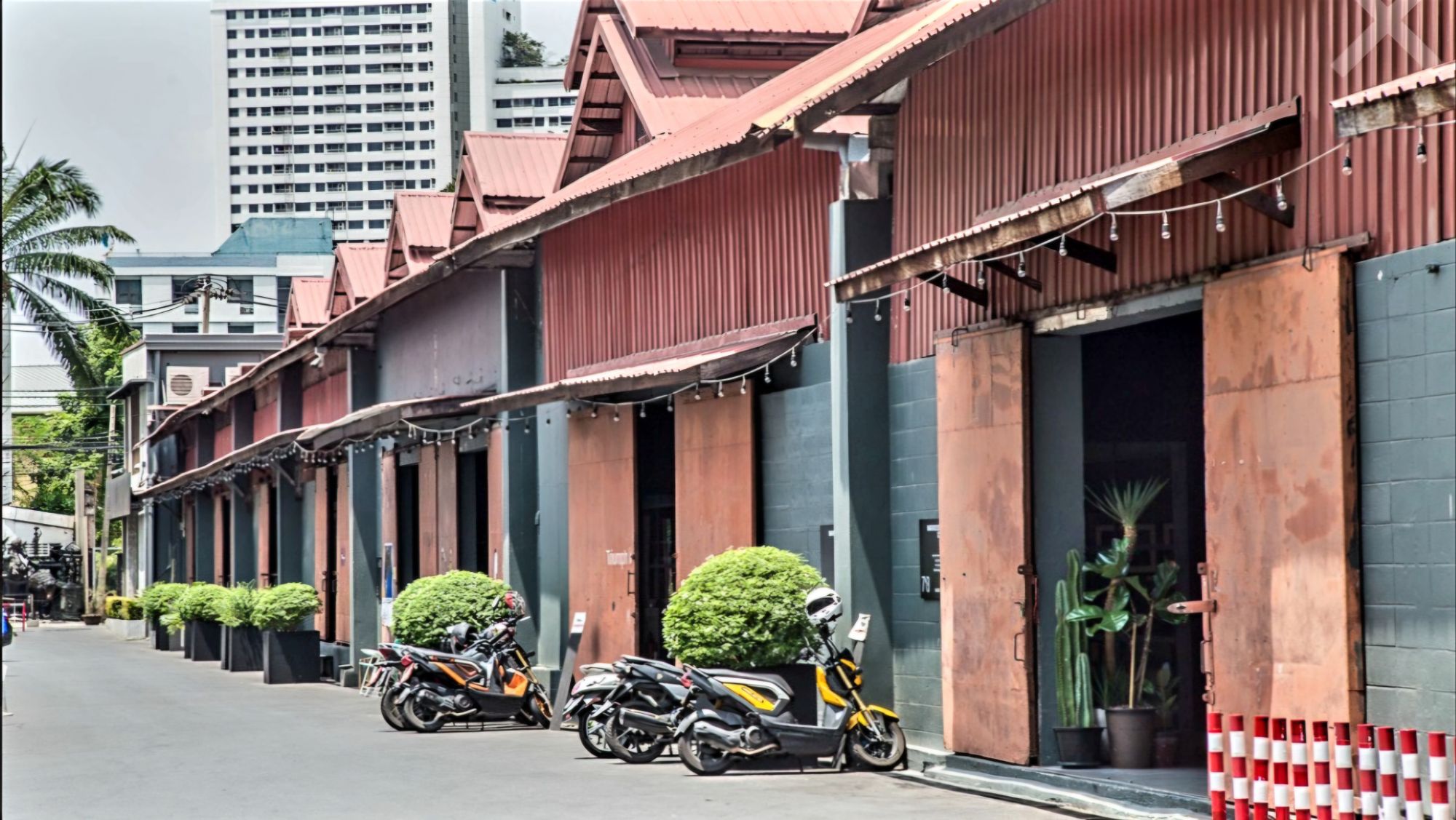
before continuing to Warehouse 30,
an art and design complex just east of the Chao Phraya riverfront,
where we found delightful exhibits and installations, intriguing antiques, and boutique apparel.
Nearby, we discovered Talat Noi–
a resurrected warehousing slum with meandering alleys filled with repurposed auto parts, shabby temples,
and wall art.
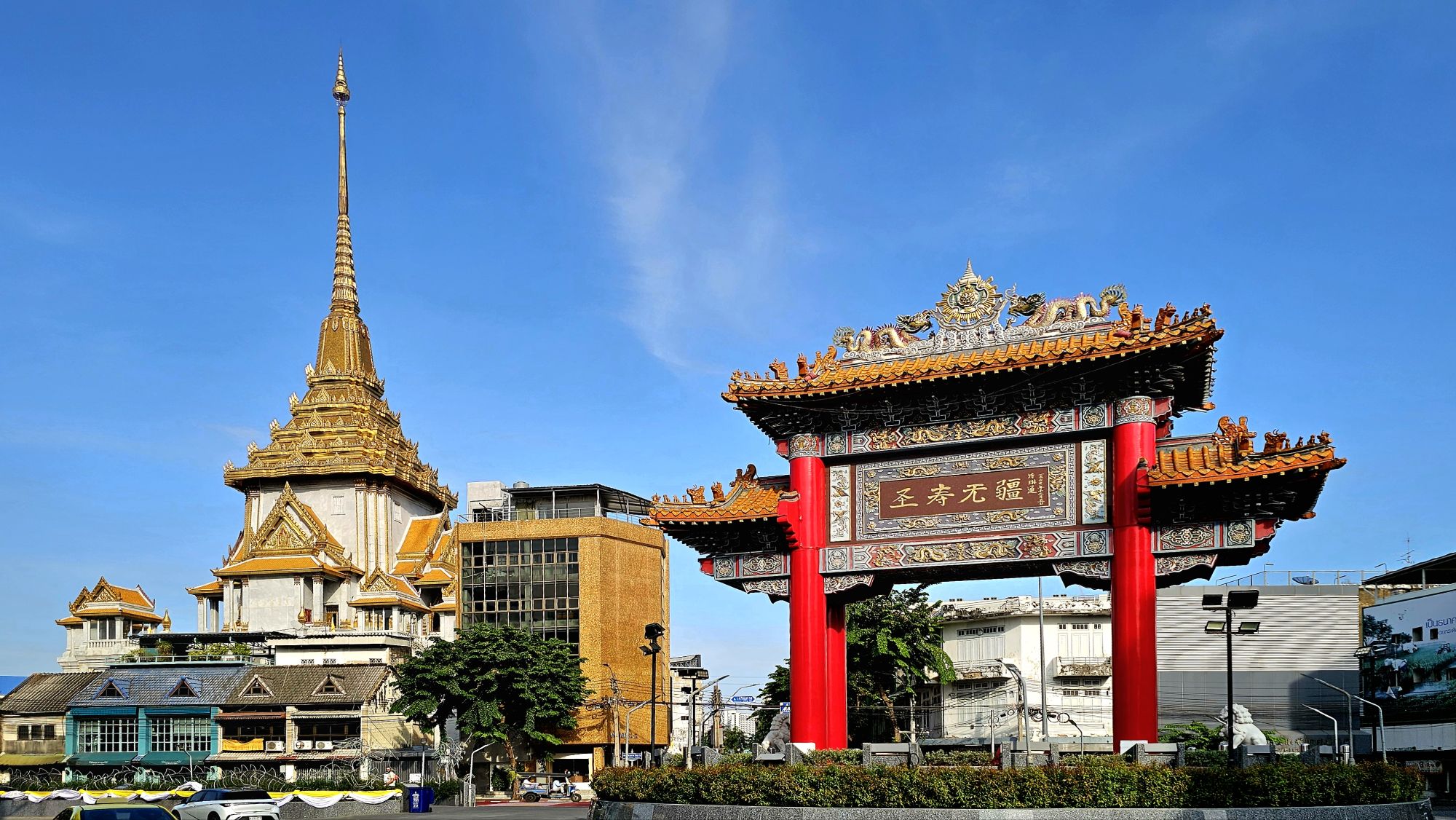
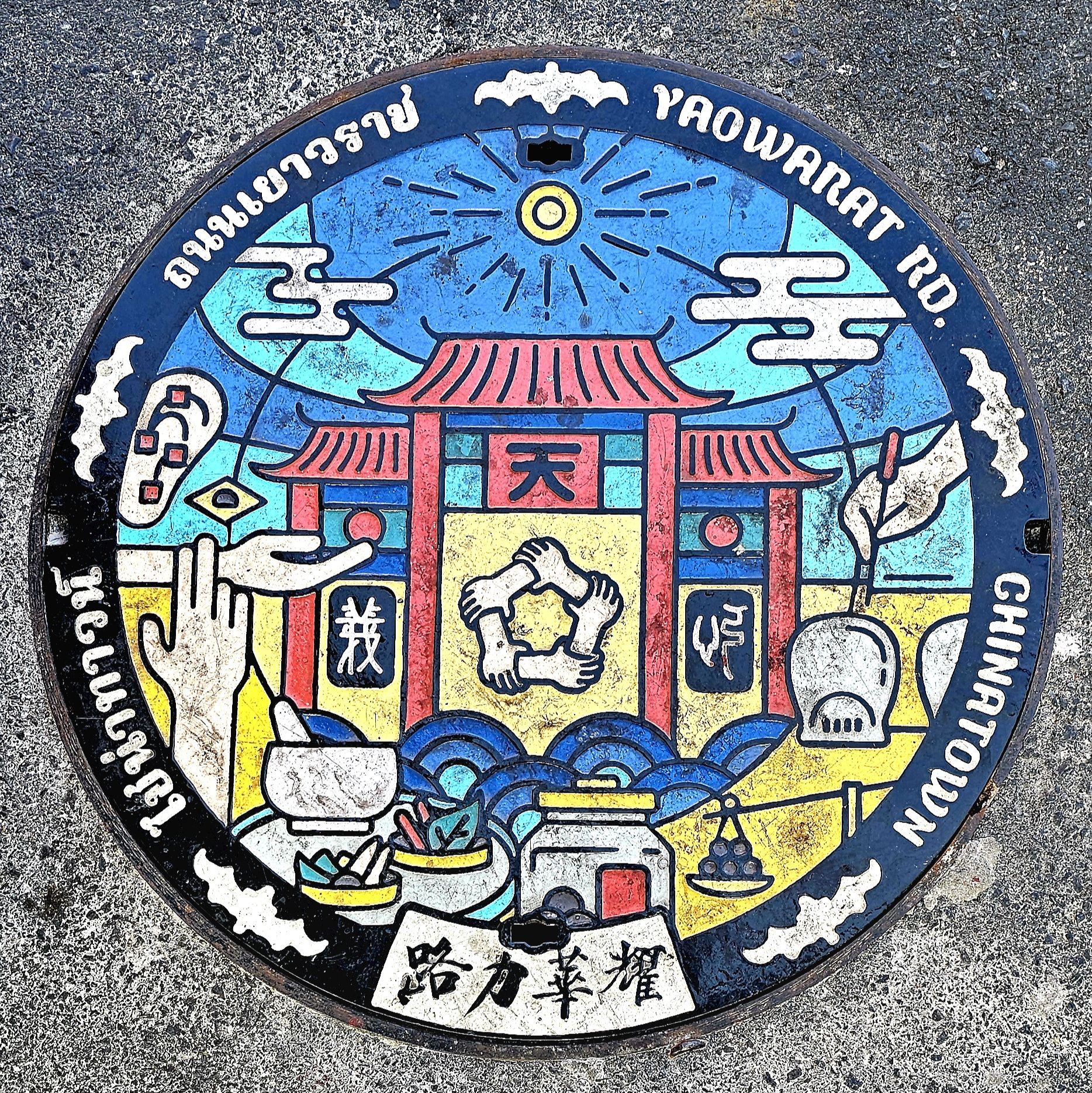
After another 15 minutes of sidestepping aggressive scooters along congested cobbled alleyways, we arrived at the Chinatown Gate, planted in the middle of an enormous traffic circle.
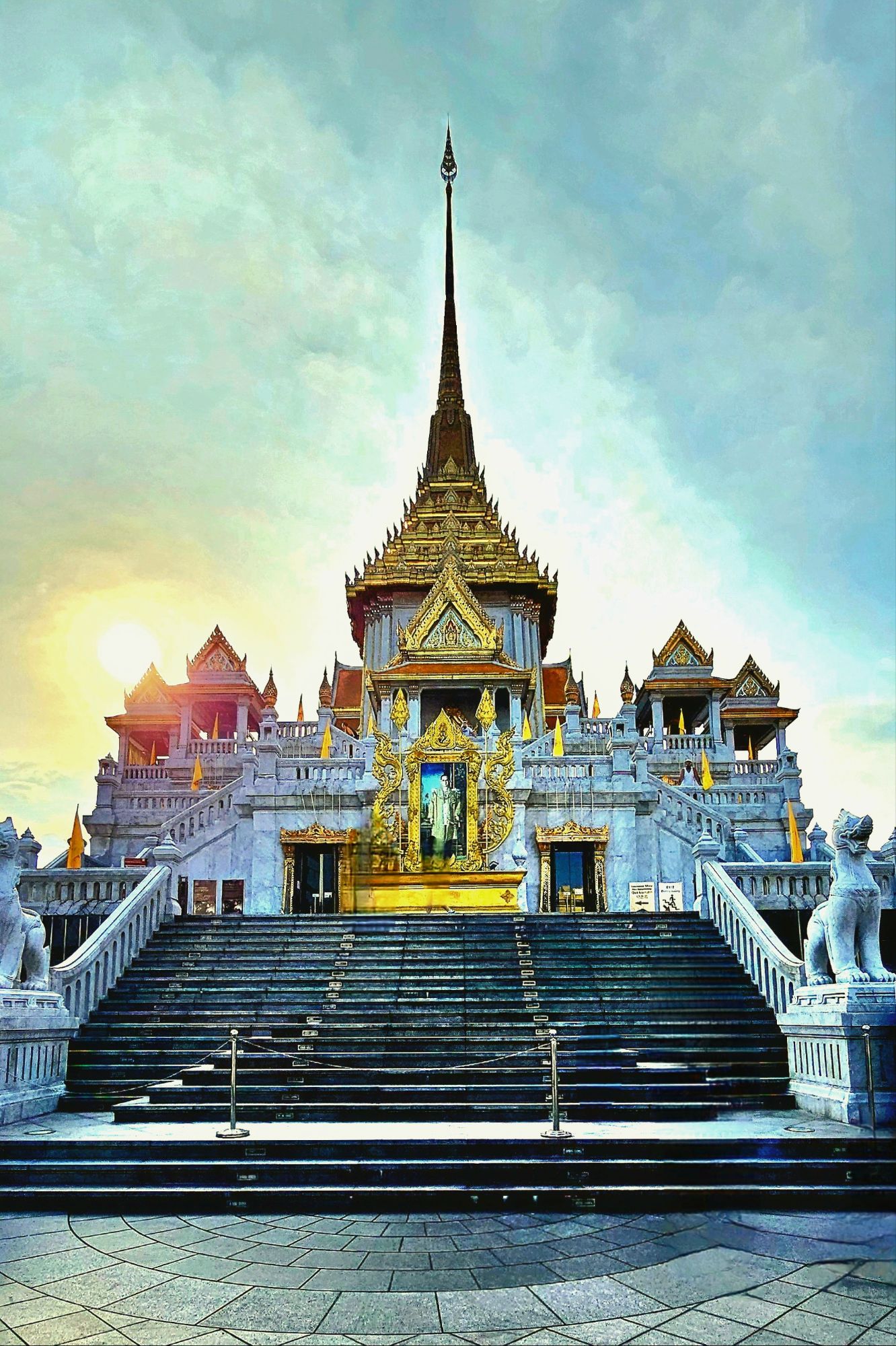
Chinese locals by the scores were making offerings at a local Buddhist Temple.
Chinatown Night Market was to our north,
but we were saving that for an evening stroll, when the street would close for Monday’s celebration of street food–filled with curious selections for adventurous eaters.
Our last stop included a visit to Wat Mangkon Kamalawat just before closing. It’s the largest and most significant Chinese Buddhist Temple in Bangkok. The temple is surrounded by shrines dedicated to a variety of Buddhist, Taoist and Confucian deities and religious figures worshipped by the local Chinese.
Worn out and wrung out, we took a taxi back to the hotel. We had walked nearly 10 km. in 90o heat. It was time to freshen up and consider a new adventure with an eye toward dinner.
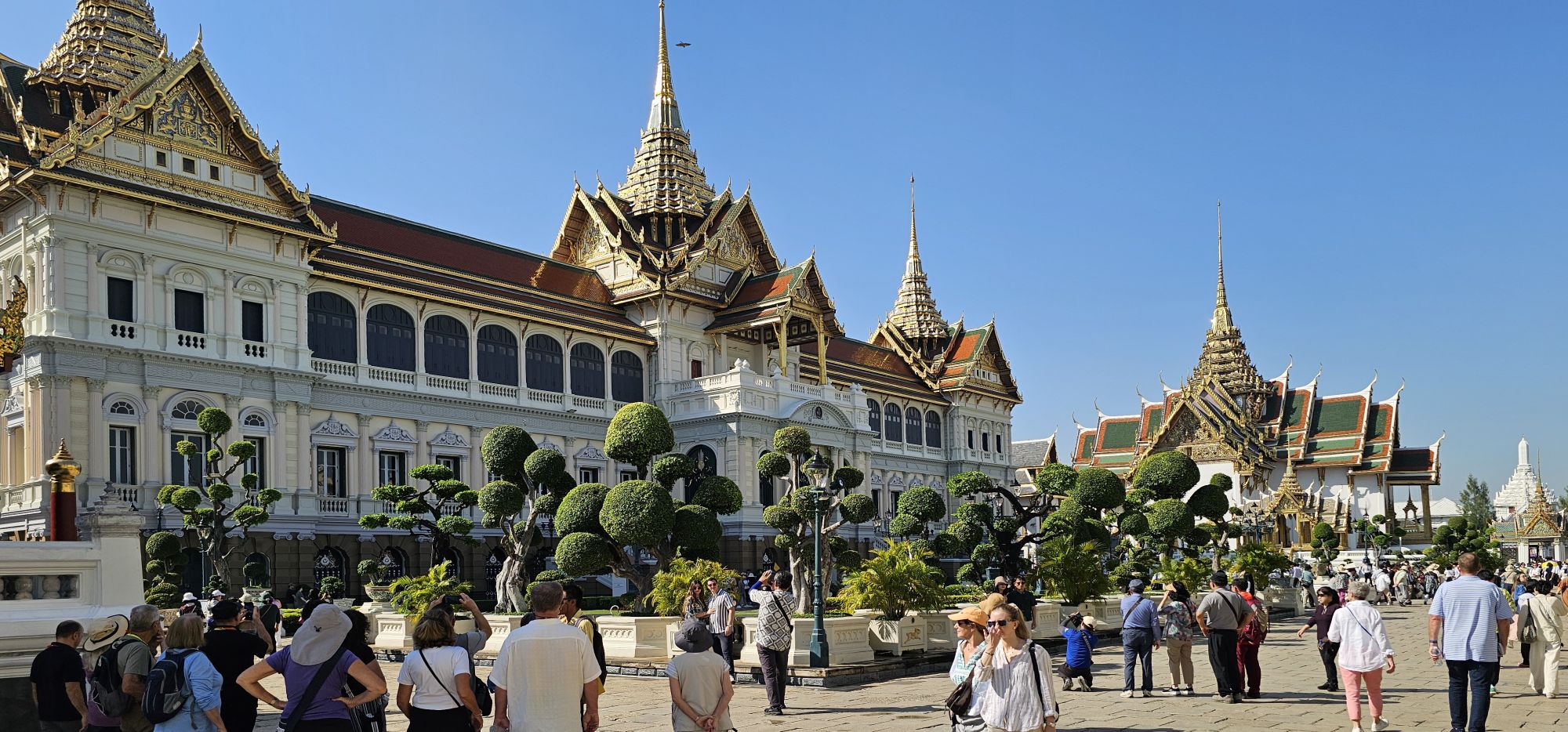
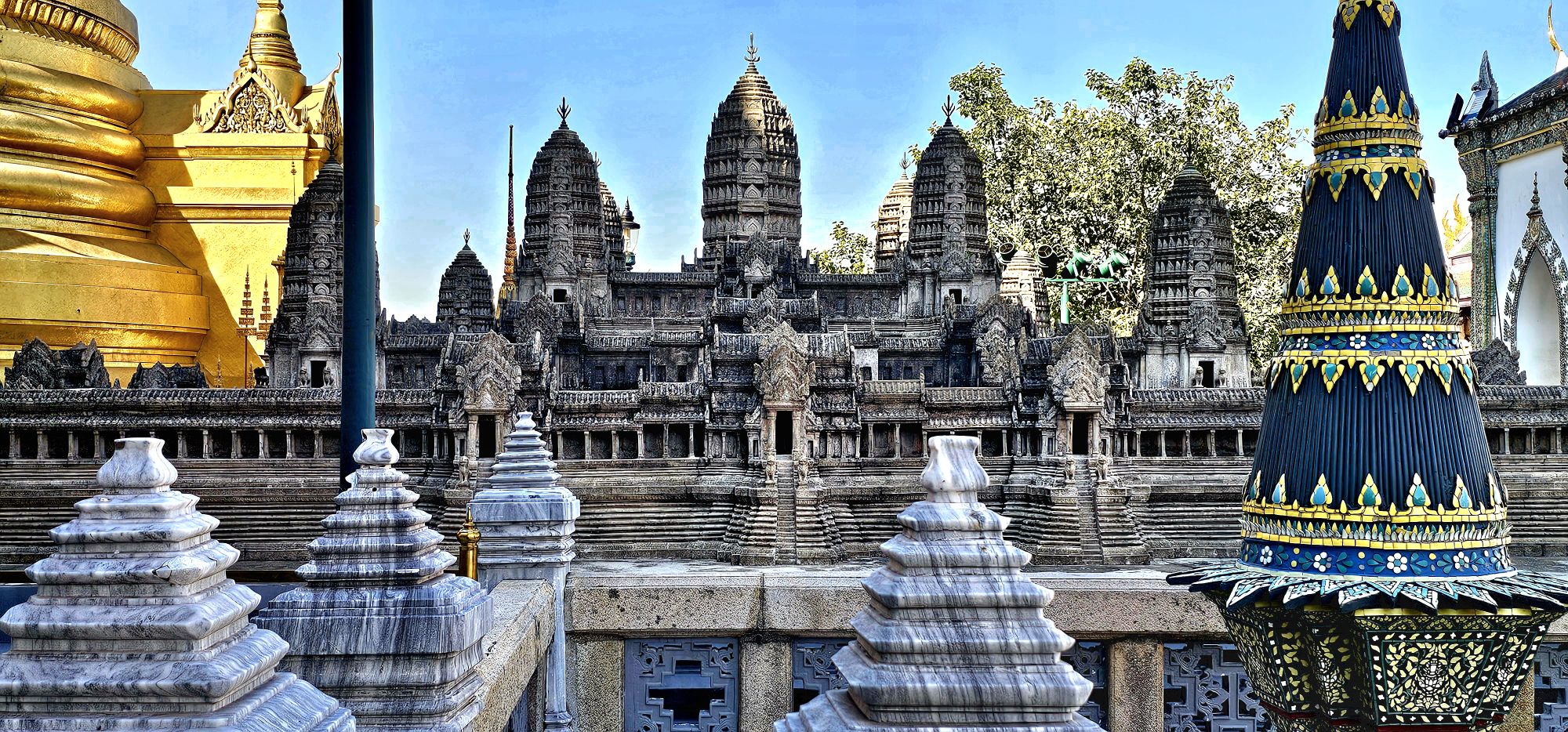
No visit to Bangkok is complete without a tour of The Grand Palace, simply because it’s beyond comparison.
Consider the enormity and scale of the site.
Covering over 2.3 million sq ft, its walled, rectangular space has evolved over the course of 200 years…
into a myriad of ornamental buildings,
grand halls,
and gilded pavilions…
surrounded by manicured lawns,
lavish gardens,
and decorative courtyards.
Much more than a royal residence that has housed generations of the Chaki dynasty, it was also the seat of power and governance until the abolition of Thailand’s monarchy in 1932.
Currently, it’s Bangkok’s largest tourist attraction (8 million visitors a year),
although it continues as an important backdrop for ceremonies and state functions, with royal offices still intact.
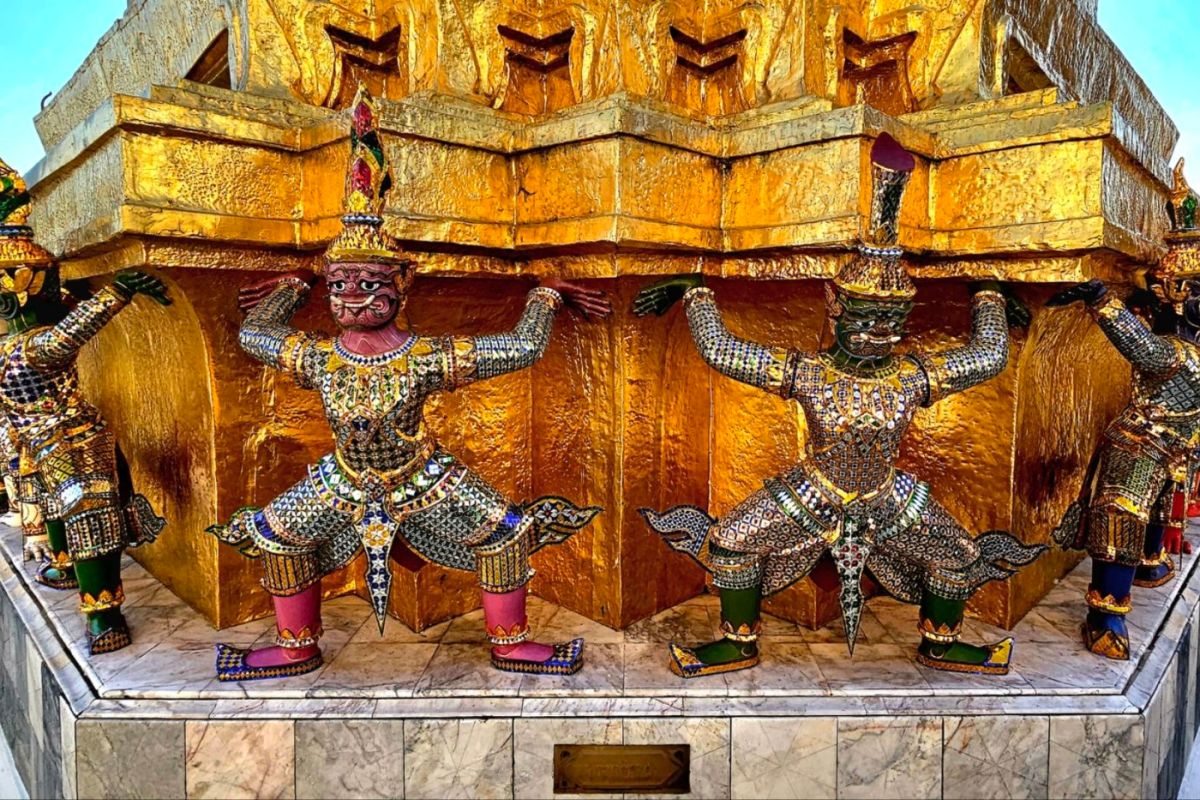
The Grand Palace is also the site of the Royal Chapel–known as Wat Phra Kaew–
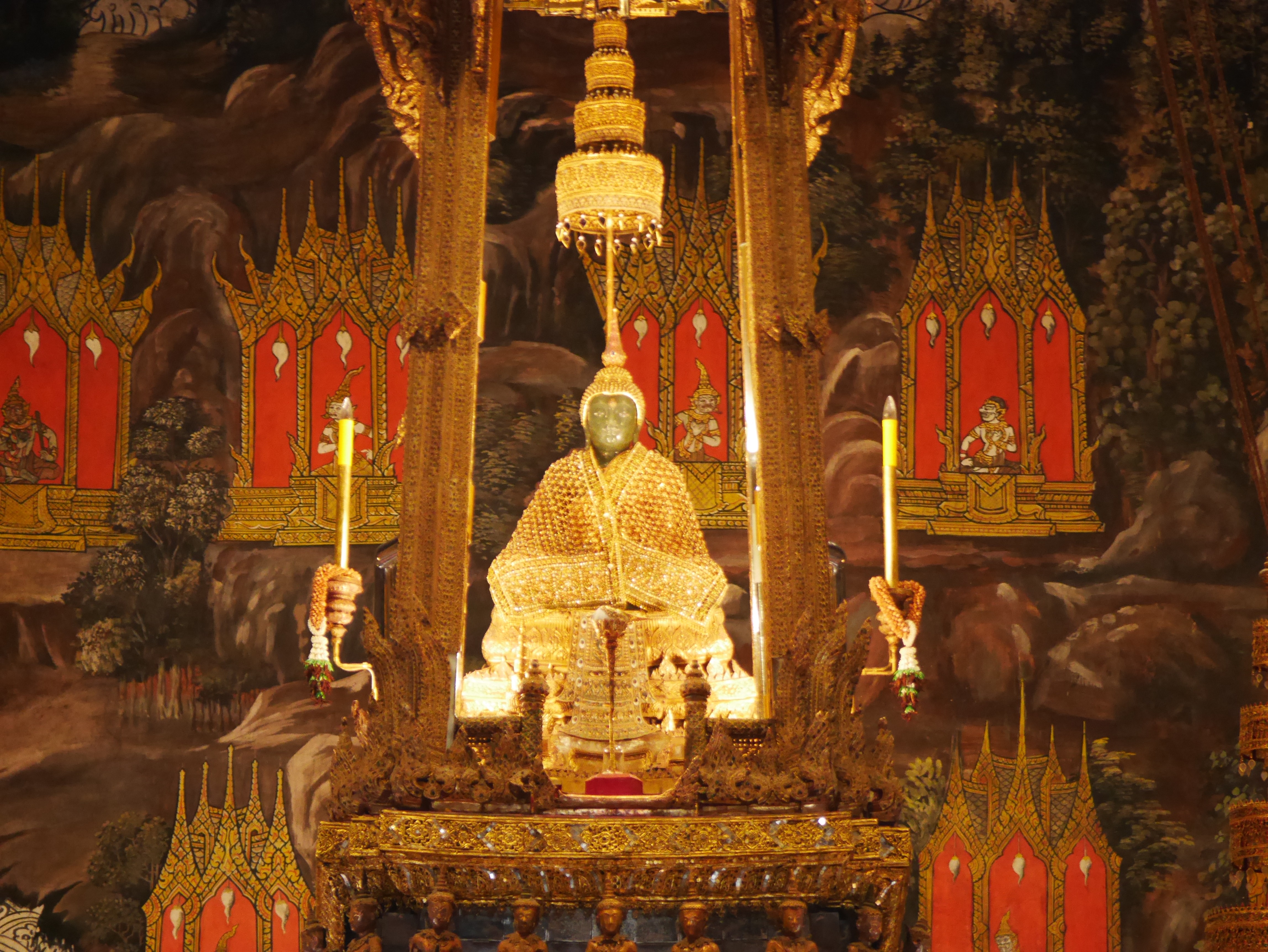
which houses the Emerald Buddha–a 26-inch jade statue cloaked in solid gold and diamonds–which is considered Thailand’s most sacred icon and key to its good fortune and prosperity.
Photography within Wat Phra Kaew is absolutely forbidden,
but then, a photograph exists online with attribution.
กสิณธร ราชโอรสt
Only the King of Thailand is permitted to touch the Emerald Buddha (three times a year in order to change its shroud according to the season).
However, Leah was able to pet the nose of the bronze guardian lion protecting the temple.
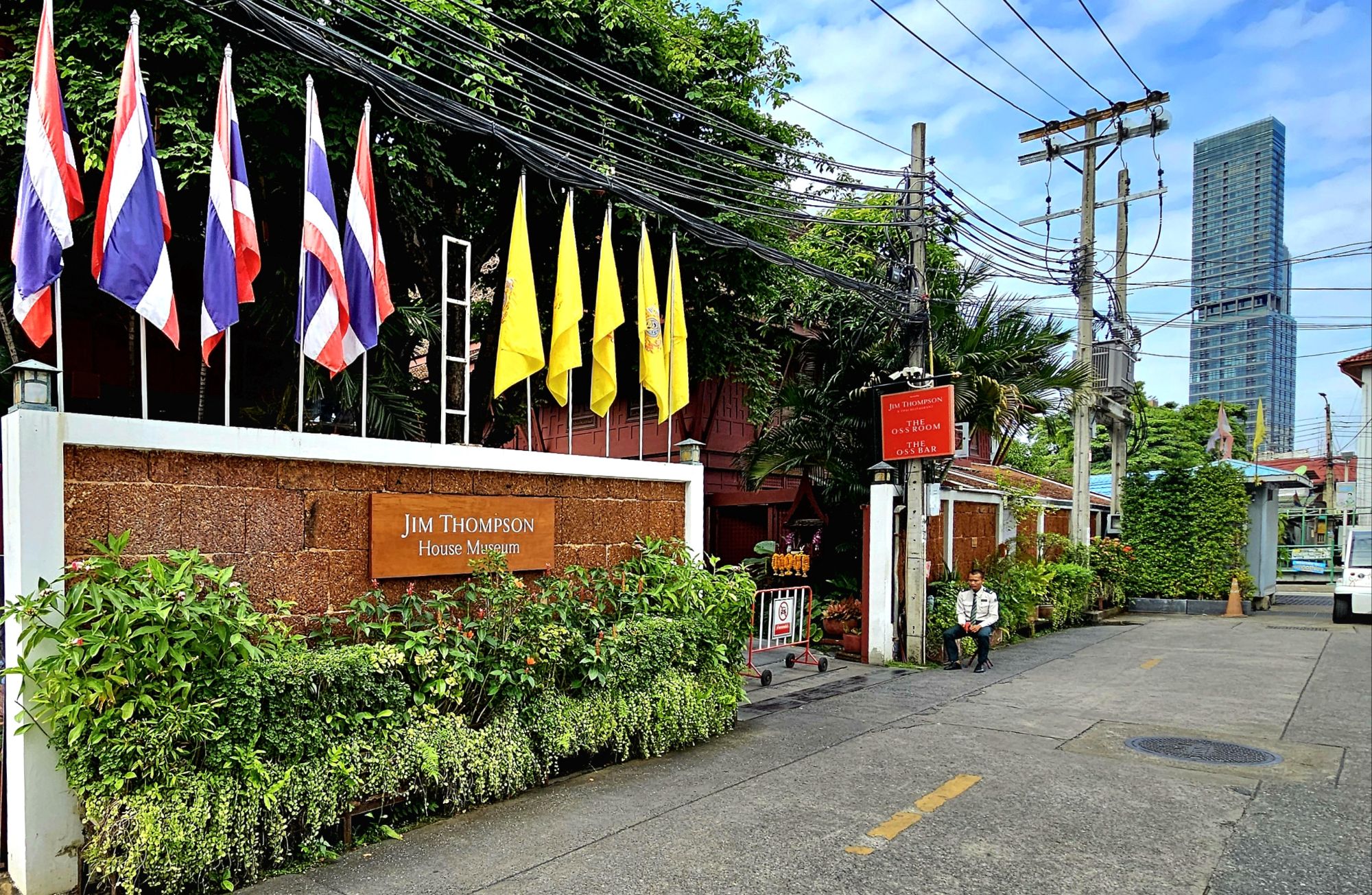
his private residence-turned-heritage museum, replete with a gallery, restaurant, and boutique–
all dedicated to Jim Thompson’s love of ancient Siam.
The compulsory spirit house surrounded by lush gardens–situated according to Feng Shui principles–informed us that we were protected from the steel and glass towers that enveloped us.
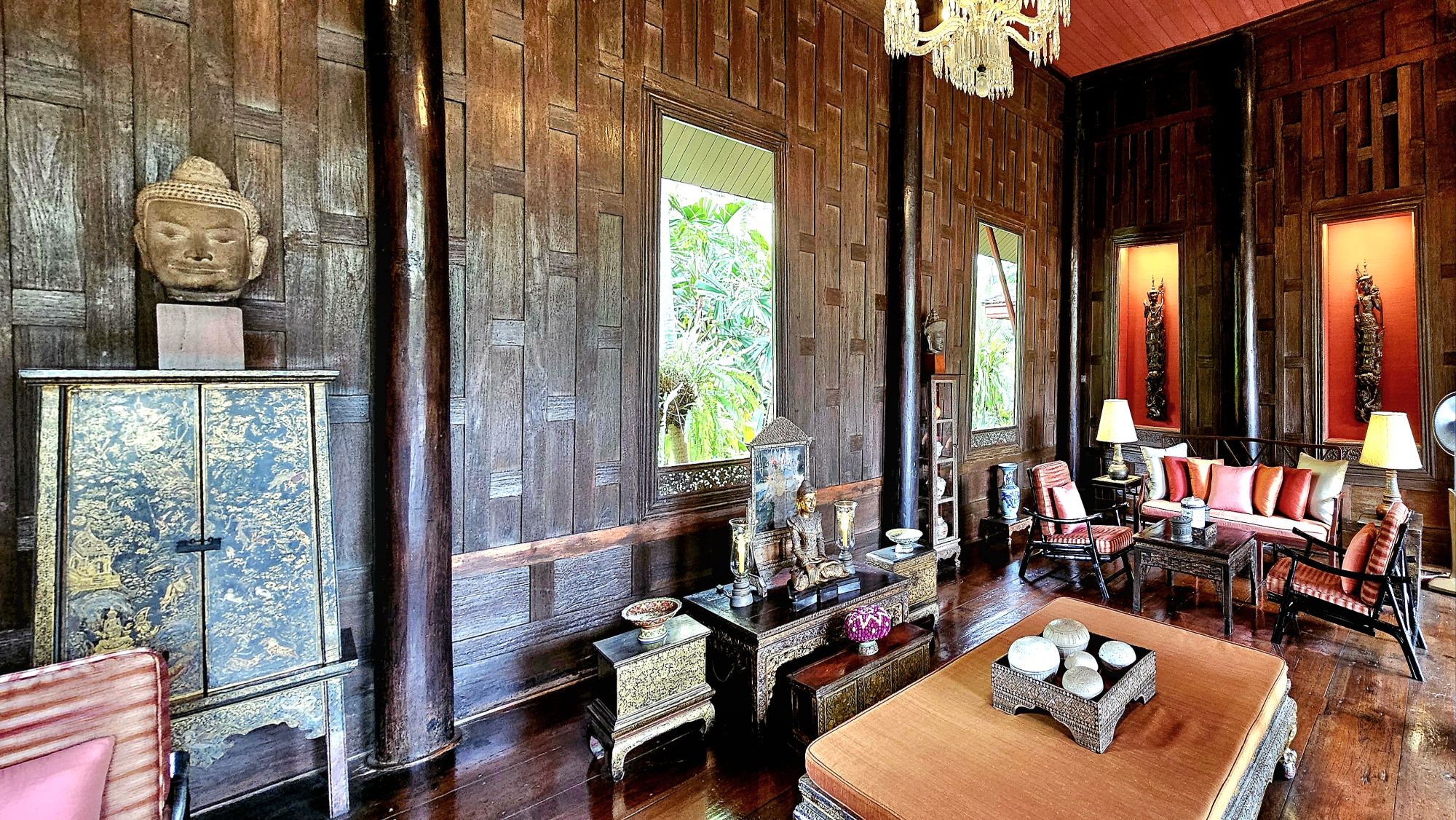
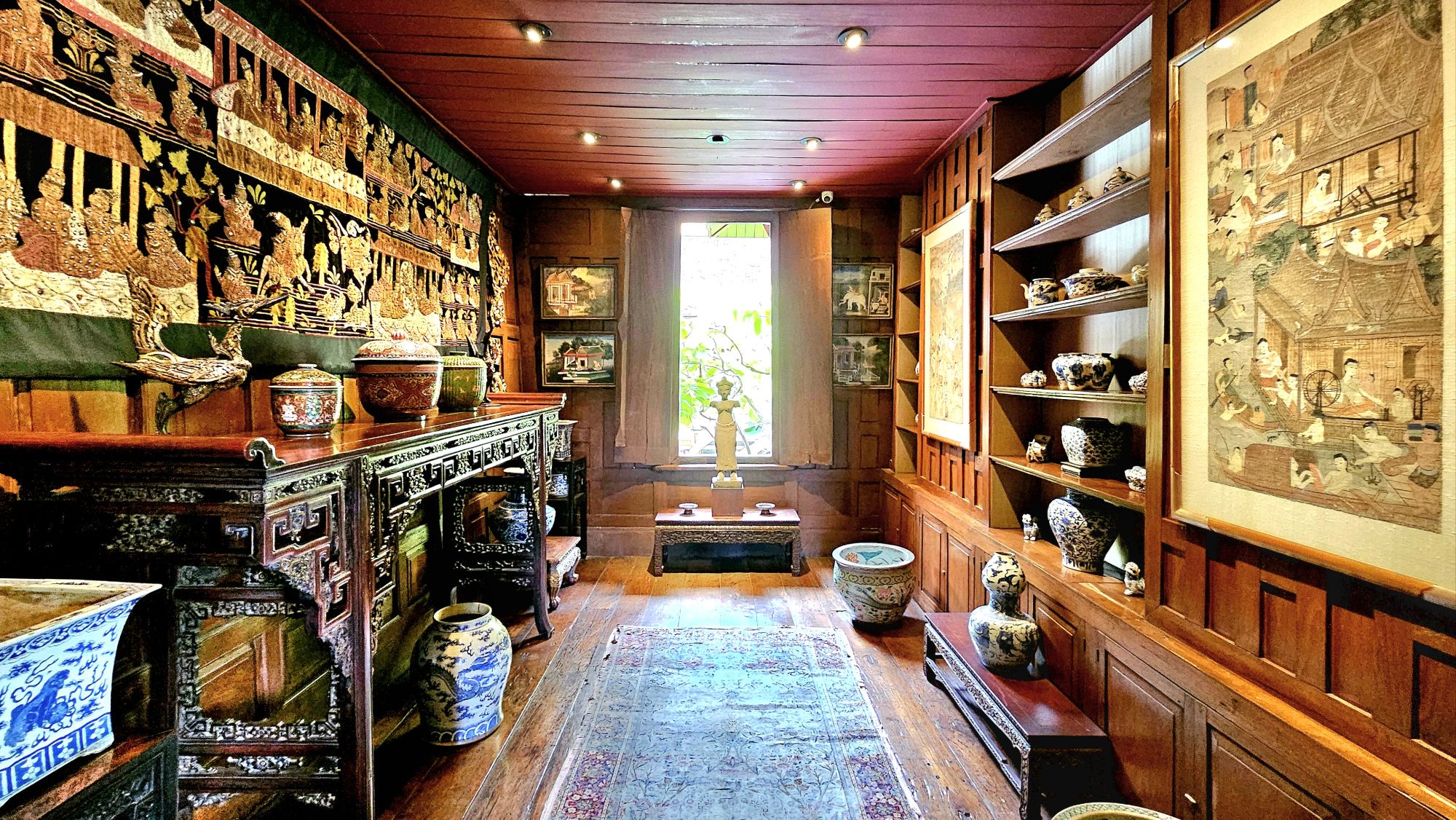
An English-speaking docent guided us through gardens and living quarters, which showcased archetypal Thai tapestries,
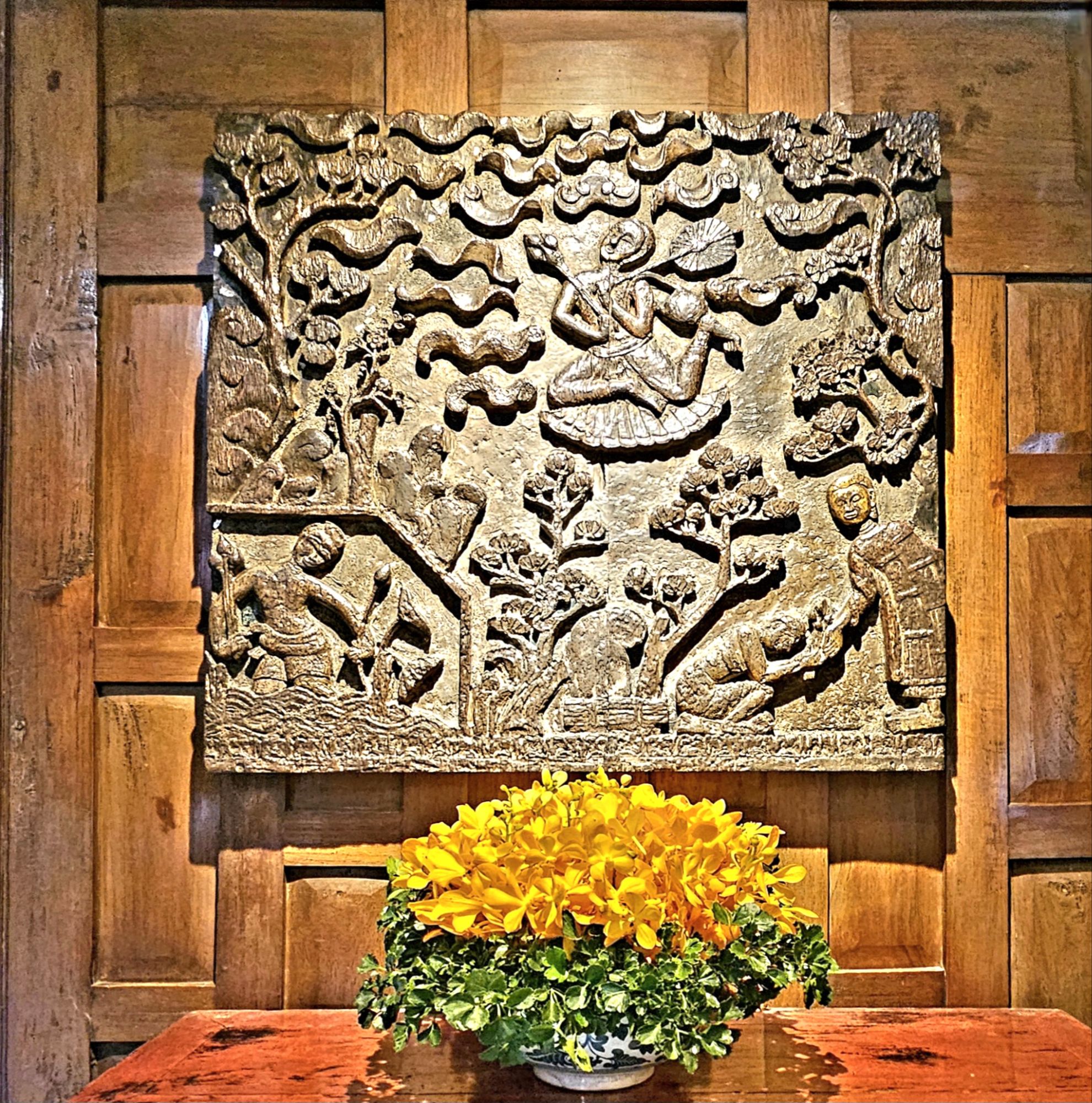
ancient wood carvings,
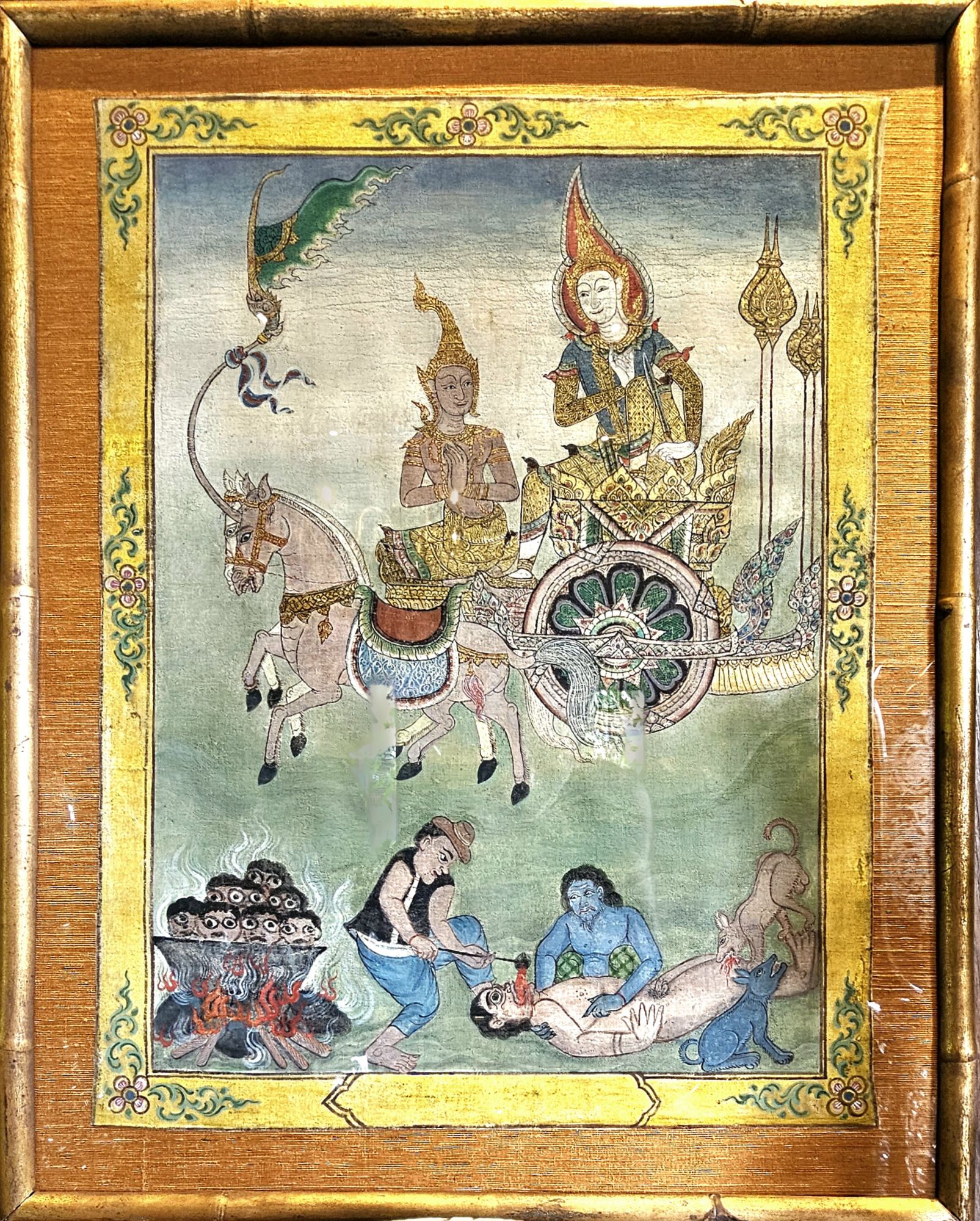
Buddhist watercolors…
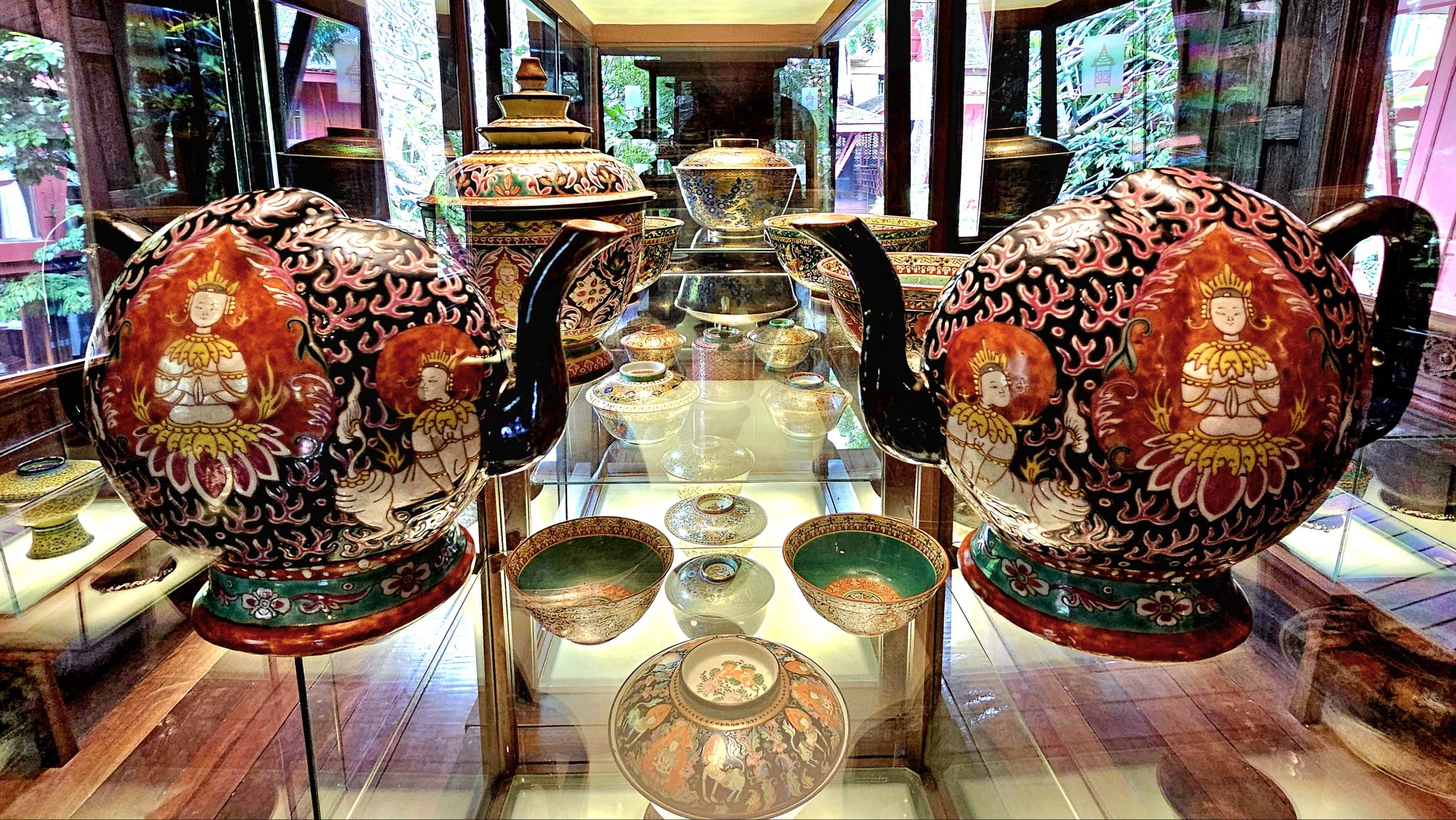
and fanciful porcelain tea sets, among a dazzling array of other riches…
which inspired Thompson’s line of patterned silk fabrics used in clothing, furnishing, and accessories,
such that he single-handedly revolutionized Thailand’s handicraft industry during the 1950s and 1960s, earning him the moniker of the “Silk King of Thailand.”
His home has become an amalgam of Southeast Asian cultures…
and museum-worthy artifacts that he collected throughout the years,
sprinkled with practical flourishes, while serving as de facto US Ambassador to Thailand and founding the Thai silk company that still bears his name.
His status as a raconteur and entertainer of celebrities and royalty was legendary, but abruptly came to an end on Easter Sunday, March 1967. He had visited a friend’s house in the Cameron Highlands of central Malaysia, and took an afternoon walk through the jungle that day, never to be seen again.
Despite a land and air search effort involving hundreds of full-time trackers across multiple agencies and governments, it seems Jim Thompson disappeared without a trace.
There are many who have traveled down the rabbit hole of theories and conspiracies, determined to unravel the truth and possible whereabouts of his remains.
Yet the legacy Jim Thompson left behind continues to this day, and Thailand’s prosperous silk industry remains his greatest contribution.
With writing this sentence, my 6-month blogging hiatus is officially history.
All the while, I continued taking pictures, and I never stopped writing. I just got off the blogging merry-go-round for a time.
Instead, I took stock of nearly 25,000 images and analyzed 500 stories that I’ve shared with the WordPress community over the past eight years.
I soon realized after 3 years of blogging that I had already accomplished my mission of streaming through America!
That’s not to say that there’s nothing more to experience. But I can honestly say that since retiring, I’ve chronicled hundreds of visits to national and state parks and various landmarks and curiosities across the country, which amounts to the very best that America has to offer.
I’ve also begun to travel more internationally, and I’ve included many of those destinations in this blog. How could I not? Naturally, it wasn’t in an Airstream, and it wasn’t America. Although, in fairness, some of those destinations within Canada, Mexico, Central America, and South America should count as “American” by nature.
I also realized that many of the stories I wanted to tell were not always supported by the photographs I had taken. And often times, the photographs I was most pleased with didn’t always match the story I was writing.
I found myself making arbitrary rules that impeded my writing, like thinking that my posts should be a linear account of my travels rather than a reflection of an arbitrary moment in time.
Managing StreamingThruAmerica.com has been a blessing, albeit it’s been challenging yet exhausting; nourishing while enervating; fulfilling but frustrating, and rewarding yet fickle.
Nevertheless, it’s also garnered over 100,000 views–for which I received a silly badge from WordPress, which makes me smile;
and it’s earned an Editors’ Discovery pick soon after launching this blog.
I don’t know if all of that is worthy of celebration or not, but I’m certainly grateful for the recognition and all the support from the blogosphere.
What started as a personal journal of sorts and a means of checking in with family and friends has morphed beyond its original intent, and I’m okay with that.
I’ve toyed with refreshing the style and revising the content to fit the times (and maybe that may happen on a rainy day), but for now, it’s status quo.
The journey continues…in Bangkok–the first stop of a 5-week adventure to Southeast Asia–where ancient kingdoms still shine as bright as the Buddhas that adorn his temples.
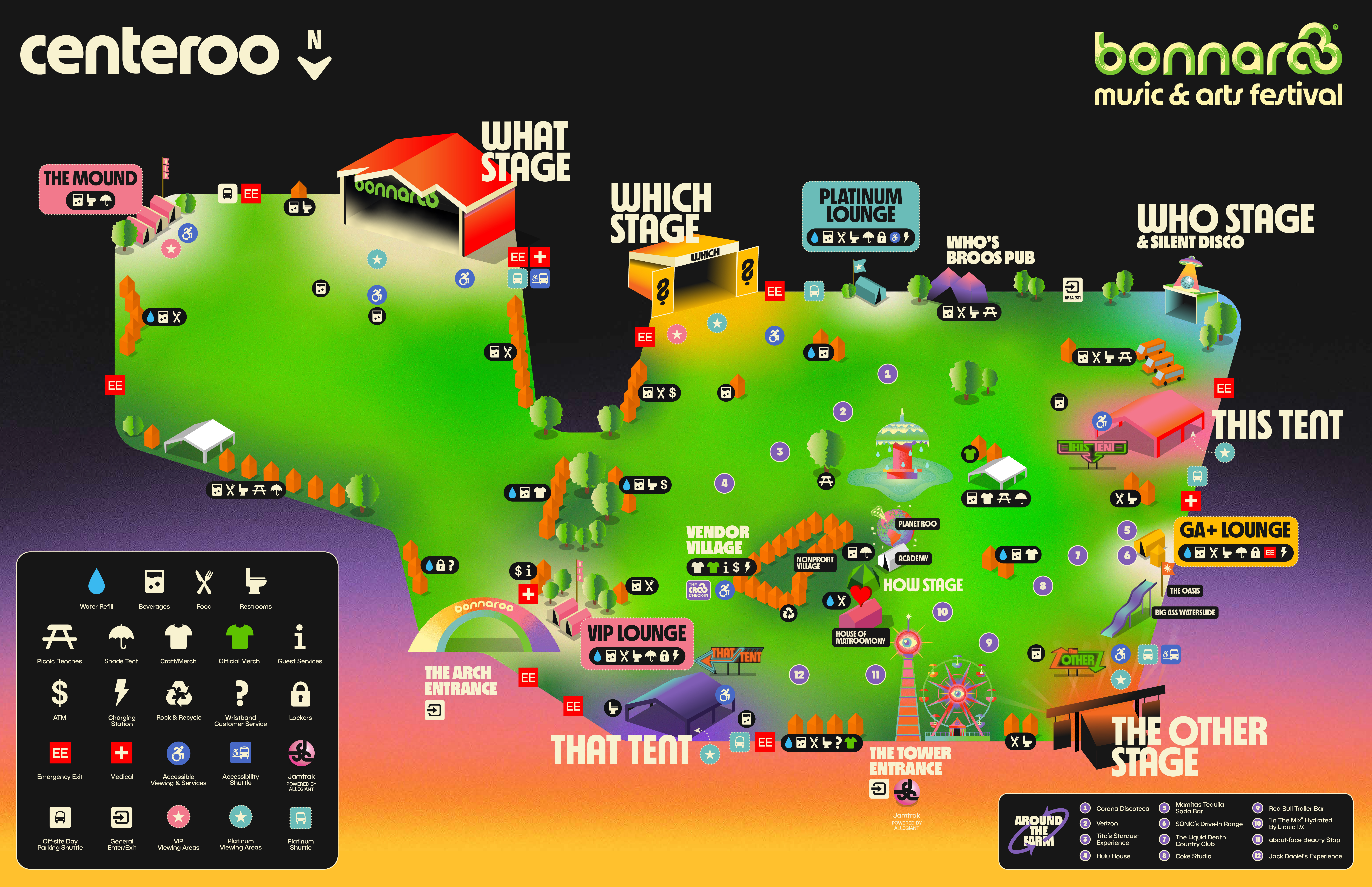
Leah and I have launched another summer trip around the country–our 6th, for those of you who are counting–and while we usually leave in May, when Florida weather and politics become most offensive, we delayed our adventure by a month because I had the mad idea of attending the Bonnaroo Music and Arts Festival at Great Stage Park in Manchester, Tennessee, scheduled from June 15 – June 18.
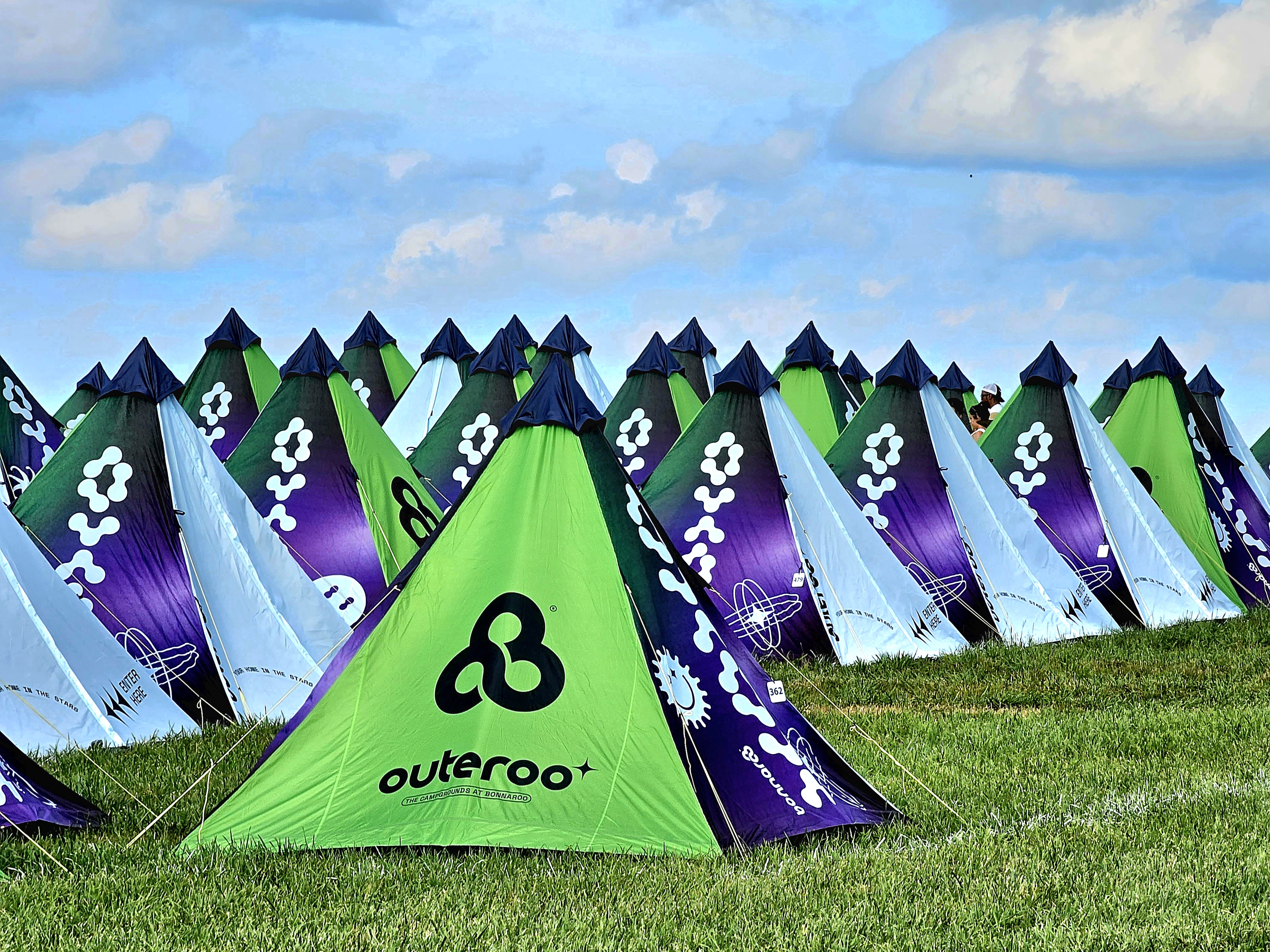
By opting for a primitive RV site and a 4-day General Admission pass, we were guaranteed a grassy rectangle measuring 20 x 50 ft. for up to 6 days, and ongoing music from over 100 artists across all genres at 6 stages scattered over a 700-acre farm known as Centeroo.
For the next 5 days, we’d be totally reliant on our 39 gal. freshwater tank, and all the power we could muster from a roof-top solar array assisted by my F-150’s 7.2kW on-board generator.
This would be a huge conservation experiment for us, considering our current record for dry camping was achieved by overnighting at a Wal-Mart parking lot.
But first, a stopover in Nashville was warranted to prep the Airstream for the forthcoming festival, followed by mingling with the hoi polloi on Broadway after dark.
Of course, Nashville never disappoints, whether it’s the people…
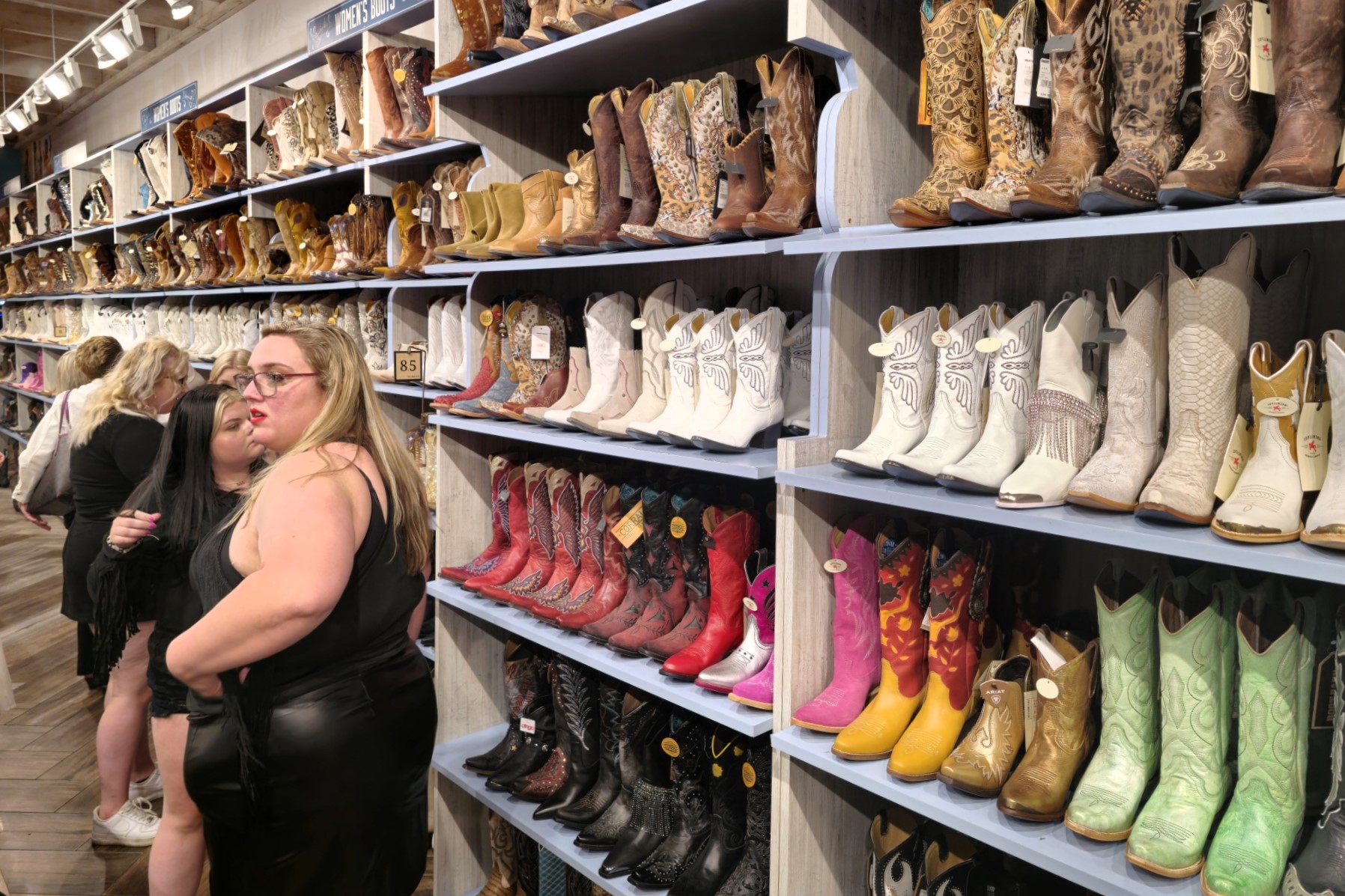
the shopping…
or the Broadway bustle!
With a 70-mile drive ahead of us, we headed out at 7am on Thursday, anticipating festival traffic and longish check-in times at Outeroo campgrounds due to compulsory rig inspections for contraband.
Leah had done early research on Bonnaroo dos and don’ts, and each day, she would bring me an update of a new annoyance or inconvenience that always threatened to be a festival deal breaker.
“Did y’know,” Leah mentioned sometime in February, “that bicycles are not allowed inside the festival grounds.”
“Well, that sucks,” I replied, “considering we’ll be using them throughout the rest of our trip, and we have no choice but to take them with us. So what are we supposed to do with them?”
Leah located a bike shop en route to Nashville in Mufreesboro that would update the firmware on our ebikes and allow us to store a big black storage tub filled with glassware, cooking knives, and power tools–all restricted items inside Bonnaroo.
We arrived by 9am to less traffic than expected and even less fanfare during our inspection.
“Got any weapons?” asked a worker bee in a safety vest.
“Nope,” I responded.
He glanced at an over-stuffed backseat and truckbed without regard, then asked to see the inside of our Airstream. He poked his head through the door and announced. “I seen enuf, you’re good to go.”
“That’s it?” I said, whispering to Leah. “Is this a shakedown, or Is he fishing for a tip? Do you realize we could have brought everything with us instead of driving ourselves crazy with these bogus rules?”
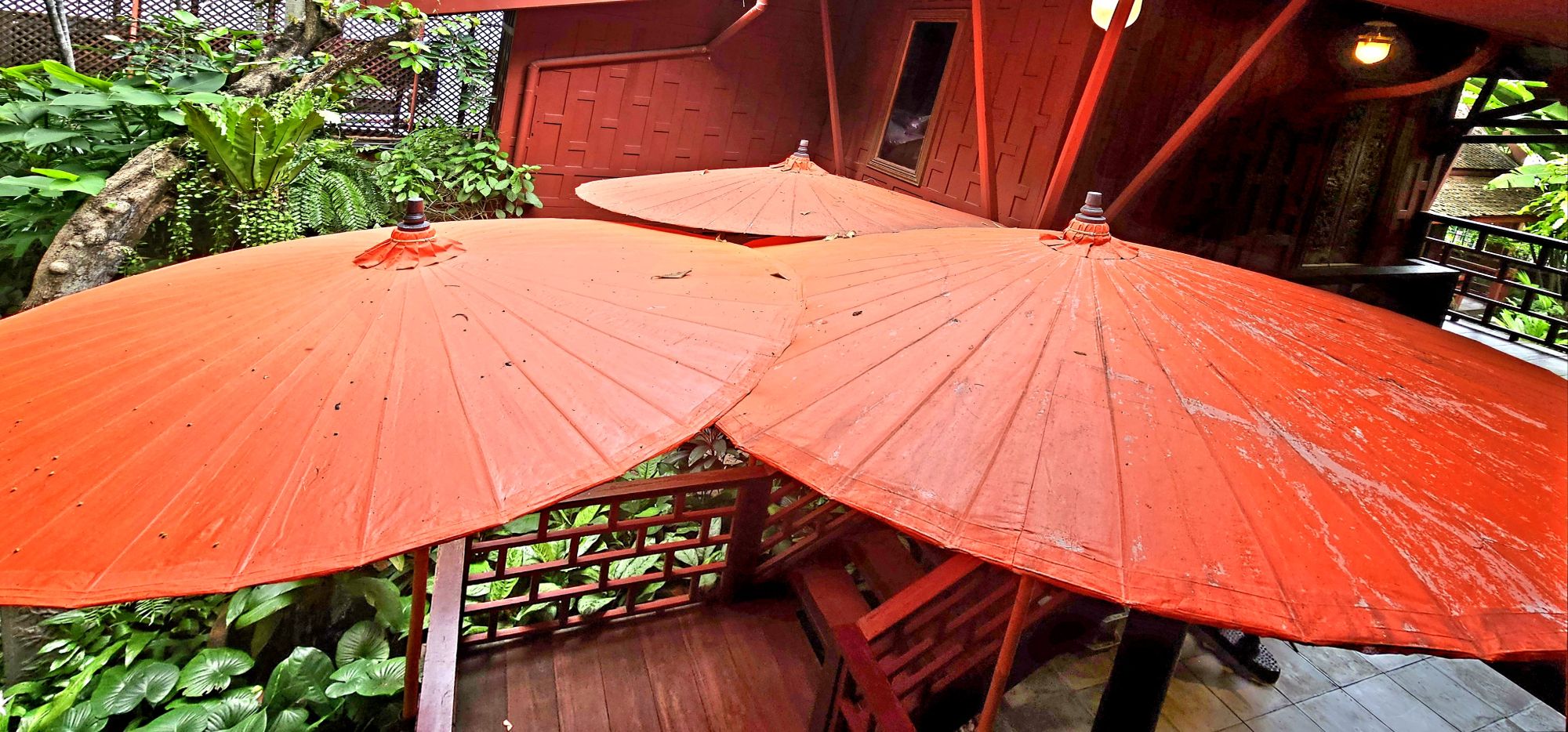
“We carry an umbrella so it doesn’t rain,” is all she said.
We were directed through the gate and around a winding gravel road before we settled onto our grassy site,
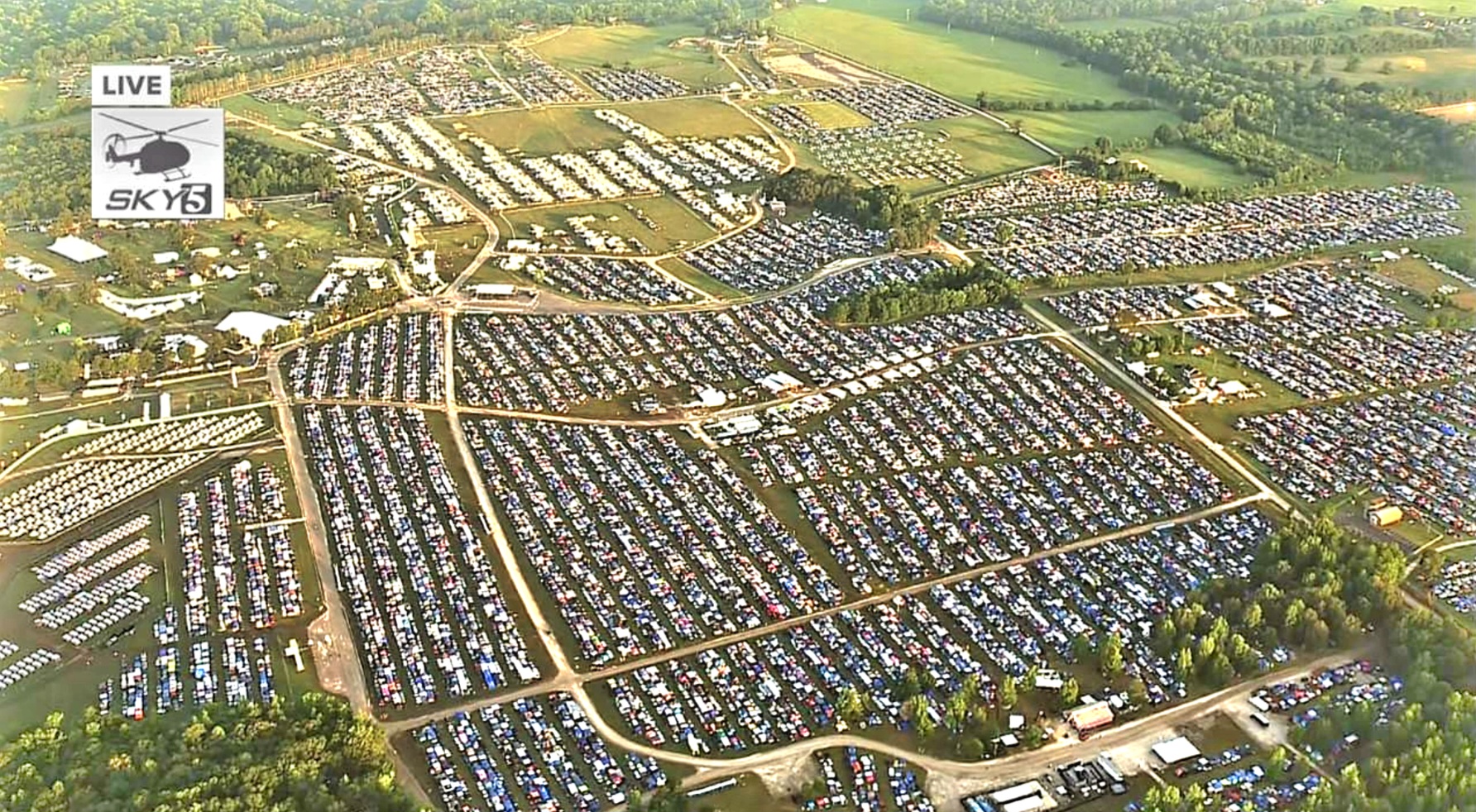
and soon enough, we were surrounded by a non-stop tailgate party defined by beer, wine, and weed. Canopies, tents, and rigs of all shapes and sizes helped form a kaleidoscopic quilt of shelters and good times.
Randy from Alabama, my RV camping neighbor and veteran of a dozen Bonnaroo summers regaled us with many interesting stories of past concerts, and offered valuable advice on how to survive the weekend. When Leah lamented about the prospects of standing in the heat for hours with the hoards, Randy had the perfect solution.
“There’s an accessibility tent before you get to the Bonnaroo arch, and the staff there can issue a permit for your chairs and provide access to all the viewing platforms near the stages,” he suggested.
“Well, that’s a gamechanger,” I exclaimed. So Leah and I did as Randy recommended. We donned our knee braces, wandered through the Plaza 7 village,
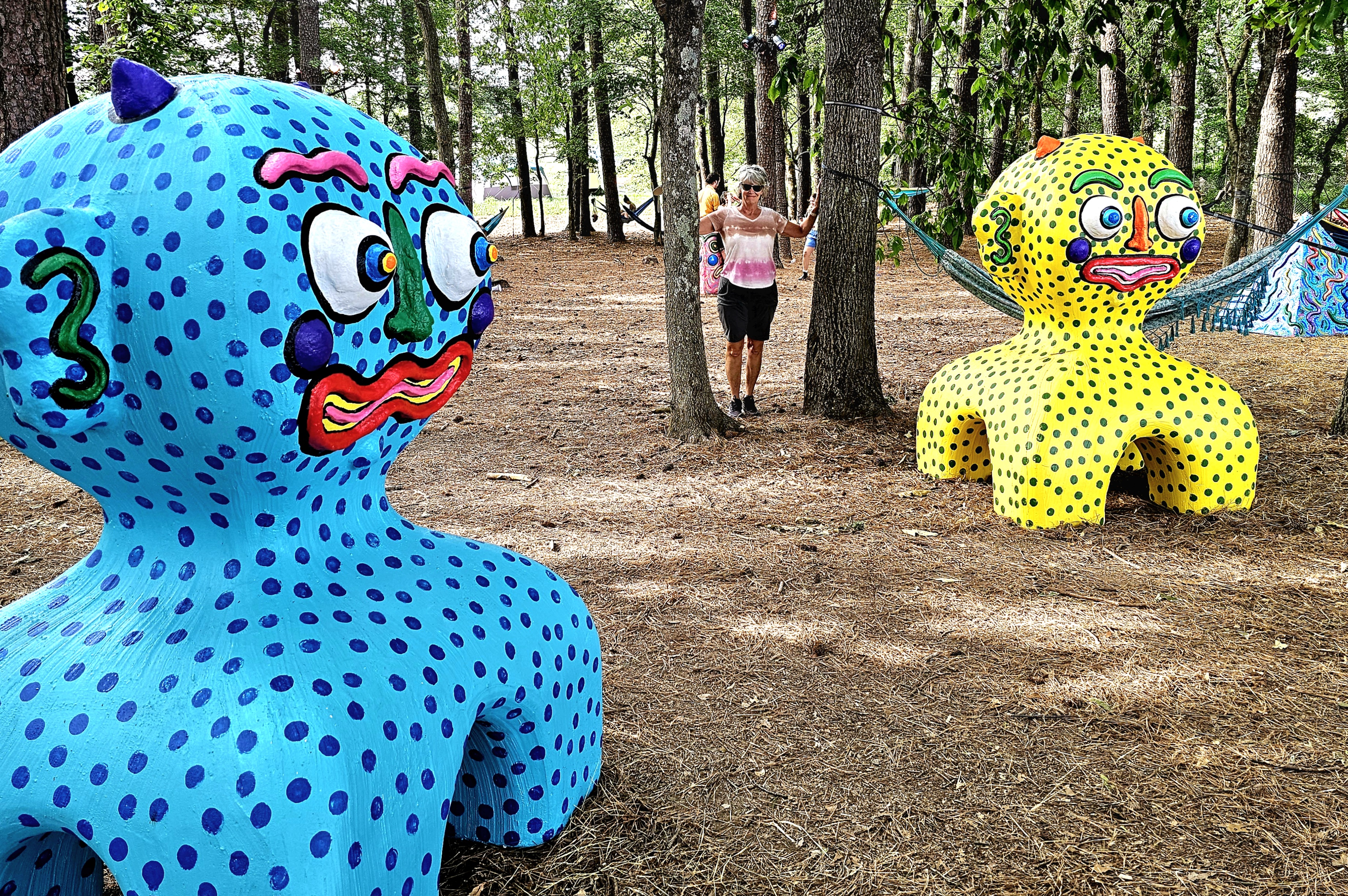
and the Grove…
before we limped into the accessibility tent, where an attendant with multi-colored hair and a tiger tattoo registered us with ADA bracelets. Mission accomplished.
On Thursday, we learned that the 4-day passes and all Outeroo camping had sold out.
Leah and I were up at dawn, waiting for the car that would shuttle us from Amman W Hotel to Allenby Bridge, while the balance of our Viking posse was flying from Queen Alia International Airport to various destinations across America. We were excited about 9 extra days of travel throughout Israel, but we were having a last-minute case of shpilkes (anxiety) about our decision to cross the border by bus on Shabbos (Jewish sabbath).
Long before the start of our Middle Eastern adventure, Leah and I had vacillated between flying into Tel Aviv from Amman or completing a land crossing–so we did a time analysis of the two. By flying into Ben Gurion Airport, wading through long security lines before reaching Customs and Immigration, waiting at the luggage carousel, finding an airport taxi during Sabbath, and driving to Arthur Hotel in Jerusalem, we figured it would be a five-to-six-hour ordeal… for about $700.
Or we could taxi to Allenby Bridge, cross between countries, and hire an Arab on the Israeli side to drive us to Jerusalem–all for a hundred bucks and half the time! It seemed like a no-brainer to me.
In addition to our driver, we were accompanied by a handler (packing a pistol) whose job it was to massage the bureaucracy… and he made all the difference.
The ride from Amman was unremarkable–only half-an-hour to the Jordanian border. The immigration terminal was just awakening at 8 AM, with handfuls of early arrivals already waiting for officials to begin processing visas. The handler approached an open window on our behalf with our passports and $30 in hand for departure tax. After that, it was a waiting game.
Another half-hour passed before we were ushered to an open square where transfer busses were boarding for another $10 per person and $2 per bag–all for a 10-minute drive across no man’s land.
Once underway, I lost count of the number of checkpoints we crossed until we finally arrived at the first Israeli immigration building. No one told us what to do or where to go, so I watched what the others were doing and mimicked their behavior.
I grabbed our bags from the cargo hold. They were scanned against our passports, and joined an avalanche of luggage being fed into an x-ray conveyor disguised as a black rubber flap, where they disappeared inside the terminal.
Leah and I joined a chaotic queue outside the terminal that inched toward the entrance and eventually merged with a rowdy, serpentine line inside the terminal that crept toward a block of AIT scanners flanked by Israeli security. Today, being Shabbos, only one scanner was operational, which only exacerbated the crowd’s irritation and frustration, especially when VIPs were intermittently ushered past us in their special lane.
It took an hour to reach the scanner, which led to another half-hour wait in a subsequent line before we were interrogated by an immigration officer who finally issued our tourist cards, and directed us through a makeshift wall that revealed a warehouse of suitcases and packages waiting to be collected.
Picking through piles of Samsonite, Tumi, and American Tourister might have taken hours had it not been for our electronic tags. After reuniting with our suitcases, we had one final queue to master, staffed by a baby-faced security agent who double-checked our IDs against the luggage registry created outside. We were now free to travel about Israel for the next 9 days.
Once we were officially on Israeli soil, we were introduced to Abdul, the taxi driver who reeked of smoke and spoke limited English. Nevertheless, we negotiated a 200 NIS fee ($55) to our hotel in Jerusalem… or so we thought. Forty minutes later, we were standing outside Damascus Gate, where Abdul mimed that he could drive no further due to a military high-alert.
We learned from a passer-by that a 13-year-old Palestinian boy had shot and wounded an Israeli father and son near the entrance to the City of David National Park, while in a separate event the night before, 7 worshippers were killed and 3 were wounded outside a synagogue in East Jerusalem by a West Bank militant, making this the deadliest attack on Israelis in recent years.
In response to the attacks, authorities countered the violence by positioning officers from a counter-terrorism unit “permanently” in the Old City to “promptly respond to exceptional events whenever necessary.” Troops seemed to be omnipresent around the perimeter of the gate.
“Just our luck,” said Leah. Her voice was filled with resignation. “This was my biggest fear! Now what!?”
“I think we’re actually safer than before,” I answered. “The threat of violence is always a real possibility, but Israel knows how to respond to situations like this, especially with the arrival of Secretary of State Blinken.”
“That may be true,” Leah offered, “but many of these soldiers don’t even look old enough to shave!”
Once we got our bearings, we drudged down deserted Jaffa Street–our roller bags bumpety-bumping behind us–until we reached Arthur Hotel.
Since we were far too early to check in, we parked our bags at the hotel and set out on foot to get lost in the Old City and trust our instincts to get back. We discovered the Armenian Quarter, one of the four quarters of real estate within the ancient walls,
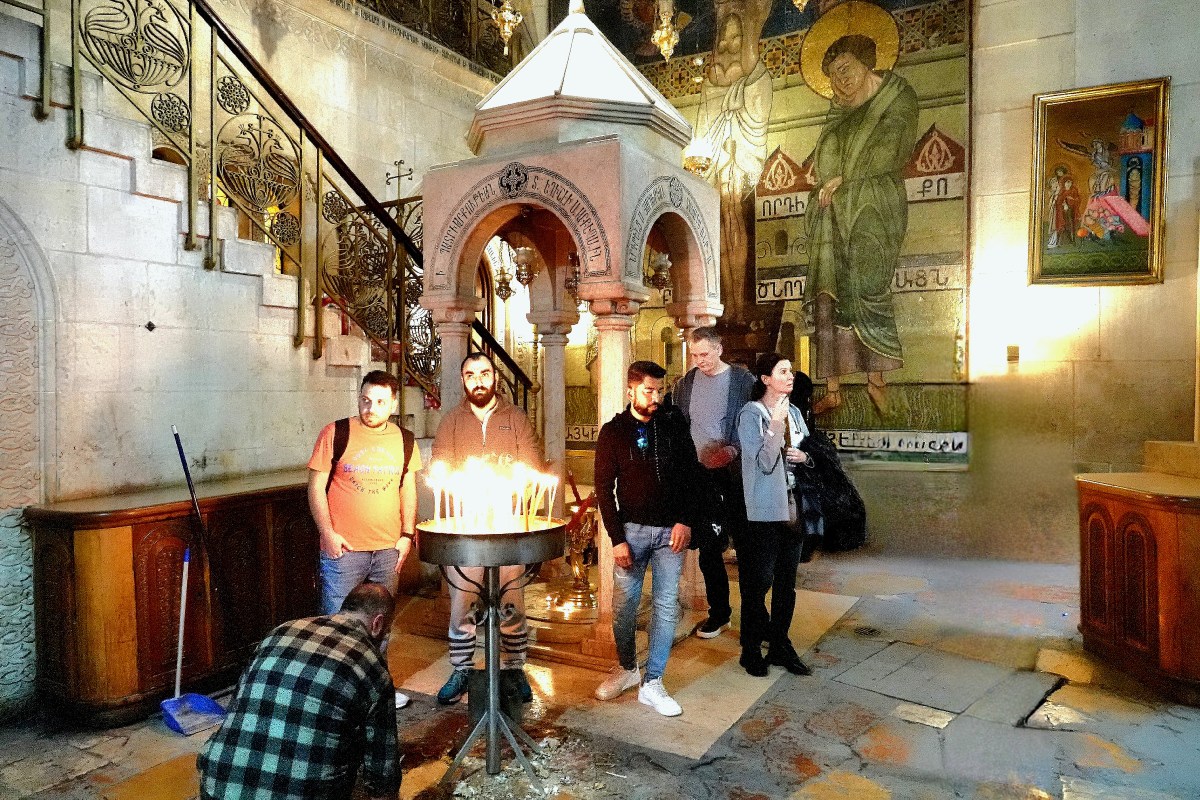
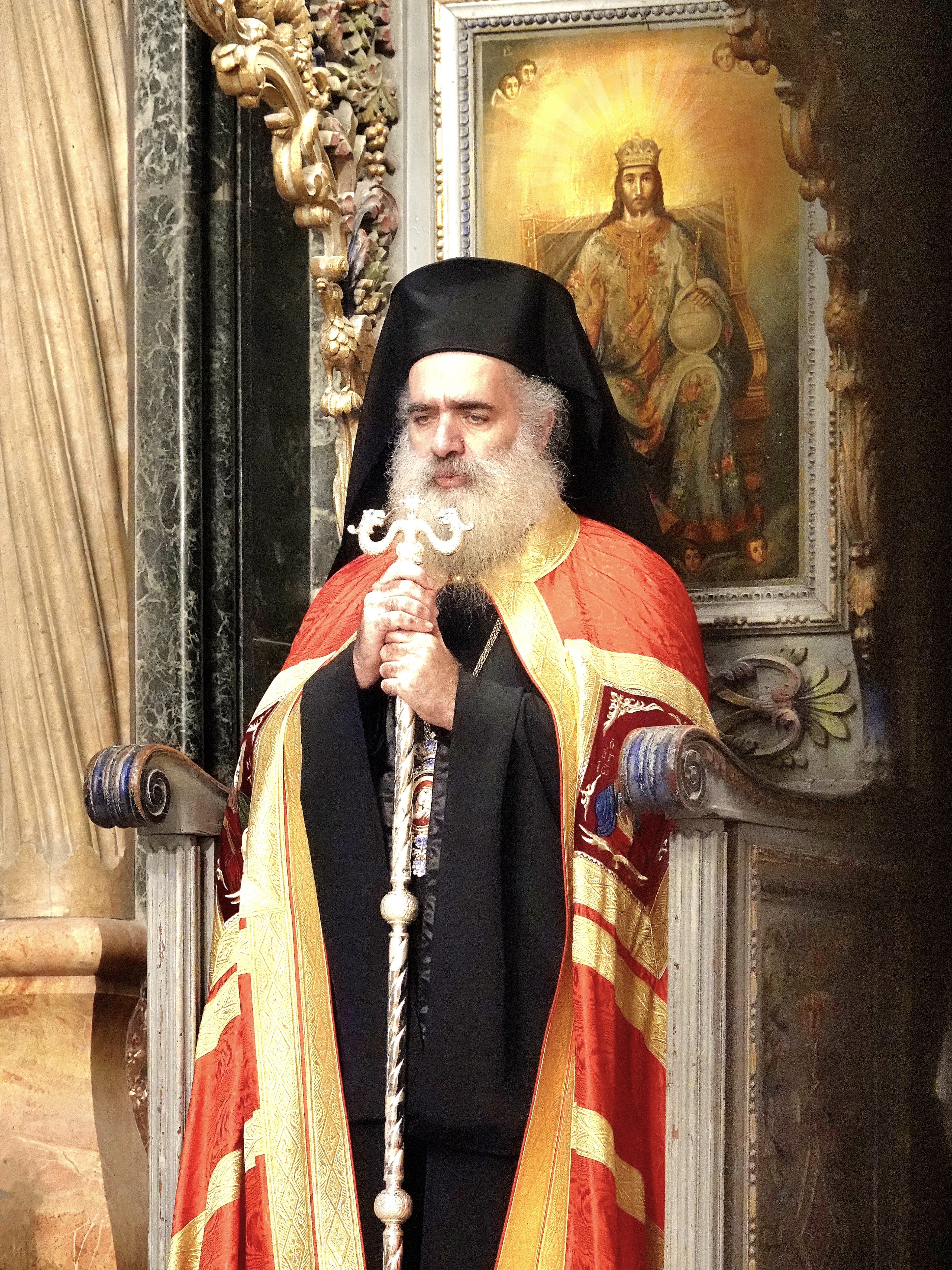
which somehow led us to the Christian Quarter, where we stumbled upon the Church of the Holy Sepulchre, Christianity’s most revered site, and home to six Christian denominations–Greek Orthodox, Catholic, Armenian, Coptic, Syrian Orthodox, and Ethiopian Orthodox–
Photo by Gerd Eichmann
that have accepted from religious scholars that this church consecrates the ground where Jesus was crucified, buried, and resurrected, as seen in a mosaic interpretation of Jesus’s journey that hangs in the church vestibule.
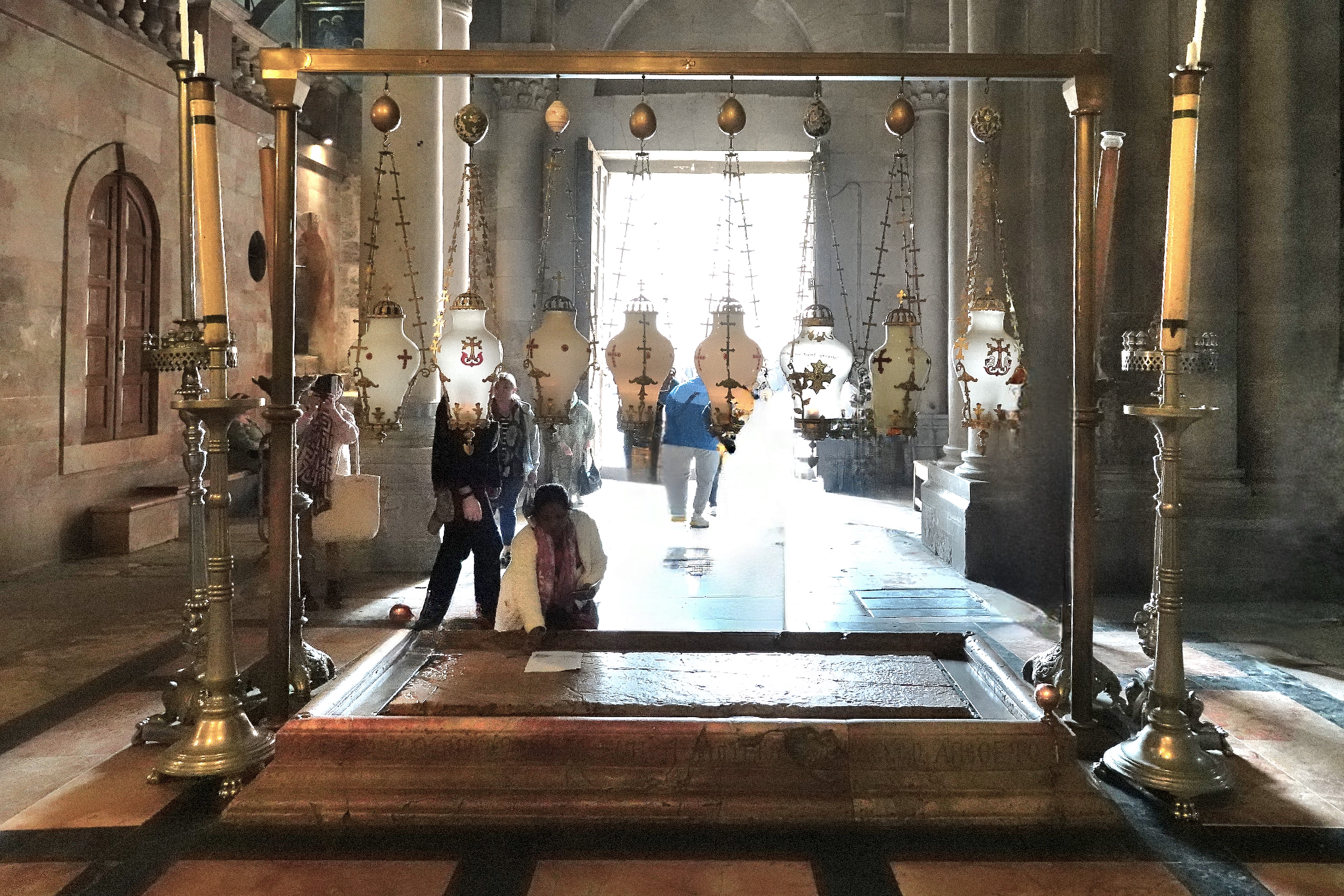
We were unsurprised to find the Church of the Holy Sepulchre crowded with pilgrims and worshippers from around the world who were here to light a candle and prostrate on the Stone of Anointing;
or worship at the uber-ornate Calgary, under the Altar of the Crucifixion, where the alleged Rock of Calvary is encased in glass;
or hug the Aedicule, a shrine protecting the tomb of Jesus,
under the dome of the Catholicon.
We even came across some Crusader graffiti…
on our way to the lower level to admire the Chapel of St. Helena.
We exited the church with a profound respect for the millions of devotees who have made this their purpose.
And we were captured by the solemnity of the moment, as we sauntered down Via Dolorosa, now aware that this was the fateful route taken by Jesus as he dragged the cross to his final destination.
It was enough to process for one day. We were weary from walking, and it was time to find our way back to Jaffa Street.
We were a crew of 48 aboard the Viking Ra, divided into 2 camps of 24 travelers who identified as Bus A or Bus B.
Most of the cruisers returned home at the end of our Nile excursion, but 18 intrepid globetrotters–a union of both buses–continued our journey to Jordan for four nights, where we were greeted at Queen Alia International Airport by Ahmad Al Khaldi, our tour director and self-proclaimed terrorist, who adopted the moniker after once guiding the brother of ventriloquist/comedian Jeff Dunham.
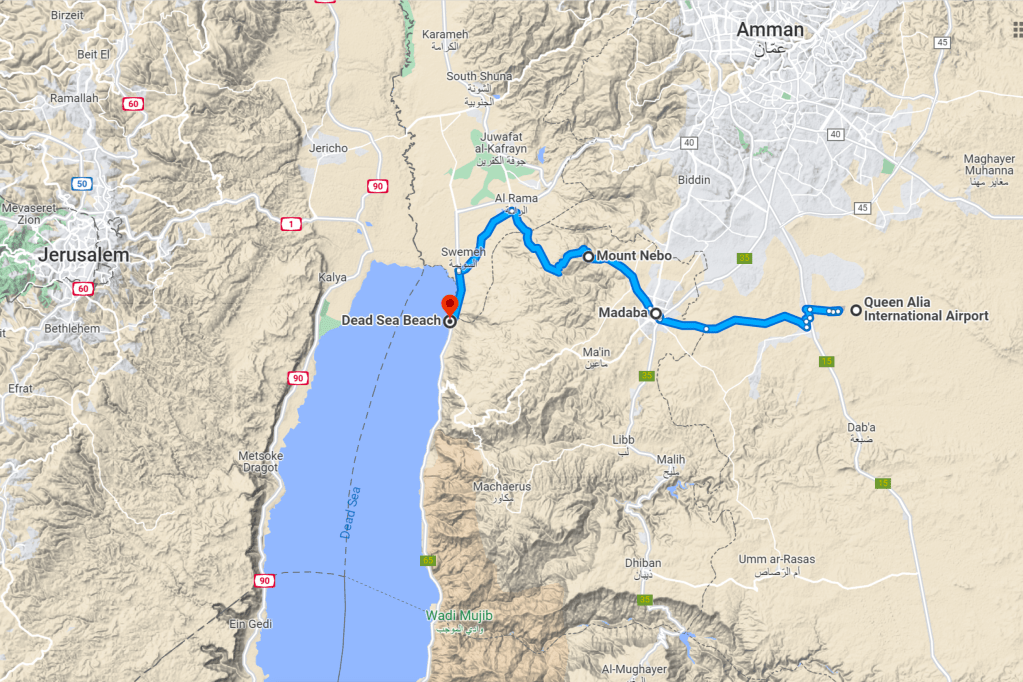
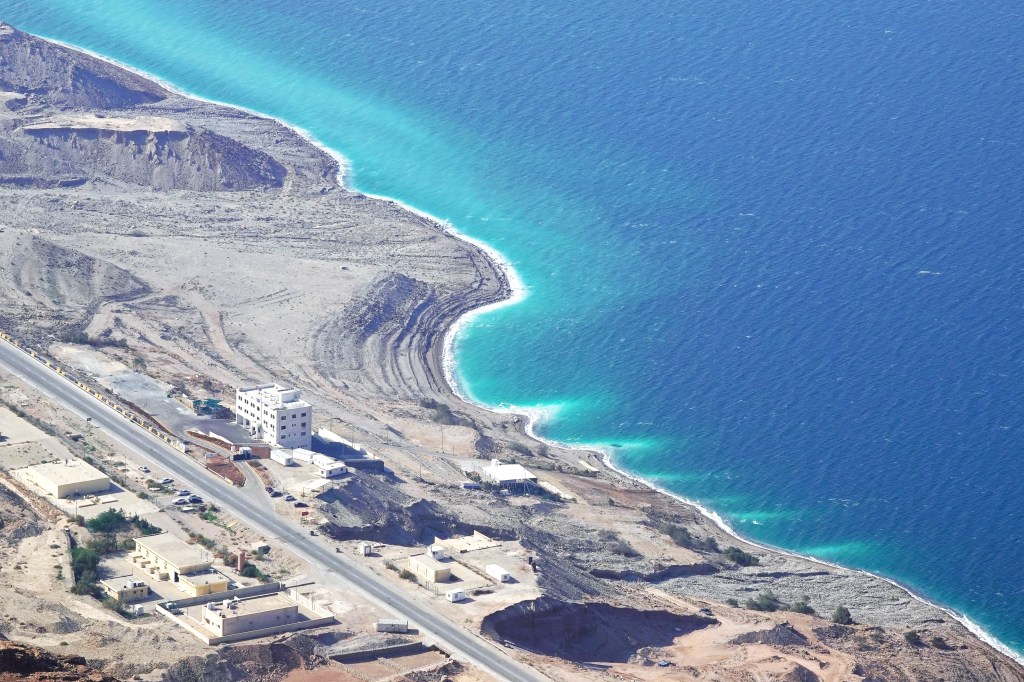
Upon arrival to Amman, we boarded a coach for a half-hour ride to Madaba. It was an ambitious itinerary with a lot of ground to cover before reaching the Dead Sea,
but we quickly knew–given the depth of Ahmad’s knowledge, wit, and organization skills–that we were in good hands.
During the half-hour ride to Madaba we absorbed some background about this ancient city that’s renowned for its skilled mosaic artisans,
and its deeply religious ties to Christianity and Islam.
After an orientation of one ofJordan’s holiest landmarks,
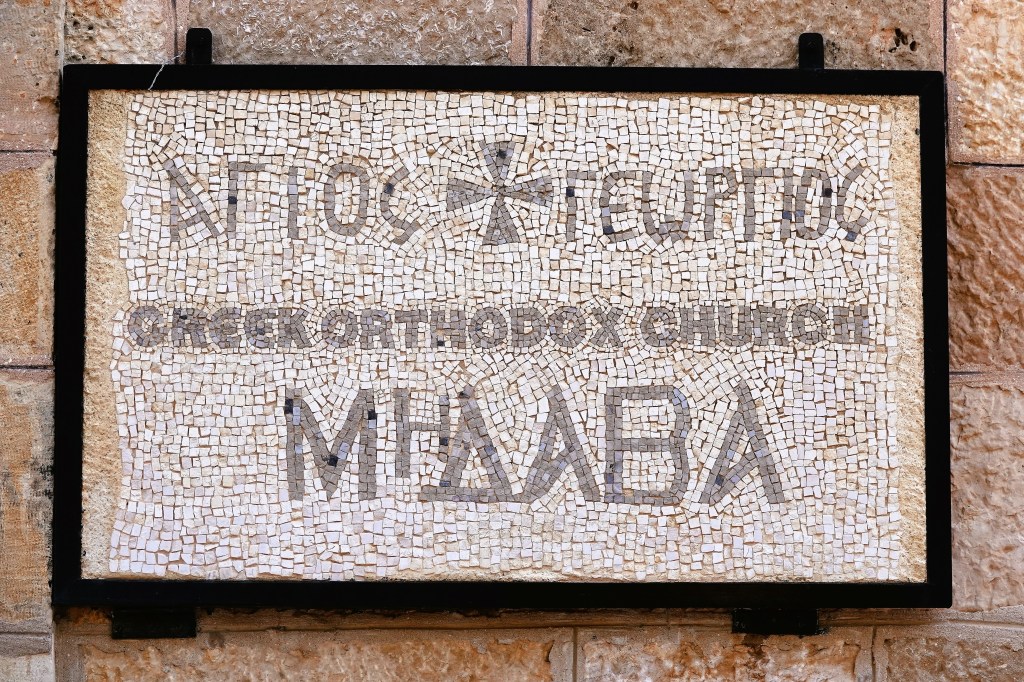
we headed to Madaba’s feature attraction… the Greek Orthodox Basilica of Saint George,
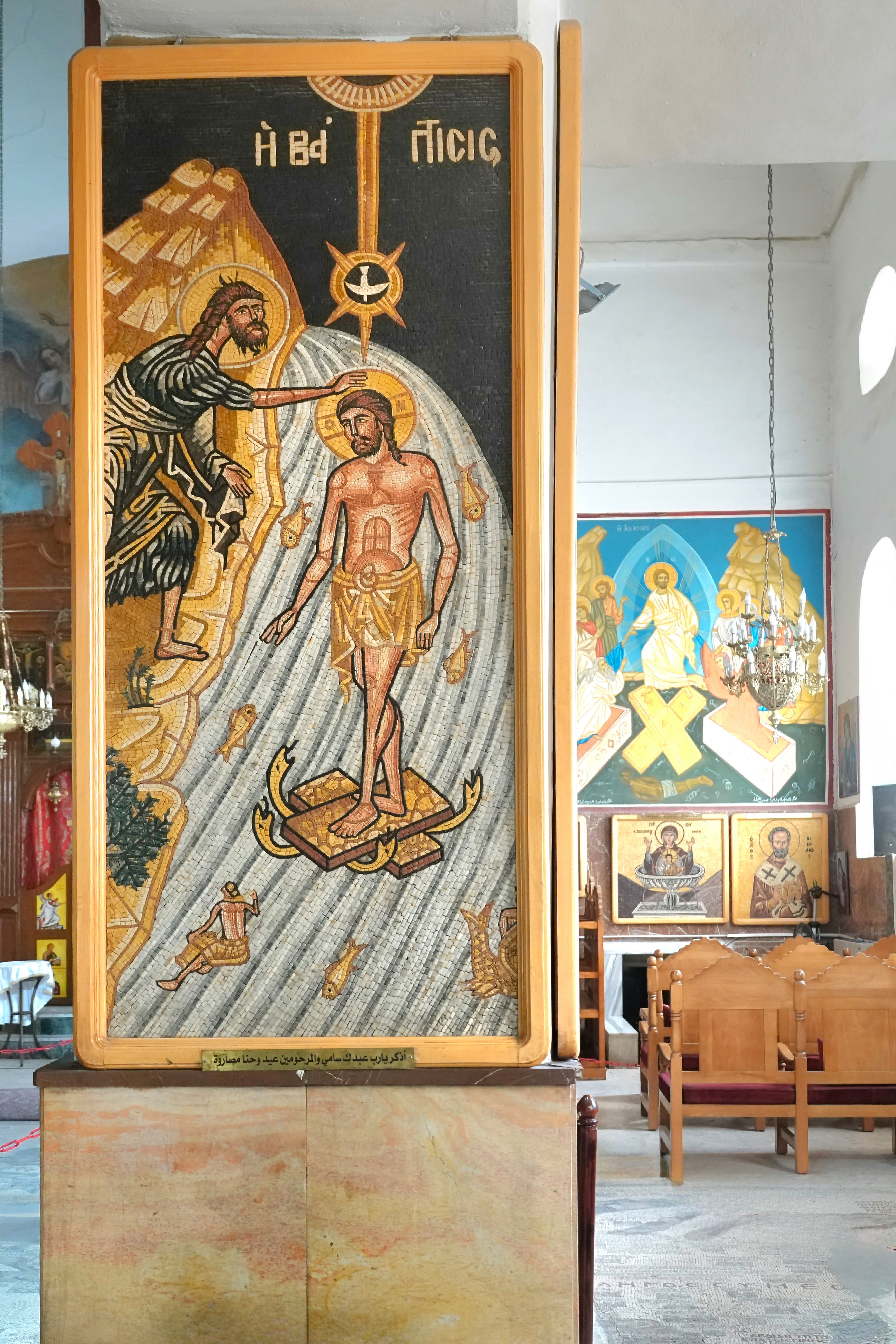
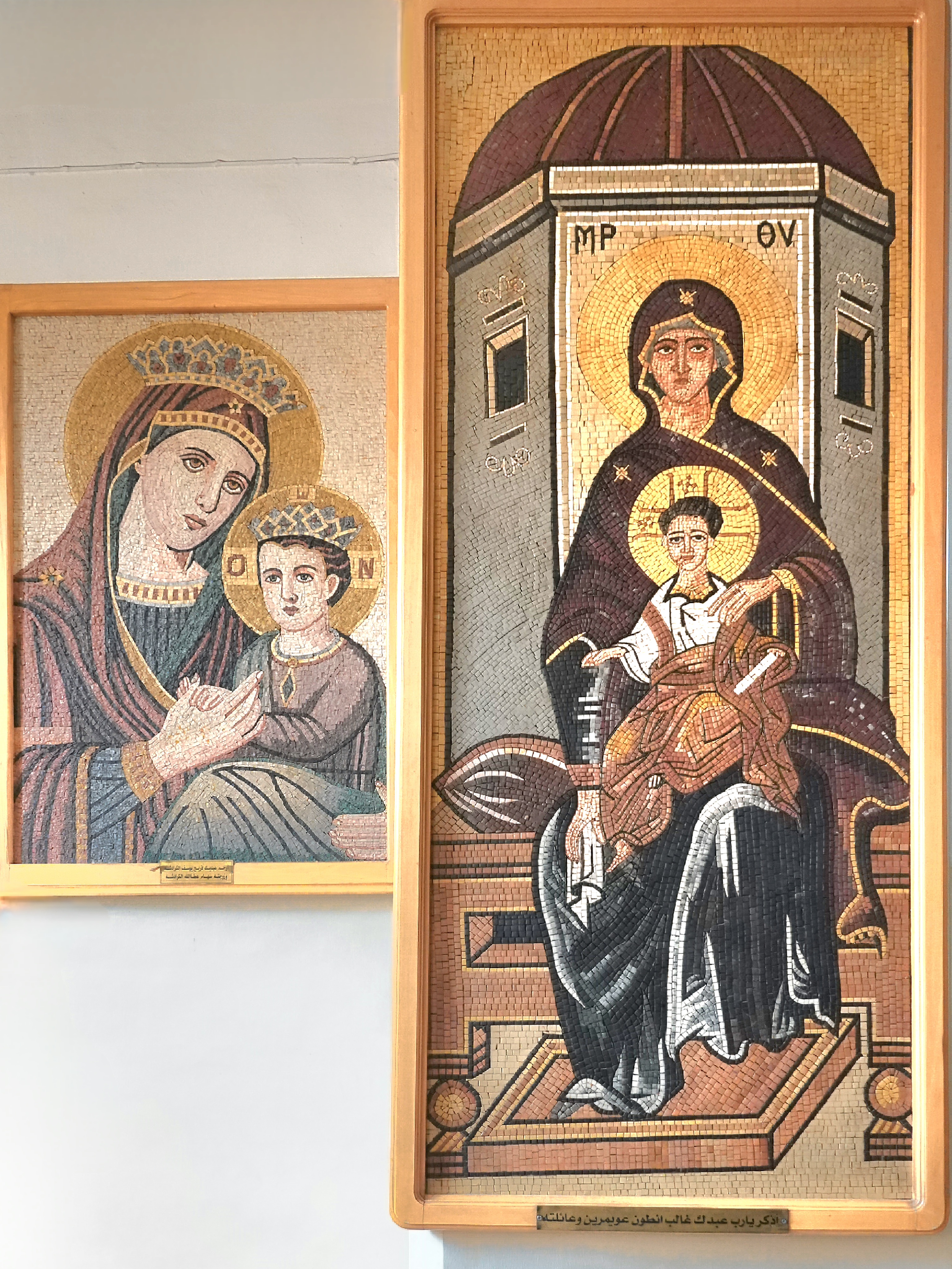
where the current structure, consecrated in 1896 is adorned by mosaic icons on every pillar…
but it’s the mosaic floor that’s the star of St. George and Madaba!
The partially restored mosaic map of the Holy Land originates from the 6th century, and was excavated in 1884 when the current church was built atop the ruins of the original Byzantine church. Over 2 million tiles comprise a detailed rendering of the Middle East with surprising detail and accuracy, making it both an artistic masterpiece, and the oldest surviving representation of familiar biblical sites.
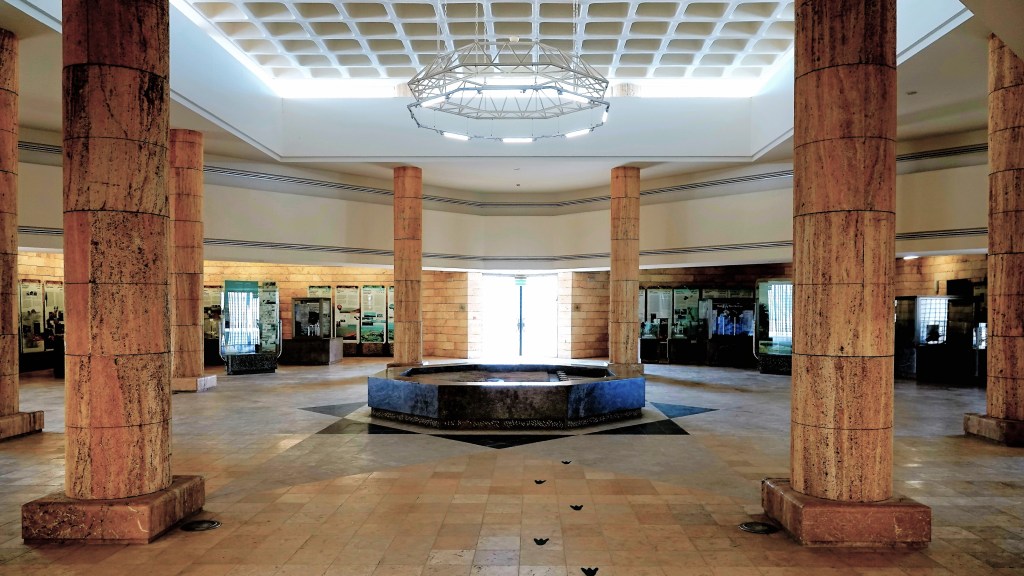
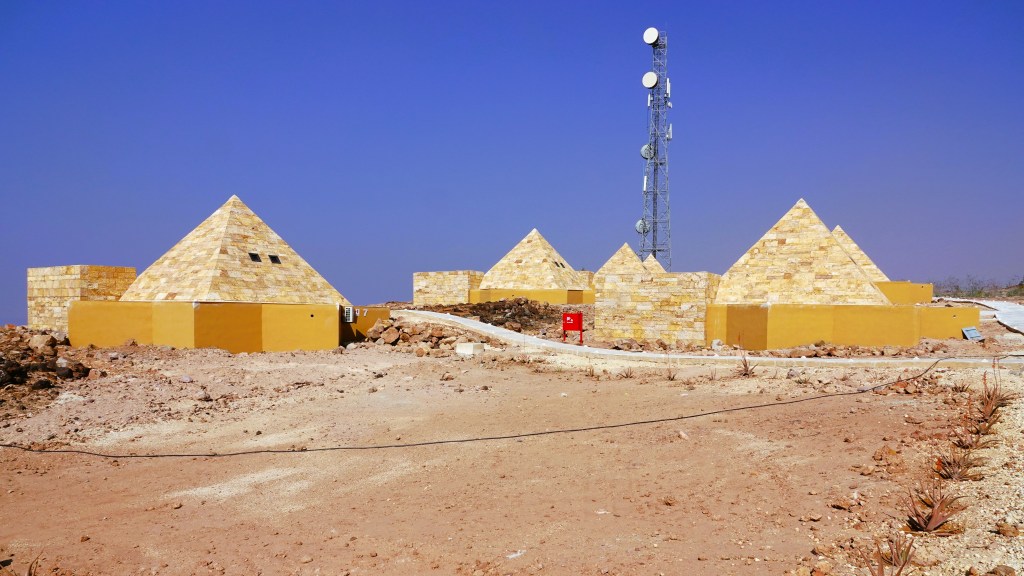
We bypassed Mt. Nebo (to be explored the following day) and continued to the Dead Sea Museum,
where we enjoyed an aerial panarama of the Jordan Rift Valley with the lowest elevation on earth (-1410 ft).
and a closer examination of the area’s geological and cultural significance.
Developers see tremedous potential in promoting Dead Sea tourism, touting first-class accomodations and access to its briney beaches. And they’re wasting little time in hotel construction,
because at it’s current rate of evaportion, the Dead Sea will cease to exist by 2050.
Shortly after checking into the sprawling Movenpick village…
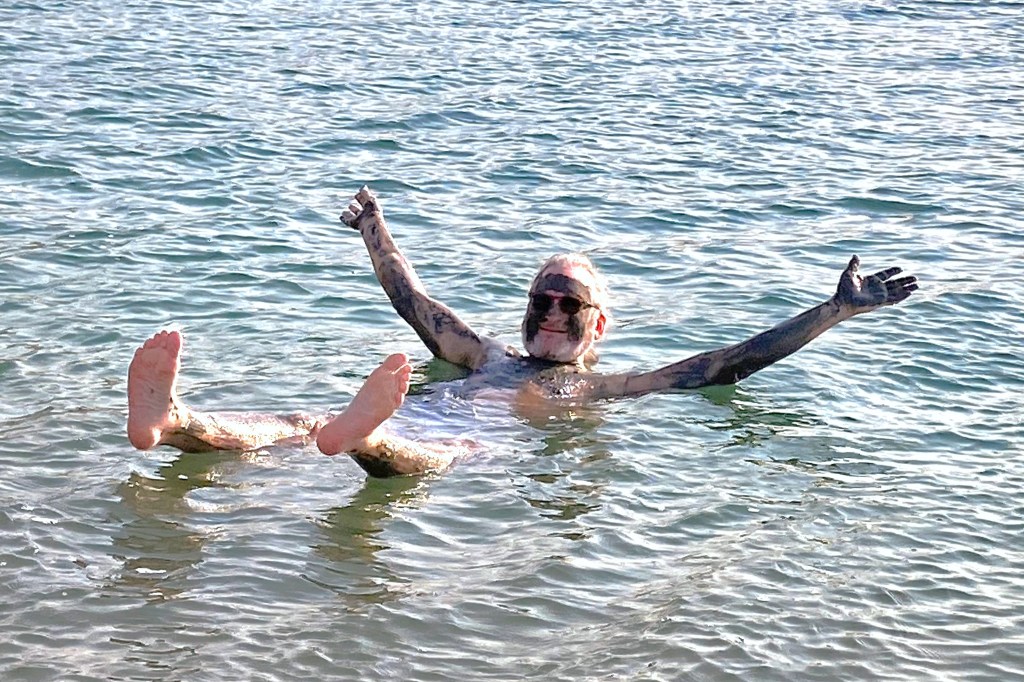
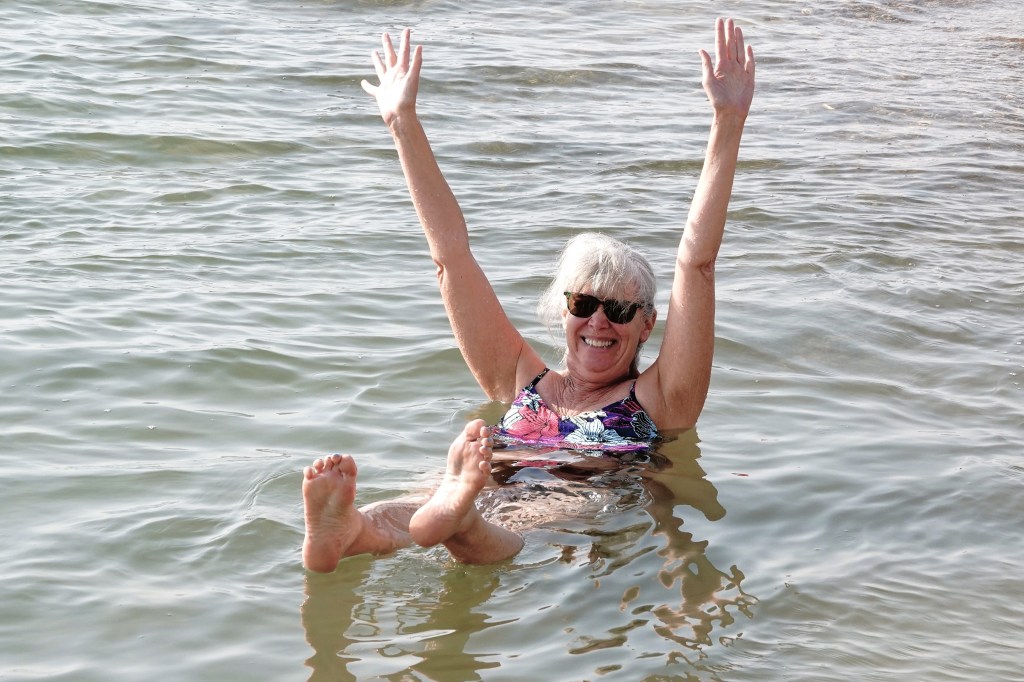
it was time to relax with a mud treatment,
and a bouyant soak. What a feeling!
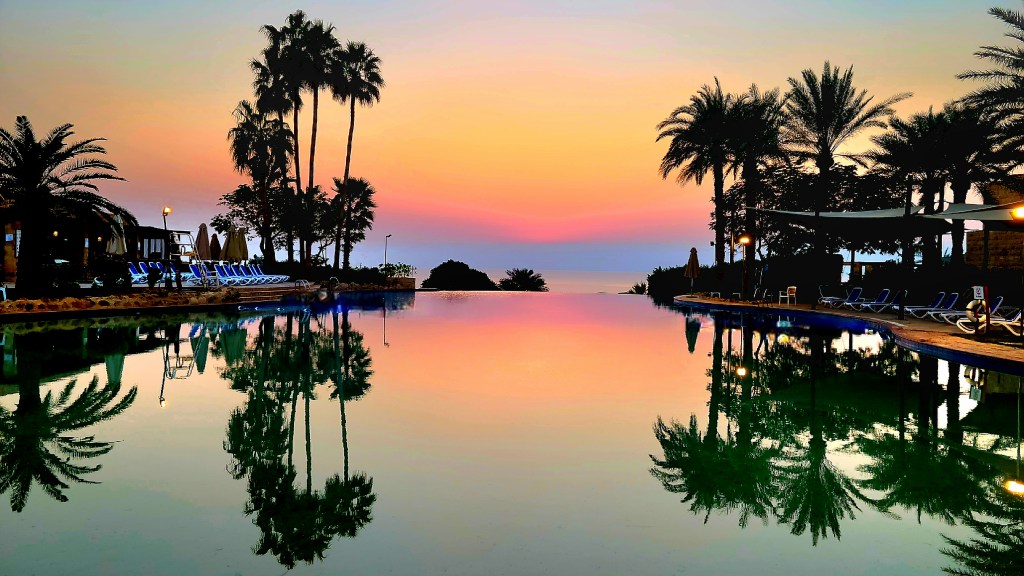
There’s been lots of internet chatter about which country, Israel or Jordan, has the best beaches. The answer is easy: it’s whichever one you’re on!
However, the east coast scores extra points for hosting the sunset over Jerusalem most nights.
Like many ancient civilizations, Egyptians were obsessed with religion and mythology. They pledged their love and devotion to more than 700 distinct deities entrusted to protect the natural order of all things (wind, water, sun, sky, etc.) from creation to afterlife. In exchange, the devout would be rewarded with an everlasting life of prosperity, good fortune, and happiness… once they reached their final destination–the Underworld.
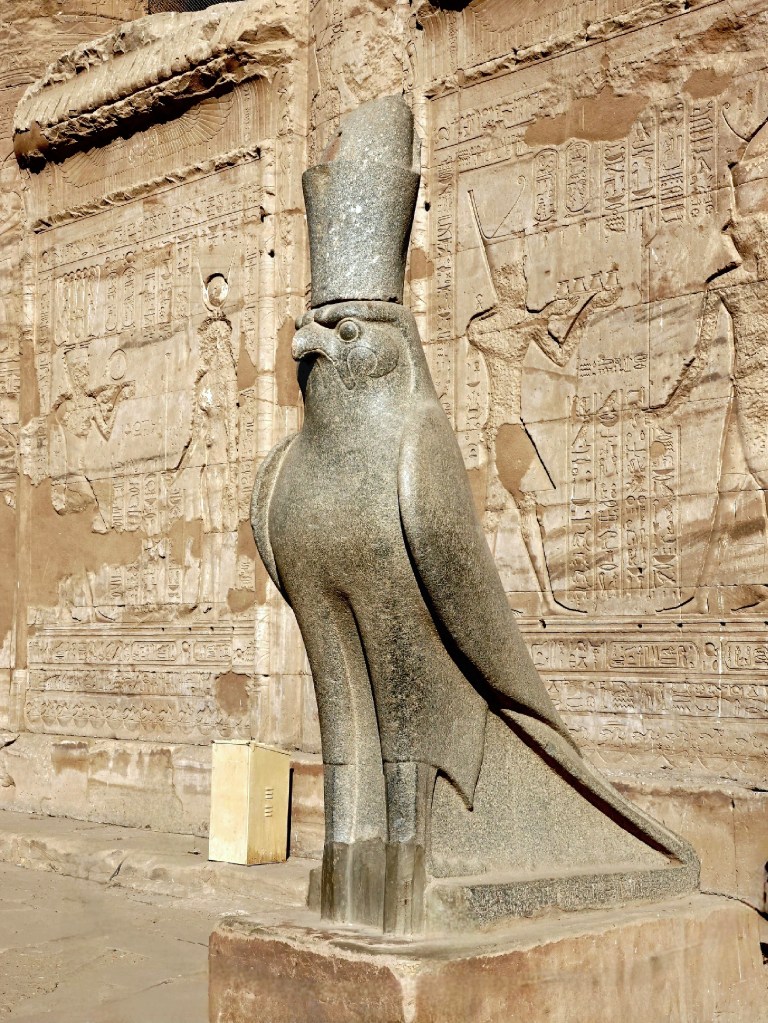
Gods and goddesses were personified as powerful creatures,
and hybridized animals,
and amalgams of animals and humans.
Egyptian paganism lasted long into the 5th century. However, with Egypt situated at the intersection of Europe, North Africa, and the Middle East, Egypt was also at the crossroads of influence when monotheism gained a foothold in the Middle East and spread throughout the continents.
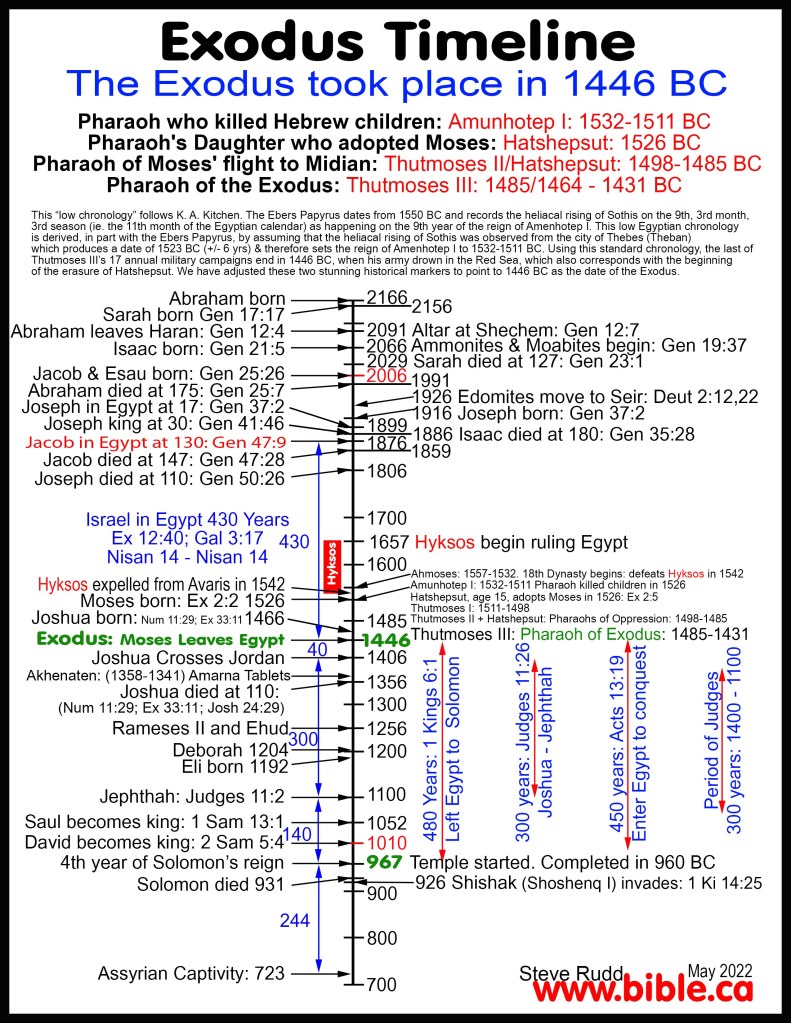
When synchronizing Egyptian chronology and Old Testament timelines, the earliest record of monotheistic worship in Ancient Egypt occurred during a time of remarkable prosperity when Joseph–in his role as Grand Vizier of Egypt–governed and fed its people, while surrounding neighbors faced famine and hardship.
This informed Jacob’s decision to relocate his clan from Canaan to Egypt in search of provisions and an unforeseen reunion with his son. Biblical scholars have speculated the date to be 1875 BC.
This led to the eventual settlement of the Israelites, whose numbers may have grown to 2,000,000 over the next 430 years, until the storied Exodus–which would have occurred in Year 18 of Thutmose III’s reign–in 1446 BC.
Interestingly, Amenemhat, Thutmose III’s first-born and heir apparent, mysteriously predeceased his father, and was inscribed on a column at the Temple of Amun at Karnak shortly after the death of Hatshepsut and the subsequent accession of his father to Pharaoh.
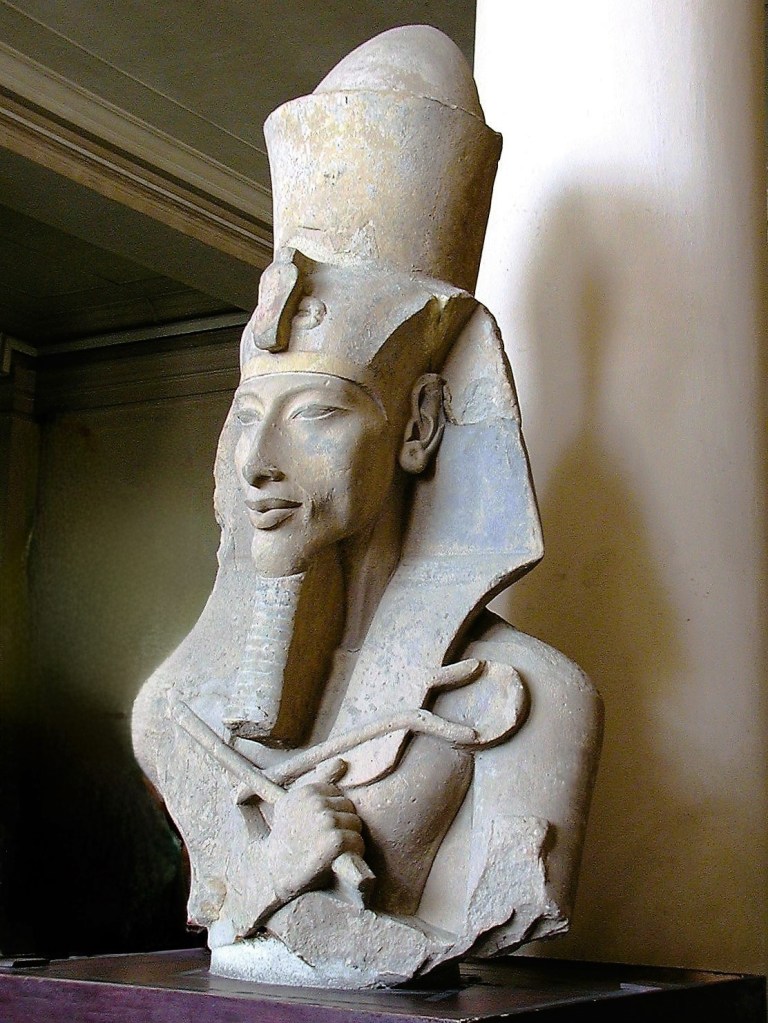
Religious reform from polytheism to pagan monotheism was momentarily embraced by Amenhotep IV during the his reign (c. 1358–1341 BC).
For some unknown reason, he changed his name to Akhenaten and elevated the cult of Aten (the sun disc) as the one and only true God.
Akhenaten went so far as to scrub all references of Amun-Ra from Karnak and build a new worship center and capital in Amarna, 170 km south of Thebes. But Atenism was short-lived; it never survived Akhenaten death, as he was so reviled by the priests that critics would often refer to Akhenaten as the Heretic King.
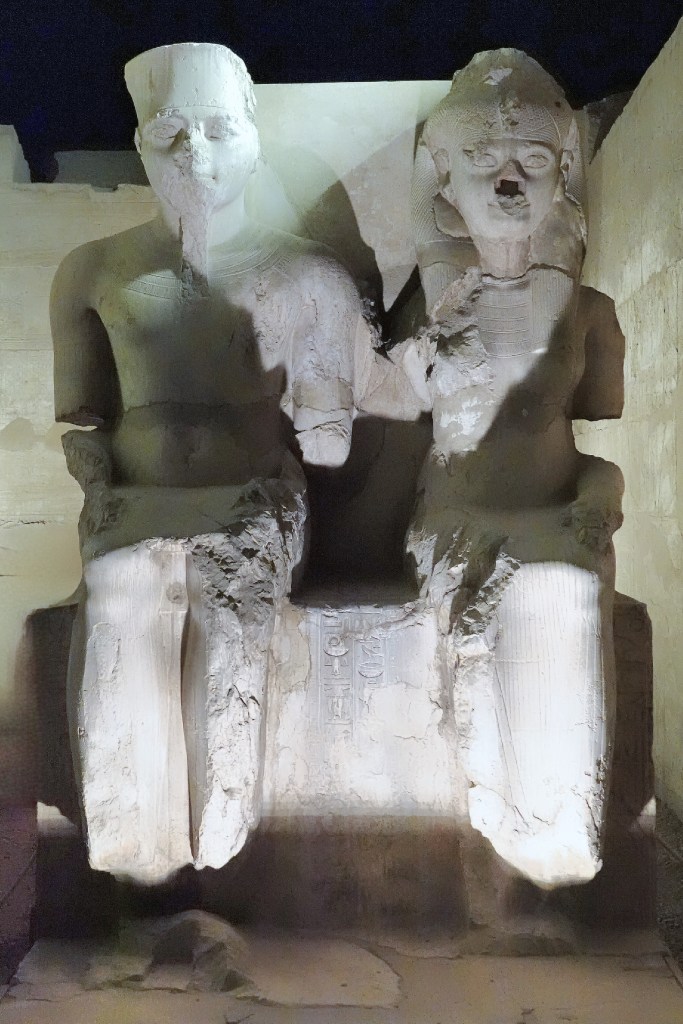
Subsequently, Tutankhamen–upon his ascension to the throne–reverted to worshipping Amun-Ra with his wife/half-sister, Ankhesenamun. He was 8 and she was 13 when they wed, albeit she was previously married to her father for a short time.
They had two daughters together; both were stillborn. Tut died suddenly at 18 from a fall or malaria or both, leaving Ankhe without an heir. She remarried Ay (presumedly her maternal grandfather), the next pharaoh, and soon disappeared from history.
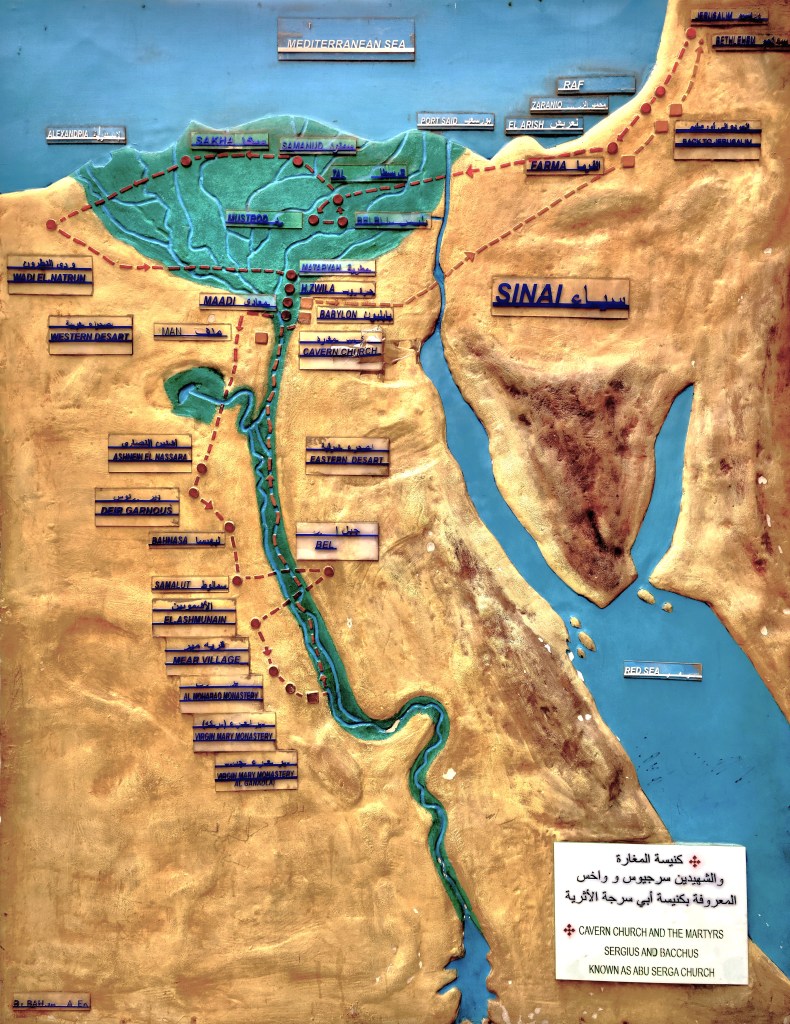
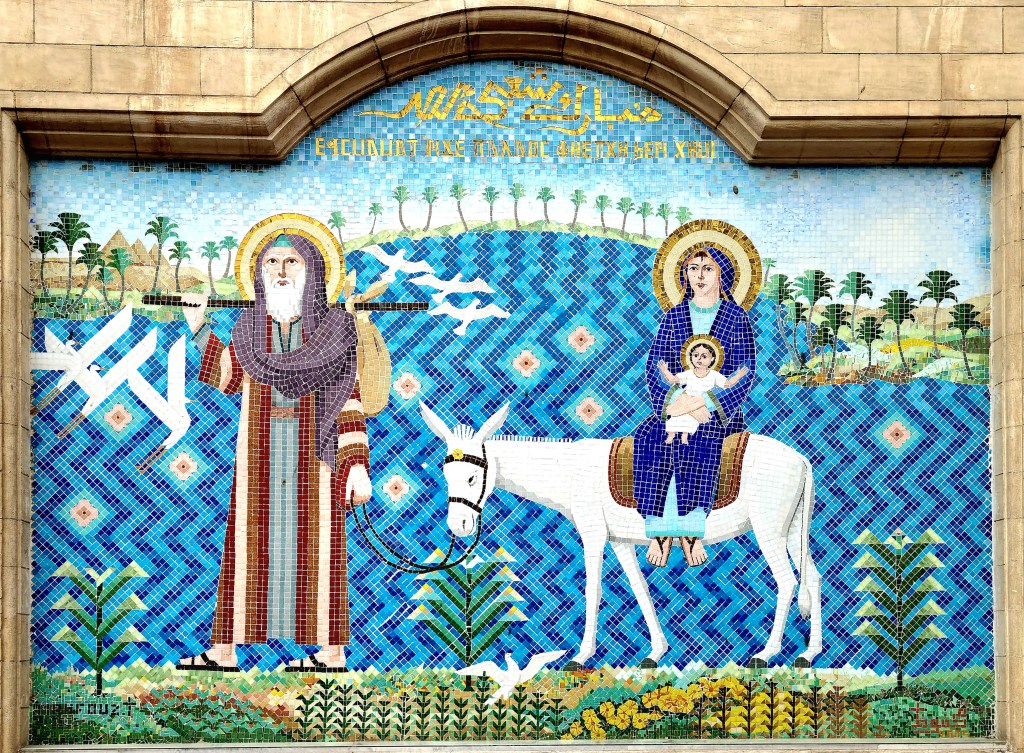
Polytheism remained the cultural norm for the following 1,400 years, until Egypt bore witness to the seeds of a new cultural revolution when the Holy Family escaped the wrath of Herod the Great’s infanticide decree c. 7 BC, and sought refuge in Egypt for the next three-and-a-half years.
Their journey through the Sinai dessert and across the Nile to Heliopolis…
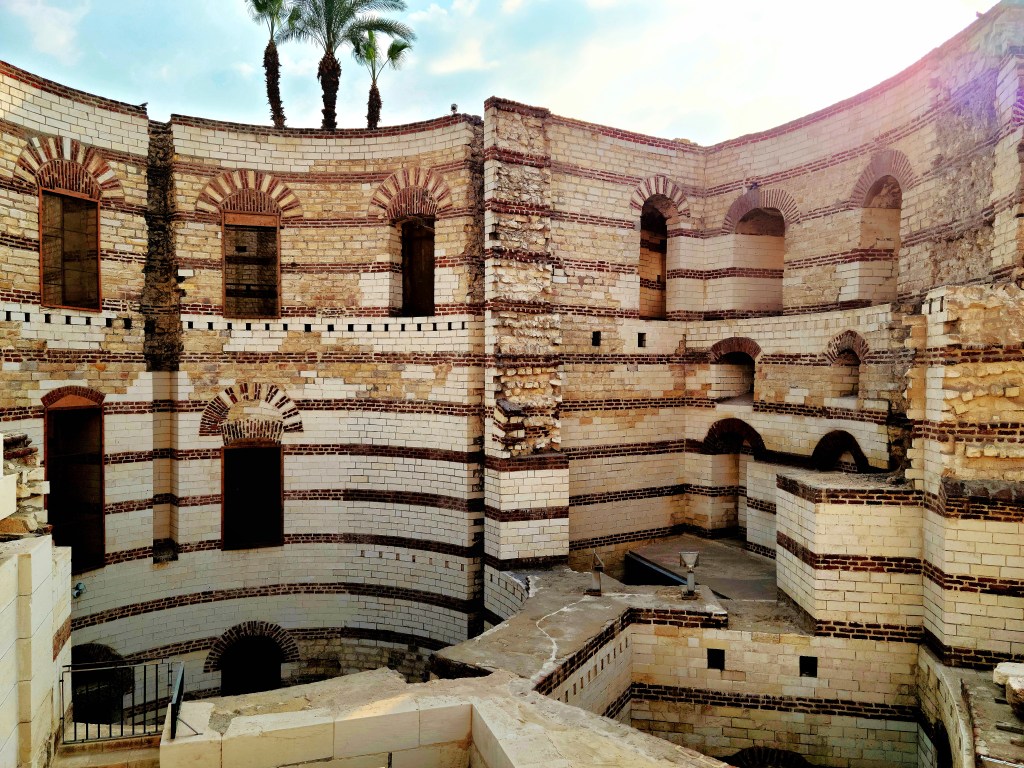
brought them to the Roman fort of Babylon in Old Cairo,
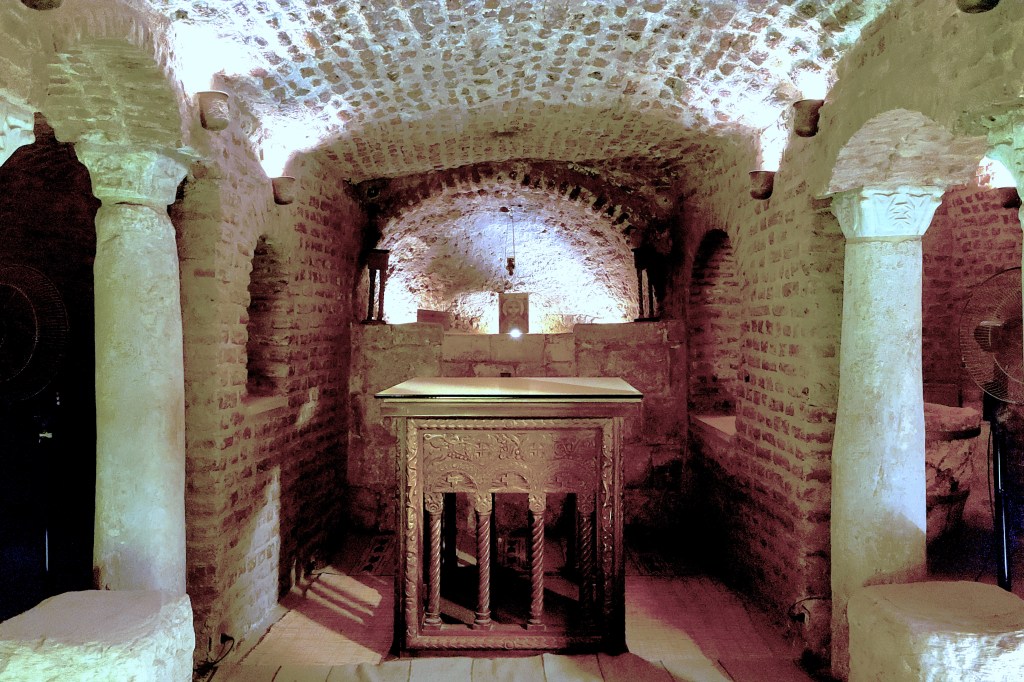
where they found shelter in a cave for the next three months,
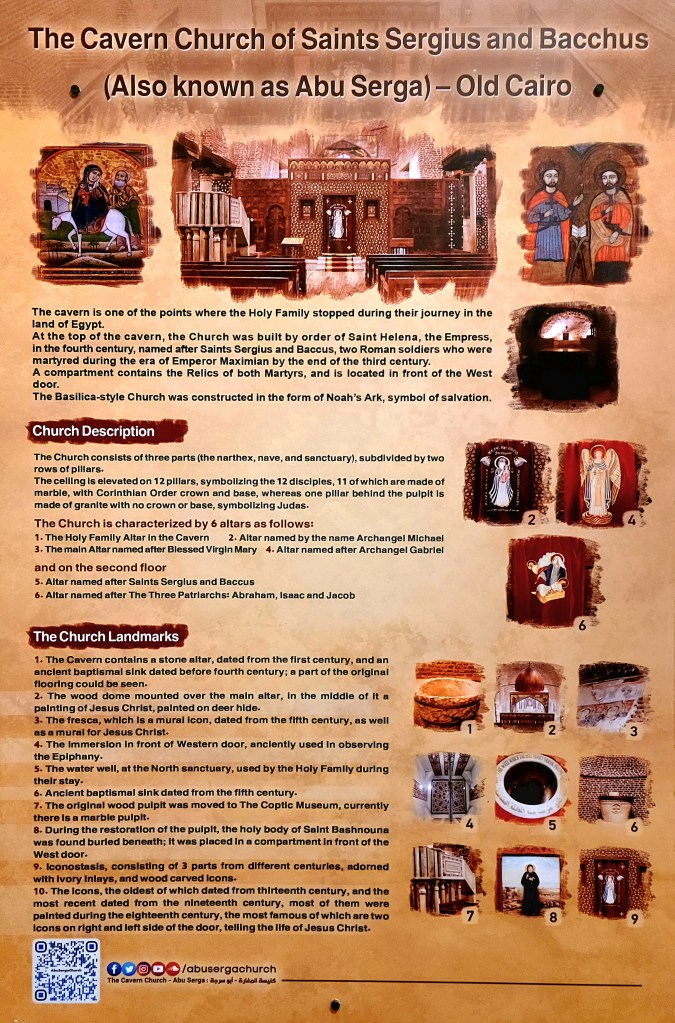
which would later become the foundation for the Church of Martyrs Sergius and Bacchus in The Cave (aka Abu Serga) built in the 4th century,
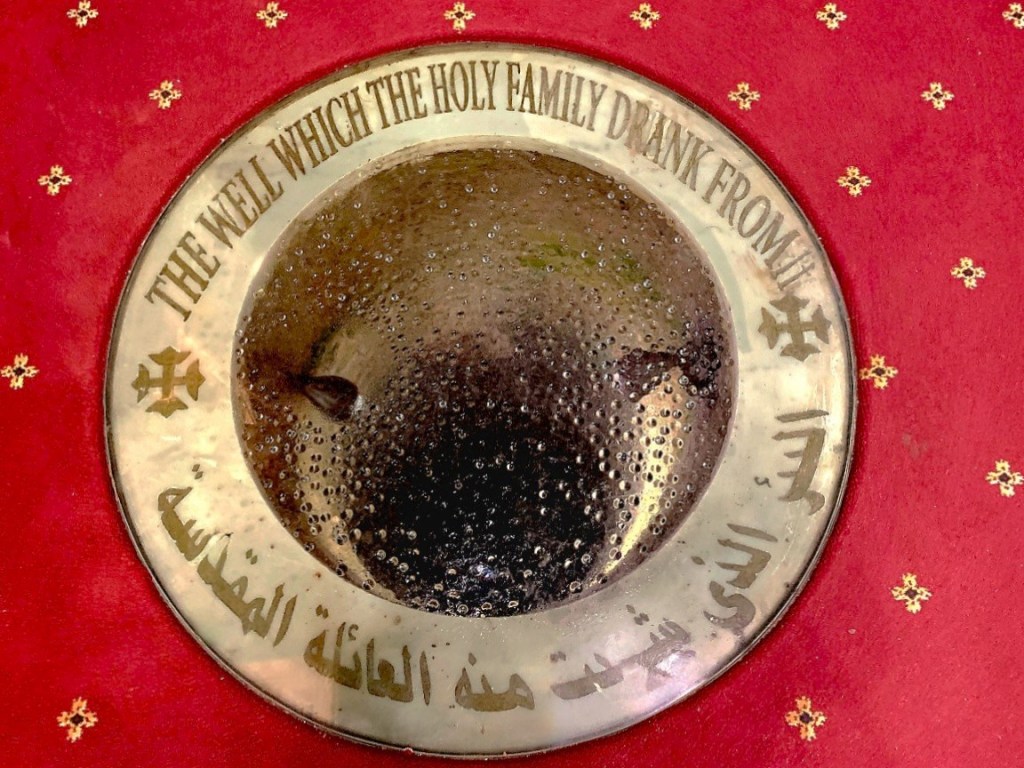
and the site of a water well which nourished Joseph, Mary and baby Jesus during their stay.
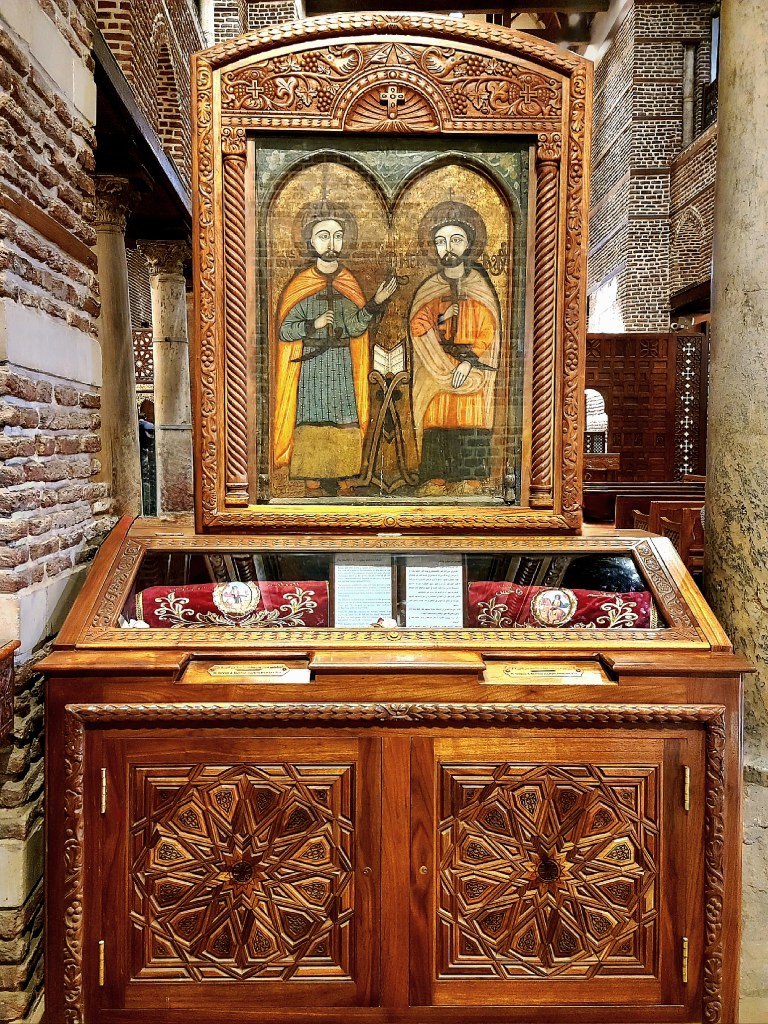
Other distinguishing features of the church include: the wall of painted icons;
and the precious relics of Saints Sergius and Baccus.
Worship of pagan deities began to wane around the late 4th and early 5th Centuries as Christianity became popular, and was finally outlawed in the 6th Century by Christian Roman Emperors. Consequently, Old Cairo became an important center of Christianity in the world, with Monasticism begetting Coptic Christianity, and extending throughout the Arab tribes.
With Coptic Christianity taking root, church worship proliferated in Byzantine Egypt, as did the number of churches in Old Cairo.
As Leah and I walked through Old Cairo, we were transported through history.
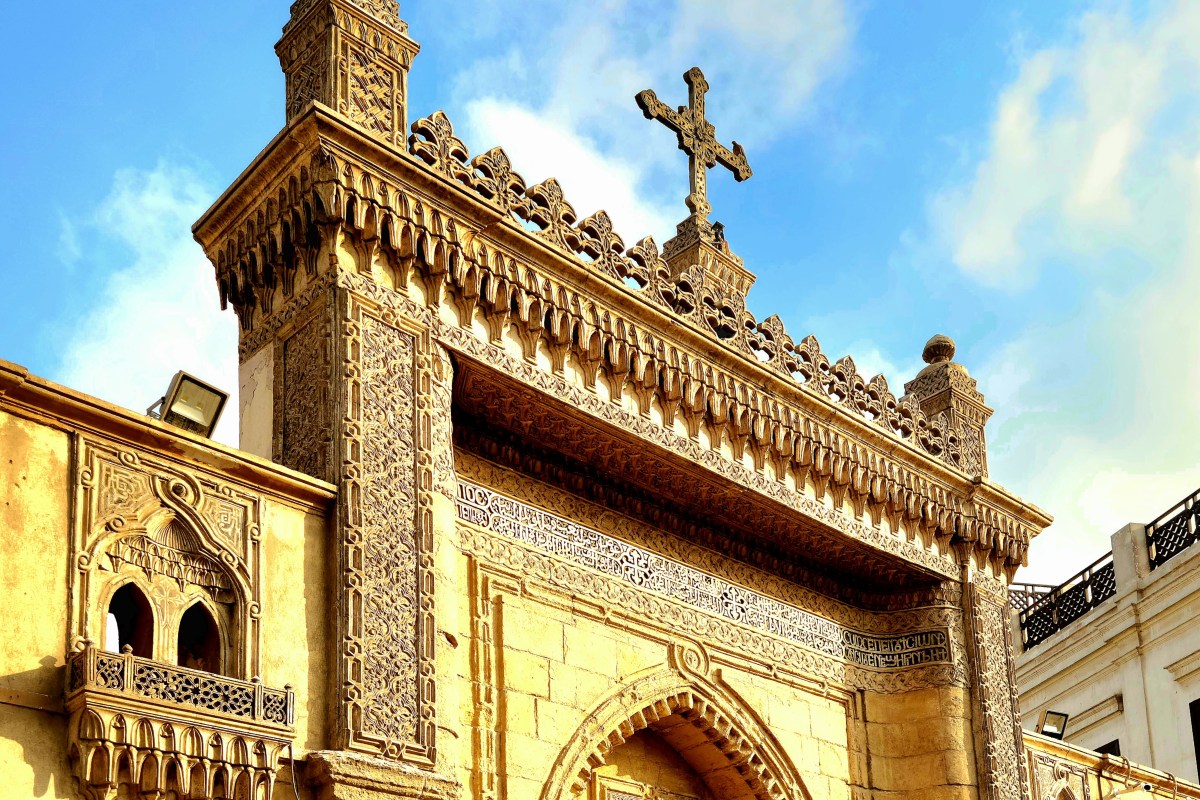
We took time to explore the Church of the Virgin (aka Hanging Church), which dates to the 3rd century.
Egypt was conquered by the Rashidun Caliphate in 646 AD, ending 7 centuries of Roman rule, but Christianity survived the war. The Arab invaders carried the Quran with them, and slowly converted the Copt population to Islam. By the end of the 12th century–which coincided with the end of the Crusades–the Christians lost their majority status thanks to intermittent persecution, destruction of Christian churches, and forced conversions by the Muslim brigade.
Today, Coptic Christianity accounts for 10% of Egypt’s population. And while they are mindful of their slim minority and occasional, bigoted backlash, the Copts are not shy about their zeal.
Nubian Coptic Church, Esna
The survival of Judaism in Egypt has been less fortunate. Only 100 Jews remain in Egypt, mostly concentrated in Alexandria. To date, only three Jews live in Cairo, and all are women. The youngest of the bunch is Magda Haroun, age 70, and the elected representative of Cairo’s Jewish community.
Ben Ezra Synagogue, 9th century AD
But Magda is living proof that all three religions can co-exist under the same roof. After all, her ex-husband is Muslim, as are their two daughters, and her current husband is Catholic.
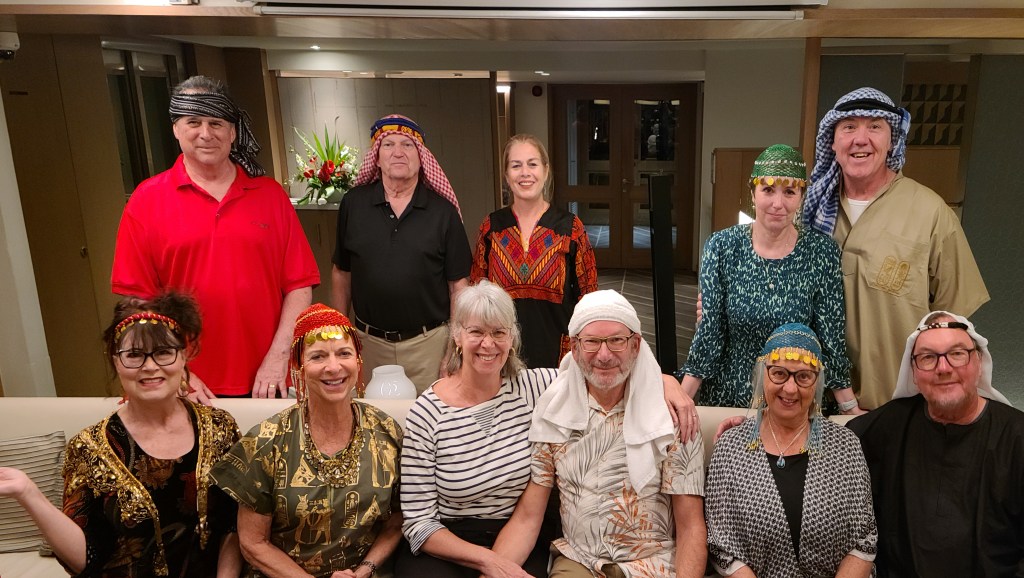
Tonight was cultural arts night aboard the Viking Ra, and all hands were decked out in their finest Egyptianized evening wear, in celebration of our host country.
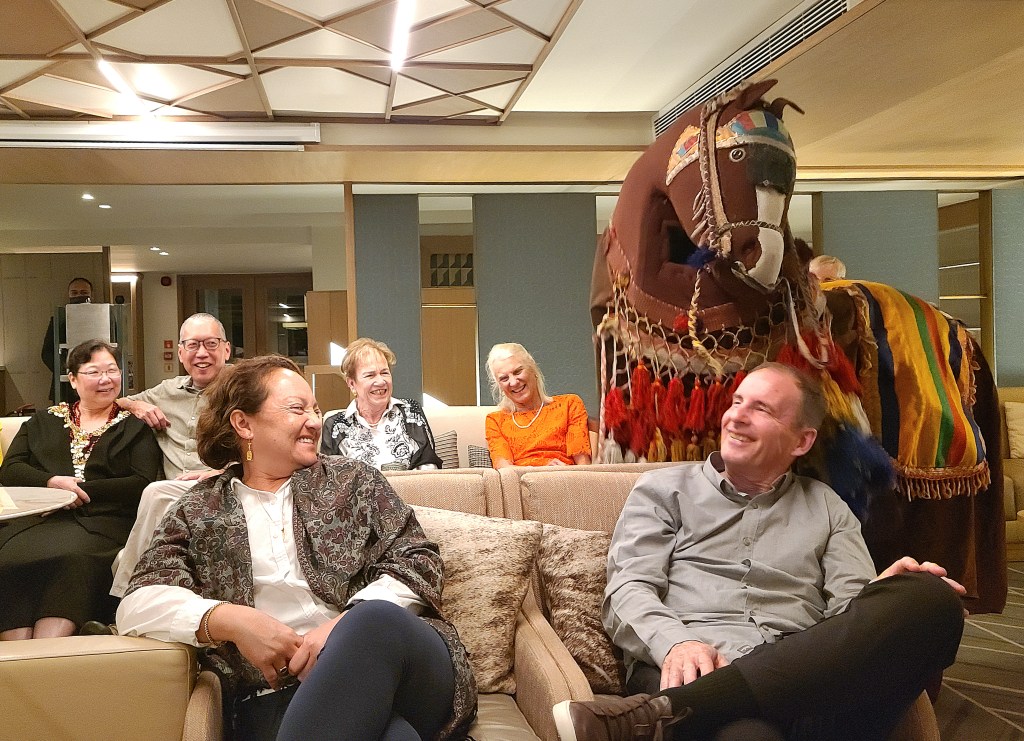
It provided the perfect opportunity for women to shimmy in their cotton camel PJ pants, embroidered tunics, and spangled belly dance costumes,
while a few men rocked the casbah in their galabeyas (long shirts) and keffiyehs (square-shaped, cotton scarves).
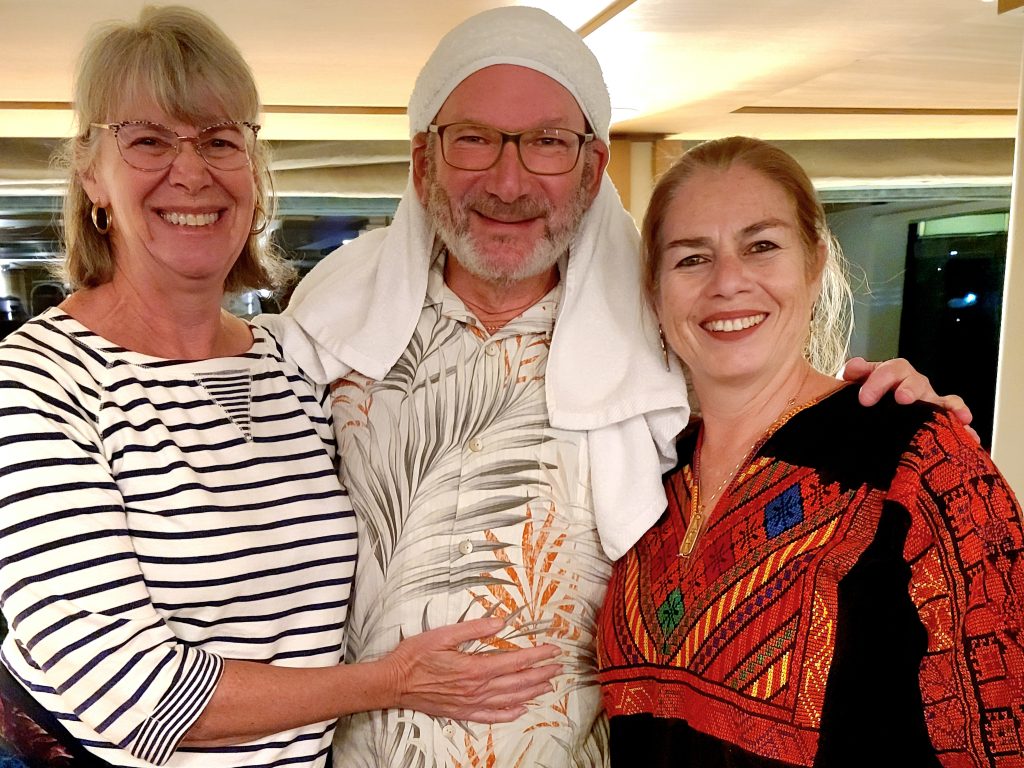
Personally, my taste borders on Tommy Bahama does Margaritaville at REI, with little to no resemblance of anything Middle Eastern-related, so I reimagined a hand towel as a Nemes (royal headdress), and called it a night. Leah chose to ignore the fashion directive.
It was also a time for traditional Egyptian cuisine–served family style–followed by an hour of Sufi-themed music and dance.
With the riverboat tied up in Esna for the night, Viking passengers benefited from a wealth of local talent who came aboard to showcase their cultural arts–steeped in a medieval tradition of Islamic spiritualism that deals with purification of the inner self through a deep devotion and physical experience of God.
As enchanting as it was hypnotic, a member of the troupe performed the tanoura (Arabic for ‘skirt’), a trance dance not unlike the Turkish Whirling Dervishes, but with an Egyptian “spin.” Its origin dates to 13th century Egypt, when whirling in place became a means to reaching karma. The dancer spins anti-clockwise–which symbolizes Muslim pilgrimage around the Kaaba, while also preventing dizziness.
Our dancer wore a multi-layered tanoura of many colors (collectively weighing over 50 lbs.), as he performed his meditative ritual for over 15 minutes, dancing with trays, and scarves. Unbelievable!
Then the ship lights dimmed, and the tanoura turned psychedelic!
In ancient times, the Nile split the imperial city of Thebes in two parts:
On the east bank, a fertile garden where 80,000 Egyptians lived and worked, called “City of the Living;”
and along the west bank, Egyptian royalty huddled with their architects and priests to select the best nest for rest in “City of the Dead.”
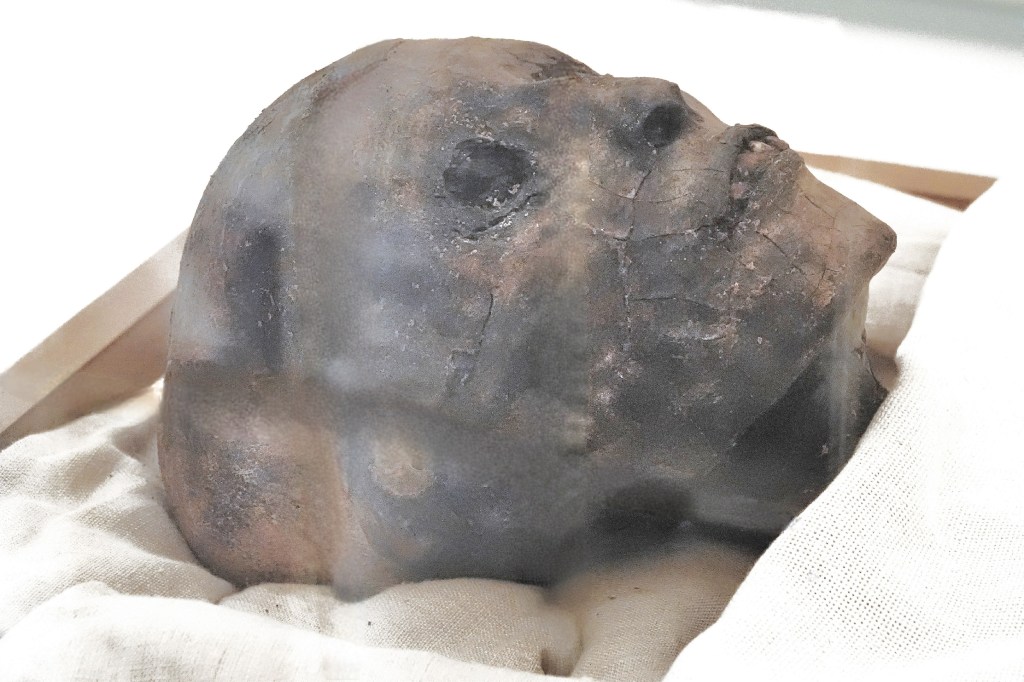
Occasionally, it was a family affair, with namesake mummies networking in the same vicinity–no doubt, making it easier to pay respects on Pharaohs Day.
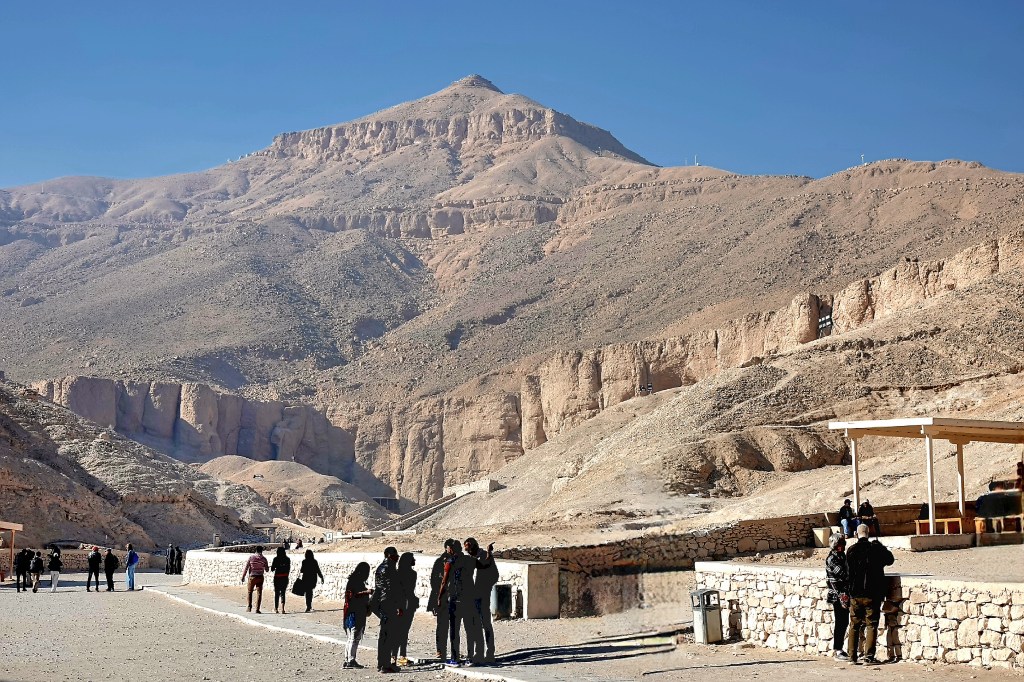
Unlike Giza, the only thing resembling a pyramid in the Valley of the Kings is Al Qurn, the highest peak in the Theban Hills at 420 meters.
Perhaps this gave the pharaohs some ancestral comfort, knowing their final journey to eternity had topographical similarities.
At last count, international expeditions have excavated 65 crypts concentrated within the Valley of the Kings and Queens, with only 11 tombs available for viewing.
But the most remarkable thing about this vast necropolis is what’s waiting to be discovered. Hardly a day goes by without hearing of a new discovery from the dozens of white “dig” tents that dot Luxor and Giza.
Easily, the most famous discovery came from British archaeologist, Howard Carter,
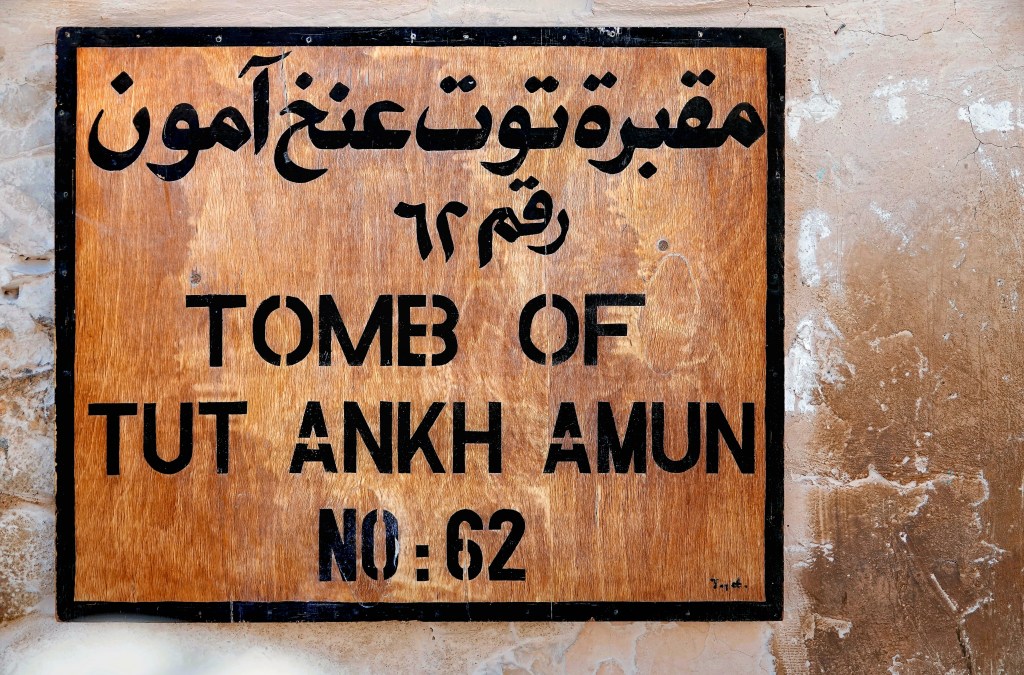
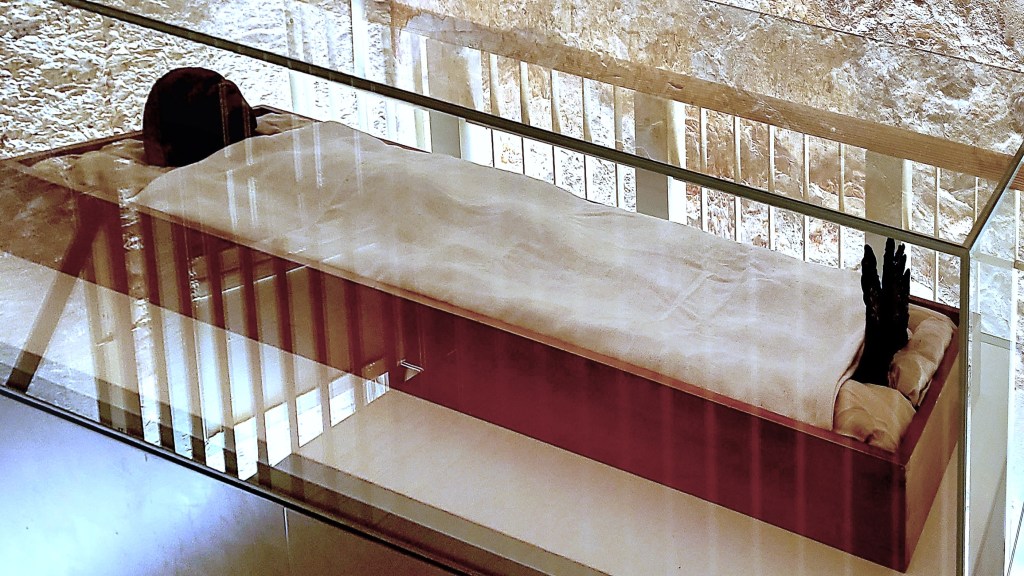
whose remarkable discovery of King Tutankhamen’s tomb in 1922 created a global sensation.
But seeing is believing.
Viewing the tomb requires a special ticket, and admission is limited.
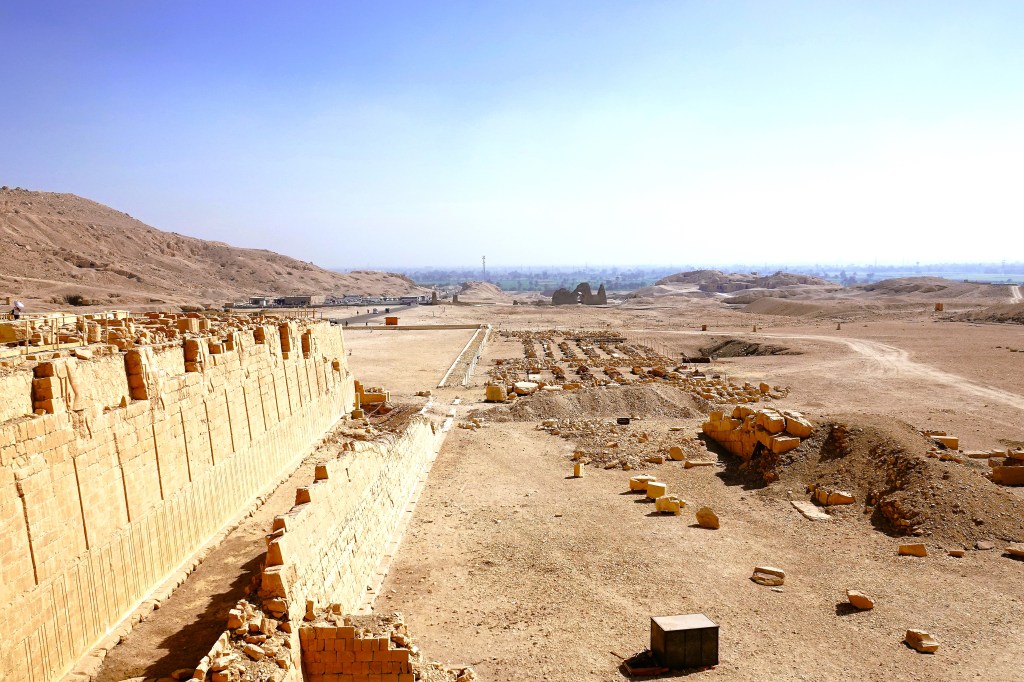
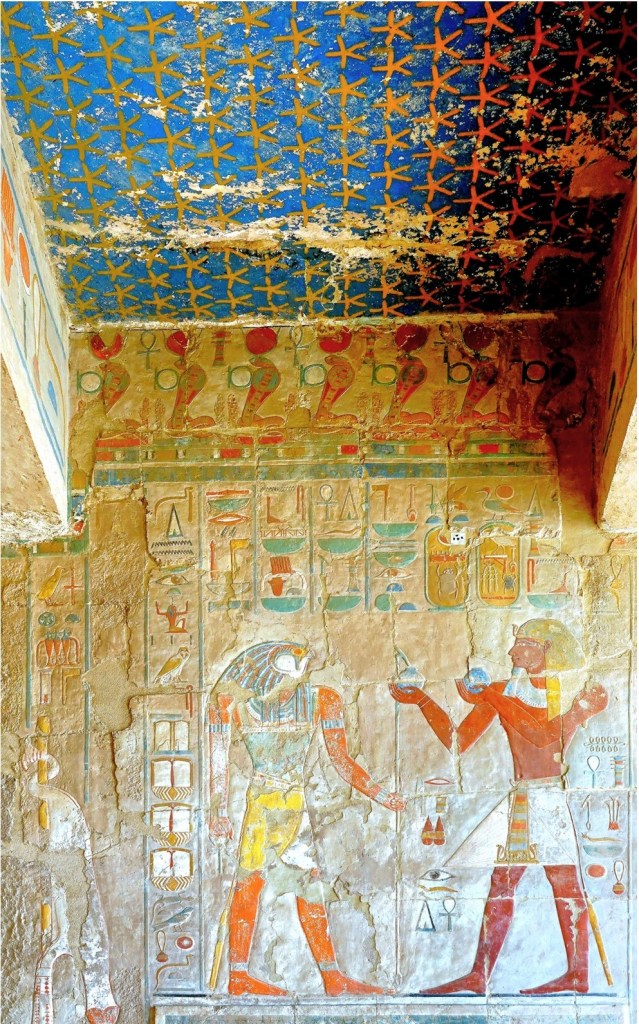
Equally impressive is the remote Temple of Deir el-Bahri (KV22), anchored to the rockface below Al Qurn.
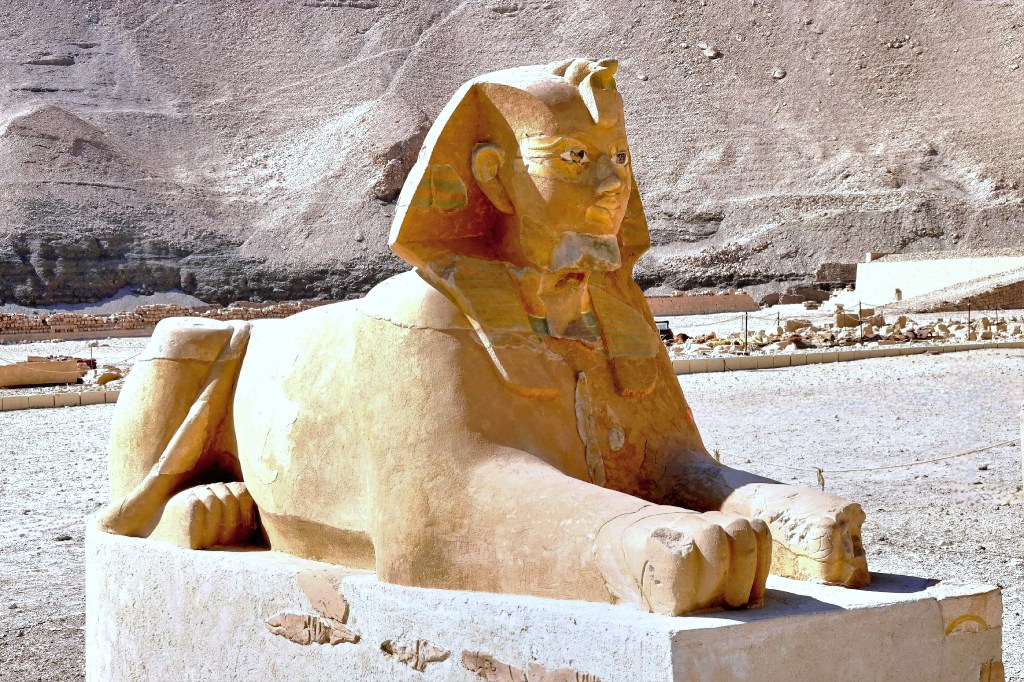
It was commissioned by Hatshepsut, who broke the aristocratic glass ceiling in 1480 BC by becoming Egypt’s first female pharaoh. Throughout her 22-year reign as king, she cross-dressed as a male, wearing a fake beard, a traditional headdress (nemes) with cobra, and a short kilt like her male predecessors.
While controversial as a female pharaoh, and all but erased by her successors, Hatshepsut’s place in history was secured as the only female interred in the Valley of Kings.
Nearby, the Valley of the Queens is only 2 km away by club cart conveyance,
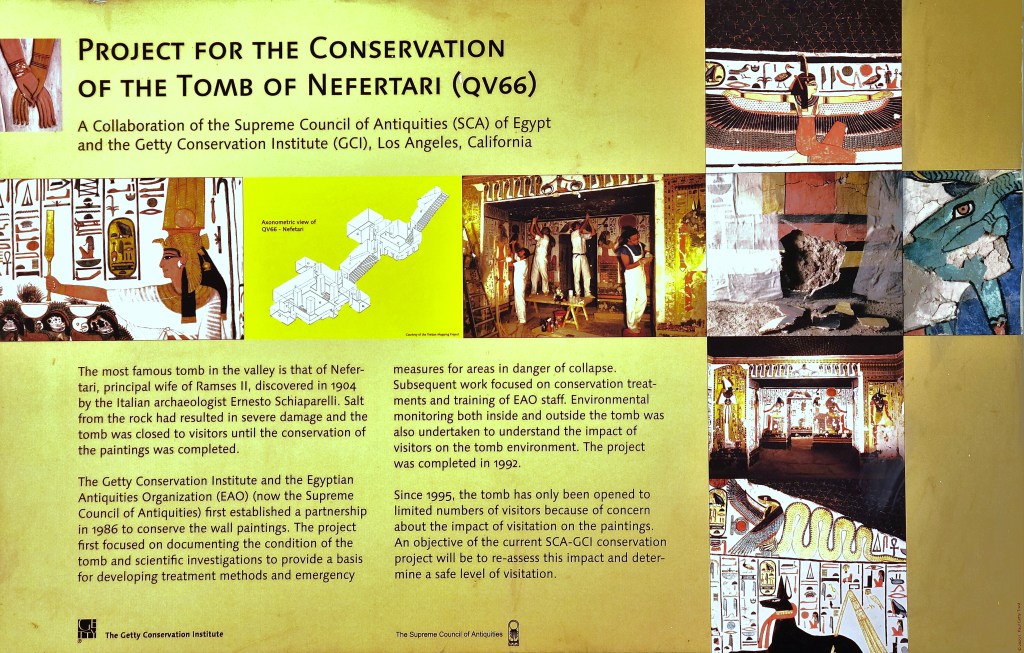
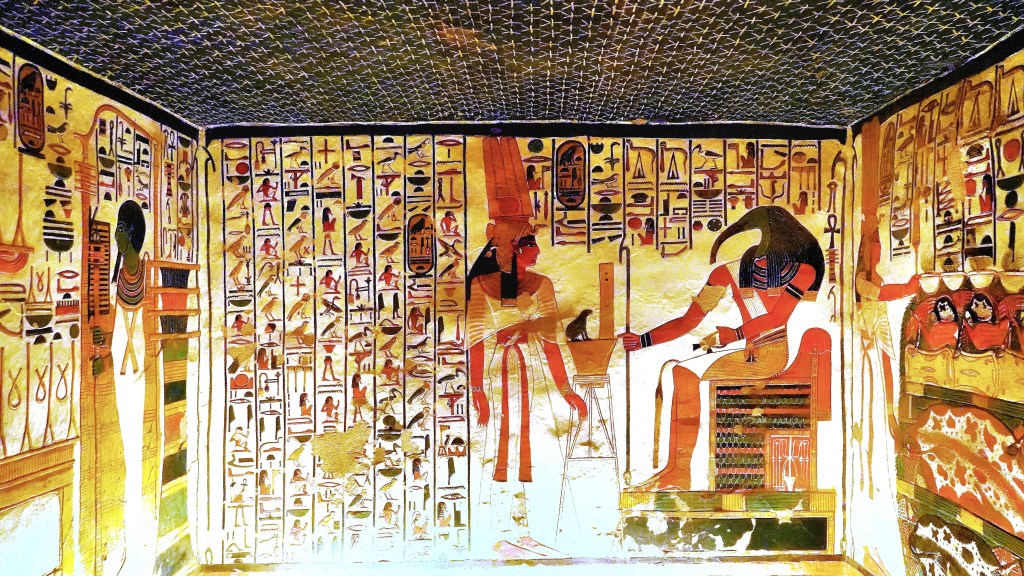
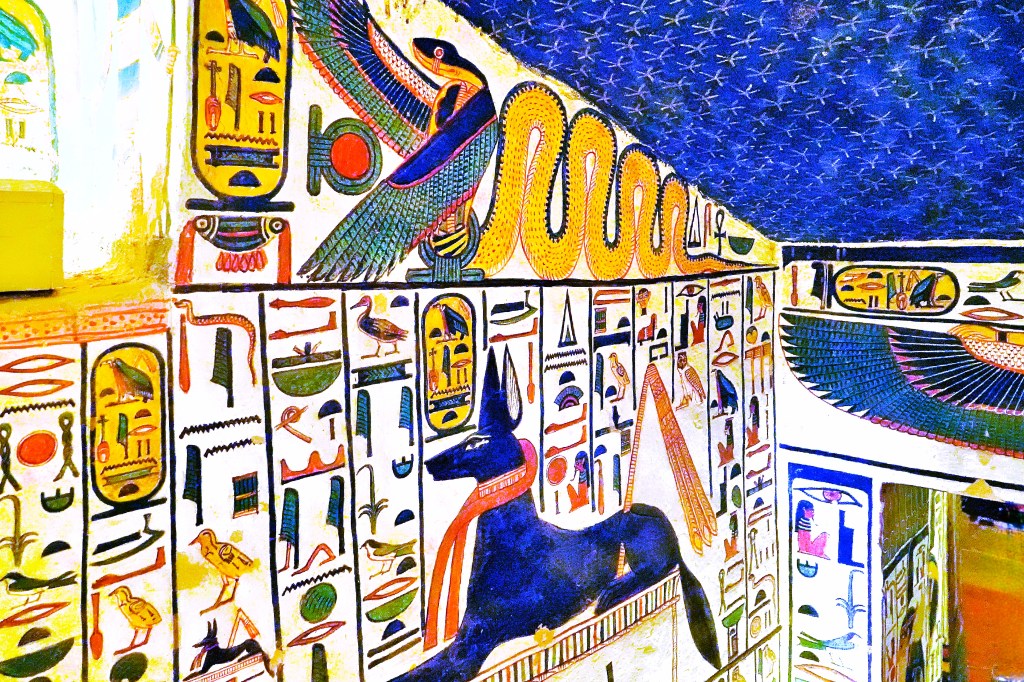
where the shining star of the valley is Nefertari’s tomb.
Officials require a special admission ticket–that only allows 10 visitors at a time to roam through the chambers for only 10 minutes–upon theorizing that reduced traffic likely reduces environmental impact.
Nefertari was the first of Ramses’ II Great Royal Wives (6 in total). In fact, he was so smitten by Nefertari’s beauty, that he built her the grandest tomb on the block, and shared his glory side-by-side at Abu Simbal.
Besides her good looks, Nefertari earned her place at the palace table as the king’s court communicator. She was a writer, a strategist, and a skilled diplomat in support of her husband.
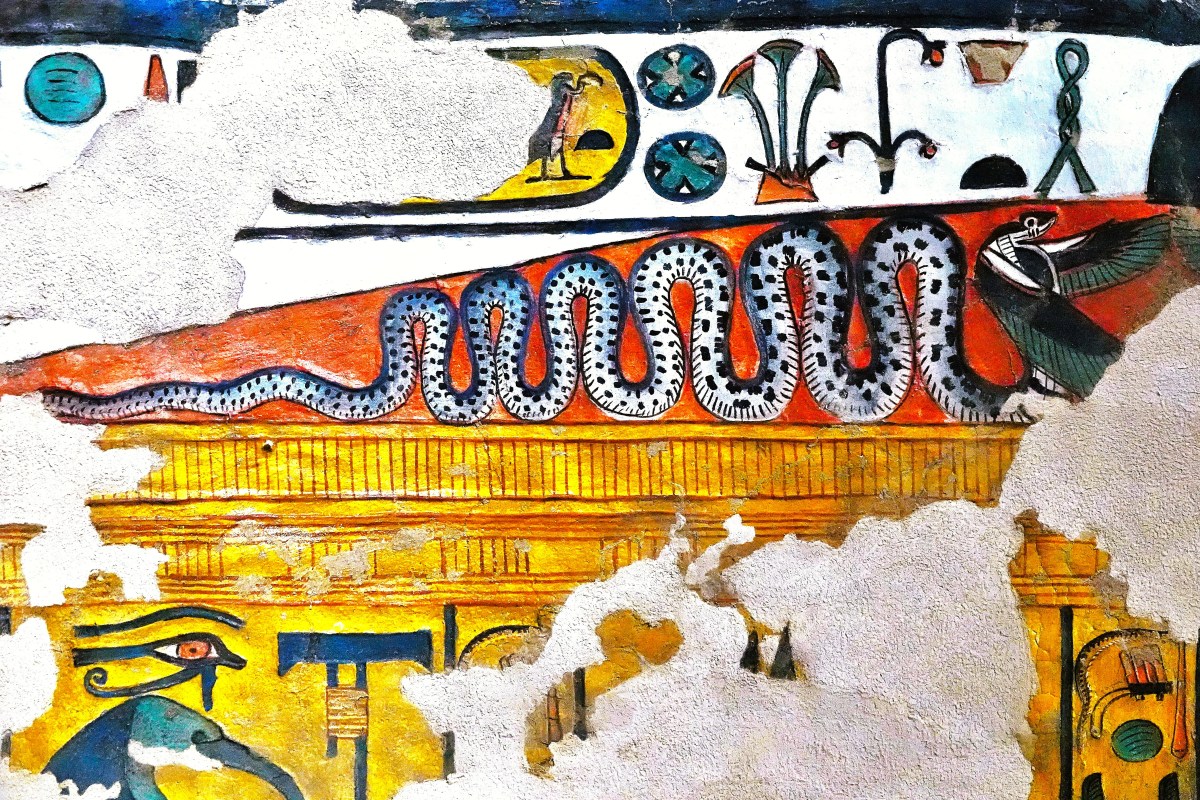
A long tunnel empties into an antechamber…
followed by a second staircase,
that leads to a burial chamber…
supported by elaborately painted columns,
with finely decorated funerary rooms at the wings,
featuring the sacred bull and seven celestial cows, who collectively represent the Goddess Hathor.
Given today’s global issues of gender identity, glass ceiling theory, propaganda, and branding, it might be wise to take a papyrus out of ancient Egypt’s playbook for the benefit of clarity.
If temples had beauty pageants, then Dendera’s Temple of Hathor would surely win. Only an hour’s float downriver from Luxor, Dendera Temple shines like a polished gemstone on the Nile for all of Hathor’s devotees.
Regarded as the “Mistress of the Vagina,” Hathor exemplified ancient Egyptian femininity as the goddess of love, beauty, music, dancing, fertility, and pleasure…and its all on display at her temple.
From a distance, it’s an unassuming temple,
obscured by a surrounding wall of mudbrick rubble with a golden glow.
However, it stands wonderfully intact for a structure built 2000 years ago, albeit atop the remains of another sanctuary that predates its commission by 2250 years.
While Temples of Karnak and Luxor were built to worship Amun-Ra–the alpha-male of all New Kingdom deities, who brought sun, light, and daily creation to the world–their energy is very androcentric.
Whereas, the Temple of Dendera exudes a powerful yet feminine charm,
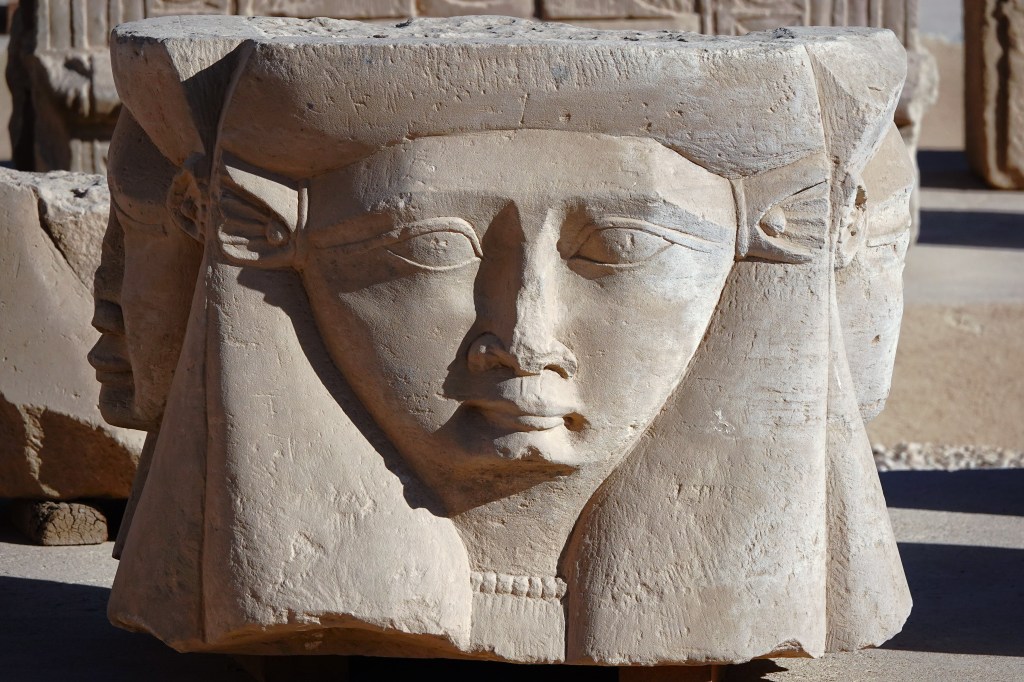
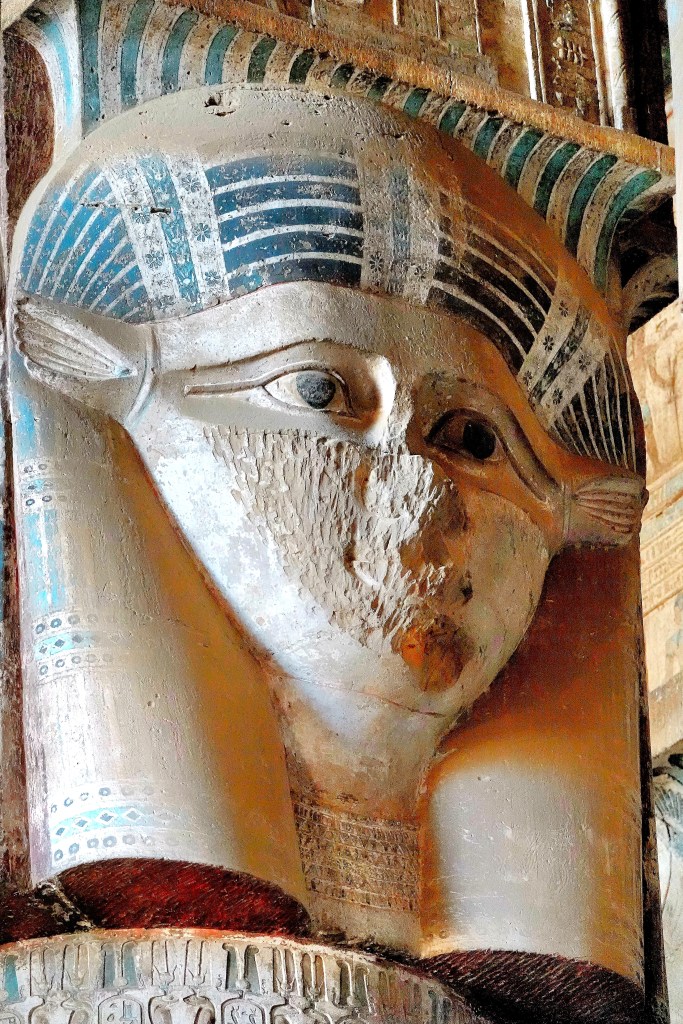
evidenced by the 18 four-sided capitals of Hathor–with her cow-eared likeness–supporting the Hypostyle Hall.
Unfortunately, all carvings of Hathor were deliberately defaced by Christian iconoclasts who sheltered within its walls.
Their open fires lined the chamber surfaces with centuries of soot–obscuring the bas-relief paintings–
until a delegation of French archaeologists recently restored the artwork to its original colors.
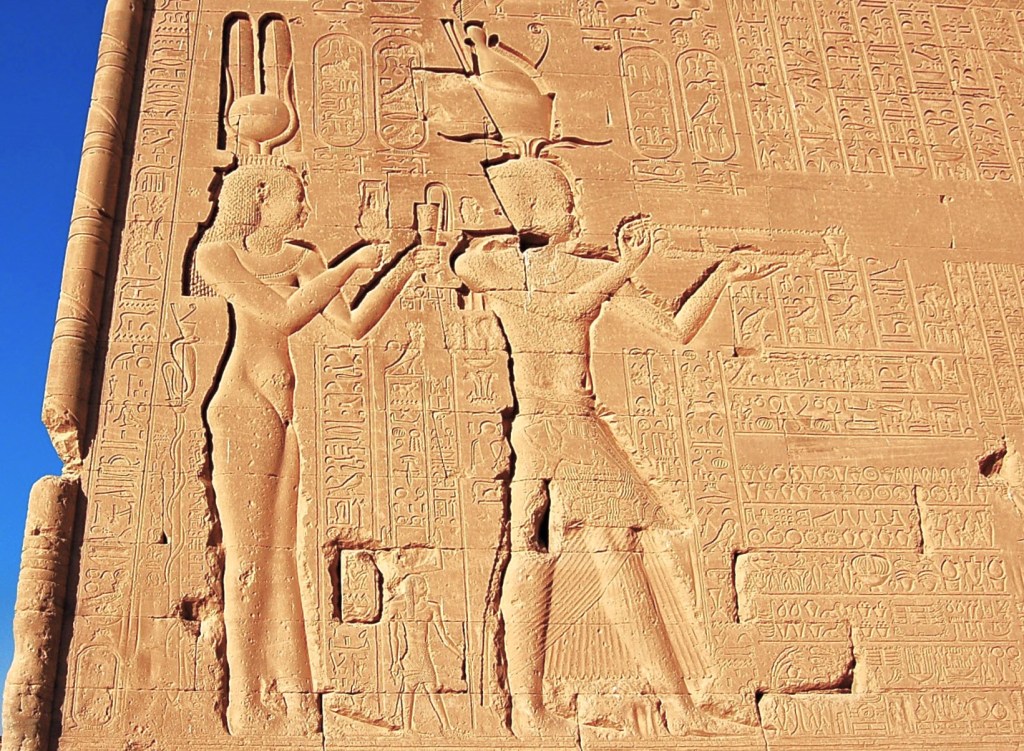
Hathor’s temple was most likely commissioned during the second rule of Ptolemy XII in 54 BC until his death in 51 BC, and overseen by his successor daughter, Queen Cleopatra VII and her son King Caesarion until her suicide in 30 BC. They are both enshrined on the temple’s outer rear wall.
Romans embellished the temple compound by constructing the Gate of Domitian and Trajan in lieu of a traditional Egyptian pylon,
but stayed true to the Greco-Egyptian design by invoking Nekhbet (vulture goddess and protector of Upper Egypt and its rulers) beneath the lintel.
and beyond the temple columns.
Emperor Trajan also completed a Roman Kiosk in the forecourt.
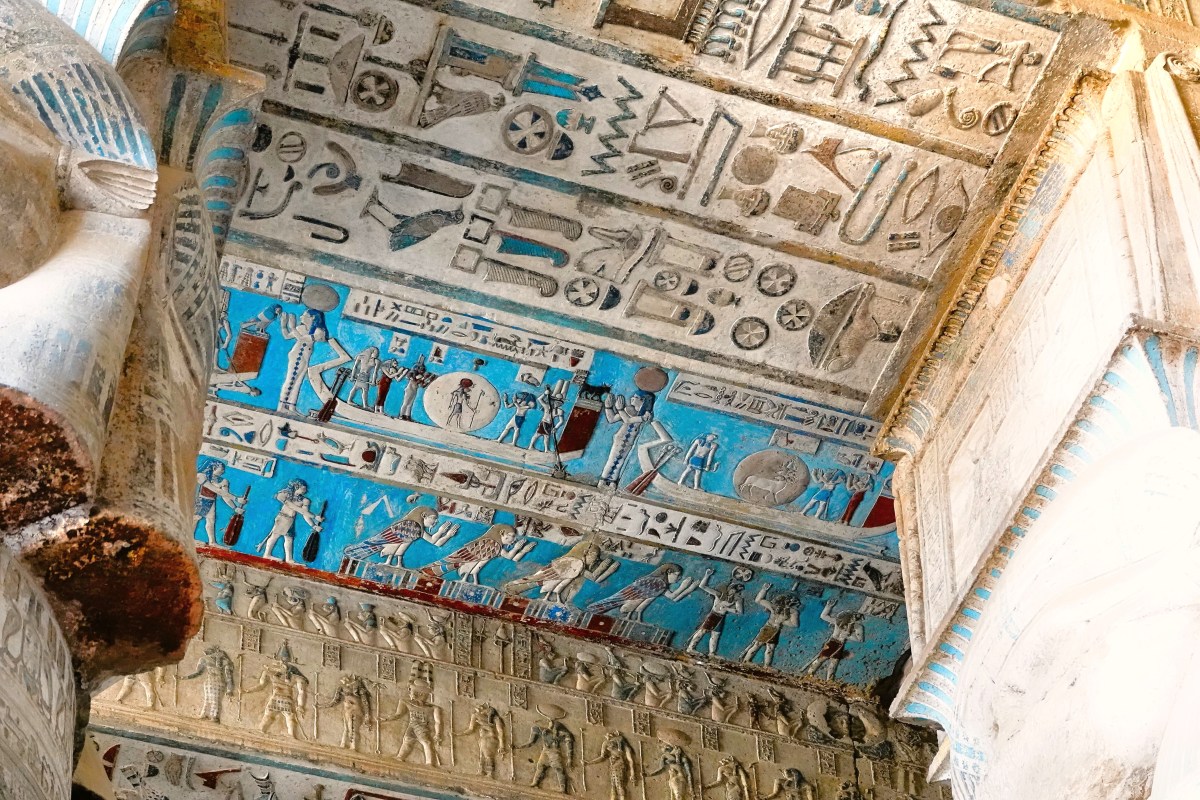
There’s a wealth of illustrations and hieroglyphic stories throughout Hathor’s temple…
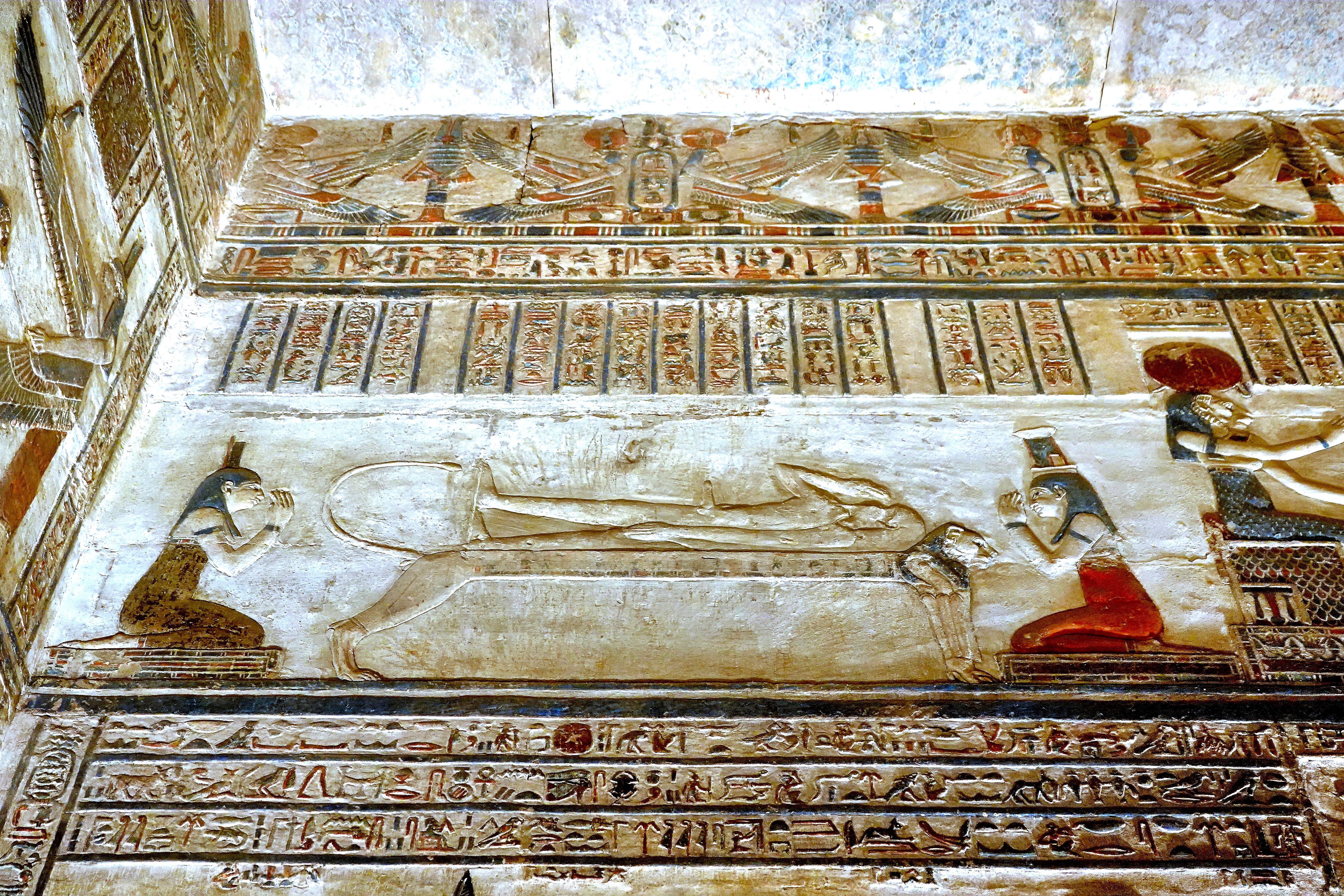
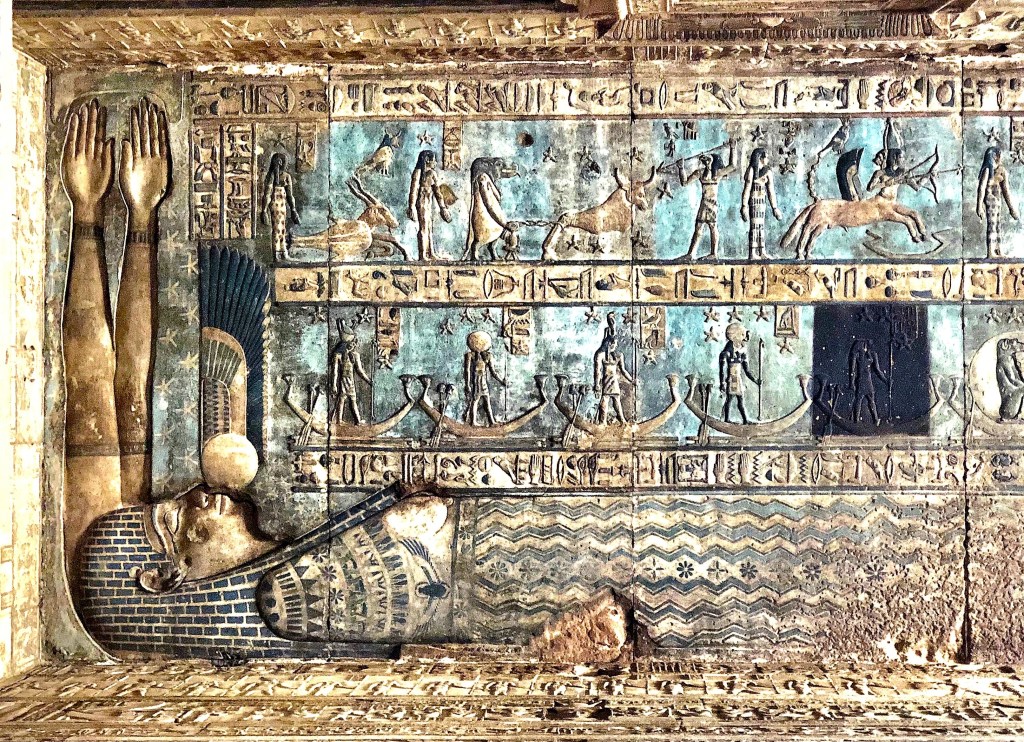
However, the real beauty can be found in the artistic renderings of astrological symbols painted across the Hypostyle Hall, where Goddess Nut ordains the passage of time in a celestial barge.
The masterpiece of the temple is surely the circular zodiac chart of the ancient sky that’s located on the ceiling at the entrance to the Chapel of Osiris–
accessed via a processional staircase that leads to the temple’s rooftop.
Amid controversy, the original engraving was blasted from the ceiling in 1821, and stolen away to France, where it currently hangs in the Louvre Museum in Paris.
Alas, a replica hangs in the chapel.
Which begs the question: Was it guilt and reparations that brought the French back to Dendera to supervise the restoration?
After 3 days in Cairo, Leah and I were on the move!
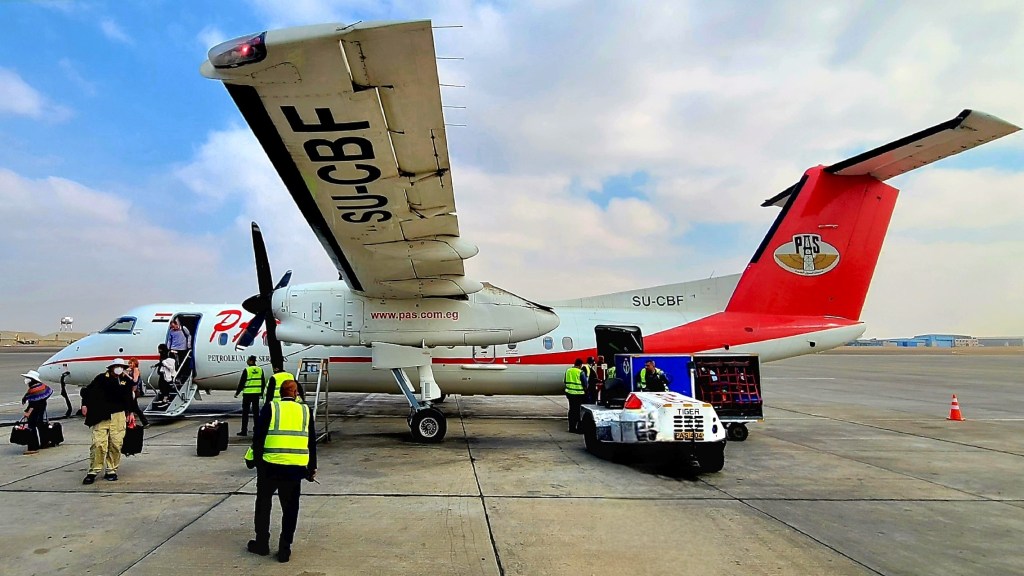
We boarded a chartered prop jet with our fellow river cruisers and flew to Luxor,
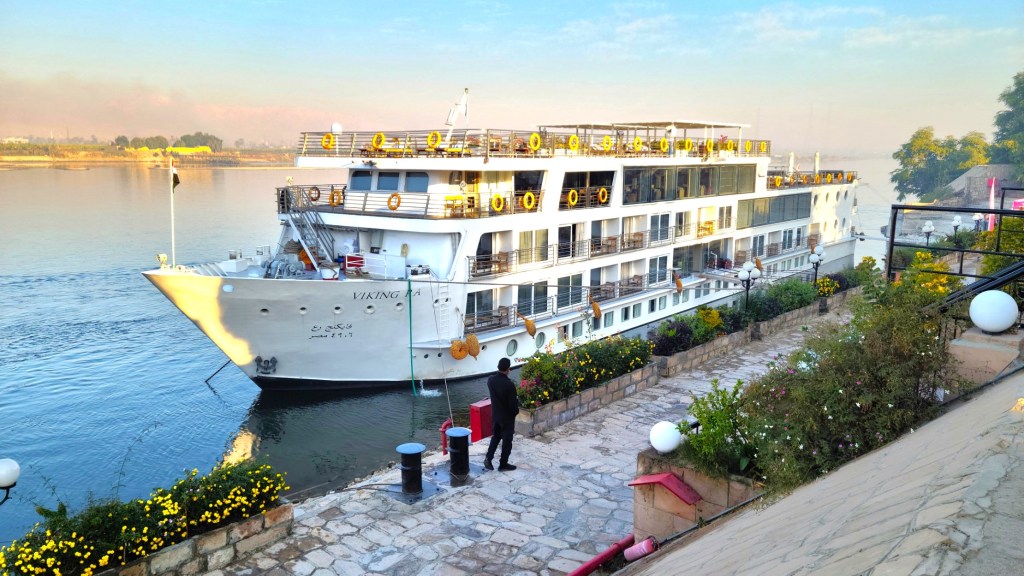
to greet the Viking Ra–currently tied up alongside the Nile’s east bank. Ra was to be our floating hotel through the following week.
After attending an obligatory safety briefing aboard Ra,
we were soon exploring Luxor and it’s ancient counterpart, Thebes–home to kings and queens from the Middle Kingdom (c. 2000–1700 BC) through the Ptolemaic Kingdom (305–30 BC)–spanning 15 centuries of rule, until Egypt surrendered to the Romans.
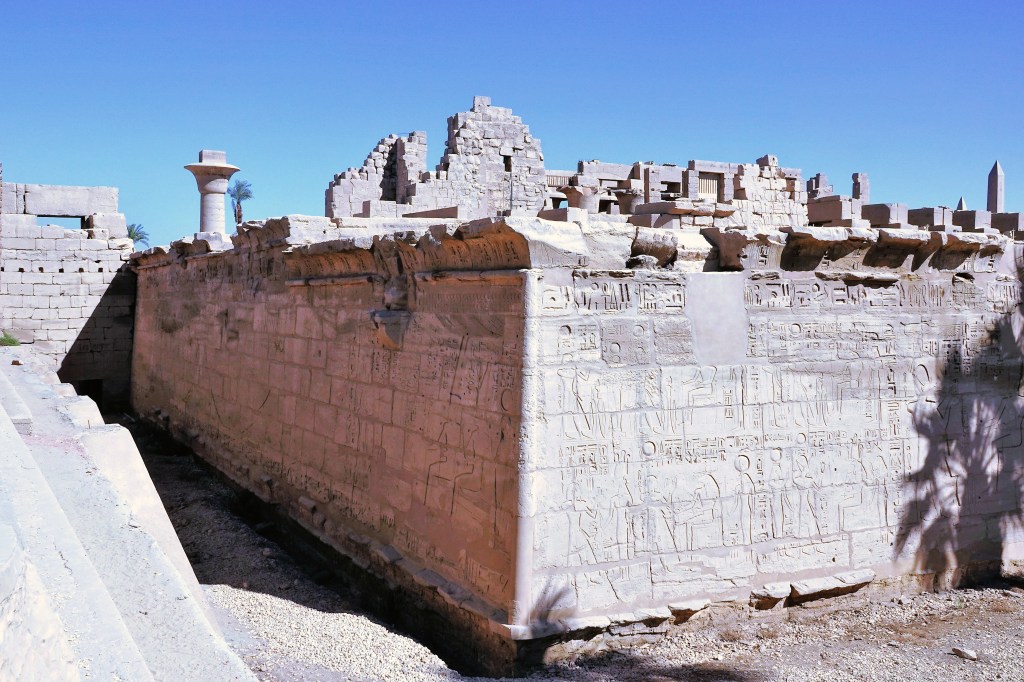
Our tour of Luxor began with a visit to the Karnak Temple Complex, encompassing 247 acres, and considered the largest religious structure ever built.
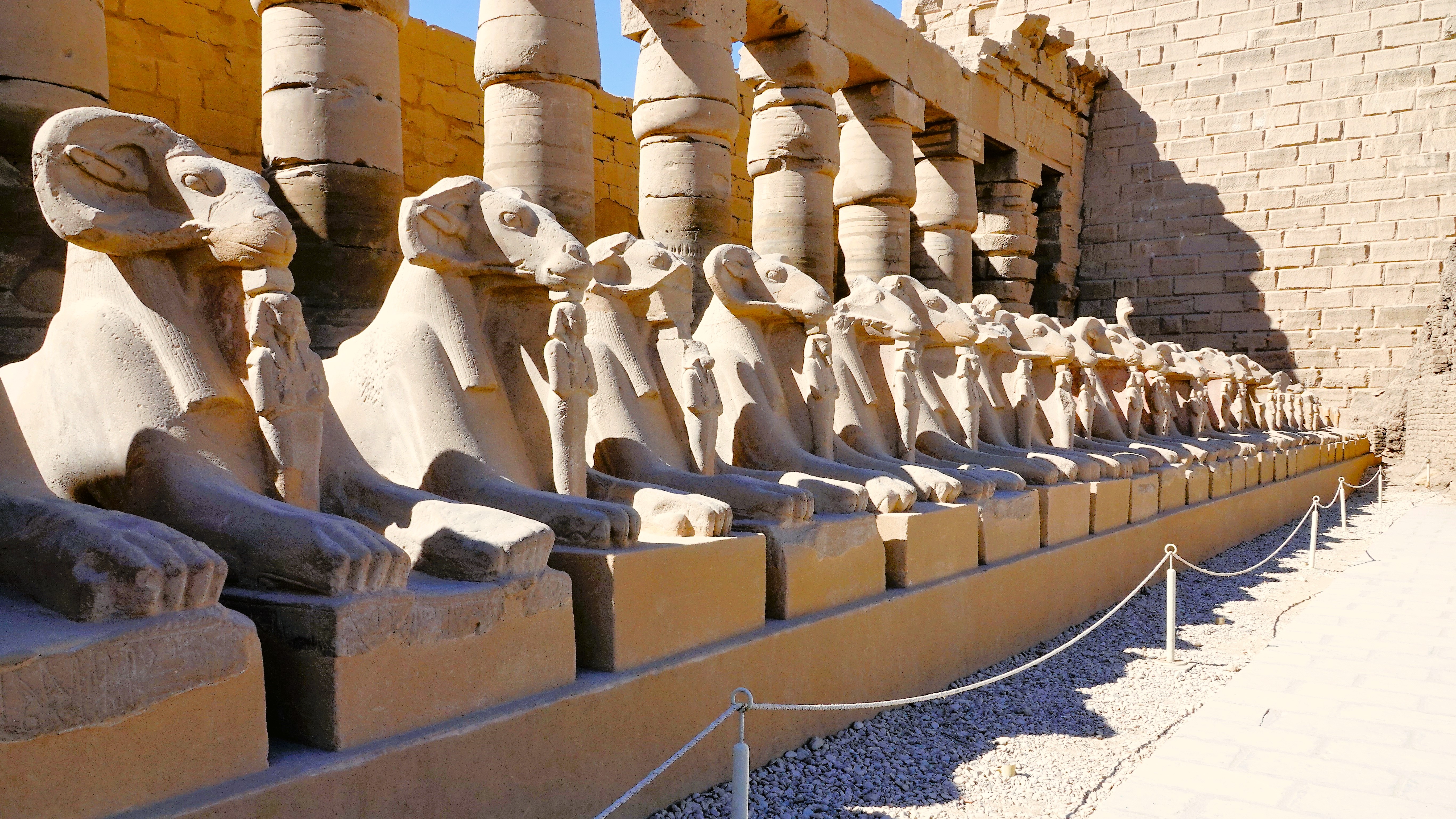
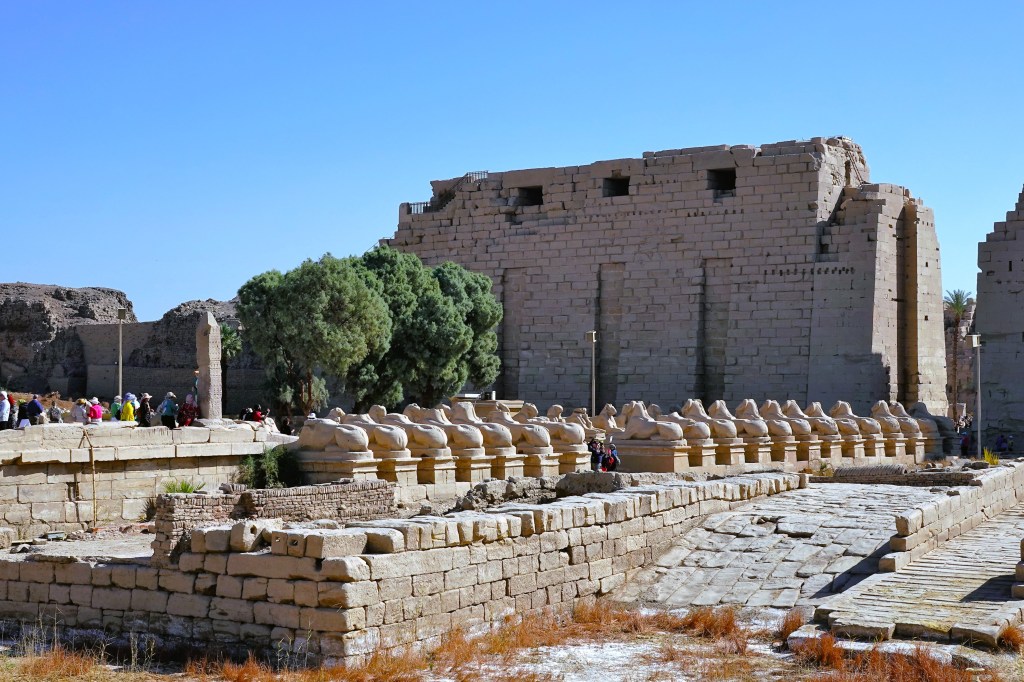
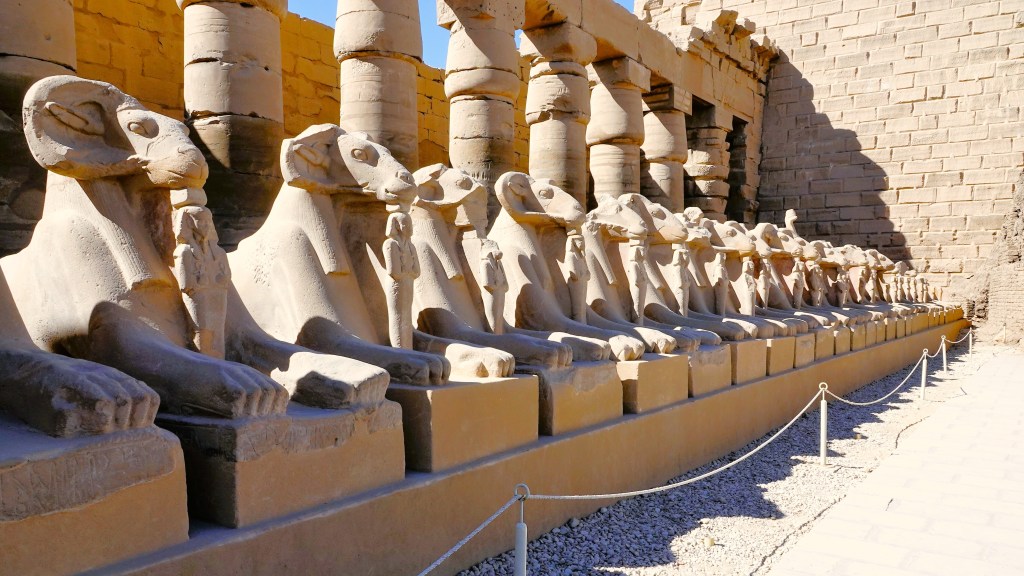
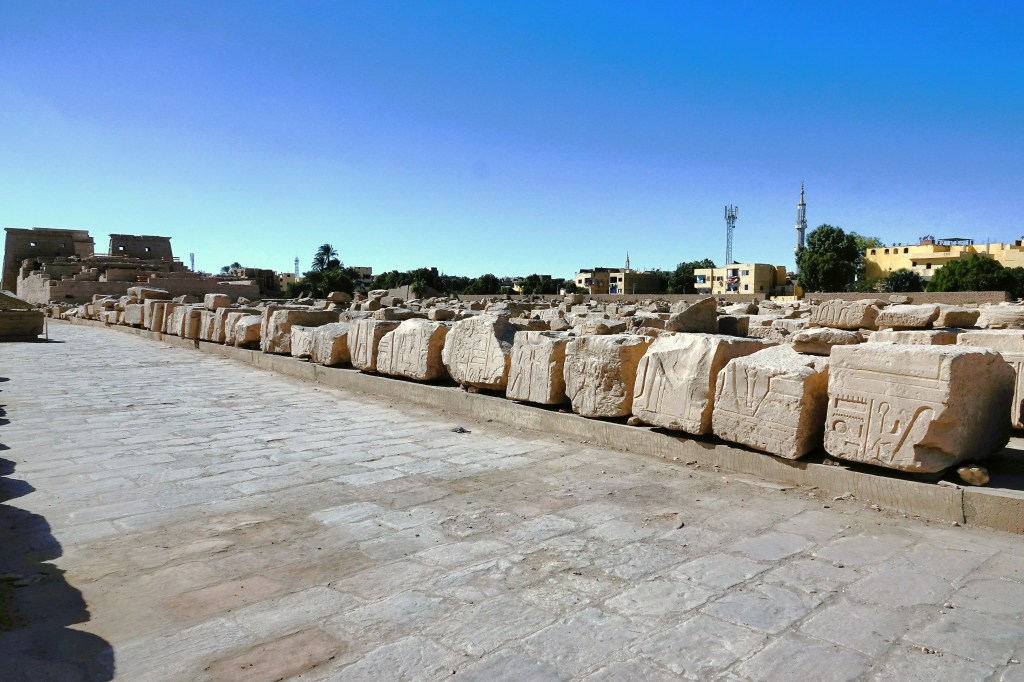
Ram-headed sphinxes (called criosphinx) adorn both sides of the avenue leading to the unfinished, first pylon to honor Amun-Ra, Egypt’s most powerful god and Thebe’s patron deity of the Great Temple of Karnak.
The criosphinxes continue inside the Ethiopian Courtyard (IX Dynasty)–each one cradling an erect statue of Ramses II (c. 1279-1213 BC) between its forelegs.
It flanks the entrance to the temple of Ramses III.
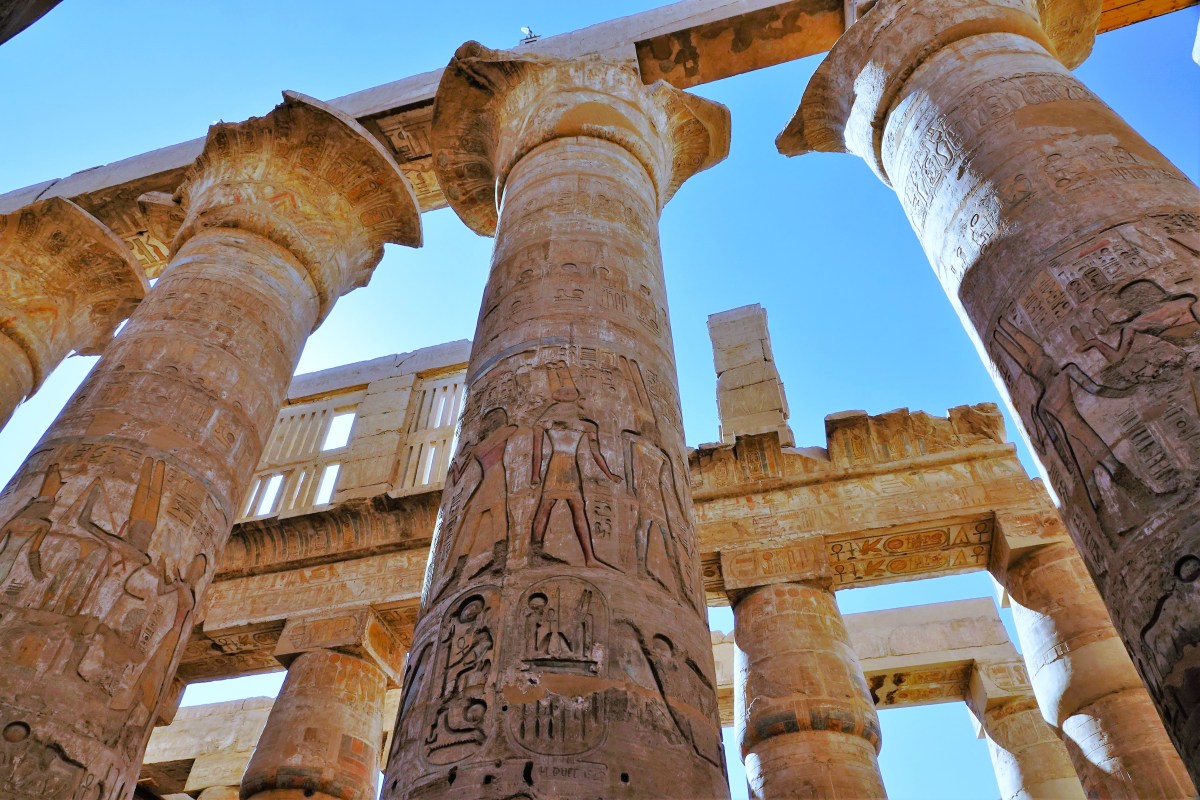
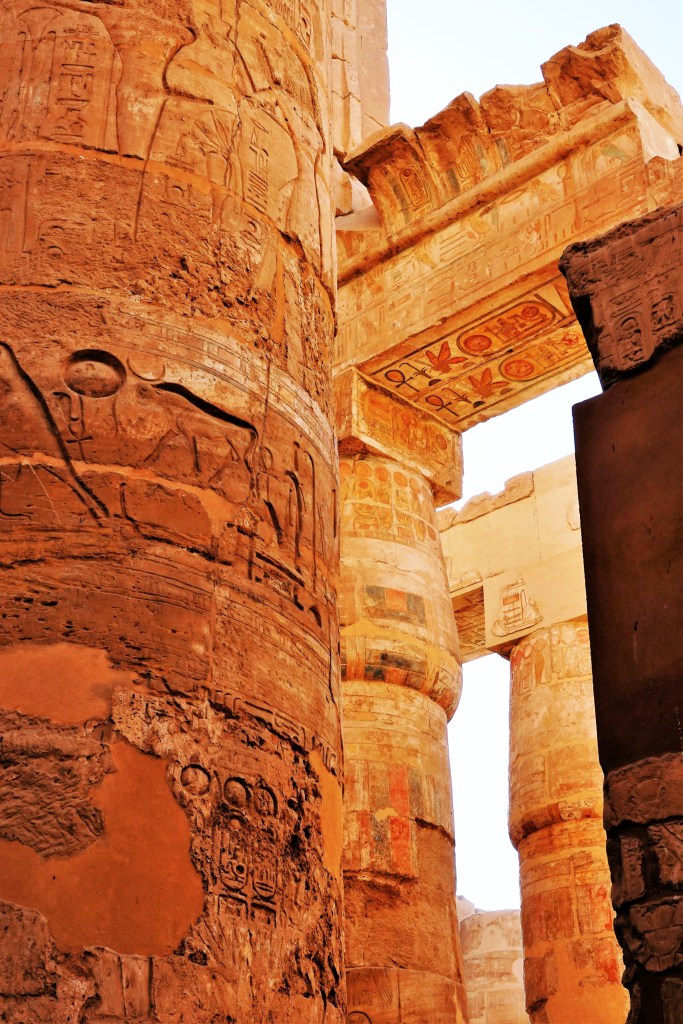
The most impressive feature of the temple of Amun-Ra is the Great Hypostyle Hall, a forest of 134 sandstone columns centered by 12 colossal columns soaring 69 feet,
which supports the remains of a stone roof enclosed by massive walls,
and features intricately carved relief sculptures and hieroglyphs of religious and historical significance…
to honor each of the 30 kings who once ruled the imperial city.
After 3300 years, the site remains substantially intact, yet benefits from painstaking restoration.
After listening to commentary from our onboard Egyptologist, Leah and I strolled the grounds of the ancient temple trying to imagine the enormity of its scope:
while realizing that 3 other sections–the Precinct of Mut, the Precinct of Montu, and the Temple of Amenhotep IV–are also part of Karnak, and still under excavation and reconstruction.
Leah and I arrived at the Egyptian Museum to dig a little deeper into some of the earliest and most significant discoveries of ancient Egypt.
Of course, we would have preferred touring the Great Egyptian Museum (G.E.M.), but the many delays since construction began (2012)–complicated by supply chain dynamics and coronavirus has pushed the official opening to sometime in 2023, optimistically.
However, when the museum eventually opens, it will be the world’s largest archaeological museum, housing 100,000 artifacts from hundreds of tombs and temples, and the entirety of the Tutankhamun collection.
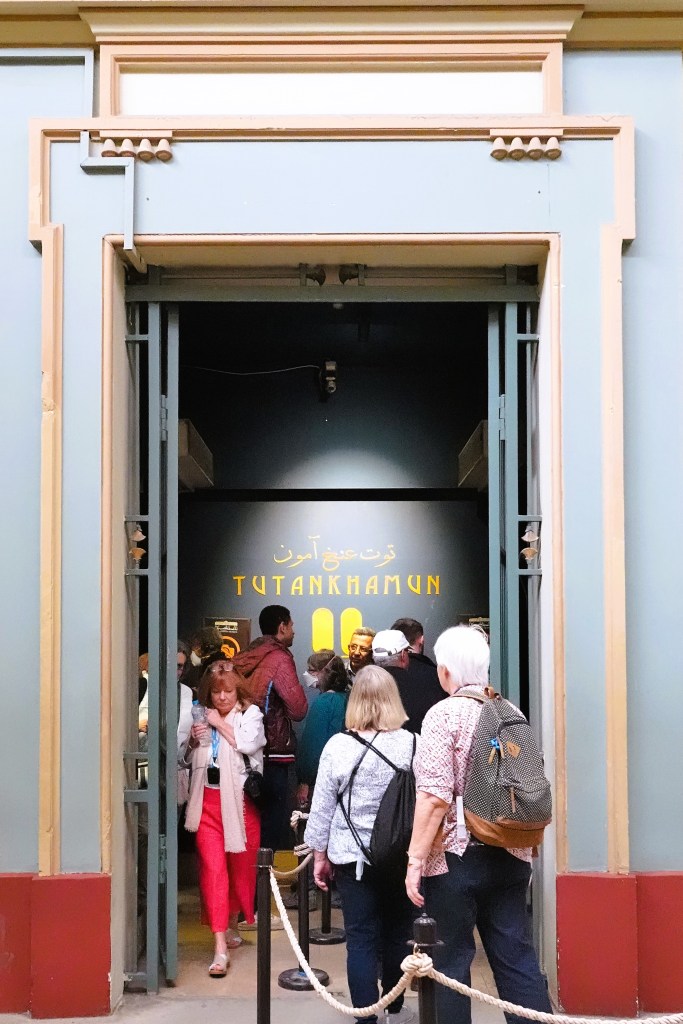
But for now, we must adjust our expectations by visiting the fabulous Egyptian Museum instead, where a smattering of the riches belonging to Tutankhamun’s tomb have been on view:
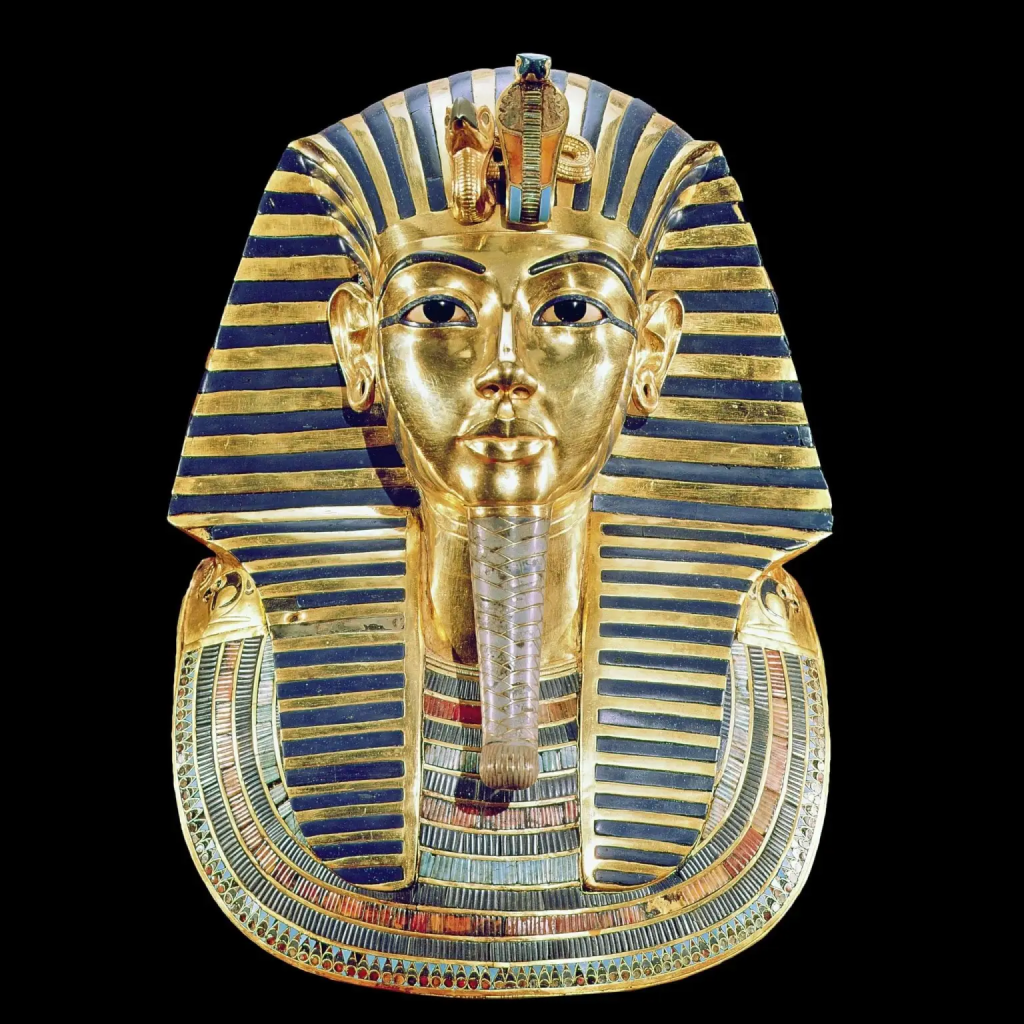
including his incomparable solid gold mask,
Photo credit, Egypt Museum
and triple coffins staged within his sarcophagus–yet unfortunately, all without the possibility of photography once we entered the special exhibition room.
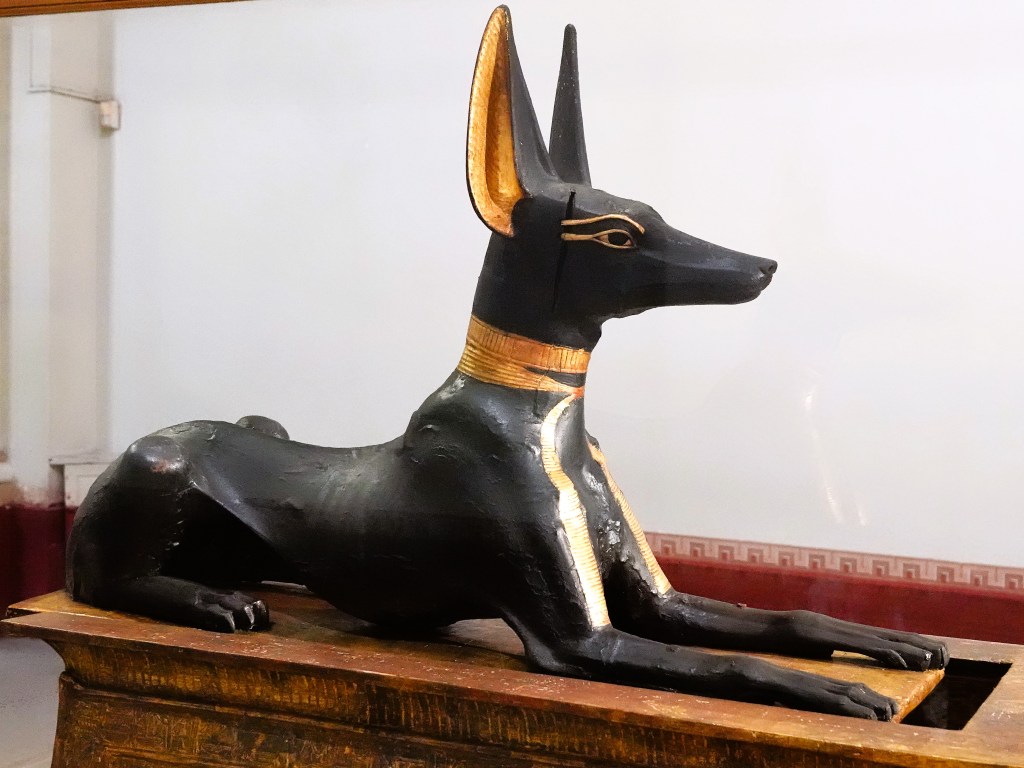
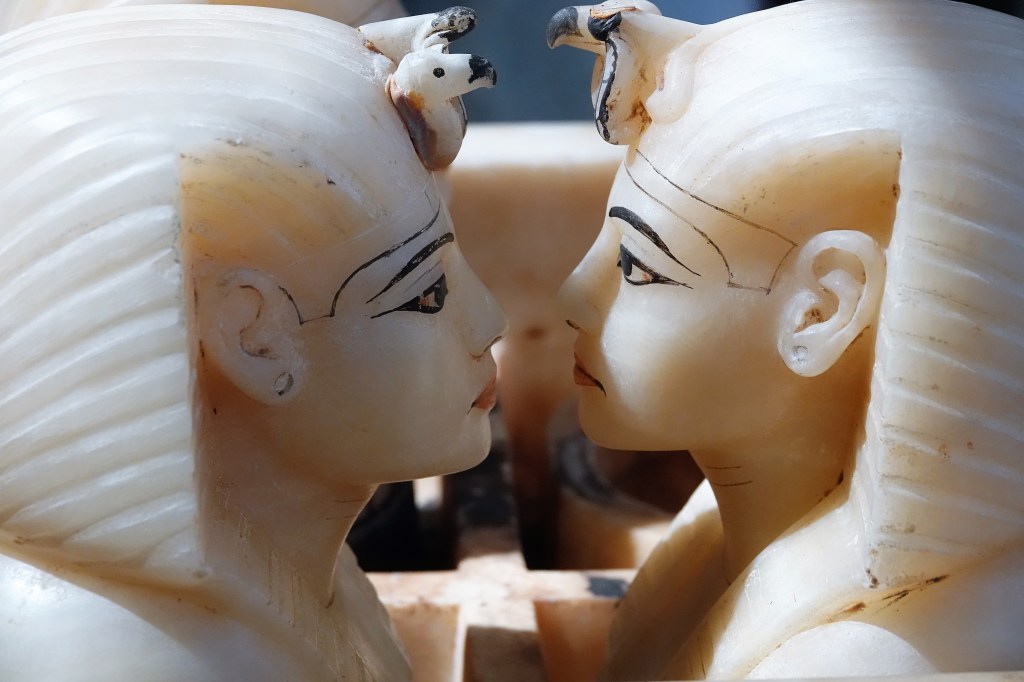
There were, however a few items from Tutankhamun’s tomb displayed in the general exhibition hall that were equally as impressive, including:
Anubis the jackal, who guards the cryptAlabaster canopic jars which held vital organs
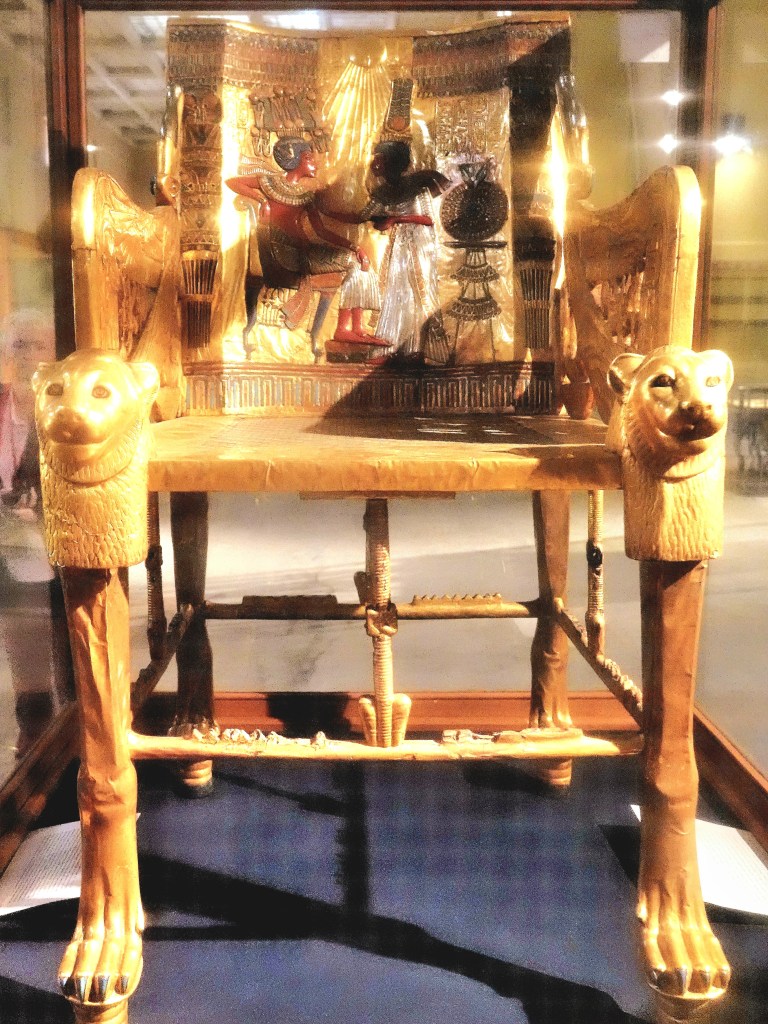
A gilded throne beside an inlaid and painted ceremonial chair.
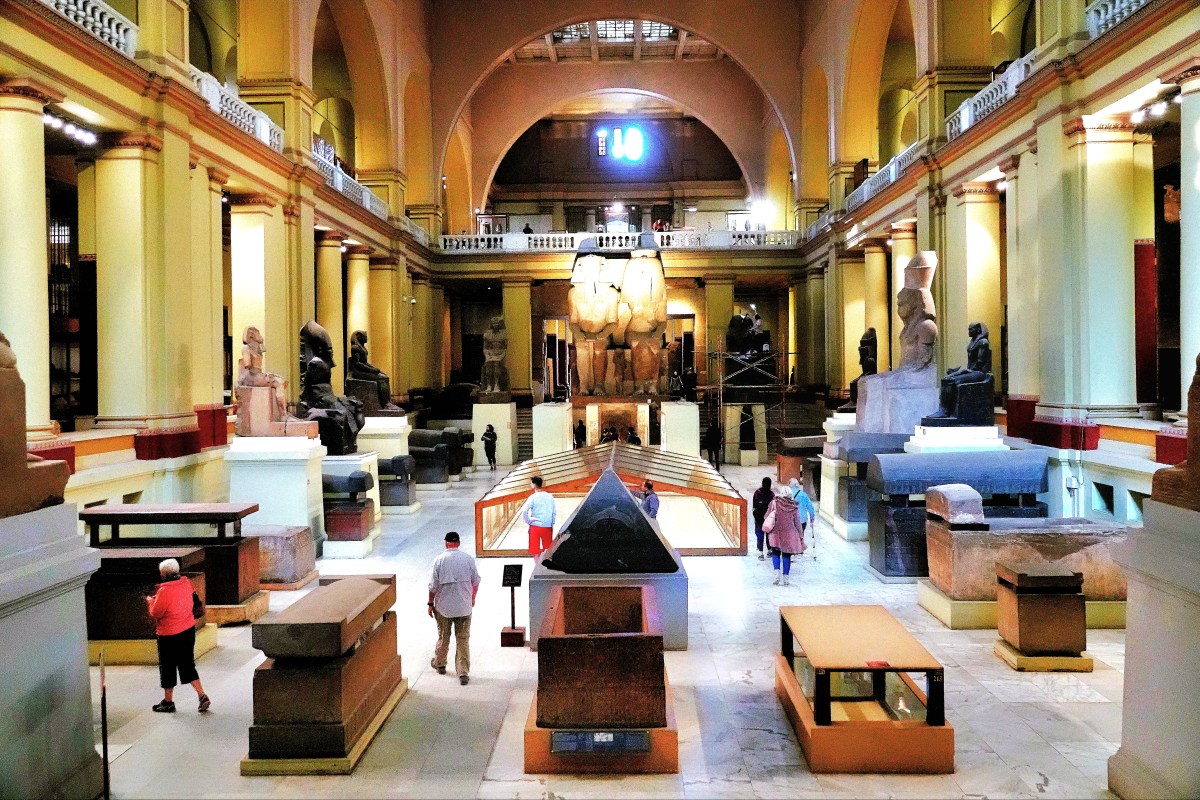
There were so many more treasures to appreciate beyond the towering entrance and throughout the wings of the cavernous exhibition hall.
From the moment we entered the building, we were confronted by a stone Colossus of King Merneptah, successor to Ramses the Great.
Along our stroll, we stopped to appreciate a 2-foot palette of some of the earliest hieroglyphics ever found.
This palette, with reliefs on both sides, commemorates the victories of King Narmer, who came from the south of Egypt to invade the Delta in about 3000 BC. It represents the most important evidence that the first political unification in the history of mankind occurred in Egypt. The two faces of the artifact are topped by the name of Narmer inscribed inside the Serekh, or rectangular frame. In hieroglyphic signs, the chisel reads mr and the catfish reads naar.
The upper section of the back side shows the king wearing the Red Crown of Lower Egypt, followed by his sandals bearer and preceded by his vizier and four standard bearers. Next comes a scene depicting the corpses of 10 beheaded men. In the middle section, two men are holding two felines with extremely long necks representing the people of the North and South under the control of the king and his men. The lower section shows a bull, representing the king attacking the walls of a northern city.
The Serekh is flanked by two female heads having the ears and horns of a cow, which could be the first representation of the goddess Hathor. The scene on the front shows the king, followed by his sandals bearer and wearing the White Crown of Upper Egypt, smiting a helpless foe from the North. The falcon Horus of Upper Egypt stands upon a bunch of papyrus plants holding a northern prisoner. The lower register, or scene, depicts two other northern enemies running away from the king. Inscribed upon their heads are hieroglyphic signs indicating their names or those of their localities.
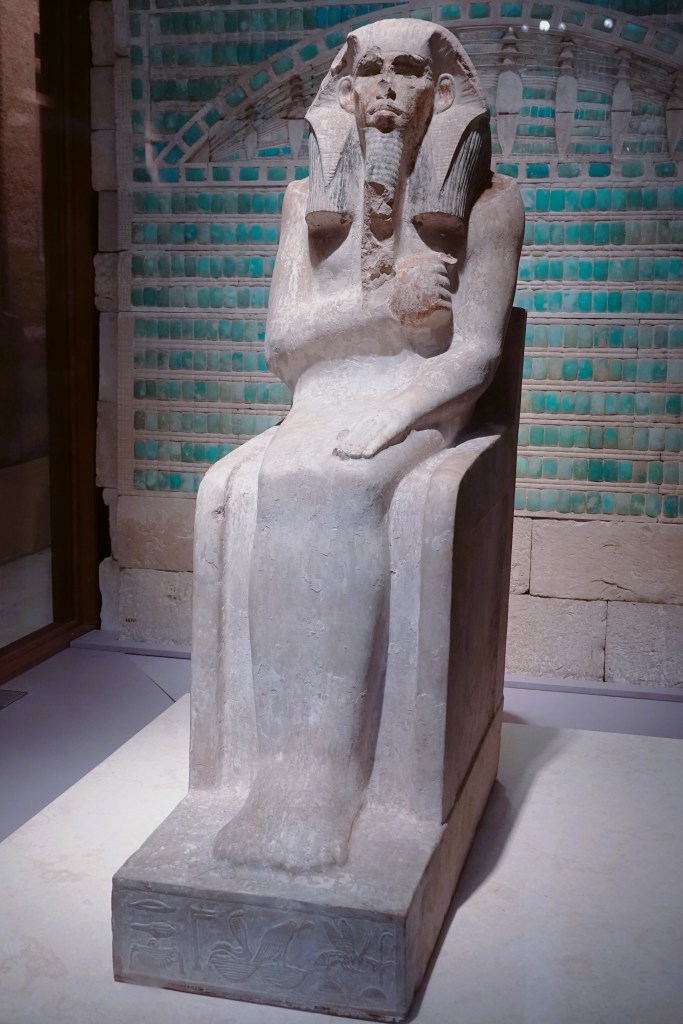
We stood in awe of the oldest known life-size statue found in Egypt.
It depicts King Djoser of the Third Dynasty seated on his throne and enveloped in a jubilee cloak. The statue was entirely coated with white plaster and painted. The deep-set eyes were once inlaid. The king has a ceremonial false beard and wears a black wig topped by the royal Nemes headdress. The front side of the pedestal is inscribed with hieroglyphic text, indicating the name and epitaphs of King Nethery-khet of Upper and Lower Egypt.
Next, we got acquainted with an exquisite 4600-year old polished, gneiss statue of King Khafra, builder of the second largest pyramid in Giza.
It was found in a pit in the antechamber of his Valley Temple in Giza. The king is seated on a throne flanked by lion heads. The two sides of the throne are decorated with the Sema-Tawy, symbol of the unity of Upper and Lower Egypt. Khafra wears the nemes headdress, surmounted by the uraeus, or royal cobra. He wears the royal pleated kilt. Attached to his chin is an artificial ceremonial sacred beard. He is protected by the god Horus, represented as a falcon, perched at the back of his neck.
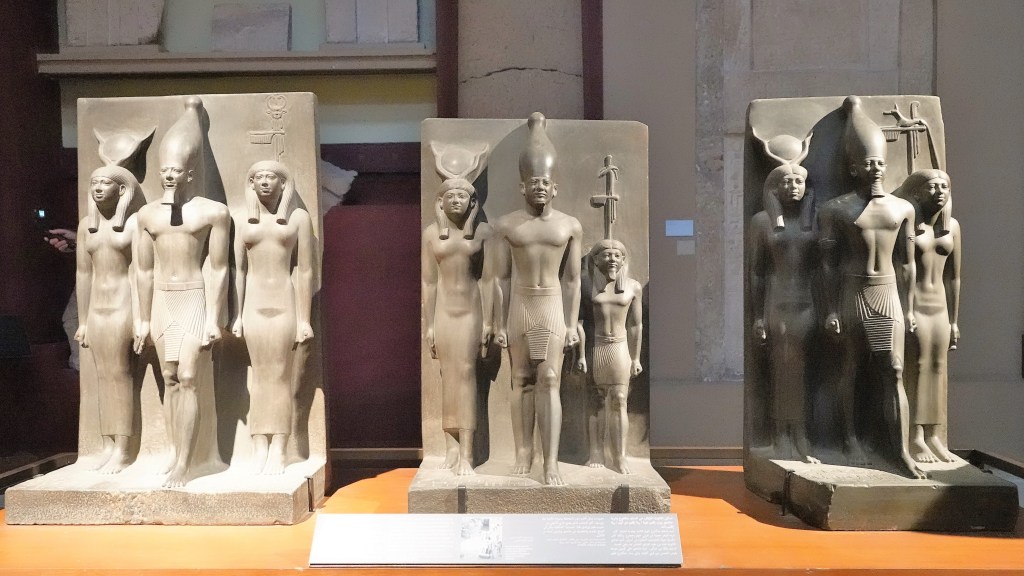
Nearby was a triptych of King Khafra’s neighbor, King Menkaure.
King Menkaure built the third and smallest of the Great Pyramids of Giza. The triad of Menkaure was intended to represent him with the personification of the nomes, in the presence of gods, especially Hathor. The king wished to enjoy resurrection and fertility from Hathor and endless offerings from the nomes. He is represented here in an idealistic form between Hathor, with her horned sun disk crown, and a figure of the personification of the nome of Diospolis Parva.
Sheikh el-Balad, Arabic title for the chief of the village, was the name given to this remarkable wooden statue discovered by the workmen of Auguste Mariette, the French archaeologist, because it resembled their own village chief.
The statue depicts Ka-aper, the chief lector priest, in charge of reciting prayers for the deceased in temples and funerary chapels. It is one of the masterpieces of the private statuary of the Old Kingdom.
The arms were separately modeled and attached to the body, a technique frequently used in wooden statuary. A wooden cane supported the left arm, made out of two pieces of wood joined together. The eyes are inlaid; the rim is made out of copper and the white is of opaque quartz, while the cornea is made out of rock crystal.
Also of interest is a small stone carving of Seneb, an Egyptian dwarf who was the chief of all the palace dwarfs, and charged with the care of the royal wardrobe.
He is seated on a rectangular seat together with his wife, Senetites, and his children stand before him. He has short black hair and wears a short white kilt. His wife rests her right hand on her husband’s shoulder and her left hand on his left arm in an affectionate pose.
Senetites, who held the titles of Priestess of Hathor and Neith, wears a black wig that reaches down to her shoulders and a long white tunic. The artist rendered her face with a smile to show the woman’s satisfaction at being depicted with her husband and children.
The son and daughter are shown standing in front of their father in the place where the legs should be. Here, the Egyptian artist succeeded in creating a balanced composition for the figures of the family.
Protected in a nearby glass box was another painted couple. Rahotep might have been a son of King Senefru and thus, a brother of King Khufu. He held the titles of High Priest of Ra at Heliopolis, General of the Army, and Chief of Constructions.
He is seen here wearing a short kilt, short hair, a fine mustache, a heart-shaped amulet around his neck, and inlaid eyes. Rahotep’s wife, Nofret, is described as “the one acquainted to the king.” She is seen wearing a shoulder-length wig, decorated with a floral diadem and a broad collar. Her natural hair can be seen under the wig.
We recognize the distinction in the skin coloring of the two statues: reddish brown for the man and cream wash for the woman. This was an artistic convention followed throughout ancient Egyptian history. The colors are well preserved and the faces have realistic expressions.
However, Queen Hatshepsut was a rare exception. She’s regarded as the most successful woman ever to rule Egypt as Pharaoh (18th Dynasty), and considered an equal among all kings. Hence, her skin color is always portrayed as reddish brown.
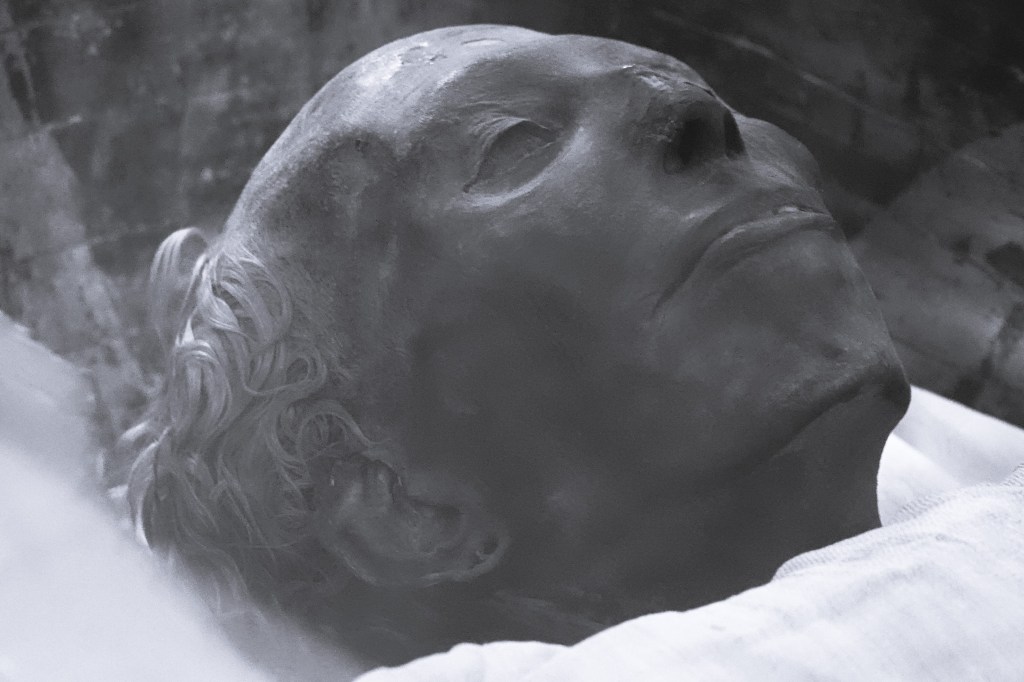
Advancing to the mummy exhibition, we were treated to the gilded plaster, funerary masks of Thuya and Yuya.
Yuya was the father of Queen Tiye, wife of King Amenhotep III, and husband of Thuya. Yuya came from the town of Akhmim, where he probably held estates, and where he was a priest of the Egyptian god Min, the chief god of the area, while Thuya held important religious titles, in addition to the title of the Royal Mother of the Great Wife of the King.
As part of the royal family, they were attributed royal burial rites and mummified, guaranteeing them an extraordinary eternity as museum masterpieces.
Leah and I later visited Yuya’s son-in-law, King Amenhotep III, and his daughter, Queen Tiye to share a moment of eternity inside his sarcophagus, under their protective gaze.
But remembering our plan for a night out at the market, we had to put our hereafter on hold.
When Leah and I disembarked from our Northern Lights cruise aboard the Viking Star on February 4, 2020, the entire cruise industry was sinking from the spread of COVID-19. And the travel industry was unable to forecast with any assurance whether or when it would be safe to cruise again. Nonetheless, Leah and I reserved passage on Viking’s Nile River cruise (risk free) 2 years ago, and patiently waited for the coronavirus tide to wane.
Fortunately, Egypt had been less affected than many surrounding North African countries, so we waived our cancellation guarantee 3 months ago, and finally embarked on our eagerly-anticipated journey.
After 2 airport layovers–with extended delays between 2 sunsets–we touched down in Cairo to experience what we hoped would be a trip of a lifetime. We also elected to tack on a 4-day extension to Jordan to experience the “Rose City” built into the pink sandstone cliffs of Petra. And we would finish our Middle Eastern adventure with 9 days in Israel on our own.
We also chose to travel with Viking for their immersive programming, delivered by two resident Egyptologists, Khadiga and Youmna, who offered comprehensive commentary every step of the way.
After a night of well-deserved sleep at the Sheraton Cairo Hotel and Casino, we awoke at 6 AM to the muezzin’s prerecorded call to morning prayer,
and began our tour with an excursion to Cairo’s Citadel of Saladin, the largest citadel in the Islamic world opened in 1176,
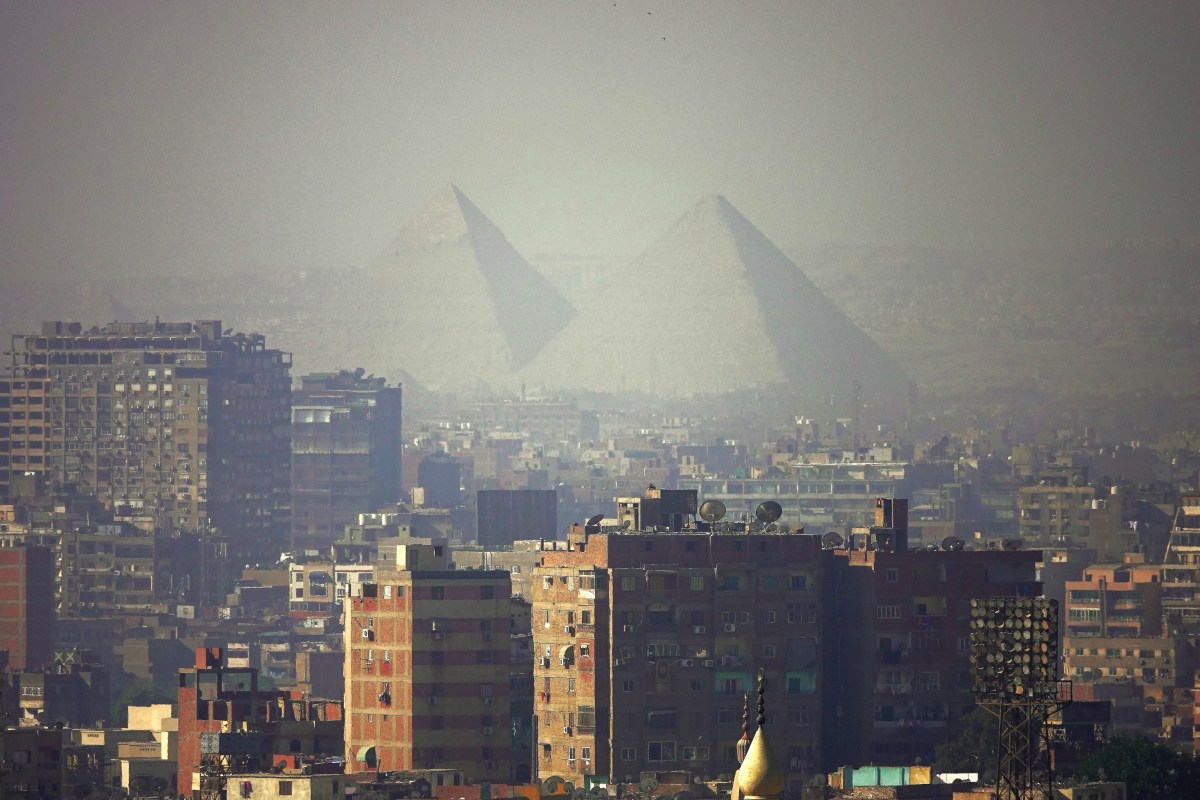
for magnificent views of the entire city–a massive sprawl sheltering nearly 22 million people within its metro borders, with what also seems as many stray cats and dogs–
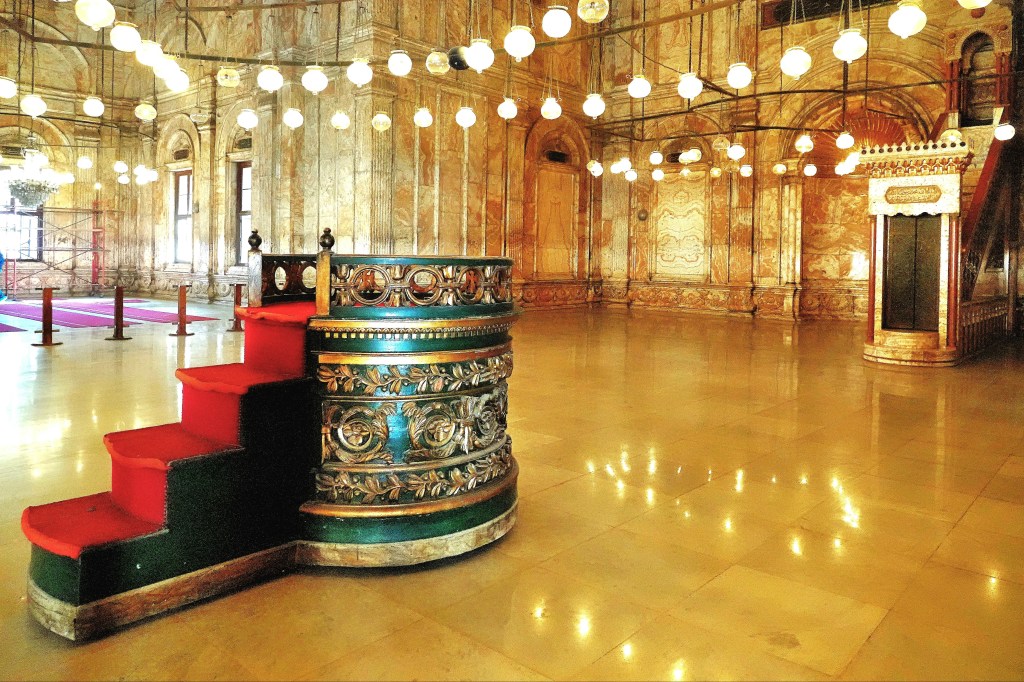
and access to the Mosque of Mohammed Ali Pasha, also known as the “Alabaster Mosque” built in 1848, with twin minarets reaching a height of 84 meters, the highest in all of Egypt.
The prayer hall inside can accommodate 10,000 worshippers under a large central dome surrounded by four semi-domes,
supporting a massive crystal chandelier that has recently been repaired after a 3-year restoration project by Egypt’s Supreme Council of Antiquities.
Across the marble tiles to the east is an adorned, gilded pulpit of carved wood for the chief Iman.
Within the center of the mosque’s massive courtyard of 47 arched doorways finished with 45 domes stands an elaborate alabaster fountain for requisite ablutions.
The copper-clad clock tower rising above the courtyard in the center of the south façade was a gift from Louis Philippe, the King of France in exchange for one of two ancient obelisks discovered at the Temple of Luxor that still stands in the Places de la Concorde in Paris.
Unfortunately, it was a bad trade for the Egyptians, as the mechanical clock is only accurate twice a day since never working properly after installation.
After roaming the courtyard,
it was time for our next excursion to the Egyptian Museum, where we motored by bus through the busy streets and circles of Cairo, while managing to avoid hundreds of pedestrians who habitually cross the roads in all directions, without any regard for traffic or life itself.
Thanks to an earlier tour of The Cave Víðgelmir, Leah and I rolled into Reykjavik @ 4pm–an hour ahead of schedule–and it made all the difference. I immediately found a legit parking spot by the side of Grandi Center Hotel, and we quickly settled into our suite long enough to unzip and freshen up. Before long, we were out the door and heading for the harbor by foot.
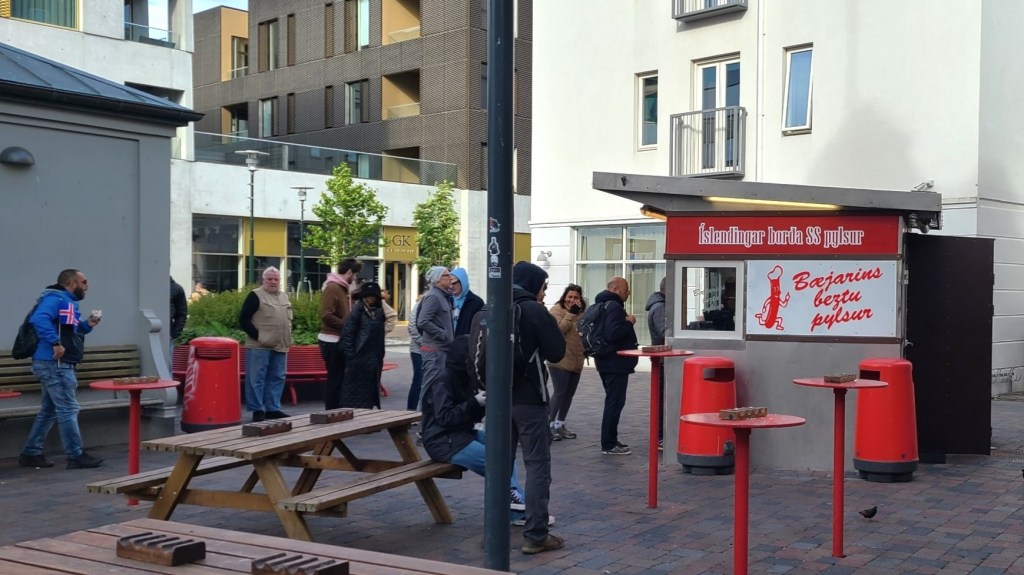
As we were in a hurry to walk the 1 km, there was no time for snacks…although, passing by Bæjarins Beztu Pylsur was tempting…
This little stand has been serving “the best hot dogs in town” since 1937, hence the name translated; although, some fast-foodies claim they’re the best in the world. In fact, hot dogs are so pervasive throughout Iceland, they are jokingly referred to as Iceland’s national dish.
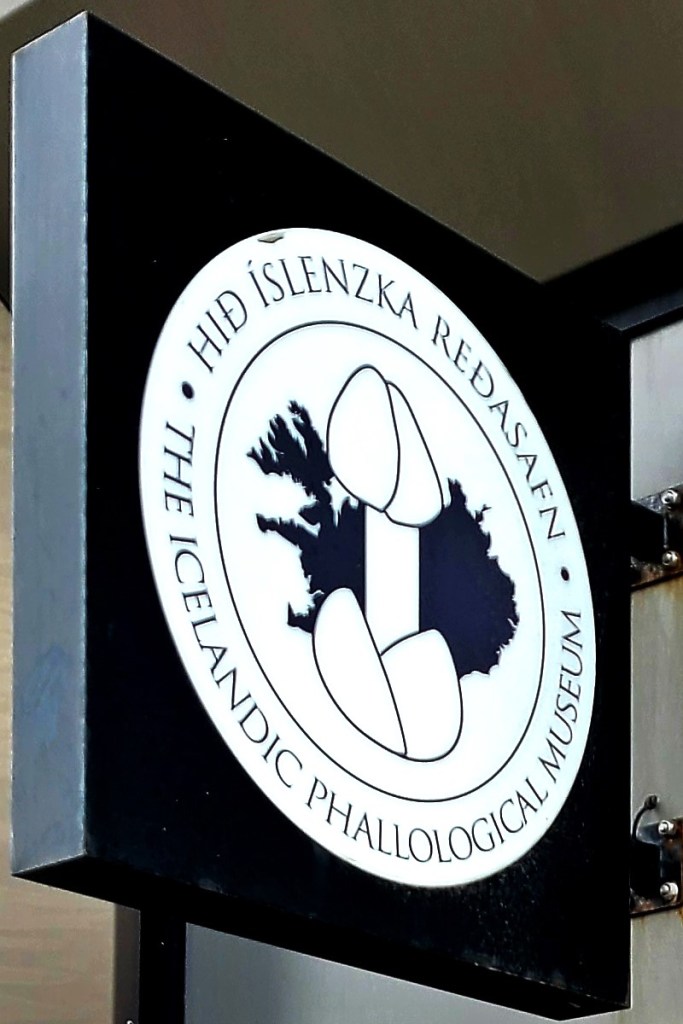
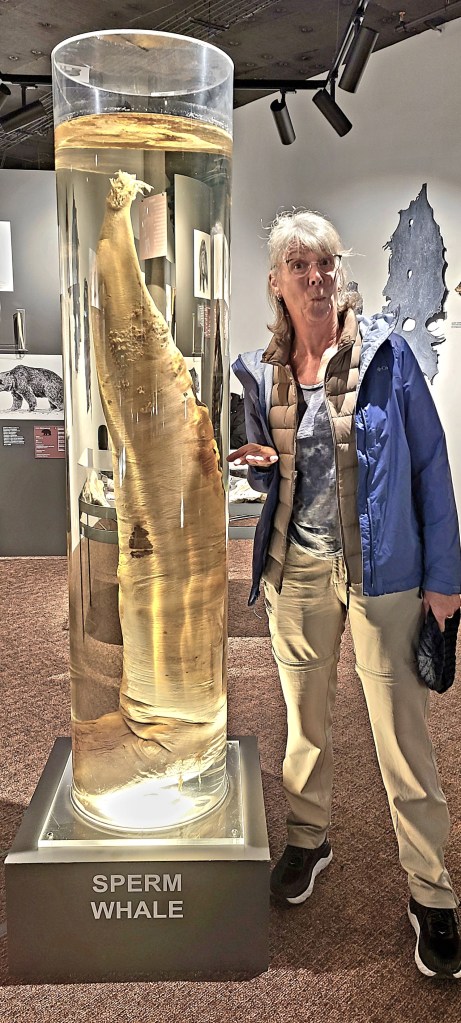
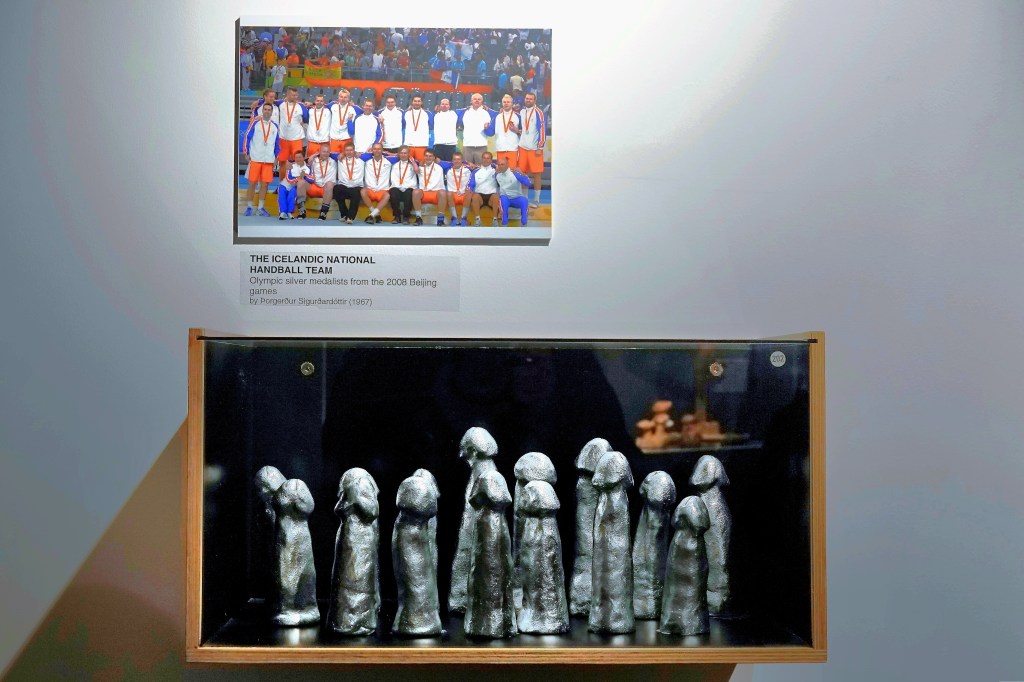
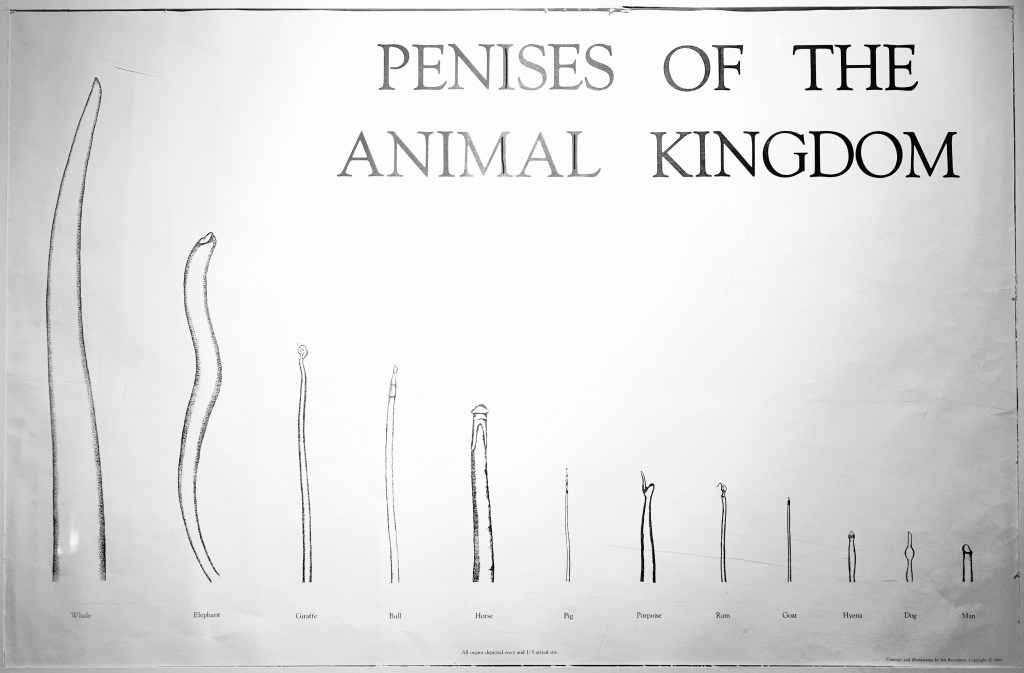
As much as I wanted a wiener, my mission to conduct hard research on “pizzles,” at the Icelandic Phallological Museum was time-sensitive; we only had an hour before closing.
The phallo-logic behind this museum is best expressed by Sigurður Hjartarson, the museum’s founder, who recently sat down with Felix Bazalgette, contributing writer for The Guardian.
In Sigurður’s words…
For most of my life I’ve been a teacher in Iceland, where I was born. In the 60s, I did a postgraduate degree in Edinburgh, but in the 70s I settled into life as a history and Spanish teacher in Akranes, a town north of Reykjavík.
One night in 1974, I was having a drink with my fellow teachers after school and playing bridge. The conversation turned to farming in Iceland – we were discussing how the industry finds a use for every part of the animal. Take lamb, for instance: the meat is eaten, the skin used for clothes, the intestines for sausages and the bones turned into toys for kids. Someone asked if there was a use for the penis, which made me recall how, as a child, I had been given a dried bull’s penis as a whip, to drive the animals out to pasture every day.
I was telling my fellow teachers about this and said that I would be interested in finding a whip like that again. “Well,” said one of my friends, “you might be lucky.” He was returning to his family’s farm that weekend and offered to find me some “pizzles” (a very old word for penis). I agreed, and the next week my friend came back with four bulls’ penises in a plastic bag. I took them to a local tannery and had them preserved. I gave three away as Christmas presents and kept the fourth. That was the start of my collection.
At first, it was a bit of a joke. It was very common then for teachers to have other jobs in the farming and animal industries, such as whaling. So to tease me, other teachers began to bring me penises from their second jobs – whale penises, sheep penises. I started learning how to preserve them. Then, gradually, the collection took on a life of its own. I thought: what if I collect the penises of all the species of Iceland? So that is what I tried to do.
I kept an eye on the news; if an interesting whale was found beached on the coast, I would try to get the penis as a specimen, or if an outlying island was infested with black rats that had escaped from a ship, I’d ask the pest control technician to send me one. (I’ve always had a rule that no animal would be killed for my collection.)
By 1997, I had amassed 63 specimens and the story of my collection had become more well known. I was invited to display it in a small space in the centre of Reykjavík, and my penis museum, or the Phallological Museum, to give it its proper name, was born. There are a lot of different ways to preserve a penis and I have tried all of them, so the collection varies between dried, stuffed and mounted penises, and also those floating in alcohol or formaldehyde.
The collection is very large today, as people have sent in specimens. The largest, from a sperm whale, is about 6ft long, while the smallest, from a European mouse, is less than a millimetre and must be looked at through a magnifying glass. We have one human penis on display, from a 95-year-old man who left it to us in his will in 2011. A few well-endowed humans, one from America and one from Germany, have promised to donate theirs when they die. They are young, though, so we will have to wait a while for those.
You might call me a bit eccentric. At first people thought there was something wrong with me, but over time they saw I was a serious collector who was precise and accurate with the information I kept, and that there was nothing pornographic about the collection. I’m happy that people don’t think I’m a pervert any more.
I’m now 80 and have retired to a small town in the north. I’ve had great fun building the collection over the years and starting the world’s first penis museum; before me, there had been some small collections of penis bones – which many animals have – but not a more comprehensive collection of all these different types. Some people collect stamps or rare coins; I chose instead to collect the phallus. Someone had to do it.
In the words of Sigurður Hjartarson, Fri 22, Apr 2022–as told to Felix Bazalgette
I don’t think I’ve ever been to a museum where the patrons have been so animated. Women easily outnumbered men by 2:1, and everyone seemed to be engaged. I saw no evidence of embarrassment, and selfies dominated most picture-taking opportunities.
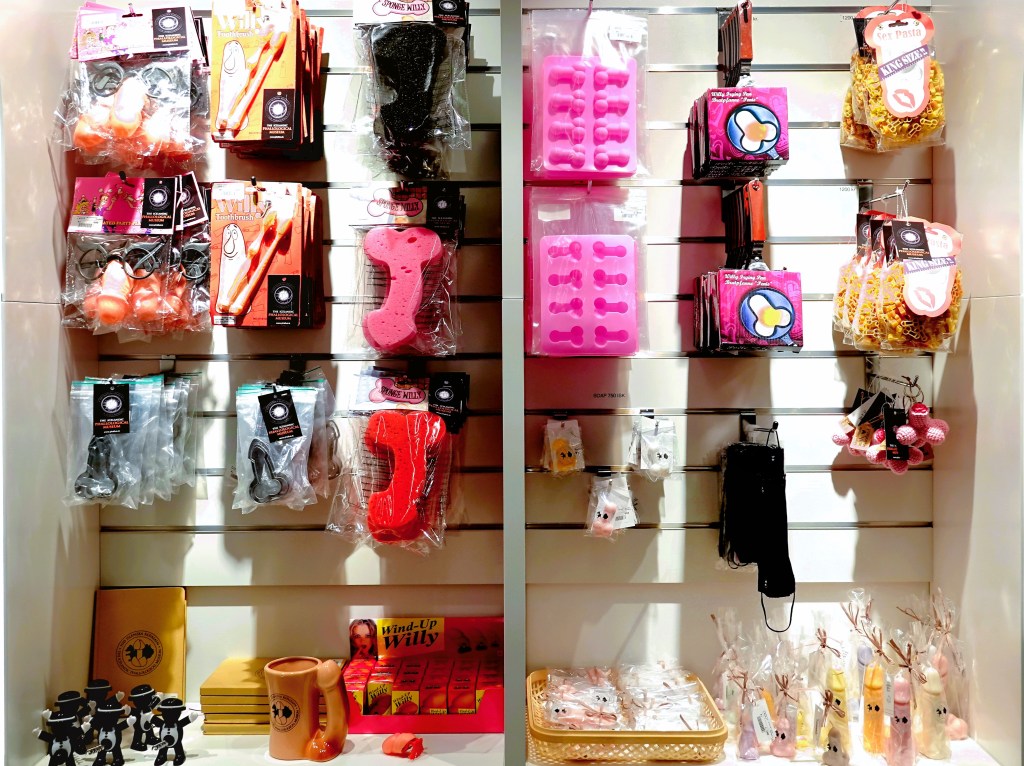
But what surprised me most were all the children running through the exhibits like they were at a petting zoo. And their small hands were very busy at the gift shop,
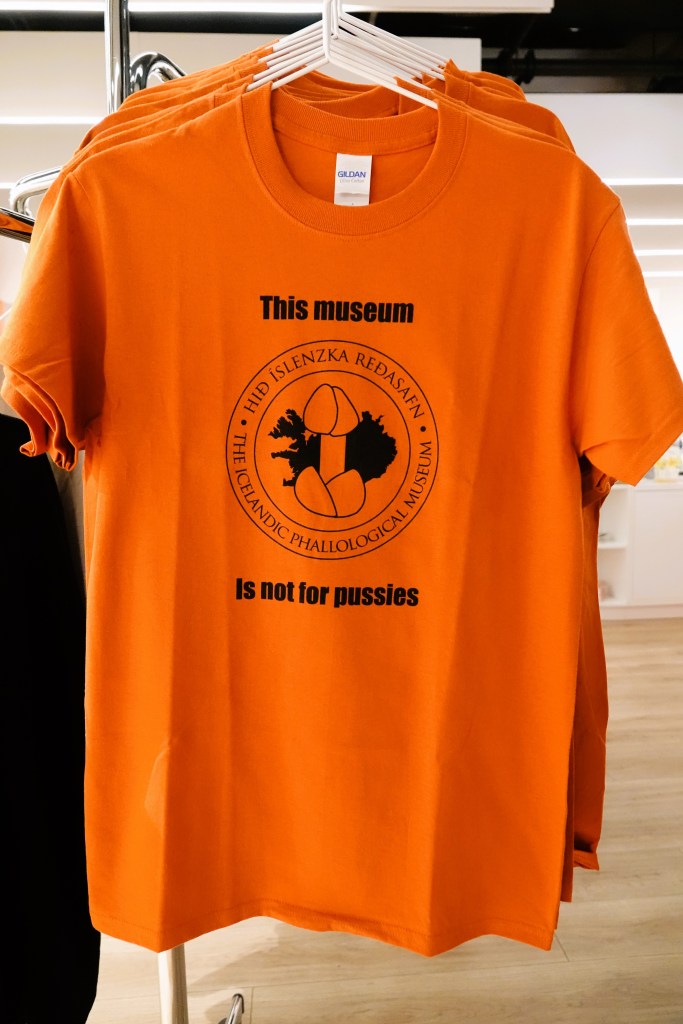
where I found a great souvenir,
and many more items…
for more sophisticated palates.
All in all, it was an uplifting hour, yet extremely humbling for human egos.
Imagine an aquatic gallery of ephemeral ice sculptures in varying shapes, sizes and shades of blue, dancing around a glacial lagoon before floating out to sea or washing upon a black, sandy beach.
After our hike at Skaftafell, Leah and I were expected at Jökulsárlón for a late afternoon amphibian boat tour of the glacial lagoon, but not before a required stopover at Fjallsárlón for a dramatic view of an outlier glacier…
receding into a volcanic valley,
with chunks of ice fighting for a place to thaw.
I could have spent hours at the shoreline photographing the amorphous shapes, but our boat excursion across the road at Jökulsárlón was soon boarding.
We rolled off the moraine in fat tires, and effortlessly glided onto the lagoon for a chilly boat ride surrounded by orange vests and hulking ice.
Our captain cautiously piloted the amphibian as close to the bergs as allowed, to limit the wake of curious kayakers,
and knowing that hidden ice is usually more voluminous than exposed ice.
Also present in the lagoon was a resident colony of surreptitious seals,
anxiously awaiting high tide to feast on herring and cod swept into the icy inlet.
After disembarking, we crossed to the Atlantic, where jewels of ice wash ashore,
and decorate the beach,
a fitting terminus that would gain Banksy’s approval and mine.




















































































































































 Streaming thru America