Crossing into Israel

Dateline: January 28, 2023

Leah and I were up at dawn, waiting for the car that would shuttle us from Amman W Hotel to Allenby Bridge, while the balance of our Viking posse was flying from Queen Alia International Airport to various destinations across America. We were excited about 9 extra days of travel throughout Israel, but we were having a last-minute case of shpilkes (anxiety) about our decision to cross the border by bus on Shabbos (Jewish sabbath).

Long before the start of our Middle Eastern adventure, Leah and I had vacillated between flying into Tel Aviv from Amman or completing a land crossing–so we did a time analysis of the two. By flying into Ben Gurion Airport, wading through long security lines before reaching Customs and Immigration, waiting at the luggage carousel, finding an airport taxi during Sabbath, and driving to Arthur Hotel in Jerusalem, we figured it would be a five-to-six-hour ordeal… for about $700.

Or we could taxi to Allenby Bridge, cross between countries, and hire an Arab on the Israeli side to drive us to Jerusalem–all for a hundred bucks and half the time! It seemed like a no-brainer to me.

In addition to our driver, we were accompanied by a handler (packing a pistol) whose job it was to massage the bureaucracy… and he made all the difference.

The ride from Amman was unremarkable–only half-an-hour to the Jordanian border. The immigration terminal was just awakening at 8 AM, with handfuls of early arrivals already waiting for officials to begin processing visas. The handler approached an open window on our behalf with our passports and $30 in hand for departure tax. After that, it was a waiting game.

Another half-hour passed before we were ushered to an open square where transfer busses were boarding for another $10 per person and $2 per bag–all for a 10-minute drive across no man’s land.

Once underway, I lost count of the number of checkpoints we crossed until we finally arrived at the first Israeli immigration building. No one told us what to do or where to go, so I watched what the others were doing and mimicked their behavior.

I grabbed our bags from the cargo hold. They were scanned against our passports, and joined an avalanche of luggage being fed into an x-ray conveyor disguised as a black rubber flap, where they disappeared inside the terminal.

Leah and I joined a chaotic queue outside the terminal that inched toward the entrance and eventually merged with a rowdy, serpentine line inside the terminal that crept toward a block of AIT scanners flanked by Israeli security. Today, being Shabbos, only one scanner was operational, which only exacerbated the crowd’s irritation and frustration, especially when VIPs were intermittently ushered past us in their special lane.

It took an hour to reach the scanner, which led to another half-hour wait in a subsequent line before we were interrogated by an immigration officer who finally issued our tourist cards, and directed us through a makeshift wall that revealed a warehouse of suitcases and packages waiting to be collected.

Picking through piles of Samsonite, Tumi, and American Tourister might have taken hours had it not been for our electronic tags. After reuniting with our suitcases, we had one final queue to master, staffed by a baby-faced security agent who double-checked our IDs against the luggage registry created outside. We were now free to travel about Israel for the next 9 days.

Once we were officially on Israeli soil, we were introduced to Abdul, the taxi driver who reeked of smoke and spoke limited English. Nevertheless, we negotiated a 200 NIS fee ($55) to our hotel in Jerusalem… or so we thought. Forty minutes later, we were standing outside Damascus Gate, where Abdul mimed that he could drive no further due to a military high-alert.

We learned from a passer-by that a 13-year-old Palestinian boy had shot and wounded an Israeli father and son near the entrance to the City of David National Park, while in a separate event the night before, 7 worshippers were killed and 3 were wounded outside a synagogue in East Jerusalem by a West Bank militant, making this the deadliest attack on Israelis in recent years.

In response to the attacks, authorities countered the violence by positioning officers from a counter-terrorism unit “permanently” in the Old City to “promptly respond to exceptional events whenever necessary.” Troops seemed to be omnipresent around the perimeter of the gate.

“Just our luck,” said Leah. Her voice was filled with resignation. “This was my biggest fear! Now what!?”

“I think we’re actually safer than before,” I answered. “The threat of violence is always a real possibility, but Israel knows how to respond to situations like this, especially with the arrival of Secretary of State Blinken.”

“That may be true,” Leah offered, “but many of these soldiers don’t even look old enough to shave!”

Once we got our bearings, we drudged down deserted Jaffa Street–our roller bags bumpety-bumping behind us–until we reached Arthur Hotel.

Since we were far too early to check in, we parked our bags at the hotel and set out on foot to get lost in the Old City and trust our instincts to get back. We discovered the Armenian Quarter, one of the four quarters of real estate within the ancient walls,

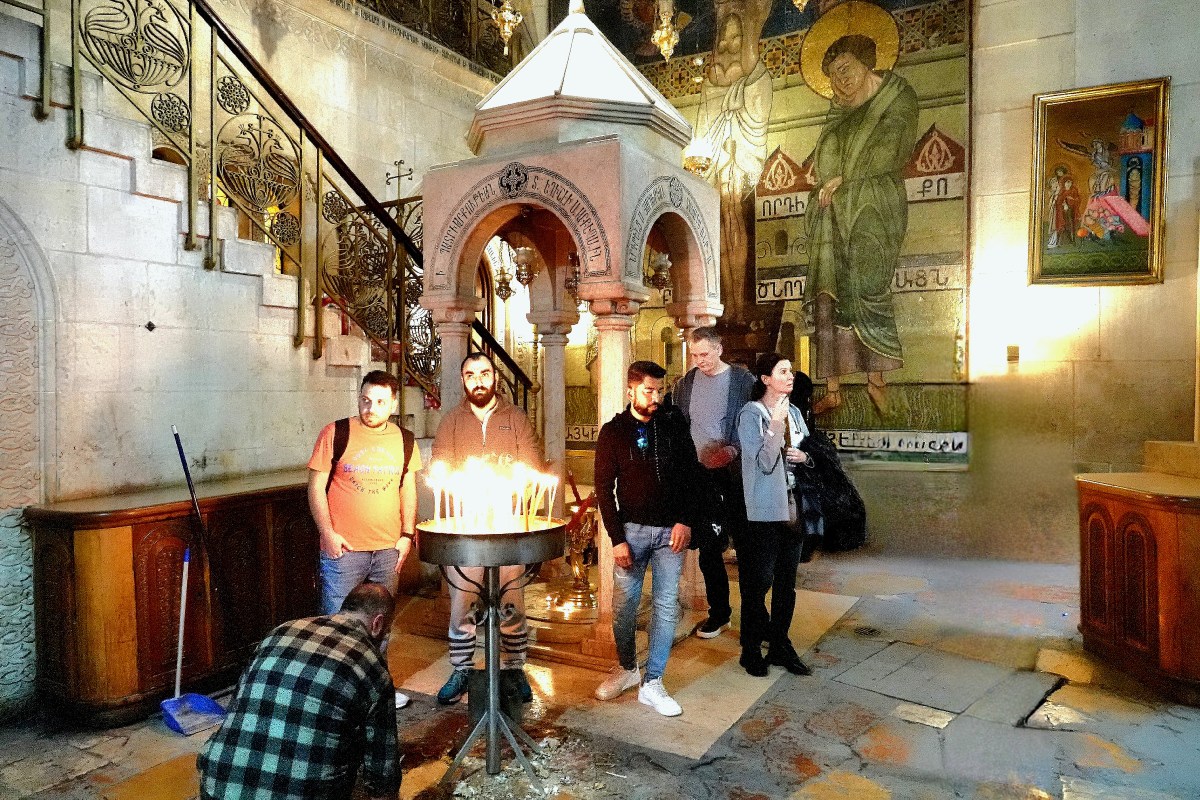
which somehow led us to the Christian Quarter, where we stumbled upon the Church of the Holy Sepulchre, Christianity’s most revered site, and home to six Christian denominations–Greek Orthodox, Catholic, Armenian, Coptic, Syrian Orthodox, and Ethiopian Orthodox–

Photo by Gerd Eichmann

that have accepted from religious scholars that this church consecrates the ground where Jesus was crucified, buried, and resurrected, as seen in a mosaic interpretation of Jesus’s journey that hangs in the church vestibule.

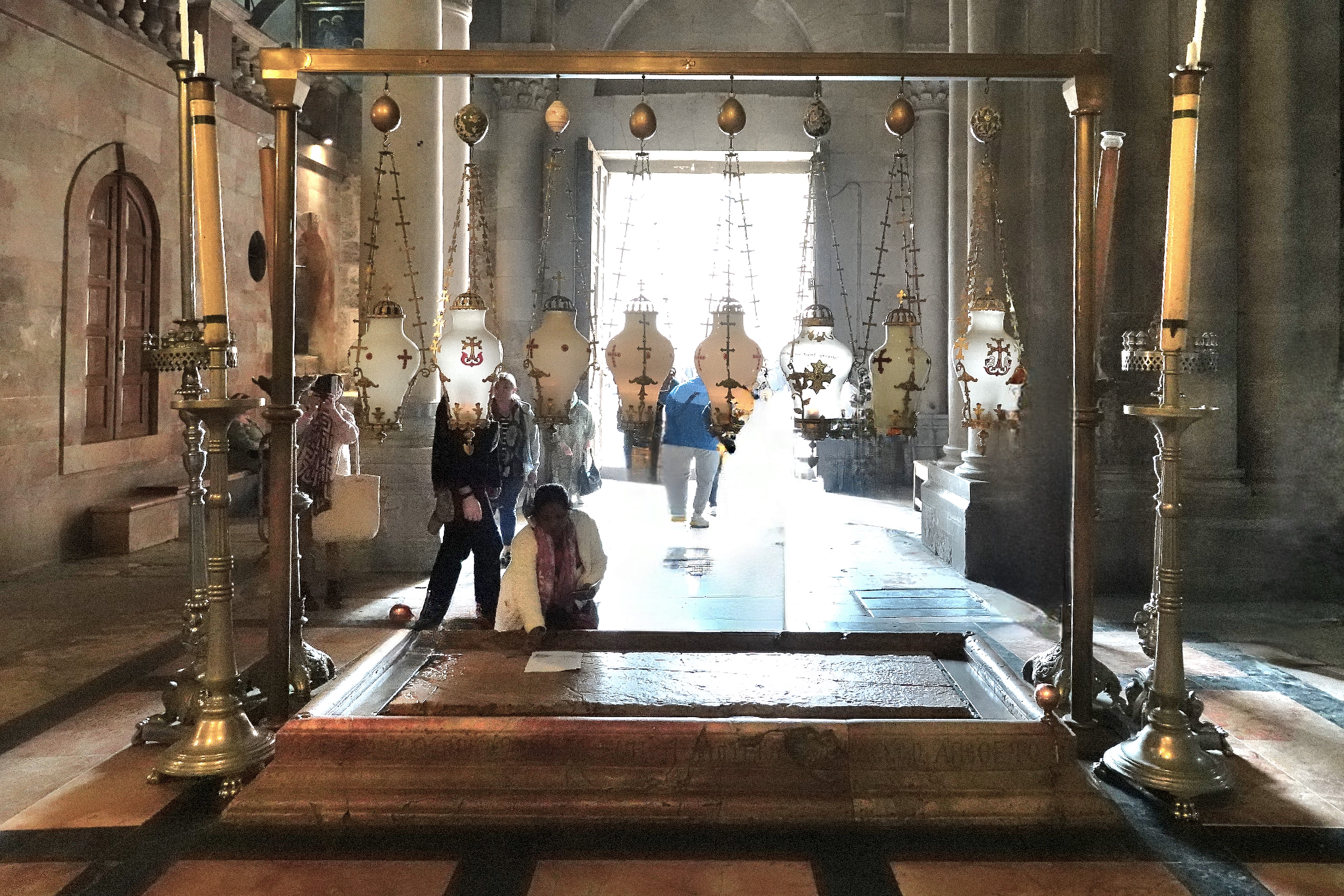
We were unsurprised to find the Church of the Holy Sepulchre crowded with pilgrims and worshippers from around the world who were here to light a candle and prostrate on the Stone of Anointing;
or worship at the uber-ornate Calgary, under the Altar of the Crucifixion, where the alleged Rock of Calvary is encased in glass;

or hug the Aedicule, a shrine protecting the tomb of Jesus,

under the dome of the Catholicon.

We even came across some Crusader graffiti…

on our way to the lower level to admire the Chapel of St. Helena.

We exited the church with a profound respect for the millions of devotees who have made this their purpose.
And we were captured by the solemnity of the moment, as we sauntered down Via Dolorosa, now aware that this was the fateful route taken by Jesus as he dragged the cross to his final destination.

It was enough to process for one day. We were weary from walking, and it was time to find our way back to Jaffa Street.

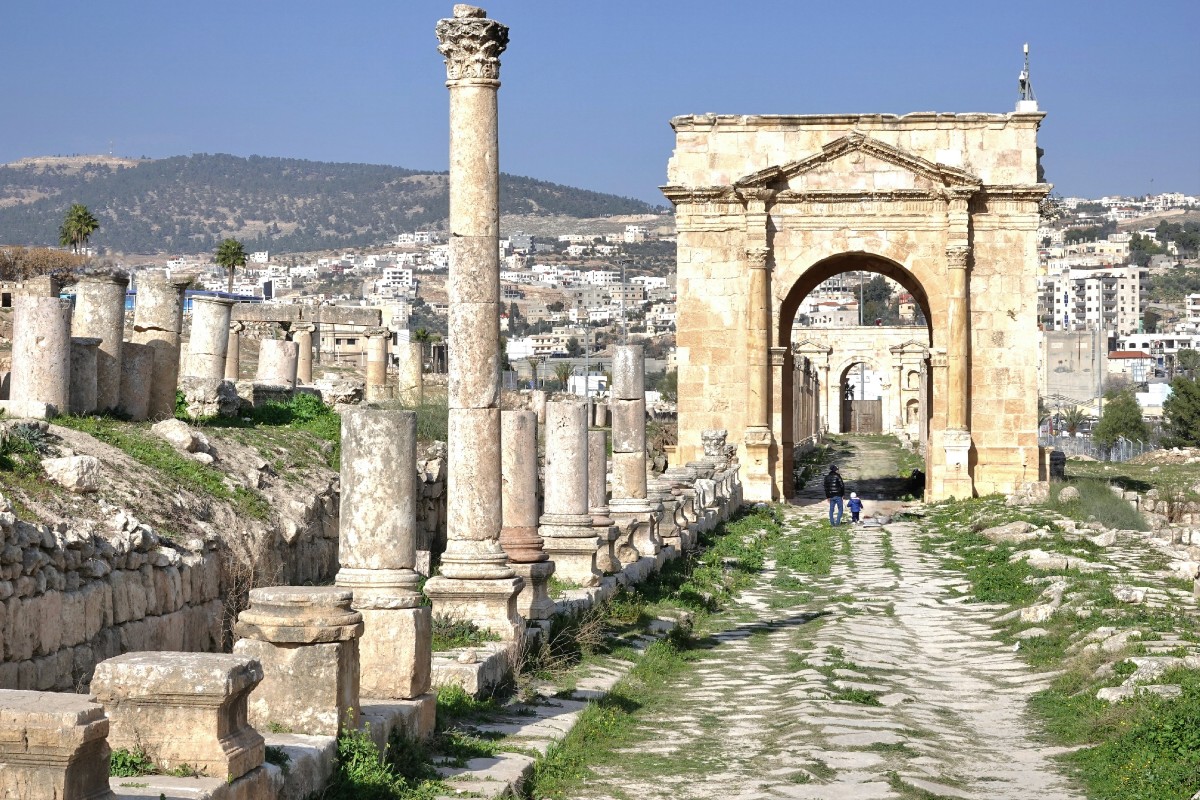
Ancient Jerash

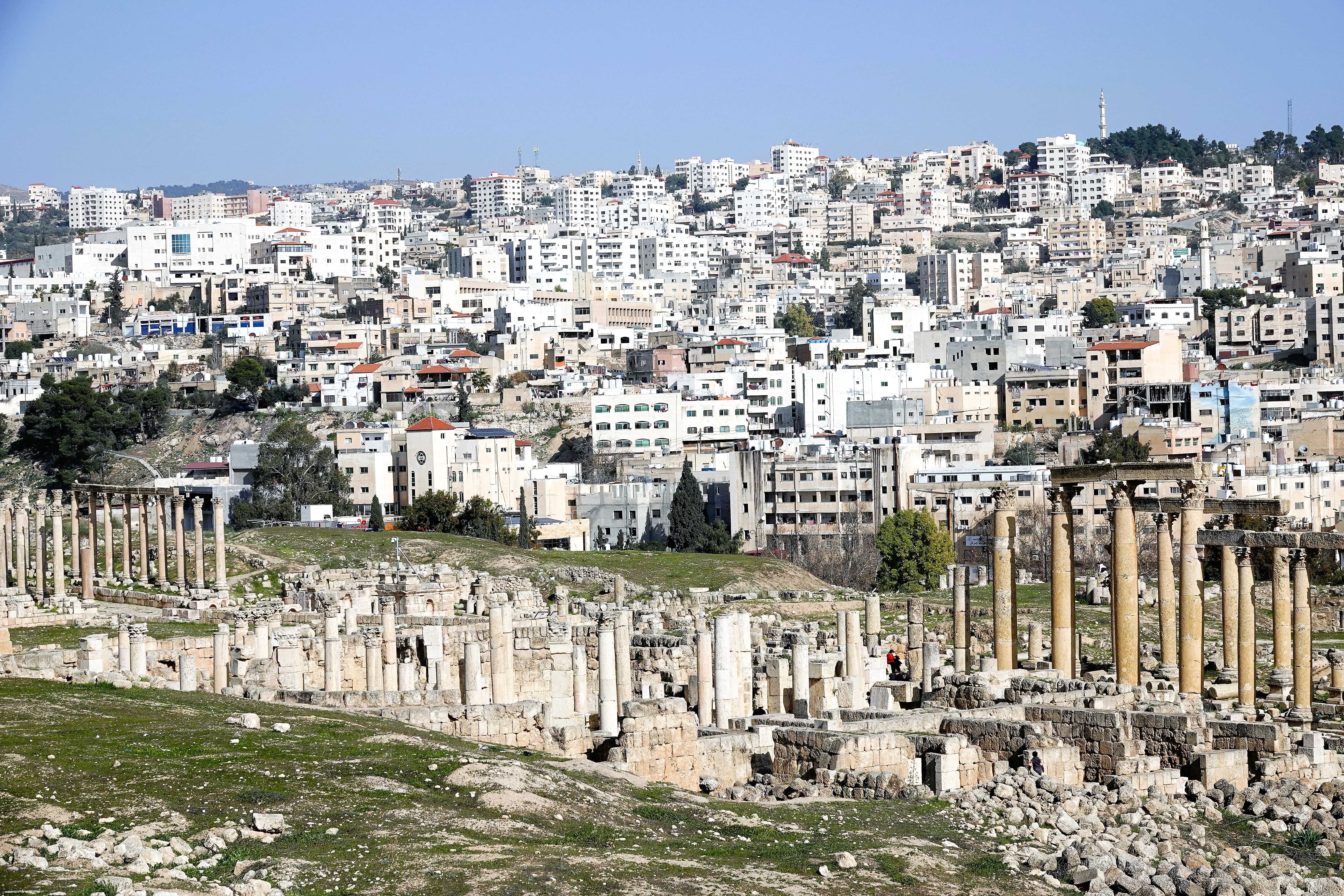
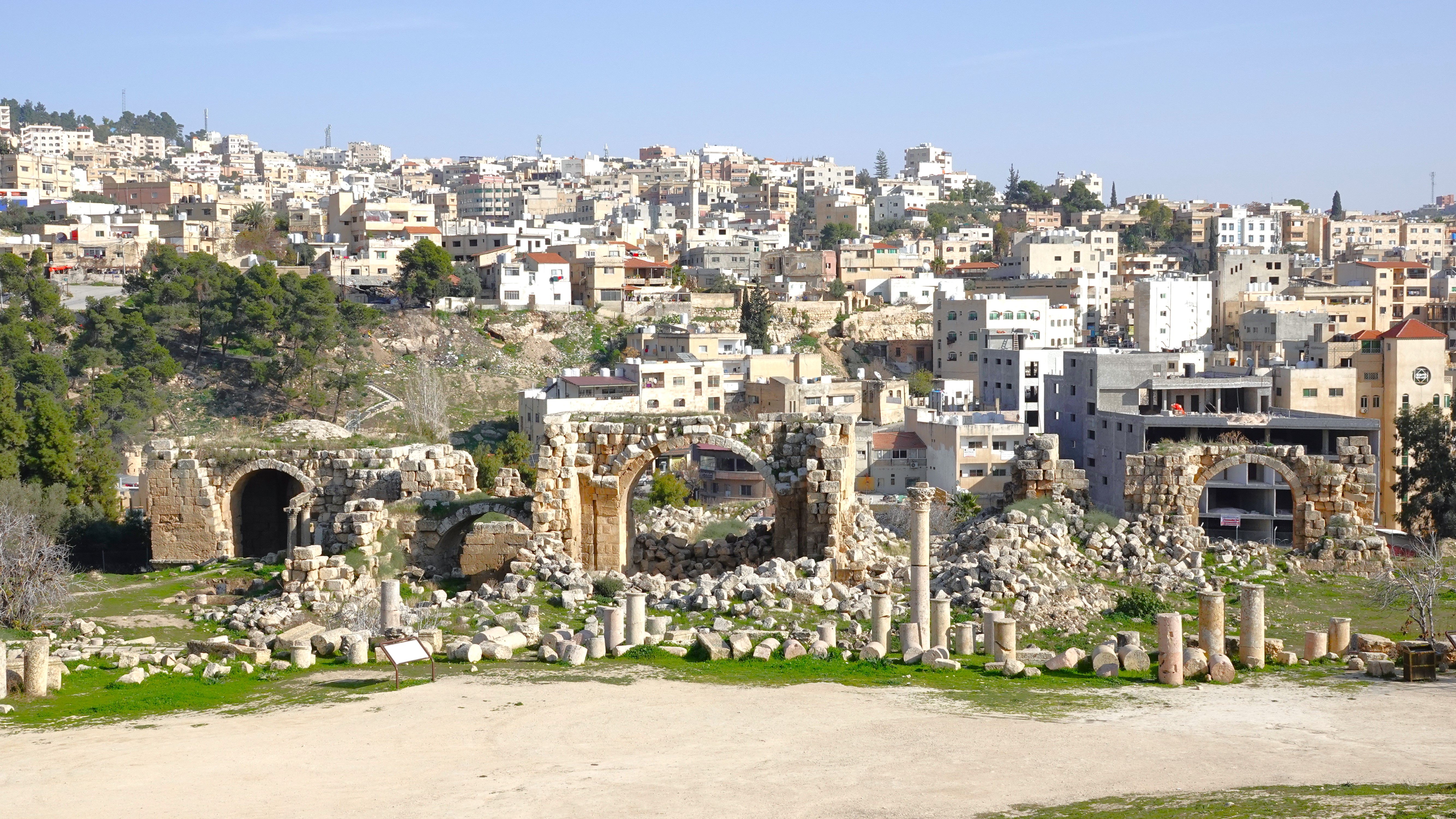
Jerash is a modern city 45 km (30 mi) north of Amman,

that surrounds an immense Archeological Park designed to protect the ruins of a walled Greco-Roman settlement,

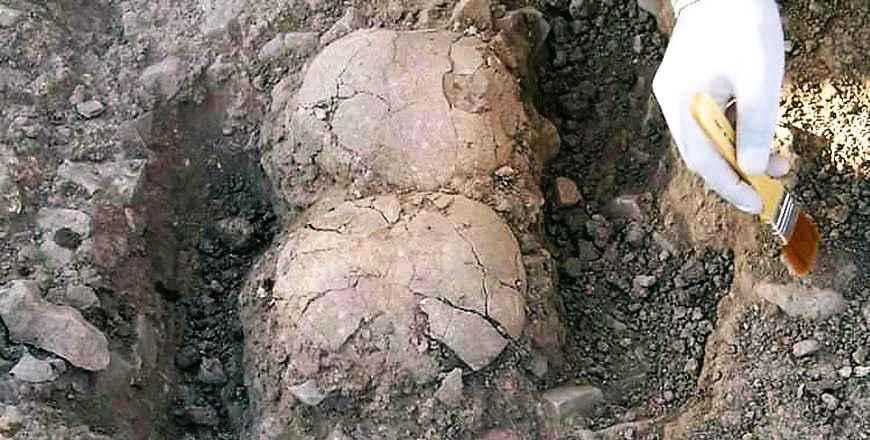
as well as human remains from Neolithic times.

Photo courtesy of UJ

Jerash evolved from an agrarian village on the banks of Wadi Jerash throughout the Iron Age and Bronze Age, to becoming a 4th century BC garrison founded by Alexander the Great on his way from Egypt to Mesopotamia.

Subsequently, under the reign of Antiochus IV (175 – 164 BC), Jerash became a tax and trade capitol, with special thanks to Zeus for his guidance.

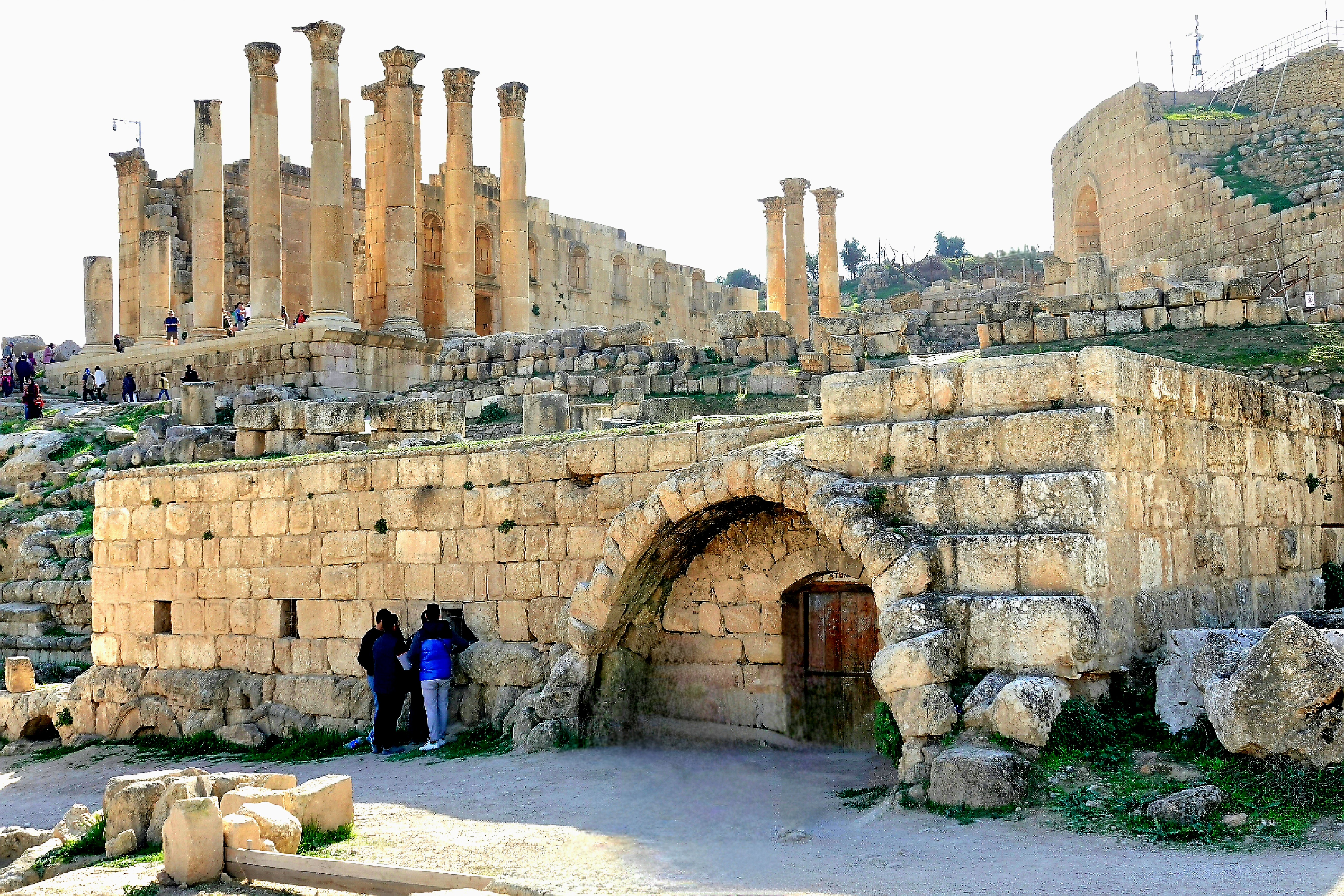
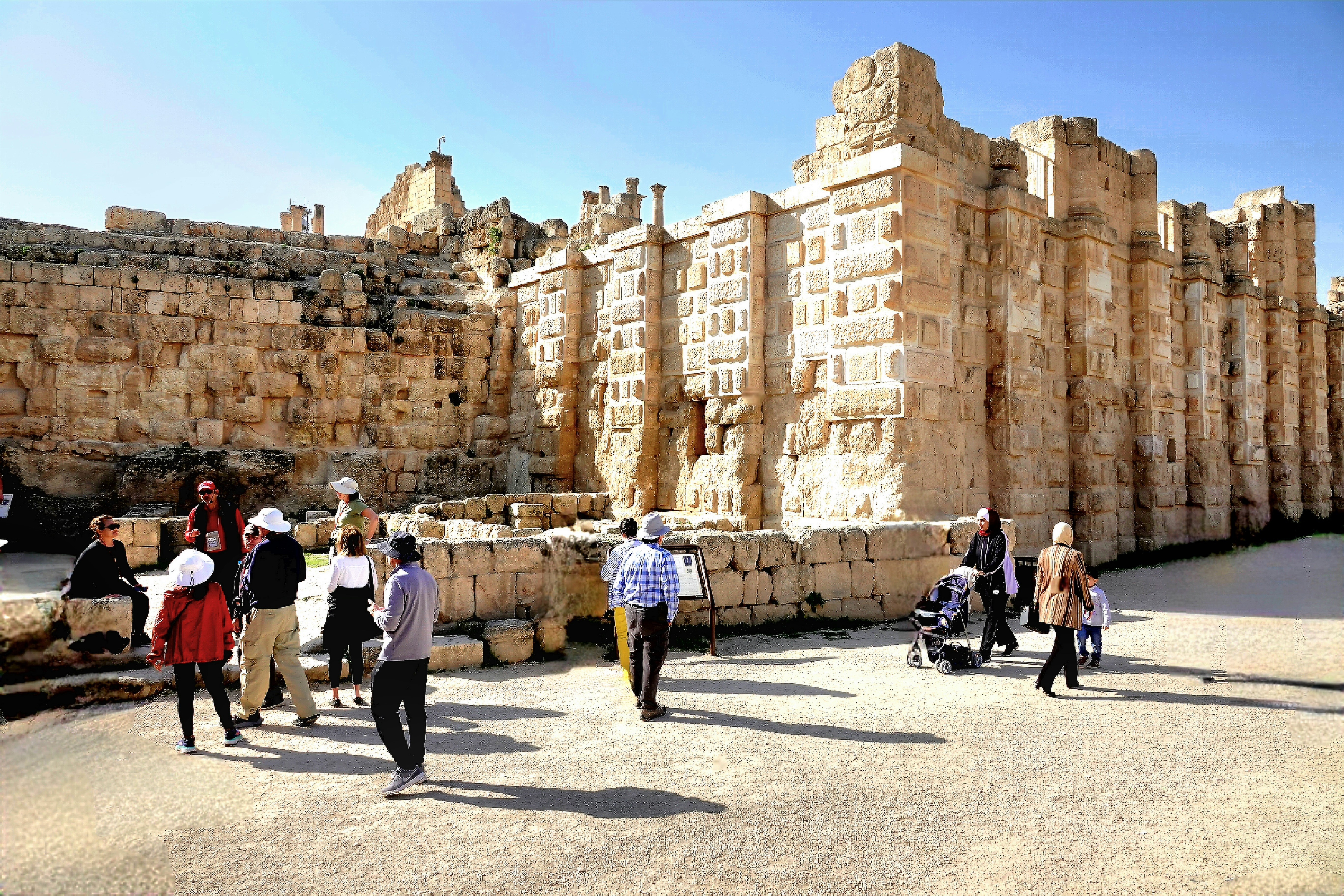
Great Temple of Zeus

As an aside, it deserves mentioning that King Antiochus is regarded as one of Judaism’s major villains for his iron-fisted repression of Jewish laws and customs. He is forever vilified as the ruler who desecrated Jerusalem’s Second Temple by turning it into a brothel and sacrificing a pig on its altar to honor Zeus. His continuing persecution of Jews ultimately prompted an uprising commanded by Judah Maccabee in 167 BC that eventually led to the recapture of Jerusalem and rededication of the Second Temple, spawning the Miracle of Hannukah.

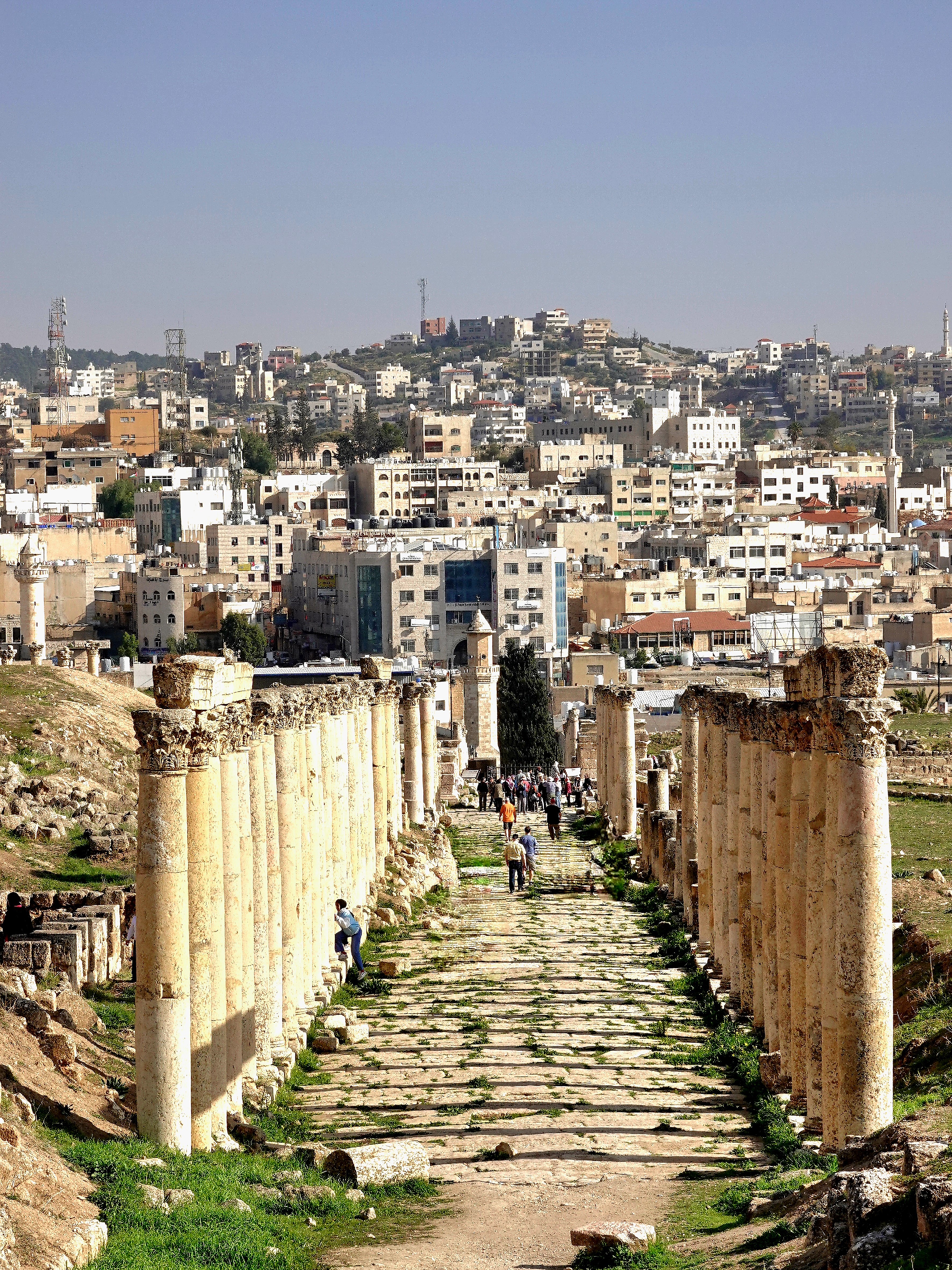
Only Greek inscriptions on city foundations remained after Jerash was sacked by Roman general Pompey in 63 BC. But under Roman rule, Jerash was rebuilt and thrived as an important trading center to Europe and Asia, as evidenced by the array of architectural riches that have been excavated and restored over the past century, making Jerash the most well-preserved, ancient, Roman city east of Italy.

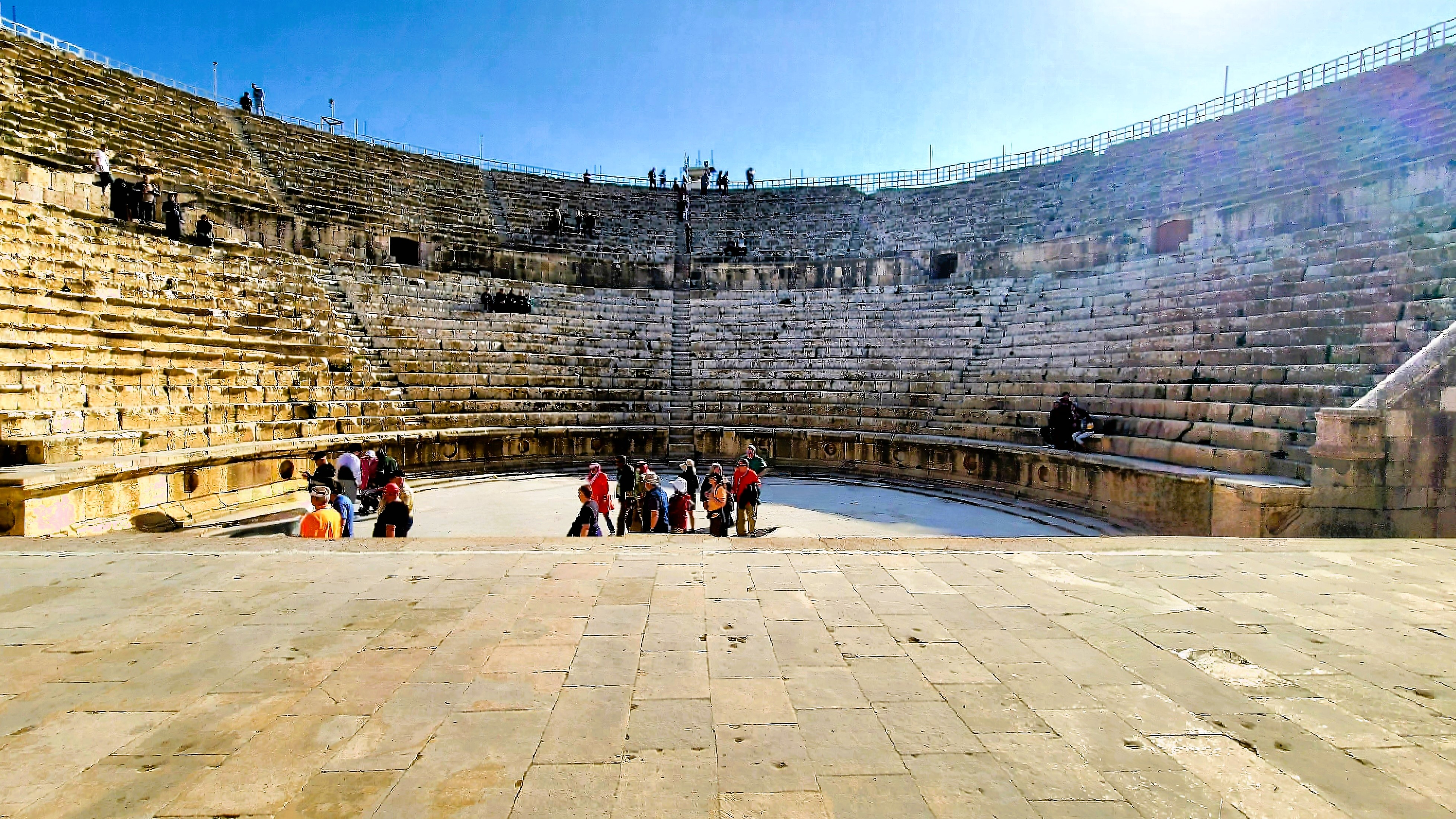
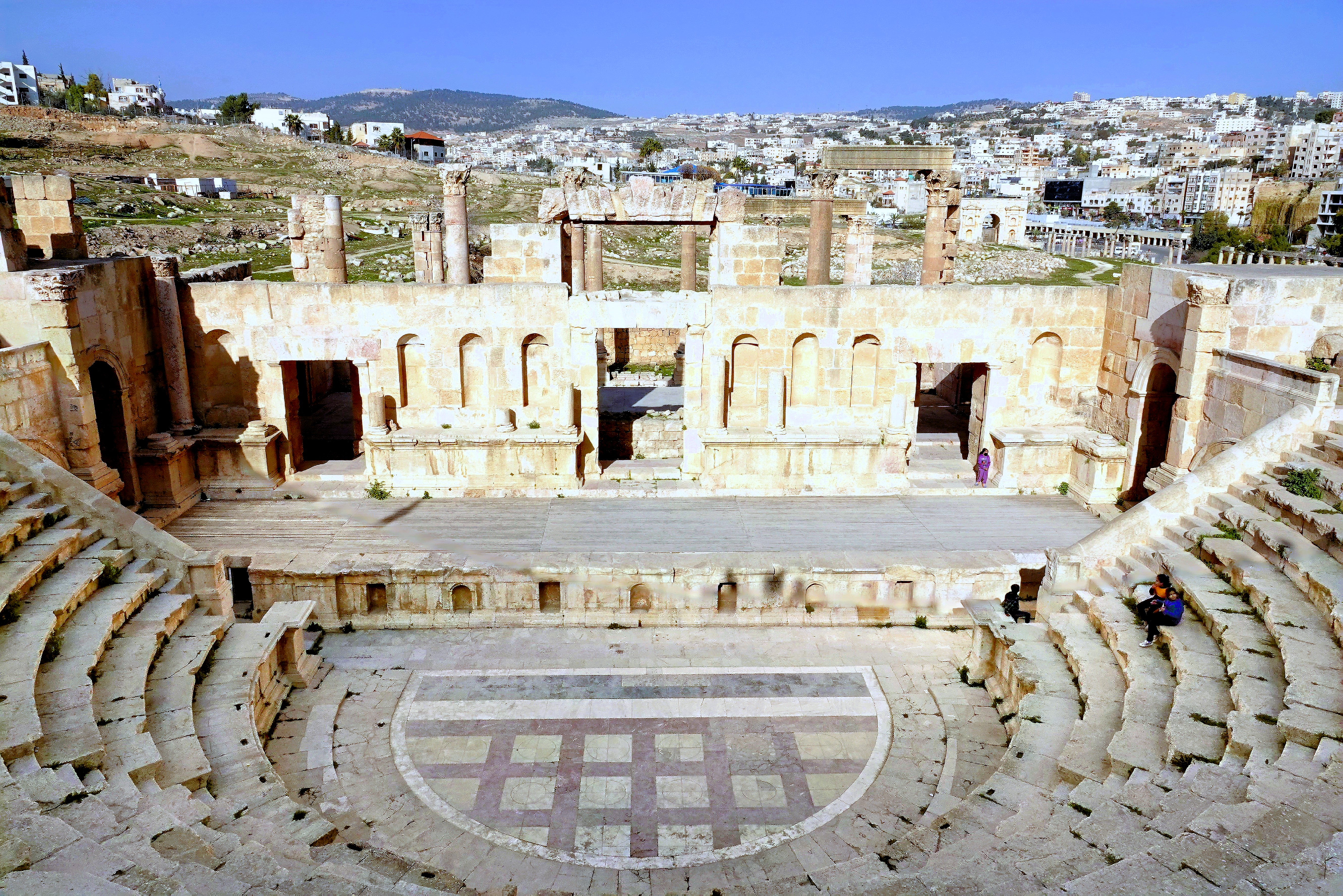
South Theater

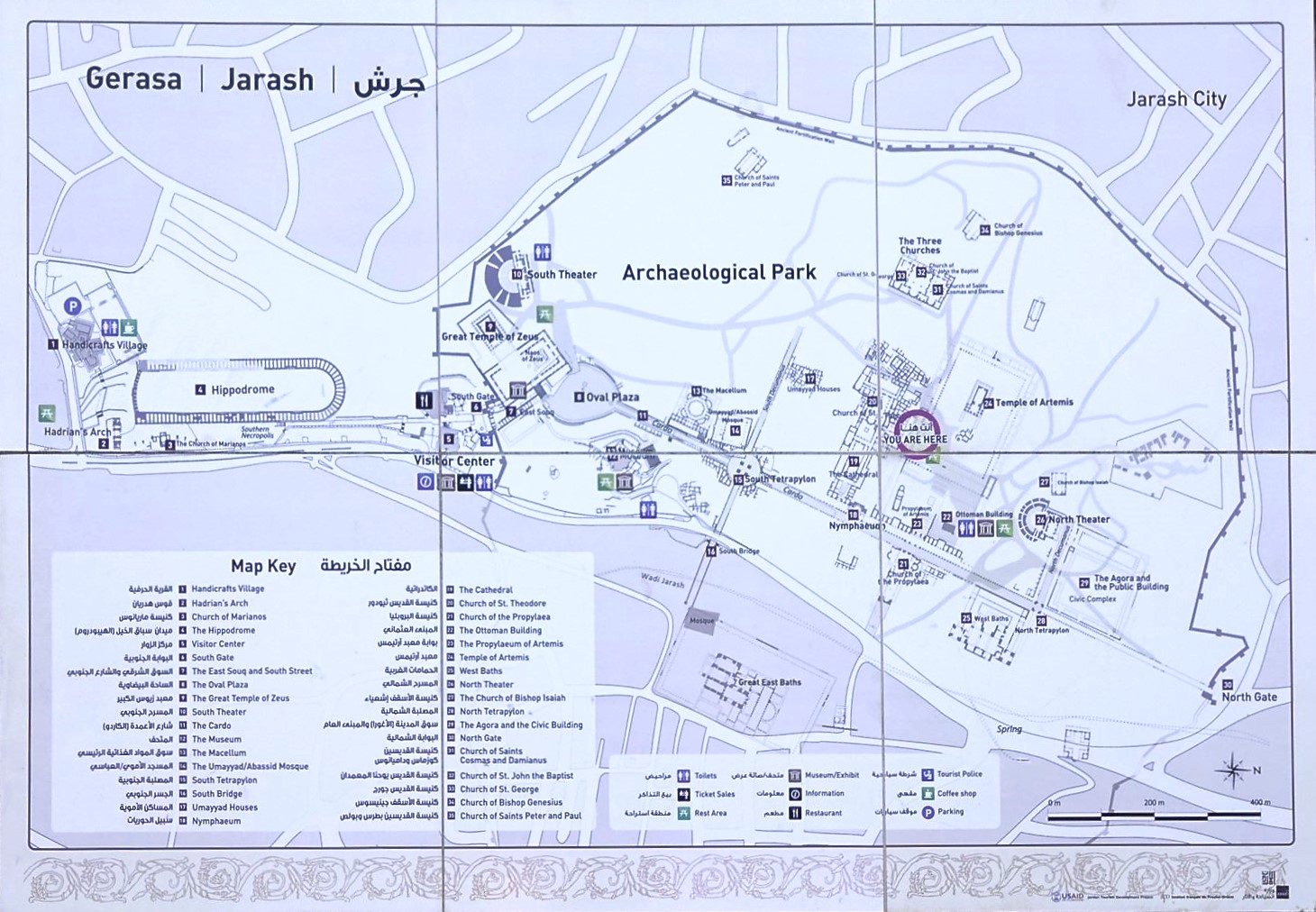
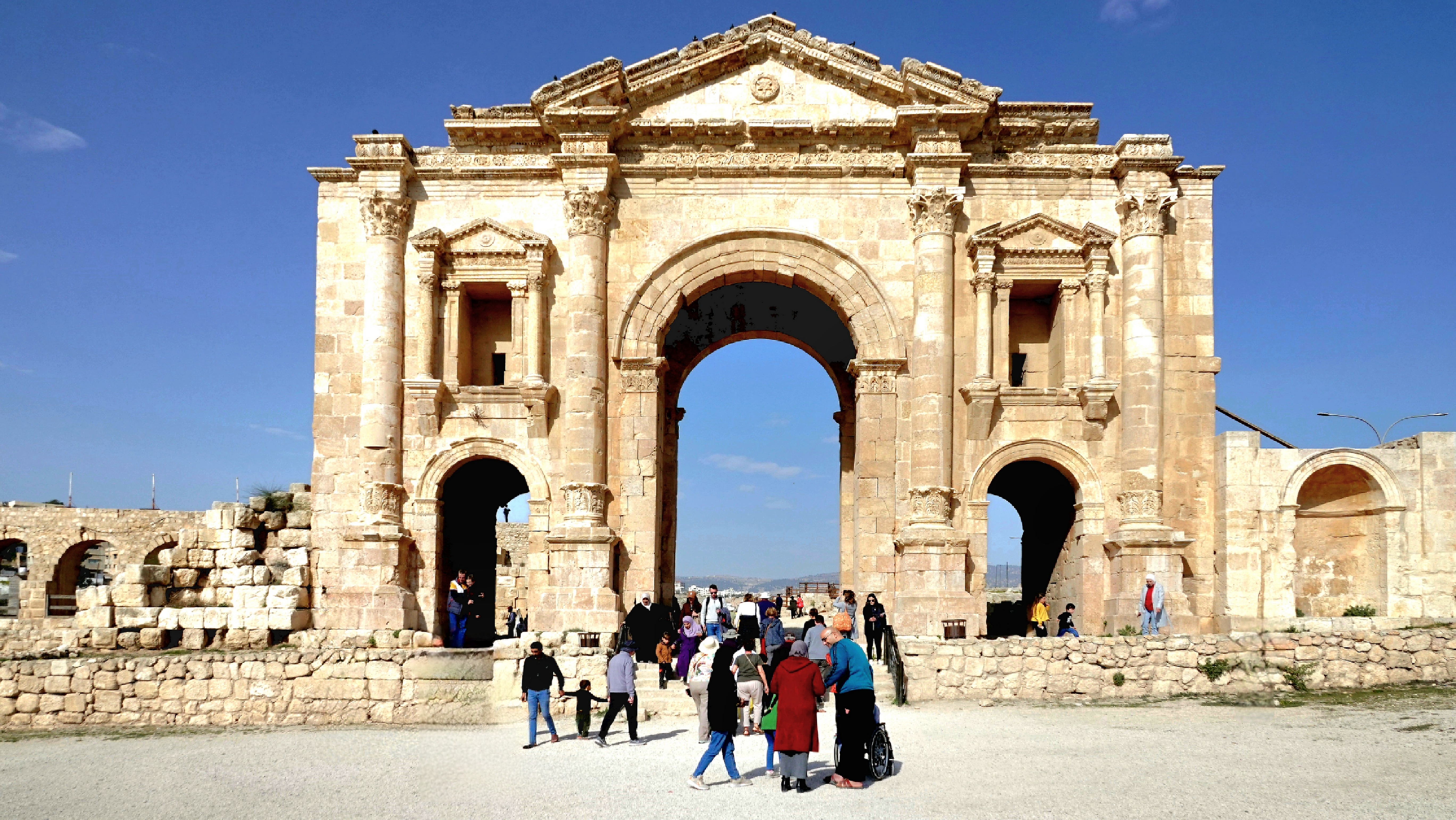
A walk through the Archaeological Park carried us back in time when the Roman Empire flourished, and Hadrian’s patronage (Emperor from 117 – 138 AD) benefitted the eastern provinces.

Hadrian’s Gate

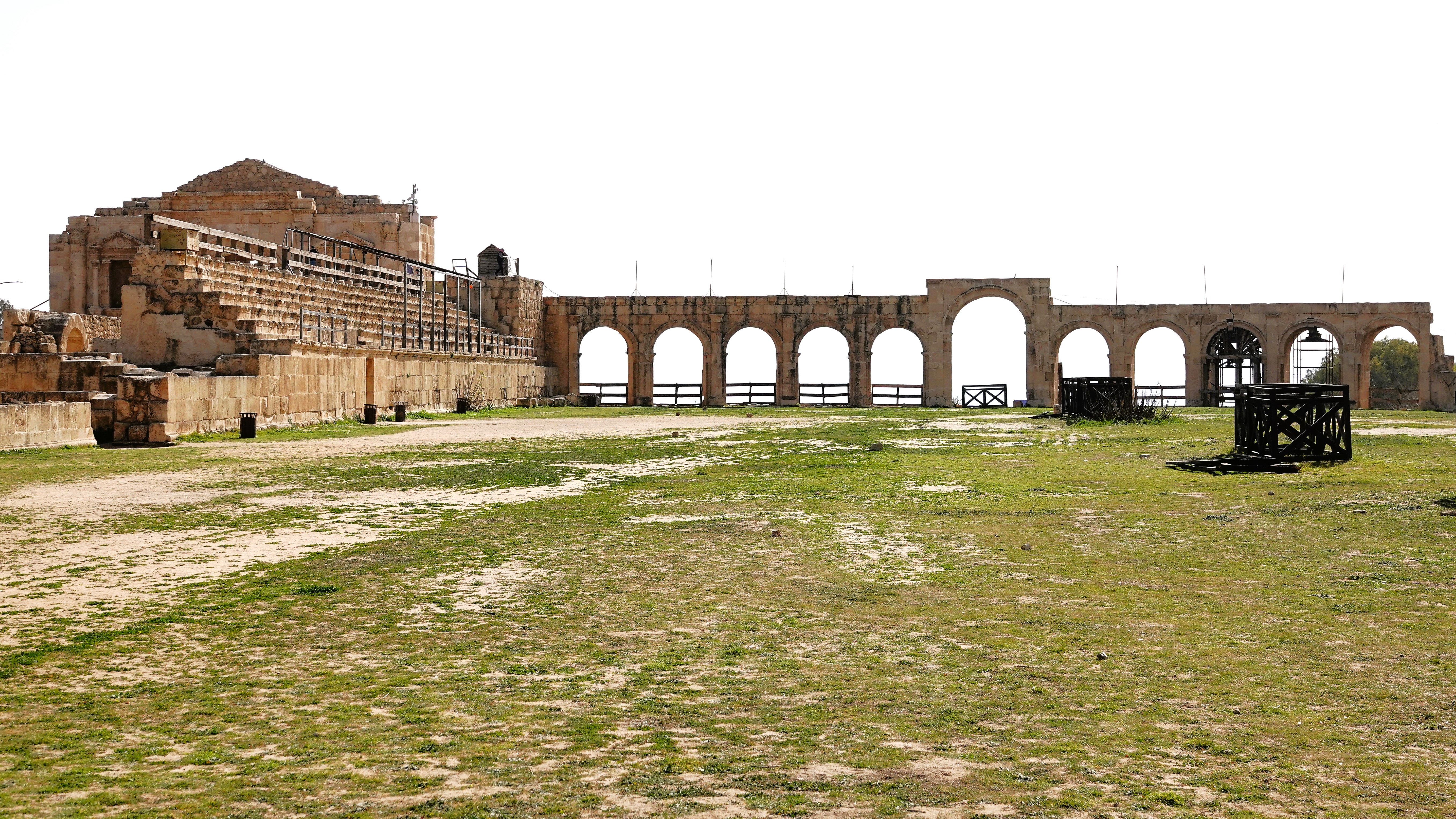
There’s the Hippodrome, originally built for chariot races, and later converted to gladiator fights with the addition of amphitheater seating;

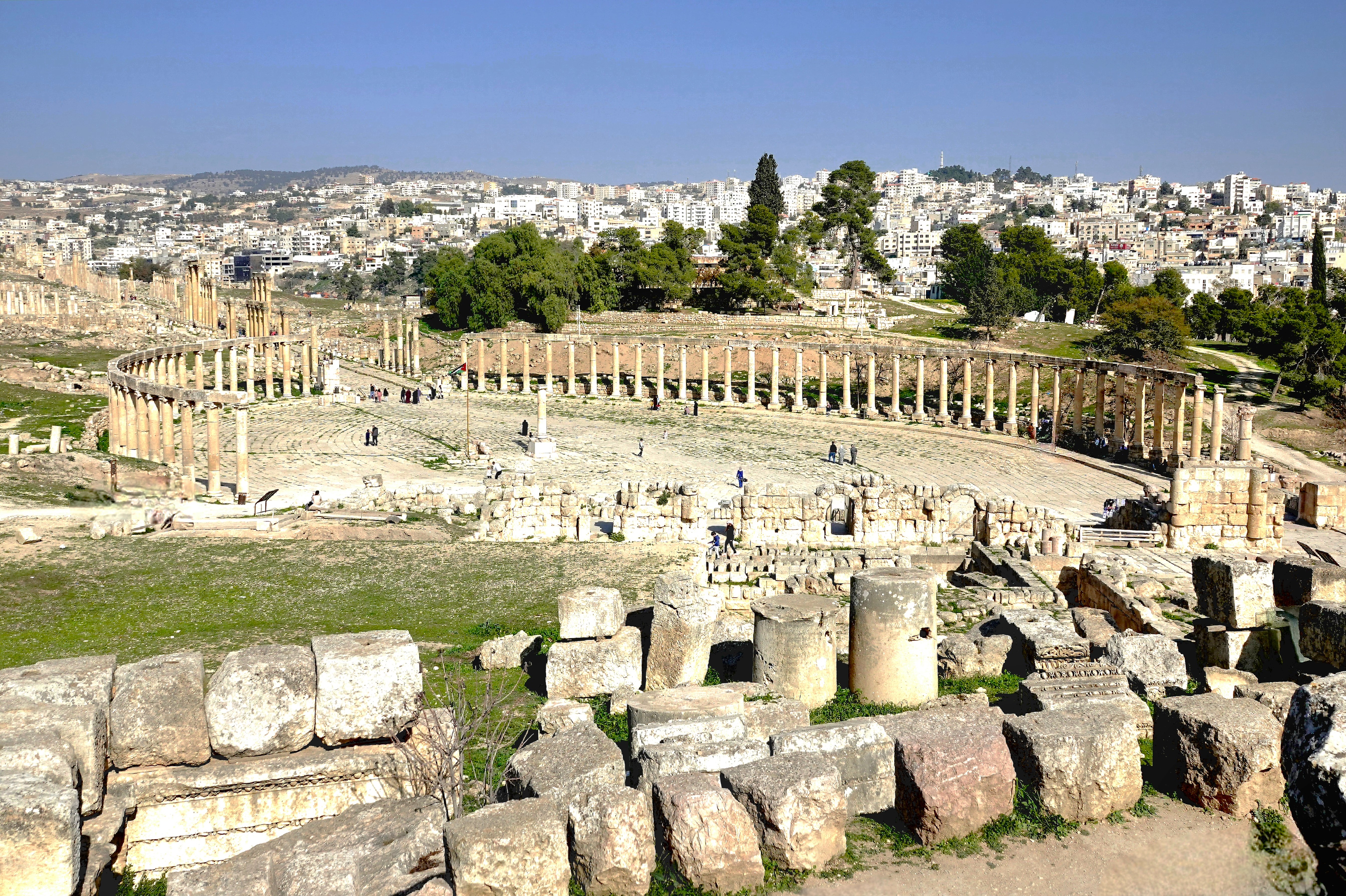
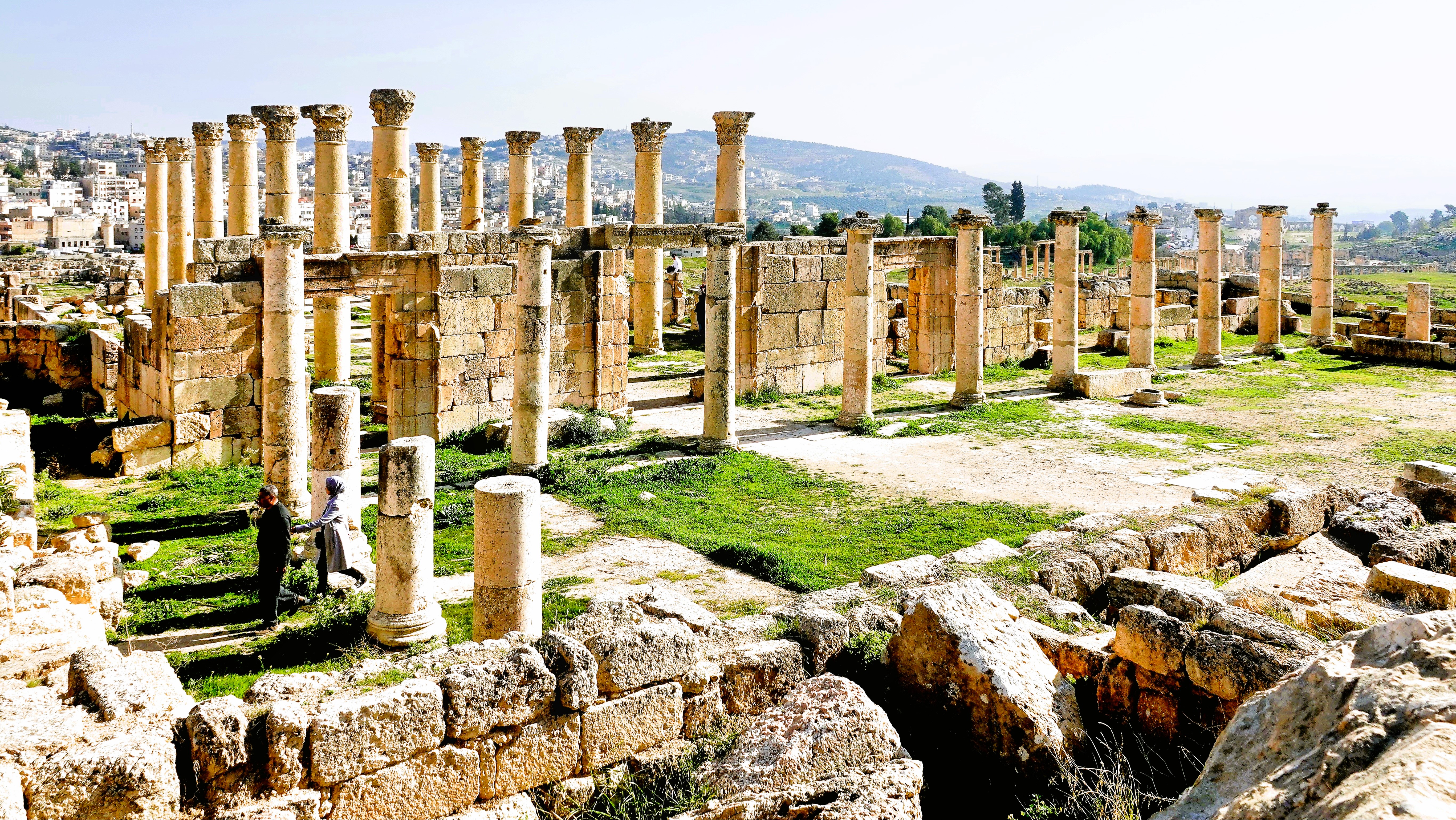
the Oval Plaza, with limestone pavers framed by 56 Ionic columns;

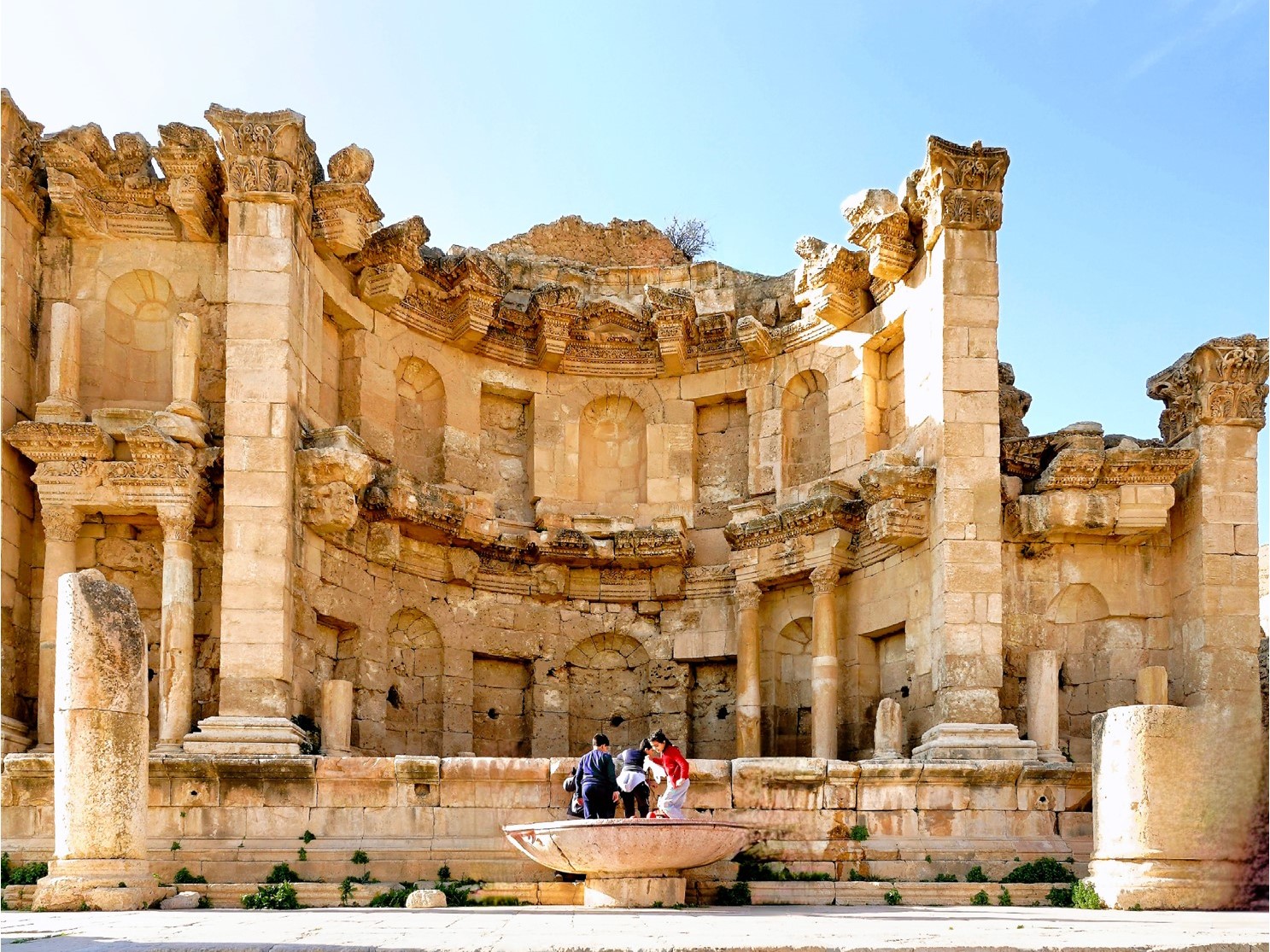
the Nymphaeum, the city’s primary water resource…

built to meet the demands of the Western Baths;

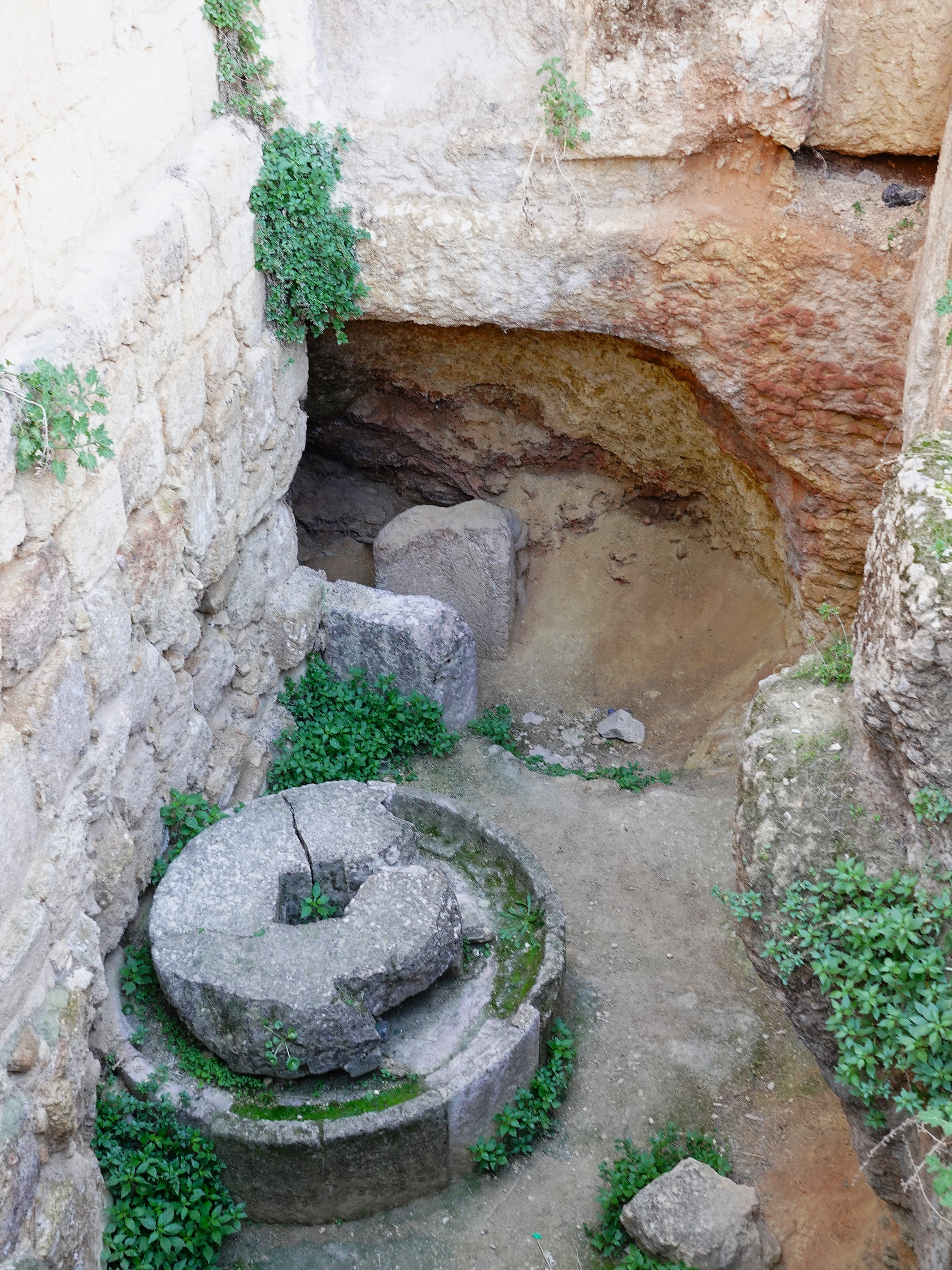
the olive oil press located below the floor of the Western Souk…

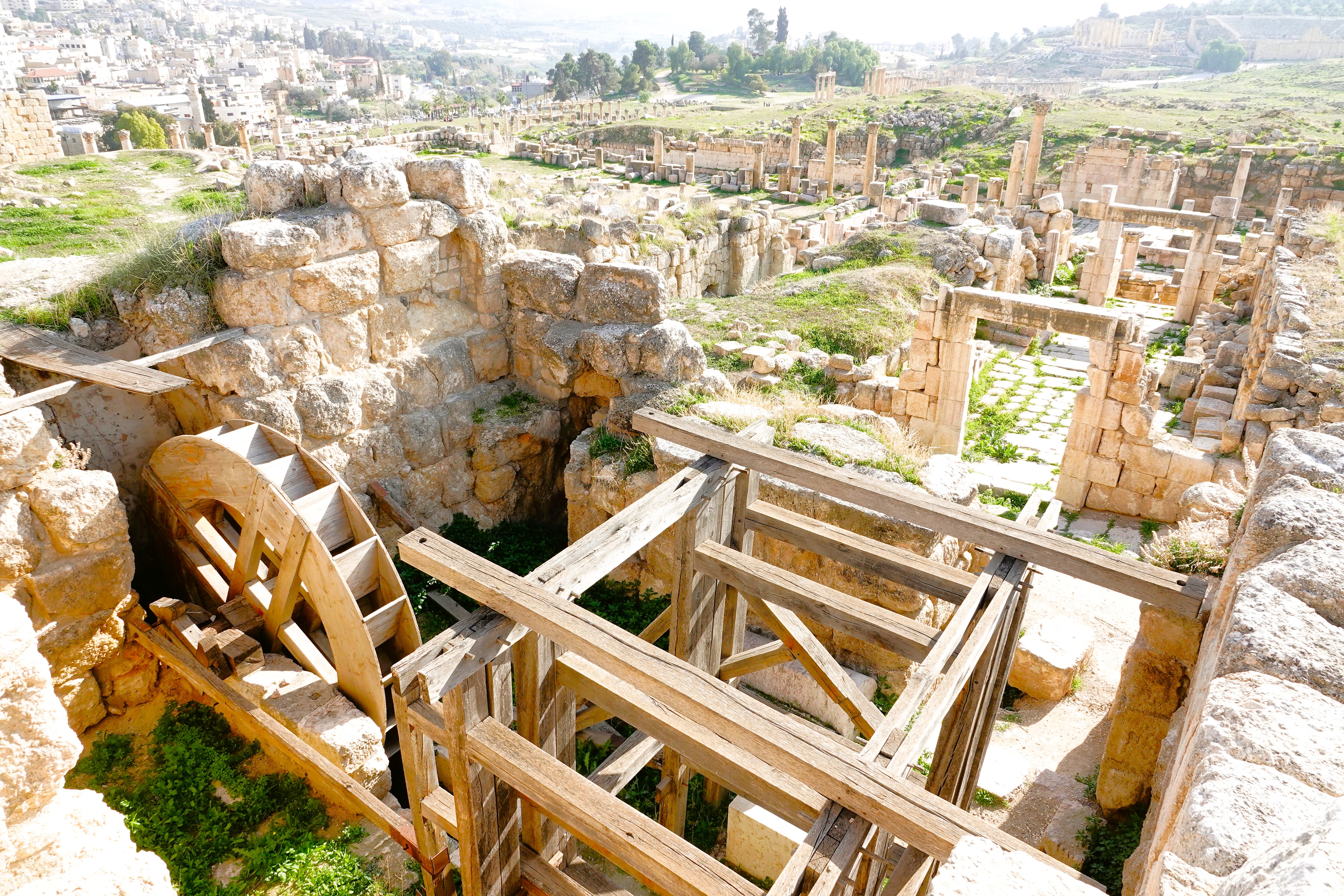
and a subterranean, water-powered saw mill;

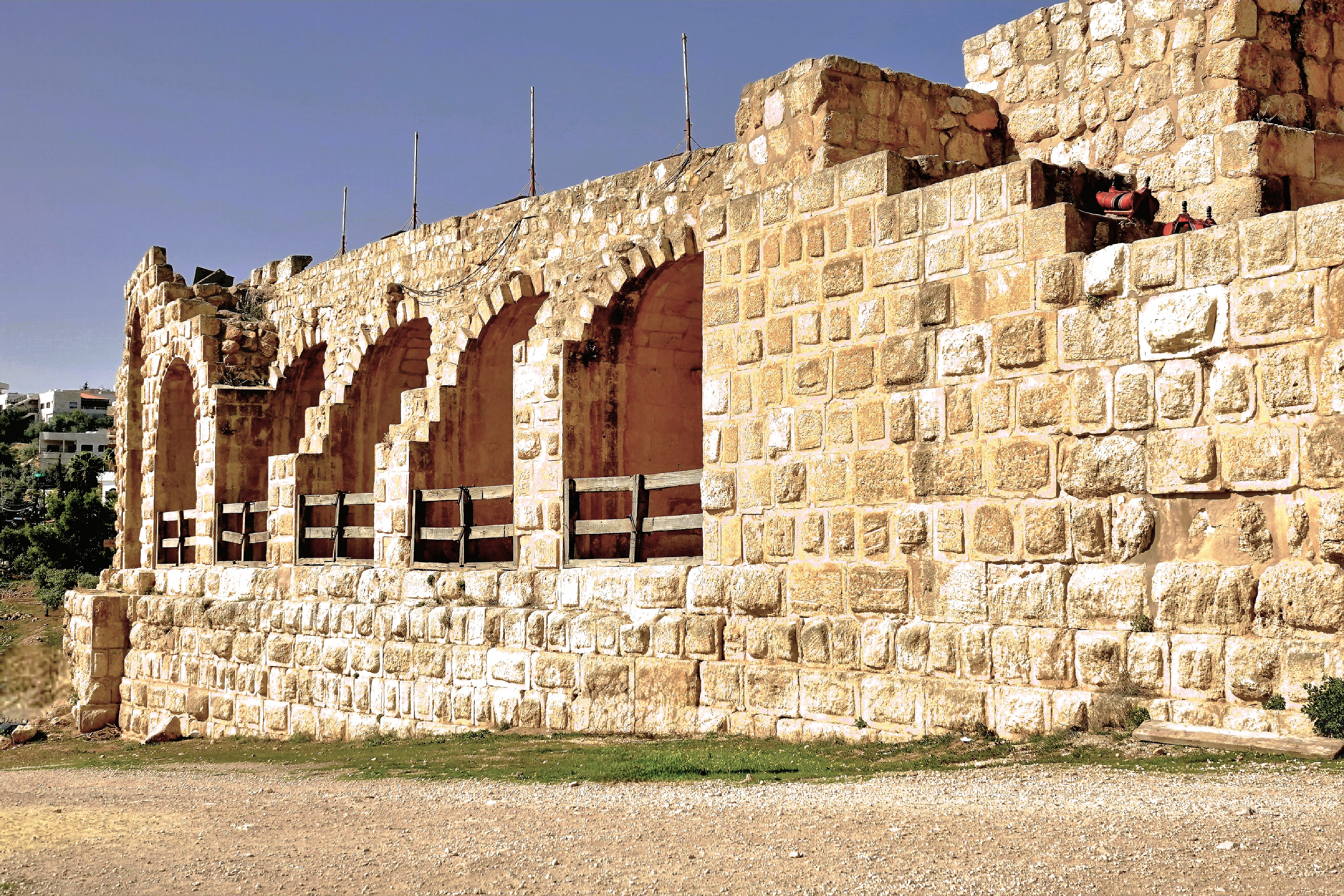
divided spaces for artisan and trade shops lining South Street, outside city limits;

the North Theater, intended for political events;

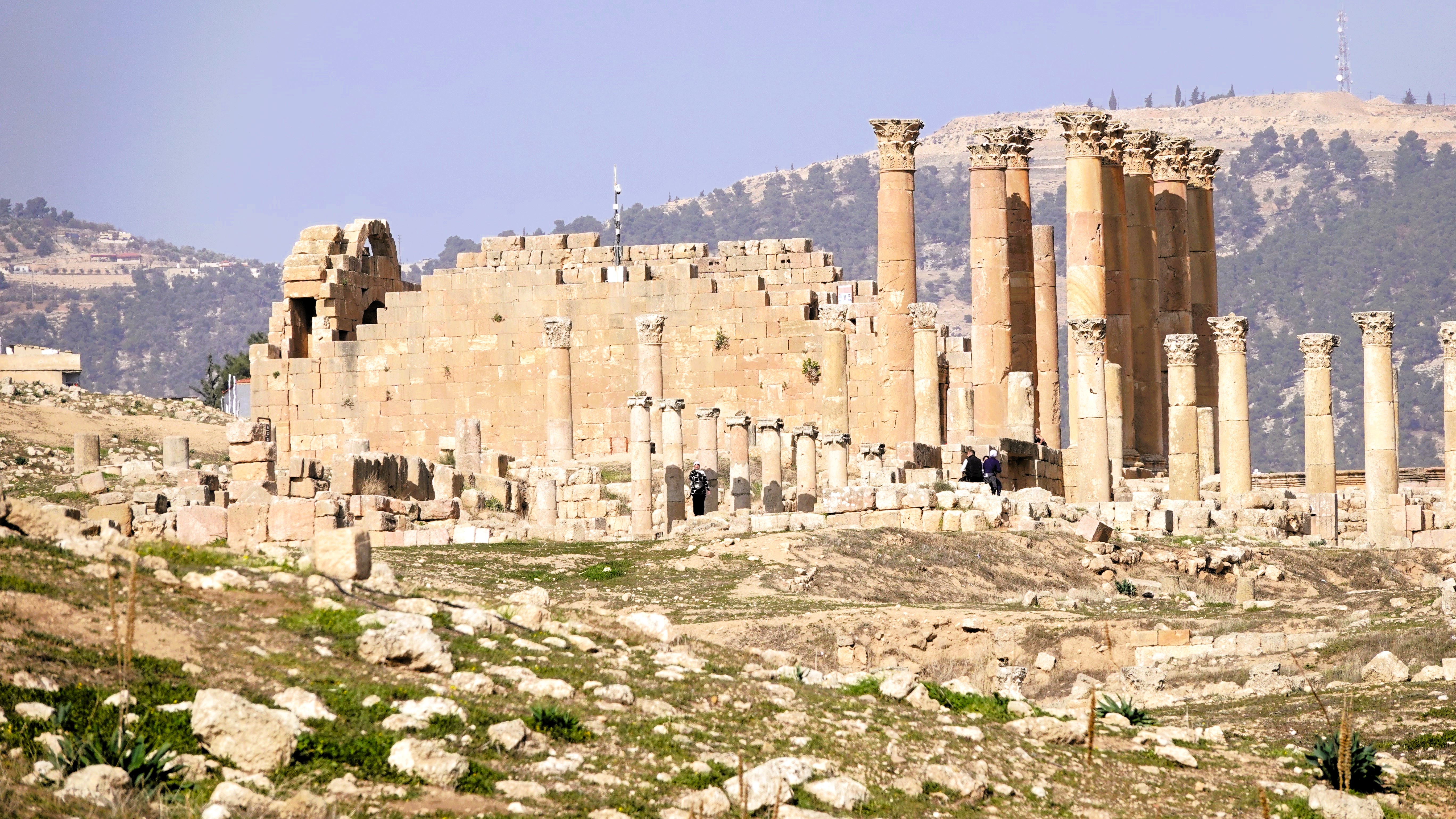
the unfinished Temple of Artemis–built as a shrine to the patron goddess of Jerash, but utilized as a church during the Byzantine Period, and a fortress during the Crusades.

and other assorted churches built atop the foundations of earlier structures, like the Church of Mariano’s, assembled from stones of a pre-existing synagogue,

and the Church of St. Theodore, completed in 496 AD.

In 749 AD, a devastating earthquake flattened Jerash and turned this once great city of the Decapolis into rubble. It was soon abandoned and largely forgotten until the Crusaders seized the Temple of Artemis from the atabeg of Damascus.

Eventually, the sands of time buried the ruins. Jerash was discovered again in 1806 by German explorer, Ulrich Seezten, who recognized the ruins. But it was only after the British began colonizing the Jordan Valley in 1921 that Jerash became worthy of preserving.

Lucky for us, the British vibe was on full display at the South Theater…

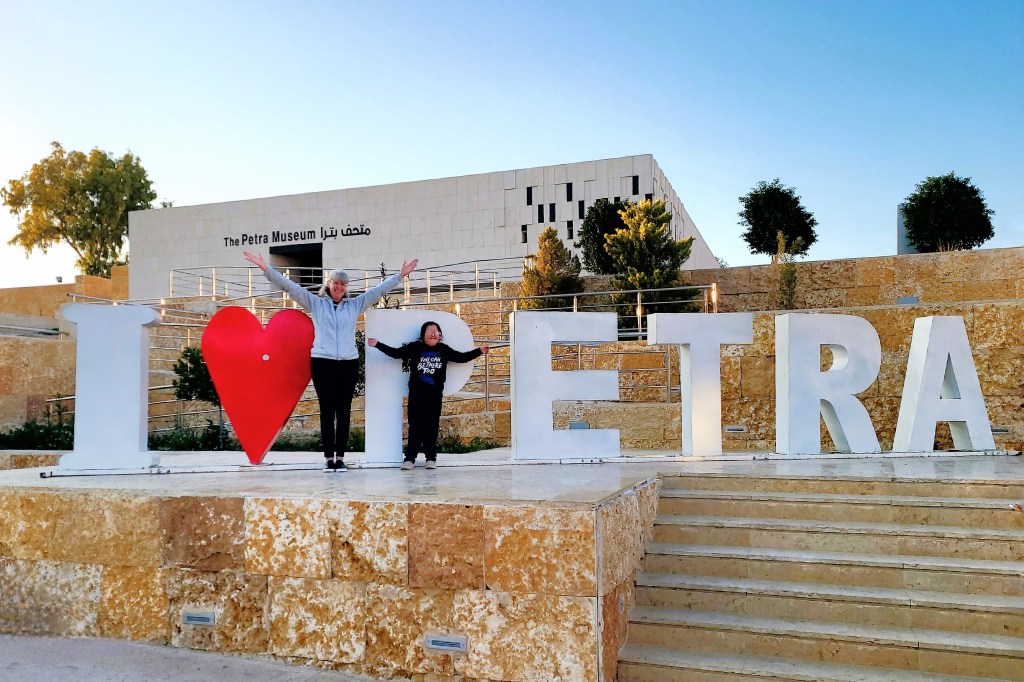
I Love Petra

Weather in Petra can be unpredictable in January. A year ago–on January 26–it was snowing, but today, the temperature would reach 60o and the sky would remain cloudless. What better time to take a hike through history, and walk amongst one of history’s most remarkable endeavors.

With overnight accommodations at Movenpick–directly across the street from the Petra Visitor Center–access to the Old City was most convenient. We assembled early in the town center. The square was quiet except for shops looking for early customers,

and a stray puppy gnawing on a breakfast bone.

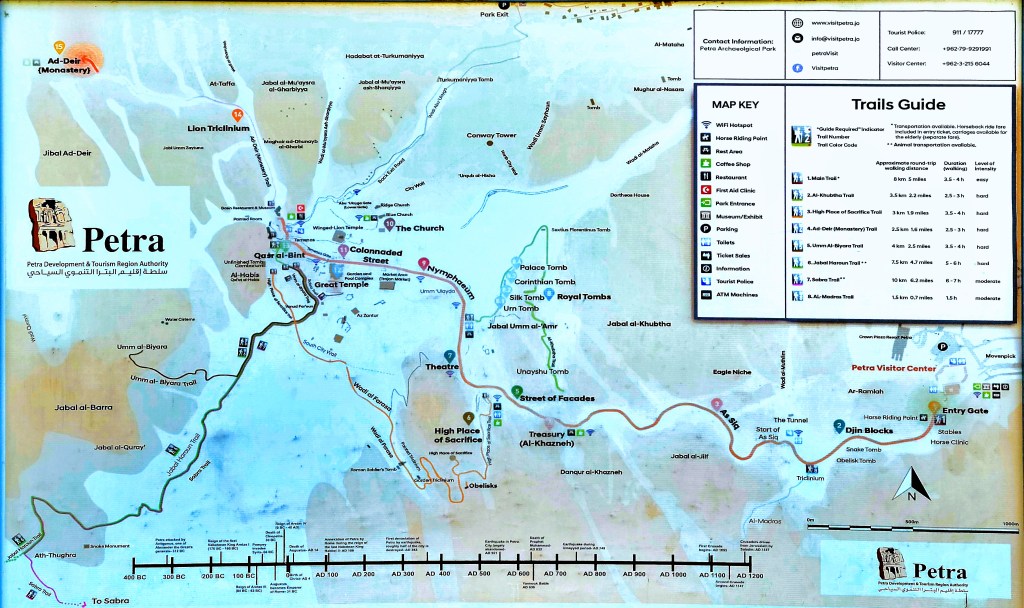
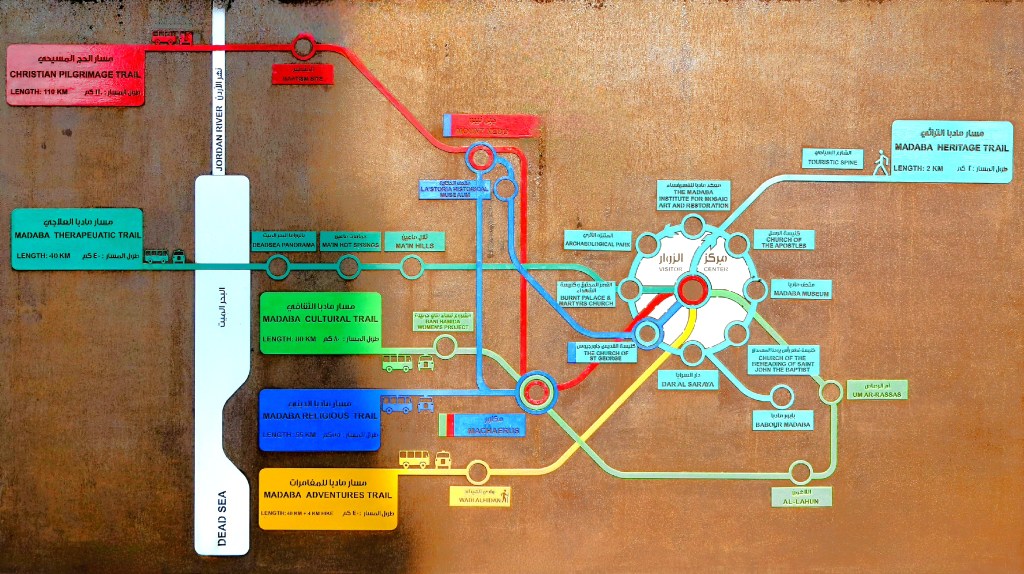
Our group gathered around a large map in town center to plan our hike.

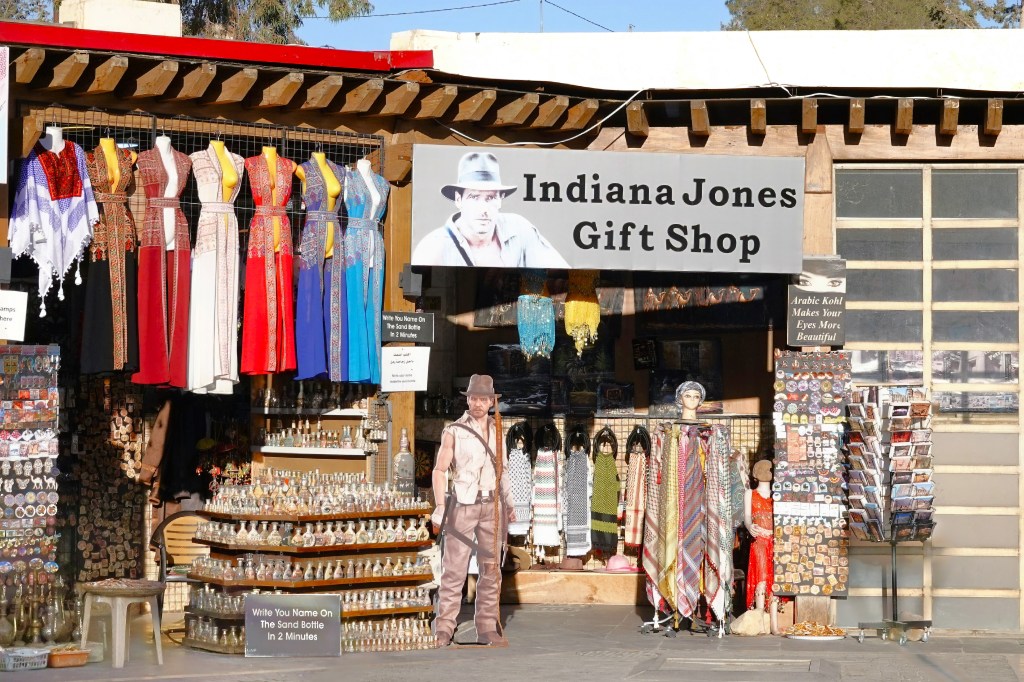
Ahmad explained the many ways to get to Petra’s ruins: by foot, golfcart, donkey, horse, or camel. But the only road that takes us there–courtesy of George Lucas, who paved the way for a dramatic scene from Steven Spielberg’s Indiana Jones and the Last Crusade–runs through a narrow gorge known as As Siq,

which is nearly a mile from Al-Khazneh, known as the Treasury.

Beyond the Treasury, it’s another mile past Temenos Gate to the end of the Colonnaded Street

that leads to Qasr al-Bint–Petra’s most intact structure and Nabataean temple.

Ahmad suggested we take our time by foot, but after that, we’re on our own–for as long as we like–and we can return by any means of conveyance.

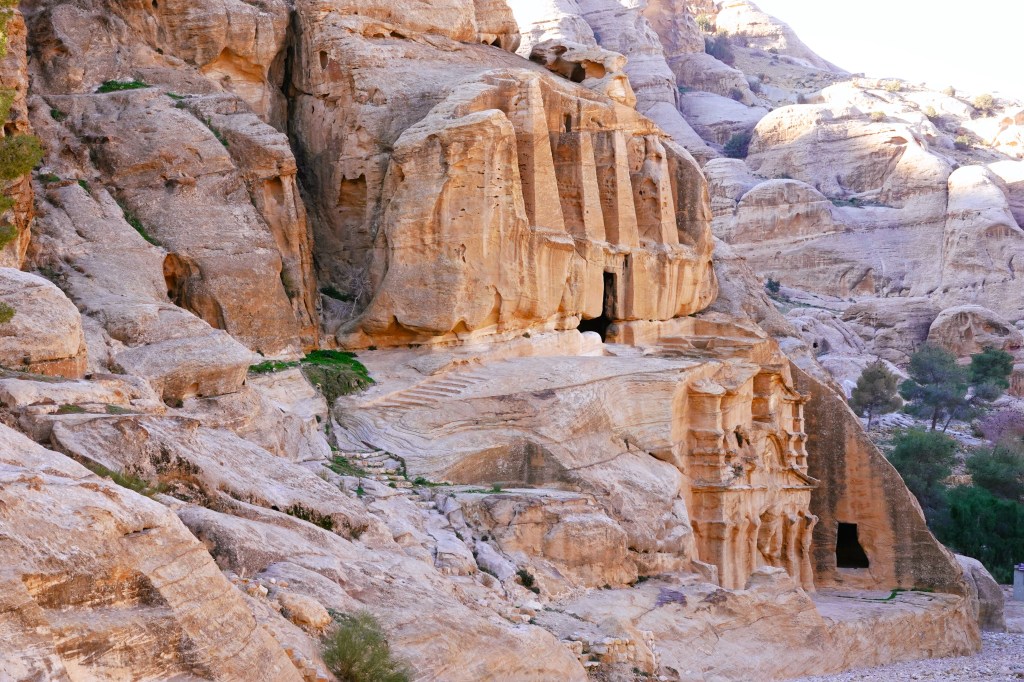
Once we understood the plan, we started out: past Djinn Blocks–a series of three imposing funerary monuments;

an iconic, two-story Obelisk Tomb;

and a Bedouin musician who may have been busking to buy an extra string for his DIY rababah.

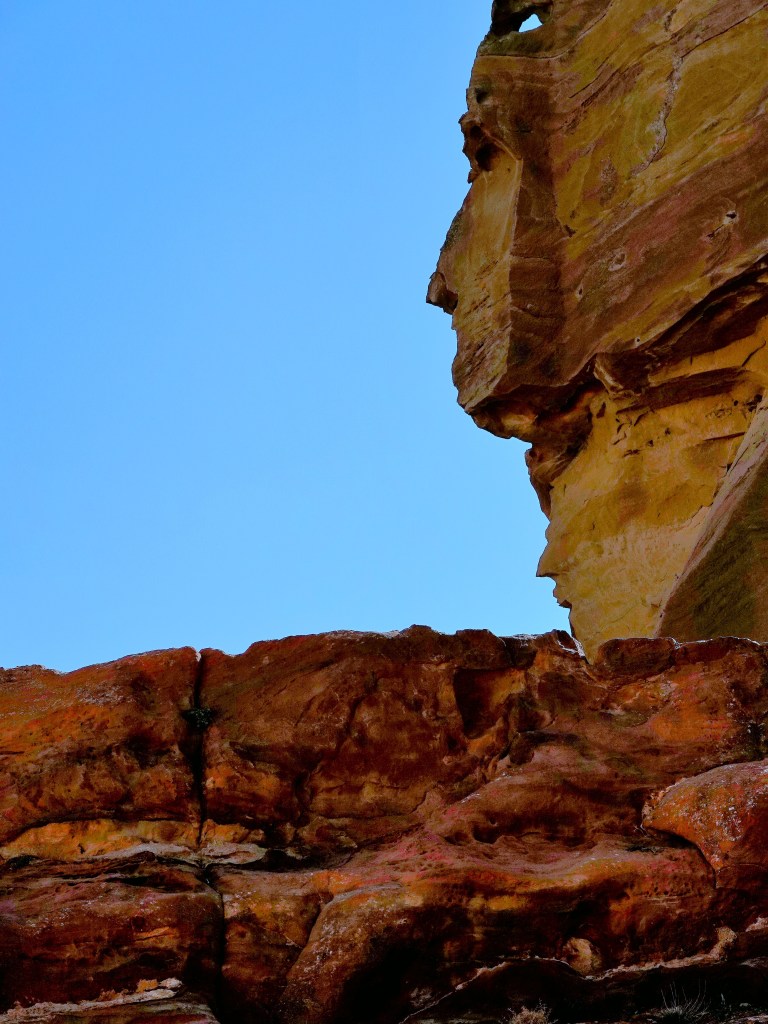
We followed the road through high walls of colorful sandstone, where rocks resembled elephant creations…

and human profiles,

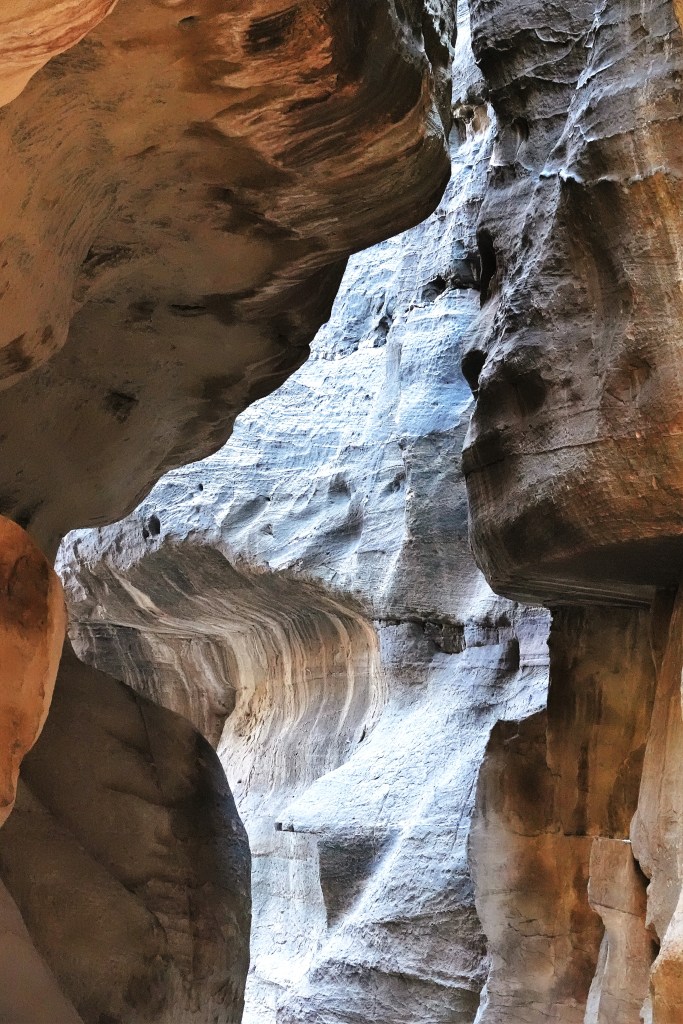
with twisted stone rising upwards of 600 ft (183 m),

and narrow as 10 ft (3 m) across,

until we neared the end of the passage. Ahmad had us form a line and close our eyes as he guided us through the last bend in the gorge.

When the moment was right, we opened our eyes for the big reveal…

and it was a revelation! First light was streaming across the canyon walls,

and bathing the iconic façade with golden sunlight. It was truly a sight to behold! Ahamad declared, “I love my job!”

Petra has been written about to near exhaustion. There’s not much more I can add about the Nabataean Kingdom that UNESCO World Heritage Convention hasn’t already mentioned, so I will say it in pictures and leave the words to UNESCO:

Inhabited since prehistoric times, this Nabataean caravan-city, situated between the Red Sea and the Dead Sea, was an important crossroads between Arabia, Egypt and Syria-Phoenicia. Petra is half-built, half-carved into the rock, and is surrounded by mountains riddled with passages and gorges. It is one of the world’s most famous archaeological sites, where ancient Eastern traditions blend with Hellenistic architecture.

Situated between the Red Sea and the Dead Sea and inhabited since prehistoric times, the rock-cut capital city of the Nabateans, became during Hellenistic and Roman times a major caravan centre for the incense of Arabia, the silks of China and the spices of India, a crossroads between Arabia, Egypt and Syria-Phoenicia. Petra is half-built, half-carved into the rock, and is surrounded by mountains riddled with passages and gorges.

An ingenious water management system allowed extensive settlement of an essentially arid area during the Nabataean, Roman and Byzantine periods. It is one of the world’s richest and largest archaeological sites set in a dominating red sandstone landscape.

The Outstanding Universal Value of Petra resides in the vast extent of elaborate tomb and temple architecture; religious high places;

the remnant channels, tunnels and diversion dams that combined with a vast network of cisterns and reservoirs which controlled and conserved seasonal rains,

and the extensive archaeological remains including of copper mining, temples,

churches and other public buildings.

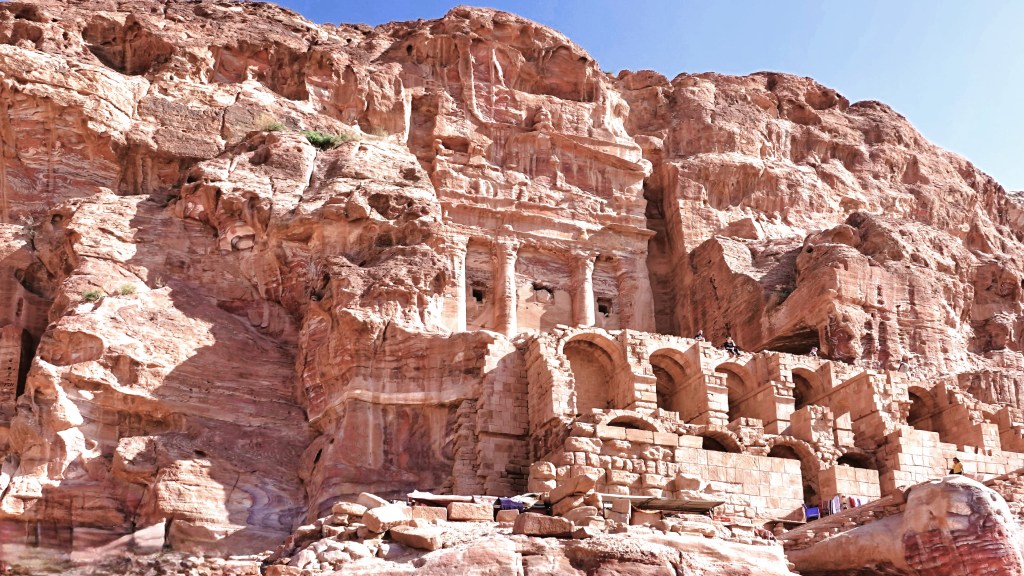
The fusion of Hellenistic architectural facades with traditional Nabataean rock-cut temple/tombs including Al-Khazneh, the Urn Tomb,

the Palace Tomb, the Corinthian Tomb,

and the Deir (“monastery”) represents a unique artistic achievement and an outstanding architectural ensemble of the first centuries BC to AD.

The varied archaeological remains and architectural monuments from prehistoric times to the medieval periods bear exceptional testimony to the now lost civilisations which succeeded each other at the site.

© UNESCO World Heritage Centre 1992-2023

Petra was a marvel. And it may have been the overwhelming feeling of awesomeness that gave us the energy to return to the plaza by foot and express our satisfaction. So too thought the young girl with special needs, who spontaneously shared the moment with Leah.

There was so much cultural, historical and scientific significance to absorb in a day, which led me to conclude that the worst thing about Petra was not having another day to do it all over again.

Moses, Mosaics, and Manna

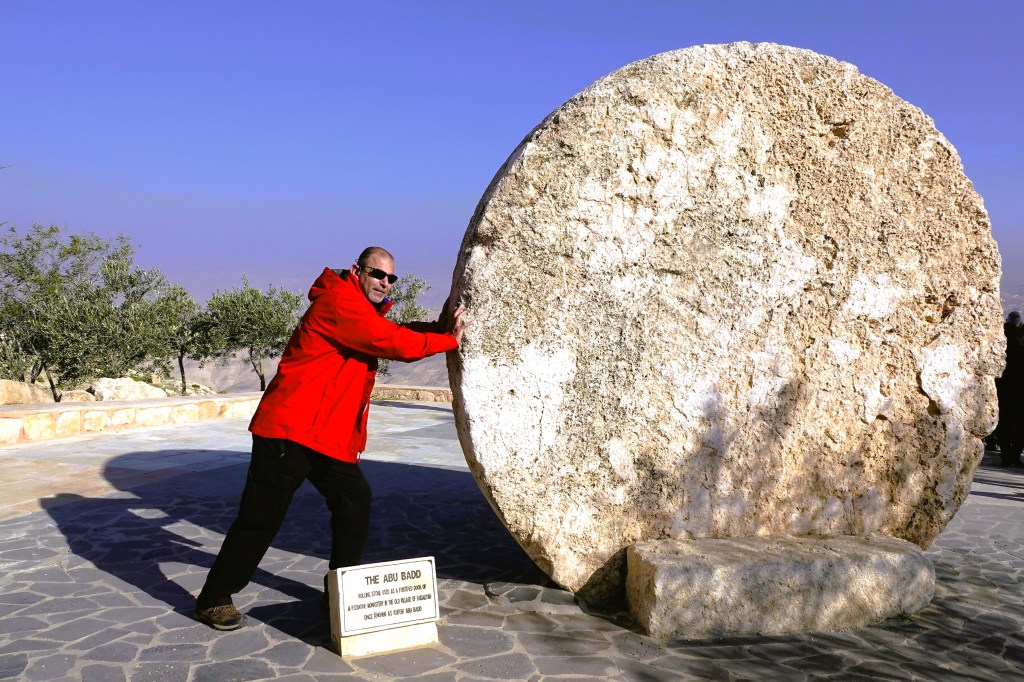
According to the Old Testament (Deuteronomy, 34:6), Moses–at 120 years–ascended the highest crest of Mount Nebo (800m) to view the Jordan Valley.

Although Moses led the sons and daughters of Israel out of bondage from Egypt, Moses was forbidden by God to escort them to the Promised Land.

With every step up the mountain, Moses would contemplate his sin of doubting God’s concern and commitment to The Chosen People. Was it anger or despair that provoked Moses into raising his staff and twice striking the Rock so his congregants and their cattle could drink from the wellspring that burst through the ground, and quell their complaining?

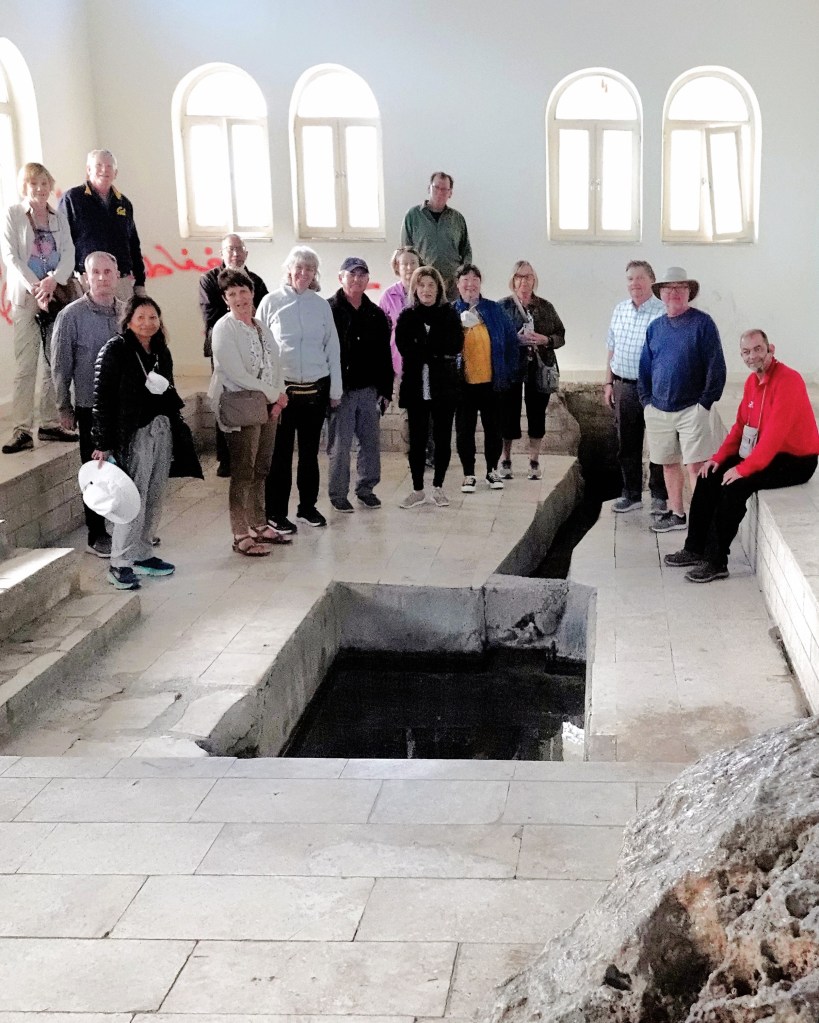
A shrine in Wadi Musa purports to be the perennial natural spring that arose from the rock struck by Moses. The site is most popular among Christian and Muslim pilgrims who travel from all parts to drink from the sacred well.

As for me, I took a hard pass; the water was running slow and low, and too risky to sample.

But the miracle performed by Moses sealed his fate. With Joshua assuming a new leadership role, Moses trekked to the highest point on the western ridge of the ancient Plains of Moab for a view of the Holy Land.

Perhaps God provided Moses with a befitting yet bittersweet panorama before he died, other than the hazy scene that I managed to capture.

All the churches atop Mount Nebo were erected over time to commemorate the death of Moses. The earliest known chapel dates to the 3rd century, followed by a 4th century monastery built to support Christian pilgrims.

20th century archaeologists excavated an intact mosaic floor within the baptistery of the chapel that depicts the cultural life of the Byzantine era–

surrounded by figurative motifs with geometric design flourishes…

that also adorn the walls.

and it’s all been preserved in a new church sanctified by the Franciscan Order in 2018.

The mountaintop is rich with artifacts sponsored by the Franciscans. The serpentine cross atop Mount Nebo was created by Italian artist Gian Paolo Fantoni to symbolize the miracle of the bronze serpent forged by Moses in the wilderness (Numbers 21:4–9) and the crucifixion of Jesus, whereas the stone Monolith was sculpted by Vincenzo Bianchi in honor of Pope John Paul II’s visit during the Great Jubilee of 2000.

As part of the Pope’s pilgrimage to Jordan, he planted an olive tree seedling that he dedicated to peace in the Holy Land.

Ironically, while the tree has prospered, peace has yet to bloom.

Having admired the mosaics of Madaba and Mount Nebo, our group got a personal look at the process at Jordan Jewel Art & Mosaic, which was created in 2008 through Jordan’s Queen Noor Foundation Community Development Initiative as a means of preserving an ancient artisanship introduced by the Greeks over two thousand years ago.

The project has also been a boon to tourism and employment within the governate, with over 100 mosaicists working at the studio or from home, creating historical souvenirs for tourists.

Depending on the pattern and the size, the mosaic can be extremely detailed, at times requiring tens of thousands of intricately-sized tiles and several weeks to complete.

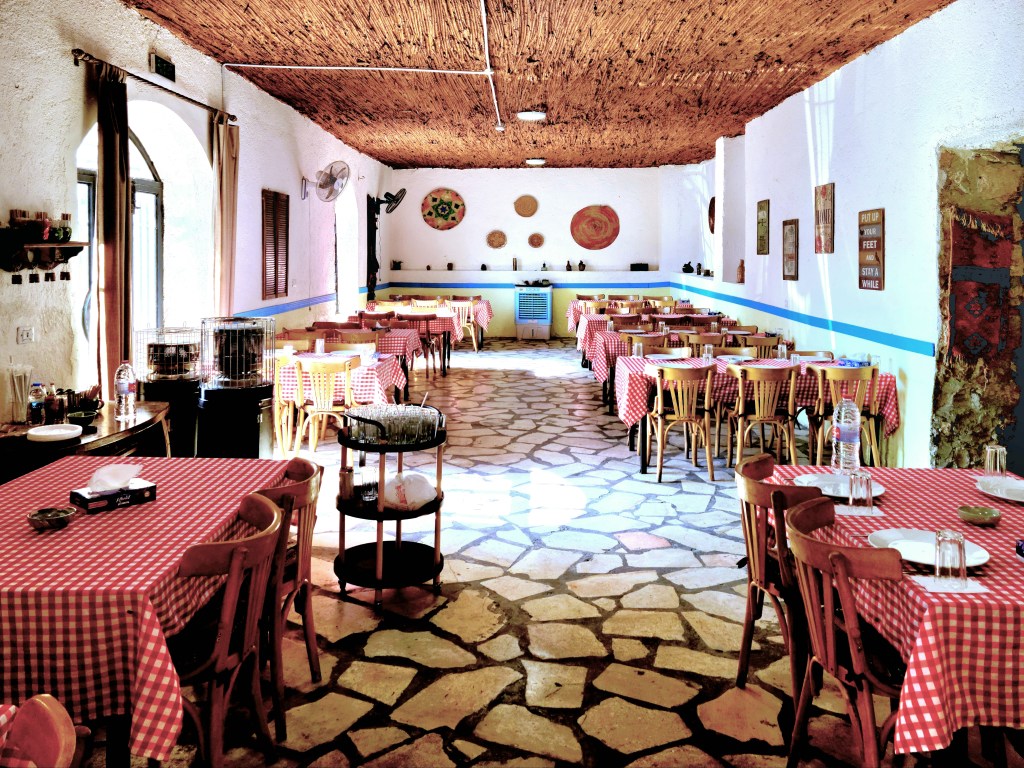
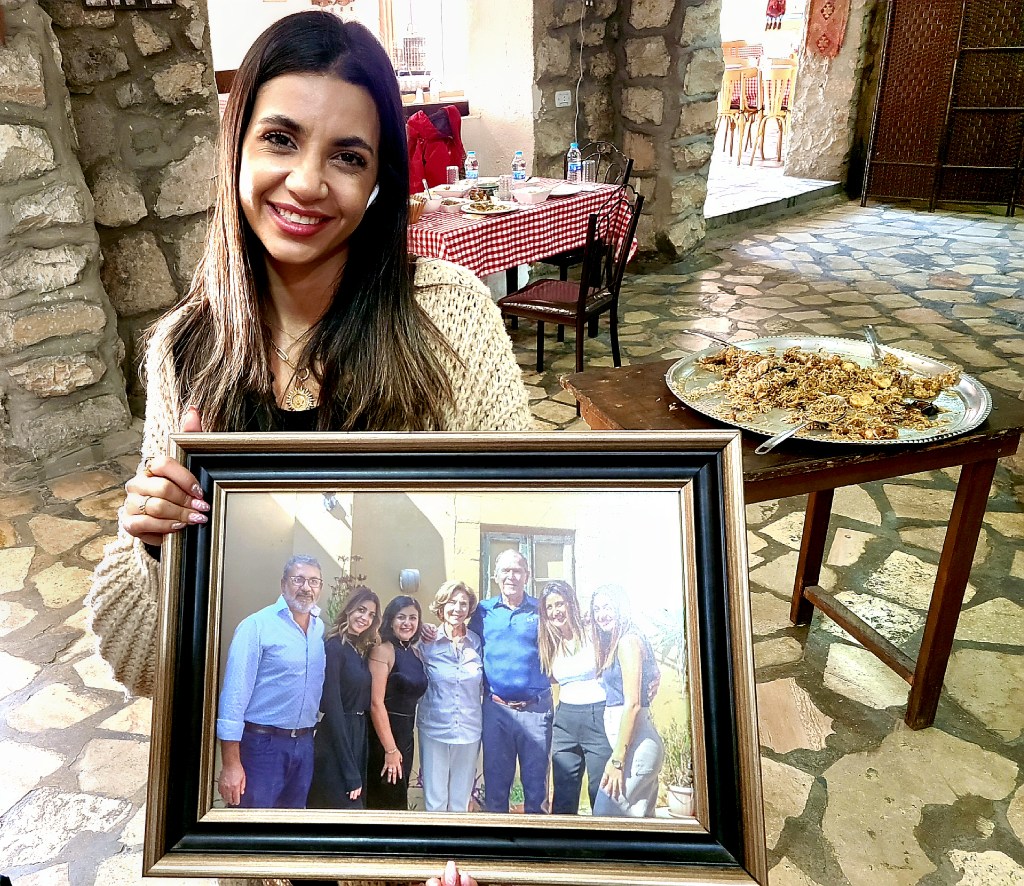
Our crew eventually returned to Madaba for a traditional lunch at Hikayet Sitti (“My Grandmother’s Story”)–a family-owned restaurant in an old home belonging to the Karadsheh family through many generations.

It now belongs to Feryal, the gracious owner/chef who prepared a tasty array of mezza (appetizers) to start,

and a kettle-sized helping of Maqluba–a traditional Middle Eastern dish of chicken, vegetables and rice that’s prepared in a pot and presented upside down.

Feryal distributed the recipe to the home chefs among us, but as I read through the prep and ingredients, I was certain the dish was more complicated:

MAQLUBA


Fry pieces of eggplant, cauliflower, and potatoes
• Boil pieces of chicken
Arrange at the bottom of the cooking pan pieces of tomatoes, carrots, onions, sweet pepper,
and garlic
Then add the fried eggplant, cauliflower, and the potatoes
Add pieces of chicken
Cook them together with water
Add the rice to cook together
Add black pepper, cinnamon, nutmeg and cardamom, cumin, cloves, coriander
Cook until water is evaporated
Put it on low fire for 5 minutes
Let it rest for 5 minutes
Serve it as upside down

Feryal Karadsheh
Hikayetsitti@yahoo.com

As we savored every bite, we were invited to put our tastebuds to the test by identifying all seven spices in our food. My mind immediately raced to episodes of Hell’s Kitchen, when contestants competed in blind tastings for Gordon Ramsey, and the winner received a hot air balloon ride with a champagne lunch.

But Feryal was offering something much better. The prize at Hikayet Sitti was a cold beer from her brother’s brewery… and it was delicious.

After lunch, the coach stopped briefly at Shobak Castle (12th century) enroute to Petra, just as the sun broke through the haze to shower the ruins in golden light.

The castle is a stark reminder of Crusader glory amidst the plunder and ruin of the times.

Our coach driver raced the last hour to Petra with the hope that we’d arrive in time for sunset, and we were duly rewarded with a perfect sky in Wadi Musa just as the sun was falling behind Mount Hor.

It was a good omen for our excursion to Petra the following day…

Jordan Redux

We were a crew of 48 aboard the Viking Ra, divided into 2 camps of 24 travelers who identified as Bus A or Bus B.

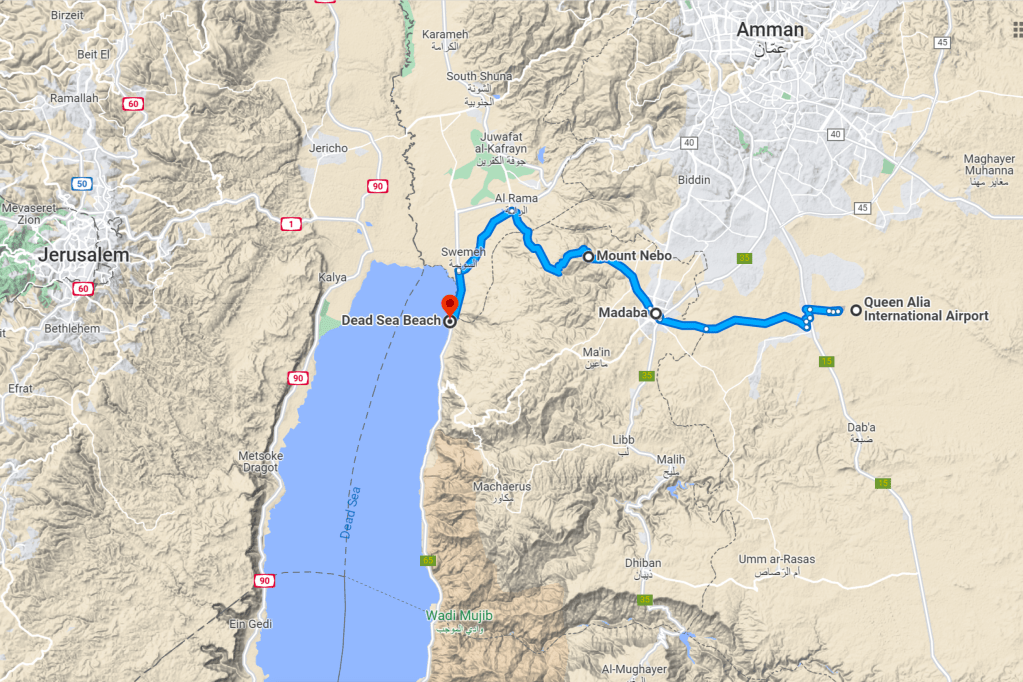
Most of the cruisers returned home at the end of our Nile excursion, but 18 intrepid globetrotters–a union of both buses–continued our journey to Jordan for four nights, where we were greeted at Queen Alia International Airport by Ahmad Al Khaldi, our tour director and self-proclaimed terrorist, who adopted the moniker after once guiding the brother of ventriloquist/comedian Jeff Dunham.

Upon arrival to Amman, we boarded a coach for a half-hour ride to Madaba. It was an ambitious itinerary with a lot of ground to cover before reaching the Dead Sea,

but we quickly knew–given the depth of Ahmad’s knowledge, wit, and organization skills–that we were in good hands.

During the half-hour ride to Madaba we absorbed some background about this ancient city that’s renowned for its skilled mosaic artisans,

and its deeply religious ties to Christianity and Islam.

After an orientation of one ofJordan’s holiest landmarks,

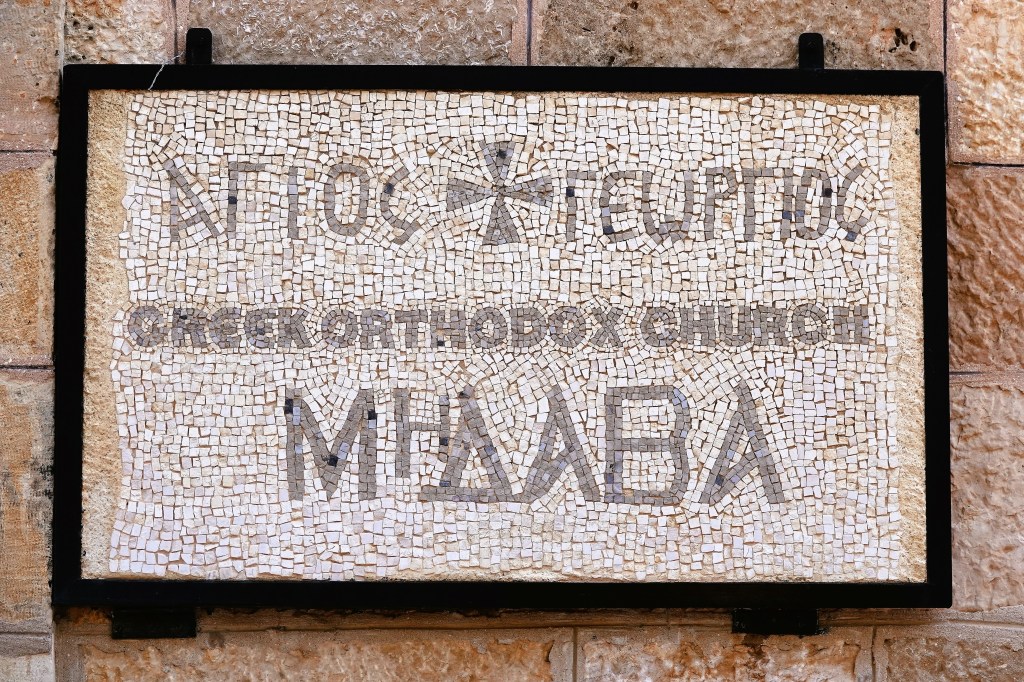
we headed to Madaba’s feature attraction… the Greek Orthodox Basilica of Saint George,

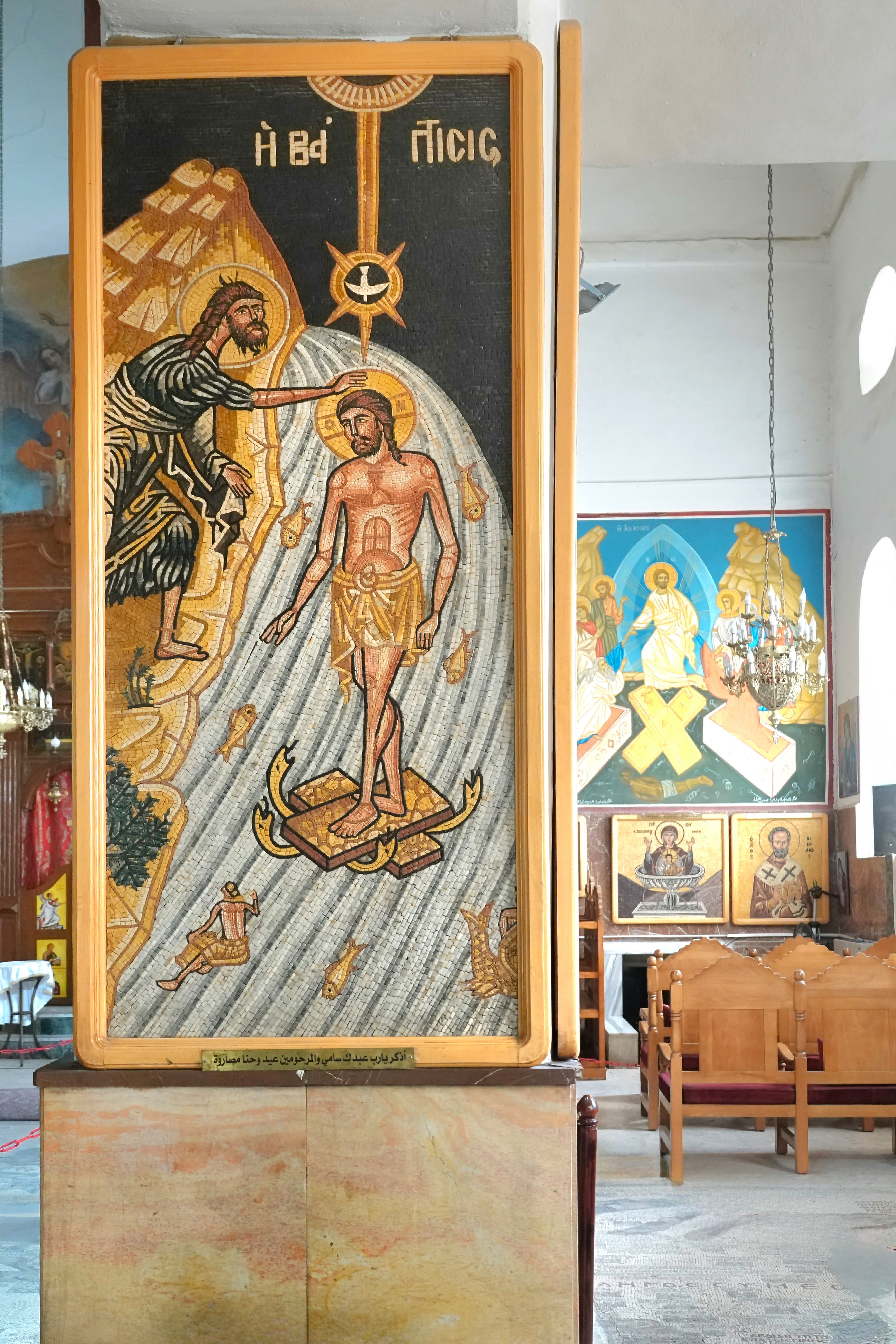
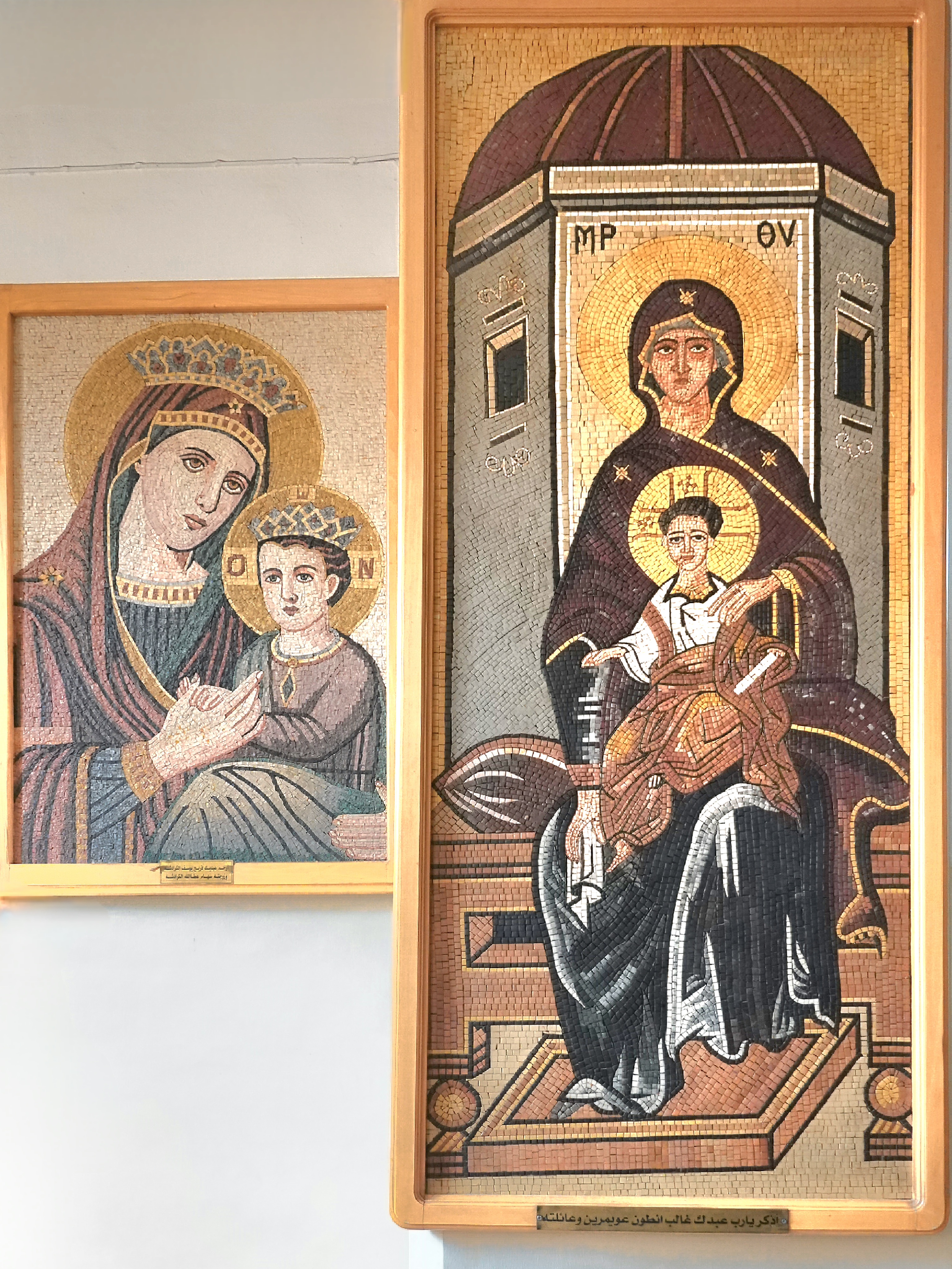
where the current structure, consecrated in 1896 is adorned by mosaic icons on every pillar…

but it’s the mosaic floor that’s the star of St. George and Madaba!

The partially restored mosaic map of the Holy Land originates from the 6th century, and was excavated in 1884 when the current church was built atop the ruins of the original Byzantine church. Over 2 million tiles comprise a detailed rendering of the Middle East with surprising detail and accuracy, making it both an artistic masterpiece, and the oldest surviving representation of familiar biblical sites.

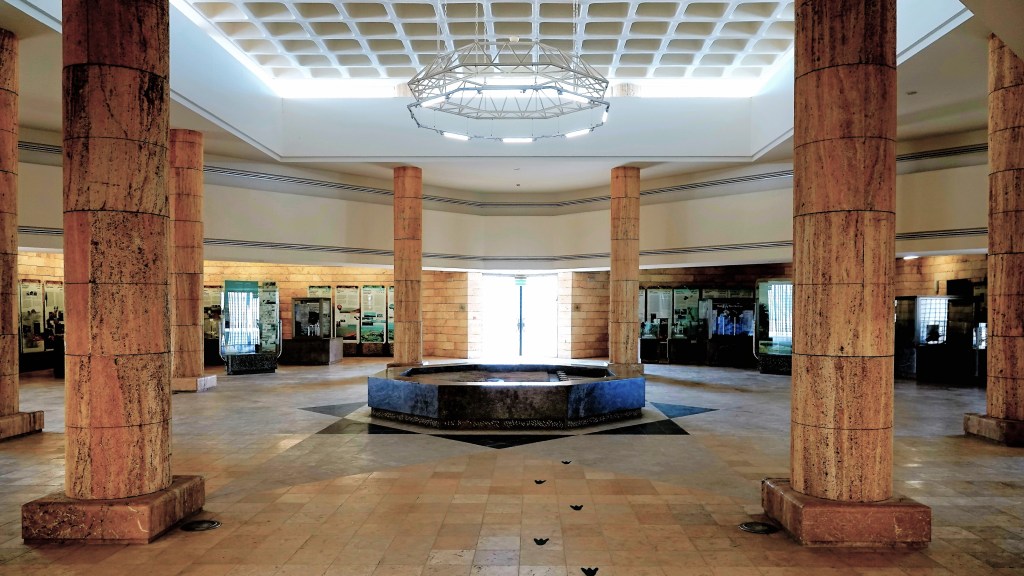
We bypassed Mt. Nebo (to be explored the following day) and continued to the Dead Sea Museum,

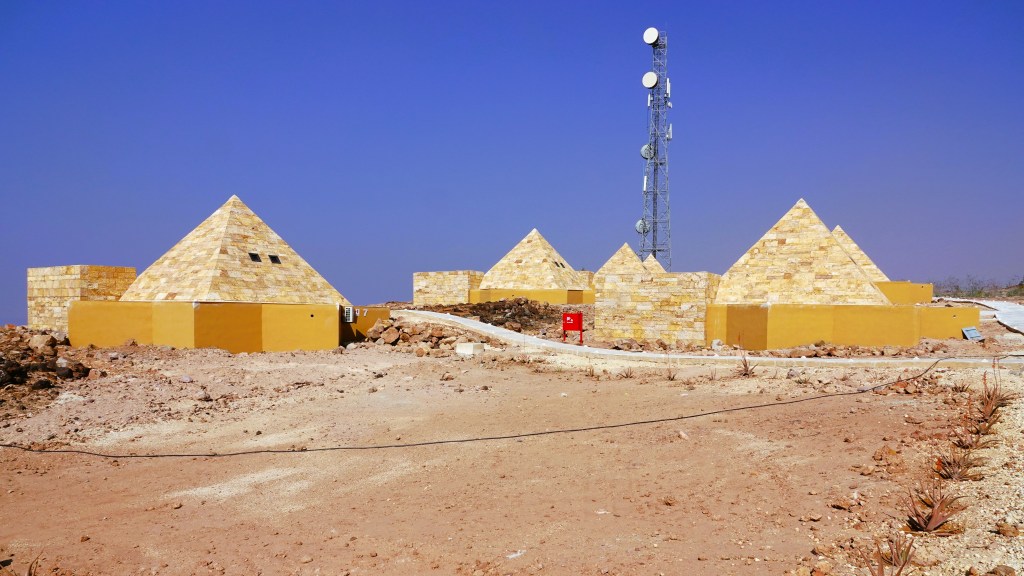
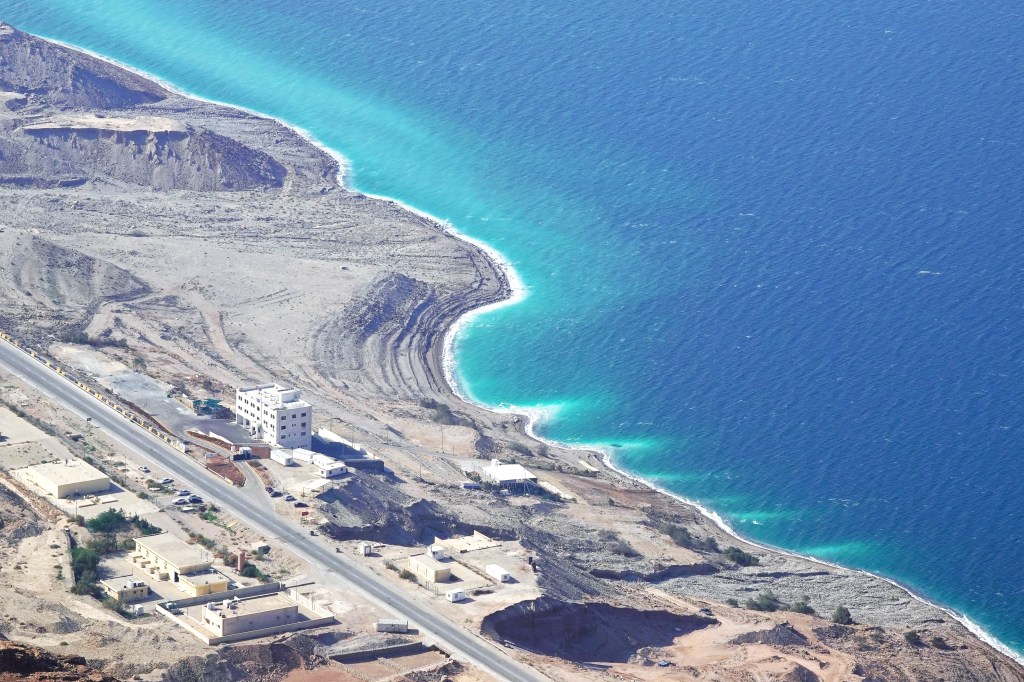
where we enjoyed an aerial panarama of the Jordan Rift Valley with the lowest elevation on earth (-1410 ft).

and a closer examination of the area’s geological and cultural significance.

Developers see tremedous potential in promoting Dead Sea tourism, touting first-class accomodations and access to its briney beaches. And they’re wasting little time in hotel construction,

because at it’s current rate of evaportion, the Dead Sea will cease to exist by 2050.

Shortly after checking into the sprawling Movenpick village…

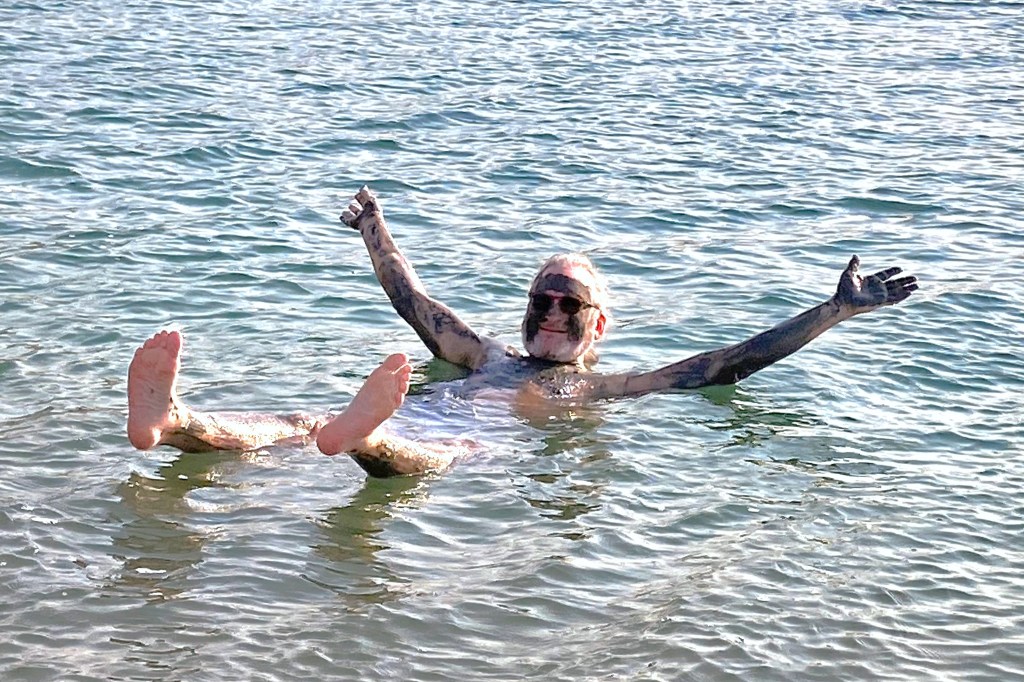
it was time to relax with a mud treatment,

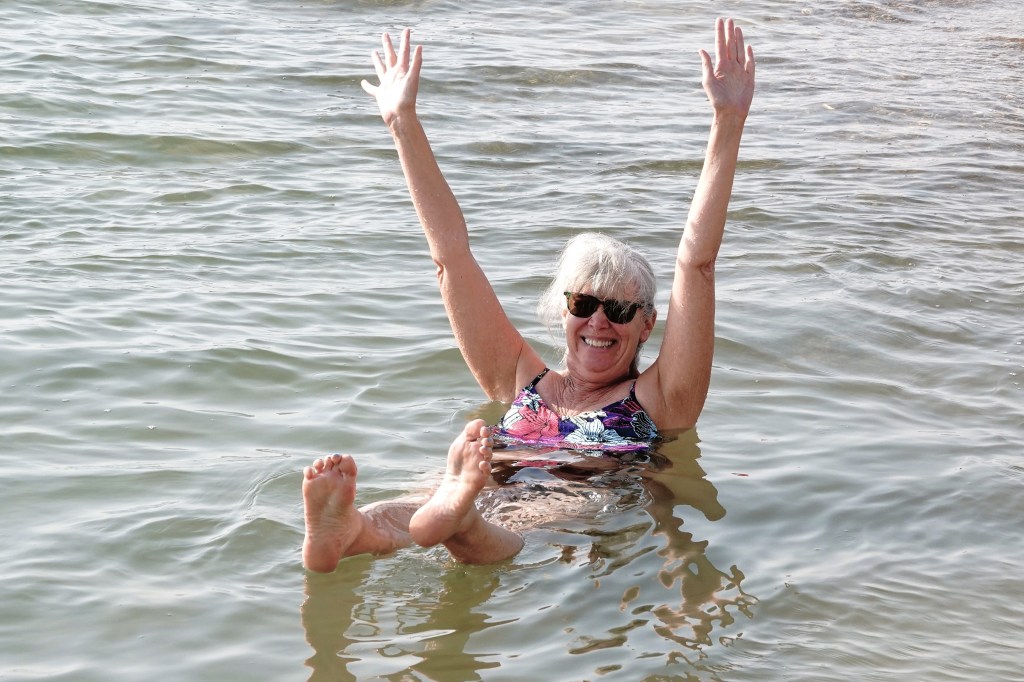
and a bouyant soak. What a feeling!

There’s been lots of internet chatter about which country, Israel or Jordan, has the best beaches. The answer is easy: it’s whichever one you’re on!

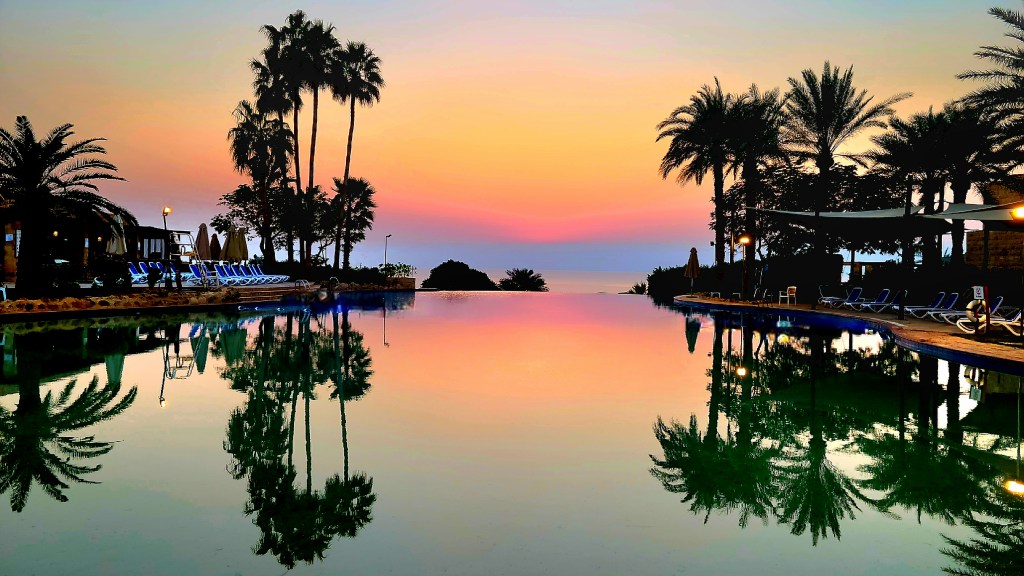
However, the east coast scores extra points for hosting the sunset over Jerusalem most nights.