A Walk in the Park after Dark

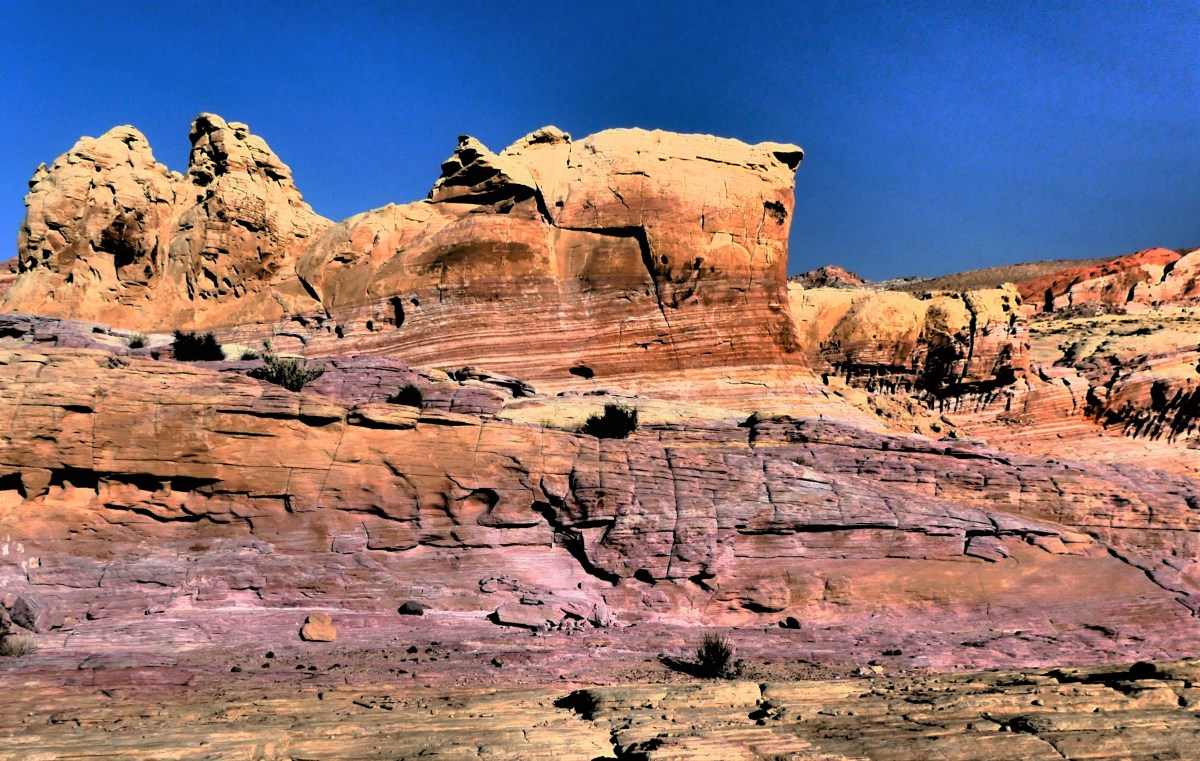
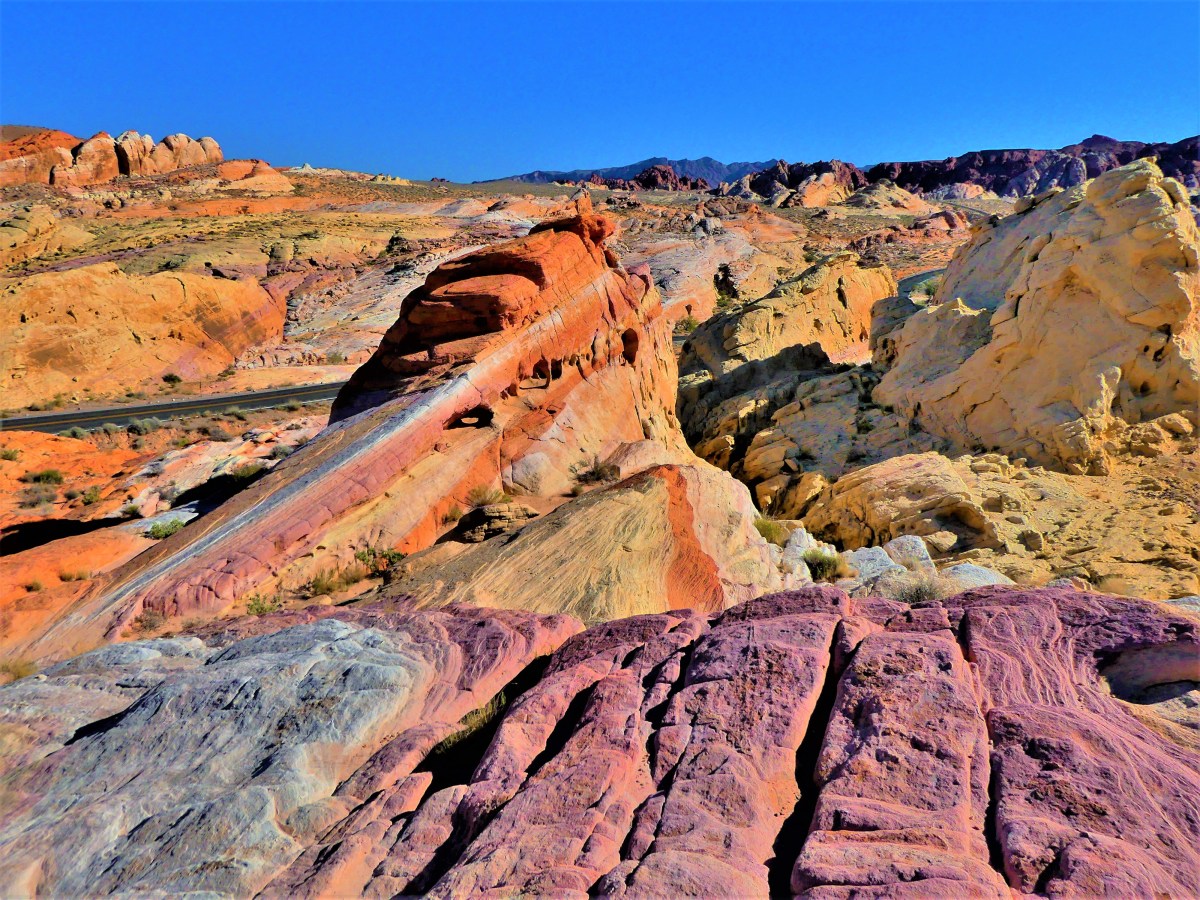
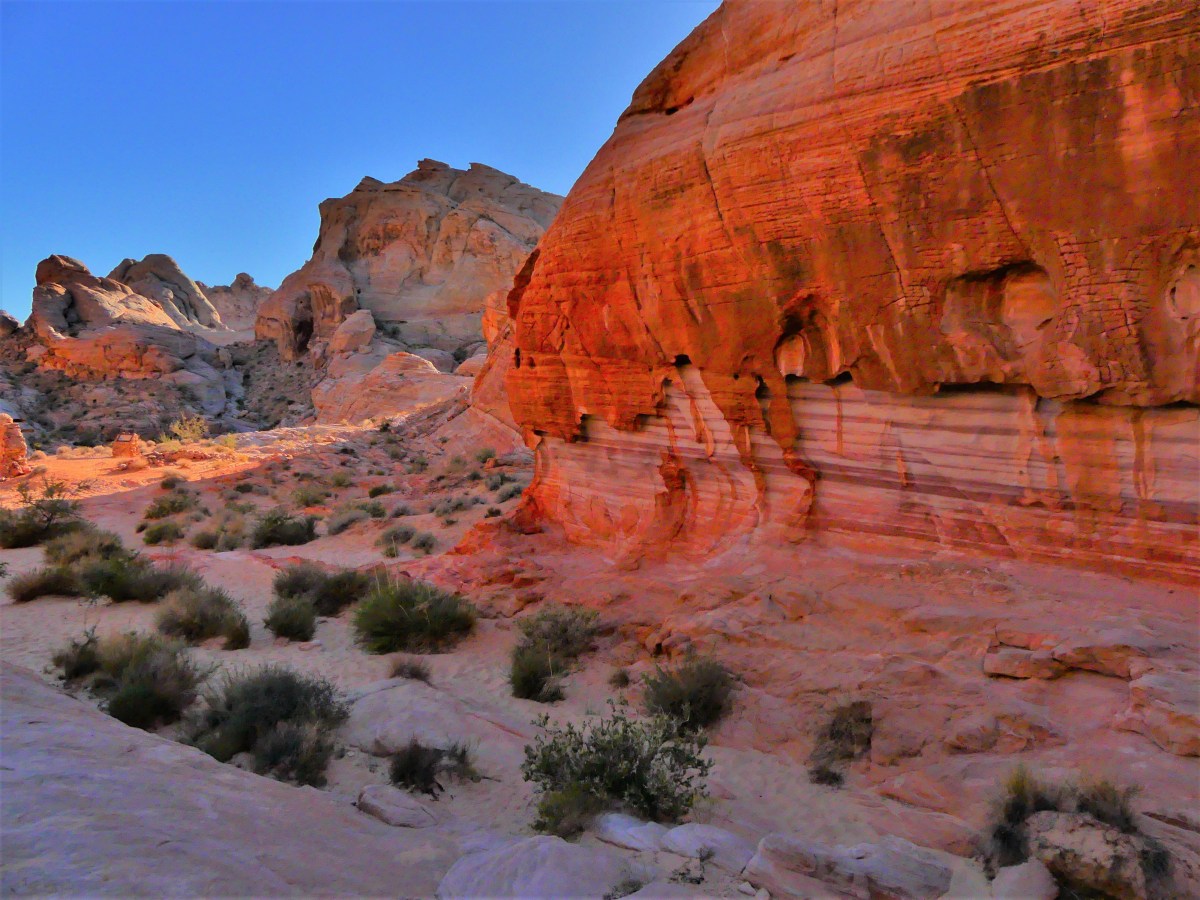
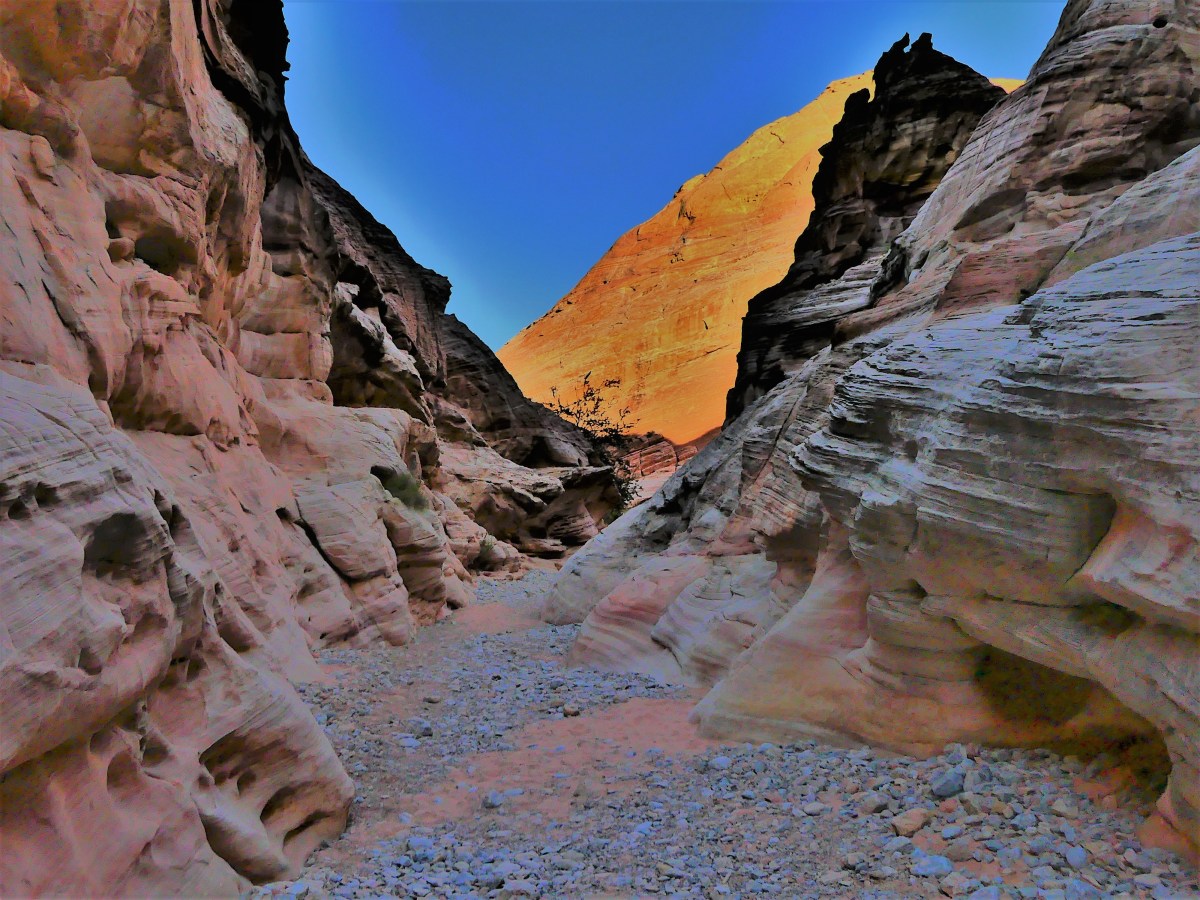
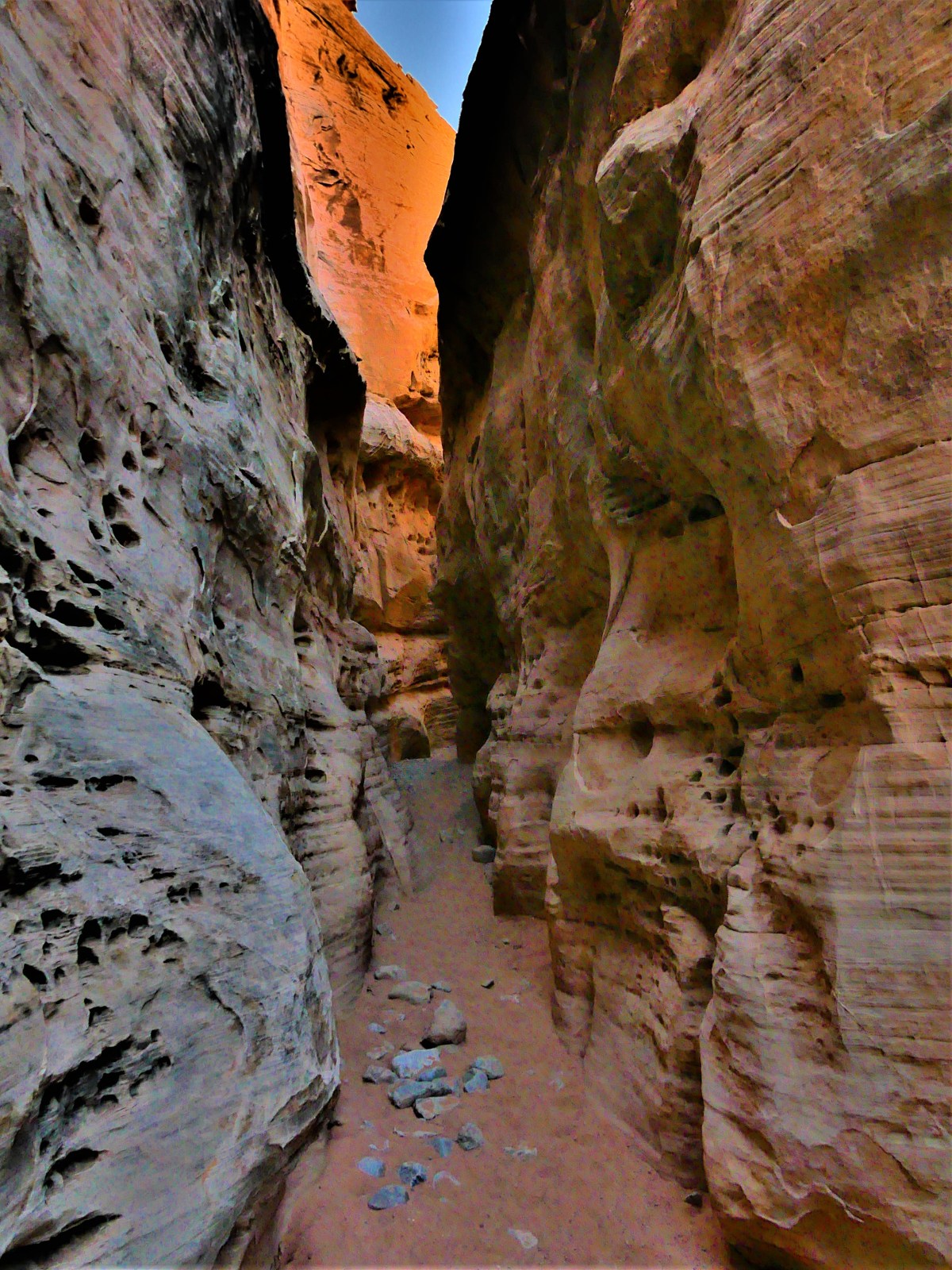
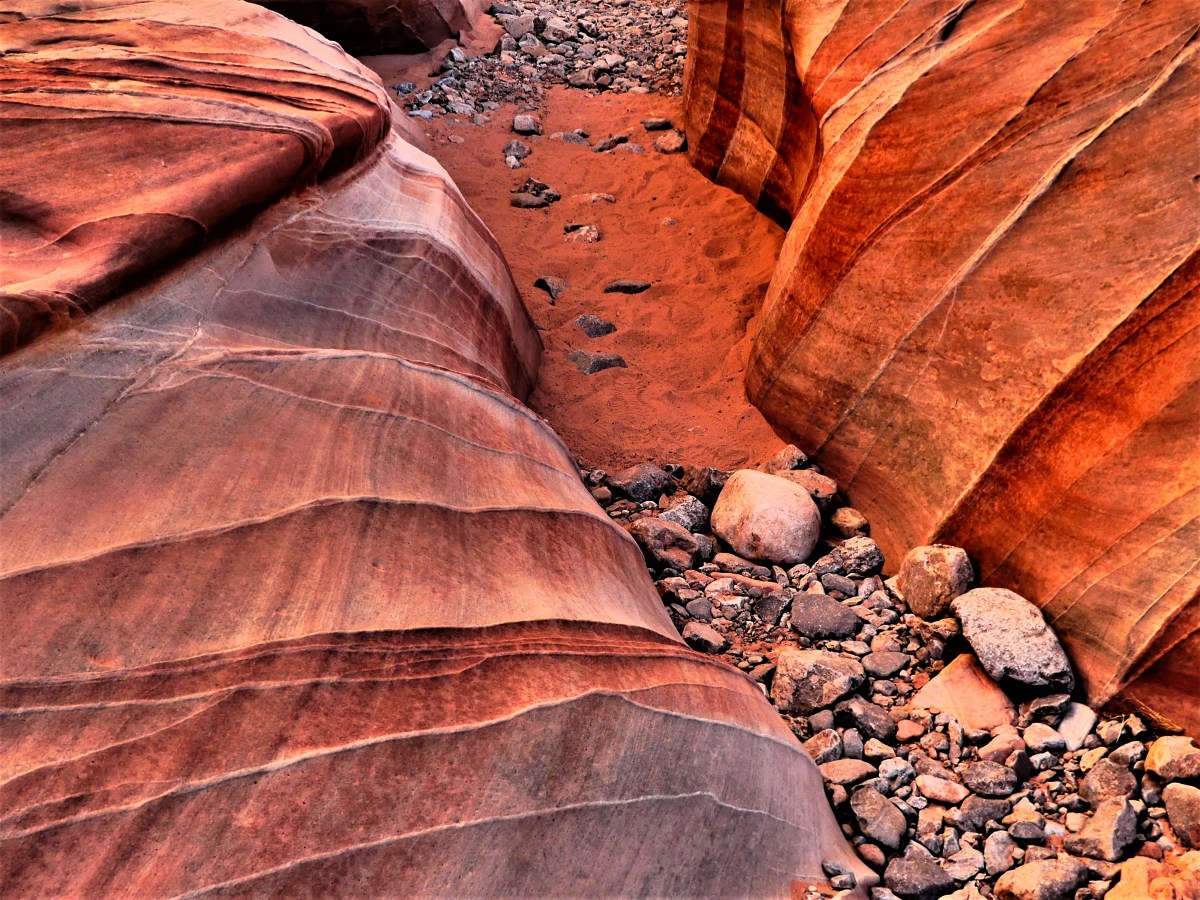
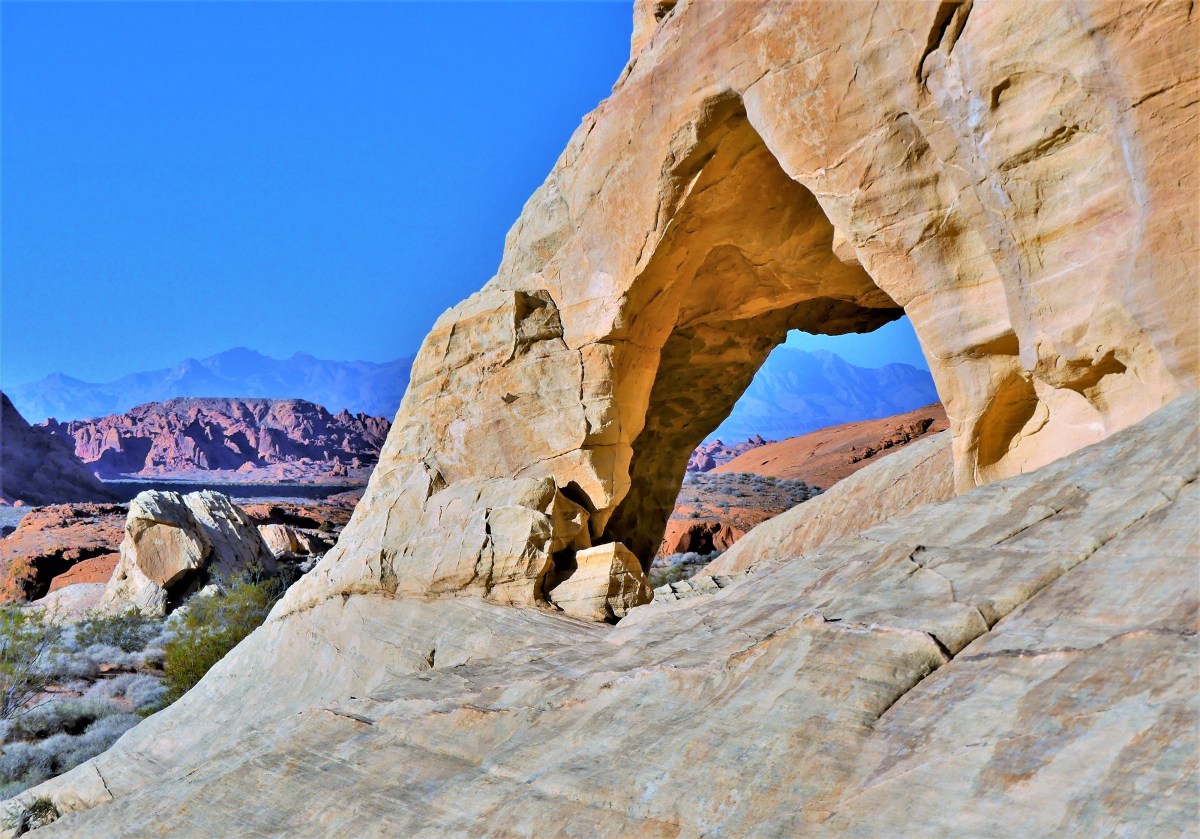
2,500 years before Valley of Fire State Park came into being, the Basketmakers, an ancient American culture migrated across the Nevadan high desert valley to hunt and pray, leaving behind pictographic records of their lives throughout the park’s 42,000 acres.

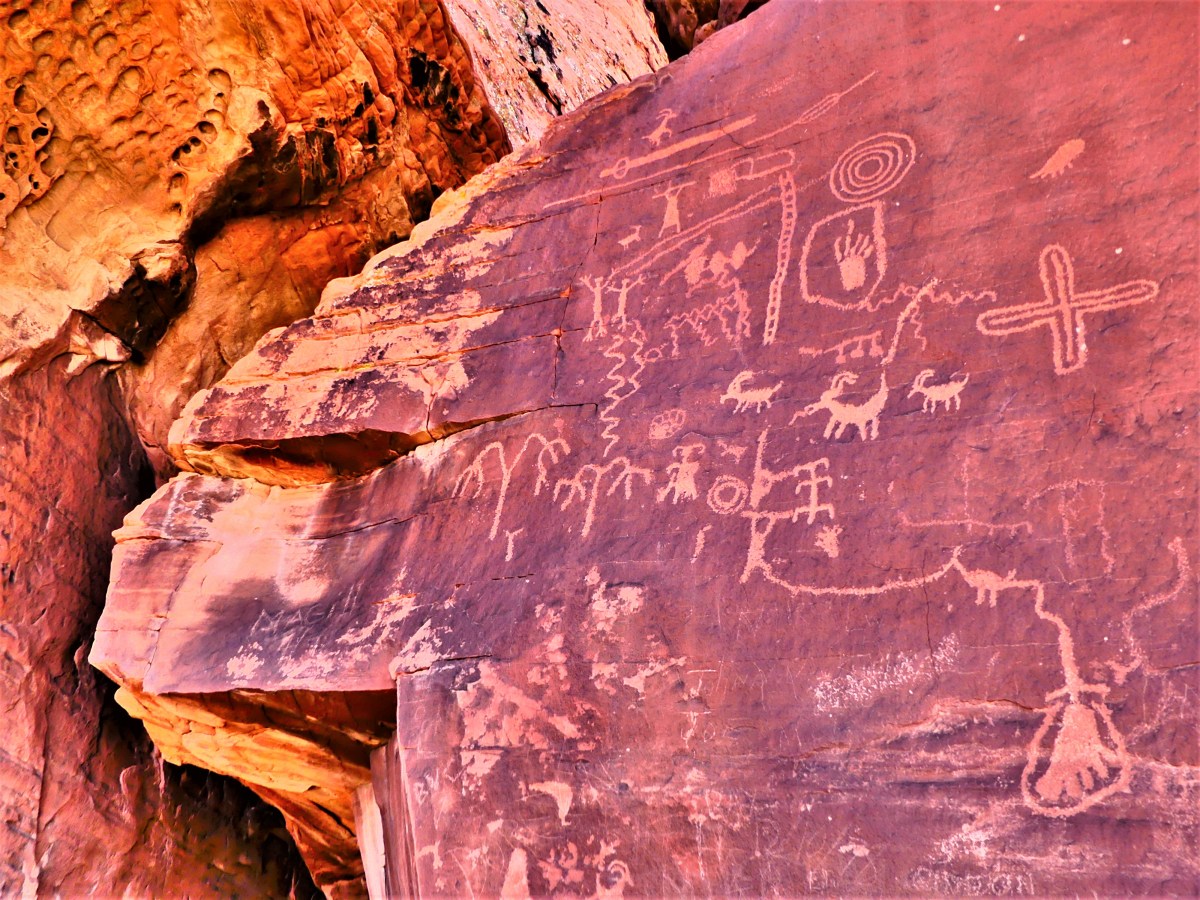
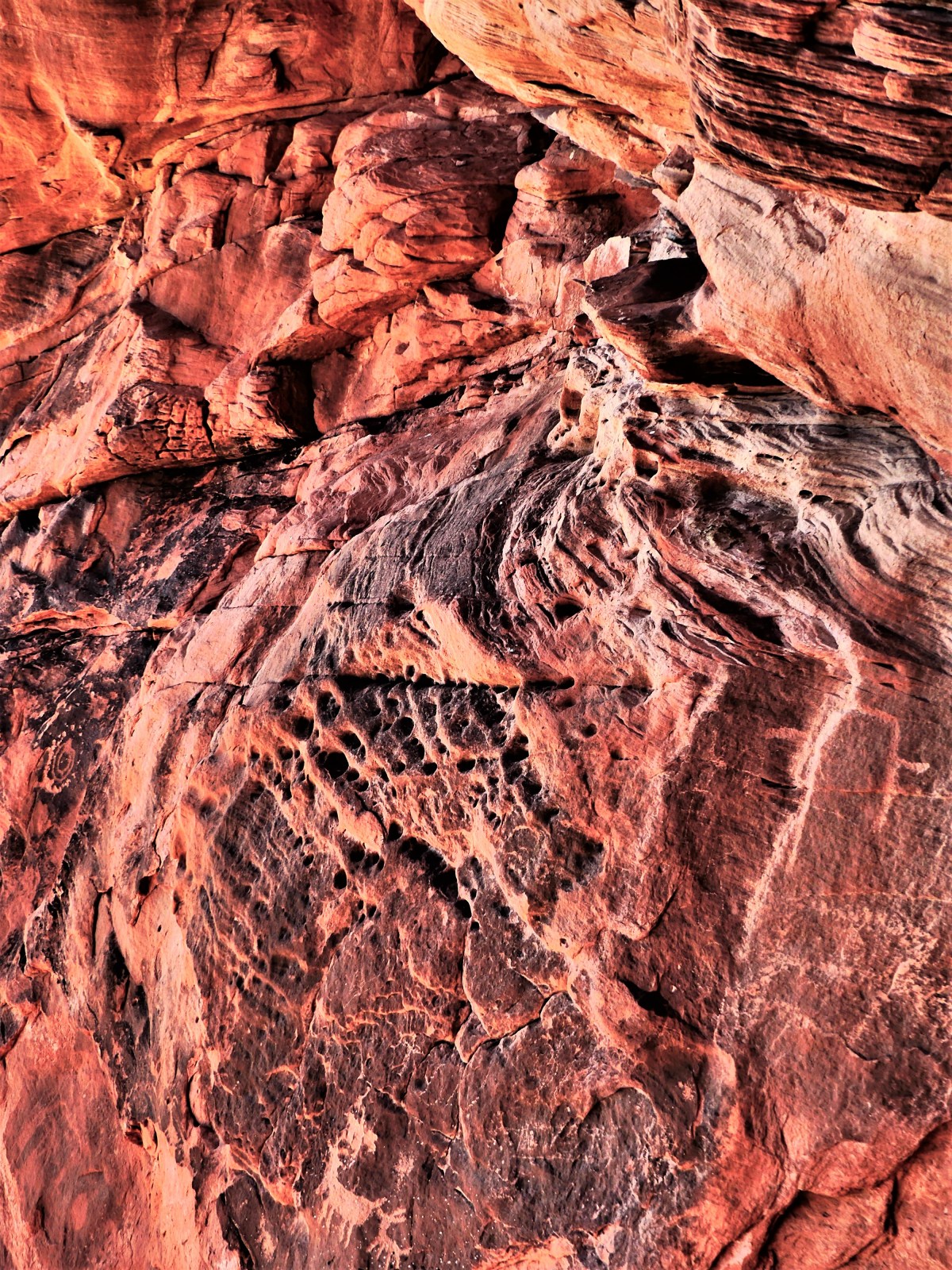
But Atlatl Rock qualifies as the best preserved and most dynamic petroglyph attracting the greatest number of pedestrians.

Atlatl Rock

Easily reached by climbing eighty-four steps over fragile sandstone,

84 steps

the symbols etched into the black patina tell an uncertain story, but the symbology clearly features known images–notably an atlatl, which was the “bump stock” of its time. Intended as a spear accessory, the atlatl was a forerunner to the bow and arrow, and used to improve speed and throwing distance when reaching bighorn sheep atop the wildly sculpted cliffs.

animal petroglyph.jpg

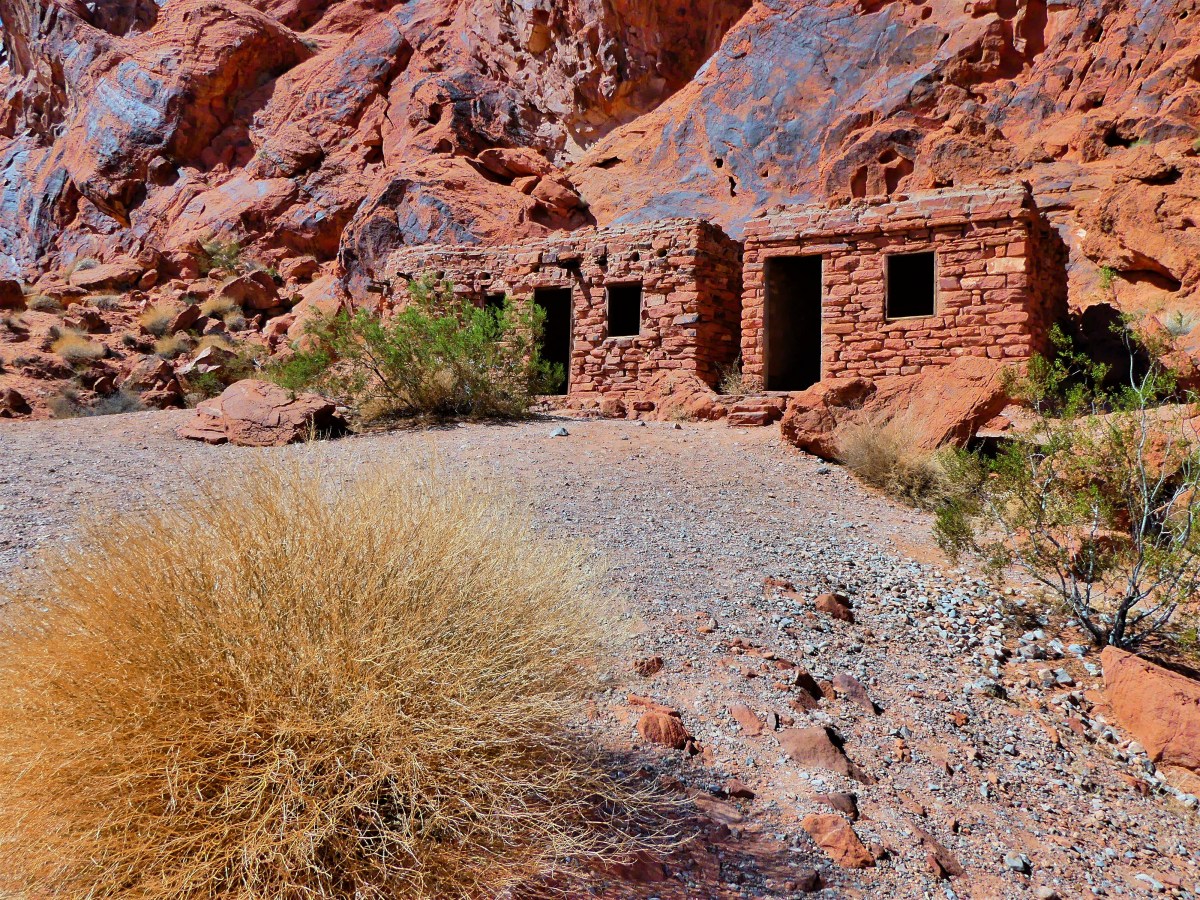
In anticipation of Valley of Fire becoming Nevada’s first state park in 1935, the Civilian Conservation Corps built The Cabins for motorists and pedestrians passing from Salt Lake City to Los Angeles along the Arrowhead Trail.

cabins.jpg

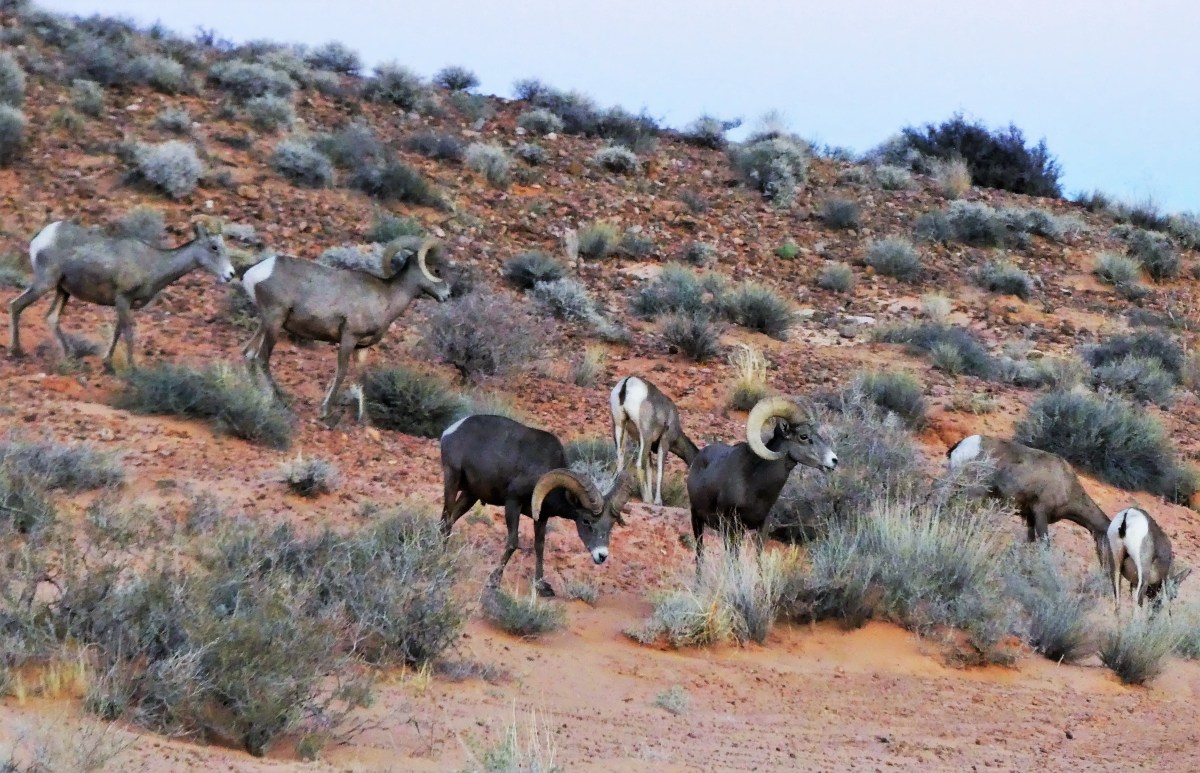
While hiking past Fire Canyon Road in anticipation of a glorious sunset, Leah and I were surprised to encounter a herd of bighorn sheep, perhaps the original inhabitants of the area.

evening graze

We slowly followed at a safe distance as they’d periodically stop and graze across the hillside while heading for higher ground. Always wary and intently watching,

2 males

the leader of the pack stood vigilant.

leader of the pack

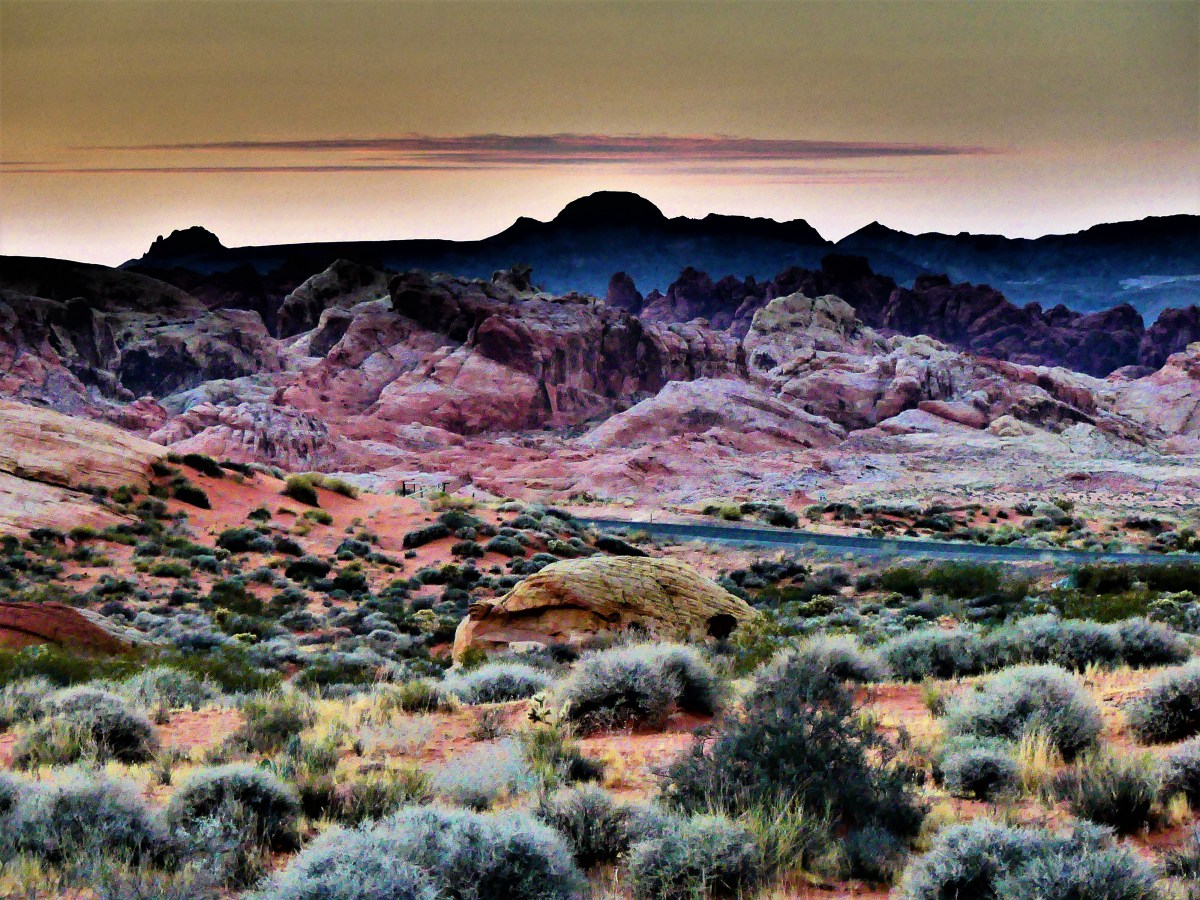
As the sun sank behind the Muddy Mountains,

Sunset over Rainbow trail.jpg

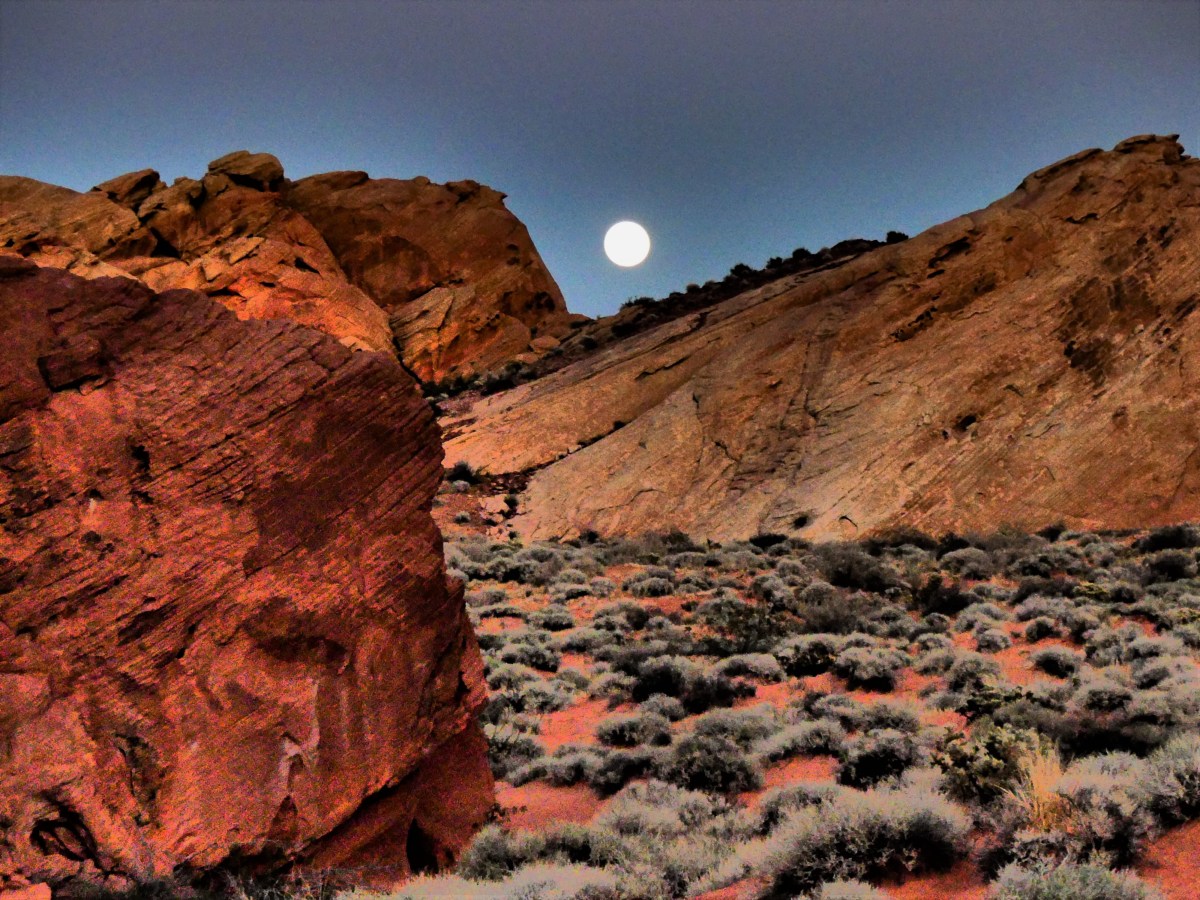
and yielded to a spectacular moonrise over the Valley of Fire,

moonrise over fire canyon (2).jpg

moonrise (2)

the celestial guardians of the park had found a place where no atlatl and spear could harm them.

sheep and moon (4)


When They Go Low, We Go High, Part 2

October’s arrival has ushered in cooler weather, granting a seasonal pardon from the intense summer heat. Today’s forecast for Death Valley is expected to peak at only 101° F, which is still good news for lizards, Steve Bannon, and cockroaches, but less ideal for humans.

We awoke to the sounds of early morning buzz around Stovepipe Wells.

A steady stream of early risers traditionally flood the park before the sun becomes too forbidding. Fortunately for us, they will likely swarm to the iconic hot spots, which only accounts as a pen stroke of Death Valley’s complex signature.
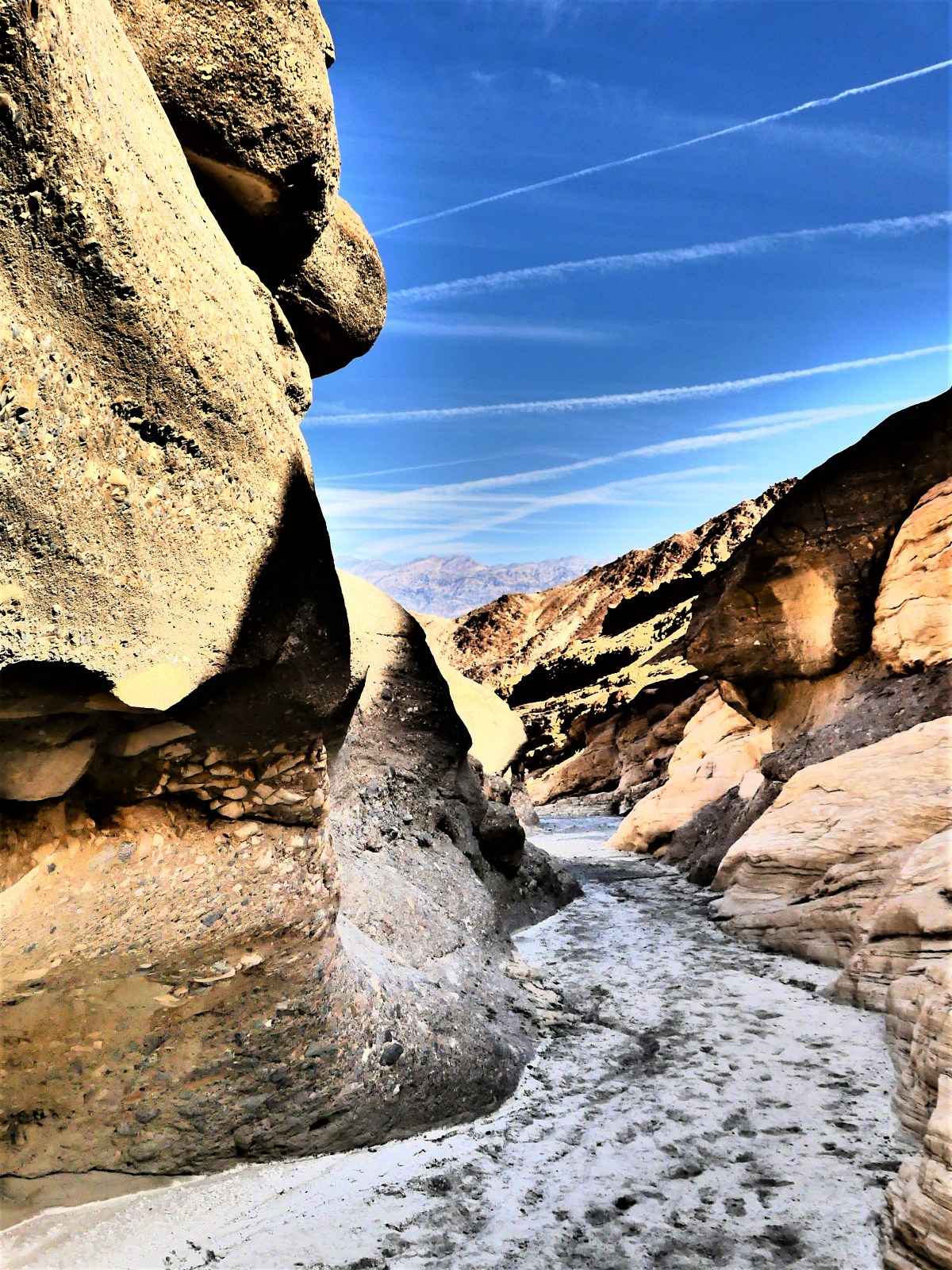
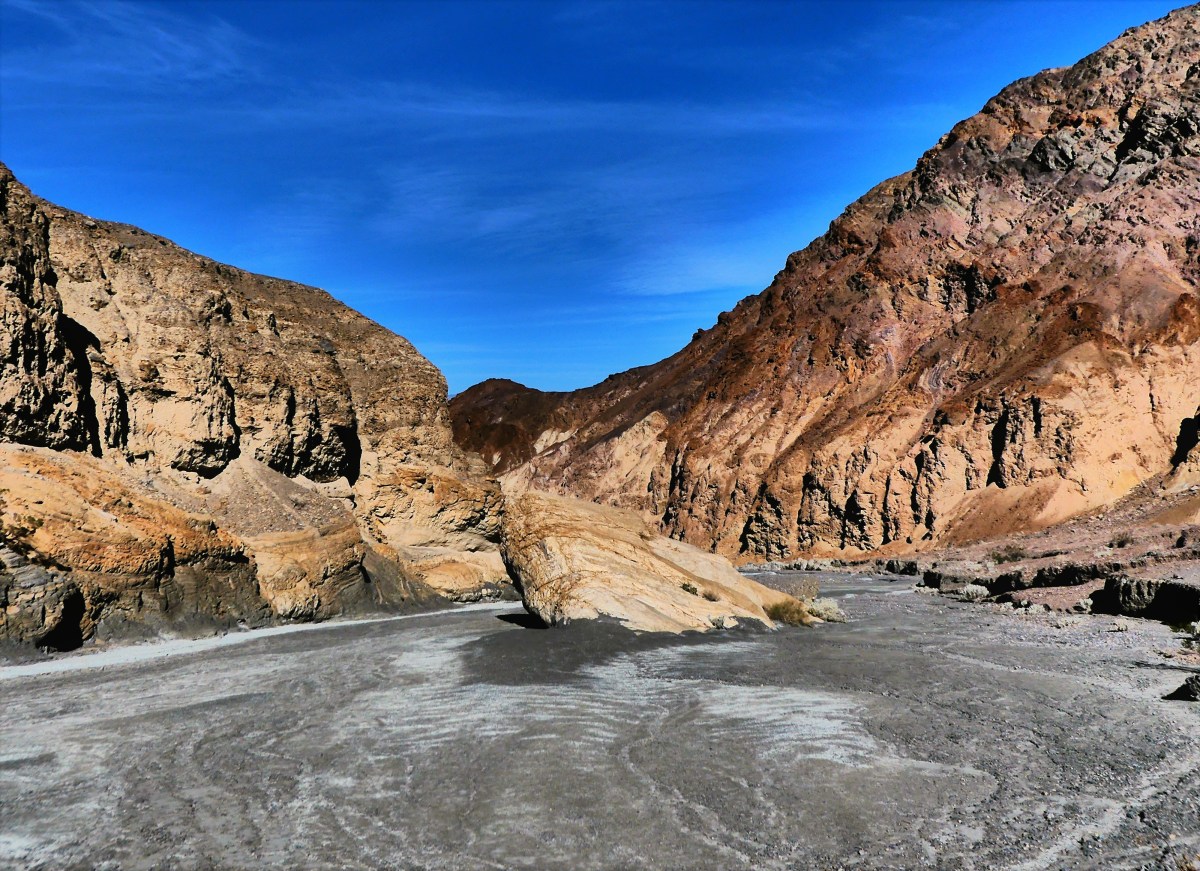
We started the day with an off-road expedition to Mosaic Canyon’s serpentine passage…

Mosaic Canyon mouth.jpg

Marble Mosaic Canyon

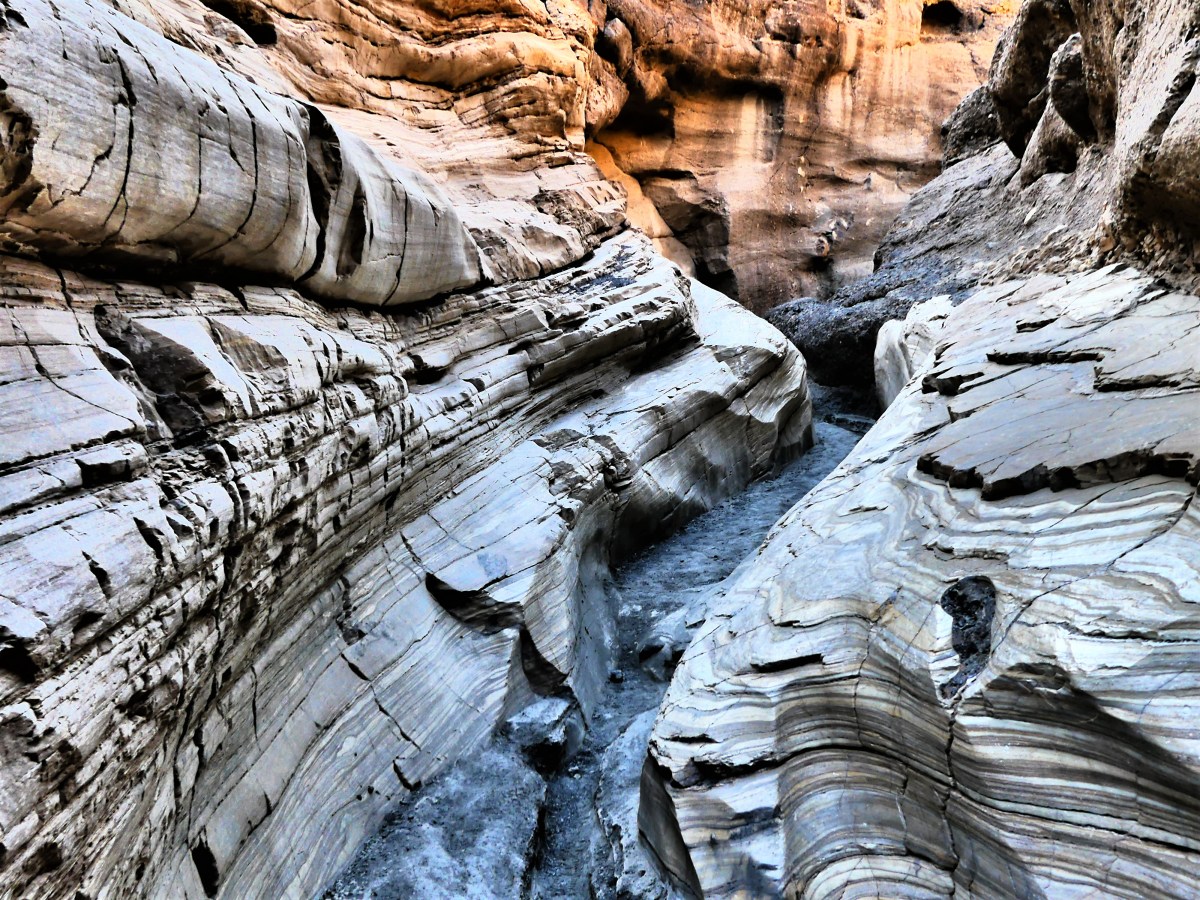
…and we hiked until we reached the foothills of the Panamint Range. It was a worthy addition to yesterday’s collection of geologic gems.

Marble Mosaic Canyon1

From there, we took the historic high road through Emigrant Pass, and back to a time of survival–when pioneers and prospectors competed against all that nature could muster. But nothing could dissuade or discourage the hardscrabble men and women with ardent dispositions, and the promise of a gold strike.

Today, the desert is littered with claims. In fact, there are more abandoned mines in Death Valley than any other national park. But one mine is special, and it belonged to Pete Aquereberry.

Eureka Mine (2)

He gained control of the claim after winning his 1907 lawsuit against Shorty Harris, an entrepreneur, a raconteur, and bona fide con-artist, who later built a castle at the top of the valley and filled it with museum-worthy art.

When all the other mines and miners faded away, Pete continued to pull gold from the ground for forty years,

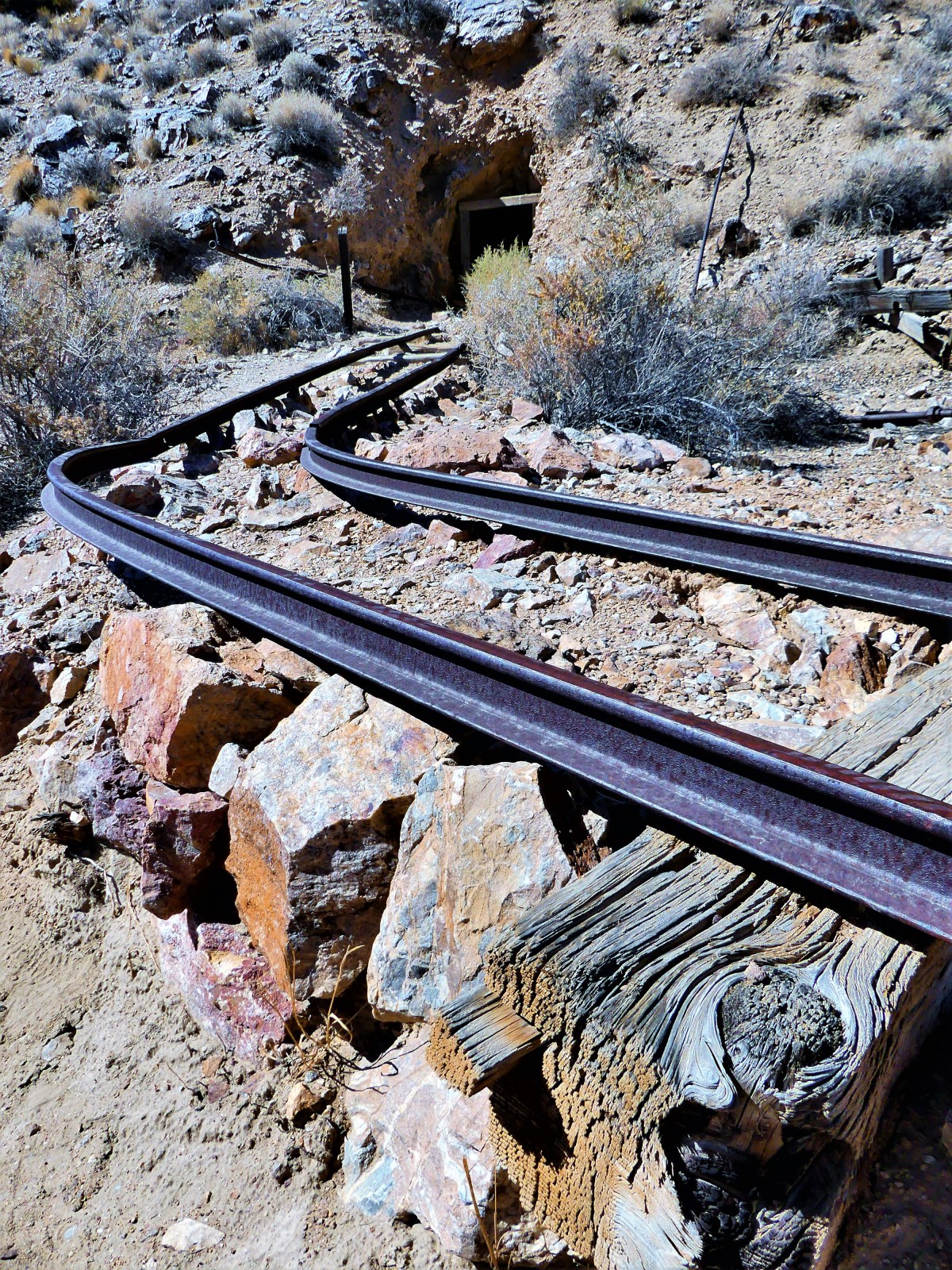
busted rails

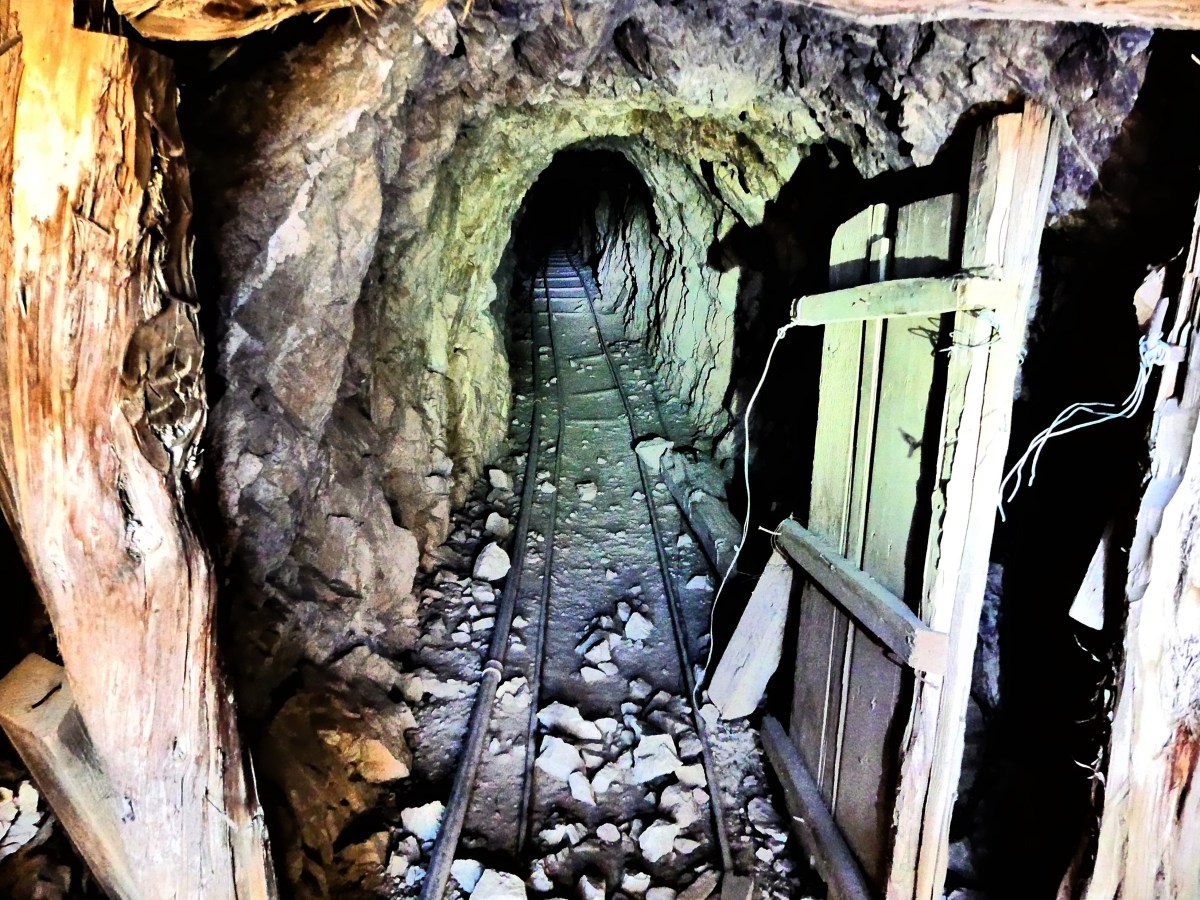
mine tunnel

and refined it through his cashier mill.

mine mill.jpg

Fortunes were made and lost in turn-of-the-century boomtowns like Skidoo, Ryolite, Leadfield, Ballarat, but Harrisburg was different. Pete continued to live in his ramshackle cabin until his death in 1945.

Aguereberry cabin.jpg

home exterior

kitchen

mine housing

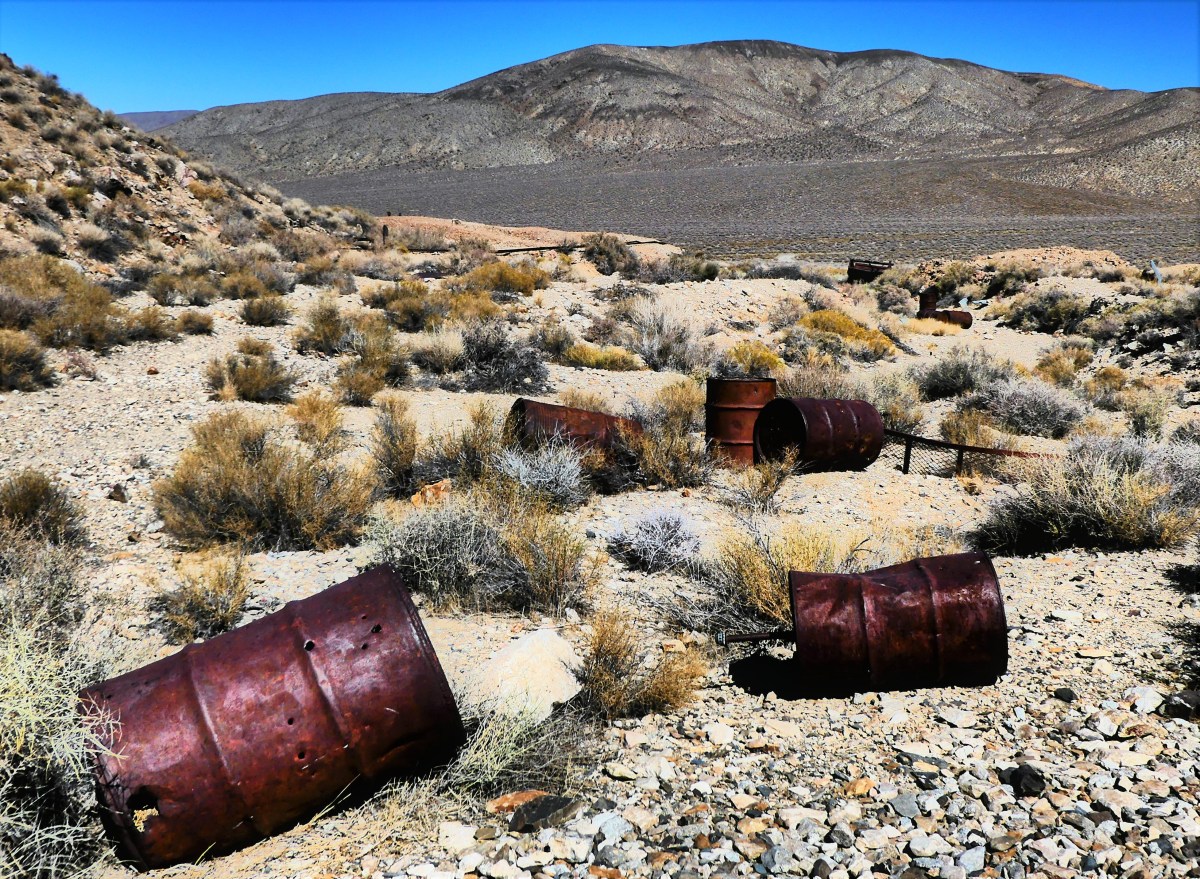
Two-hundred yards up the hill, an overgrown path leads to a graveyard of rusted appliances, oil drums,

barrels on the desert floor

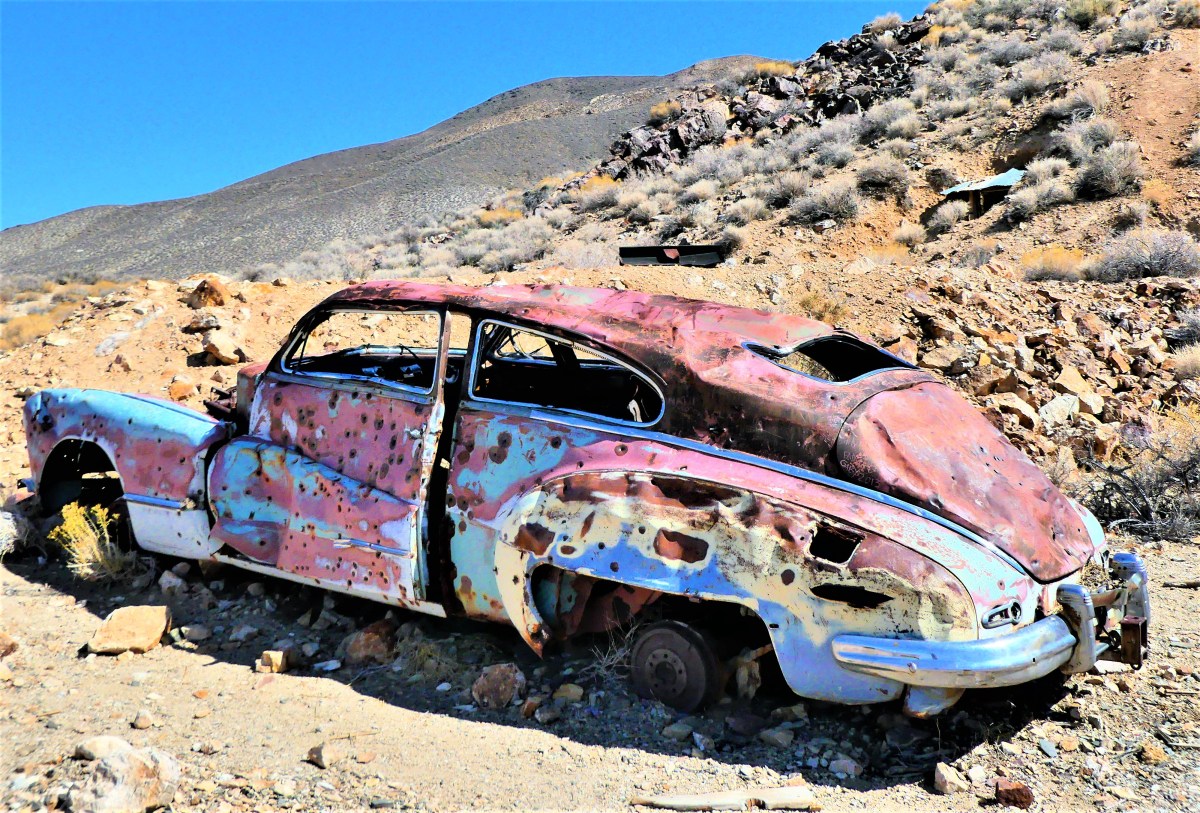
and a bullet-riddled 1948 Buick Roadmaster, an elite automobile at the time of post-war production…

Desert car

Buick front end.jpg

…that sits abandoned in the middle of Nowhere, Nevada…

car interior

and without a reason or a clue of ownership.

Roadmaster.jpg

However, beyond the mining camp, and up a primitive road at 6433 ft. above the valley floor lies Aguereberry’s everlasting “Great View”,

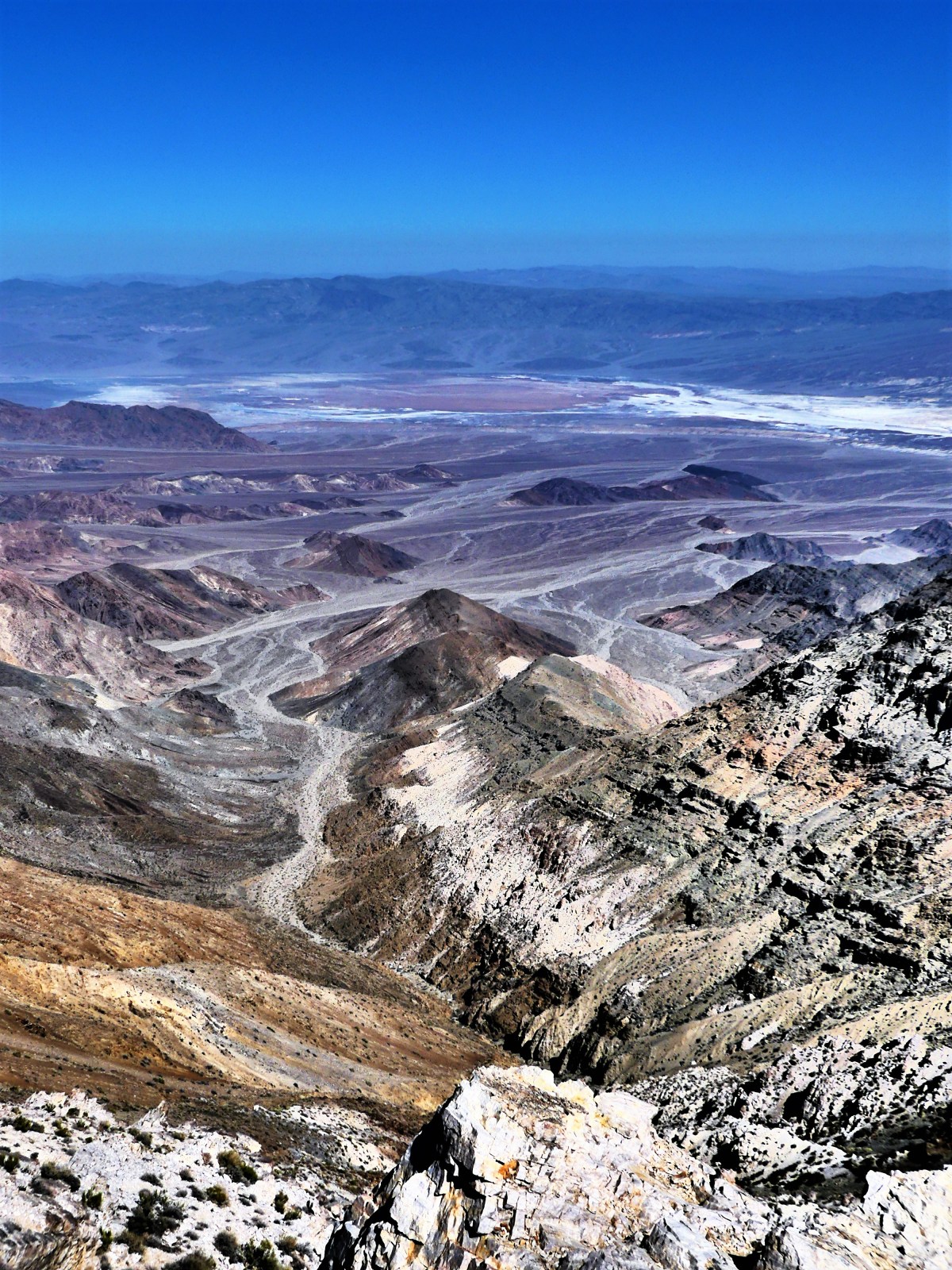
Aquereberry Point panorama

better known today as Aguereberry Point, where the air temperature soared to 70° F. Even better was having the mountaintop to ourselves,

Badwater Basin1.jpg

Aguereberry Point.jpg

until a team of law enforcement rangers unexpectedly crashed our party. After chatting awhile, we took our cue and continued in search of the Charcoal Kilns without really knowing what to look for.

Turning east on Wildrose Canyon Drive, we followed the road until pavement turned to gravel, and eventually narrowed to passable traffic. One moment we were driving through high desert, and when we turned the corner, we found ourselves inside a lush forest of piñon pines, as if we’d been transported to another part of the country.

The air was crisp and smelled of sage. Dead ahead was a string of ten identical bee hives–making for a very different kind of Rockettes chorus line.

Charcoal kilns.jpg

That’s when Leah and I realized that we’d found the kilns.

Charcoal kilns1

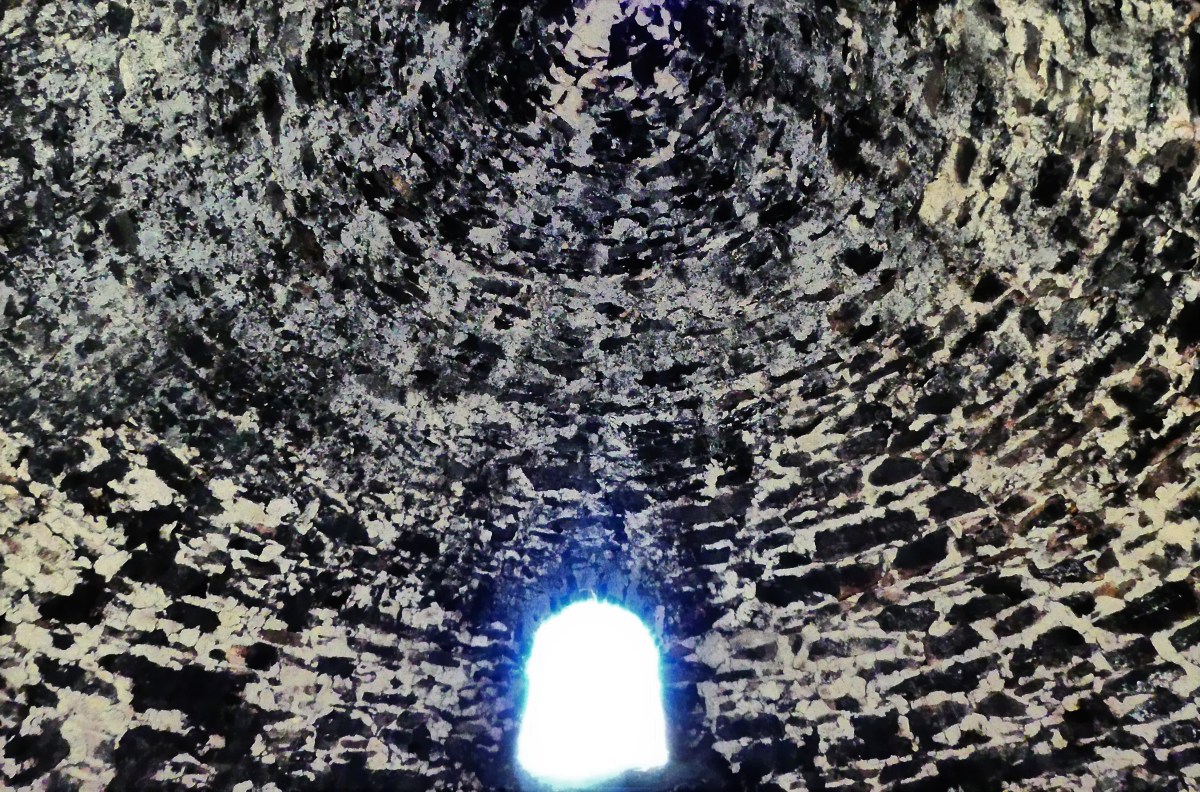
Quarried from the mountainside, these imposing structures built in 1877–and used for only three years–still have the stink of creosote permeated within their stone walls. The cones are perfectly symmetrical, and the inside acoustics sound amazing.

inside the kiln.jpg

Our trip continued past the kilns and up a high-clearance mogul run that was barely one-way-wide. Just then, an Accord barreled down and around a craggy corner faster than anyone should, and came to a skidding stop at the sight of me. It seems we were now engaged in a friendly game of chicken, so I made the first move and crept up the mountain in his direction. Perhaps he presumed that I was pulling off the road to give him a chance to pass, but there was less than no room for him to clear me. He was beaten, and he knew it, as he backed his Honda into a clearing, allowing me to pass. We exchanged fleeting glances, and I realized that winning right-of-way was more of a victory for the truck.

The road topped out at Mahogany Flat, where a lone camper was listening to Ruby Tuesday on his personal speaker, and a middle-aged couple had just completed their hike to Telescope Peak–a fourteen-mile round-trip to the highest peak in the park at 11049 ft.

While our hearts were willing, we were in no condition to start such a big hike so late in the day. But with assurances of great views from two senior hiking superstars, we walked for a mile until we reached the first clearing. While it was good enough for Leah, I wanted more. Leah stayed back while I continued to the second clearing, no more than another ¼-mile ahead.
And that’s when I finally understood the park.

Telescope Peak

Leah and I had visited Death Valley seven years ago, and had a completely different experience. For one, it was February, and it felt like we had the entire park to ourselves. The other oddity was when it rained; it brought a sudden eruption of wildflowers to the desert, and turned the Basin into briny ponds of unusual colors and strange lifeforms.

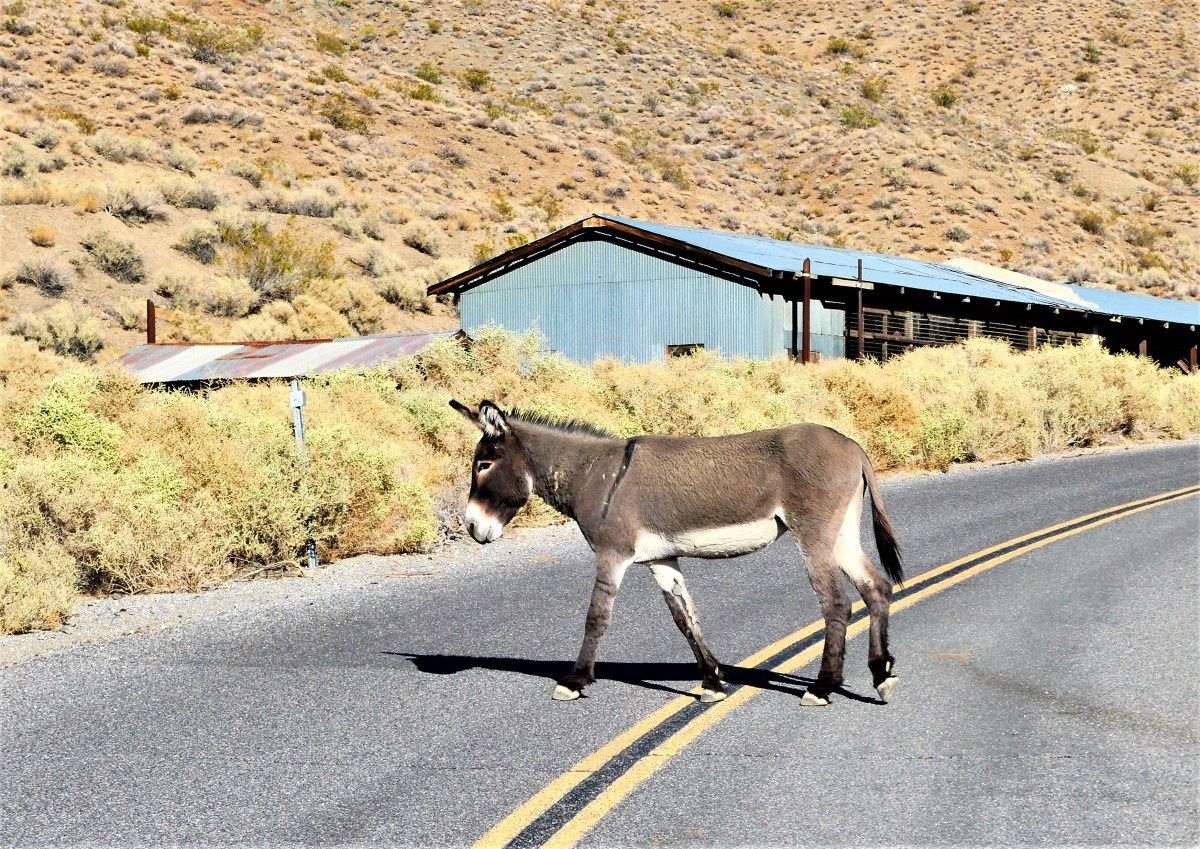
This time around, we elected to pass on the Twenty Mule Team Borax exhibit, having seen it years ago, but it came up again in a strange conversation on our way down from Telescope Peak. For several miles, we’d been passing scattered piles of shit along the road, and wondered about its origin.

Until we had to stop the truck.

dumb ass.jpg

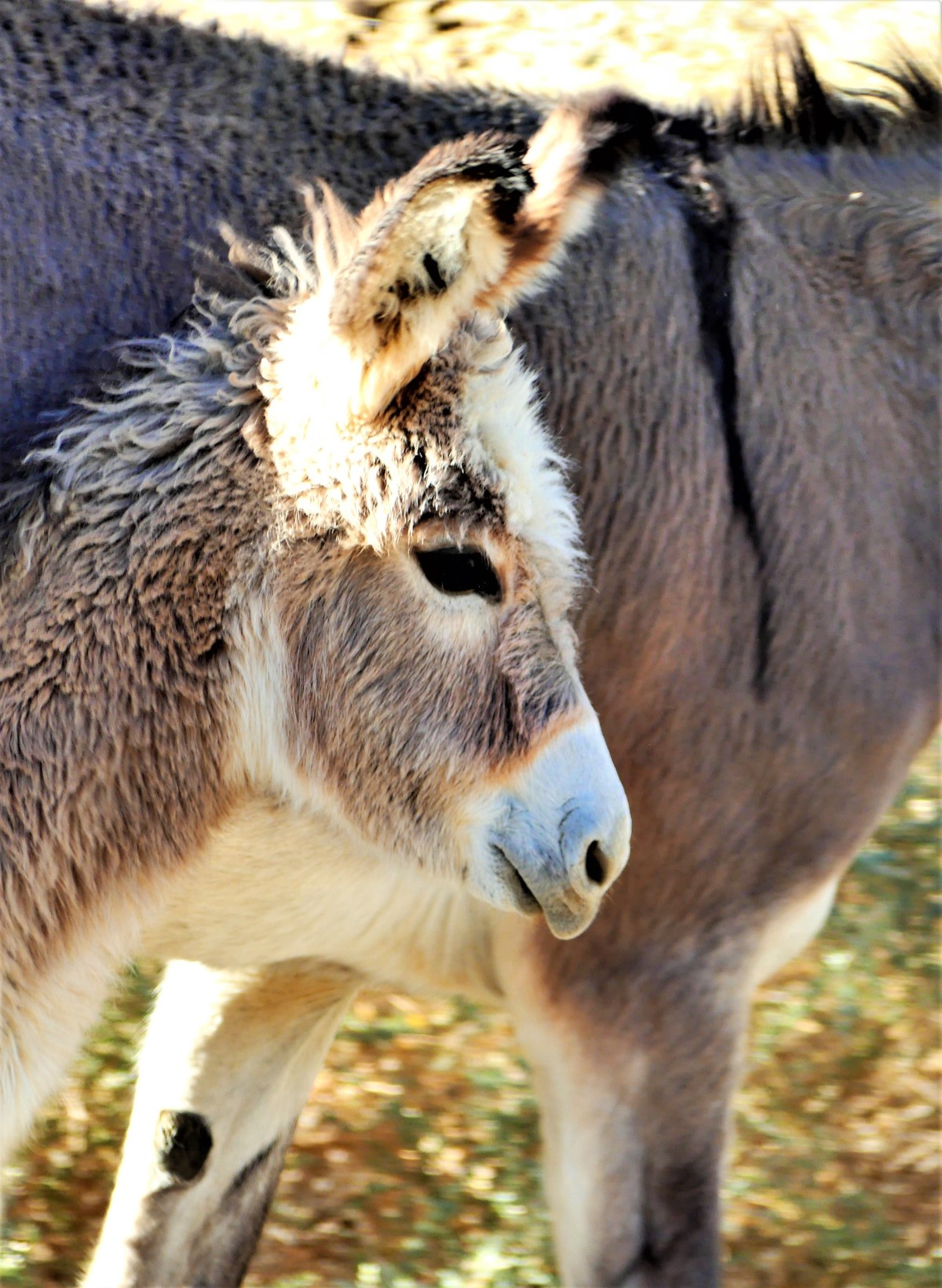
And then we knew what had become of the Twenty Mule Team.

baby mule.jpg

herd.jpg

mule

How Low Can We Go, Part 1

Death Valley is known as a land of extremes. From atop Telescope Peak (the highest point in the park at 11,043′) it’s possible to see the highest point in America (Mt. Whitney at 14,505′) and the lowest point in North America (Badwater Basin at -282′)–all from the same spot. The Panamint towers on the west hold onto snow for three months of the year during winter, while the valley below is the driest place in North America, with annual rainfall under 2 inches. Temperatures have ranged from 134° F to 15° F at Furnace Creek’s weather station.

At 3.4 million acres, Death Valley is the largest National Park outside Alaska. The park is 140 miles long and demands reliable transportation due to its vast and unforgiving character. Nearly 1000 miles of pavement and dirt roads provide access to numerable sights, but the conditions are so punishing, that picking and choosing what to see and do requires reasonability.

With only two days to see the park, Leah and I split our tour around the park’s extremes: on day one, we’d drive the busy low elevation roads–where the weather reigns hotter than anywhere else in the western hemisphere–to explore highlights to the east; and on day two, we’d travel the remote off-road trails to the west, in search of cooler mountain air.

To make it easier on ourselves, we parked the Airstream on an expansive open gravel lot at Stovepipe Wells, where a dozen other trailers and coaches joined us as we listened to early morning howls from a pack of coyotes hunting the birds that frequent the septic pump at the far end of the campground.

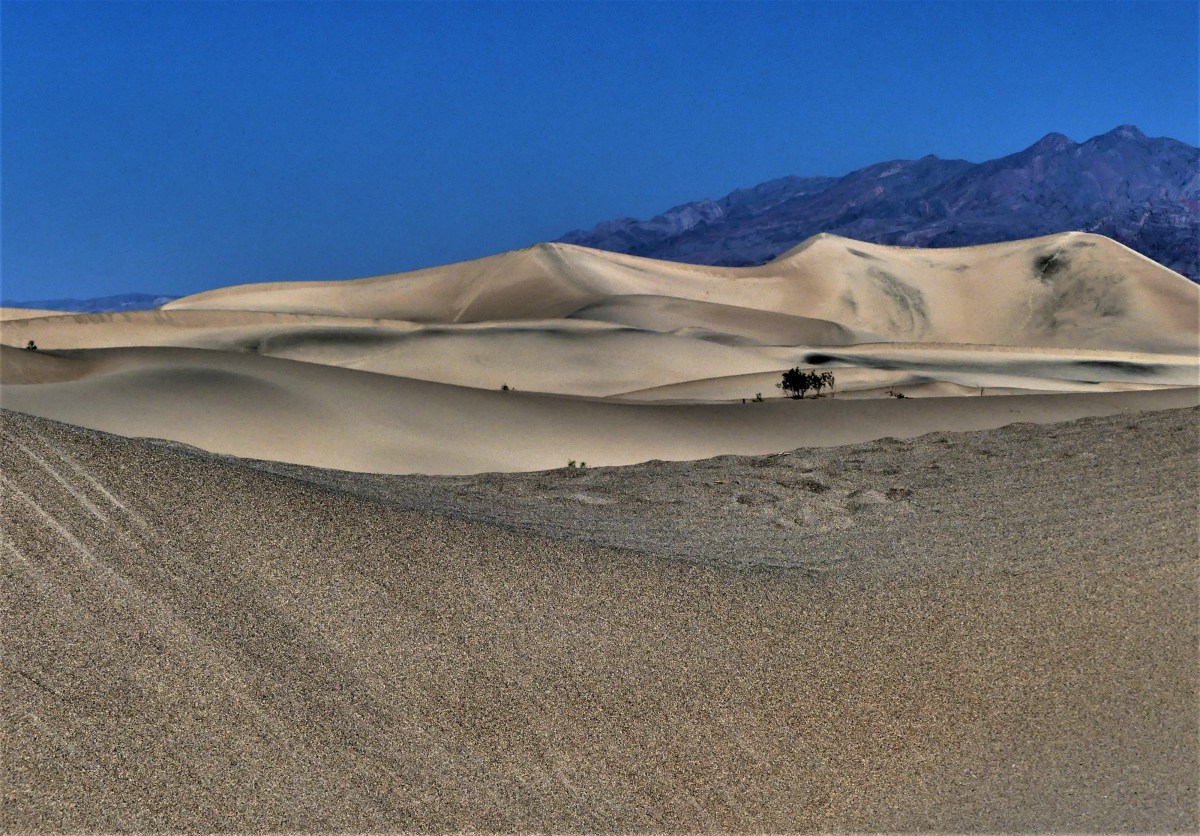
A restless night gave way to a convenient start the following day, with a quick trip (almost unheard of in this National Park) around the bend to Mesquite Flat Sand Dunes.

dunes1

Wandering out to the highest ridge at 100 ft. can be arduous, as the shifting sand will swallow every step.

dunes

However, better traction is available in the dune valleys, where the hard crust anchors the creosote and mesquite shrubs.

Mesquite Sand Dunes

We continued past Furnace Creek…

CA-190.1 (2)

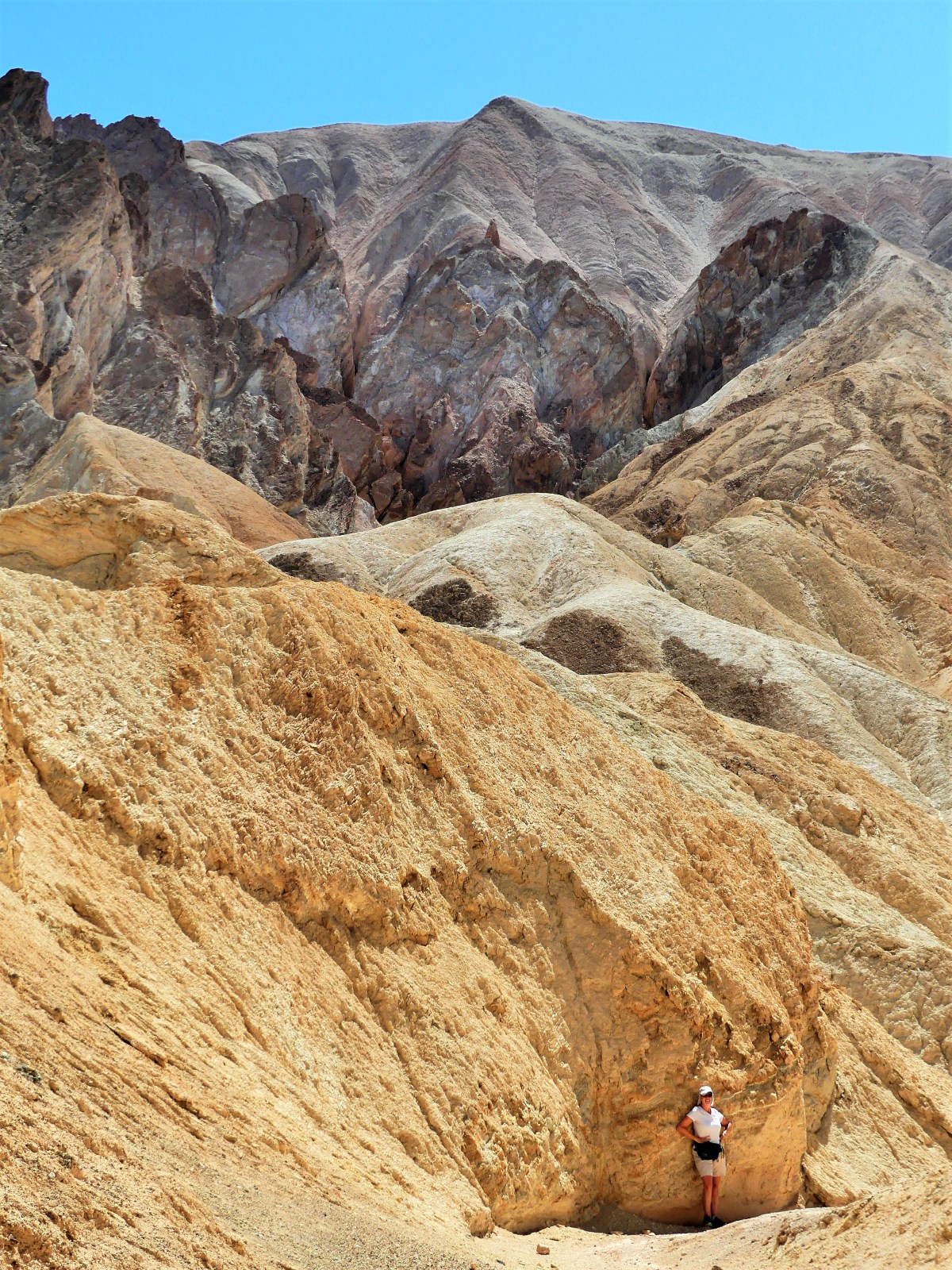
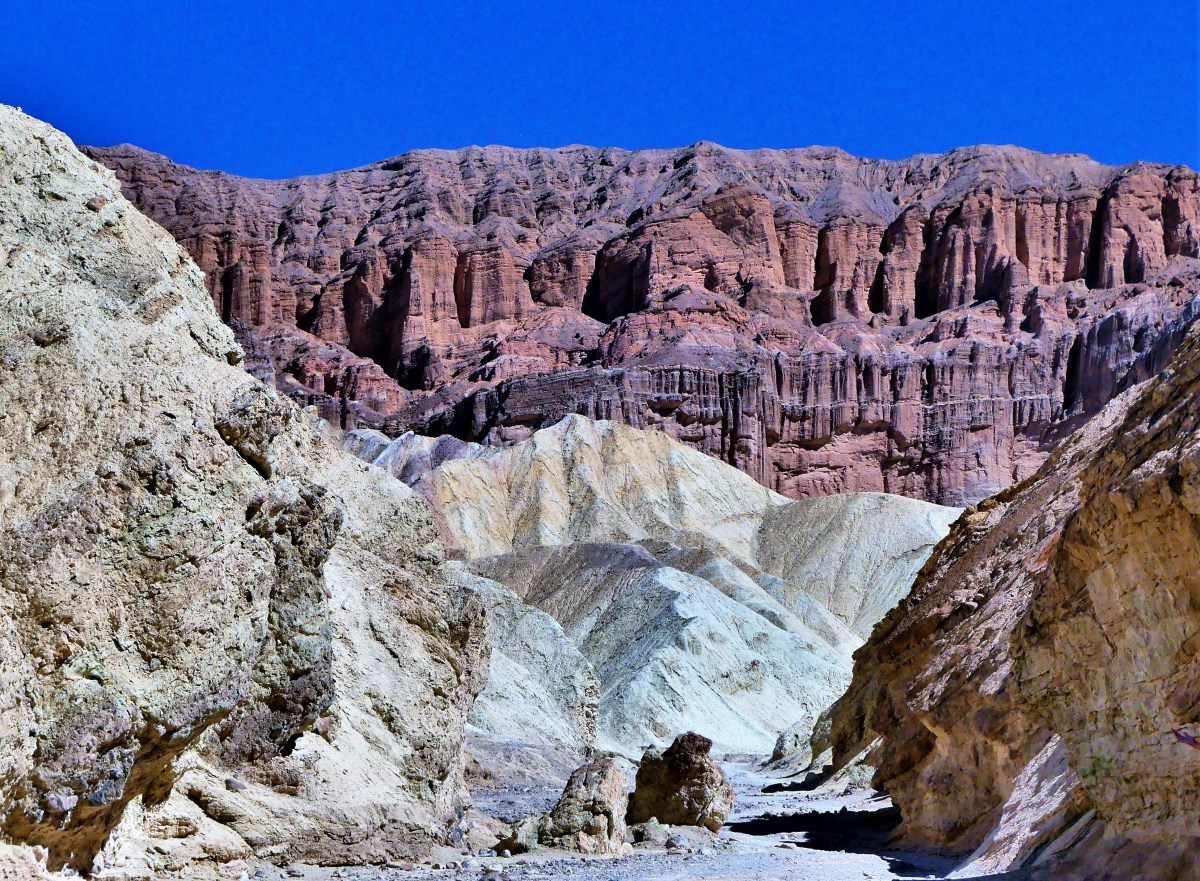
until we reached the Golden Canyon. With the sun arcing across the eastern sky, we wove our way through the passage,

canyon opening

always hugging the canyon walls where we could for a chance at shady salvation.

canyon shade

While the sun was relentless, it was the scenery that left us breathless.

Einstein rock

Golden Canyon spur

Cathedral Red Rock

Back in the truck with the air conditioning cranked to recovery mode, we took CA-190 past the Artists Drive detour, and turned onto a last ditch road that resembled the landscape. At the end of the quarter-mile was a large clearing smack in the middle of an alien landscape called Devils Golf Course*, an immense arena of jagged rock salt deposits turned into land mines that makes for hazardous hiking.

golfcourse panorama.jpg

Devils Golfcourse1.jpg

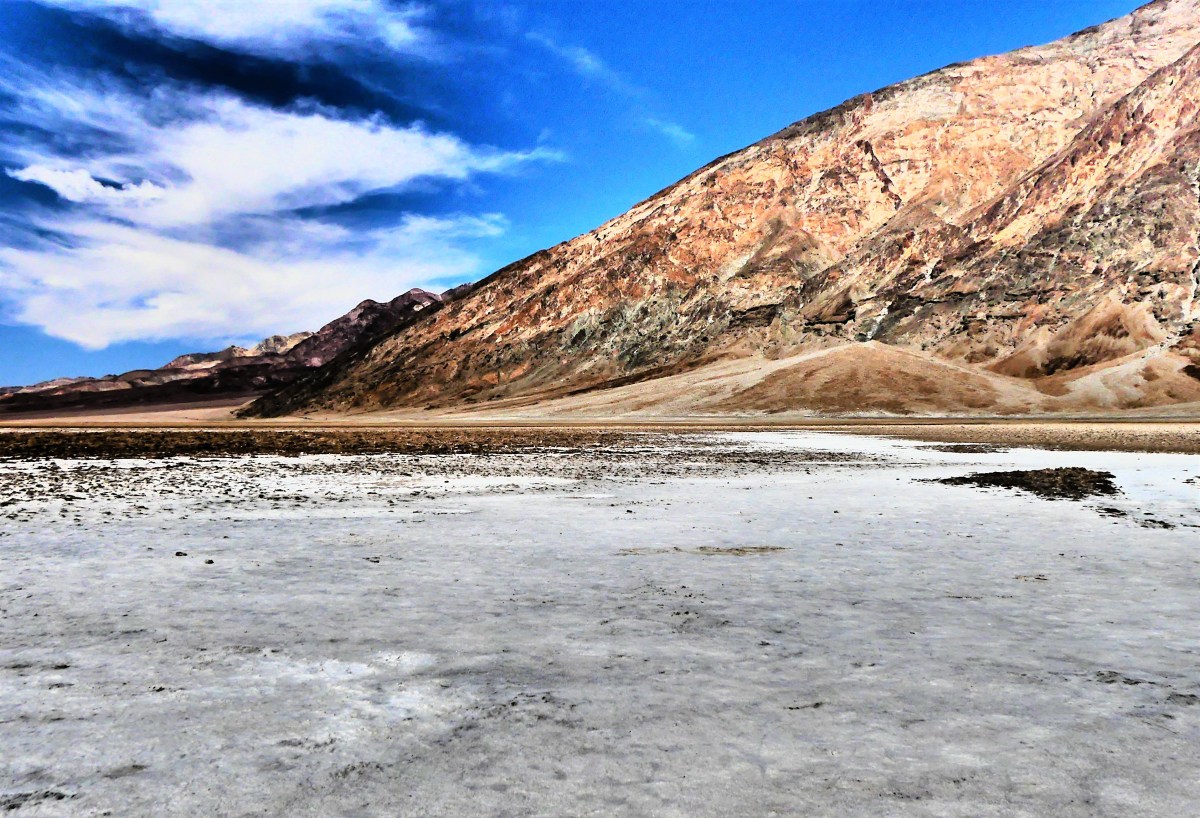
While no one can ever prepare for surviving in extreme heat for extended periods of time (by now it was now 103° F), we were ready to take our chances in Badwater Basin–the hottest and deepest place in America.

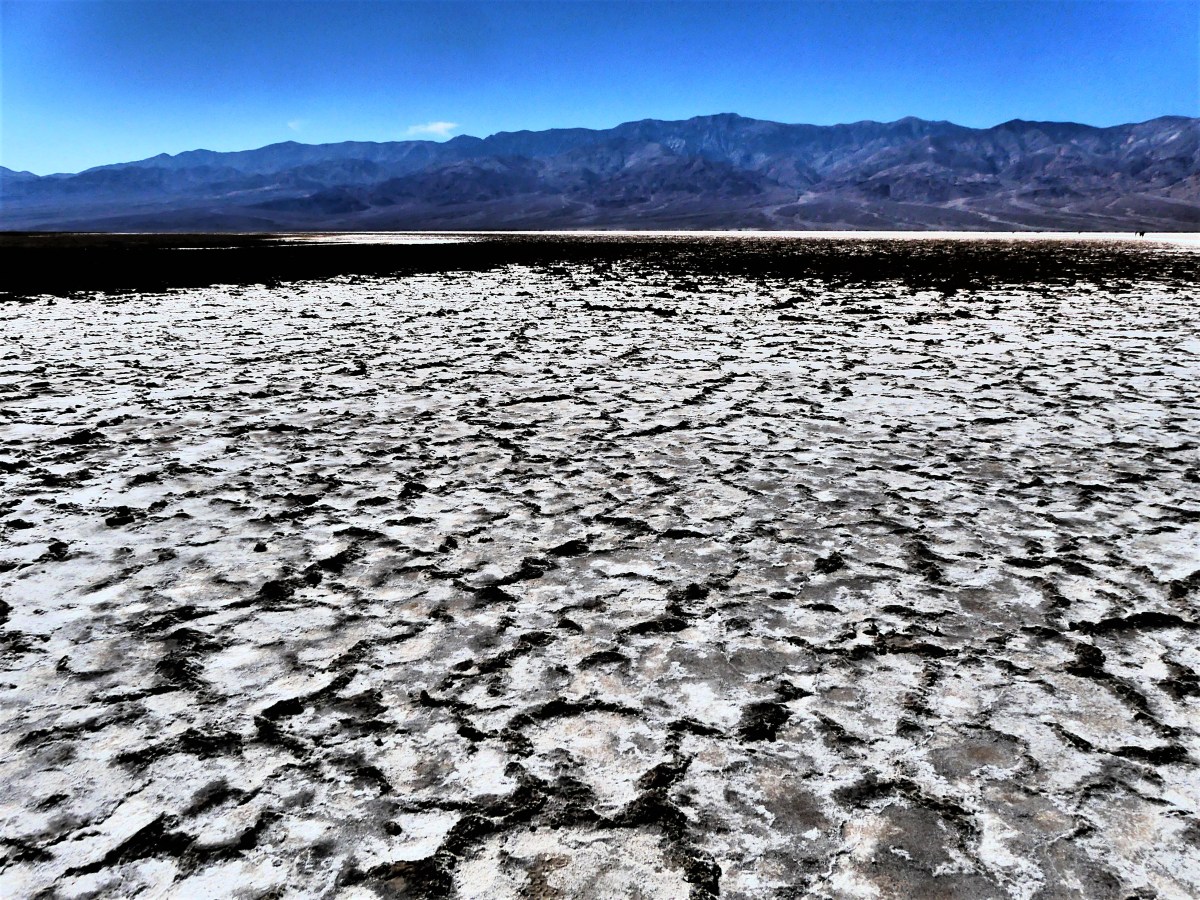
Walking onto salt flats that cover 200 sq miles sounds as overwhelming as it should,

Salt Flats (2).jpg

…yet the impression of watching people walk out so far they almost disappear, helps put the enormity of Badwater Basin into perspective.

Badwater

Leah and I u-turned from this point, and back-tracked to Artist Drive–nine miles of looping and dipping black-top that weaves through narrow rock channels until it opens onto a gargantuan portion of Neapolitan ice cream known as Artists Palette.

bowl of gelato

Five million years of eruptions altered by heat and shaped by wind and water has produced a spectrum of colors across the slopes. On closer inspection, the colors are surreal.

Artist's Palette

Palette detail

While the truck had enough fuel to carry us another two-hundred miles, Leah and I were running out of gas. As we’d ride from one spot to another, we’d repeat the same refrain throughout the day: “Oh, wow! Did you see that? That was amazing! How is that even possible?” We were living on fumes of inspiration.

We closed the day with a visit to Zabriskie Point,

Badlands

a magical setting that showcases the harsh beauty that makes Death Valley so unforgettable, and a place that can awaken the hibernating soul within us. Some go so far as to breach the safety of the overlook, and climb closer to the edge to symbolically feel closer to their personal truth.

One such group of chanting and meditating hippies was seated on plush mats near the cliff edge, their diaphanous silks of many colors flowing in the hot breeze. They were seemingly oblivious to the large number of amateur shutterbugs who were standing on the observation platform and complaining about their compromised view of the Badlands.

Since I believe that we all share the same view equally, I took a narrow path down to where they were sitting to set up my camera shot. I nodded politely as I crossed their viewing angle, and bid them hello.

“I’ll bet their grumbling up there about how we’re spoiling the view for them,” declared the Elder.

“Yeah, there’s a lot of that going on,” I indicated, “but the light won’t be like this forever, so ‘I’m not gonna waste my shot.’

Zabriskie Point

Elder stated, “Y’know, if they were that bummed out, they’d come down here the same as you”

Setting up my shot, with my back to Elder, I commented, “That’s true, but many aren’t as bold as you, and just as many can’t physically make the climb down here. Figure it out!… While you’re praying for world peace, you’re also ignoring the needs of people right behind you.”

“I guess that’s true,” noted the Eldress.

I took the shot…

Zabriskie panorama

and hiked back to where Leah was standing.

“Y’know that group of hippies below us? I think they’re leaving,” I announced.

“That’s gonna make a bunch of people happy,” predicted Leah.

When I saw them rolling up their mats, I figured that like me, they probably had enough heat for one day, or they finally came to their senses before the heat robbed them of their last strand of reasonability.

* Not a Trump® property yet, but the family is working on it!

Joshua Tree–the Album and the National Park

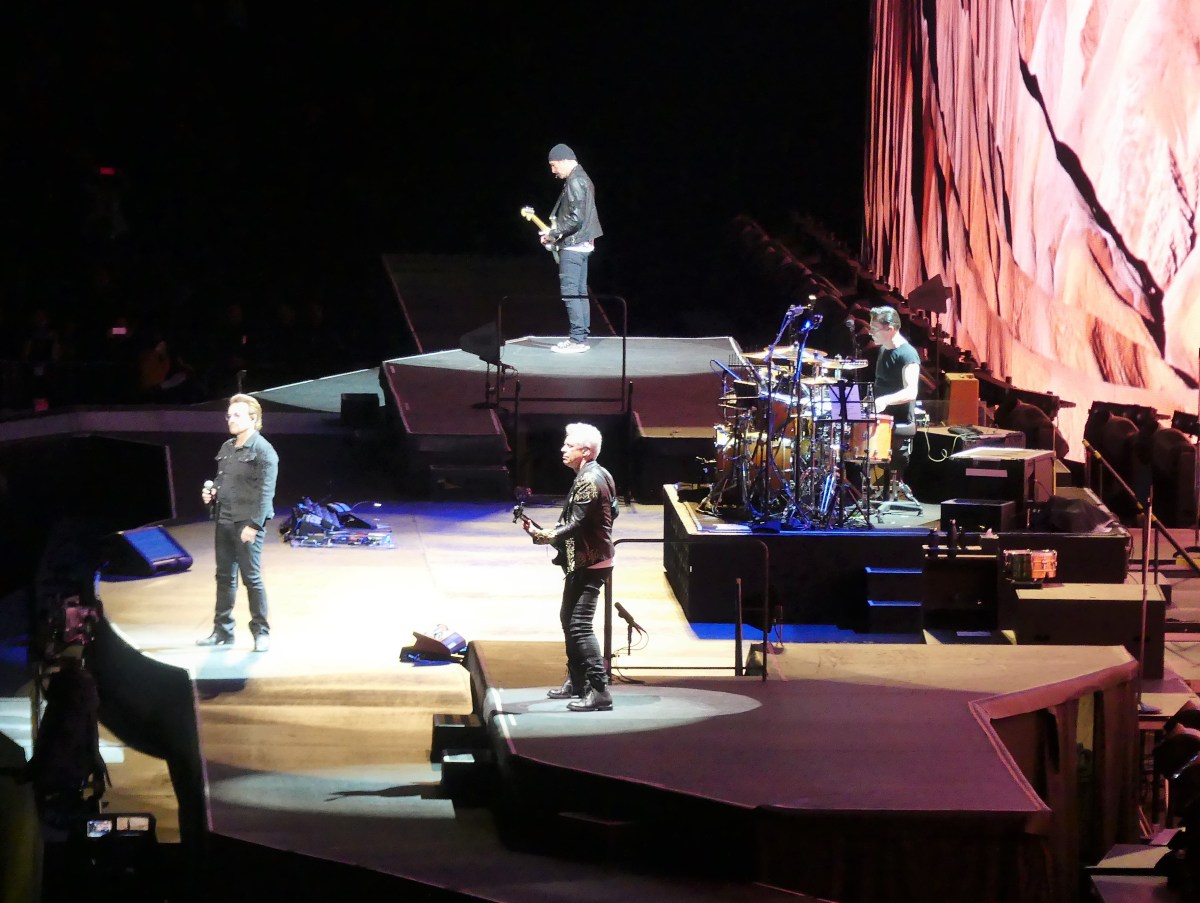
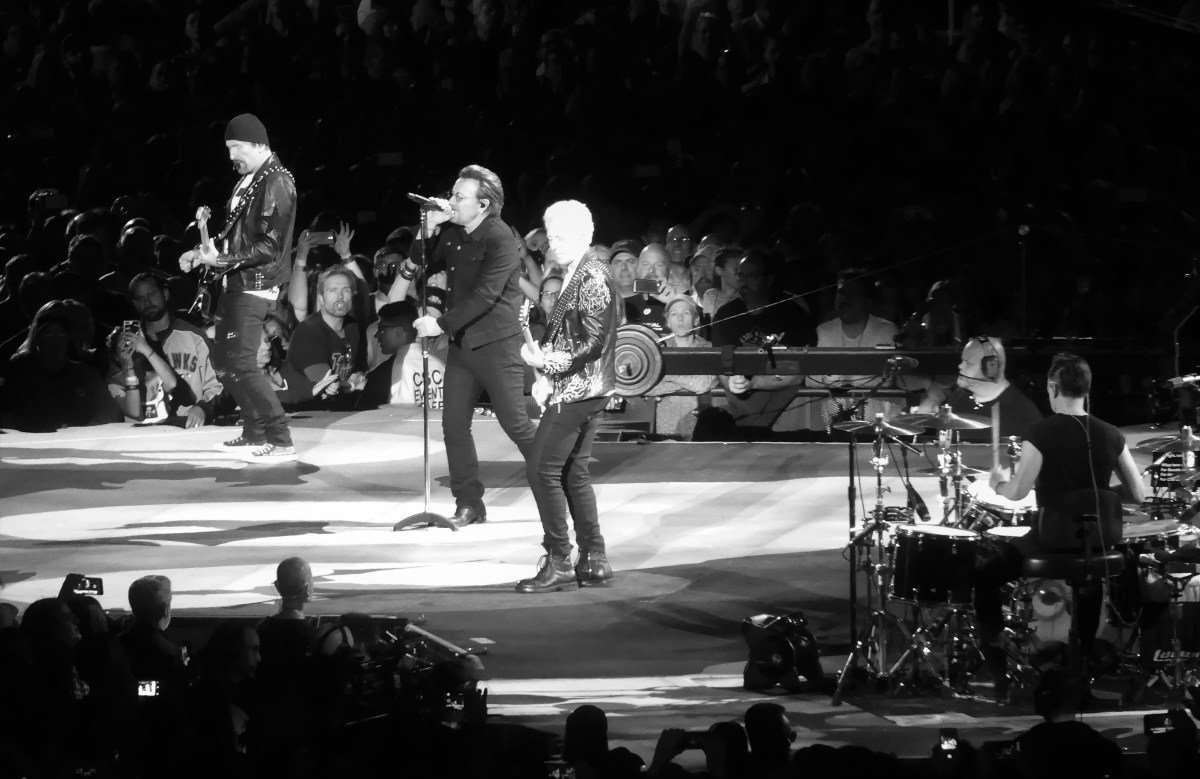
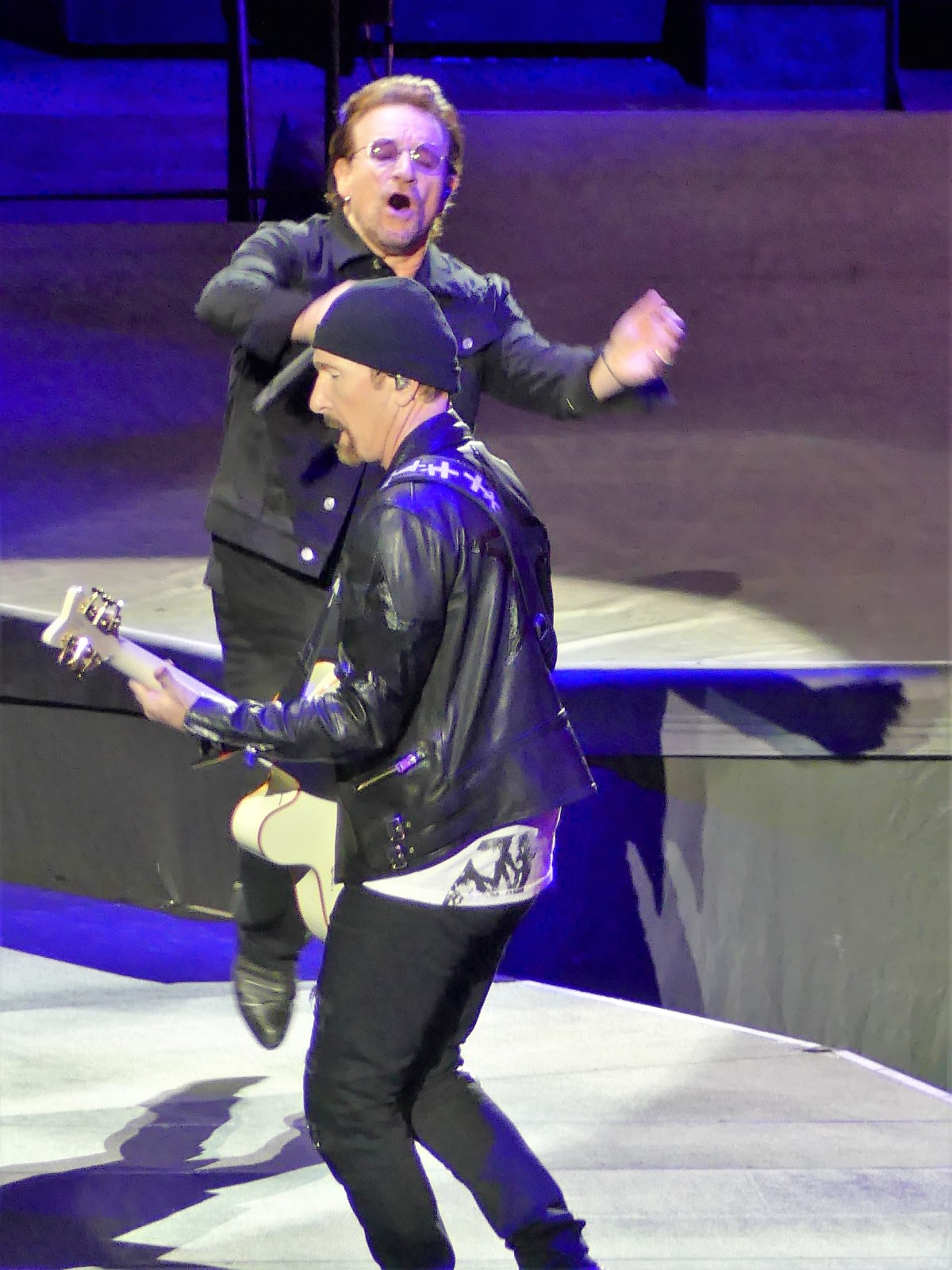
It seemed fitting that scoring tickets to U2’s final U.S. performance of their Joshua Tree tour in San Diego would be the perfect segue to our visit to Joshua Tree National Park one day later. Their iconic album, filled with haunting melodies and provocative lyrics still resonates, even thirty years after its release. That the two events would collide seemed akin to kismet, providing inspiration for a mash-up of U2 music and National Park imagery.

The Joshua Tree concert and park were magical, and lingering memories of both events continue to sustain my creative drive.

Where the Streets Have No Name

main stage

pair of ocochilla
I’ll show you a place
High on a desert plain
Where the streets have no name


I Still Haven’t Found What I’m Looking For

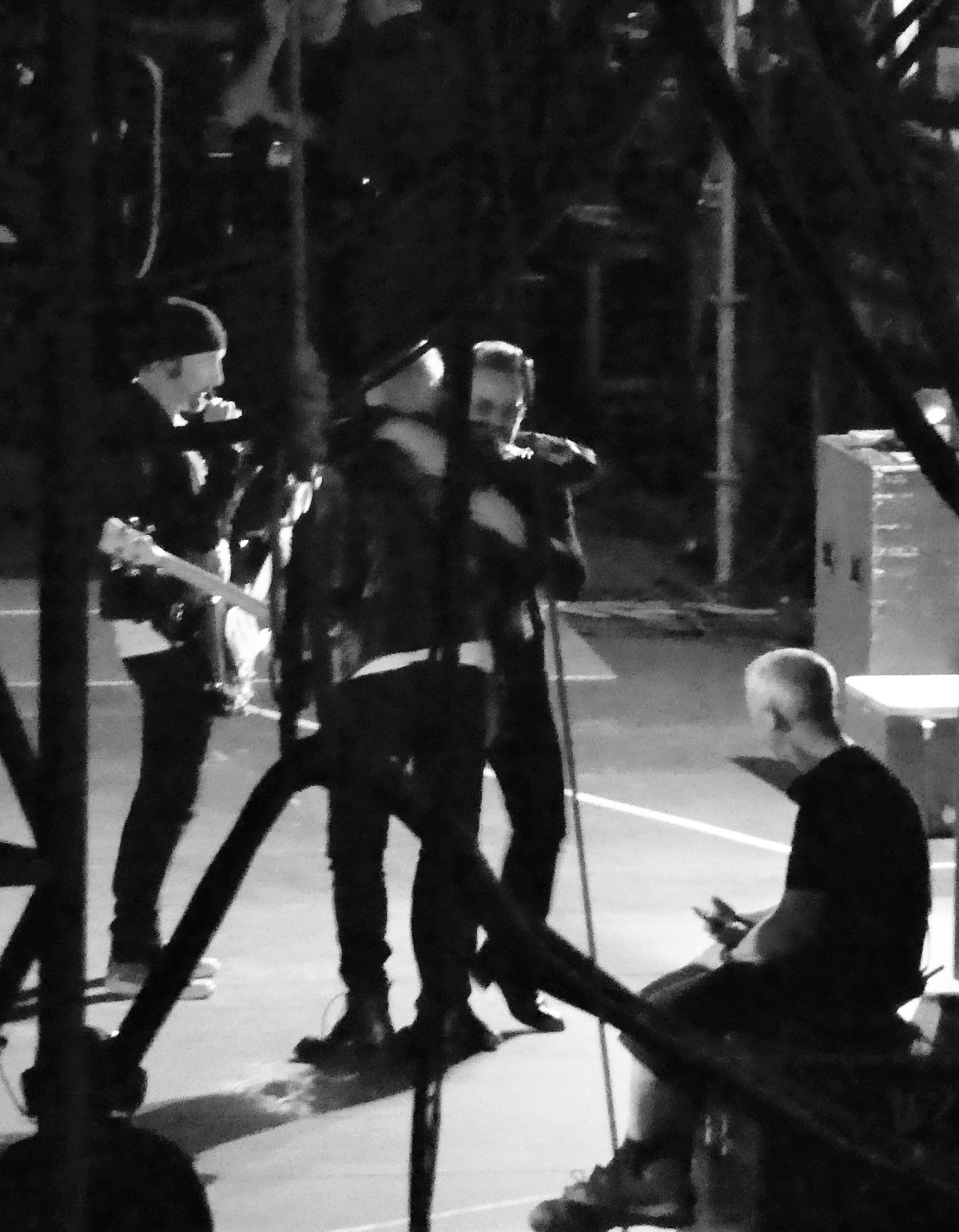
Edge

P1090152
I have spoke with the tongue of angels
I have held the hand of a devil
It was warm in the night
I was cold as a stone


With or Without You

all together in the middle

cacti and rock
See the stone set in your eyes
See the thorn twist in your side


Bullet the Blue Sky

excited

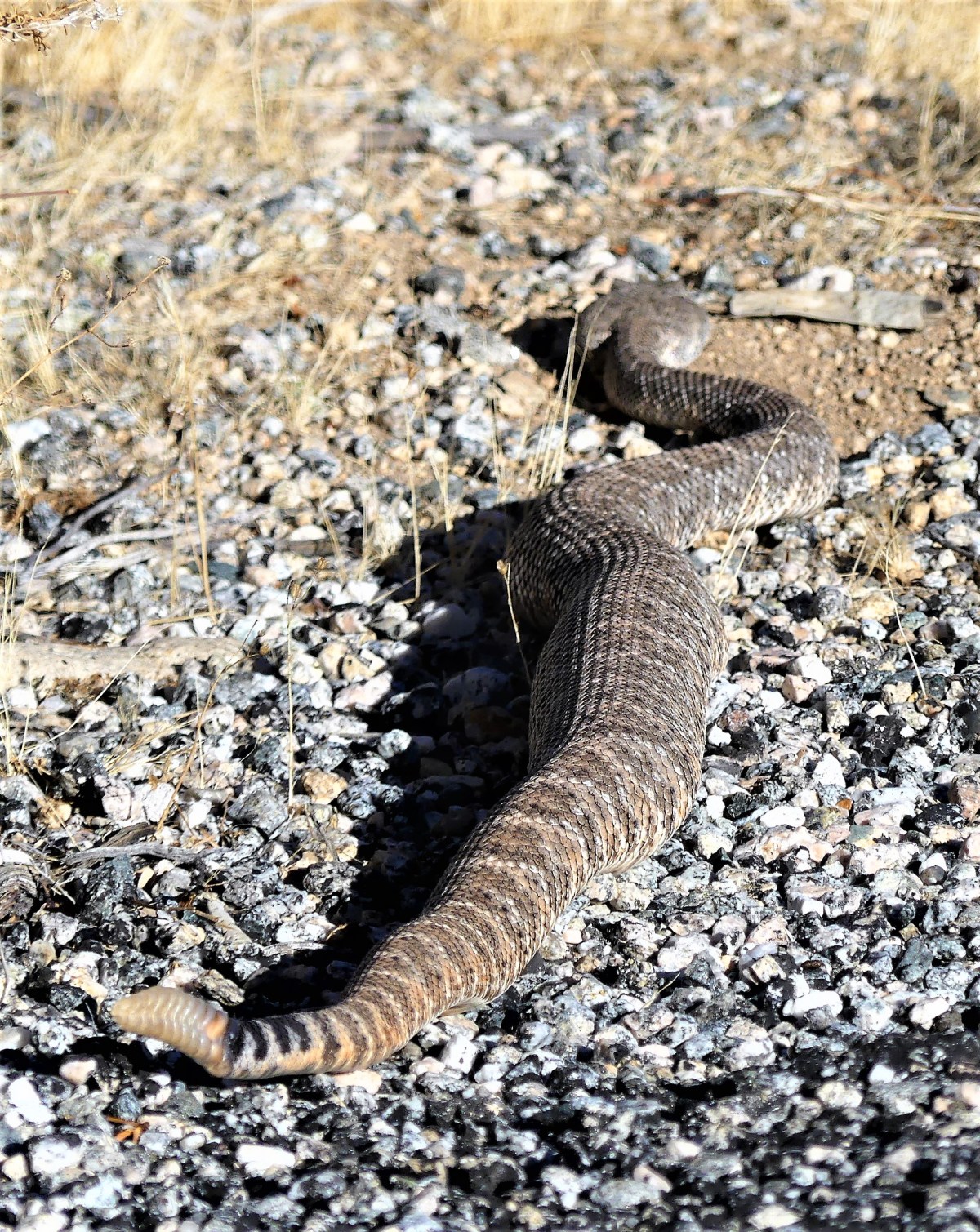
fat rattler
In the locust wind
Comes a rattle and hum


Running to Stand Still

3 in the middle stage

7 towers
I see seven towers
But I only see one way out


Red Hill Mining Town

Turn off the lights

desert sunset
We scorch the earth
Set fire to the sky


In God’s Country

blue light

Barker Dam3
Desert sky, dream beneath the desert sky
The rivers run but soon run dry


Trip Through Your Wires

Edge and Bono

Desert Sky (2)
There’s a raincloud
In the desert sky
In the distance


One Tree Hill

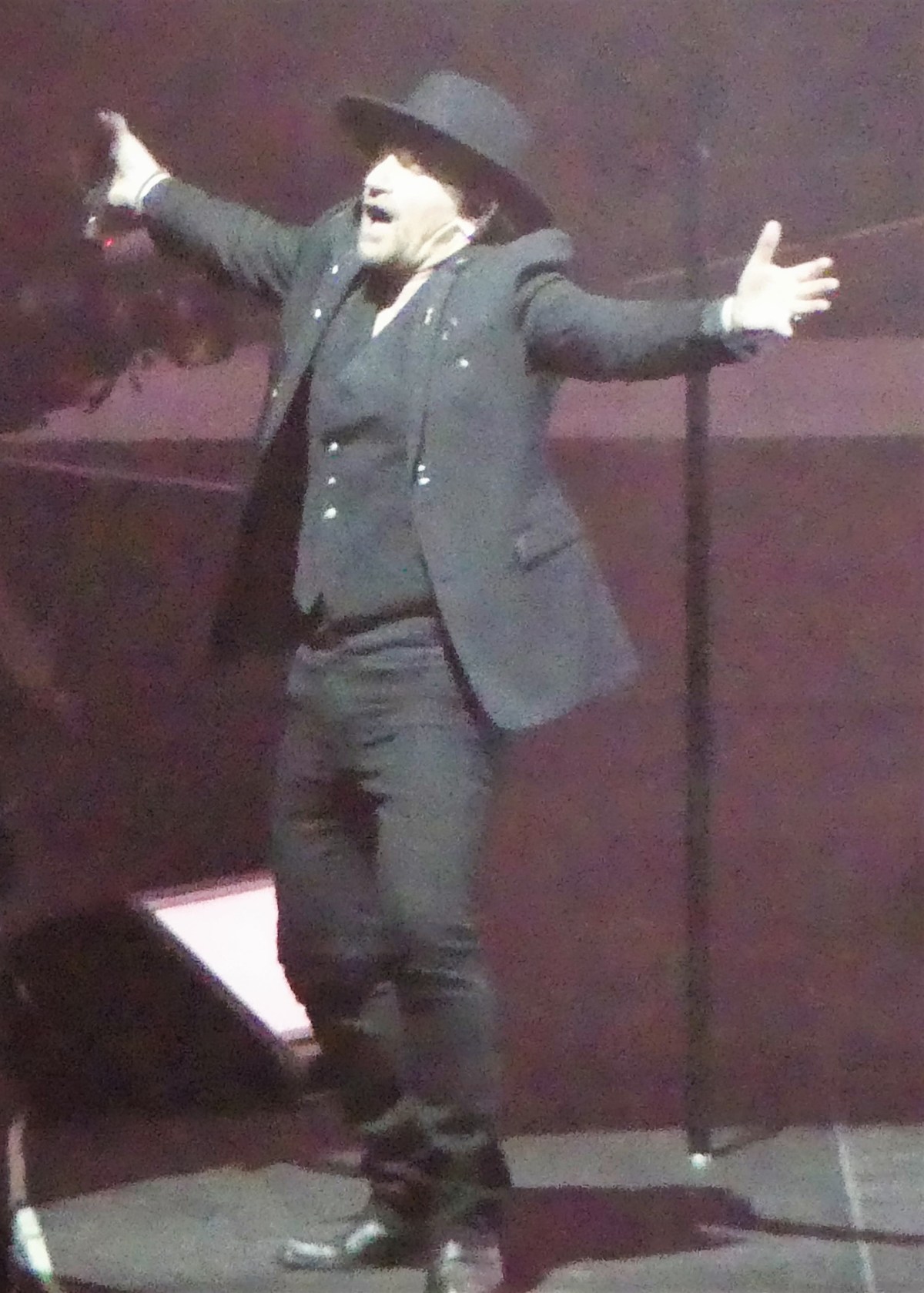
Bono in a hat

blazing sunset
The moon is up and over One Tree Hill
We see the sun go down in your eyes


Exit

Backstage1

folded rocks
He felt the healing
Healing, healing, healing hands of love


Mother of the Disappeared

passing the sheet

White Tank
In the trees our sons stand naked
Through the walls our daughters cry

My thanks to Bono, The Edge, Adam, and Larry for decades of music artistry. And my apologies in advance for crossing the line with my literal and metaphoric interpretations.

Window to a Blue Sky

Ranger Pritchett has a lot to smile about. After twenty years as an enforcement officer at Joshua Tree National Park, he’s recently transitioned to a new position inside the visitor center as a naturalist and he couldn’t be happier. When asked about the park’s attractions and variety of activities, he gets very excited about all the prospects that Joshua Tree has to offer, especially during the off-season, when it’s not “crazy busy”.

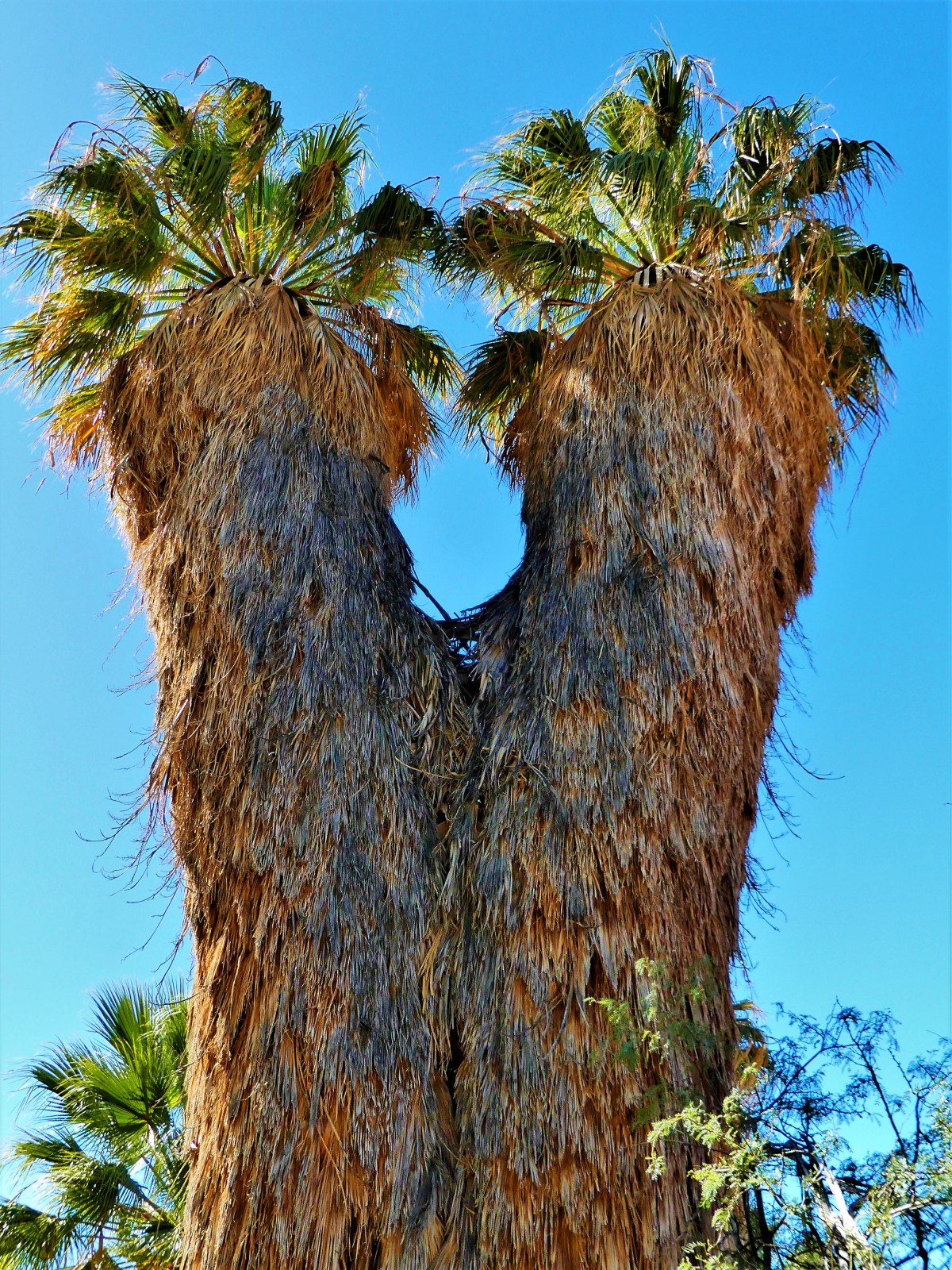
He highly recommends a visit to Cottonwood Spring—located three miles behind the Cottonwood Spring Visitor Center—where, miraculously, an underground spring feeds a Babylonian-style garden of large growth trees that frame the azure sky.

twin palms

He draws a circle around Barker Dam on our trail map, and encourages us to hike the loop trail that passes Barker Dam, where the water offers a window to the sky;

Barker Dam (2)

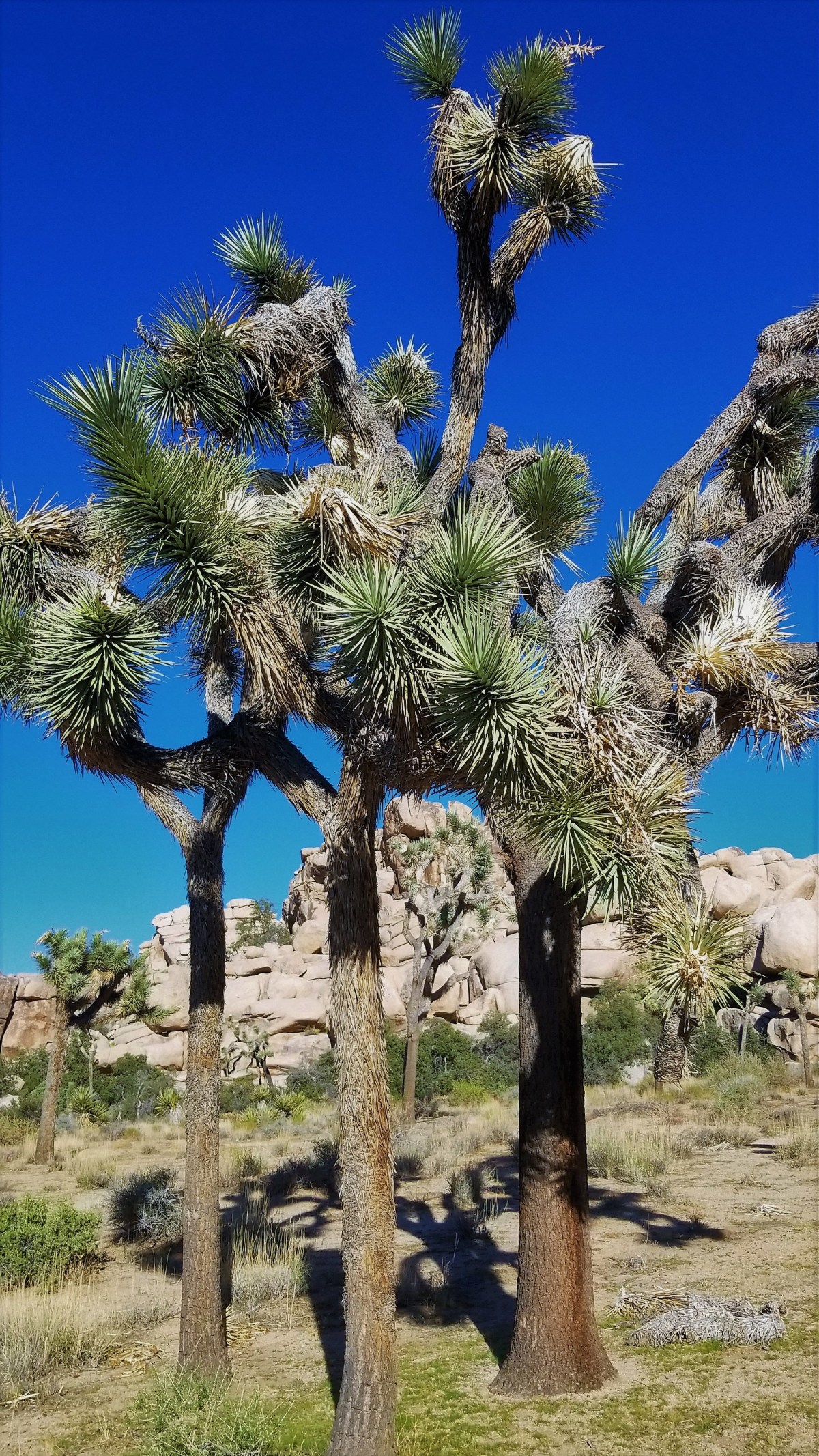
and continues through a thick forest of Joshua trees created to frame the rocks and blue sky;

Joshua tree frame (2)

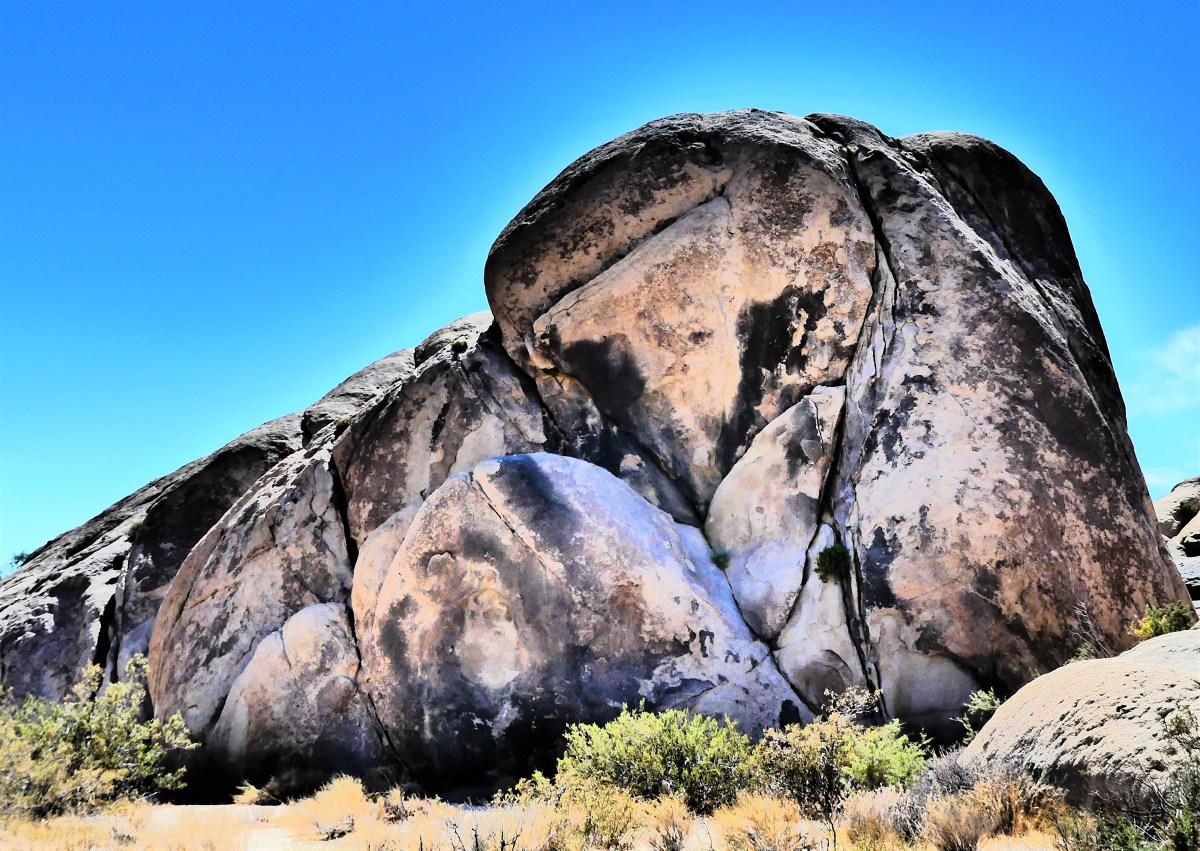
and finishes with an introspection of ancient Indian petroglyphs carved on a sacred rock that vandals thoughtlessly outlined in paint.

20170927_163002

But Pritchett was reticent about suggesting a visit to White Tank campground. When asked why, he allowed, “In my old job, I got called and cornered there all the time. There were just too many people for the area, and once I got in there to control traffic, it was almost impossible to get out.”

But what made it so crowded?” I continued.

That’s when Pritchett criticized the parkitects. “They should never have designated a trailhead through camp site #9.

“A trailhead to what?” I persisted.

“Oh, it’s just the only natural arch in the park,” he mentioned casually. “But I don’t like to tell a lot of people about it. In fact, it’s not even recorded on the park map.”

But he highlighted the area for us on our trail map.

Leah and I were as excited to discover the arch as a Republican repealing ObamaCare. But when we arrived at Site #9, we weren’t alone. A few other couples were also in on the secret, although the trail was not an easy one to follow; the rock path was too easily camouflaged by the desert terrain.

After some unauthorized trailblazing, we located the source of wonder, and scrambled through a crop of coarse granite for a closer look. Looking through a window of the last 80 million years, the endless erosion of wind and water has molded a mini mound of molten magma into a masterpiece.

20170925_143844

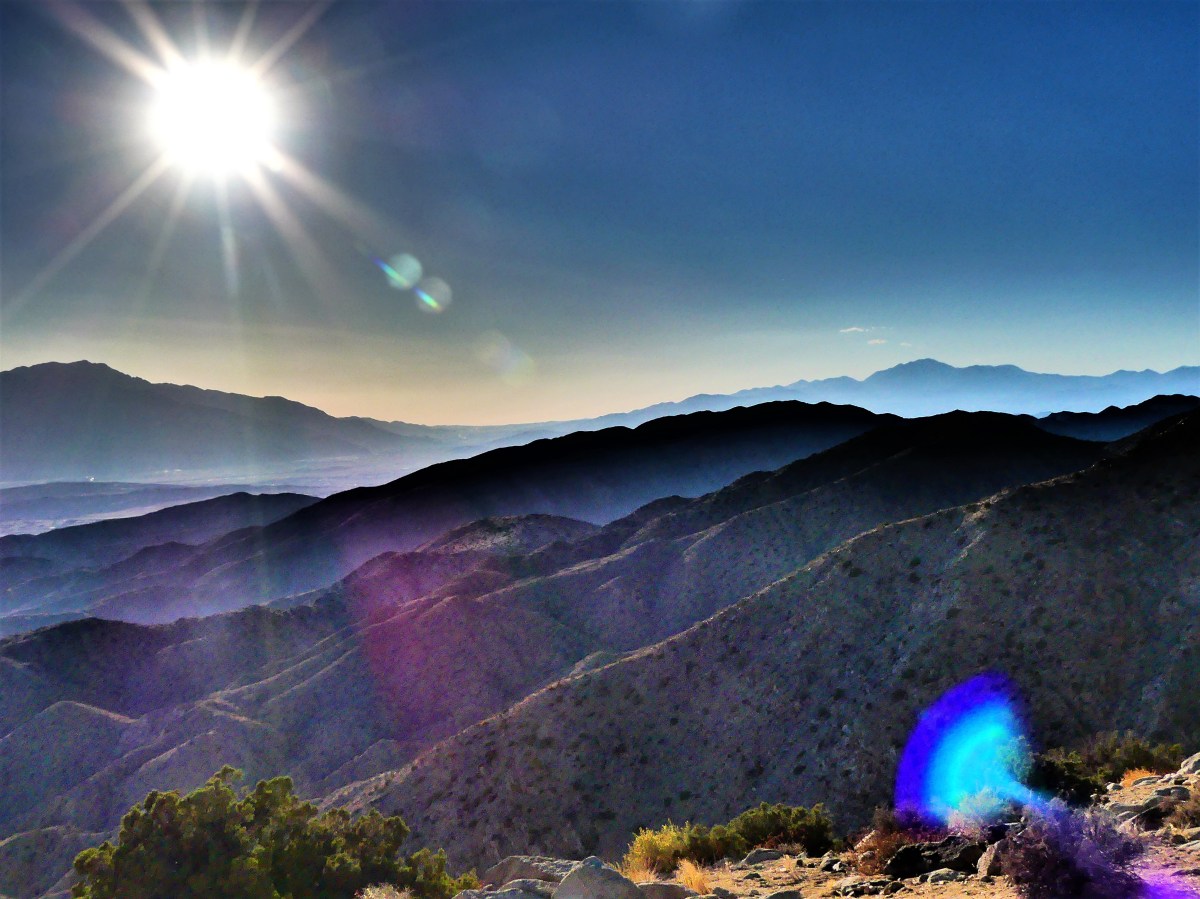
However, the biggest window was waiting for us at the top of Keys View. The small crowd began assembling at 6:15 pm. Everyone’s eyes were fixed on the hazy glow of San Gorgonio Mountain to the north,

the sinking sun

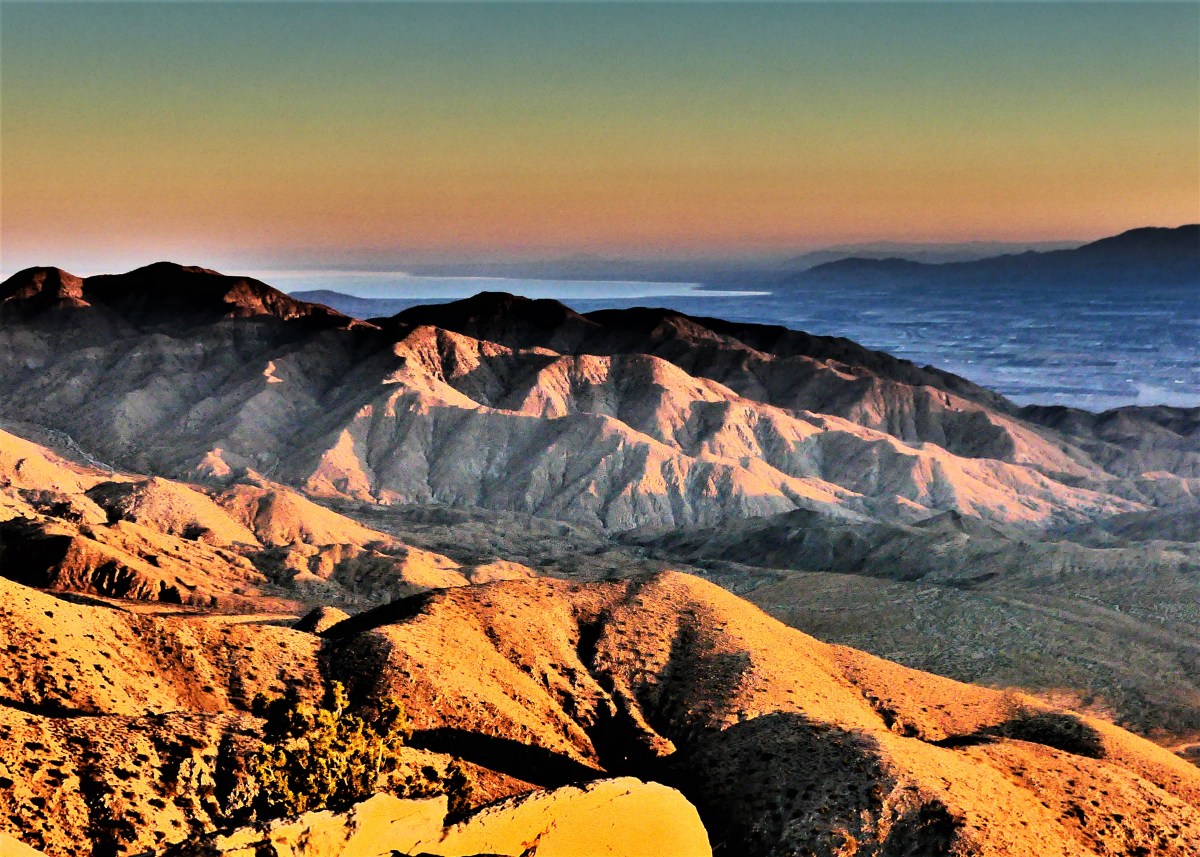
and a mirage of a distant Salton Sea to the south– the two connected by the San Andreas Fault…

Coachella Valley and Salton Sea at sunset

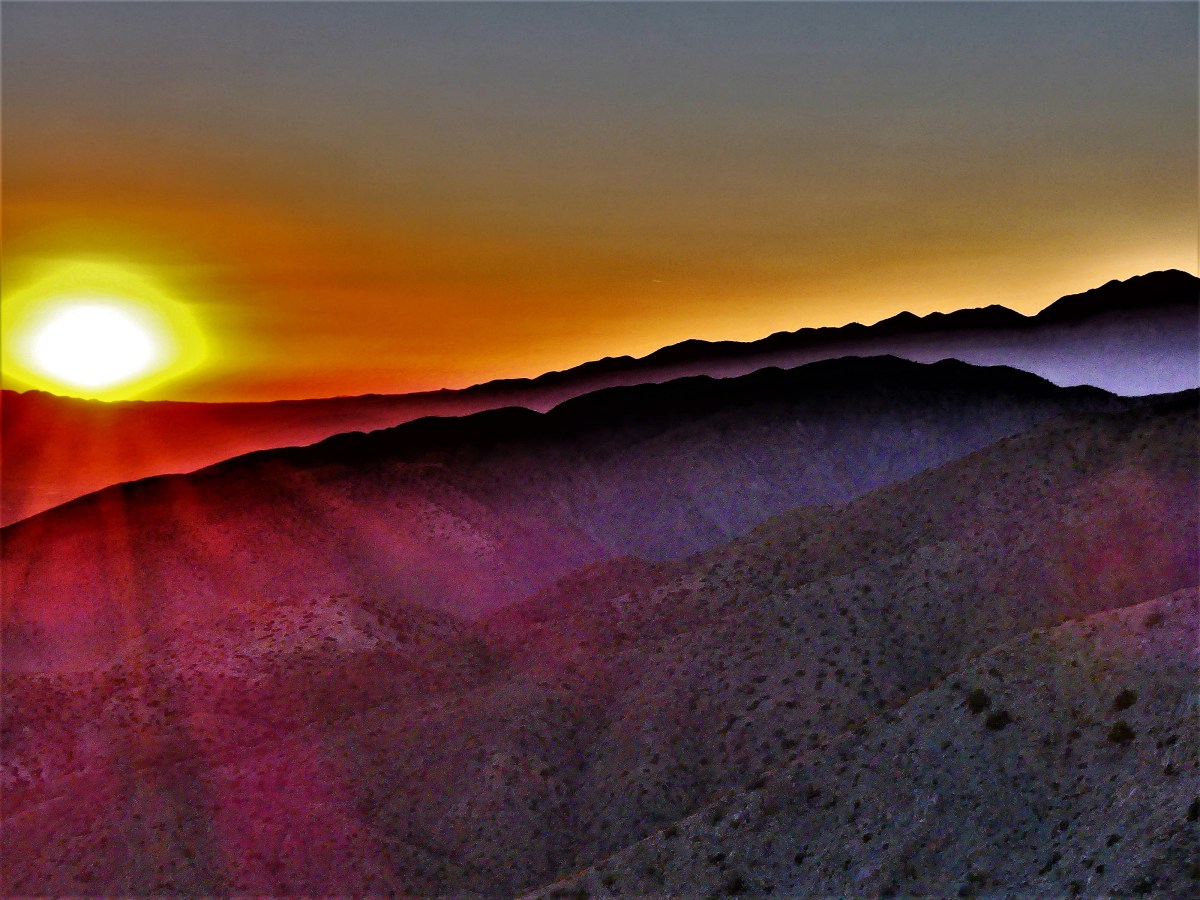
all in preparation for a salute to the sunset over Mount San Jacinto, and the promise of a better day tomorrow.

sunset

Where Have all the Gators Gone? (Long Time Passing…)

Traveling the Gulf coastline across Alabama, Mississippi, and Louisiana during the past week has brought us closer to Creole and Cajun cuisine, crawfish, casinos and country music, but alas, no crocodilia. Having driven nearly five hundred miles of state and county highways, and cruising endless back roads and bayou causeways, we have yet to see an alligator, which begs the question: Where have all the gators gone?

Not that we haven’t come close to spotting one. Mind you, there have been several vicarious sightings so far. For instance, yesterday we were driving/walking through Jungle Gardens, a 170-acre habitat on Avery Island with exotic palms, sculpted lagoons,

algae.jpg

scores of majestic oaks with gnarled and expansive limbs draped in Spanish moss,

Leah pose.jpg

a 10th century Buddha housed in a glass-walled pagoda,

Buddha.jpg

a bird sanctuary that hosts thousands of snowy egrets,

egret.jpg

and purportedly a family of alligators that have bred on the property since Ned McIlhenny introduced them almost 100 years ago. By the time Leah and I reached Bird City on the tour, we were lucky to meet a woman who had already come across six alligators in two separate locations. It warmed our hearts to be basking in her reptilian aura.

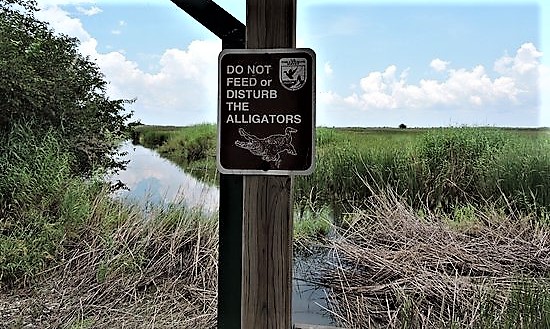
Then there was the time we stayed at Davis Bayou National Seashore in Ocean Spring, MS. We walked a half-mile-long nature trail that meanders around a leg of swamp fed by the Mississippi Bayou. Posted at the trail head is an easy-to-read sign that prohibits all alligator snacks.

no feeding gators (2).jpgSurely, there must be gators here. Why else would they post a sign, we wondered. Yet we saw no alligators. However, another hiker told us that she was told by a park ranger who had heard from another ranger that a resident gator was spotted earlier in the day crossing the road in front of our campground–the very same road where we towed our Airstream, so that should count, right?

The next day, we pedaled to the boat launch where the same warning signs were posted, and Leah claimed to have seen a stick in the water that when hit by the sun at a certain angle during a specific time of the day closely resembled an alligator’s head.

We wondered if there was an art or a science to attracting alligators, so we created an alligator call just in case they were listening. It went something like, “Heeere, gator gator gator; heeere, gator!” Once, our calling was overheard by an older couple who gave us a strange look, but that’s because they probably didn’t understand English. Regardless, the gators never came; either they weren’t listening, or they were avoiding us.

We joked about going to an alligator petting zoo. It wouldn’t be too far out of our way, since we could easily see it from the road. But then we realized that it would be a waste of our time, surmising that it would be hard to decide who has fewer teeth–the alligator or the proprietor.

I know that alligators exist because I’ve seen them on TV and in zoos. And I can still recall that little boy who tragically lost his life near a Disneyworld lagoon while his father looked on in horror.

Yet the anecdotal evidence is overwhelming and doesn’t lie: there seems to be a serious shortage of alligators interested in meeting us–making it painfully obvious to any amateur herpetologist–that gators are playing hard-to-get… or maybe they’re just shopping around for a better agent.