
We were only 50 miles into a 200-mile road trip when our driver pulled up to a roadside shack on Natl Hwy 6 in Skón. It was our first potty break on the way to Siem Reap from Phnom Penh, but Seong, our guide had a different motive for stopping. We were standing on the edge of the jungle in Kampong Thom province to meet the “Spider Woman” of the town locals refer to as “Spiderville.”

She and her young daughter manage a thriving tourist trade of hunting and preparing Thai zebra leg tarantulas for snacking.

Historically, eating bugs, or entomophagy is nothing new for Cambodians. The practice is embedded in Cambodian culture, as shamans believe in its healing powers for heart, lung and throat ailments, as well as its potent aphrodisiac properties.
All the same, I can’t imagine why anyone would ever consider eating a tarantula, but during the Khmer Rouge regime from 1975-1979, eating eight-legged creatures became the new normal, thanks to the great food scarcity. Estimates from The U.S. Holocaust Memorial Museum suggest between 500,000 and 1.5 million Cambodians perished from Khmer Rouge–induced famine, causing a desperate populace to hunt for anything that wriggled or crawled as dinner.
Decidedly, Cambodia’s appetite for tarantulas has evolved from the venomous (Pol) Pot stirrer on the countryside menu, to where it has become culinary currency. A skilled spider hunter/vendor can unearth up to 200 of these creatures (known locally as A-ping) in a couple of hours and fry them up for $1 each, reaping big profits.
All it takes is a small shovel, a stick, and locating their hidden, silk-laden lair–
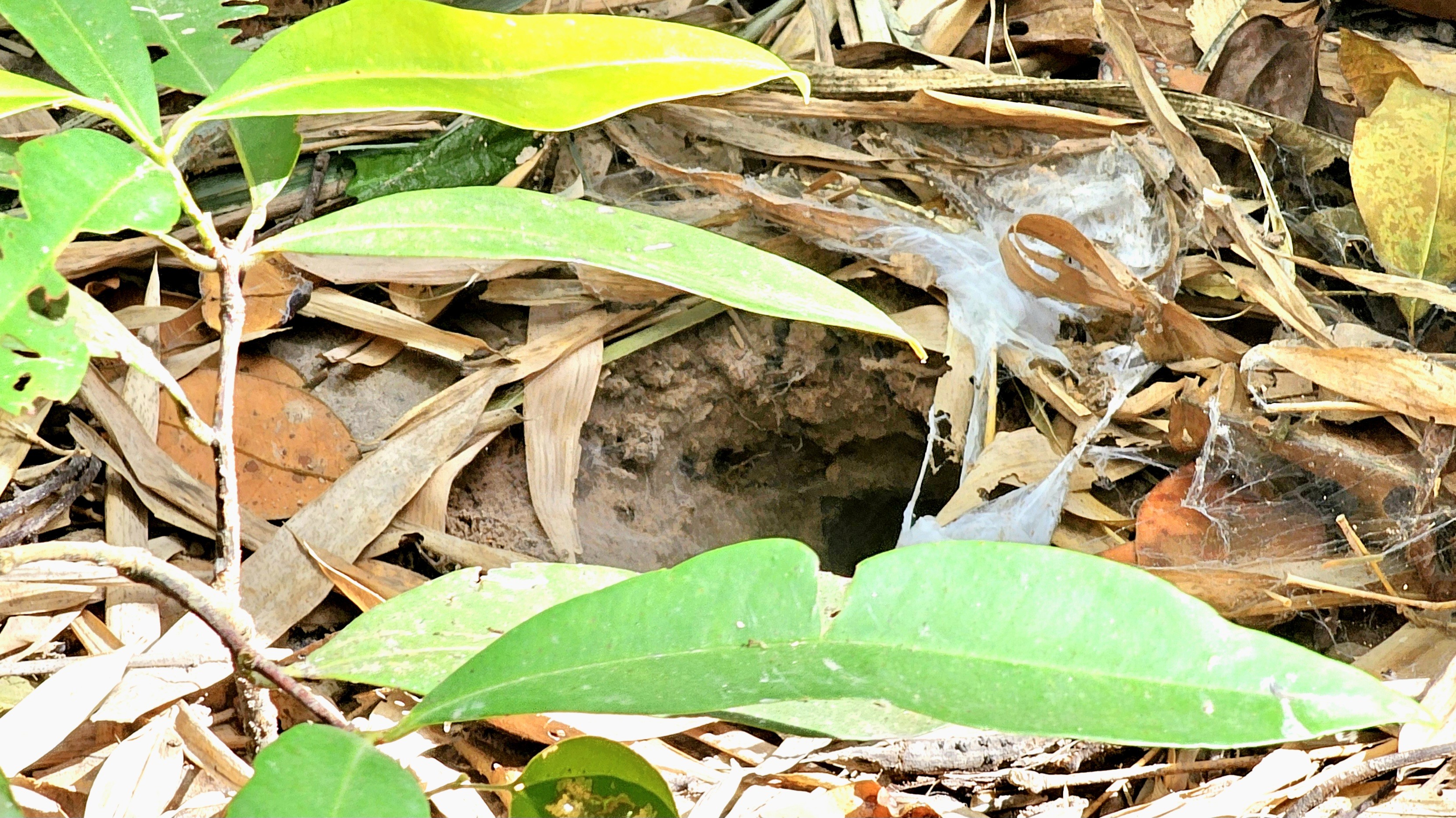
something Spider Woman knows all too well.
Once captured, A-ping was defanged to protect us from its venom, making it safer to handle without being bitten.

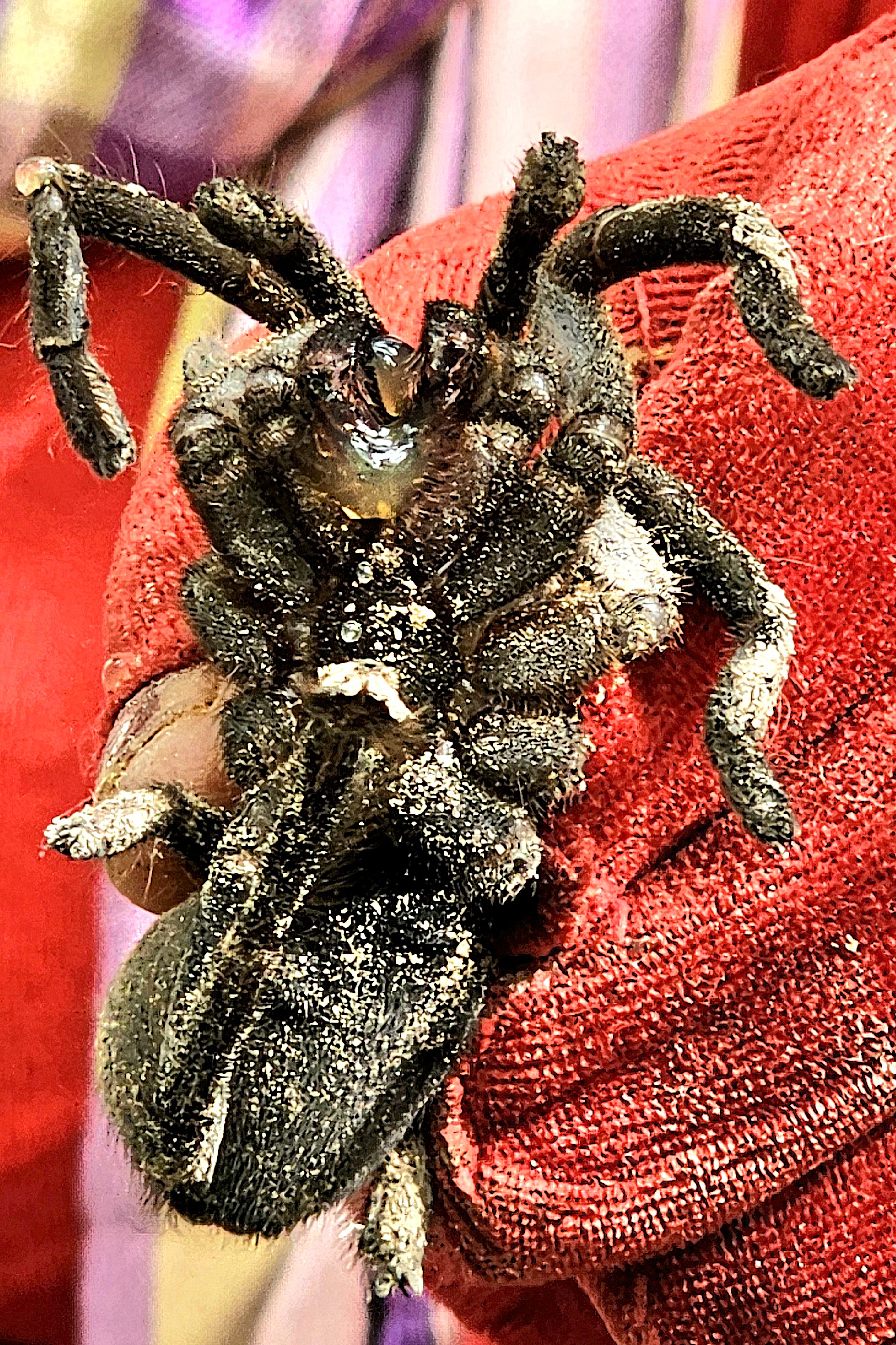
Without hesitation, they were very curious to explore new territory as they “tiptoed” across my arm on their hairy legs, dragging their velvety abdomens. It was truly a weird sensation.


As for tasting A-ping, the recipe is simple and straightforward. Saute chopped garlic and grated ginger in a wok of hot palm oil until golden. Add a dozen tarantulas and coat evenly with oil until their bellies explode into a yokey paste.
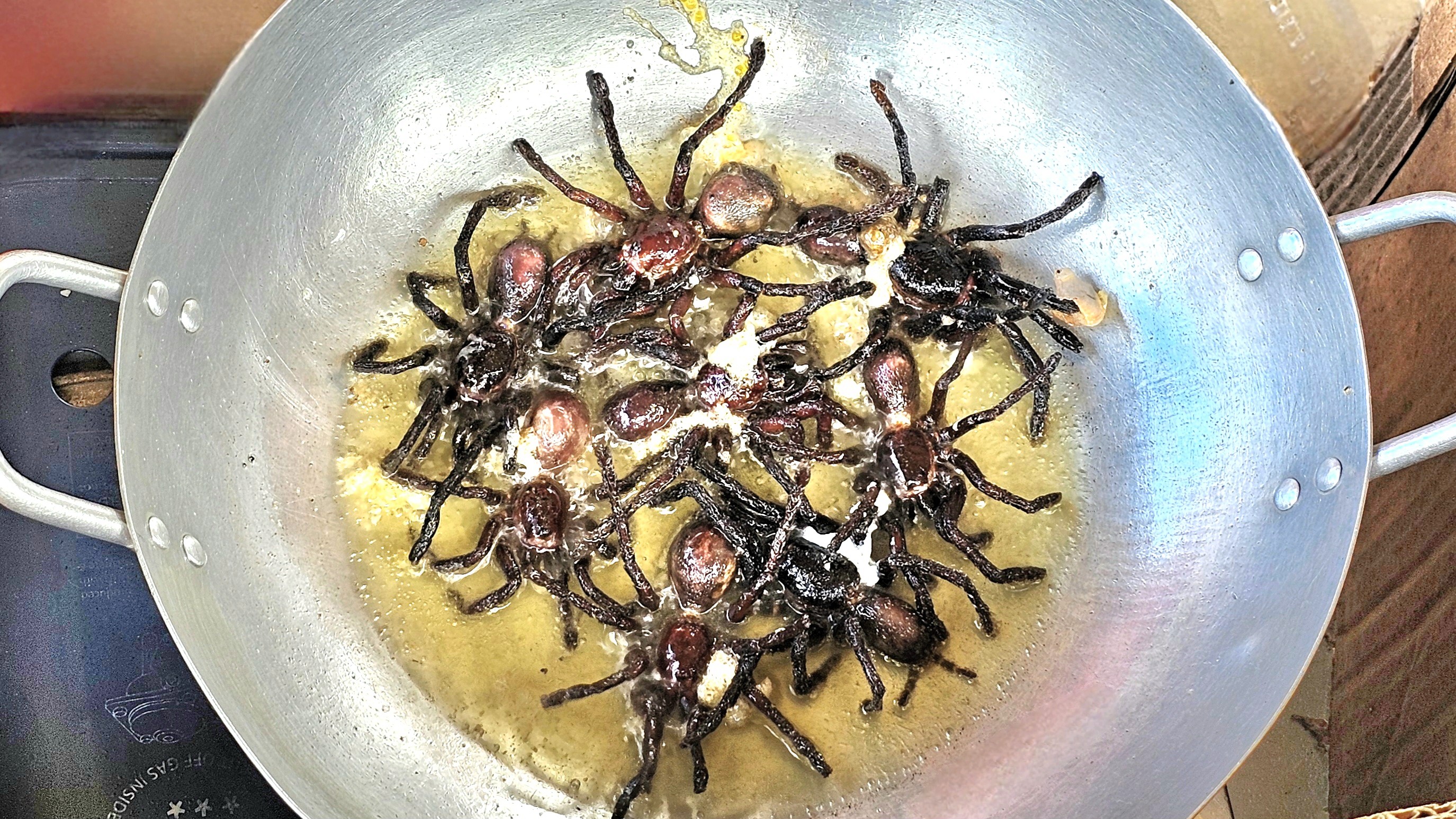
Season with salt and pepper to taste and blot the excess oil on a paper towel before enjoying.
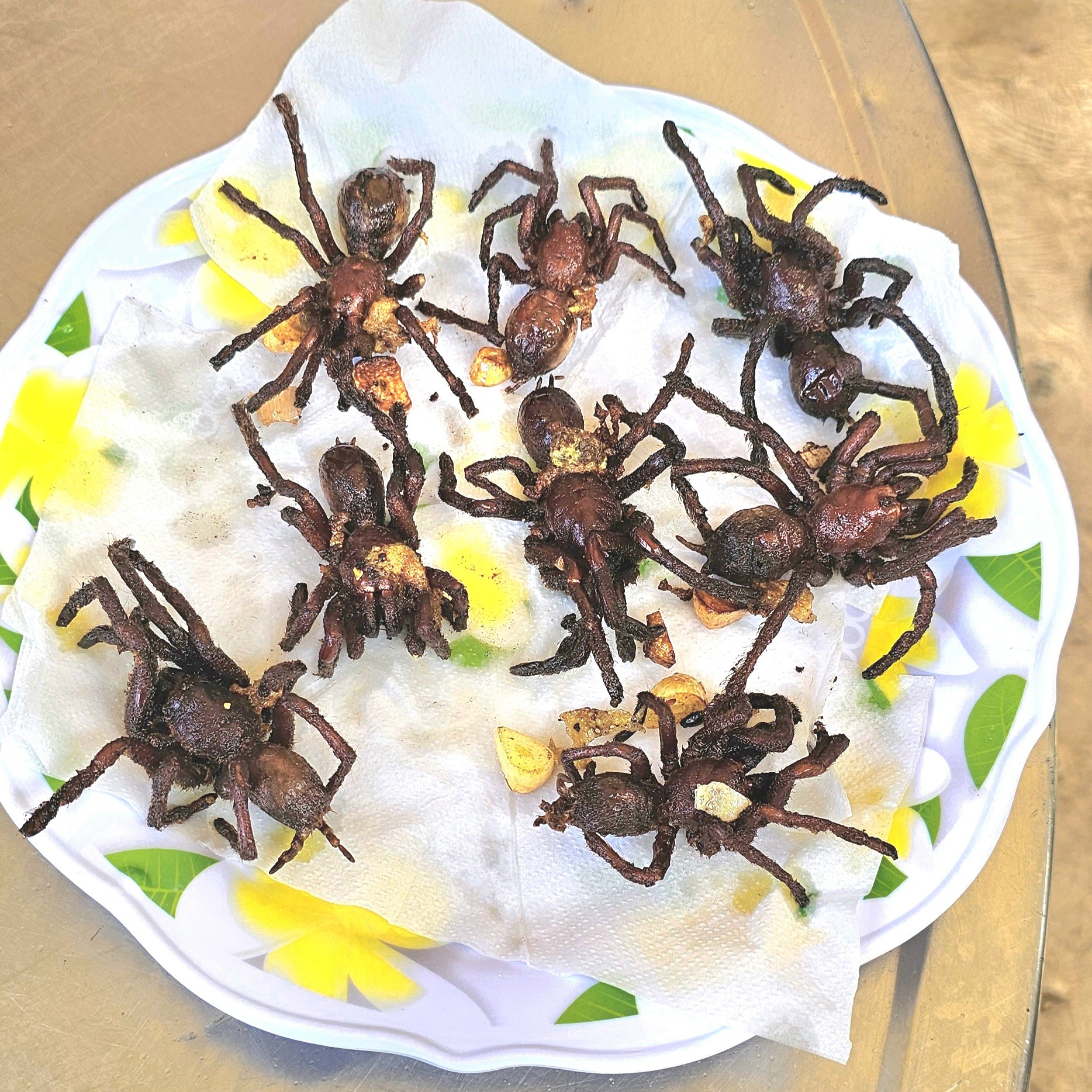
Not everyone in our group was hungry for arachnids, although there were a few intrepid souls. The faint-hearted mused that it would spoil their lunch, while Leah was sick at just the thought of putting it in her mouth. But before anyone of us would commit, we demanded a demonstration. Our guide was eager to oblige, touting it as a valuable source of protein, folic acid, zinc, and iron.
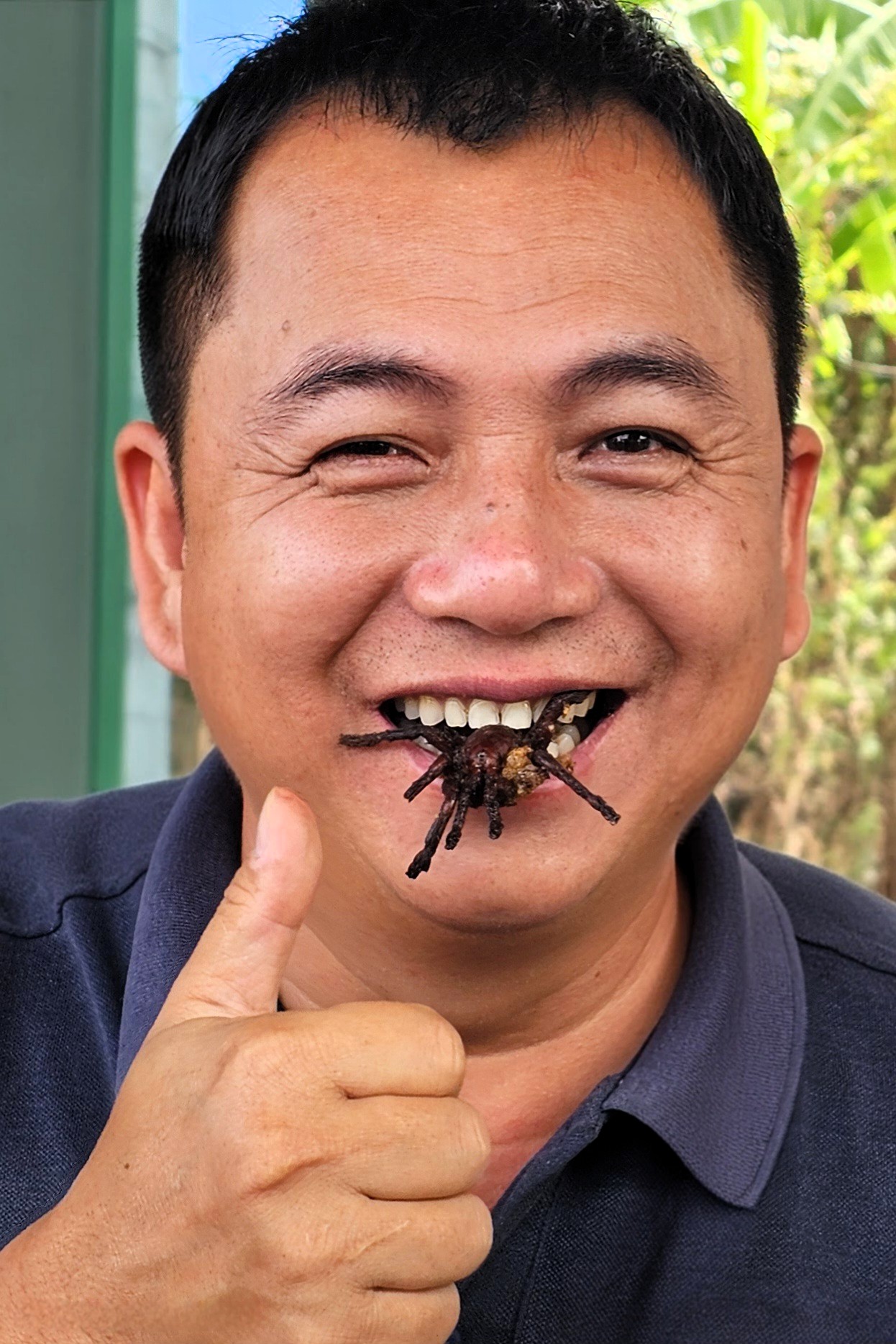
“What does it taste like?” we asked. But Seong was silent on the matter. He was too busy chewing. While I’ve “enjoyed” crickets in Sumatra, and mopane worms in Zimbabwe, I’ve never experienced tarantula on any menu …
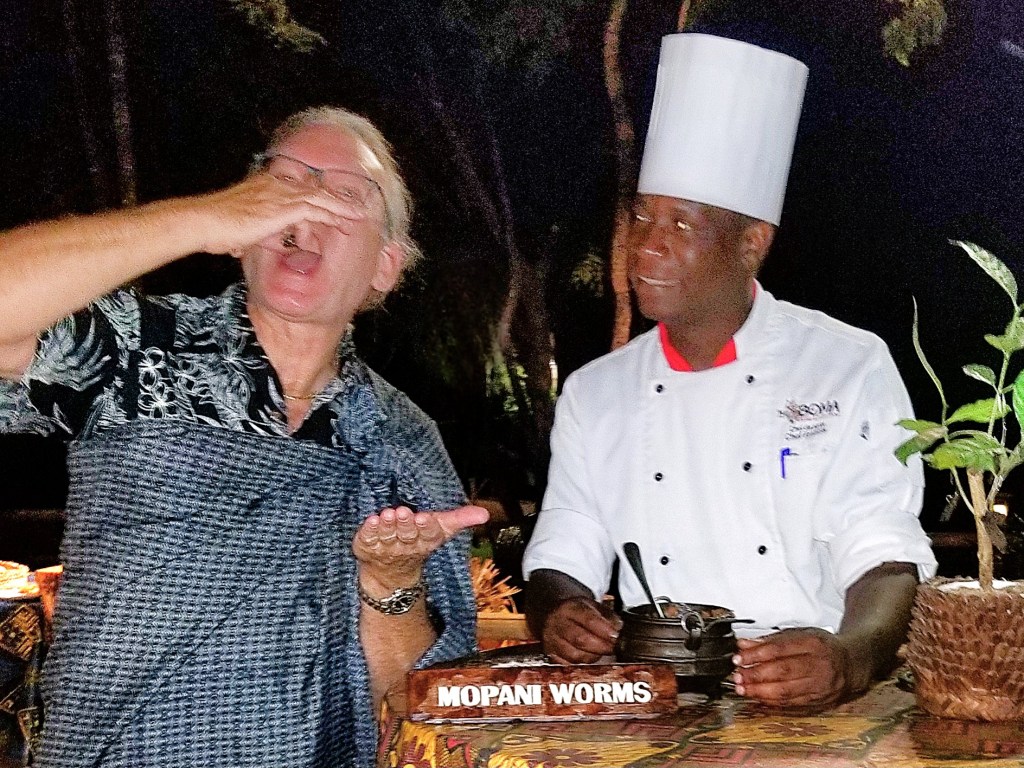
until now!
So, what does deep-fried tarantula taste like? It was crunchy on the outside, and gooey on the inside, not unlike soft-shelled crab–with a similar taste and texture. However, the large round, hairy abdomen–the source of all the spider organs–tastes a bit gamey.
While there currently seems to be an inexhaustible supply of tarantulas in Cambodia, systematic deforestation throughout the kingdom may be a nail in the coffin for this delicacy and could even lead to a decline in their numbers, say some experts. But for now, the demand for munching on A-ping continues to creep up.


 Streaming thru America