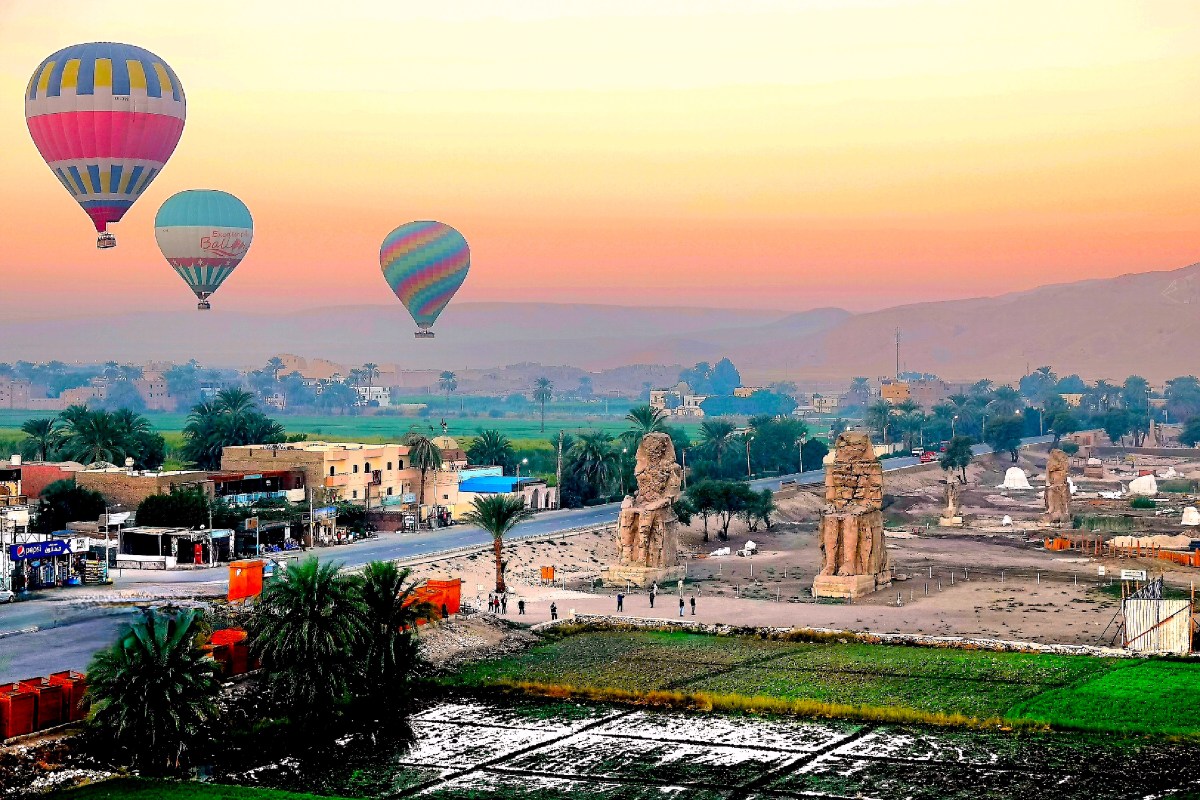
Our wake-up call was 4 AM, and the last thing on my mind was a boxed breakfast to go. I also decided to pass on coffee, thinking I couldn’t risk the chance of floating over the Valley of Kings in a wicker basket (invented by the Egyptians 5000 years ago) and needing to puke or pee.
Meanwhile, Leah had prepared for flight with Dramamine as her go-to prophylactic.
This was not our first ballooning adventure. A few years ago, Leah and I got to float over the Okavango Delta at sunrise with a pilot and 4 others (see Botswana by Balloon). But this time around, we’d be floating over the Valley of Kings, and it got my adrenalin pumping.
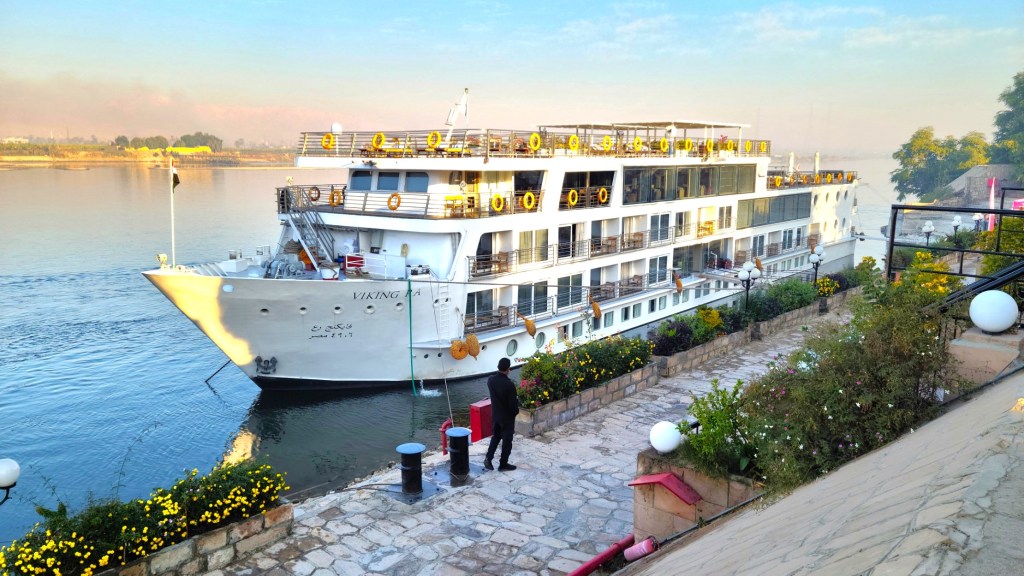
The desert air was cool, and the winds were calm–the perfect forecast. We arrived by boat to the east bank of the Nile,
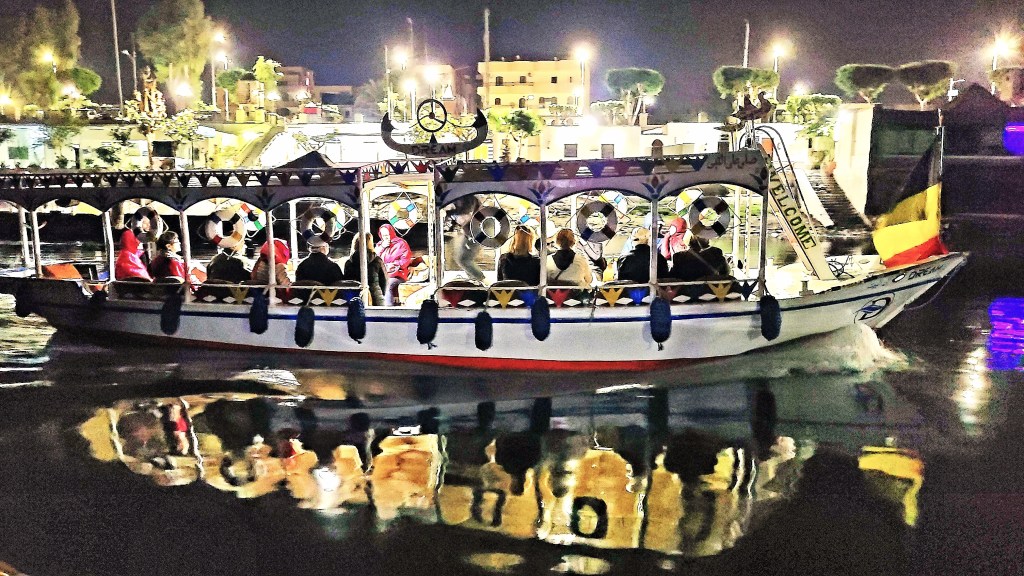
and boarded a sprinter van that dropped us at a vast open field where teams of wranglers were already preparing for launch.

We were given our balloon assignment, and climbed aboard with 25 other “ballunatics.” After a safety drill of “hunker down and brace,” we were ready for lift off.
We felt so small standing under a canopy of hot air and rainbow-colored nylon fabric…

rising 60 feet above us–

not unlike the early morning visitors who had come to gaze at the gargantuan relics of Amenhotep III at his nearby necropolis.

In time, we were joined by so many other aeronauts gliding along the thermals,

that it seemed like heavier traffic in the sky…

than on earth.

Our birds eye perspective brought us closer to the Theban Mountains,
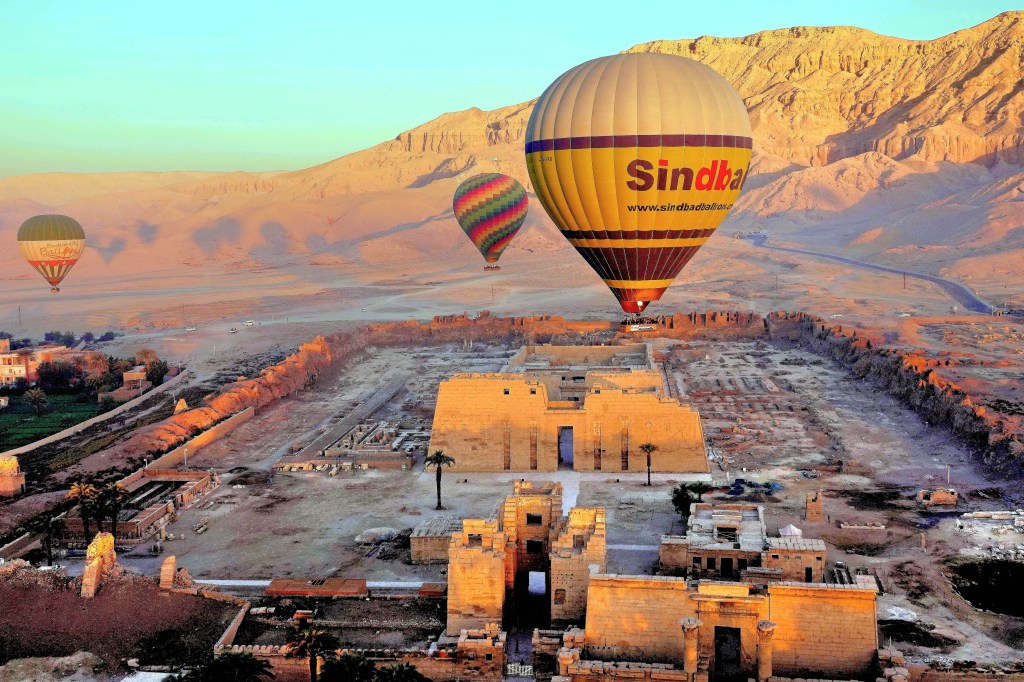
with views of Medinet Habu,
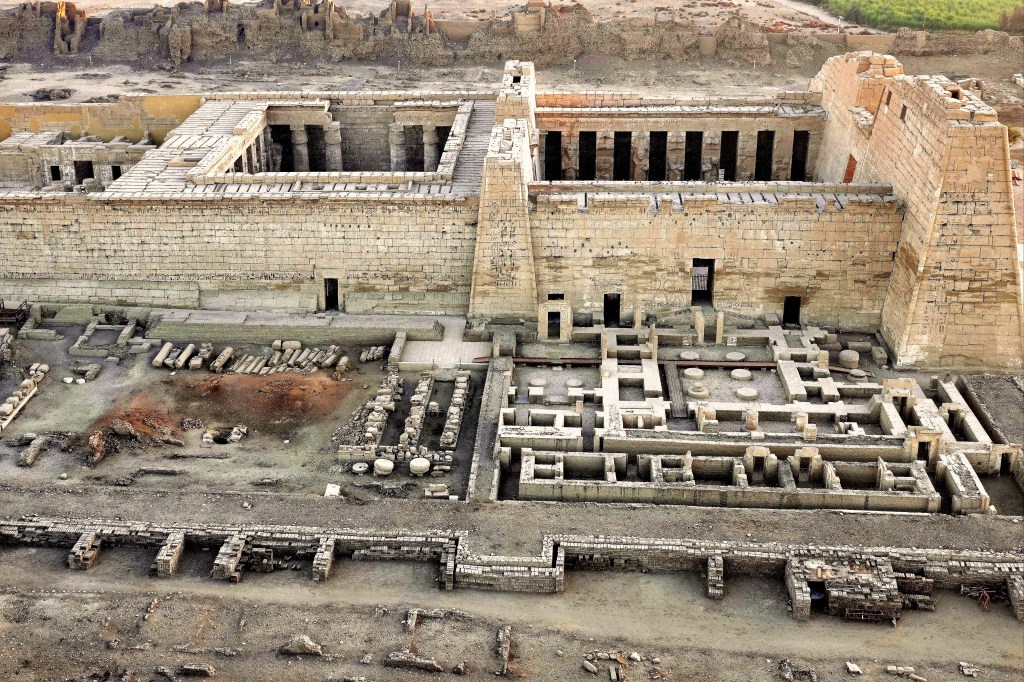
the verdant fields of sugarcane,

and a volume of unfinished housing–a deliberate work-in-progress ploy by locals to avoid paying property tax on completed homes.

But mostly, flying high prepared us for the forthcoming sunrise…
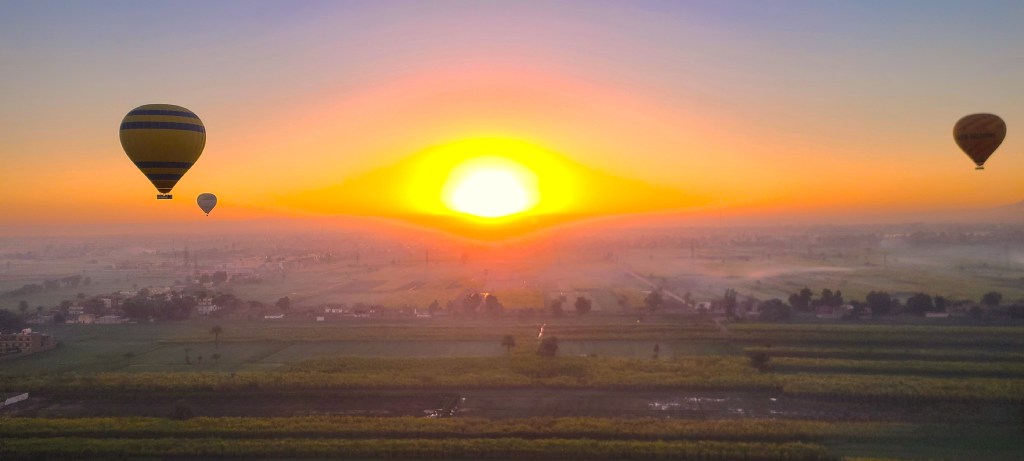
that blossomed before our eyes.
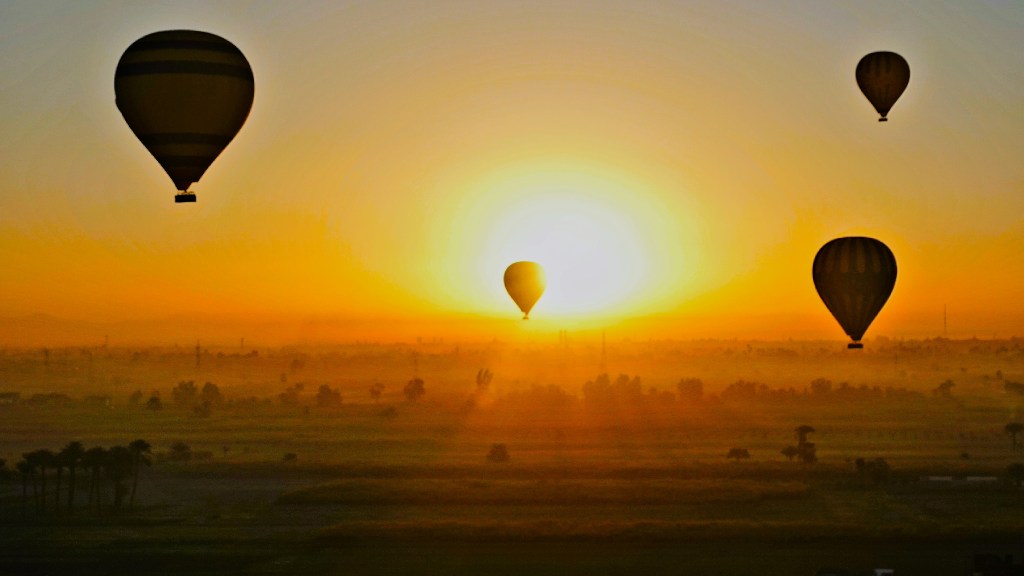
A sight to behold!
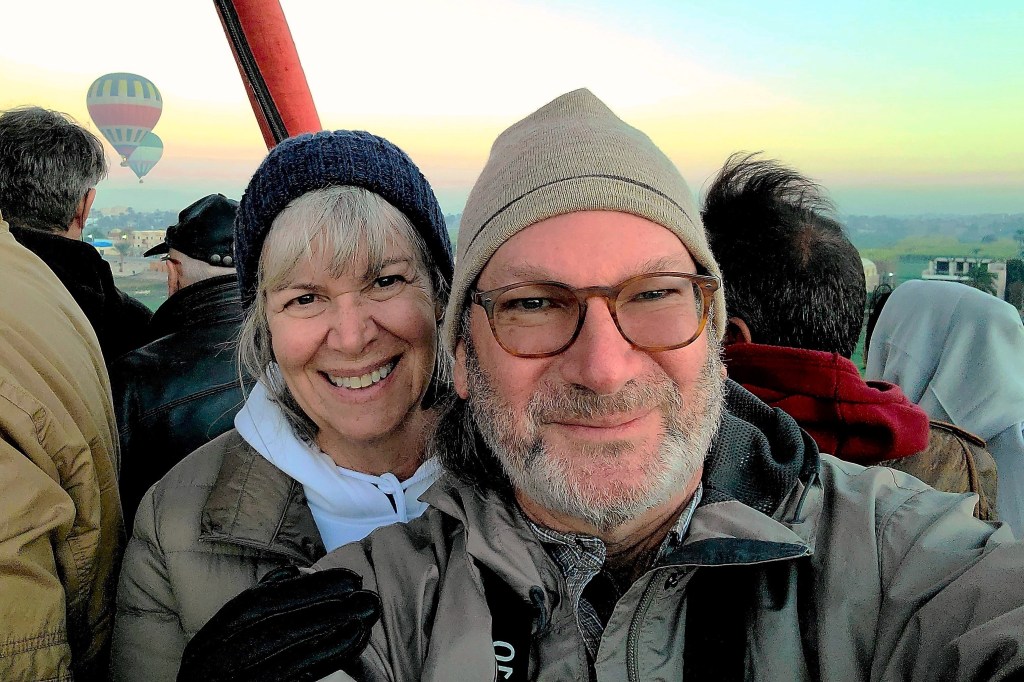
Forty-five minutes of fly-time flew by, until it was time for our descent…
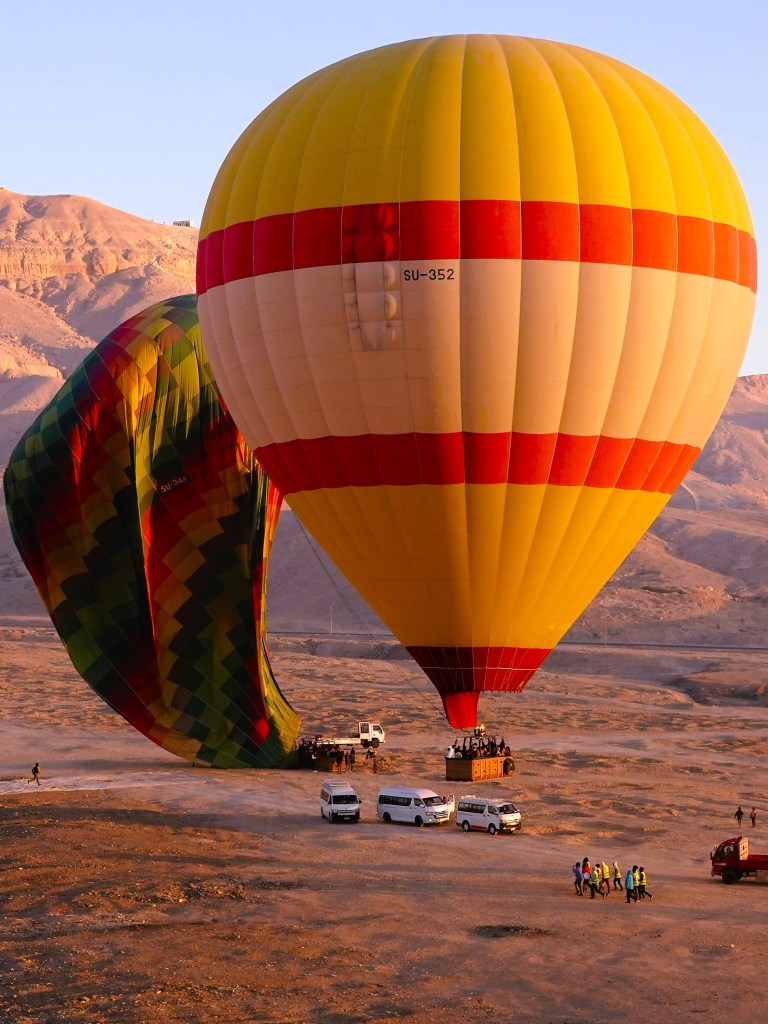
at which point the wranglers took over.

Just watching them wrestling with the deflated balloon and lines gave me an appetite.
Breakfast never tasted so good, although the requisite champagne that usually accompanies one’s flight certificate was absent.
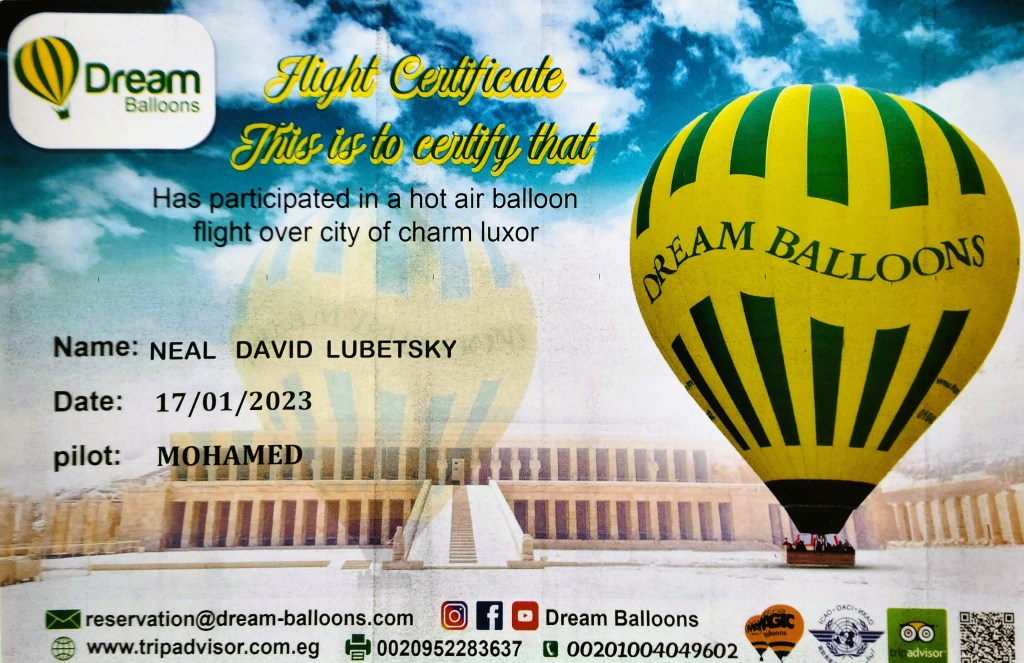
Perhaps, the authorities reasoned that our afternoon visit to Dendera Temple in Qena would be best experienced sober.









 Streaming thru America