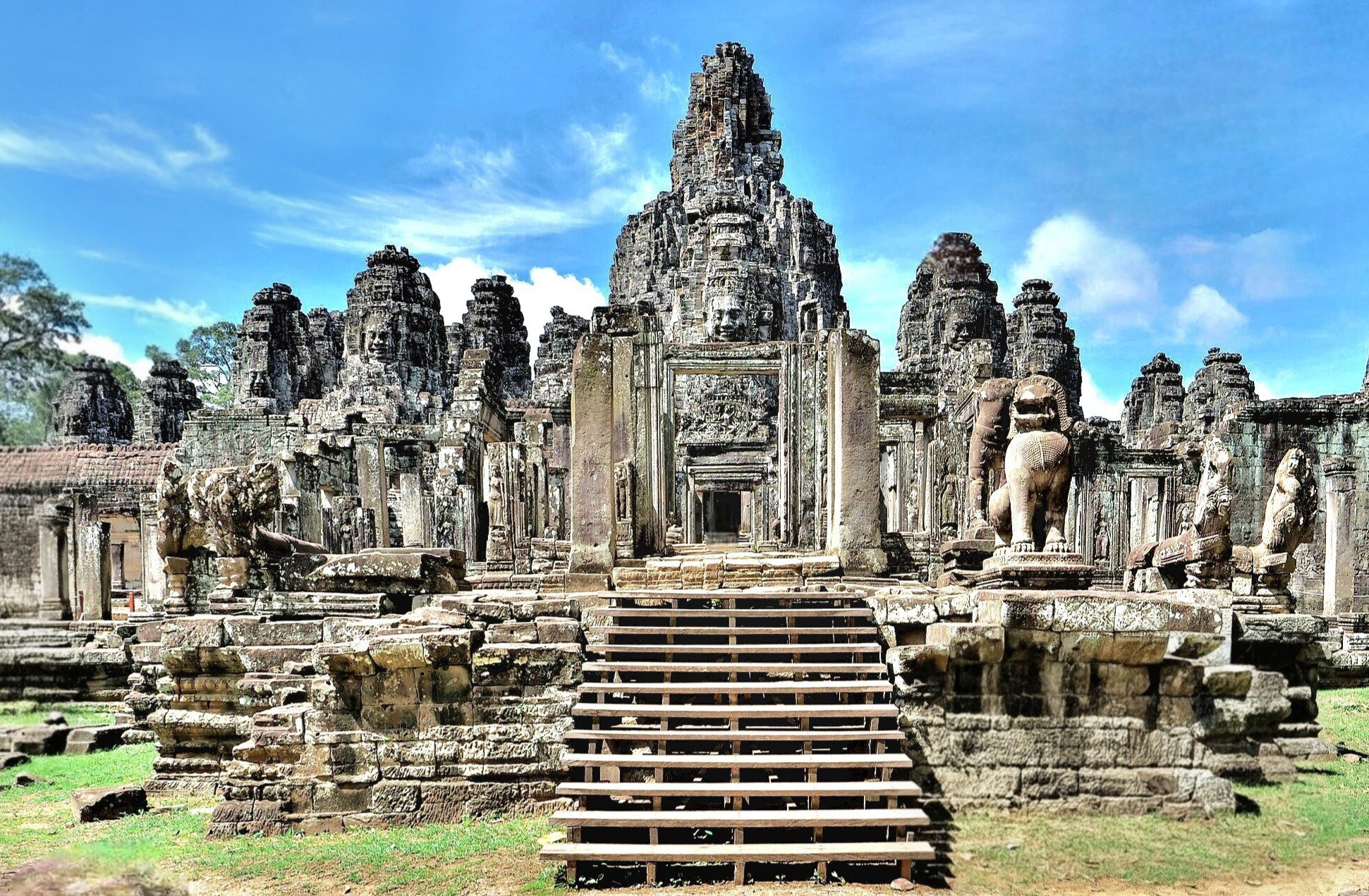
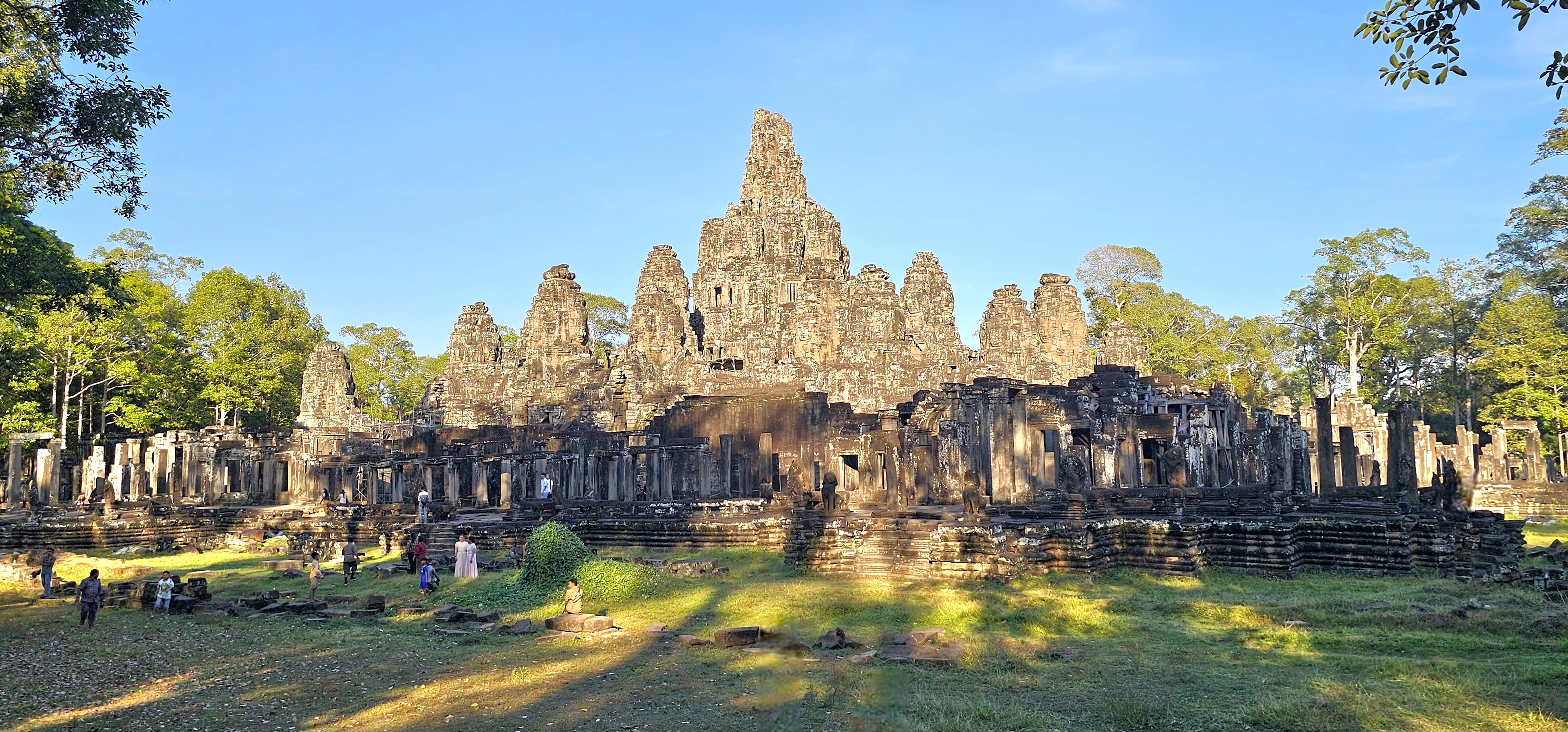
Of the 70 plus major temples within Angkor Archaeological Park, and hundreds more smaller shrines, ceremonial buildings, and symbolic ruins scattered throughout the broader Angkor region, none is more enigmatic than Bayon Temple.
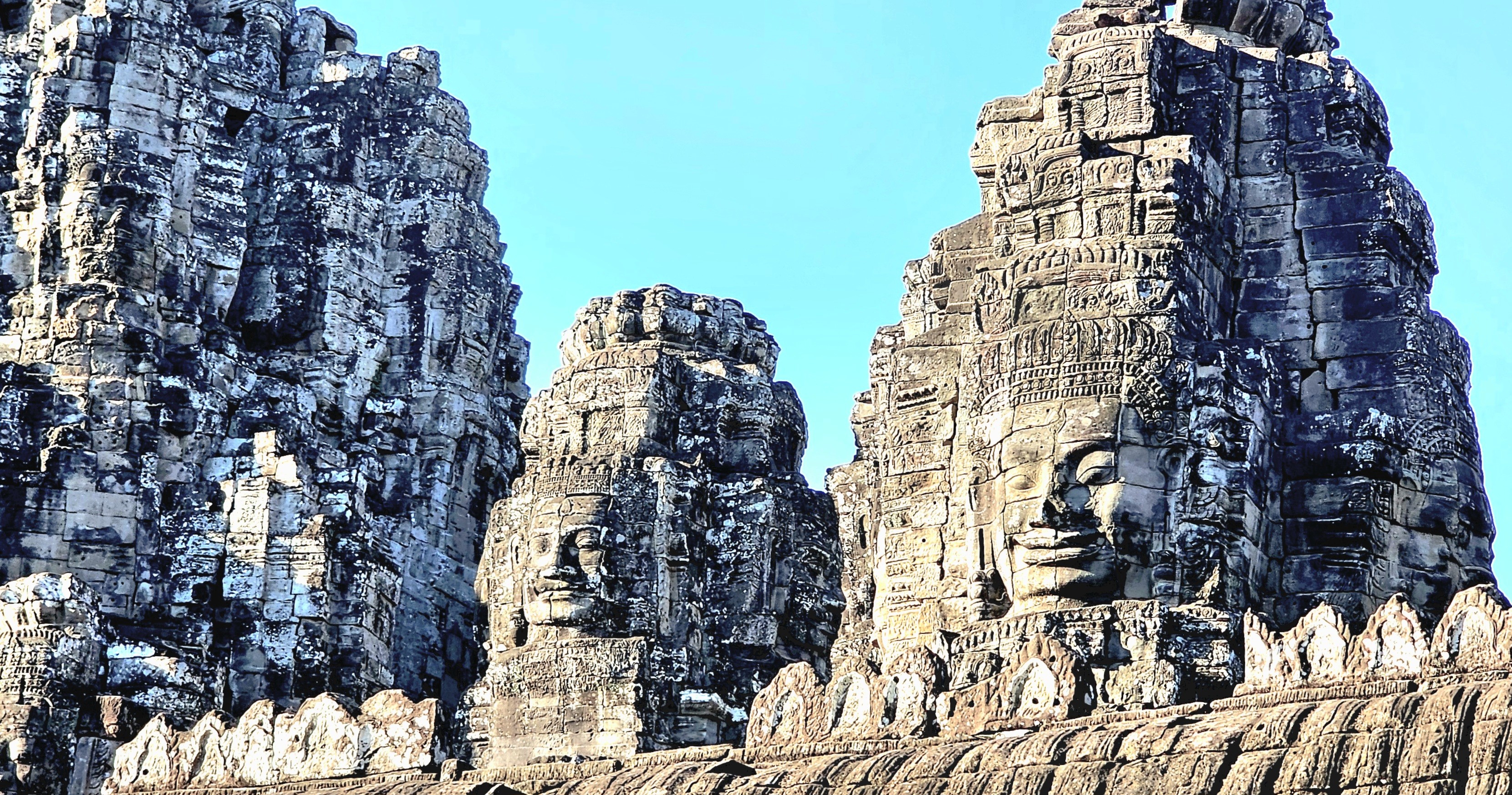
It stands at the center of Angkor Thom, the Khmer capital, as Khmer Empire’s only Buddhist state temple, and last temple constructed during the reign of King Jayavarman VII.
While hiking among the remaining 37 towers (originally 54) preserved throughout the temple’s 5.5 acres,
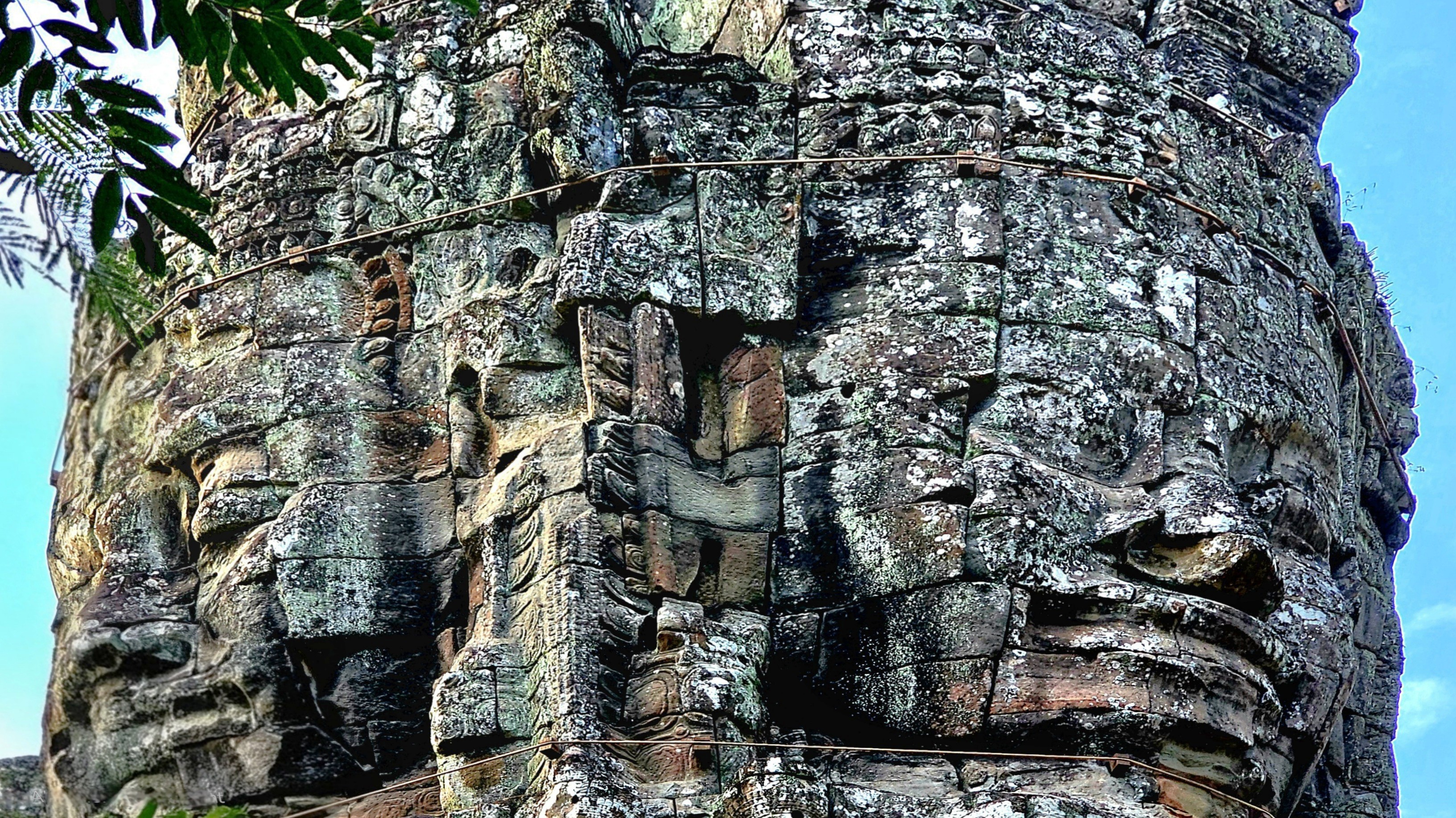
it becomes increasingly apparent that only the most talented artisans were chosen to sculpt Jayavarman’s likeness to resemble Buddha.
Or perhaps Buddha’s representation was intended to commemorate Jayavarman.
Either way, I found the serene and smiling faces profoundly impactful–creating an encouraging atmosphere to contemplate the spiritual energy infused in our surroundings,
and making us feel a part of something greater.
The enlightened expressions also served as a gentle reminder of the beauty unlocked from local sandstone and laterite stone–
inspiring us to embrace positivity and carry it with us beyond our stay.
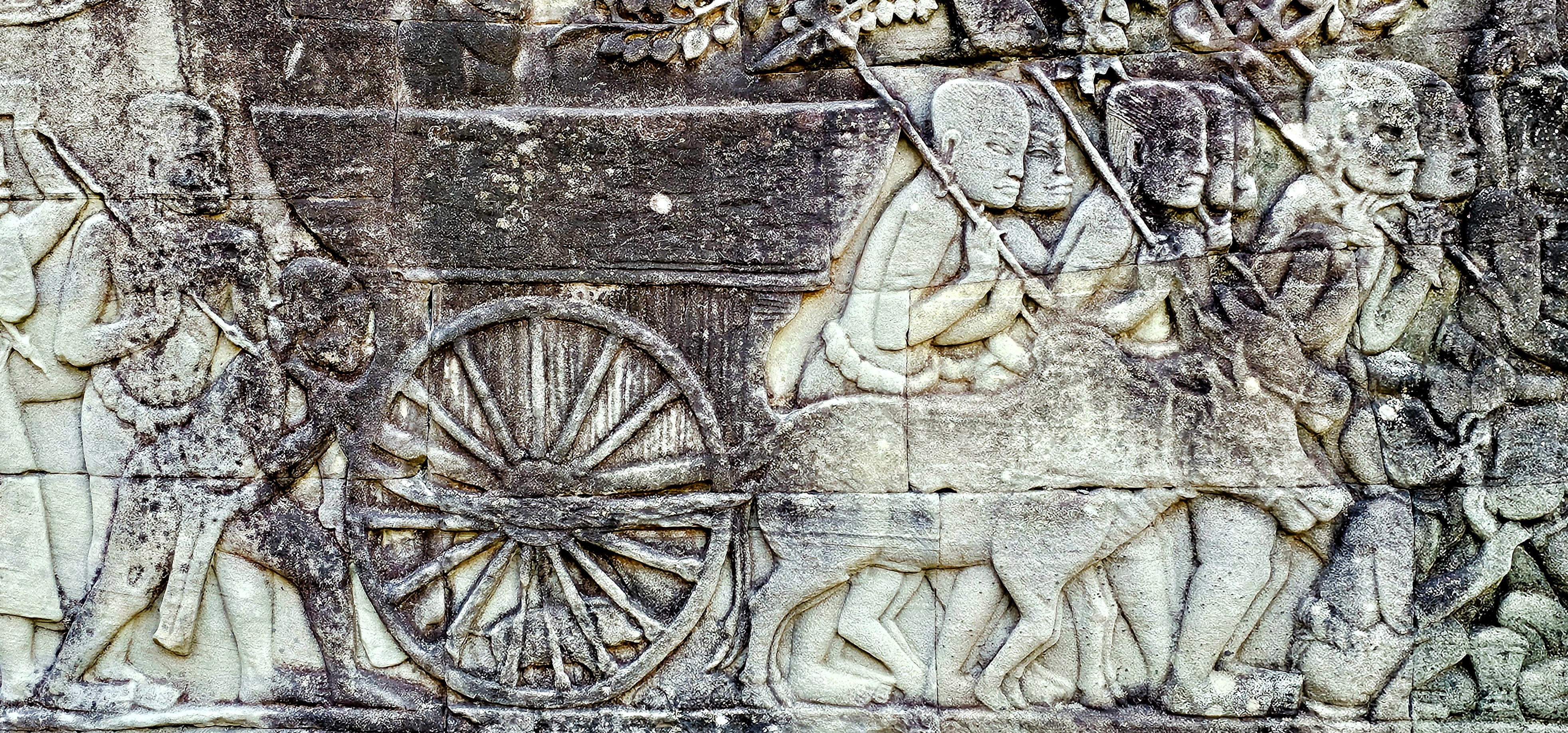
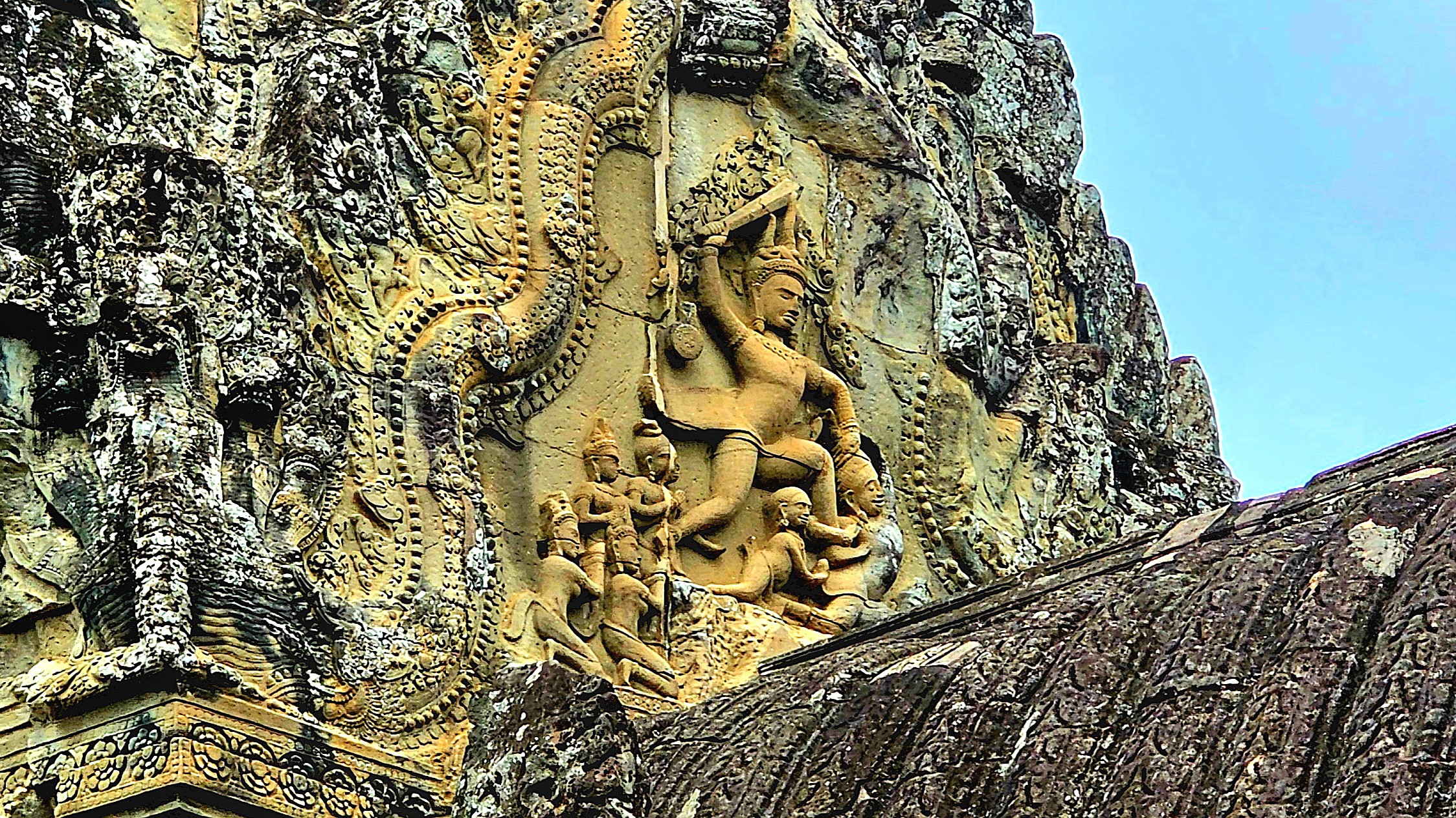
Khmer sculptors have also created a remarkable tableau of battle history, religious mythology, and random scenes from everyday life recorded on gallery walls throughout the complex.
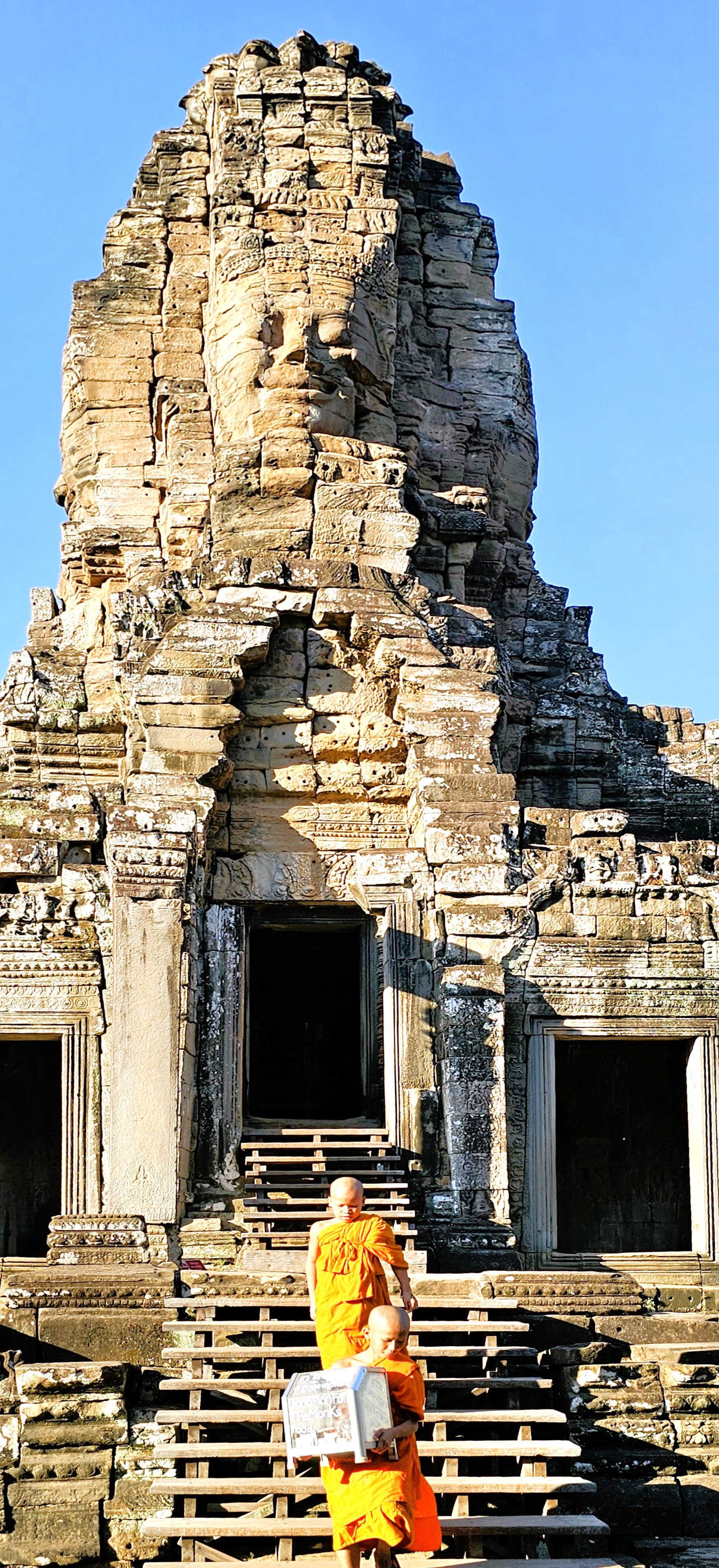
Aside from its historical significance and its testament to architectual genius, Bayon Temple continues to serve as a vibrant center of spiritual life. Local communities gather regularly to participate in rituals and ceremonies, reflecting their enduring faith and cultural heritage.
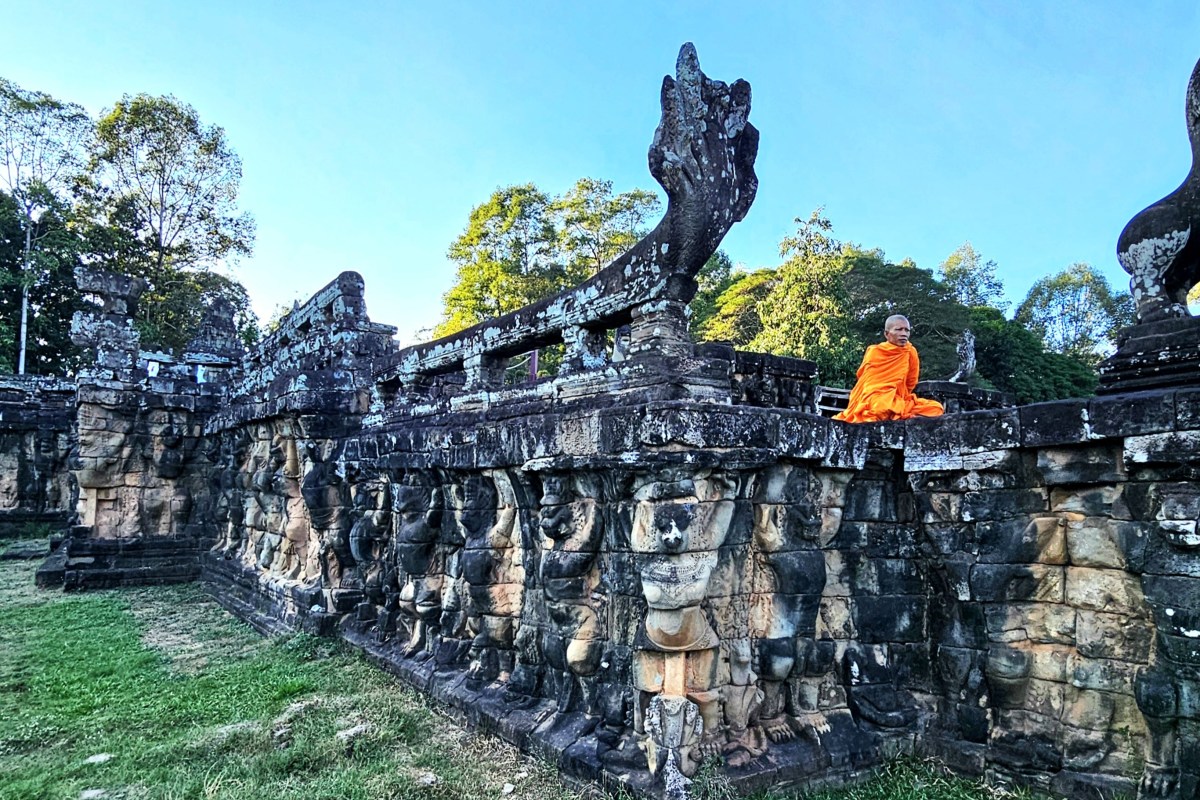
The presence of monks who play a vital role in guiding the spiritual practices of the community reinforces the temple’s significance beyond just a tourist attraction.
Their ongoing devotion helps preserve the temple’s sanctity, making it a living testament to the blend of history and contemporary spirituality in Cambodia.
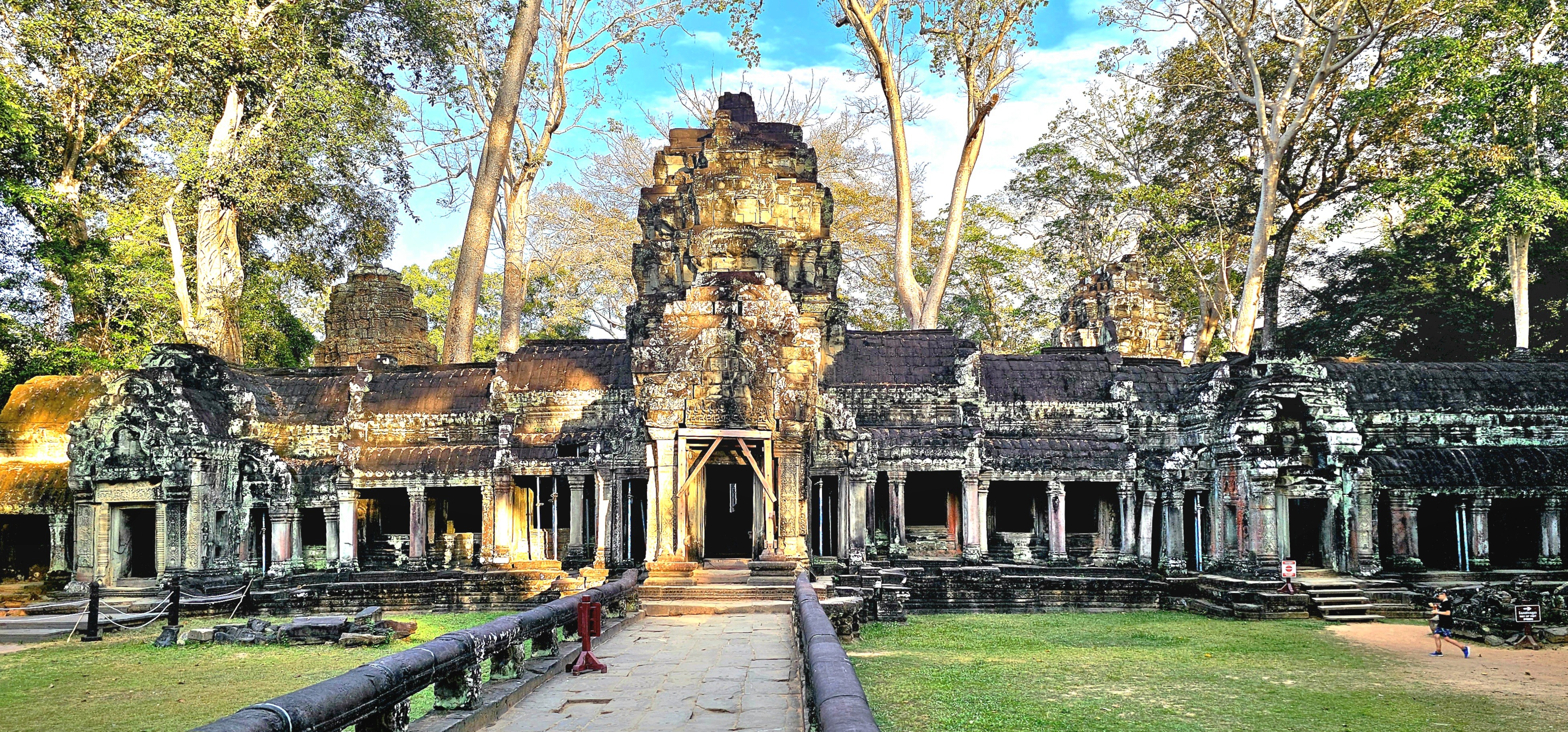
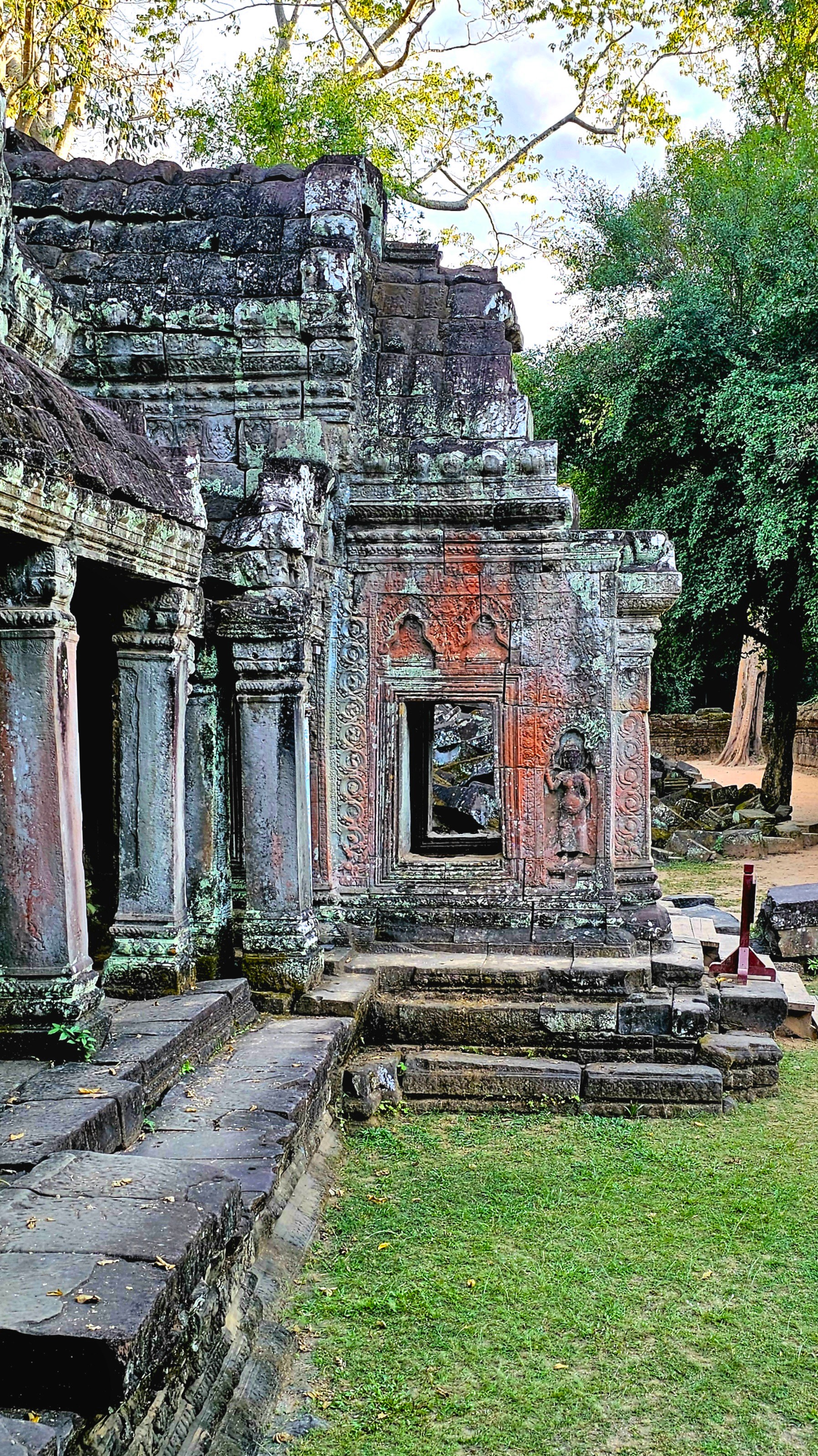
Of all the temples in Cambodia—somewhere between 4,000 and 6,600, depending on the cultural authority—Ta Prohm, located within Angkor Archaeological Park, remains a must-see because of its striking temple remains and captivating narrative.
At the ruinous site of Ta Prohm,
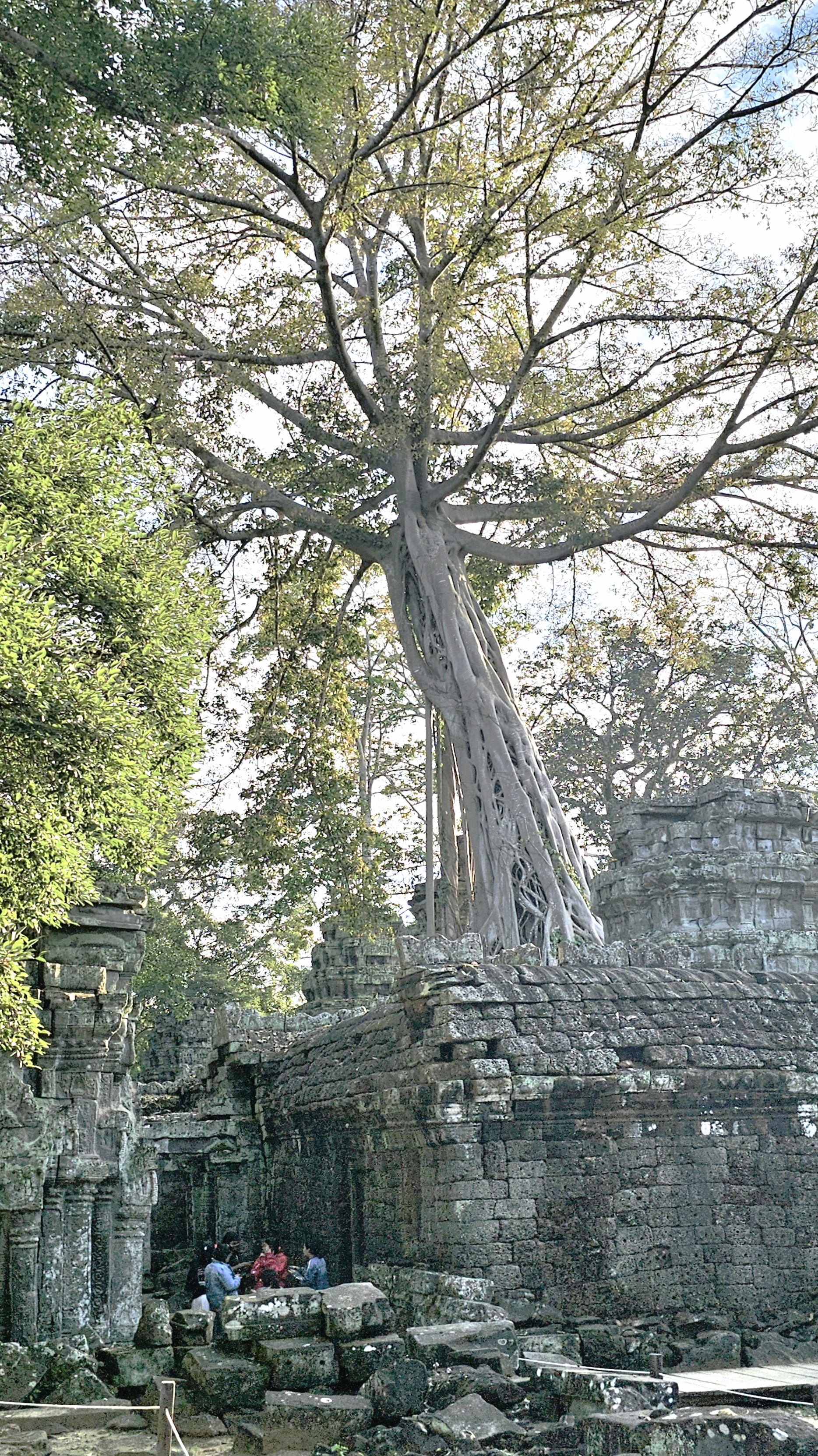
I encountered an otherworldly standoff between human ingenuity and nature’s relentless advance. It’s not merely a structure; it’s a testament to history, where the surrounding jungle advances, progressively reclaiming the landscape.
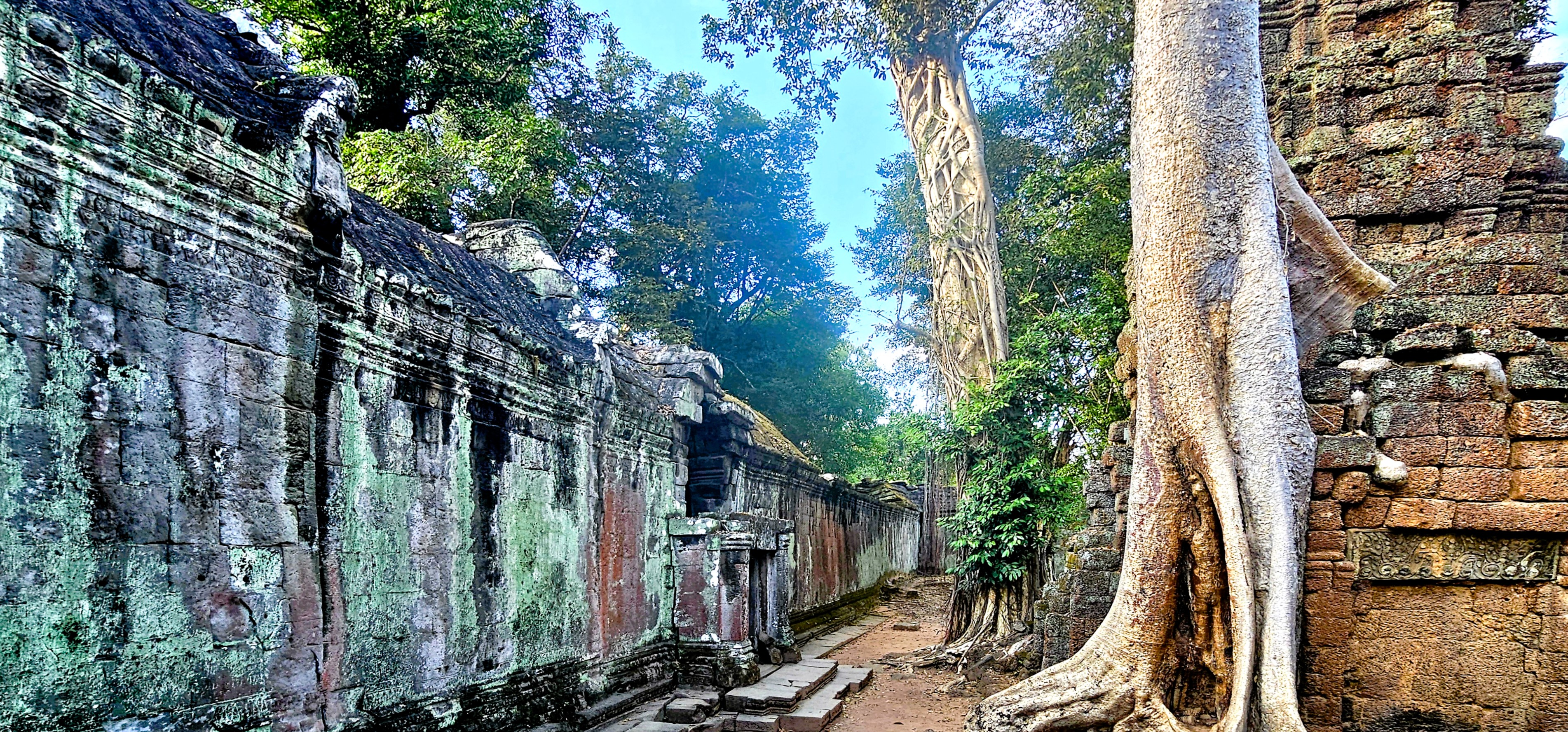
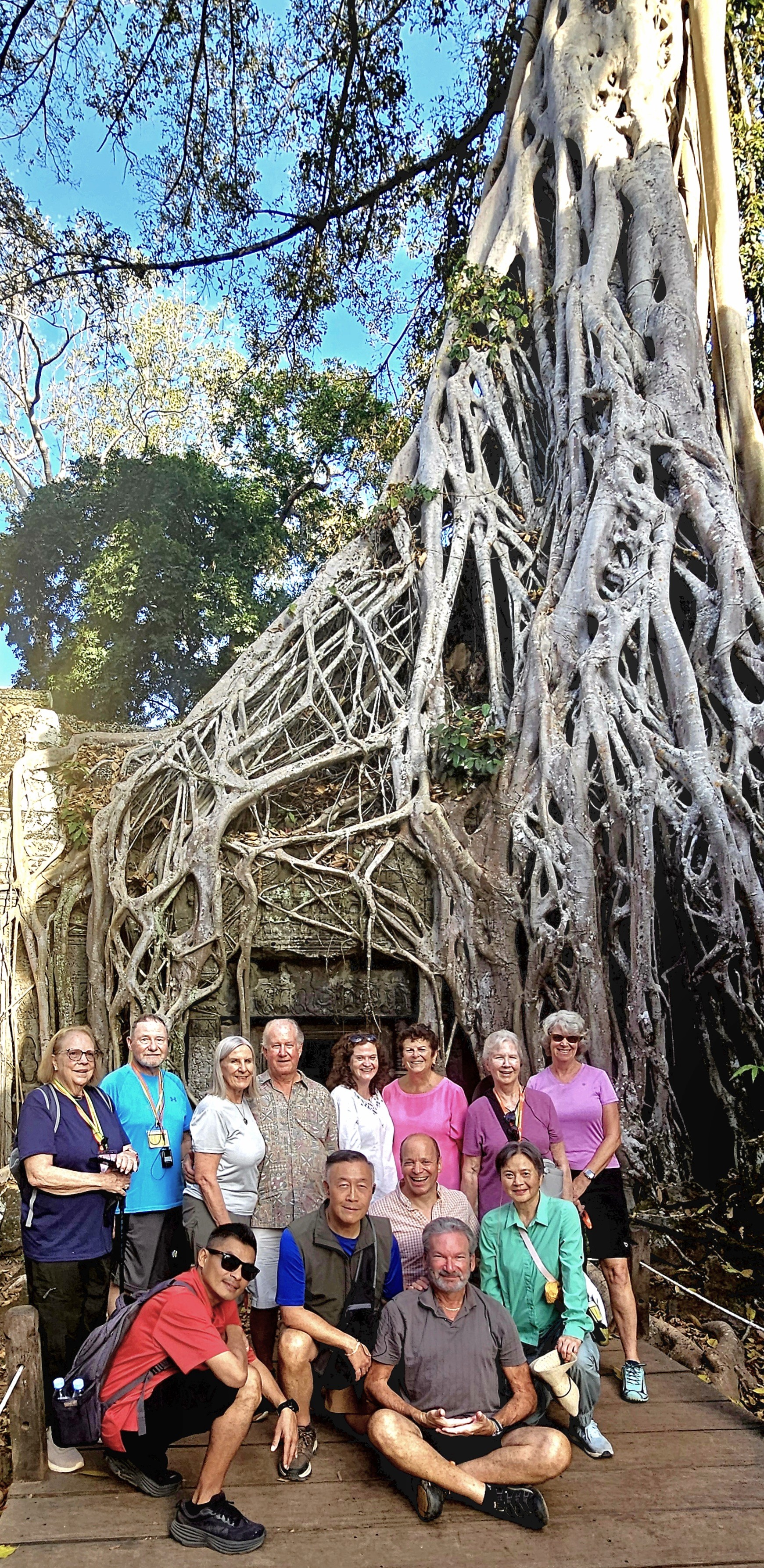
Here, a vast root system appears to strangle the West Gopura–a vivid illustration of nature’s power interwoven with human craftsmanship.
Myth and stone intertwine, as a patina of multi-colored lichen cloaks the bas-relief stonework depicting meditating monks and temple guardians in serene poses.
The gigantic roots of the silk-cotton, gold apple, and strangler fig trees invade the ancient walls and terraces to create a visually stunning tableau.
The trees seemingly communicate with the stone, highlighting both the beauty and fragility of the monument’s existence.
Constructed during the late 12th and early 13th centuries in the local Bayon style—an intricately decorated form of Khmer architecture—Ta Prohm served as a monastery and university for Mahayana Buddhists, offering spiritual guidance and education in a time where knowledge was deeply intertwined with faith.
Following the fall of the Khmer Empire in the 15th century, the complex fell into neglect and was eventually abandoned, allowing the encroaching jungle to seize control, transforming the area into a site of haunting beauty.
Today, various restoration attempts have stabilized the environment, courtesy of the Archaeological Survey of India (ASI),
which has been collaborating on the temple’s restoration with Cambodia’s APSARA National Authority since 2003.
Restoration efforts to preserve the temple’s original structure include replacing damaged stones, supporting entries, and strengthening foundations to withstand natural elements like heavy rains.
While archaeologists and craftsmen work to protect the temple from potential damages, they are also aware that Ta Prohm’s‘condition of apparent neglect’contributes to its global reputation, as evidenced in the action film, Laura Croft: Tomb Raider.
This balance creates an enchanting duality: the remarkable presence of both human history and the natural world,
coexisting in a state of beautiful decay.
Ta Prohm stands as a poignant reminder of the passage of time, notwithstanding the scrollwork of a stegosaurus carving on a terrace wall that has confounded scholars for centuries.
Together with Angkor Wat, Ta Prohm represents an enduring symbol of the Khmer Empire’s remarkable cultural and architectural grandeur. The site is among Cambodia’s most visited destinations, preserved for tourists who come to witness and contemplate the relentless power of nature in its interplay with human achievement.
Siem Reap Province, located in northwestern Cambodia, possesses significant cultural, religious, and symbolic value, and is also renowned for its architectural, archaeological, and artistic importance. Furthermore, Siem Reap is home to Angkor Archaeological Park, the world’s largest religious monument complex and the cornerstone of Cambodia’s tourism sector.
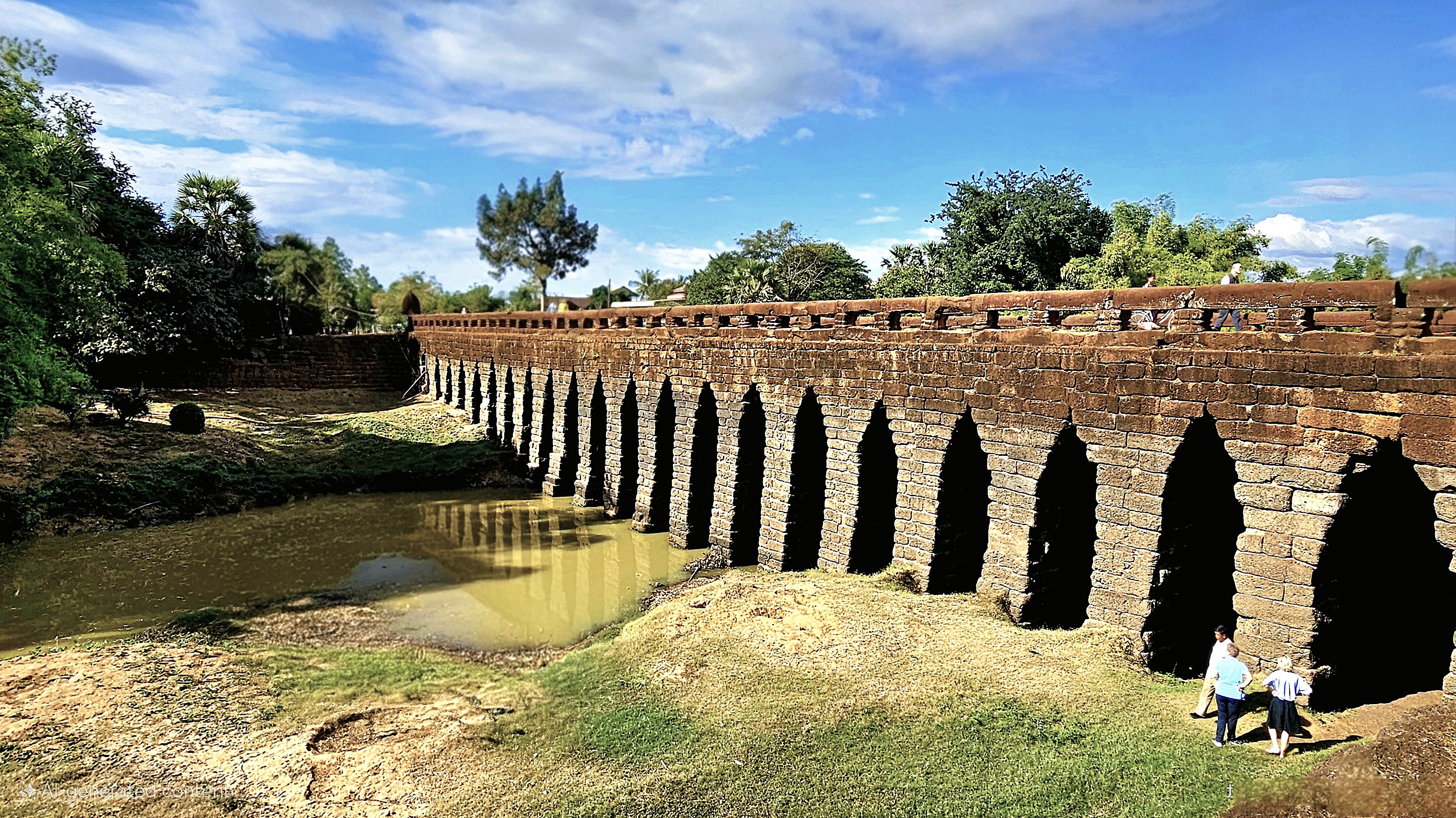
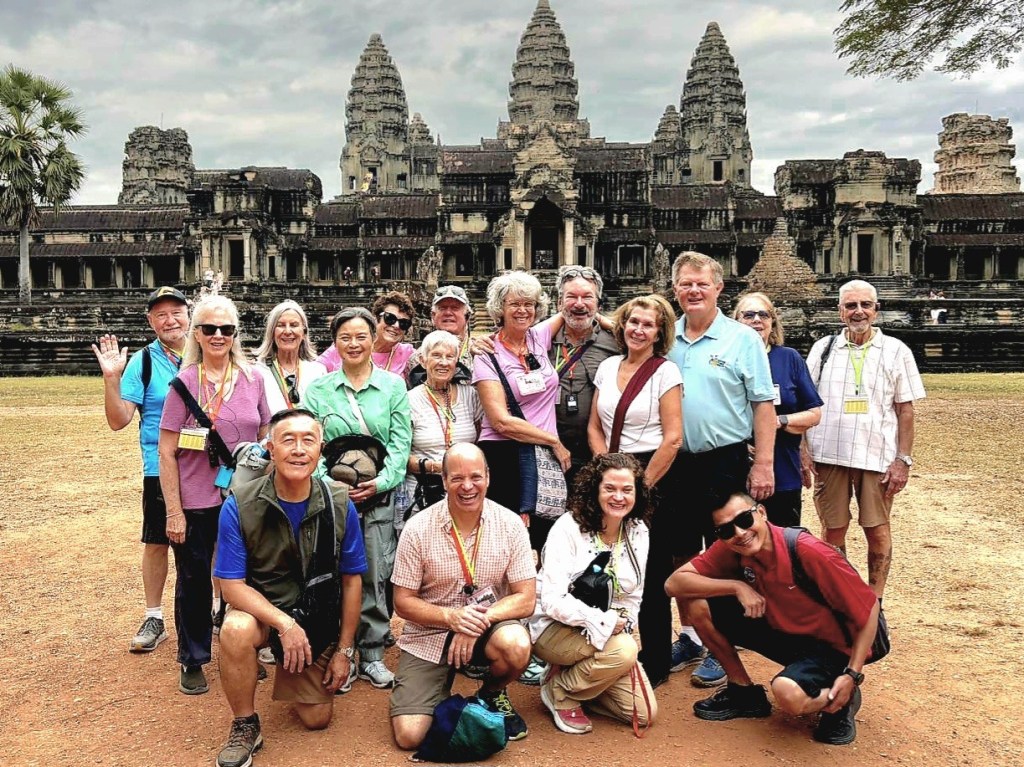
Our O.A.T. group overlanded from Phnom Penh to Siem Reap with a stopover at the ancient Kampong Kdei Bridge, constructed in the 12th century during the reign of King Jayavarman VII.
The bridge is a testament to the engineers who designed the 87m river span with 21 corbelled arches of laterite, making it the longest structure of its kind in the world.
Nine-headed nagas–whose bodies form a continuous balustrade alongside the roadbed–welcome only pedestrians and cycles on the bridge because of weight restrictions.
While admiring the scenery, I paused a moment to consider that Leah and I were walking the same trail as the Chinese merchants who traded along the Maritime Silk Road nearly a millennium ago. Back then, it was a 2-day trek through the lowlands to reach Angkor Wat.
But not for us; we stepped out of our air-conditioned coach the following morning, well before the crowds, to cross a moat symbolizing the cosmic ocean in Hindu cosmology.
While getting our bearings, our guide Seong, a native of Siem Reap revealed Cambodia’s worst kept secret: by arriving at Angkor Wat’s Death Gopura (East Gate), we were avoiding the popular western gateway with five times the tourists.
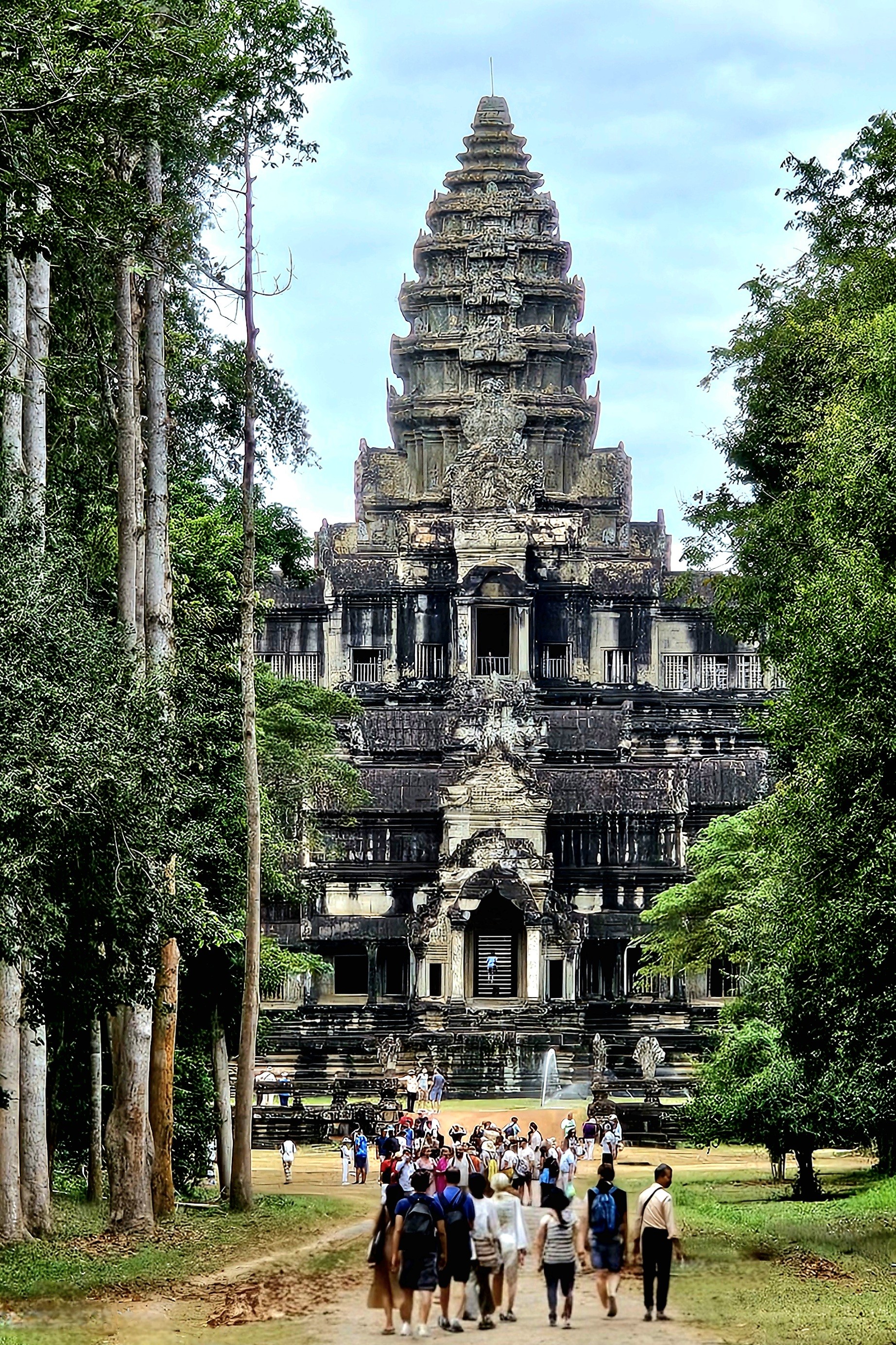
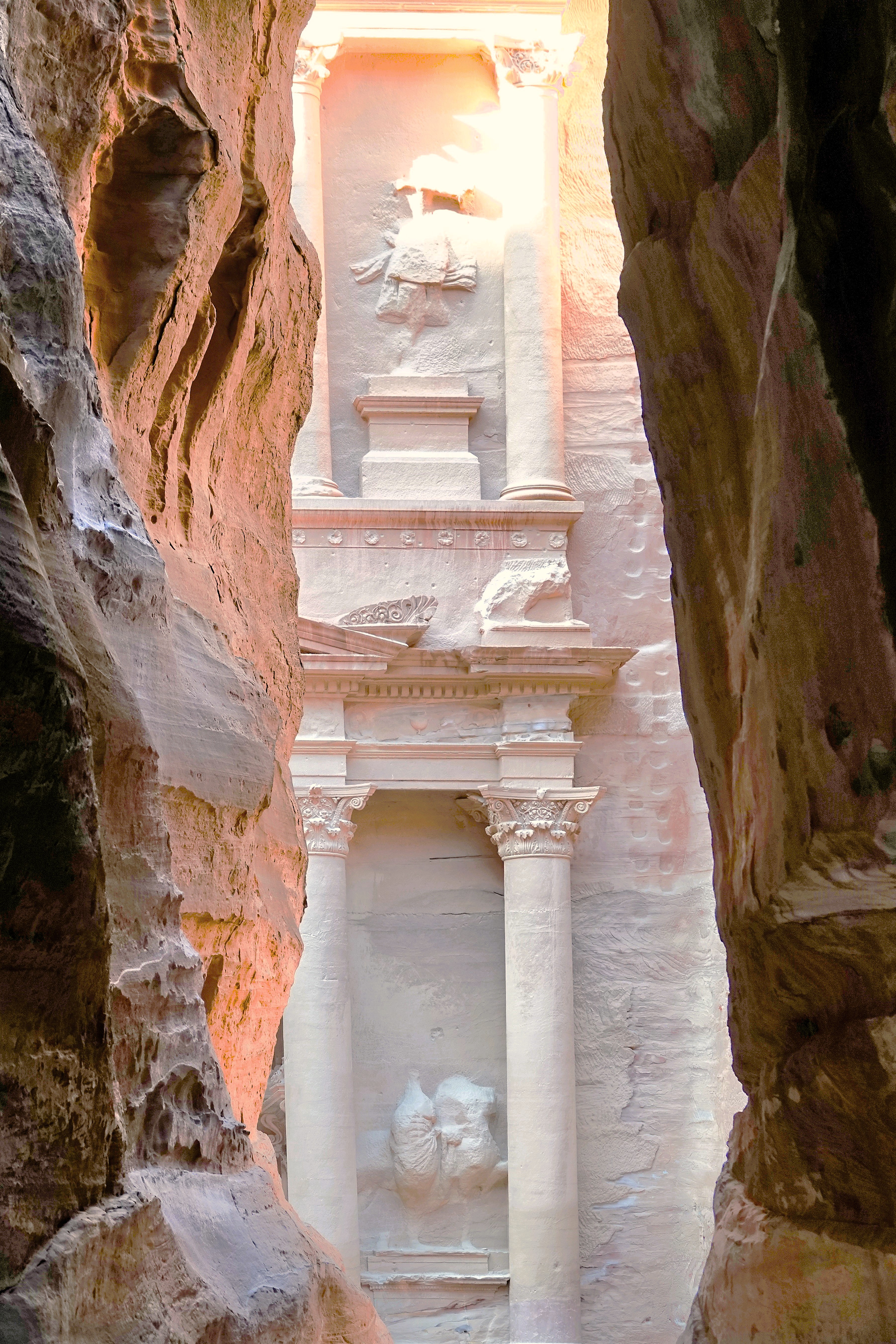
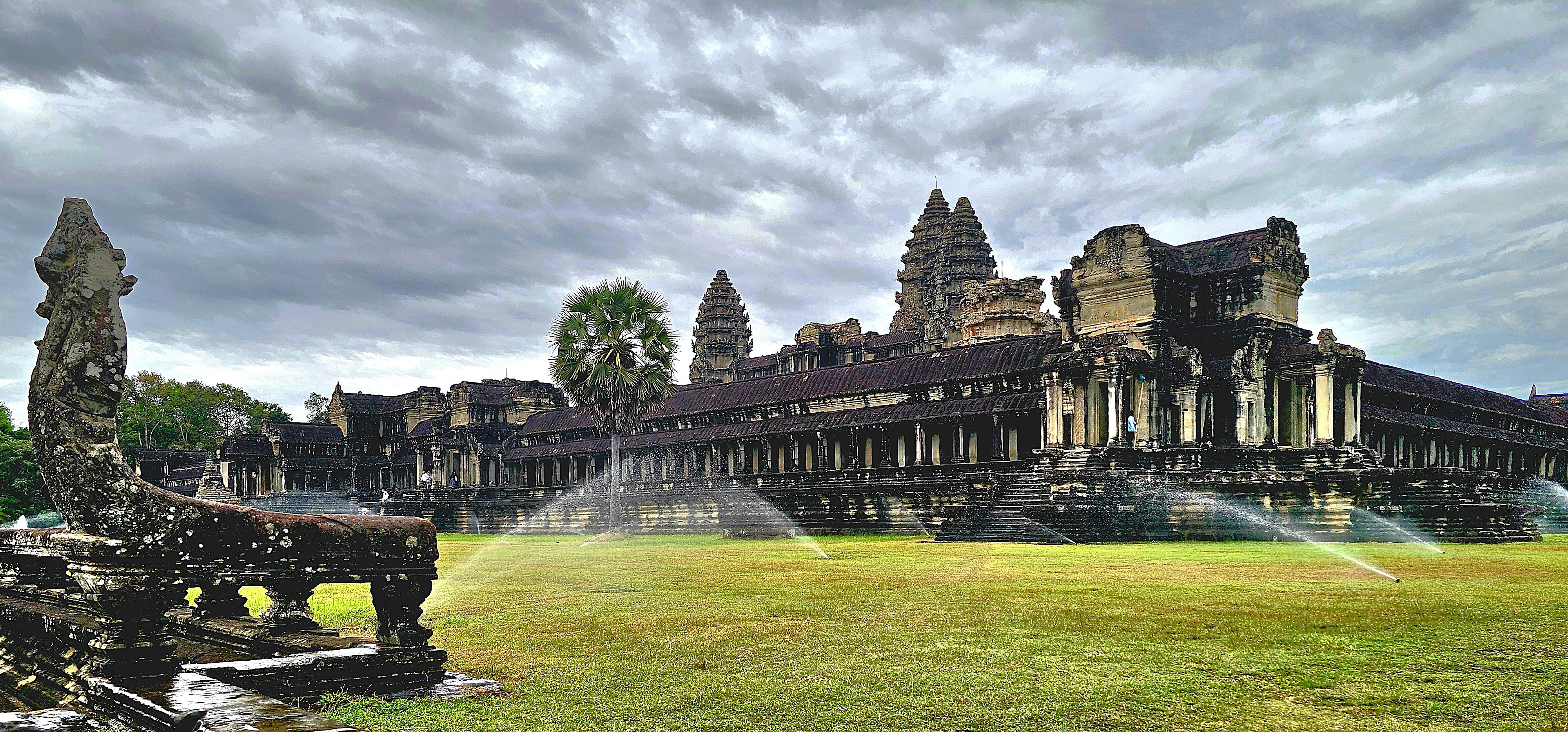
The cloud cover flattened the morning light on our approach down the expansive causeway. It was the best time for photographing Angkor. Eventually, we reached a break in the trees, perfectly framing the famed lotus tower of this Khmer masterpiece. It was reminiscent of the thrill I felt after emerging from the slot canyon in Jordan and peeking at Petra for the first time at first light.
Much has been written about Angkor Wat:
About its monumental size,
spanning 402 acres,
or 4 times the size of Vatican City;
It’s intricate bas-relief carvings throughout the temples and galleries;
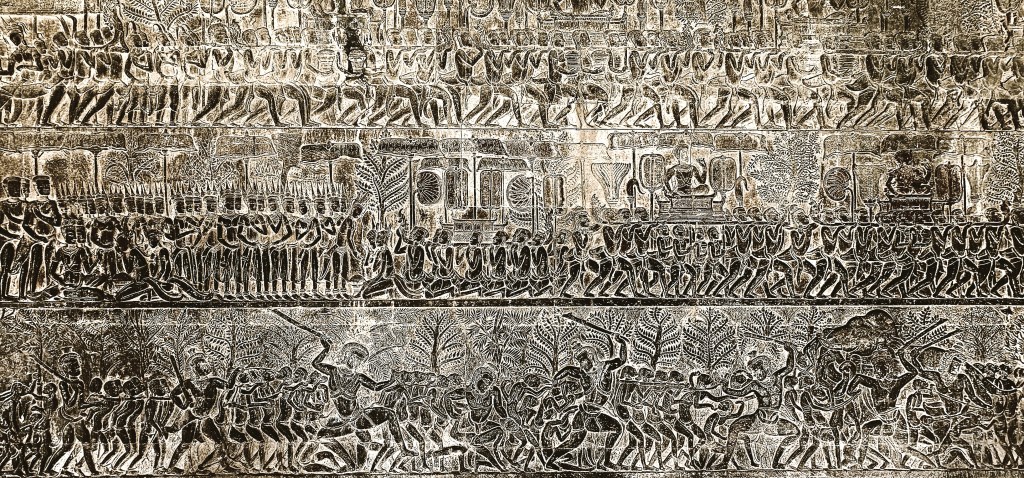
Its historical significance, showcasing Khmer mythology and history etched into laterite stone;
Churning of the Sea of Milk
Heaven and Hell
Military Parade of Kink Suryavarman II
Its religious significance–originally constructed in the 12th century as a Hindu temple dedicated to Vishnu but converted to a Theravadin Buddhist temple during the 15tth century to reflect the shift in Cambodia’s spiritual landscape;
Hindu GoddessBuddha seated on Mucilinda, King of the Serpents
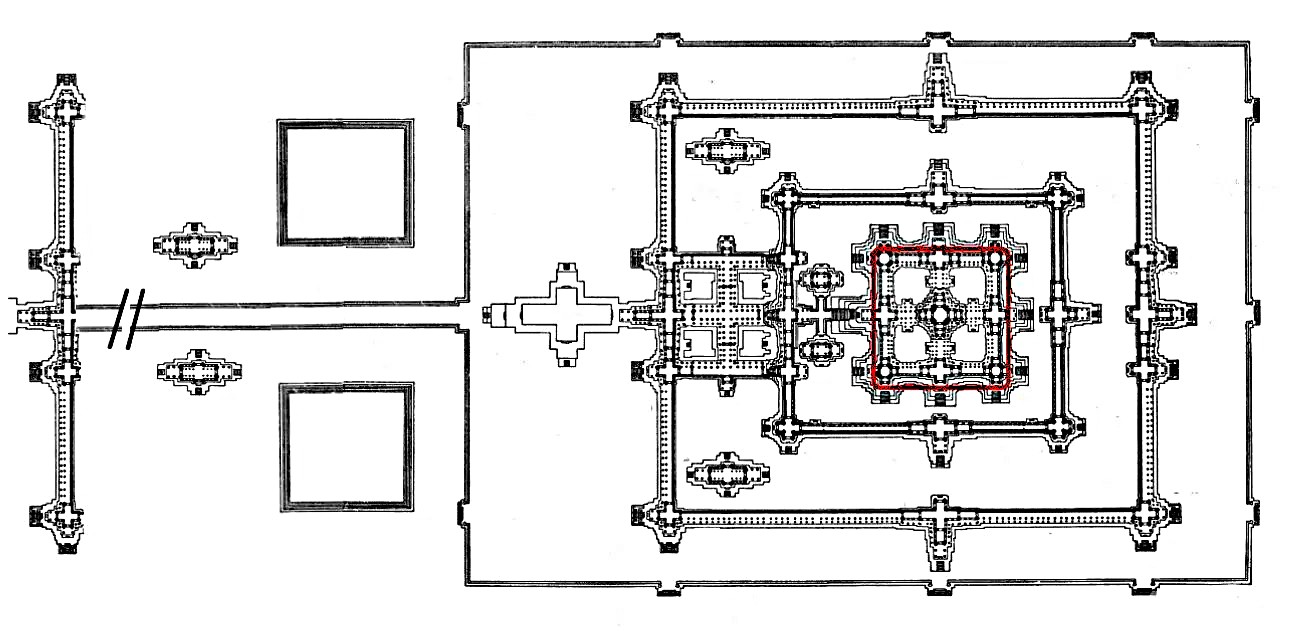
And its architectural accomplishment–a profound reflection of Hindu cosmology, particularly the concept of Mount Meru, regarded as the mythical abode of the deities. The central tower of Angkor Wat epitomizes the summit of Mount Meru, while the adjacent smaller towers signify the mountain’s subordinate peaks. The moat and the rectangular outer wall delineate the oceans and the boundaries of the world, respectively.
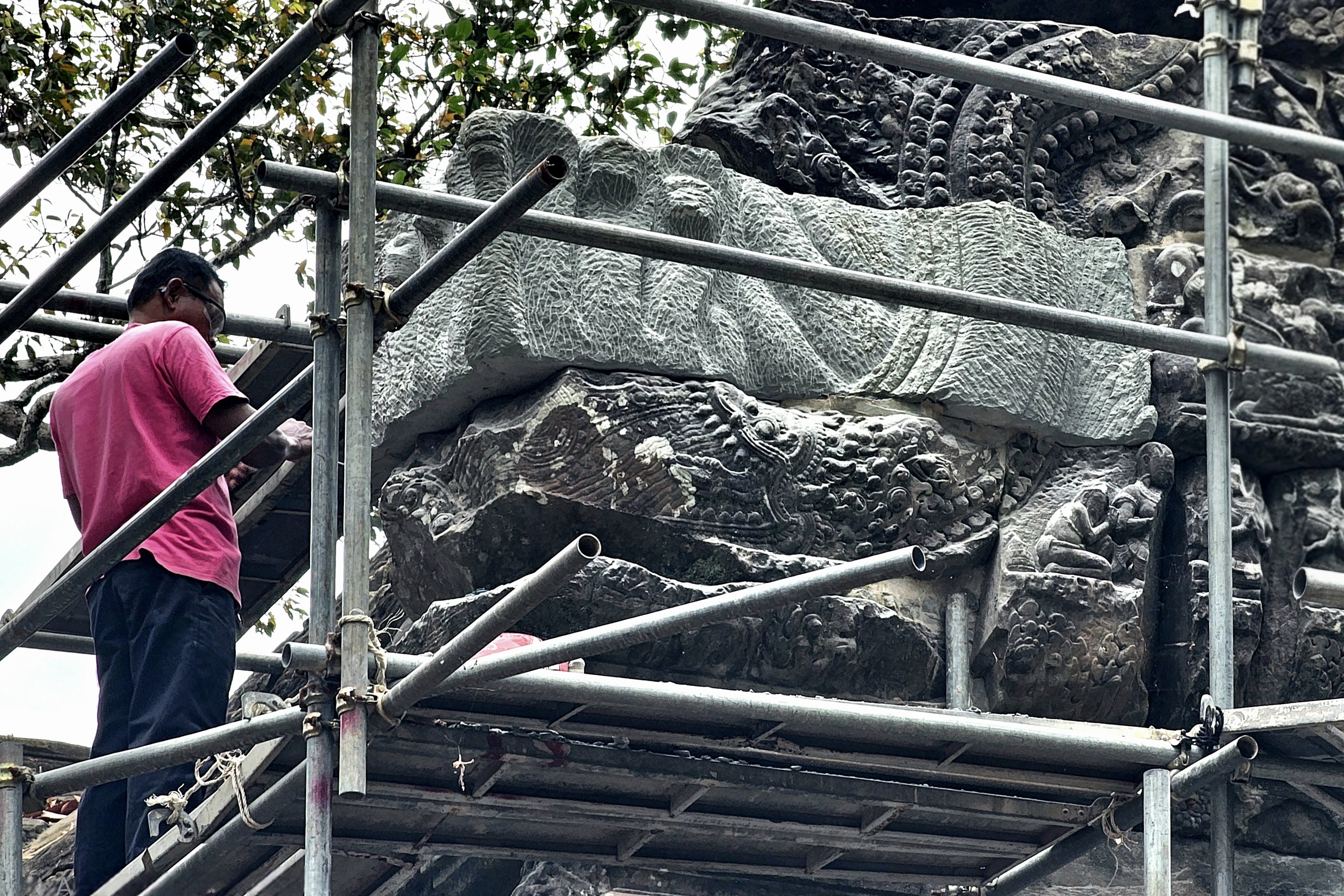
Restoration and maintenance have become routine endeavors in Angkor, which fell into neglect following the capital’s relocation to Phnom Penh in 1434. The site garnered renewed attention after being rediscovered by French naturalist Henri Mouhot in 1858.
An international task force supported by Japan, India, France, South Korea, and other contributing nations have collaborated with APSARA National Authority, the Cambodian government agency responsible for Angkor’s ongoing preservation and management, to address the extensive neglect and restore the temple to World Heritage status.
Ceiling before repairCeiling after repair
Recently, new risers have been completed by the Korea Heritage Agency…
giving access to the Bakan (central sanctuary),
which supports the amazing quincunx of towers,
offering amazing views,
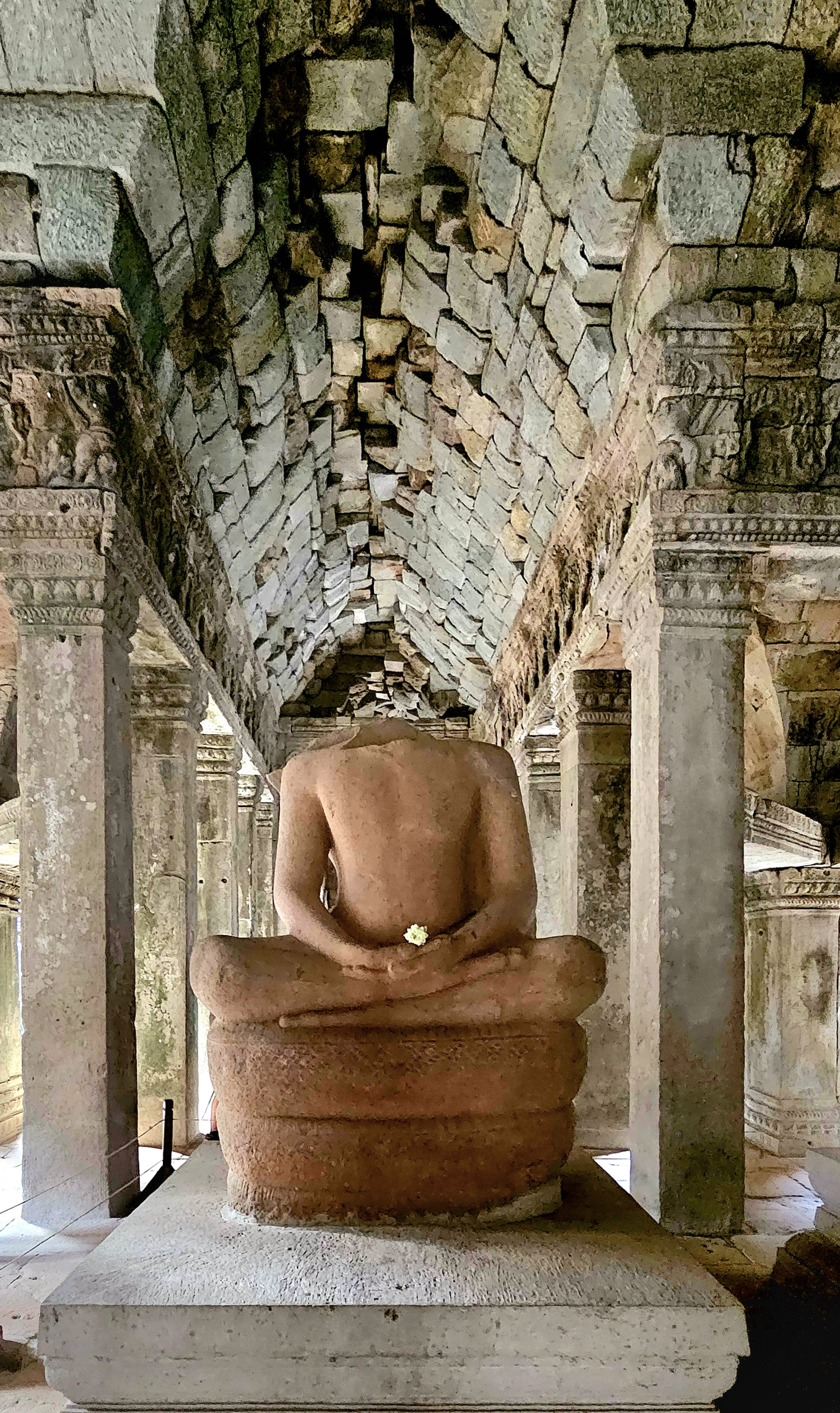
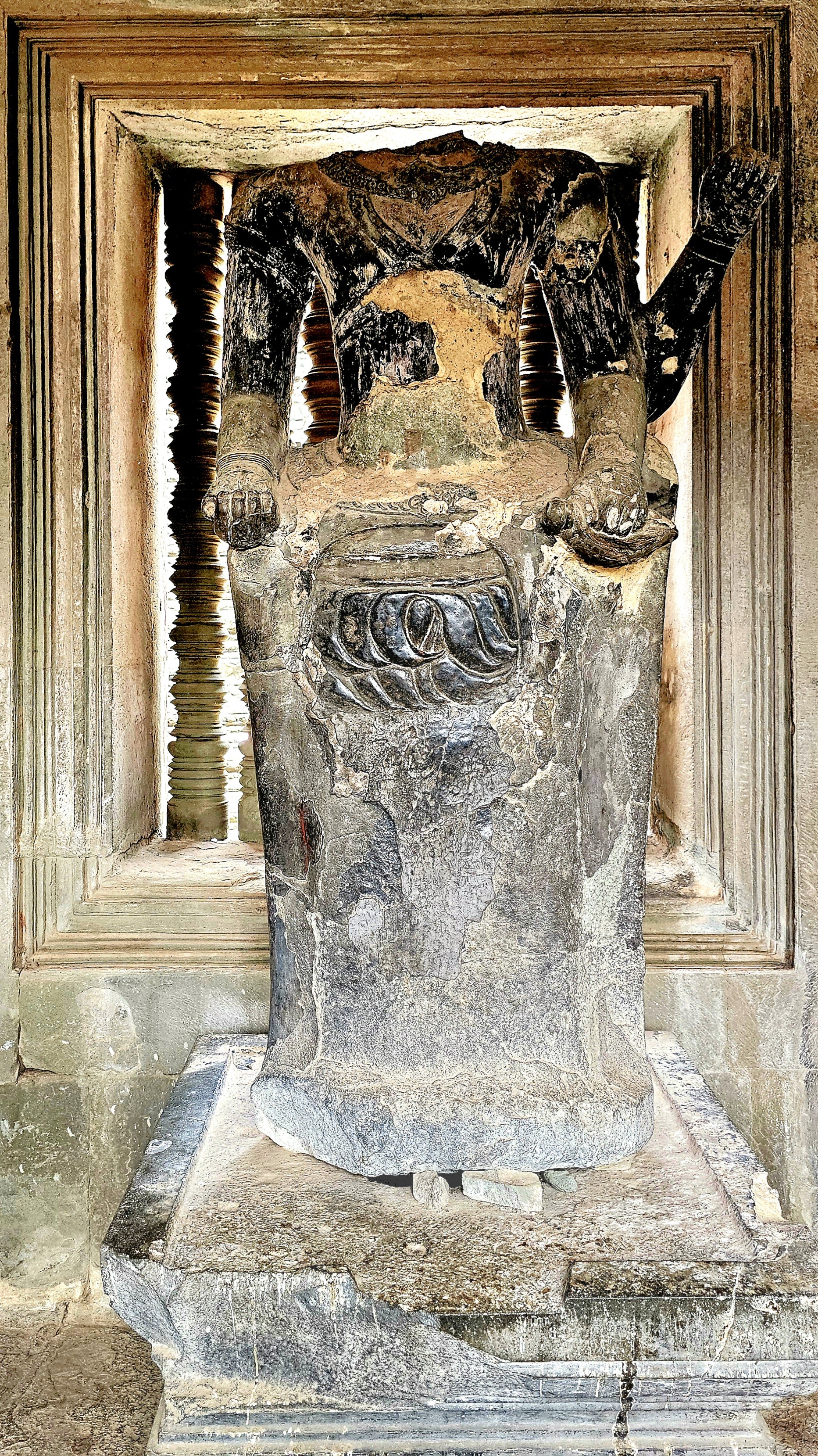
and providing sanctuary for a rare wooden Buddha sculpture whose head remains intact,
unlike most of the other Buddhas who fell victim to so many marauders over the centuries.
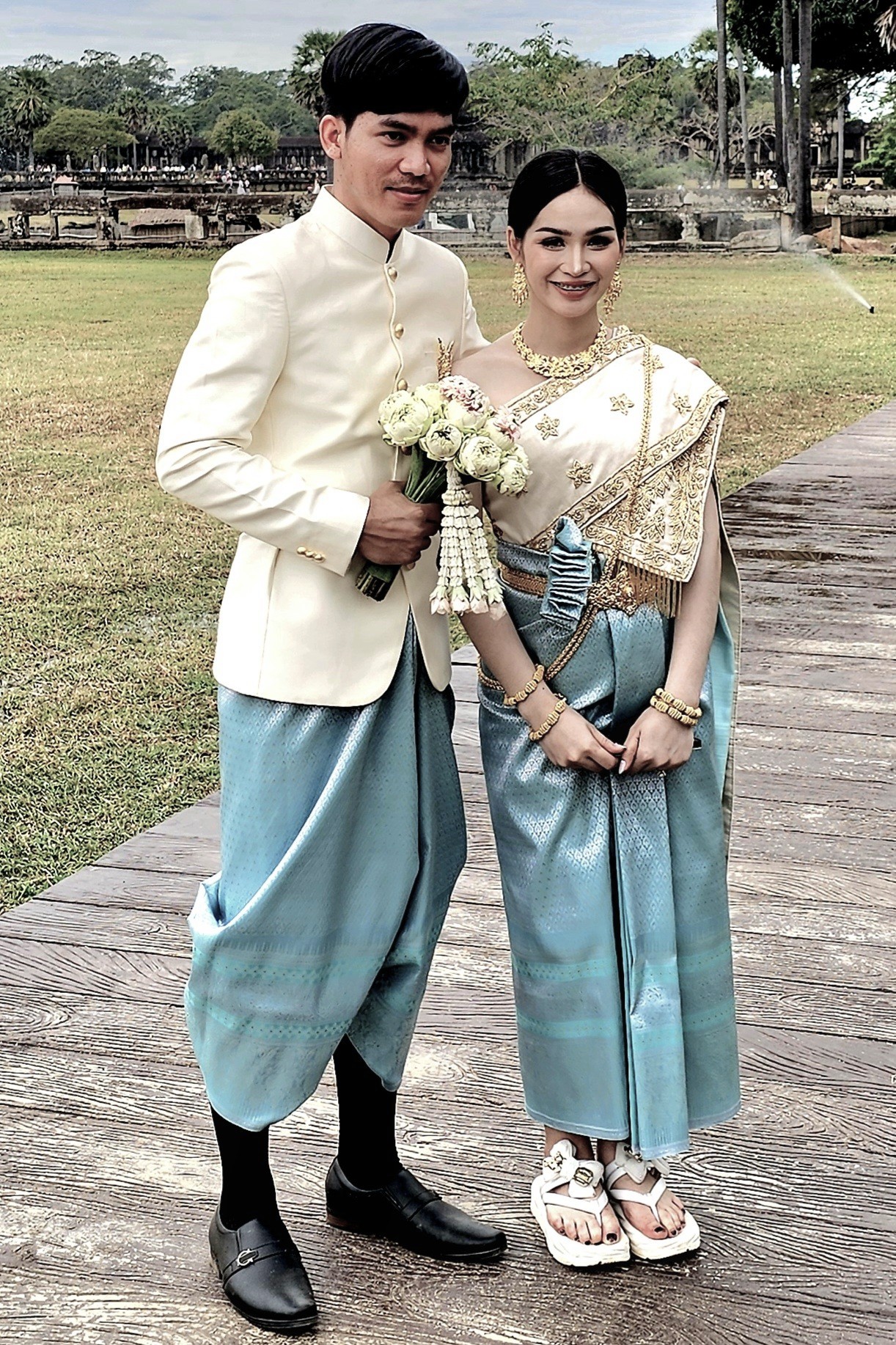
But amidst the vastness and splendor surrounding us, it was the people donning their Sunday best who truly captured my attention with their warmth and spirit.
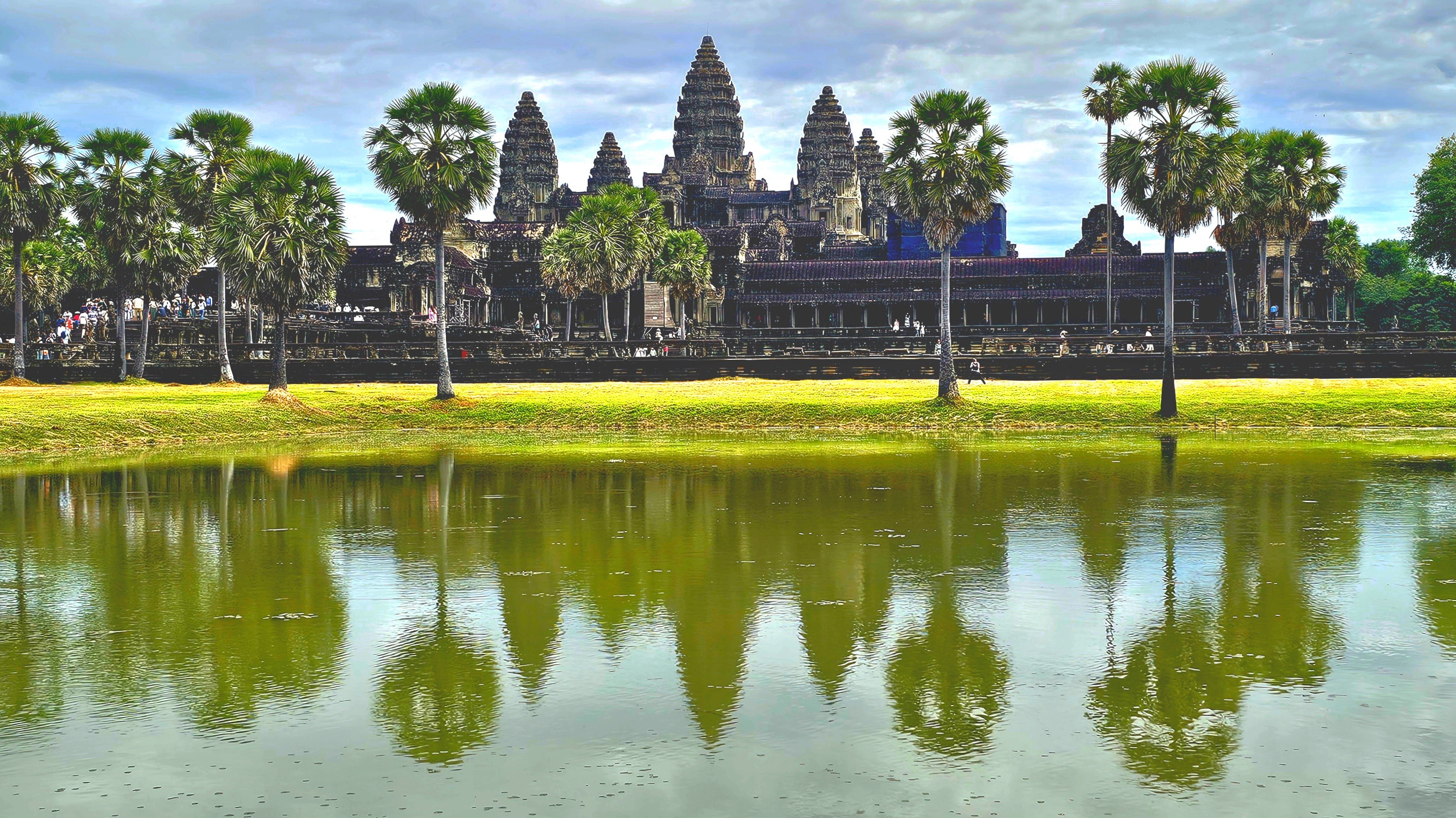
often posing by the Reflecting Pool for the quintessential photograph, or so I thought.
Unfortunately, the wind kicked up, causing the pool to ripple ever so slightly and affect my mirrored imagery.
However, by returning the following day for a sunset farewell to Angkor, I believe I captured the iconic shot that characterizes Cambodia’s cultural landscape.
The experience not only fulfilled a bucket-listed destination but deepened my appreciation for the rich heritage of Cambodia, reminding me that some locations leave an indelible mark on our souls.
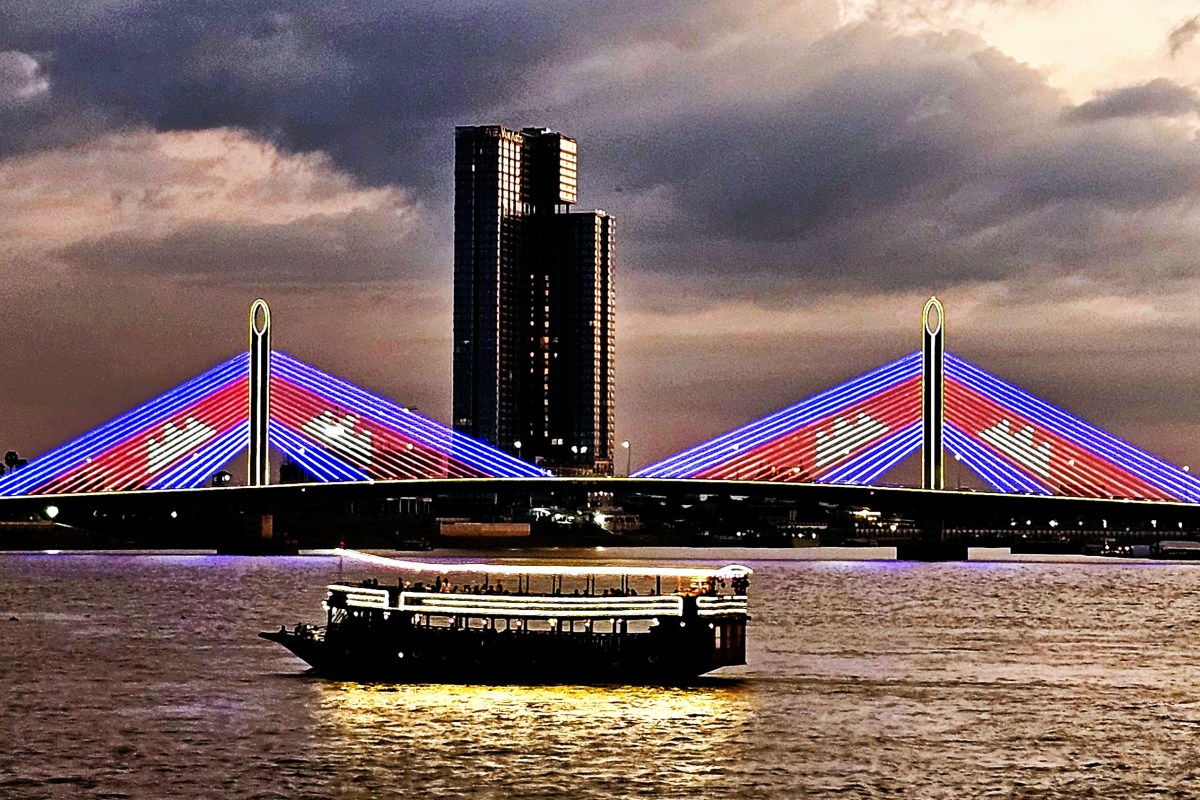
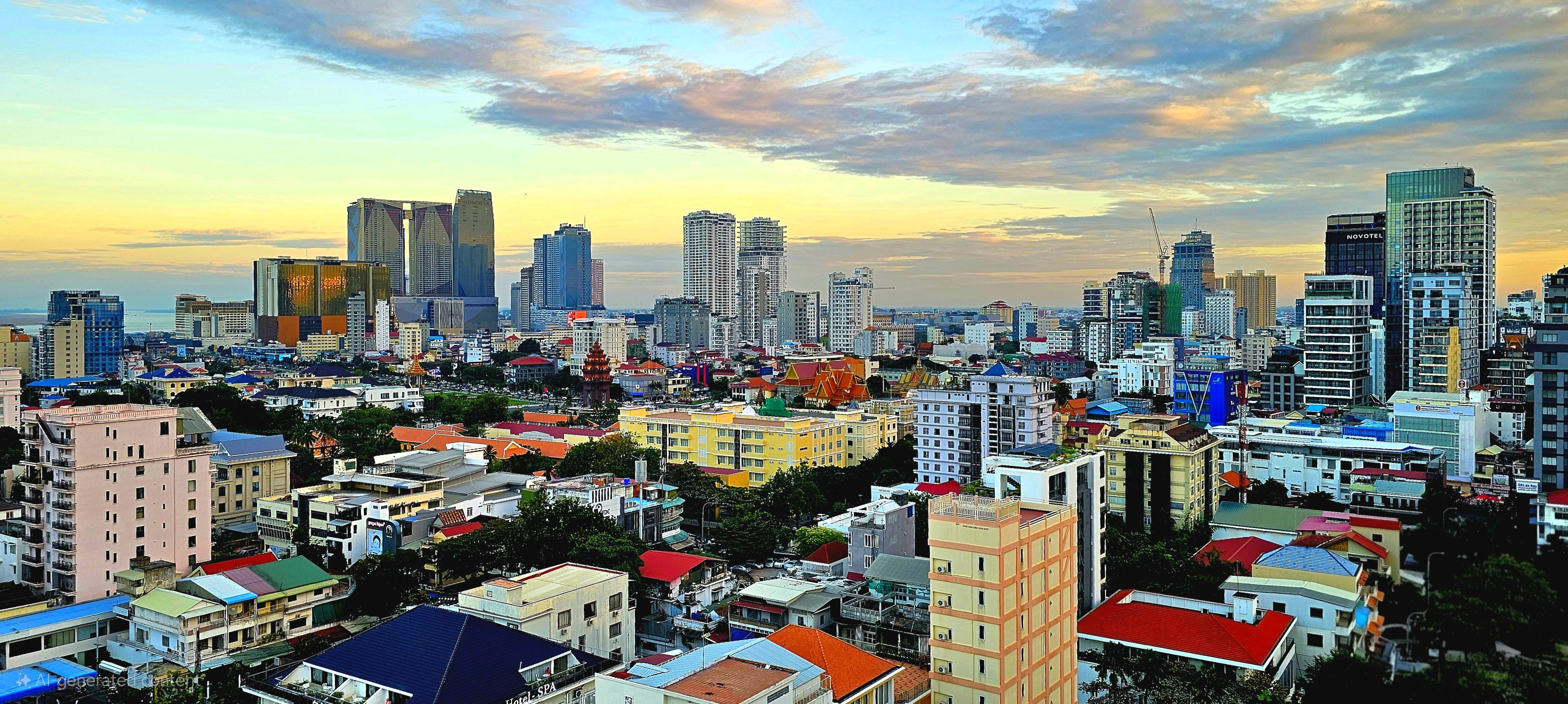
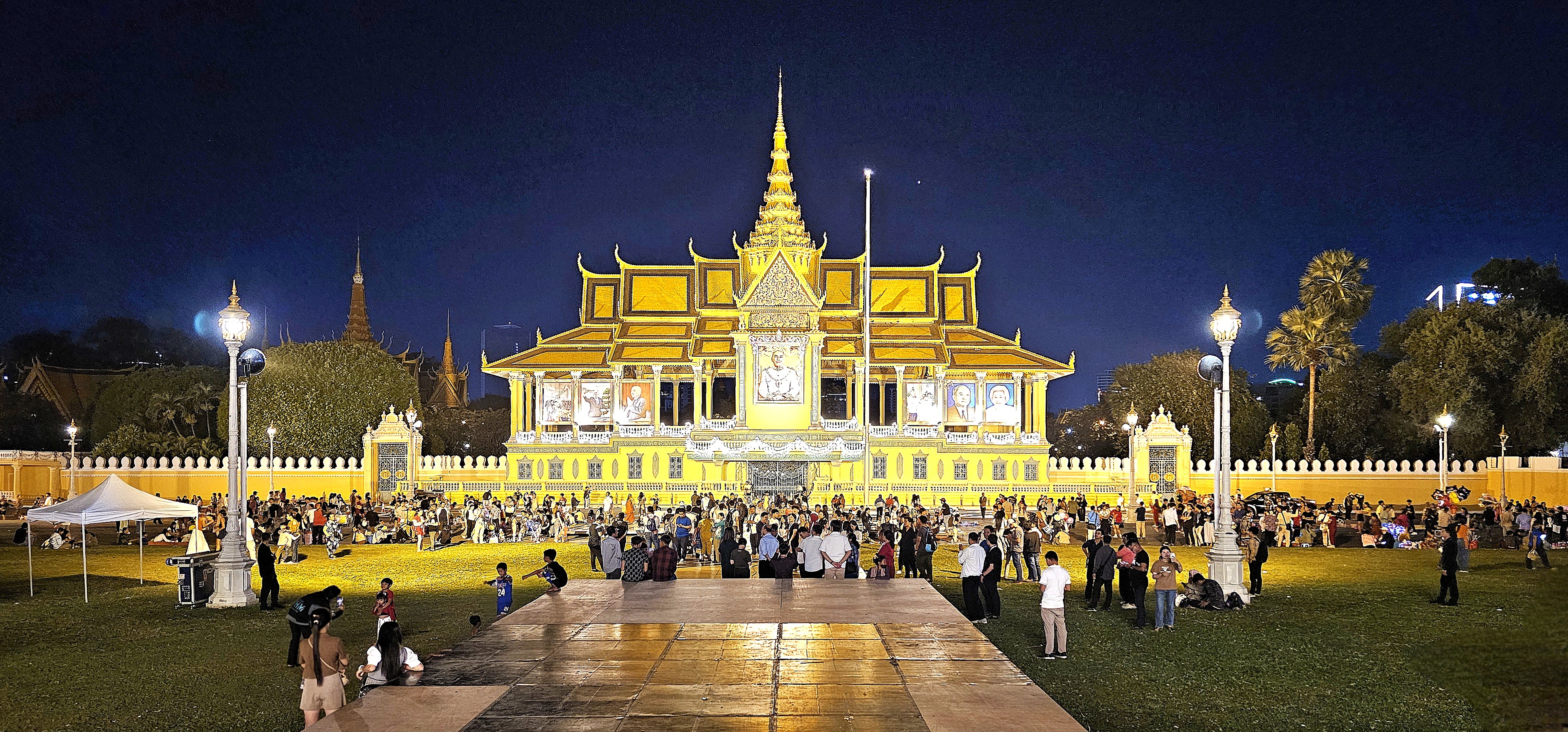
Random snaps of landmarks, skylines, and curiosities captured while cruising around town. There is no particular theme or connection, but these images caught my eye, nonetheless!
Flyer beware!
A modern skyline reshapes Center City
Areiksart Ferry Port
Krong Ta Khmau–Phnom Penh suburbia
Anatomical door handles
Independence Monument
King Norodom Sihanouk Memorial
King Norodom Sihamoni portrait from Sisowath Riverside Park
Royal Palace of Cambodia
Meat market beef parts
Protecting lives by improving sanitation–one flush at a time
Toilet protocol
Street art
Sangkat Chakto Mukh–upscale community
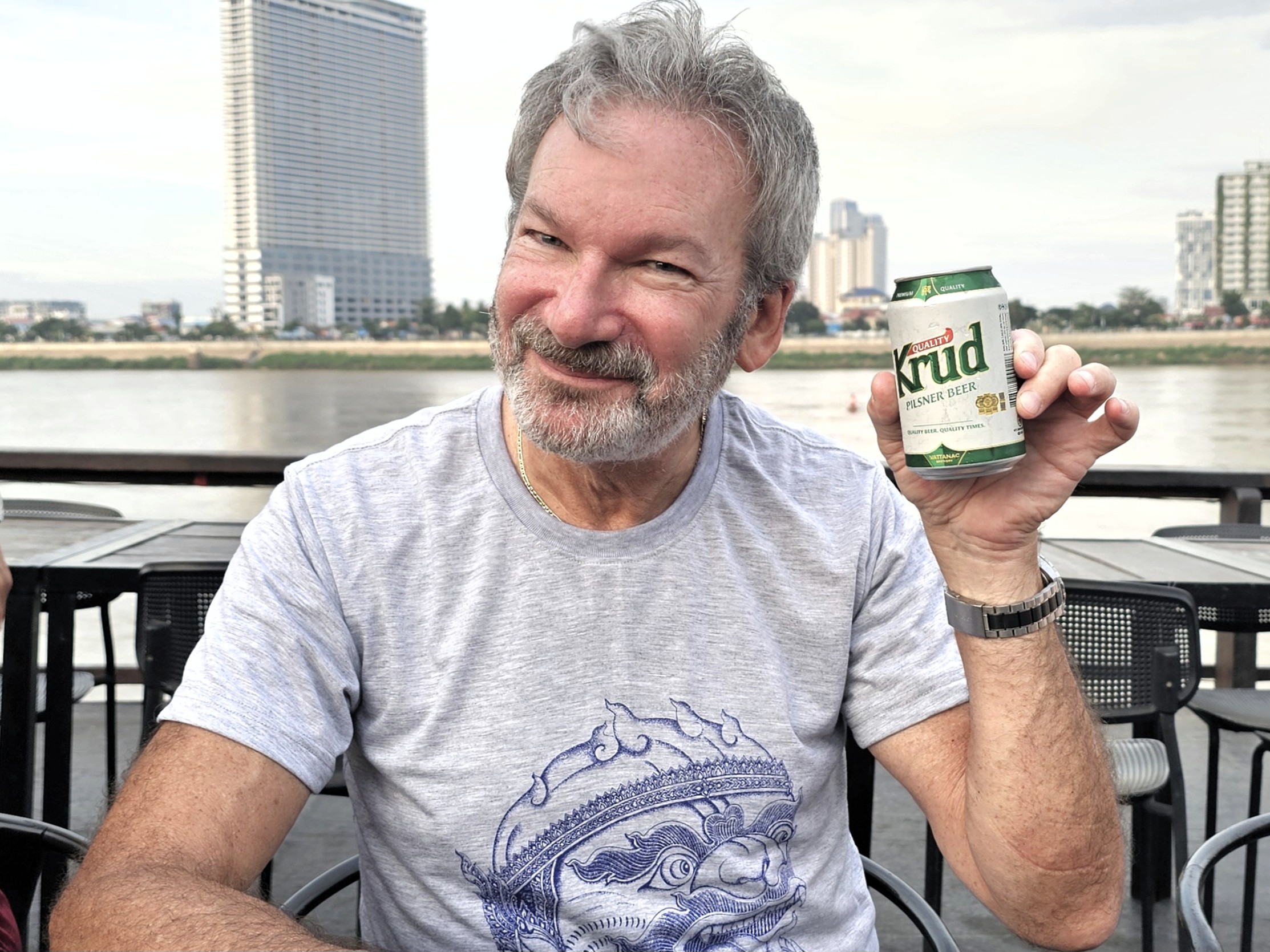
“Good time for a Krud,” 2023 World Beer Gold medal winner
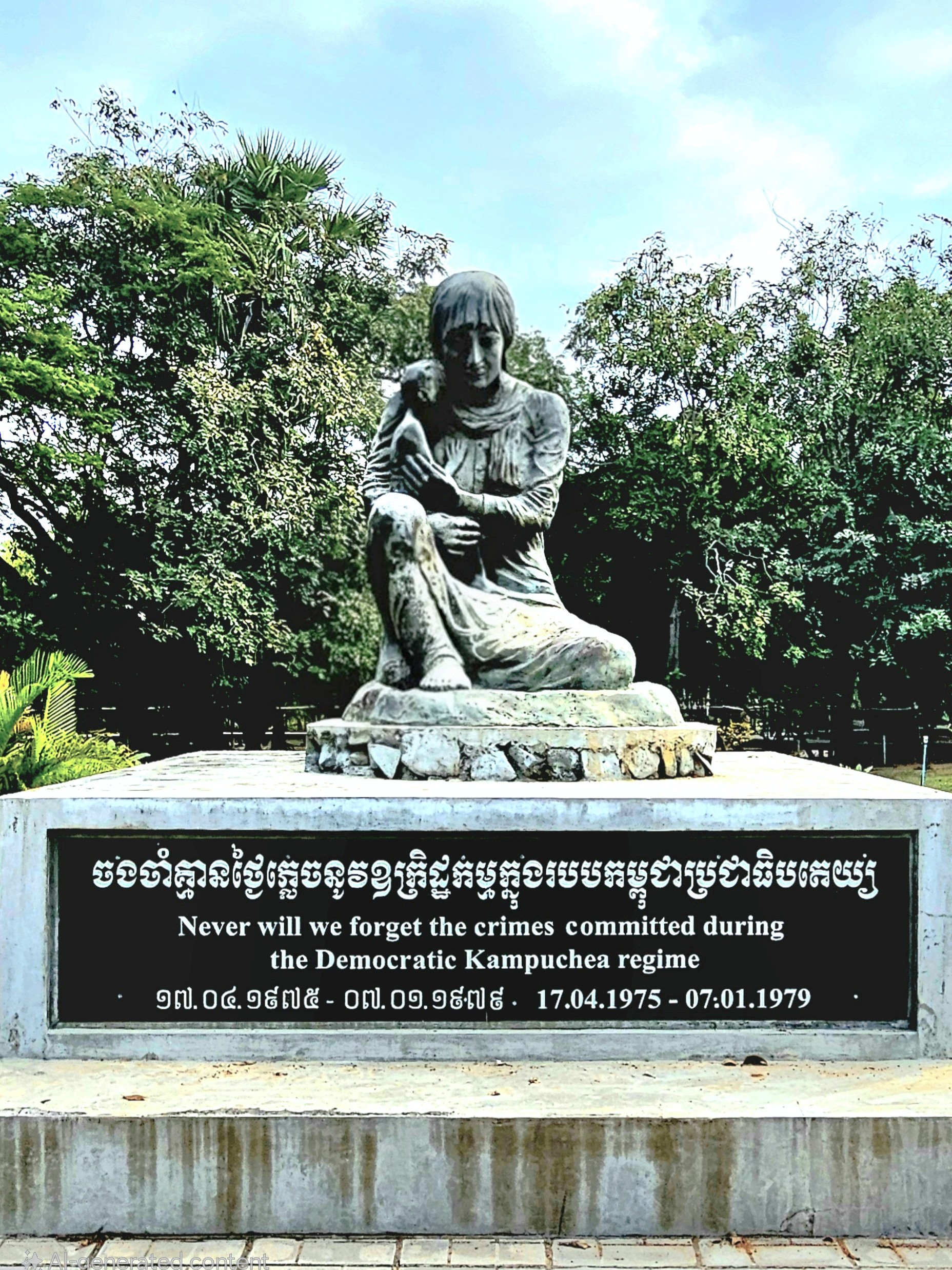
Phnom Penh and the Khmer Republic fell to the Khmer Rouge on April 17, 1975.
For the Communists, it was Liberation Day and cause for celebration.
While it marked the end of civil war, it was the beginning of one of history’s darkest chapters. Almost immediately, the Khmer Rouge ordered the exodus of the city’s 2 million inhabitants.
from Agence Khmere de Press archive
Khmer Rouge strongman, Pol Pot declared 1975 “Year Zero,” in his quest to build a classless agrarian utopia patterned after Maoist China, but it also marked the start of a genocide that would devastate the country, claiming over 25% of the population through forced labor, starvation and slaughter.
It started with a civil servant purge that eliminated tens of thousands of military loyalists, local police, and anyone associated with the previous government. Additional targets included academics, professionals, and “impure” ethnic minorities.
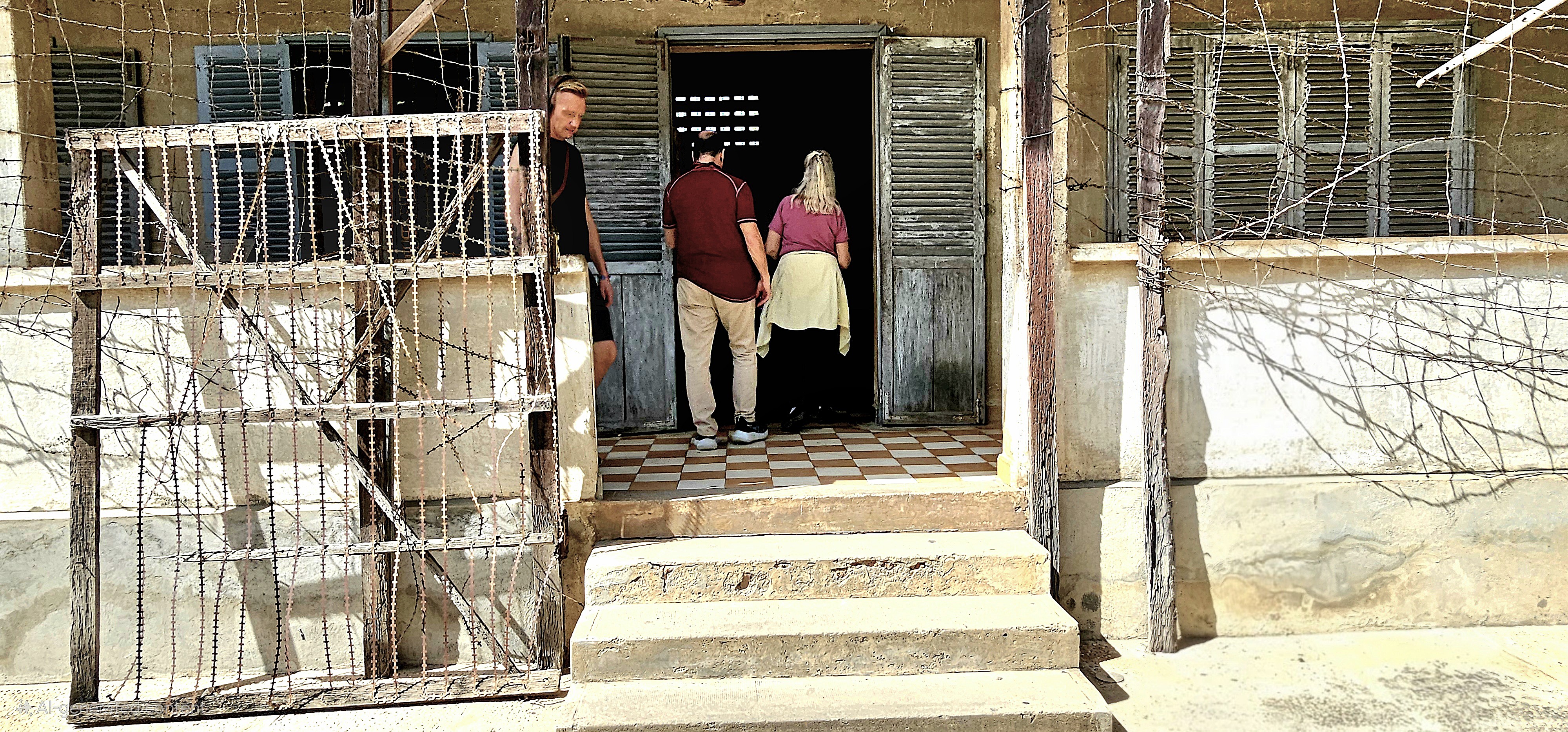
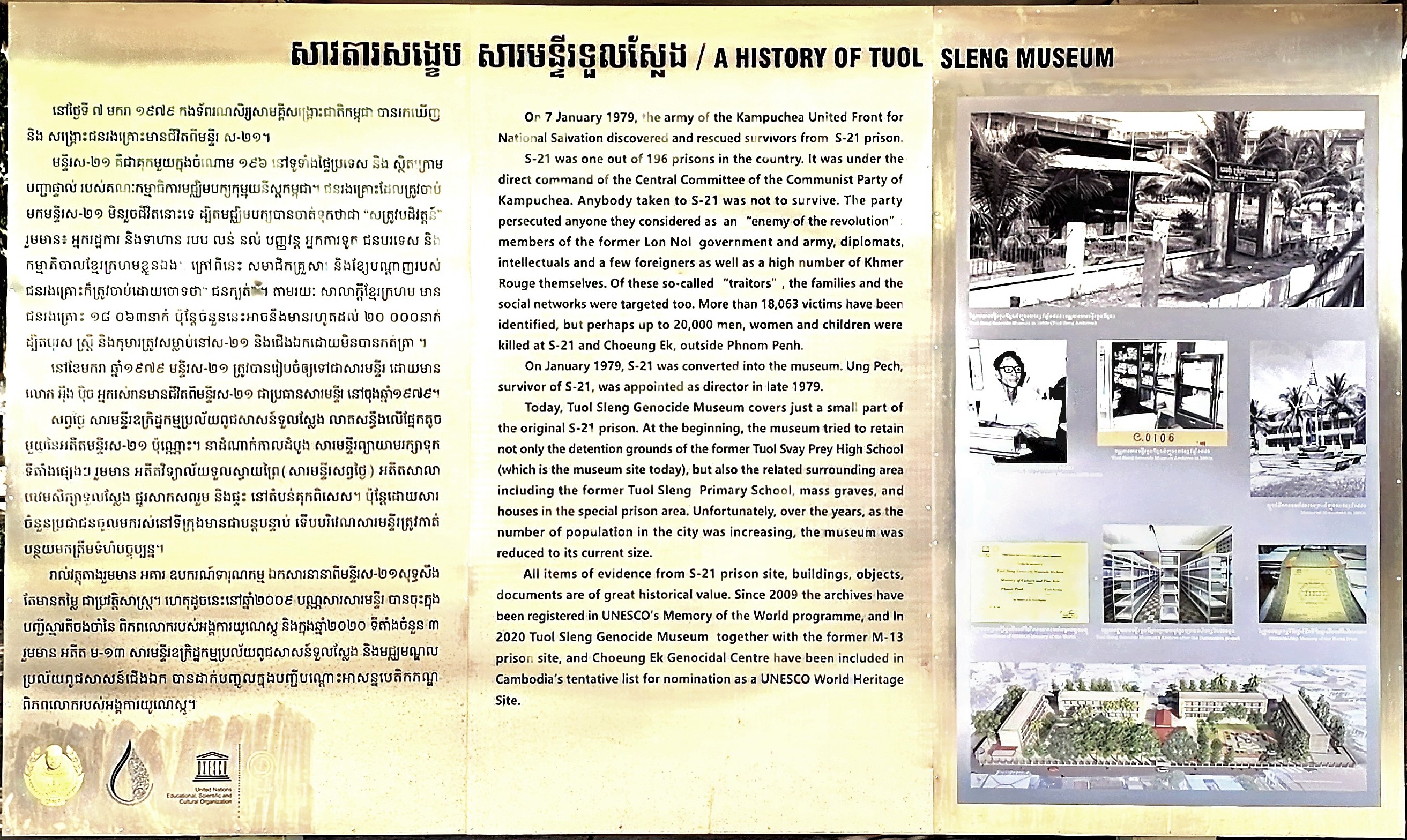
To facilitate the Khmer Rouge agenda, an education campus in Phnom Penh that housed Tuol Svay Prey High School and Tuol Sleng Primary School was commandeered and codenamed “S-21”–the nerve center of the Khmer Rouge secret police.
The survivors remember that day as the day when hope turned to horror, changing their lives forever.
For Vann Nath (tall man in the middle), the unexpected journey to Tuol Sleng began with his arrest in 1978 while working in a rice field. Before 1975, he led a normal life as a commercial artist in Battambang. The Khmer Rouge first detained him at Wat Kandal–a temple turned detention center– and accused him of violating the regime’s moral code before moving him to S-21.
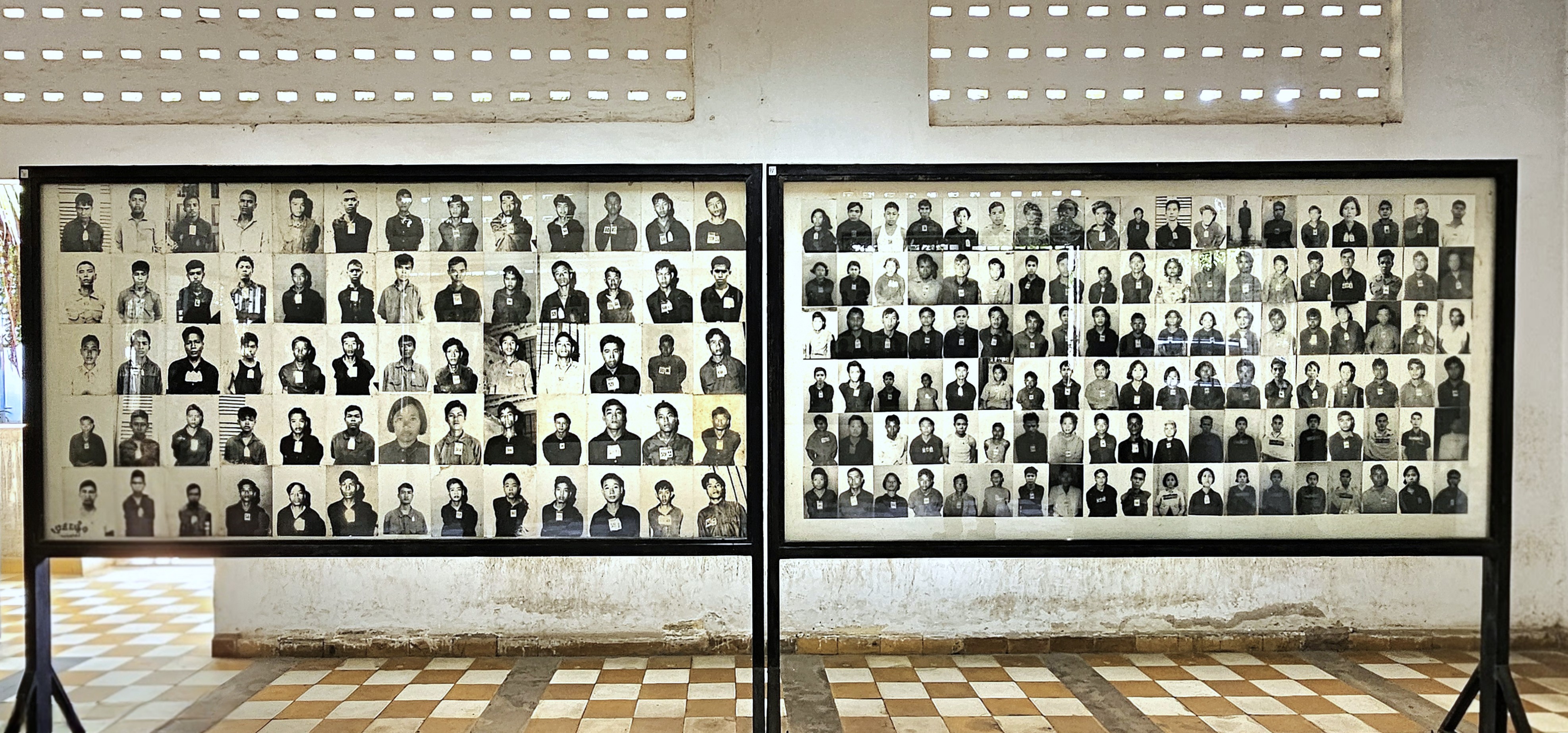
Detainees arrived in handcuffs and were immediately photographed. Today, their images hang on bulletin boards as a numbing reminder of their journey into hell.
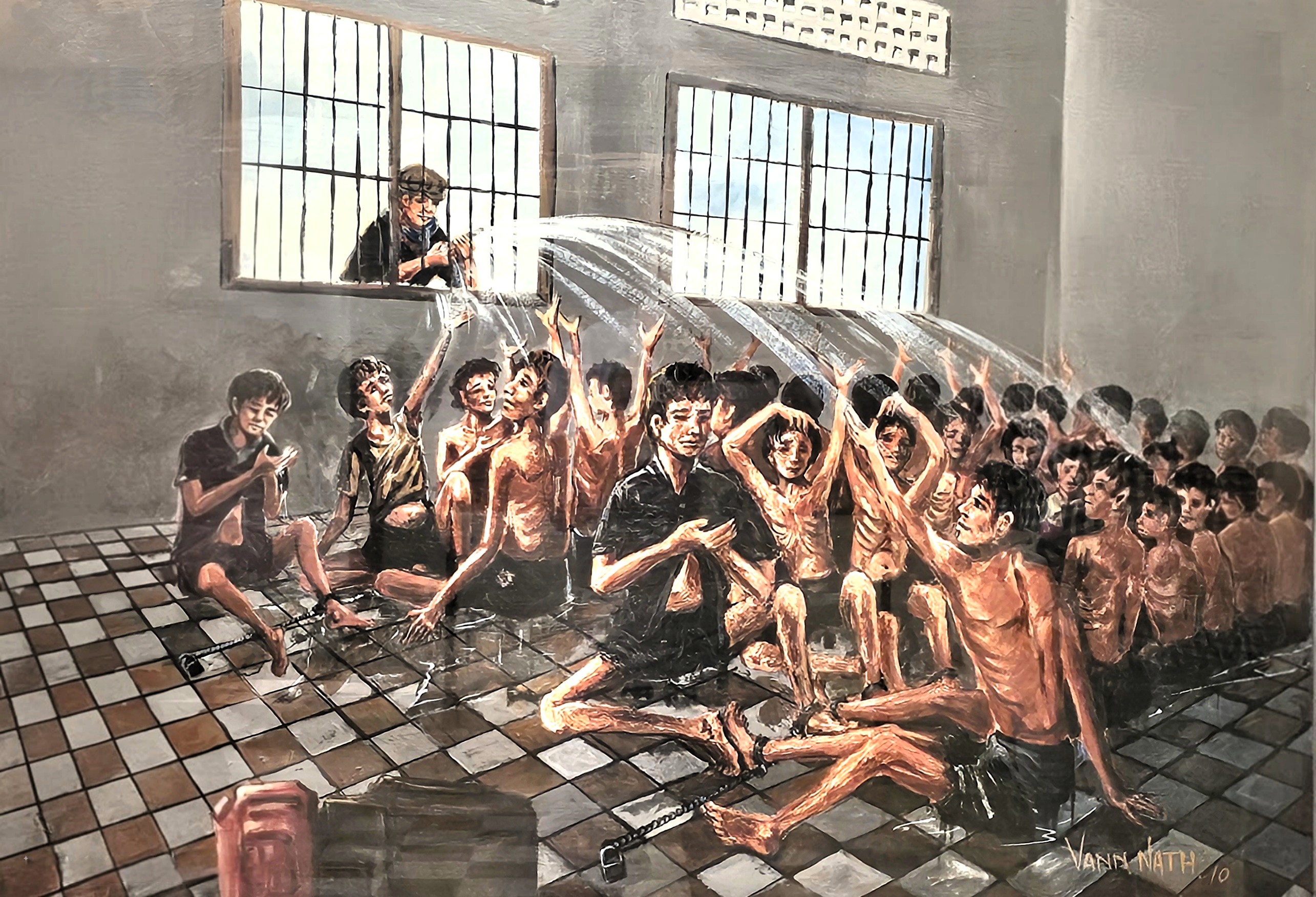
Following intake and registration, they were showered.
High-ranking cadres were imprisoned and interrogated in larger cells,
while the masses were confined to bricked-in cubbies the size of shower stalls, with ammunition boxes for toilets.
Of course, Vann was interrogated…
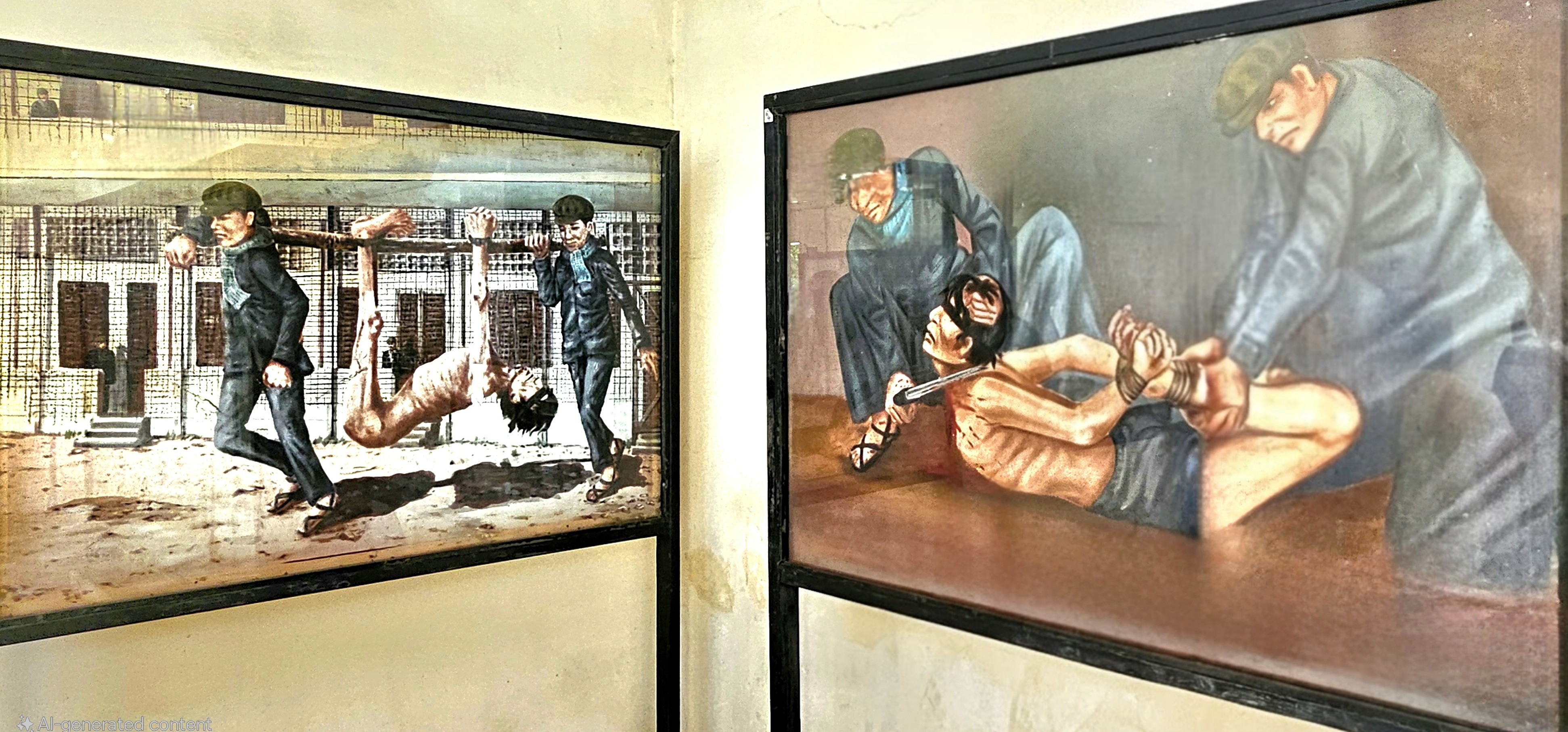
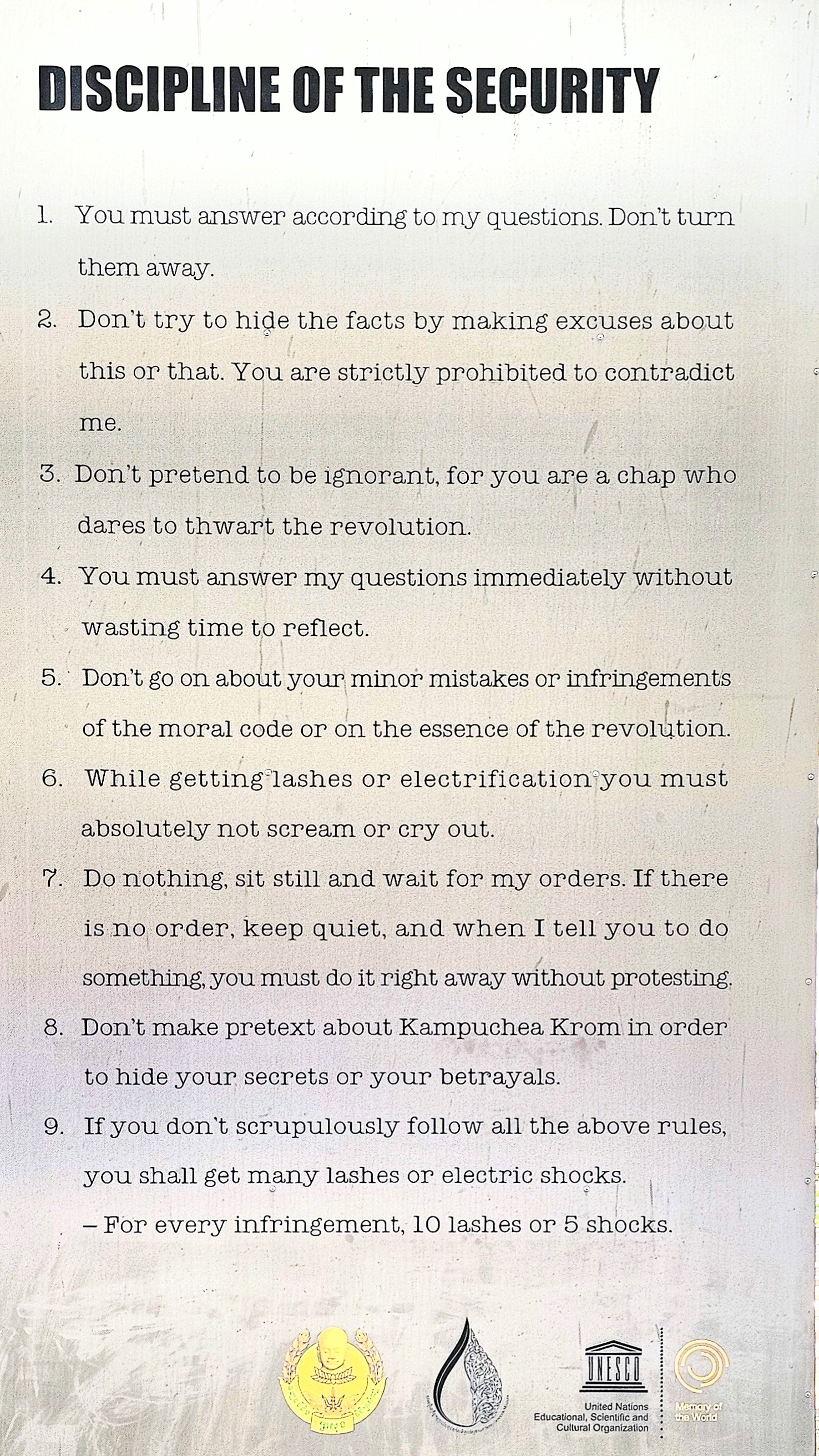
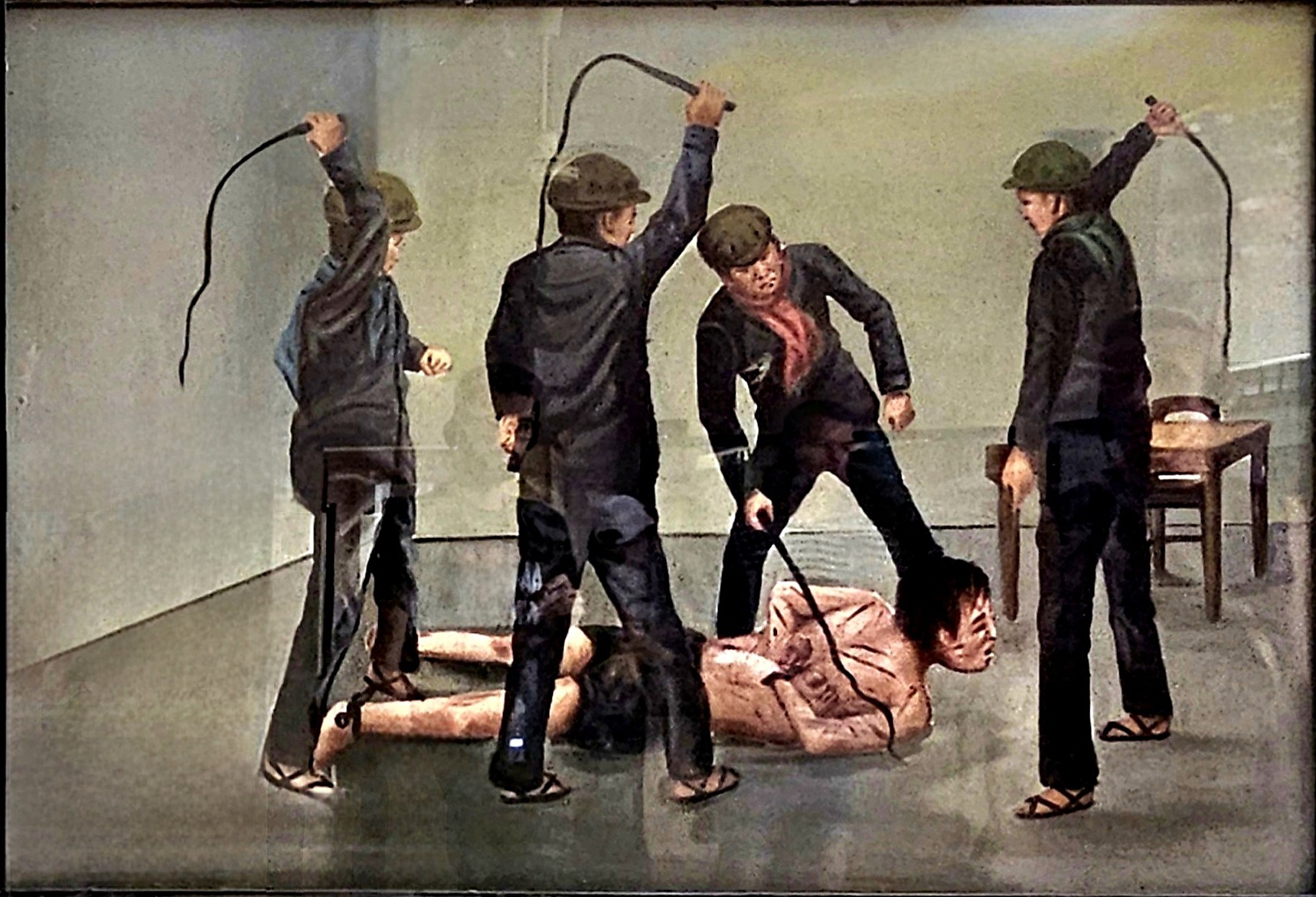
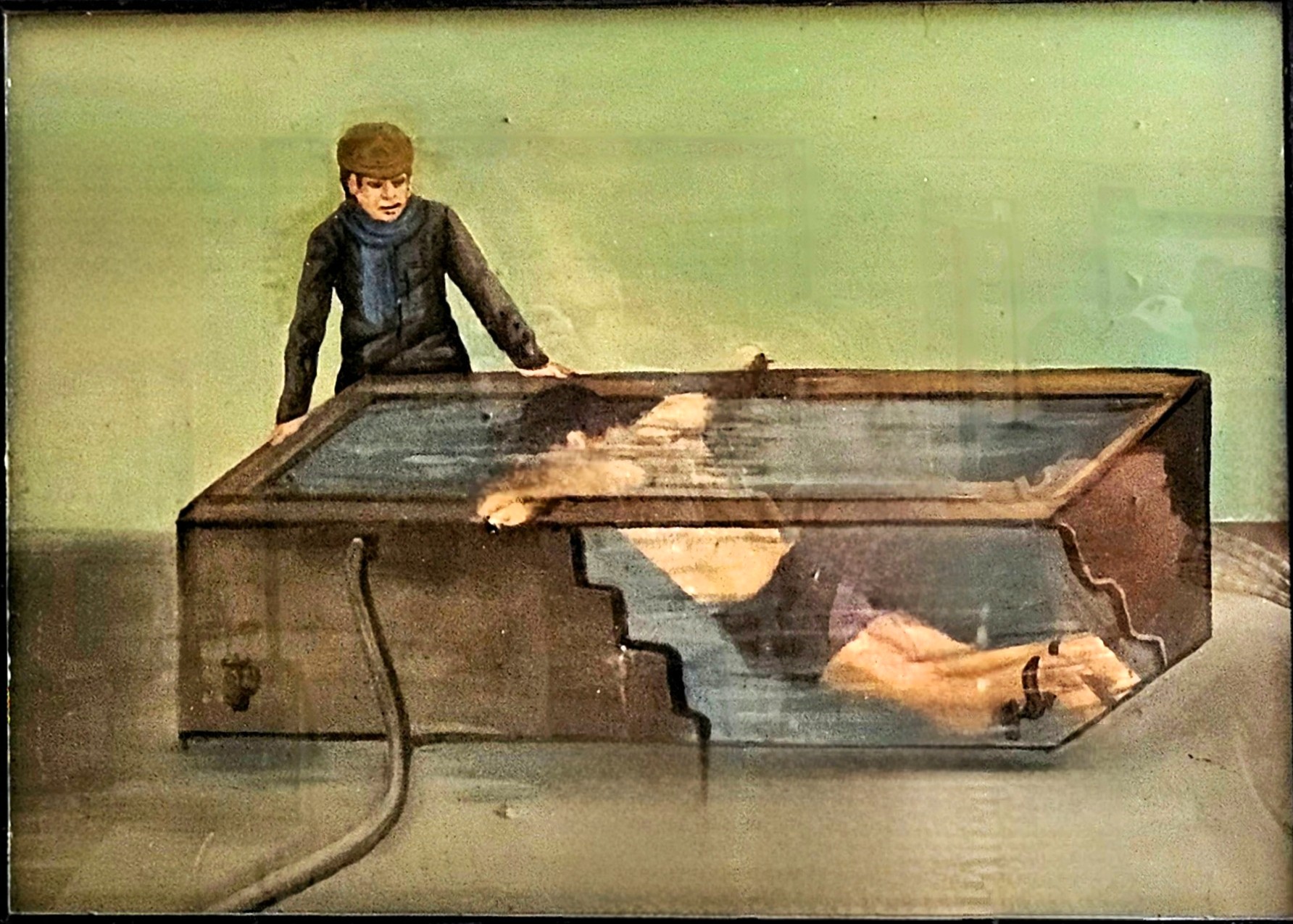
and tortured to extract a confession,
according to a strict code of conduct.
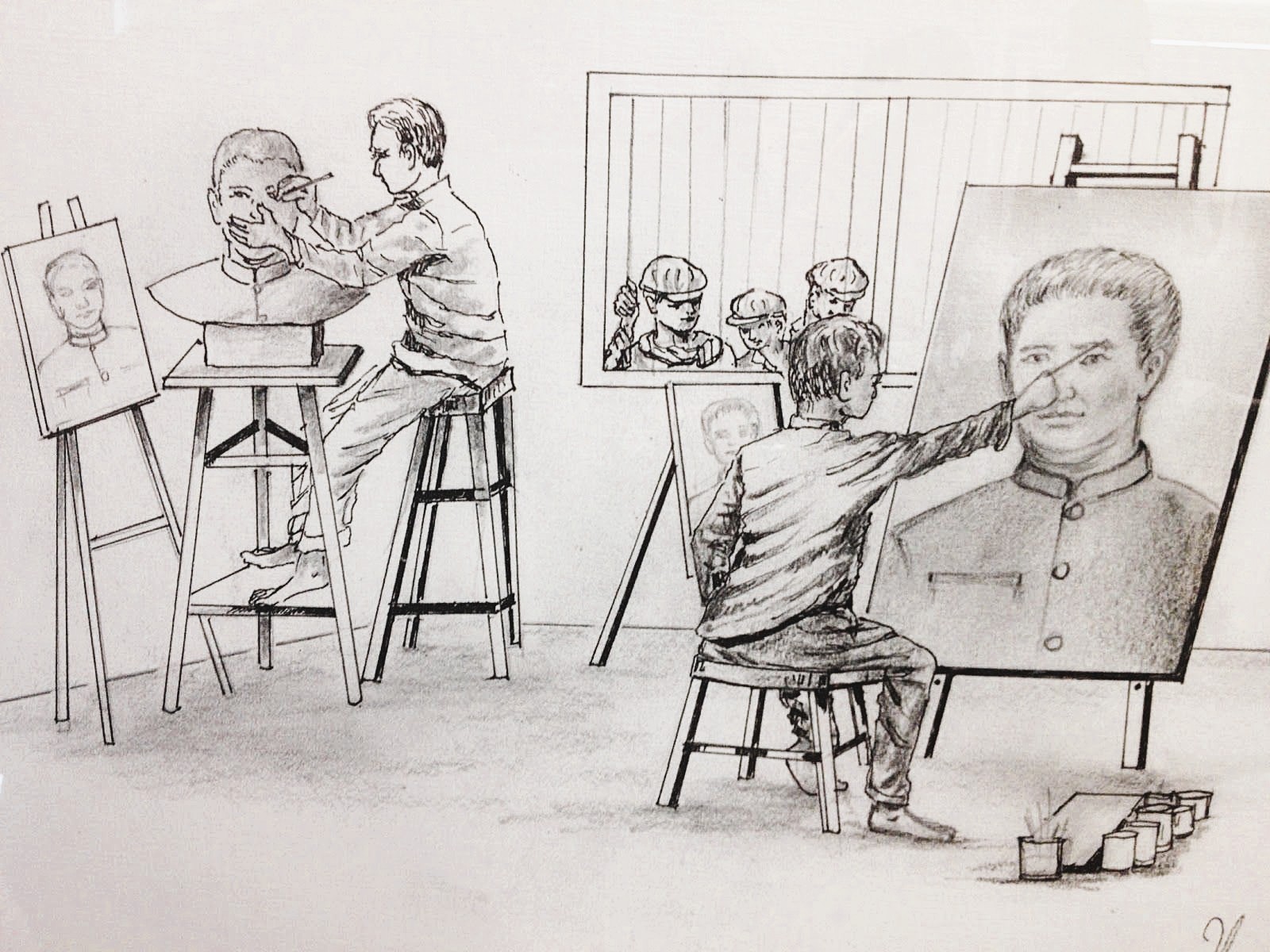
Archives from S-21 reveal that initially, Vann was to be executed, but the commandant spared him in exchange for the portraits he later painted of their supreme leader, Pol Pot.
Vann was among the handful of prisoners who narrowly escaped death by virtue of their special skills and usefulness to the regime.
Vann’s first-person account of his misfortune was interpreted years later after his release through a series of colorful graphic depictions–on permanent display throughout the museum–that ironically brings life to the drab surroundings of prison buildings.
These vibrant illustrations vividly capture the stark contrast between the bleak memories of confinement and the essence of freedom, allowing us to connect emotionally with Vann’s experiences.
The cracked walls reflect the forgotten whispers of hope and despair, transforming the narrative into an immersive journey that transcends time and pain.
The art not only serves as a commentary on the injustices faced but also inspires conversations about redemption, resilience, and the profound impact of creativity in the face of adversity.
Chum Mey is another survivor who’s grateful for his mechanical skills. By fixing the typewriters used to record the forced confessions of fellow prisoners, Chum Mey managed to escape a death sentence, but not the torture. He sits at the edge of the museum courtyard, eager to recount his story in horrific detail. “I come every day to tell the world the truth about the Tuol Sleng prison… so that none of these crimes are ever repeated anywhere in the world.”
Our group was also moved by our off-site exchange with Norng Chan Phal, who delivered his oral history through an interpreter. He was 9-years old in 1978, when his world was turned upside down. His father was arrested and executed at Tuol Sleng. Months later, the Khmer Rouge returned for the rest of his family. He recalled his mother’s torture and disappearance, and how he and his brother hid under piles of dirty laundry to escape retreating guards after S-21 was liberated.
Even now, the burden of remembering brings on sudden sadness.
All three survivors later testified against senior leadership before the UN-backed Khmer Rouge genocide tribunal, which led to their convictions.
Tuol Sleng was liberated by the Vietnamese Army in January 1979, and reopened the following year as a museum.
Cambodia’s willingness to confront its past is only one part of the healing process. Youk Chhang, director of the Documentation Center of Cambodia (DC-Cam) states, “Post-conflict nations must redefine themselves and actively commit to a future without violence, atrocity crimes and genocide.”
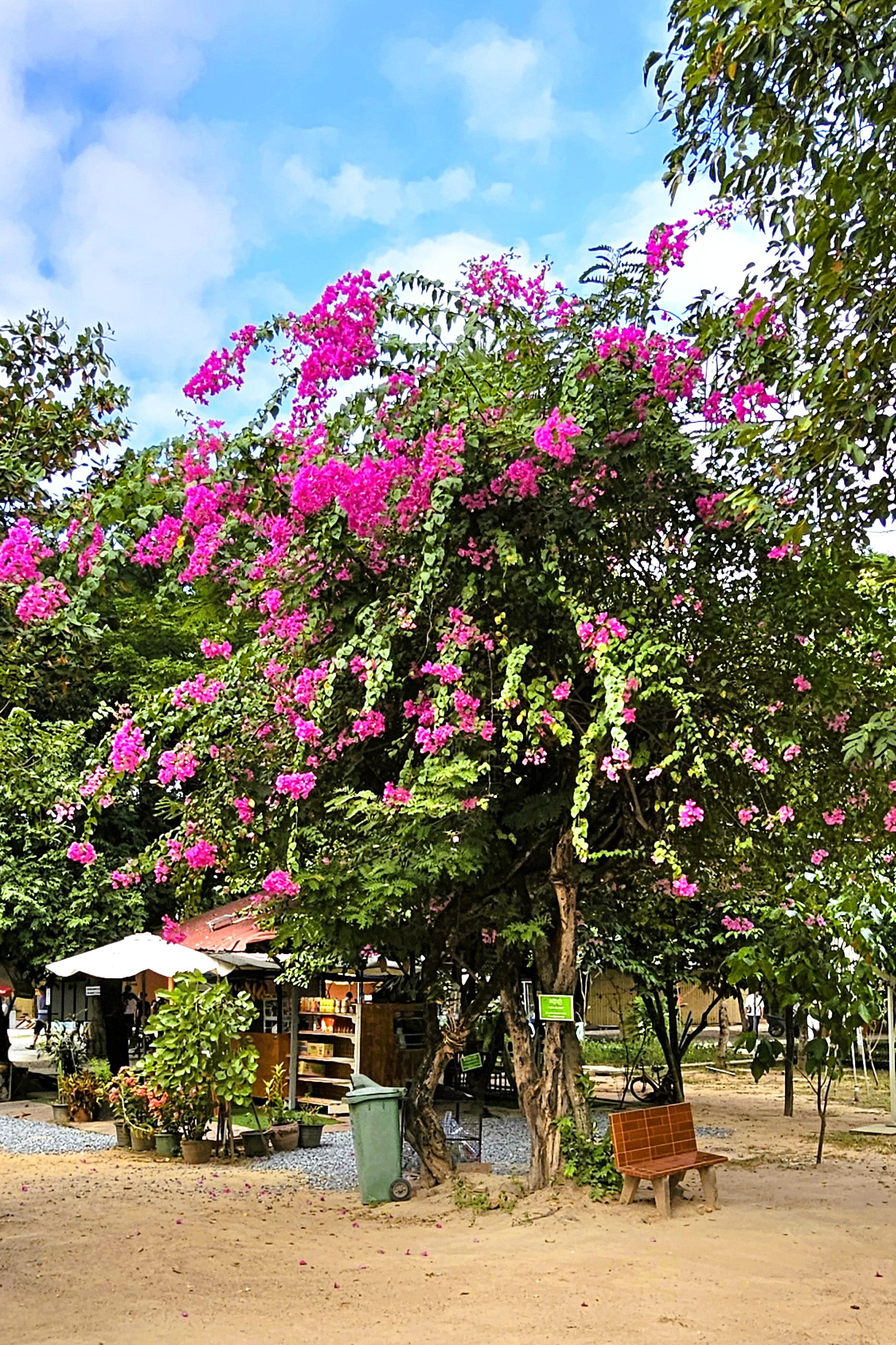
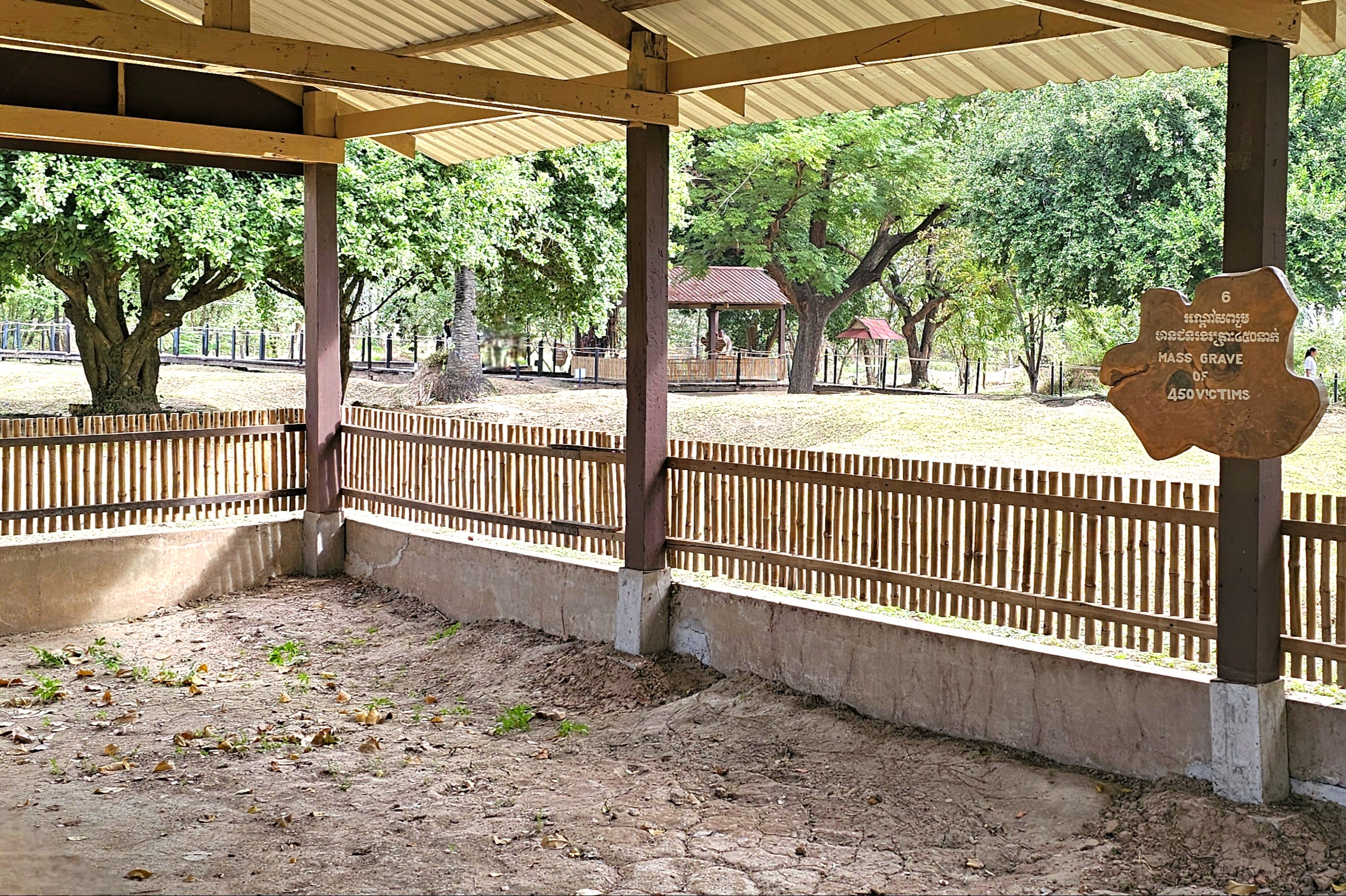
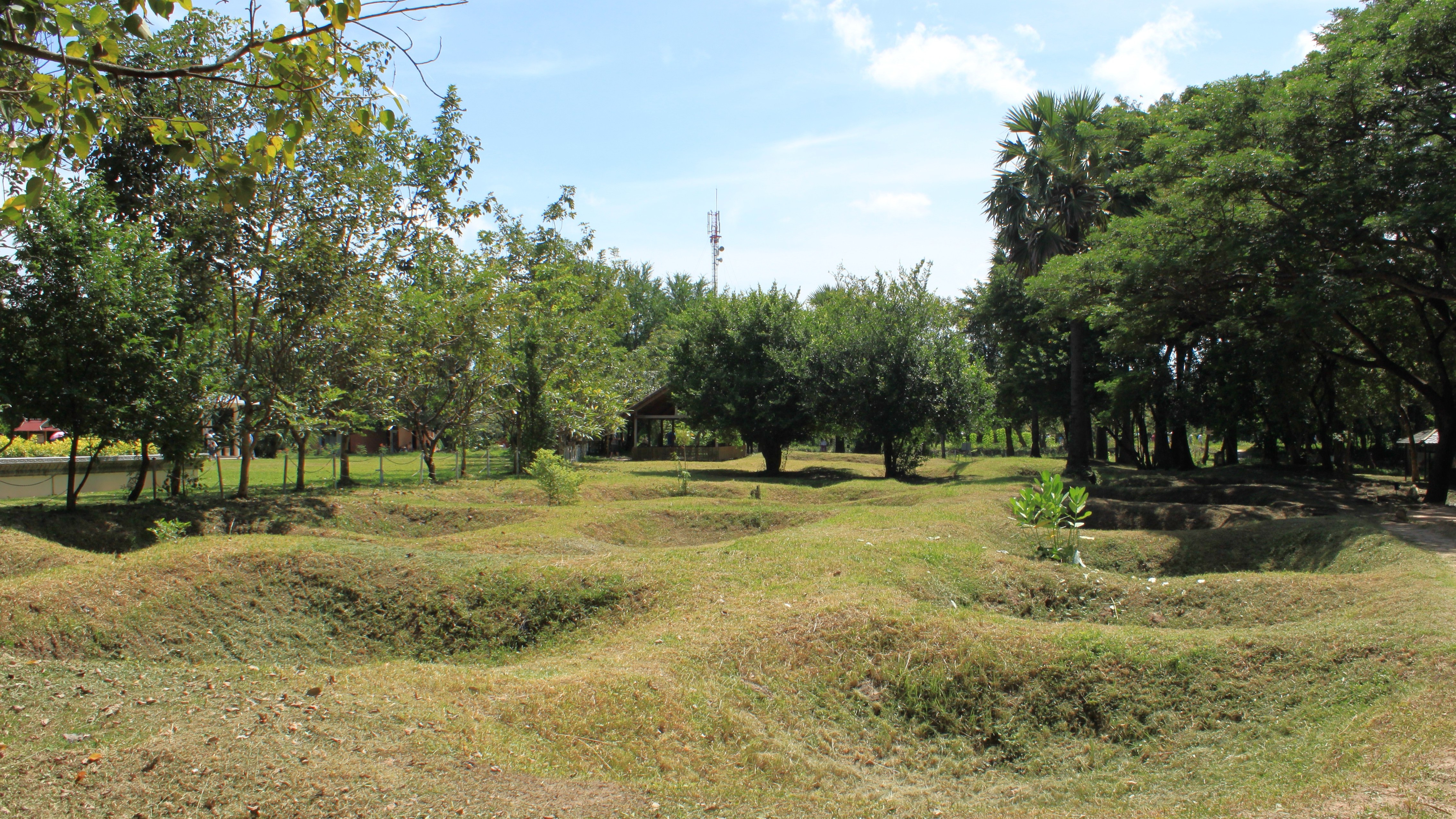
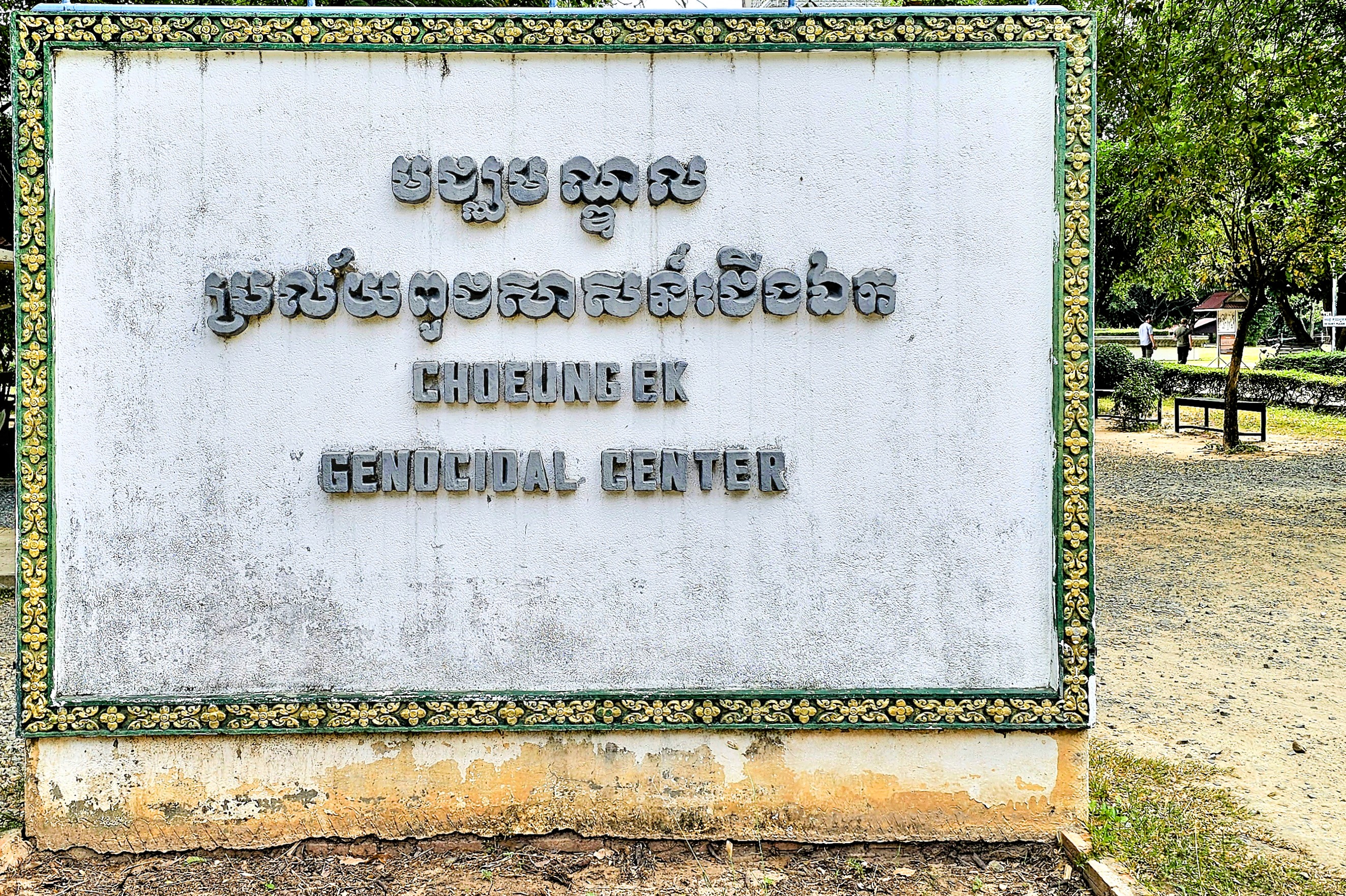
At first glance, Choeung EK is an inviting greenspace on the edge of Phnom Penh,
with flowering trees,
and a peaceful lotus pond stocked with ancient koi.
Located 12 km from City Center, it’s conveniently adjacent to AEON Mean Chey, the city’s trendiest and largest all-purpose shopping center and fashion mall targeting Cambodia’s rising middle class.
Although, from my perspective, the only fashion that’s display-worthy is a collection of fabric remnants protected in a glass box…
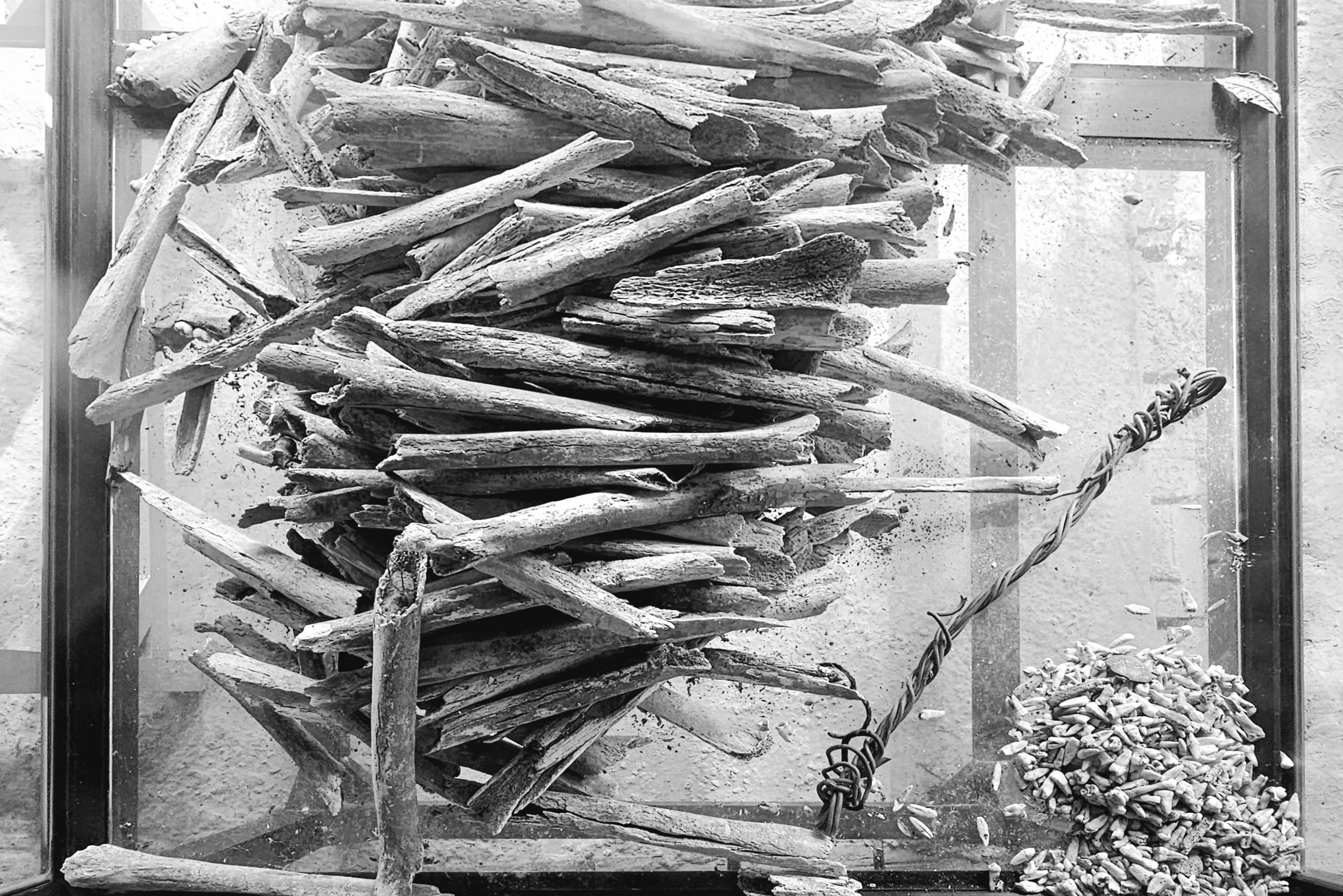
once worn by 20,000 prisoners whose remains continue to float to the surface during every rainy season.
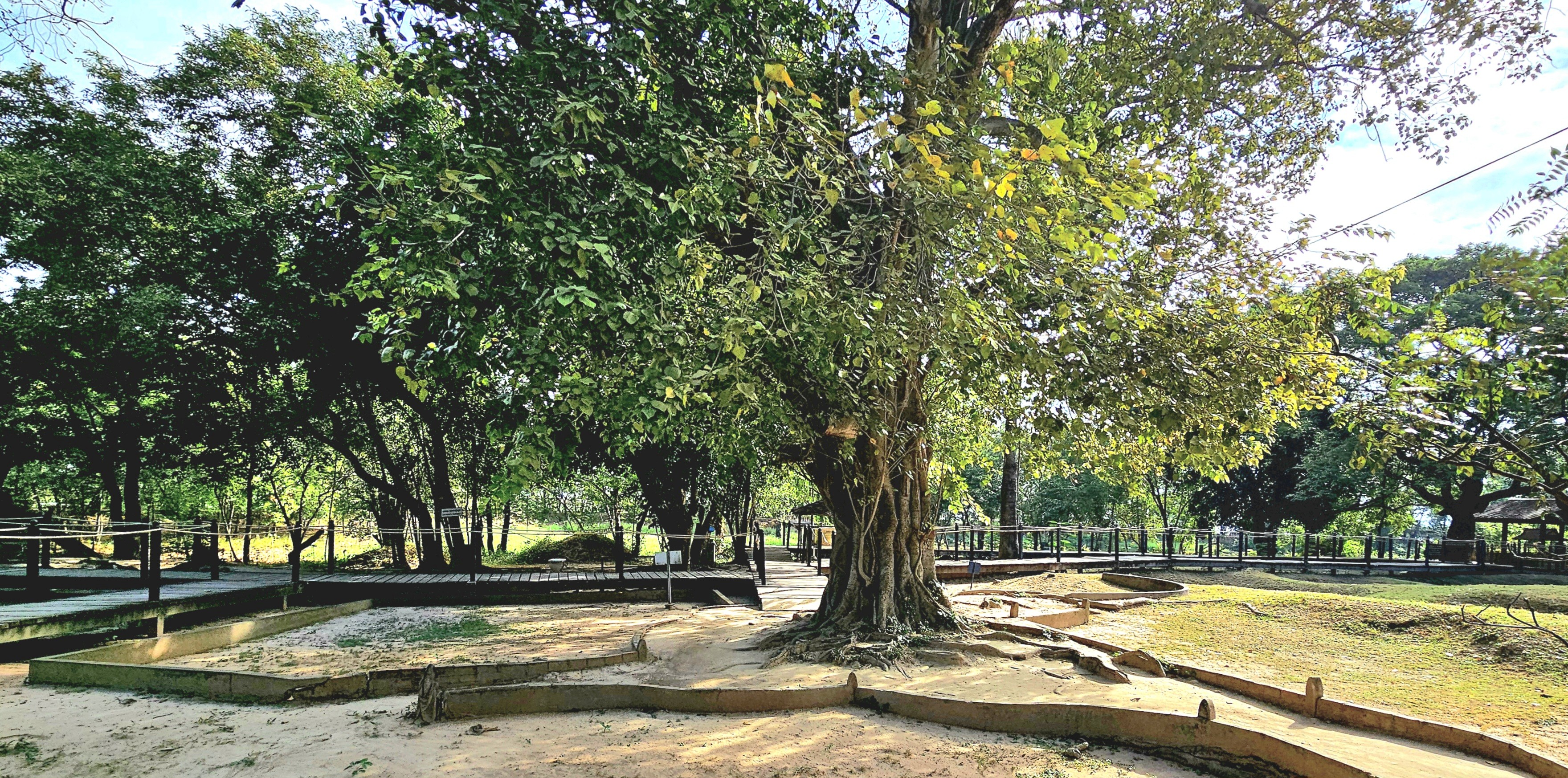
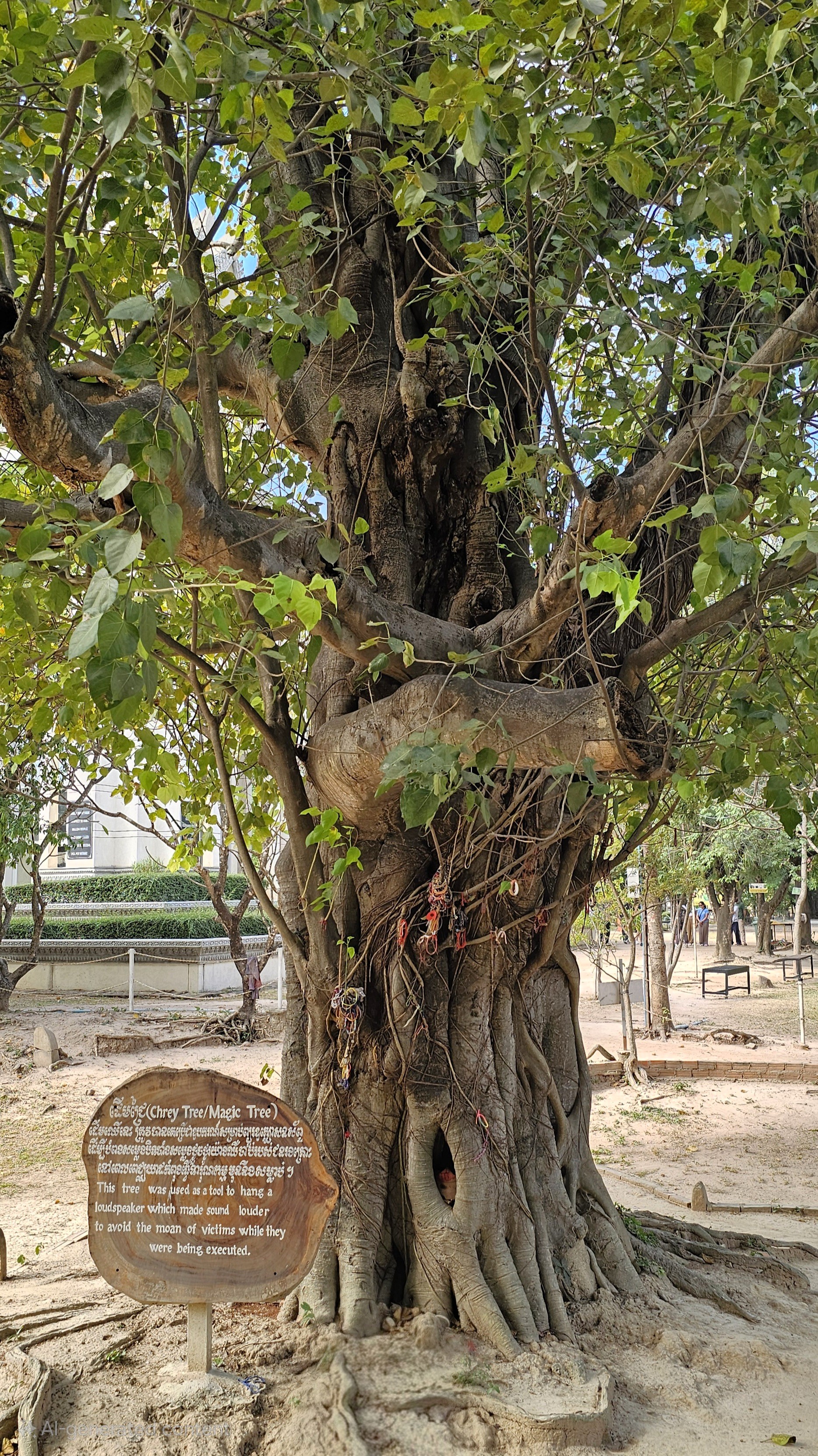
On closer inspection, the heritage trees throughout the grounds were once used as tools of brutality by agents of Khmer Rouge: from towers of dissonance,
to hardwood battering pillars.
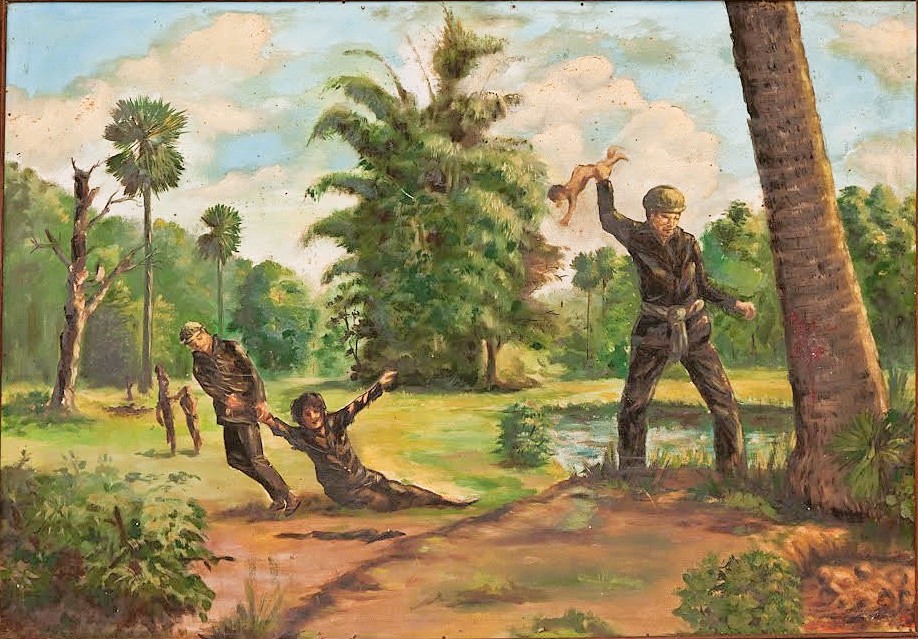
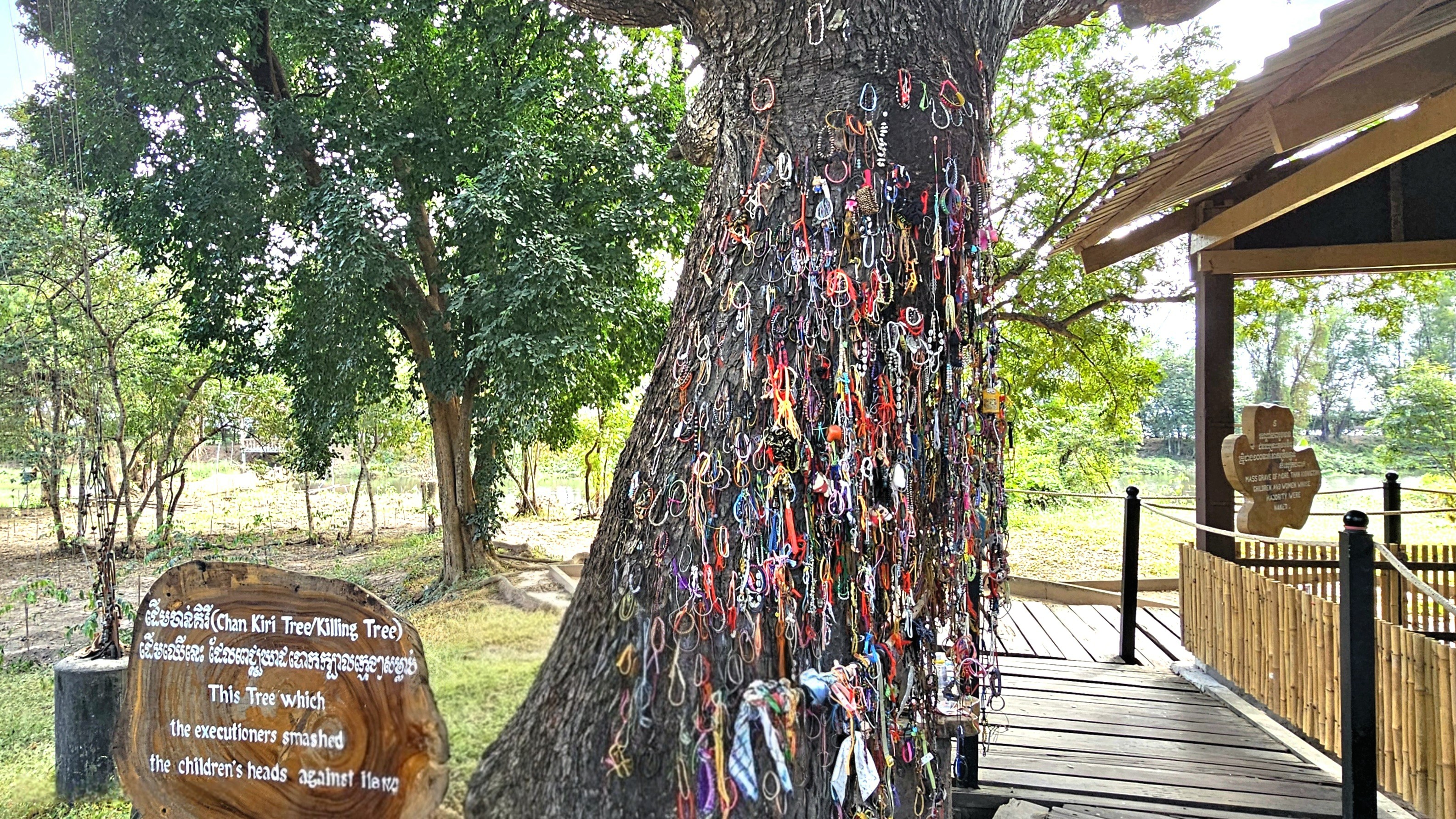
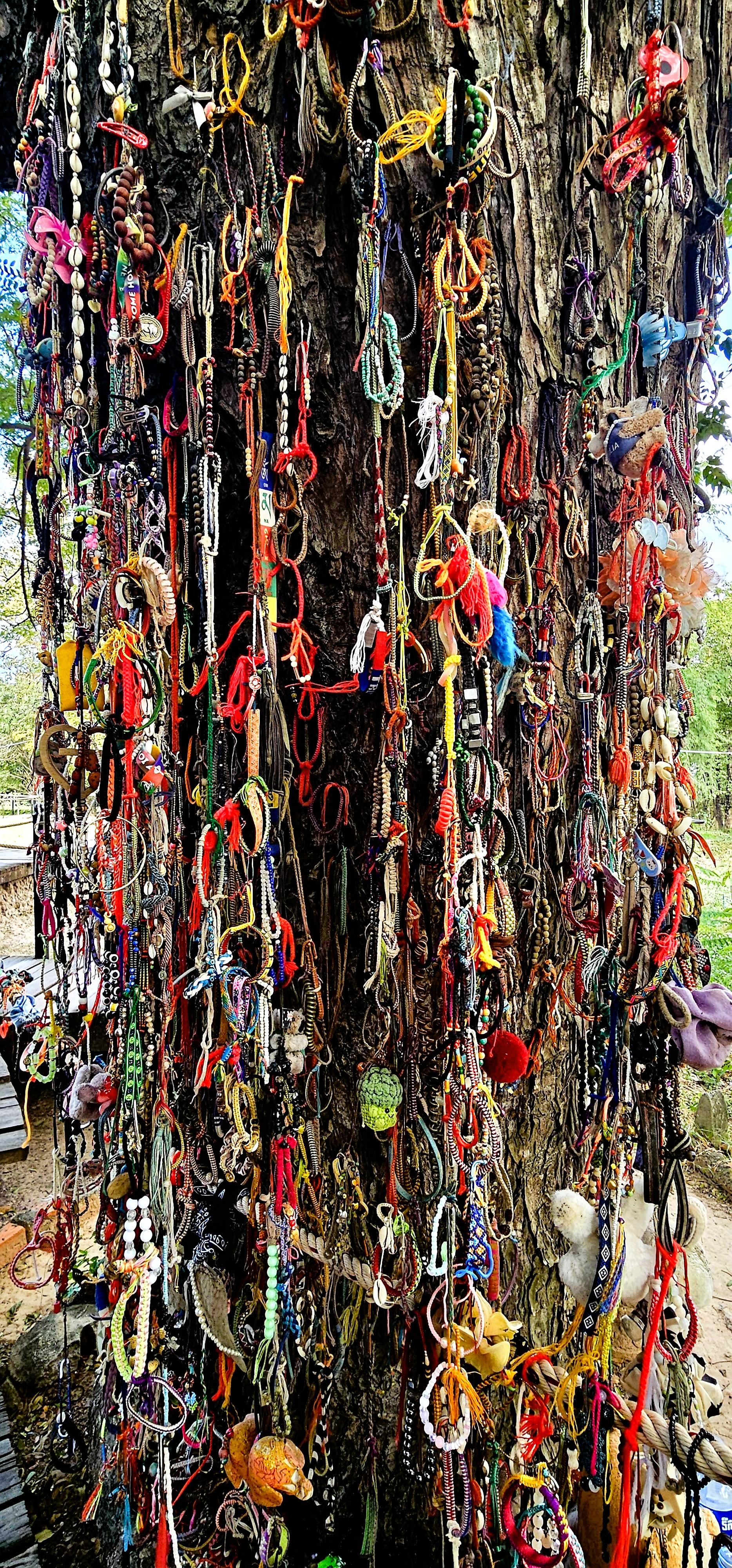
Over the years, visitors to Choeung EK Genocidal Center have rebranded this tree as an ad hoc totem to memorialize the fate of thousands of children whose skulls were bashed against it.
Nearby, a stunning Buddhist stupa rises from the epicenter of the killing field…
housing thousands of adult skulls recovered during a site excavation in the 1980’s.
Between 1995 and 2007, the Documentation Center of Cambodia undertook the most challenging and disheartening task of mapping and documenting Cambodia’s killing fields. Through thousands of interviews and field investigations, DC-Cam identified 19,733 mass graves and 196 prisons that operated during the Democratic Kampuchea (DK) regime.
Choeung EK’s conversion from orchard to reeducation center…
served as a lethal gateway for every soul imprisoned at the notorious Tuol Sleng Detention Center.
All day long, trucks rolled into S-21, herding political enemies into primitive barracks,
where they ultimately met their untimely fate through horrific violence.
In 5 years, an estimated 2 million Cambodians (men, women, children, and infants) were murdered by Khmer Rouge,
accounting for 25% of the nation’s population.
Choeung EK reopened as a historical museum and learning center on January 7, 1989, with a mission to acknowledge the historical atrocities that occurred, and to remind us that violence against each other can have devastating consequences.
Its exhibits, memorials, and curated educational programs engage visitors in meaningful conversations about human rights and reconciliation.
Cambodians will soon commemorate their loss with a National Day of Remembrance. Every May 20th, students take part in an annual ritual–reenacting the crimes of Khmer Rouge guerillas–that still haunt Cambodian people deep to the bone.
On that day and every day, we pray for healing and understanding, and the realization that confronting past acts of inhumanity will inform and guide the well-being of future generations.
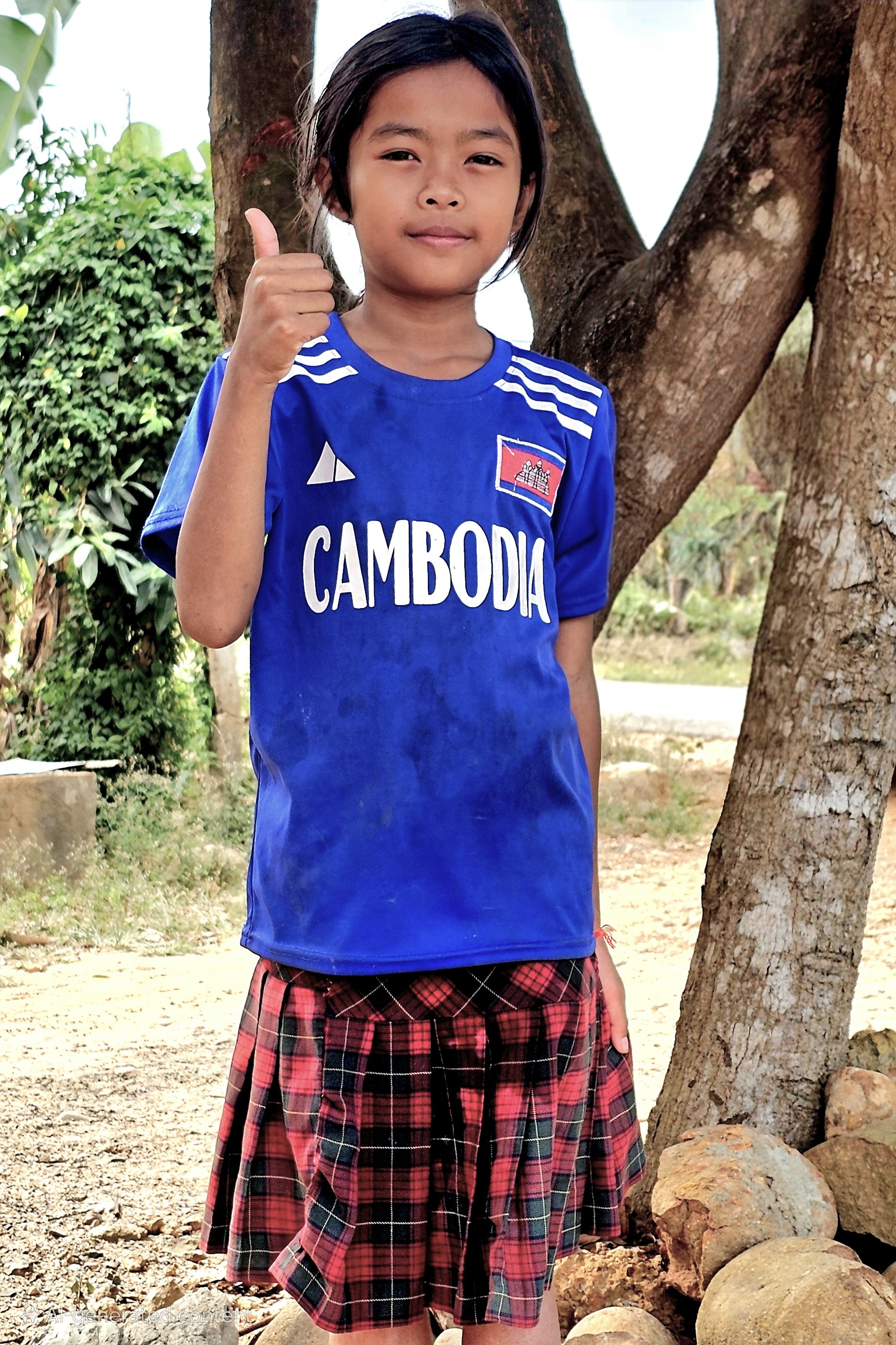
We were only 50 miles into a 200-mile road trip when our driver pulled up to a roadside shack on Natl Hwy 6 in Skón. It was our first potty break on the way to Siem Reap from Phnom Penh, but Seong, our guide had a different motive for stopping. We were standing on the edge of the jungle in Kampong Thom province to meet the “Spider Woman” of the town locals refer to as “Spiderville.”
She and her young daughter manage a thriving tourist trade of hunting and preparing Thai zebra leg tarantulas for snacking.
Historically, eating bugs, or entomophagy is nothing new for Cambodians. The practice is embedded in Cambodian culture, as shamans believe in its healing powers for heart, lung and throat ailments, as well as its potent aphrodisiac properties.
All the same, I can’t imagine why anyone would ever consider eating a tarantula, but during the Khmer Rouge regime from 1975-1979, eating eight-legged creatures became the new normal, thanks to the great food scarcity. Estimates from The U.S. Holocaust Memorial Museum suggest between 500,000 and 1.5 million Cambodians perished from Khmer Rouge–induced famine, causing a desperate populace to hunt for anything that wriggled or crawled as dinner.
Decidedly, Cambodia’s appetite for tarantulas has evolved from the venomous (Pol) Pot stirrer on the countryside menu, to where it has become culinary currency. A skilled spider hunter/vendor can unearth up to 200 of these creatures (known locally as A-ping) in a couple of hours and fry them up for $1 each, reaping big profits.
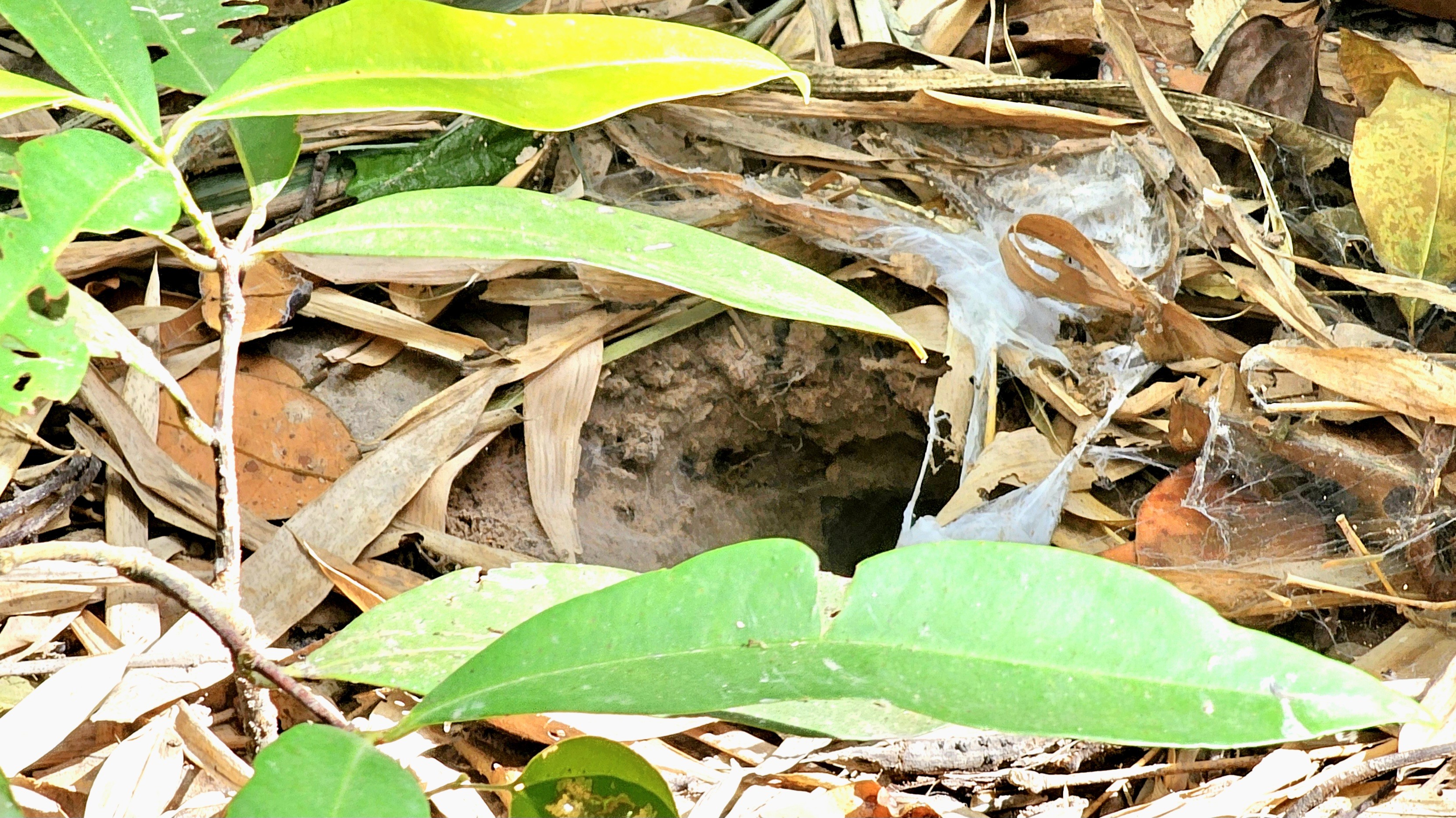
All it takes is a small shovel, a stick, and locating their hidden, silk-laden lair–
something Spider Woman knows all too well.
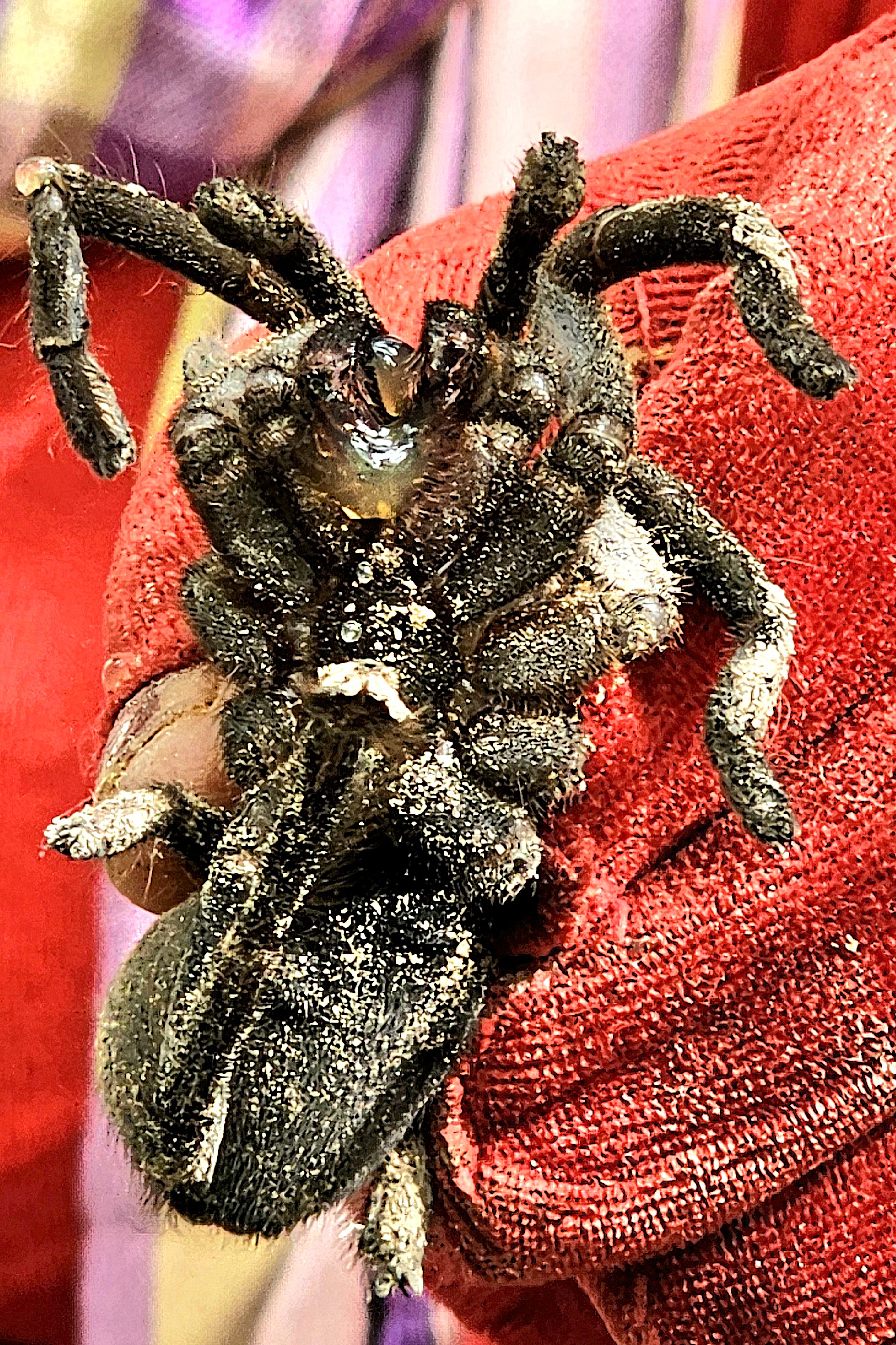
Once captured, A-ping was defanged to protect us from its venom, making it safer to handle without being bitten.
Without hesitation, they were very curious to explore new territory as they “tiptoed” across my arm on their hairy legs, dragging their velvety abdomens. It was truly a weird sensation.
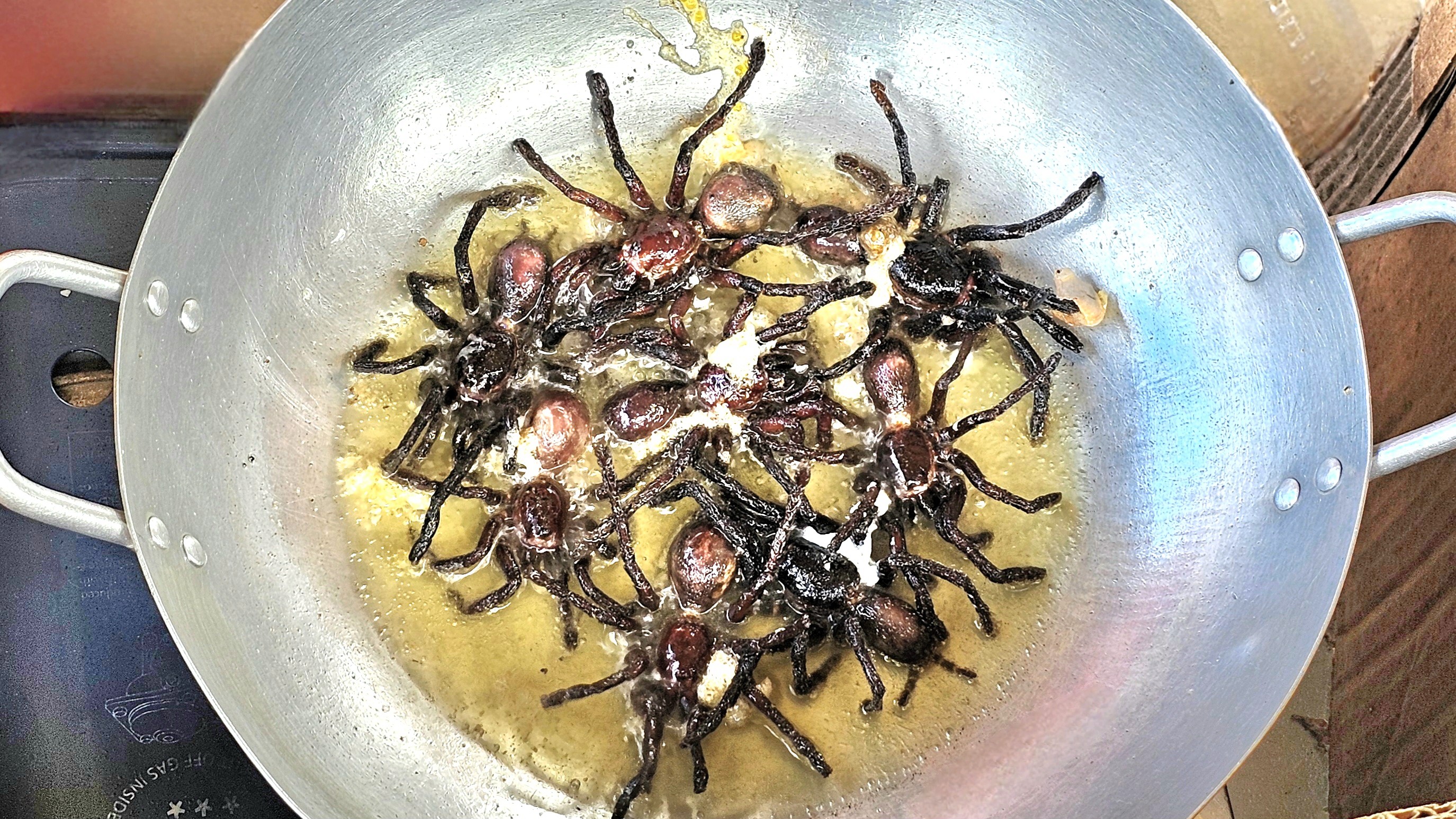
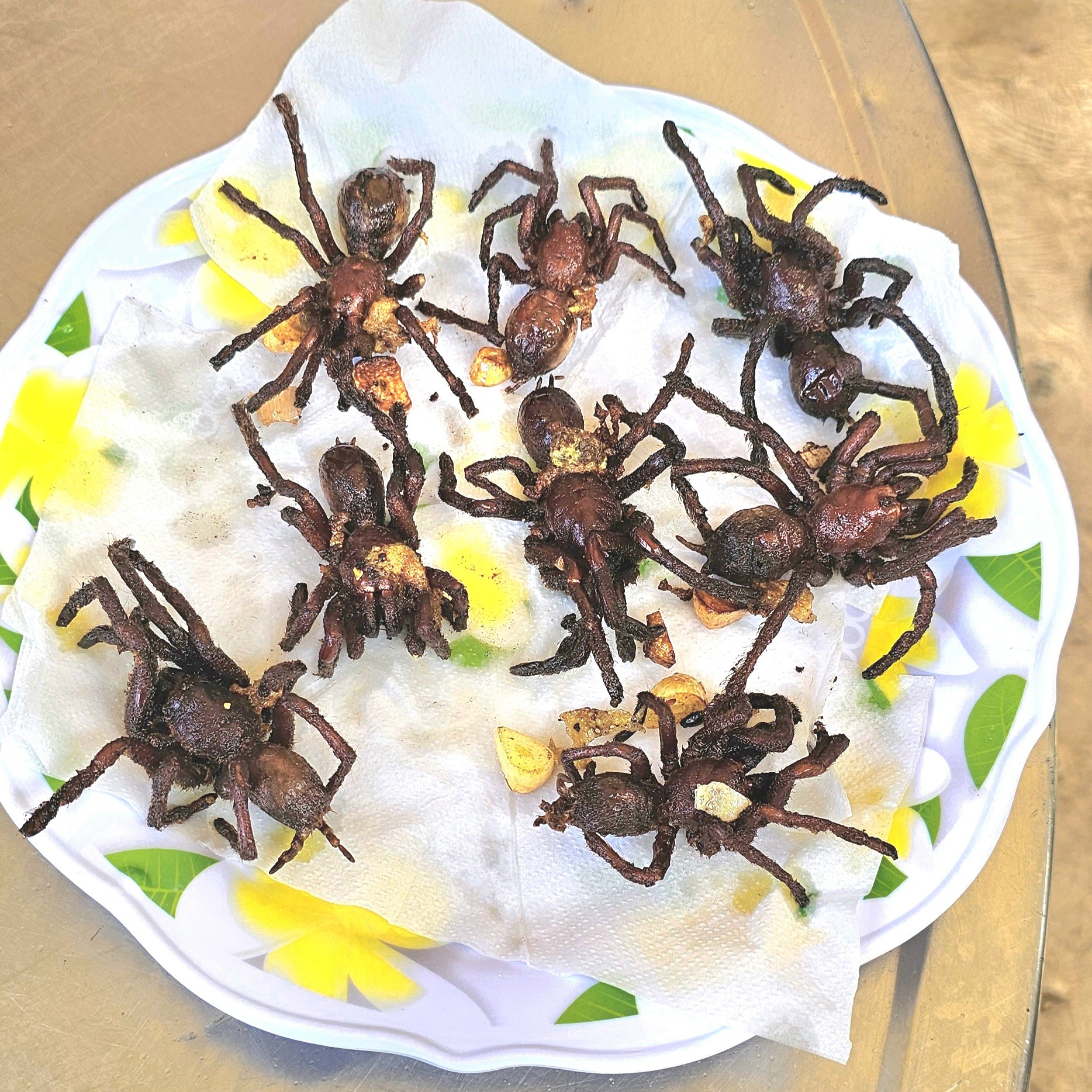
As for tasting A-ping, the recipe is simple and straightforward. Saute chopped garlic and grated ginger in a wok of hot palm oil until golden. Add a dozen tarantulas and coat evenly with oil until their bellies explode into a yokey paste.
Season with salt and pepper to taste and blot the excess oil on a paper towel before enjoying.
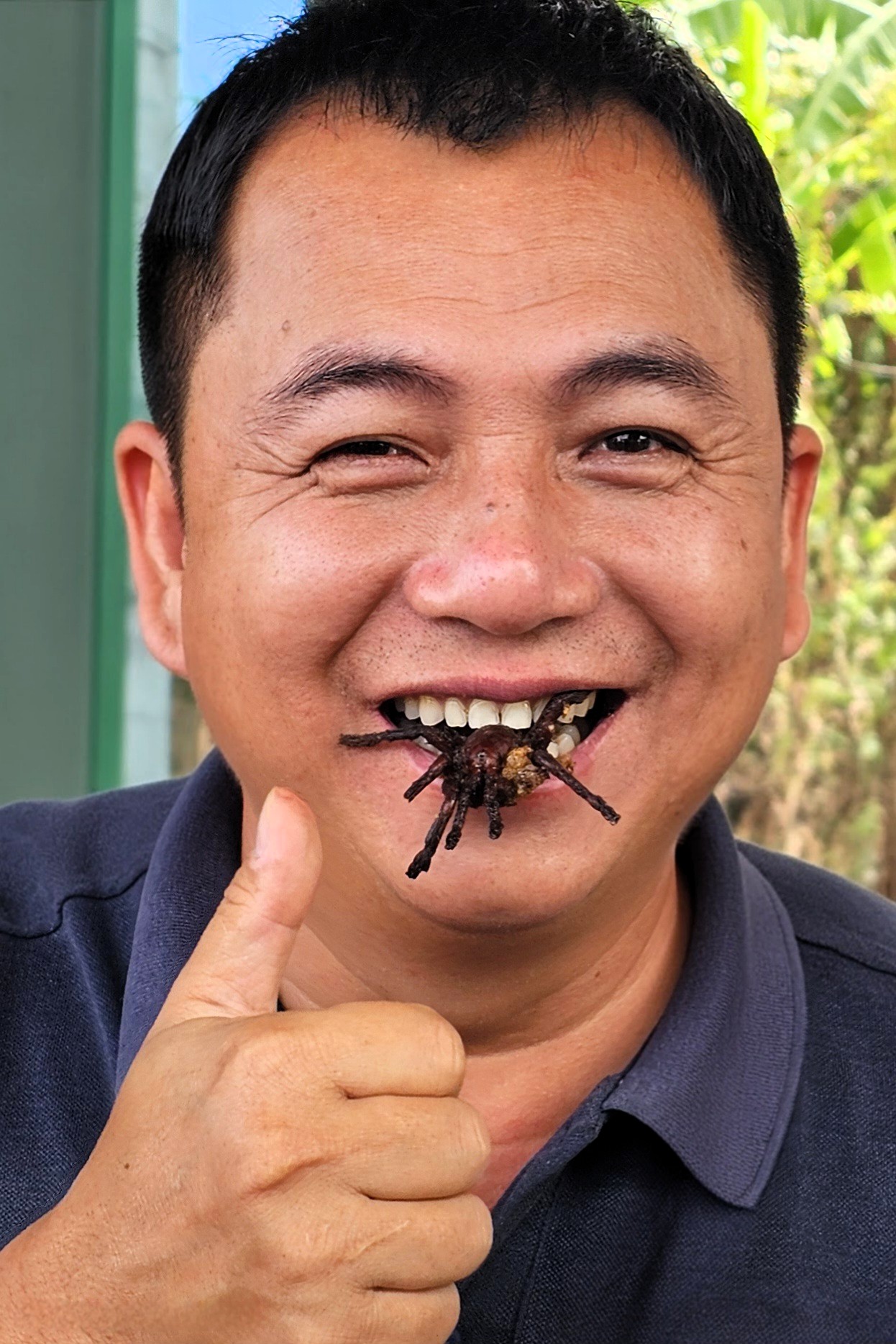
Not everyone in our group was hungry for arachnids, although there were a few intrepid souls. The faint-hearted mused that it would spoil their lunch, while Leah was sick at just the thought of putting it in her mouth. But before anyone of us would commit, we demanded a demonstration. Our guide was eager to oblige, touting it as a valuable source of protein, folic acid, zinc, and iron.
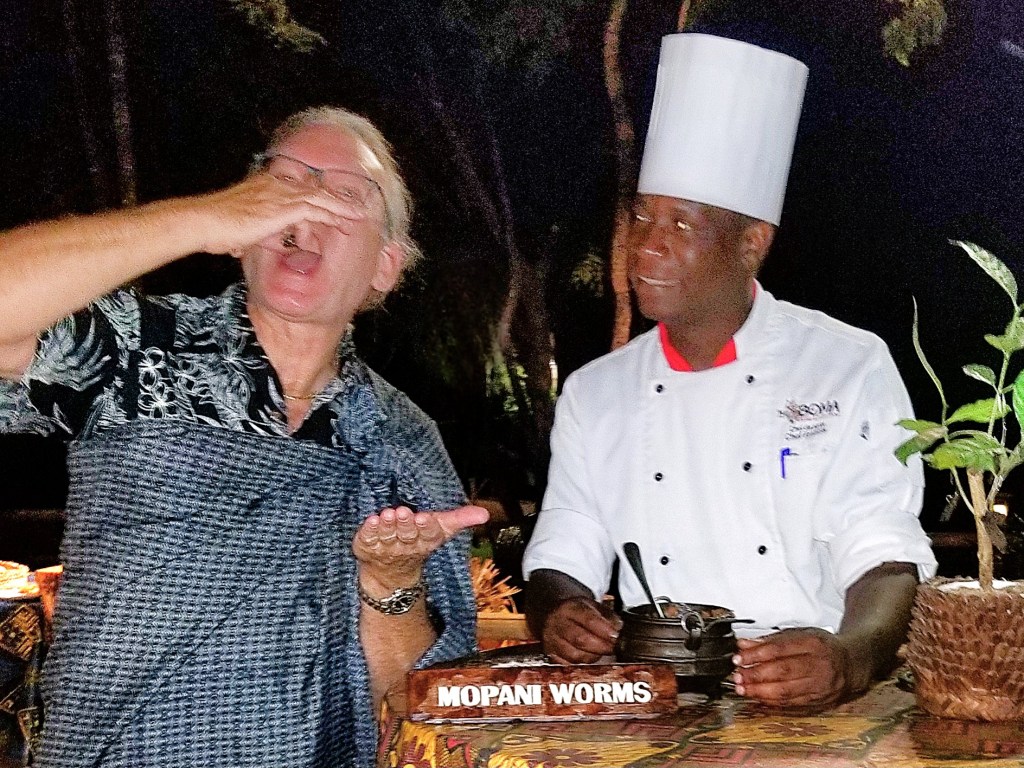
“What does it taste like?” we asked. But Seong was silent on the matter. He was too busy chewing. While I’ve “enjoyed” crickets in Sumatra, and mopane worms in Zimbabwe, I’ve never experienced tarantula on any menu …
until now!
So, what does deep-fried tarantula taste like? It was crunchy on the outside, and gooey on the inside, not unlike soft-shelled crab–with a similar taste and texture. However, the large round, hairy abdomen–the source of all the spider organs–tastes a bit gamey.
While there currently seems to be an inexhaustible supply of tarantulas in Cambodia, systematic deforestation throughout the kingdom may be a nail in the coffin for this delicacy and could even lead to a decline in their numbers, say some experts. But for now, the demand for munching on A-ping continues to creep up.
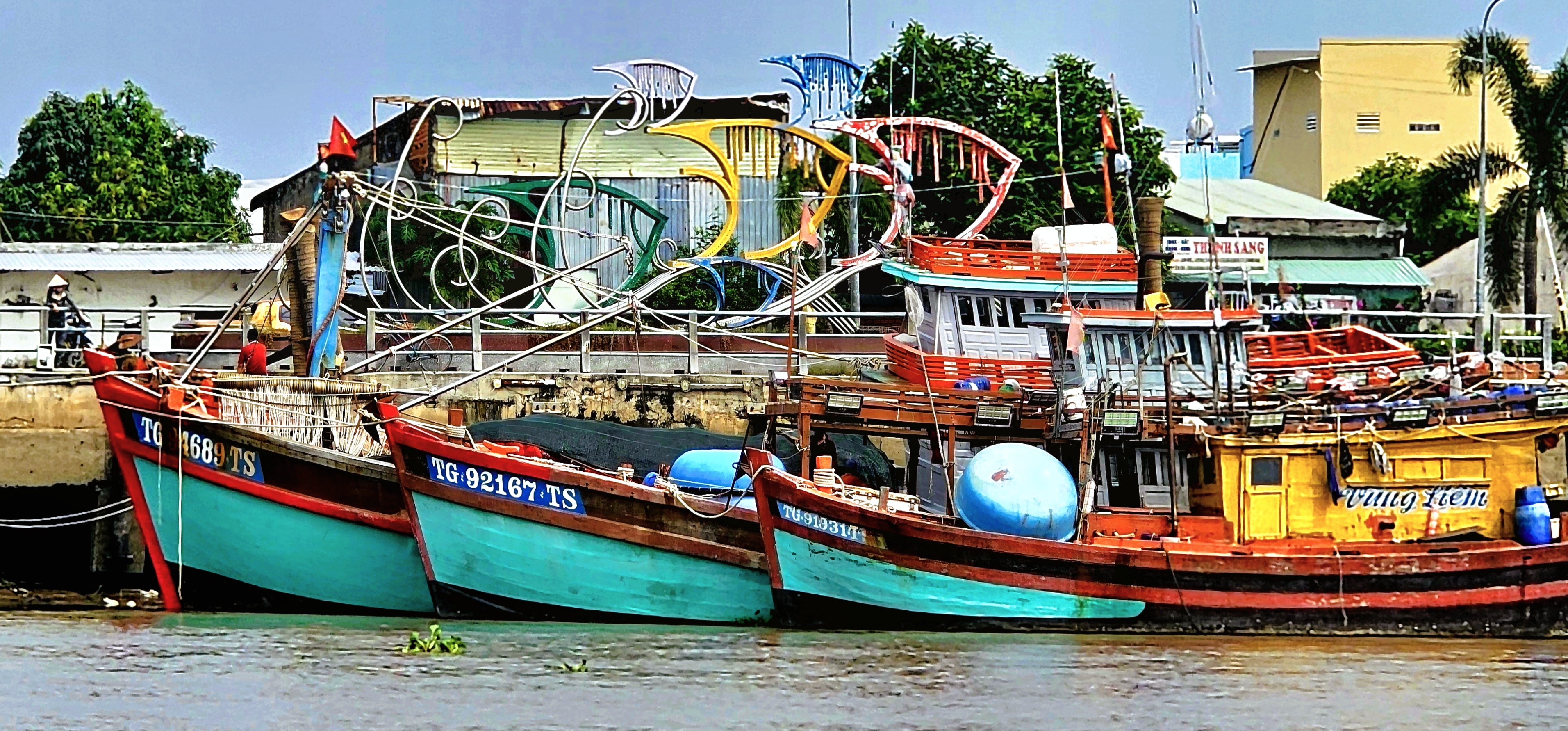
While sifting through hundreds of photographs taken during a recent tour of Southeast Asia (see past posts), I weeded out a wave of watercraft shots, and thought a maritime montage of nautical notions would make the perfect post.
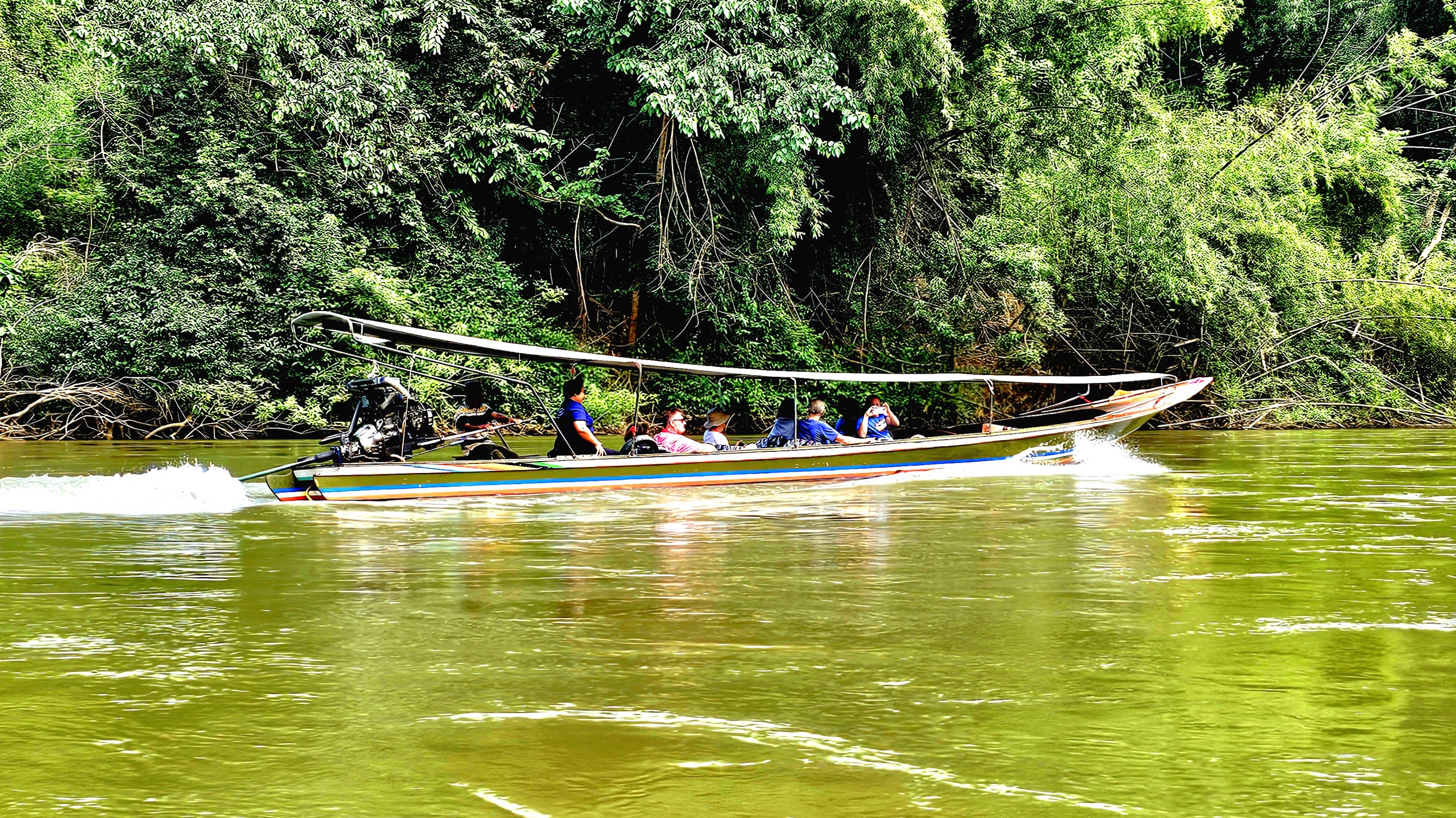
During our visit to Kanchanaburi, Leah and I enjoyed time on the River Kwai in a traditional long-boat…
giving us splendid views along the water,
and a glimpse of river-lounging for well-heeled tourists:
But it wasn’t until we returned to Bangkok’s Chao Phraya that we gained a greater appreciation of the river’s transportation network:
of river buses, cross-river ferries, water taxis, and sunset party boats.
On another occasion, we boarded a long tail to cruise upriver on the Chao Phraya,
taking in the sites of the ancient capital of Ayutthaya…
along the waterfront.
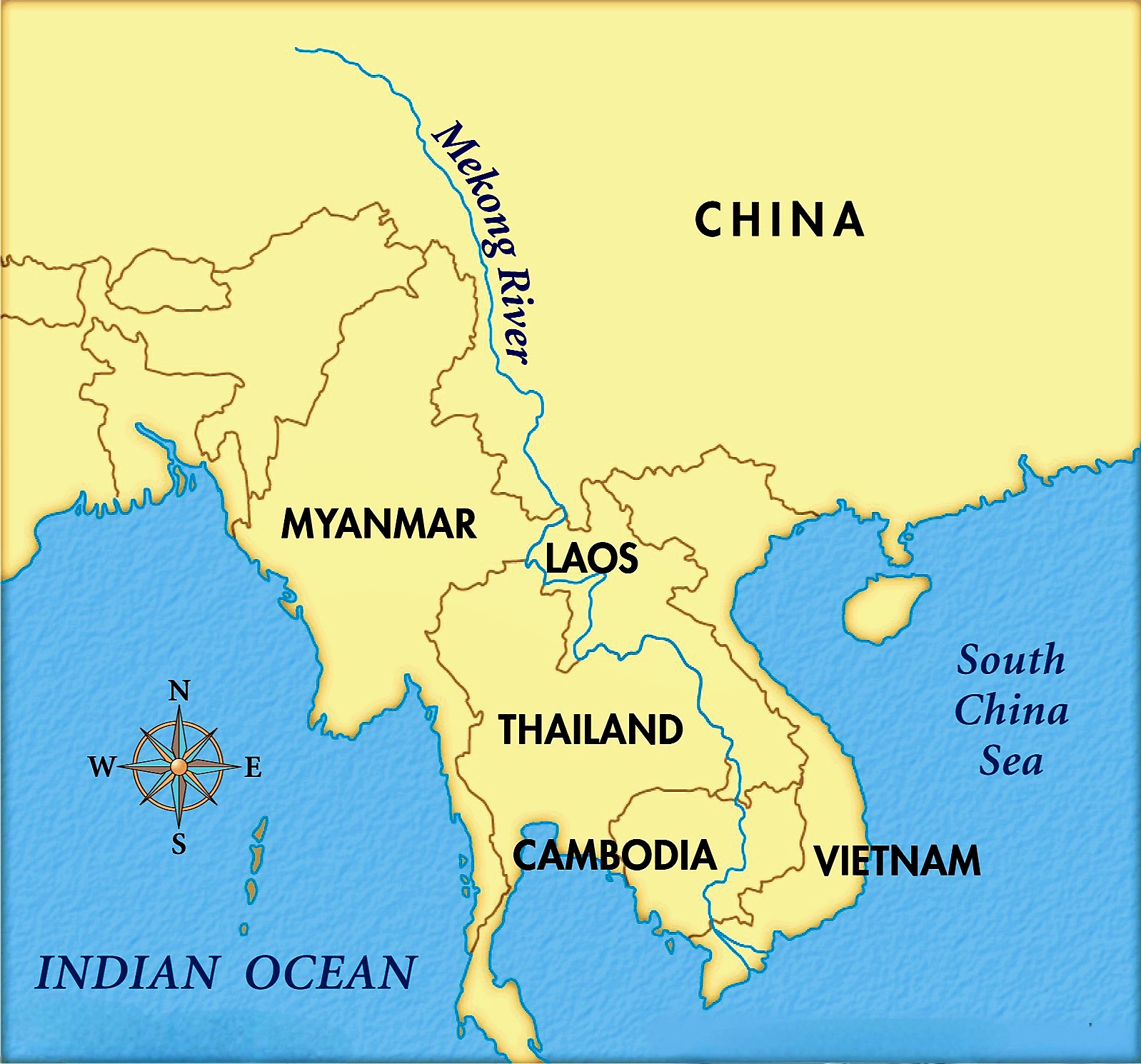
But the mighty Mekong is Southeast Asia’s “Mother of all Rivers” and most significant waterway. It winds its way from the Tibetan Plains to the South China Sea, running through Myanmar, Laos, Thailand, Cambodia, and Vietnam, making it the region’s longest river at nearly 3,000 miles.
The Mekong is also the most productive river on the planet–boasting the world’s largest inland fishery–
which accounts for up to 25% of the global freshwater catch while providing livelihoods for 90 million people,
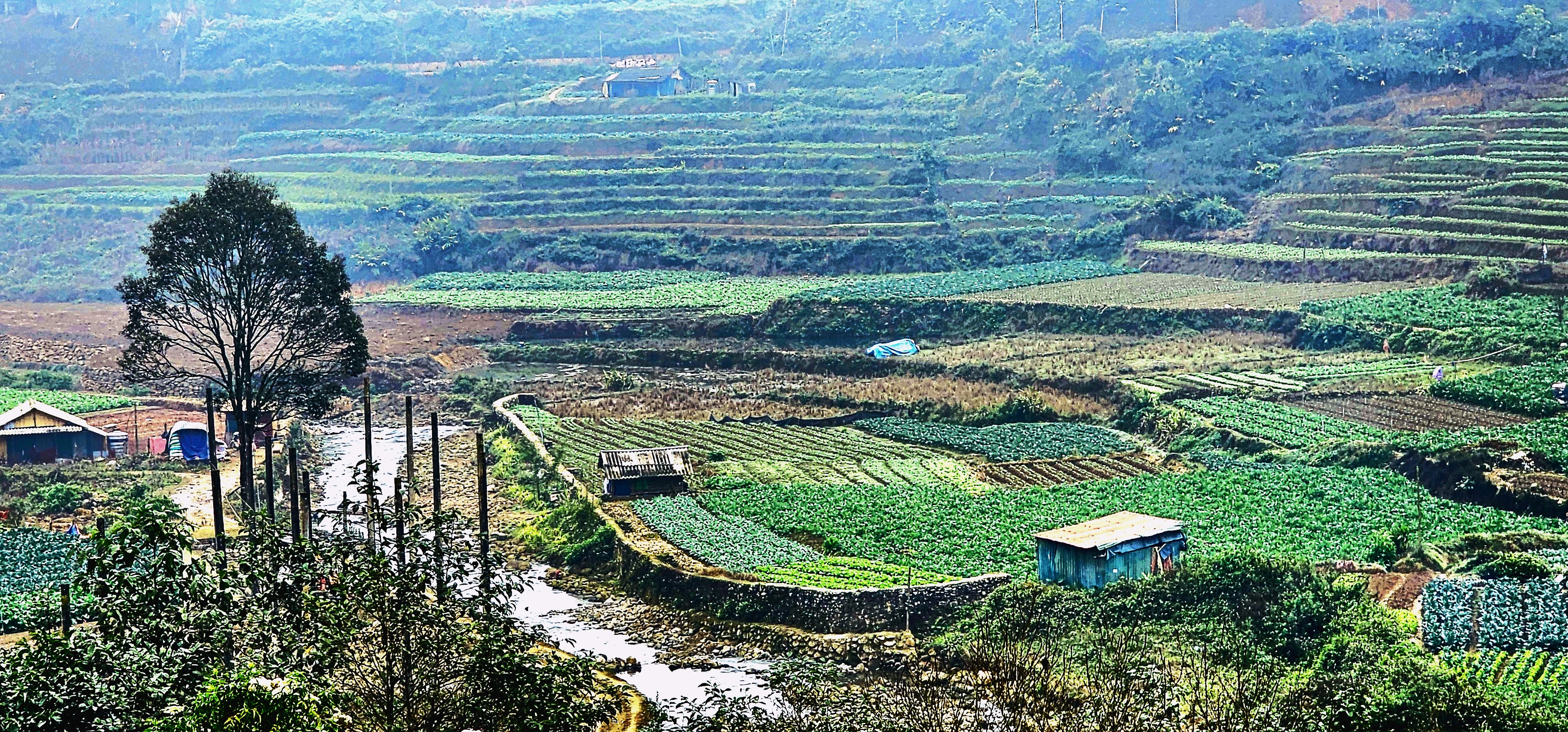
and supporting 54,000 sq mi of rice crops.
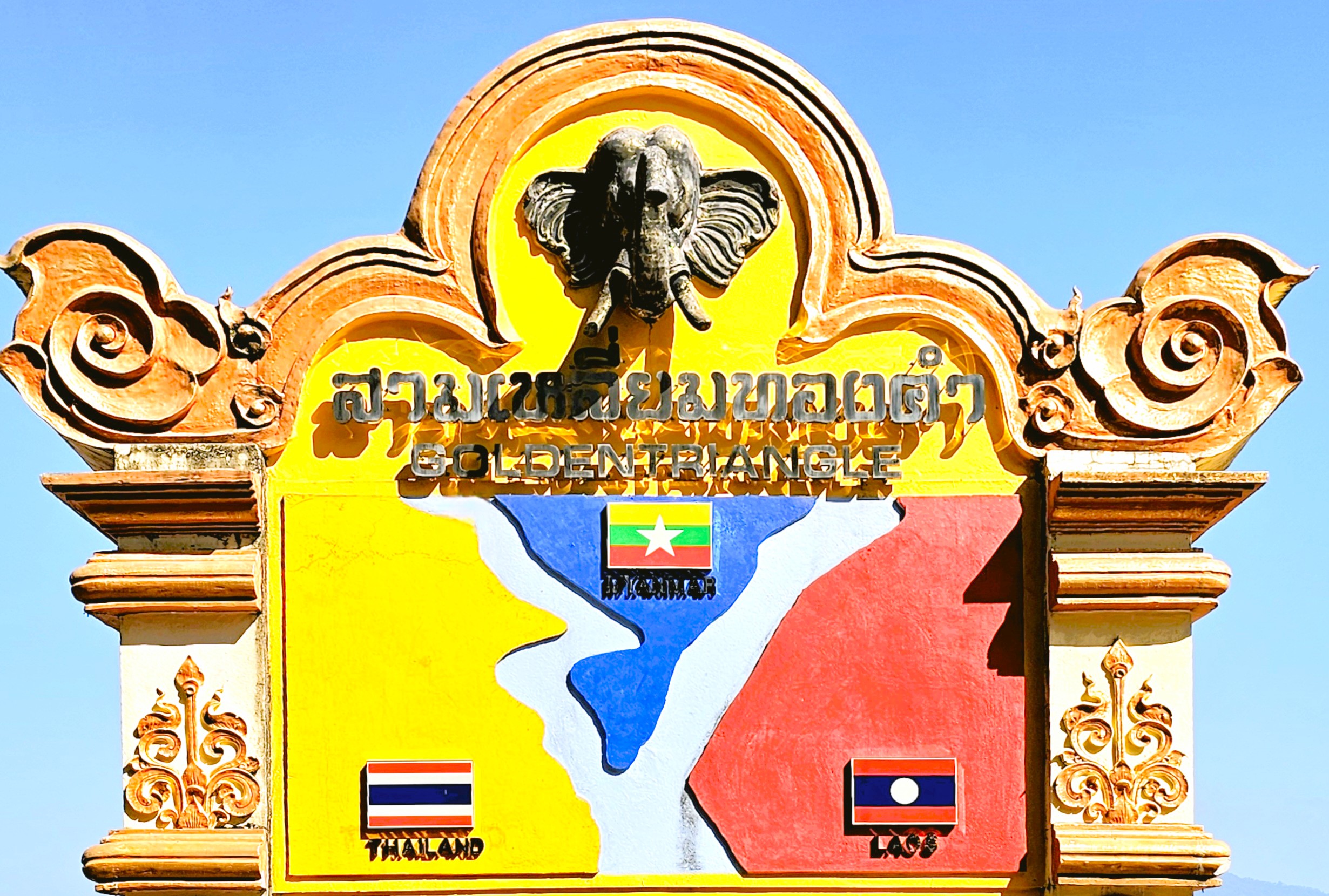
While touring upper Chiang Rai, Leah and I were hypnotized watching the confluence of Myanmar’s Roak River flowing into the Mekong–
separating Thailand and Laos to form the Golden Triangle.
But it wasn’t until our visit to Luang Prabang, Laos that we caught a second look at the Mekong–this time during golden hour–
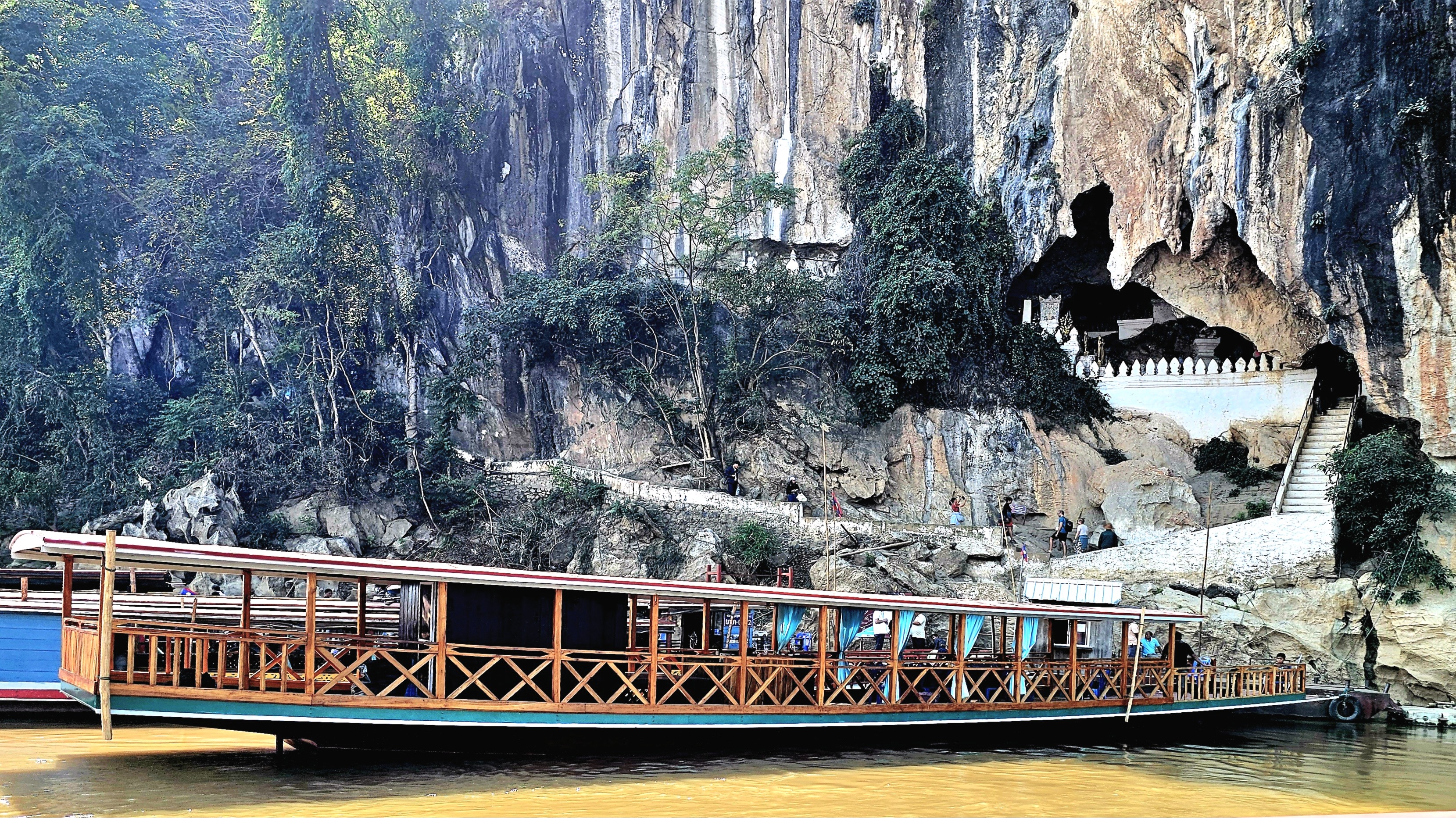
which set the stage for our cruise the following day on a traditional wooden boat.
We motored slowly upriver to where the Mekong meets the Nam Ou River at Ban Pak Ou,
and disembarked directly across from the village…
to explore the Pak Ou Caves–Tham Ting and Tham Theung–located on the west bank of the Mekong River.
The first Lao people arrived at Ban Pak Ou from South China during the 8th century. They brought a strong belief in spirits and a profound respect for all things nature. It was an animistic religion known as Ban Phi.
The villagers believed that the caves were enchanted with river spirits, and they performed periodic blood sacrifices for prosperity and protection, but by the 16th century, Buddhism had been adopted by the royal families of Lao, who offered their patronage until the last days of the monarchy in 1975.
While Buddhism remains a unifying feature of Lao culture, animistic rituals continue to thrive and have been seamlessly integrated into Buddhist ceremonies, allowing Shamans and monks to symbiotically tend to the spiritual needs of their worshippers.
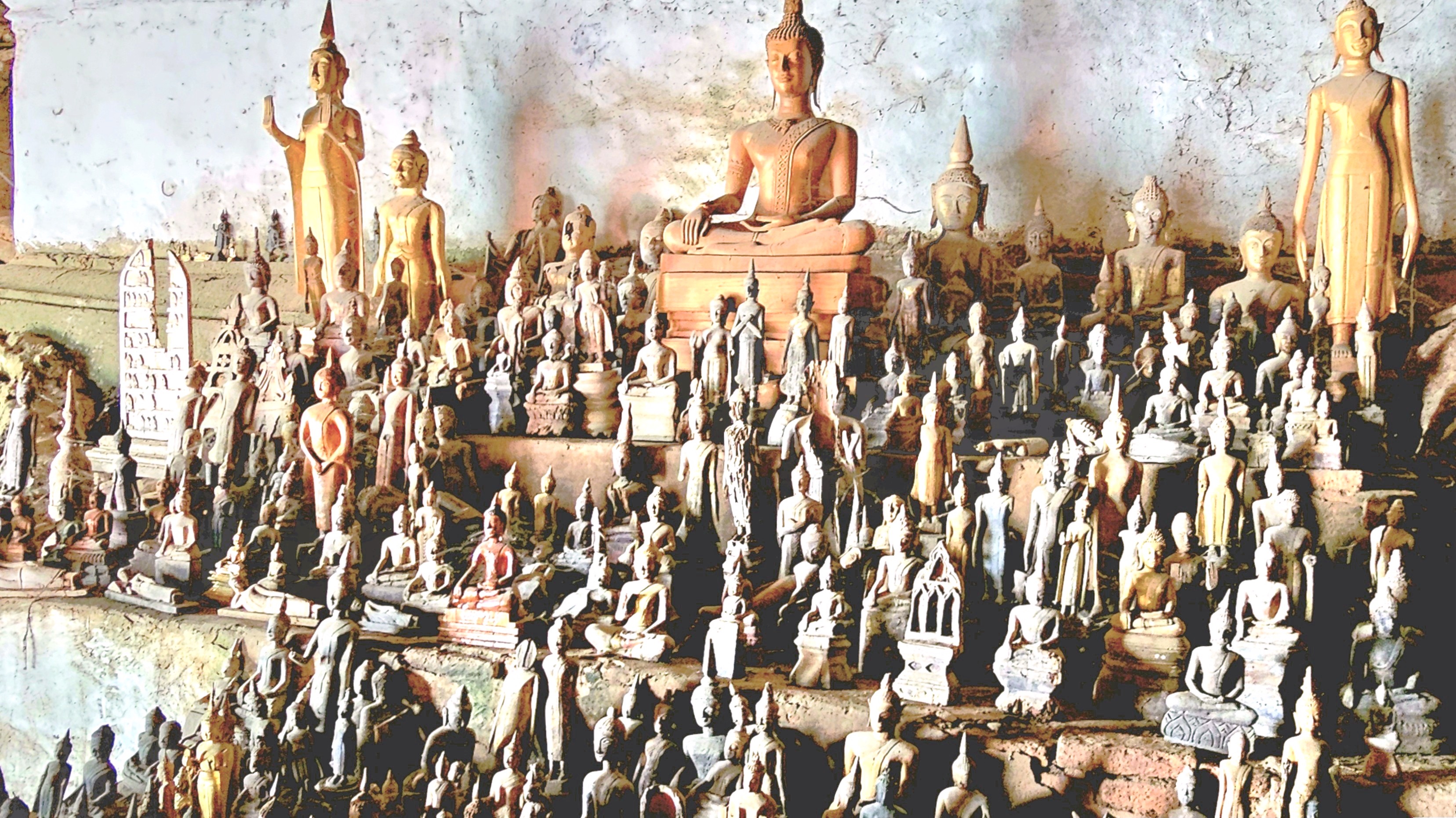
These days, the caves are a well-known repository for over 4,000 miniature Buddha sculptures, mostly old or disfigured impressions dating from the 18th century.
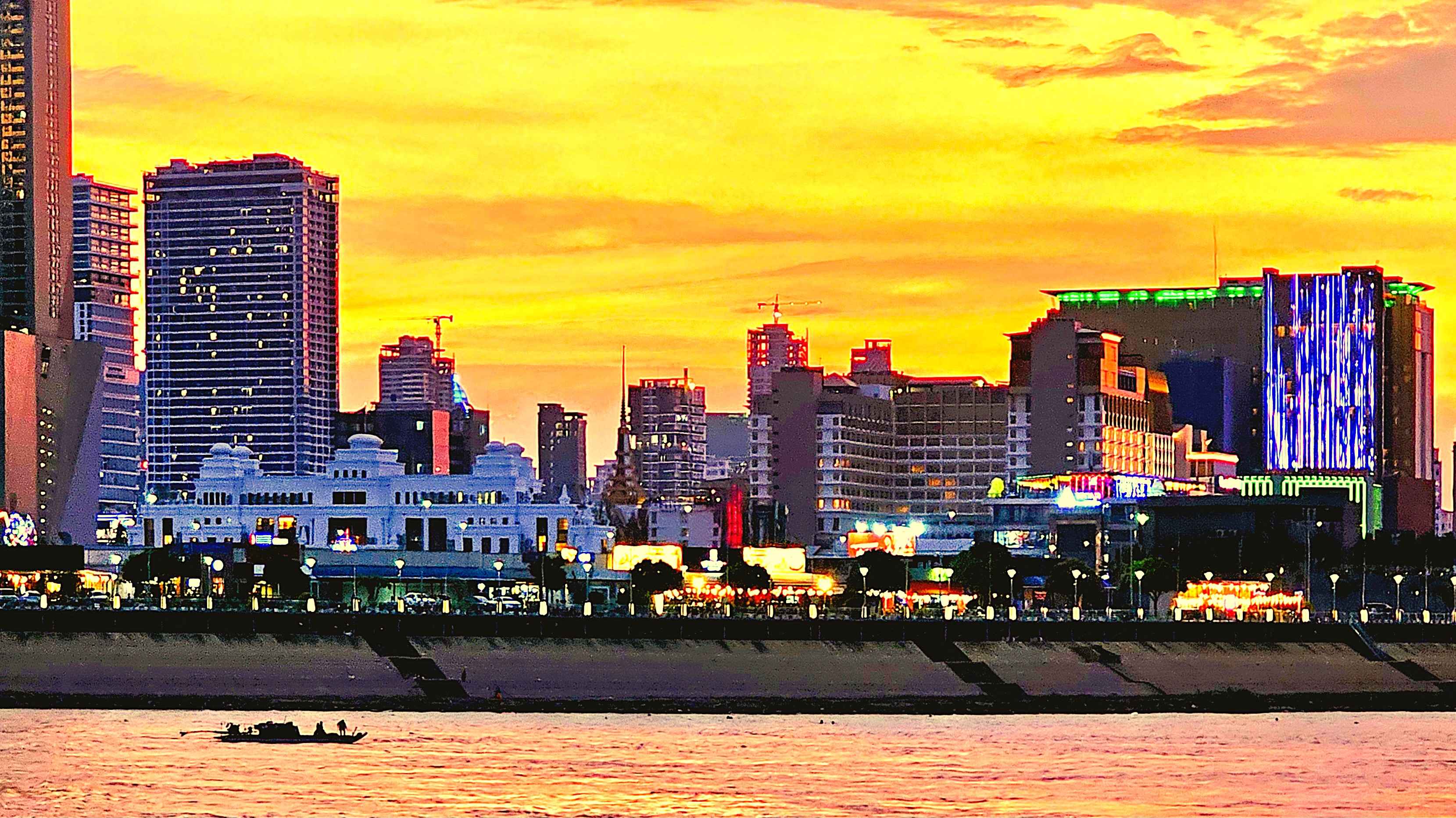
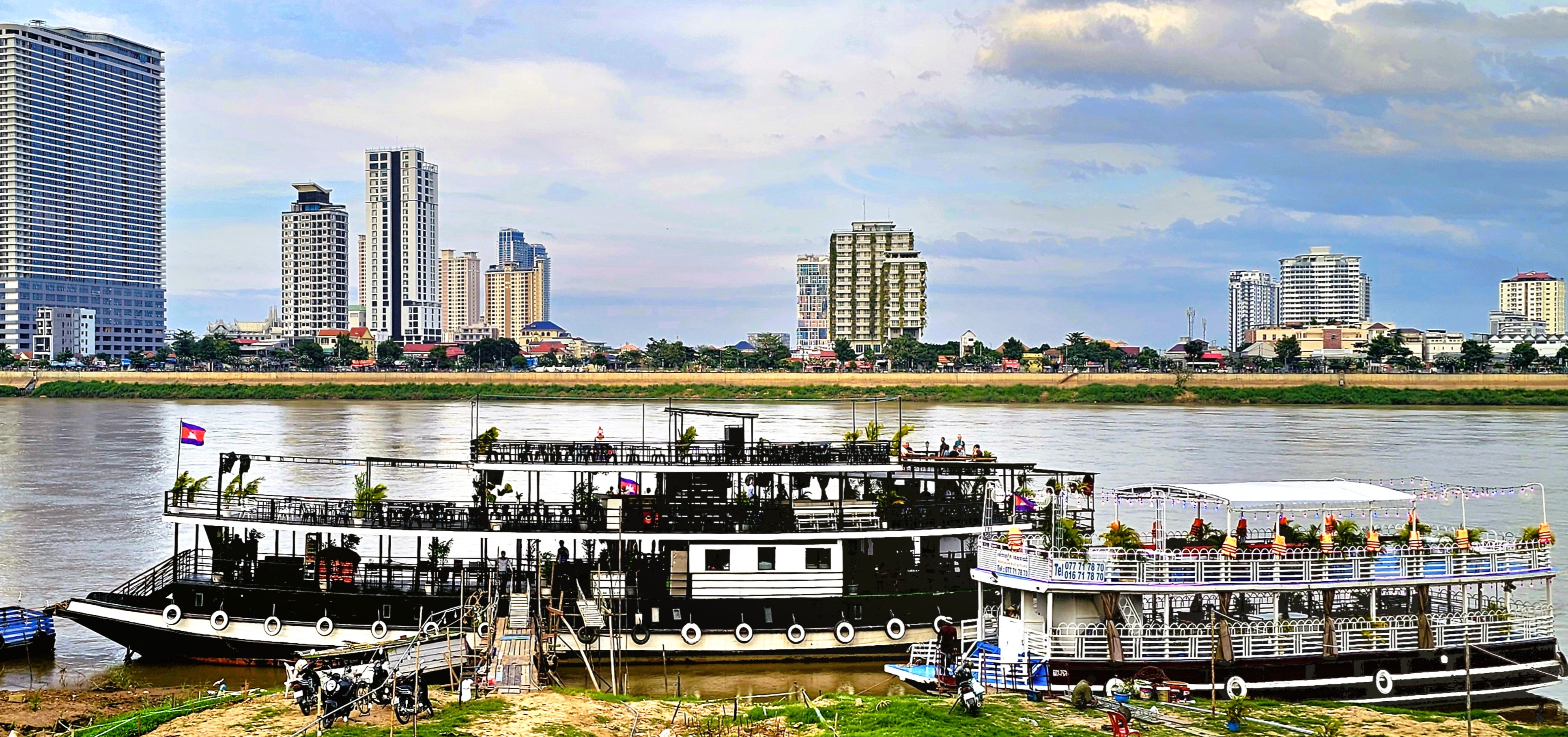
We were reacquainted with the Mekong during our stay in Phnom Penh, where we enjoyed a delightful sunset cruise on the river,
with all the beer we wanted!
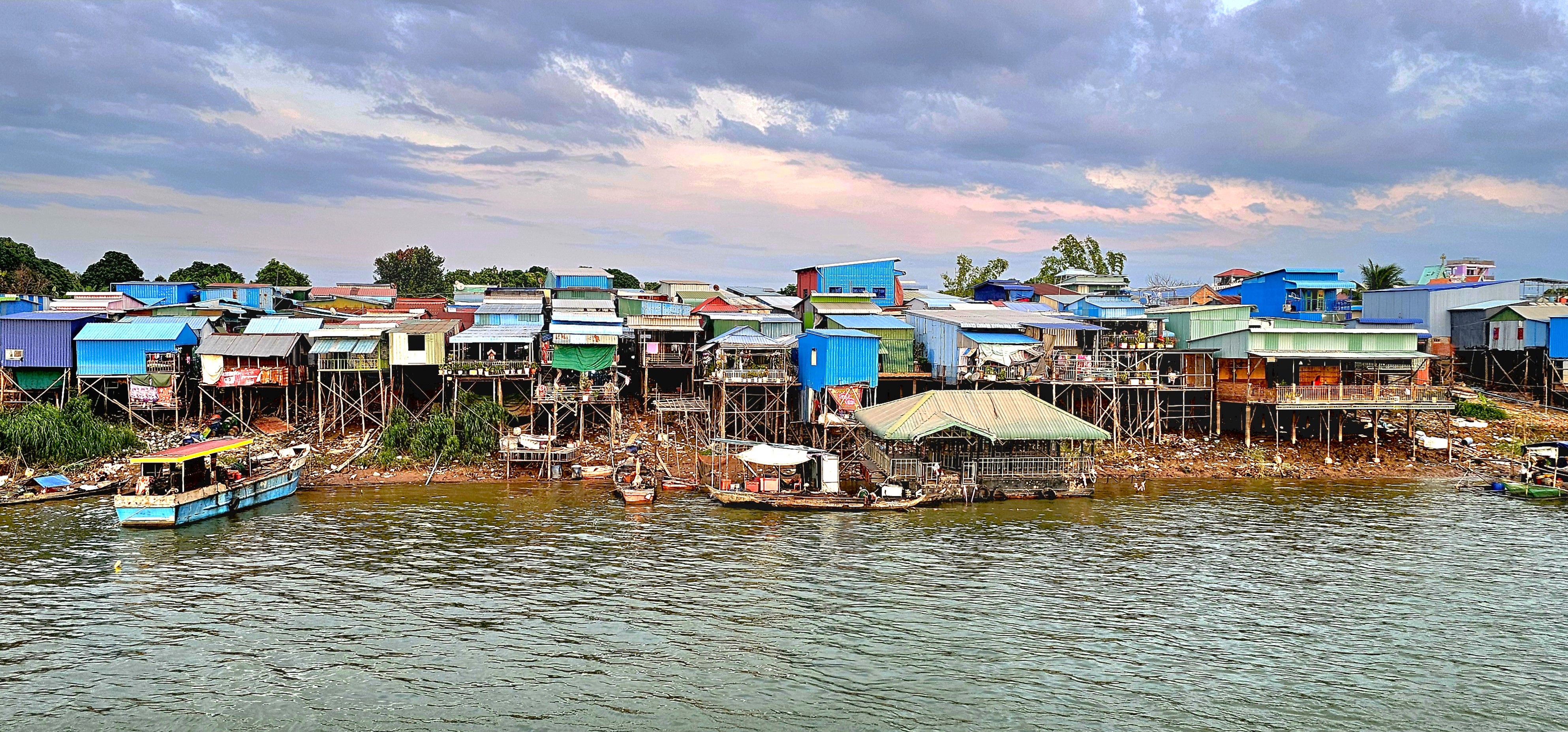
The ever-shifting city skyline…
stands in stark contrast with Akreiy Ksatr Village on the opposite bank.
But a new ferry station supports continued growth along the river in every sector,
making Cambodia an emerging economic engine among ASEAN nations.
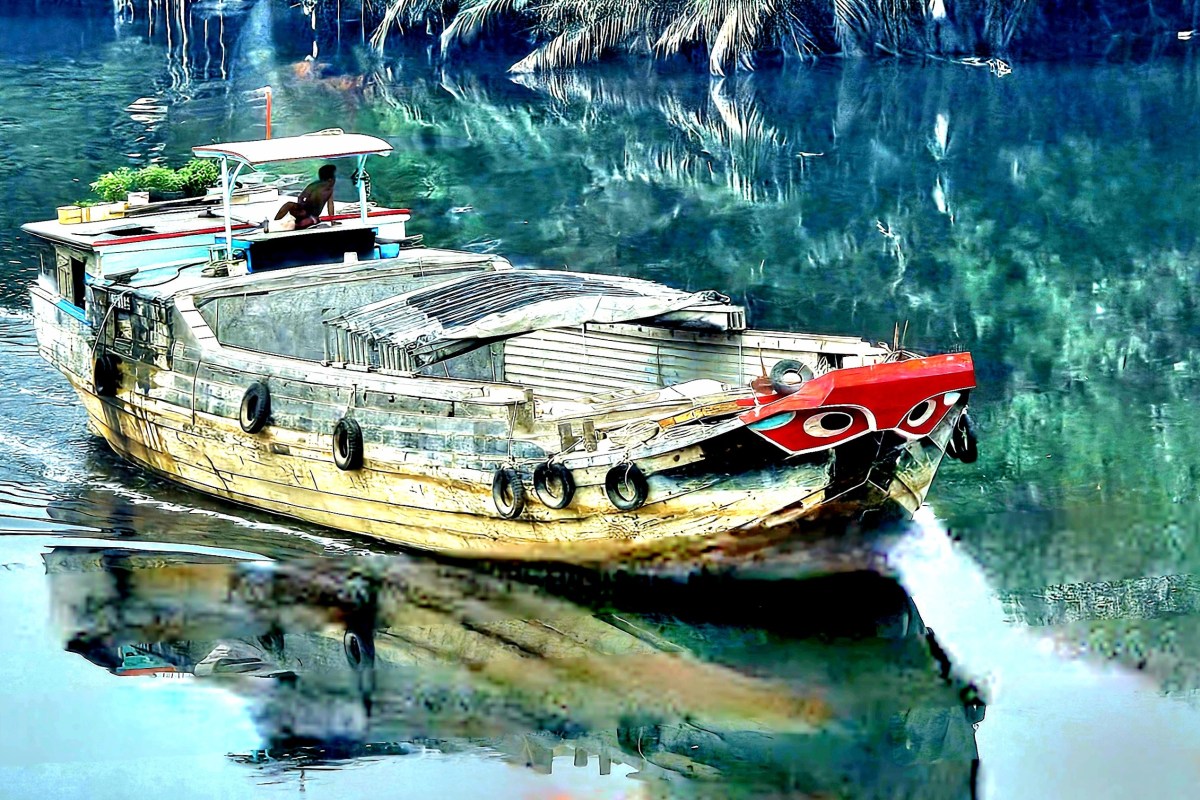
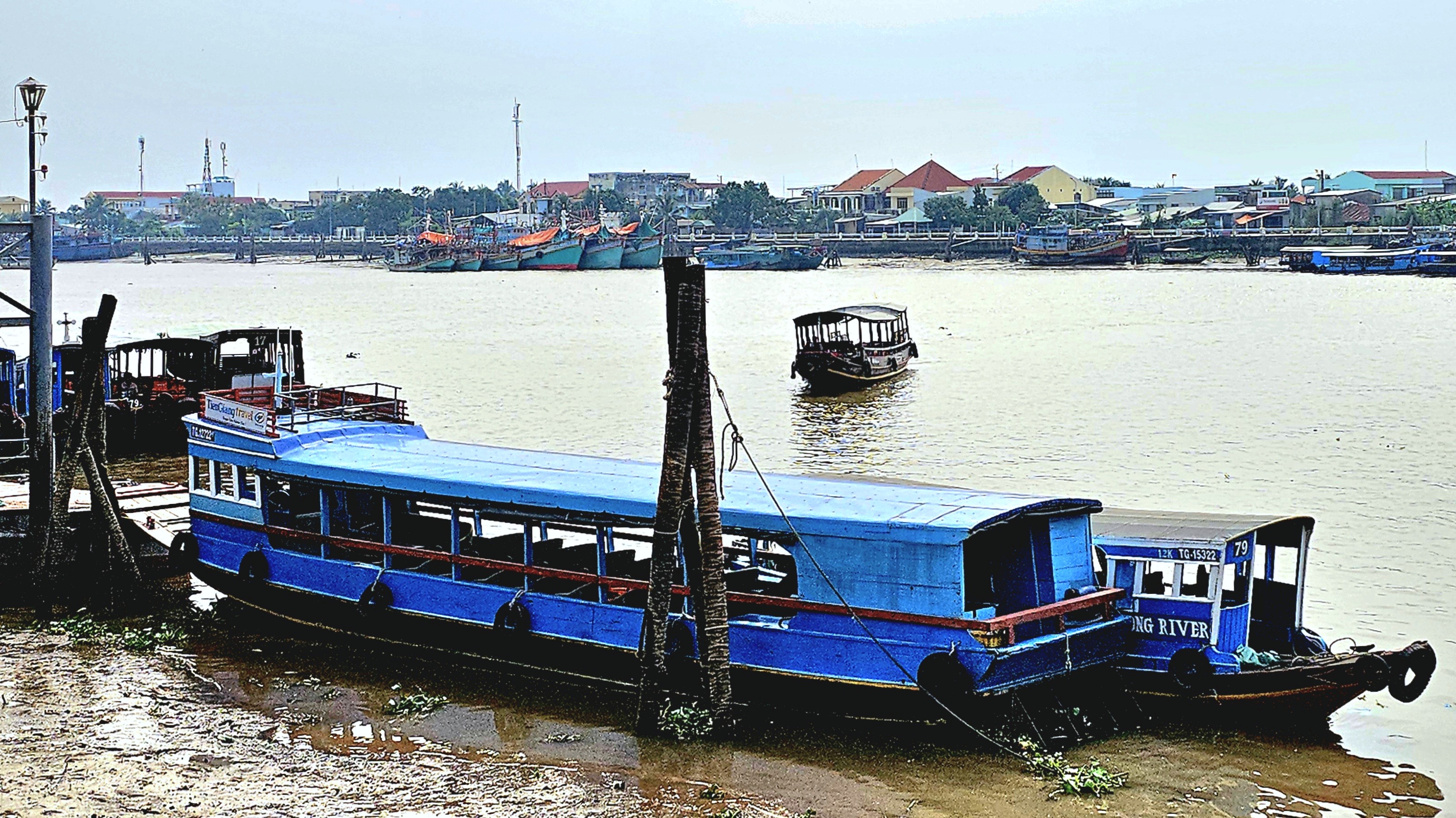
Lastly, during our visit to Vietnam, Leah and I traversed the Mekong Delta on a chartered riverboat.
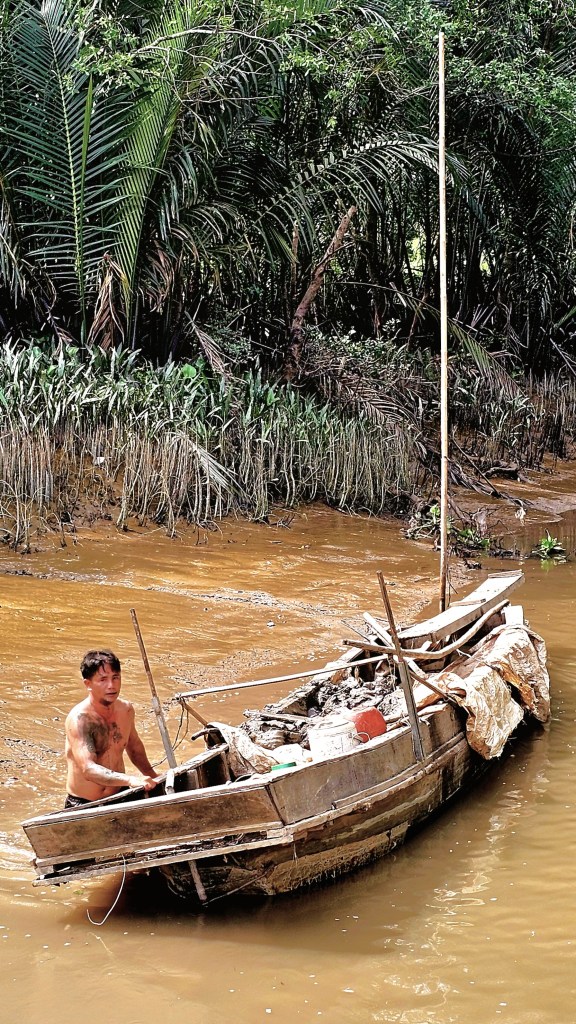
As we navigated inside a shallow tributary, my mind quickly turned to Conrad’s “Heart of Darkness,” with haunting visions of Marlow’s journey on the Congo River.
Initially, our captain wondered if the incoming tide would lift our boat over the mud, unlike other sidelined sailors,
as we managed to crawl through the middle of the passage at low tide.
Eventually, we exchanged our boat for an excursion by sampan,
until we reached our next location,
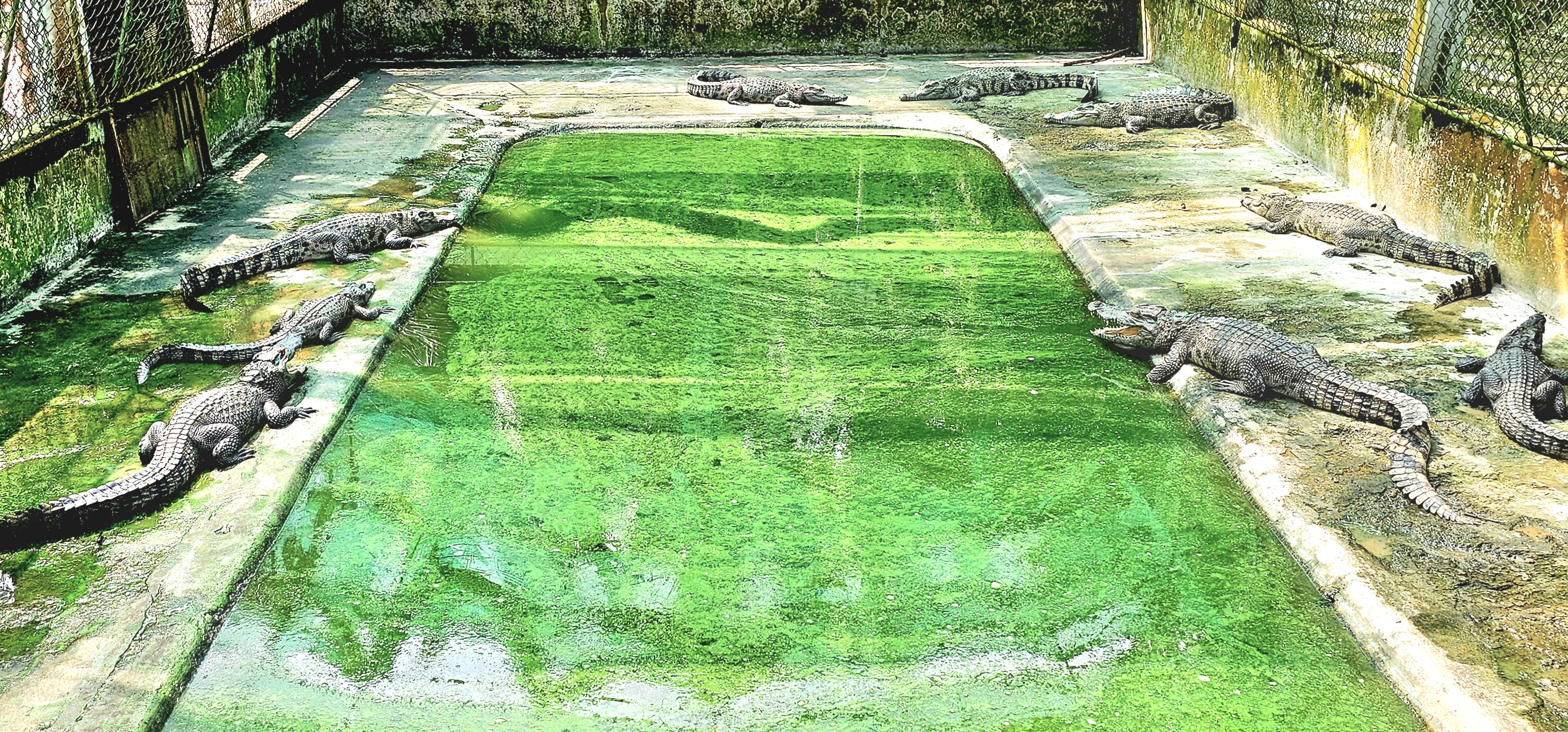
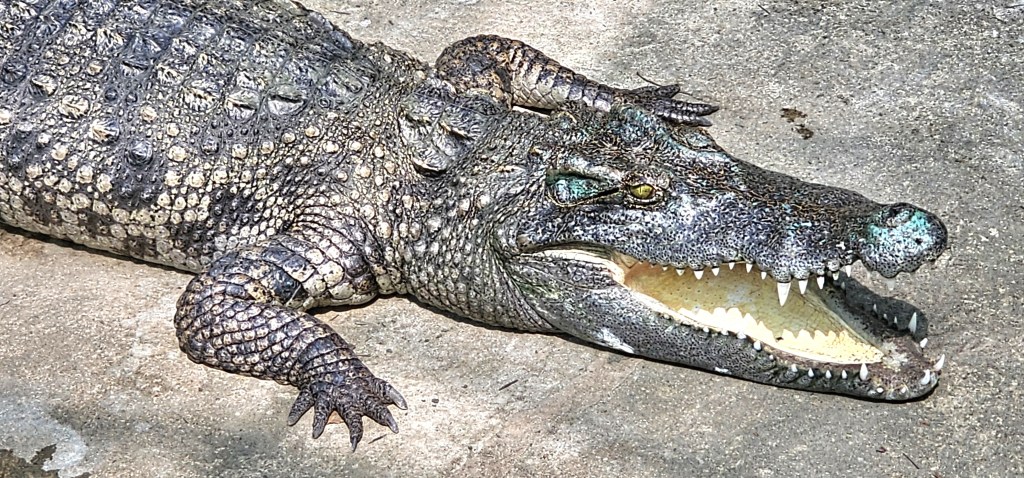
where Siamese crocodiles are on the menu and not on the Mekong, thankfully!
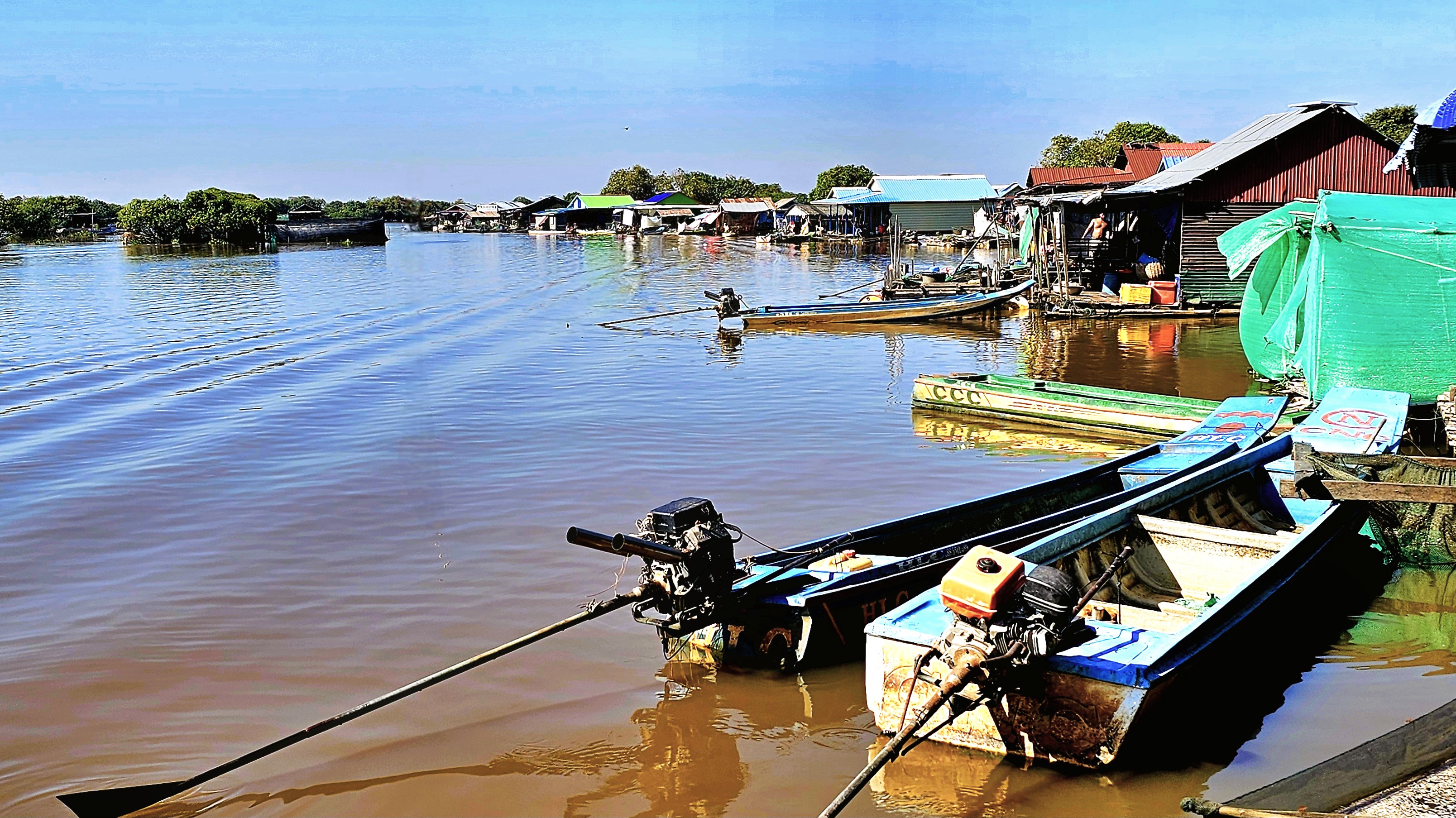
There were many other water activities throughout our tour, yet nothing prepared us for a day on Tonlé Sap, where we observed Cambodians living on the water, full-time.
With writing this sentence, my 6-month blogging hiatus is officially history.
All the while, I continued taking pictures, and I never stopped writing. I just got off the blogging merry-go-round for a time.
Instead, I took stock of nearly 25,000 images and analyzed 500 stories that I’ve shared with the WordPress community over the past eight years.
I soon realized after 3 years of blogging that I had already accomplished my mission of streaming through America!
That’s not to say that there’s nothing more to experience. But I can honestly say that since retiring, I’ve chronicled hundreds of visits to national and state parks and various landmarks and curiosities across the country, which amounts to the very best that America has to offer.
I’ve also begun to travel more internationally, and I’ve included many of those destinations in this blog. How could I not? Naturally, it wasn’t in an Airstream, and it wasn’t America. Although, in fairness, some of those destinations within Canada, Mexico, Central America, and South America should count as “American” by nature.
I also realized that many of the stories I wanted to tell were not always supported by the photographs I had taken. And often times, the photographs I was most pleased with didn’t always match the story I was writing.
I found myself making arbitrary rules that impeded my writing, like thinking that my posts should be a linear account of my travels rather than a reflection of an arbitrary moment in time.
Managing StreamingThruAmerica.com has been a blessing, albeit it’s been challenging yet exhausting; nourishing while enervating; fulfilling but frustrating, and rewarding yet fickle.
Nevertheless, it’s also garnered over 100,000 views–for which I received a silly badge from WordPress, which makes me smile;
and it’s earned an Editors’ Discovery pick soon after launching this blog.
I don’t know if all of that is worthy of celebration or not, but I’m certainly grateful for the recognition and all the support from the blogosphere.
What started as a personal journal of sorts and a means of checking in with family and friends has morphed beyond its original intent, and I’m okay with that.
I’ve toyed with refreshing the style and revising the content to fit the times (and maybe that may happen on a rainy day), but for now, it’s status quo.
The journey continues…in Bangkok–the first stop of a 5-week adventure to Southeast Asia–where ancient kingdoms still shine as bright as the Buddhas that adorn his temples.


















































































 Streaming thru America