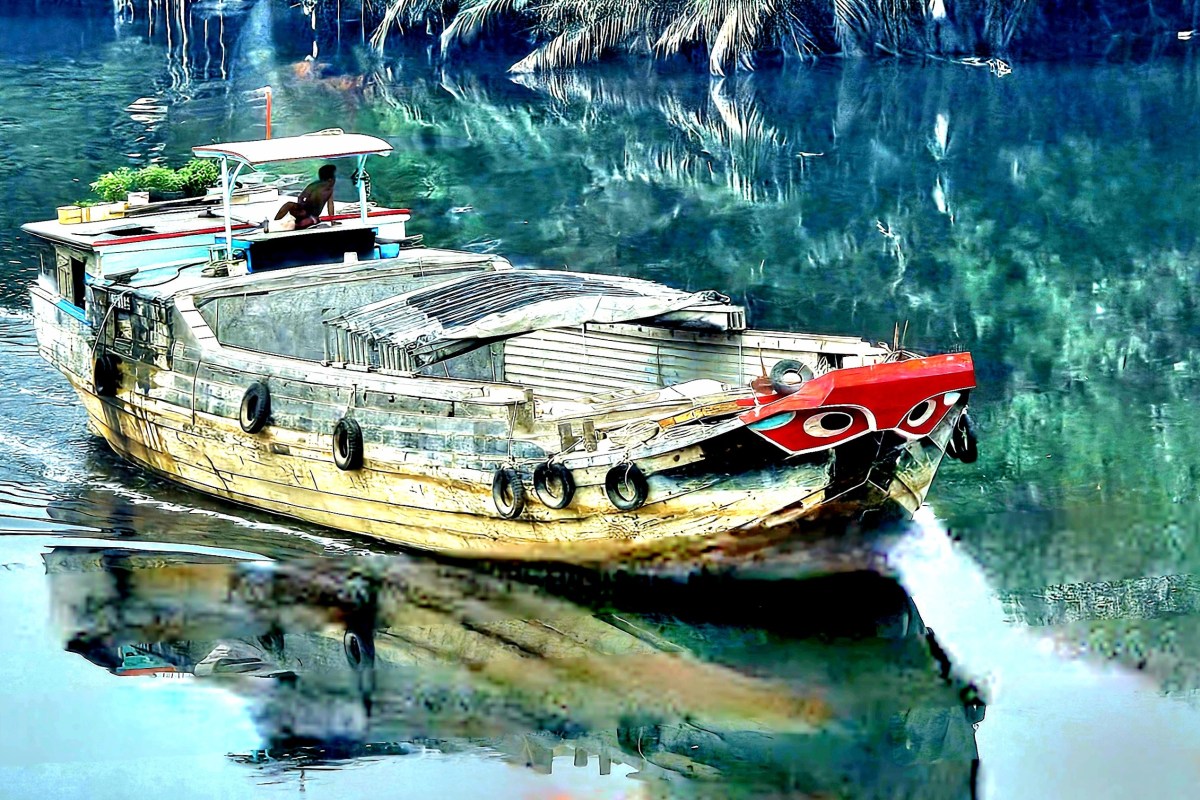
While sifting through hundreds of photographs taken during a recent tour of Southeast Asia (see past posts), I weeded out a wave of watercraft shots, and thought a maritime montage of nautical notions would make the perfect post.
During our visit to Kanchanaburi, Leah and I enjoyed time on the River Kwai in a traditional long-boat…
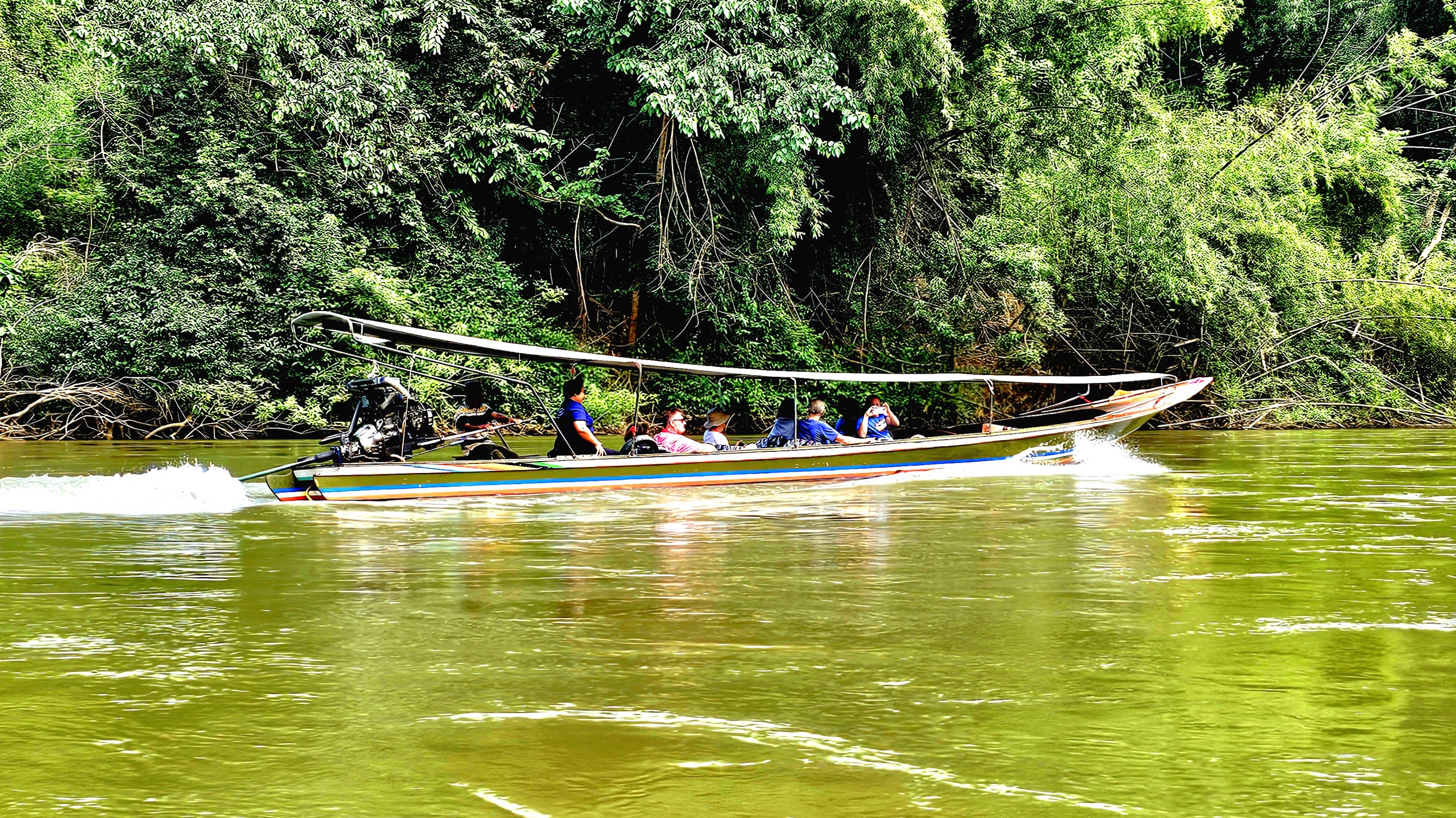
giving us splendid views along the water,

and a glimpse of river-lounging for well-heeled tourists:
But it wasn’t until we returned to Bangkok’s Chao Phraya that we gained a greater appreciation of the river’s transportation network:

of river buses, cross-river ferries, water taxis, and sunset party boats.

On another occasion, we boarded a long tail to cruise upriver on the Chao Phraya,

taking in the sites of the ancient capital of Ayutthaya…

along the waterfront.

But the mighty Mekong is Southeast Asia’s “Mother of all Rivers” and most significant waterway. It winds its way from the Tibetan Plains to the South China Sea, running through Myanmar, Laos, Thailand, Cambodia, and Vietnam, making it the region’s longest river at nearly 3,000 miles.
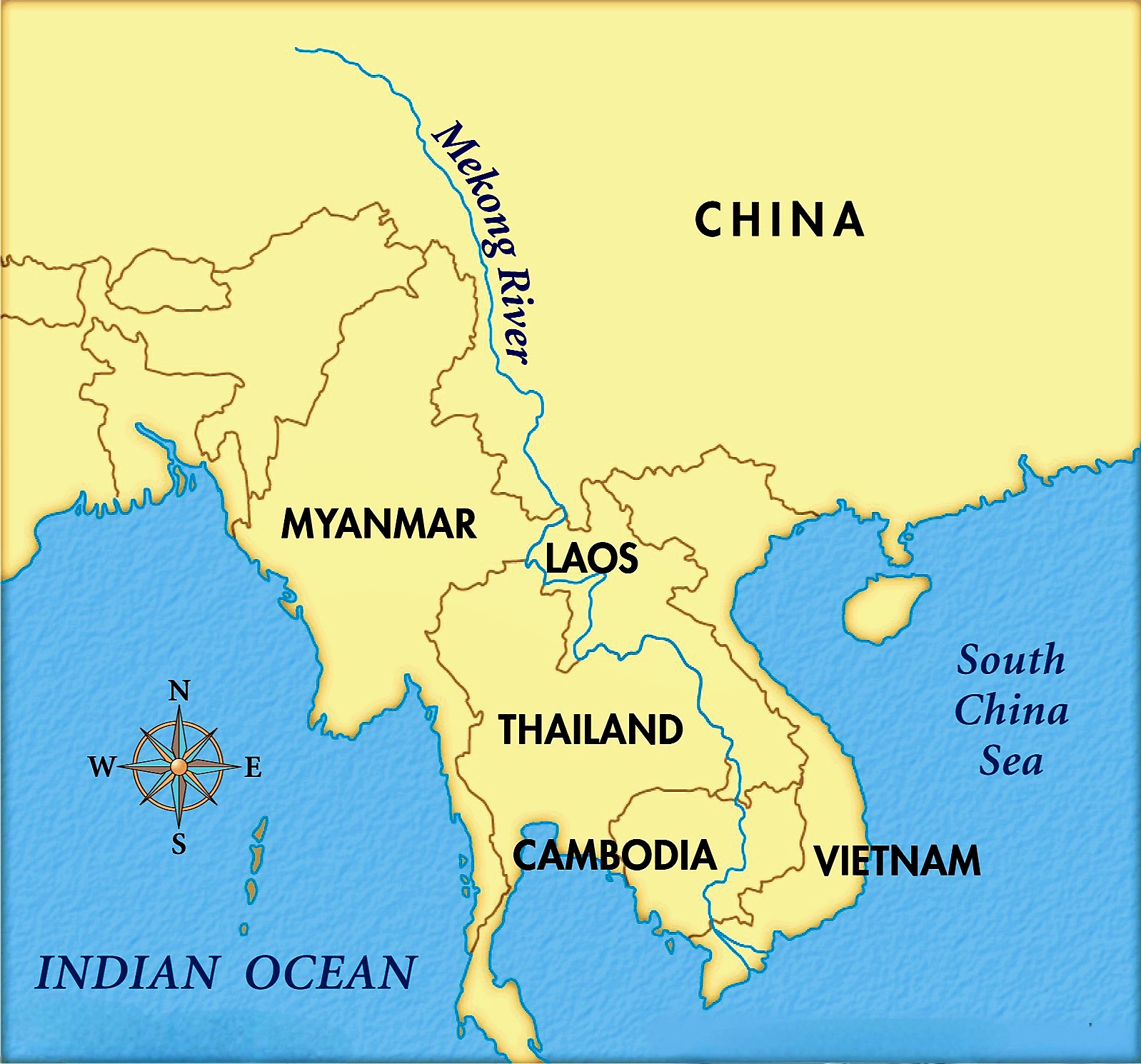
The Mekong is also the most productive river on the planet–boasting the world’s largest inland fishery–

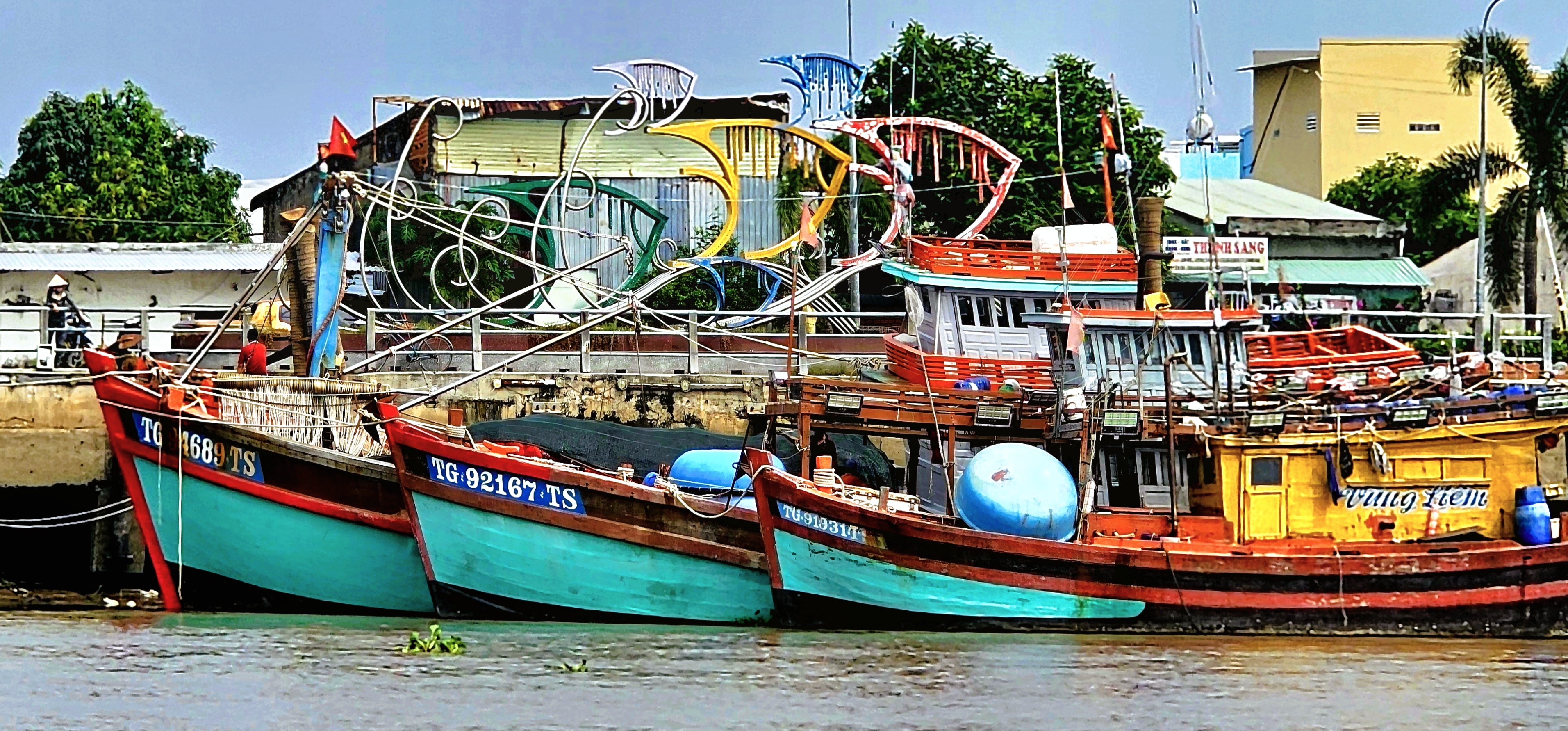
which accounts for up to 25% of the global freshwater catch while providing livelihoods for 90 million people,

and supporting 54,000 sq mi of rice crops.
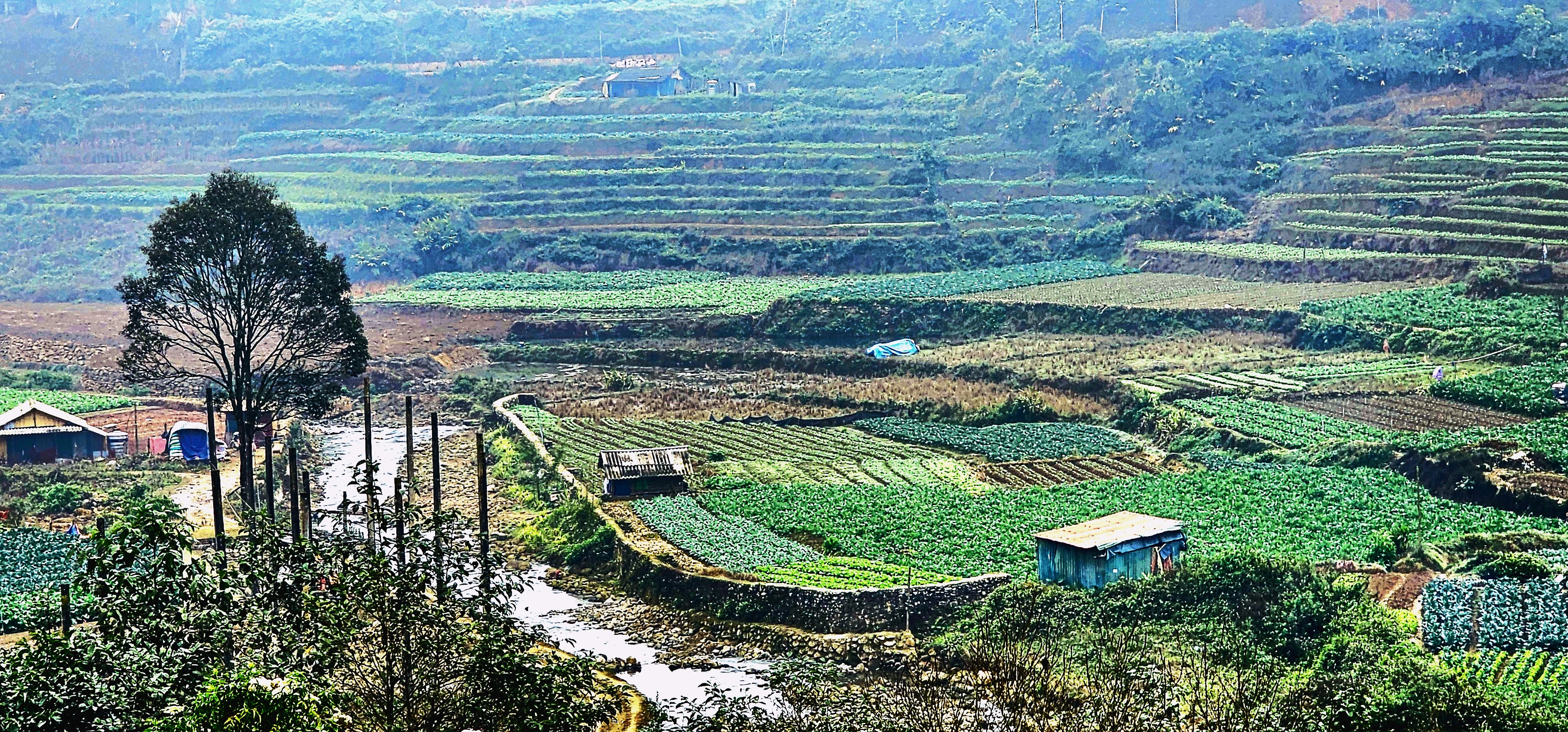
While touring upper Chiang Rai, Leah and I were hypnotized watching the confluence of Myanmar’s Roak River flowing into the Mekong–

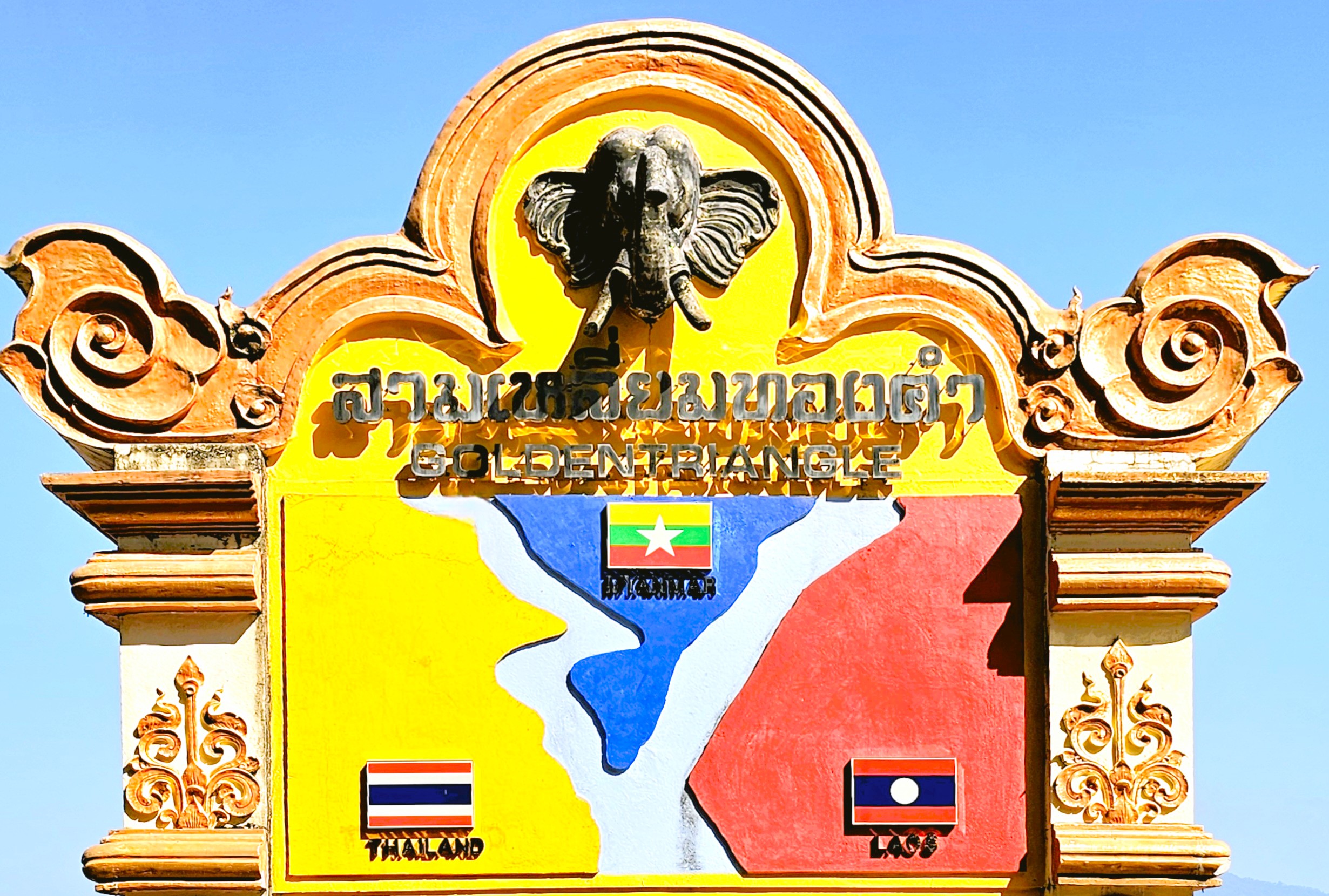
separating Thailand and Laos to form the Golden Triangle.
But it wasn’t until our visit to Luang Prabang, Laos that we caught a second look at the Mekong–this time during golden hour–

which set the stage for our cruise the following day on a traditional wooden boat.

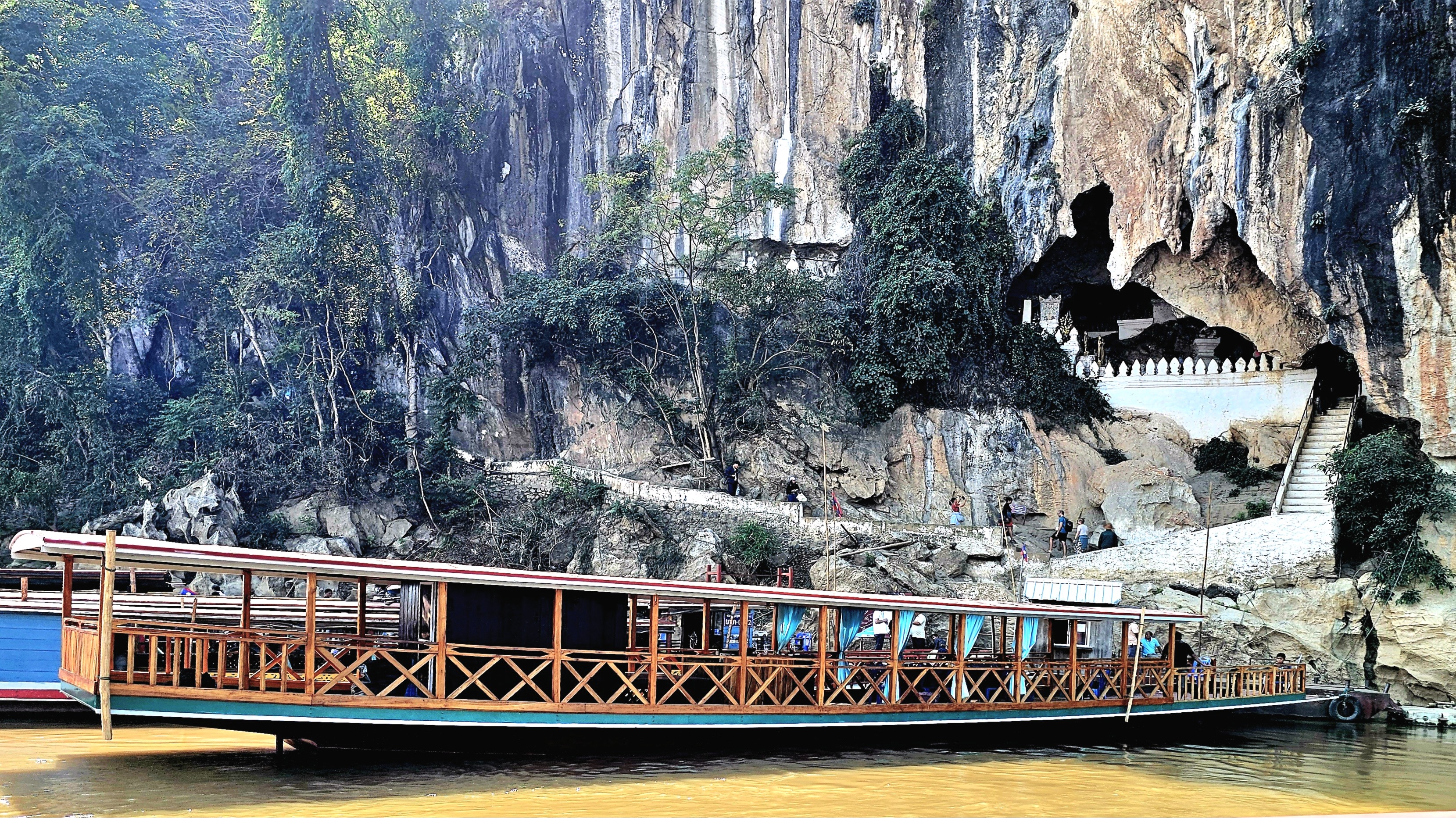
We motored slowly upriver to where the Mekong meets the Nam Ou River at Ban Pak Ou,

and disembarked directly across from the village…

to explore the Pak Ou Caves–Tham Ting and Tham Theung–located on the west bank of the Mekong River.
The first Lao people arrived at Ban Pak Ou from South China during the 8th century. They brought a strong belief in spirits and a profound respect for all things nature. It was an animistic religion known as Ban Phi.
The villagers believed that the caves were enchanted with river spirits, and they performed periodic blood sacrifices for prosperity and protection, but by the 16th century, Buddhism had been adopted by the royal families of Lao, who offered their patronage until the last days of the monarchy in 1975.
While Buddhism remains a unifying feature of Lao culture, animistic rituals continue to thrive and have been seamlessly integrated into Buddhist ceremonies, allowing Shamans and monks to symbiotically tend to the spiritual needs of their worshippers.
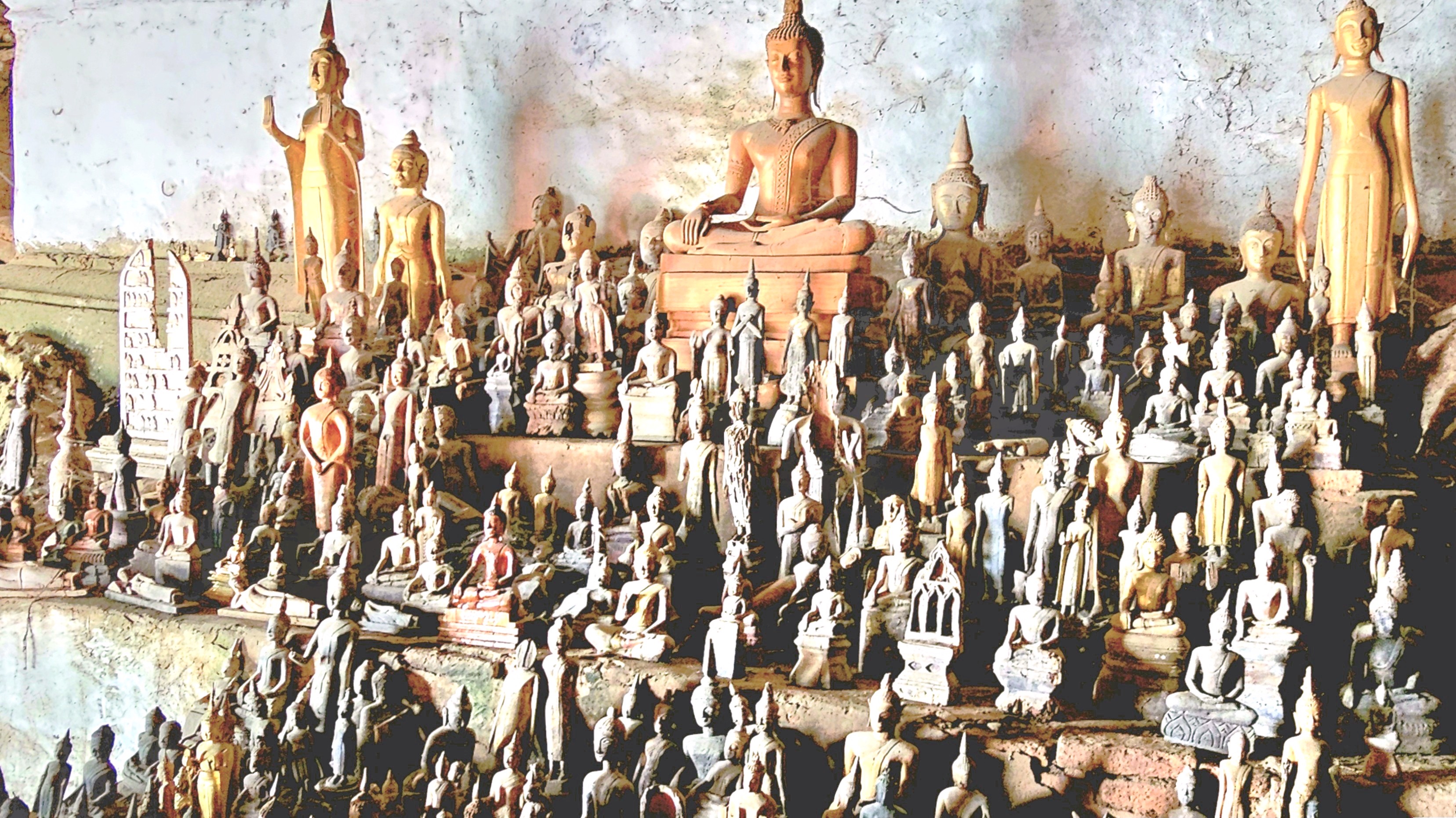
These days, the caves are a well-known repository for over 4,000 miniature Buddha sculptures, mostly old or disfigured impressions dating from the 18th century.
We were reacquainted with the Mekong during our stay in Phnom Penh, where we enjoyed a delightful sunset cruise on the river,
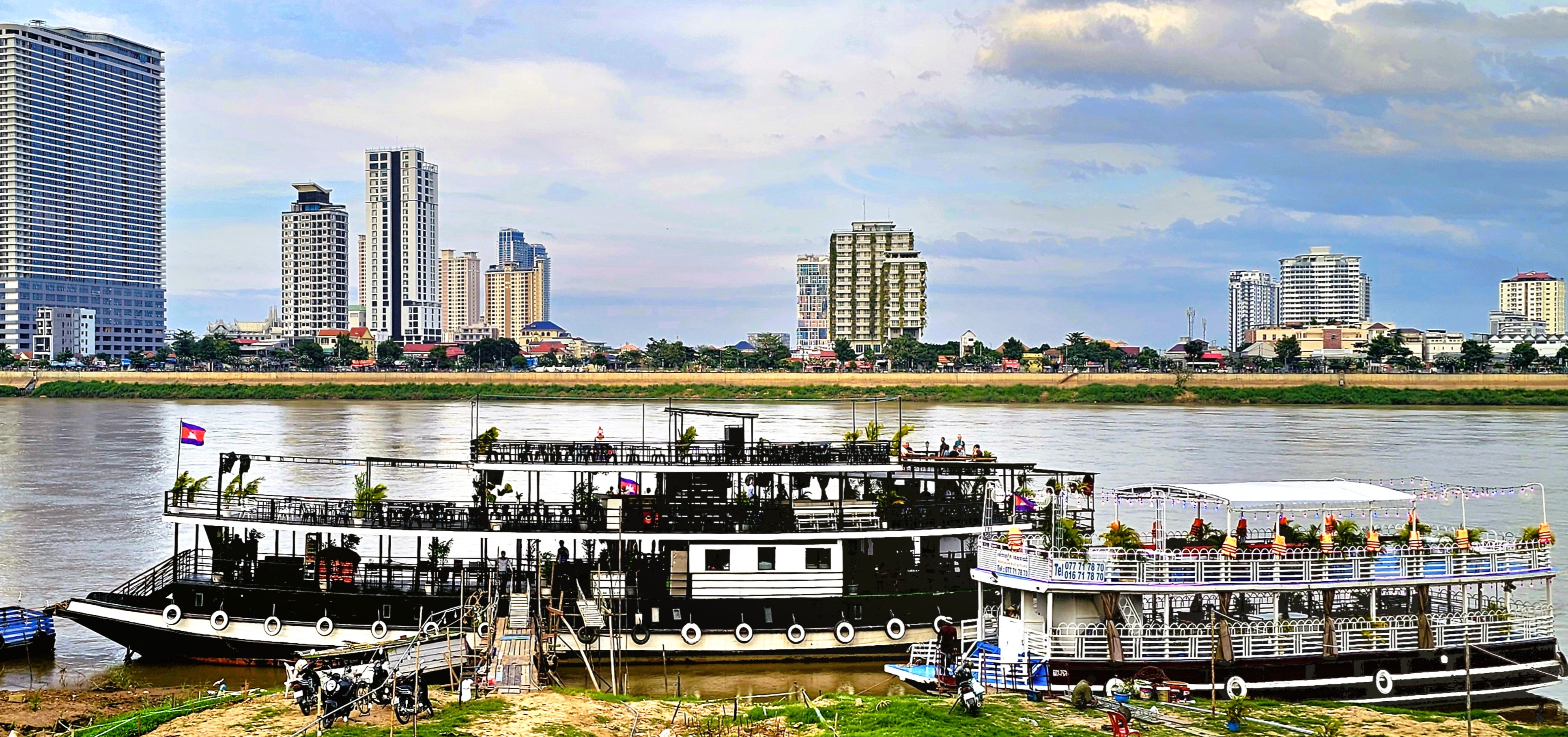
with all the beer we wanted!
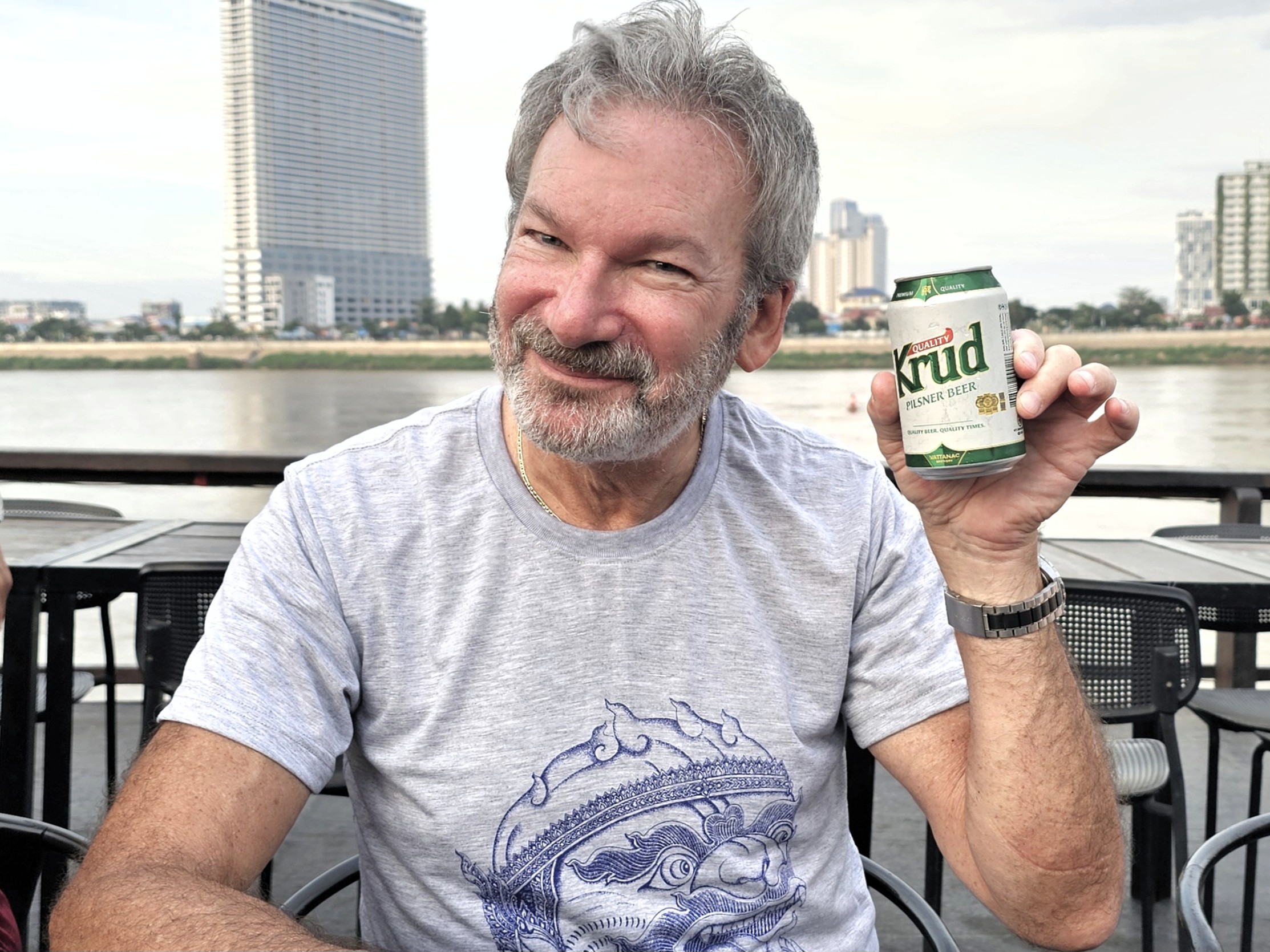
The ever-shifting city skyline…

stands in stark contrast with Akreiy Ksatr Village on the opposite bank.
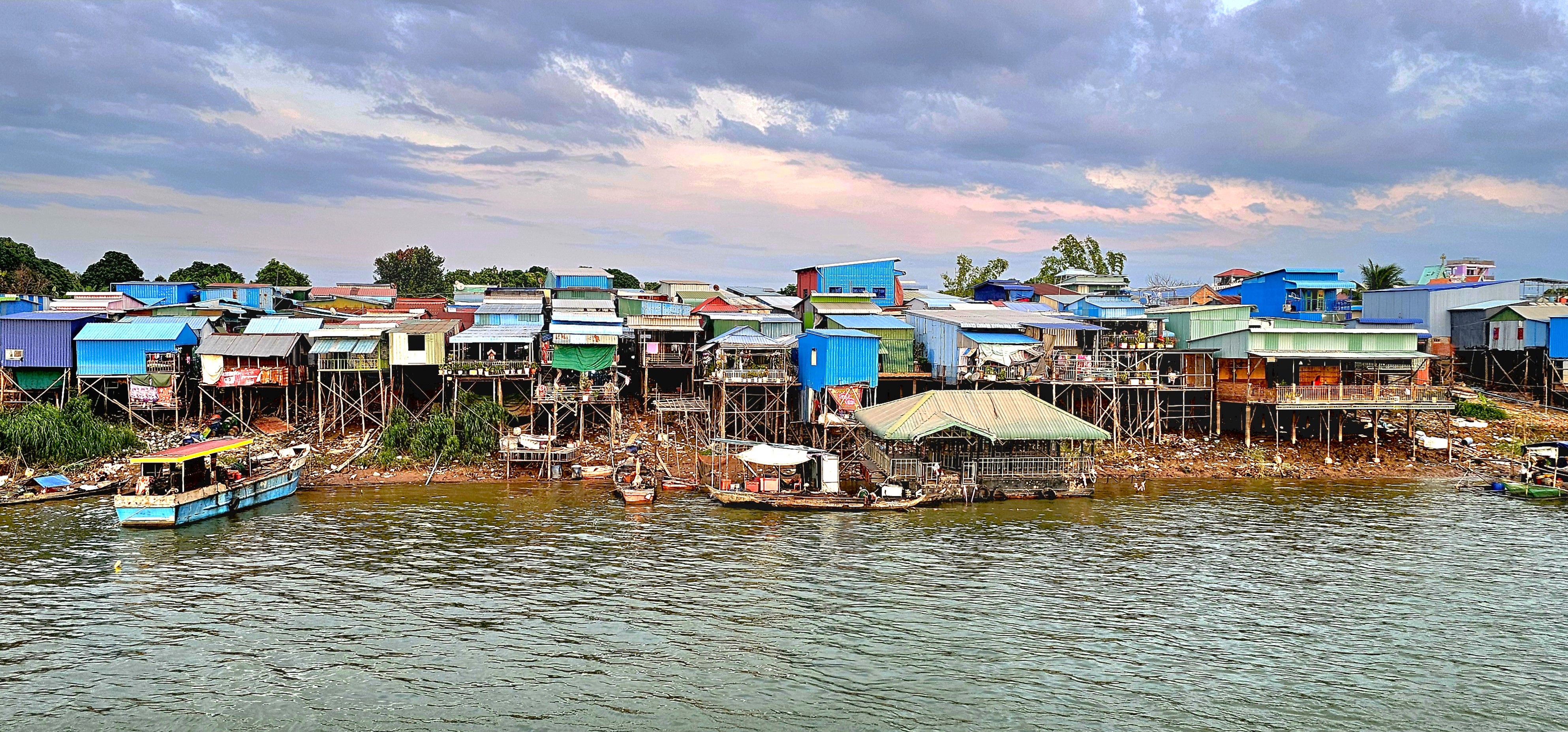
But a new ferry station supports continued growth along the river in every sector,

making Cambodia an emerging economic engine among ASEAN nations.

Lastly, during our visit to Vietnam, Leah and I traversed the Mekong Delta on a chartered riverboat.
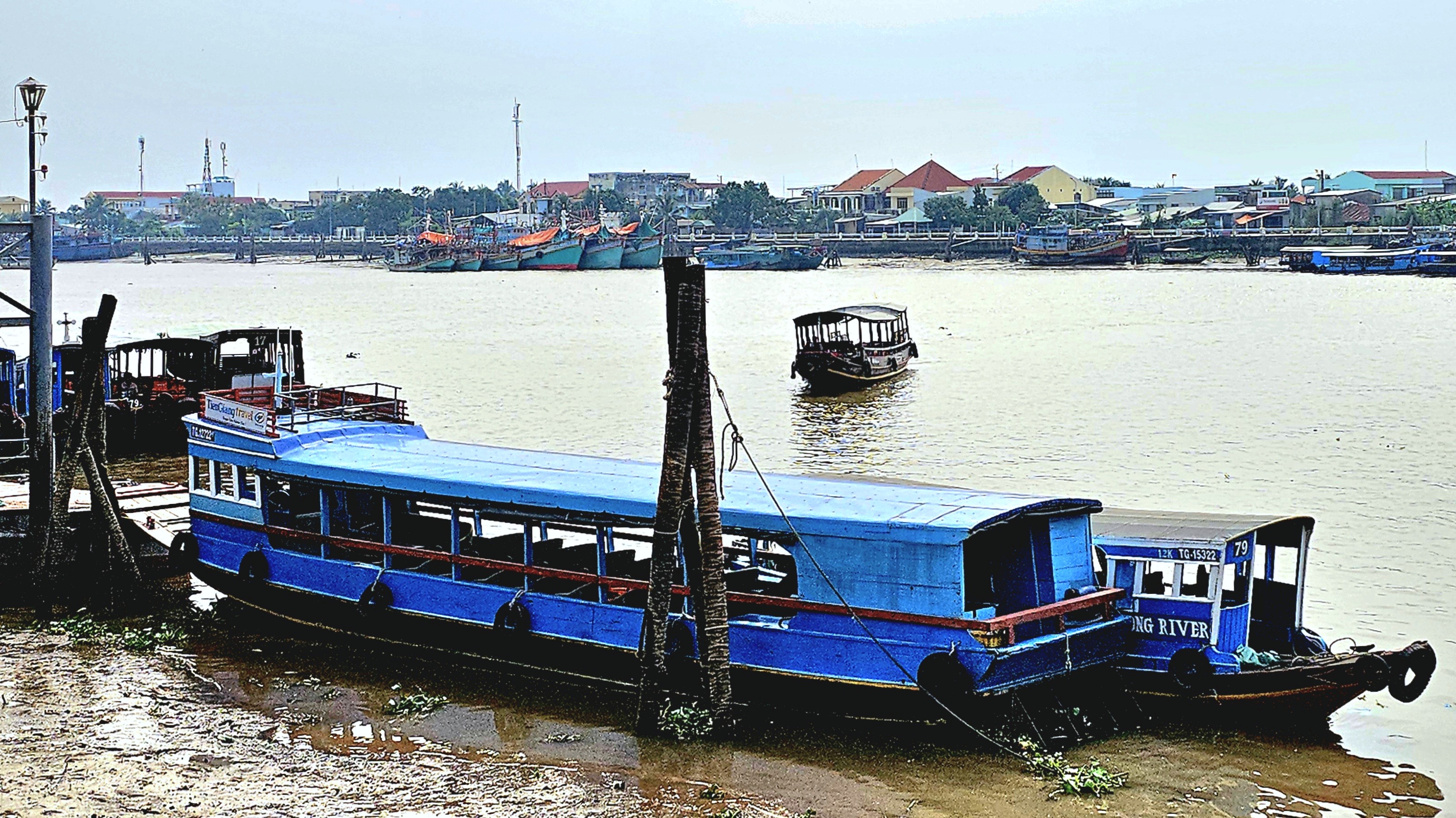
As we navigated inside a shallow tributary, my mind quickly turned to Conrad’s “Heart of Darkness,” with haunting visions of Marlow’s journey on the Congo River.

Initially, our captain wondered if the incoming tide would lift our boat over the mud, unlike other sidelined sailors,
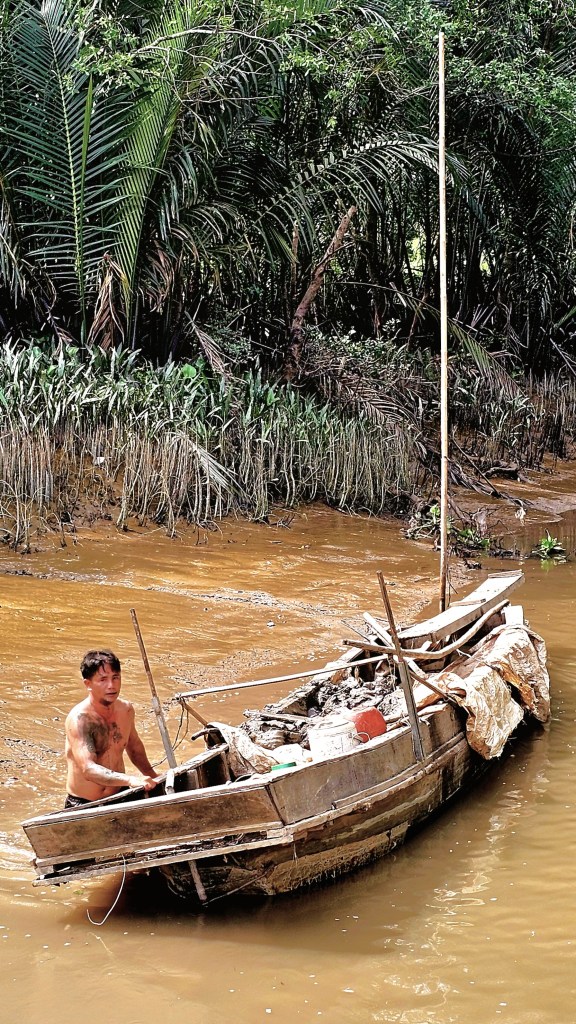

as we managed to crawl through the middle of the passage at low tide.

Eventually, we exchanged our boat for an excursion by sampan,

until we reached our next location,
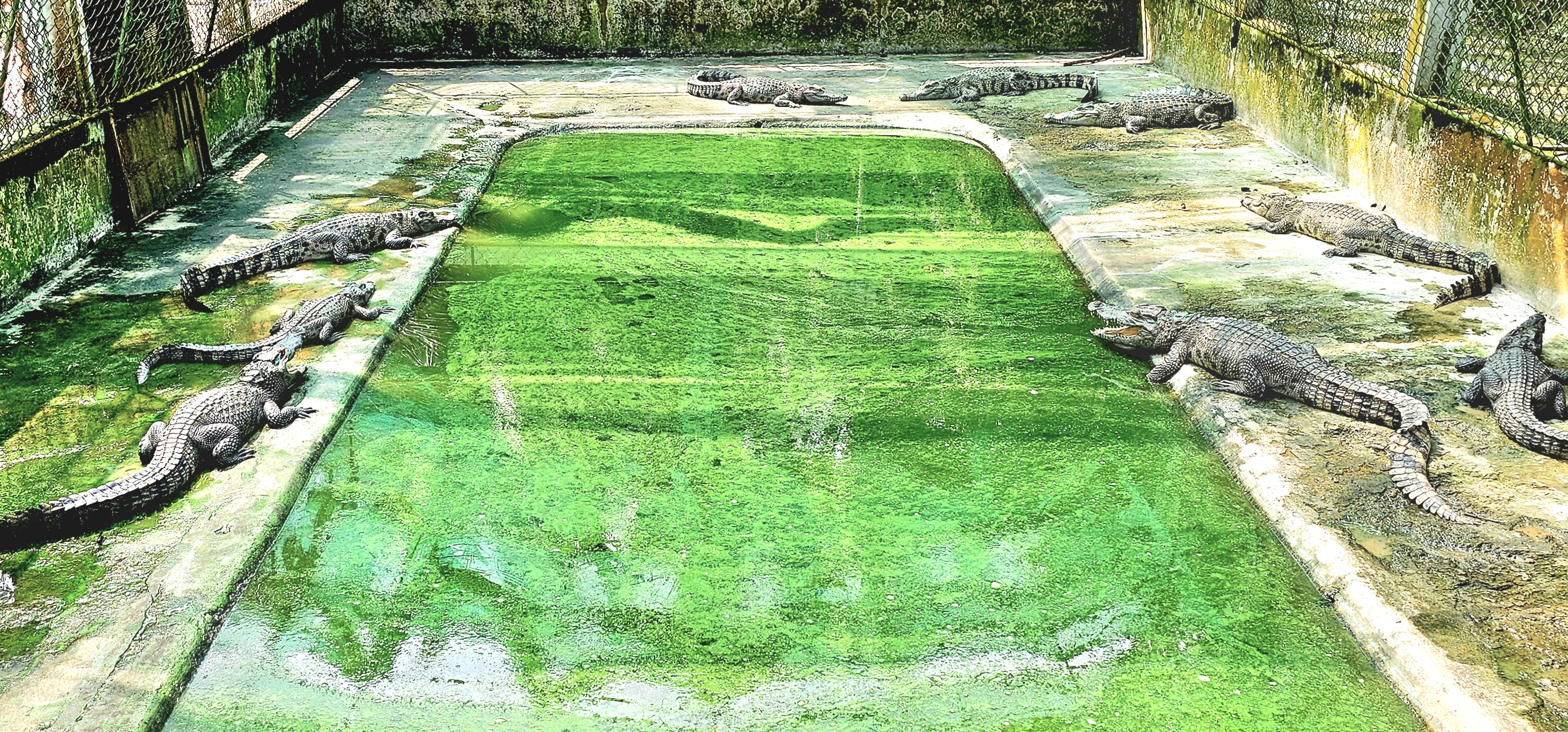
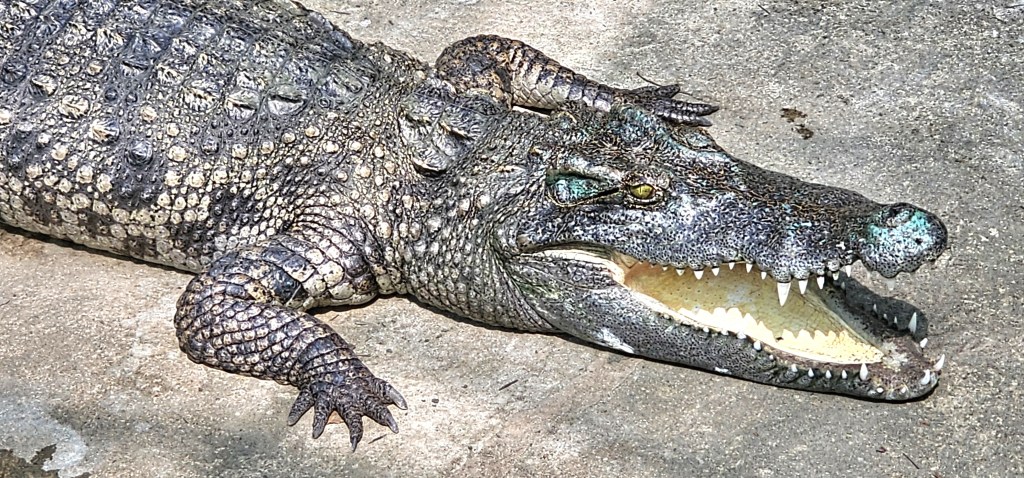
where Siamese crocodiles are on the menu and not on the Mekong, thankfully!
There were many other water activities throughout our tour, yet nothing prepared us for a day on Tonlé Sap, where we observed Cambodians living on the water, full-time.
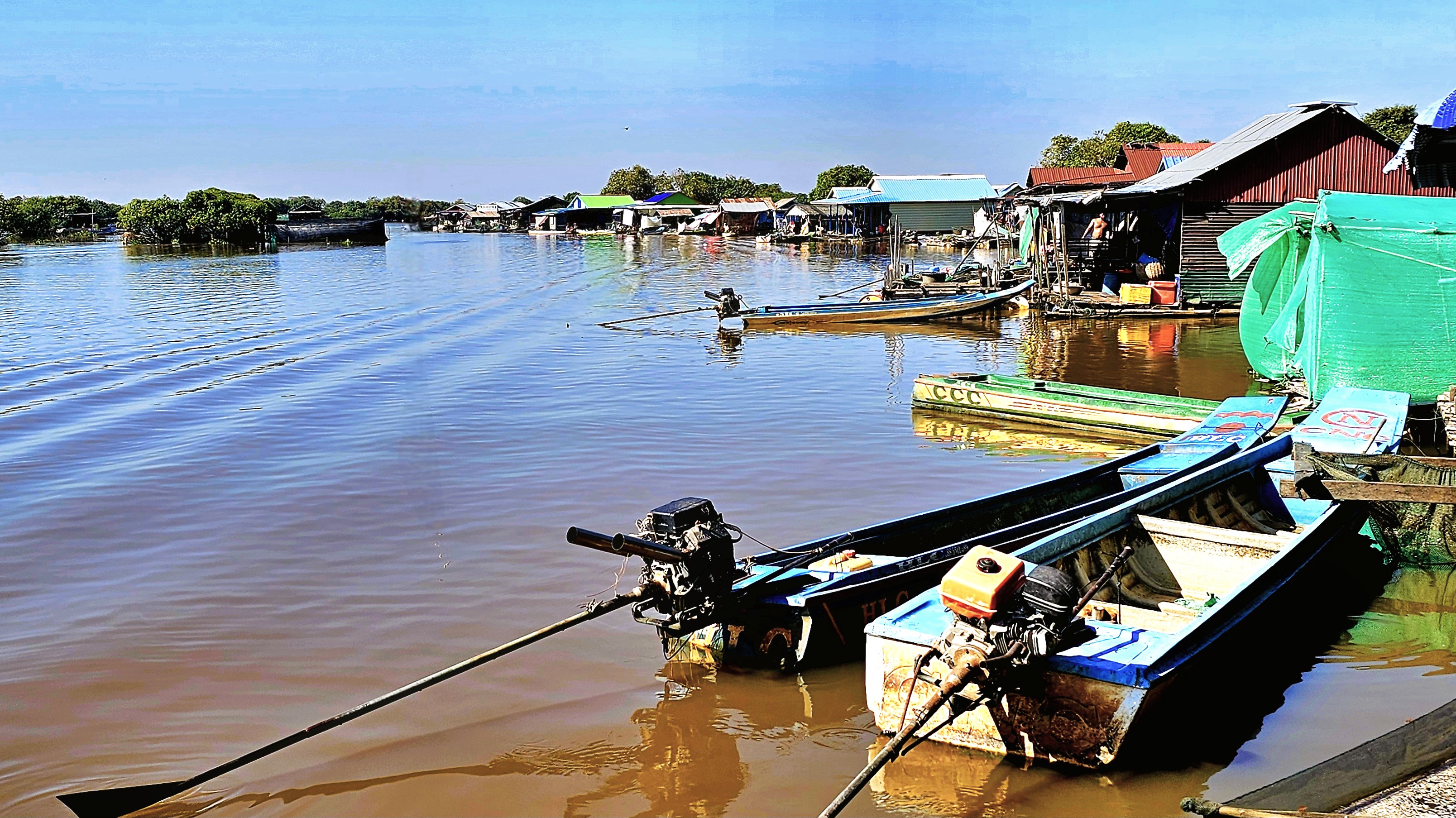
But that’s a story for another time…

 Streaming thru America