
Rather than go thru the details of how we got here, suffice to say that 2 days of inconvenient travel brought us to the Chilean Andes…
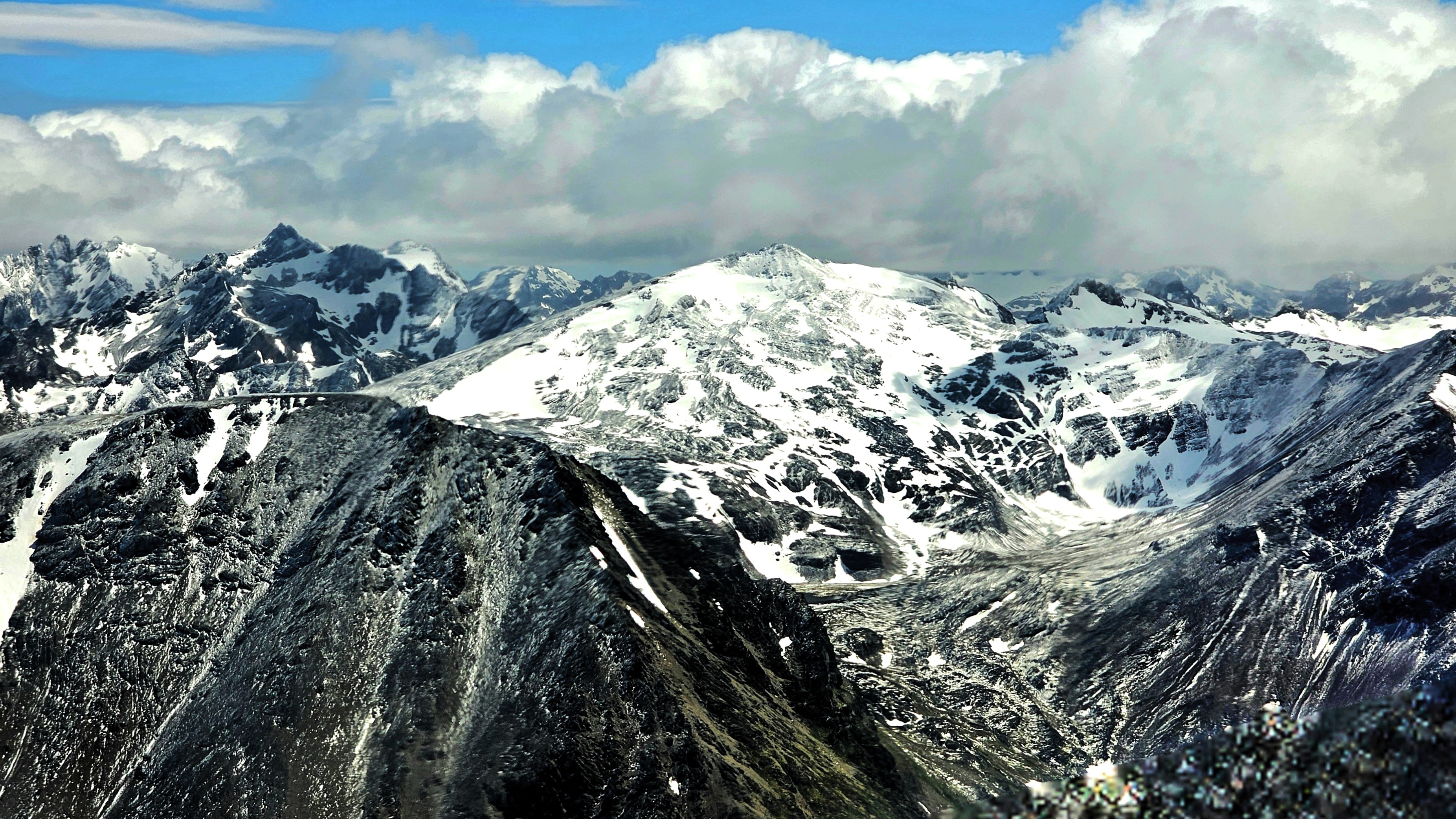
to experience the highest and driest desert on earth (averaging 13,000 ft. elevation), where temperatures can fluctuate between 0oC and 25oC, and rainfall averages 2 mm of rain per year with a humidity factor of .02%.

The area is so vast, it spans Chile, Peru, Argentina, and Bolivia.

But despite the hostile environment, flora and fauna still manages to survive.
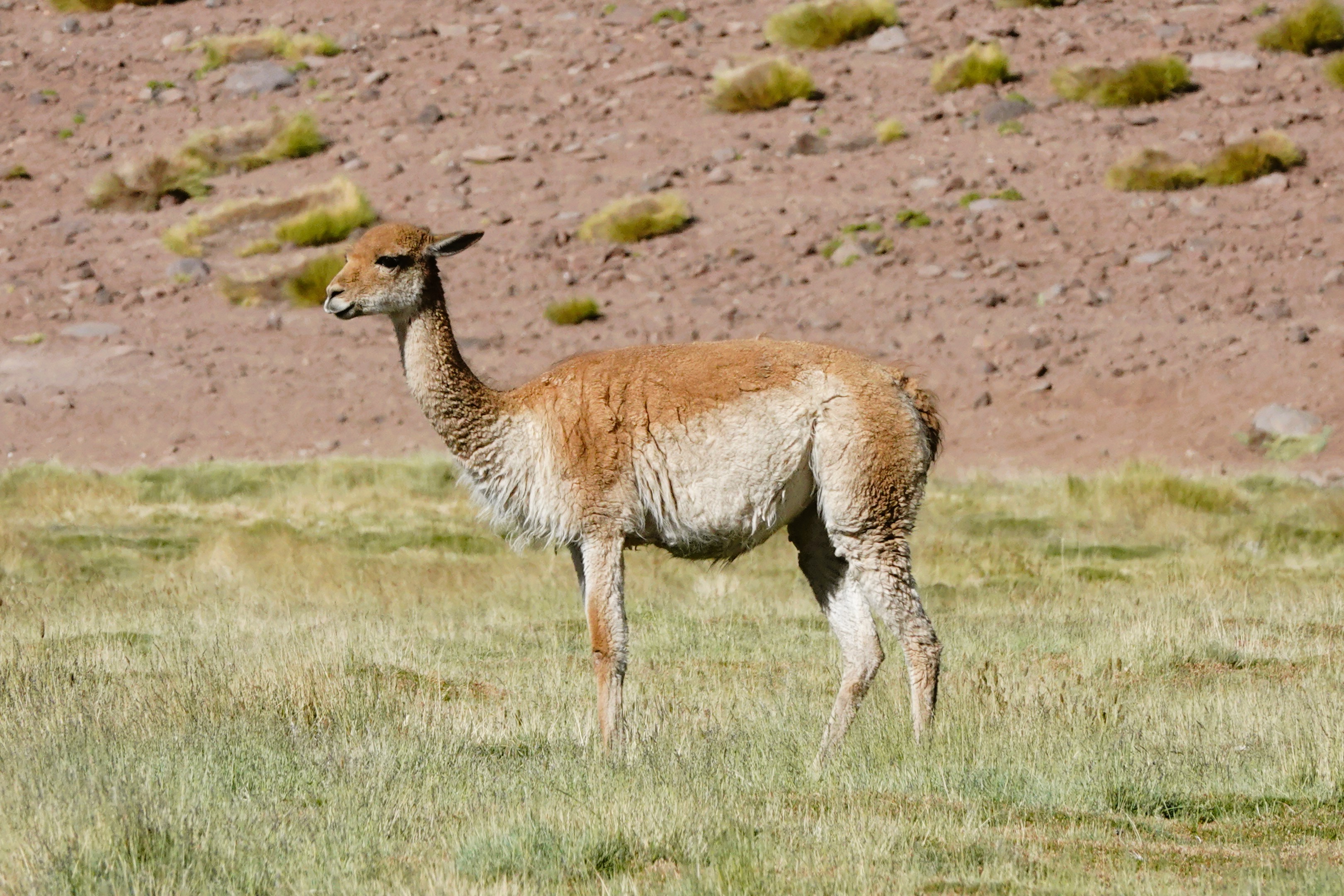
Our first destination was the Soncor Sector of Los Flamencos National Preserve,
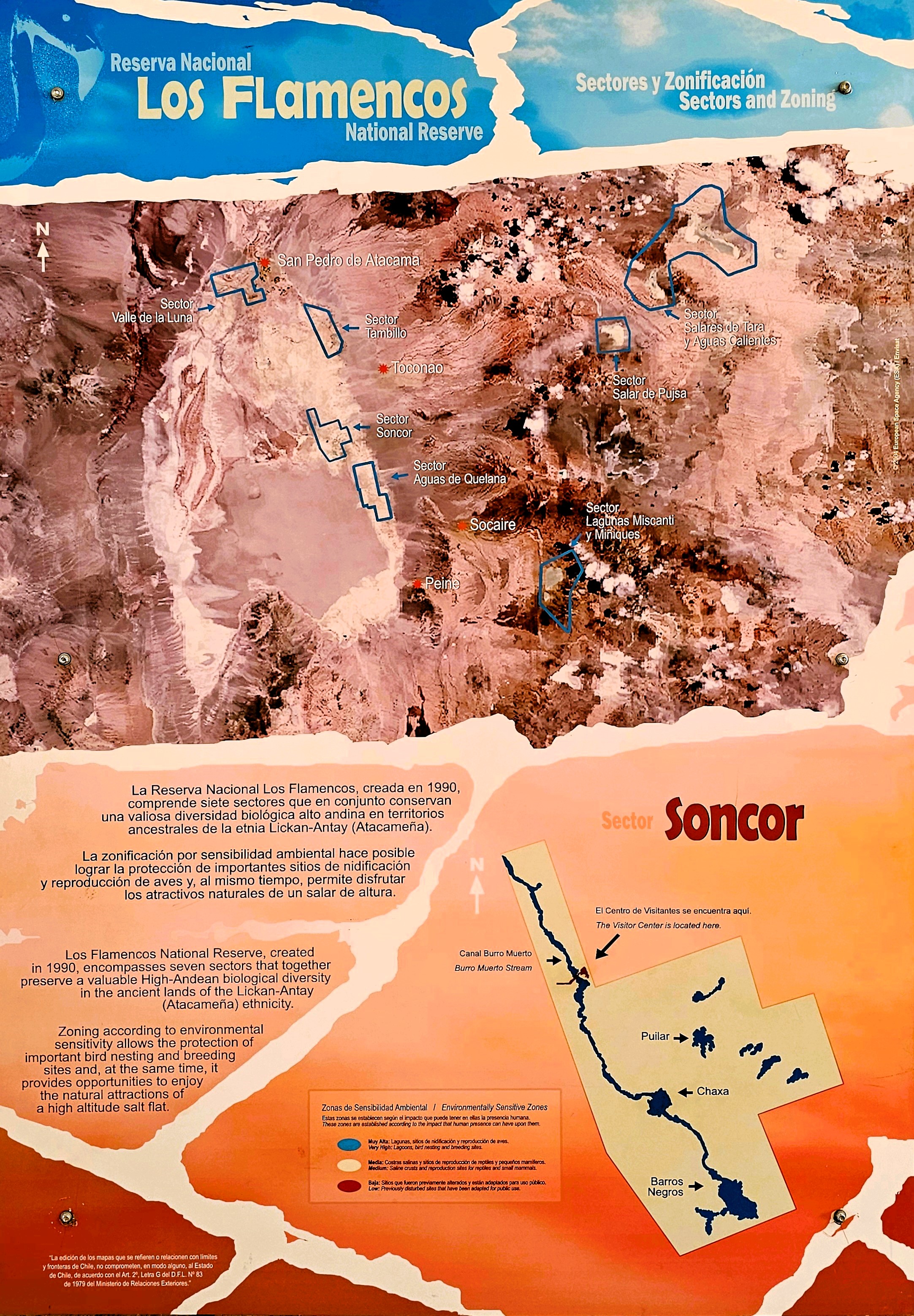
where a variety of native flamingos congregate to feed on brine shrimp that flourish in pools along the salt flats.
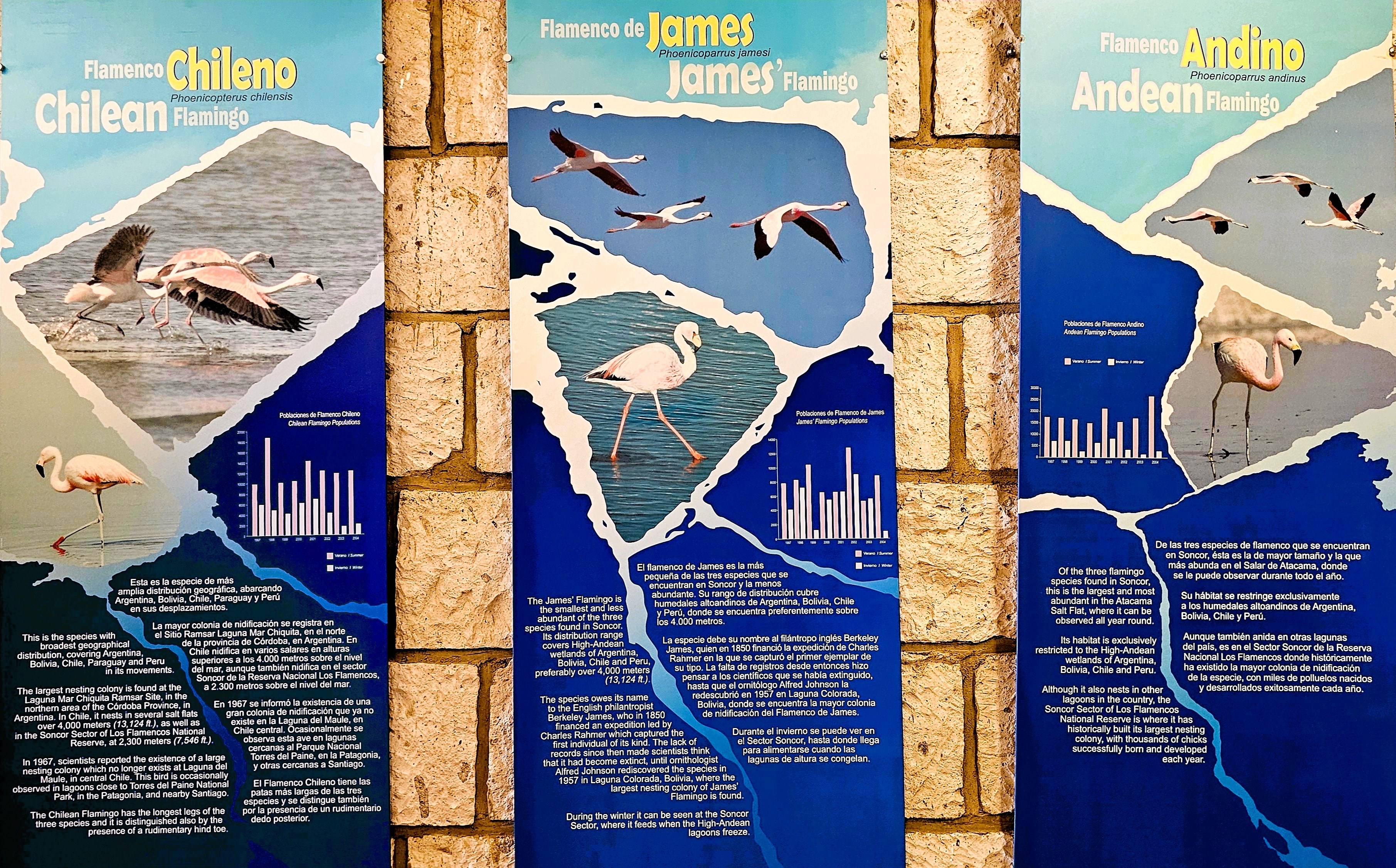
Although the park flamingos were unidentifiable from a distance,
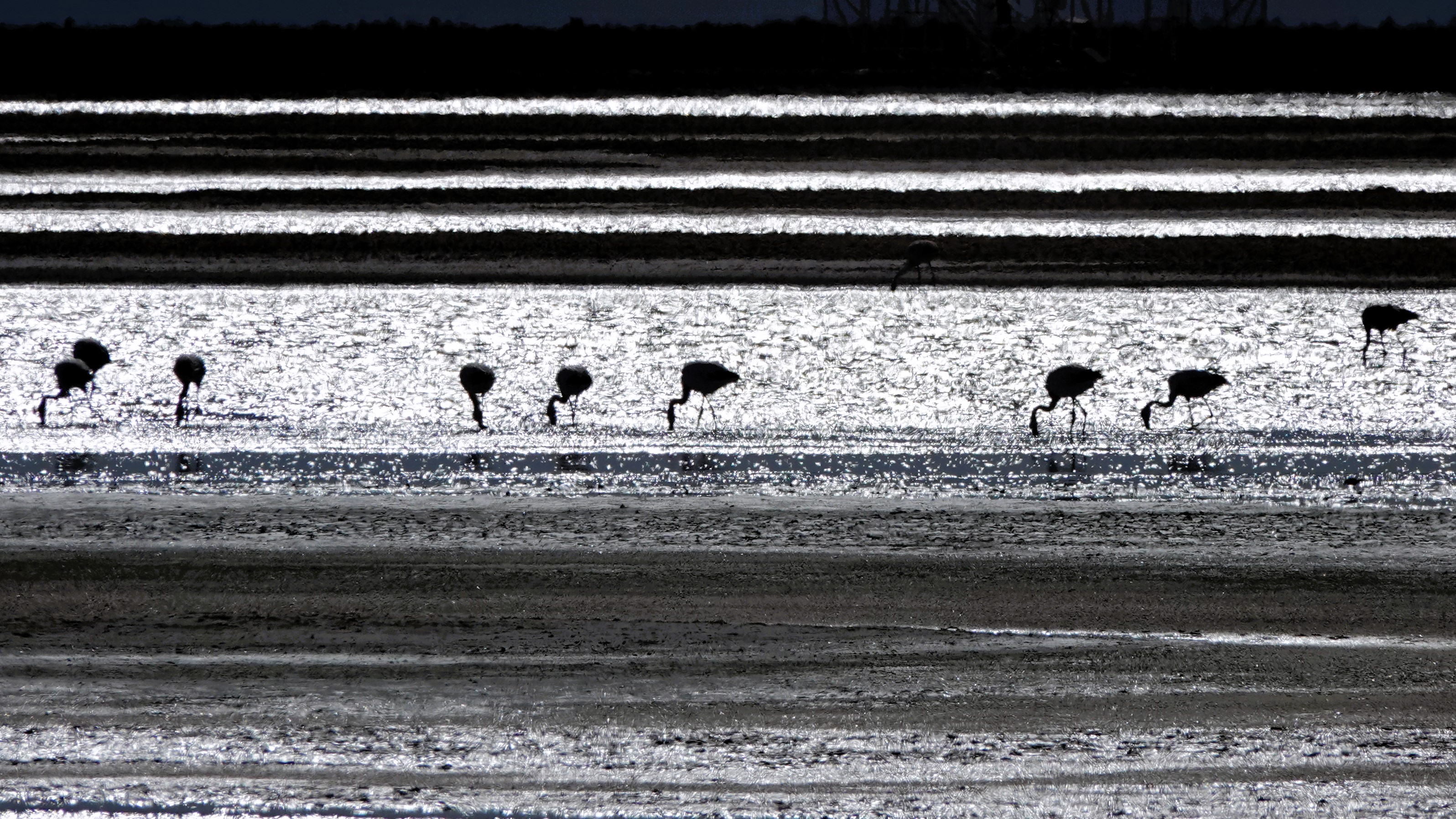
it became easier to identify their individual characteristics the closer we got to them,
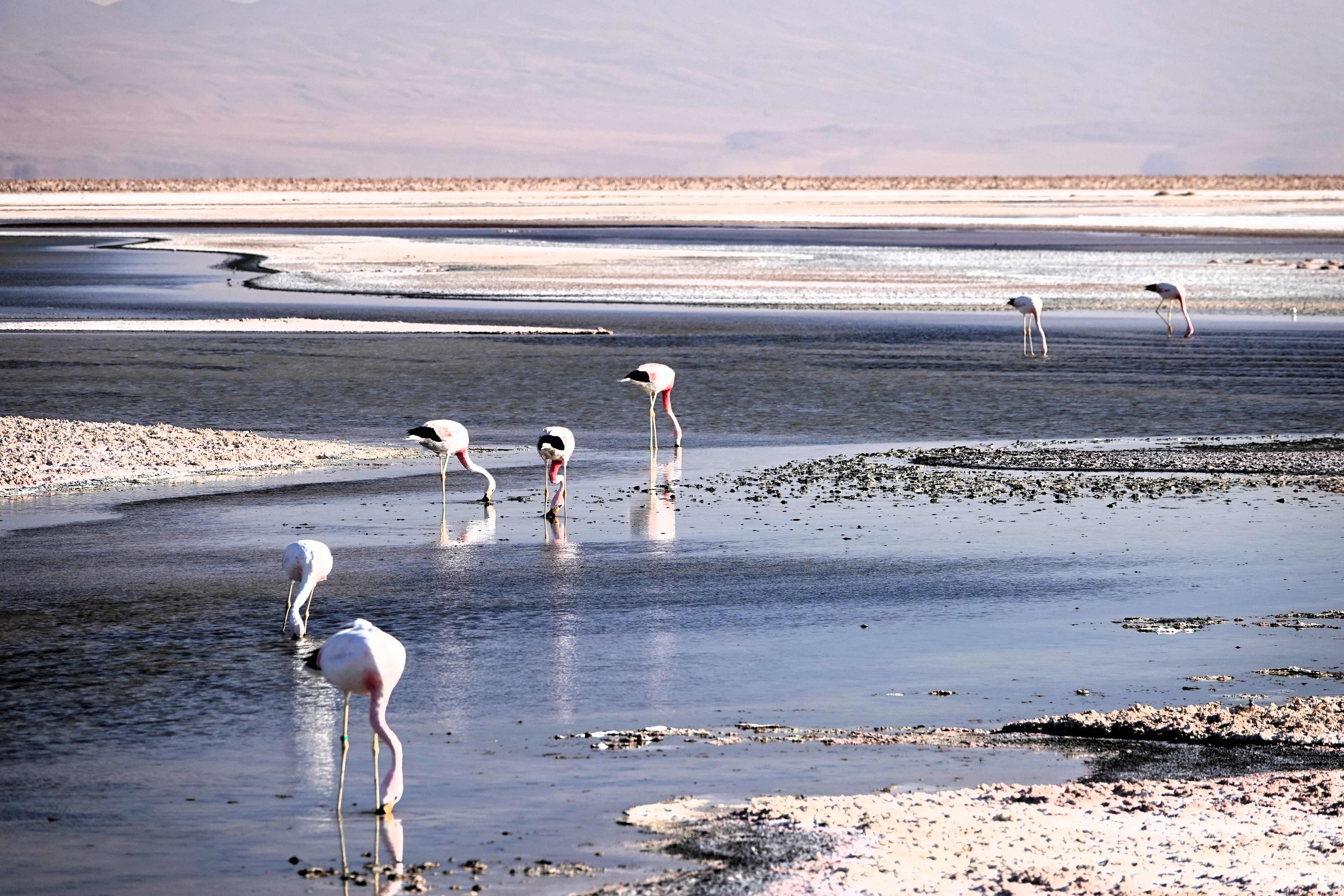
distinguishing the flock as Andean flamingos.

Our next destination was Valle de la Luna (Valley of the Moon), another sector of Los Flamencos–only 10 minutes from San Pedro, across a dusty road built for vehicles with dependable suspension.
The park was aptly named by Gustavo Le Paige, a Belgian missionary who pioneered much of the archeological research of San Pedro de Atacama in the 1950’s.

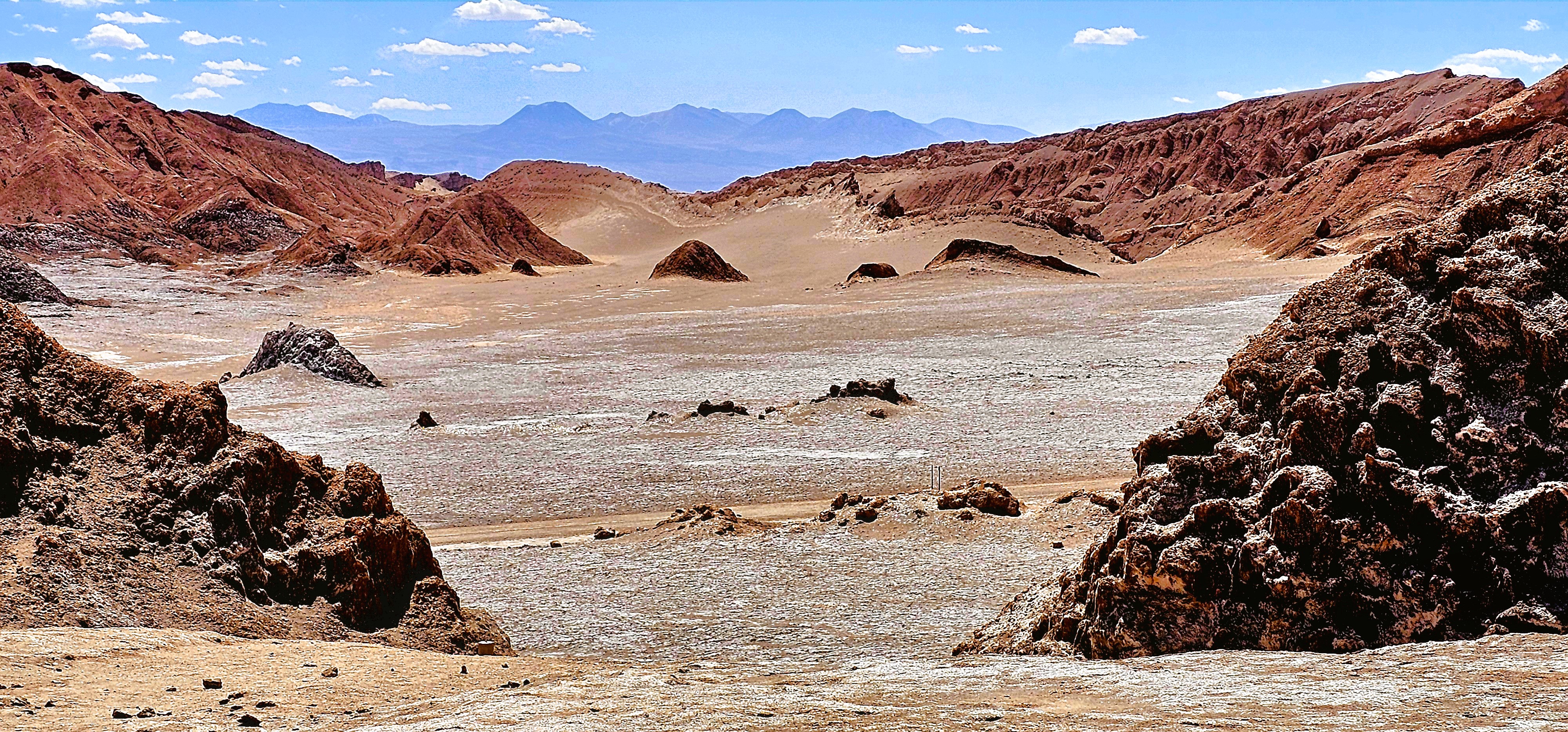
The sector captures the essence of the region’s vastness and aridity, so much so, that NASA tested its Mars rovers on the surface to simulate future planetary exploration.


Salt and sodium nitrate crystals are found throughout the Atacama Desert, as the dry air and lack of vegetation allows them to collect on the surface.
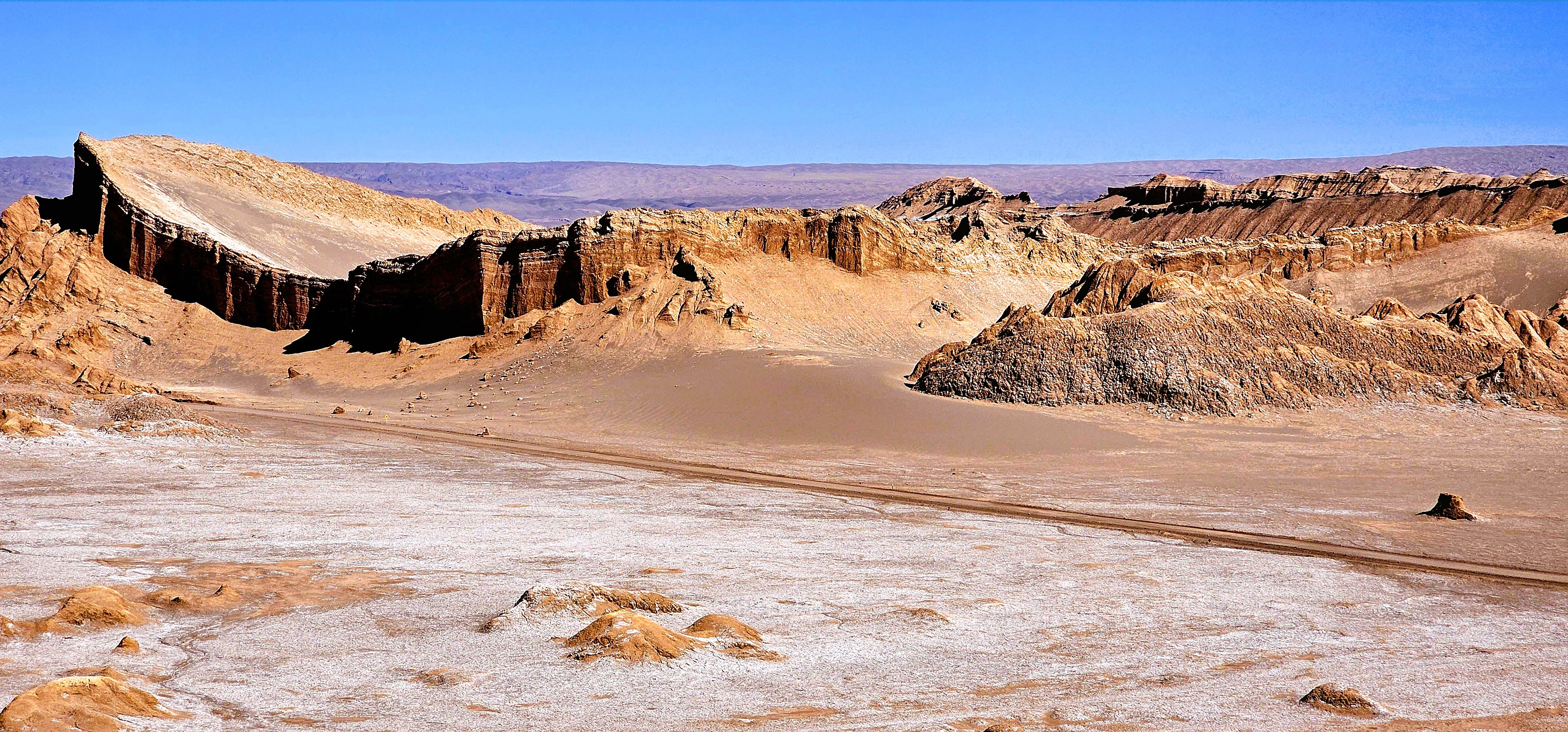
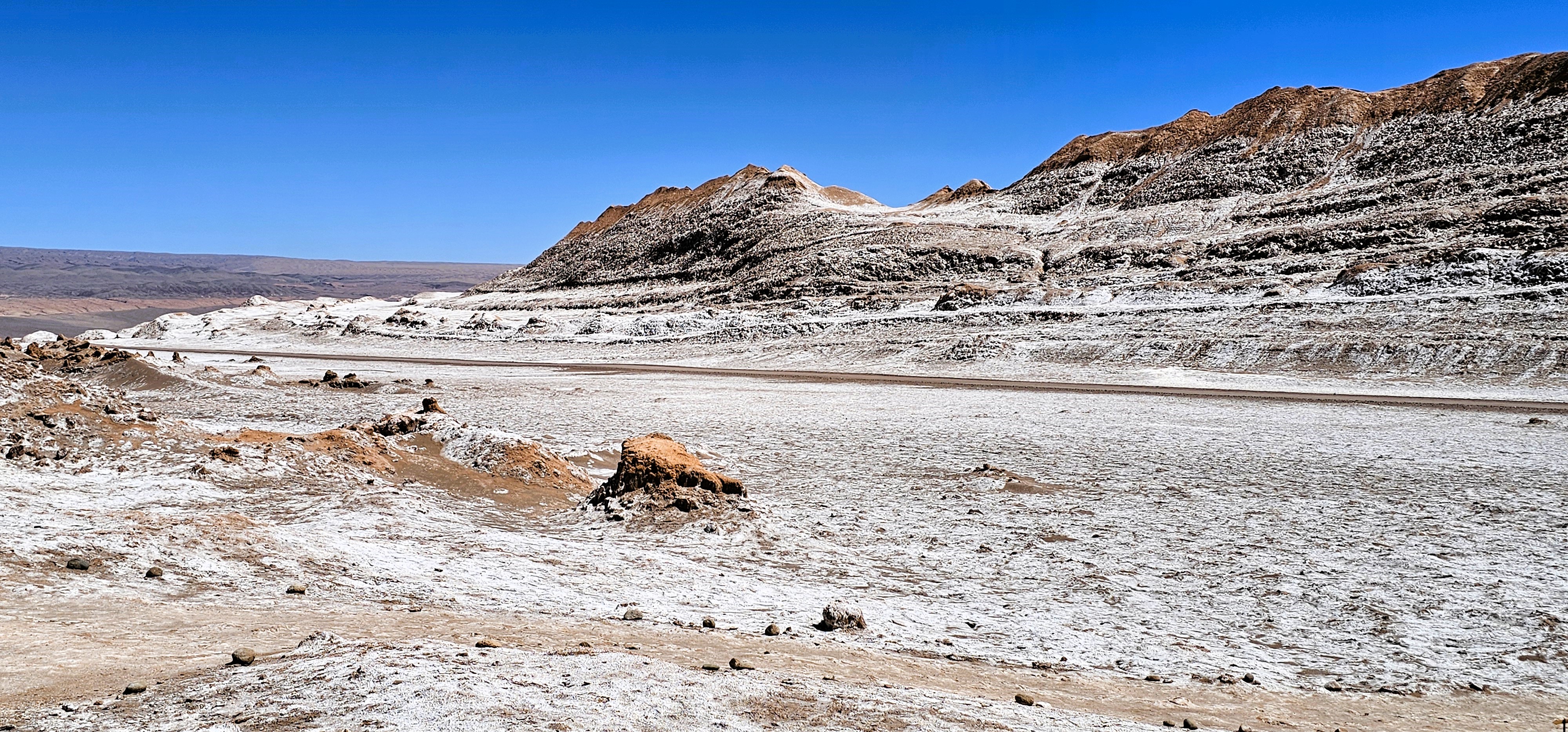
Although the region also contains precious metals including an abundance of copper, silver and gold, it was the large cache of potassium nitrate that brought the railroads and development to Atacama, turning the region into a hub for culture and commerce by the 2nd half of the nineteenth century.
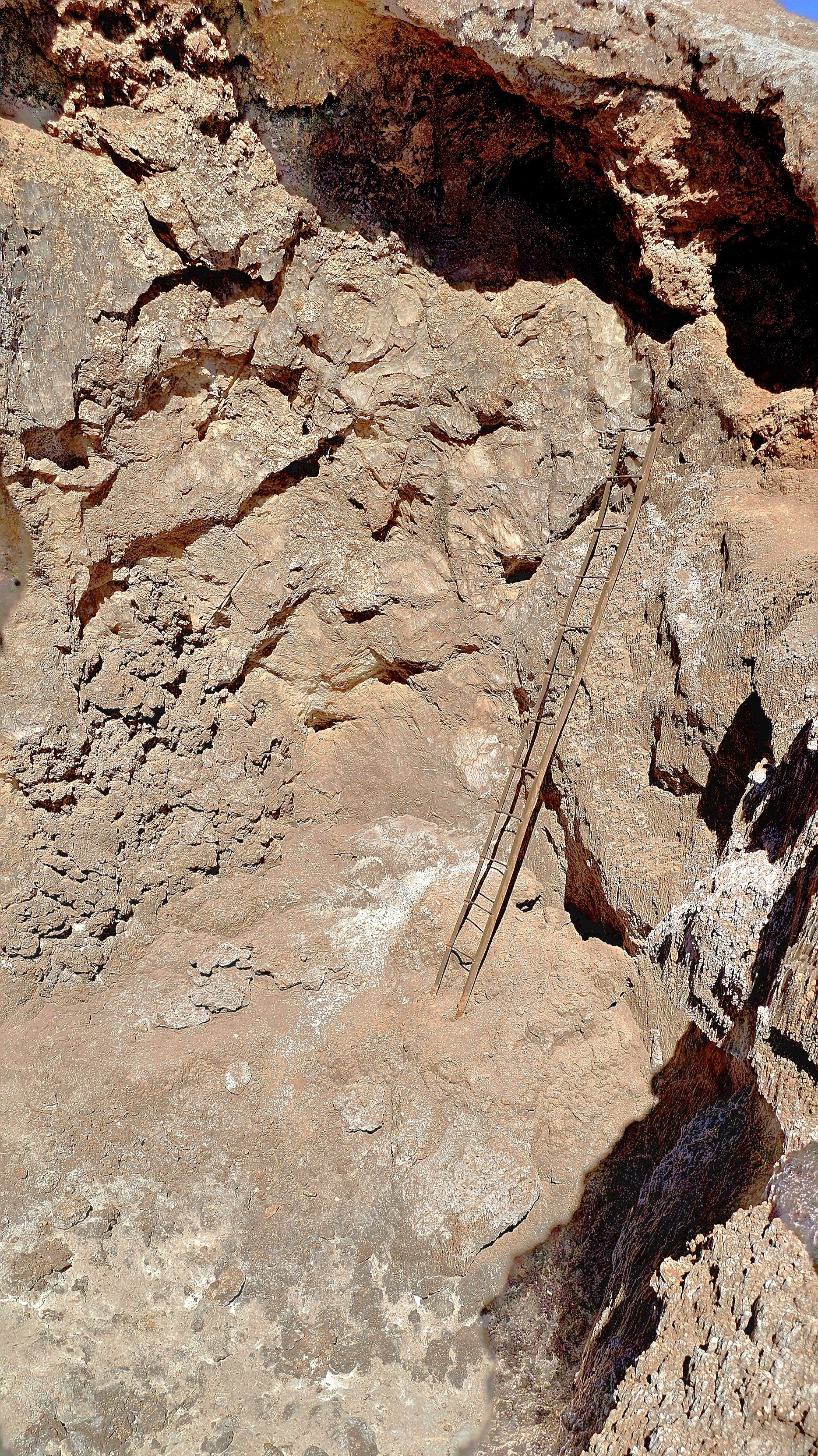
Today, large reserves of precious metals such as lithium provide a significant source of revenue for private and state-owned mining companies.
In fact, as of January 14, Chile’s SQM, the world’s 2nd largest producer of lithium has suspended its operations in Atacama due to 500 protestors from indigenous communities in the Antofagasta region who’ve been blockading roads–immobilizing workers, supplies and lithium to and from the mines–demanding that they be included in negotiations between SQM and the Chilean government.

Let’s hope that this conflict can be resolved quickly, so we may continue to feed our global appetite for electric vehicles.

 Streaming thru America