The Oldest Market in the World

In a document dating back to 1434, traces of Dresden’s Striezelmarkt Christmas Market’s existence were found. Additionally, the Turks tell us that the Grand Bazaar of Istanbul has been around since 1455.

Although proponents of both regions claim title to the oldest market (souk) in the world, 100 million Egyptians would beg to differ, because deep in the midst of historic, Islamic Cairo, stands the beating heart of city commerce–a pulsing and twisting labyrinth of passages that is Khan el Khalili–the world’s oldest continuously operating market since 1382.

Passengers of Viking Ra who elected to crowd surf through the Khan el Khalili, got a glimpse of life as it once was during the Mamluk dynasty (from 1250 until 1517), when self-pronounced sultans occupied Egypt after driving out the Crusaders. The souk was built atop the mausoleum of the Fatimid Caliphate, which founded Cairo as its imperial city in the 10th century.

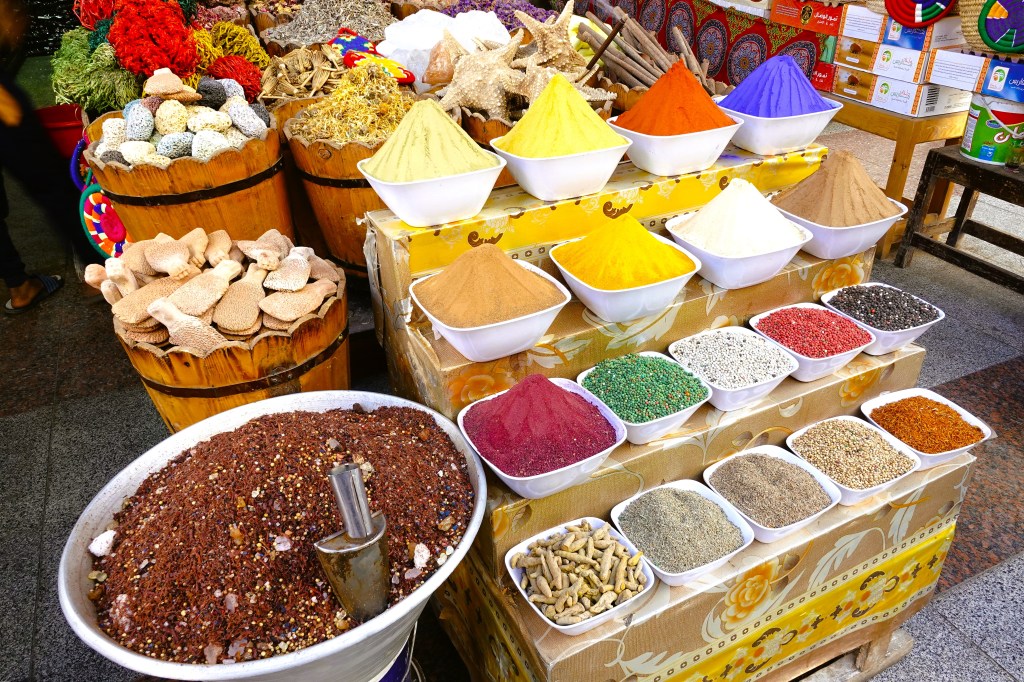
Once divided into distinct districts serving merchants trading copperware, gold accessories, and spices, the souk now balances its variety with every imaginable trinket and souvenir sold among competing vendors standing just a breath away from each other, forming an almost impenetrable wall of sounds, sights and smells…

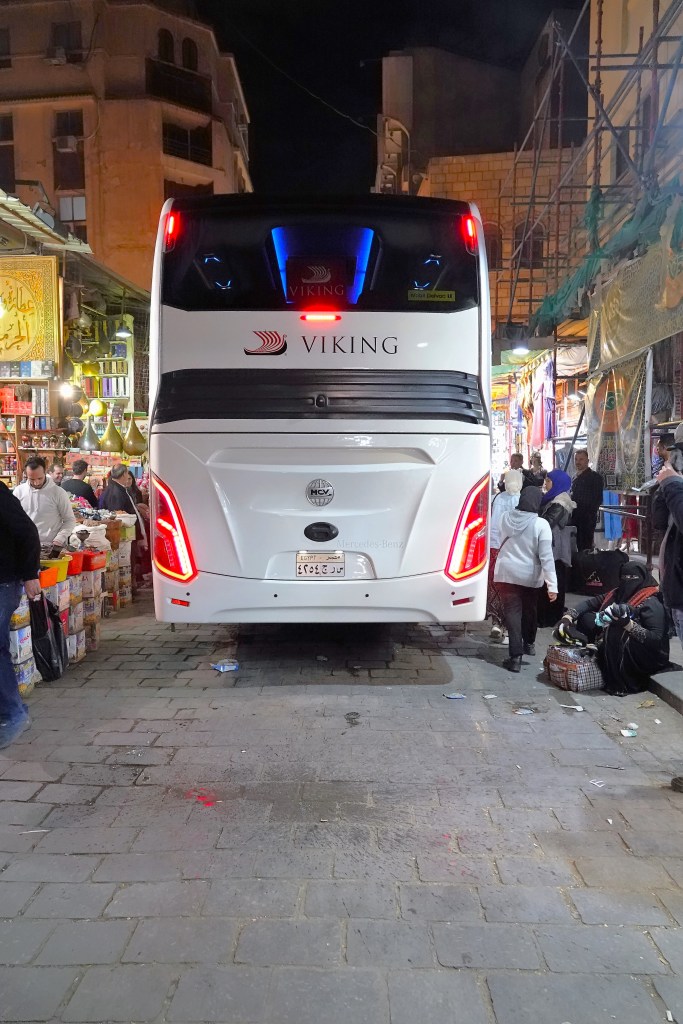
across alleyways that could barely accommodate our bus.
We disembarked from the bus and melted into a crowd of families strolling past aggressive venders hawking endless supplies of camel pants, pashminas, and pyramid paper weights to tourists,
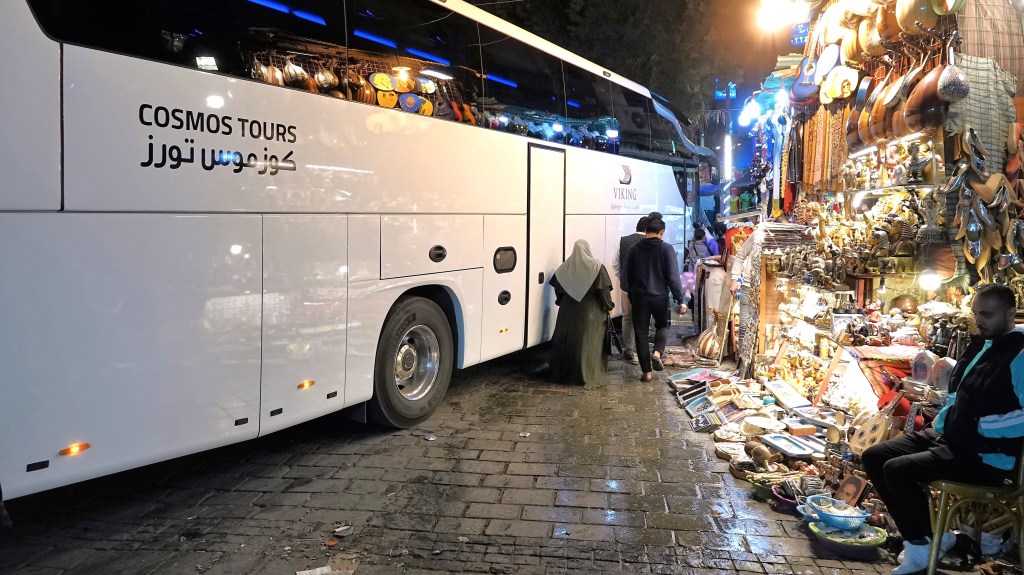
with a variety of daily-living goods for locals.

For the informed collector, haggling generally starts at 40% off the suggested price, and somehow balances out in the negotiation.

Hungry? No problem! How about a sweet potato…
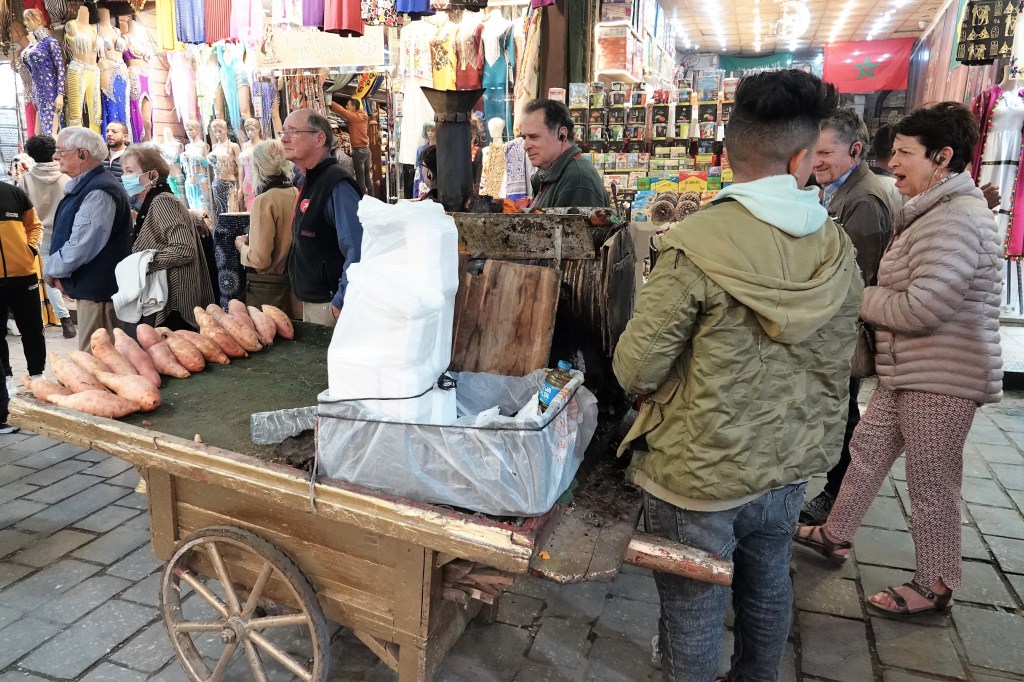
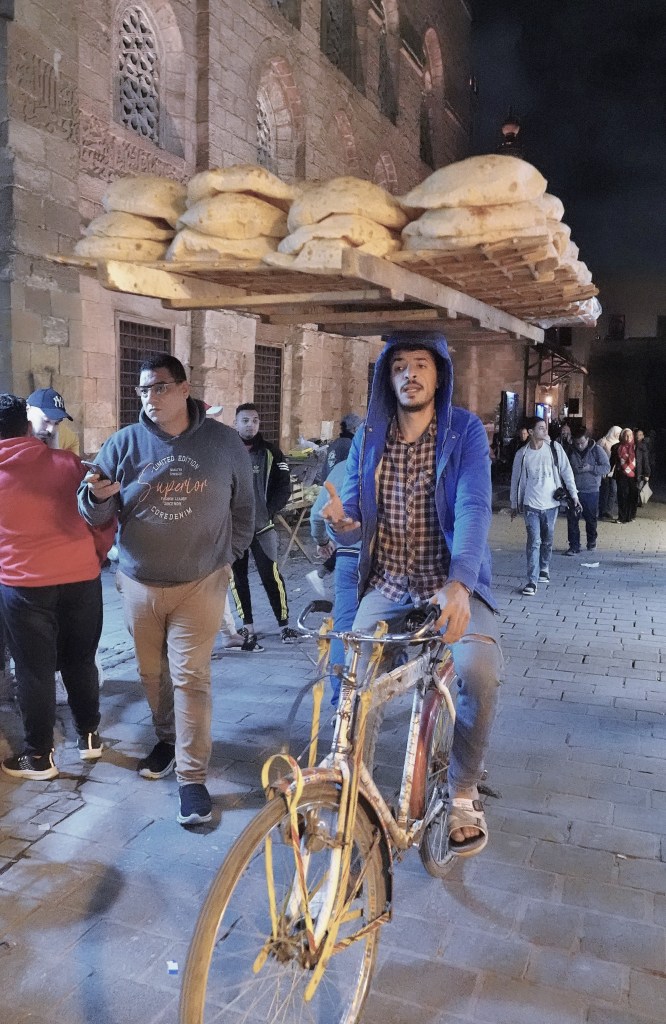
or fresh baked pita?
Our group enjoyed restaurant dining above the fray,
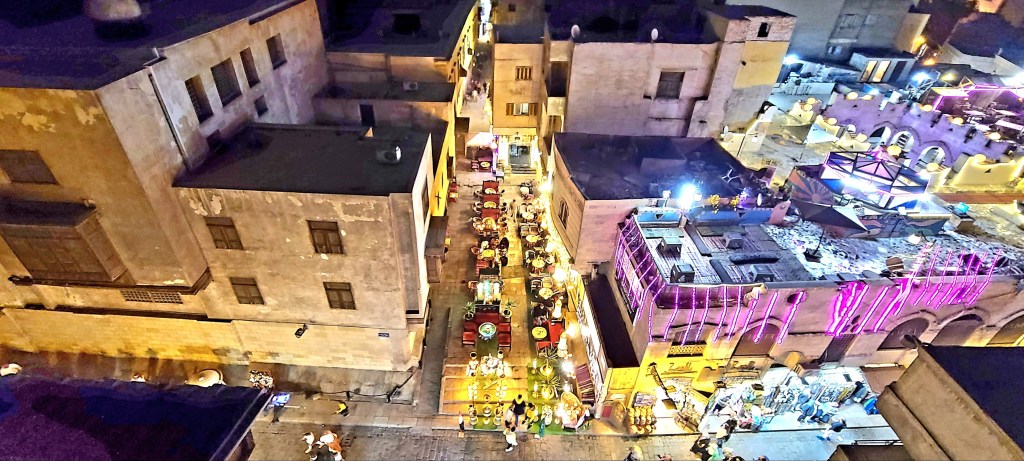
which was a pleasant respite from the tumult below us.

Walking Like an Egyptian

When Leah and I disembarked from our Northern Lights cruise aboard the Viking Star on February 4, 2020, the entire cruise industry was sinking from the spread of COVID-19. And the travel industry was unable to forecast with any assurance whether or when it would be safe to cruise again. Nonetheless, Leah and I reserved passage on Viking’s Nile River cruise (risk free) 2 years ago, and patiently waited for the coronavirus tide to wane.

Fortunately, Egypt had been less affected than many surrounding North African countries, so we waived our cancellation guarantee 3 months ago, and finally embarked on our eagerly-anticipated journey.

After 2 airport layovers–with extended delays between 2 sunsets–we touched down in Cairo to experience what we hoped would be a trip of a lifetime. We also elected to tack on a 4-day extension to Jordan to experience the “Rose City” built into the pink sandstone cliffs of Petra. And we would finish our Middle Eastern adventure with 9 days in Israel on our own.

We also chose to travel with Viking for their immersive programming, delivered by two resident Egyptologists, Khadiga and Youmna, who offered comprehensive commentary every step of the way.

After a night of well-deserved sleep at the Sheraton Cairo Hotel and Casino, we awoke at 6 AM to the muezzin’s prerecorded call to morning prayer,

and began our tour with an excursion to Cairo’s Citadel of Saladin, the largest citadel in the Islamic world opened in 1176,

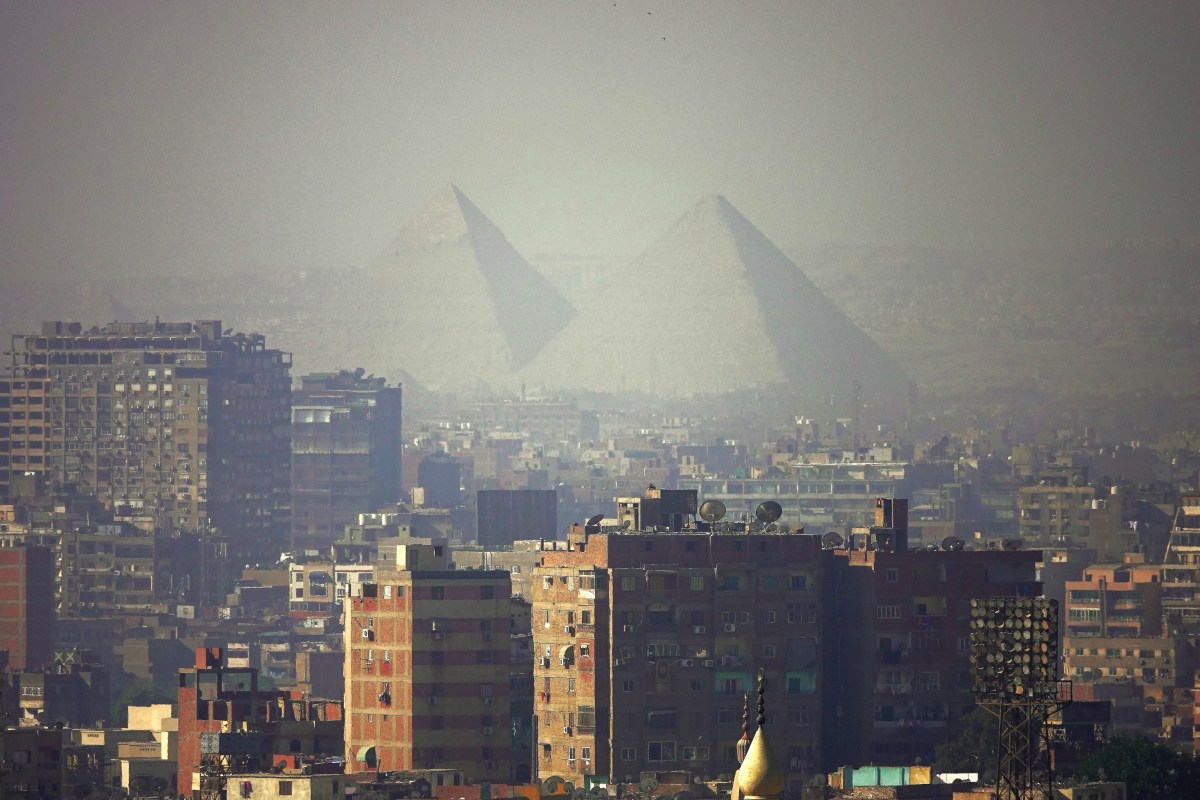
for magnificent views of the entire city–a massive sprawl sheltering nearly 22 million people within its metro borders, with what also seems as many stray cats and dogs–

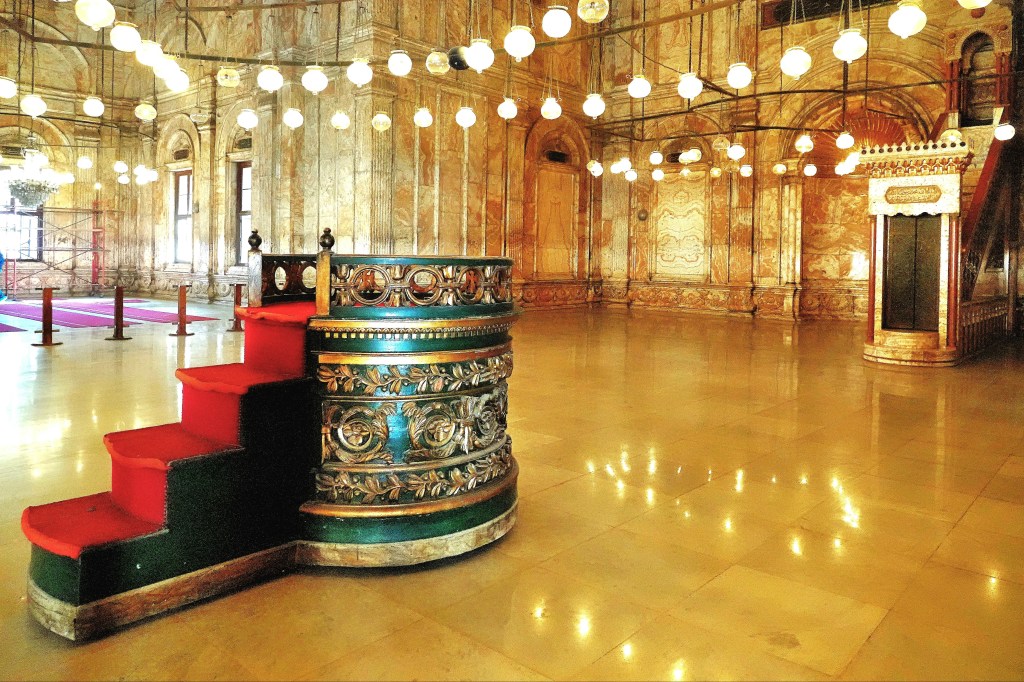
and access to the Mosque of Mohammed Ali Pasha, also known as the “Alabaster Mosque” built in 1848, with twin minarets reaching a height of 84 meters, the highest in all of Egypt.

The prayer hall inside can accommodate 10,000 worshippers under a large central dome surrounded by four semi-domes,

supporting a massive crystal chandelier that has recently been repaired after a 3-year restoration project by Egypt’s Supreme Council of Antiquities.

Across the marble tiles to the east is an adorned, gilded pulpit of carved wood for the chief Iman.

Within the center of the mosque’s massive courtyard of 47 arched doorways finished with 45 domes stands an elaborate alabaster fountain for requisite ablutions.

The copper-clad clock tower rising above the courtyard in the center of the south façade was a gift from Louis Philippe, the King of France in exchange for one of two ancient obelisks discovered at the Temple of Luxor that still stands in the Places de la Concorde in Paris.

Unfortunately, it was a bad trade for the Egyptians, as the mechanical clock is only accurate twice a day since never working properly after installation.

After roaming the courtyard,

it was time for our next excursion to the Egyptian Museum, where we motored by bus through the busy streets and circles of Cairo, while managing to avoid hundreds of pedestrians who habitually cross the roads in all directions, without any regard for traffic or life itself.

Truly, a miracle.