
After Japan entered the 2nd World War at the end of 1941, their forces quickly overran most of Southeast Asia. However, by summer 1942, supply lines to Burma and Thailand were faltering after Japanese naval strength was compromised in the Battles of the Coral Sea and Midway.
To ensure a secure distribution channel in the region, the Japanese military built a single line railway to link existing railheads between Burma (now Myanmar) and Thailand.
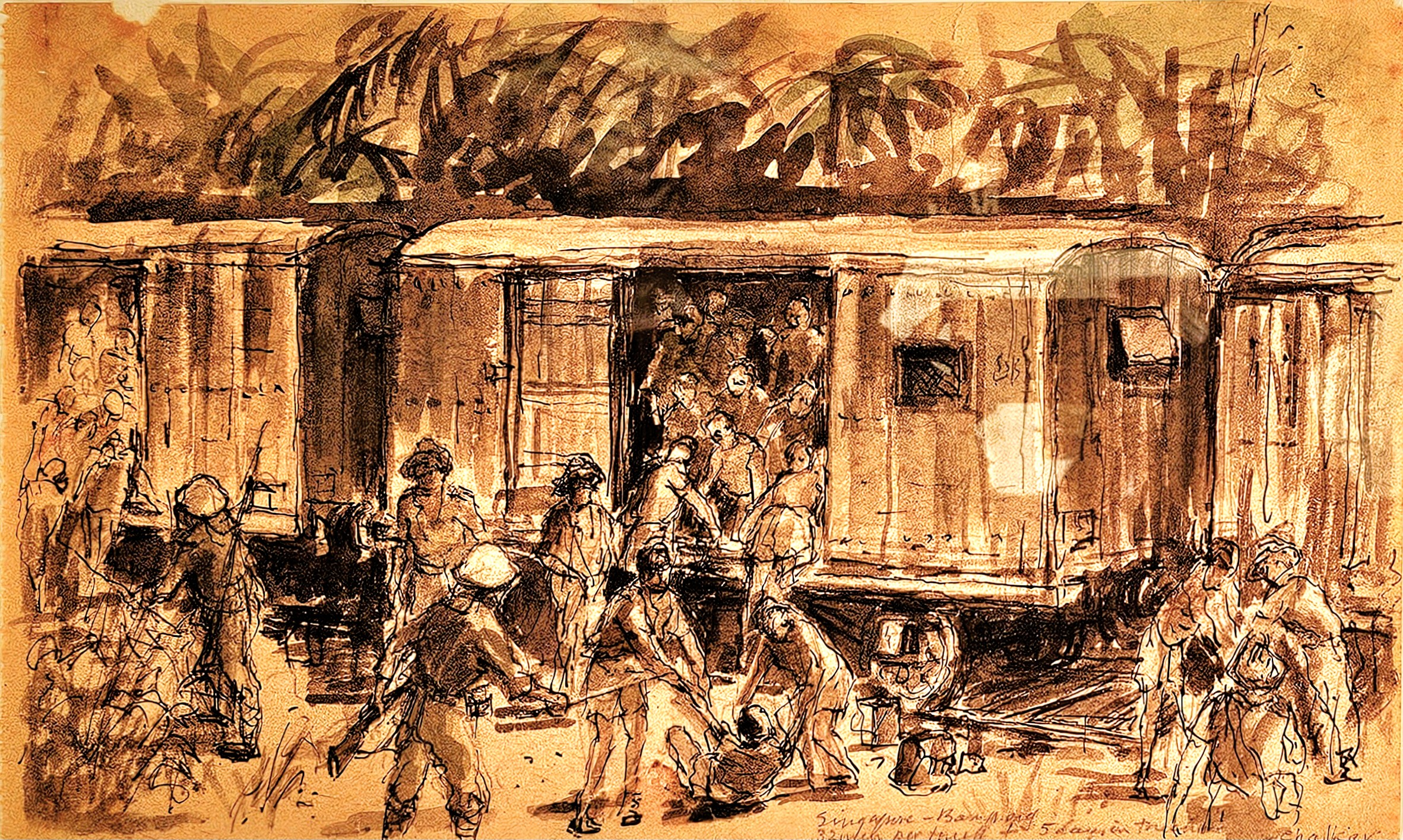
By commanding a forced-labor construction brigade of 60,000 Allied POWs and 200,000 Burmese, Malayan and Thai civilians (Romusha) who toiled along the route (from Thanbyuzayat in the west to Nong Pladuk in the east), Japanese military eventually completed the 415 km rail line in October 1943, but not without considerable neglect and harm to their captors and conscripts.
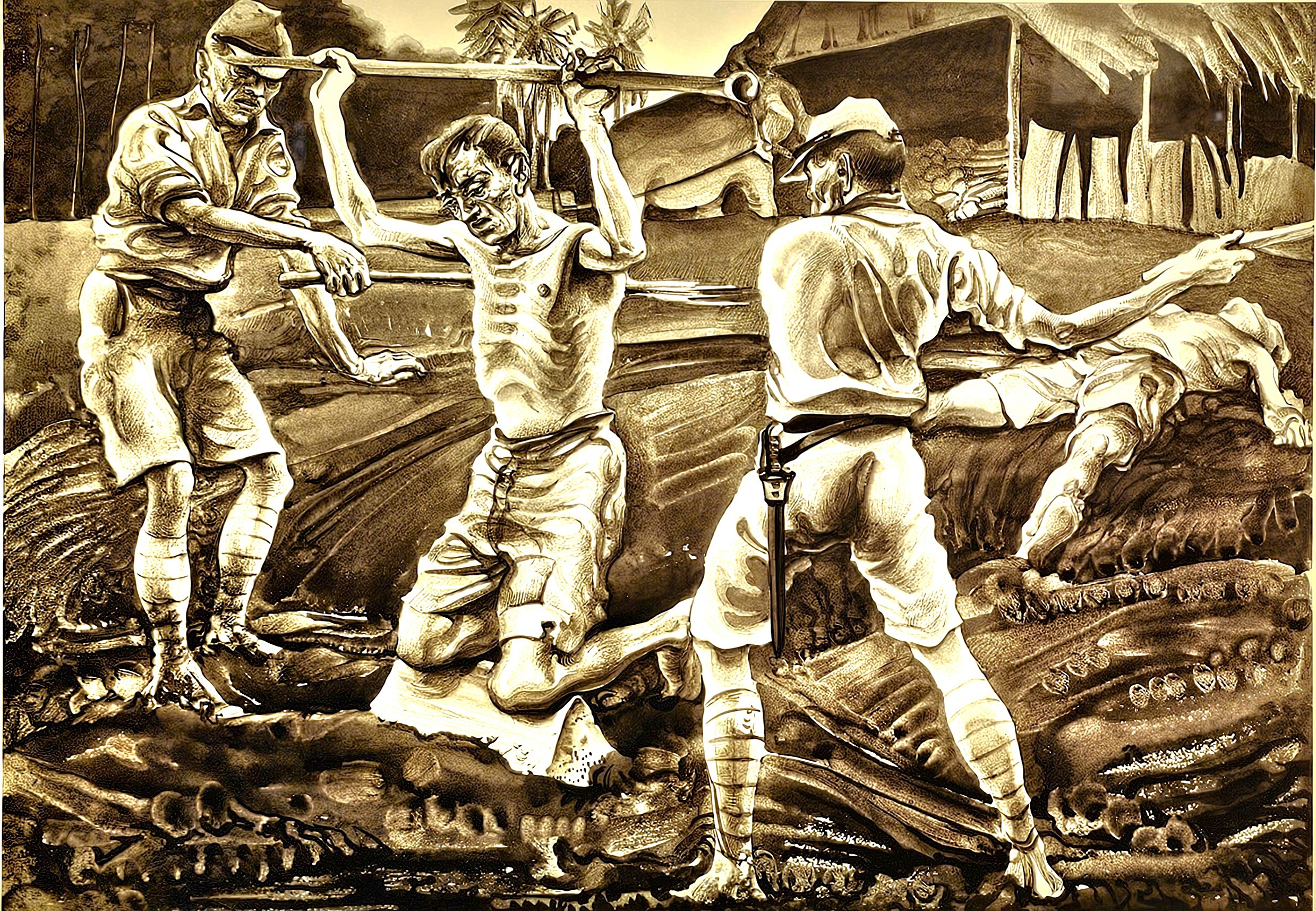
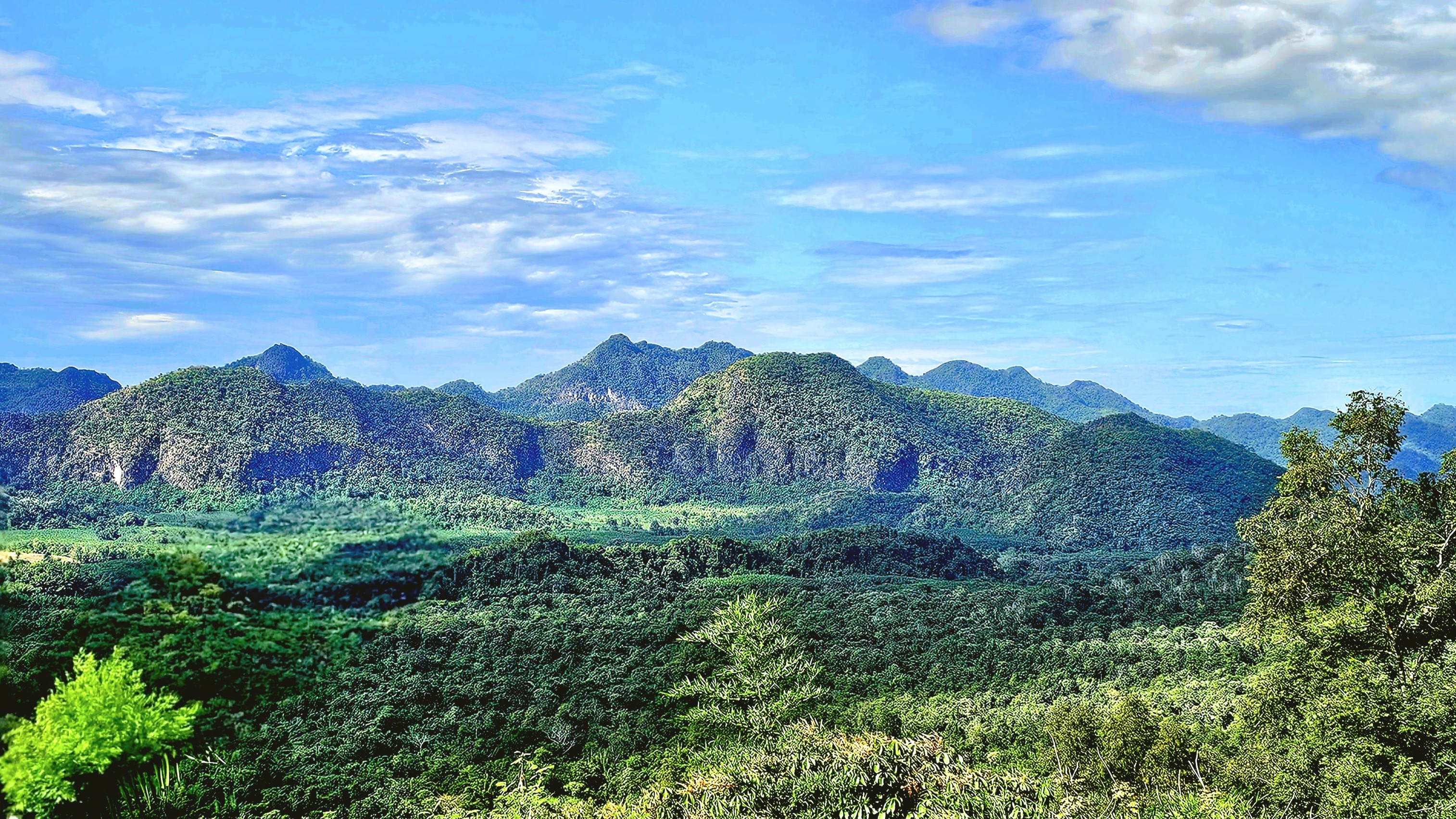
At first, work at the termini progressed quickly across flat, lightly vegetated land. But as terrain turned to rocky jungle, and monsoons turned the ground to mud, the work became difficult, causing the project to stall multiple times–which intensified Japan’s desperation to finish the line with little regard for human life.

One of the most challenging excavations required the construction of many large embankments, as the railway crossed the relatively flat high ground towards the steep valley wall to the north.
Crew survivors called it Hellfire Pass (Konyu), recalling the horrid conditions of the cutting and how much the work scene resembled a living hell when illuminated by fire.

All of the grueling work was done without the aid of reliable mechanical equipment. Instead, the most primitive of hand tools were used to drill holes for the explosives used in blasting the rock and removing the debris.

It took 12 weeks of round-the-clock shifts to complete this section of the roadbed, which resulted in a great loss of life. Sixty-nine men were beaten to death by Japanese guards, and countless others died from cholera, dysentery, starvation, and exhaustion–all of which is well documented at the Interpretive Center’s exhibition hall,

and memorial trail built and managed by the Australian government.
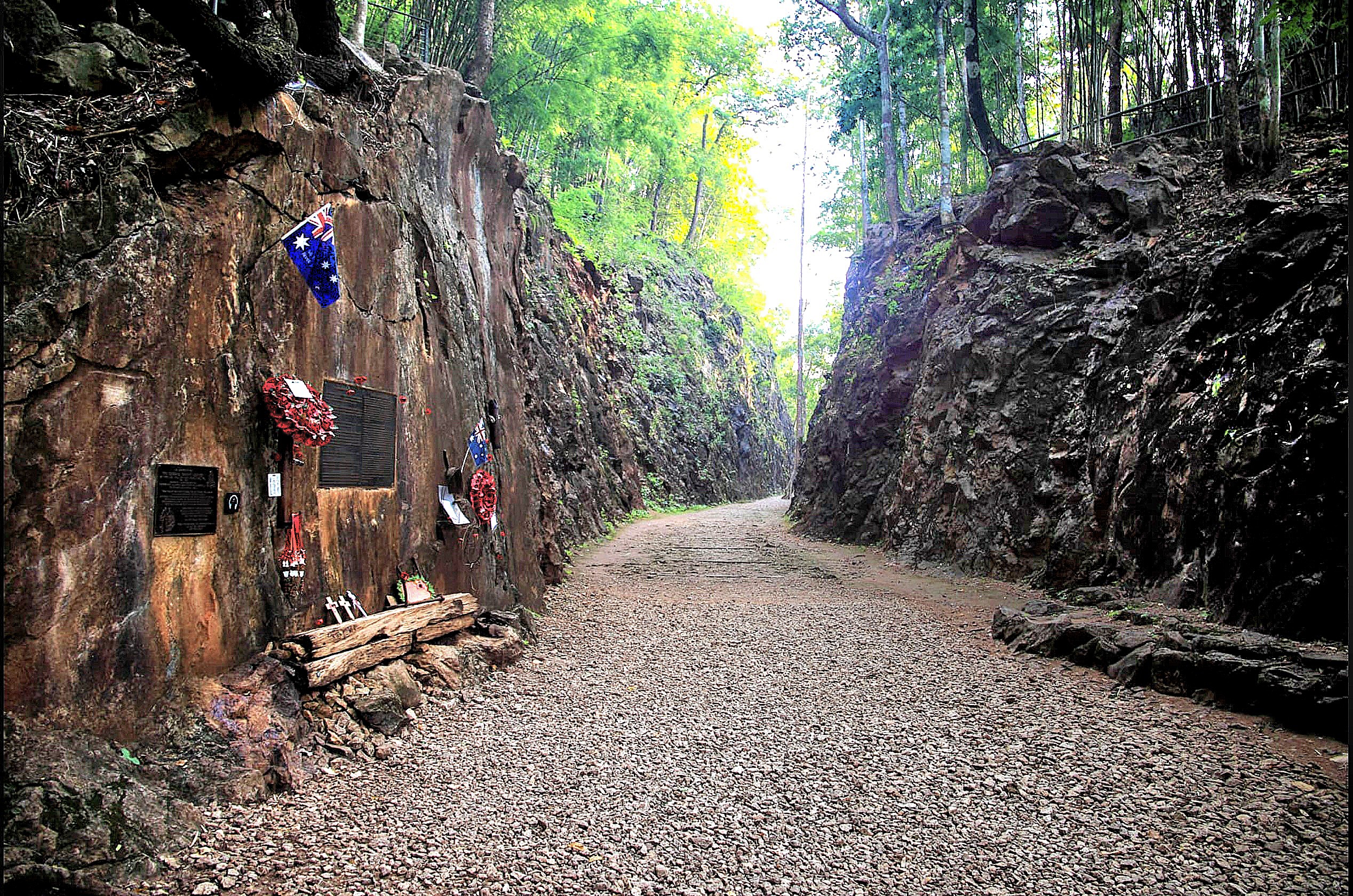
Construction brigades completed the 415 km railroad in October 1943. Unfortunately, the project cost the lives of approximately 15,000 POWs and 100,000 Romusha from disease, starvation, exhaustion and mistreatment. Their sacrifice was commemorated by a granite block placed at the track.

Eighty km south of Hellfire Pass, the railroad crosses the River Kwai in the town of Kanchanaburi–site of the work camp where all prisoners and laborers were processed.

The bridge is primarily remembered because of its portrayal in the 1957 film The Bridge on the River Kwai, which depicts the harsh conditions and forced labor endured by Allied POWs, making it a powerful symbol of the brutality of war and the sacrifices made by captives.
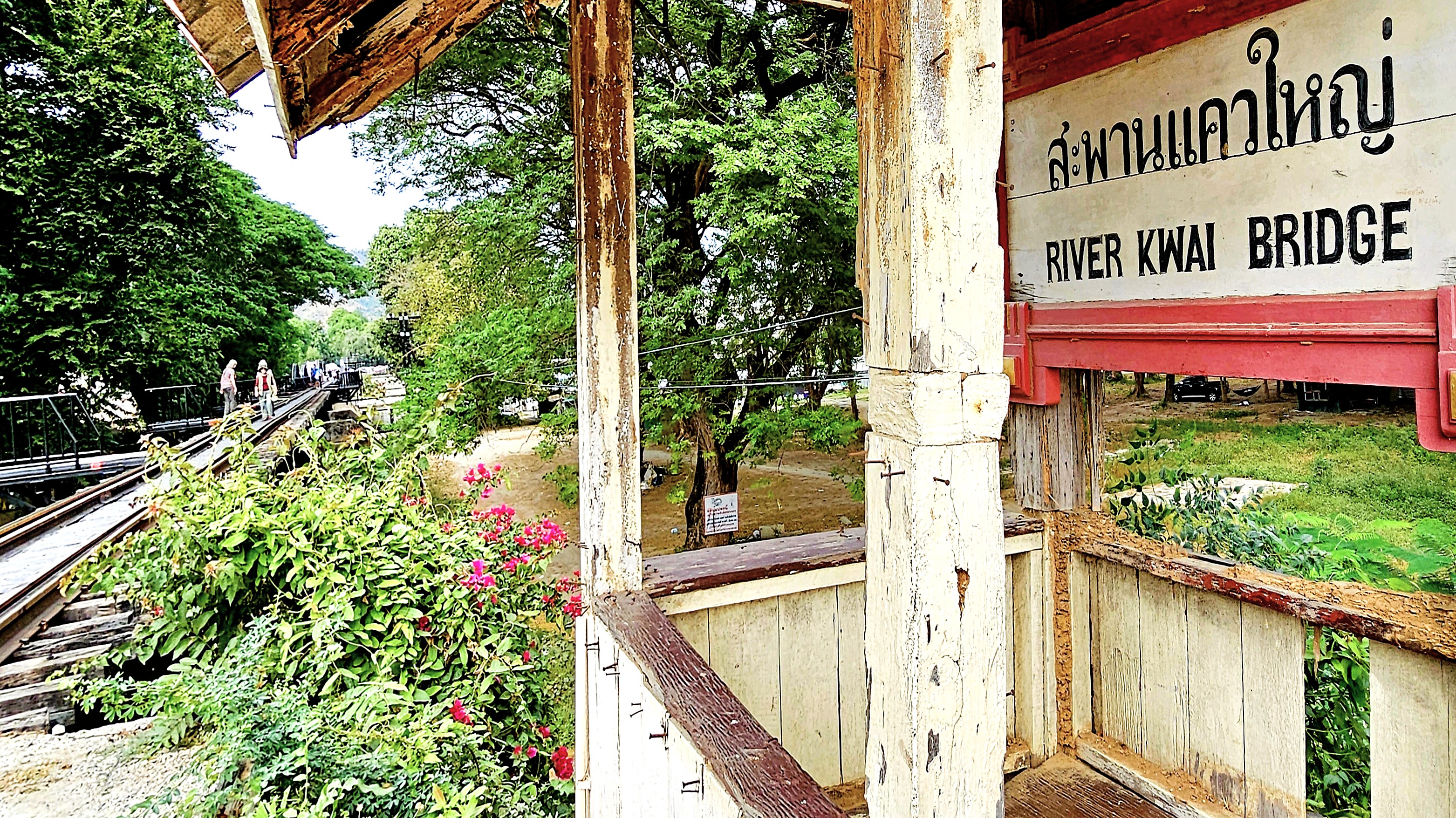
Nowadays, the bridge can be crossed on foot or with a small tourist train that runs back and forth.

The Kanchanaburi War Cemetary, just down the road, is the final resting place of nearly 7,000 Commonwealth soldiers who participated in building the Burma-Thailand Railway.
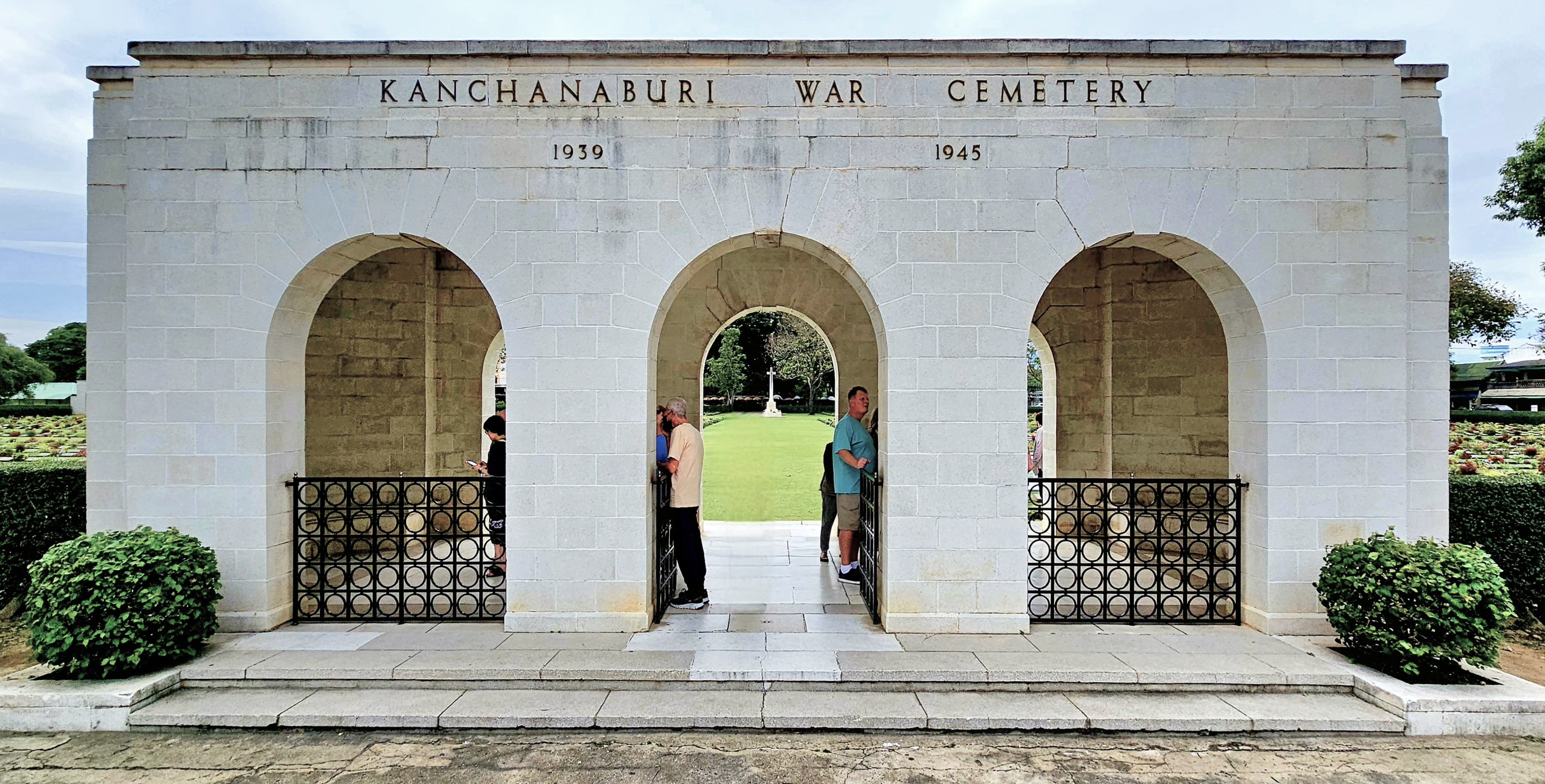
Their mission is commemorated across a manicured lawn of gravestones,

and memorials.

It was a solemn day of remembrance in Kanchanaburi, which also came with a telling lunchtime reminder of WWII’s Hellfire experience…

 Streaming thru America