
Bo Sang Village, of Chiang Mai Province, has a 200-year history of producing traditional umbrellas made by and with local resources. But it took a curious and enterprising monk to bring this industry to Bo Sang.
Legend has it that local monk, Phra Intha was gifted a beautifully crafted hand-made paper umbrella by a Burmese worshipper during morning offerings while on a pilgrimage to a Burmese monastery. It was a very thoughtful gift to shield him from the sun.
Impressed by the umbrella’s detailed design and durability, Phra Intha ventured to the worshipper’s Burmese village to discover that the umbrellas were made entirely of sa (mulberry bark) paper over a bamboo frame, and suffused with oil to also help repel rain.
Realizing that the same natural resources were available at his home, the monk saw a golden opportunity for the farmers of Bo Sang to re-create similar umbrellas to enhance their incomes during the post-harvest season.
Phra Intha dedicated himself to mastering the intricate techniques and skills required for umbrella-making. Upon returning to Bo Sang with his newfound knowledge, he eagerly shared it with the local community, igniting a collaborative spirit that led to the establishment of a vibrant village co-operative, with each community creating a component and playing a vital role in the umbrella-making process.
In 1978, the Umbrella Making Center was established by Thavil Buajeen, where every step of the process of hand-crafting stylish umbrellas has been consolidated under one decorative roof in Bo Sang, and where these parasols continue to draw favor from around the world.
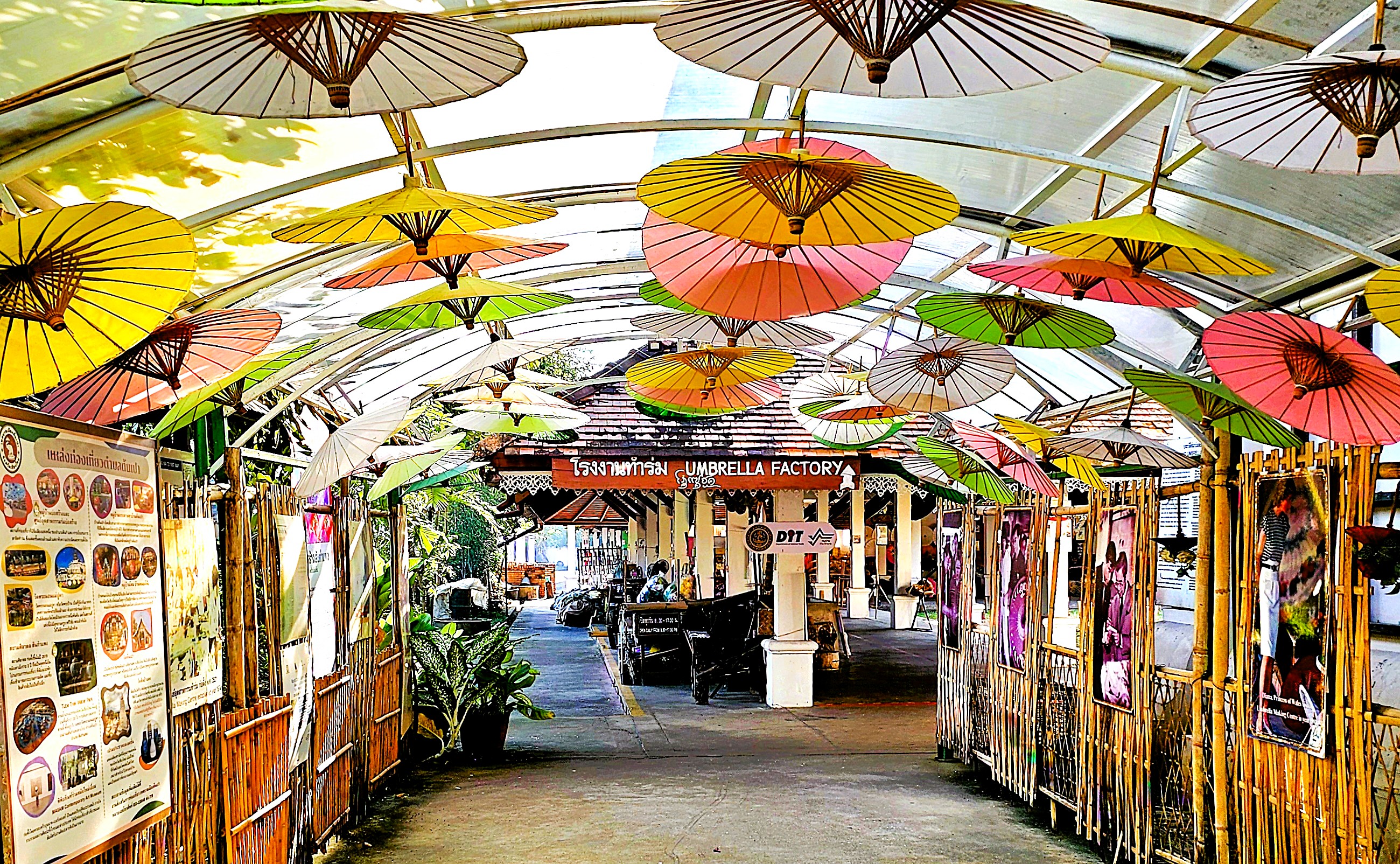
Locals from Sa Bong report daily to the Umbrella Center to demonstrate their artisanship. They are mostly elderly women, by appearance. They squat on grass mats, grasping sharp blades with gnarled fingers, but they work so nimbly, so effortlessly, almost blindly at splitting and shaving bamboo rods into precision-sized spokes for the pulley apparatus.
They perform their tasks at individual workstations atop raised platforms that wrap around an open garden which is anchored by a retail outlet. It’s like walking through a living diorama.

It all starts with papermaking. Bark is first harvested from the mulberry tree and soaked for 24 hours. Then it’s boiled with several kinds of ashes for about 3 hours and clean rinsed with water. Next, the pulp is hand-beaten with mallets until fibrous. Thereafter, the fibers are places in a water-filled tank and stirred with a paddle until the fibers are suspended in the water. The fibers are then sifted through a screen and placed in the sun for about 20 minutes, forming sheets of paper that easily peel when dry.

Bamboo framing is prepared according to the umbrella radius.
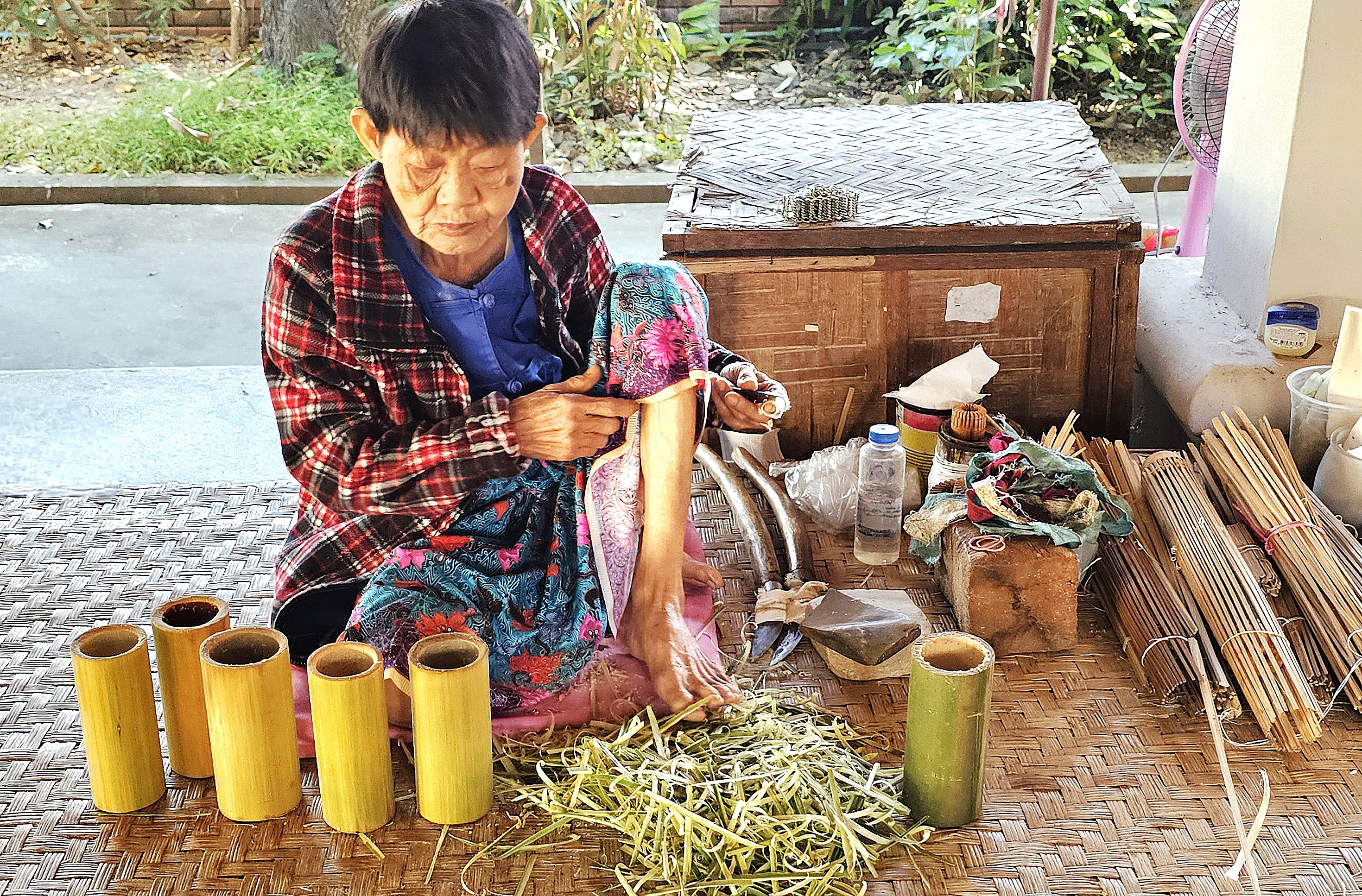
Each stem is split into 36 spokes for the lower frame,

and precision-shaved for uniformity.

An equivalent number of bamboo ribs are produced for the canopy.
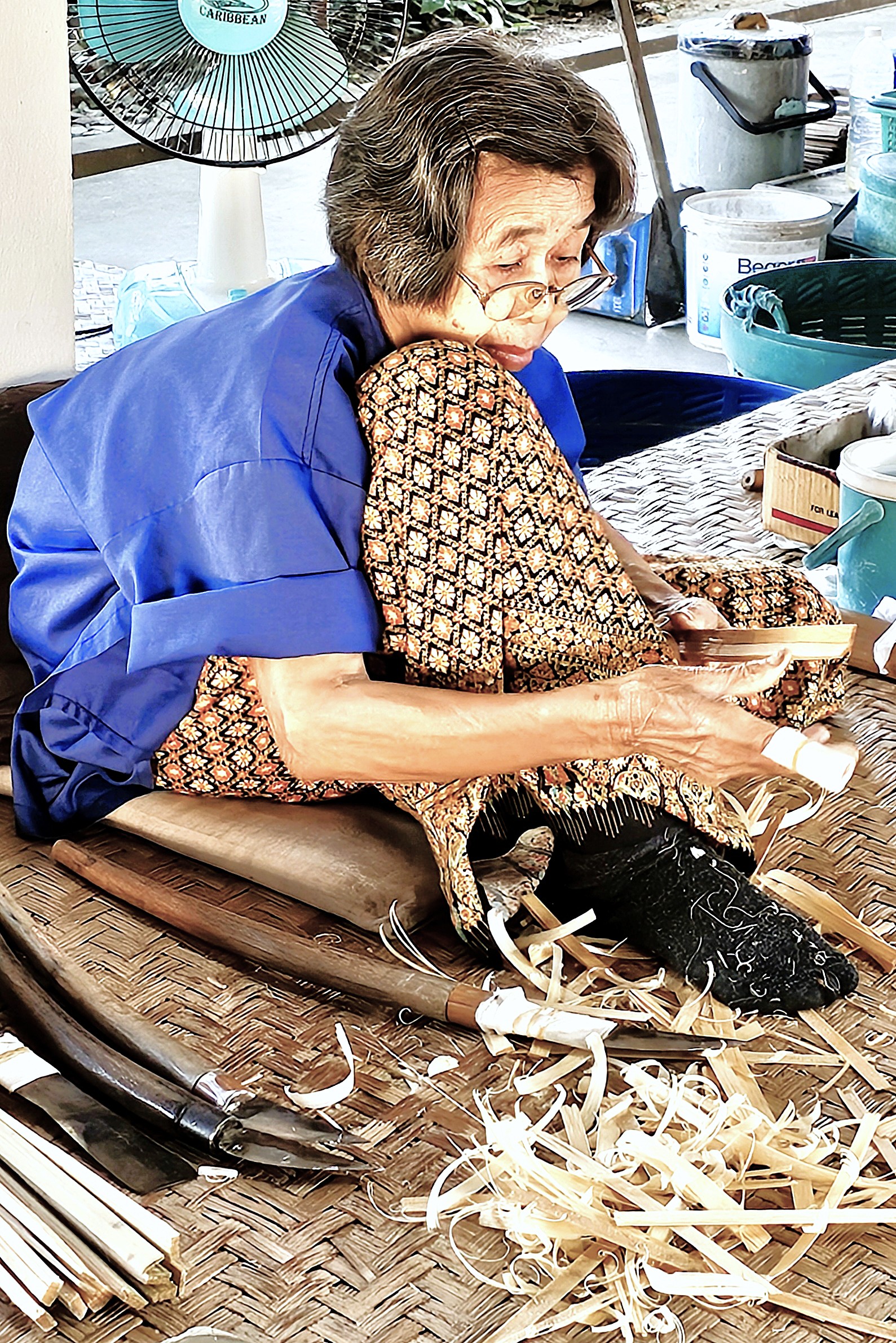
The spokes are assembled and strung between the upper and lower knobs to create the open/close mechanism.

Once the skeleton has been completed,

the paper canopy is applied and trimmed.
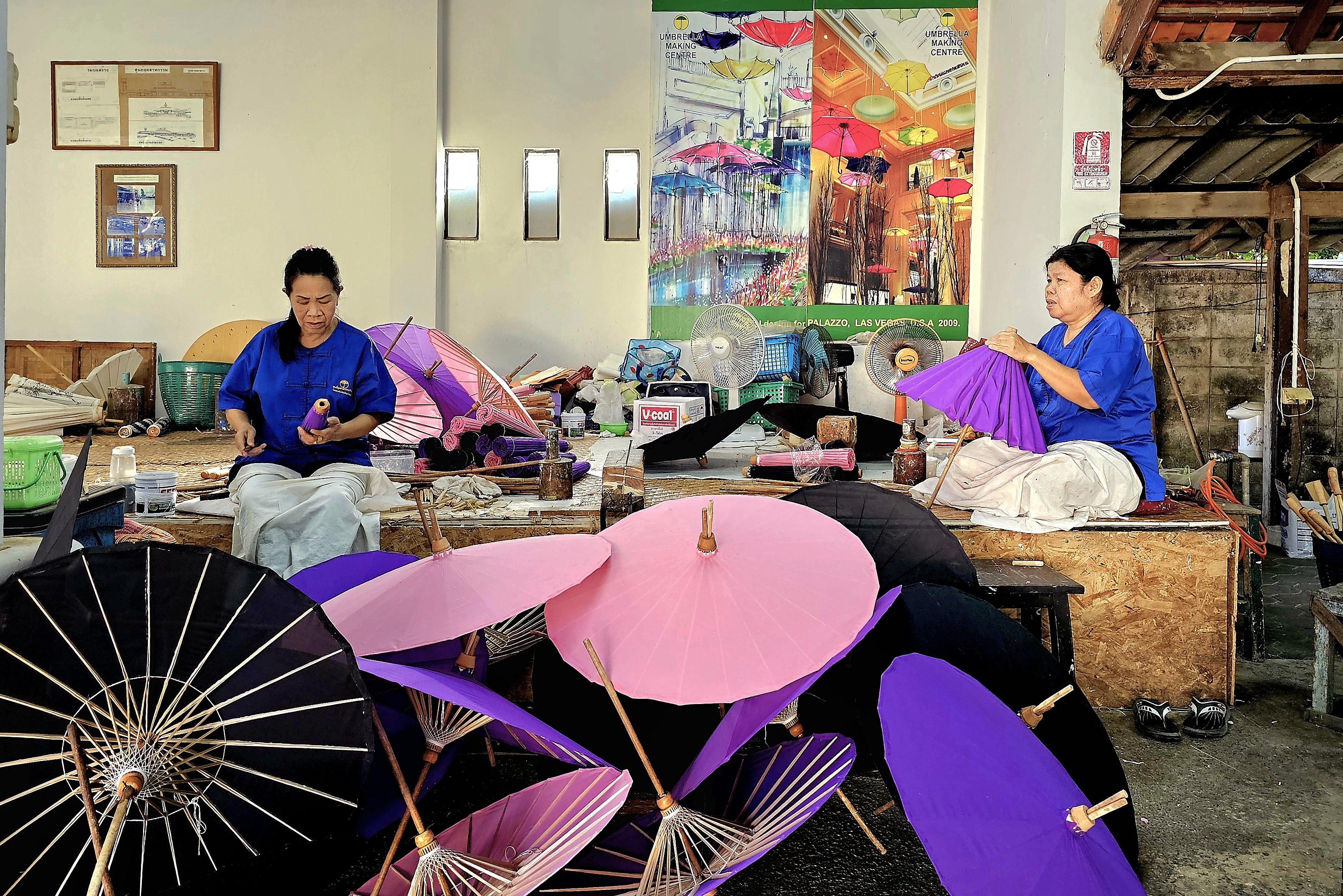
The finished product is now ready for detailing,

or indoor use, only.
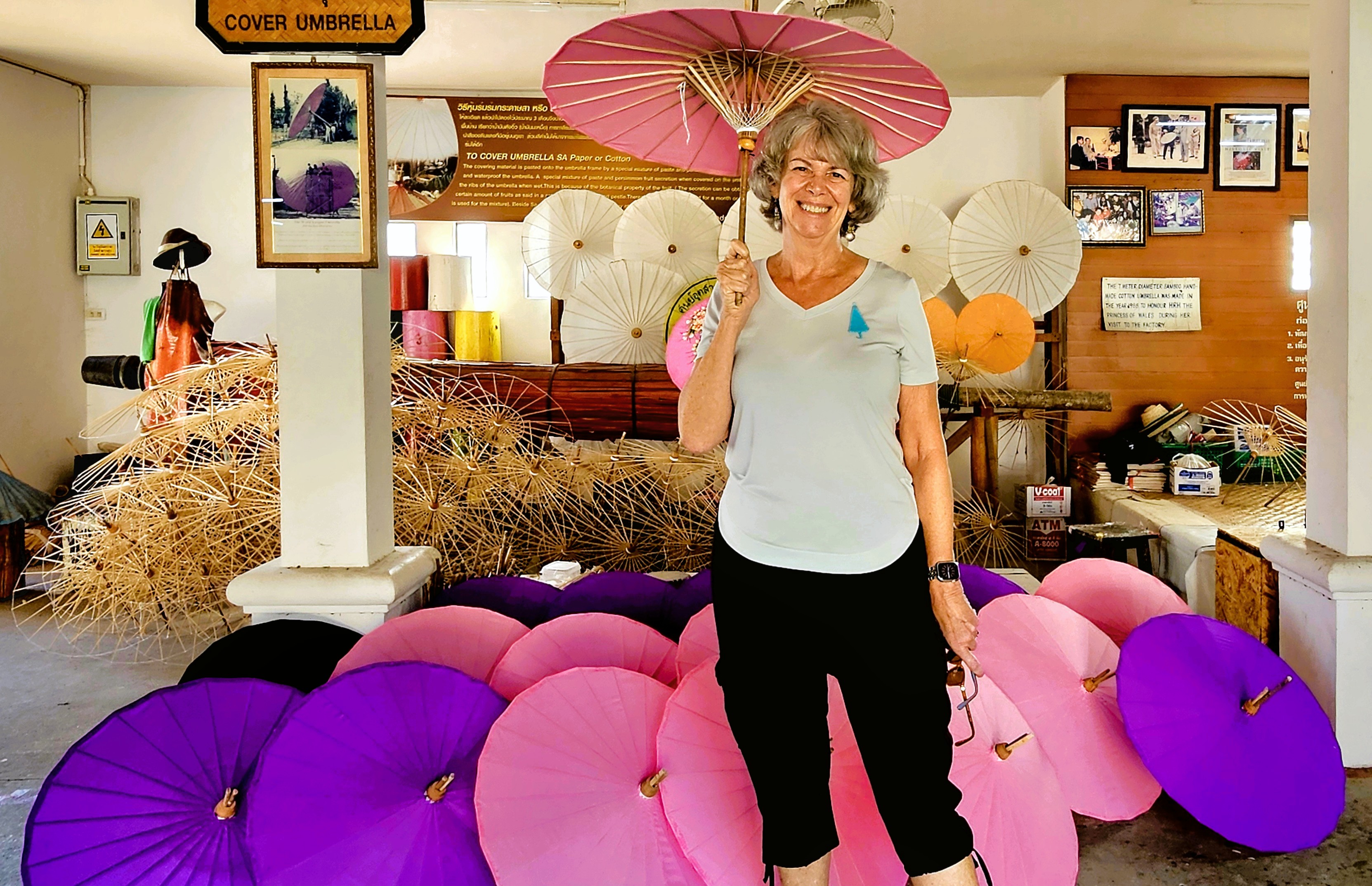
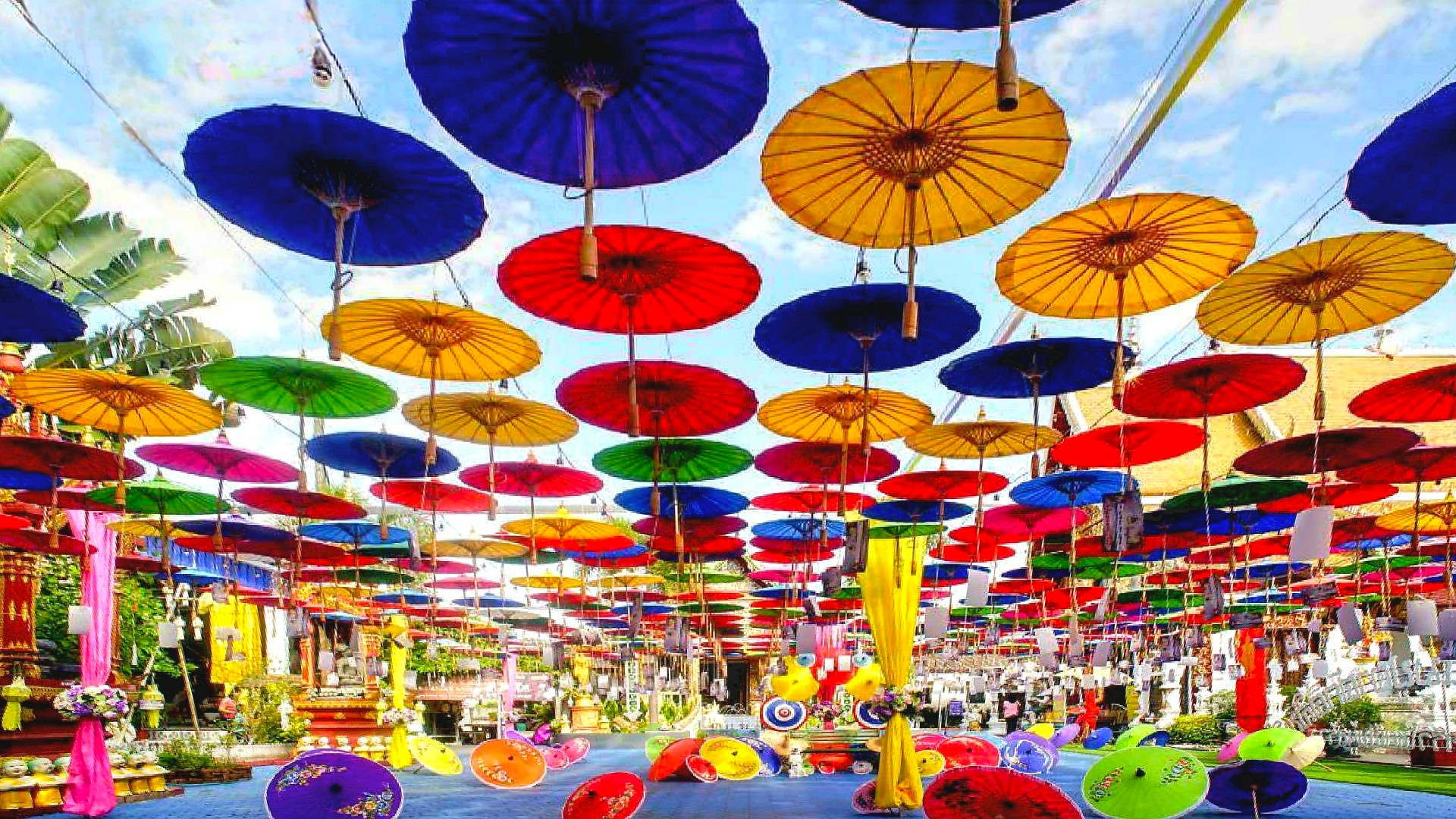
Leah’s now ready for the 3-day Bo Sang Umbrella Festival which occurs every 3rd week in January.

 Streaming thru America
One thought on “The History and Art of Bo Sang Umbrellas”